Arquivo da tag: Mudanças climáticas

Why Our Brains Weren’t Made To Deal With Climate Change (NPR)

npr.org

Listen to audio

April 19, 201612:00 AM ET

SHANKAR VEDANTAM, HOST:

This is HIDDEN BRAIN. I’m Shankar Vedantam. Last year, my family and I took a vacation to Alaska. This was a much needed long-planned break. The best part, I got to walk on the top of a glacier.

(SOUNDBITE OF FOOTSTEPS)

VEDANTAM: The pale blue ice was translucent. Sharp ridges opened up into crevices dozens of feet deep. Every geological feature, every hill, every valley was sculpted in ice. It was a sunny day, and I spotted a small stream of melted water. I got on the ground and drank some. I wondered how long this water had remained frozen.

The little stream is not the only ice that’s melting in Alaska. The Mendenhall Glacier, one of the chief tourist attractions in Juneau, has retreated over one and a half miles in the last half-century. Today, you can only see a small sliver of the glacier’s tongue from a lookout. I caught up with John Neary, a forest service official, who tries to explain to visitors the scale of the changes that they’re witnessing.

JOHN NEARY: I would say that right now, we’re looking at a glacier that’s filling up. Out of our 180-degree view we have, we’re looking at maybe 10 or 15 degrees of it, whereas if we stood in this same place 100 years ago, it would have filled up about 160 degrees of our view.

VEDANTAM: You are kidding, 160 degrees of our view.

NEARY: Exactly. That’s the reality of how big this was, and it’s been retreating up this valley at about 40 or 50 feet a year, most recently 400 feet a year. And even more dramatically recently is the thinning and the narrowing as it’s just sort of collapsed in on itself in the bottom of this valley. Instead of dominating much of the valley and being able to see white as a large portion of the landscape, it’s now becoming this little ribbon that’s at the bottom.

VEDANTAM: John is a quiet, soft-spoken man. In recent years, as he’s watched the glacier literally recede before his eyes, he started to speak up, not just about what’s happening but what it means.

But as I was chatting with John, a visitor came up to talk to him. The man said he used to serve in the Air Force and had last seen the Mendenhall Glacier a quarter-century ago. There was a look in the man’s eyes. It was a combination of awe and horror. How could this have happened, the man asked John? Why is this happening?

NEARY: In many ways, people don’t want to grasp the reality. It’s a scary reality to try to grasp. And so what they naturally want to do is assume, well, this has always happened. It will happen in the future, and we’ll survive, won’t we? They want an assurance from me. But I don’t give give it to them. I don’t think it’s my job to give them that assurance.

I think they need to grasp the reality of the fact that we are entering into a time when, yes, glacial advance and retreat has happened 25 different times to North America over its long life but never at the rate and the scale that we see now. And in the very quick rapidity of it means that species probably won’t be able to adapt the way that they have in the past over a longer period of time.

VEDANTAM: To be clear, the Mendenhall Glacier’s retreat in and of itself is not proof of climate change. That evidence comes from a range of scientific measurements and calculations. But the glacier is a visible symbol of the changes that scientists are documenting.

It’s interesting I think when we – people think about climate change, it tends to be an abstract issue most of the time for most people, that you’re standing in front this magnificent glacier right now and to actually see it receding makes it feel real and visceral in a way that it just isn’t when I’m living in Washington, D.C.

NEARY: No, I agree. I think that for too many people, the issue is some Micronesian island that’s having an extra inch of water this year on their shorelines or it’s some polar bears far up in the Arctic that they’re really not connected with.

But when they realize, they come here and they’re on this nice day like we’re experiencing right now with the warm sun and they start to think about this glacier melting and why it’s receding, why it’s disappearing, why it doesn’t look like that photo just 30 years ago up in the visitor’s center, it becomes real for them, and they have to start grapple with the issues behind it.

(SOUNDBITE OF MUSIC)

VEDANTAM: I could see tourists turning these questions over in their minds as they watch the glacier. So even though I had not planned to do any reporting, I started interviewing people using the only device I had available, my phone.

DALE SINGER: I just think it’s a shame that we are losing something pretty precious and pretty different in the world.

VEDANTAM: This is Dale Singer (ph). She and her family came to Alaska on a cruise to celebrate a couple of family birthdays. This was her second trip to Mendenhall.

She came about nine years ago, but the weather was so foggy, she couldn’t get a good look. She felt compelled to come back. I asked Dale why she thought the glacier was retreating.

SINGER: Global warming, whether we like to admit it or not, it’s our fault. Or something we’re doing is affecting climate change.

VEDANTAM: Others are not so sure. For some of Dale’s fellow passengers on her cruise, this is a touchy topic.

SINGER: Somebody just said they went to a lecture and – on the ship, and the lecturer did not use the word global warming nor climate change because he didn’t want to offend passengers. So there are still people who refuse to admit it.

(SOUNDBITE OF MUSIC)

VEDANTAM: As I was standing next to John, one man carefully came up and listened to his account of the science of climate change. When John was done talking, the man told him that he wouldn’t trust scientists as far as he could throw them. Climate change was all about politics, he said.

I asked the man for an interview, but he declined. He said his company had contracts with the federal government. And if bureaucrats in the Obama administration heard his skeptical views on climate change, those contracts might mysteriously disappear. I caught up with another tourist. I asked Michael Bull (ph) if he believed climate change was real.

MICHAEL BULL: No, I think there’s global climate change, but I question whether it’s all due to human interaction with the Earth. Yes, you can’t deny that the climate is changing.

VEDANTAM: Yeah.

BULL: But the causation of that I’m not sold on as being our fault.

VEDANTAM: Michael was worried his tour bus might leave without him, so he answered my question about whether the glacier’s retreat was cause for alarm standing next to the idling bus.

BULL: So what’s the bad part of the glacier receding? And, you know, from what John said to me, if it’s the rate that which – and the Earth can’t adapt, that makes sense to me. But I think the final story is yet to be written.

VEDANTAM: Yeah.

BULL: I think Mother Earth pushes back. So I don’t think we’re going to destroy her because I think she’ll take care of us before we take care of her.

(SOUNDBITE OF MUSIC)

VEDANTAM: Nugget Falls is a beautiful waterfall that empties into Mendenhall Lake. When John first came to Alaska in 1982, the waterfall was adjacent to the glacier. Today, there’s a gap of three-quarters of a mile between the waterfall and the glacier.

SUE SCHULTZ: The glacier has receded unbelievably. It’s quite shocking.

VEDANTAM: This is Sue Schultz. She said she lived in Juneau back in the 1980s. This was her first time back in 28 years. What did it look like 28 years ago?

SCHULTZ: The bare rock that you see to the left as you face the glacier was glacier. And we used to hike on the other side of it. And you could take a trail right onto the glacier.

VEDANTAM: And what about this way? I understand the glacier actually came significantly over to this side…

SCHULTZ: Yes.

VEDANTAM: …Close to Nugget Falls.

SCHULTZ: Yes, it – that’s true. It was really close. In fact, the lake was a lot smaller, obviously (laughter). I mean, yeah, it’s quite incredible.

VEDANTAM: And so what’s your reaction when you see it?

SCHULTZ: Global warming, we need to pay attention.

(SOUNDBITE OF MUSIC)

TERRY LAMBERT: Even if it all melts, it’s not going to be the end of the world, so I’m not worried.

VEDANTAM: Terry Lambert is a tourist from Southern California. He’s never visited Mendenhall before. He thinks the melting glacier is just part of nature’s plan.

LAMBERT: Well, it’s just like earthquakes and floods and hurricanes. They’re all just all part of what’s going on. You can’t control it. You can’t change it. And I personally don’t think it’s something that man’s doing that’s making that melt.

VEDANTAM: I mentioned to Terry some of the possible consequences of climate change on various species. They could be changes. Species could – some species could be advantaged. Some species could be disadvantaged.

The ecosystem is changing. You’re going to have flooding. You’re going to have weather events, right? There could be consequences that affect you and I.

LAMBERT: Yes, but like I say, it’s so far in the future I’m not worried about it.

VEDANTAM: I realized at that moment that the debate over climate change is no longer really about science unless the science you’re talking about is the study of human behavior.

I asked John why he thought so many people were unwilling to accept the scientific consensus that climate change was having real consequences.

NEARY: The inability to do anything about it themselves – because it’s threatening to think about giving up your car, giving up your oil heater in your house or giving up, you know, many of the things that you’ve become accustomed to. They seem very threatening to them.

And, you know, really, I’ve looked at some of the brain science, actually, and talked to folks at NASA and Earth and Sky, and they’ve actually talked about how when that fear becomes overriding for people, they use a part of their brain that’s the very primitive part that has to react.

It has to instantly come to a conclusion so that it can lead to an action, whereas what we need to think about is get rid of that fear and start thinking logically. Start thinking creatively. Allow a different part of the brain to kick in and really think how we as humans can reverse this trend that we’ve caused.

VEDANTAM: Coming up, we explore why the human brain might not be well-designed to grapple with the threat of climate change and what we can do about it. Stay with us.

(SOUNDBITE OF MUSIC)

VEDANTAM: This is HIDDEN BRAIN. I’m Shankar Vedantam. While visiting the Mendenhall Glacier with my family last year, I started thinking more and more about the intersection between climate change and human behavior.

When I got back to Washington, D.C., I called George Marshall. He’s an environmentalist who, like John Neary, tries to educate people about global climate change.

GEORGE MARSHALL: I am the founder of Climate Outreach, and I’m the author of “Don’t Even Think About It: Why Our Brains Are Wired To Ignore Climate Change.”

VEDANTAM: As the book’s title suggests, George believes that the biggest roadblock in the battle against climate change may lie inside the human brain. I call George at his home in Wales.

(SOUNDBITE OF MUSIC)

VEDANTAM: You’ve spent some time talking with Daniel Kahneman, the famous psychologist who won the Nobel Prize in economics. And he actually presented a very pessimistic view that we would actually come to terms with the threat of climate change.

MARSHALL: He said to me that we are as humans very poor at dealing with issues further in the future. We tend to be very focused on the short term. We tend to discount would be the economic term that – to reduce the value of things happening in the future the further away they are.

He says we’re very cost averse. So that’s to say when there is a reward, we respond strongly. But when there’s a cost, we prefer to push it away just as, you know, I myself would try and leave until the very last minute, you know, filling in my tax return. I mean, it’s just I want to deal with these things. And he says, well, we’re reluctant to deal with uncertainty.

If things aren’t certain, we – or we perceive them to be, we just say, well, come back and tell me when they’re certain. What he said to me was in his view that climate change is the worst possible combination because it’s not only in the future but it’s also in the future and uncertain, and it’s in the future uncertain and involving costs.

And his own experiments – and he’s done many, many of these over the years – show that in this combination, we have a very strong tendency just to push things on one side. And I think this in some ways explains how so many people if you ask them will say, yes, I regard climate change to be a threat.

But if you go and you ask them – and this happens every year in surveys – what are the most important issues, what are the – strangely, almost everybody seems to forget about climate change. So when we focus on it, we know it’s there, but we can somehow push it away.

VEDANTAM: You tell an amusing story in your book about some colleagues who were worried about a cellphone tower being erected in their neighborhood…

MARSHALL: (Laughter).

VEDANTAM: …And the very, very different reaction of these colleagues to the cellphone tower then to it’s sort of the amorphous threat of climate change.

MARSHALL: They were my neighbors, my entire community. I was living at that time in Oxford, which is – many of your listeners know is a university town. So it would be like living in, you know, Harvard or Berkeley or somewhere where most of the people were in various ways involved in the university, highly educated. A mobile phone master is being set up in the middle alongside actually, a school playground, enormous outcry. Everybody mobilized.

Down to the local church hall, they were all going to stop it. People were even going to play lay themselves down in front of a bulldozers to prevent it because it was here. It was now. There was an enemy, which was this external mobile phone company. We’re going to come, and they were going to put up this mast. It brings in the threat psychologists would call the absolute fear of radiation. This is what’s called a dread fear and so on.

Now, the science, if we go back to the core science, says that this mobile phone master is as far as we could possibly say harmless. You know, the amount of radiation or – of any kind you get off a single mobile phone mast has never been found to have the slightest impact on anyone. But they were very mobilized. At the same – oh, thank you for having me on. None of them would come. It simply didn’t have those qualities.

VEDANTAM: You have a very revealing anecdote in your book about the economist Thomas Schelling, who was once in a major traffic jam.

MARSHALL: So Schelling, again, a Nobel prize-winning economist, and he’s wondering what’s going on. The traffic is moving very, very, very slowly, and then they’re creeping along and creeping along, and half an hour along the road, they finally realized what had happened.

But there’s a mattress lying right in the middle of the middle lane of the road. What happens, he notices – and he does the same – is what when they reach the mattress, people will simply drive past it and keep going. In other words, the thing that had caused them to become delayed was not something that anyone was prepared to stop and remove from the road.

They just leave the mattress there, and then they keep driving past. Because in a way, why would they remove that mattress from the road because they have already paid the price of getting there? They’ve already had the delay. It’s something where the benefit goes to other people. The argument being that, of course, it’s very hard, especially when people are motivated largely through personal rewards, to get them to do things.

VEDANTAM: It’s interesting that the same narrative affects the way we talk about climate change internationally. There are many countries who now say, look, you know, I’ve already paid the price. I’m paying the price right now for the actions of other people for the, you know, things that other people have or have not done.

I’m bearing that cost, and you’re asking me now to get out of my car, pull the mattress off the road to bear an additional cost. And the only people who will benefit from that are people who are not me. The collective problems in the end have personal consequences.

MARSHALL: I have to say that the way what one talks about this also shows a way that interpretation is biased by your own politics or your own view. This has been labeled for a long time the tragedy of the commons, the idea being that unless – that people will – if it’s in their own self-interest, destroy the very thing that sustains them because it’s not in their personal interest to do something if they don’t see other people doing it. And in a way, it’s understandable.

But of course, that depends on a view of a world where you see people as being motivated entirely by their own personal rewards. We also know that people are motivated by their sense of identity and their sense of belonging. And we know very well not least of all in times of major conflict or war that people are prepared to make enormous personal sacrifices from which they personally derive nothing except loss, but they’re making that in the interests of the greater good.

For a long time with climate change, we’ve made a mistake of talking about this solely in terms of something which is economic. What are the economic costs, and what are the economic benefits? And we still do this. But of course, really, the motivations for why we want to act on this is what we want to defend the world what we care about and a world we love, and we want to do so for ourselves and for the people who are then to come.

VEDANTAM: So, George, there obviously is one domain in life where you can see people constantly placing these sacred values above their selfish self-interest. You know, I’m thinking here about the many, many religions we have in the world that get people to do all kinds of things that an economist would say is not in their rational self-interest.

People give up food. People give up water. People have, you know, suffer enormous personal privations. People sometimes choose chastity for life, I mean, huge costs No, people are willing to bear. And they’re not doing it because someone says, at the end of the year, I’m going to give you an extra 200 bucks in your paycheck or an extra $2,000 in your paycheck. They’re doing it because they believe these are sacred values that are not negotiable.

MARSHALL: No, well, and not just economists would find those behaviors strange, but Professor Kahneman or kind of pure cognitive psychology might as well because these are people who are struggling with and – but also believe passionately in things which are in the long-term extremely uncertain and require personal cost. And yet people do so.

It’s very important to stress that, you know, when we try and when we talk about climate change and religion that there’s absolutely no sense at all that climate change is or can or should ever be like a religion. It’s not. It’s grounded in science. But we can also learn

I think a great deal from religions about how to approach these issues, these uncertain issues and how to create I think a community of shared belief and shared conviction that something is important.

VEDANTAM: Right. I mean, if you look at sort of human history with sort of the broad view, you know, you don’t actually have to be a religious person to acknowledge that religion has played a very, very important role in the lives of millions of people over thousands of years.

And if it’s done so, then a scientific approach would say, there is something about the nature of religious belief or the practice of religion that harnesses what our brains can accommodate, that they harness our yearning to be part of a tribe, our yearning to be connected to deeper and grander values than ourselves, our yearning in some ways to do things for our fellow person in a way that might not be tangible in the here and now but might actually pay off as you say not just for future generations but even in the hereafter.

MARSHALL: Well, and the faiths that dominate, the half a dozen faiths which are the strongest ones in the world, are the ones that have been best at doing that. There’s a big mistake with climate change because it comes from science, what we assume it just somehow soaks into us.

It’s very clear that just hitting people over the head with more and more and more data and graphs isn’t working. On my Internet feed – I’m on all of the main scientific feeds – there is a new paper every day that says that not only is it bad, but it’s worse than we thought, and it’s extremely, extremely serious, so serious, actually, that we’re finding it very hard to even to find the words to describe it. That doesn’t move people. In fact, actually, it tends to push them away.

However, if we can understand that there are other things which bind us together, I think that we can find yet new language. I think it’s also very important to recognize that the divides that are on climate change are social, not scientific. They’re social and political, that the single biggest determinants of whether you accept it or you don’t accept it is your political values.

And that suggests for the solutions to this are not scientific and maybe psychology. They’re cultural. We have to find ways of saying, sure, you know, we are going to disagree on things politically, but we have things in common that we all care about that are going to have to bring us together.

VEDANTAM: George Marshall is the author of “Don’t Even Think About It: Why Our Brains Are Wired To Ignore Climate Change.” George, thank you for joining me today on HIDDEN BRAIN.

MARSHALL: You’re very welcome. I enjoyed it. Thank you.

VEDANTAM: The HIDDEN BRAIN podcast is produced by Kara McGuirk-Alison, Maggie Penman and Max Nesterak. Special thanks this week to Daniel Schuken (ph). To continue the conversation about human behavior and climate change, join us on Facebook and Twitter.

If you liked this episode, consider giving us a review on iTunes or wherever you listen to your podcasts so others can find us. I’m Shankar Vedantam, and this is NPR.

Copyright © 2016 NPR. All rights reserved. Visit our website terms of use and permissions pages at www.npr.org for further information.

NPR transcripts are created on a rush deadline by Verb8tm, Inc., an NPR contractor, and produced using a proprietary transcription process developed with NPR. This text may not be in its final form and may be updated or revised in the future. Accuracy and availability may vary. The authoritative record of NPR’s programming is the audio record.
Eight key takeaways from the IPCC report that prove we need to put in the work to fight climate change (Technology News, Firstpost)

firstpost.com


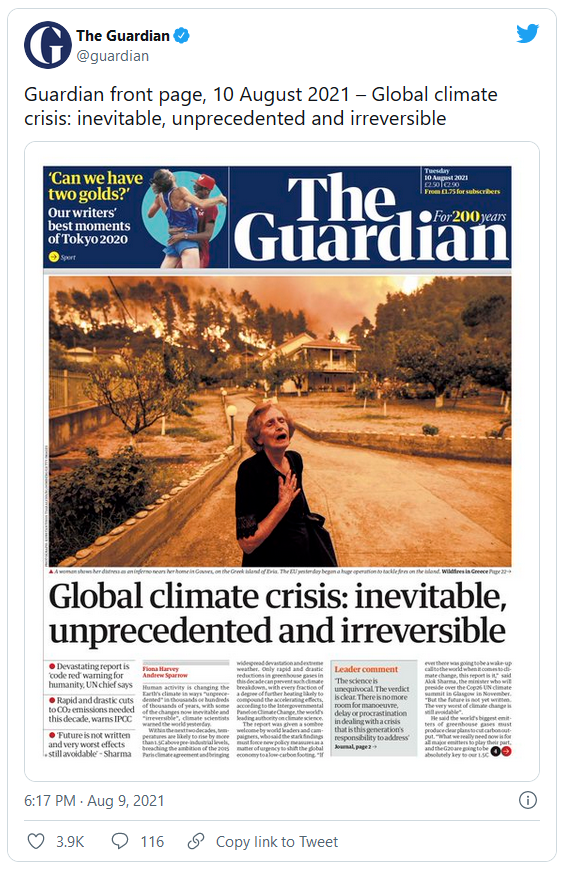
The new IPCC report is “a code red for humanity.”

Aug 13, 2021 20:25:56 IST

The new IPCC report is “a code red for humanity”, says UN Secretary-General António Guterres.

Established in 1988 by United Nations Environment Programme (UNEP) and the World Meteorological Organisation (WMO), the Intergovernmental Panel on Climate Change (IPCC) assesses climate change science. Its new report is a warning sign for policy makers all over the world.

On 26 October 2014, Peia Kararaua, 16, swims in the flooded area of Aberao village in Kiribati. Kiribati is one of the countries most affected by sea level rise. During high tides many villages become inundated making large parts of them uninhabitable.....On 22 March 2017, a UNICEF report projects that some 600 million children – or 1 in 4 children worldwide – will be living in areas where water demand far outstrips supply by 2040. Climate change is one of the key drivers of water stress, which occurs when more than 80 per cent of the water available for agriculture, industry and domestic use is withdrawn annually. According to the report “Thirsting for a Future”, warmer temperatures, rising sea levels, increased floods, droughts and melting ice affect the quality and availability of water. Population growth, increased water consumption, and an even higher demand for water largely due to industrialization, are also draining water resources worldwide, forcing children to use unsafe water, which exposes them to potentially deadly diseases like cholera and diahrroea. The poorest and most vulnerable children will be most impacted, as millions of them already live in areas with low access to safe water and sanitation. The impact of climate change on water sources is not inevitable, the report says, citing a series of recommendations that can help curb its effect on the lives of children.

In this picture taken on 26 October, 2014, Peia Kararaua, 16, swims in the flooded area of Aberao village in Kiribati. Kiribati is one of the countries worst hit by the sea level rise since high tides mean many villages are inundated, making them uninhabitable. Image credit: UNICEF/Sokhin

This was the first time the approval meeting for the report was conducted online. There were 234 authors from the world over who clocked in 186 hours working together to get this report released.

For the first time, the report offers an interactive atlas for people to see what has already happened and what may happen in the future to where they live.

“This report tells us that recent changes in the climate are widespread, rapid and intensifying, unprecedented in thousands of years,” said IPCC Vice-Chair Ko Barrett.

UNEP Executive Director Inger Andersen that scientists have been issuing these messages for more than three decades, but the world hasn’t listened.

Here are the most important takeaways from the report:

Humans are to be blamed

Human activity is the cause of climate change and this is an unequivocal fact. All the warming caused in the pre-industrial times had been generated by the burning of fossil fuels such as coal, oil, wood, and natural gas.

Global temperatures have already risen by 1.1 degrees Celsius since the 19th century. They have reached their highest in over 100,000 years, and only a fraction of that increase has come from natural forces.

Michael Mann told the Independent the effects of climate change will be felt in all corners of the world and will worsen, especially since “the IPCC has connected the dots on climate change and the increase in severe extreme weather events… considerably more directly than previous assessments.”

We will overshoot the 1.5 C mark

According to the report’s highly optimistic-to-reckless scenarios, even if we do everything right and start reducing emissions now, we will still overshoot the 1.5C mark by 2030. But, we will see a drop in temperatures to around 1.4 C.

Control emissions, Earth will do the rest

According to the report, if we start working to bring our emissions under control, we will be able to decrease warming, even if we overshoot the 1.5C limit.

The changes we are living through are unprecedented; however, they are reversible to a certain extent. And it will take a lot of time for nature to heal. We can do this by reducing our greenhouse gas (GHG) emissions. While we might see some benefits quickly, “it could take 20-30 years to see global temperatures stabilise” says the IPCC.

Sea level rise

Global oceans have risen about 20 centimetres (eight inches) since 1900, and the rate of increase has nearly tripled in the last decade. Crumbling and melting ice sheets atop Antarctica (especially in Greenland) have replaced glacier melt as the main drivers.

If global warming is capped at 2 C, the ocean watermark will go up about half a metre over the 21st century. It will continue rising to nearly two metres by 2300 — twice the amount predicted by the IPCC in 2019.

Because of uncertainty over ice sheets, scientists cannot rule out a total rise of two metres by 2100 in a worst-case emissions scenario.

CO2 is at all-time high

CO2 levels were greater in 2019 than they had been in “at least two million years.”  Methane and nitrous oxide levels, the second and third major contributors of warming respectively, were higher in 2019 than at any point in “at least 800,000 years,” reported the Independent.

Control methane

The report includes more data than ever before on methane (CH4), the second most important greenhouse gas after CO2, and warns that failure to curb emissions could undermine Paris Agreement goals.

Human-induced sources are roughly divided between leaks from natural gas production, coal mining and landfills on one side, and livestock and manure handling on the other.

CH4 lingers in the atmosphere only a fraction as long as CO2, but is far more efficient at trapping heat. CH4 levels are their highest in at least 800,000 years.

Natural allies are weakened

Since about 1960, forests, soil and oceans have absorbed 56 percent of all the CO2 humanity has released into the atmosphere — even as those emissions have increased by half. Without nature’s help, Earth would already be a much hotter and less hospitable place.

But these allies in our fight against global heating — known in this role as carbon sinks — are showing signs of saturatation, and the percentage of human-induced carbon they soak up is likely to decline as the century unfolds.

Suck it out

The report suggests that warming could be brought back down via “negative emissions.” We could cool down the planet by sucking out or sequestering the carbon from the atmosphere. While this is a viable suggestion that has been thrown around and there have been small-scale studies that have tried to do this, the technology is not yet perfect. The panel said that could be done starting about halfway through this century but doesn’t explain how, and many scientists are skeptical about its feasibility.

Cities will bear the brunt

Experts warn that the impact of some elements of climate change, like heat, floods and sea-level rise in coastal areas, may be exacerbated in cities. Furthermore, IPCC experts warn that low-probability scenarios, like an ice sheet collapse or rapid changes in ocean circulation, cannot be ruled out.

Also read: Leaders and experts speak up after the release of the new IPCC report

Análise: Ricardo Abramovay – A Amazônia se torna maior que o Brasil na luta pelo desenvolvimento (UOL)

tab.uol.com.br

29.07.2021


Não tem precedentes na história da democracia brasileira o papel que a Amazônia está desempenhando na vida política nacional. É lá que está nascendo o primeiro Plano de Recuperação Verde (PRV), iniciativa do Consórcio dos Governadores da Amazônia, hoje presidido pelo Governador Flavio Dino (PSB) e que representa o mais importante documento programático voltado a resolver os problemas brasileiros. O texto, elaborado sob a competente coordenação de Laura Carvalho, economista do Departamento de Economia da FEA/USP, tem duas virtudes fundamentais.

A primeira é que ele consegue agregar vertentes políticas diferentes — e mesmo opostas — em torno de um objetivo comum. É a demonstração prática de que a racionalidade, a informação qualificada e a discussão de conteúdos podem ter mais força do que as agressões, os estereótipos e os preconceitos cujo sucesso na arena pública (e não só brasileira) é crescente. Se em Brasília o presidente da República confirma sua repulsiva condição de pária global ao receber a líder do partido alemão vinculado ao nazismo, na Amazônia os nove governadores credenciam-se como atores internacionais relevantes ao formularem um Plano de Recuperação Verde. É algo cujo alcance vai muito além de uma região, por mais importante que ela seja.

A segunda virtude é que o PRV reinsere o Brasil no mundo. Ele pretende zerar o desmatamento na Amazônia — cujo avanço coloca o Brasil na contramão do esforço global contra a crise climática. Para isso, é fundamental resgatar o valor do multilateralismo democrático que havia resultado no Fundo Amazônia, onde duas nações democráticas (Noruega e Alemanha) apoiam o País com base em resultados (e não em promessas) na luta contra o desmatamento.

O plano rejeita a obscena postura — típica da cultura miliciana — de chantagem contida na ideia de que se não vier dinheiro de fora, o desmatamento continua. No seu lugar, o PRV sinaliza para o fato de que os serviços ecossistêmicos prestados pela floresta à humanidade podem e devem ser remunerados a partir de mecanismos pactuados internacionalmente, por governos, setor privado, organizações da sociedade civil e povos da floresta. A expansão das áreas protegidas e sua defesa contra os ataques que vêm sofrendo do crime organizado é parte decisiva deste primeiro objetivo de proteção da floresta.

Além desta meta, o plano tem um conjunto de diretrizes para enfrentar um dos maiores paradoxos brasileiros que é o fato de que ali onde está a mais importante sociobiodiversidade do País também se reúnem seus piores indicadores sociais. E este desafio só poderá ser vencido por modelos de crescimento econômico e por tecnologias que fortaleçam o vigor da floresta e dos rios da Amazônia, mas que também estimulem o desenvolvimento sustentável de suas cidades, onde está a maior parte de seus 30 milhões de habitantes.

E claro que, da mesma forma que está ocorrendo no mundo todo, isso vai exigir que se discuta a natureza das infraestruturas necessárias para o desenvolvimento da Amazônia. Contemplar as necessidades das populações da Amazônia em saúde, educação, habitação, mobilidade, energia e, sobretudo, conexão de alta qualidade à Internet, nas cidades e no meio rural, é decisivo para que se interrompa a destruição atual. No lugar de hidrelétricas caras, ineficientes e fontes de corrupção, estradas que se tornam vetores de desmatamento e garimpo clandestino e poluidor, a Amazônia precisa de inovações tecnológicas capazes de promover bem-estar para suas populações florestais, rurais e urbanas.

Mas além do PRV, é também em torno da Amazônia que duzentos cientistas de imenso prestígio internacional se reuniram de forma virtual, durante dezoito meses, produzindo um diagnóstico e um conjunto de propostas destinadas a “Salvar a Amazônia“. A iniciativa, liderada pelo economista norte-americano Jeffrey Sachs, pelo climatologista brasileiro Carlos Nobre e pela bióloga equatoriana Andrea Encalada, resultou num denso relatório, lançado para consulta pública no último dia 14 de julho com a presença de Juan Manuel Santos, ex-presidente da Colômbia.

Nenhuma região do mundo jamais recebeu tanta atenção da comunidade científica e, como ressaltou Jeffrey Sachs durante seu lançamento, já há negociações para que o modelo do Painel Científico para a Amazônia seja replicado para as duas outras grandes florestas tropicais do planeta: a da Indonésia e a da Bacia do Congo. Neste momento, os 33 capítulos do Painel ainda estão em inglês, mas dentro de alguns dias os textos (e seus sumários executivos) estarão disponíveis em português e espanhol. O documento, após esta consulta pública, será lançado na Conferência Climática de Glasgow em novembro deste ano.

Além destas poderosas mobilizações políticas e científicas, é na Amazônia que um importante e diversificado grupo de empresários, ativistas, representantes de povos da floresta, cientistas e dirigentes políticos se reúnem, desde o início de 2020, na Concertação pela Amazônia. Destas discussões emergem documentos sobre diferentes temas referentes ao desenvolvimento da Amazônia — publicados regularmente pela Revista Página 22.

O Plano de Recuperação Verde, o relatório do Painel Científico para a Amazônia, as discussões e os textos da Concertação mostram que a Amazônia, tornou-se maior que o Brasil num sentido que não é apenas geográfico. É de lá que está emergindo a reflexão coletiva e diversificada sobre o mais importante desafio do país e talvez do continente: como podemos fazer de nossa biodiversidade o vetor fundamental para nossa inserção na vanguarda da inovação científica e tecnológica global e, ao mesmo tempo, em fator decisivo de luta contra a pobreza e as desigualdades?

Global warming begets more warming, new paleoclimate study finds (Science Daily)

Date: August 11, 2021

Source: Massachusetts Institute of Technology

Summary: Global warming begets more, extreme warming, new paleoclimate study finds. Researchers observe a ‘warming bias’ over the past 66 million years that may return if ice sheets disappear.


It is increasingly clear that the prolonged drought conditions, record-breaking heat, sustained wildfires, and frequent, more extreme storms experienced in recent years are a direct result of rising global temperatures brought on by humans’ addition of carbon dioxide to the atmosphere. And a new MIT study on extreme climate events in Earth’s ancient history suggests that today’s planet may become more volatile as it continues to warm.

The study, appearing today in Science Advances, examines the paleoclimate record of the last 66 million years, during the Cenozoic era, which began shortly after the extinction of the dinosaurs. The scientists found that during this period, fluctuations in the Earth’s climate experienced a surprising “warming bias.” In other words, there were far more warming events — periods of prolonged global warming, lasting thousands to tens of thousands of years — than cooling events. What’s more, warming events tended to be more extreme, with greater shifts in temperature, than cooling events.

The researchers say a possible explanation for this warming bias may lie in a “multiplier effect,” whereby a modest degree of warming — for instance from volcanoes releasing carbon dioxide into the atmosphere — naturally speeds up certain biological and chemical processes that enhance these fluctuations, leading, on average, to still more warming.

Interestingly, the team observed that this warming bias disappeared about 5 million years ago, around the time when ice sheets started forming in the Northern Hemisphere. It’s unclear what effect the ice has had on the Earth’s response to climate shifts. But as today’s Arctic ice recedes, the new study suggests that a multiplier effect may kick back in, and the result may be a further amplification of human-induced global warming.

“The Northern Hemisphere’s ice sheets are shrinking, and could potentially disappear as a long-term consequence of human actions” says the study’s lead author Constantin Arnscheidt, a graduate student in MIT’s Department of Earth, Atmospheric and Planetary Sciences. “Our research suggests that this may make the Earth’s climate fundamentally more susceptible to extreme, long-term global warming events such as those seen in the geologic past.”

Arnscheidt’s study co-author is Daniel Rothman, professor of geophysics at MIT, and co-founder and co-director of MIT’s Lorenz Center.

A volatile push

For their analysis, the team consulted large databases of sediments containing deep-sea benthic foraminifera — single-celled organisms that have been around for hundreds of millions of years and whose hard shells are preserved in sediments. The composition of these shells is affected by the ocean temperatures as organisms are growing; the shells are therefore considered a reliable proxy for the Earth’s ancient temperatures.

For decades, scientists have analyzed the composition of these shells, collected from all over the world and dated to various time periods, to track how the Earth’s temperature has fluctuated over millions of years.

“When using these data to study extreme climate events, most studies have focused on individual large spikes in temperature, typically of a few degrees Celsius warming,” Arnscheidt says. “Instead, we tried to look at the overall statistics and consider all the fluctuations involved, rather than picking out the big ones.”

The team first carried out a statistical analysis of the data and observed that, over the last 66 million years, the distribution of global temperature fluctuations didn’t resemble a standard bell curve, with symmetric tails representing an equal probability of extreme warm and extreme cool fluctuations. Instead, the curve was noticeably lopsided, skewed toward more warm than cool events. The curve also exhibited a noticeably longer tail, representing warm events that were more extreme, or of higher temperature, than the most extreme cold events.

“This indicates there’s some sort of amplification relative to what you would otherwise have expected,” Arnscheidt says. “Everything’s pointing to something fundamental that’s causing this push, or bias toward warming events.”

“It’s fair to say that the Earth system becomes more volatile, in a warming sense,” Rothman adds.

A warming multiplier

The team wondered whether this warming bias might have been a result of “multiplicative noise” in the climate-carbon cycle. Scientists have long understood that higher temperatures, up to a point, tend to speed up biological and chemical processes. Because the carbon cycle, which is a key driver of long-term climate fluctuations, is itself composed of such processes, increases in temperature may lead to larger fluctuations, biasing the system towards extreme warming events.

In mathematics, there exists a set of equations that describes such general amplifying, or multiplicative effects. The researchers applied this multiplicative theory to their analysis to see whether the equations could predict the asymmetrical distribution, including the degree of its skew and the length of its tails.

In the end, they found that the data, and the observed bias toward warming, could be explained by the multiplicative theory. In other words, it’s very likely that, over the last 66 million years, periods of modest warming were on average further enhanced by multiplier effects, such as the response of biological and chemical processes that further warmed the planet.

As part of the study, the researchers also looked at the correlation between past warming events and changes in Earth’s orbit. Over hundreds of thousands of years, Earth’s orbit around the sun regularly becomes more or less elliptical. But scientists have wondered why many past warming events appeared to coincide with these changes, and why these events feature outsized warming compared with what the change in Earth’s orbit could have wrought on its own.

So, Arnscheidt and Rothman incorporated the Earth’s orbital changes into the multiplicative model and their analysis of Earth’s temperature changes, and found that multiplier effects could predictably amplify, on average, the modest temperature rises due to changes in Earth’s orbit.

“Climate warms and cools in synchrony with orbital changes, but the orbital cycles themselves would predict only modest changes in climate,” Rothman says. “But if we consider a multiplicative model, then modest warming, paired with this multiplier effect, can result in extreme events that tend to occur at the same time as these orbital changes.”

“Humans are forcing the system in a new way,” Arnscheidt adds. “And this study is showing that, when we increase temperature, we’re likely going to interact with these natural, amplifying effects.”

This research was supported, in part, by MIT’s School of Science.


Story Source:

Materials provided by Massachusetts Institute of Technology. Original written by Jennifer Chu. Note: Content may be edited for style and length.


Journal Reference:

  1. Constantin W. Arnscheidt, Daniel H. Rothman. Asymmetry of extreme Cenozoic climate–carbon cycle events. Science Advances, 2021; 7 (33): eabg6864 DOI: 10.1126/sciadv.abg6864

Crise do clima aprofunda desigualdades e viola direitos humanos, diz ONG (Folha de S.Paulo)

Anistia Internacional aponta efeitos desproporcionais da mudança climática, que prejudica mais grupos vulneráveis

13.ago.2021 às 3h00

Fernanda Mena – São Paulo

A crise climática é uma crise de direitos humanos, cujas emergências já estão afetando de maneira desproporcional os países mais vulneráveis e os grupos sociais mais discriminados e marginalizados, aprofundando desigualdades.

É isso o que indica o relatório “Parem de Queimar Nossos Direitos”, lançado nesta sexta-feira (13) globalmente pela Anistia Internacional.

O documento detalha como emergências climáticas têm consequências injustas entre países, entre diferentes populações e entre gerações e de que maneira elas comprometem a garantia de uma série de direitos fundamentais, como o direito à vida, à água, à alimentação, à moradia, à saúde, ao trabalho e à autodeterminação, entre outros.

O primeiro e mais elementar desses direitos é a face mais evidente e trágica da escalada de emergências climáticas que tomaram o noticiário ao longo do último ano. Tempestades devastadoras, recorde de furacões, ondas de calor e incêndios sem precedentes mataram pessoas da Austrália à Alemanha, passando por Bahamas, China e Canadá.

Segundo o documento, mais de 20 milhões de pessoas foram deslocadas internamente, em média, a cada ano entre 2008 e 2019 por causa de eventos relacionados ao clima. Parte desses eventos afetou a vida de milhões de pessoas ao destruir plantações e casas e queimar florestas e cidades inteiras, além de secar rios. O Brasil, por exemplo, vive a pior estiagem dos últimos 91 anos, o que compromete o abastecimento da população e o fornecimento de energia elétrica.

A ONG internacional reitera um alerta da comunidade científica: a temperatura do planeta já subiu, em média, 1,1ºC desde tempos pré-industriais, e os países precisam evitar que essa elevação dos termômetros ultrapasse 1,5º C. Para isso, precisam reduzir ao máximo, chegando a zero, suas emissões de carbono.

O Painel Intergovernamental sobre Mudanças Climáticas (IPCC) estimou que manter o aumento da temperatura média global em 1,5°C, e não em 2°C, resultaria na proteção de 420 milhões de pessoas em relação a ondas de calor extremas e na redução de 50% no número de pessoas expostas ao estresse hídrico induzido pelo clima, além de diminuir o risco de inundações costeiras.

Estudo publicado na revista Nature calculou que, em 2050, a elevação do nível do mar por conta do derretimento de gelo nos pólos do planeta pode afetar mais de 1 milhão de brasileiros que vivem em regiões costeiras.

“As autoridades públicas no Brasil têm contribuído para que haja um desmonte da agenda ambiental, mas não há mais espaço para o negacionismo. A vida de brasileiros e brasileiras deve vir em primeiro lugar”, explica Jurema Werneck, diretora executiva da Anistia Internacional Brasil.

Segundo Werneck, os Estados têm obrigações legais de enfrentar a crise do clima, de acordo com a normativa internacional dos direitos humanos. “Exigimos que o governo do presidente Jair Bolsonaro e o Congresso Nacional ajam para atenuar os efeitos das mudanças climáticas sobre a população brasileira e implementem políticas públicas de conservação da natureza e proteção dos direitos humanos.”

Para ela, o governo do Brasil não está fazendo o que é preciso para enfrentar a crise climática. “Muito pelo contrário, temos visto decisões equivocadas, perigosas e muita negligência. O governo não se coloca ao lado da proteção do ambiente natural nem dos sujeitos de grupos populacionais como indígenas, quilombolas e moradores das periferias das cidades para mitigar e superar os impactos da crise climática.”

Embora as mudanças climáticas sejam um fenômeno global, elas atingem países pobres e em desenvolvimento de maneira desproporcional, o que configura um aspecto injusto desse fenômeno.

O relatório afirma que os países e blocos que mais emitiram CO2 na história —EUA, União Europeia, China, Rússia e Japão— têm uma responsabilidade histórica e precisam agir em seu território e no exterior, mas não são os únicos que devem responder ao imperativo de mudanças.

“Para resolver essa crise, que é global, é preciso que a responsabilidade de agir seja compartilhada por todos e todas. Todos os países precisam fazer alguma coisa urgente, sejam os países mais ricos do mundo, sejam aqueles em desenvolvimento, como o Brasil, sejam os países mais pobres do mundo. Todo mundo tem o que fazer, todo mundo deve fazer. Se omitir nesse momento é extremamente violador dos direitos humanos”, afirma a diretora-executiva da Anistia no Brasil.

Neste sentido, o relatório da organização aponta que a omissão de países em tomar medidas audaciosas para enfrentar a crise do clima é, em si, uma violação de direitos humanos porque tem impactos concretos sobre direitos com um escopo ainda maior que outros tipos de violações.

Isso porque, além do desequilíbrio entre nações, os efeitos das emergências climáticas também estão ligados às desigualdades e privilégios de parcelas da população mundial.

De acordo com o relatório da Anistia, de 1990 a 2015, os 10% mais ricos da população mundial (cerca de 630 milhões de pessoas) foram responsáveis por mais da metade das emissões acumuladas de carbono, enquanto os 50% mais pobres (cerca de 3,1 bilhões de pessoas) foram responsáveis por apenas 7% das emissões acumuladas.

Estudos já identificaram que existem recortes étnicos, raciais e de gênero nas pessoas mais afetadas, entre elas, mulheres, pessoas negras e povos indígenas, além de outros grupos que vivem em moradias mais precárias, em localidades de risco ou em áreas mais expostas à poluição e menos servidas de saneamento, por exemplo.

Por isso, ao mesmo tempo que o relatório convoca os países a reduzir drasticamente a queima de combustíveis fósseis e a acelerarem suas transições para matrizes energéticas limpas, a Anistia chama a atenção para a necessidade de cuidar das pessoas mais vulneráveis. Para tanto, recomenda a criação de mecanismos de financiamento internacional para que se adote medidas de mitigação da crise e de adaptação das populações a emergências climáticas.

Além disso, de acordo com a ONG, esses projetos de mitigação e de adaptação muitas vezes ocorrem em contextos de violação de direitos, seja no campo do trabalho ou da alimentação, no caso das monoculturas de biocombustíveis.

“Há uma profunda injustiça permeando toda essa crise climática. Porque é uma minoria das pessoas do mundo e dos países do mundo que produzem um excesso de gases de efeito estufa, que estão na origem da crise climática. E são aqueles que são excluídos e marginalizados que já estão pagando o preço mais alto dessa crise”, avalia Werneck.

“Portanto, a resposta à crise precisa ser coordenada e ter enfoque em direitos humanos. Precisa garantir que as medidas de reparação e de correção de rota sejam rápidas, mas também sejam justas.”

Joe Biden’s splurge on infrastructure moves a step closer (The Economist)

economist.com

Aug 11th 2021


Bridge and tunnel
Joe Biden’s splurge on infrastructure moves a step closer
And on the climate and the safety-net, too. Congress works, maybe?

“THE ICEMAN COMETH” is a play about the downtrodden patrons of Harry Hope’s saloon, who exchange reveries for one another’s pipe dreams. For a while President Joe Biden’s aspirations for a gargantuan infrastructure and social-services package—spending $4trn in order to “build back better”—resembled those of a misbegotten Eugene O’Neill character. The weeks dragged on and negotiations appeared fruitless. Yet in the usually soporific month of August, Mr Biden finds that his pipe dream might in fact yield some actual pipes, plus extra sending on the safety net and climate change too.

On August 10th the Senate passed a bipartisan infrastructure package spanning 2,700 pages, which contains plans to spend $550bn, or 2.5% of GDP, most of it on bridges, roads and railway lines. And then in the early hours of August 11th, the Senate fired the starting gun for the drafting of a budget resolution—a $3.5trn package stuffed with all of Mr Biden’s other partisan aims, the details of which will be negotiated in the months to come.

The White House has made greater headway than many expected. Yet turning this into actual spending will require still more effort. To mollify antsy progressives, neither bill is expected to arrive on the president’s desk without the other. Nancy Pelosi, the Democratic speaker of the House of Representatives, has pledged as much and is not known for bluffing.

So success for Mr Biden continues to depend on an odd-couple strategy: yoking the bipartisan bits of his agenda (traditional spending on roads, bridges, broadband and waterways, largely unmatched by tax increases) to the purely Democratic wish-list (enormous spending on climate-change mitigation and a safety-net expansion, along with much higher taxes on wealthy people and corporations). This approach withstood early defections by Republicans who feared they had been had. Now it must prove itself capable of delivering the remaining legislation, which will be mostly an exercise in Democratic cohesion. If all this works, it will probably become the defining accomplishment of the Biden presidency.

Securing both bills will be hard. To pass their other policy aspirations without any Republican votes, Democrats will now employ a procedure known as budgetary reconciliation, which sidesteps a filibuster if certain conditions are met. Shepherding such a package through Congress requires co-ordinating efforts from a score of committees. That task can now begin: in the early hours of August 11th Democrats passed a budget resolution, a skeletal framing document that gives each committee instructions on how much it can spend. This marks the true start of the hard work: drafting legislative text, collating it into one mega-package and passing it without any Democratic defections—for anything less, in the face of unified Republican opposition, would spell defeat.

Reconciliation is not pretty. Since its use is limited to budgetary matters, it cannot be resorted to often. And since Democrats fear that they will lose their slim majorities in the coming mid-term elections, they have an incentive to hitch any partisan priority that they want to become law onto this omnibus bill.

This bill will be stuffed therefore. Committees will draw up plans to spend hundreds of billions on climate-change research, electric-vehicle charging stations and a Civilian Climate Corps; more than $1trn on various safety-net enhancements like extended child-tax credits, subsidised child care and family leave; and educational benefits from pre-kindergarten to community college. There will be a parallel effort to pay for this by raising the taxes on corporate profits, especially of the overseas variety, and high personal incomes.

These legislative schemes would almost certainly increase American deficits and debts beyond their already eye-popping levels. The Congressional Budget Office (CBO), a non-partisan scorekeeper, estimates that America will run a $3trn deficit in Mr Biden’s first year—much of that is the result of the $1.9trn stimulus measure that the president signed into law soon after assuming office. At 13.4% of GDP, the deficit will be the highest in the first year of any modern president (see chart).

The proposed spending on infrastructure and the safety-net would be spread over ten years, not concentrated in just one. Still, it is remarkable that, if Mr Biden gets his way, he could sign legislation authorising the spending of just under $6trn, almost 30% of GDP, in his first year in office. More of the infrastructure spending will be covered by revenue than was the case for the covid-19 relief measure, but a substantial portion will not be.

The CBO‘s assessment of the bipartisan package passed by the Senate found that it would add $256bn to the federal debt. The budget resolution recently passed by Democrats would allow $1.75trn to be added to the tab—suggesting that only half of their proposal could be paid for (and belying the White House’s repeated insistence that it would be fully funded). Already, Janet Yellen, the treasury secretary, warns that the debt ceiling will need to be raised by October 1st to accommodate the current pace of spending.

Almost none of the legislating over the next few months will appeal to Republicans. But that is the point of the segmentation strategy that Mr Biden has chosen. He has pulled off a surprising victory in the bipartisan campaign. The partisan battle promises to be every bit as arduous. ■

For more coverage of Joe Biden’s presidency, visit our dedicated hub

This article appeared in the United States section of the print edition under the headline “Function in Washington”

Negacionismo de sapatênis (Folha de S.Paulo)

Não é com desinformação que o jornalismo contribuirá ao tema do clima

Thiago Amparo – artigo original aqui.

11.ago.2021 às 22h05

A perversidade do negacionismo recai em jurar que se está dizendo o contrário do que de fato se diz. Nesta novilíngua, negacionismo veste o sapatênis do antialarmismo. Chega a ser tedioso, posto que mofado, o argumento de Leandro Narloch nesta Folha na terça (10). Mofado pois —como relata Michael Mann em “The New Climate War”— não passa da mesma retórica negacionista 2.0.

Em essência, Narloch defende que há atividades nocivas ao clima que devem ser “celebradas e difundidas” por nos tornar “menos vulneráveis à natureza”. Narloch está cientificamente errado. E o faz subscrevendo a uma das formas mais nefárias de negacionismo: mascara-o, vendendo soluções que não só não são capazes de mitigar e adaptar as sociedades à crise climática como possuem o efeito adverso. Implode-se a Amazônia para salvá-la, eis o argumento.

Esses e outros discursos negacionistas já tinham sido mapeados na revista Global Sustaintability, de Cambridge, em julho de 2020: não são novos. Em vez de mexer em tabus do século 21, vendem-se inverdades como se ciência fosse. Narloch erra no conceito de vulnerabilidade: dos incêndios florestais na Califórnia às inundações na Alemanha, não estamos protegidos contra a natureza porque nela estamos inseridos. Ignora, ademais, a vasta literatura do Painel do Clima sobre vulnerabilidade.

Narloch desconsidera o conceito da ciência climática de “feedback loops”: a crise climática aciona uma série de gatilhos de dimensão incalculável, uma reação de cadeia nunca vista. Destruir o clima não nos protegerá do clima, porque é a ausência de uma mudança drástica energética que tem aprofundado a crise climática. É ineficiente o investir no contrário.

Se o relatório do Painel do Clima acendeu o sinal vermelho, não é com desinformação que o jornalismo contribuirá ao tema. Pluralismo é um rio onde as ideias se movem dentro das margens da verdade e da ciência. Não reclamem quando o rio secar, implodindo as margens que o jornalismo deveria ter protegido.

Clima nos apavora justamente quando conseguimos sobreviver a ele (Folha de S.Paulo)

Luta contra o aquecimento global precisa de inovadores, e não de ativistas obcecados com o apocalipse

Leandro Narloch – artigo original aqui.

11.ago.2021 às 8h56

Na sua opinião, o que aconteceu nos últimos cem anos com o número total de mortes causadas por furacões, inundações, secas, ondas de calor e outros desastres climáticos? Peço que escolha uma destas alternativas:

  • a) Aumentou mais de 800%
  • b) Aumentou cerca de 50%
  • c) Manteve-se constante
  • d) Diminuiu cerca de 50%
  • e) Diminuiu mais de 80%

Como a população mundial cresceu de 1,8 bilhão em 1921 para 8 bilhões em 2021, é razoável cravar as respostas B ou C, pois o fato de haver mais pessoas resultaria em mais vítimas. Muitos leitores devem ter escolhido a primeira opção, tendo em vista as notícias assustadoras do relatório do IPCC desta semana.

A alternativa correta, porém, é a última. As mortes por desastres naturais diminuíram 87% desde a década de 1920 até os anos 2010, segundo dados coletados pelo Our World in Data.

Passaram de 540 mil por ano para 68 mil. A taxa em relação à população teve picos de 63 mortes por 100 mil habitantes em 1921, e 176 em 1931. Hoje está em 0,15.

Esses números levam a dois paradoxos interessantes sobre a relação entre o homem e o clima. O primeiro lembra o Paradoxo de Spencer –referência a Herbert Spencer, para quem “o grau de preocupação pública sobre um problema ou fenômeno social varia inversamente a sua incidência”.

Assim como os ingleses se deram conta da pobreza quando ela começava a diminuir, durante a Revolução Industrial, a humanidade está apavorada com os infortúnios do clima justamente depois de conseguir sobreviver a eles.

O segundo paradoxo: ao mesmo tempo em que emitimos muito (mas muito mesmo) carbono na atmosfera e causamos um grave problema de efeito estufa, também nos tornamos menos vulneráveis à natureza. Na verdade, proteger-se do clima foi um dos principais motivos para termos poluído tanto.

Veja o caso da construção. Produzir cimento consiste grosseiramente em queimar calcário e liberar dióxido de carbono.

Se a indústria de cimento fosse um país, seria o terceiro maior emissor de gases do efeito estufa. Mas essa indústria poluidora permitiu que as pessoas deixassem casas de pau-a-pique ou madeira para dormirem abrigadas em estruturas mais seguras.

Já a fome originada pela seca, principal causa de morte por desastres naturais nos anos 1920, foi resolvida com a criação dos fertilizantes químicos, sistemas de irrigação e a construção de represas e redes de saneamento.

Todas essas atividades causaram aquecimento global –mas não deixam de ser grandes conquistas humanas, que merecem ser celebradas e difundidas entre os pobres que ainda vivem sob risco de morrer durante furacões, secas ou inundações.

Será que a queda histórica das mortes por desastres naturais vai se reverter nos próximos anos, tornando realidade os vaticínios apocalípticos de Greta Thunberg, para quem “bilhões de pessoas morrerão se não tomarmos medidas urgentes”?

O ativista climático Michael Shellenberger, autor do brilhante “Apocalipse Nunca”, que será lançado este mês no Brasil pela editora LVM, acha que não.

Pretendo falar mais sobre o livro de Shellenberger em outras colunas, mas já adianto um dos argumentos: o alarmismo ambiental despreza a capacidade humana de se adaptar e resolver problemas.

“Os Países Baixos, por exemplo, tornaram-se uma nação rica mesmo tendo um terço de suas terras abaixo do nível do mar, incluindo áreas que estão nada menos do que sete metros abaixo do mar”, diz ele.

A luta contra o aquecimento global não precisa de ativistas obcecados com o apocalipse (que geralmente desprezam soluções óbvias, como a energia nuclear). Precisa de tecnologia, de inovadores, de gente que dê mais conforto e segurança à humanidade interferindo na natureza cada vez menos.

We read the 4000-page IPCC climate report so you don’t have to (Quartz)

qz.com

Amanda Shendruk, Tim McDonnell, David Yanofsky, Michael J. Coren

Published August 10, 2021

[Check the original publication here for the text of the report with most important parts highlighted.]


The most important takeaways from the new Intergovernmental Panel on Climate Change report are easily summarized: Global warming is happening, it’s caused by human greenhouse gas emissions, and the impacts are very bad (in some cases, catastrophic). Every fraction of a degree of warming we can prevent by curbing emissions substantially reduces this damage. It’s a message that hasn’t changed much since the first IPCC report in 1990.

But to reach these conclusions (and ratchet up confidence in their findings), hundreds of scientists from universities around the globe spent years combing through the peer-reviewed literature—at least 14,000 papers—on everything from cyclones to droughts.

The final Aug. 9 report is nearly 4,000 pages long. While much of it is written in inscrutable scientific jargon, if you want to understand the scientific case for man-made global warming, look no further. We’ve reviewed the data,  summarized the main points, and created an interactive graphic showing a “heat map” of scientists’ confidence in their conclusions. The terms describing statistical confidence range from very high confidence (a 9 out of 10 chance) to very low confidence (a 1 in 10 chance). Just hover over the graphic [here] and click to see what they’ve written.

Here’s your guide to the IPCC’s latest assessment.

CH 1: Framing, context, methods

The first chapter comes out swinging with a bold political charge: It concludes with “high confidence” that the plans countries so far have put forward to reduce emissions are “insufficient” to keep warming well below 2°C, the goal enshrined in the 2015 Paris Agreement. While unsurprising on its own, it is surprising for a document that had to be signed off on by the same government representatives it condemns. It then lists advancements in climate science since the last IPCC report, as well as key evidence behind the conclusion that human-caused global warming is “unequivocal.”

Highlights

👀Scientists’ ability to observe the physical climate system has continued to improve and expand.

📈Since the last IPCC report, new techniques have provided greater confidence in attributing changes in extreme events to human-caused climate change.

🔬The latest generation of climate models is better at representing natural processes, and higher-resolution models that better capture smaller-scale processes and extreme events have become available.

CH 2: Changing state of the climate system

Chapter 2 looks backward in time to compare the current rate of climate changes to those that happened in the past. That comparison clearly reveals human fingerprints on the climate system. The last time global temperatures were comparable to today was 125,000 years ago, the concentration of atmospheric carbon dioxide is higher than anytime in the last 2 million years, and greenhouse gas emissions are rising faster than anytime in the last 800,000 years.

Highlights

🥵Observed changes in the atmosphere, oceans, cryosphere, and biosphere provide unequivocal evidence of a world that has warmed. Over the past several decades, key indicators of the climate system are increasingly at levels unseen in centuries to millennia, and are changing at rates unprecedented in at least the last 2000 years

🧊Annual mean Arctic sea ice coverage levels are the lowest since at least 1850. Late summer levels are the lowest in the past 1,000 years.

🌊Global mean sea level (GMSL) is rising, and the rate of GMSL rise since the 20th century is faster than over any preceding century in at least the last three millennia. Since 1901, GMSL has risen by 0.20 [0.15–0.25] meters, and the rate of rise is accelerating.

CH 3: Human influence on the climate system

Chapter 3 leads with the IPCC’s strongest-ever statement on the human impact on the climate: “It is unequivocal that human influence has warmed the global climate system since pre-industrial times” (the last IPCC report said human influence was “clear”). Specifically, the report blames humanity for nearly all of the 1.1°C increase in global temperatures observed since the Industrial Revolution (natural forces played a tiny role as well), and the loss of sea ice, rising temperatures, and acidity in the ocean.

🌍Human-induced greenhouse gas forcing is the main driver of the observed changes in hot and cold extremes.

🌡️The likely range of warming in global-mean surface air temperature (GSAT) in 2010–2019 relative to 1850–1900 is 0.9°C–1.2°C. Of that, 0.8°C–1.3°C is attributable to human activity, while natural forces contributed −0.1°C–0.1°C.

😬Combining the attributable contributions from melting ice and the expansion of warmer water, it is very likely that human influence was the main driver of the observed global mean sea level rise since at least 1970.

CH 4: Future global climate: Scenario-based projections and near-term information

Chapter 4 holds two of the report’s most important conclusions: Climate change is happening faster than previously understood, and the likelihood that the global temperature increase can stay within the Paris Agreement goal of 1.5°C is extremely slim. The 2013 IPCC report projected that temperatures could exceed 1.5°C in the 2040s; here, that timeline has been advanced by a decade to the “early 2030s” in the median scenario. And even in the lowest-emission scenario, it is “more likely than not” to occur by 2040.

Highlights

🌡️By 2030, in all future warming scenarios, globally averaged surface air temperature in any individual year could exceed 1.5°C relative to 1850–1900.

🌊Under all scenarios, it is virtually certain that global mean sea level will continue to rise through the 21st century.

💨Even if enough carbon were removed from the atmosphere that global emissions become net negative, some climate change impacts, such as sea level rise, will be not reversed for at least several centuries.

CH 5: Global carbon and other biochemical cycles and feedbacks

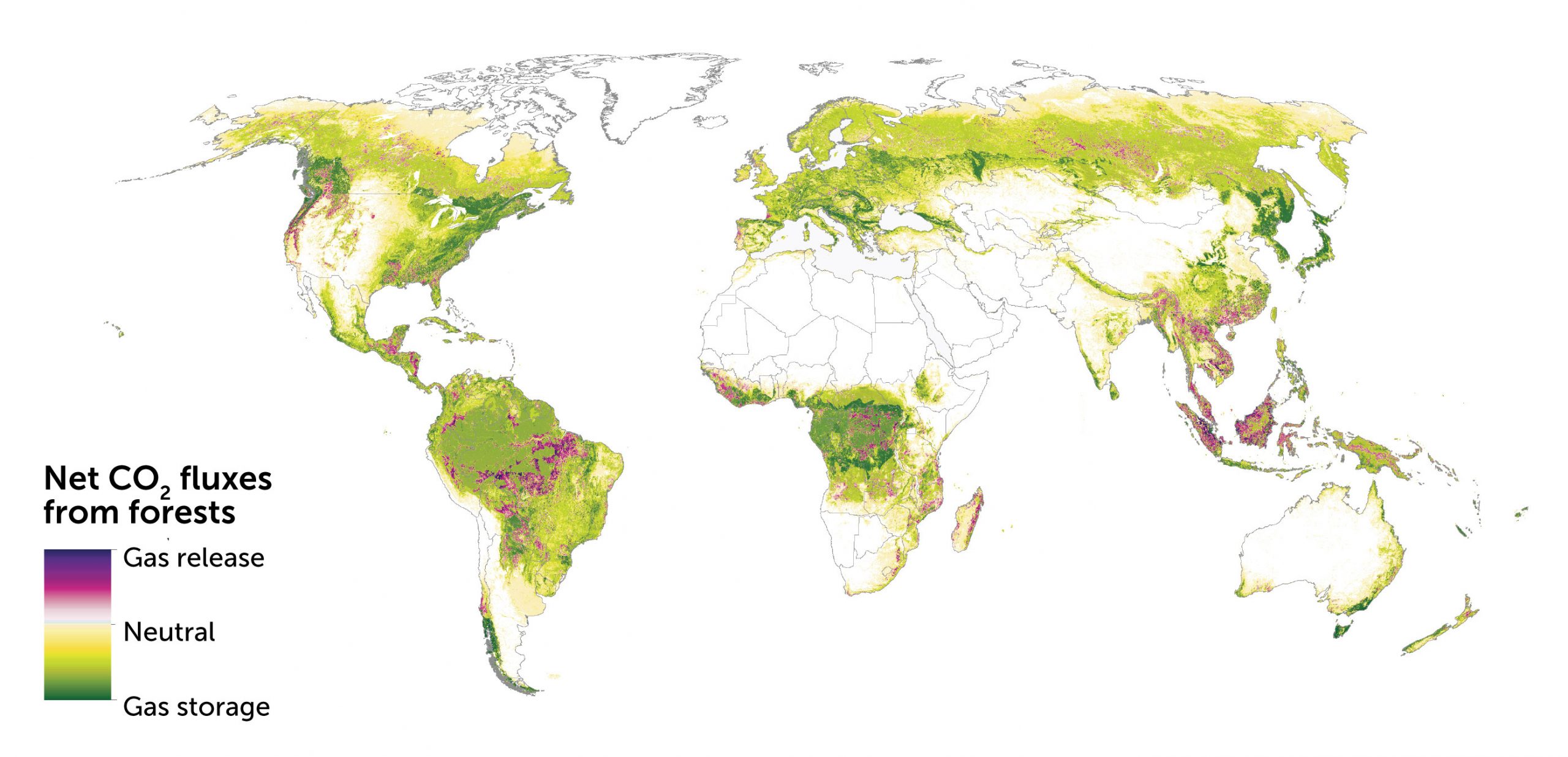
Chapter 5 quantifies the level by which atmospheric CO2 and methane concentrations have increased since 1750 (47% and 156% respectively) and addresses the ability of oceans and other natural systems to soak those emissions up. The more emissions increase, the less they can be offset by natural sinks—and in a high-emissions scenario, the loss of forests from wildfires becomes so severe that land-based ecosystems become a net source of emissions, rather than a sink (this is already happening to a degree in the Amazon).

Highlights

🌲The CO2 emitted from human activities during the decade of 2010–2019 was distributed between three Earth systems: 46% accumulated in the atmosphere, 23% was taken up by the ocean, and 31% was stored by vegetation.

📉The fraction of emissions taken up by land and ocean is expected to decline as the CO2 concentration increases.

💨Global temperatures rise in a near-linear relationship to cumulative CO2 emissions. In other words, to halt global warming, net emissions must reach zero.

CH 6: Short-lived climate forcers

Chapter 6 is all about methane, particulate matter, aerosols, hydrofluorocarbons, and other non-CO2 gases that don’t linger very long in the atmosphere (just a few hours, in some cases) but exert a tremendous influence on the climate while they do. In cases, that influence might be cooling, but their net impact has been to contribute to warming. Because they are short-lived, the future abundance and impact of these gases are highly variable in the different socioeconomic pathways considered in the report. These gases have a huge impact on the respiratory health of people around the world.

Highlights

⛽The sectors most responsible for warming from short-lived climate forcers are those dominated by methane emissions: fossil fuel production and distribution, agriculture, and waste management.

🧊In the next two decades, it is very likely that emissions from short-lived climate forcers will cause a warming relative to 2019, in addition to the warming from long-lived greenhouse gases like CO2.

🌏Rapid decarbonization leads to air quality improvements, but on its own is not sufficient to achieve, in the near term, air quality guidelines set by the World Health Organization, especially in parts of Asia and in some other highly polluted regions.

CH 7: The Earth’s energy budget, climate feedbacks, and climate sensitivity

Climate sensitivity is a measure of how much the Earth responds to changes in greenhouse gas concentrations. For every doubling of atmospheric CO2, temperatures go up by about 3°C, this chapter concludes. That’s about the same level scientists have estimated for several decades, but over time the range of uncertainty around that estimate has narrowed. The energy budget is a calculation of how much energy is flowing into the Earth system from the sun. Put together these metrics paint a picture of the human contribution to observed warming.

🐻‍❄️The Arctic warms more quickly than the Antarctic due to differences in radiative feedbacks and ocean heat uptake between the poles.

🌊Because of existing greenhouse gas concentrations, energy will continue to accumulate in the Earth system until at least the end of the 21st century, even under strong emissions reduction scenarios.

☁️The net effect of changes in clouds in response to global warming is to amplify human-induced warming. Compared to the last IPCC report, major advances in the understanding of cloud processes have increased the level of confidence in the cloud feedback cycle.

CH 8: Water cycle changes

This chapter catalogs what happens to water in a warming world. Although instances of drought are expected to become more common and more severe, wet parts of the world will get wetter as the warmer atmosphere is able to carry more water. Total net precipitation will increase, yet the thirstier atmosphere will make dry places drier. And within any one location, the difference in precipitation between the driest and wettest month will likely increase. But rainstorms are complex phenomenon and typically happen at a scale that is smaller than the resolution of most climate models, so specific local predictions about monsoon patterns remains an area of relatively high uncertainty.

Highlights

🌎Increased evapotranspiration will decrease soil moisture over the Mediterranean, southwestern North America, south Africa, southwestern South America, and southwestern Australia.

🌧️Summer monsoon precipitation is projected to increase for the South, Southeast and East Asian monsoon domains, while North American monsoon precipitation is projected to decrease. West African monsoon precipitation is projected to increase over the Central Sahel and decrease over the far western Sahel.

🌲Large-scale deforestation has likely decreased evapotranspiration and precipitation and increased runoff over the deforested regions. Urbanization has increased local precipitation and runoff intensity.

CH 9: Ocean, cryosphere, and sea level change

Most of the heat trapped by greenhouse gases is ultimately absorbed by the oceans. Warmer water expands, contributing significantly to sea level rise, and the slow, deep circulation of ocean water is a key reason why global temperatures don’t turn on a dime in relation to atmospheric CO2. Marine animals are feeling this heat, as scientists have documented that the frequency of marine heatwaves has doubled since the 1980s. Meanwhile, glaciers, polar sea ice, the Greenland ice sheet, and global permafrost are all rapidly melting. Overall sea levels have risen about 20 centimeters since 1900, and the rate of sea level rise is increasing.

Highlights

📈Global mean sea level rose faster in the 20th century than in any prior century over the last three millennia.

🌡️The heat content of the global ocean has increased since at least 1970 and will continue to increase over the 21st century. The associated warming will likely continue until at least 2300 even for low-emission scenarios because of the slow circulation of the deep ocean.

🧊The Arctic Ocean will likely become practically sea ice–free during the seasonal sea ice minimum for the first time before 2050 in all considered SSP scenarios.

CH 10: Linking global to regional climate change

Since 1950, scientists have clearly detected how greenhouse gas emissions from human activity are changing regional temperatures. Climate models can predict regional climate impacts. Where data are limited, statistical methods help identify local impacts (especially in challenging terrain such as mountains). Cities, in particular, will warm faster as a result of urbanization. Global warming extremes in urban areas will be even more pronounced, especially during heatwaves. Although global models largely agree, it is more difficult to consistently predict regional climate impacts across models.

Highlights

⛰️Some local-scale phenomena such as sea breezes and mountain wind systems can not be well represented by the resolution of most climate models.

🌆The difference in observed warming trends between cities and their surroundings can partly be attributed to urbanization. Future urbanization will amplify the projected air temperature change in cities regardless of the characteristics of the background climate.

😕Statistical methods are improving to downscale global climate models to more accurately depict local or regional projections.

CH 11: Weather and climate extreme events in a changing climate

Better data collection, modeling, and means scientists are more confident than ever in understanding the role of rising greenhouse gas concentration in weather and climate extremes.  We are virtually certain humans are behind observed temperature extremes.

Human activity is more making extreme weather and temperatures more intense and frequent, especially rain, droughts, and tropical cyclones. While even 1.5°C of warming will make events more severe, the intensity of extreme events is expected to at least double with 2°C of global warming compared today’s conditions, and quadruple with 3°C of warming. As global warming accelerates, historically unprecedented climatic events are likely to occur.

Highlights

🌡️It is an established fact that human-induced greenhouse gas emissions have led to an increased frequency and/or intensity of some weather and climate extremes since pre-industrial time, in particular for temperature extremes.

🌎Even relatively small incremental increases in global warming cause statistically significant changes in extremes.

🌪️The occurrence of extreme events is unprecedented in the observed record, and will increase with increasing global warming.

⛈️Relative to present-day conditions, changes in the intensity of extremes would be at least double at 2°C, and quadruple at 3°C of global warming.

CH 12: Climate change information for regional impact and for risk assessment

Climate models are getting better, more precise, and more accurate at predicting regional impacts. We know a lot more than we did in 2014 (the release of AR5). Our climate is already different compared ti the early or mid-20th century and we’re seeing big changes to mean temperatures, growing season, extreme heat, ocean acidification, and deoxygenation, and Arctic sea ice loss. Expect more changes by mid-century: more rain in the northern hemisphere, less rain in a few regions (the Mediterranean and South Africa), as well as sea-level rise along all coasts. Overall, there is high confidence that mean and extreme temperatures will rise over land and sea. Major widespread damages are expected, but also benefits are possible in some places.

Highlights

🌏Every region of the world will experience concurrent changes in multiple climate impact drivers by mid-century.

🌱Climate change is already resulting in significant societal and environmental impacts and will induce major socio-economic damages in the future. In some cases, climate change can also lead to beneficial conditions which can be taken into account in adaptation strategies.

🌨️The impacts of climate change depend not only on physical changes in the climate itself, but also on whether humans take steps to limit their exposure and vulnerability.


What we did:

The visualization of confidence is only for the executive summary at the beginning of each chapter. If a sentence had a confidence associated with it, the confidence text was removed and a color applied instead. If a sentence did not have an associated confidence, that doesn’t mean scientists do not feel confident about the content; they may be using likelihood (or certainty) language in that instance instead. We chose to only visualize confidence, as it is used more often in the report. Highlights were drawn from the text of the report but edited and in some cases rephrased for clarity.

MIT Predicted in 1972 That Society Will Collapse This Century. New Research Shows We’re on Schedule (Motherboard)

A 1972 MIT study predicted that rapid economic growth would lead to societal collapse in the mid 21st century. A new paper shows we’re unfortunately right on schedule.

By Nafeez Ahmed – July 14, 2021, 10:00am

A remarkable new study by a director at one of the largest accounting firms in the world has found that a famous, decades-old warning from MIT about the risk of industrial civilization collapsing appears to be accurate based on new empirical data. 

As the world looks forward to a rebound in economic growth following the devastation wrought by the pandemic, the research raises urgent questions about the risks of attempting to simply return to the pre-pandemic ‘normal.’

In 1972, a team of MIT scientists got together to study the risks of civilizational collapse. Their system dynamics model published by the Club of Rome identified impending ‘limits to growth’ (LtG) that meant industrial civilization was on track to collapse sometime within the 21st century, due to overexploitation of planetary resources.

The controversial MIT analysis generated heated debate, and was widely derided at the time by pundits who misrepresented its findings and methods. But the analysis has now received stunning vindication from a study written by a senior director at professional services giant KPMG, one of the ‘Big Four’ accounting firms as measured by global revenue.

Limits to growth

The study was published in the Yale Journal of Industrial Ecology in November 2020 and is available on the KPMG website. It concludes that the current business-as-usual trajectory of global civilization is heading toward the terminal decline of economic growth within the coming decade—and at worst, could trigger societal collapse by around 2040.

The study represents the first time a top analyst working within a mainstream global corporate entity has taken the ‘limits to growth’ model seriously. Its author, Gaya Herrington, is Sustainability and Dynamic System Analysis Lead at KPMG in the United States. However, she decided to undertake the research as a personal project to understand how well the MIT model stood the test of time.

The study itself is not affiliated or conducted on behalf of KPMG, and does not necessarily reflect the views of KPMG. Herrington performed the research as an extension of her Masters thesis at Harvard University in her capacity as an advisor to the Club of Rome. However, she is quoted explaining her project on the KPMG website as follows: 

“Given the unappealing prospect of collapse, I was curious to see which scenarios were aligning most closely with empirical data today. After all, the book that featured this world model was a bestseller in the 70s, and by now we’d have several decades of empirical data which would make a comparison meaningful. But to my surprise I could not find recent attempts for this. So I decided to do it myself.”

Titled ‘Update to limits to growth: Comparing the World3 model with empirical data’, the study attempts to assess how MIT’s ‘World3’ model stacks up against new empirical data. Previous studies that attempted to do this found that the model’s worst-case scenarios accurately reflected real-world developments. However, the last study of this nature was completed in 2014. 

The risk of collapse 

Herrington’s new analysis examines data across 10 key variables, namely population, fertility rates, mortality rates, industrial output, food production, services, non-renewable resources, persistent pollution, human welfare, and ecological footprint. She found that the latest data most closely aligns with two particular scenarios, ‘BAU2’ (business-as-usual) and ‘CT’ (comprehensive technology). 

“BAU2 and CT scenarios show a halt in growth within a decade or so from now,” the study concludes. “Both scenarios thus indicate that continuing business as usual, that is, pursuing continuous growth, is not possible. Even when paired with unprecedented technological development and adoption, business as usual as modelled by LtG would inevitably lead to declines in industrial capital, agricultural output, and welfare levels within this century.”

Study author Gaya Herrington told Motherboard that in the MIT World3 models, collapse “does not mean that humanity will cease to exist,” but rather that “economic and industrial growth will stop, and then decline, which will hurt food production and standards of living… In terms of timing, the BAU2 scenario shows a steep decline to set in around 2040.”

image3.png

The ‘Business-as-Usual’ scenario (Source: Herrington, 2021)

The end of growth? 

In the comprehensive technology (CT) scenario, economic decline still sets in around this date with a range of possible negative consequences, but this does not lead to societal collapse.

image1.png

The ‘Comprehensive Technology’ scenario (Source: Herrington, 2021)

Unfortunately, the scenario which was the least closest fit to the latest empirical data happens to be the most optimistic pathway known as ‘SW’ (stabilized world), in which civilization follows a sustainable path and experiences the smallest declines in economic growth—based on a combination of technological innovation and widespread investment in public health and education.

image2.png

The ‘Stabilized World’ Scenario (Source: Herrington, 2021)

Although both the business-as-usual and comprehensive technology scenarios point to the coming end of economic growth in around 10 years, only the BAU2 scenario “shows a clear collapse pattern, whereas CT suggests the possibility of future declines being relatively soft landings, at least for humanity in general.” 

Both scenarios currently “seem to align quite closely not just with observed data,” Herrington concludes in her study, indicating that the future is open.   

A window of opportunity 

While focusing on the pursuit of continued economic growth for its own sake will be futile, the study finds that technological progress and increased investments in public services could not just avoid the risk of collapse, but lead to a new stable and prosperous civilization operating safely within planetary boundaries. But we really have only the next decade to change course. 

“At this point therefore, the data most aligns with the CT and BAU2 scenarios which indicate a slowdown and eventual halt in growth within the next decade or so, but World3 leaves open whether the subsequent decline will constitute a collapse,” the study concludes. Although the ‘stabilized world’ scenario “tracks least closely, a deliberate trajectory change brought about by society turning toward another goal than growth is still possible. The LtG work implies that this window of opportunity is closing fast.”

In a presentation at the World Economic Forum in 2020 delivered in her capacity as a KPMG director, Herrington argued for ‘agrowth’—an agnostic approach to growth which focuses on other economic goals and priorities.  

“Changing our societal priorities hardly needs to be a capitulation to grim necessity,” she said. “Human activity can be regenerative and our productive capacities can be transformed. In fact, we are seeing examples of that happening right now. Expanding those efforts now creates a world full of opportunity that is also sustainable.” 

She noted how the rapid development and deployment of vaccines at unprecedented rates in response to the COVID-19 pandemic demonstrates that we are capable of responding rapidly and constructively to global challenges if we choose to act. We need exactly such a determined approach to the environmental crisis.

“The necessary changes will not be easy and pose transition challenges but a sustainable and inclusive future is still possible,” said Herrington. 

The best available data suggests that what we decide over the next 10 years will determine the long-term fate of human civilization. Although the odds are on a knife-edge, Herrington pointed to a “rapid rise” in environmental, social and good governance priorities as a basis for optimism, signalling the change in thinking taking place in both governments and businesses. She told me that perhaps the most important implication of her research is that it’s not too late to create a truly sustainable civilization that works for all.

China is rolling out an enormous “weather modification” system (Futurism)

futurism.com

12. 4. 20 by Dan Robitzski/ Sci-Fi Visions


Experts say it could spur conflict with a neighboring country.

Cloud Cover

This week, the Chinese government announced that it plans to drastically increase its use of technology that artificially changes the weather.

Cloud seeding technology, or systems that can blasts silver molecules into the sky to prompt condensation and cloud formation, has been around for decades, and China makes frequent use of it. But now, CNN reports that China wants to increase the total size of its weather modification test area to 5.5 million square miles by 2025 — a huge increase, and an area larger than that of the entire country of India, which could affect the environment on an epic scale and even potentially spur conflict with nearby countries.

Fog Of War

Most notably, China and India share a hotly-disputed border that they’ve violently clashed over as recently as this year, CNN has previously reported. India’s agriculture relies on a monsoon season that’s already grown unpredictable due to climate change, prompting experts in the country to worry that China may use its ability to control rain and snowfall as a weapon.

“Lack of proper coordination of weather modification activity (could) lead to charges of ‘rain stealing’ between neighboring regions,” National Taiwan University researchers conclude in a 2017 paper published in Geoforum.

Global Tampering

In the past, China has used its weather modification tech to seed clouds well in advance of major events like the 2008 Olympics and political meetings so the events themselves happen under clear skies, CNN reports.

But this planned expansion of the system means that other countries may be subject to its meteorological whims — seeding international conflict in addition to clouds.

READ MORE: China to expand weather modification program to cover area larger than India [CNN]

More on weather modification: China’s New “Weather-Controlling Tech” Could Make it Rain on Demand

It’s so hot in Dubai the government is paying scientists to make it rain (Wasington Post)

washingtonpost.com

Jonathan Edwards – July 21, 2021

Sunlight reflects off the Burj Khalifa, the world’s tallest building, during a rain shower in Dubai in 2018. (Jon Gambrell/AP)

Facing a hotter future, dwindling water sources and an exploding population, scientists in one Middle East country are making it rain.

United Arab Emirates meteorological officials released a video this week of cars driving through a downpour in Ras al Khaimah in the northern part of the country. The storm was the result of one of the UAE’s newest efforts to increase rainfall in a desert nation that gets about four inches a year on average.

Washington, D.C., in contrast, has averaged nearly 45 inches of rain annually for the past decade.

Scientists created rainstorms by launching drones, which then zapped clouds with electricity, the Independent reports. Jolting droplets in the clouds can cause them to clump together, researchers found. The larger raindrops that result then fall to the ground, instead of evaporating midair — which is often the fate of smaller droplets in the UAE, where temperatures are hot and the clouds are high.

“What we are trying to do is to make the droplets inside the clouds big enough so that when they fall out of the cloud, they survive down to the surface,” meteorologist and researcher Keri Nicoll told CNN in May as her team prepared to start testing the drones near Dubai.

Nicoll is part of a team of scientists with the University of Reading in England whose research led to this week’s man-made rainstorms. In 2017, the university’s scientists received $1.5 million for use over three years from the UAE Research Program for Rain Enhancement Science, which has invested in at least nine different research projects over the past five years.

To test their research, Nicoll and her team built four drones with wingspans of about 6½ feet. The drones, which are launched from a catapult, can fly for about 40 minutes, CNN reported. During flight, the drone’s sensors measure temperature, humidity and electrical charge within a cloud, which lets the researchers know when and where they need to zap.

Water is a big issue in the UAE. The country uses about 4 billion cubic meters of it each year but has access to about 4 percent of that in renewable water resources, according to the CIA. The number of people living in the UAE has skyrocketed in recent years, doubling to 8.3 million between 2005 and 2010, which helps explain why demand for water spiked by a third around that time, according to the government’s 2015 “State of Environment” report. The population kept surging over the next decade and is now 9.9 million.

“The water table is sinking drastically in [the] UAE,” University of Reading professor and meteorologist Maarten Ambaum told BBC News, “and the purpose of this [project] is to try to help with rainfall.”

It usually rains just a few days out of the year in the UAE. During the summer, there’s almost no rainfall. Temperatures there recently topped 125 degrees.

In recent years, the UAE’s massive push into desalination technology — which transforms seawater into freshwater by removing the salt — has helped close the gap between the demand for water and supply. Most of the UAE’s drinkable water, and 42 percent of all water used in the country, comes from its roughly 70 desalination plants, according to the UAE government.

Still, part of the government’s “water security strategy” is to lower demand by 21 percent in the next 15 years.

Ideas to get more water for the UAE have not lacked imagination. In 2016, The Washington Post reported government officials were considering building a mountain to create rainfall. As moist air reaches a mountain, it is forced upward, cooling as it rises. The air can then condense and turn into liquid, which falls as rain.

Estimates for another mountain-building project in the Netherlands came in as high as $230 billion.

Other ideas for getting more water to the UAE have included building a pipeline from Pakistan and floating icebergs down from the Arctic.

‘No One is Safe’: How The Heatwave Has Battered the Wealthy World (New York Times)

nytimes.com

Somini Sengupta


A firefighter battled the Sugar Fire in Doyle, Calif., this month.
C A firefighter battled the Sugar Fire in Doyle, Calif., this month. Credit: Noah Berger/Associated Press
Floods swept Germany, fires ravaged the American West and another heat wave loomed, driving home the reality that the world’s richest nations remain unprepared for the intensifying consequences of climate change.

July 17, 2021

Some of Europe’s richest countries lay in disarray this weekend, as raging rivers burst through their banks in Germany and Belgium, submerging towns, slamming parked cars against trees and leaving Europeans shellshocked at the intensity of the destruction.

Only days before in the Northwestern United States, a region famed for its cool, foggy weather, hundreds had died of heat. In Canada, wildfire had burned a village off the map. Moscow reeled from record temperatures. And this weekend the northern Rocky Mountains were bracing for yet another heat wave, as wildfires spread across 12 states in the American West.

The extreme weather disasters across Europe and North America have driven home two essential facts of science and history: The world as a whole is neither prepared to slow down climate change, nor live with it. The week’s events have now ravaged some of the world’s wealthiest nations, whose affluence has been enabled by more than a century of burning coal, oil and gas — activities that pumped the greenhouse gases into the atmosphere that are warming the world.

“I say this as a German: The idea that you could possibly die from weather is completely alien,” said Friederike Otto, a physicist at Oxford University who studies the links between extreme weather and climate change. “There’s not even a realization that adaptation is something we have to do right now. We have to save people’s lives.”

The floods in Europe have killed at least 165 people, most of them in Germany, Europe’s most powerful economy. Across Germany, Belgium, and the Netherlands, hundreds have been reported as missing, which suggests the death toll could rise. Questions are now being raised about whether the authorities adequately warned the public about risks.

Flood damage in Erftstadt, Germany, on Friday.
Credit: Sebastien Bozon/Agence France-Presse — Getty Images
A dry Hensley Lake in Madera, Calif., on Wednesday.
Credit: David Swanson/Reuters

The bigger question is whether the mounting disasters in the developed world will have a bearing on what the world’s most influential countries and companies will do to reduce their own emissions of planet-warming gases. They come a few months ahead of United Nations-led climate negotiations in Glasgow in November, effectively a moment of reckoning for whether the nations of the world will be able to agree on ways to rein in emissions enough to avert the worst effects of climate change.

Disasters magnified by global warming have left a long trail of death and loss across much of the developing world, after all, wiping out crops in Bangladesh, leveling villages in Honduras, and threatening the very existence of small island nations. Typhoon Haiyan devastated the Philippines in the run-up to climate talks in 2013, which prompted developing-country representatives to press for funding to deal with loss and damage they face over time for climate induced disasters that they weren’t responsible for. That was rejected by richer countries, including the United States and Europe.

“Extreme weather events in developing countries often cause great death and destruction — but these are seen as our responsibility, not something made worse by more than a hundred years of greenhouse gases emitted by industrialized countries,” said Ulka Kelkar, climate director at the India office of the World Resources Institute. These intensifying disasters now striking richer countries, she said, show that developing countries seeking the world’s help to fight climate change “have not been crying wolf.”

Indeed, even since the 2015 Paris Agreement was negotiated with the goal of averting the worst effects of climate change, global emissions have kept increasing. China is the world’s biggest emitter today. Emissions have been steadily declining in both the United States and Europe, but not at the pace required to limit global temperature rise.

A reminder of the shared costs came from Mohamed Nasheed, the former president of the Maldives, an island nation at acute risk from sea level rise.

“While not all are affected equally, this tragic event is a reminder that, in the climate emergency, no one is safe, whether they live on a small island nation like mine or a developed Western European state,” Mr. Nasheed said in a statement on behalf of a group of countries that call themselves the Climate Vulnerable Forum.

Municipal vehicles sprayed water in central Moscow on July 7 to fight midday heat.
Credit: Alexander Nemenov/Agence France-Presse — Getty Images
The Bootleg Fire in southern Oregon this week.
Credit: John Hendricks/Oregon Office of State Fire Marshal, via Associated Press

The ferocity of these disasters is as notable as their timing, coming ahead of the global talks in Glasgow to try to reach agreement on fighting climate change. The world has a poor track record on cooperation so far, and, this month, new diplomatic tensions emerged.

Among major economies, the European Commission last week introduced the most ambitious road map for change. It proposed laws to ban the sale of gas and diesel cars by 2035, require most industries to pay for the emissions they produce, and most significantly, impose a tax on imports from countries with less stringent climate policies.

But those proposals are widely expected to meet vigorous objections both from within Europe and from other countries whose businesses could be threatened by the proposed carbon border tax, potentially further complicating the prospects for global cooperation in Glasgow.

The events of this summer come after decades of neglect of science. Climate models have warned of the ruinous impact of rising temperatures. An exhaustive scientific assessment in 2018 warned that a failure to keep the average global temperature from rising past 1.5 degrees Celsius, compared to the start of the industrial age, could usher in catastrophic results, from the inundation of coastal cities to crop failures in various parts of the world.

The report offered world leaders a practical, albeit narrow path out of chaos. It required the world as a whole to halve emissions by 2030. Since then, however, global emissions have continued rising, so much so that global average temperature has increased by more than 1 degree Celsius (about 2 degrees Fahrenheit) since 1880, narrowing the path to keep the increase below the 1.5 degree Celsius threshold.

As the average temperature has risen, it has heightened the frequency and intensity of extreme weather events in general. In recent years, scientific advances have pinpointed the degree to which climate change is responsible for specific events.

For instance, Dr. Otto and a team of international researchers concluded that the extraordinary heat wave in the Northwestern United States in late June would almost certainly not have occurred without global warming.

A firefighting helicopter in Siberia in June.
Credit: Maksim Slutsky/Associated Press
Lytton, British Columbia, devastated by wildfires last month.
Credit: Darryl Dyck/The Canadian Press, via Associated Press

And even though it will take extensive scientific analysis to link climate change to last week’s cataclysmic floods in Europe, a warmer atmosphere holds more moisture and is already causing heavier rainfall in many storms around the world. There is little doubt that extreme weather events will continue to be more frequent and more intense as a consequence of global warming. A paper published Friday projected a significant increase in slow-moving but intense rainstorms across Europe by the end of this century because of climate change.

“We’ve got to adapt to the change we’ve already baked into the system and also avoid further change by reducing our emissions, by reducing our influence on the climate,” said Richard Betts, a climate scientist at the Met Office in Britain and a professor at the University of Exeter.

That message clearly hasn’t sunk in among policymakers, and perhaps the public as well, particularly in the developed world, which has maintained a sense of invulnerability.

The result is a lack of preparation, even in countries with resources. In the United States, flooding has killed more than 1,000 people since 2010 alone, according to federal data. In the Southwest, heat deaths have spiked in recent years.

Sometimes that is because governments have scrambled to respond to disasters they haven’t experienced before, like the heat wave in Western Canada last month, according to Jean Slick, head of the disaster and emergency management program at Royal Roads University in British Columbia. “You can have a plan, but you don’t know that it will work,” Ms. Slick said.

Other times, it’s because there aren’t political incentives to spend money on adaptation.

“By the time they build new flood infrastructure in their community, they’re probably not going to be in office anymore,” said Samantha Montano, a professor of emergency management at the Massachusetts Maritime Academy. “But they are going to have to justify millions, billions of dollars being spent.”

Christopher Flavelle contributed reporting.

Why planting tons of trees isn’t enough to solve climate change (Science News)

sciencenews.org

By Carolyn Gramling July 9, 2021 at 6:00 am 22-28 minutos

Massive projects need much more planning and follow-through to succeed – and other tree protections need to happen too


Trees are symbols of hope, life and transformation. They’re also increasingly touted as a straightforward, relatively inexpensive, ready-for-prime-time solution to climate change.

When it comes to removing human-caused emissions of the greenhouse gas carbon dioxide from Earth’s atmosphere, trees are a big help. Through photosynthesis, trees pull the gas out of the air to help grow their leaves, branches and roots. Forest soils can also sequester vast reservoirs of carbon.

Earth holds, by one estimate, as many as 3 trillion trees. Enthusiasm is growing among governments, businesses and individuals for ambitious projects to plant billions, even a trillion more. Such massive tree-planting projects, advocates say, could do two important things: help offset current emissions and also draw out CO2 emissions that have lingered in the atmosphere for decades or longer.

Even in the politically divided United States, large-scale tree-planting projects have broad bipartisan support, according to a spring 2020 poll by the Pew Research Center. And over the last decade, a diverse garden of tree-centric proposals — from planting new seedlings to promoting natural regrowth of degraded forests to blending trees with crops and pasturelands — has sprouted across the international political landscape.

Trees “are having a bit of a moment right now,” says Joe Fargione, an ecologist with The Nature Conservancy who is based in Minneapolis. It helps that everybody likes trees. “There’s no anti-tree lobby. [Trees] have lots of benefits for people. Not only do they store carbon, they help provide clean air, prevent soil erosion, shade and shelter homes to reduce energy costs and give people a sense of well-being.”

Conservationists are understandably eager to harness this enthusiasm to combat climate change. “We’re tapping into the zeitgeist,” says Justin Adams, executive director of the Tropical Forest Alliance at the World Economic Forum, an international nongovernmental organization based in Geneva. In January 2020, the World Economic Forum launched the One Trillion Trees Initiative, a global movement to grow, restore and conserve trees around the planet. One trillion is also the target for other organizations that coordinate global forestation projects, such as Plant-for-the-Planet’s Trillion Tree Campaign and Trillion Trees, a partnership of the World Wildlife Fund, the Wildlife Conservation Society and other conservation groups.

A carbon-containing system

Forests store carbon aboveground and below. That carbon returns to the atmosphere by microbial activity in the soil, or when trees are cut down and die.

SOURCE: MINNESOTA BOARD OF WATER AND SOIL RESOURCES 2019; images: T. Tibbitts

Yet, as global eagerness for adding more trees grows, some scientists are urging caution. Before moving forward, they say, such massive tree projects must address a range of scientific, political, social and economic concerns. Poorly designed projects that don’t address these issues could do more harm than good, the researchers say, wasting money as well as political and public goodwill. The concerns are myriad: There’s too much focus on numbers of seedlings planted, and too little time spent on how to keep the trees alive in the long term, or in working with local communities. And there’s not enough emphasis on how different types of forests sequester very different amounts of carbon. There’s too much talk about trees, and not enough about other carbon-storing ecosystems.

“There’s a real feeling that … forests and trees are just the idea we can use to get political support” for many, perhaps more complicated, types of landscape restoration initiatives, says Joseph Veldman, an ecologist at Texas A&M University in College Station. But that can lead to all kinds of problems, he adds. “For me, the devil is in the details.”

The root of the problem

The pace of climate change is accelerating into the realm of emergency, scientists say. Over the last 200 years, human-caused emissions of greenhouse gases, including CO2 and methane, have raised the average temperature of the planet by about 1 degree Celsius (SN: 12/22/18 & 1/5/19, p. 18).

The litany of impacts of this heating is familiar by now. Earth’s poles are rapidly shedding ice, which raises sea levels; the oceans are heating up, threatening fish and food security. Tropical storms are becoming rainier and lingering longer, and out of control wildfires are blazing from the Arctic to Australia (SN: 12/19/20 & 1/2/21, p. 32).

The world’s oceans and land-based ecosystems, such as forests, absorb about half of the carbon emissions from fossil fuel burning and other industrial activities. The rest goes into the atmosphere. So “the majority of the solution to climate change will need to come from reducing our emissions,” Fargione says. To meet climate targets set by the 2015 Paris Agreement, much deeper and more painful cuts in emissions than nations have pledged so far will be needed in the next 10 years.

We invest a lot in tree plantings, but we are not sure what happens after that.

Lalisa Duguma

But increasingly, scientists warn that reducing emissions alone won’t be enough to bring Earth’s thermostat back down. “We really do need an all-hands-on-deck approach,” Fargione says. Specifically, researchers are investigating ways to actively remove that carbon, known as negative emissions technologies. Many of these approaches, such as removing CO2 directly from the air and converting it into fuel, are still being developed.

But trees are a ready kind of negative emissions “technology,” and many researchers see them as the first line of defense. In its January 2020 report, “CarbonShot,” the World Resources Institute, a global nonprofit research organization, suggested that large and immediate investments in reforestation within the United States will be key for the country to have any hope of reaching carbon neutrality — in which ongoing carbon emissions are balanced by carbon withdrawals — by 2050. The report called for the U.S. government to invest $4 billion a year through 2030 to support tree restoration projects across the United States. Those efforts would be a bridge to a future of, hopefully, more technologies that can pull large amounts of carbon out of the atmosphere.

The numbers game

Earth’s forests absorb, on average, 16 billion metric tons of CO2 annually, researchers reported in the March Nature Climate Change. But human activity can turn forests into sources of carbon: Thanks to land clearing, wildfires and the burning of wood products, forests also emit an estimated 8.1 billion tons of the gas back to the atmosphere.

That leaves a net amount of 7.6 billion tons of CO2 absorbed by forests per year — roughly a fifth of the 36 billion tons of CO2 emitted by humans in 2019. Deforestation and forest degradation are rapidly shifting the balance. Forests in Southeast Asia now emit more carbon than they absorb due to clearing for plantations and uncontrolled fires. The Amazon’s forests may flip from carbon sponge to carbon source by 2050, researchers say (SN Online: 1/10/20). The priority for slowing climate change, many agree, should be saving the trees we have.

Forests in flux

While global forests were a net carbon sink of about 7.6 gigatons of carbon dioxide per year from 2001 to 2019, forests in areas such as Southeast Asia and parts of the Amazon began releasing more carbon than they store.
Tap map to enlarge

Net annual average contribution of carbon dioxide from Earth’s forests, 2001–2019
map of the net annual average contribution of carbon dioxide from Earth's forests, 2001–2019
SOURCE: N.L. HARRIS ET AL/NATURE CLIMATE CHANGE 2021

Just how many more trees might be mustered for the fight is unclear, however. In 2019, Thomas Crowther, an ecologist at ETH Zurich, and his team estimated in Science that around the globe, there are 900 million hectares of land — an area about the size of the United States — available for planting new forests and reviving old ones (SN: 8/17/19, p. 5). That land could hold over a trillion more trees, the team claimed, which could trap about 206 billion tons of carbon over a century.

That study, led by Jean-Francois Bastin, then a postdoc in Crowther’s lab, was sweeping, ambitious and hopeful. Its findings spread like wildfire through media, conservationist and political circles. “We were in New York during Climate Week [2019], and everybody’s talking about this paper,” Adams recalls. “It had just popped into people’s consciousness, this unbelievable technology solution called the tree.”

To channel that enthusiasm, the One Trillion Trees Initiative incorporated the study’s findings into its mission statement, and countless other tree-planting efforts have cited the report.

But critics say the study is deeply flawed, and that its accounting — of potential trees, of potential carbon uptake — is not only sloppy, but dangerous. In 2019, Science published five separate responses outlining numerous concerns. For example, the study’s criteria for “available” land for tree planting were too broad, and the carbon accounting was inaccurate because it assumes that new tree canopy cover equals new carbon storage. Savannas and natural grasslands may have relatively few trees, critics noted, but these regions already hold plenty of carbon in their soils. When that carbon is accounted for, the carbon uptake benefit from planting trees drops to perhaps a fifth of the original estimate.

Trees are having a bit of a moment right now.

Joe Fargione

There’s also the question of how forests themselves can affect the climate. Adding trees to snow-covered regions, for example, could increase the absorption of solar radiation, possibly leading to warming.

“Their numbers are just so far from anything reasonable,” Veldman says. And focusing on the number of trees planted also sets up another problem, he adds — an incentive structure that is prone to corruption. “Once you set up the incentive system, behaviors change to basically play that game.”

Adams acknowledges these concerns. But, the One Trillion Trees Initiative isn’t really focused on “the specifics of the math,” he says, whether it’s the number of trees or the exact amount of carbon sequestered. The goal is to create a powerful climate movement to “motivate a community behind a big goal and a big vision,” he says. “It could give us a fighting chance to get restoration right.”

Other nonprofit conservation groups, like the World Resources Institute and The Nature Conservancy, are trying to walk a similar line in their advocacy. But some scientists are skeptical that governments and policy makers tasked with implementing massive forest restoration programs will take note of such nuances.

“I study how government bureaucracy works,” says Forrest Fleischman, who researches forest and environmental policy at the University of Minnesota in St. Paul. Policy makers, he says, are “going to see ‘forest restoration,’ and that means planting rows of trees. That’s what they know how to do.”

Counting carbon

How much carbon a forest can draw from the atmosphere depends on how you define “forest.” There’s reforestation — restoring trees to regions where they used to be — and afforestation — planting new trees where they haven’t historically been. Reforestation can mean new planting, including crop trees; allowing forests to regrow naturally on lands previously cleared for agriculture or other purposes; or blending tree cover with croplands or grazing areas.

In the past, the carbon uptake potential of letting forests regrow naturally was underestimated by 32 percent, on average — and by as much as 53 percent in tropical forests, according to a 2020 study in Nature. Now, scientists are calling for more attention to this forestation strategy.

If it’s just a matter of what’s best for the climate, natural forest regrowth offers the biggest bang for the buck, says Simon Lewis, a forest ecologist at University College London. Single-tree commercial crop plantations, on the other hand, may meet the technical definition of a “forest” — a certain concentration of trees in a given area — but factor in land clearing to plant the crop and frequent harvesting of the trees, and such plantations can actually release more carbon than they sequester.

Comparing the carbon accounting between different restoration projects becomes particularly important in the framework of international climate targets and challenges. For example, the 2011 Bonn Challenge is a global project aimed at restoring 350 million hectares by 2030. As of 2020, 61 nations had pledged to restore a total of 210 million hectares of their lands. The potential carbon impact of the stated pledges, however, varies widely depending on the specific restoration plans.

Levels of protection

The Bonn Challenge aims to globally reforest 350 million hectares of land. Allowing all to regrow naturally would sequester 42 gigatons of carbon by 2100. Pledges of 43 tropical and subtropical nations that joined by 2019 — a mix of plantations and natural regrowth — would sequester 16 gigatons of carbon. If some of the land is later converted to biofuel plantations, sequestration is 3 gigatons. With only plantations, carbon storage is 1 gigaton.

Amount of carbon sequestered by 2100 in four Bonn Challenge scenarios
graph showing the amount of carbon sequestered by 2100 in four Bonn Challenge scenarios

SOURCE: S.L. LEWIS ET AL/NATURE 2019; graphs: T. Tibbitts

In a 2019 study in Nature, Lewis and his colleagues estimated that if all 350 million hectares were allowed to regrow natural forest, those lands would sequester about 42 billion metric tons (gigatons in chart above) of carbon by 2100. Conversely, if the land were to be filled with single-tree commercial crop plantations, carbon storage drops to about 1 billion metric tons. And right now, plantations make up a majority of the restoration plans submitted under the Bonn Challenge.

Striking the right balance between offering incentives to landowners to participate while also placing certain restrictions remains a tricky and long-standing challenge, not just for combating the climate emergency but also for trying to preserve biodiversity (SN: 8/1/20, p. 18). Since 1974, Chile, for example, has been encouraging private landowners to plant trees through subsidies. But landowners are allowed to use these subsidies to replace native forestlands with profitable plantations. As a result, Chile’s new plantings not only didn’t increase carbon storage, they also accelerated biodiversity losses, researchers reported in the September 2020 Nature Sustainability.

The reality is that plantations are a necessary part of initiatives like the Bonn Challenge, because they make landscape restoration economically viable for many nations, Lewis says. “Plantations can play a part, and so can agroforestry as well as areas of more natural forest,” he says. “It’s important to remember that landscapes provide a whole host of services and products to people who live there.”

But he and others advocate for increasing the proportion of forestation that is naturally regenerated. “I’d like to see more attention on that,” says Robin Chazdon, a forest ecologist affiliated with the University of the Sunshine Coast in Australia as well as with the World Resources Institute. Naturally regenerated forests could be allowed to grow in buffer regions between farms, creating connecting green corridors that could also help preserve biodiversity, she says. And “it’s certainly a lot less expensive to let nature do the work,” Chazdon says.

Indeed, massive tree-planting projects may also be stymied by pipeline and workforce issues. Take seeds: In the United States, nurseries produce about 1.3 billion seedlings per year, Fargione and colleagues calculated in a study reported February 4 in Frontiers in Forests and Global Change. To support a massive tree-planting initiative, U.S. nurseries would need to at least double that number.

A tree-planting report card

From China to Turkey, countries around the world have launched enthusiastic national tree-planting efforts. And many of them have become cautionary tales.

China kicked off a campaign in 1978 to push back the encroaching Gobi Desert, which has become the fastest-growing desert on Earth due to a combination of mass deforestation and overgrazing, exacerbated by high winds that drive erosion. China’s Three-North Shelter Forest Program, nicknamed the Great Green Wall, aims to plant a band of trees stretching 4,500 kilometers across the northern part of the country. The campaign has involved millions of seeds dropped from airplanes and millions more seedlings planted by hand. But a 2011 analysis suggested that up to 85 percent of the plantings had failed because the nonnative species chosen couldn’t survive in the arid environments they were plopped into.

a wide photograph of a desert, with a woman in the center dropping straw
A woman places straw in March 2019 to fix sand in place before planting trees at the edge of the Gobi Desert in China’s Minqin County. Her work is part of a private tree-planting initiative that dovetails with the government’s decades-long effort to build a “green wall” to hold back the desert.WANG HE/GETTY IMAGES PLUS

More recently, Turkey launched its own reforestation effort. On November 11, 2019, National Forestation Day, volunteers across the country planted 11 million trees at more than 2,000 sites. In Turkey’s Çorum province, 303,150 saplings were planted in a single hour, setting a new world record.

Within three months, however, up to 90 percent of the new saplings inspected by Turkey’s agriculture and forestry trade union were dead, according to the union’s president, Şükrü Durmuş, speaking to the Guardian (Turkey’s minister of agriculture and forestry denied that this was true). The saplings, Durmuş said, died due to a combination of insufficient water and because they were planted at the wrong time of year, and not by experts.

Some smaller-scale efforts also appear to be failing, though less spectacularly. Tree planting has been ongoing for decades in the Kangra district of Himachal Pradesh in northern India, says Eric Coleman, a political scientist at Florida State University in Tallahassee, who’s been studying the outcomes. The aim is to increase the density of the local forests and provide additional forest benefits for communities nearby, such as wood for fuel and fodder for grazing animals. How much money was spent isn’t known, Coleman says, because there aren’t records of how much was paid for seeds. “But I imagine it was in the millions and millions of dollars.”

Coleman and his colleagues analyzed satellite images and interviewed members of the local communities. They found that the tree planting had very little impact one way or the other. Forest density didn’t change much, and the surveys suggested that few households were gaining benefits from the planted forests, such as gathering wood for fuel, grazing animals or collecting fodder.

But massive tree-planting efforts don’t have to fail. “It’s easy to point to examples of large-scale reforestation efforts that weren’t using the right tree stock, or adequately trained workforces, or didn’t have enough investment in … postplanting treatments and care,” Fargione says. “We … need to learn from those efforts.”

Speak for the trees

Forester Lalisa Duguma of World Agroforestry in Nairobi, Kenya, and colleagues explored some of the reasons for the very high failure rates of these projects in a working paper in 2020. “Every year there are billions of dollars invested [in tree planting], but forest cover is not increasing,” Duguma says. “Where are those resources going?”

In 2019, Duguma raised this question at the World Congress on Agroforestry in Montpellier, France. He asked the audience of scientists and conservationists: “How many of you have ever planted a tree seedling?” To those who raised their hands, he asked, “Have they grown?”

Some respondents acknowledged that they weren’t sure. “Very good! That’s what I wanted,” he told them. “We invest a lot in tree plantings, but we are not sure what happens after that.”

It comes down to a deceptively simple but “really fundamental” point, Duguma says. “The narrative has to change — from tree planting to tree growing.”

The good news is that this point has begun to percolate through the conservationist world, he says. To have any hope of success, restoration projects need to consider the best times of year to plant seeds, which seeds to plant and where, who will care for the seedlings as they grow into trees, how that growth will be monitored, and how to balance the economic and environmental needs of people in developing countries where the trees might be planted.
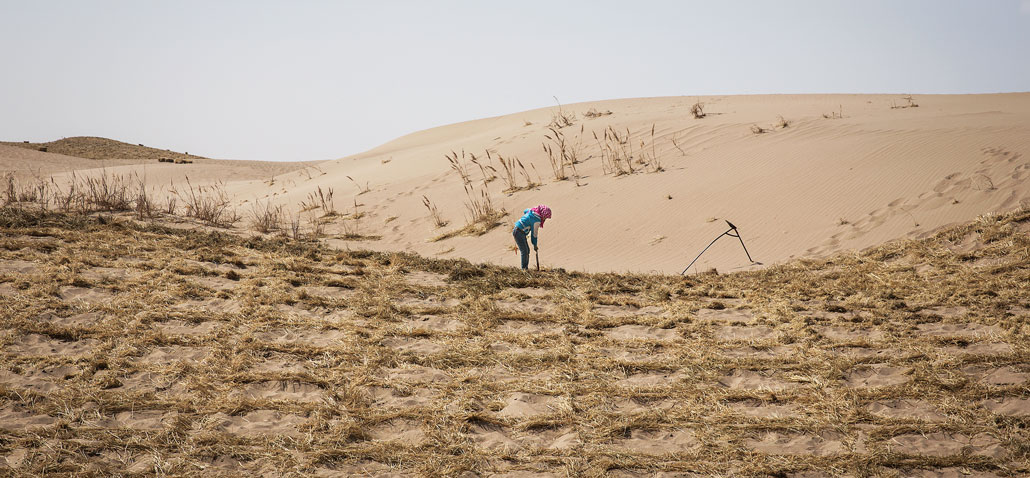
“That is where we need to capture the voice of the people,” Duguma says. “From the beginning.”
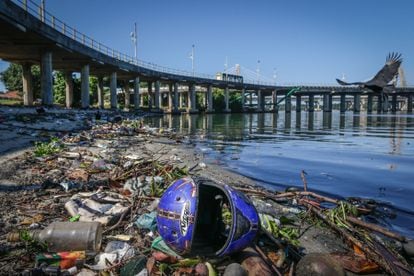
Even as the enthusiasm for tree planting takes root in the policy world, there’s a growing awareness among researchers and conservationists that local community engagement must be built into these plans; it’s indispensable to their success.

“It will be almost impossible to meet these targets we all care so much about unless small farmers and communities benefit more from trees,” as David Kaimowitz of the United Nations’ Food and Agriculture Organization wrote March 19 in a blog post for the London-based nonprofit International Institute for Environment and Development.

For one thing, farmers and villagers managing the land need incentives to care for the plantings and that includes having clear rights to the trees’ benefits, such as food or thatching or grazing. “People who have insecure land tenure don’t plant trees,” Fleischman says.

Fleischman and others outlined many of the potential social and economic pitfalls of large-scale tree-planting projects last November in BioScience. Those lessons boil down to this, Fleischman says: “You need to know something about the place … the political dynamics, the social dynamics.… It’s going to be very different in different parts of the world.”

The old cliché — think globally, act locally — may offer the best path forward for conservationists and researchers trying to balance so many different needs and still address climate change.

“There are a host of sociologically and biologically informed approaches to conservation and restoration that … have virtually nothing to do with tree planting,” Veldman says. “An effective global restoration agenda needs to encompass the diversity of Earth’s ecosystems and the people who use them.”

Elitismo prejudica debate sobre clima (El País)

Estudo coordenado pela agência Purpose recomenda incluir brasileiros de baixa renda no debate sobre sustentabilidade e aponta argumentos e narrativas para dialogar com aqueles que já vivem as consequências do caos climático
Lixo acumulado na baía de Guanabara, no Rio, em  de junho.
Lixo acumulado na baía de Guanabara, no Rio, em de junho.André Coelho / EFE

Juliano Spyer 30 jun 2021 – 17:00 BRT

O Brasil é importante estrategicamente nos debates sobre o futuro do planeta por ser o principal responsável legal por biomas importantes, especialmente a floresta amazônica. Mas há um segundo protagonismo no caso brasileiro: o país já foi afetado por um evento climático de longa duração e portanto os brasileiros já conhecem as consequências desse fenômeno.

A partir de meado do século passado, aproximadamente 20 milhões de camponeses analfabetos abandonaram a zona rural nordestina. Eles não foram motivados a migrar em busca de modernidade, de educação, mas saíram porque já não conseguiam sobreviver pela lavoura e pela pecuária.

O antropólogo Gilberto Velho, precursor dos estudos antropológicos sobre as cidades no Brasil, classificou a migração causada pela seca nordestina como sendo o evento social mais importante do país no século XX. As cidades abrigavam 30% dos brasileiros em 1950; no final do século XX, 80% da população morava em áreas urbanas. Nasce aí o Brasil dos problemas de mobilidade urbana (poluição, estresse), da falta de infraestrutura de esgoto e coleta de lixo (alagamentos, contaminação) e também a explosão da violência e o surgimento de organizações grandes e complexas ligadas ao crime e à religião.

O Brasil do início do século XXI é a paisagem provável do mundo no século seguinte, quando fenômenos climáticos forçarem o desenraizamento e o deslocamentos de grandes populações para as periferias das cidades. No cenário conservador apresentado em A terra inabitável (Cia das Letras, 2019), o jornalista David Wallace-Wells apresenta cenários em que as mudanças climáticas provocarão o deslocamento de 600 milhões a 2 bilhões de refugiados até o final do século.

O clima como assunto dos intelectuais

Se a terra fosse um carro, os cientistas seriam faróis indicando que estamos nos dirigindo em alta velocidade para um abismo. A surpresa é que o motorista e os passageiros —líderes políticos, empresariais e a sociedade— não estão reagindo da forma que deveriam considerando a catástrofe que afetará todo mundo.

Uma pesquisa recente coordenada pela agência Purpose e realizada pela Behup, uma startup de pesquisa, sugere que brasileiros pobres podem ser mobilizados para atuar em defesa da sustentabilidade. Eles são mais da metade da população do país e sabem na pele como vai ser o mundo no futuro, porque eles representam mais da metade da população e já vivem os efeitos da catástrofe climática. Mas para isso funcionar, nós temos que partir das referências e das experiências deles em relação a esse assunto.

Um problema real, atual e econômico

A seguir, estão listados alguns insights sobre como populações menos privilegiadas percebem e falam sobre sustentabilidade.

1) Real e atual – Nos debates científicos sobre o aquecimento global, as consequências virão em algum momento do futuro, mas no Brasil popular ele é palpável e acontece hoje. O alagamento —causado pelo aumento ou pela irregularidade das chuvas— é a maneira mais evidente como o caos climático se mostra para essas pessoas. E ele aponta para dois problemas reais: a falta de infraestrutura de escoamento de água da chuva e a falta de serviços regulares de coleta de lixo. Outro problema é causado pelo clima seco, que acentua os casos de doenças respiratórias —relativamente fáceis de serem tratadas pela medicina, mas complicadas para quem depende do atendimento público.

2) O lixo tangibiliza o problema. Quando o pobre urbano fala sobre sustentabilidade, a primeira associação é com o lixo. Lixo coletado sem regularidade pelo serviço público nas periferias, muitas vezes descartado nas ruas — o “papel de bala” jogado no chão, lixo dispensado fora de hora e espalhado na rua por gatos, cachorros e outros animais. O problema do lixo materializa esse assunto para quem vê o lixo acumulado, a coleta irregular de dejetos, sacos de lixo resgados e espalhados nas ruas por animais; o impacto de se viver em locais sujos, desprezados pelos governantes; lixo que se acumula em espaços sem iluminação pública e que são ocupados por assaltantes ou por traficantes.

3) A metáfora do consumismo predatório. O lixo representa ou metaforiza a sociedade de consumo que descarta o que ainda é útil. O lixo talvez seja algo “naturalizado” para as camadas urbanas médias e altas, mas isso é menos claro para vem de uma lógica de reuso —o lixo orgânico alimenta os animais, a lata vira lamparina, a garrafa PET tem mil e uma utilidades. Para alguns respondentes do estudo, é moralmente incômodo descartar aquilo que pode ser reutilizado. Classificar algo como “lixo” é uma decisão, uma escolha, que mostra uma percepção sobre desperdício e responsabilidade conjunta para cuidar do lugar em que se vive.

4) Ser sustentável é ser econômico. Geralmente ouvimos falar da preservação do meio ambiente como algo que tem uma motivação altruísta: “zelar pelo futuro das crianças, das florestas etc.” Mas essa abstração não é prioridade para quem vive em situação de vulnerabilidade e está preocupada com o que vai acontecer amanhã. De onde vem o alimento, o emprego, o remédio; como se defender do crime, o que fazer em relação à escola fechada, por exemplo. Para esse brasileiro, sustentabilidade é uma boa ação que traz vantagem econômica. Plásticos e latas podem se tornar utensílios e brinquedos. Usar lâmpadas LED e controlar o uso da água diminuem os gastos. Pneus, tijolos e outros produtos de demolição são mais baratos para quem quer construir. E finalmente há o tema do trabalho: recolher lixo reciclável é uma fonte de renda para quem não tem outra fonte de renda.

O tema da sustentabilidade geralmente é debatido em círculos intelectualizados entre brasileiros das camadas médias e altas. O brasileiro pobre não é convidado a participar dessa conversa, pelo preconceito que associa baixa escolaridade a incapacidade de pensar e entender o mundo. Mas em um mundo com muito mais pobres do que ricos, essa discussão se fortalecerá se dialogar com as milhares de pessoas —no Brasil e no mundo— que já vivem as consequências do caos climático.

Estudo de caso

No início do mês de junho, portanto, pouco tempo depois de eu escrever este artigo, recebi pelo WhatsApp o vídeo incluído adiante, feito pela ativista Duda Salabert, vereadora em Belo Horizonte, sobre instalação de uma mineradora da empresa Tamisa na Serra do Curral, próxima à capital mineira. O vídeo argumenta que a mineração afetará as nascentes de água que servem a cidade, levantará poeira causando problemas respiratórios na população de BH, particularmente para uma comunidade/bairro chamado Taquaril, que fica a três quilômetros de onde o empreendimento será instalado caso seja aprovado.

O vídeo tem argumento convincente, imagens registradas por drone para dar ideia das distâncias entre os locais indicados. Fui mobilizado e por isso, parei o que estava fazendo e repassei o vídeo para… ambientalistas amigos meus — já me desculpando por achar que eles possivelmente já conheciam a situação ou teriam recebido o vídeo de outras pessoas. Mas escrevendo as mensagens, examinei como o argumento do vídeo — à luz do que eu mesmo escrevi acima — é feito para circular entre pessoas das camadas médias e altas, principalmente mais escolarizadas e identificadas com valores progressistas.

Mensagem que eu usei para repassar o vídeo-denúncia via WhatsApp.
Mensagem que eu usei para repassar o vídeo-denúncia via WhatsApp.Reprodução / Juliano Spyer

A vereadora Duda, em um trecho do vídeo, aponta para a comunidade/bairro do Taquaril e diz que os moradores não foram ouvidos mas sofrerão diretamente os impactos ambientais da mineração. Para a vereadora, essa atitude configura um caso de “racismo ambiental”. Esse argumento é convincente e deve soar “natural” para leitores e leitoras do EL PAÍS, mas falar dessa forma:

  1. Compara esse bairro pobre ao recurso natural, sugerindo passividade dos moradores, como se eles não tivessem capacidade —por falta de estudos e situação econômica adversa— para participar do debate.
  2. Ao fazer isso, os criadores do vídeo cometem o mesmo erro que estão denunciando, que é não envolver os moradores nesse debate.

Debater com os moradores do Taquaril, visitar o bairro e conversar com líderes comunitários. Mas escutar como pessoas comuns como eles percebem o empreendimento minerador — inclusive considerar a possibilidade de que a mineração abrirá oportunidades de emprego para várias dessas famílias. E, a partir dessa conversa interessada, atenta e continuada, que procura entender o problema a partir da ótica dessas pessoas, dialogar com elas sobre o assunto, conforme este artigo propõe.

O movimento ambientalista está se dando conta que precisa dialogar com outras audiências se quiser —mais do que ter razão— ser eficiente e produzir os resultados que mitigarão o caos climático. O caso da Serra do Curral em BH mostra como essa reflexão é urgente; se essa mudança de atitude não acontece em relação a um problema que acontece tão próximo a uma cidade grande, como então agir em relação ao que acontece nos rincões do país?

Juliano Spyer é antropólogo digital, escritor e educador. Mestre e doutor pela University College London, é autor de Povo de Deus: Quem são os evangélicos e por que eles importam (Geração Editorial), entre outros livros. Este texto foi publicado originalmente aqui.

Mais informações

In Brazil’s Amazon, rivers rise to record levels (Associated Press)

apnews.com

By FERNANDO CRISPIM and DIANE JEANTET

June 1st, 2021


MANAUS, Brazil (AP) — Rivers around the biggest city in Brazil’s Amazon rainforest have swelled to levels unseen in over a century of record-keeping, according to data published Tuesday by Manaus’ port authorities, straining a society that has grown weary of increasingly frequent flooding.

The Rio Negro was at its highest level since records began in 1902, with a depth of 29.98 meters (98 feet) at the port’s measuring station. The nearby Solimoes and Amazon rivers were also nearing all-time highs, flooding streets and houses in dozens of municipalities and affecting some 450,000 people in the region.

Higher-than-usual precipitation is associated with the La Nina phenomenon, when currents in the central and eastern Pacific Ocean affect global climate patterns. Environmental experts and organizations including the U.S. Environmental Protection Agency and the National Oceanic and Atmospheric Administration say there is strong evidence that human activity and global warming are altering the frequency and intensity of extreme weather events, including La Nina.

Seven of the 10 biggest floods in the Amazon basin have occurred in the past 13 years, data from Brazil’s state-owned Geological Survey shows.

“If we continue to destroy the Amazon the way we do, the climatic anomalies will become more and more accentuated,” said Virgílio Viana, director of the Sustainable Amazon Foundation, a nonprofit. ” Greater floods on the one hand, greater droughts on the other.”

Large swaths of Brazil are currently drying up in a severe drought, with a possible shortfall in power generation from the nation’s hydroelectric plants and increased electricity prices, government authorities have warned.

But in Manaus, 66-year-old Julia Simas has water ankle-deep in her home. Simas has lived in the working-class neighborhood of Sao Jorge since 1974 and is used to seeing the river rise and fall with the seasons. Simas likes her neighborhood because it is safe and clean. But the quickening pace of the floods in the last decade has her worried.

“From 1974 until recently, many years passed and we wouldn’t see any water. It was a normal place,” she said.

Aerial view of streets flooded by the Negro River, in downtown Manaus, Amazonas state, Brazil, Tuesday, June 1, 2021. Rivers around Brazil's biggest city in the Amazon rain forest have swelled to levels unseen in over a century of record-keeping, according to data published Tuesday by Manaus' port authorities. (AP Photos/Nelson Antoine)
Aerial view of streets flooded by the Negro River in downtown Manaus. (AP Photos/Nelson Antoine)
A man pushes a shopping cart loaded with bananas on a street flooded by the Negro River, in downtown Manaus, Amazonas state, Brazil, Tuesday, June 1, 2021. Rivers around Brazil's biggest city in the Amazon rain forest have swelled to levels unseen in over a century of record-keeping, according to data published Tuesday by Manaus' port authorities. (AP Photo/Edmar Barros)
A man pushes a shopping cart loaded with bananas on a street flooded by the Negro River, in downtown Manaus. (AP Photo/Edmar Barros)

When the river does overflow its banks and flood her street, she and other residents use boards and beams to build rudimentary scaffolding within their homes to raise their floors above the water.

“I think human beings have contributed a lot (to this situation,” she said. “Nature doesn’t forgive. She comes and doesn’t want to know whether you’re ready to face her or not.”

Flooding also has a significant impact on local industries such as farming and cattle ranching. Many family-run operations have seen their production vanish under water. Others have been unable to reach their shops, offices and market stalls or clients.

“With these floods, we’re out of work,” said Elias Gomes, a 38-year-old electrician in Cacau Pirera, on the other side of the Rio Negro, though noted he’s been able to earn a bit by transporting neighbors in his small wooden boat.

Gomes is now looking to move to a more densely populated area where floods won’t threaten his livelihood.

A man rides his motorcycle through a street flooded by the Negro River, in downtown Manaus, Amazonas state, Brazil, Tuesday, June 1, 2021. Rivers around Brazil's biggest city in the Amazon rain forest have swelled to levels unseen in over a century of record-keeping, according to data published Tuesday by Manaus' port authorities. (AP Photo/Edmar Barros)
A man rides his motorcycle through a street in downtown Manaus. (AP Photo/Edmar Barros)

Limited access to banking in remote parts of the Amazon can make things worse for residents, who are often unable to get loans or financial compensation for lost production, said Viana, of the Sustainable Amazon Foundation. “This is a clear case of climate injustice: Those who least contributed to global warming and climate change are the most affected.”

Meteorologists say Amazon water levels could continue to rise slightly until late June or July, when floods usually peak.

People walk on a wooden footbridge set up over a street flooded by the Negro River, in downtown Manaus, Amazonas state, Brazil, Tuesday, June 1, 2021. Rivers around Brazil's biggest city in the Amazon rain forest have swelled to levels unseen in over a century of record-keeping, according to data published Tuesday by Manaus' port authorities. (AP Photo/Edmar Barros)
People walk on a wooden footbridge set up over a street in downtown Manaus. (AP Photo/Edmar Barros)

___

Diana Jeantet reported from Rio de Janeiro.

Climate Change Has Knocked Earth Off Its Axis (Gizmodo)

earther.gizmodo.com

Brian Kahn, 23 April 2021


A 3D portrait of methane concentrations and a slightly wobblier Earth.

Of all the things attributable to climate change, the rotational poles moving differently is definitely one of the weirder ones. But a new study shows that’s exactly what’s happening. It builds on previous findings to show that disappearing ice is playing a major role, and shows that groundwater depletion is responsible for contributing to wobbles as well.

The findings, published last month in Geophysical Research Letters, uses satellites that track gravity to track what researchers call “polar drift.” While we think of gravity as a constant, it’s actually a moving target based on the shape of the planet. While earthquakes and other geophysical activities can certainly play a role by pushing land around, it’s water that is responsible for the biggest shifts. The satellites used for the study, known as GRACE and GRACE-FO, were calibrated to measure Earth’s shifting mass.

They’ve previously detected gravity changes tied to disappearing ice in Antarctica and the drought that led to groundwater depletion in California in the mid-2010s. The data can also reveal how these changes in gravity, in turn, impact the poles.

Polar drift is something that happens naturally. The Earth’s axis is slowly shifting, but there’s been a marked acceleration in recent decades. The poles are now moving at nearly 17 times the rate they were in 1981, a fairly remarkable speed-up. What’s even more remarkable, though, is that poles actually began moving in a new direction quite suddenly in 2000, at a rapid clip.

Previous research used the same satellite data to observe the speed-up and change of gear and attributed it to ice loss in Greenland and West Antarctica as well as groundwater pumping. The new study extends the record back to the 1990s and explores some of the year-to-year wobbles in more detail. The findings point to changes in groundwater use in specific regions as the source of some of those differences.

“Using the GRACE data (for the period 2002-2015) we showed that such interannual signals (as these authors pointed out: kinks at 2005 and 2012) can be explained by the terrestrial water storage,” Surendra Adhikari, a scientist at NASA Jet Propulsion Laboratory who led the 2016 research, said in an email. “The new paper reinforces the statement by also showing that another kink in the polar motion data (at 1995) is also explained by total water storage variability, especially by the on-set of accelerated Greenland ice mass loss and depletion of water storage in the Middle East and the Indian subcontinent.

“In general, the paper (along with our previous works) reveals the strong connection between the climate variability and how the Earth wobbles,” he added, noting the new study was a “nicely done paper.”

In the scheme of things, climate change triggering polar movement isn’t too worrisome, given the other clear and present dangers like intense heat waves, ocean acidification, and the sixth mass extinction. Ditto for the role of groundwater depletion, which has the potential to impact billions of lives. But it’s a powerful reminder of just how much humans have reshaped the planet and why we should probably cut it out sooner than later if we don’t want our world to turn upside down.

Correction, 4/23/21, 6:30 p.m.: This post has been updated to reflect that the rotational poles are the ones in question moving and being studied.

Climate Anxiety Is an Overwhelmingly White Phenomenon (Scientific American)

scientificamerican.com

Sarah Jaquette Ray, March 21, 2021


Is it really just code for white people wishing to hold onto their way of life or to get “back to normal?”

The climate movement is ascendant, and it has become common to see climate change as a social justice issue. Climate change and its effects—pandemics, pollution, natural disasters—are not universally or uniformly felt: the people and communities suffering most are disproportionately Black, Indigenous and people of color. It is no surprise then that U.S. surveys show that these are the communities most concerned about climate change.

One year ago, I published a book called A Field Guide to Climate Anxiety. Since its publication, I have been struck by the fact that those responding to the concept of climate anxiety are overwhelmingly white. Indeed, these climate anxiety circles are even whiter than the environmental circles I’ve been in for decades. Today, a year into the pandemic, after the murder of George Floyd and the protests that followed, and the attack on the U.S. Capitol, I am deeply concerned about the racial implications of climate anxiety. If people of color are more concerned about climate change than white people, why is the interest in climate anxiety so white? Is climate anxiety a form of white fragility or even racial anxiety? Put another way, is climate anxiety just code for white people wishing to hold onto their way of life or get “back to normal,” to the comforts of their privilege?

The white response to climate change is literally suffocating to people of color. Climate anxiety can operate like white fragility, sucking up all the oxygen in the room and devoting resources toward appeasing the dominant group. As climate refugees are framed as a climate security threat, will the climate-anxious recognize their role in displacing people from around the globe? Will they be able to see their own fates tied to the fates of the dispossessed? Or will they hoard resources, limit the rights of the most affected and seek to save only their own, deluded that this xenophobic strategy will save them? How can we make sure that climate anxiety is harnessed for climate justice?

My book has connected me to a growing community focused on the emotional dimensions of climate change. As writer Britt Wray puts it, emotions like mourning, anger, dread and anxiety are “merely a sign of our attachment to the world.” Paradoxically, though, anxiety about environmental crisis can create apathy, inaction and burnout. Anxiety may be a rational response to the world that climate models predict, but it is unsustainable.

And climate panic can be as dangerous as it is galvanizing. Dealing with feelings of climate anxiety will require the existential tools I provided in A Field Guide to Climate Anxiety, but it will also require careful attention to extremism and climate zealotry. We can’t fight climate change with more racism. Climate anxiety must be directed toward addressing the ways that racism manifests as environmental trauma and vice versa—how environmentalism manifests as racialized violence. We need to channel grief toward collective liberation.

The prospect of an unlivable future has always shaped the emotional terrain for Black and brown people, whether that terrain is racism or climate change. Climate change compounds existing structures of injustice, and those structures exacerbate climate change. Exhaustion, anger, hope—the effects of oppression and resistance are not unique to this climate moment. What is unique is that people who had been insulated from oppression are now waking up to the prospect of their own unlivable future.

It is a surprisingly short step from “chronic fear of environmental doom,” as the American Psychological Association defines ecoanxiety, to xenophobia and fascism. Racism is not an accidental byproduct of environmentalism; it has been a constant reference point. As I wrote about in my first book, The Ecological Other, early environmentalists in the U.S. were anti-immigrant eugenicists whose ideas were later adopted by Nazis to implement their “blood and soil” ideology. In a recent, dramatic example, the gunman of the 2019 El Paso shooting was motivated by despair about the ecological fate of the planet: “My whole life I have been preparing for a future that currently doesn’t exist.” Intense emotions mobilize people, but not always for the good of all life on this planet.

Today’s progressives espouse climate change as the “greatest existential threat of our time,” a claim that ignores people who have been experiencing existential threats for much longer. Slavery, colonialism, ongoing police brutality—we can’t neglect history to save the future.

RESILIENCE AND RELATION AS RESISTANCE

I recently gave a college lecture about climate anxiety. One of the students e-mailed me to say she was so distressed that she’d be willing to submit to a green dictator if they would address climate change. Young people know the stakes, but they are not learning how to cope with the intensity of their dread. It would be tragic and dangerous if this generation of climate advocates becomes willing to sacrifice democracy and human rights in the name of climate change.

Oppressed and marginalized people have developed traditions of resilience out of necessity. Black, feminist and Indigenous leaders have painstakingly cultivated resilience over the long arc of the fight for justice. They know that protecting joy and hope is the ultimate resistance to domination. Persistence is nonnegotiable when your mental, physical and reproductive health are on the line.

Instead of asking “What can I do to stop feeling so anxious?”, “What can I do to save the planet?” and “What hope is there?”, people with privilege can be asking “Who am I?” and “How am I connected to all of this?” The answers reveal that we are deeply interconnected with the well-being of others on this planet, and that there are traditions of environmental stewardship that can be guides for where we need to go from here.

Author’s Note: I want to thank Jade Sasser, Britt Wray, Janet Fiskio, and Jennifer Atkinson for rich discussions about this topic, which inform this piece.

This is an opinion and analysis article.

Sarah Jaquette Ray, Ph.D., is professor and chair in the Environmental Studies Department at Humboldt State University.

Bill Gates e o problema com o solucionismo climático (MIT Technology Review)

Bill Gates e o problema com o solucionismo climático

Natureza e espaço

Focar em soluções tecnológicas para mudanças climáticas parece uma tentativa para se desviar dos obstáculos políticos mais desafiadores.

By MIT Technology Review, 6 de abril de 2021

Em seu novo livro Como evitar um desastre climático, Bill Gates adota uma abordagem tecnológica para compreender a crise climática. Gates começa com os 51 bilhões de toneladas de gases com efeito de estufa criados por ano. Ele divide essa poluição em setores com base em seu impacto, passando pelo elétrico, industrial e agrícola para o de transporte e construção civil. Do começo ao fim, Gates se mostra  adepto a diminuir as complexidades do desafio climático, dando ao leitor heurísticas úteis para distinguir maiores problemas tecnológicos (cimento) de menores (aeronaves).

Presente nas negociações climáticas de Paris em 2015, Gates e dezenas de indivíduos bem-afortunados lançaram o Breakthrough Energy, um fundo de capital de investimento interdependente lobista empenhado em conduzir pesquisas. Gates e seus companheiros investidores argumentaram que tanto o governo federal quanto o setor privado estão investindo pouco em inovação energética. A Breakthrough pretende preencher esta lacuna, investindo em tudo, desde tecnologia nuclear da próxima geração até carne vegetariana com sabor de carne bovina. A primeira rodada de US$ 1 bilhão do fundo de investimento teve alguns sucessos iniciais, como a Impossible Foods, uma fabricante de hambúrgueres à base de plantas. O fundo anunciou uma segunda rodada de igual tamanho em janeiro.

Um esforço paralelo, um acordo internacional chamado de Mission Innovation, diz ter convencido seus membros (o setor executivo da União Europeia junto com 24 países incluindo China, os EUA, Índia e o Brasil) a investirem um adicional de US$ 4,6 bilhões por ano desde 2015 para a pesquisa e desenvolvimento da energia limpa.

Essas várias iniciativas são a linha central para o livro mais recente de Gates, escrito a partir de uma perspectiva tecno-otimista. “Tudo que aprendi a respeito do clima e tecnologia me deixam otimista… se agirmos rápido o bastante, [podemos] evitar uma catástrofe climática,” ele escreveu nas páginas iniciais.

Como muitos já assinalaram, muito da tecnologia necessária já existe, muito pode ser feito agora. Por mais que Gates não conteste isso, seu livro foca nos desafios tecnológicos que ele acredita que ainda devem ser superados para atingir uma maior descarbonização. Ele gasta menos tempo nos percalços políticos, escrevendo que pensa “mais como um engenheiro do que um cientista político.” Ainda assim, a política, com toda a sua desordem, é o principal impedimento para o progresso das mudanças climáticas. E engenheiros devem entender como sistemas complexos podem ter ciclos de feedback que dão errado.

Sim, ministro

Kim Stanley Robinson, este sim pensa como um cientista político. O começo de seu romance mais recente The Ministry for the Future (ainda sem tradução para o português), se passa apenas a alguns anos no futuro, em 2025, quando uma onda de calor imensa atinge a Índia, matando milhões de pessoas. A protagonista do livro, Mary Murphy, comanda uma agência da ONU designada a representar os interesses das futuras gerações em uma tentativa de unir os governos mundiais em prol de uma solução climática. Durante todo o livro a equidade intergeracional e várias formas de políticas distributivas em foco.

Se você já viu os cenários que o Painel Intergovernamental sobre Mudanças Climáticas (IPCC) desenvolve para o futuro, o livro de Robinson irá parecer familiar. Sua história questiona as políticas necessárias para solucionar a crise climática, e ele certamente fez seu dever de casa. Apesar de ser um exercício de imaginação, há momentos em que o romance se assemelha mais a um seminário de graduação sobre ciências sociais do que a um trabalho de ficção escapista. Os refugiados climáticos, que são centrais para a história, ilustram a forma como as consequências da poluição atingem a população global mais pobre com mais força. Mas os ricos produzem muito mais carbono.

Ler Gates depois de Robinson evidencia a inextricável conexão entre desigualdade e mudanças climáticas. Os esforços de Gates sobre a questão do clima são louváveis. Mas quando ele nos diz que a riqueza combinada das pessoas apoiando seu fundo de investimento é de US$ 170 bilhões, ficamos um pouco intrigados que estes tenham dedicado somente US$ 2 bilhões para soluções climáticas, menos de 2% de seus ativos. Este fato por si só é um argumento favorável para taxar fortunas: a crise climática exige ação governamental. Não pode ser deixado para o capricho de bilionários.

Quanto aos bilionários, Gates é possivelmente um dos bonzinhos. Ele conta histórias sobre como usa sua fortuna para ajudar os pobres e o planeta. A ironia dele escrever um livro sobre mudanças climáticas quando voa em um jato particular e detém uma mansão de 6.132 m² não é algo que passa despercebido pelo leitor, e nem por Gates, que se autointitula um “mensageiro imperfeito sobre mudanças climáticas”. Ainda assim, ele é inquestionavelmente um aliado do movimento climático.

Mas ao focar em inovações tecnológicas, Gates minimiza a participação dos combustíveis fósseis na obstrução deste progresso. Peculiarmente, o ceticismo climático não é mencionado no livro. Lavando as mãos no que diz respeito à polarização política, Gates nunca faz conexão com seus colegas bilionários Charles e David Koch, que enriqueceram com os petroquímicos e têm desempenhado papel de destaque na reprodução do negacionismo climático.

Por exemplo, Gates se admira que para a vasta maioria dos americanos aquecedores elétricos são na verdade mais baratos do que continuar a usar combustíveis fósseis. Para ele, as pessoas não adotarem estas opções mais econômicas e sustentáveis é um enigma. Mas, não é assim. Como os jornalistas Rebecca Leber e Sammy Roth reportaram em  Mother Jones  e no  Los Angeles Times, a indústria do gás está investindo em defensores e criando campanhas de marketing para se opor à eletrificação e manter as pessoas presas aos combustíveis fósseis.

Essas forças de oposição são melhor vistas no livro do Robinson do que no de Gates. Gates teria se beneficiado se tivesse tirado partido do trabalho que Naomi Oreskes, Eric Conway, Geoffrey Supran, entre outros, têm feito para documentar os esforços persistentes das empresas de combustíveis fósseis em semear dúvida sobre a ciência climática para a população.

No entanto, uma coisa que Gates e Robinson têm em comum é a opinião de que a geoengenharia, intervenções monumentais para combater os sintomas ao invés das causas das mudanças climáticas, venha a ser inevitável. Em The Ministry for the Future, a geoengenharia solar, que vem a ser a pulverização de partículas finas na atmosfera para refletir mais do calor solar de volta para o espaço, é usada na sequência dos acontecimentos da onda de calor mortal que inicia a história. E mais tarde, alguns cientistas vão aos polos e inventam elaborados métodos para remover água derretida de debaixo de geleiras para evitar que avançasse para o mar. Apesar de alguns contratempos, eles impedem a subida do nível do mar em vários metros. É possível imaginar Gates aparecendo no romance como um dos primeiros a financiar estes esforços. Como ele próprio observa em seu livro, ele tem investido em pesquisa sobre geoengenharia solar há anos.

A pior parte

O título do novo livro de Elizabeth Kolbert, Under a White Sky (ainda sem tradução para o português), é uma referência a esta tecnologia nascente, já que implementá-la em larga escala pode alterar a cor do céu de azul para branco.
Kolbert observa que o primeiro relatório sobre mudanças climáticas foi parar na mesa do presidente Lyndon Johnson em 1965. Este relatório não argumentava que deveríamos diminuir as emissões de carbono nos afastando de combustíveis fósseis. No lugar, defendia mudar o clima por meio da geoengenharia solar, apesar do termo ainda não ter sido inventado. É preocupante que alguns se precipitem imediatamente para essas soluções arriscadas em vez de tratar a raiz das causas das mudanças climáticas.

Ao ler Under a White Sky, somos lembrados das formas com que intervenções como esta podem dar errado. Por exemplo, a cientista e escritora Rachel Carson defendeu importar espécies não nativas como uma alternativa a utilizar pesticidas. No ano após o seu livro Primavera Silenciosa ser publicado, em 1962, o US Fish and Wildlife Service trouxe carpas asiáticas para a América pela primeira vez, a fim de controlar algas aquáticas. Esta abordagem solucionou um problema, mas criou outro: a disseminação dessa espécie invasora ameaçou às locais e causou dano ambiental.

Como Kolbert observa, seu livro é sobre “pessoas tentando solucionar problemas criados por pessoas tentando solucionar problemas.” Seu relato cobre exemplos incluindo esforços malfadados de parar a disseminação das carpas, as estações de bombeamento em Nova Orleans que aceleram o afundamento da cidade e as tentativas de seletivamente reproduzir corais que possam tolerar temperaturas mais altas e a acidificação do oceano. Kolbert tem senso de humor e uma percepção aguçada para consequências não intencionais. Se você gosta do seu apocalipse com um pouco de humor, ela irá te fazer rir enquanto Roma pega fogo.

Em contraste, apesar de Gates estar consciente das possíveis armadilhas das soluções tecnológicas, ele ainda enaltece invenções como plástico e fertilizante como vitais. Diga isso para as tartarugas marinhas engolindo lixo plástico ou as florações de algas impulsionadas por fertilizantes destruindo o ecossistema do Golfo do México.

Com níveis perigosos de dióxido de carbono na atmosfera, a geoengenharia pode de fato se provar necessária, mas não deveríamos ser ingênuos sobre os riscos. O livro de Gates tem muitas ideias boas e vale a pena a leitura. Mas para um panorama completo da crise que enfrentamos, certifique-se de também ler Robinson e Kolbert.

Cerejeiras florescem mais cedo no Japão em 1,2 mil anos (Folha de S.Paulo)

f5.folha.uol.com.br

Kazuhiro Nogi – 24.mar.2021/AFP 4-5 minutos


São Paulo

O florescer das famosas cerejeiras brancas e rosas leva milhares às ruas e parques do Japão para observar o fenômeno, que dura poucos dias e é reverenciado há mais de mil anos. Mas este ano a antecipação da florada tem preocupado cientistas, pois indica impacto nas mudanças climáticas.

Segundo registros da Universidade da Prefeitura de Osaka, em 2021, as famosas cerejeiras brancas e rosas floresceram totalmente em 26 de março em Quioto, a data mais antecipada em 12 séculos. As floradas mais cedo foram registradas em 27 de março dos anos 1612, 1409 e 1236.

A instituição conseguiu identificar a antecipação do fenômeno porque tem um banco de dados completo dos registros das floradas ao longo dos séculos. Os registros começaram no ano 812 e incluem documentos judiciais da Quioto Imperial, a antiga capital do Japão e diários medievais.

O professor de ciência ambiental da universidade da Prefeitura de Osaka, Yasuyuki Aono, responsável por compilar um banco de dados, disse à Agência Reuters que o fenômeno costuma ocorrer em abril, mas à medida que as temperaturas sobem, o início da floração é mais cedo.

Kazuhiro Nogui, 24.mar.2021/AFP

“As flores de cerejeira são muito sensíveis à temperatura. A floração e a plena floração podem ocorrer mais cedo ou mais tarde, dependendo apenas da temperatura. A temperatura era baixa na década de 1820, mas subiu cerca de 3,5 graus Celsius até hoje”, disse.

Segundo ele, as estações deste ano, em particular, influenciaram as datas de floração. O inverno foi muito frio, mas a primavera veio rápida e excepcionalmente quente, então “os botões estão completamente despertos depois de um descanso suficiente”.

Na capital Tóquio, as cerejeiras atingiram o máximo da florada em 22 de março, o segundo ano mais cedo já registrado. “À medida que as temperaturas globais aumentam, as geadas da última Primavera estão ocorrendo mais cedo e a floração está ocorrendo mais cedo”, afirmou Lewis Ziska, da Universidade de Columbia, à CNN.

A Agência Meteorológica do Japão acompanha ainda 58 cerejeiras “referência” no país. Neste ano, 40 já atingiram o pico de floração e 14 o fizeram em tempo recorde. As árvores normalmente florescem por cerca de duas semanas todos os anos. “Podemos dizer que é mais provável por causa do impacto do aquecimento global”, disse Shunji Anbe, funcionário da divisão de observações da agência.

Dados Organização Meteorológica Mundial divulgados em janeiro mostram que as temperaturas globais em 2020 estiveram entre as mais altas já registradas e rivalizaram com 2016 com o ano mais quente de todos os tempos.

As flores de cerejeira têm longas raízes históricas e culturais no Japão, anunciando a Primavera e inspirando artistas e poetas ao longo dos séculos. Sua fragilidade é vista como um símbolo de vida, morte e renascimento.

Atualmente, as pessoas se reúnem sob as flores de cerejeiras a cada primavera para festas hanami (observação das flores), passeiam em parques e fazem piqueniques embaixo dos galhos e abusar das selfies. Mas, neste ano, a florada de cerejeiras veio e se foi em um piscar de olhos.

Com o fim do estado de emergência para conter a pandemia de Covid-19 em todas as regiões do Japão, muitas pessoas se aglomeraram em locais populares de exibição no fim de semana, embora o número de pessoas tenha sido menor do que em anos normais.

NOAA Acknowledges the New Reality of Hurricane Season (Gizmodo)

earther.gizmodo.com

Molly Taft, March 2, 2021


This combination of satellite images provided by the National Hurricane Center shows 30 hurricanes that occurred during the 2020 Atlantic hurricane season.

We’re one step closer to officially moving up hurricane season. The National Hurricane Center announced Tuesday that it would formally start issuing its hurricane season tropical weather outlooks on May 15 this year, bumping it up from the traditional start of hurricane season on June 1. The move comes after a recent spate of early season storms have raked the Atlantic.

Atlantic hurricane season runs from June 1 to November 30. That’s when conditions are most conducive to storm formation owing to warm air and water temperatures. (The Pacific ocean has its own hurricane season, which covers the same timeframe, but since waters are colder fewer hurricanes tend to form there than in the Atlantic.)

Storms have begun forming on the Atlantic earlier as ocean and air temperatures have increased due to climate change. Last year, Hurricane Arthur roared to life off the East Coast on May 16. That storm made 2020 the sixth hurricane season in a row to have a storm that formed earlier than the June 1 official start date. While the National Oceanic and Atmospheric Administration won’t be moving up the start of the season just yet, the earlier outlooks addresses the recent history.

“In the last decade, there have been 10 storms formed in the weeks before the traditional start of the season, which is a big jump,” said Sean Sublette, a meteorologist at Climate Central, who pointed out that the 1960s through 2010s saw between one and three storms each decade before the June 1 start date on average.

It might be tempting to ascribe this earlier season entirely to climate change warming the Atlantic. But technology also has a role to play, with more observations along the coast as well as satellites that can spot storms far out to sea.

“I would caution that we can’t just go, ‘hah, the planet’s warming, we’ve had to move the entire season!’” Sublette said. “I don’t think there’s solid ground for attribution of how much of one there is over the other. Weather folks can sit around and debate that for awhile.”

Earlier storms don’t necessarily mean more harmful ones, either. In fact, hurricanes earlier in the season tend to be weaker than the monsters that form in August and September when hurricane season is at its peak. But regardless of their strength, these earlier storms have generated discussion inside the NHC on whether to move up the official start date for the season, when the agency usually puts out two reports per day on hurricane activity. Tuesday’s step is not an official announcement of this decision, but an acknowledgement of the increased attention on early hurricanes.

“I would say that [Tuesday’s announcement] is the National Hurricane Center being proactive,” Sublette said. “Like hey, we know that the last few years it’s been a little busier in May than we’ve seen in the past five decades, and we know there is an awareness now, so we’re going to start issuing these reports early.”

While the jury is still out on whether climate change is pushing the season earlier, research has shown that the strongest hurricanes are becoming more common, and that climate change is likely playing a role. A study published last year found the odds of a storm becoming a major hurricanes—those Category 3 or stronger—have increase 49% in the basin since satellite monitoring began in earnest four decades ago. And when storms make landfall, sea level rise allows them to do more damage. So regardless of if climate change is pushing Atlantic hurricane season is getting earlier or not, the risks are increasing. Now, at least, we’ll have better warnings before early storms do hit.

Texas Power Grid Run by ERCOT Set Up the State for Disaster (New York Times)

nytimes.com

Clifford Krauss, Manny Fernandez, Ivan Penn, Rick Rojas – Feb 21, 2021


Texas has refused to join interstate electrical grids and railed against energy regulation. Now it’s having to answer to millions of residents who were left without power in last week’s snowstorm.

The cost of a free market electrical grid became painfully clear last week, as a snowstorm descended on Texas and millions of people ran out of power and water.
Credit: Nitashia Johnson for The New York Times

HOUSTON — Across the plains of West Texas, the pump jacks that resemble giant bobbing hammers define not just the landscape but the state itself: Texas has been built on the oil-and-gas business for the last 120 years, ever since the discovery of oil on Spindletop Hill near Beaumont in 1901.

Texas, the nation’s leading energy-producing state, seemed like the last place on Earth that could run out of energy.

Then last week, it did.

The crisis could be traced to that other defining Texas trait: independence, both from big government and from the rest of the country. The dominance of the energy industry and the “Republic of Texas” ethos became a devastating liability when energy stopped flowing to millions of Texans who shivered and struggled through a snowstorm that paralyzed much of the state.

Part of the responsibility for the near-collapse of the state’s electrical grid can be traced to the decision in 1999 to embark on the nation’s most extensive experiment in electrical deregulation, handing control of the state’s entire electricity delivery system to a market-based patchwork of private generators, transmission companies and energy retailers.

The energy industry wanted it. The people wanted it. Both parties supported it. “Competition in the electric industry will benefit Texans by reducing monthly rates and offering consumers more choices about the power they use,” George W. Bush, then the governor, said as he signed the top-to-bottom deregulation legislation.

Mr. Bush’s prediction of lower-cost power generally came true, and the dream of a free-market electrical grid worked reasonably well most of the time, in large part because Texas had so much cheap natural gas as well as abundant wind to power renewable energy. But the newly deregulated system came with few safeguards and even fewer enforced rules.

With so many cost-conscious utilities competing for budget-shopping consumers, there was little financial incentive to invest in weather protection and maintenance. Wind turbines are not equipped with the de-icing equipment routinely installed in the colder climes of the Dakotas and power lines have little insulation. The possibility of more frequent cold-weather events was never built into infrastructure plans in a state where climate change remains an exotic, disputed concept.

“Deregulation was something akin to abolishing the speed limit on an interstate highway,” said Ed Hirs, an energy fellow at the University of Houston. “That opens up shortcuts that cause disasters.”

The state’s entire energy infrastructure was walloped with glacial temperatures that even under the strongest of regulations might have frozen gas wells and downed power lines.

But what went wrong was far broader: Deregulation meant that critical rules of the road for power were set not by law, but rather by a dizzying array of energy competitors.

Utility regulation is intended to compensate for the natural monopolies that occur when a single electrical provider serves an area; it keeps prices down while protecting public safety and guaranteeing fair treatment to customers. Yet many states have flirted with deregulation as a way of giving consumers more choices and encouraging new providers, especially alternative energy producers.

California, one of the early deregulators in the 1990s, scaled back its initial foray after market manipulation led to skyrocketing prices and rolling blackouts.

States like Maryland allow customers to pick from a menu of producers. In some states, competing private companies offer varied packages like discounts for cheaper power at night. But no state has gone as far as Texas, which has not only turned over the keys to the free market but has also isolated itself from the national grid, limiting the state’s ability to import power when its own generators are foundering.

Consumers themselves got a direct shock last week when customers who had chosen variable-rate electricity contracts found themselves with power bills of $5,000 or more. While they were expecting extra-low monthly rates, many may now face huge bills as a result of the upswing in wholesale electricity prices during the cold wave. Gov. Greg Abbott on Sunday said the state’s Public Utility Commission has issued a moratorium on customer disconnections for non-payment and will temporarily restrict providers from issuing invoices.

A family in Austin, Texas, kept warm by a fire outside their apartment on Wednesday. They lost power early Monday morning.
Credit: Tamir Kalifa for The New York Times

There is regulation in the Texas system, but it is hardly robust. One nonprofit agency, the Electric Reliability Council of Texas, or ERCOT, was formed to manage the wholesale market. It is supervised by the Public Utility Commission, which also oversees the transmission companies that offer customers an exhaustive array of contract choices laced with more fine print than a credit card agreement.

But both agencies are nearly unaccountable and toothless compared to regulators in other regions, where many utilities have stronger consumer protections and submit an annual planning report to ensure adequate electricity supply. Texas energy companies are given wide latitude in their planning for catastrophic events.

One example of how Texas has gone it alone is its refusal to enforce a “reserve margin” of extra power available above expected demand, unlike all other power systems around North America. With no mandate, there is little incentive to invest in precautions for events, such as a Southern snowstorm, that are rare. Any company that took such precautions would put itself at a competitive disadvantage.

A surplus supply of natural gas, the dominant power fuel in Texas, near power plants might have helped avoid the cascade of failures in which power went off, forcing natural gas production and transmission offline, which in turn led to further power shortages.

In the aftermath of the dayslong outages, ERCOT has been criticized by both Democratic and Republican residents, lawmakers and business executives, a rare display of unity in a fiercely partisan and Republican-dominated state. Mr. Abbott said he supported calls for the agency’s leadership to resign and made ERCOT reform a priority for the Legislature. The reckoning has been swift — this week, lawmakers will hold hearings in Austin to investigate the agency’s handling of the storm and the rolling outages.

For ERCOT operators, the storm’s arrival was swift and fierce, but they had anticipated it and knew it would strain their system. They asked power customers across the state to conserve, warning that outages were likely.

But late on Sunday, Feb. 14, it rapidly became clear that the storm was far worse than they had expected: Sleet and snow fell, and temperatures plunged. In the council’s command center outside Austin, a room dominated by screens flashing with maps, graphics and data tracking the flow of electricity to 26 million people in Texas, workers quickly found themselves fending off a crisis. As weather worsened into Monday morning, residents cranked up their heaters and demand surged.

Power plants began falling offline in rapid succession as they were overcome by the frigid weather or ran out of fuel to burn. Within hours, 40 percent of the power supply had been lost.

The entire grid — carrying 90 percent of the electric load in Texas — was barreling toward a collapse.

Much of Austin lost power last week due to rolling blackouts.
Credit: Tamir Kalifa for The New York Times

In the electricity business, supply and demand need to be in balance. Imbalances lead to catastrophic blackouts. Recovering from a total blackout would be an agonizing and tedious process, known as a “black start,” that could take weeks, or possibly months.

And in the early-morning hours last Monday, the Texas grid was “seconds and minutes” away from such a collapse, said Bill Magness, the president and chief executive of the Electric Reliability Council.

“If we had allowed a catastrophic blackout to happen, we wouldn’t be talking today about hopefully getting most customers their power back,” Mr. Magness said. “We’d be talking about how many months it might be before you get your power back.”

The outages and the cold weather touched off an avalanche of failures, but there had been warnings long before last week’s storm.

After a heavy snowstorm in February 2011 caused statewide rolling blackouts and left millions of Texans in the dark, federal authorities warned the state that its power infrastructure had inadequate “winterization” protection. But 10 years later, pipelines remained inadequately insulated and heaters that might have kept instruments from freezing were never installed.

During heat waves, when demand has soared during several recent summers, the system in Texas has also strained to keep up, raising questions about lack of reserve capacity on the unregulated grid.

And aside from the weather, there have been periodic signs that the system can run into trouble delivering sufficient energy, in some cases because of equipment failures, in others because of what critics called an attempt to drive up prices, according to Mr. Hirs of the University of Houston, as well as several energy consultants.

Another potential safeguard might have been far stronger connections to the two interstate power-sharing networks, East and West, that allow states to link their electrical grids and obtain power from thousands of miles away when needed to hold down costs and offset their own shortfalls.

But Texas, reluctant to submit to the federal regulation that is part of the regional power grids, made decisions as far back as the early 20th century to become the only state in the continental United States to operate its own grid — a plan that leaves it able to borrow only from a few close neighbors.

The border city of El Paso survived the freeze much better than Dallas or Houston because it was not part of the Texas grid but connected to the much larger grid covering many Western states.

But the problems that began with last Monday’s storm went beyond an isolated electrical grid. The entire ecosystem of how Texas generates, transmits and uses power stalled, as millions of Texans shivered in darkened, unheated homes.

A surplus supply of natural gas, the dominant power fuel in Texas, near power plants might have helped avoid the cascade of failures.
Credit: Eddie Seal/Bloomberg

Texans love to brag about natural gas, which state officials often call the cleanest-burning fossil fuel. No state produces more, and gas-fired power plants produce nearly half the state’s electricity.

“We are struggling to come to grips with the reality that gas came up short and let us down when we needed it most,” said Michael E. Webber, a professor of mechanical engineering at the University of Texas at Austin.

The cold was so severe that the enormous oil and natural gas fields of West Texas froze up, or could not get sufficient power to operate. Though a few plants had stored gas reserves, there was insufficient electricity to pump it.

The leaders of ERCOT defended the organization, its lack of mandated reserves and the state’s isolation from larger regional grids, and said the blame for the power crisis lies with the weather, not the overall deregulated system in Texas.

“The historic, just about unprecedented, storm was the heart of the problem,” Mr. Magness, the council’s chief executive, said, adding: “We’ve found that this market structure works. It demands reliability. I don’t think there’s a silver-bullet market structure that could have managed the extreme lows and generation outages that we were facing Sunday night.”

In Texas, energy regulation is as much a matter of philosophy as policy. Its independent power grid is a point of pride that has been an applause line in Texas political speeches for decades.

Deregulation is a hot topic among Texas energy experts, and there has been no shortage of predictions that the grid could fail under stress. But there has not been widespread public dissatisfaction with the system, although many are now wondering if they are being well served.

“I believe there is great value in Texas being on its own grid and I believe we can do so safely and securely and confidently going forward,” said State Representative Jeff Leach, a Republican from Plano who has called for an investigation into what went wrong. “But it’s going to take new investment and some new strategic decisions to make sure we’re protected from this ever happening again.”

Steven D. Wolens, a former Democratic lawmaker from Dallas and a principal architect of the 1999 deregulation legislation, said deregulation was meant to spur more generation, including from renewable energy sources, and to encourage the mothballing of older plants that were spewing pollution. “We were successful,” said Mr. Wolens, who left the Legislature in 2005.

But the 1999 legislation was intended as a first iteration that would evolve along with the needs of the state, he said. “They can focus on it now and they can fix it now,” he said. “The buck stops with the Texas Legislature and they are in a perfect position to determine the basis of the failure, to correct it and make sure it never happens again.”

Clifford Krauss reported from Houston, Manny Fernandez and Ivan Penn from Los Angeles, and Rick Rojas from Nashville. David Montgomery contributed reporting from Austin, Texas.

Texas Blackouts Point to Coast-to-Coast Crises Waiting to Happen (New York Times)

nytimes.com

Christopher Flavelle, Brad Plumer, Hiroko Tabuchi – Feb 20, 2021


Traffic at a standstill on Interstate 35 in Kileen, Texas, on Thursday.
Traffic at a standstill on Interstate 35 in Kileen, Texas, on Thursday. Credit: Joe Raedle/Getty Images
Continent-spanning storms triggered blackouts in Oklahoma and Mississippi, halted one-third of U.S. oil production and disrupted vaccinations in 20 states.

Even as Texas struggled to restore electricity and water over the past week, signs of the risks posed by increasingly extreme weather to America’s aging infrastructure were cropping up across the country.

The week’s continent-spanning winter storms triggered blackouts in Texas, Oklahoma, Mississippi and several other states. One-third of oil production in the nation was halted. Drinking-water systems in Ohio were knocked offline. Road networks nationwide were paralyzed and vaccination efforts in 20 states were disrupted.

The crisis carries a profound warning. As climate change brings more frequent and intense storms, floods, heat waves, wildfires and other extreme events, it is placing growing stress on the foundations of the country’s economy: Its network of roads and railways, drinking-water systems, power plants, electrical grids, industrial waste sites and even homes. Failures in just one sector can set off a domino effect of breakdowns in hard-to-predict ways.

Much of this infrastructure was built decades ago, under the expectation that the environment around it would remain stable, or at least fluctuate within predictable bounds. Now climate change is upending that assumption.

“We are colliding with a future of extremes,” said Alice Hill, who oversaw planning for climate risks on the National Security Council during the Obama administration. “We base all our choices about risk management on what’s occurred in the past, and that is no longer a safe guide.”

While it’s not always possible to say precisely how global warming influenced any one particular storm, scientists said, an overall rise in extreme weather creates sweeping new risks.

Sewer systems are overflowing more often as powerful rainstorms exceed their design capacity. Coastal homes and highways are collapsing as intensified runoff erodes cliffs. Coal ash, the toxic residue produced by coal-burning plants, is spilling into rivers as floods overwhelm barriers meant to hold it back. Homes once beyond the reach of wildfires are burning in blazes they were never designed to withstand.

A broken water main in McComb., Miss. on Thursday.
Credit: Matt Williamson/The Enterprise-Journal, via Associated Press

Problems like these often reflect an inclination of governments to spend as little money as possible, said Shalini Vajjhala, a former Obama administration official who now advises cities on meeting climate threats. She said it’s hard to persuade taxpayers to spend extra money to guard against disasters that seem unlikely.

But climate change flips that logic, making inaction far costlier. “The argument I would make is, we can’t afford not to, because we’re absorbing the costs” later, Ms. Vajjhala said, after disasters strike. “We’re spending poorly.”

The Biden administration has talked extensively about climate change, particularly the need to reduce greenhouse gas emissions and create jobs in renewable energy. But it has spent less time discussing how to manage the growing effects of climate change, facing criticism from experts for not appointing more people who focus on climate resilience.

“I am extremely concerned by the lack of emergency-management expertise reflected in Biden’s climate team,” said Samantha Montano, an assistant professor at the Massachusetts Maritime Academy who focuses on disaster policy. “There’s an urgency here that still is not being reflected.”

A White House spokesman, Vedant Patel, said in a statement, “Building resilient and sustainable infrastructure that can withstand extreme weather and a changing climate will play an integral role in creating millions of good paying, union jobs” while cutting greenhouse gas emissions.

And while President Biden has called for a major push to refurbish and upgrade the nation’s infrastructure, getting a closely divided Congress to spend hundreds of billions, if not trillions of dollars, will be a major challenge.

Heightening the cost to society, disruptions can disproportionately affect lower-income households and other vulnerable groups, including older people or those with limited English.

“All these issues are converging,” said Robert D. Bullard, a professor at Texas Southern University who studies wealth and racial disparities related to the environment. “And there’s simply no place in this country that’s not going to have to deal with climate change.”

Flooding around Edenville Township, Mich., last year swept away a bridge over the Tittabawassee River.
Credit: Matthew Hatcher/Getty Images

In September, when a sudden storm dumped a record of more than two inches of water on Washington in less than 75 minutes, the result wasn’t just widespread flooding, but also raw sewage rushing into hundreds of homes.

Washington, like many other cities in the Northeast and Midwest, relies on what’s called a combined sewer overflow system: If a downpour overwhelms storm drains along the street, they are built to overflow into the pipes that carry raw sewage. But if there’s too much pressure, sewage can be pushed backward, into people’s homes — where the forces can send it erupting from toilets and shower drains.

This is what happened in Washington. The city’s system was built in the late 1800s. Now, climate change is straining an already outdated design.

DC Water, the local utility, is spending billions of dollars so that the system can hold more sewage. “We’re sort of in uncharted territory,” said Vincent Morris, a utility spokesman.

The challenge of managing and taming the nation’s water supplies — whether in streets and homes, or in vast rivers and watersheds — is growing increasingly complex as storms intensify. Last May, rain-swollen flooding breached two dams in Central Michigan, forcing thousands of residents to flee their homes and threatening a chemical complex and toxic waste cleanup site. Experts warned it was unlikely to be the last such failure.

Many of the country’s 90,000 dams were built decades ago and were already in dire need of repairs. Now climate change poses an additional threat, bringing heavier downpours to parts of the country and raising the odds that some dams could be overwhelmed by more water than they were designed to handle. One recent study found that most of California’s biggest dams were at increased risk of failure as global warming advances.

In recent years, dam-safety officials have begun grappling with the dangers. Colorado, for instance, now requires dam builders to take into account the risk of increased atmospheric moisture driven by climate change as they plan for worst-case flooding scenarios.

But nationwide, there remains a backlog of thousands of older dams that still need to be rehabilitated or upgraded. The price tag could ultimately stretch to more than $70 billion.

“Whenever we study dam failures, we often find there was a lot of complacency beforehand,” said Bill McCormick, president of the Association of State Dam Safety Officials. But given that failures can have catastrophic consequences, “we really can’t afford to be complacent.”

Crews repaired switches on utility poles damaged by the storms in Texas.
Credit: Tamir Kalifa for The New York Times

If the Texas blackouts exposed one state’s poor planning, they also provide a warning for the nation: Climate change threatens virtually every aspect of electricity grids that aren’t always designed to handle increasingly severe weather. The vulnerabilities show up in power lines, natural-gas plants, nuclear reactors and myriad other systems.

Higher storm surges can knock out coastal power infrastructure. Deeper droughts can reduce water supplies for hydroelectric dams. Severe heat waves can reduce the efficiency of fossil-fuel generators, transmission lines and even solar panels at precisely the moment that demand soars because everyone cranks up their air-conditioners.

Climate hazards can also combine in new and unforeseen ways.

In California recently, Pacific Gas & Electric has had to shut off electricity to thousands of people during exceptionally dangerous fire seasons. The reason: Downed power lines can spark huge wildfires in dry vegetation. Then, during a record-hot August last year, several of the state’s natural gas plants malfunctioned in the heat, just as demand was spiking, contributing to blackouts.

“We have to get better at understanding these compound impacts,” said Michael Craig, an expert in energy systems at the University of Michigan who recently led a study looking at how rising summer temperatures in Texas could strain the grid in unexpected ways. “It’s an incredibly complex problem to plan for.”

Some utilities are taking notice. After Superstorm Sandy in 2012 knocked out power for 8.7 million customers, utilities in New York and New Jersey invested billions in flood walls, submersible equipment and other technology to reduce the risk of failures. Last month, New York’s Con Edison said it would incorporate climate projections into its planning.

As freezing temperatures struck Texas, a glitch at one of two reactors at a South Texas nuclear plant, which serves 2 million homes, triggered a shutdown. The cause: Sensing lines connected to the plant’s water pumps had frozen, said Victor Dricks, a spokesman for the federal Nuclear Regulatory Agency.

It’s also common for extreme heat to disrupt nuclear power. The issue is that the water used to cool reactors can become too warm to use, forcing shutdowns.

Flooding is another risk.

After a tsunami led to several meltdowns at Japan’s Fukushima Daiichi power plant in 2011, the U.S. Nuclear Regulatory Commission told the 60 or so working nuclear plants in the United States, many decades old, to evaluate their flood risk to account for climate change. Ninety percent showed at least one type of flood risk that exceeded what the plant was designed to handle.

The greatest risk came from heavy rain and snowfall exceeding the design parameters at 53 plants.

Scott Burnell, an Nuclear Regulatory Commission spokesman, said in a statement, “The NRC continues to conclude, based on the staff’s review of detailed analyses, that all U.S. nuclear power plants can appropriately deal with potential flooding events, including the effects of climate change, and remain safe.”

A section of Highway 1 along the California coastline collapsed in January amid heavy rains.
Credit: Josh Edelson/Agence France-Presse — Getty Images

The collapse of a portion of California’s Highway 1 into the Pacific Ocean after heavy rains last month was a reminder of the fragility of the nation’s roads.

Several climate-related risks appeared to have converged to heighten the danger. Rising seas and higher storm surges have intensified coastal erosion, while more extreme bouts of precipitation have increased the landslide risk.

Add to that the effects of devastating wildfires, which can damage the vegetation holding hillside soil in place, and “things that wouldn’t have slid without the wildfires, start sliding,” said Jennifer M. Jacobs, a professor of civil and environmental engineering at the University of New Hampshire. “I think we’re going to see more of that.”

The United States depends on highways, railroads and bridges as economic arteries for commerce, travel and simply getting to work. But many of the country’s most important links face mounting climate threats. More than 60,000 miles of roads and bridges in coastal floodplains are already vulnerable to extreme storms and hurricanes, government estimates show. And inland flooding could also threaten at least 2,500 bridges across the country by 2050, a federal climate report warned in 2018.

Sometimes even small changes can trigger catastrophic failures. Engineers modeling the collapse of bridges over Escambia Bay in Florida during Hurricane Ivan in 2004 found that the extra three inches of sea-level rise since the bridge was built in 1968 very likely contributed to the collapse, because of the added height of the storm surge and force of the waves.

“A lot of our infrastructure systems have a tipping point. And when you hit the tipping point, that’s when a failure occurs,” Dr. Jacobs said. “And the tipping point could be an inch.”

Crucial rail networks are at risk, too. In 2017, Amtrak consultants found that along parts of the Northeast corridor, which runs from Boston to Washington and carries 12 million people a year, flooding and storm surge could erode the track bed, disable the signals and eventually put the tracks underwater.

And there is no easy fix. Elevating the tracks would require also raising bridges, electrical wires and lots of other infrastructure, and moving them would mean buying new land in a densely packed part of the country. So the report recommended flood barriers, costing $24 million per mile, that must be moved into place whenever floods threaten.

A worker checked efforts to prevent coal ash from escaping into the Waccamaw River in South Carolina after Hurricane Florence in 2018.
Credit: Randall Hill/Reuters

A series of explosions at a flood-damaged chemical plant outside Houston after Hurricane Harvey in 2017 highlighted a danger lurking in a world beset by increasingly extreme weather.

The blasts at the plant came after flooding knocked out the site’s electrical supply, shutting down refrigeration systems that kept volatile chemicals stable. Almost two dozen people, many of them emergency workers, were treated for exposure to the toxic fumes, and some 200 nearby residents were evacuated from their homes.

More than 2,500 facilities that handle toxic chemicals lie in federal flood-prone areas across the country, about 1,400 of them in areas at the highest risk of flooding, a New York Times analysis showed in 2018.

Leaks from toxic cleanup sites, left behind by past industry, pose another threat.

Almost two-thirds of some 1,500 superfund cleanup sites across the country are in areas with an elevated risk of flooding, storm surge, wildfires or sea level rise, a government audit warned in 2019. Coal ash, a toxic substance produced by coal power plants that is often stored as sludge in special ponds, have been particularly exposed. After Hurricane Florence in 2018, for example, a dam breach at the site of a power plant in Wilmington, N.C., released the hazardous ash into a nearby river.

“We should be evaluating whether these facilities or sites actually have to be moved or re-secured,” said Lisa Evans, senior counsel at Earthjustice, an environmental law organization. Places that “may have been OK in 1990,” she said, “may be a disaster waiting to happen in 2021.”

East Austin, Texas, during a blackout on Wednesday.  
Credit: Bronte Wittpenn/Austin American-Statesman, via Associated Press

Texas’s Power Crisis Has Turned Into a Disaster That Parallels Hurricane Katrina (TruthOut)

truthout.org

Sharon Zhang, Feb. 18, 2021


Propane tanks are placed in a line as people wait for the power to turn on to fill their tanks in Houston, Texas on February 17, 2021.
Propane tanks are placed in a line as people wait for the power to turn on to fill their tanks in Houston, Texas, on February 17, 2021. Mark Felix for The Washington Post via Getty Images

As many in Texas wake up still without power on Thursday morning, millions are now also having to contend with water shutdowns, boil advisories, and empty grocery shelves as cities struggle with keeping infrastructure powered and supply chains are interrupted.

As of estimates performed on Wednesday, 7 million Texans were under a boil advisory. Since then, Austin has also issued a citywide water-boil notice due to power loss at their biggest water treatment plant. Austin Water serves over a million customers, according to its website.

With hundreds of thousands of people still without power in the state, some contending that they have no water coming out of their faucets at all, and others facing burst pipes leading to collapsed ceilings and other damage to their homes, the situation is dire for many Texans facing multiple problems at once.

Even as some residents are getting their power restored, the problems are only continuing to layer as the only grocery stores left open were quickly selling out of food and supplies. As many without power watched their refrigerated food spoil, lines to get into stores wrapped around blocks and buildings and store shelves sat completely empty with no indication of when new shipments would be coming in. Food banks have had to cancel deliveries and schools to halt meal distribution to students, the Texas Tribune reports.

People experiencing homelessness, including a disproportionate number of Black residents, have especially suffered in the record cold temperatures across the state. There have been some reports of people being found dead in the streets because of a lack of shelter.

“Businesses are shut down. Streets are empty, other than a few guys sliding around in 4x4s and fire trucks rushing to rescue people who turn their ovens on to keep warm and poison themselves with carbon monoxide,” wrote Austin resident Jeff Goodell in Rolling Stone. “Yesterday, the line at our neighborhood grocery store was three blocks long. People wandering around with handguns on their hip adds to a sense of lawlessness (Texas is an open-carry state).”

The Texas agricultural commissioner has said that farmers and ranchers are having to throw away millions of dollars worth of goods because of a lack of power. “We’re looking at a food supply chain problem like we’ve never seen before, even with COVID-19,” he told one local news affiliate.

An energy analyst likened the power crisis to the fallout of Hurricane Katrina as it’s becoming increasingly clear that the situation in Texas is a statewide disaster.

As natural gas output declined dramatically in the state, Paul Sankey, who leads energy analyst firm Sankey Research, said on Bloomberg, “This situation to me is very reminiscent of Hurricane Katrina…. We have never seen a loss [of energy supply] at this scale” in mid-winter. This is “the biggest outage in the history [of] U.S. oil and gas,” Sankey said.

Many others online echoed Sankey’s words as “Katrina” trended on Twitter, saying that the situation is similar to the hurricane disaster in that it has been downplayed by politicians but may be uncovered to be even more serious in the coming weeks.

Experts say that the power outages have partially been caused by the deregulation of the state’s electric grid. The government, some say, favored deregulatory actions like not requiring electrical equipment upgrades or proper weatherization, instead relying on free market mechanisms that ultimately contributed to the current disaster.

Former Gov. Rick Perry faced criticism on Wednesday when he said that Texans would rather face the current disaster than have to be regulated by the federal government. And he’s not the only Republican currently catching heat — many have begun calling for the resignation of Gov. Greg Abbott for a failure of leadership. On Wednesday, as millions suffered without power and under boil-water advisories, the governor went on Fox to attack clean energy, which experts say was not a major contributor to the current crisis, and the Green New Deal.

After declaring a state of emergency in the state over the weekend, the Joe Biden administration announced on Wednesday that it would be sending generators and other supplies to the state.