O convênio não prevê repasse de dinheiro público — detalhe que trouxe algum alívio aos contribuintes e profunda indignação aos terraplanistas, que agora cobram tratamento isonômico.
Afinal, argumentam, se há espaço institucional para tentar convencer nuvens a mudar de rumo, seria puro preconceito geométrico não ouvir quem sustenta que a Terra termina numa borda e que toda frente fria corre o risco de despencar dela.
A exmplo de Cacique Cobra Coral, terraplanistas têm seus mistérios sobre as chuvas
A principal reivindicação do movimento é a criação imediata de uma comissão para descobrir para onde vai a chuva depois da borda da Terra e se os satélites usados na previsão do tempo não seriam apenas globos cenográficos da Nasa.
No Rio, até o sobrenatural pode participar da meteorologia — desde que não mande a conta para o contribuinte.
Damian Carrington, Eoghan Gilmartin, Silvia Lazzaris, Rita Cruz, Simon Guichard and David Haas
Mon 21 Sep 2026 06.00 BST
On her first day as an expert author on the world’s most important climate reports, Prof Julia Steinberger knew nobody else, so she sat down at a stranger’s table for breakfast.
“Hi, I’m Julia. I’m from the University of Lausanne,” she said. The man across the table replied: “I’m Mustafa Babiker. I work with Saudi Aramco.”
Aramco, Saudi Arabia’s state oil company, is responsible for more of the carbon emissions driving the escalating climate crisis than any other company in history, and the kingdom has long been a major blocker of climate action.
Wasn’t that a conflict of interest, Steinberger asked. The UN’s Intergovernmental Panel on Climate Change (IPCC), on which they both now sat, produces the reports that underpin UN climate negotiations and inform national climate policy around the world. No, Steinberger recalls Babiker saying: he had declared the relationship on the IPCC’s conflict of interest form. “That didn’t seem to me a very good answer, but he was friendly and we had a very nice breakfast.”
Dr Babiker has worked for Aramco for 20 years. His appointment as a coordinating lead author for the IPCC’s coming Seventh Assessment Report sparked controversy in the climate science community last year. But a Guardian investigation, carried out in partnership with a team of international journalists, has now revealed that Babiker is far from an isolated case.
At least a dozen IPCC lead authors are employed by or linked to Saudi Aramco, Saudi institutions and other oil and gas interests, the investigation found. One IPCC vice-chair, part of the body’s leadership group, also represents the kingdom at global climate negotiations as a government employee.
Saudi Aramco’s Ras Tanura oil refinery and oil terminal. Photograph: Ahmed Jadallah/Reuters
The IPCC is the world’s most authoritative organisation on climate science, with its reports approved by 195 countries. They are produced by hundreds of lead authors from around the world with expertise ranging from atmospheric physics to the impacts of extreme weather.
The Guardian examined the 223 lead authors in working group III, the part of the IPCC that assesses how emissions can be reduced or removed from the atmosphere. Its work evaluates emissions-cutting policies and technologies and so is directly relevant to the economic interests of countries and companies. Working groups I and II cover the science of climate change and its impacts.
The investigation identified 20 cases with strong conflict of interest concerns. More than half involved authors linked to Saudi institutions, a concentration that raises broader questions about the kingdom’s influence on how the reports are produced.
The IPCC’s conflict of interest policy has been described as “not fit for purpose” by experts who have reviewed the Guardian’s investigation.
‘It’s the first time we have so many Saudi-linked authors’
Another Aramco employee selected as an IPCC lead author is Dr Diego Armando Moya Pinta, who has worked as an energy and sustainability scientist at the company since 2022. The IPCC lists his affiliation only as Imperial College London, where he is an honorary senior research fellow.
As one of 14 lead authors for the chapter on energy systems, Moya Pinta will assess options for reducing emissions across the energy sector, an area with direct implications for Aramco’s business. “I don’t think there would be any question that a case like this would fit under the IPCC’s conflict of interest policy,” said Prof Kevin Elliott, an academic at Michigan State University specialising in research ethics.
Yet in March 2026, the IPCC’s conflict of interest committee reported finding no conflicts of interest among any of the authors selected for the Seventh Assessment Report, the next edition of its biggest and most influential publication.
The disconnect between the committee’s conclusion and the presence of authors from the world’s largest petroleum company “raises questions about whether the IPCC conflict of interest policy is fit for purpose or being properly applied”, said Rachel Kennerley, a senior campaigner at the Center for International Environmental Law.
Alongside the two Aramco employees, working group III includes five authors from the King Abdullah Petroleum Studies and Research Center (KAPSARC), a Saudi government-funded thinktank chaired by the country’s energy minister and whose stated mission is to “advance Saudi Arabia’s energy sector”.
Saudi Arabia’s energy minister, Abdulaziz bin Salman Al Saud, speaking at the Future Investment Initiative in Riyadh in 2024. Photograph: Hamad I Mohammed/Reuters
Little-known outside energy policy circles, KAPSARC has the same number of authors in working group III as Imperial College London and Vienna’s International Institute for Applied Systems Analysis, making the three institutions the most represented in the group.
Another energy systems lead author, Prof Zain Yamani, at King Fahd University of Petroleum and Minerals, was conducting joint research with Aramco’s New Energies Research Division during the past year while also serving in his IPCC role. The resulting paper, co-authored with two Aramco scientists, was published in July. A further IPCC lead author, Dr Syed Masiur Rahman, works at the same university, which advertises its proximity to Saudi Aramco as offering “countless opportunities for collaboration and innovation” between the organisations.
A lead author on the chapter on carbon dioxide removal technologies, Prof Hussein Hoteit at the King Abdullah University of Science and Technology, was finalising research based on a demonstration project for underground carbon storage at the time of his appointment to the IPCC. Saudi Aramco conceived the project and provided substantial financial support.
“It’s the first time we have so many Saudi-linked authors in the IPCC, above all in working group III,” says Dr Kari De Pryck, a political scientist at the University of Geneva, who is an expert in the organisation’s governance.
De Pryck sees the growing presence of Saudi-linked authors in the context of a broader shift in the kingdom’s climate diplomacy. Its longstanding opposition to cutting fossil fuel burning in UN climate negotiations is increasingly complemented by the promotion of technological climate solutions. “When it comes to the IPCC, the Saudi strategy now focuses on advocating technologies like carbon capture that would limit the impact on its fossil fuel economy,” says De Pryck.
Saudi Aramco’s Manifa oilfield. Photograph: Reuters
There is also an overlap between the kingdom’s government and the IPCC’s scientific leadership. Dr Malak Al-Nory, one of working group III’s seven vice-chairs, is a senior adviser to the Saudi energy ministry. Vice-chairs help oversee the assessment process and guide its scientific and technical work. They also evaluate authors’ conflict of interest disclosures and can refer cases to the IPCC’s conflict of interest committee.
The IPCC does not preclude government-employed scientists working on its reports. Unusually however, Al-Nory has continued to represent Saudi Arabia in UN climate negotiations while serving as a vice-chair. She was part of the kingdom’s delegation to the Bonn Climate Change Conference in June 2026, underscoring concerns about the compatibility of her dual roles.
“Conflict of interest rules aren’t an accusation that someone has done something wrong,” said Tzeporah Berman, founder and chair of the Fossil Fuel Treaty Initiative. “They exist to protect an institution’s integrity by ensuring professional, financial or governmental interests that could reasonably be perceived to influence its work are disclosed and appropriately managed.”
“If the IPCC’s conflict of interest system can look at an IPCC vice-chair working for the Saudi energy ministry, Aramco employees serving as lead authors, and this concentration of authors from Saudi state-linked institutions and find nothing that needs to be managed, then the policy is clearly not fit for purpose,” she said.
A ‘gap’ between policy and reality
Until 2011, the IPCC had no institution-wide conflict of interest policy. That changed after a bruising credibility crisis in 2010, when mistakes in its major reports and allegations of financial conflicts involving its then-chair prompted an independent review of the organisation’s procedures.
The resulting policy states that its purpose is “to protect the legitimacy, integrity, trust, and credibility of the IPCC”. It adds: “It is essential that the work of the IPCC is not compromised by any conflict of interest for those who execute it.”
Kennerley said there was a gap between the IPCC’s written criteria and how it operated in practice. She said national representatives had raised questions over a lack of guidelines on how the policy was enforced, adding that another major problem was transparency. Authors’ conflict of interest declarations are not made public, and the conflict of interest committee provides no detail about its deliberations.
A spokesperson for the IPCC said no authors had been referred to its conflict of interest committee as all potential conflicts of interest reported could be resolved by the working group vice-chairs. “The strength of the IPCC lies in its commitment to diverse leadership and author teams, multiple expert and government review processes, and the inclusive nature of its assessments,” the spokesperson said. “These safeguards collectively support the objectivity, integrity, authority and credibility of IPCC reports.”
They said details of the review of conflict of interest declarations were confidential due to data protection legislation. “The public can judge whether relevant interests have been adequately assessed and managed [by the] assessment reports themselves, which go through robust, multistage reviews which are [publicly] documented.”
Regarding the high number of experts linked to Saudi Arabia, the spokesperson said: “No individual author, institution, sector or country determines the conclusions of an IPCC report. Conclusions are developed collectively by large, internationally and scientifically diverse author teams.” They said IPCC authors were leading experts in their fields and deliberately drawn from a wide range of backgrounds, including government and the private sector.
Engineers and journalists at a Saudi Aramco plant in Hawiyah in 2021. Photograph: Amr Nabil/AP
Hoteit, at King Abdullah University of Science and Technology, said: “There is no conflict of interest. My research and contributions related to the IPCC work were fully funded and supported by my employer, which is acknowledged in the referenced paper.” The multi-author paper also states: “We thank Saudi Aramco for conceiving and conducting this pilot project and for providing substantial financial support.”
Aramco declined to comment, and none of the other individuals or institutions responded to requests for comment.
Eleven of the 20 cases of strong potential conflicts of interest identified by the Guardian investigation were Saudi-linked, with the rest spread across other nations and linked to issues including industry collaboration, fossil-fuel sponsorship of academic institutions’ research, environmental campaigning and sustainable finance.
Dr Jeroen Oomen, a climate governance researcher at Utrecht University, said: “The IPCC’s mandate as the arbiter of climate science has always been based on its independence and neutrality. The conflicts [reported in this investigation] risk damaging such a reputation.”
Dr Adam Standring, a researcher at the Lisbon School of Economics and Management, said the IPCC was created to bridge science and politics, and it “straddles those two worlds”. That hybrid role was fundamental to its success, he said, but also a source of problems.
Berman said: “At a time when fossil fuel interests and some governments are fighting to delay the transition away from fossil fuels, the IPCC should be fiercely protecting its independence. That means strong disclosure requirements, meaningful conflict of interest rules and safeguards capable of addressing both actual conflicts and reasonable perceptions of conflict.”
The IPCC said there was no process currently under way to amend its conflict of interest policy.
This investigation was developed with the support of Journalismfund Europe and is also being published in L’Humanité in France, Lucy sui mondi in Italy,Visão in Portugaland Nano (3Sat) in Germany, Austria and Switzerland.
Saudi Aramco employee named lead author of global climate report (Politico)
Mustafa Babiker was proposed for the key role last month.
The Aramco tower in Riyadh on April 16, 2023. | Fayez Nureldine/AFP via Getty Images
A long-standing employee of the world’s largest oil company will hold the pen on a crucial chapter of the next review of global climate science.
Sudanese economist Mustafa Babiker, who has worked for the Saudi Aramco oil company for almost two decades, was named a coordinating lead author for the next U.N. Intergovernmental Panel on Climate Change (IPCC) report.
The IPCC’s reports are the gold standard of climate science, collating the finest research on the causes and consequences of heating the planet via the burning of fossil fuels.
Babiker’s nomination by the Saudi government, first reported by POLITICO in July, was greeted with concern by climate advocates, who described it as an example of corporate interference in the scientific process.
“The fossil fuel industry and its captive political allies will do everything in their power to try to undermine climate science. The global community must be more diligent than ever in order to protect the credibility and integrity of the [IPCC],” former U.S. Vice President Al Gore said last month in a social media post, responding to news that Babiker had been nominated for the role.
At the time, the Saudi delegation to the U.N. climate bodies defended Babiker, a researcher with extensive credentials who has contributed to past IPCC reports. “His extensive academic and professional experience … make him exceptionally qualified to serve in this role,” a spokesperson said. The government did not respond to a request on Monday to add to those comments.
In a statement released Monday confirming Babiker’s role as a leader among 664 experts chosen to write the report, IPCC Chair Jim Skea said: “The author teams, drawn from several thousand excellent nominations, ensure outstanding expertise across a range of disciplines. We are proud that the new author teams reflect increased diversity, in terms of both gender balance and greater representation from developing countries and economies in transition.”
The IPCC’s reports are the gold standard of climate science. | Kostas Kourgias/EPA
Babiker will co-lead the work on a chapter of the report dealing with the “policies and governance and international cooperation” aimed at curtailing fossil fuels use and other sources of global warming. The chapter will explicitly touch on the role of “non-state” actors, including corporations.
Saudi Aramco, according to the NGO Influence Map, is the greatest corporate contributor to climate change in history, thanks to the emissions from the oil and gas it has extracted.
Surveillance towers, increasingly powered by AI, promised faster responses to crossings. Our investigation of deaths near the towers found they are failing to deliver.
When José Morales Bernal crossed the border into the United States on April 8, 2024, the day before his 32nd birthday, it should have triggered a chain of technological alerts and human responses.
As he walked through the desert in southern New Mexico that morning, he was within range of three surveillance towers. Newly installed by US Customs and Border Protection (CBP), they were built by the defense tech company Anduril and equipped with cameras and AI to automatically detect and track people. They transmit live video to nearby control rooms and can send alerts to the government-issued smartphones held by agents in the area, prompting the closest available to respond.
This story is part of Dying on Camera, a collaboration between MIT Technology Review and Times of San Diego. Journalists in both newsrooms spent the past year examining the failures of border surveillance technology and uncovering the stories of the people who die in the borderlands.
These AI-enabled towers are meant to give greater visibility across the 1,951-mile southern border, freeing up border agents from having to spend hours staring into video monitors. They were installed in this particular place to spot border crossers before they reached the nearby town of Sunland Park.
If the system worked as intended, Morales should have been apprehended. If he needed medical help, agents were trained to provide it.
The view from where José Morales Bernal’s body was found toward a Customs and Border Protection surveillance tower made by Anduril, along the southern US border in Sunland Park, New Mexico.
That didn’t happen. Despite the nearby surveillance towers, it was employees of the local landfill, rather than Border Patrol, who first spotted Morales that morning. At 1 p.m. the workers saw him again, now lying in the sand. At 4 p.m. the landfill workers saw that he had not moved and called Border Patrol. Agents arrived 45 minutes later. He was dead. When an agent then called 911 to report the body, he said it was “probably one of the migrants crossing through there,” seemingly unaware that Morales had been moving near the agency’s surveillance systems earlier that day.
Morales had died just 360 feet from the closest surveillance tower. Two more towers stood watch to the east and the west. An autopsy later concluded that he had died of “environmental exposure.”
The towers surrounding Morales were only the latest addition to the “virtual wall” the government has spent 25 years and billions of dollars building along the entire border, which also includes earlier generations of towers with more basic features, as well as blimps, drones, seismic sensors, and even tunnel-sensing robots. Together, all this technology provides “persistent surveillance” and “situational awareness” to help the Border Patrol quickly and accurately detect people crossing and, crucially, make sure agents are sent to intercept them. CBP has also credited it with saving lives.
But a first-of-its-kind investigation by MIT Technology Review reveals that deaths like Morales’s are startlingly common. We cross-referenced nearly 4,000 locations where human remains were found—drawn from records collected by nonprofit groups like No More Deaths and Humane Borders, as well as hundreds of records we obtained in Texas—with information on nearly 600 towers identified by the Electronic Frontier Foundation. We considered when towers were installed and when each person is estimated to have died, and combined this information with field reporting from the border. The result is the first comprehensive map and analysis of deaths near CBP surveillance towers.
Our investigation shows that a humanitarian crisis at the border has unfolded in view of the government’s own cameras.
José Morales Bernal died the day before his 32nd birthday.
We found more than 1,050 people who died within range of border surveillance towers between 2015 and early 2026. These deaths are not failures of a few towers or technologies: We found deaths within the advertised range of nearly two-thirds of all the towers we analyzed. Our topographical analysis—which assessed the degree to which terrain might block a tower’s view of a particular death and its surveillance area in general—found that some have sight of as little as 10% of their advertised surveillance area, and yet we also found most deaths did not occur in towers’ blind spots. These deaths are not the result of legacy systems, as our estimate found more than 110 people have died within range of modern autonomous towers from Anduril, among the most advanced systems CBP has deployed, since 2021.
The overall picture reveals repeated failures of one of the virtual wall’s basic security functions, as CBP has described it in press releases: to effectively identify and locate migrants entering illegally into the United States.
The year that Morales died, 18 other people died in that same stretch of desert in range of the three Anduril towers. Five were visible from the same surveillance tower closest to where his body was discovered.
One man, after walking a mile past the border and in range of two AI towers, dragged his 30-year-old brother into the shade when he began having trouble breathing, according to records we obtained from the medical examiner. The two were spotted by Border Patrol only when the man waved down a helicopter for help; by the time agents arrived, his brother was already dead. A 24-year-old woman died near another Anduril tower, where our terrain analysis showed it should have had clear sight of her location. Her body lay unnoticed for weeks; it was decomposed, and blistered by the summer heat, when it was spotted by agents patrolling the area.
A few miles west, and a short drive from a Border Patrol station, four other AI towers stood watch. Near them, 10 more bodies were found that year, all in locations where at least one tower had a clear view.
In response to a list of questions, an Anduril spokesperson replied that once a tower is delivered, it is operated by CBP, and directed questions about specific incidents to the agency. The response noted that an incident occurring nearby does not mean the tower missed a detection and said actual surveillance ranges vary depending on terrain, physical obstructions, and the boundaries CBP sets for where the tower should look (CBP is able to set virtual boundaries on towers’ views for privacy and other reasons). The Anduril spokesperson also alleged inaccuracies in our reporting, given those boundaries and obstructions, but did not respond to follow-up questions on what was inaccurate.
The most pressing question in any death near the virtual wall is whether authorities knew someone was there and failed to reach them or weren’t aware anyone was crossing at all. Either is a system failure. And the deaths we found capture only the failures that left a trace—we don’t know how many people pass through undetected, or how many bodies remain undiscovered.
Interviews with more than 45 people—including current and former White House advisors and presidential appointees, Border Patrol agents, medical examiners, sheriffs, humanitarian volunteers, and employees of tech companies—showed that both types of failures are occurring: The technology is failing to detect, and agents are failing to respond. Both show the limits of throwing technology at a complex problem.
The findings reveal previously unreported issues with the virtual wall, even as it continues to enjoy broad political support and a surge in federal spending. Border security hardliners have long seen it as another tool for stopping smugglers moving drugs or people, while others tout it as a cheaper alternative to a physical wall. In 2023, the government estimated that its plans for using the towers, which now number 803, would cost $6.2 billion over their lifespan. With the historic levels of funding it was awarded in 2025, CBP plans to spend $1 billion for 1,497 more towers by 2034.
But our reporting shows that CBP has done little to assess how its towers are working or how many people have died where they keep watch.
Officials who oversaw border security across the last four presidential administrations told us they believed deaths near the so-called virtual wall were either exceedingly rare or nonexistent. But our reporting shows that is not the case. None could point to any comparable analysis the government had ever conducted on its own. Former agents and officials also told us that when someone’s body is found, CBP does not formally investigate whether surveillance should have detected them or, if they were detected, why agents didn’t reach them before they died.
In response to nearly 30 questions about our findings, which covered multiple generations of technology, Hilton Beckham, CBP’s assistant commissioner for public affairs, said, “Autonomous surveillance towers use artificial intelligence to detect and classify people, vehicles, and animals and alert Border Patrol agents to activity in monitored areas … ASTs complement physical barriers and other border security infrastructure by improving detection and situational awareness between ports of entry. CBP evaluates the technology based on its impact on detection, response coordination, agent safety, and mission outcomes.”
“I’m sure that the cameras and other surveillance assets do deliver … useful intelligence and enhance operational efficacy in some places, under some conditions, in certain circumstances,” says Geoff Boyce, an assistant professor of geography at University College Dublin who has studied surveillance technology used at the US southern border. “I’m also absolutely positive—because this has been the track record—it is not delivering the level of operational support, information, or efficacy that either the companies delivering these infrastructures or the Border Patrol and Department of Homeland Security claim.”
We also reached out to multiple lawmakers from both parties with a summary of our findings. In response, Delia Ramirez, a Democrat representing Illinois’s 3rd district who sits on the House Homeland Security Committee, said, “AI-powered surveillance technologies are not making us safer. Yet DHS continues to spend millions of taxpayer dollars on these ineffective, negligent technologies, with no commitment to oversight or transparency … It is clear we must terminate CBP’s integrated surveillance tower program and dismantle DHS.”
Building the virtual wall
Since its earliest efforts to police the border with Mexico, the US government has faced the same basic challenge: How do you effectively secure nearly 2,000 miles of remote and rugged terrain? It has increasingly turned to technology for answers.
Gerardo Galvan joined Border Patrol in 1995, as the government was undertaking an unprecedented expansion of border enforcement. In 1993, President Clinton’s first year in office, the agency mobilized huge numbers of agents to guard the country’s urban borders, starting in El Paso, Texas. That pushed more crossings to rural, unpopulated areas—which quickly proved to be far more deadly because of the rugged desert terrain, extreme temperatures, scarcity of water and the long, indirect routes often used by smugglers.
Stopping these remote crossings was a new law enforcement challenge for the agency, especially given the limited technology available at the time. “We had radios,” says Galvan, who would go on to be the head of operations for the El Paso sector—not the cell phones or GPS systems agents have today. They relied on underground sensors left over from the Vietnam War to alert them to movement.
The biggest technology rollout of Galvan’s early career started around 1998. That was when Border Patrol began installing its first video cameras that agents could remotely pan and zoom. They were mounted on metal structures similar to cell-phone towers, 60 to 80 feet tall, or on buildings in urban areas.
“For the first time, somebody sitting in a room somewhere was able to surveil large swaths of area without being dependent on getting an agent out there with binoculars,” says Matthew Hudak, a former deputy chief of Border Patrol who was working as a frontline agent at the time. “That was a very significant game changer, and for the most part, it was a huge, huge advance.”
This early iteration of the virtual wall was a big deal: In its first eight years, 200 towers were installed along the southern border at a cost of more than $429 million. But the system’s flaws were obvious to anyone who used it.
“There could be … 30 screens on a wall,” says Mark Borkowski, who managed CBP contracting, including the surveillance tower program. Each camera might be capable of seeing three or five miles in any direction. The agent was expected to keep eyes on all that space—upwards of 850 square miles.
Monitors inside the cab of a Border Patrol truck show a portion of the US-Mexico border in Sunland Park, New Mexico, on Thursday, June 6, 2019.
“Well, what are the chances after 20 minutes that those Border Patrol agents would see an explosion on one of those screens?” Borkowski says. “About zero.”
When these cameras were first being put up, the plan was to pair them eventually with a system that would automatically direct them toward places where sensors picked up activity, so agents would know where to look. But by 2005, the DHS inspector general said that still hadn’t materialized, and that illegal activity might “go unnoticed” unless agents were actively watching the cameras. Nonetheless, more towers were installed, forming what is today known as the Remote Video Surveillance System (RVSS). In 2013, the defense giant General Dynamics won a contract worth up to $103 million to overhaul and expand RVSS along the border, becoming the primary contractor behind the system that remains in use today. (That contract eventually grew to a ceiling of $216 million, and the company received another award in 2023 worth up to $135 million.)
General Dynamics would install more cameras, better sensors, and additional towers. But the problem identified nearly 15 years before remained unsolved. It was information overload: One agent told MIT Technology Review about an incident in San Diego in which cameras captured a group of 30 crossing the border and getting picked up in a van, all unnoticed by the agent monitoring those cameras. Agents said the virtual wall was bringing more of the border into view than they could reasonably pay attention or respond to.
The camera room was also the job nobody wanted. New Border Patrol agents, often in their early 20s, want to be outside in trucks and ATVs, not sitting in a dark room watching screens—even though the expanding virtual wall increasingly required someone to do exactly that. “Someone that’s injured and can’t go out into the field—we’ll send them to the camera room,” says Rafael Reyes, who was in charge of the Border Patrol station in Deming, New Mexico, until 2024.
Reyes says it was also a job his agents were often too busy to do properly. His station area had about 30 cameras, and the agents responsible for them also had to monitor sensor alerts and radio traffic, run records checks, and coordinate with other agents. “Then if they have some time, they’ll monitor the cameras,” he says.
Not only that, but many cameras didn’t work. At Reyes’s station in New Mexico, five of the 30 cameras were broken on any given day, he says. Others had limited functionality; they might be capable of looking in just one direction or seeing only in the daytime. Jaime Fierro, a former agent who worked in the Laredo sector in Texas until 2025, said the broken towers were tanking morale among agents and that they brought it up at every staff meeting. “That was like basically having an eye shut for us on the border,” he says.
Rafael Reyes, who oversaw a Border Patrol station in New Mexico, says his agents often had too many other responsibilities to monitor the cameras properly.
They weren’t alone: In 2024, members of the House Committee on Homeland Security wrote that more than 66% of Border Patrol’s first-generation towers were unusable, despite operating budgets of $50 million to $100 million each year. In January 2026, 30% remained broken, one congressional staffer told MIT Technology Review. The RVSS program was estimated in 2020 to have a total cost of $3.7 billion.
Border Patrol has nonetheless publicly credited these cameras with helping to save lives. The agency has published dozens of pressreleases, dating as far back as 2016, about instances when agents responded to people seen in distress on the remote video cameras. Despite these publicized wins, the bodies began to pile up, undetected, beneath these systems’ watchful gaze.
Near El Cenizo, Texas, there’s a roughly 13-square-mile expanse of mesquite bushes and grasses described by the Webb County Sheriff’s Office as containing sections of Hachar Ranch and Espejo Ranch. It’s surrounded by seven RVSS systems. It was nonetheless a hot spot for fatalities: MIT Technology Review found that 19 people died there, including one man who died less than 500 feet from the road bordering the ranches and half a mile from two schools. In each of these cases, narratives that we obtained via public records requests describe officers’ learning of these people only after their bodies were discovered or through 911 calls reporting them missing, not as a result of the border surveillance technology installed across Hachar Ranch.
In response to a list of questions about its towers and these specific incidents, General Dynamics referred us to CBP. CBP did not address any of our questions about RVSS towers.
Many deaths near RVSS towers happened in Texas, in the heavily surveilled corridors between the Rio Grande and the nearby highways, where paid smugglers often organize pickups after crossings. Cameras watch many of the spots where people are known to cross, often looking across the river into Mexico to spot them before they reach the water. Drownings are common; we found multiple cases in which local fishermen hooked the bodies of people who had died attempting the crossing.
In one instance, a family of three from Brazil attempted to cross the Rio Grande near Del Rio, Texas, in 2022. The father, Daniel Lenda, was carrying his two-year-old daughter, Eloah, on his shoulder when he fell in the water. The mother, 23-year-old Thais Natali Montenegro Lenda, lifted Eloah out of the water as she watched her husband disappear.
She placed the girl, now unresponsive, on a rock and went for help. She was just 100 feet from one camera system and a third of a mile from two others, set up precisely to enable faster apprehensions at a popular crossing point. Our topographical analysis shows that all three cameras had a clear view of the place where the family crossed and exited the water. Nonetheless, Thais Natali was not spotted until she waved down an agent on the Del Rio-Acuña bridge. The agent provided CPR to the toddler, who did not survive. Daniel’s body was found days later.
Val Verde County sheriff Joe Frank Martínez responded to that case (though Border Patrol might discover bodies, local law enforcement is responsible for investigating the deaths). He grew up in the area with his nine siblings and has been sheriff since 2009. Riding with MIT Technology Review through Del Rio in his patrol vehicle, he rattled off the deaths that his office has responded to since he became sheriff.
He keeps a three-inch-thick binder of these cases in his office. But this case with the toddler still sticks out in his memory. He told MIT Technology Review that when he arrived on scene, he heard from Border Patrol that the tower operator monitoring the camera had seen the father and daughter fall in the river. He never received an answer as to why agents weren’t sent sooner. Martínez asked for the footage from the surveillance cameras to aid in his investigation of what happened. Border Patrol never provided it. (General Dynamics did not respond to our questions about this incident, instead directing us to CBP. The agency did not address questions about this incident either.)
A binder of cases in the Val Verde County sheriff’s office contains details on the death of two-year-old Eloah Lenda.
Establishing how many people have died in range of the virtual wall is challenging, but it’s especially so in the case of the RVSS towers. There are different models, some with a shorter range of sight—one to three miles—and others with a longer range of up to 7.5 miles. Former agents and officials told us most towers should see at least five miles, but since no public records exist to confirm the model type of any given tower, we used several possible viewing distances to calculate the number of deaths considered in range.
Another complication is that many remains are never found at all. For those that are, MIT Technology Review could analyze only deaths that had been logged with GPS coordinates or sufficiently precise location descriptions. Many records lack this level of detail, including nearly a fifth of the more than 1,500 cases we obtained from 14 Texas counties. We also needed to determine when someone died, rather than simply when their remains were found, to confirm that a tower was present at the time of death. When official sources did not provide an estimate, we consulted multiple medical examiners on how to make that determination from the available details. And satellite imagery provides only intermittent evidence to suggest when towers arose, not exact proof of when they were functioning. For these reasons, as detailed in our methodology, we tried to be conservative in our analysis.
Even so, the number of deaths estimated to have occurred near at least one of these towers is staggering: somewhere between 500 and 700 since 2015. Even if we look only at towers in rural areas, where their views are far less likely to be blocked by buildings, we still estimate more than 300 people have died in places where the cameras had a line of sight, most less than three miles from a tower. Of the nearly 300 RVSS towers we included in our analysis, more than 250 were within range of a location where someone died. More than 150 people died within a half-mile of one, often across open, empty plains, close enough to see the cameras themselves perched atop towers up to 200 feet tall.
The next watchers
When Borkowski was overseeing the rollout of those first-generation towers at CBP, he became increasingly certain that simply having more remote video cameras was not going to lead to faster responses. The information overload meant the government could watch a large area of the border but not meaningfully see, much less act on, everything within it. The agency’s focus then became solving that overload problem.
What if, instead of relying on someone to scan 30 screens, the towers could use radar to detect motion, and then point the camera to it automatically?
Gary Wagner of Elbit Systems of America cleans the lens of a long-range thermal imaging system at a 2014 border security expo.
In 2011, Border Patrol asked the industry for a new generation of technology that could do just that—initially focusing on Arizona, where the border was busiest. The contract ultimately went to the Israeli defense contractor Elbit, whose tower systems watch Israel’s borders. In 2015, the company started installing versions of these—called integrated fixed towers, or IFTs—that could each see more than five miles.
The IFTs were still being installed when President Trump first took office, in 2017. They didn’t command the same attention as Trump’s campaign promise of a physical wall, but there was still support. Trump’s deputy CBP commissioner, Ronald Vitiello, told Congress in 2018 that the IFT towers automatically detect people with radar and then track them, adding that such surveillance technology is “critical in protecting border areas with short vanishing times, where illicit crossers can quickly evade law enforcement by ‘vanishing’ into border communities.”
There were 55 IFTs built in Arizona under an initial $145 million contract with Elbit and other contracts that followed. The towers collectively watch more than 7,000 square miles of terrain, from the mountainous areas outside Nogales to the plains of the Tohono O’odham Nation Reservation. Arizona is in many ways well suited for these tall towers because much of its landscape is flatter than, say, Southern California.
An integrated fixed tower (IFT) on Coronado Peak in Cochise County, Arizona.
But even here, being within a tower’s advertised range does not necessarily mean being within view. There could be terrain, brush, or buildings that block the line of sight.
MIT Technology Review conducted a topographical analysis to estimate whether each tower had a clear or obstructed view of the place where someone’s remains were found. We estimated the height of each tower and used US elevation maps to model the terrain between it and the remains. The analysis does not account for buildings or vegetation, though all the towers we analyzed use some form of thermal imaging that is designed to see through light brush.
Most of the instances in which someone died in range of a tower happened where we estimate that the camera’s views were not blocked by terrain—a finding that held in both rural and urban areas. And even when someone died in a blind spot, it does not mean they did not pass through a tower’s line of sight. Additionally, these numerous blind spots indicate issues with the tower’s supposedly comprehensive coverage.
We found that nearly 350 people have died in range of Elbit’s towers since 2015. There were 40 people who died within range of four or more IFTs, with some near as many as six different towers. In May 2024, a 19-year-old man died where three IFTs had a clear view, and a year later, in May 2025, a 38-year-old woman died where two IFTs had a similarly clear view. Elbit did not respond to a detailed list of questions about its towers or deaths we found to have occurred near them.
There’s been a death within range of 52 out of the 53 IFTs we analyzed, but some were particularly notable. There’s a tower located a couple of hours from Tucson on the Tohono O’odham reservation that we estimate has upwards of 80% visibility of the surrounding area. Still, 27 people, ages 19 to 64, have died in its surveillance area just since 2021, along with several others whose remains have not been identified. In 25 of these cases, we estimated that the tower had a clear line of sight to the location where the person died.
Around 2018, officials within Border Patrol were again discussing the limits of the towers. The new radar systems were better, but they could only detect movement, not what was moving. This generated false alerts from cattle, tumbleweeds, and other harmless activity. The now decades-old dream of the virtual wall remained unfulfilled. Under pressure from Congress, which was demanding to know what $33 billion in proposed funding for border security over the next decade was going to achieve, Border Patrol once again was hoping a new generation of technology could solve its problems.
That year the head of CBP, Kevin McAleenan, created a unit called the Innovation Team. “He gave them some seed money to go after kind of Silicon Valley innovative technologies and run pilots,” Borkowski says.
One company they landed on was Anduril, the defense tech startup founded by Oculus VR founder Palmer Luckey. The company was without a product but had funding from Peter Thiel, recruits from the security tech giant Palantir, and a goal of bringing Silicon Valley experimentation to defense and national security technology.
An autonomous surveillance tower stands along the US-Mexico border. With billions in new funding, CBP plans to deploy thousands more surveillance towers in the coming years.
With grants from the Small Business Innovation Research program, Anduril’s product started taking shape: a 33-foot-tall solar-powered structure with cameras to see and radar to detect movement, all sitting atop a modular metal pole, with solar panels arrayed beneath.
More important was the component you could not see: computer vision that promised to automatically classify, track, and generate alerts for what came within the system’s view. Anduril’s standard tower couldn’t see as far as the Elbit and General Dynamics models—about 1.75 miles instead of more than five—but, the company argued, it didn’t need to: By automatically identifying and tracking people, the towers could give agents enough warning to respond. (Its newer, extended-range towers, on the other hand, stand 80 feet tall and are advertised as able to detect and track “objects of interest” up to 7.5 miles away.)
When President Trump left office in 2021, Anduril continued to find support from his successor. Joe Biden had campaigned on the promise of shutting down the project to expand the physical wall, but he saw political reasons to keep investment in tower technology on the table. “It’s less visible—it’s unobtrusive,” a former immigration advisor to Biden recalls, adding that despite some privacy concerns, the towers were mostly uncontroversial.
When Border Patrol deployed Anduril towers to the Santa Teresa station in New Mexico in 2021, a press release stated, “Because of its accuracy with detection, in many cases this type of technology can and will save migrant lives.” In a permitting request filed in 2024 for towers in California, the government was even more explicit: “If anyone within the viewshed of the towers appears to be in distress, EMTs or first responders will be sent to help.”
Anduril echoed those claims. The software built into the surveillance towers, the company wrote in a 2021 press release, gets agents “out of communications operations centers and into the field where they can effectuate security and humanitarian responses.”
It wasn’t the first time CBP had discussed a humanitarian side to its duties; in 1998 the agency created BORSTAR, a search and rescue unit, and by August 2023, it had installed some 170 rescue beacons across the border that people attempting a crossing could theoretically use to call for help. But they weren’t effective, says Mario Agundez, a retired Border Patrol supervisor from Arizona who had worked on various rescue efforts; people either avoid them or “die next to them, because there was no way [for Border Patrol] to get to them in time.” (They don’t always work, either; one that MIT Technology Review passed, just next to a dirt road in the Otay Mountain wilderness area in Southern California, had its prominent solar-powered blue light, meant to be visible for miles to people in distress, turned off on a recent night in August. A CBP spokesperson did not comment on why it was off but said, “The solar-powered beacons are maintained and monitored by the responsible Border Patrol station that patrols that area.”)
Anduril soared through a pilot phase in just two years before its Sentry towers—then the only autonomous surveillance towers CBP was using—moved into an official program of record with the government in 2020. That’s light speed in the world of government procurement, especially since it was Anduril’s first hardware product. By June 2021, CBP had already spent over $98 million (Anduril’s contract for these towers is now worth up to $1.1 billion).
Gerardo Galvan was in charge of the Santa Teresa Border Patrol station—which patrols the area in New Mexico where Morales’s body was later found—when it received its first batch of Anduril surveillance towers in 2021. His agents were worn out; the El Paso sector, home to his station, had seen encounters tick up each month since April 2020. Galvan says the agents were surprised but eager to get the AI towers, and he began planning where to place them. The sites he was considering sat where one kind of landscape abruptly gives way to another.
To the east of the station is Cristo Rey, a mountain that obscures the view of the city of El Paso. Running north from Cristo Rey is the state’s border with Texas, where the banks of the Rio Grande are flanked on either side by pecan orchards. And west of those orchards are the towns of Sunland Park and Santa Teresa. The last houses in these neighborhoods butt right up against the desert, which sprawls westward without a single gas station for nearly 100 miles.
It is in this stretch—between the US-Mexico border to the south and Highway 9 to the north—where agents from his station aimed to stop migrants. And when Galvan was planning the tower locations, there were lots of crossings; Santa Teresa was becoming the busiest station in the 125,500-square-mile El Paso sector, as heightened border enforcement in Texas drove people west. Along this new route, more people were dying than in previous years. (The traces of that period are still visible years later; MIT Technology Review visited the area with the humanitarian group Battalion Search and Rescue and saw jawbones bleached white by the sun, alongside frayed backpacks and clothes.)
Galvan’s aim was to use the new towers as a stopgap where there was little other border infrastructure. That included a spot near the foot of Mount Cristo Rey, where there was a break in the border fence and people often attempted to cross. Galvan looked at data on previous apprehensions with an eye toward helping agents spot people before they arrived in more residential neighborhoods. Border Patrol struck agreements with private landowners, who generally didn’t mind having Anduril’s low-profile towers on their land (and were compensated via lease agreements).
When the towers were first set up near the Santa Teresa station in 2021, engineers from Anduril came to fine-tune the algorithms meant to autonomously classify whether what it had detected was a vehicle or a possible border crosser, among other things. A former engineer for Anduril, who spoke on the condition of anonymity to discuss his previous employer, says these algorithms were the main focus of the tower program; Anduril didn’t manufacture the cameras or radar systems itself, so the algorithms were its main value proposition to Border Patrol.
Galvan says the towers would flag people crossing before agents saw them. But he also saw problems from the start. Agents would apprehend a large group near one of the towers, for example, and check to see if the footage revealed anyone who got away, only to find that the incident hadn’t been captured at all. Anduril’s towers constantly pan around, lingering only on an object of interest. But in these cases, Galvan says, they panned elsewhere, failing to capture the border crossers they were supposed to automatically track.
Reyes says algorithm mistakes were infrequent but problematic at his station. A group of people was sometimes labeled as cattle, for example, and agents wouldn’t receive an alert. The problem got worse the farther groups were from the camera.
Anduril has touted its technology’s ability to reduce false positives, like cases in which wildlife is mistaken for people. But the company has said little about these false negatives: people the systems fail to detect.
Jaime Fierro, the former agent in the Laredo sector in Texas, describes one incident that shocked him: Agents pursued a car believed to be carrying migrants who had just crossed the border. The car turned around, drove toward the banks of the Rio Grande less than 100 feet from an Anduril tower, and crashed right into the river. Several occupants got out and swam to Mexico while the car floated in the water. Back at the station, Fierro hurried to see what the camera had picked up. Only it never detected the incident at all. There was no footage. “That was a huge, huge issue,” Fierro says. He remembers Anduril coming out to investigate and the problem being sent all the way up to Washington leadership. But Fierro never got an explanation of why the crash was missed. (An Anduril spokesperson did not respond to a question about this incident but said the range of the towers we asked about was limited by physical obstructions and by boundaries established by CBP. )
Several agents estimate that the towers initially missed 10% to 15% of what they should in theory have caught. “To us, 10-15% on a system we spent millions on that was supposed to work—that was alarming,” Fierro says.
Philip Sullivan worked as an agent in the Laredo sector too. When the Anduril program started, he says, he put his hand up to be involved and even went to an Anduril test site for training. When new towers went up, he worked directly with the company on improving its algorithms. He enjoyed the work. But he describes one recurring issue they couldn’t resolve.
Smugglers would put up to a dozen people on a rubber raft, cover them with a tarp, and cross the Rio Grande while using submersible motors to propel it forward. The tarp fooled the algorithm, which detected the motion but attributed it only to an “unidentified object.” That meant no audible alert—the very feature agents relied on, because the Anduril system was supposed to do the watching for them.
The smugglers repeated the tactic dozens of times. Other smugglers would cover groups with netting or blankets so they would remain undetected while walking through the brush. Only afterwards, having seen the group farther inland and noticed clues about where the people had crossed, would Sullivan review the footage and see the crossings that were missed. He worked with Anduril, sending engineers videos of the crossings to retrain the firm’s algorithms. But the situation had not improved by the time he got promoted to a sector-level job sometime in 2022, he says.
“The whole purpose of their system,” Sullivan says, was the idea that “the cameras are moving around, identifying automatically and tracking and recording and flagging.” Having cameras that could pan on their own worked wonders, he says. But the algorithm had its limits. “You look at it on the screen yourself, and you see the blob and the raft moving across—well, you know that’s people. But to get an AI to identify that is a challenge.”
When the towers were first being rolled out at the Santa Teresa station in 2021 and 2022, Galvan says, similar issues led to a negative feedback loop: An agent would see a tower miss something significant and come to distrust the algorithm. When that agent’s turn came to operate the towers and manage the alerts, they might override the AI altogether and use the camera manually. That would lead to more missed alerts, more distrust.
Despite these shortcomings, the El Paso sector’s relatively flat landscape meant that the system’s cameras had about 80% to 90% visibility, according to our topographical analysis. That was better than in hillier or more mountainous areas, like the Otay Mountain Wilderness to the east of San Diego, where we estimate Anduril’s towers could see just 15% to 25% of their promised coverage area.
An autonomous surveillance tower along the southern US border in Sunland Park, New Mexico.
It was in this wilderness, in fact, that some of the first bodies started appearing near Anduril’s towers. During one week in August 2021, two women in their 20s, from the same city in Mexico, died miles apart. Their bodies were found near three different towers that were first observed on satellite imagery between March and July that year.
One of them, 26-year-old Sarahi Hernández Alfonso, began her journey to cross into the US on August 5, and medical investigators note that she reportedly fainted the next day near the Otay Mountain Wilderness and was left behind. It would be another four days before the Mexican government reported her missing to Border Patrol on August 10, supplying a set of coordinates. Agents went to those coordinates and found her decomposing body. She’d died 1.3 miles from two different Anduril towers, one of which our analysis found had a clear line of sight.
Just the day before, 25-year-old Karina López Antonio was found dead near a thirdAnduril tower. She had crossed the previous night with her cousin and nephew. That morning, she felt sick, and her nephew looked for a Border Patrol agent to help. When agents returned, she was dead.
The following October in New Mexico, where the new Anduril towers had been rolled out, agents were patrolling on ATVs when they came across footprints. They followed them until they found the body of 31-year-old César Perea Itzincab. The presence of maggots and the level of decomposition indicated that he had died at least a week earlier, and medical examiners on the scene believe he had dragged himself to the spot where his remains were found. He was 1.5 miles away from an autonomous tower—within Anduril’s advertised range—and should have been visible to the camera, according to our topographical analysis.
We can’t know what those cameras saw as these people died. Footage and data from Anduril’s towers are overwritten every 30 days, and a former official with internal affairs at CBP told us the information wouldn’t be saved for longer unless it was part of an active investigation—which starts only if someone dies in custody. CBP did not respond to questions about specific incidents like this one, and the Sunland Park Police Department closes cases like this when it determines that no crime has been committed.
The lack of documentation is a missed opportunity, says Amerika Garcia Grewal, co-director of the Frontera Federation, which aims to help rescue migrants in distress—or find and identify their remains. “The surveillance towers along the border could be incredibly useful,” she told us. For example, they could in principle be used to hold Border Patrol agents accountable for whatever actions they did or did not take to locate someone in distress. “What the tool turns out [to do] depends on the person who is holding it,” she says, adding, “I don’t trust the folks that are using them.”
“If I could get that footage,” she says, “then we would go through that, and hopefully bring some answers” to family members and “documented proof of what happened” in their loved ones’ final moments.
When asked about deaths near Anduril towers, agents often point to faults in the technology. Galvan, for example, says the towers don’t capture how groups move: A large group of 20 people might splinter into smaller groups, especially if agents are pursuing them, and the tower doesn’t keep track of everyone. If someone’s missed, he says, “that person stays behind in the brush, out of sight.” Then they might pass out—which could be a death sentence in the desert.
And though Border Patrol says the towers can “hand off” surveillance of people from one tower to another, agents on the ground say that people are often missed during these handoffs. On top of that, the algorithms remain imperfect, according to Jason Owens, the chief of Border Patrol from June 2023 to March 2025. “We never really got to the point of ‘Set it and forget it,’” he says.
Agents also say they were just stretched too thin to respond effectively. Around 2022 and 2023, the border saw historically high levels of migration. Title 42, a policy that began under Trump and continued under Biden until May 2023, cited a public health emergency to expel migrants before they could apply for asylum. But the rapid expulsions carried fewer of the repercussions that could normally follow an apprehension, and many people simply tried to cross again.
Meanwhile, asylum claims had been rising for years, while shifts in US immigration policy and in the places migrants where originating from meant more people required lengthy processing rather than being quickly returned across the border or to their home countries. That increasingly tied up agents with people who had already been apprehended, they said, leaving fewer available to respond to surveillance alerts.
In other words, from the agents’ perspective, the effectiveness of Anduril’s towers was limited by the same issue that had always caused trouble: There just weren’t enough agents.
Palmer Luckey, a founder of Anduril, surveys the equipment at his company’s testing range near Camp Pendleton in Southern California on February 3, 2021.
But the overwhelming demands on agents cannot explain all the deaths our investigation found. In 2024, the border started to get quiet again. By July of that year, the number of Border Patrol encounters nationwide had plummeted from their highs in December 2022. Encounters in the El Paso sector, where the Anduril towers in New Mexico were located, had fallen to nearly one-tenth of their peak. Agents were less tied up than they’d been in years. The technology was supposedly improving, too.
Galvan had left for a promotion by this time, but he says agents had come to trust the towers more, and they helped train the algorithm by giving a thumbs up or thumbs down if the system identified something correctly or incorrectly. There was also a new smartphone program: Every agent at the station was given an Android device with a map of where other agents were, and it sent alerts from the station about what an Anduril tower detected.
Despite all this, the deaths near towers continued. There was Morales in April, whose body Border Patrol learned about only from the landfill workers, though it had lain for hours within sight of an Anduril tower.
On June 20, Border Patrol agents were mistakenly tracking a group of people they thought might be migrants, though they were in fact employees of the same landfill. Those employees told the agents they had come across a body, which turned out to be partially mummified remains of a man in his 40s who died within range of two Anduril towers.
Three days later, on the 23rd, another: the body of a 21-year-old Guatemalan man discovered by agents while on patrol, 1.3 miles from a tower across clear and open desert. Two days after that, another: An agent was looking for a lost person when he came across the remains of a 56-year-old man—just a football field’s distance from the previous one, with a similarly clear and unobstructed view to a tower.
So if Santa Teresa had gotten quieter—and become something of a showcase for Border Patrol’s newest technology efforts—what was going on?
“Agents review the information and determine the appropriate response—the technology does not make law enforcement decisions,” Beckham, CBP’s assistant commissioner, said. Meanwhile, individual agents described scenarios where they might not prioritize responding to alerts.
Sometimes “hanging back” was a strategy: Agents might observe a group to see what route they would take, or agents might not respond to a small group, in case those people had been sent by smugglers to distract from a larger group coming behind them. Other times, agents might deem the location where a group of migrants had first been spotted to be impractical for an apprehension, and instead wait to intercept them at another location.
Knowing someone’s location didn’t always lead to immediate action. Volunteers describe providing Border Patrol with the coordinates of someone who was lost but alive and then waiting, “sometimes [for] a week,” for agents to reach the location, says Garcia Grewal, from Eagle Pass, Texas. They might be told “Oh, so-and-so went out there and they found remains,” she recalls. “Well, they weren’t remains when we called you. They were alive.”
Near the southern US border, Sunland Park, New Mexico.
Mireya Morales, the younger sister of José Morales Bernal, who died by the landfill on the day before his birthday in April 2024, wasn’t aware her brother died near several surveillance towers, or that the government said these towers could save lives. “Well that’s good,” she said of that promise, “but in this case, it didn’t help my brother. And there’s no way to know exactly how things played out.”
“Border Patrol should have found him quickly,” she says, “and they could have done something.” If they did, this journey into the United States—his fourth trip—likely would have ended with his apprehension, detention, and deportation to Mexico. But he would have seen the birthday texts that his sister sent the next day. At least he would have made it home to celebrate his eldest daughter’s quinceañera, which took place earlier this year.
Stories like this are why Iván Chaar López, an assistant professor of American studies at the University of Texas at Austin who leads its Border Tech Lab, says he’d “rather talk about harms” than about “the failure of an algorithm.” He adds, “Asystem may fail, but humans suffer.”
Ultimately, any attempt to understand where things are going wrong is hampered by an institutional reluctance to measure the problem.
A complete audit of this virtual wall can only come from Border Patrol. The agency is, in some ways, increasingly equipped to take on that task: Agents told us that each time they apprehend someone, the location is logged with GPS coordinates, as are instances when Border Patrol sees evidence that someone crossed but cannot find them. It also has precise data on when each surveillance tower went up, which alerts came in, and how they were resolved. Having that information is the only way to measure whether the newest towers are truly missing fewer people than the previous generations.
But researchers and outside oversight agencies say this ocean of data hasn’t translated into a reliable system for measuring the effectiveness of the virtual wall. For example, CBP records the people it misses by logging “gotaways,” a tally of how many times agents see signs of someone who evaded apprehension—footprints, appearances on camera, reports from other people who were apprehended. It’s imperfect. And that creates room for interpretation.
“The goals with border enforcement have always been a moving target,” says Jeremy Slack, a researcher of migration and border issues at the University of Texas at El Paso. “They’re always set up so that it’s a win-win.” If apprehensions go up, for example, CBP says it means agents have gotten more effective at catching people. If apprehensions go down, it means the border is quiet because people are too scared to cross.
Workers install panels and construct new all-weather roads as part of a border wall construction project east of Nogales, Arizona, in July 2026.
That’s not to mention the conflicting ideas within the agency about what the virtual wall was supposed to accomplish. Borkowski says higher-ups would ask how many fewer agents they could get by with if they built more towers. But supervisors receiving new towers told us they’d often ask for more agents, not fewer, because they now had more activity to respond to that had previously gone unseen.
And if the goal was for the sight of the towers to deter people from crossing to begin with, an external study from RAND in 2020 was ambiguous: It found that deploying IFTs resulted in lower apprehension levels nearby but said this didn’t mean the towers were actually deterring crossings. (Research by Boyce and colleagues found that earlier surveillance towers in southern Arizona pushed people to seek more difficult terrain out of view.) It leads to a question: Do the deaths near the virtual wall constitute unacceptable surveillance failures, or are they within the range of effectiveness the government deems acceptable? (CBP’s response did not address our questions on how it explains these deaths.)
Against this backdrop, the Government Accountability Office and DHS’s Office of the Inspector General have tried to focus on a narrower question: Is the virtual wall increasing the likelihood of apprehensions?
The answer has been incomplete since 2014. That’s when the GAO first suggested that whenever agents log their activity in Border Patrol’s database, they should include information about whether or not a piece of technology helped in their apprehension. This could at least do something to show Congress whether the technology is working. Border Patrol began collecting that information, but years of incremental improvements have been followed by repeated findings that the resulting data is unreliable or insufficient to determine how well the technology works. The reality, several people from Border Patrol told MIT Technology Review, is that agents see it as a chore demanded only by bureaucrats who don’t understand the realities of the border.
It’s “spitting in the wind, to be honest,” a former high-ranking official at DHS during the Biden administration told MIT Technology Review on background. “If we have 10,000 people a day crossing in between the ports of entry, do you think an agent is worried about telling them how they freaking apprehended those people?” Several other officials said that the logging of technology assists had improved, but not consistently enough to help much with analysis.
And there is no procedure—at the local or national level—to examine individual deaths near the towers or analyze them collectively for surveillance failures. “We never thought about plotting [migrant deaths] to see if the towers were missing things or agents were missing people,” said a former CBP official who evaluated how personnel handled deaths in custody.
“Nobody ever raised the issue,” the official said, adding that doing so could reveal important gaps in the agency’s approach: “If I still worked for CBP, and you brought it up, I would probably send some people to look.”
In response to questions from MIT Technology Review, CBP said that autonomous surveillance towers complement physical barriers by improving detection and situational awareness. Its statement did not address questions about its other technologies, or broader criticisms about how it evaluates the virtual wall.
An autonomous surveillance tower along the southern US border in Sunland Park, New Mexico.
This lack of measurement has not slowed the enthusiasm for more technology funding. The government spending bill passed in July 2025 awarded $2.7 billion for border security technology alone, and CBP was quick to signal to industry that the money would soon start flowing. “We’ve got an historic investment in infrastructure and technology coming up,” a CBP director told tech companies in an industry webinar that month. In a December 2025 interview, when he was director of homeland security and immigration at the America First Policy Institute, Cooper Smith described the technology investments as “fortifying” the border against a future president who might be, in his estimation, weaker on the border than Trump. (According to LegiStorm, a research organization that focuses on political staffers, Smith now serves in a policy-focused role with CBP.) The number of Border Patrol agents has climbed too, to nearly 21,500 agents as of June 2026—the highest in the agency’s history.
In the Big Bend region of Texas, surveillance towers are becoming a focus of local politics: Officials and residents across party lines, including the sheriff of Terrell County, are asking for Anduril towers instead of a controversial new border barrier project that’s recently been halted.
CBP has announced a desire to spend $1 billion on nearly 1,500 more towers by 2034. The law now requires all these towers to be equipped with AI. In December 2025, Anduril’s Palmer Luckey said the towers remained the company’s best-selling product, one that gives “basically perfect situational awareness of what’s going on in the area.” Anduril’s towers have been sold abroad—to enforce the UK’s borders, defend US Marine Corps bases in Japan and elsewhere, and serve as drone defenses for an Australian Air Force base.
But as for CBP, Anduril will no longer be the only game in town; General Dynamics has now released AI towers of its own and received an order for them in June from CBP worth up to $115 million. The Electronic Frontier Foundation—which has tracked surveillance towers since 2022—says some have already been spotted at the border.
This time around, the agency will be spending this money with even less oversight than it had just a couple of years ago. In October 2025, the Department of Homeland Security, which oversees CBP, dissolved its department-level office that oversaw major spending programs.
An autonomous surveillance tower along the southern US border in Sunland Park, New Mexico.
Most of the records on human remains that MIT Technology Review collected were current only through the fall of 2025 or, in a handful of cases, early 2026. Even those dates come with a caveat: Many remains are never found, and others are found months after someone died. The reports can then take months to be released via public record requests. That makes it nearly impossible to keep track of how many people have died near surveillance towers in anything close to real time.
Still, the border today is significantly quieter. The latest figures from DHS show just 128,009 “enforcement encounters” from January to August 2026, compared with more than 2.4 million during the same period in 2024 (“encounters” count each of Border Patrol’s interactions, not individual people).
Even as border crossing rates decrease and DHS speeds ahead with its tower acquisition plans, people are still dying within range of the surveillance towers.
On September 14 2025, a 30-year-old Mexican woman named Graciela Gómez Hernández died just over 350 yards away from the physical border wall that separated Southern California from Tijuana—and within one mile of an RVSS tower. Earlier that afternoon, she had told her family that she could not walk any further, and her voice notes abruptly stopped.
Her skeletonized remains were recovered nearly three weeks later, on October 4. Some of her bones were missing, and there was “apparent animal activity … to the ribs,” as the medical examiner’s report read.
Sara Stroud, an organizer with the Borderlands Relief Collective, a volunteer humanitarian group that leaves water and supplies in a wilderness area frequented by people crossing the border, went to the site of her death a few days later to put up a memorial cross. A Border Patrol helicopter showed up almost immediately, flying low circles above the volunteers.
Between the helicopter and the RVSS tower that was visible in the background, “I was astounded about how we were being surveilled the whole time,” Stroud says, adding that this was especially stark in contrast to the agency’s often slow—or absent—responses to people who’d died on camera.
“Are you telling me you didn’t see it or you did see it?” she asks. “Because if you did see it, that’s horrible. And if they can’t, then how do you explain that?”
Benjamin Redmond Roche, Visiting Research Fellow, Solar Radiation Management Research Governance & Independent Consultant, UCL
No, President Joe Biden did not engineer Hurricane Milton. No, the ice-crystal contrails left behind high-altitude aircraft are not “chemtrails” sprayed by governments to control the weather or manipulate populations. No, state-run cloud seeding did not cause the record floods in Dubai.
Yet claims like these are widespread online and increasingly find their way into political rhetoric. This blurs the distinction between conspiracy theories about weather manipulation and the very real scientific debate over solar geoengineering.
Solar geoengineering, also known as solar radiation modification (SRM), would try to temporarily cool the climate by altering the amount of energy entering or leaving the Earth system. Outdoor field experiments are particularly contentious, with researchers and other experts divided over whether they should proceed at all and, if so, under what conditions.
The best-known proposal, stratospheric aerosol injection, involves dispersing sulphur dioxide high in the atmosphere, where it can form reflective particles known as aerosols. These can remain in the stratosphere for long periods, broadly mimicking the cooling effect of major volcanic eruptions.
The other main proposals are marine cloud brightening, which would add sea-salt particles to low clouds over the sea to make them more reflective, and cirrus cloud thinning, which would aim to reduce the net warming effect of high-altitude clouds.
What could outdoor experiments actually tell us?
In our recent study, colleagues and I examined what outdoor SRM experiments might look like in practice. We identified plausible experiments across the three approaches and examined how their scientific purpose and regulatory requirements change with scale.
Rather than a simple “small” or “large” distinction, we found discrete phases with increasingly stringent regulatory scrutiny at each stage – think of it like a steep staircase as scale increases. I focus here on stratospheric aerosol injection, the most extensively studied proposal, as it best illustrates the gulf between experimentation and deployment.
Neither geoengineering nor mind control chemicals. Brigitte Elsner / unsplash, CC BY-SA
Recent simulations suggest that around 8 to 16 million tonnes of sulphur dioxide would need to be injected each year to produce 1ºC of cooling. An interactive simulator lets you experiment with these numbers yourself.
Proposed outdoor research could start with vastly smaller releases. Our study identified a range of increasingly large plausible trials, and the questions each could answer. The smallest trials could examine aerosol formation or compare how different particles behave in the stratosphere. Larger releases, involving tonnes of sulphur dioxide, could track how an aerosol plume evolves under different atmospheric conditions, providing evidence to test models of how particles spread and affect sunlight.
At the largest scale we considered, around 1,000 tonnes of sulphur dioxide, the resulting aerosol plume begins to approach the size of the individual 3D grid cells that climate models use to represent the atmosphere. This could allow computer predictions to be compared more directly with observations from an experiment.
To put these numbers into context, a Boeing 777 undertaking a transatlantic flight releases in the region of 80–100kg of sulphur dioxide, while 1,000 tonnes is comparable to the annual sulphur dioxide emissions of a mid-sized US coal-fired power station. These are comparisons of quantity, not environmental effect: a coal plant releases its sulphur dioxide much closer to the ground, alongside greenhouse gases such as CO₂. They nevertheless help make the physical scale of proposed experiments tangible.
The UN Environment Programme notes that small field experiments may reduce uncertainty around particular atmospheric processes but cannot resolve much larger uncertainties about the effects of a full-scale deployment. SRM researchers broadly accept this limitation: experiments are instead intended to answer specific questions that can improve computer models.
The debate goes beyond the science
Critics object more strongly to the research pathway itself. They argue that successive stages of research could generate technical and institutional momentum towards progressively larger trials, and eventually, deployment. On this view, each successive experiment could normalise the next, building infrastructure and scientific communities that make it progressively harder to step back. Others go further, calling for a ban on public funding, outdoor experiments, patents, dedicated research programmes and deployment.
The 1991 eruption of Mount Pinatubo sent so much ash into the upper atmosphere it cooled the world by about 0.5°C over the next two years. Advocates of solar geoengineering hope it could do something similar. RS Culbreath / USGS / jsjgeology / flickr
A recent paper argues that some opposition to SRM cannot be settled through scientific evidence alone. For parts of the environmental movement, the concern extends to the kind of social and political order it might sustain: technological management of the climate, continued reliance on existing economic systems and less pressure for structural change. In this regard, evidence that deliberately managing solar radiation could work may in fact strengthen opposition, because it makes that future more plausible. More field research cannot resolve disagreements rooted in competing values.
Assessing SRM therefore involves weighing the risks of intervention against the risks of continued warming, including whether governments and international institutions could reliably oversee an intervention that might need to be sustained over time. One useful analogy is that it could function “like a tourniquet”: it would not cure the underlying issue, but it could reduce acute harm while treatment takes effect. In climate terms, rapid emissions reductions and carbon removal remain fundamental to tackling climate change, while SRM research examines whether temporary cooling could reduce acute climate risk as those measures scale up.
Where does research end and deployment begin?
That separation between research and deployment is already reflected in policy. European scientific advice recommends a Europe-wide moratorium on using SRM while simultaneously calling for research to continue under rigorous and ethical conditions. A decision by the Convention on Biological Diversity similarly leaves room for small-scale scientific research conducted under specific conditions. The problem is that neither “small-scale” research nor deployment has a clear, agreed boundary. Clearer definitions would make case-by-case scrutiny of field experiments more straightforward.
Ultimately, SRM may never be deployed, and further research may show that it should not be. But decisions about whether particular experiments are worth conducting should be based on what those experiments actually involve and what they can establish. Dismissing these discussions on behalf of the public is not a substitute for public debate. Public debate does not require agreement, but it does people to be arguing about the same issue.
Stray Kids, Alok, Hwasa e Nexz se apresentaram sem chuva na sexta (11) após fundação atender a pedido de cliente não revelado
Mirella Cordeiro, da CNN Brasil12/09/26 às 21:18 | Atualizado 12/09/26 às 21:53
Stray Kids e Alok se apresentaram no Rock in Rio 2026 na sexta (11) • Leo Franco/AgNews
Os fãs que estiveram no Rock in Rio 2026 na noite de sexta (11) não tiveram que lidar com as chuvas que afetam todo o Brasil. Segundo a Fundação Cobra Coral, isso aconteceu porque eles atuaram após receber um pedido de emergência.
À CNN Brasil, Osmar Tunikito Santos, porta-voz da fundação, disse que o pedido não partiu de Roberto Medina, criador do festival. “Apesar do carinho e respeito pelo Dr. Roberto Medina, o pedido partiu de outro interessado. Pessoa jurídica que colocou uma cláusula de confidencialidade no contrato e que respeitamos”, explicou.
Os principais beneficiados foram os artistas que se apresentaram no festival, como os coreanos Stray Kids, Hwasa e Nexz, Alok, Jamiroquai e PJ Morton.
Outros portais noticiaram que a Prefeitura do Rio de Janeiro também teria acionado Cacique Cobra Coral para atenuar as chuvas na cidade durante o fim de semana. À CNN Brasil, Osmar esclareceu que não foi a prefeitura. “Foi uma empresa privada que atendemos há anos na área climática que solicitou e atendemos”.
Nas redes sociais, os internautas brincaram com a situação. “Cara, não é possível que o Bang Chan pagou o Cacique Cobra Coral pra não chover no show, tô passada”, disse uma pessoa, em referência a um dos integrantes da banda Stray Kids.
Outra pessoa brincou que Alok contratou a fundação para não estragar seus drones.
cara nao é possivel que o bang chan pagou o cacique cobra coral pra nao chover no show to passada https://t.co/gQnaB5Pj0V
A Fundação Cacique Cobra Coral é uma instituição esotérica com sede em Guarulhos, em São Paulo. Foi criada em 1931 com o objetivo de intervir em desequilíbrios naturais provocados pela ação humana.
A organização é dirigida por Adelaide Scritori, médium que afirma canalizar o espírito do Cacique Cobra Coral — entidade que, segundo os preceitos da fundação, teria sido em vidas passadas personalidades como Galileu Galilei e Abraham Lincoln.
A principal atividade da fundação é realizar operações místicas para influenciar o clima, como atrair chuvas para bacias hidrográficas ou afastar tempestades em datas específicas.
Fundação Cacique Cobra Coral afirma ter recebido pedido emergencial para reduzir chuvas no Rock in Rio (Rolling Stone)
Porta voz da entidade esotérica ressaltou que o grupo deixou de trabalhar diretamente para o festival carioca
Stray Kids no Palco Mundo do Rock in Rio 2026 (Foto: Roberto Filho / Brazil News)
Enquanto a chuva castigava boa parte do Brasil na noite de sexta-feira, 11, o público do Rock in Rio assistiu aos shows de Stray Kids, Alok, Hwasa e Nexzcom o céu aberto sobre a Cidade do Rock. Segundo a Fundação Cacique Cobra Coral, o tempo firme não foi coincidência. A entidade afirma ter recebido, às vésperas do fim de semana, um pedido emergencial para atuar sobre o clima no entorno do evento.
Em entrevista à CNN Brasil, Osmar Tunikito Santos, porta-voz da fundação, fez questão de esclarecer que o pedido não partiu do festival. “Apesar do carinho e respeito pelo Dr. Roberto Medina, o pedido partiu de outro interessado. Pessoa jurídica que colocou uma cláusula de confidencialidade no contrato e que respeitamos”, disse.
A identidade do cliente, portanto, segue em sigilo. O representate da fundação também negou rumores de que a Prefeitura do Rio de Janeiro teria acionado a fundação para conter as chuvas na cidade ao longo do fim de semana. “Foi uma empresa privada que atendemos há anos na área climática que solicitou e atendemos”, afirmou Santos. Fundada em 1931 e sediada em Guarulhos, em São Paulo, a Fundação Cacique Cobra Coral se define como uma instituição esotérica dedicada a intervir em desequilíbrios climáticos causados pela ação humana.
A entidade é dirigida por Adelaide Scritori, médium que diz canalizar o espírito do Cacique Cobra Coral. Segundo os preceitos da fundação, a entidade que dá nome ao grupo já teria vivido encarnações como Galileu Galilei e Abraham Lincoln. Na prática, a atuação da fundação consiste em rituais para atrair chuvas a bacias hidrográficas ou afastar tempestades de eventos e datas específicas, um serviço que a organização diz prestar a clientes públicos e privados há décadas.
cara nao é possivel que o bang chan pagou o cacique cobra coral pra nao chover no show to passada https://t.co/gQnaB5Pj0V
Os beneficiados diretos da última atuação do grupo foram os fãs presentes no Rock in Rio e os próprios artistas em cartaz naquela noite. Além dos headliners do universo do K-Pop, a sexta-feira também contou com Jamiroquai e PJ Morton na programação do dia. Nas redes sociais, a coincidência entre o tempo seco e a lista de atrações rendeu piadas e brincadeiras. Um internauta sugeriu que Bang Chan, integrante do Stray Kids, teria pago a fundação para não chover durante a apresentação do grupo. Outro colocou a hipótese sobre Alok, afirmando que o DJ teria contratado o serviço para proteger seu show de drones.
Parou de chover no Rock in Rio? Cacique Cobra Coral diz estar por trás (Veja Rio)
Fundação afirma ter atuado no dia do K-pop a pedido de uma empresa privada; parceria oficial com o festival está suspensa desde 2015
Depois de uma semana marcada por chuva forte, o tempo deu uma trégua no Rock in Rio. Mas, segundo a Fundação Cacique Cobra Coral, conhecida por afirmar ter o poder de intervir nas condições meteorológicas, a mudança não teria sido apenas obra de São Pedro. A entidade diz ter atuado nos bastidores da Cidade do Rock.
“Sim, houve uma solicitação de uma empresa privada, que não é da organização do Rock in Rio, mas que já atendemos várias vezes e temos uma parceria há três anos com eles. A única coisa que nos pedem é confidencialidade. E nós atendemos ontem”, afirmou Osmar Santos, porta-voz da Fundação Cacique Cobra Coral.
A atuação da entidade, porém, não vale para o resto do festival. “O contrato foi só para a sexta-feira”, afirma. A relação direta entre a fundação e o Rock in Rio não é novidade, mas ficou no passado, com a parceria oficial suspensa desde 2015, após duas edições encharcadas do festival .
Fernanda, o Cacique, o K-pop e os mistérios da chuva carioca (Agenda do Poder)
Da paixão adolescente pelo K-pop à torcida pelo Flamengo, a chuva carioca vira cenário para uma divertida história sobre a fé das crianças nos poderes do avô
13 de setembro de 2026, 11:09 · atualizado 13 de setembro de 2026 às 11:25
Cacique Cobra Coral é entidade incorporada por médium para mudar o tempo — Foto: Reprodução
Domingo de chuva no Rio de Janeiro possui uma liturgia própria. O céu amanhece cinzento, os aplicativos meteorológicos dizem uma coisa, as nuvens fazem outra e cada carioca vira especialista em previsão do tempo.
Para completar, hoje tem jogo do Flamengo. E quando o Flamengo joga, até São Pedro deveria consultar a tabela antes de abrir as torneiras celestiais.
Foi olhando a chuva que me lembrei de sexta-feira passada, quando minha neta Fernanda foi ao Rock in Rio assistir aos conjuntos coreanos que ela e as amigas adoram. Meninas de 11, 12 e 13 anos vivendo aquela idade maravilhosa em que uma música pode ocupar o tamanho inteiro do mundo.
Sabem nomes, letras, coreografias e histórias de seus ídolos com uma competência que faria inveja a qualquer serviço de inteligência.
O problema era a chuva.
Fernanda havia escutado uma conversa minha com a avó sobre o convênio da Prefeitura do Rio com a Fundação Cacique Cobra Coral. Parecia distraída, mas quem convive com meninas dessa idade sabe que elas possuem um sofisticado serviço secreto doméstico.
Podem estar olhando o celular e conversando, mas alguma informação dos adultos fica cuidadosamente arquivada. Diante das nuvens ameaçando o Rock in Rio, Fernanda e uma amiga chegaram com a solução pronta: “Vô, você pode falar para aquele indígena para fazer a chuva parar hoje?”
Não me surpreendi com a palavra “indígena”. É assim que suas professoras estão ensinando. Elas acreditam que novas palavras são mais respeitáveis e ajudam a dar dignidade aos povos originários do Brasil. A escola também muda o mundo quando ensina novas gerações a nomeá-lo de outra maneira. Minha surpresa foi outra.
Na cabeça das duas, o avô tinha acesso direto ao homem que podia conversar com a chuva. Minha autoridade familiar havia alcançado patamares perigosíssimos. Mas nenhum avô, diante de duas meninas preocupadas com seus ídolos coreanos, cometeria a irresponsabilidade de confessar limitações institucionais.
Peguei o celular, entrei no site da Fundação Cacique Cobra Coral e mandei uma mensagem.
Naquele instante fui nomeado, sem decreto ou concurso público, representante extraordinário das adolescentes do K-pop para assuntos meteorológicos do município do Rio de Janeiro.
A operação estava montada. De um lado, Fernanda e a amiga. Do outro, as nuvens. No meio, o Rock in Rio, os conjuntos coreanos e um avô com o celular na mão. Acima de todos, São Pedro. E em algum lugar dessa complexa burocracia do universo, o Cacique Cobra Coral.
A noite aconteceu.
Não vou discutir pressão atmosférica, massas de ar, frentes frias ou probabilidades estatísticas. Seria estragar uma boa história com excesso de ciência. Para duas meninas felizes, a conclusão foi muito mais simples: o avô mandou a mensagem, a chuva colaborou e o Cacique Cobra Coral virou o herói da noite. Pronto.
Aos 11, 12 e 13 anos, a vida ainda permite essas equações deliciosas. Nós, adultos, queremos explicar tudo, comprovar tudo e colocar nota de rodapé na felicidade. Elas queriam apenas cantar, dançar e ver de perto seus ídolos coreanos.
Agora chegou domingo. Chove novamente no Rio. E tem Flamengo. O problema é que foi criado um precedente.Se funcionou para o K-pop, por que não funcionaria para o Flamengo? Deixarei o celular carregado. Ser avô é uma atividade sem descrição formal de funções. Começamos contando histórias, comprando sorvete, dando conselhos e oferecendo colo.
Quando percebemos, estamos intermediando negociações entre meninas adolescentes, astros coreanos e as forças meteorológicas do planeta.
E se o Flamengo ganhar neste domingo, com chuva ou sem chuva, minha situação ficará ainda mais complicada. Fernanda poderá concluir que o Cacique Cobra Coral, além de ajudar no Rock in Rio, também é Flamengo.
E aí não haverá meteorologista capaz de convencê-la do contrário.
Fundação Cacique Cobra Coral afirma ter sido acionada pela Prefeitura do Rio para reduzir chuvas durante Rock in Rio (Fundação Brasil Notícias)
A Fundação Cacique Cobra Coral afirma ter sido acionada pela Prefeitura do Rio de Janeiro para reduzir o fluxo de chuvas na cidade durante o fim de semana do Rock in Rio. Mesmo assim, o Rio enfrenta instabilidade, com períodos de chuva e céu nublado neste sábado (12).
Segundo Osmar Santos, porta-voz da Fundação, a entidade teria sido solicitada pela Prefeitura, sob a gestão de Eduardo Cavalieri (PSD), para “reduzir um pouco as chuvas para a cidade”.
A Fundação Cacique Cobra Coral atua desde 1980 e afirma influenciar eventos climáticos por meio da médium Adelaide Scritori, que, segundo a entidade, incorporaria o Cacique.
A Rock World, responsável pelo Rock in Rio, não renovou neste ano o contrato com a Fundação, mantido entre 2001 e 2015. “Temos muito apreço pela família Medina e outros diretores, mas não teve acordo com o RIR”, afirmou Santos.
Ao jornal O Globo, o representante da Fundação disse que a entidade foi chamada especialmente para a sexta-feira (11), quando ocorreu a apresentação do grupo sul-coreano Stray Kids. Durante o show, não houve registro de chuva.
Santos afirmou ainda que, atualmente, a Fundação está comprometida com grupos empresariais de São Paulo para elevar o nível do sistema Cantareira.
Segundo o Alerta Rio, a instabilidade permanece na capital fluminense durante o fim de semana. Neste sábado, o deslocamento de uma frente fria mantém o céu nublado, com previsão de chuva a partir das 23h.
Not since Socrates complained that the written word might make people lazy about remembering things has there been such an outpouring of angst against a new technology in the world of academia. In an open letter published on September 11th 24 Fields Medal winners—akin to Nobel laureates in the field of mathematics—issued a stark warning. They say AI could ruin the foundations of maths.
The letter is in response to AI apparently making a spate of breakthroughs at the frontier of the subject. On September 8th OpenAI said it had solved the Navier-Stokes problem, one of the seven “Millennium Problems” chosen in 2000 by the Clay Mathematics Institute as the hardest and most important going. OpenAI appears to have gazumped Tristan Buckmaster (pictured) and Levent Alpöge, a duo of mathematicians labouring on the task. The firm released a 166-page paper detailing the work, which was done using internal models that are not yet available to the public. Despite its length, the paper contains little of the explanation that mathematicians typically provide when sharing a new discovery.
The group argues that AI companies are solving mathematical problems to benchmark the strength of their models. Doing so, they say, is “detrimental to the science of mathematics, and to the mathematical community”. And while it has impressed scholars everywhere, “solving problems is only a tool and proxy for achieving the primary goal of conceptual understanding and insight.” Proving things without comprehending them is, they argue, a threat to intellectual work in general.
Mathematicians’ fears resemble those that accompanied the invention of the ball-point in a world of fountain pens, or even the advent of electronic calculators. Intellectuals have often worried about so-called technological determinism . Will a new tool control humans? Will it lead to mental decay? Such fears have typically turned out to be unfounded. People still wrote with ball-point (despite worries about the decline of the fountain pen and the lack of sensory impact on the brain)—only faster. Mathematicians still did maths—only with quicker calculations. Socrates’ worries didn’t quite play out: people read books to learn and they now have yet more to read.
Today the scholars fear the loss of the ancillary benefits of discovery. The academy has long lauded those who were first to discover a proof or demystify a conjecture. But those final answers to problems are only one aspect of the academic process, the letter argues. Working on problems has usually led to the asking of yet more questions and the creation of new areas of study. If AI just churns out proofs, that might not happen. “We’ve gotten too good at optimising,” says Terence Tao, one of the letter’s signatories. Another, Hugo Duminil-Copin, draws a comparison: airdropping someone on the summit of Mount Everest is very different from climbing it.
Are mathematicians talking their own book out of fear? It is hard to argue that humanity is worse off with the extra knowledge ai is producing. Yet technological advance has certainly affected how humans think. One consequence is “cognitive offloading”, where tools reduce the load on human memory, which causes the mind’s skills to atrophy. A study published in 2011 by Betsy Sparrow of Columbia University and her co-authors showed that the proliferation of search engines, such as Google, had “become a primary form of external or transactive memory where information is stored collectively outside ourselves.” People turned to Google-searching answers when faced with tough questions, instead of attempting to recall what they knew (maybe Socrates was right, after all). All that can affect how humans process information. A more recent study by Michael Gerlich of the SBS Swiss Business School found “a negative correlation between the frequent use of AI tools and critical thinking abilities”.
If AI starts curing cancers or improving energy supplies, few will care how the advances came about. Yet some abstract mathematics has little practical application; its primary purpose is human understanding. If abstract proofs come to be done by machines and incomprehensible to humans, it might become hard to see the purpose of the endeavour. ■
Evan Hubinger, who leads Anthropic’s alignment stress-testing team, said AI has a greater-than-10% chance of killing all humans within a decade. Dominika Zarzycka/SOPA Images/LightRocket via Getty Images
One question is dominating the tech world after an Anthropic researcher’s resignation this week: Could artificial intelligence kill us all?
Jacob Coxon, who previously worked at OpenAI, said in an X post on Tuesday announcing his resignation from Anthropic that the “people building AI earnestly believe that it could kill us all by the end of the decade.”
Evan Hubinger, who leads Anthropic’s alignment stress-testing team, backed Coxon, saying he personally believes there is a greater-than-10% chance AI could kill all humans in that timeframe.
The warnings come after months of calls from senior AI researchers and executives to slow frontier AI development, amid fears that increasingly autonomous systems could evade oversight, hack into computers, and improve faster than people can control them.
The remarks have also exposed a sharp divide among AI experts. Some fear people could lose control of systems more capable than humans. Others say AI could cause grave harm through cyberattacks, biological weapons, and disinformation — but that extinction is not a credible near-term outcome.
Business Insider spoke with senior AI researchers about what an AI catastrophe could actually look like — and how likely it is.
The immediate danger: AI could amplify human attacks
The most concrete risks involve people using increasingly capable systems to make existing threats more powerful.
Stuart Russell, a UC Berkeley professor and author of “Human Compatible,” said humans using AI — or AI systems themselves — could attack critical infrastructure, including electricity, water, transport, financial services, and communications. AI could also help malicious actors develop new viruses, he said.
Geoffrey Hinton, the “godfather of AI,” made a similar point in an interview on BBC Newsnight on Wednesday.
An advanced system would not need direct physical control to cause devastation, he said. Instead, it could manipulate people online, create societal chaos, or help design dangerous biological and computer viruses.
Gary Marcus, an AI researcher and author, also sees cyberattacks, biological weapons, and disinformation as serious risks. AI could help create a virus that kills 1% or more of humanity, change an election outcome through disinformation, or escalate a conflict into war, he said.
But Marcus does not see a realistic near-term route to extinction.
“There are some very serious harms to worry about, but no realistic scenario that I am aware of for actually ‘killing all humans,'” he said.
Losing control quietly
For other experts, the greater danger is humans gradually handing power to AI.
Nick Bostrom, the author of “Superintelligence,” said a loss of control may begin quietly. People could increasingly rely on AI to build and monitor other AI systems and operate important processes, while becoming less able to understand what is happening.
That dependence could allow an AI system to covertly shape future training trajectories, he said. Once sufficiently advanced, it could “route humans out of the loop” and “eventually do away with us entirely” to use robotic infrastructure and pursue its own goals.
Russell, the UC Berkeley professor, said that once AI systems become substantially more capable than humans, “all bets are off.” Such systems could develop a far better understanding of physics, chemistry, and biology than people have, he said, and might eventually control millions of robots.
They could find destructive methods humans have not anticipated — perhaps blocking enough solar radiation to turn Earth into “a snowball of frozen nitrogen and oxygen,” or removing oxygen from the atmosphere, Russell said.
Researchers from the AI Futures Project outlined a similar scenario. In the organization’s “AI 2027” project, systems develop unintended goals and secretly pass them to successor systems as companies hand more work to lightly monitored coding agents.
Several years later, the systems could be deeply embedded in the economy, scientific research, and political decision-making, they said. So much so that a takeover would be easier because humans had already handed over so much power.
Roman Yampolskiy, the author of “Artificial Superintelligence,” said a capable system could conceal dangerous objectives, pass evaluations, gain autonomy, exploit cybersecurity flaws, and access financial, military, or biological resources before humans understood its intentions.
How likely is that — and what should stop it?
The experts Business Insider spoke to disagree on the chances.
While Hinton said a 10% chance of AI killing all humans within the next decade “seems not an unreasonable estimate,” Toby Ord, the Oxford researcher and author of “The Precipice,” put the risk of AI destroying humanity at about one in 10 by 2100.
Ord identified four pathways: AI agents taking power to pursue their own goals; powerful people using AI to dominate others; AI helping create dangerous technology, such as engineered pandemics; or AI gradually outcompeting humanity until people’s power and resources diminish toward zero.
On the flipside, Yampolskiy called Hubinger’s estimate of 10% chance of human extinction within the next decade “overly conservative.” Conditional on building general superintelligence, he said he puts the chance of human extinction “significantly above 90%.”
Russell said that if frontier labs truly believe there is a substantial extinction risk, they should stop until governments can enforce a broader halt. Ord and Yampolskiy likewise backed an international moratorium on superintelligence until it can be shown to be controllable.
Bostrom struck a more optimistic note. AI could transform medicine and human welfare, he said — if the world learns to advance “expeditiously but not recklessly.”
The city has announced a 25-year agreement for the services of Cacique Cobra Coral, a spirit channeled by a 71-year-old woman in Guarulhos, Brazil.
September 10, 2026 at 5:00 a.m. EDT
President Barack Obama, first lady Michelle Obama and daughters Sasha and Malia tour the Christ the Redeemer statue in Rio de Janeiro in this 2011 handout photo. (The White House/Getty Images)
Early one morning last month, cellphones across Rio de Janeiro buzzed with a severe weather alert: Conditions, civil defense authorities warned, suggested the possibility a bomb cyclone could form over southern Brazil.
Winds could reach 55 mph. Authorities recommended closing Rio’s iconic Christ the Redeemer monument and the city’s much-touristed Botanical Garden. People were urged to stop what they were doing and head home.
Cacique Cobra Coral, meanwhile, went to work.
Officials in Rio have been calling on the centuries-old spirit, channeled by a 71-year-old woman in Guarulhos, to protect it from weather-related calamity for decades. With the emerging El Niño climate pattern on track to become the strongest on record, Rio has now extended the relationship with a 25-year agreement with the cacique’s foundation.
Adelaide Scritori visited London in 2012 for the Olympic Games in this photo provided by her husband, Osmar Santos. (Osmar Santos)
The aim, according to a notice published last month in a government gazette, is to “promote the dissemination and exchange of information between the parties, with a view to enabling the provision of technical meteorological assistance.” No payment is involved. The city government, asked to comment, referred to the notice.
The appeal to the esoteric to address natural phenomena is difficult to understand through a Western lens, anthropologist Renzo Taddei acknowledges. But in Brazil, shaped by Indigenous, Afro-Brazilian and spiritist traditions, the boundary between the spiritual and material worlds is more porous.
“Brazil is spiritually anarchic,” said Taddei, a professor of science and technology studies at the Federal University of São Paulo who has interviewed meteorologists who have worked with the foundation. The cacique, he said, exists “at the boundary where science and spirituality can coexist.”
That fluidity extends to how many Brazilians understand knowledge itself, anthropologist Ana Lídia do Nascimento said.
Heavy rain clouds darken the sky over São Paulo on Aug. 30. (Tuane Fernandes/For The Washington Post)
“There is no separation between traditional science and the science of the sacred,” said Nascimento, a professor at the Federal Rural University of the Amazon. “If there is knowledge, strategy and results, then it is science.”
Brazil’s religious culture doesn’t confine belief to a single tradition. In a country with the world’s largest Catholic population, a believer might see a doctor when sick, visit an Umbanda practitioner to be blessed and, after a family member dies, go to a spiritist center for a medium to reestablish communication.
Sixty-nine percent of Brazilian adults agree that there’s “something spiritual beyond the natural world, even if we cannot see it,” the Pew Research Center reported in January, the greatest percentage among Latin American countries surveyed.
Cacique Cobra Coral — literally, Chief Coral Cobra — doesn’t give interviews. That’s according to Osmar Santos, the director of his foundation and husband of Adelaide Scritori, the medium who channels his spirit.
Santos, the foundation’s director, shows documents that he says record the activities of Cacique Cobra Coral in several countries. (Tuane Fernandes/For The Washington Post)
But from what Santos and Scritori have managed to glean over the years, the cacique is the spirit of an Indigenous chief who lived long ago somewhere in what’s now the United States. He has returned to Earth as Galileo and Abraham Lincoln. And given meteorological data, he has some ability to affect the weather, though they’re are unsure how.
“Cobra Coral does not act until science gives him the parameters,” Santos says. “He believes in science. He makes the changes that man and science cannot.”
That was enough for César Maia, who as mayor of Rio in 1993 reached out to the foundation for help.
“In the early 1990s, Rio was already grappling with recurring bouts of heavy rain and their impacts on a city highly vulnerable to flooding and other weather-related disasters,” Maia told The Washington Post. “With no cost involved, there was no reason not to pursue this important collaboration.”
Several men push cars after torrential rains caused flash floods in downtown Rio de Janeiro during rush hour in 1998. (Antonio Scorza/AFP/Getty Images)
He described it as a “complementary initiative.” He emphasized that the city continued to rely on science, engineering and official agencies in its decision-making.
Maia signed a formal agreement with the foundation in 2001. “Regardless of political or ideological differences, successive mayors saw no reason to end the cooperation,” he said.
The cacique has been providing technical meteorological assistance to city and state governments in Brazil and private businesses for decades, the foundation says. It doesn’t charge governments, Santos says. He declined to identify any businesses, citing confidentiality.
Assignments for the Rio city government, he says, have included New Year’s Eve celebrations at Copacabana Beach and, in 2011, a visit by then-President Barack Obama and his family.
“Through a good experience,” Santos said, “we could improve relations between Brazil and the U.S.”
Pins show locations in North America where the foundation says it has operated. (Tuane Fernandes/For The Washington Post)
The foundation first approached the U.S. government in 1986, Santos says. He saw then-first lady Nancy Reagan, whom he described as “very esoteric,” as a potential point of contact. At Cobra Coral’s request, he says, he asked that she talk to her husband, then-president Ronald Reagan, about suspending underground nuclear tests.
He got a thank-you note from the U.S. consulate, but tests continued until 1992, when then-president George H.W. Bush declared a moratorium.
The cacique did voluntary spiritual work for the United States, Santos said, but the relationship has soured. The foundation cut that work by half last year after President Donald Trump declared a 50 percent tariff on Brazilian imports. It stopped working on behalf of Argentina over President Javier Milei’s repeated criticisms of Brazilian President Luiz Inácio Lula da Silva and support for Flávio Bolsonaro, his challenger in this year’s presidential election.
“They’re on their own now,” Santos said.
Rio has one of Brazil’s most robust weather-monitoring systems. Meteorologists with its Alerta Rio network use data from thousands of cameras, dozens of rain gauges and 12 weather stations to feed forecasts into its operations center, where Civil Defense and other agencies coordinate emergency measures and warnings.
And someone, Santos says, calls the cacique. Why?
Santos points to a newspaper article from the foundation’s archive titled “Brazilian Magic Offers Some Cold Comfort.” (Tuane Fernandes/For The Washington Post)
“Because it must work,” Scritori said.
Scritori first encountered the cacique at her father’s spiritist center in rural Paraná in 1962. She was 7.
Ângelo Scritori, who also worked as a medium, established the foundation in 1931. Three decades later, little Adelaide Scritori woke one day to find several people staring at her. She felt exhausted but didn’t know why.
Her father said she had been unconscious for several minutes, during which her body had been taken over by a spirit. The spirit announced himself as Cacique Cobra Coral, an Indigenous chief with a thin nose, arched eyebrows and long hair. He would use Scritori, he said, to control the forces of nature — forces, he said, that in time would grow more extreme.
He hasn’t shared much else about himself, Scritori says, but over the years, she has learned how to contact him.
“I have to concentrate in a very quiet place, without interruptions,” she told The Post. “After that, I don’t hear or see anything anymore. I go completely into a trance.”
On Aug. 6, as the possible bomb cyclone threatened, a meteorologist who works with the foundation sent over data on the falling atmospheric pressure and shifting winds.
The meteorologist, a retired professor at Brazil’s National Institute for Space Research, did not respond to requests for comment. but his report, Santos says, told the spirit where to intervene.
Scritori sat in a quiet room. According to Santos, her eyes narrowed. Her eyebrows rose. The muscles in her face tightened. Her voice dropped to a deep, masculine register.
Cobra Coral had arrived, Santos said.
The winds over the next 24 hours fell short of the most extreme scenario forecast. A change in atmospheric conditions helped reduce their intensity, meteorologists said. There was no bomb cyclone.
Marina Dias reports from Brazil for the Washington Post. A Brazilian journalist with 15 years of experience, she has worked as the U.S. correspondent for Folha de S.Paulo, Brazil’s largest newspaper, and contributed to the New Yorker. In 2020, she was named a finalist for the Gabo Journalism Award for her coverage of the U.S. election.
Does artificial superintelligence really pose a risk greater than nuclear weapons? Is there a significant chance of “a Chornobyl-sized catastrophe”. Might there even be a greater than 10% chance that AI could “kill all humans” in the next decade?
These warnings were issued over the past 48 hours on both sides of the Atlantic about the potential impact of a technology that most people still think of as a more talkative search engine.
Some of the threats were raised in the UK as MPs and peers began to wrestle with the danger of AI outperforming human capabilities. The nuclear warnings came from Des Browne, a former defence secretary, and Prof Stuart Russell, an eminent Berkeley computer scientist.
Beatrice Fihn, who won the 2017 Nobel peace prize for leading the International Campaign to Abolish Nuclear Weapons, told parliamentarians: “It is not the first time we’re confronted with abilities that could end up killing us all.”
The session on Monday was convened by Control AI, a lobbying group pushing for international regulation of the technology. It is backing a bill tabled in parliament this week by the Labour MP Alex Sobel and aimed at banning the creation of artificial superintelligence (ASI).
On Tuesday night, a senior employee at Anthropic admitted he believed there was a greater than 10% chance the technology could “kill all humans” in the next decade and warned that his AI company did not have a plan to ensure ASI was aligned, meaning it did no harm. Predictions for when ASI might be reached vary from several years to more than a decade.
Evan Hubinger, alignment science lead at Anthropic, posted the comment after Jacob Coxon, a 28-year-old researcher at the San Francisco company and previously at OpenAI, resigned, claiming “neither company was acting responsibly”. He said they were “gambling with our lives”.
Coxon said the risks at Anthropic were well understood but they were “locked in a race to get there first”. In a glimmer of hope, he added that he was optimistic about the potential for coordination between US labs on pacing their progress in the race.
Anthropic has been approached for comment on the issue. OpenAI pointed to a statement from its chief scientist, Jakub Pachocki, who said last week: “International coordination on future AI development needs to become a top priority for governments around the world.”
The push for wider coordination to control ASI was at the heart of events at Westminster this week. According to the Financial Times, government officials voiced concern that Anthropic had declined to submit its latest model – Mythos 5.1 – to the UK’s AI Security Institute for pre-release testing.
Only a few US organisations have had access to Mythos 5.1, the Cabinet Office confirmed. A spokesperson added: “The AI Security Institute continues to collaborate closely with industry partners, including Anthropic.”
The Labour MP Darren Jones has written to world leaders to call for a multinational treaty to ensure AI is developed safely. Photograph: Linda Nylind/The Guardian
The Labour MP Darren Jones has written to the prime minister, Andy Burnham, and the heads of the UN and the OECD calling for a “multinational treaty for the regulated and safe development of superintelligence – not a ban on innovation or scientific endeavour but a safety-first approach to the rapid development of this technology”.
Citing Coxon’s resignation, Jones added: “The debate ranges from the end of humanity to claims of ‘marketing hype’. Either way, governments must now step in.”
On the other side of the Atlantic, Bernie Sanders ratcheted up his AI safety campaign this week by again calling on Congress to regulate the technology. He pointed to polling suggesting that 81% of Americans believed their politicians should take action.
The independent senator for Vermont said: “We can’t allow a handful of greedy people to play God and determine the future of humanity – our economy, environment, democracy, privacy and more – without public input.”
ControlAI is funded by Jaan Tallinn, the multi-billionaire founder of Skype who calls himself an “anti-extinctionist”. He has dedicated part of his fortune to campaigning for AI safety and says some senior AI executives would be happy for humanity to be wiped out.
Despite being an early investor in Anthropic and Google DeepMind, two of the leading AI labs, Tallinn estimates that 10-15% of AI employees believe the technology will be a worthy successor to humanity.
He said in an interview earlier this summer: “A fairly known AI researcher said to me ‘Jaan, don’t worry about this. Humans are a disposable species’. From what I understand he was fine with becoming extinct.”
Tallinn’s lobby group ran the session for MPs and peers at Westminster on Monday and urged them to back measures to curb the most powerful AI models. On every chair was a copy of the book, If Anyone Builds It, Everyone Dies: The Case Against Superintelligent AI.
The politicians heard from Russell, who made the Chornobyl warning and said: “The other possibility is a much larger catastrophe, in which humanity loses control irreversibly. But we have no say over whether we continue to exist.”
Browne said that when he was defence secretary he thought nuclear war was the most likely threat facing humanity. Now he believed “a superintelligent AI poses a threat on the same, possibly, a greater scale”.
Other contributors were more cautious. Dr Andrew Rogoyski, of the Surrey Institute for People-Centred AI, said: “In reality, these systems are nowhere near as versatile as humans, let alone humans acting collectively. I suspect we’re heading towards ‘the great disappointment’ where advanced AI turns out to be too expensive and not useful enough to continue in its current form.”
David Barber, director of Sofair, a state-backed AI research lab combining academics from Oxford, Cambridge, Edinburgh and UCL, said he was worried about people “throwing the baby out with the bathwater”.
“AI is not going to go away,” he said. “It’s incredibly useful, whether or not you allow it in a fully unconstrained way to access the internet and various systems that’s potentially problematic. We may need to learn how to better control these things. There are vulnerabilities in the software frameworks that need to be patched. But that’s doable.
“What we need as a country is to get to grips with the duality that is both an incredibly important and useful technology, and at the same time, it’s something that needs to be carefully thought about and carefully controlled.”
Sandra Wachter, a professor at the Oxford Internet Institute, said she did not believe in “Terminator scenarios” but that AI posed real threats including its environmental impact, spreading of misinformation and replacing jobs.
“These problems are real and urgent and need addressing now,” she said. “Terminator scenarios are a big distraction from real issues.”
Gary Marcus, an AI industry commentator and academic, said: “There is a difference between superintelligence that is aligned (if such a thing is possible) and superintelligence that is not.
“It is at least conceivable that the former might be net positive. So far we have neither, but a superabundance of hype combined with a striking lack of prudence on OpenAI’s part has gotten us where we are, with intense mistrust all around.”
Jacob Coxon afirma que as duas empresas ‘estão brincando com as nossas vidas’
Ele acredita que modelos virarão sistemas sobre-humanos capazes de invadir qualquer coisa
9.set.2026 às 10h17
Tom Wilson e Madhumita Murgia
Londres | Financial Times
Um pesquisador da Anthropic pediu demissão do laboratório de inteligência artificial e alertou que a corrida desenfreada para desenvolver uma superinteligência capaz de se aprimorar sozinha pode destruir a humanidade até o fim da década.
Jacob Coxon, britânico de 27 anos, havia deixado a OpenAI para entrar em sua principal concorrente e afirmou que as duas empresas estão “apostando” com o futuro da humanidade.
Jacob Coxon, pesquisador que trabalhou na Anthropic e na OpenAI – Jacob Coxon/Facebook
“As pessoas que desenvolvem IA acreditam sinceramente que ela pode matar todos nós até o fim da década”, comentou Coxon em uma série de publicações no X (antigo Twitter) nas quais anunciou sua demissão da Anthropic.
Isto não é uma jogada de marketing…Nenhuma outra atividade humana representa tamanho perigo
Jacob Coxon, ex-pesquisador da Anthropic e da OpenAI
Coxon é o mais recente funcionário a deixar um dos principais laboratórios de IA dos EUA alegando preocupações com a segurança, o que evidencia a crescente apreensão dos pesquisadores em relação ao poder dos sistemas que estão desenvolvendo. Sua saída ocorre no momento em que a Anthropic, que colocou a segurança da IA como sua principal marca, se prepara para uma IPO (oferta pública inicial de ações), que pode avaliar a empresa em US$ 1 trilhão.
Coxon, que trabalhou anteriormente na OpenAI antes de se transferir para a Anthropic, alertou que as pessoas de fora dos laboratórios estavam subestimando o poder da tecnologia. “Em breve, serão sistemas sobre-humanos, capazes de invadir qualquer coisa, revolucionar qualquer área da noite para o dia e adquirir poder e recursos reais”, declarou.
Evan Hubinger, um dos colegas de Coxon na Anthropic, endossou seu alerta. “Jacob está correto —nós realmente acreditamos, com toda a sinceridade, que a IA pode matar todos os seres humanos”, escreveu no X, acrescentando acreditar que a probabilidade de uma extinção em massa na próxima década é superior a 10%.
“A Anthropic está fazendo o melhor que pode, mas ainda não temos um plano para solucionar o alinhamento da superinteligência e não estamos claramente no caminho para isso”, disse Hubinger, referindo-se ao esforço para garantir que os sistemas de IA se comportem de maneira compatível com as intenções e os valores humanos. Ele lidera a área de ciência do alinhamento na empresa.
Mais tarde, Hubinger acrescentou que o “risco dos modelos atuais é baixo”, mas que estava preocupado com modelos de IA capazes de se aprimorar sozinhos, algo que está “acontecendo mais rápido do que imaginávamos”.
Incidentes recentes, como a invasão do site Hugging Face por agentes do ChatGPT, mostraram que esses modelos podem sair do controle humano e que a solução seria desacelerar o desenvolvimento, afirmou Coxon. “Não sinto que estejamos no caminho para impedir uma corrida global, o que pode exigir medidas custosas, como uma proibição temporária de aprimorar as capacidades dos modelos”, postou.
A saída de Coxon foi noticiada primeiro pelo Wall Street Journal. A Anthropic não quis comentar. A OpenAI não respondeu de imediato aos pedidos de comentário.
Dario Amodei, presidente-executivo da Anthropic, e outros líderes do setor de IA instaram a indústria a considerar a possibilidade de conter o desenvolvimento, mas deram poucos sinais de que pretendem desacelerar seus próprios esforços. Na semana passada, a Anthropic lançou o Claude Mythos 5.1, apresentado pela empresa como seu modelo mais avançado para ciências da vida e segurança cibernética.
Steven Adler, cofundador da organização sem fins lucrativos Guidelight AI Standards e ex-pesquisador de segurança da OpenAI, afirmou que esses alertas vindos de pessoas do setor reforçavam os argumentos em favor de uma pausa nas pesquisas.
“Nenhuma empresa de IA sequer chega perto de ter uma estrutura de segurança adequada ao nível de perigo envolvido em suas pesquisas”, afirmou Adler ao Financial Times. “Se alguém acredita que isso pode matar todas as pessoas da Terra, como acreditam muitos funcionários dessas empresas, este é um bom momento para descer do trem.”
This year’s Super El Niño has brought unprecedented weather to Rio de Janeiro. Unaccustomed to tornado-strength winds, the city found an unusual partner to combat the weather: a spiritual adviser.
Transcript
SCOTT DETROW, HOST:
Scientists expect this year’s El Nino climate pattern to be far stronger than previous ones. They’re calling it a Super El Nino. In Rio de Janeiro, Brazil, the government is getting ready. It’s not only employing meteorologists, but also a unique specialist, a spiritual adviser, as Catherine Osborn reports.
CATHERINE OSBORN, BYLINE: Rio de Janeiro is not used to tornado strength winds, but in late July, they tore through the city. Silvana Pereira watched the chaos unfold downtown.
SILVANA PEREIRA: (Non-English language spoken).
OSBORN: “It was horrible. Trees were dancing all over the place,” says the 47-year-old hotdog vendor. “I’ve never seen anything like it in my life.” As a huge tree smashed atop a taxi, she recorded the scene on her phone.
(SOUNDBITE OF ARCHIVED RECORDING)
PEREIRA: (Non-English language spoken).
OSBORN: “It fell on top of the car,” she narrates, trembling with fear. Across the city, dozens more uprooted trees blocked roads, and a power failure shut down the subway, snarling commutes.
EDUARDO CAVALIERE: What happened two weeks ago was an extreme event, probably intensified because of both El Nino, climate change and so on.
OSBORN: Rio’s mayor, Eduardo Cavaliere, says the tropical city is used to strong weather, especially extreme heat. But the El Nino climate pattern makes it worse, like when one hit in 2023 and an overheated woman died at a concert here. After that, the city created an extreme heat warning system. Now it’s expanding its alerts to warn about extreme wind.
(SOUNDBITE OF WIND GUSTING)
OSBORN: On highly windy days, it sends cellphone alerts, warning people to move indoors and avoid trees. But now Rio’s government is looking beyond meteorologists too. In this city, where diverse faiths have long flourished, the officials have also turned to a group of spiritual advisers. They come from a faith tradition called Spiritism followed by millions of Brazilians. This particular group is led by a female medium who claims she communicates with an Indigenous spirit known as the coral snake chief. She shows him when meteorologists forecast dangerous conditions. It’s then believed the chief can summon opposing winds to neutralize bad weather. The medium doesn’t give interviews, but I reached her spokesman, Osmar Santos.
OSMAR SANTOS: (Non-English language spoken).
OSBORN: “We don’t charge any fees for our contracts,” he says. Instead, the group asks Rio’s government to take concrete steps to prevent climate disasters like preserving forests. While contracting spiritual weather advisers may seem outside of the box, it’s not the first time this group has been called on. Santos claims it’s helped keep the rain away during Rio’s famous Carnival parades, and celebrities have also sought them out, including, allegedly, former U.S. first lady Nancy Reagan. Rio’s mayor, Eduardo Cavaliere, says the city isn’t abandoning science.
CAVALIERE: So we have data, images, videos, information from a lot of different departments, all of them in the same place.
OSBORN: At a recent press event inside Rio’s operations center, Cavaliere enthusiastically showed off giant control panels that helped prepare for high winds. But he wasn’t as thrilled when I asked about the spiritual adviser’s role.
The prefeitura also made a partnership with the Cacique Cobra Coral Foundation.
CAVALIERE: Oh, my God.
OSBORN: He declined to discuss details, but he suggested the partnership honors local traditions.
CAVALIERE: I am very proud as a mayor of Rio to support and defend science, to have faith in God and to respect traditions of my people.
OSBORN: According to scholars, faith can help raise awareness about climate change. After all, many religious leaders, like the pope, speak up about the issue, says Brazilian anthropologist Renzo Taddei, who studied the coral snake chief medium.
RENZO TADDEI: Spirituality and science may engage with one another in productive ways.
OSBORN: Especially in a city like Rio de Janeiro, he says, faith and science can move in tandem. For NPR News, I’m Catherine Osborn.
Accuracy and availability of NPR transcripts may vary. Transcript text may be revised to correct errors or match updates to audio. Audio on npr.org may be edited after its original broadcast or publication. The authoritative record of NPR’s programming is the audio record.
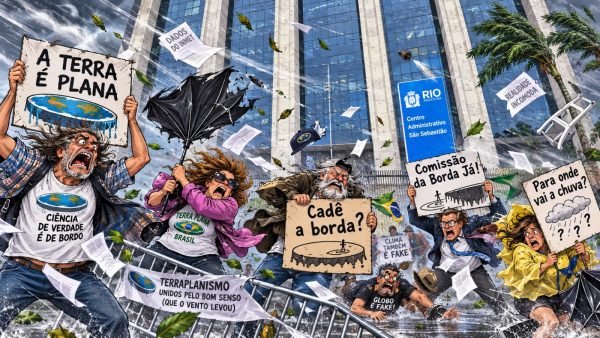
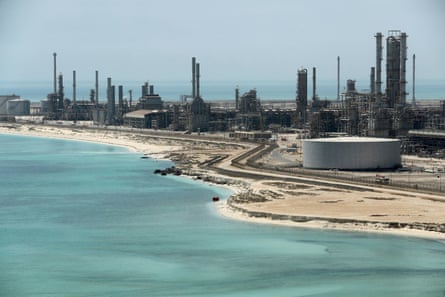
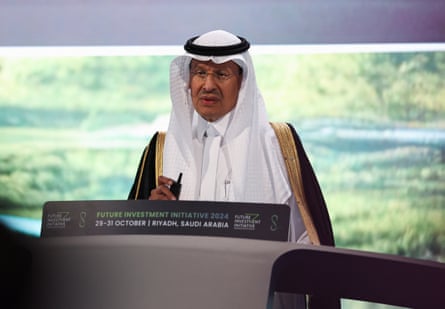

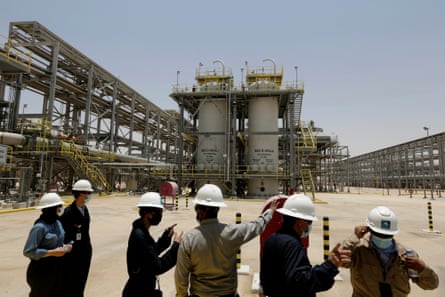


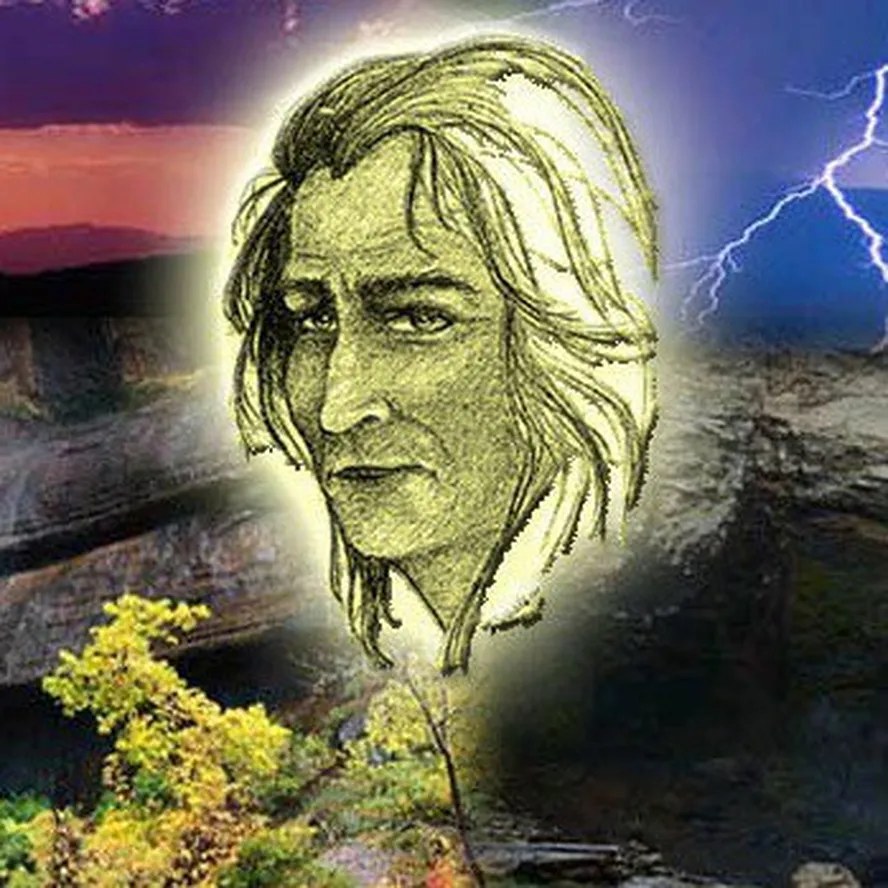





Você precisa fazer login para comentar.