Timothy Ott
August 20, 2026
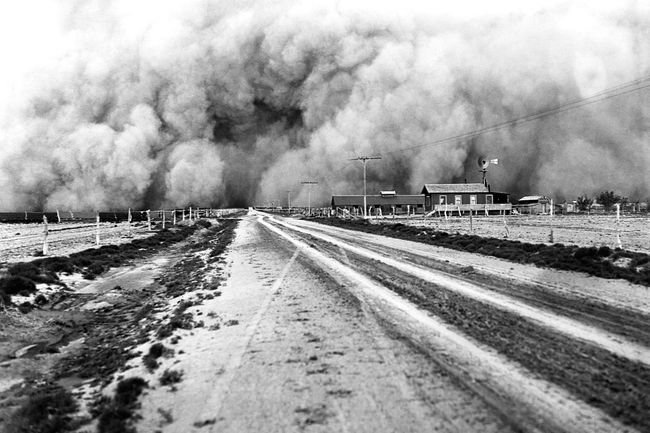
Although the Great Depression was a challenging time for most Americans, a special distinction can be made for those who weathered the unique conditions of the Dust Bowl. Generally encompassing a 300,000-square-mile region of Texas, Oklahoma, Kansas, Nebraska, Colorado, and New Mexico — although its effects were also felt farther north — the Dust Bowl was marked by the relentless accumulation of dry soil that blackened skies and ruined crops.
In the wake of poor farming practices and unusually low levels of rainfall, topsoil from the Great Plains swirled through towns, piled up on fence posts, and seeped through building cracks. People and livestock alike suffered adverse health effects from inhaling the contaminated air, although the status quo apparently suited the swarms of grasshoppers who devoured what remained of crop rows.
While it sounds like something out of a dystopian novel, the Dust Bowl was very much a real experience for millions of people who had to decide between sticking things out in an inhospitable climate or abandoning their homes for an unknown future. Here are five facts about what it was like to live through those years of uncertainty.
The Catastrophe Was Caused by Poor Farming Practices
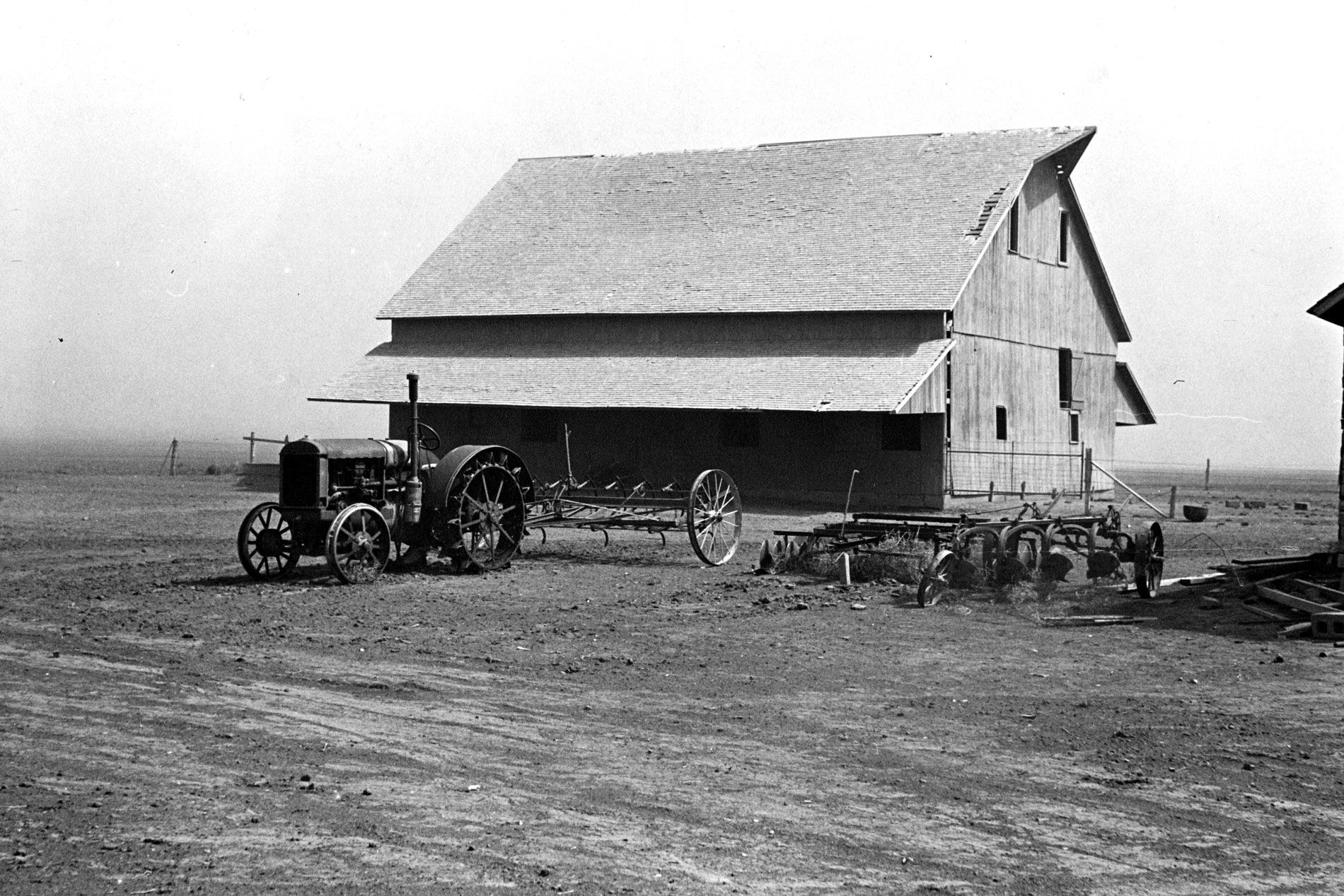
The Dust Bowl’s roots can be traced back to the late 19th century: Federal efforts such as the Homestead Act of 1862 lured settlers to the Great Plains, and by the early 1900s, much of the prairie’s native grasslands, which helped retain precious water in the soil, had been dug up. The problem intensified with increased demand for wheat during World War I, which led to a focus on this particular yield at the expense of sustainable crop rotation, while improved farming machinery such as the gasoline-powered tractor lured even more “suitcase farmers” to arid areas with the hope of cashing in on crops.
The ramifications of this overfarming became apparent when the region was stricken by a series of droughts beginning in 1930, leaving wide swaths of overturned earth dry and loose, vulnerable to blowing away in high winds. The disaster impoverished the farmers, who struggled to grow suitable crops and attract customers amid the financial depths of the Depression.
Enormous Dust Storms Traveled All the Way to the East Coast
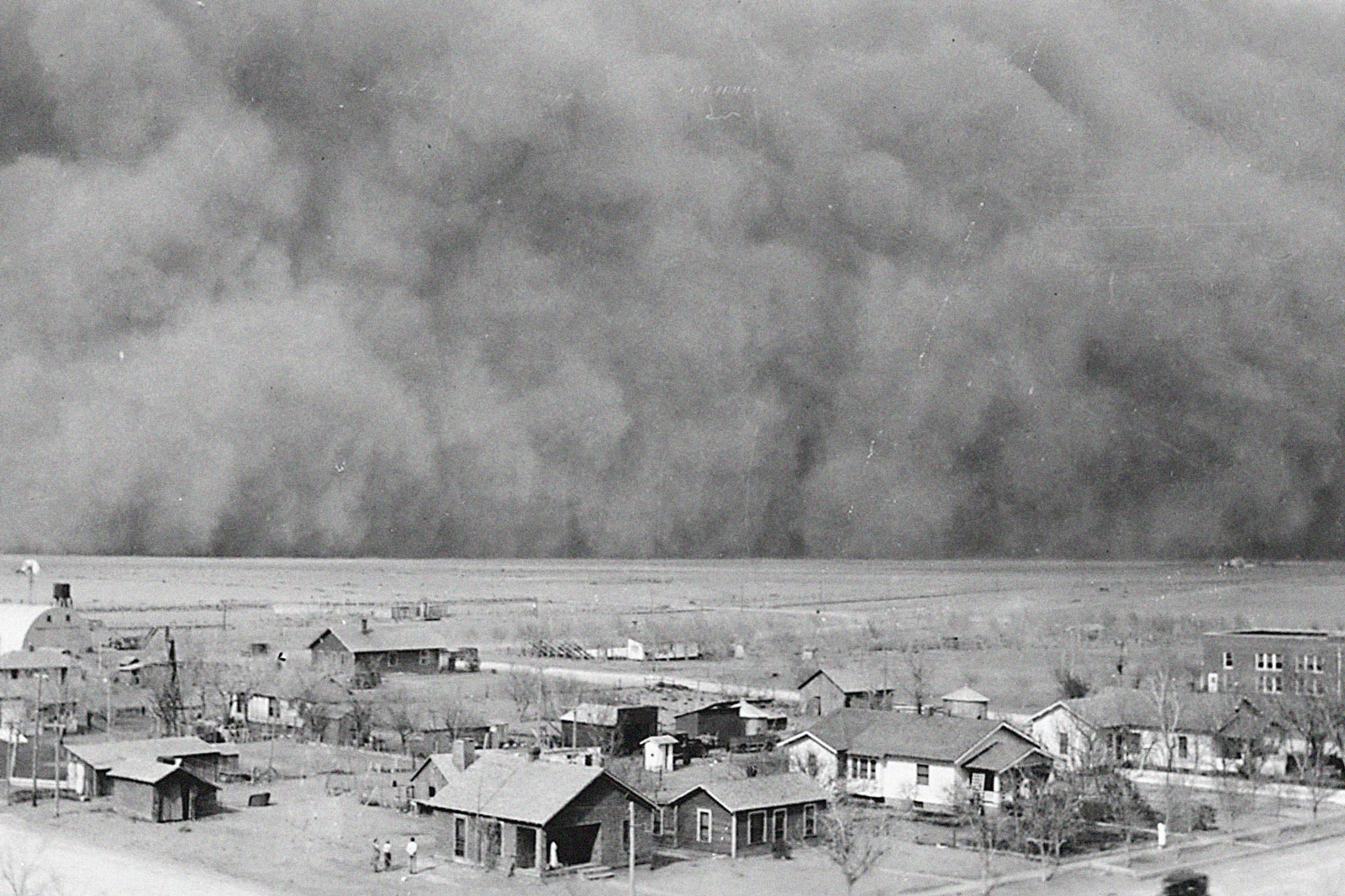
Beyond the endless rows of parched farmland, the starkest visual indication of an ecological system gone awry was the series of dust storms that swept across the Great Plains for much of the 1930s. The frequency of storms increased as the decade progressed, going from 14 in 1932 to a peak of 72 in 1937.
While some of these were milder and more localized “sand blows,” others were enormous “black blizzards” that wiped out visibility altogether as they ripped across several states. One such tempest, which commenced in the Northern Great Plains on May 11, 1934, carried an estimated 350 million tons of silt all the way to the Eastern Seaboard, with ships a few hundred miles offshore even noting the accumulation of dust on their decks. But the most notorious of the storms was the one that roared south from the Oklahoma Panhandle at winds reaching 60 mph on April 14, 1935. The event came to be known as “Black Sunday” and yielded the first known use of the term “Dust Bowl” in newspapers.
Migrant “Okies” Faced Discrimination
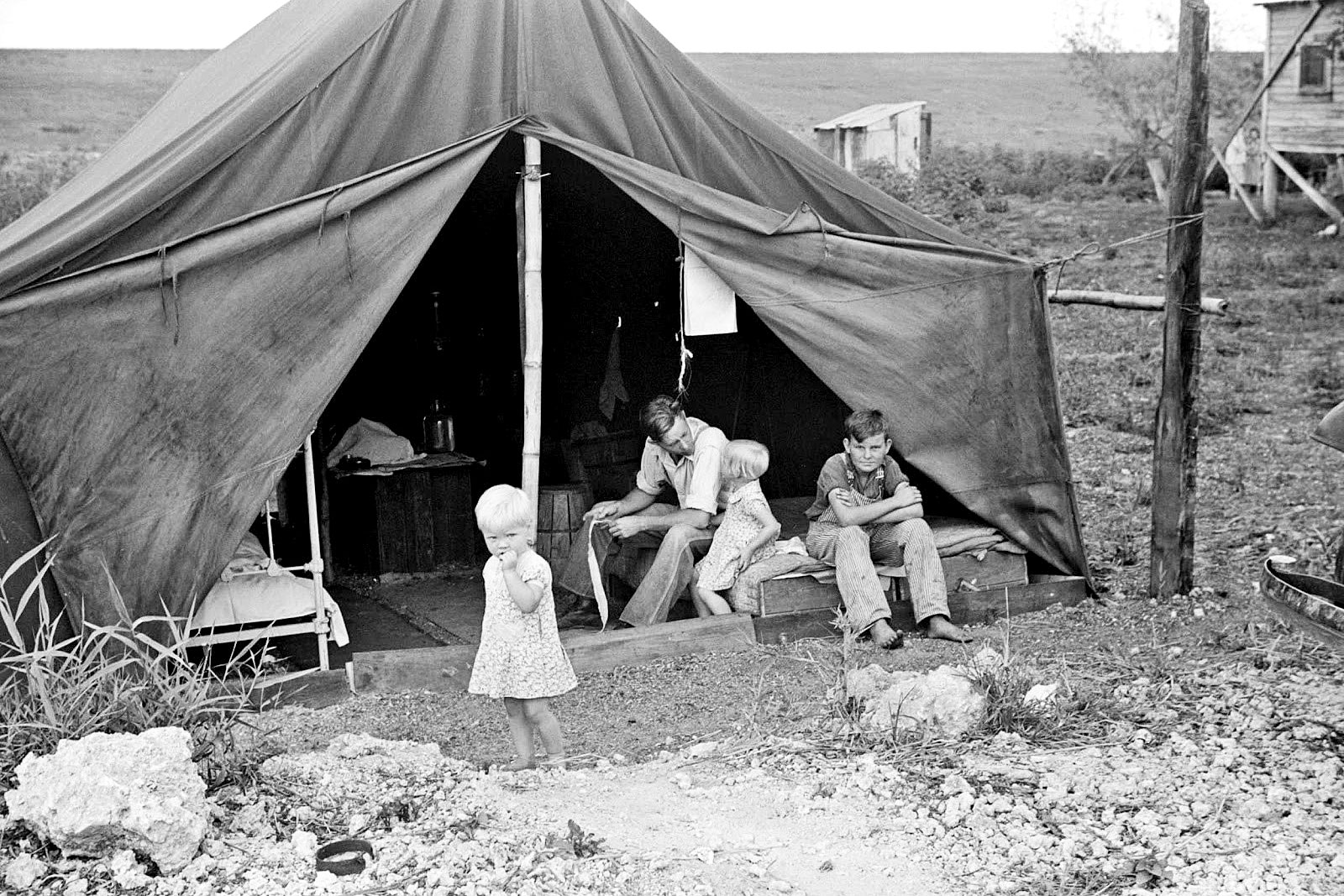
Unsurprisingly, the unforgiving conditions prompted many residents of the Dust Bowl’s hardest-hit regions to uproot their families in search of better pastures farther west. Approximately 2.5 million people moved from their Great Plains homes throughout the 1930s, with the notable share of Oklahomans giving rise to the pejorative nickname of “Okies” for any migrants who departed the desolate Midwest.
The 200,000 or so migrants who journeyed to California found no immediate improvement to living conditions; those who sought to eke out a living picking fruit in the San Joaquin Valley often were forced to live amid unsanitary conditions in tents and shantytowns, while those who ventured south to Los Angeles were for a time turned away by the LAPD’s “bum brigade.”
Although later research showed that the population decrease of the Dust Bowl states reflected both the continuation of post-World War I migratory trends and the lack of new arrivals to the area, there’s no doubt that Dust Bowl migrants marked a distinct subset of Americans who struggled during the Depression era.
FDR Launched an Array of Programs To Aid Farmers
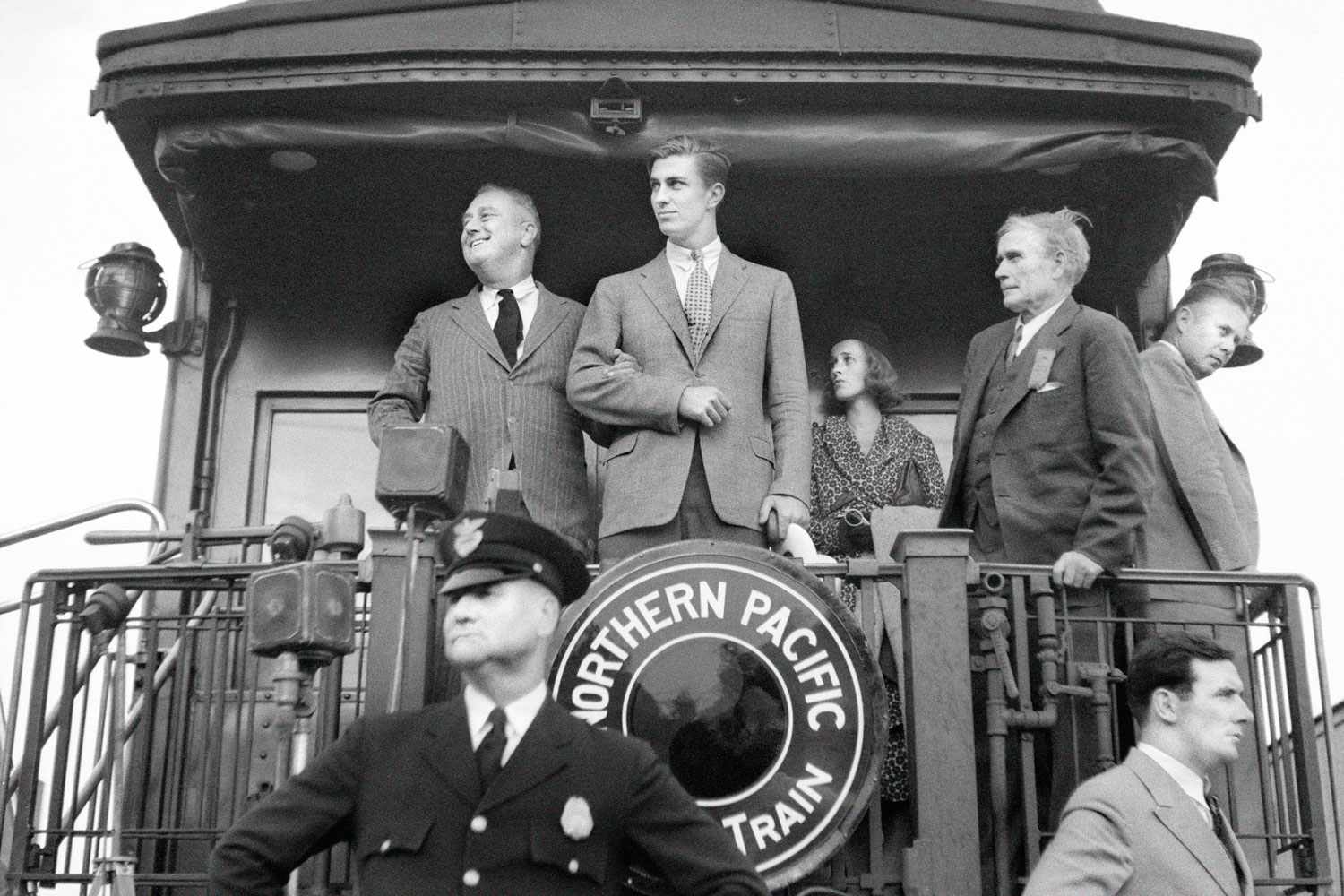
As part of the sweeping legislation passed under President Franklin D. Roosevelt’s New Deal, the federal government enacted a series of programs geared toward farmers ravaged by the Dust Bowl. The Emergency Farm Mortgage Act and Farm Credit Act in 1933 allowed recipients to refinance their loans and access new lines of credit, while the Farm Security Administration of 1937 offered educational opportunities and health care plans for participants.
Other programs sought to undo some of the environmental issues at play. The Soil Erosion Service, which became the Soil Conservation Service in 1935, provided instruction on sound farming techniques such as crop rotation, and awarded subsidies for farmers to leave certain areas idle to let the land recover. Then there was the massive Shelterbelt Project, which tapped unemployed laborers to plant more than 220 million trees across a 1,300-mile row from Texas to Canada in an attempt to block winds from whipping up the dreaded dust storms.
The Dust Bowl Produced Some of the Most Enduring Art of the Century
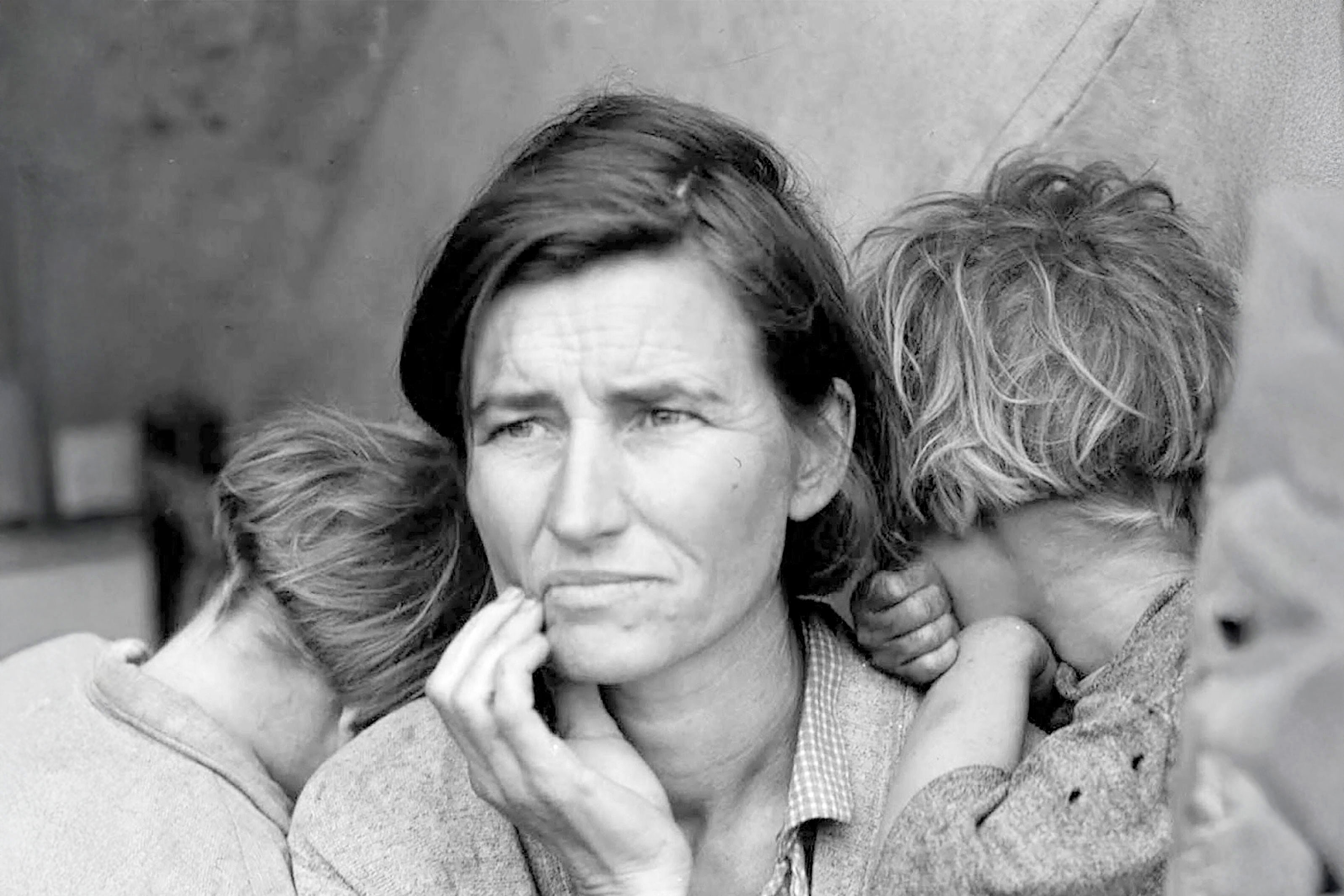
As human suffering can be a catalyst for creativity, it’s not surprising that some of the most powerful American art of the 20th century emerged from the Dust Bowl years. Photographer Dorothea Lange showcased the toll of hard living on her subjects, as exemplified by her famed “Migrant Mother” portrait from 1936. Painter Alexandre Hogue supplied his “psychorealistic” view of the era, with works highlighting the desolate landscapes and emaciated cattle of the Great Plains. Author John Steinbeck captured the desperation of the displaced Joad family in his 1939 masterpiece The Grapes of Wrath. And folk singer Woody Guthrie, who endured Black Sunday from his north Texas home and actually lived the life of the migrant “Okie,” relayed the heartache of those lean years with his first commercial album, 1940’s Dust Bowl Ballads.

