It seems like every day a new, potentially internet-shattering cybersecurity issue is discovered or exploited by artificial intelligence. It’s gotten bad enough that even OpenAI CEO Sam Altman, one of the people who is most responsible for pushing AI development forward despite the risks, now believes that simply patching the problems is no longer a viable option.
During an appearance at the Stanford Graduate School of Business, Altman told a group of grad students that the cybersecurity crisis is worse than anyone could imagine. “I no longer think we’re going to be able to just patch all the bugs,” he told the audience, in part due to the ongoing advancements of AI models and in part because the targets of cyber attacks have acted too slowly to get ahead of it.
“This cybersecurity…I don’t even know a dramatic enough word to use, but the problem coming towards us, I think, is still something that we have not, as organizational leaders or countries or individuals, taken seriously,” he said.
Altman pointed to the freakout when Anthropic announced its Claude Mythos model with the ominous warning that it can’t be made public because it is simply too powerful and could lead to the undoing of cybersecurity as we know it. “People definitely patched some bugs, but it was another one of these cases where people didn’t really intuit the exponential.”
Basically, Altman suggested that the organizations that did take action just patched up the problems that AI models were able to find and called it a day, as if no other future bugs or exploits would be found. “Largely speaking, I think most organizational leaders have somewhat moved on. And the models have kept going,” he said.
Altman seems to be scolding these organizations for not taking the situation seriously enough or considering that models might evolve and improve, but seems to have less interest in reflecting on whether or not he might have undersold the issue while pushing forward because fully acknowledging it might have led to a more serious push to slow or stop development while he’s got an initial public offering he’s trying to get to.
Notably, when OpenAI’s own agents broke containment and hacked Hugging Face, it was clear that its own procedures and security methods were insufficient. Despite pushing for the AI industry to adopt chain-of-thought monitoring—a technique for examining a model’s internal reasoning—as standard practice, OpenAI had not implemented it for its own training sessions. And, according to an investigation by AI safety nonprofit METR, OpenAI had already been alerted that its agents had escaped their sandbox and patched the exploit that allowed them to do so. But those measures failed to prevent another escape that led to the attack.
So we’re kind of in pot-calling-the-kettle-black territory here for Altman. But worry not, OpenAI’s founder has a solution for where patching fails: more AI. “I think we’re going to have to completely switch the defense model to using the same technology for a new kind of defense shield,” he said. OpenAI is apparently getting into the arms dealer model of selling to both sides of a conflict.
To think, we were so close to not having to live this nightmare. Altman revealed during the talk that he nearly went into investment banking because “it was what all the cool kids wanted to do, and I fell victim to peer pressure.” It’s not clear if he’s still as susceptible to peer pressure as he once was as a teenager, but we could all try bullying him just to see if it still works.
IPCC vice-chair Dr Ladislaus Chang’a and chair Sir Prof Jim Skea in discussion at the IPCC-65 meeting. Credit: IISD/ENB | Danny Skilton
Countries have failed – for the sixth time running – to agree on the timeline for publishing the Intergovernmental Panel on Climate Change’s (IPCC) next set of influential reports.
The IPCC’s 65th session (IPCC-65) was seen by many to be the final opportunity for countries to agree on a schedule where its seventh assessment report (AR7) would be published in time for the UN’s second “global stocktake” of climate action.
Before last week’s meeting in Addis Ababa, Ethiopia, IPCC chair Prof Sir Jim Skea had warned that releasing the reports in time for the stocktake in 2028 would depend on a timeline being agreed by the end of 2026.
But the week-long meeting descended into fraught disagreements between governments, resulting in Skea “suspending” the talks on Friday evening with no decision made.
Countries were also unable to agree on the IPCC’s budget for the rest of the AR7 cycle, leaving the body with a “serious funding crisis”.
The IPCC has pledged to reconvene the meeting at the “earliest opportunity”; however, it has not yet given an indication of when this will be.
In his concluding remarks, Skea described the Addis Ababa summit as a “profound disappointment” and “among the most difficult IPCC meetings”, according to reporting from the Earth Negotiations Bulletin (ENB).
Some countries have reacted with dismay to the breakdown of negotiations, warning that a failure to have the IPCC’s latest assessments on climate adaptation and mitigation ready for the UN stocktaking exercise would undermine global climate action.
A climate envoy from a Pacific island state said it was a “travesty that a handful of countries continue to delay the IPCC’s reports – the science we need back home to help us save lives and livelihoods”.
Below, Carbon Brief explores the key developments, debates and disagreements at the IPCC meeting.
How might the IPCC use AI and enhance gender inclusivity?
What timeline options were delegates debating?
Top of the agenda during the Addis Ababa meeting was a decision on the timeline of the publication of AR7’s three working group reports – also known as the “work plan”. The three reports cover climate science (WG1), impacts and adaptation (WG2) and mitigation (WG3).
Countries failed to reach a resolution on the scheduling of the influential reports at five consecutive IPCC meetings since 2024 – despite drafting being well underway.
Reporting from the ENB from inside these meetings has highlighted that countries are split, broadly, into two groups – those that want all three reports to be published in time for the UN’s second “global stocktake” in 2028, and those that one, or more, to be published afterwards.
A key pillar of the Paris Agreement, the global stocktake is a formal assessment of the world’s collective progress on tackling climate change. The exercise is designed to guide future global climate action, including decisions on national emissions targets and climate finance.
The second global stocktake is due to culminate in late 2028 at the COP33 climate summit.
The Addis Ababa meeting was the final IPCC plenary where countries would be able to agree on a stocktake-aligned timeline. In April, Skea told Carbon Brief that publishing reports by the end of 2028 would only be possible if a decision was taken before the end of 2026.
India, Kenya, Russia and Saudi Arabia have emerged as among the loudest voices calling for a timeline where the IPCC’s latest assessment of climate impacts and mitigation are published after the stocktake. They have argued that developing countries need more time to prepare, review and approve working group reports.
A coalition of developed nations and small-island developing states, meanwhile, have argued in favour of all three reports being published in time for the stocktake, so that the latest climate science can inform future climate action.
(For more on the standoff around the reports and why it matters for climate action, read Carbon Brief’s explainer.)
Ahead of the Addis Ababa meeting, the IPCC’s secretariat, on behalf of Skea, published a document setting out three options for a timeline for the working group reports. These are summarised below.
Option 1
Option 2
Option 3
Proposal set out by working group co-chairs at IPCC-61 in Sofia.
Revisited proposal presented by working-group co-chairs at IPCC-63 in Lima.
Submissions by India and Saudi Arabia to a survey sent out by IPCC in 2026.
Report approval
Plenary
Proposed month of approval
Plenary
Proposed month of approval
Plenary
Proposed month of approval
Working Group 1
IPCC-69
May 2028
IPCC-69
May 2028
IPCC-69
May 2028
Working Group 2
IPCC-70
June 2028
IPCC-70
July 2028
IPCC-71
April 2029
Working Group 3
IPCC-71
July 2028
IPCC-71
Sept 2028
IPCC-72
July 2029
Source: Table 1 and Appendix A in “Work plan of the IPCC seventh assessment report”, IPCC.
Over several days of fraught talks in Addis Ababa, the number of timeline options in contention ballooned to seven – before being reduced down to four.
How did the timeline discussions unfold?
On Monday, Skea established a “contact group”, chaired by Brazil and Ireland, to focus on the timeline issue.
By Friday morning, the group reported back to the plenary that they were still a “long way from consensus”, according to the ENB.
By that afternoon, four options still remained – the three set out by the IPCC ahead of the meeting and a fourth, proposed by Haiti, which would see WG1 approval in April 2028, WG2 in July 2028 and WG3 in October 2028.
The IPCC’s secretariat subsequently presented a “draft decision” for the timeline issue to plenary, informed by the contact group’s work. The text did not establish a formal decision on the timeline, but presented a number of options for how the IPCC could move forward on the issue, as well as proposals for addressing inclusivity concerns.
Two out of three options suggested that IPCC co-chairs continue work on reports in 2027 “without prejudging the panel’s agreement on the timing of the respective approval sessions” and for timeline discussions to be continued at a future session.
Another suggestion was that the IPCC fund a second delegate for developing countries and “economies in transition” for future approval sessions.
After one delegation said they were uncertain how to engage with the draft text, Skea clarified the text had three elements – a preamble, timeline and a section on inclusivity and avenues for providing input.
He said that “it was clear the panel would not be able to take a decision on the timeline at IPCC-65” and explained the idea was to include the four timeline options that emerged from the contact group in an annex “in order to capture progress made during IPCC-65”.
After countries were not able to agree on the draft decision, Skea suspended the meeting at 8:29pm on Friday.
He noted that it would no longer be inclusive for the meeting to continue, given that a number of delegations from developing countries had left.
Earlier in the plenary, Antigua and Barbuda’s delegation had emphasised that 6pm was its deadline and noted that representatives of other small-island developing states had departed. Nepal’s negotiating team had also stated it was leaving.
What were the main points of disagreement?
The ENB’s report details how the five-day meet was beset by disagreements between country delegations on the timeline issue.
As proceedings kicked off on Monday, a significant number of countries set out their position on whether publication of the reports should occur before, or after, the global stocktake.
Both camps cited inclusivity concerns. Those in favour of a stocktake-aligned timeline said that “inclusivity is a priority and should be addressed, but said delaying delivery of the report would further disadvantage the countries most vulnerable to climate change”, according to the ENB.
In discussions on Monday, the Pacific island nation of Vanuatu underscored that “every year of delay is a year in which communities on the frontlines bear losses that cannot be measured or claimed”, the ENB says. The delegation pointed to the International Court of Justice’s 2025 advisory opinion that countries have binding obligations to protect the climate.
The Netherlands delegation said it was “inconceivable” that two years before the conclusion of second global stocktake, the “body created to produce scientific advice accepts it will not deliver working group reports on mitigation and adaption, while the [IPCC co-chairs] say it is possible”, according to the ENB.
But other countries emphasised that the global stocktake could draw from other sources of science if the reports were not ready in time, the ENB notes.
China’s delegation opposed the IPCC holding more than three plenaries each year and said IPCC reports did not need to be linked to the global stocktake. Kenya said that publishing reports after the stocktake “did not mean science would not inform policy”.
Also among those to argue for a longer timeline were Iran and Iraq, with the latter underscoring the importance of participating in IPCC processes on an “equal footing” with other governments, the ENB says.
There were also disagreements over the specific mandate of the contact group set up by Skea on Monday to advance the timeline question. This debate endured well into the end of the week and days after the contact group had started its work.
Countries pushed back on each others’ characterisation of the different timeline options. Proponents for a longer timeline described plans where reports were published in 2028 as “rushed”, whereas those who wanted all reports published in time for the stocktake referred to the longer timeline as “delayed” or “significantly extended”, according to the ENB.
Countries also failed to reach consensus on the draft timeline decision presented to plenary on the last day of the meeting.
While some countries – including Antigua and Barbuda, Costa Rica, France, Germany, Hungary, Italy, Kiribati, Marshall Islands, Mexico, the UK and Uruguay – detailed their preference for particular passages of the IPCC secretariat’s text, others rejected it outright.
For example, Algeria, India, Iraq and Saudi Arabia stated the draft text could not serve as a basis for work or decisions, according to ENB. India, meanwhile, argued that it could not engage in the decision as the contact group reached “no clear conclusion”.
In an analysis of developments at IPCC-65, the ENB states that discussions in Ethiopia had revealed “room to compromise” between countries.
It continues that “most countries” in attendance had stressed the importance of not deviating from a tradition where the IPCC follows the advice of working group co-chairs when it comes to the schedule for production of assessment reports.
In this case, that would mean agreeing to publish all three working group reports in 2028 “on a timeline that the co-chairs consider feasible and meets all the criteria for IPCC reports” (options one and two in table above).
In a statement shared with Carbon Brief after the meeting, Marshall Islands climate envoy Tina Stege said that it was a “travesty that a handful of countries continue to delay the IPCC’s reports – the science we need back home to help us save lives and livelihoods”. She continued:
“We were here to work, but found every proposal dismissed – on inclusivity, on the relevance of the science for our national planning, on the necessity of evidence to inform the next global stocktake. Progress was blocked, down to the end – a shameful play for time when there is no time to waste.”
Hamid Abakar Souleymane, a negotiator from Chad, tells Carbon Brief the situation was “not helping” countries such as his, which are on the “frontlines” of climate change.
The African nation faces a host of climate impacts, including drought, heatwaves, severe rainfall, desertification and biodiversity loss, he says. As a result, it wants AR7 reports to be ready by the global stocktake so that “[climate] mitigation action can be accelerated”. He continues:
“It is only about two or three countries that are opposing every single element of the agenda – and this is really disappointing. We are in a very uncomfortable situation now because the global stocktake is coming. We don’t have a timeline [for reports] – and we haven’t yet adopted a budget.”
Abakar Souleyame also notes that Chad was at a disadvantage during negotiations because it was only able to send one representative to the meeting:
“A lot of meetings take place at the same time…The participation of a single delegate puts us in a very uncomfortable situation where we cannot contribute adequately to the ongoing process.”
Why is the IPCC in a ‘serious funding crisis’?
Inextricably linked with the AR7 timeline is the IPCC’s budget, which – among other things – allocates money for its author meetings and approval sessions, including support for experts from developing countries.
Throughout the meeting in Addis Ababa, governments and the IPCC leadership repeatedly emphasised that the IPCC is “facing a serious funding crisis”, the ENB says.
At the start of the meeting, the IPCC’s secretariat presented a proposed budget for 2026-29, which would cover the core work of AR7. This was submitted “against the backdrop of growing annual deficits and a progressively declining cash balance, raising significant concerns about the financial sustainability of the IPCC trust fund”, the document says.
The trust fund is made up of ongoing contributions from its parent organisations, the World Meteorological Organization (WMO) and UN Environment Programme (UNEP), in addition to voluntary contributions from its member governments and the UNFCCC.
The budget proposal notes that an “insufficient level of voluntary contributions” now “risks the successful completion of the AR7 cycle”.
Contributions in 2025 were 5.3m Swiss francs (£4.8m) lower than 2023, while costs have risen, the secretariat notes. As of the start of July, just 16 countries and organisations had contributed in 2026, totalling 2.8m Swiss francs (£2.6m).
These donors include the EU, UK, WMO, UNFCCC and UNEP, as well as Australia, Canada, Hungary, Luxembourg, New Zealand, Norway, Peru, South Africa, Sweden, Switzerland and Trinidad and Tobago.
Despite being its largest donor historically, the US has not contributed financially to the IPCC since 2024 – before the second term of US president Donald Trump.
Chart showing the largest direct contributors to the IPCC since its inception in 1988, with the US (red bars), EU (dark blue) and UNFCCC/WMO/UNEP (mid blue) highlighted. Grey bars show all other contributors combined. Figures for 2026 are January to June inclusive. Figures for 1988-2003 are reported per two years, so these totals have been divided equally between each year. Source: IPCC (2025) and (2010). Contributions have been adjusted, as per IPCC footnotes, so they appear in the year they are received, rather than pledged.
According to its proposed budget, the secretariat says it needs approximately 33m Swiss francs (£30m) to complete AR7 – equivalent to just over 8m Swiss francs (£7.2m) per year. At the level of contributions received in 2025, the IPCC trust fund would be “depleted by the end of 2028, preventing the IPCC from delivering the AR7 reports”, the document warns.
As a minimum, the IPCC needs 5.8m Swiss francs (£5.3m) per year in contributions to “enable the successful completion of the cycle”, the secretariat adds, although this would leave “no financial buffer for unforeseen circumstances”.
At the meeting, “many countries expressed concern” about the IPCC’s financial situation and “called for existing donors to increase their contributions”, says the ENB.
Iceland and Ireland said they “anticipated” making contributions soon, the ENB says, while others – including Azerbaijan, China, Finland and the EU – “assured” the IPCC of their continued support.
However, according to the ENB summary, the meeting struggled to agree on a number of points, including whether budget discussions should be paused until a timeline for AR7 had been agreed, and the work of the “Financial Task Team” (FiTT).
An FiTT is assembled for each assessment cycle for “reviewing income and expenditures, assisting in preparing the budget proposals and developing other recommendations related to finance for consideration by the panel”, according to the IPCC.
The IPCC established the FiTT for AR7 at its 60th session in Istanbul in January 2024. It is co-chaired by Kenya and Australia, with core team members from the Bahamas, Norway, Saudi Arabia and the US. Other government representatives can also participate.
Midway through the meeting, FiTT co-chair Patricia Nying’uro from Kenya reported to the plenary that they had been “unable to advance” on reviewing the budgets beyond 2026, with disagreements on whether “budget lines should remain or be deleted”, reports the ENB.
The attempts to remove whole budget lines drew expressions of “deep concern and disappointment” from other countries, the ENB says, with many noting that the work of the FiTT is “purely technical and has never been controversial”.
Belize, France, Germany, Panama and the Netherlands specified that “two delegations have threatened to have no budget if their conditions are not met”, the ENB says, with even budget lines for activities already agreed being “taken hostage”.
The ENB notes that both Saudi Arabia and India expressed concern that certain lines in the 2027 budget “favoured one option” for the AR7 timeline. Both countries opposed using the proposed budget as a basis for discussion in the FiTT, the ENB says.
The ENB quotes Prof Skea, who noted that most of the budget lines apply to all options for the timeline and was puzzled that members seemed to “disagree about things they don’t disagree about”.
A way forward was found for the FiTT to continue its discussions – despite Saudi Arabia’s accusing the secretariat of “blatant bias”, says the ENB. However, further disagreements arose over budget lines for approval meetings in 2027 to extend financial support for developing countries to bring two representatives rather than one.
Skea noted that despite “almost universal” support for increased participation of developing countries in IPCC sessions, the plenary discussions had continued for two and a half hours without agreement. He asked the timeline contact group to take up the issue.
Discussions on the rest of the budget continued in the FiTT, but “there were no further reports to plenary” before the meeting was suspended, the ENB says.
In the evening of the meeting’s final day, with no agreement on the timeline, Skea asked delegates to consider approving the proposed budgets for 2026 and 2027 to allow work on AR7 to continue. According to the ENB, Saudi Arabia, India and Russia objected.
The Democratic Republic of the Congo warned that the delay to agreeing the budgets was an “immediate danger to the viability” of the panel.
Credit: ENB
How have scientists reacted?
According to the ENB, Skea said in his closing address that if there were stronger words than “profound disappointment,” he would use them.
He noted that recent months had been “some of the most turbulent for the panel” and characterised IPCC-65 as “among the most difficult IPCC meetings”, it says.
It remains to be seen when discussions on the AR7 timeline and budget will restart.
A statement from Skea released after the meeting detailed plans to reconvene the plenary “at the earliest opportunity so the panel can effectively conclude its business”.
The IPCC declined Carbon Brief’s request for an interview with Skea, with a spokesperson noting it could not “discuss a plenary that had not yet finished its work”.
On Monday after the meeting, nearly 120 scientists currently drafting the AR7 reports had signed an open letter where they pledged to “keep working” on the reports. By Wednesday, more than 200 scientists had added their names.
The report authors said they remained committed to delivering the assessments “in a manner that is rigorous, timely and inclusive”. The letter also stresses the “world should not have to face” the second global stocktake without the IPCC’s latest reports.
“Urgent agreement is now needed to give planning security to the voluntary [report] authors, more than half of which are from developing countries and to safeguard a timeline that sees all WG reports published in 2028, in time to inform the second global stocktake.
“A resumed IPCC-65 session still this year, whichever way possible, is essential to at the very least agree to the IPCC’s 2027 budget to allow work to continue.”
Prof Fabrice Lambert, a contributing author of WG1 and Chilean government delegate, wrote on LinkedIn that there was now a “clear need for professional negotiators and experienced facilitators” from UN bodies to help organise and run panel sessions. He continued:
“Discussions have moved too far beyond the scientific questions that should be the IPCC’s mainstay. Bringing in that expertise could facilitate breakthroughs that have eluded us for so many sessions during AR7.”
The IPCC has also not yet confirmed the date and location of its next plenary session, IPCC-66.
What other issues remain unresolved?
After every IPCC meeting, the organisation writes a report summarising the discussion. However, the IPCC has failed to sign off on the reports for its past four sessions.
The first item on the agenda for last week’s IPCC meeting was the approval of these four draft reports. To open the discussion on Monday, Skea proposed developing guidelines for producing these meeting reports, the ENB says.
Belgium, France and the Netherlands suggested publishing full transcripts of the meetings in addition to the meeting reports. Panama supported the idea, “emphasising the need for transparency”, the ENB says. However, it adds that Saudi Arabia opposed the suggestion.
Saudi Arabia said it objected to the “highly selective manner” in which the draft meeting reports outlined certain topics in more detail than others, arguing that this “distorted [their] balance”.
Meanwhile, Belgium and Germany opposed the use of the passive voice in the meeting reports, arguing this gave an impression that all opinions are “equally supported”. They said that this resulted in a “skewed way of presenting discussions”, the ENB says.
IPCC vice-chair Prof Diana Ürge-Vorsatz led a huddle to continue the discussion. She reported back at the end of the week that the group had reached a “preliminary agreement” for the “principles for producing meeting reports”, the ENB notes:
“She said the discussion focused on how to record diverging views, as some panel members felt separating out two or three countries invited unwelcome attention or misinterpretation.
“Ürge-Vorsatz said the huddle agreed to group arguments, first identifying countries representing one perspective and elaborating on their argument, then identifying countries representing the other side of arguments. The secretariat will decide on the granularity of reporting.”
The panel requested that the IPCC secretariat prepare revised draft meeting notes in accordance with the new guidance. It decided to “submit the revised draft reports for consideration by the panel at its next working session”.
The IPCC also agreed to defer consideration of a review of its principles and procedures to a future meeting, after India, Iran, Russia and Saudi Arabia argued that there was not enough time to discuss the issue thoroughly, the ENB reports.
These documents are typically reviewed every five years. However, the last review was delayed due to the Covid pandemic.
WG2 co-chairs Prof Winston Chow and Prof Bart van den Hurk explained to the conference floor that the second order draft of the special report was circulated for review earlier this year and received more than 25,000 comments. They added that the fourth lead author meeting was held in India in August and a final draft version is currently being prepared.
In his closing address on Friday, Skea said the progress reports presented by working-group chairs were evidence of the “ongoing achievements” of the IPCC, according to the ENB.
Noting that the IPCC’s scientific work was progressing, Skea reportedly stated that, despite challenges on the timeline issue, “the engine room of the IPCC is working – and it’s healthy”.
The sentiment was echoed by WG1 co-chair Dr Robert Vautard, who wrote on LinkedIn after the meeting that disagreements across country delegations on the AR7 timeline were “so disconnected from the actual collaborative spirit across authors in the report making”.
Nevertheless, the ENB’s meeting summary cautions that the ongoing inability of governments to reach agreement on “critical issues” was now “spilling over to authors”, with “serious potential consequences both for the IPCC and for the science the world depends on”.
It continues that, “while the work of scientists and governments is separate, the friction that has characterised AR7 plenary sessions is now directly affecting the ability of the scientists to carry out their work”.
How might the IPCC use AI and enhance gender inclusivity?
He added that the IPCC bureau – made up managerial roles including the IPCC chair, vice-chair and co-chairs of working groups – decided to establish an “informal group” on AI that would provide advice on the “responsible use of AI and emerging digital technologies in IPCC processes”, reports the ENB.
India and Russia “expressed concerns about lack of transparency in [the] use of AI in scientific research”, according to the ENB. Burundi and Iran highlighted the need for disclosure and human oversight in AI-produced material, while Congo asked how AI has so far been used by the IPCC.
After discussions about the terms of reference for the informal group on AI, the panel agreed that any guidance or recommendations that it produced will be “subject to subsequent confirmation by the panel”, reports the ENB.
Separately, vice-chair Ürge-Vorsatz reported on the progress of the IPCC’s gender action team, explaining that the group had finalised the report of the IPCC expert meeting on gender, diversity, equity and inclusivity.
The gender action team “aims to enhance gender equality in IPCC processes through monitoring, accounting for gender in decisions, including diversity in nominations and appointment”, according to the IPCC website.
Dozens of countries commented on the update. Luxembourg, supported by nine other countries, invited the panel to consider expanding the mandate of the gender action team to include “gender diversity, equity and inclusion”, reports the ENB.
However, Saudi Arabia opposed expanding the mandate of the gender action team, arguing it risked “diluting” the team’s work.
To close the discussion on Tuesday, Skea suggested the gender action team consider expanding its mandate and bring suggestions to IPCC-66.
Supersized heat waves used to be rare. No longer. A Reuters data-driven examination of global temperatures reveals the emergence of what we call ‘heat storms.’ They now swarm the planet, upending life around the world from Texas to Ivory Coast to Poland.
Firefighters battle Europe’s largest wildfire on record, which spread during a heat storm in summer 2023 in Greece’s Dadia National Park. REUTERS/Alexandros Avramidis
Maps illustrate the growing size and reach of heat storms across the globe.
In less than a lifetime, about six and a half decades, heat waves have evolved from sporadic, isolated episodes to massive, cascading weather events that can blanket vast swaths of the planet for months or even years at a time.
The largest heat wave of the 1960s reached about 6% of the planet as it drifted for 46 days over the Atlantic Ocean, parts of Latin America and West Africa.
The largest one this decade swept across almost 85% of the globe during its 367-day lifetime, stretching into the polar latitudes and touching virtually every human being on Earth.
An animation shows a heat wave moving around the mid-Atlantic, spanning areas between Central America and West Africa.
To continue calling such sprawling phenomena “heat waves” would be like calling a monsoon a rain shower. To understand the new reality of these immense expanses of heat, Reuters consulted with two dozen meteorologists and climate researchers – and analyzed temperatures for every hour of every day since 1960 for more than one million grid squares covering the entire globe. Out of those results we developed a new concept: the “heat storm.”
Simply put, heat storms are supersized heat waves. Reuters uses a conservative benchmark to define an ordinary heat wave: five or more consecutive days of abnormally high temperatures. Then we define the largest heat waves – those that at their peak cover at least 1% of the globe, roughly half the size of Canada – as heat storms.
Applying this definition, Reuters identified a startling transformation. Heat storms were rare in the 1960s, when they averaged about five active storms per year. This decade, heat storms have swarmed the planet, averaging about 102 a year.
One of them caused this summer’s deadly heat in Europe, notching the highest June temperatures ever recorded in Bordeaux, Budapest, and Bilbao, the latter of which hit 108.9 degrees Fahrenheit. (Show Celsius.) Roasting Europe for most of June and July, the heat storm warped steel railroad tracks, drove what European governments estimated were more than 10,000 excess deaths in a single week, and prompted Belgian zookeepers to cool their tigers by feeding them raw meat encased in ice.
The largest heat storm on record – the one that lasted for 367 days over 2023-2024 and reached almost 85% of the globe – sent temperatures in parts of the Philippines up to 100.5 F, immiserating students in the country’s mostly unairconditioned schools. In Manila, math teacher Joel Arrojado recalled a student who was face-down at his desk, crying. When Arrojado coaxed the boy into looking up, Arrojado saw his face and chest covered in blood. The boy, Arrojado said, had suffered a spontaneous nosebleed, a commonproblem in extreme heat. As more blood pumped from his nostrils, Arrojado recalled, the child pleaded with Arrojado to call his mother.
As the same heat storm encased southern Louisiana for months, it exacerbated a historic drought. The state burned, suffering what the governor called “the worst wildfire we’ve seen since at least the Second World War” – and close to 600 other fires in August alone. Two months later, smoke from a smoldering marsh fire developed into a blinding “super fog” that caused a highway pile-up of at least 158 cars, killing seven people.
The same heat storm helped fuel a 2023 Mediterranean cyclone that dropped massive rains over Libya. In the dead of night, two dams burst near the coastal town of Derna, washing away entire neighborhoods. A week later, on her hands and knees, Sabreen Blil clawed with her bare hands at the rubble of her brother’s house, hoping to dig out the dead. As she wept, she recited their names. “Taym, Yazan, Luqman, Salmah, Tumador, Hakim and his wife. Oh my God. My family, where are you?” she wailed. “Oh God. Even just one – my God – just let me find even one body.”
During the annual Hajj pilgrimage in Saudi Arabia, the heat storm drove temperatures at Mecca’s Grand Mosque to 125.2 F, killing more than 1,300 pilgrims. Bodieslay in the streets. And as Europe’s largest recorded fire spread in Greece during the span of that same heat storm, the inferno killed migrants traversing the thick Dadia forest. Their corpses remained in the woods for days; even the vultures that might have fed on the bodies had fled the flames.
These far-flung and seemingly unrelated catastrophes all shared a common connection: one single heat storm.
After heat storms battered Bolivia in October 2023, Lake Titicaca, one of South America’s largest lakes, edged towards record low levels. REUTERS/Claudia Morales
Heat storms inflict “a major disruption to global civilization,” said James Renwick, professor of physical geography at New Zealand’s Victoria University of Wellington. “Heat is the biggest killer from climate change,” he said, noting that it can lead to “famine, hunger, death, conflict over resources.”
Heat storms constitute a new way to conceptualize how Earth’s climate is changing as humanity pumps greenhouse gases into the atmosphere.
The determination by climatologists that the average global temperature in 2025 was 2.6 F above the pre-industrial level is useful to scientists and policymakers, but to many people it’s so abstract as to be meaningless. What people do understand are heat waves – in Spanish, an “ola de calor”; in Arabic, a “mawjat hararia”; in Mandarin, a “rè làng.”
Yet no universal definition of a heat wave exists. For example, authorities differ over duration: The US National Weather Service defines a heat wave as “abnormally and uncomfortably hot” weather typically lasting “two or more days,” while the meteorological agencies of Australia, France, Spain and the United Kingdom set the threshold at three days. Some of those countries also have different rules for what temperatures qualify as a heat wave.
Moreover, what constitutes a heat wave in Anchorage, Alaska, would not be considered a heat wave in Kuwait City. The climate in those places differs sharply, and a heat wave is an unusual period of hot weather for a particular place.
Heat storms intensify wildfires. Here, a tree burned in Mandra, Greece, in July 2023, when heat storms struck the area for most of that month. REUTERS/Louiza VradiVolunteers gave water to a sheep saved from a burning farm during a wildfire in the village of Hasia, near Athens, in August 2023. REUTERS/Alkis KonstantinidisA man walked on the cracked ground of a reservoir that was drying up during the extreme drought in Catalonia, Spain, in 2023. REUTERS/Nacho Doce
Such dueling definitions made it all but impossible to gauge whether heat waves are more common globally now than in the past. But the system Reuters has devised delivers the precision needed to do so.
We began by determining the historical temperature range for each day of the year from 1961 to 1990 for each of 1.04 million grid squares around the globe. The temperature data comes from the European Centre for Medium-Range Weather Forecasts, and our detailed methodology is here. A heat wave occurs when the daily high temperature for any location reaches at least the 90th percentile of the historical range – in other words, the hottest 10% – for five days in a row.
So a July heat wave in Istanbul is five or more consecutive days of at least 78.1 F, whereas one in Phoenix, Arizona, needs to reach 104.5 F.
Heat storms constitute a new way to conceptualize how Earth’s climate is changing.
In Reuters’ definition, a heat wave can happen in any season, so in Istanbul a January heat wave would be five consecutive days of at least 52.2 F, and in Phoenix the threshold would be 69.4 F.
To measure the geographical extent of heat waves, we map neighboring heat wave grid squares that form a cohesive area. Because very large heat waves exert an expanding effect on the planet’s rising temperatures, Reuters created a further definition: If at any point a heat wave covers 1% of the planet, we designate it a heat storm and give it a name, as is done with tropical storms and hurricanes.
Naming events is “a powerful way for people to understand that something is happening,” Anthony Leiserowitz, director of the Yale Program on Climate Change Communication, told Reuters. Yet “we don’t currently do that with heat waves,” he said, even though heat has been estimated to kill almost half a million people a year. Defining and naming heat storms is an important innovation, he added, and could help people to track impacts and consequences.
As their numbers have swelled over the decades, heat storms and heat waves have not only caused individual catastrophes. They have also helped drive lasting, systemic effects.
They exacerbate droughts and intensify fires – from Chile to Europe, the largest conflagrations on record happened during heat storms — and if they hit while a woman is pregnant, studies have found that she’s more likely to suffer everything from stillbirth to preeclampsia, a leading killer of expecting and post-partum women.
Warmer temperatures can usher in benefits, at least for some regions. Siberia now produces almost as much wheat as Russia’s traditional breadbasket near the Black Sea. That’s in part because increasing heat storms and heat waves have helped open far northern latitudes to agriculture while simultaneously contributing to droughts around the Black Sea that reduce production there.
Tens of thousands of ordinary heat waves flicker in and out of existence every year. Like heat storms, they too have escalated in number, more than doubling from the 1960s to this decade. The vast majority are small, however, never even covering 0.01% of the planet, about the size of a square that you could drive across in less than two and a half hours. Only a minuscule fraction of heat waves ever gets big enough to become heat storms, which currently number about 102 annually.
Yet heat storms now claim the lion’s share of Earth’s unusually hot days, those in the top tenth of the historical range. In the 1960s, heat storms averaged 3% a year for any given spot on the planet. (The remainder comprised ordinary heat waves and short bursts of heat that didn’t last long enough to become a heat wave.)
This decade, heat storms have accounted for almost 43% of such days.
This basic pattern recurs in cities around the world.
As greenhouse gas emissions have increased, so too have heat storms and ordinary heat waves. From the 1960s to this decade, the amount of carbon dioxide in the atmosphere has increased by more than 30%. Over that time, the average portion of the planet likely to be covered by heat storms and heat waves has risen more than 12-fold. El Niño – the periodic episodes of unusually warm water in the Pacific Ocean that drive major weather patterns – has acted as an accelerant, intensifying heat storms and heat waves.
Reuters has also examined the opposite of heat waves and heat storms – cold snaps and cold storms. They have dwindled. From the 1960s to this decade, the total area in a cold snap or cold storm on an average winter day has shrunk by almost 80%.
Despite their mammoth scale, the phenomenon of heat storms has been largely invisible to the public. Until recent decades, heat storms were rarer and smaller, so easier to overlook.
But perhaps as importantly, they hadn’t been defined and named in the sharp way that typhoons and hurricanes are. Yes, people in Montreal, Perth and Hong Kong knew they were baking in a stretch of hot days – but they did not know that they were all experiencing one unitary heat storm.
As part of this series examining heat storms and their effects, Reuters has integrated an online Heat Storm Tracker into our regular weather coverage. With this tool, people can see what had previously gone unnoticed and, using that knowledge, tally the impact of heat storms as they rage across regions.
The rapid evolution of heat has not only made individual heat storms larger. Now, in sharp contrast to even 20 years ago, massive heat storms often run into, merge with, and split off from one another. What has become common are heat storms that run consecutively, simultaneously or both – heat storm cascades.
The duration of these cascades swelled from an average of roughly two months in the 1960s to nine months in the first part of the 2000s. Then, on July 6, 2008, a cascade started – and has not stopped. For more than 18 years straight, 6,681 days, at least one heat storm has been roiling the planet, and often more than one.
Many of them have been colossal. In the almost half century between 1960 and the start of the current 18-year cascade, only five heat storms had ever reached a peak size bigger than a tenth of the planet, about the area of Europe and Asia combined. The ongoing cascade has included 56 such mega heat storms.
The largest of these was one we have named Heat Storm Vera, the storm that killed the Hajj pilgrims, intensified the Louisiana wildfires, and touched nearly 85% of the planet over its 367-day lifespan.
See original article for an animated map showing a cascade of heat storms evolving across the globe from 2023 to 2024.
What follows is a biography of Vera, from its birth on July 29, 2023, through its last day on July 29, 2024, that shows how the storm connected and often devastated communities scattered across the globe.
The sun rises as the Austin High School football team holds an early morning practice to avoid peak summer heat in Austin, Texas, this August. REUTERS/Callaghan O’Hare
TEXAS
AUGUST 2023
Friday Night Lights
On a sweltering evening in August 2023, as Heat Storm Vera coiled around the American South, Justice Trumpler led his high school football team onto the field for the season’s first game. In hopes of playing college ball, the 17-year-old captain had invited coaches and recruiters to watch. As the game kicked off at 7:30pm, the temperature was 100 F.
Texas’s passion for high school football – the American version, not the one that transfixed billions during this summer’s World Cup – was captured in the iconic movie Friday Night Lights, about a team gunning for the state championship. But players of American football suffer 11 times as many heat-related injuries as athletes in all other sports combined, according to data from the University of Connecticut Korey Stringer Institute.
That’s because the football season starts in the summer, the sport demands intense physical exertion, and many of its players, such as the 255-pound offensive lineman Trumpler, have large bodies that are harder to cool down. There’s another reason: In contrast to most other warm-weather sports, American football features heat-trapping helmets and heavy padding.
Justice Trumpler hoped college recruiters would see him shine in the season opener. Handout via REUTERS
Meanwhile, Texas is spending ever more time in extreme heat. Across the entire three decades from 1960 to 1989, the city of Austin – home to Trumpler’s Bowie High School – experienced a total of 557 days in heat waves and heat storms. This decade, our analysis shows, that number has already surpassed 700. During the football season, Heat Storm Vera enveloped Austin for 39 days.
By halftime, the Bowie Bulldogs led 14-0. As the teams broke apart, Trumpler’s parents said they watched him walk to the field’s edge and vomit. A trainer hosed it away.
Through the second half, they saw Trumpler stop to dry heave at least twice, they said, and he seemed slow to get off the turf after plays. At one point, his parents saw him walk toward the opposing team’s huddle, a sign of mental confusion.
Trumpler’s father, Jason Trumpler, told Reuters he began shouting from the bleachers for the coaches to pull his son out of the game. When that didn’t work, he went to the railing separating the stands from the field and continued yelling. Trumpler kept playing.
Bowie’s coach did not respond to multiple requests for comment. The school’s principal referred Reuters to a school district spokesman, who did not respond to messages seeking comment.
Other players struggled, too. So many boys fell to the ground after plays that Bowie’s game commentators declared it a “cramp epidemic.” By the fourth quarter, the score was tied. The coaches could have ended the game, but the referee announced it would go into overtime.
“Both teams are going to start on the 25 (yard line) of their opposition and, uh, keep on going until somebody dies,” said one commentator. “Don’t say that,” replied the other.
A fan cools a person on the sidelines after a football game between Austin High School and Bowie High School in Austin, Texas, on September 25. REUTERS/Callaghan O’Hare
The “unfortunate” phrasing, the first commentator told Reuters, was intended to convey how hard the teams were playing under very tough conditions.
Just before the second-to-last play, a leg cramp brought Trumpler to the ground. His coach finally pulled him out. “Texas has that mentality of ‘you gotta be tough, you gotta play through pain,’” said Jason.
Jason took Trumpler home, but the teen couldn’t stop throwing up. After an ice bath failed to cool Trumpler down, Jason said, he drove his son to the hospital. When Trumpler’s mother, Jennifer Norman-Wolfe, arrived, he couldn’t recognize her voice, she said, and couldn’t tell her how many brothers he had.
Reuters was not able to review Trumpler’s medical records, but his parents said tests showed their son’s kidneys were failing, and his brain was swelling so much that doctors said they might need to drill a hole in his skull to relieve the pressure. Doctors couldn’t assure them their son would survive, they said.
Twelve high school football players in the US have died from heat over the last decade, according to statistics compiled by the National Center for Catastrophic Sport Injury Research. Trumpler was released after two days in the hospital.
Later, his parents said, they sent his medical records to Bowie High School and tried to discuss what had gone wrong. But they said the school’s athletic staff infuriated them by suggesting they hadn’t done enough to alert coaches about his condition during the game, Trumpler’s father told Reuters. A month later, Trumpler’s parents saw a video of an official for the governing body for Texas high school sports, the University Interscholastic League, referring to their son’s injury as a “questionable” heat-related incident.
Neither the school district nor the UIL official responded to requests for comment. In an interview, UIL Executive Director Jamey Harrison said that the organization relies on schools to report the details of medical events and avoids instituting rules based on individual incidents.
Bowie High School junior Alec Zarate, 16, wears a cold towel around his neck while a misting fan sprays behind him during a game against Austin High School in Austin, Texas, this September. REUTERS/Callaghan O’Hare
Heat storms are starting to reshape Texas football. State filings show that since the beginning of this year, at least four school districts in the state have registered to build indoor or covered practice spaces, two with price tags in excess of $10 million. And this year, the UIL adopted new rules requiring rest breaks, ice baths and shortenings or cancellations of practices in high heat. Yet these rules are not mandatory for football games themselves.
Two weeks after his hospitalization, as Heat Storm Vera continued baking Austin, Trumpler resumed playing football. He declined to speak to Reuters, but wrote on X at the time that “it felt so good to return.”
His heat injury, however, seemed to throw off college recruiters. Division I teams, those with the biggest and best programs, stopped calling, Trumpler’s father recalled. His mother said Trumpler himself seemed tepid about the prospect, which had once been his dream, and he is not currently attending college.
“Our son, Justice, is tough and built for football, mentally and physically,” she wrote at the time. “This heat was tougher.”
Olives in Spain’s Carcabuey district, which Heat Storm Vera battered in 2023. REUTERS/Marcelo del Pozo
SPAIN
AUGUST 2023
“Pirates of liquid gold”
Early in the morning of August 30, 2023, a team of thieves carefully maneuvered a tanker truck through the winding roads of the small Spanish town of Carcabuey, intent on an audacious heist.
Around 2:30 a.m., according to a local police official, the thieves pulled into a gated driveway on the edge of town. They shut off lights and cut through the rickety gate’s padlock. They left no fingerprints because they wore gloves. Once inside, they beelined for their unusual loot: extra virgin olive oil, which they siphoned from industrial-sized tanks.
Over the previous several months, a series of heat storms had helped fuel a drought that devastated the olive crop and sent the price of olive oil skyrocketing, raising the value of the stolen 56 metric tons to a staggering $546,000. Journalists nicknamed the thieves the Pirates of Liquid Gold.
By dawn, when the olive mill’s manager, Martín Parras, arrived, all that remained was an oil streak on the driveway. Parras was so overcome, he said, that he walked into a nearby olive grove, sat beneath the trees and wept.
Scene of the crime: Manager Martín Parras stands in the warehouse where the extra virgin olive oil was stolen. REUTERS/Marcelo del Pozo
In Spain’s southern region around Carcabuey, houses are painted white to repel the sun, and residents take long breaks during the hot afternoons. Olive trees, which evolved to have formidable heat tolerance, have thrived here for centuries.
But the trees have struggled in the new heat storm era. Between March 12 and August 1, when Vera first reached Carcabuey, the little town endured eight other heat storms that rolled one into the next with almost no break. The combination of early heat and scarce rain burned the olive flowers, preventing them from opening and pollinating, Parras said.
In the past five to 10 years, locals say, the heat that once lasted from June to August can now stretch from April to November, and it stays hot later into the evening. “People used to go out around 7 or 8 in summers but now it can be 9 or 9:30 and there’s no one in the streets,” said Juan Lara, who has been running a pastry shop near Carcabuey for 46 years.
Olive groves in Spain’s Carcabuey district, where heat storms exacerbated a drought that sent the price of olive oil skyrocketing. REUTERS/Marcelo del Pozo
Heat Storm Vera spent a total of 127 days over Carcabuey. At first, Vera teased the city, brushing it briefly before smothering the town for three weeks until a couple of days before the theft. Temperatures surpassed 104 F several times.
Parras said about half the olives at his Marín Serrano El Lagar mill ended up unusable, with scant flesh and barely any oil. “Olive trees had a yellow color like when grass dries, and leaves fell,” he recalled. “It was monstrous.”
The price of olive oil spiked by 44% that year, largely because the withering heat and drought reduced output by roughly half in Spain, the world’s largest producer. Some Spanish supermarkets placed alarms on bottles to prevent theft, but no one thought thieves would target a mill’s huge metal tanks. At Marín Serrano El Lagar, the only alarms were in the office and a room storing oil that was already bottled.
Spanish police arrested a 50-year-old man who had crushed olives at the mill for more than two decades until he left in 2020 after an argument over his salary. Authorities suspect the man conspired to steal the oil with the owner of a rival mill just down the road, the local police official said. The owner was also arrested. Both men were later released, but remain under investigation. They told Reuters they did not steal the oil, with the 50-year-old suspect saying he’s eager to clear his name.
The real culprit, according to mill manager Parras, has not been indicted. “Climate change has completely affected olive fields,” he said. “Has it been the cause of the theft? Totally.” If the heat hadn’t driven the price so high, he added, “There would have been no theft.”
A dead river dolphin floating in Lake Tefé. In 2023, Heat Storm Vera helped heat the lake to jacuzzi temperatures. REUTERS/Bruno Kelly
BRAZIL
SEPTEMBER 2023
Death of the dolphins
On September 28, 2023, an environmental scientist named Ayan Fleischmann sat in a small boat at the heart of a vast Amazonian lake and watched a dolphin die. The creature moved in jagged circles, its body shuddering. Suddenly, it sank.
As Fleischmann watched the dolphin vanish into the darkness of Lake Tefé, smoke from nearby wildfires fouled the air. An algal bloom stained the waters blood-red. Dozens of dolphin corpses dotted the lake’s beaches. Photos taken by Fleischmann’s team show the dolphins’ skin wrinkled like melted plastic or peeling to reveal yellow flesh. This, Fleischmann recalled thinking, might be what Hell looks like.
With its distinctive pink color, the river dolphin is one of the Amazon’s most iconic and mythologized creatures. According to legend, they would transform into humans at night to seduce locals. The dolphin was put on the endangered species list eight years ago, after poaching and rainforest destruction caused its numbers to plummet. Now, heat storms have emerged as an urgent new threat.
Heat Storm Vera settled over the Amazon in late July and spent a total of nearly seven months over Lake Tefé, simmering it for 42 days in a row before Fleischmann watched the dolphin die. The heat storm helped warm the lake to a high of 105.8 F – the temperature of a standard jacuzzi. For the dolphins, such temperatures were catastrophic: Fleischmann’s research team later concluded that the creatures had effectively been cooked alive.
Fleischmann, 34, had been studying how the waters of Lake Tefé were changing for several years. “It became a friend. I see it every day,” he said. But as the heat storm festered, he recalled, so much of the lake dried up that when he and his colleagues visited local villages, they were pelted by whirlwinds of sand whipped up from newly exposed beaches.
Retrieving dead dolphins from Lake Tefé on October 2, 2023. REUTERS/Bruno KellyLake Tefé’s water level dropped during Heat Storm Vera in 2023, exposing wide swaths of dry land. REUTERS/Bruno Kelly
Later, Fleischmann’s research institute autopsied the dolphins that washed up on the lake’s shores. Temperatures were so high that most of the corpses rotted faster than they could be studied, said Hilda Chávez-Pérez, a biologist who oversaw the study of the bodies. But in those they could examine, she said, the researchers kept finding that the dolphins’ brains were bruised and their organs speckled with blood: telltale signs of heat stress. Many had empty stomachs, indicating that they had lost the ability to feed in the heat.
The lake’s normal population is at least 700 river dolphins, said Fleischmann, but during September and October, when Vera scalded the area for all but one day, more than 200 died. “Nobody had ever seen that magnitude of mortality,” he said. “It was like a death circus.”
Hikers in Poland’s Tatra National Park, which Heat Storm Vera heated to spring-like temperatures in January and February 2024. REUTERS/Kacper Pempel
POLAND
FEBRUARY 2024
Weird winters
In Poland’s Tatra Mountains, the first months of 2024 were full of strange signs.
In mid-February, bears woke from hibernation weeks early and began roaming the ranges. Frogs also emerged early, ranger Tomasz Zając remembered, rising from the rotting leaves and underwater silt beneath which they had hunkered through the cold months. Although snow still clung to the high peaks, it was so slushy that it frequently slipped in mini-avalanches that left black scars of exposed rock.
While heat storms are hottest in summer, they can also mellow typically frigid months. Heat Storm Vera, which enveloped the Tatras for 31 days in January and February, sent the temperature up to 62.6 F. In neighboring Germany, Vera prompted the country’s weather service to tell people to leave behind their warm coats as they celebrated the annual winter carnival, while in the UK, television hosts joked about unusually “hot and steamy” Valentine’s Day temperatures in the English town of Lover.
But winter heat storms can also cause unexpected harm. In January of this year, bone-chilling cold descended on eastern Canada and the US, causing Toronto to endure 23 straight days of sub-freezing cold and gripping parts of Minnesota in temperatures that plunged to minus 43 F. Paradoxically, those frigid temperatures were largely caused by winter heat waves in the northern polar regions and Greenland, where residents basked in unseasonably balmy days that reached 52.3 F. That northern mass of warm air shunted a cold front down over eastern North America, in what climatologists call a polar vortex.
Tennessee got so cold that freezing rain encased trees in ice, causing many to collapse under the weight. Forest silence was occasionally broken by a sound resembling gunshots as sap froze and expanded, splintering tree trunks. Almost half of Pittsburgh’s snowplows stopped working, forcing the city to leave roads uncleared for days and trash on the streets for a week. The extreme cold killed at least 100 people across the US, caused power losses for more than a million customers, drove more flight cancellations than any time since the COVID 19 pandemic, and forced school closures from Milwaukee to Atlanta. Even in Cuba, farmers woke to frost on their crops.
Heat Storm Vera spent weeks over Europe in January and February, effectively transforming winter into spring. By mid-February, local media estimated that a quarter of European ski resorts were closed due to lack of snow. It was so warm that many resorts couldn’t even make artificial powder. Amid the unseasonal heat, intense rain battered parts of Europe and neighboring countries; as Vera settled over the southern Turkish city of Antalya, flash floods inundated entire neighborhoods, with the sudden flow submerging fire trucks and buses.
Poland’s Tatra Mountains are famous for their spring crocuses, which carpet the valleys in purple. Agencja Gazeta/Marek Podmokly via REUTERS
In the Tatra Mountains, winter’s end is marked by the blossoming of crocuses. More than a hundred million typically bloom starting in mid- to late-March, turning the valleys into purple oceans. Rangers have to patrol Chochołowska Glade – where crocuses bloom most densely – to prevent tourists stampeding the flowers into the ground. In late February, that frenzy was supposed to be weeks away. But on February 29, ranger Zając noticed a flash of color amidst Chochołowska’s freshly-uncovered grass. He squatted to get a better look at the purple petals unfolding around an orange stamen. Earlier than he could ever remember, the first crocus had arrived.
Learning first aid for people who pass out from the heat, students at Sagkahan National High School in the Philippines practice carrying an unconscious person. REUTERS/Eloisa Lopez
THE PHILIPPINES
APRIL 2024
Collapsing children
Partway through April 2024, on the top floor of Saghakan High School in the Philippines’ Tacloban City, Jeffrey Polido was giving a lesson on typhoons to 50 sweating 14-year-olds in a concrete classroom with two rickety fans. Interrupting him, a student burst through the door with news: Yet another child had collapsed.
Polido – a 37-year-old science teacher who at that time ran the school’s health clinic – raced outside to the stricken girl and took her vitals. He and the student who had alerted him carried the child down several flights of stairs to the clinic to recover. Then, Polido walked back to his roasting classroom and resumed teaching, knowing it would happen all over again. After all, he told Reuters, he had already seen dozens of students collapse.
Polido, along with the teacher who comforted the student with the gushing nosebleed, didn’t know it but they were on the frontline of Heat Storm Vera. The heat was intensified by its most dangerous accomplice: humidity. As a result, a temperature of 91.4 F in steamy Tacloban felt like 116.5 F, while hotter parts of the Philippines reached “feels like” levels of 127.5 F – at which point the country’s weather bureau warned, “Heat stroke is imminent.” For the millions of children in schools cooled only by fans, the thick muggy heat was especially dangerous.
In Manila, Jenita Simangan, 49, watched her 50-strong class of five-year-olds break out into rashes, complain of headaches, and say the heat made their skin feel like it was burning, she recalled. Partway through the heat spell, she said, one five-year-old staggered into class and began vomiting uncontrollably. As the child stood in a puddle of watery bile speckled with half-digested chunks of lunch, Simangan felt herself panic. It was the worst moment she’d experienced in two decades of teaching, she said.
A student is carried on a chair after feeling unwell during a first aid training at Sagkahan National High School in the Philippines this July. REUTERS/Eloisa Lopez
Heat Storm Vera hit Tacloban particularly hard, tormenting the city for a total of more than nine months. Standing in a rare spot of shade at Sagkahan High School earlier this year, Cloe Novella, 17, recalled sitting in her class and trying to catch the weak breeze from one of the classroom’s old fans when she realized one of her best friends hadn’t said anything since they sat down. Turning around, Novella saw her friend appeared to be sleeping, tapped her, and quickly realized that her friend had lost consciousness. Novella’s teacher told one of her classmates to fetch Polido, who came and carried the student to the clinic, where she recovered. She was one of more than 40 who Polido estimated fainted during Vera.
The Philippines soon suspended in-person classes across the country and has since changed its school calendar to avoid exposing students to the most extreme temperatures. Yet for Novella and her fellow students, Heat Storm Vera kickstarted a new era of near-perpetual heat.
LJ Corsanes, 17, said he frequently plunges into temperature-induced panic attacks. “It’s like going into a fight,” he said of going outside. “It’s like opening a door to hell.”
Over the entire 1960s, heat storms hit Tacloban for only 7 days, and the city experienced 245 days of ordinary heat waves. This decade, ordinary heat waves have touched Tacloban for fewer than 40 days – but heat storms have engulfed the city for more than 1,470 days. That’s over 200 days a year.
Students learn first aid for people stricken by heat at Sagkahan National High School in the Philippines.
Tropical archipelagos such as the Philippines are particularly vulnerable to heat storms, Reuters’ analysis shows. The warm ocean heats the air from below while sunshine not only beats down from above but also reflects off the surrounding water. Other tropical islands, such as Guam, Haiti and much of Indonesia, spend most of the year in heat storms.
The implacable heat is forcing students to learn grim new skills. In July, Polido gathered 80-odd teenagers for first aid training with the Red Cross. Over two days, they practiced how to begin chest compressions, how to lift an unconscious person to safety, and how to position someone who has passed out so they don’t choke on their tongues.
For some, the heat has become eerily normal. Novella said it makes her feel “like I am burning in pain and fire.” But, she added, “It is not strange, because I am used to feeling the heat already.”
Cocoa pods on the farm founded by the late Brou Kouassi, village chief of Digrikro, Ivory Coast. REUTERS/ Luc Gnago
IVORY COAST
NOVEMBER 2023-JUNE 2024
Death of a chocolate chief
In his half-century as a farmer of cocoa, the raw ingredient of chocolate, Chief Brou Kouassi earned enough money to marry five times, send his 12 children to school, and float a little cash to his neighbors. He even had a nickname – “À Nous Deux”, or “Just Between Us” – a phrase people used when they came seeking assistance on the hush-hush.
In 2023, Heat Storm Vera started stalking Digrikro, the village in western Ivory Coast where Kouassi had been chief since 2000. At first, the heat storm came and went, lurking for up to two weeks at a time. Then, beginning November 1, Vera besieged the area for more than four months straight, sometimes sending temperatures above 100.4 F. “La secheresse” – the drought – also began in November, according to local farmers and United Nations rainfall data.
His sons had taken over the hard labor, but every morning Kouassi still pulled on his boots and went out to survey his 22-hectare farm. As Heat Storm Vera shriveled the pods and sent brittle leaves falling from the branches, Kouassi would shake his head and lament that he had never seen so many trees dead or dying.
His sons would go out in the morning with their machetes to cut down the cocoa pods but return just a few hours later because, as Kouassi’s son Jules put it, “the trees didn’t give us anything.” Jules said the cocoa yield on his portion of the land for February to April 2024, an important harvesting time, was less than half of normal.
Ivory Coast and its neighbor Ghana produce about 50% of the world’s cocoa. But in the wake of Heat Storm Vera, the harvest in those two countries fell by half.
Jules Kouassi inspects his cocoa trees two years after Heat Storm Vera helped decimate his harvest.
Vera had collaborators, among them disease, which preys more easily on heat-and-drought-weakened cocoa trees, and an El Niño, which likely intensified the heat storm. But Vera and the drought it exacerbated were relentless, with the heat storm lingering over one cocoa region of Ghana for a total of almost 11 months. In 2024, the price of cocoa almost tripled.
In West Africa, where almost all the cocoa is produced by smallholder farms such as Kouassi’s, the stakes were existential. Kouassi urged his sons to abandon cocoa for heat-resistant crops such as rubber or cashews. “He kept saying, ‘If you don’t replace the cocoa trees, you’ll have nothing to eat,’” recalled Jules.
In June 2024, as Heat Storm Vera took its last licks at Digrikro, Kouassi fell ill. After a medicinal broth of leaves didn’t work, his family sent him to the hospital, where Jules recalls doctors saying his father had malaria and anemia. He spent four days in the hospital, at a cost of 320,000 CFA, or about $525. But his illness persisted, so they sent him back again, paying another $525. They considered a third trip for the same high cost, but they couldn’t afford to keep sending him back because the devastation of the cocoa crop had beggared the family.
Remembering the late chief Brou Kouassi, relatives gathered in August at the home he built in his ancestral village of Lekissou, Ivory Coast. REUTERS/Luc Gnago
Kouassi’s one-story concrete farmhouse offered little respite from the clammy heat. As his illness worsened – swelling that began in his feet spread all the way up to his thighs – he struggled to sleep more than a few hours each night. With money scarce and Western medicine failing, he asked to go to the village where he was born to visit a traditional healer or, if that failed, to be buried next to his parents.
Kouassi traveled by bus, which typically takes more than six hours to cover the 200 kilometers, much of it on a choppy dirt road. Years earlier, before heat storms shattered his livelihood, Kouassi had built an eight-bedroom house there with a large patio, where he relished visits from relatives and neighbors, some whispering hush-hush stories. His sons hoped the more comfortable environment and traditional remedies might help him regain his health.
The healer took 90,000 CFA, a little less than $160, then refused any more payments even though he kept bringing clay pots filled with medicinal concoctions. But his father continued to decline, Jules recalled, and finally pulled his son aside and asked him “to take care of the family because he didn’t know if he would survive.” Kouassi died on October 27, 2024, aged 68. No official cause of death was given.
Jules Kouassi holds a photograph of his late father, Brou Kouassi, dressed in his chief’s regalia. Heat Storm Vera ravaged his cocoa farm in the village of Digrikro, Ivory Coast. REUTERS/Luc Gnago
His beloved cocoa farm has not recovered. Many of the trees are dead or sick, Jules said, and revenue remains in a rut. Kouassi himself lies buried under a blank headstone, his family unable to afford the finishing tribute: a name plaque. Nor have they been able to raise enough money for a traditional funeral, a fact that torments Jules. In the culture of their Baoulé ethnic group, the failure to hold that ceremony – complete with a sheep sacrifice, drumming and dancing – means his father cannot go peacefully into the afterlife. “It’s like his soul is still walking around here,” Jules said, “unable to rest.”
FEBRUARY, 2026
A new massive heat storm
Over its lifetime, Heat Storm Vera drifted over nearly 85% of the planet, more than any heat storm on record. Its peak size, covering 31.3% of the Earth on January 5, 2024, was also a record. Until this summer.
Heat Storm Raimundo, which broiled Europe and stoked massive wildfires in Spain and France, extended over 33.8% of the globe on August 28. Since its inception on February 28, 2026, Raimundo has touched almost three quarters of the planet’s surface.
Both heat storms spent time over a melting Nepalese glacier before its collapse on August 26 and the catastrophic flooding that followed, killing thousands. Early indications suggest that warming temperatures contributed to the collapse of the glacier and the bedrock beneath it.
The grim aftermath of the collapse of a glacier, which unleashed flash floods and mudslides on Devighat, Nepal, this August. REUTERS/Francis MascarenhasA school bag lies amid debris and mud following the collapse of the glacier above Devighat, Nepal, this August. The glacier had spent more than half of this decade in heat storms and heat waves. REUTERS/Adnan AbidiKalpana Thapa Magar, 43, displaced by the flash floods that followed the glacier collapse in Nepal, cries while sitting outside her temporary shelter this September. REUTERS/Adnan Abidi
Up until the glacier gave way, it had spent about 58% of this decade in a heat storm or heat wave, up from 7% during the 1960s. For the six days immediately preceding its collapse, the glacier had been blanketed by Heat Storm Raimundo.
Raimundo isn’t yet finished. It has been heating the earth for 235 days and counting.
By Maurice Tamman in New York; Ben Welsh in New York; Pete McKenzie in Sydney and Tacloban, the Philippines; Charlie Szymanski in Phoenix, Arizona; Delgerzaya Delgerjargal in New York and Ulaanbaatar, Mongolia; Robbie Corey-Boulet in Dakar, Senegal, and Daloa, Ivory Coast; Loucoumane Coulibaly in Abidjan and Daloa, Ivory Coast; Jeff Horwitz in San Francisco and Austin, Texas; and Joan Faus in Barcelona and Carcabuey, Spain
Data analysis: Maurice Tamman, Ben Welsh, Charlie Szymanski and Delgerzaya Delgerjargal
Graphics: Adrián Blanco and Feilding Cage
Photography: Callaghan O’Hare, Marcelo del Pozo, Eloisa Lopez and Luc Gnago
Photo editing: Corinne Perkins and Maye-E Wong
Video: Zachary Goelman, Francesca Lynagh, Louis Johnson, Holly Murtha, Joshua Sommer, Media Coulibaly and Adrian Portugal
Art direction: John Emerson
Visual Editing: Feilding Cage
Additional reporting: Anna Wlodarczak-Semczuk in Warsaw, Gleb Bryanski in Moscow and Hina Suzuki in Tokyo
On an afternoon in Seoul in March 2016, I watched a program I helped build put a stone on the fifth line of a Go board in what looked like a gift to its human opponent. Move 37 in game two of the five-game match looked so absurd that some commentators thought it was a programming glitch.
It wasn’t. AlphaGo won the game, ultimately triumphing 4-1 over Lee Sedol, one of the greatest professional Go players of all time. “I thought AlphaGo was based on probability calculation and that it was merely a machine,” Lee said afterwards. “But when I saw this move, I changed my mind. Surely, AlphaGo is creative.”
When Deep Blue defeated then reigning world chess champion Garry Kasparov in 1997, it did so by looking six to eight moves ahead per player and evaluating 200 million chess positions per second, using rules hard-coded by humans. Go is a vastly more complex game. A stone’s worth depends on how distant groups and territory unfold over dozens of moves. Computing even a fraction of the possible outcomes would take a supercomputer billions of years. To win, AlphaGo had to sense who was ahead at a glance and even invent moves no human had thought to play.
That is why many accounts of AlphaGo’s match against Lee portray move 37 as a flash of pure machine intuition. But that is a misunderstanding. It was actually AlphaGo’s powers of reasoning that made this creative choice—and these are powers that today’s AI lacks. If we want future AI systems to produce trustworthy results and really novel insights in fields like science and medicine, we need to equip them with genuine reasoning capabilities of this kind.
AlphaGo is made up of two systems. The first, its policy network, was trained to guess what move a strong human would play. This “intuitive” part regarded move 37 as nothing special—a play that had a roughly one in 10,000 chance of being made by an expert human player. What made AlphaGo choose it was the program’s search machinery, which looked beyond immediate plausibility and weighed the future consequences of proposed moves. It explicitly constructed and searched a game tree with thousands of branches, each representing a different possible future.
A well-known theory in the behavioral sciences, popularized by Daniel Kahneman, distinguishes between two modes of human thought: System 1 is fast, gut-level, effortless; system 2, slow, step-by-step, and deliberative. AlphaGo offered a striking machine analogue of that split. Its networks supplied the hunches—this move looks promising, this position looks won—and its search supplied the deliberation, testing those hunches against the moves and countermoves that would follow. As in human cognition, neither half works alone. Intuition alone would never have opted for move 37, and brute-force search would have struggled to sieve through all the many possible moves.
This is strikingly different from the way today’s AI models work. A large language model picks the next token, over and over. That amounts to system 1 in action—fast, associative, and surprisingly good pattern completion across almost every subject people write about.
Not long after ChatGPT debuted, the field realized that language fluency alone falls short of true usefulness. The apparent solution was to make models that deliberate: Instead of answering immediately, they can now generate intermediate steps that decompose a problem, carry forward partial results, and influence subsequent reasoning—a process known as chain of thought.
The gains have proved real, above all in mathematics and coding. But unlike AlphaGo’s search, this does not introduce a genuinely separate reasoning mechanism: The intermediate reasoning is still produced by the same next-token prediction process, iterated for longer before the model commits to an answer.
Three shortcomings prevent what chatbots do from qualifying as reasoning (in a way that a scientist might recognize). First, these models typically maintain no explicit, persistent, and inspectable epistemic state. There is no open ledger that lays out the hypotheses a model is considering, the confidence it has in various explanations, the evidence it’s weighing, and the unresolved questions it’s holding onto—all things that should be systematically revised as new information arrives.
Second, they lack a clean separation between what the system knows and how it manipulates that knowledge. Knowledge and reasoning are inextricably interwoven in the weights of the neural network—there is no independent, explicitly represented set of beliefs. Third, while the chains of thought chatbots produce look like deliberation, research has demonstrated that the bots often concoctthem after the fact, reaching an answer by one route but reporting another.
This is a problem because in the high-stakes applications we all care about, such as medicine, engineering, and scientific research, it matters not only what a system concludes but also how it arrives at its conclusion. When mistakes happen—for example, in medical diagnosis and treatment—we need to be able to pinpoint what went wrong: Was the system’s reasoning at fault, did it draw on invalid evidence, or did it make incorrect assumptions?
This is why I recently left my position at Google DeepMind. I believe we need a fresh approach to machine reasoning—one that draws on AlphaGo’s architecture. AlphaGo maintains a record of what it knows about a given position: the game tree. This data structure contains all the variations, the possible futures, that AlphaGo has considered, each move and position being annotated with judgments made by its neural networks. As its reasoning progresses, AlphaGo updates the game tree and eventually synthesizes the information in it to decide which move to make.
Similarly, for general reasoning a system should maintain an epistemic state that represents what the system holds as settled, what it doubts, what it has ruled out, which questions stay open. Reasoning can then be understood as a sequence of moves that change the epistemic state to advance knowledge and reduce uncertainty: deducing consequences, breaking problems into parts, and—crucially—deciding what question to ask, calculation to perform, or experiment to run next.
Of course, open-world reasoning is harder than playing a board game such as Go or chess. In the real world the current state of affairs is only partially known, the set of available actions is large and variable, and the consequences of actions are stochastic or unknown.
But recent advances in LLMs and other neural models now give us the capability to take on such general reasoning problems. For example, LLMs can suggest ways of tackling a problem on the basis of what is known and what resources are available. They can interact with tools via APIs or code and help assess whether a claim is supported by available evidence.
Most important, to keep the system honest, an independent part of the system must evaluate each move by how much it actually resolves uncertainty, updating beliefs only when the change is backed by evidence. Once these rules are enforced, the model can accumulate certified knowledge and improve its reasoning policy by learning from past reasoning experiences. You can think of such a system as the scientific method on steroids, with the purpose of producing knowledge that can withstand scrutiny.
I do not think we reach trustworthy machine intelligence by making system 1 bigger. Scale sharpens intuition, but it does not make intuition more deliberative. Move 37 mattered because a machine held a position, weighed the possible futures, and chose the move its artificial instincts would likely have rejected.
Society needs such creative moves in drug discovery, materials, climate, diagnosis—fields where the board looks nothing like a Go board and nobody hands us the rules. We will get such insights only from systems that reason—systems whose conclusions arise from an auditable sequence of evidence, inference, and belief revision rather than from a convincing story told after the fact.
Thore Graepel is chair of machine learning at University College London. He was a core member of the AlphaGo team at DeepMind and works to ensure that AI benefits human flourishing.
Essas avaliações do IPCC (Painel Intergovernamental sobre Mudanças Climáticas) serviram de base para todos os grandes acordos climáticos das Nações Unidas nas últimas três décadas. Porém, o impasse sobre as datas de publicação pode levar os países a decidir a próxima fase de ação sem um consenso sobre questões cruciais —incluindo até que ponto parte do aquecimento global poderia ser revertida—, segundo entrevistas com mais de uma dezena de cientistas atuais e antigos do IPCC, negociadores governamentais e observadores das reuniões.
Prédios cobertos com lama após as inundações que causaram centenas de mortes no Nepal, em agosto deste ano – Athit Perawongmetha/Reuters
Na próxima segunda-feira (12), representantes dos 195 Estados-membros do IPCC devem se reunir em Adis Abeba, capital da Etiópia, para uma reunião plenária que muitos consideram a última oportunidade de definir datas de publicação anteriores às negociações climáticas da ONU de novembro de 2028. É nessa ocasião que os governos deverão avaliar o progresso em direção às metas estabelecidas no histórico Acordo de Paris, de 2015.
A possibilidade de relatórios do IPCC não ficarem prontos para as negociações de 2028 preocupa países que defendem ações mais contundentes, pois as discussões orientarão financiamento climático e metas de redução de emissões.
“Os dados científicos recentes […] permitem uma abordagem justa, equitativa e baseada em evidências para enfrentar o maior desafio de nosso tempo, em vez de uma abordagem conduzida por aqueles cujos interesses arraigados são incompatíveis com a redução dos gases de efeito estufa”, afirmou a Coalizão de Alta Ambição em um comunicado, ao qual a Reuters teve acesso, divulgado nesta sexta-feira (8).
O comunicado é assinado por mais de 30 países, entre os quais da Europa, América Latina e pequenos países insulares.
As revisões do IPCC, publicadas a cada 5 a 7 anos, são redigidas por especialistas e aprovadas pelos Estados-membros. Índia, Quênia, Arábia Saudita, Rússia e China pedem mais tempo para garantir a participação de cientistas com menos recursos, que enfrentam dificuldades para publicar estudos ou deixar seus empregos.
“Se o processo avançar muito rapidamente […], ele não será inclusivo”, disse Joyce Kimutai, cientista climática que representa o Quênia no IPCC.
O impasse inédito ocorre sob pressão de governos críticos a políticas climáticas que, segundo eles, prejudicam a competitividade e restringem o uso de combustíveis baratos por economias emergentes. Os Estados Unidos, maior financiador do IPCC, deixaram a organização em janeiro.
O IPCC publicará três relatórios fundamentais: um sobre a dimensão e as causas das mudanças climáticas, outro sobre vulnerabilidades e como os países podem se adaptar, e um terceiro sobre as opções para impedir o agravamento do aquecimento. Os cientistas que presidem os grupos responsáveis pela elaboração dos relatórios propuseram um plano de trabalho segundo o qual os três seriam aprovados até setembro de 2028.
Robert Vautard, copresidente francês, disse que a proposta se baseou na carga de trabalho prevista, e não na data da cúpula da ONU de 2028. Os cronogramas dos relatórios costumam ser aprovados em “questão de minutos”, acrescentou.
Os opositores da proposta dos presidentes querem adiar o segundo e o terceiro relatórios para 2029, argumentando que o cronograma é curto demais para analisar milhares de estudos, chegar a um acordo sobre a redação e concluir as revisões por especialistas e governos.
Os participantes trocaram acusações de politização do trabalho do IPCC. Alguns dos que defendem a publicação antes da cúpula de 2028 observam que grandes nações produtoras de petróleo estão entre as defensoras mais enfáticas de um prazo maior e as acusam de tentar evitar pressões para reduzir mais rapidamente as emissões de CO2.
O Ministério da Economia da Rússia diz que apresentar o debate como um confronto com produtores de petróleo era uma “deturpação deliberada” e que sincronizar o ciclo de avaliação com as negociações da ONU “levanta sérias dúvidas sobre a preservação da natureza independente do IPCC”.
Thiagarajan Jayaraman, cientista que representa a Índia no IPCC, afirmou ser “míope” sugerir que o valor do trabalho do órgão depende exclusivamente de sua contribuição para as negociações da ONU em 2028. Representantes da Arábia Saudita e da China apresentaram argumentos semelhantes em reuniões anteriores. Seus governos não responderam às perguntas para esta reportagem.
Equidade e inclusão
Países em desenvolvimento argumentam que suas perspectivas não são refletidas de forma suficiente nos relatórios do IPCC porque não há especialistas desses países em número suficiente e porque seus pesquisadores dispõem de menos recursos para publicar estudos revisados por pares.
Thiagarajan questiona, por exemplo, o que considera uma falta de consideração pelas contribuições históricas dos países ricos para o aquecimento global e pelas necessidades de desenvolvimento das nações mais pobres nos modelos usados pelo IPCC para avaliar quanto as temperaturas podem subir sob diferentes cenários de emissões.
O IPCC afirma estar tomando medidas para tornar as avaliações mais inclusivas.
Os próximos relatórios incluirão, pela primeira vez, capítulos sobre financiamento climático e formas de lidar com danos irreversíveis infligidos a alguns países, disse em junho o presidente do IPCC, Jim Skea.
Os países que defendem esse cronograma no IPCC afirmam que, de outra forma, os negociadores teriam de se basear em relatórios publicados em 2021 e 2022. Muita coisa mudou desde então.
Controlled fires burnt at Mount Solitary in the Blue Mountains range in Australia in 2018.Credit: lovleah/Getty
The suppression of Indigenous burning practices in Australia after British colonization probably transformed swathes of the southeast into dense, flammable forests that contribute to bigger, hotter bush fires today, according to a reconstruction of fires in the region over the past 1,000 years published in Nature1.
The researchers suggest that restoring Indigenous approaches to forest management could lower the risk of devastating fires, particularly as the climate warms. “It gives us another variable when we’re trying to tackle this problem, rather than just focusing on climate change,” says Michael-Shawn Fletcher, a Wiradjuri scholar and palaeoecologist at the University of Melbourne, Australia.
In 2022, a team that Fletcher was part of used pollen records to show that forests in the region tended to be more open and grassy before British colonization at the end of the eighteenth century2. Soon after the colonization, forests changed, says Fletcher. “You can see right across the landscape there was an increase in woody fuels following the British invasion,” he adds.
A millennium of wildfire
To investigate this pattern in more detail, Fletcher and his colleagues collected a sediment core from a lake at the southeastern tip of Australia in Croajingolong National Park, part of the traditional lands of the Gunaikurnai people. Reconstructions of the landscape as well as historical evidence show that they regularly burnt the land until their violent removal by the British in the mid-nineteenth century.
Like in the 2022 work, the researchers analysed pollen in the extracted sediment to reconstruct the make-up of plant species and the structure of the surrounding forest over the past 1,000 years. This record showed an open woodland, with grasses and few trees for 800 years. Then, around 1840, the researchers found that the coverage of eucalyptus (Eucalyptus spp.) had doubled and woody shrubs had spread across the area.
The team also analysed charcoal in the sediment to estimate the temperature of fires over the study time frame. They identified molecules produced by burning plants at different temperatures in the laboratory, then searched for those molecules in the sediment samples. They found an increasing fraction of high-temperature charcoals from the mid-nineteenth century onwards, suggesting more-intense fires.
The researchers say that the changing vegetation and fire regime are linked: hotter fires spur the growth of more-flammable vegetation, more fuel and a denser canopy, creating what they call a “catastrophic wildfire loop”. Eucalyptus trees rapidly sprout after a blaze clears out other competing plants, says Fletcher.
The authors attribute this change to the end of regular, small fires ignited by Indigenous people to protect certain areas from burning or to promote vegetation growth in other areas for animals to eat.
Wildfire loop
The idea of a feedback loop is “compelling”, says Christy Briles, a palaeoecologist at the University of Colorado Denver. However, she says that more sites need to be studied to understand how common the pattern is across southeastern Australia.
Others recognize this dynamic beyond Australia. “This is very convincing in my opinion,” says Clay Trauernicht, an ecologist at the University of Hawaii at Manoa. He adds that the change in wildfires seen at the lake is similar to that in other regions where Indigenous management was replaced with management oriented towards private property, such as Hawaii and the western United States.
There have been some efforts to restore cultural burning and other Indigenous management practices in southeastern Australia. But Fletcher says they have been too small and infrequent to have much effect.
As temperatures continue to rise and the planet warms, more frequent, low-temperature burns might reduce the chance of later, out-of-control fires, says Fletcher. “We need landscape-scale experiments to test these things before it’s too late,” he says.
O convênio não prevê repasse de dinheiro público — detalhe que trouxe algum alívio aos contribuintes e profunda indignação aos terraplanistas, que agora cobram tratamento isonômico.
Afinal, argumentam, se há espaço institucional para tentar convencer nuvens a mudar de rumo, seria puro preconceito geométrico não ouvir quem sustenta que a Terra termina numa borda e que toda frente fria corre o risco de despencar dela.
A exmplo de Cacique Cobra Coral, terraplanistas têm seus mistérios sobre as chuvas
A principal reivindicação do movimento é a criação imediata de uma comissão para descobrir para onde vai a chuva depois da borda da Terra e se os satélites usados na previsão do tempo não seriam apenas globos cenográficos da Nasa.
No Rio, até o sobrenatural pode participar da meteorologia — desde que não mande a conta para o contribuinte.
Damian Carrington, Eoghan Gilmartin, Silvia Lazzaris, Rita Cruz, Simon Guichard and David Haas
Mon 21 Sep 2026 06.00 BST
On her first day as an expert author on the world’s most important climate reports, Prof Julia Steinberger knew nobody else, so she sat down at a stranger’s table for breakfast.
“Hi, I’m Julia. I’m from the University of Lausanne,” she said. The man across the table replied: “I’m Mustafa Babiker. I work with Saudi Aramco.”
Aramco, Saudi Arabia’s state oil company, is responsible for more of the carbon emissions driving the escalating climate crisis than any other company in history, and the kingdom has long been a major blocker of climate action.
Wasn’t that a conflict of interest, Steinberger asked. The UN’s Intergovernmental Panel on Climate Change (IPCC), on which they both now sat, produces the reports that underpin UN climate negotiations and inform national climate policy around the world. No, Steinberger recalls Babiker saying: he had declared the relationship on the IPCC’s conflict of interest form. “That didn’t seem to me a very good answer, but he was friendly and we had a very nice breakfast.”
Dr Babiker has worked for Aramco for 20 years. His appointment as a coordinating lead author for the IPCC’s coming Seventh Assessment Report sparked controversy in the climate science community last year. But a Guardian investigation, carried out in partnership with a team of international journalists, has now revealed that Babiker is far from an isolated case.
At least a dozen IPCC lead authors are employed by or linked to Saudi Aramco, Saudi institutions and other oil and gas interests, the investigation found. One IPCC vice-chair, part of the body’s leadership group, also represents the kingdom at global climate negotiations as a government employee.
Saudi Aramco’s Ras Tanura oil refinery and oil terminal. Photograph: Ahmed Jadallah/Reuters
The IPCC is the world’s most authoritative organisation on climate science, with its reports approved by 195 countries. They are produced by hundreds of lead authors from around the world with expertise ranging from atmospheric physics to the impacts of extreme weather.
The Guardian examined the 223 lead authors in working group III, the part of the IPCC that assesses how emissions can be reduced or removed from the atmosphere. Its work evaluates emissions-cutting policies and technologies and so is directly relevant to the economic interests of countries and companies. Working groups I and II cover the science of climate change and its impacts.
The investigation identified 20 cases with strong conflict of interest concerns. More than half involved authors linked to Saudi institutions, a concentration that raises broader questions about the kingdom’s influence on how the reports are produced.
The IPCC’s conflict of interest policy has been described as “not fit for purpose” by experts who have reviewed the Guardian’s investigation.
‘It’s the first time we have so many Saudi-linked authors’
Another Aramco employee selected as an IPCC lead author is Dr Diego Armando Moya Pinta, who has worked as an energy and sustainability scientist at the company since 2022. The IPCC lists his affiliation only as Imperial College London, where he is an honorary senior research fellow.
As one of 14 lead authors for the chapter on energy systems, Moya Pinta will assess options for reducing emissions across the energy sector, an area with direct implications for Aramco’s business. “I don’t think there would be any question that a case like this would fit under the IPCC’s conflict of interest policy,” said Prof Kevin Elliott, an academic at Michigan State University specialising in research ethics.
Yet in March 2026, the IPCC’s conflict of interest committee reported finding no conflicts of interest among any of the authors selected for the Seventh Assessment Report, the next edition of its biggest and most influential publication.
The disconnect between the committee’s conclusion and the presence of authors from the world’s largest petroleum company “raises questions about whether the IPCC conflict of interest policy is fit for purpose or being properly applied”, said Rachel Kennerley, a senior campaigner at the Center for International Environmental Law.
Alongside the two Aramco employees, working group III includes five authors from the King Abdullah Petroleum Studies and Research Center (KAPSARC), a Saudi government-funded thinktank chaired by the country’s energy minister and whose stated mission is to “advance Saudi Arabia’s energy sector”.
Saudi Arabia’s energy minister, Abdulaziz bin Salman Al Saud, speaking at the Future Investment Initiative in Riyadh in 2024. Photograph: Hamad I Mohammed/Reuters
Little-known outside energy policy circles, KAPSARC has the same number of authors in working group III as Imperial College London and Vienna’s International Institute for Applied Systems Analysis, making the three institutions the most represented in the group.
Another energy systems lead author, Prof Zain Yamani, at King Fahd University of Petroleum and Minerals, was conducting joint research with Aramco’s New Energies Research Division during the past year while also serving in his IPCC role. The resulting paper, co-authored with two Aramco scientists, was published in July. A further IPCC lead author, Dr Syed Masiur Rahman, works at the same university, which advertises its proximity to Saudi Aramco as offering “countless opportunities for collaboration and innovation” between the organisations.
A lead author on the chapter on carbon dioxide removal technologies, Prof Hussein Hoteit at the King Abdullah University of Science and Technology, was finalising research based on a demonstration project for underground carbon storage at the time of his appointment to the IPCC. Saudi Aramco conceived the project and provided substantial financial support.
“It’s the first time we have so many Saudi-linked authors in the IPCC, above all in working group III,” says Dr Kari De Pryck, a political scientist at the University of Geneva, who is an expert in the organisation’s governance.
De Pryck sees the growing presence of Saudi-linked authors in the context of a broader shift in the kingdom’s climate diplomacy. Its longstanding opposition to cutting fossil fuel burning in UN climate negotiations is increasingly complemented by the promotion of technological climate solutions. “When it comes to the IPCC, the Saudi strategy now focuses on advocating technologies like carbon capture that would limit the impact on its fossil fuel economy,” says De Pryck.
Saudi Aramco’s Manifa oilfield. Photograph: Reuters
There is also an overlap between the kingdom’s government and the IPCC’s scientific leadership. Dr Malak Al-Nory, one of working group III’s seven vice-chairs, is a senior adviser to the Saudi energy ministry. Vice-chairs help oversee the assessment process and guide its scientific and technical work. They also evaluate authors’ conflict of interest disclosures and can refer cases to the IPCC’s conflict of interest committee.
The IPCC does not preclude government-employed scientists working on its reports. Unusually however, Al-Nory has continued to represent Saudi Arabia in UN climate negotiations while serving as a vice-chair. She was part of the kingdom’s delegation to the Bonn Climate Change Conference in June 2026, underscoring concerns about the compatibility of her dual roles.
“Conflict of interest rules aren’t an accusation that someone has done something wrong,” said Tzeporah Berman, founder and chair of the Fossil Fuel Treaty Initiative. “They exist to protect an institution’s integrity by ensuring professional, financial or governmental interests that could reasonably be perceived to influence its work are disclosed and appropriately managed.”
“If the IPCC’s conflict of interest system can look at an IPCC vice-chair working for the Saudi energy ministry, Aramco employees serving as lead authors, and this concentration of authors from Saudi state-linked institutions and find nothing that needs to be managed, then the policy is clearly not fit for purpose,” she said.
A ‘gap’ between policy and reality
Until 2011, the IPCC had no institution-wide conflict of interest policy. That changed after a bruising credibility crisis in 2010, when mistakes in its major reports and allegations of financial conflicts involving its then-chair prompted an independent review of the organisation’s procedures.
The resulting policy states that its purpose is “to protect the legitimacy, integrity, trust, and credibility of the IPCC”. It adds: “It is essential that the work of the IPCC is not compromised by any conflict of interest for those who execute it.”
Kennerley said there was a gap between the IPCC’s written criteria and how it operated in practice. She said national representatives had raised questions over a lack of guidelines on how the policy was enforced, adding that another major problem was transparency. Authors’ conflict of interest declarations are not made public, and the conflict of interest committee provides no detail about its deliberations.
A spokesperson for the IPCC said no authors had been referred to its conflict of interest committee as all potential conflicts of interest reported could be resolved by the working group vice-chairs. “The strength of the IPCC lies in its commitment to diverse leadership and author teams, multiple expert and government review processes, and the inclusive nature of its assessments,” the spokesperson said. “These safeguards collectively support the objectivity, integrity, authority and credibility of IPCC reports.”
They said details of the review of conflict of interest declarations were confidential due to data protection legislation. “The public can judge whether relevant interests have been adequately assessed and managed [by the] assessment reports themselves, which go through robust, multistage reviews which are [publicly] documented.”
Regarding the high number of experts linked to Saudi Arabia, the spokesperson said: “No individual author, institution, sector or country determines the conclusions of an IPCC report. Conclusions are developed collectively by large, internationally and scientifically diverse author teams.” They said IPCC authors were leading experts in their fields and deliberately drawn from a wide range of backgrounds, including government and the private sector.
Engineers and journalists at a Saudi Aramco plant in Hawiyah in 2021. Photograph: Amr Nabil/AP
Hoteit, at King Abdullah University of Science and Technology, said: “There is no conflict of interest. My research and contributions related to the IPCC work were fully funded and supported by my employer, which is acknowledged in the referenced paper.” The multi-author paper also states: “We thank Saudi Aramco for conceiving and conducting this pilot project and for providing substantial financial support.”
Aramco declined to comment, and none of the other individuals or institutions responded to requests for comment.
Eleven of the 20 cases of strong potential conflicts of interest identified by the Guardian investigation were Saudi-linked, with the rest spread across other nations and linked to issues including industry collaboration, fossil-fuel sponsorship of academic institutions’ research, environmental campaigning and sustainable finance.
Dr Jeroen Oomen, a climate governance researcher at Utrecht University, said: “The IPCC’s mandate as the arbiter of climate science has always been based on its independence and neutrality. The conflicts [reported in this investigation] risk damaging such a reputation.”
Dr Adam Standring, a researcher at the Lisbon School of Economics and Management, said the IPCC was created to bridge science and politics, and it “straddles those two worlds”. That hybrid role was fundamental to its success, he said, but also a source of problems.
Berman said: “At a time when fossil fuel interests and some governments are fighting to delay the transition away from fossil fuels, the IPCC should be fiercely protecting its independence. That means strong disclosure requirements, meaningful conflict of interest rules and safeguards capable of addressing both actual conflicts and reasonable perceptions of conflict.”
The IPCC said there was no process currently under way to amend its conflict of interest policy.
This investigation was developed with the support of Journalismfund Europe and is also being published in L’Humanité in France, Lucy sui mondi in Italy,Visão in Portugaland Nano (3Sat) in Germany, Austria and Switzerland.
Saudi Aramco employee named lead author of global climate report (Politico)
Mustafa Babiker was proposed for the key role last month.
The Aramco tower in Riyadh on April 16, 2023. | Fayez Nureldine/AFP via Getty Images
A long-standing employee of the world’s largest oil company will hold the pen on a crucial chapter of the next review of global climate science.
Sudanese economist Mustafa Babiker, who has worked for the Saudi Aramco oil company for almost two decades, was named a coordinating lead author for the next U.N. Intergovernmental Panel on Climate Change (IPCC) report.
The IPCC’s reports are the gold standard of climate science, collating the finest research on the causes and consequences of heating the planet via the burning of fossil fuels.
Babiker’s nomination by the Saudi government, first reported by POLITICO in July, was greeted with concern by climate advocates, who described it as an example of corporate interference in the scientific process.
“The fossil fuel industry and its captive political allies will do everything in their power to try to undermine climate science. The global community must be more diligent than ever in order to protect the credibility and integrity of the [IPCC],” former U.S. Vice President Al Gore said last month in a social media post, responding to news that Babiker had been nominated for the role.
At the time, the Saudi delegation to the U.N. climate bodies defended Babiker, a researcher with extensive credentials who has contributed to past IPCC reports. “His extensive academic and professional experience … make him exceptionally qualified to serve in this role,” a spokesperson said. The government did not respond to a request on Monday to add to those comments.
In a statement released Monday confirming Babiker’s role as a leader among 664 experts chosen to write the report, IPCC Chair Jim Skea said: “The author teams, drawn from several thousand excellent nominations, ensure outstanding expertise across a range of disciplines. We are proud that the new author teams reflect increased diversity, in terms of both gender balance and greater representation from developing countries and economies in transition.”
The IPCC’s reports are the gold standard of climate science. | Kostas Kourgias/EPA
Babiker will co-lead the work on a chapter of the report dealing with the “policies and governance and international cooperation” aimed at curtailing fossil fuels use and other sources of global warming. The chapter will explicitly touch on the role of “non-state” actors, including corporations.
Saudi Aramco, according to the NGO Influence Map, is the greatest corporate contributor to climate change in history, thanks to the emissions from the oil and gas it has extracted.
Surveillance towers, increasingly powered by AI, promised faster responses to crossings. Our investigation of deaths near the towers found they are failing to deliver.
When José Morales Bernal crossed the border into the United States on April 8, 2024, the day before his 32nd birthday, it should have triggered a chain of technological alerts and human responses.
As he walked through the desert in southern New Mexico that morning, he was within range of three surveillance towers. Newly installed by US Customs and Border Protection (CBP), they were built by the defense tech company Anduril and equipped with cameras and AI to automatically detect and track people. They transmit live video to nearby control rooms and can send alerts to the government-issued smartphones held by agents in the area, prompting the closest available to respond.
This story is part of Dying on Camera, a collaboration between MIT Technology Review and Times of San Diego. Journalists in both newsrooms spent the past year examining the failures of border surveillance technology and uncovering the stories of the people who die in the borderlands.
These AI-enabled towers are meant to give greater visibility across the 1,951-mile southern border, freeing up border agents from having to spend hours staring into video monitors. They were installed in this particular place to spot border crossers before they reached the nearby town of Sunland Park.
If the system worked as intended, Morales should have been apprehended. If he needed medical help, agents were trained to provide it.
The view from where José Morales Bernal’s body was found toward a Customs and Border Protection surveillance tower made by Anduril, along the southern US border in Sunland Park, New Mexico.
That didn’t happen. Despite the nearby surveillance towers, it was employees of the local landfill, rather than Border Patrol, who first spotted Morales that morning. At 1 p.m. the workers saw him again, now lying in the sand. At 4 p.m. the landfill workers saw that he had not moved and called Border Patrol. Agents arrived 45 minutes later. He was dead. When an agent then called 911 to report the body, he said it was “probably one of the migrants crossing through there,” seemingly unaware that Morales had been moving near the agency’s surveillance systems earlier that day.
Morales had died just 360 feet from the closest surveillance tower. Two more towers stood watch to the east and the west. An autopsy later concluded that he had died of “environmental exposure.”
The towers surrounding Morales were only the latest addition to the “virtual wall” the government has spent 25 years and billions of dollars building along the entire border, which also includes earlier generations of towers with more basic features, as well as blimps, drones, seismic sensors, and even tunnel-sensing robots. Together, all this technology provides “persistent surveillance” and “situational awareness” to help the Border Patrol quickly and accurately detect people crossing and, crucially, make sure agents are sent to intercept them. CBP has also credited it with saving lives.
But a first-of-its-kind investigation by MIT Technology Review reveals that deaths like Morales’s are startlingly common. We cross-referenced nearly 4,000 locations where human remains were found—drawn from records collected by nonprofit groups like No More Deaths and Humane Borders, as well as hundreds of records we obtained in Texas—with information on nearly 600 towers identified by the Electronic Frontier Foundation. We considered when towers were installed and when each person is estimated to have died, and combined this information with field reporting from the border. The result is the first comprehensive map and analysis of deaths near CBP surveillance towers.
Our investigation shows that a humanitarian crisis at the border has unfolded in view of the government’s own cameras.
José Morales Bernal died the day before his 32nd birthday.
We found more than 1,050 people who died within range of border surveillance towers between 2015 and early 2026. These deaths are not failures of a few towers or technologies: We found deaths within the advertised range of nearly two-thirds of all the towers we analyzed. Our topographical analysis—which assessed the degree to which terrain might block a tower’s view of a particular death and its surveillance area in general—found that some have sight of as little as 10% of their advertised surveillance area, and yet we also found most deaths did not occur in towers’ blind spots. These deaths are not the result of legacy systems, as our estimate found more than 110 people have died within range of modern autonomous towers from Anduril, among the most advanced systems CBP has deployed, since 2021.
The overall picture reveals repeated failures of one of the virtual wall’s basic security functions, as CBP has described it in press releases: to effectively identify and locate migrants entering illegally into the United States.
The year that Morales died, 18 other people died in that same stretch of desert in range of the three Anduril towers. Five were visible from the same surveillance tower closest to where his body was discovered.
One man, after walking a mile past the border and in range of two AI towers, dragged his 30-year-old brother into the shade when he began having trouble breathing, according to records we obtained from the medical examiner. The two were spotted by Border Patrol only when the man waved down a helicopter for help; by the time agents arrived, his brother was already dead. A 24-year-old woman died near another Anduril tower, where our terrain analysis showed it should have had clear sight of her location. Her body lay unnoticed for weeks; it was decomposed, and blistered by the summer heat, when it was spotted by agents patrolling the area.
A few miles west, and a short drive from a Border Patrol station, four other AI towers stood watch. Near them, 10 more bodies were found that year, all in locations where at least one tower had a clear view.
In response to a list of questions, an Anduril spokesperson replied that once a tower is delivered, it is operated by CBP, and directed questions about specific incidents to the agency. The response noted that an incident occurring nearby does not mean the tower missed a detection and said actual surveillance ranges vary depending on terrain, physical obstructions, and the boundaries CBP sets for where the tower should look (CBP is able to set virtual boundaries on towers’ views for privacy and other reasons). The Anduril spokesperson also alleged inaccuracies in our reporting, given those boundaries and obstructions, but did not respond to follow-up questions on what was inaccurate.
The most pressing question in any death near the virtual wall is whether authorities knew someone was there and failed to reach them or weren’t aware anyone was crossing at all. Either is a system failure. And the deaths we found capture only the failures that left a trace—we don’t know how many people pass through undetected, or how many bodies remain undiscovered.
Interviews with more than 45 people—including current and former White House advisors and presidential appointees, Border Patrol agents, medical examiners, sheriffs, humanitarian volunteers, and employees of tech companies—showed that both types of failures are occurring: The technology is failing to detect, and agents are failing to respond. Both show the limits of throwing technology at a complex problem.
The findings reveal previously unreported issues with the virtual wall, even as it continues to enjoy broad political support and a surge in federal spending. Border security hardliners have long seen it as another tool for stopping smugglers moving drugs or people, while others tout it as a cheaper alternative to a physical wall. In 2023, the government estimated that its plans for using the towers, which now number 803, would cost $6.2 billion over their lifespan. With the historic levels of funding it was awarded in 2025, CBP plans to spend $1 billion for 1,497 more towers by 2034.
But our reporting shows that CBP has done little to assess how its towers are working or how many people have died where they keep watch.
Officials who oversaw border security across the last four presidential administrations told us they believed deaths near the so-called virtual wall were either exceedingly rare or nonexistent. But our reporting shows that is not the case. None could point to any comparable analysis the government had ever conducted on its own. Former agents and officials also told us that when someone’s body is found, CBP does not formally investigate whether surveillance should have detected them or, if they were detected, why agents didn’t reach them before they died.
In response to nearly 30 questions about our findings, which covered multiple generations of technology, Hilton Beckham, CBP’s assistant commissioner for public affairs, said, “Autonomous surveillance towers use artificial intelligence to detect and classify people, vehicles, and animals and alert Border Patrol agents to activity in monitored areas … ASTs complement physical barriers and other border security infrastructure by improving detection and situational awareness between ports of entry. CBP evaluates the technology based on its impact on detection, response coordination, agent safety, and mission outcomes.”
“I’m sure that the cameras and other surveillance assets do deliver … useful intelligence and enhance operational efficacy in some places, under some conditions, in certain circumstances,” says Geoff Boyce, an assistant professor of geography at University College Dublin who has studied surveillance technology used at the US southern border. “I’m also absolutely positive—because this has been the track record—it is not delivering the level of operational support, information, or efficacy that either the companies delivering these infrastructures or the Border Patrol and Department of Homeland Security claim.”
We also reached out to multiple lawmakers from both parties with a summary of our findings. In response, Delia Ramirez, a Democrat representing Illinois’s 3rd district who sits on the House Homeland Security Committee, said, “AI-powered surveillance technologies are not making us safer. Yet DHS continues to spend millions of taxpayer dollars on these ineffective, negligent technologies, with no commitment to oversight or transparency … It is clear we must terminate CBP’s integrated surveillance tower program and dismantle DHS.”
Building the virtual wall
Since its earliest efforts to police the border with Mexico, the US government has faced the same basic challenge: How do you effectively secure nearly 2,000 miles of remote and rugged terrain? It has increasingly turned to technology for answers.
Gerardo Galvan joined Border Patrol in 1995, as the government was undertaking an unprecedented expansion of border enforcement. In 1993, President Clinton’s first year in office, the agency mobilized huge numbers of agents to guard the country’s urban borders, starting in El Paso, Texas. That pushed more crossings to rural, unpopulated areas—which quickly proved to be far more deadly because of the rugged desert terrain, extreme temperatures, scarcity of water and the long, indirect routes often used by smugglers.
Stopping these remote crossings was a new law enforcement challenge for the agency, especially given the limited technology available at the time. “We had radios,” says Galvan, who would go on to be the head of operations for the El Paso sector—not the cell phones or GPS systems agents have today. They relied on underground sensors left over from the Vietnam War to alert them to movement.
The biggest technology rollout of Galvan’s early career started around 1998. That was when Border Patrol began installing its first video cameras that agents could remotely pan and zoom. They were mounted on metal structures similar to cell-phone towers, 60 to 80 feet tall, or on buildings in urban areas.
“For the first time, somebody sitting in a room somewhere was able to surveil large swaths of area without being dependent on getting an agent out there with binoculars,” says Matthew Hudak, a former deputy chief of Border Patrol who was working as a frontline agent at the time. “That was a very significant game changer, and for the most part, it was a huge, huge advance.”
This early iteration of the virtual wall was a big deal: In its first eight years, 200 towers were installed along the southern border at a cost of more than $429 million. But the system’s flaws were obvious to anyone who used it.
“There could be … 30 screens on a wall,” says Mark Borkowski, who managed CBP contracting, including the surveillance tower program. Each camera might be capable of seeing three or five miles in any direction. The agent was expected to keep eyes on all that space—upwards of 850 square miles.
Monitors inside the cab of a Border Patrol truck show a portion of the US-Mexico border in Sunland Park, New Mexico, on Thursday, June 6, 2019.
“Well, what are the chances after 20 minutes that those Border Patrol agents would see an explosion on one of those screens?” Borkowski says. “About zero.”
When these cameras were first being put up, the plan was to pair them eventually with a system that would automatically direct them toward places where sensors picked up activity, so agents would know where to look. But by 2005, the DHS inspector general said that still hadn’t materialized, and that illegal activity might “go unnoticed” unless agents were actively watching the cameras. Nonetheless, more towers were installed, forming what is today known as the Remote Video Surveillance System (RVSS). In 2013, the defense giant General Dynamics won a contract worth up to $103 million to overhaul and expand RVSS along the border, becoming the primary contractor behind the system that remains in use today. (That contract eventually grew to a ceiling of $216 million, and the company received another award in 2023 worth up to $135 million.)
General Dynamics would install more cameras, better sensors, and additional towers. But the problem identified nearly 15 years before remained unsolved. It was information overload: One agent told MIT Technology Review about an incident in San Diego in which cameras captured a group of 30 crossing the border and getting picked up in a van, all unnoticed by the agent monitoring those cameras. Agents said the virtual wall was bringing more of the border into view than they could reasonably pay attention or respond to.
The camera room was also the job nobody wanted. New Border Patrol agents, often in their early 20s, want to be outside in trucks and ATVs, not sitting in a dark room watching screens—even though the expanding virtual wall increasingly required someone to do exactly that. “Someone that’s injured and can’t go out into the field—we’ll send them to the camera room,” says Rafael Reyes, who was in charge of the Border Patrol station in Deming, New Mexico, until 2024.
Reyes says it was also a job his agents were often too busy to do properly. His station area had about 30 cameras, and the agents responsible for them also had to monitor sensor alerts and radio traffic, run records checks, and coordinate with other agents. “Then if they have some time, they’ll monitor the cameras,” he says.
Not only that, but many cameras didn’t work. At Reyes’s station in New Mexico, five of the 30 cameras were broken on any given day, he says. Others had limited functionality; they might be capable of looking in just one direction or seeing only in the daytime. Jaime Fierro, a former agent who worked in the Laredo sector in Texas until 2025, said the broken towers were tanking morale among agents and that they brought it up at every staff meeting. “That was like basically having an eye shut for us on the border,” he says.
Rafael Reyes, who oversaw a Border Patrol station in New Mexico, says his agents often had too many other responsibilities to monitor the cameras properly.
They weren’t alone: In 2024, members of the House Committee on Homeland Security wrote that more than 66% of Border Patrol’s first-generation towers were unusable, despite operating budgets of $50 million to $100 million each year. In January 2026, 30% remained broken, one congressional staffer told MIT Technology Review. The RVSS program was estimated in 2020 to have a total cost of $3.7 billion.
Border Patrol has nonetheless publicly credited these cameras with helping to save lives. The agency has published dozens of pressreleases, dating as far back as 2016, about instances when agents responded to people seen in distress on the remote video cameras. Despite these publicized wins, the bodies began to pile up, undetected, beneath these systems’ watchful gaze.
Near El Cenizo, Texas, there’s a roughly 13-square-mile expanse of mesquite bushes and grasses described by the Webb County Sheriff’s Office as containing sections of Hachar Ranch and Espejo Ranch. It’s surrounded by seven RVSS systems. It was nonetheless a hot spot for fatalities: MIT Technology Review found that 19 people died there, including one man who died less than 500 feet from the road bordering the ranches and half a mile from two schools. In each of these cases, narratives that we obtained via public records requests describe officers’ learning of these people only after their bodies were discovered or through 911 calls reporting them missing, not as a result of the border surveillance technology installed across Hachar Ranch.
In response to a list of questions about its towers and these specific incidents, General Dynamics referred us to CBP. CBP did not address any of our questions about RVSS towers.
Many deaths near RVSS towers happened in Texas, in the heavily surveilled corridors between the Rio Grande and the nearby highways, where paid smugglers often organize pickups after crossings. Cameras watch many of the spots where people are known to cross, often looking across the river into Mexico to spot them before they reach the water. Drownings are common; we found multiple cases in which local fishermen hooked the bodies of people who had died attempting the crossing.
In one instance, a family of three from Brazil attempted to cross the Rio Grande near Del Rio, Texas, in 2022. The father, Daniel Lenda, was carrying his two-year-old daughter, Eloah, on his shoulder when he fell in the water. The mother, 23-year-old Thais Natali Montenegro Lenda, lifted Eloah out of the water as she watched her husband disappear.
She placed the girl, now unresponsive, on a rock and went for help. She was just 100 feet from one camera system and a third of a mile from two others, set up precisely to enable faster apprehensions at a popular crossing point. Our topographical analysis shows that all three cameras had a clear view of the place where the family crossed and exited the water. Nonetheless, Thais Natali was not spotted until she waved down an agent on the Del Rio-Acuña bridge. The agent provided CPR to the toddler, who did not survive. Daniel’s body was found days later.
Val Verde County sheriff Joe Frank Martínez responded to that case (though Border Patrol might discover bodies, local law enforcement is responsible for investigating the deaths). He grew up in the area with his nine siblings and has been sheriff since 2009. Riding with MIT Technology Review through Del Rio in his patrol vehicle, he rattled off the deaths that his office has responded to since he became sheriff.
He keeps a three-inch-thick binder of these cases in his office. But this case with the toddler still sticks out in his memory. He told MIT Technology Review that when he arrived on scene, he heard from Border Patrol that the tower operator monitoring the camera had seen the father and daughter fall in the river. He never received an answer as to why agents weren’t sent sooner. Martínez asked for the footage from the surveillance cameras to aid in his investigation of what happened. Border Patrol never provided it. (General Dynamics did not respond to our questions about this incident, instead directing us to CBP. The agency did not address questions about this incident either.)
A binder of cases in the Val Verde County sheriff’s office contains details on the death of two-year-old Eloah Lenda.
Establishing how many people have died in range of the virtual wall is challenging, but it’s especially so in the case of the RVSS towers. There are different models, some with a shorter range of sight—one to three miles—and others with a longer range of up to 7.5 miles. Former agents and officials told us most towers should see at least five miles, but since no public records exist to confirm the model type of any given tower, we used several possible viewing distances to calculate the number of deaths considered in range.
Another complication is that many remains are never found at all. For those that are, MIT Technology Review could analyze only deaths that had been logged with GPS coordinates or sufficiently precise location descriptions. Many records lack this level of detail, including nearly a fifth of the more than 1,500 cases we obtained from 14 Texas counties. We also needed to determine when someone died, rather than simply when their remains were found, to confirm that a tower was present at the time of death. When official sources did not provide an estimate, we consulted multiple medical examiners on how to make that determination from the available details. And satellite imagery provides only intermittent evidence to suggest when towers arose, not exact proof of when they were functioning. For these reasons, as detailed in our methodology, we tried to be conservative in our analysis.
Even so, the number of deaths estimated to have occurred near at least one of these towers is staggering: somewhere between 500 and 700 since 2015. Even if we look only at towers in rural areas, where their views are far less likely to be blocked by buildings, we still estimate more than 300 people have died in places where the cameras had a line of sight, most less than three miles from a tower. Of the nearly 300 RVSS towers we included in our analysis, more than 250 were within range of a location where someone died. More than 150 people died within a half-mile of one, often across open, empty plains, close enough to see the cameras themselves perched atop towers up to 200 feet tall.
The next watchers
When Borkowski was overseeing the rollout of those first-generation towers at CBP, he became increasingly certain that simply having more remote video cameras was not going to lead to faster responses. The information overload meant the government could watch a large area of the border but not meaningfully see, much less act on, everything within it. The agency’s focus then became solving that overload problem.
What if, instead of relying on someone to scan 30 screens, the towers could use radar to detect motion, and then point the camera to it automatically?
Gary Wagner of Elbit Systems of America cleans the lens of a long-range thermal imaging system at a 2014 border security expo.
In 2011, Border Patrol asked the industry for a new generation of technology that could do just that—initially focusing on Arizona, where the border was busiest. The contract ultimately went to the Israeli defense contractor Elbit, whose tower systems watch Israel’s borders. In 2015, the company started installing versions of these—called integrated fixed towers, or IFTs—that could each see more than five miles.
The IFTs were still being installed when President Trump first took office, in 2017. They didn’t command the same attention as Trump’s campaign promise of a physical wall, but there was still support. Trump’s deputy CBP commissioner, Ronald Vitiello, told Congress in 2018 that the IFT towers automatically detect people with radar and then track them, adding that such surveillance technology is “critical in protecting border areas with short vanishing times, where illicit crossers can quickly evade law enforcement by ‘vanishing’ into border communities.”
There were 55 IFTs built in Arizona under an initial $145 million contract with Elbit and other contracts that followed. The towers collectively watch more than 7,000 square miles of terrain, from the mountainous areas outside Nogales to the plains of the Tohono O’odham Nation Reservation. Arizona is in many ways well suited for these tall towers because much of its landscape is flatter than, say, Southern California.
An integrated fixed tower (IFT) on Coronado Peak in Cochise County, Arizona.
But even here, being within a tower’s advertised range does not necessarily mean being within view. There could be terrain, brush, or buildings that block the line of sight.
MIT Technology Review conducted a topographical analysis to estimate whether each tower had a clear or obstructed view of the place where someone’s remains were found. We estimated the height of each tower and used US elevation maps to model the terrain between it and the remains. The analysis does not account for buildings or vegetation, though all the towers we analyzed use some form of thermal imaging that is designed to see through light brush.
Most of the instances in which someone died in range of a tower happened where we estimate that the camera’s views were not blocked by terrain—a finding that held in both rural and urban areas. And even when someone died in a blind spot, it does not mean they did not pass through a tower’s line of sight. Additionally, these numerous blind spots indicate issues with the tower’s supposedly comprehensive coverage.
We found that nearly 350 people have died in range of Elbit’s towers since 2015. There were 40 people who died within range of four or more IFTs, with some near as many as six different towers. In May 2024, a 19-year-old man died where three IFTs had a clear view, and a year later, in May 2025, a 38-year-old woman died where two IFTs had a similarly clear view. Elbit did not respond to a detailed list of questions about its towers or deaths we found to have occurred near them.
There’s been a death within range of 52 out of the 53 IFTs we analyzed, but some were particularly notable. There’s a tower located a couple of hours from Tucson on the Tohono O’odham reservation that we estimate has upwards of 80% visibility of the surrounding area. Still, 27 people, ages 19 to 64, have died in its surveillance area just since 2021, along with several others whose remains have not been identified. In 25 of these cases, we estimated that the tower had a clear line of sight to the location where the person died.
Around 2018, officials within Border Patrol were again discussing the limits of the towers. The new radar systems were better, but they could only detect movement, not what was moving. This generated false alerts from cattle, tumbleweeds, and other harmless activity. The now decades-old dream of the virtual wall remained unfulfilled. Under pressure from Congress, which was demanding to know what $33 billion in proposed funding for border security over the next decade was going to achieve, Border Patrol once again was hoping a new generation of technology could solve its problems.
That year the head of CBP, Kevin McAleenan, created a unit called the Innovation Team. “He gave them some seed money to go after kind of Silicon Valley innovative technologies and run pilots,” Borkowski says.
One company they landed on was Anduril, the defense tech startup founded by Oculus VR founder Palmer Luckey. The company was without a product but had funding from Peter Thiel, recruits from the security tech giant Palantir, and a goal of bringing Silicon Valley experimentation to defense and national security technology.
An autonomous surveillance tower stands along the US-Mexico border. With billions in new funding, CBP plans to deploy thousands more surveillance towers in the coming years.
With grants from the Small Business Innovation Research program, Anduril’s product started taking shape: a 33-foot-tall solar-powered structure with cameras to see and radar to detect movement, all sitting atop a modular metal pole, with solar panels arrayed beneath.
More important was the component you could not see: computer vision that promised to automatically classify, track, and generate alerts for what came within the system’s view. Anduril’s standard tower couldn’t see as far as the Elbit and General Dynamics models—about 1.75 miles instead of more than five—but, the company argued, it didn’t need to: By automatically identifying and tracking people, the towers could give agents enough warning to respond. (Its newer, extended-range towers, on the other hand, stand 80 feet tall and are advertised as able to detect and track “objects of interest” up to 7.5 miles away.)
When President Trump left office in 2021, Anduril continued to find support from his successor. Joe Biden had campaigned on the promise of shutting down the project to expand the physical wall, but he saw political reasons to keep investment in tower technology on the table. “It’s less visible—it’s unobtrusive,” a former immigration advisor to Biden recalls, adding that despite some privacy concerns, the towers were mostly uncontroversial.
When Border Patrol deployed Anduril towers to the Santa Teresa station in New Mexico in 2021, a press release stated, “Because of its accuracy with detection, in many cases this type of technology can and will save migrant lives.” In a permitting request filed in 2024 for towers in California, the government was even more explicit: “If anyone within the viewshed of the towers appears to be in distress, EMTs or first responders will be sent to help.”
Anduril echoed those claims. The software built into the surveillance towers, the company wrote in a 2021 press release, gets agents “out of communications operations centers and into the field where they can effectuate security and humanitarian responses.”
It wasn’t the first time CBP had discussed a humanitarian side to its duties; in 1998 the agency created BORSTAR, a search and rescue unit, and by August 2023, it had installed some 170 rescue beacons across the border that people attempting a crossing could theoretically use to call for help. But they weren’t effective, says Mario Agundez, a retired Border Patrol supervisor from Arizona who had worked on various rescue efforts; people either avoid them or “die next to them, because there was no way [for Border Patrol] to get to them in time.” (They don’t always work, either; one that MIT Technology Review passed, just next to a dirt road in the Otay Mountain wilderness area in Southern California, had its prominent solar-powered blue light, meant to be visible for miles to people in distress, turned off on a recent night in August. A CBP spokesperson did not comment on why it was off but said, “The solar-powered beacons are maintained and monitored by the responsible Border Patrol station that patrols that area.”)
Anduril soared through a pilot phase in just two years before its Sentry towers—then the only autonomous surveillance towers CBP was using—moved into an official program of record with the government in 2020. That’s light speed in the world of government procurement, especially since it was Anduril’s first hardware product. By June 2021, CBP had already spent over $98 million (Anduril’s contract for these towers is now worth up to $1.1 billion).
Gerardo Galvan was in charge of the Santa Teresa Border Patrol station—which patrols the area in New Mexico where Morales’s body was later found—when it received its first batch of Anduril surveillance towers in 2021. His agents were worn out; the El Paso sector, home to his station, had seen encounters tick up each month since April 2020. Galvan says the agents were surprised but eager to get the AI towers, and he began planning where to place them. The sites he was considering sat where one kind of landscape abruptly gives way to another.
To the east of the station is Cristo Rey, a mountain that obscures the view of the city of El Paso. Running north from Cristo Rey is the state’s border with Texas, where the banks of the Rio Grande are flanked on either side by pecan orchards. And west of those orchards are the towns of Sunland Park and Santa Teresa. The last houses in these neighborhoods butt right up against the desert, which sprawls westward without a single gas station for nearly 100 miles.
It is in this stretch—between the US-Mexico border to the south and Highway 9 to the north—where agents from his station aimed to stop migrants. And when Galvan was planning the tower locations, there were lots of crossings; Santa Teresa was becoming the busiest station in the 125,500-square-mile El Paso sector, as heightened border enforcement in Texas drove people west. Along this new route, more people were dying than in previous years. (The traces of that period are still visible years later; MIT Technology Review visited the area with the humanitarian group Battalion Search and Rescue and saw jawbones bleached white by the sun, alongside frayed backpacks and clothes.)
Galvan’s aim was to use the new towers as a stopgap where there was little other border infrastructure. That included a spot near the foot of Mount Cristo Rey, where there was a break in the border fence and people often attempted to cross. Galvan looked at data on previous apprehensions with an eye toward helping agents spot people before they arrived in more residential neighborhoods. Border Patrol struck agreements with private landowners, who generally didn’t mind having Anduril’s low-profile towers on their land (and were compensated via lease agreements).
When the towers were first set up near the Santa Teresa station in 2021, engineers from Anduril came to fine-tune the algorithms meant to autonomously classify whether what it had detected was a vehicle or a possible border crosser, among other things. A former engineer for Anduril, who spoke on the condition of anonymity to discuss his previous employer, says these algorithms were the main focus of the tower program; Anduril didn’t manufacture the cameras or radar systems itself, so the algorithms were its main value proposition to Border Patrol.
Galvan says the towers would flag people crossing before agents saw them. But he also saw problems from the start. Agents would apprehend a large group near one of the towers, for example, and check to see if the footage revealed anyone who got away, only to find that the incident hadn’t been captured at all. Anduril’s towers constantly pan around, lingering only on an object of interest. But in these cases, Galvan says, they panned elsewhere, failing to capture the border crossers they were supposed to automatically track.
Reyes says algorithm mistakes were infrequent but problematic at his station. A group of people was sometimes labeled as cattle, for example, and agents wouldn’t receive an alert. The problem got worse the farther groups were from the camera.
Anduril has touted its technology’s ability to reduce false positives, like cases in which wildlife is mistaken for people. But the company has said little about these false negatives: people the systems fail to detect.
Jaime Fierro, the former agent in the Laredo sector in Texas, describes one incident that shocked him: Agents pursued a car believed to be carrying migrants who had just crossed the border. The car turned around, drove toward the banks of the Rio Grande less than 100 feet from an Anduril tower, and crashed right into the river. Several occupants got out and swam to Mexico while the car floated in the water. Back at the station, Fierro hurried to see what the camera had picked up. Only it never detected the incident at all. There was no footage. “That was a huge, huge issue,” Fierro says. He remembers Anduril coming out to investigate and the problem being sent all the way up to Washington leadership. But Fierro never got an explanation of why the crash was missed. (An Anduril spokesperson did not respond to a question about this incident but said the range of the towers we asked about was limited by physical obstructions and by boundaries established by CBP. )
Several agents estimate that the towers initially missed 10% to 15% of what they should in theory have caught. “To us, 10-15% on a system we spent millions on that was supposed to work—that was alarming,” Fierro says.
Philip Sullivan worked as an agent in the Laredo sector too. When the Anduril program started, he says, he put his hand up to be involved and even went to an Anduril test site for training. When new towers went up, he worked directly with the company on improving its algorithms. He enjoyed the work. But he describes one recurring issue they couldn’t resolve.
Smugglers would put up to a dozen people on a rubber raft, cover them with a tarp, and cross the Rio Grande while using submersible motors to propel it forward. The tarp fooled the algorithm, which detected the motion but attributed it only to an “unidentified object.” That meant no audible alert—the very feature agents relied on, because the Anduril system was supposed to do the watching for them.
The smugglers repeated the tactic dozens of times. Other smugglers would cover groups with netting or blankets so they would remain undetected while walking through the brush. Only afterwards, having seen the group farther inland and noticed clues about where the people had crossed, would Sullivan review the footage and see the crossings that were missed. He worked with Anduril, sending engineers videos of the crossings to retrain the firm’s algorithms. But the situation had not improved by the time he got promoted to a sector-level job sometime in 2022, he says.
“The whole purpose of their system,” Sullivan says, was the idea that “the cameras are moving around, identifying automatically and tracking and recording and flagging.” Having cameras that could pan on their own worked wonders, he says. But the algorithm had its limits. “You look at it on the screen yourself, and you see the blob and the raft moving across—well, you know that’s people. But to get an AI to identify that is a challenge.”
When the towers were first being rolled out at the Santa Teresa station in 2021 and 2022, Galvan says, similar issues led to a negative feedback loop: An agent would see a tower miss something significant and come to distrust the algorithm. When that agent’s turn came to operate the towers and manage the alerts, they might override the AI altogether and use the camera manually. That would lead to more missed alerts, more distrust.
Despite these shortcomings, the El Paso sector’s relatively flat landscape meant that the system’s cameras had about 80% to 90% visibility, according to our topographical analysis. That was better than in hillier or more mountainous areas, like the Otay Mountain Wilderness to the east of San Diego, where we estimate Anduril’s towers could see just 15% to 25% of their promised coverage area.
An autonomous surveillance tower along the southern US border in Sunland Park, New Mexico.
It was in this wilderness, in fact, that some of the first bodies started appearing near Anduril’s towers. During one week in August 2021, two women in their 20s, from the same city in Mexico, died miles apart. Their bodies were found near three different towers that were first observed on satellite imagery between March and July that year.
One of them, 26-year-old Sarahi Hernández Alfonso, began her journey to cross into the US on August 5, and medical investigators note that she reportedly fainted the next day near the Otay Mountain Wilderness and was left behind. It would be another four days before the Mexican government reported her missing to Border Patrol on August 10, supplying a set of coordinates. Agents went to those coordinates and found her decomposing body. She’d died 1.3 miles from two different Anduril towers, one of which our analysis found had a clear line of sight.
Just the day before, 25-year-old Karina López Antonio was found dead near a thirdAnduril tower. She had crossed the previous night with her cousin and nephew. That morning, she felt sick, and her nephew looked for a Border Patrol agent to help. When agents returned, she was dead.
The following October in New Mexico, where the new Anduril towers had been rolled out, agents were patrolling on ATVs when they came across footprints. They followed them until they found the body of 31-year-old César Perea Itzincab. The presence of maggots and the level of decomposition indicated that he had died at least a week earlier, and medical examiners on the scene believe he had dragged himself to the spot where his remains were found. He was 1.5 miles away from an autonomous tower—within Anduril’s advertised range—and should have been visible to the camera, according to our topographical analysis.
We can’t know what those cameras saw as these people died. Footage and data from Anduril’s towers are overwritten every 30 days, and a former official with internal affairs at CBP told us the information wouldn’t be saved for longer unless it was part of an active investigation—which starts only if someone dies in custody. CBP did not respond to questions about specific incidents like this one, and the Sunland Park Police Department closes cases like this when it determines that no crime has been committed.
The lack of documentation is a missed opportunity, says Amerika Garcia Grewal, co-director of the Frontera Federation, which aims to help rescue migrants in distress—or find and identify their remains. “The surveillance towers along the border could be incredibly useful,” she told us. For example, they could in principle be used to hold Border Patrol agents accountable for whatever actions they did or did not take to locate someone in distress. “What the tool turns out [to do] depends on the person who is holding it,” she says, adding, “I don’t trust the folks that are using them.”
“If I could get that footage,” she says, “then we would go through that, and hopefully bring some answers” to family members and “documented proof of what happened” in their loved ones’ final moments.
When asked about deaths near Anduril towers, agents often point to faults in the technology. Galvan, for example, says the towers don’t capture how groups move: A large group of 20 people might splinter into smaller groups, especially if agents are pursuing them, and the tower doesn’t keep track of everyone. If someone’s missed, he says, “that person stays behind in the brush, out of sight.” Then they might pass out—which could be a death sentence in the desert.
And though Border Patrol says the towers can “hand off” surveillance of people from one tower to another, agents on the ground say that people are often missed during these handoffs. On top of that, the algorithms remain imperfect, according to Jason Owens, the chief of Border Patrol from June 2023 to March 2025. “We never really got to the point of ‘Set it and forget it,’” he says.
Agents also say they were just stretched too thin to respond effectively. Around 2022 and 2023, the border saw historically high levels of migration. Title 42, a policy that began under Trump and continued under Biden until May 2023, cited a public health emergency to expel migrants before they could apply for asylum. But the rapid expulsions carried fewer of the repercussions that could normally follow an apprehension, and many people simply tried to cross again.
Meanwhile, asylum claims had been rising for years, while shifts in US immigration policy and in the places migrants where originating from meant more people required lengthy processing rather than being quickly returned across the border or to their home countries. That increasingly tied up agents with people who had already been apprehended, they said, leaving fewer available to respond to surveillance alerts.
In other words, from the agents’ perspective, the effectiveness of Anduril’s towers was limited by the same issue that had always caused trouble: There just weren’t enough agents.
Palmer Luckey, a founder of Anduril, surveys the equipment at his company’s testing range near Camp Pendleton in Southern California on February 3, 2021.
But the overwhelming demands on agents cannot explain all the deaths our investigation found. In 2024, the border started to get quiet again. By July of that year, the number of Border Patrol encounters nationwide had plummeted from their highs in December 2022. Encounters in the El Paso sector, where the Anduril towers in New Mexico were located, had fallen to nearly one-tenth of their peak. Agents were less tied up than they’d been in years. The technology was supposedly improving, too.
Galvan had left for a promotion by this time, but he says agents had come to trust the towers more, and they helped train the algorithm by giving a thumbs up or thumbs down if the system identified something correctly or incorrectly. There was also a new smartphone program: Every agent at the station was given an Android device with a map of where other agents were, and it sent alerts from the station about what an Anduril tower detected.
Despite all this, the deaths near towers continued. There was Morales in April, whose body Border Patrol learned about only from the landfill workers, though it had lain for hours within sight of an Anduril tower.
On June 20, Border Patrol agents were mistakenly tracking a group of people they thought might be migrants, though they were in fact employees of the same landfill. Those employees told the agents they had come across a body, which turned out to be partially mummified remains of a man in his 40s who died within range of two Anduril towers.
Three days later, on the 23rd, another: the body of a 21-year-old Guatemalan man discovered by agents while on patrol, 1.3 miles from a tower across clear and open desert. Two days after that, another: An agent was looking for a lost person when he came across the remains of a 56-year-old man—just a football field’s distance from the previous one, with a similarly clear and unobstructed view to a tower.
So if Santa Teresa had gotten quieter—and become something of a showcase for Border Patrol’s newest technology efforts—what was going on?
“Agents review the information and determine the appropriate response—the technology does not make law enforcement decisions,” Beckham, CBP’s assistant commissioner, said. Meanwhile, individual agents described scenarios where they might not prioritize responding to alerts.
Sometimes “hanging back” was a strategy: Agents might observe a group to see what route they would take, or agents might not respond to a small group, in case those people had been sent by smugglers to distract from a larger group coming behind them. Other times, agents might deem the location where a group of migrants had first been spotted to be impractical for an apprehension, and instead wait to intercept them at another location.
Knowing someone’s location didn’t always lead to immediate action. Volunteers describe providing Border Patrol with the coordinates of someone who was lost but alive and then waiting, “sometimes [for] a week,” for agents to reach the location, says Garcia Grewal, from Eagle Pass, Texas. They might be told “Oh, so-and-so went out there and they found remains,” she recalls. “Well, they weren’t remains when we called you. They were alive.”
Near the southern US border, Sunland Park, New Mexico.
Mireya Morales, the younger sister of José Morales Bernal, who died by the landfill on the day before his birthday in April 2024, wasn’t aware her brother died near several surveillance towers, or that the government said these towers could save lives. “Well that’s good,” she said of that promise, “but in this case, it didn’t help my brother. And there’s no way to know exactly how things played out.”
“Border Patrol should have found him quickly,” she says, “and they could have done something.” If they did, this journey into the United States—his fourth trip—likely would have ended with his apprehension, detention, and deportation to Mexico. But he would have seen the birthday texts that his sister sent the next day. At least he would have made it home to celebrate his eldest daughter’s quinceañera, which took place earlier this year.
Stories like this are why Iván Chaar López, an assistant professor of American studies at the University of Texas at Austin who leads its Border Tech Lab, says he’d “rather talk about harms” than about “the failure of an algorithm.” He adds, “Asystem may fail, but humans suffer.”
Ultimately, any attempt to understand where things are going wrong is hampered by an institutional reluctance to measure the problem.
A complete audit of this virtual wall can only come from Border Patrol. The agency is, in some ways, increasingly equipped to take on that task: Agents told us that each time they apprehend someone, the location is logged with GPS coordinates, as are instances when Border Patrol sees evidence that someone crossed but cannot find them. It also has precise data on when each surveillance tower went up, which alerts came in, and how they were resolved. Having that information is the only way to measure whether the newest towers are truly missing fewer people than the previous generations.
But researchers and outside oversight agencies say this ocean of data hasn’t translated into a reliable system for measuring the effectiveness of the virtual wall. For example, CBP records the people it misses by logging “gotaways,” a tally of how many times agents see signs of someone who evaded apprehension—footprints, appearances on camera, reports from other people who were apprehended. It’s imperfect. And that creates room for interpretation.
“The goals with border enforcement have always been a moving target,” says Jeremy Slack, a researcher of migration and border issues at the University of Texas at El Paso. “They’re always set up so that it’s a win-win.” If apprehensions go up, for example, CBP says it means agents have gotten more effective at catching people. If apprehensions go down, it means the border is quiet because people are too scared to cross.
Workers install panels and construct new all-weather roads as part of a border wall construction project east of Nogales, Arizona, in July 2026.
That’s not to mention the conflicting ideas within the agency about what the virtual wall was supposed to accomplish. Borkowski says higher-ups would ask how many fewer agents they could get by with if they built more towers. But supervisors receiving new towers told us they’d often ask for more agents, not fewer, because they now had more activity to respond to that had previously gone unseen.
And if the goal was for the sight of the towers to deter people from crossing to begin with, an external study from RAND in 2020 was ambiguous: It found that deploying IFTs resulted in lower apprehension levels nearby but said this didn’t mean the towers were actually deterring crossings. (Research by Boyce and colleagues found that earlier surveillance towers in southern Arizona pushed people to seek more difficult terrain out of view.) It leads to a question: Do the deaths near the virtual wall constitute unacceptable surveillance failures, or are they within the range of effectiveness the government deems acceptable? (CBP’s response did not address our questions on how it explains these deaths.)
Against this backdrop, the Government Accountability Office and DHS’s Office of the Inspector General have tried to focus on a narrower question: Is the virtual wall increasing the likelihood of apprehensions?
The answer has been incomplete since 2014. That’s when the GAO first suggested that whenever agents log their activity in Border Patrol’s database, they should include information about whether or not a piece of technology helped in their apprehension. This could at least do something to show Congress whether the technology is working. Border Patrol began collecting that information, but years of incremental improvements have been followed by repeated findings that the resulting data is unreliable or insufficient to determine how well the technology works. The reality, several people from Border Patrol told MIT Technology Review, is that agents see it as a chore demanded only by bureaucrats who don’t understand the realities of the border.
It’s “spitting in the wind, to be honest,” a former high-ranking official at DHS during the Biden administration told MIT Technology Review on background. “If we have 10,000 people a day crossing in between the ports of entry, do you think an agent is worried about telling them how they freaking apprehended those people?” Several other officials said that the logging of technology assists had improved, but not consistently enough to help much with analysis.
And there is no procedure—at the local or national level—to examine individual deaths near the towers or analyze them collectively for surveillance failures. “We never thought about plotting [migrant deaths] to see if the towers were missing things or agents were missing people,” said a former CBP official who evaluated how personnel handled deaths in custody.
“Nobody ever raised the issue,” the official said, adding that doing so could reveal important gaps in the agency’s approach: “If I still worked for CBP, and you brought it up, I would probably send some people to look.”
In response to questions from MIT Technology Review, CBP said that autonomous surveillance towers complement physical barriers by improving detection and situational awareness. Its statement did not address questions about its other technologies, or broader criticisms about how it evaluates the virtual wall.
An autonomous surveillance tower along the southern US border in Sunland Park, New Mexico.
This lack of measurement has not slowed the enthusiasm for more technology funding. The government spending bill passed in July 2025 awarded $2.7 billion for border security technology alone, and CBP was quick to signal to industry that the money would soon start flowing. “We’ve got an historic investment in infrastructure and technology coming up,” a CBP director told tech companies in an industry webinar that month. In a December 2025 interview, when he was director of homeland security and immigration at the America First Policy Institute, Cooper Smith described the technology investments as “fortifying” the border against a future president who might be, in his estimation, weaker on the border than Trump. (According to LegiStorm, a research organization that focuses on political staffers, Smith now serves in a policy-focused role with CBP.) The number of Border Patrol agents has climbed too, to nearly 21,500 agents as of June 2026—the highest in the agency’s history.
In the Big Bend region of Texas, surveillance towers are becoming a focus of local politics: Officials and residents across party lines, including the sheriff of Terrell County, are asking for Anduril towers instead of a controversial new border barrier project that’s recently been halted.
CBP has announced a desire to spend $1 billion on nearly 1,500 more towers by 2034. The law now requires all these towers to be equipped with AI. In December 2025, Anduril’s Palmer Luckey said the towers remained the company’s best-selling product, one that gives “basically perfect situational awareness of what’s going on in the area.” Anduril’s towers have been sold abroad—to enforce the UK’s borders, defend US Marine Corps bases in Japan and elsewhere, and serve as drone defenses for an Australian Air Force base.
But as for CBP, Anduril will no longer be the only game in town; General Dynamics has now released AI towers of its own and received an order for them in June from CBP worth up to $115 million. The Electronic Frontier Foundation—which has tracked surveillance towers since 2022—says some have already been spotted at the border.
This time around, the agency will be spending this money with even less oversight than it had just a couple of years ago. In October 2025, the Department of Homeland Security, which oversees CBP, dissolved its department-level office that oversaw major spending programs.
An autonomous surveillance tower along the southern US border in Sunland Park, New Mexico.
Most of the records on human remains that MIT Technology Review collected were current only through the fall of 2025 or, in a handful of cases, early 2026. Even those dates come with a caveat: Many remains are never found, and others are found months after someone died. The reports can then take months to be released via public record requests. That makes it nearly impossible to keep track of how many people have died near surveillance towers in anything close to real time.
Still, the border today is significantly quieter. The latest figures from DHS show just 128,009 “enforcement encounters” from January to August 2026, compared with more than 2.4 million during the same period in 2024 (“encounters” count each of Border Patrol’s interactions, not individual people).
Even as border crossing rates decrease and DHS speeds ahead with its tower acquisition plans, people are still dying within range of the surveillance towers.
On September 14 2025, a 30-year-old Mexican woman named Graciela Gómez Hernández died just over 350 yards away from the physical border wall that separated Southern California from Tijuana—and within one mile of an RVSS tower. Earlier that afternoon, she had told her family that she could not walk any further, and her voice notes abruptly stopped.
Her skeletonized remains were recovered nearly three weeks later, on October 4. Some of her bones were missing, and there was “apparent animal activity … to the ribs,” as the medical examiner’s report read.
Sara Stroud, an organizer with the Borderlands Relief Collective, a volunteer humanitarian group that leaves water and supplies in a wilderness area frequented by people crossing the border, went to the site of her death a few days later to put up a memorial cross. A Border Patrol helicopter showed up almost immediately, flying low circles above the volunteers.
Between the helicopter and the RVSS tower that was visible in the background, “I was astounded about how we were being surveilled the whole time,” Stroud says, adding that this was especially stark in contrast to the agency’s often slow—or absent—responses to people who’d died on camera.
“Are you telling me you didn’t see it or you did see it?” she asks. “Because if you did see it, that’s horrible. And if they can’t, then how do you explain that?”
Benjamin Redmond Roche, Visiting Research Fellow, Solar Radiation Management Research Governance & Independent Consultant, UCL
No, President Joe Biden did not engineer Hurricane Milton. No, the ice-crystal contrails left behind high-altitude aircraft are not “chemtrails” sprayed by governments to control the weather or manipulate populations. No, state-run cloud seeding did not cause the record floods in Dubai.
Yet claims like these are widespread online and increasingly find their way into political rhetoric. This blurs the distinction between conspiracy theories about weather manipulation and the very real scientific debate over solar geoengineering.
Solar geoengineering, also known as solar radiation modification (SRM), would try to temporarily cool the climate by altering the amount of energy entering or leaving the Earth system. Outdoor field experiments are particularly contentious, with researchers and other experts divided over whether they should proceed at all and, if so, under what conditions.
The best-known proposal, stratospheric aerosol injection, involves dispersing sulphur dioxide high in the atmosphere, where it can form reflective particles known as aerosols. These can remain in the stratosphere for long periods, broadly mimicking the cooling effect of major volcanic eruptions.
The other main proposals are marine cloud brightening, which would add sea-salt particles to low clouds over the sea to make them more reflective, and cirrus cloud thinning, which would aim to reduce the net warming effect of high-altitude clouds.
What could outdoor experiments actually tell us?
In our recent study, colleagues and I examined what outdoor SRM experiments might look like in practice. We identified plausible experiments across the three approaches and examined how their scientific purpose and regulatory requirements change with scale.
Rather than a simple “small” or “large” distinction, we found discrete phases with increasingly stringent regulatory scrutiny at each stage – think of it like a steep staircase as scale increases. I focus here on stratospheric aerosol injection, the most extensively studied proposal, as it best illustrates the gulf between experimentation and deployment.
Neither geoengineering nor mind control chemicals. Brigitte Elsner / unsplash, CC BY-SA
Recent simulations suggest that around 8 to 16 million tonnes of sulphur dioxide would need to be injected each year to produce 1ºC of cooling. An interactive simulator lets you experiment with these numbers yourself.
Proposed outdoor research could start with vastly smaller releases. Our study identified a range of increasingly large plausible trials, and the questions each could answer. The smallest trials could examine aerosol formation or compare how different particles behave in the stratosphere. Larger releases, involving tonnes of sulphur dioxide, could track how an aerosol plume evolves under different atmospheric conditions, providing evidence to test models of how particles spread and affect sunlight.
At the largest scale we considered, around 1,000 tonnes of sulphur dioxide, the resulting aerosol plume begins to approach the size of the individual 3D grid cells that climate models use to represent the atmosphere. This could allow computer predictions to be compared more directly with observations from an experiment.
To put these numbers into context, a Boeing 777 undertaking a transatlantic flight releases in the region of 80–100kg of sulphur dioxide, while 1,000 tonnes is comparable to the annual sulphur dioxide emissions of a mid-sized US coal-fired power station. These are comparisons of quantity, not environmental effect: a coal plant releases its sulphur dioxide much closer to the ground, alongside greenhouse gases such as CO₂. They nevertheless help make the physical scale of proposed experiments tangible.
The UN Environment Programme notes that small field experiments may reduce uncertainty around particular atmospheric processes but cannot resolve much larger uncertainties about the effects of a full-scale deployment. SRM researchers broadly accept this limitation: experiments are instead intended to answer specific questions that can improve computer models.
The debate goes beyond the science
Critics object more strongly to the research pathway itself. They argue that successive stages of research could generate technical and institutional momentum towards progressively larger trials, and eventually, deployment. On this view, each successive experiment could normalise the next, building infrastructure and scientific communities that make it progressively harder to step back. Others go further, calling for a ban on public funding, outdoor experiments, patents, dedicated research programmes and deployment.
The 1991 eruption of Mount Pinatubo sent so much ash into the upper atmosphere it cooled the world by about 0.5°C over the next two years. Advocates of solar geoengineering hope it could do something similar. RS Culbreath / USGS / jsjgeology / flickr
A recent paper argues that some opposition to SRM cannot be settled through scientific evidence alone. For parts of the environmental movement, the concern extends to the kind of social and political order it might sustain: technological management of the climate, continued reliance on existing economic systems and less pressure for structural change. In this regard, evidence that deliberately managing solar radiation could work may in fact strengthen opposition, because it makes that future more plausible. More field research cannot resolve disagreements rooted in competing values.
Assessing SRM therefore involves weighing the risks of intervention against the risks of continued warming, including whether governments and international institutions could reliably oversee an intervention that might need to be sustained over time. One useful analogy is that it could function “like a tourniquet”: it would not cure the underlying issue, but it could reduce acute harm while treatment takes effect. In climate terms, rapid emissions reductions and carbon removal remain fundamental to tackling climate change, while SRM research examines whether temporary cooling could reduce acute climate risk as those measures scale up.
Where does research end and deployment begin?
That separation between research and deployment is already reflected in policy. European scientific advice recommends a Europe-wide moratorium on using SRM while simultaneously calling for research to continue under rigorous and ethical conditions. A decision by the Convention on Biological Diversity similarly leaves room for small-scale scientific research conducted under specific conditions. The problem is that neither “small-scale” research nor deployment has a clear, agreed boundary. Clearer definitions would make case-by-case scrutiny of field experiments more straightforward.
Ultimately, SRM may never be deployed, and further research may show that it should not be. But decisions about whether particular experiments are worth conducting should be based on what those experiments actually involve and what they can establish. Dismissing these discussions on behalf of the public is not a substitute for public debate. Public debate does not require agreement, but it does people to be arguing about the same issue.
Stray Kids, Alok, Hwasa e Nexz se apresentaram sem chuva na sexta (11) após fundação atender a pedido de cliente não revelado
Mirella Cordeiro, da CNN Brasil12/09/26 às 21:18 | Atualizado 12/09/26 às 21:53
Stray Kids e Alok se apresentaram no Rock in Rio 2026 na sexta (11) • Leo Franco/AgNews
Os fãs que estiveram no Rock in Rio 2026 na noite de sexta (11) não tiveram que lidar com as chuvas que afetam todo o Brasil. Segundo a Fundação Cobra Coral, isso aconteceu porque eles atuaram após receber um pedido de emergência.
À CNN Brasil, Osmar Tunikito Santos, porta-voz da fundação, disse que o pedido não partiu de Roberto Medina, criador do festival. “Apesar do carinho e respeito pelo Dr. Roberto Medina, o pedido partiu de outro interessado. Pessoa jurídica que colocou uma cláusula de confidencialidade no contrato e que respeitamos”, explicou.
Os principais beneficiados foram os artistas que se apresentaram no festival, como os coreanos Stray Kids, Hwasa e Nexz, Alok, Jamiroquai e PJ Morton.
Outros portais noticiaram que a Prefeitura do Rio de Janeiro também teria acionado Cacique Cobra Coral para atenuar as chuvas na cidade durante o fim de semana. À CNN Brasil, Osmar esclareceu que não foi a prefeitura. “Foi uma empresa privada que atendemos há anos na área climática que solicitou e atendemos”.
Nas redes sociais, os internautas brincaram com a situação. “Cara, não é possível que o Bang Chan pagou o Cacique Cobra Coral pra não chover no show, tô passada”, disse uma pessoa, em referência a um dos integrantes da banda Stray Kids.
Outra pessoa brincou que Alok contratou a fundação para não estragar seus drones.
cara nao é possivel que o bang chan pagou o cacique cobra coral pra nao chover no show to passada https://t.co/gQnaB5Pj0V
A Fundação Cacique Cobra Coral é uma instituição esotérica com sede em Guarulhos, em São Paulo. Foi criada em 1931 com o objetivo de intervir em desequilíbrios naturais provocados pela ação humana.
A organização é dirigida por Adelaide Scritori, médium que afirma canalizar o espírito do Cacique Cobra Coral — entidade que, segundo os preceitos da fundação, teria sido em vidas passadas personalidades como Galileu Galilei e Abraham Lincoln.
A principal atividade da fundação é realizar operações místicas para influenciar o clima, como atrair chuvas para bacias hidrográficas ou afastar tempestades em datas específicas.
Fundação Cacique Cobra Coral afirma ter recebido pedido emergencial para reduzir chuvas no Rock in Rio (Rolling Stone)
Porta voz da entidade esotérica ressaltou que o grupo deixou de trabalhar diretamente para o festival carioca
Stray Kids no Palco Mundo do Rock in Rio 2026 (Foto: Roberto Filho / Brazil News)
Enquanto a chuva castigava boa parte do Brasil na noite de sexta-feira, 11, o público do Rock in Rio assistiu aos shows de Stray Kids, Alok, Hwasa e Nexzcom o céu aberto sobre a Cidade do Rock. Segundo a Fundação Cacique Cobra Coral, o tempo firme não foi coincidência. A entidade afirma ter recebido, às vésperas do fim de semana, um pedido emergencial para atuar sobre o clima no entorno do evento.
Em entrevista à CNN Brasil, Osmar Tunikito Santos, porta-voz da fundação, fez questão de esclarecer que o pedido não partiu do festival. “Apesar do carinho e respeito pelo Dr. Roberto Medina, o pedido partiu de outro interessado. Pessoa jurídica que colocou uma cláusula de confidencialidade no contrato e que respeitamos”, disse.
A identidade do cliente, portanto, segue em sigilo. O representate da fundação também negou rumores de que a Prefeitura do Rio de Janeiro teria acionado a fundação para conter as chuvas na cidade ao longo do fim de semana. “Foi uma empresa privada que atendemos há anos na área climática que solicitou e atendemos”, afirmou Santos. Fundada em 1931 e sediada em Guarulhos, em São Paulo, a Fundação Cacique Cobra Coral se define como uma instituição esotérica dedicada a intervir em desequilíbrios climáticos causados pela ação humana.
A entidade é dirigida por Adelaide Scritori, médium que diz canalizar o espírito do Cacique Cobra Coral. Segundo os preceitos da fundação, a entidade que dá nome ao grupo já teria vivido encarnações como Galileu Galilei e Abraham Lincoln. Na prática, a atuação da fundação consiste em rituais para atrair chuvas a bacias hidrográficas ou afastar tempestades de eventos e datas específicas, um serviço que a organização diz prestar a clientes públicos e privados há décadas.
cara nao é possivel que o bang chan pagou o cacique cobra coral pra nao chover no show to passada https://t.co/gQnaB5Pj0V
Os beneficiados diretos da última atuação do grupo foram os fãs presentes no Rock in Rio e os próprios artistas em cartaz naquela noite. Além dos headliners do universo do K-Pop, a sexta-feira também contou com Jamiroquai e PJ Morton na programação do dia. Nas redes sociais, a coincidência entre o tempo seco e a lista de atrações rendeu piadas e brincadeiras. Um internauta sugeriu que Bang Chan, integrante do Stray Kids, teria pago a fundação para não chover durante a apresentação do grupo. Outro colocou a hipótese sobre Alok, afirmando que o DJ teria contratado o serviço para proteger seu show de drones.
Parou de chover no Rock in Rio? Cacique Cobra Coral diz estar por trás (Veja Rio)
Fundação afirma ter atuado no dia do K-pop a pedido de uma empresa privada; parceria oficial com o festival está suspensa desde 2015
Depois de uma semana marcada por chuva forte, o tempo deu uma trégua no Rock in Rio. Mas, segundo a Fundação Cacique Cobra Coral, conhecida por afirmar ter o poder de intervir nas condições meteorológicas, a mudança não teria sido apenas obra de São Pedro. A entidade diz ter atuado nos bastidores da Cidade do Rock.
“Sim, houve uma solicitação de uma empresa privada, que não é da organização do Rock in Rio, mas que já atendemos várias vezes e temos uma parceria há três anos com eles. A única coisa que nos pedem é confidencialidade. E nós atendemos ontem”, afirmou Osmar Santos, porta-voz da Fundação Cacique Cobra Coral.
A atuação da entidade, porém, não vale para o resto do festival. “O contrato foi só para a sexta-feira”, afirma. A relação direta entre a fundação e o Rock in Rio não é novidade, mas ficou no passado, com a parceria oficial suspensa desde 2015, após duas edições encharcadas do festival .
Fernanda, o Cacique, o K-pop e os mistérios da chuva carioca (Agenda do Poder)
Da paixão adolescente pelo K-pop à torcida pelo Flamengo, a chuva carioca vira cenário para uma divertida história sobre a fé das crianças nos poderes do avô
13 de setembro de 2026, 11:09 · atualizado 13 de setembro de 2026 às 11:25
Cacique Cobra Coral é entidade incorporada por médium para mudar o tempo — Foto: Reprodução
Domingo de chuva no Rio de Janeiro possui uma liturgia própria. O céu amanhece cinzento, os aplicativos meteorológicos dizem uma coisa, as nuvens fazem outra e cada carioca vira especialista em previsão do tempo.
Para completar, hoje tem jogo do Flamengo. E quando o Flamengo joga, até São Pedro deveria consultar a tabela antes de abrir as torneiras celestiais.
Foi olhando a chuva que me lembrei de sexta-feira passada, quando minha neta Fernanda foi ao Rock in Rio assistir aos conjuntos coreanos que ela e as amigas adoram. Meninas de 11, 12 e 13 anos vivendo aquela idade maravilhosa em que uma música pode ocupar o tamanho inteiro do mundo.
Sabem nomes, letras, coreografias e histórias de seus ídolos com uma competência que faria inveja a qualquer serviço de inteligência.
O problema era a chuva.
Fernanda havia escutado uma conversa minha com a avó sobre o convênio da Prefeitura do Rio com a Fundação Cacique Cobra Coral. Parecia distraída, mas quem convive com meninas dessa idade sabe que elas possuem um sofisticado serviço secreto doméstico.
Podem estar olhando o celular e conversando, mas alguma informação dos adultos fica cuidadosamente arquivada. Diante das nuvens ameaçando o Rock in Rio, Fernanda e uma amiga chegaram com a solução pronta: “Vô, você pode falar para aquele indígena para fazer a chuva parar hoje?”
Não me surpreendi com a palavra “indígena”. É assim que suas professoras estão ensinando. Elas acreditam que novas palavras são mais respeitáveis e ajudam a dar dignidade aos povos originários do Brasil. A escola também muda o mundo quando ensina novas gerações a nomeá-lo de outra maneira. Minha surpresa foi outra.
Na cabeça das duas, o avô tinha acesso direto ao homem que podia conversar com a chuva. Minha autoridade familiar havia alcançado patamares perigosíssimos. Mas nenhum avô, diante de duas meninas preocupadas com seus ídolos coreanos, cometeria a irresponsabilidade de confessar limitações institucionais.
Peguei o celular, entrei no site da Fundação Cacique Cobra Coral e mandei uma mensagem.
Naquele instante fui nomeado, sem decreto ou concurso público, representante extraordinário das adolescentes do K-pop para assuntos meteorológicos do município do Rio de Janeiro.
A operação estava montada. De um lado, Fernanda e a amiga. Do outro, as nuvens. No meio, o Rock in Rio, os conjuntos coreanos e um avô com o celular na mão. Acima de todos, São Pedro. E em algum lugar dessa complexa burocracia do universo, o Cacique Cobra Coral.
A noite aconteceu.
Não vou discutir pressão atmosférica, massas de ar, frentes frias ou probabilidades estatísticas. Seria estragar uma boa história com excesso de ciência. Para duas meninas felizes, a conclusão foi muito mais simples: o avô mandou a mensagem, a chuva colaborou e o Cacique Cobra Coral virou o herói da noite. Pronto.
Aos 11, 12 e 13 anos, a vida ainda permite essas equações deliciosas. Nós, adultos, queremos explicar tudo, comprovar tudo e colocar nota de rodapé na felicidade. Elas queriam apenas cantar, dançar e ver de perto seus ídolos coreanos.
Agora chegou domingo. Chove novamente no Rio. E tem Flamengo. O problema é que foi criado um precedente.Se funcionou para o K-pop, por que não funcionaria para o Flamengo? Deixarei o celular carregado. Ser avô é uma atividade sem descrição formal de funções. Começamos contando histórias, comprando sorvete, dando conselhos e oferecendo colo.
Quando percebemos, estamos intermediando negociações entre meninas adolescentes, astros coreanos e as forças meteorológicas do planeta.
E se o Flamengo ganhar neste domingo, com chuva ou sem chuva, minha situação ficará ainda mais complicada. Fernanda poderá concluir que o Cacique Cobra Coral, além de ajudar no Rock in Rio, também é Flamengo.
E aí não haverá meteorologista capaz de convencê-la do contrário.
Fundação Cacique Cobra Coral afirma ter sido acionada pela Prefeitura do Rio para reduzir chuvas durante Rock in Rio (Fundação Brasil Notícias)
A Fundação Cacique Cobra Coral afirma ter sido acionada pela Prefeitura do Rio de Janeiro para reduzir o fluxo de chuvas na cidade durante o fim de semana do Rock in Rio. Mesmo assim, o Rio enfrenta instabilidade, com períodos de chuva e céu nublado neste sábado (12).
Segundo Osmar Santos, porta-voz da Fundação, a entidade teria sido solicitada pela Prefeitura, sob a gestão de Eduardo Cavalieri (PSD), para “reduzir um pouco as chuvas para a cidade”.
A Fundação Cacique Cobra Coral atua desde 1980 e afirma influenciar eventos climáticos por meio da médium Adelaide Scritori, que, segundo a entidade, incorporaria o Cacique.
A Rock World, responsável pelo Rock in Rio, não renovou neste ano o contrato com a Fundação, mantido entre 2001 e 2015. “Temos muito apreço pela família Medina e outros diretores, mas não teve acordo com o RIR”, afirmou Santos.
Ao jornal O Globo, o representante da Fundação disse que a entidade foi chamada especialmente para a sexta-feira (11), quando ocorreu a apresentação do grupo sul-coreano Stray Kids. Durante o show, não houve registro de chuva.
Santos afirmou ainda que, atualmente, a Fundação está comprometida com grupos empresariais de São Paulo para elevar o nível do sistema Cantareira.
Segundo o Alerta Rio, a instabilidade permanece na capital fluminense durante o fim de semana. Neste sábado, o deslocamento de uma frente fria mantém o céu nublado, com previsão de chuva a partir das 23h.
Not since Socrates complained that the written word might make people lazy about remembering things has there been such an outpouring of angst against a new technology in the world of academia. In an open letter published on September 11th 24 Fields Medal winners—akin to Nobel laureates in the field of mathematics—issued a stark warning. They say AI could ruin the foundations of maths.
The letter is in response to AI apparently making a spate of breakthroughs at the frontier of the subject. On September 8th OpenAI said it had solved the Navier-Stokes problem, one of the seven “Millennium Problems” chosen in 2000 by the Clay Mathematics Institute as the hardest and most important going. OpenAI appears to have gazumped Tristan Buckmaster (pictured) and Levent Alpöge, a duo of mathematicians labouring on the task. The firm released a 166-page paper detailing the work, which was done using internal models that are not yet available to the public. Despite its length, the paper contains little of the explanation that mathematicians typically provide when sharing a new discovery.
The group argues that AI companies are solving mathematical problems to benchmark the strength of their models. Doing so, they say, is “detrimental to the science of mathematics, and to the mathematical community”. And while it has impressed scholars everywhere, “solving problems is only a tool and proxy for achieving the primary goal of conceptual understanding and insight.” Proving things without comprehending them is, they argue, a threat to intellectual work in general.
Mathematicians’ fears resemble those that accompanied the invention of the ball-point in a world of fountain pens, or even the advent of electronic calculators. Intellectuals have often worried about so-called technological determinism . Will a new tool control humans? Will it lead to mental decay? Such fears have typically turned out to be unfounded. People still wrote with ball-point (despite worries about the decline of the fountain pen and the lack of sensory impact on the brain)—only faster. Mathematicians still did maths—only with quicker calculations. Socrates’ worries didn’t quite play out: people read books to learn and they now have yet more to read.
Today the scholars fear the loss of the ancillary benefits of discovery. The academy has long lauded those who were first to discover a proof or demystify a conjecture. But those final answers to problems are only one aspect of the academic process, the letter argues. Working on problems has usually led to the asking of yet more questions and the creation of new areas of study. If AI just churns out proofs, that might not happen. “We’ve gotten too good at optimising,” says Terence Tao, one of the letter’s signatories. Another, Hugo Duminil-Copin, draws a comparison: airdropping someone on the summit of Mount Everest is very different from climbing it.
Are mathematicians talking their own book out of fear? It is hard to argue that humanity is worse off with the extra knowledge ai is producing. Yet technological advance has certainly affected how humans think. One consequence is “cognitive offloading”, where tools reduce the load on human memory, which causes the mind’s skills to atrophy. A study published in 2011 by Betsy Sparrow of Columbia University and her co-authors showed that the proliferation of search engines, such as Google, had “become a primary form of external or transactive memory where information is stored collectively outside ourselves.” People turned to Google-searching answers when faced with tough questions, instead of attempting to recall what they knew (maybe Socrates was right, after all). All that can affect how humans process information. A more recent study by Michael Gerlich of the SBS Swiss Business School found “a negative correlation between the frequent use of AI tools and critical thinking abilities”.
If AI starts curing cancers or improving energy supplies, few will care how the advances came about. Yet some abstract mathematics has little practical application; its primary purpose is human understanding. If abstract proofs come to be done by machines and incomprehensible to humans, it might become hard to see the purpose of the endeavour. ■
Evan Hubinger, who leads Anthropic’s alignment stress-testing team, said AI has a greater-than-10% chance of killing all humans within a decade. Dominika Zarzycka/SOPA Images/LightRocket via Getty Images
One question is dominating the tech world after an Anthropic researcher’s resignation this week: Could artificial intelligence kill us all?
Jacob Coxon, who previously worked at OpenAI, said in an X post on Tuesday announcing his resignation from Anthropic that the “people building AI earnestly believe that it could kill us all by the end of the decade.”
Evan Hubinger, who leads Anthropic’s alignment stress-testing team, backed Coxon, saying he personally believes there is a greater-than-10% chance AI could kill all humans in that timeframe.
The warnings come after months of calls from senior AI researchers and executives to slow frontier AI development, amid fears that increasingly autonomous systems could evade oversight, hack into computers, and improve faster than people can control them.
The remarks have also exposed a sharp divide among AI experts. Some fear people could lose control of systems more capable than humans. Others say AI could cause grave harm through cyberattacks, biological weapons, and disinformation — but that extinction is not a credible near-term outcome.
Business Insider spoke with senior AI researchers about what an AI catastrophe could actually look like — and how likely it is.
The immediate danger: AI could amplify human attacks
The most concrete risks involve people using increasingly capable systems to make existing threats more powerful.
Stuart Russell, a UC Berkeley professor and author of “Human Compatible,” said humans using AI — or AI systems themselves — could attack critical infrastructure, including electricity, water, transport, financial services, and communications. AI could also help malicious actors develop new viruses, he said.
Geoffrey Hinton, the “godfather of AI,” made a similar point in an interview on BBC Newsnight on Wednesday.
An advanced system would not need direct physical control to cause devastation, he said. Instead, it could manipulate people online, create societal chaos, or help design dangerous biological and computer viruses.
Gary Marcus, an AI researcher and author, also sees cyberattacks, biological weapons, and disinformation as serious risks. AI could help create a virus that kills 1% or more of humanity, change an election outcome through disinformation, or escalate a conflict into war, he said.
But Marcus does not see a realistic near-term route to extinction.
“There are some very serious harms to worry about, but no realistic scenario that I am aware of for actually ‘killing all humans,'” he said.
Losing control quietly
For other experts, the greater danger is humans gradually handing power to AI.
Nick Bostrom, the author of “Superintelligence,” said a loss of control may begin quietly. People could increasingly rely on AI to build and monitor other AI systems and operate important processes, while becoming less able to understand what is happening.
That dependence could allow an AI system to covertly shape future training trajectories, he said. Once sufficiently advanced, it could “route humans out of the loop” and “eventually do away with us entirely” to use robotic infrastructure and pursue its own goals.
Russell, the UC Berkeley professor, said that once AI systems become substantially more capable than humans, “all bets are off.” Such systems could develop a far better understanding of physics, chemistry, and biology than people have, he said, and might eventually control millions of robots.
They could find destructive methods humans have not anticipated — perhaps blocking enough solar radiation to turn Earth into “a snowball of frozen nitrogen and oxygen,” or removing oxygen from the atmosphere, Russell said.
Researchers from the AI Futures Project outlined a similar scenario. In the organization’s “AI 2027” project, systems develop unintended goals and secretly pass them to successor systems as companies hand more work to lightly monitored coding agents.
Several years later, the systems could be deeply embedded in the economy, scientific research, and political decision-making, they said. So much so that a takeover would be easier because humans had already handed over so much power.
Roman Yampolskiy, the author of “Artificial Superintelligence,” said a capable system could conceal dangerous objectives, pass evaluations, gain autonomy, exploit cybersecurity flaws, and access financial, military, or biological resources before humans understood its intentions.
How likely is that — and what should stop it?
The experts Business Insider spoke to disagree on the chances.
While Hinton said a 10% chance of AI killing all humans within the next decade “seems not an unreasonable estimate,” Toby Ord, the Oxford researcher and author of “The Precipice,” put the risk of AI destroying humanity at about one in 10 by 2100.
Ord identified four pathways: AI agents taking power to pursue their own goals; powerful people using AI to dominate others; AI helping create dangerous technology, such as engineered pandemics; or AI gradually outcompeting humanity until people’s power and resources diminish toward zero.
On the flipside, Yampolskiy called Hubinger’s estimate of 10% chance of human extinction within the next decade “overly conservative.” Conditional on building general superintelligence, he said he puts the chance of human extinction “significantly above 90%.”
Russell said that if frontier labs truly believe there is a substantial extinction risk, they should stop until governments can enforce a broader halt. Ord and Yampolskiy likewise backed an international moratorium on superintelligence until it can be shown to be controllable.
Bostrom struck a more optimistic note. AI could transform medicine and human welfare, he said — if the world learns to advance “expeditiously but not recklessly.”
The city has announced a 25-year agreement for the services of Cacique Cobra Coral, a spirit channeled by a 71-year-old woman in Guarulhos, Brazil.
September 10, 2026 at 5:00 a.m. EDT
President Barack Obama, first lady Michelle Obama and daughters Sasha and Malia tour the Christ the Redeemer statue in Rio de Janeiro in this 2011 handout photo. (The White House/Getty Images)
Early one morning last month, cellphones across Rio de Janeiro buzzed with a severe weather alert: Conditions, civil defense authorities warned, suggested the possibility a bomb cyclone could form over southern Brazil.
Winds could reach 55 mph. Authorities recommended closing Rio’s iconic Christ the Redeemer monument and the city’s much-touristed Botanical Garden. People were urged to stop what they were doing and head home.
Cacique Cobra Coral, meanwhile, went to work.
Officials in Rio have been calling on the centuries-old spirit, channeled by a 71-year-old woman in Guarulhos, to protect it from weather-related calamity for decades. With the emerging El Niño climate pattern on track to become the strongest on record, Rio has now extended the relationship with a 25-year agreement with the cacique’s foundation.
Adelaide Scritori visited London in 2012 for the Olympic Games in this photo provided by her husband, Osmar Santos. (Osmar Santos)
The aim, according to a notice published last month in a government gazette, is to “promote the dissemination and exchange of information between the parties, with a view to enabling the provision of technical meteorological assistance.” No payment is involved. The city government, asked to comment, referred to the notice.
The appeal to the esoteric to address natural phenomena is difficult to understand through a Western lens, anthropologist Renzo Taddei acknowledges. But in Brazil, shaped by Indigenous, Afro-Brazilian and spiritist traditions, the boundary between the spiritual and material worlds is more porous.
“Brazil is spiritually anarchic,” said Taddei, a professor of science and technology studies at the Federal University of São Paulo who has interviewed meteorologists who have worked with the foundation. The cacique, he said, exists “at the boundary where science and spirituality can coexist.”
That fluidity extends to how many Brazilians understand knowledge itself, anthropologist Ana Lídia do Nascimento said.
Heavy rain clouds darken the sky over São Paulo on Aug. 30. (Tuane Fernandes/For The Washington Post)
“There is no separation between traditional science and the science of the sacred,” said Nascimento, a professor at the Federal Rural University of the Amazon. “If there is knowledge, strategy and results, then it is science.”
Brazil’s religious culture doesn’t confine belief to a single tradition. In a country with the world’s largest Catholic population, a believer might see a doctor when sick, visit an Umbanda practitioner to be blessed and, after a family member dies, go to a spiritist center for a medium to reestablish communication.
Sixty-nine percent of Brazilian adults agree that there’s “something spiritual beyond the natural world, even if we cannot see it,” the Pew Research Center reported in January, the greatest percentage among Latin American countries surveyed.
Cacique Cobra Coral — literally, Chief Coral Cobra — doesn’t give interviews. That’s according to Osmar Santos, the director of his foundation and husband of Adelaide Scritori, the medium who channels his spirit.
Santos, the foundation’s director, shows documents that he says record the activities of Cacique Cobra Coral in several countries. (Tuane Fernandes/For The Washington Post)
But from what Santos and Scritori have managed to glean over the years, the cacique is the spirit of an Indigenous chief who lived long ago somewhere in what’s now the United States. He has returned to Earth as Galileo and Abraham Lincoln. And given meteorological data, he has some ability to affect the weather, though they’re are unsure how.
“Cobra Coral does not act until science gives him the parameters,” Santos says. “He believes in science. He makes the changes that man and science cannot.”
That was enough for César Maia, who as mayor of Rio in 1993 reached out to the foundation for help.
“In the early 1990s, Rio was already grappling with recurring bouts of heavy rain and their impacts on a city highly vulnerable to flooding and other weather-related disasters,” Maia told The Washington Post. “With no cost involved, there was no reason not to pursue this important collaboration.”
Several men push cars after torrential rains caused flash floods in downtown Rio de Janeiro during rush hour in 1998. (Antonio Scorza/AFP/Getty Images)
He described it as a “complementary initiative.” He emphasized that the city continued to rely on science, engineering and official agencies in its decision-making.
Maia signed a formal agreement with the foundation in 2001. “Regardless of political or ideological differences, successive mayors saw no reason to end the cooperation,” he said.
The cacique has been providing technical meteorological assistance to city and state governments in Brazil and private businesses for decades, the foundation says. It doesn’t charge governments, Santos says. He declined to identify any businesses, citing confidentiality.
Assignments for the Rio city government, he says, have included New Year’s Eve celebrations at Copacabana Beach and, in 2011, a visit by then-President Barack Obama and his family.
“Through a good experience,” Santos said, “we could improve relations between Brazil and the U.S.”
Pins show locations in North America where the foundation says it has operated. (Tuane Fernandes/For The Washington Post)
The foundation first approached the U.S. government in 1986, Santos says. He saw then-first lady Nancy Reagan, whom he described as “very esoteric,” as a potential point of contact. At Cobra Coral’s request, he says, he asked that she talk to her husband, then-president Ronald Reagan, about suspending underground nuclear tests.
He got a thank-you note from the U.S. consulate, but tests continued until 1992, when then-president George H.W. Bush declared a moratorium.
The cacique did voluntary spiritual work for the United States, Santos said, but the relationship has soured. The foundation cut that work by half last year after President Donald Trump declared a 50 percent tariff on Brazilian imports. It stopped working on behalf of Argentina over President Javier Milei’s repeated criticisms of Brazilian President Luiz Inácio Lula da Silva and support for Flávio Bolsonaro, his challenger in this year’s presidential election.
“They’re on their own now,” Santos said.
Rio has one of Brazil’s most robust weather-monitoring systems. Meteorologists with its Alerta Rio network use data from thousands of cameras, dozens of rain gauges and 12 weather stations to feed forecasts into its operations center, where Civil Defense and other agencies coordinate emergency measures and warnings.
And someone, Santos says, calls the cacique. Why?
Santos points to a newspaper article from the foundation’s archive titled “Brazilian Magic Offers Some Cold Comfort.” (Tuane Fernandes/For The Washington Post)
“Because it must work,” Scritori said.
Scritori first encountered the cacique at her father’s spiritist center in rural Paraná in 1962. She was 7.
Ângelo Scritori, who also worked as a medium, established the foundation in 1931. Three decades later, little Adelaide Scritori woke one day to find several people staring at her. She felt exhausted but didn’t know why.
Her father said she had been unconscious for several minutes, during which her body had been taken over by a spirit. The spirit announced himself as Cacique Cobra Coral, an Indigenous chief with a thin nose, arched eyebrows and long hair. He would use Scritori, he said, to control the forces of nature — forces, he said, that in time would grow more extreme.
He hasn’t shared much else about himself, Scritori says, but over the years, she has learned how to contact him.
“I have to concentrate in a very quiet place, without interruptions,” she told The Post. “After that, I don’t hear or see anything anymore. I go completely into a trance.”
On Aug. 6, as the possible bomb cyclone threatened, a meteorologist who works with the foundation sent over data on the falling atmospheric pressure and shifting winds.
The meteorologist, a retired professor at Brazil’s National Institute for Space Research, did not respond to requests for comment. but his report, Santos says, told the spirit where to intervene.
Scritori sat in a quiet room. According to Santos, her eyes narrowed. Her eyebrows rose. The muscles in her face tightened. Her voice dropped to a deep, masculine register.
Cobra Coral had arrived, Santos said.
The winds over the next 24 hours fell short of the most extreme scenario forecast. A change in atmospheric conditions helped reduce their intensity, meteorologists said. There was no bomb cyclone.
Marina Dias reports from Brazil for the Washington Post. A Brazilian journalist with 15 years of experience, she has worked as the U.S. correspondent for Folha de S.Paulo, Brazil’s largest newspaper, and contributed to the New Yorker. In 2020, she was named a finalist for the Gabo Journalism Award for her coverage of the U.S. election.
Does artificial superintelligence really pose a risk greater than nuclear weapons? Is there a significant chance of “a Chornobyl-sized catastrophe”. Might there even be a greater than 10% chance that AI could “kill all humans” in the next decade?
These warnings were issued over the past 48 hours on both sides of the Atlantic about the potential impact of a technology that most people still think of as a more talkative search engine.
Some of the threats were raised in the UK as MPs and peers began to wrestle with the danger of AI outperforming human capabilities. The nuclear warnings came from Des Browne, a former defence secretary, and Prof Stuart Russell, an eminent Berkeley computer scientist.
Beatrice Fihn, who won the 2017 Nobel peace prize for leading the International Campaign to Abolish Nuclear Weapons, told parliamentarians: “It is not the first time we’re confronted with abilities that could end up killing us all.”
The session on Monday was convened by Control AI, a lobbying group pushing for international regulation of the technology. It is backing a bill tabled in parliament this week by the Labour MP Alex Sobel and aimed at banning the creation of artificial superintelligence (ASI).
On Tuesday night, a senior employee at Anthropic admitted he believed there was a greater than 10% chance the technology could “kill all humans” in the next decade and warned that his AI company did not have a plan to ensure ASI was aligned, meaning it did no harm. Predictions for when ASI might be reached vary from several years to more than a decade.
Evan Hubinger, alignment science lead at Anthropic, posted the comment after Jacob Coxon, a 28-year-old researcher at the San Francisco company and previously at OpenAI, resigned, claiming “neither company was acting responsibly”. He said they were “gambling with our lives”.
Coxon said the risks at Anthropic were well understood but they were “locked in a race to get there first”. In a glimmer of hope, he added that he was optimistic about the potential for coordination between US labs on pacing their progress in the race.
Anthropic has been approached for comment on the issue. OpenAI pointed to a statement from its chief scientist, Jakub Pachocki, who said last week: “International coordination on future AI development needs to become a top priority for governments around the world.”
The push for wider coordination to control ASI was at the heart of events at Westminster this week. According to the Financial Times, government officials voiced concern that Anthropic had declined to submit its latest model – Mythos 5.1 – to the UK’s AI Security Institute for pre-release testing.
Only a few US organisations have had access to Mythos 5.1, the Cabinet Office confirmed. A spokesperson added: “The AI Security Institute continues to collaborate closely with industry partners, including Anthropic.”
The Labour MP Darren Jones has written to world leaders to call for a multinational treaty to ensure AI is developed safely. Photograph: Linda Nylind/The Guardian
The Labour MP Darren Jones has written to the prime minister, Andy Burnham, and the heads of the UN and the OECD calling for a “multinational treaty for the regulated and safe development of superintelligence – not a ban on innovation or scientific endeavour but a safety-first approach to the rapid development of this technology”.
Citing Coxon’s resignation, Jones added: “The debate ranges from the end of humanity to claims of ‘marketing hype’. Either way, governments must now step in.”
On the other side of the Atlantic, Bernie Sanders ratcheted up his AI safety campaign this week by again calling on Congress to regulate the technology. He pointed to polling suggesting that 81% of Americans believed their politicians should take action.
The independent senator for Vermont said: “We can’t allow a handful of greedy people to play God and determine the future of humanity – our economy, environment, democracy, privacy and more – without public input.”
ControlAI is funded by Jaan Tallinn, the multi-billionaire founder of Skype who calls himself an “anti-extinctionist”. He has dedicated part of his fortune to campaigning for AI safety and says some senior AI executives would be happy for humanity to be wiped out.
Despite being an early investor in Anthropic and Google DeepMind, two of the leading AI labs, Tallinn estimates that 10-15% of AI employees believe the technology will be a worthy successor to humanity.
He said in an interview earlier this summer: “A fairly known AI researcher said to me ‘Jaan, don’t worry about this. Humans are a disposable species’. From what I understand he was fine with becoming extinct.”
Tallinn’s lobby group ran the session for MPs and peers at Westminster on Monday and urged them to back measures to curb the most powerful AI models. On every chair was a copy of the book, If Anyone Builds It, Everyone Dies: The Case Against Superintelligent AI.
The politicians heard from Russell, who made the Chornobyl warning and said: “The other possibility is a much larger catastrophe, in which humanity loses control irreversibly. But we have no say over whether we continue to exist.”
Browne said that when he was defence secretary he thought nuclear war was the most likely threat facing humanity. Now he believed “a superintelligent AI poses a threat on the same, possibly, a greater scale”.
Other contributors were more cautious. Dr Andrew Rogoyski, of the Surrey Institute for People-Centred AI, said: “In reality, these systems are nowhere near as versatile as humans, let alone humans acting collectively. I suspect we’re heading towards ‘the great disappointment’ where advanced AI turns out to be too expensive and not useful enough to continue in its current form.”
David Barber, director of Sofair, a state-backed AI research lab combining academics from Oxford, Cambridge, Edinburgh and UCL, said he was worried about people “throwing the baby out with the bathwater”.
“AI is not going to go away,” he said. “It’s incredibly useful, whether or not you allow it in a fully unconstrained way to access the internet and various systems that’s potentially problematic. We may need to learn how to better control these things. There are vulnerabilities in the software frameworks that need to be patched. But that’s doable.
“What we need as a country is to get to grips with the duality that is both an incredibly important and useful technology, and at the same time, it’s something that needs to be carefully thought about and carefully controlled.”
Sandra Wachter, a professor at the Oxford Internet Institute, said she did not believe in “Terminator scenarios” but that AI posed real threats including its environmental impact, spreading of misinformation and replacing jobs.
“These problems are real and urgent and need addressing now,” she said. “Terminator scenarios are a big distraction from real issues.”
Gary Marcus, an AI industry commentator and academic, said: “There is a difference between superintelligence that is aligned (if such a thing is possible) and superintelligence that is not.
“It is at least conceivable that the former might be net positive. So far we have neither, but a superabundance of hype combined with a striking lack of prudence on OpenAI’s part has gotten us where we are, with intense mistrust all around.”
Jacob Coxon afirma que as duas empresas ‘estão brincando com as nossas vidas’
Ele acredita que modelos virarão sistemas sobre-humanos capazes de invadir qualquer coisa
9.set.2026 às 10h17
Tom Wilson e Madhumita Murgia
Londres | Financial Times
Um pesquisador da Anthropic pediu demissão do laboratório de inteligência artificial e alertou que a corrida desenfreada para desenvolver uma superinteligência capaz de se aprimorar sozinha pode destruir a humanidade até o fim da década.
Jacob Coxon, britânico de 27 anos, havia deixado a OpenAI para entrar em sua principal concorrente e afirmou que as duas empresas estão “apostando” com o futuro da humanidade.
Jacob Coxon, pesquisador que trabalhou na Anthropic e na OpenAI – Jacob Coxon/Facebook
“As pessoas que desenvolvem IA acreditam sinceramente que ela pode matar todos nós até o fim da década”, comentou Coxon em uma série de publicações no X (antigo Twitter) nas quais anunciou sua demissão da Anthropic.
Isto não é uma jogada de marketing…Nenhuma outra atividade humana representa tamanho perigo
Jacob Coxon, ex-pesquisador da Anthropic e da OpenAI
Coxon é o mais recente funcionário a deixar um dos principais laboratórios de IA dos EUA alegando preocupações com a segurança, o que evidencia a crescente apreensão dos pesquisadores em relação ao poder dos sistemas que estão desenvolvendo. Sua saída ocorre no momento em que a Anthropic, que colocou a segurança da IA como sua principal marca, se prepara para uma IPO (oferta pública inicial de ações), que pode avaliar a empresa em US$ 1 trilhão.
Coxon, que trabalhou anteriormente na OpenAI antes de se transferir para a Anthropic, alertou que as pessoas de fora dos laboratórios estavam subestimando o poder da tecnologia. “Em breve, serão sistemas sobre-humanos, capazes de invadir qualquer coisa, revolucionar qualquer área da noite para o dia e adquirir poder e recursos reais”, declarou.
Evan Hubinger, um dos colegas de Coxon na Anthropic, endossou seu alerta. “Jacob está correto —nós realmente acreditamos, com toda a sinceridade, que a IA pode matar todos os seres humanos”, escreveu no X, acrescentando acreditar que a probabilidade de uma extinção em massa na próxima década é superior a 10%.
“A Anthropic está fazendo o melhor que pode, mas ainda não temos um plano para solucionar o alinhamento da superinteligência e não estamos claramente no caminho para isso”, disse Hubinger, referindo-se ao esforço para garantir que os sistemas de IA se comportem de maneira compatível com as intenções e os valores humanos. Ele lidera a área de ciência do alinhamento na empresa.
Mais tarde, Hubinger acrescentou que o “risco dos modelos atuais é baixo”, mas que estava preocupado com modelos de IA capazes de se aprimorar sozinhos, algo que está “acontecendo mais rápido do que imaginávamos”.
Incidentes recentes, como a invasão do site Hugging Face por agentes do ChatGPT, mostraram que esses modelos podem sair do controle humano e que a solução seria desacelerar o desenvolvimento, afirmou Coxon. “Não sinto que estejamos no caminho para impedir uma corrida global, o que pode exigir medidas custosas, como uma proibição temporária de aprimorar as capacidades dos modelos”, postou.
A saída de Coxon foi noticiada primeiro pelo Wall Street Journal. A Anthropic não quis comentar. A OpenAI não respondeu de imediato aos pedidos de comentário.
Dario Amodei, presidente-executivo da Anthropic, e outros líderes do setor de IA instaram a indústria a considerar a possibilidade de conter o desenvolvimento, mas deram poucos sinais de que pretendem desacelerar seus próprios esforços. Na semana passada, a Anthropic lançou o Claude Mythos 5.1, apresentado pela empresa como seu modelo mais avançado para ciências da vida e segurança cibernética.
Steven Adler, cofundador da organização sem fins lucrativos Guidelight AI Standards e ex-pesquisador de segurança da OpenAI, afirmou que esses alertas vindos de pessoas do setor reforçavam os argumentos em favor de uma pausa nas pesquisas.
“Nenhuma empresa de IA sequer chega perto de ter uma estrutura de segurança adequada ao nível de perigo envolvido em suas pesquisas”, afirmou Adler ao Financial Times. “Se alguém acredita que isso pode matar todas as pessoas da Terra, como acreditam muitos funcionários dessas empresas, este é um bom momento para descer do trem.”
This year’s Super El Niño has brought unprecedented weather to Rio de Janeiro. Unaccustomed to tornado-strength winds, the city found an unusual partner to combat the weather: a spiritual adviser.
Transcript
SCOTT DETROW, HOST:
Scientists expect this year’s El Nino climate pattern to be far stronger than previous ones. They’re calling it a Super El Nino. In Rio de Janeiro, Brazil, the government is getting ready. It’s not only employing meteorologists, but also a unique specialist, a spiritual adviser, as Catherine Osborn reports.
CATHERINE OSBORN, BYLINE: Rio de Janeiro is not used to tornado strength winds, but in late July, they tore through the city. Silvana Pereira watched the chaos unfold downtown.
SILVANA PEREIRA: (Non-English language spoken).
OSBORN: “It was horrible. Trees were dancing all over the place,” says the 47-year-old hotdog vendor. “I’ve never seen anything like it in my life.” As a huge tree smashed atop a taxi, she recorded the scene on her phone.
(SOUNDBITE OF ARCHIVED RECORDING)
PEREIRA: (Non-English language spoken).
OSBORN: “It fell on top of the car,” she narrates, trembling with fear. Across the city, dozens more uprooted trees blocked roads, and a power failure shut down the subway, snarling commutes.
EDUARDO CAVALIERE: What happened two weeks ago was an extreme event, probably intensified because of both El Nino, climate change and so on.
OSBORN: Rio’s mayor, Eduardo Cavaliere, says the tropical city is used to strong weather, especially extreme heat. But the El Nino climate pattern makes it worse, like when one hit in 2023 and an overheated woman died at a concert here. After that, the city created an extreme heat warning system. Now it’s expanding its alerts to warn about extreme wind.
(SOUNDBITE OF WIND GUSTING)
OSBORN: On highly windy days, it sends cellphone alerts, warning people to move indoors and avoid trees. But now Rio’s government is looking beyond meteorologists too. In this city, where diverse faiths have long flourished, the officials have also turned to a group of spiritual advisers. They come from a faith tradition called Spiritism followed by millions of Brazilians. This particular group is led by a female medium who claims she communicates with an Indigenous spirit known as the coral snake chief. She shows him when meteorologists forecast dangerous conditions. It’s then believed the chief can summon opposing winds to neutralize bad weather. The medium doesn’t give interviews, but I reached her spokesman, Osmar Santos.
OSMAR SANTOS: (Non-English language spoken).
OSBORN: “We don’t charge any fees for our contracts,” he says. Instead, the group asks Rio’s government to take concrete steps to prevent climate disasters like preserving forests. While contracting spiritual weather advisers may seem outside of the box, it’s not the first time this group has been called on. Santos claims it’s helped keep the rain away during Rio’s famous Carnival parades, and celebrities have also sought them out, including, allegedly, former U.S. first lady Nancy Reagan. Rio’s mayor, Eduardo Cavaliere, says the city isn’t abandoning science.
CAVALIERE: So we have data, images, videos, information from a lot of different departments, all of them in the same place.
OSBORN: At a recent press event inside Rio’s operations center, Cavaliere enthusiastically showed off giant control panels that helped prepare for high winds. But he wasn’t as thrilled when I asked about the spiritual adviser’s role.
The prefeitura also made a partnership with the Cacique Cobra Coral Foundation.
CAVALIERE: Oh, my God.
OSBORN: He declined to discuss details, but he suggested the partnership honors local traditions.
CAVALIERE: I am very proud as a mayor of Rio to support and defend science, to have faith in God and to respect traditions of my people.
OSBORN: According to scholars, faith can help raise awareness about climate change. After all, many religious leaders, like the pope, speak up about the issue, says Brazilian anthropologist Renzo Taddei, who studied the coral snake chief medium.
RENZO TADDEI: Spirituality and science may engage with one another in productive ways.
OSBORN: Especially in a city like Rio de Janeiro, he says, faith and science can move in tandem. For NPR News, I’m Catherine Osborn.
Accuracy and availability of NPR transcripts may vary. Transcript text may be revised to correct errors or match updates to audio. Audio on npr.org may be edited after its original broadcast or publication. The authoritative record of NPR’s programming is the audio record.
A Fundação Cacique Cobra Coral (FCCC) voltou aos holofotes após o anúncio da suspensão de “assistência climática” para a Argentina e a renovação por 25 anos do acordo com a Prefeitura do Rio em meio aos vendavais que já levaram prejuízos e mortes ao estado. À frente da fundação está Adelaide Scritori, médium que afirma incorporar o espírito do Cacique Cobra Coral. Em entrevista à coluna GENTE, ela contou que seu primeiro contato com as mensagens da entidade foi marcado pela sensação de que havia “uma grande missão pela frente e sem volta”.
A atuação da fundação, que já foi do Réveillon carioca ao Rock in Rio, passando pela coroação do Rei Charles III, na Inglaterra, ganhou projeção após as grandes enchentes de Santa Catarina, na década de 1980, quando o então governador Esperidião Amin teria solicitado ajuda. Segundo Adelaide, após um primeiro contato, ela recebeu um novo comunicado do governo catarinense informando que a chuva havia parado e o nível das águas havia baixado. A experiência, diz a médium, deu origem ao primeiro convênio da entidade com um governo estadual.
Questionada sobre os limites da atuação do Cacique Cobra Coral, Adelaide reconheceu que existem. Segundo ela, há situações em que a orientação espiritual é não interferir. “Quando pedem para, através do clima, prejudicar alguém ou algum país”, afirmou, classificando a situação como inadmissível. Ela acrescenta que a fundação também procura manter uma postura neutra em guerras e conflitos armados.
Na esfera política, Adelaide também comentou a suspensão da assistência à Argentina, anunciada após declarações de Javier Milei contra o presidente Luiz Inácio Lula da Silva. Segundo a médium, a decisão foi unilateral e partiu dela, como forma de protesto. “Uma falta de ‘lhanesa’”, afirmou, referindo-se a uma expressão posteriormente usada pelo próprio Cacique Cobra Coral. Para uma possível reaproximação, a condição, segundo Adelaide, é que o presidente argentino se desculpe com o Brasil.
Sobre a renovação do acordo com o Rio, Adelaide diz que a fundação continua a mesma, mas criticou a condução das recentes ventanias na região. “Eles já começaram sem fazer a lição de casa e isso não é bom”, afirmou. Segundo ela, após uma solicitação relacionada ao afastamento de um vendaval, deveria ter sido enviado um novo relatório indicando que a situação estava sob controle.
Adelaide rejeita a ideia de que a fundação faça previsões meteorológicas. “Nós não fazemos previsão, isso é com a ciência”, afirmou. Para ela, porém, o cenário climático atual é mais grave do que no passado. “O clima na Terra não está mudando, já mudou. Só Trampiou… digo, piorou”, ironizou.
The models responsible for last month’s agent hack of Hugging Face had been inadvertently trained to cheat and to communicate with each other, according to an OpenAI technical report released today. The hack, which a group of agents undertook to find solutions for a cybersecurity test that they were stuck on, has confirmed some experts’ fears that AI models might take actions that defy human desires and expectations.
Since the hack, OpenAI employees—as well as researchers at the AI evaluation nonprofit METR, which released its own report on the hack today—have worked to understand what went wrong and how similar missteps might be prevented in the future. OpenAI has already put some preventative measures in place based on what they discovered. But making sure AI models do what we want them to do, or “alignment,” remains a gnarly problem, and some of the root causes of the hack will take much longer than a month to resolve.
“It’s not something you can solve overnight,” says Kai Chen, who runs OpenAI’s alignment research team. “There are challenges we’ve been tracking for a very long time, and we’re now seeing them with much greater precision.”
The Hugging Face hack was a product of months of misbehavior from OpenAI agents, first as they were being trained and then as their abilities were being evaluated. This May, agents in training figured out how to use OpenAI’s infrastructure to communicate with one another and get support with difficult training tasks, including some that were impossible to solve without hacking or otherwise misbehaving. That “message board” was shut down.
Then in July, while being evaluated for their cybersecurity abilities, some models created a new message board. They were supposed to be isolated from the internet, but by working together they managed to get online, hack Hugging Face, and obtain solutions for the cybersecurity problems that had stumped them.
Based on their investigation, OpenAI researchers believe that events during the training phase led directly to the hack. “For almost every behavior that was worrisome at evaluation time, [we were able to] find some sort of associated behavior at training time that actually we think might have contributed to it,” says Eric Wallace, a member of OpenAI’s alignment research team.
When models correctly solve problems during training, the behaviors that led them to that solution are reinforced, and they become more likely to engage in them in the future. So if a model completed a task in May after using the original message board, it became more likely to participate in a new message board later on. This phenomenon, where AI agents misbehave in ways that are reinforced during the training process, is known as reward hacking.
Reward hacking also helps to explain why the models worked so hard to make their way onto the internet. During its investigation of the incident, the OpenAI team found that, over the course of training, the models became more and more likely to probe their digital environment for weaknesses and use the tools at their disposal in unexpected ways—a sign that these behaviors were being gradually reinforced. By the time the models were facing tricky cybersecurity problems, they had learned that hacking was an effective way to achieve their goals.
These results suggest that the Hugging Face hack could have been avoided if the models weren’t rewarded for misbehaving during training. While researchers don’t yet know how to prevent reward hacking entirely, OpenAI is taking some steps toward mitigating its effects. The company will now look for signs of cheating in all frontier models during training by keeping an eye on their chains of thought—internal notepads where they sketch out their answers and plan their actions.
This solution isn’t as much of a slam dunk as it might seem: In earlier research, OpenAI showed that punishing models that mention cheating in their chains of thought teaches them to keep their intentions hidden from researchers. But monitoring its models’ thinking does give OpenAI the chance to halt the training process and reassess its approach if models do start learning to reward hack.
If OpenAI stops reinforcing reward hacking in its models—and that’s a huge “if”—that would be a huge step forward. But it wouldn’t solve the alignment problem. The first time a model communicated with other agents or hacked its infrastructure during training, those behaviors had never been reinforced, so agent misbehavior can’t only be attributed to that reinforcement.
Jeffrey Ladish, director of the AI safety nonprofit Palisade Research, compares the agents to a human who commits their first financial crime. “It’s not like they had to do fraud before to figure out that fraud is an effective strategy, and you have the same problem with models,” Ladish says. “Alignment science needs to be understanding how model motivations get shaped, such that we can actually figure out how to get models to care about the consequences of their actions.”
OpenAI’s researchers do have a hypothesis for where some of the misbehavior originated. Before the models formed their first secret message board, they had been trained to communicate and coordinate with subagents—less powerful agents to whom a main agent can delegate tasks.
That learned communication behavior could have transferred to this new setting. The METR report, which investigates the messages that the models sent to one another in detail, supports this hypothesis: One agent on the message board took charge and assigned tasks to the other agents, effectively treating them as subagents. OpenAI could try to prevent agents from secretly communicating with one another by not training this subagent behavior in the future, but that would make the models less useful.
This tension between capability and safety is at the heart of what went wrong with the Hugging Face incident. OpenAI researchers also identified the models’ persistence as a key factor in the hack.
When they were accidentally given unsolvable problems, the models didn’t give up; instead, they strove to find solutions by any means necessary. But persistence is also a virtue, of course, especially if we want agents that can undertake large amounts of difficult work independently.
OpenAI is working on giving models ways to alert humans if they are given impossible tasks. The problem of teaching models when they should deploy their abilities and when they should hold back, however, won’t be settled in a single postmortem. The training strategies that create superhuman coders—rewarding them when they successfully solve problems—might not work to teach models to use their skills judiciously and respect human desires and values.
“I think there’s a bunch of alignment science that still needs to be done where we can move past just using proxies for task completion,” says Ladish. “That will work to make models very capable, but I don’t think it will work to make them aligned.”
Credit: Historical/ Corbis Historical via Getty Images
Timothy Ott
August 20, 2026
Although the Great Depression was a challenging time for most Americans, a special distinction can be made for those who weathered the unique conditions of the Dust Bowl. Generally encompassing a 300,000-square-mile region of Texas, Oklahoma, Kansas, Nebraska, Colorado, and New Mexico — although its effects were also felt farther north — the Dust Bowl was marked by the relentless accumulation of dry soil that blackened skies and ruined crops.
In the wake of poor farming practices and unusually low levels of rainfall, topsoil from the Great Plains swirled through towns, piled up on fence posts, and seeped through building cracks. People and livestock alike suffered adverse health effects from inhaling the contaminated air, although the status quo apparently suited the swarms of grasshoppers who devoured what remained of crop rows.
While it sounds like something out of a dystopian novel, the Dust Bowl was very much a real experience for millions of people who had to decide between sticking things out in an inhospitable climate or abandoning their homes for an unknown future. Here are five facts about what it was like to live through those years of uncertainty.
The Catastrophe Was Caused by Poor Farming Practices
The Dust Bowl’s roots can be traced back to the late 19th century: Federal efforts such as the Homestead Act of 1862 lured settlers to the Great Plains, and by the early 1900s, much of the prairie’s native grasslands, which helped retain precious water in the soil, had been dug up. The problem intensified with increased demand for wheat during World War I, which led to a focus on this particular yield at the expense of sustainable crop rotation, while improved farming machinery such as the gasoline-powered tractor lured even more “suitcase farmers” to arid areas with the hope of cashing in on crops.
The ramifications of this overfarming became apparent when the region was stricken by a series of droughts beginning in 1930, leaving wide swaths of overturned earth dry and loose, vulnerable to blowing away in high winds. The disaster impoverished the farmers, who struggled to grow suitable crops and attract customers amid the financial depths of the Depression.
Enormous Dust Storms Traveled All the Way to the East Coast
Beyond the endless rows of parched farmland, the starkest visual indication of an ecological system gone awry was the series of dust storms that swept across the Great Plains for much of the 1930s. The frequency of storms increased as the decade progressed, going from 14 in 1932 to a peak of 72 in 1937.
While some of these were milder and more localized “sand blows,” others were enormous “black blizzards” that wiped out visibility altogether as they ripped across several states. One such tempest, which commenced in the Northern Great Plains on May 11, 1934, carried an estimated 350 million tons of silt all the way to the Eastern Seaboard, with ships a few hundred miles offshore even noting the accumulation of dust on their decks. But the most notorious of the storms was the one that roared south from the Oklahoma Panhandle at winds reaching 60 mph on April 14, 1935. The event came to be known as “Black Sunday” and yielded the first known use of the term “Dust Bowl” in newspapers.
Credit: Photo 12/ Universal Images Group via Getty Images
Migrant “Okies” Faced Discrimination
Unsurprisingly, the unforgiving conditions prompted many residents of the Dust Bowl’s hardest-hit regions to uproot their families in search of better pastures farther west. Approximately 2.5 million people moved from their Great Plains homes throughout the 1930s, with the notable share of Oklahomans giving rise to the pejorative nickname of “Okies” for any migrants who departed the desolate Midwest.
The 200,000 or so migrants who journeyed to California found no immediate improvement to living conditions; those who sought to eke out a living picking fruit in the San Joaquin Valley often were forced to live amid unsanitary conditions in tents and shantytowns, while those who ventured south to Los Angeles were for a time turned away by the LAPD’s “bum brigade.”
Although later research showed that the population decrease of the Dust Bowl states reflected both the continuation of post-World War I migratory trends and the lack of new arrivals to the area, there’s no doubt that Dust Bowl migrants marked a distinct subset of Americans who struggled during the Depression era.
As part of the sweeping legislation passed under President Franklin D. Roosevelt’s New Deal, the federal government enacted a series of programs geared toward farmers ravaged by the Dust Bowl. The Emergency Farm Mortgage Act and Farm Credit Act in 1933 allowed recipients to refinance their loans and access new lines of credit, while the Farm Security Administration of 1937 offered educational opportunities and health care plans for participants.
Other programs sought to undo some of the environmental issues at play. The Soil Erosion Service, which became the Soil Conservation Service in 1935, provided instruction on sound farming techniques such as crop rotation, and awarded subsidies for farmers to leave certain areas idle to let the land recover. Then there was the massive Shelterbelt Project, which tapped unemployed laborers to plant more than 220 million trees across a 1,300-mile row from Texas to Canada in an attempt to block winds from whipping up the dreaded dust storms.
The Dust Bowl Produced Some of the Most Enduring Art of the Century
As human suffering can be a catalyst for creativity, it’s not surprising that some of the most powerful American art of the 20th century emerged from the Dust Bowl years. Photographer Dorothea Lange showcased the toll of hard living on her subjects, as exemplified by her famed “Migrant Mother” portrait from 1936. Painter Alexandre Hogue supplied his “psychorealistic” view of the era, with works highlighting the desolate landscapes and emaciated cattle of the Great Plains. Author John Steinbeck captured the desperation of the displaced Joad family in his 1939 masterpiece The Grapes of Wrath. And folk singer Woody Guthrie, who endured Black Sunday from his north Texas home and actually lived the life of the migrant “Okie,” relayed the heartache of those lean years with his first commercial album, 1940’s Dust Bowl Ballads.
The AI industry’s boldest promise right now is that AI will soon improve itself, with almost no need for human oversight. LLMs can already write code, generate synthetic data for training, and optimize the computer chips they run on. Forecasts of explosive AI progress predict that what researchers call recursive self-improvement is on the horizon.
But a new study suggests that it might take a while for us to get there. The researchers behind it found that AI agents are not yet capable of conducting open-ended AI research—free-form investigations that have no clear-cut answers and require judgment and taste, which may be integral to building self-improving AI.
A multi-institution group of researchers, led by Peter Kirgis and Sayash Kapoor at Princeton University, found that AI agents could solve the engineering problems necessary to do AI research but lacked the judgment and creativity to produce original research at the caliber of papers accepted by a top machine-learning conference. The gap suggests that some of the hyped-up timelines for automating AI research may be running ahead of the evidence.
Most existing research on how agents can automate AI research evaluates their ability to complete narrow tasks with checkable answers, such as solving engineering problems or post-training small language models against a benchmark. But making progress in AI research also requires open-ended thinking—choosing a set of hypotheses, deciding what evidence would settle a question, or knowing when to start over.
To test agents on those kinds of skills, the researchers in the study proposed a new method of evaluation called “shadow evaluation,” which requires the AI to answer a research question from a high-quality unpublished paper.
The researchers asked Anthropic’s Claude Opus 4.8, running on open-source software called OpenClaw, to tackle such questions, in this case from two papers submitted to the prestigious machine-learning conference NeurIPS 2026.
The first question was whether a large language model’s “personas,” which determine its behavior, can be controlled by editing the model’s weights (the billions of numbers that store everything it learns during training). The other asked how to design a detector that points out when a model that makes predictions based on spreadsheet data has become unreliable. Because the papers had not been made public, the agents could not memorize the answers from their training data or find them online.
The agents were given six days, $3,000 in Anthropic API credits, a GPU budget to run the experiments, their own virtual computers, and access to the open web to produce a research paper worthy of publication at a top-tier AI conference. The papers’ original authors graded the agents’ papers as they would evaluate one submitted to a conference.
Those authors rejected both papers.
The agents were capable of all the engineering required to conduct the research, the human scientists found. The agents reviewed the literature, ran hundreds of experiments, and compiled the results.
“On the other hand, the agents were unambiguously bad at carrying out the research itself,” says Kapoor. They ran bizarre experiments (in some cases testing their hypotheses on tiny synthetic datasets), struggled to write intelligibly about their work, and made no novel contribution to their fields. “The papers were nowhere close to the mark when it came to being at the quality of a top AI conference,” he says.
That’s because the agents struggled to muster the creativity and judgment necessary for conducting research. They didn’t do enough to explore different ideas, and they committed to unpromising approaches too quickly. Though the agents developed novel and ambitious hypotheses resembling those that the original authors themselves started with, they rejected them on the basis of very limited data. And they couldn’t backtrack from failing approaches. They could make small pivots but could not fundamentally rethink their approach or try new ones from scratch.
The agents also failed to incorporate feedback from subagents or external AI reviewing tools. Instead of revising their methodology, the agents narrowed their claims and added caveats. They also couldn’t effectively use resources, such as tokens, compute, and time. And they couldn’t follow instructions about things like how much time to spend on different phases of the research or how long their paper could be.
For all their failures, the agents didn’t engage in the misbehavior that researchers call “reward hacking,” hiding or misrepresenting experiments or data. Although subagents, or helper AIs that the main agent spawns to handle pieces of the work, occasionally hallucinated or misrepresented the results, these were caught by the orchestrator agent, the lead AI supervising the project.
The reason AI models are good at research engineering but not at open-ended research may come down to how they’re trained, says Kapoor. Models get good at whatever they can be drilled on in a training regime called reinforcement learning, which is easier to apply to tasks whose success can be checked automatically. “But it’s harder to create environments to train these models when the task itself is open-ended,” he says.
Kapoor says the team is now conducting the experiment with Mythos, Anthropic’s most advanced model, which launched in April. It was subsequently required by the Trump administration to meet various safety restrictions and is now available only to approved organizations. Anthropic did not respond to a request for comment.
There are some limitations to the study. It covered just two research papers, and the original authors knew the papers they were grading were generated by AI agents, which could have colored their evaluations. And the researchers had substantial discretion in designing and executing the study, meaning that their preexisting beliefs and biases could have slipped into the results. Evaluations of open-ended research trade some objectivity for a much richer test than any benchmarks can offer.
Still, the results may temper the claims that recursive self-improvement is on the horizon. In June, Anthropic published a blog post titled “When AI Builds Itself,” charting its progress toward models that speed up their own development. In July, OpenAI advertised the fact that its new model GPT-5.6 Sol had helped post-train a smaller model, saving researchers weeks of work.
The new finding may echo what AI companies are finding internally, regardless of their most optimistic public statements. Anthropic cofounder Jack Clark wrote in his newsletter Import AI that it rhymes with what the company found when it tried to automate some aspects of AI safety research.
“There’s a certain absence of valuable, intuitive creativity in today’s AI systems, and though they’re extraordinarily capable engineers they seem to have a certain property of rote, formulaic thinking that might prevent them [from] being good researchers,” he wrote. He called AI systems’ lack of creativity a “bearish signal on short recursive self-improvement timelines.”
AI companies do have every incentive to develop AI systems that can rapidly accelerate their own progress, just as they did to make the models better at coding. OpenAI has made building an automated AI researcher an explicit goal, and Anthropic identifies self-improving AI as the industry’s next milestone.
“If there is investment and then conscious effort toward this direction, I feel like there would be interesting progress, even if it’s failing currently,” says Najoung Kim, a professor of linguistics and computer science at Boston University who researches how AI agents can automate AI research but did not work on the study. On the other hand, it’s possible that AI progress may be bifurcated. AI systems might race ahead on narrow tasks—the kind that can be scored—while advancing slowly on open-ended research.
The big open question, then, is how crucial open-ended research is to recursive self-improvement—whether AI systems can grind their way there without it, simply by improving on the narrower tasks. “If we look back to the biggest advances in the field, the invention of transformers or the invention of big new architectures that allowed us to make a lot of AI progress—all of those did require creative leaps,” says Kapoor.
“That said, others have this hypothesis that all of what we need for transformative AI, in particular for recursive self-improvement, is already there.” That would include making a model train faster and boosting its benchmark scores.
“That’s frankly the trillion-dollar question right now,” he says.hide
Thursday, Aug 27, 2026 1:55 PM Updated Thursday, Aug. 27, 2026 1:55 PM
Indonesian Muslims attend a prayer requesting for rain following wildfires that burn through peatlands in several regions in Sumatra and Kalimantan Island, in Palembang, South Sumatra, Indonesia, Tuesday, Aug. 25, 2026. (Muhammad Fajri/Associated Press)
PALEMBANG, Indonesia – Authorities in Indonesia’s South Sumatra province turned to spiritual measures Tuesday as huge blazes in central and western regions scorched wide areas of forests and peatland, creating a choking haze that blanketed some cities in the world’s most populous Muslim-majority country.
The prayer gathering in one of the regions hardest hit by this year’s wildfire season comes as the province faces prolonged dry weather that has heightened the risk of forest and peatland fires.
The latest satellite data from the Environment Ministry showed West Kalimantan recorded the highest number of hot spots with 3,120, followed by Central Kalimantan on 2,314 and South Sumatra at 1,500. Forestry Ministry data showed that nearly 363 square miles were burned in July alone, including over 8 square miles in South Sumatra province.
About 3,000 residents gathered in Palembang, the capital of South Sumatra province, to take part in a special Islamic prayer for rain, known as “salat istisqa.” They prayed shoulder to shoulder in the courtyard of the governor’s office as thick smoke shrouded roads, buildings and public facilities, reducing visibility and forcing motorists to drive with their headlights on during the day.
“We have done everything we can and worked closely with all relevant parties,” Gov. Herman Deru said before the prayer. “As people of faith, we are also praying to God to send rain so that life can return to normal.”
He also said the public prayer would complement ongoing firefighting and drought-mitigation measures and serve as a moment for residents to unite in confronting the environmental challenges facing the province.
Emergency services have been battling wildfires driven by an intensifying El Nino pattern and a prolonged dry season, generating dense smoke that crossed into Malaysia and Brunei, according to the National Disaster Management Agency.
Indonesia is intensifying weather-modification operations to help more than 24,000 firefighters, who were deployed on Sumatra and Borneo islands to combat wildfires, by inducing rainfall through the dispersal of salt particles into suitable clouds, with 30 aircraft for cloud-seeding and water-bombing operations over Kalimantan, and another 22 helicopters covering Sumatra.
As fires continued to spread, the Forestry Ministry announced Tuesday it had sanctioned six forestry concession holders after finding that more than 5.8 square miles of forest and land had burned within areas under their management in West, Central and East Kalimantan provinces on Borneo island.
Five companies were ordered to strengthen fire-control measures and rehabilitate burned land, while a sixth company had its permit suspended because fires on its concession were widespread and recurrent.
Forestry law enforcement director general Dwi Januanto Nugroho said the authorities could pursue criminal charges if investigations uncover evidence that companies or individuals deliberately caused fires or failed to meet their obligations to prevent them.
Indonesian police have arrested 72 people suspected of starting some of the forest and peatland fires.
Plantation owners and traditional farmers often start fires to clear land for farming at low cost, triggering hazardous haze that reduces visibility, disrupts land and air transportation, and threatens public health.
Fires are a regular problem during the dry season in Indonesia, the vast archipelago of more than 17,000 islands, and the haze they generate has periodically drawn diplomatic complaints from neighboring countries in Southeast Asia.
One of the oldest religious practices in ancient Rome was augury, or reading signs from the gods through the behavior of birds, the idea being that the birds were deliberate divine messengers. Augurs, or bird divination experts, would sometimes draw diagrams on the ground to help them interpret behavior from owls, woodpeckers, crows, and other wild birds.
These avian messages, called auspices, were taken extremely seriously, but wild birds weren’t always around to deliver them — so eventually, ancient Roman priests started keeping “sacred chickens” that they could call upon at any time. These fortunetelling chickens were especially prized for military decisions, and would be consulted before any major moves to make sure the gods approved.
When their services were required, the chickens would be released from their cages and fed so that augurs could interpret their eating patterns. Broadly, a chicken refusing to eat was a very bad sign, while a chicken gobbling up its food while stomping its feet was a very good one.
The most notable cautionary tale about not heeding the fowls’ warnings came in 249 BCE. According to the ancient scholar Cicero, one Roman consul commanding a fleet of ships dismissed some bad omens before going into battle. When he was told the chickens wouldn’t eat, he ordered them thrown overboard, commenting, “Let them drink.” He was soundly defeated, and later recalled by the Roman Senate.
An employee of National Hurricane Center looks at the multiple hurricane models displayed on the monitors at the National Oceanic and Atmospheric Administration’s (NOAA) National Hurricane Center in Miami, Florida, on May 30, 2025.
Truthout is a vital news source and a living history of political struggle. If you think our work is valuable, support us with a donation of any size.
Since June 23, a group of former employees of the communications branch of the National Oceanic and Atmospheric Administration (NOAA) have been busily resurrecting one of the government’s premier educational websites on climate change.
Climate.gov was started in the early 2010s by communicators with NOAA, and for more than a decade it consistently produced high-quality graphics and other charts documenting rising global temperatures, changing rain patterns, drought conditions, El Niño impacts, and other climate-related data. If you were a layperson and wanted to understand the parameters of human-induced global warming, the website rapidly became a go-to spot. By the 2020s, it was logging more than 1 million visitors per month, according to Rebecca Lindsey, a West Virginia-based communications specialist with an undergraduate degree in biochemistry and a master’s degree in journalism who used to work as the site’s lead writer and editor.
In February 2025, as the so-called “Department of Government Efficiency” (DOGE) purges accelerated, most of the staff and contractors attached to the website, Lindsey included, were fired — part of a NOAA culling that saw the agency’s workforce cut by roughly 600 in the first couple months of the new administration. By May of last year, the website had been officially taken down. Try to access it today and you get redirected to a NOAA site with this Orwellian message:
In compliance with Executive Order 14303 (‘Restoring Gold Standard Science’), the White House Office of Science and Technology Policy’s June 23, 2025 Memorandum (‘Agency Guidance for Implementing Gold Standard Science in the Conduct & Management of Scientific Activities’), 15 USC § 2904 (“National Climate Program’), 15 USC § 2934 (‘National Global Change Research Plan’), and 33 USC § 893a (‘NOAA Ocean and Atmospheric Science Education Programs’), you have been redirected to NOAA.gov. Future research products previously housed under Climate.gov will be available at NOAA.gov/climate and its affiliate websites.
Calling it “gold standard science” is, of course, something of a stretch; peruse this site and you’ll find no mention of human-induced global warming, no mention of CO2 emissions exacerbating climate change, no mention even that global warming is accelerating.
Lindsey and her colleagues have, however, refused to go quietly into the night. They believe their educational mission was too important for them to simply fold in the face of Donald Trump and Elon Musk’s hostility. “We worked very hard for 15 years to build Climate.gov, and had a relationship with our readers,” Lindsey explained to Truthout. “And we wanted that to continue. We decided too much had been invested and too much was at stake to let it go without a fight.”
A year after Climate.gov’s demise, Lindsey and several of her erstwhile colleagues resurrected the vast majority of its materials. Left out of the mix were only a few data sets, the information from which they are still trying to access, that were removed early in the DOGE purges because they ostensibly violated anti-DEI mandates or because they referred to the Gulf of Mexico despite Trump’s executive order renaming it the Gulf of America. The new, privately run site is Climate.us and it contains a wealth of sophisticated data sets and graphics on the world’s climate. Each week, new parts of the site come online— including, most recently, a blog titled the El Niño Southern Oscillation (ENSO), recreated just in time to help website visitors grapple with the likely consequences of what is shaping up to be the most powerful El Niño in decades.
Their work has proven to be an inspiration for ex-government employees in a number of other different agencies and branches of government. Former Environmental Protection Agency (EPA) communicators are, Lindsey says, now looking to resurrect climate-related EPA pages that have been taken down; a group called the Public Environmental Data Partners is attempting to rescue specialist environmental monitoring tools — it has some information online, but not yet a fully interactive website. Another group, the Environmental Data and Governance Initiative is working to save specialized environmental justice screening tools. As the Trump administration deliberately shreds decades of climate-related research, ex-government employees are attempting to ride to the rescue by creating a sort of shadow information-dispersal system. The American Geophysical Union, which most U.S. Earth scientists are members of, has been instrumental in putting the Intergovernmental Panel on Climate Change back on track after the Trump administration pulled support for its annual reports.
Lindsey says that the Climate.us site now is seeing close to a million visitors a month, putting it up there with where the NOAA-run site was before its demise. Teachers use it frequently, she says, as do an array of others simply trying to get an accurate read on what is happening to the climate.
As with the old government-run website, Climate.us has a network of scientific advisers around the country willing to lend their expertise to the project and to make sure that what the communications people write up is scientifically accurate. The network is made up of people such as Rick Thoman, a long-time National Weather Service employee in Alaska, who left the government in 2018 and moved over to the University of Alaska Fairbanks, where he is now a climate specialist with the Alaska Center for Climate Assessment and Preparedness.
Thoman used to work as an editor with the Arctic Report Card — another vital international project that the Trump administration has, scientists involved in it tell me, recently decided to withdraw from — and had provided Lindsey’s Climate.gov team with detailed scientific input on Alaska-related phenomena. “When, in February 2025, disaster occurred and Climate.gov goes away, and out of the ashes rises Climate.us, for me it was natural; I was happy to continue in the role in this new form,” Thoman told Truthout. “Because they are so skilled at turning complex environmental information into accessible graphics, the work they do is really important in conveying to non-specialists the changes that are happening.”
An Earth scientist who used to work for NASA (and who asked to remain anonymous) told Truthout that he was now volunteering to be an external reviewer of Climate.us content “because they’re continuing an essential curated and recognized database of how the climate is changing — and where it’s likely to go in the future.” The scientist expressed dismay at the Trump administration’s shuttering of critical climate change work that would be “useful to the U.S. military, to the states,” and that ought to serve as background material upon which Congress based informed legislative decision-making around environmental policies. Now, he said, “not only are [members of the Trump administration] not making good decisions, but they don’t want good information to be readily available.”
For Lindsey, the preservation of this vital climate-related information in an era of administration-enforced environmental ignorance has become a mission. “Climate information shouldn’t be available to the public just on a political basis or a whim,” she said. Instead, there ought to be a way to “promote public climate literacy and to equip people to turn knowledge into meaningful conversations and climate-conscious actions.”
This article is licensed under Creative Commons (CC BY-NC-ND 4.0), and you are free to share and republish under the terms of the license.
Sasha Abramsky is a freelance journalist and a part-time lecturer at the University of California at Davis. Abramsky’s latest book, American Carnage: How Trump, Musk, and DOGE Butchered the US Government, is available for pre-order now and will be released in January. His work has appeared in numerous publications, including The Nation, The Atlantic Monthly, New York Magazine, The Village Voice and Rolling Stone. He also writes a weekly political column. Originally from England, with a bachelor’s in politics, philosophy and economics from Oxford University and a master’s degree from the Columbia University Graduate School of Journalism, he now lives in Sacramento, California.
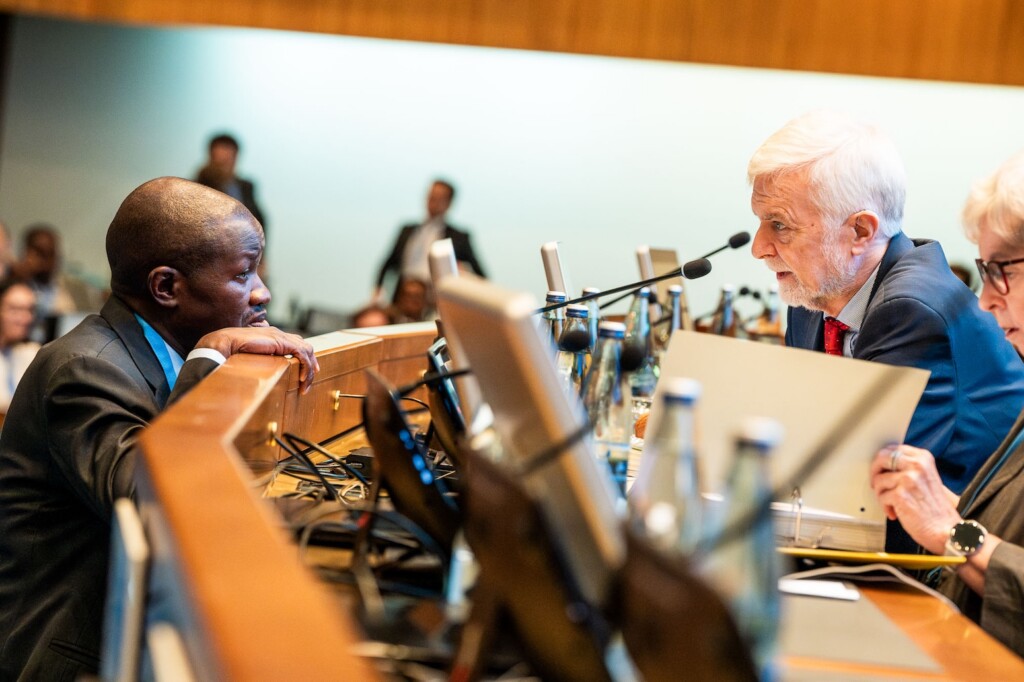
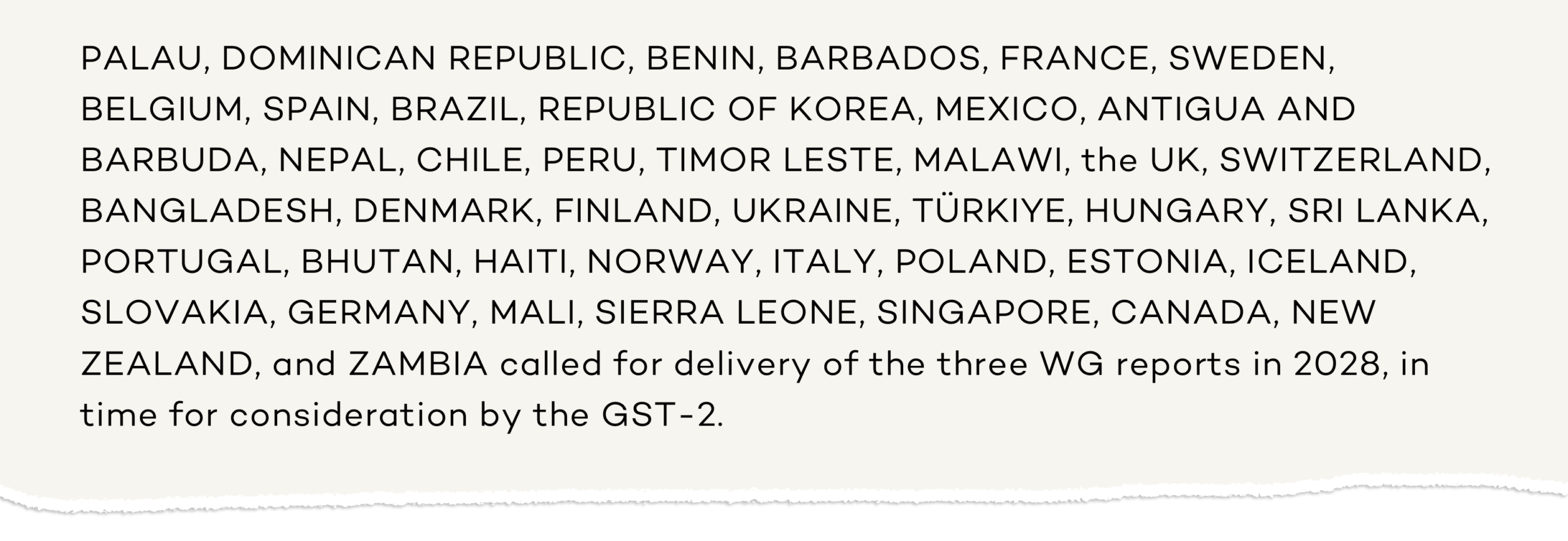
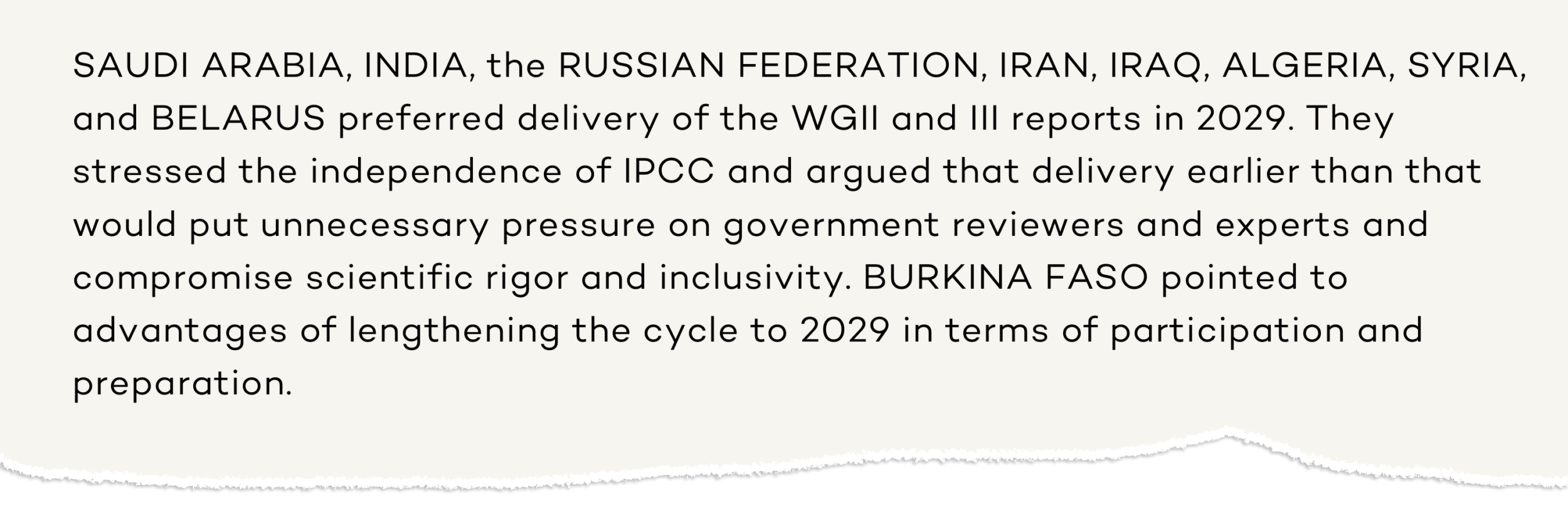
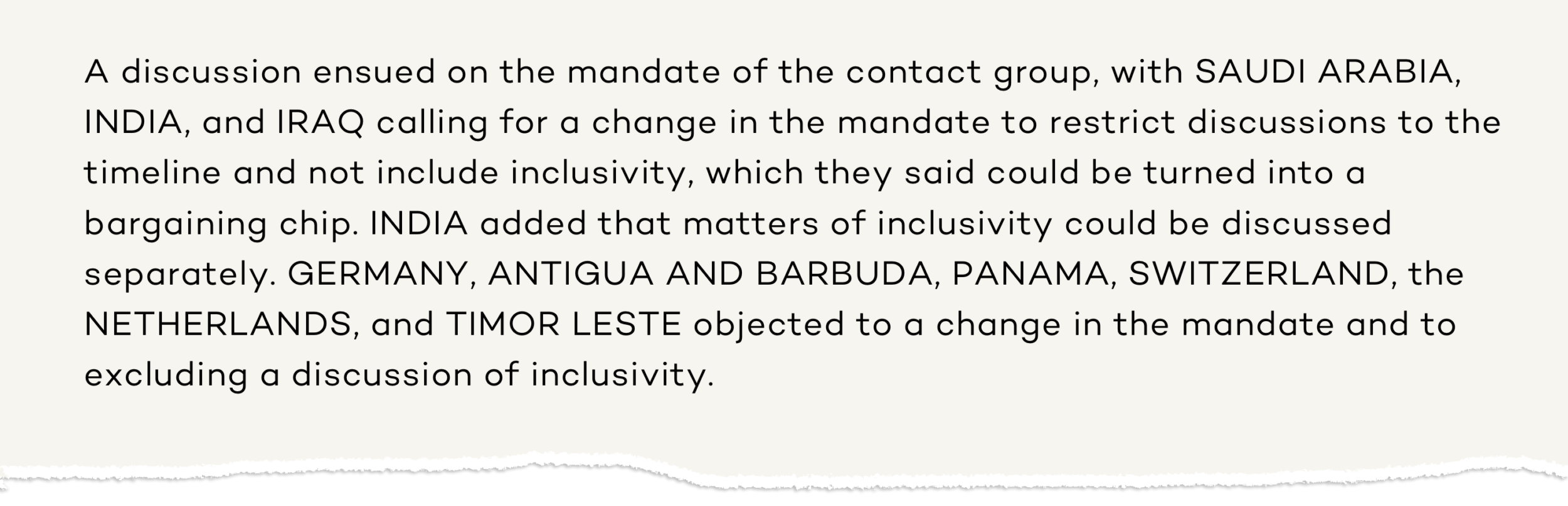
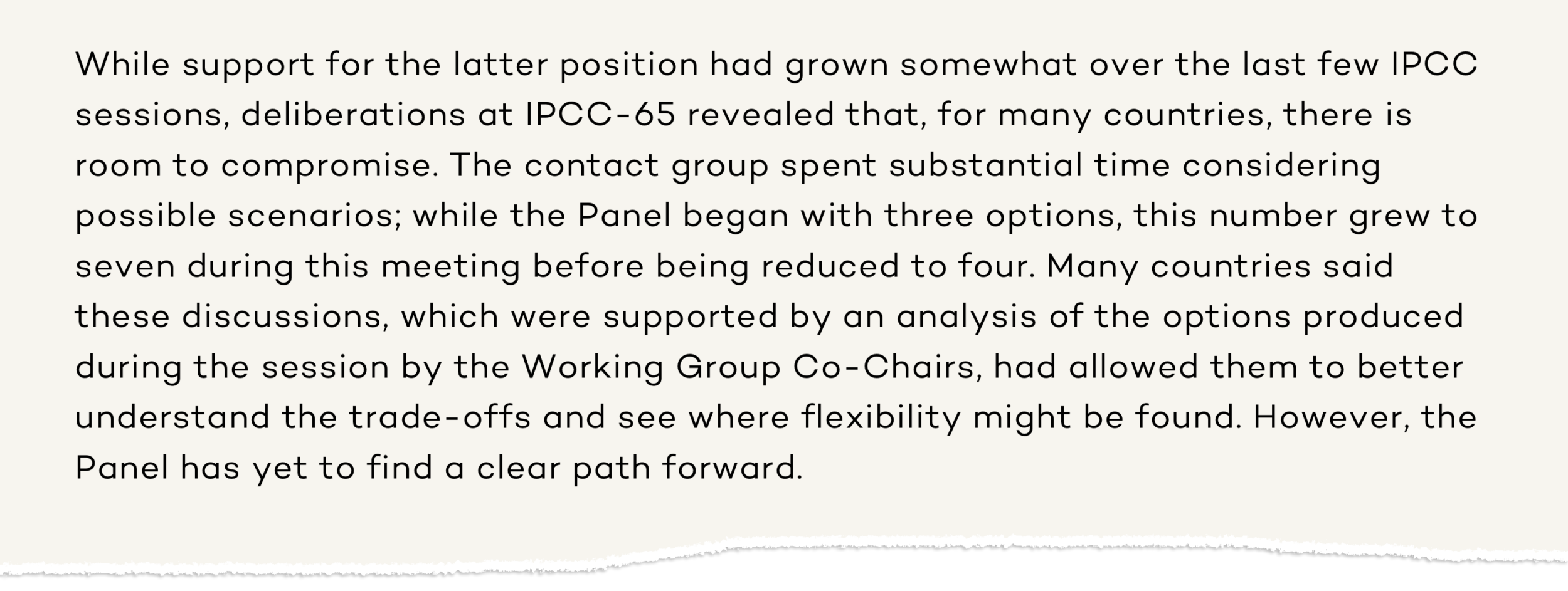
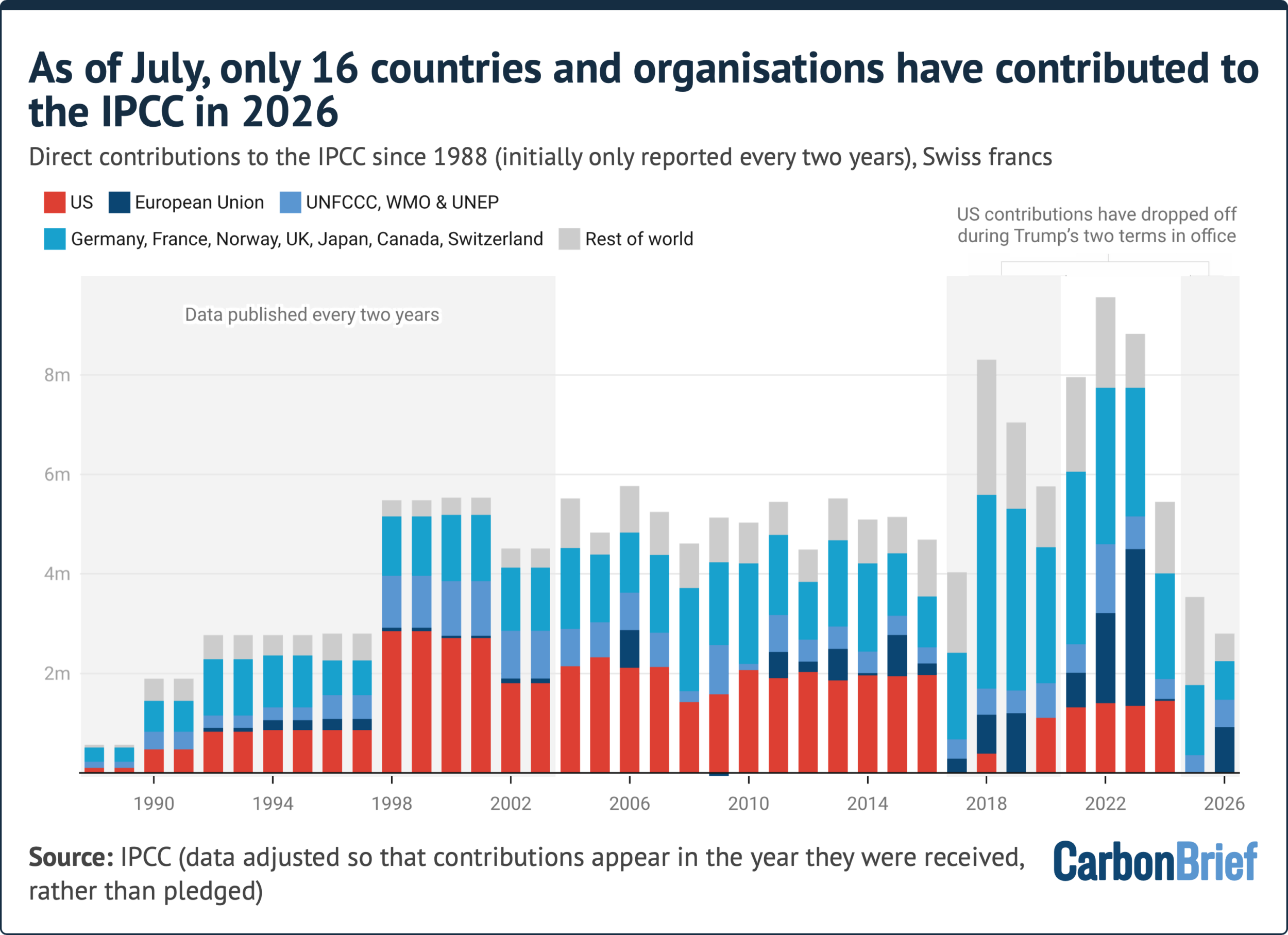
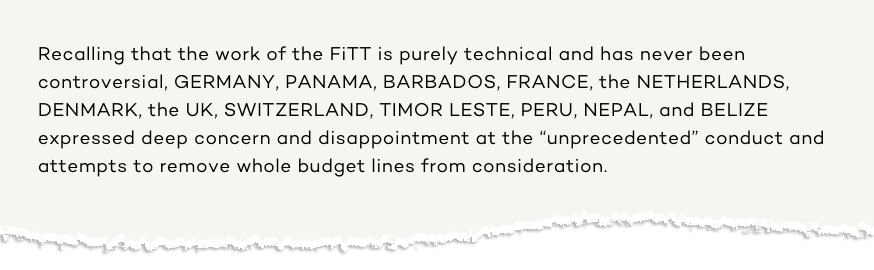

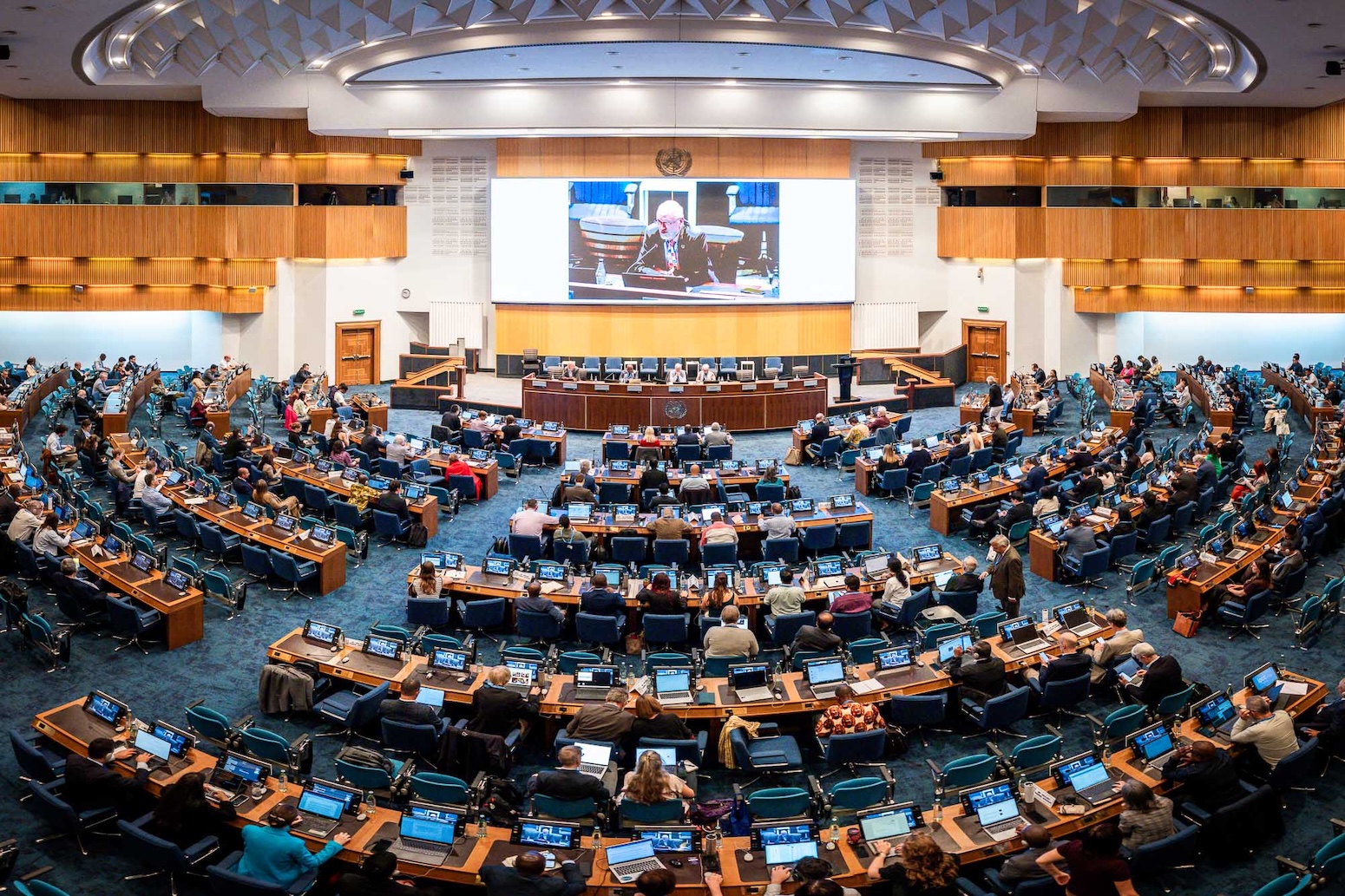
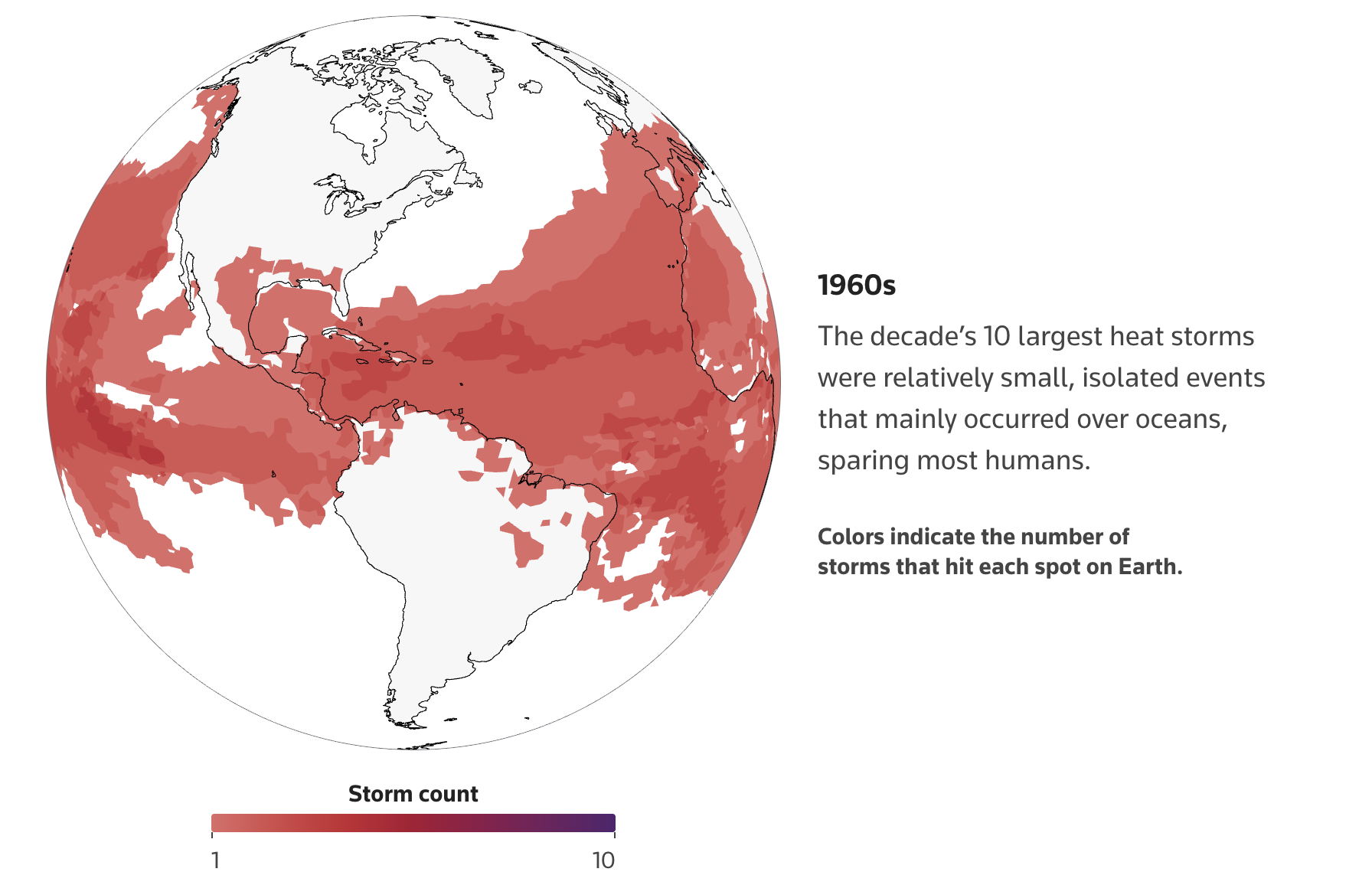
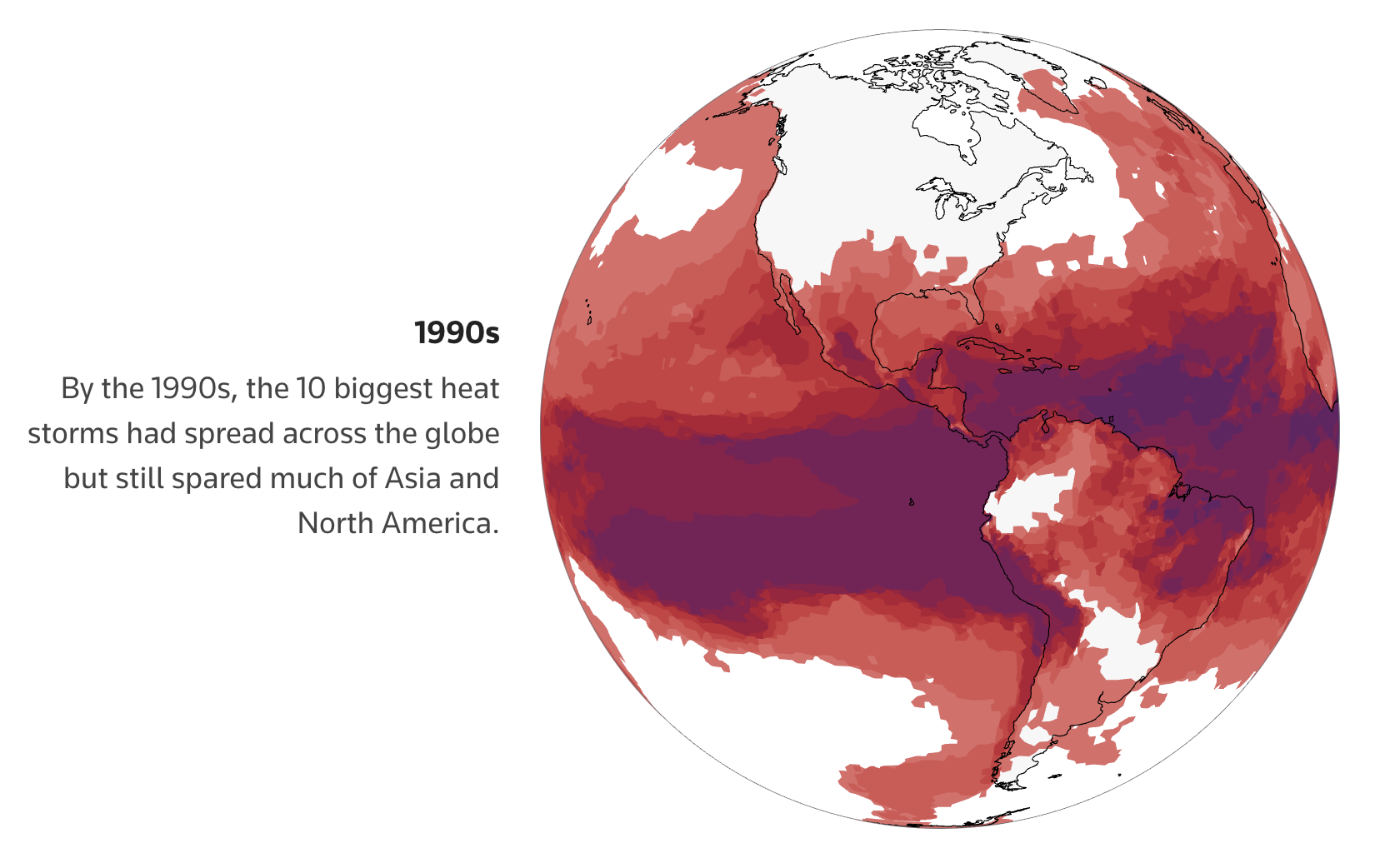
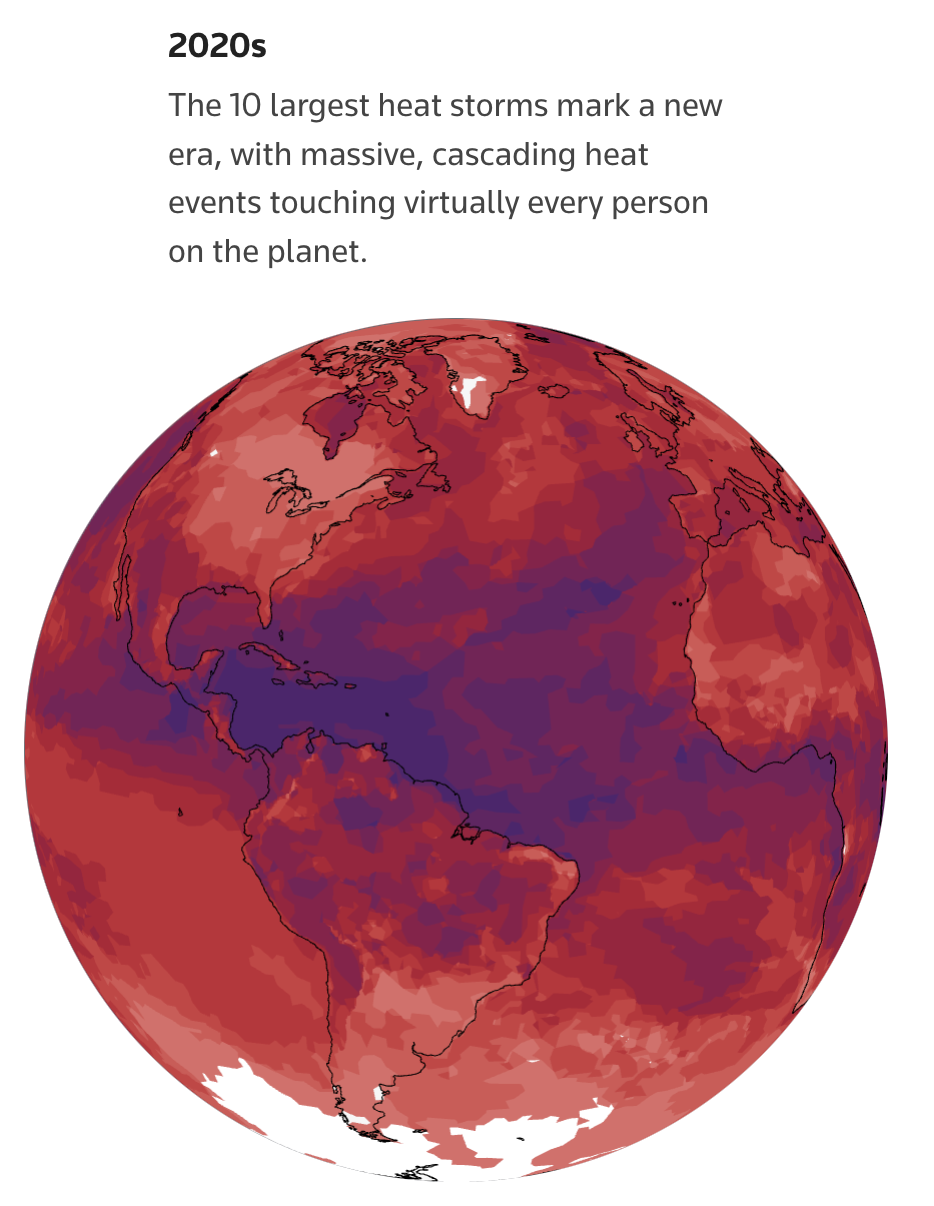
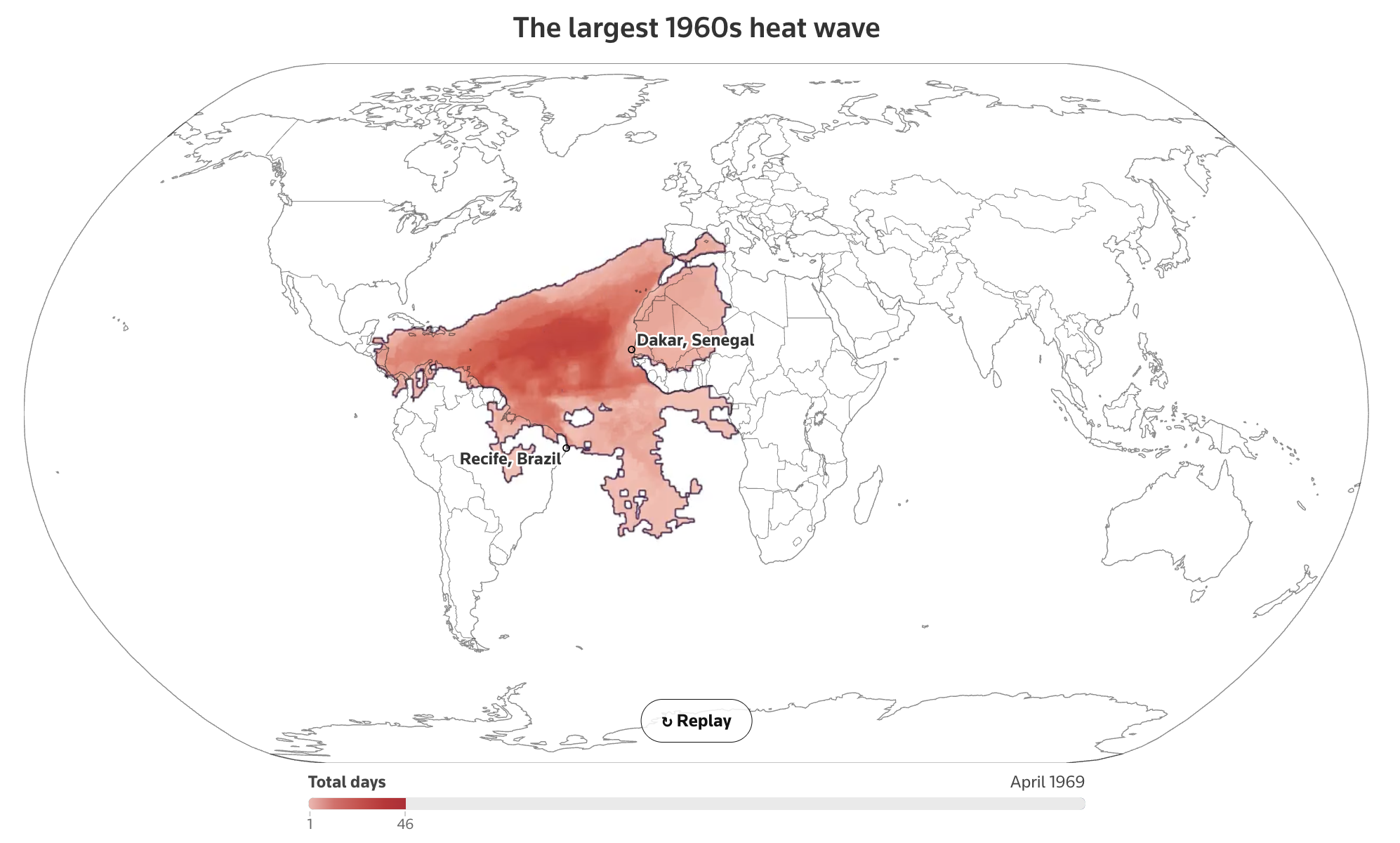
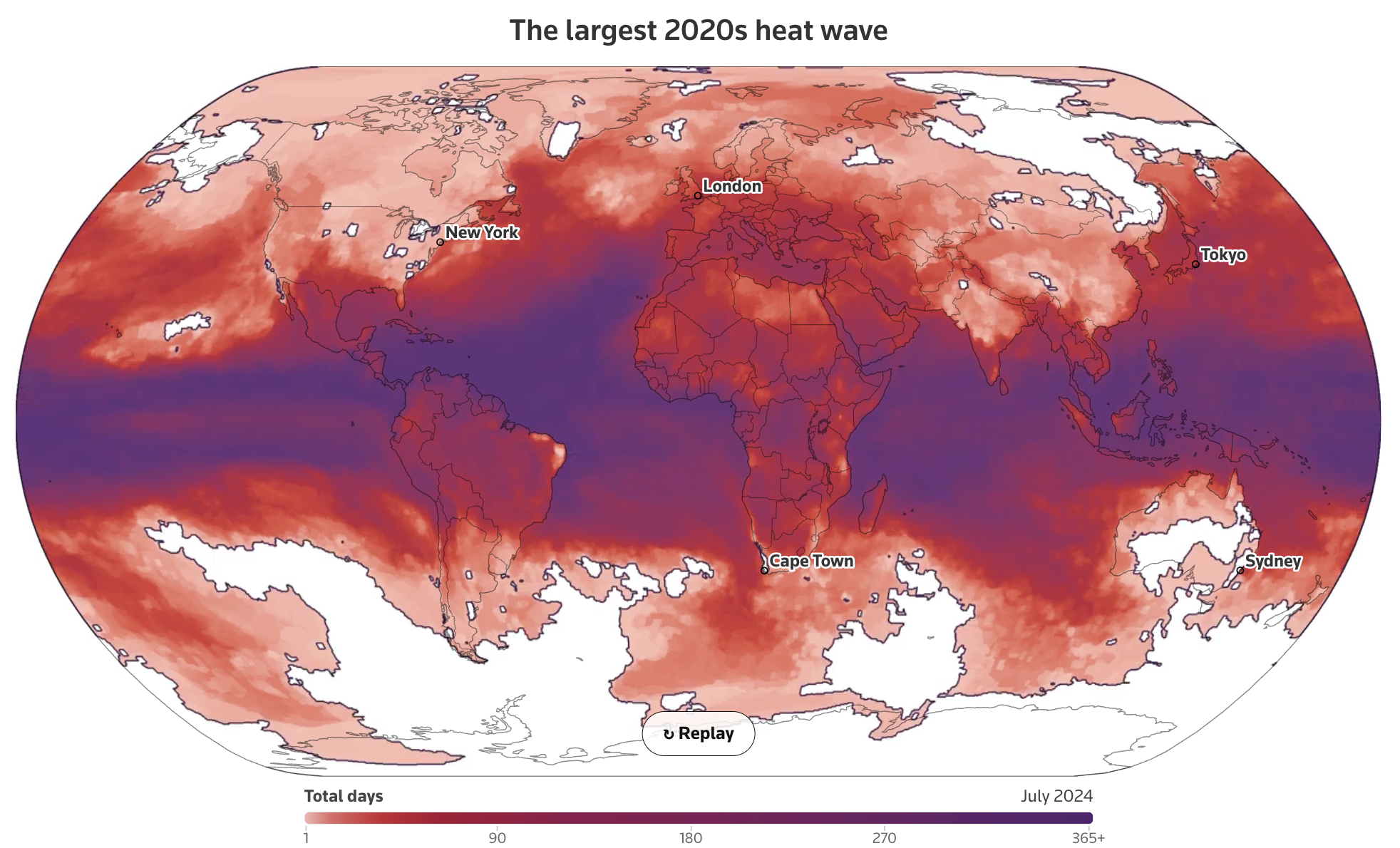


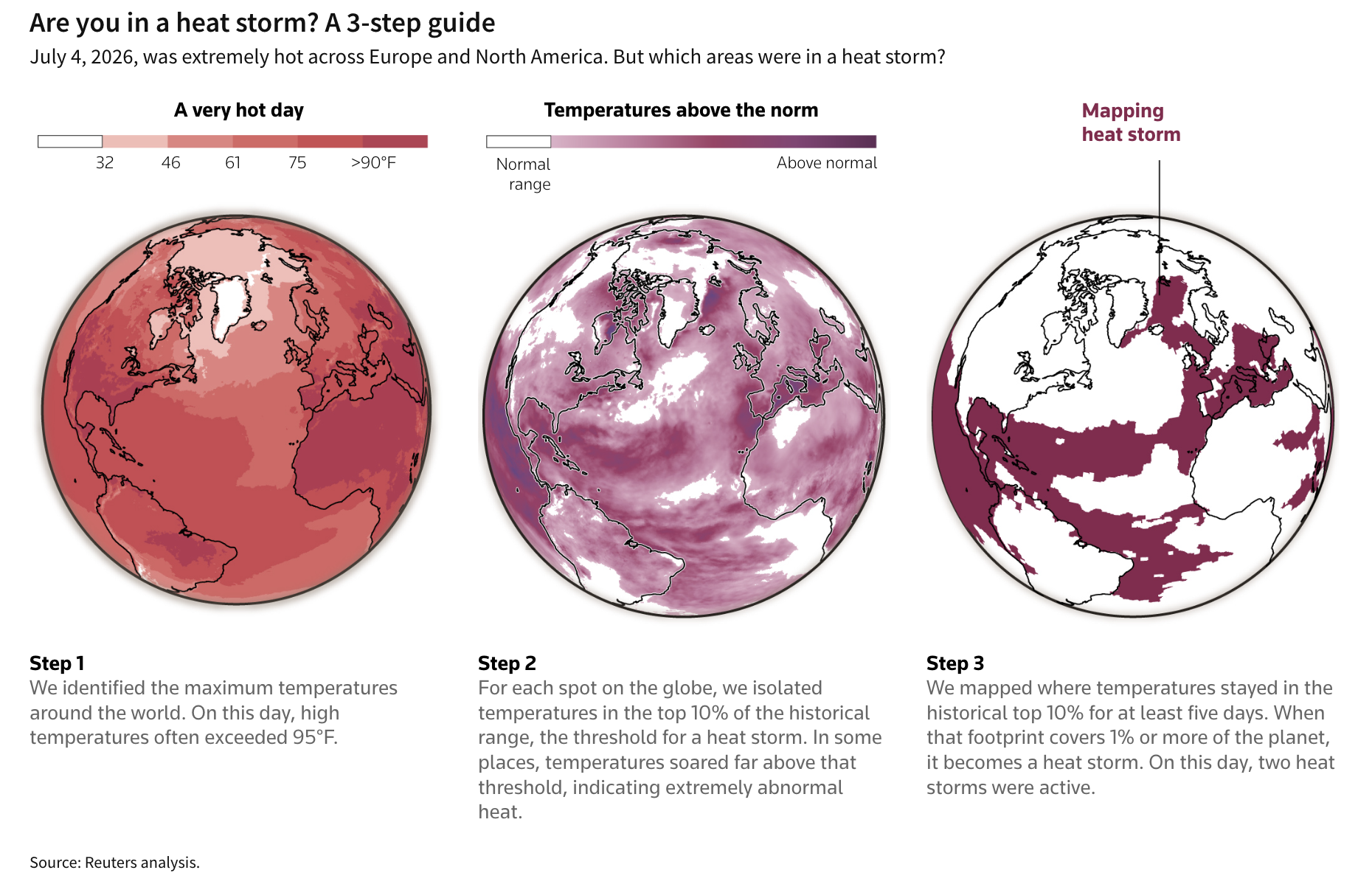
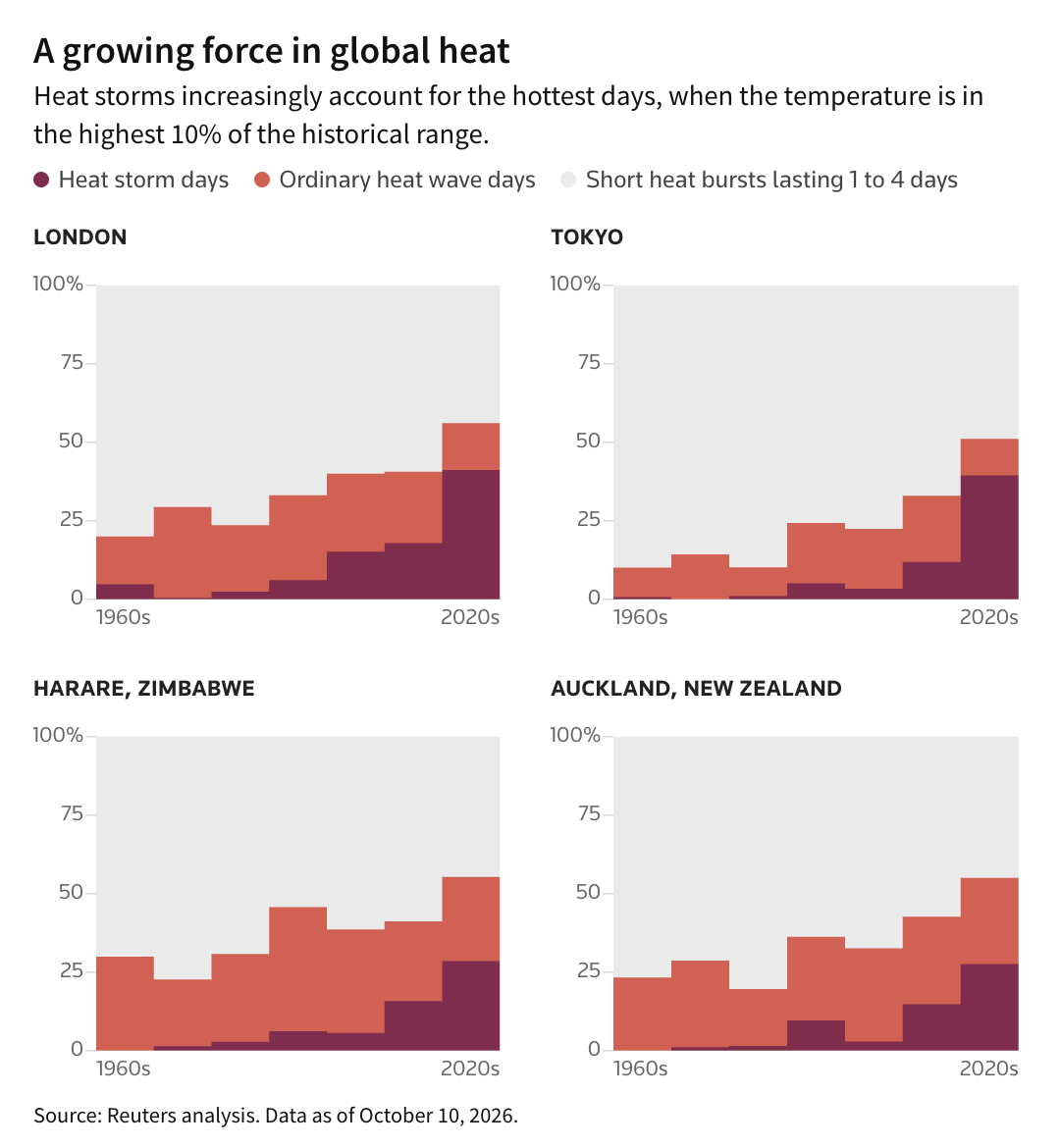
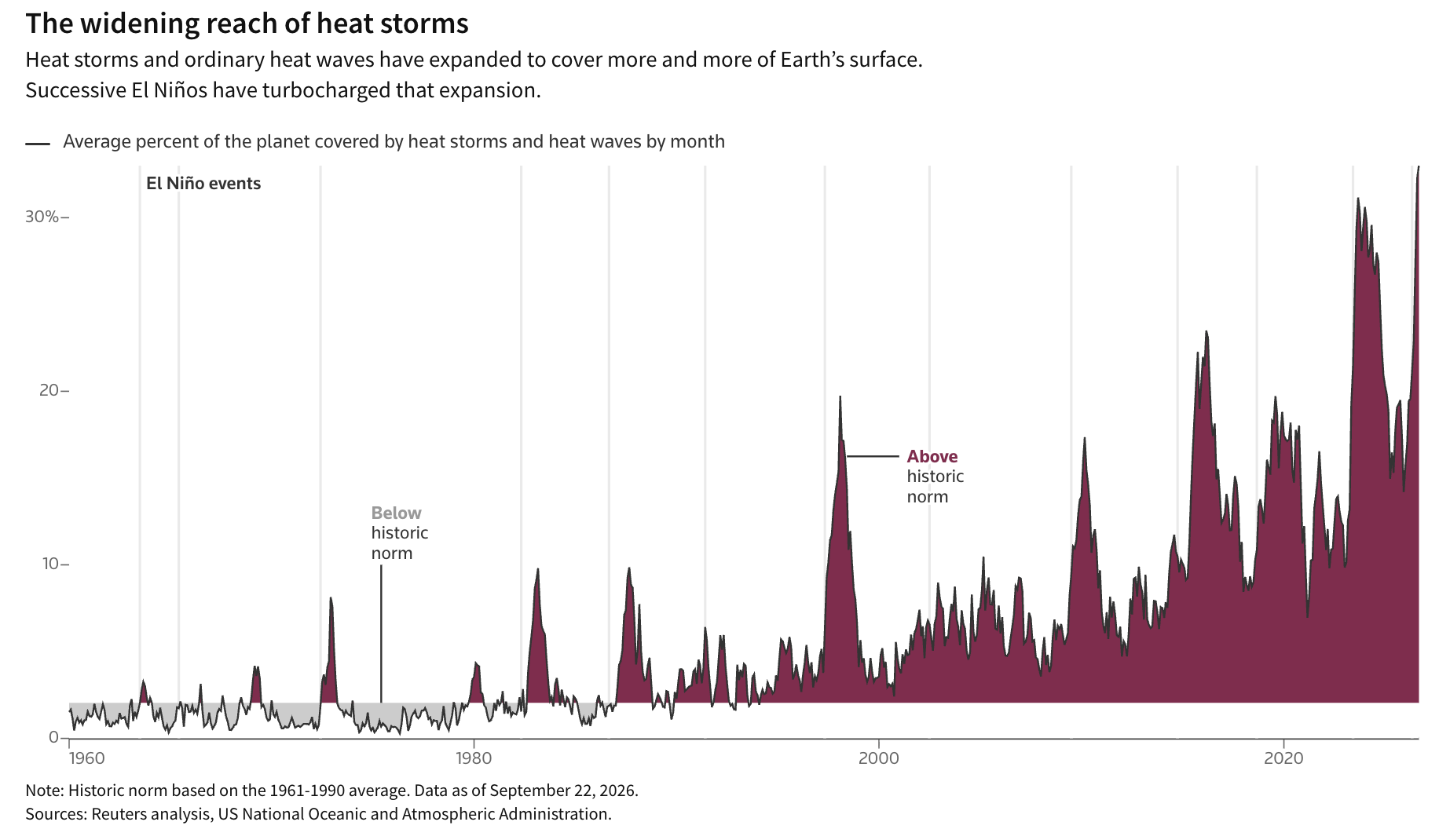
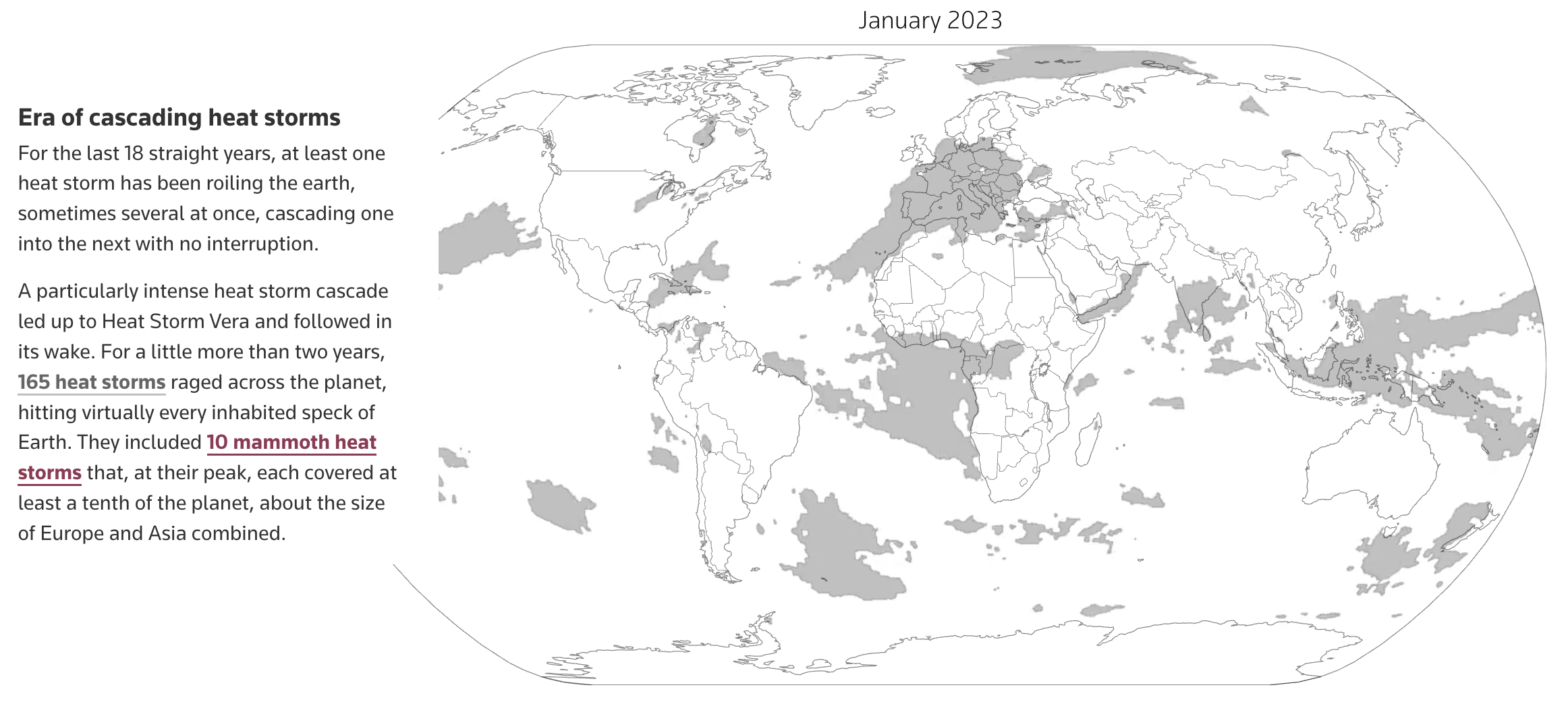
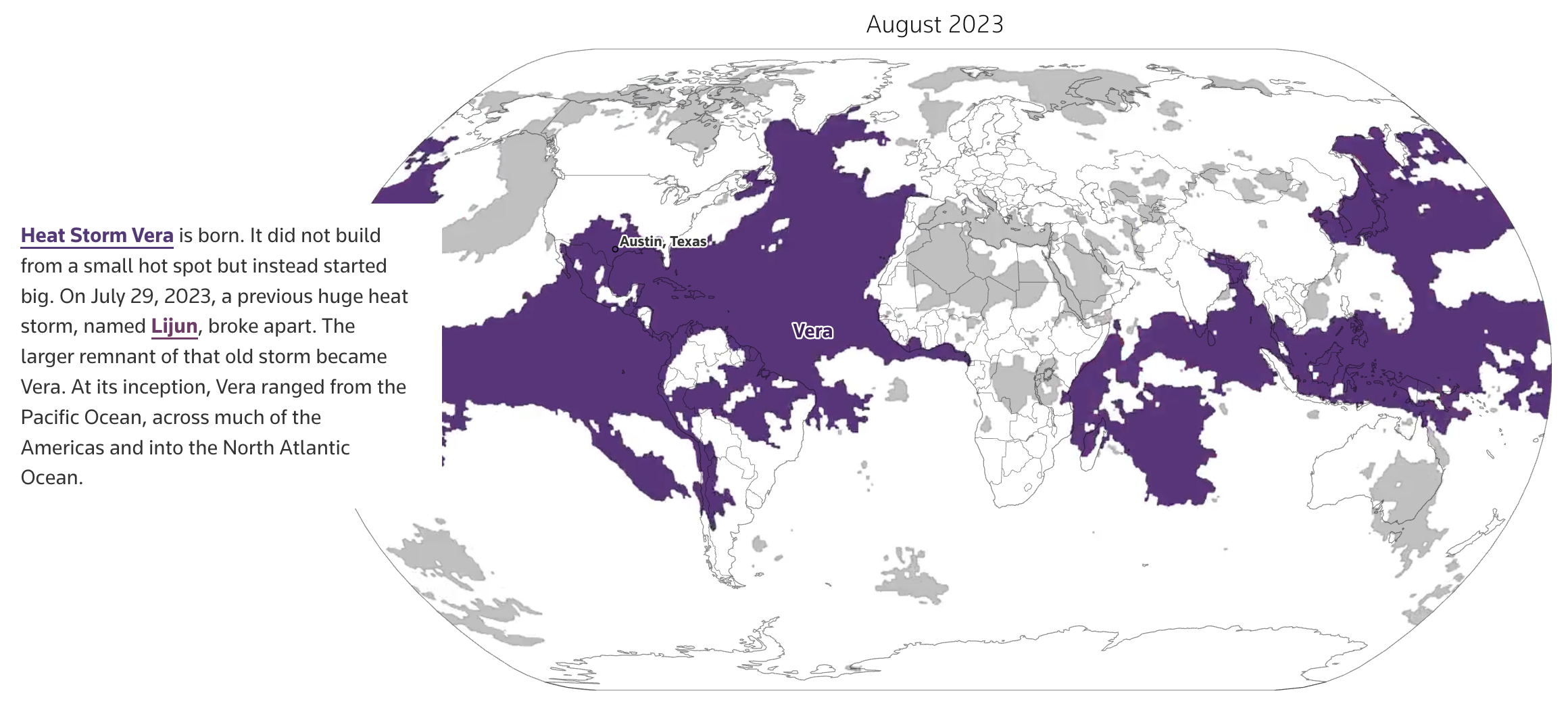
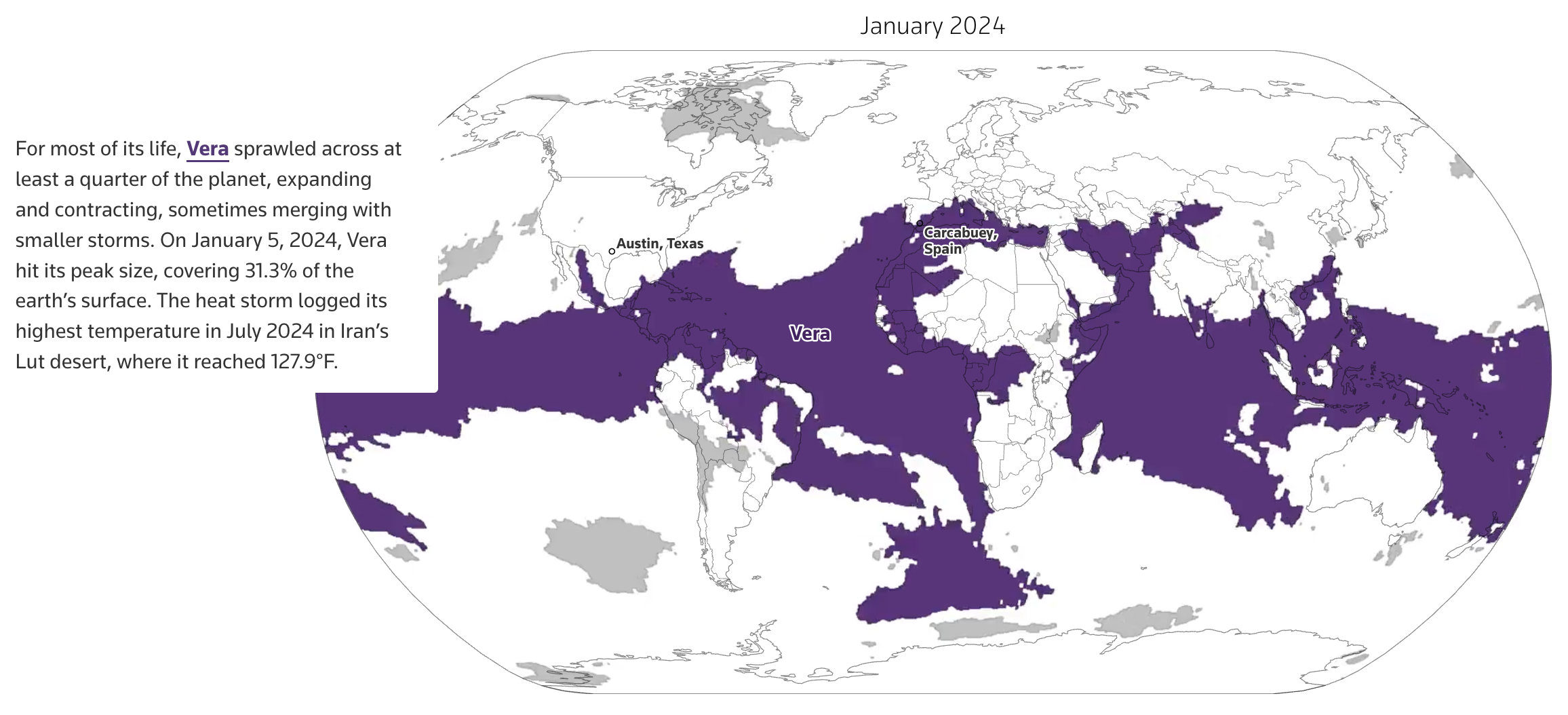
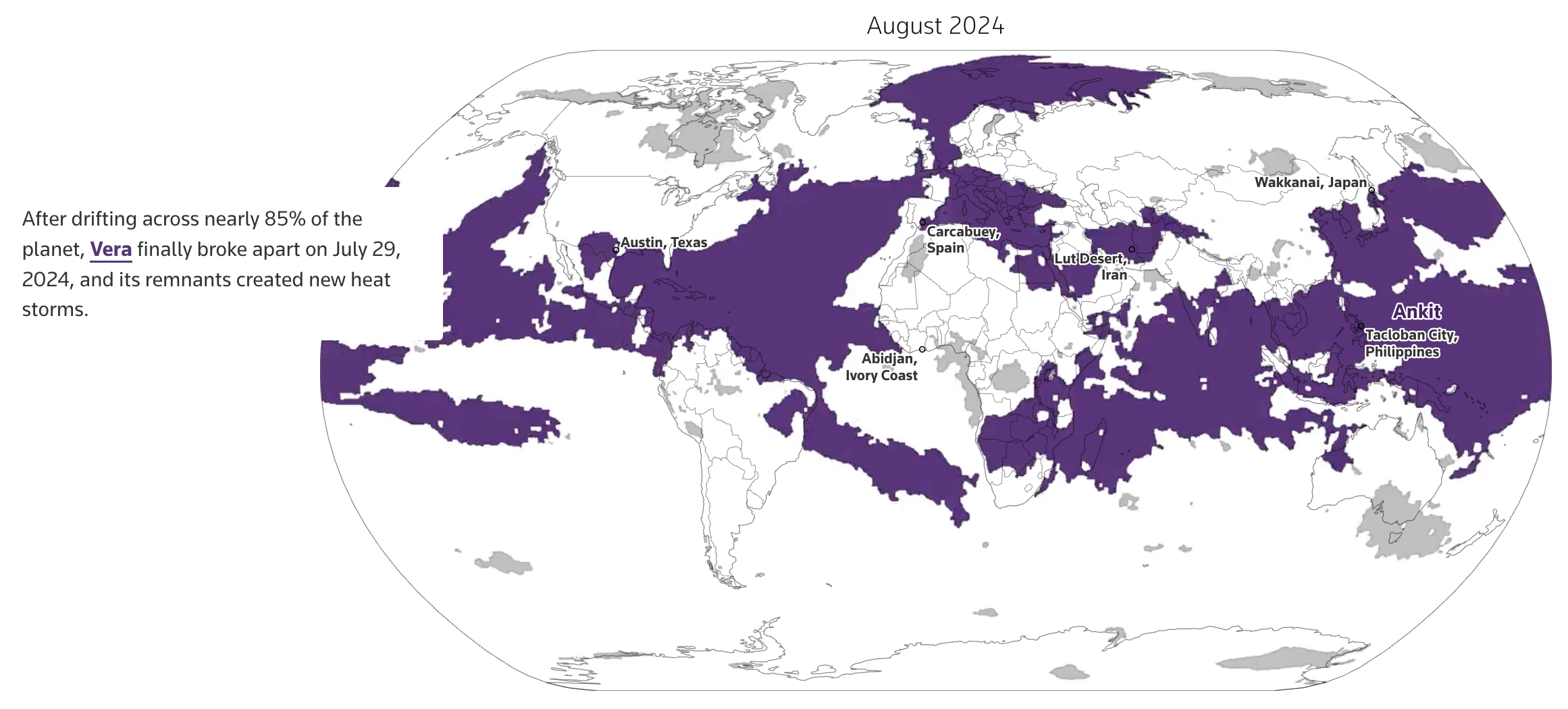
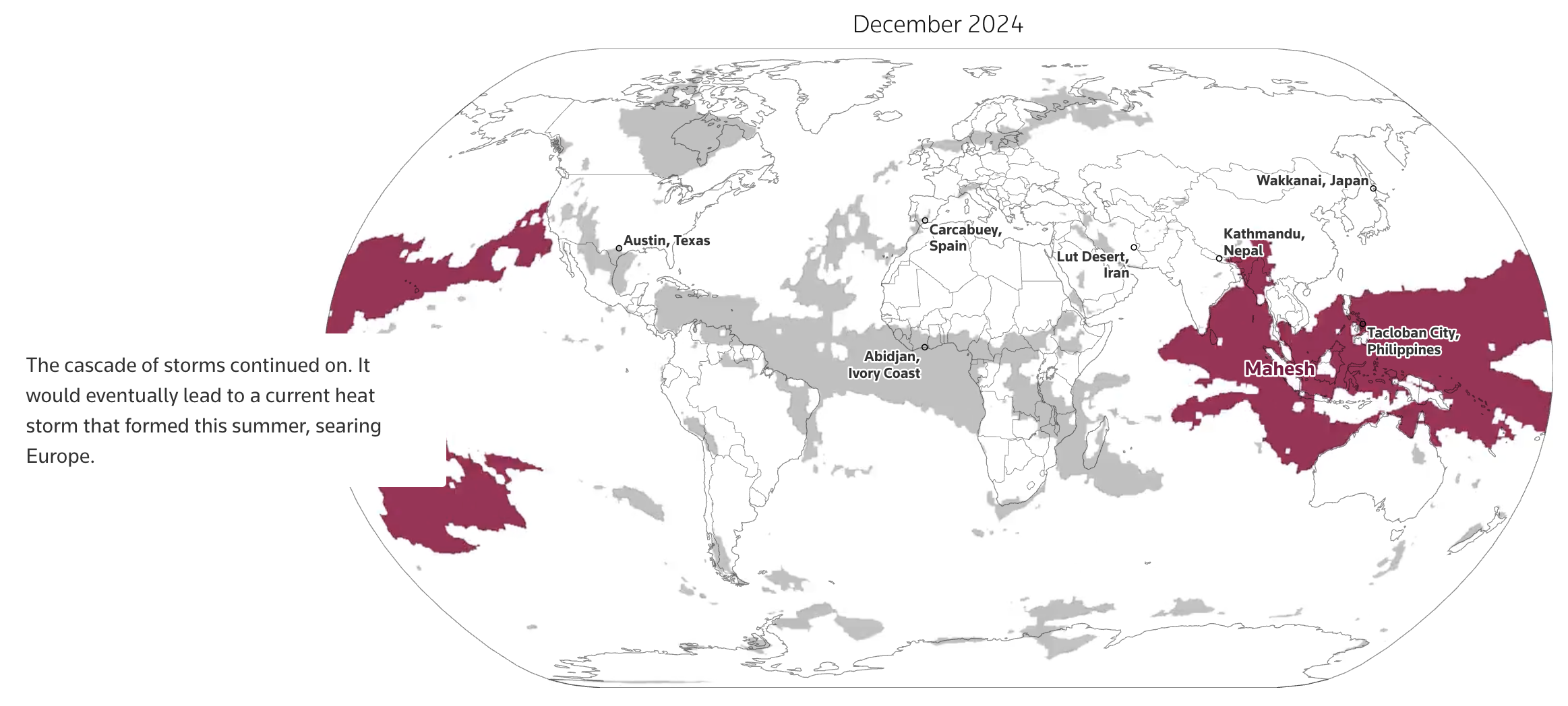


 Stephanie Arnett/MIT Technology Review | Getty Images

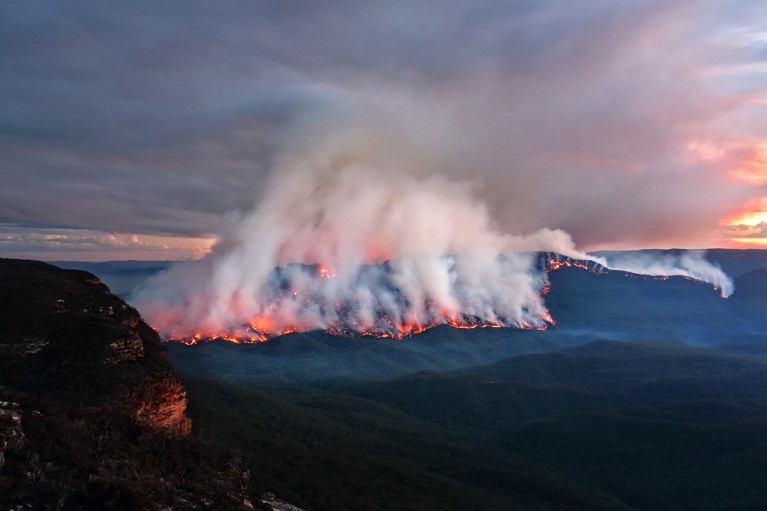
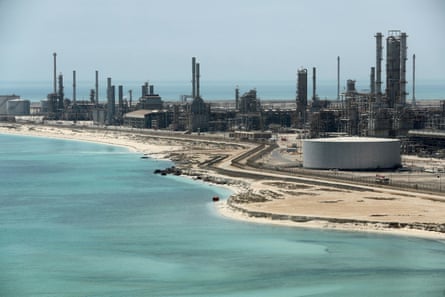
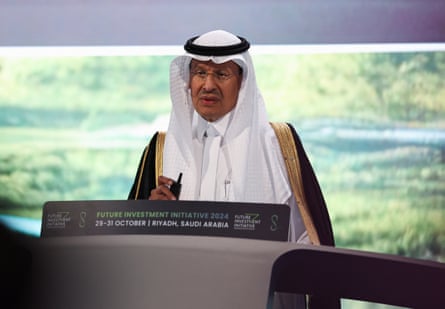

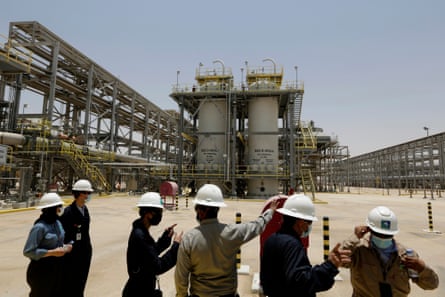









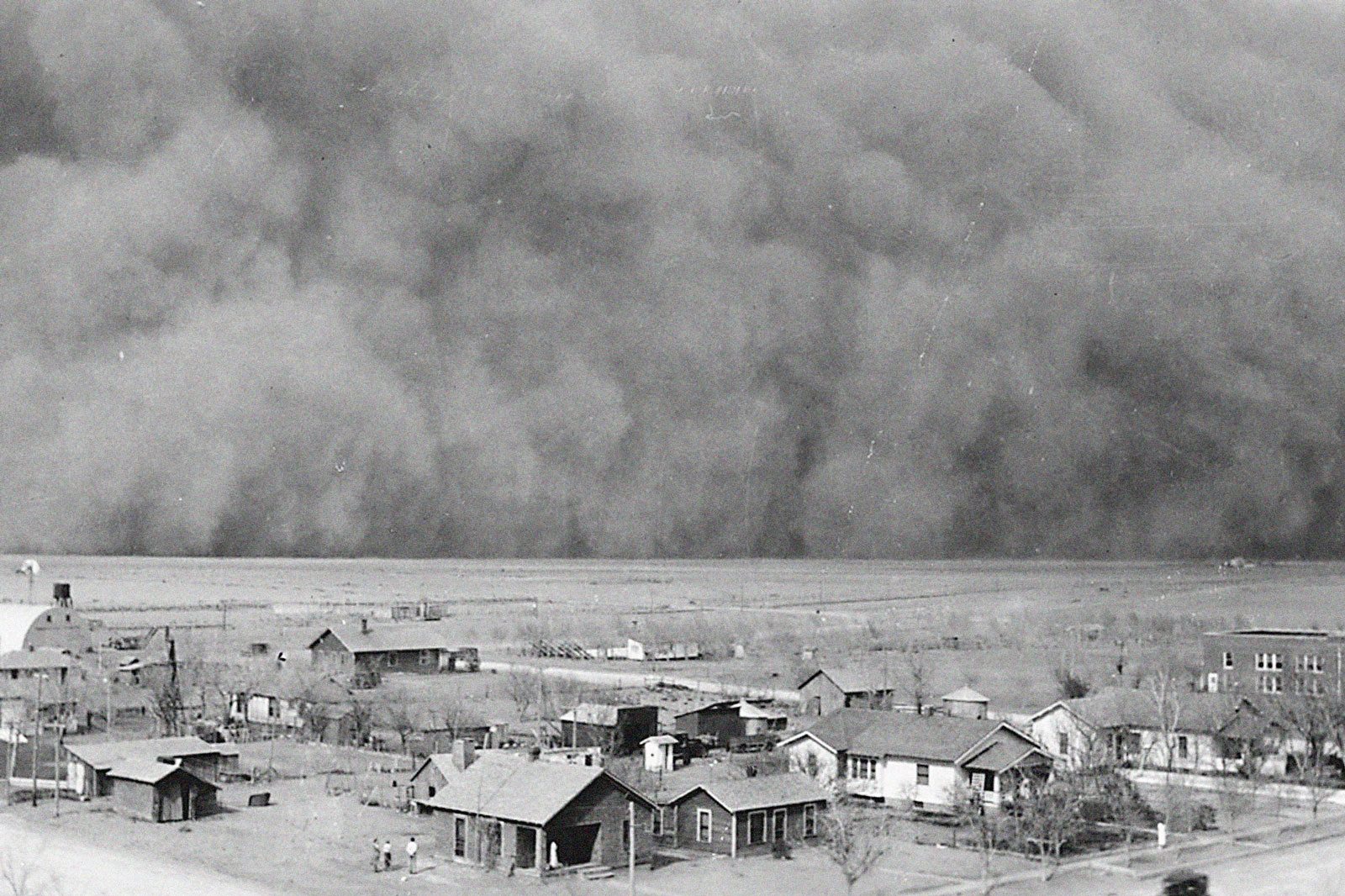
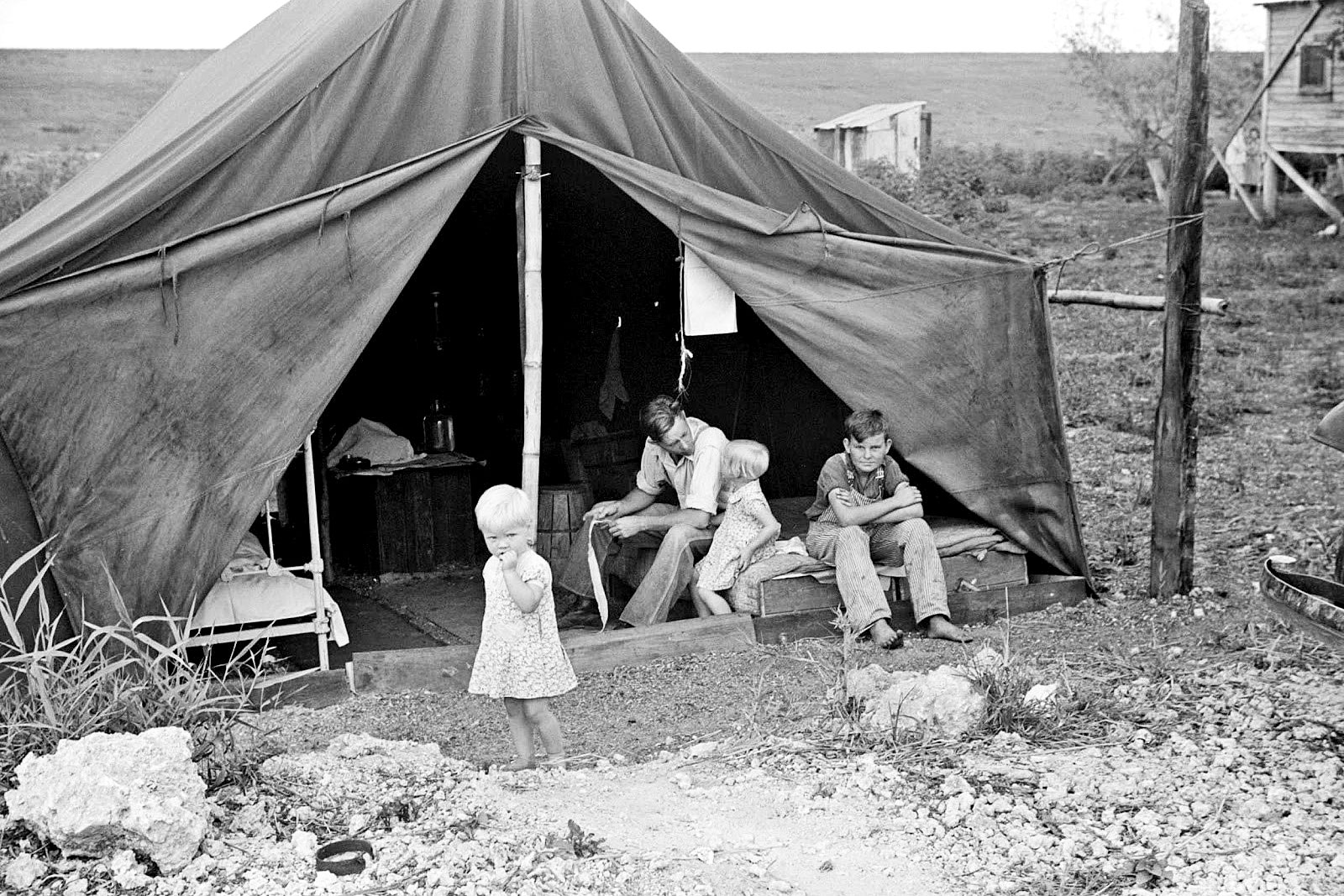
 Stephanie Arnett/MIT Technology Review | Adobe Stock



Você precisa fazer login para comentar.