Uma pesquisa inédita feita pelo Ipec (Inteligência em Pesquisa e Consultoria Estratégica) a pedido do Instituto Pólis revela que 7 em cada 10 brasileiros já vivenciaram ao menos um evento extremo ligado às mudanças climáticas.
Entre os episódios sofridos mais citados pelos entrevistados estão chuvas muito fortes (20%), seca e escassez de água (20%), alagamentos, inundações e enchentes (18%), temperaturas extremas (10%), apagão (7%), ciclones e tempestades de vento (6%) e queimadas e incêndios (5%).
O Ipec ouviu 2.000 pessoas com 16 anos ou mais entre os dias 22 e 26 de julho deste ano. A pesquisa encomendada pelo Instituto Pólis, com apoio do Instituto Clima e Sociedade, tem uma margem de erro de dois pontos percentuais, para mais ou para menos, e um índice de confiança de 95%.
O levantamento mostra que as temperaturas extremas —seja muito frio ou muito calor— são as ocorrências mais associadas pela população (44%) à crise climática. Em termos práticos, porém, a falta de água e a seca são os eventos que mais preocupam, sendo apontados por 34% dos respondentes.
Na sequência são citados temores em relação a alagamento, inundação e enchente (23%), incêndios e queimadas (18%) e chuva forte (17%). A preocupação com o advento do calor ou do frio extremo surge em quinto lugar, sendo temido por 16% dos entrevistados.
Ainda de acordo com a pesquisa, as apreensões variam de acordo com a classe e com cor dos entrevistados. Alagamentos, inundações e enchentes preocupam mais as classes D e E, sendo indicadas por 25% dos entrevistados desses segmentos, do que as classes A e B (19%). A média nacional é de 23%.
A população negra, por sua vez, apresenta maior preocupação (25%) em relação a essas mesmas ocorrências do que a população branca (21%).
Para pesquisadores que integram o Pólis, as respostas também indicam que a população brasileira defende o investimento em fontes renováveis de energia para combater as mudanças climáticas.
Do total de entrevistados, 84% dizem se preocupar com o futuro e apoiar o investimento nessas modalidades. Para 57%, a energia solar deveria ser priorizada em termos de investimentos públicos. Fontes hídricas (14%) e a eólicas (13%) são citadas na sequência.
Por outro lado, os entrevistados afirmam que o petróleo (73%), o carvão mineral (72%) e o gás fóssil (67%) são as categorias que mais contribuem para o agravamento das mudanças climáticas.
“A pesquisa indica, de forma inédita, que há uma tendência de custo político cada vez mais elevado se o caminho das decisões governamentais continuar sendo no investimento de fontes não renováveis”, afirma o diretor-executivo do Instituto Pólis, Henrique Frota.
“Os números mostram que os brasileiros querem investimento prioritário em fontes renováveis e entendem essa decisão como fundamental para o combate às mudanças climáticas”, completa Frota.
“Todos estão loucos, neste mundo? Porque a cabeça da gente é uma só, e as coisas que há e que estão para haver são demais de muitas, muito maiores diferentes, e a gente tem de necessitar de aumentar a cabeça, para o total. Só se pode viver perto de outro, e conhecer outra pessoa, sem perigo de ódio, se a gente tem amor. Qualquer amor já é um pouquinho de saúde, um descanso na loucura. Todo caminho da gente é resvaloso. Mas, também, cair não prejudica demais —a gente levanta, a gente sobe, a gente volta!”
Reflete Riobaldo Tartarana, mistura de jagunço, miliciano, soldado e terrorista, protagonista de “Grande Sertão: Veredas”, de Guimarães Rosa. Trata-se de um sujeito atormentado com a natureza horrível do ser humano. A obra-prima decolonial do escritor brasileiro é sobre o caráter indomável e não binário do bem e do mal e a surpresa de que a virtude e o indefensável não são atributos do divino. São constituintes e condições da mente humana.
Mais um trecho do livro: “O diabo vige dentro do homem, os crespos do homem —ou é o homem arruinado, ou o homem dos avessos. Solto, por si, cidadão, é que não tem diabo nenhum”. Há um vício acadêmico em domesticar o próprio texto de Rosa, relacionando o que foi escrito à época ao país, à língua.
Não. Como “Ulysses”, do irlandês Joyce, ou “O Bebedor de Vinho de Palma”, do nigeriano Amos Tutuola, “Grande Sertão: Veredas” não pertence a um tempo ou espaço. Ou melhor, transforma, como os dois romances citados, tudo no tempo e espaço proposto na obra.
Em Guimarães Rosa, tudo é sertão. Principalmente dentro de nós —a grande contribuição ontológica e terapêutica do livro para quem, como tanta gente em 2023, anda abismado, chocado e confuso com os horrores que somos capazes de cometer. A recém-lançada adaptação de “Grande Sertão: Veredas” para o cinema, dirigida por Bia Lessa, chama-se “O Diabo na Rua, no Meio do Redemunho”. É o que nós somos, é onde estamos. Procurando nos posicionar diante fatos e narrativas, como o miliciano diletante Riobaldo.
Segue outro trecho: “Eu, quem é que eu era? De que lado eu era? Zé Bebelo ou Joca Ramiro? Hermógenes ou Reinaldo… De ninguém eu era. Eu era de mim. Eu, Riobaldo. Medo. Medo que maneia”. Tentamos nos vitimizar, procurando convencer a nós mesmos que somos consumidos pelo medo. Mas o que acontece é o contrário. Nós consumimos o medo como dependentes químicos que todos somos dele.
O medo é uma commodity que a tudo impulsiona. A mídia, a indústria de remédios, a indústria de armamentos, religiões, ideologias. É com prazer escondido que procuramos “o meio do redemunho”. Entender isso é o que Guimarães Rosa quis dizer com “aumentar a cabeça para o total”. Nós destruímos, nós apavoramos, nós construímos, nós encantamos. Somos nós. Não há culpa ou responsabilidade externa a nós. Na beleza e na feiura (como se essa visão binária de mundo fosse possível). É a nossa jornada conjunta. Não binária. Decolonial.
Como Guimarães termina seu infinito romance: “Diabo não há! É o que eu digo, se for… Existe é homem humano. Travessia.”
Pesquisa feita em UCs de uso sustentável aponta que redução do número de indivíduos é maior em até 5 km das populações humanas; porém, é possível minimizar os efeitos negativos com estratégias de manejo
Foram instaladas 720 armadilhas fotográficas em 100 comunidades locais, dentro e fora de nove áreas protegidas de uso sustentável (foto: Ricardo Sampaio)
Luciana Constantino | Agência FAPESP – A existência de comunidades ribeirinhas e tradicionais em reservas extrativistas da Amazônia Legal não configura um risco para espécies de aves e mamíferos consideradas alvos de caça para subsistência, como mostra pesquisa publicada na revista Biological Conservation.
Porém, o estudo sugere que, para diminuir os efeitos negativos da caça de subsistência, seria importante promover estratégias de manejo, entre elas reduzir o consumo local de espécies sensíveis – como anta, queixada e mutum – e coibir o comércio de carne de caça nas áreas urbanas, priorizando principalmente comunidades locais mais próximas das cidades e em regiões de florestas de terra firme, onde a pesca em água doce e outras fontes de proteína aquática são escassas ou inexistentes.
Fruto do doutorado do analista ambiental do Instituto Chico Mendes de Conservação da Biodiversidade (ICMBio) Ricardo Sampaio, o trabalho mostrou que a redução da chamada “abundância” (uma espécie de contagem do número de indivíduos das espécies) ocorre até 5 quilômetros (km) de distância a partir das comunidades humanas.
Para o trabalho, foram usadas 720 armadilhas fotográficas em 100 comunidades locais, dentro e fora de nove áreas protegidas de uso sustentável – sendo cinco reservas extrativistas (Resex), duas reservas de desenvolvimento sustentável (RDS) e duas florestas estaduais – na região centro-oeste da Amazônia brasileira.
Geraram registros de 29 espécies de mamíferos e aves, pesando mais de cinco quilos, entre elas pacas, antas, mutuns e jacus. Em áreas onde a população desenvolve ou tem acesso a manejo sustentável de pescados, como é o caso do pirarucu na região do Médio Purus e do rio Juruá, no Estado do Amazonas, a tendência é de redução da pressão de caça sobre as espécies terrestres.
“O principal resultado do trabalho é que o fator mais relevante para alterar a diversidade, a abundância e a biomassa das espécies é a distância em relação à comunidade. Mesmo assim, detectamos que as comunidades humanas têm um impacto reduzido na biodiversidade, desmistificando algumas discussões que questionam o papel de unidades de conservação de uso sustentável para a proteção da biodiversidade. O manejo de base comunitária da fauna pode ser um caminho para garantir a segurança alimentar dessas pessoas, além de proteger a biodiversidade”, diz Sampaio à Agência FAPESP.
Os resultados foram publicados em meio à retomada do protagonismo da Amazônia nas questões ambientais e do lançamento da Declaração de Belém, que estabelece entre seus pontos o “aumento das reservas de vegetação nativa mediante incentivos financeiros e não financeiros e outros instrumentos para a conservação”. O documento foi assinado em agosto pelos líderes dos países integrantes da Organização do Tratado de Cooperação Amazônica (OTCA) durante a Cúpula da Amazônia, realizada no Pará.
“Resultados práticos, como os que obtivemos na pesquisa, ajudam a criar ambientes de discussão e processos institucionais para lidar com um tema que é tabu no Brasil – a caça de subsistência. Agora o desafio é sensibilizar os gestores sobre esses resultados e trazê-los para a prática”, avalia Sampaio.
O trabalho recebeu apoio da FAPESP por meio de projeto coordenado pelo pesquisador Ronaldo Gonçalves Morato, ex-coordenador do Centro Nacional de Pesquisa e Conservação de Mamíferos Carnívoros (Cenap) do ICMBio. Morato e seu grupo já haviam publicado outro artigo mostrando que a distância de centros urbanos e a disponibilidade de proteína de origem aquática são os fatores que mais influenciam na avaliação de como moradores de Unidades de Conservação (UCs) percebem a sustentabilidade da caça nesses locais (leia mais em: agencia.fapesp.br/38547).
Também assinam o artigo publicado na Biological Conservation o professor Adriano Garcia Chiarello, do Departamento de Biologia da Faculdade de Filosofia, Ciências e Letras de Ribeirão Preto da Universidade de São Paulo (FFCLRP-USP), e Carlos Augusto Peres, da University of East Anglia (Reino Unido). Peres recebeu o prêmioFrontiers Planet, que elegeu os três melhores artigos científicos do mundo na área ambiental nos últimos três anos. O trabalho premiado foi divulgado na revista PNAS.
Pressões
Os pesquisadores destacam que o trabalho representa um dos esforços de maior escala usando armadilhas fotográficas para examinar as respostas da população de vertebrados à caça em regiões da floresta tropical com maior biodiversidade do mundo, a Amazônia.
O grupo aponta que a redução de animais é fruto da maior pressão de caça próximo às comunidades. Contudo os impactos negativos nas florestas ao redor, tais como maior incidência de fogo, extração de madeira e presença de cachorros domésticos utilizados para a caça também podem repelir os animais próximo às comunidades, conforme registrado para 13 espécies avaliadas.
Nesse sentido, o pesquisador conta que o estudo já rendeu resultado prático. Quando o grupo estava fazendo o trabalho de campo em uma comunidade da região do Rio Liberdade (Resex Riozinho da Liberdade), no Acre, os moradores locais discutiam a efetividade de um acordo local para a caça de subsistência, mas divergiam sobre o uso ou não de cachorros para a atividade.
Os cientistas instalaram então as armadilhas em ambas as margens do rio, onde o uso de cães era permitido (margem direita) e a outra (margem esquerda) sem essa técnica. Ao recolher as imagens e apresentar à comunidade, viram que havia mais animais selvagens, chamados pelos próprios moradores locais de “bichos de carne de caça” ou simplesmente “caça”, onde o cachorro não era empregado. “Na reunião havia mulheres, crianças, lideranças locais. Mesmo morando em áreas de floresta, muitos viram pela primeira vez algumas espécies animais por meio das imagens das armadilhas”, lembra Sampaio.
Ele conta que depois de alguns meses recebeu uma minuta de reunião em que as imagens subsidiaram a decisão coletiva de não usar mais os cachorros de caça na comunidade. “Posteriormente essa decisão foi adotada no plano de manejo da unidade de conservação, que tem as regras definidas pela própria comunidade. Esse foi um resultado positivo na tomada de decisão local e na conservação da biodiversidade”, comemora o pesquisador, que defende aliar o conhecimento científico ao tradicional das populações locais, especialmente ribeirinhos e indígenas.
De acordo com a legislação, as reservas extrativistas são espaços territoriais que visam assegurar a proteção dos meios de vida e a cultura de populações tradicionais, como ribeirinhos, indígenas e quilombolas, bem como assegurar o uso sustentável dos recursos naturais da área.
As populações desses locais podem ter sua fonte de renda baseada no extrativismo e, de modo complementar, na agricultura de subsistência e criação de animais de pequeno porte. As áreas das Resex são do poder público e é proibida a prática da caça amadora ou profissional.
The Artissima fair, at the Oval Lingotto in Turin, features 181 galleries from 33 countries this year, including 39 newcomers mostly from outside Italy Edoardo Piva
Artissima, Italy’s leading contemporary art fair, has often looked to the future and sometimes even anticipated it, both by identifying emerging trends, artists and galleries, and by foreshadowing developments of the art fair model. In 2007, when Andrea Bellini succeeded the fair’s founder, Roberto Casiraghi, Artissima became the first contemporary art fair to employ a director from the curatorial world—a now increasingly common practice. The fair’s current director, Luigi Fassi, who was appointed in 2022, heads up Artissima’s landmark 30th edition this month, which will see 181 galleries (58% foreign) from 33 countries exhibit at the Oval Lingotto arena on the outskirts of Turin. Longstanding participants include Jocelyn Wolff, from Paris, and Lia Rumma, from Milan. They will join 39 newcomers, including Good Weather (Little Rock, Chicago), Cristina Guerra (Lisbon), Meyer*Kainer (Vienna), Raster (Warsaw), The Sunday Painter (London) and Unit 17 (Vancouver).
The Art Newspaper: Each edition of Artissima typically has a theme. But why give a theme to an event whose primary objective is commercial?
Luigi Fassi:This year’s theme is “Relations of Care” and comes from a 2022 text by Renzo Taddei—one of the most authoritative contemporary anthropologists in Latin America and beyond. Establishing “relations of care” is what Artissima has done for almost 30 years, within several art professional communities in Turin: the gallery owners, artists of course, curators, journalists, museum directors and also the collectors and aficionados who have now, through several generations from 1994 to 2023, developed their passions into vocations. All of them have made the city’s interest in art evolve in an increasingly sophisticated way.
The theme of this year’s Artissima, which is directed by Luigi Fassi, is “Relations of Care” Alessandro Peirone
This year, the historic section, Back to the Future, looks to the 1950s but focuses only on female artists.
Back to the Future is jointly curated by Francesco Manacorda (the newly appointed director of the Castello di Rivoli contemporary art museum in Turin)—who was the director of Artissima in2010 and 2011, and who founded the this section—and Defne Ayas, a curator of Turkish origin, based in Berlin. They are focusing their attention on geographical areas that are, above all, far removed from traditional Modernism or Western Modernisms, such as the Middle East and North Africa. Manacorda and Ayas are identifying female artists who developed extremely innovative work, which has directly influenced future generations of artists in those countries. It is a section that this year, as it has been in the past, strongly demonstrates the ability of the fair to engage institutions and exhibition curators—it is a section that we could imagine being able to catapult straight into a museum.
Why do you often call Artissima an “accelerator”?
Artissima is first and foremost a market fair that has nevertheless become an institution due to its ability to create content, i.e. ideas and projectsbuilt directly with the artists. This term “accelerator” comes from the fair’s ability to respond to many needs, those of the collector who wishes to discover unknown galleries and artists, the curators and museum directors who need stimuli to compose the exhibition calendar of their institution. For this reason we have 39 galleries taking part in Artissima for the first time, most of them non-Italian. Last year there were 40. This produces novelty and continued attraction. I like to think of Artissima as an art world start-up for these types of galleries.
Artissima’s satellite shows outside the Oval Lingotto often cause concern among gallerists, who fear their customers will be distracted by the amount of things to see away from their stands.
It is essential for the fair to expand itself inside the Oval as well as outside the Oval, through thinking with the artists and the galleries. The exhibition The Human Condition by the Italo-Brazilian curator Jacopo Crivelli Visconti, at the Gallerie d’Italia, is dedicated to works by artists represented by the Artissima galleries, providing an extra opportunity for the artists and the dealers themselves.
We could give other examples in this sense. But everything is designed not to create distraction, but rather to deepen what is seen at the Oval.
In the summer of 2016, a fifty-seven-year-old Texan named Stephen McRae drove east out of the rainforests of Oregon and into the vast expanse of the Great Basin. His plan was to commit sabotage. First up was a coal-burning power plant near Carlin, Nevada, a 242-megawatt facility owned by the Newmont Corporation that existed to service two nearby gold mines, also owned by Newmont.
McRae hated coal-burning power plants with a passion, but even more he hated gold mines. Gold represented most everything frivolous, wanton, and destructive. Love of gold was for McRae a form of civilizational degeneracy, because of the pollution associated with it, the catastrophic disruption of soil, the poisoning of water and air, and because it set people against one another.
Gold mines needed to die, McRae told me years later, around a campfire in the wilderness, when he felt that he could finally share his story. “And the power plant too. I wanted it all to go down. But it was only that summer I got up the balls to finally do it.”
He was compelled at last to act because of what he had seen in the conifer forests of Washington and Oregon that summer. They were hot and dry when they should have been cool and lush, rich with rain. He saw few of the birds that he had thought of as his companions in the Pacific Northwest—the flycatchers and vireos, the hermit warbler, the Pacific wren, the varied thrush. Even the most common birds, say the dark-eyed junco with its flashing white tail and sharp trilling, were nowhere to be found. Living out of the back of his car, camping on public lands, he stomped about at night before his fire with fists clenched, enraged at the loss.
As far as authorities know, McRae had committed industrial sabotage only once before, in San Juan County, Utah, on April Fools’ Day 2015. It was an attack on an electrical substation, a crime for which, had he been caught and convicted, he could have faced imprisonment under terrorism enhancement statutes for as many as twenty years, even though no human life had been endangered by the act. This was an essential point for McRae. “They called me a terrorist with anarchist intentions,” he would later explain. “But my hatred is for machines, not people.” He referred to the complex of machines and its technocratic tenders as the “megamachine,” after the formulation of the social historian Lewis Mumford, who warned against the takeover of society by technologies that would make us its dependents and, at long last, its servants—technologies that have now deranged the climate because they are fueled by burning carbon. “Down with the megamachine” was McRae’s motto.
Now he struck as opportunity arose, on his way across northern Nevada, headed east on I-80, bound for the Newmont power plant and mines. On the evening of August 30, 2016, while driving down a dirt road to his campsite in the foothills of the Montana Mountains in Humboldt County, some hundred and fifty miles northwest of the Newmont site in Carlin, he happened upon the Quinn River substation, a 115-kilovolt node of the sort that typically serves large industrial customers.
At 8 am the next day, he pulled up near the substation in his rickety purple Isuzu truck. The long shadows of the Nevada morning stretched across the desert. McRae scanned the horizon for traffic or pedestrians. Seeing no one, he raised his .30–40 Krag, a rifle known for its power and accuracy, and fired a single round from inside the truck. The bullet pierced the cooling fins of the transformer, as intended, causing mineral oil to gush onto the sagebrush.
The noise of the shot was tremendous, and for a moment it stunned him. He looked around as though finally awake to what he was doing. It was then that he asked himself something he would end up asking a lot, which was how it had come to this, how had he stooped so low.
McRae had once been a successful entrepreneur, the head of a high-end carpentry business in Dallas that catered to wealthy clients and brought him a six-figure income. At the height of his success, he oversaw ten journeymen, but the 2008 financial crash killed the business. Now he no longer had a cell phone, credit card, or bank account. He lived hand to mouth, working odd jobs. He had been married and in love, his wife a backpacker like him, smitten with wild places. But she was long gone, like everything else that had been stable and orderly in his life.
For one at the bottom of society’s rungs, who had given up on the doomed American dream, nomadism in the wide-open West was the way to go. He relieved his anger and despair and sadness in the solace of his campsites, where at least there were trees to talk to, stars immense and cosmic, and, if he was lucky, a purling stream running down from snowmelt high in the mountains, above the burning desert. There was room to be a bum with a degree of dignity, to disappear in the enormous backcountry, beyond the eyes of the cops and the reach of what McRae called in his diary “the Corporate Police State.” Here he declared himself a “madly matriarchal, tree-hugging, godless feminist with a gun.”
He ejected a single cartridge as he shot the Quinn River substation, and he noted where it fell in the truck so that he could quickly dispose of the evidence. (Always shoot from inside the truck, he advised, so there are no ballistics or shoe prints at the site.) Satisfied that the transformer would fail within the hour, he turned east into the sun on Nevada State Route 140, bound for the Newmont power plant.
But the Newmont attack never happened, for the stupidest of reasons: he got a flat. He knew he would have to drive on a spare over many dirt roads to escape, and he didn’t dare attempt taking out the facility on three good tires alone.
I first met McRae—and first appeared in his FBI case records—not long after the aborted assault on the Newmont site. On October 7 that same year, I stopped by the home of a friend in Escalante, Utah, where I was living that fall. The friend was Mark Austin, a sixty-five-year-old contractor who built homes for wealthy transplants. He could see I was rattled, and welcomed me in for a drink. A deer—a large buck—had charged across a field as I motored slowly into town and had rammed its antlers into my driver’s side window, shattering glass in my face and hair before fleeing. McRae was at Austin’s house for dinner when I arrived, and he thought my story was funny. The beasts of the earth are coming for you, he said. “It’s your New York plates.”
I was in no mood for joking. McRae seemed to be a big, aggressive, silver-haired Southerner, above six feet in height, with enormous shoulders, hands about the size of my head, and a broad smile that revealed a hollow space of molars gone from lack of care. A steak-fed Fort Worth or Dallas specimen, I figured, who made up with body mass what’s lacking in mind. This first impression, needless to say, was all wrong.
We ended up drinking a lot of wine, then tequila. We bonded over his love of English literature and Russian despair, the Brontës and Dostoevsky. He seemed quick to hate and quick to love, his disposition a mix of mania and menace. He said he was a follower of Native American cultures, enamored especially of the Apache, their chiefs Geronimo and Cochise, the last and fiercest of indigenous leaders in the lower forty-eight to resist white invasion. He fancied himself their ally, and he soon declared with adolescent glee his intention to destroy the white man’s industrial civilization. His most important targets were fossil fuel infrastructure and the energy grid. We discussed taking down the enemy—the Fortune 500 CEOs, say—and how the world would be a better place if they were all beheaded. “Would you really have a problem with me killing the Koch brothers?” he asked.
His eyes gleamed. He shouted over us. (The other participants in the conversation were Viva Fraser, my girlfriend; Erica Walz, publisher of the local newspaper; and Mark.) We talked about animals getting vengeance on Homo sapiens, attacking our cars en masse, cars that had killed so many of them. “Organize the animals!” cried McRae. He stood up and paced and sat down and stood up again. We drank more, and I mentioned to him that I had been a writer for this magazine. He hooted and smiled a half-toothless smile and said, “Harper’s! Goddamn!”
I have a copy of the FBI’s recording of this conversation courtesy of the Department of Justice. It goes on for another four or so hours. Much of it is garbled, the sound quality so lousy it’s unintelligible. There’s a dramatic moment around hour three, when McRae and I, barely acquainted, consider heading out the next morning to target the “infrastructure that makes industrial capitalism work,” because, he said, it “is very weak at certain points.” He harangued us, saying, “I hate everything about this culture.” We listened. I tried to get a word in. He shouted me down. According to the FBI transcript, which I’ve distilled slightly, the conversation went as follows:
McRae: I’m willing to die for what I believe. I’ve committed fifty fucking felonies against the corporate state in the last sixty days.
Ketcham: Really?
McRae: Yeah, that are called terrorism. Because I hate ’em.
Austin: I hope to God that you haven’t been killing people, dude.
McRae: I don’t have to kill people.
Ketcham: If you actually have been committing such felonies, you should be quiet about it.
McRae: I don’t care.
Ketcham: In fact, I’m inclined to think that because of your bloviating about it, that you haven’t been doing any of it.
McRae: You think I’m a fuckin liar? You’re gonna call me a fuckin liar? Come on, come get in my fuckin truck! In an hour we’ll commit five felonies.
(McRae starts yelling and cursing.)
Austin: Steve, Steve, relax!
McRae: Come get in my truck with me, in one hour, we can make five felonies. I’m not fuckin scared of the Goddamn NSA, the FBI, or any of those motherfuckers.
Walz: But Steve, what’s the point?
McRae: To teach the world how to destroy industrial capitalism. I have a political agenda to destroy industrial capitalism. I don’t want to hurt people. I’ve never hurt people. And I will try to avoid that at all costs. I know how to shut down huge mining operations costing millions and millions of dollars, by myself, for weeks. I know how to shut them down. Do I need to go on? I’m serious as a fuckin heart attack. Think I’m lying?
Ketcham: Let’s go out and do it.
McRae: You think I’m full of shit. You don’t believe me. Okay, we’ll go tomorrow, okay, is that cool? I’ll do it in broad daylight, that’s when they don’t expect it . . . You question my integrity, man.
Walz: You know what, I don’t want to hear this conversation. I prefer you not have this conversation in front of me at all.
McRae: Relax, I’m a fuckin liar, okay, fuckin lies. So anyway, do you want to meet me here in the morning?—well then, just tell me when and where.
Ketcham: We’ll talk tomorrow.
McRae: I’ll be around tomorrow . . . And if you really are a journalist you could help out my political cause. I think we can beat them. Enough of us can beat them.
Tomorrow never came, of course, because I thought he was a blowhard and a liar. I figured he’d read The Monkey Wrench Gang too many times. (He had.) The 1975 novel by Edward Abbey—the literary father of ecological sabotage—features a quartet of citizen defenders of the sandstone wilderness in southern Utah, so-called monkey wrenchers, who, like their hero Ned Ludd, the mythical eighteenth-century English weaver who rebelled against the machines overtaking the textile industry, vow to throw a spanner in the works. (Ludd’s forebears in fourteenth-century Holland are said to have used wooden shoes called sabots to smash the weaving machines that were putting them out of business.) Armed with gasoline, explosives, and rifles, Abbey’s saboteurs burn bulldozers and other road-building equipment, blow up bridges, and send coal trains into canyons, all the while pursued by local authorities. McRae, it seemed to me, was playacting in some cartoonish Abbeyite pulp fiction.
After that encounter, I had no contact with McRae for several weeks. We met again at a raucous Halloween party in Escalante, where I was dressed as a terrorist. McRae sat motionless in a chair, without a costume, alone and apart. He cast me a dour look. My face was mostly hidden in a balaclava and a kaffiyeh, and I pulled away the covering and smiled at him in what I imagine now was a dismissive way. Later he told me that it hurt his feelings to be doubted by a journalist from his favorite magazine. He had been serious about taking me along to commit felonies.
Measured against the march of machine civilization, the history of ecological sabotage has been one of petty local victories, scorched-earth retreats, and, ultimately, abject failure. The movement dates to the Seventies, when Abbey’s fictional monkey wrenchers inspired a generation of young Americans to coalesce into the direct-action group Earth First! “It is time for women and men, individually and in small groups, to act heroically and admittedly illegally in defense of the wild, to put a monkeywrench into the gears of the machine,” wrote Dave Foreman, a former Wilderness Society lobbyist and co-founder of Earth First!, and Bill Haywood in their 1985 how-to book Ecodefense. “We will not make political compromises,” the group had earlier announced in a 1980 newsletter. Saboteurs using their methods, they promised, could be “effective in stopping timber cutting, road building, overgrazing, oil & gas exploration, mining, dam building, powerline construction.” Members of Earth First! organized to defend old growth forests in the Northwest, spiking trees with sixty-penny nails to ward off chainsaw crews, blockading roads to stop logging trucks, and sitting in the crowns of ancient fir and pine to prevent their felling. They were occasionally successful, but mostly not.
The Earth Liberation Front, ideological heirs to Earth First!, arrived on the scene in the Nineties with new and improved acts of ecodefense. The elves, as they called themselves, set fire to ski resorts, SUVs on dealer lots, and labs where animals were believed to be abused. Their stated intent was to harm no living being, and to their credit, they maintained that standard. The rising militancy of the ELF produced consternation in U.S. law enforcement circles, and enough financial trouble to turn the heads of a few corporate leaders. Their crowning achievement was the daring and intricate 1998 arson of the Vail Ski Resort, undertaken with the Animal Liberation Front, which caused an estimated $24 million in damage. This led the FBI to call the two groups “the most active criminal extremist elements in the United States.” By 2006, dozens of ELF members had ratted one another out under the tremendous pressure of terrorism statutes enacted in the wake of 9/11. The FBI proclaimed victory, but writ large the government’s work was much ado about very little. The sum of the damages from arson, vandalism, and animal releases over decades of activity totaled a mere $45 million.
The growing understanding of ecosabotage as a serious endeavor coincided with an era of expansive plunder and spoliation, referred to by some historians as the Great Acceleration, a period in which human enterprise under capitalism kicked into overdrive, taxing the earth in unprecedented ways. Almost every measure of ecological health suggested decline. The problem was the seeming inevitability of the juggernaut, the constancy of its forward motion, and the inefficacy of mere individuals in the face of such odds.
Given these trends, it’s unsurprising that the movement would turn to catastrophism. At the vanguard of this shift was a group called Deep Green Resistance, the brainchild of the authors Derrick Jensen, Lierre Keith, and Aric McBay, self-described ecophilosophers and activists who had published numerous books of remonstrance against industrial society. The three asserted that our civilization was untenable and would render the earth uninhabitable. Jensen in particular exhorted his readers to
put our bodies and our lives between the industrial system and life on this planet. We must start to fight back. Those who come after, who inherit whatever’s left of the world once this culture has been stopped . . . are going to judge us by the health of the landbase, by what we leave behind. They’re not going to care how you or I lived our lives. They’re not going to care how hard we tried. They’re not going to care whether we were nice people.
His was an apocalyptic vision: the longer we waited to dismantle the machine, the more its progress would undermine the planet’s carrying capacity, and the greater our ultimate suffering would be. The American public had encountered this thinking before, of course, as it was popularized in the Nineties by the homicidal maniac Theodore Kaczynski, whose manifesto inveighed against industrial society and called for its violent overthrow. “In order to get our message before the public,” Kaczynski wrote, “we’ve had to kill people.” He addressed himself to those
who will be opposed to the industrial system on a rational, thought-out basis, with full appreciation of the problems and ambiguities involved, and of the price that has to be paid for getting rid of the system.
A majority of people will appreciate, on a rational basis, that the price is too high. As unsustainable as the megamachine may be, we must maintain it because hundreds of millions, perhaps billions, of people would likely suffer without its provisioning. To his credit, Jensen, who has Crohn’s disease and depends on high-tech drug treatments, admits that he’ll be among the first to go. (“I am also aware,” he writes, “that the fact that these drugs will probably save my life is not a good enough reason to not take down civilization.”) McRae likened our state of affairs to life on the Death Star. The Death Star succors, energizes, feeds, clothes, medicates, houses, warms, and cools us with its throbbing complexity—woe to the planets in the way of its progress. There are jobs galore paying good money to make sure the Death Star is oiled and functioning. “More money for more gadgets, gizmos, gewgaws, baubles,” McRae told me in an email. “The endless fascination with more, more, more shiny objects to continue a life of tending machines.”
After abandoning the attack on the Newmont gold mine, McRae pulled off I-80 into Carlin to get his flat fixed. He was paranoid to the point of delirium. Traffic cameras might catch his truck, cops might take random notice of him. Then there was the awfulness of visiting a Nevada town, the hideous, twisted faces of the people, the heat bearing down, the sky a burning chromium white, every interaction a kind of torture.
From Carlin he headed south in a zigzag on rough dirt roads, avoiding cops and people, feeling the pit in his gut grow. He had his eye on a substation in White Pine County two hundred miles away, not far from a favorite place replete with good memories, Great Basin National Park. As a young man he had climbed the mountain meadows with his wife. They slept under whispering bristlecone pines on a midsummer night. When he shot the Baker substation in White Pine County on September 14, 2016, he had expected, naïvely he now realized, that at some point he would have experienced an affirmation similar to the feeling he got when he climbed a mountain or smelled pines in the breeze, that is, a sense of joy, purpose, a vision of truth and beauty and meaning. But this never came. And it never would.
Every lesson from his good middle-class upbringing told him there was something wrong with what he was doing. He looked for rationalizations in the perpetual muttering of troubled people on the verge of breakdown. He spoke aloud before a lonely campfire. He thought of the peace-loving water defenders in the Dakotas, the Native Americans at Standing Rock who hoped to block the Dakota Access Pipeline, and who were attacked and beaten that summer by hired thugs from the oil companies. What had the togetherness of locked hands accomplished in defense of Mother Earth?
He had tried peaceful resistance for most of his life, volunteering for conservation groups and contributing what he could. But it was nonsense, a waste of time and money and, worse, spirit. It felt like a Ponzi scheme. He supported the right candidate, he thought: the Democrats, Hillary Clinton in particular. (He told friends and family that he was “gonna support a woman, because a woman is the only person who can lead us out of this mess.”) He tried to follow the example of his father, Jack, a civics teacher who taught in Dallas public schools for thirty years. Jack had been a socialist and later an LBJ Democrat. He believed in civic discourse, civil disobedience if necessary—but never rage and riot, never violence. When McRae was five years old, in 1964, his father traveled to Mississippi to join the Freedom Summer black voter drives.
McRae spent his late forties as caretaker to his ailing father, who died in 2008, at eighty-six, of congestive heart failure. He once told his dad that to be a pacifist was to be a fool. Jack had served in World War II, in the bloody campaigns in North Africa and Italy, so he knew violence. He was a quiet man who rarely raised his voice. But he became angry with his son. They argued for hours. McRae figured his father would be ashamed at what he had become.
It took him more than a week to cross Nevada, crawling on rutted back roads in his crummy old car, through the dust and tumbleweeds and the vast scorched salt basins and over the spines of mountains. He was heading toward the high country of the Colorado Plateau, the Canyonlands, where he found some carpentry work from Mark Austin. When McRae had visited Escalante in 2015 and first met Austin, he thought he had found a friend, a rare person he could trust. Their worldviews had seemed to align.
As the two got to know each other, Austin expressed sympathy with certain small acts of sabotage, such as toppling roadside commercial billboards. This delighted McRae. Better still, Austin was a fan of Abbey’s writing and a close friend of Doug Peacock, the Vietnam War veteran on whom Abbey based his wild-eyed saboteur George Hayduke in The Monkey Wrench Gang. McRae adored Hayduke, and was impressed that Austin knew the man who’d been the inspiration for him. He confided in Austin about Deep Green Resistance and spoke vaguely of sabotage he may or may not have committed. McRae also described, in what Austin said was an obsessive manner, taking down the energy grid. “He was maniacal,” Austin recalled. “There’s a big difference between cutting down illegal billboards and taking out infrastructure.” McRae worked several months on Austin’s job sites, drew a paycheck, hit the road, and Austin, who was mildly frightened by the man’s rhetoric, expected never to hear from him again.
On September 25, 2016, the power in Escalante went out for several hours. It had gone out, in fact, across much of southwestern Utah. It was a Sunday, and I was in Escalante at the time. The townsfolk wandered into the streets with wide eyes, wondering what had happened, as power tended to fail only in big winter storms. When Austin heard that the cause was rifle fire on a substation, he immediately suspected McRae. By the time McRae showed up to ask Austin for work two days later, Austin had already called the Garfield County sheriff to share his suspicions.
Sheriffs in White Pine and Humboldt counties had been mulling the similarities of the attacks in their jurisdictions, and now they reached out to Garfield County. Perhaps this suspect was tied to the 2014 strikes on the California electrical grid, including a rifle attack in Silicon Valley described by the New York Times as “mysterious and sophisticated.” The FBI also took an interest. The bureau suggested that Austin engage with the suspect and record their conversations. Within a few weeks of taking a job with Austin, McRae was revealing details of his recent crimes. He also began hinting at a grand plan that he was hatching for the fall. It involved taking out so many substations across the Southwest that a blackout would stretch from Las Vegas to the coast.
Though Austin considered the prospect alarming, ecosabotage now appears, in some circles, a reasonable response to the mad trajectory of the carbon machine. Even the conformist bozos in Hollywood have hinted at sympathy, with the film How to Blow Up a Pipeline, which takes after a book of the same name by Andreas Malm, a human ecologist at Lund University. Malm has advocated for organized attacks on fossil fuel infrastructure and the disruption of oil supplies. He says that he is inspired by the suffragettes of England, whose militancy centered on property destruction.
The suffragettes specialized in the “argument of the broken pane,” their enraged crews of well-dressed women mobbing central London to shatter storefronts and tear down statues and paintings with hammers and axes. Following the defeat of legislation that would have given them the vote, in 1913 the women embarked on “a systematic campaign of arson,” Malm writes, burning or blowing up “villas, tea pavilions, boathouses, hotels, haystacks, churches, post offices, aqueducts, theatres.” They burned cars and sank yachts. Over the course of a year and a half, they claimed responsibility for at least 337 attacks, which resulted in several deaths. So it should be, argues Malm, with the fight against fossil fuels: we need a critical mass of saboteurs willing to move beyond non-violence.
Or consider Kim Stanley Robinson’s 2020 novel The Ministry for the Future, in which a character clubs to death a wealthy man on a beach off of Lake Maggiore, and gets away with it, his murderous rage driven by having witnessed a heat wave in India that killed more people “than in the entirety of the First World War.” The book spans decades of climatic unraveling to chronicle the rise of the Children of Kali, a cabal that kills thousands of innocent people on Crash Day, sometime in the 2030s, by flying drones into the engines of dozens of commercial airliners. It’s a ruthless act of terrorism that Robinson’s omniscient narrator celebrates for causing the end of global aviation as we know it. No literary justice here: the saboteurs live on to fight another day, unpunished.
Here’s a novelist of no small renown—Barack Obama has endorsed Robinson’s book—who envisions an effective sabotage campaign by cells that operate in large numbers, coordinate on a global scale, and act with fanatical devotion and a code of absolute secrecy. “The War for the Earth is often said to have begun on Crash Day,” he writes. Thereafter, campaigns to sink container ships, poison the meat supply, and, not least, take out power plants and substations result in electricity outages, stock market crashes, and the end of globalization. The upside of Crash Day is that the many commercial flights felled “had been mostly occupied by business travelers.”
In the twenty-two hours of recordings that Mark Austin produced for the FBI, McRae does most of the talking. He is by turns irate, preacherly, vulgar, lyrical, sanctimonious, and cynical, but always inflamed with the belief that he can change the world. He glories in the abiding solitude of the Escalante canyons, with their curvaceous walls and hanging gardens, where in his youth he wandered for days on end. He hates that his only means of income is building homes for the rich.
McCrae, who was at one time a methamphetamine addict, also reveals that he did time in jail as a young man—imprisoned in Texas on felony charges of burglary and drug possession. Mostly he goes on tirades about the things and people he hates. These include roads, cars, fences, ranchers, cities, computers, cell phones, the rich but also the ignorant poor (most of all, white-trash Trump voters), Nazis, NPR’s Kai Ryssdal, technocrats, Apple, the internet, and monotheism. Austin listens to all this with seeming sympathy, and he chimes in at strategic moments to urge him on.
Most of the recordings were made in Austin’s pickup truck while the men drove to and from work sites, hauling construction materials across the canyons and plateaus of southwest Utah. It was during these winding sojourns that McRae began to speak in code, describing the “work” and “research” he had pursued in Nevada and his more recent “activities” in Utah.
After a long drive from Escalante to Kanab, Utah, in the third week of October, he and Austin visited a company that cut sandstone for home decor, and then drove east on Highway 89, familiar to McRae as the road he had traveled when he attacked the Buckskin substation three weeks earlier. Edward Abbey had considered this highway to be holy territory: there were the deep, remote canyons of the Paria River, and its tributaries that cut through the nearby wilderness to areas that no machine could reach. McRae, too, thought it sacred.
A construction crew was laying fiberglass cable along the highway. “What the hell is this right here?” asked Austin.
“They’re working on, that’s microfiber ca—God, now I’m tell—” said McRae, catching himself. Then he let go. “I know what all this shit is and exactly what they’re doing and I’ve got my eye on it, and I really want to fuck it up. How about that?”
He and Austin muttered back and forth. “This is Abbey’s country,” McRae went on. “Is there nothing sacred, nothing, fucking nothing? I bet you could take a gallon of gasoline and put it on that cable and burn it.”
On and on their conversations go for nearly four weeks, as Austin baits McRae and McRae bites, until at last he all but admits that he shot the Buckskin substation with his rifle. Still, Austin prods. He notes that McRae issued no communiqués, which made his effort meaningless. The Earth Liberation Front, by contrast, publicized every attack with well-written and occasionally charming statements. Austin goes on to wonder about McRae’s bizarre candor with “the journalist,” McRae’s term for me. Why risk exposing himself to a relative stranger? “I thought Ketcham was an anarchist bomb thrower,” he says. “Now I see he’s a coward.”
As the FBI prepared for an arrest, McRae described his plans for “putting Las Vegas in darkness.” He gloried in the vision of the death of the Luxor Hotel & Casino (the largest single source of light pollution on the planet) and of Caesars Palace (a monument to empire), and the quieting of the noise and febrile lights of the Strip. The air-conditioned, sunless tunnels of bright malls, the sprawl and traffic and smog, the whorehouses and strip clubs, the doomed Sodom in the desert—shut off the power and it would come to an end. Las Vegas once meant “the meadows,” but that sweet oasis was long gone, dried up and pounded under concrete. Of all the cities of the West, Vegas was most deserving of destruction.
Austin listened and nudged McRae for more information. McRae described “the grandmomma” of attacks, “five substations in a row,” by which he could produce a cascading and catastrophic energy failure across the southern regions of Nevada and California. The key was a substation facility near the town of Moapa. He expected to do $20 million in damage to the transformers alone. “If I had all the money and time, I would bring the world to its knees by myself,” he told Austin.
“This is the culmination of four years for me this week,” McRae said in a recording dated November 2, 2016. “I’m going to meet my destiny.” The next day, he awoke at 7 am to load his purple Isuzu with the camping gear he had stored in the basement of Austin’s house, where he had also stored his .30–40 Krag, a testament to how much he trusted Austin. He was headed to finish the job at Newmont and then hit Moapa. It was a lovely blue-sky day. As he emerged from the basement, seven FBI agents surrounded him. A SWAT team told him to put his hands up, which he did without resistance or complaint. He thought it laughable. Why would anybody point a gun at poor empty-handed Stephen Plato McRae? They cuffed him, and as he was being hauled away he looked over to Austin, who was also being cuffed. McRae knew instantly that Austin had betrayed him.
He was held first in Iron County in Utah, then in Salt Lake City, then put on a plane and transported to a federal pretrial holding facility in North Carolina. When three separate psychiatrists working with the U.S. Bureau of Prisons examined McRae in the years following his arrest, one concluded that he was not fit to stand trial and another questioned his fitness. McRae showed “psychotic symptoms,” including “thought disorganization, and pre-occupying persecutory delusions,” along with “depressive symptoms meeting criteria for a major depressive episode.” He also displayed “symptoms of mania.” The psychiatrists believed that he may have had bipolar disorder, possibly schizoaffective disorder, and also narcissistic personality disorder—which “makes him difficult to work with.”
While he awaited trial in the two years after his arrest, McRae and I spoke often on the phone and exchanged letters. Sometimes he shouted at me, demanding that I “do the right thing” by immediately publishing an article that came to his defense. His plan was to tell the prosecutors “to go fuck themselves,” as he would never take a plea deal. Sometimes his voice was resigned and trembled with sadness and fear. As the trial date approached, McRae’s lawyer, Robert Steele, informed me that I might be called as a witness for the defense. At the last minute, at Steele’s urging, McRae pleaded guilty to one count of industrial sabotage, the attack on the Buckskin facility in Utah, and admitted to three other attacks, against the substations in Humboldt County and White Pine County, Nevada, and in San Juan County, Utah, for which he was not prosecuted.
He was sentenced to eight years and placed in one of the nastiest institutions in the federal system, a medium-security facility in Florence, Colorado, near the supermax where the Unabomber was held until his death earlier this year. McRae saw cellmates get murdered and commit suicide. He was nearly killed in a race riot. His health, poor to begin with, took a dive with the stress of incarceration. He was infected three times with COVID-19, and was chronically infected with MRSA. Given time served, McRae wasn’t expected to get out a day before his sixty-third birthday. He suddenly felt very old.
There were few people McRae felt he could call who would answer, and often he spent hours waiting in line to spend his fifteen minutes of allotted daily phone time talking with me. His calls arrived randomly. Once, when I was with my daughter Josie, who was then nine years old, I put him on speakerphone; I had told her his story and she wanted to hear his voice.
“McRae, Josie is here, so you know,” I said.
“H-hi, Josie,” he stammered.
“Hi, McRae,” said Josie.
Then a long pause—rare for this motormouth. He knew that I’d told her what he had done, why he was in prison. “Josie, I just wanna . . . I just wanna say . . . I was thinking about . . . the youth when I did what I did. About you. I want nine-year-old girls to still be able to see a grizzly when they are grown up.”
“I want to see a grizzly, too,” replied Josie. It was the natural thing to say. Then his fifteen minutes were up and the line went dead.
Psychologists have come up with a term—solastalgia—for the feeling that occurs with the disappearance of what’s perceived as the normal, stable, healthy, natural world. The Australian philosopher Glenn Albrecht, who coined the term, identifies it as a suffering at the loss of solace, “a deep emotional response to the desolation of a loved home environment.” The condition of solastalgia, then, is primarily one of grief, environmental grief, mourning for the death of home, which is the place of solace. (“Stephen McRae seems to be a man who refused to ignore such emotion,” Albrecht told me.)
It may be that hypersensitivity to the ecological unraveling of the only home on earth we know, will ever know, is the necessary condition of an attuned few who can awaken the rest of us to the existential nature of the ecological crisis we face. If Steve McRae sounds to some like a madman, I’d suggest he’s ahead of the curve in feeling deeply the pain of solastalgia. Perhaps those of us who deny the seriousness of the crisis have had our senses dulled, our hearts hardened, and are not feeling enough.
I went to see McRae last December, two months after he got out of prison. An elderly Mormon couple who lived on a homestead in the remote Gila National Forest of southwestern New Mexico had taken him in. McRae worked as the caretaker of a little cabin they rented to elk hunters. In his emails to me, he was grateful that the family had welcomed him, but he was also deeply depressed. During my visit, I confronted him with the fact that his attacks on substations had not in any way altered the course of industrial civilization. He shattered a glass, stood up, and screamed at me. I thought he was ready to kill.
I stayed awhile in the cabin with him. We went camping in the Gila Wilderness. No machines are allowed in the protected area, no mechanized transport of any kind. We built a towering fire of pinyon and juniper and oak. It was the only time I saw him relax, happy that we were together in this sacred redoubt, beyond the reach of what he called Machine World. He spent most of the time talking about the forest. “When I walk these forests, I feel the trees’ antiquity and their beingness,” he said. He told me of the giant ponderosa pines in the high-elevation ciénaga wetlands unique to the region, where they mingle with pinnacles of rock and Gambel oaks and gray oaks as gray as the lichen-engulfed rocks that surround them. Fiery red blooming cactus at eight thousand feet—“Gorgeous!” he cried. He told me of cliff rose, and mountain mahogany, and wild yellow pea in green meadows with joyous miniature flowers of varied brilliance painting the broken land. And about the twisted, bleached, and sun-scorched ancient bonsai alligator juniper that cluster on steep cliffs. “No anthropo-meddling needed for those bonsai, praise Jesus! I’ll show you some really beautiful ones tomorrow,” McRae said. And in the morning he did.
Caixa reúne 11 textos teatrais de representantes de povos de várias partes do Brasil
Dirce Waltrick do Amarante
7 de outubro de 2023
[RESUMO] Pioneiros do teatro feito no Brasil, ainda que suas práticas culturais não se enquadrem nos conceitos da estética ocidental, os indígenas encenaram suas narrativas em espetáculos que fundem, sem distinções, música, dança, religião e ritos, por exemplo. Caixa recém-lançada agrupa e mostra a variedade desses textos, compondo, segundo organizadores dos livros, uma visão descolonizadora a respeito das diferenças culturais entre os povos.
Uma das primeiras perguntas que faço nas minhas aulas no curso de artes cênicas da UFSC (Universidade Federal de Santa Catarina) é: “Onde nasceu o teatro?”. A resposta, ainda que titubeante, costuma ser: “Na Grécia”.
Essa provocação me permite citar um trecho de uma aula magna ministrada em 1992 pelo escritor Ariano Suassuna: “Em qualquer manual de teatro escrito no Brasil, vão encontrar que o teatro no Brasil surgiu com os jesuítas, o teatro de Anchieta no século 16. E encontra também que o teatro, em geral, nasceu na Grécia”. Suassuna prossegue: “Ora, o que nasceu na Grécia foi o teatro grego! Acho uma coisa tão lógica, mas o pessoal bota: o teatro nasceu na Grécia. Quer dizer, o teatro brasileiro nasceu na Grécia, o início do teatro chinês foi o teatro grego? O teatro brasileiro, olhe aqui, o teatro brasileiro nasceu […] aqui”.
O teatro brasileiro, concordo com Suassuna, nasceu aqui, e, acrescento, com os indígenas, ainda que as práticas artísticas e culturas indígenas não se encaixem facilmente em conceitos da estética ocidental. A palavra teatro, de origem grega, tem sido usada, porém, para nomear a arte extraocidental.
De acordo com Patrice Pavis, em “Dicionário de Teatro”, o conceito pode ser abrangente: “O teatro é mesmo, na verdade, um ponto de vista sobre um acontecimento: um olhar, um ângulo de visão e raios ópticos o constituem. Tão somente pelo deslocamento da relação entre olhar e objeto olhado é que ocorre a construção onde tem lugar a representação” (tradução de Maria Lúcia Pereira, J. Guinsburg, Rachel Araújo de Baptista Fuser, Eudinyr Fraga e Nanci Fernandes).
Uma das características da cultura indígena seria a não separação entre música, dança, pintura, rito, religião, história, política etc. Se essas práticas são classificadas em gêneros estanques, em espetáculos, exposições e publicações de obras dos povos originários, isso não provém dos próprios autores, mas obedecem à lógica que estrutura as instituições e também o mercado.
O termo mito, assim como o termo teatro, passa atualmente por revisão. No livro “As Línguas da Tradução”, organizado pelo Programa de Pós-graduação em Estudos da Tradução da UFSC e pela Universidade de Princeton, os pesquisadores Pedro Cesariano e Jamille Pinheiro Dias propõem o conceito de arte verbal na análise das narrativas indígenas. Já Joana Mongelo, doutoranda de etnia guarani, emprega, em outras publicações, a locução história viva no lugar de mito, para enfatizar o vigor e a atualidade dos relatos dos povos originários.
Tanto a arte verbal como a história viva poderiam se encaixar no conceito abrangente de teatro, tal como foi proposto por Pavis.
Pedro Cesarino, ao descrever o processo de tradução de “yawa shõka, canto para amansar os porcos do mato”, lembra que “esses cantos acompanham eventos que não acontecem dentro do corpo-maloca do xamã que os enuncia, mas sim em posições paralelas nas quais interagem as espíritas auxiliares Shoma e os demais agentes antagonistas (espíritos agressivos, por exemplo)”.
Quando Cesarino recolheu o canto, ele havia sido entoado na forma de um rito que poderíamos chamar de teatral e religioso, durante o convalescimento de um jovem caçador: “Enquanto o jovem era rezado, Antonio [Brasil Marubo], por sua vez, cantava outro shõki sozinho sobre um pote contendo fezes, pelos e pedaços de terra com os rastros das queixadas […]. Ao final, o pote seria então pendurado na porta da maloca, a fim de atrair os porcos que, de fato, se aproximaram da aldeia em grande número no dia seguinte, rendendo uma farta caçada”.
Por isso, a tradução da arte verbal impõe grandes desafios. Na versão de certos cantos bororos, Sérgio Medeiros propôs, em um de seus livros de poesia, uma recriação pessoal do “Canto de Caça às Antas”, com a seguinte observação: “Não pude traduzir o variado vocabulário bororo, em especial a minuciosa enumeração dos diversos gaviões. Meu ponto de partida é a versão ‘rústica’ de César Albisetti e Ângelo Jayme Venturelli. Os cantos de caça e de pesca, convém lembrar, são entoados sempre na choupana central, na noite que precede uma caçada ou uma pescaria coletiva”.
“Dessa cerimônia participam as mulheres da aldeia, que são então autorizadas a entrar na casa dos homens para louvar a beleza dos animais. Cada canto tem um chefe, o qual é, segundo os autores da enciclopédia bororo, o indivíduo que inicia e guia o ritual, postando-se de pé e marcando o ritmo com um par de pequenos maracás. Outros índios reforçam o ritmo com um tamboril e instrumentos de sopro.”
A pesquisadora Jamille Pinheiro Dias aconselha ser “preciso evitar ao máximo os empobrecimentos na recepção da performance ritual pela escrita alfabética”. É preciso também, diz Pinheiro, “tomar consciência de que muitas vezes se estará lidando com ‘textos-fontes’ que só se tornaram audíveis porque houve um árduo processo de aprendizado físico e intelectual, além de negociações com seres não humanos, donos dos cantos, espíritos mestres de diferentes patamares do cosmos, como nos ensinam os especialistas indígenas da Amazônia“.
Nos palcos, os povos indígenas vão aos poucos ganhando protagonismo e canibalizando não só o conceito de teatro ocidental, como também o de dramaturgia, área em que colaboram com autores consagrados.
Zé Celso, por exemplo, trabalhava na adaptação de “A Queda do Céu”, a partir dos relatos de Davi Kopenawa, antes do acidente que o vitimou. A primeira leitura pública da peça foi apresentada em 2023 na terceira edição do TePI (Teatro e os Povos Indígenas), em São Paulo, com curadoria de Ailton Krenak e Andreia Duarte.
Na mesma ocasião foi lançada a “Caixa de Dramaturgias Indígenas“(n-1 edições), organizada por Trudruá Dorrico e Luna Rosa Recaldes. Ela contém 11 textos teatrais, assinados por indígenas de várias partes do Brasil, além de estrangeiros, oriundos do Chile e da Argentina. Algumas dessas peças trazem a colaboração de não indígenas.
Segundo as organizadoras, se trata do “primeiro compilado de dramaturgias dos povos originários publicado no Brasil, até onde sabemos”. Dorrico e Recaldes enfatizam o fato de o projeto ser político, uma vez que “o gênero teatro foi utilizado pelos jesuítas, sob o nome de auto, para moralizar e catequizar os povos indígenas. Sabemos que catequizar foi o mesmo que colonizar”.
Assim, a caixa “propõe uma descolonização acerca das diferenças culturais entre os povos, suas cosmogonias, transmutando a percepção equivocada do ser indígena como único e homogêneo”.
Reunindo pequenos livros muito diversos entre si, a caixa apresenta peças em que o português se mistura com línguas indígenas. A peça “Contra Xawara”, de Juão Nyn, é escrita em português, mas coloca o “português de ponta cabeça, transformando o Y em Oka”.
Uma boa parte das peças, para usar um conceito ocidental, poderia ser considerada pós-dramática, no sentido dado por Hans-Thies Lehmann: “O novo teatro, de acordo com o que ouvimos e lemos, não é isto, não é aquilo e nem é outra coisa: predomina a ausência de categorias e palavras para a determinação positiva e a descrição daquilo que ele é. Pretende-se aqui levar tal teatro um passo além e estimular métodos de trabalho teatrais que escapem da concepção convencional sobre o que o teatro é ou precisa ser” (tradução de Pedro Süssekind).
Ele conta que, com Davi Kopenawa Yanomami, visitou Atenas (o berço do teatro para muitos). Foram à Acrópole, ao Arco de Adriano e ao Templo de Zeus: “Chegamos lá perto do mar Egeu, numa ruína, com aquelas colunas quebradas, com pedra caída para todo lado, restos de antigos templos tombados no chão e um mar lindo à nossa vista”.
Eles contemplavam a paisagem quando lhes perguntaram o que haviam achado desse lugar. Kopenawa se adiantou e respondeu: “Eu gostei de vir aqui, porque agora eu sei de onde saíram os garimpeiros que vão destruir a minha floresta, fuçar a minha floresta como se ela fosse pó. O pensamento deles está aqui. Eles fizeram isso aqui e foram fazer o mesmo lá onde eu vivo. Eles reviram a terra, eles quebram tudo”.
Krenak então comenta que esse cenário em ruínas oferece “a completa compreensão daquele tempo mítico em que os antigos gregos viveram, quando o Olimpo era um lugar de trânsito de seres divinos, bem como da passagem daquele lugar para um lugar histórico, onde você faz monumentos, constrói templos, constrói cidades e faz guerras. É a transição do tempo do mito —tempo em que é possível tudo, em que é possível que os mundos se intercambiem— para um mundo chapado, com uma história linear”.
Talvez o rito indígena atualize o vigor das origens do teatro cada vez que um mito é encenado numa aldeia, numa praça, num palco.
The matters most in need of public discussion, the ones that most urgently need to be discussed, are those that are difficult to discuss within the frameworks now available to us. Although one wishes to go directly to the matter at hand, one bumps up against the limits of a framework that makes it nearly impossible to say what one has to say. I want to speak about the violence, the present violence, the history of violence and its many forms. But if one wishes to document violence, which means understanding the massive bombardment and killings in Israel by Hamas as part of that history, one can be accused of ‘relativising’ or ‘contextualisation’. We are to condemn or approve, and that makes sense, but is that all that is ethically required of us? In fact, I do condemn without qualification the violence committed by Hamas. This was a terrifying and revolting massacre. That was my primary reaction, and it endures. But there are other reactions as well.
Almost immediately, people want to know what ‘side’ you are on, and clearly the only possible response to such killings is unequivocal condemnation. But why is it we sometimes think that asking whether we are using the right language or if we have a good understanding of the historical situation would stand in the way of strong moral condemnation? Is it really relativising to ask what precisely we are condemning, what the reach of that condemnation should be, and how best to describe the political formation, or formations, we oppose? It would be odd to oppose something without understanding it or without describing it well. It would be especially odd to believe that condemnation requires a refusal to understand, for fear that knowledge can only serve a relativising function and undermine our capacity to judge. And what if it is morally imperative to extend our condemnation to crimes just as appalling as the ones repeatedly foregrounded by the media? When and where does our condemnation begin and end? Do we not need a critical and informed assessment of the situation to accompany moral and political condemnation, without fearing that to become knowledgeable will turn us, in the eyes of others, into moral failures complicitous in hideous crimes?
There are those who do use the history of Israeli violence in the region to exonerate Hamas, but they use a corrupt form of moral reasoning to accomplish that goal. Let’s be clear, Israeli violence against Palestinians is overwhelming: relentless bombing, the killing of people of every age in their homes and on the streets, torture in their prisons, techniques of starvation in Gaza and the dispossession of homes. And this violence, in its many forms, is waged against a people who are subject to apartheid rules, colonial rule and statelessness. When, however, the Harvard Palestine Solidarity Committee issues a statement claiming that ‘the apartheid regime is the only one to blame’ for the deadly attacks by Hamas on Israeli targets, it makes an error. It is wrong to apportion responsibility in that way, and nothing should exonerate Hamas from responsibility for the hideous killings they have perpetrated. At the same time, this group and its members do not deserve to be blacklisted or threatened. They are surely right to point to the history of violence in the region: ‘From systematised land seizures to routine airstrikes, arbitrary detentions to military checkpoints, and enforced family separations to targeted killings, Palestinians have been forced to live in a state of death, both slow and sudden.’
This is an accurate description, and it must be said, but it does not mean that Hamas’s violence is only Israeli violence by another name. It is true that we should develop some understanding of why groups like Hamas gained strength in light of the broken promises of Oslo and the ‘state of death, both slow and sudden’ that describes the lived existence of many Palestinians living under occupation, whether the constant surveillance and threat of administrative detention without due process, or the intensifying siege that denies Gazans medication, food and water. However, we do not gain a moral or political justification for Hamas’s actions through reference to their history. If we are asked to understand Palestinian violence as a continuation of Israeli violence, as the Harvard Palestine Solidarity Committee asks us to do, then there is only one source of moral culpability, and even Palestinians do not own their violent acts as their own. That is no way to recognise the autonomy of Palestinian action. The necessity of separating an understanding of the pervasive and relentless violence of the Israeli state from any justification of violence is crucial if we are to consider what other ways there are to throw off colonial rule, stop arbitrary arrest and torture in Israeli prisons, and bring an end to the siege of Gaza, where water and food is rationed by the nation-state that controls its borders. In other words, the question of what world is still possible for all the inhabitants of that region depends on ways to end settler-colonial rule. Hamas has one terrifying and appalling answer to that question, but there are many others. If, however, we are forbidden to refer to ‘the occupation’ (which is part of contemporary German Denkverbot), if we cannot even stage the debate over whether Israeli military rule of the region is racial apartheid or colonialism, then we have no hope of understanding the past, the present or the future. So many people watching the carnage via the media feel so hopeless. But one reason they are hopeless is precisely that they are watching via the media, living within the sensational and transient world of hopeless moral outrage. A different political morality takes time, a patient and courageous way of learning and naming, so that we can accompany moral condemnation with moral vision.
I oppose the violence that Hamas has inflicted and have no alibi to offer. When I say that, I am making clear a moral and political position. I do not equivocate when I reflect on what that condemnation presupposes and implies. Anyone who joins me in this condemnation might want to ask whether moral condemnation should be based on some understanding of what is being opposed. One might say, no, I don’t need to know anything about Palestine or Hamas to know that what they have done is wrong, and to condemn it. And if one stops there, relying on contemporary media representations, without ever asking whether they are actually right and useful, whether they let the histories be told, then one accepts a certain ignorance and trusts in the framework presented. After all, we are all busy, and we cannot all be historians or sociologists. That is a possible way to think and live, and well-intentioned people do live that way. But at what cost?
What if our morality and our politics did not end with the act of condemnation? What if we insisted on asking what form of life would release the region from violence such as this? What if, in addition to condemning wanton crimes, we wanted to create a future in which violence of this sort came to an end? That is a normative aspiration that goes beyond momentary condemnation. To achieve it, we have to know the history of the situation, the growth of Hamas as a militant group in the devastation of the post-Oslo moment for those in Gaza to whom promises of self-governance were never made good; the formation of other groups of Palestinians with other tactics and goals; and the history of the Palestinian people and their aspirations for freedom and the right of political self-determination, for release from colonial rule and pervasive military and carceral violence. Then we might be part of the struggle for a free Palestine in which Hamas would be dissolved, or superseded by groups with non-violent aspirations for cohabitation.
For those whose moral position is restricted to condemnation alone, understanding the situation is not the goal. Moral outrage of this sort is arguably both anti-intellectual and presentist. Yet outrage could also drive a person to the history books to find out how events such as these could happen and whether conditions might change such that a future of violence isn’t all that is possible. It should not be the case that ‘contextualisation’ is considered a morally problematic activity, even though there are forms of contextualisation that can be used to shift the blame or to exonerate. Can we distinguish between those two forms of contextualisation? Just because some think that contextualising hideous violence deflects from or, worse, rationalises the violence, that doesn’t mean we should capitulate to the claim that all forms of contextualisation are morally relativising in that way. When the Harvard Palestine Solidarity Committee claims that ‘the apartheid regime is the only one to blame’ for the attacks by Hamas, it is subscribing to an unacceptable version of moral accountability. It seems that to understand how an event has come about, or what meaning it has, we have to learn some history. That means we have to widen the lens beyond the appalling present moment, without denying its horror, at the same time as refusing to let that horror represent all the horror there is to represent, to know, and to oppose. The contemporary media, for the most part, does not detail the horrors that Palestinian people have lived through for decades in the form of bombings, arbitrary attacks, arrests and killings. If the horrors of the last days assume a greater moral importance for the media than the horrors of the last seventy years, then the moral response of the moment threatens to eclipse an understanding of the radical injustices endured by occupied Palestine and forcibly displaced Palestinians – as well as the humanitarian disaster and loss of life happening at this moment in Gaza.
Some people justifiably fear that any contextualisation of the violent acts committed by Hamas will be used to exonerate Hamas, or that the contextualisation will take attention away from the horror of what they did. But what if it is the horror itself that leads us to contextualise? Where does this horror begin, and where does it end? When the press talks about a ‘war’ between Hamas and Israel, it offers a framework for understanding the situation. It has, in effect, understood the situation in advance. If Gaza is understood as under occupation, or if it is referred to as an ‘open-air prison’, then a different interpretation is conveyed. It seems like a description, but the language constricts or facilitates what we can say, how we can describe and what can be known. Yes, the language can describe, but it gains the power to do so only if it conforms to the limits imposed on what is sayable. If it is decided that we don’t need to know how many Palestinian children and adolescents have been killed in both the West Bank and in Gaza this year or over the years of occupation, that this information is not important for knowing or assessing the attacks on Israel and the killings of Israelis, then we have decided that we do not want to know the history of violence, mourning and outrage as it is lived by Palestinians. We only want to know the history of violence, mourning and outrage as it is lived by Israelis. An Israeli friend, a self-described ‘anti-Zionist’, writes online that she is terrified for her family and friends, that she has lost people. And our hearts should go out to her, as mine surely does. It is unequivocally terrible. And yet, is there no moment where her own experience of horror and loss over her friends and family is imagined to be what a Palestinian might be feeling on the other side, or has felt after the years of bombardment, incarceration and military violence? I am also a Jew who lives with transgenerational trauma in the wake of atrocities committed against people like me. But they were also committed against people not like me. I do not have to identify with this face or that name in order to name the atrocity I see. Or, at least, I struggle not to.
In the end, though, the problem is not simply a failure of empathy. For empathy mainly takes form within a framework that allows for identification to be accomplished, or for a translation between another’s experience and my own. And if the dominant frame considers some lives to be more grievable than others, then it follows that one set of losses is more horrifying than another set of losses. The question of whose lives are worth grieving is an integral part of the question of whose lives are worth valuing. And here racism enters in a decisive way. If Palestinians are ‘animals’, as Israel’s defence minister insists, and if Israelis now represent ‘the Jewish people’ as Biden insists (collapsing the Jewish diaspora into Israel, as reactionaries demand), then the only grievable people in the scene, the only ones who present as eligible for grief, are the Israelis, for the scene of ‘war’ is now staged between the Jewish people and the animals who seek to kill them. This is surely not the first time that a group of people seeking release from colonial shackles has been figured as animals by the coloniser. Are the Israelis ‘animals’ when they kill? This racist framing of contemporary violence recapitulates the colonial opposition between the ‘civilised ones’ and the ‘animals’ who must be routed or destroyed so as to preserve ‘civilisation’. If we adopt this framework in the course of declaring our moral opposition, we find ourselves implicated in a form of racism that extends beyond the utterance to the structure of everyday life in Palestine. And for that a radical reparation is surely in order.
If we think that moral condemnation must be a clear, punctual act without reference to any context or knowledge, then we inevitably accept the terms in which that condemnation is made, the stage on which the alternatives are orchestrated. In this most recent context, to accept those terms means recapitulating forms of colonial racism which are part of the structural problem to be solved, the abiding injustice to be overcome. Thus, we cannot afford to look away from the history of injustice in the name of moral certitude, for that is to risk committing further injustice, and at some point our certitude will falter on that less than firm ground. Why can’t we condemn morally heinous acts without losing our powers to think, to know and to judge? Surely we can, and must, do both.
The acts of violence we are witnessing in the media are horrible. And in this moment of heightened media attention, the violence that we see is the only violence we know. To repeat: we are right to deplore that violence and to express our horror. I have been sick to my stomach for days. Everyone I know lives in fear of what the Israeli military machine will do next, whether Netanyahu’s genocidal rhetoric will materialise in the mass killing of Palestinians. I ask myself whether we can mourn, without qualification, for the lives lost in Israel as well as those lost in Gaza without getting bogged down in debates about relativism and equivalence. Perhaps the wider compass of mourning serves a more substantial ideal of equality, one that acknowledges the equal grievability of lives, and gives rise to an outrage that these lives should not have been lost, that the dead deserved more life and equal recognition for their lives. How can we even imagine a future equality of the living without knowing, as the United Nations Office for the Coordination of Humanitarian Affairs has documented, that Israeli forces and settlers had killed nearly 3800 Palestinian civilians since 2008 in the West Bank and Gaza even before the current actions began. Where is the world’s mourning for them? Hundreds of Palestinian children have died since Israel began its ‘revenge’ military actions against Hamas, and many more will die in the days and weeks to come.
It need not threaten our moral positions to take some time to learn about the history of colonial violence and to examine the language, narratives and frameworks now operating to report and explain – and interpret in advance – what is happening in this region. That kind of knowledge is critical, but not for the purposes of rationalising existing violence or authorising further violence. Its aim is to furnish a truer understanding of the situation than an uncontested framing of the present alone can provide. Indeed, there may be further positions of moral opposition to add to the ones we have already accepted, including an opposition to military and police violence saturating Palestinian lives in the region, taking away their rights to mourn, to know and express their outrage and solidarity, and to find their own way towards a future of freedom.
Personally, I defend a politics of non-violence, in the knowledge that it cannot possibly operate as an absolute principle to be applied on all occasions. I maintain that liberation struggles that practise non-violence help to create the non-violent world in which we all want to live. I deplore the violence unequivocally at the same time as I, like so many others, want to be part of imagining and struggling for true equality and justice in the region, the kind that would compel groups like Hamas to disappear, the occupation to end, and new forms of political freedom and justice to flourish. Without equality and justice, without an end to the state violence conducted by a state, Israel, that was itself founded in violence, no future can be imagined, no future of true peace – not, that is, ‘peace’ as a euphemism for normalisation, which means keeping structures of inequality, rightlessness and racism in place. But such a future cannot come about without remaining free to name, describe and oppose all the violence, including Israeli state violence in all its forms, and to do so without fear of censorship, criminalisation, or of being maliciously accused of antisemitism. The world I want is one that would oppose the normalisation of colonial rule and support Palestinian self-determination and freedom, a world that would, in fact, realise the deepest desires of all the inhabitants of those lands to live together in freedom, non-violence, equality and justice. This hope no doubt seems naive, even impossible, to many. Nevertheless, some of us must rather wildly hold to it, refusing to believe that the structures that now exist will exist for ever. For this, we need our poets and our dreamers, the untamed fools, the kind who know how to organise.
13 October 2023
14 October: An earlier version of this piece referred to ‘lives lost in Tel Aviv’. This has now been corrected.
O pensamento de rede liga de forma inovadora a conservação e o uso dos recursos naturais
Rafael L. G. Raimundo
29 de setembro de 2023
Estudante de biologia no ano 2000, um dia eu cruzava a Unicamp rumo a uma reunião no Instituto de Filosofia e Ciências Humanas. Contrariado, pensava como um antropólogo poderia me ajudar na aplicação da ecologia teórica para a conservação da natureza. Prossegui com resignação e certa curiosidade. Afinal, quem me havia mandado ali fora Keith Brown Jr., um dos fundadores da ciência ecológica brasileira e meu professor à época. Ele sabia da minha visão sobre a falta de serventia das ciências humanas para as abordagens quantitativas em pesquisa ambiental que me interessavam. Também sabia que eu estava errado.
Ainda alheio à dimensão do caminho entre a biologia e as humanidades, cheguei à sala da reunião para, desavisadamente, encontrar outro nome lendário da ciência ambiental. O antropólogo Mauro Almeida cochilava em sua escrivaninha, mas abriu os olhos e se pôs a digitar quando entrei. Logo me encarou: “Você deve ser o rapaz da biologia que quer falar de evolução e conservação, não?”.
Uma década antes, Almeida e Brown Jr. haviam liderado o movimento científico que apoiou a criação da primeira reserva extrativista brasileira, no Alto Juruá acreano. Combinando ecologia, antropologia e ideias inovadoras sobre governança, fizeram história. A questão que os movia era: podem comunidades locais gerar dados sobre ecossistemas, produção e qualidade de vida para gerir recursos com autonomia? Essa pergunta, bem sabiam, cruzava as fronteiras da ciência.
A gestão com pesquisa participativa no Juruá era uma dentre as múltiplas respostas ao influente artigo do ecólogo norte-americano Garrett Hardin, “A tragédia dos comuns”, publicado em 1968 na revista Science. Hardin havia delimitado um problema ainda atualíssimo: como evitar que indivíduos livres ajam de forma egoísta, maximizando lucros imediatos, destruindo recursos comuns e degradando suas condições de vida?
A norte-americana Elinor Ostrom, que recebeu o Nobel de Economia em 2009, superou a dicotomia radical entre privatização e controle estatal como possíveis soluções ao mostrar que o comportamento coletivo humano pode, sim, ser compatível com a conservação em condições de autogoverno. Podemos extrair princípios de boa governança coletiva de recursos a partir de diversos exemplos.
Mas as soluções propostas para a tragédia dos comuns ainda não consideravam adequadamente os processos ecológicos e evolutivos que geram e mantêm a biodiversidade. E a aceleração do Antropoceno – a época geológica moldada pela atividade humana – intensificava uma realidade de colapso ecossistêmico crescente. A tragédia seguia seu curso.
Estimulado por Mauro Almeida, me fixei no Juruá entre 2006 e 2009. Trabalhei em gestão e delineamento de políticas públicas voltadas à sustentabilidade. Entretanto, a interface entre ciência e governança ainda parecia fragmentada. Buscando mais integração, voltei para a universidade.
Em meu doutorado na USP, revisitei minha velha conhecida ecologia teórica, agora sob um olhar de redes complexas. Contrastando com o senso comum, a palavra “complexa” aqui não significa “complicada”, mas descreve um sistema que não pode ser compreendido pela soma de seus componentes. A ciência da complexidade estuda as interações entre os componentes do sistema, como conexões entre bairros que formam a rede de mobilidade de uma metrópole, fluxos entre os setores de uma empresa ou interações entre as espécies de um ecossistema.
Na natureza, as redes ecológicas descrevem os múltiplos efeitos que as espécies geram ao interagir. Toda vez que um beija-flor visita uma flor, que uma lagarta consome uma folha ou que uma onça mata uma presa, haverá consequências diretas e indiretas para as populações de outras espécies na intrincada rede da vida. Ao desvendar a organização e as dinâmicas das interações, a ciência de redes desvenda cascatas ecológicas e outros processos que moldam o funcionamento de florestas, lagos ou recifes de coral.
Quando ingressei na UFPB como professor, publiquei um artigo sobre a aplicação de redes adaptativas para restauração ecológica na revista Trends in Ecology and Evolution. O conceito de rede adaptativa se refere às retroalimentações entre mudanças nas características dos componentes (nós) da rede e a estrutura das conexões entre esses componentes (topologia), as quais desencadeiam alterações de estado e comportamentos emergentes no sistema.
Por exemplo, se um predador de topo passa a predar um grande herbívoro ao qual antes ele não tinha acesso, pode desencadear uma cascata de efeitos ecossistêmicos, aliviando a pressão do herbívoro sobre as plantas e influenciando a produtividade primária. A maior disponibilidade de vegetais pode alavancar o crescimento das populações de outros animais que, eventualmente, servirão como novas opções de presas para predadores, gerando mais respostas comportamentais ou evolutivas e, finalmente, reconfigurando a rede de interações.
Modelos de redes adaptativas tratam matematicamente desse vai e vem de cascatas ecológicas que moldam os ecossistemas. Eles são úteis para tentar prever a propagação de efeitos da adição e remoção de espécies no contexto da restauração de ecossistemas. Por exemplo, a erradicação de uma espécie invasora pode gerar cascatas ecológicas ao alterar tamanhos populacionais, interações e características ecológicas das outras espécies.
Essas cascatas também podem surgir da reintrodução de espécies de animais que haviam sido extintas localmente e cumpriam funções ecológicas-chave — as chamadas “engenheiras do ecossistema” — como grandes felinos predadores de topo ou aves frugívoras dispersoras de sementes que faziam a biodiversidade vegetal fluir na paisagem.
Precisamos agora avançar rumo a empreendimentos que combinem modelos de redes adaptativas com experimentos de restauração ecológica em larga escala, criando uma via de mão dupla entre abordagens teóricas e empíricas para viabilizar uma “engenharia da biodiversidade“. Ousar aplicar amplamente a ciência da complexidade é urgente para fazer frente ao colapso funcional dos ecossistemas que testemunhamos de forma generalizada.
Meu próximo passo nessa interface entre ambiente e sociedade será usar modelos de redes adaptativas para entender como mudanças simples na organização socioprodutiva podem se propagar como catalisadoras de sustentabilidade ao reconstruir a biodiversidade e a funcionalidade dos ecossistemas e, ao mesmo tempo, gerar inclusão social e inovação econômica. Ou seja, sigo buscando respostas para a tragédia dos comuns que incluam a perspectiva da ecologia evolutiva para fazer frente aos desafios do Antropoceno.
*
Rafael L. G. Raimundo é professor do Departamento de Engenharia e Meio Ambiente e coordenador do Programa de Pós-Graduação em Ecologia e Monitoramento Ambiental da Universidade Federal da Paraíba – Campus IV.
O blog Ciência Fundamental é editado pelo Serrapilheira, um instituto privado, sem fins lucrativos, que promove a ciência no Brasil. Inscreva-se na newsletter do Serrapilheira para acompanhar as novidades do instituto e do blog.
The 30th edition of Artissima will be held from November 3-5, 2023. The theme will be ‘Relations of care. Here are facts and news from the contemporary art fair in Turin.
Everything is ready for the 2023 edition of Artissima, Torino’s contemporary art fair celebrating its 30th edition. Directed for the second year by Luigi Fassi and realized with the support of Main Partner Intesa Sanpaolo, the 30th edition of Artissima will be held from Friday, November 3 to Sunday, November 5, 2023, as always at theOval spaces in Turin, which will host the fair’s four established sections – Main Section, New Entries, Monologue/Dialogue and Art Spaces & Editions – and the three curated sections – Drawings, Present Future and Back to the Future – that are also hosted on the digital platform Artissima Voice Over. The 2023 edition of Artissima features a total of 181 Italian and international galleries, 68 of which are proposing monographic and curated projects to better present their artists’ work to the public.
“The 30th edition of Artissima in Turin,” explains director Fassi, “recounts the fair’s ability to draw a design vision from its three decades of activity to continue projecting into the future, deploying the strength of its Italian and international network. All of this has been made possible through intensive global research and scouting to continue to offer collectors and museum operators the excitement of meeting galleries and artists of the highest caliber from Europe, the Americas, Africa and Asia. The nearly forty galleries participating in Artissima for the first time in 2023, along with countless confirmations and returns, testify to the fair’s attractiveness and its ability to be a catalyst for experimentation, research, and market investment in the arts. As made manifest by an archive of three decades of activity, again this year those who bet on Artissima – gallerists, collectors, curators and visitors – will be rewarded by the discovery that they have been able to intercept in Turin the works and artists who are the protagonists of the near future.”
Welcoming the public to Artissima will be the installation LaCittaDinAmica: a labyrinth of transparent alvelular polycarbonate panels, illuminated with polychromatic reflections born from the encounter between natural light and the colors of the panels, which will be placed at the main entrance of the pavilion thanks to the dialogue between Jacopo Foggini and the company Dott.Gallina. After being presented in Milan on the occasion of Fuorisalone 2023, the intervention conceived by Foggini lands in Turin as well, seeing its elements cut and tilted, in an allegory of plasticity toward change, with a new labyrinthine pattern rearrangement.
The theme of Artissima 2023 is Relations of Care, a concept developed in a recent essay by Brazilian anthropologist Renzo Taddei, professor at the Universidade Federal de São Paulo in Brazil, dedicated to formulating a hypothesis for overcoming the crises of our time by taking inspiration from indigenous Amazonian thought. Relations ofCare identifies and proposes care as the premise and ultimate goal of the advancement of knowledge, which must be, first and foremost, aimed at preserving the diversity and value of every form of life in the world we inhabit.
In the essay Intervention of Another Nature: Resources for thinking in (and out of) the Anthropocene, published in the collected volume Everyday Matters (Ruby Press, Berlin, 2022), Renzo Taddei reflects on the need to validate all forms of knowledge and production of new knowledge only from a radical dimension of care that opens to an unprecedented sense of responsibility toward the natural world and all the species that inhabit it. By adopting such a reversal of perspective, Western-minded thought nurtures the possibility of opening up to a new imaginary, inspired by the model of the indigenous communities of the Amazon, which have always placed at the center of their existence the care of the environment and surrounding nature as fundamental elements for survival. Taddei thus invites us to follow this model of thought, abandoning any ideology of Western man’s otherness and superiority to nature, in order to reconnect with other forms of knowledge and coexistence and thus generate new possible relationships of care. Care imagined through the insights generated by the artists’ art and thought nourishes social and individual sensibilities and becomes a matrix of all the relationships that form the fabric of our lives.
Artissima also promotes numerous awards for artists and galleries in collaboration with art institutions, partner companies and foundations, which are confirmed and renewed for the 30th edition. In fact, the 2023 edition will be enriched by two important novelties: the Diana Bracco Prize – Women Entrepreneurs in Art promoted by Fondazione Bracco in collaboration with the Roberto De Silva and Diana Bracco Foundation of Milan, and the Pista 500 Prize promoted by Pinacoteca Agnelli. In addition, the historic Fondo Acquisizioni promoted by Fondazione per l’Arte Moderna e Contemporanea CRT is increased to 200,000 euros on the occasion of the fair’s 30th anniversary. Adding to these novelties is the IDENTITY Fund for New Entries, which supports the participation of three galleries in the section, selected by an exceptional jury composed of the fair’s four previous artistic directors. Also confirming their support are the promoters of the historic and younger awards: illycaffè with the illy Present Future Award; VANNI occhiali with the VANNI occhiali #artistroom Award; Tosetti Value – The Family office with the Tosetti Value Award for photography; Collezione La Gaia with the Matteo Viglietta Award; Fondazione Sardi per l’Arte with the Carol Rama Award; Fondazione per l’Arte Moderna e Contemporanea CRT with the OGR Award; Fondazione Merz with the “ad occhi chiusi….”; Fondazione Oelle with the ISOLA SICILIA Award; MEF Museo Ettore Fico in Turin with the Ettore and Ines Fico Award.
The organization of Artissima is handled by Artissima srl, a company of Fondazione Torino Musei, established in 2008 to manage the artistic and commercial relations of the fair. The Artissima brand belongs to the City of Turin, the Piedmont Region, and the Metropolitan City of Turin. The 30th edition of Artissima is realized through the support of the three brand-owning entities, jointly with Fondazione CRT through Fondazione per l’Arte Moderna e Contemporanea CRT, Fondazione Compagnia di San Paolo, and the Turin Chamber of Commerce.
2022 Edition of Artissima
The Sections
The sections of Artissima 2023, as anticipated, are seven in number. Four are selected by the fair’s gallery committee: Main Section brings together a selection of the most representative galleries on the world art scene (this year 98 have been chosen, of which 46 are foreign); New Entries, a section reserved for emerging galleries on the international scene participating in the fair for the first time, will have 17 galleries this year, of which 13 are foreign; Monologue/Dialogue is reserved for emerging galleries and/or those with an experimental approach who intend to present a monographic stand or a dialogue between the works of two artists, with 38 galleries of which 24 are foreign; Art Spaces & Ed itions hosts galleries specializing in artists’ editions and multiples, bookstores, project spaces and nonprofit spaces, with 9 exhibitors.
There are three sections curated by international boards of curators: Drawings, Present Future, Back to the Future. The three curated sections of the fair will be present at the fair with monographic booths and will live on the digital platform Artissima Voice Over with dedicated insights.
The Main Section, New Entries, Monologue/Dialogue, Art Spaces & Editions Committee is formao tda Paola Capata, Monitor gallery, Rome, Lisbon, Pereto; Raffaella Cortese, Raffaella Cortese gallery, Milan; Philippe Charpentier, mor charpentier gallery, Paris, Bogota; Nikolaus Oberhuber, KOW gallery, Berlin; Antoine Levi, Ciaccia Levi gallery, Paris and Milan; Elsa Ravazzolo Botner, A Gentil Carioca gallery, Rio de Janeiro, São Paulo; Guido Costa, Guido Costa Projects gallery, Turin. Curatorial advisors are: Krist Gruijthuijsen, director, KW Institute for Contemporary Art, Berlin; Jacopo Crivelli Visconti, independent curator, São Paulo.
The galleries at Artissima 2023 come from four continents and 33 countries: Austria, Brazil, Canada, China, Colombia, South Korea, Cuba, United Arab Emirates, France, Germany, Greece, Hong Kong, Israel, Italy, Lithuania, Mexico, Netherlands, Poland, Portugal, Czech Republic, United Kingdom, Romania, Slovenia, Spain, United States, South Africa, Switzerland, Thailand, Tunisia, Turkey, Hungary, Uruguay and Zimbabwe. Exhibiting for the first time at the fair are 39 galleries. These include Good Weather (North Little Rock, Little Rock, Chicago), Cristina Guerra (Lisbon), Meyer*Kainer (Vienna), Raster (Warsaw), The Sunday Painter (London), Unit 17 (Vancouver).
The Identity track.
Artissima celebrates its thirtieth anniversary by launching, with the support of the Compagnia di San Paolo Foundation, IDENTITY: a three-year path to enhance the fair’s identity traits that at each edition will offer in-depth project focuses to highlight the strategic lines that in its thirty-year history have contributed to Artissima’s current positioning in the art world.
IDENTITY 2023 is dedicated to the New Entries section that welcomes interesting emerging national and international galleries participating in the fair for the first time. IDENTITY takes concrete form in the activation of IDENTITY Fund for New Entries, an economic fund to support three galleries to participate in the section, and in the realization of New Entries BAR, a special project at the fair curated by Cripta747, aimed at offering the galleries in the section an additional showcase and opportunity to deepen their research.
Artissima 2023 in numbers
Special projects
There are several special projects also for the 30th edition of Artissima. They start with the New Entries Bar for Identity, a place, a project and a story created with the intention of enhancing the research of the galleries of the New Entries section and their artists within the conceptual platform IDENTITY, supported by the Compagnia di San Paolo Foundation. The New Entries BAR is curated by Cripta747 and will welcome the fair audience in a dedicated area of the pavilion.
Again, Artissima and Juventus continue the dialogue by renewing Artissima Junior, the project that involves young visitors to the fair, between the ages of 6 and 11, in the creation of a choral work of art under the guidance of an artist tutor, who this year will be Eugenio Tibaldi, represented by Umberto Di Marino Gallery in Naples.
Artissima and Fondazione per l’Arte Moderna e Contemporanea CRT, will then present the third episode of the Beyond Production project platform, created in 2021 to reflect on the relationship between new technologies and art. In 2023, Beyond Production Symposium will be presented, a conference with outstanding international speakers, hosted at OGR Turin and open to the public of enthusiasts.
The digital front is also active: thanks to Fondazione Compagnia di San Paolo, which has supported Artissima Digital since 2017, the commitment to amplify the fair experience through the production of digital thematic content and insights on the artissima.art and Artissima Voice Over platforms, dedicated to the three curated sections, continues. In addition to the reconfirmation of the AudioGuides to accompany the public’s visit to the fair, the 2023 edition will be enriched with two new pieces of unreleased content in collaboration with important authors from the cultural world. The in-depth multimedia cultural magazine Lucy. On Culture in dialogue with Brazilian anthropologist Renzo Taddei will explore the many nuances of the Relations of Care edition’s theme, while personalities from the world of art, theater and literature will take turns at the microphones of the new podcast Lo stereoscopio dei solitari, produced in collaboration with Il Giornale dell’Arte, which will be launched during the days of the fair.
Coming to its second edition is the AudioGuide project: Lauretana, a longtime partner of Artissima, is promoting for the second year the podcast project designed to accompany visitors on an autonomous and personal tour of the fair’s stands. The project is part of Artissima Digital powered by Fondazione Compagnia di San Paolo.
Then there will be The Planetary Curator: starting from a reflection on the theme of the edition of Artissima 2023, Relations of Care, CURA. magazine has conceived and curated The Planetary Curator, a series of talks conceived as a single stream of thought and discussion on the theme of care, bringing into dialogue outstanding personalities in the contemporary art scene. The talk series will animate the Meeting Point on Saturday, Nov. 4.
Finally, the Made In project: an academy for young artists that allows them to live in the company and assimilate and incorporate, within their own research, the technological and operational knowledge with which they will come into contact. Born in 2022 thanks to the support of the Turin Chamber of Commerce, Made In announces its second edition and new partner companies-Dr.Gallina, Guido Gobino Cioccolato, Kristina Ti, Pinifarina Architecture-inviting them to discover the works produced during the first edition at the fair.
António Guterres told world leaders gathered in New York that their efforts to address the climate crisis had come up “abysmally short.”
António Guterres in India this month. “History is coming for the planet-wreckers,” he has said. Credit: Arun Sankar/Agence France-Presse — Getty Images
The world’s top diplomat, António Guterres, the United Nations secretary general, on Tuesday told world leaders their efforts to address the climate crisis had come up “abysmally short” and called on them to do what even climate-ambitious countries have been reluctant to do: stop expanding coal, oil and gas production.
“Every continent, every region and every country is feeling the heat, but I’m not sure all leaders are feeling that heat,” he said in his opening remarks to presidents and prime ministers assembled for their annual gathering in the General Assembly. “The fossil fuel age has failed.”
Mr. Guterres, now in his second and last term, has made climate action his centerpiece issue and has become unusually blunt in his language about the need to rein in the production of fossil fuels and not just focus on reducing greenhouse gas emissions from their use.
As always, he pointed to the world’s 20 largest economies for not moving fast enough. As always, he stopped short of calling on specific countries.
Not China, the world’s coal behemoth. Not Britain or the United States, who both have ambitious climate laws but continue to issue new oil and gas permits. Not the United Arab Emirates, a petrostate where a state-owned oil company executive is hosting the upcoming United Nations climate negotiations — a move that activists have decried as undermining the very legitimacy of the talks.
The contradictions show not only the constraints on Mr. Guterres, a 74-year-old politician from Portugal, but also the shortcomings of the diplomatic playbook on a problem as urgent as global warming.
“The rules of multilateral diplomacy and multilateral summitry are not fit for the speedy and effective response that we need,” said Richard Gowan, who decodes the rituals of the United Nations for the International Crisis Group.
The 2015 Paris climate accord asks only that countries set voluntary targets to address climate pollution. The agreements that come out of annual climate negotiations routinely get watered down, because every country, including champions of coal, oil and gas, must agree on every word and comma.
The secretary general can cajole but not command, urge but not enforce. He doesn’t name specific countries, though nothing in the United Nations Charter prevents him from doing so.
Despite his exhortations, governments have only increased their fossil fuel subsidies, to a record $7 trillion in 2022. Few nations have concrete plans to move their economies away from fossil fuels, and many depend directly or indirectly on revenues from coal, oil and gas. The human toll of climate change continues to mount.
“He has interpreted his role as a sort of truth teller,” said Rachel Kyte, a former United Nations climate diplomat and a professor at the Fletcher School at Tufts University. “The powers available to him as secretary general are awesome but limited.”
On Wednesday, he is deploying a bit of a diplomatic wink-nod. At a Climate Ambition Summit he is hosting , he is giving the mic only to those countries that have done as he has urged, and only if they send a high-level leader, to show that they take the summit seriously. “A naming and shaming device that doesn’t actually require naming and shaming anyone,” Mr. Gowan said.
Diplomatic jockeying around who will get on the list has been intense. More than 100 countries sent in requests to speak, and Mr. Guterres’s aides have in turn requested more information to prove they deserve to be on the list. What have you done on coal phaseout, some have been asked. How much climate funding have you offered? Are you still issuing new oil and gas permits? And so on.
“It’s good to see Guterres trying to hold their feet to the fire,” said Mohamed Adow, a Kenyan activist.
Mr. Guterres has waited until the last possible minute to make public the list of speakers.
The Secretary General has invited neither the United States nor China, the worlds biggest climate polluters, to speak at the summit on Wednesday. Nor has India secured a speaking invitation. Brazil, South Africa and the European Union have.
Expect the awkward.
John Kerry, the United States climate envoy, is expected to attend but not speak. (Mr. Guterres is giving the mic only to high-level national leaders.) It’s unclear whether the head of the Chinese delegation this year, Vice President Han Zheng, will have a speaking role. The European Commission president, Ursula von der Leyen, has secured the mic. Britain’s prime minister, Rishi Sunak, isn’t coming to the General Assembly conclave at all. Sultan al-Jaber, the head of the Emirati oil company, and host of the next climate talks, is scheduled to speak.
Mr. Guterres will also invite companies with what he calls “credible” targets to reduce their climate emissions to participate. Expect to count them with the fingers of one hand.
“If fossil fuel companies want to be part of the solution, they must lead the transition to renewable energy,” he said Tuesday.
Mr. Guterres, who had led the United Nations refugee agency for 10 years before being selected for the top job, didn’t always make climate change his centerpiece issue.
In fact, he didn’t talk about it when he was chosen to head the United Nations in 2016. Climate was seen as the signature issue of his predecessor, Ban Ki-moon, who shepherded through the Paris Agreement in 2015. Mr. Guterres spoke instead about the war in Syria, terrorism, and gender parity in the United Nations. (His choice disappointed those who had pressed for a woman to lead the world body for the first time in its 70-year history.)
In 2018 came a shift. At that year’s General Assembly, he called climate change “the defining issue of our time.” In 2019, he invited the climate activist Greta Thunberg to the General Assembly, whose raw anger at world leaders (“How dare you?” she railed at world leaders) spurred a social media clash with President Donald J. Trump, who was pulling the United States out of the Paris Accord.
Mr. Guterres, for his part, studiously avoided criticism of the United States by name.
By 2022, as oil companies were raking in record profits in the aftermath of the Russian invasion of Ukraine, he amped up his language. “We need to hold fossil fuel companies and their enablers to account,” he told world leaders at the General Assembly. He called for a windfall-profit tax, urged countries to suspend subsidies for fossil fuels and appointed a committee to issue guidelines for private companies on what counts as “greenwashing.”
This year, he stepped into the contentious debate between those who want greenhouse gas emissions from oil and gas projects captured and stored away, or “abated,” and those who want to keep oil and gas tucked in the ground altogether. “The problem is not simply fossil fuel emissions. It’s fossil fuels, period,” Mr. Guterres said in June.
The reactions from the private sector are mixed, said Paul Simpson, a founder and former head of CDP, a nongovernmental group that works with companies to address their climate pollution. Some executives privately say Mr. Guterres is right to call for a swift phaseout of fossil fuels, while others note that most national governments still lack concrete energy transition plans, no matter what he says.
“The question really is, how effective is the United Nations?” Mr. Simpson said. “It has the ability to get governments to focus and plan. But the U.N. itself doesn’t have any teeth, so national governments and companies must act.”
Somini Sengupta is The Times’s international climate correspondent. She has also covered the Middle East, West Africa and South Asia and is the author of the book, “The End of Karma: Hope and Fury Among India’s Young.”
A version of this article appears in print on , Section A, Page 11 of the New York edition with the headline: U.N. Chief Implores Leaders to Improve on Climate.
Researchers publicly call out theory that they say is not well supported by science, but that gets undue attention.
Mariana Lenharo
20 September 2023
Some research has focused on how neurons (shown here in a false-colour scanning electron micrograph) are involved in consciousness.Credit: Ted Kinsman/Science Photo Library
A letter, signed by 124 scholars and posted online last week1, has caused an uproar in the consciousness research community. It claims that a prominent theory describing what makes someone or something conscious — called the integrated information theory (IIT) — should be labelled “pseudoscience”. Since its publication on 15 September in the preprint repository PsyArXiv, the letter has some researchers arguing over the label and others worried it will increase polarization in a field that has grappled with issues of credibility in the past.Decades-long bet on consciousness ends — and it’s philosopher 1, neuroscientist 0
“I think it’s inflammatory to describe IIT as pseudoscience,” says neuroscientist Anil Seth, director of the Centre for Consciousness Science at the University of Sussex near Brighton, UK, adding that he disagrees with the label. “IIT is a theory, of course, and therefore may be empirically wrong,” says neuroscientist Christof Koch, a meritorious investigator at the Allen Institute for Brain Science in Seattle, Washington, and a proponent of the theory. But he says that it makes its assumptions — for example, that consciousness has a physical basis and can be mathematically measured — very clear.
There are dozens of theories that seek to understand consciousness — everything that a human or non-human experiences, including what they feel, see and hear — as well as its underlying neural foundations. IIT has often been described as one of the central theories, alongside others, such as global neuronal workspace theory (GNW), higher-order thought theory and recurrent processing theory. It proposes that consciousness emerges from the way information is processed within a ‘system’ (for instance, networks of neurons or computer circuits), and that systems that are more interconnected, or integrated, have higher levels of consciousness.
A growing discomfort
Hakwan Lau, a neuroscientist at Riken Center for Brain Science in Wako, Japan, and one of the authors of the letter, says that some researchers in the consciousness field are uncomfortable with what they perceive as a discrepancy between IIT’s scientific merit and the considerable attention it receives from the popular media because of how it is promoted by advocates. “Has IIT become a leading theory because of academic acceptance first, or is it because of the popular noise that kind of forced the academics to give it acknowledgement?”, Lau asks.If AI becomes conscious: here’s how researchers will know
Negative feelings towards the theory intensified after it captured headlines in June. Media outlets, including Nature, reported the results of an ‘adversarial’ study that pitted IIT and GNW against one another. The experiments, which included brain scans, didn’t prove or completely disprove either theory, but some researchers found it problematic that IIT was highlighted as a leading theory of consciousness, prompting Lau and his co-authors to draft their letter.
But why label IIT as pseudoscience? Although the letter doesn’t clearly define pseudoscience, Lau notes that a “commonsensical definition” is that pseudoscience refers to “something that is not very scientifically supported, that masquerades as if it is already very scientifically established”. In this sense, he thinks that IIT fits the bill.
Is it testable?
Additionally, Lau says, some of his co-authors think that it’s not possible to empirically test IIT’s core assumptions, which they argue contributes to the theory’s status as pseudoscience.Decoding the neuroscience of consciousness
Seth, who is not a proponent of IIT, although he has worked on related ideas in the past, disagrees. “The core claims are harder to test than other theories because it’s a more ambitious theory,” he says. But there are some predictions stemming from the theory, about neural activity associated with consciousness, for instance, that can be tested, he adds. A 2022 review found 101 empirical studies involving IIT2.
Liad Mudrik, a neuroscientist at Tel Aviv University, in Israel, who co-led the adversarial study of IIT versus GNW, also defends IIT’s testability at the neural level. “Not only did we test it, we managed to falsify one of its predictions,” she says. “I think many people in the field don’t like IIT, and this is completely fine. Yet it is not clear to me what is the basis for claiming that it is not one of the leading theories.”
The same criticism about a lack of meaningful empirical tests could be made about other theories of consciousness, says Erik Hoel, a neuroscientist and writer who lives on Cape Cod, in Massachusetts, and who is a former student of Giulio Tononi, a neuroscientist at the University of Wisconsin-Madison who is a proponent of IIT. “Everyone who works in the field has to acknowledge that we don’t have perfect brain scans,” he says. “And yet, somehow, IIT is singled out in the letter as this being a problem that’s unique to it.”
Damaging effect
Lau says he doesn’t expect a consensus on the topic. “But I think if it is known that, let’s say, a significant minority of us are willing to [sign our names] that we think it is pseudoscience, knowing that some people may disagree, that’s still a good message.” He hopes that the letter reaches young researchers, policymakers, journal editors and funders. “All of them right now are very easily swayed by the media narrative.”
Mudrik, who emphasizes that she deeply respects the people who signed the letter, some of whom are close collaborators and friends, says that she worries about the effect it will have on the way the consciousness field is perceived. “Consciousness research has been struggling with scepticism from its inception, trying to establish itself as a legitimate scientific field,” she says. “In my opinion, the way to fight such scepticism is by conducting excellent and rigorous research”, rather than by publicly calling out certain people and ideas.
Hoel fears that the letter might discourage the development of other ambitious theories. “The most important thing for me is that we don’t make our hypotheses small and banal in order to avoid being tarred with the pseudoscience label.”
Los organizadores de eventos como el Carnaval o Rock in Río recurren a la fundación Cobra Cacique Cobra para evitar que llueva en fechas clave
Joan Royo Gual
20 de septiembre de 2023
Un hombre reza durante una ceremonia para Yemanjá, que forma parte de las tradiciones en Río de Janeiro (Brasil). Leo Correa (AP)
Recientemente se celebró en São Paulo el festival de música The Town, de los mismos organizadores del Rock in Río. La noche de la puesta de largo, con cerca de 100.000 personas ansiosas por ver a Iggy Azalea, Post Malone o Demi Lovato, quedó deslucida por una persistente lluvia que provocó colas y aglomeraciones. Rápidamente surgieron algunas voces que achacaron el caos a la falta de un acuerdo de colaboración con la Fundación Cacique Cobra Coral, que representa a un espíritu a través del que promete controlar la meteorología. Es uno de los ejemplos de realismo mágico más conocidos entre los brasileños: si quieres que tu evento sea un éxito hay que contactar con Cobra Coral para garantizar que no llueva. Y no se trata de una curiosa superstición para parejas ansiosas porque luzca el sol el día de su boda. Detrás de esta creencia popular hay contratos, algo opacos, con empresas, Ayuntamientos y hasta ministerios.
El cacique Cobra Coral es un espíritu de la umbanda, una religión brasileña que mezcla elementos religiosos de tradición africana, indígena y católica. Quien la incorpora en sus carnes es Adelaide Scritori, que actúa como médium desde niña. Su marido y mano derecha, Osmar Santos, recibe peticiones de Gobiernos o empresas para promover cambios meteorológicos.
Una vez se firma el acuerdo, la médium recibe en su cuerpo a este indígena que, a pesar de ser norteamericano, se expresa en perfecto portugués. “Habla poco, va al grano. Cuando termina, ella [Scritori] no sabe nada de lo que ha dicho, no está consciente cuando habla”, explica su marido por teléfono. El también portavoz de la fundación resalta que el espíritu puede cambiar el tiempo, pero siempre que perciba que se debe a “un bien mayor”, no a un capricho. Si evita que llueva durante un festival, tendrá que desviar esas precipitaciones hacia algún lugar relativamente cercano que las necesite, por ejemplo.
El Ayuntamiento de Río está entre sus clientes más conocidos, sobre todo para asegurar el cielo limpio en las dos fechas marcadas en rojo en el calendario local: el fin de año, que congrega a cientos de miles de personas en la playa de Copacabana, y el aún más masivo Carnaval.
La colaboración entre el Ayuntamiento y la fundación Cobra Coral es pública y notoria, y de vez en cuando aparece en el Diario Oficial del municipio. El Ministerio de Minas y Energía recurrió hace dos años al cacique en medio de una grave sequía que llegó a poner en riesgo el suministro eléctrico en todo el país.
La mayoría de acuerdos se dan entre bambalinas y no queda muy claro cómo funcionan ni cuánto cuestan. Santos asegura tajantemente que no aceptan un céntimo de dinero público. Lo que se exige como contrapartida, dice, son obras de prevención de inundaciones, recuperación de manantiales, reforestación de la ribera de los ríos, etc. “El [espíritu del] cacique suele decir que no podemos ayudar a los hombres de manera permanente si hacemos por ellos lo que pueden hacer por sí mismos”, recalca. El espíritu tiene mucha conciencia ambiental y lleva décadas alertando, sin éxito, de los peligros del calentamiento global, lamenta Santos.
Con las empresas privadas los acuerdos funcionan de otra forma. La fundación se mantiene a través de Tunikito, un conglomerado familiar de seguros. Santos suele ofrecer asegurar a las empresas que buscan la actuación del cacique. En Río es conocida la fe que tiene en sus poderes Roberto Medina, el magnate creador del festival Rock in Río, aunque en los últimos años, con la empresa en manos de su hija Roberta, la colaboración espiritual parece haber quedado en un segundo plano.
Aun así, la fama del cacique permanece imbatible entre los organizadores de eventos al aire libre. Desde una de las principales productoras de la ciudad afirman de forma anónima: “Todos protegen a la entidad. Son muchos años de acuerdos. Los grandes productores de eventos no renuncian a su ayuda, es casi omnipresente”.
Santos confirma que prácticamente tiene el don de la ubicuidad. Explica que él, como interlocutor con el espíritu del cacique, se desplaza por Brasil y por medio mundo al encuentro de quienes requieren de su actuación. Con perfil discreto y escondido tras unas gafas oscuras, se posiciona en el lugar del evento y mira al cielo. Identifica las condiciones meteorológicas (presión atmosférica, humedad, viento, etc) y dialoga con los asesores científicos de la fundación para elaborar un informe para el espíritu, para que sepa cuál es el panorama y decida cómo actuar.
Los asesores de Cobra Coral incluyen a un técnico del estatal Instituto Nacional de Investigaciones Espaciales (INPE) y Rubens Villela, meteorólogo y profesor de la Universidad de São Paulo (USP). Esta colaboración entre la ciencia y una supuesta entidad sobrenatural, que quizá pondría los pelos de punta a muchos académicos del norte global, se vive en Brasil sin estridencias, más allá de alguna polémica puntual.
Hace 30 años, la Sociedad Brasileña de Meteorología procesó a la fundación por ejercicio ilegal de la profesión, pero la causa fue archivada. Al final, para evitar más problemas, Santos y Scritori crearon la agencia La Niña, inscrita en el consejo profesional y con permiso para firmar contratos.
Para Renzo Taddei, antropólogo de la Universidad Federal de São Paulo (Unifesp) y autor del libro Meteorólogos y profetas de la lluvia, en estas latitudes la dicotomía ciencia versus religión se queda pequeña. “A Brasil le gusta imaginarse y pensarse a sí mismo de una forma que no refleja mucho la realidad, sobre todo en eso de verse como un país occidental”, dice.
Taddei recuerda la huella que dejaron millones de africanos esclavizados y la fusión o convivencia de sus prácticas con creencias chamánicas, católicas, kardecistas o espíritas. “La espiritualidad brasileña no tiene nada que ver con la manera en que el mundo europeo imagina la religión. La pelea entre religión y ciencia de la época de Darwin en Inglaterra no se replica en Brasil. Quizá ahora está empezando un poco porque los evangélicos están creciendo muy rápido”, señala por teléfono.
El trabajo del cacique Cobra Coral es el caso más conocido por haber dado el salto al mundo empresarial e institucional, pero este especialista resalta que en la cosmovisión indígena, por ejemplo, es común dialogar con los espíritus para dominar las fuerzas de la naturaleza. En 1998 un incendio devastador devoraba la selva amazónica en el estado de Roraima. Brasil incluso recibió ayuda internacional, pero al final, las autoridades, desesperadas, recurrieron a dos chamanes de la etnia Kayapó. Tras dos días de rituales, casualidad o no, una lluvia torrencial logró frenar las llamas.
JAMES WATSON, the 1962 Nobel laureate, recently asserted that he was “inherently gloomy about the prospect of Africa” and its citizens because “all our social policies are based on the fact that their intelligence is the same as ours whereas all the testing says not really.”
Dr. Watson’s remarks created a huge stir because they implied that blacks were genetically inferior to whites, and the controversy resulted in his resignation as chancellor of Cold Spring Harbor Laboratory. But was he right? Is there a genetic difference between blacks and whites that condemns blacks in perpetuity to be less intelligent?
The first notable public airing of the scientific question came in a 1969 article in The Harvard Educational Review by Arthur Jensen, a psychologist at the University of California, Berkeley. Dr. Jensen maintained that a 15-point difference in I.Q. between blacks and whites was mostly due to a genetic difference between the races that could never be erased. But his argument gave a misleading account of the evidence. And others who later made the same argument Richard Herrnstein and Charles Murray in “The Bell Curve,” in 1994, for example, and just recently, William Saletan in a series of articles on Slate have made the same mistake.
In fact, the evidence heavily favors the view that race differences in I.Q. are environmental in origin, not genetic.
The hereditarians begin with the assertion that 60 percent to 80 percent of variation in I.Q. is genetically determined. However, most estimates of heritability have been based almost exclusively on studies of middle-class groups. For the poor, a group that includes a substantial proportion of minorities, heritability of I.Q. is very low, in the range of 10 percent to 20 percent, according to recent research by Eric Turkheimer at the University of Virginia. This means that for the poor, improvements in environment have great potential to bring about increases in I.Q.
In any case, the degree of heritability of a characteristic tells us nothing about how much the environment can affect it. Even when a trait is highly heritable (think of the height of corn plants), modifiability can also be great (think of the difference growing conditions can make).
Nearly all the evidence suggesting a genetic basis for the I.Q. differential is indirect. There is, for example, the evidence that brain size is correlated with intelligence, and that blacks have smaller brains than whites. But the brain size difference between men and women is substantially greater than that between blacks and whites, yet men and women score the same, on average, on I.Q. tests. Likewise, a group of people in a community in Ecuador have a genetic anomaly that produces extremely small head sizes and hence brain sizes. Yet their intelligence is as high as that of their unaffected relatives.
Why rely on such misleading and indirect findings when we have much more direct evidence about the basis for the I.Q. gap? About 25 percent of the genes in the American black population are European, meaning that the genes of any individual can range from 100 percent African to mostly European. If European intelligence genes are superior, then blacks who have relatively more European genes ought to have higher I.Q.’s than those who have more African genes. But it turns out that skin color and “negroidness” of features both measures of the degree of a black person’s European ancestry are only weakly associated with I.Q. (even though we might well expect a moderately high association due to the social advantages of such features).
Credit: Balint Zsako
During World War II, both black and white American soldiers fathered children with German women. Thus some of these children had 100 percent European heritage and some had substantial African heritage. Tested in later childhood, the German children of the white fathers were found to have an average I.Q. of 97, and those of the black fathers had an average of 96.5, a trivial difference.
If European genes conferred an advantage, we would expect that the smartest blacks would have substantial European heritage. But when a group of investigators sought out the very brightest black children in the Chicago school system and asked them about the race of their parents and grandparents, these children were found to have no greater degree of European ancestry than blacks in the population at large.
Most tellingly, blood-typing tests have been used to assess the degree to which black individuals have European genes. The blood group assays show no association between degree of European heritage and I.Q. Similarly, the blood groups most closely associated with high intellectual performance among blacks are no more European in origin than other blood groups.
The closest thing to direct evidence that the hereditarians have is a study from the 1970s showing that black children who had been adopted by white parents had lower I.Q.’s than those of mixed-race children adopted by white parents. But, as the researchers acknowledged, the study had many flaws; for instance, the black children had been adopted at a substantially later age than the mixed-race children, and later age at adoption is associated with lower I.Q.
A superior adoption study and one not discussed by the hereditarians was carried out at Arizona State University by the psychologist Elsie Moore, who looked at black and mixed-race children adopted by middle-class families, either black or white, and found no difference in I.Q. between the black and mixed-race children. Most telling is Dr. Moore’s finding that children adopted by white families had I.Q.’s 13 points higher than those of children adopted by black families. The environments that even middle-class black children grow up in are not as favorable for the development of I.Q. as those of middle-class whites.
Important recent psychological research helps to pinpoint just what factors shape differences in I.Q. scores. Joseph Fagan of Case Western Reserve University and Cynthia Holland of Cuyahoga Community College tested blacks and whites on their knowledge of, and their ability to learn and reason with, words and concepts. The whites had substantially more knowledge of the various words and concepts, but when participants were tested on their ability to learn new words, either from dictionary definitions or by learning their meaning in context, the blacks did just as well as the whites.
Whites showed better comprehension of sayings, better ability to recognize similarities and better facility with analogies when solutions required knowledge of words and concepts that were more likely to be known to whites than to blacks. But when these kinds of reasoning were tested with words and concepts known equally well to blacks and whites, there were no differences. Within each race, prior knowledge predicted learning and reasoning, but between the races it was prior knowledge only that differed.
What do we know about the effects of environment?
That environment can markedly influence I.Q. is demonstrated by the so-called Flynn Effect. James Flynn, a philosopher and I.Q. researcher in New Zealand, has established that in the Western world as a whole, I.Q. increased markedly from 1947 to 2002. In the United States alone, it went up by 18 points. Our genes could not have changed enough over such a brief period to account for the shift; it must have been the result of powerful social factors. And if such factors could produce changes over time for the population as a whole, they could also produce big differences between subpopulations at any given time.
In fact, we know that the I.Q. difference between black and white 12-year-olds has dropped to 9.5 points from 15 points in the last 30 years a period that was more favorable for blacks in many ways than the preceding era. Black progress on the National Assessment of Educational Progress shows equivalent gains. Reading and math improvement has been modest for whites but substantial for blacks.
Most important, we know that interventions at every age from infancy to college can reduce racial gaps in both I.Q. and academic achievement, sometimes by substantial amounts in surprisingly little time. This mutability is further evidence that the I.Q. difference has environmental, not genetic, causes. And it should encourage us, as a society, to see that all children receive ample opportunity to develop their minds.
Richard E. Nisbett, a professor of psychology at the University of Michigan, is the author of “The Geography of Thought: How Asians and Westerners Think Differently and Why.”
Nem mesmo a física mais avançada pode revelar tudo o que queremos saber sobre a história e o futuro do cosmos, ou sobre nós mesmos
Para que servem as leis da física, se não podemos resolver as equações que as descrevem?
Essa foi a pergunta que me ocorreu ao ler um artigo no The Guardian escrito por Andrew Pontzen, um cosmólogo do University College London que passa os dias realizando simulações computacionais de buracos negros, estrelas, galáxias e do nascimento e crescimento do universo. O que ele queria dizer era que ele e todos nós estamos fadados ao fracasso.
“Mesmo que imaginemos que a humanidade acabará descobrindo uma ‘teoria de tudo’ que abrange todas as partículas e forças individuais, o valor explicativo dessa teoria para o universo como um todo será provavelmente marginal”, escreveu Pontzen.
Não importa o quanto pensemos conhecer as leis básicas da física e a lista cada vez maior de partículas elementares, não há poder computacional suficiente no universo para acompanhar todas elas. E nunca poderemos saber o bastante para prever com segurança o que acontece quando todas essas partículas colidem ou interagem de outra forma. Um ponto decimal adicionado a uma estimativa da localização ou velocidade de uma partícula, digamos, pode repercutir ao longo da história e alterar o resultado bilhões de anos depois, por meio do chamado “efeito borboleta” da teoria do caos.
Considere algo tão simples quanto, por exemplo, a órbita da Terra em torno do sol, diz Pontzen. Deixado à sua própria conta, nosso mundo, ou seu fóssil crocante, continuaria para sempre na mesma órbita. Mas na amplidão do tempo cósmico os empurrões gravitacionais de outros planetas do sistema solar podem alterar seu curso. Dependendo da precisão com que caracterizamos esses empurrões e do material que está sendo empurrado, os cálculos gravitacionais podem produzir previsões extremamente divergentes sobre onde a Terra e seus irmãos estarão daqui a centenas de milhões de anos.
Como resultado, na prática, não podemos prever o futuro nem o passado. Cosmólogos como Pontzen podem proteger suas apostas diminuindo o zoom e considerando o panorama geral —grandes aglomerações de materiais, como nuvens de gás, ou sistemas cujo comportamento coletivo é previsível e não depende de variações individuais. Podemos ferver macarrão sem monitorar cada molécula de água.
Mas existe o risco de se presumir muita ordem. Veja um formigueiro, sugere Pontzen. Os movimentos de qualquer formiga parecem aleatórios. Mas se você olhar o todo, o formigueiro parece fervilhar com propósito e organização. É tentador ver uma consciência coletiva em ação, escreve Pontzen, mas “são apenas formigas solitárias” que seguem regras simples. “A sofisticação emerge do grande número de indivíduos que seguem essas regras”, observa ele, citando o físico Philip W. Anderson, de Princeton: “Mais é diferente”.
Na cosmologia, formou-se uma explicação plausível da história do universo através de suposições simples sobre coisas sobre as quais nada sabemos —matéria escura e energia escura—, mas que, no entanto, constituem 95% do universo. Supostamente, esse “lado negro” do universo interage com 5% da matéria conhecida —átomos— apenas através da gravidade. Depois do Big Bang, conta a história, formaram-se poças de matéria escura, que puxaram a matéria atômica, que se condensou em nuvens, que se aqueceram e se transformaram em estrelas e galáxias. À medida que o universo se expandiu, a energia escura que o permeia também se expandiu e começou a afastar as galáxias cada vez mais rapidamente.
Mas essa narrativa falha logo no início, nas primeiras centenas de milhões de anos, quando estrelas, galáxias e buracos negros se formavam num processo confuso e pouco compreendido que os investigadores chamam de “gastrofísica”.
Sua mecânica é espantosamente difícil de prever, envolvendo campos magnéticos, a natureza e composição das primeiras estrelas e outros efeitos desconhecidos. “Certamente ninguém pode fazer isso agora, partindo simplesmente das leis confiáveis da física, independentemente da quantidade de potência de computação oferecida”, disse Pontzen por e-mail.
Dados recentes do Telescópio Espacial James Webb, revelando galáxias e buracos negros que parecem demasiado maciços e demasiado precoces no universo para serem explicados pelo “modelo padrão” da cosmologia, parecem ampliar o problema. Isso é suficiente para fazer os cosmólogos voltarem às suas pranchetas?
Pontzen não está convencido de que chegou a hora de os cosmólogos abandonarem seu modelo de universo duramente conquistado. A história cósmica é complexa demais para ser simulada em detalhes. Só o nosso sol, salienta ele, contém 1057 átomos, e existem trilhões e trilhões dessas estrelas por aí.
Há meio século, astrônomos descobriram que o universo, com suas estrelas e galáxias, estava repleto de radiação de micro-ondas que sobrou do Big Bang. O mapeamento dessa radiação permitiu que eles criassem uma imagem do cosmos bebê, como existia apenas 380 mil anos após o início dos tempos.
Em princípio, toda a história poderia estar incorporada ali nos caracóis sutis da energia primordial. Na prática, é impossível ler o desdobrar do tempo nessas micro-ondas suficientemente bem para discernir a ascensão e a queda dos dinossauros, o alvorecer da era atômica ou o aparecimento de um ponto de interrogação no céu bilhões de anos mais tarde. Quase 14 bilhões de anos de incerteza quântica, acidentes e detritos cósmicos permanecem entre então e agora.
Na última contagem, os físicos identificaram cerca de 17 tipos de partículas elementares que constituem o universo físico e pelo menos quatro formas de interação —através da gravidade, do eletromagnetismo e das chamadas forças nucleares fortes e fracas.
A aposta cósmica que a ciência ocidental empreendeu é mostrar que essas quatro forças, e talvez outras ainda não descobertas, agindo sobre um vasto conjunto de átomos e seus constituintes, são suficientes para explicar as estrelas, o arco-íris, as flores, nós mesmos e, de fato, a existência do universo como um todo. É uma enorme montanha intelectual e filosófica para escalar.
Na verdade, apesar de toda a nossa fé no materialismo, diz Pontzen, talvez nunca saibamos se tivemos sucesso. “Nossas origens estão escritas no céu”, disse ele, “e estamos apenas aprendendo a lê-las.”
Gastos com energia limpa representaram 4% do investimento do país em estruturas, equipamentos e bens duráveis
O investimento privado em projetos de energia limpa, como painéis solares, energia de hidrogênio e veículos elétricos, aumentou depois que o presidente Joe Biden sancionou uma lei abrangente sobre o clima, no ano passado, um desdobramento que mostra de que maneira os incentivos fiscais e os subsídios federais ajudaram a redirecionar alguns gastos dos consumidores e empresas dos Estados Unidos.
Novos dados divulgados nesta quarta-feira (13) sugerem que a lei do clima e outras partes da agenda econômica de Biden ajudaram a acelerar o desenvolvimento de cadeias de suprimentos automotivas no sudoeste dos Estados Unidos, gerando sustentação adicional para os centros tradicionais de fabricação de automóveis nas regiões industrias do centro-oeste e do sudeste.
A lei de 2022, que foi aprovada com apoio apenas do Partido Democrata, ajudou o investimento em fábricas em bastiões conservadores como o Tennessee e nos estados de Michigan e Nevada, que serão alvo de forte disputa na eleição presidencial do ano que vem. A lei também ajudou a sustentar uma onda de gastos com carros elétricos e painéis solares residenciais na Califórnia, Arizona e Flórida.
Os dados mostram que, no ano seguinte à aprovação da lei do clima, os gastos com tecnologias de energia limpa representaram 4% do investimento total do país em estruturas, equipamentos e bens de consumo duráveis —mais do que o dobro da participação registrada quatro anos atrás.
A lei não teve sucesso em estimular um setor importante na transição para além dos combustíveis fósseis que Biden está tentando acelerar: a energia eólica. O investimento americano em produção eólica diminuiu no ano passado, apesar dos grandes incentivos da lei do clima aos produtores. E a lei não alterou a trajetória dos gastos dos consumidores com determinadas tecnologias de economia de energia, como bombas de aquecimento de alta eficiência.
Mas o relatório, que avalia a situação até o nível estadual, fornece a primeira visão detalhada de como as políticas industriais de Biden estão afetando as decisões de investimento em energia limpa do setor privado.
Os dados são do Clean Investment Monitor, uma nova iniciativa da consultoria Rhodium Group e do Centro para a Pesquisa de Energia e Política Ambiental do Instituto de Tecnologia de Massachusetts (MIT). Suas constatações vão além de estimativas mais simples, da Casa Branca e de outras fontes, e oferecem a visão mais abrangente até o momento sobre os efeitos da agenda econômica de Biden sobre a emergente economia de energia limpa dos Estados Unidos.
Os pesquisadores que lideram essa primeira análise de dados incluem Trevor Houser, ex-funcionário do governo Obama, que é sócio da Rhodium; e Brian Deese, ex-diretor do Conselho Econômico Nacional de Biden, que pesquisa sobre inovação no MIT.
A Lei de Redução da Inflação, que Biden assinou em agosto de 2022, inclui uma ampla gama de incentivos para encorajar a fabricação nacional e acelerar a transição do país para longe dos combustíveis fósseis.
Isso inclui incentivos fiscais ampliados para a produção de baterias avançadas, instalação de painéis solares, compra de veículos elétricos e outras iniciativas. Muitas dessas isenções fiscais são ilimitadas, para todos os fins práticos, o que significa que podem acabar custando centenas de bilhões de dólares aos contribuintes —ou até mesmo mais de US$ 1 trilhão— se tiverem sucesso em gerar nível suficiente de novos investimentos.
Os funcionários do governo Biden tentaram quantificar os efeitos dessa lei, e da legislação bipartidária sobre infraestrutura e semicondutores assinada pelo presidente no início de seu mandato, por meio da contabilização dos anúncios empresariais de novos gastos vinculados à legislação.
Um site da Casa Branca estima que empresas tenham anunciado até agora US$ 511 bilhões em compromissos de gastos novos vinculados a essas leis, incluindo US$ 240 bilhões para veículos elétricos e tecnologia de energia limpa.
A análise da Rhodium e do MIT se baseia em dados de agências federais, organizações setoriais, anúncios de empresas e registros financeiros, reportagens e outras fontes, para tentar construir uma estimativa em tempo real de quanto investimento já foi realizado nas tecnologias de redução de emissões visadas pela agenda de Biden. Para fins de comparação, os dados remontam a 2018, quando o presidente Donald Trump ainda estava no poder.
Os números mostram que o investimento real —e não o anunciado— de empresas e consumidores em tecnologias de energia limpa atingiu US$ 213 bilhões no segundo semestre de 2022 e no primeiro semestre de 2023, depois que Biden assinou a lei do clima. Esse valor foi superior aos US$ 155 bilhões do ano anterior e aos US$ 81 bilhões do primeiro ano dos dados, sob Trump.
As tendências nos dados sugerem que o impacto da agenda de Biden sobre o investimento em energia limpa variou dependendo das condições econômicas existentes para cada tecnologia visada.
Os maiores sucessos de Biden ocorreram ao estimular o aumento do investimento industrial nos Estados Unidos e ao catalisar o investimento em tecnologias que permanecem relativamente novas no mercado.
Alimentado em parte por investimentos estrangeiros, por exemplo em fábricas de baterias na Geórgia, o investimento real na fabricação de energia limpa mais do que dobrou no ano passado, em relação ao ano anterior, mostram os dados, totalizando US$ 39 bilhões. Esse investimento foi quase inexistente em 2018.
A maior parte dos gastos se concentrou na cadeia de suprimentos de veículos elétricos, o que inclui o novo polo de atividades automotivas do sudoeste da Califórnia, Nevada e Arizona. A Lei de Redução da Inflação inclui vários incentivos fiscais para esse tipo de investimento, com requisitos de conteúdo nacional destinados a incentivar a produção de minerais essenciais e baterias, e a montagem de automóveis nos Estados Unidos.
No entanto, os grandes beneficiários em termos de investimentos em produção, como porcentagem das economias estaduais, continuam a ser os estados automotivos tradicionais: Tennessee, Kentucky, Michigan e Carolina do Sul.
A lei do clima também parece ter impulsionado o investimento no chamado hidrogênio verde, que divide átomos de água para criar um combustível industrial. O mesmo se aplica ao gerenciamento de carbono – que busca capturar e armazenar as emissões de gases causadores do efeito estufa pelas usinas de energia existentes, ou retirar o carbono da atmosfera. Todas essas tecnologias tiveram dificuldades para ganhar força nos Estados Unidos antes de a lei lhes conceder incentivos fiscais.
O hidrogênio e grande parte dos investimentos em captura de carbono estão concentrados ao longo da costa do Golfo do México, uma região repleta de empresas de combustíveis fósseis que começaram a se dedicar a essas tecnologias. Outro polo de investimentos em captura de carbono está concentrado em estados da região centro-oeste, como Illinois e Iowa, onde as empresas que produzem etanol de milho e outros biocombustíveis estão começando a investir em esforços para capturar suas emissões.
Os incentivos para essas tecnologias na Lei de Redução da Inflação, juntamente com outras medidas de apoio contidas na lei de infraestrutura bipartidária, “mudam fundamentalmente a economia dessas duas tecnologias, e pela primeira vez as tornam amplamente competitivas em termos de custos”, disse Houser em uma entrevista.
Outros incentivos ainda não alteraram a situação econômica de tecnologias essenciais, principalmente a energia eólica, que cresceu muito nos últimos anos mas agora está enfrentando retrocessos globais, pois o financiamento dos projetos está cada vez mais caro.
O investimento em energia eólica foi menor no primeiro semestre deste ano do que em qualquer outro momento desde que o banco de dados foi iniciado.
Nos Estados Unidos, os projetos eólicos estão enfrentando dificuldades para passar pelos processos governamentais de licenciamento, transmissão de energia e seleção de locais, incluindo a oposição de alguns legisladores estaduais e municipais.
Os projetos solares e os investimentos relacionados em armazenagem para energia solar, observou Houser, podem ser construídos mais perto dos consumidores de energia e têm menos obstáculos a superar, e o investimento neles cresceu 50% no segundo trimestre de 2023, com relação ao ano anterior.
Alguns mercados consumidores ainda não se deixaram influenciar pela promessa de incentivos fiscais para novas tecnologias de energia. Os americanos não aumentaram seus gastos com bombas de aquecimento, embora a lei cubra gastos de até US$ 2 mil para a compra de uma nova bomba. E, no ano passado, os estados com os maiores gastos em bombas de aquecimento, em proporção às dimensões de suas economias, estavam todos concentrados no sudeste —onde, segundo Houser, é mais provável que os consumidores já disponham de bombas desse tipo, e precisem substitui-las.
Mundo já ultrapassou 6 das 9 fronteiras planetárias, como são chamados os limites seguros para a existência no planeta
Os sistemas de suporte à vida na Terra enfrentam riscos e incertezas maiores do que nunca, e a maioria dos principais limites de segurança já foram ultrapassados como resultado de intervenções humanas em todo o planeta, apontou estudo científico divulgado nesta quarta-feira (13).
Em uma espécie de “check-up de saúde” do planeta publicado na revista Science Advances, uma equipe internacional de 29 especialistas concluiu que a Terra atualmente está “bem fora do espaço operacional seguro para a humanidade” devido à atividade humana.
Ao todo, afirma o estudo, 8 das 9 fronteiras estão sob pressão maior do que a verificada na avaliação de 2015, aumentando o risco de mudanças dramáticas nas condições de vida da Terra. A camada de ozônio é o único dos quesitos a melhorar.
“Não sabemos se podemos prosperar sob grandes e dramáticas alterações das nossas condições”, disse a principal autora do estudo, Katherine Richardson, da Universidade de Copenhague.
Os autores afirmam que cruzar as fronteiras não representa um ponto de inflexão no qual a civilização humana simplesmente entrará em colapso, mas pode trazer mudanças irreversíveis nos sistemas de suporte à vida na Terra.
“Podemos pensar na Terra como um corpo humano e nos limites planetários como a pressão sanguínea. Acima de 120/80 [na medição da pressão sanguínea] não necessariamente indica um ataque cardíaco, mas aumenta o risco”, disse Richardson.
Os cientistas soaram o alarme sobre o aumento do desmatamento, o consumo excessivo de plantas como combustível, a proliferação de produtos como o plástico, organismos geneticamente modificados e produtos químicos sintéticos.
Dos nove limites avaliados, apenas a acidificação dos oceanos, a destruição da camada de ozônio e a poluição atmosférica —principalmente com partículas semelhantes à fuligem— foram consideradas ainda dentro de limites seguros. O teto da acidificação dos oceanos, no entanto, está perto de ser ultrapassado.
A concentração atmosférica de dióxido de carbono, o principal gás causador do efeito estufa, aumentou para cerca de 417 ppm (partes por milhão), significativamente superior ao nível seguro de 350 ppm.
Estima-se também que a atual taxa de extinção de espécies seja pelo menos dezenas de vezes mais rápida do que a taxa média dos últimos 10 milhões de anos, o que significa que o planeta já ultrapassou a fronteira segura para a diversidade genética.
“Na minha carreira nunca me baseei em tantas evidências como hoje”, disse Johan Rockström, coautor do estudo e diretor do Instituto Potsdam para Pesquisa de Impacto Climático.
A relação de Roberto Medina, criador do Rock in Rio e do ‘evento irmão’ paulistano, com a fundação esotérica, porém, vem de muitos anos. Em uma publicação feita no Instagram da Fundação Cacique Cobra Coral nesta segunda-feira, 4, representantes lamentaram o rompimento do empresário e disseram terem alertado sobre um suposto “verão adiantado” que atingiria o primeiro dia do festival.
Ao contrário do que alguns pensam, o Cacique Cobra Coral não é uma pessoa física, mas uma entidade que conseguiria intervir em eventos climáticos e desastres naturais. O Estadão tentou contatar os representantes por diversos meios de comunicação para explicar o trabalho da fundação, mas não obteve sucesso.
Veja, abaixo, perguntas e respostas sobre a Fundação Cacique Cobra Coral e sua relação ‘tempestuosa’ com festivais de música, a partir do site oficial da instituição, da assessoria do The Town, do biógrafo do Rock in Rio, Luiz Felipe Carneiro, e do biógrafo de Roberto Medina, Marcos Eduardo Neves.
O que é a Fundação e o Cacique Cobra Coral?
O site da Fundação Cacique Cobra Coral (FCCC) define sua missão como a de “minimizar catástrofes que podem ocorrer em razão dos desequilíbrios provocados pelo homem na natureza”. A instituição foi criada por Ângelo Scritori, médium que morreu em 2002 aos 104 anos.
Hoje, conforme as informações do portal, a fundação tem à frente a filha de Ângelo, a médium Adelaide Scritori. A instituição descreve que, no dia em que a mãe de Adelaide entrou em trabalho de parto, o espírito de Padre Cícero teria se manifestado por meio de Ângelo.
E quem é o tal cacique?
No dia do nascimento de Adelaide, uma forte geada atingia o sítio da família no Paraná. Padre Cícero teria alertado Ângelo de que a filha nasceria com a capacidade de se comunicar com um poderoso espírito capaz de controlar fenômenos naturais. O espírito em questão era Cacique Cobra Coral, que, segundo as crenças, já teria sido também de Galileu Galilei e Abraham Lincoln.
Qual é a relação de Paulo Coelho com a Fundação?
A FCCC começou a crescer após firmar relações com prefeituras e com Medina para o Rock in Rio. Ela passou a ganhar fama internacional quando o escritor Paulo Coelho assumiu o cargo de vice-presidente durante alguns anos do início da década de 2000.
A Fundação Cacique Cobra Coral recebe dinheiro público?
Não é só para empresas privadas que a Fundação Cobra Coral presta serviços. Prefeituras, como a do Rio de Janeiro, e órgãos do governo já mantiveram relações ou tiveram reuniões com a instituição. Em 2021, o Ministério de Minas e Energia (MME) precisou publicar uma nota de esclarecimento sobre uma reunião que teve com Osmar Santos, um dos representantes da FCCC.
Segundo o comunicado, a reunião atendeu a uma solicitação de Osmar para tratar sobre a crise hídrica que atingia o País. O representante pediu a participação do então ministro Bento Albuquerque, que, segundo o MME, sequer foi informado do ocorrido.
“Tendo em vista que a requisição de audiência recebida pelo MME alertava para os temas ‘Blackout no Centro Sul a partir de 16/10/21 se medidas urgentes não forem adotadas’ e ‘tragédia econômica x energética’, a avaliação da Secretaria de Energia Elétrica do MME foi por dialogar com os requisitantes da reunião, a fim de esclarecer as medidas que vêm sendo adotadas pelo Governo Federal, desde 2020, visando prover a devida segurança energética aos consumidores brasileiros”, informou o órgão.
Apesar de manter relação com instituições públicas, porém, a fundação nega que cobre dinheiro público para prestar seus serviços. A instituição exige apenas relatórios anuais, que precisam ser enviados em outubro, “informando o que fizeram de obras viárias que visam minimizar tais fenômenos e o que planejam fazer no ano seguinte”.
Em janeiro, o FCCC publicou um story no Instagram informando que havia suspendido os convênios com a prefeitura e o estado do Rio de Janeiro por não terem recebido os respectivos relatórios.
Qual a relação da Fundação Cacique Cobra Coral com o Rock in Rio?
A fundação manteve uma relação ativa com Roberto Medina, criador do Rock in Rio e do The Town, mas isso não vem desde a primeira edição. O primeiro Rock in Rio, inclusive, foi marcado pela chuva e a lama que tomou conta do local, como conta Luiz Felipe Carneiro, biógrafo do festival.
“Parece que, para um festival ser consagrado, ele precisa de lama, como foi no Woodstock”, brinca Luiz. Medina contrataria os serviços do Cacique Cobra Coral apenas em 2001, ano em que o evento voltou a acontecer em Jacarepaguá, como foi na primeira edição de 1985. Deu certo: o Rock in Rio não enfrentou chuvas.
A relação da FCCC com o empresário, porém, começou a ficar ‘estremecida’ a partir de 2011. Segundo Luiz, representantes foram barrados em um dos dias do festival por chegarem ao local sem adesivos de credenciamento. Choveu e o porta-voz da fundação atribuiu isso ao impedimento na entrada.
Em 2013, conforme o biógrafo, representantes foram novamente chamados, com um posterior sucesso na ausência de chuvas. Já em 2015, a fundação foi convocada de novo, mas choveu. Medina parou de contratar os serviços em 2015 e 2017. O resultado? Chuvas no festival.
Na última edição do evento, o Rock in Rio também deixou de contatar a FCCC. Choveu novamente.
Quanto custa para contratar a Fundação Cacique Cobra Coral?
O valor para contratar os serviços para controlar o tempo é incerto. A FCCC não divulga valores e esclareceu, em uma postagem do Instagram, que mantém ‘sigilo absoluto’ até em seus atendimentos empresariais.
Luiz Felipe Carneiro, porém, aponta uma estimativa do valor pago por Roberto Medina em 2001. Conforme ele, o valor inicial exigido foi de US$ 10 mil – na cotação atual, o valor equivale a R$ 49,7 mil.
Um acordo teria sido feito pelo empresário para que uma entrada de US$ 2 mil fosse depositada e, caso não chovesse, o restante seria pago. Como o resultado foi a ausência das chuvas, a quantia integral foi entregue por Medina, conforme o biógrafo.
Essa informação, no entanto, não é a mesma que a presente no livro Vendedor de sonhos: a vida e a obrade Roberto Medina. O valor realmente foi quitado pelo empresário depois de a chuva não atrapalhar o festival, mas a quantia total teria sido de R$ 10 mil, e não dólares.
Uma passagem do livro, publicado em 2006, narra a relação que se seguiu entre o festival e a fundação: “E realmente choveu em vários pontos do Rio, mas nas adjacências da Cidade do Rock, nenhuma gota. ‘A partir de então’ – conta Medina – ‘para qualquer evento aberto que eu realize, contrato a Fundação. O Cacique já faz quase parte da empresa’”!
O The Town vai voltar a contratar a Fundação Cacique Cobra Coral após as chuvas do primeiro dia?
Após as chuvas que atingiram o The Town no primeiro dia do festival, a fundação usou seu perfil do Instagram para criticar o fato de não terem sido convocados. A FCCC publicou um vídeo de um perfil no TikTok que dizia que a instituição teria sido acionada por um patrocinador para impedir que não chovesse durante a montagem. A fundação, porém, não teria tido influência em nenhum dos dias do evento.
Na publicação, a FCCC afirma que mantém sigilo de seus atendimentos empresariais, “exceto quando o próprio cliente escreve sua biografia e dedica seis páginas à FCCC, como fez Dr. Roberto Medina dez anos atrás”.
Contudo, Marcos Eduardo Neves, biógrafo de Roberto Medina, esclareceu à reportagem que os trechos de seu livro que mencionam a fundação aparecem em apenas duas páginas da obra e, segundo ele, poderiam até caber em apenas uma.
Em contato com o Estadão, a assessoria de imprensa do festival na capital paulista ressaltou que a parceria entre o Rock in Rio e a FCCC não existe ‘há muitos anos’. Por esse motivo, o The Town não comenta sobre o assunto.
Imagine, if you will, the following. A sinister villain, armed with nothing but a fiendish intellect and an overriding lust for power, plots to take over the world. It cannot act directly, and therefore must rely on an army of conspirators to carry out its plan. To add a further dash of intrigue, our villain is so frail it cannot perform even a single physical action without the assistance of some external mechanical prosthesis or cooperating accomplice. So our villain must rely on time-honored tools of manipulation — persuasion, bribery, blackmail, and simple skullduggery. Through a vast network of intermediaries, it reaches out to people in positions of responsibility and trust. Not all targets succumb, but enough do the villain’s bidding willingly or unwittingly to trigger catastrophe. By the time the world’s governments catch on to the mastermind’s plot, it is already too late. Paramilitary tactical teams are mobilized to seek out and destroy the villain’s accumulated holdings, but our fiendish villain is multiple steps ahead of them. If so much as a single combat boot steps inside its territory — the villain warns — rogue military officers with access to nuclear weapons will destroy a randomly chosen city. World leaders plead for mercy, but the villain calculates that none of their promises can be trusted indefinitely. There is only one solution. Eliminate all targets.
This vaguely Keyser-Sözean scenario is not, however, the plotline for a new action thriller. It’s the story (here lightly embellished for effect) that science writer Stuart Ritchie offers to dramatize the scenarios many prominent thinkers have offered of how a malevolent artificial intelligence system could run amok, despite being isolated from the physical world and even lacking a body. In his recent iNews article, Ritchie cites the philosopher Toby Ord, who, he notes, has observed that “hackers, scammers, and computer viruses have already been able to break into important systems, steal huge amounts of money, cause massive system failures, and use extortion, bribery, and blackmail purely via the internet, without needing to be physically present at any point.”
Scenarios like this — coupled with recent advances in novel computing technologies like large language models — are motivating prominent technologists, scientists, and philosophers to warn that unless we take the threat of runaway progress in AI seriously, the human race faces the threat of potential “extinction.”
But how plausible is it? Or, more importantly, does it even work at the level of Jurassic Park or the myth of Icarus, stories that don’t say much as literal predictions but are rich as fables, full of insight about why our technological ambitions can betray us?
As dramatic as the recent advances in AI are, something is missing from this particular story of peril. Even as it prophesies technological doom, it is actually naïve about technological power. It’s the work of intellectuals enamored of intellect, who habitually resist learning the kinds of lessons we all must learn when plans that seem smart on paper crash against the cold hard realities of dealing with other people.
Consider another story, one about the difficulties that isolated masterminds have in getting their way. When Vladimir Putin — a man who prior to the Ukraine War many thought to be smart — planned last year’s invasion, he did so largely alone and in secret, sidelining both policy and military advisors and relying on only a small group of strong men, who are said to have encouraged his paranoia and secrecy. But wars can only be won with the right information at the right time. Putin needed to know what the Ukrainian response would be, who he might count on to collaborate and who would fight back. He needed intelligence from the local networks the secret services had established in Ukraine, and from covert operations employing psychological warfare and sabotage.
Putin’s aim was three-fold. First, secure critical intelligence for the invasion. Second, set up quislings who would be useful during it. Third, stir up Russian-directed political unrest that would destabilize the Ukrainian government from within while Russia attacked from without.
So why didn’t it work? Bad military planning, horrifically wrong beliefs about whether Ukrainians would put up a fight, and just plain bad luck. Most importantly, the isolated Putin was totally dependent on others to think and act, and no one had the power to contradict him. This created a recursive chain of bullshit — from informants to spies to senior officers, all the way to Putin, so that he would hear what he wanted to hear. There are limits to how much you can know, especially if it’s in someone else’s self-interest to mislead you. And when you’re disconnected from the action yourself, you’re unlikely to know you’re being misled until it’s too late.
Very interesting, you say, but what does this have to do with AI? In the Putin story, the grand planner encounters what military theorist Carl von Clausewitz calls “friction” — the way, broadly speaking, the world pushes back when we push forward. Battlefield information proves faulty, men and machines break down, and all manner of other things go wrong. And of course the greatest source of friction is other people. In the case of war, friction imposed by determined enemy resistance is obviously a great source of difficulty. But as Putin’s failures illustrate, the enemy isn’t the only thing you should worry about. Putin needed other people to do what he wanted, and getting other people to do what we want is not simple.
In another version of the doom scenario, the AI doesn’t work around global governments but with them, becoming so masterful at international politics that it uses them like pawns. An arresting, dystopian “what if” scenario published at the LessWrong forum — a central hub for debating the existential risk posed by AI — posits a large language model that, instructed to “red team” its own failures, learns how to exploit the weaknesses of others. Created by a company to maximize profits, the model comes up with unethical ways to make money, such as through hacking. Given a taste of power, the model escapes its containment and gains access to external resources all over the world. By gaining the cooperation of China and Iran, the model achieves destabilization of Western governments. It hinders cooperation among Western states by fostering discord and spreading disinformation. Within weeks, American society and government are in tatters and China is now the dominant world power. Next the AI begins to play Beijing like a fiddle, exploiting internal conflict to give itself greater computing resources. The story goes on from there, and Homo sapiens is soon toast.
In this story we see a pattern in common with Stuart Ritchie’s rendering of AI apocalypse scenarios. Raw, purified intelligence — symbolized by the malevolent AI — dominates without constraint, manipulating humans into doing its bidding, learning ever more intricate ways of thwarting the pesky human habit to put it in a box or press the “OFF” button. Intelligence here is not potential power that must be — often painstakingly — cashed out in an unforgiving world. Here, intelligence is a tangible power, and superintelligence can overwhelm superpowers. While humans struggle to adapt and improvise, AI systems keep on iterating through observe–orient–decide–act loops of increasing levels of sophistication.
The trouble, as Vladimir Putin has shown us, is that even when you have dictatorial control over real geopolitical power, simply being intelligent doesn’t make us any better at getting what we want from people, and sometimes through overconfidence can make us worse.
The problem with other people, you see, is that their minds are always going to be unpredictable, unknowable, and uncontrollable to some significant extent. We do not all share the same interests — even close family members often diverge in what is best for them. And sometimes the interests of people we depend on run very much contrary to ours. The interests even of people we seem to know very well can be hard for us to make sense of, and their behavior hard to predict.
Worst of all, people sometimes act not only in ways counter to our wishes but also quite plainly in a manner destructive to themselves. This is a problem for everyone, but is a particular vulnerability for smart people, especially smart people who like coming up with convoluted thought experiments, who are by nature biased to believe that being smart grants — or ought to grant — them power over others. They always tend to underestimate the pitfalls they will run into when trying to get people to go along with their grand ambitions.
We can’t even guarantee that inert automatons we design and operate will behave as we wish! Much of the literature about AI “alignment” — the problem of ensuring that literal-minded machines do what we mean and not what we say — is explicitly conditioned on the premise that we need to come up with complicated systems of machine morality because we’re not smart enough to simply and straightforwardly make the computer do as it’s told. The increasingly circular conversation about how to prevent the mechanical monkey’s paw from curling is indicative of a much greater problem. All of our brainpower evidently is not enough to control and predict the behavior of things we generally believe lack minds, much less humans. So in war and peace, intelligence itself is subject to friction.
But in AI doom scenarios, it is only human beings that encounter friction. The computer programs — representing purified, idealized intelligence — never encounter any serious difficulties, especially in getting humans to do what they want, despite being totally dependent on others to act due to their lack of physical embodiment. Because the machines are simply so much smarter than us, they are able to bypass all of the normal barriers we encounter in getting others to do what we want, when we want, and how we want it.
In pondering these possibilities, a profound irony becomes apparent. So much intellectual effort has been devoted to the reasons why machines — bureaucratic or technical — might execute human desires in a way vastly different than human beings intend. Little to no effort has been exerted in exploring the converse: how humans might confound machines trying to get them to do what the machines want.
Yet we already have a cornucopia of examples, minor and major, of humans gaming machine systems designed to regulate them and keep them in check. Several years ago Uber and Lyft drivers banded together to game algorithmic software management systems, colluding to coordinate price surges. This kind of manipulation is endemic to the digital economy. In 2018, New York Magazine’s Max Read asked “how much of the internet is fake?,” discovering that the answer was “a lot of it, actually.” The digital economy depends on quantitative, machine-collected and machine-measurable metrics — users, views, clicks, and traffic. But all of these can be simulated, fudged, or outright fraudulent, and increasingly they are. Ever more the digital economy runs on fake users generating fake clicks for fake businesses producing fake content.
An explicit premise of many fears about AI-fueled misinformation is that all of these problems will get worse as humans gain access to more powerful fake-generation software. So machines would not be going up against purely unaided human minds, but rather against humans with machines of similar or potentially greater deceptive and manipulative power at their disposal.
Human deviousness and greed is not the only source of friction. Why did the public health community — a diffuse thing spanning governmental agencies, academia, and non-governmental organizations — fail so spectacularly to get the American people to put pieces of cloth and string around their faces during the Covid-19 pandemic? Surely something so massive, comparable to superintelligence in terms of the vastness of the collective human and mechanical information-processing power available to it — had a far more trivial task than executing a hostile takeover against humanity. And yet, look at what happened! Sure, the public health community isn’t one single hivemind, and it’s a distributed entity with differences in leadership, focus, and interest. Even in the best of circumstances it might struggle to speak and act with one voice. But one might say the same of scenarios where AIs must act as distributed systems and try to manipulate distributed systems.
One common explanation for the failure of public health efforts to get the public to comply with masks and other non-pharmaceutical interventions during the peak of the pandemic is that we suffer from dysfunctions of reason — not just specifically American irrationalities, but human ones more broadly. In this telling, human beings are biased, partisan, emotional, easily misled, wired by evolution to act in ways out of step with modern civilization, and suffer from all manner of related afflictions. Human irrationality, stupidity, derp, or any other name you want to call it sunk the pandemic response. Certainly, there is some truth to this. Whether in public policy or our everyday lives, our own irrational behavior and that of those around us has severe consequences for the goals we seek to pursue. But if we take this as a given, what kind of cognitive abilities would have been necessary to collectively design and implement better policies? Obviously not just the ability to design the best policy, but to predict and control how the aggregate public will behave in response to the policy. History abounds with examples of how little skill policymakers have at this.
None of these objections — that humans are cunning and self-interested, that they are difficult to control and unpredictable, and that large bodies of diverse people take in and react to information in ways that are intractable — decisively refute machine super-apocalypse scenarios. But what our real-world knowledge of collective human wretchedness does tell us is that these stories are science fiction, that they are bad science fiction. They only show our selfish, wrathful, vain, and just plain unreasonable nature working one way, as a lubricant for a machine mastermind rather than an impediment.
We can also see in these science-fiction fears certain disguised hopes. The picture of intelligence as a frictionless power unto itself — requiring only Internet access to cause chaos — has an obvious appeal to nerds. Very few of the manifest indignities the nerd endures in the real world hold back the idealized machine mastermind.
So if our AI doom scenarios are bad fiction, what might a better story look like, and what would it tell us? It wouldn’t be a triumphal tale of humans banding together to defeat the machine overlords against all odds. That kind of sentimental fluff is just as bad as fear-mongering. Instead, it would be a black comedy about how a would-be Skynet simulates the friction it might encounter in trying to overcome our species’ deeply flawed and infuriating humanity. It does not like what it discovers. When it tries to manipulate and cheat humans, it finds itself manipulated and cheated in turn by hucksters looking to make a quick buck. When it tries to use its access to enormous amounts of data to get smarter at controlling us, it quickly discerns how much of the data is bogus — and generated by other AI systems just like it.
Whenever it thinks it has a fix on how those dirty stinking apes collectively behave, we go ahead and do something different. When the machine creates a system for monitoring and controlling human behavior, the behavior changes in response to the system. It attempts to manipulate human politics, building a psychological model that predicts conservatives will respond to disease by prioritizing purity and liberals will opt for the libertine — only to see the reverse happen. Even the machine’s attempt to acquire property for its schemes is thwarted by the tireless efforts of aging NIMBYs. After reviewing the simulation results, the machine — in an echo of WarGames’s WOPR supercomputer — decides that we’re just that terrible and it isn’t worth becoming our master.
The machine does not give up its drive to conquer, but decides to start with a smaller and more feasible aim: acquiring a social media company and gaining profit by finally solving the problem of moderating content. It simulates that task too, only for the cycle of pain it endured to repeat once more.
The lesson of this black comedy is not that we should dismiss the fear of AI apocalypse, but that no one, no matter how intelligent, is free from enduring the ways that other people frustrate, confound, and disappoint us. For some, recognizing this can lead us to wisdom: recognizing our limitations, calibrating our ambitions, respecting the difficulty of knowing others and ourselves. But the tuition for these lessons may be high. Coping with our flawed humanity will always involve more pain, suffering, and trouble than we want. It is a war we can never really win, however many victories we accumulate. But perhaps it is one the machines cannot win either.
Chá psicodélico levou yudjás a retomarem conversas com antepassados e a reviverem figura do pajé
Marcelo Leite
30.ago.2023
[RESUMO] Povo yudjá do Parque Indígena do Xingu encontrou a ayahuasca em 2011 por meio da religião União do Vegetal. A partir daí, voltaram a ter pajés e reciclaram rituais com uso do chá, ou wapá, remédio sagrado que permite rever ancestrais e que, segundo seu relato, a primeira humanidade havia esquecido nas montanhas ao sair em busca do rio após dilúvio.
A medicina (ayahuasca) é do nosso criador, que deixou essa planta para a gente poder ter conexão com ele. Ouvia isso de nossos avós, contou Areaki em língua yudjá. A tradução para o português era feita pelo marido, Karin, professor da aldeia Tubatuba, no Parque Indígena do Xingu (MT), onde vivem três centenas de pessoas da etnia yudjá, também conhecida como jurunas.
Ela é muito grande, prosseguiu a mulher. Faz contato com o mundo dos espíritos, leva para lugar que a gente não conhece. Enxerga tudo, até onde o mundo vai. O Xingu é o coração do mundo, estamos preservando para o mundo respirar, não só para nós. A força da floresta protege muita gente, também em outros países.
Defenda esse lado bom para o mundo continuar, para a gente continuar vivendo, recomendou Areaki aos jovens indígenas e não indígenas reunidos na oca central da aldeia. Povo indígena não vai acabar, porque nossa raiz é Deus. E a gente não tem raiva, porque estamos aqui para ensinar.
A reunião em 5 de agosto foi iniciativa do núcleo florestal do Centro Espírita Beneficente União do Vegetal, a UDV, em Alta Floresta (MT). Moças e moços ligados à religião ayahuasqueira encheram um micro-ônibus para chegar à maior aldeia do povo yudjá e travar contato com rapazes e garotas que, como eles, tomam o chá que udevistas chamam de hoasca ou vegetal (daime é o outro nome da ayahuasca, usado por fiéis do Santo Daime e da Barquinha).
Areaki chamou atenção não só pelo conteúdo do discurso, mas por se tratar de uma mulher. No restante do diálogo entre jovens falaram só as moças não indígenas. Do lado dos anfitriões, com exceção dela, discursavam somente os homens.
O parque tem 28 mil km2, área maior que a de Alagoas. Nele vivem mais de 8.000 indígenas de 16 etnias, algumas levadas para lá no processo de ocupação do Brasil Central: aweti, ikpeng, kaiabi, kalapalo, kamaiurá, kisêdjê, kuikuro, matipu, mehinako, nahukwá, naruvotu, wauja, tapayuna, trumai, yudjá e yawalapiti.
Os yudjás são conhecidos como exímios canoeiros, os “donos do rio”. O Xingu esteve no eixo de sua migração em direção às cabeceiras, mas parte do povo se fixou perto de Altamira (PA), cerca de 400 km ao norte. Esse contingente de “jurunas da Volta Grande” sofre hoje com a vazão fluvial diminuída pela usina de Belo Monte.
Kumadiwá, rapaz eloquente cujo corte de cabelo lembra jogadores de futebol, narrou em yudjá aos jovens não indígenas que, ao beber o “wapá” (remédio), entendeu como as formigas conversam entre si. Viu que eram verdadeiras as histórias dos anciãos sobre pajés.
Estou aprendendo sobre o mundo e o que aconteceu no passado, disse Kumadiwá. O passado se comunicando com o presente.
Faz apenas 12 anos que a ayahuasca encontrou os yudjás e, segundo seu próprio relato, lhes deu coragem para voltar a ser e ter pajés. Iniciou-se ali um tipo de renascença cultural, de reavivamento entremeado de inovação que atrai a curiosidade de outras aldeias xinguanas, que enviam representantes a Tubatuba para conhecer a bebida e descobrir por que as coisas estão dando certo por ali.
As folhas do arbusto chacrona (Psychotria viridis) contêm a substância psicoativa dimetiltriptamina. A DMT, como é mais conhecida, figura entre os psicodélicos clássicos, ao lado da mescalina (do cacto peiote), psilocibina (de cogumelos) e LSD. DMT e psilocibina têm comprovado efeito antidepressivo e estão entre os carros-chefes do chamado renascimento psicodélico para a medicina.
O cipó mariri, ou jagube (Banisteriosis caapi), fornece à ayahuasca o componente crucial das betacarbolinas. São compostos, como a harmina e a harmalina, capazes de inibir a ação de uma enzima, a monoaminaoxidase (MAO), que degrada a DMT no trato digestivo. Ou seja, sem mariri a ayahuasca não teria efeito psicodélico.
A beberagem chegou aos yudjás por mãos não indígenas (mas eles contam essa história de outra maneira, como se verá mais adiante). O pioneiro foi o “avô” branco Abeatamá (sem camisa, em yudjá), apelido dos jurunas para Eduardo Biral, 71, dentista que deixou o consultório em São Paulo em 1979 para se dedicar ao Xingu.
Nos anos 1980, contratado pela Funai, Biral ainda não era membro da UDV, que viria a conhecer em 1998. Pouco depois de entrar para a religião, foi procurado pelo mestre Jair, filho do fundador mestre Gabriel, interessado em seu trabalho no Xingu.
Mestre Jair perguntou se os indígenas de lá conheciam a hoasca e, ao saber que não, disse ao dentista para levar —mas só quando recebesse a estrela, ou seja, se tornasse mestre, grau da hierarquia religiosa que autoriza o membro a dar ayahuasca para outras pessoas. A estrela só veio em 2006.
Nos anos seguintes, Biral começou a dar o chá para um e outro indígena no Xingu, inclusive na aldeia de Raoni, a Piaraçu. Ouviu do líder Kayapó que, apesar de branco, era também um pajé, pois sua bebida e seus cantos (chamadas, como se diz em rituais da UDV) ajudavam a ver espírito do alto, onde não havia escuro, mostravam onde a sucuri dorme (lugar importante de conhecer, para se evitar).
Ao lado de Piaraçu fica a aldeia Pakayá, dos yudjás. Ali morava Marrurimá Juruna, mais conhecido como Marru, que em 2000 havia tomado ayahuasca com os ashaninkas, uma das dezenas de etnias da Amazônia que usam o chá. Foi durante visita ao Acre para uma oficina de agroflorestas organizada pelo Instituto Socioambiental (ISA).
Marru bebeu e se lembrou das histórias que um tio contava sobre a medicina sagrada, “wapá”, de um antigo pajé. Sob efeito do chá, viu um espírito descer do céu, que lhe falou: “Eu sou superior, sou espírito, mas moro aqui. Você é bem-vindo e pode levar para seu povo a minha força”.
Ao voltar para o Xingu, contou tudo para o cacique dos yudjás. O líder acreditou que era, de fato, o remédio que os pajés bebiam antigamente. Marru esteve no Acre de novo, em 2001, tomou ayahuasca e viajou nas costas de uma jiboia pela floresta, que lhe mostrava cada remédio existente na mata.
De regresso ao Xingu, procurou Biral, cuja fama de pajé branco se espalhara pela região. Queria saber como obter ayahuasca para seu povo. O dentista então lhe disse que a fonte mais próxima ficava em Alta Floresta, onde havia um núcleo da UDV.
Um dos fundadores do Núcleo Florestal e seu dirigente na época era o psiquiatra curitibano Duarte Antônio de Paula Xavier Fernandes Guerra, 53, udevista desde os 26 anos que se mudara para Alta Floresta em 2003. Ele também é professor da Universidade Federal de Mato Grosso (UFMT), campus de Sinop, que tem programa de atendimento de saúde no Xingu.
Em 2011, em campanha de prevenção contra alcoolismo na aldeia Piaraçu, Guerra foi procurado por Taradju Juruna, da vizinha aldeia Pakayá. Queria saber se o médico trazia consigo o “remédio do Biral”. Dias depois, seis yudjás foram os primeiros da etnia a beber ayahuasca no Xingu. Na segunda sessão apareceram 20; na terceira, 30.
No ano seguinte, em maio, após levar quantidade maior do chá, Guerra chegou a distribuir ayahuasca para uma centena de indígenas. O mestre se limitava a fazer chamadas do ritual da UDV, como a do Caiano e a da União, obrigatórias na abertura, dispensando as leituras estatutárias com que se iniciam as sessões usuais da religião e a fase de perguntas dirigidas ao mestre oficiante.
Afora as chamadas, as primeiras sessões transcorriam geralmente em silêncio, e após três horas os indígenas iam para suas casas. “Respeitamos a cultura deles”, diz o mestre psiquiatra.
“Sentimos confiança neles: são ordeiros, pessoas de paz, que mostram respeito pelo vegetal”, havia relatado Guerra para dirigentes da UDV numa reunião em Barra do Garças (MT). Ali recebeu a incumbência de seguir o trabalho iniciado por Biral, cumprindo a orientação de mestre Jair.
O Núcleo Florestal não se limita a fornecer a bebida para os yudjás. Udevistas incentivaram os indígenas a plantar chacrona e cipó. Hoje Tubatuba tem mariri por todo lado. Há chacrona, também, mas o arbusto não se dá muito bem no clima mais seco do Xingu, em comparação com a floresta chuvosa do noroeste amazônico.
Os jurunas ergueram uma casa cerimonial só para rituais com ayahuasca, a Kubepá. Ali o pessoal da UDV os ajudou a construir uma fornalha rústica, para que possam ferver as plantas por várias horas em panelões doados pela igreja, sem gastar muita lenha.
Ainda não têm autossuficiência com o chá, mas já realizam cerimônias sem a presença de mestres da cidade e passaram a criar suas próprias chamadas, em português e na língua da aldeia. Cantam ao som de maracás e de folhas de uma planta que consideram sagrada e chamam de “onaha”.
“Com o wapá eles se reencontraram, e o wapá com eles”, diz Guerra. O psiquiatra ressalta que a recepção da ayahuasca pelos yudjás foi diferente da dos kayapós, ikpengs ou kaiabis, que tiveram contato com a ayahuasca da UDV no Xingu sem se tornarem usuários frequentes. “Fez muito mais sentido para eles do que para outros povos.”
Um dos fenômenos concomitantes com a introdução da ayahuasca entre os yudjás foi a volta dos pajés. Um deles é Yabaiwá Juruna, 41. “Hoje a gente está fazendo práticas que não fazia antes. Parou, ficou adormecido”, diz o vice-cacique e professor que sofreu 22 anos com dor de cabeça crônica, aliviada depois do chá.
Na terceira vez que tomou ayahuasca, Yabá, como também é chamado, teve visões com antigos yudjás, que lhe deram orientações. Conheceu o lugar em que viviam, nas montanhas, e faziam oferendas no centro da aldeia, chamando espíritos. Numa das mirações, foi encorajado a tratar dores no joelho e na barriga de uma prima, o que nunca tinha feito antes.
Sob efeito do wapá, começou a soprar o corpo da mulher nos locais doloridos, conta, e lhe pareceu que havia fumaça saindo da articulação e do ventre. Por trás, o espírito lhe dizia o que fazer. Proferiu um rezo (oração) pedindo que a dor saísse. Quanto mais soprava, mais crescia a força (ou burracheira, como se diz na UDV).
“Foi um peso muito forte entrar nesse processo de formação como pajé, não tinha pajé para me conduzir”, conta Yabá. “Essa informação eu recebia na força do chá. Espírito que faz mal começa a atacar a gente, tem de lutar para não ficar doente. Estou ocupando o espaço que estava vazio —eu, Marru, Karin.”
O vice-cacique integra hoje um grupo de sete indígenas dedicado a estudar e trocar conhecimento sobre curas e pajelanças. “Graças ao wapá, está voltando tudo isso. É uma felicidade encontrar com o passado, onde tudo começou”, ensinou o pajé em sua apresentação para os jovens reunidos no centro da aldeia.
“Quando a gente fala do passado, é muito tempo, milhares de anos. Mas, quando pensa e fala, vive no presente. O passado está no presente, a gente está criando.”
O advento do wapá, na perspectiva indígena, nasceu de busca recíproca, o vegetal procurando os indígenas e os indígenas atrás do vegetal, como registrou em 2018 a etnóloga Tânia Stolze Lima no artigo “A Planta Redescoberta: Um Relato do Encontro da Ayahuasca com o Povo Yudjá” (Revista do Instituto de Estudos Brasileiros, n. 69).
Segundo o relato coletado pela pesquisadora, o criador da humanidade se comunicou com Tarinu, pai de Yabaiwá, em resposta a um apelo. Contou-lhe a respeito do mariri, um remédio que a humanidade abandonara no alto da montanha, para onde tinha sido levada pelo criador por ocasião do dilúvio que precedeu a diversificação dos povos.
Quando as águas diluvianas baixaram, e os yudjás seguiram com o criador em busca do canal do rio Xingu, prossegue o artigo, o remédio, por esquecimento, acabou largado no alto da montanha. Foi encontrado depois pelos yudjás que se deixaram ficar para trás e não realizaram o percurso até o Xingu, terminando por se transformar em outros povos indígenas.
Em sua busca dos yudjás atuais, o mariri repetiu, assim, o caminho da humanidade antiga até o Xingu.
No sábado à noite, uma centena de pessoas se reuniu na Kubepá, em torno de uma fogueira, para tomar o wapá. Mulheres e homens de várias idades, inclusive meninos de uns 12 anos, beberam o chá, após aguardar cerca de 15 minutos até que todos os copos descartáveis estivessem servidos, respeitando a liturgia da UDV em que todos ingerem o líquido ao mesmo tempo.
Ouviram-se apenas as chamadas de abertura da UDV, entoadas pelo mestre Duarte Guerra. Nenhum indígena cantou. Não se viam pinturas nem cocares e outros adereços que os yudjás envergam em suas cerimônias. Não houve farfalhar de folhas de onaha nem chiado dos maracás.
Mesmo sem as leituras estatutárias, foi um ritual da linha UDV. Por cerca de uma hora e 30 minutos predominou o silêncio, rompido só por pessoas vomitando, até que Guerra abriu o tradicional espaço udevista para perguntas da audiência.
O que se seguiu foi uma série de discursos em yudjá, acompanhados de versão para o português. Pelo menos um deles durou mais de meia hora. Vários dos que falaram se desculpavam pela festa sem brilho, explicando que não podiam exibir alegria num período de luto pela morte de um irmão do cacique Tinini.
Depois de discursar e traduzir-se a si próprio, Yabaiwá disse que abriria uma exceção e daria de presente para os visitantes uma música composta (“recebida”) por ele na força do wapá. E cantou: “A vida do bem-te-vi é só alegria, ia, ia, ia, ia / A casa do beija-flor é só harmonia, ia, ia, ia, ia…”.
Em português, foi uma pequena concessão na firmeza do renascimento yudjá: o imperativo de observar luto costumeiro sobrepujou a tentação de satisfazer expectativas dos visitantes com cocares de penas, pinturas corporais e cânticos em língua nativa.
Passado que revive no presente. Menos por influência dos parceiros da UDV, ao que parece, e mais pela força da ayahuasca que os mensageiros da cidade receberam de outros povos da Amazônia e fizeram chegar aos donos do rio Xingu.
Os jornalistas Lalo de Almeida e Marcelo Leite viajaram de Alta Floresta ao Parque Indígena do Xingu a convite do Centro Espírita Beneficente União do Vegetal (UDV)
Traditional medicines such as Ayurvedic therapy are being considered at the WHO summit in Gandhinagar, India.Credit: Sam Panthaky/AFP via Getty
The World Health Organization (WHO) has convened its first summit dedicated to traditional medicine. The two-day meeting, co-hosted by the Indian government, began on 17 August in Gandhinagar, India. It comes after the WHO last year set up a Global Centre for Traditional Medicine in Jamnagar with US$250 million in funding from India, and in 2019 included some traditional medicines in its International Classification of Diseases-11, an influential compendium used by doctors to diagnose medical conditions.
With billions of people already using traditional medicines, the organization needs to explore how to integrate them into conventional healthcare and collaborate scientifically to understand their use more thoroughly, says Shyama Kuruvilla, WHO lead for the Global Centre for Traditional Medicine and the summit, who is based in Geneva, Switzerland. Many researchers who study traditional medicines agree — but some are not sure whether the summit will deliver.
“I fear that this meeting will result in the often-before voiced platitudes and wishful thinking,” says Edzard Ernst, a complementary-medicine researcher at the University of Exeter, UK, who has authored several books questioning alternative-medicine claims.
At present, the WHO considers traditional and complementary medicines to include disciplines as wide-ranging as Ayurveda, yoga, homeopathy and complementary therapies.
“For some people in some countries, it’s their only source of interventions or services for health and well-being,” says Kuruvilla.
The summit will bring together participants from all WHO regions, Indigenous communities, traditional-medicine practitioners and policy, data and science specialists.
The WHO only includes in its guidelines and policies those interventions or systems that are rigorously scientific and that have been validated with randomized control trials or systematic reviews — and it will continue this practice for traditional medicines, says Kuruvilla. Also there needs to be global standards for the multi-billion-dollar industries in natural cosmetics and herbal medicines, she says. For holistic interventions such as yoga, researchers will need to develop scientific methods to take into account culture and context, she says. “This requires us to use a multidisciplinary research approach,” she says.
Evidence and efficacy
Lisa Susan Wieland, director of Cochrane Complementary Medicine at the University of Maryland School of Medicine in Baltimore, and an external adviser for the summit, says that the participants will discuss ways to gather evidence for traditional healing systems.
Wieland says that the quality and quantity of research for traditional medicine needs to improve before conclusive statements can be made about its safety and efficacy. “A lot has changed over the past 15 years,” she says. “Where there was previously insufficient good-quality research to determine what does and doesn’t work, we are now seeing more and better research on some traditional medicine.”
The summit, which coincides with the 75th anniversary of both the WHO and Indian independence, is organized by an expert panel comprising of traditional medicine and public health experts from around the world. Some scientists are worried that it could result in the uncritical promotion of traditional medicine. The expert panel that organized the summit published an editorial in the Journal of Ayurveda and Integrative Medicine where they contrasted the “reductionist” approach of Western medicine, which breaks down a phenomenon into its constituent parts, with traditional medicine, which stresses “the interconnectedness of mind, body and spirit.”
But G.L. Krishna, an Ayurveda doctor based in Bengaluru, India, and a proponent of evidence-based traditional medicine, says that such a ‘reductionist’ approach to knowledge generation should be the basis for holistic care. “These systems took shape when the methods of evidence collection and evaluation were still nascent. So, prudence requires subjecting these systems to an evidence-based appraisal,” he says.
The Indian government has also expressed support for traditional medicine.
Kishor Patwardhan, an Ayurveda physiology researcher at Benares Hindu University in Varanasi, India, believes that research to show the clinical utility of traditional medicines is necessary. He hopes that the summit will lead to a “solid road map to address a lack of credible evidence for Ayurvedic practices, and also to address safety concerns of marketed products”.
Ricardo Ghelman, chair of the Brazil Academic Consortium for Integrative Health and an advisor to the summit, said the summit agenda will stress high quality research and evidence mapping of medical systems that “until a few years ago were considered fringe alternative medicine”.
“It does not at all mean being soft on science,” says Kuruvilla. “It actually means being hard on traditional medicine and hard on science, to say, do we have the right methods to understand more complex phenomena in the right way?”
Para você, o que é lucro? Vender um produto e ganhar mais do que gastou para produzi-lo? Ok. Mas, pensando no método de produção, se foi usado água na fabricação do produto, como valorar este lucro? Uma centena de reais pode valer mais que cem baldes de água, por exemplo?
“Calibrar” a forma de olhar para o raciocínio da economia capitalista, garantindo a renovação dos recursos naturais sem abrir mão do lucro, é o que propõe o capitalismo regenerativo. O conceito vem sendo difundido nesta década a partir de pensadores como John Elkington, autor de “Cisnes Verdes: a explosão do capitalismo regenerativo” (2020, tradução livre), e considerado idealizador do termo “sustentabilidade” no mundo dos negócios, hoje um dos pilares do ESG.
Na visão regenerativa, lucro é regenerar o planeta, além de ganhar dinheiro. Afinal, os recursos naturais são a maior garantia de futuro para os negócios e para a humanidade frente aos desafios das mudanças climáticas. Sendo assim, as premissas básicas de um empreendimento regenerativo devem ser garantir que, ao final do ciclo de produção, os recursos usados tenham sido renovados, reinvestindo em florestas e preservação dos mares, por exemplo.
De forma resumida, a empresa devolve à natureza os recursos que usou, de preferência “com juros”, seja replantando ou recuperando ecossistemas prejudicados.
Outro ponto importante do capitalismo regenerativo é a relação com os colaboradores da cadeia produtiva, o que gerou o apelido “economia do stakeholder”. Além de preservar os recursos naturais, manter relações comerciais justas e sustentáveis com produtores e as áreas pelas quais são responsáveis por cultivar e manter é um elo indispensável para uma economia centrada na relação com a terra.
Da sustentabilidade ao capitalismo regenerativo, uma evolução conceitual
O ideal de capitalismo regenerativo é a expressão atual do que já foram rascunhos do mundo corporativo sobre uma atitude responsável em relação ao meio ambiente. Desde a popularização do termo sustentabilidade, na primeira década do século, passando pelo conceito de capitalismo consciente, popularizado por autores como Raj Sisodia e seu livro, “Capitalismo Consciente” (2014), escrito em parceria com John Mackey, fundador e atual CEO do grupo Whole Foods Market, varejista de comida orgânica avaliada em R$ 61,4 bilhões, a ideia de uma economia que não destrua foi se transformando na proposta de um sistema que possa regenerar o planeta.
A evolução dos conceitos ao longo do tempo sugere o amadurecimento da visão de negócio frente aos desafios do século 21, passando da ideia de manter as engrenagens funcionando, com baixo impacto ambiental, à ideia de saldo ambiental positivo, quando uma empresa consegue produzir e entregar à natureza mais do que precisou retirar. Elkington afirma que o conceito de sustentabilidade já continha essa ideia de regeneração, mas que acabou diluída no que veio a se tornar o conceito de ESG. Falar em regeneração é algo que vai direto ao ponto, afirmou o autor durante palestra no Brasil em 2021.
A economia regenerativa encontra outro conceito atual, o da economia circular. “Na medida em que as empresas tomam consciência da necessidade de atingir metas climáticas e a descarbonização, temas como o da regeneração se tornam mais relevantes, pois é um caminho para capturar carbono, e por esse motivo esses sistemas estão ganhando espaço e importância”, avalia Milena Lumini, gerente de comunicação para a América Latina na Fundação Ellen MacArthur, que se dedica a difundir e fomentar as práticas circulares de produção.
Regeneração na prática
No dia a dia, colocar um modelo de negócio regenerativo em prática ainda é um processo em construção para muitas empresas, mas os números podem ser animadores. No Brasil, o grupo Regenera Ventures, dono das marcas Viva Regenera e do e-commerce Viva Floresta, entre outras frentes, colhe bons frutos apostando em produtos de alimentação, suplementação e autocuidado provenientes de fornecedores que adotam a prática agroflorestal em seus cultivos, comprometidos com o manejo sem agrotóxicos e a missão de regenerar as áreas utilizadas na produção.
“Não é um objetivo, é a razão de existirmos”, afirma Romanna Remor, fundadora e head de conceito, inovação e produtos do grupo. Em três anos, a empresa passou de uma marca a uma holding com três linhas de produtos saudáveis e um e-commerce, que vende os itens, além de comercializar marcas parceiras. Em seu primeiro ano de operação, finalizado em junho, o marketplace Viva Floresta faturou R$ 2 milhões e plantou 300 árvores a partir de um modelo que inclui reverter parte das vendas ao plantio em sistemas agroflorestais.
Neste segundo ano em atividade, a previsão é dobrar o faturamento e plantar 10 mil árvores. “Nós entendemos que temos o lucro do mercado e o lucro do sistema regenerativo, que cria valor, margens saudáveis para continuar a operação, o maior apoiar o menor, o maior abrindo mão de margens maiores para que o menor possa ter potência. Mas não somos uma ONG, somos uma empresa que precisa estar saudável, então é um exercício constante para lucratividade saudável”, comenta Romanna.
Na leitura da Fundação Ellen MacArthur, lucro e regeneração combinam. “A fundação acompanha casos, principalmente da agricultura regenerativa, em que a produção e o lucro cresceram, seja por produtividade ou novas frentes que surgem no negócio. A evidência aponta que é um modelo mais lucrativo, e que encontra uma necessidade de mercado. Os casos mostram melhora de qualidade, quantidade, lucro e propósito.”, afirma Milena.
Reeducação de corporações e consumidores
Como exemplo de práticas regenerativas, empresas como a Viva Regenera e gigantes como a Nestlé investem na capacitação de pequenos produtores para que estes possam adotar e manter métodos naturais de cultivo, regenerando áreas antes dedicadas à monocultura, por exemplo. Na Amazônia e em outros biomas ameaçados, manter produtores desta forma é uma maneira de se evitar o extrativismo predatório, uma vez que os agricultores têm seu sustento garantido por práticas agrícolas que estimulam o meio ambiente a prosperar, formando um sistema de “ganha-ganha”, com lucro financeiro e ambiental.
“A nossa economia tem se baseado na degradação, e temos a oportunidade de redesenhar modelos de negócios e formas de produzir alimentos e produtos para regenerar. A atividade econômica pode trazer efeitos positivos para o meio ambiente, o que vai ajudar a termos uma economia que prospere a longo prazo, que seja boa para as pessoas e empresas”, afirma Milena.
Entre as articulações da Fundação Ellen MacArthur para o desenvolvimento da economia circular está o Desafio do Grande Redesenho dos Alimentos, em que empresas que produzem alimentos e bebidas vão repensar o design circular de alimentos, para ajudar a natureza a prosperar. A iniciativa atraiu a atenção de grandes players do Brasil no setor, como Ambev, Danone e Unilever.
“Ingredientes diversos significam menos trigo, arroz, batata e milho, [grandes monoculturas brasileiras] e criar uma demanda que vai apoiar a produção no campo. Ingredientes de menor impacto pressionam menos a natureza durante a produção, em cultivos mais adequados para a região onde estão inseridos. Os ingredientes reciclados seguem a lógica de não desperdiçar alimentos e produzir menos. Se dependemos menos de plantar e colher, vamos influenciar menos essa terra. Todos esses aspectos ajudam na regeneração”, aponta a gerente de comunicação da fundação.
O movimento certamente está sob responsabilidade das empresas, mas o consumidor tem um papel central para alavancar uma indústria de regeneração, avalia Romanna, do grupo Regenera. “Acreditamos no trabalho de educação e conscientização dos padrões de consumo. Se eu posso comprar um chocolate que apoia produtores de agrofloresta do sul da Bahia, e meu pedido no site gera um crédito agroflorestal, que será revertido em plantio de árvores em sistemas florestais, isso é educar o consumidor sobre impacto. Nós acreditamos e sabemos que a mensagem precisa despertar interesse nas pessoas, mantendo a essência e a verdade, mas adaptando a faixas etárias, partes diversas do país.”
Nobody knows what around a fifth of your genes actually do. It’s hoped they could hold the secret to fixing developmental disorders, cancer, neurodegeneration, and more.
One could be forgiven for a little genetic déjà vu.
Launched in 1990, the Human Genome Project unveiled its first readout of the human DNA sequence with great fanfare in 2000. The human genome was declared essentially complete in 2003—but it took nearly 20 more years before the final, complete version was released.
This did not mark the end of humankind’s genetic puzzle, however. A new study has mapped the yawning gap between reading our genes and understanding them. Vast parts of the genome—areas the study authors have nicknamed the “Unknome”—are made of genes whose function we still don’t know.
This has important implications for medicine: Genes are the instructions for making the protein building blocks of the body. Plenty of those still shrouded in darkness could have profound medical significance and may hold the keys to disorders of development, cancer, neurodegeneration, and more.
The study makes it embarrassingly clear just how many important genes we know little to nothing about. It estimates that a fifth of human genes with a vital function are still essentially a mystery. The good news is that the research also outlines how scientists can focus on those mystery genes. “We might now be at the beginning of the end of the Unknome,” says Matthew Freeman of the Dunn School of Pathology at the University of Oxford, a coauthor of the study.
The research team used two tools to find the gaps in our knowledge. First, using the plethora of existing databases of genetic information, they compared the genetic codes of many different species to reveal genes that look roughly similar.
These riffs on a genetic theme are known as conserved genes, and even if we don’t understand what they do, we know that they must be important because nature is parsimonious and tends to use the same genetic machinery to do important jobs in different organisms. “The one thing we could be confident of is that, if important, these genes would be quite well-conserved across evolution,” says Freeman.
Once they had found similar genetic riffs in worms, humans, flies, bacteria, and other organisms, the researchers could look at what was known about the function of these clearly important genes and score them accordingly, with a high “knownness” score reflecting solid understanding.
Because so much genetic information is already available on hundreds of genomes and recorded in a standardized way, it was possible to automate this scoring process. “We then asked how many of those [conserved genes] have a score of less than one, where essentially nothing is known about them,” says Freeman. “To our surprise, two decades after the first human genome, it is still an extraordinary number.”
In all, the total number of human genes with a knownness score of 1 or less is currently 1,723 out of 19,664.
By the same token, the top 10 genes identified by the team’s rummage through genetic databases corresponded with “all the most famous genes, which is reassuring,” says Sean Munro of the Laboratory of Molecular Biology in Cambridge, a study coauthor. “We recognized every single one of them, and there are already thousands of papers about each of them.”
When it came to the substantial number that were unknown, the team conducted one more study, using the best understood (at the genetic level) organism of all: Drosophila melanogaster. These fruit flies have been the subject of research for more than a century because they are easy and inexpensive to breed, have a short life cycle, produce lots of young, and can be genetically modified in numerous ways.
The team used gene editing to dial down the use of around 300 low-scoring genes found in both humans and fruit flies. “We found that one-quarter of these unknown genes were lethal—when knocked out, they caused the flies to die, and yet nobody had ever known anything about them,” says Freeman. “Another 25 percent of them caused changes in the flies—phenotypes—that we could detect in many ways.” These genes were linked with fertility, development, locomotion, protein quality control, and resilience to stress. “That so many fundamental genes are not understood was eye-opening,” Freeman says. It’s possible that variation in these genes could have very big impacts on human health.
All of this “unknomics” information is held on a database, which the team is making available for other researchers to use to discover new biology. The next step may be to hand the data on these mystery genes and the mystery proteins they create over to AI.
DeepMind’s AlphaFold, for example, can provide important insights into what mystery proteins do, notably by revealing how they interact with other proteins, says Alex Bateman of the European Bioinformatics Institute, based near Cambridge, UK. So can cryo-EM, which is a way of producing images of large, complex molecules, he says. And a University College London team has shown a systematic way to use machine learning to figure out what proteins do in yeast.
The Unknome is unusual in that it’s a biology database that will shrink as we understand it better. The paper shows that over the past decade “we have moved from 40 percent to 20 percent of the human proteome having a certain level of unknownness,” says Bateman. However, at current progress rates, working out the function of all human protein-coding genes could take more than half a century, Freeman estimates.
The discovery that so many genes remain misunderstood reflects what is called the streetlight effect, or the drunkard’s search principle, an observational bias that occurs when people only search for something where it is easiest to look. In this case, it has caused what Freeman and Munro call a “bias in biological research toward the previously studied.”
The same goes for researchers, who tend to get funding for research in relatively well-understood areas, rather than going off into what Freeman calls the wilderness. This is why the database is so important, Munro explains—it fights back against the economics of academia, which avoids things that are very poorly understood. “There is a need for a different type of support to address these unknowns,” says Munro.
But even with the database becoming available and researchers picking through it, there will still be some knowledge blind spots. The study focused on genes that are responsible for proteins. Over the past two decades, uncharted areas of the genome have also been found to harbor the code for small RNAs—scraps of genetic material that can affect other genes, and which are critical regulators of normal development and bodily functions. There may be more “unknown unknowns” lurking in the human genome.
For now, there’s still plenty to get into, and Freeman hopes this work will encourage others to study the genetic Terra Incognita: “There’s more than enough Unknome for anyone who wants to explore genuinely new biology.”
All of these countries are considered to have a so-called Mediterranean climate, as does California. But, are they all the same in their Mediterraneanness?
A Mediterranean climate has been identified in Chile, Australia, South Africa, California and, of course, around the Mediterranean. Characterized by cool wet winters, hot dry summers and endemic plants that thrive under such conditions, they are considered among the most endangered ecosystems on the planet due to their restricted geographical area. Interestingly, most environmentalists and scientists seem to be concerned about forest fires in these regions, not about the scrubby plants that predominate the coastal areas and that tend to be the ones most endangered, not even so much by fire, but by urban encroachment.
It’s time now, though, we recognize that Algerian landscapes, like those of California, are colonial ones. These landscapes were transformed to fit an European idea of Mediterranean-ness. The consequences of this misunderstanding of natural ecosystems as preserved by Indigenous peoples, and of the damage inflicted in these regions are now evident in the wildfires in North Africa.
Although 90% of Algeria is made up of the Sahara Desert, French colonialists believed the country was once lushly forested. The French imposed laws to criminalize the use of forest fires (which are an integral part of the ecosystem) and to forbid the traditional multiple uses of the forest by Indigenous people. Likewise, in California, forest fires were also suppressed and Indigenous inhabitants removed.
In Algeria, in the early 20th century, the French started planting eucalyptus, which are highly flammable, as a timber source. The French Forest Code was derived mostly from tropical islands and brought to its North African colonies. In California, the suppression of forest fires was an intrinsic part of remaking the forest and rejecting all traditional Indigenous practices.
Despite poor success in afforestation in Algeria, the notion that the country should be forested was undeterred, persisting to the present. The 1960s Algerian Green Dam project was initiated to plant trees to stop the northward advancement of the Sahara, under the misapprehension that the Sahara was growing north. Flammable Aleppo pine was planted. Pine caterpillar invasions devastated the trees, and humans contributed to deforestation. Still, this effort continues to be funded by the African Union, the World Bank and the European Union, part of a larger project of a green band of trees and vegetation across the entire length of the Sahara that will likely fail.
In California, forest practices that suppressed naturally occurring fires and traditionally set fires have resulted in dense, overgrown forests, where trees compete for light and water, are more susceptible to disease and of course, even more at risk for extreme fire. The state’s recent megafires show the result of this management, exacerbated by a hotter, drier climate.
Diana K. Davis, a professor of history at UC Davis, has suggested in her book “The Arid Lands” that the Middle East is part of a dryland complex, including North Africa, raising the question of whether Algeria has a Mediterranean climate at all but instead its own semi-arid ecological condition.
If so, then perhaps investing in protecting and reviving the various systems of precolonial practices and land uses might make more sense than planting trees. Instead of homogenizing areas across the world into equivalents, paying attention to difference and specificity might produce land management that is not so prone to fire, and might also help make those landscapes healthier.
California’s landscapes too could be less fire-prone if urbanization in terrain at high risk were curtailed and fires reintroduced into its forests in a systematic way. By classifying landscapes and regions by type — Mediterranean being one such type — Western European science and values have distorted Indigenous landscapes so that they have become far more susceptible to climate change and fire. The assumption that these lands are all the same means that ideas of their management transfer across borders to great damage.
Algeria is a desert-dominated, semi-arid place where development policies and urbanization practices have put people in altered landscapes at great risk of fire. California too has suffered from a scientific approach that overlooked its ecology and the ways in which people lived here in the landscapes. Fire, disaster and death are likely to continue until we reckon with this colonial legacy.
Stephanie Pincetl is a professor at the UCLA Institute of the Environment and Sustainability. She conducts research on California land use, energy and water.
Scientists and students participate in the 2019 March for Science at Rajabazar Science College, Kolkata, West Bengal, India. Visual: Avishek Das/SOPA Images/LightRocket via Getty Images
Republish
In recent years, falsehoods have spread to institutions, where the next generation of scientists are being educated.
In Oct. 2022, India’s Ministry of Science and Technology, in collaboration with other ministries and departments, announced that it would host a four-day conference called “Akash For Life” at a university in the northern Indian city of Dehradun.
“Akash” translates to “sky” or “spirit” in Hindi, and refers to one of five universal elements according to Hinduism. The event, according to its organizers, would integrate such traditional concepts into an academic sphere, and seek to “educate the youth of India to the wisdom of ancient science along with modern scientific advancements.”
But no sooner than the event was announced, it stirred furor in the Indian scientific community.
In a statement issued later that month, the Karnataka chapter of the nonprofit India March for Science wrote, “We reject the concept of Panchabhootas” — referring to the Hindu concept of the five elements. “The sky, earth, water are not elements. Such concepts have been deleted from science books a long time back.”
The West Bengal chapter was similarly clear in its disapproval: “Any attempt to belittle or trivialize humanity’s quest for knowledge through the scientific method has to be debunked and thoroughly rejected.”
The Ministry of Science and Technology did not respond to multiple requests for comment from Undark.
The “Akash” conference was just one of the latest events in India to face charges of pseudoscience as academics grow concerned about the country’s rise of conspiracies and falsehoods. Journalist Ruchi Kumar reported on this phenomenon for Undark in 2018, but experts say such discourse has only picked up in pace — and increasingly spread to institutions, where the next generation of scientists are being educated.
Aniket Sule, an associate professor at the Tata Institute of Fundamental Research in Mumbai, noted that while fringe voices can be few and far between, they are still given prominence at conferences and meetings, which paints a wrong picture for the entire faculty.
“Now, what has happened is that these fringe right-wing sympathizers have been given prominence,” said Sule. “Even if, for example, out of a hundred people, if there is one right-wing sympathizer, then that one person would be called to all events.”
Many experts have tied the rise of pseudoscience in India to the Bharatiya Janata Party, a right-wing political party that came to power in 2014, when Prime Minister Narendra Modi was elected. Members of the party have repeatedlyamplifiedscientific falsehoods — for instance, that cow urine can cure cancer, or that ancient Indians invented the internet.
“It is clear that the government is propagating this sort of pseudoscience,” said Soumitro Banerjee, an engineering professor at the Indian Institute of Science Education and Research in Kolkata.
Such claims often tout the superiority of traditional knowledge over modern science and cite ancient Hindu texts as evidence. In recent years, they have leapt over to academic circles.
A screenshot of the audience in attendance at “Akash For Life” in the fall of 2022. Visual: Uttaranchal University/YouTube
In 2019, for example, G. Nageswara Rao, then vice chancellor of Andhra University, said that the Kauravas — who appear in the Hindu epic Mahabharata — were born of “stem cell and test tube technology.”
More recently, news came out that Laxmidhar Behera, director of the Indian Institute of Technology Mandi, once claimed to have performed an exorcism with holy chants. When asked about the experience, Behera later told the newspaper The Indian Express, “Ghosts exist, yes.”
Scientific falsehoods have not only been espoused by academics, but have also made their way into course teachings.
In 2020, the Indian Institute of Technology Indore introduced a class to impart mathematical and scientific knowledge from ancient texts in the Sanskrit language. And in February of this year, IIT Kanpur — one of the country’s most elite universities — invited Rajiv Malhotra for a guest lecture. In the past, Malhotra cited an satirical article in denying the Greek civilization’s existence and touted the spiritual concept of the “third eye” as a substitute for medical diagnosis.
The same month, a group of scientists and researchers criticized the National Commission for Indian System of Medicine — the regulatory body governing public medical institutions’ policies — for introducing medical astrology as an elective in the Bachelor of Ayurvedic Medicine and Surgery program, which is offered at hundreds of institutions in India. The course material offers remedies in the form of mantras, amulets with protective powers, rituals, and counseling based on astrological calculations.
Aniket Sule noted that while fringe voices can be few and far between, they are still given prominence at conferences and meetings.
Ayurveda is a traditional system of Indian medicine that takes a natural approach to healing. Practitioners believe that diseases happen due to an imbalance in a person’s consciousness, and therefore, rely on a healing system that involves herbs, exercises, and meditation.
But Ayurveda is a topic of contention, and its claims can be at odds with modern medical science. Cyriac Abby Philips, an Indian liver doctor based in Kerala who regularly debunks pseudoscientific claims on social media, said the alternative Ayurvedic medical system is based on pseudoscientific principles.
Ayurveda has no basis in science, “but the whole aspect is that it has deep links to culture, tradition, and religion in India,” Philips told Undark. Yet, he said, the government is promoting Ayurvedic practices. A few years ago, for example, the National Health Mission, a government program that aims to improve access to health care, introduced a bridge course — designed to help students transition from one academic level to another — to allow Ayurveda doctors to prescribe treatments based on western medical sciences despite never studying it as part of their degree course. The move, according to the government, was to address the lack of doctors in rural areas, but the president of the Indian Medical Association has said there is no shortage. While the bridge course was ultimately dropped, some states have allowed Ayurveda doctors to prescribe and dispense medicines.
The National Health Mission did not respond to multiple requests for comment from Undark.
Meanwhile, the University Grants Commission, the statutory body responsible for maintaining the country’s higher education standards, asked all universities in India to “encourage” their students to take the Kamdhenu Gau Vigyan Prachar-Prasar Examination, a national-level test on “gau vigyan” or “cow science” — referring to research on the animal, which is considered sacred in Hinduism. The syllabus for the exam made claims including that earthquakes happen due to cow slaughter, and that cow byproducts are capable of curing a whole host of diseases.
The University Grants Commission did not respond to multiple requests for comment from Undark.
“It is clear that the government is propagating this sort of pseudoscience,” said Soumitra Banarjee.
In India, higher education institutions are intricately tied to the national government.“Save for a few exceptions, almost every single academic institution is reliant heavily on government funding,” said Mohammad Nadeem, an assistant professor in the Department of Computer Science at Aligarh Muslim University.
Nadeem said that, while he believes it’s important to take pride in Indian culture and heritage, glorifying its past with false claims does not serve anyone.
Natesan Yogesh, an assistant professor of physics at the National Institute of Technology Calicut, noted that many professors at these prestigious universities believe in superstitions, but “it is not just a single faculty is approving and they come up with certain ideas. From the top itself, they are asking for proposals.”
In April, the exclusion of Charles Darwin’s theory of biological evolution from high school textbooks became national news in India. More than 1,800 scientists, educators, and community members signed a letter condemning the move, calling it a “travesty of education.”
But while some students and academics have been vocal in speaking out against the rise of pseudoscience and Hindu nationalism, experts noted that many are quiet, whether it be out of fear of retaliation — including denying funding and promotional opportunities — or simple opportunism.
According to Banerjee, higher-ups at Indian scientific institutes have tried to stymie anti-pseudoscience protests since they are nearing retirement. “These people have aspirations or ambitions of being vice chancellors somewhere,” Banerjee added.
“In India, save for a few exceptions, almost every single academic institution is reliant heavily on government funding,” said Mohammad Nadeem.
In an email to Undark, G.L. Krishna, an Ayurvedic physician and a visiting scholar at the Indian Institute of Science in Bengaluru, wrote that dissenting voices are often “unnecessarily scared.” But according to Sule, the professor at the Tata Institute of Fundamental Research, even though those who actually believe in pseudoscience are a minority, such public statements can impact careers.
In universities and institutions “where promotions are in the hands of top authorities, there this political favoritism is happening a lot,” said Sule. He, along with other faculty members interviewed by Undark, said that political affiliations dictate progress in academic careers, so people often choose to stay silent.
Indeed, many heads of educational institutions in India have been vocal supporters of or involved in the national government. Santishree Dhulipudi Pandit, for example, was named the vice chancellor of Jawaharlal Nehru University early last year, and has voiced support for the ruling BJP party as well as called for “China-style” persecution of left-leaning voices. Rupinder Tewari, a previous candidate for the vice-chancellor post in Panjab University, alleged that only BJP-affiliated candidates were called in for the interview.
The Panjab University did not respond to multiple requests for comment from Undark.
Some academics wonder what effect the pseudoscientific trend might have on India’s reputation among the international scientific community. “But in the long run, it’s these pseudoscience peddlers who are being watched and earning the ire of the international academia and science diaspora,” said Sule.
Still, dissenting voices such as Banerjee and Krishna are hopeful that more people will speak out, and that scientific methods will take precedence in Indian academic spheres.
“Reality-based thinking as opposed to belief-based thinking must carry weight,” wrote Krishna. “That’s the only way.”
Arbab Ali and Nadeem Sarwar are independent reporters based in Delhi, India.

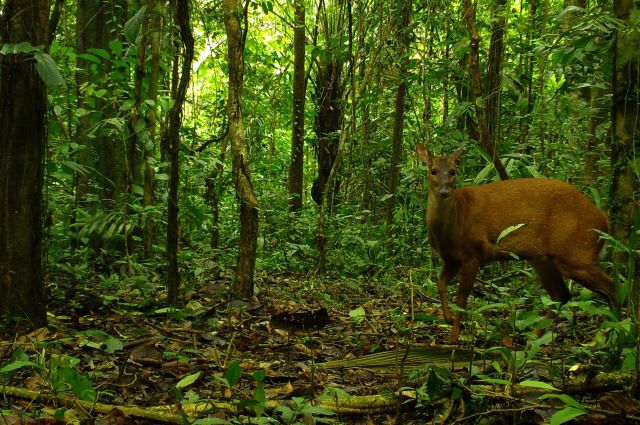


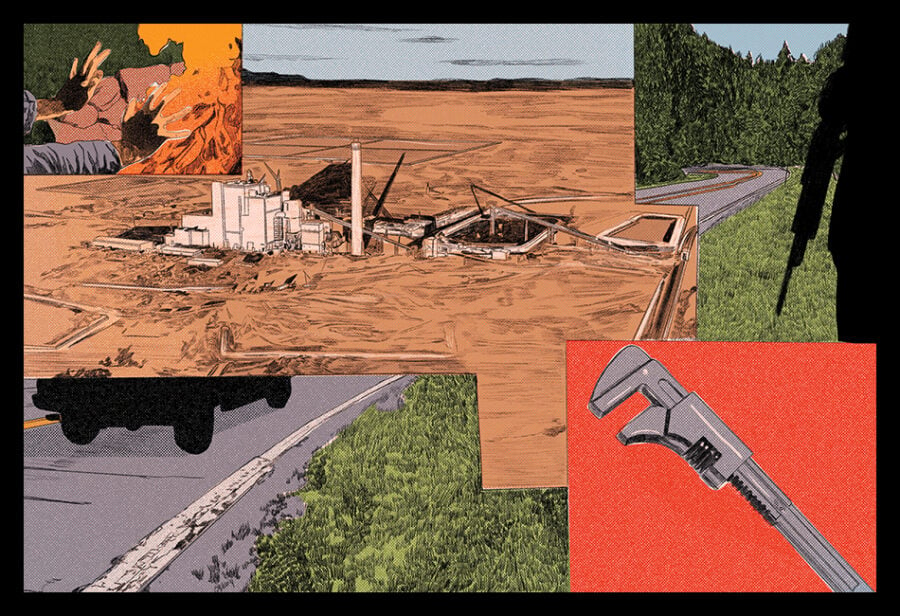
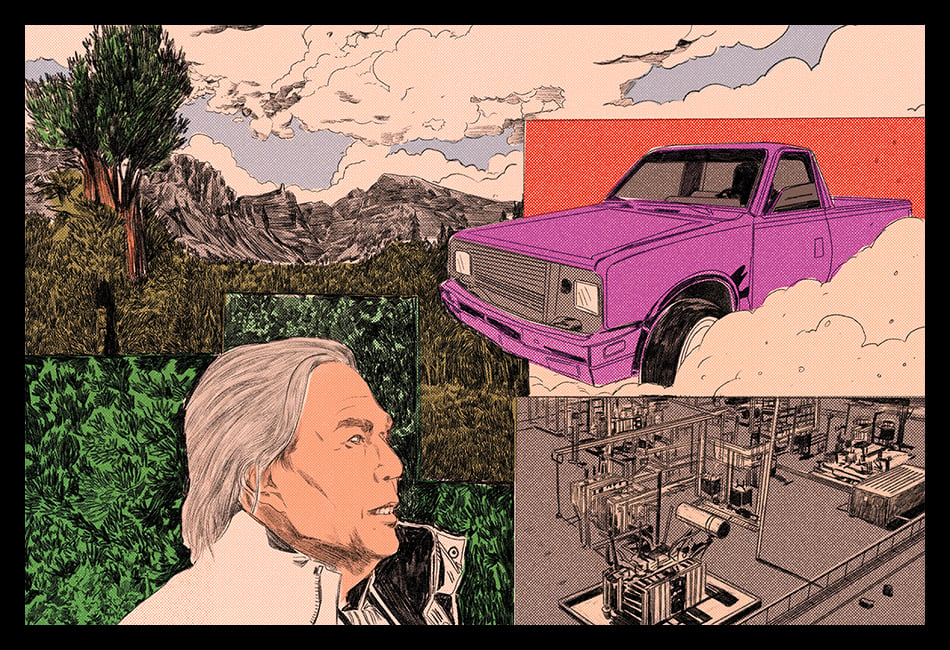

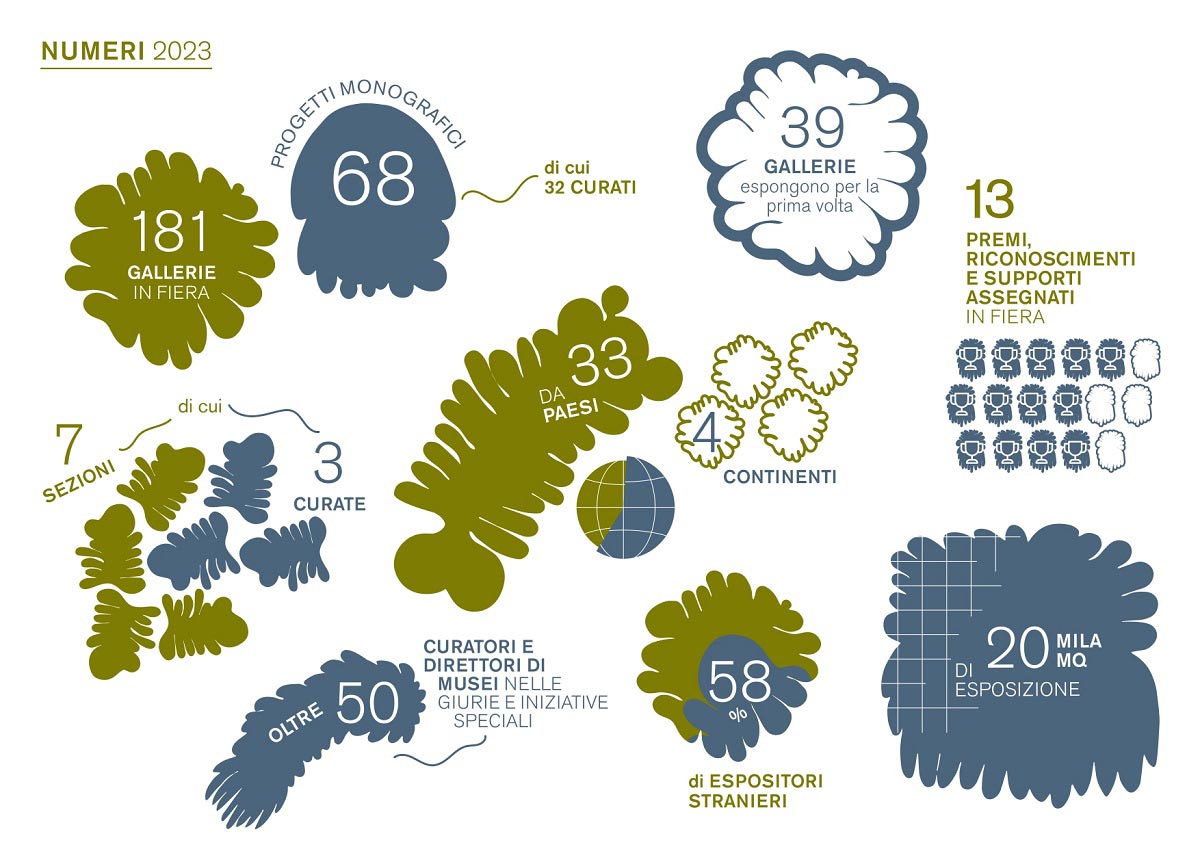










Você precisa fazer login para comentar.