https://www.chronicle.com/article/has-the-left-ruined-the-humanities
A Hot Question
Has the Left Ruined the Humanities? (The Chronicle of Higher Education)
By Andy Thomason and Stephanie M. Lee
June 5, 2026
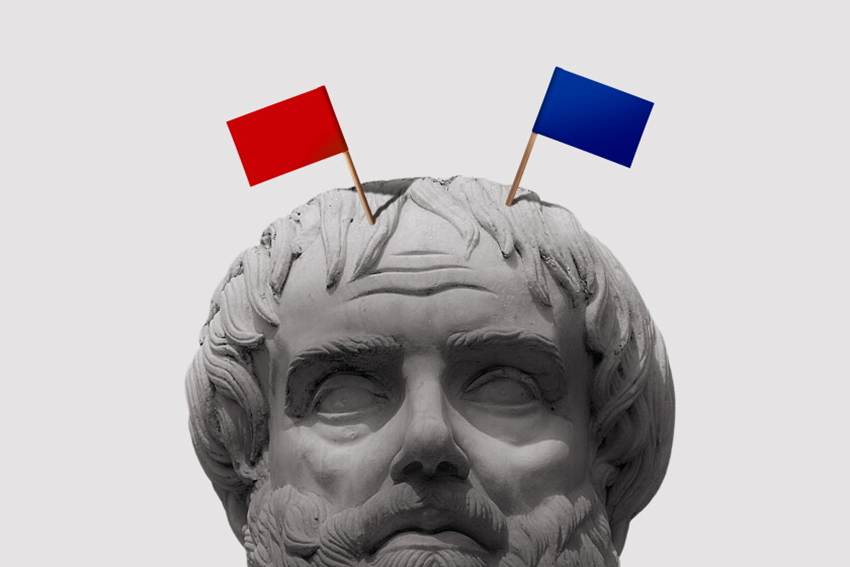
Illustration by The Chronicle
You’ve heard the critique.
The humanities and social sciences have been corrupted by political aims, and their disciplines have tossed out rigorous research standards in favor of advancing social-justice causes favored by the political left. This has made for an impoverished scholarly landscape, filled with laughable claims and obscure jargon.
Over the past several months, a group of high-profile scholars convened privately to study whether this criticism holds water across several fields within the humanities and social sciences. “The first thing to say,” they concluded in a report published Friday, “is that we reject the complaint in this bald form.”
However, the group found reason for concern — a “mixed picture” that validates portions of the criticism. “Every field we have studied,” the group wrote, exhibits warning signs pointing to “a deterioration in scholarly standards fueled by the substitution of political criteria for properly scholarly criteria in the assessment of research and a more general repudiation of longstanding ideals of rigor and objectivity.”
That conclusion is sure to spur debate, not least because it comes on the heels of another prominent attempt to investigate the causes of widespread distrust in higher education. In April, Yale University released a report that struck similar self-flagellating notes, arguing that academics need to “admit where we have been wrong.”
What’s unique about this latest effort is who convened the group: Daniel Diermeier, chancellor of Vanderbilt University, and Andrew D. Martin, chancellor of Washington University in St. Louis, outspoken proponents of the view that colleges have become too political. Martin told The Chronicle that he and Diermeier have heard many faculty members and others express concern about the humanities and the qualitative social sciences. “So we thought a reasonable thing to do would be to pull together a group of scholarly experts to look at the issue,” he said, “to produce a report not meant to end conversation, but actually to begin conversations on campuses around the country.” Their findings, he said, did not surprise him.
In August, the two chancellors charged a group, selected and led by the New York University philosopher Paul Boghossian, with determining whether “the steady drumbeat of complaints about the deterioration of scholarly standards” within the humanities and social sciences “are justified.” For its work, the group — which included Kwame Anthony Appiah, another NYU philosophy professor, and the Princeton University historian Sean Wilentz, among others — wrote field-specific internal reports about philosophy, anthropology, sociology, history, literary studies, and music studies, relying on “extensive research” in consultation with other experts. The summary report drew on those reports for its conclusions.
That report is front-loaded with caveats. The humanities are essential, for one, and contain serious scholarship. Administrators should also be cautious about taking action in response to its findings, the scholars wrote, and instead consult disciplinary experts for deeper study.
The report presents three sources of politicized distortion: when research must be constrained by an “accepted political goal,” when the disinterested pursuit of knowledge is “displaced by” the goal of serving “a pragmatic purpose,” and rejecting the very idea that one is capable of assessing evidence on a claim “independently of our political commitments.”
The scholars cite anthropology as a potent example of the first source, quoting a 2021 speech from the president of the American Anthropological Association then who said the field’s “political project is to challenge the culturally dominant commonsense of capitalist consumerism.” These sorts of definitions — and the subtler ways that they manifest — result in the sometimes-unconscious censorship of scholarship that doesn’t serve the political goal, the report says.
More broadly, the report condemns what it calls the widespread embrace of postmodernism and relativism among scholars as antithetical to their very project. And it traces postmodernism’s appeal, in part, to the permission it grants scholars to discard evidence they don’t find personally palatable.
The authors of the report are careful to distinguish themselves from those who think the primary problem with academe is political imbalance. The fact that academics “are significantly more liberal or progressive than the general public” is “not by itself a problem for scholarship.” In an email, Boghossian added that “the solution is to restore a conception of scholarship in the humanities that is as free of ideological distortion as possible.”
Universities exist to support disinterested inquiry, the report concludes, and the obstacles it names in fulfilling that mission are serious. “They are not mere problems in the administration or operation of a university,” the scholars write, “but strike at the very heart and soul of what a university should be for.”
In an interview, Diermeier said he has also been concerned about universities suppressing the free speech of speakers and making public statements about political issues. “What the report has indicated is that there’s growing evidence that the problem of polarization in higher education is real, that it affects scholarship, that it affects teaching, that it affects publications and publication practices,” he said. “These are serious concerns, and they need to be addressed.”
Diermeier said Boghossian was chosen to lead the effort after he read and was “extremely impressed” by Boghossian’s 2006 book Fear of Knowledge: Against Relativism and Constructivism. Boghossian did not answer questions about how he in turn selected the participating scholars and the disciplines analyzed. The field-specific reports that undergird the summary report were not released Friday but may be soon, Diermeier said.
The scholars were compensated for their work, according to Martin, though he declined to comment on how much they were paid or where the funding came from.
Martin said he’d received a mix of praise and criticism in the first hours after the report went live. “I deeply value my colleagues in the humanities and in the qualitative social sciences and the great value that they bring to our students and bring to our institutions and to the country more generally,” he said. “I think at this moment of self-reflection, I’m hopeful that this document will be a catalyst to get those important conversations to take place.”
Read the report:
A version of this article appeared in the June 19, 2026, issue.
Update (June 5, 2026, 5:18 p.m.): This article has been updated with remarks from Andrew D. Martin, chancellor of Washington University in St. Louis; Daniel Diermeier, chancellor of Vanderbilt University; and Paul Boghossian, a New York University philosophy professor.
https://www.chronicle.com/article/is-anthropology-hopelessly-politicized
Is Anthropology Hopelessly Politicized? (The Chronicle of Higher Education)
The leader of the field’s scholarly society has a lot to say.
July 10, 2026
A month ago, 10 high-profile scholars released a document — titled “Report on the State of Scholarship in the Humanities and the Humanistic Social Sciences” — that lit up a million scholarly group chats. The chancellors of Vanderbilt University and Washington University in St. Louis, vocal critics of the purported politicization of higher education, charged the group with evaluating a number of disciplines for signs of political skew. The conclusion: All the fields showed “a deterioration in scholarly standards fueled by the substitution of political criteria for properly scholarly criteria in the assessment of research and a more general repudiation of longstanding ideals of rigor and objectivity.”
But one field was singled out as “the most extreme case” — anthropology. Compared to philosophy, sociology, history, literary studies, and music studies, the discipline showed “a pervasive repudiation of ideals of objectivity together with a toxic intellectual climate in which reasonable dissent on politically charged topics is routinely suppressed and punished.” The authors cited writings from several anthropologists, a speech by a recent president of the American Anthropological Association, and an AAA panel about biological sex that was canceled in 2023, among other things. The report described itself as a summary of reports, specific to each field. (Only one, on literary studies, has been released; it was posted after this interview was conducted.)
Six days after the report went online, the AAA fired back with a full-throated defense. “Anthropologists welcome rigorous critique of the discipline,” wrote its president, Carolyn M. Rouse. “What we cannot accept is a sweeping verdict about anthropology’s intellectual culture, scholarly practices, and professional norms built on selective evidence and issued without consultation.”
Rouse is an anthropology professor at Princeton University who researches race and inequality in religion, medicine, education, and economic development. In 2016 and 2017, she went viral for leading a walkout of a speech by the political scientist Charles Murray, and for delivering a lecture titled “F%*# Free Speech,” in which she argued that free-speech absolutism does not exist. Rouse was elected president-elect of the AAA in 2023, and assumed the role last year. The Chronicle asked her about her views on the Vanderbilt report and the questions it raises about her field. This interview has been edited for length and clarity.
It’s an embarrassment of embarrassments.
I was interested in your top-line reaction to reading that, of all the disciplines they studied, the authors singled out anthropology as the most extreme case of “widespread deterioration in scholarly standards grounded in a pervasive repudiation of ideals of objectivity together with a toxic intellectual climate in which reasonable dissent on politically charged topics is routinely suppressed and punished.”
They used AI. It’s an embarrassment of embarrassments. I don’t know what methods they used. They do not distinguish a fact from a truth from wisdom. They don’t define their terms like “politics.” It’s pretty clear, actually, that they didn’t just search for some combination of words that would validate their own beliefs, but I don’t think they even bothered to read more of the person’s work or try to understand it in the context. I can’t defend anthropology, because this is such a poorly researched report that’s so unreflexive, lacking in any rigor, and it reminds me of why scholars need to pull back from AI. It reminded me of some of the papers I’ve been getting from my students, where I have to pull them in and say, “I think you’ve used AI,” so it’s really hard for me to take this report seriously. At the same time, unserious things right now have so much power in the academy.
So I thought you were being facetious when you said they used AI, but it reads to you like they used an LLM to write this?
In The Chronicle of Higher Education report, “Inside the Report That’s Divided the Academy,” by Evan Goldstein and Len Gutkin, on June 11, Anthony Appiah says that they used AI.
Appiah says, “We did a fair amount of research, including research using new artificial-intelligence methods to survey large bodies of text and see what was in them, and to identify themes and so on.” Is that what you’re referring to?
Even before we read that, we were all thinking, “This reads like they used AI.”
OK, so the writing of it, in addition, sounded to you like AI? Because I think here he’s describing research.
Research. Anthropology has been in existence for — in the U.S., American anthropology has really existed for over 100 years. Now we have a large body of literature. They don’t know what anthropology is.
And the biological anthropologist who is on it, he has his own quirkiness. I think my colleague Agustín Fuentes does a great job of responding to that in The Chronicle of Higher Education on June 12.
Can I ask what you think about Joseph Henrich, the sole anthropologist on this commission? Had you heard of him? Were you aware of him having some kind of reputation or something prior to this?
No.
OK. So theoretically the field-specific individual reports may be released at some point. How do you feel about the prospect of seeing the anthropology report that Dr. Henrich presumably wrote?
If I’m still the president, and they present it, I should be interested to read it. I still don’t know what he’s doing. I’m a socio-cultural anthropologist, and these people who are philosophers or whatever feel completely comfortable criticizing a discipline they don’t really understand. I would never do that. I’ve been relying on wonderful pieces by people who actually know, like Michael Bérubé in the Pittsburgh Review of Books. And then Jason Stanley also wrote something, and it was so interesting, because I realized so much of this is insider analytical philosophy baseball.
They have this weird cut-out for Socrates, as if in ancient Greece and ancient Rome, they did this kind of Ivy League dispassionate theorizing. I love Hannah Arendt’s The Human Condition, and she’s somebody I rely on to think through some questions as I do ethnography. You know what’s interesting about ancient Greece, is that the polis, and the place where people used language to deal with things rather than violence, and that new thing that was established, was wonderful. But she also notes that the people who were loud in that space were men, and the only reason they were fed and clothed and everything else is because they had slaves and women. They could have lofty ideals about democracy. But the private space of the home was not a space of democracy. It was a space where men lorded over their slaves and their wives.
These people who are philosophers or whatever feel completely comfortable criticizing a discipline they don’t really understand.
One of the critiques I mentioned was that [the Vanderbilt authors] say that the reason we have the humanities is because we want to educate citizens to be able to take advantage of their freedom, and so that’s the value, but we don’t like social justice. But social justice is just another refinement of this question about freedom. We’ve just taken it into the 20th and the 21st century. These questions of freedom, where we are saying, “OK, you can’t just have a group of men who rely on slave labor to feed them. We have to think about the freedom of the people who are putting food on the table, cleaning the toilets.” Social justice is about finding a way to have a democracy where whatever freedom — whatever we mean by freedom, right? — the idea that, like, how can you have somebody who’s not going to necessarily even have the kinds of absolutist free speech that a lot of these people, for instance, talk about.
How did you and the AAA come to decide to issue an official response to the Vanderbilt report, and how did that response come together?
When I became president-elect, I ended political-statement writing by the AAA. Just saying, you know, “the State Department should do more about the war in Sudan” — I think that anthropological knowledge production is always nuancing things, and most members are not experts on the Sudan, so why are they signing on to a statement? Our 501(c)(3) mission is to promote anthropology, our scholarship, our members, academic departments, and academic freedom, so let’s stick to our mission when it comes to statements.
So this [Vanderbilt report] falls in our expertise, because they’re attacking our discipline. It’s all a set-up to begin to chip away at the humanities, the social sciences. And universities are doing that, they’re closing departments, they’re merging them. So that’s why immediately we got to work.
Let’s talk about some of the specific critiques that were raised in the Vanderbilt report regarding anthropology, perhaps as a way of talking about these broader issues you have with its conclusion. So, in 2021, then-AAA President Akhil Gupta gave a presidential address where he said anthropology’s “political project is to challenge the culturally dominant commonsense of capitalist consumerism,” and the Vanderbilt report said that this kind of remark is an explicit rejection of “the idea that scholarship aims at knowledge and understanding.” Do you share Dr. Gupta’s conception of anthropology?
Anthropologists love to disagree with one another, so I’m not gonna say I agree or disagree with Akhil. Here’s the thing that I think they don’t understand: We are the instrument for data collection in the same way a Geiger counter detects radiation. We have to do a lot of refining of our instrument, our way of thinking, what we’re doing it for, how we’re seeing it, in order to collect data that we know is, of course, subjective, but uncover some truth. So that’s why we teach our students to be self-reflexive — why you’re doing this, what motivates you, what presumptions did you go into the field with, what do you think this information is going to do for the world? And so actually a lot of our literature is people just kind of sharing with other people, “This is how I’m thinking.” It doesn’t actually compel us to change how we teach methods in the classroom, it doesn’t compel us to change how we do our own fieldwork. It’s simply part of a conversation, because it’s a constant struggle.
It’s all a set-up to begin to chip away at the humanities, the social sciences.
For instance, I have been studying declining white life expectancies in a rural community for 10 years. I’m finishing up. I have two films and a book that are coming out, and I’m a Black woman entering this space, and what are my motivations? What do I see? What do I not see? What do they tell me? What won’t they tell me? For the most part, I only want to do work in places where I feel a sense of hope, and where I like the people — “like” in the sense of I respect them. I don’t want to work in a place where I disrespect people, because then I worry that I’m doing something else. And I’m trying to understand their hopes and aspirations, to understand the delta between their aspirations and the things that they keep doing, so I often say I’m studying “commitment to bad ideas.” Again, I am a Black woman from an elite institution. They know that. They know I’m wealthier than they are, and so there’s a lot going on in these encounters that I need to unpack. And when I had a postdoc work with me, and she went to the same place, because she has studied poor white Appalachians, one of her interlocutors became this guy who’s committed to white racist politics. He sells historical memorabilia and has Confederate flags. She was tapping into a vein in my field site that I will never have access to, which is why we have to be careful, and why we have those conversations ad nauseam. I think about what we’re doing in the field, why, what our commitments are, and what the limits of all of that are. Does that make sense?
The anecdote and the values you’re conveying do make sense. I wanted to understand how this ties back to the quote that the Vanderbilt report pulls. When you’re doing that kind of fieldwork, do you feel like your “political project” — to use his words — is to “challenge the culturally dominant commonsense of capitalist consumerism”?
That’s what he said. Yeah, that’s not what I said.
This is from his presidential address, or the written version of it. Not to be repetitive, but the report highlights this remark and says this remark is a rejection of the idea that “scholarship aims at knowledge and understanding.”
It’s a cherry-picked quote. They misquoted him, that’s what he says.
I mean, I wasn’t in the audience for this speech, either, but he published a version of this address —
I’ve read it, I’ve quoted from it.
So that quote is in there, you know.
But just because something’s quoted, there’s a whole context. There’s so much more than that. This is the problem with absolutist free speech. We talk in contexts. Speech is never free. Speech is always connected to something else. And here’s an example from a recent thing that I read in The New York Times about this woman from Texas who’s Muslim, and wanted to have a pool party for the end of Eid. She was so focused on the Muslim community and their fears about their kids being in bathing suits and around people who weren’t pious that she wrote “Muslims Only.” She was so focused on that and those concerns, that when people outside of it read it, it read like “only whites” or “only Blacks,” or it read as something else. She just wasn’t attending to that context. So we’re speaking to an audience that has a particular understanding of the history of the discipline, recent struggles and debates within the discipline. There’s so much going on in that conversation that to just swoop in, grab a quote, and go out — I think it’s unfair. I could swoop in, go to a sociology conference, a history conference, grab a quote, and go, “Look what they said,” and it’s just missing all the context in history.
In the AAA’s response to the Vanderbilt report, you wrote “the committee did not contact the American Anthropological Association, not its elected leadership, not its editors, not the broad range of scholars who comprise the discipline.” You called this a “central methodological failure.” So, if the committee had contacted the AAA, what would you have told them?
I would track-change a lot of it, give feedback, but I would demand methods. So, if I were a social scientist doing this research, first of all, I’d want a sampling of universities across the country, and there are religious universities, you know, Liberty University, Wheaton [College], right? So we’d want public and private, we’d want a representative sample from all of these different colleges, universities along what we would call a political spectrum — even though we know it’s not red and blue in the way that we think about it — but like that. Then I would collect syllabi from maybe one intro course and one upper-level course, and you try to make that consistent and in different disciplines, a lot. Then I would interview the professor of the class. Then I would do observations of the class, and actually see the kinds of conversations. That would be the beginning of a systematic study. There’s nothing close to that.
Speech is never free. Speech is always connected to something else.
The Yale report [Ed.: In April, a Yale faculty committee published a report about “trust in higher education”] has a section on politics in the classroom. They actually did methods that were robust. They interviewed hundreds of people affiliated with Yale in different ways. They come up with a nuanced understanding of what’s going on in the classroom, and nobody who they interviewed wanted the classroom to be an echo chamber. So that’s what happens when you start actually interviewing people. And as anthropologists, you have to do more than interview, you have to observe, too — the educational outcomes, what the professor’s doing. If you were to just have AI capture all of the texts that are being taught — I assign texts I disagree with, so you don’t know, just by grabbing that, whether I’m teaching with it, against it, beside it, whatever way I’m teaching it.
On that note, your statement also said that there’s “substantial and active literature that contradicts or at least complexifies the assertions made by the report, literature that would have been immediately apparent to anyone who consulted working scholars in the field.” What’s a citation or two you would recommend to that effect? And what’s the different view of anthropology that they would show?
Well, the first thing that came to my mind was my own recent paper. It’s called “An Anti-Genealogical Take on U.S. Anthropology and Disciplinary Reform: From Anti-Racism to Decolonization.” I wrote, “The ‘decolonizing generation’ is a critical new movement that has captured the imaginations of many younger scholars. While the author would like to consider herself an older member of this generation, she questions whether this moment needs periodization. Is today’s moment really so different from the past, when we saw the rise of world anthropologies, postmodernism, the crisis in representation, neo-Marxism, and anti-racist movements? And what is meant by ‘decolonizing anthropology’ when experiences with colonialism and decolonization differ around the world? While acknowledging the value of reforming the discipline, the author encourages her colleagues to separate the very important critique of anthropologists’ gatekeeping practices from idealized renderings of what anthropology should be. Rather than decolonization, the discipline ought to focus on establishing a continual decentering of hegemonic knowledge production.”
To me, that’s just a typical thing in our discipline — we’re debating each other in a friendly way.
In 2023, the AAA canceled an accepted panel at its annual conference, titled “Let’s Talk About Sex, Baby: Why Biological Sex Remains a Necessary Analytic Category in Anthropology.” The AAA said at the time that the panel would have harmed members’ “safety and dignity,” and that its premise contradicted “settled science.” The Vanderbilt report cited this incident to argue that when politically charged questions “are treated as settled by the scholarly community, the result is an illegitimate suppression of dissent.” You were elected president-elect of the AAA shortly after that incident. Do you regret today the fact that the AAA canceled that panel, or the justification that it gave for canceling it?
There’s a point in that Vanderbilt report where they talk about astronomy departments becoming astrology departments. All you need to do is literally type into Google and see that we know, factually, that there are different types of “sexes” and “genders.” You can have XY and you present as a woman, you can have XXY — they’re all variations, genetic variations. So the idea that there are two sexes is just factually incorrect, and to force biological anthropologists to teach that is the equivalent of turning an astronomy department into an astrology department. So I don’t know why we’re debating that. You may not like it. I don’t know, maybe you want to kill babies that aren’t just XX presenting XX or XY presenting XY, but that’s what we have in this world. And then we have people who identify with genders that don’t match to their chromosomes, and people like Anthony Appiah, who are gay, and so I don’t know what they want, why they want us to teach in that way — that’s the equivalent of turning an astronomy department into an astrology department.
Anthropology humanizes people. It doesn’t dehumanize people.
The second question: It should never have been accepted. At this point, we are demanding that people do good peer review, because that’s what happened — they slacked on the peer review.
OK. So on the question of this particular idea being “settled science,” as the AAA said at the time, there was a survey in 2022, published in the journal Forensic Anthropology, that asked forensic anthropologists about this question, and 42 percent of them said they agree that sex is binary, and 56 percent disagreed that it’s binary. So that ratio would seem to indicate that, in the field, the question hadn’t actually been settled, and I was wondering how you explain that.
I don’t believe in opinion research. Not to disparage them, but a lot of forensic people, they’re coroners, they’re doing it in a practicing level, where they’re actually asked on forms to determine whether this body is male or female, oftentimes they haven’t had advanced schooling. Things are in the air. I just don’t trust opinion polling. That’s from just being an anthropologist and spending a lot of time with people in the field. People don’t know a lot.
So I guess the question we’re trying to unpack here is, how do we know when something is astronomy versus astrology, right? So I want to ask you about this question —
Let me ask the question back to you. Is it XX and then XY? Is that the binary?
I think it’s defined in different ways.
Well, it’s two, binary means two. So, what are the two? One is XX and one is XY, but we know that there are more than that. That’s not binary. I mean, isn’t that a mathematical fact? I don’t know how else to make the case. It’s very strange to me. I don’t what people are — why that matters to people so much. You know, genetic variation is an interesting thing.
Getting to the slightly larger principle that’s being debated in this kind of debate is what “nonsensical speech” is, to use a phrase that you’ve used before. I was reading your essay from last year, “Meaningless Speech and Political Capture.” Academic freedom, you said, is different from freedom of speech or absolutist free speech. You said, “Why should professors be forced to waste class time on nonsense?” You wrote, “I do not want my students to be punished, but I want to be able to let them know that relitigating the value of Nazism, slavery, Jim Crow, Japanese internment, eugenics, or McCarthyism is not appropriate in a class on, for example, development. Those were all failed policies, so let’s move on.” In that same essay, you also wrote that the concept that “there are only two sexes” is an example of “nonsensical speech.” So I guess I was wondering how you or how the AAA decides what is “nonsensical speech,” or how you define “nonsensical.”
So I think those are two things. One is nonsensical, one is discussion about dehumanization in the classroom. I can’t have somebody in the classroom who is, let’s say, was born with some kind of condition that means that they are nonverbal, but super smart and super capable, and in a wheelchair, and then have a debate about whether or not they should have been aborted. Sure, there are debates like that online. Go for it, students. But anthropology humanizes people. It doesn’t dehumanize people. We’re not teaching empathy, we’re teaching that humans are very diverse. I mean, if people become empathetic as a result, that’s fine, but we’re teaching that people are diverse, just like you. Their value system is built not on an objectively rational set of values, but these values work in this way to sustain this group around this set of material things and rituals. So we humanize people, and we’ve done that since we pushed back against eugenics in the early 20th century, the discipline. So I’m not going to relitigate these things with my students. And I knew when I gave the “F%*# Free Speech” talk, people were talking about absolute free speech, that this was where we were heading — to a place where we brought back, and we’re bringing back, ideas of Black biological, intellectual, and cultural inferiority, and we’re exhausted. I’m exhausted. We call it Whac-a-Mole, and it prevents us from being able to do more creative stuff, because we’re constantly tethered to having to react to some new reactionary piece of data.
If Princeton decided that we really want to open up the classroom to thinking about internment again for certain populations, based upon their phenotype, I’d have to leave. We’ve done these things before. They didn’t end well. So, if I’m having a class on development where we’re trying to think about ways to make a better world, why would I engage dehumanization as a possible strategy?
We’re not just trying to change their minds. That’s a caricature.
So just to connect the dots, the matter of binary sex — to you, that is as done with, or over with, as Japanese internment or eugenics?
OK, so one is dehumanization, the other one is factual. So I still don’t know what people mean. If binary is two things, male, female, XY, XX, and we have more than that, then doesn’t that mean it’s not a binary? I’m just confused about that. That’s just a factual thing. There’s the work on race and biology, people don’t understand. It takes me a whole semester of my race and biology class, and when they get it, they get it, and they’re like, “Oh my goodness,” they can’t believe how wrong most of what they have been taught is.
I disabuse people of things like “Black community.” There’s no “Black community.” So I disabuse students of a lot of presumptions, so we’re not an echo chamber, we’re not a podcast, we’re not funded by this mysterious organization called Antifa that doesn’t exist. Again, another fact, right? Can we stick with facts? We’re not just trying to change their minds. That’s a caricature. This is why, if you did this data on what’s actually happening in the classroom, you need to actually get into people’s classrooms. You need to read their syllabi. So there’s a lot of caricaturing of academia, and I feel like this report is just — they’re just using those caricatures and cherry-picking whatever they can find that seems good, that seems right, without truly engaging a whole history of a discipline, like English or anthropology.
In the AAA’s response to the Vanderbilt report, you wrote that anthropology contains “vigorous and ongoing debates about theory, evidence, ethics, method, public engagement, and the future of the discipline itself.” Is there any contradiction between those stated values and the cancellation of the panel in 2023?
Rigorous debate with factual information, or rigorous debate with just people who like to troll people on social media? I think one of the people in [the panel] is big on right-wing social media. I don’t know, I’m not on social media at all; it just seems like a big waste of time.
I don’t think we’re contradicting ourselves. I think that that panel might never have made it into the program, if it had been peer-reviewed properly.
Properly.
Yes, because I think sometimes people get a little lazy. Things like that are cut all the time in peer review, you never see it. Journalists never see it. I never see it. There’s actually a filter happening all the time. This one just happened to make it into the public space.
June 10, 2026
Cited Professors Say the Vanderbilt Report Misrepresents Their Work (Inside Higher Ed)
The report on the state of humanities scholarship has generated a lot of debate in academic circles and received backlash from the leading anthropology association.
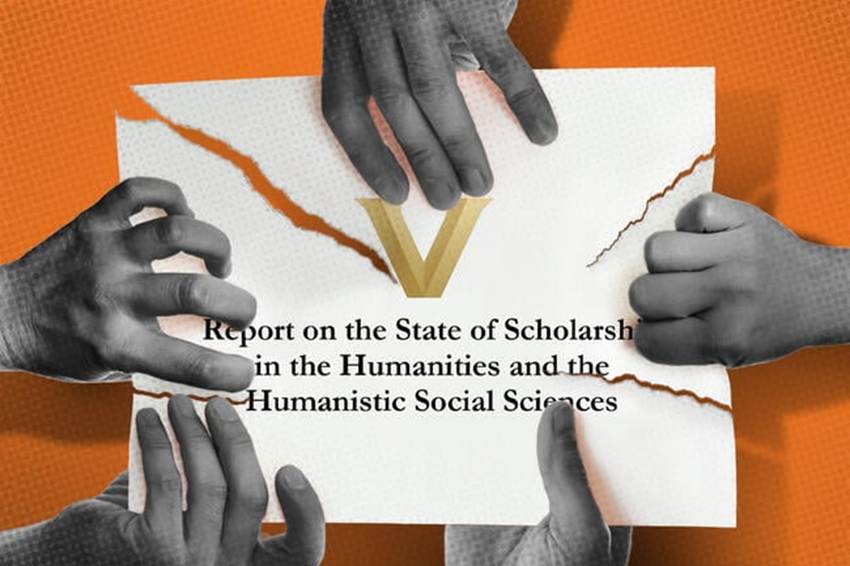
The Vanderbilt report authors single out more than a dozen humanities scholars and use their work to highlight what they consider problematic scholarship. Photo illustration by Justin Morrison/Inside Higher Ed | autsawin, Davizro and SilverV/iStock/Getty Images
A new report on the state of humanities scholarship made waves in higher ed circles when it was released Friday, and has since drawn criticism from professors across the humanities.
Commissioned by Vanderbilt University chancellor Daniel Diermeier and Washington University in St. Louis chancellor Andrew Martin, the “State of Scholarship” report finds fault with disciplines including anthropology, philosophy and history—not for their content but for the quality of their scholarship, which the report’s authors argue is too often driven by political ideology rather than the pursuit of truth and knowledge.
In an email to Inside Higher Ed, Diermeier said that “the focus of the report is to provide an assessment, not to offer solutions to address the challenges.”
Critiques of the report are broad and varied. National Association of Scholars research director David Randall said the authors rehash decades-old arguments against relativism and don’t go far enough in their recommendations to reform the humanities. “If they’re actually serious about academic reform, they will act rather than sponsor more faculty gab-fests,” he wrote of Diermeier and Martin. Pennsylvania State University communications professor Bradford Vivian wrote on Bluesky that “a better title for the Vanderbilt report on the humanities would be [William F. Buckley Jr.’s] ‘God and Man at Yale Part II.’” Others, including the American Anthropological Association, slammed the report for exemplifying the ivory tower and criticized the authors for failing to truly engage with the professors in the fields they target. Several of the scholars cited in the report said it represents the poor scholarship it claims to seek to correct.
Diermeier and Martin asked Paul Boghossian, a philosophy professor at New York University, to examine “the state of scholarly work” in humanities disciplines to determine whether recent criticisms of the fields are justified. These include allegations that humanists misuse natural science, that some philosophers have embraced “problematic philosophical views” concerning truth, and that humanists have allowed “background ideological values” to distort their pursuit of truth.
The resulting report—dubbed the “Vanderbilt report”—is addressed to “university chancellors and presidents who are concerned about the state of academic scholarship in the humanities and the social sciences and who may wish, within their purview, to promote excellent scholarship in these vital fields,” according to its preface. The authors reject the common criticisms of the humanities in their broad form, but agree with some of the more particular points. Taken together, the issues the authors identify reflect “a distinctive form of politicization in which the scholarly enterprise is taken to be subordinate to, or in the service of, political (social or moral) goals beyond the advancement of knowledge and understanding,” they wrote.
Boghossian selected nine other scholars to work with him—three from NYU, two from Princeton University, and one each from Harvard University, the University of Chicago and Northwestern University. Eight of the report’s authors are men and two are women. NYU philosophy professor Kwame Anthony Appiah was the only person of color on the committee. Only one of the report authors—sociologist Ashley Rubin—works at a public institution, the University of Hawaii.
This is a problem, said Asheesh Kapur Siddique, an associate professor of history at the University of Massachusetts, Amherst. Siddique had many criticisms of the Vanderbilt report—on Bluesky, he called it “diabolically evil”—but the makeup of the committee that put it together was a primary concern.
“It would be far easier for [the report’s] recommendations to be imposed by a state legislature on a public university” and much harder to impose them on a private institution, Siddique told Inside Higher Ed. “The places where all of these people work will not necessarily have to deal with the recommendations. I think that’s a very telling thing. I actually doubt that many of these scholars would want to work at an institution that would be subject to” political interference inspired by the report.
As soon as the report was released, American Anthropological Association president Carolyn Rouse started hearing from members. Some of them were “incensed,” she said.
“I’ve heard words like ‘unhinged’” to describe the report, she told Inside Higher Ed. “It’s so badly done—I kept wanting to do ‘track changes’ in it, as if I were grading it like a paper—and yet it has all of this power because of who these [authors] are.”
The report will hurt anthropology departments that are already fighting to prove their value to administrators, Rouse said.
“AAA has been working to help departments find strategies to shore up majors by being really articulate about the way in which the major can benefit you if you become a doctor, if you become a lawyer,” Rouse said. For administrators critical of the humanities, “this is just confirmation that they were right, and they will close their anthropology departments.”
The reaction to the Vanderbilt report doesn’t surprise Martin because it addresses “questions that have been actively debated within higher education for decades,” he told Inside Higher Ed via email.
“The response reflects the importance of the issues the report raises. Many scholars have engaged thoughtfully with its findings, while others disagree with some aspects of its analysis. That’s healthy,” Martin said. “We expected strong reactions because the humanities and humanistic social sciences are core to how our institutions pursue knowledge and educate students.”
‘Lazy Scholarship’
The authors single out more than a dozen humanities scholars in the report and use their work to highlight what they consider problematic scholarship. Inside Higher Ed reached five of them, all of whom said it was the first time they’d heard about the report. Several also said that their work was misrepresented or taken out of context.
Christopher Loperena, an associate professor of anthropology at the City University of New York Graduate Center, said the report mischaracterizes his work and the broader field of anthropology. He told Inside Higher Ed he disagrees with “the suggestion that public-facing and politically engaged research is at odds with serious scholarly inquiry in the humanities and humanistic social sciences.”
University of California Los Angeles sociocultural anthropologist Akhil Gupta said the authors made the “cardinal academic error” of misquoting his paper.
“Frankly, the charge to this committee was itself an invitation to bash interpretive disciplines. This is not surprising. The first ‘culture wars’ over the Western canon were fought during the Reagan years, and we can expect attacks on scholars of color and disciplines that are critical of current configurations of power in the Trump years,” Gupta wrote in an email. “I wish people would not waste their time on producing this kind of material whose sole purpose seems to be to stir up controversy and to justify budget cuts to the humanities.”
The authors write that Khiara Bridges, an anthropologist and professor at the University of California, Berkeley, School of Law, “endorses a radical perspectivalism about truth,” and include a quote from her book “Critical Race Theory: A Primer.” Bridges said this misrepresents her work.
“In the quote from the book that is mentioned in the report, I am not describing my personal views: I am describing postmodernism,” Bridges told Inside Higher Ed via email. “It is irresponsible for the report to represent my description of a claim as my endorsement of a claim. Moreover, it is lazy—an example of the type of scholarship and analysis that I instruct my students not to produce. … The authors of the report owe me an apology.”
Bridges sent a letter to Boghossian on Wednesday, asking him to correct the “misdescription” of her scholarship. Boghossian replied Wednesday afternoon and cc’d Inside Higher Ed, as well as his coauthors, Diermeier and Martin. In the email, he said he was grateful that Bridges reached out and “eager to correct any misrepresentation of your views that our report may contain.” He also shared several other passages from Bridges’ book to explain “why we read the passage as we did,” he wrote.
“If we have misread you, namely, if you in fact reject the view that truth is perspectival and hold that there are objective truths, truths that do not depend on the perspective of the truth seeker, then I would welcome that clarification, and we would be glad to note it publicly and to adjust the discussion of your work accordingly,” Boghossian wrote. “Equally, if your position is that the perspectivalism in question is more qualified than the report’s phrase ‘a radical perspectivalism about truth’ suggests, I would genuinely like to understand the qualification, and we would consider amending the quotation to include more of the surrounding context if you thought that would help.”
Boghossian did not respond to Inside Higher Ed’s questions Wednesday.
The authors cite Fernando Villanea, an anthropology professor at the University of Colorado at Boulder, twice. The second time is a passage from an American Anthropologist essay he wrote titled “Defense Against Dark Anthropology.” It reads, “The core academic value of anthropology is not the pursuit of truth, because all truth is subjective. Conversely, there are millions of people who are adversely affected by the subjective version of truth we choose to tell. That is the objective reality, and so our core value should instead be to serve their interests.”
Boghossian and his coauthors call the excerpt “incoherent.” They go on to write that “taken more charitably, it is the still bizarre claim that while there are no objective truths about the subtle descriptive matters with which anthropology is concerned, there are objective truths about values and morals—about who is adversely affected by a given position, and about what anthropologists should take as their core values.”
Villanea said the passage was taken out of context; his essay was about how anthropology should serve Global South communities.
“To condense [my arguments] into a claim that I ‘explicitly repudiate the idea that scholarship aims at knowledge’ is not just incorrect, but lazy scholarship,” Villanea said. “Ultimately, the report displays the ivory tower in high form by presenting arguments that are isolated from many current academic conversations.”
Charles Hale, the dean of social sciences at the University of California Santa Barbara, who is also cited in the Vanderbilt report, told Inside Higher Ed that the report “condemns a large swath of scholars” with the broad term relativist—something he said has never accurately represented his work. While he ultimately sympathizes with the authors’ stated intentions, he said “their tack is ultimately wrongheaded and would leave us further weakened and vulnerable.”
“Their arguments for clear and accessible language, judicious deployment of data and evidence, careful consideration of contrary views, rigorous analysis, etc. are all salutary and can be readily confirmed,” Hale wrote in an email. “Their call for a return to ‘disinterested scholarship’ reads, quite frankly, like the authors are asking us to scamper back to the privileged bubble of the ivory tower, keep our heads down, and hope that the onslaught passes us by.”
https://americananthro.org/advocacy-statements/setting-the-record-straight-on-anthropology/
Setting the Record Straight on Anthropology (American Anthropological Association)
June 11, 2026
The Report on the State of Scholarship in the Humanities and the Humanistic Social Sciences identifies anthropology as the single most extreme case of scholarly deterioration in the humanities and social sciences. The American Anthropological Association rejects that characterization, not out of institutional defensiveness, but on evidentiary and methodological grounds the committee itself would claim to care about.
Anthropologists welcome rigorous critique of the discipline. What we cannot accept is a sweeping verdict about anthropology’s intellectual culture, scholarly practices, and professional norms built on selective evidence and issued without consultation. Anthropologists routinely argue that understanding a community, institution, or social world requires engagement with the people who inhabit it. We teach students to listen carefully, examine multiple forms of evidence, situate claims in context, and remain attentive to internal diversity and disagreement. It is therefore striking that a report offering such far-reaching conclusions about anthropology appears to have done so without meaningful engagement with the largest professional association representing the field.
The committee did not contact the American Anthropological Association, not its elected leadership, not its editors, not the broad range of scholars who comprise the discipline. This despite there being an anthropologist and a linguist among the committee’s members. This is a central methodological failure of a report that claims to assess an entire field. Anthropology is not a small or intellectually uniform field. It encompasses cultural anthropology, archaeology, biological anthropology, linguistic anthropology, applied anthropology, and numerous interdisciplinary areas. It contains vigorous and ongoing debates about theory, evidence, ethics, method, public engagement, and the future of the discipline itself.
In fact, the presentation of the report’s flagship example of anthropology’s “scholarly deterioration” is factually wrong. The report implies that the deteriorative position is embodied in one article they cite and refer to a single commentary on that article and their “internal report” as evidence. Their position is a significant misrepresentation of the state of the discourse and only stands if one ignores the substantial current literature. There is substantial and active literature that contradicts or at least complexifies the assertions made by the report, literature that would have been immediately apparent to anyone who had consulted working scholars in the field.
The report also characterizes anthropology’s attention to positionality and reflexivity as evidence of a broader rejection of objectivity. This is wholly incorrect. Reflexivity is not, as the report asserts a claim that facts don’t exist, that they are irrelevant, or that all interpretations are equally valid. It is a methodological commitment to examining how knowledge is produced and to making visible the assumptions, relationships, and contexts that shape research. Far from weakening scholarly rigor, many anthropologists see reflexivity as one of the ways rigor is strengthened.
The authors argue that the humanities exist above all to prepare students for “a life as a free citizen” – invoking the Latin liberalis, befitting a free person, then later condemn as politicized and distorted the scholarship associated with social justice, decolonization, and women’s liberation. But are not social justice, decolonization, and women’s liberation granular descriptions of freedom, articulations of what is required for all people to be free citizens? One can disagree about whether these are the right paths to freedom. But that debate is precisely what the academy exists to have. The committee forecloses it rather than engages it, which is exactly what it accuses anthropology of doing.
More broadly, the report risks conflating intellectual disagreement with intellectual decline. Anthropology has never been a discipline defined by consensus. It is characterized by debate, critique, revision, and self-examination. Those are not signs of a discipline in decline. They are signs of a healthy scholarly community actively grappling with complex questions rather than avoiding them.
Universities should absolutely encourage robust discussions about scholarly standards, evidence, viewpoint diversity, and academic freedom. Anthropology has much to contribute to those conversations. But those discussions are most productive when they are grounded in broad engagement, careful representation of the field being assessed, and the same evidentiary standards we expect of all scholarly work.
The report raises questions worth asking about the relationship between scholarship and political commitments and then fails to address them with the kind of methodological rigor, disciplinary engagement, and intellectual humility that are essential to the scholarly enterprise itself. We are ready to have that conversation. We invite the committee to begin it the way any serious scholarly exchange should begin, by talking with the people they are writing about.
Carolyn Rouse
President, American Anthropological Association
https://conradkottak.substack.com/p/a-hit-job-with-footnotes?triedRedirect=true
A Hit Job with Footnotes (Conrad Kottak, Substacks)
A New Report Gets Anthropology Wrong
Jun 13, 2026
By Conrad Phillip Kottak
A commission of eminent scholars recently decided to examine whether politics has corrupted academic scholarship in the humanities and social sciences. Their April 2026 report makes some good points. It also does to anthropology exactly what it accuses bad scholars of doing to knowledge. It cherry-picks.
The report was assembled by Paul Boghossian, Silver Professor of Philosophy at New York University, and submitted to university chancellors alarmed by what they see as the erosion of scholarly standards. The commissioners include philosophers, historians, sociologists, and one biological anthropologist. Their charge: find out whether political commitments have distorted scholarship in the humanities and social sciences.
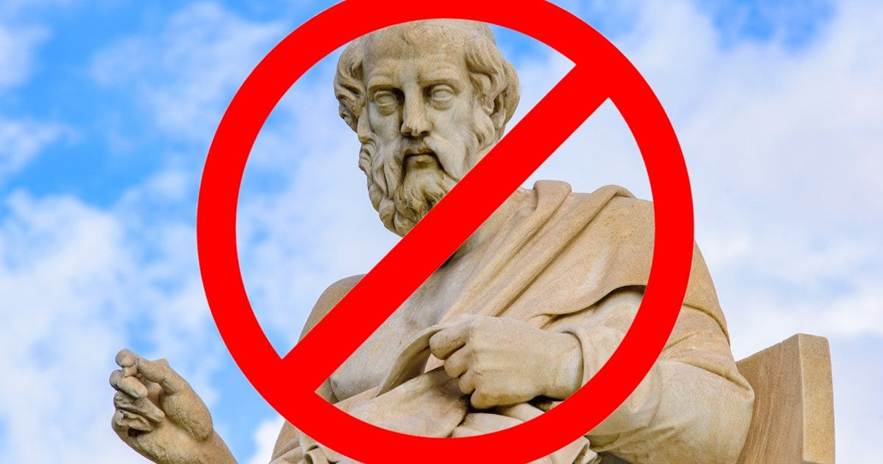
They get some things right. Their critique of relativism is sound and clearly argued. The self-refutation point is not new, but it lands hard: scholars who claim that all truth is subjective cannot then assert, as fact, that their own position is correct. That is not a subtle point. It should embarrass anyone who misses it. The report also resists calling for right-wing politicization as a cure for left-wing politicization, and it honestly acknowledges the threat from federal overreach, including a documented case of a Texas A&M professor told to remove Plato from his syllabus. Credit where it is due
Then the report turns to anthropology, and things go wrong.
Anthropology has four subfields: cultural anthropology, anthropological archaeology, biological anthropology, and linguistic anthropology. A general anthropology encompasses all four, along with applied work. The report engages with none of this. Instead, it hunts through the most politically driven corners of cultural anthropology, pulls out the most extreme statements it can find, and presents them as a portrait of the whole discipline. This is the fallacy of citing only positive cases. Prosecutors do this. Scientists are not supposed to.
Look at what gets left out. Biological anthropologists study human evolution, skeletal biology, primatology, and population genetics. Anthropological archaeologists reconstruct past human behavior from material remains. Linguistic anthropologists analyze language structure and variation with methods any empiricist would recognize. And within cultural anthropology itself, systematic fieldwork carried out over months and years in real communities has produced some of the most durable knowledge we have about how humans actually live. I have spent more than sixty years doing exactly that, in Brazil and Madagascar. The National Academy of Sciences does not elect members for writing advocacy pieces. It elects them for doing science. Some of those members are anthropologists.
The report seizes on a statement by Fernando Villanea, published in the American Anthropological Association’s flagship journal: “The core academic value of anthropology is not the pursuit of truth, because all truth is subjective.” Villanea has since said the passage was taken out of context, that his essay was about how anthropology should serve Global South communities. Fair enough to note. But the statement says what it says. You cannot declare, as fact, that there are no facts. It collapses under its own weight regardless of the intention behind it.
What strikes me is that I have heard its equivalent somewhere else entirely.
In earlier writing I described what I called convergent evolution in epistemology. Two very different traditions, traveling completely different roads, have ended up in the same place. Some academic postmodernists, including some cultural anthropologists, spent decades arguing that objectivity is a Western conceit and that facts are socially constructed. The current political environment reached the same conclusion by a different road, not through theory but through the simpler convenience of making reality negotiable when it produces inconvenient results. Kellyanne Conway’s “alternative facts” and Villanea’s claim about subjective truth are structurally the same move. The politics point in opposite directions. The damage to honest inquiry is identical.
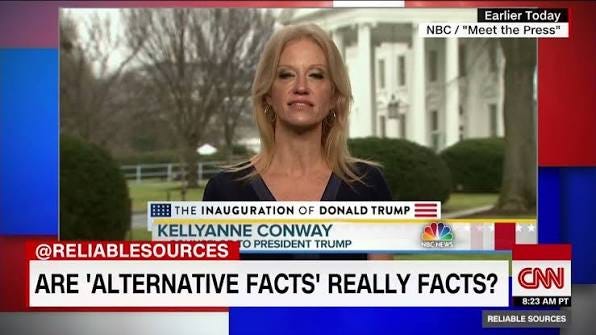
All truth is subjective/Alternative Facts
This is not a left-wing pathology. It is not a right-wing pathology. It is a general pathology, and naming it clearly matters. The Boghossian report spots it on one side and misses it on the other.
Here is something else the report misses. There is a fundamental difference between theory in the scientific sense and theory as practiced in much of contemporary cultural anthropology. Evolution through natural selection is a theory, with natural selection as its core mechanism. It explains the giraffe’s neck, the spread of antibiotic-resistant bacteria, and why we need a new flu shot every year. It was built to explain one set of observations and keeps working on entirely new phenomena nobody anticipated. You can test it. You can extend it. It works.
What passes for theory in postmodernist cultural anthropology works nothing like that. The standard move is to take one of the usual suspects, Michel Foucault, Pierre Bourdieu, and Bruno Latour being prominent among them, borrow a framework, and apply it to a text or a cultural moment as an interpretive lens. It is worth noting that none of these figures was an anthropologist. Foucault was a philosopher and historian, Bourdieu a sociologist, Latour a sociologist and philosopher of science. Cultural anthropology has been importing its theory from neighboring fields rather than building its own. And what it has imported does not predict anything, cannot be tested, and does not extend to new domains the way evolutionary theory extends from finch beaks to flu viruses. It is closer to literary criticism than to science, and calling it theory is generous.
Here’s looking at you, Michel Foucault.
The deeper irony is that anthropology once had real theoretical ambitions. Whatever their weaknesses, cultural evolutionism, structural functionalism, and cultural materialism were genuine attempts to build explanatory frameworks testable against ethnographic data. What replaced much of that tradition in cultural anthropology is not a better theory. It is the abandonment of the theoretical enterprise, dressed up in vocabulary that sounds rigorous without doing the work rigor requires.
The drift of cultural anthropology away from science is real. I have watched it happen over sixty years. That is worth criticizing. But it is not the whole discipline. Treating the worst statements from one corner of one subfield as the face of anthropology is not analysis. It is a hit job with footnotes.
The remedy for bad epistemology has always been the same: careful, honest inquiry, following the evidence wherever it leads. The report argues for exactly that standard. It should have applied it to anthropology.
https://paulddf.substack.com/p/misreading-the-humanities-a-critique
Misreading the Humanities: A Critique of the Vanderbilt–Washington University Report (Paul Tiyambe Zeleza, Substacks)
Jun 13, 2026
Every generation rediscovers the “crisis” of the humanities, but the current cycle has acquired a sharper edge and a louder intensity. The recent Report on the State of Scholarship in the Humanities and Humanistic Social Sciences, commissioned by the chancellors of Vanderbilt and Washington University, belongs to this recurring genre of alarm (Boghossian et al. 2024). It presents itself as a defense of scholarly rigor, yet its anxieties and prescriptions reveal a deeper struggle over the authority, boundaries, and politics of legitimate knowledge.
In my book, Re-Envisioning the African and American Academies, I traced this crisis discourse in a chapter on “The Struggle for the Humanities” back to the 1960s, showing how declarations of decline reliably surface when political upheaval, social transformation, and institutional anxiety converge (Zeleza 2024). More recently, in my Substack essays, I have examined attacks on “woke” world history in the name of rigorous “Western history” (Zeleza 2026a), as well as the orchestrated assault on Black studies (Zeleza 2026b; Allen 2026). These epistemic attacks reveal how struggles over curriculum and scholarship have become proxy battles over national identity, racial hierarchy, and the boundaries of legitimate knowledge.
What ties these debates together is not simply a defense of “rigor,” or as framed in the report scholarly “standards” and “quality” but the defense of a particular epistemological order: a Eurocentric vision of the humanities that long imagined itself universal, insulated, and unassailable. That order has been unsettled, and in some quarters profoundly threatened, by the intellectual insurgencies of the past half-century. As the American academy diversified, its laager was breached by scholars whose intellectual genealogies stretch across the Black diaspora, Latin America, Asia, Africa, and the Caribbean, and by women and minoritized scholars whose presence exposed the parochialism of the old canon. Their work did not merely add new texts; it reconfigured the terms of humanistic inquiry.
Predictably, the reaction has been fierce. As white supremacy has mounted a noisy and dangerous resurgence in national politics amid the United States’ movement toward a minority-majority future, conservative intellectual forces have regrouped to defend a creaking epistemic hegemony. In this telling, the humanities are not evolving but collapsing; not expanding but losing their way; not democratizing knowledge but succumbing to ideology.
It is in this charged context that the recent report must be read. The controversy it has ignited is not merely a dispute over disciplinary standards. It is a revealing episode in the contemporary politics of knowledge, exposing how calls for scholarly rigor or quality can become vehicles for restoring older hierarchies of authority.
Historical Precedents
Moments of political anxiety in American life have long produced interventions that claim to diagnose a crisis in the university. The recent report belongs to this lineage. Its language of declining standards, ideological drift, and endangered objectivity is not anomalous; it is the latest iteration of a recurrent pattern in which the humanities become sites for broader struggles over cultural authority.
The 1950s offer an early precedent. During McCarthyism, congressional committees and university boards scrutinized faculty for alleged ideological deviation, invoking the language of objectivity and politicization to justify administrative oversight. The anxieties animating those investigations were political rather than methodological, yet they were framed as defenses of scholarly integrity. The current report reproduces this rhetorical strategy by presenting political judgments as epistemic concerns.
The culture wars of the 1980s and 1990s revived these concerns in a new register. Allan Bloom’s The Closing of the American Mind and Roger Kimball’s Tenured Radicals, warned that relativism and left-wing politics had corrupted the humanities (Bloom 1987; Kimball 1990). While they mention these two authors, the report explicitly states in their statement of the problem: “Our report does not attempt to trace the roots of the present-day critique of the academy to these antecedents. Nor does it attempt to engage in detail with contemporary critics of the humanistic academy and its defenders, a sprawling discussion that has taken place mainly online and in the press.” They declare categorically: “Our focus is rather the quality of scholarship: the research produced by professors employed by colleges and universities and published (for the most part) in academic journals and scholarly monographs.” Except that they actually don’t do that.
More recent interventions follow the same pattern, though the current report wraps its concerns in the language of philosophical sobriety. The 1776 Commission sought to reshape the teaching of United States history by casting progressive scholarship as a threat to national values. The present report presents its intervention in the spirit of the commission’s report, claiming it is primarily motivated to defend and promote disinterested inquiry, because that is “what universities are for. Indeed, it might well be thought that one of the greatest contributions a university can make to society is to provide a model of what disinterested inquiry can be and how it might thereby be of value… there is in fact no good reason to question either the coherence or the value of disinterested inquiry, however difficult it may be”.
The science wars of the 1990s provide another precedent. Debates between scientists and humanists over objectivity, relativism, and the authority of scientific knowledge mirror the epistemological anxieties that animate the present report. What is new is the translation of these philosophical disputes into administrative recommendations, transforming intellectual disagreement into a possible governance mandate.
Across these episodes, the pattern is consistent: claims of ideological capture and declining standards emerge during periods of political polarization, institutional insecurity, and shifting cultural authority. The current report follows this script closely, positioning itself as a corrective at precisely the moment when the humanities’ intellectual and demographic landscape is undergoing profound change, and national politics has descended into toxic ideological polarization, intolerant partisanship, and rightwing populism.
Over the past four decades, universities have adopted managerial logics that privilege market metrics, revenue generation, and quantifiable outputs. These logics devalue disciplines whose contributions are not easily monetized. The report calls for administrative intervention when humanities disciplines become politicized, as that calls for the suspension of administrative deference to faculty authority.
What is ignored in the report are the larger extrinsic forces facing the humanities: declining public funding, adjunctification, and enrollment pressures have created structural vulnerabilities that the report’s narrative of disciplinary failure risks intensifying. By framing the humanities’ challenges as self-inflicted, the report inadvertently supplies justification for further austerity and administrative intervention.
These institutional pressures intersect with a broader populist anti-intellectualism that casts the humanities as elitist, partisan, and disconnected from “real” knowledge. Although the report acknowledges “powerful forces outside the academy” attempting to dictate scholarship, its own framing, emphasizing ideological distortion, politicization, and the loss of objectivity, echoes the very critiques it claims to resist. The humanities’ engagement with race, gender, colonialism, and inequality has become a flashpoint in wider cultural battles, and the report’s suspicion of politically engaged scholarship reflects this polarization.
In this sense, the report functions both as a symptom and an instrument of the contemporary crisis. It responds to external pressures while reinforcing the logics that produced them. Its self-presentation as moderate is strategic, but its cumulative effect is alarmist. Its nostalgia for a depoliticized past is historically naïve, for the humanities have always been shaped by political struggle, intellectual contestation, and shifting social demands.
What the report ultimately offers is not a diagnosis of the humanities’ condition but a defense of a particular epistemic order under strain, one unsettled by demographic change, intellectual diversification, and the erosion of institutional certainties that once insulated the humanities from broader political currents.
In Defense of Anthropology (Alex Thurston, Substacks)
(By a wannabe anthropologist.)
Jun 22, 2026
The recently released “Report on the State of Scholarship in the Humanities and the Humanistic Social Sciences” has triggered tremendous pushback (see here, here, and here, for example).1 The humanities as a whole certainly deserve a full-throated defense, but here I want to focus on how the Report singles out anthropology for condemnation.
Anthropology is vital to understanding global politics. The limitations facing anthropologists, including difficulty accessing authoritarian environments and conflict zones, contribute directly to the growing poverty of empirical knowledge about current events, a trend I have written about here and here. A world with fewer anthropologists will be a world that knows less about itself, particularly about the textures of political life on the ground.
The Report’s Charges Against Anthropology
In general, the Report denounces a wide swath of humanities scholars and anthropologists for pursuing what the Report’s authors call (p. 12)
a distinctive form of politicization in which the scholarly enterprise is taken to be subordinate to, or in the service of, political (social or moral) goals beyond the advancement of knowledge and understanding. The goals vary from area to area, but in a contemporary context they are generally though not exclusively associated with the progressive left. Put most broadly, the goal might be characterized as turning the humanities into vehicles for social justice, or the elimination of pernicious social hierarchies. More specific goals under this heading include anti-racism (the eradication of racial hierarchy), feminism (the rejection of patriarchy), the “decolonization” of the academy and of society more generally (undoing the legacy of imperialism), full equity for gender and sexual minorities and, to a much lesser extent, the eradication of class distinctions and the replacement of “neoliberal” capitalism with some form of socialism.
All of this is essentially the authors’ attempt to re-litigate long-running and tedious conversations about “cancel culture,” “political correctness,” etc.
The Report’s authors believe that “politicization” is most pronounced in anthropology, writing (pp. 4-5)
Our review of the disciplines paints a mixed picture. Every field we have studied shows some signs of the pathologies sketched above: a deterioration in scholarly standards fueled by the substitution of political criteria for properly scholarly criteria in the assessment of research and a more general repudiation of long-standing ideals of rigor and objectivity. In some fields (e.g., philosophy) the problems are largely confined to a single subfield focused on a charged topic. In others (e.g., history), while there are streams of scholarship in which standards have been politicized in problematic ways, they run alongside more dominant streams in which a wide range of views is tolerated, and appropriately scholarly standards are brought to bear. In the most extreme cases (e.g., anthropology), we see a widespread deterioration in scholarly standards grounded in a pervasive repudiation of ideals of objectivity together with a toxic intellectual climate in which reasonable dissent on politically charged topics is routinely suppressed and punished.
The Report also disapprovingly quotes various anthropologists (p. 12):
For example, in a 2021 presidential address to the American Anthropological Association, Akhil Gupta writes that “anthropology is an outlier among the social sciences … because its political project is to challenge the culturally dominant commonsense of capitalist consumerism” (Gupta and Stoolman 2022, emphasis added). In a reply published in American Anthropologist, Fernando Villanea emphasizes the point that “the value of anthropology is not the pursuit of truth, because all truth is subjective,” but rather to “serve the interests” of people who have been harmed by anthropologists in the past (Villanea 2023). Two years later, in the same journal, José Santos argued that “all ethnographies” — the stock in trade of cultural anthropology — have as their goal “not voyeurism but advocacy” (Santos 2025), as if the goal of describing the social world and making sense of it was not only not on the menu, but that it was to be disparaged as a kind of perversion. Taken literally, such remarks call, not for scholarship in the service of a social goal, but for a rejection of the core idea that scholarship aims at understanding.
Ultimately, the Report concludes that “traditional scholarship” and “disinterested inquiry” are under deep threat – or have been outright suppressed – by forces of “relativism” and “postmodernism.”
The Report Has No (Transparent) Methodology But Does Have Clear Politics
If the Report is itself meant to be a form of evidence-backed inquiry in line with the supposed standards of “traditional scholarship,” then it is striking that there is no methodology section in the thirty-page document. There is no methodology section because the method was to cherry-pick, decontextualize, and assert. Surely we could apply humanities methodologies to the exercise of assessing the state of the humanities. That application would mean, minimally, viewing quotations in context, considering authorial intent, and assessing different potential interpretations. None of that occurs here.
Or we could apply social scientific methodologies to the exercise. In that case, we would want to know whether the quotations the authors selected are representative of broader trends. Such an assessment would in turn require some kind of standard of measurement other than the Report authors’ (presumed) authority.
The Report’s lack of methodology is closely related to its implicit but very clear politics. Put simply, the authors reflect the politics of someone in the vicinity of Jonathan Chait.
We could pull at various threads to start unraveling the Report’s politics. One easy starting point would be to note that the authors place “neoliberal” in scare quotes in the passage I excerpted above. The scare quotes are, I believe, meant to suggest that the term “neoliberal” is an unserious epithet rather than a term of serious analysis, and those who use “neoliberal” are conducting “politicized” scholarship.
Such a suggestion would undercut the authors’ own claims. The literature on neoliberalism is in fact replete with works of remarkable scholarly precision and weight, works that are far from the caricatures of “postmodernism” and “relativism” that the Report’s authors decry. Key examples would include Quinn Slobodian’s Globalists (Harvard, 2018) and Christian Joppke’s Neoliberal Nationalists (Cambridge, 2020). These two works show, respectively, that (a) neoliberalism is a complex historical formation that can be empirically identified and traced, and (b) neoliberalism is an essential concept for understanding the world of Trump and his ilk. To dismiss the idea of “neoliberalism” as politicized and unscholarly is to reveal oneself as unserious.
Anthropology’s Vital Role
If a reader knew nothing about anthropology, that reader would come away from this report convinced that anthropology is a vacuous discipline dedicated to denying that facts exist and punishing anyone who questions political correctness.
In fact, anthropologists often provide the most detailed accounts we have of the most important political and social phenomena in the world. For example, could one understand the War on Terror – one of the main structuring elements of global politics over the past quarter-century – without reading the work of Darryl Li and Samar al-Bulushi, both of whose books are grounded in extensive chronicling of empirical data? And in my own adopted discipline of political science, the works that have the most enduring value to me are the ones written by political scientists who sound a lot like anthropologists – Leonardo Villalòn on Senegal, Zekeria Ould Ahmed Salem on Mauritania, John Paden on Nigeria, Stéphane Lacroix on Saudi Arabia, Thomas Pierret on Syria, Tareq Baconi on Gaza, etc. To the extent that I have achieved any insights in my own work, a good deal of them owe to my efforts, however successful or unsuccessful, to conduct ethnography in small doses and to think like an anthropologist.
I find much quantitative political science, meanwhile, produces results that are either glaringly obvious or flat-out wrong. The thin and fleeting results of much quantitative social science, which often reflect authors’ own clear biases and preconceived political goals, all underscore how a supposed commitment to facts and evidence does not necessarily produce meaningful knowledge about the world we live in – and can even prove highly distorting. See David Keen on Paul Collier for a devastating takedown of a widely celebrated (but often profoundly unconvincing, at least to me) social scientist who is supposedly a rigorous number-cruncher following evidence to conclusions.
Anthropologists are often the best positioned to explain events, trends, and places – and to counteract the often facile understandings constructed by government policymakers, think tankers, political scientists, economists, journalists, “OSINT analysts,” and others. I have returned multiple times to the conclusion of Judith Scheele’s Smugglers and Saints of the Sahara (p. 233), where she reflects on how differently a small town on the Mali-Algeria border can be seen:
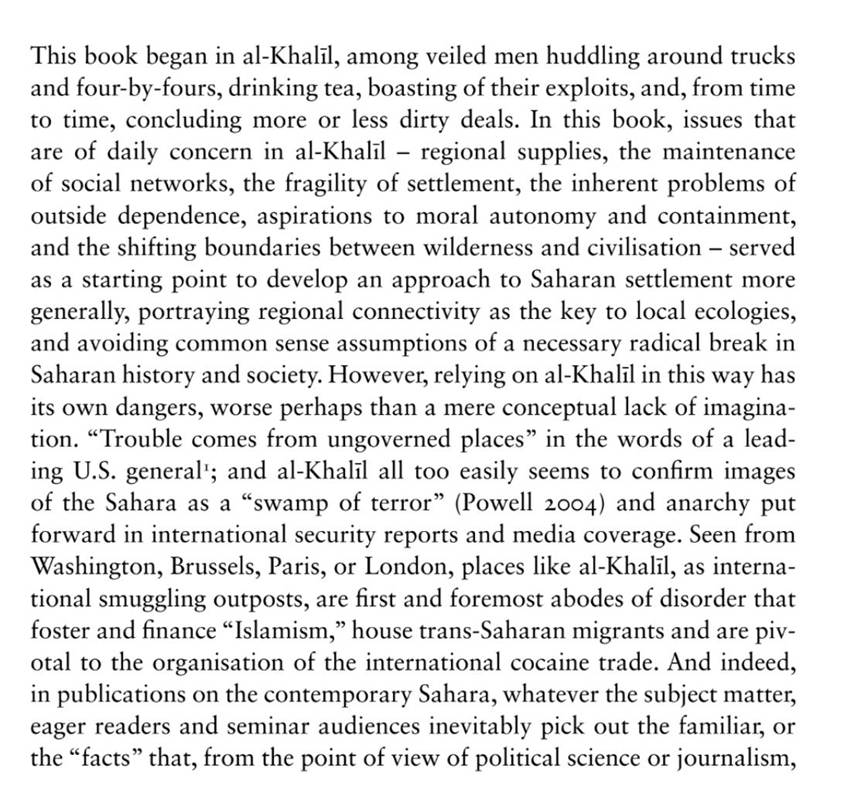
There are vital issues of power here, but not the clichéd ones rehashed in the “Report on the State of Scholarship in the Humanities and the Humanistic Social Sciences.” That Report wants to fight on the terrain of “facts don’t care about your feelings” or “let’s debate how many genders there are,” but there are other terrains of power in which anthropology and an anthropological mindset matters even more vividly.
That mindset is becoming harder to pursue on the ground, especially in the arc of countries I cover at this newsletter. Authoritarianism and war, whether individually or in combination, have made on-the-ground research difficult in many of the countries from Mali to Iran, especially the sustained, immersive, ethnographic fieldwork that is cultural anthropology’s core method. The obstacles to anthropological research leave us with a poorer understanding of how power is experienced. Surely now is precisely when we most need that understanding; indeed, when anthropologists are able to offer perspectives on contemporary war zones, their analysis is particularly precious – see Nisrin Elamin’s work on Sudan, for example. Overall, we are hurtling along a path to what Ruben Andersson called, in a 2019 book, a “no go world.” To quote from the summary, “Using drones, proxy forces, border reinforcement, and outsourced aid, risk-obsessed powers are helping to remap the world into zones of insecurity and danger. The result is a vision of chaos crashing into fortified borders, with national and global politics riven by fear.” Viewing conflict zones from afar, it is easy to settle into neat narratives, to overvalue the perspectives of top political actors, to miss the messy dynamics at the level of ordinary people. Those are all challenges I struggle with in this newsletter, to be honest.
I wonder, then, whether anthropology is politically objectionable to the Report’s authors and to their many powerful allies because anthropology is awash with “postmodernism” and “relativism” – or whether anthropology is politically objectionable because of its potential to unearth inconvenient facts, trends, and perspectives.
Anthropology Has No “Traditional Scholarship” to Which It Can Return
The Report’s authors refer some ten times to “traditional scholarship,” “traditional standards,” etc. A representative passage (p. 4):
Scholarship on matters of human concern has been a source of controversy from the start — witness the trial of Socrates for corrupting the youth of Athens.2 In recent years, however, the complaint has assumed a more specific form, namely, that the traditional goal of coming to understand the human world through careful scholarship has been subordinated to, or even displaced by, a “political” goal: the aim of realizing a conception of social justice nowadays associated with the progressive left.
But the authors make no acknowledgment of anthropology’s specific and concrete past. As anthropologists will be the first to tell you, their discipline’s roots lie in colonial projects of knowledge-gathering and knowledge-fashioning that proceeded as part of and in tandem with empire. There was never a point in time when anthropology was unmoored from state power such that anthropologists could seek to “understand the human world through careful scholarship” in some kind of political vacuum. It would require a remarkably narrow view of the discipline’s history to insist that there was some kind of window, perhaps around the 1960s (?),3 when anthropology was doing a kind of un-politicized “traditional scholarship.” Even and perhaps especially during the 1960s, in fact, Area Studies scholarship was structured in core ways by the funding mechanisms and policy priorities of the U.S. government and various government-adjacent foundations. The anthropology of the 1960s, meanwhile, is replete with rumination on meaning-making, the interpretation of cultural forms, etc. I’m not sure someone like Clifford Geertz would fit easily into what the Report’s authors assume “traditional scholarship” to be. In any case I did not see the Report praise any anthropologist, living or dead, especially not any cultural anthropologist.
Closing
Ten years ago, still clinging onto the idea of some kind of technocratic-meritocratic process in which academics’ ideas could feed into benevolent U.S. government policymaking, I might have made the case for anthropology in terms of “policy relevance.” “Policymakers should listen to anthropologists because then they’ll see how complex things are, which could help reduce harm!” I don’t really believe at this point, though, that policymaking takes input in that way, nor do I believe that “policy relevance” is the best metric for evaluating the importance of academic and scholarly work.
So I’ll make the case directly to you, then, reader: anthropology enriches your understanding of the world, from the homelessness on America’s streets to the way power works in Iran. Anyone hinting4 to university administrators that they should slash or discipline anthropologists is someone advocating for a curtailment of that humanizing, disruptive, and critical view that the best cultural anthropology provides.
1 For background on the Report, you can read the Chronicle of Higher Education’s interview with four of the authors.
2 The authors give various dog-whistles to the effect that they see themselves as defenders of the humanities in the sense of a Western canon of great thinkers.
3 If was one even going to attempt to make the argument, one would have to locate that window after independence but before the supposedly, according to the Report’s authors, deleterious influence starting in the 1970s of figures such as Edward Said and Michel Foucault.
4 I applied my advanced humanities training in parsing texts to conclude that the authors’ statement “we must urge caution on the part of administrators who might wish to act on the basis of our report” (p. 5) is a form of preemptive self-defense rather than a serious plea to their core audience.
https://www.freetheinquiry.com/p/the-humanities-in-crisis-a-discussion
The Humanities in Crisis? A Discussion on the “State of Scholarship in the Humanities” Report (Free Inquiry)
Scholarly standards have been distorted by political criteria.
Jun 25, 2026