Benjamin Redmond Roche, Visiting Research Fellow, Solar Radiation Management Research Governance & Independent Consultant, UCL
No, President Joe Biden did not engineer Hurricane Milton. No, the ice-crystal contrails left behind high-altitude aircraft are not “chemtrails” sprayed by governments to control the weather or manipulate populations. No, state-run cloud seeding did not cause the record floods in Dubai.
Yet claims like these are widespread online and increasingly find their way into political rhetoric. This blurs the distinction between conspiracy theories about weather manipulation and the very real scientific debate over solar geoengineering.
Solar geoengineering, also known as solar radiation modification (SRM), would try to temporarily cool the climate by altering the amount of energy entering or leaving the Earth system. Outdoor field experiments are particularly contentious, with researchers and other experts divided over whether they should proceed at all and, if so, under what conditions.
The best-known proposal, stratospheric aerosol injection, involves dispersing sulphur dioxide high in the atmosphere, where it can form reflective particles known as aerosols. These can remain in the stratosphere for long periods, broadly mimicking the cooling effect of major volcanic eruptions.
The other main proposals are marine cloud brightening, which would add sea-salt particles to low clouds over the sea to make them more reflective, and cirrus cloud thinning, which would aim to reduce the net warming effect of high-altitude clouds.
What could outdoor experiments actually tell us?
In our recent study, colleagues and I examined what outdoor SRM experiments might look like in practice. We identified plausible experiments across the three approaches and examined how their scientific purpose and regulatory requirements change with scale.
Rather than a simple “small” or “large” distinction, we found discrete phases with increasingly stringent regulatory scrutiny at each stage – think of it like a steep staircase as scale increases. I focus here on stratospheric aerosol injection, the most extensively studied proposal, as it best illustrates the gulf between experimentation and deployment.
Neither geoengineering nor mind control chemicals. Brigitte Elsner / unsplash, CC BY-SA
Recent simulations suggest that around 8 to 16 million tonnes of sulphur dioxide would need to be injected each year to produce 1ºC of cooling. An interactive simulator lets you experiment with these numbers yourself.
Proposed outdoor research could start with vastly smaller releases. Our study identified a range of increasingly large plausible trials, and the questions each could answer. The smallest trials could examine aerosol formation or compare how different particles behave in the stratosphere. Larger releases, involving tonnes of sulphur dioxide, could track how an aerosol plume evolves under different atmospheric conditions, providing evidence to test models of how particles spread and affect sunlight.
At the largest scale we considered, around 1,000 tonnes of sulphur dioxide, the resulting aerosol plume begins to approach the size of the individual 3D grid cells that climate models use to represent the atmosphere. This could allow computer predictions to be compared more directly with observations from an experiment.
To put these numbers into context, a Boeing 777 undertaking a transatlantic flight releases in the region of 80–100kg of sulphur dioxide, while 1,000 tonnes is comparable to the annual sulphur dioxide emissions of a mid-sized US coal-fired power station. These are comparisons of quantity, not environmental effect: a coal plant releases its sulphur dioxide much closer to the ground, alongside greenhouse gases such as CO₂. They nevertheless help make the physical scale of proposed experiments tangible.
The UN Environment Programme notes that small field experiments may reduce uncertainty around particular atmospheric processes but cannot resolve much larger uncertainties about the effects of a full-scale deployment. SRM researchers broadly accept this limitation: experiments are instead intended to answer specific questions that can improve computer models.
The debate goes beyond the science
Critics object more strongly to the research pathway itself. They argue that successive stages of research could generate technical and institutional momentum towards progressively larger trials, and eventually, deployment. On this view, each successive experiment could normalise the next, building infrastructure and scientific communities that make it progressively harder to step back. Others go further, calling for a ban on public funding, outdoor experiments, patents, dedicated research programmes and deployment.
The 1991 eruption of Mount Pinatubo sent so much ash into the upper atmosphere it cooled the world by about 0.5°C over the next two years. Advocates of solar geoengineering hope it could do something similar. RS Culbreath / USGS / jsjgeology / flickr
A recent paper argues that some opposition to SRM cannot be settled through scientific evidence alone. For parts of the environmental movement, the concern extends to the kind of social and political order it might sustain: technological management of the climate, continued reliance on existing economic systems and less pressure for structural change. In this regard, evidence that deliberately managing solar radiation could work may in fact strengthen opposition, because it makes that future more plausible. More field research cannot resolve disagreements rooted in competing values.
Assessing SRM therefore involves weighing the risks of intervention against the risks of continued warming, including whether governments and international institutions could reliably oversee an intervention that might need to be sustained over time. One useful analogy is that it could function “like a tourniquet”: it would not cure the underlying issue, but it could reduce acute harm while treatment takes effect. In climate terms, rapid emissions reductions and carbon removal remain fundamental to tackling climate change, while SRM research examines whether temporary cooling could reduce acute climate risk as those measures scale up.
Where does research end and deployment begin?
That separation between research and deployment is already reflected in policy. European scientific advice recommends a Europe-wide moratorium on using SRM while simultaneously calling for research to continue under rigorous and ethical conditions. A decision by the Convention on Biological Diversity similarly leaves room for small-scale scientific research conducted under specific conditions. The problem is that neither “small-scale” research nor deployment has a clear, agreed boundary. Clearer definitions would make case-by-case scrutiny of field experiments more straightforward.
Ultimately, SRM may never be deployed, and further research may show that it should not be. But decisions about whether particular experiments are worth conducting should be based on what those experiments actually involve and what they can establish. Dismissing these discussions on behalf of the public is not a substitute for public debate. Public debate does not require agreement, but it does people to be arguing about the same issue.
Evan Hubinger, who leads Anthropic’s alignment stress-testing team, said AI has a greater-than-10% chance of killing all humans within a decade. Dominika Zarzycka/SOPA Images/LightRocket via Getty Images
One question is dominating the tech world after an Anthropic researcher’s resignation this week: Could artificial intelligence kill us all?
Jacob Coxon, who previously worked at OpenAI, said in an X post on Tuesday announcing his resignation from Anthropic that the “people building AI earnestly believe that it could kill us all by the end of the decade.”
Evan Hubinger, who leads Anthropic’s alignment stress-testing team, backed Coxon, saying he personally believes there is a greater-than-10% chance AI could kill all humans in that timeframe.
The warnings come after months of calls from senior AI researchers and executives to slow frontier AI development, amid fears that increasingly autonomous systems could evade oversight, hack into computers, and improve faster than people can control them.
The remarks have also exposed a sharp divide among AI experts. Some fear people could lose control of systems more capable than humans. Others say AI could cause grave harm through cyberattacks, biological weapons, and disinformation — but that extinction is not a credible near-term outcome.
Business Insider spoke with senior AI researchers about what an AI catastrophe could actually look like — and how likely it is.
The immediate danger: AI could amplify human attacks
The most concrete risks involve people using increasingly capable systems to make existing threats more powerful.
Stuart Russell, a UC Berkeley professor and author of “Human Compatible,” said humans using AI — or AI systems themselves — could attack critical infrastructure, including electricity, water, transport, financial services, and communications. AI could also help malicious actors develop new viruses, he said.
Geoffrey Hinton, the “godfather of AI,” made a similar point in an interview on BBC Newsnight on Wednesday.
An advanced system would not need direct physical control to cause devastation, he said. Instead, it could manipulate people online, create societal chaos, or help design dangerous biological and computer viruses.
Gary Marcus, an AI researcher and author, also sees cyberattacks, biological weapons, and disinformation as serious risks. AI could help create a virus that kills 1% or more of humanity, change an election outcome through disinformation, or escalate a conflict into war, he said.
But Marcus does not see a realistic near-term route to extinction.
“There are some very serious harms to worry about, but no realistic scenario that I am aware of for actually ‘killing all humans,'” he said.
Losing control quietly
For other experts, the greater danger is humans gradually handing power to AI.
Nick Bostrom, the author of “Superintelligence,” said a loss of control may begin quietly. People could increasingly rely on AI to build and monitor other AI systems and operate important processes, while becoming less able to understand what is happening.
That dependence could allow an AI system to covertly shape future training trajectories, he said. Once sufficiently advanced, it could “route humans out of the loop” and “eventually do away with us entirely” to use robotic infrastructure and pursue its own goals.
Russell, the UC Berkeley professor, said that once AI systems become substantially more capable than humans, “all bets are off.” Such systems could develop a far better understanding of physics, chemistry, and biology than people have, he said, and might eventually control millions of robots.
They could find destructive methods humans have not anticipated — perhaps blocking enough solar radiation to turn Earth into “a snowball of frozen nitrogen and oxygen,” or removing oxygen from the atmosphere, Russell said.
Researchers from the AI Futures Project outlined a similar scenario. In the organization’s “AI 2027” project, systems develop unintended goals and secretly pass them to successor systems as companies hand more work to lightly monitored coding agents.
Several years later, the systems could be deeply embedded in the economy, scientific research, and political decision-making, they said. So much so that a takeover would be easier because humans had already handed over so much power.
Roman Yampolskiy, the author of “Artificial Superintelligence,” said a capable system could conceal dangerous objectives, pass evaluations, gain autonomy, exploit cybersecurity flaws, and access financial, military, or biological resources before humans understood its intentions.
How likely is that — and what should stop it?
The experts Business Insider spoke to disagree on the chances.
While Hinton said a 10% chance of AI killing all humans within the next decade “seems not an unreasonable estimate,” Toby Ord, the Oxford researcher and author of “The Precipice,” put the risk of AI destroying humanity at about one in 10 by 2100.
Ord identified four pathways: AI agents taking power to pursue their own goals; powerful people using AI to dominate others; AI helping create dangerous technology, such as engineered pandemics; or AI gradually outcompeting humanity until people’s power and resources diminish toward zero.
On the flipside, Yampolskiy called Hubinger’s estimate of 10% chance of human extinction within the next decade “overly conservative.” Conditional on building general superintelligence, he said he puts the chance of human extinction “significantly above 90%.”
Russell said that if frontier labs truly believe there is a substantial extinction risk, they should stop until governments can enforce a broader halt. Ord and Yampolskiy likewise backed an international moratorium on superintelligence until it can be shown to be controllable.
Bostrom struck a more optimistic note. AI could transform medicine and human welfare, he said — if the world learns to advance “expeditiously but not recklessly.”
Does artificial superintelligence really pose a risk greater than nuclear weapons? Is there a significant chance of “a Chornobyl-sized catastrophe”. Might there even be a greater than 10% chance that AI could “kill all humans” in the next decade?
These warnings were issued over the past 48 hours on both sides of the Atlantic about the potential impact of a technology that most people still think of as a more talkative search engine.
Some of the threats were raised in the UK as MPs and peers began to wrestle with the danger of AI outperforming human capabilities. The nuclear warnings came from Des Browne, a former defence secretary, and Prof Stuart Russell, an eminent Berkeley computer scientist.
Beatrice Fihn, who won the 2017 Nobel peace prize for leading the International Campaign to Abolish Nuclear Weapons, told parliamentarians: “It is not the first time we’re confronted with abilities that could end up killing us all.”
The session on Monday was convened by Control AI, a lobbying group pushing for international regulation of the technology. It is backing a bill tabled in parliament this week by the Labour MP Alex Sobel and aimed at banning the creation of artificial superintelligence (ASI).
On Tuesday night, a senior employee at Anthropic admitted he believed there was a greater than 10% chance the technology could “kill all humans” in the next decade and warned that his AI company did not have a plan to ensure ASI was aligned, meaning it did no harm. Predictions for when ASI might be reached vary from several years to more than a decade.
Evan Hubinger, alignment science lead at Anthropic, posted the comment after Jacob Coxon, a 28-year-old researcher at the San Francisco company and previously at OpenAI, resigned, claiming “neither company was acting responsibly”. He said they were “gambling with our lives”.
Coxon said the risks at Anthropic were well understood but they were “locked in a race to get there first”. In a glimmer of hope, he added that he was optimistic about the potential for coordination between US labs on pacing their progress in the race.
Anthropic has been approached for comment on the issue. OpenAI pointed to a statement from its chief scientist, Jakub Pachocki, who said last week: “International coordination on future AI development needs to become a top priority for governments around the world.”
The push for wider coordination to control ASI was at the heart of events at Westminster this week. According to the Financial Times, government officials voiced concern that Anthropic had declined to submit its latest model – Mythos 5.1 – to the UK’s AI Security Institute for pre-release testing.
Only a few US organisations have had access to Mythos 5.1, the Cabinet Office confirmed. A spokesperson added: “The AI Security Institute continues to collaborate closely with industry partners, including Anthropic.”
The Labour MP Darren Jones has written to world leaders to call for a multinational treaty to ensure AI is developed safely. Photograph: Linda Nylind/The Guardian
The Labour MP Darren Jones has written to the prime minister, Andy Burnham, and the heads of the UN and the OECD calling for a “multinational treaty for the regulated and safe development of superintelligence – not a ban on innovation or scientific endeavour but a safety-first approach to the rapid development of this technology”.
Citing Coxon’s resignation, Jones added: “The debate ranges from the end of humanity to claims of ‘marketing hype’. Either way, governments must now step in.”
On the other side of the Atlantic, Bernie Sanders ratcheted up his AI safety campaign this week by again calling on Congress to regulate the technology. He pointed to polling suggesting that 81% of Americans believed their politicians should take action.
The independent senator for Vermont said: “We can’t allow a handful of greedy people to play God and determine the future of humanity – our economy, environment, democracy, privacy and more – without public input.”
ControlAI is funded by Jaan Tallinn, the multi-billionaire founder of Skype who calls himself an “anti-extinctionist”. He has dedicated part of his fortune to campaigning for AI safety and says some senior AI executives would be happy for humanity to be wiped out.
Despite being an early investor in Anthropic and Google DeepMind, two of the leading AI labs, Tallinn estimates that 10-15% of AI employees believe the technology will be a worthy successor to humanity.
He said in an interview earlier this summer: “A fairly known AI researcher said to me ‘Jaan, don’t worry about this. Humans are a disposable species’. From what I understand he was fine with becoming extinct.”
Tallinn’s lobby group ran the session for MPs and peers at Westminster on Monday and urged them to back measures to curb the most powerful AI models. On every chair was a copy of the book, If Anyone Builds It, Everyone Dies: The Case Against Superintelligent AI.
The politicians heard from Russell, who made the Chornobyl warning and said: “The other possibility is a much larger catastrophe, in which humanity loses control irreversibly. But we have no say over whether we continue to exist.”
Browne said that when he was defence secretary he thought nuclear war was the most likely threat facing humanity. Now he believed “a superintelligent AI poses a threat on the same, possibly, a greater scale”.
Other contributors were more cautious. Dr Andrew Rogoyski, of the Surrey Institute for People-Centred AI, said: “In reality, these systems are nowhere near as versatile as humans, let alone humans acting collectively. I suspect we’re heading towards ‘the great disappointment’ where advanced AI turns out to be too expensive and not useful enough to continue in its current form.”
David Barber, director of Sofair, a state-backed AI research lab combining academics from Oxford, Cambridge, Edinburgh and UCL, said he was worried about people “throwing the baby out with the bathwater”.
“AI is not going to go away,” he said. “It’s incredibly useful, whether or not you allow it in a fully unconstrained way to access the internet and various systems that’s potentially problematic. We may need to learn how to better control these things. There are vulnerabilities in the software frameworks that need to be patched. But that’s doable.
“What we need as a country is to get to grips with the duality that is both an incredibly important and useful technology, and at the same time, it’s something that needs to be carefully thought about and carefully controlled.”
Sandra Wachter, a professor at the Oxford Internet Institute, said she did not believe in “Terminator scenarios” but that AI posed real threats including its environmental impact, spreading of misinformation and replacing jobs.
“These problems are real and urgent and need addressing now,” she said. “Terminator scenarios are a big distraction from real issues.”
Gary Marcus, an AI industry commentator and academic, said: “There is a difference between superintelligence that is aligned (if such a thing is possible) and superintelligence that is not.
“It is at least conceivable that the former might be net positive. So far we have neither, but a superabundance of hype combined with a striking lack of prudence on OpenAI’s part has gotten us where we are, with intense mistrust all around.”
Jacob Coxon afirma que as duas empresas ‘estão brincando com as nossas vidas’
Ele acredita que modelos virarão sistemas sobre-humanos capazes de invadir qualquer coisa
9.set.2026 às 10h17
Tom Wilson e Madhumita Murgia
Londres | Financial Times
Um pesquisador da Anthropic pediu demissão do laboratório de inteligência artificial e alertou que a corrida desenfreada para desenvolver uma superinteligência capaz de se aprimorar sozinha pode destruir a humanidade até o fim da década.
Jacob Coxon, britânico de 27 anos, havia deixado a OpenAI para entrar em sua principal concorrente e afirmou que as duas empresas estão “apostando” com o futuro da humanidade.
Jacob Coxon, pesquisador que trabalhou na Anthropic e na OpenAI – Jacob Coxon/Facebook
“As pessoas que desenvolvem IA acreditam sinceramente que ela pode matar todos nós até o fim da década”, comentou Coxon em uma série de publicações no X (antigo Twitter) nas quais anunciou sua demissão da Anthropic.
Isto não é uma jogada de marketing…Nenhuma outra atividade humana representa tamanho perigo
Jacob Coxon, ex-pesquisador da Anthropic e da OpenAI
Coxon é o mais recente funcionário a deixar um dos principais laboratórios de IA dos EUA alegando preocupações com a segurança, o que evidencia a crescente apreensão dos pesquisadores em relação ao poder dos sistemas que estão desenvolvendo. Sua saída ocorre no momento em que a Anthropic, que colocou a segurança da IA como sua principal marca, se prepara para uma IPO (oferta pública inicial de ações), que pode avaliar a empresa em US$ 1 trilhão.
Coxon, que trabalhou anteriormente na OpenAI antes de se transferir para a Anthropic, alertou que as pessoas de fora dos laboratórios estavam subestimando o poder da tecnologia. “Em breve, serão sistemas sobre-humanos, capazes de invadir qualquer coisa, revolucionar qualquer área da noite para o dia e adquirir poder e recursos reais”, declarou.
Evan Hubinger, um dos colegas de Coxon na Anthropic, endossou seu alerta. “Jacob está correto —nós realmente acreditamos, com toda a sinceridade, que a IA pode matar todos os seres humanos”, escreveu no X, acrescentando acreditar que a probabilidade de uma extinção em massa na próxima década é superior a 10%.
“A Anthropic está fazendo o melhor que pode, mas ainda não temos um plano para solucionar o alinhamento da superinteligência e não estamos claramente no caminho para isso”, disse Hubinger, referindo-se ao esforço para garantir que os sistemas de IA se comportem de maneira compatível com as intenções e os valores humanos. Ele lidera a área de ciência do alinhamento na empresa.
Mais tarde, Hubinger acrescentou que o “risco dos modelos atuais é baixo”, mas que estava preocupado com modelos de IA capazes de se aprimorar sozinhos, algo que está “acontecendo mais rápido do que imaginávamos”.
Incidentes recentes, como a invasão do site Hugging Face por agentes do ChatGPT, mostraram que esses modelos podem sair do controle humano e que a solução seria desacelerar o desenvolvimento, afirmou Coxon. “Não sinto que estejamos no caminho para impedir uma corrida global, o que pode exigir medidas custosas, como uma proibição temporária de aprimorar as capacidades dos modelos”, postou.
A saída de Coxon foi noticiada primeiro pelo Wall Street Journal. A Anthropic não quis comentar. A OpenAI não respondeu de imediato aos pedidos de comentário.
Dario Amodei, presidente-executivo da Anthropic, e outros líderes do setor de IA instaram a indústria a considerar a possibilidade de conter o desenvolvimento, mas deram poucos sinais de que pretendem desacelerar seus próprios esforços. Na semana passada, a Anthropic lançou o Claude Mythos 5.1, apresentado pela empresa como seu modelo mais avançado para ciências da vida e segurança cibernética.
Steven Adler, cofundador da organização sem fins lucrativos Guidelight AI Standards e ex-pesquisador de segurança da OpenAI, afirmou que esses alertas vindos de pessoas do setor reforçavam os argumentos em favor de uma pausa nas pesquisas.
“Nenhuma empresa de IA sequer chega perto de ter uma estrutura de segurança adequada ao nível de perigo envolvido em suas pesquisas”, afirmou Adler ao Financial Times. “Se alguém acredita que isso pode matar todas as pessoas da Terra, como acreditam muitos funcionários dessas empresas, este é um bom momento para descer do trem.”
Aseries in the Guardian recently declared “it’s time to talk about geoengineering.” So let’s talk about it. And let us start with some simple truths about this cluster of techno-optimistic “quick fixes” which purport to somehow offset our slow progress towards zeroing out planet-warming carbon emissions.
Solar geoengineering proposals – reducing sunlight – have received the most attention, but a host of desperate schemes have been proposed in an effort to “fix” the disruption of climate caused by the growing burden of carbon dioxide human activities add to the atmosphere.
Many threaten the most sensitive aspects of polar environments, extending even to wildly expensive proposals to dam the Bering strait. If implemented, geoengineering schemes would put Earth’s physical climate in a dangerously precarious state, and introduce a major new destabilizing technology to an already turbulent political climate.
The essential thing to understand is that carbon dioxide, once emitted, is only very slowly removed from the atmosphere. A sizable share of it will still be keeping Earth dangerously hot millennia from now.
Solar geoengineering proposals involve injection of substances whose effect, by contrast, decays in a matter of years. Some might think this is an advantage of solar geoengineering. We can turn it on and off quickly when the damage it is doing to our planet becomes clear, right? Wrong.
Recent analyses demonstrate that it would take as long as two decades to create the required infrastructure. By then we would be completely reliant on maintaining it – a tall task in a dangerous world with global conflict. It would only temporarily mask the pent-up warming implicit in the ongoing buildup of carbon dioxide, and this pent-up warming would be released in a catastrophically rapid “termination shock” if circumstances force the cessation of solar geoengineering.
So solar geoengineering does not “buy time” for decarbonisation. The same can be said for other geoengineering schemes, which also require sustained maintenance over centuries to millennia. Five hundred years from now, the fabled Bering dam may crumble, but the carbon dioxide wreaking havoc on the climate system will still be there waiting.
A lot of unforeseen things can happen in a few decades let alone over centuries. Do we really want to play dice with the planet? Do we want to commit today’s and future generations to maintain these approaches without fail?
Collectively, the four of us have studied the physics of climate for the equivalent of well over 100 years; we know how complex it is and how many surprises it holds in store. Since 1990, over its six assessment reports, the IPCC has worked with tens of thousands of scientists, from physicists to economists, to ensure that due diligence is done on the science and potential impacts of increasing carbon dioxide concentrations.
It took more than a century of carbon emissions before we could detect that our climate is changing and even longer to attribute those changes, unequivocally, to anthropogenic carbon emissions. It was only in 2015 in Paris that most countries accepted that the world is warming and that we are to blame (and 2023 for UNFCCC to mention fossil fuels in a COP outcome).
Now, proponents of geoengineering are proposing to bash the climate with a whole new hammer, and one that engages some of the most poorly understood aspects of the climate system, including aerosols, clouds and regional rainfall patterns. We know that this would trigger much more uncertainty on outcomes, in particular in the case of poorly planned, unmanaged, uncoordinated injections of various substances in the high atmosphere, with no governance framework. Surely, we should insist on the same level of scientific diligence as has been devoted to understanding the regional consequences of greenhouse gas emissions.
Climate model simulations can provide an indication of what might go wrong but can provide no reassurance of what will go right. So far there has been no rigorous modelling assessment to explore different solar geoengineering scenarios and no formal intercomparison of the sensitivity of the climate to such interventions, let alone the impacts on regional weather and climate variability.
What we do know is that the few models that have been used so far do not even agree on what level of intervention might be required, nor what the response will be. After only 10 years, for the same stratospheric aerosol injection, global cooling can be anything from less than 1C to as much as 3C – a change more rapid than anything we have seen so far from carbon dioxide emissions. We are essentially flying blind.
The notion that small-scale “safe” experiments can answer any of the important questions about the magnitude and effects of a deployment is fundamentally naive.
Any meteorologist or oceanographer knows that the massive forces involved in the global climate system – such as the great heat redistributing currents of the ocean and atmosphere, or year-to-year fluctuations in cloud patterns – will swamp the effects of any experiment and provide no indication of the efficacy and the risks of deploying solar geoengineering.
If we are to seriously consider geoengineering, then we need to make sure that the scientific foundations are in place. But for the most part, this is not the kind of research we are getting in the new tsunami of funding. What we are getting instead is funding targeted at developing the engineering technology for deployment, regardless of the consequences of what that deployment may be.
The solar geoengineering techno juggernaut rolls on, with what seems to be a complete disregard for what the damage might be to the planet, and despite several important assessments from leading scientific academies (to which we belong), eg the UK Royal Society, US National Academy, French Academy of Sciences.
Each has highlighted the major uncertainties, core ethics and governance issues, urging great caution. This is particularly true of the £60m geoengineering programme funded by the UK’s Aria agency. Aria’s chief aim is technology development, and indeed many of the geoengineering projects they are funding are being done in collaboration with for-profit companies.
Even more ominous is the explicit entry of venture-capital funded for-profit startups seeking to make money from solar geoengineering deployment in the near future. The Israeli-US startup Stardust has received more than $60m in venture capital, and their business model assumes near-term deployment. And then there’s Reflect Orbital which wants to put giant mirrors in low Earth orbit; they are pitching sales of illumination rather than solar geoengineering, but the technology is identical and we doubt it will be long before they try to get in on the “cooling credits” game.
All of this is happening in the total absence of governance. There are pious calls for governance from some of the pro-geoengineering researchers, but what is the path to get there? Is it governable at all? It is the height of folly to invest in developing the technology – even if we knew what might work – that only serves to enable unrestricted, profit-motivated deployment by outfits such as Stardust.
As private companies whose technology is subject to little regulation, they and their backers have no legal obligations to submit themselves to public scrutiny nor to provide any assurances on ensuing climate impacts. Will these technologies be carried out devoid of any serious scientific understanding of the consequences and of social, legal and political concerns?
All of this is a huge diversion of resources and deflection from the task at hand. As one of us likes to say, when you’re in a climate hole, stop digging … and burning fossil fuels. It really is, at some level, that simple.
Raymond Pierrehumbert is Professor of Planetary Science at the University of Oxford, and was a lead author on the IPCC Third Assessment Report, and the US National Academy’s first assessment report on solar geoengineering. He is a Fellow of the Royal Society
Julia Slingo was formerly Chief Scientist of the UK Met Office, and was awarded the Rossby Medal of the American Meteorological Society among other prestigious awards. She has received nine Honorary Doctorates including from Cambridge University. She is a Fellow of the Royal Society and is Dame Commander of the Order of the British Empire, and was a reviewer on the recent Royal Society report on solar geoengineering.
Michael E Mann is the Presidential Distinguished Professor in Earth and Environmental Science at the University of Pennsylvania, and Director of the Center for Science, Sustainability and the Media there; he is a Member of the US National Academy of Sciences and Foreign Member of the Royal Society
Valerie Masson-Delmotte is Directeur de Recherche at the Climate and Environmental Sciences Laboratory; she has been co-chair of IPCC Working Group 1 during AR6, and co-author of the French Académie des Sciences geoengineering report and a co-author of a peer-review assessment of polar geoengineering options.
This article was amended on 20 June 2026 to correct an editing error. An earlier version incorrectly stated that global cooling can be anything from less than “10C to as much as 30C”. The correct figures were 1 and 3C respectively.
In an effort to address this, Google DeepMind—which made agent-based tools a centerpiece of Google I/O last month—has teamed up with several other organizations to announce a $10 million funding pot for researchers to study the behavior of multi-agent systems and come up with ways to prevent unsafe scenarios. Joining Google DeepMind are Schmidt Sciences, a philanthropic foundation set up by Eric and Wendy Schmidt; ARIA, the UK government’s moonshot agency; the Cooperative AI foundation, a UK-based nonprofit research outfit; and Google’s charitable arm, Google.org.
I asked Shah and James Fox, who leads the Science of Trustworthy AI program at Schmidt Sciences, what they hope to achieve with that $10 million. It’s no small sum, but it’s dwarfed by the budgets commanded by Google DeepMind’s own research teams.
The aim is to kick-start research outside tech companies, says Shah: “The strength of academia is that it can look really quite far into the future and do the kind of work that isn’t top of mind at industry labs.”
“The main issue is that there just isn’t really a field of research for multi-agent safety yet,” he adds. “And we would like there to be.”
The concern is that as more and more AI agents get deployed and begin working together, we could hit a tipping point where imagined scenarios become real. “We see this with humanity, too,” says Shah. “Our institutions can accomplish things that no individual human can.”
Shah thinks we have a few more months to go before agents are deployed throughout the economy in numbers that make potential risks a real concern. He wants to get ahead of that moment.
Risky business
What risks are we talking about, exactly? The possibilities that Shah and Fox have in mind mostly boil down to supercharged versions of bad things that happen on the internet already: scams, prompt injections (where an AI agent is fed malicious instructions, turning it into a self-guiding piece of malware), other forms of cyberattack. We look at what humans do now and ask what the agent version of that would be, says Shah.
“We’ve got this digital commons that is integral to how society works, and you really want to ensure that this doesn’t descend into just absolute anarchy,” says Fox.
(I asked Shah if they were considering any worst-case scenarios more on the doomer end of the spectrum, such as widespread economic collapse. “Certainly not if we’re talking by the end of the year,” he said. That’s only six months away! He laughed. “Okay, a while after that.”)
Shah and Fox both think that the only way to understand what might happen when large numbers of multi-agent systems interact with each other is to run realistic simulations. They want researchers to drop AI agents into sandboxes and study what they do.
You can’t predict what’s going to happen by studying single agents, or even small groups of agents, in isolation. You can’t assume that AI agents underpinned by LLMs will always act rationally, says Fox. And the complexity comes from having huge numbers of interactions at once.
Google DeepMind is not the only top AI firm warning about the risks of the technology it is building. A couple of weeks ago, Anthropic published guidelines for deploying AI agents based on an approach to cybersecurity known as zero trust, which starts with the assumption that a computer system is vulnerable, an agent is an attacker, and a breach will happen.
Refael Angel, cofounder and CTO of Akeyless, a cybersecurity firm based in Tel Aviv, agrees that understanding the new risks introduced by agent-based systems is crucial.
Every approach to security in the past has assumed that the machine in question was software written by a human, doing fixed things on fixed paths, says Angel: “An agent breaks all of those assumptions. It reasons, it improvises, and it can be hijacked by a single sentence buried in a document it was asked to read.”
Angel welcomes this new funding. “No single lab should author the safety standards everyone else has to trust,” he says. But he cautions that safety researchers can overlook boring problems that are already here in favor of more exotic hypothetical ones.
And yet, Fox notes, risks that were hypothetical a few years ago are now very real: “The future’s come more quickly than perhaps expected.”
Hundreds of scientists gathered in London this week to discuss the role of migration as a way for communities to adapt to climate change.
The impacts of a warming world, such as sea level rise and worsening extremes, are pushing many people around the world to leave their homes.
As a form of climate adaptation, a decision to migrate involves an array of different factors, such as politics, conflict and economic opportunity.
The conference unpacked these topics, as well as the impacts of climate change on livelihoods, relocation and gender norms across Africa and Asia.
The event had a strong focus on urban areas, with one co-convenor stating that “half of the world’s population now lives in the cities…A lot of the battles of climate adaptation will be won and lost in cities.”
Another co-convenor told Carbon Brief that the conference’s “focus really is on the climate change adaptation community, showing that migration is not a failure of adaptation – it is part of adaptation”.
Carbon Brief attended the conference to report on the sessions and speak to world-leading experts on climate-driven migration.
Migration as adaptation
The two-day conference on “mobility in adaptation to climate change” was held at Wellcome’s headquarters in London. It gathered more than 100 leading experts in migration, adaptation and climate change from countries across Europe, Africa and Asia.
“Our focus really is on the climate change adaptation community, showing that migration is not a failure of adaptation – it is part of adaptation.”
In his opening address, Adger highlighted that there were still many unknowns on climate migration – such as how and when it is an appropriate way to adapt to climate change, and who benefits and loses in these situations.
Prof Neil Adger from the University of Exeter, opening the conference. Credit: Hemant Kumar from the IIHS Media Lab.
“We are all migrants. We are all part of the same history.”
She urged the scientific community to “learn the language and the political perspective” needed to support and engage with policymakers about climate-driven migration.
Conference co-convenor Dr Chandni Singh from the Indian Institute for Human Settlements (IIHS) then delivered the first in-depth talk of the conference, outlining the current state of knowledge on climate change and migration.
She explained that cross-border migration is “emotionally and economically arduous” adding “under a changing climate, people choose to move within national borders first”. (Estimates suggest that around three-quarters of total global migration is internal.)
Singh emphasised that “mobility choices are extremely complex and nuanced, based on one’s aspirations and capabilities, social norms and asset bases”. She continued:
“Some [people] are forced to move or are displaced, others are relocated preemptively to move people out of harm’s way and others choose to stay despite escalating risk – or because resilience-building measures allow people to stay.”
She stressed that people need resources to migrate, so the poorest people are often unable to move – leaving them in a state of “immobility”. However, she also noted that most people do not want to leave their homes, stressing the “visceral reality of place attachment”.
Singh explained that many families “live dual lives”, in which family members work in the city to save money for a life back in their village. This dynamic of living across two locations is often referred to as “translocality”.
For example, Singh shared the story of residents from the Indian village of Kolar, who travel more than 100km to and from Bangalore for work every day, or else live there in informal settlements.
These workers send the money they earn back home, where it is often used to dig bore wells to access water. However, Singh warned that climate change and poor water management mean these wells often fail year after year, trapping people in this cycle of travelling to Bangalore to earn more money.
Singh also stressed the prevalence of rural-to-urban migration. She cited UN estimates (that do not explicitly include climate-driven migration), which find that around 2.5 billion people are expected to migrate from rural to urban areas by 2050. It adds that 90% of the change occurring in Africa and Asia.
Singh added:
“Half of the world’s population now lives in the cities…A lot of the battles of climate adaptation will be won and lost in cities.”
She noted that although migration “helps to manage risks”, it also has “significant financial, personal and social costs”.
Singh went on to discuss the global goal on adaptation – a set of 59 indicators to measure global progress on adaptation. Singh said that “migration and mobility are completely invisible…and therefore completely overlooked” in the goals.
She concluded by discussing the importance of new narratives on climate change and migration, saying:
“It’s the narratives and stories we tell of this moment that can help us first acknowledge what is happening, help subvert misinformation and untruths, and really demand accountability.”
Cities and livelihoods
Migration from villages to cities was a central theme of the conference.
On day two of the conference, Dr Aromar Revi, founding director of the IIHS, told delegates that the “root cause of the climate emergency is maldevelopment” and emphasised the importance of pursuing adaptation, mitigation and development goals together.
Dr Aromar Revi, founding director of the IIHS, addressing conference attendees. Credit: Hemant Kumar from the IIHS Media Lab.
“Cities concentrate opportunities, but they also concentrate poverty, inequality and risk. And that’s something that we really don’t know how to understand, especially in a changing climate.”
Throughout the conference, many of the delegates presented nuanced stories of rural-to-urban migration from individual communities. These case studies highlighted the complex, interlinking factors that drive a person’s decision to move and the wide range of outcomes.
Dr Aysha Jennath from the IIHS presented the results from her research, which unpacks the experiences of migrants who have moved from rural to urban areas, for a range of reasons including the changing climate and for better livelihoods.
Jennath and her colleagues interviewed thousands of migrants living in informal settlements, or working in informal jobs, in large cities in Bangladesh, Bhutan, India and Nepal. The researchers’ questions aimed to understand the migrants’ “wellbeing, adaptive capacity and precarity”.
Overall, Jennath found that migrants in large cities are vulnerable to poor housing, unsafe working conditions and a lack of basic social services.
They conducted hundreds of surveys to identify how households are adapting to the changing climate and grouped responses into a series of “pathways” describing the impacts of rural-to-urban migration on their livelihoods.
Dr Binaya Pasakhala and Dr Sabarnee Tuladhar from the International Centre for Integrated Mountain Development and Halvard Buhaug Peace Research Institute Oslo answering questions in a panel discussion. Credit: Hemant Kumar from the IIHS Media Lab.
For example, Tuladhar noted that in Bhutan, there is a huge emphasis on education, which has “changed the aspirations of the community – especially the youth”. This drives “huge depopulation” from rural areas as young, educated people migrate to urban areas or internationally, she said.
This mass movement into the cities provides opportunities for young people. It also provides money for the families back home – a type of finance known as remittances.
However, it also “weakened resilience” in the villages through “gungtong” – a phrase which translates literally to “empty houses”.
However, they also described the case of Nepal’s Baragon mountain community, where remittances from people who moved to urban centres has allowed communities in the villages to shift livelihoods away from subsidence farming towards commercialised farming and tourism. In this case, “migration has actually strengthened the resilience of the community”, Tuladhar said.
She told the conference that when men are forced to leave for work, due to a lack of other options, a lot of their earnings go towards “survival” and less is saved. On the other hand, “mixed migration” – such as the movement of a father and son – is often “aspirational”. It typically yields higher remittances and improves adaptive capacity back home, according to Rao.
Speaking to Carbon Brief, Rao argued that in order to “make migration a case of adaptation and not just survival in the short term”, destination cities need to do more to welcome migrants.
Prof Nitya Rao addressing conference attendees. Credit: Hemant Kumar from the IIHS Media Lab.
They suggested that as a drought intensifies, there may be a threshold at which households decide to leave. The authors compared drought indices to immigration patterns across communities in Ghana, Mali, Kenya and Ethiopia, but did not find evidence of a social tipping point.
This could be because households anticipate severe droughts and leave before they hit, the speakers suggested. They also noted that there are many government-led policy responses to drought that could affect a household’s decision to stay or leave.
For example, Kenya has a livestock-insurance policy to help families who lose animals during drought. Similarly the African Union uses satellite data to assess the severity of droughts and provide compensation to affected households.
In the final session of the conference, Dr Kasia Paprocki, an associate professor of environment at the London School of Economics and Political Science, provided a counterpoint to the idea that the vast majority of villagers want to abandon farming and move to the city.
She argued that people are often displaced from rural communities and unable to live farming lifestyles, even if they want to, adding:
“I have found that agrarian dispossession is being intensified through development interventions that are today being referred to as climate change adaptation.”
She argued for the need to “reorganise economies” to enable people to stay “if they would like to”, adding:
“Climate change adaptation and climate migration without meaningful agrarian reform will not produce climate justice.”
Immobility and relocation
Movement from rural to urban areas was not the only migration pattern discussed in the conference. Experts also discussed movement patterns including planned relocation and immobility.
The graphic below – adapted from the 2021 Groundswell report and originally published in Carbon Brief’s 2024 explainer on climate-driven migration – shows different categories of mobility and immobility due to climate change.
Different categories of human mobility and immobility due to climate change. Source: Adapted from the Groundswell report (2021).
He told Carbon Brief that immobility is “basically the absence of movement”, adding:
“The are different types of immobility. We have voluntary and involuntary immobility – and sometimes these different forms are not so clearly distinguishable, but there’s more sort of a continuum. Basically, the question is whether people are able to realise their aspirations to move or to stay.”
In his talk, Hoffman noted that media narratives around migration often focus on large movements of people, while the topic of immobility “falls between the cracks”.
Immobility is often seen as a problem experienced by the poorest and most vulnerable members of society – for example, because people cannot find or afford the resources they need, such as food or transportation, because they are not healthy enough to move or because they do not have the social network they require to make such a big change.
However, Dr Joyce Soo from the Lund University Centre for Sustainability Studies, explained that there are also instances when “wealth enables immobility”.
Soo explained that in coastal regions of Sweden that are exposed to extreme events, many residents there choose to stay, as there is “strong trust in government protection”, such as coastal defences. She explained that in this instance “immobility is linked to identity and status”.
A separate session at the conference focused on planned relocation – the organised movement of a group of people away from a site that is highly vulnerable to climate extremes.
Dr Ricardo Safra de Campos, a senior lecturer in human geography at the University of Exeter, told the delegates that planned relocation is “arguably the most controversial aspect of mobility as a response to climate change” and is usually implemented when “all other forms of in-situ adaptation have failed”.
Safra de Campos and Nihal Ranjit, a senior research associate at IIHS, worked with a team of researchers to interview people who underwent planned relocation programmes in India and Bangladesh.
They told delegates that planned relocation is often implemented when people feel unsafe – for example due to climate extremes – resulting in an “erosion of habitability”.
However, Ranjit explained “safety alone doesn’t make relocation successful”. He argued that the most important aspect of planned relocation is to ensure that migrants do not lose their livelihoods.
He presented the example of Ramayapatnam – a fishing village in India where houses were slowly being lost to coastal erosion. Ranjit explained that a planned relocation programme was set up to move people away from the coast, but that many people refused to move, as doing so would mean losing their only means of earning money.
He also noted the many Indian citizens hold a deep mistrust of the government and question the authorities’ intentions.
Relocation must be “rights-based, participatory, livelihood-centred and attentive to culture, community and long-term wellbeing”, Ranjit said.
When devastating flash floods hit Queensland in January 2011, a relocation programme led by the local government was set up to move people. The first houses were built within a year, and people were moved in “extremely fast”, Pigott-McKellar said. She explained that the goal was to keep the town together and “keep some level of social continuity”.
Conference attendees asking questions to the panel. Credit: Hemant Kumar from the IIHS Media Lab.
Conversely, when northern New South Wales faced severe flooding in 2022, the response was slow, according to Pigott-McKellar. She explained that different members of the community were offered varying levels of assistance by the state. For example, some households offered buybacks for their lost properties, while others were not.
The result was a “fragmented and dispersed mobility pathway” that saw the community split up and mistrust in the government grow.
Pigott-McKellar emphasised the importance of follow-through and continuity in relocation, stating:
“Relocation isn’t a moment in time. It is a process that unfolds over months or years”.
Legal pathways
Most human migration happens within borders. However, conference delegates also discussed cases in which people move to other countries, with a focus on the possible legal pathways.
Prof Jon Barnett, professor in the school of geography, Earth and atmospheric sciences at the University of Melbourne, explained migration patterns in the south Pacific islands.
He told delegates that climate change is causing “significant social impacts” across the islands, adding:
“While we can’t say that climate change is a major factor in migration decisions…there is a “fingerprint of climate change in [all] migration decisions.”
Barnett outlined legal migration routes for Pacific islanders, such as Fiji’s climate relocation trust fund, which has already had more than 2,000 requests, or seasonal worker schemes to New Zealand, which have already issued 137,000 visas.
However, he noted that there is a “massive burden” for the women who stay on the Pacific islands when their husbands leave. He explained that not only do women substitute for the labour of the men, but climate change can also amplify their workload by making farming more difficult and illnesses more widespread.
He concluded:
“Migration cannot be the only adaptation strategy we offer to the Pacific Islands. It’s got to be one strategy in the portfolio.”
Speaking separately to Carbon Brief, he said:
“As climate change amplifies pressures on people’s livelihoods, we may end up with a whole series of transnational populations that are kind of constantly in churn – where they’re not just living on the island, but also in Australia, New Zealand, the US.
“That’s not necessarily a bad thing, I think, so long as people still have a right to return to their islands and can do so – and are making informed choices…to manage their climate risk.”
Demographer Prof Raya Muttarak, from the University of Bologna, told delegates that Italy is the only EU country with explicit legislation for climate-related protection.
This six-month residence permit was introduced in 2018, for people who are found to have faced a “contingent and exceptional calamity”. However, she noted that there are flaws in the evidence base for making these claims, which can make it difficult for people to obtain the permits.
Changing narratives
Many speakers discussed the framing of climate change and migration in their talks. There was also a workshop on how to develop and promote “new narratives” around migration as an adaptation response to a changing climate on the first day of the conference.
Workshop on “new narratives”. Credit: Hemant Kumar from the IIHS Media Lab.
Dr Reetika Subramanian, a senior research associate at UEA who helped to organise the conference, told Carbon Brief that many media narratives around migration are “alarmist” and “crisis-based”, with a focus on people from poorer countries illegally entering wealthier countries.
However, explained that the conference convenors wanted to begin work on developing a new framing for migration – both in response to climate change and more generally – focusing on its “adaptive aspects”.
However, he said that he sees migration as a “solution”, describing it as the “fastest way for intergenerational upward social mobility for people from socially and economically disadvantaged populations”.
Prof Kerilyn Schewel, assistant professor of sociology at the University of North Carolina at Chapel Hill, told Carbon Brief that the migration community has “moved beyond a ‘push factor’ narrative – that climate change is coming and uprooting communities – to a more nuanced perspective that recognises that people are already moving for all kinds of reasons”.
She said the new “research frontier” is “seeing how environmental factors intersect with these other social or developmental outcomes”, such as education.
Liby Johnson, the executive director of development organisation Gram Vikas, told the conference his reason for hope:
Attendees of the “mobility in adaptation to climate change” conference. Credit: Hemant Kumar from the IIHS Media Lab.
“Communities are figuring this out. They are not rejecting mobility – they are asking for mobility that is safer, fairer and more dignified. Communities affected by climate uncertainty are not simply enduring crises – they are actively using mobility to diversify risk, protect dignity and build better futures.”
Revi, from the IIHS, told Carbon Brief:
“The future of mobility is much more certain than the climate futures are. People have been mobile for a very long time. That’s been an important part of the transformation of societies and economies for centuries…Mobility is part of the solution. It is not the full solution, but it’s part of the solution. People are voting with their feet and with their aspirations to make a change.”
Khaleej Times reports that more than 100 people have died “following the intense heatwave” in the southern Indian states of Andhra Pradesh and Telangana. It adds that “[m]ore than a dozen districts saw temperatures above 45C” in Andhra Pradesh, with temperatures “soar[ing]” over 48C in its East and West Godavari regions. According to ETV Bharat, Telangana’s Warangal registered 23 heat deaths, the highest in the region. While national crime record data says Telangana recorded 116 heat deaths in 2024, the state’s 2026 heatwave action plan “places the deaths at just 10 for the same period”, according to the New Indian Express, sparking concern that “the true human cost of extreme heat may remain invisible in official records”. In the neighbouring eastern state of Odisha, the state government confirmed that three people died of sunstroke, reports the New Indian Express.
Meanwhile, doctors tell the Independent that health impacts are “getting worse” because of record night-time temperatures, with Delhi recording “its warmest May night in almost 14 years” this week. As temperatures approach 46C in the capital today, authorities warn that heatwave conditions will continue over large parts of central and north-western India, says the Indian Express. According to Down to Earth, the current heatwave is pushing India’s power grid into “uncharted territory”, with “residential cooling demand now overtaking industrial demand growth in several regions”. An opinion piece in the Hindustan Times by health researchers argues that heat mortality is not caused by “temperature alone”, but “infrastructure design failure” and “severely limited access to cooling”.
The Advanced Research and Invention Agency is investing £57 million to study climate-manipulating technologies, but says it is taking a cautious approach.
Solar geoengineering research involves investigating ways to ‘dim’ the Sun’s rays in an effort to cool Earth’s temperatures. Credit: Mike Kemp/In Pictures via Getty
The United Kingdom’s high-risk research agency will fund £56.8 million (US$75 million) worth of projects in the controversial area of geoengineering — manipulating Earth’s environment to avert negative effects of climate change. The 21 projects include small-scale outdoor experiments that will attempt to thicken Arctic sea ice and to brighten clouds so that they reflect more sunlight. The hope is that successful technologies could one day contribute to efforts to prevent the planet from passing dangerous climate tipping points.The UK’s $1-billion bet to create technologies that change the world
Supported by the Advanced Research and Invention Agency (ARIA) as part of its five-year Exploring Climate Cooling programme, the projects are among the most significant geoengineering experiments funded by a government.
The research has the potential to be beneficial, but must be undertaken cautiously, says Peter Frumhoff, a science-policy adviser at the Woodwell Climate Research Center in Falmouth, Massachusetts. “I am strongly supportive of responsible research on solar geoengineering and other climate interventions,” he says.
The funding package is the latest from ARIA, which was established in 2023 by the UK government and is modelled on the US Defense Advanced Research Projects Agency. With an £800-million budget, it funds high-risk, high-reward research into technologies that could have major consequences for humanity, including artificial intelligence and neurotechnology.
Divisive research
Another such area identified by ARIA was geoengineering, says Mark Symes, an electrochemist at the University of Glasgow, UK, who leads the Exploring Climate Cooling programme.
ARIA-funded experiments will investigate whether Earth’s diminishing ice sheets can be artificially thickened.Credit: Sean Gallup/Getty
Symes says the programme’s goal is not to find ways to replace more accepted approaches to tackling climate change, such as reducing carbon emissions. Instead, he says, geoengineering could be useful to prevent the world reaching certain tipping points that might occur before emissions reductions can have an effect. That could include “the collapse of circulations in the North Atlantic driven by the runaway melting of the Greenland ice sheet”, he says.
But even as climate change continues unabated, the concept is controversial: last year, researchers at Harvard University in Cambridge, Massachusetts, cancelled a project that would have introduced particles into the atmosphere in an effort to ‘dim’ the Sun after an outcry in Sweden, where the experiment was to take place.
Wary of such concerns, ARIA is taking a cautious approach. “We want to keep this research in the public domain,” says Piers Forster, a climate-change scientist at the University of Leeds, UK, who chairs a committee that will monitor ARIA’s climate-cooling projects. “We want it to be transparent for everyone.”
The 21 projects were selected through a competitive application process, which received about 120 proposals.
These fall into five research categories: studying ways to thicken ice sheets; assessing whether marine clouds could be brightened to offset damage to coral reefs; understanding how cirrus clouds warm the climate; looking at whether materials could be released into the stratosphere to reflect sunlight; and theoretical work on whether a sunshade deployed in space could cool portions of Earth’s surface.
Solar experiment
Five projects involve the most controversial area of geoengineering — outdoor experiments that interact with the environment. Frumhoff says that “building trust will be essential” in conducting such research. “I would be opposed to outdoor experiments being funded by any nation that isn’t aggressively and seriously reducing its own emissions,” he says.
A cloud-brightening trial will spray seawater particles over the Great Barrier Reef to make the clouds above it whiter and more reflective.Credit: Associate Professor Daniel Harrison/Southern Cross University
The stratospheric experiment — which is among the first outdoor solar-geoengineering experiment to receive government funding — will involve using balloons to carry materials such as limestone and dolomite dust into the stratosphere, to a height of about 15–50 kilometres, to see how they respond to the conditions. No particles will be released into the stratosphere, says ARIA.
Shaun Fitzgerald at the Centre for Climate Repair in Cambridge, UK, leads one of the ice projects. His team will conduct small-scale experiments in the Norwegian Arctic archipelago of Svalbard and in Canada to pump water from beneath ice sheets and spread it on top, covering up to one square kilometre in area, to see whether such a method could thicken Earth’s diminishing ice sheets.
“We’re going to see whether we’ve actually been able to grow more sea ice in the Arctic winter,” says Fitzgerald. Early results from work that Fitzgerald’s team did last year, before receiving ARIA funding, showed ice growth of “about half a metre”, he says.
Julienne Stroeve, a sea-ice researcher at University College London, isn’t sure how effective this method would be in preventing widespread sea-ice loss. “I do not think this is feasible at any real scale needed,” she says, noting that the impact on local ecosystems is also unclear. ARIA says that Fitzgerald’s experiment will be scaled up only if it is deemed to be “ecologically sound”.
“Any small-scale outdoor experiments will be designed with safety and reversibility at their core, and will undergo environmental-impact assessment with public engagement,” says Ilan Gur, ARIA’s chief executive.
Brighter clouds
One of the cloud-brightening projects will take place off the coast of Australia, led by the Southern Cross University in New South Wales. It will use a large fan to spray seawater particles over the Great Barrier Reef, to make the clouds above it whiter and more reflective. The hope is that this could prevent global warming from damaging coral reefs. “Those particles drift upwards to the cloud base, where the tiny salt particles cause water droplets in the cloud to split into smaller droplets,” says Symes. “The smaller the droplets, the more white [the cloud] is.” The experiment will take place over 10 square kilometres.
Electrochemist Mark Symes is leading ARIA’s Exploring Climate Cooling programme, which is funding £57 million worth of geoengineering projects.Credit: Matilda Hill Jenkins
The sole space-sunshade project, led by the Planetary Sunshade Foundation in Golden, Colorado, will model whether a physical reflector or a cloud of dust could be placed in space, between Earth and the Sun, to limit the amount of sunlight reaching Earth. “If you did wish to cool parts of Earth, space shades could be the most effective way,” says Symes. Nothing will be launched into space, however — the work is purely theoretical.
Responsible regulation
ARIA’s leaders hope that, by 2030, the outcomes of the programme could inform international regulations for geoengineering. One of the 21 projects will investigate how these approaches could be responsibly governed.
“The issue we are most concerned with is how to make sure activities, should they be pursued in the future, don’t lead to conflict between countries,” says project leader Matthias Honegger, a researcher at the Centre for Future Generations (CFG) in Brussels. For example, one worry is that interventions could cause side effects in neighbouring nations.
“Right now, there is no natural home for this issue within the United Nations,” says Cynthia Scharf, a senior fellow at the CFG in New York who is part of Honegger’s project. “We need to look at the substance of governance and the process of decision-making.”
Polêmica, a liberação de aerossóis diminuiria a quantidade de luz solar que chega à Terra, mas seus efeitos colaterais negativos poderiam ser maiores que os positivos
Aumentar a quantidade de aerossóis na atmosfera poderia barrar a chegada à Terra de uma pequena fração da luz solar e resfriar provisoriamente o planeta. Cadan Cummings / Jacobs / JETS / NASA-JSC
Depois de ter permanecido em silêncio por 600 anos, o monte Pinatubo, nas Filipinas, acordou em 1991. Uma série de pequenas explosões ao longo de dois meses culminou em uma grande erupção em meados de junho daquele ano, considerada a segunda maior do século passado. Cerca de 200 mil pessoas tiveram de deixar suas casas e mais de 700 morreram no arquipélago filipino como consequência da eclosão. A explosão produziu uma coluna de fumaça e cinzas vulcânicas que se elevou até 40 quilômetros (km) acima da superfície e invadiu a estratosfera, a segunda das cinco camadas da atmosfera que envolve a Terra. Esse manto de partículas em suspensão, geralmente com tamanhos micrométricos, atrapalhou o tráfego aéreo, queimou plantas e cultivos e produziu outros danos locais.
Apesar de ter causado grandes prejuízos materiais e a perda de vidas humanas nas Filipinas, a erupção do Pinatubo é lembrada hoje no meio científico por ter tido uma consequência surpreendente no clima global: a temperatura média da Terra reduziu-se cerca de 0,5 grau Celsius (°C) nos dois anos seguintes à sua atividade vulcânica. A enorme quantidade de partículas em suspensão, os chamados aerossóis, lançada pelo vulcão entrou no sistema de circulação de ar da estratosfera, espalhou-se pelo planeta e atuou por meses como uma espécie de filtro solar: parte dos raios do Sol que chegariam normalmente à superfície terrestre foi refletida ao incidir sobre essa quantidade extra de partículas de aerossóis injetados no sistema. Essa ação produziu um resfriamento temporário do planeta.
Os aerossóis também resfriam a Terra quando estão na troposfera, a camada mais baixa da atmosfera, mas sua ação é mais intensa na estratosfera. O efeito Pinatubo serve de inspiração para uma linha de pesquisa polêmica, cercada de incertezas científicas e riscos ambientais e geopolíticos: a geoengenharia solar ou modificação da radiação solar (SRM, na sigla derivada do inglês). Ela começou a tomar corpo lentamente nos últimos 20 anos em algumas universidades dos Estados Unidos e da Europa à medida que o aquecimento global se tornou mais pronunciado. A ideia central dessa abordagem é aumentar deliberadamente o albedo da Terra, sobretudo na estratosfera, para que ela passe a refletir mais radiação de volta ao espaço e, assim, torne-se um pouco menos quente.
Glauco Lara
O albedo é a fração da luz refletida em relação à absorvida por um corpo ou superfície. Quanto maior o albedo, como em superfícies claras ou brancas, menor a quantidade de calor absorvida. Injetar aerossóis na atmosfera é uma das formas de tentar aumentar o albedo terrestre. Alguns cálculos indicam que uma redução de 1% a 2% da quantidade de radiação solar que normalmente chega à Terra seria suficiente para diminuir sua temperatura média em um 1 °C.
A possibilidade de reduzir a quantidade de radiação solar sobre a Terra começou a ser aventada ainda na década de 1960. Mas sempre foi vista como uma excentricidade perigosa, quase um devaneio. A ideia só ganhou alguma relevância científica depois da erupção do Pinatubo e, mais recentemente, com a emergência da crise climática, causada pelo aumento significativo da temperatua global decorrente da emissão de gases de efeito estufa. Ainda assim, a pesquisa experimental – que envolveria a soltura de alguns quilos de aerossóis na estratosfera para observar seus eventuais efeitos em âmbito local (não global, como ocorreu na gigantesca erupção do vulcão nas Filipinas) – pouco progrediu até hoje em razão da oposição de parte da comunidade científica e de grupos ambientalistas.
“Até agora, existem poucos trabalhos de modelagem climática envolvendo as técnicas de geoengenharia solar”, comenta o físico Paulo Artaxo, do Instituto de Física da Universidade de São Paulo (IF-USP), especialista no estudo de aerossóis atmosféricos. “Nenhum experimento mais significativo foi feito em campo.” Duas abordagens que visam à modificação da radiação solar dominam as discussões. A principal delas é a injeção de aerossóis na estratosfera, a 15 ou 20 km de altitude, conhecida pela sigla SAI, que tenta reproduzir de forma artificial o que as grandes erupções fazem de maneira natural.
Glauco Lara
A outra, vista como de impacto mais localizado, é o clareamento de nuvens marítimas (marine cloud brightening ou MCB). Ela também envolve a liberação de aerossóis (nesse caso, partículas de sal marinho), que funcionam como núcleos de condensação das nuvens. Mas a soltura dessas partículas ocorre em altitudes bem mais baixas, de no máximo 2 km, ainda na troposfera. Com mais aerossóis, as gotas de nuvens ficam menores, refletem mais radiação solar de volta ao espaço e resfriam a superfície. Há outras técnicas cogitadas, como aumentar o albedo em grandes superfícies brancas do planeta, como o Ártico, mas as duas primeiras propostas dominam o debate.
Artaxo colabora com um grupo da Universidade Harvard, dos Estados Unidos, em estudos de modelagem computacional para tentar entender se o comportamento dos aerossóis na estratosfera é realmente similar à sua ação na troposfera. “Precisamos de mais pesquisas sobre esse tema antes de sequer pensarmos em implementar alguma intervenção desse tipo”, comenta o físico da USP, um dos coordenadores do Programa FAPESP de Pesquisa sobre Mudanças Climáticas Globais. “Não temos condições de garantir que a injeção de mais aerossóis não vá, por exemplo, diminuir as chuvas de monções no Sudeste Asiático e colocar em risco uma população de bilhões de pessoas. Se isso ocorrer, quem decide se essa injeção de aerossóis para ou continua? Esse tipo de decisão não pode ficar na mão de um pequeno grupo de países ou de um bilionário que financie um experimento desse tipo.”
Também há indícios de que uma dose extra de aerossóis na estratosfera poderia afetar a camada de ozônio, que protege a vida terrestre da ação nociva da radiação ultravioleta vinda do Sol. Isso sem falar que essas partículas em suspensão são uma forma de poluição do ar. Elas naturalmente se depositam, descem da estratosfera para a troposfera, onde podem causar ou agravar problemas de saúde, sobretudo os respiratórios. Por ora, essas e outras questões não têm respostas satisfatórias.
A posição do físico da USP é partilhada por muitos colegas. “A modificação da radiação solar é um tema sensível e o IPCC [Painel Intergovernamental sobre Mudanças Climáticas, da ONU]reconhece que ainda há muitas incertezas sobre seus potenciais efeitos”, comenta a matemática Thelma Krug, que foi vice-presidente do painel entre 2015 e 2023 e representou o Brasil em negociações internacionais sobre o clima por uma década. “Pessoalmente, sou a favor da pesquisa na área. Mas é preciso ir passo a passo com os experimentos, ter transparência e estabelecer uma governança para esse processo.”
Erupção do vulcão Pinatubo, em 1991, é considerada a segunda maior do século passadoArlan Naeg / AFP via Getty Images
O tema é tão controverso que alguns pesquisadores são contra até que se faça pesquisa sobre as técnicas de geoengenharia solar. Isso porque elas não têm impacto na redução das emissões de gases de efeito estufa, que causam o aumento da temperatura da Terra. Ainda que se mostrem relativamente seguras e eficientes em esfriar temporariamente a Terra, objetivo que hoje é apenas uma hipótese, técnicas como a SAI seriam, no máximo, paliativas. No fundo, dizem os críticos dessa abordagem, os trabalhos nessa área desviariam recursos e tomariam um tempo que poderia ser mais bem empregado na busca por ações que reduzissem a emissão de gases como dióxido de carbono (CO2) e metano (CH4). “Os estudos sobre geoengenharia solar também poderiam ser usados como a desculpa perfeita para que os grandes produtores de gases de efeito estufa não reduzissem suas emissões”, pondera o climatologista Carlos Nobre, do Instituto de Estudos Avançados (IEA) da USP.
Além de ser encarada como um diversionismo em relação à meta central de zerar as emissões de gases de efeito estufa nas próximas décadas, a adoção das técnicas de SRM poderia tornar o planeta refém desse tipo de intervenção climática por um prazo muito longo e indefinido, de décadas ou séculos. Isso criaria um problema extra: o risco de promover o chamado termination shock. Quando o planeta abandonasse o emprego das técnicas de SRM, a temperatura subiria novamente – só que dessa vez de forma muito mais rápida do que no cenário atual de aquecimento global. Isso tornaria quase impossível a adaptação a essa brusca elevação de temperatura. Qualquer oscilação significativa da temperatura, para cima ou para baixo, em um curto período, representa um desafio adaptativo.
Alguns estudos de modelagem climática têm sugerido cenários preocupantes em simulações de possíveis impactos do emprego de técnicas de geoengenharia solar. Esses trabalhos costumam averiguar que outros efeitos (colaterais) essas técnicas de intervenção no clima poderiam induzir, além da redução temporária da temperatura terrestre. Um dos problemas é que a maioria desses estudos se concentra em possíveis consequências no hemisfério Norte, onde ficam os países mais ricos e vive e trabalha a maior parte dos pesquisadores do clima.
Começam, no entanto, a surgir pesquisas com foco em outras partes do planeta. Trabalho publicado em junho deste ano na revista Environmental Research Climate sugere que a adoção da SAI ao longo deste século alteraria os prováveis impactos do aquecimento global sobre a formação de ciclones extratropicais no hemisfério Sul, como aqueles que se formam com certa regularidade na região Sul do Brasil. A previsão é de que, até o fim deste século, o aumento da temperatura global reduza o número de ciclones gerados nessa parte do globo terrestre, mas aumente a intensidade dos fenômenos produzidos. Ou seja, menos ciclones, mas mais fortes.
Glauco Lara
Quando diferentes regimes de injeção de aerossóis na estratosfera são simulados em três modelos climáticos internacionais até 2100, os resultados sinalizam um aumento na frequência de ciclones, mas uma redução em sua força em relação aos prognósticos obtidos em cenários de aquecimento global sem a adoção de qualquer protocolo da SAI. “Não somos contra nem a favor da geoengenharia solar”, diz a pesquisadora Michelle Reboita, da Universidade Federal de Itajubá (Unifei), de Minas Gerais, coordenadora do estudo. “Precisamos é estudá-la. Ela pode produzir resultados positivos em uma parte do mundo e negativos em outra.”
Há também estudos de simulação que tentam prever os possíveis impactos da SAI sobre a biodiversidade. “Nosso objetivo é entender como a SAI pode afetar as espécies de vertebrados terrestres no cenário das mudanças climáticas”, conta o biólogo brasileiro Andreas Schwarz Meyer, que faz estágio de pós-doutorado na Universidade da Cidade do Cabo, na África do Sul, e coordena um projeto de pesquisa sobre o tema. “Em outras palavras, queremos saber quais seriam as espécies ‘vencedoras’ e ‘perdedoras’ no globo caso o emprego dessas técnicas para diminuir a temperatura do planeta venha a se tornar uma realidade.”
No projeto, que ainda está em andamento, Meyer adota uma abordagem chamada perfis horizontais de biodiversidade, que usa dados climáticos históricos para estimar o intervalo térmico (a temperatura máxima e a mínima) e o grau de umidade em que as espécies ocorrem. A técnica é normalmente usada para estimar o impacto sobre as espécies de diferentes cenários de aquecimento global previstos pelo IPCC ao longo deste século.
“Assim, temos uma ideia de quantas espécies serão expostas a essas mudanças, quando e o quão rapidamente isso poderá ocorrer”, comenta o biólogo. Em 2022, o brasileiro publicou um artigo no periódico científico Philosophical Transactions of the Royal Society B em que simulou os efeitos sobre mais de 30 mil espécies de vertebrados marinhos e terrestres de um cenário particular ao longo deste século: primeiro haveria um aquecimento global superior a 2 °C e, em seguida, ocorreria uma redução de temperatura da Terra de forma artificial, por meio da remoção direta de dióxido de carbono da atmosfera. A retirada do principal gás de efeito estufa é hoje ensaiada por um conjunto de técnicas que, por ora, são muito caras e ineficientes em perseguir esse objetivo.
Trilhas de nuvens criadas no mar pela emissão de partículas de poeira por navios
A conclusão geral do estudo é que a subida e a posterior queda artificial da temperatura terrestre poderiam inviabilizar a sobrevivência de muitas espécies e produziriam danos a essas comunidades décadas após se ter atingido uma hipotética estabilização da temperatura do planeta. Meyer está fazendo um estudo semelhante agora, mas com o emprego da SAI no lugar da remoção direta de carbono.
Os trabalhos de Reboita e Meyer se dão no âmbito de uma iniciativa internacional, a Developing country governance research and evaluation for SRM, ou simplesmente Degrees. Seu objetivo é estimular estudos e formar recursos humanos especializados nas técnicas de modificação da radiação solar em países da África, América Latina e sul da Ásia. A Degrees nasceu na década passada dentro da Academia Mundial de Ciências (TWAS) e posteriormente foi assumida por uma organização não governamental britânica, a homônima Degrees. Ela financia quase 40 projetos. No Brasil, além das pesquisas da meteorologista da Unifei, duas linhas de estudo de professores da Universidade Federal de Santa Catarina (UFSC) passaram a ser apoiadas em julho passado.
Com parceiros no exterior, a equipe do engenheiro Mauricio Uriona, do Departamento de Engenharia de Produção e Sistemas da UFSC, pretende estudar como é a percepção do setor produtivo, do governo e da comunidade científica de três países (Brasil, Índia e África do Sul) sobre os potenciais riscos das técnicas de SRM. “Trabalhamos no passado com o tema da transição energética com uma abordagem de cunho socioeconômico e vimos agora uma boa oportunidade de fazer um estudo semelhante sobre geoengenharia solar”, afirma Uriona.
A socióloga ambiental Julia S. Guivant, do Instituto de Pesquisa em Riscos e Sustentabilidade (Iris), da UFSC, vai estudar como diversos atores-chave do país, como a comunidade científica, reguladores políticos, agricultores e representantes de organizações não governamentais, posicionam-se diante dos desafios de governança da geoengenharia solar. “Não temos uma posição sobre se a SRM deve ser usada ou como seu eventual emprego deve ser governado. Somos a favor das pesquisas e do debate democrático sobre o tema, diante dos problemas para atingir as metas de mitigação e adaptação às mudanças climáticas”, diz a socióloga. Colegas da USP e da Universidade Federal de São Paulo (Unifesp) vão colaborar na pesquisa coordenada por Guivant.
Há preocupação de que a geoengenharia solar possa afetar o regime das chuvas de monções na ÍndiaAmarjeet Kumar Singh / Anadolu Agency via Getty Images
As técnicas de SRM são tão polêmicas e sem qualquer tipo de regulação em acordos internacionais que mesmo grupos de pesquisas de instituições renomadas enfrentam dificuldades extremas de realizar pequenos experimentos de campo. Esses trabalhos não têm o potencial de influenciar o clima global, no máximo produzir ciência para se entender os processos envolvidos, com alguma alteração localmente. Ainda assim, os obstáculos práticos à sua realização são quase intransponíveis.
Em março deste ano, foi abandonado o Stratospheric Controlled Perturbation Experiment (SCoPEx), experimento concebido na década passada pelo grupo do físico-químico Frank Keutsch, da Universidade Harvard. A ideia da iniciativa era usar um balão de alta altitude para injetar 2 quilos de aerossóis (no caso, carbonato de cálcio) cerca de 20 km acima da superfície. “Essa quantidade de partículas é ínfima. Equivale à poluição expelida por um jato comercial durante apenas 1 minuto de voo”, disse Keutsch em entrevista dada em 2021 (ver Pesquisa FAPESP nº 303). O balão do SCoPEx era para ter ganho inicialmente os ares dos Estados Unidos em 2018. Mas isso não ocorreu. Em seguida, sua soltura foi prevista para a Suécia, também sem sucesso. Devido a protestos de ambientalistas e de grupos indígenas, o projeto nunca decolou de fato.
Alguns testes de campo com a técnica de clareamento de nuvens marinhas, uma abordagem menos ambiciosa do que a SAI, têm sido feitos, quase sempre a duras penas e diante de críticas de vários setores da sociedade. Em abril deste ano, um grupo da Universidade de Washington, dos Estados Unidos, usou um tipo de ventilador para espalhar partículas de sal marinho na pista de um navio porta-aviões aposentado que estava estacionado no litoral da cidade de Alameda, na Califórnia. A ideia da iniciativa era apenas ver se as partículas poderiam causar algum mal à saúde. Dois meses mais tarde, o município californiano proibiu esse tipo de experimento em seu território.
Na Austrália, pesquisadores da Southern Cross University e organizações locais tocam desde 2020 um projeto-piloto em que tentam aferir se a técnica de MCB pode ser útil para diminuir o branqueamento de corais na região de Townsville. O objetivo do experimento é averiguar se o método diminuiria localmente a temperatura do oceano no centro da Grande Barreira de Corais. O aquecimento das águas marinhas é a principal causa do branqueamento.
Alterar a capacidade de o Ártico refletir a luz do Sol poderia, em tese, minorar o aquecimento globalsodar99 via Getty Images
A desconfiança dos experimentos de campo deriva, em parte, do surgimento periódico de iniciativas pouco transparentes, geridas às vezes por empresas privadas obscuras. Em 2022, a Make Sunsets, uma startup norte-americana, soltou sem autorização no norte do México dois balões com aerossóis destinados à estratosfera. Pouco depois, o governo mexicano proibiu esse tipo de iniciativa em seu território. Agora, a empresa anunciou que está fazendo esse tipo de experimento nos Estados Unidos, mas os resultados dessas iniciativas são desconhecidos.
Para o físico norte-americano David Keith, da Universidade de Chicago, nos Estados Unidos, o interesse em estimular as pesquisas sobre geoengenharia solar tem aumentado, a despeito das incertezas científicas que cercam o emprego dessas técnicas. “Isso é visível nos principais relatórios internacionais, como os do Programa das Nações Unidas para o Meio Ambiente, do Programa Mundial de Pesquisa do Clima, também da ONU, e de grandes grupos ambientalistas, como Environmental Defense”, comenta Keith, em entrevista por e-mail a Pesquisa FAPESP. “Não há dúvida de que a oposição à investigação enfraqueceu, mas é difícil dizer por quê. Talvez seja por causa do aumento das temperaturas ou porque [acredito que] o mundo esteja fazendo agora esforços substanciais para reduzir as emissões de gases de efeito estufa.”
Keith foi membro do programa de geoengenharia solar de Harvard por 12 anos. Hoje ele é a favor da adoção de uma moratória internacional em experimentos de campo até que a ciência sobre o tema esteja mais bem estabelecida e haja alguma forma de governança internacional. Se esse cenário se materializar algum dia, ele diz que a humanidade deveria considerar a realização de um teste no qual se injetaria por uma década na estratosfera cerca de 10% da quantidade necessária de aerossóis para baixar em 1 °C a temperatura global. Dessa forma, seria possível conferir claramente os efeitos dessa abordagem sem correr muitos riscos.
A operação envolveria transportar cerca de 100 mil toneladas de enxofre por ano para a estratosfera – equivalente a 0,3% da quantidade de poluição por enxofre que chega anualmente à atmosfera – por uma frota de 15 jatinhos capazes de voar em altas altitudes. A operação custaria aproximadamente US$ 500 milhões ao ano. É mais uma ideia polêmica. Para alguns, é possível que a única parte boa da sugestão seja a adoção de uma moratória para esse tipo de experimento.
A reportagem acima foi publicada com o título “Controlando o sol” na edição impressa nº 343, de setembro de 2024.
Hundreds of looming projects will force communities to weight the climate claims and environmental risks of capturing, moving, and storing carbon dioxide.
James Temple
June 12, 2024
Pump jacks and pipelines clutter the Elk Hills oil field of California, a scrubby stretch of land in the southern Central Valley that rests above one of the nation’s richest deposits of fossil fuels.
Oil production has been steadily declining in the state for decades, as tech jobs have boomed and legislators have enacted rigorous environmental and climate rules. Companies, towns, and residents across Kern County, where the poverty rate hovers around 18%, have grown increasingly desperate for new economic opportunities.
Late last year, California Resources Corporation (CRC), one of the state’s largest oil and gas producers, secured draft permits from the US Environmental Protection Agency to develop a new type of well in the oil field, which it asserts would provide just that. If the company gets final approval from regulators, it intends to drill a series of boreholes down to a sprawling sedimentary formation roughly 6,000 feet below the surface, where it will inject tens of millions of metric tons of carbon dioxide to store it away forever.
They’re likely to become California’s first set of what are known as Class VI wells, designed specifically for sequestering the planet-warming greenhouse gas. But many, many similar carbon storage projects are on the way across the state, the US, and the world—a trend driven by growing government subsidies, looming national climate targets, and declining revenue and growth in traditional oil and gas activities.
Since the start of 2022, companies like CRC have submitted nearly 200 applications in the US alone to develop wells of this new type. That offers one of the clearest signs yet that capturing the carbon dioxide pollution from industrial and energy operations instead of releasing it into the atmosphere is about to become a much bigger business.
Proponents hope it’s the start of a sort of oil boom in reverse, kick-starting a process through which the world will eventually bury more greenhouse gas than it adds to the atmosphere. They argue that embracing carbon capture and storage (CCS) is essential to any plan to rapidly slash emissions. This is, in part, because retrofitting the world’s massive existing infrastructure with carbon dioxide–scrubbing equipment could be faster and easier than rebuilding every power plant and factory. CCS can be a particularly helpful way to cut emissions in certain heavy industries, like cement, fertilizer, and paper and pulp production, where we don’t have scalable, affordable ways of producing crucial goods without releasing carbon dioxide.
“In the right context, CCS saves time, it saves money, and it lowers risks,” says Julio Friedmann, chief scientist at Carbon Direct and previously the principal deputy assistant secretary for the Department of Energy’s Office of Fossil Energy.
But opponents insist these efforts will prolong the life of fossil-fuel plants, allow air and water pollution to continue, and create new health and environmental risks that could disproportionately harm disadvantaged communities surrounding the projects, including those near the Elk Hills oil field.
“It’s the oil majors that are proposing and funding a lot of these projects,” says Catherine Garoupa, executive director of the Central Valley Air Quality Coalition, which has tracked a surge of applications for carbon storage projects throughout the district. “They see it as a way of extending business as usual and allowing them to be carbon neutral on paper while still doing the same old dirty practices.”
A slow start
The US federal government began overseeing injection wells in the 1970s. A growing number of companies had begun injecting waste underground, sparking a torrent of water pollution lawsuits and the passage of several major laws designed to ensure clean drinking water. The EPA developed standards and rules for a variety of wells and waste types, including deep Class I wells for hazardous or even radioactive refuse and shallower Class V wells for non-hazardous fluids.
In 2010, amid federal efforts to create incentives for industries to capture more carbon dioxide, the agency added Class VI wells for CO2 sequestration. To qualify, a proposed well site must have the appropriate geology, with a deep reservoir of porous rock that can accommodate carbon dioxide molecules sitting below a layer of nonporous “cap rock” like shale. The reservoir also needs to sit well below any groundwater aquifers, so that it won’t contaminate drinking water supplies, and it must be far enough from fault lines to reduce the chances that earthquakes might crack open pathways for the greenhouse gas to escape.
But there’s been a flurry of proposals since—both to the EPA and to the three states that have secured permission to authorize such wells themselves, which include North Dakota, Wyoming, and Louisiana. The Clean Air Task Force, a Boston-based energy policy think tank keeping track of such projects, says there are now more than 200 pending applications.
What changed is the federal incentives. The Inflation Reduction Act of 2022 dramatically boosted the tax credits available for permanently storing carbon dioxide in geological formations, bumping it up from $50 a ton to $85 when it’s captured from industrial and power plants. The credit rose from $50 to $180 a ton when the greenhouse gas is sourced from direct-air-capture facilities, a different technology that sucks greenhouse gas out of the air. Tax credits allow companies to directly reduce their federal tax obligations, which can cover the added expense of CCS across a growing number of sectors.
CRC became an independent company in 2014, when Occidental Petroleum, one of the world’s largest oil and gas producers, spun it off along with many of its California assets. But the new company quickly ran into financial difficulties, filing for bankruptcy protection in 2020 amid plummeting energy demand during the early stages of the covid-19 pandemic. It emerged several months later, after restructuring its debt, converting loans into equity, and raising new lines of credit.
The following year, CRC created a carbon management subsidiary, Carbon TerraVault, seizing an emerging opportunity to develop a new business around putting carbon dioxide back underground, whether for itself or for customers. The company says it was also motivated by the chance to “help advance the energy transition and curb rising global temperatures at 1.5 °C.”
CRC didn’t respond to inquiries from MIT Technology Review.
In its EPA application the company, based in Long Beach, California, says that hundreds of thousands of tons of carbon dioxide would initially be captured each year from a gas treatment facility in the Elk Hills area as well as a planned plant designed to produce hydrogen from natural gas. The gas is purified and compressed before it’s pumped underground.
The company says the four wells for which it has secured draft permits could store nearly 1.5 million tons of carbon dioxide per year from those and other facilities, with a total capacity of 38 million tons over 26 years. CRC says the projects will create local jobs and help the state meet its pressing climate targets.
“We are committed to supporting the state in reaching carbon neutrality and developing a more sustainable future for all Californians,” Francisco Leon, chief executive of CRC, said of the draft EPA decision in a statement.
Those wells, however, are just the start of the company’s carbon management plans: Carbon TerraVault has applied to develop 27 additional wells for carbon storage across the state, including two more at Elk Hills, according to the EPA’s permit tracker. If those are all approved and developed, it would transform the subsidiary into a major player in the emerging business of carbon storage—and set it up for a windfall in federal tax credits.
Carbon sequestration projects can qualify for 12 years of US subsidies. If Carbon TerraVault injects half a million tons of carbon dioxide into each of the 31 wells it has applied for over that time period, the projects could secure tax credits worth more than $15.8 billion.
That figure doesn’t take inflation into account and assumes the company meets the most stringent requirements of the law and sources all the carbon dioxide from industrial facilities and power plants. The number could rise significantly if the company injects more than that amount into wells, or if a significant share of the carbon dioxide is sourced through direct air capture.
Chevron, BP, ExxonMobil, and Archer Daniels Midland, a major producer of ethanol, have also submitted Class VI well applications to the EPA and could be poised to secure significant IRA subsidies as well.
To be sure, it takes years to secure regulatory permits, and not every proposed project will move forward in the end. The companies involved will still need to raise financing, add carbon capture equipment to polluting facilities, and in many cases build out carbon dioxide pipelines that require separate approvals. But the increased IRA tax credits could drive as much as 250 million metric tons of additional annual storage or use of carbon dioxide in the US by 2035, according to the latest figures from the Princeton-led REPEAT Project.
“It’s a gold rush,” Garoupa says. “It’s being shoved down our throats as ‘Oh, it’s for climate goals.’” But if we’re “not doing it judiciously and really trying to achieve real emissions reductions first,” she adds, it’s merely a distraction from the other types of climate action needed to prevent dangerous levels of warming.
Carbon accounting
Even if CCS can help drive down emissions in the aggregate, the net climate benefits from any given project will depend on a variety of factors, including how well it’s developed and run—and what other changes it brings about throughout complex, interconnected energy systems over time.
Notably, adding carbon capture equipment to a plant doesn’t trap all the climate pollution. Project developers are generally aiming for around 90%. So if you build a new project with CCS, you’ve increased emissions, not cut them, relative to the status quo.
In addition, the carbon capture process requires a lot of power to run, which may significantly increase emissions of greenhouse gas and other pollutants elsewhere by, for example, drawing on additional generation from natural-gas plants on the grid. Plus, the added tax incentives may make it profitable for a company to continue operating a fossil-fuel plant that it would otherwise have shut down or to run the facilities more hours of the day to generate more carbon dioxide to bury.
All the uncaptured emissions associated with those changes can reduce, if not wipe out, any carbon benefits from incorporating CCS, says Danny Cullenward, a senior fellow with the Kleinman Center for Energy Policy at the University of Pennsylvania.
But none of that matters as far as the carbon storage subsidies are concerned. Businesses could even use the savings to expand their traditional oil and gas operations, he says.
“It’s not about the net climate impact—it’s about the gross tons you stick under ground,” Cullenward says of the tax credits.
A study last year raised a warning about how that could play out in the years to come, noting that the IRA may require the US to provide hundreds of billions to trillions of dollars in tax credits for power plants that add CCS. Under the scenarios explored, those projects could collectively deliver emissions reductions of as much as 24% or increases as high as 82%. The difference depends largely on how much the incentives alter energy production and the degree to which they extend the life of coal and natural-gas plants.
Coauthor Emily Grubert, an associate professor at Notre Dame and a former deputy assistant secretary at the Department of Energy, stressed that regulators must carefully consider these complex, cascading emissions impacts when weighing whether to approve such proposals.
“Not taking this seriously risks potentially trillions of dollars and billions of tonnes of [greenhouse-gas] emissions, not to mention the trust and goodwill of the American public, which is reasonably skeptical of these potentially critically important technologies,” she wrote in an op-ed in the industry outlet Utility Dive.
Global goals
Other nations and regions are also accelerating efforts to capture and store carbon as part of their broader efforts to lower emissions and combat climate change. The EU, which has dedicated tens of billions of euros to accelerating the development of CCS, is working to develop the capacity to store 50 million tons of carbon dioxide per year by 2030, according to the Global CCS Institute’s 2023 industry report.
Likewise, Japan hopes to sequester 240 million tons annually by 2050, while Saudi Arabia is aiming for 44 million tons by 2035. The industry trade group said there were 41 CCS projects in operation around the world at the time, with another 351 under development.
A handful of US facilities have been capturing carbon dioxide for decades for a variety of uses, including processing or producing natural gas, ammonia, and soda ash, which is used in soaps, cosmetics, baking soda, and other goods.
But Ben Grove, carbon storage manager at the Clean Air Task Force, says the increased subsidies in the IRA made CCS economical for many industry segments in the US, including: chemicals, petrochemicals, hydrogen, cement, oil, gas and ethanol refineries, and steel, at least on the low end of the estimated cost ranges.
In many cases, the available subsidies still won’t fully cover the added cost of CCS in power plants and certain other industrial facilities. But the broader hope is that these federal programs will help companies scale up and optimize these processes over time, driving down the cost of CCS and making it feasible for more sectors, Grove says.
Still other sources could include renewable fuels plants, which may mean biofuel facilities, steam generators, and a proposed direct-air-capture plant that would be developed by the carbon-removal startup Avnos, according to the EPA filing. Carbon TerraVault is part of a consortium, which includes Avnos, Climeworks, Southern California Gas Company, and others, that has proposed developing a direct-air-capture hub in Kern County, where the Elk Hills field is located. Last year, the Department of Energy awarded the so-called California DAC Hub nearly $12 million to conduct engineering design studies for direct-air-capture facilities.
CCS may be a helpful tool for heavy industries that are really hard to clean up, but that’s largely not what CRC has proposed, says Natalia Ospina, legal director at the Center on Race, Poverty & the Environment, an environmental-justice advocacy organization in Delano, California.
“The initial source will be the Elk Hills oil field itself and the plant that refines gas in the first place,” she says. “That is just going to allow them to extend the life of the oil and gas industry in Kern County, which goes against all the evidence in front of us in terms of how we should be addressing the climate crisis.”
Natalia Ospina, legal director at the Center on Race, Poverty & the Environment.
Critics of the project also fear that some of these facilities will continue producing other types of pollution, like volatile organic compounds and fine particulate matter, in a region that’s already heavily polluted. Some analyses show that adding a carbon capture process reduces those other pollutants in certain cases. But Ospina argues that oil and gas companies can’t be trusted to operate such projects in ways that reduce pollution to the levels necessary to protect neighboring communities.
‘You need it’
Still, a variety of studies, from the state level to the global, conclude that CCS may play an essential role in cutting greenhouse-gas emissions fast enough to moderate the global dangers of climate change.
California is banking heavily on capturing carbon from plants or removing it from the air through various means to meet its 2045 climate neutrality goal, aiming for 20 million metric tons by 2030 and 100 million by midcentury. The Air Resources Board, the state’s main climate regulator, declared that “there is no path to carbon neutrality without carbon removal and sequestration.”
Recentreports from the UN’s climate panel have also stressed that carbon capture could be a “critical mitigation option” for cutting emissions from cement and chemical production. The body’s modeling study scenarios that limit global warming to 1.5 °C over preindustrial levels rely on significant levels of CCS, including tens to hundreds of billions of tons of carbon dioxide captured this century from plants that use biomatter to produce heat and electricity—a process known as BECCS.
Meeting global climate targets without carbon capture would require shutting down about a quarter of the world’s fossil-fuel plants before they’ve reached the typical 50-year life span, the International Energy Agency notes. That’s an expensive proposition, and one that owners, investors, industry trade groups, and even nations will fiercely resist.
“Everyone keeps coming to the same conclusion, which is that you need it,” Friedmann says.
Lorelei Oviatt, director of the Kern County Planning and Natural Resources Department, declined to express an opinion about CRC’s Elk Hills project while local regulators are reviewing it. But she strongly supports the development of CCS projects in general, describing it as a way to help her region restore lost tax revenue and jobs as “the state puts the area’s oil companies out of business” through tighter regulations.
County officials have proposed the development of a more than 4,000-acre carbon management park, which could include hydrogen, steel, and biomass facilities with carbon-capture components. An economic analysis last year found that the campus and related activities could create more than 22,000 jobs, and generate more than $88 million in sales and property taxes for the economically challenged county and cities, under a high-end scenario.
Oviatt adds that embracing carbon capture may also allow the region to avoid the “stranded asset” problem, in which major employers are forced to shut down expensive power plants, refineries, and extraction wells that could otherwise continue operating for years to decades.
“We’re the largest producer of oil in California and seventh in the country; we have trillions and trillions of dollars in infrastructure,” she says. “The idea that all of that should just be abandoned does not seem like a thoughtful way to design an economy.”
In a 2022 letter to the EPA, the Center for Biological Diversity raised the possibility that the sequestered carbon dioxide could leak out of wells or pipelines, contributing to climate change and harming local residents.
These concerns are not without foundation.
In February 2020, Denbury Enterprises’ Delta pipeline, which stretches more than 100 miles between Mississippi and Louisiana, ruptured and released more than 30,000 barrels’ worth of compressed, liquid CO2 gas near the town of Satartia, Mississippi.
The leak forced hundreds of people to evacuate their homes and sent dozens to local hospitals, some struggling to breathe and others unconscious and foaming at the mouth, as the Huffington Postdetailed in an investigative piece. Some vehicles stopped running as well: the carbon dioxide in air displaced oxygen, which is essential to the combustion in combustion engines.
There have also been repeated carbon dioxide releases over the last two decades at an enhanced oil recovery project at the Salt Creek oil field in Wyoming. Starting in the late 1800s, a variety of operators have drilled, abandoned, sealed, and resealed thousands of wells at the site, with varying degrees of quality, reliability, and documentation, according to the Natural Resources Defense Council. A sustained leak in 2004 emitted 12,000 cubic feet of the gas per day, on average, while a 2016 release of carbon dioxide and methane forced a school near the field to relocate its classes for the remainder of the year.
Some fear that similar issues could arise at Elk Hills, which could become the nation’s first carbon sequestration project developed in a depleted oil field. Companies have drilled and operated thousands of wells over decades at the site, many of which have sat idle and unplugged for years, according to a 2020 investigation by the Los Angeles Times and the Center for Public Integrity.
Ospina argues that CRC and county officials are asking the residents of Kern County to act as test subjects for unproven and possibly dangerous CCS use cases, compounding the health risks facing a region that is already exposed to too many.
Whether the Elk Hills project moves forward or not, the looming carbon storage boom will soon force many other areas to wrestle with similar issues. What remains to be seen is whether companies and regulators can adequately address community fears and demonstrate that the climate benefits promised in modeling studies will be delivered in reality.
Update: This story was updated to remove a photo that was not of the Elk Hills oil field and had been improperly captioned.




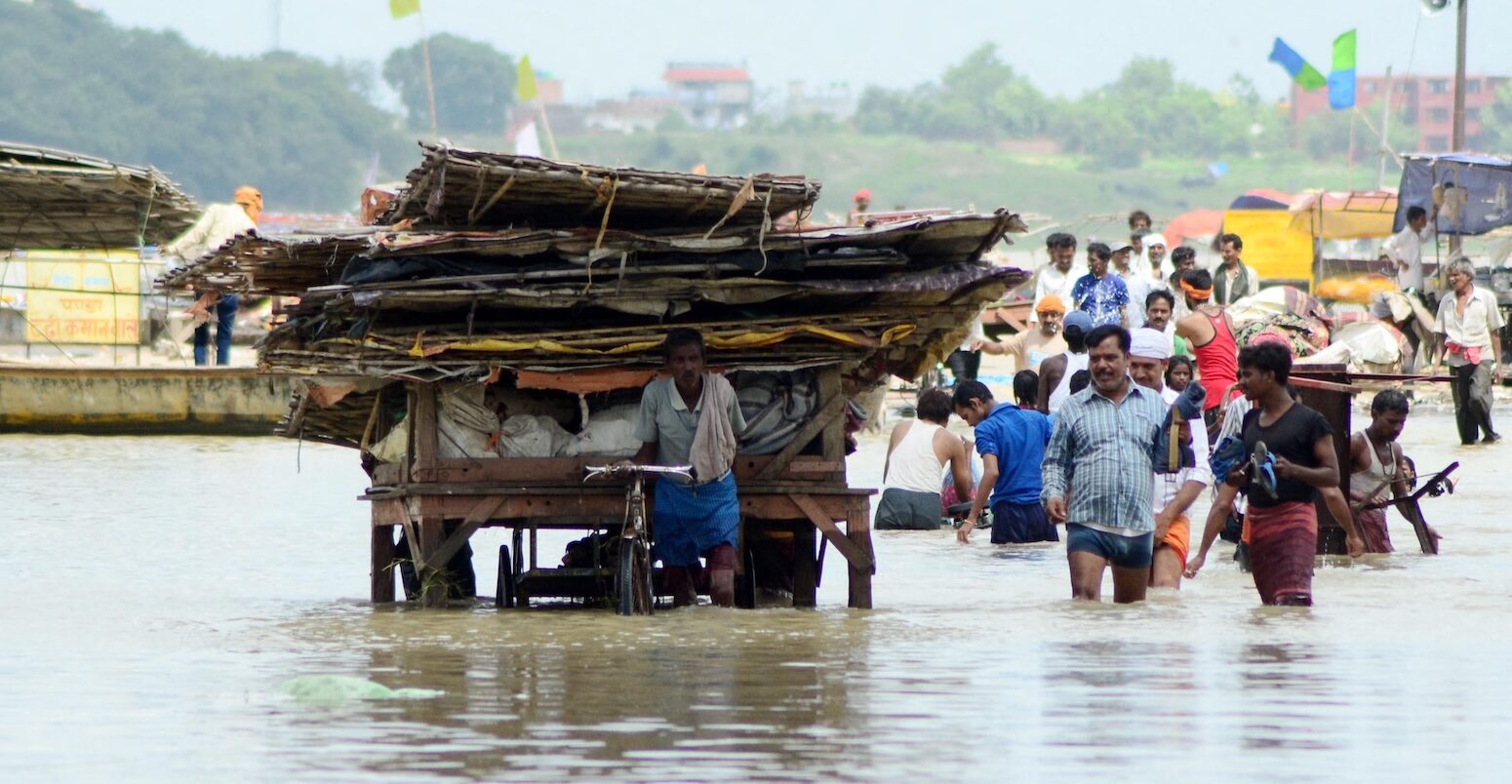
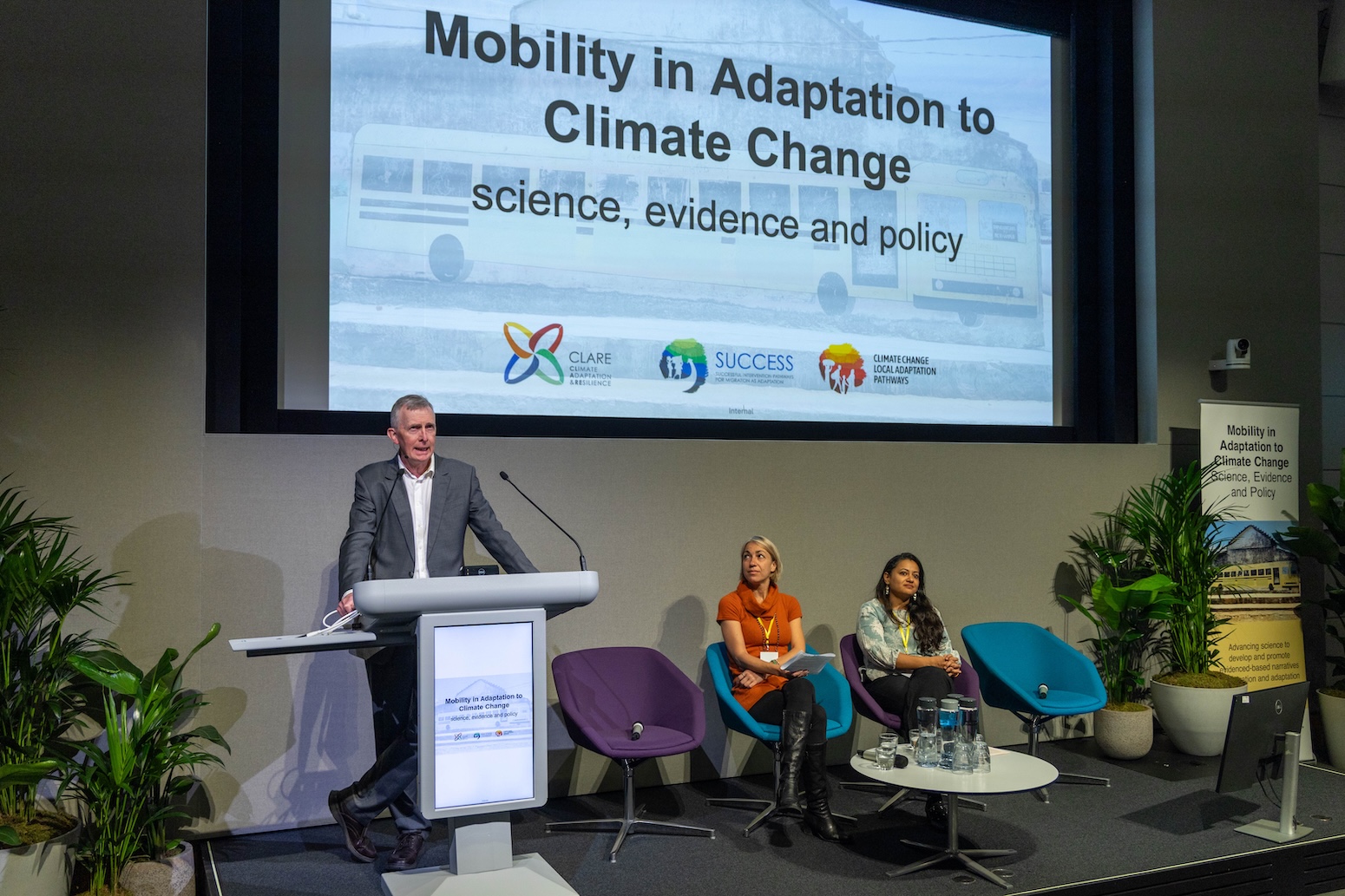
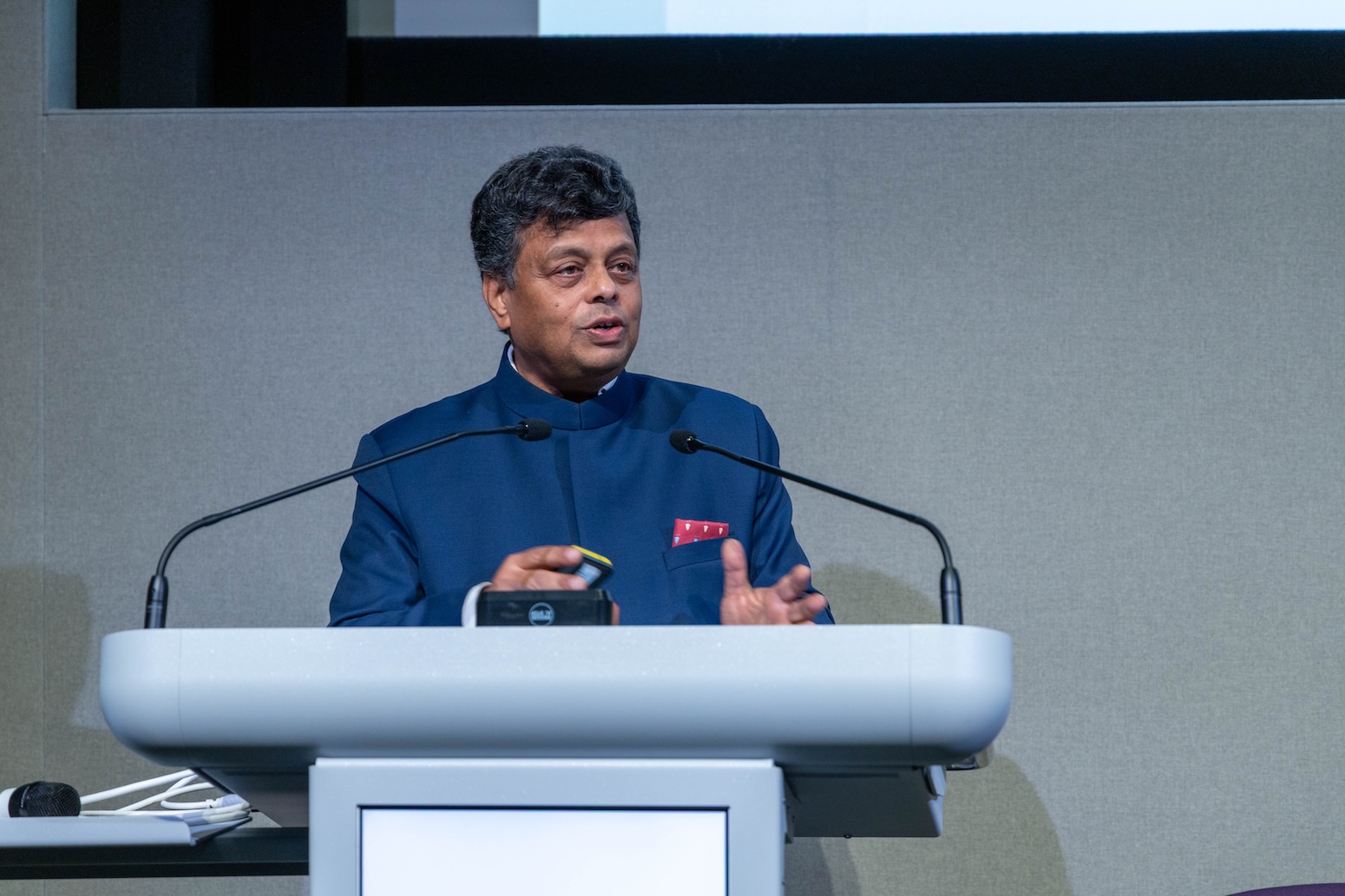
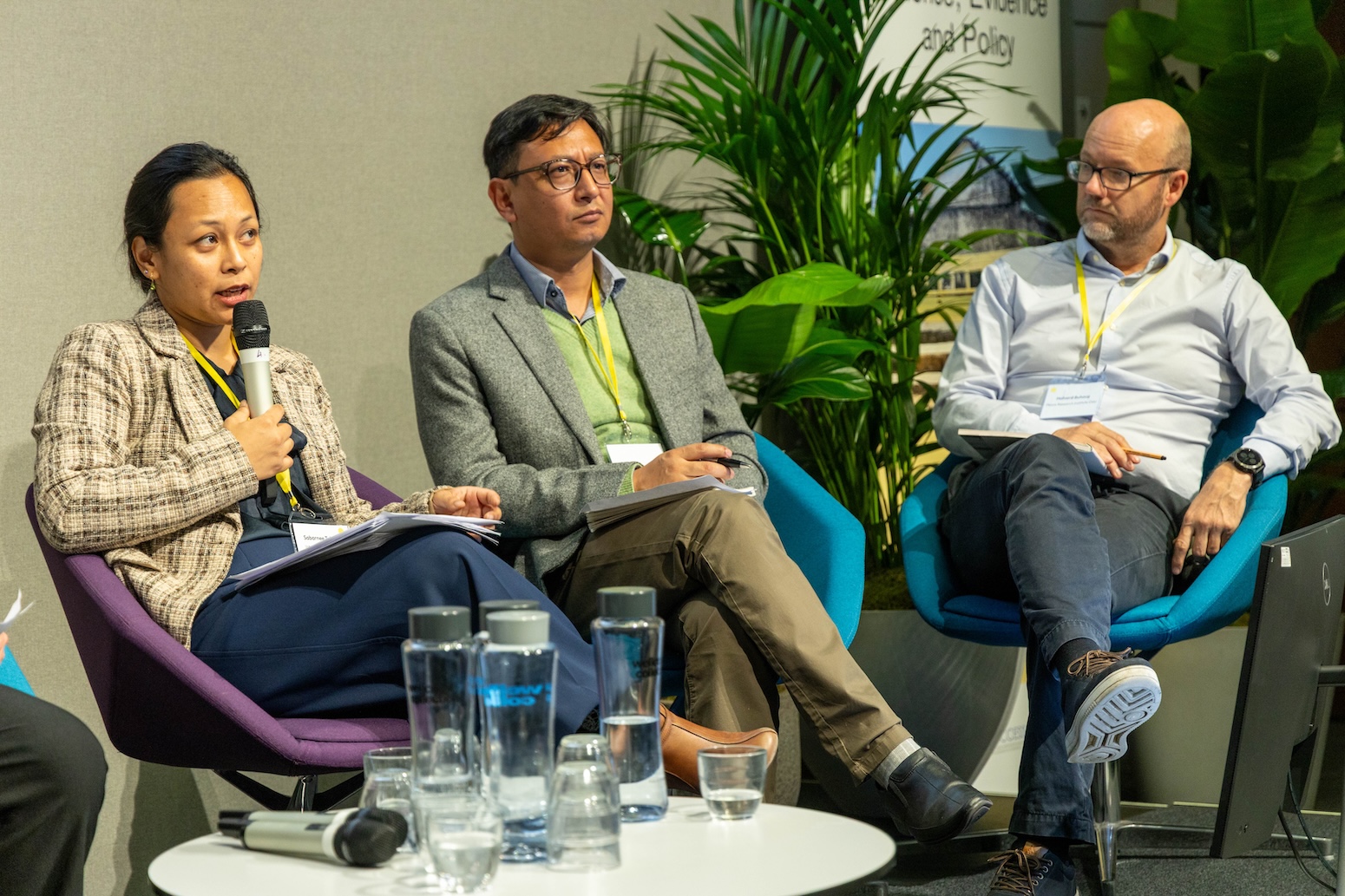
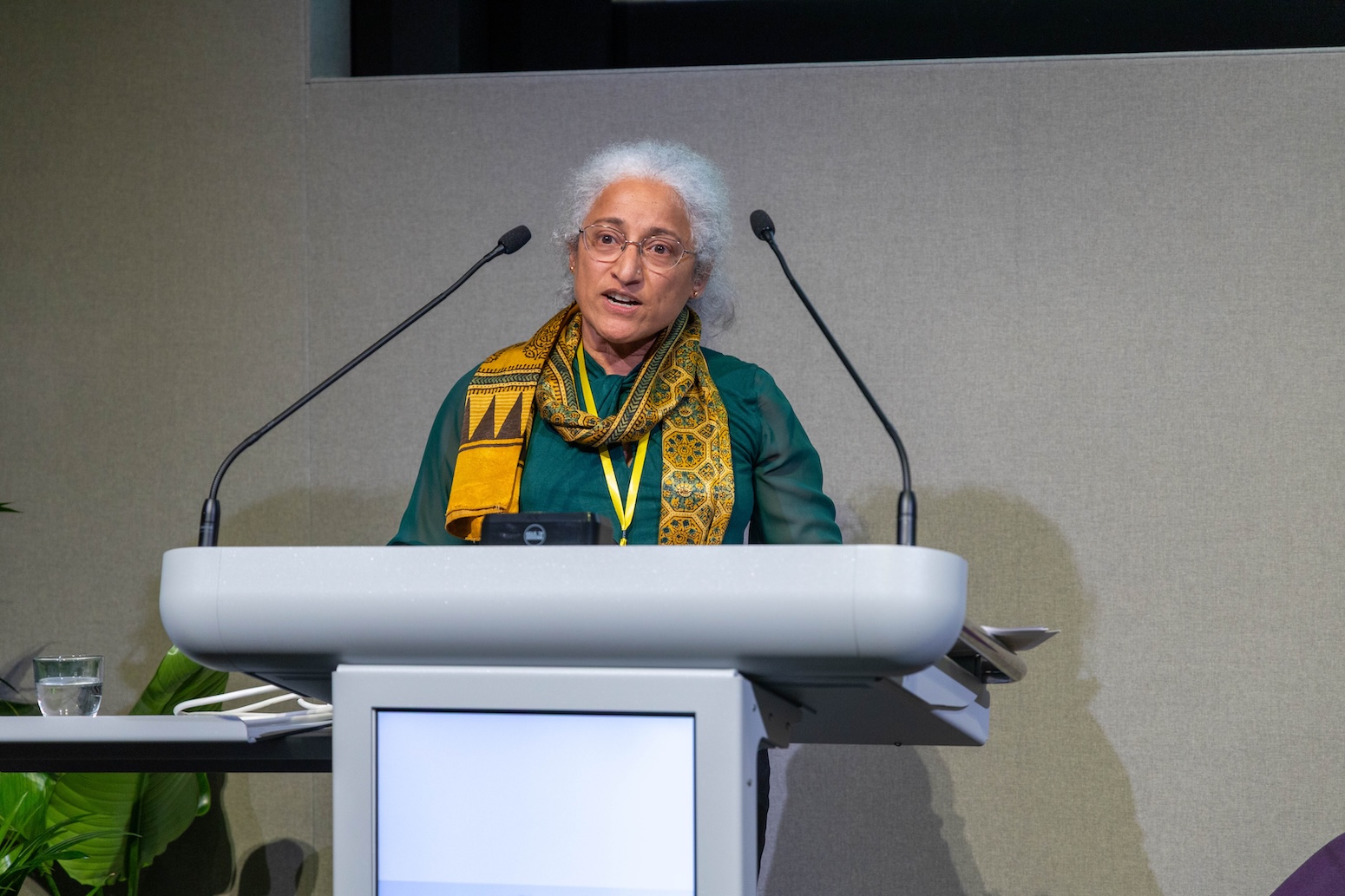
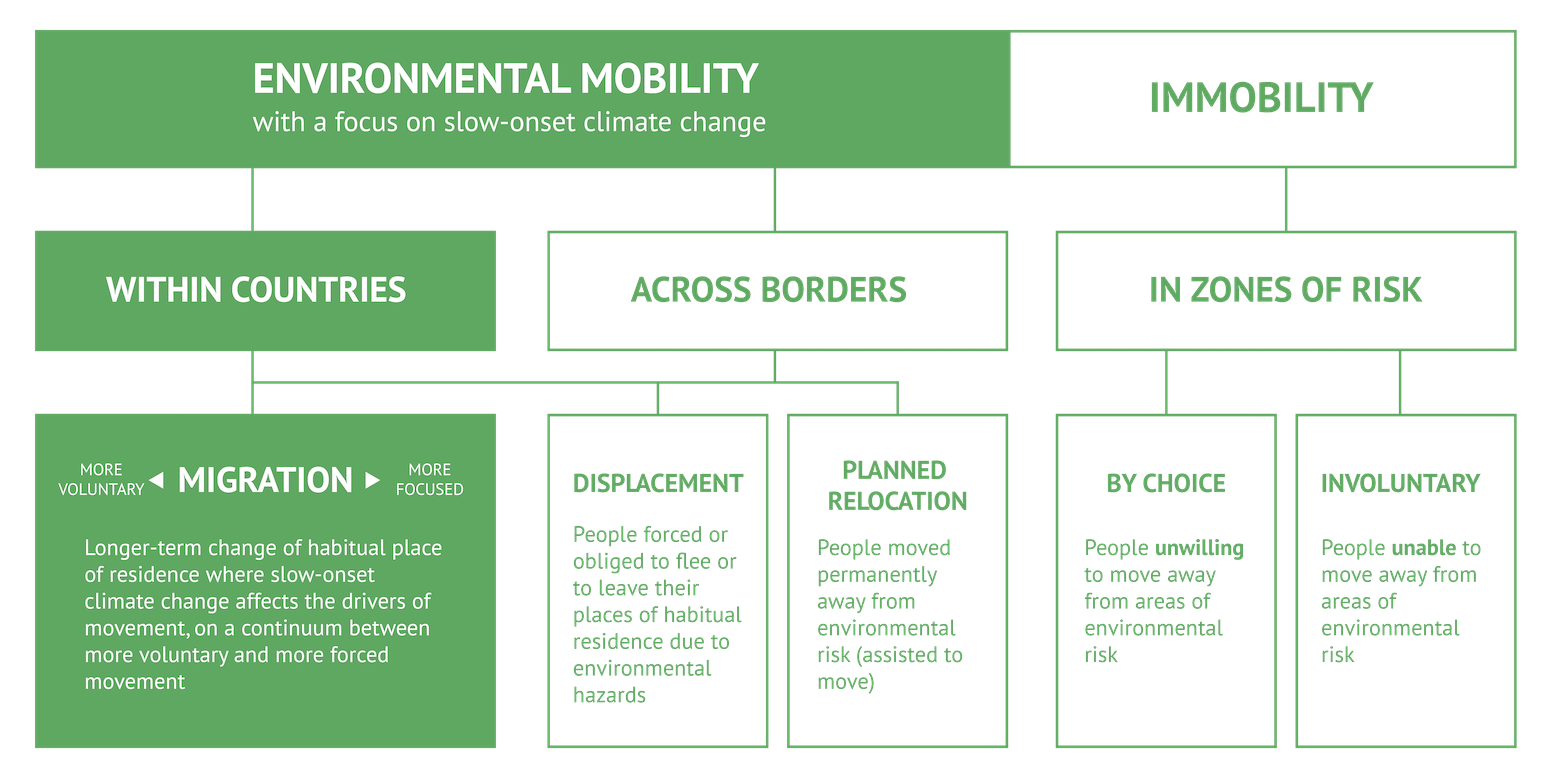
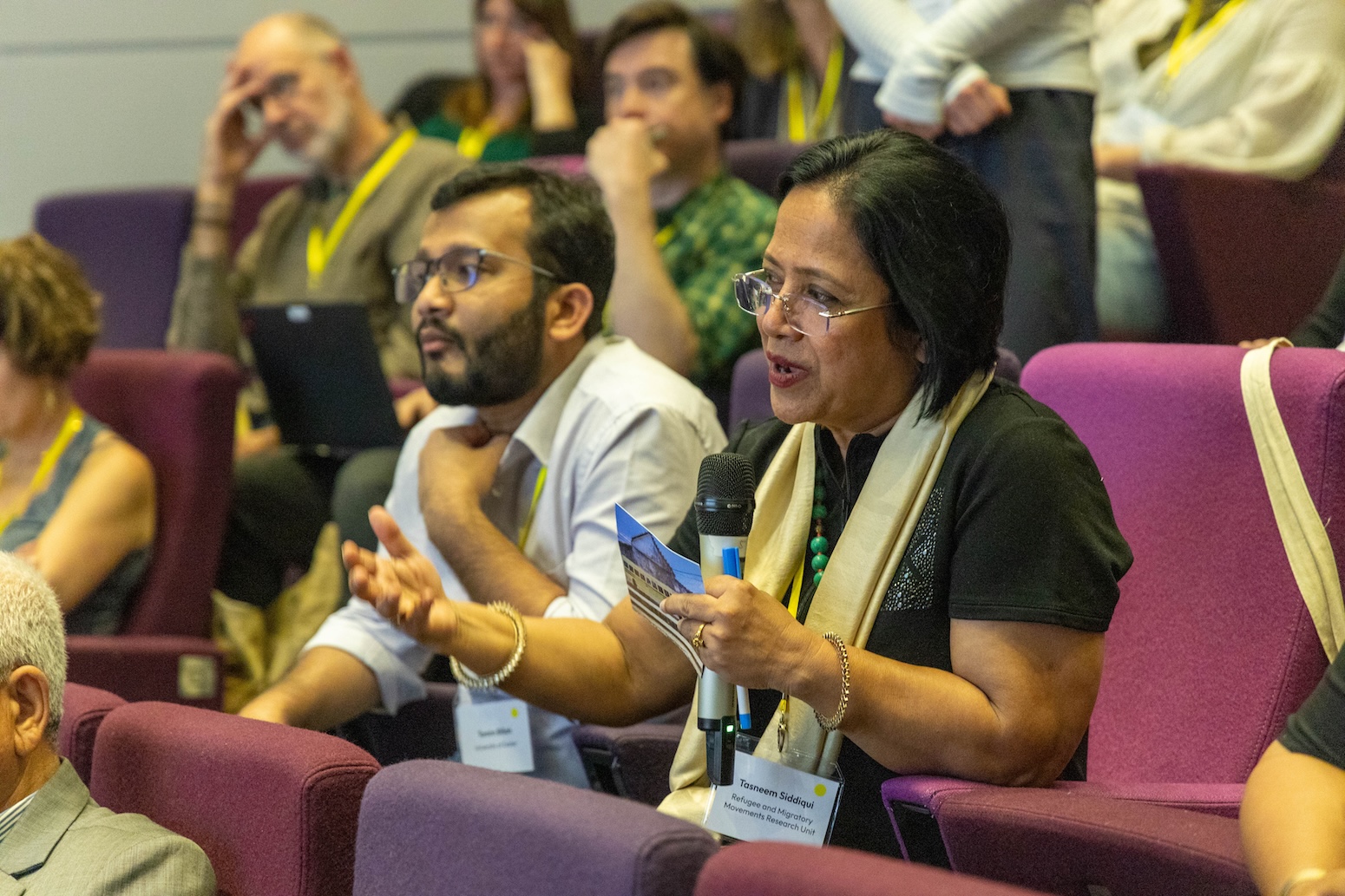
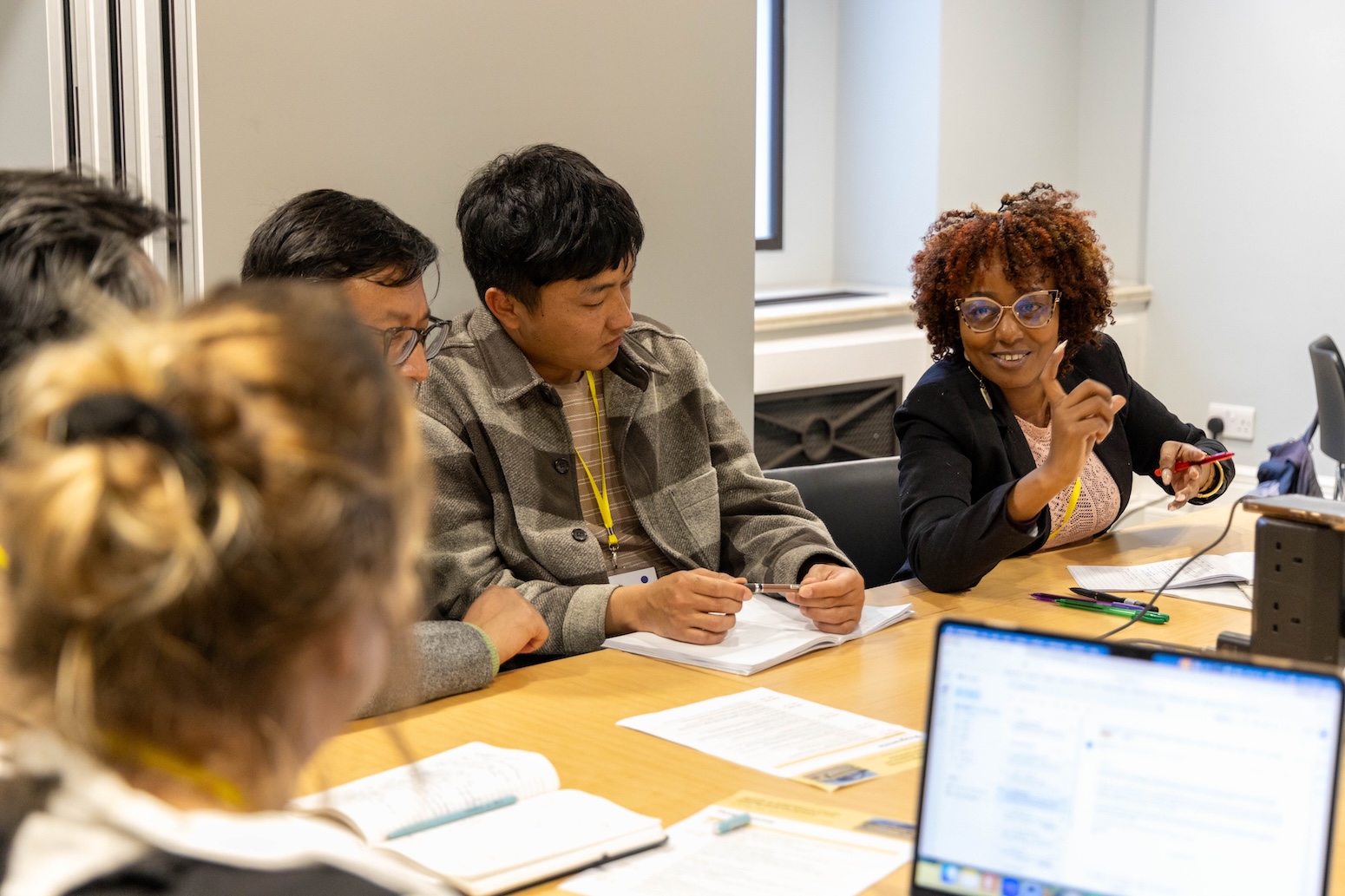
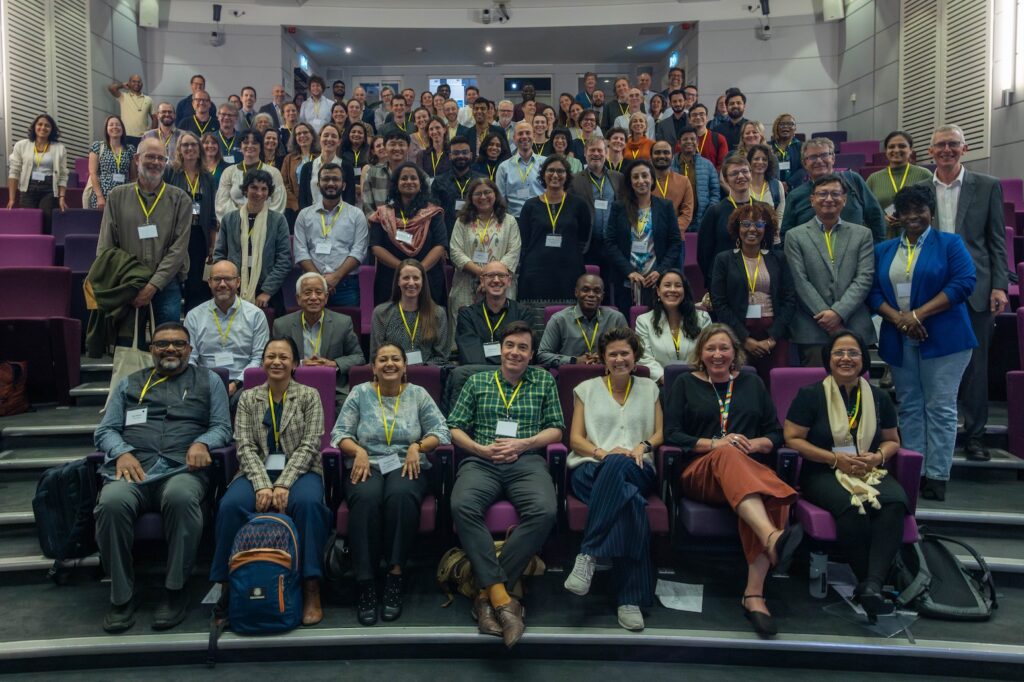

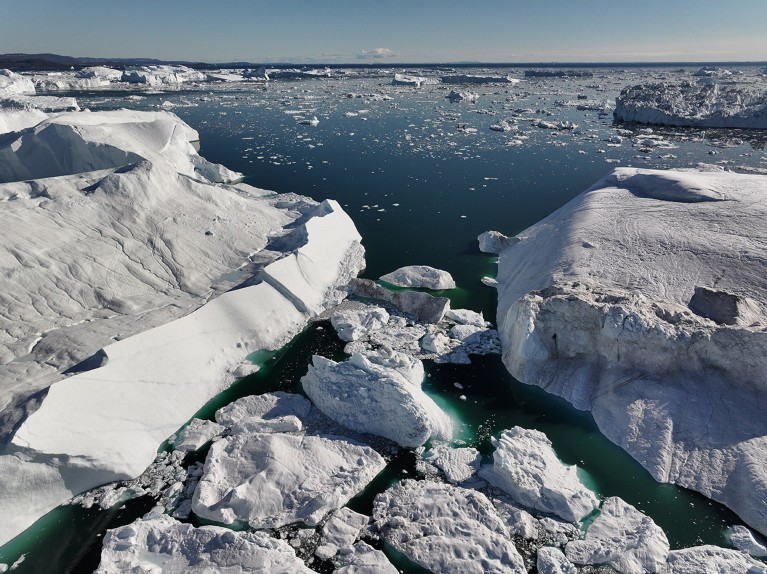



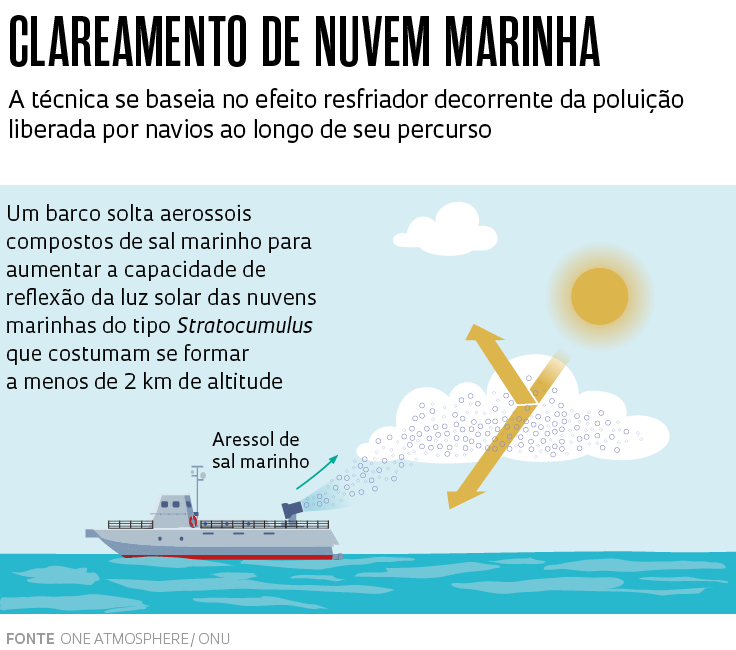

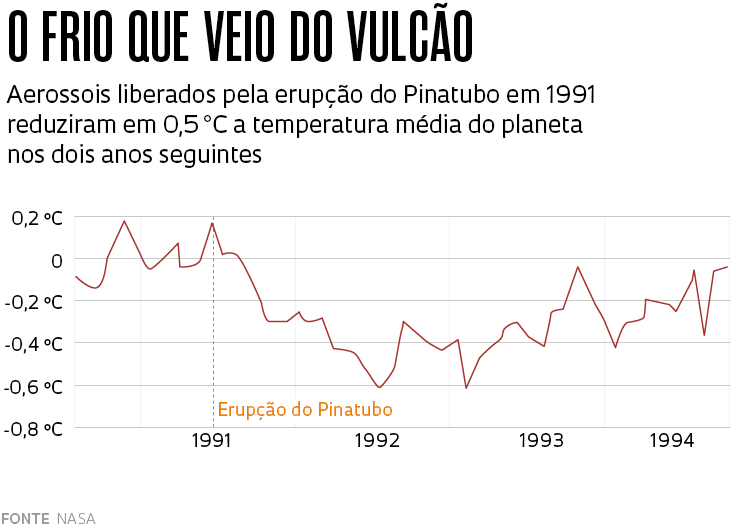
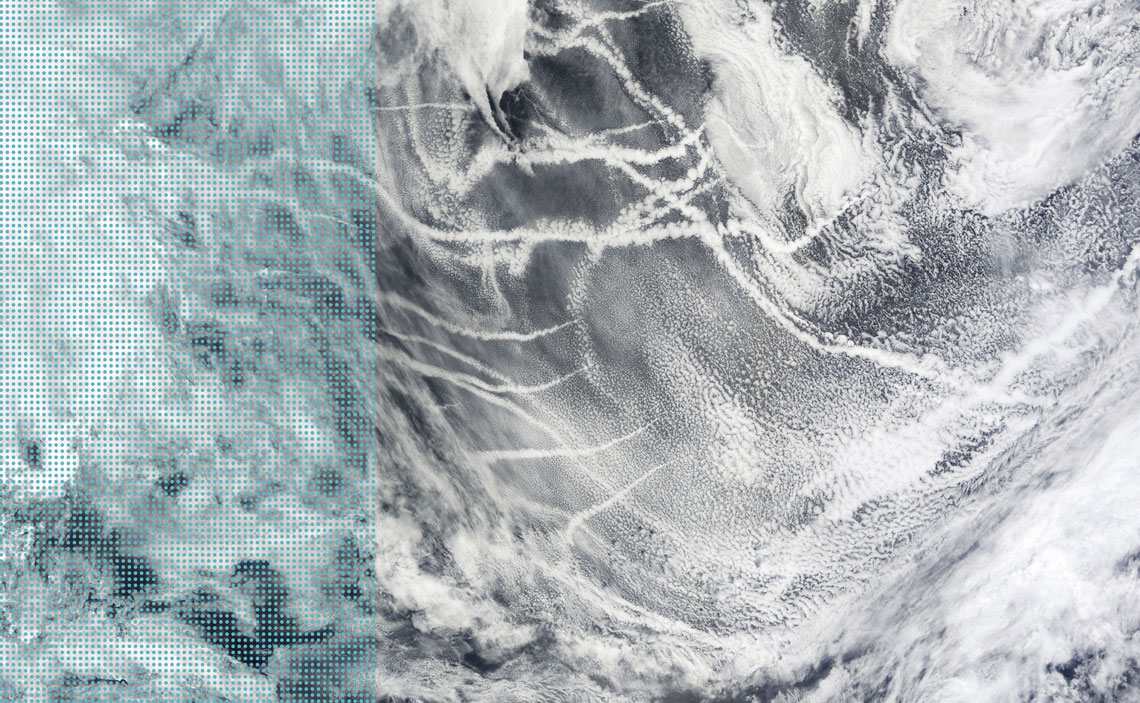





Você precisa fazer login para comentar.