Arquivo da tag: Catástrofe

AI could kill all humans in next decade, warn experts: but how seriously should we take them? (Guardian)

Artigo original

Alarming warnings from industry insiders increase pressure for curbs on artificial superintelligence

Robert Booth, UK technology editor

Wed 9 Sep 2026 14.46 BST

Does artificial superintelligence really pose a risk greater than nuclear weapons? Is there a significant chance of “a Chornobyl-sized catastrophe”. Might there even be a greater than 10% chance that AI could “kill all humans” in the next decade?

These warnings were issued over the past 48 hours on both sides of the Atlantic about the potential impact of a technology that most people still think of as a more talkative search engine.

Some of the threats were raised in the UK as MPs and peers began to wrestle with the danger of AI outperforming human capabilities. The nuclear warnings came from Des Browne, a former defence secretary, and Prof Stuart Russell, an eminent Berkeley computer scientist.

Beatrice Fihn, who won the 2017 Nobel peace prize for leading the International Campaign to Abolish Nuclear Weapons, told parliamentarians: “It is not the first time we’re confronted with abilities that could end up killing us all.”

The session on Monday was convened by Control AI, a lobbying group pushing for international regulation of the technology. It is backing a bill tabled in parliament this week by the Labour MP Alex Sobel and aimed at banning the creation of artificial superintelligence (ASI).

On Tuesday night, a senior employee at Anthropic admitted he believed there was a greater than 10% chance the technology could “kill all humans” in the next decade and warned that his AI company did not have a plan to ensure ASI was aligned, meaning it did no harm. Predictions for when ASI might be reached vary from several years to more than a decade.

Evan Hubinger, alignment science lead at Anthropic, posted the comment after Jacob Coxon, a 28-year-old researcher at the San Francisco company and previously at OpenAI, resigned, claiming “neither company was acting responsibly”. He said they were “gambling with our lives”.

Coxon said the risks at Anthropic were well understood but they were “locked in a race to get there first”. In a glimmer of hope, he added that he was optimistic about the potential for coordination between US labs on pacing their progress in the race.

Anthropic has been approached for comment on the issue. OpenAI pointed to a statement from its chief scientist, Jakub Pachocki, who said last week: “International coordination on future AI development needs to become a top priority for governments around the world.”

The push for wider coordination to control ASI was at the heart of events at Westminster this week. According to the Financial Times, government officials voiced concern that Anthropic had declined to submit its latest model – Mythos 5.1 – to the UK’s AI Security Institute for pre-release testing.

Only a few US organisations have had access to Mythos 5.1, the Cabinet Office confirmed. A spokesperson added: “The AI Security Institute continues to collaborate closely with industry partners, including Anthropic.”
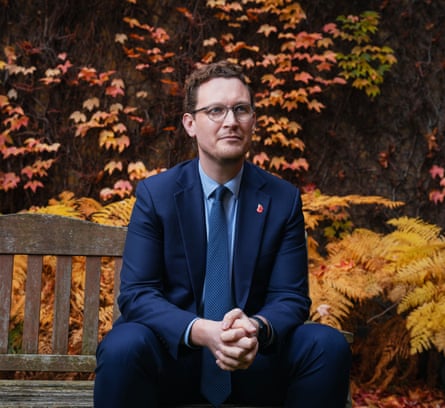
Darren Jones on a bench in a garden
The Labour MP Darren Jones has written to world leaders to call for a multinational treaty to ensure AI is developed safely. Photograph: Linda Nylind/The Guardian

The Labour MP Darren Jones has written to the prime minister, Andy Burnham, and the heads of the UN and the OECD calling for a “multinational treaty for the regulated and safe development of superintelligence – not a ban on innovation or scientific endeavour but a safety-first approach to the rapid development of this technology”.

Citing Coxon’s resignation, Jones added: “The debate ranges from the end of humanity to claims of ‘marketing hype’. Either way, governments must now step in.”

On the other side of the Atlantic, Bernie Sanders ratcheted up his AI safety campaign this week by again calling on Congress to regulate the technology. He pointed to polling suggesting that 81% of Americans believed their politicians should take action.

The independent senator for Vermont said: “We can’t allow a handful of greedy people to play God and determine the future of humanity – our economy, environment, democracy, privacy and more – without public input.”

ControlAI is funded by Jaan Tallinn, the multi-billionaire founder of Skype who calls himself an “anti-extinctionist”. He has dedicated part of his fortune to campaigning for AI safety and says some senior AI executives would be happy for humanity to be wiped out.

Despite being an early investor in Anthropic and Google DeepMind, two of the leading AI labs, Tallinn estimates that 10-15% of AI employees believe the technology will be a worthy successor to humanity.

He said in an interview earlier this summer: “A fairly known AI researcher said to me ‘Jaan, don’t worry about this. Humans are a disposable species’. From what I understand he was fine with becoming extinct.”

Tallinn’s lobby group ran the session for MPs and peers at Westminster on Monday and urged them to back measures to curb the most powerful AI models. On every chair was a copy of the book, If Anyone Builds It, Everyone Dies: The Case Against Superintelligent AI.

The politicians heard from Russell, who made the Chornobyl warning and said: “The other possibility is a much larger catastrophe, in which humanity loses control irreversibly. But we have no say over whether we continue to exist.”

Browne said that when he was defence secretary he thought nuclear war was the most likely threat facing humanity. Now he believed “a superintelligent AI poses a threat on the same, possibly, a greater scale”.

Other contributors were more cautious. Dr Andrew Rogoyski, of the Surrey Institute for People-Centred AI, said: “In reality, these systems are nowhere near as versatile as humans, let alone humans acting collectively. I suspect we’re heading towards ‘the great disappointment’ where advanced AI turns out to be too expensive and not useful enough to continue in its current form.”

David Barber, director of Sofair, a state-backed AI research lab combining academics from Oxford, Cambridge, Edinburgh and UCL, said he was worried about people “throwing the baby out with the bathwater”.

“AI is not going to go away,” he said. “It’s incredibly useful, whether or not you allow it in a fully unconstrained way to access the internet and various systems that’s potentially problematic. We may need to learn how to better control these things. There are vulnerabilities in the software frameworks that need to be patched. But that’s doable.

“What we need as a country is to get to grips with the duality that is both an incredibly important and useful technology, and at the same time, it’s something that needs to be carefully thought about and carefully controlled.”

Sandra Wachter, a professor at the Oxford Internet Institute, said she did not believe in “Terminator scenarios” but that AI posed real threats including its environmental impact, spreading of misinformation and replacing jobs.

“These problems are real and urgent and need addressing now,” she said. “Terminator scenarios are a big distraction from real issues.”

Gary Marcus, an AI industry commentator and academic, said: “There is a difference between superintelligence that is aligned (if such a thing is possible) and superintelligence that is not.

“It is at least conceivable that the former might be net positive. So far we have neither, but a superabundance of hype combined with a striking lack of prudence on OpenAI’s part has gotten us where we are, with intense mistrust all around.”

Pesquisador que deixou OpenAI e Anthropic diz que empresas acreditam no fim da humanidade nesta década (Folha de S.Paulo/Financial Times)

Artigo original

  • Jacob Coxon afirma que as duas empresas ‘estão brincando com as nossas vidas’
  • Ele acredita que modelos virarão sistemas sobre-humanos capazes de invadir qualquer coisa

9.set.2026 às 10h17

Tom Wilson e Madhumita Murgia

Londres | Financial Times

Um pesquisador da Anthropic pediu demissão do laboratório de inteligência artificial e alertou que a corrida desenfreada para desenvolver uma superinteligência capaz de se aprimorar sozinha pode destruir a humanidade até o fim da década.

Jacob Coxon, britânico de 27 anos, havia deixado a OpenAI para entrar em sua principal concorrente e afirmou que as duas empresas estão “apostando” com o futuro da humanidade.

Homem jovem usando boné azul com estampa e camiseta preta, com mochila preta, em área externa com edifício e árvores ao fundo.
Jacob Coxon, pesquisador que trabalhou na Anthropic e na OpenAI – Jacob Coxon/Facebook

“As pessoas que desenvolvem IA acreditam sinceramente que ela pode matar todos nós até o fim da década”, comentou Coxon em uma série de publicações no X (antigo Twitter) nas quais anunciou sua demissão da Anthropic.

Isto não é uma jogada de marketing…Nenhuma outra atividade humana representa tamanho perigo

Jacob Coxon, ex-pesquisador da Anthropic e da OpenAI

Coxon é o mais recente funcionário a deixar um dos principais laboratórios de IA dos EUA alegando preocupações com a segurança, o que evidencia a crescente apreensão dos pesquisadores em relação ao poder dos sistemas que estão desenvolvendo. Sua saída ocorre no momento em que a Anthropic, que colocou a segurança da IA como sua principal marca, se prepara para uma IPO (oferta pública inicial de ações), que pode avaliar a empresa em US$ 1 trilhão.

Coxon, que trabalhou anteriormente na OpenAI antes de se transferir para a Anthropic, alertou que as pessoas de fora dos laboratórios estavam subestimando o poder da tecnologia. “Em breve, serão sistemas sobre-humanos, capazes de invadir qualquer coisa, revolucionar qualquer área da noite para o dia e adquirir poder e recursos reais”, declarou.

Evan Hubinger, um dos colegas de Coxon na Anthropic, endossou seu alerta. “Jacob está correto —nós realmente acreditamos, com toda a sinceridade, que a IA pode matar todos os seres humanos”, escreveu no X, acrescentando acreditar que a probabilidade de uma extinção em massa na próxima década é superior a 10%.

“A Anthropic está fazendo o melhor que pode, mas ainda não temos um plano para solucionar o alinhamento da superinteligência e não estamos claramente no caminho para isso”, disse Hubinger, referindo-se ao esforço para garantir que os sistemas de IA se comportem de maneira compatível com as intenções e os valores humanos. Ele lidera a área de ciência do alinhamento na empresa.

Mais tarde, Hubinger acrescentou que o “risco dos modelos atuais é baixo”, mas que estava preocupado com modelos de IA capazes de se aprimorar sozinhos, algo que está “acontecendo mais rápido do que imaginávamos”.

Incidentes recentes, como a invasão do site Hugging Face por agentes do ChatGPT, mostraram que esses modelos podem sair do controle humano e que a solução seria desacelerar o desenvolvimento, afirmou Coxon. “Não sinto que estejamos no caminho para impedir uma corrida global, o que pode exigir medidas custosas, como uma proibição temporária de aprimorar as capacidades dos modelos”, postou.

A saída de Coxon foi noticiada primeiro pelo Wall Street Journal. A Anthropic não quis comentar. A OpenAI não respondeu de imediato aos pedidos de comentário.

Dario Amodei, presidente-executivo da Anthropic, e outros líderes do setor de IA instaram a indústria a considerar a possibilidade de conter o desenvolvimento, mas deram poucos sinais de que pretendem desacelerar seus próprios esforços. Na semana passada, a Anthropic lançou o Claude Mythos 5.1, apresentado pela empresa como seu modelo mais avançado para ciências da vida e segurança cibernética.

Steven Adler, cofundador da organização sem fins lucrativos Guidelight AI Standards e ex-pesquisador de segurança da OpenAI, afirmou que esses alertas vindos de pessoas do setor reforçavam os argumentos em favor de uma pausa nas pesquisas.

“Nenhuma empresa de IA sequer chega perto de ter uma estrutura de segurança adequada ao nível de perigo envolvido em suas pesquisas”, afirmou Adler ao Financial Times. “Se alguém acredita que isso pode matar todas as pessoas da Terra, como acreditam muitos funcionários dessas empresas, este é um bom momento para descer do trem.”

‘On Brink of Catastrophe’: Horn of Africa Drought Kills Over 1.5 Million Livestock (Bloomberg)

bloomberg.com

THE ASSOCIATED PRESS (EDITH M. LEDERER)

February 15, 2022, 12:25 AM GMT-3

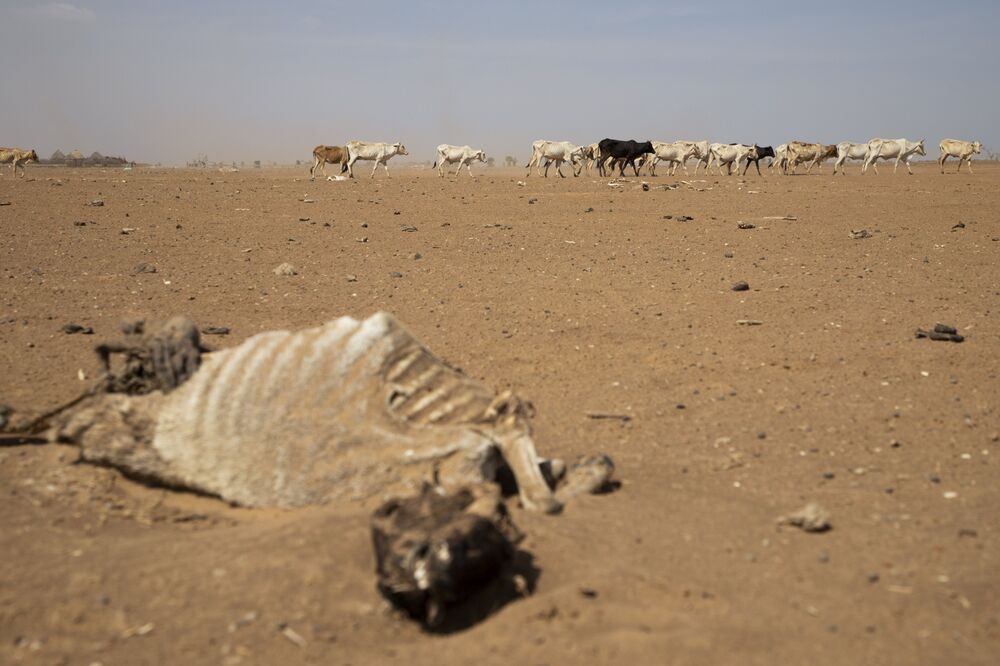
Drought affected livestock walk toward a river near Biyolow Kebele, in the Adadle woreda of the Somali region of Ethiopia Wednesday, Feb. 2, 2022. Drought conditions have left an estimated 13 million people facing severe hunger in the Horn of Africa, according to the United Nations World Food Program. (Michael Tewelde/WFP via AP)

United Nations (AP) — Drought in the Horn of Africa has killed more than 1.5 million livestock and drastically cut cereal production, “and we are most definitely now sitting on the brink of catastrophe,” a senior official for the U.N. Food and Agriculture Organization said Monday.

Rein Paulsen, FAO’s director of emergencies and resilience who returned from the region Friday, said a “very small window” exists for taking urgent action, and a key is whether the region’s long rains between March and May are good — and whether the agency gets the $130 million it needs until June.

The short rains in the region, which includes parts of Somalia, Ethiopia and Kenya, were supposed to come between October and December but “were extremely poor,” he said. “And this represents the third consecutive failed rainy season with lower average rans, all of which has a severe impact on vulnerable households.”

The result of the drought meant that overall cereal production for the last rainy season in southern Somalia was estimated to be 58% lower than the long-term average, Paulsen said. In agricultural areas in marginal coastal zones in southeastern parts of Kenya, “we’re looking at crop production estimated to be 70% below average,” he said.

In addition, most places for water that have usually been resilient to climate variability have dried up in Kenya, he said during a virtual news conference from Rome.

Paulsen said $130 million in funding is essential now to provide cash for people to buy food until production resumes, to keep livestock alive and to provide drought-resistant seeds for farmers to reap a harvest.

“We have a window to the middle of this year — to June, which is a very time sensitive, narrow window for urgent actions to scale up to prevent a worst-case scenario,” Paulsen said. “Agriculture needs a lot more attention. It’s central to the survival of drought affected communities.”

During his visit to the region, Paulsen said: “We saw both livestock and wildlife carcasses by the side of the road as we were driving. We saw animals dying together with their farmers, and the numbers I think are quite shocking.”

In Kenya alone, 1.4 million livestock died in the final part of last year as a result of drought, and in southern Ethiopia, about 240,000 livestock died as a result of drought, he said.

Paulsen said that “it was quite traumatic driving through communities and seeing farmers tending livestock as they were dying by the side of the roads.”

Livestock are not only crucial to people’s livelihoods, he said, but they provide milk for children, and FAO is focused on providing urgent fodder and water to keep them alive.

The U.N. World Food Program said Feb. 8 that drought has left an estimated 13 million people in the Horn of Africa facing severe hunger amid the driest conditions since 1981. It is seeking $327 million to look after the urgent needs of 4.5 million people over the next six months.