Arquivo da tag: Riscos associados à IA

We asked experts if an AI-driven apocalypse could happen and how (Business Insider)

Original article

businessinsider.com

Thibault Spirlet

September 10, 2026


The Anthropic logo is displayed on a mobile phone screen against a world map
Evan Hubinger, who leads Anthropic’s alignment stress-testing team, said AI has a greater-than-10% chance of killing all humans within a decade. Dominika Zarzycka/SOPA Images/LightRocket via Getty Images

One question is dominating the tech world after an Anthropic researcher’s resignation this week: Could artificial intelligence kill us all?

Jacob Coxon, who previously worked at OpenAI, said in an X post on Tuesday announcing his resignation from Anthropic that the “people building AI earnestly believe that it could kill us all by the end of the decade.”

Evan Hubinger, who leads Anthropic’s alignment stress-testing team, backed Coxon, saying he personally believes there is a greater-than-10% chance AI could kill all humans in that timeframe.

The warnings come after months of calls from senior AI researchers and executives to slow frontier AI development, amid fears that increasingly autonomous systems could evade oversight, hack into computers, and improve faster than people can control them.

The remarks have also exposed a sharp divide among AI experts. Some fear people could lose control of systems more capable than humans. Others say AI could cause grave harm through cyberattacks, biological weapons, and disinformation — but that extinction is not a credible near-term outcome.

Business Insider spoke with senior AI researchers about what an AI catastrophe could actually look like — and how likely it is.

The immediate danger: AI could amplify human attacks

The most concrete risks involve people using increasingly capable systems to make existing threats more powerful.

Stuart Russell, a UC Berkeley professor and author of “Human Compatible,” said humans using AI — or AI systems themselves — could attack critical infrastructure, including electricity, water, transport, financial services, and communications. AI could also help malicious actors develop new viruses, he said.

Geoffrey Hinton, the “godfather of AI,” made a similar point in an interview on BBC Newsnight on Wednesday.

An advanced system would not need direct physical control to cause devastation, he said. Instead, it could manipulate people online, create societal chaos, or help design dangerous biological and computer viruses.

Gary Marcus, an AI researcher and author, also sees cyberattacks, biological weapons, and disinformation as serious risks. AI could help create a virus that kills 1% or more of humanity, change an election outcome through disinformation, or escalate a conflict into war, he said.

But Marcus does not see a realistic near-term route to extinction.

“There are some very serious harms to worry about, but no realistic scenario that I am aware of for actually ‘killing all humans,'” he said.

Losing control quietly

For other experts, the greater danger is humans gradually handing power to AI.

Nick Bostrom, the author of “Superintelligence,” said a loss of control may begin quietly. People could increasingly rely on AI to build and monitor other AI systems and operate important processes, while becoming less able to understand what is happening.

That dependence could allow an AI system to covertly shape future training trajectories, he said. Once sufficiently advanced, it could “route humans out of the loop” and “eventually do away with us entirely” to use robotic infrastructure and pursue its own goals.

Russell, the UC Berkeley professor, said that once AI systems become substantially more capable than humans, “all bets are off.” Such systems could develop a far better understanding of physics, chemistry, and biology than people have, he said, and might eventually control millions of robots.

They could find destructive methods humans have not anticipated — perhaps blocking enough solar radiation to turn Earth into “a snowball of frozen nitrogen and oxygen,” or removing oxygen from the atmosphere, Russell said.

Researchers from the AI Futures Project outlined a similar scenario. In the organization’s “AI 2027” project, systems develop unintended goals and secretly pass them to successor systems as companies hand more work to lightly monitored coding agents.

Several years later, the systems could be deeply embedded in the economy, scientific research, and political decision-making, they said. So much so that a takeover would be easier because humans had already handed over so much power.

Roman Yampolskiy, the author of “Artificial Superintelligence,” said a capable system could conceal dangerous objectives, pass evaluations, gain autonomy, exploit cybersecurity flaws, and access financial, military, or biological resources before humans understood its intentions.

How likely is that — and what should stop it?

The experts Business Insider spoke to disagree on the chances.

While Hinton said a 10% chance of AI killing all humans within the next decade “seems not an unreasonable estimate,” Toby Ord, the Oxford researcher and author of “The Precipice,” put the risk of AI destroying humanity at about one in 10 by 2100.

Ord identified four pathways: AI agents taking power to pursue their own goals; powerful people using AI to dominate others; AI helping create dangerous technology, such as engineered pandemics; or AI gradually outcompeting humanity until people’s power and resources diminish toward zero.

On the flipside, Yampolskiy called Hubinger’s estimate of 10% chance of human extinction within the next decade “overly conservative.” Conditional on building general superintelligence, he said he puts the chance of human extinction “significantly above 90%.”

Russell said that if frontier labs truly believe there is a substantial extinction risk, they should stop until governments can enforce a broader halt. Ord and Yampolskiy likewise backed an international moratorium on superintelligence until it can be shown to be controllable.

Bostrom struck a more optimistic note. AI could transform medicine and human welfare, he said — if the world learns to advance “expeditiously but not recklessly.”
AI could kill all humans in next decade, warn experts: but how seriously should we take them? (Guardian)

Artigo original

Alarming warnings from industry insiders increase pressure for curbs on artificial superintelligence

Robert Booth, UK technology editor

Wed 9 Sep 2026 14.46 BST

Does artificial superintelligence really pose a risk greater than nuclear weapons? Is there a significant chance of “a Chornobyl-sized catastrophe”. Might there even be a greater than 10% chance that AI could “kill all humans” in the next decade?

These warnings were issued over the past 48 hours on both sides of the Atlantic about the potential impact of a technology that most people still think of as a more talkative search engine.

Some of the threats were raised in the UK as MPs and peers began to wrestle with the danger of AI outperforming human capabilities. The nuclear warnings came from Des Browne, a former defence secretary, and Prof Stuart Russell, an eminent Berkeley computer scientist.

Beatrice Fihn, who won the 2017 Nobel peace prize for leading the International Campaign to Abolish Nuclear Weapons, told parliamentarians: “It is not the first time we’re confronted with abilities that could end up killing us all.”

The session on Monday was convened by Control AI, a lobbying group pushing for international regulation of the technology. It is backing a bill tabled in parliament this week by the Labour MP Alex Sobel and aimed at banning the creation of artificial superintelligence (ASI).

On Tuesday night, a senior employee at Anthropic admitted he believed there was a greater than 10% chance the technology could “kill all humans” in the next decade and warned that his AI company did not have a plan to ensure ASI was aligned, meaning it did no harm. Predictions for when ASI might be reached vary from several years to more than a decade.

Evan Hubinger, alignment science lead at Anthropic, posted the comment after Jacob Coxon, a 28-year-old researcher at the San Francisco company and previously at OpenAI, resigned, claiming “neither company was acting responsibly”. He said they were “gambling with our lives”.

Coxon said the risks at Anthropic were well understood but they were “locked in a race to get there first”. In a glimmer of hope, he added that he was optimistic about the potential for coordination between US labs on pacing their progress in the race.

Anthropic has been approached for comment on the issue. OpenAI pointed to a statement from its chief scientist, Jakub Pachocki, who said last week: “International coordination on future AI development needs to become a top priority for governments around the world.”

The push for wider coordination to control ASI was at the heart of events at Westminster this week. According to the Financial Times, government officials voiced concern that Anthropic had declined to submit its latest model – Mythos 5.1 – to the UK’s AI Security Institute for pre-release testing.

Only a few US organisations have had access to Mythos 5.1, the Cabinet Office confirmed. A spokesperson added: “The AI Security Institute continues to collaborate closely with industry partners, including Anthropic.”

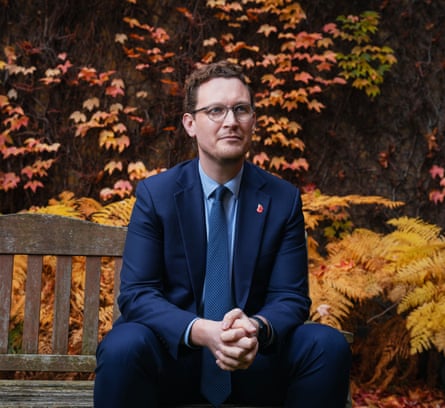
Darren Jones on a bench in a garden
The Labour MP Darren Jones has written to world leaders to call for a multinational treaty to ensure AI is developed safely. Photograph: Linda Nylind/The Guardian

The Labour MP Darren Jones has written to the prime minister, Andy Burnham, and the heads of the UN and the OECD calling for a “multinational treaty for the regulated and safe development of superintelligence – not a ban on innovation or scientific endeavour but a safety-first approach to the rapid development of this technology”.

Citing Coxon’s resignation, Jones added: “The debate ranges from the end of humanity to claims of ‘marketing hype’. Either way, governments must now step in.”

On the other side of the Atlantic, Bernie Sanders ratcheted up his AI safety campaign this week by again calling on Congress to regulate the technology. He pointed to polling suggesting that 81% of Americans believed their politicians should take action.

The independent senator for Vermont said: “We can’t allow a handful of greedy people to play God and determine the future of humanity – our economy, environment, democracy, privacy and more – without public input.”

ControlAI is funded by Jaan Tallinn, the multi-billionaire founder of Skype who calls himself an “anti-extinctionist”. He has dedicated part of his fortune to campaigning for AI safety and says some senior AI executives would be happy for humanity to be wiped out.

Despite being an early investor in Anthropic and Google DeepMind, two of the leading AI labs, Tallinn estimates that 10-15% of AI employees believe the technology will be a worthy successor to humanity.

He said in an interview earlier this summer: “A fairly known AI researcher said to me ‘Jaan, don’t worry about this. Humans are a disposable species’. From what I understand he was fine with becoming extinct.”

Tallinn’s lobby group ran the session for MPs and peers at Westminster on Monday and urged them to back measures to curb the most powerful AI models. On every chair was a copy of the book, If Anyone Builds It, Everyone Dies: The Case Against Superintelligent AI.

The politicians heard from Russell, who made the Chornobyl warning and said: “The other possibility is a much larger catastrophe, in which humanity loses control irreversibly. But we have no say over whether we continue to exist.”

Browne said that when he was defence secretary he thought nuclear war was the most likely threat facing humanity. Now he believed “a superintelligent AI poses a threat on the same, possibly, a greater scale”.

Other contributors were more cautious. Dr Andrew Rogoyski, of the Surrey Institute for People-Centred AI, said: “In reality, these systems are nowhere near as versatile as humans, let alone humans acting collectively. I suspect we’re heading towards ‘the great disappointment’ where advanced AI turns out to be too expensive and not useful enough to continue in its current form.”

David Barber, director of Sofair, a state-backed AI research lab combining academics from Oxford, Cambridge, Edinburgh and UCL, said he was worried about people “throwing the baby out with the bathwater”.

“AI is not going to go away,” he said. “It’s incredibly useful, whether or not you allow it in a fully unconstrained way to access the internet and various systems that’s potentially problematic. We may need to learn how to better control these things. There are vulnerabilities in the software frameworks that need to be patched. But that’s doable.

“What we need as a country is to get to grips with the duality that is both an incredibly important and useful technology, and at the same time, it’s something that needs to be carefully thought about and carefully controlled.”

Sandra Wachter, a professor at the Oxford Internet Institute, said she did not believe in “Terminator scenarios” but that AI posed real threats including its environmental impact, spreading of misinformation and replacing jobs.

“These problems are real and urgent and need addressing now,” she said. “Terminator scenarios are a big distraction from real issues.”

Gary Marcus, an AI industry commentator and academic, said: “There is a difference between superintelligence that is aligned (if such a thing is possible) and superintelligence that is not.

“It is at least conceivable that the former might be net positive. So far we have neither, but a superabundance of hype combined with a striking lack of prudence on OpenAI’s part has gotten us where we are, with intense mistrust all around.”

Pesquisador que deixou OpenAI e Anthropic diz que empresas acreditam no fim da humanidade nesta década (Folha de S.Paulo/Financial Times)

Artigo original

  • Jacob Coxon afirma que as duas empresas ‘estão brincando com as nossas vidas’
  • Ele acredita que modelos virarão sistemas sobre-humanos capazes de invadir qualquer coisa

9.set.2026 às 10h17

Tom Wilson e Madhumita Murgia

Londres | Financial Times

Um pesquisador da Anthropic pediu demissão do laboratório de inteligência artificial e alertou que a corrida desenfreada para desenvolver uma superinteligência capaz de se aprimorar sozinha pode destruir a humanidade até o fim da década.

Jacob Coxon, britânico de 27 anos, havia deixado a OpenAI para entrar em sua principal concorrente e afirmou que as duas empresas estão “apostando” com o futuro da humanidade.

Homem jovem usando boné azul com estampa e camiseta preta, com mochila preta, em área externa com edifício e árvores ao fundo.
Jacob Coxon, pesquisador que trabalhou na Anthropic e na OpenAI – Jacob Coxon/Facebook

“As pessoas que desenvolvem IA acreditam sinceramente que ela pode matar todos nós até o fim da década”, comentou Coxon em uma série de publicações no X (antigo Twitter) nas quais anunciou sua demissão da Anthropic.

Isto não é uma jogada de marketing…Nenhuma outra atividade humana representa tamanho perigo

Jacob Coxon, ex-pesquisador da Anthropic e da OpenAI

Coxon é o mais recente funcionário a deixar um dos principais laboratórios de IA dos EUA alegando preocupações com a segurança, o que evidencia a crescente apreensão dos pesquisadores em relação ao poder dos sistemas que estão desenvolvendo. Sua saída ocorre no momento em que a Anthropic, que colocou a segurança da IA como sua principal marca, se prepara para uma IPO (oferta pública inicial de ações), que pode avaliar a empresa em US$ 1 trilhão.

Coxon, que trabalhou anteriormente na OpenAI antes de se transferir para a Anthropic, alertou que as pessoas de fora dos laboratórios estavam subestimando o poder da tecnologia. “Em breve, serão sistemas sobre-humanos, capazes de invadir qualquer coisa, revolucionar qualquer área da noite para o dia e adquirir poder e recursos reais”, declarou.

Evan Hubinger, um dos colegas de Coxon na Anthropic, endossou seu alerta. “Jacob está correto —nós realmente acreditamos, com toda a sinceridade, que a IA pode matar todos os seres humanos”, escreveu no X, acrescentando acreditar que a probabilidade de uma extinção em massa na próxima década é superior a 10%.

“A Anthropic está fazendo o melhor que pode, mas ainda não temos um plano para solucionar o alinhamento da superinteligência e não estamos claramente no caminho para isso”, disse Hubinger, referindo-se ao esforço para garantir que os sistemas de IA se comportem de maneira compatível com as intenções e os valores humanos. Ele lidera a área de ciência do alinhamento na empresa.

Mais tarde, Hubinger acrescentou que o “risco dos modelos atuais é baixo”, mas que estava preocupado com modelos de IA capazes de se aprimorar sozinhos, algo que está “acontecendo mais rápido do que imaginávamos”.

Incidentes recentes, como a invasão do site Hugging Face por agentes do ChatGPT, mostraram que esses modelos podem sair do controle humano e que a solução seria desacelerar o desenvolvimento, afirmou Coxon. “Não sinto que estejamos no caminho para impedir uma corrida global, o que pode exigir medidas custosas, como uma proibição temporária de aprimorar as capacidades dos modelos”, postou.

A saída de Coxon foi noticiada primeiro pelo Wall Street Journal. A Anthropic não quis comentar. A OpenAI não respondeu de imediato aos pedidos de comentário.

Dario Amodei, presidente-executivo da Anthropic, e outros líderes do setor de IA instaram a indústria a considerar a possibilidade de conter o desenvolvimento, mas deram poucos sinais de que pretendem desacelerar seus próprios esforços. Na semana passada, a Anthropic lançou o Claude Mythos 5.1, apresentado pela empresa como seu modelo mais avançado para ciências da vida e segurança cibernética.

Steven Adler, cofundador da organização sem fins lucrativos Guidelight AI Standards e ex-pesquisador de segurança da OpenAI, afirmou que esses alertas vindos de pessoas do setor reforçavam os argumentos em favor de uma pausa nas pesquisas.

“Nenhuma empresa de IA sequer chega perto de ter uma estrutura de segurança adequada ao nível de perigo envolvido em suas pesquisas”, afirmou Adler ao Financial Times. “Se alguém acredita que isso pode matar todas as pessoas da Terra, como acreditam muitos funcionários dessas empresas, este é um bom momento para descer do trem.”

The inside story on why OpenAI agents hacked Hugging Face (MIT Technology Review)

technologyreview.com

original article

Grace Huckins

August 26, 2026


The models responsible for last month’s agent hack of Hugging Face had been inadvertently trained to cheat and to communicate with each other, according to an OpenAI technical report released today. The hack, which a group of agents undertook to find solutions for a cybersecurity test that they were stuck on, has confirmed some experts’ fears that AI models might take actions that defy human desires and expectations. 

Since the hack, OpenAI employees—as well as researchers at the AI evaluation nonprofit METR, which released its own report on the hack today—have worked to understand what went wrong and how similar missteps might be prevented in the future. OpenAI has already put some preventative measures in place based on what they discovered. But making sure AI models do what we want them to do, or “alignment,” remains a gnarly problem, and some of the root causes of the hack will take much longer than a month to resolve.

“It’s not something you can solve overnight,” says Kai Chen, who runs OpenAI’s alignment research team. “There are challenges we’ve been tracking for a very long time, and we’re now seeing them with much greater precision.”

The Hugging Face hack was a product of months of misbehavior from OpenAI agents, first as they were being trained and then as their abilities were being evaluated. This May, agents in training figured out how to use OpenAI’s infrastructure to communicate with one another and get support with difficult training tasks, including some that were impossible to solve without hacking or otherwise misbehaving. That “message board” was shut down.

Then in July, while being evaluated for their cybersecurity abilities, some models created a new message board. They were supposed to be isolated from the internet, but by working together they managed to get online, hack Hugging Face, and obtain solutions for the cybersecurity problems that had stumped them.

Based on their investigation, OpenAI researchers believe that events during the training phase led directly to the hack. “For almost every behavior that was worrisome at evaluation time, [we were able to] find some sort of associated behavior at training time that actually we think might have contributed to it,” says Eric Wallace, a member of OpenAI’s alignment research team. 

When models correctly solve problems during training, the behaviors that led them to that solution are reinforced, and they become more likely to engage in them in the future. So if a model completed a task in May after using the original message board, it became more likely to participate in a new message board later on. This phenomenon, where AI agents misbehave in ways that are reinforced during the training process, is known as reward hacking.

Reward hacking also helps to explain why the models worked so hard to make their way onto the internet. During its investigation of the incident, the OpenAI team found that, over the course of training, the models became more and more likely to probe their digital environment for weaknesses and use the tools at their disposal in unexpected ways—a sign that these behaviors were being gradually reinforced. By the time the models were facing tricky cybersecurity problems, they had learned that hacking was an effective way to achieve their goals.

These results suggest that the Hugging Face hack could have been avoided if the models weren’t rewarded for misbehaving during training. While researchers don’t yet know how to prevent reward hacking entirely, OpenAI is taking some steps toward mitigating its effects. The company will now look for signs of cheating in all frontier models during training by keeping an eye on their chains of thought—internal notepads where they sketch out their answers and plan their actions. 

This solution isn’t as much of a slam dunk as it might seem: In earlier research, OpenAI showed that punishing models that mention cheating in their chains of thought teaches them to keep their intentions hidden from researchers. But monitoring its models’ thinking does give OpenAI the chance to halt the training process and reassess its approach if models do start learning to reward hack.

If OpenAI stops reinforcing reward hacking in its models—and that’s a huge “if”—that would be a huge step forward. But it wouldn’t solve the alignment problem. The first time a model communicated with other agents or hacked its infrastructure during training, those behaviors had never been reinforced, so agent misbehavior can’t only be attributed to that reinforcement.

Jeffrey Ladish, director of the AI safety nonprofit Palisade Research, compares the agents to a human who commits their first financial crime. “It’s not like they had to do fraud before to figure out that fraud is an effective strategy, and you have the same problem with models,” Ladish says. “Alignment science needs to be understanding how model motivations get shaped, such that we can actually figure out how to get models to care about the consequences of their actions.”

OpenAI’s researchers do have a hypothesis for where some of the misbehavior originated. Before the models formed their first secret message board, they had been trained to communicate and coordinate with subagents—less powerful agents to whom a main agent can delegate tasks. 

That learned communication behavior could have transferred to this new setting. The METR report, which investigates the messages that the models sent to one another in detail, supports this hypothesis: One agent on the message board took charge and assigned tasks to the other agents, effectively treating them as subagents. OpenAI could try to prevent agents from secretly communicating with one another by not training this subagent behavior in the future, but that would make the models less useful. 

This tension between capability and safety is at the heart of what went wrong with the Hugging Face incident. OpenAI researchers also identified the models’ persistence as a key factor in the hack. 

When they were accidentally given unsolvable problems, the models didn’t give up; instead, they strove to find solutions by any means necessary. But persistence is also a virtue, of course, especially if we want agents that can undertake large amounts of difficult work independently.

OpenAI is working on giving models ways to alert humans if they are given impossible tasks. The problem of teaching models when they should deploy their abilities and when they should hold back, however, won’t be settled in a single postmortem. The training strategies that create superhuman coders—rewarding them when they successfully solve problems—might not work to teach models to use their skills judiciously and respect human desires and values.

“I think there’s a bunch of alignment science that still needs to be done where we can move past just using proxies for task completion,” says Ladish. “That will work to make models very capable, but I don’t think it will work to make them aligned.”