Map reveals worldwide impacts of climate change (Science Daily)

Date: July 17, 2014

Source: University of Southampton

Summary: A new map, which shows the impact climate change could have on the whole planet by the end of the century if carbon emissions continue to increase, has been developed by scientists. Temperatures on the warmest days of the year are rising by 6°C or more across Europe, parts of Asia and part of North America, it shows. Also an increase in risk of flooding across 70 per cent of Asia, and the number of days of drought increasing in parts of South America, Australia and Southern Africa are illuminated by the new map.

Scientists from the University of Southampton have helped to create a new map, which shows the impact climate change could have on the whole planet by the end of the century, if carbon emissions continue to increase.

The Human Dynamics of Climate Change map, launched at the Foreign and Commonwealth Office was developed by the Met Office Hadley Centre with specific contributions from universities, Government and science organisations.

The map shows a range of potential impacts:

  • Temperatures on the warmest days of the year rising by 6°C or more across Europe, parts of Asia and part of North America
  • An increase in risk of flooding across 70 per cent of Asia
  • The number of days of drought going up by more than 20 per cent in parts of South America, Australia and Southern Africa
  • Maize yields falling by up to 12 per cent in Central America
  • Sea temperatures rising by up to 4°C in some parts of the world
  • Millions of people flooded due to sea level rise, particularly in East, Southeast and South Asia

The map illustrates how climate change could affect the global economy as regions connected by trade are affected by changes in crop yield, droughts, flooding and high temperatures. It also shows how many already water-stressed regions of the world could face an increase in the frequency and duration of droughts, at the same time as an increase in demand for water for agriculture and for the consumption of a growing population.

Professor Robert Nicholls and Dr Sally Brown, from Engineering and the Environment at the University of Southampton, contributed data and research which shows the number of people in coastal regions around the world that could potentially be flooded in the future as sea levels rise.

Dr Brown says: “We know that rising sea levels are already having profound impacts in many parts of the world. We hope that this tool will help scientists, policy makers and governments better understand the threat that climate change poses to our collective future prosperity and security and what actions are needed.”

Foreign Office Minister, Mark Simmonds said: “This map shows how the impacts of climate change on one part of the world will affect countries in other parts of the world, particularly through the global trade in food. This reinforces the point that climate change is a global problem: no country is immune, and we all need to work together to reduce the risks to our shared prosperity and security.”

Dame Julia Slingo, the Met Office Chief Scientist, said: “We’ve used the latest science to assess how potential changes in our climate will impact people around the world. This map presents that information together for the first time. While we see both positive and negative impacts, the risks vastly outweigh any potential opportunities.”

The map can be viewed at: http://www.metoffice.gov.uk/human-dynamics

Is the universe a bubble? Let’s check: Making the multiverse hypothesis testable (Science Daily)

Date: July 17, 2014

Source: Perimeter Institute

Summary: Scientists are working to bring the multiverse hypothesis, which to some sounds like a fanciful tale, firmly into the realm of testable science. Never mind the Big Bang; in the beginning was the vacuum. The vacuum simmered with energy (variously called dark energy, vacuum energy, the inflation field, or the Higgs field). Like water in a pot, this high energy began to evaporate — bubbles formed.

Screenshot from a video of Matthew Johnson explaining the related concepts of inflation, eternal inflation, and the multiverse (see http://youtu.be/w0uyR6JPkz4). Credit: Image courtesy of Perimeter Institute

Perimeter Associate Faculty member Matthew Johnson and his colleagues are working to bring the multiverse hypothesis, which to some sounds like a fanciful tale, firmly into the realm of testable science.

Never mind the big bang; in the beginning was the vacuum. The vacuum simmered with energy (variously called dark energy, vacuum energy, the inflation field, or the Higgs field). Like water in a pot, this high energy began to evaporate — bubbles formed.

Each bubble contained another vacuum, whose energy was lower, but still not nothing. This energy drove the bubbles to expand. Inevitably, some bubbles bumped into each other. It’s possible some produced secondary bubbles. Maybe the bubbles were rare and far apart; maybe they were packed close as foam.

But here’s the thing: each of these bubbles was a universe. In this picture, our universe is one bubble in a frothy sea of bubble universes.

That’s the multiverse hypothesis in a bubbly nutshell.

It’s not a bad story. It is, as scientists say, physically motivated — not just made up, but rather arising from what we think we know about cosmic inflation.

Cosmic inflation isn’t universally accepted — most cyclical models of the universe reject the idea. Nevertheless, inflation is a leading theory of the universe’s very early development, and there is some observational evidence to support it.

Inflation holds that in the instant after the big bang, the universe expanded rapidly — so rapidly that an area of space once a nanometer square ended up more than a quarter-billion light years across in just a trillionth of a trillionth of a trillionth of a second. It’s an amazing idea, but it would explain some otherwise puzzling astrophysical observations.

Inflation is thought to have been driven by an inflation field — which is vacuum energy by another name. Once you postulate that the inflation field exists, it’s hard to avoid an “in the beginning was the vacuum” kind of story. This is where the theory of inflation becomes controversial — when it starts to postulate multiple universes.

Proponents of the multiverse theory argue that it’s the next logical step in the inflation story. Detractors argue that it is not physics, but metaphysics — that it is not science because it cannot be tested. After all, physics lives or dies by data that can be gathered and predictions that can be checked.

That’s where Perimeter Associate Faculty member Matthew Johnson comes in. Working with a small team that also includes Perimeter Faculty member Luis Lehner, Johnson is working to bring the multiverse hypothesis firmly into the realm of testable science.

“That’s what this research program is all about,” he says. “We’re trying to find out what the testable predictions of this picture would be, and then going out and looking for them.”

Specifically, Johnson has been considering the rare cases in which our bubble universe might collide with another bubble universe. He lays out the steps: “We simulate the whole universe. We start with a multiverse that has two bubbles in it, we collide the bubbles on a computer to figure out what happens, and then we stick a virtual observer in various places and ask what that observer would see from there.”

Simulating the whole universe — or more than one — seems like a tall order, but apparently that’s not so.

“Simulating the universe is easy,” says Johnson. Simulations, he explains, are not accounting for every atom, every star, or every galaxy — in fact, they account for none of them.

“We’re simulating things only on the largest scales,” he says. “All I need is gravity and the stuff that makes these bubbles up. We’re now at the point where if you have a favourite model of the multiverse, I can stick it on a computer and tell you what you should see.”

That’s a small step for a computer simulation program, but a giant leap for the field of multiverse cosmology. By producing testable predictions, the multiverse model has crossed the line between appealing story and real science.

In fact, Johnson says, the program has reached the point where it can rule out certain models of the multiverse: “We’re now able to say that some models predict something that we should be able to see, and since we don’t in fact see it, we can rule those models out.”

For instance, collisions of one bubble universe with another would leave what Johnson calls “a disk on the sky” — a circular bruise in the cosmic microwave background. That the search for such a disk has so far come up empty makes certain collision-filled models less likely.

Meanwhile, the team is at work figuring out what other kinds of evidence a bubble collision might leave behind. It’s the first time, the team writes in their paper, that anyone has produced a direct quantitative set of predictions for the observable signatures of bubble collisions. And though none of those signatures has so far been found, some of them are possible to look for.

The real significance of this work is as a proof of principle: it shows that the multiverse can be testable. In other words, if we are living in a bubble universe, we might actually be able to tell.

Video: https://www.youtube.com/watch?v=w0uyR6JPkz4

Journal References:

  1. Matthew C. Johnson, Hiranya V. Peiris, Luis Lehner. Determining the outcome of cosmic bubble collisions in full general relativity. Physical Review D, 2012; 85 (8) DOI: 10.1103/PhysRevD.85.083516
  2. Carroll L. Wainwright, Matthew C. Johnson, Hiranya V. Peiris, Anthony Aguirre, Luis Lehner, Steven L. Liebling. Simulating the universe(s): from cosmic bubble collisions to cosmological observables with numerical relativity.Journal of Cosmology and Astroparticle Physics, 2014; 2014 (03): 030 DOI:10.1088/1475-7516/2014/03/030
  3. Carroll L. Wainwright, Matthew C. Johnson, Anthony Aguirre, Hiranya V. Peiris.Simulating the universe(s) II: phenomenology of cosmic bubble collisions in full General Relativity. submitted to arXiv, 2014 [link]
  4. Stephen M. Feeney, Matthew C. Johnson, Jason D. McEwen, Daniel J. Mortlock, Hiranya V. Peiris. Hierarchical Bayesian detection algorithm for early-universe relics in the cosmic microwave background. Physical Review D, 2013; 88 (4) DOI: 10.1103/PhysRevD.88.043012

Beyond the bones: The archaeology of human networks (New Scientist)

21 July 2014 by Alun Anderson

Magazine issue 2978

Book information
Thinking Big: How the evolution of social life shaped the human mindby Clive Gamble, John Gowlett and Robin Dunbar
Published by: Thames & Hudson
Price: £18.95
Human Evolution: A Pelican introduction by Robin Dunbar
Published by: Pelican Books
Price: £5.99

Did a focus on local life leave Neanderthals perilously isolated? (Image: Elisabeth Daynes/SPL)

The idea of human as networker is fast replacing the idea of human as toolmaker in the story of the human brain, claim two new books on our evolution

“HELL is other people,” goes Jean-Paul Sartre’s famous line. It is a hell that may have created us and our culture, judging by two new books. They show that the idea that we are defined by our struggles to deal with our fellow humans is shaking up archaeology and how we think about the key force driving human evolution.

The first book is Thinking Big by archaeologists Clive Gamble and John Gowlett and evolutionary psychologist Robin Dunbar. It is the story of a seven-year project – From Lucy to Language – that confronted archaeologists with the social brain hypothesis of human evolution.

The result is a dramatic demolition of the “stones and bones” approach to archaeology, which keeps researchers firmly fixed only on the physical evidence they dig up, and a move towards a grand look at the evolving human mind. There is “more to humanity than the bits of chipped bone”, write the authors as they seek a framework for all human psychological traits, from kinship and laughter to language and ceremony. Old dogma is derided as never moving beyond “WYSWTW” (What You See is What There Was).

The second book is a solo effort by Dunbar, the key thinker behind the social brain hypothesis. In Human Evolution, he lays out the big ideas that the archaeologists later took up. At its heart is the observation that as brains grew bigger, so did the groups we live in: bigger brains were built for and by social life. Modern humans have a cognitive limit of about 150 friends and family (the well-known “Dunbar’s number”). Within that circle are an average of five “intimates”, 15 best friends and 50 good friends. Chimps have an average community size of 55.

Studies of living, non-human primates show why you might need bigger brains to live in bigger groups. The more others are around, the more likely you are to be bullied out of a juicy food patch or a safe sleeping site. Such stress can be hell, especially for low-ranking females, who can be driven into infertility. To cope, primates create cliques of allies which they sustain through the pleasurable endorphin rush induced by regular mutual grooming. This solution fails if groups grow bigger, for there is not enough time for one-on-one attention. Bigger brains are key to developing smarter ways of dealing with others, the theory goes.

For Dunbar, these included laughter and singing, both great endorphin-releasers within groups. There was also fire, which gave light so evenings could be used for cooking and more “social grooming”. Then came language, together with a growing ability to read others’ intentions, which ultimately made it possible to tell stories, maintain far-flung relationships and usereligion to bind communities.

The Thinking Big archaeologists take from Dunbar the grand hypothesis that social life drives human change, switching from a view of “man the toolmaker” to “man the networker”. Alongside that, the proven relationship between brain sizeMovie Camera, group size and mental skills makes it possible to estimate the size of groups our ancestors lived in and their capacity to interact with others.

A fresh look at the Neanderthals is telling. They dominated Europe for 250,000 years, much longer than modern humans. They were skilled hunters, toolmakers and had mastered fire. Their brain size suggests they lived in groups of about 110 and had the cognitive skills to understand the feelings of others. That fits well with archaeological evidence that older and disabled Neanderthals were cared for: they perhaps knew compassion.

So why did they vanish so fast during a time of changing climate, when modern humans prospered? It may be that their mental skills were not quite adequate to maintain relationships beyond immediate group members, something we can do easily. That may have been crucial to our success: in hard times, bigger networks can mean gaining help from distant friends who are still doing well, and who you’ll help in turn. Without that “social storage” of resources, local extinction may loom. Archaeological evidence again tallies with the social brain theory: one study shows that 70 per cent of the raw materials of Neanderthal tools travelled less than 25 kilometres, while 60 per cent of those of contemporaneous humans had travelled more than 25 kilometres.

The two books fit well together but are very different. Thinking Big inspires, but much wonderful research is passed over too briefly amid general argument. An exception is a story from Beeches Pit, a 400,000-year-old site in the east of England. Archaeologists there painstakingly reassembled the flint flakes struck from a rock in the process of making a hand axe. Two flakes were found burnt bright red; they had fallen into a fire just in front of the axe-maker. We can almost see our ancestors working around what must have been a communal fire, for no one person could have gathered enough wood to keep it burning.

Dunbar’s solo work, Human Evolution, however, is a must-read. It has the great strength of showing you the inner workings of an imaginative mind, while allowing you the freedom to think, and even to disagree about whether that hellish social pressure really has given us our distinct cognitive design, along with science and the arts.

This article appeared in print under the headline “Beyond bones and stones”

Alun Anderson is a consultant for New Scientist

Meet Jibo, the cute social robot that knows the family (New Scientist)

14:00 16 July 2014 by Hal Hodson

It doesn’t just recognise you – it can field your phone calls and chat to you at dinner

IN SUITE 712 of the Eventi Hotel, high above the sticky June bustle of Midtown Manhattan, New York, one of the world’s most advanced consumer robots awaits command.

“Wake up, Jibo,” says Cynthia Breazeal, his creator. The robot’s round head shakes awake. He lets out a tinkling noise, then a yawn. Jibo’s two-part body twists and stretches and his face, with a single digital eye, switches on and turns to look at us. He looks like a Pixar character come to life.

Jibo is the first robot designed to be used by the whole family. He’s not a niche robot with a single purpose, like a Roomba, nor is he a toy. Available for $499 through an Indiegogo crowdfunding campaign that starts this week, Jibo is designed to tap into the social fabric of a household and help out. The first model, which will ship in 2015, will perform simple tasks like taking voice reminders, fielding phone calls and messages – connecting to the family’s phones through Wi-Fi. He will also act as the heart of the home connecting to iPads, TVs and games consoles. More complex skills include automatically identifying the faces in a room and taking pictures on request and reading a story to a child.

Breazeal chats casually to the robot: “How are you doing, Jibo?”

“I’m great, thanks for asking,” he says, cocking his head slightly as his digital eye curves into a grin. Jibo explains all the different things he can do, after a quick dance to Simon and Garfunkel’s 59th Street Bridge Song.

“I would say this is the first social, personal robot,” says Illah Nourbakhsh, a roboticist at Carnegie Mellon University in Pittsburgh. Jibo’s body language and expressions are designed to convey emotional states in the same way humans do, while his sensors and programming are tuned to our presence. Jibo knows when someone enters a room, and can identify who it is if he can see their face or hear their voice. The idea is that Jibo’s social skills help him to fit seamlessly into the household.

Jibo’s body and head movements are complex and smooth enough to convey convincing human-like body language but he cannot move around. For that, he relies on the humans in the household to pick him up – he weighs a mere 2.7 kilos – and move him from place to place. Jibo charges up via wireless pads plugged in around the house, or he can run on batteries for about 30 minutes away from a power source. When he joins the family at the dinner table, for instance.

Jibo turns to face whoever is talking, so an absent family member can use him to video chat as the rest of the family sit around the table. “With Jibo, you feel like you’re really part of the group dynamic,” says Breazeal.

“I think that’s enormous, I love it,” says Ken Goldberg, a roboticist from the University of California in Berkeley. Goldberg works on robots that can move around their environment and manipulate it, more in line with the traditional notion of the home robot. But such tasks are difficult to perfect: the dream of the robot butler is a long way off. “Right now, the most state-of-the-art robot still takes a good 20 minutes to fold a small towel,” Goldberg says.

Breazeal’s research at the MIT Media Lab, along with that of Bilge Mutlu at the University of Wisconsin-Madison, has shown how important it is for robot-human communication that robots can express emotion. “The ability to turn your head around and pay attention to something else has been taken for granted, but it’s huge,” says Mutlu.

Breazeal is also opening Jibo up to developers as a platform on which to build new kinds of apps, such as ones that let the robot place takeaway orders for “the usual” on request, or that control the lighting and heating in a home, or even keep an eye on activity patterns to make sure that senior household members are moving enough.

But socially aware robots raise new ethical questions. Would it be appropriate, for instance, for Jibo to announce that the senior family member he has been watching has fallen down and cannot get up? “We’re going to have a really interesting dilemma about when a robot can violate privacy to save a life,” Nourbakhsh says.

“The big deal with this is its optimisation for sociality,” says Nourbakhsh. “For the first time in history, we humans are going to have complex interactions with machines.”

This article appeared in print under the headline “The first family robot”

Animals and Cultural Diplomacy (Huff Post)

Posted: 07/09/2014 4:22 pm EDT Updated: 07/09/2014 4:59 pm EDT

It was almost a decade after the Puritan government of England had executed King Charles I, and the country had begun to descend into chaos. Oliver Cromwell, who ruled as Lord Protector silenced criticism by banning newspapers, intercepting letters, and employing a network of secret police. In his History of Four-Footed Beasts, Serpents and Insects, Reverend Edward Topsell wrote, “Would it not make all men reverence a good king set over them by God, seeing the bees seek out their king if he lose himself, and by a most sagacious smelling sense, never cease till he be found out and then bear him upon their bodies if he be not able to fly. . . .” Topsell then tried to add a bit of balance by continuing, “And what king is not invited to clemency and deterred from tyranny, seeing the king of bees hath a sting but never uses the same.” We have no reason to think Topsell was a political dissident, in fact he may really have believed that he was simply recording the ways of bees. Consciously intended or not, a subtext comes through, and the English Parliament apparently agreed with it, since, two years later in 1660, it invited Charles II, son of the beheaded king, back to rule, requiring, however, that he not use his office for revenge against the regicides. Simply by speaking of animals, one participates in an ongoing process of cultural, and often political, negotiation.

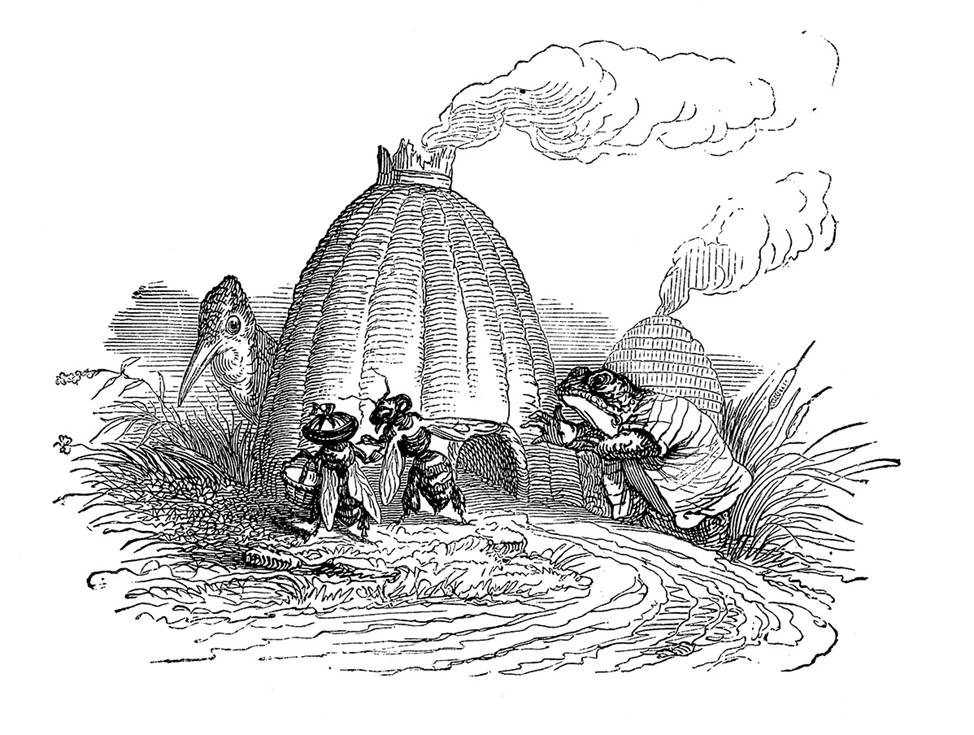
2014-07-09-Grandville_Beehive_1842.jpg

J. J. Grandville, “Beehive,” 1842

The world of animals here appears parallel to that of human beings, and differences of species may stand in for those of tribe, gender, class, profession and so on. This is a sort of vision that we associate with “totemism,” which the anthropologist Claude Levi-Strauss explained in the mid-twentieth century as the application of structures initially found in the natural world, especially among animals, to human culture, as a means of representing social distinctions among indigenous peoples. Apart from the vastness of their scale and the complexity of their organization, nations are essentially tribes, and the relations between them follow many of the same dynamics. Animal symbolism is so deeply embedded in human culture that it is almost impossible to talk about animals without, simultaneously, speaking indirectly about human beings.

Levi-Strauss’ notion of totemism has been qualified, challenged and refined by subsequent thinkers, but, without trying to tease out all possible implications, it still serves as a rough working model for understanding how animals and nature may contribute to cultural diplomacy. This is apparent in the beast fables from the tradition of Aesop, a half-legendary storyteller from the Greek isle of Samos in the seventh century BCE. Several of the stories commonly attributed to him such as “The Tortoise and the Hare” or “The Fox and the Grapes” are still familiar to contemporary people from childhood. Behind the moralistic tales of talking lions and foxes, we can discern a tribal religion, with its animal totems, deities, sages and tricksters, largely deprived of their numinous qualities yet, nevertheless, in ways not terribly different from those of many indigenous peoples of Africa or the Americas.
2014-07-09-FoxGrapes_Heighway004.jpg

Richard Heighway, illustration to Aesop’s “The Fox and the Grapes,” 1910

From very early times, the fable has been primarily, though by no means exclusively, a form associated with slaves. Aesop, Phaedrus and Babrius – the three most celebrated fabulists of the ancient world, were all slaves, as was Uncle Remus, the mouthpiece for Afro-Indian tales in the Aesopian tradition, collected by Joel Chandler Harris in the deep south of the United States just after the Civil War. The fable enabled slaves, as well as people of other social orders, to indirectly express things which might otherwise be sensitive or forbidden.

Totemism became even more overt in the High Middle Ages, with the development of heraldry. This was initially a system of emblems painted on shields to identify knights in jousts, when their faces and bodies were completely covered by armor. In the most literal way, heraldic symbols were a substitute for the human face. Heraldry was gradually extended to feudal families, and then to states, businesses, clubs and almost all other institutions. These symbols were by no means confined to animals and vegetation, but creatures such as boars, wolves, bears, lions and eagles figured very prominently. Heraldry represented identity in terms of abstract relationships among symbolic objects, which are joined in fantastic patterns with no regard for common sense. They are deliberately esoteric, pointing to the mystery which is ultimately at the core of identity.
2014-07-09-LionandUnicorn.jpg

Crest of Britain with the Lion of England and the Unicorn of Scotland

In some contexts at least, modern societies have identified with animals with constancy comparable to that of tribal peoples. These creatures need not necessarily be indigenous, wild, contemporary, or even real. England is represented by the lion, which is not indigenous, or the bulldog, which is a domestic breed. The animal representing Mauritius is the extinct dodo, while Scotland is represented by the mythical unicorn. Those are simply animals that ─ whether for historical, folkloric, commercial or geographic reasons ─ seem to embody a nation’s uniqueness. Underlying this totemic practice is an implicit analogy between the diversity of human cultures and that of all living things.

The animals in fables of the Renaissance, such as those of La Fontaine, and of political cartoons, are essentially those of heraldry. The totemic notion that animals constitute a world parallel to that of people was also responsible for the practice of physiognomy, which held that the character of a person could be read by the resemblance of his features to certain animals, so there would be wolf people, pig people, bat people and so on. That tradition, without the theoretical underpinnings, continues in caricatures and, most especially, political cartoons up through the present day, as well as in literary works such as Orwell’s Animal Farm.

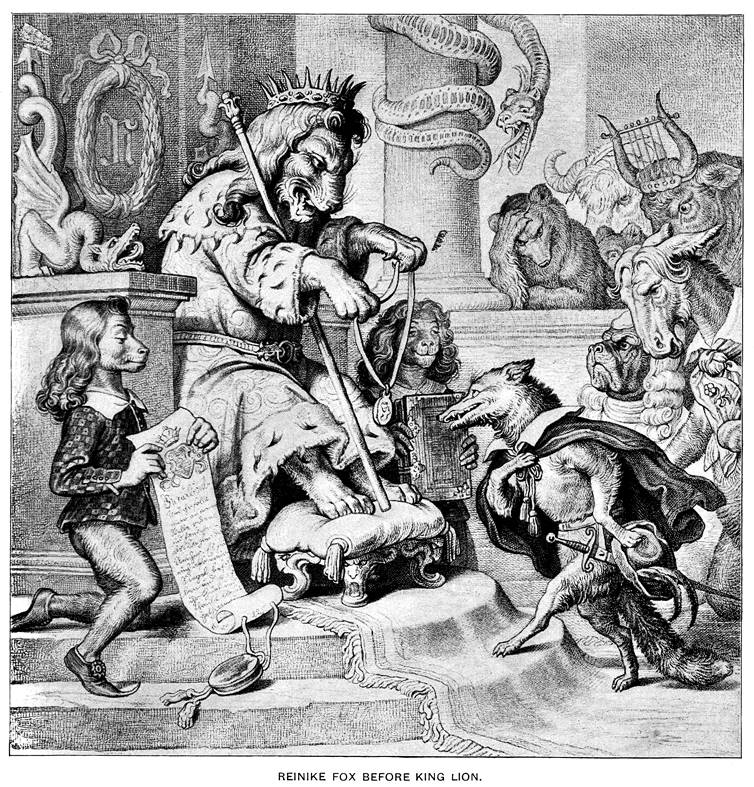
2014-07-09-kaulbach.jpg

Illustration by Wilhelm Kaulbach’s to Goethe’s “Reineke Fox,” c. 1830

One might perhaps think that the stylized animals of literary fables, heraldry and editorial cartoons are too detached from their original models for their representation to have much impact on relationships between human beings and the natural world; experience suggests otherwise. White-tailed deer, turkeys and Canada geese, though on the brink of extinction in the early twentieth century, may now be more common in the United States and Canada than they were in preColumbian times. Bald eagles, moose, beaver, buffalo, and coyotes are making significant comebacks as well. These resurgent animals are precisely those that have great iconic importance in both Amerindian and immigrant cultures. The bald eagle is the national animal of the United States, and the beaver of Canada. The turkey is an old symbol of the New World, the buffalo of the Great Plains, and moose of the far North. All of the others as well are closely identified with certain regions, landscapes or peoples.

To be sure, iconic status in human culture can often endanger animals. In the United States immediately following the Civil War, the American buffalo were deliberately hunted almost to extinction, in order to dishearten the Plains Indians, in whose lives they had a central role. In Asia today, the South China tiger is being hunted to extinction in large part because of the central role that its body parts play in folk medicine. But such events simply show another aspect of the way cultural and natural concerns are inextricably bound together.

The United States Bureau of Fish and Wildlife currently lists about 500 species as “endangered” and about another 200 as “threatened.” The many thousand additional species have been proposed for these lists. Having a local species listed can bring publicity and status as well as money for conservation, as well as less-tangible psychological satisfactions, but there is no clear criterion for either categorization. Inclusion is, therefore, a subject of continual lobbying, in which it is not always easy to tell cultural or economic motives from environmental ones.

The mediation performed by animals in human affairs is continuous, if seldom noticed, like the sound of crickets on an autumn day. In the past, this process has occasionally emerged from the background, as when Harun al Rashid gifted two leopards to Charlemagne or, in 1972, when the government of China presented a mated pair of pandas to the National Zoo in Washington, D. C. It is hard to say how much ecological awareness, if any, is reflected by either of these gifts. But the presents were at the least a reminder to the recipient that the distant land contained not only wealth and people but also natural wonders.

My broader point is that environmental problems are also cultural, in fact one cannot address one apart from the other. In general, we can say that the representation of people in terms of animals and nature, an essentially totemic tradition, can place human concerns in a broader perspective, diffusing tensions and helping us to:
• Look beyond immediate personal or collective interests;
• Comment indirectly on subjects that might otherwise be too sensitive;
• Eliminate evasive political rhetoric;
• Unite people around shared concerns such as conservation and sustainability.
Like other forms of cultural diplomacy, this may remain primarily beneath the threshold of awareness, but can be made more effective through conscious appreciation.

The borders between nations are mapped out with great precision, but boundaries among cultures are fundamentally poetic. Literary, artistic and architectural accomplishments help to distinguish human cultures from one another. Interaction with the natural world, also embodied in customs from funerals to foodways, further differentiates them from domains that are still largely beyond human understanding or control. These frontiers, in turn, are constantly in flux, a bit like wetlands that shift with the weather, season and tide. Like the elements, cultures are engaged in a perpetual negotiation. Cultural diplomacy is essentially a natural process, which requires only a hospitable environment.

Topsell was not the only person who used bees to comment on human institutions. Socrates, in Plato’s dialogue “Phaedo,” suggested that people who lived as good citizens might be reincarnated as bees. Virgil upheld the bees to his fellow Romans as models of austere living and martial valor, especially because they would sting intruders at the cost of their own lives. In the Middle Ages, people thought of the hive as a sort of monastery, but, in the early modern period, Bernard de Mandeville satirized it as an imperiled feudal state that had failed to adapt to the ways of commerce, an idea that eerily anticipates the way honey bees are dying out today. Napoleon chose bees as his emblem, because of their association with industry but also with the early medieval rulers of France. At the beginning of the twentieth century, Maurice Maeterlink stated that bees were the most intelligent animals after man, and thought of them as socialists. On learning that the so-called “king” was actually a queen, some feminists have upheld the hive as a model of matriarchal society. These various philosophies and social systems might seem to have little in common, yet they are based on essentially the same imagery.

2014-07-09-Standard_NapoleonIII.png

Standard of Napoleon III

Suppose, then, that one were to hold a conference on the current dying out of bees ─ together with its agrarian, cultural, spiritual and economic implications ─ and invite representatives of groups with radically opposing social, religious and political views, from the tea party to the communists. I cannot predict what the various factions might say or what the final outcome would be, but that is precisely why such a meeting might be beneficial. You would likely to encounter some surprising coalitions and novel initiatives. All would be compelled to think beyond their accustomed rhetoric, and probably to articulate some of their core values, thus extending the mediation to other problems.

(A version of this essay was read by the author on June 27 at the Symposium on Cultural Diplomacy in the USA at the Czech Embassy in New York City.)

Ciência Hoje On-line: Pelas abelhas

JC e-mail 4991, de 17 de julho de 2014

Campanha internacional criada por brasileiros chama atenção para o desaparecimento de colmeias e seu impacto sobre o ambiente e a segurança alimentar dos humanos

A notícia de que a população mundial de abelhas tem se reduzido pode até ser novidade para alguns, mas não aqui na CH On-line. Esses insetos vêm desaparecendo nos últimos 60 anos e 13 espécies foram extintas do planeta – das cerca de 20 mil existentes. O que parece uma boa notícia para os alérgicos é, no entanto, preocupante para o futuro da humanidade. Por isso, pesquisadores brasileiros lançaram uma campanha global para divulgar o sumiço de abelhas batizada de Bee or not to be? – um trocadilho em inglês com o verbo ‘ser’ (to be) e a palavra ‘abelha’ (bee) baseado na famosa frase de William Shakespeare: “Ser ou não ser, eis a questão.”

Os pesquisadores chamam a atenção para um fenômeno mundial denominado ‘síndrome do desaparecimento das abelhas’, decorrente de um problema no sistema nervoso desses insetos que faz com que eles ‘esqueçam’ o caminho de volta para sua colmeia e morram ao relento. Essa alteração está relacionada principalmente ao uso na agricultura de uma classe de pesticidas à base de nicotina, os neonicotinoides. Ao tentar polinizar os vegetais tratados com esses pesticidas, as abelhas se contaminam e desenvolvem o problema.

Leia o post completo na CH On-line, que tem conteúdo exclusivo atualizado diariamente: http://cienciahoje.uol.com.br/blogues/bussola/2014/07/pelas-abelhas

Cientistas pedem limite à criação de vírus mortais em laboratório (O Globo)

JC e-mail 4991, de 17 de julho de 2014

Falhas em unidades americanas elevam riscos de surtos

Um grupo multidisciplinar de cientistas de importantes universidades em diferentes países publicou ontem um alerta sobre a manipulação, em laboratórios norte-americanos, de vírus que podem se espalhar e infectar homens e outros mamíferos. A preocupação vem na esteira de seguidas notícias sobre falhas de envolvendo micro-organismos potencialmente perigosos.

“Incidentes recentes com varíola, antraz e gripe aviária em alguns dos mais importantes laboratórios dos EUA nos faz lembrar da falibilidade até das unidades mais seguras, reforçando a necessidade urgente de uma reavaliação completa de biossegurança”, escreveu o autodenominado “Grupo de Trabalho de Cambridge”, composto de pesquisadores das universidades de Harvard, Yale, Ottawa, entre outras.

No alerta, eles relatam que incidentes com patógenos têm aumentado e ocorrido em média duas vezes por semana em laboratórios privados e públicos do país. A informação é de um estudo de 2012 do periódico “Applied Biosafety”.

– Quando vemos algum caso na imprensa, dá a impressão de que são episódios raros, mas não são – comentou Amir Attaran, da Universidade de Ottawa, um dos cientistas que assinou o documento. – Estamos preocupados com as experiências perigosas que estão sendo feitas para projetar os mais infecciosos e mortais vírus da gripe e da síndrome respiratória aguda grave (Sars). Achamos que essa ciência imprudente e insensata pode ferir ou matar um grande número de pessoas. O Centro de Controle de Prevenção de Doenças, na semana passada, admitiu que laboratórios de alta segurança perderam o controle com algumas amostras.

No último caso, frascos de varíola foram encontrados por acaso num depósito inutilizado de um laboratório federal em Washington. Estima-se que eles estivessem ali há mais de 50 anos.

Attaran comparou o pronunciamento do grupo ao que cientistas fizeram em 1943, antes dos bombardeios de Hiroshima, na Segunda Guerra Mundial. E disse que o risco dessas experiências são maiores do que os possíveis benefícios dessas pesquisas, citando a recriação in vitro do vírus da gripe espanhola, de 1918, que matou 40 milhões de pessoas. Em 2006, cientistas fizeram a experiência num laboratório americano.

– Não é para ficarmos alarmados aqui – garante Volnei Garrafa, coordenador do Programa de Pós-Graduação em Bioética da UnB e membro do Comitê Internacional de Bioética da Unesco. – Mas a preocupação deles é válida, sempre há riscos, e o governo precisaria se posicionar.

LEIA O DOCUMENTO NA ÍNTEGRA:
Incidentes recentes envolvendo varíola, antraz e gripe aviária em alguns dos mais importantes laboratórios dos Estados Unidos nos faz lembrar da falibilidade até das unidades mais seguras, reforçando a necessidade urgente de uma reavaliação completa de biossegurança. Tais incidentes têm aumentado e ocorrido em média duas vezes por semana com patógenos regulados em laboratórios privados e públicos do país. Uma infecção acidental com qualquer patógeno é preocupante. Mas riscos de acidente com os recém-criados ‘patógenos potencialmente pandêmicos’ levanta novas graves preocupações.

A criação em laboratório de novas cepas de vírus perigosos e altamente transmissíveis, especialmente de gripe, mas não apenas dela, apresenta riscos substancialmente maiores. Uma infecção acidental em tal situação poderia desencadear surtos que poderiam ser difíceis ou impossíveis de controlar. Historicamente, novas cepas de gripe, uma vez que comecem a transmissão na população humana, infectaram um quarto ou mais da população mundial em dois anos.

Para qualquer experimento, os benefícios esperados deveriam superar os riscos. Experiências envolvendo a criação de patógenos potencialmente pandêmicos deveria ser limitada até que haja uma avaliação quantitativa, objetiva e confiável, dos possíveis benefícios e oportunidades de mitigação de riscos, assim como a comparação contra abordagens experimentais mais seguras.

Uma versão moderna do processo Asilomar, que define regras para pesquisas com DNA recombinante, poderia ser um ponto de partida para identificar as melhores medidas para se atingir os objetivos de saúde pública global no combate a doenças pandêmicas e assegurar os mais altos níveis de segurança. Sempre que possível, a segurança deve ser prioridade em detrimento a ações que tenham risco de pandemia acidental.

(Flávia Milhorance / O Globo)
http://oglobo.globo.com/sociedade/saude/cientistas-pedem-limite-criacao-de-virus-mortais-em-laboratorio-13281731#ixzz37jNAiHZI

Brasil vacila em ratificar protocolo sobre biodiversidade (Greenpeace)

16/7/2014 – 12h07

por Redação do Greenpeace

indigenas Brasil vacila em ratificar protocolo sobre biodiversidade


A demora do Congresso Nacional em votar a ratificação do Protocolo de Nagoya, assinado pelo País em 2010, pode custar a cadeira brasileira na mesa de discussões da COP-12

O Brasil foi um dos primeiros países a assinar o Protocolo de Nagoya, proposto na 10ª Conferência das Partes da Convenção das Nações Unidas sobre Biodiversidade (COP-10), em 2010, como alternativa para regulamentação do uso de recursos da biodiversidade do planeta.

Depois de quatro anos, no entanto, o País acaba de perder a chance de participar ativamente da discussão sobre o assunto. As propostas contidas no protocolo não foram ratificadas pelo Congresso Nacional. Para entrar em vigor, 50 dos 92 signatários da Convenção sobre a Diversidade Biológica (CDB) precisavam confirmar sua validade, incorporando-o a legislação, até junho deste ano. O que aconteceu nesta segunda-feira 11, sem a participação do Brasil.

“O Brasil perdeu uma grande chance deixando de votar este projeto, uma vez que o País foi protagonista da proposta, junto com o próprio Japão. Mas se em casa a gente não consegue aprovar o que sugerimos internacionalmente, isso mostra que fomos muito bons de papo e pouco eficientes na ação”, avalia Marcio Astrini, coordenador da Campanha da Amazônia do Greenpeace Brasil. “De certa maneira isso é um reflexo da visão ambiental do atual governo, que ao invés de ver no Meio Ambiente uma oportunidade, vê nele um empecilho”, completa Astrini.

Parado desde 2012 no Congresso Nacional, o projeto foi designado para uma comissão especial, que nunca foi criada. O assunto sofre forte resistência por parte da bancada ruralista, que acredita que a ratificação da proposta poderia aumentar os custos do agronegócio no Brasil.

Um dos pontos mais polêmicos refere-se ao pagamento de royalties a países pela repartição de benefícios aos detentores de conhecimentos tradicionais associado ao uso de recursos genéticos oriundos da biodiversidade, como povos indígenas e comunidades tradicionais. “O objetivo central do protocolo é aumentar a proteção sobre as reservas naturais do planeta e, para isso, deve criar uma série de regras para controlar a utilização dos recursos, estabelecendo, inclusive regras econômicas. Isso vai no caminho do que precisa ser feito no mundo todo e precisamos participar desta discussão”, observa Astrini.

O Brasil concentra aproximadamente 20% de toda a biodiversidade do planeta. A regulação contribuiria para o combate a biopirataria, com ganhos no campo da ciência e também para as populações tradicionais, que teriam seus saberes reconhecidos e valorizados.

Outro ponto importante do protocolo é o plano estratégico de preservação, que aumenta as áreas terrestres e marítimas a serem protegidas no planeta. As regiões terrestres protegidas passariam de 10% para 17% e as zonas marítimas de proteção ambiental passaria de 1% para 10% de seu total. O próximo encontro dos signatários da CDB será na 12ª Conferência das Partes (COP-12) da CDB, em Pyeongchang, República da Coréia, de 6 a 17 de outubro deste ano.

* Publicado originalmente no site Greenpeace.

Telescópios investigam relação entre ciclo do Sol e clima (Fapesp)

Equipamentos serão sincronizados para monitorar a atividade solar de forma ininterrupta e registrar informações que podem ser associadas à variação climática (foto:divulgação)
17/07/2014

Por Diego Freire

Agência FAPESP – Pesquisadores da Universidade Estadual de Campinas (Unicamp) e da Universidade Federal Fluminense (UFF) construíram dois telescópios que vão funcionar de forma sincronizada na detecção contínua de partículas derivadas da radiação do Sol para investigar possíveis relações entre os ciclos solares e as variações climáticas da Terra.

O trabalho é resultado da pesquisa “Detecção e estudo de eventos solares transientes e variação climática”, realizada no âmbito de um acordo de cooperação entre a FAPESP e a Fundação Carlos Chagas Filho de Amparo à Pesquisa do Estado do Rio de Janeiro (Faperj) que tem como objetivo apoiar projetos cooperativos e intercâmbio de pesquisadores e estudantes em áreas ligadas às mudanças climáticas globais.

De acordo com o coordenador da pesquisa na Unicamp, Anderson Campos Fauth, professor associado do Instituto de Física Gleb Wataghin, já se sabe que os ciclos solares e suas flutuações apresentam alguma relação com a intensidade com que os raios cósmicos atingem a Terra, apesar de não serem considerados uma das principais causas das mudanças climáticas globais.

“Não existe um consenso sobre o mecanismo que relaciona a atividade solar e as mudanças climáticas. Há uma hipótese de que o aumento do fluxo de raios cósmicos pode estar associado ao surgimento de nuvens baixas, que globalmente exercem um efeito de resfriamento e, nas regiões polares, onde a incidência da radiação solar é baixa, têm impacto contrário, provocando aquecimento”, disse.

Fauth explica que cientistas têm observado que certos fenômenos climáticos – oceanos mais quentes, maior quantidade de chuvas tropicais, menos nuvens subtropicais, circulação mais intensa de ventos – parecem estar em parte associados ao ciclo de atividade solar, que dura em média 11 anos.

“Entretanto, esses estudos estão em fase inicial e é necessário fazer novas observações das radiações emitidas pelo Sol, principalmente quando surgem atividades como as explosões solares, e monitorar suas variações sazonais”, ponderou.

Diante disso, o trabalho da Unicamp e da UFF com os telescópios foca em um dos sinais do ciclo solar: a presença e o comportamento das partículas múons na atmosfera terrestre.

O múon é a mais abundante partícula com carga elétrica presente na superfície da Terra, representando cerca de 80% dos raios cósmicos com carga elétrica em altitudes próximas ao nível do mar. A cada segundo surgem, aproximadamente, 140 múons por metro quadrado.

O fato de a partícula quase sempre possuir trajetória retilínea facilita sua detecção com um arranjo de poucos detectores. “Essas partículas permitem estudar os eventos solares em uma região de energia que os satélites e os monitores de nêutrons posicionados na superfície terrestre não observam”, explicou Fauth.

O ano de 2014 é propício à detecção de múons pelos telescópios da Unicamp e da UFF. Ao longo deste período, o ciclo atual do Sol atinge sua máxima atividade: o número de manchas solares observadas aumenta consideravelmente e os flares – explosões que ocorrem na superfície do Sol – irrompem com grande intensidade, libertando milhões de toneladas de gás magnetizado.

Além disso, Campinas e Niterói, onde os telescópios estão instalados, têm localização privilegiada para a detecção de partículas derivadas da radiação solar, pois estão próximas à região central da Anomalia Magnética do Atlântico Sul (SAA, da sigla em inglês), onde a resistência magnética para entrada de partículas carregadas vindas do espaço é muito baixa.

A maioria dos detectores de partículas solares energéticas está instalada próximo às regiões dos polos porque, nas outras regiões, o campo magnético da Terra desvia as partículas carregadas. Mas na região da SAA há uma intensidade magnética muito inferior, uma espécie de buraco na magnetosfera que se comporta como um funil.

Muonca

O telescópio construído na Unicamp, que recebeu o nome Muonca, iniciou em abril a tomada de dados contínua, utilizando quatro detectores de partículas. Os detectores da UFF entraram em funcionamento em junho, no modo monitor – quando se realiza a contagem dos múons, sem determinar ainda sua direção de chegada.

O Muonca utiliza quatro detectores de partículas idênticos. A partícula múon, ao atravessar o cintilador do detector, produz uma luz que permite o registro de sua passagem. Um computador é utilizado no sistema de aquisição de dados, e as informações brutas são registradas em arquivos diários.

O telescópio da Unicamp foi construído em dois anos, incluindo o tempo para os processos de importação, realização dos projetos, desenhos técnicos das peças, execução por técnicos da universidade e de empresas privadas, montagem por membros do grupo de pesquisa, desenvolvimento do software de aquisição de dados e calibração dos detectores, além da programação dos códigos de análise dos dados.

O experimento opera continuamente, 24 horas por dia, e os pesquisadores desenvolvem agora um sistema que alerte por e-mail e SMS quando ocorrer algum problema ou possível evento solar na aquisição dos dados.

Recentemente, os detectores instalados em Campinas e Niterói registraram simultaneamente uma tempestade geomagnética. De acordo com Fauth, os dados estão sendo avaliados para publicação e os primeiros resultados conjuntos dos dois telescópios serão apresentados em setembro no 34º Encontro Nacional de Física de Partículas e Campos, organizado pela Sociedade Brasileira de Física em Caxambu (MG).

The fight to reform Econ 101 (Al Jazeera)

Economics is a dismal nonscience, but it need not remain that way

July 16, 2014 6:00AM ET

by 

During the last weekend of June, hundreds of students, university lecturers, professors and interested members of the public descended on the halls of University College London to attend the Rethinking Economics conference. They all shared a similar belief: that economics education in most universities had become narrow, insular and detached from the real world.

For a brief period after the financial crisis of 2008, the shortcomings of the economics profession and the way it is taught were recognized. Many economists offered up mea culpas of various kinds and conceded that since they did not foresee the biggest economic event since the Great Depression, there was probably something seriously wrong with the discipline. But as time passed and many economies began to experience gradual, somewhat muted recoveries, the profession regained its confidence.

When I was completing my master’s degree at Kingston University last year, I experienced this firsthand from the more mainstream faculty there. Lecturers offered potted explanations of the crisis using old analytical tools such as supply and demand graphs that cannot incorporate expectations to explain asset price bubbles. The same economists who, just a few years ago, told us that financial markets were the conduits of perfect information began to introduce doublethink phrases in the media such as “rational bubble” (in which investors allegedly act irrationally by bidding up asset prices in full knowledge that prices are heavily inflated but think they can bail out of the market before prices fall) to explain the events of the past few years. There is nothing rational about investors’ acting this way, because they cannot know when the bubble will burst and so cannot time their exit from the market. They cannot know when the herd movement that they are part of will come to an end, so any action that they take to ride the wave will be just as irrational as those of people unaware of the bubble. The entire exercise appeared to be an ad hoc attempt to reinterpret the facts to fit the pet theory — economic agents aware of relevant information act rationally — rather than to alter the theory in light of the facts.

It was difficult not to sense the Soviet-style revisionism that had occurred within the halls of learning: The party had tossed history down the memory hole and introduced a strange, seemingly self-contradictory language that they were busy foisting upon an unwitting public. One Chicago school economist, Ray Ball, argues that the now notorious efficient market hypothesis (EMH), which states that financial markets price in all relevant information, is actually supported by the recent crisis. He argues that the capital flight that led to the bank meltdowns lends support to the EMH because it shows how rapidly financial markets react to new information. But as many will remember, investigations clearly showed that information was not being processed efficiently by market participants in the run-up to the crisis. The most colorful example of this was the Standard & Poor’s employee who, responding to a colleague who said that they should not be rating a mortgage-backed security deal because the estimations of risk were incorrect, said that cows could be estimating the risk of a product and S&P would still rate it.

Shine a light

Despite such attempts to shore up the orthodoxy, students have sensed that something is wrong: Over the past two years, they have been organizing across more than 60 countries with the aim of forcing the vampire that is the economics profession into the light of day. While the students in the movement have a diversity of opinions on various issues, they have all come to believe that the best way to reform economics is to demand that a plurality of approaches be taught. They have rightly identified the key fault with contemporary economics teaching: the monoculture it engenders. Currently only one approach to economics is taught in the vast majority of departments in the U.S. and Europe: what is usually called neoclassical or marginalist economics, epitomized by Harvard’s Gregory Mankiw — a former chairman of the Council of Economic Advisers under President George W. Bush — and Chicago’s Gary Becker, a Nobel laureate. This is the economics of the rational, atomized individual purged of all social context, whose only goal is to maximize a mysterious, effervescent quantity called utility. In this view, the economy tends toward an equilibrium end point, at which everyone has a job and wages and profits are set in line with what each individual contributes to society.

Donald Gillies, a former president of the British Society for the Philosophy of Science, told a stunned audience that he had examined three well-known Nobel Prize–winning papers in economics and could find nothing in them that he could call scientific.

When I spoke with the students, they were struck by how even those who dissented from contemporary economic policies like austerity shared this overarching vision. Paul Krugman, for example, to whom many turned after the crisis to provide context — including many of the students I met — also accepted the orthodox view (although he has not embraced some of the worst excesses echoed by his peers).

True dissenters

The students at the June conference also said that there were true dissenters in the discipline who found that economics was a highly contested field. Cambridge University’s Ha-Joon Chang pointed out that there are any number of schools of economic thought, each with their own approaches and insights. Their opinions range from the Austrians, who believe that government interference in the economy leads to wasted resources, to post-Keynesians, who believe that capitalist economies are inherently unstable and require government intervention to stave off collapse and stagnation, to Marxians, institutionalists, Schumpeterians, neo-Ricardians and so on. Chang argued that none of these schools of thought were inherently right or wrong; they all had insights into the working of the economy, and every one of them had a right to be taught to students as a competing point of view. It was up to the students, he said, to find what they found interesting, useful and credible.

One of the conference speakers pointed out that this is required in all the other disciplines that study people and society. He told an anecdote about being in the psychology department of his university when an inspector from a psychological association turned up to ensure that there was an adequately pluralist approach being undertaken. The speaker quipped that it would be far more likely that an inspector from an economics association would turn up to ensure that the current doctrine was being firmly adhered to.

But what, exactly, constitutes this dogmatic thinking? For starters, the firm belief that economics is a science on par with physics and chemistry. After all, these economists say, only a crank would demand that a plurality of approaches to physics and chemistry should be taught in universities. But the truth of the matter is that economics is not a science on par with physics and chemistry and it never will be. Donald Gillies, a former president of the British Society for the Philosophy of Science, told a stunned audience that he had examined three well-known Nobel Prize–winning papers in economics and could find nothing in them that he could call scientific. Rather, he said, they utilized sophisticated mathematics to hide the fact that they were not saying anything remotely relevant about the real world that could be proved or disproved.

The dirty little secret about economics is that it cannot, like other sciences, undertake proper laboratory experiments. Even the experiments of the behaviorist economists are open to doubt in that it seems unlikely that the manner in which people act in a lab while under observation is identical to how they act day to day. Economics is therefore ill equipped to make claims with the same confidence as bona fide sciences. What economists offer are instead interpretations of the world around them. Once this is understood, it becomes very difficult to argue against a plurality of opinions in the discipline. This was what the students sensed, and this is why their clarion call became one for pluralism.

New curriculum

These students are well organized, and their numbers are growing; their commitment is unlikely to go away anytime soon. They are focused in a manner that is impressive for a protest movement, willing to transcend their political differences in order to fight for a common goal. Every week a new group springs up. At the conference I attended, organizers went around with pads and pens collecting the contact details of sympathetic faculty members and other students in countries where the movement was only partially developed.

Even institutions are hopping on board. Many employers complain that the mainstream departments are churning out employees with mathematical skills completely out of proportion to the jobs they do but who seem unable to undertake basic economic analysis. Often these employees have to be retrained on the job in order to function at their institutions. The chief economist of the Bank of England, Andy Haldane, wrote in the foreword to the students’ international manifesto that “employers of economists, like the Bank of England, stand to benefit from such an evolution in the economics curriculum.” Given that mainstream economists often claim that the consumer is king and competition is sacrosanct, it is increasingly difficult to see how they make a case for their current monopoly over the educational process.

In September another conference will take place in New York, and rumor has it that an enormous international meeting will soon be organized too. If and when the movement reaches that level of international organization, it could start putting real pressure on companies, governments and economics departments to rethink their models and their ways. If the profession wishes to uphold what is left of its credibility, it would do well to pay attention.

Philip Pilkington is a London-based economist and member of the Political Economy Research Group at Kingston University. He runs the blog Fixing the Economists.

O manguezal avança (Fapesp)

01.07.2014

O manguezal da Reserva Biológica de Guaratiba, no Rio de Janeiro, parece estar em migração continente adentro. O movimento é uma resposta à elevação no nível do mar, que pesquisadores do Núcleo de Estudos do Manguezal (Nema), da Universidade do Estado do Rio de Janeiro (Uerj), atribuem a mudanças globais no clima.

O oceanógrafo Gustavo Duque Estrada, do Nema, foi a campo com a equipe de vídeo de Pesquisa FAPESP para mostrar como o grupo vem monitorando essa floresta costeira desde os anos 1990. Na universidade, o coordenador do grupo, Mário Soares, explica o significado dos resultados de pesquisa para entender os manguezais, suas respostas às mudanças ambientais e sua influência sobre o ambiente, incluindo por meio da capacidade de armazenar carbono. “Áreas que antes eram planícies hipersalinas, lá no início da década de 1990, hoje já são florestas de mangue”, conta.

Sem chuva, vale até reciclar esgoto (Página 22)

14 JULHO 2014

Na capital do oeste australiano, nem só de dessalinização vive a gestão da água. No lugar onde a seca é realidade há décadas, a reciclagem tornou-se essencial

Por Flavia Pardini na Página 22

A seca no Sudeste brasileiro pegou muita gente de calça curta no país da enxurrada. Mas no continente mais seco do mundo, a noção de que é preciso gerir a água para o futuro é realidade há décadas.

Na cidade australiana de Perth – onde a vazão para os reservatórios caiu pela metade desde os anos 1970 –, o pilar de longo prazo da política hídrica é a dessalinização, que responde por metade do consumo de 1,8 milhão de habitantes. O outro grande esforço em marcha é o de reciclar.

Um programa de tratamento de “águas residuais” – que vão pelo ralo após o uso em chuveiros, pias e máquinas de lavar – e sua reintrodução no aquífero recebeu luz verde em 2013. No início de março passado, a Water Corporation, empresa que abastece Perth, informou que 3,5 bilhões de litros de água altamente tratada e purificada foram reinjetados nos aquíferos mais profundos da região, onde ficará estocada para uso futuro. O plano é reciclar e reinjetar 7 bilhões de litros por ano, com possibilidade de expansão para 28 bilhões de litros.

O processo envolve ultrafiltragem, osmose reversa e exposição a raios ultravioleta. A reinjeção é necessária para que a população, que prefere um processo “natural” de filtragem, aceite beber água que já foi usada e descartada.

Um porta-voz da Water Corporation informou que a expectativa é de que 1 litro de água reciclada custe “um pouco menos” do que 1 litro de água dessalinizada. Ambientalistas aguerridos contestam as boas intenções da empresa – segundo eles, seria mais barato tornar obrigatório que novas residências captem água da chuva e disponham de seu próprio sistema de reciclagem.

A reciclagem, segundo a Water Corp, tem potencial para responder por até 20% do consumo de Perth em 2060.

Fonte: Página 22.

Precipitation, not warming temperatures, may be key in bird adaptation to climate change (Science Daily)

Date: July 11, 2014

Source: Oregon State University

Summary: A new model analyzing how birds in western North America will respond to climate change suggests that for most species, regional warming is not as likely to influence population trends as will precipitation changes. “In general, our study suggests that if climate change results in winters with less precipitation, we likely will see a spring drying effect,” one researcher said. “This means that populations of drought-tolerant species will expand and birds that rely heavily on moisture should decline.”

Rufous hummingbird. Credit: Image courtesy of Oregon State University

A new model analyzing how birds in western North America will respond to climate change suggests that for most species, regional warming is not as likely to influence population trends as will precipitation changes.

Several past studies have found that temperature increases can push some animal species — including birds — into higher latitudes or higher elevations. Few studies, however, have tackled the role that changes in precipitation may cause, according to Matthew Betts, an Oregon State University ecologist and a principal investigator on the study.

“When we think of climate change, we automatically think warmer temperatures,” said Betts, an associate professor in Oregon State’s College of Forestry. “But our analysis found that for many species, it is precipitation that most affects the long-term survival of many bird species.

“It makes sense when you think about it,” Betts added. “Changes in precipitation can affect plant growth, soil moisture, water storage and insect abundance and distributions.”

Results of the study, which was funded by the National Science Foundation with support from the U.S. Geological Survey and others, are being published in the journalGlobal Change Biology.

The researchers examined long-term data on bird distributions and abundance covering five states in the western United States, and in the Canadian province of British Columbia, testing statistical models to predict temporal changes in population of 132 bird species over a 32-year period. They analyzed the impacts of temperature and precipitation on bird distributions at the beginning of the study period (the 1970s) and then tested how well the predictions performed against actual population trends over the ensuing 30 years.

The scientists keyed in on several variables, including possible changes during the wettest month in each region, the breeding season of different species, and the driest month by area. Their model found that models including precipitation were most successful at predicting bird population trends.

“For some species, the model can predict about 80 percent of variation,” Betts said, “and for some species, it’s just a flip of the coin. But the strongest message is that precipitation is an important factor and we should pay more attention to the implications of this moving forward.”

The study incorporated a lot of complex variables into the model, including micro-climatic changes that are present in mountainous environments. The research area encompassed California to northern British Columbia and the mountain systems drive much of the changes in both temperature and precipitation.

The researchers chose December precipitation as one variable and found it to be influential in affecting bird populations.

“Someone might ask why December, since half of the bird species usually present in the Pacific Northwest, for instance, might not even be here since they’re migratory,” Betts noted. “But much of the critical precipitation is snow that falls in the winter and has a carryover effect for months later — and the runoff is what affects stream flows, plant growth and insect abundance well down the road.”

The rufous hummingbird is one species that appeared affected by changes in December precipitation, the researchers say. The species is declining across western North America at a rate of about 3 percent a year, and the model suggest it is linked to an overall drying trend in the Northwest. The evening grosbeak is similarly affected the authors say.

On the other hand, the California towhee shows a negative association with December precipitation, appears to be drought-tolerant — and its populations remain stable.

“We cannot say for certain that a change in December precipitation caused declines in evening grosbeaks or rufous hummingbirds,” said Javier Gutiérrez Illán, a former postdoctoral researcher at Oregon State and lead author on the study. “Our model shows, however, a strong association between the birds’ decline and precipitation changes and the fact that this variable pointed to actual past changes in populations gives it validity.”

“The study shows that models can predict the direction and magnitude of population changes,” he added. “This is of fundamental importance considering predictions were successful even in new locations.”

The next phase of the research is to use the model to determine if there are patterns in the sorts of species affected — for instance, birds that are migratory or non-migratory, or short- or long-lived. They also hope to test additional variables, including land use changes, wildfire impacts, competition between species and other factors.

“In general, our study suggests that if climate change results in winters with less precipitation, we likely will see a spring drying effect,” Betts said. “This means that populations of drought-tolerant species will expand and birds that rely heavily on moisture should decline.”

Journal Reference:
  1. Javier Gutiérrez Illán, Chris D. Thomas, Julia A. Jones, Weng-Keen Wong, Susan M. Shirley, Matthew G. Betts. Precipitation and winter temperature predict long-term range-scale abundance changes in Western North American birds.Global Change Biology, 2014; DOI: 10.1111/gcb.12642

Pope Francis and the psychology of exorcism and possession (The Guardian)

Endorsement of exorcism by the Vatican will do nothing to prevent future tragedies like the death of Victoria Climbié

Chris French

Wednesday 9 July 2014

Last week it was reported that Pope Francis had formally recognised the International Association of Exorcists, a group of 250 priests spread across 30 countries who supposedly cast out demons. The head of the association, Rev Francesco Bamonte, announced that this was a cause for joy because, “Exorcism is a form of charity that benefits those who suffer.” While Pope Francis, who frequently mentions Satan, no doubt agrees with this sentiment, this granting of legal recognition to the concepts of possession and exorcism has come as something of a shock to those who do not share this world view.

Belief in possession is widespread both geographically and historically and is far from rare in modern western societies. A YouGov poll of 1,000 US adults last year found that over half of the respondents endorsed belief in possession and 20% remained unsure. Only 11% said categorically that they did not believe people could be “possessed by the devil”.

Is it possible that the pope is right and demons can sometimes take control of their victims’ behaviour? Are exorcists really bravely battling against the most powerful, evil forces imaginable? Or are possession and exorcism best explained in terms of psychological factors without any need to postulate the existence of incorporeal spiritual entities? I would argue that the available evidence strongly supports the latter interpretation.

There can be no doubt that some forms of behaviour that would once have been seen as evidence for possession by demons or evil spirits would now be recognised as being caused by neuropathology. Hippocrates, in The Sacred Disease, declared that epileptic convulsions were caused by brain malfunction, not evil spirits. Belief in possession was still widespread some 400 years later, however, when Jesus encountered an individual believed to be possessed but who was, in fact, clearly suffering from epilepsy.

Another condition that would often have been interpreted in a similar manner is Tourette’s syndrome. Interestingly, the first recorded description of a case of Tourette’s may be in Malleus Maleficarum (or Witch’s Hammer) published in the 15th century by Jakob Sprenger and Heinrich Kraemer. This notorious book served as a guide for identifying witches and the possessed and included a description of a priest whose tics were thought to be a result of possession by the devil. Although the symptom that people most readily associate with Tourette’s syndrome is vocal outbursts of foul language, this symptom is in fact quite rare, affecting only around 10% of sufferers. Having said that, this is probably the main symptom that, in times gone by, would have led to suspicion of possession.

There are several other neuropathologies (eg certain forms of schizophrenia) that might also have been interpreted as possession in less enlightened times (and sadly sometimes still are) but it is not plausible to explain all cases of apparent possession in neuropathological terms. It should also be borne in mind that the type of phenomenon that would be the main focus for the International Association of Exorcists is but one example of situations where an individual appears to have been taken over by some agent, resulting in a dramatic change in behaviour, mannerisms, voice and even, allegedly, memories.

Other examples would include mediums “channelling” communications from the dead; shamans inviting possession by the gods, ancestors or animal spirits; individuals apparently reliving past-lives, having gone through a process of hypnotic regression; and volunteers during hypnosis stage shows apparently taking on the identities of celebrities, animals or even aliens.

The controversial diagnosis of dissociative identity disorder (formerly known as multiple personality disorder) is yet another example of this phenomenon, though many commentators, myself included, believe that it is not in fact a genuine psychiatric disorder but is instead a product of dubious forms of therapy.

The sociocognitive approach, as outlined by Nick Spanos in his posthumously published book, Multiple Identities and False Memories, has the potential to explain all the phenomena listed in the previous two paragraphs without the need to invoke disembodied spiritual entities. Essentially, this approach argues that all of these phenomena reflect learned patterns of behaviour that constitute particular recognised roles within specific cultural contexts.

Although it may not always be immediately obvious, there are often benefits to enacting the role of being possessed. Indeed, in many societies, certain forms of possession are welcomed. For example, glossolalia, or “speaking in tongues”, is encouraged in many western Christian societies and is interpreted as possession by the Holy Spirit. During glossolalia, the individual produces vocalisations of meaningless syllables. Although these may sound superficially like a foreign language, analysis shows them to have no true linguistic structure whatsoever. Glossolalia can sometimes involve dramatic behaviour such as convulsions, sweating and rolling eyes but can also be much more subdued. The actual form the glossolalia takes is entirely determined by the expectations of the particular religious community involved.

For less positive forms of possession, the benefits of taking on this role may be harder to identify but they still exist. As Michael Cuneo describes in his excellent book, American Exorcism, the phenomena of alleged possession and exorcism are much more widespread in the US than is officially recognised. For many people, the idea that all of their previous socially and morally unacceptable behaviour was not in fact their fault but due to possession by demons is appealing. Furthermore, once those demons have been exorcised, the repentant sinner is now welcomed back into the loving arms of his or her community.

Anthropologists have pointed out that in some cultures, those with little or no social influence can let off steam and vent their true feelings towards the more powerful members of their society while “possessed” without having to face any repercussions. They are not held to be responsible for their actions, the possessing spirit is. It is notable that historically in Europe, it was women who were much more likely to be “possessed” than men.

Of course, we must not forget that the outcome for the person who is labelled as “possessed” can sometimes be far from positive. To give one notorious example, the parents of 23-year-old Anneliese Michel and two West German priests were convicted in 1978 of causing her death (they received suspended sentences). They had starved the young epileptic as part of a horrendous 11-month exorcism. She weighed just 68 pounds (5 stone or 30 kilograms) at the time of her death. The Guardian has noted that belief in possession has been a factor in several child abuse cases in the UK, including the tragic death of Victoria Climbié in 2000.

The official recognition of such pre-Enlightenment beliefs by the Vatican will do nothing to prevent future tragedies of this kind.

guardian.co.uk Copyright (c) Guardian News and Media Limited. 2014 Registered in England and Wales No. 908396 Registered office: PO Box 68164, Kings Place, 90 York Way, London N1P 2AP

Miami, the great world city, is drowning while the powers that be look away (The Observer)

Low-lying south Florida, at the front line of climate change in the US, will be swallowed as sea levels rise. Astonishingly, the population is growing, house prices are rising and building goes on. The problem is the city is run by climate change deniers

, science editor, in Miami

The Observer, Friday 11 July 2014 08.59 BST

Miami coastline

The Miami coastline: there are fears that even a 30cm rise in the sea level could be catastrophic. Photograph: Joe Raedle/Getty

A drive through the sticky Florida heat into Alton Road in Miami Beach can be an unexpectedly awkward business. Most of the boulevard, which runs north through the heart of the resort’s most opulent palm-fringed real estate, has been reduced to a single lane that is hemmed in by bollards, road-closed signs, diggers, trucks, workmen, stacks of giant concrete cylinders and mounds of grey, foul-smelling earth.

It is an unedifying experience but an illuminating one – for this once glamorous thoroughfare, a few blocks from Miami Beach’s art deco waterfront and its white beaches, has taken on an unexpected role. It now lies on the front line of America’s battle against climate change and the rise in sea levels that it has triggered.

“Climate change is no longer viewed as a future threat round here,” says atmosphere expert Professor Ben Kirtman, of the University of Miami. “It is something that we are having to deal with today.”

Every year, with the coming of high spring and autumn tides, the sea surges up the Florida coast and hits the west side of Miami Beach, which lies on a long, thin island that runs north and south across the water from the city of Miami. The problem is particularly severe in autumn when winds often reach hurricane levels. Tidal surges are turned into walls of seawater that batter Miami Beach’s west coast and sweep into the resort’s storm drains, reversing the flow of water that normally comes down from the streets above. Instead seawater floods up into the gutters of Alton Road, the first main thoroughfare on the western side of Miami Beach, and pours into the street. Then the water surges across the rest of the island.

The effect is calamitous. Shops and houses are inundated; city life is paralysed; cars are ruined by the corrosive seawater that immerses them. During one recent high spring tide, laundromat owner Eliseo Toussaint watched as slimy green saltwater bubbled up from the gutters. It rapidly filled the street and then blocked his front door. “This never used to happen,” Toussaint told reporters. “I’ve owned this place eight years and now it’s all the time.”

Today, shop owners keep plastic bags and rubber bands handy to wrap around their feet when they have to get to their cars through rising waters, while householders have found that ground-floor spaces in garages are no longer safe to keep their cars. Only those on higher floors can hope to protect their cars from surging sea waters that corrode and rot the innards of their vehicles.

Hence the construction work at Alton Road, where $400m is now being spent in an attempt to halt these devastating floods – by improving Miami Beach’s stricken system of drains and sewers. In total, around $1.5bn is to be invested in projects aimed at holding back the rising waters. Few scientists believe the works will have a long-term effect.

lowlying houses miami

Low-lying houses in Miami Beach are especially vulnerable. Photograph: Joe Raedle/Getty Images

“There has been a rise of about 10 inches in sea levels since the 19th century – brought about by humanity’s heating of the planet through its industrial practices – and that is now bringing chaos to Miami Beach by regularly flooding places like Alton Road,” says Harold Wanless, a geology professor at the University of Miami. “And it is going to get worse. By the end of this century we could easily have a rise of six feet, possibly 10 feet. Nothing much will survive that. Most of the land here is less than 10 feet above sea level.”

What makes Miami exceptionally vulnerable to climate change is its unique geology. The city – and its satellite towns and resorts – is built on a dome of porous limestone which is soaking up the rising seawater, slowly filling up the city’s foundations and then bubbling up through drains and pipes. Sewage is being forced upwards and fresh water polluted. Miami’s low topography only adds to these problems. There is little land out here that rises more than six feet above sea level. Many condos and apartment blocks open straight on the edge of the sea. Of the total of 4.2 million US citizens who live at an elevation of four feet or less, 2.4 million of them live in south Florida.

At Florida International University, geologist Peter Harlem has created a series of maps that chart what will happen as the sea continues to rise. These show that by the time oceans have risen by four feet – a fairly conservative forecast – most of Miami Beach, Key Biscayne, Virginia Key and all the area’s other pieces of prime real estate, will be bathtubs. At six feet, Miami city’s waterfront and the Florida Keys will have disappeared. The world’s busiest cruise ship port, which handles four million passengers, will disappear beneath the waves. “This is the fact of life about the ocean: it is very, very powerful,” says Harlem.

Miami and its surroundings are facing a calamity worthy of the Old Testament. It is an astonishing story. Despite its vast wealth, the city might soon be consumed by the waves, for even if all emissions of carbon dioxide were halted tomorrow – a very unlikely event given their consistent rise over the decades – there is probably enough of the gas in the atmosphere to continue to warm our planet, heat and expand our seas, and melt polar ice. In short, there seems there is nothing that can stop the waters washing over Miami completely.

It a devastating scenario. But what really surprises visitors and observers is the city’s response, or to be more accurate, its almost total lack of reaction. The local population is steadily increasing; land prices continue to surge; and building is progressing at a generous pace. During my visit last month, signs of construction – new shopping malls, cranes towering over new condominiums and scaffolding enclosing freshly built apartment blocks – could be seen across the city, its backers apparently oblivious of scientists’ warnings that the foundations of their buildings may be awash very soon.

Activists Demonstrate Against Sen. Rubio's Miami Office

Protesters gather near the office of Senator Marco Rubio to ask him to take action to address climate change. Photograph: Joe Raedle/Getty Images

Not that they are alone. Most of Florida’s senior politicians – in particular, Senator Marco Rubio, former governor Jeb Bush and current governor Rick Scott, all Republican climate-change deniers – have refused to act or respond to warnings of people like Wanless or Harlem or to give media interviews to explain their stance, though Rubio, a Republican party star and a possible 2016 presidential contender, has made his views clear in speeches. “I do not believe that human activity is causing these dramatic changes to our climate the way these scientists are portraying it. I do not believe that the laws that they propose we pass will do anything about it, except it will destroy our economy,” he said recently. Miami is in denial in every sense, it would seem. Or as Wanless puts it: “People are simply sticking their heads in the sand. It is mind-boggling.”

Not surprisingly, Rubio’s insistence that his state is no danger from climate change has brought him into conflict with local people. Philip Stoddard, the mayor of South Miami, has a particularly succinct view of the man and his stance. “Rubio is an idiot,” says Stoddard. “He says he is not a scientist so he doesn’t have a view about climate change and sea-level rise and so won’t do anything about it. Yet Florida’s other senator, Democrat Bill Nelson, is holding field hearings where scientists can tell people what the data means. Unfortunately, not enough people follow his example. And all the time, the waters are rising.”

Philip Stoddard is particularly well-placed to judge what is happening to Miami. Tall, thin, with a dry sense of humour, he is a politician, having won two successive elections to be mayor of South Miami, and a scientist, a biology professor at Florida International University. The backyard of the home that he shares with his architect wife, Grey Reid, reflects his passion for the living world. While most other South Miami residences sport bright blue swimming pools and barbecues, Stoddard has created a small lake, fringed with palms and ferns, that would do justice to the swampy Everglades near his home. Bass, koi and mosquito fish swim here, while bright dragonflies and zebra lapwing butterflies flit overhead. It is a naturalists’ haven but Stoddard is under no illusions about the risks facing his home. Although several miles inland, the house is certainly not immune to the changes that threaten to engulf south Florida.

“The thing about Miami is that when it goes, it will all be gone,” says Stoddard. “I used to work at Cornell University and every morning, when I went to work, I climbed more elevation than exists in the entire state of Florida. Our living-room floor here in south Miami is at an elevation of 10 feet above sea level at present. There are significant parts of south Florida that are less than six feet above sea level and which are now under serious threat of inundation.”

Nor will south Florida have to wait that long for the devastation to come. Long before the seas have risen a further three or four feet, there will be irreversible breakdowns in society, he says. “Another foot of sea-level rise will be enough to bring salt water into our fresh water supplies and our sewage system. Those services will be lost when that happens,” says Stoddard.

“You won’t be able to flush away your sewage and taps will no longer provide homes with fresh water. Then you will find you will no longer be able to get flood insurance for your home. Land and property values will plummet and people will start to leave. Places like South Miami will no longer be able to raise enough taxes to run our neighbourhoods. Where will we find the money to fund police to protect us or fire services to tackle house fires? Will there even be enough water pressure for their fire hoses? It takes us into all sorts of post-apocalyptic scenarios. And that is only with a one-foot sea-level rise. It makes one thing clear though: mayhem is coming.”

Miami flooding

In November 2013, a full moon and high tides led to flooding in parts of the city, including here at Alton Road and 10th Street. Photograph: Corbis

And then there is the issue of Turkey Point nuclear plant, which lies 24 miles south of Miami. Its operators insist it can survive sea surges and hurricanes and point out that its reactor vessel has been built 20 feet above sea level. But critics who include Stoddard, Harlem and others argue that anciliary equipment – including emergency diesel generators that are crucial to keeping cooling waters circulating in the event of power failure – are not so well protected. In the event of sea rise and a major storm surge, a power supply disruption could cause a repeat of the Fukushima accident of 2011, they claim. In addition, inundation maps like those prepared by Harlem show that with a three-foot sea-level rise, Turkey Point will be cut off from the mainland and will become accessible only by boat or aircraft. And the higher the seas go, the deeper it will be submerged.

Turkey Point was built in the 1970s when sea level rises were not an issue, of course. But for scientists like Ben Kirtman, they are now a fact of life. The problem is that many planners and managers still do not take the threat into account when planning for the future, he argues. A classic example is provided by the state’s water management. South Florida, because it is so low-lying, is criss-crossed with canals that take away water when there is heavy rainfall and let it pour into the sea.

“But if you have sea level rises of much more than a foot in the near future, when you raise the canal gates to let the rain water out, you will find sea water rushing in instead,” Kirtman said. “The answer is to install massive pumps as they have done in New Orleans. Admittedly, these are expensive. They each cost millions of dollars. But we are going to need them and if we don’t act now we are going to get caught out. The trouble is that no one is thinking about climate change or sea-level rises at a senior management level.”

The problem stems from the top, Kirtman said, from the absolute insistence of influential climate change deniers that global warming is not happening. “When statesmen like Rubio say things like that, they make it very, very hard for anything to get done on a local level – for instance for Miami to raise the millions it needs to build new sewers and canals. If local people have been told by their leaders that global warming is not happening, they will simply assume you are wasting their money by building defences against it.

“But global warming is occurring. That is absolutely unequivocal. Since the 1950s, the climate system has warmed. That is an absolute fact. And we are now 95% sure that that warming is due to human activities. If I was 95% sure that my house was on fire, would I get out? Obviously I would. It is straightforward.”

This point is backed by Harold Wanless. “Every day we continue to pump uncontrolled amounts of greenhouse gas into the atmosphere, we strengthen the monster that is going to consume us. We are heating up the atmosphere and then we are heating up the oceans so that they expand and rise. There doesn’t look as if anything is going to stop that. People are starting to plan in Miami but really they just don’t see where it is all going.”

Thus one of the great cities of the world faces obliteration in the coming decades. “It is over for south Florida. It is as simple as that. Nor is it on its own,” Wanless admits.

“The next two or three feet of sea-level rise that we get will do away with just about every barrier island we have across the planet. Then, when rises get to four-to-six feet, all the world’s great river deltas will disappear and with them the great stretches of agricultural land that surrounds them. People still have their heads in the sand about this but it is coming. Miami is just the start. It is worth watching just for that reason alone. It is a major US city and it is going to let itself drown.”

Other areas at risk

London

With eight power stations, 35 tube stations and all of Whitehall in the tidal Thames floodplain, the threat of floods has long loomed large, posing a risk to the economy, infrastructure and national heritage. With sea level rises and increased rainfall on the cards thanks to climate change, measures are being put in place to revamp and boost the ageing flood defences. Meanwhile, the south-east of England is sinking by around 1.5mm a year.

Amsterdam/Netherlands

The Dutch are often looked to as the masters of flood defence engineering with their impressive array of dams, dikes and barriers. It’s a skill they have had to acquire as almost half the population lives less than 3ft above sea level and many livelihoods depend on the country’s strong flood defences. They have adopted a “live with water, rather than fight it” attitude in recent years, with innovations including “floating homes” being built in Amsterdam.

New Orleans

Bearing in mind that roughly half of New Orleans is below sea level, its future in terms of coastal flooding does not look too bright. Indeed, according to the World Bank it is the fourth-most vulnerable city to future sea level rise in economic costs, with predicted average annual losses of $1.8bn in 2050. It is predicted that rising waters and subsiding land could result in relative sea level rises of up to 4.6ft by 2100, one of the highest rates in the US.

Maldives

The Maldives is generally thought of as an island paradise but is critically endangered by the rising ocean that both supports and surrounds it. Of its 1,192 islands, 80% are less than 3ft above sea level, with global warming putting the Maldives at risk of becoming the Atlantis of our time. So perhaps it is unsurprising that the Maldivian president is looking at the options of buying land should the country’s 200 densely inhabited islands need to be evacuated.There’s even a pot of money especially allocated for buying land overseas and moving the islands’s residents to safer ground.

Bangladesh

Bangladesh is a nation in which three majestic Himalayan rivers converge, before meandering their way to the sea via the Ganges delta: beautiful on a map, but not ideal in terms of river flooding, or tidal flooding for that matter. The country is basically a massive floodplain, with more than 20% of its land awash with water every year and around 70% experiencing severe flooding in extreme cases. As one of the world’s least developed countries, it cannot afford the technology others use to mitigate the effects of flooding and has to turn to more imaginative means, such as creating houses built on stilts in coastal areas.

Abigail Hayward

Pescadores que denunciaram Petrobrás se dizem exilados dentro do país (Congresso em Foco)

Pescadores que denunciaram Petrobras se dizem exilados dentro do país

Retirados de Magé (RJ) depois de resistirem a megaprojeto da estatal na Baía da Guanabara, líderes de associação reclamam do tratamento do governo federal e pedem segurança para voltarem às suas casas

POR EDSON SARDINHA | 30/06/2014 17:47

Dois telefonemas disparados de Brasília atingiram em cheio três pescadores que desafiaram a Petrobras na Baía de Guanabara, no Rio de Janeiro. O primeiro acertou de uma só vez Alexandre Anderson de Souza e sua esposa, Daize Menezes de Souza, em novembro de 2012. O segundo chamado alcançou Maicon Alexandre Rodrigues, em setembro de 2013. Os três receberam ordens da Secretaria de Direitos Humanos da Presidência para se retirarem de Magé (RJ), onde viviam e resistiam aos projetos do Complexo Petroquímico do Rio de Janeiro (Comperj), o maior investimento da história da estatal. O recado era claro: se não saíssem, seriam mortos por grupos armados da região, dos quais já haviam sofrido ameaças e atentados.

Incluídos no Programa de Proteção aos Defensores de Direitos Humanos (PPDDH), coordenado pela secretaria, abandonaram a cidade com a promessa até hoje não concretizada de que voltariam dois meses depois com segurança. Desde então, vivem como clandestinos. Não sabem se um dia voltarão a Magé, sede da Associação dos Homens do Mar (Ahomar), da qual são dirigentes. A entidade está com as portas fechadas desde agosto de 2012.

Os pescadores acusam a Secretaria de Direitos Humanos de atuar em parceria com a Petrobras para mantê-los longe da região onde a empresa toca o maior investimento do Programa de Aceleração do Crescimento (PAC), avaliado em US$ 13,5 bilhões. O trio afirma que os telefonemas disparados pelo programa, ainda que eventualmente os tenham livrado da morte, mataram a resistência dos pescadores de sete municípios da Baía de Guanabara. De 2009 para cá, quatro dirigentes da Ahomar foram assassinados. Alexandre e Daize contam ter escapado de sete atentados.

Com manifestações no mar e ações na Justiça, a entidade virou obstáculo para a petroleira e seus fornecedores. Conseguiu paralisar trechos de obras por onde passariam dutos de gás. Desde que foi lançado, em 2006, o complexo petroquímico virou uma usina de problemas para o governo federal: o orçamento previsto dobrou e o início de sua operação está quatro anos atrasado.

“Para mim, quem mata não é só quem atira ou manda atirar. É também quem deixa atirar. Não tenho dúvida de que minha retirada foi determinada pela Petrobras. Houve um pedido político para eu deixar Magé”, acusa Alexandre, 43 anos, fundador e presidente da Ahomar. “Já são mais de 550 dias longe de casa. Tenho de voltar com escolta e ser protegido enquanto perdurarem as ameaças e os acusados não forem presos”, reivindica.E, para ele, as ameaças partem de empresas que prestam serviços à companhia.

Vice-presidente da associação, Maicon, 37 anos, relata viver os piores dias de sua vida. “O programa foi a pior coisa que me aconteceu. Se não nos matarem, vamos morrer de infarto ou depressão. Prefiro voltar para casa e morrer militando, como homem”, diz o pescador, também conhecido como Pelé.

Casada com Alexandre desde 2001, Daize, 47 anos, está arrependida de ter entrado para o programa. “A gente preferia ter morrido, levado um tiro na praia de Mauá, a sofrer o que fazem com a gente”, declara a diretora da Ahomar, pescadora desde os 14 anos.

O drama vivido pelos pescadores não expõe apenas a fragilidade do Programa de Proteção aos Defensores de Direitos Humanos, denunciada por outros militantes, mas também a prioridade dada pelo governo aos grandes empreendimentos que financia, avalia Renata Neder, assessora de Direitos Humanos da Anistia Internacional, ONG que monitora o caso. “A retirada é necessária em caso de risco extremo, mas em caráter temporário. Há quase dois anos, Alexandre e Daize não conseguem voltar para casa. O ingresso no programa não pode acabar com a luta do defensor, que precisa permanecer na sua comunidade”, adverte Renata.

O Ministério Público Federal (MPF) monitora a execução do programa. O caso está nas mãos da procuradora Gabriela Figueiredo. Por tramitar sob sigilo, os procuradores não quiseram dar entrevista sobre o assunto. Na última audiência mediada pelo MPF, em dezembro do ano passado, a coordenação do programa federal informou que estava trabalhando para que os pescadores voltassem a Magé com segurança e que pediria uma avaliação de risco para o retorno dos militantes. Os pescadores não receberam nenhum retorno do estudo até hoje. Na ocasião, a PM disse que não tinha policiais em número suficiente para garantir total proteção aos pescadores.

Questionada pela reportagem sobre a situação dos dirigentes da Ahomar, a Secretaria de Direitos Humanos não se manifestou. Em nota, a Petrobras negou qualquer envolvimento com o afastamento dos militantes e as ameaças. Disse que respeita os direitos humanos e dialoga com as comunidades do entorno do Comperj. “A Petrobras repudia quaisquer ameaças aos pescadores e entende que as investigações são de responsabilidade dos órgãos competentes”, afirma.

http://congressoemfoco.uol.com.br/noticias/pescadores-que-denunciaram-petrobras-se-dizem-exilados-dentro-do-pais/

The Whitening Of Neymar: How Color Is Lived In Brazil (Screamer)

June 8, 2014

Achal Prabhala

Original post by Achal Prabhala on SCREAMER

The Whitening Of Neymar: How Color Is Lived In Brazil

Originally published in Africa Is A Country.

By the time you read this, it’s possible that every single person on the planet will know who Neymar da Silva Santos Júnior is.

This is Neymar from last week:

The Whitening Of Neymar: How Color Is Lived In BrazilEXPAND

This is Neymar from one year ago:

The Whitening Of Neymar: How Color Is Lived In Brazil

This is Neymar from five years ago:

The Whitening Of Neymar: How Color Is Lived In Brazil

This is little Neymar with his family:

The Whitening Of Neymar: How Color Is Lived In Brazil

You could come to any number of conclusions from Neymar’s remarkable transformation. For instance, you could conclude that race doesn’t exist in Brazil, which is the favorite line of a specific tribe of Brazilians—impeccable liberals all, who just happen to be upper-class, white, and at the top of the heap.

Or you could conclude that everyone in Brazil is indeed mixed—which is, incidentally, the second-favorite line of the selfsame tribe.

Or you could wonder what happened to this boy.


It’s too easy to condemn Neymar for pretending to be white: Judging by the images, he is partly white. It’s silly to accuse him of denying his mixed-race ancestry, because the simplest search throws up hundreds of images of him as a child, none of which he seems to be ashamed of. There is this: When asked if he had ever been a victim of racism, he said, “Never. Neither inside nor outside the field. Because I’m not black, right?”

Actually, the word he used was preto, which is significant, since, in Brazil, when used as a color ascribed to people—rather than things, like rice or beans—it is the rough equivalent of the n-word, negro and negra being the acceptable ways of describing someone who is truly black (and moreno or morena being standard descriptors for someone dark-skinned, as well as, occasionally, euphemisms for blackness). Technically speaking, however, his logic was faultless—and even kind of interestingly honest: The Neymar who made that statement was an unworldly 18-year-old who had never lived outside Brazil. And in Brazil, Neymar is not black.


In 1976, the Brazilian Institute of Geography and Statistics ran a household survey that marked a crucial departure from other census exercises. The Pesquisa Nacional por Amostra de Domicílios (PNAD) did not ask Brazilians to choose a race category among pre-determined choices; instead, researchers went out and asked people to describe the color they thought they were.

This is what came back.

Acastanhada Somewhat chestnut-coloured
Agalegada Somewhat like a Galician
Alva Snowy white
Alva escura Dark snowy white
Alvarenta (not in dictionary; poss. dialect) Snowy white
Alvarinta Snowy white
Alva rosada Pinkish white
Alvinha Snowy white
Amarela Yellow
Amarelada Yellowish
Amarela-queimada Burnt yellow
Amarelosa Yellowy
Amorenada Somewhat dark-skinned
Avermelhada Reddish
Azul Blue
Azul-marinho Sea blue
Baiano From Bahia
Bem branca Very white
Bem clara Very pale
Bem morena Very dark-skinned
Branca White
Branca-avermelhada White going on for red
Branca-melada Honey-coloured white
Branca-morena White but dark-skinned
Branca-pálida Pale white
Branca-queimada Burnt white
Branca-sardenta Freckled white
Branca-suja Off-white
Branquiça Whitish
Branquinha Very white
Bronze Bronze-coloured
Bronzeada Sun-tanned
Bugrezinha-escura Dark-skinned India
Burro-quando-foge Disappearing donkey (i.e. nondescript) humorous
Cabocla Copper-coloured ( refers to civilized Indians)
Cabo-verde From Cabo Verde (Cape Verde)
Café Coffee-coloured
Café-com-leite Café au lait
Canela Cinnamon
Canelada Somewhat like cinnamon
Cardão Colour of the cardoon, or thistle (blue-violet)
Castanha Chestnut
Castanha-clara Light chestnut
Castanha-escura Dark chestnut
Chocolate Chocolate-coloured
Clara Light-coloured, pale
Clarinha Light-coloured, pale
Cobre Copper-coloured
Corada With a high colour
Cor-de-café Coffee-coloured
Cor-de-canela Cinnamon-coloured
Cor-de-cuia Gourd-coloured
Cor-de-leite Milk-coloured (i.e. milk-white)
Cor-de-ouro Gold-coloured (i.e. golden)
Cor-de-rosa Pink
Cor-firme Steady-coloured
Crioula Creole
Encerada Polished
Enxofrada Pallid
Esbranquecimento Whitening
Escura Dark
Escurinha Very dark
Fogoió Having fiery-coloured hair
Galega Galician or Portuguese
Galegada Somewhat like a Galician or Portuguese
Jambo Light-skinned (the colour of a type of apple)
Laranja Orange
Lilás Lilac
Loira Blonde
Loira-clara Light blonde
Loura Blonde
Lourinha Petite blonde
Malaia Malaysian woman
Marinheira Sailor-woman
Marrom Brown
Meio-amarela Half-yellow
Meio-branca Half-white
Meio-morena Half dark-skinned
Meio-preta Half-black
Melada Honey-coloured
Mestiça Half-caste/mestiza
Miscigenação Miscegenation
Mista Mixed
Morena Dark-skinned, brunette
Morena-bem-chegada Very nearly morena
Morena-bronzeada Sunburnt morena
Morena-canelada Somewhat cinnamon-coloured morena
Morena-castanha Chestnut-coloured morena
Morena-clara Light-skinned morena
Morena-cor-de-canela Cinnamon-coloured morena
Morena-jambo Light-skinned morena
Morenada Somewhat morena
Morena-escura Dark morena
Morena-fechada Dark morena
Morenão Dark-complexioned man
Morena-parda Dark morena
Morena-roxa Purplish morena
Morena-ruiva Red-headed morena
Morena-trigueira Swarthy, dusky morena
Moreninha Petite morena
Mulata Mulatto girl
Mulatinha Little mulatto girl
Negra Negress
Negrota Young negress
Pálida Pale
Paraíba From Paraíba
Parda Brown
Parda-clara Light brown
Parda-morena Brown morena
Parda-preta Black-brown
Polaca Polish woman
Pouco-clara Not very light
Pouco-morena Not very dark-complexioned
Pretinha Black – either young, or small
Puxa-para-branco Somewhat towards white
Quase-negra Almost negro
Queimada Sunburnt
Queimada-de-praia Beach sunburnt
Queimada-de-sol Sunburnt
Regular Regular, normal
Retinta Deep-dyed, very dark
Rosa Rose-coloured (or the rose itself)
Rosada Rosy
Rosa-queimada Sunburnt-rosy
Roxa Purple
Ruiva Redhead
Russo Russian
Sapecada Singed
Sarará Yellow-haired negro
Saraúba (poss. dialect) Untranslatable
Tostada Toasted
Trigo Wheat
Trigueira Brunette
Turva Murky
Verde Green
Vermelha Red

Lilia Moritz Schwarcz, an anthropologist at the University of São Paulo, has a range of astonishing insights around this historic survey; her paper, ” Not black, not white: just the opposite. Culture, race and national identity in Brazil,” from which the table above is reproduced, is a gem. (She also has a book that examines the early history of the subject: The Spectacle of the Races: Scientists, Institutions, and the Race Question in Brazil, 1870-1930.)

Schwarcz’s work is filled with thoughtful, original analysis, and is characterized by an unusual fearlessness. (Unusual, that is, for a subject so complicated). Reading her is a revelation; it turns out there is a real place hiding under that avalanche of clichés. If you’ve ever wondered how crushing racism can flourish in a country where, apparently, race itself has been crushed, consider that everything Brazil is defined by—from its “we are all mixed” anthem, to feijoada, capoeira, and candomblé, right down to samba and soccer—is the result of an insidious, revisionist, far-sighted political maneuver of the 1930s, courtesy the combined skills of popular intellectual Gilberto Freyre and populist dictator Getúlio Vargas. The battered body of slave culture was abducted by national culture in order to renew white culture.

Among the many eye-popping results reported in the PNAD survey, the one I am most drawn to is burro quando foge. You’ll find it up there in the table at No. 34. Google inexplicably translates the phrase as “saddle,” which is awesome, since it means that Lusofonia still keeps some secrets beyond the reach of the behemoth. Burro quando foge is translated by Schwarcz, within the constraints of a column slot, as “the disappearing donkey” and explained as a humorous phrase that denotes a nondescript color.

Which it is—and then some. The metaphor is unique to Brazil, and signifies a color. That color could be nondescript, ill-defined, elusive, or ugly—and, just to make things really clear, also fawn, beige, or a tricky shade of brown. The sentiment conveyed in the phrase is just as interesting. Used between friends, it could pass for a joke. Otherwise, it almost always denotes something unpleasant. It’s usually used an insult, although—oddly enough, given the colors and sentiments—it’s not specifically a racial insult.

Of all the 136 colors of race in Brazil, this is my favorite. It’s flippant and factual and fictional all at once, and as such, suits me perfectly. Race is not a term that has much currency in India, where I live. It is, however, a central feature of Johannesburg and São Paulo, the two cities I occasionally work in, and as much as I’m aware of how privileged I am not to be wholly subject to it, I feel curiously bereft of race in both places. Certainly, I grew up with color: Being a dark-skinned child in a uniformly light-skinned family meant that I had to regularly contend with well-meaning relatives who’d pinch my cheeks and chide me for “losing my color”—as though my skin tone was something I had brought upon myself in a fit of absent-mindedness. To choose a race then: Indian might work for some people, but it is both my passport and my residence, and that’s quite enough. Brown is too generic, and black, a bit too unbelievable, all things considered. Given that I spent my childhood reading Gerald Durrell and dreaming of donkeys, adopting their color seems right in so many ways.


And where does that leave our boy wonder? We might start with the Estado Novo, Vargas’s authoritarian reign between 1937 and 1945. Only a few years earlier, Freyre had published the crowning achievement of his career, Casa-Grande e Senzala (The Big House and the Slave Quarters, released in English as The Masters and the Slaves), and the book was catching fire. Freyre’s central theory was something he called Lusotropicalism. It told a soothing story of the past (by casting the Portuguese as a kinder, gentler breed of imperial slaver), offered a handy solution for the present (by turning the mixing of races into a virtue),and held out an appealing conclusion, namely, the idea that Brazil was a racial democracy.

Upon publication, Freyre’s work immediately attracted the ire of the Portuguese nation for suggesting her citizens were prone to miscegenation. At home, however, it became Vargas’s blueprint for the country he had seized—and his strategy for political survival. Three quarters of a century later, Freyre’s big think remains the enduring idea of Brazil, an idea whose appeal grows in leaps and bounds across the globe and, to be sure, often escapes the clutches of its creators to dazzling effect. Still, consider the irony: The country’s sense of itself as a racialdemocracy was smuggled in to its soul by an autocracy.

The term Estado Novo refers to a few different periods of dictatorship, and it literally translates as “new state,” which is prophetic, since the words also describe a peculiar duty that is incumbent upon at least half the Brazilian population. That duty, of course, is the business ofbranqueamento—of whitening—of transforming, quite literally, into a new physical state. (For all his pro-miscegenation advocacy, Schwarcz notes in The Spectacle of the Races, Freyre was as keen as his critics on keeping the structure of Brazil intact: as a hierarchy with whiteness on top). In that sense, Neymar is only the latest in a long line of celebrities and Brazilians of lesser value who get it. Who get the fine print on the contract; who understand that national identity rests on racial harmony, which, in turn, rests on a kind of potential access to opportunity. Not the opportunity to be equal, mind you, but the opportunity to be white. We may gawk at him all we like, but in straightening his hair, extending it out, and dyeing it blond, Neymar was fulfilling his patriotic destiny just as surely as he was confounding the Croats and leading his team to victory last month.


I’ll venture that the disappearing donkey colour fits Neymar to a T. After all, he is both undoubtedly and elusively brown. Yes, there is the matter of his blond ambition. O burro fugiu, we might well ask—has the donkey left the building? I’d really like to think not. For one thing, the boy’s only 22. He’s got a whole lifetime to change his mind—and his hair. For another, I’ve got a whole World Cup to watch. Have a heart. I spend hours every week learning Brazilian Portuguese; I’m devoted to the country; and I come from Bangalore, a city in which Pelé is god. I do not mean this metaphorically. In a neighborhood called Gowthampura, around the corner from where I live, residents have erected a lovely shrine to four local icons—the Buddha, Dr. Ambedkar, Mother Teresa, and the striker from Santos.

The Whitening Of Neymar: How Color Is Lived In Brazil

So you see, my hands are tied. I’ve got my own patriotic destiny to fulfill, and it involves rooting for Brazil, which means I’m going to need to love Neymar a lot.

I can do it.

Anyway, donkeys are famously stubborn animals. They’re good at waiting.


Achal Prabhala is a writer and researcher in Bangalore, India. Bottom photo via Flickr.Neymar game photos via Getty.

Screamer is Deadspin’s soccer site. We’re @ScreamerDS on Twitter. We’ll be partnering with our friends at Howler Magazine throughout the World Cup. Follow them on Twitter,@whatahowler.

Mudança climática ameaça estabilidade econômica de cidades (CarbonoBrasil)

11/7/2014 – 11h48

por Jéssica Lipinski, do CarbonoBrasil

bhcdp Mudança climática ameaça estabilidade econômica de cidades

Novo relatório mostra que 76% dos 207 municípios analisados creem que as alterações ambientais trazem riscos físicos a seus habitantes e empresas; documento identificou 757 atividades de adaptação e mitigação nas cidades avaliadas

Uma nova pesquisa do Carbon Diclosure Project (CDP), organização sem fins lucrativos que ajuda cidades e empresas e medirem, divulgarem, gerirem e compartilharem informações ambientais, revelou que os governos locais das principais cidades do mundo estão avançando com as ações para combater as mudanças climáticas, já que acreditam que o fenômeno coloca em perigo a estabilidade de suas economias.

O relatório, intitulado Protecting our Capital (Protegendo nosso Capital ou Protegendo nossa Capital),aponta que 76% dos 207 municípios analisados acreditam que os efeitos das mudanças climáticas possam trazer algum tipo de risco físico a seus habitantes e companhias.

Entre as cidades avaliadas pelo estudo estão Caracas (Venezuela), Hong Kong, Johanesburgo (África do Sul), Londres (Inglaterra), Nova Iorque (Estados Unidos), São Paulo, Tóquio (Japão), Wellington (Nova Zelândia) e Sidney (Austrália).

Alguns dos principais riscos identificados pelas cidades são: danos materiais e a bens de capital; destruição de meios de transporte e infraestrutura; e problemas relacionados ao bem-estar dos cidadãos.

“Os governos locais estão agindo à frente para protegerem seus cidadãos e empresas dos impactos das mudanças climáticas, porém é preciso mais colaboração com as empresas para aumentar a resiliência urbana. Através do fornecimento de informação, políticas e incentivos, as cidades podem ajudar a equipar as empresas para gerirem esses riscos e abraçarem as oportunidades”, observou Larissa Bulla, diretora do programa de cidades do CDP.

Na verdade, segundo o documento, os municípios estão muito alinhados com as companhias quando o assunto é identificação de riscos. Eles reconhecem 69% dos riscos físicos das mudanças climáticas que as empresas identificam nessas cidades, e estão procurando resolver cerca de 66% dos identificados pelas corporações.

Por exemplo, a cidade de Caracas relata: “a água potável e a geração de eletricidade podem ser interrompidas por causa das mudanças climáticas. Esses fatores podem afetar o setor privado. As enchentes podem interromper as operações e as companhias de seguros podem enfrentar reivindicações mais elevadas”.

Tal situação também ocorre no município de Pittsburgh, nos EUA, em que alguns proprietários de empresas estão abandonando seus investimentos porque não são mais capazes de buscar compensação pelas perdas ocorridas como resultado das mudanças climáticas. Tanto é que a indústria local de seguros recentemente apresentou ações contra as cidades devido ao fato de que elas não estavam buscando se adaptar às consequências das mudanças climáticas.

Felizmente, a situação crítica parece estar levando a mais ação por parte dos municípios e também das empresas. No total, o CDP identificou 757 atividades de adaptação aos efeitos das mudanças climáticas nas cidades avaliadas, como o reporte e redução de emissões de gases do efeito estufa (GEEs). O documento também aponta que 102 dos 207 municípios já têm planos de adaptação em vigor.

É o caso de Hong Kong, cuja fornecedora de energia CLP Holdings sofreu danos locais e interrupção das atividades como resultado do aumento do nível do mar. A empresa gastou US$ 193 mil elevando os níveis dos pisos de suas edificações, e investiu mais US$ 516 mil para aumentar a capacidade de drenagem.

Enquanto isso, o Departamento de Serviços de Drenagem de Hong Kong direcionou US$ 2,7 bilhões para infraestrutura contra enchentes, incluindo o alargamento de rios e o armazenamento subterrâneo de água.

Em Londres, para combater o aumento das temperaturas, a assessoria financeira Morgan Stanley gastou US$ 4,4 milhões aprimorando o sistema de condicionadores de ar em seu centro de dados. Além disso, a cidade está usando seu sistema de planejamento para uma maior eficiência nos sistemas energético e de resfriamento, garantindo mais contribuição para uma cidade mais resiliente.

spriscos 1 Mudança climática ameaça estabilidade econômica de cidadesDe acordo com o relatório, no Brasil também há bons exemplos de ações climáticas. Em Campinas, no estado de São Paulo, a indústria alimentícia e de bebidas exportou bens no valor de US$ 11 bilhões em 2013, mas a cidade informa que “as indústrias que exigem uso intenso de água, como as companhias de refrigerante, podem escolher outra região devido à escassez de água no estado de São Paulo”.

Por isso, algumas cidades do estado, como a capital e o município de Caieiras, estão desenvolvendo planos de adaptação climática. Caieiras criou uma parceria com o governo nacional em um projeto de US$ 5,3 milhões para aumentar a capacidade de fluxo do rio Juquery, que é responsável pelas enchentes locais, diminuindo o risco e intensidade das inundações.

Já o município de São Paulo está investindo US$ 22 bilhões para melhorar sua infraestrutura de transporte. Tal investimento tem o potencial de criar melhores condições para as empresas operarem, tais como aumentar a mobilidade dos funcionários e clientes, e gerar um movimento mais eficiente de insumos e produtos.

A cidade também está colaborando com grandes companhias para melhorar sua infraestrutura hídrica.A Sabesp, maior companhia de água do país, fez uma parceria com a capital paulista para criar o Programa Vida Nova, que investiu US$ 600 milhões em coordenação com o programa de urbanização de favelas da cidade para fornecer redes de esgoto para 43 favelas e regiões de pouco desenvolvimento na cidade.

“A colaboração entre as cidades e as empresas é essencial para reduzir os impactos às populações mais vulneráveis”, afirma o relatório.

“Três quartos das cidades que fizeram parte do programa de cidades do CDP neste ano identificaram benefícios substanciais que fluem para economias públicas e privadas a partir de iniciativas de adaptação climáticas. Esses benefícios podem ser ampliados através de colaborações mais estreitas e do compartilhamento de conhecimento e recursos técnicos” concluiu Gary Lawrence, diretor de sustentabilidade da firma de serviços de suporte e infraestrutura AECOM.

* Publicado originalmente no site CarbonoBrasil.

(CarbonoBrasil)

Cientistas exploram microbiota de formigas em busca de novos fármacos (Fapesp)

Projeto reúne pesquisadores da USP e de Harvard e foi aprovado na primeira chamada conjunta lançada pela FAPESP e pelo NIH (foto: Michael Poulsen/capa: Eduardo Afonso da Silva Jr.)

11/07/2014

Por Karina Toledo

Agência FAPESP – Como os moradores de grandes cidades bem sabem, ambientes com grande aglomeração de indivíduos são favoráveis à disseminação de patógenos e, portanto, requerem cuidados para evitar doenças.

Se nós humanos podemos contar com vacinas, remédios e desinfetantes para nos proteger, os insetos sociais – como abelhas, formigas e cupins – também desenvolveram ao longo de milhares de anos de evolução suas próprias “armas químicas”, que agora começam a ser exploradas pela ciência.

“Uma das estratégias usadas por insetos que vivem em colônias é a associação com microrganismos simbiontes – na maioria das vezes bactérias – capazes de produzir compostos químicos com ação antibiótica e antifúngica”, contou Monica Tallarico Pupo, professora da Faculdade de Ciências Farmacêuticas de Ribeirão Preto (FCFRP) da Universidade de São Paulo (USP).

Em um projeto recentemente aprovado na primeira chamada de propostas conjunta lançada pela FAPESP e pelo National Institutes of Health (NIH), dos Estados Unidos, a equipe de Pupo vai se unir ao grupo de Jon Clardy, da Harvard University, para explorar a microbiota existente nos corpos de formigas brasileiras em busca de moléculas naturais que possam dar origem a novos fármacos.

“Vamos nos concentrar inicialmente nas espécies de formigas cortadeiras, como a saúva, pois são as que têm essa relação de simbiose mais bem descrita na literatura científica”, disse Pupo.

De acordo com a pesquisadora, as formigas cortadeiras se comportam como verdadeiras agricultoras, carregando pedaços de planta para o interior do ninho com o intuito de nutrir as culturas de fungos das quais se alimentam. “Isso cria um ambiente rico em nutrientes e suscetível ao ataque de microrganismos oportunistas. Para manter a saúde do formigueiro, é importante que tenham os simbiontes associados”, explicou Pupo.

Os pesquisadores sairão à caça de formigas em parques nacionais localizados em diferentes biomas brasileiros, como Cerrado, Mata Atlântica, Amazônia e Caatinga. Também fará parte da área de coleta o Parque Estadual Vassununga, no município de Santa Rita do Passa Quatro (SP).

A meta do grupo é isolar cerca de 500 linhagens de bactérias por ano o que, estima-se, dê origem a cerca de 1.500 diferentes extratos. “O primeiro passo será coletar os insetos e fragmentos do ninho para análise em laboratório. Em seguida, vamos isolar as linhagens de bactérias existentes e usar métodos de morfologia e de sequenciamento de DNA para caracterizar os microrganismos”, contou Pupo.

Depois que as bactérias estiverem bem preservadas e catalogadas, acrescentou a pesquisadora, será possível cultivar as linhagens para, então, extrair o caldo de cultivo. “Nossa estimativa é que cada linhagem dê origem a três diferentes extratos, de acordo com o nutriente usado no cultivo e a técnica de extração escolhida”, disse.

Esses extratos serão testados in vitro para avaliar se são capazes de inibir o crescimento de fungos, células cancerígenas e de parasitas causadores de leishmanioses e doença de Chagas. Os mais promissores terão os princípios ativos isolados e estudados mais profundamente.

“Nesse tipo de pesquisa é comum ter redundância, ou seja, isolar compostos já conhecidos na literatura. Para agilizar a descoberta de novas substâncias ativas vamos usar ferramentas de desreplicação e de sequenciamento genômico”, disse Pupo.

Também farão parte da equipe o bacteriologista Cameron Currie (University of Wisconsin-Madison), Fabio Santos do Nascimento (Faculdade de Filosofia, Ciências e Letras de Ribeirão Preto da USP), André Rodrigues (Universidade Estadual Paulista em Rio Claro), Adriano Defini Andricopulo (Instituto de Física de São Carlos, da USP), James E. Bradner (Harvard Medical School), Dana-Farber (Cancer Institute), Timothy Bugni (University of Wisconsin – Madison) e David Andes (University of Wisconsin – Madison).

A chamada Fapesp/NIH está vinculada ao programa International Biodiversity Cooperative Groups (ICBG), do qual o Brasil participa pela primeira vez.

Início

Segundo Pupo, o projeto colaborativo é uma ampliação do trabalho que vem sendo realizado no âmbito de um Auxílio Regular aprovado em meados de 2013, que também conta com a colaboração de Clardy e de Currie.

“Estamos estudando uma espécie de abelha [ Scaptotrigona depilis] e uma espécie de formiga [Atta sexdens] encontradas no campus da USP em Ribeirão Preto. Nesse caso, exploramos toda a microbiota dos insetos, tanto bactérias quanto fungos, e alguns compostos isolados estão apresentando potencial antibacteriano e antifúngico bastante acentuado”, contou.

O trabalho está sendo desenvolvido durante o doutorado de Eduardo Afonso da Silva Júnior eCamila Raquel Paludo – ambos com Bolsa da FAPESP. Também tem a participação da bolsista de Iniciação Científica Taise Tomie Hebihara Fukuda.

Unindo ciências humanas à neurociência (Faperj)

10/07/2014

Vilma Homero

4O filósofo Carlos Eduardo Batista de Sousa: estudos sobre o pensamento humano

O homem é um animal puramente biológico ou um ser sociocultural? A pergunta vem dividindo especialistas das neurociências e das ciências humanas. Especialmente depois que estudos recentes visam identificar as bases neurais que possibilitam ou estão correlacionadas com o pensamento consciente. “A intencionalidade, o conteúdo do pensamento consciente, está associada às nossas ações. E este assunto se relaciona diretamente com o nosso contexto cultural e a nossa época, e com o entendimento sobre nós mesmos. O que significa dizer que a neurociência agora estuda um objeto típico das ciências humanas?”, pergunta o filósofo da ciência Carlos Eduardo Batista de Sousa, que contou com o apoio de um Auxílio à Pesquisa (APQ 1) para estudar as dimensões que compõem a humanidade em projeto intitulado “Intencionalidade e Comportamento: Definindo a Natureza Humana”. Como ele mesmo pondera, é possível formular uma resposta plausível, integrando o conhecimento das duas ciências.  

“Tento acomodar os estudos nesses dois campos, das humanidades e dasneurociências, vendo como a questão da intencionalidade está vinculada à neurobiologia humana e ao aspecto sociocultural”, acrescenta o pesquisador. Ele explica que o tipo de pensamento que o ser humano tem acontece também em virtude de nossa história evolutiva. Ou seja, tanto a nossa neurobiologia quanto as interações sociais, nosso contexto cultural e a época, devem ser considerados na tentativa de entender a natureza humana. Diferentemente dos animais, o ser humano conta com uma estrutura intencional específica: “Pensar implica pensar em alguma coisa, é preciso ter um objeto em mente, ter uma representação desse objeto no pensamento que é sobre algo. De modo bem direto, isso é o que os filósofos descobriram há certo tempo. Esse conteúdo intencional emerge da neurobiologia e da interação social, influenciando nosso comportamento.”

Descobertas recentes das neurociências indicam que o pensamento consciente está associado a certas regiões no cérebro, como o lobo  frontal, que se divide em córtex frontal e pré-frontal. A partir de tecnologias, como neuroimageamento e eletrofisiologia, que nos permitem identificar as áreas e mapear o que acontece durante o pensamento consciente, novos estudos estão se tornando possíveis de ser implementados, como por exemplo, investigar o cérebro em ação. “Mas ainda é prematuro dizer que partes do cérebro são responsáveis por cada coisa”, admite o pesquisador.

Para De Sousa, estudar a natureza humana também implica estudar sua natureza biológica e sociocultural, por meio do trabalho científico e do trabalho crítico de tentar unificar as duas vertentes. “Entender tanto a biologia quanto a cultura a partir do problema da intencionalidade pode unir essas duas áreas aparentemente opostas, e isso significa reconhecer que o pensamento consciente-intencional se baseia na neurobiologia e na interação social, dando origem às nossas ações.

Mas nosso cérebro precisa estar em condições favoráveis, sob a ação de certos hormônios, como a dopamina – relacionada, por exemplo, com à tomada de decisão, cálculo de riscos, etc. Caso haja alguma anomalia no cérebro, a ação será diferente. Isso significa que a biologia precisa ser reconhecida como condição primeira, porém ela não determina o conteúdo, isto é, como vou formar meus pensamentos…”, diz De Sousa.

Como De Sousa faz questão de frisar, apenas uma ciência, seja a neurociência ou a sociologia, não pode garantir explicações plausíveis sobre o comportamento humano. “Em vez de uma briga de conhecimento, como vem sendo vivenciado hoje, é preciso conciliar ciências humanas e neurociências num contexto mais amplo pela integração dos estudos”, destaca De Sousa, que tem formação em filosofia e doutorado na Universidade de Constança, Alemanha. “Em vez de fornecer respostas, a filosofia aponta problema e possíveis caminhos. Minha proposta consiste em acomodar ambas as explicações de forma a dar conta dos vários fatores e aspectos que influenciam o conteúdo do pensamento humano, as intenções que levam o sujeito a agir de determinado modo e não de outro.”

O próximo passo para De Sousa é dar continuidade a seu trabalho, procurando unificar os estudos sobre a natureza humana numa área transdisciplinar, já que o homem é um animal complexo. “Foi na Alemanha que dei início a essa pesquisa, durante o doutorado em neurofilosofia. Lá, esse tipo de pensamento integrador estava começando. Hoje, o assunto já avançou, permitindo um maior entendimento sobre o que nós somos a partir das neurociências e da perspectiva das ciências humanas que tem longa tradição de estudos na área. Sabendo como o cérebro aprende, se organiza e se deteriora, podemos entender por que agimos como agimos e encarar a realidade de outra forma, repensando inclusive o processo de educação. Assim, futuramente, poderemos até propor novas estratégias educacionais levando em consideração esse novo conhecimento. Com isso, poderemos também estabelecer uma nova visão de humanidade, mais completa, que inclua não apenas a neurobiologia, mas também a dimensão sociocultural”, conclui.

Projeto avalia os impactos de mudanças climáticas nos manguezais fluminenses (Faperj)

Débora Motta

10/07/2014

                                        Acervo Nema/Uerj
 1
 Árvores de raízes aéreas se destacam nos
mangues: agentes na captura do carbono
 do ar

O Brasil possui a segunda maior extensão territorial de manguezais, perdendo apenas para a Indonésia. Eles estão presentes em todo o litoral brasileiro, desde o Amapá até o município de Laguna, em Santa Catarina. Esses ecossistemas, com árvores de raízes aéreas e retorcidas, equilibradas na lama e na água salobra, são fundamentais para o equilíbrio ambiental. Afinal, são verdadeiros berçários naturais de diversas espécies, como peixes, moluscos e crustáceos, que neles encontram condições ideais para reprodução e abrigo. “Os manguezais protegem a costa contra os ventos e a inundação do mar, sendo fontes de subsistência de populações, pela pesca e turismo”, disse o oceanógrafo Mário Luiz Gomes Soares, coordenador do Núcleo de Estudos em Manguezais (Nema) e do programa de pós-graduação em Oceanografia da Universidade do Estado do Rio de Janeiro (Uerj).

Essa riqueza natural, contudo, pode ser comprometida pelas mudanças climáticas em curso no planeta. Para avaliar como o aquecimento global e outros fatores ambientais vêm afetando esses ecossistemas, Soares coordena pesquisas sobre o nível de vulnerabilidade dos manguezais, que tiveram início no estado do Rio de Janeiro, com apoio da FAPERJ, e se ampliaram para outros estados brasileiros, em projetos desenvolvidos com a rede de pesquisa do Instituto Nacional de Ciência e Tecnologia sobre Ambientes Marinhos (INCT-AmbTropic), coordenado por pesquisador vinculado à Universidade Federal da Bahia e destinado ao estudo das respostas do litoral brasileiro às mudanças climáticas.

O estudo, considerado como o marco inicial das pesquisas de Soares, vem sendo realizado desde o final da década de 1990, no manguezal de Guaratiba, localizado a cerca de 70 quilômetros a oeste da capital fluminense, na Baía de Sepetiba. Contemplado pela Fundação por meio dos editais Apoio à Pesquisa Básica (APQ 1), Apoio a Programas de Pós-Graduação Estaduais, Prioridade Rio e Apoio ao estudo de soluções para problemas relativos ao meio ambiente, o oceanógrafo foi também bolsista da FAPERJ pelo programa Jovem Cientista do Nosso Estado. O trabalho vem sendo financiado ainda pelo Conselho Nacional de Desenvolvimento Científico e Tecnológico (CNPq) e pela Coordenação de Aperfeiçoamento de Pessoal de Nível Superior (Capes).

O manguezal de Guaratiba é o único no Brasil acompanhado em detalhes por pesquisadores durante um período tão extenso. “Em Guaratiba, nosso primeiro laboratório a céu aberto, observamos o impacto da elevação do nível médio do mar e dos ciclos climáticos sobre os manguezais. A partir desse modelo de estudo, a pesquisa foi ampliada para áreas de monitoramento em todo o Brasil, desde Santa Catarina até o Pará, e outras localidades no estado do Rio de Janeiro, incluindo os manguezais da Baía de Guanabara”, disse.

Em outras palavras, os ciclos climáticos regulam a vida nos manguezais. Durante os períodos mais úmidos, a chuva lava o solo, dilui o sal e as árvores conseguem se estabelecer nas planícies hipersalinas, conhecidas como apicuns – uma área descampada que lembra um deserto, extremamente salina, com solo duas a quatro vezes mais salgado do que a lama do manguezal, e sem a presença de vegetação arbórea. Já durante os períodos mais secos, ocorre o inverso e a vegetação do mangue fica prejudicada. “As mudanças climáticas podem alterar o regime de chuvas, fazendo com que elas fiquem mais escassas em algumas regiões e mais frequentes em outras. Em Guaratiba, por exemplo, observamos as respostas da floresta aos ciclos de clima. Nos anos mais úmidos ela cresce, e nos mais secos retrai”, destacou Soares. “Em algumas regiões sem aporte de rio, os manguezais dependem apenas da água da chuva. Quando chove menos que o normal, a vegetação do mangue fica prejudicada, e até morre”, completou.

Durante todos esses anos de pesquisa de campo, em que o oceanógrafo e a equipe do Nema deixa o conforto do Rio para fazer medições na lama e na mata fechada de Guaratiba, foi observada uma tendência comum em outros manguezais. “Ao longo dos anos, as espécies de vegetais do mangue e, consequentemente, de animais, começaram a colonizar uma área diferente, avançando em direção ao continente. Essa migração é uma resposta da floresta à elevação do nível médio do mar, devido a fatores como o aquecimento global. Para sobreviver, o manguezal precisa ir se adaptando conforme a subida das águas”, resumiu Soares.

Assim, as florestas de mangue vêm avançando continente adentro sobre os apicuns. Quando a maré sobe, o mar inunda essas planícies. A água empoçada, após sua evaporação, deposita sal em excesso no solo, o que inviabiliza a sobrevivência das espécies típicas do mangue. Apesar das condições de sobrevivência adversas, aos poucos as plantas se instalam ali, devido à inundação dessa área, cada vez mais frequente com o aumento do nível do mar. “Em Guaratiba, a floresta avançou rumo ao continente quase 80 metros, desde 1998”, detalhou Soares.

 Acervo Nema/Uerj
    2
Mário Soares, da Uerj, ressalta a importância
de políticas públicas para conservar manguezais   

Diante dessa observação, o desafio é avaliar se há espaço físico nos territórios que devem ser ocupados pelos manguezais, vizinhos a esses ecossistemas. “Prevendo esse movimento de migração dos manguezais, que vai se intensificar nos próximos anos, temos que ter políticas públicas, a longo prazo, para a gestão adequada da zona costeira. É preciso saber se essas áreas atrás dos manguezais, perto do continente, estão disponíveis. Muitas delas já foram ocupadas por empreendimentos imobiliários, o que deve ser uma fonte de preocupação”, explicou. E prosseguiu: “Em Sepetiba, a Companhia Siderúrgica do Atlântico foi construída exatamente na área onde o mangue deveria migrar. Daí a importância do planejamento urbano de ocupação territorial.”

Na Baía de Guanabara, há um problema de planejamento similar. Entre os manguezais estudados ao longo desse período pela equipe do Nema, os da região metropolitana do Rio apresentam, na maioria, alta vulnerabilidade à subida do nível do mar. “Em um estudo comandado pelo Instituto Nacional de Pesquisas Espaciais (Inpe), fizemos uma análise dos sistemas costeiros, mapeamos todos os manguezais dos municípios da Região Metropolitana do Rio de Janeiro e analisamos a vulnerabilidade deles no caso de elevação do nível do mar”, resumiu Soares. “As únicas áreas de vulnerabilidade intermediária na Baía de Guanabara são aquelas protegidas pela APA de Guapimirim e a Estação Ecológica Guanabara”, completou. (Veja o mapa da vulnerabilidade dos manguezais à elevação do nível do mar na região metropolitana do Rio de Janeiro, sendo que as áreas representadas em vermelho apresentam alta vulnerabilidade, as áreas em amarelo, média vulnerabilidade, e as áreas em verde, baixa vulnerabilidade, segundo as pesquisas do Nema:http://www.faperj.br/images/Mapeamento_manguezais_RJ.jpg).

Outra característica dos manguezais monitorados por Soares, de extrema relevância ambiental, é a sua importante capacidade de absorver carbono da atmosfera. Para estudar como os manguezais “sequestram” o carbono do ar, o grupo do Nema desenvolveu alguns modelos matemáticos para estimar a quantidade de carbono armazenada em cada espécie vegetal do mangue, ou mesmo na lama. O manguezal tem uma capacidade de armazenamento de carbono pouco menor que a de outras florestas tropicais. Em relação à Amazônia, o valor total só não é maior porque a área do ecossistema costeiro é muito menor (pouco mais de 1 milhão de hectares) do que a da Amazônia (aproximadamente 500 vezes maior) ou da mata atlântica.

Acervo Nema/Uerj
 3
 Equipe do Nema em trabalho de campo: estudo do manguezal
de Guaratiba foi a base para entender mangues em outros estados

“No entanto, se considerarmos a soma da quantidade de carbono aprisionado na biomassa aérea (a parte das árvores acima do solo), com a biomassa subterrânea (as raízes) e o sedimento (a lama), o manguezal ganha da Amazônia no armazenamento de carbono por unidade de área”, avaliou Soares. E prosseguiu: “É importante conservar os manguezais, que têm grande potencial para aprisionar o carbono e, quando um sistema com tanto carbono é destruído, libera esse carbono na atmosfera, o que aumenta os gases de efeito estufa responsáveis pelo aquecimento global”, alertou.

Com o aumento da temperatura do planeta, os manguezais também devem ampliar sua distribuição geográfica. A vegetação dos manguezais não cresce em baixas temperaturas, e por isso mais da metade desses ecossistemas do mundo está entre as latitudes 10°N e 10°S. “Como o sul do Brasil deve se tornar mais quente até o fim do século XXI, conforme as previsões climáticas, os manguezais devem ocupar latitudes mais altas e se expandir para regiões onde não existem hoje, ao sul do limite deles em Laguna”, disse Soares. Até o momento, conforme artigo do Nema publicado na renomada revista científica britânicaEstuarine, Coastal and Shelf Science, não houve expansão dos manguezais além dos limites latitudinais, nos últimos 30 anos.

Assim, pela importância ecológica, econômica e social, e pela vulnerabilidade das áreas costeiras onde preferencialmente ocorrem os adensamentos urbanos, empreendimentos portuários e industriais, e o cultivo de camarões, os manguezais merecem atenção especial. “Esperamos, dessa forma, contribuir, através da elaboração de um estudo aplicado, para a estruturação de políticas de conservação, restauração e monitoramento dos remanescentes de manguezal do Estado do Rio de Janeiro e do Brasil e, por conseguinte, dos bens e serviços vinculados a esses sistemas”, justificou o oceanógrafo.

Ao lado de Soares, participam do projeto os professores Felipe de Oliveira Chaves e Gustavo Calderucio Duque Estrada, ambos do Nema/Uerj; as professoras Cláudia Hamacher e Cássia Farias, do Laboratório de Geoquímica Orgânica Marinha da Uerj; e a professora Carla Madureira, da Universidade Federal do Rio de Janeiro (UFRJ), além de diversos alunos de pós-graduação do Nema/Uerj, como os doutorandos Viviane Fernandez, Paula Almeida, Daniel Medina, Michelle Passos e Marciel Estevam, além dos mestrandos Mayne Assunção, Brunna Tomaino, Carolina Cardoso e Ana Carolina Teixeira.

© FAPERJ – Todas as matérias poderão ser reproduzidas, desde que citada a fonte.

Negócio arriscado (Folha de São Paulo)

JC e-mail 4987, de 11 de julho de 2014

Em editorial, a Folha de São Paulo faz uma leitura sobre as mudanças climáticas no Planeta

O ano de 2015 poderá assistir a uma mudança de sinal na questão da mudança climática planetária. Há indícios de que ela já deixa o terreno estéril das polêmicas ao estilo Fla-Flu para se tornar, cada vez mais, uma preocupação crescente entre empresários e governantes de todos os matizes.

Não têm faltado manifestações nesse sentido. Elas aparecem bem sumarizadas na entrevista de Achim Steiner, diretor-executivo do Programa das Nações Unidas para o Meio Ambiente (Pnuma) ao jornal “Valor Econômico”.

Steiner aposta num bom acordo internacional em Paris, no final de 2015, decisiva reunião de cúpula sobre o clima. Um tratado abrangente e ambicioso reverteria o fiasco de Copenhague (2009), que deveria ter produzido um documento para substituir o Protocolo de Kyoto (1997), extinto em 2012.

Para o diretor do Pnuma, a poluição do carbono –que agrava o efeito estufa e leva ao aquecimento global– não é o preço inevitável do desenvolvimento. Seus argumentos são essencialmente econômicos, e não ideológicos.

Ele aponta a distorção dos subsídios concedidos mundialmente aos combustíveis fósseis (carvão, petróleo e gás natural), principal fonte do carbono lançado na atmosfera por atividades humanas. A conta fica entre US$ 600 bilhões e US$ 700 bilhões anuais e correspondente a cerca de dez vezes os incentivos para energias renováveis, como a eólica (ventos).

Seu exemplo é o Quênia, país que planeja incluir em cinco anos os 75% da população hoje sem acesso à eletricidade –e o fará com 95% de fontes limpas. Poderia ter citado o Brasil, que tem 80% de sua matriz com geração renovável e, nos últimos anos, descobriu os atrativos da energia eólica.

E Achim Steiner não está só. No contexto da opinião pública dos EUA, talvez a mais refratária ao tema do aquecimento global, líderes da política e da economia –democratas e republicanos– também vieram a público para defender que a inação diante dos problemas do clima, hoje, custará caro no futuro cada vez menos distante.

A manifestação apareceu no relatório “Risky Business” (negócio arriscado), com o endosso de pesos pesados como os ex-secretários do Tesouro dos EUA Henry Paulson, Robert Rubin e George Shultz, além de Michael Bloomberg, ex-prefeito de Nova York.

Seu raciocínio é cristalino: por remoto que seja o perigo, faz-se seguro contra incêndio; que sentido haveria, então, em ignorar os riscos do aquecimento global? A resposta será dada, ou não, em Paris.

(Folha de São Paulo)
http://www1.folha.uol.com.br/fsp/opiniao/175354-negocio-arriscado.shtml

Amazon rainforest grew after climate change 2,000 years ago -study (Reuters)

BY ALISTER DOYLE, ENVIRONMENT CORRESPONDENT

OSLO, July 8 Mon Jul 7, 2014 11:58pm BST

(Reuters) – Swathes of the Amazon may have been grassland until a natural shift to a wetter climate about 2,000 years ago let the rainforests form, according to a study that challenges common belief that the world’s biggest tropical forest is far older.

The arrival of European diseases after Columbus crossed the Atlantic in 1492 may also have hastened the growth of forests by killing indigenous people farming the region, the scientists wrote in the U.S. journal Proceedings of the National Academy of Sciences (PNAS).

“The dominant ecosystem was more like a savannah than the rainforest we see today,” John Carson, lead author at the University of Reading in England, said of the findings about the southern Amazon.

The scientists said that a shift toward wetter conditions, perhaps caused by natural shifts in the Earth’s orbit around the sun, led to growth of more trees starting about 2,000 years ago.

The scientists studied man-made earthworks – uncovered by recent logging in Bolivia – that included ditches up to about a kilometre (1,100 yards) long and up to 3 metres deep and 4 metres wide.

They found large amounts of grass pollen in ancient sediments of nearby lakes, suggesting the region had been covered by savannah. They also found evidence of plantings of maize, pointing to farming.

PRISTINE

The Amazon has traditionally been seen as a pristine, dense rainforest, populated by hunter-gatherers. In recent years, however, archaeologists have found hints that indigenous peoples lived in the thick forest, but managed to clear tracts of land for farming.

The PNAS study suggests a new idea – that the forest simply did not exist in some regions.

The “findings suggest that rather than being rainforest hunter-gatherers, or large-scale forest clearers, the people of the Amazon from 2,500 to 500 years ago were farmers,” the University of Reading said in a statement.

Carson said that perhaps a fifth of the Amazon basin, in the south, may have been savannah until the shift, with forests covering the rest.

In one lake, Laguna Granja, rainforest plants only took over from grass as the main sources of pollen in sediments about 500 years old, suggesting a link to the arrival of Europeans.

The purpose of the earthworks is unknown – they could have been defensive or for drainage or religious purposes.

And understanding the forest could help solve puzzles about climate change.

The Amazon rainforest affects climate change because trees soak up heat-trapping carbon dioxide as they grow and release it when they rot or are burnt. Brazil has sharply slowed deforestation rates in recent years.

Carson said that the growth of Amazonian forests could, for instance, have contributed to the Little Ice Age, from about 1350 to 1850 by absorbing heat-trapping gases from the air.

Michael Heckenberger, an expert on the Amazon at the University of Florida, said the study added to evidence that people living in the Amazon managed nature.

“These indigenous systems were highly sophisticated…There are over 80 domesticated or semi-domesticated crops in the Amazon,” he said. “In Europe at the time they were working with about six.” (Reporting by Alister Doyle; Editing by Lisa Shumaker)