Arquivo da tag: Arábia Saudita

How Saudi oil scientists ended up working on the world’s most important climate reports (Guardian)

theguardian.com

Guardian investigation reveals fossil fuel links of IPCC authors, with experts declaring the body’s conflict of interest policy ‘not fit for purpose’

Original article

Damian Carrington, Eoghan Gilmartin, Silvia Lazzaris, Rita Cruz, Simon Guichard and David Haas

Mon 21 Sep 2026 06.00 BST


On her first day as an expert author on the world’s most important climate reports, Prof Julia Steinberger knew nobody else, so she sat down at a stranger’s table for breakfast.

“Hi, I’m Julia. I’m from the University of Lausanne,” she said. The man across the table replied: “I’m Mustafa Babiker. I work with Saudi Aramco.”

Aramco, Saudi Arabia’s state oil company, is responsible for more of the carbon emissions driving the escalating climate crisis than any other company in history, and the kingdom has long been a major blocker of climate action.

Wasn’t that a conflict of interest, Steinberger asked. The UN’s Intergovernmental Panel on Climate Change (IPCC), on which they both now sat, produces the reports that underpin UN climate negotiations and inform national climate policy around the world. No, Steinberger recalls Babiker saying: he had declared the relationship on the IPCC’s conflict of interest form. “That didn’t seem to me a very good answer, but he was friendly and we had a very nice breakfast.”

Dr Babiker has worked for Aramco for 20 years. His appointment as a coordinating lead author for the IPCC’s coming Seventh Assessment Report sparked controversy in the climate science community last year. But a Guardian investigation, carried out in partnership with a team of international journalists, has now revealed that Babiker is far from an isolated case.

At least a dozen IPCC lead authors are employed by or linked to Saudi Aramco, Saudi institutions and other oil and gas interests, the investigation found. One IPCC vice-chair, part of the body’s leadership group, also represents the kingdom at global climate negotiations as a government employee.
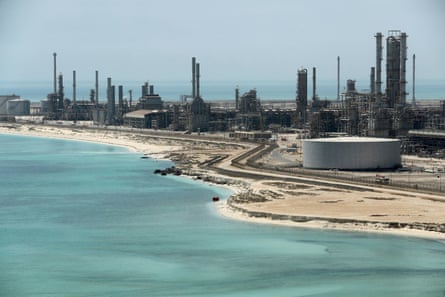
Saudi Aramco’s Ras Tanura oil refinery and oil terminal.
Saudi Aramco’s Ras Tanura oil refinery and oil terminal. Photograph: Ahmed Jadallah/Reuters

The IPCC is the world’s most authoritative organisation on climate science, with its reports approved by 195 countries. They are produced by hundreds of lead authors from around the world with expertise ranging from atmospheric physics to the impacts of extreme weather.

The Guardian examined the 223 lead authors in working group III, the part of the IPCC that assesses how emissions can be reduced or removed from the atmosphere. Its work evaluates emissions-cutting policies and technologies and so is directly relevant to the economic interests of countries and companies. Working groups I and II cover the science of climate change and its impacts.

The investigation identified 20 cases with strong conflict of interest concerns. More than half involved authors linked to Saudi institutions, a concentration that raises broader questions about the kingdom’s influence on how the reports are produced.

The IPCC’s conflict of interest policy has been described as “not fit for purpose” by experts who have reviewed the Guardian’s investigation.

‘It’s the first time we have so many Saudi-linked authors’

Another Aramco employee selected as an IPCC lead author is Dr Diego Armando Moya Pinta, who has worked as an energy and sustainability scientist at the company since 2022. The IPCC lists his affiliation only as Imperial College London, where he is an honorary senior research fellow.

As one of 14 lead authors for the chapter on energy systems, Moya Pinta will assess options for reducing emissions across the energy sector, an area with direct implications for Aramco’s business. “I don’t think there would be any question that a case like this would fit under the IPCC’s conflict of interest policy,” said Prof Kevin Elliott, an academic at Michigan State University specialising in research ethics.

Yet in March 2026, the IPCC’s conflict of interest committee reported finding no conflicts of interest among any of the authors selected for the Seventh Assessment Report, the next edition of its biggest and most influential publication.

The disconnect between the committee’s conclusion and the presence of authors from the world’s largest petroleum company “raises questions about whether the IPCC conflict of interest policy is fit for purpose or being properly applied”, said Rachel Kennerley, a senior campaigner at the Center for International Environmental Law.

Alongside the two Aramco employees, working group III includes five authors from the King Abdullah Petroleum Studies and Research Center (KAPSARC), a Saudi government-funded thinktank chaired by the country’s energy minister and whose stated mission is to “advance Saudi Arabia’s energy sector”.
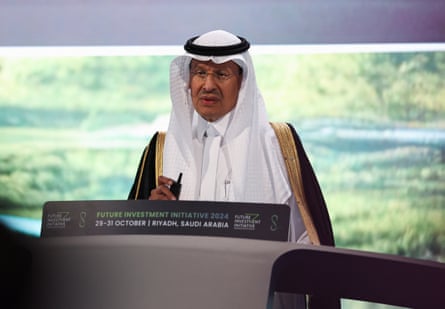
Saudi Arabia’s energy minister, Abdulaziz bin Salman Al Saud, speaking at the Future Investment Initiative in Riyadh in 2024.
Saudi Arabia’s energy minister, Abdulaziz bin Salman Al Saud, speaking at the Future Investment Initiative in Riyadh in 2024. Photograph: Hamad I Mohammed/Reuters

Little-known outside energy policy circles, KAPSARC has the same number of authors in working group III as Imperial College London and Vienna’s International Institute for Applied Systems Analysis, making the three institutions the most represented in the group.

Another energy systems lead author, Prof Zain Yamani, at King Fahd University of Petroleum and Minerals, was conducting joint research with Aramco’s New Energies Research Division during the past year while also serving in his IPCC role. The resulting paper, co-authored with two Aramco scientists, was published in July. A further IPCC lead author, Dr Syed Masiur Rahman, works at the same university, which advertises its proximity to Saudi Aramco as offering “countless opportunities for collaboration and innovation” between the organisations.

A lead author on the chapter on carbon dioxide removal technologies, Prof Hussein Hoteit at the King Abdullah University of Science and Technology, was finalising research based on a demonstration project for underground carbon storage at the time of his appointment to the IPCC. Saudi Aramco conceived the project and provided substantial financial support.

“It’s the first time we have so many Saudi-linked authors in the IPCC, above all in working group III,” says Dr Kari De Pryck, a political scientist at the University of Geneva, who is an expert in the organisation’s governance.

De Pryck sees the growing presence of Saudi-linked authors in the context of a broader shift in the kingdom’s climate diplomacy. Its longstanding opposition to cutting fossil fuel burning in UN climate negotiations is increasingly complemented by the promotion of technological climate solutions. “When it comes to the IPCC, the Saudi strategy now focuses on advocating technologies like carbon capture that would limit the impact on its fossil fuel economy,” says De Pryck.

Saudi Aramco’s Manifa oilfield.
Saudi Aramco’s Manifa oilfield. Photograph: Reuters

There is also an overlap between the kingdom’s government and the IPCC’s scientific leadership. Dr Malak Al-Nory, one of working group III’s seven vice-chairs, is a senior adviser to the Saudi energy ministry. Vice-chairs help oversee the assessment process and guide its scientific and technical work. They also evaluate authors’ conflict of interest disclosures and can refer cases to the IPCC’s conflict of interest committee.

The IPCC does not preclude government-employed scientists working on its reports. Unusually however, Al-Nory has continued to represent Saudi Arabia in UN climate negotiations while serving as a vice-chair. She was part of the kingdom’s delegation to the Bonn Climate Change Conference in June 2026, underscoring concerns about the compatibility of her dual roles.

“Conflict of interest rules aren’t an accusation that someone has done something wrong,” said Tzeporah Berman, founder and chair of the Fossil Fuel Treaty Initiative. “They exist to protect an institution’s integrity by ensuring professional, financial or governmental interests that could reasonably be perceived to influence its work are disclosed and appropriately managed.”

“If the IPCC’s conflict of interest system can look at an IPCC vice-chair working for the Saudi energy ministry, Aramco employees serving as lead authors, and this concentration of authors from Saudi state-linked institutions and find nothing that needs to be managed, then the policy is clearly not fit for purpose,” she said.

A ‘gap’ between policy and reality

Until 2011, the IPCC had no institution-wide conflict of interest policy. That changed after a bruising credibility crisis in 2010, when mistakes in its major reports and allegations of financial conflicts involving its then-chair prompted an independent review of the organisation’s procedures.

The resulting policy states that its purpose is “to protect the legitimacy, integrity, trust, and credibility of the IPCC”. It adds: “It is essential that the work of the IPCC is not compromised by any conflict of interest for those who execute it.”

Kennerley said there was a gap between the IPCC’s written criteria and how it operated in practice. She said national representatives had raised questions over a lack of guidelines on how the policy was enforced, adding that another major problem was transparency. Authors’ conflict of interest declarations are not made public, and the conflict of interest committee provides no detail about its deliberations.

A spokesperson for the IPCC said no authors had been referred to its conflict of interest committee as all potential conflicts of interest reported could be resolved by the working group vice-chairs. “The strength of the IPCC lies in its commitment to diverse leadership and author teams, multiple expert and government review processes, and the inclusive nature of its assessments,” the spokesperson said. “These safeguards collectively support the objectivity, integrity, authority and credibility of IPCC reports.”

They said details of the review of conflict of interest declarations were confidential due to data protection legislation. “The public can judge whether relevant interests have been adequately assessed and managed [by the] assessment reports themselves, which go through robust, multistage reviews which are [publicly] documented.”

Regarding the high number of experts linked to Saudi Arabia, the spokesperson said: “No individual author, institution, sector or country determines the conclusions of an IPCC report. Conclusions are developed collectively by large, internationally and scientifically diverse author teams.” They said IPCC authors were leading experts in their fields and deliberately drawn from a wide range of backgrounds, including government and the private sector.
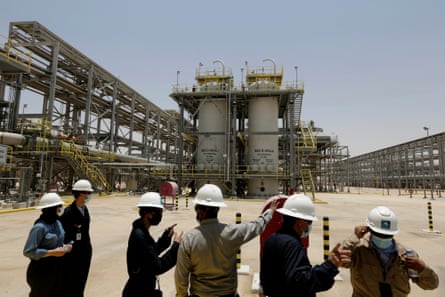
Engineers and journalists at a Saudi Aramco plant in Hawiyah in 2021.
Engineers and journalists at a Saudi Aramco plant in Hawiyah in 2021. Photograph: Amr Nabil/AP

Hoteit, at King Abdullah University of Science and Technology, said: “There is no conflict of interest. My research and contributions related to the IPCC work were fully funded and supported by my employer, which is acknowledged in the referenced paper.” The multi-author paper also states: “We thank Saudi Aramco for conceiving and conducting this pilot project and for providing substantial financial support.”

Aramco declined to comment, and none of the other individuals or institutions responded to requests for comment.

Eleven of the 20 cases of strong potential conflicts of interest identified by the Guardian investigation were Saudi-linked, with the rest spread across other nations and linked to issues including industry collaboration, fossil-fuel sponsorship of academic institutions’ research, environmental campaigning and sustainable finance.

Dr Jeroen Oomen, a climate governance researcher at Utrecht University, said: “The IPCC’s mandate as the arbiter of climate science has always been based on its independence and neutrality. The conflicts [reported in this investigation] risk damaging such a reputation.”

Dr Adam Standring, a researcher at the Lisbon School of Economics and Management, said the IPCC was created to bridge science and politics, and it “straddles those two worlds”. That hybrid role was fundamental to its success, he said, but also a source of problems.

Berman said: “At a time when fossil fuel interests and some governments are fighting to delay the transition away from fossil fuels, the IPCC should be fiercely protecting its independence. That means strong disclosure requirements, meaningful conflict of interest rules and safeguards capable of addressing both actual conflicts and reasonable perceptions of conflict.”

The IPCC said there was no process currently under way to amend its conflict of interest policy.

This investigation was developed with the support of Journalismfund Europe and is also being published in L’Humanité in France, Lucy sui mondi in Italy, Visão in Portugal and Nano (3Sat) in Germany, Austria and Switzerland.


Saudi Aramco employee named lead author of global climate report (Politico)

Mustafa Babiker was proposed for the key role last month.

SAUDI-ARAMCO-ENERGY
The Aramco tower in Riyadh on April 16, 2023. | Fayez Nureldine/AFP via Getty Images

Original article

August 18, 2025 4:48 pm CET

By Karl Mathiesen

A long-standing employee of the world’s largest oil company will hold the pen on a crucial chapter of the next review of global climate science.

Sudanese economist Mustafa Babiker, who has worked for the Saudi Aramco oil company for almost two decades, was named a coordinating lead author for the next U.N. Intergovernmental Panel on Climate Change (IPCC) report.

The IPCC’s reports are the gold standard of climate science, collating the finest research on the causes and consequences of heating the planet via the burning of fossil fuels. 

Babiker’s nomination by the Saudi government, first reported by POLITICO in July, was greeted with concern by climate advocates, who described it as an example of corporate interference in the scientific process. 

“The fossil fuel industry and its captive political allies will do everything in their power to try to undermine climate science. The global community must be more diligent than ever in order to protect the credibility and integrity of the [IPCC],” former U.S. Vice President Al Gore said last month in a social media post, responding to news that Babiker had been nominated for the role.

At the time, the Saudi delegation to the U.N. climate bodies defended Babiker, a researcher with extensive credentials who has contributed to past IPCC reports. “His extensive academic and professional experience … make him exceptionally qualified to serve in this role,” a spokesperson said. The government did not respond to a request on Monday to add to those comments.

In a statement released Monday confirming Babiker’s role as a leader among 664 experts chosen to write the report, IPCC Chair Jim Skea said: “The author teams, drawn from several thousand excellent nominations, ensure outstanding expertise across a range of disciplines. We are proud that the new author teams reflect increased diversity, in terms of both gender balance and greater representation from developing countries and economies in transition.”

The IPCC’s reports are the gold standard of climate science. | Kostas Kourgias/EPA

Babiker will co-lead the work on a chapter of the report dealing with the “policies and governance and international cooperation” aimed at curtailing fossil fuels use and other sources of global warming. The chapter will explicitly touch on the role of “non-state” actors, including corporations.

Saudi Aramco, according to the NGO Influence Map, is the greatest corporate contributor to climate change in history, thanks to the emissions from the oil and gas it has extracted.
Climate Science in “Bonn climate talks: Key outcomes from the June 2026 UN climate conference” (Carbon Brief)

19 June 2026  16:16

Original post

Climate science

Throughout the Bonn talks, there were major disagreements about how climate science should feed into the UN climate process.

Parties traded accusations of “misinformation” and oversimplifying science. There were also disputes about the Paris Agreement’s 1.5C temperature goal and the role of the UN’s Intergovernmental Panel on Climate Change (IPCC).

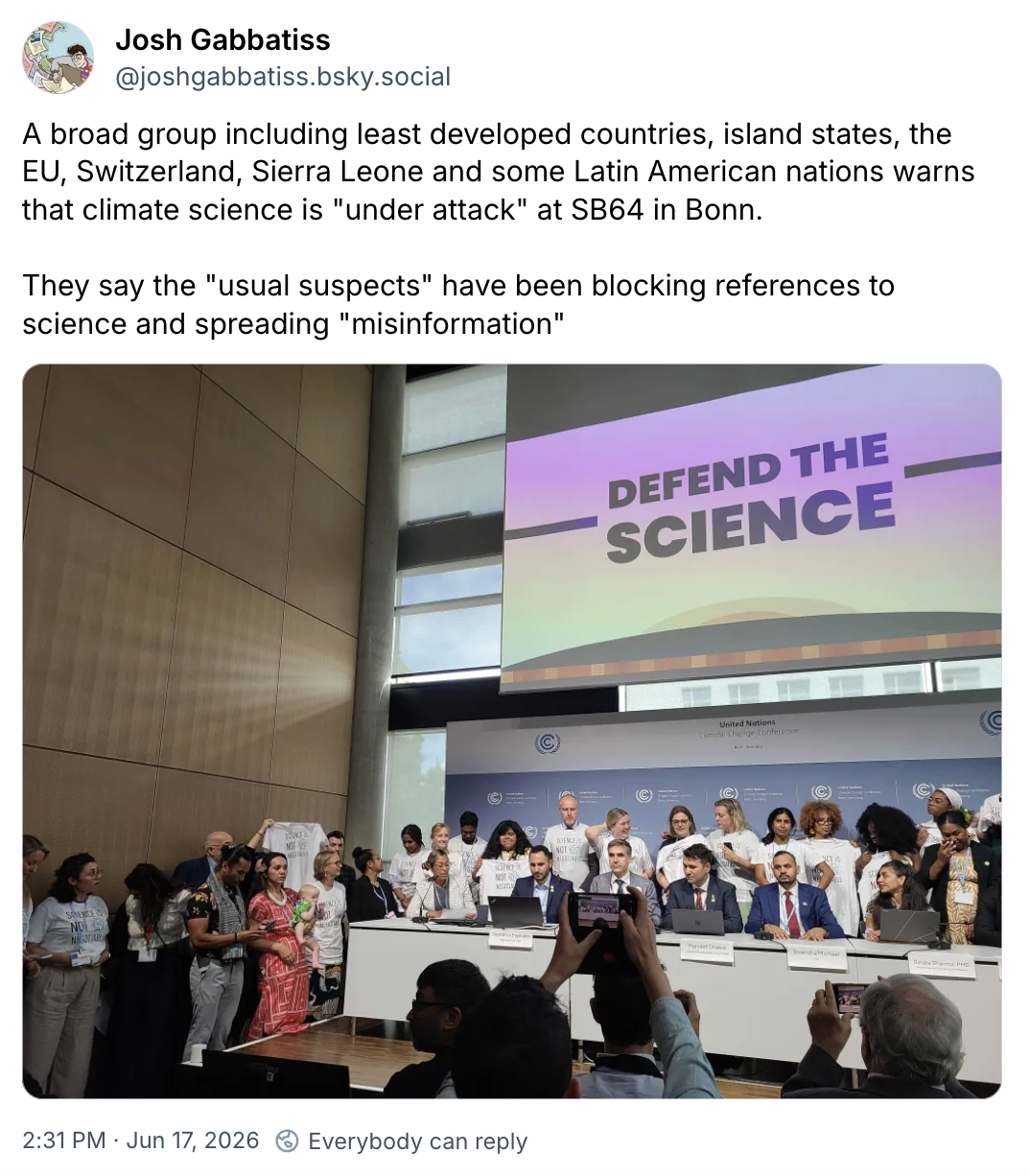
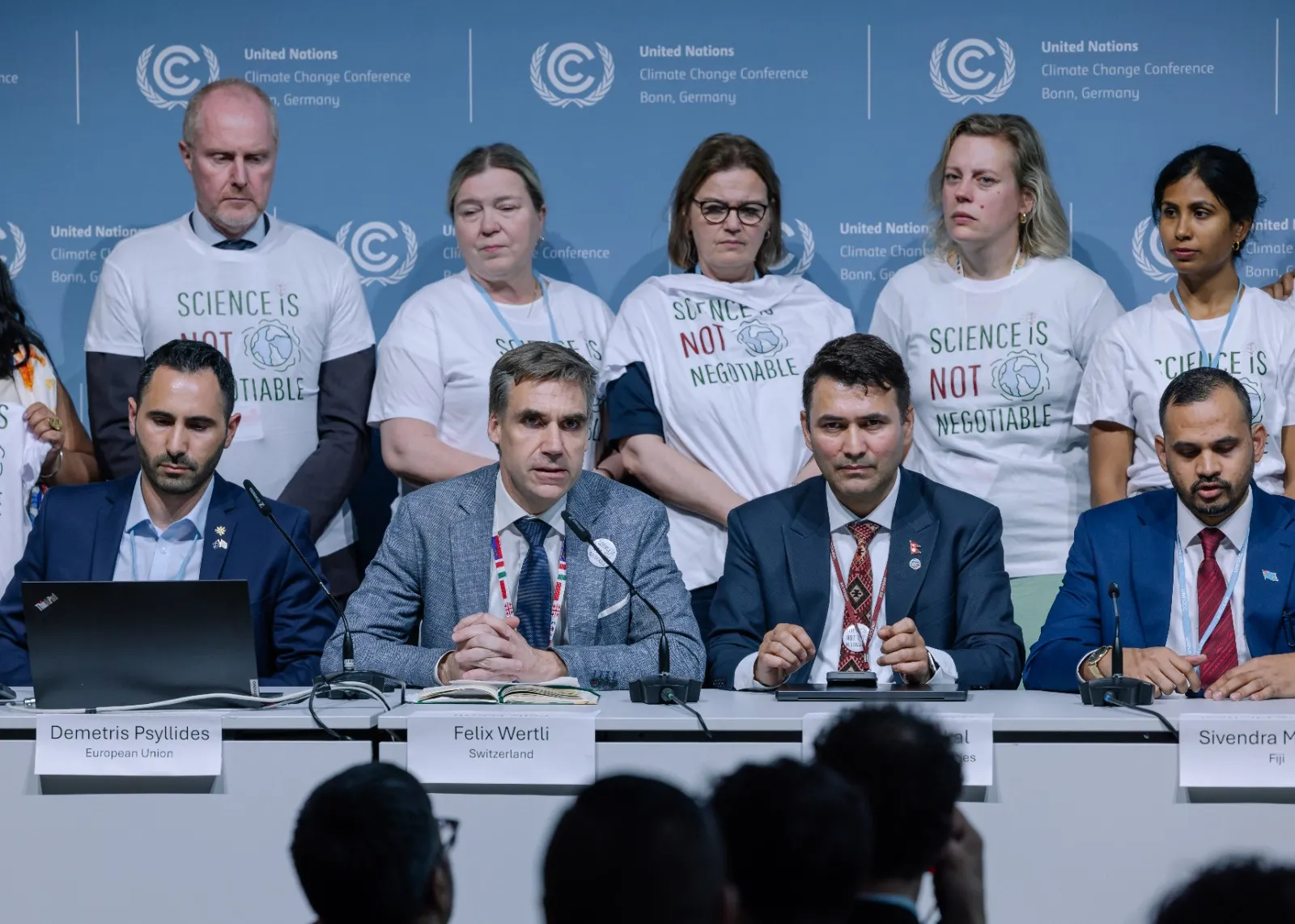
This came to a head when a press briefing was assembled with representatives from the EU, Switzerland and various developing countries to denounce “coordinated attacks” on science by “fossil-fuel interests”.

Josh Gabbatiss on Bluesky: A broad group including least developed countries

When asked which parties were behind these “attacks”, Sivendra Michael, chief negotiator for Fiji, told Carbon Brief:

“It is the usual suspects that seek to block progress…We are seeing efforts to remove references to the IPCC and the 1.5C temperature limit.”

A negotiator from one of the countries in the press conference later elaborated, telling Carbon Brief that Saudi Arabia and India were among those “undermining” climate science.

They also told Carbon Brief that Saudi Arabia had started referencing a Paris Agreement target of limiting warming to 2C – failing to mention the 1.5C component altogether. Saudi Arabia, a major oil-and-gas producer, has long opposed the 1.5C goal. 

(The Paris Agreement technically has a single temperature target of “well-below 2C above pre-industrial levels and pursuing efforts to limit the temperature increase to 1.5C”.)

All economies face very steep emissions cuts if the world is to meet the 1.5C target and this could have major societal impacts, especially for emerging economies with fossil-fuel industries.

However, small islands and climate-vulnerable states frame warming beyond 1.5C as an existential threat.

Anne Rasmussen, lead negotiator of AOSIS, told Carbon Brief that they were concerned about the “attempt to delink any relevance of the 1.5C” across several tracks, including the JTWP and the MWP.

As at COP30, differences of opinion were most evident in negotiations on “research and systematic observation”, where parties discussed scientific inputs into UN climate talks.

The EU was among parties voicing concerns about “misinformation” and the importance of 1.5C. Saudi Arabia and India were among those arguing against references to “misinformation and disinformation”, as well as 1.5C.

(There was also some debate about the inclusion of references to El Niño and climate “tipping points”. Both were opposed by some large, developing countries, with India and Saudi Arabia arguing there were “varying perspectives” on tipping points science.) 

Dr Kate Dooley, a senior research fellow at the University of Melbourne who followed the Bonn negotiations, told Carbon Brief that the accusations levelled by some parties in the press conference were oversimplified. She said:

“We’ve got both sides finger-pointing at each other – the EU and Switzerland pointing the finger at large, developing countries and saying: ‘What you’re doing is climate denial.’ And it’s not.”

There is growing acceptance that the world is likely to breach 1.5C. If that happens, the “overshoot” could be temporary if there is mass deployment of carbon removal technologies and tree-planting to suck carbon dioxide (CO2) from the atmosphere. 

As ever, this raises questions as to who will be responsible for cutting emissions and for the mass deployment of CO2 removal – and when and where these actions should take place.

Dooley said that “1.5C is the temperature goal and we need all hands on deck to achieve that”, but there was nothing wrong with “interrogating the risks of mitigation pathways and trying to make sure those risks are minimised”.

Large, developing nations argue on the basis of “equity” that they should have more leeway, whereas developed countries bear significant historical responsibility for climate change and that, as a result, they should cut emissions further and faster in line with the 1.5C goal.

Moreover, they argue that developed countries have failed to provide sufficient climate finance and technological support to help developing countries cut emissions.

Responding to this idea, Fiji negotiator Michael told the press briefing there would be “no equity for the most vulnerable” if 1.5C is breached:

“There is this growing narrative that science and equity are in competition…We reject this notion.”

Saudi Arabia and India were also prominent in questioning the role of the IPCC – considered the world’s most authoritative voice on climate science – in the UN process.

Some Indian researchers have been vocal in arguing that the scenarios assessed by the IPCC place an unfair burden on developing countries.

There was also a wider conversation about IPCC timelines in Bonn. Many parties, including the EU, AOSIS and South Africa, argued that the panel’s “seventh assessment report” (AR7) should be brought forward so the “best available science” can feed into the second “global stocktake” in UN climate talks, which is set to conclude in 2028. (See: Global stocktake.)

A group of countries, including Saudi Arabia, India, China, Kenya and Russia, have pushed back against any effort to accelerate the report timing. As a result, for five consecutive IPCC meetings, countries have failed to agree on the AR7 timeline.

These debates spilled over into SB64 talks, with the same parties arguing against alignment with the second GST. Again, these countries often make arguments on the basis of equity, stating that accelerating the process would disadvantage developing-country scientists.

Science ‘under attack’ from fossil fuel interests at UN climate talks (Climate Home News)

Jun 17, 2026 | Last Update: Jun 18, 2026

Original article

A coalition of some rich nations and the world’s most vulnerable have vowed to protect climate science in UN negotiations

Countries give a press briefing to underline the importance of science in the UN climate process at the mid-year talks in Bonn on June 17, 2026. (Photo: Marie Jacquemine/Greenpeace)

Matteo Civillini (Reporter) & Joe Lo (News editor)

Editing: Megan Rowling

Dozens of countries have called out growing “coordinated attacks” by fossil fuel interests aimed at undermining the role of climate science in the UN negotiations at the mid-year talks in Bonn.

Under the banner of ‘Friends of Science’, in an overflowing press conference room lined with negotiators and civil society supporters, diplomats from Fiji, Nepal, the European Union, Switzerland, Sierra Leone and Panama vowed to ensure that decision-making in the UN climate process remains based on the “best available science”. That includes reports from the Intergovernmental Panel on Climate Change (IPCC), the UN’s climate science body, they said.

While steering clear of singling out any specific country, they said efforts to cast doubt on established scientific concepts, such as the 1.5 global warming limit, are led by “the usual suspects” and those who think “science threatens their economic prospects”. 

Saudi Arabia and India have opposed calls in draft texts to encourage scientific work on scenarios that would minimise the magnitude and duration of any overshoot of 1.5C, according to one negotiator in the room and summaries of closed-door discussions published by a reporting service. 

UN chief António Guterres conceded last year that a temporary breach of the key warming limit is inevitable, while urging countries to redouble efforts to bring temperatures back down.

‘Polluted narrative’

Scientists have long established that burning fossil fuels is the primary cause of man-made climate change and a rapid shift away from oil, coal and gas is essential to curb global warming.

Saudi Arabia is dependent on oil and gas exports, while India largely relies on coal to power its economic development.

One negotiator said that research on how climate action can be equitable for developing countries, produced by Indian universities, had been published too late to be incorporated into the last IPCC assessment report in 2023. This incident led the Indian government to try and discredit the IPCC, they said. Some Indian scientists have argued that the IPCC’s scenarios are unfair on developing countries.

Saudi Arabia and India have played down the importance of making sure that the latest IPCC assessments – regarded as the gold standard of climate science – are available for the next global stocktake, the UN scorecard of climate action around the world. 

“Anyone that is blocking references to science – they are not our friends,” Sivendra Michael, lead negotiator for Fiji, told a press conference, highlighting the rise of a “polluted narrative” both inside and outside the negotiating rooms.

1.5C is a ‘hard limit’

Speaking for the AILAC coalition of Latin American countries, Panama’s Ana Aguilar said they went to Bonn to negotiate positions, not to negotiate the facts laid out by science.

“We see coordinated efforts to cast doubt on the best available science driven by a narrow set of interests, not by the needs of our people,” she added. “We have seen this playbook before… manufacture doubt, delay the response and let the vulnerable people pay this bill.”

Negotiators, researchers and civil society activists attend a press conference on defending science in the UN climate process in Bonn, Germany on June 17, 2026. (Photo: Teo Ormond-Skeaping)

The ‘Friends of Science’ coalition stressed that the 1.5C goal of the Paris Agreement cannot be negotiated, as the survival of the most climate vulnerable communities is at stake if it is permanently breached.

“Science tells us that 1.5C is a hard limit for many countries, including the small island developing states and least developed countries,” said Manjeet Dhakal, a negotiator for Nepal. “We still have a chance to keep 1.5 degrees in reach and minimise the overshoot if we act fast and drastically.”

Long-running IPCC standoff

While diplomats claimed attacks on science are broadening, one long-standing issue of contention is whether the latest assessment reports of the IPCC will be ready in time for the next UN global stocktake due to start this November and end in 2028. 

This matters because, as some experts have pointed out, previous IPCC findings played a key role in the first such exercise, which culminated at COP28 in Dubai in the landmark agreement on transitioning away from fossil fuels in energy systems.

The UN climate process needs ambition – the law demands it

The IPCC, which works with academics worldwide, publishes its comprehensive scientific assessment reports every five to seven years. The process for the last one, AR6, lasted around seven and a half years. The seventh assessment cycle, AR7, began in July 2023, but a political battle over the timing has dragged on for over two years at successive IPCC meetings, with governments repeatedly failing to find a solution. 

A large majority of nations have been pushing for an accelerated timeline that would ensure the AR7 reports can be fed into the UN’s global stocktake. But a group of countries, including Saudi Arabia, India, China, Russia and Kenya, have said at previous IPCC meetings they want a longer process, arguing a fast-tracked assessment would put a burden on developing countries with limited resources.

Science and the stocktake

That fight has now bled into the Bonn talks where governments began discussing the arrangements for the next stocktake. At a session earlier this week, most developed countries, Latin American and small island states, and the world’s poorest nations emphasised the assessment of collective climate action must be guided by the “best available science” – code for the findings of the IPCC reports.

The Maldives, speaking for small island states, said IPCC science remains “essential to the integrity, credibility and usefulness” of the stocktake. AILAC said that starting the process “on the right footing” requires a political decision on the timeline to deliver the AR7 reports in time. Switzerland said IPCC reports “ask more than is politically comfortable, but that is precisely why they must guide every decision we make”.

Saudi Arabia, however, said no particular scientific input – and in particular what comes out of the IPCC – should be prioritised. Similarly, India warned against creating “some kind of preferred hierarchy” in the role that any specific source of information should play in the process.

Ghana’s Antwi-Boasiako Amoah, who chairs the African Group, told a press conference on Tuesday that some countries think rushing to get IPCC inputs into the global stocktake could “undermine or compromise the IPCC process”. “Africa is for science,” he said, without saying where the continent stands on the IPCC timeline.

Crunch talks in October

At the “Friends of Science” press conference, Dhakal pushed back on the idea that science would have to be rushed to be incorporated. He said the IPCC leadership has “perfectly made it clear” that they can deliver the report before the global stocktake. “It is the scientists who are saying they can deliver it on time,” he said. 

The “Friends of Science” press conference at UN climate talks in Bonn on June 17, 2026. Photo: Marie Jacquemine/Greenpeace)

The discussion will be picked up again at the next IPCC session in October, where its boss Jim Skea is hoping to reach an agreement. “As a scientist myself, I cannot overstate the importance of this decision,” he told governments in Bonn last week.

Andreas Sieber, head of political strategy at campaigning group 350.org, told Climate Home News that the debate may sound procedural, “but it is anything but”. “Science is the backbone of the Paris Agreement ambition cycle, and the evidence assessed through AR7 will help determine not only the emissions pathways countries pursue, but also how the world responds to mounting climate losses and who receives support,” he said in Bonn.

This story was updated after publication to add information on the IPCC assessment cycles and timing of its reports.