Arquivo da tag: Desastre

Piadas sobre falta de água reacendem rixa do Norte e Nordeste com o Sudeste (UOL)

Aliny Gama e Carlos Madeiro

Do UOL, em Maceió

17/02/201506h00

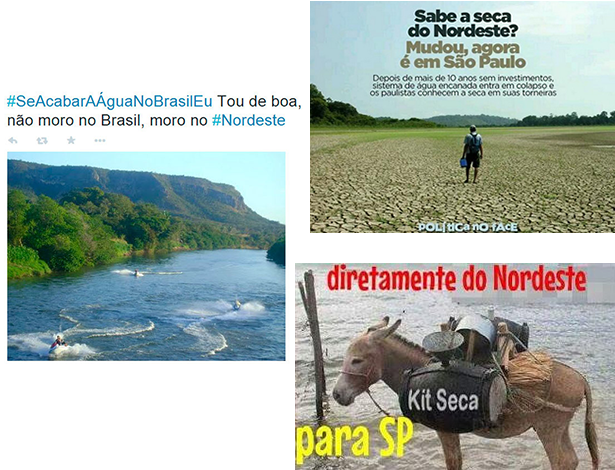
postagens-nas-redes-sociais-ironizam-a-falta-de-agua-no-sudeste-do-brasil-e-lembram-que-o-problema-nao-atinge-o-nordeste-do-pais-1423859662920_615x470

Reprodução/Redes sociais. Piadas e provocações nas redes sociais ironizam a falta de água no Sudeste do país

Em uma daquelas peças que o destino prega, os moradores do Sudeste são vítimas hoje de provocações parecidas com as que muitos costumavam fazer com os nordestinos. Tudo por conta da falta de água que atinge a região e serve de combustível para uma nova onda de piadas, agora voltadas principalmente contra os habitantes do Rio e de São Paulo.

Com humor, nordestinos e nortistas não perdoam a atual crise hídrica nos Estados do Sudeste e acirram o bairrismo entre as regiões. São muitas as postagens em redes sociais que fazem menção à situação.

Em um vídeo que viralizou na internet nesta semana, um garoto do Acre toma banho com o jato do cano ao retirar a torneira da pia. “Aqui é Acre, p… As meninas de São Paulo, sabem o que elas querem? Banho!”, diz o menino.

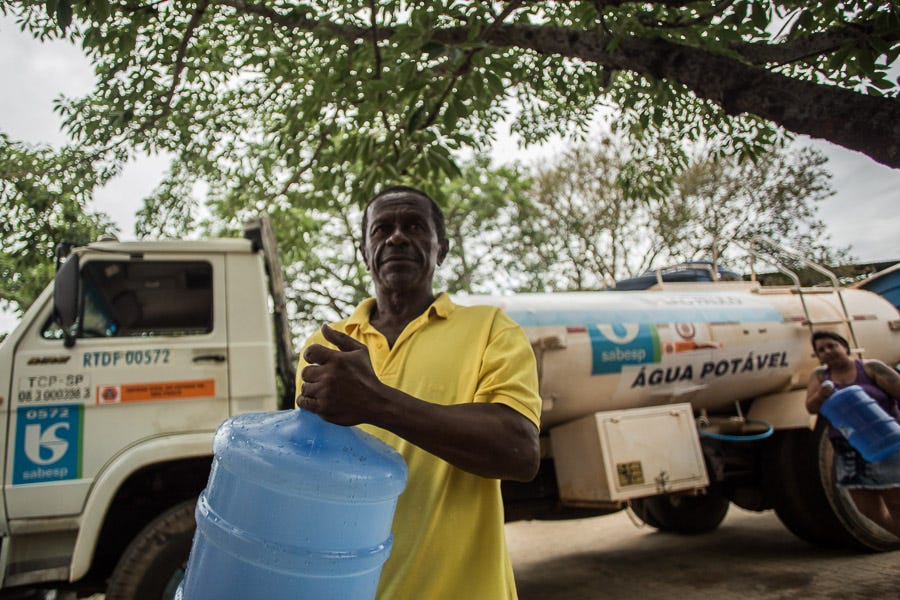
Em uma outra postagem, moradores de Maceió (AL) tomam banho com um caminhão-pipa durante as prévias carnavalescas e dizem que estão “ostentando” por terem água. “Enquanto vocês criticam nós, nordestinos, eu tomo banho de chuveiro. Claro que é com moderação”, diz, em outro vídeo, o promotor de eventos Galisteu Matias, que reside em Maceió.

Mas qual é o limite entre brincadeira e ofensa? O professor de direito e processo penal da Ufal (Universidade Federal de Alagoas), Welton Roberto, avalia que, nos exemplos citados, não ocorreu nenhum crime e, apesar do gosto duvidoso das piadas, estes casos não caracterizam injúria.

“Só existiria crime se fosse postada alguma agressão, como alguém chamando o outro de burro ou outro palavrão que fosse, caracterizando a injúria penal. Mas brincadeira, mesmo sendo de mal gosto, é brincadeira. Vejo que não atingiu de forma discriminatória ninguém, nem atingiu a dignidade de ninguém”, diz Roberto.

O advogado afirma que quem se sentir ofendido por ter a honra atingida em alguma postagem na internet deve salvar o material e contratar um advogado para que seja feita a queixa-crime. O crime de injúria é previsto no Código Penal e, em caso de condenação, a pena varia de acordo com o grau da ofensa.

Vingança

Para o doutor em história social pela USP (Universidade de São Paulo) e professor da UFPE (Universidade Federal de Pernambuco), Michel Zaidan Filho, a rixa entre moradores do Nordeste e do Sudeste é antiga e existe desde o início do século passado.

“Esse problema remonta desde que alguns Estados do Nordeste, da região sucroalcooleira, perderam importância no contexto econômico e social. Ainda na Primeira República (1889-1930), a região entrou em uma crise grande e se criou uma divisão do trabalho que até hoje persiste: o Nordeste comprador de mercadorias e insumos e fornecedor de mão-de-obra”, afirma o pesquisador.

Sobre as piadas que passaram a circular com provocações sobre a crise hídrica nos Estados do Sudeste, Zaidan Filho avalia que são uma consequência normal e uma espécie de vingança de quem sempre foi o alvo da gozação. Para ele, elas também fazem parte de uma herança cultural.

“Essa vingança faz parte deste contexto marcado por desigualdade e diferenciação cultural muito grande. Isso é um mecanismo psicológico muito comum, só que agora se inverteu, com a região mais forte e poderosa penalizada pelo racionamento de energia e água. Agora, fica muito conveniente ridicularizá-los”, afirma.

Apesar do clima ser de piadas, o professor aponta problemas de convivência que podem resultar da criação de grupos regionais. “O produto que existe é um apartheid, um separatismo que emerge sobretudo em períodos de crise, quando se demoniza os nordestinos. Na Europa, isso também existe com os imigrantes, que são responsabilizados pela crise econômica. É um pouco da situação que ocorre no Brasil”, conclui o pesquisador.

Panel Urges Research on Geoengineering as a Tool Against Climate Change (New York Times)

Piles at a CCI Energy Solutions coal handling plant in Shelbiana, Ky. Geoengineering proposals might counteract the effects of climate change that are the result of burning fossils fuels, such as coal. Credit: Luke Sharrett/Getty Images 

With the planet facing potentially severe impacts from global warming in coming decades, a government-sponsored scientific panel on Tuesday called for more research on geoengineering — technologies to deliberately intervene in nature to counter climate change.

The panel said the research could include small-scale outdoor experiments, which many scientists say are necessary to better understand whether and how geoengineering would work.

Some environmental groups and others say that such projects could have unintended damaging effects, and could set society on an unstoppable path to full-scale deployment of the technologies.

But the National Academy of Sciences panel said that with proper governance, which it said needed to be developed, and other safeguards, such experiments should pose no significant risk.

In two widely anticipated reports, the panel — which was supported by NASA and other federal agencies, including what the reports described as the “U.S. intelligence community” — noted that drastically reducing emissions of carbon dioxide and other greenhouse gases was by far the best way to mitigate the effects of a warming planet.

A device being developed by a company called Global Thermostat, is made to capture carbon dioxide from the air. This may be one solution to counteract climate change.CreditHenry Fountain/The New York Times 

But the panel, in making the case for more research into geoengineering, said, “It may be prudent to examine additional options for limiting the risks from climate change.”

“The committee felt that the need for information at this point outweighs the need for shoving this topic under the rug,” Marcia K. McNutt, chairwoman of the panel and the editor in chief of the journal Science, said at a news conference in Washington.

Geoengineering options generally fall into two categories: capturing and storing some of the carbon dioxide that has already been emitted so that the atmosphere traps less heat, or reflecting more sunlight away from the earth so there is less heat to start with. The panel issued separate reports on each.

The panel said that while the first option, called carbon dioxide removal, was relatively low risk, it was expensive, and that even if it was pursued on a planetwide scale, it would take many decades to have a significant impact on the climate. But the group said research was needed to develop efficient and effective methods to both remove the gas and store it so it remains out of the atmosphere indefinitely.

The second option, called solar radiation management, is far more controversial. Most discussions of the concept focus on the idea of dispersing sulfates or other chemicals high in the atmosphere, where they would reflect sunlight, in some ways mimicking the effect of a large volcanic eruption.

The process would be relatively inexpensive and should quickly lower temperatures, but it would have to be repeated indefinitely and would do nothing about another carbon dioxide-related problem: the acidification of oceans.

This approach might also have unintended effects on weather patterns around the world — bringing drought to once-fertile regions, for example. Or it might be used unilaterally as a weapon by governments or even extremely wealthy individuals.

Opponents of geoengineering have long argued that even conducting research on the subject presents a moral hazard that could distract society from the necessary task of reducing the emissions that are causing warming in the first place.

“A geoengineering ‘technofix’ would take us in the wrong direction,” Lisa Archer, food and technology program director of the environmental group Friends of the Earth, said in a statement. “Real climate justice requires dealing with root causes of climate change, not launching risky, unproven and unjust schemes.”

But the panel said that society had “reached a point where the severity of the potential risks from climate change appears to outweigh the potential risks from the moral hazard” of conducting research.

Ken Caldeira, a geoengineering researcher at the Carnegie Institution for Science and a member of the committee, said that while the panel felt that it was premature to deploy any sunlight-reflecting technologies today, “it’s worth knowing more about them,” including any problems that might make them unworkable.

“If there’s a real showstopper, we should know about it now,” Dr. Caldeira said, rather than discovering it later when society might be facing a climate emergency and desperate for a solution.

Dr. Caldeira is part of a small community of scientists who have researched solar radiation management concepts. Almost all of the research has been done on computers, simulating the effects of the technique on the climate. One attempt in Britain in 2011 to conduct an outdoor test of some of the engineering concepts provoked a public outcry. The experiment was eventually canceled.

David Keith, a researcher at Harvard University who reviewed the reports before they were released, said in an interview, “I think it’s terrific that they made a stronger call than I expected for research, including field research.” Along with other researchers, Dr. Keith has proposed a field experiment to test the effect of sulfate chemicals on atmospheric ozone.

Unlike some European countries, the United States has never had a separate geoengineering research program. Dr. Caldeira said establishing a separate program was unlikely, especially given the dysfunction in Congress. But he said that because many geoengineering research proposals might also help in general understanding of the climate, agencies that fund climate research might start to look favorably upon them.

Dr. Keith agreed, adding that he hoped the new reports would “break the logjam” and “give program managers the confidence they need to begin funding.”

At the news conference, Waleed Abdalati, a member of the panel and a professor at the University of Colorado, said that geoengineering research would have to be subject to governance that took into account not just the science, “but the human ramifications, as well.”

Dr. Abdalati said that, in general, the governance needed to precede the research. “A framework that addresses what kinds of activities would require governance is a necessary first step,” he said.

Raymond Pierrehumbert, a geophysicist at the University of Chicago and a member of the panel, said in an interview that while he thought that a research program that allowed outdoor experiments was potentially dangerous, “the report allows for enough flexibility in the process to follow that it could be decided that we shouldn’t have a program that goes beyond modeling.”

Above all, he said, “it’s really necessary to have some kind of discussion among broader stakeholders, including the public, to set guidelines for an allowable zone for experimentation.”

The Risks of Climate Engineering (New York Times)

Credit: Sarah Jacoby 

THE Republican Party has long resisted action on climate change, but now that much of the electorate wants something done, it needs to find a way out of the hole it has dug for itself. A committee appointed by the National Research Council may just have handed the party a ladder.

In a two-volume report, the council is recommending that the federal government fund a research program into geoengineering as a response to a warming globe. The study could be a watershed moment because reports from the council, an arm of the National Academies that provides advice on science and technology, are often an impetus for new scientific research programs.

Sometimes known as “Plan B,” geoengineering covers a variety of technologies aimed at deliberate, large-scale intervention in the climate system to counter global warming.

Despairing at global foot-dragging, some climate scientists now believe that a turn to Plan B is inevitable. They see it as inscribed in the logic of the situation. The council’s study begins with the assertion that the “likelihood of eventually considering last-ditch efforts” to address climate destabilization grows every year.

The report is balanced in its assessment of the science. Yet by bringing geoengineering from the fringes of the climate debate into the mainstream, it legitimizes a dangerous approach.

Beneath the identifiable risks is not only a gut reaction to the hubris of it all — the idea that humans could set out to regulate the Earth system, perhaps in perpetuity — but also to what it says about where we are today. As the committee’s chairwoman, Marcia McNutt, told The Associated Press: The public should read this report “and say, ‘This is downright scary.’ And they should say, ‘If this is our Hail Mary, what a scary, scary place we are in.’ ”

Even scarier is the fact that, while most geoengineering boosters see these technologies as a means of buying time for the world to get its act together, others promote them as a substitute for cutting emissions. In 2008, Newt Gingrich, the former House speaker, later Republican presidential candidate and an early backer of geoengineering, said: “Instead of penalizing ordinary Americans, we would have an option to address global warming by rewarding scientific invention,” adding: “Bring on the American ingenuity.”

The report, considerably more cautious, describes geoengineering as one element of a “portfolio of responses” to climate change and examines the prospects of two approaches — removing carbon dioxide from the atmosphere, and enveloping the planet in a layer of sulfate particles to reduce the amount of solar radiation reaching the Earth’s surface.

At the same time, the council makes clear that there is “no substitute for dramatic reductions in the emissions” of greenhouse gases to slow global warming and acidifying oceans.

The lowest-risk strategies for removing carbon dioxide are “currently limited by cost and at present cannot achieve the desired result of removing climatically important amounts,” the report said. On the second approach, the council said that at present it was “opposed to climate-altering deployment” of technologies to reflect radiation back into space.

Still, the council called for research programs to fill the gaps in our knowledge on both approaches, evoking a belief that we can understand enough about how the Earth system operates in order to take control of it.

Expressing interest in geoengineering has been taboo for politicians worried about climate change for fear they would be accused of shirking their responsibility to cut carbon emissions. Yet in some congressional offices, interest in geoengineering is strong. And Congress isn’t the only place where there is interest. Russia in 2013 unsuccessfully sought to insert a pro-geoengineering statement into the latest report of the Intergovernmental Panel on Climate Change.

Early work on geoengineering has given rise to one of the strangest paradoxes in American politics: enthusiasm for geoengineering from some who have attacked the idea of human-caused global warming. The Heartland Institute, infamous for its billboard comparing those who support climate science to the Unabomber, Theodore J. Kaczynski, featured an article in one of its newsletters from 2007 describing geoengineering as a “practical, cost-effective global warming strategy.”

Some scholars associated with conservative think tanks like the Hoover Institution and the Hudson Institute have written optimistically about geoengineering.

Oil companies, too, have dipped their toes into the geoengineering waters with Shell, for instance, having funded research into a scheme to put lime into seawater so it absorbs more carbon dioxide.

With half of Republican voters favoring government action to tackle global warming, any Republican administration would be tempted by the technofix to beat all technofixes.

For some, instead of global warming’s being proof of human failure, engineering the climate would represent the triumph of human ingenuity. While climate change threatens to destabilize the system, geoengineering promises to protect it. If there is such a thing as a right-wing technology, geoengineering is it.

President Obama has been working assiduously to persuade the world that the United States is at last serious about Plan A — winding back its greenhouse gas emissions. The suspicions of much of the world would be reignited if the United States were the first major power to invest heavily in Plan B.

Notes from the Anthropocene #1 (The Brooklyn Rail)

Nov 5th, 2014

On September 21, 2014, nearly 400,000 people took part in the People’s Climate March and Mobilization, winding their way from Central Park through Midtown Manhattan and ending with a block party celebration on the city’s mostly empty West Side (flooded during Sandy). Cleanly subdivided into six categories of political subjects—indigenous and environmental justice groups up front, a medieval combination of scientists and priests in the fifth, and finally “Here comes everybody! L.G.B.T.Q., N.Y.C. Boroughs, Community Groups, Neighborhoods, Cities, States, and more” in the sixth—the march called on the United Nations Climate Summit and governments around the world to steer a course towards appropriate “climate action” and “climate justice” on behalf of the groups neatly represented like meats and cheeses on a Hormel party tray. The following day, former anti-globalization and Occupy Wall Street activists, many on the payroll of this or that N.G.O., attempted a mass civil disobedience action on the blocks leading to the New York Stock Exchange. When the orchestrated non-violence of Flood Wall Street met the orchestrated non-brutality of the NYPD, ne’er an arrest occurred and the organizers called it all off, going home and turning the streets over to a few hundred unofficial protesters who were determined to be peacefully taken into custody.

As the United Nations met later that week to talk about talking about limiting global temperature rise to less than 3.6 degrees Fahrenheit (2 degrees Celsius) through a reduction in carbon emissions while simultaneously making economies, cities, and networks resilient, the People’s Climate Summit website released its own numbers: 400,000 people, 1,574 organizations, 50,000 college students, 5,200 articles, and 7 celebrity selfies. Homemade and mass-produced signs, puppets and inflatables, polar bear costumes and globes, thousands of buses whose bills were footed by non-profits and Gofundme.com, a pony-tailed Leo DiCaprio parading around as the U.N.’s Messenger for Peace, with a special focus on climate change issues. A success, they say, in launching the climate justice movement, a success as quantifiable as the parts per million of the upper safety limit for the atmosphere. As the march quickly faded into most New Yorkers’ memories, as when a million of us marched against the war that happened anyway, a variety of non-questions circulated to try to cement the march’s legacy. Was it too radical? Not radical enough? Too little too late? A photo-op? A corporate greenwash with the help of the “non-profit industrial complex”? 1 Non-questions for a non-world. Simply put, the Climate March was a blast from the past, mobilizing a set of political techniques and priorities that have literally been left behind by reality, by the new common in which we find ourselves.

A new epoch is certainly at hand; one need only trace the fault lines from the glacial barricades of Kiev’s Maidan across the radioactive swamp left by Fukushima’s failing ice wall to the “Winter is Coming” graffiti of Istanbul’s Gezi commune. Everywhere this age speaks its exhaustion, in the massive human efforts to break through and in the falling of idols. The once coherent subject around which the world was ordered stands in ruin as a neurotic information node whose closest relationship is with a cellphone or iPad. The claims to mastery over the world are being literally washed away by rising seas, while terminal diagnoses of our civilization proliferate as quickly as fantasies of the end (see the Walking Dead’s Terminus). As Brad Evans and Julien Reid describe it in their book Resilient Life, “We are living out the final scenes of the liberal nightmare in all its catastrophic permutations,” an epoch that is sensed just as much in the collapse of the Western Antarctic ice sheet2 and the bamboo barricades of Hong Kong as in the desertification of the Amazon rainforest and the death vows of the Lakota in the face of the KeystoneXL pipeline.3 Some people say the world is ending, but we say it is just a way of life, a certain order of things.

Ironically, it is geologists who have already arrived at this conclusion, by way of atmospheric chemist Paul Crutzen’s “launch[ing] a small hand grenade into the world of geological time scales.”4 Crutzen, formerly most famous for his Nobel Prize-winning research on the depletion of the ozone layer, used the term the Anthropocene in 2000 in a newsletter of the International Geosphere-Biosphere Programme.5 Since then geologists such as Jan Zalasiewicz have taken up the term, forming the Anthropocene Working Group (A.W.G.) to prepare a proposal for its inclusion in the International Commission on Stratigraphy’s official geological time scale. Etymologically the Anthropocene designates the “epoch of man”—a triumphal crowning of the liberal subject and its way of life, dated unsurprisingly from the middle of the 18th century. Stratigraphically the Anthropocene designates that Man has become the most powerful geological force on the planet, meaning that our measurable physical impact on sedimentation is more powerful than the oceans’ tides or the movement of mountains. Though in many popular accounts the Anthropocene is often reduced to the impacts of global warming or other processes contributing to climate change, geologists have focused on a series of metrics in addition to these such as deforestation, the acidification of the ocean, mass extinction, urbanization, the reshuffling of the biosphere, and the homogenization of environments. As such the perceptible triumph of man and his civilization, its coming to the fore as the most powerful force on earth, can best be measured in a catastrophic impact.

In light of the Anthropocene, geologists have also begun reshuffling their own rubrics, expanding the purview of paleontology from the organic to the inorganic and from the past to the present with the introduction of “technostratigraphy.”6According to Zalasiewicz and colleagues Colin Waters (Principal Mapping Geologist at the British Geological Survey) and Mark Williams (Professor of Palaeobiology with Zalasiewicz at Leicester), technofossils7 may well stand as the most convincing evidence of the epoch’s environmental signature. In the first-ever instance of geoscientists using anything other than biological fossils to help classify a chronostratigraphical unit, the A.W.G. are not looking at dinosaur vertebrae frozen in amber or ancient leaf imprints found in stone, but at critical infrastructures and cities like New York itself, which they see as “one of the most extensive, durable and geologically distinctive aspects of the Anthropocene” (Williams et al, 399) and thus as representative index fossils of the epoch’s recent, current, and near future. Whereas palaeontology has always been about studying past geological artifacts, the objects now under consideration as Anthropocene fossils—the key evidence in the Anthropocene dossier—are those of our present-day, still-functioning civilization. Thus for the first time in history, geologists are now dating an epoch in the present tense, studying contemporary, still functioning, infrastructures as fossils, studying the constituent elements of our civilization the way they once studied the remains of a long-vanished life form.

Through their attempt at naming and measuring the epoch of man, studying cities and subways as fossils in real time, and conjuring future geologists from outer space to study a world in which this civilization has completely vanished, thesegeologists have called our entire civilization and its requisite way of life a ruin. It would be easy to read the “humanity” implied in the Anthropocene as the final expression of modern man’s vanity, one last Promethean blast, but doing so misses entirely what’s most decisive about the stratigraphers’ concept: the Anthropocene elevates liberal humanity to prime geohistorical agent, center of the world, but does so only in the moment of its historical collapse. Has there ever been a civilization that named itself after its most cherished principle in order to call the whole thing a failure?

The Anthropocene as name and as phenomenon: the completion of the West, modernity, and liberal humanism. Seemingly by accident, coming from the sciences but immediately overflowing their bounds of acceptability—constant pressure to avoid seeming too negative and to remain dispassionate in their work—the geologists have cleared away the web of confusion. Naming the epoch after its first principle-in-ruins, they force us to face our age in all its schizophrenia.

Even if the geologists can’t quite say aloud what the New York Times could publish—“that this civilization is already dead”8—they place us succinctly and directly in the present. The end of the world is not this or that disaster coming in the future—a biblical flood, the next hurricane, the collapse of Midwestern agriculture—nor is it a potential future extinction of homo sapiens. The end of the world is what we are living through right now. And whereas the deluge of newspaper accounts of “the collapse of civilization”9 focus almost primarily on environmental factors, we insist that the devastation named by the Anthropocene is just as much a spiritual, existential, human devastation as it is an environmental one. It is impossible to separate the collapse of ice sheets from the collapse of man. Yet here again, in the very name itself, the Anthropocene seems to exceed what is considered polite or acceptable to say.

From this angle the People’s Climate March and Mobilization looks a bit different. Rather than being a matter of too much clicktivism, too few paint bombs, or of making demands to an utterly discredited institution, the Mobilization was designed to function as a last ditch attempt to shore up the present. At work in the generation of a discourse of climate crisis and a climate movement is an operation that dims down the complex reality of our epoch to a single phenomenon—global warming as generated by increased ppm of CO2—and deriving from that a set of clearly representable subjects—from “frontline communities” to “climate activists”—and a set of core questions—how can this situation be managed and how can this way of life be saved from itself?—that in effect attempt to hold back the apocalypse one more day, while also holding back any possibility of redemption. Keeping us cocooned, trapped, within an eternal, frozen present.

Conclusion

As Lauren Berlant writes, “the present is perceived, first, affectively: the present is what makes itself present to us before it becomes anything else” (Cruel Optimism, 4). This series will explore our present, an epoch for which we lack precedents or words but in which we are, already, called and shaped. Its aim is to read the tracks in front of us from within the situation, to recognize the present as it unfolds and to trace the breaths and rhythms with which it expresses itself. As such, the writing may occasionally take on different forms—stories, letters, interviews, or whatever seems appropriate. Future topics include “Those Who Go West” in Japan, extinction obsession, France’s Zone A Défendre and other ZADs, hacker spaces, autonomy, “survival skills,” and more. We will read the signs of the time and open ourselves up to the forms of life that are already coming to replace man in this exhausted age. An age obsessed with the end because it wants to see the world reborn.


NOTES


  1. Pinto, Nick. “Last Month’s Climate Protests: Potent Message Or Toothless.” Gothamist. Oct. 13, 2014. Web

  2. Goldberg, Suzanne. “Western Antarctic Ice Sheet Collapse Has Already Begun, Scientists Warn.” The Guardian, May 13, 2014. Web.

  3. Ibanez, Camila. “Lakota Vow: ‘dead or in Prison before We Allow the KXL Pipeline’ – Waging Nonviolence.” Waging Nonviolence. Mar. 13, 2013

  4. Sample, Ian. “Anthropocene: Is This the New Epoch of Humans?” The Guardian. N.p., 16 Oct. 2014. Web.

  5. Stoermer, Eugene. “Have We Entered the ‘Anthropocene’?” – IGBP. Oct. 31, 2014. Web.

  6. Zalasiewicz, Jan, Mark Williams, Colin Waters, Anthony Barnosky, and Peter Haff. “The Technofossil Record of Humans.” The Anthropocene Review 1.2 (2014): 34-43. Web.

  7. “Is the fossil record of complex animal behaviour a stratigraphical analogue for the Anthropocene?” Geological Society of London, Special Publications 10/2013;


    See also Colin N. Waters, Jan A. Zalasiewicz, Mark Williams, Michael A. Ellis, and Andrea M. Snelling, “A stratigraphical basis for the Anthropocene?” Geological Society, London, Special Publications, 395, first published on March 24, 2014.

  8. Scranton, Roy. “Learning How to Die in the Anthropocene.” Opinionator Learning How to Die in the Anthropocene Comments. The New York Times, Nov. 10, 2013.

  9. Ahmed, Nafeez. “Nasa-funded Study: Industrial Civilisation Headed for ‘Irreversible Collapse’?” The Guardian. Mar. 26, 2014.

CONTRIBUTORS

Glenn DyerGLENN DYER was born and raised in New Orleans, Louisiana and now lives in Ridgewood, Queens. He is a historian, translator, amateur strategist, and part-time instructor at the Harry Van Arsdale Jr. Center for Labor Studies. Glenn is also part of 1882 Woodbine, a workshop and organizing space for practical experiments in building autonomy.

Stephanie WakefieldSTEPHANIE WAKEFIELD is a geographer living in Ridgewood, Queens, where she is part of 1882 Woodbine. She teaches Urban and Urban Environmental Studies at Queens College, and her work has appeared in Progress in Human Geography, Society and Space, and May. Stephanie is currently finishing a book on the emerging climate resilience dispositif in New York City.

A palavra dos cientistas sobre a crise da água (Fapesp)

ED. 227 | JANEIRO 2015

© DANIEL BUENO

Estrategias a

A Academia Brasileira de Ciências (ABC) divulgou no dia 12 de dezembro a Carta de São Paulo, um documento com análises e recomendações para enfrentar a crise hídrica no Sudeste. Redigido sob a coordenação do pesquisador José Galizia Tundisi, do Instituto Internacional de Ecologia (IIE), o documento pede modificações imediatas na maneira de administrar os recursos hídricos. “É absolutamente necessário e imprescindível modernizar e dinamizar os sistemas de gestão”, afirmam os cientistas na carta. De acordo com os especialistas, há uma ameaça real à segurança hídrica do Sudeste, em especial na Região Metropolitana de São Paulo e no interior de Minas Gerais e do estado do Rio de Janeiro. O pano de fundo são indícios “fortíssimos” de mudança climática – que devem trazer eventos climáticos cada vez mais extremos – e o fato de os sistemas produtores de água não disporem de capacidade para garantir as vazões necessárias ao atendimento da demanda. Os cientistas recomendam uma drástica redução de consumo de água para 2015, investimentos imediatos em medidas de longo prazo e projetos de saneamento básico e tratamento de esgoto. Também defendem ações de divulgação e informação sobre as medidas emergenciais, os planos de longo prazo e a gravidade da crise. A íntegra da carta está disponível no site da ABC.

Água: crise e colapso em São Paulo (Revista Greenpeace)

Reportagem: Luciano Dantas

Fotografia: Carol Quintanilha

Edição 1, 2014

Desde o início do ano os moradores de São Paulo têm ido dormir sem saber se haverá água pela manhã em suas casas. Por meio de diferentes fontes, reunimos informações para levantar as causas, consequências e soluções para a crise hídrica que atinge o Estado.

Omissão e descaso: a falta d’água era prevista

Marussia Whately, coordenadora do Instituto Socioambiental (ISA) e uma das maiores especialistas em recursos hídricos de São Paulo, dá o seu diagnóstico. Assista:

“O uso do volume morto não é uma solução. Ele seca a represa, os lençóis freáticos e a capacidade do sistema em se recompor. Isso mostra a falta de preparo do governo do Estado para a crise.”

Marussia Whately

Dias difíceis

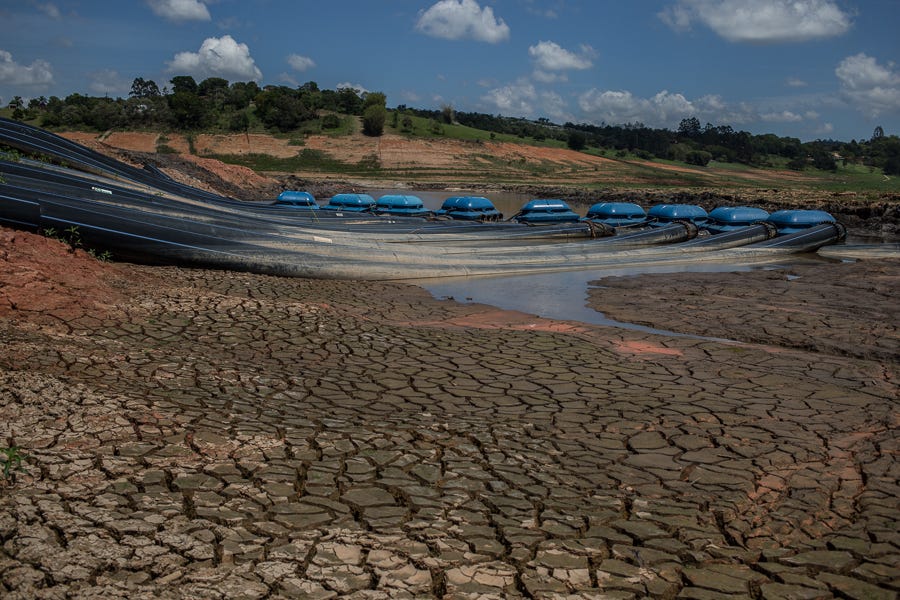
Desde maio deste ano a Sabesp se utiliza da água proveniente do chamado volume morto do Sistema Cantareira, principal manancial abastecedor da Grande São Paulo, para nutrir a capital.

“…Não há medida que consiga reverter esta situação em menos de cinco anos.”

Antonio Carlos Zuffo

Para o professor Antonio Carlos Zuffo, da área de Hidrologia e Gestão de Recursos Ambientais da Unicamp, o prognóstico é de dias difíceis. Segundo ele, além de enfrentar a escassez, os paulistas terão de lidar com a impureza da pouca água do reservatório. “Os peixes já vêm sofrendo com a falta de oxigênio dos rios e represas, e isso tende a piorar. Com um volume menor de água para a diluição de impurezas, a saída será o tratamento com maiores quantidades de cloro, o que compromete a qualidade da água que abastece residências, a produção agropecuária e industrial do Estado”, explica.

Zuffo acredita que a estiagem dure entre três e quatro décadas, e que a única saída para minimizar os prejuízos a curto-prazo é conscientizar a população. “A água economizada hoje será responsável pelo abastecimento de amanhã”, diz. E garante: não há medida que consiga reverter esta situação em menos de cinco anos.

A seca vira arte

Foto: Marcelo Delduque

Foto: Marcelo Delduque

Na contramão do que pensa a maioria dos moradores do Estado, Marcelo Delduque, morador de Bragança Paulista, não enxerga com tanta estranheza a seca que toma conta da represa que passa por sua propriedade, a Fazenda da Serrinha, já que a barragem foi construída artificialmente na década de 1970 para compor o Sistema Cantareira.

“Quando nasci, a represa não existia. Acompanhei durante a infância o povoado sendo alagado por ela. Por isso, para mim não é estranho ver tudo seco novamente”, conta.

É na centenária fazenda da família que há 13 anos acontece o Festival de Arte da Serrinha, produzido por Marcelo e seu irmão, Fábio Delduque, curador-responsável do evento. O festival propõe uma reocupação poética da paisagem rural por meio da arte contemporânea. É lá que artistas, estilistas, apaixonados e curiosos pela arte se embrenham, a cada ano, em produções artísticas livres e muito criativas.

Hoje a paisagem no entorno da fazenda é completamente diferente de quando a represa comportava seu nível normal de água. Assim, o que Marcelo pode acompanhar é o movimento contrário do qual vivenciou quando criança: o resgate das condições naturais do local, a retomada das raízes da Serrinha.

Curiosamente, o tema do Festival de 2014 foi justamente “Raízes”, e a paisagem do chão de barro rachado, que antes dava lugar à represa, tornou-se protagonista do evento.

O festival de arte da Serrinha propõe uma reocupação poética da paisagem rural por meio da arte contemporânea. (Foto: Carol Quintanilha)

Performance artística na paisagem lamacenta que transformou a represa. Fazenda da Serrinha. (Foto: Carol Quintanilha)

Antes da seca: a represa da fazenda Serrinha é parte do Sistema Cantareira (Foto: Marcelo Delduque)

O festival de arte da Serrinha propõe uma reocupação poética da paisagem rural por meio da arte contemporânea. (Foto: Marcelo Delduque)

Performance artística na paisagem árida que antes dava lugar às águas da represa. Fazenda da Serrinha. (Foto: Marcelo Delduque)

Sistema Cantareira – vista geral do reservatório Cachoeira em sua capacidade normal. (Foto: Instituto Socioambiental)

A represa de Vargem, componente do sistema Cantareira com sua capacidade hídrica já bastante reduzida. (Foto: Luiz Augusto Daidone/ Prefeitura de Vargem)

Racionamento velado

  • Lorem ipsum dolor sit amet, consectetur adipiscing elit. Aenean euismod bibendum laoreet. (Foto: Fabio Nascimento/Greenpeace)

    Falta de transparência: João exibe a quantidade de cloro contida na água após horas sem abastecimento. (Foto: acervo pessoal)

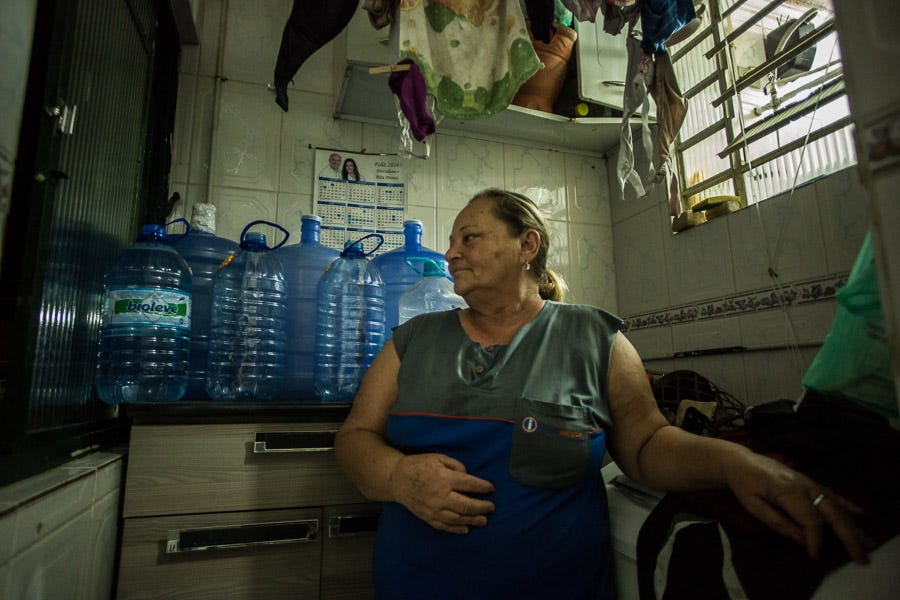
Morador do Mandaqui, zona norte da cidade de São Paulo, o estudante de jornalismo João Tiago Soares, 32, se queixa da falta de transparência praticada pela Sabesp. “Inacreditável. Até a Copa, tudo correu bem. Dias depois da final do campeonato, sem aviso prévio, o racionamento começou” – relata.

João afirma que no início faltava água por quatro horas durante a tarde e que depois foi faltando água cada vez mais tarde e por mais tempo. “Fechavam os reservatórios por volta das 22h, quando as pessoas se preparavam para dormir. Só abriam lá pelas 04h, quando estavam prestes a acordar”, conta. João diz que sempre que ele ou algum vizinho telefonam para a Sabesp, a resposta é a mesma: estão realizando uma “adequação” no sistema hídrico.

“Os recursos naturais de transformação da água em água potável são lentos, frágeis e muito limitados. Assim sendo, a água deve ser manipulada com racionalidade, precaução e parcimônia.”

Declaração Universal dos Direitos da Água

No último dia nove de setembro, Catarina de Albuquerque, relatora da ONU (Organização das Nações Unidas), declarou que a crise da água não pode ser justificada pela estiagem: cabe ao Estado prever e prevenir a população de circunstâncias como esta. Diante da crise, o recém-eleito governador Geraldo Alckmin continua negando a interrupção do abastecimento – praticada há pelo menos três meses – e descartou a necessidade de racionamento em 2014. Com mais quatro anos de mandato, veremos que medidas ele tomará para tirar a população do sufoco. Nem o cantor Chico Science seria capaz de prever lama e caos tão próximos um do outro.

Brazil drought: water rationing alone won’t save Sao Paulo (The Guardian)

The solutions to the severe drought in Brazil must go deeper than water rationing and pressure changes, says the Alliance for Water network

An aerial view of the Atibainha dam, part of the Cantareira reservoir, during a drought in Nazare Paulista, Sao Paulo state in this November 18, 2014.

An aerial view of the Atibainha dam, part of the Cantareira reservoir, during the drought in Nazare Paulista, Sao Paulo state last November. Photograph: Nacho Doce/Reuters

It should be the rainy season. Instead Sao Paulo state is experiencing a third consecutive year with soaring temperatures and rainfall patterns well below historic records.

The main water reservoirs are operating at their lowest capacity. The Cantareira reservoir system, which serves more than nine million people in the state, is only 5% full. At the Alto Tietê reservoir network, which supplies three million people in greater Sao Paulo, water levels are below 15%.

Simple calculations indicate that given the current level of consumption versus the predicted raining patterns there is only enough water on the system to last four to six months. That means the water could run out before the next rainy season starts in November. State officials recently announced a potential rationing program of five days without water and two days with, in case the February and March rains do not refill the reservoirs.

This extreme climate scenario, combined with a series of management flaws, political negligence and a culture of waste and pollution, is bringing the largest metropolitan region of Brazil to the brink of collapse.

Since 2013, after decades of warnings about misguided development policies and destructive land use practices, experts and civil society organisations have been calling for increasingly strong measures to reduce water consumption to keep the minimum secure levels for supply reservoirs. The calls have been ignored by the state government – the system’s main operator – and federal and municipal authorities turned a blind eye to the severity of the situation.

The government took a few small steps in early 2014, such as offering a discount on water bills for people who voluntarily reduced their consumption. It also increased supply from the Billings and Guarapiranga reservoirs, but as these sources receive most of the urban waste from Sao Paulo, the water needs to be carefully tested and treated to be adequate for human consumption, adding to the complexity of securing safe water supply during the drought.

The government’s main initiative has been to reduce pressure on the distribution network, so that it pumps less water through the system. As the measure was not officially recognised by leaders or the media, people were unprepared to live without drinkable water for a couple of days when the supply glitches started to happen. Taken by the population as a de facto rationing, the lack of transparency about the times and places affected by pressure reduction caused more problems and increased distrust among Sao Paulo’s citizens.

brazil drought cracked ground

The Cantareira reservoir system serving more than nine million people in Sao Paulo state is only 5% full.Photograph: Nacho Cubero/Reuters

The recovery measures adopted so far account for a 22% reduction on the water volume extracted from reservoirs. Experts, however, advise that the reduction should be around 50% to sustain the minimal conditions needed for the system.

Many might be surprised that such a scenario is happening in a tropical country famous for its abundance of natural resources, crossed by hundreds of rivers and with plenty of underground water. But for regional environmentalists and experts it comes as no surprise. They have been raising the alarm on water pollution and campaigning for watershed protection and safety standards since the 1980s. But scientific and technical reports, advocacy measures and pressures on companies were lost among the apparently unstoppable powers of real estate, agriculture and industry development. Urban land use, extensive monocultures and illegal occupation of watersheds have damaged and polluted the water production areas, jeopardising their capacity to survive and recover from extended dry seasons.

National development policies strongly focus on macro-infrastructure plans such as large hydrodams, ports and roads, the expansion of agribusiness into the Amazon, and the predatory mining industry. These sustain the exports of soya, beef and pig iron while being responsible for the majority of Brazilian greenhouse gas emissions. More and more scientific studies show the link between deforestation in the north and the reduction of rainfall in the southeast, presenting further evidence of how the effects of climate change are already upon us.

Despite the relative gains in poverty reduction over the last decade, the imminent collapse of the water supply system of the richest region in Brazil shows that basic development structures have yet to be addressed and fundamental human rights have yet to be secured in this country. Millions of people from the poorest communities have entered the consumer market, but their access to housing, sanitation, clean water, citizen security and transport remain unguarded.

brazil drought dried reservoir

A sign reading ‘Don’t jump in the water’ at the dried up part of the Guarapiranga reservoir in November 2014. Photograph: Paulo Whitaker/Reuters

This is where an old cliché becomes real: major opportunities lie within this crisis. The transcending effect of the water shortage creates a space for unity and coordination among Brazilian social movements. It offers the chance for environmental organisations to link deforestation with urban issues, to communicate that social justice will not be achieved as long as the priority is given to an unequal and unsustainable development model. Moreover, the urgency and scale of the water crisis is likely to bring NGOs and labour unions closer to the organic and youth protests that drew hundreds of thousands of people to the streets in 2013. The time and place for a solid narrative that links poverty reduction to ecological protection seems finally to have arrived.

In October 2014, more than 40 NGOs, experts, independent collectives and social movements joined forces to launch the Alliance for Water, a network that is monitoring the government’s response to the crisis and presenting positive solutions for surviving the probable collapse. The alliance aims to collaborate to build a new culture of water use and conservation in Sao Paulo and is producing a series of technical reports and events to qualify the debate among a wide range stakeholders, from specialists to politicians to social movements and grassroots groups.

Today more than 13 million inhabitants of Sao Paulo state find themselves on the edge of an unprecedented public calamity. The absence of political leadership and government transparency fuels panic and fear. Until now, the government has not outlined a clear emergency plan to guarantee minimum water supplies for essential services such as hospitals, police stations and prisons, and for the poorest people who have no structure to store or buy mineral water. A chaotic scenario might take place where, faced with a severe and sustained lack of water, many communities will resort to polluted sources or even violence, raising significant concerns over safety and health.

Civil society has a pivotal role to play by challenging development models, establishing social control over emergency plans, securing human rights and promoting the values of ethics and solidarity. As is usual in calamity situations, the most vulnerable, poorest communities are likely to pay the highest price with their health and their dignity. These people need to know they can count on organised civil society to support them across the turbulent times that lie ahead.

Marussia Whately is the programme director and Rebeca Lerer is the communications coordinator for the Alliance for Water network.

SP, MG e Rio: 87% atribuem crise hídrica aos governantes, diz pesquisa (O Globo)

Na Grande São Paulo, segundo a consultoria Expertise, 92,5% colocam na conta do governo o problema

POR LEONARDO GUANDELINE

11/02/2015 6:00 / ATUALIZADO 11/02/2015 12:23

SÃO PAULO – Aumentou entre paulistas, cariocas e mineiros o número de pessoas que atribuem a responsabilidade pela atual crise hídrica ao governo (municipal, estadual e federal). É o que mostra pesquisa inédita sobre o tema realizada via internet pela consultoria mineira Expertise. Num primeiro levantamento, feito em outubro passado, 75% dos entrevistados colocavam a crise na conta dos governantes. Em fevereiro deste ano, esse número subiu para 87%. Na Grande São Paulo, região que enfrenta problemas no abastecimento de água há mais de um ano, 92,5% dos entrevistados acreditam que os governantes têm muita responsabilidade pela crise – eram 78% na pesquisa anterior.

Dos 2.138 entrevistados em São Paulo (interior e região metropolitana da capital), Minas (interior e Grande Belo Horizonte) e Rio, 75% responsabilizam a população (ante 78% da pesquisa anterior) pela crise e 74% as empresas responsáveis pelo abastecimento (eram 62% no levantamento anterior) pelo problema.

Em outubro, os entrevistados diziam que o principal fator que levou à crise foi o mau uso da água e dos recursos naturais pela população (o item agora ocupa a segunda posição, segundo 21% dos entrevistados). Na pesquisa atual, a falta de planejamento dos governantes (na opinião de 29% dos internautas), que ficava em terceiro lugar, lidera. Segunda posição no levantamento de outubro, a falta de chuva hoje ocupa o quinto lugar, segundo 13% dos entrevistados.

Segundo a pesquisa, 48% dos internautas disseram ter tido pelo menos um corte de água nos últimos dias. Na região metropolitana da capital paulista, esse número sobe para 70%.

À consultoria Expertise, 91% dos entrevistados acham que o governo poderia ter evitado que a crise chegasse a tal ponto. Outros 89% acreditam que a crise hídrica vai afetar o fornecimento de energia. Dos internautas, 87% demonstram estar “bem preocupados” com a falta d’água.

Para 66%, a tendência é de piora no quadro nos próximos 12 meses. E 90% disseram acreditar que o preço da água vai subir.

A Expertise realizou as entrevistas online em janeiro e fevereiro deste ano, com homens e mulheres de todas as classes sociais. A margem de erro da pesquisa é de 2,1 pontos percentuais, para mais ou para menos.

AUMENTO NO ESTOQUE DE ÁGUA

Se em outubro o número de entrevistados ouvidos pela consultoria que disseram estar estocando ou pensando em estocar água era de 64%, em fevereiro esse percentual subiu para 73%.

À consultoria Expertise, os entrevistados ainda responderam sobre uma série de mudanças no comportamento. 83% disseram ter diminuído o tempo no banho e 72% passaram a fechar a torneira ao escovar os dentes ou lavar a louça. Dos internautas, 60% contaram que estão, de alguma forma, reutilizando água e 57% passaram a lavar menos roupa.

Os favoráveis ao racionamento somam 73% ante 77% do levantamento feito pela consultoria em outubro.

VEJA TAMBÉM

Leia mais sobre esse assunto em  http://oglobo.globo.com/brasil/sp-mg-rio-87-atribuem-crise-hidrica-aos-governantes-diz-pesquisa-15302418#ixzz3RSX8INbJ
© 1996 – 2015. Todos direitos reservados a Infoglobo Comunicação e Participações S.A. Este material não pode ser publicado, transmitido por broadcast, reescrito ou redistribuído sem autorização.

Senado pode ter comissão externa para acompanhar falta d’água no Sudeste (Agência Senado)

Se a comissão temporária for mesmo criada, o trabalho será feito em parceria com a Agência Nacional de Águas

O senador Jorge Viana (PT-AC) anunciou nesta terça-feira (10) que vai propor a criação de uma comissão temporária do Senado para acompanhar a precariedade no abastecimento de água aos habitantes da Região Sudeste. Para Viana, há uma soma de duas situações: uma seca sem precedentes e a ocupação desordenada do solo, com a destruição de nascentes.

— Toda a floresta protetora ao longo de riachos e rios nessa região foi danificada. Não restaram mais de 6% da Mata Atlântica. Eu entendo que é como se o Brasil estivesse buscando essa situação há muitas décadas, afirmou.

Jorge Viana acentuou que a falta d’água atinge mais de 50 milhões de pessoas. Corresponde, segundo ele, a um quarto da população nacional e afeta 70% do produto interno bruto (PIB). Nesta terça, o sistema Cantareira, que abastece quase toda a capital paulista, operava com 6,1% da capacidade.

Se a comissão temporária for mesmo criada, o trabalho será feito, conforme explicou Jorge Viana, em parceria com a Agência Nacional de Águas (ANA) e com o Centro de Monitoramento de Cachoeira Paulista.

— Espírito Santo, Rio de Janeiro, São Paulo e Minas Gerais estão passando por um gravíssimo problema. Eu, como engenheiro florestal e como senador da Amazônia e do Acre, quero dar minha contribuição me aprofundando nesse tema. É preciso por o dedo nessa ferida de ausência de investimentos e de políticas públicas adequadas — concluiu o senador.

(Agência Senado)

http://www12.senado.leg.br/noticias/materias/2015/02/10/senado-pode-ter-comissao-externa-para-acompanhar-falta-d2019agua-no-sudeste

Matéria complementar da Agência Senado:

Reforma política, água, energia e segurança serão temas de sessões especiais
http://www12.senado.leg.br/noticias/materias/2015/02/10/reforma-politica-agua-energia-e-seguranca-serao-temas-de-sessoes-especiais

Veneza Paulista privatiza rio e oferece alívio à crise hídrica (Conta D’água)

por Laura Capriglione, da Ponte com fotos de Mídia NINJA

11 de fevereiro de 2015

Enquanto a capital paulista enfrenta rodízio e falta d’água, condomínio no interior desvia curso de rio para criar clima veneziano. Moradores passeiam entre as casas de pedalinho.

Você anda chateado com a perspectiva de viver o tal do rodízio de cinco dias a seco para apenas dois com água? Anda procurando, sôfrego, tutoriais no Youtube sobre como construir sua cisterna caseira? Na geladeira da sua casa, ao lado dos tradicionais ímãs com os telefones da pizzaria, da lavanderia e do petshop, agora já tem um de caminhão-pipa? Seus dias de angústia acabaram!

Bem pertinho, a 70 km de São Paulo, você poderá se tornar o feliz proprietário de uma casa com água à vontade — água até dizer chega. Na verdade, trata-se de um rio inteiro, desviado de seu curso normal só para o bem-estar e lazer dos moradores. E tudo com a segurança de um condomínio fechado, vigiado 24 horas por dia por câmeras de monitoramento.

Cenas bucólicas da Veneza Paulista. Pedalinhos e pontes marcam o cenário das ilhas artificiais. Fotos: Mídia NINJA

Trata-se do Condomínio Ribeirão do Vale, situado em Bom Jesus dos Perdões, na beira da rodovia Dom Pedro I. Ali, 200 casas, 95% das quais equipadas com piscinas, desfrutam o privilégio de ter um rio de águas límpidas passando pelo quintal. Moradores usam pedalinhos –sim, pedalinhos! — para visitar os vizinhos. Pontes românticas ligam os quarteirões ilhados.

Que lindo!

E pensar que, enquanto uns se viram com pedalinhos, piscinas e um rio para chamar de seu, quase no centro de São Paulo milhares de pessoas se veem completamente à mercê dos caprichos da Sabesp, ligando e desligando a água quando lhe dá na telha.

Contraste hídrico entre a Veneza Paulista e a Favela da Vila Mariana. Fotos: Sintaema (acima) e Hélio Mello/ Projeto Xingu (abaixo).

O repórter e fotógrafo Hélio Carlos Mello, do Projeto Xingu e do Conta D’Água, testemunhou, por exemplo, o que acontece com a favela da rua Doutor Mario Cardim, na Vila Mariana. As quinhentas famílias e mais de 2.000 moradores empilhados em barracos tentando preservar alguma dignidade diante das precárias condições de saneamento e superpovoamento do local…

Noventa por cento das casas não têm caixa d’água e, portanto, quando a torneira fica seca é a vida que seca.

Quem ali tem dinheiro para comprar água mineral ou contratar caminhão-pipa a R$ 1.200 a carga de 15.000 litros?

A ironia cruel é que também a favela da Vila Mariana convive diariamente com um rio, no caso o córrego do Sapateiro, que foi aterrado e passa bem embaixo do chão. Em alguns barracos ainda dá para ouvir o som da água subterrânea correndo. Mas fica nisso.

Moradora da Favela na Vila Mariana aguarda chegada da água da Sabesp. Foto: Hélio Mello / Projeto Xingu

Diariamente, os moradores da favela Mario Cardim se apressam em fazer as atividades domésticas de lavar roupas e panelas, ao mesmo tempo em que põem a comida no fogo. Tudo muito rápido, antes que a torneira seque novamente.

Mas não pensemos nisso. E voltemos rapidamente para o Condomínio Ribeirão do Vale, injustamente apelidado de Veneza Paulista. É injusto porque o condomínio tem vantagens notáveis sobre o original vêneto/italiano. Por exemplo, moradores da versão brasileira podem pescar em seus quintais peixes nativos, como tilápias, pacus, curimbatás, bagres. Também se encontram ali espécies alienígenas, como os matrinxãs, que foram trazidos da bacia amazônica especialmente para o local.

Veneza perde!

Os repórteres da Conta D’Água visitaram o condomínio para ver como funciona esse paraíso. Entraram na área privada a pretexto de comprar um imóvel. Havia dois, anunciados pela internet.

Calma e pescaria na Veneza Paulista. Seu Luís. Foto: Mídia NINJA

Logo no primeiro, depararam-se com o morador na casa vizinha, senhor Luís, que explicou: o condomínio mantém três moinhos em funcionamento permanente a fim de oxigenar a água e manter os peixes saudáveis por mais tempo.

Pescador sortudo, ele se vangloriava da peixada de curimbatá na brasa que fizera na véspera. “Aqui é um oásis no meio da seca”.

O oásis, no caso, custa caro: R$ 330.000, que é o preço de um imóvel assim anunciado: “4 dormitórios, 3 wc, sala, cozinha, varanda com churrasqueira, piscina, rio com pedalinho”.

Vista aérea do condomínio, na beira da Rodovia Dom Pedro I. Foto: Sintaema

A ducha de água fria, contudo, o próprio corretor encarregou-se de jogar nos ansiosos compradores que éramos nós. É que as casas do local não têm escritura definitiva. Mas apenas uma tal “escritura de direitos possessórios”. Ou seja, R$ 330.000 a menos no bolso, o comprador será apenas um “posseiro”, sem direito a registro definitivo do imóvel.

Mas, o corretor avisa, “não tem perigo, não”. “O próprio ex-prefeito de Bom Jesus dos Perdões, Calé Riginik, do PSDB, é o morador até hoje da casa 10 do condomínio. Você acha que o ex-prefeito compraria um imóvel aqui se houvesse o mínimo risco de perdê-lo?” Imagine o leitor se em vez do prefeito e de gente como nós, fingindo ter R$ 330.000, “cash”, se não haveria risco de uma violenta “ação de reintegração de posse”, como aconteceu no tristemente famoso caso Pinheirinho.

Sistema de segurança do condomínio e o que restou do Rio Atibaia, ao fundo. Foto: Mídia NINJA

Em uma entrevista ao jornal “Folha de S.Paulo” realizada em 2010, o então secretário de obras de Bom Jesus dos Perdões, Gerson Coli, admitiu que o condomínio foi instalado sobre o leito do ribeirão Cachoeirinha, “sem licenças dos órgãos devidos (como a Cetesb)”.

No dia 4 de novembro de 2011, entretanto, veio a redenção diretamente do Departamento de Águas e Energia Elétrica da Secretaria de Saneamento e Recursos Hídricos do Governo do Estado de São Paulo, sendo governador o tucano Geraldo Alckmin (PSDB).

“Fica a Sociedade de Amigos Marinas do Atibaia autorizada a utilizar recursos hídricos no Condomínio Ribeirão do Vale, para fins de lazer e paisagismo”. O despacho informa ainda que a água do ribeirão da Cachoeirinha pode ser captada à razão de 97,42 m³/hora, durante as 24 horas do dia, todos os dias e meses do ano.

Dá um total de 97.420 litros captados por hora. Ou 2.338.080 litros por dia. Ou 70 milhões de litros por mês. Ou 840 milhões de litros por ano.

O delírio paisagístico também se expressa na decoração do condomínio. Foto: Mídia NINJA

Faça chuva ou faça sol, a água do Ribeirão da Cachoeirinha, água limpa que vem do alto da serra, será desviada por entre os canais artificiais que atravessam o condomínio, para só então ser lançada no Rio Atibaia, que abastece 95% de Campinas (SP), e precisa ser frequentemente socorrido por água do Sistema Cantareira (esse falido), já que se encontra em níveis críticos.

As palavras “crise” e “falência” estabeleceram nos dias atuais uma terrível parceria com as palavras rio, represa, abastecimento e sistema hídrico. E pensar que a palavra “Atibaia”, que dá nome ao rio que recebe as águas do condomínio, veio do tupi, significando rio manso, de águas tranquilas, abundantes, agradáveis ao paladar, “manancial de água saudável”.

É triste.

Plantação de eucaliptos às margens de reservatório de água no interior de São Paulo. Foto: Mídia NINJA

Em volta da tal Veneza Paulista, nas beiras dos rios, mais da metade da mata nativa já foi convertida em plantações de Eucalyptos urophylla, destinadas à produção de lenha e carvão, fonte energética para alimentar os fornos das pizzarias e padarias da Região Metropolitana de São Paulo.

O resultado dessa devastação toda, que acaba em pizza, tem sido a redução espetacular e veloz do total de chuvas na região. Em apenas vinte anos (de 1985 a 2005), o total de precipitações pluviométricas ali caiu de 1.800 mm por ano para uma média de 1.200 mm por ano.

Quando tudo acabar, entretanto, se comprarmos nosso chalé no condomínio, poderemos dizer, como num filme: “Nós sempre teremos Veneza…”

Mas cadê a graça de viver assim?

Com chuva, Alckmin adia decisão sobre rodízio de água na Grande SP (Folha de S.Paulo)

FABRÍCIO LOBEL e GUSTAVO URIBE

DE SÃO PAULO

11/02/2015  02h00

O volume de chuvas no início de fevereiro, que já se aproxima da média para o mês, levou o governo Geraldo Alckmin (PSDB) a adiar a decisão sobre a implantação de um rodízio de água na Grande SP.

Nas palavras de um assessor do governo, “a Sabesp não jogou a toalha” e, diante de um cenário com chuvas até o final de março e o avanço simultâneo de algumas obras, será até mesmo possível atravessar o período de seca, de maio a setembro, sem rodízio.

A Folha teve acesso a esse “plano antirrodízio”, o mais atualizado da Sabesp, a estatal da água. Ele envolve três pontos-chaves, todos interdependentes, sendo que o primeiro nada mais é do que uma ‘torcida meteorológica’:

1) O ritmo de chuvas de fevereiro, que já superou a metade do esperado para o mês e fez aumentar a entrada de água no sistema Cantareira, tem de ao menos permanecer como está até o fim de março;

2) A ligação da represa Billings com o sistema Alto Tietê precisa ser concluída; a obra prevê 11 km de dutos entre os dois mananciais e, segundo o governo de SP, deverá ficar pronta até maio;

3) A capacidade de interligação entre sistemas terá de ser ampliada. Dessa forma, águas do Guarapiranga e do Alto Tietê, por exemplo, poderão atender moradores hoje abastecidos pelo Cantareira em áreas de Guarulhos, na Vila Maria (zona norte), Mooca (zona leste) e Brás (centro).

Editoria de arte/Folhapress

Com tudo isso, aliado principalmente à política de racionamento por meio da redução da pressão na rede de abastecimento, a Sabesp acredita que poderá manter uma vazão de no mínimo 10 mil litros de água por segundo no Cantareira ao longo de 2015, o suficiente, segundo a estatal, para evitar o início do rodízio –a vazão atual é de 14 mil l/seg.

Qualquer falha em um desses três pontos, porém, provocará a reavaliação desse planejamento. O final de fevereiro, por ora, é o prazo tratado internamente como limite para definir o rodízio.

Questionado ontem (10/02) sobre o tema, Alckmin afirmou que não existe nada definido. “É uma decisão técnica, da Sabesp, que faz o monitoramento diário”.

NOVO ÂNIMO

Até o final de janeiro, quando o volume de chuvas seguia bem abaixo da média histórica e o Cantareira caminhava para um colapso completo, o governo paulista tratava o rodízio apenas como uma questão de tempo.

Foi nesse contexto, por exemplo, que um dirigente da Sabesp falou na possibilidade de um rodízio “pesado”, com cinco dias sem água e apenas dois com na semana.

As chuvas de fevereiro não tiraram o Cantareira de uma situação crítica, mas deram uma leve trégua ao governo.

O sistema operou nesta terça (10) com 6,1% de sua capacidade, após mais uma alta. Esse percentual já inclui duas cotas do volume morto, que são as reservas de água abaixo do nível original de captação.

Para evitar um rodízio em 2015, o governo espera que o sistema chegue ao final de março entre 10% e 12% –com o solo úmido após as recentes chuvas, foram reduzidos os danos do chamado “efeito esponja”, que impede o armazenamento da água da chuva.

Estiagem leva 16,8% dos municípios brasileiros a decretar desastre (UOL)

Leandro Prazeres

Do UOL, em Brasília

11/02/201506h00

No Brasil, 16,8% dos municípios estão, oficialmente, em situação de desastre, que inclui os estágios de calamidade pública e emergência, por conta da estiagem. Os dados são do Ministério da Integração Nacional, que centraliza e reconhece decretos do gênero registrados por municípios e Estados em todo o país. O Nordeste lidera a lista dos municípios afetados pela estiagem. No Ceará, por exemplo, 95% dos municípios estão oficialmente em situação de desastre por conta da seca.

De acordo com dados do ministério, dos 5.570 municípios brasileiros, 936 tinham decretos de situação de emergência ou calamidade pública em vigência. Os dados são de 2 de fevereiro, data em que o órgão fez a última atualização das informações. A partir do reconhecimento federal, municípios e Estados em situação de desastre ficam autorizados a contratar serviços e comprar mantimentos em regime emergencial sem precisar fazer licitação.

Segundo o ministério, não é possível fazer uma comparação entre os dados atuais e os da mesma época do ano passado porque as informações não são compiladas diariamente. Ainda de acordo com o ministério, em 2014, 1.265 municípios tiveram seus decretos de situação de emergência ou calamidade pública reconhecidos pelo governo federal. Em 2013, foram 1.514.

A assessoria de imprensa do ministério informa, no entanto, que não é possível afirmar que a estiagem neste início de ano é mais amena que as dos anos anteriores, pois os dados referentes a 2013 e 2014 só foram contabilizados ao final de cada ano.

Situação no Nordeste

Dos 936 municípios brasileiros oficialmente em situação de desastre, 843 estão no Nordeste, o equivalente a 90%. A região Sudeste é a segunda mais afetada, com 94 municípios em situação de desastre. As demais regiões (Norte, Centro-Oeste e Sul) não têm nenhum município com decreto de desastre reconhecido pelo governo federal.

Todos os nove Estados do Nordeste têm municípios com situação de desastre reconhecida pelo governo federal. A Paraíba lidera o “ranking” da estiagem com 197 decretos. Logo depois vem o Ceará, com 176. Em termos percentuais, no entanto, o Estado mais afetado foi o Ceará, onde 95% dos municípios estão, oficialmente, em situação de desastre.

De acordo com a Defesa Civil do Estado do Rio Grande do Norte, onde 91% dos municípios têm decretos de desastre reconhecidos pelo governo federal, algumas cidades estão em “colapso” — sem condições de atender à população.

Segundo o órgão, o governo tenta colocar em atividade 1.700 poços artesianos para minimizar os efeitos da estiagem. Pelo menos três cidades já enfrentam rodízio de água em regime 24/48 (um dia com água para cada dois sem).

Situação no Sudeste

Apesar de a crise hídrica estar afetando o abastecimento de água em municípios da região Sudeste, especialmente no Estado de São Paulo, apenas três municípios paulistas estão na lista do Ministério da Integração Nacional: Cristais Paulistas, Santa Rita do Passa Quatro e Tambaú.

Segundo o Ministério da Integração Nacional, “não há pedidos de reconhecimento federal dos Estados do Rio de Janeiro e São Paulo” esperando por análise dos técnicos do governo federal.

No Sudeste, o Estado mais afetado é Minas Gerais, com 90 municípios em situação de emergência ou calamidade pública. Segundo o ministério, Minas Gerais ainda tem 25 pedidos em análise.

Entenda a diferença entre situação de emergência e calamidade pública:

Situação de emergência

Situação anormal provocada por desastres (chuvas, estiagem, incêndio etc) que causam danos e prejuízos que comprometam apenas parcialmente a capacidade do Estado ou do município afetado de responder à situação

Calamidade pública

Situação anormal provocada por desastres (chuvas, estiagem, incêndio etc) que comprometem substancialmente a capacidade do Estado ou do município afetado responder à situação. Normalmente, quando um Estado ou Município decreta calamidade pública, o governo federal intercede com ações de socorro e transferência de recursos

Estiagem: imagens aéreas exibem seca nas represas brasileiras

3.fev.2015 – Vista aérea da represa de Jaguari, em Jacareí, no interior de São Paulo. Após fortes chuvas que caíram no Estado de São Paulo, o nível do reservatório registrou aumento e passou de 1,61% para 1,72% da capacidade Lucas Lacaz Ruiz/Estadão Conteúdo

Veja também

Clive Hamilton: Climate change signals the end of the social sciences (The Conversation)

January 24 2013, 7.24pm
Clive Hamilton

Our impact on the earth has brought on a new geographical epoch – The Age of Humans.AAP/Damien Shaw

In response to the heatwave that set a new Australia-wide record on 7 January, when the national average maximum reached 40.33°C, the Bureau of Meteorology issued a statement that, on reflection, sounds the death knell for all of the social sciences taught in our universities.

“Everything that happens in the climate system now”, the manager of climate monitoring at the Bureau said, “is taking place on a planet which is a degree hotter than it used to be.”

Eminent US climate scientist, Kevin Trenberth, made the same point more fully last year:

The answer to the oft-asked question of whether an event is caused by climate change is that it is the wrong question. All weather events are affected by climate change because the environment in which they occur is warmer and moister than it used to be.

Trenberth’s commentary calls on us to reframe how we think about human-induced climate change. We can no longer place some events into the box marked “Nature” and some into the box marked “Human”.

The invention of these two boxes was the defining feature of modernity, an idea founded on Cartesian and Kantianphilosophies of the subject. Its emergence has also been tracked by science studies in the contradiction between purified science and the messy process of knowledge creation, leading to Bruno Latour’s troubling claim that the separation of Human and Nature was an illusion, and that “we have never been modern”.

Climate science is now telling us that such a separation can no longer be sustained, that the natural and the human are mixed up, and their influences cannot be neatly distinguished.

This human-nature hybrid is true not just of the climate system, but of the planet as a whole, although it would be enough for it to be true of the climate system. We know from the new discipline of Earth system science that changes in the atmosphere affect not just the weather but the Earth’s hydrosphere (the watery parts), the biosphere (living creatures) and even the lithosphere (the Earth’s crust). They are all linked by the great natural cycles and processes that make the planet so dynamic. In short, everything is in play.

Apart from climatic change, it is apparent that human activity has transformed the Earth in profound ways. Every cubic metre of air and water, every hectare of land now has a human imprint, from hormones in the seas, to fluorocarbons in the atmosphere and radioactivity from nuclear weapons tests in the soil.

Each year humans shift ten times more rock and soil around the Earth than the great natural processes of erosion and weathering. Half of the land surface has been modified by humans. Dam-building since the 1930s has held back enough water to keep the oceans three centimetres lower than otherwise. Extinctions are now occurring at a rate 100 times faster than the natural one.

So profound has been the influence of humans that Earth scientists such as Will Steffen have recently declared that the Earth has entered a new geological epoch, an epoch defined by the fact that the “human imprint on the global environment has now become so large and active that it rivals some of the great forces of Nature in its impact on the functioning of the Earth system”. Known as the Anthropocene, the Age of Humans, it marks the end of the Holocene, the 10,000-year period of remarkable climatic stability and clemency that allowed civilisation to flourish.

The modern social sciences — sociology, psychology, political science, economics, history and, we may add, philosophy — rest on the assumption that the grand and the humdrum events of human life take place against a backdrop of an inert nature. Only humans have agency. Everything worthy of analysis occurs in the sealed world of “the social”, and where nature does make itself felt – in environmental history, sociology or politics – “the environment” is the Umwelt, the natural world “over there” that surrounds us and sometimes intrudes on our plans, but always remains separate.

What was distinctive of the “social sciences” that emerged in 18th-century Europe was not so much their aspiration to science but their “social-only” domain of concern.

So the advent of the Anthropocene shatters the self-contained world of social analysis that is the terrain of modern social science, and explains why those intellectuals who remain within it find it impossible to “analyze” the politics, sociology or philosophy of climate change in a way that is true to the science. They end up floundering in the old categories, unable to see that something epochal has occurred, a rupture on the scale of the Industrial Revolution or the emergence of civilization itself.

A few are trying to peer through the fog of modernism. In an epoch-marking intervention, Chicago historian Dipesh Chakrabarty has argued that the distinction we have drawn between natural history and human history has now collapsed. With the arrival of the Anthropocene, humans have become a geological force so that the two kinds of history have converged and it is no longer true that “all history properly so called is the history of human affairs”.

E.H. Carr’s famous definition of history must now be discarded:

History begins when men begin to think of the passage of time in terms not of natural processes — the cycle of the seasons, the human life-span — but of a series of specific events in which men are consciously involved and which they can consciously influence.

From hereon our history will increasingly be dominated by “natural processes”, influenced by us but largely beyond our control. Our future has become entangled with that of the Earth’s geological evolution. As I argue in a forthcoming book, contrary to the modernist faith, it can no longer be maintained that humans make their own history, for the stage on which we make it has now entered into the play as a dynamic and capricious force.

And the actors too must be scrutinised afresh. If on the Anthropocene’s hybrid Earth it is no longer tenable to characterise humans as the rational animal, God’s chosen creatures or just another species, what kind of being are we?

The social sciences taught in our universities must now be classed as “pre-Anthropocene”. The process of reinventing them — so that what is taught in our arts faculties is true to what has emerged in our science faculties — will be a sustained and arduous intellectual enterprise. After all, it was not just the landscape that was scorched by 40.33°C, but modernism itself.

Seca faz cidade submersa há 45 anos ressurgir em SP (OESP)

Em Igaratá Velha (SP)

31/01/201509h00 > Atualizada 31/01/201512h58 

Carlos de Almeida, 50, morador de Igaratá (SP), exibe uma foto da antiga cidade, inundada desde março de 1969

Carlos de Almeida, 50, morador de Igaratá (SP), exibe uma foto da antiga cidade, inundada desde março de 1969. Tiago Queiroz/Estadão

A seca que atinge o rio Jaguari fez reaparecer as ruínas de uma cidade que estava submersa desde março de 1969, quando começou a construção dos reservatórios usados na geração de energia para a região do Vale do Paraíba e do Sistema Cantareira.

No fundo de uma represa, que está 30 metros abaixo do nível normal, entre Joanópolis e São José dos Campos, no interior paulista, a igreja matriz, a praça e a rua principal da Igaratá Velha ressurgiram e se transformaram em ponto turístico.

Os 2 mil moradores do antigo povoado de Igaratá Velha, formado em meados de 1865 em uma confluência dos Rios Jaguari e do Peixe, foram removidos para uma nova cidade homônima um século depois. Criada em dezembro de 1969 a 3 quilômetros da antiga cidade, a nova Igaratá nasceu em um terreno da antiga Centrais Elétricas de São Paulo (Cesp), doado aos moradores. Hoje, o município tem cerca de 9 mil habitantes.

O reaparecimento das ruínas da Igreja Nossa Senhora do Patrocínio emociona quem viveu no antigo povoado. Um grupo colocou uma nova cruz onde ficava a igreja. “O pessoal mais velho vem e passa o domingo rezando em volta da cruz. Não querem que a água cubra de volta a igreja”, diz o agricultor Edilson Cardoso, de 32 anos.

Com um quadro da Igaratá Velha debaixo dos braços, o pescador José Carlos de Almeida, de 50 anos, cobra R$ 5 para levar turistas de canoa até as ruínas do antigo grupo escolar, no meio da represa. “Se a represa baixar os 10 metros que faltam, vai reaparecer a cidade inteira.”

A prefeitura de Igaratá também fez melhorias na pista de terra que dá acesso às ruínas, para facilitar a visitação. “Uma pena não ter dinheiro para fazer a preservação das peças encontradas. Muita coisa as pessoas já levaram embora”, diz o secretário de Obras de Igaratá, Emerson Rodrigues, de 35 anos.

Enchentes

Na época da remoção promovida pela Cesp, a maior parte dos moradores concordava com a mudança. “Era muita enchente. No período das chuvas todo mundo tinha de sair de casa. Só os mais antigos não queriam mudar”, recorda José Rodrigues, de 72 anos.

Na nova Igaratá, a emoção pelo ressurgimento da antiga igreja parece ter anestesiado a preocupação com a seca. Mesmo entre os mais jovens a curiosidade é grande. Muitos querem descobrir onde ficava a casa da avó, da tia que morreu, do prefeito.

Telhas dos anos 1940, escadarias, tanques de lavar roupa e restos das cadeiras da praça podem ser observados sobre o solo seco. No meio da represa estão estacas das casas demolidas na época da inundação.

“Toda semana aparece uma coisa nova. Muito velhinho vem aqui e se emociona, chora mesmo”, conta Fabio Saltonato, de 28 anos. “Quero achar a casa que era do meu pai. Pelo que vi nas fotos, se baixar mais 2 metros ela vai aparecer. Quem sabe depois do carnaval.”

Mas a seca derrubou o turismo, principal atividade econômica de Igaratá. Na beira da represa, dezenas de chácaras e sítios de veraneio estão à venda. Pontos que funcionavam como marinas estão vazios. “Com essa transposição de água da represa, a cidade vai ‘morrer’ economicamente. Esse é nosso medo”, diz o secretário de Obras.

Permission to Care: From Anxiety to Action on Climate Change (Desmog Canada)

Mon, 2015-01-26 12:59

RENEE LERTZMAN

Over the past few years, I’ve been fortunate to participate in discussions about climate change threats and environmental issues with people across private, public, governmental, and research sectors. Whether at an island retreat in Puget Sound, a corporate conference at a resort or in the halls of our esteemed universities, the same questions get asked: How can we get people to care more? How do we motivate people? What’s it going to take?

What if these are the wrong questions to be asking?

Let’s consider this question by first reconsidering the context.

Environmental issues can generate huge anxieties that make them hard for many people to contemplate. Climate change in particular taps into all sorts of cognitive dissonances and feelings of guilt, leaving many people feeling overwhelmed about their role in the problem and solution. This anxiety is often managed through an array of brilliant (usually unconscious) strategies, often both privately and socially, that help us avoid pain, discomfort and conflicts.

Assuming we can agree on these things, the questions we should be asking are: How can our well-established insights into loss and cognitive dissonance guide new approaches to reaching people? How can our understanding of the way anxiety impacts our psyche and conduct inform the way we engage, message and campaign for a more sustainable future?

Psychology and sustainability may seem like strange bedfellows but more than 100 years of psychoanalytic research reveals a lot about how people use unconscious processes to manage anxiety. If I am feeling rather down about the prognosis of our planet, I like to ask myself: “What would a good therapist do?” Does a therapist berate the patient for being scared, reticent or a bit stuck? Does a therapist offer cash incentives for changing behaviors? (I hope not.) One of the first things a (good) therapist does is create what’s called a sense of safety and containment. They can do this by acknowledging their patient’s conflict, suffering and struggle, by helping the patient feel “seen”. Then – and only then – do they form an alliance with the patient to work together in a collaborative, participatory way towards change.

How this translates into engaging people more widely and creatively can be surprising. For starters, acknowledging that people use unconscious strategies for managing anxiety changes the ways we consider (and research) how people think and feel about our world. Analysis needs to go beneath the surface to explore where people feel stuck in conflict and anxious. Second, a psychoanalytic paradigm asks not whether people care or not but focuses onwhere care may exist but may not have permission to be expressed.

This approach can infuse our engagement work, whether in research or strategy, with a mood of curiosity as opposed to frustration and irritation at how wasteful, greedy and short-sighted societies can be. And this mood of curiosity and inquiry can lead us into some unexpected behavior change strategies – particularly through conversation.

The power of conversation may be the most profound insight we can gain from those on the frontlines of the therapeutic professions. Conversation changes people. As Rosemary Randall’s development of Carbon Conversations demonstrates, it’s very simple – if we want people to change, we have to listen to them. Humans are designed to learn, be changed and process information in the act of conversing. In this context, engagement can move beyond the creation of “Green Teams” and champions, into a far more dynamic evolution that creates contexts for creative participation. This means letting go of some control and being open to seeing what emerges when we invite people to contribute (a concept usefully offered by British psychoanalyst Donald Winnicott) and exercise their agency.

What all of this amounts to is a radical reframe, a shift from a focus on motivating, persuading, cajoling and gamifying to inviting, enabling, facilitating and supporting. This is about giving people permission to care. As deeply social beings, we need some permission, we need to feel safe. Now, more than any other time, we need to start practicing a new form of engagement that presumes there is more care than can be contained – it just needs some help being channeled.

This article originally appeared on Climate Access.

Image Credit: Mark Stevens via Flickr

From the Concorde to Sci-Fi Climate Solutions (Truthout)

Thursday, 29 January 2015 00:00 By Almuth Ernsting, Truthout

The interior of the Concorde aircraft at the Scotland Museum of Flight. (Photo: Magnus Hagdorn)

The interior of the Concorde aircraft at the Scotland Museum of Flight. (Photo: Magnus Hagdorn)

Touting “sci-fi climate solutions” – untested technologies not really scalable to the dimensions of our climate change crisis – dangerously delays the day when we actually reduce greenhouse gas emissions.

Last week, I took my son to Scotland’s Museum of Flight. Its proudest exhibit: a Concorde. To me, it looked stunningly futuristic. “How old,” remarked my son, looking at the confusing array of pre-digital controls in the cockpit. Watching the accompanying video – “Past Dreams of the Future” – it occurred to me that the story of the Concorde stands as a symbol for two of the biggest obstacles to addressing climate change.

The Concorde must rank among the most wasteful ways of guzzling fossil fuels ever invented. No other form of transport is as destructive to the climate as aviation – yet the Concorde burned almost five times as much fuel per person per mile as a standard aircraft. Moreover, by emitting pollutants straight into the lower stratosphere, the Concorde contributed to ozone depletion. At the time of the Concorde’s first test flight in 1969, little was known about climate change and the ozone hole had not yet been discovered. Yet by the time the Concorde was grounded – for purely economic reasons – in 2003, concerns about its impact on the ozone layer had been voiced for 32 years and the Intergovernmental Panel on Climate Change’s (IPCC) first report had been published for 13 years.

The Concorde’s history illustrates how the elites will stop at nothing when pursuing their interests or desires. No damage to the atmosphere and no level of noise-induced misery to those living under Concorde flight paths were treated as bad enough to warrant depriving the richest of a glamorous toy.

If this first “climate change lesson” from the Concorde seems depressing, the second will be even less comfortable for many.

Back in 1969, the UK’s technology minister marveled at Concorde’s promises: “It’ll change the shape of the world; it’ll shrink the globe by half . . . It replaces in one step the entire progress made in aviation since the Wright Brothers in 1903.”

Few would have believed at that time that, from 2003, no commercial flight would reach even half the speed that had been achieved back in the 1970s.

The Concorde remained as fast – yet as inefficient and uneconomical – as it had been from its commercial inauguration in 1976 – despite vast amounts of public and industry investment. The term “Concorde fallacy” entered British dictionaries: “The idea that you should continue to spend money on a project, product, etc. in order not to waste the money or effort you have already put into it, which may lead to bad decisions.”

The lessons for those who believe in overcoming climate change through technological progress are sobering: It’s not written in the stars that every technology dreamed up can be realized, nor that, with enough time and money, every technical problem will be overcome and that, over time, every new technology will become better, more efficient and more affordable.

Yet precisely such faith in technological progress informs mainstream responses to climate change, including the response by the IPCC. At a conference last autumn, I listened to a lead author of the IPCC’s latest assessment report. His presentation began with a depressing summary of the escalating climate crisis and the massive rise in energy use and carbon emissions, clearly correlated with economic growth. His conclusion was highly optimistic: Provided we make the right choices, technological progress offers a future with zero-carbon energy for all, with ever greater prosperity and no need for economic growth to end. This, he illustrated with some drawings of what we might expect by 2050: super-grids connecting abundant nuclear and renewable energy sources across continents, new forms of mass transport (perhaps modeled on Japan’s magnetic levitation trains), new forms of aircraft (curiously reminiscent of the Concorde) and completely sustainable cars (which looked like robots on wheels). The last and most obscure drawing in his presentation was unfinished, to remind us that future technological progress is beyond our capacity to imagine; the speaker suggested it might be a printer printing itself in a new era of self-replicating machines.

These may represent the fantasies of just one of many lead authors of the IPCC’s recent report. But the IPCC’s 2014 mitigation report itself relies on a large range of techno-fixes, many of which are a long way from being technically, let alone commercially, viable. Climate justice campaigners have condemned the IPCC’s support for “false solutions” to climate change. But the term “false solutions” does not distinguish between techno-fixes that are real and scalable, albeit harmful and counterproductive on the one hand, and those that remain in the realm of science fiction, or threaten to turn into another “Concorde fallacy,” i.e. to keep guzzling public funds with no credible prospect of ever becoming truly viable. Let’s call the latter “sci-fi solutions.”

The most prominent, though by no means only, sci-fi solution espoused by the IPCC is BECCS – bioenergy with carbon capture and storage. According to their recent report, the vast majority of “pathways” or models for keeping temperature rise below 2 degrees Celsius rely on “negative emissions.” Although the report included words of caution, pointing out that such technologies are “uncertain” and “associated with challenges and risks,” the conclusion is quite clear: Either carbon capture and storage, including BECCS, is introduced on a very large scale, or the chances of keeping global warming within 2 degrees Celsius are minimal. In the meantime, the IPCC’s chair, Rajendra Pachauri, and the co-chair of the panel’s Working Group on Climate Change Mitigation, Ottmar Edenhofer, publicly advocate BECCS without any notes of caution about uncertainties – referring to it as a proven way of reducing carbon dioxide levels and thus global warming. Not surprisingly therefore, BECCS has even entered the UN climate change negotiations. The recent text, agreed at the Lima climate conference in December 2014 (“Lima Call for Action”), introduces the terms “net zero emissions” and “negative emissions,” i.e. the idea that we can reliably suck large amounts of carbon (those already emitted from burning fossil fuels) out of the atmosphere. Although BECCS is not explicitly mentioned in the Lima Call for Action, the wording implies support for it because it is treated as the key “negative emissions” technology by the IPCC.

If BECCS were to be applied at a large scale in the future, then we would have every reason to be alarmed. According to a scientific review, attempting to capture 1 billion tons of carbon through BECCS (far less than many of the “pathways” considered by the IPCC presume) would require 218 to 990 million hectares of switchgrass plantations (or similar scale plantations of other feedstocks, including trees), 1.6 to 7.4 trillion cubic meters of water a year, and 75 percent more than all the nitrogen fertilizers used worldwide (which currently stands at 1 billion tons according to the “conservative” estimates in many studies). By comparison, just 30 million hectares of land worldwide have been converted to grow feedstock for liquid biofuels so far. Yet biofuels have already become the main cause of accelerated growth in demand for vegetable oils and cereals, triggering huge volatility and rises in the price of wood worldwide. And by pushing up palm oil prices, biofuels have driven faster deforestation across Southeast Asia and increasingly in Africa. As a result of the ethanol boom, more than 6 million hectares of US land has been planted with corn, causing prairies and wetlands to be plowed up. This destruction of ecosystems, coupled with the greenhouse gas intensive use of fertilizers, means that biofuels overall are almost certainly worse for the climate than the fossil fuels they are meant to replace. There are no reasons to believe that the impacts of BECCS would be any more benign. And they would be on a much larger scale.

Capturing carbon takes a lot of energy, hence CCS requires around one-third more fuel to be burned to generate the same amount of energy. And sequestering captured carbon is a highly uncertain business. So far, there have been three large-scale carbon sequestration experiments. The longest-standing of these, the Sleipner field carbon sequestration trial in the North Sea, has been cited as proof that carbon dioxide can be sequestered reliably under the seabed. Yet in 2013, unexpected scars and fractures were found in the reservoir and a lead researcher concluded: “We are saying it is very likely something will come out in the end.” Another one of the supposedly “successful,” if much shorter, trials also raised “interesting questions,” according to the researchers: Carbon dioxide migrated further upward in the reservoir than predicted, most likely because injecting the carbon dioxide caused fractures in the cap rock.

There are thus good reasons to be alarmed about the prospect of large-scale bioenergy with CCS. Yet BECCS isn’t for real.

While the IPCC and world leaders conclude that we really need to use carbon capture and storage, including biomass, here’s what is actually happening: The Norwegian government, once proud of being a global pioneer of CCS, has pulled the plug on the country’s first full-scale CCS project after a scathing report from a public auditor. The Swedish state-owned energy company Vattenfall has shut down its CCS demonstration plant in Germany, the only plant worldwide testing a particular and supposedly promising carbon capture technology. The government of Alberta has dropped its previously enthusiastic support for CCS because it no longer sees it as economically viable.

True, 2014 has seen the opening of the world’s largest CCS power station, after SaskPower retrofitted one unit of their Boundary Dam coal power station in Saskatchewan to capture carbon dioxide. But Boundary Dam hardly confirms the techno-optimist’s hopes. The 100-megawatt unit costs approximately $1.4 billion to build – more than twice the cost of a much larger (non-CCS) 400-megawatt gas power station built by SaskPower in 2009. It became viable thanks only to public subsidies and to a contract with the oil company Cenovus, which agreed to buy the carbon dioxide for the next decade in order to inject it into an oil well to facilitate extraction of more hard to reach oil – a process called enhanced oil recovery (EOR). The supposed “carbon dioxide savings” predictably ignore all of the carbon dioxide emissions from burning that oil. But even with such a nearby oil field suitable for EOR, SaskPower had to make the plant far smaller than originally planned so as to avoid capturing more carbon dioxide than they could sell.

If CCS with fossil fuels is reminiscent of the Concorde fallacy, large-scale BECCS is entirely in the realm of science fiction. The supposedly most “promising technology”has never been tested in a biomass power plant and that has so far proven uneconomical with coal. Add to that the fact that biomass power plants need more feedstock and are less efficient and more expensive to run than coal power plants, and a massive-scale BECCS program becomes even more implausible. And then add to that the question of scale: Sequestering 1 billion tons of carbon a year would produce a volume of highly pressurized liquid carbon dioxide larger than the global volume of oil extracted annually. It would require governments and/or companies stumping up the money to build an infrastructure larger than that of the entire global oil industry – without any proven benefit.

This doesn’t mean that we won’t see any little BECCS projects in niche circumstances. One of these already exists: ADM is capturing carbon dioxide from ethanol fermentation in one of its refineries for use in CCS research. Capturing carbon dioxide from ethanol fermentation is relatively simple and cheap. If there happens to be some half-depleted nearby oil field suitable for enhanced oil recovery, some ethanol “CCS” projects could pop up here and there. But this has little to do with a “billion ton negative emissions” vision.

BECCS thus appears as one, albeit a particularly prominent, example of baseless techno-optimism leading to dangerous policy choices. Dangerous, that is, because hype about sci-fi solutions becomes a cover for the failure to curb fossil fuel burning and ecosystem destruction today.

Rodízio seria ‘drástico’, 2 dias com água e 5 sem, diz diretor da Sabesp (Estadão)

Massato admite que medida pode ocorrer em SP e aumenta redução de pressão; para Alckmin, outros políticos tiram ‘casquinha’ da crise

27.01.2015 | 12:47

Ana Fernandes e Stefânia Akel – O Estado de S. Paulo

Atualizado às 14h25

SUZANO – O diretor metropolitano da Companhia de Saneamento Básico do Estado de São Paulo (Sabesp), Paulo Massato, admitiu na manhã desta terça-feira, 27, que a Região Metropolitano de São Paulo pode ter rodízio de água no qual haveria até cinco dias sem abastecimento e dois com. Segundo ele, esse racionamento seria “drástico”.
“Para fazer rodízio, teria que ser muito pesado, muito drástico. Para ganhar mais do que já economizamos hoje, seriam necessários dois dias com água e cinco dias sem água”, afirmou em Suzano, na Grande São Paulo, durante o anúncio da ampliação da Adutora Guaratuba para o Sistema Alto Tietê.

Massato afirmou que o rodízio pode ocorrer se os órgãos reguladores acharem necessário e “se não chover”. “Nossa engenharia está correndo contra o relógio. Estamos batendo novos recordes de baixas precipitações”, disse.

Rodízio seria 'drástico', 2 dias com água e 5 sem, diz diretor da Sabesp‘Nossa engenharia está correndo contra o relógio. Estamos batendo novos recordes de baixas precipitações’, diz Paulo Massato 

JF Diório/Estadão

Segundo ele, a Sabesp não pretende usar a terceira cota do volume morto do Sistema Cantareira. “Pretendemos não usar, vamos correr com as obras”, disse.

Redução de pressão no período diurno. Massato declarou ainda que a Sabesp está ampliando o período de queda de pressão nas tubulações que atendem a Região Metropolitana de São Paulo. “Estamos deixando de fazer operação só noturna para fazer também a diurna. Isso atinge toda a região metropolitana”, afirmou. Segundo ele, “nunca foi necessário” informar a população da redução de pressão, mas agora, com a ampliação do período, a Sabesp informa os horários em seu site.

Massato explicou que a redução é diferente para cada área da região metropolitana. “A redução hoje é variável, cada setor tem uma regra diferente”, disse.

No mesmo evento, o governador de São Paulo, Geraldo Alckmin (PSDB), afirmou que a válvula redutora de pressão da Sabesp existe há pelo menos 15 anos. “O mundo inteiro tem, para evitar perdas. Mas o período de redução da pressão era mínimo”, afirmou. Segundo ele, a medida, tomada há um ano, evita contaminação, canos estourados e perdas maiores.

‘Tirar casquinha’. Alckmin (PSDB) disse que existem políticos tentando “tirar casquinha” da crise hídrica, que atinge principalmente o Sudeste do País. Questionado sobre o pedido de manifestantes nesta segunda-feira, 26, em frente ao Palácio dos Bandeirantes, na zona sul de São Paulo, para o governador falar da gravidade da falta de água, ele repetiu que o governo paulista tem trabalhado ininterruptamente há mais de um ano para mitigar os efeitos da estiagem.

“Não há ninguém que tenha falado mais sobre esse tema do que eu. Tem muita gente tentando tirar casquinha política, tentando levar uma vantagenzinha”, queixou-se, sem mencionar nomes.

Alckmin afirmou ainda que, através da política de bônus, São Paulo tem hoje o menor consumo per capita de água e criticou outros prefeitos e governadores que não adotaram políticas semelhantes. “Não tem nenhum governo do Brasil que tenha feito bônus, engraçado, né? Ninguém critica ninguém. Ninguém fez.”

Notícias Relacionadas

Ensaio sobre a cegueira hídrica (Conta D’Água)

por Conta D’Água

26 de janeiro de 2015

Foto: Mídia NINJA

A falta d’água afeta a dignidade humana, tem implicações de saúde pública, desespera, paralisa a atividade econômica. Pois prepare-se: 2015 começou sob a sombra da crise hídrica. O cenário que se está montando é gravíssimo.

Já quase terminado janeiro, contata-se que choveu muito menos do que era esperado. No Sistema Cantareira, choveu 35% da média histórica. No Sistema Alto Tietê, meros 26% da média histórica. E o quadro não encontra alívio nos demais mananciais, também deficitários.

A própria Sabesp admite que o que existe de água em todos os sistemas, considerando o padrão de consumo atual, vai dar pra 50 dias, ou seja, março. E daí? Aí, acabou. Não é que vai faltar um pouco de água. É que não tem água; não tem para onde correr.

Entrevista realizada coletivamente por Barão de Itararé, Brasil de Fato, Fórum, Outras Palavras, Mídia Ninja, Ponte e SpressoSP. Fotos: Mídia NINJA

Para entender melhor as dimensões humanas, sociais, econômicas e ambientais dessa crise, o projeto Conta D’Água procurou uma das maiores especialistas do tema, a ambientalista Marussia Whately, dirigente do projeto Água São Paulo, do Instituto Socioambiental (ISA), e uma das principais protagonistas da Aliança pela Água, uma iniciativa reunindo 30 ONGs, visando propor soluções e cobrar providências do poder público.

Distribuição de água em praça pública, Itu, dezembro de 2014. Foto: Mídia NINJA

A crise na vida real

MARUSSIA WHATELY: Tornou-se séria a perspectiva de o Sistema Alto Tietê, que abastece a zona leste de São Paulo, entrar em colapso. Isso quer dizer que quatro milhões de pessoas deixarão de ter água pra beber. Hoje, o nível do reservatório está em 10,4%, o que é extremamente crítico porque se trata de um reservatório com apenas metade da capacidade do sistema Cantareira. E está baixando.

Como você vai fazer pra manejar essa região? Onde as pessoas vão pegar água? Uma das possibilidades é levar água potável com caminhões-pipa provenientes de Ubatuba, São José. Quantos litros serão necessários para abastecer a zona leste todos os dias? Qual a qualidade da água que chegará aos consumidores?

Nessa região, você tem reservatórios de distribuição, as caixas d’água da Sabesp, como a que existe na avenida Consolação, ou no Paraíso. Esses reservatórios, logicamente, estarão vazios. Mas eles têm de ser o lugar para onde os caminhões-pipas serão levados.

Não se pode deixar caminhão-pipa no mercado. A partir de agora, será preciso que se mapeiem todos os poços que estão autorizados a captar água mineral. Num plano de contingência, todos esses 50 mil poços têm de ter sua outorga suspensa e a exploração será de uso exclusivo do Estado.

Agora, a Sabesp vai fazer isso? Não. Esta é uma responsabilidade do governo do Estado, com as prefeituras. É uma agenda que temos que trabalhar para que se torne realidade.

Vamos um pouco mais em frente com esse cenário.

“Os caminhões-pipas foram captar a água. E como essa frota chegará à zona leste? Será necessário organizar uma grande operação de logística durante as madrugadas, com menos trânsito, para transportar toda essa água. Porque serão centenas de caminhões-pipas.”

Os caminhões encherão o reservatório e amanhã, das 10h às 12h, a população de Ferraz de Vasconcelos, com seu comprovante de residência em mãos, vai poder retirar uma quantidade de água por pessoa. Das 12h a tal hora, vai ser a população da zona leste…

Coleta de água em postos improvisados na cidade de Itu, interior de SP. Foto: Mídia NINJA

Isso é um plano de contingência numa situação de estresse grave. Água pra escovar os dentes, tomar banho e cozinhar. Para outros fins —como dar descarga, lavar roupa, limpar a casa—, a saída será a água da chuva. Para isso, postos de saúde, escolas, creches, unidades de serviço público, precisarão se equipar com caixas para captar água da chuva, com filtro, tudo direitinho.

É preciso que a cidade se prepare. É preciso que o poder público se organize. A possibilidade de implantação de um racionamento de cinco dias sem água é bem concreta. Mas uma coisa é viver cinco dias sem água em uma situação organizada. Outra coisa, bem diferente, é ter o racionamento em uma área como a zona leste da Capital, com uma rede toda remendada, com áreas inteiras de ocupação irregular. O resultado torna-se muito mais imprevisível.

Para dar um exemplo. Ontem, a partir das 16h30, não tinha mais água da rua em minha casa. Mas se trata de uma casa com apenas dois moradores. Manejando o consumo, conseguimos ficar até cinco dias sem água da rua. Vamos ter restrição? Claro, mas dá para garantir as necessidades básicas. Essa situação é totalmente diferente da que é vivida em uma comunidade com poucas caixas d’água, com casas habitadas por um número muito maior de moradores.

Mas fica pior quando se considera que essas pessoas funcionam em horários difíceis –gente chegando muito tarde em casa, por causa do transporte deficiente (quando a água já foi fechada), e que sai muito cedo de casa, também por causa do transporte deficiente (e a água ainda não voltou).

“Uma creche que não abre porque não tem água gera um efeito cascata. Se as crianças não podem ir para a creche, a mãe tem de faltar no emprego.”

Tomemos o caso de uma diarista. Quantos dias ela poderá faltar no emprego? Será que ela vai poder levar os filhos ao emprego? E isso impacta a vida da patroa dela também. Assim, começa um efeito de instabilidade grande na sociedade. Esse é um dos efeitos que ainda não estão devidamente dimensionados. Os governantes estão desatentos a essa questão.

E há a situação crítica das populações mais sensíveis, que precisam ser levadas em consideração. Sabe-se que a população da terceira idade, mais de 60 anos, e as crianças até 7 anos têm uma vulnerabilidade maior à desidratação. E há ainda os acamados, com deficiência de mobilidade e idosos, aos quais é preciso garantir o suprimento básico de água no próprio domicílio. Em suma, há uma série de desdobramentos éticos envolvida na gestão da crise.

Já se esperam protestos. Em Itu, vizinho de São Paulo, até donas de casa colocaram fogo nas ruas. Aqui em São Paulo, vai haver um escalonamento de manifestações e de violência porque a água mexe com a questão da dignidade. Quantos dias nós aguentamos sem poder dar descarga?

Dona Rute e sua família vivem em cinco pessoas em uma casa que recebe água apenas seis horas por dia no Capão Redondo, periferia de São Paulo. Foto: Sarah Pabs

É preciso instalar um Comitê de Crise. Temos de falar e explicar que se trata de uma crise sem precedentes. O mais natural seria o governador do Estado de São Paulo [Geraldo Alckmin] puxar isso, mas se ele não puxar, a sociedade civil tem de fazê-lo.

O Comitê é fundamental no sentido de começar a desenhar as linhas de ação de um Plano de Contingência. A população precisará de referências públicas em relação à água. Também é importante o acesso à informação.

Nós lançaremos em fevereiro um copilado de propostas de especialistas para a gestão dessa crise. Um dos itens importantes, por exemplo, é a questão da qualidade da água oferecida pelos caminhões-pipa. Teria haver em cada subprefeitura uma lista de caminhões-pipas autorizados a operar. E informações claras do tipo: “Aqui, na área desta Subprefeitura, faltará água nos próximos cinco dias; água potável poderá ser encontrada nesses endereços, de tal hora a tal hora”. Isso tem que ser feito e não é responsabilidade da Sabesp.

Em última instância, quem vai ter de decretar os estados de emergência são as prefeituras, mas elas estão receosas de assumir o protagonismo da crise. Pela lei de saneamento, as prefeituras são os titulares do saneamento. Teoricamente, seriam as prefeituras que deveriam mandar nessa confusão. O contrato de prestação de serviços da Sabesp é assinado com a prefeitura, que delega a regulação para a Arsesp, Agência Reguladora de Saneamento e Energia do Estado de São Paulo.

Eu acredito que tem um canal, que vai ser começado pelo município de SP, que está revendo o contrato com a Sabesp, e está percebendo que os moradores do município vão ficar sem água, enquanto a empresa recebe uma grana incrível em cima e não reinveste.

Um acionista da Sabesp que eu acho que está sendo pouco questionado é o próprio governo do Estado, que detém 51% da empresa. Quando são pagos os dividendos, 51% voltam para o governo do Estado, e não necessariamente o governo tem reinvestido na Sabesp.

(Grande parte do investimento em infraestrutura que a Sabesp fez nos últimos anos foi com financiamento da Caixa, financiamento do Banco Mundial, várias fontes).

Plano de contingência

MARUSSIA WHATELY: O plano de contingência é a principal reivindicação da Aliança pela Água. Em final de outubro do ano passado, fizemos um processo rápido de escuta de mais ou menos 280 especialistas de diferentes áreas. E o plano de contingência apareceu como uma das principais reivindicações desses especialistas.

Volume morto na represa Jaguari-Jacareí, no Sistema Cantareira. Foto: Mídia NINJA

Naquela ocasião, a idéia predominante era que se adotasse um plano de contingência que permitisse que chegássemos a abril deste ano com um nível de reservação de água nas represas, que desse para aguentar o período da estiagem. Infelizmente, esse plano não foi elaborado e muito menos realizado.

O que aconteceu na prática foi uma negação da crise hídrica por parte do governo do Estado até dezembro de 2014 —uma negação que vai levar para outras instâncias de responsabilização.

O governador terminou o ano dizendo que não teríamos racionamento e que não haveria falta d’água. E começou 2015 dizendo que existe o racionamento e que pode ser que falte água.

Se fosse um novo governador, a gente até poderia aceitar, mas se trata do mesmo cara. Então tem uma questão aí: a forma como a crise foi conduzida nos fez perder muito tempo em termos de ações para chegar a um nível seguro em abril.

Realmente, existe um componente de clima na crise que não dá para negar. Já está confirmado que 2014 foi o ano mais quente da história. O que já seria um quadro de extrema gravidade, entretanto, tem sido agravado porque desde 2011 a Sabesp está super-explorando as represas. Ou seja, tirando delas mais água do que entra.

O governo do Estado deveria ter assumido a liderança em relação à crise da água em São Paulo. No caso do sistema Cantareira, essa liderança deveria ser dividida com o governo federal, por intermédio da Agência Nacional de Águas e do Ministério do Meio Ambiente, a quem compete organizar a Política Nacional de Recursos Hídricos. O problema é que muitos dos nossos instrumentos de gestão vem sendo desmantelados em escala federal, estadual e municipal.

“O Ministério do Meio Ambiente está omisso em relação aos recursos hídricos. A Agência Nacional de Águas transformou-se num mero órgão que faz a outorga, já que ficou enfraquecido nesse processo de construção de Belo Monte.”

A síntese é a seguinte: “Já basta a licença ambiental, não me venham inventar mais uma licença de recursos hídricos, pra empacar a hidrelétrica”.

É preciso recuperar as represas. O Sistema Cantareira está com o nível em torno dos 5%. Não dá mais! Não vai encher. Vai ter que ter racionamento.

A perspectiva com a qual a Aliança da Água trabalha é a de união entre diferentes setores (especialistas na pauta do meio ambiente e sociedade) para a elaboração de um Plano de Contingência mais sólido. Ficar refém, à espera de um plano elaborado pela Sabesp, além de não ser propositivo também não é eficaz. É fundamental que os movimentos sociais e as universidades debatam esse tema com profundidade e urgência.

Quem é o responsável?

MARUSSIA WHATELY: O padrão de chuvas, repito, foi aquém da média histórica, mas houve o acúmulo de infelicidades. Uma que é certamente muito grave foi a ausência de visão estratégica mínima do responsável, que é o governo estadual paulista. Ele deveria ter liderado a gestão da água, mas perdeu um ano negando a existência da crise, afirmando para a população que não faltaria água, criando uma medida que foi o bônus, apresentado como uma alternativa ao racionamento. Só que o bônus ele é muito questionável porque descapitaliza a empresa. Diminui a capacidade de investimento da Sabesp. Do ponto de vista econômico, no momento de escassez de um produto, você baixar o preço dele, é um contrassenso.

Durante os nove meses de campanha, não se conseguiu mudar o padrão de consumo. Metade dos consumidores aderiu e reduziu 20% o gasto de água. Um em cada quatro reduziu, mas não atingiu a meta. E um em quatro aumentou o consumo. A verdade é que junto com o bônus teria de ter a sobretaxa para o excesso de consumo e uma série de ações.

“O bônus foi apenas uma ação paliativa, tentando substituir uma ação mais
radical que seria o racionamento. “

Ao mesmo tempo, de um ponto de vista mais técnico e operacional, só isso não gerou a redução do consumo de água que seria necessário.

Represa Jaguari–Jacareí, no sistema cantareira. Foto: Mídia NINJA

Desde o início do ano passado, falava-se em reduzir pela metade a retirada de água do sistema Cantareira. Ou seja, sair de 31 metros cúbicos por segundo para 16. Mas isso só está sendo atingido agora. Eles foram baixando de 31 para 27, para 24…

No total do abastecimento de água de São Paulo, conseguiu-se reduzir o consumo de 69 metros cúbicos por segundo para 55. Ou seja, todas as medidas adotadas –bônus, redução da pressão, ampliação de captação, melhoria no índice de vazamentos — lograram uma economia de 20%. É pouco em termos de redução da retirada de água dos mananciais. Precisaria ser no mínimo 50%.

Em janeiro de 2014 houve um primeiro plano de contingência, que previa um plano de racionamento no sistema Cantareira. Esse primeiro plano simplesmente sumiu. Ele não está mais disponível. A proposta era que o Cantareira, que em janeiro de 2014 estava com 24% de reservação, sem contar o volume morto, já começasse a fazer um racionamento brando. Veja que esses 24% de reservação (sem contar o volume morto) equivaliam a 46% da capacidade total do sistema –e mesmo assim, já soou o alarme e se propôs o racionamento.

Hoje, o Cantareira está com um nível de reservação em 5,6%, já considerando o uso do segundo volume morto.

Corremos o risco de ter de decretar agora um racionamento de cinco dias sem água.

Quem deve ser o responsável pela gestão da crise?

MARUSSIA WHATELY: A questão das responsabilidades é essencial para estabelecer um plano de contingência. Qual é a grade de responsabilidades e atribuições? Quem tem de fazer o quê?

Obras do canal de escoamento do volume morto em represa do Sistema Cantareira. Foto: Mídia NINJA

A Sabesp é uma companhia prestadora de serviço. E, como prestadora de serviço tem de ter constância, indicador, desempenho, eficiência, meta… A Sabesp não é a gestora da política. Não é ela quem deve decidir onde é melhor investir, quem vai ficar sem água. Quem tem que decidir isso é a Arsesp, a agência reguladora. A gente tem feito cobranças equivocadas em cima da Sabesp, quando a cobrança tem de ser em cima da regulação.

É muito fácil colocar a Sabesp na linha de tiro. E ninguém fala nada sobre as responsabilidades da Secretaria de Recursos Hídricos, da Arsesp, da Secretaria de Meio Ambiente, que dá licenças, como a de uso do volume morto. Alguém viu o licenciamento ambiental desse uso extremo do Cantareira? Quais foram as condicionantes, os compromissos de mitigação? Foi uma licença emergencial?

Bacia do cantareira durante a seca. Foto: Mídia NINJA

Não é só que a água não está mais atingindo suas margens normais. É que, por centenas de quilômetros, o solo ficará ressecado, com impactos substanciais sobre todo o meio ambiente em torno.

Construir soluções para a crise vai depender de um plano de contingência que não é um plano da Sabesp, é um plano do governo federal, estadual, prefeituras e com a sociedade. Vai ter que entrar defesa civil, vigilância sanitária, secretaria de segurança…

Como resolver a crise

MARUSSIA WHATELY: O governo do Estado apostou alto que ia chover. E, na outra mão, ele veio com um conjunto de obras que conseguirão criar —daqui a cinco anos— mais 20 mil litros. A gente não precisa de mais 20 mil litros. A gente precisa consumir melhor a água que tem.

Obras durante a construção do segundo Volume Morto, no sistema Cantareira. Foto: Mídia NINJA

Daqui a cinco anos, eu terei feito a transposição de águas do rio Paraíba do Sul para cá, o Paraíba do Sul, aliás, que agora está com apenas 5% de água. Então, veja, eu faço uma mega-obra para trazer água e, de repente, pode não haver água pra ser trazida para cá.

E se, em vez disso, houvesse a recuperação da represa Billings, que está aqui ao lado? Nela, cabe a mesma quantidade de água do que a Cantareira é capaz de produzir. Ela não produz a mesma quantidade, mas ela pode guardar. Ou seja, eu posso trazer de outros lugares a água para a Billings em quantidades menores; posso interligar algumas represas do Alto Tietê; ou mesmo pensar em pequenos reservatórios no topo da serra do Mar, que seria uma água de altíssima qualidade, e trazer para Billings…

São várias idéias que nem chegaram a serem discutidas, a respeito de uma represa que está aqui, mais perto do que as alternativas de abastecimento colocadas na mesa. A Billings, como se sabe, é o destino do esgoto que a Sabesp não consegue tratar, que é jogado no Tamanduateí, no Anhangabaú, no Pinheiros, no Tietê, em todos os rios que a gente colocou avenidas em cima.

Depois, tem a drenagem urbana que é esquizofrênica porque uma parte quem cuida e o Estado, outra são as prefeituras. Só aí haveria uma capacidade de geração de água de chuva que seria mais ou menos o equivalente à vazão do rio São Lourenço, 4 metros cúbicos por segundo. O novo sistema São Lourenço, que deve ficar pronto em 2017, custará R$ 2 bi só em obras, terá custo operacional de mais R$ 6 bi em cima. Trata-se de uma mega-obra para trazer água lá de longe do rio Ribeira, sem pagar devidamente os encargos ambientais que serão gerados naquela região, sem que aquilo gere prosperidade naquela região.

Os ensinamentos da crise

MARUSSIA WHATELY: Com a água acontece uma coisa curiosa: como cai do céu, é difícil acreditar que vá faltar. Acaba a água da torneira, mas está tudo alagado lá fora. Isso, imagino, gera uma confusão pra muita gente… Mas ao mesmo tempo gera um aumento de consciência. Essa água que está alagando as ruas, será que ela não poderia ser usada?

Estoque de água doméstico em Itu, no interior paulista. Foto: Mídia NINJA

Essa água é própria para o consumo?, alguém poderia perguntar. Há controvérsias. Há pessoas filtrando e fazendo testes, dizendo que é melhor do que a água da Sabesp. Cada vez mais, eu acredito que, quanto mais a gente tornar as pessoas autônomas em relação a garantir o seu básico, mais a gente estará caminhando para um mundo sustentável. Ensinar a garantir o mínimo da sua água, o mínimo da sua comida, pode ser um caminho.

A gente está tendo falta de água, apagão de energia, enchentes. Todos esses eles problemas estão ligados à gestão da água. Todo esse processo é muito didático e deve induzir mudanças de atitude. Como continuar aceitando como normal descarregar a privada com água potável? O baixo nível dos reservatórios está mostrando o baixo nível das nossas políticas em relação a isso. Se não for didático, então a única saída é o êxodo.

Vídeo: Sintaema

Entrevista realizada coletivamente por Barão de Itararé, Brasil de Fato,Fórum, Outras Palavras, Mídia Ninja, Ponte e SpressoSP.

The Climate Science Behind New England’s Historic Blizzard (Climate Progress)

 POSTED ON JANUARY 26, 2015 AT 3:49 PM UPDATED: JANUARY 26, 2015 AT 4:52 PM

“The Climate Science Behind New England’s Historic Blizzard”

sea surface temperatures

Warming-fueled sea surface temperatures provide a boost of moisture for the forecast New England blizzard, just as it has for previous monster East Coast snow storms. Via NOAA.

Another epic blizzard is bearing down on New England. There is a “big part” played by “human-induced climate change,” especially warming-fueled ocean temperatures, according to Dr. Kevin Trenberth, former head of the Climate Analysis Section at the National Center for Atmospheric Research.

I asked Dr. Trenberth to comment on the role climate change has on this latest storm, which is forecast to set records. He explained:

The number 1 cause of this is that it is winter. In winter it is cold over the continent. But it is warm over the oceans and the contrast between the cold continent and the warm Gulf Stream and surrounding waters is increasing. At present sea surface temperatures are more the 2F above normal over huge expanses (1000 miles) off the east coast and water vapor in the atmosphere is about 10% higher as a result. About half of this can be attributed to climate change.

Before this latest storm, we’ve seen a long-term pattern of more extreme precipitation, particularly in New England winters. Climate scientists had long predicted this would happen in a warming world. Here’s why.

heavy precipitation

“Percent changes in the amount of precipitation falling in very heavy events (the heaviest 1%) from 1958 to 2012″ by region,” via the 2014 National Climate Assessment. “There is a clear national trend toward a greater amount of precipitation being concentrated in very heavy events, particularly in the Northeast,” driven by a warming climate.

Like a baseball player on steroids, our climate system is breaking records at an unnatural pace. And like a baseball player on steroids, it’s the wrong question to ask whether a given home run is “caused” by steroids. As Trenberth wrote in his must-read analysis, “How To Relate Climate Extremes to Climate Change,” the “answer to the oft-asked question of whether an event is caused by climate change is that it is the wrong question. All weather events are affected by climate change because the environment in which they occur is warmer and moister than it used to be.”

One of the most robust scientific findings is the direct connection between global warming and more extreme precipitation or deluges. “Basic physics tells us that a warmer atmosphere is able to hold more moisture — at a rate of approximately 7 per cent increase per degree [Celsius] warming,” as the U.K. Met Office explained in its 2014 update on climate science. “This is expected to lead to similar percentage increases in heavy rainfall, which has generally been borne out by models and observed changes in daily rainfall.”

This means that when it is cold enough to snow, snow storms will be fueled by more water vapor and thus be more intense themselves. So we expect fewer snowstorms in regions close to the rain-snow line, such as the central United States, though the snowstorms that do occur in those areas are still likely to be more intense. It also means we expect more intense snowstorms in generally cold regions. This may appear to be counterintuitive — and certainly climate science deniers like to play up big snowstorms for that reason. But the fact is that the warming to date is not close to that needed to end below-freezing temperatures during midwinter over parts of the globe like New England, while it is large enough to put measurably more water vapor into the air.

A 2014 MIT study by Prof. Paul O’Gorman found that “snowfall extremes actually intensify” even many decades from now, in a future with high levels of warming:

O’Gorman found that there’s a narrow daily temperature range, just below the freezing point, in which extreme snow events tend to occur — a sweet spot that does not change with global warming….

“People may know the expression, ‘It’s too cold to snow’ — if it’s very cold, there is too little water vapor in the air to support a very heavy snowfall, and if it’s too warm, most of the precipitation will fall as rain.”

We’ve long known that warmer-than-normal winters favor snow storms. A 2006 study, “Temporal and Spatial Characteristics of Snowstorms in the Contiguous United States” found we are seeing more northern snow storms and that we get more snow storms in warmer years:

The temporal distribution of snowstorms exhibited wide fluctuations during 1901-2000…. Upward trends occurred in the upper Midwest, East, and Northeast, and the national trend for 1901-2000 was upward, corresponding to trends in strong cyclonic activity….

Assessment of the January-February temperature conditions again showed that most of the United States had 71%-80% of their snowstorms in warmer-than-normal years…. a future with wetter and warmer winters, which is one outcome expected, will bring more snowstorms than in 1901-2000. Agee (1991) found that long-term warming trends in the United States were associated with increasing cyclonic activity in North America, further indicating that a warmer future climate will generate more winter storms.

The U.S. Global Change Research Program (USGCRP) U.S. Climate Impacts Report from 2009 reviewed that literature and concluded, “Cold-season storm tracks are shifting northward and the strongest storms are likely to become stronger and more frequent.

So it is no surprise that a 2012 study found extreme snowstorms and deluges are becoming more frequent and more severe. The 2014 National Climate Assessment (NCA), which is the most comprehensive analysis to date of current and future U.S. climate impacts, pointed out, “The mechanism driving these changes is well understood.” The congressionally-mandated report by 300 leading climate scientists and experts, which was reviewed by the National Academy of Sciences, explains: “Warmer air can contain more water vapor than cooler air. Global analyses show that the amount of water vapor in the atmosphere has in fact increased due to human-caused warming…. This extra moisture is available to storm systems, resulting in heavier rainfalls. Climate change also alters characteristics of the atmosphere that affect weather patterns and storms.”

That final point is very important. The worst deluges have jumped not merely because warmer air holds more moisture that in turn gets sucked into major storm systems. Increasingly, scientists have explained that climate change is altering the jet stream and weather patterns in ways that can cause storm systems to slow down or get stuck, thereby giving them more time to dump heavy precipitation (see my recent literature review here).

The National Climate Assessment noted that this “remains an active research area” but pointed outthat: “Heavier-than-normal snowfalls recently observed in the Midwest and Northeast U.S. in some years, with little snow in other years, are consistent with indications of increased blocking (a large scale pressure pattern with little or no movement) of the wintertime circulation of the Northern Hemisphere.”

You can see these the remarkable swings in the fraction of annual precipitation coming from extreme deluges in New England from NOAA’s Climate Extremes Index for the past century:

CEI Winter

NOAA chart showing the percentage (times 2) of New England “with a much greater than normal proportion of precipitation derived from extreme (equivalent to the highest tenth percentile) 1-day precipitation events” during the cold season (October-March).

In the case of the blizzard bearing down on New England, we have both the extra moisture off the East Coast and an “odd configuration of the jet stream (once again) is moving the low pressure system through a pattern that will create an epic blizzard.”

What of the future? Trenberth explains, “In mid winter, it is expected with climate change that snowfalls will increase as long as the temperatures are cold enough, because they are warmer than they would have been and the atmosphere can hold 4% more moisture for every 1F increase in temperature. So as long as it does not warm above freezing, the result is a greater dump of snow.” On the other hand, “at the beginning and end of winter, it warms enough that it is more likely for rain to result.” The net result is that average total snowfall may not increase.

The 2014 MIT study provides some more regional specificity about how the future will play out in terms of average snowfall versus extreme snowfall:

The study found that, under high warming scenarios, those low-lying regions with average winter temperatures normally just below freezing would see a 65 percent reduction in average winter snowfall. But in these places, the heaviest snowstorms on average became only 8 percent less intense. In the higher latitudes, extreme snowfall became more intense, with 10 percent more snow, even under scenarios of relatively high average warming.

Of course, climate science deniers and their allies will no doubt continue to misinform the public and policymakers by arguing that monster snowstorms are somehow evidence against the theory of human caused global warming, when they are no such thing. The latest science means the deniers will continue to have increasingly intense extreme “snowmageddons” in colder regions like New England, especially in midwinter, to mislead the public for decades to come.

O que se pode fazer para vencer a crise da água? (A Conta d’Água)

26 de janeiro de 2015

Especialistas acreditam que medidas tomadas pela Sabesp e pelo governo do estado são insuficientes para resolver o problema do abastecimento, além de mascararem uma escassez que existe em diversas regiões do estado

Texto: Guilherme Franco e Vinicius Gomes da Revista Fórum

Fotos: Mídia NINJA

Na primeira segunda-feira (5) do ano, a Companhia de Saneamento Básico do Estado de São Paulo (Sabesp) lançou mais uma de suas ações para combater a crise de saneamento de água: a distribuição de dispositivos de torneira para economizar água, com o mote “Se usar bem, ninguém fica sem”.

Como se ainda estivesse em 2014, a estratégia adotada para contornar o problema hídrico continuou sendo a mesma. Apelar para a boa vontade da população, atribuindo a ela, de forma direta ou indireta, parte da culpa pela crise. Há exatamente um ano, diversas cidades do litoral sul de São Paulo ficaram sem água próximo à época do Reveillon e, na ocasião, o governador de São Paulo Geraldo Alckmin (PSDB) afirmou que a falta d´água havia ocorrido por conta de um “consumo inesperado” dos turistas que desceram a serra para as festas. Afinal, por que alguém esperaria aumento de consumo em períodos de forte calor, não é mesmo?

Ao longo de todo o ano passado, enquanto os paulistas incluíam as palavras “Sistema Cantareira” e “volume morto” em seu vocabulário diário, cada vez mais regiões da capital e do interior paulista passavam a sofrer com a falta sistemática de água. A cidade de Itu, na região metropolitana de Sorocaba, foi um dos casos mais simbólicos (Veja o vídeo).

Mesmo assim, o governador sempre foi resoluto em afirmar que não faltava água no estado. No último debate entre os postulantes ao governo paulista, no início de outubro passado, Alckmin, ainda candidato à reeleição, foi taxativo: “Não falta e nem vai faltar água em São Paulo”. Porém, neste novo ano que começa a notícia é velha. Para evitar o caos no abastecimento de água, o governo tucano decidiu impor uma sobretaxa para forçar a redução do consumo da população.

Se usar bem, ninguém fica sem?

“É importante que fique claro que a responsabilidade pela crise d´água não é da população”, afirma Edson Aparecido da Silva, sociólogo e coordenador da Frente Nacional pelo Saneamento Ambiental.

O especialista é um dos muitos que não possuem dúvida alguma de que o verdadeiro motivo para a crise hídrica em São Paulo não é a falta de consciência da população no uso d’água — que de fato existe — , mas sim porque os sucessivos governadores que passaram pelo Palácio dos Bandeirantes não tomaram as medidas necessárias. “Estamos enfrentando essa crise porque o governo não fez no tempo certo as obras que deveriam ter sido feitas. Ele não iniciou uma campanha de redução de consumo com a antecedência devida”, acrescenta.

Dona Rute, moradora do Jardim Umuarama, vive um racionamento não oficializado pelo governo, que pode durar até 9 dias sem água na torneira. Foto: Sarah Pabst

Na mesma linha de Aparecido, o diretor de base do Sindicato dos Trabalhadores em Água, Esgoto e Meio Ambiente do Estado de São Paulo (Sintaema), José Mairton, afirma que o cenário atual poderia ser outro, caso o governador de São Paulo tivesse decretado o racionamento no início de 2014. “A estiagem prolongada previu a falta de água. Hoje poderíamos ter uma situação menos preocupante. A coordenação da campanha eleitoral do atual governador do PSDB não queria passar uma falha gravíssima de sua gestão anterior, sendo assim, persistiram em um erro que considero um dos maiores golpes políticos já visto”, avalia.

Mas, na contramão dos fatos, Alckmin nunca assumiu a necessidade de decretar racionamento, pelo menos assim o fez durante todo o ano de 2014 — um ano eleitoral.

De acordo com Edson Aparecido, apesar de o racionamento não ter sido decretado oficialmente, ele já existe desde que a Sabesp começou a fazer redução na pressão da rede durante o período noturno. “Quando uma pessoa chega em casa do trabalho, vai tomar banho, abre a torneira e descobre que a água só virá no dia seguinte, é um racionamento.”

Depoimentos que desmentem o discurso do governador são abundantes. “Aqui falta água faz tempo já, não é verdade que não tem racionamento em São Paulo”, relata o poeta Binho, fundador do Sarau que leva seu nome e morador do Campo Limpo, vizinho ao terminal de ônibus da região. “A gente tem que ficar de plantão o dia inteiro, esperando a água chegar. Aí corre pra encher balde, panela e guardar tudo”, conta a carroceira Dona Rute de Carvalho na favela Godoi, Jardim Umuarama — ambos na capital paulista.

Com o nível do segundo volume morte ora se estabilizando ora caindo, mas raramente subindo significativamente, e com o período de chuvas se aproximando do seu final, existe algum motivo para que o governador não decrete o racionamento?

Primeira solução para a crise: assumir que há uma crise

Pode parecer óbvio para muitos que, para se resolver um problema, precisa-se, primeiro, reconhecer que ele existe. Mas nem sempre o óbvio é assim tão evidente. “Em momentos de crise como esse, o governo estadual deveria fazer duas coisas — além de decretar oficialmente o racionamento : apresentar um “pacotão” de medidas — um plano de contingência para enfrentar essa crise que tende a se aprofundar ao fim do período de chuvas (final de março), e que esse pacote fosse precedido de um diálogo com as prefeituras diretamente envolvidas com a crise”, afirma Aparecido que cita as prefeituras das regiões metropolitanas da capital paulista e de Campinas, junto com os comitês de bacias hidrográficas do Alto Tietê e do PCJ (Piracicapa-Capivari-Jundiaí). “[Mas] o governo do Estado continua em uma linha de ação individual, autoritária, sem transparência e isso tem sido péssimo”, lamenta.

Fluxo de água na primeira cota do Volume Morto, inaugurado pelo governador Geraldo Alckmin. Foto: Mídia NINJA

Para ele, era necessária uma conversa com todas as prefeituras — com a ajuda do governo do estado e da Sabesp — para desenvolver um plano para a redução do consumo excessivo de água, além da adoção de algumas das medidas como: mapear todas as possibilidades de poços artesianos nas regiões e requisitar que o DAEE (Departamento de Águas e Energia Elétrica de São Paulo), que é o responsável pela outorga de utilização de poços, apresentasse, com as respectivas prefeituras envolvidas, uma lista com tais possibilidades, tendo como prioridade o abastecimento humano.

Outras medidas deveriam envolver também dois grandes consumidores de água no estado: os setores agrícola e industrial. Aparecido entende que o governo deveria negociar com ambos a busca por novas tecnologias para utilizar menos água em suas produções, inclusive com incentivos fiscais. “Partindo do princípio que a água tem que usar usada prioritariamente para o abastecimento humano, o governo também tinha que chamar a Fiesp [Federação das Indústrias de São Paulo] e fazer um plano de redução de consumo desse setor”, sugere o especialista.

Continuar pedindo o sacrifício da população é insuficiente

Perguntado se um, até o momento, hipotético decreto de racionamento residencial seria suficiente para aplacar a crise, Aparecido Silva é direto: não.

Segundo dados oficiais do DAEE, o setor industrial utiliza 40% de toda água disponível para abastecimento em rios, poços e reservatórios da Grande São Paulo e Baixada Santista e, como afirmou o geógrafo Wagner Ribeiro, professor titular da Universidade de São Paulo (USP), outras medidas futuras podem começar a ser discutidas, como a presença de indústrias nas regiões metropolitanas, que são áreas de escassez hídrica. “É fundamental reavaliar a conveniência de manter indústrias funcionando aqui”, acredita.

E quanto aos empregos na área industrial? O estudo mais recente da Federação das Indústrias do Estado de São Paulo, feito entre os dias 12 e 26 de maio de 2014 com 229 empresas de micro e pequeno porte (até 99 empregados), 140 de médio porte (de 100 a 499 empregados) e 44 de grande porte (500 ou mais empregados), revelou que já foram fechados mais de 3 mil postos de trabalho devido à falta de água. As demissões decorrem da redução do ritmo da produção e da queda da produtividade das indústrias pela falta do recurso hídrico. A tendência, segundo a Fiesp, é que o quadro se agrave nos próximos meses.

“A situação já estava muito ruim no que diz respeito ao crescimento econômico”, declarou Anicia Pio, gerente de meio ambiente da Fiesp. “Naturalmente, que a falta d’água teve uma parcela importante nessas demissões. A escassez de água está levando à redução da produtividade e toda vez que isso acontece é necessário cortar custos, ou seja, demitir o funcionário. A nossa perspectiva é que a nova equipe que vai assumir decrete medidas amargas, mas necessárias para que cause o mínimo de sofrimento a todos os setores”, ponderou.

O estudo ainda apontou que, em cada três empresas, duas estão preocupadas com a possível interrupção no fornecimento de água na região. A possibilidade de racionamento ainda neste ano é um fator de preocupação para 67,6% das 413 indústrias entrevistadas pelo Departamento de Pesquisas e Estudos Econômicos (Depecon) da Fiesp.

Calamidade Privada — A crise da água em Itu from A conta da Agua on Vimeo.

Anicia defende que o racionamento deveria ser decretado em todos os setores, inclusive para as empresas. “O correto é que a redução seja para todo mundo. As indústrias têm feito a lição de casa nesse sentido. Desde 2007, as empresas que captam água direto dos mananciais tiveram uma redução de mais de 50%. O setor industrial, na região metropolitana, responde por 10,6% de toda a água utilizada em termos de uso direto (rios, águas subterrâneas)”, afirma.

Além do plano de contingência, ela sugere incentivos fiscais para empresas que atuam no segmento de produtos químicos. “Quanto menos água, mais caro fica o tratamento. O governo poderia diminuir ou dar incentivo para a redução dos impostos de produtos químicos, evitando assim que a população seja obrigada a pagar mais caro pela água”, conclui.

De acordo com Aparecido, o governo do estado deveria enviar à Assembleia Legislativa de São Paulo uma lei reduzindo ou isentando de impostos da esfera estadual, como ICMS, equipamentos hidráulicos que possam reduzir o consumo de água para incentivar a indústria e o comércio — com os usuários domésticos substituindo seus equipamentos por outros de baixo consumo.

Outras medidas sugeridas pelo especialista seriam revisão de calendário de eventos nesses períodos de muito calor, onde se consome muita água; rever o calendário escolar — como campeonatos esportivos, feiras, congressos, a extensão do período de férias de verão e o cancelamento das férias de inverno, além de um controle maior para que todas as administrações, tanto estadual quanto municipal, reduzissem o uso de água na lavagem de equipamentos públicos e rega de jardins, por exemplo.

E a Sabesp?

Em 1994, a Companhia de Saneamento Básico do Estado de São Paulo (Sabesp) se tornou uma empresa de capital misto com o argumento de que vendendo parte de suas ações seria possível arrecadar mais recursos para investir na sua função: saneamento básico e abastecimento de água.

Passados 20 anos, a empresa viu seu faturamento saltar de R$ 6 bilhões para R$ 17,1 bilhões entre 2002 e 2012. A quantia nada modesta seria mais do que o suficiente para a ampliar a rede de captação e saneamento, evitando assim qualquer problema relacionado à escassez de água. Enquanto parte da população da região metropolitana vê as torneiras secas há meses, os acionistas da Sabesp têm um faturamento nada escasso.

Festa em Nova York, seca em São Paulo: ao som de “Oh Happy Day”, diretores da Sabeps comemoraram o lucro de R$ 4,3 bilhões em 2012 Foto: Sabesp

Diante da lógica da maximização dos lucros, a companhia não tomou as medidas necessárias para conter a crise já em 2013, quando o nível dos reservatórios estava baixando. Políticas de racionamento, com penalização de quem desperdiçasse água, e de informação não foram feitas, como explica Anderson Guahy, técnico em gestão da Sabesp e diretor de formação do Sintaema.

“Em vez da empresa buscar a universalização do saneamento, levar saneamento e saúde para toda a população do estado, ter feito a manutenção das redes de água, ela vem atuando no sentido de garantir lucros cada vez maiores para seus acionistas. No que diz respeito à Sabesp, a responsabilidade pela crise deve ser direcionada à alta gestão e não aos trabalhadores concursados que vêm sendo perseguidos nos últimos meses”, diz Guahy.

Seguindo uma linha de raciocínio semelhante, Anicia Pio sugere que dois blocos de ações que deveriam ter sido executados mas não foram: obras e transparência. “Desde 2004 o governo sabia da necessidade de investir no sistema de abastecimento da Grande São Paulo, mas nada foi feito. Ao mesmo tempo, faltou autoridade e competência para chegar na população através da mídia e explicar a gravidade da situação”, afirma. O caso de 2004 a qual ela se refere é a outorga que autorizava a Sabesp a retirar água do Sistema Cantareira e fornecê-la para oito milhões de pessoas na capital paulista e na região metropolitana, ação que já constava entre as diretrizes para reduzir a demanda, pois o sistema poderia não suportar uma situação como a atual.

“E a Sabesp ainda não apresentou nenhum plano para a redução da perda de água, quer dizer continua perdendo um terço da água ainda na distribuição”, argumenta Aparecido. O especialista afirma que seria importante que ela interrompesse o pagamento de dividendos ou de juros sobre o capital próprio para os seus acionistas.

Em meio a pior crise enfrentada pelo Estado mais rico do Brasil, que possui a maior cidade da América Latina em um país que diferente de muitos outros, foi “abençoado” por inúmeros recursos hídricos disponíveis em seu território, os acionistas podem comemorar o ano que passou: somente em 2014, a Sabesp captou aproximadamente R$ 800 milhões. A população paga a conta.

É difícil atribuir seca em SP ao aquecimento global (Folha de S.Paulo)

Entrevista da 2ª – Carlos Nobre

26 de janeiro de 2015

São necessários mais estudos, diz climatologista, para quem o sudeste tem regime de chuvas especialmente imprevisível

MARCELO LEITE DE SÃO PAULO

O renomado climatologista Carlos Afonso Nobre está muito preocupado com a crise hídrica. No Sudeste, para que a estação chuvosa janeiro-março fique na média histórica, seria preciso chover 60% a 80% mais que o usual nos dois meses que faltam.

O problema é que não há como prever se isso vai ocorrer. No ano passado, o bloqueio atmosférico (massa de ar que impede a entrada de umidade) durou até meados de fevereiro. A boa notícia é que, neste janeiro de 2015, ele foi rompido pela frente fria dos últimos dias –mas nada impede a sua volta.

As condições do Sudeste, afirma, fazem dele uma região de baixa previsibilidade para secas e chuvas, mesmo na escala de semanas.

Secretário de Políticas e Programas de Pesquisa e Desenvolvimento do Ministério da Ciência, Tecnologia e Inovação, Nobre se encontra na posição desconfortável de ser um destacado estudioso da mudança do clima com funções executivas num ministério em que o titular (Aldo Rebelo) já pôs o fenômeno em dúvida. Evita tratar do assunto, porém, por ter convivido pouco com o novo ministro.

De todo modo, Nobre não abandona a prudência científica. “É difícil atribuir ao aquecimento global um extremo climático como as secas do Sudeste”, afirma nesta entrevista, concedida por escrito.

A impossibilidade de se relacionar diretamente a mudança climática a episódios específicos não significa, porém, que governos não devam se preparar para o aumento de eventos extremos causado por ela, diz Nobre.

–

Folha – O verão 2013/14 foi o mais seco em 62 anos no Sudeste, em especial na bacia que alimenta o Cantareira. Já é possível avaliar se o de 2014/15 irá superá-lo ou igualá-lo?

Carlos Nobre – Ainda não, pois fevereiro e março são meses da estação chuvosa. De qualquer maneira, para que a estação chuvosa no Sudeste se encerrasse dentro da média histórica, as chuvas em fevereiro e março deveriam ficar de 60% a 80% acima da média.

Até novembro e dezembro de 2013, as previsões sazonais não haviam sido capazes de indicar a estiagem que viria em janeiro de 2014.

De fato, não há quase nenhuma previsibilidade para a região Sudeste e Centro-Oeste quando se trabalha com uma escala de meses.

Tal região não está entre os locais do planeta com previsibilidade climática sazonal, como o norte do Nordeste, partes da Amazônia e Sudeste da América do Sul (centro-leste da Argentina, Uruguai e Paraguai, e sul do Brasil).

A variabilidade climática no Sudeste é fortemente influenciada por frentes frias e por fenômenos atmosféricos de grande escala, como os bloqueios, que geram os veranicos [com estiagem] no meio da estação chuvosa, que são difíceis da prever. Isso aumenta o nível de incerteza na gestão dos recursos hídricos.

Isso vale para a maior parte do Brasil?

No semiárido do Nordeste, as previsões de secas com antecedência de alguns meses têm alto índice de acerto, quase 80%, e são forma importante para políticas de mitigação dos impactos das secas.

Para a estação chuvosa principal do semiárido, de fevereiro a maio deste ano, as previsões indicam risco de chuvas abaixo da média, um quadro de continuidade do deficit hídrico de vários anos.

No caso da Amazônia, é significativo o risco de grandes incêndios florestais, como em 1998 em Roraima?

Para o norte da Amazônia, especialmente Roraima, as chuvas dos últimos meses têm estado um pouco abaixo da média histórica, e fevereiro e março são meses do período mais seco do ano.

A principal explicação para chuvas abaixo da média no norte da Amazônia é o El Niño [superaquecimento das águas do Pacífico que aquece a atmosfera], ainda que o episódio atual seja considerado fraco e deva se enfraquecer-se nos próximos meses. Não se espera uma seca tão intensa em Roraima como foi aquela de 1997-98, reflexo do mega-El Niño ocorrido então.

Em janeiro de 2014, o bloqueio atmosférico permaneceu até meados de fevereiro. Com a frente fria que chegou a SP nesta quinta-feira (22), pode-se dizer que o pior já passou?

Como disse, prever bloqueios atmosféricos com semanas de antecedência não é factível. Mas, de fato, a situação a partir da chegada de uma fraca frente fria ao Sudeste nos últimos dias é diferente daquela de janeiro e fevereiro de 2014.

A repetição em 2014 e 2015 de condições de estiagem grave, ao menos no Sudeste, pode ter relação com o aquecimento global? Afinal, 2014 foi declarado pela Nasa e pela Noaa o mais quente já registrado. Qual é a chance de que seja apenas uma coincidência?

O fato de que as observações globais indicam a continuidade da tendência de aquecimento global, com 2014 sendo o ano com a mais alta temperatura à superfície desde 1860, é algo bem esperado, em razão da crescente quantidade de gases do efeito estufa na atmosfera.

Por outro lado, é bem mais difícil atribuir ao aquecimento global um extremo climático como as secas do Sudeste. São necessários estudos com modelos climáticos globais complexos, nos quais se simula o clima com e sem os aumentos dos gases-estufa.

Além disso, sempre é necessário estabelecer quais são os mecanismos físicos para a mudança. No caso de bloqueios atmosféricos, envolveria entender mecanismos complexos. Como a propagação de ondas atmosféricas de milhares de quilômetros está respondendo ao aquecimento global? Trata-se de uma tarefa cientificamente bastante desafiadora.

Como se explica que reservatórios relativamente próximos, como Guarapiranga/Billings e Cantareira tenham comportamento tão díspares?

Em anos de bloqueios atmosféricos grandes sobre o Sudeste, toda a região apresenta chuvas abaixo da média. O efeito de ilha urbana de calor [afetadas pela temperatura mais elevada da cidade, massas úmidas de passagem viram tempestades], porém, atua para fazer com que os deficits sobre a região metropolitana de São Paulo sejam menores do que em regiões vizinhas, como o Cantareira.

Por outro lado, mesmo excetuando fenômenos de grande escala como os bloqueios, observa-se uma diminuição relativa das chuvas sobre o Cantareira nas últimas décadas e um aumento das chuvas sobre a cidade. Hipoteticamente, esse efeito de longo prazo pode estar relacionado com a ilha urbana de calor, mas estudos em andamento precisarão comprovar, ou não, essa hipótese.

O governo federal já trabalha com a hipótese de que a Grande São Paulo chegue a um estado de calamidade pública, com esgotamento completo do sistema Cantareira, por exemplo?

O Cemaden (Centro Nacional de Monitoramento e Alertas de Desastres Naturais) desenvolveu um modelo hidrológico para o sistema Cantareira e instalou, em abril e maio de 2014, 33 pluviômetros automáticos para melhorar o monitoramento das chuvas sobre as bacias de captação. Como não é factível prever hoje as chuvas em fevereiro e março, pode-se apenas traçar cenários.

No caso de continuidade de chuvas abaixo da média nesses meses, de fato há risco de o reservatório não ter condições de manter o abastecimento nos níveis atuais.

O que o poder público deve fazer no médio e no longo prazos para prevenir a repetição dessa situação limítrofe? Diria que se trata do principal problema no campo da adaptação à mudança do clima?

Adaptação às mudanças climáticas deve ser uma prioridade de política pública. Hidrólogos devem incorporar o fato de que os extremos climáticos estão se tornando mais frequentes e, em muitos casos, mais intensos.

Em outras palavras, as séries históricas de observações hidrológicas não podem mais ser consideradas estacionárias. O planejamento da utilização dos recursos hídricos deve levar em conta isso. A atual crise hídrica já está tendo um impacto em demonstrar que o Brasil precisa urgentemente buscar desenvolver sistemas e infraestruturas resistentes ao aumentos dos extremos climáticos.

Qual é a sua avaliação da Conferência de Lima e sua expectativa com relação a Paris, em dezembro?

Lima trouxe progressos incrementais. Embora exista a expectativa de algo maior em Paris, creio que seja realista não esperar uma revolução. Além disso, é preocupante a relativa diminuição recente dos preços dos petróleo e gás: se persistir, irá causar um inevitável aumento das emissões de gases do efeito-estufa.

Como tirar São Paulo da UTI? (Folha de S.Paulo)

26 de janeiro de 2015

Especialistas sugerem parcerias público-privadas e engajamento da sociedade civil para vencer limitações de água, fiação e arborização

FERNANDA MENA RAUL JUSTE LORES DE SÃO PAULO

Vazamentos no sistema da Sabesp, que hoje desperdiçam cerca de 20% da água coletada e tratada em São Paulo, podem ser descobertos por sensores já usados em Cingapura. Empresas que descubram e consertem esses vazamentos, em parcerias público-privadas, receberiam pelo volume de água “recuperado” aos cofres da Sabesp.

Quanto aos fios da rede elétrica que deixam os paulistanos no breu ao sinal de vento ou chuva, a AES Eletropaulo, prefeituras e proprietários de imóveis poderiam ratear o alto custo de se enterrar a fiação aérea.

Árvores que caem e derrubam a rede elétrica em um cenário de blecautes e falta de água frequentes indicam que retirar São Paulo de sua atual UTI vai depender de parcerias público-privadas, participação da sociedade civil e soluções tecnológicas ainda pouco testadas. As contas são bilionárias.

No aniversário de 461 anos de São Paulo, especialistas ouvidos pela Folha dizem que está na hora de sair da “zona de conforto”, buscando novas maneiras de encarar (e financiar) problemas que afetam serviços essenciais, mas que costumam ficar no subterrâneo das prioridades políticas.

Caro mesmo, todos eles concordam, é ficar sem água e sem luz na região metropolitana de São Paulo, que representa 16% do PIB nacional.

VIDAS SECAS

“Recuperar e conservar mananciais, investir em reúso e em políticas para reduzir consumo e perdas são fundamentais para garantir o abastecimento.” A frase foi publicada em 2003 em reportagem nesta Folha.

“O cenário provável é de esgotamento do sistema. Se a água não acabar em março, acaba em agosto”, avisa Marussia Whately, da Aliança pela Água, que reúne organizações pela promoção da segurança hídrica em São Paulo. “Precisamos de uma liderança que ajude a população a lidar com a crise.”

Na Califórnia, que já entra em seu quarto ano de seca, “foi fundamental o governador decretar estado de emergência, assumir o problema e convocar celebridades, como Lady Gaga, para gravar vídeos contra o desperdício”, diz Brendan Wonnacott, gerente da campanha “Save our water” [poupe nossa água]. “A população usou as redes sociais para denunciar vazamentos e desperdício.”

A Odebrecht Ambiental criou a Juntos Pela Água, iniciativa que divulga boas práticas e promoveu a economia de cerca de 20% da água consumida em cidades como Limeira e Porto Ferreira.

Bem mais custosos são os programas de redução de perdas no sistema.

Um plano da Sabesp de 2008 propunha reduzir a quantidade de água desperdiçada em vazamentos de cerca de 20% para 13% até 2020 e previa gastar R$ 4,4 bilhões. Mas, em 2012, o plano ficou mais modesto no objetivo (redução de perdas só para 16,8%), com um inflacionado orçamento de R$ 6 bi.

“Os custos são enormes, mas precisamos trocar tubulações com mais de 50 anos e implantar distritos de controle”, diz Luiz Roberto Gravina Pladevall, da Associação Paulista de Empresas de Consultoria e Serviços em Saneamento e Meio Ambiente.

“Precisamos achar um modelo em que empresas possam ser recompensadas pela descoberta e conserto de vazamentos de água”, diz o diretor-técnico da Promon Engenharia, Rodney Faria. “Todos sairiam ganhando, afinal a Sabesp começaria a cobrar e ganhar pela água que hoje se perde”, diz.

Neste quadro, a promoção de oferta de água de reúso (a partir da “limpeza” do esgoto), para uso industrial, ainda é tímida.

Há o Aquapolo Ambiental, que custou R$ 364 milhões à Odebrecht Ambiental e abastece hoje cinco empresas do polo petroquímico do ABC, na Grande SP. Sua produção libera, por mês, 450 milhões de litros de água potável.

A longo prazo, mananciais de rios e represas, desmatados em até 70%, precisam ser reflorestados. “Recuperar 3% dessas áreas aumenta a capacidade desses reservatórios em até 50%”, diz Samuel Barreto, da ONG americana The Nature Conservancy.

FIOS E ÁRVORES

O enterramento da fiação da rede elétrica dos postes sempre foi tratado como questão estética, mas ventos de 85 quilômetros por hora que atingiram a cidade no último mês deixaram 800 mil pessoas sem luz.

“As árvores arrebentaram a fiação. Essa recomposição da rede é demorada”, explica Sidney Simonaggio, vice-presidente de operações da AES Eletropaulo.

Se a rede fosse subterrânea, nada disso teria acontecido. Fazer essa transição custa R$ 15 bilhões para o centro expandido de São Paulo, ou R$ 5,8 milhões por quilômetro quadrado.

Em 2013, estudo feito para a empresa aponta que o enterramento de fios só seria viável com rateio dos custos entre AES (cabos e material técnico), usuários (que pagariam tributos pela valorização do seu imóvel) e prefeituras, que fariam as obras de engenharia civil (com a oportunidade de padronizar o calçamento de boa parte da cidade).

Diagnósticos bancados por associações de bairros poderiam servir de base para uma operação emergencial para cortar, podar ou transplantar árvores em “risco iminente” –metade das árvores em calçadas da cidade fica em áreas nobres (e de arborização antiga), como Pinheiros, Jardins, Higienópolis, Butantã, Vila Mariana e Alto de Pinheiros.

“Ainda pagamos muitas vezes a poda por volume, o que incentiva as empresas terceirizadas a podar mais do que o necessário”, diz Marcelo Cocco, engenheiro agrônomo e arborista, da consultoria Legal Tree.

“Precisamos já de um Plano Diretor de Arborização Urbana.” Porto Alegre catalogou suas árvores, com plano de manejo, substituição de árvores de risco e produção de mudas. Seu plano de arborização é de 2000.

“Há tecnologia para redução de emissões”, diz pesquisador Paulo Artaxo (Zero Hora)

Considerado uma das principais autoridades em mudanças climáticas, físico afirma que o Protocolo de Kyoto “já é letra morta”

por Bruno Felin

24/01/2015 | 11h23

"Há tecnologia para redução de emissões", diz pesquisador Paulo Artaxo Anxo Lamela/Anxo Lamela

Camadas de gelo da Groelândia perdem aproximadamente 258 bilhões de toneladas ao anoFoto: Anxo Lamela / Anxo Lamela

Paulo Artaxo é uma das principais autoridades em mudanças climáticas a representar o Brasil nas conferências da ONU. O físico da Universidade de São Paulo tem mais de 300 trabalhos publicados, parte deles nas grandes revistas científicas do mundo. É uma das pessoas a colocar o país como referência em estudos sobre o clima.

Como o mundo saiu da conferência em Lima, no Peru? Há um rascunho de acordo?
Paulo Artaxo: 
Não há um rascunho. Há, no máximo, uma tentativa de se fazer um acordo para redução de emissões, mas não há nenhum compromisso concreto com uma possivel verificação (de quem cumpre ou não). Isso, infelizmente, ainda não existe. O Protocolo de Kyoto foi uma ferramenta importante, mas já é letra morta, não foi cumprido pela falta de penalidade para quem não cumpre.

Evidências comprovam a urgência da luta contra o aquecimento global
Mudanças climáticas se tornam debate urgente em 2014
As técnicas mirabolantes da geoengenharia para conter o aquecimento global

O que emperrou para que esse encontro tivesse mais resultados concretos?
Paulo Artaxo: 
Obviamente, o que emperra são as velhas questões de sempre: quem paga a conta e como é que são divididas as responsabilidades do ponto de vista das reduções de emissões. Alguns países, como os Estados Unidos, não aceitam fazer nenhum tipo de redução se a China, por exemplo, que é o seu grande competidor, também não fizer uma redução. Essa é a questão.

Quanto ao proximo acordo, temos de ficar otimistas ou pessimistas?
Paulo Artaxo: Não é questão de ficar otimista, ou jogo de sim ou não. É fundamental que se façam políticas de redução de emissão de gases do efeito estufa, principalmente no setor de energia. Isso é fundamental, a estabilidade do clima no planeta no futuro depende disso. Agora, isso não é a única coisa relevante no nosso planeta, você tem questões econômicas, tecnológicas e políticas para tratar com isso. Então, não podemos simplesmente imaginar que vamos chegar em Paris, vamos sentar e redigir o novo acordo, e todo mundo vai ficar feliz. Não funciona desse jeito. É um longo processo, que esperamos que tenha sucesso, mas não se espera que saia um acordo para reduzir 80% das emissões. Talvez fique em 20% até 2050.

O que esperar da Cúpula do Clima
Relatório da Onu conclui que emissões de gases têm de zerar até 2100
“O Brasil é um dos exemplos mais importantes”

Temos tecnologia para reduzir a dependência dos combustíveis fósseis. O desafio é barateá-la?
Paulo Artaxo: Na verdade não é uma questão tecnológica. Há tecnologia para redução de emissões em todos os setores. Por exemplo, o setor mais óbvio é a indústria automotiva. Existe tecnologia para reduzir as emissões dos automóveis em pelo menos 50%. A questão é ter políticas públicas que ponham essas tecnologias em uso. Tem que obrigar as fábricas a fazer carros mais eficientes no menor prazo possível. Se isso não acontece, as fábricas vão continuar colocando no mercado carros extremamente ineficientes e totalmente inapropriados para a questão climática como a gente tem hoje.

Nos gráficos abaixo, as evidências demonstram a urgência por ações:

Níveis de CO2Os níveis de CO2 sempre variaram durante a história da Terra. Ao respirar, as plantas retiram o CO2 da atmosfera, ficam com o carbono e soltam oxigênio. Os animais puxam o oxigênio e soltam CO2. Um balanço perfeito. Durante centenas de milhares de anos, os seres vivos foram morrendo e esse material indo cada vez mais para o fundo da Terra. Ao ser exposto a calor e pressão, se transformou nos combustíveis fósseis: petróleo, gás e carvão. E aí mora o nosso problema: todo esse carbono que demorou centenas de milhares de anos para se formar está voltando para a atmosfera em apenas algumas centenas de anos.

Veja animação com o aumento do CO2 ao longo dos anos:

http://www.clicrbs.com.br/sites/swf/zh_grafico_aquecimentoglobal/co2.html

Aumento da temperatura

A temperatura oscilou durante toda a história do planeta acompanhando os níveis de CO2 na atmosfera. Cientistas estimam que os gases do efeito estufa emitidos pelo homem demorem 50 anos para começar a alterar os níveis de CO2 medidos. Por isso é perceptível que, após a revolução industrial, a temperatura tenha aumentado tanto.

http://www.clicrbs.com.br/sites/swf/zh_arte_infograficos_imagem_estatica/index.html?img=http://zerohora.clicrbs.com.br/rbs/image/17179158.jpg


Em animação, veja onde a temperatura aumentou nos últimos anos:

http://www.clicrbs.com.br/sites/swf/zh_grafico_aquecimentoglobal/temperature.html

Aumento do nível dos oceanos

O aumento do nível do mar se dá por dois fatores relacionados ao aquecimento global: a água que vem do derretimento do gelo da terra e a expansão natural da água quando esquenta. Em média, o nível do mar está subindo 3.17 milímetros por ano. No último século, foram 17 centímetros.

Em gráfico, acompanhe o aumento do nível do mar:

http://www.clicrbs.com.br/sites/swf/zh_arte_infograficos_imagem_estatica/index.html?img=http://zerohora.clicrbs.com.br/rbs/image/17179157.jpg

Desmatamento

Manter as florestas de pé é fundamental para combater o aquecimento, pois as plantas absorvem o CO2 e liberam oxigênio. O Brasil tem a segunda maior área de florestas do mundo, atrás apenas da Rússia, e já desmatou muito a Amazônia. Porém, os números vêm reduzindo, somos exemplo para outros países.

Em gráfico, veja o desmatamento da Amazônia nos últimos anos:

http://www.clicrbs.com.br/sites/swf/zh_arte_infograficos_imagem_estatica/index.html?img=http://zerohora.clicrbs.com.br/rbs/image/17179343.jpg

Massa de gelo

As camadas de gelo da Antartica reduziram cerca de 147 bilhões de toneladas por ano enquanto as da Groelândia perderam aproximadamente 258 bilhões de toneladas ao ano. No Ártico, a média de declínio da camada de gelo é de 13,3% por década (relativo às médias de 1981 a 2010).

Veja como ficaram alguns pontos do globo antes e depois dos efeitos das mudanças climáticas:

http://www.clicrbs.com.br/sites/swf/zh_grafico_aquecimentoglobal/antesdepois/index.html

Dahr Jamail | Mourning Our Planet: Climate Scientists Share Their Grieving Process (Truthout)

Sunday, 25 January 2015 00:00 By Dahr Jamail, Truthout | News Analysis 

Scientists write their feelings about climate change

(Image: Jared Rodriguez / Truthout)

I have been researching and writing about anthropogenic climate disruption (ACD) for Truthout for the past year, because I have long been deeply troubled by how fast the planet has been emitting its obvious distress signals.

On a nearly daily basis, I’ve sought out the most recent scientific studies, interviewed the top researchers and scientists penning those studies, and connected the dots to give readers as clear a picture as possible about the magnitude of the emergency we are in.

This work has emotional consequences: I’ve struggled with depression, anger, and fear. I’ve watched myself shift through some of the five stages of grief proposed by Elisabeth Kübler-Ross: Denial, anger, bargaining, depression, acceptance I’ve grieved for the planet and all the species who live here, and continue to do so as I work today.

I have been vacillating between depression and acceptance of where we are, both as victims – fragile human beings – and as perpetrators: We are the species responsible for altering the climate system of the planet we inhabit to the point of possibly driving ourselves extinct, in addition to the 150-200 species we are already driving extinct.

Can you relate to this grieving process?

If so, you might find solace in the fact that you are not alone: Climate science researchers, scientists, journalists and activists have all been struggling with grief around what we are witnessing.

To see more stories like this, visit “Planet or Profit?”

Take Professor Camille Parmesan, a climate researcher who says that ACD is the driving cause of her depression.

“I don’t know of a single scientist that’s not having an emotional reaction to what is being lost,” Parmesan said in the National Wildlife Federation’s 2012 report. “It’s gotten to be so depressing that I’m not sure I’m going to go back to this particular site again,” she said in reference to an ocean reef she had studied since 2002, “because I just know I’m going to see more and more of the coral dead, and bleached, and covered with brown algae.”

Last year I wrote about the work of Joanna Macy, a scholar of Buddhism, eco-philosophy, general systems theory and deep ecology, and author of more than a dozen books. Her initiative, The Work That Reconnects, helps people essentially do nothing more mysterious than telling the truth about what we see, know and feel is happening to our world.

In order to remain able to continue in our work, we first must feel the full pain of what is being done to the world, according to Macy.” Refusing to feel pain, and becoming incapable of feeling the pain, which is actually the root meaning of apathy, refusal to suffer – that makes us stupid, and half alive,” she told me. “It causes us to become blind to see what is really out there.”

I recently came across a blog titled, Is This How You Feel? It is an extraordinary compilation of handwritten letters from highly credentialed climate scientists and researchers sharing their myriad feelings about what they are seeing.

The blog is run and operated by Joe Duggan, a science communicator, who described his project like this: “All the scientists that have penned letters for this site have a sound understanding of climate change. Some have spent years designing models to predict changing climate, others, years investigating the implications for animal life. More still have been exploring a range of other topics concerning the causes and implications of a changing climate. As a minimum, they’ve all achieved a PhD in their area of expertise.”

With Joe’s permission, I am happy to share the passages below. In the spirit of opening the door to a continuing dialog among readers about our collective situation, what follows are the – often very personal – thoughts and feelings of several leading climate scientists.

Frustration

“Like many others I feel frustrated with the current state of public discourse and I’m dismayed by those who, seemingly motivated by their own short-term self interest, have chosen to hijack that discussion,” wrote Dr. John Fasullo, a project scientist in the climate analysis section of the National Centre for Atmospheric Research, on the Is This How You Feel? blog. “The climate is changing and WE are the primary cause.”

Professor Peter B. deMenocal with Columbia University’s Lamont-Doherty Earth Observatory shared an analogy to the climate scientist’s predicament, comparing it to how a medical doctor would feel while having to inform their patient, who is an old, lifelong friend, of a dire but treatable diagnosis. The friend goes on to angrily disregard what you have to say, for a variety of very human reasons, as you watch helplessly as their pain and illness unfold over the rest of their now-shortened life. “Returning to our patient, I feel frustrated that my friend won’t listen,” he concluded.

Dr. Helen McGregor, a research fellow at the Australian National University’s Research School of Earth Sciences, shared a very emotionally honest letter about her experience as a climate scientist. Here is what she wrote in full:

I feel like nobody’s listening. Ok Sure, some people are listening but not enough of our leaders are listening – those that make decisions that influence all our lives. And climate change is affecting and will continue to affect all our lives.

I feel perplexed at why many of our politicians, business leaders, and members of the public don’t get that increased CO2 in the Earths atmosphere is a problem. The very premise that CO2 traps heat is based on fundamental physics – the very same physics that underpins so much of modern society. The very same physics that has seen higher C02 linked with warmer periods in the geological past. And sure, there have been warm periods in the past and the Earth weathered the storm (excuse the pun) but back then there weren’t millions of people, immovable infrastructure, or entire communities in harms way.

I feel astonished that some would accuse me of being part of some global conspiracy to get more money – if I was in it for the money I would have stayed working as a geologist in the mining industry. No, I do climate research because I find climate so very interesting, global warming or not.

I feel both exasperation and despair in equal measure, that perhaps there really is nothing I can do. I feel vulnerable, that perhaps by writing this letter I expose myself to trolling and vitriol – perhaps I’m better off just keeping quiet.

Hope

Dr. Jennie Mallela with the Research Schools of Biology and Earth Sciences at the Australian National University shared a range of emotions, including optimism.

“I believe people are capable of amazing things and I do believe that climate change can be halted and even reversed,” she wrote. “I just hope it happens in my lifetime. I don’t want to become the generation that future children talk of as having destroyed the planet. I’d like to be the generation that fought back (and won) against human induced climate change. The generation that worked out how to live in harmony with the planet – that generation!”

She wasn’t alone.

“So whilst there is enough good and committed people we can change our path of warming,” wrote Dr. Jim Salinger, an honorary research associate in climate science with the University of Auckland’s School of Environment. However, he went on to add, “I am always hopeful – but 4 to 5 degrees Celsius of change will be a challenge to survive.”

I asked Dr. Ira Lefier, an Atmospheric/Oceanic Scientist whose research has focused on methane how he felt about our current situation. He expressed his concerns and frustration, but also optimism.

“I find the current situation is highly distressing, in that the facts regarding global warming have been known for many decades, because like an aircraft carrier avoiding a collision, course changes can easily be managed well in advance, but become impossible at the last minute – inertia seals the future destiny,” he said. “And I ask myself, what did we (scientists and activists and concerned citizens of the planet), how did we get here, so close to the midnight? And I think that there was a tragic underestimate based on the successful campaign to save the Ozone Layer through the fight against CFCs – a gas with almost no political lobby, that the global society could easily accept the widespread changes needed to address global climate change through reducing CO2 emissions – which affects almost everyone on the planet. And that political change could be engendered simply by scientists presenting their facts and observations.

“So yes, I find it highly distressing that we are having a societal discussion on whether to take climate change seriously, half a century late. Still, I refuse not to be an optimist, – it is not yet too late. I continue to do whatever I can both scientifically and by communicating with the public, firstly, because it is the right thing to do, and secondly, in the hope and belief that even now, positive action will reduce the damage from ma warming climate to the ecosystem. I refuse to accept ‘apres moi le deluge’ [after me comes the flood].”

Concern

“As a human-being, and especially as a parent, I feel concerned that we are doing damage to the planet,” wrote Professor Peter Cox, of the University of Exeter, on the blog. “I don’t want to leave a mess for my children, or anyone else’s children, to clear-up. We are currently creating a problem for them at an alarming rate – that is worrying.”

Professor Gabi Hegerl, a professor of climate system science with the University of Edinburgh, wrote, “I look at my children and think about what I know is coming their way and I worry how it will affect them.”

Dr. Sarah Perkins, a climate scientist and extreme events specialist with the University of New South Wales, shared both her concern and hope about our Earth.

For sometime now I’ve been terribly worried. I wish I didn’t have to acknowledge it, but everything I have feared is happening. I used to think I was paranoid, but it’s true. She’s slipping away from us. She’s been showing signs of acute illness for quite a while, but no one has really done anything. Her increased erratic behavior is something I’ve especially noticed. Certain behaviors that were only rare occurrences are starting to occur more often, and with heightened anger. I’ve tried to highlight these changes time and time again, as well as their speed of increase, but no one has paid attention.

It almost seems everyone has been ignoring me completely, and I’m not sure why. Is it easier to pretend there’s no illness, hoping it will go away? Or because they’ve never had to live without her, so the thought of death is impossible? Perhaps they cannot see they’ve done this to her. We all have.

To me this is all false logic. How can you ignore the severe sickness of someone you are so intricately connected to and dependent upon. How can you let your selfishness and greed take control, and not protect and nurture those who need it most? How can anyone not feel an overwhelming sense of care and responsibility when those so dear to us are so desperately ill? How can you push all this to the back of your mind? This is something I will never understand. Perhaps I’m the odd one out, the anomaly of the human race. The one who cares enough, who has the compassion, to want to help make her better.

The thing is we can make her better!! If we work together, we can cure this terrible illness and restore her to her old self before we exploited her. But we must act quickly, we must act together. Time is ticking, and we need to act now.

Sharing both his frustration and concern, Dr. Alex Sen Gupta with the Climate Change Research Center at the University of New South Wales wrote:

I feel frustrated. The scientific evidence is overwhelming. We know what’s going on, we know why it’s happening, we know how serious things are going to get and still after so many years, we are still doing practically nothing to stop it. I feel concerned that unmitigated our inaction will cause terrible suffering to those least able to cope with change and that within my lifetime many of the places that make this planet so special – the snows on Kilimanjaro, the Great Barrier Reef, even the ice covered Arctic will be degraded beyond recognition – our legacy to the next generation.

Anger

“My overwhelming emotion is anger; anger that is fuelled not so much by ignorance, but by greed and profiteering at the expense of future generations,” wrote Professor Corety Bradshaw, the director of ecological modeling at the University of Adelaide. “I am not referring to some vague, existential bonding to the future human race; rather, I am speaking as a father of a seven year-old girl who loves animals and nature in general. As a biologist, I see irrefutable evidence every day that human-driven climate disruption will turn out to be one of the main drivers of the Anthropocene mass extinction event now well under way.”

The rest of his letter is worth reading in full:

Public indifference and individual short-sightedness aside, I am furious that politicians like Abbott and his anti-environment henchman are stealing the future from my daughter, and laughing about it while they line their pockets with the figurative gold proffered by the fossil-fuel industry. Whether it is sheer stupidity, greed, deliberate dishonesty or all three, the outcome is the same – destruction of the environmental life-support system that keeps us all alive and prosperous. Climates change, but the rapidity with which we are disrupting the current climate on top of the already heavily compromised environmental health of the planet makes the situation dire.

My frustration with these greedy, lying bastards is personal. Human-caused climate disruption is not a belief – it is one of the best-studied phenomena on Earth. Even a half-wit can understand this. As any father would, anyone threatening my family will by on the receiving end of my ire and vengeance. This anger is the manifestation of my deep love for my daughter, and the sadness I feel in my core about how others are treating her future.

Mark my words, you plutocrats, denialists, fossil-fuel hacks and science charlatans – your time will come when you will be backed against the wall by the full wrath of billions who have suffered from your greed and stupidity, and I’ll be first in line to put you there.

“The Pivotal Psychological Reality of Our Time”

Joe told me the response to his project has been, in general, positive.

“I have received emails from all over the world from people of all walks of life thanking me for establishing the website – from retired grandmothers through to undergraduate university students,” he said. “The letters have been picked up by various social media sites like Science Alert…and have subsequently reached massive audiences.”

He was happy to add that the responses from scientists have been positive, and said his question of “How does climate change make you feel?” is “something they have not been asked before.”

“Of course there have been some very vocal opponents to my work,” Joe added. “This is to be expected. As I have said in the past, there is a small but very vocal group of people out there whose sole goal is to misinform and mislead the general public about climate change. These people don’t have to use the facts, they don’t have to even use the real data. They can cherry-pick from graphs, or even tell flat-out lies in an attempt to mislead the greater public. To what end, who knows? ITHYF [Is This How You Feel] does not exist to change the minds of deniers. It exists to provide an avenue through which every day people can relate to climate change.”

The term “climate change deniers,” then, has an entirely new – and ever more relevant – meaning when viewed through the lenses of the Kübler-Ross five stages of grief, given that “denial” is literally one of the five stages.

Joe is now asking laypeople to send in their letters about how they feel, and plans to publish those as well.

“This approach is not the only way to communicate on climate change, but it is one way, and I certainly feel that it is effective,” he concluded.

The practice of scientists sharing their feelings runs contrary to the dominant consumer capitalist culture of the West, which guards against – and attempts to divert attention from – the prospect of people getting in touch with feelings provoked by witnessing the wholesale destruction of the planet.

In fact, Joanna Macy believes it is not in the self-perceived interest of multinational corporations, or the government and the media that serve them “for us to stop and become aware of our profound anguish with the way things are.”

Nevertheless, these disturbing trends of widespread denial, disinformation by the corporate media, and the worsening impacts of runaway ACD, which are all increasing, are something she is very mindful of. As she wrote in World as Lover, World as Self, “The loss of certainty that there will be a future is, I believe, the pivotal psychological reality of our time.”

We don’t know how long we have left on earth. Five years? 15 years? 30? Beyond the year 2100? But when we allow our hearts to be shattered – broken completely open – by these stark, cold realities, we allow our perspectives to be opened up to vistas we’ve never known. When we allow ourselves to fully experience the crisis in this way, we are then able to truly see it through new eyes.

Like reaching new heights on a mountain, we can see things we’ve never seen before. Our thinking, attitudes, and outlook on life changes dramatically. It is a new consciousness, one in which we realize the pivotal stage in history we find ourselves in.

Perhaps, within this new consciousness, we can live in this time with grace, dignity, and caring. Perhaps, here, we can find ways to save habitat for a few more species, while we share this precious lives and this precious time with loved ones, in the wild places we love so much, on this rare and precious world.