Rajendra Pachauri renuncia e IPCC fica sem uma direção permanente em momento crítico das negociações por um novo acordo mundial
Acusado de assédio sexual, o indiano Rajendra Pachauri abandonou a presidência do Painel Intergovernamental da ONU para Mudanças Climáticas (IPCC) em um momento crítico nas negociações para um acordo sobre emissões de CO 2.Em comunicado emitido ontem, a ONU aceitou sua renúncia.
Pedidos de quebra de sigilo de cientistas crescem com a proximidade da Cúpula do Clima de Paris e acentuam embate sobre aquecimento global nos EUA
RAFAEL GARCIA
19/02/2015
ENVIADO ESPECIAL A SAN JOSE (EUA)
A animosidade entre climatologistas e grupos que questionam a atribuição do aquecimento global às emissões de CO2 tem crescido, e uma nova guerra pelo controle da informação começa a ser travada nos bastidores, principalmente nos EUA.
Os métodos usados nesse embate, porém, são diferentes daquele usado às vésperas da Cúpula do Clima de Copenhague, em 2009, quando diversos cientistas tiveram e-mails roubados e vazados na internet.
Agora, céticos do clima usam pedidos formais, baseados em leis de acesso à informação, para tentar quebrar o sigilo de correspondência dos pesquisadores.
“Veremos uma escalada similar à medida que a Cúpula do Clima de Paris se aproxima, no fim de 2015”, disse o climatologista Michael Mann, da Universidade do Estado da Pensilvânia, em palestra no encontro da AAAS (Associação Americana para o Avanço da Ciência), em San Jose.
Do encontro em Paris deve sair um novo acordo internacional para combater o aquecimento global, no lugar do Protocolo de Kyoto.
“Vai haver um esforço para confundir o público e os formuladores de politicas”, afirmou Mann.
As petições que buscam quebrar o sigilo de e-mail e anotações de cientistas em geral alegam suspeita de fraude e se baseiam em leis de transparência de informações que garante acesso a documentos produzidos por funcionários de governo.
Segundo um novo relatório da ONG Union of Concerned Scientists, esse tipo de abordagem a climatologistas cresce desde 2010, quando o promotor Ken Cuccinelli intimou a Universidade da Virgínia a liberar e-mails e anotações de Mann, que trabalhou para a instituição.
O processo se estendeu por quatro anos e, mesmo com decisão favorável ao cientista, longas horas foram consumidas para discussões com a própria universidade –que ameaçava liberar os dados temendo ser punida.
Mann foi o único a travar uma disputa pública. Mas, segundo a AGU (União Americana de Geofísica), questionamentos do tipo têm se direcionado a cientistas de instituições como Nasa, NOAA (agência oceânica e atmosférica) e o Departamento de Energia. Alguns desistem de travar a batalha legal.
Steven Dyer, da Universidade Commonwealth da Virgínia, achou que passar mais de 100 horas compilando mensagens para responder a petições seria menos dispendioso e interrompeu seu período sábatico para fazê-lo.
A entidade autora da petição –o centro de estudos conservador American Tradition Institute– passou então a exigir seus “livros de registro”. Essa e outras entidades recebem verbas da indústria do petróleo.
“Eles acham que temos um livro onde os pós-graduandos relatam o que estão fazendo”, diz Michael Helpern, autor do relatório da Union of Concerned Scientists.
Desde 2011, o congresso anual da AGU tem centro jurídico a disposição de cientistas de clima, que os orienta sobre como agir nesses casos.
“No último ano, tive muito trabalho”, conta a advogada Lauren Kurtz. Ela dirige agora o Fundo para Defesa Legal da Ciência do Clima, que levanta recursos para atender a cientistas assediados.
Relatório do Cacique Cobra Coral, enviado ao governador do Rio, garante normalização dos reservatórios do Rio até maio; presidente Dilma já foi informada
CRISTINA GRILLO
13/02/2015 19h11 – Atualizado em 13/02/2015 20h35
Governador do Rio de Janeiro Luiz Fernando Pezão (Foto: Pedro Farina)
Celebrai, povo fluminense: vem água por aí. Abram as torneiras, durmam no chuveiro e caprichem no banho do carro. Está liberado até encher a piscina de plástico azul das crianças. Basta comungar da mesma confiança que o governador do Rio, Luiz Fernando Pezão. Ele assegura à ÉPOCA, com tranquilidade budista, que racionamento e rodízio são palavras do passado. Cálculos de volume morto e obras na rede de águas são coisas de políticos sem fé. A convicção de Pezão é transcendental: vem dos céus – embora não de São Pedro. Choverá, ora, porque a médium Adelaide Scritori, a pedido de Pezão, consultou o espírito do Cacique Cobra Coral – e o Cacique mandou dizer que a água não tarda e chegará abundante. Quem é Pezão para discutir com o espírito do Cacique?
O último relato do Cacique veio por email – não do além, mas por meio de Adelaide. No documento, enviado no dia 28 de janeiro, garante-se que “tudo o que faltou em dezembro e janeiro virá em fevereiro, março e abril”. O email, que afastou da cabeça do governador qualquer ideia de racionamento, foi repassado em seguida, como de costume, a Dilma Rousseff. “A presidente se diverte com os emails do cacique. Riu muito de um que afirmava que o culpado da crise hídrica e energética era o Lobão [Edison Lobão, ex-ministro de Minas e Energia]”, disse Pezão à ÉPOCA em seu gabinete, no Palácio Guanabara. Dilma riu, mas Pezão leva os conselhos do Cacique a sério.
Imagem do site da Fundação Cacique Cobra Coral (Foto: reprodução)
A médium Adelaide lidera a Fundação Cacique Cobra Coral. Ela afirma incorporar o espírito do Cacique – um meteorologista sobrenatural, com capacidade para segurar uma tempestade aqui, mandar uma chuvinha lá e, graças a esse dom, fazer com que prefeituras e governos contratem a instituição para garantir seus serviços. No relatório que Pezão encaminhou a Dilma há, no entanto, um alerta para a possibilidade de temporais no Rio. Até junho, diz o Cacique, há o risco de chover, em apenas um dia, a quantidade esperada para um mês inteiro. “É preciso ficar alerta para o excesso de precipitação numa mesma localidade, como a zona norte”, avisa a entidade. Preparem a arca de Noé.
Pezão recebe com regularidade os informes que o espírito do Cacique envia à Prefeitura do Rio – o governo do Estado, afirma, não tem contrato com a fundação; a prefeitura, sim. Mas a relação de Pezão com o Cacique é antiga. Vem desde 1997, quando Pezão era prefeito de Piraí, município a 90 quilômetros da capital. “Eu sempre gostei de fazer festas na rua e conversava com eles para ter tempo bom. Chegava o dia da festa, chovia em todos os municípios vizinhos, e Piraí ficava sequinha, sequinha”, contou o governador. Com a prefeitura do Rio, os acordos da entidade mediúnica vêm dos tempos em que Cesar Maia era prefeito, no início de 2001. Eduardo Paes ameaçou romper com a fundação quando tomou posse em seu primeiro mandato, em 2009. Mas as previsões de temporais na noite do réveillon o fizeram rever a decisão. Não choveu e, desde então, além de satélites e outros instrumentos de alta tecnologia, o Rio conta com a expertise do cacique para ajudar nas previsões meteorológicas.
Mesmo sem contrato com o governo do Estado, a Fundação Cacique Cobra Coral parece estar se esforçando para garantir a normalização dos reservatórios. No domingo, dia 8, a médium Adelaide sofreu um acidente de carro na cidade de Paraibuna, em São Paulo. Ela vinha de Minas para o Rio de Janeiro, acompanhando o curso do rio Paraíba do Sul para avaliar, in loco, o nível dos reservatórios. O carro onde estava capotou três vezes e caiu no rio. Adelaide só teve escoriações leves. “Ela estava vendo tudo para informar ao cacique”, disse Pezão, que conecta seu celular para mostrar algumas fotos do acidente. Cair no rio não seria um mau sinal? “Não! Já está tudo certo, vai voltar a chover”, afirmou o confiante governador.
Das amplas janelas do gabinete de Pezão vê-se o jardim, espetacular, reformulado pelo paisagista francês Paul Villon no início do século XX. No meio do jardim, o chafariz de Netuno jorra, voluptuoso, litros e mais litros de água. “Mas é água de reuso”, apressa-se o governador a explicar, ao ouvir a pergunta sobre o desperdício –mesmo com toda a garantia dada pelo cacique de que o Rio está livre de problemas. Mas, pelo sim, pelo não, no dia seguinte o chafariz estava desligado.
Denial mechanisms that overrate the costs of changing lifestyles, blame others, and that cast doubt on the effectiveness of individual action or the soundness of scientific knowledge are well documented (Stoll-Kleemann et al., 2001; Norgaard, 2011; McCright and Dunlap, 2011), as is the concerted effort by opponents of climate action to seed and amplify those doubts (Jacques et al., 2008; Kolmes, 2011; Conway and Oreskes, 2011).
Fundamental restructuring of global economy and social structure – page 297
Third, effective response to climate change may require a fundamental restructuring of the global economic and social systems, which in turn would involve overcoming multiple vested interests and the inertia associated with behavioural patterns and crafting new institutions that promote sustainability (Meadows et al., 2004; Millennium Ecosystem Assessment, 2005)
Vested Interests and Climate Governance – page 298
A defining image of the climate governance landscape is that key actors have vastly disproportionate capacities and resources, including the political, financial, and cognitive resources that are necessary to steer the behaviour of the collective within and across territorial boundaries (Dingwerth and Pattberg, 2009). A central element of governance therefore relates to huge asymmetry in such resources and the ability to exercise power or influence outcomes. Some actors, including governments, make use of negotiation power and/or lobbying activities to influence policy decisions at multiple scales and, by doing so, affect the design and the subsequent allocation and distribution of benefits and costs resulting from such decisions (Markussen and Svendsen, 2005; Benvenisti and Downs, 2007; Schäfer, 2009; Sandler, 2010) — see e.g., Section 15.5.2. The problem, however, also resides in the fact that those that wield the greatest power either consider it against their interest to facilitate rapid progress towards a global low carbon economy or insist that the accepted solutions must be aligned to increase their power and material gains (Sæverud and Skjærseth, 2007; Giddens, 2009; Hulme, 2009; Lohmann, 2009, 2010; Okereke and McDaniels, 2012; Wittneben et al., 2012). The most notable effect of this is that despite some exceptions, the prevailing organization of the global economy, which confers significant power on actors associated with fossil fuel interests and with the financial sector, has provided the context for the sorts of governance practices of climate change that have dominated to date (Newell and Paterson, 2010).
Promessa de campanha do governador Geraldo Alckmin (PSDB), a falta de água em São Paulo é uma realidade há meses em diversos pontos do Estado. Na semana passada, ele admitiu que há sim racionamento (diante da repercussão, tentou voltar atrás), algo que a população – sobretudo a dos bairros mais carentes – já sabia. O que também já se sabe é que, sim, a água vai mesmo acabar. Se não chegar a zerar, terá níveis baixíssimos que afetarão a vida de todos, a partir de março.
Os especialistas ouvidos pelo Brasil Post viram com bons olhos o fato de que o governo paulista, com atraso, reconheceu o racionamento. Também aprovaram a aplicação de multa contra aqueles que consomem muita água – embora a medida, tardia, devesse ser uma política sempre presente, e não para ‘apagar incêndios’ como agora. Contudo, o cenário que se colocará com a chegada do período de estiagem, entre o fim de março e começo de abril, se estendendo até outubro, vai requerer novos hábitos, seja dos gestores ou da população.
“Quando acabar a água serão interrompidas atividades que não são consideradas essenciais, com cortes para o comércio, para a indústria e o fechamento de locais com muito uso de água, como shoppings, escolas e universidades”, analisou o professor Antonio Carlos Zuffo, especialista na área de recursos hídricos na Unicamp. Parece exagerado, mas não é. Segundo o jornal O Estado de S. Paulo desta quarta-feira (21), os seis mananciais que abastecem 20 milhões de pessoas na Grande São Paulo têm registrado déficit de 2,5 bilhões de litros por dia em pleno período no qual deveriam encher para suprir os meses de seca.
Já em 2002, a Saneas, revista da Associação dos Engenheiros da Companhia de Saneamento Básico do Estado de São Paulo (AESabesp), publicava um texto no qual apontava “uma inegável situação de estresse hídrico”, a qual podia “ter um final trágico, com previsões de escassez crônica em 15 anos”. A Agência Nacional de Águas (ANA) apontava, na outorga de uso do Sistema Cantareirade 2004, que era preciso diminuir a dependência desse sistema. Em plena crise, na tentativa de renovação em 2014, havia uma tentativa de aumentar, e não diminuir, o uso do Cantareira. Ou seja, algo impraticável e ignorando as previsões. Não, a culpa não é de São Pedro.
“Hoje a situação é muito pior que no ano passado. Em janeiro de 2014 tínhamos 27,2% positivos no Cantareira, hoje temos 23,5% negativos. Ou seja, consumimos 50% do volume nesse período. Mantida a média de consumo, a água acaba no fim de março. É preciso lembrar que janeiro é o mês com maior incidência de chuva em SP, seguido por dezembro. No mês passado, choveu 25% a menos do que a média. Esse mês só choveu 22%, 23% da média. A equação é simples: não vai ter água para todo mundo”, completou Zuffo.
Informação e transparência
Para a ambientalista Malu Ribeiro, da ONG SOS Mata Atlântica, a demora em admitir o óbvio por parte das autoridades trouxe mais prejuízos do que benefícios ao longo dos últimos 13 meses. “A sociedade precisa ter a noção clara da gravidade dessa crise. Quando as autoridades passam certa confiança, como era o caso do governo Alckmin, a tendência é que não se alerte da forma necessária e as pessoas se mantenham em uma situação confortável. Muita gente não acredita na proporção dessa crise, muito se agravou e agora é preciso cautela”, avaliou.
As mudanças na Secretaria de Recursos Hídricos e na presidência da Companhia de Saneamento Básico do Estado de São Paulo (Sabesp), com as entradas de Benedito Braga e Jerson Kelman, respectivamente, também foram benéficas, já que colocam em posições estratégicas dois especialistas no tema. Entretanto, isso não basta. A necessidade de discutir a gestão da água sob o âmbito estratégico, algo muito teórico e pouco prático no Brasil, é vista como fundamental em tempos de crise.
“Há ainda muita ocupação em áreas de mananciais, por exemplo. Então vemos que o comportamento, apesar da crise não ser nova, não mudou. Veja em Itu, onde eu moro, onde a crise foi muito pior e, agora que choveu um pouco, as pessoas acham que não precisam mais poupar, que tudo voltou ao normal. O combate ao desperdício deve ser permanente e temos de ter prevenção. É preciso doer no bolso, por isso a multa deve ser permanente”, disse Malu.
“A falta de informação resultou em uma insegurança, sem informar à população sobre o seu papel na crise. A ONU já apontava que a década entre 2010 e 2020 seria da água, e não por acaso, mas no Brasil há uma timidez nesse sentido. É preciso mudar essa cultura de abundância que se tem no Sudeste e desenvolver um plano estratégico, com mais poder aos comitês de bacia. É absurdo o desperdício de água na agricultura, e isso não é discutido. É hora de acordar”, completou a ambientalista.
‘Água cara’ veio para ficar
De acordo com os especialistas, a crise da água expõe também um cenário já esperado, já que a Terra passa por ciclos alternados entre seca e chuvas a cada 30 anos. O atual, iniciado em 2010 e que segue até 2040, será recheado de períodos de seca em regiões populosas, quadro a se inverter apenas daqui a 25 anos. Assim, é preciso mudar hábitos, antes de mais nada. Mesmo em tempos de calor excessivo, há quem ainda não tenha se dado conta disso.
“Muita gente se vê alheia ao problema e, com o calor, acaba correndo para compras piscininhas e usa a água para o lazer. O Carnaval que está chegando também ajuda a tirar o cidadão comum do foco, como ocorreu durante as eleições. Isso não é mais possível. Há a responsabilidade dos gestores, mas também é preciso que o cidadão se atente ao seu papel, sob pena de termos novas ‘cidades mortas’, como no Vale do Paraíba ou no Vale do Jequitinhonha, onde os recursos naturais foram exauridos”, afirmou Malu.
E que ninguém se anime com a promessa da Sabesp de que ainda há uma terceira cota de 41 bilhões de litros do volume morto do Cantareira, cujo uso deve ser solicitado pelo governo paulista junto à ANA nos próximos dias. “Sabemos que 45% do Cantareira que não é captado é volume morto. A terceira cota restante não é toda ela captável. Teríamos com ela mais uns 10%, suficiente só para mais algumas semanas”, comentou Zuffo.
Medidas sugeridas ao longo da crise, o reuso da água e a dessalinização são medidas caras e que dependem de outros aspectos para serem implementadas – e, com o possível racionamento de energia elétrica, podem não sair do papel. Ou seja, não são a solução a curto prazo. O uso de mais água de represas como a Billings (com sua notória poluição) também dependem de obras – outro entrave para quem gostaria de não ver a falta de água por dias seguidos se tornar uma realidade por meses a fio. Sem chuva, só há um caminho a seguir.
“Há uma variabilidade cíclica natural, que nada tem a ver com o aquecimento global, mas não temos engenharia para resolver a questão no curto prazo. Temos é que ter inteligência para nos adaptar e reduzir de 250 litros para 150 litros, ou ainda menos, o consumo de água por cada pessoa. Há países europeus em que o uso não passa de 60 litros/pessoa. É preciso usar menos e tratar a água de maneira que ela possa ser reutilizada. Tudo depende de tecnologia e novos hábitos”, concluiu Zuffo.
As anyone who reads my blog regularly might have noticed, I’m a fan of Colin Crouch’s notion of post-democracy. I’ve interviewed him about it a couple of times: once in 2010 and again in 2013. Whereas he’d initially offered the notion to illuminate a potential trajectory, in the sense that we risk becoming post-democratic, we more latterly see a social order that might be said to have become post-democratic. He intends the term to function analogously to post-industrial: it is not that democracy is gone but that it has been hollowed out:
The term was indeed a direct analogy with ‘post-industrial’. A post-industrial society is not a non-industrial one. It continues to make and to use the products of industry, but the energy and innovative drive of the system have gone elsewhere. The same applies in a more complex way to post-modern, which is not the same as anti-modern or of course pre-modern. It implies a culture that uses the achievements of modernism but departs from them in its search for new possibilities. A post-democratic society therefore is one that continues to have and to use all the institutions of democracy, but in which they increasingly become a formal shell. The energy and innovative drive pass away from the democratic arena and into small circles of a politico-economic elite. I did not say that we were now living in a post-democratic society, but that we were moving towards such a condition.
Crouch is far from the only theorist to have made such a claim. But I think there’s a precision to his argument which distinguishes it from the manner in which someone like, say, Bauman talks about depoliticisation. My current, slightly morbid, interest in representations of civilisational collapsehas left me wondering what entrenched post-democracy would look like. Asking this question does not refer to an absence of democracy, for which endless examples are possible, but rather for a more detailed sketch of what a social order which was once democratic but is now post-democratic would look like. While everyday life might look something like that which can be seen in Singapore, ‘the city of rules’ as this Guardian article puts it, I think there’s more to be said than this. However we can see in Singapore a vivid account of how micro-regulation can be deployed to facilitate a city in which ‘nothing goes wrong, but nothing really happens’ as one ex-pat memorably phrases it in that article. Is it so hard to imagine efficiency and orderliness being used to secure consent, at least amongst some, for a similar level of social control in western Europe or America?
Perhaps we’d also see the exceptional justice that intruded into UK life after the 2011 riots, with courts being kept open 24/7 in order to better facilitate the restoration of social order. There’s something akin to this in mega sporting events: opaque centralised planning overwhelms democratic consultation, ‘world cup courts’ dish out ad hoc justice, the social structure contorts itself for the pleasure of an international oligopoly upon whom proceedings depend, specialised security arrangements are intensively deployed in the interests of the event’s success and we often see a form of social cleansing (destruction of whole neighbourhoods) presented as a technocratic exercise in event management. We also see pre-arrests and predictive policing deployed to these ends and only a fool would not expect to see more of this as the technological apparatus and the political pressures encouraging them grow over time.
These security arrangements point to another aspect of a post-democratic social order: the economic vibrancy of the security sector. There is a technological dimension to this, with a long term growth fuelled by the ‘war on terror’ coupled with an increasing move towards ‘disruptive policing’ that offers technical solutions at a time of fiscal retrenchment, but we shouldn’t forget the more mundane side of the security industry and its interests in privatisation of policing. This is how Securitas, one of the world’s largest security companies, describe the prospects of the security industry. Note the title of the page: taking advantage of changes.
The global security services market employs several million people and is projected to reach USD 110 billion by 2016. Security services are in demand all over the world, in all industries and in both the public and private sectors. Demand for our services is closely linked to global economic development and social and demographic trends. As the global economy grows and develops, so do we.
Historically, the security market has grown 1–2 percent faster than GDP in mature markets. In recent years, due to current market dynamics and the gradual incorporation of technology into security solutions, security markets in Europe and North America have grown at the same pace as GDP. This trend is likely to continue over the next three to five years.
Market growth is crucial to Securitas’ future profitability and growth, but capitalizing on trends and changes in demand is also important. Developing new security solutions with a higher technology content and improved cost efficiency will allow the private security industry to expand the market by assuming responsibility for work presently performed by the police or other authorities. This development will also be a challenge for operations with insourced security services and increase interest in better outsourced solutions.
Consider this against a background of terrorism, as the spectacular narrative of the ‘war on terror’ comes to be replaced by a prospect of state of alert without end. We’ve not seen the end of the ‘war on terror’, we’ve seen a spectacular narrative become a taken for granted part of everyday life. It doesn’t need to be narrativised any more because it’s here to stay. Against this backdrop, we’re likely see an authoritarian slide in political culture, supplementing the institutional arrangements already in place, in which ‘responsibility’ becomes the key virtue in the exercise of freedoms – as I heard someone say on the radio yesterday, “it’s irresponsible to say democracy is the only thing that matters when we face a threat like this” (or words to that effect).
Crucially, I don’t think this process is inexorable and it’s certainly not the unfolding of an historical logic. It’s enacted by people at every level – including those who reinforce the slide at the micro level of everyday social interaction. The intractability of the problem comes because the process itself involves a hollowing out of processes of contestation at the highest level, such that the corporate agents pursuing this changing social order are also benefiting from it by potential sources of resistance being increasingly absent or at least passive on the macro level. This is how Wolfgang Streeck describes this institutional project, as inflected through management of the financial crisis:
The utopian ideal of present day crisis management is to complete, with political means, the already far-advanced depoliticization of the economy; anchored in recognised nation-stated under the control of internal governmental and financial diplomacy insulated from democratic participation, with a population that would have learned, over years of hegemonic re-education, to regard the distributional outcomes of free markets as fair, or at least as without alternative.
WASHINGTON — After more than two decades of trying but failing to forge a global pact to halt climate change, United Nations negotiators gathering in South America this week are expressing a new optimism that they may finally achieve the elusive deal.
Even with a deal to stop the current rate of greenhouse gas emissions, scientists warn, the world will become increasingly unpleasant. Without a deal, they say, the world could eventually become uninhabitable for humans.
For the next two weeks, thousands of diplomats from around the globe will gather in Lima, Peru, for a United Nations summit meeting to draft an agreement intended to stop the global rise of planet-warming greenhouse gases.
The meeting comes just weeks after a landmark announcement by President Obama and President Xi Jinping of China committing the world’s two largest carbon polluters to cuts in their emissions. United Nations negotiators say they believe that advancement could end a longstanding impasse in the climate talks, spurring other countries to sign similar commitments.
Photo
A child walking near her home with a coal-fired power plant in the background in Beijing, China.CreditKevin Frayer/Getty Images
But while scientists and climate-policy experts welcome the new momentum ahead of the Lima talks, they warn that it now may be impossible to prevent the temperature of the planet’s atmosphere from rising by 3.6 degrees Fahrenheit. According to a large body of scientific research, that is the tipping point at which the world will be locked into a near-term future of drought, food and water shortages, melting ice sheets, shrinking glaciers, rising sea levels and widespread flooding — events that could harm the world’s population and economy.
Recent reports show that there may be no way to prevent the planet’s temperature from rising, given the current level of greenhouse gases already in the atmosphere and the projected rate of emissions expected to continue before any new deal is carried out.
That fact is driving the urgency of the Lima talks, which are expected to produce a draft document, to be made final over the next year and signed by world leaders in Paris in December 2015.
While a breach of the 3.6 degree threshold appears inevitable, scientists say that United Nations negotiators should not give up on their efforts to cut emissions. At stake now, they say, is the difference between a newly unpleasant world and an uninhabitable one.
“I was encouraged by the U.S.-China agreement,” said Michael Oppenheimer, a professor of geosciences and international affairs at Princeton University and a member of the United Nations Intergovernmental Panel on Climate Change, a global body of scientists that produces regular reports on the state of climate science. But he expressed doubts that the threshold rise in global temperature could be prevented.
“What’s already baked in are substantial changes to ecosystems, large-scale transformations,” Mr. Oppenheimer said. He cited losses of coral reef systems and ice sheets, and lowering crop yields.
Still, absent a deal, “Things could get a lot worse,” Mr. Oppenheimer added. Beyond the 3.6 degree threshold, he said, the aggregate cost “to the global economy — rich countries as well as poor countries — rises rapidly.”
Felipe Calderón, the chairman of the Global Commission on the Economy and Climate and former president of Mexico.CreditRichard Drew/Associated Press
The objective now, negotiators say, is to stave off atmospheric temperature increases of 4 to 10 degrees by the end of the century; at that point, they say, the planet could become increasingly uninhabitable.
Officials at the National Oceanic and Atmospheric Administration are already reporting that 2014 appears likely to be the warmest year on record.
Since 1992, the United Nations has convened an annual climate change summit meeting aimed at forging a deal to curb greenhouse gases, which are produced chiefly by burning coal for electricity and gasoline for transportation. But previous agreements, such as the 1997 Kyoto Protocol, included no requirements that developing nations, such as India and China, cut their emissions. And until now, the United States has never headed into those summit meetings with a domestic climate change policy in place.
This spring, a report by 13 federal agencies concluded that climate change would harm the American economy by increasing food prices, insurance rates and financial volatility. In China, the central government has sought to quell citizen protests related to coal pollution.
In June, Mr. Obama announced a new Environmental Protection Agency rule forcing major emissions cuts from coal-fired power plants. State Department negotiators took the decision to China, hoping to broker a deal for a similar offer of domestic action. That led to November’s joint announcement in Beijing: The United States will cut its emissions up to 28 percent by 2025, while China will decrease its emissions by or before 2030.
“Our sense is that this will resonate in the broader climate community, give momentum to the negotiations and spur countries to come forward with their own targets,” said Todd Stern, Mr. Obama’s lead climate change negotiator. “The two historic antagonists, the biggest players, announcing they’ll work together.”
Other negotiators agree. “The prospects are so much better than they’ve ever been,” said Felipe Calderón, the former president of Mexico and chairman of the Global Commission on the Economy and Climate, a research organization.
The aim of negotiators in Lima is, for the first time, to produce an agreement in which every nation commits to a domestic plan to reduce greenhouse gas emissions, along the model of the United States-China agreement. Negotiators expect that by next March, governments will make announcements similar to those made by the United States and China.
The idea is for each country to cut emissions at a level that it can realistically achieve, but in keeping with domestic political and economic constraints. World leaders would sign a deal in Paris next year committing all those nations to their cuts, including a provision that the nations regularly reconvene to further reduce their emissions.
The problem is that climate experts say it almost certainly will not happen fast enough. A November report by the United Nations Environment Program concluded that in order to avoid the 3.6 degree increase, global emissions must peak within the next 10 years, going down to half of current levels by midcentury.
But the deal being drafted in Lima will not even be enacted until 2020. And the structure of the emerging deal — allowing each country to commit to what it can realistically achieve, given each nation’s domestic politics — means that the initial cuts by countries will not be as stringent as what scientists say is required.
China’s plan calls for its emissions to peak in 2030. Government officials in India, the world’s third-largest carbon polluter, have said they do not expect to see their emissions decline until at least 2040.
While Mr. Obama has committed to United Nations emissions cuts through 2025, there is no way to know if his successor will continue on that path.
That reality is already setting in among low-lying island nations, like the Marshall Islands, where rising seas are soaking coastal soil, killing crops and contaminating fresh water supplies.
“The groundwater that supports our food crops is becoming inundated with salt,” said Tony A. deBrum, foreign minister of the Marshall Islands. “The green is becoming brown.”
Many island nations are looking into buying farmland in other countries to grow food and, eventually, to relocate their populations.
In Lima, those countries are expected to demand that a final deal include aid to help them adapt to the climate impacts that have already arrived.
A entidade quer que permaneça no ensino o princípio da laicidade e liberdade de crença garantidos pela Constituição federal
A Sociedade Brasileira para o Progresso da Ciência (SBPC) enviou aos deputados federais uma carta solicitando que o Projeto de Lei 8099/2014, de deputado Marco Feliciano (PSC/SP), que propõe a inserção de conteúdos sobre criacionismo na grade curricular das Redes Pública e Privada de Ensino, e seu apensado ao PL 309/2011, de autoria do mesmo deputado, que “altera o Art. 33 da Lei nº 9.394, de 20 de dezembro de 1996, para dispor sobre a obrigatoriedade do ensino religioso nas redes públicas de ensino do país”, sejam rejeitados e arquivados. Segundo a SBPC, isso é necessário para se manter o princípio da laicidade e liberdade de crença garantidos pela Constituição federal, bem como o não comprometimento do ensino das Ciências aos alunos.
O leitor Clécio Fernando Klitzke. envia carta à SBPC onde comenta as ameaças e os retrocessos sobre o que é a Ciência, e o que são dogmas como o criacionismo e o “design inteligente”
Li a matéria no sítio de internet da SBPC a respeito da posição da ABRAPEC e SBEnBIO sobre o projeto de lei que tenta obrigar o ensino de criacionismo nas escolas brasileiras.
Não bastasse o desserviço de alguns políticos evangélicos a respeito do que é ciência e conhecimento científico, nos deparamos também com movimentos organizados no próprio meio acadêmico, visando a deturpação do que seja ciência e teoria científica.
Recentemente tivemos no país um evento neo criacionista onde foi fundada a sociedade brasileira do design inteligente. Mais triste é constatar que páginas que divulgam ciência também divulgam eventos criacionistas.
Esses profissionais esqueceram o que é ciência e objeto de pesquisa científica e se deixaram levar pela fé religiosa e seus dogmas. Agora apresentam o criacionismo travestido de teoria científica, com novo nome e roupagem, a tal da teoria do design inteligente, quem nem teoria é.
Não bastassem os políticos, temos professores e pesquisadores que também sonham com o ensino de criacionismo nas escolas e universidades.
Seria muito útil se a SBPC também divulgasse um manifesto em defesa da ciência e do conhecimento científico, se opondo a essas tentativas de incluir criacionismo como conhecimento científico.
Em 2012 a Sociedade Brasileira de Genética publicou um manifesto em seu sítio de internet.
Seria interessante reforçar para a sociedade que criacionismo é crença, não é ciência e que cientistas que se deixam levar por suas crenças prestam um desserviço ao conhecimento. O mais apavorante é que temos até mesmo membro da Academia Brasileira de Ciências defendendo o criacionismo como conhecimento científico e liderando esse movimento no Brasil.
Clécio Fernando Klitzke é Bacharel em Ciências Biológicas, Mestre em Ecologia, Doutor em Ciências (Química Orgânica).
Para além das reivindicações contra os gastos públicos na organização da Copa do Mundo e por melhorias no transporte, na saúde e educação, as manifestações de junho de 2013 no Brasil ressaltaram uma expressão simbólica das articulações do chamado “net-ativismo”, expressão-chave de um estudo financiado pela FAPESP. No vídeo produzido pela equipe de Pesquisa FAPESP, o sociólogo Massimo Di Felice, do Centro de Pesquisa Atopos da Escola de Comunicações e Artes da Universidade de São Paulo (ECA-USP) e coordenador do estudo, fala sobre a qualidade e o lugar das ações net-ativistas e como as redes digitais e os novos dispositivos móveis de conectividade estão mudando práticas de participação social no Brasil e no mundo.
Acordo: : Governadores concordaram que só serão feitas obras com a permissão dos três estados
Brasília
Os governadores do Rio de Janeiro, Luiz Fernando Pezão (PMDB), de São Paulo, Geraldo Alckmin (PSDB), e de Minas Gerias, Alberto Pinto Coelho (interino) firmaram, durante reunião em Brasília realizada na manhã de ontem, um acordo para realizar a transposição do Rio Paraíba do Sul. As licitações para as obras estão liberadas e podem começar a qualquer momento. O encontro foi convocado pelo ministro Luiz Fux, do Supremo Tribunal Federal (STF), que atuou como mediador.
Para chegar a esse acordo, os três governadores concordaram que só serão permitidas obras das quais os três Estados concordem. Além disso, eles se comprometeram em respeitar, nas obras, estudos de impactos ambiental e realizar ações de compensação ao meio ambiente, como a recuperação de matas ciliares, por exemplo.
O advogado geral da União, Luís Inácio Adams, o procurador-geral da República, Rodrigo Janot, e a ministra do Meio Ambiente, Izabella Teixeira, também participaram da reunião. Todos se comprometeram em entregar a Fux, no dia 28 de fevereiro, um documento com os termos do acordo. Com isso, todas as ações judiciais que tratam do tema serão extintas. O ministro elogiou o acordo firmado entre as partes e disse que todos cederam.
– Os estados manifestaram interesse mútuo em se ajudar. Uma ação jurídica jamais chegaria à solução que conseguimos hoje. Com isso, será feito um acordo técnico, que já está bastante adiantado, buscando uma solução conjunta para a questão. Com o cumprimento das normas estabelecidas no acordo, serão extintas as ações no Ministério Público sobre o tema – disse Fux.
Sem problemas
Após a reunião, os três governadores deram entrevistas dizendo que todos os Estados vão ganhar com o acordo. Por sua vez, Pezão e Coelho, fizeram questão de tranquilizar a população dos seus Estados afirmando que ficará garantido o volume de água para uso futuro de seus moradores. O governador do Rio de Janeiro ainda ressaltou que o acordo será focado na preservação ambiental.
– Falta pouco para fecharmos esse acordo. Está previsto um grande programa de reflorestamento, de tratamento do esgoto da Baixada Fluminense e de municípios como Resende e Barra Mansa. As equipes técnicas que cuidarão disso já estão fechadas, sob o comando do Ministério do Meio Ambiente. É muito importante a solidariedade dos três entes federativos. A população dos três estados vai ganhar com isso – explicou Pezão.
O governador de São Paulo, Geraldo Alckmin, exaltou a parceria entre os estados.
– Vamos nos debruçar sobre isso. Estamos confiantes em poder garantir a vazão no Rio de Janeiro e fazer a interligação em São Paulo. A participação de Minas Gerais também será importantíssima – disse Alckmin.
Entenda o caso
No início da crise hídrica deste ano, o governo de São Paulo anunciou que faria uma obra para transpor água do Rio Jaguari, de São Paulo, para as represas do sistema Cantareira, que opera com 9,1% de sua capacidade. Os Estados do Rio e de Minas reclamaram da decisão porque a água do Jaguari está em São Paulo, mas abastece o Rio Paraíba do Sul, usado por parte de São Paulo e pelos outros dois Estados. O governo de São Paulo alegava que tinha direito a fazer a obra pelo rio estar em seu Estado.
O procurador-geral da República, Rodrigo Janot, entrou então com uma ação no STF para barrar a decisão de São Paulo. O ministro responsável pela ação, Luiz Fux, convocou uma audiência de conciliação nesta quinta-feira com a presença dos governadores dos três Estados, Geraldo Alckmin (SP), Luiz Fernando Pezão (RJ) e Alberto Pinto Coelho (MG), além de representantes do governo federal.
Summary: Despite the fact that 81% of Canadians accept that temperature on Earth is increasing, researchers have revealed that Canadians are generally misinformed about the science of climate change and are divided over the construction of new oil pipelines.
Despite the fact that 81% of Canadians accept that temperature on Earth is increasing, Université de Montréal researchers have revealed that Canadians are generally misinformed about the science of climate change and are divided over the construction of new oil pipelines. The researchers’ study also found that 70% of Canadians perceive significant changes in weather where they live; 60% believe that weather in Canada has been getting more extreme; and 87% believe these changes are somewhat or very likely the consequence of a warming planet.
The nationally representative telephone survey interviewed 1401 adult Canadians during the month of October, yielding a margin of error of +/- 2.6% in 19 of 20 samples. The study, run concurrently with researchers at the University of Michigan and Muhlenberg College in the US, highlights a stark contrast between the views of Canadians and Americans on the existence of climate change and support for pipelines, yet remarkable convergence on perceptions of weather and climate-related knowledge.
Hardly opinions based in fact
80% of Canadians, versus 60% of Americans, believe there is solid evidence that the average temperature on Earth has increased over the past four decades. This figure was significantly lower in Alberta (72%) and the Prairies (Manitoba and Saskatchewan, 60%.)
Of those who perceive an increase in temperature, 61% attribute the warming to human causes, compared to only 45% in the US. The figure was significantly higher in Quebec, at 71%, and significantly lower in Alberta, at 41%.
70% of Canadians perceive significant changes in weather patterns where they live, with 60% of Canadians perceive national weather is becoming more extreme, with highest figures in Ontario and on the Atlantic and Pacific coasts. These figures were 58% and 68% respectively for Americans.
Extreme weather is either somewhat (40%) or very (47%) likely the result of global warming, according to 87% of Canadians (and 68% of Americans.) Moreover, 59% of Canadians believe climate change will begin to harm people living in Canada within the next 10 to 25 years. A plurality of Canadians (35%) believe it already is.
Finally, two out of three Canadians (67%) believe the government is either not too prepared (34%) or not at all prepared (33%) for the consequences of a warming planet
Despite all this, more Americans (35%) than Canadians (30%) know that methane is a more potent greenhouse gas than carbon dioxide, while 60% of Canadians (and 45% of Americans) believe that carbon dioxide emissions are responsible for the hole in the ozone layer.
Pipelines and politics
Canadians are more likely to oppose (44%) than support (36%) the Keystone XL energy pipeline, while 20% have a neutral opinion. The opposite is true on the other side of the border: the figures are 34%, 52% and 14%, respectively. However, support is highest among self-identified supporters of the federal Conservative Party of Canada (55%), mirroring the polarized situation in the United States, where 72% of Republicans support the project against 39% of Democrats.
Within Canada, support for Keystone XL was highest in Alberta (58%). At 50%, Trans Canada’s Energy East project has greater support than Keystone XL, but opinions vary substantially across regions. At the high end, 68% of citizens in Alberta support the project, compared to a low of 33% of citizens in Quebec.
Finally, support for a system of cap and trade in Canada has increased to 60% in 2014, and continues to be more popular among Canadians than a carbon tax (48%).
“When you dig into the data, you see that Canadians are beginning to connect the dots between the notion of ‘climate change’ and observable changes in weather where they live. However, Canadians lack a certain degree of climate literacy, and it would be a mistake to assume that all Canadians are on the same page when it comes to fundamental climate science,” explained Erick Lachapelle, Assistant Professor of Political Science at the University of Montreal and principal investigator for the Canadian portion of the study. “The public is not as informed as perhaps they should be about this important issue, and there continues to be wide variation across the country, in terms of perceptions, beliefs, and preferences. The division over pipelines is a case in point.”
About the poll
The National Survey of Canadian Public Opinion on Climate Change was designed by Erick Lachapelle (Université de Montréal), Chris Borick (Muhlenberg College) and Barry Rabe (University of Michigan). The survey was administered to a nationally representative sample of 1,401 Canadians aged 18 and over. All interviews were conducted via telephone in English and French from 6 October 2014 to 27 October 2014. Calls were made using both landline and mobile phone listings. The margin of sampling error for the full sample is plus or minus 2.6% in 19 of 20 samples. Regional margins of error vary according to subsample size. Results reported here are weighted according to gender, age, language and region to reflect the latest population estimates from Statistics Canada (Census 2011).
Por iG São Paulo| 19/11/2014 12:55 – Atualizada às 19/11/2014 15:53
Ideia é mobilizar as pessoas contra a seca enfrentada no Estado. Idealizadores querem entrar para livro dos recordes
Durante uma aula da escola Miami Ad School oferecido pela Escola Superior de Propaganda e Marketing (ESPM), os alunos decidiram criar um evento nas redes sociais para conseguir atrair grande número de pessoas para uma dança da chuva que será realizada nesta sexta-feira (21), às 19h, no Masp. O evento já tem 38 mil pessoas confirmadas.
Reprodução/Facebook
Dança da chuva tem 38 mil pessoas confirmadas nas redes sociais
A dança da chuva vai ocorrer na mesma data em que a presidente da Companhia de Saneamento Básico do Estado de São Paulo (Sabesp) anunciou que acabaria a cota do volume morto.
Segundo o estudante Eduardo Lunardi, um dos idealizadores do projeto, a ideia é mobilizar o maior número de pessoas possível para uma causa tão importante como a seca enfrentada pelo Estado de São Paulo. “Com a proporção que foi tomando, nós vimos a possibilidade de fazer algo ainda maior”. A ideia do grupo é entrar para o livro dos recordes como a maior dança da chuva do mundo, batendo a da Irlanda, em 2011, que reuniu 395 pessoas.
Segundo o Instituto Nacional de Meteorologia (Inmet), existem possibilidades de pancadas de chuva no Estado na sexta-feira, por causa do ar quente e úmido. O nível do Sistema Cantareira chegou a 10,2% nesta terça-feira (18), de acordo com dados da Sabesp.
Represa do Jaguari, na cidade de Vargem, em setembro. Foto: Luiz Augusto Daidone/Prefeitura de Vargem
Margem do Rio Tietê, na altura da cidade de Itu, interior paulista. Foto: Mídia NINJA
Em 2003, quando a Sabesp teve seu capital aberto ao mercado, parlamentares e movimentos sociais já se preocupavam com a priorização de interesses privados sobre a universalização do acesso à água.
Por Felipe Bianchi do Barão de Itararé
19 nov 2014
Apesar de atingir seu estopim em 2014, as razões para a grave crise hídrica pela qual passa o estado de São Paulo remetem a episódios que pouco têm a ver com falta de chuva ou caprichos da natureza. Um deles nos leva de volta a 2003, quando a Assembleia de São Paulo (Alesp) aprovou — na calada da noite — o Projeto de Lei 410/2003, de autoria do PSDB e responsável por abrir o capital da Sabesp ao mercado financeiro. Foram 55 votos contra 22, em sessão iniciada às 4h30 da madrugada do dia 27 de agosto.
Com a mudança na forma de gestão da empresa, 50,3% do seu capital encontra-se mãos do Governo do Estado de São Paulo, enquanto a bolsa de Nova Iorque (NYSE) detem 24,9% e a BM&F Bovespa abocanha 24,8% das ações. Ao longo desse período, a empresa atingiu números impressionantes: sua valorização bateu a marca de 601% e seu valor de mercado passou de R$ 6 bilhões a mais de R$ 17,1 bilhões.
Em 2012, os expressivos resultados foram comemorados no ‘Sabesp Day’, em plena Big Apple, com uma série de atividades especiais na bolsa nova-iorquina. Durante as festividades, a presidente da empresa, Dilma Pena, reafirmou o compromisso de “oferecer 100% de água tratada, 100% de coleta de esgoto e 100% de tratamento de esgoto em todo o interior do Estado de São Paulo até 2014”. Celebrada pelos acionistas, a dirigente argumentou que “a cada novo ano, a Sabesp mostra ter condições de executar seu objetivo com eficiência, de maneira sólida, dinâmica, inovadora e sustentável em termos financeiros, ambientais e sociais”.
Ou faltou combinar com o governador de São Paulo, Geraldo Alckmin, ou trata-se de uma realidade paralela. A conta da água não fecha. Apesar do sucesso da Sabesp na bolsa de valores, São Paulo sofre com a falta de abastecimento — o sistema da Cantareira, por exemplo, opera com 11% de sua capacidade e já utiliza a segunda cota do volume morto, levantando a seguinte questão: o modelo de gestão da Sabesp é o mais adequado para garantir a universalização do direito básico que é o acesso à água?
Sobre política e profecias
Na ocasião da votação que selou a entrada da Sabesp no mundo financeiro, a então deputada estadual Maria Lúcia Prandi fez uma declaração ‘profética’ sobre o tema, indagando se a empresa seria capaz de manter seu caráter público e priorizar os interesses da população ou se voltaria suas atenções aos desejos dos acionistas.
“Na prática, é uma quase privatização da Sabesp, que poderá perder seu caráter de empresa pública, abrindo espaço para os interesses privados, que visam lucros e não o benefício comum (…). Quem comprar as ações da Sabesp terá grande poder na gestão da empresa. Como ficará a questão das tarifas? Até que ponto a empresa vai querer investir em áreas carentes ou de difícil atendimento, como os morros? Como conseguir que as redes de esgoto e de distribuição de água cheguem a comunidades mais distantes?”
10 anos depois, ela comenta que “não se trata de profecia, mas de visão de mundo e de Estado”. Para a deputada federal, sua fala em 2003 foi uma “demonstração de que, a médio ou longo prazo, a população poderia pagar caro pela escolha que o governo estava prestes a fazer”.
Prandi recorda que, enquanto o PL 410/2003 estava em pauta, houve uma grande resistência na Alesp por parte de partidos à esquerda, que chegaram a realizar longos estudos sobre o tema para embasar o posicionamento contrário à matéria. “A Sabesp, à época, estava muito endividada. Tanto que havia forte pressão sobre os municípios não-conveniados. A capitalização foi uma das ferramentas que o governo lançou mão para sanar a situação e, na votação, foram vitoriosos”.
A tese de Prandi, no entanto, parece jogar luz sobre as origens de uma crise tratada de forma obscura pelo poder público paulista. “Ao vender ações, você sofre pressão de acionistas para aumentar o lucro, colocando os interesses dos donos das ações em primeiro lugar”, argumenta. “O acesso a um serviço essencial como o abastecimento de água nunca poderia ter sido relegado ao segundo plano”.
De acordo com ela, o governo poderia ter feitos ótimos investimentos que prevenissem crises como essa, já que há uma seca história no estado e o governo federal destina um significativo aporte financeiro para essa finalidade. “Mas a prioridade”, sugere, “parece ser agradar os acionistas”.
Primeira cota do Voume Morto, no sistema cantareira, São Paulo. Foto: Mídia NINJA
Governo optou por tratar água como negócio
Para Edson Aparecido da Silva, sociólogo e coordenador da Frente Nacional pelo Saneamento Ambiental, a opção feita 10 anos atrás pelo governo estadual foi de tratar a gestão da água como negócio. “Na época, a justificativa foi de que era preciso captar recursos em agências financeiras e bancos internacionais. Aderir à bolsa daria segurança aos que emprestassem dinheiro à Sabesp”, explica.
“Uma empresa pública com gestão privada”. Assim o sociólogo define a Sabesp, desde que passou a operar segundo a lógica de ampliação do lucro e de distribuição dos dividendos aos acionistas.
O principal problema, na avaliação de Silva, é a absoluta falta de transparência no modelo de gestão vigente. “Ainda que a quantidade de recursos investidos seja significativa — cerca de R$ 2 bilhões anuais -, não se tem a menor ideia de como é empregado. Os relatórios dizem apenas se foram feitos na região metropolitana, no interior ou no litoral, sem maiores detalhes, sendo que dentro desse valor podem estar embutidos, por exemplo, pagamentos a empresas terceirizadas que prestam serviço de má qualidade. A crise prova que os investimentos da Sabesp nos últimos anos podem ter sido péssimos”.
Ele repudia a postura de Geraldo Alckmin em não reconhecer publicamente a dimensão da crise e a responsabilidade que cabe à sua gestão, mesmo depois de pedir R$ 3,5 bilhões ao governo federal para bancar um pacote de medidas emergenciais. “Alckmin nsiste em negar que há redução da pressão da água durante certos períodos do dia, sendo que boa parte da população das periferias de São Paulo enfrenta o problema quase que diariamente. O governo poderia optar por uma política transparente, informando o cidadão das faixas de horário de racionamento a fim de reduzir, inclusive, o desperdício”.
“Uma marca de cerveja nunca dirá ao seu consumidor ‘não compre cerveja’. É essa regra de mercado que a Sabesp tem seguido, mas seu produto é um serviço público, direito de todos”, afirma Edson Aparecido da Silva
Os números da Sabesp: declínio iminente?
O estatuto da Sabesp prevê que os acionistas podem receber até 25% do lucro líquido anual da empresa, mas desde a aprovação da regulamentação, o índice nunca foi menor que 26,1%. Em 2003, por exemplo, logo após a vitória de Geraldo Alckmin nas urnas de São Paulo, a porção que morreu nas mãos do capital privado atingiu obscenos 60,5% do montante total. Estima-se, ainda, que um terço do lucro líquido total da Sabesp já foi repassado aos acionistas, o que significa aproximadamente R$ 4,13 bilhões — o dobro do que a Sabesp investe anualmente em saneamento básico, segundo os cálculos do Jornal GGN
Presidente do Sindicato dos Trabalhadores em Água, Esgoto e Meio Ambiente (Sintaema) entre 1988 e 1994 e atual vice-presidente da Central dos Trabalhadores e Trabalhadoras do Brasil (CTB), Nivaldo Santana ressalta que a antes vigorosa taxa de lucro da Sabesp já tem acusado o golpe da crise: “A diminuição da receita tarifária, por conta da menor oferta de água, faz com que a empresa torne-se pouco atraente para os acionistas, até porque o investidor de Nova Iorque, por exemplo, não está preocupado se falta água para a população de São Paulo, mas sim com o retorno de seu investimento. Por isso, a tendência é que a queda nos números se acentue cada vez mais”.
Segundo ele, “o que se vê na Sabesp é uma administração privatista, que segue a lógica privada mesmo tendo uma gestão, ao menos em tese, mista”. “No curto prazo, a aprovação do PL 410/2003 visava fazer caixa para a Sabesp, mas a longo prazo, é parte de um projeto de redução do papel do Estado nos serviços públicos”, assinala.
Por fim, Santana destaca o fator ‘mídia’ como um grande empecilho para a discussão do problema: os grandes meios de comunicação não abordam a dimensão política da crise, em sua opinião, “dando enfoque excessivo ao problema da seca, ao fenômeno natural, como se nos restasse apenas torcer para que chova muito”. Para ele, “trata-se de uma cortina de fumaça sobre os investimentos insuficientes e ruins feitos pela Sabesp, poupando o governo estadual de críticas por parte da opinião pública”.
BY EMILY ATKIN, POSTED ON NOVEMBER 10, 2014 AT 2:57 PM
“This Lawyer’s New Job Is Defending Climate Scientists From Political Attacks”
Lauren Kurtz, the new Executive Director of the Climate Science Legal Defense Fund. CREDIT: CLIMATE SCIENCE LEGAL DEFENSE FUND
Lauren Kurtz, a once-budding biologist turned accomplished attorney, is frustrated. She thinks it’s ridiculous that climate scientists have become targets of politically motivated attacks.
“I think science is very important, and I think the increased politicization of climate science is a really horrible turn of events,” Kurtz, the new Executive Director of theClimate Science Legal Defense Fund, told ThinkProgress. “I am really excited to be able to combat that.”
On Monday, Kurtz became the first-ever Executive Director of the CSLDF, a group that works to stem and prevent harassment of climate scientists. In her new position there, Kurtz says she hopes to expand the group’s network of attorneys who will volunteer to represent embattled climate scientists in court free of charge. The end goal, she said, is to help climate scientists do their jobs without fear of politically motivated retaliation.
“One of our main goals is educating scientists on their legal rights and what they’re up against,” Kurtz said. “If and when things arise, we want to move as quickly as possible.”
The problem Kurtz hopes to address is a real one. Scientists who perform climate-related research have increasingly been the subject of personal attacks — email hacking, copiousonline abuse, a dead rat left on a scientists’ doorstep. At least one prominent scientist has been the subject of a failed lawsuit by a right-wing policy group, alleging manipulation of data, and demanding copies of personal emails and other communications under the Freedom of Information Act.
Many climate scientists say these attacks are political, perpetrated by people who can’t accept the policy solutions to the problem of human-caused global warming.
“I firmly believe that I would now be leading a different life if my research suggested that there was no human effect on climate,” said climate scientist Benjamin D. Santer during a Congressional hearing in 2010. “We need to follow the research wherever it leads us, without fear of the consequences of speaking truth to power.”
The CSLDF was founded with that goal in mind. It was created in 2011 by Professors Scott Mandia and John Abraham, after they learned that climate scientist Michael Mann was using his personal funds to defend himself against the now-infamous lawsuitbrought by the American Tradition Institute. Mandia and Abraham formed the group, and in 24 hours raised $10,000 to allow Mann to continue his research while fighting the case.
Mann, who eventually won his case, told ThinkProgress he was happy to see Kurtz in the CSLDF’s new leadership position.
“From what I have seen, she is a premier litigator,” he said. “I’m sure she’ll serve CSLDF well as their new executive director.”
Kurtz does come from a prestigious background in law. To take the new job at CSLDF, she left her job of more than four years as a litigator for Dechert LLP, a high-ranking global law firm with more than 900 attorneys. Before that, she worked at the U.S. Environmental Protection Agency, first as a policy associate and then as a law clerk.
Though her career ended up in law, it began in science. It evolved, however, when she realized how difficult it was to get anything done with the scientific results of her studies. Kurtz, who received her undergraduate degree in biology from Bryn Mawr College, remembers specifically how she felt while working on a conservation biology study of population decline of native bee populations.
“I felt really frustrated at the time that I was studying this, that there was a well-documented decline [in bee populations], but politically it didn’t seem to be going anywhere,” she said.
The feeling of wanting to change the political environment drove her to study environmental law and policy. She eventually received her Masters degree in environmental policy from the University of Pennsylvania, then went on to receive her law degree there as well.
“I have an immense amount of respect for scientists and I think it’s an interesting area to study, but ultimately what I was more passionate about was promoting science in a policy area,” she said. “This position’s got a similar thread, which is making sure policy decisions reflect what the science says, and separating people’s thoughts on science from what their political agendas are.”
Reafirmando o compromisso de diálogo feito durante o discurso da vitória, após a confirmação dos resultados das eleições em 26 de outubro, a presidenta Dilma Rousseff reúne-se nesta segunda-feira (10) com o governador de São Paulo Geraldo Alckmin (PSDB) para buscar uma saída para a crise hídrica em São Paulo.
Em 2011, a presidenta Dilma recebeu em audiência o governador de São Paulo, Geraldo Alckmin, para discutir investimentos de infraestrutura e mobilidade
A presidenta já determinou à sua equipe empenho total para ajudar o governador paulista. No encontro será discutida uma série de medidas estimadas em R$ 18,7 bilhões, a maioria para obras ainda não iniciadas e outra pequena parte para projetos em andamento.
A falta de água em São Paulo atingiu o seu ponto mais crítico nos últimos dois meses. O volume do Sistema Cantareira, principal represa do estado que abastece a capital paulista, atingiu 11,4%, o que representa o volume mais baixo desde que a Companhia de Saneamento Básico do Estado de São Paulo (Sabesp) decidiu incluir, no fim de outubro, a segunda cota do volume morto. A segunda cota do volume morto foi utilizada porque o nível do Cantareira estava em apenas 3%, o mais baixo já registrado na história.
Bancos públicos
“Temos um conjunto de obras [em médio prazo] a serem feitas e a participação do governo federal é importante”, disse Alckmin. A ajuda federal ao governo de São Paulo será feita por meio dos bancos públicos, tão criticados pelo guru econômico dos tucanos, Armínio Fraga durante as eleições presidenciais. As obras em curso contarão com um empréstimo da Caixa de R$ 1,8 bilhão para a construção do sistema São Lourenço, adutora para reforçar o fornecimento em zonas críticas, além de obras como a interligação dos reservatórios de Jaguari e Atibainha, no Cantareira.
Entre as obras de longo prazo estão as chamadas de “super-estruturantes”, como a transposições do rio Juquiá e do reservatório Jurumirim, no rio Paranapanema, hoje destinados ao abastecimento de energia, todas estimadas em R$ 12,4 bilhões e que responderiam por metade da vazão que São Paulo precisa cumprir até 2030.
Além da questão hídrica, o encontro também deve discutir a liberação de recursos de convênios já firmados para a construção da linha 13 da CPTM, que liga São Paulo ao aeroporto de Guarulhos, e o prolongamento da linha 9-Esmeralda até Varginha, na zona sul.
Perda de cobertura vegetal na Amazônia cresceu 122% em agosto e setembro, ante o mesmo período de 2013, informa a Folha de sábado
Agora é oficial: o desmatamento na Amazônia disparou em agosto e setembro. Foram devastados 1.626 km² de florestas, um crescimento de 122% sobre os mesmos dois meses de 2013.
O governo federal já conhecia esses dados antes do segundo turno da eleição presidencial, realizado no último dia 26 –a divulgação do aumento no desmatamento poderia prejudicar a votação da presidente Dilma Rousseff (PT), candidata à reeleição.
Amazônia morre e jornais não veem (Folha de S.Paulo)
A continuar nesse ritmo, só os mortos de sede vão testemunhar o fim da floresta amazônica, publica Leão Serva em artigo na Folha
A imprensa parece ter acordado para a maior tragédia ambiental em curso nesta região do planeta, a destruição acelerada da Amazônia. Mas talvez agora já seja tarde demais: há fortes sinais de falência do [http://goo.gl/G154Uk] sistema amazônico, que inclui a floresta e sua influência sobre o clima continental.
Bangkok’s skyline blanketed in a haze. The IPCC report says climate change has increased the risk of severe heatwaves and other extreme weather. Photograph: Adrees Latif/Reuters
At this point, the scientists who run the Intergovernmental Panel on Climate Change must feel like it’s time to trade their satellites, their carefully calibrated thermometers and spectrometers, their finely tuned computer models – all of them for a thesaurus. Surely, somewhere, there must be words that will prompt the world’s leaders to act.
This week, with the release of their new synthesis report, they are trying the words “severe, widespread, and irreversible” to describe the effects of climate change – which for scientists, conservative by nature, falls just short of announcing that climate change will produce a zombie apocalypse plus random beheadings plus Ebola. It’s hard to imagine how they will up the language in time for the next big global confab in Paris.
But even with all that, this new document – actually a synthesis of three big working group reports released over the last year – almost certainly underestimates the actual severity of the situation. As the Washington Post pointed out this week, past reports have always tried to err on the side of understatement; it’s a particular problem with sea level rise, since the current IPCC document does not even include the finding in May that the great Antarctic ice sheets have begun to melt. (The studies were published after the IPCC’s cutoff date.)
But when you get right down to it, who cares? The scientists have done their job; no sentient person, including Republican Senate candidates, can any longer believe in their heart of hearts that there’s not a problem here. The scientific method has triumphed: over a quarter of a century, researchers have reached astonishing consensus on a basic problem in chemistry and physics.
And the engineers have done just as well. The price of a solar panel has dropped by more than 90% over the last 25 years, and continues to plummet. In the few places they have actually been deployed at scale, the results are astonishing: there were days this summer when Germany generated 75% of its power from the wind and the sun.
That, of course, is not because Germany is so richly endowed with sunlight (it’s a rare person who books a North Sea beach holiday). It’s because the Germans have produced a remarkable quantity of political will, and put it to good use.
As opposed to the rest of the world, where the fossil fuel industry has produced an enormous amount of fear in the political class, and kept things from changing. Their vast piles of money have so far weighed more in the political balance than the vast piles of data accumulated by the scientists. In fact, the IPCC can calculate the size of the gap with great exactness. To get on the right track, they estimate, the world would have to cut fossil fuel investments annually between now and 2029, and use the money instead to push the pace of renewables.
That is a hard task, but not an impossible one. Indeed, the people’s movement symbolised by September’s mammoth climate march in New York, has begun to make an impact in dollars and cents. A new report this week shows that by delaying the Keystone pipeline in North America protesters have prevented at least $17bn (£10.6bn) in new investments in the tar sands of Canada – investments that would have produced carbon equivalent to 735 coal-fired power plants. That’s pretty good work.
Our political leaders could do much more, of course. If they put a serious price on carbon, we would move quickly out of the fossil fuel age and into the renewable future. But that won’t happen until we break the power of the fossil fuel industry. That’s why it’s very good news that divestment campaigners have been winning victories on one continent after another, as universities from Stanford to Sydney to Glasgow start selling their fossil fuel stocks in protest – hey, even the Rockefeller Brothers fund, heir to the greatest oil fortune ever, have joined in the fight.
Breaking the power of the fossil fuel industry won’t be easy, especially since it has to happen fast. It has to happen, in fact, before the carbon we’ve unleashed into the atmosphere breaks the planet. I’m not certain we’ll win this fight – but, thanks to the IPCC, no one will ever be able to say they weren’t warned.
Duke study sheds light on why conservatives, liberals disagree so vehemently
DURHAM, N.C. — There may be a scientific answer for why conservatives and liberals disagree so vehemently over the existence of issues like climate change and specific types of crime.
A new study from Duke University finds that people will evaluate scientific evidence based on whether they view its policy implications as politically desirable. If they don’t, then they tend to deny the problem even exists.
“Logically, the proposed solution to a problem, such as an increase in government regulation or an extension of the free market, should not influence one’s belief in the problem. However, we find it does,” said co-author Troy Campbell, a Ph.D. candidate at Duke’s Fuqua School of Business. “The cure can be more immediately threatening than the problem.”
The study, “Solution Aversion: On the Relation Between Ideology and Motivated Disbelief,” appears in the November issue of the Journal of Personality and Social Psychology (viewable athttp://psycnet.apa.org/journals/psp/107/5/809/).
The researchers conducted three experiments (with samples ranging from 120 to 188 participants) on three different issues — climate change, air pollution that harms lungs, and crime.
“The goal was to test, in a scientifically controlled manner, the question: Does the desirability of a solution affect beliefs in the existence of the associated problem? In other words, does what we call ‘solution aversion’ exist?” Campbell said.
“We found the answer is yes. And we found it occurs in response to some of the most common solutions for popularly discussed problems.”
For climate change, the researchers conducted an experiment to examine why more Republicans than Democrats seem to deny its existence, despite strong scientific evidence that supports it.
One explanation, they found, may have more to do with conservatives’ general opposition to the most popular solution — increasing government regulation — than with any difference in fear of the climate change problem itself, as some have proposed.
Participants in the experiment, including both self-identified Republicans and Democrats, read a statement asserting that global temperatures will rise 3.2 degrees in the 21st century. They were then asked to evaluate a proposed policy solution to address the warming.
When the policy solution emphasized a tax on carbon emissions or some other form of government regulation, which is generally opposed by Republican ideology, only 22 percent of Republicans said they believed the temperatures would rise at least as much as indicated by the scientific statement they read.
But when the proposed policy solution emphasized the free market, such as with innovative green technology, 55 percent of Republicans agreed with the scientific statement.
For Democrats, the same experiment recorded no difference in their belief, regardless of the proposed solution to climate change.
“Recognizing this effect is helpful because it allows researchers to predict not just what problems people will deny, but who will likely deny each problem,” said co-author Aaron Kay, an associate professor at Fuqua. “The more threatening a solution is to a person, the more likely that person is to deny the problem.”
The researchers found liberal-leaning individuals exhibited a similar aversion to solutions they viewed as politically undesirable in an experiment involving violent home break-ins. When the proposed solution called for looser versus tighter gun-control laws, those with more liberal gun-control ideologies were more likely to downplay the frequency of violent home break-ins.
“We should not just view some people or group as anti-science, anti-fact or hyper-scared of any problems,” Kay said. “Instead, we should understand that certain problems have particular solutions that threaten some people and groups more than others. When we realize this, we understand those who deny the problem more and we improve our ability to better communicate with them.”
Campbell added that solution aversion can help explain why political divides become so divisive and intractable.
“We argue that the political divide over many issues is just that, it’s political,” Campbell said. “These divides are not explained by just one party being more anti-science, but the fact that in general people deny facts that threaten their ideologies, left, right or center.”
The researchers noted there are additional factors that can influence how people see the policy implications of science. Additional research using larger samples and more specific methods would provide an even clearer picture, they said.
###
The study was funded by The Fuqua School of Business.
CITATION: Troy Campbell, Aaron Kay, Duke University (2014). “Solution Aversion: On the Relation Between Ideology and Motivated Disbelief.” Journal of Personality and Social Psychology, 107(5), 809-824.http://dx.doi.org/10.1037/a0037963
On Tuesday night, Republicans won big: They picked up governorships in blue states like Maryland, Massachusetts, and Illinois, and they held House seats in competitive districts with embarrassing incumbents like Michael Grimm of New York, who physically threatened a reporter and is under indictment for tax evasion.
But their biggest win by far was taking control of the U.S. Senate. As of this writing, Republicans had already secured 52 Senate seats, thanks to knocking off Democratic incumbents or replacing retiring Democrats in Arkansas, Colorado, Iowa, Montana, North Carolina, South Dakota, and West Virginia. Another GOP pick up is probable in Alaska, and Republican Rep. Bill Cassidy is likely to win the runoff in Louisiana against Sen. Mary Landrieu in December.
This is not good news for the climate. The party that controls the majority and the committee chairmanships controls the agenda. Sen. Mitch McConnell (R-Ky.) will now be the majority leader. McConnell deflects questions about whether he accepts climate science by saying he isn’t a scientist and citing climate-denying conservative pundit George Will. But he is clear about where he stands on fossil fuels, especially coal: He loves them. Attacking President Obama for not sharing his passion for burning carbon was central to McConnell’s reelection campaign this year. If you thought Landrieu, chair of the Senate Energy and Commerce Committee, was too pro–fossil fuel, just wait until Republican Lisa Murkowski of Alaska takes the gavel. Leading climate denier James Inhofe of Oklahoma will be taking over the Senate Environment and Public Works Committee, and fellow denier Ted Cruz (R-Texas) will be chairing the Committee on Science and Technology.
The Republicans have two top energy-related demands: stop EPA from regulating CO2 and approve the Keystone XL pipeline.
The EPA is required under the Clean Air Act to regulate greenhouse gases (GHGs) as pollutants. So the agency proposed regulations of CO2 emissions from power plants. This is the centerpiece of what Republicans inaccurately call Obama’s “War on Coal.”
In the House, Republicans have voted to strip the EPA of its authority to regulate GHGs. That measure died in the Senate because of Democratic opposition. Sen. Susan Collins of Maine was the only Senate Republican to vote against it, and even she had voted once previously to revoke the EPA’s GHG regulatory authority. Obama has staked his second-term legacy on reducing GHG emissions, in large part through the EPA power plant regulations. Those regulations are also essentialto setting the U.S. on a path to meet its promised emissions reductions under the Copenhagen Accord of 2009. Obama will not let congressional Republicans make him look like a feckless liar to our allies, whose cooperation we need to get a more ambitious climate agreement in the 2015 round of negotiations in Paris. So Obama will make a stand on EPA authority if he must. And before it even comes to that, Senate Democrats will likely throttle any EPA authority repeal with a filibuster.
Keystone is more vulnerable. Many Democrats from fossil fuel-dependent states have called for its approval. As former Republican Speaker of the House Newt Gingrich said on CNN Tuesday night, “This Republican House and Republican Senate will pass the Keystone XL pipeline.” Speaking on Fox News the same night, GOP Dark Overlord Karl Rove said that Republicans would look to pass legislation that could get Democratic votes and cited Keystone XL as an example.
Republicans won’t just pass Keystone approval on its own for Obama to veto. They will continue their strategy of attaching it to unrelated bills, from anodyne energy-efficiency measures to the budget. No one really knows what Obama thinks about Keystone, but it is widely assumed that he was happy to let it go through until activists rose up in protest. Obama would probably like to mollify his base after the midterms by rejecting Keystone, but there’s no guarantee he won’t be willing to trade it away with newly empowered Republicans.
Anticipating exactly this line of dispiriting thinking, 350.org, which has led the national fight against Keystone, issued a statement Tuesday night defensively titled, “Keystone XL No Done Deal.” “We know the Republicans are going to make Keystone a priority, but this isn’t their call,” said May Boeve, executive director of 350.org. “President Obama has the power to reject the Keystone pipeline outright, and do right by his own legacy. We’re gearing up to hold his feet to the fire — and we’re confident that when everything’s said and done, Keystone XL will not be built.”
Republicans know they may need to force Obama’s hand on Keystone precisely because of the pressure he will get from his base to reject it. And they will try to do just that. With control of both houses of Congress, Republicans can pass any bill they want unless Senate Democrats threaten a filibuster. That doesn’t mean Republicans can enact any law they want. Obama can veto their bills, and now his little-used veto pen will be put to work. But Obama can’t simply prevent the GOP from doing anything at all. Some legislation has to get passed just to keep the government running, such as approving a budget and raising the debt ceiling. Ever since Republicans won control of the House in 2010, they have been exploiting those requirements to try to force Obama to sign off on their agenda. Now, with control of the Senate, Republicans will be in a stronger position to demand that Obama give in to or compromise on some of their demands. If he doesn’t, they can cause a government shutdown, or trigger a global financial collapse by breaching the debt ceiling and defaulting on the U.S. national debt.
I know what you’re thinking: “But shutting down the government or defaulting on our debt would be terrible for America!” Don’t be so naive as to mistake congressional Republicans for rational human beings or patriotic Americans. They are so beholden to their base that taking the U.S. economy hostage has become a standard GOP negotiating tactic. Since swing voters frown on such shenanigans, House Majority Leader Kevin McCarthy (Calif.) has said he would like to end the hostile budget fights and get down to governing. But the Republican leadership always wants that, and in the past they’ve always given in to their rowdy backbenchers.
If they can’t get their way through normal legislative means, Republicans might simply try to disable the government by blocking all of President Obama’s nominees until he gives in to a major demand like Keystone approval. They were already doing that by filibustering even moderate, well-qualified nominees until Democrats eliminated the filibuster for executive branch appointees. Now, with a Senate majority, Republicans can block any nominee.
To see what else Senate Republicans have in store for the environment, just look at what their House colleagues have tried to do. Earlier this year, House Republicans passed a series of bills to kneecap federal agencies like the EPA. The details are boring and complicated, but the bottom line is that they would institute a number of requirements to burden or constrict the regulatory process. A typical example is their proposal to require agencies to calculate all the indirect costs of every regulation and always choose the least costly option, regardless of its adverse impact on, say, human health. Another example: In September, they passed a bill that would stop the EPA and Army Corps of Engineers from protecting America’s small streams and wetlands.
Republicans will also try to prevent environmental regulation by refusing to pay for it. In a typical measure, the House GOP’s EPA budget passed in June would have cut funding for the agency by 9 percent. House Republicans have previously votedto defund the Intergovernmental Panel on Climate Change, which compiles reportson climate science, and the U.N. Framework Convention on Climate Change, the body that hosts international climate negotiations. Now the Senate may join them. Just through controlling the House, Republicans have already forced through milder cuts to the EPA budget and blocked environmental regulations. With control of the Senate, Obama will have to cede even more ground.
In fairness to the GOP, elections have consequences and Obama should have to compromise with them. That Republicans lack any actual popular majority — they won because of the rural bias of the Senate and gerrymandering of House districts — is irrelevant. When Republicans claim they have a popular mandate, they are lying, and should be called out for it. But when they say, “We won and we’re going to use our power to enact our agenda,” it’s all in the game.
And so you can expect to see a lot of little bits of bad news for the climate and the broader environment in the budget negotiation process. EPA funding will be cut, presumably by somewhere between the roughly stable funding Obama will likely request and the drastic cuts the House GOP will pass. Programs that especially irk Republicans, like those that promote renewable energy and anything pertaining to smart growth, will fare especially poorly. There will also be spending cuts in other departments with environmental implications, like mass transit and transit-oriented affordable-housing development.
In terms of Senate election results, the worst of it is over. The map of states with Senate seats up in 2016 is a lot more favorable to Democrats, and they will stand a good chance of regaining the majority. But in terms of environmental policy, the worst is yet to come.
* * *
Climate change denier Jim Inhofe in line for Senate’s top environmental job (The Guardian)
Obama faces a fight to protect his climate change agenda after midterm results suggest Senate’s top environmental post will fall to Republican stalwart of climate denial
Republican Senator Jim Inhofe is expected to get the Senate top environmental job. Photograph: Tom Williams/Getty Images
The Senate’s top environmental job is set to fall to Jim Inhofe, one of the biggest names in US climate denial, but campaigners say Barack Obama will fight to protect his global warming agenda.
“We think he sees this as a critically important part of his second term legacy and there is no reason why he should not continue to go forward on this… both domestically and around the world,” Gene Karpinski, president of the League of Conservation Voters, told a press briefing.
Obama will get a chance to show he is still committed to fighting climate change during a trip to Beijing next week, where the US and Chinese are expected to announce new energy co-operation.
Extracting a pledge from China to cut emissions is hugely important now for Obama, who faces growing pressure from Republicans to demonstrate that other countries beyond the US – especially the high-emissions, rising economies – are acting on climate change.
“It is a domestic political imperative for the president to gain emissions reductions from China and other major emitters as much as it is an international policy goal,” said Paul Bledsoe, a climate change official in the Clinton White House.
“The president is under increasing pressure to gain emissions reductions from China and other major emitters in order to justify US domestic mitigation policy. That is going to be the spin Republicans put on it – that we are wasting our time with domestic emissions reductions because they will be swamped by developing countries’ pollution.”
Obama is going to feel that pressure the most from Congress. With his opponents now in control of both houses, the top slot on the Senate’s environment and public works committee passes from a climate defender, the California Democrat, Barbara Boxer, to Inhofe.
He published a book in 2012 calling global warming a hoax, and has compared the Environmental Protection Agency (EPA) to the Gestapo.
A spokeswoman for Inhofe said his first concern was passing the defence budget, and that he would make no comment on his leadership roles until next week.
But if, as expected, Inhofe becomes the new committee chair next January, he will probably try to dismantle the EPA rules cutting greenhouse gas emissions from power plants – the centrepiece of Obama’s environmental agenda.
Industry lobbyists and campaigners said Inhofe lacked the votes to throw out the power plant rules entirely.
Obama would also veto any such move, said Scott Segal, an energy and coal lobbyist with Bracewell & Giuliani.
“I’m not sure we have the votes to advance those across the finish line particularly if they are vetoed,” Segal told a conference call with reporters. Instead, he said he expected “tailored changes”, which could weaken the rules.
Bledsoe did expect, however, that Obama will sign off on the controversial Keystone XL project early next year.
Republicans have said approving the pipeline, built to pump tar sands crude to Texas Gulf Coast refineries, would be an early order of business.
Obama in his post-election press conference gave no indication what he would decide. But Bledsoe said: “I actually believe the president is likely to approve the piepline and in the process deny Republicans a politically potent issue.”
From his perch in the Senate, Inhofe is expected to launch multiple investigations into the EPA – including Republican charges that the agency leaned heavily on a campaign group in drafting the proposed new rules.
But as committee chair, Inhofe is unlikely to indulge in quite the same level of theatrics on climate denial, said RL Miller, a California lawyer and founder of the grassroots organising group, Climate Hawks Vote.
“I expect we are going to see less headline-grabbing efforts on the EPA and more of simply throttling their budget,” Miller said. “If he touches climate denial at all he is going to be ridiculed in public and in the media. If he is smart, he is going to be very quiet publicly, and it will be death by a thousand cuts in the kind of budget battles that people like Jon Stewart don’t pay attention to.”
Despite their upbeat postures, Tuesday’s results were a big setback for campaign groups which had invested an unprecedented amount in trying to elect pro-climate candidates to Congress.
“There is no way to dance around the issue that in too many races we lost good allies,” Michael Brune, the director of the Sierra Club, told a briefing. “We see those people being replaced by people that are against our values.”
But the environmental leaders blamed the poor showing on low turnout in an off election year – and continued to insist that climate change was becoming a top-tier issue.
This time around, Republican candidates were forced to back away from outright climate denial, the campaigners said.
They noted Cory Gardner, the newly elected Republican Senator from Colorado, had appeared in campaign ads with wind turbines, after earlier disparaging climate science. “Climate denial is an endangered species,” Brune said.
If Republicans win the Senate, James Inhofe, R-Oklahoma, could be in charge of the committee that controls the EPA. Photo by Alex Wong/Getty Images
Today is the midterm election for the United States, where many seats in the House and Senate will be determined. It seems pretty obvious that the House will remain in control of the Republicans. It seems likely the GOP will get a slight majority in the Senate today as well.
What does this mean? Well, in the short term and for many issues, not a lot. This previous Congress will go down in history as the least effective ever, since all it really did is block White House initiatives. They couldn’t even approve a surgeon general nomination! A GOP majority in the Senate will probably mean more of the same, since they’ll lack the supermajority needed to prevent Democratic filibustering of big items.
But this vast, gaping polarization of American politics is toxic, especially where it comes to the crucial issue of global warming. Here, a Senate GOP majority can have an extremely destructive effect. It will put a cohort of science-deniers into positions of authority over the very science they want to trample. This is extremely worrisome to me, and it should be to you as well.
Inhofe has indicated he will attack greenhouse gas regulators, so giving him control of this committee puts the “fox in charge of the henhouse” simile to shame.
Other committees will fare no better; as just one example Ted Cruz, R-Texas, could be chairman of the committee on science and space, and he also denies global warming. The irony is as excruciating as it is familiar.
Original photo by krossbow on Flickr, modified by Phil Plait
Of course, the Republican mantra of late is to claim “I’m not a scientist, but …” as if this excuses them when they deny reality. I’ve excoriated this ridiculous notion before; it started in 2012 when Marco Rubio, R-Florida, used it when he said he wasn’t sure how old the Earth is (!), but it is now being wielded like a shield for Republican rejection of global warming. It was baloney then, and it’s still baloney now. Their lack of scientific qualifications hasn’t stopped them from trying to create medical legislation to control women’s bodies, or to try to make laws about agriculture, health care, and so many other science-based topics. It’s clearly a cynical dodge.
And it will cost us. These elections happen mere days after the Intergovernmental Panel on Climate Change issued its fifth Synthesis Report, a 40-page opus making it very clear that global warming is real, humans are causing it, and it’s disrupting our planet’s climate.
The summary for policymakers is as succinct as it is brutal in its assessment:
Human influence on the climate system is clear, and recent anthropogenic emissions of greenhouse gases are the highest in history. Recent climate changes have had widespread impacts on human and natural systems.
[…]
Warming of the climate system is unequivocal, and since the 1950s, many of the observed changes are unprecedented over decades to millennia. The atmosphere and ocean have warmed, the amounts of snow and ice have diminished, and sea level has risen.
It then gives evidence and support for these claims, going into terrifying specificity:
Ocean warming dominates the increase in energy stored in the climate system, accounting for more than 90% of the energy accumulated between 1971 and 2010 (high confidence), with only about 1% stored in the atmosphere.
Since the beginning of the industrial era, oceanic uptake of CO2 has resulted in acidification of the ocean … corresponding to a 26% increase in acidity.
Ocean acidification is killing off entire species, upsetting the ecological balance of the oceans. This is on top of sea level rise, the disruption of the heat transport balance of the planet, and the amplification of extreme weather we’re seeing all over the Earth.
Continued emission of greenhouse gases will cause further warming and long-lasting changes in all components of the climate system, increasing the likelihood of severe, pervasive and irreversible impacts for people and ecosystems.
Global warming is real. It’s causing climate change on a planetary scale, and this isextremely dangerous for humanity.
Yet Republican politicians deny it as if their careers and funding depend on them doing so.
This is what these elections today mean. I am by no means a single-issue voter, unless you count reality as an issue. When you vote today, it quite literally affects the future of humanity.
Do we finally take action about the single greatest threat we as a species face today? Or do we elect officials who would rather take money from the fossil fuel industryand bury their heads firmly in the sand, putting off for at least another two years taking any action, or even recognizing that we need to take action against it?
Remember that today as you go to the polls. Your vote counts. Make it count.
Seca no Sudeste pode estar ligada ao desmate e à degradação da floresta
Com 20% da floresta desmatada outros 20% degradados, a floresta amazônica já começa a falhar em seu papel de regulação do clima da América do Sul, diz o biogeoquímico Antonio Nobre, do Inpe (Instituto Nacional de Pesquisas Espaciais).
Mudanças climáticas provocarão ‘impactos irreversíveis’ nos ecossistemas, dizem cientistas
Grupo que elabora relatório do IPCC destaca que os corais são a maior preocupação ambiental
Vinte e sete ecossistemas podem sofrer impactos “graves, invasivos e irreversíveis”, que atingirão seres humanos e outras espécies, se não forem tomadas providências imediatas contra o aumento de eventos extremos do clima. A maior preocupação são os corais, cuja presença não é muito marcante no Brasil. O tema marcou as discussões de 500 cientistas reunidos nesta quarta-feira em Copenhague, responsáveis por concluir nesta sexta o último relatório do Painel Intergovernamental de Mudanças Climáticas (IPCC).


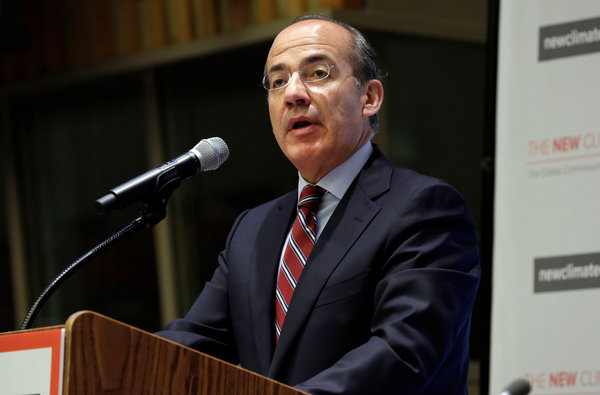


 Margem do Rio Tietê, na altura da cidade de Itu, interior paulista. Foto: Mídia NINJA
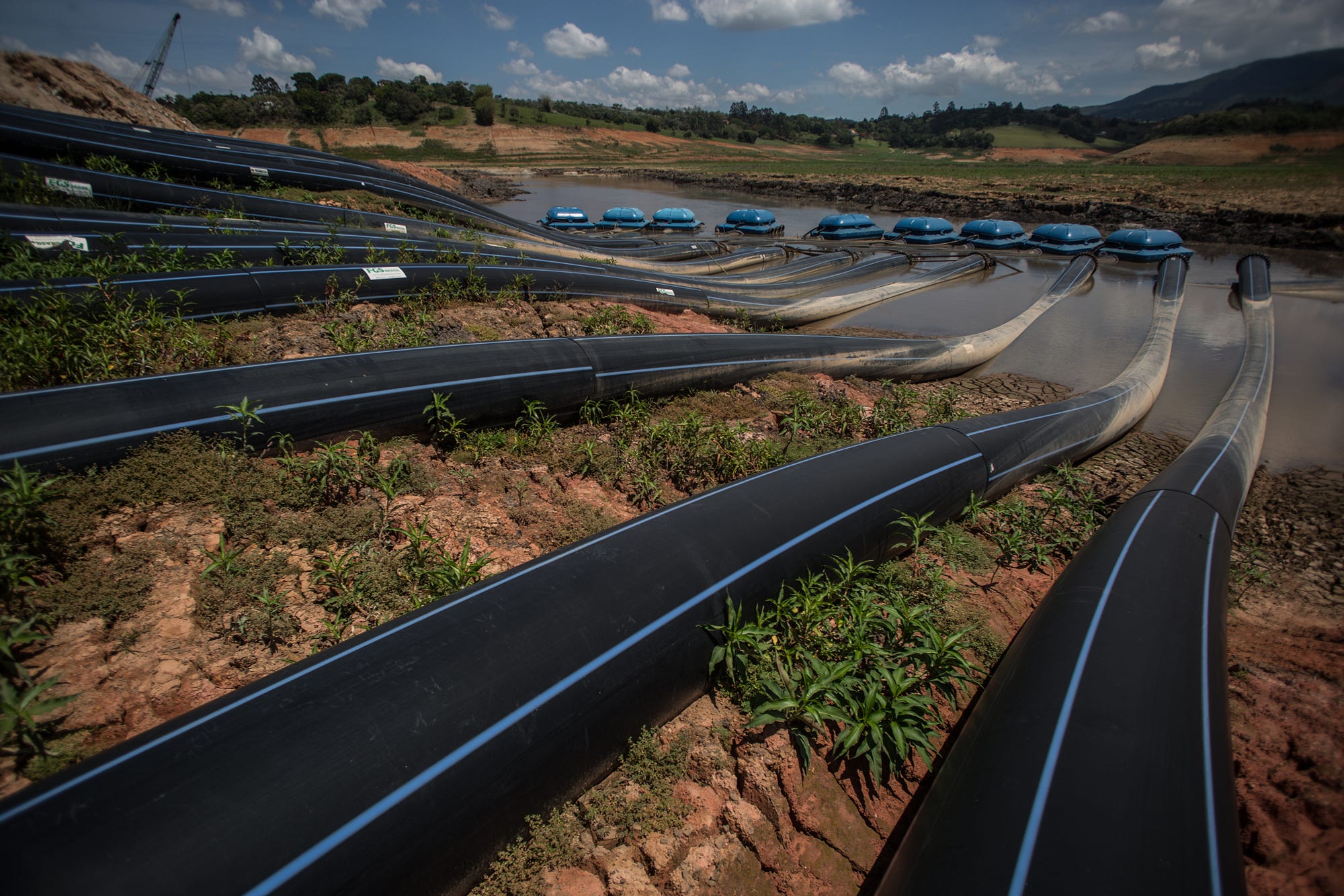 Primeira cota do Voume Morto, no sistema cantareira, São Paulo. Foto: Mídia NINJA


 If Republicans win the Senate, James Inhofe, R-Oklahoma, could be in charge of the committee that controls the EPA. Photo by Alex Wong/Getty Images


Você precisa fazer login para comentar.