The U.S. was among eight countries that voted against endorsing the nonbinding ruling that said all nations must take steps to limit temperature rise to 1.5 degrees Celsius.
May 20, 2026
Related
- As Energy, War and Climate Collide, a Conference in Colombia Charts a Path Beyond Fossil Fuels
- As the UN Global Climate Talks Lose Momentum, a Smaller Coalition Eyes a Fossil Fuel Exit
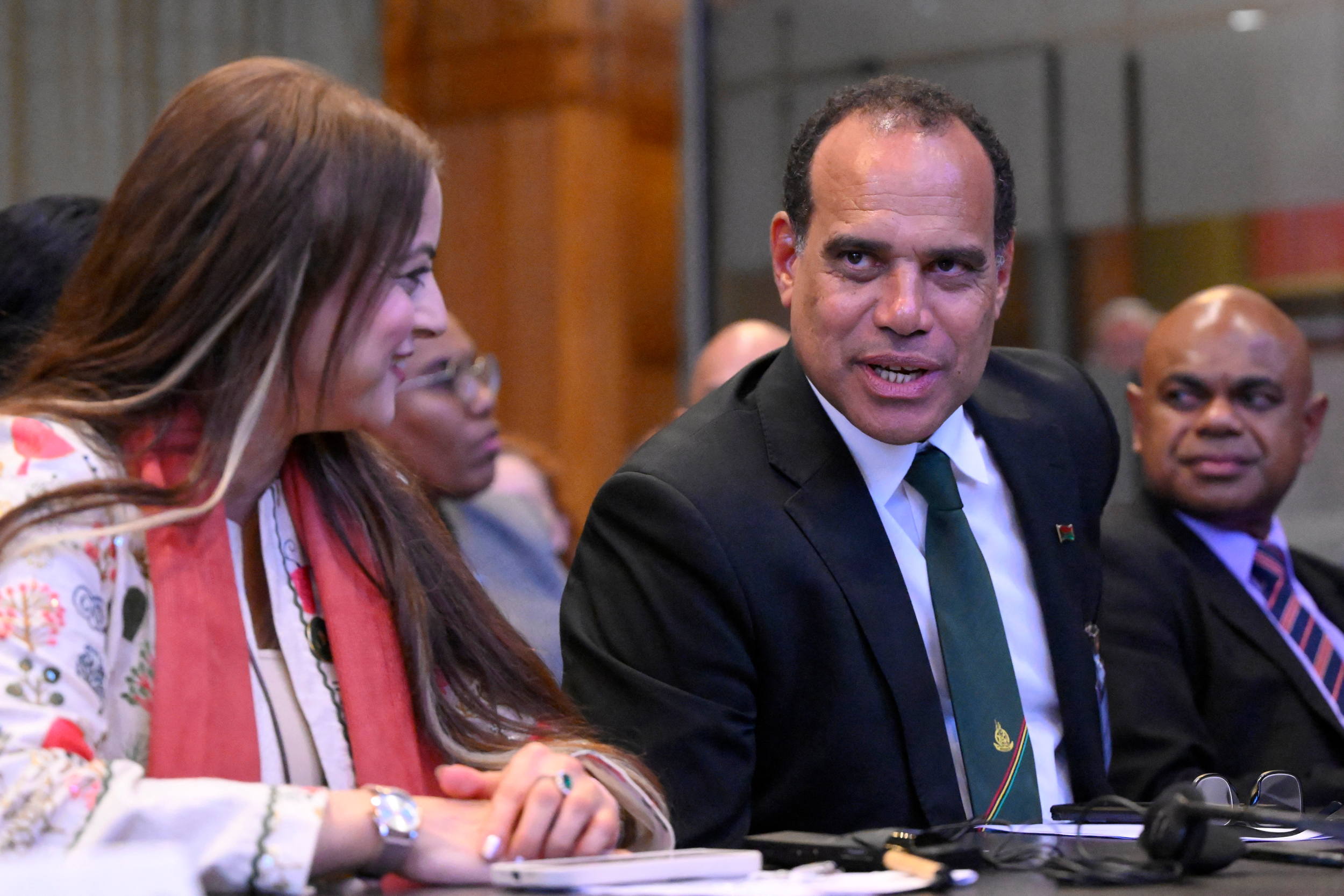
- An Island Nation in the South Pacific Leads the Latest Push for Climate Justice at the UN
The United Nations General Assembly on Wednesday voted overwhelmingly in favor of a climate justice resolution championed by the small Pacific Island nation of Vanuatu. The resolution welcomes the historic advisory opinion on climate change issued by the International Court of Justice in July 2025 and calls upon U.N. member states to act upon the court’s unanimous guidance, which clarified that addressing the climate crisis is not optional but rather is a legal duty under multiple sources of international law.
“Last year, the International Court of Justice ruled that countries have a legal duty to protect the climate, and today the world has not only reaffirmed that ruling, but committed to making it a reality. This must be a turning point in accountability for damaging the climate,” Vishal Prasad, director of Pacific Island Students Fighting Climate Change—the group that initiated the campaign to request a climate change advisory opinion from the ICJ—said in a statement.
While nonbinding, the court’s opinion is widely viewed as an authoritative interpretation of existing law. Legal experts say it could be used as persuasive authority in domestic climate litigation and in diplomatic arenas like the annual U.N. climate summits.
In its opinion, the ICJ—the principal judicial body of the United Nations—affirmed that limiting long-term global temperature rise to 1.5 degrees Celsius remains the primary goal for global climate action. It clarified that customary legal obligations apply to all countries regardless of whether they are parties to the U.N. climate treaties, and that protection of the environment is a precondition for the enjoyment of human rights.
The court also said the countries have a duty to reduce their greenhouse gas emissions, including by regulating private actors, and it suggested that continued boosting of fossil fuels could be considered an internationally wrongful act.
The resolution adopted by the General Assembly on Wednesday seeks to operationalize the court’s opinion. It calls upon countries to comply with their international obligations as clarified by the court. It also urges countries to implement measures to achieve the 1.5-degree objective, including by transitioning away from fossil fuels. And it requests that the U.N. Secretary-General issue a report exploring ways to advance compliance.
When the vote finally came, following some procedural wrangling over proposed amendments, it passed by a resounding majority with 141 member states voting in support, and 28 abstaining.
Only eight countries, Belarus, Iran, Israel, Liberia, Russia, Saudi Arabia, the United States and Yemen, voted against the resolution.
Prior to the vote, the U.S. delivered an oral statement strongly opposing the proposal and urging all countries to vote against it. “The United States continues to have serious legal and policy concerns about this resolution,” Tammy Bruce, deputy representative of the United States to the United Nations, said on the assembly floor. She called it “highly problematic” in directing states to comply with “so-called obligations,” including the duty to prevent transboundary harm to the global climate, which she said was “legally wrong.”
“The resolution includes inappropriate political demands relating to fossil fuels and on other climate topics,” Bruce added. She further argued that it makes “alarmist political statements such as the idea that climate change is an unprecedented challenge of civilizational proportions.”
In a speech before the General Assembly in September 2025, President Donald Trump called climate change the “greatest con job” in history and described renewable energy and other measures to reduce carbon emissions as a “green scam,” urging member nations to reject climate measures and consume American oil and gas.
The court itself stated in its opinion, aligning with warnings from top climate and Earth system scientists, that climate change is an “existential problem of planetary proportions that imperils all forms of life and the very health of our planet.”
In the months leading up to the vote on the resolution, the U.S. had reportedly tried pressuring other countries to oppose it and demand that Vanuatu withdraw it altogether. Vanuatu did not drop the resolution, but it did make some compromises on the text, such as eliminating a call to establish a global registry to track climate-related loss and damage.
In the end, though, the resolution endorsing the court’s opinion passed by a considerable margin, without any last-minute amendments that climate justice advocates say would have weakened the text even further. Advocates celebrated the milestone.
“Today’s vote marks an important step in advancing climate justice,” said Camile Cortez, senior campaigner on climate justice at Amnesty International. “This resolution brings renewed momentum towards ensuring accountability for climate-driven human rights harms and protecting present and future generations.”
Joie Chowdhury, senior attorney and climate justice and accountability manager at the Center for International Environmental Law, said the resolution’s power comes from the “strong majority” of countries voting yes. “It sends a clear signal in very troubled times that governments remain committed to the rule of law, and to collective action to protect the climate,” Chowdhury told Inside Climate News. “And it’s a victory for constructive multilateralism and cooperation.”
“It demonstrates the collective refusal by the global majority to let a handful of holdouts block the path to climate justice,” Chowdhury added. “And crucially, it helps ensure that the ICJ’s advisory opinion is not a one-off breakthrough, but is a lasting compass for advancing ambition and equity.”

