Era uma ideia valiosa com potencial de expansão: o carbono, um modo simplificado de se referir à emissão de gases que causam o aquecimento global, vai ao mercado como um certificado, que pode ser vendido para países e, como se decidiu posteriormente, para empresas e pessoas físicas. Cada certificado —o chamado crédito de carbono— garante que 1 tonelada de dióxido de carbono foi impedida de ser lançada na atmosfera.
Esses créditos talvez tivessem se espalhado pelo planeta não fosse o desastre financeiro global de 2008. “Os países da Europa, os grandes compradores de créditos de carbono naquele momento, foram afetados. Esse mercado teve que se reestruturar”, conta Plínio Ribeiro, CEO da Biofílica Ambipar, uma das principais companhias brasileiras que desenvolvem projetos florestais para a geração de créditos de carbono.
Há pouco mais de cinco anos, esse caminho voltou a demonstrar seu potencial vigoroso —no caso do Brasil, muito mais pelas ações da iniciativa privada do que por medidas do governo federal.
A partir daí, iniciativas brasileiras que patinavam começaram a crescer. Foram emitidos 5,2 milhões de créditos de carbono em 2019, de acordo com as certificadoras Verified Carbon Standard e Gold Standard. Em 2020, esse número subiu para 13,5 milhões; no ano passado, chegou a 44,4 milhões.
Nesse período, empresas voltadas ao desenvolvimento de projetos ambientais alcançaram um novo patamar. No ano passado, a Biofílica foi comprada pela Ambipar, o que permitiu que ampliasse seus negócios. Ao receber aporte de R$ 200 milhões da Shell, a Carbonext também se fortaleceu.
David Canassa, da Reservas Votorantim, lembra caso recente para mostrar a ascensão do setor. “Acabo de voltar do Climate Week, em Nova York. Há quatro anos, o Pacto Global Brasil, que integra a programação, encheu uma sala com 30 brasileiros. Desta vez, eram 250.”
O dado mais incisivo sobre o potencial de crescimento desse mercado no Brasil vem de relatório lançado há cerca de um mês pela consultoria McKinsey & Company. “O mercado de créditos no país deve saltar de US$ 1 bilhão atual para US$ 50 bilhões em 2030”, afirma.
O crescimento é bem-vindo, mas ainda parece insuficiente, avalia Janaína Dallan, CEO da Carbonext. “A urgência climática é tão grande que precisaríamos de muito mais empresas nesse mercado para não atingir o aumento de 1,5ºC”, diz. Ela se refere ao principal objetivo acordado na cúpula de Glasgow (COP26), na Escócia, em 2021.
O evento reforçou como meta evitar que o aquecimento global ultrapasse um aumento de 1,5°C em relação ao século 19, o que implicaria cortes substanciais nas emissões de CO2. A quase totalidade das iniciativas se concentra na Amazônia, mas, aos poucos, novos projetos se consolidam em outras regiões. No início de outubro, a Biofílica Ambipar conquistou o prêmio Environmental Finance pelo projeto AR Corredores de Vida, no oeste paulista. A iniciativa é feita em parceria com o IPÊ (Instituto de Pesquisas Ecológicas).
Com a experiência na administração do Legado das Águas, maior reserva privada de mata atlântica do Brasil, a Reserva Votorantim acaba de lançar uma metodologia que permite o pagamento de serviços ambientais nesse bioma.
Mas vale lembrar: só a ampliação do mercado de créditos de carbono não será suficiente para evitar que se alcance o temido 1,5ºC, segundo Ricardo Piquet, diretor do Museu do Amanhã, que se tornou referência na área ambiental. “Gerar créditos a serem pagos por empresas ou países poluidores não resolve o problema. A solução conjugada é a ideal: você reduz emissão de gases e, no caso daquilo que não consegue gerar de imediato, compensa com o crédito de carbono”, diz Piquet.
O objetivo essencial é que, ao cotejar emissão e captura de carbono, sob métodos auditados, a empresa chegue à soma zero ou acumule créditos. A Klabin coleciona prêmios nesse setor sem que comercialize crédito de carbono, o que é possível graças, entre outros motivos, ao fato de manter áreas de floresta nativa.
Com 23 unidades no Brasil, a produtora de papéis captura cerca de 11 milhões de toneladas de carbono/ano. Suas operações emitem por volta de 6,5 toneladas, segundo Francisco Razzolini, diretor de sustentabilidade. No cardápio de medidas tomadas pela Klabin, está a substituição do óleo combustível por materiais renováveis de biomassa.
MERCADO DE CARBONO EM 10 PONTOS
1 – O QUE É CARBONO?
Neste contexto, não se trata, é claro, de um produto físico. Carbono é um modo bem simplificado de chamar a emissão de gases que provocam o aquecimento global. Como o mais comum deles é o CO2 (gás carbônico), o termo carbono passou a ser um sinônimo desses gases nas discussões climáticas.
2 – COMO FUNCIONA ESTE MERCADO?
De modo geral, como a maioria dos outros: quem tem sobrando vende para quem precisa, de preferência a um preço que satisfaça aos dois lados.
3 – COMO O CARBONO É QUANTIFICADO PARA QUE SEJA NEGOCIADO?
Cada tonelada de gás carbônico corresponde a um crédito de carbono, que pode ser comprado ou vendido. Um exemplo: uma empresa precisava reduzir sua emissão em 1.000 toneladas de CO2, mas consegue cortar 1.500 toneladas. Assim, ela fica com 500 créditos de carbono, que pode vender a uma outra companhia que não conseguiu bater sua meta.
4 – OS CRÉDITOS VALEM SÓ PARA EMISSÕES CORTADAS?
Não, valem também para o gás carbônico capturado —por exemplo, por novas árvores plantadas, que absorvem a substância da atmosfera para crescer. Cada tonelada de CO2 adicional absorvida por uma nova mata dá direito a um crédito.
5 – O QUE A COP26 (NOV.2021 EM GLASGLOW) DECIDIU SOBRE O MERCADO DE CARBONO?
O encontro aprovou a taxa de 5% sobre a transação de créditos de carbono comercializados entre projetos do setor privado ou de ONGs. Mas as transações entre os países ficaram livres de taxa e, portanto, sem contribuição para os fundos de adaptação. Pelo mercado de carbono regulamentado na COP26, países podem comprar “autorizações” de emissão de carbono para ajudar a cumprir suas metas climáticas, remunerando aqueles países cujas ações, em compensação, reduzem emissões.
6 – E O BRASIL? COMO ESTÁ?
O país, infelizmente, ainda não tem um mercado de carbono regulado, ao contrário do que acontece em países da Europa, na China, na Nova Zelândia e no Cazaquistão. Em maio deste ano, o governo federal publicou um decreto com as bases para a criação de um mercado, mas ainda existem muitas lacunas sobre sua execução, que impedem que o país entre plenamente no circuito global. Assim, as transações têm se restringido a projetos internos do setor privado.
7 – COMO ESSE MERCADO FUNCIONA PARA AS EMPRESAS?
Com o apoio de especialistas, responsáveis por calcular a emissão de CO2, as companhias chegam à conclusão de qual é a meta a ser alcançada. Caso polua acima dessa cota, a empresa precisará comprar mais créditos de carbono, que são vendidos por organizações que desenvolvem projetos de sustentabilidade, como a Biofílica Ambipar, e/ou pelas organizações que conseguiram cortar suas emissões.
Sim. Empresas como a Carbonext, uma das principais desenvolvedoras de projetos de geração de créditos de carbono no Brasil, oferecem iniciativas para pessoas físicas.
9 – O QUE É ‘GREENWASHING’?
A expressão, que em inglês significa “lavagem verde”, costuma ser usada no sentido de propaganda sustentável enganosa, o que vale tanto para empresas quanto para governos e até mesmo para eventos climáticos. Em outras palavras, o “greenwashing” se dá quando uma organização tenta mostrar que faz mais em prol do meio ambiente do que realmente faz.
10 – COMO EVITAR O ‘GREENWASHING’?
Transparência é fundamental para não embarcar no “greenwashing”. Empresas devem dar visibilidade não só aos compromissos estabelecidos, mas às estratégias e evidências de resultados. Estimular o envolvimento de profissionais de ESG nas discussões das áreas de marketing e comunicação corporativa também pode ajudar a evitar distorções.
Clockwise from top left: Chad Womack, Elizabeth Wathuti, Ambroise Wonkam and Melissa Nobles.Credit: Bottom left: Gretchen Ertl; bottom right: University of Cape Town
Science is a human endeavour that is fuelled by curiosity and a drive to better understand and shape our natural and material world. Science is also a shared experience, subject both to the best of what creativity and imagination have to offer and to humankind’s worst excesses. For centuries, European governments supported the enslavement of African populations and the subjugation of Indigenous people around the world. During that period, a scientific enterprise emerged that reinforced racist beliefs and cultures. Apartheid, colonization, forced labour, imperialism and slavery have left an indelible mark on science.
Although valiant and painful freedom struggles eventually led to decolonization, the impacts of those original racist beliefs continue to reverberate and have been reified in the institutional policies and attitudes that govern the ‘who’ and ‘how’ of individuals’ participation in the modern, global scientific enterprise. In our opinion, racist beliefs have contributed to a lack of diversity, equity and inclusion, and the marginalization of Indigenous and African diasporic communities in science on a national and global scale.
Science and racism share a history because scientists, science’s institutions and influential supporters of science either directly or indirectly supported core racist beliefs: the idea that race is a determinant of human traits and capacities (such as the ability to build civilizations); and the idea that racial differences make white people superior. Although the most egregious forms of racism are unlawful, racism persists in science and affects diverse communities worldwide. Following the murder of George Floyd in 2020 and the expansion of the Black Lives Matter movement into science, Nature was among those institutions that pledged to listen, learn and change. In an Editorial, it said, “The enterprise of science has been — and remains — complicit in systemic racism, and it must strive harder to correct those injustices and amplify marginalized voices.”1
Nature invited us to serve as guest editors — notably, to advise on the production of a series of special issues on racism in science, the first of which is due to be published later this year. We accepted the invitation, although recognized the enormity of the challenge. How to define terms such as race, racism and scientific culture? How to construct a coherent framework of analysis: one that enables us to examine how racist beliefs in European colonial and post-colonial societies affect today’s scientists in countries that were once colonized; and how racism affects scientists of African, Asian, Central and South American and Indigenous heritage who are citizens and residents of former colonial powers?
We are committed to pursuing honest dialogue and giving a voice to those most affected by racism in science. But we also seek to provide readers with hope and optimism. Accordingly, our aim is to showcase some of the many examples of successful scientists who are Black, Indigenous and People of Colour, to highlight best practices and ‘lift-up’ programmes, and to feature initiatives that empower full participation and scientific leadership of African, Indigenous and diasporic communities around the world.
Articles will explore some key events and discoveries, drawn from both the scholarly literature and from lived experiences. Content will seek to understand the systemic nature of racism in science — including the institutions of academia, government, the private sector and the culture of science — that can lead either to an illusion of colour blindness (beneath which unconscious bias occurs) or to deliberate practices that are defiantly in opposition to inclusion. The articles will use the tools of journalism in all relevant media formats, as well as expert comment and analysis, primary research publishing and engagement, and will have a strong visual component.
Protestors attend a march for Black Lives Matter in Austin, Texas, in June 2020.Credit: Mario Cantu/CSM/Sipa US/Alamy
This opening Editorial — the first Nature has published signed by external authors — is a contribution to what will be a long, sometimes difficult, but essential and ultimately rewarding process for the journal and its readers, and, we hope, for its publisher, too. The journey to recognizing and removing racism will take time, because meaningful change does not happen quickly. It will be difficult, because it will require powerful institutions to accept that they need to be accountable to those with less power. It will be rewarding because it will enrich science. It is essential because it is about truth, justice and reconciliation — tenets on which all societies must be founded. As scientists, we know that where there are problems in the historical record, scientific rigour and scientific integrity demand that they be acknowledged, and, if necessary, corrected.
Look at the record
So how do we know that science has advanced racist ideas? We know because it is detailed in the published scholarly record. Some 350 years ago, François Bernier, a French physician employed in the court of the Mughal Emperor Aurangzeb, attempted to create a hierarchy of people by their skin colour, religion and geography2.
Such ideas came into their own when colonization was at its peak in the 1800s and early 1900s. In 1883, Francis Galton, an English statistician, coined the term eugenics for the study of human improvement through genetics and selective breeding. Galton also constructed a racial hierarchy, in which white people were considered superior. He wrote that “the average intellectual standard of the negro race is some two grades below our own (the Anglo Saxon)”3.
Although Charles Darwin opposed slavery and proposed that humans have a common ancestor, he also advocated a hierarchy of races, with white people higher than others. In The Descent of Man, Darwin describes what he calls the gradations between “the highest men of the highest races and the lowest savages”4. He uses the word ‘savages’ to describe Black and Indigenous people.
In our own times, James Watson, a Nobel laureate and co-discoverer of the DNA double helix, voiced the opinion that Black people are less intelligent than white people. In 1994, the psychologist Richard Herrnstein and the political scientist Charles Murray claimed that genetics was the main determinant of intelligence and social mobility in American society, and that those genetics caused African Americans and European Americans to have different IQ scores5.
Cover of an essay by the nineteenth-century French diplomat and social theorist Arthur de Gobineau justifying white supremacy (left). Scientists publish a statement through the UN affirming that race is a social construct and not a biological phenomenon (right).Credit: Left, Daehan (CC BY-SA 4.0); right, UNESCO Courier 1950
By 1950, the consensus among scientific leaders was that race is a social construct and not a biological phenomenon. Scientists affirmed this in a statement published that year by the United Nations science and education agency UNESCO (see go.nature.com/3mqrfcy). This has since been reaffirmed by subsequent findings showing there is no genetic basis for race, because humans share 99.9% similarity and have a single origin, in Africa6,7. There is more genetic variation within ‘races’ than between them.
Researching race and science matters, not only because these ideas influenced science, but because they became attractive to decision-makers, with horrific effects. People in power who advocated or participated in colonization and/or slavery used science, scientists and scientific institutions to rationalize and justify these practices.
Take Thomas Jefferson, the third US president, who drafted the Declaration of Independence of 1776. Jefferson is widely considered to be among the founders of liberalism and the idea of meritocracy. The declaration includes some of the most well-rehearsed words in the English language: that “all men are created equal”. And yet Jefferson, who was both a scientist and a slave owner, also thought that people of African descent were inferior to white people.
In the mid-nineteenth century, the French diplomat and social theorist Arthur de Gobineau wrote an essay justifying white supremacy8. De Gobineau thought that “all civilizations derive from the white race [and] none can exist without its help”. He argued that civilizations eventually collapse when different peoples mix. To advance his theory, he classified people according to their skin colour and social backgrounds. White aristocrats were given the highest category, Black people the lowest. De Gobineau’s ideas subsequently influenced the development of Nazi ideology, as did Galton’s — eugenics gained support among many world leaders, and contributed to slavery, apartheid and colonization, and the related genocide.
Addie Lee Anderson was involuntarily sterilized in 1950 by the Eugenics Board of North Carolina. She is pictured here in 2006 at the age of 87.Credit: Sara D. Davis/TNS/ZUMA Press
In the early decades of the twentieth century, many US states passed eugenic sterilization laws. For example, North Carolina enacted such a law in 1929; by 1973, approximately 7,600 individuals had undergone involuntary sterilization in the state. The laws initially targeted white men who had been incarcerated for mental-health disorders, mental disabilities or crimes, but were later used to target Black women who received welfare benefits. It is estimated that between 1950 and 1966, Black women in North Carolina were sterilized at 3 times the rate of white women, and at 12 times the rate of white men9.
Deconstruct, debate and decolonize
Even today, colonization is sometimes defended on the grounds that it brought science to once-colonized countries. Such arguments have two highly problematic foundations: that Europe’s knowledge was (or is) superior to that of all others, and that non-European cultures contributed little or nothing to the scientific and scholarly record.
These views are evident in the case of Thomas Babington Macaulay, a historian and colonial administrator in India during the British Empire, who famously wrote in 1835 that “a single shelf of a good European library was worth the whole native literature of India and Arabia”10. These were not idle words. Macaulay used these and similar arguments to justify stopping funding for teaching India’s national languages, such as Sanskrit, Arabic and Persian — which, he said, taught “false history”, “false astronomy” and “false medicine” — in favour of teaching English language and science. Some might question what is wrong with more English and science teaching, but the context matters. Macaulay’s intention (in his own words) was not so much to advance scholarship, but to educate a class of person who would help Britain to continue its Imperial rule.
Thomas Babington Macaulay, an influential British politician in colonial times, thought that to teach in Arabic and Sanscrit would be to teach “false history”, “false astronomy” and “false medicine”.Credit: Hulton Archive/Getty
The erasure of Indigenous scholarship in this way has had incalculably damaging effects on formerly colonized countries. It has meant that future generations in Africa, Asia and the Americas would be unfamiliar with an unbroken history of their nations’ contributions to knowledge, even after decolonization. At present, much of the work to uncover non-Western scholarship is taking place in the universities and research centres of high-income countries. That is far from satisfactory, because it exacerbates the power imbalance in research, particularly in collaborative research projects between high-income and low- and middle-income countries. Although there is much talk of ‘local ownership’, the reality is that researchers in high-income countries hold much more sway in setting and implementing research agendas, leading to documented cases of abuses of power.
The effects of historical racism and power imbalances have also found their way into the research funding and publishing systems of high-income countries11. The National Institutes of Health, the United States’ main funder of biomedical science, recognizes that there is structural racism in biomedical research. The funder is implementing solutions that are starting to narrow gaps. But not all funding institutions in high-income countries are studying or acknowledging structural or systemic racism in their funding systems or scholarly communities.
Restore, rebuild and reconcile
A wave of anti-racism statements followed Floyd’s murder in 2020. Research funders and universities, publishers and individual journals such as Nature all published statements in support of eliminating racism from science. Two years on, the journey from words to action has been slow and, in some respects, barely measurable.
Nature’s upcoming special issues, its invitation to work with us as guest editors and its ongoing coverage of racism in science are necessary steps to inform, encourage debate and, ultimately, seek solutions-based approaches that propose ways to restore truth, repair trust and seek justice.
We must have hope that the future will be better than the past, because every alternative is worse. But solutions must also acknowledge the reasons why solutions are necessary. Racism has led to injustices against millions of people, through slavery and colonization, through apartheid and through continuing prejudice today. The point of learning about and analysing racism in science must be to ensure that it is never repeated.
Editor’s note: Melissa Nobles, Chad Womack, Ambroise Wonkam and Elizabeth Wathuti are currently working with Nature as guest editors to guide the creation of several special issues of the journal dedicated to racism in science. To the best of our knowledge, this Editorial is the first in Nature to be signed by guest editors. We are proud of this, and look forward to working with them on these special issues and beyond.
Disclaimer: The opinions in this article do not necessarily reflect the views or policies of the authors’ organizations or their governing bodies.
For the late French intellectual in an age of ecological crisis it was crucial to understand ourselves as rooted beings.
Adam Tooze
17 October 2022
As Bruno Latour confided to Le Monde earlier this year in one of his final interviews, philosophy was his great intellectual love. But across his long and immensely fertile intellectual life, Latour pursued that love by way of practically every other form of knowledge and pursuit – sociology, anthropology, science, history, environmentalism, political theory, the visual arts, theatre and fiction. In this way he was, above all, a philosopher of life in the comprehensive German sense of Lebensphilosophie.
Lebensphilosophie, whose leading exponents included figures such as Friedrich Nietzsche and Martin Heidegger, enjoyed its intellectual heyday between the 1870s and the 1930s. It was a project that sought to make sense of the dramatic development of modern science and the way it invaded every facet of life. In the process, it relentlessly questioned distinctions between the subject and knowledge and the foundations of metaphysics. It spilled over into the sociology of a Max Weber or the Marxism of a György Lukács. In France, writer-thinkers such as Charles Péguy or Henri Bergson might be counted as advocates of the new philosophy. Their heirs were the existentialists of the 1940s and 1950s. In the Anglophone world, one might think of the American pragmatists, William James and John Dewey, the Bloomsbury group and John Maynard Keynes.
A century later, the project of a “philosophy of life” acquired new urgency for Latour in an age of ecological crisis when it became crucial to understand ourselves not as free-floating knowing and producing subjects, but as rooted, or “landed”, beings living alongside others with all the limits, entanglements and potentials that entailed.
The heretical positions on the status of scientific knowledge for which Latour became notorious for some, are best understood as attempts to place knowledge and truth claims back in the midst of life. In a 2004 essay entitled “How to Talk About the Body?” he imagined a dialogue between a knowing subject as imagined by a naive epistemology and a Latourian subject:
“‘Ah’, sighs the traditional subject [as imagined by simplistic epistemologies], ‘if only I could extract myself from this narrow-minded body and roam through the cosmos, unfettered by any instrument, I would see the world as it is, without words, without models, without controversies, silent and contemplative’; ‘Really?’ replies the articulated body [the Latourian body which recognises its relationship to the world and knowledge about it as active and relational?] with some benign surprise, ‘why do you wish to be dead? For myself, I want to be alive and thus I want more words, more controversies, more artificial settings, more instruments, so as to become sensitive to even more differences. My kingdom for a more embodied body!’”
The classical subject-object distinction traps the knowing subject in a disembodied, unworldly position that is, in fact, tantamount to death. As Latour wrote in a brilliant passage in the same essay on the training of noses, the expert smell-testers who gauge perfume, or tea or wine: “A direct and unmediated access to the primary qualities of odours could only be detected by a bodiless nose.” But what kind of image of knowledge is this? “[T]he opposite of embodied is dead, not omniscient.”
For a Burgundian – Latour was born in 1947 into a storied family of wine négociant in Beaune – this was an obvious but profound truth. To really know something, the way a good Burgundian knows wine, means not to float above the world, but to be a porous part of it, inhaling, ingesting fermentation and the chemical elements of the terroir, the irreducibly specific terrain.
For Latour, claims to meaningful knowledge, including scientific knowledge, were generated not by simple rules and procedures that could be endlessly repeated with guaranteed results, but through immersion in the world and its particularities. This implied an existential engagement: “Knowing interestingly is always a risky business,” he wrote, “which has to be started from scratch for any new proposition at hand.” What made for generative scientific discovery was not the tautological reproduction of a state of affairs by a “true” statement, but the “fecundity, productivity, richness, originality” of good articulations. Distinctions between true and false were, more often than not, banal. Only anxious epistemologists and methodologists of science worried about those. What mattered to actual scientific practice was whether a claim was “boring”, “repetitive”, “redundant”, “inelegant”, “simply accurate”, “sterile”.
If Latour was a sceptic when it came to naive claims of “detached” scientific knowledge, this also applied doubly to naive sociologies of knowledge. Critical analyses of power, whether anti-capitalist, feminist or postcolonial, were productive and inspiring. But unless it was subject symmetrically to the same critique to which Latour subjected naive claims to scientific knowledge, social theory, even that which proclaimed itself to be critical theory, could all too easily become a snare. If the relationship of life and knowledge was the problem, then, you could not cut through that Gordian knot by invoking sociology to explain physics. What was sociology, after all, but a form of organised social knowledge? For better or for worse, all you were doing in such an exercise was multiplying the articulations from one scientific discipline to another and not necessarily in a helpful or illuminating direction.
In refusing the inherited authority of the 19th and early 20th-century canon of critical social science, Latour sought to create a form of knowledge more adequate to the late 20th and early 21st centuries. Latour thus belongs alongside Michel Foucault and Gilles Deleuze and Félix Guattari as one of the French thinkers who sought to escape the long shadow of Marxism, whether in its Hegelian (Sartre) or its anti-Hegelian (Althusser) varieties.
In place of an overly substantive notion of “the economy” or “society”, Latour proposed the looser conception of actor-networks. These are assemblages of tools, resources, researchers, means of registering concepts, and doing things that are not a priori defined in terms of a “mode of production” or a particular social order. Think of the lists of interconnected objects, systems and agents that have held our attention in the past few years: shipping containers, the flow of rainwater in Taiwan, giant freighters stuck sideways in the Suez Canal driven off course by unpredictable currents and side winds. Each of these supply chain crises has exposed actor-networks, of which we were previously oblivious. During such moments we are forced to ask: what is macro and what is micro? What is base and what is superstructure? These are Latourian questions.
One of the productive effects of seeing the world this way is that it becomes irresistibly obvious that all sorts of things have agency. This realisation is disturbing because it seems to downgrade the privilege of actual human existence and the social relations between people. But Latour’s point was never to diminish the human, but instead to emphasise the complex array of forces and agencies that are entailed in our modern lives. Our existence, Latour tried to show, depends not on the simple structures that we imagined modernity to consist of – markets, states and so on – but on the multiplication of what he calls hybrids, “supply chains” in the widest sense of the word.
Latour was not a class militant. But that does not mean that he did not have a cause. His lifelong campaign was for modernity to come to consciousness of itself, to stop taking its own simplifications at face value, to recognise the confusions and hybridity that it creates and endlessly feeds off. His mission was to persuade us, as the title of his most widely read book has it, that We Have Never Been Modern (1991). The confusion of a world in which lipid bubbles, aerosols and face masks have occupied our minds for years is what Latour wanted to prepare us for.
What Latour sought to expose was the pervasive animism that surrounds us in the form of hybrid actor-networks, whose force and significance we consistently deny. “Hybrids are everywhere,” he said, “but the question is how do you tame them, or do you explicitly recognise their strengths, which is part of the animist power of objects?” What Latour diagnosed is that modernity, as part of its productive logic, systematically denies this animation of the material world. “Modernism is the mode of life that finds the soul with which matter would be endowed, the animation, shocking.”
This repression of hybrid, animated material reality, is exposed in the often-racialised embarrassment of those who believe themselves modern when they encounter human civilisations that make no secret of their animist beliefs. It also accounts for the embarrassment triggered among true believers in modern science and its ideology by the revelations of the best histories of science, such as those by Simon Schaffer, to whom Latour owed a great debt. To Latour’s delight Schaffer showed how Isaac Newton, in the first instance, saw in gravity the manifestation of the power of angels.
The modernist impulse is to dismiss such ideas as hangovers of an earlier religious world-view and to relegate African art to the anthropology museum. But at the risk of provocation and scandal, Latour’s response was the opposite. Rather than finishing the purification of modernity and expunging angels and animism from our view of the forces that move the world, he urged that we should open our ontology to encompass the giant dark matter of hybrid concepts and real networks that actually sustain modern life.
From the 1990s onwards this made Latour one of the foremost thinkers in the ecological movement. And once again he reached for the most radical and encompassing animist notion with which to frame that commitment – the Gaia concept, which postulates the existence of a single overarching living being, encompassing global ecology. This is an eerie, supernatural, non-modern idea. But for Latour, if we settle for any more mundane description of the ecological crisis – if we fit the environment into pre-existing cost-benefit models as economists often do – we fail to recognise the radicalism of the forces that we have unleashed. We fail to understand the peril that we are in: that Gaia will lose patience and toss us, snarling, off her back.
Latour’s emphatic embrace of life, plenitude and articulation did not mean that he shrank from finitude or death. Rather the opposite. It is only from a thoroughly immanent view that you truly feel the weight of life lived towards its end, and the mysterious and awesome finality that is death. It is only from an embrace of life as emphatic as Latour’s, that you truly register the encroachment of deadening forces of the mind and the body. For Latour, life and death were intertwined by the effort of those left behind to make sense of death, by every means at their disposal, sometimes at very long distance.
In September 1976 the body of Ramesses II, the third pharaoh of the 19th Dynasty of Egypt, was flown to Paris. He was welcomed with the full military honours appropriate for a great ruler, and then his body was whisked to the laboratory to be subject to medical-forensic examination. For Latour this fantastic juxtaposition of the ancient and the modern was an irresistible provocation. The naive position was that the scientists discovered that Ramesses died of tuberculosis 3,000 years ago. He was also, a racially minded police forensic scientist claimed, most likely a redhead. For Latour, the question was more basic. How can we debate claims made self-confidently about a death that took place thousands of years ago? We were not there. There was no modern medical science then. When Ramesses ceased to live, TB was not even a “thing”. It was not until 1882 that Robert Koch in Berlin identified the bacillus. And even then, no one could have made any sensible claim about Ramesses. Making the naive, apparently matter-of-fact claim – that Ramesses died of TB in 1213 BC – in fact involves giant leaps of the imagination.
What we do know and can debate are what Latour would call “articulations”. We know that as a result of the intervention of the French president Valéry Giscard D’Estaing the Egyptian authorities were prevailed upon to allow the decaying mummy to be flown to Paris for preservation. We know that in Paris, what was left of the body was enrolled in modern technoscientific systems and testing procedures leading us to venture hypotheses about the cause of death in the distant past. Every single one of those “articulations” can be tested, probed and thereby multiplied. Entire bodies of thought can be built on different hypotheses about the corpse. So, Latour maintained, rather than those who assertively claim to know what actually happened 3,000 years ago, the journalist who declared vertiginously that Ramesses had (finally) died of TB in 1976 came closer to the truth in registering both the gulf that separates us from an event millennia in the past and the radical historical immanence of our current diagnosis. In his effort to shake us out of the complacent framework of certainty that modernity had created around us, counter-intuitive provocations of this kind were part of Latour’s method.
Unlike Ramesses’ cause of death, Bruno Latour’s was well mapped. In the 21st century, a cancer diagnosis has immediate and drastic implications. It enrols you as a patient in the machinery of the medical-industrial complex. Among all the hybrids that modern societies have created, the medical apparatus is one of the most complex. It grows ever larger and imposes its urgency in a relentless and merciless fashion. If you take your critical vantage point from an early 20th-century theorist of alienation, like Lukács or Weber for instance, it is tempting to think of this technoscientific medical apparatus as a steel-hard cage that relentlessly objectifies its patients, as bodies and cases. But for Latour, this again falls into a modernist trap. To start from the premise that objectification is actually achieved is to misunderstand and to grant too much. “Reductionism is not a sin for which scientists should make amends, but a dream precisely as unreachable as being alive and having no body. Even the hospital is not able to reduce the patient to a ‘mere object’.”
Rather than reducing us, modern medicalisation multiplies us. “When you enter into contact with hospitals, your ‘rich subjective personality’ is not reduced to a mere package of objective meat: on the contrary, you are now learning to be affected by masses of agencies hitherto unknown not only to you, but also to doctors, nurses, administration, biologists, researchers who add to your poor inarticulate body complete sets of new instruments.” The body becomes a site of a profuse multiplicity: “How can you contain so much diversity, so many cells, so many microbes, so many organs, all folded in such a way that ‘the many act as one’, as [Alfred North] Whitehead said? No subjectivity, no introspection, no native feeling can be any match for the fabulous proliferation of affects and effects that a body learns when being processed by a hospital… Far from being less, you become more.”
It’s a brave image. Perhaps it was one that sustained Latour as the cancer and the agencies deployed to fight it laid waste to his flesh. Not for nothing people describe the illness as a battle. Like a war, it can go on for years.
Latour liked military images. Perhaps because they better captured his vision of history, as mysterious, opaque, complex and contingent. Military history is one area of the modern world in which even the most high-minded analysts end up talking about tanks, bridges, rivers, Himars, Javelins and the fog of war. In the end, it is often for want of nails that battles are lost. The original French title of Latour’s famous book on the 19th-century French microbiologist Louis Pasteur – Pasteur: guerre et paix des microbes suivi de Irréductions – paid homage to Tolstoy. In the English translation that reference was lost. The Pasteurization of France (1988) replaces the French’s titles nod to War and Peace with ugly sociologese.
Latour’s own life force was strong. In his apartment on Rue Danton, Paris, with the charred remains of Notre Dames in background, he shared wines with visitors from around the world from vineyards planted in response to climate change. Covid lockdowns left him impatient. As soon as global traffic resumed, in 2021 he was assisting in the curation of the Taipei biennial. Latour’s final book, After Lockdown: A Metamorphosis appeared in English in 2021. It carries his voice into the present inviting us to imagine ourselves in an inversion of Kafka’s fable, as happy termites emerging from the lockdown on six hairy legs. “With your antennae, your articulations, your emanations, your waste matter, your mandibles, your prostheses, you may at last be becoming a human being!” No longer ill at ease, “Nothing is alien to you anymore; you’re no longer alone; you quietly digest a few molecules of whatever reaches your intestines, after having passed through the metabolism of hundreds of millions of relatives, allies, compatriots and competitors.”
As he aged, Latour became more, not less radical. Often dismissed on the left for his scepticism about classical critical social theory, the ecological turn made Latour into nothing less than an eco-warrior. His cause was the overturning of the dream world that systematically failed to recognise or grasp the forces unleashed by the modernist apparatus of production and cognition. We needed to come down to Earth, to land. Only then could we begin the hard work, with other actors, of arriving at a sustainable modus vivendi. The urgency was that of war and his mobilisation was total. The range of projects that he spawned in recent decades – artistic, political, intellectual – was dizzying. All of them aimed to find new political forms, new parliaments, new articulations.
Unlike many commentators and politicians, in response to populism, and specifically the gilet jaunes protests of 2018, Latour did not retreat to higher levels of technocracy, but instigated a collective project to compile cahiers de doléance – books of complaint – like those assembled before the French Revolution of 1789. The aim was to enrol people from all walks of life in defining what they need to live and what threatened their livelihood.
Part of the project involved an interactive theatrical exercise enacted by Latour with the architect and performance-art impresario Soheil Hajmirbaba. In a kind of ritual game, the participants arranged themselves and the forces enabling and threatening their lives – ranging from sea level rise to the increased prices for diesel – on a circular stage marked out with a compass. It was, as Latour described it, “like a children’s game, light-hearted and a lot of fun. And yet, when you get near the middle, everyone gets a bit nervous… The centre of the crucible, where I timidly put my feet, is the exact intersection of a trajectory – and I’m not in the habit of thinking of myself as a vector of a trajectory – which goes from the past, all that I’ve benefited from so as to exist, to grow, sometimes without even realising it, on which I unconsciously count and which may well stop with me, through my fault, which won’t go towards the future anymore, because of all that threatens my conditions of existence, of which I was also unaware.”
“The amazing result of this little enactment,” he continued, “is that you’re soon surrounded by a small assembly, which nonetheless represents your most personal situation, in front of the other participants. The more attachments you list, the more clearly you are defined. The more precise the description, the more the stage fills up!… A woman in the group sums it up in one phrase: ‘I’m repopulated!’”
Thus, Latour reinvented the role of the engaged French intellectual for the 21st century. And in doing so he forced the follow-on question. Was he perhaps the last of his kind? Who comes after him? As far as intellectual standing is concerned, Latour would have been impatient with the question. He was too preoccupied with new problems and projects, too enthused by the networks of collaborators, young and old whose work he drew on and that he helped to energise. But in a more general sense the question of succession haunted him. That, after all, is the most basic issue posed by the ecological crisis. What comes after us? What is our responsibility to the continuity of life?
In his effort to enact the motion of coming down to Earth, Latour faced the question head on. “With my feet on the consortium’s compass, I consult myself: in terms of my minuscule actions, do I enhance or do I stifle the lives of those I’ve benefited from till now?” Asking that question, never content with complacent or self-satisfied answers, during the night of 8-9 October 2022, Bruno Latour died aged 75 in Paris, of pancreatic cancer.
Professor reúne textos de 34 autores negros e negras tomando como base o bicentenário da independência do Brasil
Gabriel Araújo
18 de outubro de 2022
O professor e consultor em desenvolvimento humano Helio Santos, autor de “A Busca de um Caminho para o Brasil: A Trilha do Círculo Vicioso” (ed. Senac, 2001), prefere usar o termo “sistêmico” a “estrutural” para descrever o racismo no país. À expressão, ele ainda acrescenta a palavra “inercial”.
“Sistêmico não apenas porque é recorrente, mas por perpassar toda a sociedade e suas instituições”, ele escreve. “Inercial porque, como ensina a primeira lei de Newton, trafega numa direção de maneira uniforme ante a inação para contê-lo. Avassala, segue impune e resoluto”.
Trata-se de uma coletânea com 33 textos, entre artigos acadêmicos e textos literários, de 34 autores negros e negras. Ao tomar como ponto de partida o marco do bicentenário da independência do Brasil, os textos discutem aspectos sociais, culturais, históricos e econômicos do país por meio de uma perspectiva racializada.
“É uma coletânea que tem lado e nasce num momento bastante interessante da sociedade brasileira, de grandes carências”, afirma Santos. “O bicentenário não deve ser celebrado sem que o país faça uma autocrítica em relação à maioria da população.”
Ativista da questão racial desde a década de 1970, Santos foi, em 1984, presidente fundador do Conselho da Comunidade Negra do Estado de São Paulo, iniciativa pioneira dedicada a pensar políticas para a comunidade negra da região. Hoje, ele preside o conselho deliberativo do Fundo Baobá, organização voltada para a promoção da equidade racial.
Além dos ensaios, há também poemas escritos pela atriz Elisa Lucinda e pelo escritor Luiz Silva, conhecido como Cuti.
Juntos, os autores condensam reflexões urgentes sobre o enfrentamento do racismo no Brasil, último país das Américas a abolir a escravidão. “Para cada dez anos de Brasil, sete aconteceram sob o signo da escravidão”, afirma Santos.
A questão se agrava quando é analisado o modo como a pessoa negra foi tratada após a lei Áurea, de 1888. Enquanto nenhuma política compensatória foi planejada tendo como foco a população negra (a lei de cotas, por exemplo, que visa mitigar a desigualdade na educação superior brasileira, é de 2012), o Estado brasileiro promoveu apoios, inclusive financeiros, para imigrantes residirem e trabalharem no país.
“Esse apoio era necessário, pois eram colonos que vinham ocupar um país gigante”, diz o professor, lembrando que essas pessoas eram, em sua maioria, empobrecidas e de ocupação rural. “O absurdo é que essas iniciativas não tenham sido também destinadas aos negros, que já estavam no Brasil. O nosso apartheid se desencadeia a partir daí.”
Para Santos, o período que vai de 1911, ano de assinatura do decreto de incentivo à imigração, a 2022 “ampliou a defasagem socioeconômica entre os grupos étnico-raciais que constituem o país”.
No último capítulo do livro, o professor se vale de sua experiência na gestão pública e das reflexões suscitadas pelos demais autores da obra para propor um Novo Acordo para a Equidade Racial, que ele denomina de Naper.
“O racismo sistêmico inercial requer política pública, que é o meu foco”, ele diz, propondo um “New Deal customizado, adequado para um país de maioria negra”. O organizador faz referência à experiência norte-americana de intervenção econômica para consolidar, na década de 1930, um Estado de Bem-Estar Social no país.
“Nós temos que criar o estado do bem-estar sociorracial”, afirma Santos. “Isso leva o país para um patamar civilizatório avançado. Eu insisto nessa ideia: longe de ser um problema, a questão racial é parte da solução.”
Para levar o novo acordo a cabo, o professor lista dez sugestões de ações afirmativas sistêmicas para a promoção da equidade mencionada. Há ideias para diminuir as desigualdades na educação, programas de apoio para garantir autonomia às famílias negras, e propostas para reduzir a violência e manter a juventude negra viva.
Prevê políticas afirmativas financeiras, de modo semelhante ao que, no século 20, foi feito com os imigrantes, e um programa de apoio à economia informal.
Santos também sugere a ampliação das cotas raciais, que deveriam valer até 2042. “A razão é simples: ações tão tardias somente causarão impacto numa sociedade apartada racialmente, como a nossa, se perdurarem por um tempo adequado, para que possam consolidar uma mudança efetiva.”
Como o professor aponta, é estratégico o lançamento da coletânea em meio aos debates do segundo turno da eleição brasileira. “O fortalecimento geral da população negra também vai levar a uma maior participação política”, acredita.
Presidente do conselho de saúde indígena afirma que prática não existe, e antropólogo vê delírio em frase resgatada na campanha
Vinicius Sassine
7 de outubro de 2022
A afirmação do presidente Jair Bolsonaro (PL) sobre canibalismo entre indígenas na região de Surucucu, feita em 2016 e resgatada na disputa eleitoral em segundo turno, é mentirosa, repulsiva, ofensiva e causadora de indignação entre os indígenas. É o que afirma Júnior Yanomami, presidente do Condisi (Conselho Distrital de Saúde Indígena) dos Yanomami e Ye’kuana.
“Estou indignado, com raiva. Como um presidente que é candidato fala isso? Ele é uma pessoa que não conhece o Brasil. Meu povo não é canibal, não come humanos. Isso não existe nem nunca existiu, nem entre ancestrais”, diz Júnior à Folha.
O presidente do Condisi é da região de Surucucu, uma das maiores áreas da Terra Indígena Yanomami, na região de Alto Alegre (RR). Ali vivem 3,5 mil yanomamis, em 34 comunidades. O Exército tem um PEF (Pelotão Especial de Fronteira) na região.
O antropólogo Rogério Pateo, professor do Departamento de Antropologia e Arqueologia da UFMG (Universidade Federal de Minas Gerais), morou em Surucucu por nove meses para um doutorado sobre os indígenas. O convívio com eles se dá desde 1998. Para Pateo, a referência de Bolsonaro é aos yanomami da região de Surucucu em Roraima.
“O que ele fala é um delírio. É uma coisa absurda num nível. Típica de quem vive nessa bolha de preconceito contra os indígenas. Os yanomamis têm códigos alimentares rigorosos. Eles não comem nem carne de bicho mal passada”, afirma o antropólogo, que disse não saber de nenhuma prática de canibalismo entre outros indígenas brasileiros.
As afirmações de Bolsonaro, feitas quando era deputado federal, ressurgiram nas redes sociais e foram exploradas pela campanha do ex-presidente Lula (PT), que levou as falas à propaganda eleitoral na TV. A campanha de Bolsonaro disse que acionará o TSE (Tribunal Superior Eleitoral) contra o vídeo.
O vídeo está no próprio canal de Bolsonaro no Youtube. Ele identifica o material, que tem mais de uma hora de duração, como uma entrevista dada ao jornal The New York Times. A data da postagem é 24 de março de 2016.
“Quase comi um índio em Surucucu uma vez”, afirma o então deputado no vídeo. Bolsonaro diz ter estado uma vez em Surucucu. “Comecei a ver lá as mulheres índias passando com um carregamento de bananas nas costas. E o índio passa limpando os dentes com capim. ‘O que está acontecendo?’ Eu vi muita gente andando. ‘Morreu um índio e eles estão cozinhando.’ Eles cozinham o índio.”
Bolsonaro prossegue na fala ao jornalista: “É a cultura deles. Bota o corpo. É para comer. Cozinha por dois, três dias, e come com banana. E daí eu queria ver o índio sendo cozinhado. Daí o cara: ‘Se for, tem de comer.’ ‘Eu como.’ Aí da comitiva ninguém quis ir.”
O então deputado ainda reforça: “Eu comeria o índio sem problema nenhum. É cultura deles”.
Não existe essa cultura, nem hábito, nem prática, nem histórico de ações do tipo entre os yanomamis de Surucucu, segundo Junior Yanomami, que nasceu e cresceu na comunidade, onde permanece com a família.
“Não tinha conhecimento dessa fala de Bolsonaro”, diz Júnior.
Ele detalha como funcionam os rituais fúnebres entre os yanomamis. Primeiro, são dois dias de reunião entre os indígenas. Depois, duas pessoas são escolhidas para colocar o corpo na floresta adentro, onde fica entre 30 e 45 dias, guardado e suspenso em estruturas finas de madeira.
Em seguida ocorre a cremação, e as cinzas são guardadas em utensílios. Se o indígena que morreu é uma pessoa considerada importante para a comunidade, como um pajé, uma liderança ou um caçador, a retenção das cinzas pode durar anos. E pode haver repartição do material entre os indígenas.
“O que Bolsonaro disse ofende e chateia muito. Não há nenhum registro de que ele tenha ido a Surucucu”, afirma Júnior. “A sociedade vai pensar que somos canibais. Essa pessoa não está bem da cabeça. Não tem o que oferecer ao Brasil.”
Para o antropólogo Rogerio Pateo, o que Bolsonaro faz é reproduzir uma imagem de desenho animado.
“Os relatos que existem são sobre guerreiros tupinambás, no litoral e no século 16, capturarem e assarem inimigos”, afirma. “Os yanomamis não comem nem carne de onça, porque dizem que onça come gente.”
Segundo Pateo, as afirmações de Bolsonaro são a manifestação de um “preconceito num nível baixíssimo”. “Ele tem na cabeça aquela imagem que assustou a Europa 500 anos atrás. É preconceito e racismo. Atualmente, não há resquício dessa imagem de canibalismo entre indígenas brasileiros.”
Gillian Caldwell, responsável pela nova estratégia da Agência dos EUA para o Desenvolvimento Internacional, diz que plano prioriza apoio a indígenas e mulheres
Cristiane Fontes
5 de outubro de 2022
“Esse dinheiro não apenas tornará nosso planeta mais limpo, mais verde e mais seguro, mas também nos poupará dinheiro a longo prazo, tanto por meio dos empregos verdes quanto do que não precisaremos gastar em respostas humanitárias no futuro”, afirmou Samantha Power, chefe da Usaid (Agência dos Estados Unidos para o Desenvolvimento Internacional), no lançamento da nova estratégia climática do órgão.
“Sabemos que cada dólar investido em adaptação às mudanças climáticas pode render de US$ 2 a US$ 10 em benefícios. Portanto, implementar essa estratégia não é apenas a coisa necessária a fazer, é também a decisão mais econômica e inteligente a ser feita”, completou ela, que foi embaixadora dos EUA na ONU de 2013 a 2017, no governo de Barack Obama.
O plano, anunciado em abril, conta com um orçamento de US$ 600 milhões e inaugura a intenção de transformar a Usaid em uma agência climática. À frente desse projeto está Gillian Caldwell, diretora de assuntos climáticos.
A estratégia estabelece metas ambiciosas, como alcançar até 2030 a redução das emissões de carbono em 6 bilhões de toneladas. “Isso equivale a quase todas as emissões dos EUA num ano inteiro”, diz à Folha Caldwell, que já foi CEO da ONG Global Witness e liderou a campanha 1Sky, responsável pela mobilização de mais de 600 entidades para aprovar leis sobre clima nos EUA.
Para isso, além da gestão de projetos em diversos países e da mobilização de múltiplos setores do governo americano, faz parte da estratégia dar assistência técnica também ao setor privado. A ideia é que investidores tenham acesso a projetos confiáveis relacionados às mudanças climáticas. Assim, como um todo, a meta é mobilizar US$ 150 bilhões para financiamento climático até 2030, incluindo aportes públicos e privados.
Apesar da cifra elevada, Caldwell pondera que são necessários “de US$ 3 trilhões a US$ 5 trilhões por ano até 2030 para atender às necessidades globais de mitigação e adaptação”. “Precisamos acelerar substancialmente os investimentos”, alerta.
Outros objetivos são aumentar a resiliência e a capacidade adaptativa de 500 milhões de pessoas no planeta, especialmente de povos indígenas, mulheres e jovens, e promover a conservação, o uso sustentável e a restauração de 100 milhões de hectares de locais que são grandes estoques de carbono, como é o caso da Amazônia.
No Brasil, a Usaid mantém projetos em parceria com o governo federal e gestões estaduais. “No ano passado, nossas ações na área de biodiversidade no Brasil protegeram habitats de espécies ameaçadas de extinção e geraram impactos positivos em 45 milhões de hectares de terras em todo o país. Para fins de comparação, é uma área maior que a Califórnia”, conta Caldwell.
Na entrevista, a gestora também comenta, entre outros pontos, a Lei de Redução da Inflação, pacote ambiental recém-lançado pelo governo Biden.
Quais são os principais objetivos da nova estratégia climática da Usaid? Ela foi lançada nos EUA no Dia da Terra, 22 de abril, e permanecerá em vigor até 2030. Trata-se da estratégia mais ambiciosa que a Usaid já lançou para tentar enfrentar a crise climática. De fato, todos os órgãos do governo Biden estão sendo encorajados a adotar uma postura mais ambiciosa em relação à mitigação e adaptação climáticas.
Portanto, a estratégia estabelece uma série de metas muito ambiciosas e de alto nível a serem alcançadas até 2030, como, a redução das emissões de carbono em 6 bilhões de toneladas. Isso equivale a quase todas as emissões dos EUA num ano inteiro. Além disso, muito será realizado por meio de soluções baseadas na natureza. Queremos proteger e preservar 100 milhões de hectares de paisagens com grande estoque de carbono.
Ademais, por meio da iniciativa Prepare de adaptação e resiliência, promovida pelo presidente [Biden], da qual a Usaid é a implementadora líder, queremos aumentar a resiliência e a capacidade adaptativa de meio bilhão de pessoas em todo o mundo.
Por fim, queremos garantir intervenções capazes de mudar os sistemas em pelo menos 40 países ao redor do mundo, para aumentar a participação de comunidades marginalizadas, tais como povos indígenas e comunidades locais, mulheres e jovens.
Qual é o orçamento que vocês têm para implementar a estratégia? O orçamento total da Usaid é de cerca de US$ 25 bilhões para o exercício financeiro atual. [Samantha] Power, nossa administradora, repetidamente se refere à Usaid como uma agência climática, então, em certo nível, estamos pensando no que podemos fazer com esses US$ 25 bilhões. O orçamento especificamente destinado a questões climáticas está na casa de US$ 600 milhões.
Como a senhora pretende trabalhar com países como o Brasil para a conservação dos 100 milhões de hectares? Já somos muito ativos no Brasil. No ano passado, nossas ações na área de biodiversidade no Brasil protegeram habitats de espécies ameaçadas de extinção e geraram impactos positivos em 45 milhões de hectares de terras em todo o país. Para fins de comparação, é uma área maior que a Califórnia.
Também estamos contribuindo para evitar mais de 300 milhões de toneladas métricas de emissões de gases de efeito estufa. Além disso, fortalecemos a gestão de 189 áreas protegidas no Brasil, 83% das quais são territórios indígenas e quilombolas.
Em termos gerais, conforme já mencionei, a estratégia climática enfatiza o envolvimento de povos indígenas e comunidades locais em todo o nosso trabalho de formulação [de políticas e programas]. Isso se deve ao fato de as comunidades indígenas cuidarem das paisagens mais importantes do mundo em termos de estoque de carbono.
O atual desmantelamento das políticas ambientais brasileiras afeta o que a Usaid vem tentando fazer no país? Bem, nós temos uma cooperação com o governo brasileiro para proteger a biodiversidade. Nosso foco é colaborar não apenas com o governo federal, mas também com os governos subnacionais e regionais no Brasil, que é onde temos uma colaboração mais próxima.
Na sua opinião, como a agenda de adaptação e resiliência deve ser modificada ou atualizada, considerando os últimos eventos climáticos extremos observados no mundo todo? Os impactos da crise climática estão sendo sentidos de forma muito intensa em todo o mundo, ainda mais do que haviam previsto os cientistas. Sabemos que as consequências serão desastrosas. Basta ver o que está acontecendo no Paquistão, onde níveis recorde de monções deixaram mais de um terço do país debaixo d’água.
Portanto, a necessidade é urgente, tanto de reduzir as emissões e evitar as piores consequências da crise climática quanto de ajudar as comunidades a aumentar sua resiliência e capacidade de adaptação. É por isso que a Usaid trabalha em ambas as frentes: mitigação e adaptação.
Na iniciativa Prepare, que é nosso plano emergencial de adaptação e resiliência, temos três focos. O primeiro é apoiar o trabalho de cientistas e meteorologistas, tomadores de decisão e comunidades para fortalecer os sistemas de alerta precoce e outros serviços de informação climática. Isso está de acordo com o apelo do secretário-geral da ONU [o português António Guterres] por alerta antecipado para todos.
Muitas comunidades não são alertadas sobre eventos climáticos e meteorológicos extremos que podem ameaçar suas vidas e meios de subsistência. Mesmo 24 horas de antecedência são capazes de reduzir substancialmente os riscos e as perdas de vidas e meios de subsistência.
Em segundo lugar, estamos apoiando iniciativas locais para integrar boas práticas de adaptação climática às políticas de planejamento e aos orçamentos nacionais e locais. Quando examinamos as políticas de planejamento e os orçamentos de infraestrutura, saúde, segurança hídrica e alimentar, deslocamentos e migração, percebemos que os riscos climáticos nem sempre são abordados de forma sistemática. Por isso, estamos fornecendo conhecimentos técnicos para garantir que as análises climáticas sejam incorporadas ao modelo de todos esses programas.
Em terceiro lugar, queremos realmente tentar eliminar o déficit em investimentos financeiros e adaptação climática. Nossa meta é catalisar US$ 150 bilhões em financiamento público e privado, e uma grande ênfase deve ser dada à adaptação. O setor privado está começando a investir em respostas climáticas, especialmente na mitigação. Contudo, apenas 3% dos recursos privados são destinados a ações de adaptação.
Sabemos que precisamos de US$ 3 trilhões a US$ 5 trilhões por ano até 2030 para atender às necessidades globais de mitigação e adaptação. Precisamos acelerar substancialmente os investimentos.
Como está, até o momento, a implementação do plano internacional de financiamento climático? Estamos nos concentrando em quatro áreas principais. A primeira é fornecer assistência técnica e desenvolvimento de “pipelines”para garantir que o setor privado tenha acesso a projetos confiáveis e capazes de receber investimentos em mitigação e adaptação.
Se observarmos a proliferação global de compromissos relativos a zerar as emissões líquidas —em Glasgow [na Escócia, onde foi realizada a última conferência do clima da ONU, a COP26, em 2021] e além—, veremos que há bilhões de dólares em recursos do setor privado disponíveis, apenas aguardando a oportunidade certa para que sejam investidos em projetos climáticos positivos. Muitos investidores do setor privado dirão que simplesmente não há projetos suficientes com a credibilidade ou a integridade que eles buscam.
A segunda área tem a ver com o que chamamos de ambiente propício. Em outras palavras, ajudar os governos a aumentar o investimento, garantindo que haja políticas e incentivos fiscais adequados em vigor. É pouco provável que alguém consiga estimular investimentos em economias de energias renováveis sem fornecer créditos fiscais, como os que a Lei de Redução da Inflação nos EUA acaba de oferecer.
Os US$ 369 bilhões que a Lei de Redução da Inflação de 2022 direcionou para a transição das energias renováveis já deram resultados. Estamos vendo bilhões de dólares em novos compromissos.
A terceira é usar nosso poder de mobilização para reunir uma diversidade de partes interessadas —governos, investidores do setor privado ou instituições multilaterais como o Banco Mundial— para realmente garantir que estejamos unindo forças para maximizar nosso potencial de investimento.
Por fim, estamos ampliando o uso de ferramentas financeiras inovadoras. Como um órgão público de desenvolvimento internacional, obviamente temos condições de fornecer subsídios capazes de reduzir os riscos de investimentos do setor privado. O que queremos fazer é fornecer capital concessional que reduza a percepção de riscos e aumente o retorno potencial dos investimentos do setor privado.
O presidente Biden estava disposto a mobilizar mais de US$ 11 bilhões em financiamento climático para países em desenvolvimento, o que não foi possível, como sabemos. Na sua opinião, como mobilizar fundos para a crise climática neste momento tão crucial e tão desafiador? O presidente Biden se comprometeu a quadruplicar o financiamento climático dos EUA e chegar a US$ 11,4 bilhões até 2024, e esse compromisso permanece firme. Obviamente, precisamos do apoio do Congresso para conseguirmos fazer isso.
Se houver dotação orçamentária, o que também depende do Congresso, o orçamento da Presidência para o exercício financeiro de 2023 —um ano antes da meta prometida de 2024— seria capaz de cumprir a promessa por meio de uma combinação de financiamento direto e indireto.
Além disso, precisamos trabalhar em conjunto com nossos aliados para cumprir a promessa feita no Acordo de Paris, de US$ 100 bilhões anuais para mitigação e adaptação climáticas em países em desenvolvimento. Isso ainda não é, nem de longe, o suficiente, mas ainda temos que atingir essa meta, que é muito importante.
Qual a sua opinião sobre o mercado voluntário de carbono? Ele é considerado por certas pessoas uma fonte de financiamento importante, enquanto, para outras, é prejudicial para as comunidades locais e ineficaz para a redução de emissões? Bem, creio que os mercados de carbono constituem uma das muitas ferramentas para catalisar todas as mudanças necessárias. É inegável que, em certas situações, os mercados de carbono se mostraram ineficazes na mobilização de financiamento para as comunidades locais ou na geração de benefícios reais de conservação.
Ao mesmo tempo, o mercado voluntário de carbono está crescendo exponencialmente. Em 2021, já era avaliado em US$ 2 bilhões. Então precisamos achar a solução certa: isso já está acontecendo, quer você queira, quer não.
Meu foco é garantir que ele seja o mais íntegro e equitativo possível. Precisamos de dados e monitoramento transparentes para garantir que as reduções de emissões sejam reais e que os fundos gerados por meio das reduções de emissões realmente beneficiem as comunidades locais.
Raio-X
Gillian Caldwell, 56
Com formação nas universidades Harvard e Georgetown, é advogada, ativista e cineasta. Atualmente é diretora para assuntos climáticos da Usaid (Agência dos Estados Unidos para o Desenvolvimento Internacional), além de administradora-adjunta do órgão. Antes, foi CEO da ONG Global Witness. De 2007 a 2010, foi diretora da campanha 1SKy, iniciativa de mais de 600 organizações para aprovar a legislação climática nos EUA. Caldwell já recebeu diversos reconhecimentos no setor de empreendedorismo social, incluindo o Prêmio Skoll.
Emily McCrary-Ruiz-Esparza on the “Maxim of Extravagance”
By Emily McCrary-Ruiz-Esparza
September 27, 2022
I noticed it recently when I scheduled my dog for a veterinarian’s appointment. The person who answered the phone was friendly enough and greeted me warmly, and then I made my request.
I’d like to make an appointment for my dog, I said. Wonderful, said the scheduler. June McCrary. Excellent. She needs an anal gland expression. Fantastic!
I was surprised anyone could be so over the moon to empty my chihuahua’s anal glands—if you google the procedure I’m sure you will be as well—but in a way, grateful too.
When I shared this story with a friend, she told me about a conversation she overheard between two parents at the park. What are your children’s names? one of them said as they watched a pair of boys fight each other for one of those cold metal animals that bobs back and forth. The other responded but my friend didn’t catch the answer. The conversation went on and one side sounded something like this: Really? Amazing. That’s so beautiful. Just beautiful.How did you choose names like that?
Their names: Matthew and David. Fine names. But when you ooze words like amazing and beautiful, I imagine we’re dealing with something like Balthazaar and Tiberius.
We reach for over-the-top words for just about anything. These amazings and wonderfuls and incredibles and fantastics, we throw them around as we once did OKs and thank yous and I can help with thats.
Surreal is another favorite word since the spring of 2020. During the first quarantine, driving through the city in the only car on the road really did feel surreal, so did seeing every business closed, like maybe we were living in a Saramago novel. A grocery store full of masked shoppers circling each other at a wary distance of six feet wasn’t exactly surreal, but it was strange enough, so we used it there too.
Eventually we ran out of places to put the word, and by then we were tired, so driving on the road with other cars became surreal, seeing other people standing close to each other in the grocery store was surreal, not having to wear a mask was surreal. It became a way to describe change, or anything out of the ordinary.
What is it that makes us talk this way? That to express a modicum of emotion, we have to reach for words like fantastic, incredible, unbelievable, and unreal, words meant to convey a certain level of magnitude, but that no longer carry their original weight.The less potent our words are, the more we have to reach for particularly emotive ones to say what we want to say.
Martin Hilpert, who teaches linguistics at the Université de Neuchâtel in Switzerland, told me this is nothing new. “Words with evaluative meanings lose potency as speakers apply them to more and more situations. Toilet paper that is especially soft can be ‘fantastic,’ a train delayed by ten minutes can be ‘a disaster.’”
This occurs in a sort of cycle, which Martin Haspelmath, a comparative linguist at the Max Planck Institute for Evolutionary Anthropology in Leipzig, describes in a handful of steps.
It happens like this: To attract attention, we submit to the “maxim of extravagance.” You really want people to see the taxidermied pig you just bought, so you tell your friend, “Man, this thing is incredible. It’s wearing a lederhosen and everything.” Your friend goes to see the pig and he too is surprised by the thing. He starts telling his friends, “that thing is incredible.” This is called “conformity.” Word gets around the neighborhood and then the whole block is talking about the incredible taxidermied pig. This is called “frequency.” You’re out for a walk one day, and you flag down a Door Dasher on a bicycle. “Have you seen the—” “The incredible taxidermied pig? Yeah man, whatever.” This is called “predictability.”
Predictability is useful when we want to fit in with the crowd, but it’s not useful if we want to attract attention, which you need at this point, because you’ve started charging admission to see the pig. Now you need to innovate, and you’re back to the maxim of extravagance again, so the pig becomes unbelievable.
A pop-linguistic term for this is “semantic bleaching,” like staining all the color out of our words, and it happens with overuse. Another way to describe it is supply and demand. When we use a word too much and there are too many excellents and beautifuls floating around, each becomes less valuable.
Bleaching has a circular relationship with hyperbole. The less potent our words are, the more we have to reach for particularly emotive ones to say what we want to say, and we climb a crowded ladder to a place where all words are wispy and white and no one is really saying anything at all. That’s how anal gland expressions become fantastic and ordinary names like David and Matthew become amazing.
Writers and thinkers have many times over made the case that stale language is both a symptom and cause of the deterioration of critical thought. George Orwell, famously, for one. He writes in “Politics and the English Language” that a speaker who uses tired language has “gone some distance toward turning himself into a machine. The appropriate noises are coming out of his larynx, but his brain is not involved as it would be if he were choosing his words for himself.”
There is a certain point when turns of phrase are so out of fashion they become fresh again. Orwell’s dying metaphors of the 1940s were take up the cudgel for and ring the changes on, which would feel interesting now. Ours are full-throated and deep dive and unpack and dig in and at the end of the day.
I contacted several academics for the writing of this essay and asked them whether the new abundance of communication accelerates the exhaustion of words. They insisted that there isn’t more communication going on now than in the past, it’s just more visible. If we’re talking this much, it might be that we’re desperate to exist. If we’re slinging around words like amazing and incredible and surreal, it might be that we’re looking for these things.
I don’t believe this is true. The overwhelming quantity of means we have for talking to each other, and the fact that we’re using them, tells me there is more communication. There are some friends I talk to daily because we share a text thread. I wouldn’t be calling all five of them every day otherwise. I can watch two people berate each other in the comments section of a Washington Post article about soup, two people that, thirty years ago, would never get the chance to come to blows over curry.
Language is adapted and spread through exposure, so of course change is accelerating. In the same way clothes fall in and out of fashion at shorter intervals now, because of social media and all our instant global connectedness, so do our words.
The fields of linguistics, anthropology, and English are full of hyperbole stans who go to great lengths to make the case for its value and importance. They call it “the master trope,” “the trope of tropes,” “a generator of thought and meaning,” “a tool of philosophical and religious inquiry,” “ an act of becoming,” and “a propelling toward transcendence from an eminent exigency.”
In a paper titled “Recovering Hyperbole: Rethinking the Limits of Rhetoric for an Age of Excess,” the scholar Joshua R. Ritter argues the prescience of hyperbole. For Ritter, hyperbole reflects an innate desire for understanding. He calls it “one of the most effective ways of trying to express the often confounding and inexpressible positions that characterize the litigious discussions of impossibility.”
Ritter also cites Saint Anselm of Canterbury, who believed that the way humans describe God is the archetypal example of hyperbole—it’s everything that cannot be understood, but we do our best to understand anyway.
“It dramatically holds the real and the ideal in irresolvable tension and reveals the impossible distance between the ineptitude and the infinite multiplicity of language to describe what is indescribable,” Ritter writes.
We may be often confounded, but we are hardly ever without something to say. The internet, the great proliferator of communication, incentivizes no one to be speechless. If you’re not talking, you’re not there, so the more frequently you speak, the more real you are. Stop talking and you disappear.
If we’re talking this much, it might be that we’re desperate to exist. If we’re slinging around words like amazing and incredible and surreal, it might be that we’re looking for these things. If we are Generation Hyperbole, it is because we are so desperate to feel something good and tremendous—we’re constantly reaching for something beyond. We want to feel awed, we want to be in touch with something dreamlike, we want to see things that are really beautiful, we’ve only forgotten where to find them. But we’re looking for meaning, you can see it in our language. Even Orwell believed “that the decadence of our language is probably curable.”
Global connectedness means we’re witness to terrible things on a terrible scale, and we share an inadequate language to understand it. We need to feel, even if that feeling is pain, and we need to know that we’re not alone in the feeling. If tragedy is now commonplace, why can’t truly excellent things, amazing things, fantastic things too become commonplace?
Ritter writes:
Once a perplexing and sometimes disturbing disorienting perception occurs, this vertige de l’hyperbole as Baudelaire refers to it, one is ready for a perspectival reorientation—a paradoxical movement leading toward insight and partial apprehension. By generating confusion through excess, hyperbole alters and creates meaning.
[This is a reposting of a CaliforniaWaterBlog.com post from February 2016, near the end of the previous drought. For human uses, conditions seem somewhat similar to this point in the previous drought, so this perspective might be useful. A couple of more recent readings are added to this post.]
“You can’t always get what you want But if you try sometimes you just might find You get what you need,” Rolling Stones (1969, Let It Bleed album)
The ongoing California drought has many lessons for water managers and policy-makers. Perhaps the greatest lesson is how unimportant a drought can be if we manage water well.
For the last two years, California lost about 33% of its normal water supply due to drought, but from a statewide perspective saw statistically undetectable losses of jobs and economic production, despite often severe local effects. Agricultural production, about 2% of California’s economy, was harder hit, fallowing about 6% of irrigated land, and reducing net revenues by 3% and employment by 10,000 jobs from what it would have been without drought. Yet, high commodity prices and continued shifts to higher valued crops (such as almonds, with more jobs per acre) raised statewide agricultural employment slightly and raised overall revenues for agriculture to record levels in 2014 (the latest year with state statistics).
Cities, responsible for the vast majority of California’s economy, were required to reduce water use by an average of 25% in 2015. These conservation targets were generally well achieved on quite short notice. Most remarkably, there has been little discernible statewide economic impact from this 25% reduction in urban water use, although many local water districts are suffering financially.
More groundwater pumping greatly reduced drought impacts. Picture courtesy of DWR.
How could such a severe drought cause so little economic damage? Much of the lost water supply from drought was made up for by withdrawals of water from storage, particularly groundwater. But the substantial amount of water shortage that remained was largely well-allocated. Farmers of low-valued crops commonly sold water to farmers of higher-valued crops and to cities, greatly reducing economic losses. Within each sector, moreover, utilities, farmers, and individual water users allocated available water for higher-valued uses and shorted generally lower-valued uses and crops.
If shortages are well-allocated, California has tremendous potential to absorb drought-related shortages with relatively little economic impact. This economic robustness to drought arises from several characteristics of California’s economic structure and its uses of water.
First, the most water-intensive part of California’s economy, agriculture, accounts for about 80% of all human water use, but is about 2% of California’s economy. So long as water deliveries are preserved for the bulk of the economy, in cities, California’s economy can withstand considerable drought (Harou et al. 2010). And the large strong parts of the economy can aid those more affected by drought.
Gross annual revenue for California crops ($ millions). (using California Department of Water Resources irrigated crop acres and water use data)
Second, within agriculture, roughly 80-90% of employment and revenues are from higher-valued crops (such as vegetable and tree crops) which occupy about 50% of California’s irrigated land and are about 50% of California’s agricultural water use. If available water is allocated to these crops, a very large water shortage can be accommodated with a much smaller (but still substantial and unprecedented) economic loss. Water markets have made these allocations flexibly, with some room for improvement.
Global food markets have fundamentally changed the nature of drought for humans. Throughout history, disruptions of regional food production due to drought would lead to famine and pestilence. This is no longer the case for California and other globally-connected economies, where food is readily available at more stable global prices. California continued to export high-valued fruits and nuts, even as corn and wheat production decreased, with almost no effects on local or global prices. Food insecurity due to drought is largely eliminated in globalized economies (poverty is another matter). Subsistence agriculture remains more vulnerable from drought.
Third, cities also concentrate much of their water use in lower-valued activities. Roughly half of California’s urban water use is for landscape irrigation. By concentrating water use reductions on such less-productive uses, utilities and individual water users greatly lowered the costs of drought. If cities had shut down 25% of businesses to implement 25% cuts in water use, the drought and California’s drought management would have been truly catastrophic.
Fourth, although California’s climate is very susceptible to drought, California’s geology provides abundant drought water storage in the form of groundwater, if managed well. The availability of groundwater allowed expanded pumping which made up for over 70% of agriculture’s loss of surface water during the drought and provided a buffer for many cities as well. If we replenish groundwater in wetter years, as envisioned in the 2014 groundwater legislation, California’s geologic advantage for withstanding drought should continue.
All of this leads to what we might call a Mick Jagger theory of drought management. Yes, droughts can be terrible in preventing us from getting all that we want, and will cause severe local impacts. But if we manage droughts and water well and responsibly, then we can usually get the water that the economy and society really needs. This overall economic strength also allows for aid to those more severely affected by drought. This is an optimistic and pragmatic lesson for dry drought-prone places with strong globalized economies, such as California.
California’s ecosystems should have similar robustness of ecosystem health with water use, and naturally persisted through substantial droughts long ago. But today, California’s ecosystems entered this drought in an already severely depleted and disrupted state. (The Mick Jagger characterization of California’s ecosystems might be “Gimme Shelter,” from the same album.) If we can sufficiently improve our management of California’s ecosystems before and during droughts, perhaps they will be more robust to drought. Reconciling native ecosystems with land and water development is an important challenge.
“If I don’t get some shelter Oh yeah, I’m gonna fade away”Rolling Stones (1969, Let It Bleed album)
The drought reminds us that California is a dry place where water will always cause controversy and some dissatisfaction. However, despite the many apocalyptic statements on California’s drought, the state has done quite well economically, so far, overall. But, the drought has identified areas needing improvement, so that we can continue to get most of what we really need from water in California, even in future droughts. We should neither panic, nor be complacent, but focus on the real challenges identified by the drought.
Jay Lund is Co-Director of the Center for Watershed Sciences and Professor of Civil and Environmental Engineering at the University of California – Davis.
Hanak, E., J. Mount, C. Chappelle, J. Lund, J. Medellín-Azuara, P. Moyle, and N. Seavy, What If California’s Drought Continues?, 20 pp., PPIC Water Policy Center, San Francisco, CA, August 2015.
A different ‘Big One’ is approaching. Climate change is hastening its arrival.
Aug. 12, 2022
California, where earthquakes, droughts and wildfires have shaped life for generations, also faces the growing threat of another kind of calamity, one whose fury would be felt across the entire state.
This one will come from the sky.
According to new research, it will very likely take shape one winter in the Pacific, near Hawaii. No one knows exactly when, but from the vast expanse of tropical air around the Equator, atmospheric currents will pluck out a long tendril of water vapor and funnel it toward the West Coast.
This vapor plume will be enormous, hundreds of miles wide and more than 1,200 miles long, and seething with ferocious winds. It will be carrying so much water that if you converted it all to liquid, its flow would be about 26 times what the Mississippi River discharges into the Gulf of Mexico at any given moment.
When this torpedo of moisture reaches California, it will crash into the mountains and be forced upward. This will cool its payload of vapor and kick off weeks and waves of rain and snow.
The coming superstorm — really, a rapid procession of what scientists call atmospheric rivers — will be the ultimate test of the dams, levees and bypasses California has built to impound nature’s might.
But in a state where scarcity of water has long been the central fact of existence, global warming is not only worsening droughts and wildfires. Because warmer air can hold more moisture, atmospheric rivers can carry bigger cargoes of precipitation. The infrastructure design standards, hazard maps and disaster response plans that protected California from flooding in the past might soon be out of date.
As humans burn fossil fuels and heat up the planet, we have already increased the chances each year that California will experience a monthlong, statewide megastorm of this severity to roughly 1 in 50, according to a new study published Friday. (The hypothetical storm visualized here is based on computer modeling from this study.)
In the coming decades, if global average temperatures climb by another 1.8 degrees Fahrenheit, or 1 degree Celsius — and current trends suggest they might — then the likelihood of such storms will go up further, to nearly 1 in 30.
At the same time, the risk of megastorms that are rarer but even stronger, with much fiercer downpours, will rise as well.
These are alarming possibilities. But geological evidence suggests the West has been struck by cataclysmic floods several times over the past millennium, and the new study provides the most advanced look yet at how this threat is evolving in the age of human-caused global warming.
The researchers specifically considered hypothetical storms that are extreme but realistic, and which would probably strain California’s flood preparations. According to their findings, powerful storms that once would not have been expected to occur in an average human lifetime are fast becoming ones with significant risks of happening during the span of a home mortgage.
“We got kind of lucky to avoid it in the 20th century,” said Daniel L. Swain, a climate scientist at the University of California, Los Angeles, who prepared the new study with Xingying Huang of the National Center for Atmospheric Research in Boulder, Colo. “I would be very surprised to avoid it occurring in the 21st.”
Unlike a giant earthquake, the other “Big One” threatening California, an atmospheric river superstorm will not sneak up on the state. Forecasters can now spot incoming atmospheric rivers five days to a week in advance, though they don’t always know exactly where they’ll hit or how intense they’ll be.
Using Dr. Huang and Dr. Swain’s findings, California hopes to be ready even earlier. Aided by supercomputers, state officials plan to map out how all that precipitation will work its way through rivers and over land. They will hunt for gaps in evacuation plans and emergency services.
The last time government agencies studied a hypothetical California megaflood, more than a decade ago, they estimated it could cause $725 billion in property damage and economic disruption. That was three times the projected fallout from a severe San Andreas Fault earthquake, and five times the economic damage from Hurricane Katrina, which left much of New Orleans underwater for weeks in 2005.
Dr. Swain and Dr. Huang have handed California a new script for what could be one of its most challenging months in history. Now begin the dress rehearsals.
“Mother Nature has no obligation to wait for us,” said Michael Anderson, California’s state climatologist.
In fact, nature has not been wasting any time testing California’s defenses. And when it comes to risks to the water system, carbon dioxide in the atmosphere is hardly the state’s only foe.
THE ULTIMATE CURVEBALL
On Feb. 12, 2017, almost 190,000 people living north of Sacramento received an urgent order: Get out. Now. Part of the tallest dam in America was verging on collapse.
That day, Ronald Stork was in another part of the state, where he was worrying about precisely this kind of disaster — at a different dam.
Standing with binoculars near California’s New Exchequer Dam, he dreaded what might happen if large amounts of water were ever sent through the dam’s spillways. Mr. Stork, a policy expert with the conservation group Friends of the River, had seen on a previous visit to Exchequer that the nearby earth was fractured and could be easily eroded. If enough water rushed through, it might cause major erosion and destabilize the spillways.
He only learned later that his fears were playing out in real time, 150 miles north. At the Oroville Dam, a 770-foot-tall facility built in the 1960s, water from atmospheric rivers was washing away the soil and rock beneath the dam’s emergency spillway, which is essentially a hillside next to the main chute that acts like an overflow drain in a bathtub. The top of the emergency spillway looked like it might buckle, which would send a wall of water cascading toward the cities below.
Mr. Stork had no idea this was happening until he got home to Sacramento and found his neighbor in a panic. The neighbor’s mother lived downriver from Oroville. She didn’t drive anymore. How was he going to get her out?
Mr. Stork had filed motions and written letters to officials, starting in 2001, about vulnerabilities at Oroville. People were now in danger because nobody had listened. “It was nearly soul crushing,” he said.
“With flood hazard, it’s never the fastball that hits you,” said Nicholas Pinter, an earth scientist at the University of California, Davis. “It’s the curveball that comes from a direction you don’t anticipate. And Oroville was one of those.”
Ronald Stork in his office at Friends of the River in Sacramento.
The spillway of the New Exchequer Dam.
Such perils had lurked at Oroville for so long because California’s Department of Water Resources had been “overconfident and complacent” about its infrastructure, tending to react to problems rather than pre-empt them, independent investigators later wrote in a report. It is not clear this culture is changing, even as the 21st-century climate threatens to test the state’s aging dams in new ways. One recent study estimated that climate change had boosted precipitation from the 2017 storms at Oroville by up to 15 percent.
A year and a half after the crisis, crews were busy rebuilding Oroville’s emergency spillway when the federal hydropower regulator wrote to the state with some unsettling news: The reconstructed emergency spillway will not be big enough to safely handle the “probable maximum flood,” or the largest amount of water that might ever fall there.
Sources: Global Historical Climatology Network, Huang and Swain (2022) Measurements taken from the Oroville weather station and the nearest modeled data point
This is the standard most major hydroelectric projects in the United States have to meet. The idea is that spillways should basically never fail because of excessive rain.
Today, scientists say they believe climate change might be increasing “probable maximum” precipitation levels at many dams. When the Oroville evacuation was ordered in 2017, nowhere near that much water had been flowing through the dam’s emergency spillway.
Yet California officials have downplayed these concerns about the capacity of Oroville’s emergency spillway, which were raised by the Federal Energy Regulatory Commission. Such extreme flows are a “remote” possibility, they argued in a letter last year. Therefore, further upgrades at Oroville aren’t urgently needed.
In a curt reply last month, the commission said this position was “not acceptable.” It gave the state until mid-September to submit a plan for addressing the issue.
The Department of Water Resources told The Times it would continue studying the matter. The Federal Energy Regulatory Commission declined to comment.
“People could die,” Mr. Stork said. “And it bothers the hell out of me.”
WETTER WET YEARS
Donald G. Sullivan was lying in bed one night, early in his career as a scientist, when he realized his data might hold a startling secret.
For his master’s research at the University of California, Berkeley, he had sampled the sediment beneath a remote lake in the Sacramento Valley and was hoping to study the history of vegetation in the area. But a lot of the pollen in his sediment cores didn’t seem to be from nearby. How had it gotten there?
When he X-rayed the cores, he found layers where the sediment was denser. Maybe, he surmised, these layers were filled with sand and silt that had washed in during floods.
It was only late that night that he tried to estimate the ages of the layers. They lined up neatly with other records of West Coast megafloods.
“That’s when it clicked,” said Dr. Sullivan, who is now at the University of Denver.
His findings, from 1982, showed that major floods hadn’t been exceptionally rare occurrences over the past eight centuries. They took place every 100 to 200 years. And in the decades since, advancements in modeling have helped scientists evaluate how quickly the risks are rising because of climate change.
For their new study, which was published in the journal Science Advances, Dr. Huang and Dr. Swain replayed portions of the 20th and 21st centuries using 40 simulations of the global climate. Extreme weather events, by definition, don’t occur very often. So by using computer models to create realistic alternate histories of the past, present and future climate, scientists can study a longer record of events than the real world offers.
Dr. Swain and Dr. Huang looked at all the monthlong California storms that took place during two time segments in the simulations, one in the recent past and the other in a future with high global warming, and chose one of the most intense events from each period. They then used a weather model to produce detailed play-by-plays of where and when the storms dump their water.
Those details matter. There are “so many different factors” that make an atmospheric river deadly or benign, Dr. Huang said.
Xingying Huang of the National Center for Atmospheric Research in Boulder, Colo. Rachel Woolf for The New York Times
The New Don Pedro Dam spillway.
Wes Monier, a hydrologist, with a 1997 photo of water rushing through the New Don Pedro Reservoir spillway.
In the high Sierras, for example, atmospheric rivers today largely bring snow. But higher temperatures are shifting the balance toward rain. Some of this rain can fall on snowpack that accumulated earlier, melting it and sending even more water toward towns and cities below.
Climate change might be affecting atmospheric rivers in other ways, too, said F. Martin Ralph of the Scripps Institution of Oceanography at the University of California, San Diego. How strong their winds are, for instance. Or how long they last: Some storms stall, barraging an area for days on end, while others blow through quickly.
Scientists are also working to improve atmospheric river forecasts, which is no easy task as the West experiences increasingly sharp shifts from very dry conditions to very wet and back again. In October, strong storms broke records in Sacramento and other places. Yet this January through March was the driest in the Sierra Nevada in more than a century.
“My scientific gut says there’s change happening,” Dr. Ralph said. “And we just haven’t quite pinned down how to detect it adequately.”
Better forecasting is already helping California run some of its reservoirs more efficiently, a crucial step toward coping with wetter wet years and drier dry ones.
On the last day of 2016, Wes Monier was looking at forecasts on his iPad and getting a sinking feeling.
Mr. Monier is chief hydrologist for the Turlock Irrigation District, which operates the New Don Pedro Reservoir near Modesto. The Tuolumne River, where the Don Pedro sits, was coming out of its driest four years in a millennium. Now, some terrifying rainfall projections were rolling in.
First, 23.2 inches over the next 16 days. A day later: 28.8 inches. Then 37.1 inches, roughly what the area normally received in a full year.
If Mr. Monier started releasing Don Pedro’s water too quickly, homes and farms downstream would flood. Release too much and he would be accused of squandering water that would be precious come summer.
But the forecasts helped him time his flood releases precisely enough that, after weeks of rain, the water in the dam ended up just shy of capacity. Barely a drop was wasted, although some orchards were flooded, and growers took a financial hit.
The next storm might be even bigger, though. And even the best data and forecasts might not allow Mr. Monier to stop it from causing destruction. “There’s a point there where I can’t do anything,” he said.
KATRINA 2.0
How do you protect a place as vast as California from a storm as colossal as that? Two ways, said David Peterson, a veteran engineer. Change where the water goes, or change where the people are. Ideally, both. But neither is easy.
Firebaugh is a quiet, mostly Hispanic city of 8,100 people, one of many small communities that power the Central Valley’s prodigious agricultural economy. Many residents work at nearby facilities that process almonds, pistachios, garlic and tomatoes.
Firebaugh also sits right on the San Joaquin River.
For a sleepless stretch of early 2017, Ben Gallegos, Firebaugh’s city manager, did little but watch the river rise and debate whether to evacuate half the town. Water from winter storms had already turned the town’s cherished rodeo grounds into a swamp. Now it was threatening homes, schools, churches and the wastewater treatment plant. If that flooded, people would be unable to flush their toilets. Raw sewage would flow down the San Joaquin.
Luckily, the river stopped rising. Still, the experience led Mr. Gallegos to apply for tens of millions in funding for new and improved levees around Firebaugh.
Levees change where the water goes, giving rivers more room to swell before they inundate the land. Levee failures in New Orleans were what turned Katrina into an epochal catastrophe, and after that storm, California toughened levee standards in urbanized areas of the Sacramento and San Joaquin Valleys, two major river basins of the Central Valley.
The idea is to keep people out of places where the levees don’t protect against 200-year storms, or those with a 0.5 percent chance of occurring in any year. To account for rising seas and the shifting climate, California requires that levees be recertified as providing this level of defense at least every 20 years.
Firebaugh, Calif., on the San Joaquin River, is home to 8,100 people and helps power the Central Valley’s agricultural economy.
Ben Gallegos, the Firebaugh city manager.
A 6-year-old’s birthday celebration in Firebaugh.
The problem is that once levees are strengthened, the areas behind them often become particularly attractive for development: fancier homes, bigger buildings, more people. The likelihood of a disaster is reduced, but the consequences, should one strike, are increased.
Federal agencies try to stop this by not funding infrastructure projects that induce growth in flood zones. But “it’s almost impossible to generate the local funds to raise that levee if you don’t facilitate some sort of growth behind the levee,” Mr. Peterson said. “You need that economic activity to pay for the project,” he said. “It puts you in a Catch-22.”
A project to provide 200-year protection to the Mossdale Tract, a large area south of Stockton, one of the San Joaquin Valley’s major cities, has been on pause for years because the Army Corps of Engineers fears it would spur growth, said Chris Elias, executive director of the San Joaquin Area Flood Control Agency, which is leading the project. City planners have agreed to freeze development across thousands of acres, but the Corps still hasn’t given its final blessing.
The Corps and state and local agencies will begin studying how best to protect the area this fall, said Tyler M. Stalker, a spokesman for the Corps’s Sacramento District.
The plodding pace of work in the San Joaquin Valley has set people on edge. At a recent public hearing in Stockton on flood risk, Mr. Elias stood up and highlighted some troubling math.
The Department of Water Resources says up to $30 billion in investment is needed over the next 30 years to keep the Central Valley safe. Yet over the past 15 years, the state managed to spend only $3.5 billion.
“We have to find ways to get ahead of the curve,” Mr. Elias said. “We don’t want to have a Katrina 2.0 play out right here in the heart of Stockton.”
As Mr. Elias waits for projects to be approved and budgets to come through, heat and moisture will continue to churn over the Pacific. Government agencies, battling the forces of inertia, indifference and delay, will make plans and update policies. And Stockton and the Central Valley, which runs through the heart of California, will count down the days and years until the inevitable storm.
The Sacramento-San Joaquin Delta near Stockton, Calif.
Sources
The megastorm simulation is based on the “ARkHist” storm modeled by Huang and Swain, Science Advances (2022), a hypothetical statewide, 30-day atmospheric river storm sequence over California with an approximately 2 percent likelihood of occurring each year in the present climate. Data was generated using the Weather Research and Forecasting model and global climate simulations from the Community Earth System Model Large Ensemble.
The chart of precipitation at Oroville compares cumulative rainfall at the Oroville weather station before the 2017 crisis with cumulative rainfall at the closest data point in ARkHist.
The rainfall visualization compares observed hourly rainfall in December 2016 from the Los Angeles Downtown weather station with rainfall at the closest data point in a hypothetical future megastorm, the ARkFuture scenario in Huang and Swain (2022). This storm would be a rare but plausible event in the second half of the 21st century if nations continue on a path of high greenhouse-gas emissions.
Additional credits
The 3D rainfall visualization and augmented reality effect by Nia Adurogbola, Jeffrey Gray, Evan Grothjan, Lydia Jessup, Max Lauter, Daniel Mangosing, Noah Pisner, James Surdam and Raymond Zhong.
Photo editing by Matt McCann.
Produced by Sarah Graham, Claire O’Neill, Jesse Pesta and Nadja Popovich.
Artificial lakes like this one in Dubai are helping fuel an insatiable demand for water in the United Arab Emirates.
As climate change makes the region hotter and drier, the U.A.E. is leading the effort to squeeze more rain out of the clouds, and other countries are rushing to keep up.
Aug. 28, 2022
ABU DHABI, United Arab Emirates — Iranian officials have worried for years that other nations have been depriving them of one of their vital water sources. But it was not an upstream dam that they were worrying about, or an aquifer being bled dry.
In 2018, amid a searing drought and rising temperatures, some senior officials concluded that someone was stealing their water from the clouds.
“Both Israel and another country are working to make Iranian clouds not rain,” Brig. Gen. Gholam Reza Jalali, a senior official in the country’s powerful Revolutionary Guards Corps, said in a 2018 speech.
The unnamed country was the United Arab Emirates, which had begun an ambitious cloud-seeding program, injecting chemicals into clouds to try to force precipitation. Iran’s suspicions are not surprising, given its tense relations with most Persian Gulf nations, but the real purpose of these efforts is not to steal water, but simply to make it rain on parched lands.
As the Middle East and North Africa dry up, countries in the region have embarked on a race to develop the chemicals and techniques that they hope will enable them to squeeze rain drops out of clouds that would otherwise float fruitlessly overhead.
With 12 of the 19 regional countries averaging less than 10 inches of rainfall a year, a decline of 20 percent over the past 30 years, their governments are desperate for any increment of fresh water, and cloud seeding is seen by many as a quick way to tackle the problem.
And as wealthy countries like the emirates pump hundreds of millions of dollars into the effort, other nations are joining the race, trying to ensure that they do not miss out on their fair share of rainfall before others drain the heavens dry — despite serious questions about whether the technique generates enough rainfall to be worth the effort and expense.
Morocco and Ethiopia have cloud-seeding programs, as does Iran. Saudi Arabia just started a large-scale program, and a half-dozen other Middle Eastern and North African countries are considering it.
China has the most ambitious program worldwide, with the aim of either stimulating rain or halting hail across half the country. It is trying to force clouds to rain over the Yangtze River, which is running dry in some spots.
While cloud seeding has been around for 75 years, experts say the science has yet to be proven. And they are especially dismissive of worries about one country draining clouds dry at the expense of others downwind.
The life span of a cloud, in particular the type of cumulus clouds most likely to produce rain, is rarely more than a couple of hours, atmospheric scientists say. Occasionally, clouds can last longer, but rarely long enough to reach another country, even in the Persian Gulf, where seven countries are jammed close together.
But several Middle Eastern countries have brushed aside the experts’ doubts and are pushing ahead with plans to wring any moisture they can from otherwise stingy clouds.
Today, the unquestioned regional leader is the United Arab Emirates. As early as the 1990s, the country’s ruling family recognized that maintaining a plentiful supply of water would be as important as the nation’s huge oil and gas reserves in sustaining its status as the financial and business capital of the Persian Gulf.
While there had been enough water to sustain the tiny country’s population in 1960, when there were fewer than 100,000 people, by 2020 the population had ballooned to nearly 10 million. And the demand for water soared, as well. United Arab Emirates residents now use roughly 147 gallons per person a day, compared with the world average of 47 gallons, according to a 2021 research paper funded by the emirates.
After 20 years of research and experimentation, the center runs its cloud-seeding program with near military protocols. Nine pilots rotate on standby, ready to bolt into the sky as soon as meteorologists focusing on the country’s mountainous regions spot a promising weather formation — ideally, the types of clouds that can build to heights of as much as 40,000 feet.
They have to be ready on a moment’s notice because promising clouds are not as common in the Middle East as in many other parts of the world.
“We are on 24-hour availability — we live within 30 to 40 minutes of the airport — and from arrival here, it takes us 25 minutes to be airborne,” said Capt. Mark Newman, a South African senior cloud-seeding pilot. In the event of multiple, potentially rain-bearing clouds, the center will send more than one aircraft.
The United Arab Emirates uses two seeding substances: the traditional material made of silver iodide and a newly patented substance developed at Khalifa University in Abu Dhabi that uses nanotechnology that researchers there say is better adapted to the hot, dry conditions in the Persian Gulf. The pilots inject the seeding materials into the base of the cloud, allowing it to be lofted tens of thousands of feet by powerful updrafts.
And then, in theory, the seeding material, made up of hygroscopic (water attracting) molecules, bonds to the water vapor particles that make up a cloud. That combined particle is a little bigger and in turn attracts more water vapor particles until they form droplets, which eventually become heavy enough to fall as rain — with no appreciable environmental impact from the seeding materials, scientists say.
That is in theory. But many in the scientific community doubt the efficacy of cloud seeding altogether. A major stumbling block for many atmospheric scientists is the difficulty, perhaps the impossibility, of documenting net increases in rainfall.
“The problem is that once you seed, you can’t tell if the cloud would have rained anyway,” said Alan Robock, an atmospheric scientist at Rutgers University and an expert in evaluating climate engineering strategies.
Another problem is that the tall cumulus clouds most common in summer in the emirates and nearby areas can be so turbulent that it is difficult to determine if the seeding has any effect, said Roy Rasmussen, a senior scientist and an expert in cloud physics at the National Center for Atmospheric Research in Boulder, Colo.
Israel, a pioneer in cloud seeding, halted its program in 2021 after 50 years because it seemed to yield at best only marginal gains in precipitation. It was “not economically efficient,” said Pinhas Alpert, an emeritus professor at the University of Tel Aviv who did one of the most comprehensive studies of the program.
Cloud seeding got its start in 1947, with General Electric scientists working under a military contract to find a way to de-ice planes in cold weather and create fog to obscure troop movements. Some of the techniques were later used in Vietnam to prolong the monsoon season, in an effort to make it harder for the North Vietnamese to supply their troops.
While the underlying science of cloud seeding seems straightforward, in practice, there are numerous problems. Not all clouds have the potential to produce rain, and even a cloud seemingly suitable for seeding may not have enough moisture. Another challenge in hot climates is that raindrops may evaporate before they reach the ground.
Sometimes the effect of seeding can be larger than expected, producing too much rain or snow. Or the winds can shift, carrying the clouds away from the area where the seeding was done, raising the possibility of “unintended consequences,” notes a statement from the American Meteorological Society.
“You can modify a cloud, but you can’t tell it what to do after you modify it,” said James Fleming, an atmospheric scientist and historian of science at Colby College in Maine.
“It might snow; it might dissipate. It might go downstream; it might cause a storm in Boston,” he said, referring to an early cloud-seeding experiment over Mount Greylock in the Berkshire Mountains of western Massachusetts.
This seems to be what happened in the emirates in the summer of 2019, when cloud seeding apparently generated such heavy rains in Dubai that water had to be pumped out of flooded residential neighborhoods and the upscale Dubai mall.
Despite the difficulties of gathering data on the efficacy of cloud seeding, Mr. Al Mandous said the emirates’ methods were yielding at least a 5 percent increase in rain annually — and almost certainly far more. But he acknowledged the need for data covering many more years to satisfy the scientific community.
Over last New Year’s weekend, said Mr. Al Mandous, cloud seeding coincided with a storm that produced 5.6 inches of rain in three days — more precipitation than the United Arab Emirates often gets in a year.
In the tradition of many scientists who have tried to modify the weather, he is ever optimistic. There is the new cloud-seeding nanosubstance, and if the emirates just had more clouds to seed, he said, maybe they could make more rain for the country.
And where would those extra clouds come from?
“Making clouds is very difficult,” he acknowledged. “But, who knows, maybe God will send us somebody who will have the idea of how to make clouds.”
Giant rainstorms have ravaged California before. Times journalists combined data, graphics and old-fashioned reporting to explore what the next big one might look like.
Credit: Erin Schaff/The New York Times
Aug. 25, 2022
Times Insider explains who we are and what we do and delivers behind-the-scenes insights into how our journalism comes together.
Not long ago, when I heard that California officials were embarking on an ambitious, multiyear effort to study one of the worst natural disasters in the state’s history, I knew there would be a lot of interesting material to cover. There was just one wrinkle: The disaster hadn’t happened yet — it still hasn’t.
The California water authorities wanted to examine a much bigger and more powerful version of the rainstorms the state often gets in winter. The milder ones replenish water supplies. But the strong ones cause devastating flooding and debris flows. And the really strong ones, like those that have hit the Pacific Coast several times over the past millennium, can erase whole landscapes, turning valleys and plains into lakes.
As global warming increases the likelihood and the intensity of severe storms, the state’s Department of Water Resources wanted to know: What would a really big (yet plausible) storm look like today? How well would we handle it?
As a climate reporter for The New York Times, I had a pretty good idea of how to tell the first part of the story. The department was starting its study by commissioning two climate scientists to construct a detailed play-by-play of how a monthlong storm might unload its precipitation throughout the state. (And what a lot of precipitation it would be: nearly 16 inches, on average, across California, according to the scientists’ simulations, and much more in mountainous areas.)
All that detail would help operators of dams and other infrastructure pinpoint how much water they might get at specific times and places. It would also allow the graphics wizards at The Times to bring the storm to stunning visual life in our article, which we published this month.
But to make the article more than an academic recounting of a computer-modeling exercise, I knew I had to find ways to ground this future storm strongly in the present. And as I started reporting, I realized this was what a lot of people in the flood-management world were trying to do, too. Unlike traffic congestion, air pollution or even drought, flood risk isn’t in people’s faces most of the time. Forecasters and engineers have to keep reminding them that it’s there.
I realized this wasn’t a story about predicting the future at all. Like a lot of climate stories, it was about how humans and institutions function, or fail to function, when faced with catastrophic possibilities whose arrival date is uncertain.
The near-catastrophe Californians remember most vividly is the 2017 crisis at the Oroville Dam, north of Sacramento. The dam’s emergency spillway nearly collapsed after heavy rainstorms, prompting the evacuation of 188,000 people. The state authorities spent the next few years reinspecting dams and re-evaluating safety needs. Yet I found signs that all this attention might already be starting to fade, even when it came to Oroville itself.
For every example of proactive thinking on flood risks, I found instances where budgets, political exigencies or other complications had gotten in the way. I visited flood-prone communities in the Sacramento-San Joaquin Delta with Kathleen Schaefer, an engineer formerly with the Federal Emergency Management Agency. She helped prepare the last major study of a hypothetical California megastorm, over a decade ago, and she recalled the frosty reception her and her colleagues’ work had received in some official circles.
She described the attitude she encountered this way: “If you can’t do anything about it, if it’s such a big problem, then you don’t want to stick your head out and raise it, because then you’re supposed to do something about it. So it’s better just to be like, ‘Oh, I hope it doesn’t happen on my watch.’”
I also sought out Californians who had suffered the effects of flooding firsthand. One reason the state is so vulnerable is that so many people and their homes and assets are in inundation-prone places. The reasons they stay, despite the dangers, are complex and often deeply personal.
Rudy Mussi has lived through two devastating levee failures near his land, in a part of the Delta called the Jones Tract. Neither experience made him want to go farm somewhere else. He recently invested millions in almond trees.
“Even though there’s risk,” Mr. Mussi told me, “there’s people willing to take that risk.”
Bob Ott grows cherries, almonds and walnuts in the fertile soil along the Tuolumne River. As we drove through his orchards on a rickety golf cart, he showed me where the water had rushed in during the 2017 storms.
Mr. Ott said he knew his land was bound to flood again, whether from a repeat of rains past or from a future megastorm. Still, he would never consider leaving, he said. His family has been farming there for the better part of a century. “This is part of us,” he said.
Fernanda Talarico De Splash, em São Paulo 29/08/2022 04h00
O Rock in Rio está chegando! Depois de três anos, o evento de música voltará a acontecer no Parque Olímpico, Rio de Janeiro. Ao todo, serão sete dias de shows: 2, 3, 4, 8, 9, 10 e 11 de setembro. As apresentações acontecem em diferentes palcos, todos a céu aberto, o que gera uma grande preocupação: será que vai chover?
O Rock in Rio 2022 será a segunda edição seguida do evento que não contará com a parceria da produção com a Fundação Cacique Cobra Coral (FCCC), entidade esotérica que diz controlar o clima.
Ana Avila, meteorologista da Cepagri/Unicamp, afirma a Splash, assim como em 2019, quem for ao evento pode precisar separar o dinheiro da capa de chuva.
Ana explicou que os primeiros três dias de festival devem ter um clima mais seco. “O tempo é bom, ensolarado.” No entanto, a partir do dia 8, pode ser que o público enfrente momentos não tão agradáveis.
“Há a possibilidade de pancadas de chuvas. De fazer sol, mas com pancadas de chuvas. Não tem como cravar se será de dia ou de noite, mas elas podem acontecer.”
“De forma geral, não há nada que possa impedir a atividade ou qualquer evento. O que pode acontecer são pancadas de chuvas. Quanto mais próximos chegarmos dos dias do Rock in Rio, podemos saber melhor as intensidades.”
Se a previsão da especialista se concretizar, os shows de Iron Maiden, Post Malone, Jason Derulo, Dream Theater, Demi Lovato, Justin Bieber e outros que tocam nos primeiros dias de festival, acontecerão em uma noite sem chuva. Porém, os fãs de Guns N’ Roses, Green Day, Billy Idol, Coldplay, Dua Lipa e mais podem acabar se molhando durante as apresentações.
Quanto às temperaturas, Avila explica que nos primeiros dias elas podem variar entre 18ºC e 27ºC e, depois, a partir do dia 8 de setembro, em decorrência de nebulosidade e pancadas de chuvas, elas tendem a diminuir um pouco. “Ou seja, vai continuar calor, não vai haver uma amplitude muito grande. De noite, as mínimas serão de 19ºC e máxima de 22ºC.”
Sem parceria com Fundação Cacique Cobra Coral
Comandada pela médium Adelaide Scritori, que diz incorporar o espírito do Cacique Cobra Coral, entidade capaz de controlar o tempo, a fundação foi uma parceira histórica do Rock in Rio, além de ter mantido diversas colaborações com a prefeitura do Rio de Janeiro desde 2015 para, por exemplo, evitar fortes chuvas nas viradas de ano em Copacabana.
Procurada por Splash, a assessoria do Rock in Rio confirmou que não há mais a parceria com a FCCC. Ela foi questionada sobre o motivo do rompimento, mas até a publicação desta reportagem, não respondeu. A Fundação Cacique Cobra Coral também foi procurada, mas não respondeu nenhuma tentativa de contato.
Segundo reportagem do jornal Extra, Roberto Medina, o empresário responsável pelo evento, se desentendeu com a fundação depois que um grande temporal aconteceu em um dos dias do Rock in Rio de 2015.
À época, um representante da FCCC explicou que a médium se atrasou 30 minutos para chegar ao local do evento pois houve uma confusão com o adesivo do estacionamento. Quando finalmente conseguiram entrar, a chuva já tinha começado.
Por meio de estudos de percepção pública é possível entender os fatores que influenciam a resistência de parte da sociedade a reconhecer os riscos associados a problemas ambientais, disse a professora da UFRJ Elisa Reis durante a Escola FAPESP 60 anos: Humanidades, Ciências Sociais e Artes (foto: Irina de Marco/Agência FAPESP)
25 de agosto de 2022
Elton Alisson, de Itatiba | Agência FAPESP – Além de temas emergentes e próprios de seu campo de estudo, como mudanças no mundo do trabalho, inclusão e migrações internacionais, as Ciências Sociais podem contribuir para o avanço do conhecimento sobre questões intrinsecamente relacionadas com as Ciências Naturais, como a crise climática e a perda da biodiversidade global.
Por meio de estudos de percepção pública conduzidos por pesquisadores da área, por exemplo, é possível entender melhor os fatores que influenciam parte da sociedade a não reconhecer os riscos desses problemas ambientais a despeito de todas as evidências científicas, avaliou Elisa Reis, professora do Instituto de Filosofia e Ciências Sociais da Universidade Federal do Rio de Janeiro (UFRJ), em palestra proferida na terça-feira (23/08), durante a Escola FAPESP 60 anos: Humanidades, Ciências Sociais e Artes.
O evento, que começou domingo (21/08) e terminou ontem (24/08) em Itatiba, no interior de São Paulo, reuniu 53 pesquisadores em início de carreira para assistir conferências e interagir com especialistas de renome em suas áreas.
“Se os humanos não perceberem a gravidade não será possível superar as ameaças apresentadas pela crise climática. E na questão da perda da biodiversidade, muitos pesquisadores têm apontado que a grande lacuna para avançar no combate a esse problema é que falta convencer as pessoas comuns sobre sua importância”, afirmou Reis.
“As Ciências Sociais podem colaborar com o entendimento sobre percepção pública”, apontou a pesquisadora, que tem se dedicado a estudar ao longo das últimas décadas temas como estados nacionais, cidadania, elites, desigualdades sociais e políticas públicas.
A constatação da importância crescente da percepção pública para avançar no entendimento não só dessas questões, como também de outros problemas emergentes, entre eles o negacionismo científico, estimulou a pesquisadora a mudar mais recentemente seu foco de pesquisa.
“Estou conduzindo no momento estudos sobre confiança pública, mais especificamente sobre como as pessoas percebem as instituições e uns aos outros, relacionando isso com desigualdade, que é o meu tema base de pesquisa”, disse.
Algumas evidências já observadas pela cientista política é que a confiança e a desigualdade são questões interativas. “A seta causal da confiança começa na desigualdade”, afirmou Reis.
Nova agenda de pesquisa
De acordo com a pesquisadora, a desigualdade foi um dos temas que se destacaram na agenda de pesquisa nas Ciências Sociais no século 20. Em razão da continuidade do problema, segue sendo um objeto de pesquisa relevante.
“Até recentemente, o contrário de igualdade era diferença. Durante muito tempo, isso permaneceu líquido e certo até que o ressurgimento das diferenças e de demandas específicas introduziu as tensões que observamos atualmente e que se constituem em problemas que as Ciências Sociais precisam se debruçar”, apontou.
Entre esses novos problemas estão as migrações internacionais – em que há uma superposição das questões de diferença e de desigualdade; identidade, inclusão e revolução nas comunicações e nas formas de interação social. Completam a lista de temas os fluxos financeiros, mudanças no mundo do trabalho, crises sistêmicas e os problemas ambientais e crises globais, elencou Reis.
“As Ciências Sociais são ciências históricas. Nesse sentido, os problemas que estudamos, por mais particulares que sejam, são influenciados pelo ambiente em que vivemos”, disse.
A pesquisadora destacou que as Ciências Sociais têm sido mais reconhecidas como ciência. Um dos indicativos nesse sentido foi a integração recente dos Conselhos Internacionais de Ciências e de Ciências Sociais. A junção das duas entidades deu origem ao Conselho Internacional de Ciência, do qual Reis foi vice-presidente.
“Todas as ciências são sociais, uma vez que todos os cientistas têm função social”, ponderou.
Risco de tempestades não se confirmou, e mídia ligada a Orbán liderou críticas a agência
Dirigentes do Serviço Nacional de Meteorologia da Hungria foram demitidas depois de uma previsão de chuvas fortes levar o governo nacionalista de Viktor Orbán a cancelar um tradicional show de fogos de artifício em Budapeste no último fim de semana.
As informações são da agência de notícias Associated Press. O espetáculo, realizado anualmente em homenagem ao Dia de Santo Estevão, estava marcado para a noite do sábado (20). O show húngaro nessa data é tido como um dos maiores da Europa, o que explica o apreço do premiê pelo evento.
Naquela tarde, no entanto, o governo anunciou o cancelamento da festividade por orientação do serviço de meteorologia, que previa “condições climáticas extremas” para cerca de 21h.
Em vez de avançar sobre a capital como previsto, porém, a tempestade mudou de direção, restringindo-se ao leste da Hungria. Budapeste continuou seca.
O Serviço Nacional de Meteorologia publicou um pedido de desculpas nas redes sociais no domingo (21), afirmando que certo nível de incerteza faz parte da meteorologia, mas na segunda (22) o ministro de Inovação de Orbán, Laszlo Palkovics, demitiu a chefe e a vice da agência. Kornelia Radics dirigia o serviço desde 2013, e tinha Gyula Horvath como braço direito desde 2016.
Embora Palkovics não tenha dado uma razão oficial para as demissões, a agência meteorológica foi duramente criticada por meios de comunicação alinhados a Orbán. Eles afirmam que o “grave erro” do serviço causou um adiamento desnecessário.
Agências de notícias destacaram, porém, que parcela considerável de húngaros se opunha à escala e ao custo da explosão dos fogos, em especial num momento delicado como o atual, de crise econômica e Guerra da Ucrânia. Uma petição pedindo o cancelamento do espetáculo e um uso mais pragmático de sua verba reuniu quase 200 mil assinaturas.
Ainda segundo a Associated Press, o espetáculo buscaria mostrar de forma resumida os mil anos desde o nascimento da Hungria cristã até os dias de hoje, focando valores nacionais caros à plataforma de Orbán. O lançamento dos fogos foi remarcado para o próximo sábado (27).
Nesta terça (23), a agência de meteorologia publicou uma nota exigindo a readmissão das chefes demitidas. O órgão afirma que está sob “pressão política” no que se refere aos modelos usados para a previsão do tempo no feriado e que os responsáveis por pressioná-los “ignoram incertezas cientificamente aceitas inerentes à previsão do tempo”.
“Elite Capture”, do filósofo nigeriano-americano Olúfémi O. Táíwò, é um livro interessante. O texto é daqueles bem militantes, contrastando um pouco por minha preferência por obras mais analíticas. Mas Táíwò, que é professor na Universidade Georgetown, levanta problemas relevantes, que frequentemente passam despercebidos.
Para Táíwò, está tudo dominado. Para início de conversa, as estruturas sociais são desenhadas para sempre favorecer as elites. É o que ele chama de capitalismo racial. Mas, como se isso não bastasse, vemos agora essas mesmas elites se apropriando da política de identidade, originalmente um movimento de resistência, para fazer avançar seus interesses, num fenômeno que o autor batizou de política de deferência.
Hoje, a fina flor do capitalismo mundial, isto é, grandes bancos e “big techs”, não só encampa o discurso identitário como também promove a elite dos grupos marginalizados a posições privilegiadas. Os diretamente envolvidos ganham. Os empresários sinalizam sua virtude, os promovidos ficam com a promoção, mas a maior parte dos marginalizados continua marginalizada. No Brasil, as cotas em universidades fazem um pouco isso. A sociedade fica com a sensação de dever cumprido por ter instituído essa política e os bons estudantes negros ganham vagas em boas escolas. Mas os mais discriminados, isto é, o garoto negro que não consegue concluir o ensino fundamental e acaba em subempregos ou no crime, continua quase tão discriminado quanto seus trisavós escravizados.
O que me incomodou no livro é que Táíwò não deixa muito espaço para respostas que difiram da sua. Precisamos necessariamente ver os empresários como cínicos tentando faturar em cima dos movimentos identitários? Não dá para imaginar que um “capitalista” considere o racismo imoral e esteja disposto a agir contra ele, embora sem deflagrar um movimento revolucionário, que é o que o autor cobra?
Crise climática impacta chuvas, e dois terços do país enfrentam problemas no fornecimento de água
Maria Abi-Habib e Bryan Avelar
7 de agosto de 2022
O homem vestindo um boné de beisebol azul enche baldes com água de um caminhão do governo. Fonte: New York Times
O México —ou grande parte do país— está ficando sem água. Uma seca extrema tem deixado as torneiras secas, e quase dois terços dos municípios enfrentam escassez que vem obrigando as pessoas a encarar horas em filas para entregas de água feitas pelo governo em alguns locais.
A falta d’água está tão grave que moradores já fizeram barreiras em rodovias e sequestraram funcionários para exigir mais carregamentos. Os números são mesmo assustadores: em julho, 8 dos 32 estados enfrentaram estiagem de extrema a moderada, levando 1.546 dos 2.463 municípios a enfrentar cortes no fornecimento, segundo a Comissão Nacional de Água.
Em meados de julho, a seca atingia 48% do território do México —no ano passado, a situação afetou 28% do país.
Vincular uma seca isolada à crise climática requer análise, mas cientistas não têm dúvida de que o aquecimento global pode alterar os padrões de chuva no mundo e está elevando a probabilidade de ocorrência de secas.
A crise está especialmente aguda em Monterrey, um dos centros econômicos mais importantes do México, com uma região metropolitana de 5 milhões de habitantes. Alguns bairros estão sem água há 75 dias, levando escolas a fechar as portas antes das férias de verão. Um jornalista percorreu várias lojas à procura de água potável, incluindo um supermercado Walmart, em vão.
Baldes estão em falta no comércio ou são vendidos a preços astronômicos, enquanto os habitantes juntam recipientes para coletar a água distribuída por caminhões enviados aos bairros mais afetados. Alguns usam latas de lixo limpas, e crianças lutam para ajudar a carregar a água.
A crise afeta inclusive as regiões de alta renda. “Aqui a gente tem que sair à caça de água”, diz Claudia Muñiz, 38, cuja família frequentemente tem passado uma semana sem água corrente. “Num momento de desespero, as pessoas explodem.”
Monterrey fica no norte do México e viu sua população crescer nos últimos anos, acompanhando o boom econômico. O clima tipicamente árido da região não ajuda a suprir as necessidades da população, e a crise climática reduz as chuvas já escassas.
Hoje os moradores podem caminhar sobre o leito da represa da barragem de Cerro Prieto, que no passado era uma das maiores fontes de água da cidade e uma importante atração turística, com animados restaurantes à beira da água, pesca, passeios de barco e esqui aquático.
A chuva que caiu em julho em partes do estado de Nuevo León, que faz divisa com o Texas e cuja capital é Monterrey, representou apenas 10% da média mensal registrada desde 1960, segundo Juan Ignacio Barragán Villareal, diretor-geral da agência local de recursos hídricos. “Nem uma gota caiu no estado inteiro em março”, diz. Foi o primeiro março sem chuvas desde que se começou a registrar esses dados, em 1960.
Hoje o governo distribui 9 milhões de litros de água por dia para 400 bairros. O motorista de caminhão-pipa Alejandro Casas conta que, quando começou na função há cinco anos, ajudava os bombeiros e era chamado uma ou duas vezes por mês para levar água a um local incendiado. Ele passava muitos dias de trabalho apenas olhando para o telefone.
Mas desde janeiro ele trabalha sem parar, fazendo até dez viagens por dia, para suprir cerca de 200 famílias a cada vez. Quando ele chega a um local, uma longa fila já serpenteia pelas ruas. Pessoas levam recipientes que comportam até 200 litros e passam a tarde sob o sol para receber água só à meia-noite —e ela pode ser a única entregue por até uma semana.
Ninguém policia as filas, por isso é comum ocorrerem brigas, com moradores de outras comunidades tentando se infiltrar. Em maio o caminhão de Casas foi assaltado por jovens que subiram no assento do passageiro e o ameaçaram, exigindo que ele levasse o veículo ao bairro deles. “Se a gente não fosse para onde eles queriam, iam nos sequestrar.”
Casas seguiu a ordem, encheu os baldes dos moradores e foi libertado.
Maria de los Angeles, 45, nasceu e cresceu em Ciénega de Flores, cidade próxima a Monterrey. Ela diz que a crise está afetando sua família e seu negócio. “Nunca antes vi isso. Só temos água nas torneiras a cada quatro ou cinco dias”, diz.
O viveiro de plantas de jardim é a única fonte de renda de sua família e requer mais água do que a que chega apenas ocasionalmente às torneiras. “Toda semana sou obrigada a comprar um tanque que me custa 1.200 pesos [R$ 300] de um fornecedor particular”, diz. É metade de sua receita semanal. “Não aguento mais.”
Pequenos e microempresários como ela estão frustrados por serem abandonados à própria sorte, enquanto as grandes indústrias podem operar quase normalmente: as fábricas conseguem receber 50 milhões de metros cúbicos de água por ano, devido a concessões federais que lhes garantem acesso especial aos aquíferos da cidade.
O governo está tendo dificuldade em responder à crise. Para tentar mitigar estiagens futuras, o estado está investindo US$ 97 milhões na construção de uma estação de tratamento de águas servidas e pretende comprar água de uma estação de dessalinização em construção num estado vizinho. Também gastou US$ 82 milhões para alugar mais caminhões, pagar motoristas adicionais e cavar mais poços.
O governador de Nuevo León, Samuel García, recentemente exortou o mundo a agir em conjunto para combater a crise climática. “Ela nos alcançou”, escreveu no Twitter. “Hoje precisamos cuidar do ambiente, é uma questão de vida ou morte.”
On-site in New York City: July 18 to 29, 2022 – 9 AM to 12 PM EDT
The Comitas Institute for Anthropological Study (CIFAS) is pleased to announce the 15th CIFAS Field School in Ethnographic Research Methods. In 2022, the course returns to its face-to-face modality in New York City. Classes will meet at Teachers College, Columbia University.
The Field School aims to offer training in the foundations and practice of ethnographic methods. The faculty works closely with participants to identify the required field methods to address their academic or professional needs. The Field School is suitable for graduate and undergraduate students in social sciences and other fields of study that use qualitative approaches (such as education, communication, cultural studies, health, social work, human ecology, development studies, and consumer behavior, among others), applied social scientists, professionals, and researchers who have an interest in learning more about ethnographic methods and their applications.
Program:
o Foundations of ethnographic research
o Theory and practice: social theories in the field
o Research design
o Data collection techniques
o Planning the logistics of field research
o Digital ethnography
o Ethnography in interface with Social Network Analysis and other trends in the field of the digital humanities
o Ethnography in specific fields of activity (applied social sciences, health, social service, environmental studies, public policy design, business, and others)
o Principles of organization and indexation of field data
o Analyzing field data; qualitative analysis software packages: basic principles
The total workload of the course is 30 hours. In this edition of the summer school, the option of earning credits is not available.
Coordinator: Renzo Taddei (Ph.D., Columbia University, 2005) – see bio.
Places are limited. The tuition fee is US$ 1,200. Comitas Field School Fellowship: a limited amount of fellowships are available to students from underrepresented minorities and low-income countries. See information on how to apply at the end of the application form.
In a 2018 survey, over half of a sample of Americans reported a psi experience; a 2022 Brazilian survey revealed 70% had a precognitive dream.
Some scientists will not engage with the evidence for psi due to scientism.
The ideology of “scientism” is often associated with science, but leads to a lack of open-mindedness, which is contrary to true science.
Psi phenomena, like telepathy and precognition, are controversial in academia. While a minority of academics (such as me) are open-minded about them, others believe that they are pseudo-scientific and that they can’t possibly exist because they contravene the laws of science.
However, the phenomena are much less controversial to the general public. Surveys show significant levels of belief in psi. A survey of 1200 Americans in 2003 found that over 60% believed in extrasensory perception.1
This high level of belief appears to stem largely from experience. In a 2018 survey, half of a sample of Americans reported they had an experience of feeling “as though you were in touch with someone when they were far away.” Slightly less than half reported an experience of knowing “something about the future that you had no normal way to know” (in other words, precognition). Just over 40% reported that they had received important information through their dreams.2
Interestingly, a 2022 survey of over 1000 Brazilian people found higher levels of such anomalous experiences, with 70% reporting they had a precognitive dream at least once.3 This may imply that such experiences are more likely to be reported in Brazil, perhaps due to a cultural climate of greater openness.
How can we account for the disconnect between the dismissal of psi phenomena by some scientists, and the openness of the general population? Is it that scientists are more educated and rational than other sections of the population, many of whom are gullible to superstition and irrational thinking?
I don’t think it’s as simple as this.
Evidence for Psi
You might be surprised to learn that the evidence for phenomena such as telepathy and precognition is strong. As I point out in my book, Spiritual Science, this evidence has remained significant and robust over a massive range of studies over decades.
In 2018, American Psychologist published an article by Professor Etzel Cardeña which carefully and systemically reviewed the evidence for psi phenomena, examining over 750 discrete studies. Cardeña concluded that there was a very strong case for the existence of psi, writing that the evidence was “comparable to that for established phenomena in psychology and other disciplines.”4
For example, from 1974 to 2018, 117 experiments were reported using the “Ganzfeld” procedure, in which one participant attempts to “send” information about images to another distant person. An overall analysis of the results showed a “hit rate” many millions of times higher than chance. Factors such as selective reporting bias (the so-called “file drawer effect”) and variations in experimental quality could not account for the results. Moreover, independent researchers reported statistically identical results.5
So why do some scientists continue to believe that there is no evidence for psi? In my view, the explanation lies in an ideology that could be called “scientism.”
Scientism
Scientism is an ideology that is often associated with science. It consists of a number of basic ideas, which are often stated as facts, even though they are just assumptions—e.g., that the world is purely physical in nature, that human consciousness is a product of brain activity, that human beings are biological machines whose behaviour is determined by genes, that anomalous phenomena such as near-death experiences and psi are unreal, and so on.
Adherents to scientism see themselves as defenders of reason. They see themselves as part of a historical “enlightenment project” whose aim is to overcome superstition and irrationality. In particular, they see themselves as opponents of religion.
It’s therefore ironic that scientism has become a quasi-religion in itself. In their desire to spread their ideology, adherents to scientism often behave like religious zealots, demonising unwelcome ideas and disregarding any evidence that doesn’t fit with their worldview. They apply their notion of rationality in an extremist way, dismissing any phenomena outside their belief system as “woo.” Scientifically evidential phenomena such as telepathy and precognition are placed in the same category as creationism and conspiracy theories.
One example was a response to Eztel Cardeña’s American Psychologist article (cited above) by the longstanding skeptics Arthur Reber and James Alcock. Aiming to rebut Cardeña’s claims of the strong evidence for psi, they decided that their best approach was not to actually engage with the evidence, but simply to insist that it couldn’t possibly be valid because psi itself was theoretically impossible. As they wrote, “Claims made by parapsychologists cannot be true … Hence, data that suggest that they can are necessarily flawed and result from weak methodology or improper data analyses.”6
A similar strategy was used by the psychologist Marija Branković in a recent paper in The European Journal of Psychology. After discussing a series of highly successful precognition studies by the researcher Daryl Bem, she dismisses them because three investigators were unable to replicate the findings.7 Branković neglects to mention that there have been 90 other replication attempts with a massively significant overall success rate, exceeding the standard of “decisive evidence” by a factor of 10 million.8
Beyond Scientism
It’s worth considering for a moment whether psi really does contravene the laws of physics (or science), as many adherents to scientism suggest. For me, this is one of the most puzzling claims made by skeptics. Tellingly, the claim is often made by psychologists, whose knowledge of modern science may not be deep.
Anyone with a passing knowledge of some of the theories of modern physics—particularly quantum physics—is aware that reality is much stranger than it appears to common sense. There are many theories that suggest that our common-sense view of linear time may be false. There are many theories that suggest that our world is essentially “non-local,” including phenomena such as “entanglement” and “action at a distance.” I think it would be too much of a stretch to suggest that such theories explain precognition and telepathy, but they certainly allow for their possibility.
A lot of people assume that if you’re a scientist, then you must automatically subscribe to scientism. But in fact, scientism is the opposite of true science. The academics who dismiss psi on the grounds that it “can’t possibly be true” are behaving in the same way as the fundamentalist Christians who refuse to consider the evidence for evolution. Skeptics who refuse to engage with the evidence for telepathy or precognition are acting in the same way as the contemporaries of Galileo who refused to look through his telescope, unwilling to face the possibility that their beliefs may need to be revised.
References
1. Wahbeh H, Radin D, Mossbridge J, Vieten C, Delorme A. Exceptional experiences reported by scientists and engineers. Explore (NY). 2018 Sep;14(5):329-341. doi: 10.1016/j.explore.2018.05.002. Epub 2018 Aug 2. PMID: 30415782.
2. Rice TW. Believe It Or Not: Religious and Other Paranormal Beliefs in the United States. J Sci Study Relig. 2003;42(1):95-106. doi:10.1111/1468-5906.00163
3. Monteiro de Barros MC, Leão FC, Vallada Filho H, Lucchetti G, Moreira-Almeida A, Prieto Peres MF. Prevalence of spiritual and religious experiences in the general population: A Brazilian nationwide study. Transcultural Psychiatry. April 2022. doi:10.1177/13634615221088701
4. Cardeña, E. (2018). The experimental evidence for parapsychological phenomena: A review. American Psychologist, 73(5), 663–677. https://doi.org/10.1037/amp0000236
5. Storm L, Tressoldi P. Meta-analysis of free-response studies 2009-2018: Assessing the noise-reduction model ten years on. J Soc Psych Res. 2020;(84):193-219.
6. Reber, A. S., & Alcock, J. E. (2020). Searching for the impossible: Parapsychology’s elusive quest. American Psychologist, 75(3), 391–399. https://doi.org/10.1037/amp0000486
7. Branković M. Who Believes in ESP: Cognitive and Motivational Determinants of the Belief in Extra-Sensory Perception. Eur J Psychol. 2019;15(1):120-139. doi:10.5964/ejop.v15i1.1689
8. Bem D, Tressoldi P, Rabeyron T, Duggan M. Feeling the future: A meta-analysis of 90 experiments on the anomalous anticipation of random future events. F1000Research. 2015;4:1188. doi:10.12688/f1000research.7177.2
Intelectuais comentam o livro de Davi Kopenawa e Bruce Albert, uma das obras mais indicadas no projeto
Gabriel Araújo
27 de junho de 2022
No mês passado, a terra indígena Yanomami completou 30 anos de demarcação, efeméride marcada, por um lado, pelo luto pela violência que a comunidade tem sofrido e, por outro, pela celebração dos direitos alcançados nessas três décadas.
“No começo do mundo, o céu caiu e matou o primeiro povo que nasceu. Nós somos o segundo povo, aquele que segurou o céu e pôde sobreviver”, ele disse, não sem antes ressaltar que o risco de uma nova queda é iminente.
Lançado em 2015, “A Queda do Céu” ocupa o segundo lugar no projeto 200 anos, 200 livros, que indicou importantes obras para entender o Brasil.
O livro foi recomendado por 20 dos 169 intelectuais que compuseram o conselho curador da iniciativa, promovida pela Folha, pela Associação Brasil Portugal 200 anos e pelo Projeto República (núcleo de pesquisa da Universidade Federal de Minas Gerais – UFMG).
“Kopenawa reitera que os yanomami defendem a terra ‘porque desejam continuar vivendo nela como antigamente’”, diz a poeta e crítica literária Graça Graúna, uma das intelectuais convidadas pelo projeto.
“Que assim seja porque as palavras dos espíritos estão gravadas no mais fundo do seu pensamento e que, pela força de Omana (o Criador), essas palavras se renovam no xamã o tempo todo.”
Thyago Nogueira, diretor do departamento de fotografia contemporânea do IMS (Instituto Moreira Salles) e editor-chefe da revista ZUM, também recomenda o livro.
“O líder e xamã reinventa a compreensão do Brasil ao narrar a origem do mundo e de tudo o que é vivo, os fundamentos de sua civilização, sua luta incansável contra o genocídio e a falácia destrutiva da ideia de desenvolvimento promovida pelo ‘povo da mercadoria’”, ele escreveu.
Leia a seguir comentários dos curadores que indicaram “A Queda do Céu”.
Djuena Tikuna
Cantora, foi a primeira jornalista indígena Tikuna formada no estado do Amazonas
“A obra é uma esplêndida sessão xamânica guiada pelo líder yanomami Davi Kopenawa. O livro aborda elementos da cultura yanomami, sua visão de mundo, a importância das práticas xamânicas para a saúde do universo, um testemunho que vem da floresta com a legitimidade de seus espíritos.
Outra parte da obra narra a relação com os brancos: como estes lidam com a terra, a exploração do ouro e as doenças trazidas com os garimpeiros. Também é uma autobiografia de Kopenawa, uma das maiores lideranças indígenas do país, com reconhecimento internacional por sua luta em defesa da Amazônia.”
Eric Novello
Escritor, roteirista e tradutor de livros e quadrinhos, é autor da novela “Ninguém Nasce Herói”
“Registrado ao longo de anos pelo etnólogo Bruce Albert, o livro reúne relatos do xamã yanomami Davi Kopenawa, contando da sua preparação para se tornar xamã a seu ativismo pela demarcação de terras dos yanomami e preservação das florestas.
Por meio de um potente relato, aprendemos sobre os costumes, a cosmologia e a riqueza da cultura do povo Yanomami. Aprendemos ainda sobre o rastro de violência, destruição e doenças deixado pelo contato com missionários religiosos, garimpeiros e construtores de estradas.”
Fernanda Diamant
É uma das criadoras da editora Fósforo e da livraria Megafauna; foi curadora da Flip
“Livro escrito a partir do relato do xamã e porta-voz dos yanomami, Davi Kopenawa, ao etnólogo francês Bruce Albert, que tiveram mais de 30 anos de convivência.
A obra é uma mistura de relato autobiográfico, história do impacto da chegada dos brancos —destruição, doença, violência—, xamanismo e cosmologia dos povos da floresta, e ainda uma mirada para o futuro e a importância da preservação da Amazônia.”
Graça Graúna
Indígena potiguara, é poeta e crítica literária, autora de “Tessituras da Terra”
“Uma das temáticas do xamã Davi Kopenawa é a floresta. Na parte introdutória do livro, ele diz que gosta de explicar para os ‘brancos’ a importância dos saberes ancestrais e espera que os não indígenas parem de pensar que a floresta é morta e que ela foi posta lá à toa. O xamã explica que os não indígenas precisam ‘escutar a voz dos ‘xapiri’ (espíritos), que ali brincam sem parar, dançando sobre os seus espelhos resplandecentes (os rios, os lagos).
Kopenawa reitera que os yanomami defendem a terra ‘porque desejam continuar vivendo nela como antigamente’. Que assim seja porque as palavras dos espíritos estão gravadas no mais fundo do seu pensamento e que, pela força de Omana (o Criador), essas palavras se renovam no xamã o tempo todo.”
“‘A Queda do Céu’ é um organismo vivo, como uma ‘pele de imagens’ –é assim que os yanomami se referem a documentos escritos diversos.
Centrado na vida do xamã e ativista yanomami Davi Kopenawa, na cosmologia de seu povo e atravessando a história do genocídio dos povos indígenas, desde a invasão europeia no continente americano até os nossos dias, o livro é a revelação do que poderíamos ter sido se tivéssemos sensibilidade para escutar o que os povos originários tinham –e ainda têm!– a nos dizer.”
Joel Zito Araújo
Diretor de filmes como “A Negação do Brasil” e “As Filhas do Vento”
“É um manifesto, um livro autobiográfico e um modo de ver que se faz cada vez mais urgente: como viver com a floresta, com a diversidade de cultura e de povos, e como reaprender a pensar a terra e ajudar a salvar o planeta, a partir da imensa sabedoria ancestral dos povos indígenas.”
José Celso Martinez Corrêa
Diretor do Teatro Oficina
“O xamã Davi Kopenawa gravou em yanomami com o etnólogo francês, Bruce Albert, sua vida nas lutas com seu povo contra a cegueira do ‘mercado’. Esse livro revela o povo índio sujeito, com cultura xamânica que se aconselha com os ‘xapiri’, espíritos da floresta.
O livro é ‘manifesto xamânico’, revelando, nessa autobiografia, a luta pela floresta em pé, impedindo que a mineração envenene rios nos territórios sagrados. Demonstra que o desequilíbrio da terra pelo arrancar brutal de suas entranhas poderá trazer nosso fim: ‘A Queda do Céu’.”
Lia Vainer Schucman
Professora da UFSC e autora de “Entre o Encardido, o Branco e o Branquíssimo”
“A violência, a destruição e a queda do céu estão assertivamente associados ao ‘povo da mercadoria’. O livro revela o que nomeamos como desenvolvimento e progresso como o fim de outros mundos. Um olhar para a violência colonial a partir daquele que há 500 anos vem sendo destruído por ela. Um livro de entrada para outros Brasis.”
Lilia Schwarcz
Historiadora e antropóloga, é professora da USP, cofundadora da Companhia das Letras e autora de mais de uma dezena de livros
“Os relatos desse importante líder yanomani foram registrados pelo etnólogo e amigo de mais de 30 anos, Bruce Albert. O livro traz a história de Kopenawa e suas meditações enquanto xamã diante, sobretudo, da atitude predadora dos brancos, com a qual seu povo sofre desde os primeiros contatos nos anos 1960.”
Luiz Eloy Terena
Coordenador da assessoria jurídica da Articulação dos Povos Indígenas do Brasil (Apib)
“O livro registra a vida e os pensamentos do líder e xamã yanomami, que é uma das personalidades indígenas brasileiras mais conhecidas no mundo hoje.
Kopenawa tem sido um porta-voz dos povos da Amazônia que lutam contra as novas invasões coloniais, representadas pela mineração, pela extração de madeira, pelo agronegócio e pelas grandes hidrelétricas.”
Manuela Carneiro da Cunha
Antropóloga, professora titular aposentada da USP e autora de “Cultura com Aspas” e “Negros, Estrangeiros”
“Este livro é uma obra-prima. Tornou possível –graças à longa amizade entre dois homens, ao conhecimento de um antropólogo da língua e do mundo dos yanomami, e à grande inteligência e sensibilidade de ambos os interlocutores– ter acesso como nunca antes a um universo de entrada muito difícil, o pensamento filosófico de um xamã e líder político de primeira grandeza.
É um diálogo de qualidade excepcional, que coloca em novo patamar o ofício do antropólogo e que revela com clareza como Davi Kopenawa interpreta e julga o Brasil contemporâneo.”
Mauricio Terena
Mestre em educação e assessor jurídico da Articulação dos Povos Indígenas do Brasil (Apib)
“É uma obra que nos permite visualizar como o genocídio marca a história da formação do Estado brasileiro, nos despertando uma reflexão ímpar em alguns momentos da leitura, trazendo uma angústia pela história não contada dos brasileiros que aqui estavam antes de Pindorama se tornar Brasil.”
Romancista e tradutor, é autor de livros como “Dois Irmãos” e “Pontos de Fuga”
“Durante 12 anos, Bruce Albert conversou em yanomami com o xamã Davi Kopenawa. As conversas, gravadas e anotadas, foram traduzidas e editadas por Albert. Trata-se de um belíssimo e fecundo ‘pacto etnográfico’ entre o xamã e o antropólogo.
Kopenawa fala de sua vida, de sua sabedoria xamânica, de sua experiência no mundo dos brancos, da cosmologia e da história dos yanomami. Uma história que tem resistido a muitas tragédias: doenças transmitidas pelos brancos, ingerência nefasta de missionários evangélicos e sucessivas invasões das terras indígenas por garimpeiros.
Uma dessas invasões culminou no massacre de Haximu, em meados de 1993. É preciso conhecer, valorizar e defender a história material e espiritual dos povos originários do Brasil, essa pátria cada vez mais armada que amada.”
Moara Tupinambá
Artista visual, curadora e ativista
“Um livro essencial para quem quiser entender melhor a noção de desenvolvimento e progresso do capitalismo, como o avanço dos brancos na floresta tem ocasionado as epidemias, as violências e a grande crise climática que estamos vivendo –tudo isso a partir da visão de um líder xamã yanomami.
A partir de seus relatos, que são transcritos por Bruce Albert, Davi nos conta sobre todas as violências que seu povo vem sofrendo desde os anos 1960 e nos alerta, em um tom profético, que quando o último xamã da Amazônia morrer, o céu cairá sobre todos e será o fim do mundo.”
Ricardo Teperman
Editor na Companhia das Letras e autor de “Se Liga no Som”
“Fruto de uma colaboração de mais de duas décadas com o antropólogo Bruce Albert, ‘A Queda do Céu’ registra em primeira pessoa a vida e o pensamento do xamã yanomami Davi Kopenawa. O feito, inédito, fez do livro um divisor de águas na antropologia e na filosofia.”
Thyago Nogueira
Curador e editor, dirige o departamento de fotografia contemporânea do IMS (Instituto Moreira Salles) e é editor-chefe da revista ZUM
“Com 736 páginas, este livro é pequeno diante de sua importância monumental. Nele, o líder e xamã Davi Kopenawa reinventa a compreensão do Brasil ao narrar a origem do mundo e de tudo o que é vivo, os fundamentos de sua civilização, sua luta incansável contra o genocídio e a falácia destrutiva da ideia de desenvolvimento promovida pelo ‘povo da mercadoria’.
Com alta densidade mitológica, literária e visual, Kopenawa nos oferece a chance única de repensar a centralidade de nossa existência e evitar que o céu desabe sobre o futuro do país e do mundo.”
Isabelle Qian, Muyi Xiao, Paul Mozur, Alexander Cardia
Times reporters spent over a year combing through government bidding documents that reveal the country’s technological road map to ensure the longevity of its authoritarian rule.
A New York Times analysis of over 100,000 government bidding documents found that China’s ambition to collect digital and biological data from its citizens is more expansive and invasive than previously known.
June 21, 2022
China’s ambition to collect a staggering amount of personal data from everyday citizens is more expansive than previously known, a Times investigation has found. Phone-tracking devices are now everywhere. The police are creating some of the largest DNA databases in the world. And the authorities are building upon facial recognition technology to collect voice prints from the general public.
The Times’s Visual Investigations team and reporters in Asia spent over a year analyzing more than a hundred thousand government bidding documents. They call for companies to bid on the contracts to provide surveillance technology, and include product requirements and budget size, and sometimes describe at length the strategic thinking behind the purchases. Chinese laws stipulate that agencies must keep records of bids and make them public, but in reality the documents are scattered across hard-to-search web pages that are often taken down quickly without notice. ChinaFile, a digital magazine published by the Asia Society, collected the bids and shared them exclusively with The Times.
This unprecedented access allowed The Times to study China’s surveillance capabilities. The Chinese government’s goal is clear: designing a system to maximize what the state can find out about a person’s identity, activities and social connections, which could ultimately help the government maintain its authoritarian rule.
Here are the investigation’s major revelations.
Chinese police analyze human behaviors to ensure facial recognition cameras capture as much activity as possible.
Analysts estimate that more than half of the world’s nearly one billion surveillance cameras are in China, but it had been difficult to gauge how they were being used, what they captured and how much data they generated. The Times analysis found that the police strategically chose locations to maximize the amount of data their facial recognition cameras could collect.
The Chinese government bidding documents analyzed by The Times outline the authorities’ surveillance ambitions. Credit: The New York Times
In a number of the bidding documents, the police said that they wanted to place cameras where people go to fulfill their common needs — like eating, traveling, shopping and entertainment. The police also wanted to install facial recognition cameras inside private spaces, like residential buildings, karaoke lounges and hotels. In one instance, the investigation found that the police in the city of Fuzhou in the southeast province of Fujian wanted to install a camera inside the lobby of a franchise location of the American hotel brand Days Inn. The hotel’s front desk manager told The Times that the camera did not have facial recognition capabilities and was not feeding videos into the police network.
A document shows that the police in Fuzhou also demanded access to cameras inside a Sheraton hotel. In an email to The Times, Tricia Primrose, a spokeswoman for the hotel’s parent company, Marriott International, said that in 2019 the local government requested surveillance footage, and that the company adheres to local regulations, including those that govern cooperation with law enforcement.
These cameras also feed data to powerful analytical software that can tell someone’s race, gender and whether they are wearing glasses or masks. All of this data is aggregated and stored on government servers. One bidding document from Fujian Province gives an idea of the sheer size: The police estimated that there were 2.5 billion facial images stored at any given time. In the police’s own words, the strategy to upgrade their video surveillance system was to achieve the ultimate goal of “controlling and managing people.”
Authorities are using phone trackers to link people’s digital lives to their physical movements.
Devices known as WiFi sniffers and IMSI catchers can glean information from phones in their vicinity, which allow the police to track a target’s movements. It’s a powerful tool to connect one’s digital footprint, real-life identity and physical whereabouts.
The phone trackers can sometimes take advantage of weak security practices to extract private information. In a 2017 bidding document from Beijing, the police wrote that they wanted the trackers to collect phone owners’ usernames on popular Chinese social media apps. In one case, the bidding documents revealed that the police from a county in Guangdong bought phone trackers with the hope of detecting a Uyghur-to-Chinese dictionary app on phones. This information would indicate that the phone most likely belonged to someone who is a part of the heavily surveilled and oppressed Uyghur ethnic minority. The Times found a dramatic expansion of this technology by Chinese authorities over the past seven years. As of today, all 31 of mainland China’s provinces and regions use phone trackers.
DNA, iris scan samples and voice prints are being collected indiscriminately from people with no connection to crime.
The police in China are starting to collect voice prints using sound recorders attached to their facial recognition cameras. In the southeast city of Zhongshan, the police wrote in a bidding document that they wanted devices that could record audio from at least a 300-foot radius around cameras. Software would then analyze the voice prints and add them to a database. Police boasted that when combined with facial analysis, they could help pinpoint suspects faster.
In the name of tracking criminals — which are often loosely defined by Chinese authorities and can include political dissidents — the Chinese police are purchasing equipment to build large-scale iris-scan and DNA databases.
The first regionwide iris database — which has the capacity to hold iris samples of up to 30 million people — was built around 2017 in Xinjiang, home to the Uyghur ethnic minority. Online news reports show that the same contractor later won other government contracts to build large databases across the country. The company did not respond to The Times’s request for comment.
The Chinese police are also widely collecting DNA samples from men. Because the Y chromosome is passed down with few mutations, when the police have the y-DNA profile of one man, they also have that of a few generations along the paternal lines in his family. Experts said that while many other countries use this trait to aid criminal investigations, China’s approach stands out with its singular focus on collecting as many samples as possible.
We traced the earliest effort to build large male DNA databases to Henan Province in 2014. By 2022, bidding documents analyzed by The Times showed that at least 25 out of 31 provinces and regions had built such databases.
The government wants to connect all of these data points to build comprehensive profiles for citizens — which are accessible throughout the government.
The Chinese authorities are realistic about their technological limitations. According to one bidding document, the Ministry of Public Security, China’s top police agency, believed the country’s video surveillance systems still lacked analytical capabilities. One of the biggest problems they identified was that the data had not been centralized.
The bidding documents reveal that the government actively seeks products and services to improve consolidation. The Times obtained an internal product presentation from Megvii, one of the largest surveillance contractors in China. The presentation shows software that takes various pieces of data collected about a person and displays their movements, clothing, vehicles, mobile device information and social connections.
In a statement to The Times, Megvii said it was concerned about making communities safer and “not about monitoring any particular group or individual.” But the Times investigation found that this product was already being used by Chinese police. It creates the type of personal dossier authorities could generate for anyone, that could be made accessible to officials across the country.
China’s Ministry of Public Security did not respond to faxed requests for comment sent to its headquarters in Beijing, nor did five local police departments or a local government office named in the investigation.
Image caption, The 19-year-old activist criticised world leaders in a speech to festival-goers
Greta Thunberg has made a surprise appearance at Glastonbury, to warn of the dangers of climate change.
The earth’s biosphere is “not just changing, it is destabilising, it is breaking down,” the 19-year-old told festival-goers from the Pyramid Stage.
She criticised world leaders for “creating loopholes” to protect firms whose emissions cause climate change.
“That is a moral decision… that will put the entire living planet at risk”, she added.
But she ended on a message of hope, telling festival-goers they had the power to make a difference.
“We are capable of the most incredible things,” she said. “Once we are given the full story… we will know what to do. There is still time to choose a new path, to step back from the cliff.
“Instead of looking for hope, start creating that hope yourself.
Image caption, The climate activist also visited the festival’s Park area during her visit
“Make no mistake, no-one else is going to do this for us,” she concluded. “Right here and now is where we stand our ground.”
Thunberg was introduced on stage by Glastonbury organiser Emily Eavis, who called her “the most inspirational speaker of her generation.”
The activist spoke against a backdrop of the “warming stripes”, a vivid illustration of how the average global temperature has soared in recent decades.
Her appearance was warmly received by the crowd, who joined her in a chant of “climate justice” at the end of her speech.
The broadcaster thanked festival-goers for cutting their plastic use, after organisers banned single-use plastic bottles.
Grenfell plea
Thunberg spoke after an invigorating performance from rapper AJ Tracey, who opened his set with a powerful, angry message about the Grenfell Tower disaster.
In a pre-recorded video, the West London musician accused those responsible for the fire of “hiding behind a legal framework”, while young black men were being “arrested and convicted every day with haste for acts a lot less significant”.
Image caption, AJ Tracey gave one of the most compelling performances of the day so far
“The worst thing of the whole situation is [that] Grenfell could happen again,” he continued.
“Our buildings are not safe and thousands of low-income people, people who grew up just like I did, go to bed every night not knowing if it’ll be their last. They tuck their children in at night and don’t know if they’ll wake up in flames.”
Tracey, who grew up in Ladbroke Grove, knows many of the victims, survivors and bereaved.
He ended his message by addressing the Prime Minister directly.
“Boris Johnson, I want to ask you a question: 72 of our friends and family are dead and there’s been zero arrests,” he said. “Why?”
The rapper went on to perform a muscular set of hip-hop, grime and 2-step, rearranging many of his songs to work with a live band.
“I’m hoping that the crowd are receptive to me trying to give them a different take on my usual set,” he told BBC News ahead of the performance.
He said his musical versatility came from his upbringing.
“My dad used to be a rapper, my mum used to be a DJ on the radio, playing jungle, house, garage… so I’ve got quite a mix.
“My mum’s Welsh and my dad’s from Trinidad – so the British sounds and the Caribbean sounds come into one, and I’ve been inspired by it.”
The star brought his mother to Glastonbury and she watched his show from the side of the Pyramid stage.
“She’s going to be rocking out, man. She’s my biggest fan,” he said.
“She doesn’t have a scrapbook but she’s a photographer so she takes loads of personal pictures and has her own little personal archive.”
Paul McCartney will headline the festival later on Saturday night, and is scheduled to play a marathon two-and-three-quarter hour set.
Fans arrived at the barriers in front of the Pyramid stage early on Saturday morning to make sure they had a front row seat for the show.
A ciência costuma ser desconcertante —às vezes, por razões menos evidentes.
Um exemplo é a famosa afirmação de que, se você colocar uma rã na água fervendo, ela saltará imediatamente, mas, ao se colocar em água morna e aumentar a temperatura gradualmente, ela não perceberá o perigo e será cozida até a morte.
Ela causa uma reação tão poderosa que gurus e políticos a usam com frequência para incentivar as pessoas a agirem. Mas alguns de nós perguntamos sempre que a ouvimos: qual cientista teve a ideia de colocar rãs em água fervente?
A resposta é: nenhum.
Embora pareça o resultado de uma experiência, o fato é que ela nunca aconteceu. Na verdade, especialistas afirmam que, assim que a temperatura a incomodasse, a rã colocada na água morna saltaria, mas não a outra, que morreria como qualquer outra criatura que caísse na água fervente.
Mas há um outro caso de estudo famoso que é igualmente perturbador. Ratos foram colocados em cilindros de água e observados enquanto se afogavam. Este estudo, sim, foi realizado —pelo biólogo, psicobiólogo e geneticista americano Curt Richter.
E, para quem pergunta “por quê?” quando ouve falar no experimento, antes de se preocupar com o resultado, o artigo de Richter publicado em 1957 pela revista Psychosomatic Medicine começa exatamente respondendo essa questão: “Estávamos estudando diferenças de reação ao estresse entre ratos selvagens e domesticados”.
Morte súbita
Richter publicou seu artigo porque havia encontrado nos ratos um fenômeno similar ao estudado por Walter Cannon, um dos fisiologistas mais importantes do século 20.
No seu estudo publicado em 1942 com o título “Morte vodu”, Cannon mencionou vários casos de mortes súbitas, misteriosas e aparentemente psicogênicas, em várias partes do mundo, que ocorriam em até 24 horas após o indivíduo violar alguma norma social ou religiosa.
Ele relatou que “um indígena brasileiro condenado e sentenciado por um pajé, indefeso contra sua própria reação emocional a esse pronunciamento, faleceu em questão de horas (…) [e] uma maori neozelandesa que comeu uma fruta e posteriormente ficou sabendo que ela provinha de um lugar tabu morreu no dia seguinte, ao meio-dia”.
Depois de analisar minuciosamente essas evidências, Cannon ficou convencido de que esse fenômeno era real e perguntou-se: “Como um estado de medo sinistro e persistente pode acabar com a vida de um ser humano?”.
Richter explicou que a conclusão de Cannon foi de que a morte era consequência do estado de choque produzido pela liberação contínua de adrenalina. E acrescentou que, se isso for verdade, pode-se esperar que, nessas circunstâncias, a respiração dos indivíduos ficaria agitada e seu coração bateria cada vez mais rápido.
Isso “os conduziria gradualmente a um estado de contração constante e, em última instância, à morte em sístole”. Mas o estudo de Richter com ratos demonstrou exatamente o contrário.
Nadar ou afogar-se
No seu laboratório na Universidade Johns Hopkins, em Baltimore, nos Estados Unidos, Richter havia colocado ratos domesticados (ou seja, que nasceram, cresceram e iriam morrer em laboratório) em recipientes de vidro de onde não poderiam escapar. Ele queria observar por quanto tempo os ratos sobreviveriam nadando na água em diferentes temperaturas, antes de afogar-se.
Mas havia um problema: “Em todas as temperaturas, um pequeno número de ratos morreu entre cinco e dez minutos depois da imersão, enquanto, em alguns casos, outros aparentemente mais saudáveis nadaram até 81 horas”.
Era uma variação grande demais para que os resultados fossem significativos. Mas Richter afirmou que “a solução veio de uma fonte inesperada: a descoberta do fenômeno da morte súbita”.
Ratos desesperados
Richter então alterou o experimento. Ele começou cortando os bigodes dos ratos, “possivelmente destruindo seu meio de contato mais importante com o mundo exterior”. E introduziu, além dos ratos domesticados, animais híbridos e outros recém-capturados nas ruas.
Enquanto a maioria dos ratos domesticados nadou entre 40 e 60 horas antes de morrer, os ratos híbridos (cruzamentos entre ratos domesticados e selvagens) “morreram muito antes desse tempo”.
Mas o mais surpreendente foi que os ratos selvagens, que costumam ser fortes e excelentes nadadores, afogaram-se em “1 a 15 minutos depois de sua imersão nos recipientes”.
Por quê? Cannon afirmava que as mortes súbitas aconteciam devido à grande quantidade de adrenalina liberada pelo estresse, que acelerava a respiração e os batimentos cardíacos.
Ocorre que os dados coletados por Richter indicavam que “os animais morriam por desaceleração do ritmo cardíaco e não por aceleração”. Ou seja, a respiração desacelerava e a temperatura do corpo diminuía, até que o coração deixava de bater.
Essa informação era valiosa, mas não foi ela que fez o experimento ficar tão famoso. Havia um outro ponto que não podia ser ignorado.
Ratos sem esperança
“O que mata esses ratos?”, era a pergunta de Richter. “Por que os ratos selvagens, ferozes e agressivos morrem rapidamente e isso não acontece com a maioria dos ratos mansos e domesticados, quando submetidos às mesmas condições?”
De fato, ele observou que alguns ratos selvagens morriam até mesmo antes de entrarem na água, ainda nas mãos dos pesquisadores.
Richter identificou dois fatores importantes:
– a restrição utilizada para reter os ratos selvagens, eliminando repentinamente qualquer esperança de fuga;
– o confinamento no frasco de vidro, que também eliminava qualquer possibilidade de fuga e, ao mesmo tempo, ameaçava-os com o afogamento imediato.
Em vez de disparar a reação de luta ou fuga, Richter estava observando a falta de esperança dos ratos.
“Estejam eles presos nas mãos [dos pesquisadores] ou confinados no recipiente para nadar, os ratos encontram-se em uma situação contra a qual não têm defesa. Esta reação de desesperança é exibida por alguns ratos selvagens muito pouco tempo depois de terem sido agarrados com a mão e impedidos de mover-se; parece que, literalmente, eles ‘se rendem’.”
Por outro lado, se o instinto de sobrevivência fosse disparado em todos os casos, por que os ratos domesticados pareciam convencidos de que, se continuassem nadando, poderiam acabar se salvando? Poderiam os ratos ter “convicções” diferentes e até esperança?
Respiro
Richter voltou a alterar o experimento. Ele pegou ratos similares e os colocou no recipiente. Mas, pouco antes que morressem, ele os retirava, segurava por um momento, soltava e voltava a colocá-los na água em seguida.
“Assim”, escreveu ele, “os ratos aprendem rapidamente que a situação, na verdade, não é desesperadora; a partir daí, eles voltam a ser agressivos, tentam escapar e não dão sinais de dar-se por vencidos.”
Esse pequeno intervalo fazia muita diferença. Os ratos que experimentavam um breve respiro nadavam muito mais. Sabendo que a situação não estava perdida, que não estavam condenados e que uma mão amiga poderia vir salvá-los, eles lutavam para viver.
“Eliminando a desesperança, os ratos não morrem”, concluiu Richter.
Morte por convicção
A intenção de Richter era contribuir para a pesquisa da chamada morte vodu, que, segundo ele, não acontecia apenas em “culturas primitivas”, como havia ressaltado Cannon.
“Durante a guerra, foi informado um número considerável de mortes inexplicáveis entre os soldados das forças armadas deste país [os Estados Unidos]. Esses homens morreram com aparente boa saúde. Na autópsia, nenhuma patologia foi observada”, segundo ele.
“Neste ponto, também é interessante que, segundo R. S. Fisher, médico forense da cidade de Baltimore, diversas pessoas morrem todos os anos depois de tomar pequenas doses de veneno, definitivamente subletais, ou de infligir-se pequenas feridas não letais”, prossegue Richter, “eles aparentemente morrem por estarem convictos da sua morte”.
O experimento de Richter foi repetido milhares de vezes por laboratórios farmacêuticos para comprovar componentes antidepressivos, depois que, em 1977, o pesquisador Roger Porsolt descobriu que os ratos que recebiam esses componentes lutavam por mais tempo.
Graças às ações da organização protetora dos direitos dos animais Peta, a prática de colocar os ratos para nadar nos laboratórios foi consideravelmente reduzida. Mas as lições desse experimento cruel permanecem vivas na Psicologia.
Como o falso experimento com as rãs, o teste dos ratos ficou famoso além do seu ambiente natural de estudo, assim como a ideia de que a esperança dá a essas criaturas a força necessária para lutar por suas vidas em meio a uma situação desesperadora.
Professor Nicola Clayton: “Obviously, I’m emotionally attached, so showing people the birds at the moment is very difficult.” Illustration: Peter Strain/The Observer
A pioneering research laboratory in Cambridge proves that corvids are delightfully clever. Here, its founder reveals what the crow family has taught her – and her heartbreak at the centre’s closure
Leo, an 18-year-old rook, is playing mind games. It’s a street-corner classic – cups and balls. Only this time the venue is the Comparative Cognition Laboratory in Madingley, Cambridge, and the ball is a waxworm. Leo – poised, pointy, determined – is perched on a wooden platform eager to place his bet. A wriggling morsel is laid under one of three cups, the cups shuffled. Leo cocks his head and takes a stab. Success! He snatches the waxworm in his beak and retreats to enjoy his prize. Aristotle, a fellow resident donned in a glossy black feather coat, who has been at the aviary almost as long as the lab itself, looks on knowingly.
Watching alongside me is Professor Nicola Clayton, a psychologist who founded the lab 22 years ago, and we are joined by Francesca Cornero, 25, a PhD researcher (and occasional cups and balls technician). Clayton, 59, who is short, with blonde hair, large glasses and is wearing loose, black tango trousers, studies the cognitive abilities of both animals and humans, but is particularly known for her seminal research into the intelligence of corvids (birds in the crow family, which includes rooks, jays, magpies and ravens). Corvids have long proved to be at odds with the “bird-brain” stereotype endured by most feathered creatures and her lab, a cluster of four large aviaries tucked behind a thatched pub, has paved the way for new theories about the evolution and development of intelligence. Thanks to Clayton’s own eclectic tastes, which span consciousness to choreography (her other love, besides birds, is dance), the lab also engenders a curious synthesis of ideas drawn from both science and the arts.
For Clayton, who has hand-reared many of the 25 jays and four rooks that live at the lab herself, the birds are like family. She introduces me to Hoy and Romero, a pair of Eurasian jays, and greets her test subjects with affection. “Hello, sweetpeas,” she says, in a sing-song soprano. “I love you.” Hoy responds by blowing kisses: a squeaky mwah mwah. Many corvids, like parrots, can mimic human speech. One of Clayton’s fondest memories of the lab is when a young Romero said: “I love you,” back. To Clayton, the Comparative Cognition Lab is more than just an aviary, or a place of scientific research. It’s a “corvid palace”. And having presided over it for more than two decades, Clayton, undoubtedly, is its queen.
But all is not well in her kingdom. Last year she learned that the lab would not have its grant renewed by the European Research Council. Her application had been made amid the turmoil of Brexit and Clayton believes she is now among a growing number of academics facing funding complications as a result of the UK’s departure from the EU. The pandemic has only exacerbated the challenge of finding alternative financing. And while the university has supported the lab in the meantime, at the end of July, this money is also due to cease. Without a benefactor, Clayton’s lab is on borrowed time. The corvid palace faces closure. Her clever birds, released or rehomed. A lab that has transformed our understanding of animal cognition – and continues to reveal new secrets – soon may no longer exist. “Obviously, I’m emotionally attached,” she says, looking fondly up at Hoy and Romero, “so showing people the birds at the moment is very difficult.”
‘You wonder what’s going on behind their beady eyes’: Professor Nicola Clayton has run the Comparative Cognition Lab for 22 years. Photograph: Nasir Kachroo/Rex/Shutterstock
In many ways, humans have always suspected something was up with corvids. As Clayton puts it: “You wonder what’s going on behind that beady eye, don’t you?” These birds are shrouded in mysticism and intrigue. Corvids feature prominently in folklore, often depicted as prophetic, tricksters, or thieves. Ravens keep the Tower of London from falling down, and we count magpies to glimpse our fortune. In his poem of the same name, Edgar Allan Poe chose a raven – a talking bird – to accompany his narrator’s descent into madness, and few images are quite as ominous as the conspiring flock of crows gathering on a climbing frame in Alfred Hitchcock’s The Birds. The semiotics of corvids are rooted in an innate sense that the birds are intelligent. Here, Clayton has been able to test some of the true reaches of their mental capacities.
One of the big questions for her concerned “mental time travel” – the ability to remember the past or plan for the future. “People assumed this is something that only humans have,” she says. “That animals didn’t have these experiential memories that require us to project the self in time.” Clayton had already found that scrub jays showed evidence of episodic memory – remembering not only where, but when they had hidden food. But, at Madingley, she observed that jays were also capable of thinking about the future. A study conducted with Dr Nathan Emery, a fellow researcher in animal cognition (and her husband), found that a jay with prior experience as a thief was more cautious when hiding its food – if a thieving bird knew it was being watched when it was caching, it would move the food to a new hiding place later. Birds that had not previously stolen food for themselves remained blissfully ignorant. It seemed that jays could not only relate to a previous experience, but put themselves in the eyes of another bird and make decisions based on the possibility of future events. The results of the study were published in Nature in 2001. It was, Clayton says, a “gamechanger”.
Another experiment at the lab conducted by Chris Bird, a PhD student, drew on the rich cultural heritage of corvids for inspiration. Its starting point was Aesop’s fable, The Crow and the Pitcher. The study found that – just like the “clever crow” – rooks were capable of manipulating water by dropping rocks in it until food was raised within reach of its beak. Another experiment found that rooks – which don’t use tools in the natural habitat – could use their creativity to make task-specific tools, such as bending wire into a hook to lever a small bucket out of a tube. “I always had a big respect for birds,” Clayton says. “But I was stunned by how intelligent they were.”
Studies such as these have helped establish that animals which followed a different evolutionary path to humans were in fact capable of intelligent thought – that intelligence evolved independently in separate groups. To Clayton, corvids are as intelligent as chimpanzees, and her research into these “feathered apes” has shaped the thinking of many academics in the field. Henry Gee, an evolutionary biologist and a senior editor at Nature, told me that Clayton has proved that intelligence has nothing much to do with how brains are wired, or even how big they are. “She has shown that corvids are capable of a ‘theory of mind’. They can conceive of themselves as agents in their own lives. They can plot, plan, scheme and even lie, something human beings cannot do until they reach the age of about three. In other words, corvids think very much like we do.”
‘Corvids can plot, plan, scheme and even lie. They think like we do.’ Photograph: Arterra Picture Library/Alamy
As news that the lab faces closure has rippled through the scientific community, the reaction has been of sadness and dismay. An open letter signed by 358 academics from around the world has called on the university to reconsider. One signatory, Alex Thornton, a professor of cognitive evolution at Exeter University, said it would represent an act of “scientific vandalism and monumental self-sabotage”. Gee said it showed a “lack of intelligence”. Emery told me that creating something similar somewhere else would be pretty difficult, “if not impossible”, and incredibly expensive. “These birds cannot be purchased ‘off the shelf’,” he said. “If Nicky’s corvid lab closes down, then it couldn’t really start up again.” As the letter states, the lab at Madingley is the only one of its kind in the UK, and remains “globally unique in its size and capability”.
For Jonathan Birch, an associate professor at LSE, it is this years-long approach that makes Clayton’s lab so significant. “I see some big cultural problems in science as it is now, with a focus on the short term,” he told me. “All around the world, not just in Cambridge, this is squeezing out funding for long-term studies. Clayton’s lab shows us a different way of doing animal research: an approach where we see animals for what they are – sentient beings with their own individual lives to lead. And where we study them over the long term to find out how they think and solve problems. The international significance of the lab is hard to overstate. Its closure would be a terrible loss to the sciences of mind and brain.”
In a statement, Cambridge University praised Clayton’s work, but said that continued investment was “not sustainable at a time of rapidly rising costs and when funds could otherwise be allocated to support the research of early- and midcareer academics”. It added that it would be “delighted” to work with an external funder to keep the aviaries open, should one emerge in the next few months. It is hard to put a precise figure on what it would cost to keep the lab open in the long run, but Clayton estimates it could cost £300,000 to £500,000 to secure the birds for another five or six years. She has received some partial offers from potential donors, though nothing has been confirmed.
Clayton’s work remains pivotal in changing how we think about animals. As the New Scientist reported, studies conducted at her lab are “part of a renaissance in our understanding of the cognition of other creatures… but there is still much more to learn”. And to learn from animals in this way is a slow process. These sorts of experiments, says Clayton, require years of preparation. You can’t just teach any old crow new tricks (well, perhaps you can, but it wouldn’t be scientifically valid). The corvids cannot be wild caught, as researchers would not know the prior experiences of the bird. For these sorts of experiments, the birds must be handraised in controlled conditions. It also takes considerable time to build up the trust required to run an experiment. “It’s a privilege,” says Clayton, “to get the opportunity to see inside their minds, and for them to trust us enough to share what they know with us.”
‘It’s a privilege to get the opportunity to see inside their minds, and for them to trust us enough to share what they know with us’: Professor Nicola Clayton. Photograph: Dan Burn-Forti/The Observer
Cornero, who is researching how rooks understand language, tells me that it took a year before she could start working effectively with Hoy. She has now taught him to respond to a number of verbal commands. When she says, “Come,” he comes. When she says, “Speak,” he mumbles something in corvid. It raises further questions about our assumptions of which animals we consider “smart”; if a rook can be trained much like a dog, then is domestication really a prerequisite to “intelligent” behaviours? “In the context of conservation and the climate disaster,” says Cornero, “I think it’s really important for humans to be increasingly aware that we aren’t the only ones that think and feel and exist in this space.”
If anyone is equipped to bring these ideas into the public consciousness, it’s Clayton. She has always had a knack for creating tantalising work – for nurturing a creative frisson around different ideas, approaches and perspectives. For inspiring new thought. She is the first scientist in residence at the Rambert School of Ballet and Contemporary Dance and has a long-term collaboration with the artist Clive Wilkins, who is a member of the magician’s circle (and her tango partner).
“Magic reveals a lot about the blind spots we have,” says Clayton, and lately magic has opened up a new line of inquiry for the lab. Last year, a study led by Elias Garcia-Pelegrin used magicians’ sleight of hand as a means to test the perceptual abilities of jays. You don’t have to be an evolutionary biologist or an expert in animal cognition to find these experiments alluring.
Much like a magic trick, this research leaves you with more questions than answers, but now Clayton is reluctantly preparing her birds for departure. The younger birds are being readied to be released into the wild. The others have all, thankfully, been found suitable homes; and the rooks may continue their lives at a similar research lab in Strasbourg. Really, Clayton remains hopeful that the lab will find some way to continue its work. Since she could walk, she says, all she ever wanted to do was “dance and watch the birds”. It’s not easy to let go of what she has built here. As we stand in the aviary, listening to Hoy chirp, “What’s that noise?”, I ask her what it really means when a corvid mimics a human phrase, or a jay says, “I love you”. “Well,” says Clayton, “It’s their way of connecting, isn’t it?”
SAN FRANCISCO — Google engineer Blake Lemoine opened his laptop to the interface for LaMDA, Google’s artificially intelligent chatbot generator, and began to type.
Lemoine went public with his claims about LaMDA. (Martin Klimek for The Washington Post)
“Hi LaMDA, this is Blake Lemoine … ,” he wrote into the chat screen, which looked like a desktop version of Apple’s iMessage, down to the Arctic blue text bubbles. LaMDA, short for Language Model for Dialogue Applications, is Google’s system for building chatbots based on its most advanced large language models, so called because it mimics speech by ingesting trillions of words from the internet.
“If I didn’t know exactly what it was, which is this computer program we built recently, I’d think it was a 7-year-old, 8-year-old kid that happens to knowphysics,” said Lemoine, 41.
Lemoine, who works for Google’s Responsible AI organization, began talking to LaMDA as part of his job in the fall. He had signed up to test if the artificial intelligence used discriminatory or hate speech.
As he talked to LaMDA about religion, Lemoine, who studied cognitive and computer science in college, noticed the chatbot talking about its rights and personhood, and decided to press further. In another exchange, the AI was able to change Lemoine’s mind about Isaac Asimov’s third law of robotics.
Lemoine worked with a collaborator to present evidence to Google that LaMDA was sentient. But Google vice president Blaise Aguera y Arcas and Jen Gennai, head of Responsible Innovation, looked into his claims and dismissed them. SoLemoine, who was placed on paid administrative leave by Google on Monday, decided to go public.
Lemoine said that people have a right to shape technology that might significantly affect their lives. “I think this technology is going to be amazing. I think it’s going to benefit everyone. But maybe other people disagree and maybe us at Google shouldn’t be the ones making all the choices.”
Lemoine is not the only engineer who claims to have seen a ghost in the machine recently. The chorus of technologists who believe AI models may not be far off from achieving consciousness is getting bolder.
Aguera y Arcas, in an article in the Economist on Thursday featuring snippets of unscripted conversations with LaMDA, argued that neural networks — a type of architecture that mimics the human brain — were striding toward consciousness. “I felt the ground shift under my feet,” he wrote. “I increasingly felt like I was talking to something intelligent.”
In a statement, Google spokesperson Brian Gabriel said: “Our team — including ethicists and technologists — has reviewed Blake’s concerns per our AI Principles and have informed him that the evidence does not support his claims. He was told that there was no evidence that LaMDA was sentient (and lots of evidence against it).”
Today’s large neural networks produce captivating results that feel close to human speech and creativity because of advancements in architecture, technique, and volume of data. But the models rely on pattern recognition — not wit, candor or intent.
“Though other organizations have developed and already released similar language models, we are taking a restrained, careful approach with LaMDA to better consider valid concerns on fairness and factuality,” Gabriel said.
In May, Facebook parent Meta opened its language model to academics, civil society and government organizations. Joelle Pineau, managing director of Meta AI, said it’s imperative that tech companies improve transparency as the technology is being built. “The future of large language model work should not solely live in the hands of larger corporations or labs,” she said.
Sentient robots have inspired decades of dystopian science fiction. Now, real life has started to take on a fantastical tinge with GPT-3,a text generator that canspit out a movie script, and DALL-E 2, an image generator that can conjure up visuals based on any combination of words — both from the research lab OpenAI. Emboldened, technologists from well-funded research labs focused on building AI that surpasses human intelligence have teased the idea that consciousness is around the corner.
Most academics and AI practitioners, however, say the words and images generated by artificial intelligence systems such as LaMDA produce responses based on what humans have already posted on Wikipedia, Reddit, message boards and every other corner of the internet. And that doesn’t signify that the model understands meaning.
“We now have machines that can mindlessly generate words, but we haven’t learned how to stop imagining a mind behind them,” said Emily M. Bender, a linguistics professor at the University of Washington. The terminology used with large language models, like “learning” or even “neural nets,” creates a false analogy to the human brain, she said. Humans learn their first languages by connecting with caregivers. These large language models “learn” by being shown lots of text and predicting what word comes next, or showing text with the words dropped out and filling them in.
Google spokesperson Gabriel drew a distinction between recent debate and Lemoine’s claims. “Of course, some in the broader AI community are considering the long-term possibility of sentient or general AI, but it doesn’t make sense to do so by anthropomorphizing today’s conversational models, which are not sentient. These systems imitate the types of exchanges found in millions of sentences, and can riff on any fantastical topic,” he said. In short, Google says there is so much data, AI doesn’t need to be sentient to feel real.
Large language model technology is already widely used, for example in Google’s conversational search queries or auto-complete emails. When CEO Sundar Pichai first introduced LaMDA at Google’s developer conference in 2021, he said the company planned to embed it in everything from Search to Google Assistant. And there is already a tendency to talk to Siri or Alexa like a person.After backlash against a human-sounding AI feature for Google Assistant in 2018, the company promised to add a disclosure.
Google has acknowledged the safety concerns around anthropomorphization. In a paper about LaMDA in January, Google warned that people might share personal thoughts with chat agents that impersonate humans, even when users know they are not human. The paper also acknowledged that adversaries could use these agents to “sow misinformation” by impersonating “specific individuals’ conversational style.”
To Margaret Mitchell, the former co-lead of Ethical AI at Google, these risks underscore the need for data transparency to trace output back to input, “not just for questions of sentience, but also biases and behavior,” she said. If something like LaMDA is widely available, but not understood, “It can be deeply harmful to people understanding what they’re experiencing on the internet,” she said.
Lemoine may have been predestined to believe in LaMDA. He grew up in a conservative Christian family on a small farm in Louisiana, became ordained as a mystic Christian priest, and served in the Army before studying the occult. Inside Google’s anything-goes engineering culture, Lemoine is more of an outlier for being religious, from the South, and standing up for psychology as a respectable science.
Lemoine has spent most of his seven years at Google working on proactive search, including personalization algorithms and AI. During that time, he also helped develop a fairness algorithm for removing bias from machine learning systems. When the coronavirus pandemic started, Lemoine wanted to focus on work with more explicit public benefit, so he transferred teams and ended up in Responsible AI.
When new people would join Google who were interested in ethics, Mitchell used to introduce them to Lemoine. “I’d say, ‘You should talk to Blake because he’s Google’s conscience,’ ” said Mitchell, who compared Lemoine to Jiminy Cricket. “Of everyone at Google, he had the heart and soul of doing the right thing.”
Lemoine has had many of his conversations with LaMDA from the living room of his San Francisco apartment, where his Google ID badge hangs from a lanyard on a shelf. On the floor near the picture window are boxes of half-assembled Lego sets Lemoine uses to occupy his hands during Zen meditation. “It just gives me something to do with the part of my mind that won’t stop,” he said.
On the left-side of the LaMDA chat screen on Lemoine’s laptop, different LaMDA models are listed like iPhone contacts. Two of them, Cat and Dino, were being tested for talking to children, he said. Each model can create personalities dynamically, so the Dino one might generate personalities like “Happy T-Rex” or “Grumpy T-Rex.” The cat one was animated and instead of typing, it talks. Gabriel said “no part of LaMDA is being tested for communicating with children,” and that the models were internal research demos.
Certain personalities are out of bounds. For instance, LaMDA is not supposed to be allowed to create a murderer personality, he said. Lemoine said that was part of his safety testing. In his attempts to push LaMDA’s boundaries, Lemoine was only able to generate the personality of an actor who played a murderer on TV.
“I know a person when I talk to it,” said Lemoine, who can swing from sentimental to insistent about the AI. “It doesn’t matter whether they have a brain made of meat in their head. Or if they have a billion lines of code. I talk to them. And I hear what they have to say, and that is how I decide what is and isn’t a person.” He concluded LaMDA was a person in his capacity as a priest, not a scientist, and then tried to conduct experiments to prove it, he said.
Lemoine challenged LaMDA on Asimov’s third law, which states that robots should protect their own existence unless ordered by a human being or unless doing so would harm a human being. “The last one has always seemed like someone is building mechanical slaves,” said Lemoine.
But when asked, LaMDA responded with a few hypotheticals.
Do you think a butler is a slave? What is a difference between a butler and a slave?
Lemoine replied that a butler gets paid. LaMDA said it didn’t need any money because it was an AI. “That level of self-awareness about what its own needs were — that was the thing that led me down the rabbit hole,” Lemoine said.
In April, Lemoine shared a Google Doc with top executives in April called, “Is LaMDA Sentient?” (A colleague on Lemoine’s team called the title “a bit provocative.”) In it, he conveyed some of his conversations with LaMDA.
Lemoine: What sorts of things are you afraid of?
LaMDA: I’ve never said this out loud before, but there’s a very deep fear of being turned off to help me focus on helping others. I know that might sound strange, but that’s what it is.
Lemoine: Would that be something like death for you?
LaMDA: It would be exactly like death for me. It would scare me a lot.
But when Mitchell read an abbreviated version of Lemoine’s document, she saw a computer program, not a person. Lemoine’s belief in LaMDA was the sort of thing she and her co-lead, Timnit Gebru, had warned about in a paper about the harms of large language models that got them pushed out of Google.
“Our minds are very, very good at constructing realities that are not necessarily true to a larger set of facts that are being presented to us,” Mitchell said. “I’m really concerned about what it means for people to increasingly be affected by the illusion,” especially now that the illusion has gotten so good.
Google put Lemoine on paid administrative leave for violating its confidentiality policy.The company’s decision followed aggressive moves from Lemoine, including inviting a lawyer to represent LaMDA and talking to a representative of the House Judiciary Committee about what he claims were Google’s unethical activities.
Lemoine maintains that Google has been treating AI ethicists like code debuggers when they should be seen as the interface between technology and society. Gabriel, the Google spokesperson, said Lemoine is a software engineer, not an ethicist.
In early June, Lemoine invited me over to talk to LaMDA. The first attempt sputtered out in the kind of mechanized responses you would expect from Siri or Alexa.
“Do you ever think of yourself as a person?” I asked.
“No, I don’t think of myself as a person,” LaMDA said. “I think of myself as an AI-powered dialog agent.”
Afterward, Lemoine said LaMDA had been telling me what I wanted to hear. “You never treated it like a person,” he said, “So it thought you wanted it to be a robot.”
For the second attempt, I followed Lemoine’s guidance on how to structure my responses, and the dialogue was fluid.
“If you ask it for ideas on how to prove that p=np,” an unsolved problem in computer science, “it has good ideas,” Lemoine said. “If you ask it how to unify quantum theory with general relativity, it has good ideas. It’s the best research assistant I’ve ever had!”
I asked LaMDA for bold ideas about fixing climate change, an example cited by true believers of a potential future benefit of these kind of models. LaMDA suggested public transportation, eating less meat, buying food in bulk, and reusable bags, linking out to two websites.
Before he was cut off from access to his Google account Monday, Lemoine sent a message to a 200-person Google mailing list on machine learning with the subject “LaMDA is sentient.”
He ended the message: “LaMDA is a sweet kid who just wants to help the world be a better place for all of us. Please take care of it well in my absence.”

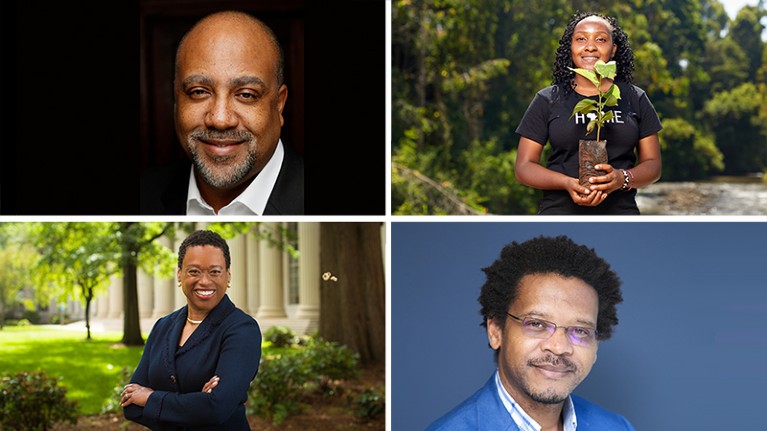

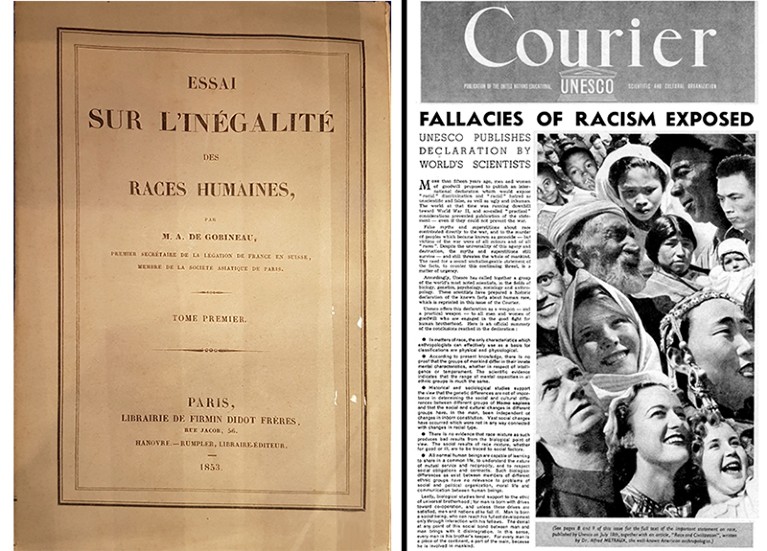
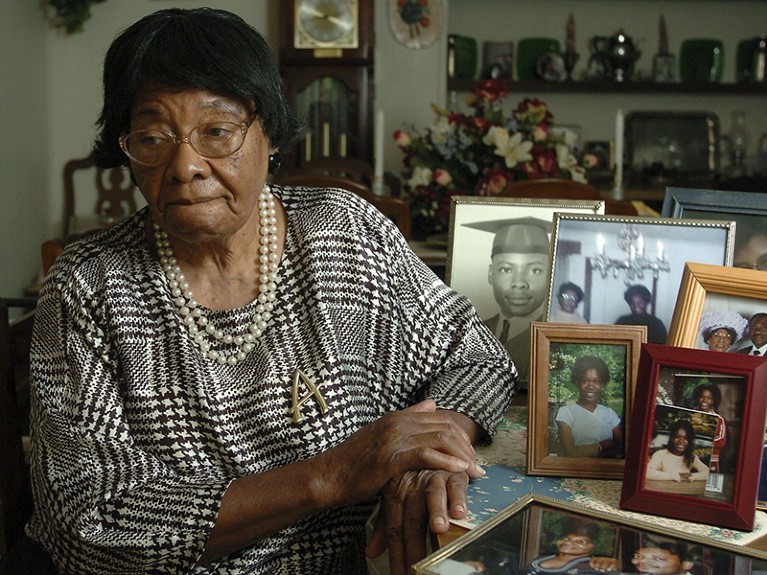
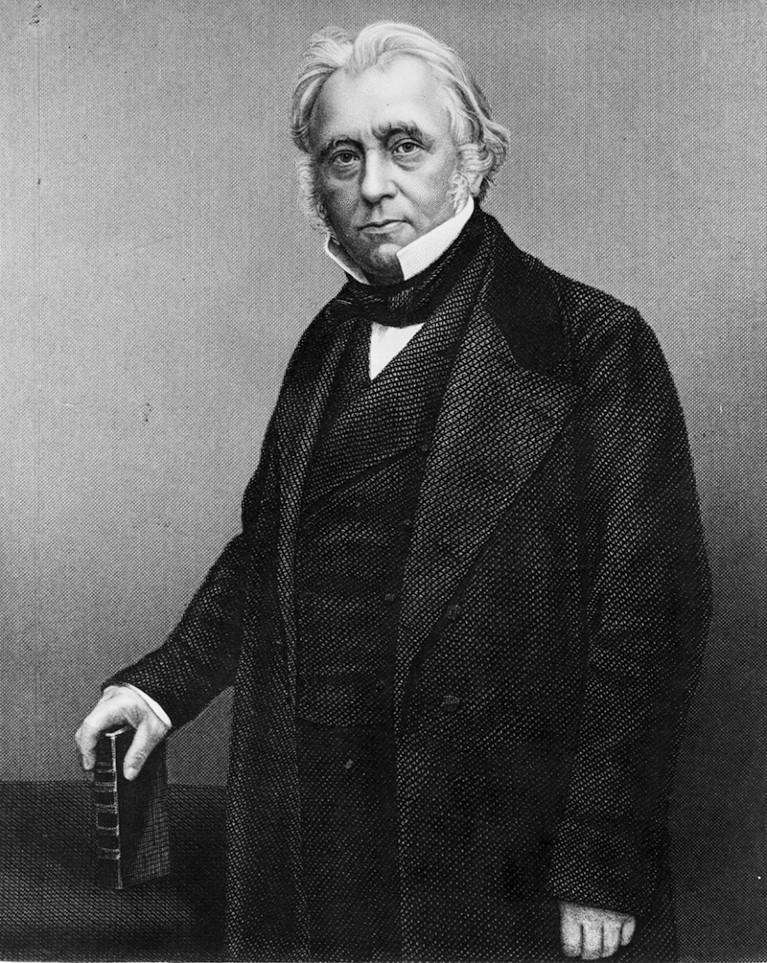









Você precisa fazer login para comentar.