European heatwave is worst ever and impossible without climate crisis, scientists say (The Guardian)
Study also finds high humidity means people in hundreds of cities are enduring their worst ever heat stress
Original article
Damian Carrington – Environment editor
Fri 26 Jun 2026 05.00 BST
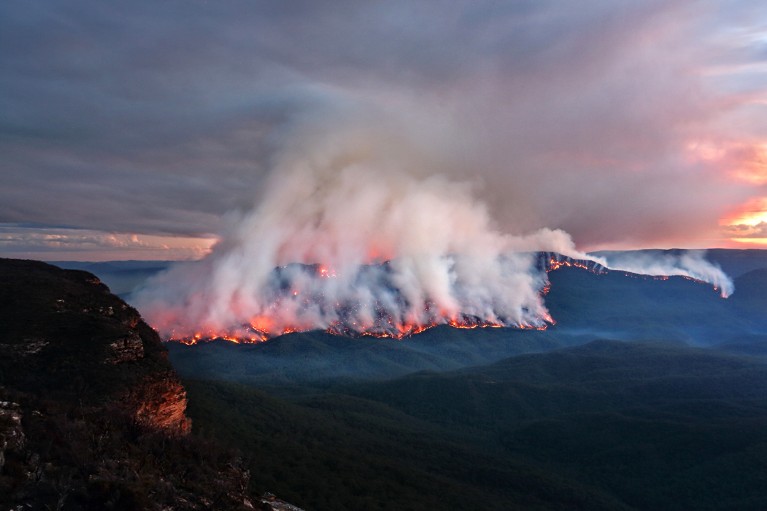
The heatwave scorching western Europe is the most severe and widespread ever and is only possible due to the climate crisis driven by fossil fuel burning, scientists have said.
Almost half of Europe’s 850 largest cities are also enduring their worst ever heat stress, a combination of temperature and humidity, they found. Muggier conditions mean sweating is less effective at cooling the body, making heatwaves even more dangerous.
The analysis comes as the UK recorded its hottest ever June temperature on Thursday, 36.7C (98.06F) in Somerset, and much of western Europe recorded a sharp rise in medical emergencies, including some deaths.
In summer 2022, more than 60,000 people died due to heat in Europe. The statistical analysis needed to assess the impact of the current heatwave will take time to complete. Nonetheless, the heatwave is certain to exact a heavy toll and is also disrupting lives and livelihoods, with schools closed, hospitals struggling and rail and air journeys cancelled across the continent.
The new analysis by scientists from the World Weather Attribution (WWA) consortium shows how rapidly extreme heat is worsening as carbon pollution continues to pile up in the atmosphere. As recently as 2003, a heatwave like the current one in Europe would have been 2C cooler due to the lower level of global heating at the time. In 1976, another famous heatwave year, it would have been 3.5C cooler.
The sweltering night-time temperatures currently harming people’s sleep are about 100 times more likely today than in 2003. The scientists warned that without urgent climate action, future heat conditions would get even more extreme and the current summer could seem relatively cool in retrospect.
“This is the most severe and widespread heatwave to have ever affected this large a region of Europe,” said Dr Theodore Keeping, an extreme weather research associate at Imperial College London and part of the WWA team. “We found that in the last 50 years, during which time the planet has warmed by 1.1C, the chance of a heatwave like this has changed immensely. This event would not have been possible in June without climate change. But do we expect this to be a cool summer going forward? That’s absolutely the case.”
He said many capital cities were experiencing not only their hottest recorded three-day period in June but the hottest three-day period at any time of year. At least 100 million people in Europe were expected to face temperatures above 35C on Thursday.
The scientists used wet bulb globe temperatures to assess the additional impact of high humidity. “It accounts for the ability of the human body to cool itself down. With the worst conditions ever experienced in 45% of cities over 50,000 people, the health impacts of this heatwave are likely to be extremely high,” Keeping said. “The speed of change is startling.”
Commenting on the WWA analysis, Simon Stiell, the UN’s climate chief, said: “Climate change is running rampant, caused by the world’s addiction to burning coal, oil and gas. But the solutions are equally clear: a faster shift to clean energy – which is now much cheaper than fossil fuels – as well as protecting forests and building climate resilience.”
The WWA team used both observed and reliable forecast temperature data to analyse the hottest three-day period across a large area of western Europe, which is sitting under a “heat dome”. Using peer-reviewed methods, they found unequivocally that climate change was the driving force behind the severity of the heat.
They ruled out natural variability of the weather, in particular any influence from the El Niño event that has begun in the Pacific Ocean. The current weather pattern, a blocked high-pressure system trapping hot air over Europe and drawing warm air up from the Sahara, is not unusual in summer, the scientists said. Instead, the level of heat has been supercharged by global heating.
Carolina Pereira Marghidan, of the Red Cross Red Crescent Climate Centre, said: “After the devastating 2003 heatwave in Europe, many countries invested in early warning systems and action plans. Research shows that those have saved many lives, but it’s not enough.”
Heatwave Britain must do more to prepare for this scorching new normal (The Independent)
Editorial: As the UK swelters and June temperature records tumble, the government must redouble its investment in resilience policies that meet the future rather than ignore it
Friday 26 June 2026 11:56 BST
Original article
The “red alerts” issued by the Meteorological Office are rare, serious, and speak just as much to the climate crisis facing planet Earth as they do to the immediate risks to human health in Britain.
Perhaps it is the heat making the more vocal climate-change deniers dismiss the sweltering evidence before them, but against the backdrop of these record-breaking temperatures, their claims that “it’s just weather” appear in the worst of taste, and dangerous with it.
Temperatures approaching 40C in June are not normal. But they are increasingly frequent. So are extraordinarily wet winters. The reality of climate change from global warming, and the danger that it will accelerate into an unpredictable and catastrophic cycle by the middle of the century, should be treated with the urgency the moment demands.
In countries such as Britain, built on the perfectly natural presumption of a permanently temperate climate, there is an all too obvious need to increase resilience, from railway tracks to the foundations of buildings and flood defences.
A few years ago, this position was common ground. During his recent, almost valedictory appearance at Prime Minister’s Questions, Sir Keir Starmer bemoaned the loss of national purpose in restraining greenhouse gas emissions and pursuing the target of a net zero UK economy by 2050. After all, for all his fatal flaws, Boris Johnson accepted the science and the need for action at successive Cop summits, and it was Theresa May who put the net zero target into law.
Now Kemi Badenoch calls herself a “net zero sceptic” – rather too close to flat-Earthism for a serious politician. Still worse is the fracturing of the international consensus by an anti-science elite: Donald Trump’s inexplicable insistence that climate change is a “hoax” will be his true legacy to future generations.
Under the pressure of the cost of living crisis, strained public finances, and the frankly malign influence of the fossil-fuel lobby on British politics, the public and politicians alike have found more immediate, quotidian matters to fret about. This approach is perfectly understandable, but deeply flawed. Climate change, with its costly consequences for every nation and every human being, is an inconvenient truth, and an issue that should transcend all others.
In fact, humanity cannot afford to ignore the fact that renewable sources – alongside a role for nuclear power – can produce cheap, plentiful and clean energy. They will have to be adopted in any case, because fossil fuels are a finite resource, carry unacceptable geopolitical risks, and will so alter life on Earth as to render it almost unrecognisable, just as the weather is now. The drive to net zero is not a burden or an obstacle to higher standards of living, but the way to achieve hitherto unknown prosperity – especially if the voracious appetite for energy of the AI data centres can be satisfied without engendering irreversible climate change.
Paying for the massive investment in green power has always been the issue, but rarely is it set against the cost of doing nothing – crop failure, buildings collapsing from subsidence, increased incidence of earthquakes, hurricanes and floods, widespread disruption to transport and industry, and the flows of humans that will inevitably follow from the desertification of sub-Saharan Africa and water shortages across the equatorial regions.
What would the loss of pollinating insects and the rainforests do to our way of life? We know that it would not be cheap, or even possible, to fix.
Even if it is practically impossible to reverse climate change, we can still limit it. Some imaginative solutions will need to be found. How, for example, to discourage people from installing central heating systems – the wrong kind of resilience when powered in part by burning natural gas, thus creating a vicious cycle.
Could we reform school term times, which still revolve around the long-gone need to get the harvest in? Are there novel ways to bolster flood defences, both at the riverside and at the coast? Can we mandate the installation of new railway tracks that are less susceptible to buckling? What can the insurance sector do to help people affected by subsidence – especially as the UK has such an old housing stock? Must we shut motorways for hours after an accident, when people then have little access to water and shade?
The prime minister is right to have set up Cobra meetings to monitor the situation, but he, or more likely his successor, should also work on the ways in which we can protect lives – and the economy – from a hotter, damper future. And of course, the drive for net zero has to go on, because doing nothing cannot be an option.