Arquivo da tag: ciência

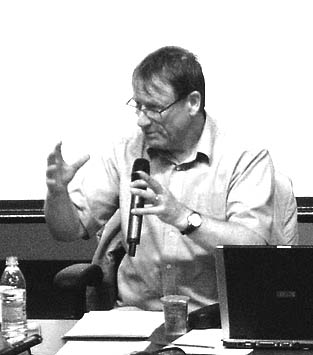
Futures Impossible : a new methodology to study world events (Boingboing.net)

By Jacques Vallee at 11:36 am Thursday, Sep 15

NeckercubeeeeThe study of the future, as a scientific and intellectual endeavor, used to be driven by the careful extrapolation of trends, as in Herman Kahn’s Year 2000, or the forecasting of complex interaction among many variables, as in the Club of Rome’s Limits to Growth and Paul Ehrlich’s Population Bomb. The technologies behind these studies relied on the mathematical tools of operations research developed during World War Two and on methods for the aggregation of expert opinion such as the Delphi Technique, developed at Rand and the Institute for the Future.

The scenarios and forecasts built on this technical base were supplemented by the study of a few extreme hypothetical situations known as “wild cards” or “black swans” (major earthquake in Tokyo, terrorist attack in New York, asteroid strike in Western Europe) designed to stretch the borders of the crisis management maps and to stimulate our collective thought process—while remaining within the domain of the Possible.

Such techniques for describing the future and anticipating its opportunities and dangers have largely become obsolete because of the acceleration of technology itself and the increasing vulnerability of our society to chaotic processes that are not well behaved under most classic models.

 In the world of the 21st century, the situations faced by decision-makers in government and industry are of a wholly different nature. In an economic environment where General Motors could go bankrupt in one week, and Lehman Brothers in one afternoon, the extrapolation of trends and the wisdom of experts are still relevant, but a new methodology is needed to deal with unforeseen discontinuities. Neither of the above catastrophes was a “wild card” in anyone’s scenario. No classical futurist could imagine such discontinuities because the tools to anticipate and describe them were not available: they were truly “impossible,” just as the Fukushima nuclear disaster was deemed “impossible” by the General Electric experts who built the plant and the Japanese authorities who managed it. Similarly, as a society, we seem to be incapable of imagining healthy, positive “impossibilities” such as reconciliation in Palestine, an end to terrorism, or a world without starvation.

At the Institute for the Future, a team headed up by Bob Johansen, Kathi Vian and myself has begun to develop a typology of Impossible Futures, starting from four classes of events:

A. Some futures are deemed impossible because they would require an extraordinary convergence of several scenarios, each of which has very low probability. The bankruptcy of General Motors (Fortune One!) in one week is a case in point.

B. Some futures are deemed impossible because they would require the convergence of several scenarios on time scales that violate our knowledge of reality. The failure of the Madoff funds, for example, was deemed impossible by his investors, all of whom were successful financial experts. It happened because two low-probability events converged: (1) regulatory authorities repeatedly refused to act every time the illegal scheme was brought to their attention, and (2) the subprime crisis dried up sources of funds overnight, exposing the fraudulent structure.

C. Some futures are deemed impossible because they would require the convergence of several scenarios, including forces or components that do not exist within accepted knowledge. In A.E.Van Vogt’s novel The World of null-A (for non-Aristotelian), a secret agent named Gosseyn is repeatedly assassinated. Each time, he is reincarnated in a new body held in reserve by his masters in special sarcophagi, endowed with increased abilities. A future when Gosseyn could exist lies outside the natural limits of our scientific knowledge and culture.

D. There are futures that are deemed impossible because we simply cannot imagine them. In Saddam Hussein’s culture there was no scenario in which U.S. forces could see the movement of his forces even at night, through clouds or through dust storms. Most nations still have no concept for devices that could detect underground cavities invisible from the air or from space. Even in modern American culture, the fact that remote classified facilities can be detected, visited, and accurately described by mental powers alone remains beyond accepted concepts.

To a decision-maker in business or government, simply describing such impossible future scenarios is not helpful in the absence of a methodology for detecting, understanding, and mitigating their practical effects. What is needed is a deeper grid that can be used as an overlay to highlight radical discontinuities in technology, geopolitics, social behavior or economic patterns. We believe that such a tool needs to be developed if we want to survive the new realities where worldviews collide at an accelerated pace.

The Folly of Prediction: Full Transcript (Freakonomics.com)

FREAKONOMICS

06/30/2011 | 4:58 pm

Stephen J. DUBNER: What does it mean to be a witch exactly in Romania? Are these people that we know here as psychics or fortunetellers, or are they different somehow?

Vlad MIXICH: I don’t know how is the fortuneteller in the United States. But here generally they are a woman of different ages. They can–they say they can cure some diseases. They can bring back your husband or your wife. Or they can predict your future.

DUBNER: Who is a typical client for a witch?

MIXICH: There are quite a lot of politicians who are going to witches. You know the French president, Nicolas Sarkozy, he went to witches last year. And our president in Romania, and very important politicians from different parties, they are going to witches. Some of them they were obliged to recognize they went to witches. Some of them it’s an off-the-record information. But me being a journalist, I know that information.

DUBNER: Vlad Mixich is a reporter in Bucharest, the capital of Romania. He knows a good bit about the witches there.

MIXICH: Quite a lot of them they are quite rich. They have very big houses with golden rooftops. A lot of the Romanians, they are living in small apartments in blocks. So, just going in such a building will give you a sense of majesty and respect.

DUBNER: But the Romanian witch industry has been under attack. First came a proposed law to regulate and tax the witches. It passed in one chamber of Parliament before stalling out. But then came another proposal arguing that witches should be penalized if the predictions they make don’t turn out to be true.

MIXICH: So if you are one of my clients, and if I’m a fortune teller, if I fail to predict your future, I pay a quite substantial fine to the state, or if this happens many times, I will even go to jail. The punishment is between six months and three years in jail.

DUBNER: What’s being proposed in Romania is revolutionary. It strikes me because we typically don’t hold anybody accountable for bad predictions. So, I’m wondering in Romania, let’s say, if a politician makes a bad prediction, do they get fined or penalized in any way?

MIXICH: No, not at all. In fact this is one of the hobbies of our president. He’s doing a lot of predictions, which are not coming true, of course. And after that he is reelected! Or his popularity is rising, like the sun in the morning, you know? No, anyone can do publicly a lot of predictions here in eastern Europe and not a single hair will move from his or her head.

DUBNER: C’mon people, that doesn’t seem fair, does it? I don’t care if you’re anti-witch or pro-witch or witch-agnostic. Why should witches be the only people held accountable for bad predictions? What about politicians and money managers and sports pundits? And what about you?

[THEME]

ANNOUNCER: From WNYC and APM, American Public Media, this is Freakonomics Radio. Today: The Folly of Prediction. Here’s your host, Stephen Dubner.

DUBNER: All of us are constantly predicting the future, whether we think about it or not. Right now, some small part of your brain is trying to predict what this show is going to be about. How do you do that? You factor in what you’ve heard so far. What you know about Freakonomics. Maybe you know a lot, maybe you’ve never heard of it, you might think it’s some kind of communicable disease! When you predict the future, you look for cognitive cues, for data, for guidance. Here’s where I go for guidance.

Steven LEVITT: I think to an economist, the best explanation for why there are so many predictions is that the incentives are set up in order to encourage predictions.

DUBNER: That’s Steve Levitt. He’s my Freakonomics friend and co-author, an economist at the University of Chicago.

LEVITT: So, most predictions we remember are ones which were fabulously, wildly unexpected and then came true. Now, the person who makes that prediction has a strong incentive to remind everyone that they made that crazy prediction which came true. If you look at all the people, the economists, who talked about the financial crisis ahead of time, those guys harp on it constantly. “I was right, I was right, I was right.” But if you’re wrong, there’s no person on the other side of the transaction who draws any real benefit from embarrassing you by bring up the bad prediction over and over. So there’s nobody who has a strong incentive, usually, to go back and say, Here’s the list of the 118 predictions that were false. I remember growing up, my mother, who is somewhat of a psychic–

DUBNER: Wait, somewhat of a psychic?

LEVITT: She’s a self-proclaimed psychic. And she would predict a stock market crash every single year.

DUBNER: And she’s been right a couple times.

LEVITT: And she has been. She’s been right twice in the last 15 years, and she would talk a lot about the times she was right. I would have to remind her about the 13 times that she was wrong. And without any sort of market mechanism or incentive for keeping the prediction makers honest, there’s lots of incentive to go out and to make these wild predictions. And those are the ones that are remembered and talked about. Think of about one of the predictions that you hear echoed more often than just about any one is Joe Namath’s famous pronouncement about how the Jets were going to win the Super Bowl. And it was unexpected. And it happened. And if the Jets had lost the Super Bowl, nobody would remember that Joe Namath made that pronouncement.

DUBNER: And conversely, you can probably find at least one player on every team that’s lost the Super Bowl in the last forty years that did predict that his team would win.

LEVITT: That’s probably right. That’s exactly right. Now, the flip side, which is perhaps surprising, is that in many cases the goal of prediction is to be completely within the pack. And so I see this a lot with pension fund managers, or endowment managers, which is if something goes wrong then as long as everybody else made the same prediction, you can’t be faulted very much.

DUBNER: Pension managers. Football players. Psychic moms. Romanian witches. Who doesn’t try to predict the future these days?

[SOUND MONTAGE OF PREDICTIONS]

DUBNER: And you know the worst thing? There’s almost nobody keeping track of all those predictions! Nobody … except for this guy …

Philip TETLOCK: Well, I’m a research psychologist, who …

DUBNER: Don’t forget your name, though.

TETLOCK: I’m Phil Tetlock and I’m a research psychologist. I spent most of career at the University of California, Berkeley, and I recently moved to the University of Pennsylvania where I’m cross- appointed in the Wharton School and the psychology department.

DUBNER: Philip Tetlock has done a lot of research on cognition and decision-making and bias, pretty standard stuff for an Ivy League psych PhD. But what really fascinates him is prediction.

TETLOCK: There are a lot of psychologists who believe that there is a hard-wired human need to believe that we live in a fundamentally predictable and controllable universe. There’s also a widespread belief among psychologists that people try hard to impose causal order on the world around them, even when those phenomena are random.

DUBNER: This hardwired human need, as Tetlock puts it, has created what he calls a prediction industry. Now, don’t sneer. You’re part of it, too.

TETLOCK: I think there are many players in what you might count the prediction industry. In some sense we’re all players in it. Whenever we go to a cocktail party, or a colloquium, or whatever where opinions are being shared, we frequently make likelihood judgments about possible futures. And the truth or falsity of particular claims about futures. The prediction business is a big business on Wall Street, and we have futures markets and so forth designed to regulate speculation in those areas. Obviously, government has great interest in prediction. They create large intelligence agency bureaucracies and systems to help them achieve some degree of predictability in a seemingly chaotic world.

DUBNER: Let me read something that you have said or written in the past. “This determination to ferret out order from chaos has served our species well. We’re all beneficiaries of our great collective successes in pursuit of deterministic regularities in messy phenomena — agriculture, antibiotics, and countless other inventions.” So talk to me for a moment about the value of prediction. Obviously there’s much has been gained, much to be gained. Do we overvalue prediction though, perhaps?

TETLOCK: I think there’s an asymmetry of supply and demand. I think there is an enormous demand for accurate predictions in many spheres of life in which we don’t have the requisite expertise to deliver. And when you have that kind of gap between demand and real supply you get the infusion of fake supply.

DUBNER: “Fake supply.” I like this guy, this Philip Tetlock. He’s not an economist, but he knows the laws of supply and demand can’t just be revoked. So if there’s big demand for prediction in all realms of life, and not enough real supply to satisfy it, what does this “fake supply” sound like?

[SOUND MONTAGE OF COULDS]

DUBNER: There’s a punditocracy out there, a class of people who predict ad nauseam, often on television. They can be pretty good at making their predictions tough to audit.

TETLOCK: It’s the art of appearing to go out on a limb without actually going out on a limb. For example, the word “could,” something “could” happen, the room you happen to be sitting in could be struck by a meteor in the next 23 seconds. That makes perfect sense, but the probability of course is point zero, zero, zero, zero, et cetera, one. It’s not zero, but it’s extremely low. In fact, the word “could,” the possible meanings people attach to it range from a 0.01 to a .6, which covers more than half the probability scale right there.

DUBNER: Look, nobody likes a weasel. So more than 20 years ago, Tetlock set out to conduct one of the largest empirical studies, ever, of predictions. He chose to focus on predictions about political developments around the world. He enlisted some of the world’s foremost experts — the kind of very smart people who have written definitive books, who show up on CNN or on the Times’s op-ed page.

TETLOCK: In the end we had close to three hundred participants. And they were very sophisticated political observers. Virtually all of them had some post-graduate education. Roughly two-thirds of them had PhDs. They were largely political scientists, but there were some economists and a variety of other professionals as well.

DUBNER: And they all participated in your study anonymously, correct?

TETLOCK: That was a very important condition for obtaining cooperation.

DUBNER: Now, if they were not anonymous then presumably we would recognize some of their names, these are prominent people at political science departments, economics departments at I’m guessing some of the better universities around the world, is that right?

TETLOCK: Well, I don’t want to say too much more, but I think you would recognize some of them, yes. I think some of them had substantial Google counts.

SJD NARR: The study became the basis of a book Tetlock published a few years ago, called “Expert Political Judgment.” There were two major rounds of data collection, the first beginning in 1988, the other in 1992. These nearly 300 experts were asked to make predictions about dozens of countries around the world. The questions were multiple choice. For instance: In Democracy X — let’s says it’s England — should we expect that after the next election, the current majority party will retain, lose, or strengthen its status? Or, for Undemocratic Country Y — Egypt, maybe — should we expect the basic character of the political regime to change in the next five years? In the next 10 years? and if so, in what direction? And to what effect? The experts made predictions within their areas of expertise, and outside; and they were asked to rate their confidence for their predictions. So after tracking the accuracy of about 80,000 predictions by some 300 experts over the course of 20 years, Philip Tetlock found:

TETLOCK: That experts thought they knew more than they knew.That there was a systematic gap between subjective probabilities that experts were assigning to possible futures and the objective likelihoods of those futures materializing.

DUBNER: Let me translate that for you. The experts were pretty awful. And you think: awful compared to what? Did they beat a monkey with a dartboard?

TETLOCK: Oh, the monkey with a dartboard comparison, that comes back to haunt me all the time. But with respect to how they did relative to, say, a baseline group of Berkeley undergraduates making predictions, they did somewhat better than that. Did they do better than an extrapolation algorithm? No, they did not. They did for the most part a little bit worse than that. How did they do relative to purely random guessing strategy? Well, they did a little bit better than that, but not as much as you might hope.

DUBNER: That “extrapolation algorithm” that Tetlock mentioned? That’s simply a computer programmed to predict “no change in current situation.” So it turned out these smart, experienced, confident experts predicted the political future about as well, if not slightly worse, than the average daily reader of The New York Times.

TETLOCK: I think the most important takeaway would be that the experts are, they think they know more than they do. They were systematically overconfident. Some experts were really massively overconfident. And we are able to identify those experts based on some of their characteristics of their belief system and their cognitive style, their thinking style.

DUBNER: OK. So now we’re getting into the nitty-gritty of what makes people predict well or predict poorly. What are the characteristics then of a poor predictor?

TETLOCK: Dogmatism.

DUBNER: It can be summed up that easily?

TETLOCK: I think so. I think an unwillingness to change one’s mind in a reasonably timely way in response to new evidence. A tendency, when asked to explain one’s predictions, to generate only reasons that favor your preferred prediction and not to generate reasons opposed to it.

DUBNER: And I guess what’s striking to me and I’d love to hear what you had to say about this is that it’s easy to provide one word, prediction, to many, many, many different realms in life. But those realms all operate very differently — so politics is different from economics, and predicting a sports outcome is different than predicting, you know, an agricultural outcome. It seems that we don’t distinguish so much necessarily and that there’s this modern sense almost that anything can be and should be able to be predicted. Am I kind of right on that, or no?

TETLOCK: I think there’s a great deal of truth to that. I think it is very useful in talking about the predictability of the modern world to distinguish those aspects of the world that show a great deal of linear regularity and those parts of the world that seems to be driven by complex systems that are decidedly nonlinear and decidedly difficult if not impossible to predict.

DUBNER: Talk to me about a few realms that generally are very, very hard to predict, and a few realms that generally are much easier.

TETLOCK: Predicting Scandinavian politics is a lot easier than predicting Middle Eastern politics.

DUBNER: Yes, that was the first one that came to my mind too! All right, but keep going.

TETLOCK: The thing about the radically unpredictable environments is that they often appear for long periods of time to be predictable. So, for example, if you had been a political forecaster predicting regime longevity in the Middle East, you would have done extremely well predicting in Egypt that Mubarak would continue to be the president of Egypt year after year after year in much the same way that if you had been a Sovietologist you would have done very well in the Brezhnev era predicting continuity. There’s an aphorism I quote in the “Expert Political Judgment” book from Karl Marx. I’m obviously not a Marxist but it’s a beautiful aphorism that he had which was that, “When the train of history hits a curve, the intellectuals fall off.”

DUBNER: Coming up: Who do you predict we’ll hear from next — a bunch of people who are awesomely good at predicting the future? Yeah, right. Maybe later. First, we’ll hear some more duds — from Wall Street, the NFL, and … the cornfield.

[UNDERWRITING]

ANNOUNCER: From American Public Media and WNYC, this is Freakonomics Radio. Here’s your host, Stephen Dubner.

DUBNER: So Phillip Tetlock has sized up the people who predict the future–geopolitical change, for instance–and determined that they’re not very good at predicting the future. He also tells us that their greatest flaw is dogmatism–sticking to their ideologies even when presented with evidence that they’re wrong. You buy that? I buy it. Politics is full of ideology; why shouldn’t the people who study politics be a least a little bit ideological? So let’s try a different set of people, people who make predictions that, theoretically at least, have nothing to do with ideology. Let’s go to Wall Street.

[SOUND EFFECT: WALL STREET MONTAGE]

Christina FANG: I’m Christina Fang, a Professor of Management at New York University’s business school.

DUBNER: Christina Fang, like Philip Tetlock, is fascinated with prediction:

FANG: Well, I guess generally forecasting about anything, about technology, about a product, whether it will be successful, about whether an idea, a venture idea could take off, a lot of things, not just economic but also business in general.

DUBNER: Fang wasn’t interested in just your street-level predictions, though. She wanted to know about the Big Dogs, the people who make bold economic predictions that carry price tags in the many millions or even billions of dollars. Along with a fellow researcher, Jerker Denrell, Fang gathered data from the Wall Street Journal’s Survey of Economic Forecasts. Every six months, the paper asked about 50 top economists to predict a set of macroeconomic numbers — unemployment, inflation, gross national product, things like that. Fang audited seven consecutive surveys, with an eye toward a particular question: when someone correctly predicts an extreme event — a market crash, maybe, or a sudden spike in inflation — what does that say about his overall forecasting ability?

FANG: In the Wall Street Journal survey if you look at the extreme outcomes, either extremely bad outcomes and extremely good outcomes, you see that those people who correctly predicted either extremely good or extremely bad outcomes, they’re likely to have overall lower level of accuracy. In other words, they’re doing poorer in general.

SJD NARR: Uh-oh. You catching this?

FANG: Those people who happen to predict accurately the extreme events, we also look at their–they happen to also have a lower overall level of accuracy.

DUBNER: So I can be right on the big one but if I’m right on the big one I generally will tend to be more often wrong than the average person.

FANG: On average–

DUBNER: On average.

FANG: Across everyday predictions as well. And our research suggests that for someone who has successfully predicted those events, we are going to predict that they are not likely to repeat their success very often. In other words, their overall capability is likely to be not as impressive as their apparent success seems to be.

DUBNER: So the people who make big, bold, correct predictions are in general worse than average at predicting the economic future. Now, why is this a problem? Maybe they’re just like home-run hitters — y’know, a lot of strikeouts but a lot of power too. All right, I’ll tell you why it’s a problem. Actually, I’ll have Steve Levitt tell you.

LEVITT: The incentives for prediction makers are to make either cataclysmic or utopian predictions, right? Because you don’t get attention if I say that what’s going to happen tomorrow is exactly as what’s going to happen today…

DUBNER: You don’t get on TV.

LEVITT: I don’t get on TV. If it happens to come true, who cares? I don’t get any credit for it coming true either.

DUBNER: There’s a strong incentive to make extreme predictions; because, seriously, who tunes in to hear some guy say that “Next year will be pretty much like last year”? And once you have been right on an extreme forecast — let’s say you predicted the 2008 market crash and the Great Recession — even if you were predicting it every year, like Steve Levitt’s mother — you’ll still be known as The Guy Who Called the Big One. And even if all your followup predictions are wrong, you still got the Big One right. Like Joe Namath.

All right, look. Predicting the economy? Predicting the political future? Those are hard. Those are big, complex systems with lots of moving parts. So how about football? If you’re an NFL expert, how hard can it be to forecast, say, who the best football teams will be in a given year? We asked Freakonomics researcher Hayes Davenport to run the numbers for us:

Hayes DAVENPORT: Well, I looked at the past three years of expert picking from the major NFL prediction outlets, which are USA Today, SportsIllustrated.com and ESPN.com. We looked at a hundred and five sets of picks total. They’re picking division winners for each year, as well as the wild card for that year. So they’re basically picking the whole playoff picture for that year.

DUBNER: So talk about just kind of generally the degree of difficulty of making this kind of a pick.

DAVENPORT: Well, if you’re sort of an untrained animal, making NFL picks, you’re going to have about a twenty-five percent chance of picking each division correctly because there are only four teams.

DUBNER: All right so Hayes, you’re saying that an untrained animal would be about twenty five percent accurate if you pick one out of four. But what about a trained animal, like a me, a casual fan? How do I do compared to the experts?

DAVENPORT: Right. So if you’re cutting off the worst team in each division, if you’re not picking among those you’ll be right, thirty-three percent of the time, one in three, and the experts are right about thirty-six percent of the time, so just a little better than that.

DUBNER: OK, so if you’re saying they’re picking about thirty-six percent accuracy, and I or someone by chance would pick at about thirty three-percent accuracy. So that’s a three percentage point improvement, or about a ten percent better, maybe we should say, you know, that’s not bad. If you beat the stock market by ten percent every year you’d be doing great. So are these NFL pundits being thirty-six percent right being really wonderful or–

DAVENPORT: I wouldn’t say that because there’s a specific fallacy these guys are operating from, which is they tend to rely much too heavily on the previous year’s standings in making their picks for the following year. They play it very conservatively. But there’s a very high level of parity in the NFL right now, so that’s not exactly how it works.

DUBNER: Tell me some of the pundits who whether by luck or brilliance and hard work turn out to be really, really good.

DAVENPORT: Sure. There are two guys from ESPN who are sort of far ahead of the field. One is Pat Yasinskas, and the other is John Clayton, who is pretty well known; he makes a lot of appearances on SportsCenter and he’s kind of a, nebbish-y professorial type. And they perform much better than everyone else because they’re excellent wild-card pickers. They’re the only people who have correctly predicted both wild card teams in a conference in a season. But they’re especially good because they actually play it much safer than everyone else.

DUBNER: Now you say that they are very good. Persuade me that they’re good and not lucky.

DAVENPORT: I can’t do that. There’s a luck factor involved in all of these predictions. For example, if you pick the Patriots in 2008 and Tom Brady gets injured, and they drop out of the playoffs, there’s very little you can do to predict that. So injuries will mess with prediction all the time. And other turnover rates in football that are sort of unpredictable. So there’s a luck factor to all of this.

DUBNER: So whether it’s football experts calling Sunday’s game or economists forecasting the economy, or political pundits looking for the next revolution, we’re talking about accuracy rates that barely beat a coin toss. But maybe all these guys deserve a break. Maybe it’s just inherently hard to predict the future of other human beings. They’re so malleable; so unpredictable! So how about a prediction where human beings are incidental to the main action?

Joe PRUSACKI: I’m Joe Prusacki and I am the Director of Statistics Division with USDA’s National Agricultural Statistics Service, or NASS for short.

DUBNER: You grew up on a farm, yeah?

PRUSACKI: Uh-huh: Yep, I grew up in–I always call it “deep southern” Illinois. I’m sitting here in Washington DC and where I grew up in Illinois is further south than where I’m sitting today. We raised…we had corn, soybeans and raised hogs.

DUBNER: You’ve heard of Anna Wintour, right? The fabled editor of Vogue magazine? Joe Prusacki is kinda like Anna Wintour for farmers. He puts out publications that are read by everyone who’s anyone in the industry — titles like “Acreage” and “Prospective Plantings” and “Crop Production.” Prusacki’s reports carry running forecasts of crop yields for cotton, soybeans, wheat and corn.

PRUSACKI: Most of the time our monthly forecasts are probably within I can guarantee you within five percent and most of the time I can say within two to three percent of the final. And someone would say that’s seems very good. But in the agricultural world, the users expect us to be much more precise in our forecasts.

DUBNER: So how does this work? How does the USDA forecast something as vast as the agricultural output of American farmers?

PRUSACKI: Like at the beginning of March, we will conduct a large survey of farmers and ranchers across the United States and sample size this time, this year was about 85,000.

DUBNER: The farmers are asked how many acres they plan to devote to each crop. Corn, let’s say. Then, in late July, the USDA sends out a small army of “enumerators” into roughly 1,900 cornfields in 10 states. These guys mark off plots of corn, 20 feet long by two rows across.

PRUSACKI: They’re randomly placed. We have randomly selected fields, in random location within field. So you may get a sample that’s maybe 20 paces into the field and 40 rows over and you may get one that’s 250 paces into the field and 100 rows over.

DUBNER: The enumerators look at every plant in that plot.

PRUSACKI: And then they’ll count what they see or anticipate to be ears based on looking at the plant.

DUBNER: A month later, they go back out again and check the cornstalks, check the ears.

PRUSACKI: Well, you could have animal loss, animal might chew the plant off, the plant may die. So all along we’re updating the number of plants, all along we’re updating the number of ears. The other thing we need, you need an estimate of ear weight or fruit weight.

DUBNER: So they go out again, cut off a bunch of ears and weigh them. But wait: still not done. After the harvest, there’s one more round of measurement.

PRUSACKI: Once the field is harvested, and the machine has gone through the field, the enumerator will go back out to the field, they’ll lay out another plot–just beyond the harvest area where we were–and they will go through and pick up off the ground any kernels that are left on the ground, pieces of ears of corn and such on the ground so we get a measure of harvest loss.

DUBNER: So this sounds pretty straightforward, right? Compared to predicting something like the political or economic future, estimating corn yield based on constant physical measurements of corn plants is pretty simple. Except for one thing. It’s called the weather. Weather remains so hard to predict in the long term that the USDA doesn’t even use forecasts; it uses historic averages instead.

DUBNER: So Joe, talk to me about what happened last year with the USDA corn forecast. You must have known this was coming from me. So the Wall Street Journal’s headline was: “USDA Flubs in Predicting Corn Crops.” Explain what happened.

PRUSACKI: Well, this is the weather factor that came into play. It turned out pretty hot and pretty dry in most of the growing region. And I had asked a few folks that are out and about in Iowa what happened. They said this is just a really strange year. We just don’t know. Now, when if someone says did we flub it? I don’t know. It was the forecast based on the information I had as for August 1. Now, September 1, I had a different set of information. October 1, I had a different set of information. Could we have did a better job?

DUBNER: A lot of people thought they could have. Last June, the USDA lowered its estimate of corn stockpiles; and in October, it cut its estimate of corn yield. After the first report, the price of corn spiked 9 percent. The second report? Another 6 percent. Joe Prusacki got quite a few e-mails:

PRUSACKI: OK, the first one is, this was: “Thanks a lot for collapsing the grain market today with your stupid…and the word is three letters, begins with an “a” and then it has two dollar signs … USDA report.

“As bad as the stench of dead bodies in Haiti must be, it can’t even compare to the foul stench of corruption emanating from our federal government in Washington DC.”

DUBNER: It strikes me that there’s room for trouble here in that your forecasts are used by a lot of different people who engage in a lot of different markets, and your research can move markets. I’m wondering what kind of bribes maybe come your way?

PRUSACKI: It’s interesting, I have people that call, we call them ‘fishersThey call maybe a day or two days before when we’re finishing our work and it’s like I tell them, I say, “Why do you do this? We’ve had this discussion before.” There’s a couple things, one I sign a confidentiality statement every year that says I shall not release any information before it’s due time or bad things happen. It’s a $100,000 fine or time in prison. It’s like the dollar fine, OK. It’s the prison part that bothers me!

DUBNER: But there’s got to be a certain price at which–so let’s say I offered you, I came to you and I said–Joe, $10 million for a 24-hour head start on the corn forecast.

PRUSACKI: I’m not going to do it. Trust me, somebody would track me down.

DUBNER: I hear you.

PRUSACKI: Again, the prison time, it bothers me.

DUBNER: All right, so Joe Prusacki probably can’t be bought. And the USDA is generally considered to do a pretty good job with crop forecasts. But: look how hard the agency has to work, measuring corn fields row by row, going back to look for animal loss and harvest loss. And still, its projection, which is looking only a few months into the future, can get thrown totally out of whack by a little stretch of hot, dry weather. That dry spell was essentially a random event, kind of like Tom Brady’s knee getting smashed. I hate to tell you this but the future is full of random events. That’s why it’s so hard to predict. That’s why it can be scary. Do we know this? Of course we know it. Do we believe it? Mmmmm.

Some scholars say that our need for prediction is getting worse — or, more accurately, that we get more upset now when the future surprises us. After all, as the world becomes more rational and routinized, we often know what to expect. I can get a Big Mac not only in New York but in Beijing, too — and they’ll taste pretty much the same. So when you’re used to that, and when things don’t go as expected — watch out.

Our species has been trying to foretell the future forever. Oracles and goat entrails and roosters pecking the dirt. The oldest religious texts are filled with prediction. I mean, look at the afterlife! What is that if not a prediction of the future? A prediction that, as far as I can tell, can never be categorically refuted or confirmed. A prediction so compelling that it remains all these years later a concept around which billions of people organize their lives. So what do you see when you gaze into the future? A yawning chasm of random events — or do you look for a neat pattern, even if no such pattern exists?

Nassim TALEB: It’s much more costly for someone to not detect a pattern.

DUBNER: That’s Nassim Taleb, the author of “Fooled By Randomness” and “The Black Swan.”

TALEB: It’s much costlier for us — as a race, to make the mistake of not seeing a leopard than having the illusion of pattern and imagining a leopard where there is none. And that error, in other words, mistaking the non-random for the random, which is what I call the “one-way bias.” Now that bias works extremely well, because what’s the big deal of getting out of trouble? It’s not costing you anything. But in the modern world, it is not quite harmless. Illusions of certainty makes you think that things that haven’t exhibited risk, for example the stock market, are riskless. We have the turkey problem — the butcher feeds the turkey for a certain number of days, and then the turkey imagines this is permanent.

DUBNER: “The butcher feeds the turkey and the turkey imagines this is permanent.” So you’ve got to ask yourself: who am I? The butcher? Or the turkey? Coming up: hedgehogs and foxes — and a prediction that does work. Here’s a hint: if you like this song, [MUSIC], you’ll probably like this one too: [MUSIC].

[UNDERWRITING]

ANNOUNCER: From American Public Media and WNYC, this is Freakonomics Radio.

DUBNER: Hey, guess what, Sunshine? Al Gore didn’t win Florida. Didn’t become president either. Try walking that one back. So we are congenital predictors, but our predictions are often wrong. What then? How do you defend your bad predictions? I asked Philip Tetlock what all those political experts said when he showed them their results. He had already stashed their excuses in a neat taxonomy:

TETLOCK: So, if you thought that Gorbachev for example, was a fluke, you might argue, well my understanding of the Soviet political system is fundamentally right, and the Soviet Politburo, but for some quirky statistical aberration of the Soviet Politburo would have gone for a more conservative candidate. Another argument might be, well I predicted that Canada would disintegrate, that Quebec would secede from Canada, and it didn’t secede, but the secession almost did succeed because there was a fifty point one percentage vote against secession, and that’s well within the margin of sampling error.

DUBNER: Are there others you want to name?

TETLOCK: Well another popular prediction is “off on timing.” That comes up quite frequently in the financial world as well. Many very sophisticated students of finance have commented on how hard it is, saying the market can stay irrational longer than you can stay liquid, I think is George Soros’s expression. So, “off on timing” is a fairly popular belief-system defense as well. And I predicted that Canada would be gone. And you know what? It’s not gone yet. But just hold on.

DUBNER: You answered very economically when I asked you what are the characteristics of a bad predictor; you used one word, dogmatismm. What are the characteristics, then, of a good one?

TETLOCK: Capacity for constructive self-criticism.

DUBNER: How does that self-criticism come into play and actually change the course of the prediction?

TETLOCK: Well, one sign that you’re capable of constructive self-criticism is that you’re not dumbfounded by the question: What would it take to convince you you’re wrong? If you can’t answer that question you can take that as a warning sign.

DUBNER: In his study, Tetlock found that one factor was more important than any other in someone’s predictive ability: cognitive style. You know the story about the fox and the hedgehog?

TETLOCK: Isaiah Berlin tells us that the quotation comes from the Greek warrior poet Archilichus 2,500 years ago. And the rough translation was the fox knows many things but the hedgehog knows one big thing.

DUBNER: So, talk to me about what the foxes do as predictors and what the hedgehogs do as predictors.

TETLOCK: Sure. The foxes tend to have a rather eclectic, opportunistic approach to forecasting. They’re very pragmatic. A famous aphorism by Deng Xiaoping was he “didn’t care if the cat was white or black as long as it caught mice.” And I think the attitude of many foxes is they really didn’t care whether ideas came from the left or the right, they tended to deploy them rather flexibly in deriving predictions. So they often borrowed ideas across schools of thought that hedgehogs viewed as more sacrosanct. There are many subspecies of hedgehog. But what they have in common is a tendency to approach forecasting as a deductive, top-down exercise. They start off with some abstract principles, and they apply those abstract principles to messy, real-world situations, and the fit is often decidedly imperfect.

DUBNER: So foxes tend to be less dogmatic than hedgehogs, which makes them better predictors. But, if you had to guess, who do you think more likely to show up TV or in an op-ed column, the pragmatic, nuanced fox or the know-it-all hedgehog?

[SOUND MONTAGE]

DUBNER: You got it!

TETLOCK: Hedgehogs, I think, are more likely to offer quotable sound bites, whereas foxes are more likely to offer rather complex, caveat-laden sound bites. They’re not sound bites anymore if they’re complex and caveat-laden.

DUBNER: So, if you were to gain control of let’s say a really big media outlet, New York Times, or NBC TV, and you said, you know, I want to dispense a different kind of news and analysis to the public, what would you do? How would you suggest building a mechanism to do a better job of keeping all this kind of poor expert prediction out of the, off the airwaves.

TETLOCK: I’m so glad you asked that question. I have some specific ideas about that. And I don’t think they would be all that difficult to implement. I think they should try to keep score more. I think there’s remarkably little effort in tracking accuracy. If you happen to be someone like Tom Friedman or Paul Krugman, or someone who’s at the top of the pundit pecking order, there’s very little incentive for you to want to have your accuracy tested because your followers are quite convinced that you’re extremely accurate, and it’s pretty much a game you can only lose.

DUBNER: Can you imagine? Every time a pundit appeared on TV, the network would list his batting average, right after his name and affiliation. You think that might cut down on blowhard predictions just a little bit? Looking back at what we’ve learned so far, it makes me wonder: maybe the first step toward predicting the future should be to acknowledge our limitations. Or–at the very least–let’s start small. For instance: if I could tell you what kind of music I like, and then you could predict for me some other music I’d want to hear. That actually already exists. It’s called Pandora Radio. Here’s co-founder Tim Westergren.

Tim WESTERGREN: So, what we’ve done is, we’ve broken down recordings into their basic components for every dimension of melody, harmony, and rhythm, and form, and instrumentation, down into kind of the musical equivalent of primary colors.

DUBNER: The Pandora database includes more than a million songs, across every genre that you or I could name. Each song is broken down into as many as 480 musical attributes, almost like genetic code. Pandora’s organizing system is in fact called the “Music Genome Project.” You tell the Pandora website a song you like, and it rummages through that massive genetic database to make an educated guess about what you want to hear next. If you like that song, you press the thumbs-up button, and Pandora takes note.

WESTERGREN: I wouldn’t make the claim that Pandora can map your emotional persona. And I also don’t think frankly that Pandora can predict a hit because I think it is very hard, it’s a bit of a magic, that’s what makes music so fantastic. So, I think that we know our limitations, but within those limitations I think that we make it much, much more likely that you’re going to find that song that just really touches you.

DUBNER: So Tim, you were good enough to set up a station for me here. It’s called “Train in Vain Radio.” So the song we gave you was “Train in Vain.” So let me open up my radio station here and I’ll hit play and see what you got for me.

[MUSIC PLAYS]

DUBNER: Oh yeah. Yeah I like them, that’s The Jam, so I’m going to give it a thumbs up I like “Town Called Malice.” .on my little window here. I think there are a couple more songs in my station here.

[MUSIC PLAYS]

“Television” by Tom Verlaine, he was always too cool for me. I can see why you would think that I would like them, and I appreciate your effort, Mr. Pandora. How about you, were you a “Television” fan?

WESTERGREN: Yeah, yeah. And you know, one thing of course is that the songs are all rooted in guitar riffs.

DUBNER: Yep.

WESTERGREN: There’s a repetitive motif played on the guitar. And a similar sound and they’ve got a little twang– and they’re played kind of rambly, a little bit rough, there’s a sort of punk element in there. The vocals have over twenty attributes just for the voice. In this case these are pretty unpolished vocal deliveries.

DUBNER: I got to tell you that even though when this song came up, and I’ve heard this song a few times, and I told you I didn’t like Television very much, this song, I’m kind of digging it now.

WESTERGREN: See, there you go, that’s exactly what we’re trying to do.

DUBNER: So, it’s a really great thing to do, but it’s not really predicting the future the way most people think of it as predicting the future, is it?

WESTERGREN: Well, I certainly wouldn’t have put our mission in the same category as predicting the economy, or, you know, geopolitical futures. But you know, the average American listens to 17 hours of music a week. So, they spend a lot of time doing it, and I think that if we can make that a more enjoyable experience and more personalized, I think maybe we’ll make some kind of meaningful contribution to culture.

DUBNER: So Pandora does a pretty good job of predicting the music you might want to hear, based on what you already know you like. But again, look how much effort that takes — 480 musical attributes! And it’s not really predicting the future, is it? All Pandora does is breaks down the confirmed musical preferences of one person today and comes up with some more music that’ll fulfill that same person’s preferences tomorrow. If we really want to know the future, we probably need to get much more ambitious. We probably need a whole new model. Like, how about prediction markets?

Robin HANSON: A prediction market is basically like a betting market or a speculative market, like orange juice futures or stock markets, things like that. The mechanics is that there’s a — an asset of some sort that pays off if something’s true, like whether a, a person wins the presidency or a team wins a sporting contest. And people trade that asset and the price of that asset becomes then a forecast of whether that claim is likely to be true.

DUBNER: That’s Robin Hanson, an economics professor at George Mason University and an admitted advocate of prediction markets. As Hanson sees it, a prediction market is far more reliable than other forecasting methods because it addresses the pesky incentive problems of the old-time prediction industry.

HANSON: So a prediction market gives people an incentive, a clear personal incentive to be right and not wrong. Equally important, it gives people an incentive to shut up when they don’t know, which is often a problem with many of our other institutions. So if you as a reporter call up almost any academic and and ask them vaguely related questions, they’ll typically try to answer them, just because they want to be heard. But in a prediction market most people don’t speak up. Every one of your listeners today had the right to go speak up on orange juice futures yesterday. Every one of you could have gone and said, orange juice futures forecasts are too low or too high, and almost no one did. Why? Because most of you don’t think you know. And that’s just the way we want it.So in most of these prediction markets what we want is the few people who know the best to speak up and everybody else to shut up.

DUBNER: Prediction markets are flourishing. Some of them are private — a multinational firm might set up an internal market to try to forecast when a big project will be done. And there are for-profit prediction markets like InTrade, based in Dublin, where you can place a bet on, say, whether any country that currently uses the Euro will drop the Euro by the end of the year. (As I speak, that bet has a 15% chance on InTrade.) Here’s another InTrade bet: whether there’ll be a successful WMD terrorist attack anywhere in the world by the end of 2013. (That’s got a 28% chance.) Now that’s starting to sound a little edgy, no? Betting on terrorism? Robin Hanson himself has a little experience in this area, on a U.S. government project he worked on.

HANSON: All right, so — back in 2000, DARPA, the Defense Advanced Research Projects Agency, had heard about prediction markets, and they decided to fund a research project. And they basically said, listen, we’ve heard this is useful for other things, we’d like you to show us that this can be useful for the kind of topics we are interested in. Our project was going to be forecasting geopolitical trends in the Middle East. We were going to show that prediction markets could tell you about economic growth, about riots, about perhaps wars, about whether the changes of heads of state… and how these things would interact with each other.

DUBNER: In 2003, just as the project was about to go live, the press heard about it.

HANSON: On Monday morning two senators had a press conference where they declared that the — DARPA, the — and the military were going to have a betting market on terrorism.

HANSON: And so, there was a sudden burst of media coverage and by the very next morning the head of the military basically declared before the Senate that this project was dead, and there was nothing more to worry about.

DUBNER: What do you think you — we collectively, you, in particular — would know now about that part of the world, let’s say, if this market had been allowed to take root?

HANSON: Well, I think we would have gotten much earlier warning about the revolutions we just had. And if we would have had participants from the Middle East forecasting those markets. Not only we would get advanced warning about which things might happen, but then how our actions could affect those. So, for example, the United States just came in on the side of the Libyan rebels, to support the Libya rebels against the Qaddafi regime. What’s the chances that will actually help the situation, as opposed to make it worse?

DUBNER: But give me an example of what you consider among the hardest problems that a prediction market could potentially help solve?

HANSON: Who should — not only who should we elect for president but whether we should go to war here or whether we should begin this initiative? Or should we approve this reform bill for medicine, etc.

DUBNER: So that sounds very logical, very appealing. How realistic is it?

HANSON: Well, it depends on there being a set of customers who want this product. So, you know, if prediction markets have an Achilles heel, it’s certainly the possibility that people don’t really want accurate forecasts.

DUBNER: Prediction markets put a price on accountability. If you’re wrong, you pay, simple as that. Just like the proposed law against the witches in Romania. Maybe that’s what we need more of. Here’s Steve Levitt again:

LEVITT: When there are big rewards to people who make predictions and get them right, and there are zero punishments for people who make bad predictions because they’re immediately forgotten, then economists would predict that’s a recipe for getting people to make predictions all the time.

DUBNER: Because the incentives are all encouraging you to make predictions.

LEVITT: Absolutely.

DUBNER: If you get it right there’s an upside, and if you get it wrong there’s almost no downside.

LEVITT: Right, if the flipside were that if I make a false prediction I’m immediately sent to prison for a one-year term, there would be almost no prediction.

DUBNER: And all those football pundits and political pundits and financial pundits wouldn’t be able to wriggle out of their bad calls — saying “My idea was right, but my timing was wrong.” Maybe that’s how everybody does it. That big storm the weatherman called but never showed up? “Oh, it happened all right,” he says, “but two states over.” Or how about those predictions for the End of the World — the Apocalypse, the Rapture, all that? “Well,” they say, “we prayed so hard that God decided to spare us.”

Remember back in May, when an 89-year-old preacher named Harold Camping declared that the Earth would be destroyed at 5:59 p.m. on a Saturday, and only the true believers would survive? I remember it very well because my 10-year-old son was petrified. I tried telling him that Camping was a kook — that anybody can say pretty much anything they want about the future. It didn’t help; he couldn’t get to sleep at night.

And then the 21st came and went and he was psyched. “I knew it all along, Dad,” he said.

Then I asked him what he thought should happen to Harold Camping, the false Doomsday prophet. “Oh, that’s easy,” he said. “Off with his head!”

My son is not a bloodthirsty type. But he’s not a turkey either.

An Algorithm that Can Predict Weather a Year in Advance (Freakonomics.com)

MATTHEW PHILIPS

09/27/2011 | 3:51 pm

In our latest podcast, “The Folly of Prediction,” we poke fun at the whole notion of forecasting. The basic gist is: whether it’s Romanian witches or Wall Street quant wizards, though we love to predict things — we’re generally terrible at it. (You can download/subscribe at iTunes, get the RSS feed, or read the transcript here.)

But there is one emerging tool that’s greatly enhancing our ability to predict: algorithms. Toward the end of the podcast, Dubner talks to Tim Westergren, a co-founder of Pandora Radio, about how the company’s algorithm is able to predict what kind of music people want to hear, by breaking songs down to their basic components. We’ve written a lot about algorithms, and the potential they have to vastly change our life through customization, and perhaps satisfy our demand for predictions with some robust results.

One of the first things that comes to mind when people hear the word forecasting is the weather. Over the last few decades, we’ve gotten much better at predicting the weather. But what if through algorithms, we could extend our range of accuracy, and say, predict the weather up to a year in advance? That’d be pretty cool, right? And probably worth a bit of money too.

That’s essentially what the folks at a small company called Weather Trends International are doing. The private firm based in Bethlehem, PA, uses technology first developed in the early 1990s, to project temperature, precipitation and snowfall trends up to a year ahead, all around the world, with more than 80% accuracy. Translation: they gather up tons and tons of data, literally as much historical information on weather around the world as is out there, and then cram it into some 5.5 million lines of proprietary computer code (their algorithm) to spit out weather forecasts up to a year in advance. This is fairly different from what most meteorologists do by modeling the atmosphere. “Only about 15% of what we do is traditional forecast meteorology,” says CEO Bill Kirk, a former U.S. Air Force Captain with a degree from Rutgers in meteorology. Kirk began working on the WTI algorithm while in the Air Force.

Since launching in 2003, WTI has carved out a nice business for itself by marketing weather predictions to a range of clients, from commercial retailers and manufacturers (Wal-Mart, Target, Anheuser-Busch, Johnson & Johnson), to financial services firms and commodity traders– all of whom depend on the weather. Consumption of beer, for example, varies greatly with the temperature. “For every 1 degree hotter it is, Anheuser-Busch sells 1 percent more product,” says Kirk. And since beer is often made and bottled months in advance, the sooner they can know how hot it will be in May, the sooner they can plan accordingly. Unlike a lot of professional predictors, WTI’s business model has a built-in incentive structure: “Our clients are making multi-million dollar decisions based on our forecasts. If we’re not right, they’re not coming back.”

Though a trained meteorologist, Kirk says that over the last several years, he’s learned a lot about what really drives weather. He talks at length about the phenomenon known as Pacific decadal oscillation, which holds that the Pacific Ocean cycles through periods of warm and cold temperatures lasting about 30 years each. From 1976, to roughly 2006, the Pacific was in a warm phase, but is now cooling. Kirk believes that it’s this change that’s behind much of the bizarre weather we’ve seen over the last few years, from record snowfall and tornado activity, to droughts in the South, to floods in Australia. “The PDO cycles used to be a footnote in climate reports,” says Kirk. “Now we see them as playing a prominent role in determining weather patterns.”

Kirk is now trying to market his long-range forecasting to the private sector with a new website,Weathertrends360, as well as a new app. They both allow you to get a day-by-day forecast all the way through August 2012. Here’s his forecast for New York City over the next two months:

Just for kicks, I’ll check in from time to time to see how accurate the WTI forecasts end up being.

Freakonomics Poll: When It Comes to Predictions, Whom Do You Trust? (Freakonomics.com)

FREAKONOMICS

09/16/2011 | 11:27 am

Our latest Freakonomics Radio podcast, “The Folly of Prediction,” is built around the premise that humans love to predict the future, but are generally terrible at it. (You can download/subscribe at iTunes, get the RSS feed, listen live via the media player above, or read the transcript here.)

There are a host of professions built around predicting some future outcome: from predicting the score of a sports match, to forecasting the weather for the weekend, to being able to tell what the stock market is going to do tomorrow. But is anyone actually good at it?

From your experience, which experts do you trust for predictions?

  • None of the Above (39%, 447 Votes)
  • Meteorologists (37%, 414 Votes)
  • Economists (14%, 158 Votes)
  • Sports Experts (9%, 98 Votes)
  • Political Pundits (1%, 16 Votes)
  • Stock Market Analysts (1%, 10 Votes)

Total Voters: 1,132

Climatic fluctuations drove key events in human evolution (University of Liverpool)

21-Sep-2011 – University of Liverpool

Research at the University of Liverpool has found that periods of rapid fluctuation in temperature coincided with the emergence of the first distant relatives of human beings and the appearance and spread of stone tools.

Dr Matt Grove from the School of Archaeology, Classics and Egyptology reconstructed likely responses of human ancestors to the climate of the past five million years using genetic modelling techniques. When results were mapped against the timeline of human evolution, Dr Grove found that key events coincided with periods of high variability in recorded temperatures.

Dr Grove said: “The study confirmed that a major human adaptive radiation – a pattern whereby the number of coexisting species increases rapidly before crashing again to near previous levels – coincided with an extended period of climatic fluctuation. Following the onset of high climatic variability around 2.7 million years ago a number of new species appear in the fossil record, with most disappearing by 1.5 million years ago. The first stone tools appear at around 2.6 million years ago, and doubtless assisted some of these species in responding to the rapidly changing climatic conditions.

“By 1.5 million years ago we are left with a single human ancestor – Homo erectus. The key to the survival of Homo erectus appears to be its behavioural flexibility – it is the most geographically widespread species of the period, and endures for over one and a half million years. Whilst other species may have specialized in environments that subsequently disappeared – causing their extinction – Homo erectus appears to have been a generalist, able to deal with many climatic and environmental contingencies.”

Dr Grove’s research is the first to explicitly model ‘Variability Selection’, an evolutionary process proposed by Professor Rick Potts in the late 1990s, and supports the pervasive influence of this process during human evolution. Variability selection suggests that evolution, when faced with rapid climatic fluctuation, should respond to the range of habitats encountered rather than to each individual habitat in turn; the timeline of variability selection established by Dr Grove suggests that Homo erectus could be a product of exactly this process.

Linking climatic fluctuation to the evolutionary process has implications for the current global climate change debate. Dr Grove said: “Though often discussed under the banner term of ‘global warming’, what we see in many areas of the world today is in fact an increased annual range of temperatures and conditions; this means in particular that third world human populations, many living in what are already marginal environments, will face ever more difficult situations. The current pattern of human-induced climate change is unlike anything we have seen before, and is disproportionately affecting areas whose inhabitants do not have the technology required to deal with it.”

The research is published in The Journal of Human Evolution and The Journal of Archaeological Science.

Science and religion do mix (Rice University)

9/20/2011 – News & Media Relations

Rice University study reveals only 15 percent of scientists at major research universities see religion and science always in conflict

Throughout history, science and religion have appeared as being in perpetual conflict, but a new study by Rice University suggests that only a minority of scientists at major research universities see religion and science as requiring distinct boundaries.

“When it comes to questions about the meaning of life, ways of understanding reality, origins of Earth and how life developed on it, many have seen religion and science as being at odds and even in irreconcilable conflict,” said Rice sociologist Elaine Howard Ecklund. But a majority of scientists interviewed by Ecklund and colleagues viewed both religion and science as “valid avenues of knowledge” that can bring broader understanding to important questions, she said.

Ecklund summarized her findings in “Scientists Negotiate Boundaries Between Religion and Science,” which appears in the September issue of the Journal for the Scientific Study of Religion. Her co-authors were sociologists Jerry Park of Baylor University and Katherine Sorrell, a former postbaccalaureate fellow at Rice and current Ph.D. student at the University of Notre Dame.

They interviewed a scientifically selected sample of 275 participants, pulled from a survey of 2,198 tenured and tenure-track faculty in the natural and social sciences at 21 elite U.S. research universities. Only 15 percent of those surveyed view religion and science as always in conflict. Another 15 percent say the two are never in conflict, and 70 percent believe religion and science are only sometimes in conflict. Approximately half of the original survey population expressed some form of religious identity, whereas the other half did not.

“Much of the public believes that as science becomes more prominent, secularization increases and religion decreases,” Ecklund said. “Findings like these among elite scientists, who many individuals believe are most likely to be secular in their beliefs, definitely call into question ideas about the relationship between secularization and science.”

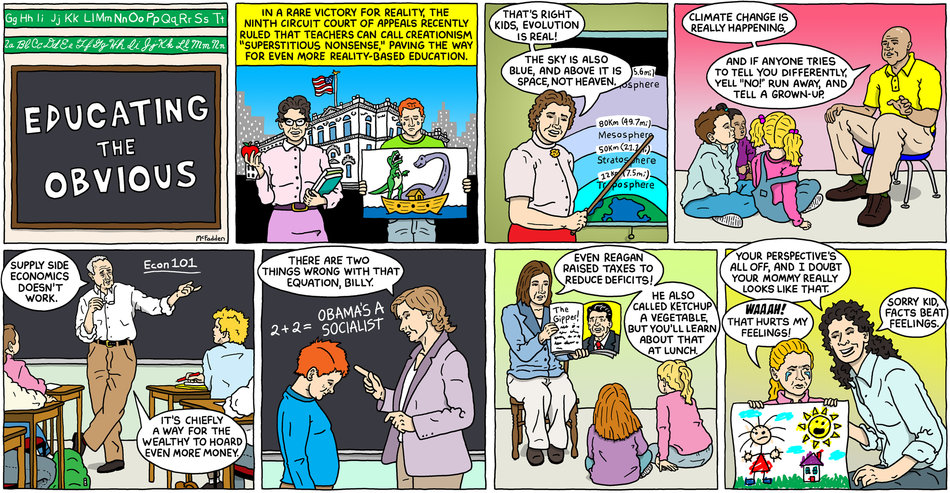
Many of those surveyed cited issues in the public realm (teaching of creationism versus evolution, stem cell research) as reasons for believing there is conflict between the two. The study showed that these individuals generally have a particular kind of religion in mind (and religious people and institutions) when they say that religion and science are in conflict.

The study identified three strategies of action used by these scientists to manage the religion-science boundaries and the circumstances that the two could overlap.

  • Redefining categories – Scientists manage the science-religion relationship by changing the definition of religion, broadening it to include noninstitutionalized forms of spirituality.
  • Integration models – Scientists deliberately use the views of influential scientists who they believe have successfully integrated their religious and scientific beliefs.
  • Intentional talk – Scientists actively engage in discussions about the boundaries between science and religion.

“The kind of narrow research available on religion and science seems to ask if they are in conflict or not, when it should really ask the conditions under which they are in conflict,” Ecklund said. “Our research has found that even within the same person, there can be differing views. It’s very important to dispel the myth that people believe that religion and science either do or don’t conflict. Our study found that many people have much more nuanced views.”

These nuanced views often find their way into the classroom, according to those interviewed. One biologist, an atheist not part of any religious tradition, admitted that she makes a sincere effort to present science such that “religious students do not need to compromise their own selves.” Although she is not reconsidering her personal views on religion, she seeks out resources to keep her religious students engaged with science.

Other findings:

  • Scientists as a whole are substantially different from the American public in how they view teaching “intelligent design” in public schools. Nearly all of the scientists – religious and nonreligious alike – have a negative impression of the theory of intelligent design.
  • Sixty-eight percent of scientists surveyed consider themselves spiritual to some degree.
  • Scientists who view themselves as spiritual/religious are less likely to see religion and science in conflict.
  • Overall, under some circumstances even the most religious of scientists were described in very positive terms by their nonreligious peers; this suggests that the integration of religion and science is not so distasteful to all scientists.

Ecklund said the study’s findings will go far in improving the public’s perception of science. “I think it would be helpful for the public to see what scientists are actually saying about these topics, rather than just believe stereotypes,” she said. “It would definitely benefit public dialogue about the relationship between science and religion.”

Ecklund is the author of “Science vs. Religion: What Scientists Really Think,” published by Oxford University Press last year.

The study was supported by a grant from the John Templeton Foundation and additional funding from Rice University.

Gamers crackeiam código que pode gerar novos tratamentos contra AIDS (Gizmodo Brasil)

Por Kwame Opam – 15:56 – 19-09-2011


Os cientistas passaram uma década tentando — e não conseguindo — mapear a estrutura de uma enzima que pode ajudar a resolver uma parte crucial do quebra-cabeça do vírus da AIDS. Um grupo de gamers precisou de apenas três semanas.

A enzima em questão é a protease do vírus dos macacos de Mason-Pfizer, e pesquisadores vêm buscando formas de desativá-lo para assim descobrir novas formas de desenvolver drogas anti-HIV. Infelizmente, os esforços convencionais de computadores e cientistas foram pouco durante anos.

Eis que entra no jogo a Foldit. a Foldit foi desenvolvida em 2008 como forma para descobrir estrutura de várias proteínas e aminoácidos — algo que computadores não sabem fazer muito bem — ao transformar o problema em um jogo. Ao adicionar as coordenadas experimentais à enzima do vírus do macaco, os gamers — vários deles sem nenhum tipo de conhecimento passado em biologia molelucar — foram capazes de prever a estrutura da proteína, permitindo que os cientistas marcassem localizações precisas e parassem o crescimento do vírus.

O estudo, publicado na Nature Structure & Molecular Biology, detalha quão incrível um passo desse é para o desenvolvimento de terapias mais efetivas para pacientes com AIDS. Trata-se também de um precedente importante que estabelece uma base para que cientistas e pessoas comuns trabalhem juntas para resolver novos problemas e salvar vidas. O que é algo incrível. [Sydney Morning Herald via The Next Web]

Unshakeable stereotypes of science (New Scientist)

13 September 2011 by Roger Highfield
Magazine issue 2829.

Science has transformed our world, so why does the public have such an old-fashioned view of scientists, asks Quentin Cooper

What is the problem with the public’s image of scientists?
If you ask anyone, they will tell you that science has transformed their world with amazing discoveries. But then if you invite them to draw a scientist, what they depict is precisely what people would have described 50 years ago, back when the anthropologist Margaret Mead came up with what we now call the “draw a scientist” test.

How do people generally depict scientists?
It is uncanny: they draw someone with a hangdog look, frizzy hair and test tube in hand, all in a scene where things are going wrong. There are national variations. In Italy, scientists tend to be scarred and have bolts in their necks, like Frankenstein’s monster. In general, though, they are mostly white, male, bald and wearing a white coat. No wonder we have a problem recruiting scientists.

What do you think of attempts to make scientists cool, like the Studmuffins of Science calendar and GQ’s Rock Stars of Science?
They are doomed because for geek calendars and suchlike to work, they have to bounce off the stereotype. As a result, they reinforce it.

On TV there are plenty of science presenters who defy the stereotype, such as the physicist Brian Cox. Surely that helps?
It is true. They are not all white, male and old. Some have hair. Some, like Brian, arguably have too much! But while people know them and are familiar with their TV programmes, it is surprising what happens when you ask the public about their favourite science presenters. In the UK they usually nominate veterans, such as David Attenborough. In fact, in the last poll I saw, half the people could not name a TV science presenter. They don’t seem to recognise them as scientists because they don’t conform to the stereotype.

And this stereotype also applies to the best known scientist of all time, Einstein?
The image of the old Einstein with tongue out is the one everyone knows – the one taken on his 72nd birthday. But he was a dapper 26-year-old when he had his “annus mirabilis” and wrote the four papers that changed physics.

What do you think about the depiction of scientists in films?
What I find striking is you almost never see scientists on screen unless they are doing science. There are very few characters who happen to be scientists. And those scientists shown tend to be at best eccentric, at worst mad and/or evil.

How can we improve the image of scientists?
Even though the “draw a scientist” test started half a century ago, it was only in the 1980s that someone had the idea of introducing children to a real scientist after they had drawn one, and then asking them to have another go at drawing. One of my favourite examples is of the schoolgirl who initially drew a man with frizzy hair and a white coat, but afterwards depicted a smiling young woman holding a test tube. Above it is the word “me”. I still find myself choking up when I show it.

Profile
Quentin Cooper is a science journalist and presenter of the BBC radio programme Material World. He is hosting the Cabaret of the Elements at the British Science Festival in Bradford on 10 September.

We Need To Do More When It Comes To Having Brief, Panicked Thoughts About Climate Change (The Onion)

COMMENTARY
BY RHETT STEVENSON
SEPTEMBER 6, 2011 | ISSUE 47•36

The 20 hottest years on record have all taken place in the past quarter century. The resulting floods, wildfires, and heat waves have all had deadly consequences, and if we don’t reduce carbon emissions immediately, humanity faces bleak prospects. We can no longer ignore this issue. Beginning today, we must all do more when it comes to our brief and panicked thoughts about climate change.

Indeed, if there was ever a time when a desperate call to take action against global warming should race through our heads as we lie in bed and stare at the ceiling, that time is now.

Many well-intentioned people will take 20 seconds out of their week to consider the consequences of the lifestyle they’ve chosen, perhaps contemplating how their reliance on fossil fuels has contributed to the rapid melting of the Arctic ice cap. But if progress is what we truly want, 20 seconds is simply not enough. Not by a long shot. An issue this critical demands at least 45 seconds to a solid minute of real, concentrated panic.

And I’m not talking about letting the image of a drowning polar bear play out in your mind now and then. If we’re at all serious, we need to let ourselves occasionally be struck with grim visions of coastal cities washing away and people starving as drought-stricken farmlands fail to yield crops—and we need to do this regularly, every couple days or so, before continuing to go about our routines as usual.

This may seem like a lot to ask, but no one ever said making an effort to think about change was easy.

So if you pick up a newspaper and see an article about 10 percent of all living species going extinct by the end of the century, don’t just turn the page. Stop, peruse it for a moment, look at the photos, freak out for a few seconds, and then turn the page.

And the next time you start up your car, stop to think how the exhaust from your vehicle and millions of others like it contributes to air pollution, increasing the likelihood that a child in your neighborhood will develop asthma or other respiratory ailments. Take your time with it. Feel the full, crushing weight of that guilt. Then go ahead and drive wherever it was you wanted to go.

To do anything less is irresponsible.

Suppose you’ve just sat down in a crisply air-conditioned movie theater. Why not take the length of a preview or two to consider the building’s massive carbon footprint? Imagine those greenhouse gases trapped in the atmosphere, disrupting ecosystems and causing infectious diseases to spread rampantly, particularly in regions of the world where the poorest people live. Visualize massive storm systems cutting widespread swaths of destruction. Think of your children’s children dying horrible, unnecessary deaths.

You might even go so far as to experience actual physical symptoms: shaking, hyperventilation, perhaps even a heart palpitation. These are entirely appropriate responses to have, and the kinds of reactions each of us ought to have briefly before casting such worries aside to enjoy Conan The Barbarian.

Ultimately, however, our personal moments of distress won’t matter much unless our government intervenes with occasional mentions of climate change in important speeches, or by passing nonbinding legislation on the subject. I implore you: Spend a couple minutes each year imagining yourself writing impassioned letters to your elected representatives demanding a federal cap on emissions.

Global warming must be met with immediate, short-lasting feelings of overwhelming dread, or else life as we know it will truly cease—oh, God, there’s nothing we can do, is there? Maybe we’re already too late. What am I supposed to do? Unplug my refrigerator? I recycle, I take shorter showers than I used to, doesn’t that count for something? Devastating famines and brutal wars fought over dwindling resources? Is that my fault? Jesus, holy shit, someone do something! Tell me what to do! For the love of God, what can possibly be done?

There you have it. I’ve done my part. Now it’s your turn.

A Reality Check on Clouds and Climate (N.Y. Times)

September 6, 2011, 5:44 PM

Dot Earth

By ANDREW C. REVKIN

I am often in awe of clouds, as was the case when I shot this video of a remarkable thunderhead somewhere over the Midwest. But I’m tired of the recent burst of over-interpretation of a couple of papers examining aspects of clouds in the context of a changing climate.

I’ve long pointed out that anyone trumpeting a conclusion about greenhouse-driven climate change on the basis of a single paper should be treated with skepticism or outright suspicion. I trust climate science as an enterprise because — despite its flaws — it is a self-correcting process in which trajectory matters far more than individual steps in the road.

There is always a temptation, particularly for those with an agenda and for media in search of the “front-page thought,” to overemphasize studies that fit some template, no matter how tentative, or flawed.

The flood of celebratory coverage that followed publication of a recent paper by Roy Spencer and Danny Braswell — proposing a big reduction in the sensitivity of the climate to greenhouse gases — was far more about pushing an agenda than providing guidance on the state of climate science. There’s a lot more on this below.

The same goes for the stampede on clouds and climate following publication of an important, but preliminary, laboratory finding from the European Organization for Nuclear Research (better known by its acronym, CERN) about how cosmic rays can stimulate the formation of atmospheric particles(an ingredient in cloud formation). It’s a long road from that conclusion to an argument that variations in cosmic rays can explain a meaningful portion of recent climate change.

There’s a long history of assertions that clouds can be a substantial driver of climate change, distinct from their clear potential to amplify or blunt(depending on the type of cloud) a change set in motion by some other force. But there’s still scant evidence to back up such assertions.

In weighing the new results on cosmic rays and the atmosphere, I find a lot of merit in Hank Campbell’s conclusion at Science 2.0:

[I]t isn’t evidence that the Sun’s magnetic field is controlling cosmic rays and therefore our temperature far more than mankind and pollution are doing.

It is simply science at work – finally, after a decade and a half of circling the wagons, hypotheses that were dismissed as conspiratorial nonsense by zealots get a chance to live or die by the scientific method and not by aggressive posturing.

new paper by Andrew Dessler of Texas A&M University bolsters the established view of clouds’ role as a feedback mechanism — but not driver — in climate dynamics through a decade of observation and analysis of El Nino and La Nina events (periodic warm and cool phases of the Pacific Ocean).

The paper directly challenges conclusions of Spencer and Braswell and anearlier paper positing a role of clouds in driving climate change.

Dessler, setting his findings and other work on clouds and climate in broader context, offered this observation this morning about the polarized, and distorted, public discourse:

To me, the real story here is that, every month, dozens if not hundreds of papers are published that are in agreement with the mainstream theory of climate science.

[ACR: I did a quick Google Scholar search for “CO2 climate change greenhouse” to put a rough upper bound on this and got ~9,000 papers so far in 2011.]

But, every year, one or two skeptical papers get published, and these are then trumpeted by sympathetic media outlets as if they’d discovered the wheel. It therefore appears to the general public that there’s a debate.

Here’s more from Dessler on his new paper:

A separate question has emerged around the Spencer-Braswell paper. Should it have been published in the first place?

As Retraction Watch (a fascinating and worthwhile blog) chronicled last week, the editor of Remote Sensing, the journal in which the paper appeared, emphatically — if after the fact — said no, emphasizing his view by very publicly resigning.

This move was hailed by defenders of the climate status quo in a piece run inThe Daily Climate and Climate Progress. Peter Gleick of the Pacific Institute, remarkably given space in Forbes, called the resignation “staggering news.”

But others, including the folks at Retraction Watch, wondered why the editor at Remote Sensing, Wolfgang Wagner, didn’t simply seek to have the paper retracted?

Roger A. Pielke, Jr., whose focus at the University of Colorado is climate in the context of political science, echoed that question, urging the new team at the journal to initiate retraction proceedings, adding:

If the charges of “error” and “false claims” are upheld the paper should certainly be retracted.  If the charges are not upheld then the authors have every right to have such a judgment announced publicly.

Absent such an adjudication we are left with climate science played out as political theater in the media and on blogs — with each side claiming the righteousness of their views, while everyone else just sees the peer review process in climate science getting another black eye.

Over the weekend, I asked Kerry Emanuel at the Massachusetts Institute of Technology for his thoughts both on the Spencer-Braswell paper and the histrionic resignation by the editor. Here’s Emanuel:

About the paper: I read it when it first came out, and thought that some of their findings were significant and important. Basically, it presented evidence that feedbacks inferred from short-period and/or local climate change observations might not be relevant to long-period global change. I suppose I thought that rather obvious, but not everyone agrees. The one statement in the paper, to the effect that climate models might be overestimating positive feedback, struck me as unsubstantiated, but the authors themselves phrased it as speculative.

But the interesting and unusual thing about this is that that what pundits said about the paper, and indeed what Spencer said about it in press releases, etc., in my view had very little to do with the paper itself. I have seldom seen such a degree of disconnect between the substance of a paper and what has been said about it.

Gavin Schmidt of Real Climate and NASA has posted a thorough and useful dissection of the situation, “Resignations, retractions and the process of science,” that comes to what I see as the right conclusion:

I think (rightly) that people feel that the best way to deal with these papers is within the literature itself, and in this case it is happening this week in GRL (Dessler, 2011) [the Dessler paper discussed above], and in Remote Sensing in a few months. That’s the way it should be, and neither resignations nor retractions are likely to become more dominant – despite the amount of popcorn being passed around.

There’s more useful context and analysis from Keith Kloor, who notes the role played by the Drudge Report in amping up the story (blogging at the Yale Forum on Climate Change and the Media), Mike LemonickJudith Curry and many others.

As always happens after such episodes, the one clear finding is that clouds remain a complicating component in efforts to project warming from the building greenhouse effect.

Joni Mitchell’s classic, with a bit of mangling, sums things up well:


They’ve looked at clouds from all sides now, as feedback and forcing, and still somehow, it’s clouds’ illusions most often recalled. More work is needed to know clouds at all.

8:52 p.m. | Postscript |
There’s more coverage of the Spencer-Braswell paper at Knight Science Journalism Tracker and the blogs of Roger Pielke, Sr. and William M. Briggs. Roy Spencer has posted a piece titled “More Thoughts on the War Being Waged Against Us.”

Philosophers Notwithstanding, Kansas School Board Redefines Science (N.Y. Times)

By DENNIS OVERBYE
Published: November 15, 2005

Once it was the left who wanted to redefine science.

In the early 1990’s, writers like the Czech playwright and former president Vaclav Havel and the French philosopher Bruno Latour proclaimed “the end of objectivity.” The laws of science were constructed rather than discovered, some academics said; science was just another way of looking at the world, a servant of corporate and military interests. Everybody had a claim on truth.

The right defended the traditional notion of science back then. Now it is the right that is trying to change it.

On Tuesday, fueled by the popular opposition to the Darwinian theory of evolution, the Kansas State Board of Education stepped into this fraught philosophical territory. In the course of revising the state’s science standards to include criticism of evolution, the board promulgated a new definition of science itself.

The changes in the official state definition are subtle and lawyerly, and involve mainly the removal of two words: “natural explanations.” But they are a red flag to scientists, who say the changes obliterate the distinction between the natural and the supernatural that goes back to Galileo and the foundations of science.

The old definition reads in part, “Science is the human activity of seeking natural explanations for what we observe in the world around us.” The new one calls science “a systematic method of continuing investigation that uses observation, hypothesis testing, measurement, experimentation, logical argument and theory building to lead to more adequate explanations of natural phenomena.”

Adrian Melott, a physics professor at the University of Kansas who has long been fighting Darwin’s opponents, said, “The only reason to take out ‘natural explanations’ is if you want to open the door to supernatural explanations.”

Gerald Holton, a professor of the history of science at Harvard, said removing those two words and the framework they set means “anything goes.”

The authors of these changes say that presuming the laws of science can explain all natural phenomena promotes materialism, secular humanism, atheism and leads to the idea that life is accidental. Indeed, they say in material online at kansasscience2005.com, it may even be unconstitutional to promulgate that attitude in a classroom because it is not ideologically “neutral.”

But many scientists say that characterization is an overstatement of the claims of science. The scientist’s job description, said Steven Weinberg, a physicist and Nobel laureate at the University of Texas, is to search for natural explanations, just as a mechanic looks for mechanical reasons why a car won’t run.

“This doesn’t mean that they commit themselves to the view that this is all there is,” Dr. Weinberg wrote in an e-mail message. “Many scientists (including me) think that this is the case, but other scientists are religious, and believe that what is observed in nature is at least in part a result of God’s will.”

The opposition to evolution, of course, is as old as the theory itself. “This is a very long story,” said Dr. Holton, who attributed its recent prominence to politics and the drive by many religious conservatives to tar science with the brush of materialism.

How long the Kansas changes will last is anyone’s guess. The state board tried to abolish the teaching of evolution and the Big Bang in schools six years ago, only to reverse course in 2001.

As it happened, the Kansas vote last week came on the same day that voters in Dover, Pa., ousted the local school board that had been sued for introducing the teaching of intelligent design.

As Dr. Weinberg noted, scientists and philosophers have been trying to define science, mostly unsuccessfully, for centuries.

When pressed for a definition of what they do, many scientists eventually fall back on the notion of falsifiability propounded by the philosopher Karl Popper. A scientific statement, he said, is one that can be proved wrong, like “the sun always rises in the east” or “light in a vacuum travels 186,000 miles a second.” By Popper’s rules, a law of science can never be proved; it can only be used to make a prediction that can be tested, with the possibility of being proved wrong.

But the rules get fuzzy in practice. For example, what is the role of intuition in analyzing a foggy set of data points? James Robert Brown, a philosopher of science at the University of Toronto, said in an e-mail message: “It’s the widespread belief that so-called scientific method is a clear, well-understood thing. Not so.” It is learned by doing, he added, and for that good examples and teachers are needed.

One thing scientists agree on, though, is that the requirement of testability excludes supernatural explanations. The supernatural, by definition, does not have to follow any rules or regularities, so it cannot be tested. “The only claim regularly made by the pro-science side is that supernatural explanations are empty,” Dr. Brown said.

The redefinition by the Kansas board will have nothing to do with how science is performed, in Kansas or anywhere else. But Dr. Holton said that if more states changed their standards, it could complicate the lives of science teachers and students around the nation.

He added that Galileo – who started it all, and paid the price – had “a wonderful way” of separating the supernatural from the natural. There are two equally worthy ways to understand the divine, Galileo said. “One was reverent contemplation of the Bible, God’s word,” Dr. Holton said. “The other was through scientific contemplation of the world, which is his creation.

“That is the view that I hope the Kansas school board would have adopted.”

Flânerie bipolar (FSP)

A melancolia, da excentricidade romântica à patologia farmacêutica

Folha de S.Paulo, Ilustríssima
São Paulo, Domingo, 04 de Setembro de 2011
Por MARIA RITA KEHL

Descrita até a modernidade como um fenômeno da cultura, sinal de excentricidade e reclusão, a melancolia perdeu, com o advento da psicanálise, o caráter criativo. No século 21, se converte em patologia “bipolar”. Publicação de clássico do século 17 e filme de Lars von Trier trazem o melancólico de volta à cena.

O PLANETA MELANCHOLIA não é o Sol negro do poema de Nerval. É uma Lua incansável, cuja órbita desgovernada a aproxima da Terra indefesa até provocar uma colisão devastadora.

O filme de Lars von Trier mistura ficção científica com parábola moral, sofisticada e um tanto ingênua, como convém ao gênero. A destruição do mundo pela melancolia é precedida de um longo comentário sobre a perda de sentido da vida, pelo menos entre os habitantes da sociedade que Trier critica desde “Dançando no Escuro” (2000) e cujo imaginário o cineasta dinamarquês, confiante em seu método paranoico-crítico, conhece pelo cinema sem jamais ter pisado lá: os EUA.

Ao longo do filme, Trier semeia indicações de sua familiaridade com a história da melancolia no Ocidente. O cineasta, que se fez “persona non grata” em Cannes com provocações descabidas em defesa de Hitler, mostrou compreender a posição do melancólico como a de um sujeito em desacordo com o que se considera o Bem, no mundo em que vive. Em “Melancholia”, esta é a posição de Justine (Kirsten Dunst), prestes a se casar com um rapaz tão obsequioso em contentá-la que presenteia a noiva com a foto das macieiras em cuja sombra ela deverá ser feliz.

Feliz? A perspectiva do futuro congelado numa imagem perpétua congela também o desejo de Justine, que se desajusta de seu papel e estraga a festa caríssima organizada pela irmã, cheia de rituais destinados a produzir os efeitos de “happiness” exigidos dos filhos da sociedade da abundância.

SINTOMA SOCIAL Se não tivesse o mérito de desvendar a estupidez da fé contemporânea nos “efeitos de felicidade” como medida de todas as coisas, o filme de Trier já terá valido por reabilitar a figura da melancolia como indicador do sintoma social.

Por mais de dois milênios, as oscilações da sensibilidade melancólica indagaram a cultura ocidental a respeito da fronteira que separa o louco e o gênio. Desde a Antiguidade clássica, o melancólico, incapaz de corresponder à “demanda do Outro”, denunciava o que não ia bem, no laço social.

A crise que leva Justine a arrebentar seu compromisso amoroso, sua festa de casamento e seu emprego numa única noite é conduzida com precisão didática pelo diretor. Uma observação cruel da mãe (representação perfeita da mãe do melancólico freudiano), seguida da indiferença do pai, deflagra em Justine uma verdadeira crise de fé. De repente, a noiva se exclui da cena na qual deveria ser a principal protagonista. Não acredita mais. Despenca da rede imaginária que sustenta o que se costuma chamar de realidade, ficção coletiva capaz de dotar a vida de significado e valor.

Justine, incapaz de olhar o mundo através do véu de fantasia que conforta aos outros, “os tais sãos” (como no verso de Pessoa), enxerga o que a cena encobre. Ela não teme a chegada de Melancholia porque nunca foi capaz de se iludir sobre a finitude de tudo o que existe. Justine “vê coisas”. Árida vida a de quem vê demais porque não sabe fantasiar.

EXCEÇÃO Desde a Antiguidade o melancólico foi entendido, no Ocidente, como aquele que ocupa um lugar de exceção na cultura. O pathos melancólico foi explicado por Hipócrates e Galeno com base na teoria dos quatro humores que regulam o funcionamento do corpo e da alma. As oscilações da bile negra fariam do melancólico um ser inconstante, a um só tempo doentio e genial, impelido a criar para aplacar as oscilações de seu temperamento.

No cerne de sua reflexão “O Homem de Gênio e a Melancolia” (O Problema XXX), Aristóteles já discernira uma questão ética a respeito dos excessos emocionais do melancólico e uma questão estética sobre o gênio criador. Daí o incômodo papel que lhe coube: questionar os significantes que sustentam o imaginário de sua época.

SÉCULO 19 A tradição inaugurada por Aristóteles termina com Baudelaire já no século 19 -o último dos românticos, o primeiro dos modernos, segundo outro melancólico genial, Walter Benjamin. Para suportar os altos e baixos de seu temperamento e dar algum destino à sua excentricidade, alguns melancólicos dedicaram-se a tentar compreender seu mal.

O classicismo inglês produziu o mais completo compêndio sobre a melancolia de que se tem conhecimento, obra da vida inteira do bibliotecário de Oxford Robert Burton (1577-1640).

Sua “A Anatomia da Melancolia”, publicada em 1621 e reeditada várias vezes nas décadas seguintes, é um compêndio de mais de 1.400 páginas contendo tudo o que se podia saber sobre a “doença” de seu autor. A editora da Universidade Federal do Paraná acaba de lançar no Brasil o primeiro volume de “A Anatomia da Melancolia” [trad. Guilherme Gontijo Flores, 265 págs., preço não definido].

É pena que o primeiro volume se limite ao longo introito do autor a seus leitores. Esperamos que em breve a Editora UFPR publique uma seleção dos capítulos do livro, que inicia com as causas da melancolia -“Delírio, frenesi, loucura” […] “Solidão e ócio” […] “A força da imaginação”…- segue com a descrição dos paliativos para aliviar o sofrimento (“alegria, boa companhia, belos objetos…”) para ao final abordar a melancolia amorosa e a melancolia religiosa.

O autor assinou a obra como Demócrito Júnior, a afirmar sua identificação com o filósofo que, segundo a descrição de Hipócrates, afastou-se do convívio com os homens e, diante da vacuidade do mundo, costumava rir de tudo. O riso do melancólico é expressão do escárnio ante as ilusões alheias.

A empreitada de Burton só foi possível em uma época em que a melancolia era entendida não apenas como uma doença, mas como um fenômeno da cultura. O texto seminal de Aristóteles já continha uma reflexão sobre a capacidade criativa do melancólico, atribuída à instabilidade que o impele a expandir sua alma em todas as direções do universo.

FREUD Tal processo de desidentificação encontra-se também no diagnóstico freudiano, ao qual falta, entretanto, a contrapartida da mimesis. Solto da rede imaginária que o enlaça a si mesmo e ao mundo, o melancólico contemporâneo só conta de encarar o Real com a aridez do simbólico.

Algo se passou, na modernidade, para que a inconsistência imaginária do melancólico deixasse de estimulá-lo a reinventar as representações do mundo e ficasse à mercê da Coisa. A receita preparada para Justine tem gosto de cinzas; fios de lã invisíveis impedem suas pernas de andar. Diante desse horror, ela prefere a colisão com Melancholia.

A melancolia deixou de ser entendida como um desajuste referido às normas da vida pública quando Freud arrebatou o significante de seu sentido tradicional a fim de trazer para o campo da psicanálise o diagnóstico psiquiátrico da então chamada psicose maníaco-depressiva -que hoje a medicina retomou sob a designação de transtorno bipolar.

Freud não privatizou a melancolia por acaso: a própria psicanálise deve sua existência ao surgimento do sujeito neurótico gerado nas tramas da família burguesa, fechada sobre si mesma e fundada em compromissos de amor. A psicanálise freudiana é contemporânea ao acabamento da forma subjetiva do indivíduo e à privatização das tarefas de socialização das crianças.

Vem daí que o melancólico freudiano não se pareça em nada com seus colegas pré-modernos: o valente guerreiro exposto à vergonha diante de seus pares (Ajax), o anacoreta em crise de fé (santo Antônio), o pensador renascentista ocupado em restaurar a ordem de um mundo em constante transformação (como na gravura de Dürer). Nem faz lembrar, na aurora modernidade, o “flâneur” a recolher restos de um mundo em ruínas pelas ruas de uma grande cidade (Baudelaire) de modo a compor um monumento poético para fazer face à barbárie.

O melancólico freudiano é o bebê repudiado pela mãe, pobre eu transformado em dejeto sobre o qual caiu a sombra de um objeto mau. O que se perdeu na transição efetuada pela psicanálise foi o valor criativo que se atribuía ao melancólico, da Antiguidade ao romantismo. Perdeu-se o valor do polo maníaco do que hoje a medicina chama de transtorno bipolar.

Onde o melancólico pré-moderno, em seus momentos de euforia, era dado a expansões da imaginação poética, hoje a mania leva os pacientes “bipolares” a torrar dinheiro no cartão de crédito. O consumo é o ato que expressa os atuais clientes da psicofarmacologia, apartados da potência criadora que sua inadaptação ao mundo poderia lhes conferir.

DEPRESSÃO Já não existem melancólicos como os de antigamente? Os neurocientistas que o digam. A psiquiatria e a indústria farmacêutica já escolheram seu substituto no século 21: no lugar do significante melancolia, instala-se a depressão como grande sintoma do mal-estar na civilização do terceiro milênio. Quanto mais se sofistica a oferta de antidepressivos, mais a depressão se anuncia no horizonte como expressão privilegiada do mal-estar, a ameaçar sociedades que se dedicam a ignorar o saber que ela contém.

Tal produção ativa de ignorância a respeito do sentido da melancolia está no centro da parábola de Lars von Trier. John, cunhado de Justine, afirma sua fé no mundo das mercadorias. Abastece a casa com comida, combustível, geradores de energia. Confia na informação científica divulgada pela internet. Verifica no telescópio a aproximação do planeta ameaçador.

Sua defesa é tão frágil que, diante do inevitável, suicida-se com uma overdose das pílulas da esposa. Claire, por sua vez, tem grande fé na encenação da vida. O fracasso do casamento espetacular da irmã não a impede de planejar outro pequeno ritual, na bela varanda da casa, com música e vinho, para esperar a chegada de Melancholia. Excelente final para um melodrama hollywoodiano, que Justine descarta com desprezo.

Justine não tem ilusões a respeito do fim. Mesmo assim, para proteger o sobrinho do horror final, mostra-se capaz de criar a mais onipotente das fantasias. Constrói com ele uma frágil tenda “mágica” sob a qual se abrigam para esperar a explosão de luz trazida pela colisão com Melancholia.

O triângulo formado por três galhos presos na ponta não chega a criar uma ilusão: são como traços de uma escrita, como um significante a demarcar, “in extremis”, um território humano em face do Real.

Climate Cycles Are Driving Wars: When El Nino Warmth Hits, Tropical Conflicts Double (Science Daily)

ScienceDaily (Aug. 24, 2011) — In the first study of its kind, researchers have linked a natural global climate cycle to periodic increases in warfare. The arrival of El Niño, which every three to seven years boosts temperatures and cuts rainfall, doubles the risk of civil wars across 90 affected tropical countries, and may help account for a fifth of worldwide conflicts during the past half-century, say the authors.

El Nino drought cycles heavily affecting some 90 countries (red) appear to be helping drive modern civil wars. (Credit: Courtesy Hsiang et al./Nature)

The paper, written by an interdisciplinary team at Columbia University’s Earth Institute, appears in the current issue of the leading scientific journal Nature.

In recent years, historians and climatologists have built evidence that past societies suffered and fell due in connection with heat or droughts that damaged agriculture and shook governments. This is the first study to make the case for such destabilization in the present day, using statistics to link global weather observations and well-documented outbreaks of violence. The study does not blame specific wars on El Niño, nor does it directly address the issue of long-term climate change. However, it raises potent questions, as many scientists think natural weather cycles will become more extreme with warming climate, and some suggest ongoing chaos in places like Somalia are already being stoked by warming climate.

“The most important thing is that this looks at modern times, and it’s done on a global scale,” said Solomon M. Hsiang, the study’s lead author, a graduate of the Earth Institute’s Ph.D. in sustainable development. “We can speculate that a long-ago Egyptian dynasty was overthrown during a drought. That’s a specific time and place, that may be very different from today, so people might say, ‘OK, we’re immune to that now.’ This study shows a systematic pattern of global climate affecting conflict, and shows it right now.”

The cycle known as the El Niño-Southern Oscillation, or ENSO, is a periodic warming and cooling of the tropical Pacific Ocean. This affects weather patterns across much of Africa, the Mideast, India, southeast Asia, Australia, and the Americas, where half the world’s people live. During the cool, or La Niña, phase, rain may be relatively plentiful in tropical areas; during the warmer El Niño, land temperatures rise, and rainfall declines in most affected places. Interacting with other factors including wind and temperature cycles over the other oceans, El Niño can vary dramatically in power and length. At its most intense, it brings scorching heat and multi-year droughts. (In higher latitudes, effects weaken, disappear or reverse; La Niña conditions earlier this year helped dry the U.S. Southwest and parts of east Africa.)

The scientists tracked ENSO from 1950 to 2004 and correlated it with onsets of civil conflicts that killed more than 25 people in a given year. The data included 175 countries and 234 conflicts, over half of which each caused more than 1,000 battle-related deaths. For nations whose weather is controlled by ENSO, they found that during La Niña, the chance of civil war breaking out was about 3 percent; during El Niño, the chance doubled, to 6 percent. Countries not affected by the cycle remained at 2 percent no matter what. Overall, the team calculated that El Niño may have played a role in 21 percent of civil wars worldwide — and nearly 30 percent in those countries affected by El Niño.

Coauthor Mark Cane, a climate scientist at Columbia’s Lamont-Doherty Earth Observatory, said that the study does not show that weather alone starts wars. “No one should take this to say that climate is our fate. Rather, this is compelling evidence that it has a measurable influence on how much people fight overall,” he said. “It is not the only factor–you have to consider politics, economics, all kinds of other things.” Cane, a climate modeler, was among the first to elucidate the mechanisms of El Niño, showing in the 1980s that its larger swings can be predicted — knowledge now used by organizations around the world to plan agriculture and relief services.

The authors say they do not know exactly why climate feeds conflict. “But if you have social inequality, people are poor, and there are underlying tensions, it seems possible that climate can deliver the knockout punch,” said Hsiang. When crops fail, people may take up a gun simply to make a living, he said. Kyle C. Meng, a sustainable-development Ph.D. candidate and the study’s other author, pointed out that social scientists have shown that individuals often become more aggressive when temperatures rise, but he said that whether that applies to whole societies is only speculative.

Bad weather does appear to tip poorer countries into chaos more easily; rich Australia, for instance, is controlled by ENSO, but has never seen a civil war. On the other side, Hsiang said at least two countries “jump out of the data.” In 1982, a powerful El Niño struck impoverished highland Peru, destroying crops; that year, simmering guerrilla attacks by the revolutionary Shining Path movement turned into a full-scale 20-year civil war that still sputters today. Separately, forces in southern Sudan were already facing off with the domineering north, when intense warfare broke out in the El Niño year of 1963. The insurrection abated, but flared again in 1976, another El Niño year. Then, 1983 saw a major El Niño–and the cataclysmic outbreak of more than 20 years of fighting that killed 2 million people, arguably the world’s bloodiest conflict since World War II. It culminated only this summer, when South Sudan became a separate nation; fighting continues in border areas. Hsiang said some other countries where festering conflicts have tended to blow up during El Niños include El Salvador, the Philippines and Uganda (1972); Angola, Haiti and Myanmar (1991); and Congo, Eritrea, Indonesia and Rwanda (1997).

The idea that environment fuels violence has gained currency in the past decade, with popular books by authors like Jared Diamond, Brian Fagan and Mike Davis. Academic studies have drawn links between droughts and social collapses, including the end of the Persian Gulf’s Akkadian empire (the world’s first superpower), 6,000 years ago; the AD 800-900 fall of Mexico’s Maya civilization; centuries-long cycles of warfare within Chinese dynasties; and recent insurgencies in sub-Saharan Africa. Last year, tree-ring specialists at Lamont-Doherty Earth Observatory published a 1,000-year atlas of El Niño-related droughts; data from this pinpoints droughts coinciding with the downfall of the Angkor civilization of Cambodia around AD 1400, and the later dissolution of kingdoms in China, Vietnam, Myanmar and Thailand.

Some scientists and historians remain unconvinced of connections between climate and violence. “The study fails to improve on our understanding of the causes of armed conflicts, as it makes no attempt to explain the reported association between ENSO cycles and conflict risk,” said Halvard Buhaug, a political scientist with the Peace Research Institute Oslo in Norway who studies the issue. “Correlation without explanation can only lead to speculation.” Another expert, economist Marshall Burke of the University of California, Berkeley, said the authors gave “very convincing evidence” of a connection. But, he said, the question of how overall climate change might play out remains. “People may respond differently to short-run shocks than they do to longer-run changes in average temperature and precipitation,” he said. He called the study “a useful and illuminating basis for future work.”

The above story is reprinted (with editorial adaptations by ScienceDaily staff) from materials provided by The Earth Institute at Columbia University.

Journal Reference:
Solomon M. Hsiang, Kyle C. Meng, Mark A. Cane. Civil conflicts are associated with the global climate. Nature, 2011; 476 (7361): 438 DOI: 10.1038/nature10311

O partido anticiência (JC, O Globo)

JC e-mail 4333, de 30 de Agosto de 2011.

Artigo de Paul Krugman publicado no O Globo de hoje (30).

John Huntsman Jr., ex-governador de Utah e embaixador na China, não é um forte pré-candidato à indicação do Partido Republicano para concorrer à Presidência. E isto é muito ruim porque o desejo de Huntsman é dizer o indizível sobre o partido – especialmente que ele está se tornando o “partido anticiência”. Isto é algo enormemente importante. E deveria nos aterrorizar.

Para entender o que Huntsman defende, considere declarações recentes dos dois mais fortes pretendentes à indicação republicana: Rick Perry e Mitt Romney.

Perry, governador do Texas, fez manchetes recentemente ao fazer pouco da evolução humana como uma “simples teoria”, que tem “algumas lacunas” – uma observação que soaria como novidade para a vasta maioria dos biólogos. Mas o que mais chamou a atenção foi o que ele disse sobre mudança climática: “Penso que há um número substancial de cientistas que manipulou dados para obter dólares para seus projetos. E penso que estamos vendo, quase toda semana, ou todo dia, cientistas questionando a ideia original de que o aquecimento global provocado pelo homem é a causa da mudança climática.” É uma declaração extraordinária – ou talvez o adjetivo correto seja “vil”.

A segunda parte da declaração de Perry é falsa: o consenso científico sobre a interferência humana no aquecimento global – que inclui 97% a 98% dos pesquisadores de campo, segundo a Academia Nacional de Ciências – está se tornando mais forte à medida que aumentam as evidências sobre a mudança do clima.

De fato, se você acompanha a ciência climática sabe que o principal aspecto nos últimos anos tem sido a preocupação crescente de que as projeções sobre o futuro do clima estejam subestimando o provável aumento da temperatura. Advertências de que poderemos enfrentar mudanças cimáticas capazes de ameaçar a civilização no fim do século, antes consideradas estranhas, partem agora dos principais grupos de pesquisa.

Mas não se preocupe, sugere Perry; os cientistas estão apenas atrás de dinheiro, “manipulando dados” para criar uma falsa ameaça. Em seu livro “Fed Up”, ele despreza a ciência do clima como “uma bagunça falsa e artificial que está se desmanchando”.

Eu poderia dizer que Perry está tirando isso de uma teoria conspiratória verdadeiramente louca, que afirma que milhares de cientistas de todo o mundo estão levando dinheiro, sem que nenhum deseje quebrar o código de silêncio. Poderia apontar que múltiplas investigações em acusações de falsidade intelectual da parte dos cientistas climáticos acabaram com a absolvição dos pesquisadores de todas as acusações. Mas não se preocupe: Perry e os que pensam como ele sabem em que desejam acreditar e sua resposta a qualquer um que os contradiga é iniciar uma caça às bruxas.

Então de que modo Romney, o outro forte concorrente à indicação republicana, respondeu ao desafio de Perry? Correndo dele. No passado, Romney, ex-governador de Massachusetts, endossou fortemente a noção de que a mudança climática provocada pelo homem é uma real preocupação. Mas, na semana passada, ele suavizou isso e disse pensar que o mundo está realmente esquentando, mas “eu não conheço isto” e “não sei se isso é causado principalmente pelo homem”. Que coragem moral!

É claro, sabemos o que está motivando a súbita falta de convicção de Romney. Segundo o Public Policy Polling, somente 21% dos eleitores republicanos de Iowa acreditam no Aquecimento Global (e somente 35% creem na evolução). Dentro do Partido Republicano, ignorância deliberada tornou-se um teste decisivo para os candidatos, no qual Romney está determinado a passar a qualquer custo.

Então, é agora altamente provável que o candidato presidencial de um de nossos dois grandes partidos políticos será ou um homem que acredita no que quer acreditar, ou um homem que finge acreditar em qualquer coisa que ele ache que a base do partido quer que ele acredite.

E o caráter crescentemente anti-intelectual da direita, tanto dentro do Partido Republicano como fora dele, se estende além da questão da mudança climática.

Ultimamente, por exemplo, a seção editorial do “Wall Street Journal” passou da antiga preferência pelas ideias econômicas de “charlatães e maníacos” — pela definição famosa de um dos principais conselheiros econômicos do ex-presidente George W. Bush – para um descrédito geral do pensamento árduo sobre questões econômicas. Não prestem atenção a “teorias fantasiosas” que conflitam com o “senso comum”, diz-nos o “Journal”. Por que deveria alguém imaginar que se precisa mais do que estômago para analisar coisas como crises financeiras e recessões?

Agora, não se sabe quem ganhará a eleição presidencial do próximo ano. Mas há chances de que, mais dia menos dia, a maior nação do mundo será dirigida por um partido que é agressivamente anticiência, mesmo anticonhecimento. E, numa era de grandes desafios – ambiental, econômico e outros – é uma terrível perspectiva.

Paul Krugman é colunista do “New York Times”.

A vida na estação meteorológica (OESP)

JC e-mail 4321, de 12 de Agosto de 2011.

Saiba como funcionam os dois principais pontos de medição de umidade, vento e temperatura na capital: o Mirante de Santana e o tradicional IAG.

Os trabalhos nas duas principais estações meteorológicas da cidade de São Paulo não param em fins de semana, feriados, dias chuvosos, frios ou secos. Até porque é desses lugares que vem parte das informações que o paulistano usa todos os dias para decidir se pega o casaco ou o guarda-chuva. Tanto na estação do Mirante de Santana, a oficial da cidade, quanto na do Instituto de Astronomia, Geofísica e Ciências Atmosféricas (IAG) da USP – a mais antiga em atividade na capital, desde 1933 -, os trabalhos estão a cargo de gente apaixonada pelo que faz.

Evocado diariamente nos boletins de clima, o Mirante de Santana dá nome à estação meteorológica usada como parâmetro para os índices históricos da cidade, com o recordes de baixa umidade e temperatura e comparações de índices de chuvas. São três medições diárias, às 9h, 15h e 21h. “Os horários são definidos por padrões internacionais. Atarefa é coletar no abrigo temperaturas, umidade relativa do ar, evaporação e demais variáveis”, explica Marise Basilio Amadei, de 52 anos, que há 33 trabalha como observadora no Mirante.

Após a coleta, tudo é registrado em planilhas, codificado e, por telefone, repassado ao Instituto Nacional de Meteorologia (Inmet), órgão ligado ao Ministério da Agricultura. A estação está no mesmo lugar desde 1945. E é fácil chegar lá: o Mirante fica na Praça Vaz Guaçu, no Jardim São Paulo, zona norte da cidade. É uma praça gramada, de onde é possível ter boa vista da capital. No meio da grama, um cercadinho protege a estação meteorológica, onde estão equipamentos convencionais como termômetros, higrômetro – que mede a umidade relativa do ar -, além de pluviógrafo, que registra a chuva, e anemômetro, que mede o vento. Há também uma estação eletrônica, que envia os dados automaticamente -mas não é levada em conta nos números históricos.

No alto da praça, uma construção serve de escritório aos três observadores que atualmente se revezam na estação. “Já houve época sem que fiquei sozinha e fazia todos os horários. Mas sei que faço um serviço de utilidade pública, sempre vesti a camisa”, diz Marise. Já disseram que ela tem um “caso” com o Mirante, tal seu comprometimento – a brincadeira ganha força quando, no meio de uma festa, por exemplo, ela precisa sair para fazer medições.

Pudera. Marise nasceu no Mirante. A casa do pai, o aposentado Mario Basilio Silva, de 83 anos, fica na praça. Quando ele se mudou para o local, em1962, não havia nem asfalto, mas a vista compensava. Aos 18 anos, Marise recebeu em casa o convite de trabalho de uma senhora que fazia a observação na estação. Começou e não parou mais. Eat é o marido acabou envolvido no trabalho – o administrador Luiz Carlos Amadei, de 56 anos, tornou-se companhia diária nas medições. De tanto acompanhar, acabou virando observador no mirante, em 1999, onde permaneceu até 2008.

IAG. Do outro lado da cidade, na Água Funda, zona sul, a estação meteorológica do IAG também tem seu diletomorador. O professor Frederico Luiz Funari, de 74 anos, confere as medições e o funcionamento dos equipamentos de segunda a segunda -mesmo já estando aposentado há 3. Ele mora desde 1971 em uma casa dentro do Parque Ciência e Tecnologia da USP (Cientec), onde fica a estação.

“Já fiquei 40 dias de licença compilando dados meteorológicos. Eu mando bala, não paro no serviço.” Nas férias é a mesma coisa, garante ele, que começou como observador, foi pesquisador, lecionou na universidade e, mesmo aposentado, ingressou no pós-doutorado no ano passado. A estação pertence à USP desde 1947 e o parque foi criado só em 2001. Em 2002, as aulas do IAG foram transferidas para a Cidade Universitária, mas algumas disciplinas ainda são dadas na Água Funda. Quase nada na estação do IAG precisa de energia e os equipamentos pouco mudaram em termos de tecnologia nos últimos tempos. No IAG, entretanto, há medições de temperatura do solo. Além disso, as observações são anotadas de hora em hora, entre 7h e meia-noite. Cinco técnicos se revezam no trabalho.

“Assim, temos mais confiabilidade e precisão. E, se houver problema em algum aparelho, perdemos um intervalo pequeno”, explica a meteorologista Samantha Martins, desde 2009 no local. O professor Mario Festa, desde 1969 por ali e responsável pela estação, explica que o equipamento remonta os primórdios das observações meteorológicas no Estado. Funcionou na Avenida Paulista a partir de 1927 e depois, em 1932, foi para o local onde permanece ainda hoje, vizinho do zoológico. As medições começaram em 1933. Dos mais de dez prédios que compõem o complexo, pelo menos cinco datam dos anos 1940, em estilo art déco. Dois têm cúpula de aço típica de observadores. “A estação é uma instituição dentro do IAG”, explica Festa. “Fazemos
trabalhos de observação, mas também ensino, pesquisa e extensão.”

Museu. Festa reúne equipamentos meteorológicos históricos, além de documentos e móveis da antiga Comissão Geographica e Geológica, de 1886. Ele trabalha há quatro anos na elaboração do projeto do Museu da Meteorologia na estação. “Temos muita coisa e queremos resgatar essa história.” Neste mês, o local vai ganhar um planetário em um dos prédios históricos, que foi reformado.
(O Estado de São Paulo)

Climate Change Sparks Battles in Classroom (Science)

Science 5 August 2011: Vol. 333 no. 6043 pp. 688-689 DOI: 10.1126/science.333.6043.688

SCIENCE EDUCATION
Sara Reardon

The U.S. political debate over climate change is seeping into K-12 science classrooms, and teachers are feeling the heat.

Growth potential. Students gather acorns for a middle school science project. CREDIT: JEFF CASALE/AP IMAGES

This Spring, when the science department of Los Alamitos High School in southern California proposed an advanced class in environmental science, members of the elected school board for the small district in Orange County thought the course was a great idea. Then they read the syllabus and saw a mention of climate change.

The topic, the board decided, is a “controversial issue.” Its next step was a new policy requiring teachers to explain to the school board how they are handling such topics in class in a “balanced” fashion. And the new environmental science course, which starts this fall, will be the first affected.

Local teachers immediately deplored the board’s actions. “It’s very difficult when we, as science teachers, are just trying to present scientific facts,” says Kathryn Currie, head of the high school’s science department. And science educators around the country say such attacks are becoming all too familiar. They see climate science now joining evolution as an inviting target for those who accuse “liberal” teachers of forcing their “beliefs” upon a captive audience of impressionable children.

“Evolution is still the big one, but climate change is catching up,” says Roberta Johnson, executive director of the National Earth Science Teachers Association (NESTA) in Boulder, Colorado. An informal survey this spring of 800 NESTA members (see word cloud) found that climate change was second only to evolution in triggering protests from parents and school administrators. One teacher reported being told by school administrators not to teach climate change after a parent threatened to come to class and make a scene. Online message boards for science teachers tell similar tales.

Hot topic. Teachers can bone up on climate science in workshops and classes. CREDIT: SOURCE: ROBERTA KILLEEN JOHNSON, NATIONAL EARTH SCIENCE TEACHERS ASSOCIATION

Unlike those biology teachers who have borne the brunt of the century-long assault on evolution, however, today’s earth science teachers won’t have the protection of the First Amendment’s language about religion if climate change deniers decide to take their cause to court. But the teachers feel their arguments are equally compelling: Science courses should reflect the best scientific knowledge of the day, and offering opposing views amounts to teaching poor science.

Most science teachers don’t relish having to engage this latest threat to their profession. “They want to teach the science,” says Susan Buhr, education director at the Cooperative Institute for Research in Environmental Sciences (CIRES) in Boulder. “They’re struggling to be on top of the science in the first place.”

CIRES and NESTA offer workshops and online resources for educators seeking more information on climate change. But teachers also say that they resent devoting any of their precious classroom time to a discussion of an alleged “controversy.” And they believe that politics has no place in a science classroom.

Even so, some are being dragged against their will into a conflict they fear could turn ugly. “There seems to be a lynch-mob hate against any teacher trying to teach climate change,” says Andrew Milbauer, an environmental sciences teacher at Conserve School, a private boarding school in Land O’Lakes, Wisconsin.

Milbauer felt that wrath after receiving an invitation to participate in a public debate about climate change. The event, put on last year by Tea Party activists, proposed to pit high school teachers against professors and climate change deniers David Legates and Willie Soon in front of students from 200 high schools. Organizers said the format was designed “to expand knowledge of the global warming debate to the youth of our state.” When Milbauer and his colleagues declined to participate, organizer Kim Simac complained to the local papers about their “suspicious” behavior. Milbauer corresponded for a time on the organization’s blog until Simac wrote that Milbauer, “in his role as science teacher, is passing on to our youth this monstrous hoax as being the gospel truth.”

Milbauer regards the episode as an unfortunate but telling example of misguided science and uses it in class discussions. “I explain this is the trap the [other side] is building,” he says.

Some teachers would disagree, however. In comments in the NESTA survey, a handful of teachers called climate change “just a theory like evolution” or said they firmly believed that opposing views should be presented with equal weight.

Sowing confusion

Given the ongoing and noisy national debate over climate change, it’s not surprising that those disagreements are seeping into K-12 schools, too. Science educators are scrambling to figure out how to deliver top-quality instruction without being sucked into the maelstrom. The issue is acute in Louisiana, which enacted a law in 2008 that lists climate change along with evolution as “controversial” subjects that teachers and students alike can challenge in the classroom without fear of reprisal.

A hotter climate? The phrase “climate change” came up often when NESTA asked its teacher members what classroom concepts trigger outside concerns. SOURCE: ROBERTA KILLEEN JOHNSON, NATIONAL EARTH SCIENCE TEACHERS ASSOCIATION

When a state law suggests that established scientific theories are controversial, says Ian Binns, a science education researcher at Louisiana State University in Baton Rouge, “it tells our students and teachers that there are problems that there aren’t.” That ambiguity, he and others fear, can distort a student’s understanding of the nature of scientific inquiry. “Science is not about providing balance to every viewpoint that’s out there,” says Joshua Rosenau of the National Center for Science Education, a nonprofit organization in Oakland, California, that has begun to monitor controversies regarding climate change in addition to battles over evolution. To Rosenau, staging debates over science in schools or on the floors of Congress “is madness.”

In Los Alamitos, the course will follow the curriculum laid out by the nonprofit College Board for its Advanced Placement (AP) course in environmental science, which presents the scientific evidence for climate change. This curriculum, which prepares students to take an end-of-year test for college credit, is what irritated Jeffrey Barke, a Los Alamitos school board member and physician who led the push to revise the district’s policies after learning about the course. Barke has spoken publicly about his concern that “liberal faculty” members would use the course to present global warming as “dogma.”

Science department head Currie criticizes the board’s new policy and feels that it may confuse students when they answer multiple-choice questions relating to climate change on the final AP exam. “When a kid comes across that on the AP test, what are they supposed to bubble?” she asks. “The fact, or [Barke’s] belief that it’s not a fact?” The school board, however, has said that the new policy is simply a way to prevent political bias from entering the classroom.

Currie and her colleagues are spending the summer working up a lesson plan for the new course, but she isn’t sure what will satisfy the board. “I’m going to fight for scientific facts being presented in the classroom,” she says. “I want to keep politics out.”

Arming for battle

The extent to which politics is affecting geoscience courses around the country is hard to measure, Rosenau says: “Just like with evolution, it’s difficult to know what a given teacher in a given classroom is teaching.”

To improve the quality of that instruction, both CIRES and NESTA are trying to put up-to-date, data-rich climate science materials into the hands of teachers and students to supplement textbooks. They’re not the only ones; even government agencies such as the National Oceanic and Atmospheric Administration, spurred by language in the 2007 America COMPETES Act about their role in improving science education, have beefed up their teacher training programs.

But it’s not enough to say that “you just need to teach people more,” Rosenau says. Teachers also have to learn how to defend themselves against parents or administrators wearing “ideological blinders,” he says. CIRES has analyzed the strategies that teachers used in the creationism debates and repurposed them for discussions about climate change. That includes citing state science standards—30 states include climate science in their description of what should be taught—and enlisting the support of administrators before tackling the subject in class.

Those who have taught geoscience or environmental science may feel more confident than colleagues who teach general physical science in managing a classroom discussion. Parents and students trying to poke holes in what they are being taught often “can’t articulate what the opposing view even is,” says Karen Lionberger, director of curriculum and content development for AP Environmental Science in Duluth, Georgia.

Of course, some attacks on climate change come from well-heeled sources. In 2009, the Heartland Institute, which has received significant funding from Exxon-Mobil, expanded its audience beyond teachers and students with a pamphlet, called The Skeptic’s Handbook, mailed to the presidents of the country’s 14,000 public school boards.

Heartland Institute senior fellow James Taylor, who sent out the pamphlet, says the underlying message is that educators need “to understand that there is quite a bit that remains to be learned” about climate change. Taylor also applauds the actions of the Los Alamitos school board, saying that “if the science is unsettled on any topic, of course you should present all points of view.”

The AP course itself doesn’t take a position on the issue, Lionberger says. The handful of multiple-choice questions on the final exam relating to climate change are not “slanted in any way,” she says, and none explicitly asks whether climate change is occurring. But because AP courses can be taken for college credit, she says, “we’re going to follow what colleges and universities are doing” by teaching students about the factors that contribute to climate change and its effects on the planet. Although researchers are always adding to that pool of knowledge, she says “for now, we will fall on the side of consensus science.”

Beyond space-time: Welcome to phase space (New Scientist)

08 August 2011 by Amanda Gefter
Magazine issue 2824

A theory of reality beyond Einstein’s universe is taking shape – and a mysterious cosmic signal could soon fill in the blanks

Does some deeper level of reality lurk beneath? (Image: Luke Brookes)

IT WASN’T so long ago we thought space and time were the absolute and unchanging scaffolding of the universe. Then along came Albert Einstein, who showed that different observers can disagree about the length of objects and the timing of events. His theory of relativity unified space and time into a single entity – space-time. It meant the way we thought about the fabric of reality would never be the same again. “Henceforth space by itself, and time by itself, are doomed to fade into mere shadows,” declared mathematician Hermann Minkowski. “Only a kind of union of the two will preserve an independent reality.”

But did Einstein’s revolution go far enough? Physicist Lee Smolin at the Perimeter Institute for Theoretical Physics in Waterloo, Ontario, Canada, doesn’t think so. He and a trio of colleagues are aiming to take relativity to a whole new level, and they have space-time in their sights. They say we need to forget about the home Einstein invented for us: we live instead in a place called phase space.

If this radical claim is true, it could solve a troubling paradox about black holes that has stumped physicists for decades. What’s more, it could set them on the path towards their heart’s desire: a “theory of everything” that will finally unite general relativity and quantum mechanics.

So what is phase space? It is a curious eight-dimensional world that merges our familiar four dimensions of space and time and a four-dimensional world called momentum space.

Momentum space isn’t as alien as it first sounds. When you look at the world around you, says Smolin, you don’t ever observe space or time – instead you see energy and momentum. When you look at your watch, for example, photons bounce off a surface and land on your retina. By detecting the energy and momentum of the photons, your brain reconstructs events in space and time.

The same is true of physics experiments. Inside particle smashers, physicists measure the energy and momentum of particles as they speed toward one another and collide, and the energy and momentum of the debris that comes flying out. Likewise, telescopes measure the energy and momentum of photons streaming in from the far reaches of the universe. “If you go by what we observe, we don’t live in space-time,” Smolin says. “We live in momentum space.”

And just as space-time can be pictured as a coordinate system with time on one axis and space – its three dimensions condensed to one – on the other axis, the same is true of momentum space. In this case energy is on one axis and momentum – which, like space, has three components – is on the other (see diagram).

Simple mathematical transformations exist to translate measurements in this momentum space into measurements in space-time, and the common wisdom is that momentum space is a mere mathematical tool. After all, Einstein showed that space-time is reality’s true arena, in which the dramas of the cosmos are played out.

Smolin and his colleagues aren’t the first to wonder whether that is the full story. As far back as 1938, the German physicist Max Born noticed that several pivotal equations in quantum mechanics remain the same whether expressed in space-time coordinates or in momentum space coordinates. He wondered whether it might be possible to use this connection to unite the seemingly incompatible theories of general relativity, which deals with space-time, and quantum mechanics, whose particles have momentum and energy. Maybe it could provide the key to the long-sought theory of quantum gravity.

Born’s idea that space-time and momentum space should be interchangeable – a theory now known as “Born reciprocity” – had a remarkable consequence: if space-time can be curved by the masses of stars and galaxies, as Einstein’s theory showed, then it should be possible to curve momentum space too.

At the time it was not clear what kind of physical entity might curve momentum space, and the mathematics necessary to make such an idea work hadn’t even been invented. So Born never fulfilled his dream of putting space-time and momentum space on an equal footing.

That is where Smolin and his colleagues enter the story. Together with Laurent Freidel, also at the Perimeter InstituteJerzy Kowalski-Glikman at the University of Wroclaw, Poland, and Giovanni Amelino-Camelia at Sapienza University of Rome in Italy, Smolin has been investigating the effects of a curvature of momentum space.

The quartet took the standard mathematical rules for translating between momentum space and space-time and applied them to a curved momentum space. What they discovered is shocking: observers living in a curved momentum space will no longer agree on measurements made in a unified space-time. That goes entirely against the grain of Einstein’s relativity. He had shown that while space and time were relative, space-time was the same for everyone. For observers in a curved momentum space, however, even space-time is relative (see diagram).

This mismatch between one observer’s space-time measurements and another’s grows with distance or over time, which means that while space-time in your immediate vicinity will always be sharply defined, objects and events in the far distance become fuzzier. “The further away you are and the more energy is involved, the larger the event seems to spread out in space-time,” says Smolin.

For instance, if you are 10 billion light years from a supernova and the energy of its light is about 10 gigaelectronvolts, then your measurement of its location in space-time would differ from a local observer’s by a light second. That may not sound like much, but it amounts to 300,000 kilometres. Neither of you would be wrong – it’s just that locations in space-time are relative, a phenomenon the researchers have dubbed “relative locality”.

Relative locality would deal a huge blow to our picture of reality. If space-time is no longer an invariant backdrop of the universe on which all observers can agree, in what sense can it be considered the true fabric of reality?

That is a question still to be wrestled with, but relative locality has its benefits, too. For one thing, it could shed light on a stubborn puzzle known as the black hole information-loss paradox. In the 1970s, Stephen Hawking discovered that black holes radiate away their mass, eventually evaporating and disappearing altogether. That posed an intriguing question: what happens to all the stuff that fell into the black hole in the first place?

Relativity prevents anything that falls into a black hole from escaping, because it would have to travel faster than light to do so – a cosmic speed limit that is strictly enforced. But quantum mechanics enforces its own strict law: things, or more precisely the information that they contain, cannot simply vanish from reality. Black hole evaporation put physicists between a rock and a hard place.

According to Smolin, relative locality saves the day. Let’s say you were patient enough to wait around while a black hole evaporated, a process that could take billions of years. Once it had vanished, you could ask what happened to, say, an elephant that once succumbed to its gravitational grip. But as you look back to the time at which you thought the elephant had fallen in, you would find that locations in space-time had grown so fuzzy and uncertain that there would be no way to tell whether the elephant actually fell into the black hole or narrowly missed it. The information-loss paradox dissolves.

Big questions still remain. For instance, how can we know if momentum space is really curved? To find the answer, the team has proposed several experiments.

One idea is to look at light arriving at the Earth from distant gamma-ray bursts. If momentum space is curved in a particular way that mathematicians refer to as “non-metric”, then a high-energy photon in the gamma-ray burst should arrive at our telescope a little later than a lower-energy photon from the same burst, despite the two being emitted at the same time.

Just that phenomenon has already been seen, starting with some unusual observations made by a telescope in the Canary Islands in 2005 (New Scientist, 15 August 2009, p 29). The effect has since been confirmed by NASA’s Fermi gamma-ray space telescope, which has been collecting light from cosmic explosions since it launched in 2008. “The Fermi data show that it is an undeniable experimental fact that there is a correlation between arrival time and energy – high-energy photons arrive later than low-energy photons,” says Amelino-Camelia.

Still, he is not popping the champagne just yet. It is not clear whether the observed delays are true signatures of curved momentum space, or whether they are down to “unknown properties of the explosions themselves”, as Amelino-Camelia puts it. Calculations of gamma-ray bursts idealise the explosions as instantaneous, but in reality they last for several seconds. While there is no obvious reason to think so, it is possible that the bursts occur in such a way that they emit lower-energy photons a second or two before higher-energy photons, which would account for the observed delays.

In order to disentangle the properties of the explosions from properties of relative locality, we need a large sample of gamma-ray bursts taking place at various known distances (arxiv.org/abs/1103.5626). If the delay is a property of the explosion, its length will not depend on how far away the burst is from our telescope; if it is a sign of relative locality, it will. Amelino-Camelia and the rest of Smolin’s team are now anxiously awaiting more data from Fermi.

The questions don’t end there, however. Even if Fermi’s observations confirm that momentum space is curved, they still won’t tell us what is doing the curving. In general relativity, it is momentum and energy in the form of mass that warp space-time. In a world in which momentum space is fundamental, could space and time somehow be responsible for curving momentum space?

Work by Shahn Majid, a mathematical physicist at Queen Mary University of London, might hold some clues. In the 1990s, he showed that curved momentum space is equivalent to what’s known as a noncommutative space-time. In familiar space-time, coordinates commute – that is, if we want to reach the point with coordinates (x,y), it doesn’t matter whether we take xsteps to the right and then y steps forward, or if we travel y steps forward followed by x steps to the right. But mathematicians can construct space-times in which this order no longer holds, leaving space-time with an inherent fuzziness.

In a sense, such fuzziness is exactly what you might expect once quantum effects take hold. What makes quantum mechanics different from ordinary mechanics is Heisenberg’s uncertainty principle: when you fix a particle’s momentum – by measuring it, for example – then its position becomes completely uncertain, and vice versa. The order in which you measure position and momentum determines their values; in other words, these properties do not commute. This, Majid says, implies that curved momentum space is just quantum space-time in another guise.

What’s more, Majid suspects that this relationship between curvature and quantum uncertainty works two ways: the curvature of space-time – a manifestation of gravity in Einstein’s relativity – implies that momentum space is also quantum. Smolin and colleagues’ model does not yet include gravity, but once it does, Majid says, observers will not agree on measurements in momentum space either. So if both space-time and momentum space are relative, where does objective reality lie? What is the true fabric of reality?

Smolin’s hunch is that we will find ourselves in a place where space-time and momentum space meet: an eight-dimensional phase space that represents all possible values of position, time, energy and momentum. In relativity, what one observer views as space, another views as time and vice versa, because ultimately they are two sides of a single coin – a unified space-time. Likewise, in Smolin’s picture of quantum gravity, what one observer sees as space-time another sees as momentum space, and the two are unified in a higher-dimensional phase space that is absolute and invariant to all observers. With relativity bumped up another level, it will be goodbye to both space-time and momentum space, and hello phase space.

“It has been obvious for a long time that the separation between space-time and energy-momentum is misleading when dealing with quantum gravity,” says physicist João Magueijo of Imperial College London. In ordinary physics, it is easy enough to treat space-time and momentum space as separate things, he explains, “but quantum gravity may require their complete entanglement”. Once we figure out how the puzzle pieces of space-time and momentum space fit together, Born’s dream will finally be realised and the true scaffolding of reality will be revealed.

Bibliography

  1. The principle of relative locality by Giovanni Amelino-Camelia and others (arxiv.org/abs/1101.0931)

Amanda Gefter is a consultant for New Scientist based in Boston

Devagar e sempre (FSP)

JC e-mail 4317, de 08 de Agosto de 2011.

Movimento ‘Slow Science’ defende o direito de cientistas fugirem da corrida pelo grande número de publicações e priorizarem qualidade da pesquisa.

Um movimento que começou na Alemanha está ganhando, aos poucos, os corredores acadêmicos. A causa é nobre: mais tempo para os cientistas fazerem pesquisa. Quem encabeça a ideia é a organização “Slow Science” (http://slow-science.org), criada por cientistas gabaritados da Alemanha.

Aderir ao movimento significa não se render à produção desenfreada de artigos em revistas especializadas, que conta muitos pontos nos sistemas de avaliação de produção científica. Hoje, quem publica em revistas científicas muito lidas e mencionadas por outros cientistas consegue mais recursos para pesquisa.

Por isso, os cientistas acabam centrando seu trabalho nos resultados (publicações). “Somos uma guerrilha de neurocientistas que luta para que o modelo midiático de produção científica seja revisto”, disse à Folha o neurocientista Jonas Obleser, do Instituto Max Planck, um dos criadores do “Slow Science”. O grupo chegou a criar um manifesto, no final do ano passado, em que proclama: “Somos cientistas, não blogamos, não tuitamos, temos nosso tempo”.

“A ciência lenta sempre existiu ao longo de séculos. Agora, precisa de proteção.” O documento está na porta da geladeira do laboratório do médico brasileiro Rachid Karam, que faz pós-doutorado na Universidade da Califórnia em San Diego.

“O manifesto faz sentido. Temos de verificar os dados antes de tirarmos conclusões precipitadas”, analisa. “A ‘Slow Science’ nos daria tempo para analisar uma hipótese em profundidade e tirar conclusões acertadas.”

De acordo com Obleser, o número de cientistas simpatizantes do movimento está crescendo, “especialmente na América Latina”. “Mas não é preciso se filiar formalmente. Basta imprimir o manifesto e montar guarda no seu departamento”, diz.

O Slow Science é um braço do já conhecido “Slow Food”, que defende uma alimentação mais lenta e saudável, tanto no preparo quanto no consumo dos alimentos. Na ciência, a ideia é pregar a pesquisa que não se paute só pelo resultado rápido.

Ceticismo – “É improvável que o ritmo de fazer pesquisa seja diminuído por meio de um acordo mundial em que cada cientista assume o compromisso de desacelerar seus trabalhos”, diz o especialista em cientometria (medição da produtividade científica) Rogério Meneghini. Ele é coordenador científico do Projeto SciELO, que reúne publicações da América Latina com acesso livre.

Para Meneghini, o “Slow Science” é um movimento “anêmico” num contexto em que a rapidez do fluxo de ideias e informações acelera as descobertas. “Parece uma reivindicação de um velho movimento com uma roupagem nova. É certamente a sensação de quem está perdendo as pernas para correr”, conclui.
(Folha de São Paulo)

The Mathematics of Changing Your Mind (N.Y. Times)

By JOHN ALLEN PAULOS
Published: August 5, 2011

Sharon Bertsch McGrayne introduces Bayes’s theorem in her new book with a remark by John Maynard Keynes: “When the facts change, I change my opinion. What do you do, sir?”

Illustration by Shannon May

THE THEORY THAT WOULD NOT DIE. How Bayes’ Rule Cracked the Enigma Code, Hunted Down Russian Submarines and Emerged Triumphant From Two Centuries of Controversy. By Sharon Bertsch McGrayne, 320 pp. Yale University Press. $27.50.

Bayes’s theorem, named after the 18th-century Presbyterian minister Thomas Bayes, addresses this selfsame essential task: How should we modify our beliefs in the light of additional information? Do we cling to old assumptions long after they’ve become untenable, or abandon them too readily at the first whisper of doubt? Bayesian reasoning promises to bring our views gradually into line with reality and so has become an invaluable tool for scientists of all sorts and, indeed, for anyone who wants, putting it grandiloquently, to sync up with the universe. If you are not thinking like a Bayesian, perhaps you should be.

At its core, Bayes’s theorem depends upon an ingenious turnabout: If you want to assess the strength of your hypothesis given the evidence, you must also assess the strength of the evidence given your hypothesis. In the face of uncertainty, a Bayesian asks three questions: How confident am I in the truth of my initial belief? On the assumption that my original belief is true, how confident am I that the new evidence is accurate? And whether or not my original belief is true, how confident am I that the new evidence is accurate? One proto-Bayesian, David Hume, underlined the importance of considering evidentiary probability properly when he questioned the authority of religious hearsay: one shouldn’t trust the supposed evidence for a miracle, he argued, unless it would be even more miraculous if the report were untrue.

The theorem has a long and surprisingly convoluted history, and McGrayne chronicles it in detail. It was Bayes’s friend Richard Price, an amateur mathematician, who developed Bayes’s ideas and probably deserves the glory that would have resulted from a Bayes-Price theorem. After Price, however, Bayes’s theorem lapsed into obscurity until the illustrious French mathematician Pierre Simon Laplace extended and applied it in clever, nontrivial ways in the early 19th century. Thereafter it went in and out of fashion, was applied in one field after another only to be later condemned for being vague, subjective or unscientific, and became a bone of contention between rival camps of mathematicians before enjoying a revival in recent years.

The theorem itself can be stated simply. Beginning with a provisional hypothesis about the world (there are, of course, no other kinds), we assign to it an initial probability called the prior probability or simply the prior. After actively collecting or happening upon some potentially relevant evidence, we use Bayes’s theorem to recalculate the probability of the hypothesis in light of the new evidence. This revised probability is called the posterior probability or simply the posterior. Specifically Bayes’s theorem states (trumpets sound here) that the posterior probability of a hypothesis is equal to the product of (a) the prior probability of the hypothesis and (b) the conditional probability of the evidence given the hypothesis, divided by (c) the probability of the new evidence.

Consider a concrete example. Assume that you’re presented with three coins, two of them fair and the other a counterfeit that always lands heads. If you randomly pick one of the three coins, the probability that it’s the counterfeit is 1 in 3. This is the prior probability of the hypothesis that the coin is counterfeit. Now after picking the coin, you flip it three times and observe that it lands heads each time. Seeing this new evidence that your chosen coin has landed heads three times in a row, you want to know the revised posterior probability that it is the counterfeit. The answer to this question, found using Bayes’s theorem (calculation mercifully omitted), is 4 in 5. You thus revise your probability estimate of the coin’s being counterfeit upward from 1 in 3 to 4 in 5.

A serious problem arises, however, when you apply Bayes’s theorem to real life: it’s often unclear what initial probability to assign to a hypothesis. Our intuitions are embedded in countless narratives and arguments, and so new evidence can be filtered and factored into the Bayes probability revision machine in many idiosyncratic and incommensurable ways. The question is how to assign prior probabilities and evaluate evidence in situations much more complicated than the tossing of coins, situations like global warming or autism. In the latter case, for example, some might have assigned a high prior probability to the hypothesis that the thimerosal in vaccines causes autism. But then came new evidence — studies showing that permanent removal of the compound from these vaccines did not lead to a decline in autism. The conditional probability of this evidence given the thimerosal hypothesis is tiny at best and thus a convincing reason to drastically lower the posterior probability of the hypothesis. Of course, people wedded to their priors can always try to rescue them from the evidence by introducing all sorts of dodges. Witness die-hard birthers and truthers, for example.

McGrayne devotes much of her book to Bayes’s theorem’s many remarkable contributions to history: she discusses how it was used to search for nuclear weapons, devise actuarial tables, demonstrate that a document seemingly incriminating Colonel Dreyfus was most likely a forgery, improve low-resolution computer images, judge the authorship of the disputed Federalist papers and determine the false positive rate of mammograms. She also tells the story of Alan Turing and others whose pivotal crypto-analytic work unscrambling German codes may have helped shorten World War II.

Statistics is an imperialist discipline that can be applied to almost any area of science or life, and this litany of applications is intended to be the unifying thread that sews the book into a coherent whole. It does so, but at the cost of giving it a list-like, formulaic feel. More successful are McGrayne’s vivifying sketches of the statisticians who devoted themselves to Bayesian polemics and counterpolemics. As McGrayne amply shows, orthodox Bayesians have long been opposed, sometimes vehemently, by so-called frequentists, who have objected to their tolerance for subjectivity. The nub of the differences between them is that for Bayesians the prior can be a subjective expression of the degree of belief in a hypothesis, even one about a unique event or one that has as yet never occurred. For frequentists the prior must have a more objective foundation; ideally that is the relative frequency of events in repeatable, well-defined experiments. McGrayne’s statisticians exhibit many differences, and she cites the quip that you can nevertheless always tell them apart by their posteriors, a good word on which to end.

John Allen Paulos, a professor of mathematics at Temple University, is the author of several books, including “Innumeracy” and, most recently, “Irreligion.”