By Naomi Xu Elegant, September 18, 2019 6:23 AM GMT-3
The music video for “Despacito” set an Internet record in April 2018 when it became the first video to hit five billion views on YouTube. In the process, “Despacito” reached a less celebrated milestone: it burned as much energy as 40,000 U.S. homes use in a year.
Computer servers, which store website data and share it with other computers and mobile devices, create the magic of the virtual world. But every search, click, or streamed video sets several servers to work — a Google search for “Despacito” activates servers in six to eight data centers around the world — consuming very real energy resources.
A lot of them.
Today, data centers consume about 2% of electricity worldwide; that could rise to 8% of the global total by 2030, according to a study by Anders Andrae, who researches sustainable information and communications technology for Huawei Technologies Ltd.
U.S. data centers consumed 70 billion kilowatt-hours of electricity in 2014, the same amount that 6.4 million American homes used that year. Data centers need electricity to power their servers, storage equipment, backups, and power cooling infrastructure; most servers require temperatures below 80 degrees Fahrenheit to operate, and cooling can comprise up to 40% of electricity usage in conventional data centers.
“People don’t think about the backend consequences of Netflix streaming,” says Debra Tan, the director of Hong Kong-based nonprofit China Water Risk. “The information and communications technology (ICT) sector is probably one of the most power-hungry sectors going forward.”
The global shift toward what Tan calls “cloud-based societies”—and the rise of nascent tech like 5G networks, robotics, artificial intelligence, and cryptocurrencies—means electricity consumption in data centers will keep surging.
Data’s massive carbon footprint
Because servers are housed in nondescript data centers rather than factories with billowing smokestacks, the size of their carbon footprint is easily overlooked.
But the constant and increasing demand for connectivity means ever more energy funneled into these data centers, and much of that energy is non-renewable and contributes to carbon emissions. Data centers contribute 0.3% to global carbon emissions, according to Nature; the ICT sector as a whole contributes over 2%, and those numbers could increase.
The U.S. is home to 3 million data centers, or roughly one for every 100 Americans. A large number are clustered in Loudoun County in northern Virginia. Tech giants like Amazon, Microsoft, and Google operate data centers there, and county officials claim that 70% of the world’s Internet traffic flows through the area’s data centers.
Only 12% of Amazon’s Loudoun County data centers and 4% of Google’s are powered by renewable energy, despite their pledges to shift to 100% clean energy, according to Greenpeace. The region’s low commercial electricity rates make it an attractive site for power-guzzling data centers.
Debra Tan of China Water Risk says that American tech firms with a global presence like Google and Facebook must step up their existing commitments to clean energy, as must Chinese tech companies like Baidu, Alibaba, and Tencent, which sourced 67% of their energy from coal in 2017. China’s data center industry is the world’s second-largest, comprising 8% of the global market.
“The ICT sector can definitely lead the world in aggressive decarbonization because they’re the sector that will add on the most power going forward,” says Tan. “They have the capability [and] they have the scale.”
The data never ends
The Internet’s “never-ending creation of data” explains why electricity demand in data centers will likely surge in the future, says Huawei researcher Anders Andrae, who cites more advanced video, 5G networks, A.I. training, holography, and cryptocurrency mining as some of the drivers.
The energy consumption of Bitcoin mining has been a concern for many watching the rise of cryptocurrencies, and analysts have said Bitcoin mining consumes around 0.3% of global electricity (some skeptics argue that such estimates are exaggerated, however).
In China, the government is starting to crack down on the practice. Authorities in China’s Inner Mongolia province said earlier this month that they will no longer support the crypto mining industry, though they did not issue an official ban.
Inner Mongolia’s cheap electricity, thanks to a wealth of coal, is what first drew crypto miners to the far-flung province. In China, data centers get 73% of their power from coal and 23% from renewable sources. The country’s clean energy industry is still developing, so there is a lack of infrastructure compared to coal-powered sources, which are relatively cheap and abundant—China accounts for half of global coal consumption.
China’s data centers emitted 99 million tons of carbon dioxide in 2018 and will emit two-thirds more by 2023 unless industry addresses its energy consumption, per a 2019 study by Greenpeace and North China Electric Power University.
Ye Ruiqi, a climate and energy campaigner for Greenpeace East Asia, says that the initiative to move the industry towards renewable energy “must come from internet data center companies themselves.”
“We need to start addressing the carbon emissions and air pollutants associated with the source[s] of power that feed into our data centers.” Ye says, noting that a handful of Chinese companies have started shifting to renewables and “the results are promising.”
While consumers can make some daily changes to their consumption—streaming Netflix on medium quality rather than high-definition could save over 75% of carbon and water used—companies and governments must take the lead in the greening of the supply chain and development of renewable energy infrastructure, says Tan.
“We can get more efficient […] but our demand is also going to go up,” Tan says. “Your best bet is to go 100% renewables for the backend, cloud, all the transmission towers, et cetera. If you can get that infrastructure to green then there’s less pressure to curbing demand.”
It will be difficult, but if the sector takes action to shift from coal to renewable energy, electricity consumption can decouple from carbon emissions, Ye says: “Technology innovation doesn’t have to contradict [sustainable] development.”
As a species, humans have populated almost every corner of the earth. We have developed technologies and cultures which shape the world we live in.
The idea of ‘natural selection’ or ‘survival of the fittest’ seems to make sense in Stone Age times when we were fighting over scraps of meat, but does it still apply now?
We asked 12 experts whether humans are still evolving. The expert consensus is unanimously ‘yes’, however scientists say we might have the wrong idea of what evolution actually is.
Evolution is not the same as natural selection
Evolution is often used interchangeable with the phrases ‘survival of the fittest’ or ‘natural selection’. Actually, these are not quite the same thing.
‘Evolution’ simply means the gradual change of a population over time.
‘Natural selection’ is a mechanism by which evolution can occur. Our Stone Age ancestors who were faster runners avoided being trampled by mammoths and were more likely to have children. That is ‘natural selection’.
Overtime, the human population became faster at running. That’s evolution.
Evolution can happen without natural selection
That makes sense for Stone Age humans, but what about nowadays? We don’t need to outrun mammoths, we have medicines for when we’re sick and we can go to the shops to get food.
Natural selection needs a ‘selection pressure’ (e.g. dangerous trampling mammoths), so if we don’t have these anymore, does this mean we stop evolving?
Even with no selection pressures, experts say evolution still occurs by other mechanisms.
Professor Stanley Ambrose, an anthropologist from the University of Illinois, explains that “any change in the proportions of genes or gene variants over time is also considered evolution. The variants may be functionally equivalent, so evolution does not automatically equate with ‘improvement'”.
Whilst some genes can be affected by natural selection (e.g. genes that help us run faster), other changes in our DNA might have no obvious effect on us. ‘Neutral’ variations can also spread through a population by a different mechanism called ‘genetic drift’.
Genetic drift works by chance: some individuals might be unlucky and die for reasons which have nothing to do with their genes. Their unique gene variations will not be passed on to the next generation, and so the population will change.
Genetic drift doesn’t need any selection pressures, and it is still happening today.
Natural selection is still happening in humans
As much as we have made things easier for ourselves, there are still selection pressures around us, which mean that natural selection is still happening.
Like all mammals, humans lose the ability to digest milk when they stop breastfeeding. This is because we stop making an enzyme called lactase. In some countries, the population has acquired ‘lactase persistence’, meaning that people make lactase throughout their lives.
In European countries we can thank one specific gene variation for our lactase persistence, which is called ‘-13910*T’. By studying this specific gene variation in modern and ancient DNA samples, researchers suggest that it became common after humans started domesticated and milking animals.
This is an example of natural selection where we have actually made the selection pressure ourselves – we started drinking milk, so we evolved to digest it!
Another example of humans undergoing natural selection to adapt to a lifestyle is the Bajau people, who traditionally live in houseboats in the waters of South East Asia and spend much of their lives diving to hunt fish or collect shellfish.
There are always selective pressures around us, even ones that we create ourselves.
As Dr Benjamin Hunt from the University of Birmingham puts it, “Our technological and cultural changes alter the strength and composition of the selection pressures within our environment, but selection pressures still exist.”
Evolution can’t be stopped
So, evolution can happen by different mechanisms like natural selection and genetic drift. As our environment is always changing, natural selection is always happening. And even if our environment was ‘just right’ for us, we would evolve anyway!
Dr Alywyn Scally, an expert in evolution and genetics from the University of Cambridge, explains: “As long as human reproduction involves randomness and genetic mutation (and the laws of the Universe pretty much guarantee that this will always be the case at some level), there will continue to be differences from one generation to the next, meaning that the process of evolution can never be truly halted.”
Takeaway: Evolution means change in a population. That includes both easy-to-spot changes to adapt to an environment as well as more subtle, genetic changes.
Humans are still evolving, and that is unlikely to change in the future.
Assim funcionavam os antigos navios negreiros – Getty Images
Pouco discutido nos livros, os escravos ficavam entristecidos, paravam de falar e, acima de tudo, deixavam de se alimentar
“Apareceu ontem enforcado com um baraço [corda de fios de linho], dentro de um alçapão, na casa da rua da Alfândega, nº 376, sobrado, o preto Dionysio, escravo de D. Olimpya Theodora de Souza, moradora na mesma casa. O infeliz preto, querendo sem dúvida apressar a morte, fizera com uma thesoura pequenos ferimentos no braço…”
Essa nota, chocante, publicada no Jornal do Commercio, no Rio de Janeiro, em 22 de junho de 1872, revela uma faceta pouco conhecida da escravidão: os escravos se suicidavam. E com o índice de “mortes voluntárias” entre eles, quando comparado ao de homens livres, era duas ou três vezes mais elevado.
Os suicídios de escravos também se diferenciavam em outros aspectos. O mais notável deles era o fato de atribuir-se o gesto ao banzo. Ainda hoje se discute o significado dessa palavra. O mais aceito tem uma remota origem africana, equivalendo a “pensar” ou “meditar”. O termo também, há tempos, designou uma doença.
Em 1799, por exemplo, Luiz António de Oliveira Mendes apresentou, na Academia Real de Ciências de Lisboa, um estudo sobre “as doenças agudas e crônicas que mais frequentemente acometem os pretos recém-tirados da África”. O banzo constava entre elas.
Os sintomas? Os escravos ficavam entristecidos, paravam de falar e, acima de tudo, deixavam de se alimentar, mesmo “oferecendo-se-lhes” – afirma o médico – “as melhores comidas, assim do nosso trato e costume, como as do seu país…”, falecendo pouco tempo depois.
No século 19, com o desenvolvimento das primeiras teorias psicológicas, o comportamento dos escravos banzeiros foi reconhecido como distúrbio mental. Em 1844, Joaquim Manoel de Macedo, na tese médica intitulada Considerações Sobre a Nostalgia, afirma o seguinte: “[…] estamos convencidos de que a espantosa mortandade que entre nós se observa nos africanos, principalmente nos recém-chegados, bem como de que o número de suicídios que entre eles se conta, tem seu tanto de dívida a nostalgia […]”
Aos poucos, a associação entre nostalgia e banzo se tornou popular. No Dicionário Brasileiro da Língua Portuguesa, de 1875, de Joaquim de Macedo Soares, é possível ler a seguinte definição: “banzar: estar pensativo sobre qualquer caso; triste sem saber de quê; sofrer do spleen dos ingleses; tristeza e apatia simultânea; sofrer de nostalgia, como os negros da Costa quando vinham para cá, e ainda depois de cá estarem”.
Hoje, a palavra “nostalgia”, difundida na literatura, é sinônimo de “saudade”, um sentimento. Situação bem diferente é pensá-la como doença. Tal rótulo – assim como o de banzo – provavelmente encobria uma vasta gama de problemas psicológicos ou psiquiátricos, que iam da depressão à esquizofrenia; ou eram provocados pela desnutrição, por doenças contagiosas.
Não faltam exemplos de aproximações entre suicídio e doença mental. O citado Jornal do Commercio registra ocorrências de mortes voluntárias associadas a delírios: “Valentim, escravo de Faria & Miranda, estabelecidos na rua dos Lázaros nº 26, sofria há dias violenta febre, e era tratado pelo Dr. Antonio Rodrigues de Oliveira. Anteontem [20 de maio de 1872], às 9 horas da noite, ao que parece, em um acesso mais forte, Valentim feriu-se com um golpe no pescoço”.
Outras vezes se reconhecia explicitamente a loucura: “Suicidouse ontem [8 de março de 1872] à 1 hora da tarde, enforcando-se, a preta africana Justina, de 50 anos, escrava de Narciso da Silva Galharno. O Sr. 2º Delegado tomou conhecimento do fato e procedeu a corpo delito. Consta que a preta sofria de alienação mental”.
Como todos os testemunhos do passado, os textos acima devem ser lidos com olhos críticos: o registro de suicídio pode encobrir assassinatos praticados por senhores. Tal fato não implica em diminuir o banzo como uma das expressões trágicas da loucura comum a milhões de pessoas vítimas do tráfico de escravos.
Por outro lado, a divulgação desse sofrimento nos jornais deve ter contribuído para a formação da sensibilidade abolicionista na sociedade imperial. Por isso, o banzo pode ser entendido como uma forma não intencional de protesto político, um exemplo primário de luta pela não-violência.
**Professor de História e co-autor do livro Ancestrais: Uma Introdução Á História da África Atlântica, 2003.
++ A seção Coluna não representa, necessariamente, a opinião do site Aventuras na História.
An infrared microscope image shows mosquito larvae with red-glowing eyes, part of an experiment using CRISPR gene-editing technology. MediaNews Group/Orange County Register via Getty Images
Usually good for a conspiracy theory or two, U.S. President Donald Trump has suggested that the virus causing COVID-19 was either intentionally engineered or resulted from a lab accident at the Wuhan Institute of Virology in China. Its release could conceivably have involved an accident, but the pathogen isn’t the mishmash of known viruses that one would expect from something designed in a lab, as a research report in Nature Medicine conclusively lays out. “If someone were seeking to engineer a new coronavirus as a pathogen, they would have constructed it from the backbone of a virus known to cause illness,” the researchers said.
But if genetic engineering wasn’t behind this pandemic, it could very well unleash the next one. With COVID-19 bringing Western economies to their knees, all the world’s dictators now know that pathogens can be as destructive as nuclear missiles. What’s even more worrying is that it no longer takes a sprawling government lab to engineer a virus. Thanks to a technological revolution in genetic engineering, all the tools needed to create a virus have become so cheap, simple, and readily available that any rogue scientist or college-age biohacker can use them, creating an even greater threat. Experiments that could once only have been carried out behind the protected walls of government and corporate labs can now practically be done on the kitchen table with equipment found on Amazon. Genetic engineering—with all its potential for good and bad—has become democratized.
To design a virus, a bio researcher’s first step is to obtain the genetic information of an existing pathogen—such as one of the coronaviruses that cause the common cold—which could then be altered to create something more dangerous. In the 1970s, the first genetic sequencing of a bacterium, Escherichia coli, took weeks of effort and cost millions of dollars just to determine its 5,836 base pairs, the building blocks of genetic information. Today, sequencing the 3,000,000,000 base pairs that make up the human genome, which dictates the construction and maintenance of a human being, can be done in a few hours for about $1000 in the United States. Xun Xu, the CEO of Chinese genomics research company BGI Group, told me by email that he expects to offer full human-genome sequencing in supermarkets and online for about $290 by the end of this year.
The next step in engineering a virus is to modify the genome of the existing pathogen to change its effects. One technology in particular makes it almost as easy to engineer life forms as it is to edit Microsoft Word documents. CRISPR gene editing, developed only a few years ago, deploys the same natural mechanism that bacteria use to trim pieces of genetic information from one genome and insert it into another. This mechanism, which bacteria developed over millennia to defend themselves from viruses, has been turned into a cheap, simple, and fast way to edit the DNA of any organism in the lab.
If experimenting with DNA once required years of experience, sophisticated labs, and millions of dollars, CRISPR has changed all that. To set up a CRISPR editing capability, the experimenter need only order a fragment of RNA and purchase off-the-shelf chemicals and enzymes, costing only a few dollars, on the Internet. Because it’s so cheap and easy to use, thousands of scientists all over the world are experimenting with CRISPR-based gene editing projects. Very little of this research is limited by regulations, largely because regulators don’t yet understand what has suddenly become possible.
China, with its emphasis on technological progress ahead of safety and ethics, has made the most astonishing breakthroughs. In 2014, Chinese scientists announced they had successfully produced monkeys that had been genetically modified at the embryonic stage. In April 2015, another group of researchers in China detailed the first ever-effort to edit the genes of a human embryo. While the attempt failed, it shocked the world: This wasn’t supposed to happen so soon.
In April 2016, yet another group of Chinese researchers reported having succeeded in modifying the genome of a human embryo in an effort to make it resistant to HIV infection, though the embryo was not brought to term. But then, in November 2018, Chinese researcher He Jiankui announced that he had created the first “CRISPR babies”—healthy infants whose genomes were edited before they were born. The People’s Daily gushed over the “historical breakthrough,” but after a global uproar, the Chinese authorities—who, He claims, had supported his efforts—arrested and later sentenced him to three years in prison for unethical conduct. But the Rubicon of biomedical science had been crossed.
China’s legion of rogue scientists is certainly a worry. But gene-editing technology has become so accessible that we could conceivably see teenagers experimenting with viruses. In the United States, anyone who wants to start modifying the genome in their garage can order a do-it-yourself CRISPR kit online for $169, for example. This comes with “everything you need to make precision genome edits in bacteria at home.” For $349, the same company is also offering a human engineering kit, which comes with embryonic kidney cells from a tissue culture originally taken from an aborted female human fetus. Shipment is advertised to take no longer than three days—no special couriers or ice packs needed.
Mail-order DNA fragments enabled a team at the University of Alberta, in 2017, to resurrect an extinct relative of the smallpox virus, horsepox, from scratch by stitching together the fragments. Horsepox is not known to harm humans, but experts warned that the same method could be used by scientists without much specialized knowledge to recreate smallpox—a horrific virus finally eradicated in 1980—within six months at a cost of about $100,000. Had the Canadian scientists used CRISPR, their cost would have been reduced to a fraction.
In my book, The Driver in the Driverless Car, published before the Canadian horsepox resurrection and the Chinese gene-edited babies, I warned about the dangers of gene editing, predicting we would have to make difficult choices about whether to restrict synthetic biology technologies. When used for good purposes, these technologies can help solve the problems of humanity—by quickly finding cures for diseases, for example. When used for evil, they can wreak global havoc of exactly the kind we are now fighting. That is why many people, myself included, have advocated for a moratorium on human gene editing.
But not just a moratorium: There should have been international treaties to prevent the use of CRISPR for gene editing on humans or animals. The U.S. Food and Drug Administration should have kept companies from selling DIY gene-editing kits. Governments should have placed restrictions on labs such as the University of Alberta’s. But none of this happened, nor were there any other checks and balances. It is now too late to stop the global spread of these technologies—the genie is out of the bottle.
Now, the only solution is to accelerate the good side of these technologies while building our defenses. As we are seeing with the development of vaccines for COVID-19, this is possible. In the past, vaccines took decades to create. Now, we are on track to have them within months, thanks to advances in genetic engineering. The Moderna Therapeutics and Pfizer/BioNTech vaccines, which are now in third-stage clinical trials, took only weeks to develop. It is conceivable that this could be reduced to hours once the technologies are perfected.
We can also accelerate the process of testing vaccines and treatments, which has become the slowest part of the development cycle. To test greater numbers of potential cancer drugs more quickly, for example, labs all over the world are creating three-dimensional cell cultures called “patient-derived organoids” from tumor biopsies. The leading company in this field, SEngine Precision Medicine, is able to test more than 100 drugs on these organoids, removing the need to use human subjects as the guinea pigs. Researchers at Harvard University’s Wyss Institute announced in January 2020 that they had developed the first human “organ-on-a-chip” model of the lung that accurately replicates a human organ’s physiology and pathophysiology. Engineers at the Massachusetts Institute of Technology have been developing a microfluidic platform that connects engineered tissues from up to 10 organs, allowing the replication of human-organ interactions for weeks at a time in order to measure the effects of drugs on different parts of the body. Many more such systems are being developed that could accelerate testing and treatment. All these technologies will greatly strengthen our biodefense.
There really is no turning back to correct the mistakes of the past. The genie cannot be put back in the bottle. We must treat the coronavirus pandemic as a full dress rehearsal of what is to come—unfortunately, that includes not only viruses that erupt from nature, but also those that will be deliberately engineered by humans. We must learn very quickly to build the same types of types of defenses that our computers have against their invaders. The good that might ultimately come from this is the cure for all disease. The bad is just about too terrible to think about.
Existem muitas críticas à esses sistemas, algumas justas outras nem tanto; o fato é que personalização, curadoria, clusterização, mecanismos de persuasão, nada disso é novo, cabe é investigar o que mudou com a IA (Foto: Thinkstock)
Os algoritmos de inteligência artificial (IA) atuam como curadores da informação, personalizando, por exemplo, as respostas nas plataformas de busca como Google e a seleção do que será publicado no feed de notícias de cada usuário do Facebook. O ativista Eli Pariser (The Filtre Bubble, 2011) reconhece a utilidade de sistemas de relevância ao fornecer conteúdo personalizado, mas alerta para os efeitos negativos da formação de “bolhas” ao reduzir a exposição à opiniões divergentes. Para Cass Sunstein (#republic, 2017), esses sistemas são responsáveis pelo aumento da polarização cultural e política pondo em risco a democracia. Existem muitas críticas à esses sistemas, algumas justas outras nem tanto; o fato é que personalização, curadoria, clusterização, mecanismos de persuasão, nada disso é novo, cabe é investigar o que mudou com a IA.
A personalização do discurso, por exemplo, remete à Aristóteles. A arte de conhecer o ouvinte e adaptar o discurso ao seu perfil, não para convencê-lo racionalmente, mas para conquistá-lo pelo “coração” é o tema da obra “Retórica”. Composta de três volumes, o Livro II é dedicado ao plano emocional listando as emoções que devem conter um discurso persuasivo: ira, calma, amizade, inimizade, temor, confiança, vergonha, desvergonha, amabilidade, piedade, indignação, inveja e emulação. Para o filósofo, todos, de algum modo, praticam a retórica na sustentação de seus argumentos. Essa obra funda as bases da retórica ocidental que, com seus mecanismos de persuasão, busca influenciar o interlocutor seja ele usuário, consumidor, cliente ou eleitor.
Cada modelo econômico tem seus próprios mecanismos de persuasão, que extrapolam motivações comerciais com impactos culturais e comportamentais. Na Economia Industrial, caracterizada pela produção e pelo consumo massivo de bens e serviços, a propaganda predominou como meio de convencimento nas decisões dos consumidores, inicialmente tratados como uma “massa” de indivíduos indistinguíveis. O advento das tecnologias digitais viabilizou a comunicação segmentada em função de características, perfis e preferências similares, mas ainda distante da hipersegmentação proporcionada pelas tecnologias de IA.
A hipersegmentação com algoritmos de IA é baseada na mineração de grandes conjuntos de dados (Big Data) e sofisticadas técnicas de análise e previsão, particularmente os modelos estatísticos de redes neurais/deep learning. Esses modelos permitem extrair dos dados informações sobre seus usuários e/ou consumidores e fazer previsões com alto grau de acurácia – desejos, comportamentos, interesses, padrões de pesquisa, por onde circulam, bem como a capacidade de pagamento e até o estado de saúde. Os algoritmos de IA transformam em informação útil a imensidão de dados gerados nas movimentações online.
Na visão de Shoshana Zuboff (The Age of Surveillance Capitalism, 2019), a maior ameaça não está nos dados produzidos voluntariamente em nossas interações nos meios digitais (“dados consentidos”), mas nos “dados residuais” sob os quais os usuários de plataformas online não exercem controle. Até 2006, os dados residuais eram desprezados, com a sofisticação dos modelos preditivos de IA esses dados tornaram-se valiosos: a velocidade de digitalização, os erros gramaticais cometidos, o formato dos textos, as cores preferidas e mais uma infinidade de detalhes do comportamento dos usuários são registrados e inseridos na extensa base de dados gerando projeções assertivas sobre o comportamento humano atual e futuro. Outro aspecto ressaltado por Zuboff é que as plataformas tecnológicas, em geral, captam mais dados do que o necessário para a dinâmica de seus modelos de negócio, ou seja, para melhorar produtos e serviços, e os utilizam para prever o comportamento de grupos específicos (“excedente comportamental”).
Esses processos de persuasão ocorrem em níveis invisíveis, sem conhecimento e/ou consentimento dos usuários, que desconhecem o potencial e a abrangência das previsões dos algoritmos de IA; num nível mais avançado, essas previsões envolvem personalidade, emoções, orientação sexual e política, ou seja, um conjunto de informações que em tese não era a intenção do usuário revelar. As fotos postadas nas redes sociais, por exemplo, geram os chamados “sinais de previsão” tais como os músculos e a simetria da face, informações utilizadas no treinamento de algoritmos de IA de reconhecimento de imagem.
A escala atual de geração, armazenamento e mineração de dados, associada aos modelos assertivos de personalização, é um dos elementos-chave da mudança de natureza dos atuais mecanismos de persuasão. Comparando os modelos tradicionais com os de algoritmos de IA, é possível detectar a extensão dessa mudança: 1) de mensagens elaboradas com base em conhecimento do público-alvo superficial e limitado, a partir do entendimento das características generalistas das categorias, para mensagens elaboradas com base em conhecimento profundo e detalhado/minucioso do público-alvo, hipersegmentação e personalização; 2) de correlações entre variáveis determinadas pelo desenvolvedor do sistema para correlações entre variáveis determinadas automaticamente com base nos dados; 3) de limitados recursos para associar comportamentos offline e online para capacidade de capturar e armazenar dados de comportamento off-line e agregá-los aos dados capturados online formando uma base de dados única, mais completa, mais diversificada, mais precisa; 4) de mecanismos de persuasão visíveis (propaganda na mídia) e relativamente visíveis (propaganda na internet) para mecanismos de persuasão invisíveis; 5) de baixo grau de assertividade para alto grau de assertividade; 6) de instrumentos de medição/verificação dos resultados limitados para instrumentos de medição/verificação dos resultados precisos; 7) de capacidade preditiva limitada à tendências futuras para capacidade preditiva de cenários futuros e quando vão acontecer com grau de acurácia média em torno de 80-90%; e 8) de reduzida capacidade de distorcer imagem e voz para enorme capacidade de distorcer imagem e voz, as Deep Fakes.
Como sempre, cabe à sociedade encontrar um ponto de equilíbrio entre os benefícios e as ameaças da IA. No caso, entre a proteção aos direitos humanos civilizatórios e a inovação e o avanço tecnológico, e entre a curadoria da informação e a manipulação do consumo, do acesso à informação e dos processos democráticos.
*Dora Kaufman professora do TIDD PUC – SP, pós-doutora COPPE-UFRJ e TIDD PUC-SP, doutora ECA-USP com período na Université Paris – Sorbonne IV. Autora dos livros “O Despertar de Gulliver: os desafios das empresas nas redes digitais”, e “A inteligência artificial irá suplantar a inteligência humana?”. Professora convidada da Fundação Dom Cabral
The coronavirus pandemic has triggered some interesting and unusual changes in our buying behavior
Date: September 10, 2020
Source: University of Technology Sydney
Summary: Understanding the psychology behind economic decision-making, and how and why a pandemic might trigger responses such as hoarding, is the focus of a new paper.
Rushing to stock up on toilet paper before it vanished from the supermarket isle, stashing cash under the mattress, purchasing a puppy or perhaps planting a vegetable patch — the COVID-19 pandemic has triggered some interesting and unusual changes in our behavior.
Understanding the psychology behind economic decision-making, and how and why a pandemic might trigger responses such as hoarding, is the focus of a new paper published in the Journal of Behavioral Economics for Policy.
‘Hoarding in the age of COVID-19’ by behavioral economist Professor Michelle Baddeley, Deputy Dean of Research at the University of Technology Sydney (UTS) Business School, examines a range of cross-disciplinary explanations for hoarding and other behavior changes observed during the pandemic.
“Understanding these economic, social and psychological responses to COVID-19 can help governments and policymakers adapt their policies to limit negative impacts, and nudge us towards better health and economic outcomes,” says Professor Baddeley.
Governments around the world have implemented behavioral insights units to help guide public policy, and influence public decision-making and compliance.
Hoarding behavior, where people collect or accumulate things such as money or food in excess of their immediate needs, can lead to shortages, or in the case of hoarding cash, have negative impacts on the economy.
“In economics, hoarding is often explored in the context of savings. When consumer confidence is down, spending drops and households increase their savings if they can, because they expect bad times ahead,” explains Professor Baddeley.
“Fear and anxiety also have an impact on financial markets. The VIX ‘fear’ index of financial market volatility saw a dramatic 564% increase between November 2019 and March 2020, as investors rushed to move their money into ‘safe haven’ investments such as bonds.”
While shifts in savings and investments in the face of a pandemic might make economic sense, the hoarding of toilet paper, which also occurred across the globe, is more difficult to explain in traditional economic terms, says Professor Baddeley.
Behavioural economics reveals that our decisions are not always rational or in our long term interest, and can be influenced by a wide range of psychological factors and unconscious biases, particularly in times of uncertainty.
“Evolved instincts dominate in stressful situations, as a response to panic and anxiety. During times of stress and deprivation, not only people but also many animals show a propensity to hoard.”
Another instinct that can come to the fore, particularly in times of stress, is the desire to follow the herd, says Professor Baddeley, whose book ‘Copycats and Contrarians’ explores the concept of herding in greater detail.
“Our propensity to follow others is complex. Some of our reasons for herding are well-reasoned. Herding can be a type of heuristic: a decision-making short-cut that saves us time and cognitive effort,” she says.
“When other people’s choices might be a useful source of information, we use a herding heuristic and follow them because we believe they have good reasons for their actions. We might choose to eat at a busy restaurant because we assume the other diners know it is a good place to eat.
“However numerous experiments from social psychology also show that we can be blindly susceptible to the influence of others. So when we see others rushing to the shops to buy toilet paper, we fear of missing out and follow the herd. It then becomes a self-fulfilling prophesy.”
Behavioral economics also highlights the importance of social conventions and norms in our decision-making processes, and this is where rules can serve an important purpose, says Professor Baddeley.
“Most people are generally law abiding but they might not wear a mask if they think it makes them look like a bit of a nerd, or overanxious. If there is a rule saying you have to wear a mask, this gives people guidance and clarity, and it stops them worrying about what others think.
“So the normative power of rules is very important. Behavioral insights and nudges can then support these rules and policies, to help governments and business prepare for second waves, future pandemics or other global crises.”
Courtesy of Cheryl Green Rosario. The author is a fair-skinned Black woman who has been a fly on the wall when white people don’t know anyone of color is looking or listening.
I’ve been a fly on the wall when white people didn’t know anyone of color was looking or listening.
I am a Black woman who for most of my life has often been mistaken for white. And I’m here to tell you that for four decades white people have openly, even sometimes proudly, expressed their racism to me, usually with a wink and a smile, all while thinking I’m white too.
The incidents pile up, year after year — at a friend’s wedding, when I met a new roommate, at the grocery store, while riding in a taxi, and during innumerable other events from daily life.
As the nation begins, finally, to focus on the social injustice that takes place across this country — from the South where I grew up to the North where I’ve lived for the past 22 years ― I feel the collective pain. Even as a very fair-skinned Black woman with green eyes and light brown hair, I, too, have experienced racism. But I’ve also been a fly on the wall when white people didn’t know anyone of color was looking or listening.
Imagine taking a car service to Newark airport for a business trip, and the driver, a retired white police officer, tells you and your white boss that were he still a cop, he would pull over the Black driver stopped next to us, just because he is Black. Or the white taxi driver who, during a business trip in the South, freely shares broad generalizations about groups of people, looking to either find a kindred soul or spark a debate with a Northerner — one who he thought was white.
Put yourself in my shoes when you move to Reston, Virginia, temporarily while you wait for your apartment to become available in Alexandria, and your new roommate, a young, white male, one who you thought was kind and warm, warns you to be careful of venturing into Washington, D.C., because every time he goes there he gets “robbed by Black people.”
“Really, every time?” I questioned.
Think how upsetting it would be to join your boyfriend at the time (who also looks all white but is biracial) at his friend’s wedding and one of the guests states he doesn’t want his daughter going to a particular concert because there will “be way too many Black people.”
How do you respond to something like this? How do you respond while at a social gathering where etiquette suggests politely smiling, or at least pretending not to have heard?
There’s the executive who asks, “Is this the ethnic Cheryl?” when I wear my hair curly rather than straight. What about the random stranger in the grocery store who can’t understand the texture of my son’s hair and repeatedly asks questions about my background while putting her hands all over my son’s head.
Imagine the district retail manager who balks at hiring a Black model for a fashion show I’m in charge of planning, despite the store having a diverse customer base. “She is just not right for this crowd, if you know what I mean.” I knew. But she didn’t know — that maybe I’m not right for her crowd, either.
Then there are the many women who, once they realize I’m Black, want me to help them “understand Black people” because they really haven’t had any exposure; as if we are some type of rare species and I’m their spokesmodel.
Some instances I hope are not coming from a place of hate, but rather incorrect assumptions based on too little information and a too-fast glimpse at my face. The medical records that say white instead of Black. The doctor who doesn’t understand why I’m asking questions related to genetic conditions that are more common to particular ethnic groups. The employee file that doesn’t count me as one of their diverse hires. The committee that doesn’t realize they have a person of color represented. The performer who asks why don’t we have any Black people in the audience tonight — while looking directly at me, seated right in front.
And yet, it still hurts.
Whether in my personal or professional life — rather ironic, since I work in the field of philanthropy, diversity, equity and inclusion — this is the type of fear, ignorance and lack of self-awareness that I have witnessed and experienced for over 40 years. I’m 51, and I’m exhausted.
I’m tired of weighing, each time, whether I am going to say something in response to these hateful statements—because I must continue to advocate for what is right — or if I am going to walk away because I’m just too damn tired. Or stay silent, while gaining more insight into what really is on the minds of some when they don’t think a Black person is listening?
But do I really need any more insight? Any more proof of what some will say or do if they think no one’s watching? Does it really matter if I’m living in the South or now in the North? In a city or suburbs? At work or running errands around town? At a social event or on public transportation? When it’s clear from my own experiences and the indifferent attitude toward the suffering of others —spotlighted these last months, but enacted for years, decades, centuries before — that some of those same people don’t even care when the eyes of the world are on them.
Yes, I’m exhausted. But I must act.
When I hear racist comments clearly meant for white ears only, I have to stay, I have to stand, I have to speak up, challenge, identify myself, educate. I must walk with my fair-minded brothers and sisters of every color to call out racism whenever I see it and do my part to make this a more just world.
And I must say, “I’m Black, too.”
Cheryl Green Rosario is working on a memoir about her experiences as a light-skinned Black woman often mistaken for white.
No fim de 2016, o cientista político professor da universidade de Wisconsin-Milwalkee, Kennan Ferguson, publicou um artigo na revista da American Political Science Association com o título provocativo “ Why does Political Science hate American Indians?” (“Por que a Ciência Política odeia os índios norte-americanos?”, em tradução livre). O texto é uma espécie de ensaio crítico que parte do que o autor considera verdades incontroversas: 1. Há poucos professores indígenas nos departamentos de Ciência Política dos EUA; 2. Poucos assuntos indígenas são tomados, por cientistas políticos, como assuntos políticos importantes; 3. Poucos pontos de vistas de povos indígenas são considerados criticamente dentro da disciplina e; 4. Poucos intelectuais, acadêmicos ou discursos de ativistas indígenas são parte dos programas dos cursos da área.
Não é preciso uma investigação de muita envergadura para constatar que estes pontos se aplicam integralmente ao caso brasileiro. Você, cientista político que me lê, conhece algum colega professor que é indígena? Considera que a política indigenista ou qualquer outro tema ligado aos povos indígenas brasileiros é importante? Os pontos de vista indígenas estão incluídos criticamente em nossos programas de cursos? Se a resposta é negativa a todas essas perguntas – como eu tenho certeza de que são – talvez caiba perguntar, ecoando o texto de Ferguson: a Ciência Política brasileira também odeia os povos indígenas do país?
Nesse texto, busco apresentar brevemente as oito hipóteses de trabalho levantadas por Ferguson no referido texto para explicar o que ele denomina de “processo de eliminação” dos povos indígenas do radar disciplinar da Ciência Política. Devido ao escopo exíguo, o intuito aqui é tão somente o de iniciar algum debate entre nós. Em que pese o fato de que foram pensadas a partir da percepção de Ferguson para os Estados Unidos, como veremos a seguir, as reflexões do autor se aplicam, quase que sem necessidade de qualquer mediação, para o caso brasileiro.
Antes de adentrarmos na lista de hipóteses, duas palavras. Primeiramente, está para ser publicado na Revista Brasileira de Ciência Política meu artigo no qual traço um amplo diagnóstico do desinteresse da Ciência Política sobre questões indígenas. Nele também demonstro que há exemplos muito interessantes de cientistas políticos não- indígenas e indígenas – sim, eles existem, mas ainda não aqui no Brasil- fazendo trabalhos excepcionais no Canadá, país que parece ser o exemplo também para Ferguson. Aliás, cabe ressaltar que a Canadian Political Science Association talvez seja a única associação profissional do campo que tem um comitê de reconciliação com os povos indígenas do país e que oferece um conjunto de referências sistematizadas para que os professores possam incluir em seus cursos. “Fica a dica” para a Associação Brasileira de Ciência Política, e para conferirem o artigo.
Em segundo lugar, é forçoso reconhecer que as hipóteses de Ferguson são mais amplas do que as que eu estava desenvolvendo até o momento. Eu julgava que a Ciência Política brasileira não se interessava por povos indígenas basicamente por três motivos: 1. O processo progressivo de especialização das disciplinas científicas e a consequente eleição de certos “objetos” de pesquisa canônicos, quando a questão indígena virou tema cativo da antropologia; 2. O proverbial internalismo da disciplina, ou seja, sua dificuldade de dialogar com outros campos do conhecimento, especialmente a antropologia nacional e; 3. Racismo e ignorância puras e simples, fruto do completo desconhecimento da história e do presente dos povos indígenas brasileiros, o que facilita a perpetuação de uma série de estereótipos perniciosos ligados a uma suposta arcaicidade do modo de fazer política indígena.
Como veremos a seguir, há mais razões do que essas por mim elencadas. Vamos a elas.
As hipóteses de Ferguson sobre o processo de eliminação da temática indígena do campo disciplinar da Ciência Política
A disciplina é estruturada em torno do conceito de estado-nação, um conceito amarrado em torno de uma série de premissas sobre soberania territorial que exclui as vítimas do colonialismo: O conceito de estado-nação é certamente um dos mais importantes e centrais do campo, tomado como unidade de análise precípua de estudos quantitativos e qualitativos de todos os tipos. Ferguson chama a atenção para a necessidade de que falta à disciplina uma reflexão mais profunda e crítica sobre o conceito, de modo a trazer à baila a violência do processo colonial que expulsou indígenas de seus territórios tradicionais e exterminou-os quando possível. Ademais, um conceito monolítico de soberania territorial exclui da equação política o fato de que muitos povos indígenas nunca foram “conquistados” ou “cederam” suas terras para a potência colonizadora, e que remanescem se autocompreendendo como nações soberanas que têm direito a algum grau de controle sobre o território em que habitam. Colega cientista político, você conhece e saberia elencar os povos indígenas brasileiros e suas reivindicações por soberania territorial?
A Ciência Política sofre de um viés anti-histórico: segundo o autor, a Ciência Política mainstream tem uma parca compreensão dos fenômenos históricos e dificuldade de trabalhar com um conceito de “historicidade rica”. Ademais, ao se aproximar de disciplinas como a Economia, busca mais capacidade preditiva sobre o futuro do que a investigação consequente do passado. Por fim, em suas palavras, “a história para a Ciência Política é o historicismo Whig, uma forma de contar os eventos do passado como um conto procedimental de progressivo acúmulo de riqueza, felicidade e equidade” (p.1032, tradução nossa). Mais uma vez, você seria capaz de falar da história da relação do Estado brasileiro com os povos indígenas e sua evolução ao longo dos séculos?
A política dos grupos de interesse é o tema central para a Ciência Política e, sob esse prisma, os povos indígenas são apenas mais um grupo de interesse: enxergar os povos indígenas como um grupo de interesse “a mais” dentre os demais grupos políticos tem o condão de minimizar a distinção de suas demandas políticas. Estas, grosso modo, são caracterizadas, sobretudo, pela luta pelo reconhecimento de sua legitimidade enquanto atores que almejam deter algum grau de autodeterminação cultural e material em face à pressão por seu desaparecimento ou integração forçada à sociedade colonizadora. Caracterizados assim, grupos indígenas podem facilmente ser integrados a esquemas analíticos em pesquisas sobre “não-brancos”, o que diminui a capacidade de entendimento de suas demandas específicas. Você sabe qual é a pauta de reivindicações da Articulação dos Povos Indígenas do Brasil?
A centralidade de análises a partir do sistema legal da sociedade nacional exclui as investigações sobre os sistemas legais criados pelos povos indígenas: Em que pese o fato de que o debate recente sobre o chamado Novo Constitucionalismo Latino-Americano tenha colocado em evidênciaas novas constituições da região que, em larga medida, incluíram dispositivos relativos aos direitos dos povos indígenas, a perspectiva de que cientistas políticos trabalhariam com outro paradigma constitucional que não do estado-nação é, para dizer o mínimo, pouco plausível. O debate sobre sistemas legais criados por povos indígenas ainda está confinado a algumas pesquisas no campo do Direito no Brasil e mais avançada em outros países. Colega cientista político, você conhece algum sistema legal instituído por algum povo indígena? Esses códigos legais são escritos ou orais? Em que medida eles se relacionam com o sistema político e jurídico da sociedade circundante?
Mesmo as disciplinas potencialmente mais abertas a receberem contribuições indígenas estão eivadas pelo pressuposto da superioridade europeia: Ferguson argumenta que há dois pressupostos conectados em certas disciplinas do currículo dos cientistas políticos que facilitam a exclusão dos povos indígenas: a ideia de que autores europeus construíram conceitos universais inquestionáveis e; a ideia de que o conhecimento válido é aquele em formato de texto, o que exclui toda a reflexão política indígena incorporada, por exemplo, em forma de pinturas, cantos ou objetos artesanais. De fato, hoje parece mais comum que o chamado “pensamento decolonial” se torne uma disciplina à parte no currículo dos cientistas políticos do que um componente que atravessa “por dentro” as formulações clássicas de autores tais como Locke, Hobbes e Rousseau. Por outro lado, também parece impensável a ideia de questionar o conceito de soberania territorial a partir, digamos, da exegese de uma “Wampum Belt” (cordões de contas utilizadas por indígenas canadenses para celebrar a realização de um tratado com a coroa britânica). Ou você, colega cientista político, está disposto a mergulhar profundamente no significado político das pinturas corporais de um determinado povo indígena para produzir conhecimento a partir dessa perspectiva?
As categorias consideradas políticas por excelência são de difícil tradução para os contextos indígenas: categorias tais como “líder político”, ou “propriedade fundiária individual”, por exemplo, são inexistentes em muitos povos indígenas. Cientistas políticos normalmente são ávidos por esculpir variáveis independentes e dependentes claramente separadas uma das outras, ou trabalhar com atores e instituições políticas monolíticas, artifícios redutores da complexidade inerente à organização política dos povos indígenas. Assim, um problema de incomensurabilidade conceitual pode ser um desafio a mais para indígenas que queiram adentrar o mundo do campo da Ciência Política e, inversamente, para analistas que possam se interessar pelo tema indígena.
O indivíduo liberal auto orientado da escolha racional como unidade de análise é uma abstração teórica que deslegitima as formas coletivas de pertencimento e de ação: se o Estado é uma ficção teórica que invisibiliza as violências cometidas contra os povos indígenas, assim o é a ideia de indivíduos racionais que agem motivados pela maximização de sua satisfação. A antropologia é pródiga em estudos demonstrando a complexidade das afiliações comunitárias e ontológicas dos povos indígenas brasileiros, e o pressuposto o indivíduo racional-maximizador deve ser profundamente revisto quando da realização de pesquisas relacionadas aos povos indígenas.
Por fim, a própria estrutura institucional do sistema universitário dificulta o acesso e a conexão dos povos indígenas à disciplina: em primeiro lugar, é evidente que muitas universidades estão localizadas distantes das terras indígenas, o que traz uma dificuldade real de presença de indígenas nos campi das instituições. Além disso, a despeito do fato de que já há uma razoável difusão de cotas para indígenas em cursos de graduação, estas ainda são pouco comuns em nível de pós-graduação. Em suma, há uma série de entraves estruturais para que povos indígenas formem seus intelectuais e possam pautar debates acadêmicos de dentro das universidades.
As hipóteses de Kennan Ferguson aqui apresentadas são provocativas e eu espero que possamos, enquanto grupo de scholars do campo da Ciência Política, refletir criticamente sobre cada uma delas. Assim, quem sabe, possamos ter menos receio, no futuro, de respondermos à pergunta que dá título a esse texto.
Referências
FERGUSON, Kennan. Why does Political Science Hate American Indians? In: Perspectives on Politics nº.14.vol. 4, 2016.
SOARES, Leonardo Barros Soares: A ausência eloquente: ciência política brasileira, povos indígenas e o debate acadêmico canadense contemporâneo. In: Revista Brasileira de Ciência Política. No prelo.
[1] Doutor em ciência política pela Universidade Federal de Minas Gerais (UFMG). Professor da Faculdade de Ciências Sociais e do Programa de Pós-Graduação em Ciência Política da Universidade Federal do Pará (UFPA). Realiza Estágio pós-doutoral no Departamento de Estudos Latino-americanos da Universidade de Brasília (ELA/UnB). Membro do Laboratório e Grupo de Estudos em Relações Interétnicas (LAGERI/UnB) e do Réseau d’études Latinoamericaínes de Montréal (RÉLAM/Université de Montréal). E-mail: leobarros@ufpa.br.
COVID-19 has laid bare some of the pitfalls of the relationship between scientific experts and policymakers—but some researchers say there are ways to make it better.
Science has taken center stage during the COVID-19 pandemic. Early on, as SARS-CoV-2 started spreading around the globe, many researchers pivoted to focus on studying the virus. At the same time, some scientists and science advisors—experts responsible for providing scientific information to policymakers—gained celebrity status as they calmly and cautiously updated the public on the rapidly evolving situation and lent their expertise to help governments make critical decisions, such as those relating to lockdowns and other transmission-slowing measures.
“Academia, in the case of COVID, has done an amazing job of trying to get as much information relevant to COVID gathered and distributed into the policymaking process as possible,” says Chris Tyler, the director of research and policy in University College London’s Department of Science, Technology, Engineering and Public Policy (STEaPP).
But the pace at which COVID-related science has been conducted and disseminated during the pandemic has also revealed the challenges associated with translating fast-accumulating evidence for an audience not well versed in the process of science. As research findings are speedily posted to preprint servers, preliminary results have made headlines in major news outlets, sometimes without the appropriate dose of scrutiny.
Some politicians, such as Brazil’s President Jair Bolsonaro, have been quick to jump on premature findings, publicly touting the benefits of treatments such as hydroxychloroquine with minimal or no supporting evidence. Others have pointed to the flip-flopping of the current state of knowledge as a sign of scientists’ untrustworthiness or incompetence—as was seen, for example, in the backlash against Anthony Fauci, one of the US government’s top science advisors.
Some comments from world leaders have been even more concerning. “For me, the most shocking thing I saw,” Tyler says, “was Donald Trump suggesting the injection of disinfectant as a way of treating COVID—that was an eye-popping, mind-boggling moment.”
Still, Tyler notes that there are many countries in which the relationship between the scientific community and policymakers during the course of the pandemic has been “pretty impressive.” As an example, he points to Germany, where the government has both enlisted and heeded the advice of scientists across a range of disciplines, including epidemiology, virology, economics, public health, and the humanities.
Researchers will likely be assessing the response to the pandemic for years to come. In the meantime, for scientists interested in getting involved in policymaking, there are lessons to be learned, as well some preliminary insights from the pandemic that may help to improve interactions between scientists and policymakers and thereby pave the way to better evidence-based policy.
Cultural divisions between scientists and policymakers
Even in the absence of a public-health emergency, there are several obstacles to the smooth implementation of scientific advice into policy. One is simply that scientists and policymakers are generally beholden to different incentive systems. “Classically, a scientist wants to understand something for the sake of understanding, because they have a passion toward that topic—so discovery is driven by the value of discovery,” says Kai Ruggeri, a professor of health policy and management at Columbia University. “Whereas the policymaker has a much more utilitarian approach. . . . They have to come up with interventions that produce the best outcomes for the most people.”
Scientists and policymakers are operating on considerably different timescales, too. “Normally, research programs take months and years, whereas policy decisions take weeks and months, sometimes days,” Tyler says. “This discrepancy makes it much more difficult to get scientifically generated knowledge into the policymaking process.” Tyler adds that the two groups deal with uncertainty in very different ways: academics are comfortable with it, as measuring uncertainty is part of the scientific process, whereas policymakers tend to view it as something that can cloud what a “right” answer might be.
This cultural mismatch has been particularly pronounced during the COVID-19 pandemic. Even as scientists work at breakneck speeds, many crucial questions about COVID-19—such as how long immunity to the virus lasts, and how much of a role children play in the spread of infection—remain unresolved, and policy decisions have had to be addressed with limited evidence, with advice changing as new research emerges.
“We have seen the messy side of science, [that] not all studies are equally well-done and that they build over time to contribute to the weight of knowledge,” says Karen Akerlof, a professor of environmental science and policy at George Mason University. “The short timeframes needed for COVID-19 decisions have run straight into the much longer timeframes needed for robust scientific conclusions.”
Academia has done an amazing job of trying to get as much information relevant to COVID gathered and distributed into the policymaking process as possible. —Chris Tyler, University College London
Widespread mask use, for example, was initially discouraged by many politicians and public health officials due to concerns about a shortage of supplies for healthcare workers and limited data on whether mask use by the general public would help reduce the spread of the virus. At the time, there were few mask-wearing laws outside of East Asia, where such practices were commonplace long before the COVID-19 pandemic began.
Gradually, however, as studies began to provide evidence to support the use of face coverings as a means of stemming transmission, scientists and public health officials started to recommend their use. This shift led local, state, and federal officials around the world to implement mandatory mask-wearing rules in certain public spaces. Some politicians, however, used this about-face in advice as a reason to criticize health experts.
“We’re dealing with evidence that is changing very rapidly,” says Meghan Azad, a professor of pediatrics at the University of Manitoba. “I think there’s a risk of people perceiving that rapid evolution as science [being] a bad process, which is worrisome.” On the other hand, the spotlight the pandemic has put on scientists provides opportunities to educate the general public and policymakers about the scientific process, Azad adds. It’s important to help them understand that “it’s good that things are changing, because it means we’re paying attention to the new evidence as it comes out.”
Bringing science and policy closer together
Despite these challenges, science and policy experts say that there are both short- and long-term ways to improve the relationship between the two communities and to help policymakers arrive at decisions that are more evidence-based.
Better tools, for one, could help close the gap. Earlier this year, Ruggeri brought together a group of people from a range of disciplines, including medicine, engineering, economics, and policy, to develop the Theoretical, Empirical, Applicable, Replicable, Impact (THEARI) rating system, a five-tiered framework for evaluating the robustness of scientific evidence in the context of policy decisions. The ratings range from “theoretical” (the lowest level, where a scientifically viable idea has been proposed but not tested) to “impact” (the highest level, in which a concept has been successfully tested, replicated, applied, and validated in the real world).
The team developed THEARI partly to establish a “common language” across scientific disciplines, which Ruggeri says would be particularly useful to policymakers evaluating evidence from a field they may know little about. Ruggeri hopes to see the THEARI framework—or something like it—adopted by policymakers and policy advisors, and even by journals and preprint servers. “I don’t necessarily think [THEARI] will be used right away,” he says. “It’d be great if it was, but we . . . [developed] it as kind of a starting point.”
Other approaches to improve the communication between scientists and policymakers may require more resources and time. According to Akerlof, one method could include providing better incentives for both parties to engage with each other—by offering increased funding for academics who take part in this kind of activity, for instance—and boosting opportunities for such interactions to happen.
Akerlof points to the American Association for the Advancement of Science’s Science & Technology Policy Fellowships, which place scientists and engineers in various branches of the US government for a year, as an example of a way in which important ties between the two communities could be forged. “Many of those scientists either stay in government or continue to work in science policy in other organizations,” Akerlof says. “By understanding the language and culture of both the scientific and policy communities, they are able to bridge between them.”
In Canada, such a program was established in 2018, when the Canadian Science Policy Center and Mona Nemer, Canada’s Chief Science Advisor, held the country’s first “Science Meets Parliament” event. The 28 scientists in attendance, including Azad, spent two days learning about effective communication and the policymaking process, and interacting with senators and members of parliament. “It was eye opening for me because I didn’t know how parliamentarians really live and work,” Azad says. “We hope it’ll grow and involve more scientists and continue on an annual basis . . . and also happen at the provincial level.”
The short timeframes needed for COVID-19 decisions have run straight into the much longer timeframes needed for robust scientific conclusions. —Karen Akerlof, George Mason University
There may also be insights from scientist-policymaker exchanges in other domains that experts can apply to the current pandemic. Maria Carmen Lemos, a social scientist focused on climate policy at the University of Michigan, says that one way to make those interactions more productive is by closing something she calls the “usability gap.”
“The usability gap highlights the fact that one of the reasons that research fails to connect is because [scientists] only pay attention to the [science],” Lemos explains. “We are putting everything out there in papers, in policy briefs, in reports, but rarely do we actually systematically and intentionally try to understand who is on the other side” receiving this information, and what they will do with it.
The way to deal with this usability gap, according to Lemos, is for more scientists to consult the people who actually make, influence, and implement policy changes early on in the scientific process. Lemos and her team, for example, have engaged in this way with city officials, farmers, forest managers, tribal leaders, and others whose decision making would directly benefit from their work. “We help with organization and funding, and we also work with them very closely to produce climate information that is tailored for them, for the problems that they are trying to solve,” she adds.
Azad applied this kind of approach in a study that involves assessing the effects of the pandemic on a cohort of children that her team has been following from infancy, starting in 2010. When she and her colleagues were putting together the proposal for the COVID-19 project this year, they reached out to public health decision makers across the Canadian provinces to find out what information would be most useful. “We have made sure to embed those decision makers in the project from the very beginning to ensure we’re asking the right questions, getting the most useful information, and getting it back to them in a very quick turnaround manner,” Azad says.
There will also likely be lessons to take away from the pandemic in the years to come, notes Noam Obermeister, a PhD student studying science policy at the University of Cambridge. These include insights from scientific advisors about how providing guidance to policymakers during COVID-19 compared to pre-pandemic times, and how scientists’ prominent role during the pandemic has affected how they are viewed by the public; efforts to collect this sort of information are already underway.
“I don’t think scientists anticipated that much power and visibility, or that [they] would be in [public] saying science is complicated and uncertain,” Obermeister says. “I think what that does to the authority of science in the public eye is still to be determined.”
Talking Science to PolicymakersFor academics who have never engaged with policymakers, the thought of making contact may be daunting. Researchers with experience of these interactions share their tips for success. 1. Do your homework. Policymakers usually have many different people vying for their time and attention. When you get a meeting, make sure you make the most of it. “Find out which issues related to your research are a priority for the policymaker and which decisions are on the horizon,” says Karen Akerlof, a professor of environmental science and policy at George Mason University. 2. Get to the point, but don’t oversimplify. “I find policymakers tend to know a lot about the topics they work on, and when they don’t, they know what to ask about,” says Kai Ruggeri, a professor of health policy and management at Columbia University. “Finding a good balance in the communication goes a long way.” 3. Keep in mind that policymakers’ expertise differs from that of scientists. “Park your ego at the door and treat policymakers and their staff with respect,” Akerlof says. “Recognize that the skills, knowledge, and culture that translate to success in policy may seem very different than those in academia.” 4. Be persistent. “Don’t be discouraged if you don’t get a response immediately, or if promising communications don’t pan out,” says Meghan Azad, a professor of pediatrics at the University of Manitoba. “Policymakers are busy and their attention shifts rapidly. Meetings get cancelled. It’s not personal. Keep trying.” 5. Remember that not all policymakers are politicians, and vice versa. Politicians are usually elected and are affiliated with a political party, and they may not always be directly involved in creating new policies. This is not the case for the vast majority of policymakers—most are career civil servants whose decisions impact the daily living of constituents, Ruggeri explains.
Respondents describe a power imbalance in environmental decision-making
Anglia Ruskin University
New research has found that Indigenous knowledge is regularly underutilised and misunderstood when making important environmental decisions.
Published in a special edition of the journal People and Nature, the study investigates how to improve collaborations between Indigenous knowledge holders and scientists, and recommends that greater equity is necessary to better inform decision-making and advance common environmental goals.
The research, led by Dr Helen Wheeler of Anglia Ruskin University (ARU), involved participants from the Arctic regions of Norway, Sweden, Greenland, Russia, Canada, and the United States.
Indigenous peoples inhabit 25% of the land surface and have strong links to their environment, meaning they can provide unique insights into natural systems. However, the greater resources available to scientists often creates a power imbalance when environmental decisions are made.
The study’s Indigenous participants identified numerous problems, including that Indigenous knowledge is often perceived as less valuable than scientific knowledge and added as anecdotes to scientific studies.
They also felt that Indigenous knowledge was being forced into frameworks that did not match Indigenous people’s understanding of the world and is often misinterpreted through scientific validation. One participant expressed the importance of Indigenous knowledge being reviewed by Indigenous knowledge holders, rather than by scientists.
Another concern was that while funding for Arctic science was increasing, the same was not happening for research rooted in Indigenous knowledge or conducted by Indigenous peoples.
Gunn-Britt Retter, Head of the Arctic and Environmental Unit of the Saami Council, said: “Although funding for Arctic science is increasing, we are not experiencing this same trend for Indigenous knowledge research.
“Sometimes Indigenous organisations feel pressured to agree to requests for collaboration with scientists so that we can have some influence in decision-making, even when these collaborations feel tokenistic and do not meet the needs of our communities. This is because there is a lack of funding for Indigenous-led research.”
Victoria Buschman, Inupiaq Inuit wildlife and conservation biologist at the University of Washington, said: “Much of the research community has not made adequate space for Indigenous knowledge and continues to undermine its potential for information decision-making. We must let go of the narrative that working with Indigenous knowledge is too challenging.”
The study concludes that values, laws, institutions, funding and mechanisms of support that create equitable power-relations between collaborators are necessary for successful relationships between scientists and Indigenous groups.
Lead author Dr Helen Wheeler, Lecturer in Zoology at Anglia Ruskin University (ARU), said: “The aim of this study was to understand how to work better with Indigenous knowledge. For those who do research on Indigenous people’s land, such as myself, I think this is an important question to ask.
“Our study suggests there are still misconceptions about Indigenous knowledge, particularly around the idea that it is limited in scope or needs verifying by science to be useful. Building capacity for research within Indigenous institutions is also a high priority, which will ensure Indigenous groups have greater power when it comes to informed decision-making.
“Indigenous knowledge is increasingly used in decision-making at many levels from developing international policy on biodiversity to local decisions about how to manage wildlife. However, as scientists and decision-makers use knowledge, they must do so in a way that reflects the needs of Indigenous knowledge holders. This should lead to better decisions and more equitable and productive partnerships.”
John James Audubon relied on African Americans and Native Americans to collect some specimens for his ‘Birds of America’ prints (shown: Florida cormorant), but never credited them. National Audubon Society
September 2, 2020 3.22pm EDT
Prakash Kashwan Co-Director, Research Program on Economic and Social Rights, Human Rights Institute, and Associate Professor, Department of Political Science., University of Connecticut
The United States is having a long-overdue national reckoning with racism. From criminal justice to pro sports to pop culture, Americans increasingly are recognizing how racist ideas have influenced virtually every sphere of life in this country.
This includes the environmental movement. Recently the Sierra Club – one of the oldest and largest U.S. conservation organizations – acknowledged racist views held by its founder, author and conservationist John Muir. In some of his writing, Muir described Native Americans and Black people as dirty, lazy and uncivilized. In an essay collection published in 1901 to promote national parks, he assured prospective tourists that “As to Indians, most of them are dead or civilized into useless innocence.”
Acknowledging this record, Sierra Club Executive Director Michael Brune wrote in July 2020: “As defenders of Black life pull down Confederate monuments across the country, we must…reexamine our past and our substantial role in perpetuating white supremacy.”
This is a salutary gesture. However, I know from my research on conservation policy in places like India, Tanzania and Mexico that the problem isn’t just the Sierra Club.
American environmentalism’s racist roots have influenced global conservation practices. Most notably, they are embedded in longstanding prejudices against local communities and a focus on protecting pristine wildernesses. This dominant narrative pays little thought to indigenous and other poor people who rely on these lands – even when they are its most effective stewards.
Native Americans protest President Donald Trump’s visit to Mount Rushmore National Memorial in South Dakota, July 3, 2020. Micah Garen/Getty Images
Racist legacies of nature conservation
Muir was not the first or last American conservationist to hold racist views. Decades before Muir set foot in California’s Sierra Nevada. John James Audubon published his “Birds of America” engravings between 1827 and 1838. Audubon was a skilled naturalist and illustrator – and a slaveholder.
Audubon’s research benefited from information and specimens collected by enslaved Black men and Indigenous people. Instead of recognizing their contributions, Audubon referred to them as “hands” traveling along with white men. The National Audubon Society has removed Audubon’s biography from its site, referring to Audubon’s involvement in the slave trade as “the challenging parts of his identity and actions.” The group also condemned “the role John James Audubon played in enslaving Black people and perpetuating white supremacist culture.”
Theodore Roosevelt and John Muir at Yosemite National Park, California, 1903. Library of Congress
The predominant view is that Roosevelt’s love of hunting was good for nature because it fueled his passion for conservation. But this paradigm underpins what I see as a modern racist myth: the view that trophy hunting – wealthy hunters buying government licenses to shoot big game and keep whatever animal parts they choose – pays for wildlife conservation in Africa. In my assessment, there is little evidence to support such claims about trophy hunting, which reinforce exploitative models of conservation by removing local communities from lands set aside as hunting reserves.
Ecologist Aldo Leopold, who is viewed as the father of wildlife management and the U.S. wilderness system, was an early proponent of the argument that overpopulation is the root cause of environmental problems. This view implies that economically less-developed nations with large populations are the biggest threats to conservation.
Contemporary advocates of wildlife conservation, such as Britain’s Prince William, continue to rely on the trope that “Africa’s rapidly growing human population” threatens the continent’s wildlife. Famed primatologist Jane Goodall also blamed our current environmental challenges in part on overpopulation.
Local communities are often written out of popular narratives on nature conservation. Many documentaries, such as the 2020 film “Wild Karnataka,” narrated by David Attenborough, entirely ignore local Indigenous people, who have nurtured the natural heritages of the places where they live. Some of the most celebrated footage in wildlife documentaries made by filmmakers like Attenborough is not even shot in the wild. By relying on fictional visuals, they reproduce racialized structures that render local people invisible.
Fortress conservation
The wilderness movement founded by Anglo-American conservationists is institutionalized in the form of national parks. Writer and historian Wallace Stegner famously called national parks “the best idea we ever had. Absolutely American, absolutely democratic, they reflect us at our best rather than our worst.”
Similar injustices continued to unfold even after independence in other parts of the world. When I analyzed a data set of 137 countries, I found that the largest areas of national parks were set aside in countries with high levels of economic inequality and poor or nonexistent democratic institutions. The poorest countries – including the Republic of the Congo, Namibia, Tanzania and Zambia – had each set aside more than 30% of national territories exclusively for wildlife and biodiversity conservation.
"For decades, establishing a park in #Canada meant removing #Indigenous people… but in #ThaideneNëné National Park Reserve the Łutsel K’e Dene will hunt, fish & work as guardians of the territory"
Correcting this legacy can happen only by radically transforming its exclusionary approach. Better and scientifically robust strategies recognize that low-intensity human interventions in nature practiced by Indigenous peoples can conserve landscapes more effectively than walling them off from use.
Ecologists have shown that natural landscapes interspersed with low-intensity subsistence agriculture can be most effective for biodiversity conservation. These multiple-use landscapes provide social, economic and cultural support for Indigenous and rural communities.
Nonetheless, conservation institutions and policies continue to exclude and discriminate against Indigenous and rural communities. In the long run, it is clear to me that conservation will succeed only if it can support the goal of a dignified life for all humans and nonhuman species.
One of the most consumed drugs in the US – and the most commonly taken analgesic worldwide – could be doing a lot more than simply taking the edge off your headache, new evidence suggests.
Acetaminophen, also known as paracetamol and sold widely under the brand names Tylenol and Panadol, also increases risk-taking, according to a new study that measured changes in people’s behaviour when under the influence of the common over-the-counter medication.
“Acetaminophen seems to make people feel less negative emotion when they consider risky activities – they just don’t feel as scared,” says neuroscientist Baldwin Way from The Ohio State University.
“With nearly 25 percent of the population in the US taking acetaminophen each week, reduced risk perceptions and increased risk-taking could have important effects on society.”
In a similar way, the new research suggests people’s affective ability to perceive and evaluate risks can be impaired when they take acetaminophen. While the effects might be slight, they’re definitely worth noting, given acetaminophen is the most common drug ingredient in America, found in over 600 different kinds of over-the-counter and prescription medicines.
In a series of experiments involving over 500 university students as participants, Way and his team measured how a single 1,000 mg dose of acetaminophen (the recommended maximum adult single dosage) randomly assigned to participants affected their risk-taking behaviour, compared against placebos randomly given to a control group.
In each of the experiments, participants had to pump up an uninflated balloon on a computer screen, with each single pump earning imaginary money. Their instructions were to earn as much imaginary money as possible by pumping the balloon as much as possible, but to make sure not to pop the balloon, in which case they would lose the money.
The results showed that the students who took acetaminophen engaged in significantly more risk-taking during the exercise, relative to the more cautious and conservative placebo group. On the whole, those on acetaminophen pumped (and burst) their balloons more than the controls.
“If you’re risk-averse, you may pump a few times and then decide to cash out because you don’t want the balloon to burst and lose your money,” Way says.
“But for those who are on acetaminophen, as the balloon gets bigger, we believe they have less anxiety and less negative emotion about how big the balloon is getting and the possibility of it bursting.”
In addition to the balloon simulation, participants also filled out surveys during two of the experiments, rating the level of risk they perceived in various hypothetical scenarios, such as betting a day’s income on a sporting event, bungee jumping off a tall bridge, or driving a car without a seatbelt.
In one of the surveys, acetaminophen consumption did appear to reduce perceived risk compared to the control group, although in another similar survey, the same effect wasn’t observed.
Overall, however, based on an average of results across the various tests, the team concludes that there is a significant relationship between taking acetaminophen and choosing more risk, even if the observed effect can be slight.
That said, they acknowledge the drug’s apparent effects on risk-taking behaviour could also be interpreted via other kinds of psychological processes, such as reduced anxiety, perhaps.
“It may be that as the balloon increases in size, those on placebo feel increasing amounts of anxiety about a potential burst,” the researchers explain.
“When the anxiety becomes too much, they end the trial. Acetaminophen may reduce this anxiety, thus leading to greater risk taking.”
Exploring such psychological alternative explanations for this phenomenon – as well as investigating the biological mechanisms responsible for acetaminophen’s effects on people’s choices in situations like this – should be addressed in future research, the team says.
While they’re at it, scientists no doubt will also have future opportunities to further investigate the role and efficacy of acetaminophen in pain relief more broadly, after studies in recent years found that in many medical scenarios, the drug can be ineffective at pain relief, and sometimes is no better than a placebo, in addition to inviting other kinds of health problems.
In light of what we’re finding out about acetaminophen, we might want to rethink some of that advice, Way says.
“Perhaps someone with mild COVID-19 symptoms may not think it is as risky to leave their house and meet with people if they’re taking acetaminophen,” Way says.
“We really need more research on the effects of acetaminophen and other over-the-counter drugs on the choices and risks we take.”
Jean-Baptiste Debret. Pintura do francês Jean-Baptiste Debret de 1826 retrata escravos no Brasil.
“De igual modo, em virtude dos descobrimentos, movimentaram-se povos para outros continentes (sobretudo europeus e escravos africanos).”
É dessa forma – “como se os negros tivessem optado por emigrar em vez de terem sido levados à força” – que o colonialismo ainda é ensinado em Portugal.
Quem critica é a portuguesa Marta Araújo, pesquisadora principal do Centro de Estudos Sociais (CES) da Universidade de Coimbra.
De setembro de 2008 a fevereiro de 2012, ela coordenou uma minuciosa pesquisa ao fim da qual concluiu que os livros didáticos do país “escondem o racismo no colonialismo português e naturalizam a escravatura”.
Além disso, segundo Araújo, “persiste até hoje a visão romântica de que cumprimos uma missão civilizatória, ou seja, de que fomos bons colonizadores, mais benevolentes do que outros povos europeus”.
“A escravatura não ocupa mais de duas ou três páginas nesses livros, sendo tratada de forma vaga e superficial. Também propagam ideias tortuosas. Por exemplo, quando falam sobre as consequências da escravatura, o único país a ganhar maior destaque é o Brasil e mesmo assim para falar sobre a miscigenação”, explica.
“Por trás disso, está o propósito de destacar a suposta multirracialidade da nossa maior colônia que, neste sentido, seria um exemplo do sucesso das políticas de miscigenação. Na prática, porém, sabemos que isso não ocorreu da forma como é tratada”, questiona.
Araújo diz que “nada mudou” desde 2012 e argumenta que a falta de compreensão sobre o assunto traz prejuízos.
“Essa narrativa gera uma série de consequências, desde a menor coleta de dados sobre a discriminação étnico-racial até a própria não admissão de que temos um problema de racismo”, afirma.
Jean-Baptiste Debret Image. Segundo Araújo, livros didáticos portugueses continuam a apregoar visão “romântica” sobre colonialismo português
‘Vítimas passivas?’
Para realizar a pesquisa, Araújo contou com a ajuda de outros pesquisadores. O foco principal foi a análise dos cinco livros didáticos de História mais vendidos no país para alunos do chamado 3º Ciclo do Ensino Básico (12 a 14 anos), que compreende do 7º ao 9º ano.
Além disso, a equipe também examinou políticas públicas, entrevistou historiadores e educadores, assistiu a aulas e conduziu workshops com estudantes.
Em um deles, as pesquisadoras presenciaram uma cena que chamou a atenção, lembra Araújo.
Na ocasião, os alunos ficaram surpresos ao saber de revoltas das próprias populações escravizadas. E também sobre o verdadeiro significado dos quilombos ─ destino dos escravos que fugiam, normalmente locais escondidos e fortificados no meio das matas.
“Em outros países, há uma abertura muito maior para discutir como essas populações lutavam contra a opressão. Mas, no caso português, os alunos nem sequer poderiam imaginar que eles se libertavam sozinhos e continuavam a acreditar que todos eram vítimas passivas da situação. É uma ideia muito resignada”, diz.
Araújo destaca que nos livros analisados “não há nenhuma alusão à Revolução do Haiti (conflito sangrento que culminou na abolição da escravidão e na independência do país, que passou a ser a primeira república governada por pessoas de ascendência africana)”.
Já os quilombos são representados, acrescenta a pesquisadora, como “locais onde os negros dançavam em um dia de festa”.
“Como resultado, essas versões acabam sendo consensualizadas e não levantam as polêmicas necessárias para problematizarmos o ensino da História da África.”
‘Visão romântica’
Araújo diz que, diferentemente de outros países, os livros didáticos portugueses continuam a apregoar uma visão “romântica” sobre o colonialismo português.
“Perdura a narrativa de que nosso colonialismo foi um colonialismo amigável, do qual resultaram sociedades multiculturais e multirraciais – e o Brasil seria um exemplo”, diz.
Ironicamente, contudo, outras potências colonizadoras daquele tempo não são retratadas de igual forma, observa ela.
“Quando falamos da descoberta das Américas, os espanhóis são descritos como extremamente violentos sempre em contraste com a suposta benevolência do colonialismo português. Já os impérios francês, britânico e belga são tachados de racistas”, assinala.
“Por outro lado, nunca se fala da questão racial em relação ao colonialismo português. Há despolitização crescente. Os livros didáticos holandeses, por exemplo, atribuem a escravatura aos portugueses”, acrescenta.
Segundo ela, essa ideia da “benevolência do colonizador português” acabou encontrando eco no luso-tropicalismo, tese desenvolvida pelo cientista social brasileiro Gilberto Freire sobre a relação de Portugal com os trópicos.
Em linhas gerais, Freire defendia que a capacidade do português de se relacionar com os trópicos ─ não por interesse político ou econômico, mas por suposta empatia inata ─ resultaria de sua própria origem ética híbrida, da sua bicontinentalidade e do longo contato com mouros e judeus na Península Ibérica.
Apesar de rejeitado pelo Estado Novo de Getúlio Vargas (1930-1945), por causa da importância que conferia à miscigenação e à interpenetração de culturas, o luso-tropicalismo ganhou força como peça de propaganda durante a ditadura do português António de Oliveira Salazar (1932-1968). Uma versão simplificada e nacionalista da tese acabou guiando a política externa do regime.
“Ocorre que a questão racial nunca foi debatida em Portugal”, ressalta Araújo. Direito de imagem Marta Araújo Image caption Livro didático português diz que escravos africanos “movimentaram-se para outros continentes”
‘Sem resposta’
A pesquisadora alega que enviou os resultados da pesquisa ao Ministério da Educação português, mas nunca obteve resposta.
“Nossa percepção é que os responsáveis acreditam que tudo está bem assim e que medidas paliativas, como festivais culturais sazonais, podem substituir a problematização de um assunto tão importante”, critica.
Nesse sentido, Araújo elogia a iniciativa brasileira de 2003 que tornou obrigatório o ensino da história e cultura afro-brasileira e indígena em todas as escolas, públicas e particulares, do ensino fundamental até o ensino médio.
“Precisamos combater o racismo, mas isso não será possível se não mudarmos a forma como ensinamos nossa História”, conclui.
Procurado pela BBC Brasil, o Ministério da Educação português não havia respondido até a publicação desta reportagem.
Humans are dismantling and disrupting natural ecosystems around the globe and changing Earth’s climate. Over the past 50 years, actions like farming, logging, hunting, development and global commerce have caused record losses of species on land and at sea. Animals, birds and reptiles are disappearing tens to hundreds of times faster than the natural rate of extinction over the past 10 million years.
Now the world is also contending with a global pandemic. In geographically remote regions such as the Brazilian Amazon, COVID-19 is devastating Indigenous populations, with tragic consequences for both Indigenous peoples and the lands they steward.
My research focuses on ecosystems and climate change from regional to global scales. In 2019, I worked with conservation biologist and strategist Eric Dinerstein and 17 colleagues to develop a road map for simultaneously averting a sixth mass extinction and reducing climate change by protecting half of Earth’s terrestrial, freshwater and marine realms by 2030. We called this plan “A Global Deal for Nature.”
Now we’ve released a follow-on called the “Global Safety Net” that identifies the exact regions on land that must be protected to achieve its goals. Our aim is for nations to pair it with the Paris Climate Agreement and use it as a dynamic tool to assess progress towards our comprehensive conservation targets.
Population size of terrestrial vertebrate species on the brink (i.e., with under 1,000 individuals). Most of these species are especially close to extinction because they consist of fewer than 250 individuals. In most cases, those few individuals are scattered through several small populations. Ceballos et al, 2020., CC BY
What to protect next
The Global Deal for Nature provided a framework for the milestones, targets and policies across terrestrial, freshwater and marine realms required to conserve the vast majority of life on Earth. Yet it didn’t specify where exactly these safeguards were needed. That’s where the new Global Safety Net comes in.
We analyzed unprotected terrestrial areas that, if protected, could sequester carbon and conserve biodiversity as effectively as the 15% of terrestrial areas that are currently protected. Through this analysis, we identified an additional 35% of unprotected lands for conservation, bringing the total percentage of protected nature to 50%.
By setting aside half of Earth’s lands for nature, nations can save our planet’s rich biodiversity, prevent future pandemics and meet the Paris climate target of keeping warming in this century below less than 2.7 degrees F (1.5 degrees C). To meet these goals, 20 countries must contribute disproportionately. Much of the responsibility falls to Russia, the U.S., Brazil, Indonesia, Canada, Australia and China. Why? Because these countries contain massive tracts of land needed to reach the dual goals of reducing climate change and saving biodiversity.
Supporting Indigenous communities
Indigenous peoples make up less than 5% of the total human population, yet they manage or have tenure rights over a quarter of the world’s land surface, representing close to 80% of our planet’s biodiversity. One of our key findings is that 37% of the proposed lands for increased protection overlap with Indigenous lands.
As the world edges closer towards a sixth mass extinction, Indigenous communities stand to lose the most. Forest loss, ecotourism and devastation wrought by climate change have already displaced Indigenous peoples from their traditional territories at unprecedented rates. Now one of the deadliest pandemics in recent history poses an even graver additional threat to Indigenous lives and livelihoods.
To address and alleviate human rights questions, social justice issues and conservation challenges, the Global Safety Net calls for better protection for Indigenous communities. We believe our goals are achievable by upholding existing land tenure rights, addressing Indigenous land claims, and carrying out supportive ecological management programs with indigenous peoples.
Tropical deforestation increases forest edges – areas where forests meet human habitats. These areas greatly increase the potential for contact between humans and animal vectors that serve as viral hosts.
The Global Safety Net’s policy milestones and targets would reduce the illegal wildlife trade and associated wildlife markets – two known sources of zoonotic diseases. Reducing contact zones between animals and humans can decrease the chances of future zoonotic spillovers from occurring.
Our framework also envisions the creation of a Pandemic Prevention Program, which would increase protections for natural habitats at high risk for human-animal interactions. Protecting wildlife in these areas could also reduce the potential for more catastrophic outbreaks.
Nature-based solutions
Achieving the Global Safety Net’s goals will require nature-based solutions – strategies that protect, manage and restore natural or modified ecosystems while providing co-benefits to both people and nature. They are low-cost and readily available today.
The nature-based solutions that we spotlight include: – Identifying biodiverse non-agricultural lands, particularly prevalent in tropical and sub-tropical regions, for increased conservation attention. – Prioritizing ecoregions that optimize carbon storage and drawdown, such as the Amazon and Congo basins. – Aiding species movement and adaptation across ecosystems by creating a comprehensive system of wildlife and climate corridors.
We estimate that an increase of just 2.3% more land in the right places could save our planet’s rarest plant and animal species within five years. Wildlife corridors connect fragmented wild spaces, providing wild animals the space they need to survive.
Leveraging technology for conservation
In the Global Safety Net study, we identified 50 ecoregions where additional conservation attention is most needed to meet the Global Deal for Nature’s targets, and 20 countries that must assume greater responsibility for protecting critical places. We mapped an additional 35% of terrestrial lands that play a critical role in reversing biodiversity loss, enhancing natural carbon removal and preventing further greenhouse gas emissions from land conversion.
But as climate change accelerates, it may scramble those priorities. Staying ahead of the game will require a satellite-driven monitoring system with the capability of tracking real-time land use changes on a global scale. These continuously updated maps would enable dynamic analyses to help sharpen conservation planning and help decision-making.
As director of the Arizona State University Center for Global Discovery and Conservation Science, I lead the development of new technologies that assess and monitor imminent ecological threats, such as coral reef bleaching events and illegal deforestation, as well as progress made toward responding to ecological emergencies. Along with colleagues from other research institutions who are advancing this kind of research, I’m confident that it is possible to develop a global nature monitoring program.
The Global Safety Net pinpoints locations around the globe that must be protected to slow climate change and species loss. And the science shows that there is no time to lose.
Opinião – Ruy Castro: Fim do mistério (Folha de S.Paulo)
Ruy Castro, 6 de setembro de 2020
RIO DE JANEIRO”‚Solicitado além da conta pelas mesquinharias do Aquém, tive de me dedicar também nos últimos anos a certas intervenções do Além. Refiro-me aos fenômenos ocorridos recentemente num apartamento de Ipanema onde, por 50 anos, manteve seu estúdio um amado jornalista, escritor, cartunista, dramaturgo e pensador. A listagem dessas categorias e o fato de ser um personagem de Ipanema podiam levar à sua imediata identificação —Millôr Fernandes, claro—, mas mantive seu nome em segredo na primeira vez que escrevi sobre o caso (“Abraçado a este mundo“, 31/5/2017).
Millôr morrera havia cinco anos, em 2012. Seu acervo já tinha sido levado e o apartamento estava passando por reforma para ser alugado. Mas a obra se arrastava porque nenhuma turma de operários durava muito tempo. Móveis, ferramentas e apetrechos pesados anoiteciam num lugar e amanheciam em outro, sem que ninguém entrasse lá de madrugada. Coisas assim. E, a qualquer hora, ouviam-se suspiros vindos de aposentos vazios.
A custo a reforma terminou e um americano alugou o apartamento para morar. Era fã de Millôr, mas nem isso impediu que o inexplicável continuasse a acontecer, como lâmpadas acendendo e apagando como numa coreografia e livros se pondo de cabeça para baixo quando ninguém estava olhando. O americano também deu no pé e, já autorizado a dizer o nome, escrevi que, pelo visto, Millôr não se empolgara com o outro mundo e queria voltar para o nosso (“A volta de quem não foi“, 20/4/2018).
Em fins do ano passado, o apartamento foi alugado de novo. Mas algo benigno deve ter rompido a cadeia de mistério, porque, desde então, ele nunca mais foi palco do insondável. Suas atuais inquilinas vivem lá tranquilamente com seu cachorrinho, a que deram o nome de Millôr.
Trata-se de um shih tzu, originário da China, com mil anos de linhagem e considerado sagrado. Só pode ser isso.
Opinião – Ruy Castro: A volta de quem não foi (Folha de S.Paulo)
Ruy Castro, 20 de abril de 2018
Há tempos escrevi aqui sobre um apartamento, em Ipanema, de certo intelectual morto em 2012 e que, na iminência de ser ocupado por um novo morador, começou a acusar fenômenos estranhos —como se o antigo proprietário ainda estivesse por ali, inconformado por ter morrido e surpreso por constatar que, ao contrário do que sempre acreditara em vida, parecia existir, sim, um “outro mundo”.
Que fenômenos? Eram objetos deixados pelos operários num lugar e que reapareciam em outro, vasos sanitários que davam descarga por conta própria e lâmpadas que se acendiam e se apagavam seguindo uma coreografia. E os suspiros, gemidos e pigarros, que se podiam identificar como sendo do falecido morador. Era como se o homem estivesse tentando se comunicar com o nosso miserável mundo —ele que, por 70 anos, escrevendo e desenhando em jornais, revistas e livros, enriquecera este mundo com seu gênio e rigor implacáveis.
Pois aconteceu que um jovem americano alugou o apartamento. Sabendo quem morara ali, quis conhecer seus textos e cartuns. Isso pode ter aplacado a situação, mas não por muito tempo. Logo os livros começaram a aparecer ao contrário na estante e os quadros a amanhecer de cabeça para baixo. O americaninho estava disposto a aguentar até que, há poucas semanas, uma parte do teto desabou. O rapaz pegou o boné —largou tudo e voltou para os EUA.
Foi preciso fazer nova obra no apartamento. E terá sido coincidência que, no dia 27 de março último, sexto aniversário da morte de nosso amigo, o chão do apartamento tenha afundado? Não há dúvida —ele quer voltar e, pelas amostras, deve ter muito a dizer.
Até hoje omiti seu nome, mas fui finalmente autorizado a revelá-lo: Millôr Fernandes. Não acredito nessas coisas, mas, se Millôr voltar, você pode me aguardar, de barba, cajado e túnica, pelas ruas do Rio.
Fenômenos paranormais no IUPERJ
Postagem no Facebook de Luiz Eduardo Soares de 7 de setembro de 2020
Meu materialismo radical e meu amor pela ciência não me impedem de reconhecer a realidade do que não sei explicar. Pelo contrário, me obrigam à humildade ante o mistério. A coluna de hoje do Ruy Castro conta a saga inexplicável do apartamento do Millôr, depois de sua morte. Equipamentos pesados de reforma se movendo, livros virando de ponta cabeça, os sons nos aposentos, ao longo de anos. Os enigmas do real e o real dos enigmas desafiaram as mais céticas testemunhas. Foi parecida minha experiência noturna no IUPERJ, onde lecionei por 15 anos. O casarão da rua da Matriz ficava vazio de madrugada. Eu gostava de entrar noite adentro, naquela paz, lendo e escrevendo. Eram meus momentos mais concentrados e produtivos. Minha única companhia era o porteiro, uma noite seu Raimundo, outra, seu Manoel. Minha salinha ficava no segundo andar, longe da entrada, onde um dos dois atravessava a madrugada, atrás da mesinha de madeira, no escuro. Essa foi minha rotina por bastante tempo, até que, certa vez, bateram à porta, batidas claras e distintas, uma, duas, três, quatro. “Pode entrar”, eu disse, virando a cabeça para trás, à espera do sorriso largo de seu Raimundo, ou da circunspecção gentil de seu Manoel, aproveitando a ronda pela casa pra me levar um cafezinho. Nada. Eu insisti: “Entra”. Mesmo com o ar-refrigerado desligado, às vezes não se ouvia. Aumentei o volume: “Pode entrar”. Nada. Levantei e abri a porta. Ninguém. Liguei a luz do corredor, “Oi, estou aqui, quem é?”. Andei de uma ponta a outra. Salas vazias, portas fechadas, nenhum sinal de vida. Gatos não batem à porta. “Seu Raimundo?” Nenhuma resposta. Voltei à minha leitura. Alguns minutos depois, o enredo se repetiu. Dessa vez, liguei para a portaria: “Tem alguém na casa, seu Raimundo?” Só o senhor mesmo. Contei a história. O porteiro não se abalou. Respondeu um “acontece”, que não entendi, nem me esforcei por entender. A informação me bastava. Não havia ninguém e pronto. Voltei ao estudo, mas tive o cuidado de trancar a porta. Felizmente, não houve mais batidas, ou melhor, por cerca de uma hora li sem interrupções, até que a rodada de batidas e procura por quem teria batido recomeçou. Decidi tirar aquilo a limpo. Desci as escadas, depois de dar uma olhada no terceiro andar e deixar as luzes acesas, no segundo. Na portaria, puxei uma cadeira, me servi do café no copinho de plástico: “O que o senhor quis dizer quando me disse acontece?” Ah, isso é comum, seu Raimundo explicou, é normal. E emendou uma fileira de casos daquele tipo, que incluíam derrubada de livros na biblioteca, sem gatos ou vento. Ele tinha suas teorias sobrenaturais. Preferi ficar estacionado na perplexidade. Não compro teorias conspiratórias nem políticas nem metafísicas. Nem por isso nego evidências. Ainda insisti com uma derradeira tentativa de encaixar as batidas na porta com meu código de construção cognitiva da realidade: “Será que eu dormi e sonhei com as batidas, seu Raimundo?” Foi isso não, ele disse. Essa noite, tá muito movimentado no segundo andar, dá pra ouvir daqui gente correndo, feito crianças apostando corrida. Volta e meia é assim. Fui pra casa. No dia seguinte, as cenas se repetiram e minha conversa foi com seu Manuel, que confirmou o testemunho do colega. O senhor não tinha reparado? Eu nunca tinha reparado, mas, a partir daquela noite, passei a ser importunado com frequência, até a noite em que, antes das batidas, ouvi os passos se aproximando. Em vez de dizer “entra”, abri a porta abruptamente. Não havia ninguém. Olhei para um lado e outro. Fechei. Ainda de pé, alerta, pronto para abrir a porta e surpreender o engraçadinho, aguardei. De novo, batidas firmes, fortes, para não deixar nenhum resquício de dúvida. Em um segundo escancarei a porta. Nada. Confesso que o coração bateu mais forte. Desisti de atravessar as madrugadas no casarão da rua da Matriz. Interessante foi perceber, depois de consultar as bibliotecárias, que nada daquilo era novo e que nós, os professores, as professoras, com nossos PHDs, jamais havíamos nos dado conta de que, ao nosso lado, havia todo um universo de crenças, valores, experiências e relatos, universo habitado pelos trabalhadores que nos serviam e que jamais haviam compartilhado conosco suas incríveis aventuras, algumas mais fascinantes do que nossos tratados sociológicos, talvez porque temessem nossa ironia, talvez porque temessem que desdenhássemos de sua “ignorância”. Em nosso senso de realidade não cabia toda a realidade. Nossa acuidade racional longamente apurada nos era muito útil, mas também nos blindava contra o que perturbasse nossas convicções. E no entanto, bastava deixar-se estar por mais tempo na casa e conviver com o outro lado do cotidiano ordenado da instituição. Com o outro lado de nossa classe social. Bastava arriscar-se um pouco além do prazo de validade do dia de trabalho, bastava desligar as formalidades que nos mantinham próximos e distantes desses outros companheiros e dessas outras companheiras de trabalho. A materialidade ultrapassava os domínios da racionalidade que lhe atribuíamos. Enquanto isso, outros modos de saber se mostravam mais flexíveis e capazes de reconhecer a extensão incognoscível e incontrolável dos fatos. Entretanto, disso nunca tratamos com nossos alunos.
When historian Frederick Jackson Turner presented his famous thesis on the US frontier in 1893, he described the “coarseness and strength combined with acuteness and acquisitiveness” it had forged in the American character.
Now, well into the 21st century, researchers led by the University of Cambridge have detected remnants of the pioneer personality in US populations of once inhospitable mountainous territory, particularly in the Midwest.
A team of scientists algorithmically investigated how landscape shapes psychology. They analyzed links between the anonymised results of an online personality test completed by over 3.3 million Americans, and the “topography” of 37,227 US postal—or ZIP—codes.
The researchers found that living at both a higher altitude and an elevation relative to the surrounding region—indicating “hilliness”—is associated with a distinct blend of personality traits that fits with “frontier settlement theory”.
“The harsh and remote environment of mountainous frontier regions historically attracted nonconformist settlers strongly motivated by a sense of freedom,” said researcher Friedrich Götz, from Cambridge’s Department of Psychology.
“Such rugged terrain likely favored those who closely guarded their resources and distrusted strangers, as well as those who engaged in risky explorations to secure food and territory.”
“These traits may have distilled over time into an individualism characterized by toughness and self-reliance that lies at the heart of the American frontier ethos” said Götz, lead author of the study.
“When we look at personality across the whole United States, we find that mountainous residents are more likely to have psychological characteristics indicative of this frontier mentality.”
Götz worked with colleagues from the Karl Landsteiner University of Health Sciences, Austria, the University of Texas, US, the University of Melbourne in Australia, and his Cambridge supervisor Dr. Jason Rentfrow. The findings are published in the journal Nature Human Behaviour.
The research uses the “Big Five” personality model, standard in social psychology, with simple online tests providing high-to-low scores for five fundamental personality traits of millions of Americans.
The mix of characteristics uncovered by study’s authors consists of low levels of “agreeableness”, suggesting mountainous residents are less trusting and forgiving—traits that benefit “territorial, self-focused survival strategies”.
Low levels of “extraversion” reflect the introverted self-reliance required to thrive in secluded areas, and a low level of “conscientiousness” lends itself to rebelliousness and indifference to rules, say researchers.
“Neuroticism” is also lower, suggesting an emotional stability and assertiveness suited to frontier living. However, “openness to experience” is much higher, and the most pronounced personality trait in mountain dwellers.
“Openness is a strong predictor of residential mobility,” said Götz. “A willingness to move your life in pursuit of goals such as economic affluence and personal freedom drove many original North American frontier settlers.”
“Taken together, this psychological fingerprint for mountainous areas may be an echo of the personality types that sought new lives in unknown territories.”
The researchers wanted to distinguish between the direct effects of physical environment and the “sociocultural influence” of growing up where frontier values and identities still hold sway.
To do this, they looked at whether mountainous personality patterns applied to people born and raised in these regions that had since moved away.
The findings suggest some “initial enculturation” say researchers, as those who left their early mountain home are still consistently less agreeable, conscientious and extravert, although no such effects were observed for neuroticism and openness.
The scientists also divided the country at the edge of St. Louis—”gateway to the West”—to see if there is a personality difference between those in mountains that made up the historic frontier, such as the Rockies, and eastern ranges e.g. the Appalachians.
While mountains continue to be a “meaningful predictor” of personality type on both sides of this divide, key differences emerged. Those in the east are more agreeable and outgoing, while western ranges are a closer fit for frontier settlement theory.
In fact, the mountainous effect on high levels of “openness to experience” is ten times as strong in residents of the old western frontier as in those of the eastern ranges.
The findings suggest that, while ecological effects are important, it is the lingering sociocultural effects—the stories, attitudes and education—in the former “Wild West” that are most powerful in shaping mountainous personality, according to scientists.
They describe the effect of mountain areas on personality as “small but robust”, but argue that complex psychological phenomena are influenced by many hundreds of factors, so small effects are to be expected.
“Small effects can make a big difference at scale,” said Götz. “An increase of one standard deviation in mountainousness is associated with a change of around 1% in personality.”
“Over hundreds of thousands of people, such an increase would translate into highly consequential political, economic, social and health outcomes.”
This document is subject to copyright. Apart from any fair dealing for the purpose of private study or research, no part may be reproduced without the written permission. The content is provided for information purposes only.
Talvez possamos aprender com os palestinos a lidar com o nosso momento, isto é com o desespero, o exílio e a tragédia
No momento em que se inaugura a revista Exilium, da comunidade intelectual árabe no Brasil, creio não haver nada mais oportuno do que evocar Mahamoud Darwich. Vivemos sob um governo de ultradireita cuja estratégia compreende, entre outros, dois temas cruciais que, interligados, tornam atualíssima, quiçá imprescindível, a leitura de sua obra. Pois com o bolsonarismo, estamos presenciando o ataque aberto aos povos indígenas e a adoção de uma política destrutiva com a terra, o lugar e o meio (veneno dos agrotóxicos nas plantações, desmatamento acelerado, mercúrio do garimpo nos rios, descaso com a poluição dos mares, lama de barragem rompida, desmantelamento das instituições de fiscalização e controle…) que merecem ser considerados à luz de seus escritos. Se percebermos as conexões entre tais temas e as questões que neles ressoam, através da vida e da poesia do poeta máximo da Palestina, talvez possamos aprender com os palestinos a lidar com o nosso momento, isto é com o desespero, o exílio e a tragédia, concebidos a partir de uma perspectiva vital.
São muitas as possíveis portas de entrada na poesia e na vida de Darwich. Como nossas experiências de vida parecem ser muito distantes das dele e dos Palestinos, escolho a que me parece mais próxima, a de maior ressonância. Aquela em que o poeta palestino se descobre índio na própria condição de poeta e de Palestino. Mais precisamente, Pele-Vermelha.
Preso duas vezes pelos israelenses por razões políticas em sua juventude, Darwich se viu como um espectro assombrando seus algozes. Em Presente ausência, sua última autobiografia poética publicada em 2006, dois anos antes de sua morte, o poeta escreve:
“Espectro que leva o guarda a vigiar. Chá e um fuzil. Quando o vigia cochila, o chá esfria, o fuzil cai de suas mãos e o Pele-Vermelha infiltra-se na história
A história, é que és um Pele-Vermelha
Vermelha de plumas, não de sangue. És o pesadelo do vigia
Vigia que caça a ausência e massageia os músculos da eternidade
A eternidade pertence ao guarda. Bem imobiliário e investimento. Se necessário, ele se torna um soldado disciplinado numa guerra sem armistício. E sem paz
Paz sobre ti, no dia em que nascestes e no dia em que ressuscitarás na folhagem de uma árvore
A árvore é um agradecimento erguido pela terra como uma confiança em seu vizinho, o céu (…)”[i].
“A história, é que és um Pele-Vermelha.” No início dos anos 90, em“Na última noite, nesta terra”, Darwich havia publicado o Discurso do homem vermelho, no qual abordava a problemática do Outro. Para escrevê-lo, havia lido uma vintena de livros sobre a história dos Pele-Vermelha e a literatura deles. Queria impregnar-se de seus textos, dos discursos dos chefes. Precisava conhecer suas roupas, os nomes de suas aldeias, a flora, os modos de vida, o ambiente, os instrumentos, as armas, os meios de transporte. Ora, por que esse interesse tão agudo nos povos indígenas norte-americanos, tão distantes no espaço e no tempo, aparentemente tão sem conexão com o que se passava na Palestina na segunda metade do século XX?
No material coletado para escrever seu Discurso, Darwich inspirou-se particularmente na fala do Cacique Seattle no Congresso norte-americano, em 1854, em resposta à proposta formulada por Isaac Stevens, governador do Território de Washington, de comprar as terras indígenas. Ali, o líder indígena dizia: “Cada parcela deste solo é sagrada na avaliação de meu povo. Cada encosta, cada vale, cada planície e arvoredo foi consagrado por algum acontecimento triste ou feliz nos dias que há tempos desvaneceram. Até as pedras, que parecem ser mudas e mortas como o calor sufocante do sol na praia silente, estremecem com as memórias de comoventes acontecimentos conectados com as vidas de meu povo, e até o pó sobre o qual agora erguei-vos responde mais amorosamente aos pés dele do que aos vossos, porque é rico com o sangue de nossos ancestrais, e nossos pés descalços são conscientes do toque empático. Nossos bravos falecidos, queridas mães, alegres e amorosas esposas, e até mesmo as criancinhas que viveram aqui e aqui se alegraram durante uma breve estação, amarão estas solidões sombrias e a cada entardecer saúdam os espíritos das sombras que retornam.E quando o último Pele-Vermelha terá desaparecido, e a memória de minha tribo terá se tornado um mito entre os Homens Brancos, estas praias fervilharão com os mortos invisíveis de minha tribo.” [ii].
Ora, a relação sagrada com a terra e o lugar é a mesma que encontramos no Discurso do homem vermelho. Vejamos dois pequenos trechos, traduzidos por Elias Sanbar para o francês: “Assim, somos o que somos no Mississipi. E cabem a nós as relíquias de ontem. Mas a cor do céu mudou e a Leste, o mar mudou. Ô senhor dos Brancos, domador dos cavalos, o que esperas dos que partem com as árvores da noite? Elevada é nossa alma e sagradas são as pastagens. E as estrelas são palavras que iluminam.. Escruta-ase lerás nossa história inteira: aqui nascemos entre fogo e água, e logo renasceremos nas nuvens às margens do litoral azulado. Não firas ainda mais a relva, ela possui uma alma que defende em nós a alma da terra. Ô domador dos cavalos, domestica tua montaria, que ela diga à alma da natureza seu pesar pelo que fizestes com nossas árvores. Árvore minha irmã. Eles te fizeram sofrer, como a mim. Não peças misericórdia para o lenhador de minha mãe e da tua (…)”.
“Há mortos que cochilam nos quartos que erguereis. Mortos que visitam seu passado nos lugares que demolireis. Mortos que cruzam as pontes que construireis. E há mortos que iluminam a noite das borboletas que chegam na aurora para tomar chá convosco, calmas como vossos fuzis que as abandonaram. Deixai então, ô convidados do lugar, alguns assentos livres para os anfitriões, que eles vos leiam as condições da paz com os defuntos.” [iii].
A boca do Pele-Vermelha, porém, porta a voz do chefe índio e do Palestino. Mais do que através de uma abstrata noção de pátria, a relação Pele-Vermelha–Palestino se desenha como intensidade de parentesco com o lugar, com a natureza, e seu caráter cósmico. Como o Cacique, o poeta palestino pertence à terra; e não a terra a ele. Assim, a carga poética da enunciação é a mesma nos dois discursos, e expressa a solenidade da locução, seu caráter sagrado, transcendente. Mas, ao mesmo tempo, os dois discursos se pretendem históricos, fazem História, são marcos de acontecimentos tremendos.
Escrevendo o Discurso do homem vermelho, Darwich levantou a questão do genocídio indígena nas Américas e da relação que ele tinha com o fim da presença árabe na Península Ibérica. Tratava-se de estabelecer o sentido da imposição do Ocidente e de sua cosmovisão. Com efeito, em entrevista a Subhi Hadidi e Basheer al-Baker, o poeta esclarece o motivo estético e político dessa incursão na História: “Distingo entre a crônica e o arquivo. Meus poemas dizem o direito, a recusa de que a força imponha seus “direitos”. Podem objetar-me que a História não passa de uma longa sucessão desses direitos nascidos do uso da força. Isso significa que o fraco é obrigado a aceitar sua ausência forçada, até a colaborar para o seu próprio desaparecimento? Muito ao contrário, não deve ele continuar combatendo para permanecer presente?
O registro histórico sobre o qual trabalho é aquele da defesa do direito, ainda que me digam que é pela espada que nascem os Estados. A poesia não pode conciliar-se com a força, pois ela é habitada pelo dever de criar sua própria força, fundando um espaço vital para a defesa do direito, da justiça e da vítima. A poesia é a aliada indefectível da vítima, e só pode encontrar terreno de entendimento com a História com base nesse princípio fundamental. É sob esse ângulo que precisamos compreender a temática dos Pele-Vermelha ou da queda de Granada, para propor, em 1992, uma leitura humanista de 1492.
Naquele ano, o mundo ocidental atrelou-se à interpretação do alcance histórico de 1492, e mais particularmente, de dois episódios fundadores para o Ocidente: a viagem de Colombo e a queda de Granada. O primeiro dos dois acontecimentosfoi uma conquista acompanhada de um projeto genocida, na linhagem do espírito das guerras cruzadas. O segundo consagrou definitivamente a ideia de Ocidente e expulsou os árabes do caminho que levava a esse mesmo Ocidente.
Sou um cidadão do mundo que eles destruíram, ou chutaram para fora da História. E sou uma vítima cujo único bem é a autodefesa. Mergulhei numa leitura aprofundada da história dos árabes na Espanha, e a dos índios e sua relação com a terra, os deuses e o Outro. O que me impressionou nos índios, é que eles apreenderam os acontecimentos como manifestações de um destino incontornável, e que os enfrentaram com o espanto daqueles que vêem a história geral se abater sobre a “história privada”.
A consagração do conceito de Ocidente exigiu o desaparecimento de setenta milhões de seres humanos, bem como uma guerra cultural furiosa contra uma filosofia intrinsecamente mesclada à terra e à natureza, às árvores, às pedras, à turfa, e à água. O homem vermelho desculpava-se com ardor de surpreendente poesia da árvore que ia cortar, explicando sua necessidade vital de sua casca, seu tronco, seus ramos; em seguida, lançava um pedaço de tronco na floresta para que a árvore renascesse… A máquina venceu essa santidade que o homem vermelho atribuía à sua terra, uma terra divinizada, pois não distinguia entre suas fronteiras e as dos deuses.
Coloquei-me na pele do índio para defender a inocência das coisas, a infância da humanidade; para alertar contra a máquina militar tentacular, que não vê limites para seu horizonte., mas arranca todos os valores herdados, e devora, insaciável, a terra e suas entranhas. (…) Meu poema tentou encarnar o Pele-Vermelha no momento em que ele olhou o derradeiro sol. Mas o “branco” não encontrará mais repouso nem sono, pois as almas das coisas, da natureza, das vítimas ainda volteiam sobre sua cabeça.” [iv].
Darwich extrai, assim, no passado, os acontecimentos que seguem ressoando no presente e vê com clareza como a condição agonizante do Palestino sobrepõe-se à do Índio; mas não é só a privação derradeira, a privação do direito de recusar uma vida e um estatuto abomináveis que o levam ao encontro do Índio; é preciso assinalar que é como poeta, como homem que busca a fonte da poesia no continuum da relação cósmica, mítica, com a natureza, que Darwich se vê na pele vermelha. O Pele-Vermelha infiltra-se na História como o selvagem resiste na “civilização” – ser poeta-índio e, ao mesmo tempo, índio-poeta, é assumir uma condição ontológica e epistemológica.
Mas é, também, ser um mistanenim, o Palestino-Árabe infiltrado em território ocupado e no pesadelo israelo-americano. E é aqui que a dimensão política da ressonância Pele-Vermelha-Palestino se explicita. Encontramos a chave dessa explicitação em Être arabe, livro de entrevistas de Christophe Kantcheff com Farouk Mardam-Bey e Elias Sanbar, dois amigos próximos de Darwich, tradutores de vários de seus livros para o francês e companheiros de seu longo exílio em Paris. Como o poeta,Sanbar foi e é um intelectual palestino que atuou como verdadeiro diplomata na Europa, defendendo a causa palestina nos campos da política, das ideias e da cultura. Como o poeta, Sanbar também pertencia à Organização de Libertação da Palestina (OLP).
A Palestina, observa Elias Sanbar, é uma nação sem Estado. Como pode, então, existir um sentimento nacional tão vivo, tão forte? Segundo ele, isso ocorre em virtude da centralidade da questão do lugar. Desde o início, no entender de Sanbar, tratou-se de uma substituição, não apenas de uma ocupação, nem de uma exploração colonial, ou de uma colonização clássica. Desde a Declaração Balfour, de 2 de Novembro de 1917, o projeto sionista consistiu na volatilização de uma terra árabe e sua substituição por uma outra.
“Portanto, diz Sanbar, os Palestinos serão submetidos a uma ofensiva de domínio dos lugares, um domínio no qual a apropriação da terra, que embora semelhante como duas gotas d’água a uma aquisição clássica, comum, de uma propriedade por uma pessoa privada ou uma pessoa moral – no caso, o “povo judeu” representado pela Agência judaica -, será na realidade apenas um elemento, importante, claro, mas elemento de um edifício visando não a constituição de uma imensa propriedade de 26.320 quilômetros quadrados, isto é a superfície da Palestina, mas o desaparecimento de um país” [v].
Um país, quer dizer, um espaço considerado por séculos pelos Palestinos como sua terra natal. Por isso mesmo, os filhos da terra, embora se considerassem Árabes e falassem árabe, se diziam “Árabes da Palestina”. Esse duplo pertencimento é constitutivo do seu ser. Por sua vez, como que para confirmar essa condição, todos os Árabes de outros países “verão no projeto anglo-sionista uma ofensiva contra um membro, no sentido fisiológico, de seu corpo. E como a própria posição da Palestina nos mapas ajuda, esta se verá espontaneamente assimilada como o mais vital dos órgãos, “o coração dos Árabes” [vi].
Com efeito, em Novembro de 1917 o povo palestino fica sabendo que o Ministro inglês James Balfour prometera seu país a um movimento vindo do Ocidente, comprometido com a ideia de promover o retorno dos judeus após um exílio de dois mil anos e de restaurar um “Estado dos judeus” na Palestina. Tem início, então, o conflito. Os Palestinos reagem imediatamente ao texto de Balfour. Mas, perplexos, caem numa armadilha, pois aceitam os termos da declaração que os designam como“comunidades não judaicas na Palestina”.
Assim, com Balfour, não só o “povo judeu” “volta” a um antigo território que haveria sido seu, como encontra ali não uma nação e um povo, mas “comunidades não judaicas”, isto é de uma outra religião, muçulmana e cristã. Desse modo, desmonta-se a identidade palestina secular. E isso tem como corolário o fato de que os Palestinos judeus não só deixam de existir como parecem nunca ter existido!
“Doravante, continua Elias Sanbar, tudo se passa entre o povo judeu que retorna e duas outras comunidades que esperam partir para ceder lugar, o seu lugar. A história contemporânea da Palestina reduzir-se-á então, sob diversas formas, a uma repetição permanente de um enunciado terrível: os Palestinos se encontram permanentemente em instância de ausência anunciada”[vii]. De nada adianta cristãos e muçulmanos reivindicarem o estatuto de “povo da Palestina” e afirmarem que já estavam lá antes dos judeus. Tampouco adianta afirmarem sua presença no lugar – os sionistas argumentam que na verdade a Palestina é um território vazio, um deserto, segundo a famosa frase de Israel Zangwill: “O sionismo é um povo sem terra que volta a uma terra sem povo”.
Conhecemos bem esse tipo de argumento, que também foi usado no Brasil da ditadura para justificar o projeto “desenvolvimentista” de “ocupação” e de “integração” da Amazônia, desconhecendo deliberadamente que ela era e é habitada por povos indígenas, a quem também os militares brasileiros negam o direito ao emprego do termo “povos”, visto que povo, nestas paragens, só existiria um, o brasileiro. Mas voltando à Palestina: cria-se uma diferença absoluta entre a vivência do colono israelense e a do cidadão palestino: o primeiro pensa que esteve lá há milênios e por isso pode voltar; o segundo sabe que nunca partiu, que tem o direito de viver ali… porque é dali!
Assim, desde o início do século XX, o projeto de constituição do Estado de Israel já preconiza a expulsão do povo palestino e institui a sua condição de refugiado em sua própria terra ou de exilado. Por isso, Sanbar vai afirmar: “O que marca e marcará profundamente o ser palestino, é que cedo essa sociedade sabe que está engajada num combate que ultrapassa a independência que ela reivindica. Ela luta para continuar a existir no lugar, seu lugar” [viii].
Ora, como bem sublinha Elias Sanbar, Israel nasce da mesma maneira que nasceram os Estados Unidos – os sionistas repetem a mesma lógica adotada pelos colonizadores na América; aos Palestinos caberá então o destino de se transformarem em Pele-Vermelha, isto é autóctones destinados à ausência. Como os Índios, os Palestinos ficam sem lugar.
Ao longo de todo o século XX, a questão, no fundo, sempre foi a mesma. De um lado, uma guerra de conquista do território, uma guerra de ocupação progressiva e negação da existência do autóctone; de outro, resistência e afirmação obstinada de existência do homem e do lugar. Não cabe aqui nos determos nas datas-chave desse conflito que oficialmente explode em 1948 com a criação do Estado de Israel e o desaparecimento da Palestina do mapa e dos dicionários enquanto país. Desde então a determinação israelense de fazer país e povo sumirem prolonga-se na Guerra dos Seis Dias, em 1967, estende-se na invasão do Líbano no início dos anos 80 com o massacre de Sabra e Chatila, ganha novos contornos com a Intifada e, posteriormente, com as intermináveis negociações de paz que nunca põem um fim ao avanço sistemático da colonização dos territórios ocupados…
Mas se há semelhança de destino entre os Pele-Vermelha e os Palestinos, também há diferença e ela precisa ser registrada. Numa conversa entre Elias Sanbar e Gilles Deleuze, publicada pelo jornal Libération, em 8-9 de Maio de 1982, o filósofo francês aborda o assunto: “Muitos artigos da Revue d’Etudes Palestiniennes lembram e analisam de uma maneira nova os procedimentos pelos quais os Palestinos foram expulsos de seus territórios. Isso é muito importante porque os Palestinos não se encontram na situação de gente colonizada, mas evacuada, expulsa. (…) É que há dois movimentos muito diferentes no capitalismo. Ora trata-se de manter um povo em seu território e de fazê-lo trabalhar, de explorá-lo, para acumular um excedente – é o que comumente se chama uma colônia. Ora, pelo contrário, trata-se de esvaziar um território de seu povo, para dar um salto adiante, trazendo uma mão-de-obra de outras partes. A história do sionismo e de Israel , como a da América, passou por isso: como criar o vazio, como esvaziar um povo?” [ix].
Até aí, estamos ainda no campo da semelhança. Mas, segundo Deleuze, quem demarcou o limite da comparação foi Yasser Arafat, ao apontar que existe um mundo árabe, enquanto os Pele-Vermelha não dispunham de nenhuma base ou força fora do território do qual eram expulsos. Sanbar concorda com essa análise: “Somos expulsos singulares porque não fomos deslocados para terras estrangeiras, mas para o prolongamento de nossa “casa”. Fomos deslocados em terra árabe, onde não só ninguém quer nos dissolver, mas essa própria ideia é uma aberração” [x].
Assim, os Palestinos não foram confinados em “reservas”, como os Pele-Vermelha. Deslocados “dentro de casa”, para o meio de povos irmãos e solidários, os Palestinos assumiram a condição do exílio de um modo muito particular. Como aponta Sanbar, todo exílio comporta duas rupturas: uma com o lugar de partida, outra com o lugar de chegada. “Ora, expulsos e forçados a se deslocar, os Palestinos continuavam sendo Árabes e em momento algum seu deslocamento suscitará uma diáspora, pois esta exige que se eleja residência numa terra estrangeira. O que precisamente não eram os países vizinhos que os acolheram.
Os Palestinos se encontravam refugiados, é claro, mas em sua continuidade territorial e identitária; deslocados, é claro, mas dentro de sua língua, sua cultura, sua cozinha, sua música, seu imaginário. Mais ainda: compartilhavam com os povos que os acolhiam o sonho da unidade em um grande Estado árabe” [xi]. Nesse sentido, “(…) os refugiados reagem como homens e mulheres/território, isto é estão convencidos de transportar com eles, neles, sua terra, esperando efetuar o Retorno e “repousá-la em seu lugar”[xii]. (Idem pp. 166-167) É essa condição complexa e trágica que faz com que Mahamoud Darwich, trinta anos depois de deixar a Palestina, se encontra em Gaza e escreve:
“Vim, mas não cheguei.
Estou aqui, mas não voltei!”
Com efeito, não se pode voltar de onde nunca se saiu, porque nunca se abandonou o lugar. Por isso, importa agora salientar que Darwich foi a voz que enunciou com todas as letras todas as camadas de sentido dessa complexa condição. Não foi à toa que se tornou um patrimônio coletivo do povo palestino, que o vê como seu porta-voz. A ponto dele escrever um comovente poema para sua mãe e todos os leitores/ouvintes lerem/ouvirem naquele termo a palavra Palestina.
É impressionante: percorrer sua obra é perceber que Darwich é Palestino, é Árabe, é o refugiado, é o exilado de dentro e o exilado de fora, é o infiltrado, é o Pele-Vermelha; mas é, também, o Troiano vencido que nenhum Homero cantou e o Cananeu cuja Bíblia se perdeu. Darwich é tudo isso porque é poeta que acessa diretamente apotência da matriz ancestral da poesia – a presente ausência de onde ela brota.
“Não te perguntas mais: O que escrever?, mas: Como escrever? Invocas um sonho. Ele foge da imagem. Solicitas um sentido. A cadência se torna estreita para ele. Crês que ultrapassastes o limiar que separa o horizonte do abismo, que te exercitastes a abrir a metáfora para uma ausência que se torna presença, para uma presença que se ausenta com uma espontaneidade de aparência dócil. Sabes que em poesia o sentido é movimento numa cadência. Nela a prosa aspira ao pastoral da poesia, e a poesia à aristocracia da prosa. Leva-me ao que não conheço dos atributos do rio… Leva-me. Uma linha melódica semelhante a esta abre seu caminho no curso das palavras, feto em devir que traça os traços de uma voz e a promessa de um poema. Mas ela precisa de um pensamento que a guie e que ela guia através das possibilidades, de uma terra que a porta, de uma inquietação existencial, de uma história ou de uma lenda. O primeiro verso é o que os perplexos nomearam, segundo sua origem, inspiração ou iluminação” [xiii].
É espantosa para nós, brasileiros, a determinação com que os palestinos se aferram à sua identidade, língua e lugar. Para nós, é quase incompreensível. Daí a importância de MahamoudDarwich como emblema do que não somos. Desde os anos 20 do século passado, os modernistas brasileiros se perguntaram: O que é “ser brasileiro”? e, na impossibilidade de reconhecer-se como tal: Como tornar-se brasileiro? Se a questão moderna brasileira é eminentemente ontológica e epistemológica, é porque interpela diretamente o ser e o devir. Mais do que interpelados, ameaçados de extinção enquanto povo, os Palestinos forjaram na luta uma resposta, pela boca de Darwich e de tantos outros.
Tentando responder, os modernistas brasileiros saíram em busca da “redescoberta” do Brasil e acabaram descobrindo o Outro, isto é os índios, que constituíam uma das três grandes correntes populacionais da formação do povo brasileiro (com os europeus e os africanos trazidos como escravos); mais ainda: descobriram que, apesar do genocídio inconfessado praticado desde 1500, muitos desses povos ainda sobreviviam no território nacional. Portanto, o Outro não era o de fora, o Outro era o Outro da própria terra, do lugar, presente e no entanto sistematicamente ignorado, “ausente”. E era esse Outro que fazia o brasileiro moderno perceber-se como um “desterrado em sua própria terra”, nos dizeres de Sérgio Buarque de Holanda.
Assim, nos anos 1920-30, ficou claro que, para saber o que é ser brasileiro ou como tornar-se um, seria preciso pôr sobre a mesa o que é ser índio, e como os brasileiros lidam, ou melhor não lidam com isso. No Manifesto Antropófago, Oswald de Andrade, formulou a questão de maneira tremenda, emseu achado paródico do dilema hamletiano: “Tupy or not tupy, that is the question” [xiv].
Formulado em língua estrangeira, mais propriamente na língua de Shakespeare, o statement não poderia expressar melhora condição esquizofrênica do brasileiro moderno, pois este se encontra diante de um Double bind que, segundo Gregory Bateson [xv], não permite opção e decisão. Com efeito, quanto mais tentamos resolvê-lo, mais afundamos na armadilha. Isso ocorre porque tanto os brasileiros quanto os índios, tanto os selvagens quanto os civilizados, não podem ser eles mesmos sem “resolver” sua relação com o Outro, historicamente negada, e recalcada desde sempre. Pois o que dizem os brasileiros para os índios: “Vocês não podem ser brasileiros porque são índios!” E, ao mesmo tempo: “Vocês não podem ser índios porque são brasileiros!” Assim, índios e brasileiros têm o seu devir bloqueado pelo dilema Tupy or not Tupy…
Mahamoud Darwich deveria ser ensinado em nossas escolas. Para que nossas futuras gerações aprendessem o que é a paixão exemplar e irremissível de um povo pelo seu lugar no mundo.
*Laymert Garcia dos Santosé professor aposentado do departamento de sociologia da Unicamp. Autor, entre outros livros, de Politizar as novas tecnologias (Editora 34).
Publicado originalmente no primeiro número da Exilium – Revista de Estudos da Contemporaneidade órgão da Cátedra Edward Saïd da Unifesp.
Notas
[i]Darwich, M. Présenteabsence. Col. Mondes árabes. Arles: Actes Sud, 2016. Tradução do árabe por FaroukMardam-Bey e EliasSanbar. Pp. 146-147.
[iv]Darwich, M. La Palestine comme métaphore. Entretiens. Col. Babel. Arles: Actes Sud, 1997. Tradução do árabe por Elias Sanbar e do hebraico por Simone Bitton. Pp. 78-80.
[v]Mardam-Bey, F. e Sanbar, E. Être árabe – Entretiens avec Christofe Kant cheff. Col. Sindbad. Arles: Actes Sud, 2005. Pp. 74-75.
[xiii]Darwich, M. Présente absence. Op. Cit. Pp. 80-81.
[xiv]Nunes, Benedito. “Antropofagia ao alcance de todos – Introdução”. In Andrade, Oswald de. Do Pau-Brasil à Antropofagia e àsUtopias – Obras Completas VI. Rio de Janeiro: Civ. Brasileira, 1972, p. XXVI.
[xv] Bateson, G. Double bind, Steps to na ecology of the mind: A revolutionary approach to man’s understanding of himself, 271-278. Chicago: University of Chicago Press, 1972, pp. 271-278.
Humans as a species are adept at using numbers, but our mathematical ability is something we share with a surprising array of other creatures.
One of the key findings over the past decades is that our number faculty is deeply rooted in our biological ancestry, and not based on our ability to use language. Considering the multitude of situations in which we humans use numerical information, life without numbers is inconceivable.
But what was the benefit of numerical competence for our ancestors, before they became Homo sapiens? Why would animals crunch numbers in the first place?
It turns out that processing numbers offers a significant benefit for survival, which is why this behavioural trait is present in many animal populations. Several studies examining animals in their ecological environments suggest that representing numbers enhances an animal’s ability to exploit food sources, hunt prey, avoid predation, navigate its habitat, and persist in social interactions.
Before numerically competent animals evolved on the planet, single-celled microscopic bacteria – the oldest living organisms on Earth – already exploited quantitative information. The way bacteria make a living is through their consumption of nutrients from their environment. Mostly, they grow and divide themselves to multiply. However, in recent years, microbiologists have discovered they also have a social life and are able to sense the presence or absence of other bacteria. In other words, they can sense the number of bacteria.
Take, for example, the marine bacterium Vibrio fischeri. It has a special property that allows it to produce light through a process called bioluminescence, similar to how fireflies give off light. If these bacteria are in dilute water solutions (where they are essentially alone), they make no light. But when they grow to a certain cell number of bacteria, all of them produce light simultaneously. Therefore, Vibrio fischeri can distinguish when they are alone and when they are together.
Sometimes the numbers don’t add up when predators are trying to work out which prey to target (Credit: Alamy)
It turns out they do this using a chemical language. They secrete communication molecules, and the concentration of these molecules in the water increases in proportion to the cell number. And when this molecule hits a certain amount, called a “quorum”, it tells the other bacteria how many neighbours there are, and all the bacteria glow.
This behaviour is called “quorum sensing” – the bacteria vote with signalling molecules, the vote gets counted, and if a certain threshold (the quorum) is reached, every bacterium responds. This behaviour is not just an anomaly of Vibrio fischeri – all bacteria use this sort of quorum sensing to communicate their cell number in an indirect way via signalling molecules.
Remarkably, quorum sensing is not confined to bacteria – animals use it to get around, too. Japanese ants (Myrmecina nipponica), for example, decide to move their colony to a new location if they sense a quorum. In this form of consensus decision making, ants start to transport their brood together with the entire colony to a new site only if a defined number of ants are present at the destination site. Only then, they decide, is it safe to move the colony.
Numerical cognition also plays a vital role when it comes to both navigation and developing efficient foraging strategies. In 2008, biologists Marie Dacke and Mandyam Srinivasan performed an elegant and thoroughly controlled experiment in which they found that bees are able to estimate the number of landmarks in a flight tunnel to reach a food source – even when the spatial layout is changed. Honeybees rely on landmarks to measure the distance of a food source to the hive. Assessing numbers is vital to their survival.
When it comes to optimal foraging, “going for more” is a good rule of thumb in most cases, and seems obvious when you think about it, but sometimes the opposite strategy is favourable. The field mouse loves live ants, but ants are dangerous prey because they bite when threatened. When a field mouse is placed into an arena together with two ant groups of different quantities, then, it surprisingly “goes for less”. In one study, mice that could choose between five versus 15, five versus 30, and 10 versus 30 ants always preferred the smaller quantity of ants. The field mice seem to pick the smaller ant group in order to ensure comfortable hunting and to avoid getting bitten frequently.
Numerical cues play a significant role when it comes to hunting prey in groups, as well. The probability, for example, that wolves capture elk or bison varies with the group size of a hunting party. Wolves often hunt large prey, such as elk and bison, but large prey can kick, gore, and stomp wolves to death. Therefore, there is incentive to “hold back” and let others go in for the kill, particularly in larger hunting parties. As a consequence, wolves have an optimal group size for hunting different prey. For elks, capture success levels off at two to six wolves. However, for bison, the most formidable prey, nine to 13 wolves are the best guarantor of success. Therefore, for wolves, there is “strength in numbers” during hunting, but only up to a certain number that is dependent on the toughness of their prey.
Animals that are more or less defenceless often seek shelter among large groups of social companions – the strength-in-numbers survival strategy hardly needs explaining. But hiding out in large groups is not the only anti-predation strategy involving numerical competence.
In 2005, a team of biologists at the University of Washington found that black-capped chickadees in Europe developed a surprising way to announce the presence and dangerousness of a predator. Like many other animals, chickadees produce alarm calls when they detect a potential predator, such as a hawk, to warn their fellow chickadees. For stationary predators, these little songbirds use their namesake “chick-a-dee” alarm call. It has been shown that the number of “dee” notes at the end of this alarm call indicates the danger level of a predator.
Chickadees produce different numbers of “dee” notes at the end of their call depending on danger they have spotted (Credit: Getty Images)
A call such as “chick-a-dee-dee” with only two “dee” notes may indicate a rather harmless great grey owl. Great grey owls are too big to manoeuvre and follow the agile chickadees in woodland, so they aren’t a serious threat. In contrast, manoeuvring between trees is no problem for the small pygmy owl, which is why it is one of the most dangerous predators for these small birds. When chickadees see a pygmy owl, they increase the number of “dee” notes and call “chick-a-dee-dee-dee-dee.” Here, the number of sounds serves as an active anti-predation strategy.
Groups and group size also matter if resources cannot be defended by individuals alone – and the ability to assess the number of individuals in one’s own group relative to the opponent party is of clear adaptive value.
Several mammalian species have been investigated in the wild, and the common finding is that numerical advantage determines the outcome of such fights. In a pioneering study, zoologist Karen McComb and co-workers at the University of Sussex investigated the spontaneous behaviour of female lions at the Serengeti National Park when facing intruders. The authors exploited the fact that wild animals respond to vocalisations played through a speaker as though real individuals were present. If the playback sounds like a foreign lion that poses a threat, the lionesses would aggressively approach the speaker as the source of the enemy. In this acoustic playback study, the authors mimicked hostile intrusion by playing the roaring of unfamiliar lionesses to residents.
Two conditions were presented to subjects: either the recordings of single female lions roaring, or of groups of three females roaring together. The researchers were curious to see if the number of attackers and the number of defenders would have an impact on the defender’s strategy. Interestingly, a single defending female was very hesitant to approach the playbacks of a single or three intruders. However, three defenders readily approached the roaring of a single intruder, but not the roaring of three intruders together.
Obviously, the risk of getting hurt when entering a fight with three opponents was foreboding. Only if the number of the residents was five or more did the lionesses approach the roars of three intruders. In other words, lionesses decide to approach intruders aggressively only if they outnumber the latter – another clear example of an animal’s ability to take quantitative information into account.
Our closest cousins in the animal kingdom, the chimpanzees, show a very similar pattern of behaviour. Using a similar playback approach, Michael Wilson and colleagues from Harvard University found that the chimpanzees behaved like military strategists. They intuitively follow equations used by military forces to calculate the relative strengths of opponent parties. In particular, chimpanzees follow predictions made in Lanchester’s “square law” model of combat. This model predicts that, in contests with multiple individuals on each side, chimpanzees in this population should be willing to enter a contest only if they outnumber the opposing side by a factor of at least 1.5. And that is precisely what wild chimps do.
Lionesses judge how many intruders they may be facing before approaching them (Credit: Alamy)
Staying alive – from a biological stance – is a means to an end, and the aim is the transmission of genes. In mealworm beetles (Tenebrio molitor), many males mate with many females, and competition is intense. Therefore, a male beetle will always go for more females in order to maximise his mating opportunities. After mating, males even guard females for some time to prevent further mating acts from other males. The more rivals a male has encountered before mating, the longer he will guard the female after mating.
It is obvious that such behaviour plays an important role in reproduction and therefore has a high adaptive value. Being able to estimate quantity has improved males’ sexual competitiveness. This may in turn be a driving force for more sophisticated cognitive quantity estimation throughout evolution.
One may think that everything is won by successful copulation. But that is far from the truth for some animals, for whom the real prize is fertilising an egg. Once the individual male mating partners have accomplished their part in the play, the sperm continues to compete for the fertilisation of the egg. Since reproduction is of paramount importance in biology, sperm competition causes a variety of adaptations at the behavioural level.
In both insects and vertebrates, the males’ ability to estimate the magnitude of competition determines the size and composition of the ejaculate. In the pseudoscorpion, Cordylochernes scorpioides, for example, it is common that several males copulate with a single female. Obviously, the first male has the best chances of fertilising this female’s egg, whereas the following males face slimmer and slimmer chances of fathering offspring. However, the production of sperm is costly, so the allocation of sperm is weighed considering the chances of fertilising an egg.
Males smell the number of competitor males that have copulated with a female and adjust by progressively decreasing sperm allocation as the number of different male olfactory cues increases from zero to three.
Some bird species, meanwhile, have invented a whole arsenal of trickery to get rid of the burden of parenthood and let others do the job. Breeding a clutch and raising young are costly endeavours, after all. They become brood parasites by laying their eggs in other birds’ nests and letting the host do all the hard work of incubating eggs and feeding hatchlings. Naturally, the potential hosts are not pleased and do everything to avoid being exploited. And one of the defence strategies the potential host has at its disposal is the usage of numerical cues.
American coots, for example, sneak eggs into their neighbours’ nests and hope to trick them into raising the chicks. Of course, their neighbours try to avoid being exploited. A study in the coots’ natural habitat suggests that potential coot hosts can count their own eggs, which helps them to reject parasitic eggs. They typically lay an average-sized clutch of their own eggs, and later reject any surplus parasitic egg. Coots therefore seem to assess the number of their own eggs and ignore any others.
An even more sophisticated type of brood parasitism is found in cowbirds, a songbird species that lives in North America. In this species, females also deposit their eggs in the nests of a variety of host species, from birds as small as kinglets to those as large as meadowlarks, and they have to be smart in order to guarantee that their future young have a bright future.
Cowbird eggs hatch after exactly 12 days of incubation; if incubation is only 11 days, the chicks do not hatch and are lost. It is therefore not an accident that the incubation times for the eggs of the most common hosts range from 11 to 16 days, with an average of 12 days. Host birds usually lay one egg per day – once one day elapses with no egg added by the host to the nest, the host has begun incubation. This means the chicks start to develop in the eggs, and the clock begins ticking. For a cowbird female, it is therefore not only important to find a suitable host, but also to precisely time their egg laying appropriately. If the cowbird lays her egg too early in the host nest, she risks her egg being discovered and destroyed. But if she lays her egg too late, incubation time will have expired before her cowbird chick can hatch.
Female cowbirds perform some incredible mental arithmetic to know when she should lay her eggs in the next of a host bird (Credit: Alamy)
Clever experiments by David J White and Grace Freed-Brown from the University of Pennsylvania suggest that cowbird females carefully monitor the host’s clutch to synchronise their parasitism with a potential host’s incubation. The cowbird females watch out for host nests in which the number of eggs has increased since her first visit. This guarantees that the host is still in the laying process and incubation has not yet started. In addition, the cowbird is looking out for nests that contain exactly one additional egg per number of days that have elapsed since her initial visit.
For instance, if the cowbird female visited a nest on the first day and found one host egg in the nest, she will only deposit her own egg if the host nest contains three eggs on the third day. If the nest contains fewer additional eggs than the number of days that have passed since the last visit, she knows that incubation has already started and it is useless for her to lay her own egg. It is incredibly cognitively demanding, since the female cowbird needs to visit a nest over multiple days, remember the clutch size from one day to the next, evaluate the change in the number of eggs in the nest from a past visit to the present, assess the number of days that have passed, and then compare these values to make a decision to lay her egg or not.
But this is not all. Cowbird mothers also have sinister reinforcement strategies. They keep watch on the nests where they’ve laid their eggs. In an attempt to protect their egg, the cowbirds act like mafia gangsters. If the cowbird finds that her egg has been destroyed or removed from the host’s nest, she retaliates by destroying the host bird’s eggs, pecking holes in them or carrying them out of the nest and dropping them on the ground. The host birds better raise the cowbird nestling, or else they have to pay dearly. For the host parents, it may therefore be worth to go through all the trouble of raising a foster chick from an adaptive point of view.
The cowbird is an astounding example of how far evolution has driven some species to stay in the business of passing on their genes. The existing selection pressures, whether imposed by the inanimate environment or by other animals, force populations of species to maintain or increase adaptive traits caused by specific genes. If assessing numbers helps in this struggle to survive and reproduce, it surely is appreciated and relied on.
This explains why numerical competence is so widespread in the animal kingdom: it evolved either because it was discovered by a previous common ancestor and passed on to all descendants, or because it was invented across different branches of the animal tree of life.
Irrespective of its evolutionary origin, one thing is certain – numerical competence is most certainly an adaptive trait.
* This article originally appeared in The MIT Press Reader, and is republished under a Creative Commons licence. Andreas Nieder is Professor of Animal Physiology and Director of the Institute of Neurobiology at the University of Tübingen and the author of A Brain for Numbers, from which this article is adapted.
A dispute between a small group of scholars and the authors of TheNew York Times Magazine’s issue on slavery represents a fundamental disagreement over the trajectory of American society.
Bettmann / Getty
This article was updated at 7:35 p.m. ET on December 23, 2019
When The New York Times Magazinepublished its 1619 Project in August, people lined up on the street in New York City to get copies. Since then, the project—a historical analysis of how slavery shaped American political, social, and economic institutions—has spawned a podcast, a high-school curriculum, and an upcoming book. For Nikole Hannah-Jones, the reporter who conceived of the project, the response has been deeply gratifying.
“They had not seen this type of demand for a print product of TheNew York Times, they said, since 2008, when people wanted copies of Obama’s historic presidency edition,” Hannah-Jones told me. “I know when I talk to people, they have said that they feel like they are understanding the architecture of their country in a way that they had not.”
U.S. history is often taught and popularly understood through the eyes of its great men, who are seen as either heroic or tragic figures in a global struggle for human freedom. The 1619 Project, named for the date of the first arrival of Africans on American soil, sought to place “the consequences of slavery and the contributions of black Americans at the very center of our national narrative.” Viewed from the perspective of those historically denied the rights enumerated in America’s founding documents, the story of the country’s great men necessarily looks very different.
The reaction to the project was not universally enthusiastic. Several weeks ago, the Princeton historian Sean Wilentz, who had criticized the 1619 Project’s “cynicism” in a lecture in November, began quietly circulating a letter objecting to the project, and some of Hannah-Jones’s work in particular. The letter acquired four signatories—James McPherson, Gordon Wood, Victoria Bynum, and James Oakes, all leading scholars in their field. They sent their letter to three top Times editors and the publisher, A. G. Sulzberger, on December 4. A version of that letter was published on Friday, along with a detailed rebuttal from Jake Silverstein, the editor of the Times Magazine.
The letter sent to the Times says, “We applaud all efforts to address the foundational centrality of slavery and racism to our history,” but then veers into harsh criticism of the 1619 Project. The letter refers to “matters of verifiable fact” that “cannot be described as interpretation or ‘framing’” and says the project reflected “a displacement of historical understanding by ideology.” Wilentz and his fellow signatories didn’t just dispute the Times Magazine’s interpretation of past events, but demanded corrections.
In the age of social-media invective, a strongly worded letter might not seem particularly significant. But given the stature of the historians involved, the letter is a serious challenge to the credibility of the 1619 Project, which has drawn its share not just of admirers but also critics.
Nevertheless, some historians who declined to sign the letter wondered whether the letter was intended less to resolve factual disputes than to discredit laymen who had challenged an interpretation of American national identity that is cherished by liberals and conservatives alike.
“I think had any of the scholars who signed the letter contacted me or contacted the Times with concerns [before sending the letter], we would’ve taken those concerns very seriously,” Hannah-Jones said. “And instead there was kind of a campaign to kind of get people to sign on to a letter that was attempting really to discredit the entire project without having had a conversation.”
Underlying each of the disagreements in the letter is not just a matter of historical fact but a conflict about whether Americans, from the Founders to the present day, are committed to the ideals they claim to revere. And while some of the critiques can be answered with historical fact, others are questions of interpretation grounded in perspective and experience.
In fact, the harshness of the Wilentz letter may obscure the extent to which its authors and the creators of the 1619 Project share a broad historical vision. Both sides agree, as many of the project’s right-wing critics do not, that slavery’s legacy still shapes American life—an argument that is less radical than it may appear at first glance. If you think anti-black racism still shapes American society, then you are in agreement with the thrust of the 1619 Project, though not necessarily with all of its individual arguments.
The clash between the Times authors and their historian critics represents a fundamental disagreement over the trajectory of American society. Was America founded as a slavocracy, and are current racial inequities the natural outgrowth of that? Or was America conceived in liberty, a nation haltingly redeeming itself through its founding principles? These are not simple questions to answer, because the nation’s pro-slavery and anti-slavery tendencies are so closely intertwined.
The letter is rooted in a vision of American history as a slow, uncertain march toward a more perfect union. The 1619 Project, and Hannah-Jones’s introductory essay in particular, offer a darker vision of the nation, in which Americans have made less progress than they think, and in which black people continue to struggle indefinitely for rights they may never fully realize. Inherent in that vision is a kind of pessimism, not about black struggle but about the sincerity and viability of white anti-racism. It is a harsh verdict, and one of the reasons the 1619 Project has provoked pointed criticism alongside praise.
Americans need to believe that, as Martin Luther King Jr. said, the arc of history bends toward justice. And they are rarely kind to those who question whether it does.
Most Americans still learn very little about the lives of the enslaved, or how the struggle over slavery shaped a young nation. Last year, the Southern Poverty Law Center found that few American high-school students know that slavery was the cause of the Civil War, that the Constitution protected slavery without explicitly mentioning it, or that ending slavery required a constitutional amendment.
“The biggest obstacle to teaching slavery effectively in America is the deep, abiding American need to conceive of and understand our history as ‘progress,’ as the story of a people and a nation that always sought the improvement of mankind, the advancement of liberty and justice, the broadening of pursuits of happiness for all,” the Yale historian David Blight wrote in the introduction to the report. “While there are many real threads to this story—about immigration, about our creeds and ideologies, and about race and emancipation and civil rights, there is also the broad, untidy underside.”
In conjunction with the Pulitzer Center, the Times has produced educational materials based on the 1619 Project for students—one of the reasons Wilentz told me he and his colleagues wrote the letter. But the materials are intended to enhance traditional curricula, not replace them. “I think that there is a misunderstanding that this curriculum is meant to replace all of U.S. history,” Silverstein told me. “It’s being used as supplementary material for teaching American history.” Given the state of American education on slavery, some kind of adjustment is sorely needed.
Published 400 years after the first Africans were brought to in Virginia, the project asked readers to consider “what it would mean to regard 1619 as our nation’s birth year.” The special issue of the Times Magazine included essays from the Princeton historian Kevin Kruse, who argued that sprawl in Atlanta is a consequence of segregation and white flight; the Times columnist Jamelle Bouie, who posited that American countermajoritarianism was shaped by pro-slavery politicians seeking to preserve the peculiar institution; and the journalist Linda Villarosa, who traced racist stereotypes about higher pain tolerance in black people from the 18th century to the present day. The articles that drew the most attention and criticism, though, were Hannah-Jones’s introductory essay chronicling black Americans’ struggle to “make democracy real” and the sociologist Matthew Desmond’s essay linking the crueler aspects of American capitalism to the labor practices that arose under slavery.
The letter’s signatories recognize the problem the Times aimed to remedy, Wilentz told me. “Each of us, all of us, think that the idea of the 1619 Project is fantastic. I mean, it’s just urgently needed. The idea of bringing to light not only scholarship but all sorts of things that have to do with the centrality of slavery and of racism to American history is a wonderful idea,” he said. In a subsequent interview, he said, “Far from an attempt to discredit the 1619 Project, our letter is intended to help it.”
The letter disputes a passage in Hannah-Jones’s introductory essay, which lauds the contributions of black people to making America a full democracy and says that “one of the primary reasons the colonists decided to declare their independence from Britain was because they wanted to protect the institution of slavery” as abolitionist sentiment began rising in Britain.
This argument is explosive. From abolition to the civil-rights movement, activists have reached back to the rhetoric and documents of the founding era to present their claims to equal citizenship as consonant with the American tradition. The Wilentz letter contends that the 1619 Project’s argument concedes too much to slavery’s defenders, likening it to South Carolina Senator John C. Calhoun’s assertion that “there is not a word of truth” in the Declaration of Independence’s famous phrase that “all men are created equal.” Where Wilentz and his colleagues see the rising anti-slavery movement in the colonies and its influence on the Revolution as a radical break from millennia in which human slavery was accepted around the world, Hannah-Jones’ essay outlines how the ideology of white supremacy that sustained slavery still endures today.
“To teach children that the American Revolution was fought in part to secure slavery would be giving a fundamental misunderstanding not only of what the American Revolution was all about but what America stood for and has stood for since the Founding,” Wilentz told me. Anti-slavery ideology was a “very new thing in the world in the 18th century,” he said, and “there was more anti-slavery activity in the colonies than in Britain.”
Hannah-Jones hasn’t budged from her conviction that slavery helped fuel the Revolution. “I do still back up that claim,” she told me last week—before Silverstein’s rebuttal was published—although she says she phrased it too strongly in her essay, in a way that might mislead readers into thinking that support for slavery was universal. “I think someone reading that would assume that this was the case: all 13 colonies and most people involved. And I accept that criticism, for sure.” She said that as the 1619 Project is expanded into a history curriculum and published in book form, the text will be changed to make sure claims are properly contextualized.
On this question, the critics of the 1619 Project are on firm ground. Although some southern slave owners likely were fighting the British to preserve slavery, as Silverstein writes in his rebuttal, the Revolution was kindled in New England, where prewar anti-slavery sentiment was strongest. Early patriots like James Otis, John Adams, and Thomas Paine were opposed to slavery, and the Revolution helped fuel abolitionism in the North.
Historians who are in neither Wilentz’s camp nor the 1619 Project’s say both have a point. “I do not agree that the American Revolution was just a slaveholders’ rebellion,” Manisha Sinha, a history professor at the University of Connecticut and the author of The Slave’s Cause: A History of Abolition, told me.* “But also understand that the original Constitution did give some ironclad protections to slavery without mentioning it.”
The most radical thread in the 1619 Project is not its contention that slavery’s legacy continues to shape American institutions; it’s the authors’ pessimism that a majority of white people will abandon racism and work with black Americans toward a more perfect union. Every essay tracing racial injustice from slavery to the present day speaks to the endurance of racial caste. And it is this profound pessimism about white America that many of the 1619 Project’s critics find most galling.
Newt Gingrich called the 1619 Project a “lie,” arguing that “there were several hundred thousand white Americans who died in the Civil War in order to free the slaves.” In City Journal, the historian Allen Guelzo dismissed the Times Magazine project as a “conspiracy theory” developed from the “chair of ultimate cultural privilege in America, because in no human society has an enslaved people suddenly found itself vaulted into positions of such privilege, and with the consent—even the approbation—of those who were once the enslavers.” The conservative pundit Erick Erickson went so far as to accuse the Times of adopting “the Neo-Confederate world view” that the “South actually won the Civil War by weaving itself into the fabric of post war society so it can then discredit the entire American enterprise.” Erickson’s bizarre sleight of hand turns the 1619 Project’s criticism of ongoing racial injustice into a brief for white supremacy.
The project’s pessimism has drawn criticism from the left as well as the right. Hannah-Jones’s contention that “anti-black racism runs in the very DNA of this country” drew a rebuke from James Oakes, one of the Wilentz letter’s signatories. In an interview with the World Socialist Web Site, Oakes said, “The function of those tropes is to deny change over time … The worst thing about it is that it leads to political paralysis. It’s always been here. There’s nothing we can do to get out of it. If it’s the DNA, there’s nothing you can do. What do you do? Alter your DNA?”
These are objections not to misstatements of historical fact, but to the argument that anti-black racism is a more intractable problem than most Americans are willing to admit. A major theme of the 1619 Project is that the progress that has been made has been fragile and reversible—and has been achieved in spite of the nation’s true founding principles, which are not the lofty ideals few Americans genuinely believe in. Chances are, what you think of the 1619 Project depends on whether you believe someone might reasonably come to such a despairing conclusion—whether you agree with it or not.
Wilentz reached out to a larger group of historians, but ultimately sent a letter signed by five historians who had publicly criticized the 1619 Project in interviews with the World Socialist Web Site. He told me that the idea of trying to rally a larger group was “misconceived,” citing the holiday season and the end of the semester, among other factors. (A different letter written by Wilentz, calling for the impeachment of President Donald Trump, quickly amassed hundreds of signatures last week.) The refusal of other historians to sign on, despite their misgivings about some claims made by the 1619 Project, speaks to a divide over whether the letter was focused on correcting specific factual inaccuracies or aimed at discrediting the project more broadly.
Sinha saw an early version of the letter that was circulated among a larger group of historians. But, despite her disagreement with some of the assertions in the 1619 Project, she said she wouldn’t have signed it if she had been asked to. “There are legitimate critiques that one can engage in discussion with, but for them to just kind of dismiss the entire project in that manner, I thought, was really unwise,” she said. “It was a worthy thing to actually shine a light on a subject that the average person on the street doesn’t know much about.”
Although the letter writers deny that their objections are merely matters of “interpretation or ‘framing,’” the question of whether black Americans have fought their freedom struggles “largely alone,” as Hannah-Jones put it in her essay, is subject to vigorous debate. Viewed through the lens of major historical events—from anti-slavery Quakers organizing boycotts of goods produced through slave labor, to abolitionists springing fugitive slaves from prison, to union workers massing at the March on Washington—the struggle for black freedom has been an interracial struggle. Frederick Douglass had William Garrison; W. E. B. Du Bois had Moorfield Storey; Martin Luther King Jr. had Stanley Levison.
“The fight for black freedom is a universal fight; it’s a fight for everyone. In the end, it affected the fight for women’s rights—everything. That’s the glory of it,” Wilentz told me. “To minimize that in any way is, I think, bad for understanding the radical tradition in America.”
But looking back to the long stretches of night before the light of dawn broke—the centuries of slavery and the century of Jim Crow that followed—“largely alone” seems more than defensible. Douglass had Garrison, but the onetime Maryland slave had to go north to find him. The millions who continued to labor in bondage until 1865 struggled, survived, and resisted far from the welcoming arms of northern abolitionists.
“I think one would be very hard-pressed to look at the factual record from 1619 to the present of the black freedom movement and come away with any conclusion other than that most of the time, black people did not have a lot of allies in that movement,” Hannah-Jones told me. “It is not saying that black people only fought alone. It is saying that most of the time we did.”
Nell Irvin Painter, a professor emeritus of history at Princeton who was asked to sign the letter, had objected to the 1619 Project’s portrayal of the arrival of African laborers in 1619 as slaves. The 1619 Project was not history “as I would write it,” Painter told me. But she still declined to sign the Wilentz letter.
“I felt that if I signed on to that, I would be signing on to the white guy’s attack of something that has given a lot of black journalists and writers a chance to speak up in a really big way. So I support the 1619 Project as kind of a cultural event,” Painter said. “For Sean and his colleagues, true history is how they would write it. And I feel like he was asking me to choose sides, and my side is 1619’s side, not his side, in a world in which there are only those two sides.”
This was a recurrent theme among historians I spoke with who had seen the letter but declined to sign it. While they may have agreed with some of the factual objections in the letter or had other reservations of their own, several told me they thought the letter was an unnecessary escalation.
“The tone to me rather suggested a deep-seated concern about the project. And by that I mean the version of history the project offered. The deep-seated concern is that placing the enslavement of black people and white supremacy at the forefront of a project somehow diminishes American history,” Thavolia Glymph, a history professor at Duke who was asked to sign the letter, told me. “Maybe some of their factual criticisms are correct. But they’ve set a tone that makes it hard to deal with that.”
“I don’t think they think they’re trying to discredit the project,” Painter said. “They think they’re trying to fix the project, the way that only they know how.”
Historical interpretations are often contested, and those debates often reflect the perspective of the participants. To this day, the pro-Confederate “Lost Cause” intepretation of history shapes the mistaken perception that slavery was not the catalyst for the Civil War. For decades, a group of white historians known as the Dunning School, after the Columbia University historian William Archibald Dunning, portrayed Reconstruction as a tragic period of, in his words, the “scandalous misrule of the carpet-baggers and negroes,” brought on by the misguided enfranchisement of black men. As the historian Eric Foner has written, the Dunning School and its interpretation of Reconstruction helped provide moral and historical cover for the Jim Crow system.
In Black Reconstruction in America, W. E. B. Du Bois challenged the consensus of “white historians” who “ascribed the faults and failures of Reconstruction to Negro ignorance and corruption,” and offered what is now considered a more reliable account of the era as an imperfect but noble effort to build a multiracial democracy in the South.
To Wilentz, the failures of earlier scholarship don’t illustrate the danger of a monochromatic group of historians writing about the American past, but rather the risk that ideologues can hijack the narrative. “[It was] when the southern racists took over the historical profession that things changed, and W. E. B. Du Bois fought a very, very courageous fight against all of that,” Wilentz told me. The Dunning School, he said, was “not a white point of view; it’s a southern, racist point of view.”
In the letter, Wilentz portrays the authors of the 1619 Project as ideologues as well. He implies—apparently based on a combative but ambiguous exchange between Hannah-Jones and the writer Wesley Yang on Twitter—that she had discounted objections raised by “white historians” since publication.
Hannah-Jones told me she was misinterpreted. “I rely heavily on the scholarship of historians no matter what race, and I would never discount the work of any historian because that person is white or any other race,” she told me. “I did respond to someone who was saying white scholars were afraid, and I think my point was that history is not objective. And that people who write history are not simply objective arbiters of facts, and that white scholars are no more objective than any other scholars, and that they can object to the framing and we can object to their framing as well.”
When I asked Wilentz about Hannah-Jones’s clarification, he was dismissive. “Fact and objectivity are the foundation of both honest journalism and honest history. And so to dismiss it, to say, ‘No, I’m not really talking about whites’—well, she did, and then she takes it back in those tweets and then says it’s about the inability of anybody to write objective history. That’s objectionable too,” Wilentz told me.
Both Du Bois and the Dunning School saw themselves as having reached the truth by objective means. But as a target of the Dunning School’s ideology, Du Bois understood the motives and blind spots of Dunning School scholars far better than they themselves did.
“We shall never have a science of history until we have in our colleges men who regard the truth as more important than the defense of the white race,” Du Bois wrote, “and who will not deliberately encourage students to gather thesis material in order to support a prejudice or buttress a lie.”
The problem, as Du Bois argued, is that much of American history has been written by scholars offering ideological claims in place of rigorous historical analysis. But which claims are ideological, and which ones are objective, is not always easy to discern.
*An earlier version of this article contained an incorrect title for historian Manisha Sinha’s book.
Adam Serwer is a staff writer at The Atlantic, where he covers politics.
We write as historians to express our strong reservations about important aspects of The 1619 Project. The project is intended to offer a new version of American history in which slavery and white supremacy become the dominant organizing themes. The Times has announced ambitious plans to make the project available to schools in the form of curriculums and related instructional material.
We applaud all efforts to address the enduring centrality of slavery and racism to our history. Some of us have devoted our entire professional lives to those efforts, and all of us have worked hard to advance them. Raising profound, unsettling questions about slavery and the nation’s past and present, as The 1619 Project does, is a praiseworthy and urgent public service. Nevertheless, we are dismayed at some of the factual errors in the project and the closed process behind it.
These errors, which concern major events, cannot be described as interpretation or “framing.” They are matters of verifiable fact, which are the foundation of both honest scholarship and honest journalism. They suggest a displacement of historical understanding by ideology. Dismissal of objections on racial grounds — that they are the objections of only “white historians” — has affirmed that displacement.
On the American Revolution, pivotal to any account of our history, the project asserts that the founders declared the colonies’ independence of Britain “in order to ensure slavery would continue.” This is not true. If supportable, the allegation would be astounding — yet every statement offered by the project to validate it is false. Some of the other material in the project is distorted, including the claim that “for the most part,” black Americans have fought their freedom struggles “alone.”
Still other material is misleading. The project criticizes Abraham Lincoln’s views on racial equality but ignores his conviction that the Declaration of Independence proclaimed universal equality, for blacks as well as whites, a view he upheld repeatedly against powerful white supremacists who opposed him. The project also ignores Lincoln’s agreement with Frederick Douglass that the Constitution was, in Douglass’s words, “a GLORIOUS LIBERTY DOCUMENT.” Instead, the project asserts that the United States was founded on racial slavery, an argument rejected by a majority of abolitionists and proclaimed by champions of slavery like John C. Calhoun.
The 1619 Project has not been presented as the views of individual writers — views that in some cases, as on the supposed direct connections between slavery and modern corporate practices, have so far failed to establish any empirical veracity or reliability and have been seriously challenged by other historians. Instead, the project is offered as an authoritative account that bears the imprimatur and credibility of The New York Times. Those connected with the project have assured the public that its materials were shaped by a panel of historians and have been scrupulously fact-checked. Yet the process remains opaque. The names of only some of the historians involved have been released, and the extent of their involvement as “consultants” and fact checkers remains vague. The selective transparency deepens our concern.
We ask that The Times, according to its own high standards of accuracy and truth, issue prominent corrections of all the errors and distortions presented in The 1619 Project. We also ask for the removal of these mistakes from any materials destined for use in schools, as well as in all further publications, including books bearing the name of The New York Times. We ask finally that The Times reveal fully the process through which the historical materials were and continue to be assembled, checked and authenticated.
Sincerely,
Victoria Bynum, distinguished emerita professor of history, Texas State University; James M. McPherson, George Henry Davis 1886 emeritus professor of American history, Princeton University; James Oakes, distinguished professor, the Graduate Center, the City University of New York; Sean Wilentz, George Henry Davis 1886 professor of American history, Princeton University; Gordon S. Wood, Alva O. Wade University emeritus professor and emeritus professor of history, Brown University.
Editor’s response:
Since The 1619 Project was published in August, we have received a great deal of feedback from readers, many of them educators, academics and historians. A majority have reacted positively to the project, but there have also been criticisms. Some I would describe as constructive, noting episodes we might have overlooked; others have treated the work more harshly. We are happy to accept all of this input, as it helps us continue to think deeply about the subject of slavery and its legacy.
The letter from Professors Bynum, McPherson, Oakes, Wilentz and Wood differs from the previous critiques we have received in that it contains the first major request for correction. We are familiar with the objections of the letter writers, as four of them have been interviewed in recent months by the World Socialist Web Site. We’re glad for a chance to respond directly to some of their objections.
Though we respect the work of the signatories, appreciate that they are motivated by scholarly concern and applaud the efforts they have made in their own writings to illuminate the nation’s past, we disagree with their claim that our project contains significant factual errors and is driven by ideology rather than historical understanding. While we welcome criticism, we don’t believe that the request for corrections to The 1619 Project is warranted.
The project was intended to address the marginalization of African-American history in the telling of our national story and examine the legacy of slavery in contemporary American life. We are not ourselves historians, it is true. We are journalists, trained to look at current events and situations and ask the question: Why is this the way it is? In the case of the persistent racism and inequality that plague this country, the answer to that question led us inexorably into the past — and not just for this project. The project’s creator, Nikole Hannah-Jones, a staff writer at the magazine, has consistently used history to inform her journalism, primarily in her work on educational segregation (work for which she has been recognized with numerous honors, including a MacArthur Fellowship).
Though we may not be historians, we take seriously the responsibility of accurately presenting history to readers of The New York Times. The letter writers express concern about a “closed process” and an opaque “panel of historians,” so I’d like to make clear the steps we took. We did not assemble a formal panel for this project. Instead, during the early stages of development, we consulted with numerous scholars of African-American history and related fields, in a group meeting at The Times as well as in a series of individual conversations. (Five of those who initially consulted with us — Mehrsa Baradaran of the University of California, Irvine; Matthew Desmond and Kevin M. Kruse, both of Princeton University; and Tiya Miles and Khalil G. Muhammad, both of Harvard University — went on to publish articles in the issue.) After those consultations, writers conducted their own research, reading widely, examining primary documents and artifacts and interviewing historians. Finally, during the fact-checking process, our researchers carefully reviewed all the articles in the issue with subject-area experts. This is no different from what we do on any article.
As the five letter writers well know, there are often debates, even among subject-area experts, about how to see the past. Historical understanding is not fixed; it is constantly being adjusted by new scholarship and new voices. Within the world of academic history, differing views exist, if not over what precisely happened, then about why it happened, who made it happen, how to interpret the motivations of historical actors and what it all means.
The passages cited in the letter, regarding the causes of the American Revolution and the attitudes toward black equality of Abraham Lincoln, are good examples of this. Both are found in the lead essay by Hannah-Jones. We can hardly claim to have studied the Revolutionary period as long as some of the signatories, nor do we presume to tell them anything they don’t already know, but I think it would be useful for readers to hear why we believe that Hannah-Jones’s claim that “one of the primary reasons the colonists decided to declare their independence from Britain was because they wanted to protect the institution of slavery” is grounded in the historical record.
The work of various historians, among them David Waldstreicher and Alfred W. and Ruth G. Blumrosen, supports the contention that uneasiness among slaveholders in the colonies about growing antislavery sentiment in Britain and increasing imperial regulation helped motivate the Revolution. One main episode that these and other historians refer to is the landmark 1772 decision of the British high court in Somerset v. Stewart. The case concerned a British customs agent named Charles Stewart who bought an enslaved man named Somerset and took him to England, where he briefly escaped. Stewart captured Somerset and planned to sell him and ship him to Jamaica, only for the chief justice, Lord Mansfield, to declare this unlawful, because chattel slavery was not supported by English common law.
It is true, as Professor Wilentz has noted elsewhere, that the Somerset decision did not legally threaten slavery in the colonies, but the ruling caused a sensation nonetheless. Numerous colonial newspapers covered it and warned of the tyranny it represented. Multiple historians have pointed out that in part because of the Somerset case, slavery joined other issues in helping to gradually drive apart the patriots and their colonial governments. The British often tried to undermine the patriots by mocking their hypocrisy in fighting for liberty while keeping Africans in bondage, and colonial officials repeatedly encouraged enslaved people to seek freedom by fleeing to British lines. For their part, large numbers of the enslaved came to see the struggle as one between freedom and continued subjugation. As Waldstreicher writes, “The black-British alliance decisively pushed planters in these [Southern] states toward independence.”
The culmination of this was the Dunmore Proclamation, issued in late 1775 by the colonial governor of Virginia, which offered freedom to any enslaved person who fled his plantation and joined the British Army. A member of South Carolina’s delegation to the Continental Congress wrote that this act did more to sever the ties between Britain and its colonies “than any other expedient which could possibly have been thought of.” The historian Jill Lepore writes in her recent book, “These Truths: A History of the United States,” “Not the taxes and the tea, not the shots at Lexington and Concord, not the siege of Boston; rather, it was this act, Dunmore’s offer of freedom to slaves, that tipped the scales in favor of American independence.” And yet how many contemporary Americans have ever even heard of it? Enslaved people at the time certainly knew about it. During the Revolution, thousands sought freedom by taking refuge with British forces.
As for the question of Lincoln’s attitudes on black equality, the letter writers imply that Hannah-Jones was unfairly harsh toward our 16th president. Admittedly, in an essay that covered several centuries and ranged from the personal to the historical, she did not set out to explore in full his continually shifting ideas about abolition and the rights of black Americans. But she provides an important historical lesson by simply reminding the public, which tends to view Lincoln as a saint, that for much of his career, he believed that a necessary prerequisite for freedom would be a plan to encourage the four million formerly enslaved people to leave the country. To be sure, at the end of his life, Lincoln’s racial outlook had evolved considerably in the direction of real equality. Yet the story of abolition becomes more complicated, and more instructive, when readers understand that even the Great Emancipator was ambivalent about full black citizenship.
The letter writers also protest that Hannah-Jones, and the project’s authors more broadly, ignore Lincoln’s admiration, which he shared with Frederick Douglass, for the commitment to liberty espoused in the Constitution. This seems to me a more general point of dispute. The writers believe that the Revolution and the Constitution provided the framework for the eventual abolition of slavery and for the equality of black Americans, and that our project insufficiently credits both the founders and 19th-century Republican leaders like Lincoln, Thaddeus Stevens, Charles Sumner and others for their contributions toward achieving these goals.
It may be true that under a less egalitarian system of government, slavery would have continued for longer, but the United States was still one of the last nations in the Americas to abolish the institution — only Cuba and Brazil did so after us. And while our democratic system has certainly led to many progressive advances for the rights of minority groups over the past two centuries, these advances, as Hannah-Jones argues in her essay, have almost always come as a result of political and social struggles in which African-Americans have generally taken the lead, not as a working-out of the immanent logic of the Constitution.
And yet for all that, it is difficult to argue that equality has ever been truly achieved for black Americans — not in 1776, not in 1865, not in 1964, not in 2008 and not today. The very premise of The 1619 Project, in fact, is that many of the inequalities that continue to afflict the nation are a direct result of the unhealed wound created by 250 years of slavery and an additional century of second-class citizenship and white-supremacist terrorism inflicted on black people (together, those two periods account for 88 percent of our history since 1619). These inequalities were the starting point of our project — the facts that, to take just a few examples, black men are nearly six times as likely to wind up in prison as white men, or that black women are three times as likely to die in childbirth as white women, or that the median family wealth for white people is $171,000, compared with just $17,600 for black people. The rampant discrimination that black people continue to face across nearly every aspect of American life suggests that neither the framework of the Constitution nor the strenuous efforts of political leaders in the past and the present, both white and black, has yet been able to achieve the democratic ideals of the founding for all Americans.
This is an important discussion to have, and we are eager to see it continue. To that end, we are planning to host public conversations next year among academics with differing perspectives on American history. Good-faith critiques of our project only help us refine and improve it — an important goal for us now that we are in the process of expanding it into a book. For example, we have heard from several scholars who profess to admire the project a great deal but wish it had included some mention of African slavery in Spanish Florida during the century before 1619. Though we stand by the logic of marking the beginning of American slavery with the year it was introduced in the English colonies, this feedback has helped us think about the importance of considering the prehistory of the period our project addresses.
Valuable critiques may come from many sources. The letter misperceives our attitudes when it charges that we dismiss objections on racial grounds. This appears to be a reference not to anything published in The 1619 Project itself, but rather to a November Twitter post from Hannah-Jones in which she questioned whether “white historians” have always produced objective accounts of American history. As is so often the case on Twitter, context is important. In this instance, Hannah-Jones was responding to a post, since deleted, from another user claiming that many “white historians” objected to the project but were hesitant to speak up. In her reply, she was trying to make the point that for the most part, the history of this country has been told by white historians (some of whom, as in the case of the Dunning School, which grossly miseducated Americans about the history of Reconstruction for much of the 20th century, produced accounts that were deeply flawed), and that to truly understand the fullness and complexity of our nation’s story, we need a greater variety of voices doing the telling.
That, above all, is what we hoped our project would do: expand the reader’s sense of the American past. (This is how some educators are using it to supplement their teaching of United States history.) That is what the letter writers have done, in different ways, over the course of their distinguished careers and in their many books. Though we may disagree on some important matters, we are grateful for their input and their interest in discussing these fundamental questions about the country’s history.
Sincerely, Jake Silverstein Editor in chief
The 1619 Project was launched in August 2019, on the 400th anniversary of the arrival of the first enslaved Africans in the English colonies that would become the United States. It consisted of two components: a special issue of the magazine, containing 10 essays exploring the links between contemporary American life and the legacy of slavery, as well as a series of original poetry and fiction about key moments in the last 400 years; and a special broadsheet section, produced in collaboration with the Smithsonian’s National Museum of African American History and Culture. This work was converted into supplementary educational materials in partnership with the Pulitzer Center. The materials are available free on the Pulitzer Center’s website, pulitzercenter.org.
This drawing of the Liverpool slave ship Brooks was commissioned by abolitionists to depict the inhumanity of the slave trade by showing how Africans were crammed below decks.
(CNN) Much of what we know about the horrors of slavery in the Americas comes from historical records. But new research shows that evidence of the slave trade’s atrocities can also be found in the DNA of African Americans.
A study conducted by the consumer genetics company 23andMe, published Thursday in theAmerican Journal of Human Genetics, offers some new insight into the consequences of the trans-Atlantic slave trade, from the scale at which enslaved Black women were raped by their White masters to the less-documented slave trade that occurred within the Americas.
It’s one of the largest studies of its kind, thanks in part to the massive database of 23andMe customers that researchers were able to recruit consenting participants from.
The authors compiled genetic data from more than 50,000 people from the Americas, Western Europe and Atlantic Africa, and compared it against the historical records of where enslaved people were taken from and where they were enslaved. Together, the data and records tell a story about the complicated roots of the African diaspora in the Americas.
For the most part, the DNA was consistent with what the documents show. But, the study authors said, there were some notable differences.
Here’s some of what they found, and what it reveals about the history of slavery.
It shows the legacy of rape against enslaved women
The enslaved workers who were taken from Africa and brought to the Americas were disproportionately male. Yet, genetic data shows that enslaved women contributed to gene pools at a higher rate.
In the US and parts of the Caribbean colonized by the British, African women contributed to the gene pool about 1.5 to 2 times more than African men. In Latin America, that rate was even higher. Enslaved women contributed to the gene pool in Central America, the Latin Caribbean and parts of South America about 13 to 17 times more.
To the extent that people of African descent in the Americas had European ancestry, they were more likely to have White fathers in their lineage than White mothers in all regions except the Latin Caribbean and Central America.
What that suggests: The biases in the gene pool toward enslaved African women and European men signals generations of rape and sexual exploitation against enslaved women at the hands of White owners, authors Steven Micheletti and Joanna Mountain wrote in an email to CNN.
That enslaved Black women were often raped by their masters “is not a surprise” to any Black person living in the US, says Ravi Perry, a political science professor at Howard University. Numerous historical accounts confirm this reality, as the study’s authors note.
But the regional differences between the US and Latin America are what’s striking.
The US and other former British colonies generally forced enslaved people to have children in order to maintain workforces — which could explain why the children of an enslaved woman were more likely to have an enslaved father. Segregation in the US could also be a factor, the authors theorized.
By contrast, the researchers point to the presence of racial whitening policies in several Latin American countries, which brought in European immigrants with the aim of diluting the African race. Such policies, as well as higher mortality rates of enslaved men, could explain the disproportionate contributions to the gene pool by enslaved women, the authors wrote.
It sheds light on the intra-American slave trade
Far more people in the US and Latin America have Nigerian ancestry than expected, given what historical records show about the enslaved people that embarked from ports along present-day Nigeria into the Americas, according to the study.
What that suggests: This is most likely a reflection of the intercolonial slave trade that occurred largely from the British Caribbean to other parts of the Americas between 1619 and 1807, Micheletti and Mountain wrote.
Once enslaved Africans arrived in the Americas, many were put on new ships and transported to other regions.”
Documented intra-American voyages indicate that the vast majority of enslaved people were transported from the British Caribbean to other parts of the Americas, presumably to maintain the slave economy as transatlantic slave trading was increasingly prohibited,” the authors wrote in the study.
When enslaved people from Nigeria who came into the British Caribbean were traded into other areas, their ancestry spread to regions that didn’t directly trade with that part of Africa.
It shows the dire conditions enslaved people faced
Conversely, ancestry from the region of Senegal and the Gambia is underrepresented given the proportion of enslaved people who embarked from there, Micheletti and Mountain said.
The reasons for that are grim.
What that suggests: One possible explanation the authors gave for the low prevalence of Senegambian ancestry is that over time, more and more children from the region were forced onto ships to make the journey to the Americas.
The unsanitary conditions in the holds of the ship led to malnourishment and illness, the authors wrote, meaning that less of them survived.
Another possibility is the dangerous conditions that enslaved people from the region faced once they arrived. A significant proportion of Senegambians were taken to rice plantations in the US, which were often rampant with malaria, Micheletti and Mountain said.
The study has limitations
The 23andMe study is significant in how it juxtaposes genetic data with historical records, as well as in the size of its dataset, experts who weren’t involved in the study told CNN.
“I’m not aware of anyone that has done such a comprehensive job of putting these things together, by a long shot,” said Simon Gravel, a human genetics professor at McGill University. “It’s really big progress.”
Still, he said, the research has its limitations.
In order to conduct their analysis, the scientists had to make “a lot of simplifications,” Gravel said. The researchers broke down African ancestry into four corresponding regions on the continent’s Atlantic Coast: Nigerian, Senegambian, Coastal West African and Congolese.”
That doesn’t tell you the whole story,” Gravel added, though he said more data is needed in the broader field of genomics for the researchers to drill down deeper.
Jada Benn Torres, a genetic anthropologist at Vanderbilt University, also said she would have liked to see a higher proportion of people from Africa included in the study. Out of the more than 50,000 participants, about 2,000 were from Africa. “
From the perspective of human evolutionary genetics, Africa is the most genetic diverse continent,” she wrote in an email to CNN. “In order to adequate capture existing variation, the sample sizes must be large.”
But both Gravel and Benn Torres called the study an exciting start that offers more information about the descendents of enslaved Africans.
And that, the researchers, said was what they set out to do.”
We hope this paper helps people in the Americas of African descent further understand where their ancestors came from and what they overcame,” Micheletti wrote.
“… To me, this is the point, to make a personal connection with the millions of people whose ancestors were forced from Africa into the Americas and to not forget what their ancestors had to endure.”
New research provides evidence that people from higher social classes are worse at understanding the minds of others compared to those from lower social classes. The study has been published in the Personality and Social Psychology Bulletin.
“My co-author and I set out to examine a question that we deemed important given the trend of rising economic inequality in American society today: How does access to resources (e.g., money, education) influence the way we process information about other human beings?” said study author Pia Dietze, a postdoctoral scholar at the University of California, Irvine.
“We tried to answer this question by examining two essential components within the human repertoire to understand each other’s minds: the way in which we read emotional states from other people’s faces and how inclined we are to take the visual perspective of another person.”
For their study, the researchers recruited 300 U.S. individuals from Amazon’s Mechanical Turk platform and another 452 U.S. individuals from the Prolific Academic platform. The participants completed a test of cognitive empathy called the Reading the Mind in the Eyes Test, which assesses the ability to recognize or infer someone else’s state of mind from looking only at their eyes and surrounding areas.
The researchers also had 138 undergraduates at New York University complete a test of visual perspective-taking known as the Director Task, in which they were required to move objects on a computer screen based on the perspective of a virtual avatar.
The researchers found that lower-class people tended to perform better on the Reading the Mind in the Eyes Test and Director Task than their higher-class counterparts.
“We find that individuals from lower social class backgrounds are better at identifying emotions from other people’s faces and are more likely to spontaneously take another person’s visual perspective. This is in line with a large body of work documenting a tendency for lower-class people to be more socially attuned to others. In addition, our research shows that this can happen at a very basic level; within seconds or milliseconds of encountering a new face or person,” Dietze told PsyPost.
But like all research, the new study includes some limitations.
“This research is based on correlational data. As such, we need to see this research as part of a larger body work to answer the question of causality. However, the insights gained from our study allows us to speculate about how and why we think these tendencies develop,” Dietze explained.
“We theorize that social class can influence social information processing (i.e., the processing of information about other people) at such a basic level because social classes can be conceptualized as a form of culture. As such, social class cultures (like other forms of culture, for example, national cultures), have a pervasive psychological influence that impact many aspects of life, at times even at spontaneous levels.”
A new study suggests that the conflict between science and religion is not universal but instead depends on the historical and cultural context of a given country. The findings were published in Social Psychological and Personality Science.
It is widely believed that religion and science are incompatible, with each belief system involving contradictory understandings of the world. However, as study author Jonathan McPhetres and his team point out, the majority of research on this topic has been conducted in the United States.
“One of my main areas of research is trying to improve trust in science and finding ways to better communicate science. In order to do so, we must begin to understand who is more likely to be skeptical towards science (and why),” McPhetres, an assistant professor of psychology at Durham University, told PsyPost.
In addition, “there’s a contradiction between scientific information and many traditional religious teachings; the conflict between science and religion also seems more pronounced in some areas and for some people (conservative/evangelical Christians). So, I have partly been motivated to see exactly how true this intuition is.”
First, nine initial studies that involved a total of 2,160 Americans found that subjects who scored higher in religiosity showed more negative implicit and explicit attitudes about science. Those high in religiosity also showed less interest in science-related activities and a decreased interest in reading or learning about science.
“It’s important to understand that these results don’t show that religious people hate or dislike science. Instead, they are simply less interested when compared to a person who is less religious,” McPhetres said.
Next, the researchers analyzed data from the World Values Survey (WEVs) involving 66,438 subjects from 60 different countries. This time, when examining the relationship between religious belief and interest in science, correlations were less obvious. While on average, the two concepts were negatively correlated, the strength of the relationship was small and varied by country.
Finally, the researchers collected additional data from 1,048 subjects from five countries: Brazil, the Philippines, South Africa, Sweden, and the Czech Republic. Here, the relationship between religiosity and attitudes about science was, again, small. Furthermore, greater religiosity was actually related to greater interest in science.
Based on these findings from 11 different studies, the authors suggest that the conflict between religion and science, while apparent in the United States, may not generalize to other parts of the world, a conclusion that “severely undermines the hypothesis that science and religion are necessarily in conflict.” Given that the study employed various assessments of belief in science, including implicit attitudes toward science, interest in activities related to science, and choice of science-related topics among a list of other topics, the findings are particularly compelling.
“There are many barriers to science that need not exist. If we are to make our world a better place, we need to understand why some people may reject science and scientists so that we can overcome that skepticism. Everyone can contribute to this goal by talking about science and sharing cool scientific discoveries and information with people every chance you get,” McPhetres said.
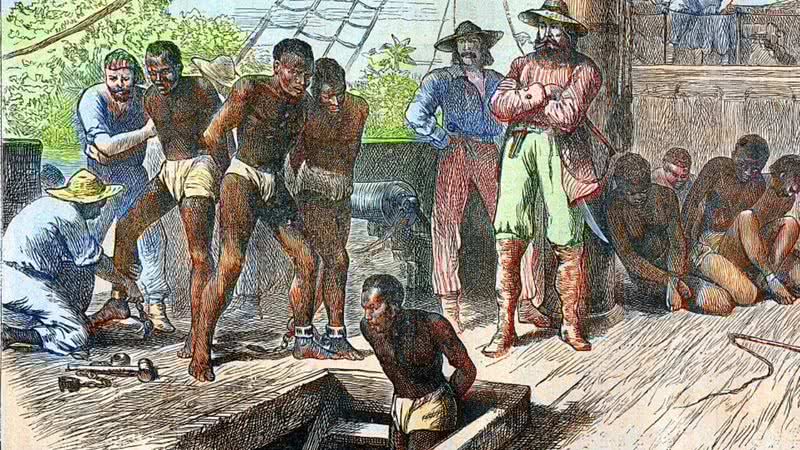






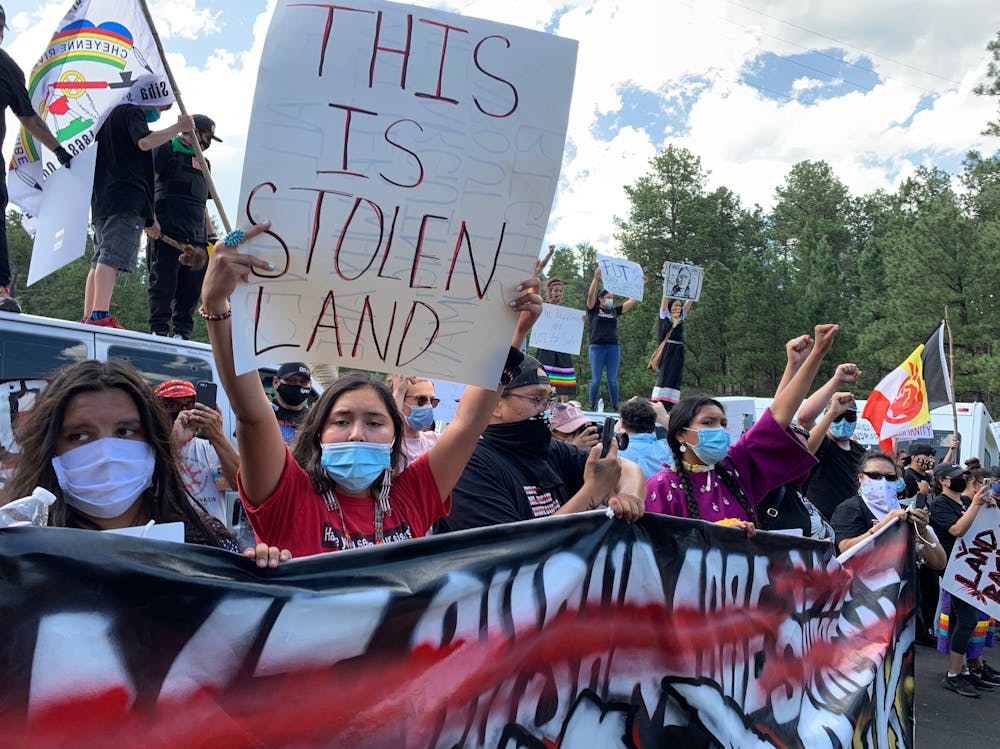
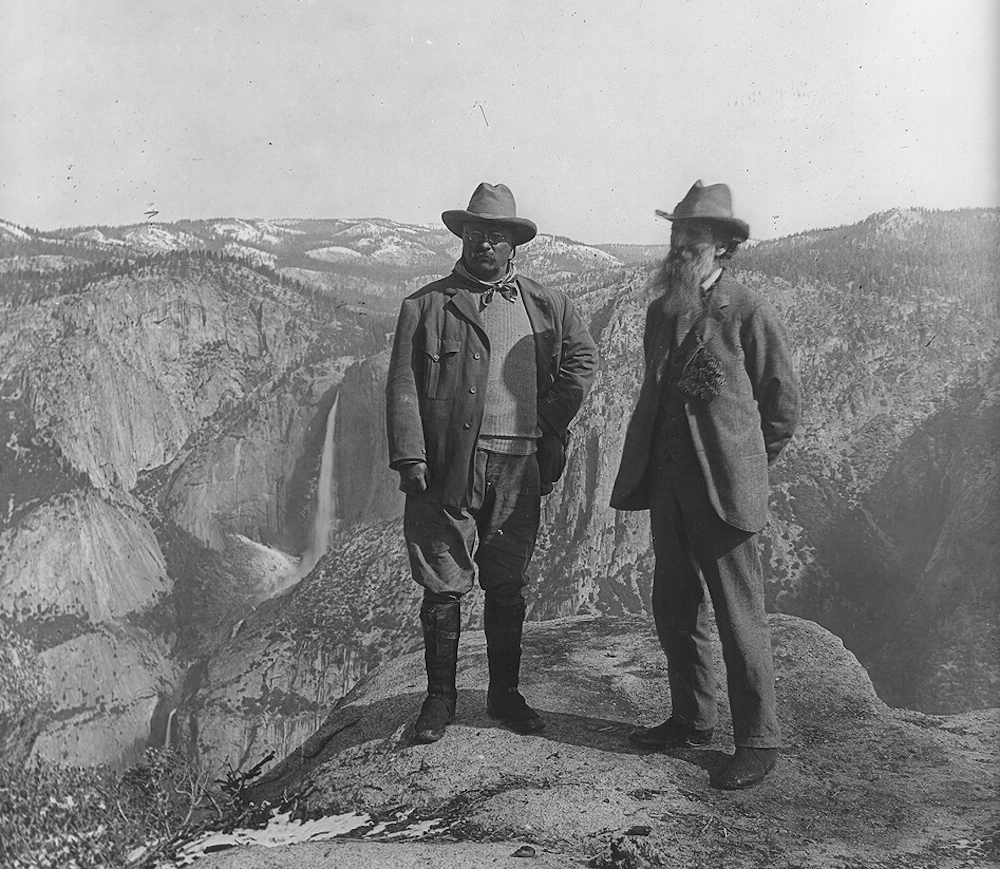
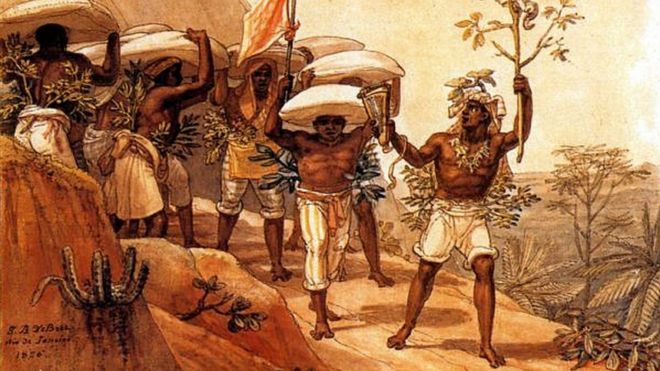
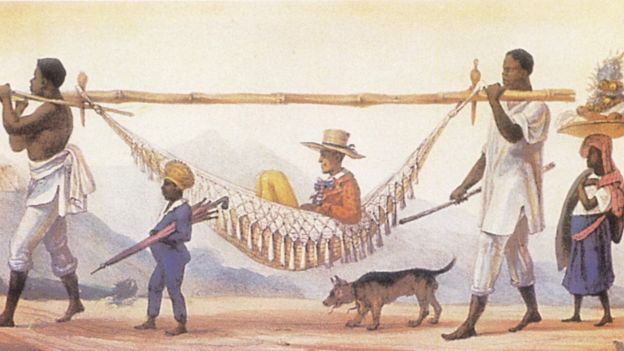
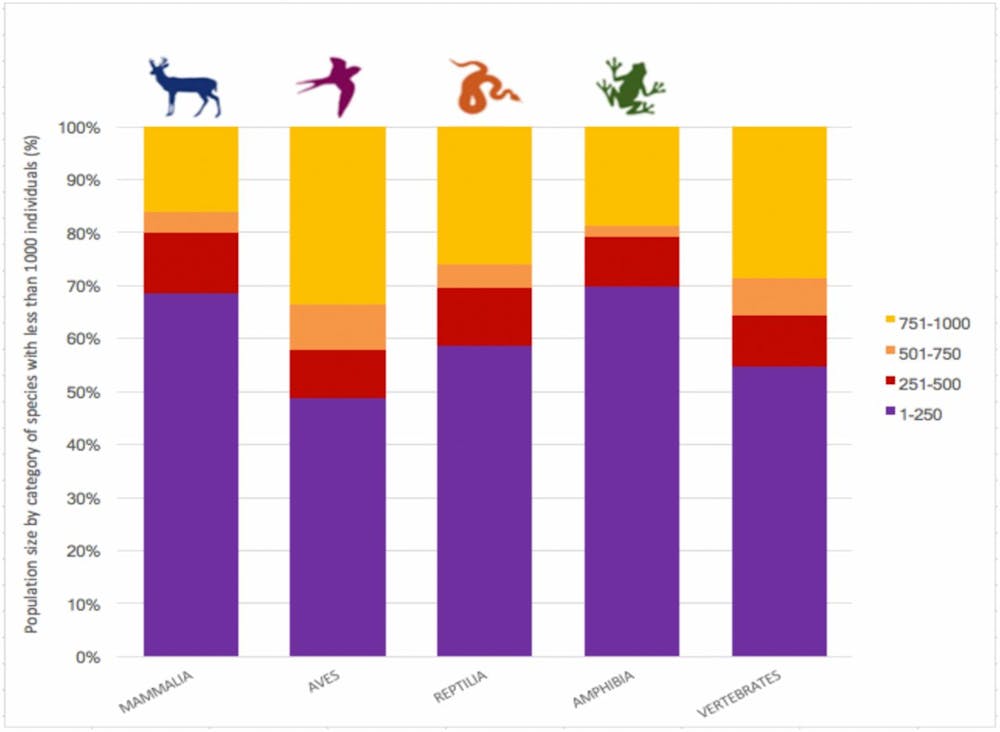



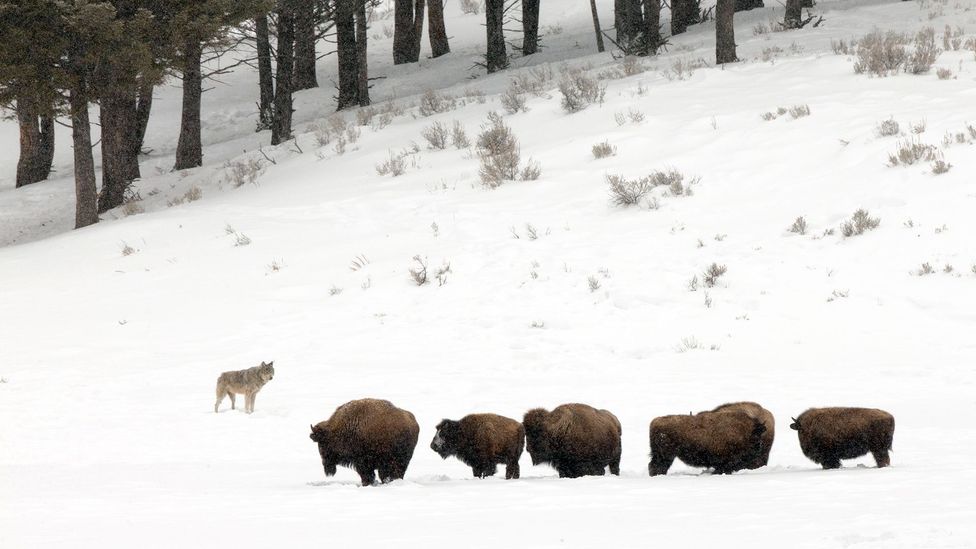

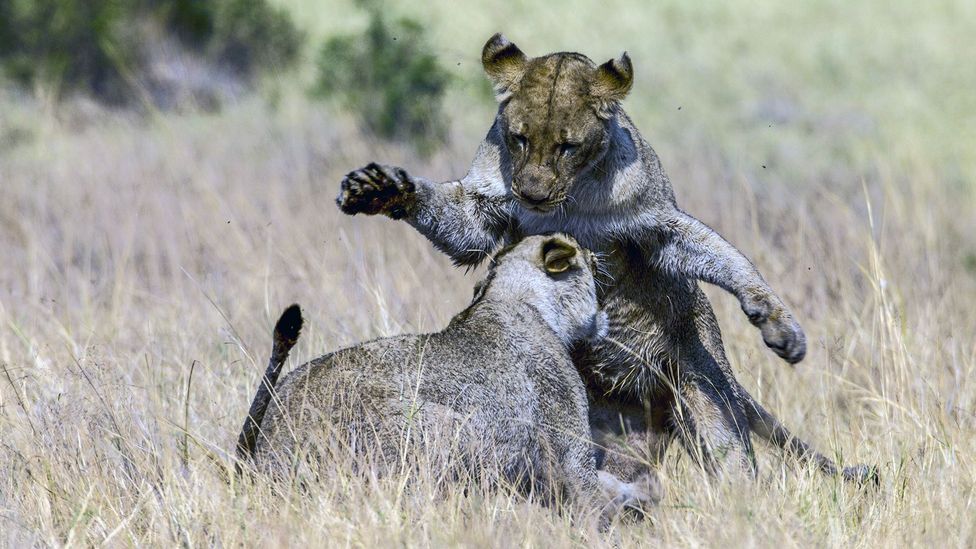

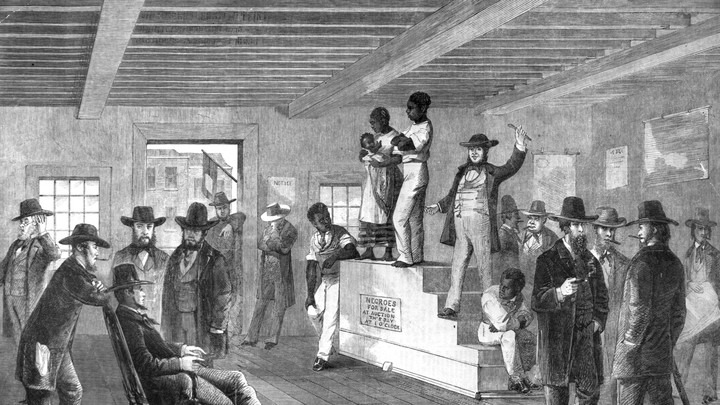
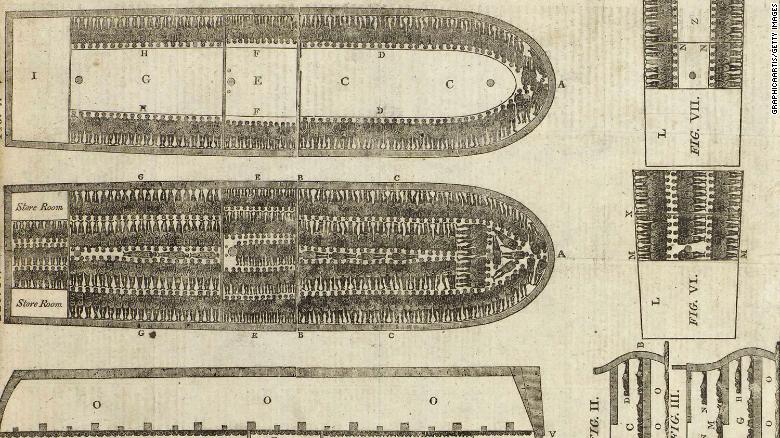




Você precisa fazer login para comentar.