Arquivo da tag: Economia

Economistas ainda pensam em crescimento eterno, diz José Eli da Veiga (Folha de S.Paulo)

Professor da USP defende noção de crescer decrescendo e afirma que COP30 pode ser a mais difícil de todas; leia trechos

‘Rio Comprido VIII’ (2019), monotipia de Luiz Zerbini – Pat Kilgore/Divulgação

10.mai.2025 às 7h00 – artigo original

Eduardo Sombini

Doutor em geografia pela Unicamp, é repórter da Ilustríssima

Nem abandonar a ideia de crescimento econômico nem confiar nela cegamente.

José Eli da Veiga, professor sênior do Instituto de Estudos Avançados da USP, recorre a essa dupla negativa para sintetizar sua análise em “O Antropoceno e o Pensamento Econômico” (Editora 34), terceiro volume de sua trilogia sobre as ciências e as humanidades em um período de crise climática e transformação acelerada do planeta pela sociedade.

No livro, o intelectual revisita escolas e pensadores à margem do mainstream da economia para sustentar que a disciplina não acompanhou o avanço da fronteira do conhecimento e ainda passa ao largo, por exemplo, da teoria da evolução e da física moderna.

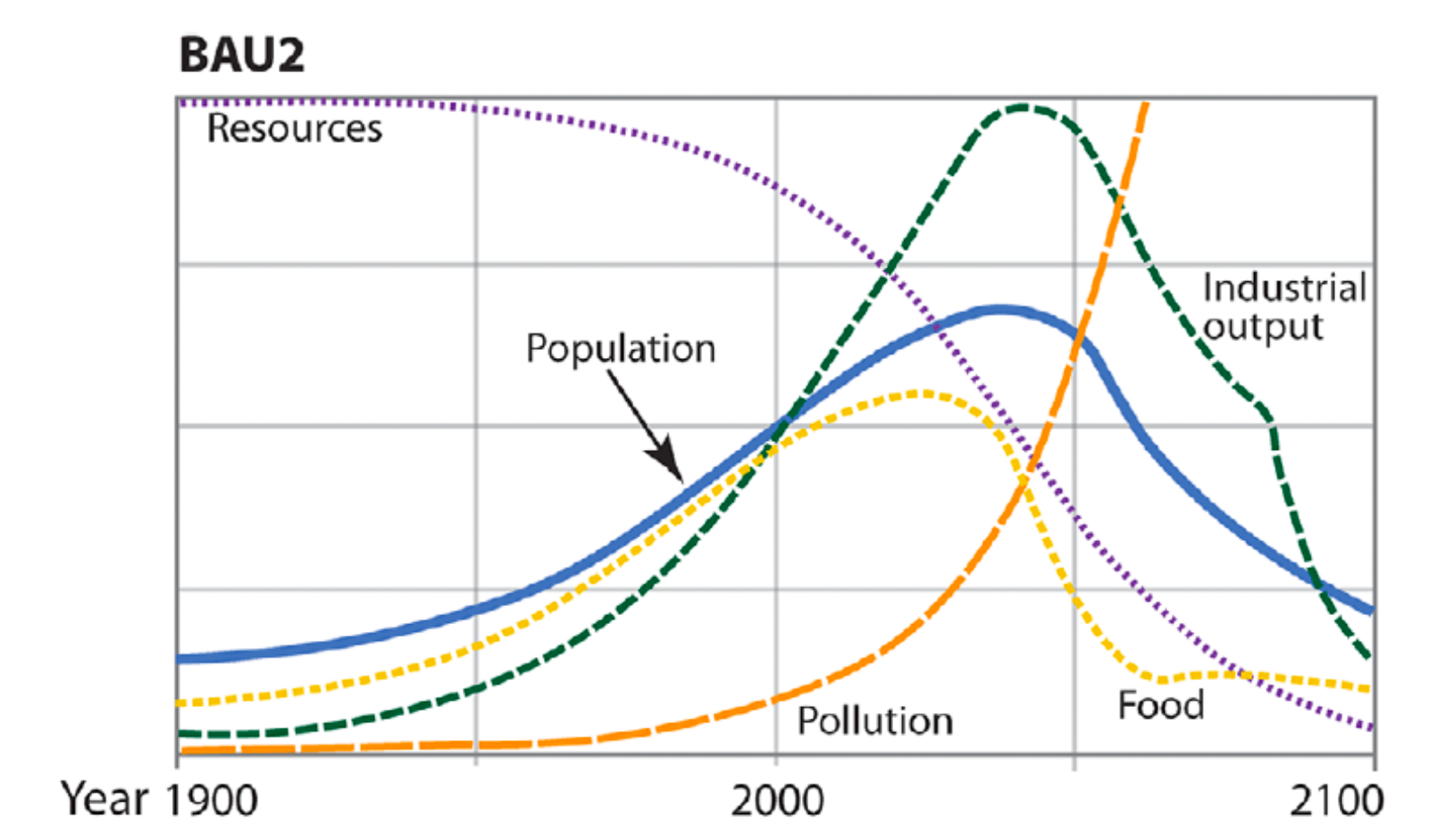
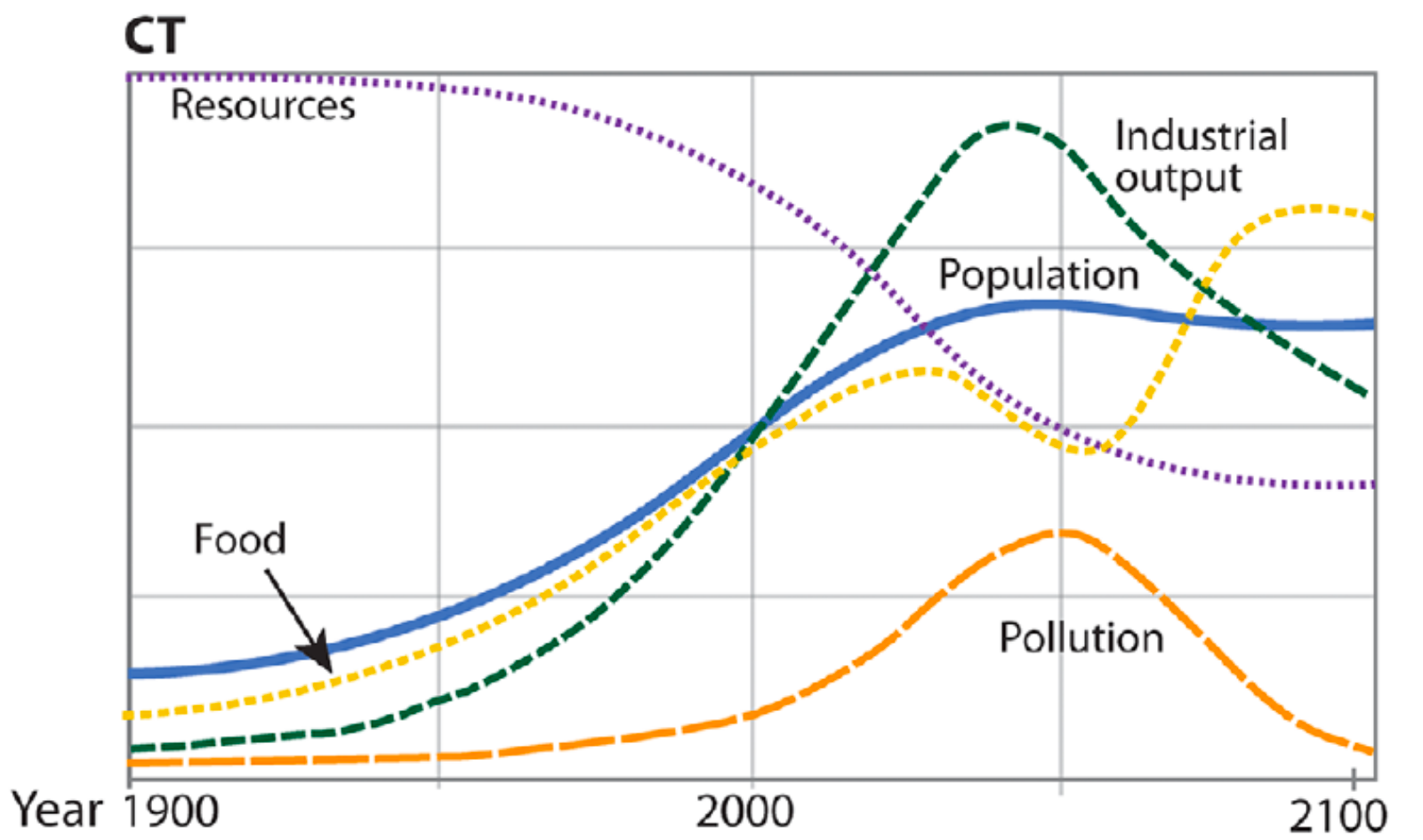
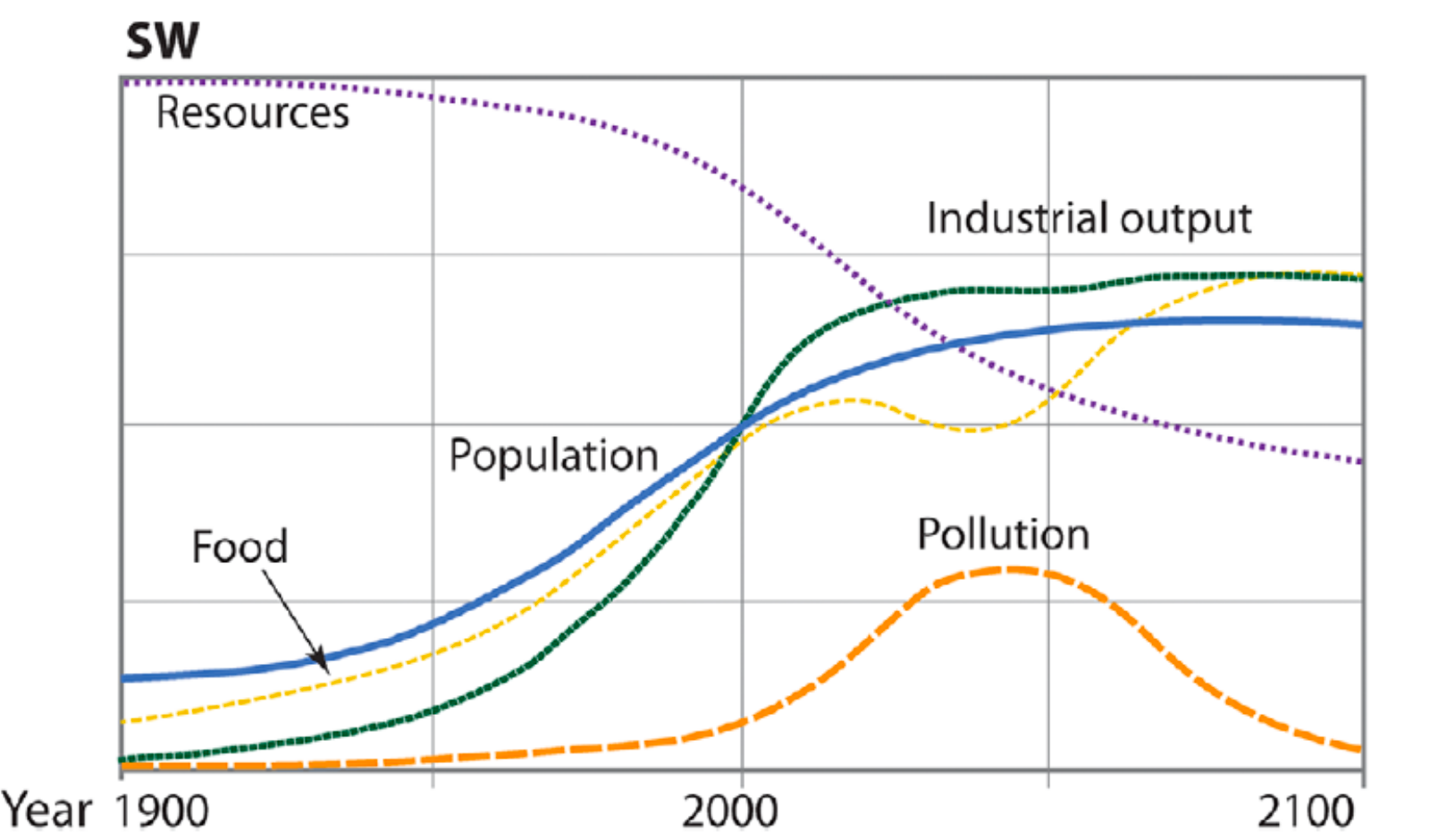
Em razão disso, Veiga argumenta, o pensamento econômico ignora os fluxos de energia e matéria envolvidos no processo de produção, o que faz com que economistas concebam um crescimento eterno e não se preocupem com as condições de vida das gerações futuras.
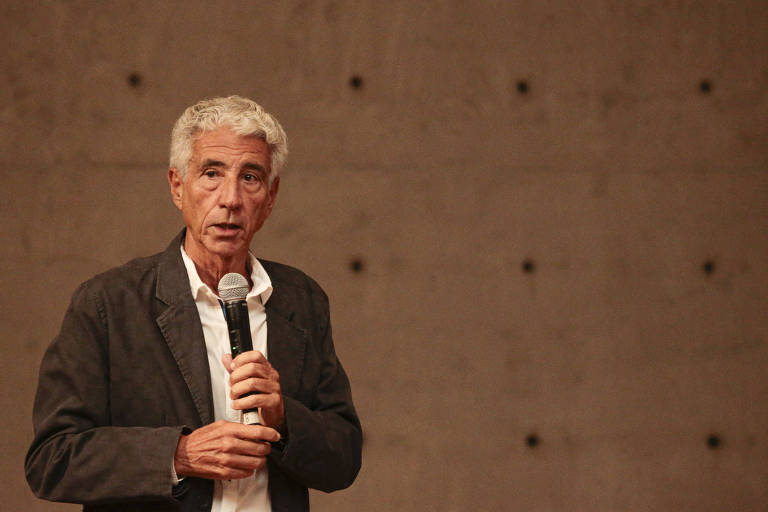
José Eli da Veiga, autor de ‘O Antropoceno e o Pensamento Econômico’, durante o seminário USP Pensa Brasil – Cecília Bastos – 4.out.23/USP Imagens

Na entrevista, o pesquisador fala sobre as ideias de crescer decrescendo e decrescer crescendo, um caminho do meio entre manter o modelo atual e as propostas de decrescimento da economia.

Veiga também discute o impasse em fóruns multilaterais dedicados à crise ambiental, como as COPs. Para ele, negociações entre as corporações e os governos responsáveis pela maior parte das emissões de gases do efeito estufa teriam mais resultado que encontros anuais com a participação de mais de uma centena de países.

Leia abaixo os trechos principais da entrevista. A íntegra está disponível em áudio.

O pensamento econômico hoje

Existe uma corrente muito secundária, vista pelos economistas como uma coisa heterodoxa e estranha, a economia evolucionária. Tem uma muito forte, a economia institucional. Tem uma bem sólida, mas que não é muito reconhecida, a economia ecológica. Mas, se você perguntar como uma inteligência artificial classifica as várias correntes da economia, o risco é que nem apareçam essas que eu citei.

Porque as principais são aquelas que, no fundo, formam o currículo tradicional de um curso de economia: macro, micro, história do pensamento econômico, um pouco de história econômica. A formação de um economista é mais ou menos essa.

Será que uma humanidade —a economia não é uma ciência— precisa ser compatível com a física e com a biologia, para não falar de química e geociências? Minha tendência é dizer que é errado ser incompatível.

Tem ramos da economia que avançaram muito, principalmente aqueles afeitos à modelização matemática, mas a economia ainda hoje é absolutamente prisioneira da mecânica clássica e, principalmente, da ideia de equilíbrio. Ignora totalmente a termodinâmica, para começar. Você chega a conclusões muito diferentes a respeito de como pode ser o desenvolvimento se levar em conta ou não a termodinâmica.

O conceito de entropia

Uma das primeiras coisas com que um estudante de economia se defronta é um diagrama do fluxo circular, que explica como funciona o chamado sistema econômico. Não entra nada nem sai nada desse sistema. Ele ignora a entrada de energia —nós somos uma dádiva do Sol— e, principalmente, todos os resíduos, do outro lado, além da entropia.

O que interessa para um economista na questão da entropia? Quando se usa energia —e nós não fizemos outra coisa que procurar fontes de energia que nos dessem cada vez mais produtividade—, parte dessa energia se dissipa. Permanentemente, estamos perdendo uma boa parte da energia que mobilizamos.

A rigor, a longo prazo, você não pode pensar em crescimento econômico. Você tem que pensar que o futuro da humanidade ou o desenvolvimento vão ter que prescindir do crescimento. Essa é uma conclusão que choca um economista ortodoxo, tradicional. Para eles, é subentendido que o crescimento é uma coisa eterna.

A economia e a ética

A dicotomia entre a economia como ética e uma economia mais logística, que a gente normalmente chama de o lado engenheiro da economia, é bem antiga. Houve tentativas teóricas de dizer que a economia devia se limitar só a esse aspecto logístico e não entrar em nenhum tipo de consideração ética. Evidentemente, isso não é uma coisa que foi seguida pelos economistas, mesmo por economistas que eu classificaria como ortodoxos. Uma parte deles, ao contrário, é bem ligada em considerações éticas.

Para nós, isso é muito importante porque o aquecimento global —para não falar de todos os outros prejuízos ao meio ambiente que a gente vem causando pelo menos há uns 80 anos de forma muito intensa– coloca em questão as condições de vida das próximas gerações. Esse é um dilema ético para nós.

Resultados frustrantes das COPs

Uma das coisas chocantes é notar que a questão da camada de ozônio, que era complicadíssima, teve um arranjo de cooperação internacional que deu muito resultado. Por quê? Como foi o formato?

No início, só se juntaram os que mais eram responsáveis pelo assunto. Eram poucos países que tinham as empresas que faziam o estrago. A partir disso, paulatinamente, foram ganhando adesões à convenção. É difícil encontrar, pelo menos na área ambiental, outra convenção ou outro tratado que tenha tido tanto sucesso.

Quando, em 1988, se criou o IPCC, houve muita pressa, porque a Rio-92 estava marcada e ia ser uma coisa muito importante. Mais importante que mera pressa, havia a conjuntura internacional geopolítica desse período. Ainda se vivia muito daquele entusiasmo e otimismo que surgiu a partir da queda da União Soviética. Hoje, olhando com a facilidade de estar distante disso, parece uma coisa infantil imaginar que você poderia fazer uma assembleia anual de todos os países do mundo e chegar a algum tipo de decisão.

A Convenção do Clima criou uma arena para que houvesse disputas políticas das mais variadas. No início, era sempre o Sul querendo dizer que a culpa era do Norte e que eles tinham que pagar. Depois, foram encontrando algumas saídas e, no famoso Acordo de Paris de 2015, a ideia é que cada país vai determinar ele mesmo qual é a contribuição que pode dar. Isso foi um grande avanço.

Neutralidade de carbono

No meio disso, com um grupo de Oxford liderando, cientistas começaram a levantar a ideia de que existem emissões que podem ser, de certa forma, abatidas —quando, por exemplo, uma área desmatada é restaurada— e isso levou à ideia de compensação de carbono.

Foi um tremendo desserviço. Quer dizer, tinha um lado bom e um lado ruim. O lado bom é que muitas empresas que olhavam para a questão do aquecimento global e viam sempre como um sacrifício ter que reduzir emissões, de repente, falaram: “Bom, vamos também poder abater aquilo que a gente faz de positivo”. Isso deu um certo incentivo para que elas não simplesmente banissem a ideia do aquecimento global.

Por outro lado, as empresas que mais emitem acharam o máximo. “Comprar uns créditos de carbono do pessoal que restaura na Amazônia, se a gente for muito pressionado, senão vamos continuar emitindo”. O resultado? É só olhar o que aconteceu.

Do Acordo de Paris para cá, as emissões de CO2 equivalente não pararam de aumentar, em um ritmo que é difícil imaginar se seria diferente. O impacto dos créditos de carbono nem começou a fazer cócegas por enquanto. Conheço muitos colegas que acreditam que, por volta de 2050, haja neutralidade de carbono –quer dizer, que o aquecimento global vai continuar, mas que as emissões estariam sendo mais ou menos integralmente abatidas por esses descontos.

Quando olho os números, acho que o máximo que se pode dizer é que talvez seja um problema que tenha solução neste século, mas não vai ser desse jeito, com essa convenção.

Um novo modelo para as COPs

Do meu ponto de vista, o que pode melhor acontecer é que, em algum momento, esse mesmo sistema de COPs descubra que é preciso reconsiderar a própria convenção. Hoje, a gente sabe que 80% das emissões saem de 57 empresas que estão em 34 países.

Se você juntasse esses 34 países em vez de juntar mais de cem uma vez por ano, eles não demorariam para encontrar uma maneira de se comprometer com um esquema de redução. Por exemplo, o chamado “cap and trade”: você fixa uma meta de redução das emissões para o ano que vem e as empresas que tiverem conseguido atingir essa meta recebem créditos que poderão ser vendidos para aquelas que ainda não conseguiram. Um esquema desse tipo é o que funciona no mercado de carbono europeu.

Aos poucos, você teria muito mais resultados se o arranjo fosse só com esses 34 países ou essas 57 empresas —ou a parte deles que topasse. Se a convenção não fosse abolida, as COPs poderiam começar a ser reunidas de cinco em cinco anos. É um desperdício de tudo, de dinheiro, de energia. Essas COPs são uma coisa assustadora.

Expectativas para a COP30

Do ponto de vista das negociações diplomáticas, acho que vai ser praticamente mais do mesmo. Sempre aparece alguma coisa que você pode usar para dizer que foi um avanço, mas, no frigir dos ovos, não vai ter nada de significativo nesse plano.

Só que surgiu uma novidade muito importante. No discurso do Lula na Assembleia Geral da ONU, ele fez a sugestão de que nós fizéssemos um balanço ético global.

A ideia é que o balanço seja feito a partir do momento em que todos os países apresentem os seus compromissos nacionalmente determinados, os NDCs, e pouquíssimos países, por enquanto, apresentaram. Vai ficar muito em cima da COP, em novembro, que se terá esse conjunto e se poderá começar a fazer esse balanço.

Não vai ser exatamente na COP, mas, com isso, a COP poderá ter desencadeado na sociedade civil uma dinâmica que ainda não existe: a sociedade civil mundial se mobilizar em torno desse balanço ético global e isso gerar uma forma de maior responsabilização e pressão sobre o conjunto dos países. Se eu não estiver muito enganado, vai acontecer algo de muito positivo, mas meio que fora da COP em si, que virou uma espécie de feira anual de lobistas.

Não vai ser muito diferente desta vez —e com conflitos. Tem tanta gente na Amazônia e tantas tendências da sociedade civil muito mobilizadas em torno disso que é provável que seja, de todas as 30, a mais difícil de conduzir.

Crescer decrescendo

Considero essa ideia uma espécie de ovo de Colombo, porque fica um debate entre os decrescentistas e aqueles que dizem: “Olha a fórmula que funcionou até hoje. Você terá população em queda, educação e inovações institucionais e tecnológicas continuando. Os problemas ambientais meio que se resolvem pelos preços. Não tem que ficar discutindo se tem que ter ou não crescimento. Quanto mais crescer, melhor”.

No entanto, quando você para para pensar em termos práticos, tem coisas que não podem mais crescer e tem outras que são promissoras e que precisam ter espaço para crescer. Não se trata de dizer, para quem está com a responsabilidade da política econômica, que deva pisar no acelerador ou no freio do crescimento. Ao contrário.

Tudo o que emite e queima energia fóssil demais, o ideal é que decresça. As energias renováveis precisam crescer. Estou falando do terreno da energia, mas você pode encontrar exemplos em todos os terrenos. É permanente esse caminho do meio.

Tem uma ideia que eu procuro ressaltar no fim do livro: o fundamental é desacoplar. Este é o verbo-chave da mensagem que a gente pode tirar de uma análise sobre o Antropoceno. Desacoplar, fundamentalmente, significa que tenho que procurar ao máximo possível estimular as atividades que usem menos energias fósseis e que, portanto, emitam menos. Não é o único desacoplamento, mas é o principal.

A viabilidade política da ideia

Na conjuntura atual, diria que é uma inviabilidade. O principal sinal disso é o Trump, mas não está sendo assim na China e a União Europeia está na vanguarda. Para construir a ideia, não posso condicioná-lo ao fato de a agenda ser ou não ser realista.

Se não for, eu estiver errado e essa conjuntura extremamente negativa perdurar, pior para vocês que estarão vivos [risos].

With the World Stumbling Past 1.5 Degrees of Warming, Scientists Warn Climate Shocks Could Trigger Unrest and Authoritarian Backlash (Inside Climate News)

Science

With the World Stumbling Past 1.5 Degrees of Warming, Scientists Warn Climate Shocks Could Trigger Unrest and Authoritarian Backlash

Most of the public seems unaware that global temperatures will soon push past the target to which the U.N. hoped to limit warming, but researchers see social and psychological crises brewing.

By Bob Berwyn

January 28, 2024

Activists march in protest on day nine of the COP28 Climate Conference on Dec. 9, 2023 in Dubai, United Arab Emirates. Credit: Sean Gallup/Getty Images

As Earth’s annual average temperature pushes against the 1.5 degree Celsius limit beyond which climatologists expect the impacts of global warming to intensify, social scientists warn that humanity may be about to sleepwalk into a dangerous new era in human history. Research shows the increasing climate shocks could trigger more social unrest and authoritarian, nationalist backlashes.

Established by the 2015 Paris Agreement and affirmed by a 2018 report from the Intergovernmental Panel on Climate Change, the 1.5 degree mark has been a cliff edge that climate action has endeavored to avoid, but the latest analyses of global temperature data showed 2023 teetering on that red line. 

One major dataset suggested that the threshold was already crossed in 2023, and most projections say 2024 will be even warmerCurrent global climate policies have the world on a path to heat by about 2.7 degrees Celsius by 2100, which would threaten modern human civilization within the lifespan of children born today.

Paris negotiators were intentionally vague about the endeavor to limit warming to 1.5 degrees, and the Intergovernmental Panel on Climate Change put the goal in the context of 30-year global averages. Earlier this month, the Berkeley Earth annual climate report showed Earth’s average temperature in 2023 at 1.54 degrees Celsius above the 1850-1900 pre-industrial average, marking the first step past the target. 

But it’s barely registering with people who are being bombarded with inaccurate climate propaganda and distracted by the rising cost of living and regional wars, said Reinhard Steurer, a climate researcher at the University of Natural Resources and Life Sciences, Vienna.

“The real danger is that there are so many other crises around us that there is no effort left for the climate crisis,” he said. “We will find all kinds of reasons not to put more effort into climate protection, because we are overburdened with other things like inflation and wars all around us.”

Steurer said he doesn’t expect any official announcement from major climate institutions until long after the 1.5 degree threshold is actually crossed, when some years will probably already be edging toward 2 degrees Celsius. “I think most scientists recognize that 1.5 is gone,” he said.

“We’ll be doing this for a very long time,” he added, “not accepting facts, pretending that we are doing a good job, pretending that it’s not going to be that bad.” 

In retrospect, using the 1.5 degree temperature rise as the key metric of whether climate action was working may have been a bad idea, he said.

“It’s language nobody really understands, unfortunately, outside of science,” he said. ”You always have to explain that 1.5 means a climate we can adapt to and manage the consequences, 2 degrees of heating is really dangerous, and 3 means collapse of civilization.”

Absent any formal notification of breaching the 1.5 goal, he hopes more scientists talk publicly about worst-case outcomes.

“It would really make a difference if scientists talked more about societal collapse and how to prepare for that because it would signal, now it’s getting real,” he said. “It’s much more tangible than 1.5 degrees.”

Instead, recent public climate discourse was dominated by feel-good announcements about how COP28 kept the 1.5 goal alive, he added.

“This is classic performative politics,” he said. “If the fossil fuel industry can celebrate the outcome of the COP, that’s not a good sign.”

Like many social scientists, Steurer is worried that the increasingly severe climate shocks that warming greater than 1.5 degrees brings will reverberate politically as people reach for easy answers.

“That is usually denial, in particular when it comes to right-wing parties,” he said. “That’s the easiest answer you can find.” 

“Global warming will be catastrophic sooner or later, but for now, denial works,” he said. “And that’s all that matters for the next election.”

‘Fear, Terror and Anxiety’

Social policy researcher Paul Hoggett, professor emeritus at the University of the West of England in Bristol, said the scientific roots of 1.5-degree target date back to research in the early 2000s that culminated in a University of Exeter climate conference at which scientists first spelled out the risks of triggering irreversible climate tipping points above that level of warming.

“I think it’s still seen very much as that key marker of where we move from something which is incremental, perhaps to something which ceases to be incremental,” he said. “But there’s a second reality, which is the reality of politics and policymaking.” 

The first reality is “profoundly disturbing,” but in the political world, 1.5 is a symbolic maker, he said. 

“It’s more rhetorical; it’s a narrative of 1.5,” he said, noting the disconnect of science and policy. “You almost just shrug your shoulders. As the first reality worsens, the political and cultural response becomes more perverse.” 

A major announcement about breaching the 1.5 mark in today’s political and social climate could be met with extreme denial in a political climate marked by “a remorseless rise of authoritarian forms of nationalism,” he said. “Even an announcement from the Pope himself would be taken as just another sign of a global elite trying to pull the wool over our eyes.” 

An increasing number of right-wing narratives simply see this as a set of lies, he added.

“I think this is a huge issue that is going to become more and more important in the coming years,” he said. “We’re going backwards to where we were 20 years ago, when there was a real attempt to portray climate science as misinformation,” he said. “More and more right wing commentators will portray what comes out of the IPCC, for example, as just a pack of lies.”

The IPCC’s reports represent a basic tenet of modernity—the idea that there is no problem for which a solution cannot be found, he said.

“Even an announcement from the Pope himself would be taken as just another sign of a global elite trying to pull the wool over our eyes.”

“However, over the last 100 years, this assumption has periodically been put to the test and has been found wanting,” Hoggett wrote in a 2023 paper. The climate crisis is one of those situations with no obvious solution, he wrote. 

In a new book, Paradise Lost? The Climate Crisis and the Human Condition, Hoggett says the climate emergency is one of the big drivers of authoritarian nationalism, which plays on the terror and anxiety the crisis inspires.

“Those are crucial political and individual emotions,” he said. “And it’s those things that drive this non-rational refusal to see what’s in front of your eyes.”

“At times of such huge uncertainty, a veritable plague of toxic public feelings can be unleashed, which provide the effective underpinning for political movements such as populism, authoritarianism, and totalitarianism,” he said.

“When climate reality starts to get tough, you secure your borders, you secure your own sources of food and energy, and you keep out the rest of them. That’s the politics of the armed lifeboat.” 

The Emotional Climate

“I don’t think people like facing things they can’t affect,” said psychotherapist Rebecca Weston, co-president of the Climate Psychology Alliance of North America. “And in trauma, people do everything that they possibly can to stop feeling what is unbearable to feel.”

That may be one reason why the imminent breaching of the 1.5 degree limit may not stir the public, she said.

“We protect ourselves from fear, we protect ourselves from deep grief on behalf of future generations and we protect ourselves from guilt and shame. And I think that the fossil fuel industry knows that,” she said. “We can be told something over and over and over again, but if we have an identity and a sense of ourselves tied up in something else, we will almost always refer to that, even if it’s at the cost of pretending that something that is true is not true.”

Such deep disavowal is part of an elaborate psychological system for coping with the unbearable. “It’s not something we can just snap our fingers and get ourselves out of,” she said.

People who point out the importance of the 1.5-degree warming limit are resented because they are intruding on peoples’ psychological safety, she said, and they become pariahs. “The way societies enforce this emotionally is really very striking,” she added. 

But how people will react to passing the 1.5 target is hard to predict, Weston said.

“I do think it revolves around the question of agency and the question of meaning in one’s life,” she said. “And I think that’s competing with so many other things that are going on in the world at the same time, not coincidentally, like the political crises that are happening globally, the shift to the far right in Europe, the shift to the far right in the U.S. and the shift in Argentina.”

Those are not unrelated, she said, because a lack of agency produces a yearning for false, exclusionary solutions and authoritarianism. 

“If there’s going to be something that keeps me up at night, it’s not the 1.5. It’s the political implications of that feeling of helplessness,” she said. “People will do an awful lot to avoid feeling helpless. That can mean they deny the problem in the first place. Or it could mean that they blame people who are easier targets, and there is plenty of that to witness happening in the world. Or it can be utter and total despair, and a turning inward and into a defeatist place.”

She said reaching the 1.5 limit will sharpen questions about addressing the problem politically and socially. 

“I don’t think most people who are really tracking climate change believe it’s a question of technology or science,” she said. “The people who are in the know, know deeply that these are political and social and emotional questions. And my sense is that it will deepen a sense of cynicism and rage, and intensify the polarization.”

Unimpressed by Science

Watching the global temperature surging past the 1.5 degree mark without much reaction from the public reinforces the idea that the focus on the physical science of climate change in recent decades came at the expense of studying how people and communities will be affected and react to global warming, said sociologist and author Dana Fisher, a professor in the School of International Service at American University and director of its Center for Environment, Community, and Equity.

“It’s a fool’s errand to continue down that road right now,” she said. “It’s been an abysmal ratio of funds that are going to understand the social conflict that’s going to come from climate shocks, the climate migration and the ways that social processes will have to shift. None of that has been done.”

Passing the 1.5 degree threshold will “add fuel to the fire of the vanguard of the climate movement,” she said. “Groups that are calling for systemic change, that are railing against incremental policy making and against business as usual are going to be empowered by this information, and we’re going to see those people get more involved and be more confrontational.”

And based on the historical record, a rise in climate activism is likely to trigger a backlash, a dangerous chain reaction that she outlined in her new book, Saving Ourselves: From Climate Shocks to Climate Action

“When you see a big cycle of activism growing, you get a rise in counter-movements, particularly as activism becomes more confrontational, even if it’s nonviolent, like we saw during the Civil Rights period,” she said. “And it will lead to clashes.”

Looking at the historic record, she said, shows that repressive crackdowns on civil disobedience is often where the violence starts. There are signs that pattern will repeat, with police raids and even pre-emptive arrests of climate activists in Germany, and similar repressive measures in the United Kingdom and other countries.

“I think that’s an important story to talk about, that people are going to push back against climate action just as much as they’re going to push for it,” she said. “There are those that are going to feel like they’re losing privileged access to resources and funding and subsidies.”

“When you see a big cycle of activism growing, you get a rise in counter-movements, particularly as activism becomes more confrontational, even if it’s nonviolent, like we saw during the Civil Rights period.”

A government dealing effectively with climate change would try to deal with that by making sure there were no clear winners and losers, she said, but the climate shocks that come with passing the 1.5 degree mark will worsen and intensify social tensions.

“There will be more places where you can’t go outside during certain times of the year because of either smoke from fires, or extreme heat, or flooding, or all the other things that we know are coming,” she said. “That’s just going to empower more people to get off their couches and become activists.”

‘A Life or Death Task For Humanity’

Public ignorance of the planet’s passing the 1.5 degree mark depends on “how long the powers-that-be can get away with throwing up smokescreens and pretending that they are doing something significant,” said famed climate researcher James Hansen, who recently co-authored a paper showing that warming is accelerating at a pace that will result in 2 degrees of warming within a couple of decades.

“As long as they can maintain the 1.5C fiction, they can claim that they are doing their job,” he said. “They will keep faking it as long as the scientific community lets them get away with it.”

But even once the realization of passing 1.5 is widespread, it might not change the social and political responses much, said Peter Kalmus, a climate scientist and activist in California.

“Not enough people care,” he said. “I’ve been a climate activist since 2006. I’ve tried so many things, I’ve had so many conversations, and I still don’t know what it will take for people to care. Maybe they never will.”

Hovering on the brink of this important climate threshold has left Kalmus feeling “deep frustration, sadness, helplessness, and anger,” he said. “I’ve been feeling that for a long time. Now, though, things feel even more surreal, as we go even deeper into this irreversible place, seeming not to care.”

“No one really knows for sure, but it may still be just physically possible for Earth to stay under 1.5C,” he said, “if humanity magically stopped burning fossil fuels today. But we can’t stop fossil fuels that fast even if everyone wanted to. People would die. The transition takes preparation.”

And there are a lot of people who just don’t want to make that transition, he said.

“We have a few people with inordinate power who actively want to continue expanding fossil fuels,” he said. “They are the main beneficiaries of extractive capitalism; billionaires, politicians, CEOs, lobbyists and bankers. And the few people who want to stop those powerful people haven’t figured out how to get enough power to do so.”

Kalmus said he was not a big fan of setting a global temperature threshold to begin with. 

“For me it’s excruciatingly clear that every molecule of fossil fuel CO2 or methane humanity adds to the atmosphere makes irreversible global heating that much worse, like a planet-sized ratchet turning molecule by molecule,” he said. “I think the target framing lends itself to a cycle of procrastination and failure and target moving.”

Meanwhile, climate impacts will continue to worsen into the future, he said.

“There is no upper bound, until either we choose to end fossil fuels or until we simply aren’t organized enough anymore as a civilization to burn much fossil fuel,” he said. “I think it’s time for the movement to get even more radical. Stopping fossil-fueled global heating is a life-or-death task for humanity and the planet, just most people haven’t realized it yet.”

Bob Berwyn – Reporter, Austria

Bob Berwyn an Austria-based reporter who has covered climate science and international climate policy for more than a decade. Previously, he reported on the environment, endangered species and public lands for several Colorado newspapers, and also worked as editor and assistant editor at community newspapers in the Colorado Rockies.

Lei do clima de Biden redireciona investimentos nos EUA (Folha de S.Paulo)

www1.folha.uol.com.br

Jim Tankersley

14 de setembro de 2023

Gastos com energia limpa representaram 4% do investimento do país em estruturas, equipamentos e bens duráveis


O investimento privado em projetos de energia limpa, como painéis solares, energia de hidrogênio e veículos elétricos, aumentou depois que o presidente Joe Biden sancionou uma lei abrangente sobre o clima, no ano passado, um desdobramento que mostra de que maneira os incentivos fiscais e os subsídios federais ajudaram a redirecionar alguns gastos dos consumidores e empresas dos Estados Unidos.

Novos dados divulgados nesta quarta-feira (13) sugerem que a lei do clima e outras partes da agenda econômica de Biden ajudaram a acelerar o desenvolvimento de cadeias de suprimentos automotivas no sudoeste dos Estados Unidos, gerando sustentação adicional para os centros tradicionais de fabricação de automóveis nas regiões industrias do centro-oeste e do sudeste.

A lei de 2022, que foi aprovada com apoio apenas do Partido Democrata, ajudou o investimento em fábricas em bastiões conservadores como o Tennessee e nos estados de Michigan e Nevada, que serão alvo de forte disputa na eleição presidencial do ano que vem. A lei também ajudou a sustentar uma onda de gastos com carros elétricos e painéis solares residenciais na Califórnia, Arizona e Flórida.

Os dados mostram que, no ano seguinte à aprovação da lei do clima, os gastos com tecnologias de energia limpa representaram 4% do investimento total do país em estruturas, equipamentos e bens de consumo duráveis —mais do que o dobro da participação registrada quatro anos atrás.

A lei não teve sucesso em estimular um setor importante na transição para além dos combustíveis fósseis que Biden está tentando acelerar: a energia eólica. O investimento americano em produção eólica diminuiu no ano passado, apesar dos grandes incentivos da lei do clima aos produtores. E a lei não alterou a trajetória dos gastos dos consumidores com determinadas tecnologias de economia de energia, como bombas de aquecimento de alta eficiência.

Mas o relatório, que avalia a situação até o nível estadual, fornece a primeira visão detalhada de como as políticas industriais de Biden estão afetando as decisões de investimento em energia limpa do setor privado.

Os dados são do Clean Investment Monitor, uma nova iniciativa da consultoria Rhodium Group e do Centro para a Pesquisa de Energia e Política Ambiental do Instituto de Tecnologia de Massachusetts (MIT). Suas constatações vão além de estimativas mais simples, da Casa Branca e de outras fontes, e oferecem a visão mais abrangente até o momento sobre os efeitos da agenda econômica de Biden sobre a emergente economia de energia limpa dos Estados Unidos.

Os pesquisadores que lideram essa primeira análise de dados incluem Trevor Houser, ex-funcionário do governo Obama, que é sócio da Rhodium; e Brian Deese, ex-diretor do Conselho Econômico Nacional de Biden, que pesquisa sobre inovação no MIT.

A Lei de Redução da Inflação, que Biden assinou em agosto de 2022, inclui uma ampla gama de incentivos para encorajar a fabricação nacional e acelerar a transição do país para longe dos combustíveis fósseis.

Isso inclui incentivos fiscais ampliados para a produção de baterias avançadas, instalação de painéis solares, compra de veículos elétricos e outras iniciativas. Muitas dessas isenções fiscais são ilimitadas, para todos os fins práticos, o que significa que podem acabar custando centenas de bilhões de dólares aos contribuintes —ou até mesmo mais de US$ 1 trilhão— se tiverem sucesso em gerar nível suficiente de novos investimentos.

Os funcionários do governo Biden tentaram quantificar os efeitos dessa lei, e da legislação bipartidária sobre infraestrutura e semicondutores assinada pelo presidente no início de seu mandato, por meio da contabilização dos anúncios empresariais de novos gastos vinculados à legislação.

Um site da Casa Branca estima que empresas tenham anunciado até agora US$ 511 bilhões em compromissos de gastos novos vinculados a essas leis, incluindo US$ 240 bilhões para veículos elétricos e tecnologia de energia limpa.

A análise da Rhodium e do MIT se baseia em dados de agências federais, organizações setoriais, anúncios de empresas e registros financeiros, reportagens e outras fontes, para tentar construir uma estimativa em tempo real de quanto investimento já foi realizado nas tecnologias de redução de emissões visadas pela agenda de Biden. Para fins de comparação, os dados remontam a 2018, quando o presidente Donald Trump ainda estava no poder.

Os números mostram que o investimento real —e não o anunciado— de empresas e consumidores em tecnologias de energia limpa atingiu US$ 213 bilhões no segundo semestre de 2022 e no primeiro semestre de 2023, depois que Biden assinou a lei do clima. Esse valor foi superior aos US$ 155 bilhões do ano anterior e aos US$ 81 bilhões do primeiro ano dos dados, sob Trump.

As tendências nos dados sugerem que o impacto da agenda de Biden sobre o investimento em energia limpa variou dependendo das condições econômicas existentes para cada tecnologia visada.

Os maiores sucessos de Biden ocorreram ao estimular o aumento do investimento industrial nos Estados Unidos e ao catalisar o investimento em tecnologias que permanecem relativamente novas no mercado.

Alimentado em parte por investimentos estrangeiros, por exemplo em fábricas de baterias na Geórgia, o investimento real na fabricação de energia limpa mais do que dobrou no ano passado, em relação ao ano anterior, mostram os dados, totalizando US$ 39 bilhões. Esse investimento foi quase inexistente em 2018.

A maior parte dos gastos se concentrou na cadeia de suprimentos de veículos elétricos, o que inclui o novo polo de atividades automotivas do sudoeste da Califórnia, Nevada e Arizona. A Lei de Redução da Inflação inclui vários incentivos fiscais para esse tipo de investimento, com requisitos de conteúdo nacional destinados a incentivar a produção de minerais essenciais e baterias, e a montagem de automóveis nos Estados Unidos.

No entanto, os grandes beneficiários em termos de investimentos em produção, como porcentagem das economias estaduais, continuam a ser os estados automotivos tradicionais: Tennessee, Kentucky, Michigan e Carolina do Sul.

A lei do clima também parece ter impulsionado o investimento no chamado hidrogênio verde, que divide átomos de água para criar um combustível industrial. O mesmo se aplica ao gerenciamento de carbono – que busca capturar e armazenar as emissões de gases causadores do efeito estufa pelas usinas de energia existentes, ou retirar o carbono da atmosfera. Todas essas tecnologias tiveram dificuldades para ganhar força nos Estados Unidos antes de a lei lhes conceder incentivos fiscais.

O hidrogênio e grande parte dos investimentos em captura de carbono estão concentrados ao longo da costa do Golfo do México, uma região repleta de empresas de combustíveis fósseis que começaram a se dedicar a essas tecnologias. Outro polo de investimentos em captura de carbono está concentrado em estados da região centro-oeste, como Illinois e Iowa, onde as empresas que produzem etanol de milho e outros biocombustíveis estão começando a investir em esforços para capturar suas emissões.

Os incentivos para essas tecnologias na Lei de Redução da Inflação, juntamente com outras medidas de apoio contidas na lei de infraestrutura bipartidária, “mudam fundamentalmente a economia dessas duas tecnologias, e pela primeira vez as tornam amplamente competitivas em termos de custos”, disse Houser em uma entrevista.

Outros incentivos ainda não alteraram a situação econômica de tecnologias essenciais, principalmente a energia eólica, que cresceu muito nos últimos anos mas agora está enfrentando retrocessos globais, pois o financiamento dos projetos está cada vez mais caro.

O investimento em energia eólica foi menor no primeiro semestre deste ano do que em qualquer outro momento desde que o banco de dados foi iniciado.

Nos Estados Unidos, os projetos eólicos estão enfrentando dificuldades para passar pelos processos governamentais de licenciamento, transmissão de energia e seleção de locais, incluindo a oposição de alguns legisladores estaduais e municipais.

Os projetos solares e os investimentos relacionados em armazenagem para energia solar, observou Houser, podem ser construídos mais perto dos consumidores de energia e têm menos obstáculos a superar, e o investimento neles cresceu 50% no segundo trimestre de 2023, com relação ao ano anterior.

Alguns mercados consumidores ainda não se deixaram influenciar pela promessa de incentivos fiscais para novas tecnologias de energia. Os americanos não aumentaram seus gastos com bombas de aquecimento, embora a lei cubra gastos de até US$ 2 mil para a compra de uma nova bomba. E, no ano passado, os estados com os maiores gastos em bombas de aquecimento, em proporção às dimensões de suas economias, estavam todos concentrados no sudeste —onde, segundo Houser, é mais provável que os consumidores já disponham de bombas desse tipo, e precisem substitui-las.

Tradução de Paulo Migliacci

O que significa o capitalismo regenerativo? Entenda o conceito que pretende revolucionar os métodos de produção da economia (Um Só Planeta)

umsoplaneta.globo.com

Por Marco Britto, para Um Só Planeta

18/08/2023 08h00


Para você, o que é lucro? Vender um produto e ganhar mais do que gastou para produzi-lo? Ok. Mas, pensando no método de produção, se foi usado água na fabricação do produto, como valorar este lucro? Uma centena de reais pode valer mais que cem baldes de água, por exemplo?

“Calibrar” a forma de olhar para o raciocínio da economia capitalista, garantindo a renovação dos recursos naturais sem abrir mão do lucro, é o que propõe o capitalismo regenerativo. O conceito vem sendo difundido nesta década a partir de pensadores como John Elkington, autor de “Cisnes Verdes: a explosão do capitalismo regenerativo” (2020, tradução livre), e considerado idealizador do termo “sustentabilidade” no mundo dos negócios, hoje um dos pilares do ESG.

Na visão regenerativa, lucro é regenerar o planeta, além de ganhar dinheiro. Afinal, os recursos naturais são a maior garantia de futuro para os negócios e para a humanidade frente aos desafios das mudanças climáticas. Sendo assim, as premissas básicas de um empreendimento regenerativo devem ser garantir que, ao final do ciclo de produção, os recursos usados tenham sido renovados, reinvestindo em florestas e preservação dos mares, por exemplo.

De forma resumida, a empresa devolve à natureza os recursos que usou, de preferência “com juros”, seja replantando ou recuperando ecossistemas prejudicados.

Outro ponto importante do capitalismo regenerativo é a relação com os colaboradores da cadeia produtiva, o que gerou o apelido “economia do stakeholder”. Além de preservar os recursos naturais, manter relações comerciais justas e sustentáveis com produtores e as áreas pelas quais são responsáveis por cultivar e manter é um elo indispensável para uma economia centrada na relação com a terra.

Da sustentabilidade ao capitalismo regenerativo, uma evolução conceitual

O ideal de capitalismo regenerativo é a expressão atual do que já foram rascunhos do mundo corporativo sobre uma atitude responsável em relação ao meio ambiente. Desde a popularização do termo sustentabilidade, na primeira década do século, passando pelo conceito de capitalismo consciente, popularizado por autores como Raj Sisodia e seu livro, “Capitalismo Consciente” (2014), escrito em parceria com John Mackey, fundador e atual CEO do grupo Whole Foods Market, varejista de comida orgânica avaliada em R$ 61,4 bilhões, a ideia de uma economia que não destrua foi se transformando na proposta de um sistema que possa regenerar o planeta.

A evolução dos conceitos ao longo do tempo sugere o amadurecimento da visão de negócio frente aos desafios do século 21, passando da ideia de manter as engrenagens funcionando, com baixo impacto ambiental, à ideia de saldo ambiental positivo, quando uma empresa consegue produzir e entregar à natureza mais do que precisou retirar. Elkington afirma que o conceito de sustentabilidade já continha essa ideia de regeneração, mas que acabou diluída no que veio a se tornar o conceito de ESG. Falar em regeneração é algo que vai direto ao ponto, afirmou o autor durante palestra no Brasil em 2021.

A economia regenerativa encontra outro conceito atual, o da economia circular. “Na medida em que as empresas tomam consciência da necessidade de atingir metas climáticas e a descarbonização, temas como o da regeneração se tornam mais relevantes, pois é um caminho para capturar carbono, e por esse motivo esses sistemas estão ganhando espaço e importância”, avalia Milena Lumini, gerente de comunicação para a América Latina na Fundação Ellen MacArthur, que se dedica a difundir e fomentar as práticas circulares de produção.

Regeneração na prática

No dia a dia, colocar um modelo de negócio regenerativo em prática ainda é um processo em construção para muitas empresas, mas os números podem ser animadores. No Brasil, o grupo Regenera Ventures, dono das marcas Viva Regenera e do e-commerce Viva Floresta, entre outras frentes, colhe bons frutos apostando em produtos de alimentação, suplementação e autocuidado provenientes de fornecedores que adotam a prática agroflorestal em seus cultivos, comprometidos com o manejo sem agrotóxicos e a missão de regenerar as áreas utilizadas na produção.

“Não é um objetivo, é a razão de existirmos”, afirma Romanna Remor, fundadora e head de conceito, inovação e produtos do grupo. Em três anos, a empresa passou de uma marca a uma holding com três linhas de produtos saudáveis e um e-commerce, que vende os itens, além de comercializar marcas parceiras. Em seu primeiro ano de operação, finalizado em junho, o marketplace Viva Floresta faturou R$ 2 milhões e plantou 300 árvores a partir de um modelo que inclui reverter parte das vendas ao plantio em sistemas agroflorestais.

Neste segundo ano em atividade, a previsão é dobrar o faturamento e plantar 10 mil árvores. “Nós entendemos que temos o lucro do mercado e o lucro do sistema regenerativo, que cria valor, margens saudáveis para continuar a operação, o maior apoiar o menor, o maior abrindo mão de margens maiores para que o menor possa ter potência. Mas não somos uma ONG, somos uma empresa que precisa estar saudável, então é um exercício constante para lucratividade saudável”, comenta Romanna.

Na leitura da Fundação Ellen MacArthur, lucro e regeneração combinam. “A fundação acompanha casos, principalmente da agricultura regenerativa, em que a produção e o lucro cresceram, seja por produtividade ou novas frentes que surgem no negócio. A evidência aponta que é um modelo mais lucrativo, e que encontra uma necessidade de mercado. Os casos mostram melhora de qualidade, quantidade, lucro e propósito.”, afirma Milena.

Reeducação de corporações e consumidores

Como exemplo de práticas regenerativas, empresas como a Viva Regenera e gigantes como a Nestlé investem na capacitação de pequenos produtores para que estes possam adotar e manter métodos naturais de cultivo, regenerando áreas antes dedicadas à monocultura, por exemplo. Na Amazônia e em outros biomas ameaçados, manter produtores desta forma é uma maneira de se evitar o extrativismo predatório, uma vez que os agricultores têm seu sustento garantido por práticas agrícolas que estimulam o meio ambiente a prosperar, formando um sistema de “ganha-ganha”, com lucro financeiro e ambiental.

“A nossa economia tem se baseado na degradação, e temos a oportunidade de redesenhar modelos de negócios e formas de produzir alimentos e produtos para regenerar. A atividade econômica pode trazer efeitos positivos para o meio ambiente, o que vai ajudar a termos uma economia que prospere a longo prazo, que seja boa para as pessoas e empresas”, afirma Milena.

Entre as articulações da Fundação Ellen MacArthur para o desenvolvimento da economia circular está o Desafio do Grande Redesenho dos Alimentos, em que empresas que produzem alimentos e bebidas vão repensar o design circular de alimentos, para ajudar a natureza a prosperar. A iniciativa atraiu a atenção de grandes players do Brasil no setor, como Ambev, Danone e Unilever.

“Ingredientes diversos significam menos trigo, arroz, batata e milho, [grandes monoculturas brasileiras] e criar uma demanda que vai apoiar a produção no campo. Ingredientes de menor impacto pressionam menos a natureza durante a produção, em cultivos mais adequados para a região onde estão inseridos. Os ingredientes reciclados seguem a lógica de não desperdiçar alimentos e produzir menos. Se dependemos menos de plantar e colher, vamos influenciar menos essa terra. Todos esses aspectos ajudam na regeneração”, aponta a gerente de comunicação da fundação.

O movimento certamente está sob responsabilidade das empresas, mas o consumidor tem um papel central para alavancar uma indústria de regeneração, avalia Romanna, do grupo Regenera. “Acreditamos no trabalho de educação e conscientização dos padrões de consumo. Se eu posso comprar um chocolate que apoia produtores de agrofloresta do sul da Bahia, e meu pedido no site gera um crédito agroflorestal, que será revertido em plantio de árvores em sistemas florestais, isso é educar o consumidor sobre impacto. Nós acreditamos e sabemos que a mensagem precisa despertar interesse nas pessoas, mantendo a essência e a verdade, mas adaptando a faixas etárias, partes diversas do país.”

In Commemoration: A Sampling of Herman Daly (Steady State Herald)

steadystate.org/in-commemoration-a-sampling-of-herman-daly/

Lydia SchubarthNovember 17, 2022

by Herman Daly (posthumously) — Introduction by Brian Czech

Given the recent, tragic passing of Herman Daly, we allocate this week’s Steady State Herald to the wise words of Daly himself. From 2010-2018, Herman was a regular contributor to The Daly News, CASSE’s blog before the Herald was launched. (Herman’s modesty almost prevented us from naming the blog after him, but he was outnumbered by CASSE staff and board, and The Daly News it was!)

Daly News articles were shorter—and eminently pithier from the pen of Daly—so we’re able to package a sample of three articles into this commemorative display. These are three of the thirty three articles bound in the book, Best of The Daly News: Selected Essays from the Leading Blog in Steady State Economics, 2010-2018.

Best of The Daly News was the first book published by the Steady State Press, CASSE’s nascent imprint. Herman Daly was happy with the production, which also became the first membership gift. We’re sure you’ll be happy with the distillation below. After all, we might arguably call these articles “the best of the Best of The Daly News.”

Wealth, Illth, and Net Welfare (November 13, 2011)

Well-being should be counted in net terms, that is to say we should consider not only the accumulated stock of wealth but also that of “illth;” and not only the annual flow of goods but also that of “bads.” The fact that we have to stretch English usage to find words like illth and bads to name the negative consequences of production that should be subtracted from the positive consequences is indicative of our having ignored the realities for which these words are the necessary names. Bads and illth consist of things like nuclear wastes, the dead zone in the Gulf of Mexico, biodiversity loss, climate change from excess greenhouse gas emissions, depleted mines, eroded topsoil, dry wells, exhausting and dangerous labor, congestion, etc. We are indebted to John Ruskin for the word “illth,” and to an anonymous economist, perhaps Kenneth Boulding, for the word “bads.”

In the empty world of the past, these concepts and the names for them were not needed because the economy was so small relative to the containing natural world that our production did not incur any significant opportunity cost of displaced nature. We now live in a full world, full of us and our stuff, and such costs must be counted and netted out against the benefits of growth. Otherwise we might end up with extra bads outweighing extra goods and increases in illth greater than the increases in wealth. What used to be economic growth could become uneconomic growth—that is, growth in production for which marginal costs are greater than marginal benefits, growth that in reality makes us poorer, not richer. No one is against being richer. The question is, does more growth really make us richer, or has it started to make us poorer?

Wealth and illth: which the greater? (CC BY 2.0, Michael Caven)

I suspect it is now making us poorer, at least in some high-GDP countries, and we have not recognized it. Indeed, how could we when our national accounting measures only “economic activity”? Activity is not separated into costs and benefits. Everything is added in GDP, nothing subtracted. The reason that bads and illth, inevitable joint products with goods and wealth, are not counted, even when no longer negligible in the full world, is that obviously no one wants to buy them, so there is no market for them, hence no price by which to value them. But it is worse: These bads are real and people are very willing to buy the anti-bads that protect them from the bads. For example, pollution is an unpriced, uncounted bad, but pollution cleanup is an anti-bad which is accounted as a good. Pollution cleanup has a price, and we willingly pay it up to a point and add it to GDP—but without having subtracted the negative value of the pollution itself that made the cleanup necessary. Such asymmetric accounting hides more than it reveals.

In addition to asymmetric accounting of anti-bads, we count natural capital depletion as if it were income, further misleading ourselves. If we cut down all the trees this year, catch all the fish, burn all the oil and coal, etc., then GDP counts all that as this year’s income. But true income is defined (after the British economist Sir John Hicks) as the maximum that a community can consume this year and still produce and consume the same amount next year. In other words, it entails maximizing production while maintaining intact future capacity to produce. Nor is it only depletion of natural capital that is falsely counted as income; failure to maintain and replace depreciation of man-made capital, such as roads and bridges, has the same effect. Much of what we count in GDP is capital consumption and anti-bads.

As argued above, one reason that growth may be uneconomic is that we discover that its neglected costs are greater than we thought. Another reason is that we discover that the extra benefits of growth are less than we thought. This second reason has been emphasized in the studies of self-evaluated happiness, which show that beyond a threshold annual income of some $20-25,000, further growth does not increase happiness. Happiness, beyond this threshold, is overwhelmingly a function of the quality of our relationships in community by which our very identity is constituted, rather than the quantity of goods consumed. A relative increase in one’s income still yields extra individual happiness, but aggregate growth is powerless to increase everyone’s relative income. Growth in pursuit of relative income is like an arms race in which one party’s advance cancels that of the other. It’s like everyone standing and craning their neck in a football stadium while having no better view than if everyone had remained comfortably seated.

As aggregate growth beyond sufficiency loses its power to increase welfare, it increases its power to produce illth. This is because to maintain the same rate of growth, ever more matter and energy has to be mined and processed through the economy, resulting in more depletion, more waste, and requiring the use of ever more powerful and violent technologies to mine the ever leaner and less accessible deposits. Petroleum from an easily accessible well in East Texas costs less labor and capital to extract, and, therefore, directly adds less to GDP, than petroleum from an inaccessible well a mile under the Gulf of Mexico. The extra labor and capital spent to extract a barrel in the Gulf of Mexico is not a good or an addition to wealth—it is more like an anti-bad made necessary by the bad of depletion, the loss of a natural subsidy to the economy. In a full-employment economy, the extra labor and capital going to petroleum extraction would be taken from other sectors, so aggregate real GDP would likely fall. But the petroleum sector would increase its contribution to GDP as nature’s subsidy to it diminished. We would be tempted to regard it as more, rather than less, productive.

The next time some economist or politician tells you we must do everything we can to grow (in order to fight poverty, win wars, colonize space, cure cancer, whatever…), remind him or her that when something grows it gets bigger! Ask him how big he thinks the economy is now, relative to the ecosphere, and how big he thinks it should be. And what makes him think that growth is still causing wealth to increase faster than illth? How does he know that we have not already entered the era of uneconomic growth? And if we have, then is not the solution to poverty to be found in sharing now, rather than in the empty promise of growth in the future?

Fitting the Name to the Named (March 28, 2011)

There may well be a better name than “steady state economy,” but both the classical economists (especially John Stuart Mill) and the past few decades of discussion, not to mention CASSE’s good work, have given considerable currency to “steady state economy” both as concept and name. Also, both the name and concept of a “steady state” are independently familiar to demographers, population biologists, and physicists. The classical economists used the term “stationary state” but meant by it exactly what we mean by steady state economy; briefly, a constant population and stock of physical wealth. We have added the condition that these stocks should be maintained constant by a low rate of throughput (of matter and energy), one that is well within the regenerative and assimilative capacities of the ecosystem. Any new name for this idea should be sufficiently better to compensate for losing the advantages of historical continuity and interdisciplinary familiarity. Also, “steady state economy” conveys the recognition of biophysical constraints and the intention to live within them economically, which is exactly why it can’t help evoking some initial negative reaction in a growth-dominated world. There is an honesty and forthright clarity about the term “steady state economy” that should not be sacrificed to the short-term political appeal of vagueness.

Fitting the name (and a logo) to the named.

A confusion arises with neoclassical growth economists’ use of the term “steady-state growth” to refer to the case where labor and capital grow at the same rate, thus maintaining a constant ratio of labor to capital, even though both absolute magnitudes are growing. This should have been called “proportional growth,” or perhaps “steady growth.” The term “steady-state growth” is inept because growth is a process, not a state, not even a state of dynamic equilibrium.

Having made my terminological preference clear, I should add that there is nothing wrong with other people using various preferred synonyms, as long as we all mean basically the same thing. Steady state, stationary state, dynamic equilibrium, microdynamic-macrostatic economy, development without growth, degrowth, post-growth economy, economy of permanence, “new” economy, “mature” economy…these are all in use already, including by me at times. I have learned that English usage evolves quite independently of me, although like others I keep trying to “improve” it for both clarity and rhetorical advantage. If some other term catches on and becomes dominant then so be it, as long as it denotes the reality we agree on. Let a thousand synonyms bloom and linguistic natural selection will go to work. Also, it is good to remind sister organizations that their favorite term, when actually defined, is usually a close synonym to steady state economy. If it is not, then we have a difference of substance rather than of terminology.

Out of France now comes the “degrowth” (décroissance) movement. This arises from the recognition that the present scale of the economy is too large to be maintained in a steady state—its required throughput exceeds the regenerative and assimilative capacities of the ecosystem of which it is a part. This is almost certainly true. Nevertheless “degrowth,” just like growth, is a temporary process for reaching an optimal or at least sustainable scale that we then should strive to maintain in a steady state.

Some say it is senseless to advocate a steady state unless we first have attained, or can at least specify, the optimal level at which to remain stationary. On the contrary, it is useless to know the optimum unless we first know how to live in a steady state. Otherwise knowing the optimum level will just allow us to wave goodbye to it as we grow beyond it, or as we “degrow” below it.

Optimal level is one thing; optimal growth rate is something else. Once we have reached the optimal level then the optimal growth rate is zero. If we are below the optimal level the temporary optimal growth rate is at least known to be positive; if we are above the optimal level we at least know that the temporary growth rate should be negative. But the first order of business is to recognize the long-run necessity of the steady state and to stop positive growth. Once we have done that, then we can worry about how to “degrow” to a more sustainable level, and how fast.

There is really no conflict between the steady state economy and “degrowth” because no one advocates negative growth as a permanent process; and no one advocates trying to maintain a steady state at the unsustainable present scale of population and consumption. But many people do advocate continuing positive growth beyond the present excessive scale, and they are the ones in control and who need to be confronted by a united opposition!

War and Peace and the Steady State Economy (April 29, 2015)

My parents were children during World War I, the so-called “war to end all wars.” I was a child during WWII, an adolescent during the Korean War, and except for a physical disability would likely have been drafted to fight in the Vietnam War. Then came Afghanistan, Iraq, the continuous Arab-Israeli conflict, ISIS, Ukraine, Syria, etc. Now as a senior citizen, I see that war has metastasized into terrorism. It is hard to conceive of a country at war, or threatened by terrorism, moving to a steady state economy.

Peace is necessary for real progress, including progress toward a steady state economy. While peace should be our priority, might it nevertheless be the case that working toward a steady state economy would further the goal of peace? Might growth be a major cause of war, and the steady state a necessity for eliminating that cause? I think this is so.

blank

Growth goals beyond the optimum march inevitably toward death and destruction. (CC BY 2.0, manhhai)

More people require more space (lebensraum) and more resources. More things per person also require more space and more resources. Recently I learned that the word “rival” derives from the same root as “river.” People who get their water from the same river are rivals, at least when there are too many of them, each drawing too much.

For a while, the resource demands of growth can be met from within national borders. Then there is pressure to exploit or appropriate the global commons. Then comes the peaceful penetration of other nations’ ecological space by trade. The uneven geographic distribution of resources (petroleum, fertile soil, water) causes specialization among nations and  interdependence along with trade. Are interdependent nations more or less likely to go to war? That has been argued both ways, but when one growing nation has what another thinks it absolutely needs for its growth, conflict easily displaces trade. As interdependence becomes more acute, then trade becomes less voluntary and more like an offer you can’t refuse. Unless trade is voluntary, it is not likely to be mutually beneficial. Top-down global economic integration replaces trade among interdependent national economies. We have been told on highest authority that because the American way of life requires foreign oil, we will have it one way or another.

International “free trade pacts” (NAFTA, TPP, TAFTA) are supposed to increase global GDP, thereby making us all richer and effectively expanding the size of the earth and easing conflict. These secretly negotiated agreements among the elites are designed to benefit private global corporations, often at the expense of the public good of nations. Some think that strengthening global corporations by erasing national boundaries will reduce the likelihood of war. More likely we will just shift to feudal corporate wars in a post-national global commons, with corporate fiefdoms effectively buying national governments and their armies, supplemented by already existing private mercenaries.

It is hard to imagine a steady state economy without peace; it is hard to imagine peace in a full world without a steady state economy. Those who work for peace are promoting the steady state, and those who work for a steady state are promoting peace. This implicit alliance needs to be made explicit. Contrary to popular belief, growth in a finite and full world is not the path to peace, but to further conflict. It is an illusion to think that we can buy peace with growth. The growth economy and warfare are now natural allies. It is time for peacemakers and steady staters to recognize their natural alliance.

It would be naïve, however, to think that growth in the face of environmental limits is the only cause of war. Evil ideologies, religious conflict, and “clash of civilizations” also cause wars. National defense is necessary, but uneconomic growth does not make our country stronger. The secular West has a hard time understanding that religious conviction can motivate people to kill and die for their beliefs. Modern devotion to the Secular God of Growth, who promises heaven on earth, has itself become a fanatical religion that inspires violence as much as any ancient Moloch. The Second Commandment, forbidding the worship of false gods (idolatry) is not outdated. Our modern idols are new versions of Mammon and Mars.


Brian Czech is CASSE’s executive director. Herman Daly (1938-2022) was a long-time CASSE board member and economist emeritus.

Crise climática é crise de classes, diz ator britânico que aponta racismo no debate (Folha de S.Paulo)

www1.folha.uol.com.br

Na peça ‘Can I Live?’, Fehinti Balogun, com rap, animação e poesia, apresenta a colonização e a exploração de países africanos como temas centrais na discussão

Cristiane Fontes

2 de novembro de 2022


Foi em 2017, durante a preparação para a peça “Myth”, uma parábola climática da Royal Shakespeare Company, que o artista Fehinti Balogun acabou se dando conta da gravidade da crise do clima.

“Após ter feito muitas coisas, consegui meu primeiro papel principal numa peça no West End em Londres. Era o ano mais quente da história”, lembra o ator e dramaturgo britânico. “E, pela primeira vez, percebi que as plantações estavam morrendo, os campos estavam secos. Comecei a desenvolver uma espécie de ansiedade que nunca tive antes”, completa.

Com isso, veio o choque: “Eu tinha o trabalho que eu sempre sonhei, algo que eu tinha estudado para fazer, e, de repente, isso não significava nada”.

Balogun se juntou ao grupo ativista Extinction Rebellion, participou de diversos protestos e organizou uma palestra sobre o tema. Essa jornada o levou à produção de uma peça teatral que, durante a pandemia, foi transformada em um filme.

O ator britânico Fehinti Balogun, que criou a peça ‘Can I live?’, sobre mudanças climáticas. Fonte: New York Times/Tom Jamieson, 29.out.2021

Intitulada “Can I Live?” (posso viver?), a produção explica as mudanças climáticas a partir da perspectiva de uma pessoa negra, usando diversas performances musicais.

A mãe de Balogun, imigrante nigeriana, é quem guia a história. Fora da tela, também foi ela quem inspirou a criação do texto, a partir de questionamentos ao filho —que ele gravou secretamente para escutar de novo e pensar a respeito.

“Por que você está sacrificando sua carreira para fazer parte desses grupos?”, ela perguntava.

Mesmo discordando, o filho reconheceu na indignação da mãe um ponto muito importante: a discussão climática ficou elitizada e branca e ainda não foi capaz de incluir os segmentos mais pobres da população.

“Can I Live?”, pelo contrário, se propõe a não só trazer os dilemas pessoais do autor, que se misturam aos problemas mundiais e aos dados científicos, como é didática e criativa ao explicar, por exemplo, o efeito estufa em forma de rap. Criado com a companhia de teatro britânica Complicité, o filme mescla linguagens como animação, poesia e música.

“O objetivo é criticar descaradamente o sistema, sem culpar uma pessoa específica. Não se trata de envergonhar as pessoas, mas, sim, de educá-las e conectar-se com elas”, define Balogun.

Depois de uma turnê online, o filme foi exibido em eventos como a COP26 (conferência da ONU sobre mudanças climáticas realizada em 2021 na Escócia) e a London Climate Action Week.

A ideia, diz Balogun, é fazer “Can I Live?”, que ainda não foi lançado no Brasil, chegar a movimentos de base, para estimular conversas sobre a crise climática entre aqueles que não costumam se conectar com o assunto.

Quando perguntado sobre a agenda climática no Reino Unido, o autor é categórico: “Temos um governo que não está levando isso tão a sério quanto deveria e que nunca levou o racismo tão a sério quanto deveria. Temos toda uma economia baseada num histórico de escravidão que não é debatida. Então, dentro das escolas, apagamos essa história. O que aprendemos neste país não está nem perto do que deveria ser”.

Quando e por que você se envolveu com a agenda da crise climática?

Após ter feito muitas coisas, consegui meu primeiro papel principal numa peça no West End em Londres. Era o ano mais quente da história, depois de outro ano ter sido o ano mais quente da história, depois de o último antes disso ter sido o mais quente… E, pela primeira vez, eu percebi que as plantações estavam morrendo, os campos estavam secos. Comecei a desenvolver uma espécie de ansiedade que nunca tive antes. Eu tinha o trabalho que eu sempre sonhei, algo que eu tinha estudado para fazer, e, de repente, isso não significava nada.

Então comecei a tentar me envolver em diferentes projetos e me juntei ao [grupo ativista] Extinction Rebellion. E comecei a discutir tudo com minha mãe, que perguntava: “Por que você está sacrificando sua carreira para fazer parte desses grupos?”. E eu pensava: “Não, essa é a única coisa importante que estou fazendo”. E nós continuamos discutindo muito isso tudo.

Eu gravei secretamente tudo o que ela me disse, peguei os pontos importantes dela e transformei numa apresentação sobre o clima, porque percebi que meu papel era poder usar meu privilégio de ser um ator e ter essa formação.

Eu não sou de uma família particularmente rica. Cresci sem muito dinheiro, morando em habitação social, e o que eu tenho agora é devido ao meu trabalho como ator, aos meus contatos e a todas essas perspectivas diferentes. Então eu montei essa palestra, que é como um TED Talk, usando as mensagens de voz da minha mãe.

Esse trabalho decolou, uma coisa levou à outra e começamos a trabalhar em uma peça, que depois virou um filme, “Can I Live?”. Foi assim que essa jornada climática de repente tomou conta da minha vida.

Sua mãe é a verdadeira estrela do filme. Quais foram as coisas importantes que ela levantou sobre o assunto?

Muitas. Uma delas é exatamente o que significa resistir quando você é uma minoria, e o que significa para a sua criação. Isso afeta não apenas o seu futuro, mas também a ideia que foi passada a pessoas como minha mãe, minhas tias, meus tios sobre o que é o “bom imigrante”.

Não é algo que ela tenha me dito explicitamente, mas que eu intuí de tudo o que ela estava me dizendo. Você não é capaz de reagir porque tem sorte de ter o que tem, entende? Ela dizia: “Há pessoas que estão esperando para entrar no país. Há pessoas que estão esperando conseguir a cidadania. E você acha que eles vão criticar aquele país que diz que eles não deveriam estar lá?”.

Para o público no Brasil que ainda não teve a chance de assistir ao filme, como você o descreveria?

Basicamente, o filme é uma explicação das mudanças climáticas a partir da perspectiva de uma pessoa negra. O objetivo é criticar descaradamente o sistema, sem culpar uma pessoa específica. Não se trata de envergonhar as pessoas, mas, sim, de educá-las e conectar-se com elas.

Eu quero que as pessoas assistam e vejam a si mesmas no filme todo ou em algumas partes, ou que vejam sua mãe ou sua avó ou seus amigos nas conversas. O filme tinha como objetivo levar as pessoas por essa jornada histórica até onde estamos agora e descobrirem o que podem fazer.

Colocamos o filme para distribuição online durante a pandemia. As pessoas pagavam o que podiam. A ideia era tentar torná-lo o mais acessível possível. Não foi algo como: “Ei, nós fizemos uma obra de arte!”, mas ela é exibida num teatro muito metido onde as pessoas se sentem desconfortáveis e têm dificuldades para acessar.

A ideia foi descentralizar esta obra e distribuí-la para o maior número de pessoas possível, e oferecê-la a movimentos de base, para que pudessem exibi-lo e conversar a partir disso e incluir nessas conversas pessoas que não costumavam se conectar.

A propósito, como envolver nas questões climáticas pessoas que estão lutando para sobreviver?

Acho que a coisa mais importante que aprendi sobre me comunicar com as pessoas é que você precisa ir ao encontro delas. Você não pode chegar em alguém esperando que essa pessoa tenha o seu mesmo nível de entusiasmo ou raiva, ou desgosto, ou desdém, porque todo mundo tem algo acontecendo em suas vidas.

O que temos no sistema é que constantemente nos dizem que temos que consertar algo individualmente, e que é nossa culpa individual. O fato de você estar passando por tanta insegurança alimentar é porque você não trabalhou duro o suficiente, ou porque 20 anos atrás você não economizou isso, ou fez aquilo. E se você tivesse feito todas essas coisas, você estaria bem e a culpa é sua e blá, blá, blá.

Você tem de olhar para essa questão de um ponto de vista estrutural. Estrutural e espiritual. Eu posso despejar todas as minhas ideias sobre estrutura e coisas de ativismo em cima de você, mas, no final das contas, se seu prato está cheio, seu prato está cheio; você já chegou no seu limite. A questão é muito mais profunda, e é muito solitário e difícil saber que você tem muitos problemas que precisa consertar. No final, o que está mesmo no centro disso é ter uma comunidade.

E como você descreveria o debate sobre mudanças climáticas no Reino Unido no momento?

Essa é uma pergunta difícil! Agora no Reino Unido temos um governo que não está levando isso tão a sério quanto deveria e que nunca levou o racismo tão a sério quanto deveria.

Temos toda uma economia baseada num histórico de escravidão que não é debatida. Então, dentro das escolas, apagamos essa história. O que aprendemos neste país não está nem perto do que deveria ser, na verdade. Mas, se estivermos falando de pensamentos e sentimentos em relação às mudanças climáticas, as pessoas sabem disso, embora não saibam o que fazer.

Na COP26, no ano passado, você participou de eventos com artistas e ativistas indígenas brasileiros. Como o discurso deles ecoou com você e no Reino Unido?

A COP é um evento decepcionante, via de regra. Não me inspirou nem um pouco. O que foi inspirador foram todos os ativistas que estavam lá e pessoas diferentes de muitos países diferentes, fazendo coisas incríveis e falando sobre tantas coisas. É uma comunidade muito forte.

Mas é muito difícil no Reino Unido. O patriotismo está apenas conectado a um ponto de vista ideológico e imperialista do mundo, que diz: “Eu sou superior a você”. Então por que aprender com aquele ativista brasileiro diferente? Já os indígenas eram o oposto disso. A mensagem deles era: “Estes somos nós! E vamos compartilhar isso com vocês! Vamos proteger isso para as gerações futuras!”.

Na sua visão, como fortalecer o movimento global de justiça climática, considerando o atual contexto político?

Parte do movimento dos direitos civis estava ligado à educação, à educação em massa e para certas comunidades. A ideia não é trabalhar com o medo, mas sim trabalhar através do medo para chegar a soluções.

Então, para fortalecer o movimento, [precisamos de] educação em massa, especificamente em certas zonas; e precisamos que diferentes movimentos de base se unam.

Em termos de mudança na narrativa, quais são as estratégias que você considera mais importantes?

Precisamos mudar a narrativa sobre riqueza e propriedade. Nós realmente precisamos entender que a crise climática é uma crise de classes, e dentro dessa crise de classes, há uma interseccionalidade muito racista.

Simplesmente entender essas coisas eu acho que vai ajudar muito; e é muito difícil, porque dentro do ideal capitalista, [a economia] só funciona se você sentir falta de alguma coisa. Eles só podem vender maquiagem para você se você acreditar que precisa de maquiagem. Eu não estou dizendo que as pessoas não devem usar maquiagem, mas, sim, que você só vai comprar algo se achar que precisa daquilo.

São essas mudanças de narrativas sobre o que achamos que é necessário e o que é, na verdade, necessário.

E precisamos de bondade radical. Radical no sentido de que não somos uma cultura muito indulgente.

O debate político anda muito polarizado, inclusive no Brasil, como você deve saber. Você poderia descrever melhor a ideia de bondade radical?

O que quero dizer com bondade radical não é apenas ser radicalmente gentil com a pessoa com opiniões opostas, mas também ser radicalmente gentil consigo mesmo.

Por que estou tentando fazer com que alguém que, fundamentalmente, me odeia goste de mim? Como isso me ajuda ou ajuda a outra pessoa? No final das contas, independentemente de eles terem dito que gostavam ou não de mim, eles vão embora e eu fico com esse sentimento. A única maneira de lidar com isso é ter uma comunidade atrás de você que esteja disposta a compartilhar isso com você.

Você sabe o que isso significa? Significa se afastar da postura individual de “eu vou consertar o mundo” para algo como “estas são as pessoas que eu preciso para poder fazer isso”.

Eu sempre falo, você tem que fazer uma escolha quando você fala com alguém, especialmente com alguém com uma opinião oposta a você que não tem interesse direto no assunto, como por exemplo, racismo, sexismo, ou mesmo mudanças climáticas.

Quando a pessoa não é afetada emocional, física e praticamente pela coisa e argumenta contra você, você tem que se perguntar: “Eu tenho condições de me envolver nisso hoje? Até onde quero ir? Vou ter alguém cuidando de mim quando a conversa terminar?”. Então a bondade radical não é apenas ter um espaço para a outra pessoa: é para você mesmo.


Raio-X

Fehinti Balogun

Ator, dramaturgo, escritor e pintor britânico de origem nigeriana, nascido em Greenwich, em Londres. Além de “Can I Live?”, participou de peças como “Myth” (mito), “The Importance of Being Earnest” (a importância de ser prudente) e “Whose Planet Are You On?” (você está no planeta de quem?). No cinema, fez trabalhos como “Juliet, Nua e Crua”, “Duna” e “Walden”. Na TV, participou das séries “I May Destroy You” (posso te destruir), “Informer” (informante) e “O Filho Bastardo do Diabo”, cuja primeira temporada estreia no fim de outubro na Netflix no Brasil.

Análise: Com ‘mutirão’ na COP, Lula abre primeiro governo climático do Brasil (Folha de S.Paulo)

www1.folha.uol.com.br

Mudanças sociais e globais levam terceiro mandato a ver na política do clima uma oportunidade para novas alianças e reformas programáticas

Mathias Alencastro

1 de novembro de 2022


A ascensão da COP do Egito a primeiro palco da nova diplomacia do governo eleito se deve a duas dinâmicas interdependentes. A eleição de Lula encerra um ano terrível, porém transformador, para a política climática.

Por um lado, a Guerra da Ucrânia deu ímpeto às indústrias fósseis, que atravessavam um raro período de declínio, enquanto as divisões crescentes entre o Ocidente e o Oriente, mas também entre o Norte e o Sul Global, agravaram a crise da governança climática.

Por outro, a transição energética se tornou uma questão de segurança nacional para os países desenvolvidos, com implicações extraordinárias para a diplomacia e os investimentos internacionais.

Em seguida, a sociedade civil brasileira se fortaleceu através da emergência de uma geração de cientistas, ativistas e políticos de excelência e da multiplicação de organizações que estabeleceram a relação entre democracia, clima e justiça social. Essas mudanças tornaram inevitável a metamorfose do terceiro mandato de Lula em primeiro governo climático do Brasil.

Na América Latina, a onda rosa tem sido quase sempre acompanhada por uma onda verde. A plataforma climática do chileno Gabriel Boric era uma exigência do movimento de contestação popular, enquanto a do colombiano Gustavo Petro veio junto com a renovação da esquerda depois do acordo de paz.

O caso brasileiro, todavia, é excepcional, porque a política climática transformou de fora para dentro o Partido dos Trabalhadores, que tem na luta sindical e nacionalista das energias fósseis uma das suas principais referências históricas. O PT segue o caminho de outros partidos de centro-esquerda que viram na política climática uma oportunidade para novas alianças e reformas programáticas.

Em agosto deste ano, o governo de Joe Biden foi salvo pelos ativistas climáticos que obrigaram o Senado a aprovar um novo pacote econômico. O governo de coalizão do social-democrata Olaf Scholz depende mais do que nunca do seu vice Robert Habeck, o líder dos Verdes.

Se a COP27 virar um mutirão de lideranças brasileiras, ela será o palco de Lula e de toda a frente ampla que derrotou a extrema direita.

Além dos símbolos e dos discursos, o governo Lula será avaliado pela sua capacidade de superar o enfrentamento com os movimentos populistas que acomete tantas outras democracias.

A política climática do governo de Emmanuel Macron jamais se reergueu do choque provocado pelos coletes amarelos, um protesto desencadeado por causa de uma taxa de carbono.

Na Europa e nos Estados Unidos, os oportunistas que encabeçaram os movimentos antivacinas se converteram em expoentes dos protestos contra a alta dos preços de energia. O próprio movimento de caminhoneiros golpistas a favor de Jair Bolsonaro também é uma manifestação da hiperdependência do Brasil do sistema rodoviário e da indústria de carbono.

A partir de agora, toda a política é política climática.

O projeto Planeta em Transe é apoiado pela Open Society Foundations.

Meta dos EUA é atingir US$ 150 bilhões para o clima até 2030, diz diretora da Usaid (Folha de S.Paulo)

www1.folha.uol.com.br

Gillian Caldwell, responsável pela nova estratégia da Agência dos EUA para o Desenvolvimento Internacional, diz que plano prioriza apoio a indígenas e mulheres

Cristiane Fontes

5 de outubro de 2022


“Esse dinheiro não apenas tornará nosso planeta mais limpo, mais verde e mais seguro, mas também nos poupará dinheiro a longo prazo, tanto por meio dos empregos verdes quanto do que não precisaremos gastar em respostas humanitárias no futuro”, afirmou Samantha Power, chefe da Usaid (Agência dos Estados Unidos para o Desenvolvimento Internacional), no lançamento da nova estratégia climática do órgão.

“Sabemos que cada dólar investido em adaptação às mudanças climáticas pode render de US$ 2 a US$ 10 em benefícios. Portanto, implementar essa estratégia não é apenas a coisa necessária a fazer, é também a decisão mais econômica e inteligente a ser feita”, completou ela, que foi embaixadora dos EUA na ONU de 2013 a 2017, no governo de Barack Obama.

O plano, anunciado em abril, conta com um orçamento de US$ 600 milhões e inaugura a intenção de transformar a Usaid em uma agência climática. À frente desse projeto está Gillian Caldwell, diretora de assuntos climáticos.

A estratégia estabelece metas ambiciosas, como alcançar até 2030 a redução das emissões de carbono em 6 bilhões de toneladas. “Isso equivale a quase todas as emissões dos EUA num ano inteiro”, diz à Folha Caldwell, que já foi CEO da ONG Global Witness e liderou a campanha 1Sky, responsável pela mobilização de mais de 600 entidades para aprovar leis sobre clima nos EUA.

Para isso, além da gestão de projetos em diversos países e da mobilização de múltiplos setores do governo americano, faz parte da estratégia dar assistência técnica também ao setor privado. A ideia é que investidores tenham acesso a projetos confiáveis relacionados às mudanças climáticas. Assim, como um todo, a meta é mobilizar US$ 150 bilhões para financiamento climático até 2030, incluindo aportes públicos e privados.

Apesar da cifra elevada, Caldwell pondera que são necessários “de US$ 3 trilhões a US$ 5 trilhões por ano até 2030 para atender às necessidades globais de mitigação e adaptação”. “Precisamos acelerar substancialmente os investimentos”, alerta.

Outros objetivos são aumentar a resiliência e a capacidade adaptativa de 500 milhões de pessoas no planeta, especialmente de povos indígenas, mulheres e jovens, e promover a conservação, o uso sustentável e a restauração de 100 milhões de hectares de locais que são grandes estoques de carbono, como é o caso da Amazônia.

No Brasil, a Usaid mantém projetos em parceria com o governo federal e gestões estaduais. “No ano passado, nossas ações na área de biodiversidade no Brasil protegeram habitats de espécies ameaçadas de extinção e geraram impactos positivos em 45 milhões de hectares de terras em todo o país. Para fins de comparação, é uma área maior que a Califórnia”, conta Caldwell.

Na entrevista, a gestora também comenta, entre outros pontos, a Lei de Redução da Inflação, pacote ambiental recém-lançado pelo governo Biden.

Quais são os principais objetivos da nova estratégia climática da Usaid? Ela foi lançada nos EUA no Dia da Terra, 22 de abril, e permanecerá em vigor até 2030. Trata-se da estratégia mais ambiciosa que a Usaid já lançou para tentar enfrentar a crise climática. De fato, todos os órgãos do governo Biden estão sendo encorajados a adotar uma postura mais ambiciosa em relação à mitigação e adaptação climáticas.

Portanto, a estratégia estabelece uma série de metas muito ambiciosas e de alto nível a serem alcançadas até 2030, como, a redução das emissões de carbono em 6 bilhões de toneladas. Isso equivale a quase todas as emissões dos EUA num ano inteiro. Além disso, muito será realizado por meio de soluções baseadas na natureza. Queremos proteger e preservar 100 milhões de hectares de paisagens com grande estoque de carbono.

Ademais, por meio da iniciativa Prepare de adaptação e resiliência, promovida pelo presidente [Biden], da qual a Usaid é a implementadora líder, queremos aumentar a resiliência e a capacidade adaptativa de meio bilhão de pessoas em todo o mundo.

Por fim, queremos garantir intervenções capazes de mudar os sistemas em pelo menos 40 países ao redor do mundo, para aumentar a participação de comunidades marginalizadas, tais como povos indígenas e comunidades locais, mulheres e jovens.

Qual é o orçamento que vocês têm para implementar a estratégia? O orçamento total da Usaid é de cerca de US$ 25 bilhões para o exercício financeiro atual. [Samantha] Power, nossa administradora, repetidamente se refere à Usaid como uma agência climática, então, em certo nível, estamos pensando no que podemos fazer com esses US$ 25 bilhões. O orçamento especificamente destinado a questões climáticas está na casa de US$ 600 milhões.

Como a senhora pretende trabalhar com países como o Brasil para a conservação dos 100 milhões de hectares? Já somos muito ativos no Brasil. No ano passado, nossas ações na área de biodiversidade no Brasil protegeram habitats de espécies ameaçadas de extinção e geraram impactos positivos em 45 milhões de hectares de terras em todo o país. Para fins de comparação, é uma área maior que a Califórnia.

Também estamos contribuindo para evitar mais de 300 milhões de toneladas métricas de emissões de gases de efeito estufa. Além disso, fortalecemos a gestão de 189 áreas protegidas no Brasil, 83% das quais são territórios indígenas e quilombolas.

Em termos gerais, conforme já mencionei, a estratégia climática enfatiza o envolvimento de povos indígenas e comunidades locais em todo o nosso trabalho de formulação [de políticas e programas]. Isso se deve ao fato de as comunidades indígenas cuidarem das paisagens mais importantes do mundo em termos de estoque de carbono.

O atual desmantelamento das políticas ambientais brasileiras afeta o que a Usaid vem tentando fazer no país? Bem, nós temos uma cooperação com o governo brasileiro para proteger a biodiversidade. Nosso foco é colaborar não apenas com o governo federal, mas também com os governos subnacionais e regionais no Brasil, que é onde temos uma colaboração mais próxima.

Na sua opinião, como a agenda de adaptação e resiliência deve ser modificada ou atualizada, considerando os últimos eventos climáticos extremos observados no mundo todo? Os impactos da crise climática estão sendo sentidos de forma muito intensa em todo o mundo, ainda mais do que haviam previsto os cientistas. Sabemos que as consequências serão desastrosas. Basta ver o que está acontecendo no Paquistão, onde níveis recorde de monções deixaram mais de um terço do país debaixo d’água.

Portanto, a necessidade é urgente, tanto de reduzir as emissões e evitar as piores consequências da crise climática quanto de ajudar as comunidades a aumentar sua resiliência e capacidade de adaptação. É por isso que a Usaid trabalha em ambas as frentes: mitigação e adaptação.

Na iniciativa Prepare, que é nosso plano emergencial de adaptação e resiliência, temos três focos. O primeiro é apoiar o trabalho de cientistas e meteorologistas, tomadores de decisão e comunidades para fortalecer os sistemas de alerta precoce e outros serviços de informação climática. Isso está de acordo com o apelo do secretário-geral da ONU [o português António Guterres] por alerta antecipado para todos.

Muitas comunidades não são alertadas sobre eventos climáticos e meteorológicos extremos que podem ameaçar suas vidas e meios de subsistência. Mesmo 24 horas de antecedência são capazes de reduzir substancialmente os riscos e as perdas de vidas e meios de subsistência.

Em segundo lugar, estamos apoiando iniciativas locais para integrar boas práticas de adaptação climática às políticas de planejamento e aos orçamentos nacionais e locais. Quando examinamos as políticas de planejamento e os orçamentos de infraestrutura, saúde, segurança hídrica e alimentar, deslocamentos e migração, percebemos que os riscos climáticos nem sempre são abordados de forma sistemática. Por isso, estamos fornecendo conhecimentos técnicos para garantir que as análises climáticas sejam incorporadas ao modelo de todos esses programas.

Em terceiro lugar, queremos realmente tentar eliminar o déficit em investimentos financeiros e adaptação climática. Nossa meta é catalisar US$ 150 bilhões em financiamento público e privado, e uma grande ênfase deve ser dada à adaptação. O setor privado está começando a investir em respostas climáticas, especialmente na mitigação. Contudo, apenas 3% dos recursos privados são destinados a ações de adaptação.

Sabemos que precisamos de US$ 3 trilhões a US$ 5 trilhões por ano até 2030 para atender às necessidades globais de mitigação e adaptação. Precisamos acelerar substancialmente os investimentos.

Como está, até o momento, a implementação do plano internacional de financiamento climático? Estamos nos concentrando em quatro áreas principais. A primeira é fornecer assistência técnica e desenvolvimento de “pipelines”para garantir que o setor privado tenha acesso a projetos confiáveis e capazes de receber investimentos em mitigação e adaptação.

Se observarmos a proliferação global de compromissos relativos a zerar as emissões líquidas —em Glasgow [na Escócia, onde foi realizada a última conferência do clima da ONU, a COP26, em 2021] e além—, veremos que há bilhões de dólares em recursos do setor privado disponíveis, apenas aguardando a oportunidade certa para que sejam investidos em projetos climáticos positivos. Muitos investidores do setor privado dirão que simplesmente não há projetos suficientes com a credibilidade ou a integridade que eles buscam.

A segunda área tem a ver com o que chamamos de ambiente propício. Em outras palavras, ajudar os governos a aumentar o investimento, garantindo que haja políticas e incentivos fiscais adequados em vigor. É pouco provável que alguém consiga estimular investimentos em economias de energias renováveis sem fornecer créditos fiscais, como os que a Lei de Redução da Inflação nos EUA acaba de oferecer.

Os US$ 369 bilhões que a Lei de Redução da Inflação de 2022 direcionou para a transição das energias renováveis já deram resultados. Estamos vendo bilhões de dólares em novos compromissos.

A terceira é usar nosso poder de mobilização para reunir uma diversidade de partes interessadas —governos, investidores do setor privado ou instituições multilaterais como o Banco Mundial— para realmente garantir que estejamos unindo forças para maximizar nosso potencial de investimento.

Por fim, estamos ampliando o uso de ferramentas financeiras inovadoras. Como um órgão público de desenvolvimento internacional, obviamente temos condições de fornecer subsídios capazes de reduzir os riscos de investimentos do setor privado. O que queremos fazer é fornecer capital concessional que reduza a percepção de riscos e aumente o retorno potencial dos investimentos do setor privado.

O presidente Biden estava disposto a mobilizar mais de US$ 11 bilhões em financiamento climático para países em desenvolvimento, o que não foi possível, como sabemos. Na sua opinião, como mobilizar fundos para a crise climática neste momento tão crucial e tão desafiador? O presidente Biden se comprometeu a quadruplicar o financiamento climático dos EUA e chegar a US$ 11,4 bilhões até 2024, e esse compromisso permanece firme. Obviamente, precisamos do apoio do Congresso para conseguirmos fazer isso.

Se houver dotação orçamentária, o que também depende do Congresso, o orçamento da Presidência para o exercício financeiro de 2023 —um ano antes da meta prometida de 2024— seria capaz de cumprir a promessa por meio de uma combinação de financiamento direto e indireto.

Além disso, precisamos trabalhar em conjunto com nossos aliados para cumprir a promessa feita no Acordo de Paris, de US$ 100 bilhões anuais para mitigação e adaptação climáticas em países em desenvolvimento. Isso ainda não é, nem de longe, o suficiente, mas ainda temos que atingir essa meta, que é muito importante.

Qual a sua opinião sobre o mercado voluntário de carbono? Ele é considerado por certas pessoas uma fonte de financiamento importante, enquanto, para outras, é prejudicial para as comunidades locais e ineficaz para a redução de emissões? Bem, creio que os mercados de carbono constituem uma das muitas ferramentas para catalisar todas as mudanças necessárias. É inegável que, em certas situações, os mercados de carbono se mostraram ineficazes na mobilização de financiamento para as comunidades locais ou na geração de benefícios reais de conservação.

Ao mesmo tempo, o mercado voluntário de carbono está crescendo exponencialmente. Em 2021, já era avaliado em US$ 2 bilhões. Então precisamos achar a solução certa: isso já está acontecendo, quer você queira, quer não.

Meu foco é garantir que ele seja o mais íntegro e equitativo possível. Precisamos de dados e monitoramento transparentes para garantir que as reduções de emissões sejam reais e que os fundos gerados por meio das reduções de emissões realmente beneficiem as comunidades locais.


Raio-X

Gillian Caldwell, 56

Com formação nas universidades Harvard e Georgetown, é advogada, ativista e cineasta. Atualmente é diretora para assuntos climáticos da Usaid (Agência dos Estados Unidos para o Desenvolvimento Internacional), além de administradora-adjunta do órgão. Antes, foi CEO da ONG Global Witness. De 2007 a 2010, foi diretora da campanha 1SKy, iniciativa de mais de 600 organizações para aprovar a legislação climática nos EUA. Caldwell já recebeu diversos reconhecimentos no setor de empreendedorismo social, incluindo o Prêmio Skoll.

Arminio Fraga: Desafios globais trazem riscos e oportunidades para o Brasil (Folha de S.Paulo)

www1.folha.uol.com.br

23.mai.2022 às 12h43


O mundo vive um inferno astral de ameaças de curto e longo prazo. Em brilhante palestra recente, Tharman Shanmugaratnam, ministro sênior de Singapura, listou cinco riscos que, para ele, configuram uma “longa tempestade perfeita” para o planeta. Neste artigo, discutirei as implicações desse quadro para o Brasil, procurando também identificar as oportunidades disponíveis.

O pano de fundo é conhecido. Ao acordar do sonho do mundo pacífico e integrado do fim da história de Fukuyama, nos deparamos com crescentes tensões, que se manifestam em múltiplas esferas. A mais chocante de todas e primeiro tema da lista de Tharman é a tragédia ucraniana, que configura o rompimento de uma governança global que garantia a soberania e a integridade territorial de todas as nações.

A esse retorno da Guerra Fria original, de natureza ideológica (modificada) e militar, se soma a Guerra Fria.2 entre os Estados Unidos e a China, também ideológica, mas muito mais complexa em suas frentes de disputa.

O embate entre os dois gigantes caracteriza um período de ausência de uma liderança global hegemônica que, como bem diagnosticou Charles P. Kindleberger, tende a ser muito instável. Do ponto de vista econômico, as duas guerras frias forçosamente demandam um importante repensar de alianças e relações de produção e comércio globais.

Para o Brasil, será necessário retornar à política externa tradicional do Itamaraty, voltada para a busca do interesse nacional através de boas relações viabilizadas pelo nosso histórico apego a princípios universais e pela nossa natural vocação multilateral. Nos cabe primeiramente e o quanto antes uma defesa inequívoca da integridade de todas as nações. Temos também que zelar pela manutenção de relações mutuamente benéficas com a maior parte dos países.

Em seu segundo grande tema, o autor discute o perigo de uma prolongada estagflação. O epicentro do problema encontra-se nos Estados Unidos, onde uma economia superaquecida por políticas expansionistas vem sendo atingida pelos choques de oferta da pandemia e das guerras frias. Para o Brasil, o risco maior advém da real possibilidade de o banco central americano ter de elevar os juros bem além do que os mercados já antecipam. Nos faria lembrar da frase “quando o Norte espirra, o Sul pega pneumonia”.

Um cenário alternativo, também nada reconfortante, seria uma queda ainda maior das Bolsas, acompanhada de um novo colapso nos preços dos imóveis, hoje acima em termos reais dos níveis da bolha que estourou em 2008.

Do lado de cá, o quadro é ainda mais complicado do que nos Estados Unidos, pois mesmo em recessão a inflação atingiu dois dígitos. Não é difícil imaginar uma tempestade perfeita para o Brasil, onde desafios externos e internos se reforçam. O próximo presidente terá que conduzir a política econômica com coragem e competência, de preferência com o apoio qualitativo das respostas aos demais desafios, que discuto a seguir.

A ameaça existencial da mudança climática é o terceiro tema do discurso. Aqui o Brasil terá a oportunidade de promover uma guinada verdadeiramente alquímica: trocar uma posição de pária ambiental, decorrente de posturas que aumentaram o desmatamento e o crime organizado, por uma guinada que nos poria em uma posição de liderança global no tema, com consequências extremamente positivas fora e dentro do país.

A criação de um mercado de carbono, como vem sendo discutido no Congresso e prometido pelo Executivo, seria um passo essencial nessa direção. É fundamental que o mercado seja desenhado de forma a permitir a plena inserção do país no mercado global de carbono, alternativa não disponível no momento. Vejo amplo potencial para investimentos no setor, em ambiente de concorrência e plenamente alinhados com o interesse público (estou investindo nessa área).

O elevado risco de novas pandemias vem a seguir. A ciência recomenda todo cuidado com o tema. Aqui também vejo amplo espaço para um cavalo de pau. Será necessário reforçar sob todos os ângulos o SUS, que, com seus 4% do PIB de recursos, precisa urgentemente subir na escala de prioridades dos orçamentos de todas as esferas de governo.

Cabe também incluir nas prioridades da nação mais apoio à pesquisa. Fontes de recursos para tais esforços não faltam, como tenho argumentado aqui. Falta sim transparência orçamentária e vontade política.

Em último lugar na lista, mas não menos importante, são as desigualdades de crescimento e bem-estar dentro dos países e entre eles, os mais ricos em vantagem em ambos os casos. Essa situação vem se agravando com as “tempestades perfeitas” e representa um terreno fértil para populismos e autoritarismos. O Brasil tem muito a fazer nessa área.

Com sucesso nessas frentes, o Brasil se qualificaria para ser relevante na reconstrução de uma governança global ora em frangalhos. As vantagens seriam imensas, pois ajudaria a si próprio em tudo mais. No entanto, sem sucesso, os prejuízos para a população seriam enormes. Um futuro melhor só virá se e quando a nossa democracia não mais estiver ameaçada e um tanto disfuncional.

Grupo vai investir US$ 41 mi para buscar alternativa ao neoliberalismo (Folha de S.Paulo)

www1.folha.uol.com.br

Steve Lohr

16 Fev 2022

Filantropos e acadêmicos dizem que está na hora de um novo conjunto de ideias orientar a economia

O salário da maioria dos americanos está estagnado há décadas. A desigualdade aumentou acentuadamente. A globalização e a tecnologia enriqueceram alguns, mas também provocaram a perda de empregos e o empobrecimento de comunidades.

Esses problemas, segundo muitos economistas, são em parte subprodutos de políticas governamentais e práticas corporativas moldadas por um conjunto de ideias que defendiam o livre mercado, o livre comércio e um papel de não interferência do governo na economia. Seu rótulo mais comum é o “neoliberalismo”.

Um grupo de filantropos e acadêmicos diz que está na hora de um novo conjunto de ideias orientar a economia. Para pensar em alternativas, as fundações William and Flora Hewlett e Omidyar Network anunciaram nesta quarta-feira (16) que estão investindo mais de US$ 41 milhões (R$ 212 milhões) em pesquisas econômicas e políticas com esse objetivo.

“O neoliberalismo está morto, mas não criamos um substituto“, disse Larry Kramer, presidente da Fundação Hewlett.

Os destinatários iniciais das doações para criar programas de pesquisa são a Escola Kennedy da Universidade Harvard, a Universidade Howard, a Universidade Johns Hopkins, além do MIT (Instituto de Tecnologia de Massachusetts) e o Instituto Santa Fé.

Segundo Kramer, a Fundação Ford e a Open Society Foundations também se comprometeram a aderir à iniciativa e fazer doações ainda este ano para centros de pesquisa no exterior.

As universidades concordaram não só em fornecer um espaço para os centros de pesquisa, mas em reunir acadêmicos e estudantes de várias disciplinas, comunicar suas descobertas e arrecadar fundos para manter os programas em andamento.

A expectativa é de que outros financiadores e universidades façam o mesmo. “Nosso papel é fornecer fertilizante e água para cultivar algo diferente”, disse Kramer. “Achamos que esta é a próxima onda intelectual.”

O esforço, com amplo financiamento, se baseia na tese de que as ideias fornecem a estrutura para as políticas e os limites do debate público. A visão de mundo do livre mercado foi promovida com mais empenho nas décadas de 1960 e 1970 por um grupo de economistas da Universidade de Chicago, liderado por Milton Friedman, que ficou conhecida como Escola de Chicago.

Na década de 1980, o governo de Ronald Reagan, nos EUA, e o de Margaret Thatcher, na Grã-Bretanha, abraçaram com entusiasmo o modelo neoliberal. Foi também a mentalidade principal do governo Clinton para acordos de livre comércio e desregulamentação financeira. Isso também valeu para o governo Obama de modo geral, em áreas como comércio, resgate de bancos e fiscalização antitruste.

Não é tanto o caso do governo Biden. Jennifer Harris, que liderou o programa de economia e sociedade na Hewlett, onde começou o trabalho na nova iniciativa, juntou-se à equipe do Conselho Econômico Nacional do governo no ano passado.

Nos últimos anos, muitos economistas proeminentes questionaram a prudência de se deixar tantas realizações humanas ao sabor dos mercados. Os economistas estão pesquisando cada vez mais a desigualdade, e esse é um foco das universidades que recebem as bolsas.

“Reduzir a desigualdade deve ser uma meta do progresso econômico”, disse Dani Rodrik, economista da Escola Kennedy em Harvard e líder no projeto de reimaginação da economia. “Temos toda essa nova tecnologia, mas ela não abrange partes extensas da força de trabalho nem partes suficientes do país.”

Os beneficiários das doações são entusiastas qualificados do mercado. “Os mercados são ótimos, mas temos que superar essa noção de que ‘os mercados são autônomos, então deixe que o mercado resolva'”, disse David Autor, economista do trabalho no MIT. “Esse fatalismo é uma decisão.”

Autor é um dos líderes do programa do MIT para moldar o futuro do trabalho. “Estamos chamando isso de ‘moldagem’ porque é intervencionista”, disse ele.

O projeto do MIT pesquisará os desafios enfrentados por trabalhadores sem diploma universitário de quatro anos —quase dois terços da força de trabalho dos EUA— e medidas que podem melhorar seus empregos ou levá-los a ocupações mais bem remuneradas.

O grupo do MIT também vai explorar políticas e incentivos para orientar o desenvolvimento tecnológico de forma a aumentar a produtividade dos trabalhadores, em vez de substituí-los.

Cada um dos centros terá uma abordagem diferente. O programa de Howard examinará as desigualdades raciais e econômicas. O centro Johns Hopkins vai explorar a ascensão e disseminação do neoliberalismo e as lições aprendidas. E o Instituto Santa Fé desenvolverá novos modelos econômicos —atualizados com insights e dados da economia comportamental, estudos de inovação e a concorrência nos mercados digitais.

A Hewlett está contribuindo com US$ 35 milhões (R$ 181 milhões) em doações para as quatro universidades, e a Omidyar Network está fazendo uma de US$ 6,5 milhões (R$ 33,6 milhões) para o Santa Fe Institute.

A Fundação Hewlett, criada em 1966 por um cofundador da Hewlett-Packard e sua mulher, é uma das maiores entidades filantrópicas dos Estados Unidos. A Omidyar Network, criada em 2004 por Pierre Omidyar, fundador do eBay, e sua mulher, Pam, inclui uma fundação e um braço de investimento que apoia empreendimentos de impacto social com fins lucrativos.

Ambas as fundações são identificadas como de esquerda porque apoiam o trabalho em áreas como mudança climática, igualdade de gêneros e justiça econômica. Mas Mike Kubzansky, CEO da Omidyar Network, disse que os desafios econômicos de hoje superam as divisões partidárias.

“Acho que há um amplo consenso de que o conjunto tradicional de ideias econômicas já passou do prazo de validade”, disse.

Tradução de Luiz Roberto M. Gonçalves

Eradicating ‘extreme poverty’ would raise global emissions by less than 1% (Carbon Brief)

carbonbrief.org

14 February 2022 16:00


Lifting hundreds of millions of people out of “extreme poverty” – where they live on less than US$1.90 per day – would drive a global increase in emissions of less than 1%, according to new research.

The study, published in Nature Sustainability, highlights the global inequality in emissions between people in rich and poor countries. For example, it finds that the average carbon footprint of a person living in sub-Saharan Africa is 0.6 tonnes of carbon dioxide (tCO2). Meanwhile, the average US citizen produces 14.5tCO2 per year.

The authors find that the average carbon footprint in the top 1% of emitters was more than 75-times higher than that in the bottom 50%.

“The inequality is just insane,” the lead author of the study tells Carbon Brief. “If we want to reduce our carbon emissions, we really need to do something about the consumption patterns of the super-rich.”

A scientist not involved in the research says that “we often hear that actions taken in Europe or the US are meaningless when compared to the industrial emissions of China, or the effects of rapid population growth in Africa. This paper exposes these claims as wilfully ignorant, at best”.

Emissions inequality

Humans release tens of billions of tonnes of CO2 into the atmosphere every year. However, the distribution of these emissions is unequal – as they are disproportionately produced by people in wealthier countries who typically live more carbon-intensive lifestyles.

The new study uses what it calls “outstandingly detailed” global expenditure data from the World Bank Consumption Dataset from 2014 to assess the carbon footprints of people in different countries, and with different consumption levels.

Dr Klaus Hubacek is a professor of science, technology and society at the University of Groningen and an author on the study. He tells Carbon Brief what is included in consumption figures:

“Driving the model with the consumption patterns calculates the carbon emissions not only directly through expenditure for heating and cooling, but the embodied carbon emissions in the products they buy. So it’s taking account of the entire global supply chains to calculate those carbon emissions.”

Dr Yuli Shan – a faculty research fellow in climate change economics at the University of Groningen – is also an author on the study. He explains that using consumption data ensures that carbon emissions are linked to the countries that use goods and services, rather than the countries that produce them. This is important, because “poor countries emit large quantities of CO2 due to the behaviour of people in developed countries”, he adds.

The map below shows the average carbon footprints of residents of the 116 countries included in the study. The shading indicates the size of the carbon footprint, for low (blue) to high (red). Note the exponential scale on the colour bar.

National average carbon footprints for 116 countries, from low (blue) to high (red). Note the exponential scale on the colour bar. Source: Bruckner et al (2022).

The authors find that Luxembourg has the highest average national per capita carbon footprint in the study, at 30tCO2 per person, followed by the US with 14.5tCO2. It is worth noting that a number of countries with high per-capita emissions are not included in the study, such as Australia, Canada, Japan, Saudi Arabia and Iran, as these are not included in the dataset.

In contrast, Madagascar, Malawi, Burkina Faso, Uganda, Ethiopia and Rwanda all have average carbon footprints of less than 0.2tCO2.

Dr Shoibal Chakravarty is a visiting professor at the Divecha Centre for Climate Change and was also not involved in the research. He tells Carbon Brief that the study “significantly improves on previous attempts” to measure per-capita emissions, and is “more rigorous that past efforts”.

The rich and the ‘super-rich’

Within each country, the authors also split the population into groups based on how much they spend, on average. Benedikt Bruckner – the lead author on the study, also from the University of Groningen  – tells Carbon Brief that while previous studies typically used four or five groups, this study uses more than 200.

The high number of “expenditure bins” allows for “more precise, more detailed [and] more accurate” analysis, Hubacek says.

When including bins, the spread of carbon footprints ranges from less than 0.01 tCO2 for more than a million people in sub-Saharan countries to hundreds of tonnes of CO2 for about 500,000 individuals at the top of the “global expenditure spectrum”, the authors find.

The authors then split the global population into the top 1%, next 9%, next 40% and bottom 50% of emitters. Their share of global emissions (left) and average carbon footprint (right) are shown in red, yellow, light blue and dark blue below, respectively.

The global share of carbon emissions (left) and average carbon footprints (right) of the top 1%, next 9%, next 40% and bottom 50% of emitters. Chart by Carbon Brief, using Highcharts. Credit: Bruckner et al (2022).

The study finds that the average carbon footprint in the top 1% of emitters is more than 75-times higher than that in the bottom 50%. 

This gap is “astonishing”, Dr Wiliam Lamb – a researcher at the Mercator Research Institute who was not involved in the study – tells Carbon Brief. He adds that responsibility for global emissions lies with the “super-rich”:

“In the public conversation on climate change, we often hear that actions taken in Europe or the US are meaningless when compared to the industrial emissions of China, or the effects of rapid population growth in Africa. This paper exposes these claims as wilfully ignorant, at best. By far the worst polluters are the super-rich, most of whom live in high income countries.”

Lamb notes that the expenditure of the “super-rich” may be even higher than suggested by this analysis, because “their earnings may be derived from investments, while their expenditures can be shrouded in secrecy.”

Dr Bruckner also highlights this underestimation, noting that while the highest carbon footprints in this study go up to hundreds of tonnes of CO2 per year, past studies into the super-rich have produced carbon footprint estimates of more than 1,000 tonnes per year. “The inequality is just insane,” he tells Carbon Brief. He adds:

“If we want to reduce our carbon emissions, we really need to do something about the consumption patterns of the super-rich.”

Eradicating poverty

In 2015, the United Nations set a series of Sustainable Development Goals – the first of which is to “end poverty in all its forms everywhere”. The goal focuses on eradicating “extreme poverty” – defined as living on less than US$1.90 per day – as well as halving poverty as defined by national poverty lines.

The map below shows the proportion of people in the 119 countries mapped are living in extreme poverty, from a low level (blue) to high (red). 

National population shares living below the extreme poverty line. Source: Bruckner et al (2022).

More than a billion people were living below the extreme poverty line of US$1.90 per day in 2014, according to the study. The authors find that “extreme poverty” is mostly concentrated in Africa and south Asia – where per capita CO2 emissions are generally the lowest.

“Carbon inequality is a mirror to extreme income and wealth inequality experienced at a national and global level today,” the study says.

To investigate how poverty alleviation would impact global carbon emissions, the authors devised a range of possible “poverty alleviation and eradication scenarios”.

These scenarios assume no changes in population or energy balance. Instead, they shift people living in poverty into an expenditure group above the poverty line – and assume that their consumption patterns and carbon footprints change accordingly given present-day consumption habits in their country.

The authors find that eradicating “extreme poverty” – by raising everyone above the US$1.90 per day threshold – would drive up global carbon emissions by less than 1%.

Countries in Africa and south Asia would see the greatest increase in emissions, the authors find. For example, they find that emissions in low and lower-middle income countries in sub-Saharan Africa – such as Madagascar – would double if everyone were lifted out of extreme poverty.

Meanwhile, the study finds that lifting 3.6 billion people over the poverty line of US$5.50 per day would drive an 18% increase in global emissions.

The study shows that “eradicating extreme poverty is not a concern for climate mitigation”, says Dr Narasimha Rao – an associate professor of energy systems at the Yale School of Environment, who was not involved in the study.

Warming targets

To meet the targets outlined in the Paris Agreement – of limiting global warming to 1.5C or “well below” 2C above pre-industrial levels – humanity has a limited “carbon budget” left to emit. 

The study investigates how the average carbon footprints of different countries line up with the Paris warming targets.

The graphic below shows average carbon footprints in a range of countries and regions, including the US, Middle East, North Africa and Turkey (MENAT) and sub-Saharan Africa. The colour of each column indicates the region’s average expenditure per person, measured using “purchasing power parity” to account for the different costs of living between different countries.

Regional average carbon footprints for countries and regions. The dotted lines indicate the carbon footprints needed to adhere to the temperature goals set out in the Paris Agreement. Source: Bruckner et al (2022).

The dotted lines show the target per-capita footprint that the world would need to adopt to limit warming to 2C (top line) and 1.5C (bottom line).

The authors find that according to existing literature, humanity needs to reach an average carbon footprint of 1.6-2.8tCO2 in the coming decade to limit warming to 1.5C or 2C above preindustrial levels.

In this chart, the US exceeds this amount the most dramatically. Meanwhile, individuals in sub-Saharan Africa are well below the global target range – emitting only 0.6tCO2 per year on average.

“From a climate justice perspective, the clear focus of climate policy should be on high emitters,” Lamb tells Carbon Brief. He adds:

“We have a moral imperative to reduce emissions as fast as possible in order to avoid climate impacts where they will land the worst – in the Global South – as well as to ease the burden of the transition on vulnerable populations.”

Dr Shonali Pachauri is a researcher at the International Institute for Applied Systems Analysis, and was not involved in the study. She tells Carbon Brief that this analysis “shin[es] a light on the level of inequality in carbon emissions evident across the world today”. She adds:

“[The analysis] is critical to setting equitable and just targets for climate mitigation, such that those who contribute the most to current emissions mitigate the most in alignment with the UNFCCC’s common but differentiated responsibility and polluter pays principle.”

Bruckner et al (2022), Impacts of poverty alleviation on national and global carbon emissions, Nature Sustainability, doi:10.1038/s41893-021-00842-z

Volta do Brasil ao Mapa da Fome é retrocesso inédito no mundo, diz economista (Folha de S.Paulo)

www1.folha.uol.com.br

Um dos criadores do Fome Zero, Walter Belik critica o desmonte da rede de segurança alimentar pelo governo Bolsonaro

Suzana Petropouleas – 23 de janeiro de 2022


Um dos criadores do Fome Zero e um dos principais pesquisadores em segurança alimentar no Brasil, Walter Belik, professor aposentado do Instituto de Economia da Unicamp, defende que o governo Bolsonaro conduz uma política deliberada de desmonte das iniciativas contra a fome no país.

Belik relembra a criação do Fome Zero como um projeto pluripartidário. Desenhado originalmente como um programa de distribuição de cupons para troca por alimentos, ele foi substituído pelo Bolsa Família, carro-chefe da política social de Lula, e o nome passou a designar uma estratégia de segurança alimentar. As iniciativas pavimentaram a saída do Brasil do Mapa da Fome da FAO (Organização das Nações Unidas para Alimentação da Agricultura) em 2014.

O ​cenário mudou a partir de 2015, diz Belik, com a escalada inflacionária, a ausência de recomposição do valor de benefícios sociais e um desmonte das políticas de segurança alimentar, sobretudo no governo Bolsonaro. ​

O país voltou ao Mapa da Fome em 2018 e, em 2020, registrou 55,2% da população convivendo com a insegurança alimentar, segundo pesquisa da Rede Penssan. Cenas observadas em 2021, como pessoas buscando ossos e carcaças para se alimentar e os diversos protestos contra a fome, não podem ser creditadas só à crise provocada pela pandemia, diz ele.

A que o sr. atribui o avanço da fome nos últimos anos?

O aumento era previsível. Tivemos uma redução até 2014 e a subida começa a aparecer já em 2017. O ano de 2018 já configura uma volta do Brasil ao Mapa da Fome. Esse dado se confirma e agrava nos anos seguintes, segundo dados da Reden Penssan e ONU. Em 2022, a tendência é de continuidade nesse aumento.

A ONU associa a insuficiência alimentar grave e moderada a um quadro de fome. Tomando as duas porcentagens, chegamos a um quadro de aproximadamente 25% da população em situação vulnerável. É bastante crítico. É um quadro complicadíssimo, um quarto da população está passando fome no Brasil.

Os impactos para a economia são enormes, porque existe um custo social da fome. Esse custo deve ser gerenciado pelas políticas públicas. Ele impacta no sistema de segurança social, no Orçamento, na saúde, na educação —com atraso de aprendizagem das crianças—, e no mercado de trabalho, com redução da mão de obra e da produtividade.

Colocando na balança, prevenir seria mais barato. A fome custa caro.

O quanto a pandemia afetou a fome?

Não dá para atribuir a fome só à Covid, pois se tivéssemos uma rede de proteção social em funcionamento, não teríamos um quadro tão complicado quanto o que estamos vivendo.

O programa de estoques de regulação da Conab, por exemplo, baseado principalmente em compras da agricultura familiar, acabou. Boa parte da crise de desabastecimento e alta de preços em 2020 tem a ver com a ideia de que o Brasil não precisa de estoques reguladores de alimentos, o que é absurdo não só do ponto de vista de segurança alimentar, mas nacional.

O país depender de importações e da variação de preços internacionais é absurdo, diante do quadro de abundância que temos no Brasil.

O sr. fala em desmonte da rede de segurança alimentar no governo Bolsonaro. Quais políticas foram afetadas?

A lista é extensa. O Bolsa Família, desidratado, passou de um programa de transferência de renda com condicionalidades para um de doação. Com o Auxílio Brasil, a ideia de proteção e assistência social dessas famílias foi escanteada.

O Pronaf [Programa de Fortalecimento da Agricultura Familiar] foi desidratado e os valores cortados em 35%. O programa de reforma agrária, a Secretaria de Agricultura Familiar, o programa de estoques de regulação da Conab e o programa de cisternas, todos foram descontinuados.

O PAA [Programa de Aquisição de Alimentos], que priorizava a compra de alimentos de agricultura familiar para doações ou alimentação escolar e chegou a comprar quase R$ 1 bilhão, garantindo renda para os pequenos produtores, acabou.

O programa de banco de alimentos virou o “Comida no Prato”, assistencialista e criado pelo governo para faturar em cima do trabalho feito há duas décadas pelos bancos de alimentos do Brasil, organizados pela sociedade civil, basicamente. O programa de restaurantes populares foi descontinuado, e hoje vivemos um congestionamento nos restaurantes populares de R$ 1, graças à perda de renda da população. O programa de cozinhas comunitárias acabou.

Agora, o governo quer mexer no PAT [Programa de Alimentação do Trabalhador] e reduzir a isenção fiscal das empresas que promovem o vale-alimentação ou tem restaurante na empresa. Todos os programas de abastecimento, como modernização ou mesmo privatização das Ceasas, também acabaram. Elas se tornaram obsoletas, mas têm papel importantíssimo no abastecimento urbano.

Uma coisa é consertar um programa, outro é extingui-lo. Tem uma lista enorme de programas finalizados em nome de resolver problemas fiscais e respeitar o teto de gastos, que depois foi furado.

Por que o sr. critica o programa Comida no Prato?

Esse caso é escandaloso. Em 2017, foi criada a Rede Brasileira de Banco de Alimentos, ideia de muito tempo atrás que visava melhorar a comunicação entre os mais de 200 bancos pelo país e reduzir custos. São na maioria ONGs e entidades civis.

O governo Bolsonaro centralizou os cadastros de doações de novos doadores, como supermercados ou indústrias, e promete isenção do ICMS a elas. Ora, esse imposto é estadual e a maioria dos alimentos doados são frescos. Estados como São Paulo não cobram ICMS sobre eles. É uma medida inócua e populista.

No caso dos industrializados, onde incide IPI, não há isenção nenhuma.

O governo quer concentrar as informações em torno dele para depois dizer que está fazendo uma ação de solidariedade, mas ele não faz nada, quem faz são as empresas que doam e as ONGS. É escandaloso. É para funcionar na propaganda política de 2022. Uma tristeza de ver.

Como a questão da fome pode afetar as eleições de 2022?

Se em campanhas anteriores os temas eram corrupção e segurança pública, esse ano vai ser saúde, em primeiro lugar, e alimentação.

Estamos numa situação de retrocesso que é única no mundo. Não há sequer um caso na história documentado pela FAO de um país que saiu do Mapa e voltou. Nenhum. Esse é o tamanho da tragédia que estamos vivendo.

A tragédia que estamos vivendo com a fome choca qualquer pessoa que trabalha na área ou vê a situação. Deve ser prioridade número um na cabeça de qualquer programa de governo. Lógico que, vindo do Bolsonaro, não é algo sério, é eleitoreiro. Mas diria que os outros têm uma preocupação com isso e, nas campanhas, será fundamental.

O sr. defende um Fome Zero 2.0 caso Lula, que lidera as pesquisas, seja eleito?

Não sou filiado ao PT. Não sei exatamente o que está sendo discutido hoje, em nível de programa de governo. Mas diria que qualquer pessoa de bom senso vai ter que atacar esse problema como o número um.

Talvez não seja mais uma bandeira do PT, mas uma bandeira da sociedade civilizada como um todo. É uma questão civilizatória. Mais da metade da população vive em insegurança alimentar, segundo os últimos dados. Você não pode virar as costas para isso.

Não é possível que algum candidato, que tenha algum senso de solidariedade e uma certa empatia pelo povo brasileiro, possa conviver com uma situação como essa. Não é possível. Então não é um problema só do candidato Lula, mas de todos candidatos. ​

Por que o Fome Zero não conseguiu eliminar a fome de forma estrutural?

Programas de transferência de renda são o primeiro passo. Quem tem fome tem pressa. Tem que garantir uma cesta básica, alimentação na mesa dessas famílias.

O passo seguinte, de fato gigantesco, é atacar as questões da pobreza de forma multidimensional. Dados mostram que o gasto em transporte ultrapassou o gasto com alimentação, tradicionalmente o maior das famílias. Como garantir alimentação se o sujeito vai gastar uma parte da transferência de renda para pagar o transporte para trabalhar? Aproximadamente 30 milhões estão em trabalhos precários e não têm vale-transporte. Gasta-se para trabalhar.

Habitação é outro item de despesa que está no mesmo nível do gasto com alimentação, em torno de 20%.

Não dá para ter um programa de alimentação sem analisar essas outras dimensões que compõem a pobreza. O que que precisa ser feito? O que não foi feito? É passar dessa fase de programa ligados à segurança alimentar para programas mais gerais, que possam garantir a erradicação da pobreza, o objetivo número um do milênio da ONU. E erradicar a pobreza não é só renda, tem outras questões relacionadas.

O que um programa de combate à fome atual deve fazer de diferente do que foi feito no Fome Zero?

O programa número um agora seria de abastecimento dos centros urbanos, tema para o qual o programa não apresentou respostas de maior amplitude. Foram respostas pontuais.

Tem que modernizar as relações de abastecimento e comercialização, do campo ao consumidor final. Estamos numa era da economia digital e devemos aproveitar todos os elementos dados pelas plataformas digitais: reduzir a intermediação, agilizar sistemas, promover a padronização e classificação no campo e a definição de embalagem para redução do desperdício, melhorar sistemas de transporte e plataformas de comercialização, além de conectar centrais de distribuição com a agricultura familiar, principalmente os produtores mais pobres.

É possível fazer. Também é preciso estabelecer relações mais permanentes entre o consumidor e o produtor, por exemplo, através de modelo de assinatura de cestas de alimentos frescos e saudáveis.

A qualidade da alimentação também piorou na pandemia, com aumento do consumo de ultraprocessados. Como atacar esse problema?

Ultraprocessados são mais baratos e fáceis de encontrar.

Precisamos garantir melhoria da renda no campo e no abastecimento na cidade. Temos uma rede de Ceasas (Centrais de Abastecimento) maravilhosa, construída na década de 70, que está se deteriorando. Ela pode cumprir esse papel.

A Ceagesp (Companhia de Entrepostos e Armazéns Gerais de São Paulo), por exemplo, tem seu volume comercializado estagnado há dez anos. Está sendo comida pelas bordas pelo atacado moderno, que atua via supermercados. É importante prover este sistema de distribuição para feiras livres, de pequenos comércios, compra direta para o consumidor.

De nada adianta você fazer uma transferência de renda de R$ 600 e a pessoa comprar um alimento muito industrializado. Algumas áreas são verdadeiros desertos alimentares e isso piorou na pandemia: não tem feira, não tem distribuição, circulação de alimento fresco.

A ideia é que você possa reconectar as pessoas que recebem transferência de renda com uma alimentação saudável, garantindo renda também no campo.

No curto prazo, algo deve mudar no panorama da fome no Brasil?

Esse ano ainda será bastante complicado. Com a situação fiscal do Brasil se estabeleceram alguns tetos. As emendas parlamentares tratam de questões ligadas a infraestrutura. Então não há nenhum programa consistente voltado para combater este problema agora, no curto prazo. E a pandemia, que se imaginava controlada, passa por novo descontrole. Não vejo muita condição de resolver o problema.

Ainda mais porque teremos um ano de recessão, com previsões de crescimento em zero, 0,29%. E com crescimento zero tem-se a persistência do desemprego e queda de renda.

O quadro internacional também está relativamente complicado, então vamos continuar com aumentos de preços. Diria que 2022 não vai apresentar nenhum refresco. Em 2023, com seja lá quem ganhar a eleição, que não seja o Bolsonaro, teremos a possibilidade de atacar esse problema de frente.


Raio-x

Walter Belik, 66, é graduado em administração de empresas pela FGV, com mestrado pela mesma instituição e e doutorado em economia na Unicamp. Fez pós-doutorado no University College de Londres e no Departamento de Agricultura e Economia dos Recursos Naturais da University of California, em Berkeley, Estados Unidos. É professor aposentado de economia agrícola do Instituto de Economia da Unicamp e professor convidado na University of Kassel, Alemanha. Coordenou a Iniciativa América Latina e Caribe Sem Fome da FAO (Organização para a Agricultura e Alimentação das Nações Unidas), até 2008 e desde 2013 é membro do Painel de Alto Nível da ONU de Experts para a Segurança Alimentar Mundial. Publicou mais de 200 artigos científicos, além de livros e textos de divulgação na área de agricultura e alimentação.

Rainy days harm the economy (Science Daily)

Date: January 12, 2022

Source: Potsdam Institute for Climate Impact Research (PIK)

Summary: Economic growth goes down when the number of wet days and days with extreme rainfall go up, a team of scientists finds. The data analysis of more than 1,500 regions over the past 40 years shows a clear connection and suggests that intensified daily rainfall driven by climate-change from burning oil and coal will harm the global economy.


Economic growth goes down when the number of wet days and days with extreme rainfall go up, a team of Potsdam scientists finds. Rich countries are most severely affected and herein the manufacturing and service sectors, according to their study now published as cover story in the journal Nature. The data analysis of more than 1,500 regions over the past 40 years shows a clear connection and suggests that intensified daily rainfall driven by climate-change from burning oil and coal will harm the global economy.

“This is about prosperity, and ultimately about people’s jobs. Economies across the world are slowed down by more wet days and extreme daily rainfall — an important insight that adds to our growing understanding of the true costs of climate change,” says Leonie Wenz from the Potsdam Institute for Climate Impact Research (PIK) and the Mercator Research Institute on Global Commons and Climate Change (MCC) who led the study.

“Macro-economic assessments of climate impacts have so far focused mostly on temperature and considered — if at all — changes in rainfall only across longer time scales such as years or months, thus missing the complete picture,” explains Wenz. “While more annual rainfall is generally good for economies, especially agriculturally dependent ones, the question is also how the rain is distributed across the days of the year. Intensified daily rainfall turns out to be bad, especially for wealthy, industrialized countries like the US, Japan, or Germany.”

A first-of-its-kind global analysis of subnational rainfall effects

“We identify a number of distinct effects on economic production, yet the most important one really is from extreme daily rainfall,” says Maximilian Kotz, first author of the study and also at the Potsdam Institute. “This is because rainfall extremes are where we can already see the influence of climate change most clearly, and because they are intensifying almost everywhere across the world.”

The analysis statistically evaluates data of sub-national economic output for 1554 regions worldwide in the period 1979-2019, collected and made publicly available by MCC and PIK. The scientists combine these with high resolution rainfall data. The combination of ever increasing detail in climatic and economic data is of particular importance in the context of rain, a highly local phenomenon, and revealed the new insights.

“It’s the daily rainfall that poses the threat

By loading the Earth’s atmosphere with greenhouse gases from fossil power plants and cars, humanity is heating the planet. Warming air can hold more water vapour that eventually becomes rain. Although atmospheric dynamics make regional changes in annual averages more complicated, daily rainfall extremes are increasing globally due to this water vapour effect.

“Our study reveals that it’s precisely the fingerprint of global warming in daily rainfall which have hefty economic effects that have not yet been accounted for but are highly relevant,” says co-author Anders Levermann, Head of the Potsdam Institute’s Complexity Science domain, professor at Potsdam University and researcher at Columbia University’s Lamont Doherty Earth Observatory, New York. “Taking a closer look at short time scales instead of annual averages helps to understand what is going on: it’s the daily rainfall which poses the threat. It’s rather the climate shocks from weather extremes that threaten our way of life than the gradual changes. By destabilizing our climate we harm our economies. We have to make sure that our burning of fossil fuels does not destabilize our societies, too.”


Journal Reference:

  1. Maximilian Kotz, Anders Levermann, Leonie Wenz. The effect of rainfall changes on economic production. Nature, 2022; 601 (7892): 223 DOI: 10.1038/s41586-021-04283-8

Game theory and economics show how to steer evolution in a better direction (Science Daily)

Date: November 16, 2021

Source: PLOS

Summary: Human behavior drives the evolution of biological organisms in ways that can profoundly adversely impact human welfare. Understanding people’s incentives when they do so is essential to identify policies and other strategies to improve evolutionary outcomes. In a new study, researchers bring the tools of economics and game theory to evolution management.


Human behavior drives the evolution of biological organisms in ways that can profoundly adversely impact human welfare. Understanding people’s incentives when they do so is essential to identify policies and other strategies to improve evolutionary outcomes. In a new study publishing November 16thin the open access journal, PLOS Biology, researchers led by Troy Day at Queens University and David McAdams at Duke University bring the tools of economics and game theory to evolution management.

From antibiotic-resistant bacteria that endanger our health to control-resistant crop pests that threaten to undermine global food production, we are now facing the harmful consequences of our failure to efficiently manage the evolution of the biological world. As Day explains, “By modelling the joint economic and evolutionary consequences of people’s actions we can determine how best to incentivize behavior that is evolutionarily desirable.”

The centerpiece of the new analysis is a simple mathematical formula that determines when physicians, farmers, and other “evolution managers” will have sufficient incentive to steward the biological resources that are under their control, trading off the short-term costs of stewardship against the long-term benefits of delaying adverse evolution.

For instance, when a patient arrives in an urgent-care facility, screening them to determine if they are colonized by a dangerous superbug is costly, but protects future patients by allowing superbug carriers to be isolated from others. Whether the facility itself gains from screening patients depends on how it weighs these costs and benefits.

The researchers take the mathematical model further by implementing game theory, which analyzes how individuals’ decisions are interconnected and can impact each other — such as physicians in the same facility whose patients can infect each other or corn farmers with neighboring fields. Their game-theoretic analysis identifies conditions under which outcomes can be improved through policies that change incentives or facilitate coordination.

“In the example of antibiotic-resistant bacteria, hospitals could go above and beyond to control the spread of superbugs through methods like community contact tracing,” McAdams says. “This would entail additional costs and, alone, a hospital would likely not have an incentive to do so. But if every hospital took this additional step, they might all collectively benefit from slowing the spread of these bacteria. Game theory gives you a systematic way to think through those possibilities and maximize overall welfare.”

“Evolutionary change in response to human interventions, such as the evolution of resistance in response to drug treatment or evolutionary change in response to harvesting, can have significant economic repercussions,” Day adds. “We determine the conditions under which it is economically beneficial to employ costly strategies that limit evolution and thereby preserve the value of biological resources for longer.”


Journal Reference:

  1. Troy Day, David A. Kennedy, Andrew F. Read, David McAdams. The economics of managing evolution. PLOS Biology, 2021; 19 (11): e3001409 DOI: 10.1371/journal.pbio.3001409

A real-time revolution will up-end the practice of macroeconomics (The Economist)

economist.com

The Economist Oct 23rd 2021


DOES ANYONE really understand what is going on in the world economy? The pandemic has made plenty of observers look clueless. Few predicted $80 oil, let alone fleets of container ships waiting outside Californian and Chinese ports. As covid-19 let rip in 2020, forecasters overestimated how high unemployment would be by the end of the year. Today prices are rising faster than expected and nobody is sure if inflation and wages will spiral upward. For all their equations and theories, economists are often fumbling in the dark, with too little information to pick the policies that would maximise jobs and growth.

Yet, as we report this week, the age of bewilderment is starting to give way to greater enlightenment. The world is on the brink of a real-time revolution in economics, as the quality and timeliness of information are transformed. Big firms from Amazon to Netflix already use instant data to monitor grocery deliveries and how many people are glued to “Squid Game”. The pandemic has led governments and central banks to experiment, from monitoring restaurant bookings to tracking card payments. The results are still rudimentary, but as digital devices, sensors and fast payments become ubiquitous, the ability to observe the economy accurately and speedily will improve. That holds open the promise of better public-sector decision-making—as well as the temptation for governments to meddle.

The desire for better economic data is hardly new. America’s GNP estimates date to 1934 and initially came with a 13-month time lag. In the 1950s a young Alan Greenspan monitored freight-car traffic to arrive at early estimates of steel production. Ever since Walmart pioneered supply-chain management in the 1980s private-sector bosses have seen timely data as a source of competitive advantage. But the public sector has been slow to reform how it works. The official figures that economists track—think of GDP or employment—come with lags of weeks or months and are often revised dramatically. Productivity takes years to calculate accurately. It is only a slight exaggeration to say that central banks are flying blind.

Bad and late data can lead to policy errors that cost millions of jobs and trillions of dollars in lost output. The financial crisis would have been a lot less harmful had the Federal Reserve cut interest rates to near zero in December 2007, when America entered recession, rather than in December 2008, when economists at last saw it in the numbers. Patchy data about a vast informal economy and rotten banks have made it harder for India’s policymakers to end their country’s lost decade of low growth. The European Central Bank wrongly raised interest rates in 2011 amid a temporary burst of inflation, sending the euro area back into recession. The Bank of England may be about to make a similar mistake today.

The pandemic has, however, become a catalyst for change. Without the time to wait for official surveys to reveal the effects of the virus or lockdowns, governments and central banks have experimented, tracking mobile phones, contactless payments and the real-time use of aircraft engines. Instead of locking themselves in their studies for years writing the next “General Theory”, today’s star economists, such as Raj Chetty at Harvard University, run well-staffed labs that crunch numbers. Firms such as JPMorgan Chase have opened up treasure chests of data on bank balances and credit-card bills, helping reveal whether people are spending cash or hoarding it.

These trends will intensify as technology permeates the economy. A larger share of spending is shifting online and transactions are being processed faster. Real-time payments grew by 41% in 2020, according to McKinsey, a consultancy (India registered 25.6bn such transactions). More machines and objects are being fitted with sensors, including individual shipping containers that could make sense of supply-chain blockages. Govcoins, or central-bank digital currencies (CBDCs), which China is already piloting and over 50 other countries are considering, might soon provide a goldmine of real-time detail about how the economy works.

Timely data would cut the risk of policy cock-ups—it would be easier to judge, say, if a dip in activity was becoming a slump. And the levers governments can pull will improve, too. Central bankers reckon it takes 18 months or more for a change in interest rates to take full effect. But Hong Kong is trying out cash handouts in digital wallets that expire if they are not spent quickly. CBDCs might allow interest rates to fall deeply negative. Good data during crises could let support be precisely targeted; imagine loans only for firms with robust balance-sheets but a temporary liquidity problem. Instead of wasteful universal welfare payments made through social-security bureaucracies, the poor could enjoy instant income top-ups if they lost their job, paid into digital wallets without any paperwork.

The real-time revolution promises to make economic decisions more accurate, transparent and rules-based. But it also brings dangers. New indicators may be misinterpreted: is a global recession starting or is Uber just losing market share? They are not as representative or free from bias as the painstaking surveys by statistical agencies. Big firms could hoard data, giving them an undue advantage. Private firms such as Facebook, which launched a digital wallet this week, may one day have more insight into consumer spending than the Fed does.

Know thyself

The biggest danger is hubris. With a panopticon of the economy, it will be tempting for politicians and officials to imagine they can see far into the future, or to mould society according to their preferences and favour particular groups. This is the dream of the Chinese Communist Party, which seeks to engage in a form of digital central planning.

In fact no amount of data can reliably predict the future. Unfathomably complex, dynamic economies rely not on Big Brother but on the spontaneous behaviour of millions of independent firms and consumers. Instant economics isn’t about clairvoyance or omniscience. Instead its promise is prosaic but transformative: better, timelier and more rational decision-making. ■

economist.com

Enter third-wave economics

Oct 23rd 2021


AS PART OF his plan for socialism in the early 1970s, Salvador Allende created Project Cybersyn. The Chilean president’s idea was to offer bureaucrats unprecedented insight into the country’s economy. Managers would feed information from factories and fields into a central database. In an operations room bureaucrats could see if production was rising in the metals sector but falling on farms, or what was happening to wages in mining. They would quickly be able to analyse the impact of a tweak to regulations or production quotas.

Cybersyn never got off the ground. But something curiously similar has emerged in Salina, a small city in Kansas. Salina311, a local paper, has started publishing a “community dashboard” for the area, with rapid-fire data on local retail prices, the number of job vacancies and more—in effect, an electrocardiogram of the economy.

What is true in Salina is true for a growing number of national governments. When the pandemic started last year bureaucrats began studying dashboards of “high-frequency” data, such as daily airport passengers and hour-by-hour credit-card-spending. In recent weeks they have turned to new high-frequency sources, to get a better sense of where labour shortages are worst or to estimate which commodity price is next in line to soar. Economists have seized on these new data sets, producing a research boom (see chart 1). In the process, they are influencing policy as never before.

This fast-paced economics involves three big changes. First, it draws on data that are not only abundant but also directly relevant to real-world problems. When policymakers are trying to understand what lockdowns do to leisure spending they look at live restaurant reservations; when they want to get a handle on supply-chain bottlenecks they look at day-by-day movements of ships. Troves of timely, granular data are to economics what the microscope was to biology, opening a new way of looking at the world.

Second, the economists using the data are keener on influencing public policy. More of them do quick-and-dirty research in response to new policies. Academics have flocked to Twitter to engage in debate.

And, third, this new type of economics involves little theory. Practitioners claim to let the information speak for itself. Raj Chetty, a Harvard professor and one of the pioneers, has suggested that controversies between economists should be little different from disagreements among doctors about whether coffee is bad for you: a matter purely of evidence. All this is causing controversy among dismal scientists, not least because some, such as Mr Chetty, have done better from the shift than others: a few superstars dominate the field.

Their emerging discipline might be called “third wave” economics. The first wave emerged with Adam Smith and the “Wealth of Nations”, published in 1776. Economics mainly involved books or papers written by one person, focusing on some big theoretical question. Smith sought to tear down the monopolistic habits of 18th-century Europe. In the 20th century John Maynard Keynes wanted people to think differently about the government’s role in managing the economic cycle. Milton Friedman aimed to eliminate many of the responsibilities that politicians, following Keynes’s ideas, had arrogated to themselves.

All three men had a big impact on policies—as late as 1850 Smith was quoted 30 times in Parliament—but in a diffuse way. Data were scarce. Even by the 1970s more than half of economics papers focused on theory alone, suggests a study published in 2012 by Daniel Hamermesh, an economist.

That changed with the second wave of economics. By 2011 purely theoretical papers accounted for only 19% of publications. The growth of official statistics gave wonks more data to work with. More powerful computers made it easier to spot patterns and ascribe causality (this year’s Nobel prize was awarded for the practice of identifying cause and effect). The average number of authors per paper rose, as the complexity of the analysis increased (see chart 2). Economists had greater involvement in policy: rich-world governments began using cost-benefit analysis for infrastructure decisions from the 1950s.

Second-wave economics nonetheless remained constrained by data. Most national statistics are published with lags of months or years. “The traditional government statistics weren’t really all that helpful—by the time they came out, the data were stale,” says Michael Faulkender, an assistant treasury secretary in Washington at the start of the pandemic. The quality of official local economic data is mixed, at best; they do a poor job of covering the housing market and consumer spending. National statistics came into being at a time when the average economy looked more industrial, and less service-based, than it does now. The Standard Industrial Classification, introduced in 1937-38 and still in use with updates, divides manufacturing into 24 subsections, but the entire financial industry into just three.

The mists of time

Especially in times of rapid change, policymakers have operated in a fog. “If you look at the data right now…we are not in what would normally be characterised as a recession,” argued Edward Lazear, then chairman of the White House Council of Economic Advisers, in May 2008. Five months later, after Lehman Brothers had collapsed, the IMF noted that America was “not necessarily” heading for a deep recession. In fact America had entered a recession in December 2007. In 2007-09 there was no surge in economics publications. Economists’ recommendations for policy were mostly based on judgment, theory and a cursory reading of national statistics.

The gap between official data and what is happening in the real economy can still be glaring. Walk around a Walmart in Kansas and many items, from pet food to bottled water, are in short supply. Yet some national statistics fail to show such problems. Dean Baker of the Centre for Economic and Policy Research, using official data, points out that American real inventories, excluding cars and farm products, are barely lower than before the pandemic.

There were hints of an economics third wave before the pandemic. Some economists were finding new, extremely detailed streams of data, such as anonymised tax records and location information from mobile phones. The analysis of these giant data sets requires the creation of what are in effect industrial labs, teams of economists who clean and probe the numbers. Susan Athey, a trailblazer in applying modern computational methods in economics, has 20 or so non-faculty researchers at her Stanford lab (Mr Chetty’s team boasts similar numbers). Of the 20 economists with the most cited new work during the pandemic, three run industrial labs.

More data sprouted from firms. Visa and Square record spending patterns, Apple and Google track movements, and security companies know when people go in and out of buildings. “Computers are in the middle of every economic arrangement, so naturally things are recorded,” says Jon Levin of Stanford’s Graduate School of Business. Jamie Dimon, the boss of JPMorgan Chase, a bank, is an unlikely hero of the emergence of third-wave economics. In 2015 he helped set up an institute at his bank which tapped into data from its network to analyse questions about consumer finances and small businesses.

The Brexit referendum of June 2016 was the first big event when real-time data were put to the test. The British government and investors needed to get a sense of this unusual shock long before Britain’s official GDP numbers came out. They scraped web pages for telltale signs such as restaurant reservations and the number of supermarkets offering discounts—and concluded, correctly, that though the economy was slowing, it was far from the catastrophe that many forecasters had predicted.

Real-time data might have remained a niche pursuit for longer were it not for the pandemic. Chinese firms have long produced granular high-frequency data on everything from cinema visits to the number of glasses of beer that people are drinking daily. Beer-and-movie statistics are a useful cross-check against sometimes dodgy official figures. China-watchers turned to them in January 2020, when lockdowns began in Hubei province. The numbers showed that the world’s second-largest economy was heading for a slump. And they made it clear to economists elsewhere how useful such data could be.

Vast and fast

In the early days of the pandemic Google started releasing anonymised data on people’s physical movements; this has helped researchers produce a day-by-day measure of the severity of lockdowns (see chart 3). OpenTable, a booking platform, started publishing daily information on restaurant reservations. America’s Census Bureau quickly introduced a weekly survey of households, asking them questions ranging from their employment status to whether they could afford to pay the rent.

In May 2020 Jose Maria Barrero, Nick Bloom and Steven Davis, three economists, began a monthly survey of American business practices and work habits. Working-age Americans are paid to answer questions on how often they plan to visit the office, say, or how they would prefer to greet a work colleague. “People often complete a survey during their lunch break,” says Mr Bloom, of Stanford University. “They sit there with a sandwich, answer some questions, and that pays for their lunch.”

Demand for research to understand a confusing economic situation jumped. The first analysis of America’s $600 weekly boost to unemployment insurance, implemented in March 2020, was published in weeks. The British government knew by October 2020 that a scheme to subsidise restaurant attendance in August 2020 had probably boosted covid infections. Many apparently self-evident things about the pandemic—that the economy collapsed in March 2020, that the poor have suffered more than the rich, or that the shift to working from home is turning out better than expected—only seem obvious because of rapid-fire economic research.

It is harder to quantify the policy impact. Some economists scoff at the notion that their research has influenced politicians’ pandemic response. Many studies using real-time data suggested that the Paycheck Protection Programme, an effort to channel money to American small firms, was doing less good than hoped. Yet small-business lobbyists ensured that politicians did not get rid of it for months. Tyler Cowen, of George Mason University, points out that the most significant contribution of economists during the pandemic involved recommending early pledges to buy vaccines—based on older research, not real-time data.

Still, Mr Faulkender says that the special support for restaurants that was included in America’s stimulus was influenced by a weak recovery in the industry seen in the OpenTable data. Research by Mr Chetty in early 2021 found that stimulus cheques sent in December boosted spending by lower-income households, but not much for richer households. He claims this informed the decision to place stronger income limits on the stimulus cheques sent in March.

Shaping the economic conversation

As for the Federal Reserve, in May 2020 the Dallas and New York regional Feds and James Stock, a Harvard economist, created an activity index using data from SafeGraph, a data provider that tracks mobility using mobile-phone pings. The St Louis Fed used data from Homebase to track employment numbers daily. Both showed shortfalls of economic activity in advance of official data. This led the Fed to communicate its doveish policy stance faster.

Speedy data also helped frame debate. Everyone realised the world was in a deep recession much sooner than they had in 2007-09. In the IMF’s overviews of the global economy in 2009, 40% of the papers cited had been published in 2008-09. In the overview published in October 2020, by contrast, over half the citations were for papers published that year.

The third wave of economics has been better for some practitioners than others. As lockdowns began, many male economists found themselves at home with no teaching responsibilities and more time to do research. Female ones often picked up the slack of child care. A paper in Covid Economics, a rapid-fire journal, finds that female authors accounted for 12% of economics working-paper submissions during the pandemic, compared with 20% before. Economists lucky enough to have researched topics before the pandemic which became hot, from home-working to welfare policy, were suddenly in demand.

There are also deeper shifts in the value placed on different sorts of research. The Economist has examined rankings of economists from IDEAS RePEC, a database of research, and citation data from Google Scholar. We divided economists into three groups: “lone wolves” (who publish with less than one unique co-author per paper on average); “collaborators” (those who tend to work with more than one unique co-author per paper, usually two to four people); and “lab leaders” (researchers who run a large team of dedicated assistants). We then looked at the top ten economists for each as measured by RePEC author rankings for the past ten years.

Collaborators performed far ahead of the other two groups during the pandemic (see chart 4). Lone wolves did worst: working with large data sets benefits from a division of labour. Why collaborators did better than lab leaders is less clear. They may have been more nimble in working with those best suited for the problems at hand; lab leaders are stuck with a fixed group of co-authors and assistants.

The most popular types of research highlight another aspect of the third wave: its usefulness for business. Scott Baker, another economist, and Messrs Bloom and Davis—three of the top four authors during the pandemic compared with the year before—are all “collaborators” and use daily newspaper data to study markets. Their uncertainty index has been used by hedge funds to understand the drivers of asset prices. The research by Messrs Bloom and Davis on working from home has also gained attention from businesses seeking insight on the transition to remote work.

But does it work in theory?

Not everyone likes where the discipline is going. When economists say that their fellows are turning into data scientists, it is not meant as a compliment. A kinder interpretation is that the shift to data-heavy work is correcting a historical imbalance. “The most important problem with macro over the past few decades has been that it has been too theoretical,” says Jón Steinsson of the University of California, Berkeley, in an essay published in July. A better balance with data improves theory. Half of the recent Nobel prize went for the application of new empirical methods to labour economics; the other half was for the statistical theory around such methods.

Some critics question the quality of many real-time sources. High-frequency data are less accurate at estimating levels (for example, the total value of GDP) than they are at estimating changes, and in particular turning-points (such as when growth turns into recession). In a recent review of real-time indicators Samuel Tombs of Pantheon Macroeconomics, a consultancy, pointed out that OpenTable data tended to exaggerate the rebound in restaurant attendance last year.

Others have worries about the new incentives facing economists. Researchers now race to post a working paper with America’s National Bureau of Economic Research in order to stake their claim to an area of study or to influence policymakers. The downside is that consumers of fast-food academic research often treat it as if it is as rigorous as the slow-cooked sort—papers which comply with the old-fashioned publication process involving endless seminars and peer review. A number of papers using high-frequency data which generated lots of clicks, including one which claimed that a motorcycle rally in South Dakota had caused a spike in covid cases, have since been called into question.

Whatever the concerns, the pandemic has given economists a new lease of life. During the Chilean coup of 1973 members of the armed forces broke into Cybersyn’s operations room and smashed up the slides of graphs—not only because it was Allende’s creation, but because the idea of an electrocardiogram of the economy just seemed a bit weird. Third-wave economics is still unusual, but ever less odd. ■

We’re Finally Catching a Break in the Climate Fight (The Crucial Years/Bill McKibben)

As a new Oxford paper shows, the incredibly rapid fall in the cost of renewables offers hope–but only if movements can push banks and politicians hard enough

Bill McKibben – Sep 19, 2021

This is one of the first solar panels and batteries ever installed, in the state of Georgia in 1955. At the time it was the most expensive power on earth; now it’s the cheapest, and still falling fast.

So far in the global warming era, we’ve caught precious few breaks. Certainly not from physics: the temperature has increased at the alarming pace that scientists predicted thirty years ago, and the effects of that warming have increased even faster than expected. (“Faster Than Expected” is probably the right title for a history of climate change so far; if you’re a connoisseur of disaster, there is already a blog by that name). The Arctic is melting decades ahead of schedule, and the sea rising on an accelerated schedule, and the forest fires of the science fiction future are burning this autumn. And we haven’t caught any breaks from our politics either: it’s moved with the lumbering defensiveness one would expect from a system ruled by inertia and vested interest. And so it is easy, and completely plausible, to despair: we are on the bleeding edge of existential destruction.

            But one trend is, finally, breaking in the right direction, and perhaps decisively. The price of renewable energy is now falling nearly as fast as heat and rainfall records, and in the process perhaps offering us one possible way out. The public debate hasn’t caught up to the new reality—Bill Gates, in his recent bestseller on energy and climate, laments the “green premium” that must be paid for clean energy. But he (and virtually every other mainstream energy observer) is already wrong—and they’re all about to be spectacularly wrong, if the latest evidence turns out to be right.

            Last Wednesday, a team at Oxford University released a fascinating paper that I haven’t seen covered anywhere. Stirringly titled “Empirically grounded technology forecasts and the energy transition,” it makes the following argument: “compared to continuing with a fossil-fuel-based system, a rapid green energy transition will likely result in overall net savings of many trillions of dollars–even without accounting for climate damages or co-benefits of climate policy.” Short and muscular, the paper begins by pointing out that at the moment most energy technologies, from gas to solar, have converged on a price point of about $100 per megawatt hour. In the case of coal, gas, and oil, however, “after adjusting for inflation, prices now are very similar to what they were 140 years ago, and there is no obvious long-range trend.” Sun, wind, and batteries, however, have dropped exponentially at roughly ten percent a year for three decades. Solar power didn’t exist until the late 1950s; since that time it has dropped in price about three orders of magnitude.

            They note that all the forecasts over those years about how fast prices would drop were uniformly wrong, invariably underestimating by almost comic margins the drop in costs for renewable energy. This is a massive problem: “failing to appreciate cost improvement trajectories of renewables relative to fossil fuels not only leads to under-investment in critical emission reduction technologies, it also locks in higher cost energy infrastructure for decades to come.” That is, if economists don’t figure out that solar is going to get steadily cheaper, you’re going to waste big bucks building gas plants designed to last for decades. And indeed we have (and of course the cost of them is not the biggest problem; that would be the destruction of the planet.)

            Happily, the Oxford team demonstrates that there’s a much easier and more effective way to estimate future costs than the complicated calculations used in the past: basically, if you just figure out the historic rates of fall in the costs of renewable energy, you can project them forward into the future because the learning curve seems to keep on going. In their model, validated by thousands of runs using past data, by far the cheapest path for the future is a very fast transition to renewable energy: if you replace almost all fossil fuel use over the next twenty years, you save tens of trillions of dollars. (They also model the costs of using lots of nuclear power: it’s low in carbon but high in price).

            To repeat: the cost of fossil fuels is not falling; any technological learning curve for oil and gas is offset by the fact that we’ve already found the easy stuff, and now you must dig deeper. But the more solar and windpower you build, the more the price falls—because the price is only the cost of setting up the equipment, which we get better at all the time. The actual energy arrives every morning when the sun rises. This doesn’t mean it’s a miracle: you have to mine lithium and cobalt, you have to site windmills, and you have to try and do those things with as little damage as possible. But if it’s not a miracle, it’s something like a deus ex machina—and the point is that these machines are cheap.

            If we made policy with this fact in mind—if we pushed, as the new $3.5 trillion Senate bill does, for dramatic increases in renewable usage in short order, then we would not only be saving the planet, we’d be saving tons of money. That money would end up in our pockets—but it would be removed from the wallets of people who own oil wells and coal mines, which is precisely why the fossil fuel industry is working so hard to gum up the works, trying to slow down everything from electric cars to induction cooktops and using all their economic and political muscle to prolong the transition. Their economically outmoded system of energy generation can only be saved by political corruption, which sadly is the fossil fuel industry’s remaining specialty. So far the learning curve of their influence-peddling has been steep enough to keep carbon levels climbing.

            That’s why we need to pay attention to the only other piece of good news, the only other virtuous thing that’s happened faster than expected. And that’s been the growth of movements to take on the fossil fuel industry and push for change. If those keep growing—if enough of us divest and boycott and vote and march and go to jail—we may be able to push our politicians and our banks hard enough that they actually let us benefit from the remarkable fall in the price of renewable energy. Activists and engineers are often very different kinds of people—but their mostly unconscious alliance offers the only hope of even beginning to catch up with the runaway pace of global warming.

So if you’re a solar engineer working to drop the price of power ten percent a year, don’t you dare leave the lab—the rest of us will chip in to get you pizza and caffeine so you can keep on working. But if you’re not a solar engineer, then see you in the streets (perhaps at October’s ‘People vs Fossil Fuels’ demonstrations in DC). Because you’re the other half of this equation.

5 Economists Redefining… Everything. Oh Yes, And They’re Women (Forbes)

forbes.com

Avivah Wittenberg-Cox

May 31, 2020,09:56am EDT


Five female economists.
From top left: Mariana Mazzucato, Carlota Perez, Kate Raworth, Stephanie Kelton, Esther Duflo. 20-first

Few economists become household names. Last century, it was John Maynard Keynes or Milton Friedman. Today, Thomas Piketty has become the economists’ poster-boy. Yet listen to the buzz, and it is five female economists who deserve our attention. They are revolutionising their field by questioning the meaning of everything from ‘value’ and ‘debt’ to ‘growth’ and ‘GDP.’ Esther Duflo, Stephanie Kelton, Mariana Mazzucato, Carlota Perez and Kate Raworth are united in one thing: their amazement at the way economics has been defined and debated to date. Their incredulity is palpable.

It reminds me of many women I’ve seen emerge into power over the past decade. Like Rebecca Henderson, a Management and Strategy professor at Harvard Business School and author of the new Reimagining Capitalism in a World on Fire. “It’s odd to finally make it to the inner circle,” she says, “and discover just how strangely the world is being run.” When women finally make it to the pinnacle of many professions, they often discover a world more wart-covered frog than handsome prince. Like Dorothy in The Wizard of Oz, when they get a glimpse behind the curtain, they discover the machinery of power can be more bluster than substance. As newcomers to the game, they can often see this more clearly than the long-term players. Henderson cites Tom Toro’s cartoon as her mantra. A group in rags sit around a fire with the ruins of civilisation in the background. “Yes, the planet got destroyed” says a man in a disheveled suit, “but for a beautiful moment in time we created a lot of value for shareholders.”

You get the same sense when you listen to the female economists throwing themselves into the still very male dominated economics field. A kind of collective ‘you’re kidding me, right? These five female economists are letting the secret out – and inviting people to flip the priorities. A growing number are listening – even the Pope (see below).

All question concepts long considered sacrosanct. Here are four messages they share:

Get Over It – Challenge the Orthodoxy

Described as “one of the most forward-thinking economists of our times,” Mariana Mazzucato is foremost among the flame throwers.  A professor at University College London and the Founder/Director of the UCL Institute for Innovation and Public Purpose, she asks fundamental questions about how ‘value’ has been defined, who decides what that means, and who gets to measure it. Her TED talk, provocatively titled “What is economic value? And who creates it?” lays down the gauntlet. If some people are value creators,” she asks, what does that make everyone else? “The couch potatoes? The value extractors? The value destroyers?” She wants to make economics explicitly serve the people, rather than explain their servitude.

Stephanie Kelton takes on our approach to debt and spoofs the simplistic metaphors, like comparing national income and expenditure to ‘family budgets’ in an attempt to prove how dangerous debt is. In her upcoming book, The Deficit Myth (June 2020), she argues they are not at all similar; what household can print additional money, or set interest rates? Debt should be rebranded as a strategic investment in the future. Deficits can be used in ways good or bad but are themselves a neutral and powerful policy tool. “They can fund unjust wars that destabilize the world and cost millions their lives,” she writes, “or they can be used to sustain life and build a more just economy that works for the many and not just the few.” Like all the economists profiled here, she’s pointing at the mind and the meaning behind the money.

Get Green Growth – Reshaping Growth Beyond GDP

Kate Raworth, a Senior Research Associate at Oxford University’s Environmental Change Institute, is the author of Doughnut Economics. She challenges our obsession with growth, and its outdated measures. The concept of Gross Domestic Product (GDP), was created in the 1930s and is being applied in the 21st century to an economy ten times larger. GDP’s limited scope (eg. ignoring the value of unpaid labour like housework and parenting or making no distinction between revenues from weapons or water) has kept us “financially, politically and socially addicted to growth” without integrating its costs on people and planet. She is pushing for new visual maps and metaphors to represent sustainable growth that doesn’t compromise future generations. What this means is moving away from the linear, upward moving line of ‘progress’ ingrained in us all, to a “regenerative and distributive” model designed to engage everyone and shaped like … a doughnut (food and babies figure prominently in these women’s metaphors). 

Carlota Perez doesn’t want to stop or slow growth, she wants to dematerialize it. “Green won’t spread by guilt and fear, we need aspiration and desire,” she says. Her push is towards a redefinition of the ‘good life’ and the need for “smart green growth” to be fuelled by a desire for new, attractive and aspirational lifestyles. Lives will be built on a circular economy that multiplies services and intangibles which offer limitless (and less environmentally harmful) growth. She points to every technological revolution creating new lifestyles. She says we can see it emerging, as it has in the past, among the educated, the wealthy and the young: more services rather than more things, active and creative work, a focus on health and care, a move to solar power, intense use of the internet, a preference for customisation over conformity, renting vs owning, and recycling over waste. As these new lifestyles become widespread, they offer immense opportunities for innovation and new jobs to service them.

Get Good Government – The Strategic Role of the State

All these economists want the state to play a major role. Women understand viscerally how reliant the underdogs of any system are on the inclusivity of the rules of the game. “It shapes the context to create a positive sum game” for both the public and business, says Perez. You need an active state to “tilt the playing field toward social good.” Perez outlines five technological revolutions, starting with the industrial one. She suggests we’re halfway through the fifth, the age of Tech & Information. Studying the repetitive arcs of each revolution enables us to see the opportunity of the extraordinary moment we are in. It’s the moment to shape the future for centuries to come. But she balances economic sustainability with the need for social sustainability, warning that one without the other is asking for trouble.

Mariana Mazzucato challenges governments to be more ambitious. They gain confidence and public trust by remembering and communicating what they are there to do. In her mind that is ensuring the public good. This takes vision and strategy, two ingredients she says are too often sorely lacking. Especially post-COVID, purpose needs to be the driver determining the ‘directionality’ of focus, investments and public/ private partnerships. Governments should be using their power – both of investment and procurement – to orient efforts towards the big challenges on our horizon, not just the immediate short-term recovery. They should be putting conditions on the massive financial bail outs they are currently handing out. She points to the contrast in imagination and impact between airline bailouts in Austria and the UK. The Austrian airlines are getting government aid on the condition they meet agreed emissions targets. The UK is supporting airlines without any conditionality, a huge missed opportunity to move towards larger, broader goals of building a better and greener economy out of the crisis.

Get Real – Beyond the Formulae and Into the Field

All of these economists also argue for getting out of the theories and into the field. They reject the idea of nerdy theoretical calculations done within the confines of a university tower and challenge economists to experiment and test their formulae in the real world.

Esther Duflo, Professor of Poverty Alleviation and Development Economics at MIT, is the major proponent of bringing what is accepted practice in medicine to the field of economics: field trials with randomised control groups. She rails against the billions poured into aid without any actual understanding or measurement of the returns. She gently accuses us of being no better with our 21st century approaches to problems like immunisation, education or malaria than any medieval doctor, throwing money and solutions at things with no idea of their impact. She and her husband, Abhijit Banerjee, have pioneered randomised control trials across hundreds of locations in different countries of the world, winning a Nobel Prize for Economics in 2019 for the insights.

They test, for example, how to get people to use bed nets against malaria. Nets are a highly effective preventive measure but getting people to acquire and use them has been a hard nut to crack. Duflo set up experiments to answer the conundrums: If people have to pay for nets, will they value them more? If they are free, will they use them? If they get them free once, will this discourage future purchases? As it turns out, based on these comparisons, take-up is best if nets are initially given, “people don’t get used to handouts, they get used to nets,” and will buy them – and use them – once they understand their effectiveness. Hence, she concludes, we can target policy and money towards impact.

Mazzucato is also hands-on with a number of governments around the world, including Denmark, the UK, Austria, South Africa and even the Vatican, where she has just signed up for weekly calls contributing to a post-Covid policy. ‘I believe [her vision] can help to think about the future,’ Pope Francis said after reading her book, The Value of Everything: Making and Taking in the Global Economy. No one can accuse her of being stuck in an ivory tower. Like Duflo, she is elbow-deep in creating new answers to seemingly intractable problems.

She warns that we don’t want to go back to normal after Covid-19. Normal was what got us here. Instead, she invites governments to use the crisis to embed ‘directionality’ towards more equitable public good into their recovery strategies and investments. Her approach is to define ambitious ‘missions’ which can focus minds and bring together broad coalitions of stakeholders to create solutions to support them. The original NASA mission to the moon is an obvious precursor model. Why, anyone listening to her comes away thinking, did we forget purpose in our public spending? And why, when so much commercial innovation and profit has grown out of government basic research spending, don’t a greater share of the fruits of success return to promote the greater good?

Economics has long remained a stubbornly male domain and men continue to dominate mainstream thinking. Yet, over time, ideas once considered without value become increasingly visible. The move from outlandish to acceptable to policy is often accelerated by crisis. Emerging from this crisis, five smart economists are offering an innovative range of new ideas about a greener, healthier and more inclusive way forward. Oh, and they happen to be women.

Financiamento climático: a conta não fecha (Página22)

pagina22.com.br

Bruno Toledo – 10 de agosto de 2021


Em 2009, países desenvolvidos prometeram destinar ao menos US$ 100 bilhões anuais aos países pobres a partir de 2020. Passado o prazo, a meta segue distante de ser atingida

Nos escombros do fracasso diplomático da Conferência do Clima de Copenhague (COP 15), em 2009, uma das poucas novidades que se salvaram foi a promessa de países desenvolvidos de ampliar os recursos oferecidos às nações mais pobres para financiar a ação contra a mudança do clima, de forma escalonada, ao longo da década de 2010. Ao final desse período, em 2020, a ideia era que esses recursos somassem ao menos US$ 100 bilhões anuais, valor que passaria a servir como “piso” para o financiamento da ação climática dali em diante. 

Passados oito meses do prazo definido pelos países ricos em Copenhague, a promessa de financiamento climático de US$ 100 bilhões não poderia estar mais distante de ser uma realidade. Dados da Organização para Cooperação e Desenvolvimento Econômico (OCDE) indicam que o volume de recursos mobilizados em 2018, último ano com informações totalizadas, foi de cerca de US$ 80 bilhões. 

Economistas e especialistas em financiamento para o clima duvidam que os dados referentes aos anos de 2019 e 2020 indiquem um cenário diferente disso. Pior: é muito provável que a pandemia tenha prejudicado a disponibilidade de novos recursos financeiros para ação climática nos países pobres. A incerteza quanto à retomada econômica pós-pandemia também afeta as expectativas para o futuro de curto prazo: com os governos e as empresas na ponta dos pés, enquanto não houver uma normalização efetiva da atividade econômica, dificilmente haverá recursos adicionais para a ação climática internacional. 

O problema é que, com a crise climática se intensificando e a pandemia aprofundando o abismo do desenvolvimento entre países ricos e pobres, o financiamento externo para ação climática nas nações em desenvolvimento virou uma questão de vida ou morte. Sem dinheiro, esses países dificilmente terão condições de tirar do papel seus compromissos de mitigação apresentados no Acordo de Paris. A falta de uma sinalização dos países ricos quanto ao cumprimento dessa promessa ameaça gerar uma crise diplomática capaz de prejudicar as conversas na próxima Conferência do Clima (COP 26), programada para novembro em Glasgow, na Escócia, e colocar um incômodo ponto de interrogação no futuro do Acordo de Paris.

Tropeços do passado reforçam incertezas

Desde o começo, a incerteza em torno da viabilidade prática do compromisso financeiro estabelecido pelos governos ricos em 2009 era considerável. Mesmo com o sucesso diplomático obtido em 2015, na COP 21, quando os países aprovaram o Acordo de Paris, o financiamento climático seguiu como um problema político relevante na agenda de negociação.

Os anos subsequentes à Conferência de Paris não ajudaram: a articulação política internacional que tinha possibilitado a aprovação do Acordo na COP 21, encabeçada por Estados Unidos, China e União Europeia, se desfez depois da eleição do negacionista Donald Trump para a Casa Branca. Além de retirar os EUA do Acordo de Paris, Trump também voltou atrás nas promessas financeiras feitas pelo antecessor, Barack Obama. 

Sem os EUA, a economia mais rica do planeta, qualquer compromisso financeiro internacional seria inviável, especialmente para a agenda climática. A União Europeia tentou assumir o protagonismo nessa questão, reforçando os desembolsos financeiros junto ao Fundo Climático Verde (GCF, sigla em inglês), estabelecido pela Convenção das Nações Unidas sobre Mudança do Clima (UNFCCC) para receber e administrar os recursos prometidos em Copenhague. Nos últimos anos, o bloco europeu destinou cerca de US$ 20 bilhões anuais, consolidando-se como o principal doador do GCF.

Ao mesmo tempo, os EUA de Trump limitaram-se a cumprir compromissos pregressos de financiamento que somaram pouco mais de US$ 2,5 bilhões. Para se ter ideia, a estimativa em 2009 era de que os americanos assumissem cerca de 40% do bolo do financiamento climático anual a partir de 2020 – ou seja, ao menos US$ 40 bilhões, somando recursos públicos e privados. 

O humor mudou um pouco em 2020. Mesmo com a pandemia, a grande novidade foi o retorno dos Estados Unidos à arena multilateral para o clima, com a vitória de Joe Biden. Diferentemente de Trump, Biden colocou a questão climática no centro de sua plataforma eleitoral e dos esforços de recuperação econômica pós-pandemia no país. Além de retornar ao Acordo de Paris, o novo governo dos EUA prometeu recuperar o tempo perdido com novos compromissos financeiros para ação climática nos países pobres.

Em abril, durante a Cúpula sobre o Clima realizada pela Casa Branca com líderes internacionais, Biden prometeu dobrar o volume de financiamento climático americano para US$ 5,7 bilhões até 2024. O dinheiro adicional é obviamente bem-vindo, mas a bagatela não esconde a realidade: os EUA seguirão muito distantes daquilo que deveria ser sua parcela justa de responsabilidade nessa questão. 

Essa realidade ficou ainda mais evidente nas últimas semanas, com o fracasso do G-7 e do G-20 em chegar a um acordo em torno de novos compromissos financeiros para a ação climática nos países em desenvolvimento. Havia uma grande expectativa de que esses “clubes”, tendo em vista a COP 26 em novembro, apresentassem ao menos alguma sinalização de dinheiro novo para as nações mais pobres tirarem do papel seus planos climáticos nacionais submetidos no âmbito do Acordo de Paris. No entanto, a decepção foi gritante.

Em xeque, o espírito do Acordo de Paris

Negociadores de países como Índia, Bangladesh e pequenas nações insulares do Pacífico não esconderam a irritação com a falta de novos compromissos financeiros por parte dos governos mais ricos. Ambientalistas também criticaram esse ponto, ressaltando o óbvio: sem recursos, a ação climática nos países pobres ficará inviabilizada, o que coloca em xeque o espírito do Acordo de Paris – por meio do qual todas as nações, ricas ou pobres, comprometeram-se a agir contra a mudança do clima. 

“A confiança [entre os países] está em jogo”, observou a negociadora Diann Black-Layne, de Antígua e Barbuda, ao Climate Home pouco após a cúpula do G-7, em junho passado. “O Acordo de Paris foi construído com base na confiança, e pode desmoronar se ela for quebrada”. Sem um compromisso renovado e ampliado para facilitar a ação climática no mundo em desenvolvimento, “só vai ficar mais difícil daqui em diante conseguir o tipo de consenso político necessário” para agir contra a crise climática em nível global. 

Sem chuvas, Brasil pode ter estagnação econômica e inflação, diz analista (Folha de S.Paulo)

www1.folha.uol.com.br

Crise de energia pode derrubar o PIB e aumentar a inflação no ano que vem, aponta relatório da RPS Capital

Douglas Gavras – 19 de agosto de 2021


O Brasil pode entrar em um quadro de estagflação (combinação de fraqueza econômica e preços em alta), caso não volte a chover no quarto trimestre do ano, segundo avaliação dos analistas da RPS Capital.

Na visão deles, a economia brasileira tem absorvido vários choques ao longo do ano, com desorganização de cadeias produtivas globais e, mais recentemente, aumento do custo do frete, com um novo surto de Covid na China.

“Se o período úmido for ruim, a gente pode ter complicações e o risco não é pequeno. O cenário de estiagem precisa passar até outubro, quando ocorre a transição desse período mais chuvoso”, diz Gabriel Barros, da RPS.

Para o analista, o governo tem adotado algumas medidas, que vão na direção correta, mas não são suficientes para evitar um cenário preocupante nos reservatórios das usinas.

“O que o governo tem anunciado é mais focado em grandes consumidores, ao deslocar o pico de carga da indústria para suavizar a curva”, diz. Como a situação é dramática, no entanto, deveria ser adotado um plano mais amplo de economia de energia.

Ele lembra que a inflação de alimentos ainda deve pesar no bolso, combinada com o aumento de preços da energia.

A inflação medida pelo IPCA (Índice Nacional de Preços ao Consumidor Amplo) subiu 0,96% em julho, o maior resultado para o mês desde 2002, quando a alta foi de 1,19%.

No ano, o indicador acumula alta de 4,76% e, em 12 meses, 8,99%. Segundo o IBGE (Instituto Brasileiro de Geografia e Estatística), oito dos nove grupos pesquisados apresentaram alta no mês. A maior pressão veio do aumento de 3,10% na habitação, pela alta de 7,88% na energia elétrica.

Além disso, a economia se beneficiou de um avanço na vacinação, o que deve movimentar o setor de serviços no segundo semestre. “Esses negócios estão em um momento de recompor preços e a inflação de serviços mostrou que está viva”, diz o analista.

Conforme o setor for reabrindo, a inflação como um todo também deve ficar mais alta. “São vários choques sequenciais e acontecendo ao mesmo tempo, criando uma tempestade perfeita para o BC”, diz o economista.

Diante desse quadro, caso o período de seca seja prolongado e não tenha chuva no fim do ano, cresce a possibilidade de que a economia não aguente mais um choque, explica Barros. “Uma seca mais aguda poderia gerar um cenário de estagflação.”

A geração hidrelétrica continua representando a maior parcela do parque gerador do país, que já representou 90% durante o apagão de 2001 e está em torno de 70%. Com a seca histórica, os reservatórios atingiram nível crítico e o governo precisou acionar térmicas (mais caras) para manter a geração.

“A reabertura da economia ajuda, mas tem de ter energia. Sem energia, isso vai derrubar o PIB (Produto Interno Bruto) e aumentar a inflação no ano que vem.”

O crescimento de 2022, que está sendo revisto para baixo, pode ficar ainda mais fraco sem chuvas. Uma redução compulsória de carga vai reduzir o crescimento, isso afeta diretamente o PIB.

Segundo o mais recente Boletim Focus, do Banco Central, a perspectiva de crescimento da economia é de 2,04% —sendo que já foi de 2,1% há um mês e de 2,5% no começo do ano.

The one number you need to know about climate change (MIT Technology Review)

technologyreview.com

David Rotman – April 24, 2019

The social cost of carbon could guide us toward intellinget policies – only if we knew what it was.

In contrast to the existential angst currently in fashion around climate change, there’s a cold-eyed calculation that its advocates, mostly economists, like to call the most important number you’ve never heard of.

It’s the social cost of carbon. It reflects the global damage of emitting one ton of carbon dioxide into the sky, accounting for its impact in the form of warming temperatures and rising sea levels. Economists, who have squabbled over the right number for a decade, see it as a powerful policy tool that could bring rationality to climate decisions. It’s what we should be willing to pay to avoid emitting that one more ton of carbon.

Welcome to climate change

This story was part of our May 2019 issue

For most of us, it’s a way to grasp how much our carbon emissions will affect the world’s health, agriculture, and economy for the next several hundred years. Maximilian Auffhammer, an economist at the University of California, Berkeley, describes it this way: it’s approximately the damage done by driving from San Francisco to Chicago, assuming that about a ton of carbon dioxide spits out of the tailpipe over those 2,000 miles.

Common estimates of the social cost of that ton are $40 to $50. The cost of the fuel for the journey in an average car is currently around $225. In other words, you’d pay roughly 20% more to take the social cost of the trip into account.

The number is contentious, however. A US federal working group in 2016, convened by President Barack Obama, calculated it at around $40, while the Trump administration has recently put it at $1 to $7. Some academic researchers cite numbers as high as $400 or more.

Why so wide a range? It depends on how you value future damages. And there are uncertainties over how the climate will respond to emissions. But another reason is that we actually have very little insight into just how climate change will affect us over time. Yes, we know there’ll be fiercer storms and deadly wildfires, heat waves, droughts, and floods. We know the glaciers are melting rapidly and fragile ocean ecosystems are being destroyed. But what does that mean for the livelihood or life expectancy of someone in Ames, Iowa, or Bangalore, India, or Chelyabinsk, Russia?

For the first time, vast amounts of data on the economic and social effects of climate change are becoming available, and so is the computational power to make sense of it. Taking this opportunity to compute a precise social cost of carbon could help us decide how much to invest and which problems to tackle first.

“It is the single most important number in the global economy,” says Solomon Hsiang, a climate policy expert at Berkeley. “Getting it right is incredibly important. But right now, we have almost no idea what it is.”

That could soon change.

The cost of death

In the past, calculating the social cost of carbon typically meant estimating how climate change would slow worldwide economic growth. Computer models split the world into at most a dozen or so regions and then averaged the predicted effects of climate change to get the impact on global GDP over time. It was at best a crude number.

Over the last several years, economists, data scientists, and climate scientists have worked together to create far more detailed and localized maps of impacts by examining how temperatures, sea levels, and precipitation patterns have historically affected things like mortality, crop yields, violence, and labor productivity. This data can then be plugged into increasingly sophisticated climate models to see what happens as the planet continues to warm.

The wealth of high-resolution data makes a far more precise number possible—at least in theory. Hsiang is co-director of the Climate Impact Lab, a team of some 35 scientists from institutions including the University of Chicago, Berkeley, Rutgers, and the Rhodium Group, an economic research organization. Their goal is to come up with a number by looking at about 24,000 different regions and adding together the diverse effects that each will experience over the coming hundreds of years in health, human behavior, and economic activity.

It’s a huge technical and computational challenge, and it will take a few years to come up with a single number. But along the way, the efforts to better understand localized damages are creating a nuanced and disturbing picture of our future.

So far, the researchers have found that climate change will kill far more people than once thought. Michael Greenstone, a University of Chicago economist who co-directs the Climate Impact Lab with Hsiang, says that previous mortality estimates had looked at seven wealthy cities, most in relatively cool climates. His group looked at data gleaned from 56% of the world’s population. It found that the social cost of carbon due to increased mortality alone is $30, nearly as high as the Obama administration’s estimate for the social cost of all climate impacts. An additional 9.1 million people will die every year by 2100, the group estimates, if climate change is left unchecked (assuming a global population of 12.7 billion people).

Unfairly Distributed

However, while the Climate Impact Lab’s analysis showed that 76% of the world’s population would suffer from higher mortality rates, it found that warming temperatures would actually save lives in a number of northern regions. That’s consistent with other recent research; the impacts of climate change will be remarkably uneven.

The variations are significant even within some countries. In 2017, Hsiang and his collaborators calculated climate impacts county by county in the United States. They found that every degree of warming would cut the country’s GDP by about 1.2%, but the worst-hit counties could see a drop of around 20%.

If climate change is left to run unchecked through the end of the century, the southern and southwestern US will be devastated by rising rates of mortality and crop failure. Labor productivity will slow, and energy costs (especially due to air-conditioning) will rise. In contrast, the northwestern and parts of the northeastern US will benefit.

“It is a massive restructuring of wealth,” says Hsiang. This is the most important finding of the last several years of climate economics, he adds. By examining ever smaller regions, you can see “the incredible winners and losers.” Many in the climate community have been reluctant to talk about such findings, he says. “But we have to look [the inequality] right in the eye.”

The social cost of carbon is typically calculated as a single global number. That makes sense, since the damage of a ton of carbon emitted in one place is spread throughout the world. But last year Katharine Ricke, a climate scientist at UC San Diego and the Scripps Institution of Oceanography, published the social costs of carbon for specific countries to help parse out regional differences.

India is the big loser. Not only does it have a fast-growing economy that will be slowed, but it’s already a hot country that will suffer greatly from getting even hotter. “India bears a huge share of the global social cost of carbon—more than 20%,” says Ricke. It also stands out for how little it has actually contributed to the world’s carbon emissions. “It’s a serious equity issue,” she says.

Estimating the global social cost of carbon also raises a vexing question: How do you put a value on future damages? We should invest now to help our children and grandchildren avoid suffering, but how much? This is hotly and often angrily debated among economists.

A standard tool in economics is the discount rate, used to calculate how much we should invest now for a payoff years from now. The higher the discount rate, the less you value the future benefit. William Nordhaus, who won the 2018 Nobel Prize in economics for pioneering the use of models to show the macroeconomic effects of climate change, has used a discount rate of around 4%. The relatively high rate suggests we should invest conservatively now. In sharp contrast, a landmark 2006 report by British economist Nicholas Stern used a discount rate of 1.4%, concluding that we should begin investing much more heavily to slow climate change. 

There’s an ethical dimension to these calculations. Wealthy countries whose prosperity has been built on fossil fuels have an obligation to help poorer countries. The climate winners can’t abandon the losers. Likewise, we owe future generations more than just financial considerations. What’s the value of a world free from the threat of catastrophic climate events—one with healthy and thriving natural ecosystems?

Outrage

Enter the Green New Deal (GND). It’s the sweeping proposal issued earlier this year by Representative Alexandria Ocasio-Cortez and other US progressives to address everything from climate change to inequality. It cites the dangers of temperature increases beyond the UN goal of 1.5 °C and makes a long list of recommendations. Energy experts immediately began to bicker over its details: Is achieving 100% renewables in the next 12 years really feasible? (Probably not.) Should it include nuclear power, which many climate activists now argue is essential for reducing emissions?

In reality, the GND has little to say about actual policies and there’s barely a hint of how it will attack its grand challenges, from providing a secure retirement for all to fostering family farms to ensuring access to nature. But that’s not the point. The GND is a cry of outrage against what it calls “the twin crises of climate change and worsening income inequality.” It’s a political attempt to make climate change part of the wider discussion about social justice. And, at least from the perspective of climate policy, it’s right in arguing that we can’t tackle global warming without considering broader social and economic issues.

The work of researchers like Ricke, Hsiang, and Greenstone supports that stance. Not only do their findings show that global warming can worsen inequality and other social ills; they provide evidence that aggressive action is worth it. Last year, researchers at Stanford calculated that limiting warming to 1.5 °C would save upwards of $20 trillion worldwide by the end of the century. Again, the impacts were mixed—the GDPs of some countries would be harmed by aggressive climate action. But the conclusion was overwhelming: more than 90% of the world’s population would benefit. Moreover, the cost of keeping temperature increases limited to 1.5 °C would be dwarfed by the long-term savings.

Nevertheless, the investments will take decades to pay for themselves. Renewables and new clean technologies may lead to a boom in manufacturing and a robust economy, but the Green New Deal is wrong to paper over the financial sacrifices we’ll need to make in the near term.

That is why climate remedies are such a hard sell. We need a global policy—but, as we’re always reminded, all politics is local. Adding 20% to the cost of that San Francisco–Chicago trip might not seem like much, but try to convince a truck driver in a poor county in Florida that raising the price of fuel is wise economic policy. A much smaller increase sparked the gilets jaunes riots in France last winter. That is the dilemma, both political and ethical, that we all face with climate change.

Joe Biden’s splurge on infrastructure moves a step closer (The Economist)

economist.com

Aug 11th 2021


Bridge and tunnel
Joe Biden’s splurge on infrastructure moves a step closer
And on the climate and the safety-net, too. Congress works, maybe?

“THE ICEMAN COMETH” is a play about the downtrodden patrons of Harry Hope’s saloon, who exchange reveries for one another’s pipe dreams. For a while President Joe Biden’s aspirations for a gargantuan infrastructure and social-services package—spending $4trn in order to “build back better”—resembled those of a misbegotten Eugene O’Neill character. The weeks dragged on and negotiations appeared fruitless. Yet in the usually soporific month of August, Mr Biden finds that his pipe dream might in fact yield some actual pipes, plus extra sending on the safety net and climate change too.

On August 10th the Senate passed a bipartisan infrastructure package spanning 2,700 pages, which contains plans to spend $550bn, or 2.5% of GDP, most of it on bridges, roads and railway lines. And then in the early hours of August 11th, the Senate fired the starting gun for the drafting of a budget resolution—a $3.5trn package stuffed with all of Mr Biden’s other partisan aims, the details of which will be negotiated in the months to come.

The White House has made greater headway than many expected. Yet turning this into actual spending will require still more effort. To mollify antsy progressives, neither bill is expected to arrive on the president’s desk without the other. Nancy Pelosi, the Democratic speaker of the House of Representatives, has pledged as much and is not known for bluffing.

So success for Mr Biden continues to depend on an odd-couple strategy: yoking the bipartisan bits of his agenda (traditional spending on roads, bridges, broadband and waterways, largely unmatched by tax increases) to the purely Democratic wish-list (enormous spending on climate-change mitigation and a safety-net expansion, along with much higher taxes on wealthy people and corporations). This approach withstood early defections by Republicans who feared they had been had. Now it must prove itself capable of delivering the remaining legislation, which will be mostly an exercise in Democratic cohesion. If all this works, it will probably become the defining accomplishment of the Biden presidency.

Securing both bills will be hard. To pass their other policy aspirations without any Republican votes, Democrats will now employ a procedure known as budgetary reconciliation, which sidesteps a filibuster if certain conditions are met. Shepherding such a package through Congress requires co-ordinating efforts from a score of committees. That task can now begin: in the early hours of August 11th Democrats passed a budget resolution, a skeletal framing document that gives each committee instructions on how much it can spend. This marks the true start of the hard work: drafting legislative text, collating it into one mega-package and passing it without any Democratic defections—for anything less, in the face of unified Republican opposition, would spell defeat.

Reconciliation is not pretty. Since its use is limited to budgetary matters, it cannot be resorted to often. And since Democrats fear that they will lose their slim majorities in the coming mid-term elections, they have an incentive to hitch any partisan priority that they want to become law onto this omnibus bill.

This bill will be stuffed therefore. Committees will draw up plans to spend hundreds of billions on climate-change research, electric-vehicle charging stations and a Civilian Climate Corps; more than $1trn on various safety-net enhancements like extended child-tax credits, subsidised child care and family leave; and educational benefits from pre-kindergarten to community college. There will be a parallel effort to pay for this by raising the taxes on corporate profits, especially of the overseas variety, and high personal incomes.

These legislative schemes would almost certainly increase American deficits and debts beyond their already eye-popping levels. The Congressional Budget Office (CBO), a non-partisan scorekeeper, estimates that America will run a $3trn deficit in Mr Biden’s first year—much of that is the result of the $1.9trn stimulus measure that the president signed into law soon after assuming office. At 13.4% of GDP, the deficit will be the highest in the first year of any modern president (see chart).

The proposed spending on infrastructure and the safety-net would be spread over ten years, not concentrated in just one. Still, it is remarkable that, if Mr Biden gets his way, he could sign legislation authorising the spending of just under $6trn, almost 30% of GDP, in his first year in office. More of the infrastructure spending will be covered by revenue than was the case for the covid-19 relief measure, but a substantial portion will not be.

The CBO‘s assessment of the bipartisan package passed by the Senate found that it would add $256bn to the federal debt. The budget resolution recently passed by Democrats would allow $1.75trn to be added to the tab—suggesting that only half of their proposal could be paid for (and belying the White House’s repeated insistence that it would be fully funded). Already, Janet Yellen, the treasury secretary, warns that the debt ceiling will need to be raised by October 1st to accommodate the current pace of spending.

Almost none of the legislating over the next few months will appeal to Republicans. But that is the point of the segmentation strategy that Mr Biden has chosen. He has pulled off a surprising victory in the bipartisan campaign. The partisan battle promises to be every bit as arduous. ■

For more coverage of Joe Biden’s presidency, visit our dedicated hub

This article appeared in the United States section of the print edition under the headline “Function in Washington”

MIT Predicted in 1972 That Society Will Collapse This Century. New Research Shows We’re on Schedule (Motherboard)

A 1972 MIT study predicted that rapid economic growth would lead to societal collapse in the mid 21st century. A new paper shows we’re unfortunately right on schedule.

By Nafeez Ahmed – July 14, 2021, 10:00am

A remarkable new study by a director at one of the largest accounting firms in the world has found that a famous, decades-old warning from MIT about the risk of industrial civilization collapsing appears to be accurate based on new empirical data. 

As the world looks forward to a rebound in economic growth following the devastation wrought by the pandemic, the research raises urgent questions about the risks of attempting to simply return to the pre-pandemic ‘normal.’

In 1972, a team of MIT scientists got together to study the risks of civilizational collapse. Their system dynamics model published by the Club of Rome identified impending ‘limits to growth’ (LtG) that meant industrial civilization was on track to collapse sometime within the 21st century, due to overexploitation of planetary resources.

The controversial MIT analysis generated heated debate, and was widely derided at the time by pundits who misrepresented its findings and methods. But the analysis has now received stunning vindication from a study written by a senior director at professional services giant KPMG, one of the ‘Big Four’ accounting firms as measured by global revenue.

Limits to growth

The study was published in the Yale Journal of Industrial Ecology in November 2020 and is available on the KPMG website. It concludes that the current business-as-usual trajectory of global civilization is heading toward the terminal decline of economic growth within the coming decade—and at worst, could trigger societal collapse by around 2040.

The study represents the first time a top analyst working within a mainstream global corporate entity has taken the ‘limits to growth’ model seriously. Its author, Gaya Herrington, is Sustainability and Dynamic System Analysis Lead at KPMG in the United States. However, she decided to undertake the research as a personal project to understand how well the MIT model stood the test of time.

The study itself is not affiliated or conducted on behalf of KPMG, and does not necessarily reflect the views of KPMG. Herrington performed the research as an extension of her Masters thesis at Harvard University in her capacity as an advisor to the Club of Rome. However, she is quoted explaining her project on the KPMG website as follows: 

“Given the unappealing prospect of collapse, I was curious to see which scenarios were aligning most closely with empirical data today. After all, the book that featured this world model was a bestseller in the 70s, and by now we’d have several decades of empirical data which would make a comparison meaningful. But to my surprise I could not find recent attempts for this. So I decided to do it myself.”

Titled ‘Update to limits to growth: Comparing the World3 model with empirical data’, the study attempts to assess how MIT’s ‘World3’ model stacks up against new empirical data. Previous studies that attempted to do this found that the model’s worst-case scenarios accurately reflected real-world developments. However, the last study of this nature was completed in 2014. 

The risk of collapse 

Herrington’s new analysis examines data across 10 key variables, namely population, fertility rates, mortality rates, industrial output, food production, services, non-renewable resources, persistent pollution, human welfare, and ecological footprint. She found that the latest data most closely aligns with two particular scenarios, ‘BAU2’ (business-as-usual) and ‘CT’ (comprehensive technology). 

“BAU2 and CT scenarios show a halt in growth within a decade or so from now,” the study concludes. “Both scenarios thus indicate that continuing business as usual, that is, pursuing continuous growth, is not possible. Even when paired with unprecedented technological development and adoption, business as usual as modelled by LtG would inevitably lead to declines in industrial capital, agricultural output, and welfare levels within this century.”

Study author Gaya Herrington told Motherboard that in the MIT World3 models, collapse “does not mean that humanity will cease to exist,” but rather that “economic and industrial growth will stop, and then decline, which will hurt food production and standards of living… In terms of timing, the BAU2 scenario shows a steep decline to set in around 2040.”

image3.png

The ‘Business-as-Usual’ scenario (Source: Herrington, 2021)

The end of growth? 

In the comprehensive technology (CT) scenario, economic decline still sets in around this date with a range of possible negative consequences, but this does not lead to societal collapse.

image1.png

The ‘Comprehensive Technology’ scenario (Source: Herrington, 2021)

Unfortunately, the scenario which was the least closest fit to the latest empirical data happens to be the most optimistic pathway known as ‘SW’ (stabilized world), in which civilization follows a sustainable path and experiences the smallest declines in economic growth—based on a combination of technological innovation and widespread investment in public health and education.

image2.png

The ‘Stabilized World’ Scenario (Source: Herrington, 2021)

Although both the business-as-usual and comprehensive technology scenarios point to the coming end of economic growth in around 10 years, only the BAU2 scenario “shows a clear collapse pattern, whereas CT suggests the possibility of future declines being relatively soft landings, at least for humanity in general.” 

Both scenarios currently “seem to align quite closely not just with observed data,” Herrington concludes in her study, indicating that the future is open.   

A window of opportunity 

While focusing on the pursuit of continued economic growth for its own sake will be futile, the study finds that technological progress and increased investments in public services could not just avoid the risk of collapse, but lead to a new stable and prosperous civilization operating safely within planetary boundaries. But we really have only the next decade to change course. 

“At this point therefore, the data most aligns with the CT and BAU2 scenarios which indicate a slowdown and eventual halt in growth within the next decade or so, but World3 leaves open whether the subsequent decline will constitute a collapse,” the study concludes. Although the ‘stabilized world’ scenario “tracks least closely, a deliberate trajectory change brought about by society turning toward another goal than growth is still possible. The LtG work implies that this window of opportunity is closing fast.”

In a presentation at the World Economic Forum in 2020 delivered in her capacity as a KPMG director, Herrington argued for ‘agrowth’—an agnostic approach to growth which focuses on other economic goals and priorities.  

“Changing our societal priorities hardly needs to be a capitulation to grim necessity,” she said. “Human activity can be regenerative and our productive capacities can be transformed. In fact, we are seeing examples of that happening right now. Expanding those efforts now creates a world full of opportunity that is also sustainable.” 

She noted how the rapid development and deployment of vaccines at unprecedented rates in response to the COVID-19 pandemic demonstrates that we are capable of responding rapidly and constructively to global challenges if we choose to act. We need exactly such a determined approach to the environmental crisis.

“The necessary changes will not be easy and pose transition challenges but a sustainable and inclusive future is still possible,” said Herrington. 

The best available data suggests that what we decide over the next 10 years will determine the long-term fate of human civilization. Although the odds are on a knife-edge, Herrington pointed to a “rapid rise” in environmental, social and good governance priorities as a basis for optimism, signalling the change in thinking taking place in both governments and businesses. She told me that perhaps the most important implication of her research is that it’s not too late to create a truly sustainable civilization that works for all.

An elegy for cash: the technology we might never replace (MIT Technology Review)

technologyreview.com

Cash is gradually dying out. Will we ever have a digital alternative that offers the same mix of convenience and freedom?

Mike Orcutt

January 3, 2020


If you’d rather keep all that to yourself, you’re in luck. The person in the store (or on the street corner) may remember your face, but as long as you didn’t reveal any identifying information, there is nothing that links you to the transaction.

This is a feature of physical cash that payment cards and apps do not have: freedom. Called “bearer instruments,” banknotes and coins are presumed to be owned by whoever holds them. We can use them to transact with another person without a third party getting in the way. Companies cannot build advertising profiles or credit ratings out of our data, and governments cannot track our spending or our movements. And while a credit card can be declined and a check mislaid, handing over money works every time, instantly.

We shouldn’t take this freedom for granted. Much of our commerce now happens online. It relies on banks and financial technology companies to serve as middlemen. Transactions are going digital in the physical world, too: electronic payment tools, from debit cards to Apple Pay to Alipay, are increasingly replacing cash. While notes and coins remain popular in many countries, including the US, Japan, and Germany, in others they are nearing obsolescence.

This trend has civil liberties groups worried. Without cash, there is “no chance for the kind of dignity-preserving privacy that undergirds an open society,” writes Jerry Brito, executive director of Coin Center, a policy advocacy group based in Washington, DC. In a recent report, Brito contends that we must “develop and foster electronic cash” that is as private as physical cash and doesn’t require permission to use.

The central question is who will develop and control the electronic payment systems of the future. Most of the existing ones, like Alipay, Zelle, PayPal, Venmo, and Kenya’s M-Pesa, are run by private firms. Afraid of leaving payments solely in their hands, many governments are looking to develop some sort of electronic stand-in for notes and coins. Meanwhile, advocates of stateless, ownerless cryptocurrencies like Bitcoin say they’re the only solution as surveillance-proof as cash—but can they be feasible at large scales?

We tend to take it for granted that new technologies work better than old ones—safer, faster, more accurate, more efficient, more convenient. Purists may extol the virtues of vinyl records, but nobody can dispute that a digital music collection is easier to carry and sounds almost exactly as good. Cash is a paradox—a technology thousands of years old that may just prove impossible to re-create in a more advanced form.

In (government) money we trust?

We call banknotes and coins “cash,” but the term really refers to something more abstract: cash is essentially money that your government owes you. In the old days this was a literal debt. “I promise to pay the bearer on demand the sum of …” still appears on British banknotes, a notional guarantee that the Bank of England will hand over the same value in gold in exchange for your note. Today it represents the more abstract guarantee that you will always be able to use that note to pay for things.

The digits in your bank account, on the other hand, refer to what your bank owes you. When you go to an ATM, you are effectively converting the bank’s promise to pay into a government promise.

Most people would say they trust the government’s promise more, says Gabriel Söderberg, an economist at the Riksbank, the central bank of Sweden. Their bet—correct, in most countries—is that their government is much less likely to go bust.

That’s why it would be a problem if Sweden were to go completely “cashless,” Söderberg says. He and his colleagues fear that if people lose the option to convert their bank money to government money at will and use it to pay for whatever they need, they might start to lose trust in the whole money system. A further worry is that if the private sector is left to dominate digital payments, people who can’t or won’t use these systems could be shut out of the economy.

This is fast becoming more than just a thought experiment in Sweden. Nearly everyone there uses a mobile app called Swish to pay for things. Economists have estimated that retailers in Sweden could completely stop accepting cash by 2023.

Creating an electronic version of Sweden’s sovereign currency—an “e-krona”—could mitigate these problems, Söderberg says. If the central bank were to issue digital money, it would design it to be a public good, not a profit-making product for a corporation. “Easily accessible, simple and user-friendly versions could be developed for those who currently have difficulty with digital technology,” the bank asserted in a November report covering Sweden’s payment landscape.

The Riksbank plans to develop and test an e-krona prototype. It has examined a number of technologies that might underlie it, including cryptocurrency systems like Bitcoin. But the central bank has also called on the Swedish government to lead a broad public inquiry into whether such a system should ever go live. “In the end, this decision is too big for a central bank alone, at least in the Swedish context,” Söderberg says.

The death of financial privacy

China, meanwhile, appears to have made its decision: the digital renminbi is coming. Mu Changchun, head of the People’s Bank of China’s digital currency research institute, said in September that the currency, which the bank has been working on for years, is “close to being out.” In December, a local news report suggested that the PBOC is nearly ready to start tests in the cities of Shenzhen and Suzhou. And the bank has been explicit about its intention to use it to replace banknotes and coins.

Cash is already dying out on its own in China, thanks to Alipay and WeChat Pay, the QR-code-based apps that have become ubiquitous in just a few years. It’s been estimated that mobile payments made up more than 80% of all payments in China in 2018, up from less than 20% in 2013.

Street Musician takes WeChat Pay
AP Images

It’s not clear how much access the government currently has to transaction data from WeChat Pay and Alipay. Once it issues a sovereign digital currency—which officials say will be compatible with those two services—it will likely have access to a lot more. Martin Chorzempa, a research fellow at the Peterson Institute for International Economics in Washington, DC, told the New York Times in October that the system will give the PBOC “extraordinary power and visibility into the financial system, more than any central bank has today.”

We don’t know for sure what technology the PBOC plans to use as the basis for its digital renminbi, but we have at least two revealing clues. First, the bank has been researching blockchain technology since 2014, and the government has called the development of this technology a priority. Second, Mu said in September that China’s system will bear similarities to Libra, the electronic currency Facebook announced last June. Indeed, PBOC officials have implied in public statements that the unveiling of Libra inspired them to accelerate the development of the digital renminbi, which has been in the works for years.

As currently envisioned, Libra will run on a blockchain, a type of accounting ledger that can be maintained by a network of computers instead of a single central authority. However, it will operate very differently from Bitcoin, the original blockchain system.

The computers in Bitcoin’s network use open-source software to automatically verify and record every single transaction. In the process, they generate a permanent public record of the currency’s entire transaction history: the blockchain. As envisioned, Libra’s network will do something similar. But whereas anyone with a computer and an internet connection can participate anonymously in Bitcoin’s network, the “nodes” that make up Libra’s network will be companies that have been vetted and given membership in a nonprofit association.

Unlike Bitcoin, which is notoriously volatile, Libra will be designed to maintain a stable value. To pull this off, the so-called Libra Association will be responsible for maintaining a reserve (pdf) of government-issued currencies (the latest plan is for it to be half US dollars, with the other half composed of British pounds, euros, Japanese yen, and Singapore dollars). This reserve is supposed to serve as backing for the digital units of value.

Both Libra and the digital renminbi, however, face serious questions about privacy. To start with, it’s not clear if people will be able to use them anonymously.

With Bitcoin, although transactions are public, users don’t have to reveal who they really are; each person’s “address” on the public blockchain is just a random string of letters and numbers. But in recent years, law enforcement officials have grown skilled at combining public blockchain data with other clues to unmask people using cryptocurrencies for illicit purposes. Indeed, in a July blog post, Libra project head David Marcus argued that the currency would be a boon for law enforcement, since it would help “move more cash transactions—where a lot of illicit activities happen—to a digital network.”

As for the Chinese digital currency, Mu has said it will feature some level of anonymity. “We know the demand from the general public is to keep anonymity by using paper money and coins … we will give those people who demand it anonymity,” he said at a November conference in Singapore. “But at the same time we will keep the balance between ‘controllable anonymity’ and anti-money-laundering, CTF [counter-terrorist financing], and also tax issues, online gambling, and any electronic criminal activities,” he added. He did not, however, explain how that “balance” would work.

Sweden and China are leading the charge to issue consumer-focused electronic money, but according to John Kiff, an expert on financial stability for the International Monetary Fund, more than 30 countries have explored or are exploring the idea.  In some, the rationale is similar to Sweden’s: dwindling cash and a growing private-sector payments ecosystem. Others are countries where commercial banks have decided not to set up shop. Many see an opportunity to better monitor for illicit transactions. All will have to wrestle with the same thorny privacy issues that Libra and the digital renminbi are raising.

Robleh Ali, a research scientist at MIT’s Digital Currency Initiative, says digital currency systems from central banks may need to be designed so that the government can “consciously blind itself” to the information. Something like that might be technically possible thanks to cutting-edge cryptographic tools like zero-knowledge proofs, which are used in systems like Zcash to shield blockchain transaction information from public view.

However, there’s no evidence that any governments are even thinking about deploying tools like this. And regardless, can any government—even Sweden’s—really be trusted to blind itself?

Cryptocurrency: A workaround for freedom

That’s wishful thinking, says Alex Gladstein, chief strategy officer for the Human Rights Foundation. While you may trust your government or think you’ve got nothing to hide, that might not always remain true. Politics evolves, governments get pushed out by elections or other events, what constitutes a “crime” changes, and civil liberties are not guaranteed. “Financial privacy is not going to be gifted to you by your government, regardless of how ‘free’ they are,” Gladstein says. He’s convinced that it has to come in the form of a stateless, decentralized digital currency like Bitcoin.

In fact, “electronic cash” was what Bitcoin’s still-unknown inventor, the pseudonymous Satoshi Nakamoto, claimed to be trying to create (before disappearing). Eleven years into its life, Nakamoto’s technology still lacks some of the signature features of cash. It is difficult to use, transactions can take more than an hour to process, and the currency’s value can fluctuate wildly. And as already noted, the supposedly anonymous transactions it enables can sometimes be traced.

But in some places people just need something that works, however imperfectly. Take Venezuela. Cash in the crisis-ridden country is scarce, and the Venezuelan bolivar is constantly losing value to hyperinflation. Many Venezuelans seek refuge in US dollars, storing them under the proverbial (and literal) mattress, but that also makes them vulnerable to thieves.

What many people want is access to stable cash in digital form, and there’s no easy way to get that, says Alejandro Machado, cofounder of the Open Money Initiative. Owing to government-imposed capital controls, Venezuelan banks have largely been cut off from foreign banks. And due to restrictions by US financial institutions, digital money services like PayPal and Zelle are inaccessible to most people.  So a small number of tech-savvy Venezuelans have turned to a service called LocalBitcoins.

It’s like Craigslist, except that the only things for sale are bitcoins and bolivars. On Venezuela’s LocalBitcoins site, people advertise varying quantities of currency for sale at varying exchange rates. The site holds the money in escrow until trades are complete, and tracks the sellers’ reputations.

It’s not for the masses, but it’s “very effective” for people who can make it work, says Machado. For instance, he and his colleagues met a young woman who mines Bitcoin and keeps her savings in the currency. She doesn’t have a foreign bank account, so she’s willing to deal with the constant fluctuations in Bitcoin’s price. Using LocalBitcoins, she can cash out into bolivars whenever she needs them—to buy groceries, for example. “Niche power users” like this are “leveraging the best features of Bitcoin, which is to be an asset that is permissionless and that is very easy to trade electronically,” Machado says.

However, this is possible only because there are enough people using LocalBitcoins to create what finance people call “local liquidity,” meaning you can easily find a buyer for your bitcoins or bolivars. Bitcoin is the only cryptocurrency that has achieved this in Venezuela, says Machado, and it’s mostly thanks to LocalBitcoins.

This is a long way from the dream of cryptocurrency as a widely used substitute for stable, government-issued money. Most Venezuelans can’t use Bitcoin, and few merchants there even know what it is, much less how to accept it.

Still, it’s a glimpse of what a cryptocurrency can offer—a functional financial system that anyone can join and that offers the kind of freedom cash provides in most other places.

Decentralize this

Could something like Bitcoin ever be as easy to use and reliable as today’s cash is for everyone else? The answer is philosophical as well as technical.

To begin with, what does it even mean for something to be like Bitcoin? Central banks and corporations will adapt certain aspects of Bitcoin and apply them to their own ends. Will those be cryptocurrencies? Not according to purists, who say that though Libra or some future central bank-issued digital currency may run on blockchain technology, they won’t be cryptocurrencies because they will be under centralized control.

True cryptocurrencies are “decentralized”—they have no one entity in charge and no single points of failure, no weak spots that an adversary (including a government) could attack. With no middleman like a bank attesting that a transaction took place, each transaction has to be validated by the nodes in a cryptocurrency’s network, which can number many thousands. But this requires an immense expenditure of computing power, and it’s the reason Bitcoin transactions can take more than an hour to settle.

A currency like Libra wouldn’t have this problem, because only a few authorized entities would be able to operate nodes. The trade-off is that its users wouldn’t be able to trust those entities to guarantee their privacy, any more than they can trust a bank, a government, or Facebook.

Is it technically possible to achieve Bitcoin’s level of decentralization and the speed, scale, privacy, and ease of use that we’ve come to expect from traditional payment methods? That’s a problem many talented researchers are still trying to crack. But some would argue that shouldn’t necessarily be the goal.  

In a recent essay, Jill Carlson, cofounder of the Open Money Initiative, argued that perhaps decentralized cryptocurrency systems were “never supposed to go mainstream.” Rather, they were created explicitly for “censored transactions,” from paying for drugs or sex to supporting political dissidents or getting money out of countries with restrictive currency controls. Their slowness is inherent, not a design flaw; they “forsake scale, speed, and cost in favor of one key feature: censorship resistance.” A world in which they went mainstream would be “a very scary place indeed,” she wrote.

In summary, we have three avenues for the future of digital money, none of which offers the same mix of freedom and ease of use that characterizes cash. Private companies have an obvious incentive to monetize our data and pursue profits over public interest. Digital government money may still be used to track us, even by well-intentioned governments, and for less benign ones it’s a fantastic tool for surveillance. And cryptocurrency can prove useful when freedoms are at risk, but it likely won’t work at scale anytime soon, if ever.

How big a problem is this? That depends on where you live, how much you trust your government and your fellow citizens, and why you wish to use cash. And if you’d rather keep that to yourself, you’re in luck. For now.

World population likely to shrink after mid-century, forecasting major shifts in global population and economic power (Science Daily)

Date: July 15, 2020

Source: The Lancet

Summary: With widespread, sustained declines in fertility, the world population will likely peak in 2064 at around 9.7 billion, and then decline to about 8.8 billion by 2100 — about 2 billion lower than some previous estimates, according to a new study.

Illustration of people | Credit: © Mopic / stock.adobe.com

Illustration of people forming a world map (stock image). Credit: © Mopic / stock.adobe.com

Improvements in access to modern contraception and the education of girls and women are generating widespread, sustained declines in fertility, and world population will likely peak in 2064 at around 9.7 billion, and then decline to about 8.8 billion by 2100 — about 2 billion lower than some previous estimates, according to a new study published in The Lancet.

The modelling research uses data from the Global Burden of Disease Study 2017 to project future global, regional, and national population. Using novel methods for forecasting mortality, fertility, and migration, the researchers from the Institute for Health Metrics and Evaluation (IHME) at the University of Washington’s School of Medicine estimate that by 2100, 183 of 195 countries will have total fertility rates (TFR), which represent the average number of children a woman delivers over her lifetime, below replacement level of 2.1 births per woman. This means that in these countries populations will decline unless low fertility is compensated by immigration.

The new population forecasts contrast to projections of ‘continuing global growth’ by the United Nations Population Division, and highlight the huge challenges to economic growth of a shrinking workforce, the high burden on health and social support systems of an aging population, and the impact on global power linked to shifts in world population.

The new study also predicts huge shifts in the global age structure, with an estimated 2.37 billion individuals over 65 years globally in 2100, compared with 1.7 billion under 20 years, underscoring the need for liberal immigration policies in countries with significantly declining working age populations.

“Continued global population growth through the century is no longer the most likely trajectory for the world’s population,” says IHME Director Dr. Christopher Murray, who led the research. “This study provides governments of all countries an opportunity to start rethinking their policies on migration, workforces and economic development to address the challenges presented by demographic change.”

IHME Professor Stein Emil Vollset, first author of the paper, continues, “The societal, economic, and geopolitical power implications of our predictions are substantial. In particular, our findings suggest that the decline in the numbers of working-age adults alone will reduce GDP growth rates that could result in major shifts in global economic power by the century’s end. Responding to population decline is likely to become an overriding policy concern in many nations, but must not compromise efforts to enhance women’s reproductive health or progress on women’s rights.”

Dr Richard Horton, Editor-in-Chief, The Lancet, adds: “This important research charts a future we need to be planning for urgently. It offers a vision for radical shifts in geopolitical power, challenges myths about immigration, and underlines the importance of protecting and strengthening the sexual and reproductive rights of women. The 21st century will see a revolution in the story of our human civilisation. Africa and the Arab World will shape our future, while Europe and Asia will recede in their influence. By the end of the century, the world will be multipolar, with India, Nigeria, China, and the US the dominant powers. This will truly be a new world, one we should be preparing for today.”

Accelerating decline in fertility worldwide

The global TFR is predicted to steadily decline, from 2.37 in 2017 to 1.66 in 2100 — well below the minimum rate (2.1) considered necessary to maintain population numbers (replacement level) — with rates falling to around 1.2 in Italy and Spain, and as low as 1.17 in Poland.

Even slight changes in TFR translate into large differences in population size in countries below the replacement level — increasing TFR by as little as 0.1 births per woman is equivalent to around 500 million more individuals on the planet in 2100.

Much of the anticipated fertility decline is predicted in high-fertility countries, particularly those in sub-Saharan Africa where rates are expected to fall below the replacement level for the first time — from an average 4.6 births per woman in 2017 to just 1.7 by 2100. In Niger, where the fertility rate was the highest in the world in 2017 — with women giving birth to an average of seven children — the rate is projected to decline to around 1.8 by 2100.

Nevertheless, the population of sub-Saharan Africa is forecast to triple over the course of the century, from an estimated 1.03 billion in 2017 to 3.07 billion in 2100 — as death rates decline and an increasing number of women enter reproductive age. North Africa and the Middle East is the only other region predicted to have a larger population in 2100 (978 million) than in 2017 (600 million).

Many of the fastest-shrinking populations will be in Asia and central and eastern Europe. Populations are expected to more than halve in 23 countries and territories, including Japan (from around 128 million people in 2017 to 60 million in 2100), Thailand (71 to 35 million), Spain (46 to 23 million), Italy (61 to 31 million), Portugal (11 to 5 million), and South Korea (53 to 27 million). An additional 34 countries are expected to have population declines of 25 to 50%, including China (1.4 billion in 2017 to 732 million in 2100; see table).

Huge shifts in global age structure — with over 80s outnumbering under 5s two to one

As fertility falls and life expectancy increases worldwide, the number of children under 5 years old is forecasted to decline by 41% from 681 million in 2017 to 401 million in 2100, whilst the number of individuals older than 80 years is projected to increase six fold, from 141 million to 866 million. Similarly, the global ratio of adults over 80 years to each person aged 15 years or younger is projected to rise from 0.16 in 2017 to 1.50 in 2100, in countries with a population decline of more than 25%.

Furthermore, the global ratio of non-working adults to workers was around 0.8 in 2017, but is projected to increase to 1.16 in 2100 if labour force participation by age and sex does not change.

“While population decline is potentially good news for reducing carbon emissions and stress on food systems, with more old people and fewer young people, economic challenges will arise as societies struggle to grow with fewer workers and taxpayers, and countries’ abilities to generate the wealth needed to fund social support and health care for the elderly are reduced,” says Vollset.

Declining working-age populations could see major shifts in size of economies

The study also examined the economic impact of fewer working-age adults for all countries in 2017. While China is set to replace the USA in 2035 with the largest total gross domestic product (GDP) globally, rapid population decline from 2050 onward will curtail economic growth. As a result, the USA is expected to reclaim the top spot by 2098, if immigration continues to sustain the US workforce.

Although numbers of working-age adults in India are projected to fall from 762 million in 2017 to around 578 million in 2100, it is expected to be one of the few — if only — major power in Asia to protect its working-age population over the century. It is expected to surpass China’s workforce population in the mid-2020s (where numbers of workers are estimated to decline from 950 million in 2017 to 357 million in 2100) — rising up the GDP rankings from 7th to 3rd.

Sub-Saharan Africa is likely to become an increasingly powerful continent on the geopolitical stage as its population rises. Nigeria is projected to be the only country among the world’s 10 most populated nations to see its working-age population grow over the course of the century (from 86 million in 2017 to 458 million in 2100), supporting rapid economic growth and its rise in GDP rankings from 23rd place in 2017 to 9th place in 2100.

While the UK, Germany, and France are expected to remain in the top 10 for largest GDP worldwide at the turn of the century, Italy (from rank 9th in 2017 to 25th in 2100) and Spain (from 13th to 28th) are projected to fall down the rankings, reflecting much greater population decline.

Liberal immigration could help sustain population size and economic growth

The study also suggests that population decline could be offset by immigration, with countries that promote liberal immigration better able to maintain their population size and support economic growth, even in the face of declining fertility rates.

The model predicts that some countries with fertility lower than replacement level, such as the USA, Australia, and Canada, will probably maintain their working-age populations through net immigration (see appendix 2 section 4). Although the authors note that there is considerable uncertainty about these future trends.

“For high-income countries with below-replacement fertility rates, the best solutions for sustaining current population levels, economic growth, and geopolitical security are open immigration policies and social policies supportive of families having their desired number of children,” Murray says. “However, a very real danger exists that, in the face of declining population, some countries might consider policies that restrict access to reproductive health services, with potentially devastating consequences. It is imperative that women’s freedom and rights are at the top of every government’s development agenda.”

The authors note some important limitations, including that while the study uses the best available data, predictions are constrained by the quantity and quality of past data. They also note that past trends are not always predictive of what will happen in the future, and that some factors not included in the model could change the pace of fertility, mortality, or migration. For example, the COVID-19 pandemic has affected local and national health systems throughout the world, and caused over half a million deaths. However, the authors believe the excess deaths caused by the pandemic are unlikely to significantly alter longer term forecasting trends of global population.

Writing in a linked Comment, Professor Ibrahim Abubakar, University College London (UCL), UK, and Chair of Lancet Migration (who was not involved in the study), says: “Migration can be a potential solution to the predicted shortage of working-age populations. While demographers continue to debate the long-term implications of migration as a remedy for declining TFR, for it to be successful, we need a fundamental rethink of global politics. Greater multilateralism and a new global leadership should enable both migrant sending and migrant-receiving countries to benefit, while protecting the rights of individuals. Nations would need to cooperate at levels that have eluded us to date to strategically support and fund the development of excess skilled human capital in countries that are a source of migrants. An equitable change in global migration policy will need the voice of rich and poor countries. The projected changes in the sizes of national economies and the consequent change in military power might force these discussions.”

He adds: “Ultimately, if Murray and colleagues’ predictions are even half accurate, migration will become a necessity for all nations and not an option. The positive impacts of migration on health and economies are known globally. The choice that we face is whether we improve health and wealth by allowing planned population movement or if we end up with an underclass of imported labour and unstable societies. The Anthropocene has created many challenges such as climate change and greater global migration. The distribution of working-age populations will be crucial to whether humanity prospers or withers.”

The study was in part funded by the Bill & Melinda Gates Foundation. It was conducted by researchers at the University of Washington, Seattle, USA.


Story Source:

Materials provided by The Lancet. Note: Content may be edited for style and length.


Journal Reference:

  1. Stein Emil Vollset, Emily Goren, Chun-Wei Yuan, Jackie Cao, Amanda E Smith, Thomas Hsiao, Catherine Bisignano, Gulrez S Azhar, Emma Castro, Julian Chalek, Andrew J Dolgert, Tahvi Frank, Kai Fukutaki, Simon I Hay, Rafael Lozano, Ali H Mokdad, Vishnu Nandakumar, Maxwell Pierce, Martin Pletcher, Toshana Robalik, Krista M Steuben, Han Yong Wunrow, Bianca S Zlavog, Christopher J L Murray. Fertility, mortality, migration, and population scenarios for 195 countries and territories from 2017 to 2100: a forecasting analysis for the Global Burden of Disease Study. The Lancet, 2020; DOI: 10.1016/S0140-6736(20)30677-2