Donna Haraway’s new book is out in September with Duke University Press:
Description
Ver o post original 34 mais palavras
Donna Haraway’s new book is out in September with Duke University Press:
Ver o post original 34 mais palavras
MAR 22, 2016 2:38 PM

CREDIT: AP/DENNIS COOK
James Hansen and 18 leading climate experts have published a peer-reviewed version of their 2015 discussion paper on the dangers posed by unrestricted carbon pollution. The study adds to the growing body of evidence that the current global target or defense line embraced by the world — 2°C (3.6°F) total global warming — “could be dangerous” to humanity.
That 2°C warming should be avoided at all costs is not news to people who pay attention to climate science, though it may be news to people who only follow the popular media. The warning is, after all, very similar to the one found in an embarrassingly underreported report last year from 70 leading climate experts, who had been asked by the world’s leading nations to review the adequacy of the 2°C target.
Specifically, the new Hansen et al study — titled “Ice melt, sea level rise and superstorms: evidence from paleoclimate data, climate modeling, and modern observations that 2 C global warming could be dangerous” — warns that even stabilizing at 2°C warming might well lead to devastating glacial melt, multimeter sea level rise and other related catastrophic impacts. The study is significant not just because it is peer-reviewed, but because the collective knowledge about climate science in general and glaciology in particular among the co-authors is quite impressive.
Besides sea level rise, rapid glacial ice melt has many potentially disastrous consequences, including a slowdown and eventual shutdown of the key North Atlantic Ocean circulation and, relatedly, an increase in super-extreme weather. Indeed, that slowdown appears to have begun, and, equally worrisome, it appears to be supercharging both precipitation, storm surge, and superstorms along the U.S. East Coast (like Sandy and Jonas), as explained here.
It must be noted, however, that the title of the peer-reviewed paper is decidedly weaker than the discussion paper’s “Ice melt, sea level rise and superstorms: evidence from paleoclimate data, climate modeling, and modern observations that 2°C global warming is highly dangerous.” The switch to “could be dangerous” is reminiscent of the switch (in the opposite direction) from the inaugural 1965 warning required for cigarette packages, “Caution: Cigarette Smoking May Be Hazardous to Your Health” to the 1969 required label “Warning: The Surgeon General Has Determined that Cigarette Smoking Is Dangerous to Your Health.”
And yes I’m using the analogy to suggest readers should not be sanguine about the risks we face at 2°C warning. Based on both observations and analysis, the science is clearly moving in the direction that 2°C warming is not “safe” for humanity. But as Hansen himself acknowledged Monday on the press call, the record we now have of accelerating ice loss in both Greenland and West Antarctica is “too short to infer accurately” whether the current exponential trend will continue through the rest of the century.
Hansen himself explains the paper’s key conclusions and the science underlying them in a new video:
The fact that 2°C total warming is extremely likely to lock us in to sea level rise of 10 feet or more has been obvious for a while now. The National Science Foundation (NSF) itself issued a news release back in 2012 with the large-type headline, “Global Sea Level Likely to Rise as Much as 70 Feet in Future Generations.” The lead author explained, “The natural state of the Earth with present carbon dioxide levels is one with sea levels about 70 feet higher than now.” Heck, a 2009 paper in Science found the same thing.
What has changed is our understanding of just how fast sea levels could rise. In 2014 and 2015, a number of major studies revealed that large parts of the Antarctic and Greenland ice sheets are unstable and headed toward irreversible collapse — and some parts may have already passed the point of no return. Another 2015 study found that global sea level rise since 1990 has been speeding up even faster than we knew.
The key question is how fast sea levels can rise this century and beyond. In my piece last year on Hansen’s discussion draft, I examined the reasons the Intergovernmental Panel on Climate Change (IPCC) and scientific community have historically low-balled the plausible worst-case for possible sea level rise by 2100. I won’t repeat that all here.
The crux of the Hansen et al. forecast can be found in this chart on ice loss from the world’s biggest ice sheet:
Antarctic ice mass change from GRACE satallite data (red) and surface mass balance method (MBM, blue). Via Hansen et al.
Hansen et al. ask the question: if the ice loss continues growing exponentially how much ice loss (and hence how much sea level rise) will there be by century’s end? If, for instance, the ice loss rate doubles every 10 years for the rest of the century (light green), then we would see multi-meter sea level rise before 2100? On the other hand, it is pretty clear just from looking at the chart that there isn’t enough data to make a certain projection for the next eight decades.
The authors write, “our conclusions suggest that a target of limiting global warming to 2°C … does not provide safety.” On the one hand, they note, “we cannot be certain that multi-meter sea level rise will occur if we allow global warming of 2 C.” But, on the other hand, they point out:
There is a possibility, a real danger, that we will hand young people and future generations a climate system that is practically out of their control.
We conclude that the message our climate science delivers to society, policymakers, and the public alike is this: we have a global emergency. Fossil fuel CO2 emissions should be reduced as rapidly as practical.
I have talked to many climate scientists who quibble with specific elements of this paper, in particular whether the kind of continued acceleration of ice sheet loss is physically plausible. But I don’t find any who disagree with the bold-faced conclusions.
Since there are a growing number of experts who consider that 10 feet of sea level rise this century is a possibility, it would be unwise to ignore the warning. That said, on our current emissions path we already appear to be headed toward the ballpark of four to six feet of sea level rise in 2100 — with seas rising up to one foot per decade after that. That should be more than enough of a “beyond adaptation” catastrophe to warrant strong action ASAP.
The world needs to understand the plausible worst-case scenario for climate change by 2100 and beyond — something that the media and the IPCC have failed to deliver. And the world needs to understand the “business as usual” set of multiple catastrophic dangers of 4°C if we don’t reverse course now. And the world needs to understand the dangers of even 2°C warming.
So kudos to all of these scientists for ringing the alarm bell: James Hansen, Makiko Sato, Paul Hearty, Reto Ruedy, Maxwell Kelley, Valerie Masson-Delmotte, Gary Russell, George Tselioudis, Junji Cao, Eric Rignot, Isabella Velicogna, Blair Tormey, Bailey Donovan, Evgeniya Kandiano, Karina von Schuckmann, Pushker Kharecha, Allegra N. Legrande, Michael Bauer, and Kwok-Wai Lo.
Da BBC Mundo – 21 março 2016

Se for confirmada a existência de uma nova partícula, especialistas acreditam que poderá ser aberta uma porta para um mundo ‘desconhecido e inexplorado’ (Reuters)
O Grande Colisor de Hádrons (LHC, na sigla em inglês) – um acelerador de partículas gigantesco que fica na fronteira entre a França e a Suíça – causou fortes emoções entre físicos teóricos, uma comunidade que geralmente é muito cautelosa quando se trata de novas descobertas.
O motivo: “batidinhas” detectadas pelo Grande Colisor de Hádrons. Essas batidas, evidenciadas nos dados que resultam da aceleração dos prótons, podem sinalizar a existência de uma nova e desconhecida partícula seis vezes maior do que o Bóson de Higgs (a chamada “partícula de Deus”).
E isso, para o físico teórico Gian Giudice, significaria “uma porta para um mundo desconhecido e inexplorado”.
“Não é a confirmação de uma teoria já estabelecida”, disse à revista New Scientisto pesquisador, que também é trabalha na Organização Europeia para Investigação Nuclear (CERN).
A emoção dos cientistas começou quando, em dezembro de 2015, os dois laboratórios que trabalham no LHC de forma independente registraram os mesmos dados depois de colocar o colisor para funcionar praticamente na capacidade máxima (o dobro de energia necessária para detectar o Bóson de Higgs).
Os dados registrados não podem ser explicados com o que se sabe até hoje das leis da física.
Depois do anúncio desses novos dados foram publicados cerca de 280 ensaios que tentam explicar o que pode ser esse sinal – e nenhum deles descartou a teoria de que se trata de uma nova partícula.
Alguns cientistas sugerem que a partícula pode ser uma prima pesada do Bóson de Higgs, descoberto em 2012 e que explica por que a matéria tem massa.
Outros apresentaram a hipótese de o Bóson de Higgs ser feito de partículas menores. E ainda há o grupo dos que pensam que essas “batidinhas” podem ser de um gráviton, a partícula encarregada de transmitir a força da gravidade.
Se realmente for um gráviton, essa descoberta será um marco, porque até hoje não tinha sido possível conciliar a gravidade com o modelo padrão da física de partículas.
Para os especialistas, o fato de que ninguém conseguiu refutar o que os físicos detectaram é um sinal de que podemos estar perto de descobrir algo extraordinário.
“Se isso se provar verdadeiro, será uma (nota) dez na escala Richter dos físicos de partículas”, disse ao jornal britânico The Guardian o especialista John Ellis, do King’s College de Londres. Ele também já foi chefe do departamento de teoria da Organização Europeia para a Investigação Nuclear. “Seria a ponta de um iceberg de novas formas de matéria.”
Mesmo com toda a animação de Ellis, os cientistas não querem se precipitar.

Image captionEsta nova partícula seria seis vezes maior que o Bóson de Higgs (AFP)
Quando o anúncio foi feito pela primeira vez, alguns pensaram que tudo não passava de uma terrível coincidência que aconteceu devido à forma como o LHC funciona.
Duas máquinas de raios de prótons são aceleradas chegando quase à velocidade da luz. Elas vão em direções diferentes e se chocam em quatro pontos, criando padrões de dados diferentes.
Essas diferenças, batidas ou perturbações na estatística são o que permitem demonstrar a presença de partículas.
Mas estamos falando de bilhões de perturbações registradas a cada experimento, o que torna provável um erro estatístico.
Porém, o fato de que os dois laboratórios tenham detectado a mesma batida é o que faz com que os cientistas prestem mais atenção ao tema.

O Grande Colisor de Hádrons volta a funcionar nesta semana
Além disso, recentemente os cientistas dos laboratórios CMC e Atlas apresentaram novas provas depois de refinar e recalibrar seus resultados.
E nenhuma das equipes pôde atribuir a anomalia detectada a um eventual erro estatístico.
São boas notícias para os especialistas que acreditam que essa descoberta seja o início de algo muito grande.
O lado ruim é que nenhum dos laboratórios conseguiu explicar o que é esta misteriosa partícula. São necessárias mais experiências para qualificar o evento como um “descobrimento”.
O lado bom é que não será preciso esperar muito para ver o fim da história.
Nesta semana, o Grande Colisor de Hádrons sairá de seu período de hibernação para voltar a disparar prótons em direções diferentes.

Uma das hipóteses é que esta nova partícula estaria relacionada com a gravidade (Thinkstock)
Nos próximos meses o colisor oferecerá o dobro de informação em comparação ao que os cientistas têm até agora.
E se estima que, em agosto, eles poderão saber o que é essa nova e promissora partícula.
To avoid multiple climate tipping points, policy makers need to act now to stop global CO2 emissions by 2050 and meet the Paris Agreement’s goal of limiting global warming to 1.5 °C above pre-industrial levels, a new study has said

Detailed view of Earth from space. Credit: Elements of this image furnished by NASA; © timothyh / Fotolia
To avoid multiple climate tipping points, policy makers need to act now to stop global CO2 emissions by 2050 and meet the Paris Agreement’s goal of limiting global warming to 1.5 °C above pre-industrial levels, a new study has said.
Pioneering new research, carried out by the Universities of Exeter, Zurich, Stanford and Chicago, shows that existing studies have massively under-valued the risk that ongoing carbon dioxide emissions pose of triggering damaging tipping points.
The collaborative study suggests that multiple interacting climate tipping points could be triggered this century if climate change isn’t tackled — leading to irreversible economic damages worldwide.
Using a state-of-the-art model, the researchers studied the effects of five interacting tipping points on the global economy — including a collapse of the Atlantic overturning circulation, a shift to a more persistent El Nino regime, and a dieback of the Amazon rainforest.
The study showed that the possibility of triggering these future tipping points increased the present ‘social cost of carbon’ in the model by nearly eightfold — from US$15 per tonne of carbon dioxide emitted, to US$116/tCO2.
Furthermore, the model suggests that passing some tipping points increases the likelihood of other tipping points occurring to such an extent that the social cost of carbon would further increase abruptly.
The recommended policy therefore involves an immediate, massive effort to reduce CO2 emissions, stopping them completely by the middle of the century, in order to stabilize climate change at less than 1.5 °C above pre-industrial levels.
Professor Tim Lenton, from the University of Exeter and one of the authors of the study said: “Irreversible tipping points are one of the biggest risks we face if we carry on changing the climate. Our work shows that taking that risk seriously radically changes policy recommendations. We need to act urgently and globally to meet the most ambitious targets agreed in Paris last December and reduce the risk of future tipping points.”
Journal Reference:
Heat has decoupled French grapes from old weather patterns

Wine grapes in an experimental vineyard in the Vaucluse region of France, June 2014. Credit: Elizabeth Wolkovich
Many factors go into making good wine: grape variety, harvesting practices, a vineyard’s slope and aspect, soil, climate and so on–that unique combination that adds up to a wine’s terroir. Year-to-year weather also matters greatly. In much of France and Switzerland, the best years are traditionally those with abundant spring rains followed by an exceptionally hot summer and late-season drought. This drives vines to put forth robust, fast-maturing fruit, and brings an early harvest. Now, a study out this week in the journal Nature Climate Change shows that warming climate has largely removed the drought factor from the centuries-old early-harvest equation. It is only the latest symptom that global warming is affecting biological systems and agriculture.
Temperature is the main driver of grape-harvest timing, and in the last 30 years, progressive warming has pushed harvest dates dramatically forward across the globe, from California to Australia, South America and Europe. In France, where records go back centuries, since 1980 harvest dates have advanced two weeks over the 400-year mean. These earlier harvests have meant some very good years. But existing studies suggest that regions here and elsewhere will eventually become too hot for traditionally grown grapes. Vineyards may then have to switch to hotter-climate varieties, change long-established methods, move or go out of business. The earth is shifting, and terroirs with it.
In the new study, scientists analyzed 20th and 21st-century weather data, premodern reconstructions of temperature, precipitation and soil moisture, and vineyard records and going back to 1600. They showed that in the relatively cool winemaking areas of France and Switzerland, early harvests have always required both above-average air temperatures and late-season drought. The reason, they say: in the past, droughts helped heighten temperature just enough to pass the early-harvest threshold. Basic physics is at work: normally, daily evaporation of moisture from soil cools earth’s surface. If drought makes soils dryer, there will be less evaporation–and thus the surface will get hotter. The authors say that up to the 1980s, the climate was such that without the extra kick of heat added by droughts, vineyards could not get quite hot enough for an early harvest. That has now changed; the study found that since then, overall warming alone has pushed summer temperatures over the threshold without the aid of drought. On the whole, France warmed about 1.5 degrees Celsius (2.7 Fahrenheit) during the 20th century, and the upward climb has continued.
“Now, it’s become so warm thanks to climate change, grape growers don’t need drought to get these very warm temperatures,” said lead author Benjamin Cook, a climate scientist at Columbia University’s Lamont-Doherty Earth Observatory and NASA’s Goddard Institute for Space Studies. “After 1980, the drought signal effectively disappears. That means there’s been a fundamental shift in the large-scale climate under which other, local factors operate.”
The regions affected include familiar names: among them, Alsace, Champagne, Burgundy, Languedoc. These areas grow Pinot Noirs, Chardonnays and other fairly cool-weather varieties that thrive within specific climate niches, and turn out exceptionally after an early harvest. Study coauthor Elizabeth Wolkovich, an ecologist at Harvard University, said that the switch has not hurt the wine industry yet. “So far, a good year is a hot year,” she said. However, she pointed out that the earliest French harvest ever recorded–2003, when a deadly heat wave hit Europe and grapes were picked a full month ahead of the once-usual time — did not produce particularly exceptional wines. “That may be a good indicator of where we’re headed,” she said. “If we keep pushing the heat up, vineyards can’t maintain that forever.”
Across the world, scientists have found that each degree Centigrade (1.8 degrees Fahrenheit) of warming pushes grape harvests forward roughly six or seven days. With this effect projected to continue, a 2011 study by Lamont-Doherty climate scientist Yves Tourre suggests that a combination of natural climate variability and human-induced warming could force finicky Pinot Noir grapes completely out of many parts of Burgundy. Other reports say Bordeaux could lose its Cabernets and Merlots. A widely cited though controversial 2013 study projects that by 2050, some two-thirds of today’s wine regions may no longer have climates suitable for the grapes they now grow. But other regions might beckon. Grapes no longer viable in California’s Napa Valley may find suitable homes in Washington or British Columbia. Southern England may become the new Champagne; the hills of central China the new Chile. Southern Australia’s big wineries may have to land further south, in Tasmania. “If people are willing to drink Italian varieties grown in France and Pinot Noir from Germany, maybe we can adapt,” said Wolkovich.
However, this begs the question of whether vineyards, or for that matter anything can just be picked up and moved. The earth is increasingly crowded with agriculture and infrastructure, and land may or may not be available for wine grapes. If it is, the soils, slopes and other exact conditions of old vineyards would be difficult or impossible duplicate. And, grape harvests are only one of many biological cycles already being affected by warming climate, with uncertain results. Many insects, plants, and marine creatures are rapidly shifting their ranges poleward. No one yet knows whether many species or entire ecosystems can survive such rapid changes, and the same almost certainly goes for wine grapes.
Liz Thach, a professor of management and wine business at Sonoma State University, said the study is telling growers what they already know. “Some people may still be skeptical about global warming, but not anyone in the wine industry,” she said. “Everyone believes it, because everyone sees it year by year–it’s here, it’s real, it’s not going away.”
Journal Reference:
Original in English
First published in Razpotja 22 (2015)
Contributed by Razpotja
© Thomas Hylland Eriksen, Dasa Licen / Razpotja
© Eurozine
A conversation with Thomas Hylland Eriksen
Mainstream literature on globalization tends not to take the uniqueness of each locality seriously enough, says Thomas Hylland Eriksen. He explains how the anthropology of climate change is responding to the need for an analysis of the global situation seen from below.
Dasa Licen: You have a blog, a vlog where you report on your fieldwork, where you look a bit like Indiana Jones. On top of that, you write popular articles and essays. You seem to believe that media are very important for anthropology.
Thomas Hylland Eriksen: I think anthropologists should be more conscious about how they are perceived in the wider public. Unfortunately, for decades now, there has in many places been a certain withdrawal of anthropology from the public sphere. There are many burning issues, from climate change to identity politics to debates on human nature, where anthropologists are not present the way they could be. This was not always the case.
If you go back a few generations, there were many anthropologists who were also engaged public intellectuals. They were visible, well known, they wrote popular books, took part in political debates, and so on. Think of a scholar like Margaret Mead back in the 1960s: her research was controversial, but she succeeded in placing anthropology on the map by being engaged in important debates. Nowadays, there are important discussions where anthropologists would have a lot to offer, yet they are more or less absent.
An obvious example is identity politics, but you can also take the debates on human nature. In many western countries, these have been monopolized by evolutionary biologists or psychologists. The things anthropologists say about human nature are quite different, and while we are rather good at criticizing sociobiology and evolutionary perspectives amongst ourselves, we rarely go out and present our nuanced message to a wider public. It is a striking fact that the most famous anthropologists today is not an anthropologists. He is an ornithologist and physiologist called Jared Diamond who has written bestsellers about where we come from and where we are going. His latest book called The World until Yesterday is a sort of anthropological treatise about other cultures, traditional peoples, and about the kind of wisdom they contribute to the modern world. His book has not been very well received by anthropologists, because he gets a lot of things nearly right. Although he has not been trained as an anthropologist, he uses anthropological sources and asks the kind of questions we do. But he manages to do it in a way that makes people want to read his book. We should learn from these examples.
DL: We all know the case of the doctor who is walking down the street and sees an injured person: he must offer to help. Do you think something similar applies to anthropologists in the face of global crises?
THE: I do think so. In my own work, I try to address two big lumps of questions. One of them is the extent to which we can apply anthropology as a tool to understand the contemporary world. This is what my project “Overheating” is about. The second is a more general question: what is it to be human? There are two groups of answers, one of them says, well a human being is a small twig on a branch on the big tree of life: that’s the story of evolution and while it generates some important some insight, it leaves aside a different set of questions about human subjectivity and emotions. I am talking about the complexities of life, all the existential struggles that human beings are confronted with. This perspective generates an entirely different set or answers, which are at the basis of what we do as anthropologists. By addressing them, we can contribute to a more nuanced view to what it is to be a human.
We are not only homo economics, merely maximizing creatures, and although instincts can be important for understanding our behaviour, we are not driven by them but immersed in a network of additional aspects. We are also not just social animals… Clifford Geertz insisted that human beings are primarily self-defining animals. Such a perspective enables not only a better understanding of the realities of human lives, but it also has its moral implications.
DL: Which ones?
THE: Let me give you an example. One of my PhD students works in rural Sierra Leone. It is an overheated place, in the sense that the Chinese and other foreign investors are coming in, opening up mines, new roads are being built… For many people this means opportunities, for many others it means misery. My student asks a guy, “so how do you explain these changes taking place in your community in the last years?”, and this guy would just shrug and say, “well you know man, it’s the global”. We have to try to find out what exactly he means when he says “it’s the global”.
DL: Is this the aim of the Overheating project which you mentioned?
THE: What we are trying to do with Overheating is to fill a gap in the literature on globalization: we are trying to say something general about what I call the clash of scales, the dichotomy between the large and local. The large scale is the world of global capitalism, of the environment and of nation-states; on the other hand, there are the lives people live in their own communities. We are a group of researchers who’ve done fieldwork in lots of locations around the world and we try to produce ethnographic material that is comparable, so that we can use our material to create, if I can be a bit pretentious, an anthropological history of the early twenty-first century. So we are working very hard to create an analysis of the global situation seen from below.
DL: Your project seems so wide that it almost looks like the anthropology of everything…
THE: Not quite. It is the anthropology of global crisis as perceived locally. Say you live somewhere in Australia and all of a sudden a mining company arrives next door and disrupts the ecosystem, and you ask yourself, “who can I blame and what can I do”? It’s the kind of question that many people ask when confronted with changes on the large scale that affect their local community. Our informants do not distinguish between the environment, the economy, identity as they all interact and effect local life. What we are interested in is the anthropology of local responses to global changes.
DL: So, you are trying to advance an anthropological understanding of globalization?
THE: Yes. I think one of the shortcomings of the mainstream literature on globalization is that the uniqueness of each locality is not taken seriously enough: the local is present mostly in the form of anecdotes from people’s lives. The problem of anthropological studies of globalization has often been the opposite: you go really deeply into one place and you neglect the wider perspective. We are trying to feel the gap in both approaches. The metaphor I often use is that of a social scientist who sits in a helicopter with a pair of binoculars and looks at the world. This would be the case of authors like Anthony Giddens or Manuel Castells. On the other hand, you have the person who works with a magnifying glass. We are trying to bring these two levels closer.
DL: The seriousness of global warming has been neglected by anthropologists, indeed by all social sciences for a long time.
THE: This is changing. The anthropology of climate change has become one of the big growth industries in academia, just as ethnicity and nationalism were big in the 1970s and 1980s. You are from Slovenia, you know the breakup of Yugoslavia, which came as a shock to us and we needed to understand what was happening. The genocide in Rwanda happened around the same time, Hindu nationalists came to power in India, contradicting everything we thought we knew about the country, controversies emerged around migration, multiculturalism, diversity, Islam in western Europe. After the turn of the century, the issue of climate change came to be understood as another layer on top of these issues.
DL: When did you develop your interest in climate change?
THE: It must have been many years ago but it took a while before I got the opportunity to look at these interconnected issues more closely. We are not geophysicists, we do not know much about CO2, we cannot predict the temperature of the world. What we can do is study how people respond, how they react, how they talk about it and what they do.

Summit camp on top of the Austfonna Ice Cap in Svalbard (Norwegian Arctic). Photo: NASA Goddard Space Flight Center / Thorben Dunse, University of Oslo. Source: Flickr
The dangerous thing about climate changes is that it has deep consequences, and yet it is hard to find anybody to blame. Think about it: say you are in small town or village in the Andes in Peru and you notice there is something odd with the water. It is not the way it used to be, you notice the glaciers are melting, and then you know that mining company has opened an operation venue nearby. You think the mining company must be to blame, because they probably pumped out all the water and they destabilized the local climate, and so you march up to them telling them “look, you are taking away our water, we need compensation”, and they come out and they say “I’m sorry but it is not us, it is global climate change”. Where do you go to address that question? Do you write to Obama, do you write a letter to the Chinese?
The concern with climate change can be very serious in the sense that it creates a sense of powerlessness. We just have to let things happen. For this reason I have been interested in how environmental engagement begins with things that are within your reach. I probably can’t do anything about world climate, but maybe I can save some trees, or the dolphins in the harbour. That’s how engagement begins.
DL: Do you feel such helplessness when you talk about global warming and they ask you, “so what is your solution”?
THE: Good question. I guess we all have to find the best way of acting where we are. It is not as if you or I have the responsibility to save to planet, or that you will fail if you have not been able to save it. I remember that as a schoolboy I had a devout Christian teacher who was raised by missionaries in Japan. Being a Christian missionary in Japan can be very difficult because the people are generally not very interested in evangelization. She told us about a fellow Christian who had spend his entire life as a missionary in Japan and succeeded in converting one person, which made his life feel worthwhile. He felt saving one soul was well worth 50 years of hard work. We should not be overambitious regarding what we are able to achieve. We can take part in public debates, add one drop of complexity, a drop of doubt. Maybe sometimes it is enough or rather, it is all we can do.
DL: As an anthropologist you are not allowed to pass judgment on people, however sometimes it is extremely hard to avoid judgment, for example when we are confronted with obtuse forms of climate change denial.
THE: Traditionally, anthropologists have not been too good at thinking of themselves as engaged subjects, we have been taught not to pass judgment, to just lay out the facts and say, well this is what the world looks like and this is why this makes sense to those people and not to those people, and I believe that this paradigm, this kind of relative paradigm has collapsed. Such an approach can no longer function precisely for the reasons I was suggesting: we are now all in the same boat. So there is no good reason anymore to make sharp distinctions between scholarship and the wider public, because we are facing the same radical challenges. We are all part of the same moral space and sometimes we have to take an ethical or political stance, anything else would be irresponsible. But we have to strike a balance between that kind of engagement and our credibility as researchers.
Back to your question: when I study people who deny the reality of climate change I have to take their view of world seriously. Many of them really believe in the paradigm or progress, industrialism and so on. This to me is a key double bind in contemporary civilization: there is no easy way out, between economic growth and the ecological sustainability. There is no reason that anybody should have the answer. When people ask me what to do, I have to say: “Sorry, I am trying to work this out together with you. I do not have the answer.”
DL: You probably know Slavoj Zizek, he is more famous than Slovenia. He has had an ongoing dispute with Dipesh Chakrabarty on a related issue: should we first do something about global warming or engage in revolutionary struggle? Zizek believes climate change cannot be addressed outside the struggle for global emancipation, Chakrabarty on the other hand insists on the need to strike a historical compromise on a global level. What is your stance in this polemics?
THE: That is a very interesting question. On the one hand, I see the biggest tension in contemporary civilization is that between economic growth, which for two hundred years has been based on fossil fuels, and sustainability. Fossil fuels have been a blessing for humanity. They have created the foundations for modern life. Yet they are now becoming a damnation, a threat to civilization. This is hard to see from the viewpoint of a classical progressivist perspective.
This is strongly linked to another contradiction, the tension between a class based politics and green politics. What is more important, to do something about inequality or to save the world climate? Sometimes you just cannot pursue both aims. I worked in Australia, in a place where virtually everybody works directly or indirectly in industry. They have a huge power station, a cement factory, it is an industrial hub. Very few people have any environmental engagement to talk of. There is nothing about climate change in the local newspaper. It is all about industrial growth and job security. Being an environment activist in that place is very hard because your neighbours are not going to like it, but they have a very strong union-based socialist movement in that town. Those people see green politics as something that is a kind of a middle class thing. They associate it with cappuccino-sipping do-gooder students in Sydney and Melbourne, whereas us, the hard working industrial employees are the ones actually producing the cappuccino, the tablets, and they are not aware of where their wealth comes from. There is a widespread feeling of the hypocrisy of green politics.
Where do I stand? I think saving the climate is the main issue. But it should be pursued with concern for social justice. The first priority has to be to create sustainable jobs. If you take away a million jobs, you have to reproduce those jobs somewhere else. This leads me to what I think could have been an answer, had Zizek been aware of it, namely the anthropological school called human economy. There is a very creative English anthropologist who works in South Africa called Keith Hart who works from this perspective. David Graeber is sort of within the same world, looking at feasible economic alternatives to global neoliberalism. We are not talking about state socialism here: you are from Slovenia, you are too young to remember it, but state socialism did not make people too happy and it was not good for the environment either.
The point is that we need to talk about the economy in terms of human needs. The goal of economy is to satisfy human needs; not just material needs but also the need to something meaningful, to be useful for others, to see the results of what you are doing. The point of economy is not only to generate profits, but to try to fight alienation.
DL: You wrote somewhere that the Left lacks an understanding of multiculturalism and knowledge of the environment, and it tends to neglect these two fields that are extremely important right now. Isn’t that a surprising statement given that in the West, these issues have become almost synonymous with leftism?
THE: Things are indeed changing. That is probably one of the reasons Slavoj Zizek gets so angry sometimes, because he identifies with the Left, but the Left has abandoned his positions. I think many of us have the same feeling of being ideologically homeless. For 200 hundred years, the Left was quite good at promoting equality and social justice, presuming that economic growth will continue indefinitely. Then, in the 1980s multiculturalism emerged. The Left tried to appropriate it, tried to promote diversity, but it has not succeeded, because leftist movements have been good at promoting equality but not difference. Then environmental issues came as another factor complicating the picture. What do you do when you have to choose between class politics and green politics? You probably stick with class politics, but then you realize it is part of the problem, especially if you live in a rich country, as I do, where the working class flies to southern Europe all the time, going on holiday, driving cars, eating imported meat and so on. There is a big dilemma here. Again I must insist I don’t have the final answer, but at least if we identify the problem we make small steps in the right direction.
By the way, I very strongly disagree with what Zizek says about multiculturalism. Whenever he makes jokes about it, he produces a caricature of multiculturalism, rather than a parody which is arguably his aim. He does not really know what he is talking about. He knows a lot of things, but multiculturalism is not one of his strong points.
DL: Zizek has advanced a positive interpretation of the Judeo-Christian tradition from a leftist perspective. Do you think that this tradition, which sees the Earth as ultimately doomed, poses a problem for environmentalism?
THE: Good question. Probably there is something about the way in which many people talk about climate change that resembles these Judeo-Christian ideas about the end of time. We are approaching the end, we are approaching the final phase. Think about the popularity of post-apocalyptic films in science fiction. It started already in the early 1980s with Mad Max films, and there has been a series of Hollywood and other movies about the world after the apocalypse. There is a real thirst for this sort of narratives. In the text I am writing now I just quoted T. S. Eliot who writes famously that the world ends not with a bomb but with a whimper. There is no before and after. Many of the communist revolutionaries held similar chiliastic ideas: things are going to get worse and worse and worse, and then after the revolution everything is going to be fine. But we have some 200 years of experience with revolutions, and we know they tend to reproduce many of the problems they were meant to solve, and on top of that they create new ones. Take the Arab spring in North Africa and the Middle East. I think it is very dangerous to behave as if the history has a direction.
DL: This is somewhat connected to the wider issue of the role of human civilization in the environmental history of the planet. You use the term Anthropocene, yet some find it inappropriate as it puts humans in the centre, not only as the source of the trouble we are facing but also as more important than anything else on the planet. How do you feel about that?
THE: Some scientists want to have it both ways. Some think in terms of the changes that characterize the Anthropocene and at the same time they emphasize that humans and non-humans are really in a symbiotic relationship. I do not have a lot of patience for that kind of argument, especially if you think of the state of the world in times of climate change, with huge extractive industries, the global mining boom as the result of the growing Chinese and Indian economies, the upsurge of fracking which seems to have provided us with an almost indefinite supply of fossil fuels. I feel it is irresponsible to question the responsibility of humanity. And yet, however much I may love my cat and acknowledge that humans and domestic animals have coevolved, we must realize that human beings are special. There is no chimpanzee or the smartest of dolphins able to say, “well my dad was poor but at least he was honest”. Only human beings can create that sentence: our sense of moral responsibility is unique and we must live up to it.
DL: Speaking of moral responsibility: I understand you had an important role in the coming to terms with the Breivik tragedy…
THE: Yes, I spent about three weeks after the terrorist attack and doing little other than talking to foreign journalist and writing articles for foreign newspapers. They contacted me not only because I have been writing about identity politics and nationalism, but also because Breivik had a sort of soft spot for me. He sees me as a symbol of everything that has gone wrong in Norway, a sort of spineless effeminate cosmopolitan middle class multiculturalist Muslim lover. There has been a hardening; polarization is much more strong now than it was only 20 years.
In the 1990s, people who had said things like I do about cultural diversity would perhaps have been accused of being naive, whereas in the last few years we are increasingly being accused of being traitors – which is different. Breivik quoted me about 15 times in his manifesto and his YouTube film. You might say he had a mild obsession with me. Eventually, I was called in as a witness in the trial by the defence. Originally, the psychiatrists who examined Breivik concluded he was insane. He should have received psychiatric treatment, and thus could not be punished for what he did. Of course, at the certain level one has to be insane to kill so many innocent young people. But his ideas are not the result of mental illness, they are quite widely shared. We have websites in Norway, with 20,000 unique visits every week, that were among his favourite websites. The defence wanted to call me in as a witness to testify that although he may be a murderer, his ideas are very common, they are shared by thousands of others. Which is true, but in the end I did not have to go because they had a long list of witnesses and they only used some of them.
DL: Were you scared by this kind of exposure?
THE: Not really. But in the first few weeks after the terrorist attack when everybody in Norway was in a state of shock, I noticed that some people at the university whom I hardly knew would come over to me and were behaving unusually nicely. I realized they probably thought that was the last time they see of me because I was probably next on the dead list. Then things went back to normal. You can never feel entirely safe. Breivik reminds us that even a handful of people can do immense harm, just like the terrorist attack in United States in 2001. It has probably made society a little bit less trusting, a bit more worried. But I do not think about my own person security. About the security of my family, yes, but not mine. You cannot. That would be allowing the other people to win.
DL: Would you say that Norway has learnt anything from this tragedy?
THE: Unfortunately not. There was a chance that we could have, and many of us were hoping that an attack like that should make us understand that the idea of ethnic purity is absurd, crazy and not feasible in this century. We hoped that we could now get together to sit down and discuss these issues in a more measured, serious, balanced way, but it did not happen. It took only a couple of weeks for the usual political polarization to return. If anything, people who were against immigration became even more aggressive than before. We missed an opportunity there.
DL: You are coming to Ljubljana to a convention with the provocative title, Why the world needs anthropologists. But isn’t it a bit pretentious to suggest that the world needs us at all?
THE: That is an excellent question. I do not know whether the world needs novelists, but it probably does not does need poets. It can easily manage without them. And yet, the human need for meaning is just as powerful as the need for food and shelter. The kind of meaning sensitive and intelligent people can provide is especially important, when we need to reformulate the main questions.
I sometimes think about students of mine who are never going to work as anthropologist, they will find jobs elsewhere, but studying anthropology enables them to lead a better life because they understand more of themselves and of the world. I even think that doing anthropology makes you a better person: just like reading novels, it enables you to identify with others. When you then see the refugees in the Mediterranean, at least you know, it could have been me. You think that because you relate to people in all parts of the world. I think the main sort of moral message of anthropology perhaps is that all human lives have value, no matter how alien no matter how strange it might appear. So yes, I think world needs anthropologists, just as it needs novelists and poets.
Denis Russo Burgierman
19/03/2016
Quer um conselho sobre o mercado imobiliário? Não compre terreno baixo em frente ao mar : você vai pagar caro hoje e ele vai deixar de existir qualquer dia desses. Mas a verdade é que o traçado da costa não é a única coisa que vai mudar profundamente no mundo nos próximos anos por causa do clima. Quase tudo vai mudar: nenhuma história é tão importante quanto essa para o nosso futuro. Daí a importância de ler “A Espiral da Morte”.
O livro é resultado de 15 anos de trabalho do jornalista Claudio Angelo, ao longo dos quais ele fez cinco viagens às regiões polares das duas pontas do mundo, andando no gelo com cientistas do clima, voando com pesquisadores da Nasa, navegando com militantes do Greenpeace, conversando com caçadores de urso-polar.
Claudio é um sujeito comprometido com os temas que cobre: é o único repórter que já conheci que julgou importante tomar aulas de tupi. E ele tem vocação trágica: se apaixona por esses assuntos terríveis, essas tragédias de aparência irremediável (índios, clima…).
Claro que o resto de nós está ocupado demais com nossos Facebooks, com as campanhas do nosso time na Libertadores, com os roteiros rocambolescos da disputa política. Não temos tempo de ficar nos preocupando com o destino dos índios, dos ursos polares, dos icebergs, das baleias.
| Divulgação |
![]() |
| Larsen B, geleira que se rompeu em 2002 |
O que a maioria de nós nem suspeita é que essa história que A Espiral da Morte conta vai afetar profundamente a nossa vida – já está afetando. E também a vida dos nossos filhos, e a dos tataranetos dos tataranetos dos nossos filhos, e a dos nossos descendentes 40 mil anos no futuro.
O livro não é um manifesto para que juntos salvemos a natureza, nem uma profecia sombria do apocalipse que nos aguarda. É um relato sóbrio, tranquilo, claro, e com algum humor (negro) de tudo o que sabemos sobre o que está acontecendo neste exato momento nos lugares mais frios da Terra.
Enquanto damos like nuns posts e bloqueamos outros, bilhões de toneladas de gelo socado acumulado ao longo de milênios lentamente derretem nos extremos norte e sul do planeta, e vão ficando a cada dia mais escorregadios.
Não é muito fácil prever exatamente como o gelo vai derreter, como qualquer um que já bebeu uma dose de uísque sabe, mas já está absolutamente claro que está derretendo. Claudio sabe bem disso: ele ouviu o barulho (o estrondo de cachoeira vindo de debaixo do chão de uma geleira).
Um dia desses, pedações do tamanho de países inteiros começarão a despencar no mar como pingões de chuva, na Groenlândia e na Antártida. E aí o oceano do mundo vai subir, talvez vários metros. Em muitos lugares o ar vai secar. Tufões e furacões vão ficar cada vez mais frequentes, assim como epidemias espalhadas por mosquitos.
Enfim, não é exatamente uma leitura leve para levantar o astral – como aliás Claudio cuidou de deixar bem claro já no título. Mas, ainda assim, espero que muita gente leia.
Afinal, é meio assustador que algo tão enormemente importante, que definirá tão profundamente o destino de nossa espécie, seja tão pouco compreendido por nós humanos vivendo sobre a Terra.
É assustador que todos os grandes partidos políticos do Brasil façam projetos de grandes obras ignorando completamente o fato consumado de que o clima está mudando. É assustador que o desenho de nossas cidades, nosso modelo produtivo e nossa matriz energética continuem extremamente desorganizados, despreparados para a crise ambiental que já começou a chegar.
Eu estava lendo o catatau de quase 500 páginas anteontem, quando minha filha de 3 anos, decidida a evitar que eu cumprisse o prazo desta resenha para a Folha, entrou no meu quarto e pediu para eu contar a história do livro para ela. Quando ela viu a capa – um massivo iceberg groenlandês flutuando na água verde-esmeralda –, comentou: “que lindo, papai”. Sorri e olhei para ela. Subitamente, me dei conta de algo que nunca havia me ocorrido: talvez chegue um dia na vida dela em que será muito difícil encontrar uma única praia para ela se deitar ao sol.
DENIS RUSSO BURGIERMAN é diretor de Redação da revista “Superinteressante”
*
A ESPIRAL DA MORTE
AUTOR Claudio Angelo
EDITORA Companhia das Letras
PREÇO R$ 59,90 (496 págs.)
AVALIAÇÃO Muito bom
Skulls of the Neanderthal man. Credit: European Press photo Agency
The ancestors of modern humans interbred with Neanderthals and another extinct line of humans known as the Denisovans at least four times in the course of prehistory, according to an analysis of global genomes published Thursday in the journal Science.
The interbreeding may have given modern humans genes that bolstered immunity to pathogens, the authors concluded.“This is yet another genetic nail in the coffin of our oversimplistic models of human evolution,” said Carles Lalueza-Fox, a research scientist at the Institute of Evolutionary Biology in Barcelona, Spain, who was not involved in the study.
The new study expands on a series of findings in recent years showing that the ancestors of modern humans once shared the planet with a surprising number of near relatives — lineages like the Neanderthals and Denisovans that became extinct tens of thousands of years ago.
Before disappearing, however, they interbred with our forebears on at least several occasions. Today, we carry DNA from these encounters.
The first clues to ancient interbreeding surfaced in 2010, when scientists discovered that some modern humans — mostly Europeans — carried DNA that matched material recovered from Neanderthal fossils.
Later studies showed that the forebears of modern humans first encountered Neanderthals after expanding out of Africa more than 50,000 years ago.
But the Neanderthals were not the only extinct humans that our own ancestors found. A finger bone discovered in a Siberian cave, called Denisova, yielded DNA from yet another group of humans.
Research later indicated that all three groups — modern humans, Neanderthals and Denisovans — shared a common ancestor who lived roughly 600,000 years ago. And, perhaps no surprise, some ancestors of modern humans also interbred with Denisovans.
Some of their DNA has survived in people in Melanesia, a region of the Pacific that includes New Guinea and the islands around it.
Those initial discoveries left major questions unanswered, such as how often our ancestors interbred with Neanderthals and Denisovans. Scientists have developed new ways to study the DNA of living people to tackle these mysteries.
Joshua M. Akey, a geneticist at the University of Washington, and his colleagues analyzed a database of 1,488 genomes from people around the world. The scientists added 35 genomes from people in New Britain and other Melanesian islands in an effort to learn more about Denisovans in particular.
The researchers found that all of the non-Africans in their study had Neanderthal DNA, while the Africans had very little or none. That finding supported previous studies.
But when Dr. Akey and his colleagues compared DNA from modern Europeans, East Asians and Melanesians, they found that each population carried its own distinctive mix of Neanderthal genes.
The best explanation for these patterns, the scientists concluded, was that the ancestors of modern humans acquired Neanderthal DNA on three occasions.
The first encounter happened when the common ancestor of all non-Africans interbred with Neanderthals.
The second occurred among the ancestors of East Asians and Europeans, after the ancestors of Melanesians split off. Later, the ancestors of East Asians — but not Europeans — interbred a third time with Neanderthals.
Earlier studies had hinted at the possibility that the forebears of modern humans had multiple encounters with Neanderthals, but hard data had been lacking.
“A lot of people have been arguing for that, but now they’re really providing the evidence for it,” said Rasmus Nielsen, a geneticist at the University of California, Berkeley, who was not involved in the new study.
The Melanesians took a different course. After a single interbreeding with Neanderthals, Dr. Akey found, their ancestors went on to interbreed just once with Denisovans as well.
Where that encounter could have taken place remains an enigma. The only place Denisovan remains have been found is Siberia, a long way from New Guinea.
It is possible that Denisovans ranged down to Southeast Asia, Dr. Akey said, crossing paths with modern humans who later settled in Melanesia.
Dr. Akey and his colleagues also identified some regions of Neanderthal and Denisovan DNA that became more common in modern humans as generations passed, suggesting that they provided some kind of a survival advantage.
Many of the regions contain immune system genes, Dr. Akey noted.
“As modern humans are spreading out across the world, they’re encountering pathogens they haven’t experienced before,” he said. Neanderthals and Denisovans may have had genes that were adapted to fight those enemies.
“Maybe they really helped us survive and thrive in these new environments,” he said.
Dr. Akey and his colleagues found that Neanderthal and Denisovan DNA was glaringly absent from four regions of the modern human genome.
That absence may signal that these stretches of the genome are instrumental in making modern humans unique. Intriguingly, one of those regions includes a gene called FOXP2, which is involved in speech.
Scientists suspect that Neanderthals and Denisovans were not the only extinct races our ancestors interbred with.
PingHsun Hsieh, a biologist at the University of Arizona, and his colleagues reported last month that the genomes of African pygmies contained pieces of DNA that came from an unknown source within the last 30,000 years.
Dr. Akey and his colleagues are now following up with an analysis of African populations. “This potentially allows us to find new twigs on the human family tree,” he said.
Unusually strong El Niño, coupled with record-high temperatures, has had a catastrophic effect on crops and rainfall across southern and eastern Africa

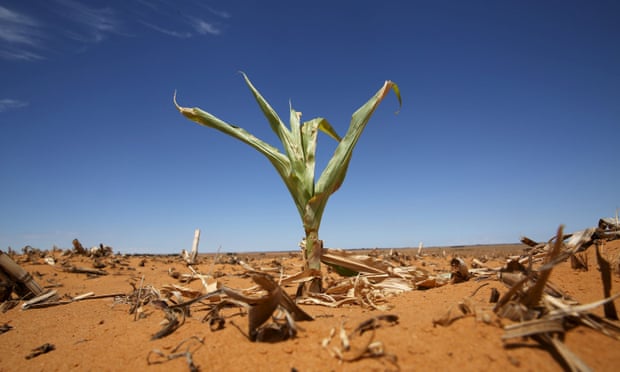
A maize plant among other dried maize in a field in Hoopstad in the Free State province, South Africa. The country suffered its driest year on record in 2015. Photograph: Siphiwe Sibeko/Reuters
Wednesday 16 March 2016 18.22 GMT / Last modified on Thursday 17 March 2016 13.51 GMT
More than 36 million people face hunger across southern and eastern Africa, the United Nations has warned, as swaths of the continent grapple with the worst drought in decades at a time of record high temperatures.
The immediate cause of the drought which has crippled countries from Ethiopia to Zimbabwe is one of the strongest El Niño events ever recorded. It has turned normal weather patterns upside down around the globe, climate scientists say.
But with the world still reeling from record-high temperatures in February, there are fears that the long-term impacts of climate change are also undermining the region’s ability to endure extremes in weather, leaving huge numbers of people vulnerable to hunger and disease.
The worst hit country in the current crisis is Ethiopia, where rains vital to four-fifths of the country’s crops have failed. Unicef has said it is making plans to treat more than 2 million children for malnutrition, and says more than 10 million people will need food aid.
“Ethiopia has been hit by a double blow, both from a change to the rainy seasons that have been linked to long-term climate change and now from El Niño, which has potentially led the country to one of the worst droughts in decades,” said Gillian Mellsop, Unicef representative to Ethiopia.
The crisis has been damaging even to Ethiopians not at immediate risk of going hungry. It has truncated the education of 3.9 million children and teenagers, who “are unable to access quality education opportunities because of the drought”, she said.

An boy walks through failed crops and farmland in Afar, Ethiopia. Four-fifths of crops in the country have failed. Photograph: Mulugeta Ayene/AP
Neighbouring countries grappling with hunger after crops failed include Somalia, Sudan and Kenya, and altogether the failed rains have left more than 20 million people “food insecure” in the region.
The drought caught many officials by surprise, because although El Niño was forecast, the weather event normally brings more rain to the region, not less.
“The typical pattern that you would expect with El Niño is very dry weather in southern Africa, but slightly wetter than normal in eastern Africa,” said Dr Linda Hirons, a research scientist at the National Centre for Atmospheric Science.
“So the fact that we have had parts of eastern Africa experiencing drought is unusual … but every single El Niño event manifests itself differently.”
In southern Africa, the drought caused by El Niño was expected, but it has been even more severe than feared, with rains failing two years in a row.
Overall nearly 16 million people in southern Africa are already going hungry, and that number could rise fast. “More than 40 million rural and 9 million poor urban people are at risk due to the impacts of El Niño’s related drought and erratic rainfall,” the World Food Programme has warned.
Zimbabwe, once the region’s bread basket, is one of the worst hit countries. In February, the country’s president Robert Mugabe declared a state of disaster due to the drought, and in less than a month official estimates of people needing food aid has risen from 3 million to 4 million.
Neighbouring countries are also scrambling to find food aid, including South Africa, whose ports are the main entry point for relief across the region.
“We are seeing this as a regional crisis, a cross-country humanitarian crisis,” said Victor Chinyama. “In each country maybe the numbers [of hungry people] are nowhere near as much as Ethiopia, but if you put these numbers together as a whole region, you get a sense of how large a crisis this is.”
More than a third of households are now going hungry, he said. Families that used to eat two meals a day are cutting back to one, and those who could once provide a single meal for their dependents are now entirely reliant on food aid, he said.
Beyond the immediate scramble to get food to those who need it, aid workers in the region say the drought has served as reminder that communities vulnerable to changing weather patterns need longer-term help adapting.
“It’s becoming common knowledge now that we will experience droughts much more,” said Beatrice Mwangi, resilience and livelihoods director, southern Africa region, World Vision, who said she is focused on medium- and long-term responses.
“In the past it was one big drought every 10 years, then it came to one drought every five years, and now the trends are showing that it will be one every three to five years. So we are in a crisis alright, that is true.
“But it’s going to be the new norm. So our responses need to appreciate that … there is climate change, and it’s going to affect the people that we work with, the communities we serve.”
This article was amended on 17 March 2016 to remove a picture because it was an inaccurate illustration of the theme of the article and contained ambiguities in the caption.
Severe droughts and floods have ruined harvests, and left nearly 100 million people in southern Africa, Asia and Latin America facing food and water shortages

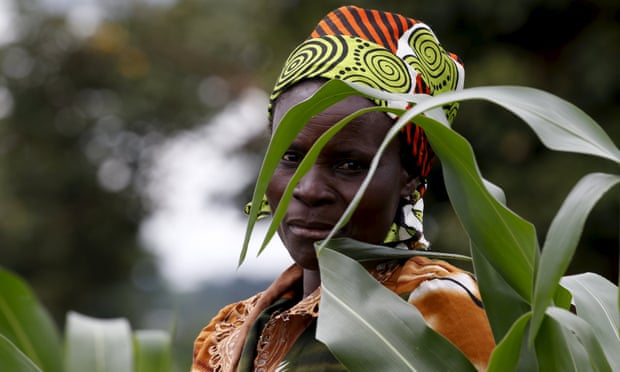
A farmer surveys her maize fields in Dowa, near the Malawi capital of Lilongwe, earlier this month. The country is experiencing its first maize shortage in a decade, causing prices to soar. Photograph: Mike Hutchings/Reuters
Wednesday 17 February 2016 00.01 GMT / Last modified on Wednesday 17 February 2016 14.48 GMT
Severe droughts and floods triggered by one of the strongest El Niño weather events ever recorded have left nearly 100 million people in southern Africa, Asia and Latin America facing food and water shortages and vulnerable to diseases including Zika, UN bodies, international aid agencies and governments have said.
New figures from the UN’s World Food Programme say 40 million people in rural areas and 9 million in urban centres who live in the drought-affected parts of Zimbabwe, Mozambique, South Africa, Zambia, Malawi and Swaziland will need food assistance in the next year.
In addition, 10 million people are said by the UN’s Office for the Coordination of Humanitarian Affairs (Ocha) to need food in Ethiopia (pdf), and 2.8 million need assistance in Guatemala and Honduras.
Millions more people in Asia and the Pacific regions have already been affected by heatwaves, water shortages and forest fires since El Niño conditions started in mid-2015, says Ocha in a new briefing paper, which forecasts that harvests will continue to be affected worldwide throughout 2016.
“Almost 1 million children are in need of treatment for severe acute malnutrition in eastern and southern Africa. Two years of erratic rain and drought have combined with one of the most powerful El Niño events in 50 years to wreak havoc on the lives of the most vulnerable children,” said Leila Gharagozloo-Pakkala, southern Africa regional director of the UN children’s agency, Unicef.
“Governments are responding with available resources, but this is an unprecedented situation. The situation is aggravated by rising food prices, forcing families to implement drastic coping mechanisms such as skipping meals and selling off assets.”
In a joint statement, the UN’s Food and Agriculture Organisation (FAO) and the Famine Early Warning Systems Network said: “El Niño will have a devastating effect on southern Africa’s harvests and food security in 2016. The current rainfall season has so far been the driest in the last 35 years.”
Britain’s Department for International Development (DfID) said in a briefing paper: “Even if it were to start raining today, the planting window for cereals has already closed in the southern part of the region [Africa] and is fast closing elsewhere. There has been a steep rise in market prices of imported staple goods. This is restricting access to food for the most vulnerable.”
According to the World Health Organisation, the heavy rains expected from El Niño in Peru, Ecuador, Paraguay and southern Brazil could increase the spread of the Zika virus. “The Aedes aegypti mosquito breeds in standing water. We could expect more mosquito vectors which can spread Zika virus because of expanding and favourable breeding sites [in El Niño-affected countries],” the organisation said.
El Niño conditions, which stem from a natural warming of Pacific Ocean waters, lead to droughts, floods and more frequent cyclones across the world every few years. This year’s event is said by meteorologists to be the worst in 35 years and is now peaking. Although it is expected to decline in strength over the next six months, its effects on farming, health and livelihoods in developing countries could last two years or more because of failed harvests and prolonged flooding.
“Insufficient rains since March 2015 have resulted in drought conditions. In Central America, El Niño conditions have led to a second consecutive year of drought – one of the region’s most severe in history,” said an Ocha spokesman.
“Mozambique and southern African countries face a disaster if the rains do not come within a few weeks,” said Abdoulaye Balde, WFP country director in Maputo. “South Africa is 6m tonnes short of food this year. But it is the usual provider of food reserves in the region. If they have to import 6m tonnes for themselves, there will be little left for other countries. The price of food will rise dramatically.”
Zimbabwe, which declared a national emergency this month, has seen harvests devastated and food prices soar, according to the WFP in Harare. It reports that food production has halved compared to last year and maize is 53% more expensive. It expects to need nearly $1.6bn in aid to help pay for grain and other food after the drought.
Malawi is experiencing its first maize deficit in a decade, pushing the price 73% higher than the December 2015 average. In Mozambique, prices were 50% higher than last year. The country depends on food imports from South Africa and Zimbabwe, and faces a disaster if rains do not arrive in the next few weeks, said Balde.
Fears are also growing that international donors have been preoccupied by Syriaand the Ebola crisis, and have not responded to food aid requests from affected countries.
“El Niño began wreaking havoc last year. The government has done its best to tackle the resultant drought on its own, by tapping into the national food reserves and allocating more than $300m [£210m] to buy wheat in the international market,” said Ethiopian foreign minister Tedros Ghebreyesus.
“But the number of people in need of food assistance has risen very quickly, making it difficult for Ethiopia to cope alone. For the 10.2 million people in need of aid, requirements stood at $1.4bn. The Ethiopian government has so far spent $300m and a similar sum has been pledged by donors. The gap is about $800m,” he said.
According to the Famine Early Warning Systems Network, set up by the US international development agency, USAID, in 1985, continued below-average rainfall and high temperatures are likely to persist in southern African well into 2016, with the food crisis lasting into 2017.
By Micha Rahder, Louisiana State University §
Let me start with a confession: I never wanted to work on climate change.
Laguna del Tigre National Park, Guatemala. Photo by Micha Rahder.
Don’t get me wrong – I am no climate change denier. But following my academic passions – first ecological and later anthropological – has historically led me to the lively entanglements of forests, not to the atmosphere. In contrast to the centrality of life in my curiosity and imagination, climate was not just dead (for death too is part of life), but lifeless. The thesaurus agreed with me, aligning “lifeless” with boring, tedious, dreary.
More than disinterest, I even began to resent climate change. I noticed, while working on a Master’s in Environmental Studies around 2007, that climate change was all-pervasive. Scheduled speakers, funding opportunities, calls for papers, popular press coverage, and everyday conversations all swirled around…
Ver o post original 1.739 mais palavras
Then there is water.
Water may be the most important item in our lives, our economy and our landscape about which we know the least. We not only don’t tabulate our water use every hour or every day, we don’t do it every month, or even every year.
The official analysis of water use in the United States is done every five years. It takes a tiny team of people four years to collect, tabulate and release the data. In November 2014, the United States Geological Survey issued its most current comprehensive analysis of United States water use — for the year 2010.
The 2010 report runs 64 pages of small type, reporting water use in each state by quality and quantity, by source, and by whether it’s used on farms, in factories or in homes.
It doesn’t take four years to get five years of data. All we get every five years is one year of data.
The data system is ridiculously primitive. It was an embarrassment even two decades ago. The vast gaps — we start out missing 80 percent of the picture — mean that from one side of the continent to the other, we’re making decisions blindly.
In just the past 27 months, there have been a string of high-profile water crises — poisoned water in Flint, Mich.; polluted water in Toledo, Ohio, and Charleston, W. Va.; the continued drying of the Colorado River basin — that have undermined confidence in our ability to manage water.
In the time it took to compile the 2010 report, Texas endured a four-year drought. California settled into what has become a five-year drought. The most authoritative water-use data from across the West couldn’t be less helpful: It’s from the year before the droughts began.
In the last year of the Obama presidency, the administration has decided to grab hold of this country’s water problems, water policy and water innovation. Next Tuesday, the White House is hosting a Water Summit, where it promises to unveil new ideas to galvanize the sleepy world of water.
The question White House officials are asking is simple: What could the federal government do that wouldn’t cost much but that would change how we think about water?
The best and simplest answer: Fix water data.
More than any other single step, modernizing water data would unleash an era of water innovation unlike anything in a century.
We have a brilliant model for what water data could be: the Energy Information Administration, which has every imaginable data point about energy use — solar, wind, biodiesel, the state of the heating oil market during the winter we’re living through right now — all available, free, to anyone. It’s not just authoritative, it’s indispensable. Congress created the agency in the wake of the 1970s energy crisis, when it became clear we didn’t have the information about energy use necessary to make good public policy.
That’s exactly the state of water — we’ve got crises percolating all over, but lack the data necessary to make smart policy decisions.
Congress and President Obama should pass updated legislation creating inside the United States Geological Survey a vigorous water data agency with the explicit charge to gather and quickly release water data of every kind — what utilities provide, what fracking companies and strawberry growers use, what comes from rivers and reservoirs, the state of aquifers.
Good information does three things.
First, it creates the demand for more good information. Once you know what you can know, you want to know more.
Second, good data changes behavior. The real-time miles-per-gallon gauges in our cars are a great example. Who doesn’t want to edge the M.P.G. number a little higher? Any company, community or family that starts measuring how much water it uses immediately sees ways to use less.
Finally, data ignites innovation. Who imagined that when most everyone started carrying a smartphone, we’d have instant, nationwide traffic data? The phones make the traffic data possible, and they also deliver it to us.
The truth is, we don’t have any idea what detailed water use data for the United States will reveal. But we can be certain it will create an era of water transformation. If we had monthly data on three big water users — power plants, farmers and water utilities — we’d instantly see which communities use water well, and which ones don’t.
We’d see whether tomato farmers in California or Florida do a better job. We’d have the information to make smart decisions about conservation, about innovation and about investing in new kinds of water systems.
Water’s biggest problem, in this country and around the world, is its invisibility. You don’t tackle problems that are out of sight. We need a new relationship with water, and that has to start with understanding it.
Objetivo é produzir alertas mais precisos e reduzir o tempo das respostas nas situações de risco. Projeto piloto será implementado nas cidades de Blumenau (SC), Nova Friburgo (RJ) e Petrópolis (RJ)
Brasil e Japão assinaram nesta segunda-feira (14) um acordo de cooperação na área de prevenção de desastres naturais para melhorar a precisão dos alertas e reduzir o tempo gasto nas respostas. O documento valida condutas e procedimentos definidos por técnicos dos dois países para a instalação de projetos piloto nas cidades de Blumenau (SC), Nova Friburgo (RJ) e Petrópolis (RJ) – todas sofreram com deslizamentos de terra nos últimos anos. O Centro Nacional de Monitoramento e Alertas de Desastres Naturais (Cemaden/MCTI) participa da iniciativa, que faz parte do Projeto de Fortalecimento da Estratégia Nacional de Gestão Integrada de Riscos em Desastres Naturais (Gides).
“Isso vai ser um novo experimento em relação à coleta de informações e como se disponibiliza essas informações de forma rápida e integrada com vários órgãos do governo”, explicou o secretário de Políticas e Programas de Pesquisa e Desenvolvimento do MCTI, Jailson de Andrade.
Segundo o pesquisador da área de geodinâmica do Cemaden Angelo Consoni, o aprimoramento do protocolo dos alertas é fundamental para que eles sejam emitidos com mais eficiência para a população. Quanto mais preciso e rápido, menor o risco de calamidades.
“A finalidade do piloto é, principalmente, a precisão dos alertas e o tempo gasto nessa atividade. Então, otimizando fluxos de elaboração de emissão de alertas, juntamente com os municípios e com os estados, nós podemos melhorar significativamente a qualidade dos alertas que disponibilizamos para a população em situações de risco”, afirmou.
O acordo de cooperação também foi assinado pelo Ministério das Cidades, Ministério da Integração Nacional, Agência Brasileira de Cooperação (ABC) e Agência de Cooperação Internacional do Japão (Jica, na sigla em inglês).
Parceria
A parceria entre Brasil e Japão é baseada na troca de experiências entre recursos humanos das duas nações. Desde 2014, duas turmas de brasileiros já receberam capacitação de especialistas japoneses. Além disso, os asiáticos também vêm ao País para o intercâmbio de informações sobre a prevenção de desastres naturais.
“O Japão é uma referência. E essa cooperação tem sido muito boa para nós no sentido de formação de pessoal”, destacou Consoni.
Artigo de Álvaro Rodrigues dos Santos, geólogo e consultor em Geologia de Engenharia, Geotecnia e Meio Ambiente
A cada novo período chuvoso voltam às manchetes as mortes e sinistros associados a deslizamentos de encostas e enchentes. Tragédias insistentemente anunciadas, mas anualmente recorrentes dado ao descompromisso com que a administração pública em seus três níveis tem lidado com a questão.
Todos estão fartos de saber que esses fenômenos decorrem diretamente das formas equivocadas com que se expandem nossas cidades, impermeabilizando seus territórios, canalizando e retificando seus rios, ocupando terrenos, como encostas de alta declividade e margens de córrego, que não poderiam nunca ser ocupados dada sua já altíssima suscetibilidade natural a riscos, mas também ocupando terrenos de média declividade, onde a ocupação urbana seria aceitável, com a utilização de técnicas construtivas e urbanísticas totalmente inadequadas, que acabam transformando mesmo essas áreas em um verdadeiro canteiro de situações de risco.
E com toda essa realidade, escancarada anualmente pelo meio técnico e repercutida pelos meios de comunicação, a pungente verdade é que nossas autoridades sequer tomaram a providência mínima e cristalina de parar de errar, ou seja, parar de cometer os erros que estão na exata origem causal dessas tragédias de cunho geológico, geotécnico e hidrológico. Por consequência, o que se vê é, ao invés da redução do número de áreas de risco, a sua contínua multiplicação.
Como resultado, uma perspectiva de futuro assustadora: as tragédias em áreas de risco tendem a crescer em frequência e letalidade, na exata proporção do crescimento de nossas cidades.
Dentro desse panorama é preciso que se compreenda que do ponto de vista técnico não há lacuna alguma nos conhecimentos básicos de geologia, geotecnia e hidrologia, necessários para a boa solução desses problemas. Os fenômenos de enchentes e deslizamentos nos mais variados contextos geológicos do País são já bastante estudados e conhecidos. Os instrumentos que permitirão um correto planejamento do uso e ocupação do solo urbano são dominados, como a essencial Carta Geotécnica, um mapa municipal que informa sobre os locais que não poderão nunca ser ocupados e as áreas que poderão ser ocupadas caso sejam utilizadas as técnicas adequadas para tanto. Por paradoxal que possa parecer, o Brasil é liderança internacional nesse campo tecnológico.
Vale registrar apenas que não possuímos no País uma cultura técnica arquitetônica e urbanística especialmente adequada à ocupação de terrenos com maior declividade. Isso se verifica tanto nas formas espontâneas utilizadas pela própria população de baixa renda na autoconstrução de suas moradias, como também em projetos privados ou públicos de maior porte que contam com o suporte técnico de arquitetos e urbanistas e têm, apesar do erro básico e grave de concepção, sua implantação autorizada pelos órgãos municipais responsáveis para tanto.
Em ambos os casos, ou seja, no empirismo popular e nos projetos mais elaborados, prevalece infelizmente a cultura técnica da área plana. Isto é, através de cortes e aterros obtidos por operações de terraplenagem nas encostas obsessivamente se procura produzir platôs planos sobre os quais irá ser edificado o empreendimento. Um fatal erro técnico de concepção. Esse tem sido o cacoete técnico que está invariavelmente presente na maciça produção de áreas de risco nas cidades brasileiras que, de alguma forma, crescem sobre relevos mais acidentados.
Vale insistir, no entanto, a maior dificuldade para a boa solução desses problemas continua a residir na falta de vontade e no descompromisso das administrações públicas em finalmente decidir ordenar corretamente a expansão urbana de suas cidades. Nesse mister é fundamental perceber que as populações mais pobres somente deixarão de optar por áreas de risco para instalar suas moradias quando o poder público, através de ousados Programas Habitacionais, lhes oferecer alternativas dignas e seguras de moradia na mesma faixa de custos que ela hoje só encontra na ocupação das áreas de risco. Essa é a verdade nua e crua da questão. Ou essa equação básica é resolvida, ou a instalação de novas situações de risco sempre superarão, em muito, o esforço em desarmar as já instaladas.
Em resumo, é preciso que as autoridades públicas deixem de irresponsavelmente ver a questão das áreas de risco como um problema de Defesa Civil e Corpo de Bombeiros, por mais heroicas que sejam essas corporações, e passem a entendê-la como um elemento próprio do campo das Políticas Habitacionais e de Planejamento Urbano. Somente sob essa ótica a administração pública passará ao comando ativo da situação, deixando de agir apenas a reboque das tragédias, situação em que lhes sobra apenas a descompostura esperta de, como sempre, culpar as chuvas pelos infortúnios.
Álvaro Rodrigues dos Santos (santosalvaro@uol.com.br)
* Esse artigo expressa apenas a opinião do autor.
10/03/16
María Elena Hurtado
Summary:
This is because the bacteria, which are typically found in salty water, could ‘piggyback’ on zooplankton that travel to Peru and Chile with the warm easterly and southerly Pacific currents associated with El Niño, according to a comment published in Nature Microbiology last month.
Vibrio bacteria cause severe diarrhoea when people eat raw, contaminated molluscs such as oysters, clams and mussels. Such outbreaks have been linked to previous El Niño episodes.
The ongoing El Niño — dubbed El Niño Godzilla because of its intensity — may be the strongest on record. It is developing similarly to an episode in 1977, during which a diarrhoea epidemic broke out in Peru. In that year, Vibrio parahaemolyticus bacteria caused an estimated 10,000 cases of severe gastroenteritis along the South American coastline.
In 1997, another strong El Niño year, the Vibrio parahaemolyticus strain of the bacteria, which had emerged in India, plagued the South American coast.
“The emergence of cases correlated with southward dissemination of El Niño water during the 1997 event,” says Jaime Martinez-Urtaza, a biologist at the University of Bath in the United Kingdom, and a coauthor of the article.
In terms of cholera, South America had been free of the disease for almost a century — until it reemerged in the early 1990s. Within weeks, cholera spread across South and Central America, going on to cause more than a million cases and 10,000 deaths by 1994.
Martinez-Urtaza says the cholera outbreak “coincided in both time and space with a significant El Niño event in late 1991 and early 1992”.
Ronnie Gavilán, a researcher at Peru’s National Institute of Health, says there is other evidence for El Niño’s influence on Vibrio bacteria in the Americas. He points out that, during warm El Niño events, Vibrioinfections continue to spread in the cold winter months, when they usually only occur in hot summers.
The current El Niño has not yet led to a Vibrio outbreak, but health authorities in Chile and Peru are closely monitoring water quality near the coast.
The delay could be “because the pathogens that may have arrived during the summer season may show up years later”, says Romilio Orellana, a biochemist at the University of Chile.
Jaime Martinez-Urtaza and others Is El Niño a long-distance corridor for waterborne disease? (Nature Microbiology, 24 February 2016)
SCIENTIFIC METHOD 10:23 AM MAR 7, 2016
Little p-value
What are you trying to say
Of significance?
— Stephen Ziliak, Roosevelt University economics professor
How many statisticians does it take to ensure at least a 50 percent chance of a disagreement about p-values? According to a tongue-in-cheek assessment by statistician George Cobb of Mount Holyoke College, the answer is two … or one. So it’s no surprise that when the American Statistical Association gathered 26 experts to develop a consensus statement on statistical significance and p-values, the discussion quickly became heated.
It may sound crazy to get indignant over a scientific term that few lay people have even heard of, but the consequences matter. The misuse of the p-value can drive bad science (there was no disagreement over that), and the consensus project was spurred by a growing worry that in some scientific fields, p-values have become a litmus test for deciding which studies are worthy of publication. As a result, research that produces p-values that surpass an arbitrary threshold are more likely to be published, while studies with greater or equal scientific importance may remain in the file drawer, unseen by the scientific community.
The results can be devastating, said Donald Berry, a biostatistician at the University of Texas MD Anderson Cancer Center. “Patients with serious diseases have been harmed,” he wrote in a commentary published today. “Researchers have chased wild geese, finding too often that statistically significant conclusions could not be reproduced.” Faulty statistical conclusions, he added, have real economic consequences.
“The p-value was never intended to be a substitute for scientific reasoning,” the ASA’s executive director, Ron Wasserstein, said in a press release. On that point, the consensus committee members agreed, but statisticians have deep philosophical differences1 about the proper way to approach inference and statistics, and “this was taken as a battleground for those different views,” said Steven Goodman, co-director of the Meta-Research Innovation Center at Stanford. Much of the dispute centered around technical arguments over frequentist versus Bayesian methods and possible alternatives or supplements to p-values. “There were huge differences, including profoundly different views about the core problems and practices in need of reform,” Goodman said. “People were apoplectic over it.”
The group debated and discussed the issues for more than a year before finally producing a statement they could all sign. They released that consensus statement on Monday, along with 20 additional commentariesfrom members of the committee. The ASA statement is intended to address the misuse of p-values and promote a better understanding of them among researchers and science writers, and it marks the first time the association has taken an official position on a matter of statistical practice. The statement outlines some fundamental principles regarding p-values.
Among the committee’s tasks: Selecting a definition of the p-value that nonstatisticians could understand. They eventually settled on this: “Informally, a p-value is the probability under a specified statistical model that a statistical summary of the data (for example, the sample mean difference between two compared groups) would be equal to or more extreme than its observed value.” That definition is about as clear as mud (I stand by my conclusion that even scientists can’t easily explain p-values), but the rest of the statement and the ideas it presents are far more accessible.
One of the most important messages is that the p-value cannot tell you if your hypothesis is correct. Instead, it’s the probability of your data given your hypothesis. That sounds tantalizingly similar to “the probability of your hypothesis given your data,” but they’re not the same thing, said Stephen Senn, a biostatistician at the Luxembourg Institute of Health. To understand why, consider this example. “Is the pope Catholic? The answer is yes,” said Senn. “Is a Catholic the pope? The answer is probably not. If you change the order, the statement doesn’t survive.”
A common misconception among nonstatisticians is that p-values can tell you the probability that a result occurred by chance. This interpretation is dead wrong, but you see it again and again and again and again. The p-value only tells you something about the probability of seeing your results given a particular hypothetical explanation — it cannot tell you the probability that the results are true or whether they’re due to random chance. The ASA statement’s Principle No. 2: “P-values do not measure the probability that the studied hypothesis is true, or the probability that the data were produced by random chance alone.”
Nor can a p-value tell you the size of an effect, the strength of the evidence or the importance of a result. Yet despite all these limitations, p-values are often used as a way to separate true findings from spurious ones, and that creates perverse incentives. When the goal shifts from seeking the truth to obtaining a p-value that clears an arbitrary threshold (0.05 or less is considered “statistically significant” in many fields), researchers tend to fish around in their data and keep trying different analyses until they find something with the right p-value, as you can see for yourself in a p-hacking tool we built last year.
Indeed, many of the ASA committee’s members argue in their commentaries that the problem isn’t p-values, just the way they’re used — “failing to adjust them for cherry picking, multiple testing, post-data subgroups and other biasing selection effects,” as Deborah Mayo, a philosopher of statistics at Virginia Tech, puts it. When p-values are treated as a way to sort results into bins labeled significant or not significant, the vast efforts to collect and analyze data are degraded into mere labels, said Kenneth Rothman, an epidemiologist at Boston University.
The 20 commentaries published with the ASA statement present a range of ideas about where to go from here. Some committee members argued that there should be a move to rely more on other measures, such as confidence intervals or Bayesian analyses. Others felt that switching to something else would only shift the problem around. “The solution is not to reform p-values or to replace them with some other statistical summary or threshold,” wrote Columbia University statistician Andrew Gelman, “but rather to move toward a greater acceptance of uncertainty and embracing of variation.”
If there’s one takeaway from the ASA statement, it’s that p-values are not badges of truth and p < 0.05 is not a line that separates real results from false ones. They’re simply one piece of a puzzle that should be considered in the context of other evidence.
This story began with a haiku from one of the p-value document’s companion responses; let’s end it with a limerick by University of Michigan biostatistician Roderick Little.
In statistics, one rule did we cherish:
P point oh five we publish, else perish!
Said Val Johnson, “that’s out of date, Our studies don’t replicate
P point oh oh five, then null is rubbish!”
CORRECTION (March 7, 11:05 a.m.): An earlier version of this article misstated the university where Deborah Mayo is a professor. She teaches at Virginia Tech, not the University of Pennsylvania.
Christie Aschwanden is FiveThirtyEight’s lead writer for science.
No. 176 – 10/03/2016
Renzo Taddei
Um traço peculiar do imaginário brasileiro, ou pelo menos daquele mais presente nos principais centros de produção midiática (Rio de Janeiro-São Paulo-Brasília), é a ideia de que “no Brasil não tem desastre”. Uma piada muito difundida no passado, e ainda presente na memória das pessoas e na internet, diz que, frente à indagação do anjo Gabriel sobre a razão pela qual Deus teria poupado o Brasil dos desastres naturais, quando da criação do mundo, este teria respondido que desastroso seria o povo que ele colocaria aí. Racismo ou “complexo de vira-latas” (Rodrigues, 1993) à parte, a ideia de um Brasil sem desastres é tomada aí como senso comum, como elemento de obviedade na elaboração da anedota (Taddei, 2014a).
Ocorre, no entanto, que os desastres são parte da relação entre humanos e o meio ambiente no Brasil desde pelo menos os primeiros anos de colonização. De acordo com o historiador Raimundo Girão, Pero Coelho de Souza, o primeiro português a tentar estabelecer-se no Ceará, em 1603, foi obrigado a retirar-se, poucos anos depois, em função da estiagem. Os registros históricos dizem que, na empreitada, perdeu sua fortuna e filhos seus morreram de fome e sede (Girão, 1985, p. 69). Esse não era o primeiro desastre do continente: acredita-se que as secas foram fator fundamental para o colapso do império Maia (Webster, 2002), na região do sul do México, cinco séculos antes de espanhóis e portugueses cruzarem o Atlântico. E também não seria o último em solo brasileiro, como bem sabemos.
Frente a esse panorama, uma contribuição possível das ciências sociais ao estudos dos desastres é a tentativa de responder à pergunta: o que constitui um desastre, e como tal forma de pensamento está embutida na realidade social e política brasileira?
O que é um desastre
Uma definição de desastre bastante utilizada nas ciências sociais é aquela que sugere que o desastre é um acontecimento que desorganiza a ordem social, cultural, econômica e política de uma coletividade, a ponto de que esta não é capaz de reorganizar-se de forma espontânea e autônoma (Blakie et al apud Briones, 2010). Ainda que essa forma de entender o desastre seja instrutiva, não é incomum que ela seja entendida como sugerindo que o desastre sempre vem “de fora”, da natureza, e é exógeno ao meio sociocultural. Essa abordagem reproduz a ideia de que trata-se de uma questão de domínio humano sobre a natureza; quando as coisas saem do controle, evidenciam-se os limites de tal domínio, e a natureza mostra sua força.
Para entendermos por que esta conceituação é limitada (e limitante), tomemos o exemplo das secas, sem dúvida o desastre mais comum e recorrente em território brasileiro: o que exatamente vem de fora para desorganizar as coisas? Vejamos: a caatinga, ecossistema dominante no chamado “polígono das secas” do Nordeste, é formada sobretudo por vegetação xerófila, aquela capaz de sobreviver em situação de escassez extrema de água. Se indagarmos nossos colegas botânicos e biólogos qual o tempo necessário para que os organismos se adaptem a um ecossistema, através dos processos de geração de novas espécies e seleção natural – o mesmo que supostamente gerou a vegetação xerófila da caatinga –, eles nos responderão que trata-se de um processo longo, de milhares de anos. Ou seja, a existência de vegetação xerófila na caatinga evidencia que os períodos longos de estiagem ocorrem aí há milênios. Nessa perspectiva, um período longo sem chuvas não é novidade alguma na região.
E qual a forma mais universalmente disseminada de convivência dos seres vivos com ecossistemas áridos e semiáridos? O nomadismo, a migração sazonal, em todas as suas variações possíveis. Animais e populações indígenas moviam-se no território de modo a tentar adaptar-se à periódica escassez de chuvas. Uma novidade trazida pelos portugueses, no entanto, o conceito de propriedade privada, mostrou-se incompatível com tais práticas adaptativas. O estabelecimento das fazendas e dos núcleos permanentes de povoamento expôs a população a uma rigidez espacial inconciliável com os fluxos e variações climáticas da região. Adicionalmente, a fartura dos anos de chuvas regulares fez com que a densidade demográfica aumentasse para muito além dos níveis pré-coloniais. O resultado disso tudo: quatro séculos de epidemias recorrentes de fome e sofrimento no sertão nordestino (Taddei, 2014b).
No exemplo acima, qual foi, exatamente, o elemento desastroso? A estiagem não é uma anomalia climática na região semiárida; foi a forma de domínio e uso da terra trazida pelos europeus que mostrou-se uma verdadeira anomalia sociopolítica. O caso das secas evidencia que necessitamos de uma outra forma de entender os desastres, que não separe radicalmente os meios social e natural. De maneira geral e simplificada, podemos propor como alternativa a ideia de que quando as coletividades têm conhecimento das variações e calendários dos ecossistemas locais e se organizam tomando-os em consideração, acumulam certa quantidade de recursos como reserva que os proteja de imprevistos, e escolhem práticas produtivas, sociais e políticas comprovadamente compatíveis com o ecossistema local, são capazes de atravessar períodos extremos, ou de sobreviver a eventos críticos, sem que a situação se configure como um desastre. Um desastre é, então, fruto das formas como ecossistema e grupos sociais relacionam-se entre si. Por isso, um desastre jamais está “na” natureza, e sim na relação que se tem com ela (Oliver-Smith, 1999). Um exemplo disso é a constatação, fruto de uma pesquisa por mim coordenada durante o ano de 2005 – ano em que houve secas de grande porte e praticamente ao mesmo tempo no Nordeste, na Amazônia e no Rio Grande do Sul –, de que os efeitos da estiagem motivaram manifestações populares e a invasão de prédios públicos em diversas cidades cearenses, enquanto a falta de chuva em intensidade equivalente sequer foi notada por moradores de cidades das serras gaúchas (ver Taddei e Gamboggi, 2010).
Essa forma de entender desastre tem duas vantagens: a primeira é que o desastre deixa de ser um evento isolado no tempo e no espaço, e passa a ser entendido como um processo que se desdobra ao longo do tempo (Valencio, 2009), e que, em geral, afeta coletividades humanas e animais em uma dimensão espacial muito maior do que o local específico do evento crítico. A segunda é que podemos facilmente retirar a natureza da equação e substituí-la por ambientes e processos técnicos, e temos aí uma forma interessante de pensar os desastres ditos “tecnológicos”. A realidade é que não há desastre que não tenha, concomitantemente, componentes ecossistêmicos e componentes tecnológicos e, em razão disso, a diferenciação entre desastres naturais e tecnológicos é apenas o destaque, para fins operacionais ou jurídicos, do fator preponderante em cada caso.
Voltemos por um minuto à definição proposta acima, de modo a exemplificá-la melhor. Recorrentemente, o que chamamos de seca, no que tange à produção agrícola, ocorre em situações em que a terra é arrendada, de modo que as relações comerciais de curto prazo fazem com que o conhecimento sobre as variações de longo prazo do ecossistema local se percam de vista; a necessidade de se atingir níveis de lucratividade compatíveis com os praticados no mercado financeiro faz com que frequentemente os recursos sejam investidos de forma intensiva, o que aumenta os riscos envolvidos e coloca o produtor em situação de vulnerabilidade a variações climáticas; e a seleção das culturas, quase sempre, está ligada aos preços do mercado, e raramente às condições específicas do ecossistema onde se dará a produção (grande parte da qual é destruída para ceder espaço às áreas agricultáveis). Ou seja, o que estou dizendo aqui é que o modelo de produção agrícola vigente na atualidade está fundado em uma forma de relação entre o ecossistema e a atividade humana altamente vulnerável a variações naturais, o que produz um contexto propício ao desastre. Não é à toa que, em um ano “bom”, cerca de um quarto dos municípios do país declaram situação de emergência. Em um ano ruim, esse número sobe para mais de um terço. O desastre está praticamente embutido nas formas de organização econômica e política brasileiras (Taddei e Gamboggi, 2010).
Nem todas as declarações de situação de emergência se dão em função de secas. No entanto, a coisa não é diferente com as inundações, os deslizamentos de terra, ou as ressacas que destroem infra-estrutura pública e privada nas zonas costeiras. Os fluxos de água têm ciclos que se repetem, muitos dos quais, por razões distintas, desconhecemos. O curso de um rio nunca pode ser determinado com exatidão; um rio “pulsa”, isto é, tem seu ciclo natural de retração e expansão. Esse ciclo é, em geral, anual, mas há outros ciclos na natureza que afetam os cursos de água e que são mais longos. O fenômeno El Niño é um deles: tende a ocorrer duas vezes por década, em geral diminuindo as chuvas na região Nordeste e as aumentando na parte Sudeste e Sul do Brasil. Há ainda ciclos mais longos: existem evidências de que alguns ecossistemas podem alternar séries de duas ou três décadas com menos chuva com outras consideravelmente mais chuvosas (Marengo et al, 1998). Grande parte desses ciclos não são conhecidos. Desta forma, um empreendimento no entorno de um rio pode, sem que as pessoas envolvidas se dêem conta, estar na verdade dentro do curso histórico do rio.
Um rio, por sua vez, não se resume à calha onde a água corre em grande volume. Esta é apenas o resultado da relação entre a água da chuva e determinada configuração topológica e geológica. A água infiltrada no solo, escoando lentamente para baixo e ao longo de uma camada de solo impermeável, até finalmente avolumar-se na região mais baixa (formando o rio propriamente dito), já é o rio em atividade. Em uma cidade, a ideia de que um rio foi “canalizado” envolve um equívoco conceitual diretamente ligado às inundações urbanas. Não se pode canalizar um rio, mas apenas sua calha principal. Quando isso é feito e o solo é impermeabilizado com concreto e asfalto, separa-se duas partes do rio, a que escoa pela topografia do terreno, e que obviamente continuará escoando, e a que escoa na calha do rio. A calha do rio é uma solução geológica para o escoamento de água; a separação entre o escoamento nos terrenos inclinados e a calha – ou a limitação da conexão entre ambas – é a construção das condições para a ocorrência dos desastres. A ideia de que o poder público tem que “resolver a questão das inundações urbanas” é fruto daquela mesma visão de “controle sobre a natureza” que criticamos no início deste texto. Uma solução mais apropriada para essa questão é considerar que o rio tem direito a estar na cidade, de forma íntegra e com toda sua variabilidade espacial, e que a cidade deve ser construída tomando isso em conta. Caso contrário, as cidades serão, como são, aparatos produtores de inundações. Ou seja, a inundação não é resultado da chuva, mas de uma certa relação entre a forma como os humanos transformam o espaço e o ciclo natural das águas.
Em resumo, o que quero dizer aqui é que, no mundo contemporâneo, somos frequentemente levados a agir pautados por agendas que não apenas se mostram incompatíveis com ciclos naturais dos ecossistemas, mas também afetam nossa capacidade de perceber detalhes dos mesmos que são importantes para a redução dos riscos de desastres. Desta forma, muitas de nossas formas de organização econômica, social e política têm que encontrar maneiras de lidar com a pouca eficácia, ou mesmo com a inconveniência, de nossas formas estabelecidas de ocupação do mundo. Por isso, desenvolvemos coisas como seguros financeiros, um complexo sistema de defesa civil em todos os níveis políticos, tecnologias de monitoramento e previsão de características importantes do meio ambiente, legislação específica, agências reguladoras, e muito mais. Temos também práticas sociais pautadas em relações de clientelismo, nas quais o detentor de poder político ou recursos econômicos oferece a determinada coletividade proteção contra os efeitos das variações dos ecossistemas (e contra coisas não relacionadas ao meio ambiente) em troca de apoio político; e a chamada “indústria das secas” (Callado, 1960), estratégias econômicas e sociais que geram riqueza para as elites locais a partir dos mecanismos federais de mitigação dos impactos das secas (Albuquerque Jr, 1999).
Particularmente no que diz respeito à nossa incapacidade de perceber as variações e ciclos dos ecossistemas, nossa base científica de monitoramento dos ecossistemas e da atmosfera começou a operar efetivamente apenas na década de 1960, o que fornece uma base bastante limitada de dados históricos. Neste contexto, é digno de nota o fato de que, em geral, são as populações tradicionais – indígenas, caboclos, ribeirinhos, caiçaras – que habitam os ecossistemas por muitas gerações que possuem tais conhecimentos (Taddei, 2015). Ocorre, no entanto, que a forma de codificação e transmissão de conhecimento de tais populações, através de transmissão oral e sobre uma base narrativa que faz amplo uso do que chamamos de folclore e pensamento mítico, é não apenas incompreensível para as populações urbanas, mas ativamente desvalorizada como superstição e atraso, frente aos poderes do conhecimento científico. São muito poucas, ao redor do mundo, as iniciativas de transformação de conhecimento tradicional em material que possa engajar-se de forma significativa com as discussões técnicas e científicas a respeito de como entender o meio ambiente e os desastres a eles relacionados. Um dos exemplos mais interessantes sobre esse respeito são os estudos dos manuscritos pré-hispânicos (os códices) maias e aztecas no que tange à forma como tais populações entendiam e lidavam com terremotos (ver Acosta e Suarez, 1996).
Riscos e desastres tecnológicos
Como mencionei acima, posso trocar “natureza” por “tecnologia” e a frase continua fazendo sentido: no mundo contemporâneo, somos frequentemente levados a agir no mundo pautados por agendas que não apenas se mostram incompatíveis com certas características dos sistemas técnicos em que atuamos, mas igualmente afetam nossa capacidade de perceber detalhes importantes dos mesmos (Taddei, 2014c). Na década de 1980, o sociólogo alemão Ulrich Beck (1992) propôs a teoria da sociedade do risco, na qual argumentou que as sociedades modernas, através da inovação tecnológica, criam riscos inéditos e que não somos capazes de mensurar. O sociólogo americano Charles Perrow, por sua vez, criou o conceito de acidentes normais (1999), nos quais sistemas complexos podem assumir configurações indesejáveis sob o ponto de vista humano, mas que são apenas configurações “normais”, isto é, possíveis, do sistema. Ou seja, quando projetamos sistemas complexos, como computadores, por exemplo, não somos capazes de prever todas as suas configurações possíveis. No caso particular dos computadores, o “travamento” do sistema operacional, em geral, não representa qualquer dano ao aparato, em suas dimensões físicas ou lógicas. Por isso, reinicializamos a máquina e ela volta a funcionar perfeitamente. Uma possibilidade de entender o que houve é justamente a ideia de que a máquina pode ter assumido uma configuração que, apesar de ser uma das muitas possíveis para ela, é inconveniente para o usuário. O caso do computador pessoal pode ser inócuo; ocorre que, segundo Perrow, não há razão para imaginar que o mesmo não possa ocorrer com aviões em pleno vôo, com usinas nucleares, ou com barragens.
Essa constatação evidencia os imensos desafios que as coletividades têm no que diz respeito à governança dos riscos aos quais estão submetidas. O mercado em sociedades liberais mostrou, repetidamente, que não é um bom instrumento de gestão de riscos na perspectiva da coletividade – a crise mundial de 2008 foi apenas a última em uma sequência longa de crises associadas à incapacidade das corporações capitalistas em gerir riscos de modo benéfico, não apenas para seus interesses particulares, mas para a sociedade como um todo. Os governos dos países capitalistas em geral pautam-se por indicadores de mercado (como o PIB) para avaliar o sucesso e a eficácia de seus governantes e, por essa razão, tendem a ser ineficientes no que tange a usar seu poder regulatório coercitivo contra o próprio mercado. Desta forma, com exceção de setores historicamente marcados por desastres em larga escala, como a geração de energia nuclear e a prospecção de petróleo, em geral, o setor corporativo cria novas tecnologias e as coloca no mercado sem que os riscos a elas associados sejam conhecidos. Aliás, no que tange à questão nuclear, o Brasil tem a infelicidade de figurar no seleto grupo de países1 que foram palco de acidentes radioativos, devido ao evento do Césio 137 em Goiânia, no ano de 1987 (Da Silva, 2001; Vieira, 2013).
Os desastres em tempos de mudanças climáticas
Particularmente no Brasil, como demonstram os exemplos das secas no Nordeste, os deslizamentos da serra fluminense de 2011, ou o desastre de Mariana em 2015, o poder público age de forma notoriamente reativa, esperando a catástrofe e apenas posteriormente ajustando sua configuração institucional e suas formas de ação aos riscos envolvidos – e, ainda assim, com variados graus de eficácia. Neste contexto, a perspectiva de futuro trazida pelas mudanças climáticas é duplamente sombria: por um lado, as alterações ecossistêmicas previstas (bem como as não previstas) devem desestabilizar até mesmo os arranjos adaptativos mais efetivos entre ecossistemas e coletividades; por outro, como o exemplo das reuniões do clima da ONU (as chamadas “conferencias das partes” ou COPs) deixa evidente, os estados nacionais e seus aparatos institucionais se mostram ineficazes e despreparados para lidar com o desafio que se aproxima. A crise migratória europeia dos últimos anos é outro exemplo contundente: em quase todos os casos envolvidos (e particularmente nos casos dos conflitos do Sudão e da Síria), o componente climático é uma das variáveis mais importantes; os países europeus e a própria ONU, no entanto, evitam qualquer associação entre tais migrações e as secas dramáticas que assolaram tais países, uma vez que isso desorganizaria o arcabouço jurídico para lidar com questões migratórias desenvolvido pelos países ocidentais. Ou seja, não existe, até o momento, a figura jurídica do refugiado climático. E a principal razão para tanto é o fato evidente, já mencionado anteriormente neste texto, que limites territoriais fixos, como as fronteiras nacionais, são incompatíveis com a estratégia mais óbvia de sobrevivência a variações extremas do ambiente, justamente a migração. Desta forma, a crise migratória atual é apenas uma amostra do que está por vir, e não há razões para acreditar que os estados nacionais, que têm em suas configurações espaciais parte da causa da crise, sejam os atores que irão propor soluções sustentáveis ao problema. É mais provável que as soluções venham de fora do sistema e, desta forma, a pesquisa científica sobre ambiente e desastres deve estar aberta para o diálogo com outras formas de conhecimento e ação no mundo. Novamente, aqui as populações tradicionais talvez tenham um papel fundamental a desempenhar (Danowski e Viveiros de Castro, 2014); e não há campo mais apropriado, dentro do mundo acadêmico, para fazer tal interlocução do que as ciências sociais. Para isso, no entanto, a agenda de pesquisa em sociologia e antropologia dos desastres tem muito que avançar.
Renzo Taddei é professor de antropologia na Universidade Federal de São Paulo.
Referências bibliográficas
Acosta, V. G.; Suarez, G. Los sismos en la historia de México: el análisis social. Tlalpan, México: CIESAS, 1996.
Albuquerque Junior, D. M. de. A invenção do Nordeste e outras artes. São Paulo: Cortez, 1999.
Beck, U. Risk society. Towards a new modernity. Londres: Sage Publications, 1992.
Briones, F. “¿Sequía natural o sequía hidrológica? Políticas públicas y respuestas sociales en el perímetro irrigado de Icó-Lima Campos, Ceará” In: Taddei, R.; Gamboggi, A. L. (orgs). Depois que a chuva não veio – respostas sociais às secas na Amazônia, no Nordeste e no Sul do Brasil. Fortaleza: Fundação Cearense de Meteorologia e Recursos Hídricos/Instituto Comitas para Estudos Antropológicos, 2010.
Callado, A. Os industriais da seca e os “Galileus” de Pernambuco. Rio de Janeiro: Civilização Brasileira, 1960.
Da Silva, T. C. “Bodily memory and the politics of remembrance: the aftermath of Goiânia radiological disaster”. High Plains Applied Anthropologist. v. 21, n. 1, p. 40–52, Spring 2001.
Danowski, D.; Viveiros de Castro, E. Há mundo por vir? Ensaio sobre os medos e os fins. Florianópolis: Editora Cultura e Barbárie, 2014
Girão, R. Evolução histórica cearense. Fortaleza: BNB/Etene, 1985.
Marengo, J. Tomasella, J. Uvo, C. “Long-term stream ow and rainfall fluctuations in tropical South America: Amazonia, eastern Brazil and northwest Peru”. Journal of Geophysical Research, n. 103, p. 1775-1783, 1998.
Oliver-Smith, A. “What is a disaster? Anthropological perspectives on a persistent question”. In: Oliver-Smith, A; Hoffman, S. (orgs.), The angry Earth: disaster in anthropological perspective. New York: Routledge, 1999.
Perrow, C. Normal accidents: living with high-risk technologies. Princeton: Princeton University Press, 1999.
Rodrigues, N. À sombra das chuteiras imortais: crônicas de futebol. São Paulo: Companhia das Letras, 1993.
Taddei, R. “Sobre a invisibilidade dos desastres na antropologia brasileira”. WATERLAT-GOBACIT Network Working Papers, Thematic Area Series SATAD, TA8 – Water-related Disasters, vol. 1 no. 1, Newcastle upon Tyne and São Paulo, September 2014, pp. 30-42 2014a.
Taddei, R. “As secas como modos de enredamento”. ClimaCom Cultura Científica – pesquisa, jornalismo e arte. Ano 01, No. 01 – “Redes”, 2014 2014b.
Taddei, R. “Alter geoengenharia”. Trabalho apresentado no colóquio internacional Os Mil Nomes de Gaia. Fundação Casa de Rui Barbosa, 16 de setembro de 2014, Rio de Janeiro. Disponível em https://goo.gl/5wUVHn; acessado em 8 de março de 2016 2014c.
Taddei, R. “O lugar do saber local (sobre ambiente e desastres)”. In: Siqueira, A.; Valencio, N.; Siena, M.; Malagoli, M. A. (Org.). Riscos de desastres relacionados à água: aplicabilidade de bases conceituais das ciências humanas e sociais para a análise de casos concretos. São Carlos: Rima Editora, 2015.
Taddei, R.; Gamboggi, A. L. (orgs). Depois que a chuva não veio – respostas sociais às secas na Amazônia, no Nordeste e no Sul do Brasil. Fortaleza: Fundação Cearense de Meteorologia e Recursos Hídricos/Instituto Comitas para Estudos Antropológicos, 2010.
Valencio, N. “Da morte da quimera à procura de Pégaso: a importância da interpretação sociológica na análise do fenômeno denominado desastre”. In: Valencio, N.; Siena, M.; Marchezini, V.; Gonçalves, J. C. (orgs), Sociologia dos desastres – construção, interfaces e perspectivas no Brasil. São Carlos: RiMa Editora, 2009.
Vieira, S. de A. “Césio-137, um drama recontado”. Estudos Avançados (USP. Impresso), v. 27, p. 217-236, 2013.
Webster, D. L. The fall of the ancient Maya: solving the mystery of the Maya collapse. London: Thames and Hudson, 2002.
1 Estes países são: Alemanha, Austrália, Brasil, Canadá, Coréia do Sul, Costa Rica, Estados Unidos, França, Grã-Bretanha, Ilhas Marshall, Índia, Japão, Panamá, Paquistão, Suíça, Rússia e Ucrânia.
Stephanie Marohn with Malidoma Patrice Somé

Malidoma Patrice Somé
The Shamanic View of Mental Illness
In the shamanic view, mental illness signals “the birth of a healer,” explains Malidoma Patrice Somé. Thus, mental disorders are spiritual emergencies, spiritual crises, and need to be regarded as such to aid the healer in being born.
What those in the West view as mental illness, the Dagara people regard as “good news from the other world.” The person going through the crisis has been chosen as a medium for a message to the community that needs to be communicated from the spirit realm. “Mental disorder, behavioral disorder of all kinds, signal the fact that two obviously incompatible energies have merged into the same field,” says Dr. Somé. These disturbances result when the person does not get assistance in dealing with the presence of the energy from the spirit realm.
One of the things Dr. Somé encountered when he first came to the United States in 1980 for graduate study was how this country deals with mental illness. When a fellow student was sent to a mental institute due to “nervous depression,” Dr. Somé went to visit him.
“I was so shocked. That was the first time I was brought face to face with what is done here to people exhibiting the same symptoms I’ve seen in my village.” What struck Dr. Somé was that the attention given to such symptoms was based on pathology, on the idea that the condition is something that needs to stop. This was in complete opposition to the way his culture views such a situation. As he looked around the stark ward at the patients, some in straitjackets, some zoned out on medications, others screaming, he observed to himself, “So this is how the healers who are attempting to be born are treated in this culture. What a loss! What a loss that a person who is finally being aligned with a power from the other world is just being wasted.”
Another way to say this, which may make more sense to the Western mind, is that we in the West are not trained in how to deal or even taught to acknowledge the existence of psychic phenomena, the spiritual world. In fact, psychic abilities are denigrated. When energies from the spiritual world emerge in a Western psyche, that individual is completely unequipped to integrate them or even recognize what is happening. The result can be terrifying. Without the proper context for and assistance in dealing with the breakthrough from another level of reality, for all practical purposes, the person is insane. Heavy dosing with anti-psychotic drugs compounds the problem and prevents the integration that could lead to soul development and growth in the individual who has received these energies.
On the mental ward, Dr Somé saw a lot of “beings” hanging around the patients, “entities” that are invisible to most people but that shamans and psychics are able to see. “They were causing the crisis in these people,” he says. It appeared to him that these beings were trying to get the medications and their effects out of the bodies of the people the beings were trying to merge with, and were increasing the patients’ pain in the process. “The beings were acting almost like some kind of excavator in the energy field of people. They were really fierce about that. The people they were doing that to were just screaming and yelling,” he said. He couldn’t stay in that environment and had to leave.
In the Dagara tradition, the community helps the person reconcile the energies of both worlds–”the world of the spirit that he or she is merged with, and the village and community.” That person is able then to serve as a bridge between the worlds and help the living with information and healing they need. Thus, the spiritual crisis ends with the birth of another healer. “The other world’s relationship with our world is one of sponsorship,” Dr. Somé explains. “More often than not, the knowledge and skills that arise from this kind of merger are a knowledge or a skill that is provided directly from the other world.”
The beings who were increasing the pain of the inmates on the mental hospital ward were actually attempting to merge with the inmates in order to get messages through to this world. The people they had chosen to merge with were getting no assistance in learning how to be a bridge between the worlds and the beings’ attempts to merge were thwarted. The result was the sustaining of the initial disorder of energy and the aborting of the birth of a healer.
“The Western culture has consistently ignored the birth of the healer,” states Dr. Somé. “Consequently, there will be a tendency from the other world to keep trying as many people as possible in an attempt to get somebody’s attention. They have to try harder.” The spirits are drawn to people whose senses have not been anesthetized. “The sensitivity is pretty much read as an invitation to come in,” he notes.
Those who develop so-called mental disorders are those who are sensitive, which is viewed in Western culture as oversensitivity. Indigenous cultures don’t see it that way and, as a result, sensitive people don’t experience themselves as overly sensitive. In the West, “it is the overload of the culture they’re in that is just wrecking them,” observes Dr. Somé. The frenetic pace, the bombardment of the senses, and the violent energy that characterize Western culture can overwhelm sensitive people.
With schizophrenia, there is a special “receptivity to a flow of images and information, which cannot be controlled,” stated Dr. Somé. “When this kind of rush occurs at a time that is not personally chosen, and particularly when it comes with images that are scary and contradictory, the person goes into a frenzy.”
What is required in this situation is first to separate the person’s energy from the extraneous foreign energies, by using shamanic practice (what is known as a “sweep”) to clear the latter out of the individual’s aura. With the clearing of their energy field, the person no longer picks up a flood of information and so no longer has a reason to be scared and disturbed, explains Dr. Somé.
Then it is possible to help the person align with the energy of the spirit being attempting to come through from the other world and give birth to the healer. The blockage of that emergence is what creates problems. “The energy of the healer is a high-voltage energy,” he observes. “When it is blocked, it just burns up the person. It’s like a short-circuit. Fuses are blowing. This is why it can be really scary, and I understand why this culture prefers to confine these people. Here they are yelling and screaming, and they’re put into a straitjacket. That’s a sad image.” Again, the shamanic approach is to work on aligning the energies so there is no blockage, “fuses” aren’t blowing, and the person can become the healer they are meant to be.
It needs to be noted at this point, however, that not all of the spirit beings that enter a person’s energetic field are there for the purposes of promoting healing. There are negative energies as well, which are undesirable presences in the aura. In those cases, the shamanic approach is to remove them from the aura, rather than work to align the discordant energies
To test his belief that the shamanic view of mental illness holds true in the Western world as well as in indigenous cultures, Dr. Somé took a mental patient back to Africa with him, to his village. “I was prompted by my own curiosity to find out whether there’s truth in the universality that mental illness could be connected with an alignment with a being from another world,” says Dr. Somé.
Alex was an 18-year-old American who had suffered a psychotic break when he was 14. He had hallucinations, was suicidal, and went through cycles of dangerously severe depression. He was in a mental hospital and had been given a lot of drugs, but nothing was helping. “The parents had done everything–unsuccessfully,” says Dr. Somé. “They didn’t know what else to do.”
With their permission, Dr. Somé took their son to Africa. “After eight months there, Alex had become quite normal, Dr. Somé reports. He was even able to participate with healers in the business of healing; sitting with them all day long and helping them, assisting them in what they were doing with their clients . . . . He spent about four years in my village.” Alex stayed by choice, not because he needed more healing. He felt, “much safer in the village than in America.”
To bring his energy and that of the being from the spiritual realm into alignment, Alex went through a shamanic ritual designed for that purpose, although it was slightly different from the one used with the Dagara people. “He wasn’t born in the village, so something else applied. But the result was similar, even though the ritual was not literally the same,” explains Dr. Somé. The fact that aligning the energy worked to heal Alex demonstrated to Dr. Somé that the connection between other beings and mental illness is indeed universal.
After the ritual, Alex began to share the messages that the spirit being had for this world. Unfortunately, the people he was talking to didn’t speak English (Dr. Somé was away at that point). The whole experience led, however, to Alex’s going to college to study psychology. He returned to the United States after four years because “he discovered that all the things that he needed to do had been done, and he could then move on with his life.”
The last that Dr. Somé heard was that Alex was in graduate school in psychology at Harvard. No one had thought he would ever be able to complete undergraduate studies, much less get an advanced degree.
Dr. Somé sums up what Alex’s mental illness was all about: “He was reaching out. It was an emergency call. His job and his purpose was to be a healer. He said no one was paying attention to that.”
After seeing how well the shamanic approach worked for Alex, Dr. Somé concluded that spirit beings are just as much an issue in the West as in his community in Africa. “Yet the question still remains, the answer to this problem must be found here, instead of having to go all the way overseas to seek the answer. There has to be a way in which a little bit of attention beyond the pathology of this whole experience leads to the possibility of coming up with the proper ritual to help people.
A common thread that Dr. Somé has noticed in “mental” disorders in the West is “a very ancient ancestral energy that has been placed in stasis, that finally is coming out in the person.” His job then is to trace it back, to go back in time to discover what that spirit is. In most cases, the spirit is connected to nature, especially with mountains or big rivers, he says.
In the case of mountains, as an example to explain the phenomenon, “it’s a spirit of the mountain that is walking side by side with the person and, as a result, creating a time-space distortion that is affecting the person caught in it.” What is needed is a merger or alignment of the two energies, “so the person and the mountain spirit become one.” Again, the shaman conducts a specific ritual to bring about this alignment.
Dr. Somé believes that he encounters this situation so often in the United States because “most of the fabric of this country is made up of the energy of the machine, and the result of that is the disconnection and the severing of the past. You can run from the past, but you can’t hide from it.” The ancestral spirit of the natural world comes visiting. “It’s not so much what the spirit wants as it is what the person wants,” he says. “The spirit sees in us a call for something grand, something that will make life meaningful, and so the spirit is responding to that.”
That call, which we don’t even know we are making, reflects “a strong longing for a profound connection, a connection that transcends materialism and possession of things and moves into a tangible cosmic dimension. Most of this longing is unconscious, but for spirits, conscious or unconscious doesn’t make any difference.” They respond to either.
As part of the ritual to merge the mountain and human energy, those who are receiving the “mountain energy” are sent to a mountain area of their choice, where they pick up a stone that calls to them. They bring that stone back for the rest of the ritual and then keep it as a companion; some even carry it around with them. “The presence of the stone does a lot in tuning the perceptive ability of the person,” notes Dr. Somé. “They receive all kinds of information that they can make use of, so it’s like they get some tangible guidance from the other world as to how to live their life.”
When it is the “river energy,” those being called go to the river and, after speaking to the river spirit, find a water stone to bring back for the same kind of ritual as with the mountain spirit.
“People think something extraordinary must be done in an extraordinary situation like this,” he says. That’s not usually the case. Sometimes it is as simple as carrying a stone.
One of the gifts a shaman can bring to the Western world is to help people rediscover ritual, which is so sadly lacking. “The abandonment of ritual can be devastating. From the spiritual view, ritual is inevitable and necessary if one is to live,” Dr. Somé writes in Ritual: Power, Healing, and Community. “To say that ritual is needed in the industrialized world is an understatement. We have seen in my own people that it is probably impossible to live a sane life without it.”
Dr. Somé did not feel that the rituals from his traditional village could simply be transferred to the West, so over his years of shamanic work here, he has designed rituals that meet the very different needs of this culture. Although the rituals change according to the individual or the group involved, he finds that there is a need for certain rituals in general.
One of these involves helping people discover that their distress is coming from the fact that they are “called by beings from the other world to cooperate with them in doing healing work.” Ritual allows them to move out of the distress and accept that calling.
Another ritual need relates to initiation. In indigenous cultures all over the world, young people are initiated into adulthood when they reach a certain age. The lack of such initiation in the West is part of the crisis that people are in here, says Dr. Somé. He urges communities to bring together “the creative juices of people who have had this kind of experience, in an attempt to come up with some kind of an alternative ritual that would at least begin to put a dent in this kind of crisis.”
Another ritual that repeatedly speaks to the needs of those coming to him for help entails making a bonfire, and then putting into the bonfire “items that are symbolic of issues carried inside the individuals . . . It might be the issues of anger and frustration against an ancestor who has left a legacy of murder and enslavement or anything, things that the descendant has to live with,” he explains. “If these are approached as things that are blocking the human imagination, the person’s life purpose, and even the person’s view of life as something that can improve, then it makes sense to begin thinking in terms of how to turn that blockage into a roadway that can lead to something more creative and more fulfilling.”
The example of issues with an ancestors touches on rituals designed by Dr. Somé that address a serious dysfunction in Western society and in the process “trigger enlightenment” in participants. These are ancestral rituals, and the dysfunction they are aimed at is the mass turning-of-the-back on ancestors. Some of the spirits trying to come through, as described earlier, may be “ancestors who want to merge with a descendant in an attempt to heal what they weren’t able to do while in their physical body.”
“Unless the relationship between the living and the dead is in balance, chaos ensues,” he says. “The Dagara believe that, if such an imbalance exists, it is the duty of the living to heal their ancestors. If these ancestors are not healed, their sick energy will haunt the souls and psyches of those who are responsible for helping them.” The rituals focus on healing the relationship with our ancestors, both specific issues of an individual ancestor and the larger cultural issues contained in our past. Dr. Somé has seen extraordinary healing occur at these rituals.
Taking a sacred ritual approach to mental illness rather than regarding the person as a pathological case gives the person affected–and indeed the community at large–the opportunity to begin looking at it from that vantage point too, which leads to “a whole plethora of opportunities and ritual initiative that can be very, very beneficial to everyone present,” states. Dr. Somé.
Excerpted from: The Natural Medicine Guide to Schizophrenia, or The Natural Medicine Guide to Bi-polar Disorder, pages 178-189, Stephanie Marohn (featuring Malidoma Patrice Somé).
Seleção será nesta sexta-feira (11/03), em Brasília, durante reunião ampliada do Fórum Brasileiro de Mudanças Climáticas
Serão selecionados, nesta sexta-feira (11/03), os dois representantes da sociedade civil que participarão da Comissão Nacional para Redução das Emissões de Gases de Efeito Estufa Provenientes do Desmatamento e da Degradação Florestal, Conservação dos Estoques de Carbono Florestal, Manejo Sustentável de Florestas e Aumento de Estoques de Carbono Florestal – REDD+ (CONAREDD).
A seleção ocorrerá em reunião ampliada do Fórum Brasileiro de Mudanças Climáticas (FBMC), marcada para ocorrer no Ministério do Meio Ambiente (MMA), em Brasília. A expectativa é que a seleção contemple a participação dos diversos setores interessados na implantação de REDD+ pelo Brasil, em especial comunidades tradicionais e povos indígenas. O encontro incluirá a escolha de dois suplentes para a comissão.
Estratégia
O Decreto no 8.576, de 26 de novembro de 2015, instituiu a CONAREDD, que tem a responsabilidade de coordenar, acompanhar e monitorar a implantação da Estratégia Nacional para REDD+. A comissão também tem a finalidade de coordenar a elaboração dos requisitos para o acesso a pagamentos por resultados de políticas e ações de REDD+ no Brasil, reconhecidos pela Convenção-Quadro das Nações Unidas sobre Mudança do Clima.
De acordo com o decreto, a CONAREDD contará com dois representantes titulares e dois suplentes da sociedade civil organizada brasileira. Conforme determinação do MMA, caberá ao o FBMC nominar esses representantes, buscando assegurar o maior grau possível de representatividade entre os diversos segmentos da sociedade civil.
SERVIÇO:
Reunião do Fórum Brasileiro de Mudanças Climáticas (FBMC)
Data: Sexta-feira, 11 de março, às 10h
Local: Auditório do Edifício Anexo do Ministério do Meio Ambiente – SEPN 505, Bloco B, Edifício Marie Prendi Cruz, Asa Norte, Brasília-DF.
Programação:
– Discussão da implantação da Comissão Nacional para REDD+;
– Mapeamento do perfil necessário à representação da sociedade civil na CONAREDD;
– Indicação de dois representantes titulares e dois suplentes da sociedade civil organizada brasileira de acordo com o Decreto no 8.576.
Campinas, 04 de março de 2016 a 11 de março de 2016 – ANO 2016 – Nº 648
Pesquisador analisa mapas, obras literárias e até cordéis para fundamentar tese desenvolvida no IEL
Por Luiz Sugimoto

“Sertão: palavra de enorme riqueza no imaginário, na história e cultura(s) do Brasil. Lugar desértico, paisagem árida e desoladora, onde vive uma população em constante processo migratório, lugar de uma rica cultura popular e também um espaço de barbárie, misticismo e miséria? O sertão se apresenta sob diversos aspectos, despertando sensações e sentimentos, evocando imagens e apresentando-se como resultado de uma longa experiência sócio-histórica e ficcional. Este trabalho investiga a formação da identidade narrativa sertaneja, percorrendo assim uma trajetória que tem como característica central a multiplicidade de autores, gêneros e discursos que formam as veredas de um processo em contínua transformação.”
É assim que Jorge Henrique da Silva Romero resume sua tese de doutorado “Sertão, sertões e outras ficções: ensaio sobre a identidade narrativa sertaneja”, orientada pela professora Suzi Frankl Sperber e defendida no Instituto de Estudos da Linguagem (IEL). Um diferencial nesta pesquisa é a sua apresentação em formato de ensaio. “É um formato muito pouco usual, que vai contra a corrente acadêmica, mas considerei uma boa estratégia para focalizar este espaço tão fugidio, que escapa a cada momento de uma classificação. A ousadia valeu a pena. Como o objetivo era trabalhar com o imaginário, ganhei inúmeras possibilidades em termos ficcionais”, justifica o autor.
Na opinião de Jorge Romero, existe um transbordamento do imaginário sobre o sertão, hoje geograficamente demarcado pelo Polígono das Secas, que compreende os Estados do Piauí, Ceará, Rio Grande do Norte, Paraíba, Pernambuco, Alagoas, Sergipe, Bahia e norte de Minas Gerais. “O tema está presente em nossa história desde a vinda dos colonizadores portugueses. Raimundo Faoro, em “Os donos do poder”, afirma que o sertão era então ‘outro mar ignoto’, outro espaço a se conhecer. Sérgio Buarque de Holanda destaca as estratégias distintas da colonização espanhola e da lusitana: a espanhola entrou terra adentro, devastando e povoando o interior; a portuguesa fortaleceu os domínios no litoral e conservou intacto o sertão, até as entradas dos bandeirantes atrás de metais e pedras preciosas.”
O autor da tese lembra que o primeiro dicionário brasileiro, “Vocabulario portuguez e latino” (publicado entre 1712 e 1721), do padre Raphael Bluteau, já trazia a palavra sertão, ainda que grafada de diferentes formas: “certão”, “sertam”, “sertaão”. “A palavra existia mesmo antes da colonização, tanto que Caminha expressou assim seu assombro com a vastidão daquelas terras: ‘pelo sertão nos pareceu, vista do mar, muito grande, porque, a estender os olhos, não podíamos ver senão terra com arvoredos, que nos parecia muito longa’. A palavra também aparece relacionada a territórios africanos, conservando esta propriedade do desconhecido.”
Jorge Romero contou com a participação na banca examinadora do professor Berthold Zilly, que traduziu para o alemão “Os sertões”, de Euclydes da Cunha, e agora está traduzindo “Grandes sertões: veredas”, de Guimarães Rosa. “O fascínio pelo sertão fez com que o professor Zilly viajasse para o Brasil a fim de conhecer as terras de suas leituras. Ao chegar às comunidades perguntando onde ficava o sertão, a resposta era sempre: ‘é mais pra lá, é mais pra lá’. O que temos é um espaço de indeterminação, em que o sertão passa a ser o espaço do outro (de alteridade) e, via de regra, opondo civilização e barbárie – esta é a tônica quando se fala de litoral e sertão.”
Nascido em Fortaleza, mas de família do sertão, o pesquisador afirma que seu objetivo na tese foi justamente problematizar esta vastidão da região no imaginário e também no presente, percorrendo a historiografia e a literatura brasileira desde a “Carta de Caminha”. “Analisei mapas, imagens e cordéis. E, para viabilizar a ideia de um ensaio, recorri a autores fundamentais como Jean Starobinski, que diz: ‘O ensaio nunca deve deixar de estar atento à resposta precisa que as obras ou os eventos interrogados devolvem às nossas questões. Em nenhum momento ele deve romper seu compromisso com a clareza e a beleza da linguagem’. A clareza e a beleza foram preocupações presentes o tempo todo na redação do texto.”
Mitos civilizatórios
Na primeira parte da tese, Romero procura explorar aspectos do sertão presentes na história do Brasil, como o “mito da conquista” pelos primeiros exploradores, os bandeirantes. “Utilizo uma epígrafe de Walter Benjamin que resume bem essa questão: ‘Nunca houve um monumento da cultura que também não fosse um monumento da barbárie. E, assim como a cultura não é isenta de barbárie, não o é, tampouco, o processo de transmissão da cultura’. Transitando entre história e literatura, procuro mostrar que civilização e barbárie estão presentes neste movimento dos bandeirantes.”
O pesquisador atenta que a questão dos mitos civilizatórios é bastante perceptível nos mapas dos séculos 16 e 17, dando o exemplo do conhecido mapa de Reinel (1519), confeccionado a mão. “Nele, o litoral descrito é em detalhes, enquanto o interior traz figuras de dragão, animais exóticos e indígenas – elementos míticos com os quais cartógrafos representavam o desconhecido e o perigoso. Há gravuras em que o mar também é preenchido com essas figuras.”
No mapa “Brasilia Barbarorum” (Brasil Bárbaro), acrescenta Jorge Romero, elaborado pelo cartógrafo alemão Georg Seutter em 1740, o litoral é igualmente descrito em detalhes, enquanto um vazio representa o sertão, indicando vastas extensões e ausência de civilização. “Ao ser inserido no interior das fronteiras portuguesas, o sertão adquiria um sentimento de pertença e um status de território à espera da integração pelo colonizador. É um espaço que Euclides da Cunha vai preencher com a narrativa de uma guerra entre a civilização e este Brasil bárbaro; para isso, vai ter que descrever esse outro tipo humano, completamente diferente do homem do litoral.”
Hércules-Quasímodo
“Dualidade Hércules-Quasímodo” é o título da segunda parte da tese, em que o autor introduz o elemento da “identidade narrativa”, conceito do filósofo Paulo Ricoeur que o ajudou a lidar com a imensa quantidade de obras e interpretações sobre o sertão. “Por exemplo, em ‘Os sertões’, Euclides da Cunha utiliza uma metáfora belíssima sobre dois sentimentos em relação ao sertanejo: primeiro, ele descreve o homem da caatinga, Hércules-Quasímodo, montado em seu cavalo como se formasse a imagem de um centauro, um corpo metade homem e metade cavalo, desgracioso e fatigado na sua imobilidade; de repente, um novilho escapa e o sertanejo se transforma em figura titânica, acossando o boi fugitivo. Esta metáfora oferece duas dimensões: uma de rebaixamento, do corpo torto e desengonçado, e outra da idealização, presente em folhetos de cordel com a imagem de Lampião como herói.”
Romero considera que Euclides da Cunha consegue oferecer uma síntese de toda a literatura sobre este espaço exótico, unindo a sua própria experiência no sertão. “Alguns escritores voltaram-se para esses lugares recônditos para mostrar a seus concidadãos, da república das letras, que existia um outro Brasil. Desde José de Alencar com ‘O Sertanejo’, passando por Taunay com ‘Inocência’, até as obras regionalistas tratando da fome e da seca, como ‘A fome’ de Rodolfo Teófilo e ‘Os retirantes’ de José do Patrocínio; e mesmo a literatura de viagem, que vai ser tema do livro ‘O Brasil não é longe daqui’, de Flora Süssekind, pensando a importância desse estilo de narrativa para a constituição do sistema literário brasileiro.”
Microfísica poiética
Na última parte da tese, o autor apresenta a sua noção de “microfísica poiética”, tomando como referência a “microfísica do poder” de Foucault, sobre a horizontalização do poder – que não está localizado em um lugar, visto que existe uma teia de relações de poder. “‘Poiesis’, aqui, é o conceito fundamental que se refere à cri(ação), sugerindo a atividade sempre reveladora, onde narrativas diversas encontram espaço privilegiado para aflorar. A ‘microfísica poiética’ pressupõe um movimento sempre aberto à incorporação de novas produções artísticas.”
Por esta noção, esclarece Jorge Romero, o sertão deixa de ser território do letrado, como no século 19, e sim um território primordialmente da obra de arte. “Antes, conhecíamos o sertão apenas através dos seus representantes, como Alencar, Taunay, Patrocínio e Euclides. Com a ‘microfísica poiética’ introduzi outros elementos a partir de Guimarães Rosa e Patativa do Assaré [Antônio Gonçalves da Silva], que tratam de sertões diferentes: ‘Grande sertão: veredas’ é um sertão do norte de Minas, de jagunços, em que temos um sertanejo como narrador, explorando muito bem as contradições metafísicas e sociais ali presentes; e a obra de Patativa do Assaré é o sertão cearense, das contradições políticas por conta do seu esquecimento, mas não na perspectiva centralizada do letrado da cidade e sim do próprio sertanejo.”
Publicação
Tese: “Sertão, sertões e outras ficções: ensaio sobre a identidade narrativa sertaneja”
Autor: Jorge Henrique da Silva Romero
Orientadora: Suzi Frankl Sperber
Unidade: Instituto de Estudos da Linguagem (IEL)


Scientists’ answer to global warming: nudge the planet farther from Sun
Special report: global warming
Robin McKie, science editor
Sunday 10 June 2001 02.18 BST/Last modified on Friday 1 January 2016 15.28 GMT
Scientists have found an unusual way to prevent our planet overheating: move it to a cooler spot.
All you have to do is hurtle a few comets at Earth, and its orbit will be altered. Our world will then be sent spinning into a safer, colder part of the solar system.
This startling idea of improving our interplanetary neighbourhood is the brainchild of a group of Nasa engineers and American astronomers who say their plan could add another six billion years to the useful lifetime of our planet – effectively doubling its working life.
‘The technology is not at all far-fetched,’ said Dr Greg Laughlin, of the Nasa Ames Research Center in California. ‘It involves the same techniques that people now suggest could be used to deflect asteroids or comets heading towards Earth. We don’t need raw power to move Earth, we just require delicacy of planning and manoeuvring.’
The plan put forward by Dr Laughlin, and his colleagues Don Korycansky and Fred Adams, involves carefully directing a comet or asteroid so that it sweeps close past our planet and transfers some of its gravitational energy to Earth.
‘Earth’s orbital speed would increase as a result and we would move to a higher orbit away from the Sun,’ Laughlin said.
Engineers would then direct their comet so that it passed close to Jupiter or Saturn, where the reverse process would occur. It would pick up energy from one of these giant planets. Later its orbit would bring it back to Earth, and the process would be repeated.
In the short term, the plan provides an ideal solution to global warming, although the team was actually concerned with a more drastic danger. The sun is destined to heat up in about a billion years and so ‘seriously compromise’ our biosphere – by frying us.
Hence the group’s decision to try to save Earth. ‘All you have to do is strap a chemical rocket to an asteroid or comet and fire it at just the right time,’ added Laughlin. ‘It is basic rocket science.’
The plan has one or two worrying aspects, however. For a start, space engineers would have to be very careful about how they directed their asteroid or comet towards Earth. The slightest miscalculation in orbit could fire it straight at Earth – with devastating consequences.
There is also the vexed question of the Moon. As the current issue of Scientific American points out, if Earth was pushed out of its current position it is ‘most likely the Moon would be stripped away from Earth,’ it states, radically upsetting out planet’s climate.
These criticisms are accepted by the scientists. ‘Our investigation has shown just how delicately Earth is poised within the solar system,’ Laughlin admitted. ‘Nevertheless, our work has practical implications. Our calculations show that to get Earth to a safer, distant orbit, it would have to pass through unstable zones and would need careful nurturing and nudging. Any alien astronomers observing our solar system would know that something odd had occurred, and would realise an intelligent lifeform was responsible.
‘And the same goes for us. When we look at other solar systems, and detect planets around other suns – which we are now beginning to do – we may see that planet-moving has occurred. It will give us our first evidence of the handiwork of extraterrestrial beings.’
Como se mover num mundo em que se tornou impossível não enxergar o mal que se pratica
ELIANE BRUM
29 FEV 2016 – 14:44 BRT

O golfinho que pode ter morrido por desidratação tirando selfie com turistas na Argentina.
Lembro uma cena do primeiro filme da trilogia Matrix, ícone do final do século 20. Os membros da resistência eram aqueles que, em algum momento, enxergaram que a vida cotidiana era só uma trama, um programa de computador, uma ilusão. A realidade era um deserto em que os rebeldes lutavam contra “as máquinas” num mundo sem beleza ou gosto. Fazia-se ali uma escolha: tomar a pílula azul ou a vermelha. Quem escolhesse a vermelha, deixaria de acreditar no mundo como nos é dado para ver e passaria a ser confrontado com a verdade da condição humana.
Na cena que aqui me interessa recordar, um traidor da resistência negocia os termos de sua rendição enquanto se delicia com um suculento filé. Ele sabe que o filé não existe de fato, que é um programa de computador que o faz ver, sentir o cheiro e o gosto da carne, mas se esbalda. Entregaria sua alma às máquinas em troca de voltar na melhor posição – rico e famoso – ao mundo das ilusões. Delataria os companheiros se a ele fosse devolvida a inocência sobre a realidade do real. Sacrifica a luta, os amigos e a ética em troca de um desejo: voltar a ser cego. Ou voltar a acreditar no filé.
A frase exata, pronunciada enquanto olha para um naco da carne espetada no garfo, é: “Eu sei que esse filé não existe. Sei que, quando o coloco na boca, a Matrix diz ao meu cérebro que ele é suculento e delicioso”. Faz uma pausa: “Depois de nove anos, sabe o que percebi? A ignorância é maravilhosa”.
Naquela época, véspera da virada do milênio, o filme deu ao público uma porta para o debate filosófico sobre o real. Tomar a pílula vermelha logo tornou-se uma metáfora para quem escolhe enxergar a Matrix – ou enxergar para além das aparências. Desde então, nestes últimos anos de corrosão acelerada das ilusões, penso que a escolha se tornou bem mais complicada.
A ilusão, que desempenhou um papel estrutural na constituição subjetiva da nossa espécie, pode já não estar ao nosso alcance
Talvez o mal-estar do nosso tempo seja o de que já não é possível escolher entre a pílula azul e a vermelha – ou entre continuar cego ou começar a enxergar o que está por trás da trama dos dias. O mal-estar se deve ao fato de que talvez já não exista a pílula azul – ou já não seja mais possível a ilusão, esta que desempenhou um papel estrutural na constituição subjetiva da nossa espécie ao longo dos milênios.
Se fosse um de nós o membro da resistência disposto a trair os companheiros, a negociar a rendição com as máquinas diante de um suculento filé num restaurante, aqui, agora, e não mais no final dos anos 90, o dilema poderia sofrer um deslocamento. O drama não seria enxergar o filé como filé, no sentido de poder acreditar que ele existe, assim como acreditar que o restaurante existe e que o cenário a que chamamos de mundo existe tal qual está diante dos nossos olhos.
Não. O dilema atual pode ser também este, mas só na medida em que também é outro. O drama é que acreditamos no filé, sabemos que ele existe e sabemos que é gostoso. Desejamos o filé, nos lambuzamos dele e temos prazer com ele. Ao olhar para ele, porém, não enxergamos apenas “o deserto do real”, mas algo muito mais encarnado e cada vez mais inescapável: enxergamos o boi.
É terrível enxergar o boi. E, como os mais sensíveis já descobriram, é impossível deixar de enxergá-lo. Nossa superpopulação de humanos extrapolou a lógica dos vivos, matar para comer. E impôs a escravização e a tortura cotidiana de outras espécies. Milhões de bois, galinhas e porcos nascem apenas para nos alimentar em campos de concentração aos quais damos nomes mais palatáveis. São sacrificados em holocaustos diários sem que nem mesmo tenham tido uma vida.
Animais confinados, presos, às vezes sem sequer poder se mover por uma existência inteira. Criamos profissões capazes de reconhecer em segundos se um pinto é macho ou fêmea para separar as fêmeas que viverão espremidas, muitas vezes sem conseguir sequer abrir as asas, botando ovos e depois virando bandejas no supermercado e jogar os machos para serem moídos ainda vivos no triturador de lixo. Escravidão e tortura/sacrifício e lixo, estes são os destinos que determinamos aos frangos.
Somos os nazistas das outras espécies – e produzimos holocaustos cotidianos
Somos os nazistas das outras espécies. E, se antes era possível ignorar, desqualificando a questão como algo menor ou coisa de “adoradores de alface”, a internet e a disseminação de informações tornaram impossível não enxergar o olho do boi. Ao olhar para o filé, o olho do boi nos olha de volta. O olho vidrado de quem está aterrorizado porque pressente que caminha no corredor da morte, o boi que se caga de medo enquanto é obrigado a dar o passo para o sacrifício, o boi que tenta escapar, mas não encontra saída. O olho do boi alcança até gente como eu, que pode ser colocada na categoria “adoradores de churrasco”.
A publicidade do século 20 perdeu a ressonância em tempos de internet. Porque a ilusão já não é possível. Nada era mais puro do que o leite branco tirado de uma vaquinha no pasto. Era fácil acreditar na imagem bucólica do alimento saudável. Nosso leite vinha do paraíso, de nosso passado rural perdido, da vida nos bosques de Walden. Assim como a longa série de produtos dele originados, como queijo, iogurte e manteiga.
Mas a vaca da imagem não existe. A real é a vaca que nasce em cativeiro, filha de outra escrava. A vaca que quase não se move, cuja existência consiste numa longa série de estupros por instrumentos que se enfiam pelo seu corpo para fecundá-la com o sêmen de outro escravo. Então ela engravida e engravida e engravida de bezerros que dela serão sequestrados para virar filés, para que suas tetas sigam dando leite delas tirados por outras máquinas. E, como sabemos disso, o leite que chega à nossa mesa já não pode mais ser branco, mas vermelho do horror da vaca cujo corpo virou um objeto, a vaca para quem cada dia é tortura, estupro e escravidão.
Para não beber sangue procuramos nas prateleiras leites à base de vegetais. Vegetais não gritam. Soja, apenas um dos tantos exemplos. Bifes de soja, hambúrgueres de soja, linguiças de soja, leite de soja. Mas como ignorar o desmatamento, a destruição de ecossistemas inteiros e com eles toda a vida que lá havia? Como ignorar que a soja pode ter sido plantada em terra indígena e que, enquanto ela vira mercadoria no supermercado, jovens Guarani Kaiowá se enforcam porque já não sabem como viver? Já não é possível fingir que não enxergamos isso. Assim, nem os veganos mais radicais podem se salvar do pecado original.
Os mais sensíveis sentem a textura de suas roupas e sabem que são costuradas com carne humana
Olhamos para nossas roupas e horrorizados sabemos que em algum lugar da linha globalizada de produção há nelas o sangue de crianças, homens e mulheres em regime de trabalho análogo à escravidão. Como o casal que morreu abraçado na fábrica de Bangladesh, gerando a fotografia que comoveu o mundo mas não eliminou o horror que seguiu em escala industrial. Ou mesmo de um imigrante boliviano enfiado num quarto insalubre trabalhando horas e horas por quase nada bem aqui ao lado. Mas os mais sensíveis sentem a textura de suas roupas e sabem que são costuradas com carne humana. E já não sabem como vesti-las. Nem sabem como dar brinquedos para seus filhos porque sabem que os bonecos, os carrinhos, os castelos e os dinossauros contêm neles o sangue das crianças sem infância, ou o de suas mães e pais.
Já não é possível levar crianças a zoológicos ou aquários porque sabemos que a única educação próxima da verdade que receberiam ali é a do horror a que os animais são submetidos para serem exibidos, por melhor que seja a imitação de seu habitat. Lembro uma reportagem que fui fazer num zoológico, planejada para ser divertida, e só pude contar, entre outros horrores, que o babuíno chamado Beto era mantido à custa de Valium, para evitar que arrancasse pedaços do próprio corpo. Mesmo dopado jogava-se contra as grades, atirava fezes nos visitantes e espancava a companheira. Pinky, a elefanta, vivia só. Seus dois companheiros tinham morrido ao cair no fosso tentando escapar do cativeiro. Sabemos hoje que os golfinhos e as baleias dos shows acrobáticos são escravos brutalizados para servir de entretenimento a humanos. E, desde que sabemos, aqueles que gozam com esses espetáculos de morte podem se descobrir não mais como famílias felizes num momento de lazer, como nas imagens dos folhetos publicitários, mas como hordas de sádicos.
No simples ato de acender a luz já existe a consciência de que estamos destruindo o mundo de alguém e de que nada mais será simples. Neste momento, para ficar apenas num exemplo, dezenas de milhares já perderam suas casas no rio Xingu, na Amazônia, para a operação da Hidrelétrica de Belo Monte. Povos indígenas que vivem na região atingida já não conseguem suportar o aumento exponencial de mosquitos desde que o lago da usina começou a encher, alterando o ecossistema e dizimando culturas, no que já foi denunciado pelo Ministério Público Federal como etnocídio. Os impactos mal começaram e, em menos de três meses, mais de 16 toneladas de peixes morreram. E talvez também esteja chegando ao fim o tempo em que ainda é aceitável contar vidas por toneladas, mesmo que seja a vida de peixes. Ou a morte de peixes. Um dedo no interruptor e uma cadeia de mortes. E agora também já sabemos disso.
Ao pedir um café e um pão com manteiga na padaria, nos implicamos numa cadeia de horrores
O tempo das ilusões acabou. Nenhum ato do nosso cotidiano é inocente. Ao pedir um café e um pão com manteiga na padaria, nos implicamos numa cadeia de horrores causados a animais e a humanos envolvidos na produção. Cada ato banal implica uma escolha ética – e também uma escolha política.
A descrição das atrocidades que cometemos rotineiramente pode aqui seguir por milhares de caracteres. Comemos, vestimos, nos entretemos, transportamos e nos transportamos à custa da escravidão, da tortura e do sacrifício de outras espécies e também dos mais frágeis da nossa própria espécie. Somos o que de pior aconteceu ao planeta e a todos que o habitam. A mudança climática já anuncia que não apenas tememos a catástrofe, mas nos tornamos a catástrofe. Desta vez, não só para todos os outros, mas também para nós mesmos.
Já não é possível a pílula azul – ou já não é possível à adesão às ilusões. Há várias implicações profundas numa época em que o conhecimento não liberta, mas condena. A começar, talvez, pela pergunta: quem é o inocente num mundo em que a inocência já não é possível? Seria o inocente o pior humano de todos? Seria o inocente um psicopata?
O que seremos nós, subjetivamente, agora que estamos condenados a enxergar? As redes sociais têm nos dado algumas pistas. O que a internet fez foi arrancar da humanidade as ilusões sobre si mesma. O cotidiano nas redes sociais nos mostrou a verdade que sempre esteve lá, mas era protegida – ou mediada – pelo mundo das aparências. Sobre isso já escrevi um artigo, chamado A boçalidade do mal, que pode ser lido aqui. As implicações de perder este véu tão arduamente tecido são profundas e recém começam a ser investigadas. O impacto sobre a subjetividade estrutural de nossa espécie é tremendo, exatamente porque é estrutural e desabou num espaço de tempo muito curto, quase num soluço.
Já não é mais possível pensar apenas em humanos quando se aborda o tema dos direitos
O que faremos diante da impossibilidade da pílula azul, a que garantia as ilusões? A ridicularização daqueles que levantam esse tema ainda é um caminho, mas convencem menos que no passado. Também a piada se torna anacrônica. As interrogações vêm mudando, e já não é possível afirmar, sem revelar considerável ignorância, inclusive sobre a ciência produzida, que os animais não têm vida mental nem emocional, são “irracionais”. Ou, lembrando um argumento religioso, “que não têm alma”. Toda a ideologia que um dia justificou a escravidão de humanos, até que foi questionada, derrubada e transformada numa mancha de crime e vergonha na história da humanidade, passou a ser confrontada também com relação aos animais.
Cada vez mais as outras espécies começam a ser vistas como diferentes – e não mais como inferiores. Assim, o que se coloca no campo da ética são questões fascinantes e muito mais espinhosas. Mesmo o termo “direitos humanos” passa a ser questionável, porque pensar apenas em “humanos” já não é mais possível. No momento em que nos tornamos a própria definição de catástrofe, o conceito de “espécie”, em sua expressão cultural, se desloca. Outras formas de compreender e nomear o lugar dos humanos ganham espaço no horizonte filosófico e no exercício da política.
Resta o cinismo, sempre o último reduto. Dizer que, diante de mais de 7 bilhões de seres humanos ocupando o planeta e crescendo, não há outra maneira a não ser comer e vestir exploração, escravidão e tortura é a afirmação mais óbvia. É a afirmação expandida usada para todas as desigualdades de direitos. Desde que não seja eu – ou os meus – os sacrificados, tudo bem.
Vale a pena dedicar um parágrafo aos cínicos, essa categoria que prolifera com o ímpeto de um Aedes aegypti no Brasil e no mundo. O cínico é aquele que olha com calculado enfado para todos os outros, porque ele acredita que entende o mundo como ele de fato é. Ele é o que sabe das coisas, o único esperto. Todos os outros são tolinhos com ideias irreais. O cínico é aquele que deixa o mundo como está. Mas talvez, neste momento, o cínico seja justamente o inocente. Sua inocência consiste em acreditar que a pílula azul ainda está disponível.
Como ser ético num mundo sem ilusões, em que cada ato implica na tortura e no sacrifício de um outro?
Há um preço para enxergar e, mesmo assim, assumir o extermínio cotidiano como dado, como parte intrínseca da condição de ser um humano. Nem toda a crescente gourmetização da comida, nem todas as narrativas ficcionais que contam uma história idílica sobre a origem daquele produto, nada ocultará esse preço. E nada reduzirá seu impacto subjetivo. Não é fácil viver na pele do algoz. Não é simples viver sabendo-se. Aquele que se olha no espelho e se enxerga carregará essa autoimagem consigo. E se tornará algo que já não é mais o mesmo.
Há uma imagem recente que pode dar algumas pistas sobre esse caminho. Numa praia da Argentina, um golfinho foi carregado por turistas. Alguns dizem que ainda estava vivo, outros que já estava morto. Vivo ou morto, os turistas preocuparam-se apenas com tirar selfies para postar nas redes sociais. O site de humor Sensacionalista postou: “Golfinho morre ao ser retirado do mar para turistas fazerem selfie e Deus anuncia recall do ser humano”.
Ainda assim, quem se horrorizou com a falta de horror alheia, à noite seguiu diante do olho do boi. O que fazer diante do olho do boi? Como ser ético num mundo sem ilusões, em que cada ato implica na tortura e no sacrifício de um outro, humano e não humano? Se somos os nazistas das outras espécies, quando não da mesma, aceitar que assim é não seria se tornar um Eichmann, o nazista julgado em Jerusalém que alegou apenas cumprir ordens, o homem tão banalmente ordinário que inspirou a filósofa Hannah Arendt a criar o conceito da “banalidade do mal”? Não seríamos, aos olhos do boi, todos Eichmann, justificando-nos pelo senso comum de que assim é e se faz o que é preciso para sobreviver? Se sim, o que implica viver assumidamente nesta pele?
Talvez estejamos, como espécie que se pensa, diante de um dos maiores dilemas éticos da nossa história. Sem poder optar pela pílula azul, a das ilusões, condenados à pílula vermelha, a que nos obriga a enxergar, como construir uma escolha que volte a incluir a ética? Como não paralisar diante do espelho, reduzidos ou ao horror ou ao cinismo, eliminando a possibilidade de transformação? Como nos mover?
Diante do filé que desejamos e do olho boi que nos interroga, há pelo menos uma hipótese cada vez mais forte: o inocente é um assassino.
ARTIGO 29/02/2016
Fátima Sudário
Na semana que passou, a Funceme atualizou a previsão para a estação de chuva, que se estende até maio na região em que o Ceará está inserido. Reafirmou, em dia de chuva intensa na Capital, probabilidade de chuva em torno de 70% abaixo da média.
Isso é seca braba. É caso de se cobrar atitude do poder público e se compromissar com mobilização social para um cenário desfavorável.
Pela primeira vez, o volume do Castanhão, principal fornecedor da água na Região Metropolitana de Fortaleza, caiu a menos de 10%.
Mas a reação, de um modo geral, se restringe ao ceticismo em relação às previsões da Funceme. Não faltam comentários pejorativos, piadas e ironias, uma espécie de cultura instaurada sempre que se trata da instituição que, além da meteorologia, se dedica a meio ambiente e recursos hídricos.
Penso que há de se atribuir essa postura a imprecisões de previsão, como de fato acontecem, ao uso político de informações como aconteceu no passado ou mesmo à ignorância. Mas me incomoda. A meteorologia lida com parâmetros globais complexos, como temperatura do ar e dos oceanos, velocidade e direção dos ventos, umidade, pressão atmosférica, fenômenos como El Niño… Já avançou consideravelmente na confiabilidade das previsões feitas por meteorologistas, com o uso de dados de satélites, balões atmosféricos e um tanto mais de aparato tecnológico que alimentam modelos matemáticos complicados para desenhar probabilidades, mas não exatidões.
Erra-se, aqui como no resto mundo. Mas geram-se informações de profundo impacto social, econômico, científico e cultural, essenciais a tomadas de decisões, de natureza pública e privada. Algo que nenhum gestor ou comunidade pode dispensar, especialmente em uma região como a nossa, vulnerável às variações climáticas e dependente da chuva. Carecemos de uma troca de mentalidade em relação ao trabalho da Funceme. Falo de respeito mesmo pelo que nos é caro e fundamentalmente necessário.
A propósito, é difícil, mas torço para que a natureza contrarie o prognóstico e caia chuva capaz de garantir um mínimo de segurança hídrica, produtividade e dignidade a um Ceará que muito depende das informações sobre o clima, geradas pela Funceme.
Fátima Sudário
Jornalista do O POVO
16-FEB-2016
Nature paper places human evolution in Africa, not Eurasia
DOE/Los Alamos National Laboratory
IMAGE: TEAM ANALYSIS OF THESE 8-MILLION-YEAR-OLD CHORORAPITHECUS TEETH FOSSILS PROVIDED INSIGHTS INTO THE HUMAN-GORILLA EVOLUTIONARY SPLIT. CREDIT: GEN SUWA
LOS ALAMOS, N.M., February 16, 2015–A paper in the latest issue of the journal Nature suggests a common ancestor of apes and humans, Chororapithecus abyssinicus, evolved in Africa, not Eurasia, two million years earlier than previously thought.
“Our new research supports early divergence: 10 million years ago for the human-gorilla split and 8 million years ago for our split from chimpanzees,” said Los Alamos National Laboratory geologist and senior team member Giday WoldeGabriel. “That’s at least 2 million years earlier than previous estimates, which were based on genetic science that lacked fossil evidence.”
“Our analysis of C. abyssinicus fossils reveals the ape to be only 8 million years old, younger than previously thought. This is the time period when human and African ape lines were thought to have split, but no fossils from this period had been found until now,” WoldeGabriel said.
Chimpanzees, gorillas, orangutans and humans compose the biological family Hominidae. Our knowledge of hominid evolution–that is, when and how humans evolved away from the great ape family tree–has significantly increased in recent years, aided by unearthed fossils from Ethiopia, including the C. abyssinicus, a species of great ape.
The renowned international team that discovered the extinct gorilla-like species C. abyssinicus(reported in the journal Nature in 2007) reports new field observations and geological techniques that the authors say revise the age-constraint of the human split from their brethren.
The authors’ new paper, “New geological and palaeontological age constraint for the gorilla-human lineage split,” was published this week in Nature. WoldeGabriel coauthored the paper and his role was to characterize the volcanic ash and provide chemistry for local and regional correlation of the ashes sandwiching the fossils from Ethiopia’s Chorora area, a region where copious volcanic eruptions and earthquakes entombed fossils recently uplifted via ground motion and erosion.
Filling Gaps in the Fossil Record
Most of the senior members of the Chorora research team also belong to the Middle Awash project team that has recovered the fossil remains of at least eight hominid species, including some of the earliest hominids, spanning nearly 6 million years.
In the 1990s, before this team excavated the gorilla-like C. abyssinicus, they discovered the nearly intact skeleton of the 4.4-million-year-old species Ardipithecus ramidus (nicknamed “Ardi”) and its relative, the million-year-older species Ardipithecus kadabba. These Ardipithecusfossils were the earliest ancestor of humans after they diverged from the main ape lineage of the primate family tree, neither ape-like nor chimp-like, yet not human either. Notably, both were bipedal–they walked upright.
While the team was still investigating Ardi and Kadabba, they published their results about C. abyssinicus. From the collection of nine fossilized teeth from multiple C. abyssinicus individuals, the team surmised that these teeth were gorilla-like, adapted for a fibrous diet. Based on their research from the Chorora, Kadabba and Ardi finds, the team says the common ancestor of chimps and humans lived earlier than had been evidenced by genetic and molecular studies, which placed the split about 5 million years ago.
According to the paper, C. abyssinicus revealed answers about gorilla lineage but also provided fossil evidence that our common ancestor migrated from Africa, not Eurasia, where fossils were more prolific prior to this discovery of multiple skeletons. While some skeptics say that more fossil evidence is needed before they accept this team’s conclusions, many agree that the discovery of a fossil ape from this time period is important since only one other had been found.
Extensive Analysis Provides New Evidence
WoldeGabriel and the research team used a variety of methods to determine the age of teeth they found at the Chorora Formation. They estimated the age of the volcanic rocks and sediments that encased the fossils with argon-dating and paleomagnetic methods. The team investigated patterns of magnetic reversals–another method to determine age based on knowledge about an era’s magnetic orientation–and calibrated the sediments containing the fossils using Geomagnetic Polarity Time Scale (GPTS).
Through fieldwork, volcanic ash chemistry and geochronology, WoldeGabriel helped nail down the age of the fossils to approximately 8 million years old. Based on this new fossil evidence and analysis, the team suggests that the human branch of the tree (shared with chimpanzees) split away from gorillas about 10 million years ago–at least 2 million years earlier than previously claimed.