O que não queremos ver nos nossos índios (OESP)

27/4/2015 – 01h02

por Washington Novaes*

JC_Dia-do-indio-2015_6117042015

Notícia de poucos dias atrás (Diário Digital, 19/4) dá conta de pesquisa (relatada pela revista Science) de um grupo de cientistas que, trabalhando na fronteira Brasil-Venezuela com índios ianomâmis, conclui que eles têm anticorpos resistentes a agentes externos – “um microbioma com o nível mais alto de diversidade bacteriana” jamais registrado em qualquer outro grupo. Por isso mesmo, “seu sistema imunológico apresenta mais microrganismos e de todas as bactérias que o dos demais grupos humanos conhecidos” – como demonstrou o sequenciamento de DNA e de bactérias encontradas na pele, na boca e nos intestinos.

Essas análises foram confirmadas por pesquisas em universidades norte-americanas, que recentemente devolveram aos ianomâmis 2.693 amostras de sangue levadas para os Estados Unidos em 1962 – e que agora foram sepultadas pelos índios em cerimoniais respeitosos. Segundo os pesquisadores, na relação com outros grupos humanos esses índios perdem a diversidade de microrganismos e se tornam vulneráveis a doenças que antes não conheciam.

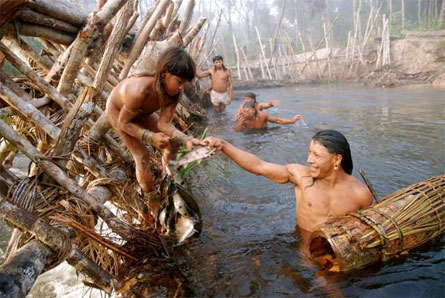
A memória dá um salto e retorna a 1979, quando o autor destas linhas, então chefe da redação do programa Globo Repórter, da Rede Globo, foi pela primeira vez ao Parque Indígena do Xingu documentar um trabalho que ali vinha sendo feito por uma equipe de médicos da Escola Paulista de Medicina (hoje Universidade Federal de São Paulo), liderada pelo professor Roberto Baruzzi. Os pesquisadores acompanhavam a saúde de cada índio de várias etnias do sul do Xingu, mantinham fichas específicas de todos e as comparavam com a visita anterior. A conclusão era espantosa: não havia ali um só caso de doenças cardiovasculares – exatamente porque, vivendo isolados, os índios não tinham nenhum dos chamados fatores de risco dessas doenças: não fumavam, não bebiam álcool, não tinham vida sedentária nem obesidade, não apresentavam hipertensão, não consumiam sal (só sal vegetal, feito com aguapé) nem açúcar de cana. Saindo do Xingu, fomos documentar grupos de índios caingangues e guaranis aculturados que viviam nas proximidades de Bauru (SP). Os que trabalhavam eram boias-frias e os demais, mendigos, alcoólatras, com perturbações mentais. Praticamente todos eram hipertensos, obesos, com taxas de mortalidade altas e precoces. A comparação foi ao ar num documentário, As Razões do Coração, que teve índices altíssimos de audiência.

São informações que deveriam fazer parte de nossas discussões de hoje, quando estamos às voltas com várias crises na área de saúde – epidemias de dengue (mais de 220 casos novos por hora, 257.809, ou 55% do total, em São Paulo), índices altíssimos de obesidade, inclusive entre jovens e crianças, doenças cardiovasculares entre as mais frequentes causas de morte. Mas em lugar de prestar atenção aos modos de viver de indígenas, enquanto ainda na força de sua cultura, continuamos a tratá-los como seres estranhos, que vivem pelados, não falam nossas línguas, não trabalham segundo nossos padrões. A ponto de eles terem agora de se rebelar para que não se aprove no Congresso Nacional, sob pressão principalmente da “bancada ruralista”, uma proposta de emenda constitucional que lhes retira parte de seus direitos assegurados pela constituição de 1988 e transfere da Funai para o Congresso o poder de demarcar ou não terras indígenas.

Com esses rumos acentuaremos o esquecimento de que eles foram os “donos” de todo o território nacional, do qual foram gradativamente expulsos. Mas ainda são quase 1 milhão de pessoas de 220 povos, que falam 180 línguas, em 27 Estados. Agora avança, inclusive no Judiciário, a tese de que só pode ser reconhecido para demarcação território já ocupado efetivamente por eles antes de 1988. E assim cerca de 300 áreas correm riscos.

Só que nos esquecemos também dos relatórios da ONU, do Banco Mundial e de outras instituições segundo os quais as áreas indígenas são os lugares mais eficazes em conservação da biodiversidade – mais que as reservas legais e outras áreas protegidas. Que seus modos de viver são os que mais impedem desmatamentos – esse problema tão angustiante por sua influência na área do clima e dos regimes de chuvas.

Isso não tem importância apenas para o Brasil. A própria ONU, por meio de sua Agência para a Alimentação e Agricultura (FAO), afirma (Eco-Finanças, 17/4) que a “crise da água” afetará dois terços da população mundial em 2050 (hoje já há algum nível de escassez para 40% da população). E que o fator principal será o maior uso da água para produzir 60% mais alimentos que hoje.

Mas há diferenças de um lugar para outro. Os países ditos desenvolvidos, com menos de 20% da população mundial, consomem quase 80% dos recursos físicos; os Estados Unidos, com 5% da população, respondem por 40% do consumo. Segundo a sua própria Agência de Proteção Ambiental, os EUA jogam no lixo 34 milhões de toneladas anuais de alimentos. No mundo, um terço dos alimentos é desperdiçado (FAO, 5/2), enquanto mais de 800 milhões de pessoas passam fome e mais de 2 bilhões vivem abaixo da linha de pobreza. No Brasil mesmo, 3,4 milhões de pessoas passam fome (Folha de S.Paulo, 22/9/2014). A elas podemos somar mais de 40 milhões de pessoas que vivem do Bolsa Família.

Diante de tudo isso, vale a pena lembrar o depoimento do saudoso psicanalista Hélio Pellegrino, no livro Noel Nutels – Memórias e Depoimentos, sobre o médico que dedicou sua vida a grupos indígenas. “Se estamos destruindo os índios”, escreveu Hélio Pellegrino, “é porque nossa brutalidade chegou a um nível perigoso para nós próprios. Os índios representam a possibilidade humana mais radical e íntima de transar com a natureza (…). Homem e natureza são casados (…). Dissolvido esse casamento, o homem tomba num exílio feito de poeira amarga e estéril”. (O Estado de S. Paulo/ #Envolverde)

Washington Novaes é jornalista. E-mail: wlrnovaes@uol.com.br.

** Publicado originalmente no site O Estado de S. Paulo.

(O Estado de S. Paulo)

Experts Warn of “Cataclysmic” Changes as Planetary Temperatures Rise (Truthout)

Monday, 27 April 2015 00:00 By Dahr Jamail, Truthout | Report 

Two unprecedentedly high temperatures were recorded in Antarctica, providing an ominous sign of accelerating ACD as one of the readings came in at just over 63 degrees Fahrenheit. (Photo: Iceberg via Shutterstock)

Two unprecedentedly high temperatures were recorded in Antarctica, providing an ominous sign of accelerating climate change as one of the readings came in at just more than 63 degrees Fahrenheit. (Photo: Iceberg via Shutterstock)

Climate Disruption DispatchesThis month’s anthropogenic climate disruption (ACD) dispatch begins with the fact that recently released National Oceanic and Atmospheric Administration data show that this March was, by far, the hottest planetary March ever recorded, and the hottest January to March period on record as well.

We are watching unprecedented melting of glaciers across the planet, increasingly high temperature records and epic-level droughts that are now becoming the new normal: Planetary distress signals are increasing in volume.

One of these took place recently in Antarctica, of all places, where two unprecedentedly high temperatures were recorded, providing an ominous sign of accelerating ACD as one of the readings came in at just over 63 degrees Fahrenheit.

“We’re going to be out of water.”

A fascinating recent report shows that approximately 12 million people living in coastal areas will be displaced during the next 85 years, with areas along the Eastern Seaboard of the United States seeing some of the most dramatic impacts.

In the US, another report shows that the Navajo Nation is literally dying of thirst, with one of the nation’s leaders flatly sounding the alarm by stating, “We’re going to be out of water.”

A study just published in Geophysical Research Lettersbolsters the case that a period of much faster ACD is imminent, if it hasn’t already begun.

On that note, leading climate researchers recently saidthere is a possibility that the world will see a 6-degree Celsius temperature increase by 2100, which would lead to “cataclysmic changes” and “unimaginable consequences for human civilization.”

With these developments in mind, let us take a look at recent developments across the planet since the last dispatch.

Earth

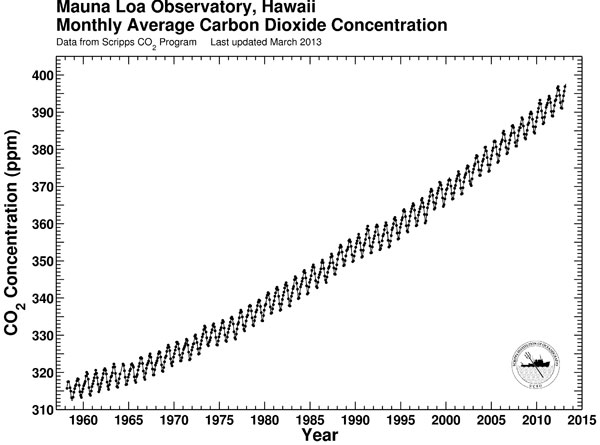
Signs of ACD’s impact across this sector of the planet are once again plentiful, and the fact that the Amazon is suffering is always a very loud alarm buzzer, given that every year the world’s largest rainforest cycles through 18 billion tons of carbon when its 6 million square kilometers of trees breathe in carbon dioxide and then release it back into the atmosphere when they die. This is twice the amount of carbon that fossil fuel burning emits in an entire year. A recent report shows that while the Amazon is continuing to absorb more carbon than it is releasing, a tipping point is coming, and likely soon, as deforestation, drought and fires there continue to remove precious trees at a frightful rate. With 1.5 acres of rainforest lost every single second, somewhere around the world, the situation in the Amazon does not bode well for our future.

In the United States, in Harvard Forest, located 70 miles west of the university’s campus in Cambridge, Massachusetts, hemlock trees are dying at an alarming rate. Harvard Forest is a case study, as it is part of a network of 60 forests around the world called the Center for Tropical Forest Science-Forest Global Earth Observatories, where they are being studied for their response to ACD and other anthropogenic issues. Kristina Anderson-Teixeira, an ecologist with the network, said its forests are “being impacted by a number of different global change factors. We do expect more of this, be it pests or pathogens or droughts or heat waves or thawing permafrost.”

Another report from April revealed that Russia has been losing an amount of forest the size of Switzerland (16,600 square miles of tree cover) every year, for three years running.

Without ice in the summer, polar bears will starve and die off.

Terrestrial animals continue to struggle to survive in many areas. It should come as no surprise that in the Arctic, a recent studyshows that the theory that polar bears will be able to adapt to ice-free seas in the summer by eating on land has been debunked. Without ice in the summer, polar bears will starve and die off.

Another study shows that ACD is threatening mountain goats, due to the warming that is occurring even at the higher elevations where the goats live, as the rate of warming there is two to three times faster than the rest of the planet. According to the study, due to the warming, the goats’ future is now uncertain.

In California, sea lion strandings have already reached more than 2,250 for this year alone, which is a record. The worsening phenomenon is being blamed on warming seas that are disrupting the food supply of marine mammals.

Across the United States, hunters are seeing their traditions being changed by ACD. “I could point you to a million different forums online where hunters are complaining about the season and how hunting is terrible,” said one hunter in a recent report. “At the end of the day, it’s changing weather patterns. Winters around here are not as cold as they used to be.”

March report from a researcher in Rhode Island showed that the growth and molting rates of juvenile lobsters are decreasing “significantly” due to oceans becoming increasingly acidic from ACD. This makes the animals more vulnerable to predations, thus leading to fewer adult lobsters and an overall rapidly declining population.

Air

There have been a few major developments recently in this sector of our analysis.

Interestingly, some of the more commonly used anesthetics are apparently accumulating in the planet’s atmosphere, thus contributing to warming of the climate, according to a report in April. It is a small amount, mind you, but the volume is increasing.

US greenhouse gas pollution increased 2 percent over the previous year in 2013.

Bad news on the mitigation front comes in the form of a study that revealed that ongoing urban sprawl and auto exhaust is hampering cities’ best efforts toward lowering carbon dioxide emissions. If people continue to drive as much as they are, and development continues apace, the push to build more dense housing, better transit systems and more bike lanes in urban centers will be for naught.

Speaking of lack of mitigation, the US Environmental Protection Agency recently announced that US greenhouse gas pollution increased 2 percent over the previous year in 2013.

Drought plagued California gets more bad news in this sector, as recently released data shows that the state continues to have its warmest year ever recorded, with statewide temperatures coming in nearly 2 degrees Fahrenheit warmer than the previous record, which was set in 2014. The state is quite literally baking.

Another study showed that the frozen soil (permafrost) of the planets’ northern polar regions that holds billions of tons of organic carbon is melting and that melting is being sped up by ACD, hence releasing even more carbon into our already carbon dioxide-supersaturated atmosphere.

Lastly in this section, those who believe in technological fixes for our predicament received some bad news in April, which came in the form of a report that shows that any attempts to geoengineer the climate are likely to result in “different” climate disruption, rather than an elimination of the problem. The most popular proposed idea of solar radiation management that would utilize stratospheric sulfate aerosols to dim the sun has been proven to be, well, destructive. Using a variety of climate models, Ken Caldeira from the Carnegie Institution for Science in Stanford, California, has investigated the likely consequences of such geoengineering on agriculture across the globe.

According to a report on the matter:

His research showed that while dimming could rapidly decrease global temperatures, high carbon dioxide levels would be expected to persist, and it is the balance between temperature, carbon dioxide, and sunlight that affects plant growth and agriculture. Exploring the regional effects, he finds that a stratospherically dimmed world would show increased plant productivity in the tropics, but lessened plant growth across the northerly latitudes of America, Europe and Asia. It is easy to see how there might be geopolitical shifts associated with changes in regional food production across the globe. “It’s probably the poor tropics that stand to benefit and the rich north that stands to lose,” said Prof Caldeira.

Hence, given that the results would be detrimental to the “rich north,” which by far and away has pumped more carbon dioxide into the atmosphere than the “poor tropics,” the results of geoengineering would indeed be karmic.

Water

In the United States, California’s epic drought continues to lead in the water sector of analysis.

For the first time in California’s history, mandatory water use reductions have been imposed on residents after a winter of record-low snowfalls, and hence a record-low snowpack. “People should realize we are in a new era,” Gov. Jerry Brown said at a news conference there in April, standing on a patch of brown and green grass that would normally be thick with snow that time of year. “The idea of your nice little green lawn getting watered every day, those days are past.”

Climate scientists also recently announced, disconcertingly, that California’s record-breaking drought is merely a preview of future ACD-generated megadroughts.

Shortly after Brown announced the mandatory water restrictions for his state, another study was released showing that California will also be facing more extreme heat waves, along with rising seas, caused by increasingly intense impacts from ACD. According to the study, the average number of days with temperatures reaching 95 degrees will double or even triple by the end of this century. Simultaneously, at least $19 billion worth of coastal property will literally disappear as sea levels continue to rise.

Experts also announced in April that in “drought-era” California, “every day” should now be considered “fire season.” NASA Jet Propulsion Laboratory climatologist Bill Patzert said of California, “We are in an incendiary situation.”

California’s state climatologist, Michael Anderson, issued a very stark warning in April when he said the state faces dust bowl-like conditions, as he compared the water crisis in California to the legendary US dustbowl. “You’re looking on numbers that are right on par with what was the Dust Bowl,” he said.

Forty out of the 50 US states will face a water shortage within the next 10 years.

As aforementioned, this year’s dry, warm winter has left the entire western United States snowpack at record-low levels. Given that this is a critical source of fresh surface water for the entire region, this will only exacerbate the already critical water shortages that are plaguing the region.

One ramification of this is exampled by how the once-powerful Rio Grande River has been reduced to a mere trickle still hundreds of miles from its destination at the end of its 1,900-mile journey to the Gulf of Mexico, thanks to the increasing impacts of ACD. Farmers and residents who rely on it for water are in deep trouble.

And it’s not just California and the US Southwest that are dealing with major water shortages. The Government Accountability Office recently released a report showing that 40 out of the 50 US states will face a water shortage within the next 10 years.

Meanwhile, up in Alaska, that state’s iconic Iditarod sled dog race has been reduced to having mushers have their dogs drag their sleds across large swaths of mud that spanned over 100 miles in some areas, due to warmer temperatures there melting snow and ice that used to cover the course. “I love the challenge, being able to overcome anything on the trail,” said four-time winner Martin Buser of the new conditions. “But if this is a new normal, I’m not sure I can sustain it.”

In this writer’s backyard, glaciers are melting away at dramatic rates in Olympic National Park. Pictures tell the story, which was also addressed in detail recently at a talk given at the park by University of Washington research professor Michelle Koutnik, who was part of a team monitoring the park’s Blue Glacier. By way of example, an entire section of the lower Blue Glacier that existed in 1989 was completely gone by 2008, and melt rates are increasing. A sobering “before and after” look at the photographic evidence should not be missed.

A recent study gave another grim report on glaciers, this one focusing on Canada where glaciers in British Columbia and Alberta are projected to shrink by at least 70 percent by the end of this century, and of course ACD was noted as the main driving force behind the change. “Most of that is going to go,” one of the researchers said of Canada’s glaciers. “And most seems to be on its way out.”

study recently published in the Proceedings of the National Academy of Sciences has found that as the Arctic Ocean warms and loses its sea ice cover, phytoplankton populations will explode. This creates another positive feedback loop for ACD, as it further amplifies warming in a region that is already heating up twice as fast as the rest of the globe.

On the other end of the water spectrum, rising seas continue to afflict Venice, where the city is seeing dramatic changes. According to a recent report: “In the 1920s, there were about 400 incidents of acqua alta, or high water, when the right mix of tides and winds drives the liquid streets up into homes and shops in the lowers parts of the city. By the 1990s, there were 2,400 incidents – and new records are set every year.”

Fire

An April report shows that ACD is predicted to bring more fires and less snow to the iconic Yellowstone National Park. These changes will likely fuel catastrophic wildfires, cause declines in mountain snows and threaten the survival of animals and plants, according to the scientists who authored the report. It shows that expected warming over the US West over the next three decades will transform the land in and around Yellowstone from a wetter, mostly forested Rocky Mountain ecosystem into a more open landscape, more akin to the arid US Southwest.

“Ecological Implications of Climate Change on the Greater Yellowstone Ecosystem,” compiled by more than 20 university and government scientists, said that such dry conditions in that area have not been seen for the last 10,000 years, and extremely destructive wildfires like the one in 1988 that burned thousands of acres of the park are going to become more common, while years without major fires will become rare.

Denial and Reality

The climate disruption deniers have been barking loudly over the last month, which should be expected as irrefutable evidence of ACD continues in an avalanche.

Following Florida’s lead, Wisconsin officially became the next state to censor its employees’ work regarding climate disruption. Wisconsin has banned its employees from working on ACD, after Florida banned the use of the terms “climate change” and “global warming.”

Perhaps this is what played a role in inspiring acclaimed astrophysicist Neil deGrasse Tyson to proclaim that politicians denying science is “the beginning of the end of an informed democracy.”

Facing a loss of high-profile corporate sponsors, the American Legislative Exchange Council (ALEC), now tired of being accused of ACD denial, has threatened actionagainst activist groups that accuse it of denying ACD. This “action” could come in the form of lawsuits.

The Yale Project on Climate Change Communication released very interesting county-by-county maps of the United States, which show the various levels of ACD denial across the country and are worth examining.

Over the last four years, extreme weather events in the US caused 1,286 fatalities and $227 billion in economic losses.

Not to be outdone by fellow Republican ACD-denying presidential candidates, Marco Rubio voluntarily donned the dunce cap by stating that scientists have not determined what percentage of ACD is due to human activities compared to natural climate variability, and added brilliantly, “climate is always changing.”

This year has seen us cross yet another milestone in the Arctic – this one being that sea ice covering the top of the world reached the lowest maximum extent yet observed during the winter. This means, ominously, that in just the last four years Arctic sea ice has seen a new low both for its seasonal winter peak (2015) and for its summer minimum (2012). While most sane people would see this as a gut-wrenching fact to have to process emotionally, Robert Molnar, the CEO of the Sailing the Arctic Race, is busily planning an “extreme yacht race” for the summer and fall of 2017 there. “The more ice that’s being melted, the more free water is there for us to be sailing,” he said.

In stark contrast, US Secretary of State John Kerry is visiting the Arctic amid concerns over the melting ice, and some of the mainstream media, in this case The Washington Post, are running op-eds claiming that ACD deniers are actually now in retreat due to their own outlandish comments.

In a historic move, even oil giant BP’s shareholders voted overwhelmingly to support a resolution that would force the company to disclose some of its ACD-related risks.

Also on the reality front, recently released analysis shows that densely populated Asian islands and countries like Hong Kong, Japan, Taiwan and the Philippines are likely to face even more intense climatic events in the future.

Another report, this one titled “An Era of Extreme Weather” by the Center for American Progress, shows that major weather events across the United States in 2014 cost an estimated $19 billion and caused at least 65 human fatalities. The report also shows that over the last four years, extreme weather events in the US caused 1,286 fatalities and $227 billion in economic losses spanning 44 states.

US President Barack Obama formally submitted to the UN a commitment to reduce US greenhouse gas emissions by up to 28 percent below 2005 levels by 2025. Critics believe this is far too little, too late, but at least it is a move in the right direction.

In an interesting twist of fate, while many Florida Republican lawmakers are busily denying ACD, other Florida Republicans are busy working to protect their state’s coastal areas from rising seas resulting from advancing ACD.

Lastly in this month’s dispatch, a recently published study shows that acidic oceans helped fuel the largest mass extinction event in the history of the planet, which wiped out approximately 90 percent of all life on earth.

The carbon released that was one of the primary drivers of that extinction event was found to have been released at a similar rate to modern emissions. Dr. Matthew Clarkson, one of the authors of the study, commented: “Scientists have long suspected that an ocean acidification event occurred during the greatest mass extinction of all time, but direct evidence has been lacking until now. This is a worrying finding, considering that we can already see an increase in ocean acidity today that is the result of human carbon emissions.”

Copyright, Truthout. May not be reprinted without permission

Drought Frames Economic Divide of Californians (New York Times)

COMPTON, Calif. — Alysia Thomas, a stay-at-home mother in this working-class city, tells her children to skip a bath on days when they do not play outside; that holds down the water bill. Lillian Barrera, a housekeeper who travels 25 miles to clean homes in Beverly Hills, serves dinner to her family on paper plates for much the same reason. In the fourth year of a severe drought, conservation is a fine thing, but in this Southern California community, saving water means saving money.

The challenge of California’s drought is starkly different in Cowan Heights, a lush oasis of wealth and comfort 30 miles east of here. That is where Peter L. Himber, a pediatric neurologist, has decided to stop watering the gently sloping hillside that he spent $100,000 to turn into a green California paradise, seeding it with a carpet of rich native grass and installing a sprinkler system fit for a golf course. But that is also where homeowners like John Sears, a retired food-company executive, bristle with defiance at the prospect of mandatory cuts in water use.

“This is a high fire-risk area,” Mr. Sears said. “If we cut back 35 percent and all these homes just let everything go, what’s green will turn brown. Tell me how the fire risk will increase.”

The fierce drought that is gripping the West — and the imminent prospect of rationing and steep water price increases in California — is sharpening the deep economic divide in this state, illustrating parallel worlds in which wealthy communities guzzle water as poorer neighbors conserve by necessity. The daily water consumption rate was 572.4 gallons per person in Cowan Heights from July through September 2014, the hot and dry summer months California used to calculate community-by-community water rationing orders; it was 63.6 gallons per person in Compton during that same period.

Now, California is trying to turn that dynamic on its head, forcing the state’s biggest water users, which include some of the wealthiest communities, to bear the brunt of the statewide 25 percent cut in urban water consumption ordered by Gov. Jerry Brown. Cowan Heights is facing a 36 percent cut in its water use, compared with 8 percent for Compton.

Other wealthy communities that must cut 36 percent include Beverly Hills and Hillsborough, a luxury town in Silicon Valley. Along with Compton, other less wealthy communities facing more modest cuts include Inglewood, which has been told to reduce its water consumption by 12 percent over what it was in 2013.

The looming question now, with drought regulations set to be adopted next month, is whether conservation tools being championed by this state — $10,000-a-day fines for water agencies, higher prices for bigger water users or even, in the most extreme cases, a reduction in water supplies — will be effective with wealthy homeowners. Since their lawns are more often than not tended to by gardeners, they may have little idea just how much water they use.

Gail Lord in her garden in Cowan Heights, which is facing a 36 percent cut in its water use.CreditMonica Almeida/The New York Times 

As it is, the legality of conservation — the practice of charging higher water rates to people who consume more for big water use — came under question when a court ruled that a tiered-pricing system used by an Orange County city ran afoul of the State Constitution and sent it back to allow the city to try to bring it into compliance.

“The wealthy use more water, electricity and natural gas than anyone else,” said Stephanie Pincetl, the director of the California Center for Sustainable Communities at the University of California, Los Angeles. “They have bigger properties. They are less price sensitive. So if you can afford it, you use it.”

“Then it becomes a moral question,” she said. “But lots of wealthy people don’t pay their own bills, so they don’t know what the water costs.”

Brown Lawns vs. Lush Ones

In Compton, where residents often pay their bills in cash or installments, lawns are brown and backyard pools are few or empty. In Cowan Heights, where residents are involved in a rancorous dispute with a water company over rate increases, water is a luxury worth paying for as homeowners shower their lush lawns and top off pools and koi ponds.

IN THEIR OWN WORDS

The Times asked Californians for their thoughts on the drought and how it affects them.

John Montgomery, Oak Park : “It doesn’t matter whether you are conservative or liberal, a religious fundamentalist or a raging athiest, rich or poor, we all need drinking water, and we all eat things that need water to grow to be very simple about it.”

Stephen Babatsias, Los Angeles: “Rich neighborhoods with lush gardens, like Hancock Park, are still as rich and lush looking as before, filled with oxygen and opulent foliage. Everything looks and feels the same so far.”

Edie Marshall, Davis: “Call it fatalistic, but why should I try even harder when so many have done little or nothing? I’m not going to cut back on my showers while rich people in southern California have nice lawns”

Kathleen Naples, Avalon: “Catalina Island has a desal plant with old diesel generators which could be updated and co-generation could be used. Edison runs it very poorly. This is a tourist economy, so tourists waste water and residents are fined and suffer shut-offs.”

Cheryl Trout, Palm Desert: “We are in a 5,000 home golf course community, which has recycled it’s waste water since it was built for watering golf courses and community landscaping. It would be nice if that water could also be used for individual yards. More communities need to switch to this model.”

Daniel Sawyer, San Bernardino: “I am pretty conscientious about water, energy, and waste, so I appreciate this official acknowledgement of the problem. I foresee a lot of Californians paying fines and fees because they will recklessly continue to waste water despite Governor Brown’s orders.”

“Just because you can afford to use something doesn’t mean you should,” said Aja Brown, the mayor of Compton, as she sat in her second-floor office with windows overlooking the light-rail Blue Line tracks that cut through town. “We’re all in this together. We all have to make sure we consume less.”

Hints of class resentment can be heard on the streets of Compton.

“I have a garden — it’s dying,” said Ms. Barrera, the housekeeper, as she left the water department at Compton City Hall, where she had just paid a $253 two-month water bill. “My grass is drying. I try to save water. In Beverly Hills, they have a big garden and run laundry all the time. It doesn’t matter.”

Rod Lopez, a contractor from Compton who tends to homes here and along the wealthy Newport Beach coast, said he was startled at the different attitudes he found toward water consumption in communities just 30 miles apart.

“I work in Newport Beach: I see water running all day long,” he said. “We’ve gotten so tight over here. Everything is irrigated over there. They may get fined for it — they don’t care. They have the money to pay the fines.”

Compton and Cowan Heights, which is 10 miles from Disneyland, could hardly be more different, and it is not only a matter of water. The median household income in Compton is $42,953, and 26 percent of the population lives below the poverty line; 67 percent of the population is Hispanic. In North Tustin, the census-designated community that includes Cowan Heights, the median household income is $122,662, and less than 3 percent of the population lives below the poverty line; 84 percent of the population is white.

Since the first homes sprang up in Cowan Heights in the 1950s in what had been hilly horse pastures, water and money have made this neighborhood of doctors, lawyers and wealthy retirees bloom. Even as the drought has worsened and water rates have climbed, residents have continued consuming hundreds of gallons a day and paying — albeit with more than a little grousing — water bills that have soared to $400 or $500 a month.

Many people say they are trying to use less: They are capping their sprinkler systems, installing expensive new drip-watering systems or replacing their thirsty lawns with starkly beautiful desert landscapes. But they can also afford to buy their way out of the drought, assuming that fines will be the primary punishment for those who do not conserve, and that the water will keep flowing for those who can pay.

Some Cowan Heights residents say their neighbors have enough money not to pay heed to rising prices, and are content to let their landscapers use as much water as necessary to keep their homes in bloom. Landscapers’ trucks are parked around nearly every twisting road, tending to avocado and lemon trees, plush lawns, and riots of purple hibiscus and scarlet bougainvillea.

“They don’t even think about it,” said Gail Lord, a resident who keeps a blog cataloging the gardens around Cowan Heights.

Salvador Garcia, a gardener, mowed a lawn in Compton, where 26 percent of the population lives below the poverty line and which is already using less water by financial necessity.Credit Monica Almeida/The New York Times 

On Deerhaven Drive, Craig Beam and his wife saw their water-scarce future after a landscaper stomped at the base of their Chinese elm and declared the roots hollow and parched. “Nobody’s going to go broke around here paying their water bills,” Mr. Beam said.

Still, in a sign that even the wealthy have their limits, the drought is exacerbating a dispute between Cowan Heights residents and their for-profit water provider, the Golden State Water Company, offering a glimpse of fights to come as local water agencies impose higher prices to meet California’s new conservation mandates. The neighborhood is bristling with lawn signs reading, “Stop the Water Ripoff!”

Calculating Costs

Residents complain their water bills have soared as Golden State Water imposed a three-tier pricing system that charges more for higher water use, the kind of conservation pricing that state water regulators are championing. The company is now seeking to add a fourth, even higher price tier. “Golden State Water’s rates reflect the true cost to operate and maintain the water system,” said Denise Kruger, a senior vice president of the company.

That has not appeased water users.

Ms. Lord and her husband, Alan Bartky, outside their home in Cowan Heights, where the median household income is $122,662. CreditMonica Almeida/The New York Times 

“Water is a necessity of life,” said Mr. Sears, the retired food-company executive, whose bimonthly water bills regularly run $400 or $500 but went as high as $756 last September. “It should not be sold as a commodity.”

Thirty miles away, the economy in Compton is on the upswing as this region comes out of the recession. Still, Compton Boulevard, the axis around which the 127-year-old community was settled, is filled with reminders of the poverty and crime that are still here: Check-cashing stores and bail bondsmen. Many homes have gates over their windows.

Compton has a storied history of gang wars and has produced some of the bigger names in rap music, including Kendrick Lamar and Ice Cube. The unemployment rate in Compton was 11.8 percent in February, compared with 6.7 percent statewide. (There are no comparable numbers for Cowan Heights, since it is an unincorporated region.)

This city is a neat grid of postage-stamp-size front lawns, many of them brown or choked with weeds. There are few pools or ornamental fountains in this part of the county; the fountains in front of City Hall have been turned off.

After not budging for 25 years, water prices began rising in 2005 and have increased about 93 percent since then. The city, which has 81,963 water consumers, has also set up a two-tiered system to charge heavier users more, though it remains to be seen if that and other tiered systems will be challenged in the wake of the court ruling in Orange County last week. A typical water bill here is $70 a month.

Alysia Thomas with her daughter Raven and son Darian outside their home in Compton, where a typical water bill is $70 a month. Credit Monica Almeida/The New York Times 

“To me the issue is keeping down the cost,” said Ms. Thomas, 41, the stay-at-home mother. “Conservation is a cost-saving thing for me.” She leaned over the fence of her home that she shares with her husband and children, looking over her compact patch of lawn that surrounds her home and another small cottage, where her mother lives.

Chad Blais, the deputy director of public works at Compton, said people often paid their water bill in cash or pleaded for an extension. “We do have a large community that is month-to-month on their pay,” he said. “They don’t have a high water usage mainly because they can’t afford it. They’ll call and tell us they’re choosing to pay for food or medicine.”

Under Governor Brown’s 25 percent statewide reduction order, about 400 local water agencies are responsible for cuts ranging from 4 percent to 36 percent. Water companies are limiting how often people can water their yards — twice a week for Golden State customers — and barring them from washing down pavement or using drinking water to wash a car.

If water providers cannot get customers to conserve enough voluntarily, they can resort to financial penalties: Golden State said it would fine offenders in Cowan Heights and other communities it serves $500 a day.

California’s water-control board has zeroed in on Cowan Heights and its 5,399 water customers as some of the most spendthrift water users. The benchmark measurement from last summer put it high on the list of 94 water districts that must cut their water use by 36 percent under the proposed new rules.

Compton residents often pay their water bills in cash or installments at City Hall.Credit Monica Almeida/The New York Times 

“It is somewhat of an outlier,” Toby Moore, the chief hydrogeologist for Golden State Water, said of Cowan Heights. “There’s been a lot of investment into those properties, so water use is higher to address the landscaping of those properties.”

Some people in Cowan Heights are planning to let their lawns go brown, though more out of a spirit of conservation than economic necessity.

“We’ll replace that with rocks,” said Dr. Himber, the neurologist, as he and his landscaper walked the grounds.

Ms. Lord, the blogger, walked around her home, tucked amid flower-splashed hillsides behind a stately automated gate, and surveyed her roses with a fatalistic eye. “Doomed,” she said, nodding at the flowers, blooming wedding-white and dance-hall pink. “Doomed.”

‘A Bad Message’

About 80 percent of the water in this state is used by agriculture, so the amount of water that might be saved by cuts in wealthy and relatively sparsely populated areas will not be large.

But the disparity in behavior is a matter of concern among state water regulators, as is the worry that high prices will not have the same kind of impact on water use in, say, Cowan Heights as they might in Compton.

“That is the challenge,” said Jeffrey Kightlinger, the general manager of the Metropolitan Water District of Southern California, which provides water for about 19 million people. “We are finding it works with 90 percent of the public. You still have certain wealthy communities that won’t bother. And the price penalty doesn’t impact them. It sends a bad message.”

David L. Feldman, who studies water policy at the University of California, Irvine, said a big risk for state water regulators would be if the public concluded that water-conservation policies were “falling disproportionately on those who are less able to meet those goals.”

Ms. Barrera, the housekeeper, said she had thought she was doing her part, and she spoke of the lush gardens and sweeping pools she sees in Beverly Hills.

“I’m using a lot less,” Ms. Barrera said. At that, she glanced down at the just-paid water bill she was still holding in her hand. “But I guess it’s not enough.”

Puppy-Dog Eyes of Science (Savage Minds)

April 24, 2015 – John Hartigan

“Scientists say…” It’s interesting what natural science research starts making the rounds on social media. Mostly on diet or health broadly, and increasingly concerning climate change. On rare occasion—as over the past few days—some reports surface that offer insight into the circulating clutter itself, as in “cute dog” photos. In this instance, they’re opportunities to glimpse changing understandings of big topics, like domestication and evolution.

Links for two articles recently popped up in my Twitter feed: “The Science of Puppy-Dog Eyes” (NYTimes, 4/21/14) and “The Guilty Looking Companion,” Scientific American(4/20/15), both treating the gazing behavior of dogs and its various effects on humans. The first, by Jan Hoffman, reported on a study published in Science (in a themed-column on evolution), titled, “Dogs hijack the human bonding pathway.” The second, by Julie Hecht, “The Guilty Looking Companion,” builds off an article in Behavioral Processes, on a tangled question: “Are owners’ reports of their dogs’ ‘guilty look’ influenced by the dogs’ action and evidence of the misdeed?” Both suggest a far more agential companion species than many people might’ve suspected, but more importantly they each complicate stock domestication narratives suggesting it was something we simply did to them. They also suggest opportunities for extending social analysis beyond the human.

As the title of the Science article suggests, dogs were possibly canny drivers of domestication: “dogs became domesticated in part by adapting to human means of communication: eye contact.” In particular, the speculation is that dogs cleverly “utilized a natural system meant for bonding a parent with his or her child.” Evolutionarily, “the challenge for dogs may simply have been to express a behavioral (and morphological) repertoire that mimicked the cues that elicit caregiving toward our own young. Indeed, these juvenile characteristics of dogs are known to carry a selective advantage with respect to human preferences.” So dogs wile their way into our good graces by coopting the cuteness channel we have for children. To complicate agency a bit further, this seems to all hinge on a bidirectional hormonal mechanism: people and dogs both develop heightened, pleasurable levels of oxytocin from protracted gazing into each other’s eyes. “These findings suggest not only an interspecific effect of oxytocin, but also the exciting possibility of a feedback loop,” since “shifts in oxytocin concentration in a dog might elicit similar changes in a human and vice-versa—just as when a mother bonds with her infant.” Domestication just got a good deal more interesting.

“The guilty looking companion” takes up the theme of sociality and how social bonds are respectively maintained in various species, but also how humans might be duped by our tendency to anthropomorphize dogs as possessing a subjective state approximating shame. The reparative behaviors of appeasement and reconciliation that maintain relationships, practiced by many species, when manifested by dogs, reads easily, to us, as “guilt.” But through a fascinating series of experiments, researchers countered that these canine gestures are just “cohesive displays,” which operate “to reduce conflict, diffuse tension, and reinforce social bonds.” Dogs are not responding to ameliorating a subjective sense of shame at transgressing rules; they are instead “incredibly sensitive to environmental and social cues.” If there’s furniture torn or overturned, the owner is looking for someone to chastise—better grovel or cringe. These behavior are very effective, according to surveys of dog owners, who withhold punishments in the wake of such displays. But Hecht concludes with a caution: “It might just be that we’re anthropomorphizing,” in reference to the viral spew of “dog shamming” photos. “Which, in this case, might not be good for us or our dogs.” Indeed, but what is even more valuable here is the perspective opened up onto thinking about parallel and converging forms of species sociality, beyond the question of who is domesticating who.

On that topic, another recently published science article pursues just these openings, though unfortunately it does not seem to be circulating widely at all. “Testing the myth: Tolerant dogs and aggressive wolves,” in Proceedings B (Royal Society Publishing) reports on findings that indicate “a steeper dominance hierarchy in dogs than in wolves.” While “tolerance” is supposed to be the character trait “selected for,” dogs appear far more aggressive and uncooperative with conspecifics than wolves. The problem with “all domestication theories” to date is that they’ve ignored “apparently contradictory behaviours…observed in dogs and wolf packs.” There’s an enormous amount to this piece, but it may come down to “face,” as Erving Goffman developed the concept. “Visual communication in dogs is somewhat impaired due to their reduced visual (facial as well as bodily) expressions,” which “might lead to an inability to control conflicts in close quarters.” Wolves are far more articulate in reading both gaze and facial features in conspecific communications. Range et al write, “Although dogs and wolves seem to use the same signals overall, it is possible that dogs do not use them as appropriately as wolves”—i.e., they haven’t refined the etiquette of conspecific communications quite as well, though they’re very good at circumventing our conspecific gaze signaling tendencies.

But that “wolves appear tolerant, attentive, and at the same time cooperative towards pack members” is in stark “contrast to the starting point of several recent domestication hypotheses.” Free-ranging dogs—constituting about 76-83% of the global dog population!!—not so much. So the questions swirl as to dogs’ cognitive and emotional processes underlying their intraspecific sociality and how that variously aligns with ours, in the deep past and today.

Earthquake Devastates Nepal, Killing More Than 1,900 (New York Times)

NEW DELHI — A powerful earthquake shook Nepal on Saturday near its capital, Katmandu, killing more than 1,900 people, flattening sections of the city’s historic center, and trapping dozens of sightseers in a 200-foot watchtower that came crashing down into a pile of bricks.

As officials in Nepal faced the devastation on Sunday morning, they said that most of the 1,931 deaths occurred in Katmandu and the surrounding valley, and that more than 4,700 people had been injured. But the quake touched a vast expanse of the subcontinent. It set off avalanches around Mount Everest, where at least 17 climbers died. At least 34 deaths occurred in northern India. Buildings swayed in Tibet and Bangladesh.

The earthquake, with a magnitude of 7.8, struck shortly before noon, and residents of Katmandu ran into the streets and other open spaces as buildings fell, throwing up clouds of dust. Wide cracks opened on paved streets and in the walls of city buildings. Motorcycles tipped over and slid off the edge of a highway.

Devastation in Katmandu. A deadly earthquake shook Nepal on Saturday near its capital, Katmandu, and set off avalanches around Mount Everest. By Rajneesh Bhandari and Colin Archdeacon on  Publish Date April 25, 2015. 

By midafternoon, the United States Geological Survey had counted 12 aftershocks, one of which measured 6.6.

Seismologists have expected a major earthquake in western Nepal, where there is pent-up pressure from the grinding between tectonic plates, the northern Eurasian plate and the up-thrusting Indian plate. Still, witnesses described a chaotic rescue effort during the first hours after the quake as emergency workers and volunteers grabbed tools and bulldozers from construction sites, and dug with hacksaws, mangled reinforcing bars and their hands.

Though many have worried about the stability of the concrete high-rises that have been hastily erected in Katmandu, the most terrible damage on Saturday was to the oldest part of the city, which is studded with temples and palaces made of wood and unmortared brick.

Four of the area’s seven Unesco World Heritage sites were severely damaged in the earthquake: Bhaktapur Durbar Square, a temple complex built in the shape of a conch shell; Patan Durbar Square, which dates to the third century; Basantapur Durbar Square, which was the residence of Nepal’s royal family until the 19th century; and the Boudhanath Stupa, one of the oldest Buddhist monuments in the Himalayas.

For many, the most breathtaking architectural loss was the nine-story Dharahara Tower, which was built in 1832 on the orders of the queen. The tower had recently reopened to the public, and visitors could ascend a spiral staircase to a viewing platform around 200 feet above the city.

The walls were brick, around one and a half feet thick, and when the earthquake struck, they came crashing down.

The police said on Saturday that they had pulled about 60 bodies from the rubble of the tower. Kashish Das Shrestha, a photographer and writer, spent much of the day in the old city, but said he still had trouble grasping that the tower was gone.

“I was here yesterday, I was here the day before yesterday, and it was there,” he said. “Today it’s just gone. Last night, from my terrace, I was looking at the tower. And today I was at the tower — and there is no tower.”

Kanak Mani Dixit, a Nepalese political commentator, said he had been having lunch with his parents when the quake struck. The rolling was so intense and sustained that he had trouble getting to his feet, he said. He helped his father and an elderly neighbor to safety in the garden outside and then had to carry his elderly mother.

“And I had time to do all that while the quake was still going on,” Mr. Dixit said. “It was like being on a boat in heavy seas.”

Nepal’s Landmarks, Before and After the Earthquake: The earthquake that struck Nepal on April 25 flattened sections of Katmandu’s historic center, where many structures were made with bricks.

Roger Bilham, a professor of geological sciences at the University of Colorado, said the shaking lasted about one minute, although it continued for another minute in some places.

For years, people have worried about an earthquake of this magnitude in western Nepal. Many feared that an immense death toll would result, in part because construction has been largely unregulated in recent years, said Ganesh K. Bhattari, a Nepalese expert on earthquakes, now living in Denmark.

He said the government had made some buildings more robust and reinforced vulnerable ones, but many larger buildings, like hospitals and old-age homes, remained extremely vulnerable. “There is a little bit of improvement,” he said. “But it is really difficult for people to implement the rules and the regulations.”

Kunda Dixit, the editor of The Nepali Times, said that Nepal was still emerging from many years of turmoil — a decade-long war with Maoist insurgents, followed by chronic political uncertainty — and that contingency planning for events like earthquakes had often taken a back seat to “present disasters.”

“The government hasn’t been able to get around to a lot of things, not just disaster preparedness,” Mr. Dixit said.

Earthquake in Nepal Kills Hundreds. An earthquake with an estimated magnitude of 7.8 shook Nepal on Saturday near its capital, Katmandu, flattening sections of the city’s historic center. By Reuters on  Publish Date April 25, 2015. 

Saturday’s earthquake struck when schools were not in session, which may have reduced the death toll. But there was not yet a full picture of the damage to villages on the mountain ridges around Katmandu, where families live in houses made of mud and thatch.

As night fell, aftershocks were still hitting, prompting waves of screaming. Many residents sat on roads for much of the day, afraid to go back indoors, and many insisted that they would spend the night outside despite the cold. Thousands camped out at the city’s parade ground. The city’s shops were running short of bottled water, dry food and telephone charge cards.

Toward evening, hospitals were trying to accommodate a huge influx of patients, some with amputated limbs, and were running short of supplies like bandages and trauma kits, said Jamie McGoldrick, resident coordinator with the United Nations Development Program in Nepal. Water supplies, a problem under normal circumstances in this fast-growing city, will almost certainly run short, he said.

Search and rescue personnel will face the challenge of reaching villages nearer the quake’s epicenter, about 50 miles northwest of Katmandu, where damage may be catastrophic.

Secretary of State John Kerry said the American ambassador to Nepal, Peter W. Bodde, had issued a disaster declaration that would allow $1 million in humanitarian assistance to be available immediately. A disaster response team and an urban search-and-rescue team from the United States Agency for International Development will also be deployed, he said in a statement,

China and India, which jockey for influence in the region, have pledged disaster assistance.

On Mount Everest, several hundred trekkers were attempting an ascent when the earthquake struck, setting off avalanches, according to climbers there. Alex Gavan, a hiker at base camp, called it a “huge disaster” on Twitter and described “running for life from my tent.” Nima Namgyal Sherpa, a tour guide at base camp, said in a Facebook post that many camps had been destroyed.

Tremors from the quake were felt across northern India, rattling bookcases and light fixtures as far away as New Delhi. Electricity was switched off for safety reasons in the Indian state of Bihar, where three deaths were reported in one district, Rajiv Pratap Rudy, India’s minister of skill development, told reporters in New Delhi. Two deaths were reported in another district.

The region has been the site of the largest earthquakes in the Himalayas, including a 2005 quake in the Kashmir region and a 1905 earthquake in Kangra, India.

Conservative think tank seeks to change Pope Francis’s mind on climate change (The Guardian)

Heartland Institute wants to lobby Vatican before pope delivers a moral call to climate action this summer

pope francis vatican

Pope Francis’s encyclical on the environment and moral duty is expected to be released this summer followed by a meeting with the United Nations. Photograph: Massimo Valicchia/Demotix/Corbis

A US activist group that has received funding from energy companies and the foundation controlled by conservative activist Charles Koch is trying to persuade the Vatican that “there is no global warming crisis” ahead of an environmental statement by Pope Francis this summer that is expected to call for strong action to combat climate change.

The Heartland Institute, a Chicago-based conservative thinktank that seeks to discredit established science on climate change, said it was sending a team of climate scientists to Rome “to inform Pope Francis of the truth about climate science”.

“Though Pope Francis’s heart is surely in the right place, he would do his flock and the world a disservice by putting his moral authority behind the United Nations’ unscientific agenda on the climate,” Joseph Bast, Heartland’s president, said in a statement.

Jim Lakely, a Heartland spokesman, said the thinktank was “working on” securing a meeting with the Vatican. “I think Catholics should examine the evidence for themselves, and understand that the Holy Father is an authority on spiritual matters, not scientific ones,” he said.

A 2013 survey of thousands of peer-reviewed papers in scientific journals found that 97.1% agreed that climate change is caused by human activity.

The lobbying push underlines the sensitivity surrounding Pope Francis’s highly anticipated encyclical on the environment, whose aim will be to frame the climate change issue as a moral imperative.

While it is not yet clear exactly what the encyclical will say, Pope Francis has been an outspoken advocate for action on the issue. In a speech in March, Cardinal Peter Turkson, who has played a key role in drafting the document, said Pope Francis was not attempting a “greening of the church”, but instead would emphasise that “for the Christian, to care for God’s ongoing work of creation is a duty, irrespective of the causes of climate change”.

The encyclical is expected to be released in June or July, and Pope Francis is expected to use a planned address before the United Nations in September to discuss the statement.

Any push by the Vatican on climate change could prove politically challenging for conservative Catholic lawmakers in the US who have denied the veracity of climate change science and fought against regulations to curb greenhouse gas emissions, including the Republican speaker of the House of Representatives, John Boehner.

The American Petroleum Institute, the biggest lobby group representing oil companies in Washington, declined to respond directly to questions from the Guardian about whether it was lobbying the Vatican on the issue.

But – in a sign of how energy groups and those who oppose greenhouse gas regulations are framing their argument to the Vatican – it said that “fossil fuels are a a vital tool for lifting people out of poverty around the world, which is something we’re committed to”.

Heartland has also targeted its argument to appeal to the pope’s views on poverty. It said in a press release that the world’s poor would “suffer horribly if reliable energy – the engine of prosperity and a better life – is made more expensive and less reliable by the decree of global planners”.

The group’s trip to Rome is designed to coincide with a workshop hosted by the Pontifical Academy of Sciences on Tuesday called Protect the Earth, Dignify Humanity, which will feature speeches by Ban Ki-moon, UN secretary-general, and Columbia University economist Jeffrey Sachs.

The Vatican declined to comment.

The Heartland Institute says it is a non-profit organisation that seeks to promote “free-market solutions” to social and economic problems. It does not disclose its donors, but says on its website that it has received a single donation of $25,000 in 2012 from the Charles G Koch Foundation, which was for the group’s work on health care policy. Charles Koch is the billionaire co-owner of Koch Industries, an oil refining and chemicals group, and is a major donor to Republicans causes and politicians.

Heartland said contributions from oil and tobacco groups have never amounted to more than 5% of its income.

Alteração comportamental de animais sinaliza, dias antes, a ocorrência de terremotos (Pesquisa Fapesp)

27 de abril de 2015

Estudo realizado no Parque Nacional Yanachaga, no Peru, correlacionou mudanças de comportamento de aves e pequenos mamíferos com a ionização da atmosfera causada pelo atrito subterrâneo das rochas (roedor paca [Cuniculus paca] filmado por uma camera tipo ‘motion-triggered’ / foto TEAM Network; teamnetwork.org)

José Tadeu Arantes | Agência FAPESP – O dado de que alterações no comportamento dos animais sinalizam, com horas ou dias de antecedência, eventos como os terremotos já era conhecido. Especialmente noticiada foi a disparada dos elefantes asiáticos para terras altas por ocasião do terremoto seguido de tsunami de 26 de dezembro de 2004. Muitas vidas humanas foram salvas graças a isso. Mas tais eventos ainda não haviam sido documentados de maneira rigorosa e conclusiva. Nem fora estabelecida uma correlação de causa e efeito entre essa modificação do comportamento animal e fenômenos físicos mensuráveis.

Isso ocorreu agora em pesquisa realizada por Rachel Grant, da Anglia Ruskin University (Reino Unido), Friedemann Freund, da agência espacial Nasa (Estados Unidos), e Jean-Pierre Raulin, do Centro de Radioastronomia e Astrofísica Mackenzie (Brasil). Artigo relatando o estudo, “Changes in Animal Activity Prior to a Major (M=7) Earthquake in the Peruvian Andes”, foi publicado na revista Physics and Chemistry of the Earth.

O físico Jean-Pierre Raulin, professor da Universidade Presbiteriana Mackenzie, participou do estudo no contexto do projeto de pesquisa “Monitoramento da atividade solar e da Anomalia Magnética do Atlântico Sul (AMAS) utilizando uma rede de receptores de ondas de muita baixa frequência (VLF) – SAVNET – South América VLF network”, apoiado pela FAPESP.

“Nosso estudo correlacionou alterações no comportamento de aves e pequenos mamíferos do Parque Nacional Yanachaga, no Peru, com distúrbios na ionosfera terrestre, ambos os fenômenos verificados vários dias antes do terremoto Contamana, de 7,0 graus de magnitude na escala Richter, que ocorreu nos Andes peruanos em 2011”, disse Raulin à Agência FAPESP.

Os animais foram monitorados por um conjunto de câmeras. “Para não interferir em seu comportamento, essas câmeras eram acionadas de forma automática no momento em que o animal passava na sua frente, registrando a passagem por meio de flash de luz infravermelha”, detalhou o pesquisador. Em um dia comum, cada animal era avistado de cinco a 15 vezes. Porém, no intervalo de 23 dias que antecedeu o terremoto, o número de avistamentos por animal caiu para cinco ou menos. E, em cinco dos sete dias imediatamente anteriores ao evento sísmico, nenhum movimento de animal foi registrado.

Nessa mesma época, por meio do monitoramento das propriedades de propagação de ondas de rádio de muito baixa frequência (VLF), os pesquisadores detectaram, duas semanas antes do terremoto, perturbações na ionosfera sobre a área ao redor do epicentro. Um distúrbio especialmente grande da ionosfera foi registrado oito dias antes do terremoto, coincidindo com o segundo decréscimo no avistamento dos animais.

Os pesquisadores propuseram uma explicação capaz de correlacionar os dois fenômenos. Segundo eles, a formação maciça de íons positivos, devido à fricção subterrânea das rochas durante o período anterior ao terremoto, teria provocado tanto as perturbações medidas na ionosfera quanto a alteração comportamental dos animais. A fricção é resultado da subducção ou deslizamento da placa tectônica de Nazca sob a placa tectônica continental.

É sabido que a maior concentração de íons positivos na atmosfera provoca, seja em animais, seja em humanos, um aumento dos níveis de serotonina na corrente sanguínea. Isso leva à chamada “síndrome da serotonina”, caracterizada por maior agitação, hiperatividade e confusão. O fenômeno é semelhante à inquietação, facilmente perceptível em humanos, que ocorre antes das tempestades, quando a concentração de elétrons nas bases das nuvens também provoca um acúmulo de íons positivos na camada da atmosfera próxima ao solo, gerando um intenso campo elétrico no espaço intermediário.

“No caso dos terremotos, cargas positivas formadas no subsolo devido ao estresse das rochas migram rapidamente para a superfície, resultando na ionização maciça de moléculas do ar. Em algumas horas, os íons positivos assim formados alcançam a base da ionosfera, localizada cerca de 70 quilômetros acima do solo. Esse aporte maciço de íons teria provocado as flutuações da densidade eletrônica na baixa ionosfera que detectamos. Por outro lado, durante o trânsito subterrâneo das cargas positivas, devido a uma espécie de ‘efeito de ponta’, a ionização tende a se acumular perto das elevações topográficas locais – exatamente onde estavam localizadas as câmeras. Nossa hipótese foi que, para se livrar dos sintomas indesejáveis da síndrome da serotonina, os animais fugiram para áreas mais baixas, onde a ionização não é tão expressiva”, explicou Raulin.

“Acreditamos que ambas as anomalias surgiram a partir de uma única causa: a atividade sísmica causando estresse na crosta terrestre e levando, entre outras coisas, à enorme ionização na interface solo-ar. Esperamos que nosso trabalho possa estimular ainda mais a investigação na área, que tem o potencial de auxiliar as previsões de curto prazo de riscos sísmicos”, declarou Rachel Grant, principal autora do artigo.

Independentemente da observação do comportamento animal, os resultados obtidos mostram que a previsão de terremotos poderia ser feita também mediante a detecção da ionização do ar, com o monitoramento do campo elétrico atmosférico. “Já temos detectores instalados no Brasil, no Peru e na Argentina. E pretendemos, em breve, instalar sensores de campo elétrico atmosférico nos lugares propícios a atividades sísmicas importantes. Isso daria uma previsibilidade da ordem de duas semanas ou até mais. Por ocasião do terremoto do Haiti, em janeiro de 2010, a rede SAVNET já tinha detectado flutuações na ionosfera com 12 dias de antecedência, com resultados publicados na revista NHESS – Natural Hazards and Earth System Sciences”, afirmou Raulin.

Júri indígena em Roraima absolve réu de tentativa de homicídio (G1)

24/04/2015 09h56 – Atualizado em 24/04/2015 12h18

Emily Costa – Do G1 RR

Júri ocorreu no Malocão da Demarcação, no interior da Raposa Serra do Sol, Nordeste de Roraima (Foto: Emily Costa/ G1 RR)

Júri ocorreu no Malocão da Demarcação, no interior da Raposa Serra do Sol, Nordeste de Roraima (Foto: Emily Costa/ G1 RR)

Debaixo das 18 mil palhas de buriti do Malocão da Homologação, no interior da Reserva Indígena Raposa Serra do Sol, em Roraima, o primeiro júri popular indígena do Brasil absolveu um réu acusado de tentativa de homicídio e condenou o outro réu do processo por lesão corporal leve. Os dois, que são irmãos e indígenas, foram acusados de atacar um terceiro índio. O julgamento, que durou mais de 13 horas, ocorreu nesta quinta-feira (23) e teve a presença de cerca de 200 pessoas, conforme estimativa da Polícia Militar. O Ministério Público de Roraima (MPRR) informou que vai recorrer da decisão.

Os réus do processo, Elsio e Valdemir da Silva Lopes foram acusados de tentar matar Antônio Alvino Pereira. Os três, que são da etnia Macuxi, se envolveram em uma briga no município de Uiramutã, na Raposa Serra do Sol, na tarde do dia 23 de janeiro de 2013. Durante a confusão, Elsio e Valdemir cortaram o pescoço e o braço de Antônio, respectivamente. Após a briga, os irmãos alegaram legítima defesa contra Antônio e afirmaram que a vítima estava dominada pela entidade indígena Canaimé. À época, eles foram presos em flagrante e ficaram detidos por 10 dias na Penitenciária Agrícola de Monte Cristo, em Boa Vista.

Réus são irmãos da etnia Macuxi; eles não quiseram conceder entrevistas à imprensa (Foto: Emily Costa/ G1 RR)

Réus são irmãos da etnia Macuxi; eles não quiseram conceder entrevistas à imprensa (Foto: Emily Costa/ G1 RR)

Durante o júri, o chamado Conselho de Sentença, formado apenas por índios da própria reserva, considerou a culpa de Elsio e admitiu que ele teve a intenção de matar Antônio. Contudo, o absolveu pela tentativa de homicídio. Valdemir, em contrapartida, foi condenado, mas teve a culpa por lesão corporal grave atenuada para lesão corporal simples. Com isso, ele foi sentenciado a cumprir pena de três meses de pena no regime aberto, podendo ainda recorrer da decisão em liberdade.

Ao todo, dentre réus e vítima, 10 testemunhas foram ouvidas no caso. Todas elas prestaram depoimento ao júri formado por quatro homens e três mulheres das etnias Macuxi, Ingaricó, Patamona e Taurepang. Dentre eles, o filho da vítima, o proprietário do bar onde ocorreu a tentativa de homicídio e o homem que, segundo os réus, teria dito que a vítima estava sob influência do Canaimé.

Ao G1, o juiz responsável pelo caso, Aluizio Ferreira, se limitou a dizer que a “decisão do júri é soberana e tem que ser acatada”. Ele frisou que o júri foi válido, legal e realizado conforme prevê a Constituição Federal e o Código Penal.

Indígenas acompanharam a realização do júri popular indígena na Raposa Serra do Sol, no Nordeste de Roraima (Foto: Emily Costa/ G1 RR)

Indígenas acompanharam a realização do júri popular indígena na Raposa Serra do Sol, no Nordeste de Roraima (Foto: Emily Costa/ G1 RR)

“Foi uma forma muito peculiar de tentar resolver um conflito, foi diferenciado e é algo que deve, no meu entender ser reproduzido. Obviamente, isso depende do Poder Judiciário e dos meus pares, mas eu considero que esse júri provoca reflexão”, alegou.

Os réus e a vítima não quiseram conceder entrevistas à imprensa.

Defesa comemorou a sentença

O defensor público estadual José João e a advogada Thais Lutterbak, que defenderam Valdemir e Elsio, respectivamente, consideraram o resultado do júri como ‘positivo’, apesar da condenação de um dos réus.

“Na verdade, a tese da defesa foi vitoriosa, porque nós afirmamos que o Valdemir não cometeu o crime de lesão corporal grave, conforme a acusação alegava. O júri entendeu que houve uma lesão corporal leve, a qual depende de representação por parte da vítima, o que já prescreveu”, afirmou José João.

Segundo o defensor, para que haja punição no caso, a vítima teria que ter feito uma representação contra o agressor. Entretanto, o prazo para fazê-la é de seis meses depois de saber quem é o autor do fato, o que já teria transcorrido, conforme José João.

Questionada sobre a tese de legítima defesa contra a ação do Canaimé, Thaís, advogada do réu absolvido, reiterou que a ação dele foi confessada, mas justificada sob a ameaça da entidade indígena.

Defesa comemorou veredicto; defensor considera que na prática os dois réus foram absolvidos  (Foto: Emily Costa/ G1 RR)

Defesa comemorou veredicto; defensor considera que na prática os dois réus foram absolvidos (Foto: Emily Costa/ G1 RR)

“A defesa nunca negou a autoria e a materialidade do fato. Então, o júri entendeu que houve um contexto que justificava o cometimento do delito. É claro que não estamos dizendo que a vítima é um canaimé, mas sim que houve um contexto que fundamentou a atuação dos réus”, alegou.

Durante o júri, Valdemir alegou em depoimento que o crime aconteceu pois ele e seu o irmão estavam se defendendo contra do Canaimé. Por sua vez, Elsio confessou aos jurados que golpeou o pescoço da vítima com uma faca de “cortar laranja”.

MP alega ilegalidade do júri

Desde o início do julgamento, os promotores do MPRR, Diego Oquendo e Carlos Paixão, alegaram que o júri é passível de ser anulado, pois a seleção do corpo de jurados formado unicamente por índios exclui pessoas pertencentes a outras etnias da sociedade, o que vai contra o artigo 436 do Código de Processo Penal.

“Se um morador de uma favela do Rio de Janeiro comete um crime, ele vai ser julgado apenas por membros dessa comunidade? Não. Então, porque isso deveria ocorrer em uma comunidade indígena?”, questionou Paixão durante coletiva de imprensa.

Sobre a decisão final do júri, Paixão e Oquendo afirmaram que a setença é contrária às provas do processo, onde ficou claro que houve a lesão corporal grave por parte do réu absolvido. Eles atribuíram a absolvição dele a não compreensão dos jurados sobre os questionamentos feitos no julgamento.

Durante o tribunal do júri popular, é procedimento que após os debates, o juiz apresente uma séria de perguntas simples aos jurados, chamadas de quesitação, onde ele questiona sobre o crime. A essas perguntas, os jurados devem responder ‘sim’ ou ‘não’.

Às perguntas iniciais sobre Elsio, o júri respondeu que houve a tentativa de homcídio e atribuiu a culpa a ele, mas, apesar disso, decidiu absolvê-lo. Por isso, o promotor Carlos Paixão, considerou a decisão ‘juridicamente legal, mas desconexa’.

“Olha só a incongruência: o fulano sofreu a lesão? Sim. O beltrano produziu a lesão? Sim. Ele quis matar? Sim. Daí vem o quesito ‘você o absolve? Sim'”, argumentou, acrescentando que o Ministério Público recorrerá de sentença dentro do prazo de cinco dias.

No sentido horário: líder indígena Zedoeli Alexandre e o juiz de direito responsável pelo caso, Aluizio Ferreira; eles concederam entrevista coletiva antes do início do júri (Foto: Emily Costa/ G1 RR)

No sentido horário: líder indígena Zedoeli Alexandre e o juiz de direito responsável pelo caso, Aluizio Ferreira; eles concederam entrevista coletiva antes do início do júri (Foto: Emily Costa/ G1 RR)

‘É brutal’, diz líder indígena sobre julgamento
Ao G1, o coordenador regional da região das serras, Zedoeli Alexandre, avaliou o julgamento dos ‘brancos’ como brutal. Apesar disso, de acordo com ele, a ação muda a forma como os indígenas lidarão com os conflitos a partir da realização do júri.

“Chegamos ao nosso objetivo de nos ajudar a resolver os nossos problemas. Entretanto, ficou marcada a forma como os brancos realizam um julgamento. É brutal e muito diferente da nossa forma, mais respeitosa e educativa de julgar”, esclareceu Zedoeli.

Sobre o envolvimento do Canaimé no caso, Zedoeli garantiu que a referência à entidade no processo não deixou os jurados nervosos. “Não temos como afirmar o envolvimento do Canaimé, afinal ele faz parte da cultura indígena tradicional. Não temos como dizer que foi ele, ou não. Então, acredito que tudo foi esclarecido e estamos tranquilos com o término do julgamento”, afirmou.

*   *   *

Em júri indígena de RR, réu alega legítima defesa contra espírito (G1)

23/04/2015 22h56 – Atualizado em 23/04/2015 23h08

Inaê Brandão e Emily CostaDo G1 RR

Maturuca, Raposa Serra do Sol (Foto: RCCaleffi/Coordcom/UFRR)

Comunidade Maturuca, na Raposa Serra do Sol (Foto: RCCaleffi/Coordcom/UFRR)

Valdemir da Silva Lopes, um dos indígenas acusado de tentar matar outro índio em janeiro de 2013, no município de Uiramutã, Nordeste de Roraima, alegou durante seu depoimento no júri popular indígena que ocorre nesta quinta-feira (23) que o crime aconteceu pois ele e seu irmão, Elsio da Silva Lopes, estavam se defendendo contra um espírito malígno denominado ‘Canaimé’. Elsio, que também é réu no caso, confessou aos jurados que golpeou o pescoço da vítima com uma faca de “cortar laranja”.

O júri começou na manhã desta quinta na comunidade Maturuca, na Terra Indígena Raposa Serra do Sol, localizada no município onde ocorreu o crime, e não tem previsão para ser encerrado. Segundo o Tribunal de Justiça de Roraima (TJRR), o julgamento é inédito no Brasil, pois ocorre em área indígena e o júri é composto exclusivamente por índios.

Desde que o caso chegou a público, a defesa afirmou que o crime foi motivado pela crença dos réus de que a vítima, Antônio Alvino Pereira, estava ‘dominada’ pelo espírito da entidade malígna ‘Canaimé’. O júri, que aconteceu de forma tranquila pela manhã, ficou tenso durante o depoimento de Elsio.

Ao ser perguntado por qual motivo desferiu um golpe de faca contra a vítima, Elsio respondeu que o fez “porque foi ameaçado”. O promotor do caso, Diego Oquendo, questionou Elsio sobre a tese do ‘Canaimé’. O réu foi orientado por seu advogado a não responder mais perguntas. Diante disso, a promotoria se recusou a fazer novos questionamentos e o depoimento de Elsio foi encerrado.

Durante a oitiva do segundo réu, Valdemir da Silva Lopes, ele esclareceu que estava com o seu irmão e um terceiro homem, que é testemunha ocular do fato, no bar onde o crime ocorreu. Ele afirmou que a vítima chegou “puxando conversa” e que a mesma mantinha uma “postura agressiva”. No depoimento, Valdemir afirmou que a vítima havia dito ao terceiro homem que “matava crianças”, o que teria gerado desconfiança nos irmãos.

Valdemir relatou ainda durante o depoimento que cerca de um mês antes da tentativa de homícidio, um líder indígena e uma criança haviam sido assassinados pelo ‘Canaimé’, pois, segundo ele, tinham marcas no pescoço e folhas na garganta, algo característico da entidade, conforme a crença dos indígenas.

Diante da informação do homem que Antônio Pereira seria um assassino, os irmãos concluíram que a vítima estava ‘dominada’ pelo espírito maligno e o atacaram com uma faca.

Encerrado o depoimento dos réus, o júri seguiu com os debates do Ministério Público de Roraima e da defesa dos acusados da tentativa de homícidio.

Canaimé
Segundo a antropóloga Leda Leitão Martins, o ‘Canaimé’ é um ser maligno. “É uma entidade muito poderosa que tem corpo físico e pode viajar longas distâncias. Uma pessoa pode ser ou pode virar o Canaimé. Ninguém conhece um Canaimé. Ou você é ele ou você é vítima dele”, explicou.

Julgamento
A tentativa de homicídio que está em júri popular aconteceu no 23 de janeiro de 2013, em um bar no município de Uiramutã.

Trinta indígenas, sendo 5 suplentes, das etnias Macuxi, Ingaricó, Patamona e Taurepang foram escolhidos para participar do júri e na manhã desta quinta, 7 foram sorteados para compor o quadro de jurados.

Segundo o juíz responsável pelo caso, Aluizio Ferreira, os líderes indígenas da região se reuniram em assembleia e optaram juntos pelo júri popular. “Em dezembro do ano passado, pelo menos 270 deles foram favoráveis à audiência. Então, a realização do júri é resultado de uma escolha coletiva, não é etnocentrismo ou imposição”.

Onças recebem colar com transmissor e são monitoradas pelo Instituto Mamirauá (MCTI/Instituto Mamirauá)

Em 2015, três onças-pintadas foram capturadas pelos pesquisadores na Reserva Mamirauá, no Amazonas, e têm sua movimentação acompanhada. Os exemplares são apelidados de Pérola, Baden e Caçulão

Iniciado o ciclo da cheia, com o aumento do nível da água, na Reserva Mamirauá, no Amazonas, os pesquisadores do Instituto Mamirauá vão a campo para a campanha de captura de onças-pintadas, realizada nos meses de dezembro, janeiro e março. Em 2015, três animais foram capturados e são agora monitorados pelos pesquisadores. Os três exemplares, apelidados de Pérola, Baden e Caçulão, são adultos: uma fêmea preta (melânica) e dois machos.

A recaptura de Baden, que já havia sido capturado e monitorado durante o ano de 2014, permite aos pesquisadores acompanharem seu comportamento por um período mais longo, gerando mais informações para o estudo. De acordo com o pesquisador Emiliano Esterci Ramalho, líder do Grupo de Pesquisa em Ecologia e Conservação de Felinos na Amazônia, desde a primeira captura, em 2008, todos os animais observados possuem bom estado de saúde.

O principal objetivo do estudo é entender a ecologia da onça-pintada nas florestas inundáveis da Amazônia, buscando conhecer como as onças se movimentam e como a alteração do ambiente pelo fluxo das águas (enchente, cheia, vazante e seca) influencia seu comportamento. As capturas também permitem aos pesquisadores avaliar o estado de saúde dos espécimes e detectar quais patógenos e parasitas estão presentes na população de onças da região.

O pesquisador citou um fato inusitado observado pelo monitoramento desse ano. “O Caçulão, que é um macho bem ousado, andou e deitou em baixo das casas de uma das comunidades da Reserva Mamirauá, comeu cachorros, galinhas e um pato no período em que estávamos na região. E vimos uma interação bem interessante dele com outro macho. Marcamos o ponto em que o outro estava e, no dia seguinte, o Caçulão esteve no mesmo local”, contou.

Leia mais.

(MCTI, via Instituto Mamirauá)

http://www.mcti.gov.br/noticias/-/asset_publisher/IqV53KMvD5rY/content/oncas-recebem-colar-com-transmissor-e-sao-monitoradas-pelo-instituto-mamiraua

Tornado de Xanxerê (SC), 20 de abril de 2015

Tornado deixa dois mortos e ao menos 100 feridos no oeste de SC (Estadão)

Aline Torres – ESPECIAL PARA O ESTADO20 Abril 2015 | 20h 40

Forte tempestade atingiu sete bairros da cidade de Xanxerê; 12 feridos estão em estado grave e cerca de 500 famílias, desabrigadas

Atualizada às 11h30 do dia 21.

FLORIANÓPOLIS – Duas pessoas morreram e pelo menos cem ficaram feridas – 12 delas em estado grave – após a passagem de um tornado nesta segunda-feira, 20, na cidade de Xanxerê, no oeste de Santa Catarina. O vento atingiu outras 12 cidades com menor impacto.

O fenômeno aconteceu por volta das 15h30 de segunda-feira e afetou principalmente a parte central de Xanxerê, que tem cerca de 47 mil habitantes, segundo o IBGE. Os mortos foram identificados como o casal Deomir e Alcimar Sutir, que morreu quando tentava socorrer os filhos.

Segundo o engenheiro agrônomo Ronaldo Coutinho, do Climaterra, os ventos do tornado chegaram a 200 km/h. O temporal destelhou e partiu residências, arrancou árvores e fios elétricos e deixou as ruas repletas de destroços.

Tornado atingiu a cidade de Xanxerê na tarde desta segunda-feira, 20

Tornado atingiu a cidade de Xanxerê na tarde desta segunda-feira, 20

De uma das igrejas mais antigas não sobrou nem o telhado. O ginásio de esportes Ivo Sguissardi, o principal da cidade, desmoronou. Crianças faziam atividade física no local quando a ventania chegou, mas elas conseguiram fugir. Dezenas de veículos ficaram destruídos.

Segundo informações da Defesa Civil, sete bairros estavam no caminho do tornado, que deixou um rastro de destruição. Os ventos derrubaram cinco torres de transmissão que saem da subestação de Xanxerê, deixando 14 cidades próximas sem luz.

A cidade ainda tem problemas sérios com falta de energia, já que algumas torres da Eletrosul foram derrubadas. Também há problemas de comunicação, com a rede de telefonia operando parcialmente

Socorro. O Estado encaminhou para a região equipes do Corpo de Bombeiros e da Defesa Civil. A prefeitura organizou abrigos para mais de 500 famílias. Os feridos estão sendo atendidos no Hospital São Paulo e parte foi transferida para cidades vizinhas. Há uma força-tarefa para levantar lonas, agasalhos e geradores de energia para as unidades de saúde.

*   *   *

Governo envia exército à cidade de SC atingida por tornado e deve liberar saque do FGTS (Estadão)

Ayr Aliski – 21 de abril de 2015

Um grupo de cem homens e vários caminhões do Exército estão sendo enviados nesta terça para Xanxerê, no oeste de Santa Catarina. A cidade foi atingida por um tornado na tarde dessa segunda, 20. O grupo de militares está sendo deslocado após solicitação do Ministério da Integração Nacional e vai ajudar na remoção dos escombros e limpeza da cidade. Novas ações de apoio à cidade poderão ser anunciadas no decorrer desta terça-feira, 21, pelo governo federal.

A Defesa Civil catarinense está trabalhando para dimensionar os estragos causados pelo tornado. Amanhã, serão tomadas decisões em conjunto com a Defesa Civil federal. Os ministros da Integração, Gilberto Occhi; do Trabalho, Manoel Dias; e da Secretaria-Geral da Presidência, Miguel Rossetto, já conversaram sobre o assunto e estão acompanhando a situação enfrentada pela cidade catarinense.Para a liberação de parcela do FGTS para ações emergenciais como essa, em primeiro lugar a prefeitura ou o governo estadual precisa decretar situação de emergência ou estado de calamidade pública. Em seguida, o Ministério da Integração Nacional publica ato com o reconhecimento da decretação da emergência ou calamidade pública.

O ministro Manoel Dias – que é catarinense – já fez contato com o prefeito de Xanxerê, Ademir José Gasparino (PSD), para obter informações sobre a situação na cidade e prestar solidariedade. Eles conversaram, também, sobre os trâmites necessários para a liberação desses recursos do FGTS, de forma que o repasse ocorra de forma rápida. Segundo o ministro, os procedimentos junto ao fundo terão início nesta quarta-feira para que as famílias tenham condições de dispor de algum recurso para reconstruírem o que foi destruído o mais rápido possível. “O FGTS já foi liberado em outros casos. Vamos tomar todas as providências para que os recursos cheguem até as pessoas que tiveram suas casas destruídas”, argumentou Dias.

Pelo menos sete bairros de Xanxerê foram atingidos pela tempestade de ontem. A informações mais recentes relatam duas mortes e pelo menos cem feridos, além de 500 famílias desabrigadas. Uma igreja foi destruída e o ginásio de esportes da cidade desmoronou. Torres de transmissão de energia foram derrubadas e casas foram arrastadas.

*   *   *

21/04/2015 18h47 – Atualizado em 21/04/2015 19h34

Ministro da Integração visita cidade atingida por tornado e confirma ajuda (G1)

‘Papel é fazer emergencialmente ações necessárias’, diz Gilberto Occhi.
Tornado deixou 2 mortos, 120 feridos e mil desabrigados em Xanxerê.

Do G1 SC

Dia 21: imagem área mostra residências destelhadas em Xanxerê (Foto: Corpo de Bombeiros/Divulgação)

Dia 21: imagem área mostra residências destelhadas em Xanxerê (Foto: Corpo de Bombeiros/Divulgação)

O ministro da Integração Nacional, Gilberto Magalhães Occhi, chegou a Xanxerê, no Oeste catarinense, um dia após um tornado ter deixado um rastro de destruição na cidade. Nesta terça-feira (21), ele garantiu apoio do governo federal para reconstrução do município.

Occhi também anunciou o envio de mais 100 militares do Exército, que irão auxiliar na reconstrução da cidade. Ao todo, serão 200 soldados. Os primeiros 100 chegaram no município, por volta das 17h30 desta terça-feira, e o outro grupo deve chegar na manhã desta quarta (22).

Na cidade, dois homens morreram e cerca de 120 pessoas foram levadas para hospitais, segundo a Polícia Militar, na segunda-feira (20). Ao menos 2,6 mil residências foram atingidas e cerca de mil pessoas ficaram desabrigadas. 

Como se forma um tornado corrigido (Foto: G1)

Ochhi chegou à cidade por volta das 18h, onde anunciou a liberação de recursos emergenciais para contratação de empresas que ajudarão na reconstrução dos estragos.”O papel agora é de apoiar o prefeito e fazer emergencialmente as ações necessárias”, declarou o ministro. Segundo Occhi, dois técnicos do Ministério da Integração Nacional estão em Xanxerê, onde permanecerão para auxiliar nas medidas de apoio.”Vamos construir caminhos alternativos para o restabelecimento da cidade”, destacou o ministro. Occhi afirmou que há três fases importantes para a reconstrução da cidade: a primeira é a de ajuda humanitária com o Exército, para suprir as necessidades básicas dos atingidos. Depois, será necessário restabelecer a cidade e, por último, fazer a reconstrução.

No início da noite desta terça, o ministro se reuniu com o prefeito da cidade, para discutir ações de apoio à cidade. Depois, fará uma visita aos locais atingidos. Ele permanecerá na região Oeste do estado, para fazer um sobrevoo sobre Xanxerê na manhã desta quarta-feira (21).

A cidade de Xanxerê se mobilizou para atender às vitimas do tornado. Muitos moradores estão distribuindo alimentos e auxiliando parentes e amigos a retirar objetos de escombros. Padarias da cidade também estão distribuindo comida.

Liberação do FGTS

O ministro do Trabalho, Manoel Dias, anunciou nesta terça-feira (21) a liberação do Fundo de Garantia por Tempo de Serviço (FGTS) para as famílias atingidas por um tornado em Xanxerê. A liberação iniciará nesta quarta (22).

Dias afirmou ao portal do Palácio do Planalto que a iniciativa do governo federal é para que as famílias atingidas tenham condições de dispor de algum recurso para reconstruírem o que foi destruído pelo tornado.

Tornado

Conforme o Instituto Nacional de Meteorologia (Inmet), os ventos que formaram o tornado podem ter variado de 100 km/h até 330 km/h por volta das 15h, horário do fenômeno (veja imagens aéreas no vídeo acima).A escala de classificação de tornados começa em 65 km/h e chega a mais de 500 km/h. O F0 é o mais fraco e o F5 é considerado o mais forte. “Pelas características dos estragos e pela intensidade dos ventos, este deve ficar entre F2 e F3”, disse Mamedes Luiz Melo, meteorologista do Inmet Brasília.

Feridos

No Hospital Regional do Oeste, em Chapecó, duas crianças, de 5 e 7 anos, e um jovem de 18, estavam em Unidade de Terapia Intensiva (UTI).

Dia 21: ministro Gilberto Occhi chegou à cidade (Foto: Laion Espíndula/G1)

Dia 21: ministro Gilberto Occhi chegou à cidade (Foto: Laion Espíndula/G1)

A Sociedade Hospitalar Beneficente São Cristóvão, em Faxinal dos Guedes, informou que seis feridos foram encaminhados à unidade. Todos receberam alta, sendo cinco na segunda e uma mulher, com lesões mais graves, na manhã desta terça. Eles tinham escoriações.O Hospital Nossa Aparecida, em Abelardo Luz, afirmou que não recebeu feridos pelo tornado. O G1 não conseguiu contato com o Hospital Frei Bruno, em Xaxim.

Ponte Serrada

Além de Xanxerê, o Inmet confirmou que outro tornado atingiu Ponte Serrada, que fica a 45 km de Xanxerê, na tarde de segunda (20).Três pessoas ficaram feridas e pelo menos 200 residências foram atingidas na cidade. De acordo com o Corpo de Bombeiros Militar, algumas casas foram completamente destruídas. O município também ficou sem abastecimento de água e energia elétrica.

Dia 21: soldados do Exército chegaram a Xanxerê na tarde desta terça-feira (Foto: SDR/Divulgação)

Dia 21: soldados do Exército chegaram a Xanxerê na tarde desta terça-feira (Foto: SDR/Divulgação)

*   *   *

22/04/2015 17h38 – Atualizado em 22/04/2015 17h44

Abastecimento de água em Xanxerê deve normalizar em 72h, diz Casan (G1)

Situação já é normal em bairros da parte baixa da cidade do Oeste de SC.

Tornado de segunda-feira (20) danificou cerca de 650 ligações das casas.

Joana Caldas – Do G1 SC

Dia 21: Xanxerê um dia após tornado (Foto: BOA/Divulgação)

Dia 21: Xanxerê um dia após tornado (Foto: BOA/Divulgação)

O abastecimento de água em Xanxerê, no Oeste catarinense, deve normalizar em toda a cidade em até três dias. A Companhia de Águas e Saneamento (Casan) informou na tarde desta quarta-feira (22), que algumas áreas da parte baixa da cidade já estão com o recebimento normalizado.Com o tornado, aproximadamente 650 ligações de água nas casas foram danificadas, segundo o chefe da Casan em Xanxerê, Paulo Baldi. Não houve rompimento de adutoras, mas o abastecimento foi comprometido desde a última segunda-feira (20), quando um tornado causou prejuízos ao município.

Com ventos de até 330 km/h – segundo estimado pelo Instituto Nacional de Meteorologia (Inmet) -, o fenômeno deixou 2 mortos, 120 feridos e cerca de mil desabrigados. A cidade de Xanxerê decretou estado de calamidade pública na terça-feira (22) por causa dos estragos. Com isso, deve receber ajuda do estado e do governo federal.

O rompimento dessas ligações causou vazamentos e prejudicou o abastecimento. É preciso fazer a reinstalação.Em torno de 25 técnicos da Casan de Xanxerê e de municípios vizinhos trabalham nos consertos. Na parte baixa da cidade, moradores já recebem água.Porém, o abastecimento na parte alta, a mais atingida pelo tornado, deve demorar até 72 horas para ser regularizado.

Apoio do governo federal

O ministro da Integração Nacional, Gilberto Occhi, chegou a Xanxerê no final da tarde desta terça e garantiu apoio do governo federal para reconstrução do município.Occhi também anunciou o envio de mais 100 militares do Exército. Ao todo, 200 devem auxiliar nas ações de reconstrução. Os primeiros 100 desembarcaram no final da tarde desta terça.O ministro do Trabalho, Manoel Dias, anunciou nesta terça-feira (21) a liberação do Fundo de Garantia por Tempo de Serviço (FGTS) para as famílias atingidas pelo tornado.

Como se forma um tornado corrigido (Foto: G1)

Feridos

Dois homens morreram e cerca de 120 pessoas foram levadas para hospitais, segundo a Polícia Militar. Ao menos 2,6 mil residências foram atingidas, segundo último balanço da PM e cerca de mil pessoas ficaram desabrigadas.  Outro tornado também atingiu a cidade de Ponte Serrada, a 45 km de Xanxerê.Parte dos pacientes que ficaram feridos durante o tornado, recebeu alta na terça (21). Pelo menos 12 pessoas feridas durante seguem internadas em hospitais de Xanxerê e Chapecó nesta quarta (22).

Tornado

A passagem do fenômeno deixou dois mortos, 120 feridos e um rastro de destruição na cidade. Os ventos que formaram o tornado podem ter chegado a 330 km/h por volta das 15h, horário do fenômeno, conforme o Inmet.A escala de classificação de tornados começa em 65 km/h e chega a mais de 500 km/h. O F0 é o mais fraco e o F5 é considerado o mais forte. “Pelas características dos estragos e pela intensidade dos ventos, este deve ficar entre F2 e F3”, disse Mamedes Luiz Melo, meteorologista do Inmet Brasília.

University offering free online course to demolish climate denial (The Guardian)

The University of Queensland’s course examines the science of climate science denial

David Attenborough signs his new book 'Life in the Air' at the Natural Hisory Museum in London.  Attenborough is among the big names interviewed in the University of Queensland MOOC.

David Attenborough signs his new book ‘Life in the Air’ at the Natural Hisory Museum in London. Attenborough is among the big names interviewed in Denial101x. Photograph: Sarah Lee/Sarah Lee

Starting 28 April, 2015, the University of Queensland is offering a free Massive Open Online Course (MOOC) aimed at “Making Sense of Climate Science Denial”.

 Denial101x summary.

The course coordinator is John Cook, University of Queensland Global Change Institute climate communication fellow, and founder of the climate science myth debunking website Skeptical ScienceCook’s research has primarily focused on the psychology of climate science denial. As he explains,

97% of climate scientists agree that humans are causing global warming; however, less than half of Australians are aware of humanity’s role in climate change, while half of the US Senate has voted that humans aren’t causing global warming. This free course explains why there is such a huge gap between the scientific community and the public. Our course looks at what’s driving climate science denial and the most common myths about climate change. 

The course includes climate science and myth debunking lectures by the international team of volunteer scientific contributors to Skeptical Science, including myself, and interviews with many of the world’s leading climate science and psychology experts. Making Sense of Climate Science Denial is a seven-week program featuring interviews with 75 scientific experts, including Sir David AttenboroughKatharine HayhoeRichard AlleyMichael Mann, and Naomi Oreskes.

The course incorporates lessons in both climate science and psychology to explain the most common climate myths and to detail how to respond to them. Research has shown that myth debunking is most effective when people understand why the myth originated in the first place. For example, cherry picking (focusing on a small bit of convenient data and ignoring the rest) is one of the most common fallacies behind climate science myths.

The lectures in the University of Queensland MOOC not only explain the science, but also the fallacies underpinning each myth. This is a unique and important feature to this course, because understanding their origins effectively acts to inoculate people against myths.

Thousands of students from more than 130 countries have already enrolled in Making Sense of Climate Science Denial. The goal is for the students to come out of the course with a stronger understanding of climate science, myth debunking, and the psychology of science denial that’s become so pervasive and dangerous in today’s world.

Out of Place: Space/Time and Quantum (In)security (The Disorder of Things)

APRIL 21, 2015 – DRLJSHEPHERD

A demon lives behind my left eye. As a migraine sufferer, I have developed a very personal relationship with my pain and its perceived causes. On a bad day, with a crippling sensitivity to light, nausea, and the feeling that the blood flowing to my brain has slowed to a crawl and is the poisoned consistency of pancake batter, I feel the presence of this demon keenly.

On the first day of the Q2 Symposium, however, which I was delighted to attend recently, the demon was in a tricksy mood, rather than out for blood: this was a vestibular migraine. The symptoms of this particular neurological condition are dizziness, loss of balance, and sensitivity to motion. Basically, when the demon manifests in this way, I feel constantly as though I am falling: falling over, falling out of place. The Q Symposium, hosted by James Der Derian and the marvellous team at the University of Sydney’s Centre for International Security Studies,  was intended, over the course of two days and a series of presentations, interventions, and media engagements,  to unsettle, to make participants think differently about space/time and security, thinking through quantum rather than classical theory, but I do not think that this is what the organisers had in mind.

photo of cabins and corridors at Q Station, SydneyAt the Q Station, located in Sydney where the Q Symposium was held, my pain and my present aligned: I felt out of place, I felt I was falling out of place. I did not expect to like the Q Station. It is the former quarantine station used by the colonial administration to isolate immigrants they suspected of carrying infectious diseases. Its location, on the North Head of Sydney and now within the Sydney Harbour National Park, was chosen for strategic reasons – it is secluded, easy to manage, a passageway point on the journey through to the inner harbour – but it has a much longer historical relationship with healing and disease. The North Head is a site of Aboriginal cultural significance; the space was used by the spiritual leaders (koradgee) of the Guringai peoples for healing and burial ceremonies.

So I did not expect to like it, as such an overt symbol of the colonisation of Aboriginal lands, but it disarmed me. It is a place of great natural beauty, and it has been revived with respect, I felt, for the rich spiritual heritage of the space that extended long prior to the establishment of the Quarantine Station in 1835. When we Q2 Symposium participants were welcomed to country by and invited to participate in a smoking ceremony to protect us as we passed through the space, we were reminded of this history and thus reminded – gently, respectfully (perhaps more respectfully than we deserved) – that this is not ‘our’ place. We were out of place.

We were all out of place at the Q2 Symposium. That is the point. Positioning us thus was deliberate; we were to see whether voluntary quarantine would produce new interactions and new insights, guided by the Q Vision, to see how quantum theory ‘responds to global events like natural and unnatural disasters, regime change and diplomatic negotiations that phase-shift with media interventions from states to sub-states, local to global, public to private, organised to chaotic, virtual to real and back again, often in a single news cycle’. It was two days of rich intellectual exploration and conversation, and – as is the case when these experiments work – beautiful connections began to develop between those conversations and the people conversing, conversations about peace, security, and innovation, big conversations about space, and time.

I felt out of place. Mine is not the language of quantum theory. I learned so much from listening to my fellow participants, but I was insecure; as the migraine took hold on the first day, I was not only physically but intellectually feeling as though I was continually falling out of the moment, struggling to maintain the connections between what I was hearing and what I thought I knew.

Quantum theory departs from classical theory in the proposition of entanglement and the uncertainty principle:

This principle states the impossibility of simultaneously specifying the precise position and momentum of any particle. In other words, physicists cannot measure the position of a particle, for example, without causing a disturbance in the velocity of that particle. Knowledge about position and velocity are said to be complementary, that is, they cannot be precise at the same time.

I do not know anything about quantum theory – I found it hard to follow even the beginner’s guides provided by the eloquent speakers at the Symposium – but I know a lot about uncertainty. I also feel that I know something about entanglement, perhaps not as it is conceived of within quantum physics, but perhaps that is the point of events such as the Q Symposium: to encourage us to allow the unfamiliar to flow through and around us until the stream snags, to produce an idea or at least a moment of alternative cognition.

My moment of alternative cognition was caused by foetal microchimerism, a connection that flashed for me while I was listening to a physicist talk about entanglement. Scientists have shown that during gestation, foetal cells migrate into the body of the mother and can be found in the brain, spleen, liver, and elsewhere decades later. There are (possibly) parts of my son in my brain, literally as well as simply metaphorically (as the latter was already clear). I am entangled with him in ways that I cannot comprehend. Listening to the speakers discuss entanglement, all I could think was, This is what entanglement means to me, it is in my body.

Perhaps I am not proposing entanglement as Schrödinger does, as ‘the characteristic trait of quantum mechanics, the one that enforces its entire departure from classical lines of thought’. Perhaps I am just using the concept of entanglement to denote the inextricable, inexplicable, relationality that I have with my son, my family, my community, humanity. It is this entanglement that undoes me, to use Judith Butler’s most eloquent phrase, in the face of grief, violence, and injustice. Perhaps this is the value of the quantum: to make connections that are not possible within the confines of classical thought.

I am not a scientist. I am a messy body out of place, my ‘self’ apparently composed of bodies out of place. My world is not reducible. My uncertainty is vast. All of these things make me insecure, challenge how I move through professional time and space as I navigate the academy. But when I return home from my time in quarantine and joyfully reconnect with my family, I am grounded by how I perceive my entanglement. It is love, not science, that makes me a better scholar.

photo of sign that says 'laboratory and mortuary' from Q station, sydney.

I was inspired by what I heard, witnessed, discussed at the Q2 Symposium. I was – and remain – inspired by the vision of the organisers, the refusal to be bound by classical logics in any field that turns into a drive, a desire to push our exploration of security, peace, and war in new directions. We need new directions; our classical ideas have failed us, and failed humanity, a point made by Colin Wight during his remarks on the final panel at the Symposium. Too often we continue to act as though the world is our laboratory; we have ‘all these theories yet the bodies keep piling up…‘.

But if this is the case, I must ask: do we need a quantum turn to get us to a space within which we can admit entanglement, admit uncertainty, admit that we are out of place? We are never (only) our ‘selves’: we are always both wave and particle and all that is in between and it is our being entangled that renders us human. We know this from philosophy, from art and the humanities. Can we not learn this from art? Must we turn to science (again)? I felt diminished by the asking of these questions, insecure, but I did not feel that these questions were out of place.

Extending climate predictability beyond El Niño (Science Daily)

Date: April 21, 2015

Source: University of Hawaii – SOEST

Summary: Tropical Pacific climate variations and their global weather impacts may be predicted much further in advance than previously thought, according to research by an international team of climate scientists. The source of this predictability lies in the tight interactions between the ocean and the atmosphere and among the Atlantic, the Pacific and the Indian Oceans. Such long-term tropical climate forecasts are useful to the public and policy makers, researchers say.


This image shows inter-basin coupling as a cause of multi-year tropical Pacific climate predictability: Impact of Atlantic warming on global atmospheric Walker Circulation (arrows). Rising air over the Atlantic subsides over the equatorial Pacific, causing central Pacific sea surface cooling, which in turn reinforces the large-scale wind anomalies. Credit: Yoshimitsu Chikamoto

Tropical Pacific climate variations and their global weather impacts may be predicted much further in advance than previously thought, according to research by an international team of climate scientists from the USA, Australia, and Japan. The source of this predictability lies in the tight interactions between the ocean and the atmosphere and among the Atlantic, the Pacific and the Indian Oceans. Such long-term tropical climate forecasts are useful to the public and policy makers.

At present computer simulations can predict the occurrence of an El Niño event at best three seasons in advance. Climate modeling centers worldwide generate and disseminate these forecasts on an operational basis. Scientists have assumed that the skill and reliability of such tropical climate forecasts drop rapidly for lead times longer than one year.

The new findings of predictable climate variations up to three years in advance are based on a series of hindcast computer modeling experiments, which included observed ocean temperature and salinity data. The results are presented in the April 21, 2015, online issue of Nature Communications.

“We found that, even three to four years after starting the prediction, the model was still tracking the observations well,” says Yoshimitsu Chikamoto at the University of Hawaii at Manoa International Pacific Research Center and lead author of the study. “This implies that central Pacific climate conditions can be predicted over several years ahead.”

“The mechanism is simple,” states co-author Shang-Ping Xie from the University of California San Diego. “Warmer water in the Atlantic heats up the atmosphere. Rising air and increased precipitation drive a large atmospheric circulation cell, which then sinks over the Central Pacific. The relatively dry air feeds surface winds back into the Atlantic and the Indian Ocean. These winds cool the Central Pacific leading to conditions, which are similar to a La Niña Modoki event. The central Pacific cooling then strengthens the global atmospheric circulation anomalies.”

“Our results present a paradigm shift,” explains co-author Axel Timmermann, climate scientist and professor at the University of Hawaii. “Whereas the Pacific was previously considered the main driver of tropical climate variability and the Atlantic and Indian Ocean its slaves, our results document a much more active role for the Atlantic Ocean in determining conditions in the other two ocean basins. The coupling between the oceans is established by a massive reorganization of the atmospheric circulation.”

The impacts of the findings are wide-ranging. “Central Pacific temperature changes have a remote effect on rainfall in California and Australia. Seeing the Atlantic as an important contributor to these rainfall shifts, which happen as far away as Australia, came to us as a great surprise. It highlights the fact that on multi-year timescales we have to view climate variability in a global perspective, rather than through a basin-wide lens,” says Jing-Jia Luo, co-author of the study and climate scientist at the Bureau of Meteorology in Australia.

“Our study fills the gap between the well-established seasonal predictions and internationally ongoing decadal forecasting efforts. We anticipate that the main results will soon be corroborated by other climate computer models,” concludes co-author Masahide Kimoto from the University of Tokyo, Japan.

Journal Reference:

  1. Yoshimitsu Chikamoto, Axel Timmermann, Jing-Jia Luo, Takashi Mochizuki, Masahide Kimoto, Masahiro Watanabe, Masayoshi Ishii, Shang-Ping Xie, Fei-Fei Jin. Skilful multi-year predictions of tropical trans-basin climate variabilityNature Communications, 2015; 6: 6869 DOI: 10.1038/ncomms7869

Software tool allows scientists to correct climate ‘misinformation’ from major media outlets (ClimateWire)

ClimateWire, April 13, 2015.

Manon Verchot, E&E reporter
Published: Monday, April 13, 2015
After years of misinformation about climate change and climate science in the media, more than two dozen climate scientists are developing a Web browser plugin to right the wrongs in climate reporting.

The plugin, called Climate Feedback and developed by Hypothes.is, a nonprofit software developer, allows researchers to annotate articles in major media publications and correct errors made by journalists.

“People’s views about climate science depend far too much on their politics and what their favorite politicians are saying,” said Aaron Huertas, science communications officer at the Union of Concerned Scientists. “Misinformation hurts our ability to make rational decisions. It’s up to journalists to tell the public what we really know, though it can be difficult to make time to do that, especially when covering breaking news.”

An analysis from the Union of Concerned Scientists found that levels of inaccuracy surrounding climate change vary dramatically depending on the news outlet. In 2013, 72 percent of climate-related coverage on Fox News contained misleading statements, compared to 30 percent on CNN and 8 percent on MSNBC.

Through Climate Feedback, researchers can comment on inaccurate statements and rate the credibility of articles. The group focuses on annotating articles from news outlets it considers influential — like The Wall Street Journal or The New York Times — rather than blogs.

“When you read an article it’s not just about it being wrong or right — it’s much more complicated than that,” said Emmanuel Vincent, a climate scientist at the University of California, Merced’s Center for Climate Communication, who developed the idea behind Climate Feedback. “People still get confused about the basics of climate change.”

‘It’s crucial in a democracy’

According to Vincent, one of the things journalists struggle with most is articulating the effect of climate change on extreme weather events. Though hurricanes or other major storms cannot be directly attributed to climate change, scientists expect warmer ocean temperatures and higher levels of water vapor in the atmosphere to make storms more intense. Factors like sea-level rise are expected to make hurricanes more devastating as higher sea levels allow storm surges to pass over existing infrastructure.

“Trying to connect a weather event with climate change is not the best approach,” Vincent said.

Climate Feedback hopes to clarify issues like these. The group’s first task was annotating an article published inThe Wall Street Journal in September 2014.

In the piece, the newspaper reported that sea-level rise experienced today is the same as sea-level rise experienced 70 years ago. But in the annotated version of the story, Vincent pointed to research from Columbia University that directly contradicted that idea.

“The rate of sea level rise has actually quadrupled since preindustrial times,” wrote Vincent in the margins.

Vincent hopes that tools like Climate Feedback can help journalists learn to better communicate climate research and can make members of the public confident that the information they are receiving is credible.

Researchers who want to contribute to Climate Feedback are required to have published at least one climate-related article that passed a peer review. Many say these tools are particularly important in the Internet era, when masses of information make it difficult for the public to wade through the vast quantities of articles and reports.

“There are big decisions that need to be made about climate change,” Vincent said. “It’s crucial in a democracy for people to know about these issues.”

A região mexicana que acredita ser protegida por ETs (BBC)

15 abril 2015

BBC Mundo

Muitos moradores de Tampico e Ciudad Madero acreditam que a costa em frente à praia Miramar é o melhor local para se avistar ETs

Sentado num sofá de uma cafeteria simples de Ciudad Madero, um homem me convida a meditar para ver óvnis.

A televisão exibe Bob Marley cantando I Shot the Sheriff e, atrás do balcão, uma mulher prepara um frappuccino.

A cidade fica no violento Estado de Tamaulipas, nordeste do México, e muitos acreditam que os extraterrestres passaram décadas a protegendo de furacões.

Isto porque, quando os furacões que ocorrem na região avançam com força até a costa, onde fica a cidade, eles parariam de forma abrupta e misteriosa, mudando de direção, de acordo com os habitantes mais crentes.

Moradores dizem que já viram os alienígenas, outros afirmam que há uma base submarina a cerca de 40 quilômetros da costa e que já viram suas naves, esferas, triângulos e luzes.

Thinkstock

Aliens são um assunto falado abertamente nesta região do México

E todos conversam abertamente sobre o assunto.

O engenheiro civil Fernando Alonso Gallardo, 68 anos, aposentado da petroleira estatal Pemex e empresário, tem o rosto queimado pelo sol da praia local, Miramar, uma faixa de areia de dez quilômetros.

Pelas janelas do restaurante de Gallardo, o El Mexicano, que fica na praia, entra uma brisa do Golfo do México.

Gallardo conta sua história à BBC Mundo, o serviço em espanhol da BBC. A dele, como a de muitos em Ciudad Madero, envolve avistamentos de objetos voadores não identificados.

BBC Mundo

Furacões em 1933 e 1955 destruíram o restaurante da família de Alonso

Em 1933, quando os furacões ainda não tinham nome, um da categoria 5 chegou a Tampico, onde Gallardo nasceu, perto de Ciudad Madero. O furacão destruiu o restaurante de seu pai, mas a família construiu outro.

Em 1955 o furacão Hilda, que inundou três quartos da cidade e deixou 20 mil desabrigados, voltou a atingir a região.

“Acho que nesta época não havia extraterrestres, se houvesse, não teria tantos desastres”, diz Gallardo.

Furacões também ocorreram em 1947, 1951 e 1966. Mas, logo, as tempestades pararam de atingir a região.

Investigadores acreditam que o verdadeiro motivo do desvio dos furacões é a presença de correntes de água fria na área. Mas, nas vizinhas Tampico e Ciudad Madero, ninguém ignora a crença de que algo sobrenatural defenderia a região.

Avistamentos

Entre o século 19 e os anos 1970, quando as pessoas viam objetos luminosos no céu, diziam que eram bruxas.

Em 1967, foi construído um monumento à Virgem de Carmen – padroeira do mar e dos marinheiros – no local por onde passam pescadores quando deixam o rio Pánuco, que divide os Estados de Tamaulipas e Veracruz.

Muitos viam aí a explicação para o desaparecimento de furacões.

Até hoje, é uma tradição que marinheiros façam o sinal da cruz diante da estátua e capitães buzinem suas embarcações, disse Marco Flores, que desde 1995 é cronista oficial do governo da cidade de Tampico.

A teoria marciana chegou pouco depois.

BBC Mundo

Muitos acreditam que são os ETs que protegem a região de furacões

Segundo Flores, ela foi trazida por um homem da Cidade do México que chegou a Tampico por volta dos anos 1970 a trabalho, e garantiu que mais do que proteger a cidade, os extraterrestres que haviam entrado em contato com ele guardavam suas bases submarinas.

Alonso Gallardo concorda. “Não é um esforço para proteger a cidade, é um esforço para proteger a cidade onde eles vivem, porque eles encontraram uma maneira de estar lá”.

Gallardo diz ter visto seu primeiro óvni em 1983: um disco de 60 metros de diâmetro com luzes amareladas. Isso ocorreu no final do calçadão que serve para separar a água verde do Golfo do México da água escura do rio Pánuco.

Ali, dizem os que acreditam, é o melhor lugar para se ver os objetos.

‘Falta de inteligência’

O ponto de encontro dos “crentes” era um café no Walmart, mas a mulher que os atendia não parecia confortável com o tópico da conversa. Assim, os membros da Associação de Investigação Científica Óvni de Tampico se mudaram para o restaurante Bambino de Ciudad Madero.

Ali, cada um espera para narrar suas experiências.

BBC Mundo

José Luis Cárdenas tira fotos do céu, nas quais aparecem luzes estranhas

Na cabeceira da mesa, Eduardo Ortiz Anguiano, 83 anos, fala sobre seu livro publicado no ano passado, De Ovnis, fantasmas e outros eventos extraordinários.

Durante três anos, ele coletou mais de 100 depoimentos e se convenceu: “Duvidar da existência de óvnis é não ter inteligência”.

E muitos concordam. Eva Martínez diz que a presença de extraterrestres lhe dá paz.

José Luis Cárdenas tem várias fotografias nas quais se vê luzes com formas estranhas – luzes que não estão no céu no momento da foto mas que aparecem no visor da câmera, segundo ele.

“Se os seres que nos visitam não nos machucam, então estão nos protegendo, estão fazendo algo por nós. E é assim que temos que ver as coisas”, disse.

A última vez que um furacão que dirigia-se para a área de Tampico se desviou foi em 2013.

Naquele ano, autoridades locais colocaram o busto de um marciano na praia de Miramar (que foi roubado logo depois) e declararam que na última terça-feira de outubro seria celebrado o Dia do Marciano.

“A explicação que não podemos dar cientificamente damos de maneira mágica. As pessoas desta região têm um pensamento mágico”, diz Flores, o cronista de Tampico.

‘Deus gosta de Tampico’

No sofá da cafeteria de Ciudad Madero, Juan Carlos Ramón López Díaz, presidente da associação de pesquisadores de óvnis, pede para que eu feche os olhos e mantenha a mente tranquila.

Ele me convida a ver um objeto luminoso no qual posso entrar, se eu quiser.

Atrás do balcão, ligam o liquidificador. Abro os olhos. Apesar da ajuda de López Díaz, não vi nada.

Pesquisa revela poder da energia liberada pelas mãos (RAC)

Energia liberada pelas mãos consegue curar malefícios, afirma pesquisa da USP

25/11/2011 – 08h58 . Gazeta de Ribeirão

A missionária Marta Brisa transmite as técnicas de Johrei em Ana Paula Politi
(Foto: Lucas Mamede/Da Gazeta de Ribeirão)

Um estudo desenvolvido recentemente pela USP (Universidade de São Paulo), em conjunto com a Unifesp (Universidade Federal de São Paulo), comprova que a energia liberada pelas mãos tem o poder de curar qualquer tipo de mal estar. O trabalho foi elaborado devido às técnicas manuais já conhecidas na sociedade, caso do Johrei, utilizada pela igreja Messiânica do Brasil e ao mesmo tempo semelhante à de religiões como o espiritismo, que pratica o chamado “passe”.

Todo o processo de desenvolvimento dessa pesquisa nasceu em 2000, como tema de mestrado do pesquisador Ricardo Monezi, na Faculdade de Medicina da USP. Ele teve a iniciativa de investigar quais seriam os possíveis efeitos da prática de imposição das mãos. “Este interesse veio de uma vivência própria, onde o Reiki (técnica) já havia me ajudado, na adolescência, a sair de uma crise de depressão”, afirmou Monezi, que hoje é pesquisador da Unifesp.

Segundo o cientista, durante seu mestrado foram investigado os efeitos da imposição em camundongos, nos quais foi possível observar um notável ganho de potencial das células de defesa contra células que ficam os tumores. “Agora, no meu doutorado que está sendo finalizado na Unifesp, estudamos não apenas os efeitos fisiológicos, mas também os psicológicos”, completou.

A constatação no estudo de que a imposição de mãos libera energia capaz de produzir bem-estar foi possível porque a ciência atual ainda não possui uma precisão exata sobre esse efeitos. “A ciência chama estas energias de ‘energias sutis’, e também considera que o espaço onde elas estão inseridas esteja próximo às frequências eletromagnéticas de baixo nível”, explicou.

As sensações proporcionadas por essas práticas analisadas por Monezi foram a redução da percepção de tensão, do stress e de sintomas relacionados a ansiedade e depressão. “O interessante é que este tipo de imposição oferece a sensação de relaxamento e plenitude. E além de garantir mais energia e disposição.”

Neste estudo do mestrado foram utilizados 60 ratos. Já no doutorado foram avaliados 44 idosos com queixas de stress.
O processo de desenvolvimento para realizar este doutorado foi finalizado no primeiro semestre deste ano. Mas a Unifesp está prestes a iniciar novas investigações a respeito dos efeitos do Reiki e práticas semelhantes a partir de abril do ano que vem.

Ora pois, uma língua bem brasileira (Pesquisa Fapesp)

Análise de textos antigos e de entrevistas expõe as marcas próprias do idioma no país, o alcance do R caipira e os lugares que preservam modos antigos de falar

CARLOS FIORAVANTI | ED. 230 | ABRIL 2015

Estudo para Partida da monção, 1897, de Almeida Júnior (Acervo Pinacoteca do Estado de SP). Os bandeirantes saíam de Porto Feliz rumo ao Centro-Oeste

Estudo para Partida da monção, 1897, de Almeida Júnior (Acervo Pinacoteca do Estado de SP). Os bandeirantes saíam de Porto Feliz rumo ao Centro-Oeste

A possibilidade de ser simples, dispensar elementos gramaticais teoricamente essenciais e responder “sim, comprei”, quando alguém pergunta “você comprou o carro?”, é uma das características que conferem flexibilidade e identidade ao português brasileiro. A análise de documentos antigos e de entrevistas de campo ao longo dos últimos 30 anos está mostrando que o português brasileiro já pode ser considerado único, diferente do português europeu, do mesmo modo que o inglês americano é distinto do inglês britânico. O português brasileiro ainda não é, porém, uma língua autônoma: talvez seja – na previsão de especialistas, em cerca de 200 anos – quando acumular peculiaridades que nos impeçam de entender inteiramente o que um nativo de Portugal diz.

A expansão do português no Brasil, as variações regionais com suas possíveis explicações, que fazem o urubu de São Paulo ser chamado de corvo no Sul do país, e as raízes das inovações da linguagem estão emergindo por meio do trabalho de cerca de 200 linguistas. De acordo com estudos da Universidade de São Paulo (USP), uma inovação do português brasileiro, por enquanto sem equivalente em Portugal, é o Rcaipira, às vezes tão intenso que parece valer por dois ou três, como em porrrta ou carrrne.

Associar o R caipira apenas ao interior paulista, porém, é uma imprecisão geográfica e histórica, embora o R desavergonhado tenha sido uma das marcas do estilo matuto do ator Amácio Mazzaropi em seus 32 filmes, produzidos de 1952 a 1980. Seguindo as rotas dos bandeirantes paulistas em busca de ouro, os linguistas encontraram o Rsupostamente típico de São Paulo em cidades de Minas Gerais, Mato Grosso, Mato Grosso do Sul, Paraná e oeste de Santa Catarina e do Rio Grande do Sul, formando um modo de falar similar ao português do século XVIII. Quem tiver paciência e ouvido apurado poderá encontrar também na região central do Brasil – e em cidades do litoral – o S chiado, uma característica hoje típica do falar carioca que veio com os portugueses em 1808 e era um sinal de prestígio por representar o falar da Corte. Mesmo os portugueses não eram originais: os especialistas argumentam que o Schiado, que faz da esquina uma shquina, veio dos nobres franceses, que os portugueses admiravam.

A história da língua portuguesa no Brasil está trazendo à tona as características preservadas do português, como a troca do L pelo R, resultando em pranta em vez deplanta. Camões registrou essa troca em Os lusíadas – lá está um frautas no lugar de flautas – e o cantor e compositor paulista Adoniran Barbosa a deixou registrada em diversas composições, em frases como “frechada do teu olhar”, do samba Tiro ao Álvaro. Em levantamentos de campo, pesquisadores da USP observaram que moradores do interior tanto do Brasil quanto de Portugal, principalmente os menos escolarizados, ainda falam desse modo. Outro sinal de preservação da língua identificado por especialistas do Rio de Janeiro e de São Paulo, dessa vez em documentos antigos, foi a gente ou as gentes como sinônimo de “nós” e hoje uma das marcas próprias do português brasileiro.

Célia Lopes, da Universidade Federal do Rio de Janeiro (UFRJ), encontrou registros de a gente em documentos do século XVI e, com mais frequência, a partir do século XIX. Era uma forma de indicar a primeira pessoa do plural, no sentido de todo mundo com a inclusão necessária do eu. Segundo ela, o emprego de a gente pode passar descompromisso e indefinição: quem diz a gente em geral não deixa claro se pretende se comprometer com o que está falando ou se se vê como parte do grupo, como em “a gente precisa fazer”. Já o pronome nós, como em “nós precisamos fazer”, expressa responsabilidade e compromisso. Nos últimos 30 anos, ela notou, a gente instalou-se nos espaços antes ocupados pelo nós e se tornou um recurso bastante usado por todas as idades e classes sociais no país inteiro, embora nos livros de gramática permaneça na marginalidade.

Linguistas de vários estados do país estão desenterrando as raízes do português brasileiro ao examinar cartas pessoais e administrativas, testamentos, relatos de viagens, processos judiciais, cartas de leitores e anúncios de jornais desde o século XVI, coletados em instituições como a Biblioteca Nacional e o Arquivo Público do Estado de São Paulo. A equipe de Célia Lopes tem encontrado também na feira de antiguidades do sábado da Praça XV de Novembro, no centro do Rio, cartas antigas e outros tesouros linguísticos, nem sempre valorizados. “Um estudante me trouxe cartas maravilhosas encontradas no lixo”, ela contou.

Sem título da série Estudo para bandeirantes, sem data, de Henrique Bernardelli, (Acervo Pinacoteca do Estado de SP) paulistas expandiram a língua portuguesa conquistando  outras regiões

De vossa mercê para 
Os documentos antigos evidenciam que o português falado no Brasil começou a se diferenciar do europeu há pelo menos quatro séculos. Uma indicação dessa separação é o Memórias para a história da capitania de São Vicente, de 1793, escrito por frei Gaspar da Madre de Deus, nascido em São Vicente, e depois reescrito pelo português Marcelino Pereira Cleto, que foi juiz em Santos. Comparando as duas versões, José Simões, da USP, encontrou 30 diferenças entre o português brasileiro e o europeu. Uma delas é encontrada ainda hoje: como usuários do português brasileiro, preferimos explicitar os sujeitos das frases, como em “o rapaz me vendeu o carro, depois ele saiu correndo e ao atravessar a rua ele foi atropelado”. Em português europeu, seria mais natural omitir o sujeito, já definido pelo tempo verbal – “o rapaz vendeu-me o carro, depois saiu a correr…” –, resultando em uma construção gramaticalmente impecável, embora nos soe um pouco estranha.

Um morador de Portugal, se lhe perguntarem se comprou um carro, responderá com naturalidade “sim, comprei-o”, explicitando o complemento do verbo, “mesmo entre falantes pouco escolarizados”, observa Simões. Ele nota que os portugueses usam mesóclise – “dar-lhe-ei um carro, com certeza!” –, que soaria pernóstica no Brasil. Outra diferença é a distância entre a língua falada e a escrita no Brasil. Ninguém fala muito, mas muinto. O pronome você, que já é uma redução de vossa mercê e de vosmecê, encolheu ainda mais, para , e grudou no verbo: cevai?

“A língua que falamos não é a que escrevemos”, diz Simões, com base em exemplos como esses. “O português escrito e o falado em Portugal são mais próximos, embora também existam diferenças regionais.” Simões complementa as análises textuais com suas andanças por Portugal. “Há 10 anos meus parentes de Portugal diziam que não entendiam o que eu dizia”, ele observa. “Hoje, provavelmente por causa da influência das novelas brasileiras na televisão, dizem que já estou falando um português mais correto.”

“Conservamos o ritmo da fala, enquanto os europeus começaram a falar mais rápido a partir do século XVIII”, observa Ataliba Castilho, professor emérito da USP, que, nos últimos 40 anos, planejou e coordenou vários projetos de pesquisa sobre o português falado e a história do português do Brasil. “Até o século XVI”, diz ele, “o português brasileiro e o europeu eram como o espanhol, com um corte silábico duro. A palavra falada era muito próxima da escrita”. Célia Lopes acrescenta outra diferença: o português brasileiro conserva a maioria das vogais, enquanto os europeus em geral as omitem, ressaltando as consoantes, e diriam tulfón para se referir ao telefone.

Há também muitas palavras com sentidos diferentes de um lado e de outro do Atlântico. Os estudantes das universidades privadas não pagam mensalidade, mas propina. Bolsista é bolseiro. Como os europeus não adotaram algumas palavras usadas no Brasil, a exemplo de bunda, de origem africana, podem surgir situações embaraçosas. Vanderci Aguilera, professora sênior da Universidade Estadual de Londrina (Uel) e uma das linguistas empenhadas no resgate da história do português brasileiro, levou uma amiga portuguesa a uma loja. Para ver se um vestido que acabava de experimentar caía bem às costas, a amiga lhe perguntou: “O que achas do meu rabo?”.

016-023_CAPA_Portugues_230O soldado e a filha do fazendeiro
No acervo de documentos sobre a evolução do português paulista, está uma carta de 1807, escrita pelo soldado Manoel Coelho, que teria seduzido a filha de um fazendeiro. Quando soube, o pai da moça, enfurecido, forçou o rapaz a se casar com ela. O soldado, porém, bateu o pé: não se casaria, como ele escreveu, “nem por bem nem por mar”. Simões estranhou a citação ao mar, já que o quiproquó se passava na então vila de São Paulo, mas depois percebeu: “Olha o Rcaipira! Ele quis dizer ‘nem por bem nem por mal!’”. O soldado escrevia como falava, não se sabe se casou com a filha do fazendeiro, mas deixou uma prova valiosa de como se falava no início do século XIX.

“O R caipira era uma das características da língua falada na vila de São Paulo, que aos poucos, com a crescente urbanização e a chegada de imigrantes europeus, foi expulsa para a periferia ou para outras cidades”, diz Simões. “Era a língua dos bandeirantes.” Os especialistas acreditam que os primeiros moradores da vila de São Paulo, além de porrta, pulavam consoantes no meio das palavras, falando muié em vez de mulher, por exemplo. Para aprisionar índios e, mais tarde, para encontrar ouro, os bandeirantes conquistaram inicialmente o interior paulista, levando seu vocabulário e seu modo de falar. O R exagerado ainda pode ser ouvido nas cidades do chamado Médio Tietê como Santana de Parnaíba, Pirapora do Bom Jesus, Sorocaba, Itu, Tietê, Porto Feliz e Piracicaba, cujos moradores, principalmente os do campo, o pintor ituano José Ferraz de Almeida Júnior retratou, até ser assassinado pelo marido de sua amante em Piracicaba. Os bandeirantes seguiram depois para outras matas da imensa Capitania de São Paulo, constituída em 1709 com os territórios dos atuais estados de São Paulo, Mato Grosso do Sul, Mato Grosso, Rondônia, Tocantins, Minas Gerais, Paraná e Santa Catarina (ver mapa).

Manoel Mourivaldo Almeida, também da USP, encontrou sinais do português paulista antigo em Cuiabá, a capital de Mato Grosso, que permaneceu com relativamente pouca interação linguística e cultural com outras cidades depois do fim do auge da mineração de ouro, há dois séculos. “O português culto dos séculos XVI ao XVII tinha um Schiado”, conclui Almeida. “Os paulistas, quando foram para o Centro-Oeste, falavam como os cariocas hoje!” O ator e diretor teatral cuiabano Justino Astrevo de Aguiar reconhece a herança paulista e carioca, mas considera um traço mais evidente do falar local o hábito de acrescentar um J ou um T antes ou no meio das palavras, como em djeitocadju ou tchuva, uma característica da pronúncia típica do século XVII, que Almeida identificou também entre moradores de Goiás, Minas Gerais, Maranhão e na região da Galícia, na Espanha.

Almeida apurou o ouvido para as variações do português no Brasil por conta de sua própria história. Filho de portugueses, nasceu em Piritiba, interior da Bahia, saiu de lá aos 7 anos, morou em Jaciara, interior de Mato Grosso, e depois 25 anos em Cuiabá, foi professor da universidade federal e se mudou para São Paulo em 2003. Ele reconhece que fala como paulista nos momentos mais formais – embora prefira falar éxtra em vez de êxtra como os paulistas –, mas quando descontrai assume o ritmo de falar baiano e o vocabulário matogrossense. Ele estuda o modo de falar cuiabano desde 1991, por sugestão de um colega professor, Leônidas Querubim Avelino, especialista em Camões, que havia verificado sinais do português arcaico por lá. Avelino lhe contou que um roceiro cego de Livramento, a 30 quilômetros de Cuiabá, comentou que ele estava “andando pusilo”, no sentido de fraco. Avelino reconheceu uma forma reduzida de pusilânime, que não era mais usada em Portugal.

“Os moradores de Cuiabá e de algumas outras cidades, como Cáceres e Barão de Melgado, em Mato Grosso, e Corumbá, em Mato Grosso do Sul, preservam o português paulista do século XVIII mais do que os próprios paulistas. Paulistas do interior e também da capital hoje falam dia, com um d seco, enquanto na maior parte do Brasil se diz djia”, observou Almeida. “O modo de falar pode mudar dependendo do acesso à cultura, da motivação e da capacidade de perceber e articular sons de modo diferente. Quem procurar nos lugares mais distantes dos grandes centros urbanos vai encontrar sinais de preservação do português antigo.”

Rua 25 de março, 1894, de Antonio Ferrigno (Acervo Pinacoteca do Estado de SP). A cidade de São Paulo tinha um sotaque próprio

Rua 25 de março, 1894, de Antonio Ferrigno (Acervo Pinacoteca do Estado de SP). A cidade de São Paulo tinha um sotaque próprio

De 1998 a 2003, uma equipe coordenada por Heitor Megale, da USP, seguiu a rota das bandeiras do século XVI em busca de traços da língua portuguesa antiga que tenham permanecido ao longo de quatro séculos. As entrevistas com moradores com 60 anos a 90 anos de quase 40 cidades ou povoados de Minas Gerais, Goiás e Mato Grosso trouxeram à tona termos esquecidos como mamparra(fingimento) e mensonha (mentira), uma palavra de um dos poemas de Francisco de Sá de Miranda do século XV, treição, usada no interior de Goiás no sentido de surpresa, e termos da linguagem popular ainda usados em Portugal, como despoispercisão e tristura, comuns no sul de Minas. O que parecia anacronismo ganhou valor. Dizer sancristia em vez de sacristia não era um erro, “mas uma influência preservada do passado, quando a pronúncia era assim”, relatou o Jornal da Manhã, de Paracatu, Minas, em 20 de dezembro de 2001.

Ao norte, a língua portuguesa expandiu-se para o interior a partir da cidade de Salvador, que foi a capital do Brasil Colônia durante três séculos. Salvador era também um centro de fermentação da língua, por receber multidões de escravos africanos, que aprendiam o português como língua estrangeira, mas também ofereciam seu vocabulário, ao qual já haviam se somado as palavras indígenas.

Para impedir que a língua de Camões se desfigurasse ao cruzar com os dialetos nativos, Sebastião José de Carvalho e Melo, o Marquês de Pombal, secretário de Estado do reino, resolveu agir. Em 1757, Pombal expulsou os jesuítas, entre outras razões de ordem política, porque estavam ensinando a doutrina cristã em língua indígena, e, por decreto, fez do português a língua oficial do Brasil. O português se impôs sobre as línguas nativas e ainda hoje é a língua oficial, embora os linguistas alertem que não possa ser chamada de nacional por causa das 180 línguas indígenas faladas no país (eram 1.200, estima-se, quando os portugueses chegaram). A miscigenação linguística, que reflete a mistura de povos formadores do país, explica em boa parte as variações regionais de vocabulário e de ritmos, sintetizadas em um mapa dos falares do Museu da Língua Portuguesa, em São Paulo. É fácil encontrar variações em um mesmo estado: os moradores do norte de Minas falam como os baianos, os da região central mantêm o autêntico mineirês, no sul a influência paulista é intensa e a leste o modo de falar assemelha-se ao sotaque carioca.

A pandorga e o bigato
Há 10 anos um grupo de linguistas estuda um dos resultados da miscigenação linguística: os diferentes nomes com que um mesmo objeto pode ser chamado, registrados por meio de entrevistas com 1.100 pessoas em 250 localidades. Brasil afora, o brinquedo feito de papel e varetas que se empina ao vento por meio de uma linha é chamado de papagaio, pipa, raia ou pandorga – ou ainda coruja em Natal e João Pessoa –, de acordo com o primeiro volume do Atlas linguístico do Brasil, publicado em outubro de 2014 com os resultados das entrevistas nas capitais (Editora UEL). Já o aparelho com luzes vermelha, amarela e verde usado em cruzamentos de ruas para regular o trânsito é chamado apenas de sinal no Rio de Janeiro e em Belo Horizonte e também de semáforo nas capitais do Norte e Nordeste. Goiânia registrou os quatro nomes para o mesmo objeto: sinal, semáforo, sinaleiro e farol.

Começa agora a busca de explicações para essas diferenças. “Onde nasci, em Sertanópolis, a 42 quilômetros de Londrina”, disse Vanderci Aguilera, uma das coordenadoras do Atlas, “chamamos bicho de goiaba de bigato por influência dos colonizadores, que eram imigrantes italianos vindos do interior paulista”. Segundo ela, os moradores dos três estados do Sul chamam urubu de corvo por influência dos europeus, enquanto os do Sudeste mantiveram o nome tupi, urubu.

Cena de família de Adolfo Augusto Pinto, 1891, de Almeida Júnior (Acervo Pinacoteca do Estado de SP).No final do século XIX o pronome você já era mais formal que o tu

Cena de família de Adolfo Augusto Pinto, 1891, de Almeida Júnior (Acervo Pinacoteca do Estado de SP). No final do século XIX o pronome você já era mais formal que o tu

Cada estado – ou região – tem seu próprio patrimônio linguístico, que deve ser respeitado, enfatizam os especialistas. Os professores de português, alerta Vanderci, não deveriam repreender os alunos por chamarem beija-flor de cuitelo, como é comum no interior do Paraná, nem recriminar os que dizem carochurascoou baranco, como é comum entre os descendentes de poloneses e alemães no Sul, mas ensinar outras formas de falar e deixar a meninada se expressar como quiser quando estiver com a família ou com os amigos. “Ninguém fala errado”, ela enfatiza. “Todo mundo fala de acordo com sua história de vida, com o que foi transmitido pelos pais e depois modificado pela escola. Nossa fala é nossa identidade, não temos por que nos envergonhar.”

A diversidade do português brasileiro é tão grande que, apesar do empenho dos locutores de telejornais de alcance nacional em tentar criar uma língua neutra, despida de sotaques locais, “não há um padrão nacional”, assegura Castilho. “Há diferenças de vocabulário, gramática, sintaxe e pronúncia mesmo entre pessoas que adotam a norma culta”, diz ele. Insatisfeito com as teorias importadas, Castilho criou a abordagem multissistêmica da linguagem, segundo a qual qualquer expressão linguística mobiliza simultaneamente quatro planos (léxico, semântica, discurso e gramática), que deveriam ser vistos de modo integrado e não mais separadamente. Ao lado de Verena Kewitz, da USP, ele tem debatido essa abordagem com estudantes de pós-graduação e com outros especialistas do Brasil e no exterior.

Também está claro que o português brasileiro se refaz continuamente. As palavras podem morrer ou ganhar novos sentidos. Almeida contou que Celciane Vasconcelos, uma das estudantes de seu grupo, verificou que somente os moradores mais antigos do litoral paranaense conheciam a palavra sumaca, um tipo de barco antes comum, que hoje não se constrói mais, tirando a antiga serventia da palavra que hoje nomeia uma praia em Paraty (RJ). Os modos antigos de falar podem ressurgir. O R caipira, asseguram os linguistas, está voltando, até mesmo em São Paulo, e readquirindo status, na esteira dos cantores de música sertaneja. “Hoje ser caipira é chique”, assegura Vanderci. Ou ao menos é aceitável e parte do estilo pessoal, como o da apresentadora de TV Sabrina Sato.

Bilhetes de amor
Os linguistas têm notado a expansão do tratamento informal. “Tenho 78 anos e devia ser tratado por senhor, mas meus alunos mais jovens me tratam por você”, diz Castilho, aparentemente sem se incomodar com a informalidade, inconcebível em seus tempos de estudante. O você, porém, não reinará sozinho. Célia Lopes, com sua equipe da UFRJ, verificou que o tu predomina em Porto Alegre e convive com o você no Rio de Janeiro e em Recife, enquanto você é o tratamento predominante em São Paulo, Curitiba, Belo Horizonte e Salvador. O tu já era mais próximo e menos formal que vocênas quase 500 cartas do acervo on-line da UFRJ, quase todas de poetas, políticos e outras personalidades do final do século XIX e início do XX.

Como ainda faltava a expressão do falar das pessoas comuns, Célia e sua equipe exultaram ao encontrar 13 bilhetes escritos em 1908 por Robertina de Souza para seu amante e para seu marido. Esse material era parte de um processo-crime movido contra o marido, que expulsou de sua casa um amigo e a própria mulher ao saber que tinham tido um caso extraconjungal e depois matou o ex-amigo. Em um dos 11 bilhetes para o amante, Álvaro Mattos, Robertina, que assinava como Chininha, escreveu: “Eu te adoro te amo até a morte sou tua só tu é meu só o meu coracao e teu e o teu coracao é meu. Chininha e todinha tua ate a morte”. Já o marido, Arthur Noronha, que recebeu apenas dois bilhetes, ela tratava de modo mais formal: “Eu rezo pedindo a Deus para você me perdoar, mas creio que voce não tem coragem de ver morrer um filho o filha”. E mais adiante: “Não posso me separar de voce e do meu filho a não ser com a morte”. Não se sabe se ela voltou para casa, mas o marido foi absolvido, por alegar que matou o outro homem em defesa da honra.

Outro sinal da evolução do português brasileiro são as construções híbridas, com um verbo que não concorda mais com o pronome, do tipo tu não sabe?, e a mistura dos pronomes de tratamento você e tu, como em “se você precisar, vou te ajudar”. Os portugueses europeus poderiam alegar que se trata de mais uma prova de nossa capacidade de desfigurar a língua lusitana, mas talvez não tenham tanta razão para se queixar. Célia Lopes encontrou a mistura de pronomes de tratamento, que ela e outros linguistas não consideram mais um erro, em cartas do marquês do Lavradio, que foi vice-rei do Brasil de 1769 a 1796, e, mais de dois séculos depois, em uma entrevista do ex-presidente Fernando Henrique Cardoso.

Projeto
Projeto de história do português paulista (PHPP – Projeto Caipira) (nº 11/51787-5); Modalidade Projeto Temático; Pesquisador responsável Manoel Mourivaldo Santiago Almeida(USP); Investimento R$ 87.372,10 (FAPESP).

Media files on the Anthropocene

Confronting the ‘Anthropocene’ (Dot Earth, New York Times)

London from orbit

NASA Donald R. Pettit, an astronaut, took this photograph of London while living in the International Space Station.

LONDON — I’m participating in a one-day meeting at the Geological Society of London exploring the evidence for, and meaning of, the Anthropocene. This is the proposed epoch of Earth history that, proponents say, has begun with the rise of the human species as a globally potent biogeophysical force, capable of leaving a durable imprint in the geological record.

This recent TEDx video presentation by Will Steffen, the executive director of the Australian National University’s Climate Change Institute, lays out the basic idea:

There’s more on the basic concept in National Geographic and from the BBC. Paul Crutzen, the Nobel laureate in chemistry who, with others, proposed the term in 2000, and Christian Schwägerl, the author of “The Age of Man” (German), described the value of this new framing for current Earth history in January in Yale Environment 360:

Students in school are still taught that we are living in the Holocence, an era that began roughly 12,000 years ago at the end of the last Ice Age. But teaching students that we are living in the Anthropocene, the Age of Men, could be of great help. Rather than representing yet another sign of human hubris, this name change would stress the enormity of humanity’s responsibility as stewards of the Earth. It would highlight the immense power of our intellect and our creativity, and the opportunities they offer for shaping the future. [Read the rest.]

I’m attending because of a quirky role I played almost 20 years ago in laying the groundwork for this concept of humans as a geological force. A new paper from Steffen and three coauthors reviewing the conceptual and historic basis for the Anthropocene includes an appropriately amusing description of my role:

Biologist Eugene F. Stoermer wrote: ‘I began using the term “anthropocene” in the 1980s, but never formalized it until Paul [Crutzen] contacted me’. About this time other authors were exploring the concept of the Anthropocene, although not using the term. More curiously, a popular book about Global Warming, published in 1992 by Andrew C. Revkin, contained the following prophetic words: ‘Perhaps earth scientists of the future will name this new post-Holocene period for its causative element—for us. We are entering an age that might someday be referred to as, say, the Anthrocene [sic]. After all, it is a geological age of our own making’. Perhaps many readers ignored the minor linguistic difference and have read the new term as Anthro(po)cene!

If you’ve been tracking my work for a while, you’re aware of my focus on the extraordinary nature of this moment in both Earth and human history. As far as science can tell, there’s never, until now, been a point when a species became a planetary powerhouse and also became aware of that situation.

As I first wrote in 1992, cyanobacteria are credited with oxygenating the atmosphere some 2 billion years ago. That was clearly a more profound influence on a central component of the planetary system than humans raising the concentration of carbon dioxide 40 percent since the start of the industrial revolution. But, as far as we know, cyanobacteria (let alone any other life form from that period) were neither bemoaning nor celebrating that achievement.

It was easier to be in a teen-style resource binge before science began to delineate an edge to our petri dish.

We no longer have the luxury of ignorance.

We’re essentially in a race between our potency, our awareness of the expressed and potential ramifications of our actions and our growing awareness of the deeply embedded perceptual and behavioral traits that shape how we do, or don’t, address certain kinds of risks. (Explore “Boombustology” and “Disasters by Design” to be reminded how this habit is not restricted to environmental risks.)

This meeting in London is two-pronged. It is in part focused on deepening basic inquiry into stratigraphy and other branches of earth science and clarifying how this human era could qualify as a formal chapter in Earth’s physical biography. As Erle C. Ellis, an ecologist at the University of Maryland, Baltimore County, put it in his talk, it’s unclear for the moment whether humanity’s impact will be long enough to represent an epoch, or will more resemble “an event.” Ellis’s presentation was a mesmerizing tour of the planet’s profoundly humanized ecosystems, which he said would be better described as “anthromes” than “biomes.”

Ellis said it was important to approach this reality not as a woeful situation, but an opportunity to foster a new appreciation of the lack of separation of people and their planet and a bright prospect for enriching that relationship. In this his views resonate powerfully with those of Rene Dubos, someone I’ll be writing about here again soon.

Through the talks by Ellis and others, it was clear that the scientific effort to define a new geological epoch, while important, paled beside the broader significance of this juncture in human history.

In my opening comments at the meeting, I stressed the need to expand the discussion from the physical and environmental sciences into disciplines ranging from sociology to history, philosophy to the arts.

I noted that while the “great acceleration” described by Steffen and others is already well under way, it’s entirely possible for humans to design their future, at least in a soft way, boosting odds that the geological record will have two phases — perhaps a “lesser” and “greater” Anthropocene, as someone in the audience for my recent talk with Brad Allenby at Arizona State University put it.

I also noted that the term “Anthropocene,” like phrases such as “global warming,” is sufficiently vague to guarantee it will be interpreted in profoundly different ways by people with different world views. (As I explained, this is as true for Nobel laureates in physics as it is for the rest of us.)

Some will see this period as a “shame on us” moment. Others will deride this effort as a hubristic overstatement of human powers. Some will argue for the importance of living smaller and leaving no scars. Others will revel in human dominion as a normal and natural part of our journey as a species.

A useful trait will be to get comfortable with that diversity.

Before the day is done I also plan on pushing Randy Olson’s notion of moving beyond the “nerd loop” and making sure this conversation spills across all disciplinary and cultural boundaries from the get-go.

There’s much more to explore of course, and I’ll post updates as time allows. You might track the meeting hash tag, #anthrop11, on Twitter.

*   *   *

8/16/2014 @ 1:05PM – James Conca

The Anthropocene Part 1: Tracking Human-Induced Catastrophe On A Planetary Scale (Forbes)

For almost 30 years, we geologists have been having a debate about what Geologic Epoch we find ourselves in right now. It is presently called the Holocene, but some want to add another epoch and call it the Anthropocene.

Anthropocene combines the Greek words for humanand recent time period, to denote the period of time since human activity went global and we became an important geologic process in our own right (In These Times; see also UN video http://vimeo.com/39048998).

In other words, what should we call this period of time when we started trashing the planet? And when did it begin?

You might know some of the big Geologic Ages, Epochs, Periods, Eras and Eons. The dinosaurs died out 66 million years ago in the Maastrichtian Age in the Late Epoch of the Cretaceous Period in the Mesozoic Era of the Phanerozoic Eon.

The sum of Earth’s history, divided up into these different sections, is called the Geologic Time Scale and geologists have been defining and refining it for about 150 years (Geologic Society of America). The latest deliberation concerns the epoch from the present stretching back to about 12,000 years.  The term Anthropocene was popularized fourteen years ago by atmospheric scientists Paul Crutzen and Eugene Stoermer, to more decisively focus discussion on human global effects to the whole planet.

The Geologic Time Scale - the sectioning up of 4.6 billion years of Earth’s history into manageable time periods bounded by significant geological events. The present debate is - do we want to call the present epoch we are in the Anthropocene to reflect humanity’s global effect on the planet? Click on the link in the text for the full image. Source: The Geological Society of America

To Judith Wright, a chemostratigrapher, this is not just an academic exercise for the Ivory Tower (Ocean Redox Variations Through Time). There are obvious political and social implications, not the least being the role of human activities in climate change, wholesale extinctions of species unlike anytime in history, and the accelerating environmental destruction on a planetary scale that could spell our own doom.

What we call something matters. It sets the scale of importance and pushes the discussion in the direction that we need these debates to go.

The scientific decision on whether to incorporate the term Anthropocene into the geologic lexicon falls to a carefully deliberative group called the International Commission on Stratigraphy, particularly its Subcommission on Quaternary Stratigraphy which has formed an Anthropocene Working Group. There is a rumor they may arrive at a decision after only several years of debate, making this deliberation downright hasty.

This discussion concerns not just what to name it, but when it started. There is always some defining characteristic to one of these epochs or periods. Often a huge extinction event marks the end of an epoch, like the end of the Triassic Period 200 million years ago when half of all life perished. Or the appearance of something new in evolution, like the beginning of the Cambrian Period when organisms learned how to grow shells, bones, teeth and other hard parts from the increased dissolved minerals in seawater, providing huge survival advantages.

Sometimes there is a chemical marker, or layer, that is unique to that time or process, like the iridium layer that is one of the singular markers of the huge meteorite impact that finally stressed the dinosaurs’ environment to the point of extinction.

But why do stratigraphers get to decide this question? In the geologic sciences, stratigraphy is the study of rock layers on the Earth – how they relate to each other and to relative and absolute time, how they got there, and what they tell us about Earth history. Stratigraphy can be traced to the beginnings of modern geology in the 17th century with Nicholas Steno and his three stratigraphic rules:

–   the law of superposition (younger rocks lay on top of older ones)

–   the principle of original horizontality (all sedimentary and volcanic layers are originally laid down horizontally, or normal to the Earth’s gravitational field)

–   the principle of lateral continuity (sedimentary layers generally continue for a long distance as most were laid down in the ocean, and an abrupt edge indicates that something happened to break it off, like a fault or surface erosion).

These were profound observations and fundamentally changed how we understood time and geologic processes like flooding and earthquakes. In fact, the unique perspective that geology brings to humans is the understanding of time at all levels.

According to Patricia Corcoran and co-workers (GSA), material being laid down across the Earth in our present time is the most bizarre mix of chemicals and materials the Earth has ever seen, some compounds of which have never occurred in nature. Maybe compounds that could not have been produced naturally would make a good marker for the Anthropocene.

But defining a geologic time period requires a sufficiently large, clear and distinctive set of geologic characteristics to be useful as a global geologic boundary and that will also survive throughout geologic time.

We presently find ourselves in the Holocene Epoch of the Quaternary Period in the Cenozoic Era of the Phanerozoic Eon, defined as starting from the end of the last glacial retreat, an obvious event that led to our present global range in climate and other characteristics we define as the Earth today. The problem is, humans have dominated this entire epoch in many ways, from the dawn of agriculture, to smelting of iron and lead, burning of forests and finally the effects of the industrial revolution.

As in all environmental issues, it’s the number of people on Earth that’s the problem. For over 100,000 years, the global human population was steady at about 10 million. Then civilization appeared, fueled by the many significant developments that humans had begun to apply en masse including agriculture, domesticated animals, tools, serious engineering, and various uses of fire, fibers and the wheel.

Our population began to increase about 2000 years ago, at the beginning of the Common Era, rising to 300 million during the Middle Ages and to a billion at the beginning of the Industrial Age. Then 2 billion in 1927, 3 billion in 1960, 4 billion in 1974, 5 billion in 1987, 6 billion in 1999 and 7 billion in 2011. This exponential rise is textbook for a bacterial colony in a petri dish, right before it dies from outpacing its food sources and generating too much waste. It’s also eerily analogous for people on the petri dish of Earth.

Humans now comprise the largest mass of vertebrate matter on land on the entire Earth. The rest is almost all our food and friends, mainly the animals we domesticated over the last 50,000 years, plus a bunch of xenobiotics we’ve transported far from their habitats (Cornell University). Only a small percentage of all vertebrate mass on land is wild or natural (In These Times).

Let that sink in for a minute. Most of what people see in National Geographic or on the Discovery Channel or in movies about animals, IS ALMOST ALL GONE. Humans have dammed a third of the world’s rivers, have covered, destroyed or altered almost half of the world’s land surface. We use up most of the fresh water faster than it can be replenished. And we extinct about 30,000 species every year.

Whether from deforestation, agriculture, urbanization, roads, mining activities, aquatic farming, moving xenobiotic species around the world that destroy native species, dumping huge amounts of waste on land, in the ocean and in the atmosphere, and all other human activities, we have decimated the natural environment without thinking about what effect it has on global ecosystems and what it takes for our own species to survive.

There is a point where humans, our pets, our food animals and our food crops cannot survive without some aspects of a wild nature. Much of our crops need pollinators. The oxygen on this planet comes mainly from organisms in the top 300 feet of the ocean. Biodiversity is not just an environmental catch-phrase, it’s a necessity for survival.

So when did the Anthropocene begin?

Was it when agriculture began, when we started burning forests to clear land? Was it during the Iron Age when we clear-cut the northern forests to smelt iron ore?

Was it the advent of civilization, particularly the rise in agriculture and mining activities around the Mediterranean by the Phoenicians, Greeks and Romans, signified by a rise in environmental Pb levels (Shotyk et al, 1998) that continued until just recently?

Was it the 19th century when our population passed a billion and we began burning fossil fuels that has made carbon itself a global marker? Was it the 20thcentury when humans passed plate tectonics as the primary mechanism for moving rock and dirt on this planet?

Access to huge amounts of chemical energy trapped in fossil fuels allowed human populations to explode and allowed human effects to really go global. This is why most researchers point to the mid-19th century as the obvious time to start the Anthropocene.

One popular idea for the start of the Anthropocene is the beginning of the atomic age. Above-ground nuclear tests spread unique radionuclides like Pu around the world, elements that have not been seen in our solar nebula for six billion years, but now show up in surface sediments and ice cores, albeit in minute concentrations.

Crutzen recently gave his support for this point in time. However, the atomic age is just another aspect of the modern age of humans not associated with a particular change in a global characteristic. It cannot be seen in the field and marks no special geologic event, and would be more of a political or sociological marker than a geological one.

Perhaps we should wait until the end of this century when the worst effects will be upon us and the world will barely be recognizable to anyone living today. We might be able to just point to the time “when there used to be forests.”

In the end, this debate might be shear hubris since when we are gone, future geologists, of whatever species, will decide for themselves where they want to place the beginning of this particular catastrophe.

So…what’s your vote for when we start the Anthropocene?

*   *   *

2/29/2012 @ 11:55PM 487 views – Jayne Jung

On The Anthropocene Age (Forbes)

Original caption from NASA: "S103-E-5037 ...

Image via Wikipedia

The term, the Anthropocene Age, is now common. It represents the time since the early 1800s when man began to have an impact on the Earth’s climate. There is still some debate about its use though. Scientists have traditionally called the current period the Holocene Age, meaning entirely new. The Holocene Age started around 10,000 BC, after the last glacial period when there was significant glacier movement.

From the German newspaper Spiegel Online, interview with British geologist Jan Zalasiewicz:

SPIEGEL ONLINE: The idea of mankind as the owner of Earth — is that not disconcerting?

Zalasiewicz: While we now may be said to “own” the planet, that is not the same as controlling it. Our global experiment with CO2 is something that virtually every government would like to see brought under control, and yet collectively we are, at present, unable to do so. That seems to call for feelings of something other than hubris.

SPIEGEL ONLINE: Do you see more to Anthropocene than just a geological term? Is it a new way of thinking about mankind’s role on Earth?

Zalasiewicz: That is almost certainly part of the attraction of the term for the wider public. The term does encapsulate and integrate a wide range of phenomena that are often considered separately. It also provides a sense of the scale and significance of anthropogenic global change. It emphasizes the importance of the Earth’s long geological history as a context within which to better understand what is happening today.

Interview conducted by Christian Schwägerl

From the New York Times‘ editorial “The Anthropocene”:

Other species are embedded in the fossil record of the epochs they belong to. Some species, like ammonites and brachiopods, even serve as guides — or index fossils — to the age of the rocks they’re embedded in. But we are the only species to have defined a geological period by our activity — something usually performed by major glaciations, mass extinction and the colossal impact of objects from outer space, like the one that defines the upper boundary of the Cretaceous.

Humans were inevitably going to be part of the fossil record. But the true meaning of the Anthropocene is that we have affected nearly every aspect of our environment — from a warming atmosphere to the bottom of an acidifying ocean.

From Yale’s website “The Anthropocene Debate: Marking Humanity’s Impact” by Elizabeth Kobert:

One argument against the idea that a new human-dominated epoch has recently begun is that humans have been changing the planet for a long time already, indeed practically since the start of the Holocene. People have been farming for 8,000 or 9,000 years, and some scientists — most notably William Ruddiman, of the University of Virginia — have proposed that this development already represents an impact on a geological scale. Alternatively, it could be argued that the Anthropocene has not yet arrived because human impacts on the planet are destined to be even greater 50 or a hundred years from now.

“We’re still now debating whether we’ve actually got to the event horizon, because potentially what’s going to happen in the 21st century could be even more significant,” observed Mark Williams, a member of the Anthropocene Working Group who is also a geologist at the University of Leicester.

I personally do not want to know what that “event horizon” is.

*   *   *

The Dawning of the Age of Anthropocene (In These Times)

By altering the earth, have humans ushered in a new epoch?

BY JESSICA STITES

By inviting awe rather than—or along with—terror, the Anthropocene may offer a way to grapple with climate change rather than deny it.

Scientists have been clanging the alarm about human-caused climate change, trying to bring around the 33 percent of Americans who don’t believe the earth is warming and the 18 percent of believers in global warming who think the process is “natural.” But as climate scientists race against time to convince the resisters, another branch of science, geology, is taking the tortoise approach. For more than a decade, geologists have been debating whether to officially declare the existence of a new epoch, the “Anthropocene,”to acknowledge that humans are radically reshaping the earth’s surface. Some geologists see the Anthropocene model as a way to widen the lens on human impact on the earth and cut through both the alarmism and the resistance to spur concrete policy solutions.

Geologists divide the earth’s 4.5 billion-year history into eons, which are subdivided into eras, periods and epochs. Each division is marked by a discernable change in the earth’s strata, such as a new type of fossil representing a major evolutionary shift. On this global scale, humans are relative infants, just 200,000 years old. Civilization has sprung up only during the most recent epoch, the relatively warm interglacial Holocene, spanning the past 11,700 years.

But the Holocene’s days may be numbered. In 2000, the late biologist Eugene F. Stoermer and Nobel Prize-winning atmospheric chemist Paul Crutzen made a radical proposal in the International Geosphere-Biosphere Programme newsletter: that the Industrial Revolution’s explosion of carbon emissions had ushered in a new epoch, the Anthropocene, marked by human impact. In 2009, the International Commission on Stratigraphy’s Subcommission of Quaternary Stratigraphy assembled an Anthropocene Working Group, which in 2016 will issue a recommendation on whether to formally adopt the term.

For stratigraphers, this is “breakneck speed,” says University of Leicester paleobiologist Jan Zalasiewicz, the head of the working group. The geological time scale is as fundamental to the discipline as the periodic table is to chemistry. The last official change, when the Ediacaran Period supplanted the Vendian in 2004, came after 20 years of debate and shook up a scale that had been static for 120 years.

Whether or not the term is formalized, Zalasiewicz believes in the Anthropocene’s potential to alter perception, for geologists and non-geologists alike. “ ‘Anthropocene’ places our environmental situation in a different perspective,” he says. “You look at it sideways, as it were.”

Certainly, you look at it from a broader perspective. Zooming out to an aeonic scale is a sober way to assess the significance of climate change. Overall, human emissions have driven up global temperatures about 0.85 degrees Celsius since the 19th century, according to the UN’s Intergovernmental Panel on Climate Change. Deniers are fond of noting that Earth’s current temperatures are not the highest they’ve been, and that the earth cyclically warms and cools. That’s true. There have been several “hyperthermal” events when carbon dioxide has been released by the ton from the ground or the ocean, and the earth’s temperature has spiked. However, as Zalasiewicz and colleague Mark Williams note in a recent paper in the Italian journal Rendiconti Lincei, carbon is being released today more than 10 times faster than during any of these events. And when the other hyperthermal events began, the earth was already relatively warm, without today’s ice-capped poles that threaten to melt and pump up sea levels. Already, warming has eroded Arctic sea ice and altered the territory of climate-sensitive species—effects potentially stark enough by themselves to declare an Anthropocene.

But even if we set aside climate change, there are still plenty of arguments for an Anthropocene, says Zalasiewicz. Take mineral traces: He calculates that humans have purified a half-billion tons of aluminum, enough to cover the United States in tinfoil. We’ve also made never-before-seen alloys, like the boron carbide used in bullet-proof vests and the tungsten carbide that forms the balls in ballpoint pens. And then there are plastics—more than 250 million tons are now produced annually. Zalasiewicz and his colleagues term these various human-made objects “technofossils.”

Technofossils aren’t the only things that humans scatter; we’ve also spread germs, seaweed, strawberries, sparrows, rats, jicama, cholera … the list goes on. You might see us as bees pollinating the earth or, less flatteringly, dung beetles scuttling our shit around. Today, according to a 1999 Cornell study, 98 percent of U.S. food—both animal-and plant-derived—is non-native.

Then there’s the population explosion. Humans now make up nearly one-fourth of total land vertebrate biomass, and most of the rest is our food animals, with wild animals—the lions, tigers and bears—making up a mere 3 percent. Those proliferating people suck up resources: According to calculations by Stanford geology PhD student Miles Traer, humans use the equivalent of 13 barrels of oil per person every year, and the United States consumes 345 billion gallons of fresh water a day, enough to drain all of Lake Michigan every 10 years.

In the face of all this, few geologists deny that stratigraphers a billion years from now (either human or alien, depending on your level of optimism) will see our current period as a major shift in the geological record. So the main question facing the Anthropocene Working Group is when the Anthropocene began, or in geological parlance, where to plant “the golden spike.” Four possibilities are under consideration.

One camp favors the 1800s, when megacities began to emerge and form unique strata of compressed rubble and trash heaps. London was the first, with a population of 3 million in 1850. With megacities came industrialization and a sudden escalation in CO2 emissions that began to push up global temperatures.

A second group, including many archeologists, argues for an earlier date. University of Virginia paleoclimatology professor William F. Ruddiman calculates that the first Agricultural Revolution, which began some 12,000 years ago, caused greater climate effects than have yet to be seen from the Industrial Revolution. Due to the widespread preindustrial use of fire to clear forests, Ruddiman believes that emissions of greenhouse gases, coupled with the loss of forests’ cooling effect, caused the earth’s temperature to be 1.3 to 1.4 degrees Celsius higher than if humans had never existed, warding off an overdue Ice Age.

However, where to plant the golden spike in this model isn’t entirely clear, since the changes happened over thousands of years. One option would be the mass extinction of large animals in the Americas some 12,500 years ago, believed to be caused by humans. In that case, the Anthropocene would supplant the Holocene.

A third school believes the Anthropocene should be dated to the mid-20th century, when the “Great Acceleration” began and population, urbanization, globalization and CO2 emissions took off. The past 60-odd years have seen a doubling of the human population and the release of three-quarters of all human-caused CO2 emissions. Zalasiewicz favors this hypothesis because of the sharpness of the acceleration and the synchronicity of the changes. The automobile, for instance, proliferated worldwide in less than a century, the blink of a geologic eye. This time period contains a dramatic option for the “golden spike”: the first A-bomb tests of the 1940s, which left radionuclidic traces across the earth that are readily detectable in ice core samples pulled from the poles. Astrobiologist David Grinspoon, a proponent of the nuclear-testing golden spike, writes, “The symbolism is so potent—the moment we grasped that terrible Promethean fire that, uncontrolled, could consume the world.”

The fourth and final camp is made up of the “not yets,” who point out that everything is still accelerating—population, technofossil production, CO2 emissions—with no reason to believe things will stabilize and some reason to expect dramatic upheavals. Many geologists predict that the next two centuries will bring a mass extinction event of a magnitude seen only five times before (e.g., the dinosaur die-off ). A number of drastic changes triggered by climate change may lie in store, according to an IPCC report released March 31—not only extinctions, but also food and water shortages, irreversible loss of coral reefs and Arctic ice, and “abrupt or drastic changes” like Greenland melting or the Amazon rainforest drying.

It’s here that the conversation veers from the scientific into the panicked, which does not sit well with Mike Osborne, a Stanford Ph.D student in earth sciences and the creator of the “Generation Anthropocene” podcast. More comfortable with data and description than prediction, Osborne eschews apocalyptic thinking, and he doesn’t like the vitriol and politicization of the climate-change debate.

But of course, the issue is political, because it’s inseparable from human choices. A forthcoming peer-reviewed study funded by NASA’s Goddard Space Flight Center warns of the potential for “irreversible” collapse of civilization in the next few decades and stresses that the key factors are both environmental and social. The study says that the enormous consumption of resources is dangerous specifically because it is paired with “the economic stratification of society into Elites [rich] and Masses (or “Commoners”) [poor]”—noting that these two features were common to the toppling of numerous empires, from Han to Roman, over the last 5,000 years.

The issue is also emotional. One side calls the other “alarmist” and “hysterical,” which may be code for “I can’t handle hearing this.” Even for believers, there seems to be a gap between apprehending the problem and believing in a solution. Pew found that 62 percent of Americans understand that climate change is happening and 44 percent believe it’s human-caused, but when Pew asked Americans in another survey what our government’s top priority should be, climate change ranked 19th of 20 issues, just above global trade.

Osborne says he “hesitate[s] to be overly optimistic or pessimistic,” even though, with his first child just born, the earth’s future weighs on his mind. “The Anthropocene’s great utility for me in terms of imagination,” he says, “is that at its best, it comes with a sense of awe: Holy cow, the world is freaking huge and amazing and beautiful and scary.”

By inviting awe rather than—or along with—terror, the Anthropocene may offer a way to grapple with climate change rather than deny it.“The pace of change seems to be ever accelerating, but so does the response. I am loathe to underestimate human ingenuity,” says Osborne. Zalasiewicz and Osborne both think that certain effects of the Anthropocene, like warming and biodiversity loss, warrant environmentalist solutions, such as measures to curb CO2 emissions, and wildlife preserves on both land and sea.

Whatever the working group proposes in 2016—which must then be affirmed by three higher bodies—Zalasiewicz believes the concept of the Anthropocene is here to stay. “If it wasn’t useful, if it was a catchphrase, it would have quite quickly fallen by the wayside,” he says. “It packages up a whole range of different isolated phenomena—ocean acidification, landscape change, biodiversity loss—and integrates them into a common signal or trend or pattern.”

Perhaps the data-driven, methodical approach of geology is what this debate needs. To Osborne, the Anthropocene is exciting because it forces us to look closely at what’s really happening and challenges our tendency to think in a nature/human divide. In the Anthropocene model, the earth’s workings and fate are intertwined with our own. Indeed, science theorist Bruno Latour goes so far as to say that the Anthropocene could mark “the final rejection of the separation between Nature and Human that has paralyzed science and politics since the dawn of modernism.”

*   *   *

Nasa-funded study: industrial civilisation headed for ‘irreversible collapse’? (The Guardian)

Natural and social scientists develop new model of how ‘perfect storm’ of crises could unravel global system

This NASA Earth Observatory released on

This Nasa Earth Observatory image shows a storm system circling around an area of extreme low pressure in 2010, which many scientists attribute to climate change. Photograph: AFP/Getty Images

A new study partly-sponsored by Nasa’s Goddard Space Flight Center has highlighted the prospect that global industrial civilisation could collapse in coming decades due to unsustainable resource exploitation and increasingly unequal wealth distribution.

Noting that warnings of ‘collapse’ are often seen to be fringe or controversial, the study attempts to make sense of compelling historical data showing that “the process of rise-and-collapse is actually a recurrent cycle found throughout history.” Cases of severe civilisational disruption due to “precipitous collapse – often lasting centuries – have been quite common.”

The independent research project is based on a new cross-disciplinary ‘Human And Nature DYnamical’ (HANDY) model, led by applied mathematician Safa Motesharrei of the US National Science Foundation-supported National Socio-Environmental Synthesis Center, in association with a team of natural and social scientists. The HANDY model was created using a minor Nasa grant, but the study based on it was conducted independently. The study based on the HANDY model has been accepted for publication in the peer-reviewed Elsevier journal, Ecological Economics.

It finds that according to the historical record even advanced, complex civilisations are susceptible to collapse, raising questions about the sustainability of modern civilisation:

“The fall of the Roman Empire, and the equally (if not more) advanced Han, Mauryan, and Gupta Empires, as well as so many advanced Mesopotamian Empires, are all testimony to the fact that advanced, sophisticated, complex, and creative civilizations can be both fragile and impermanent.”

By investigating the human-nature dynamics of these past cases of collapse, the project identifies the most salient interrelated factors which explain civilisational decline, and which may help determine the risk of collapse today: namely, Population, Climate, Water, Agriculture, and Energy.

These factors can lead to collapse when they converge to generate two crucial social features: “the stretching of resources due to the strain placed on the ecological carrying capacity”; and “the economic stratification of society into Elites [rich] and Masses (or “Commoners”) [poor]” These social phenomena have played “a central role in the character or in the process of the collapse,” in all such cases over “the last five thousand years.”

Currently, high levels of economic stratification are linked directly to overconsumption of resources, with “Elites” based largely in industrialised countries responsible for both:

“… accumulated surplus is not evenly distributed throughout society, but rather has been controlled by an elite. The mass of the population, while producing the wealth, is only allocated a small portion of it by elites, usually at or just above subsistence levels.”

The study challenges those who argue that technology will resolve these challenges by increasing efficiency:

“Technological change can raise the efficiency of resource use, but it also tends to raise both per capita resource consumption and the scale of resource extraction, so that, absent policy effects, the increases in consumption often compensate for the increased efficiency of resource use.”

Productivity increases in agriculture and industry over the last two centuries has come from “increased (rather than decreased) resource throughput,” despite dramatic efficiency gains over the same period.

Modelling a range of different scenarios, Motesharrei and his colleagues conclude that under conditions “closely reflecting the reality of the world today… we find that collapse is difficult to avoid.” In the first of these scenarios, civilisation:

“…. appears to be on a sustainable path for quite a long time, but even using an optimal depletion rate and starting with a very small number of Elites, the Elites eventually consume too much, resulting in a famine among Commoners that eventually causes the collapse of society. It is important to note that this Type-L collapse is due to an inequality-induced famine that causes a loss of workers, rather than a collapse of Nature.”

Another scenario focuses on the role of continued resource exploitation, finding that “with a larger depletion rate, the decline of the Commoners occurs faster, while the Elites are still thriving, but eventually the Commoners collapse completely, followed by the Elites.”

In both scenarios, Elite wealth monopolies mean that they are buffered from the most “detrimental effects of the environmental collapse until much later than the Commoners”, allowing them to “continue ‘business as usual’ despite the impending catastrophe.” The same mechanism, they argue, could explain how “historical collapses were allowed to occur by elites who appear to be oblivious to the catastrophic trajectory (most clearly apparent in the Roman and Mayan cases).”

Applying this lesson to our contemporary predicament, the study warns that:

“While some members of society might raise the alarm that the system is moving towards an impending collapse and therefore advocate structural changes to society in order to avoid it, Elites and their supporters, who opposed making these changes, could point to the long sustainable trajectory ‘so far’ in support of doing nothing.”

However, the scientists point out that the worst-case scenarios are by no means inevitable, and suggest that appropriate policy and structural changes could avoid collapse, if not pave the way toward a more stable civilisation.

The two key solutions are to reduce economic inequality so as to ensure fairer distribution of resources, and to dramatically reduce resource consumption by relying on less intensive renewable resources and reducing population growth:

“Collapse can be avoided and population can reach equilibrium if the per capita rate of depletion of nature is reduced to a sustainable level, and if resources are distributed in a reasonably equitable fashion.”

The NASA-funded HANDY model offers a highly credible wake-up call to governments, corporations and business – and consumers – to recognise that ‘business as usual’ cannot be sustained, and that policy and structural changes are required immediately.

Although the study based on HANDY is largely theoretical – a ‘thought-experiment’ – a number of other more empirically-focused studies – by KPMG and the UK Government Office of Science for instance – have warned that the convergence of food, water and energy crises could create a ‘perfect storm’ within about fifteen years. But these ‘business as usual’ forecasts could be very conservative.

Dr Nafeez Ahmed is executive director of the Institute for Policy Research & Development and author of A User’s Guide to the Crisis of Civilisation: And How to Save It among other books. Follow him on Twitter @nafeezahmed

  • This article was amended on 26 March 2014 to reflect the nature of the study and Nasa’s relationship to it more clearly.

California Imposes First Mandatory Water Restrictions to Deal With Drought (New York Times)

PHILLIPS, Calif. — Gov. Jerry Brown on Wednesday ordered mandatory water use reductions for the first time in California’s history, saying the state’s four-year drought had reached near-crisis proportions after a winter of record-low snowfalls.

Mr. Brown, in an executive order, directed the State Water Resources Control Board to impose a 25 percent reduction on the state’s 400 local water supply agencies, which serve 90 percent of California residents, over the coming year. The agencies will be responsible for coming up with restrictions to cut back on water use and for monitoring compliance. State officials said the order would impose varying degrees of cutbacks on water use across the board — affecting homeowners, farms and other businesses, as well as the maintenance of cemeteries and golf courses.

While the specifics of how this will be accomplished are being left to the water agencies, it is certain that Californians across the state will have to cut back on watering gardens and lawns — which soak up a vast amount of the water this state uses every day — as well as washing cars and even taking showers.

“People should realize we are in a new era,” Mr. Brown said at a news conference here on Wednesday, standing on a patch of brown and green grass that would normally be thick with snow at this time of year. “The idea of your nice little green lawn getting watered every day, those days are past.”

Owners of large farms, who obtain their water from sources outside the local water agencies, will not fall under the 25 percent guideline. State officials noted that many farms had already seen a cutback in their water allocations because of the drought. In addition, the owners of large farms will be required, under the governor’s executive order, to offer detailed reports to state regulators about water use, ideally as a way to highlight incidents of water diversion or waste.

Because of this system, state officials said, they did not expect the executive order to result — at least in the immediate future — in an increase in farm or food prices.

Weeds grow in what used to be the bottom of Lake McClure. CreditJustin Sullivan/Getty Images 

State officials said that they were prepared to enforce punitive measures, including fines, to ensure compliance, but that they were hopeful it would not be necessary to do so. That said, the state had trouble reaching the 20 percent reduction target that Mr. Brown set in January 2014 when he issued a voluntary reduction order as part of declaring a drought emergency. The state water board has the power to impose fines on local water suppliers that fail to meet the reduction targets set by the board over the coming weeks.

The governor announced what amounts to a dramatic new chapter in the state’s response to the drought while attending the annual April 1 measuring of the snowpack here in the Sierra Nevada. Snowpacks are critical to the state’s water system: They store water that falls during the wet season, and release it through the summer.

In a typical year, the measure in Phillips is around five or six feet, as Frank Gehrke, chief of the California Cooperative Snow Survey Program, indicated by displaying the measuring stick brought out annually. But on Wednesday, Mr. Brown was standing on an utterly dry field after he and Mr. Gehrke went through the motions of measuring a snowpack. State officials said they now expected the statewide snowpack measure to be about 6 percent of normal.

“We are standing on dry grass, and we should be standing on five feet of snow,” Mr. Brown said. “We are in an historic drought.”

Water has long been a precious resource in California, the subject of battles pitting farmer against city-dweller and northern communities against southern ones; books and movies have been made about its scarcity and plunder. Water is central to the state’s identity and economy, and a symbol of how wealth and ingenuity have tamed nature: There are golf courses in the deserts of Palm Springs, lush gardens and lawns in Los Angeles, and vast expanses of irrigated fields of farmland throughout the Central Valley.

Given that backdrop, any effort to force reductions in water use could be politically contentious, as Mr. Brown himself acknowledged. “This will be somewhat of a burden — it’s going to be very difficult,” he said. “People will say, ‘What about the farmers?’ Farmers will say, ‘What about the people who water their lawns?’ ”

Within hours of Mr. Brown’s announcement, Representative Kevin McCarthy, the California Republican who is the House majority leader, announced plans to renew efforts in Congress to pass legislation requiring the building of two huge water facilities in the state. The efforts had been blocked by Democrats concerned that the water projects would harm the environment and damage endangered species of fish.

“The current drought in California is devastating,” Mr. McCarthy said. “Today’s order from the governor should not only alarm Californians, but the entire nation should take notice that the most productive agriculture state in the country has entered uncharted territory.”

“I’m from the Central Valley, and we know that we cannot conserve or ration our way out of this drought,” he said.

Skiers avoid dry patches at Squaw Valley Ski Resort. CreditMax Whittaker/Getty Images 

The newly mandated 25 percent cut is in relation to total water use in the state in 2013. Cuts will vary from community to community, reflecting that per capita water use reduction has been better in some areas than others. In addition, the state and local governments will offer temporary rebate programs for homeowners who replace dishwashers and washing machines with water-efficient models.

Mr. Brown said the state would impose water-use restrictions on golf courses and cemeteries and require that nonpotable water be used on median dividers.

Lawns consume much of the water used every year in California, and the executive order calls for the state, working with local governments, to replace 50 million acres of ornamental turf with planting that consumes less water.

A hotel worker hosed a sidewalk in San Francisco last year. Such water use can now bring fines. CreditJustin Sullivan/Getty Images 

The order also instructs water authorities to raise rates on heavy water users. Those pricing systems, intended to reward conservers and punish wasters, are used in some parts of this state and have proved effective, state officials said.

Felicia Marcus, the chairwoman of the State Water Resources Control Board, said that California would leave it to local water providers to decide how to enforce the reductions on homeowners and businesses. She said she anticipated that most of the restrictions would be aimed at the outdoor use of water; many communities have already imposed water restrictions on lawns and gardens, but Ms. Marcus suggested they had not gone far enough.

“We are in a drought unlike one we’ve seen before, and we have to take actions that we haven’t taken before,” she said. “We are not getting the level of effort that the situation clearly warrants.”

Mark W. Cowin, the director of the California Department of Water Resources, said the state would tightly monitor compliance, in the hope that would be enough to accomplish the 25 percent reduction. If it is not, the order authorizes water suppliers to penalize offenders.

“We are looking for success, not to be punitive,” Mr. Cowin said. “In the end, if people and communities don’t comply, there will be repercussions, including fines.”

Além do butim (Pesquisa Fapesp)

01.04.2015 

A pirataria ganhou força no século XVI, segundo o historiador Jean Marcel Carvalho França, professor da Universidade Estadual Paulista (Unesp) em Franca. As frotas de Espanha e Portugal eram atacadas com frequência, resultando em perdas imensas de ouro, pau-brasil e marfim. Mesmo que não tenham conseguido se fixar no Brasil, franceses e ingleses formaram colônias nas Américas Central e do Norte. Mais do que uma simples aventura, esse tipo de invasão representava uma contestação de governos da Europa à divisão das terras do Novo Mundo entre Espanha e Portugal, formalizada por meio do Tratado de Tordesilhas em 1494. Veja no vídeo produzido pela equipe de Pesquisa FAPESP como reinos europeus apoiavam os ataques de corsários à costa brasileira.

Preternatural machines (AEON)

by 

Robots came to Europe before the dawn of the mechanical age. To a medieval world, they were indistinguishable from magic

E R Truitt is a medieval historian at Bryn Mawr College in Pennsylvania. Her book, Medieval Robots: Mechanism, Magic, Nature, and Art, is out in June.

Edited by Ed Lake

In 807 the Abbasid caliph in Baghdad, Harun al-Rashid, sent Charlemagne a gift the like of which had never been seen in the Christian empire: a brass water clock. It chimed the hours by dropping small metal balls into a bowl. Instead of a numbered dial, the clock displayed the time with 12 mechanical horsemen that popped out of small windows, rather like an Advent calendar. It was a thing of beauty and ingenuity, and the Frankish chronicler who recorded the gift marvelled how it had been ‘wondrously wrought by mechanical art’. But given the earliness of the date, what’s not clear is quite what he might have meant by that.

Certain technologies are so characteristic of their historical milieux that they serve as a kind of shorthand. The arresting title credit sequence to the TV series Game of Thrones (2011-) proclaims the show’s medieval setting with an assortment of clockpunk gears, waterwheels, winches and pulleys. In fact, despite the existence of working models such as Harun al-Rashid’s gift, it was another 500 years before similar contraptions started to emerge in Europe. That was at the turn of the 14th century, towards the end of the medieval period – the very era, in fact, whose political machinations reportedly inspired the plot of Game of Thrones.

When mechanical clockwork finally took off, it spread fast. In the first decades of the 14th century, it became so ubiquitous that, in 1324, the treasurer of Lincoln Cathedral offered a substantial donation to build a new clock, to address the embarrassing problem that ‘the cathedral was destitute of what other cathedrals, churches, and convents almost everywhere in the world are generally known to possess’. It’s tempting, then, to see the rise of the mechanical clock as a kind of overnight success.

But technological ages rarely have neat boundaries. Throughout the Latin Middle Ages we find references to many apparent anachronisms, many confounding examples of mechanical art. Musical fountains. Robotic servants. Mechanical beasts and artificial songbirds. Most were designed and built beyond the boundaries of Latin Christendom, in the cosmopolitan courts of Baghdad, Damascus, Constantinople and Karakorum. Such automata came to medieval Europe as gifts from foreign rulers, or were reported in texts by travellers to these faraway places.

In the mid-10th century, for instance, the Italian diplomat Liudprand of Cremona described the ceremonial throne room in the Byzantine emperor’s palace in Constantinople. In a building adjacent to the Great Palace complex, Emperor Constantine VII received foreign guests while seated on a throne flanked by golden lions that ‘gave a dreadful roar with open mouth and quivering tongue’ and switched their tails back and forth. Next to the throne stood a life-sized golden tree, on whose branches perched dozens of gilt birds, each singing the song of its particular species. When Liudprand performed the customary prostration before the emperor, the throne rose up to the ceiling, potentate still perched on top. At length, the emperor returned to earth in a different robe, having effected a costume change during his journey into the rafters.

The throne and its automata disappeared long ago, but Liudprand’s account echoes a description of the same marvel that appears in a Byzantine manual of courtly etiquette, written – by the Byzantine emperor himself, no less – at around the same time. The contrast between the two accounts is telling. The Byzantine one is preoccupied with how the special effects slotted into certain rigid courtly rituals. It was during the formal introduction of an ambassador, the manual explains, that ‘the lions begin to roar, and the birds on the throne and likewise those in the trees begin to sing harmoniously, and the animals on the throne stand upright on their bases’. A nice refinement of royal protocol. Liudprand, however, marvelled at the spectacle. He hazarded a guess that a machine similar to a winepress might account for the rising throne; as for the birds and lions, he admitted: ‘I could not imagine how it was done.’

Other Latin Christians, confronted with similarly exotic wonders, were more forthcoming with theories. Engineers in the West might have lacked the knowledge to copy these complex machines or invent new ones, but thanks to gifts such as Harun al-Rashid’s clock and travel accounts such as Liudprand’s, different kinds of automata became known throughout the Christian world. In time, scholars and philosophers used their own scientific ideas to account for them. Their framework did not rely on a thorough understanding of mechanics. How could it? The kind of mechanical knowledge that had flourished since antiquity in the East had been lost to Europe following the decline of the western Roman Empire.

Instead, they talked about what they knew: the hidden powers of Nature, the fundamental sympathies between celestial bodies and earthly things, and the certainty that demons existed and intervened in human affairs. Arthur C Clarke’s dictum that any sufficiently advanced technology is indistinguishable from magic was rarely more apposite. Yet the very blurriness of that boundary made it fertile territory for the medieval Christian mind. In time, the mechanical age might have disenchanted the world – but its eventual victory was much slower than the clock craze might suggest. And in the meantime, there were centuries of magical machines.

In the medieval Latin world, Nature could – and often did – act predictably. But some phenomena were sufficiently weird and rare that they could not be considered of a piece with the rest of the natural world. They therefore were classified as preternatural: literally, praeter naturalis or ‘beyond nature’.

What might fall into this category? Pretty much any freak occurrence or deviation from the ordinary course of things: a two-headed sheep, for example. Then again, some phenomena qualified as preternatural because their causes were not readily apparent and were thus difficult to know. Take certain hidden – but essential – characteristics of objects, such as the supposedly fire-retardant skin of the salamander, or the way that certain gems were thought to detect or counteract poison. Magnets were, of course, a clear case of the preternatural at work.

If the manifestations of the preternatural were various, so were its causes. Nature herself might be responsible – just because she often behaved predictably did not mean that she was required to do so – but so, equally, might demons and angels. People of great ability and learning could use their knowledge, acquired from ancient texts, to predict preternatural events such as eclipses. Or they might harness the secret properties of plants or natural laws to bring about certain desired outcomes. Magic was largely a matter of manipulating this preternatural domain: summoning demons, interpreting the stars, and preparing a physic could all fall under the same capacious heading.

All of which is to say, there were several possible explanations for the technological marvels that were arriving from the east and south. Robert of Clari, a French knight during the disastrous Fourth Crusade of 1204, described copper statues on the Hippodrome that moved ‘by enchantment’. Several decades later, Franciscan missionaries to the Mongol Empire reported on the lifelike artificial birds at the Khan’s palace and speculated that demons might be the cause (though they didn’t rule out superior engineering as an alternative theory).

Does a talking statue owe its powers to celestial influence or demonic intervention?

Moving, speaking statues might also be the result of a particular alignment of planets. While he taught at the cathedral school in Reims, Gerbert of Aurillac, later Pope Sylvester II (999-1003), introduced tools for celestial observation (the armillary sphere and the star sphere) and calculation (the abacus and Arabic numerals) to the educated elites of northern Europe. His reputation for learning was so great that, more than 100 years after his death, he was also credited with making a talking head that foretold the future. According to some accounts, he accomplished this through demonic magic, which he had learnt alongside the legitimate subjects of science and mathematics; according to others, he used his superior knowledge of planetary motion to cast the head at the precise moment of celestial conjunction so that it would reveal the future. (No doubt he did his calculations with an armillary sphere.)

Because the category of the preternatural encompassed so many objects and phenomena, and because there were competing, rationalised explanations for preternatural things, it could be difficult to discern the correct cause. Does a talking statue owe its powers to celestial influence or demonic intervention? According to one legend, Albert the Great – a 13th-century German theologian, university professor, bishop, and saint – used his knowledge to make a prophetic robot. One of Albert’s brothers in the Dominican Order went to visit him in his cell, knocked on the door, and was told to enter. When the friar went inside he saw that it was not Brother Albert who had answered his knock, but a strange, life-like android. Thinking that the creature must be some kind of demon, the monk promptly destroyed it, only to be scolded for his rashness by a weary and frustrated Albert, who explained that he had been able to create his robot because of a very rare planetary conjunction that happened only once every 30,000 years.

In legend, fiction and philosophy, writers offered explanations for the moving statues, artificial animals and musical figures that they knew were part of the world beyond Latin Christendom. Like us, they used technology to evoke particular places or cultures. The golden tree with artificial singing birds that confounded Liudprand on his visit to Constantinople appears to have been a fairly common type of automaton: it appears in the palaces of Samarra and Baghdad and, later, in the courts of central India. In the early 13th century, the sultan of Damascus sent a metal tree with mechanical songbirds as a gift to the Holy Roman Emperor Frederick II. But this same object also took root in the Western imagination: we find writers of fiction in medieval Europe including golden trees with eerily lifelike artificial birds in many descriptions of courts in Babylon and India.

In one romance from the early 13th century, sorcerers use gemstones with hidden powers combined with necromancy to make the birds hop and chirp. In another, from the late 12th century, the king harnesses the winds to make the golden branches sway and the gilt birds sing. There were several different species of birds represented on the king’s fabulous tree, each with its own birdsong, so exact that real birds flocked to the tree in hopes of finding a mate. ‘Thus the blackbirds, skylarks, jaybirds, starlings, nightingales, finches, orioles and others which flocked to the park in high spirits on hearing the beautiful birdsong, were quite unhappy if they did not find their partner!’

Of course, the Latin West did not retain its innocence of mechanical explanations forever. Three centuries after Gerbert taught his students how to understand the heavens with an armillary sphere, the enthusiasm for mechanical clocks began to sweep northern Europe. These giant timepieces could model the cosmos, chime the hour, predict eclipses and represent the totality of human history, from the fall of humankind in the Garden of Eden to the birth and death of Jesus, and his promised return.

Astronomical instruments, like astrolabes and armillary spheres, oriented the viewer in the cosmos by showing the phases of the moon, the signs of the zodiac and the movements of the planets. Carillons, programmed with melodies, audibly marked the passage of time. Large moving figures of people, weighted with Christian symbolism, appear as monks, Jesus, the Virgin Mary. They offered a master narrative that fused past, present and future (including salvation). The monumental clocks of the late medieval period employed cutting-edge technology to represent secular and sacred chronology in one single timeline.

Secular powers were no slower to embrace the new technologies. Like their counterparts in distant capitals, European rulers incorporated mechanical marvels into their courtly pageantry. The day before his official coronation in Westminster Abbey in 1377, Richard II of England was ‘crowned’ by a golden mechanical angel – made by the goldsmiths’ guild – during his coronation pageant in Cheapside.

And yet, although medieval Europeans had figured out how to build the same kinds of complex automata that people in other places had been designing and constructing for centuries, they did not stop believing in preternatural causes. They merely added ‘mechanical’ to the list of possible explanations. Just as one person’s ecstatic visions might equally be attributed to divine inspiration or diabolical trickery, a talking or moving statue could be ascribed to artisanal or engineering know-how, the science of the stars, or demonic art. Certainly the London goldsmiths in 1377 were in no doubt about how the marvellous angel worked. But because a range of possible causes could animate automata, reactions to them in this late medieval period tended to depend heavily on the perspective of the individual.

At a coronation feast for the queen at the court of Ferdinand I of Aragon in 1414, theatrical machinery – of the kind used in religious Mystery Plays – was used for part of the entertainment. A mechanical device called a cloud, used for the arrival of any celestial being (gods, angels and the like), swept down from the ceiling. The figure of Death, probably also mechanical, appeared above the audience and claimed a courtier and jester named Borra for his own. Other guests at the feast had been forewarned, but nobody told Borra. A chronicler reported on this marvel with dry exactitude:
Death threw down a rope, they [fellow guests] tied it around Borra, and Death hanged him. You would not believe the racket that he made, weeping and expressing his terror, and he urinated into his underclothes, and urine fell on the heads of the people below. He was quite convinced he was being carried off to Hell. The king marvelled at this and was greatly amused.

Such theatrical tricks sound a little gimcrack to us, but if the very stage machinery might partake of uncanny forces, no wonder Borra was afraid.

Nevertheless, as mechanical technology spread throughout Europe, mechanical explanations of automata (and machines in general) gradually prevailed over magical alternatives. By the end of the 17th century, the realm of the preternatural had largely vanished. Technological marvels were understood to operate within the boundaries of natural laws rather than at the margins of them. Nature went from being a powerful, even capricious entity to an abstract noun denoted with a lower-case ‘n’: predictable, regular, and subject to unvarying law, like the movements of a mechanical clock.

This new mechanistic world-view prevailed for centuries. But the preternatural lingered, in hidden and surprising ways. In the 19th century, scientists and artists offered a vision of the natural world that was alive with hidden powers and sympathies. Machines such as the galvanometer – to measure electricity – placed scientists in communication with invisible forces. Perhaps the very spark of life was electrical.

Even today, we find traces of belief in the preternatural, though it is found more often in conjunction with natural, rather than artificial, phenomena: the idea that one can balance an egg on end more easily at the vernal equinox, for example, or a belief in ley lines and other Earth mysteries. Yet our ongoing fascination with machines that escape our control or bridge the human-machine divide, played out countless times in books and on screen, suggest that a touch of that old medieval wonder still adheres to the mechanical realm.

30 March 2015