Arquivo da tag: Discriminação

O episódio Marco Feliciano, o Congresso e as manifestações populares

Guilherme Karakida, da UFRJ Plural, me entrevistou ontem, poucas horas antes do anúncio, por parte do PSC, de que Marco Feliciano permaneceria na presidência da CDHM. Reproduzo a entrevista abaixo – Renzo Taddei.

Por Guilherme Karakida – 26 de março de 2013

O que significa, do ponto de vista político, a presidência do Marco Feliciano na Comissão dos Direitos Humanos e Minorias(CDHM)?

Essa não é uma questão simples. Há vários fatores distintos que marcam o momento político atual brasileiro, e que se cruzam no caso do Marco Feliciano. Vou mencionar alguns que acho mais importantes, do meu ponto de vista. E o meu ponto de vista é o de alguém mais próximo aos movimentos sociais e não de um especialista no funcionamento do legislativo. É importante deixar claro a partir de onde se está falando. Se o Marco Feliciano tem uma virtude que muitos outros congressistas não têm, é o fato de ele não esconder quem ele é.

Em primeiro lugar, há a estratégia de amplas alianças partidárias como forma de chegar ao poder e se manter nele, usada pelo PT desde meados da década de 1990. Isso não é marca exclusiva do PT: em ciência política, se diz que o Brasil tem como sistema político um presidencialismo de coalizão. Isso significa que os partidos necessitam criar coalisões para ter sucesso eleitoral, e os presidentes da república precisam delas para governar, especialmente no que diz respeito às formas como a presidência se relaciona com o Congresso Nacional. O que ocorre é que, no caso da era PT, há partidos na base aliada que são marcadamente conservadores. Ou seja, aquela ideia antiga que diz que o governo do PT é de esquerda e a oposição é de direita não condiz com a realidade. O PT se relaciona melhor com partidos de centro-direita do que com partidos de esquerda, como o PSTU e o PSOL. É nesse contexto que o PSC passa a fazer parte da ampla coligação de partidos em apoio à candidatura de Dilma Roussef em 2010. Marco Feliciano foi cabo eleitoral importante de Dilma dentro do mundo evangélico. Com o consequente loteamento de cargos dentro das várias instâncias do governo, inclusive no legislativo, era de se esperar que Marco Feliciano assumisse alguma posição de liderança.

Em segundo lugar há o avanço da bancada evangélica no universo da política, de forma crescente, nos últimos anos. Há, entre lideranças políticas evangélicas, a agenda declarada de ocupar todos os cargos possíveis, com o intuito de barrar a aprovação de legislação que vá contra os preceitos morais que defendem. O próprio Marco Feliciano diz abertamente que está lá para barrar a aprovação do PL 122, o projeto de lei que criminaliza a homofobia.

E, finalmente, há o descaso do governo Dilma para com as questões dos direitos humanos e das minorias. Apesar de o governo Dilma ter sinalizado,no início de sua gestão, em direção favorável no que diz respeito a esses temas, com a criação da Comissão da Verdade e com a valorização da questão de gênero na composição do governo, e também com a manutenção do movimento pró-cotas que herdou do governo Lula, o que viria depois iria demonstrar que aquelas eram iniciativas de certa forma pontuais, e que não constituiriam uma linha de ação perene. Em virtude de uma série de conflitos com grande parte dos movimentos sociais, por razões que vão do descaso e desrespeito às populações chamadas tradicionais, como os indígenas, ao retrocesso quanto às políticas culturais da gestão anterior, onde havia a compreensão de que o direito à própria cultura é uma forma de direito humano, o governo Dilma enfrenta a oposição massiva das organizações da sociedade civil – pelo menos daquelas que não foram cooptadas pelo governo e passaram a depender de verba federal para existir. De certa forma, o governo Dilma reduz o tema dos direitos humanos, como todos os demais problemas sociais, à questão da renda, pura e simplesmente. O governo Dilma foi criticado pela Anistia Internacional e pelo HumanRightsWatch, apenas para mencionar duas entidades importantes na área. É esse descaso que fez com que a Comissão dos Direitos Humanos e Minorias não fosse prioridade das lideranças governistas no legislativo, e esta se tornou alvo fácil da bancada evangélica.

Como um parlamentar que deu declarações homofóbicas e racistas pode assumir um órgão que luta justamente pela garantia e manutenção dos direitos humanos desses grupos?

Trata-se de uma estratégia política, fundamentada na agenda específica da bancada evangélica, e não na compreensão que o senso comum tem do que são os direitos humanos e as minorias. Ou seja, é óbvio que Marco Feliciano não está lá para avançar na questão dos direitos humanos e das minorias, da forma como estas pautas se constituem historicamente no Brasil; pelo contrário, ele está lá para evitar que qualquer avanço nessa área se dê de forma conflitante com a agenda moralizante da bancada à qual ele faz parte. No Brasil, os temas dos direitos humanos e das minorias são historicamente parte das agendas políticas da esquerda; a direita sempre defendeu a supressão desses temas dos debates nacionais, como ainda se pode ver dentro dos meios militares, por exemplo. O que ocorre é que é a direita religiosa, e não a direita histórica, formada por militares e ruralistas, por exemplo, e com a qual a esquerda sempre esteve mais acostumada, começou a ocupar cargos importantes. E, o que é mais problemático, o faz de dentro mesmo do governo, como parte da base aliada.

É preciso que se diga, no entanto, que a bancada evangélica é notoriamente fragmentada em questões políticas, convergindo apenas em questões ligadasas decorrência políticas de sua fé, como nos temas do casamento entre pessoas do mesmo sexo e aborto. Nesse contexto, Marco Feliciano é particularmente patético e espalhafatoso, a ponto de uma grande quantidade de pastores evangélicos no país terem aderido à campanha “Marco Feliciano não me representa”. Ou seja, ele se transformou num abacaxi até mesmo para parte importante do universo evangélico.

Um aspecto disso que passa despercebido da maioria dos debates é o fato de que há o risco de que se reforcem os preconceitos de classe associados à população evangélica, tipicamente proveniente de camadas populares. Ou seja, dentro do contexto de ascensão conservadora em lugares como a cidade de São Paulo, tema de debate recente na USP, há o potencial de que o ressentimento da classe média dita “tradicional” para com as populações favorecidas pelos programas sociais das últimas duas décadas se dê na forma de recrudescimento de preconceitos religiosos.

A presidência do CDHM por um sujeito como o parlamentar do PSC reflete o cenário político brasileiro, no qual os absurdos se repetem?

Sem dúvida, e o uso do termo absurdo ilustra outra dimensão do problema: a crise de legitimidade do Estado atinge agora níveis estratosféricos. Particularmente no parlamento, com Renan Calheiros na presidência do Senado, Marco Feliciano na Comissão dos Direitos Humanos e Minorias – e esses são apenas os exemplos do momento -, as duas casas são marcadas porum nível de descrédito talvez inédito. Ou seja, a população vive a velha sensação de desconexão com o parlamento de forma inflacionada, em parte porque tanto Renan Calheiros quanto Marco Feliciano e alguns de seus apoiadores, como o Jair Bolsonaro, dão performances públicas profundamente desrespeitosas à população brasileira.

Por outro lado, há um aspecto positivo nisso tudo: tenho a impressão de que essa controvérsia toda, somada a outros conflitos como o de Belo Monte, o dos Guarani Kaiowá do Mato Grosso do Sul, o da Aldeia Maracanã e demais remoções desumanas ocorridas no Rio de Janeiro em função dos chamados grandes eventos, esta inserindo um bocado de gente jovem no mundo da política, repolitizando gente não tão jovem assim, e quebrando a ideia de que a população só pode se relacionar com a política através de partidos políticos e das eleições. Frequentemente escuto alguém dizer “mas ele foi eleito,e não há nada que se possa fazer a esse respeito”. Isso é discurso de quem não tem interesse na efetiva participação popular na política desse país. A democracia participativa é mais democrática que a representativa; manifestações populares nas ruas e petições públicas são coisas que fortalecem a democracia. E há iniciativas ligadas à democracia participativa ocorrendo em diversas partes do mundo. O sociólogo espanhol Manuel Castells tem escrito sobre a iniciativa chamada Partido do Futuro naquele país; no Brasil, articula-se o #rede. Em ambos os casos, um dos objetivos centrais é a valorização e o fortalecimento de ações políticas existentes fora das instituições tradicionais de poder.

É de se esperar, naturalmente, que aslideranças ligadas ao status quo tendam a ser conservadoras, e se esforcem para diminuir a importância das manifestações populares: em todos os poderes iremos escutar que não se pode administrar um país em função do clamor que vem das ruas, sob o risco de se deixar levar por sentimentalismos de momento e, assim, fragilizar as instituições e o Estado. Não se pode discutir a redução da maioridade penal ou a pena de morte com base no sensacionalismo da mídia; obviamente existe lógica no argumento. O problema é que ele é frequentemente usado para desarticular movimentos políticos legítimos – Renan Calheiros usou esse argumento para justificar a razão pela qual não deixaria a presidência do Senado. O resultado disso tudo é a sensação de que o custo da estabilidade institucional do parlamento é a sua falência moral. O ponto é justamente esse: para grande parte da população brasileira, as instituições de poder estão moralmente falidas, e as ações de membros da base aliada, como Renan Calheiros e Marco Feliciano, sem que as principais lideranças se manifestem a esse respeito, não fazem mais do que evidenciar isso de forma contundente.

O parlamentar já se defendeu publicamente e pediu um “voto de confiança” da população. Nesse caso, e com a repercussão que o assunto alcançou, isso é possível?

Marco Feliciano não vai mudar sua linha de ação. Talvez modere o seu discurso, mas não vai mudar de agenda. Mesmo após o movimento que exige sua renúncia tomar as proporções que tomou, ele afirmou recentemente à revista Veja que a população LGBT não constitui minoria; na tentativa de dizer que os negros não são amaldiçoados, ele simplesmente repetiu o argumento original e, portanto, a calúnia, e pateticamente adicionou “Eu não disse que os africanos são todos amaldiçoados. Até porque o continente africano é grande demais. Não tem só negros. A África do Sul tem brancos”.

Não estou dizendo, com isso, que não há lugar no parlamento para ele. Isso seria profundamente antidemocrático. É natural que exista a bancada evangélica, e ela deve ser respeitada. O que é um contrassenso é ter um líder de comissão cuja agenda é impedir que a comissão funcione, como é claramente o caso de Marco Feliciano.

O que pode vir a ocorrer caso o deputado permaneça no cargo?

Infelizmente nem a Dilma nem o PT, insulados que estão no jogo do poder, tem preocupação com o que pensam a sociedade civil e os movimentos sociais. A cada pesquisa de opinião que mostra os níveis elevados de popularidade da presidenta, menos interesse ela tem em dialogar com os atores ativos da sociedade civil. Daí o mutismo presidencial no que diz respeito a esse imbróglio político. O que ocorre, no entanto, é que nunca no Brasil o movimento LGBT, por exemplo, foi tão organizado e ativo; o mesmo pode se dizer de grupos que atuam em defesa de populações indígenas, muitas das quais veem na atividade missionária evangélica uma ameaça real à sua existência cultural. Não acredito que possa haver qualquer forma de acomodação quanto à presença de Marco Feliciano na presidência da Comissão dos Direitos Humanos e Minorias. Marco Feliciano provavelmente irá bloquear a discussão de pontos importantes da agenda de alguns movimentos, notadamente o LGBT, o que sem dúvida irá manter a briga acirrada.

As manifestações tanto nas redes sociais como nas ruas podem contribuir de que maneira para sua saída?

Cabe à sociedade civil transformar essa questão em algo que cause desgaste político a Dilma e ao PSC; ou seja, é hora de fazer barulho.Nesse exato momento, o PSC examina o custo político de deixar as coisas como estão, porque sentiu o efeito da mobilização popular. Não há qualquer dúvida de que foram as redes sociais, nesse caso, como na coleta de mais de um milhão e seiscentas mil assinaturas na petição em favor da renúncia de Renan Calheiros, ou no apoio aos Guarani Kaiowá ou à Aldeia Maracanã, que fizeram toda a diferença.

As redes sociais tem papel fundamental na circulação de informações que não figuram na mídia tradicional, ou pela possibilidade de enquadramentos diversos àqueles que caracterizam as grandes corporações de imprensa desse país. Além disso, a própria forma como as informações existem nas redes sociais são um diferencial enorme: boa parte delas circula como dado, como declaração de apoio à causa e como convocação à ação, tudo isso ao mesmo tempo. Quebra-se assim a falsidade ideológica característica do discurso supostamente neutro da imprensa corporativa. Há também o risco de que a mobilização política nas redes ganhe um caráter de linchamento cibernético, como tem reclamado o próprio Marco Feliciano; infelizmente os movimentos sociais não sabem como lidar com esse problema, que é real.

O fato é que vivemos um momento de transformação dos processos políticos, em especial no que diz respeito à relação destes com as tecnologias digitais. Ninguém sabe exatamente como se dá a relação entre redes sociais e a política, porque não temos muita experiência a esse respeito, tudo é muito novo, ainda estamos engatinhando nesse sentido. Mas já pudemos ver o potencial existente nessa articulação. E é exatamente por isso que vivemos um momento excepcional: estou certo de que 2014 será um ano de enormes surpresas. Espero que aí se inicie um processo através do qual muitos dos paleopolíticos que infestam Brasília sejam extintos; mas só esperando pra ver. Só não podemos esperar sentados: para que isso efetivamente ocorra, é preciso acreditar que a política das ruas e dos teclados é tão, senão mais, importante que a das instituições centrais do poder.

The Folly of Defunding Social Science (Huffington Post)

Scott Atran

Posted: 03/15/2013 10:55 pm

With the so-called sequester geared to cut billions of dollars to domestic programs, military funding, social services, and government-sponsored scientific research — including about a 6 percent reduction for the National Institutes of Health and the National Science Foundation — policymakers and professionals are scrambling to stave off the worst by resetting priorities. One increasingly popular proposal among congressional budget hawks is to directly link federal funding of science to graduate employment data that seriously underestimates the importance and impact of social sciences to the nation at large, in order to effectively justify eliminating social science from the federal research budget. For example, federal legislation introduced by Senators Marco Rubio (R-Fla.), and Ron Wyden (D-Ore.), would require states to match information from unemployment insurance databases with individual student data and publish the results, which would show earnings by program at each institution of higher education. But educators and economists note that measuring return on investment via salary alone is too simplistic: liberal arts majors often start out at lower salaries but make more than their peers in later decades. Even more worrisome, in the guise of practicality, such maneuvers offer up a not-so-veiled attempt to justify eliminating government funding for the social sciences, perilously underestimating their importance and impact to the economy and national welfare.

In a major speech last month, Eric Cantor, the U.S. House majority leader, proposed outright to defund political and social science: “Funds currently spent by the government on social science — including on politics of all things — would be better spent on curing diseases.” Cantor’s call to gut the federal research budget for social science echoes Florida governor Rick Scott’s push to eliminate state funding for disciplines like anthropology and psychology in favor of “degrees where people can get jobs,” especially in technology and medicine. Targeting the social sciences with little understanding of their content is an old story for legislature looking to score cheap political points. The late Sen. William Proxmire (D-Ark.) used to scour the titles of NSF-funded projects in psychology and anthropology, looking for recipients of his Golden Fleece Awards without bothering to examine the results of the research he myopically pilloried. Such shenanigans ignore the fact that social science research provides precise knowledge that is relevant to people’s practical needs and the nation’s economic and security priorities. Most government laws, programs, and outlays directly concern social issues, including the establishment and means of government itself, and the need for law enforcement, military capabilities, education, and commerce.

Gutting social science also undermines national security. For, despite hundreds of billions of taxpayer dollars poured into the global war on terrorism, radicalization against our country’s core interests continues to spread — and social science offers better ways than war to turn the tide. Moreover, social science is in fact moving the “hard” sciences forward. For example, recent research based on social science modeling of cancer cells as cooperative agents in competition with communities of healthy cells holds the promise of more effective cancer treatment. Those who would defund social science seriously misconstrue the relationship between the wide-ranging freedom of scientific research and its ability to unlock the deeper organizing principles linking seemingly unrelated phenomena.

The Founding Fathers envisioned a Republic with an enlightened citizenry educated in “all philosophical Experiments that Light into the Nature of Things … and multiply the Conveniences or Pleasures of Life” — not just technical training for jobs that pay well.

Social Warfare (Foreign Policy)

Budget hawks’ plans to cut funding for political and social science aren’t just short-sighted and simple-minded — they’ll actually hurt national security.

BY SCOTT ATRAN | MARCH 15, 2013

With the automatic sequestration cuts geared up to slash billions of dollars from domestic programs, military funding, social services, and government-sponsored scientific research — including about a 6 percent reduction for the National Institutes of Health (NIH) and the National Science Foundation (NSF) — policymakers and professionals are scrambling to stave off the worst by resetting priorities. In a major speech last month, House majority leader Eric Cantor (R-VA), proposed outright to defund political and social science: “Funds currently spent by the government on social science — including on politics of all things — would be better spent on curing diseases,” he said, echoing a similar proposal he made in 2009. Florida Governor Rick Scott has made a similar push, proposing to divert state funds from disciplines like anthropology and psychology “to degrees where people can get jobs,” especially in technology and medicine. Those are fighting words, but they’re also simple-minded.

Social science may sound like a frivolous expenditure to legislative budget hawks, but far from trimming fat, defunding these programs would fundamentally undercut core national interests. Like it or not, social science research informs everything from national security to technology development to healthcare and economic management. For example, we can’t decide which drugs to take, unless their risks and benefits are properly assessed, and we can’t know how much faith to have in a given science or engineering project, unless we know how much to trust expert judgment. Likewise, we can’t fully prepare to stop our adversaries, unless we understand the limits of our own ability to see why others see the world differently. Despite hundreds of billions of taxpayer dollars poured into the global war on terrorism, radicalization against our country’s core interests continues to spread — and social science offers better ways than war to turn the tide.

In support of Rep. Cantor’s push to defund political and social science, a recent article in theAtlantic notes that “money [that] could have gone to towards life-saving cancer research” instead went to NSF-sponsored projects that “lack real-world impact” such as “the $750,000 spent studying the ‘sacred values‘ involved in cultural conflict.” Perhaps the use of words like “sacred” or “culture” incites such scorn, but as often occurs in many denunciations of social science, scant attention is actually paid to what the science proposes or produces. In fact, the results of this particular project — which I direct — have figured into numerous briefings to the National Security Staff at the White HouseSenate and House committees, the Department of State and Britain’s Parliament, and the Israeli Knesset (including the prime minister and defense minister). In addition, the research offices of the Department of Defense have also supported my team’s work, which figures prominently in recent strategy assessments that focus on al Qaeda and broader problems of radicalization and political violence.

Let me try to explain just exactly what it is that we do. My research team conducts laboratory experiments, including brain imaging studies — supported by field work with political leaders, revolutionaries, terrorists, and others — that show sacred values to be core determinants of personal and social identity (“who I am” and “who we are”). Humans process these identities as moral rules, duties, and obligations that defy the utilitarian and instrumental calculations ofrealpolitik or the marketplace. Simply put, people defending a sacred value will not trade its incarnation (Israel’s settlements, Iran’s nuclear fuel rods, America’s guns) for any number of iPads, or even for peace.

The sacred values of “devoted actors,” it turns out, generate actions independent of calculated risks, costs, and consequences — a direct contradiction of prevailing “rational actor” models of politics and economics, which focus on material interests. Devoted actors, in contrast, act because they sincerely and deeply believe “it’s the right thing to do,” regardless of risks or rewards. Practically, this means that such actors often harness deep and abiding social and political commitments to confront much stronger foes. Think of the American revolutionaries, who were willing to sacrifice “our lives, our fortunes and our sacred honor” in the fight for liberty against the greatest military power of the age — or modern suicide bombers willing to sacrifice everything for their cause.

Sacred values — as when land becomes “Holy Land” — sustain the commitment of revolutionaries and some terrorist groups to resist, and often overcome, more numerous and better-equipped militaries and police that function with measured rewards like better pay or promotion. Our research with political leaders and general populations also shows that sacred values — not political games or economics — underscore intractable conflicts like those between the Israelis and the Palestinians that defy the rational give-and-take of business-like negotiation. Field experiments in Israel, Palestine, Nigeria, and the United States indicate that commitment to such values can motivate and sustain wars beyond reasonable costs and casualties.

So what are the practical implications of these findings? Perhaps most importantly, our research explains why efforts to broker peace that rely on money or other material incentives are doomed when core values clash. In our studies with colleagues in Afghanistan, India, Indonesia, Iran, the Levant, and North Africa, we found that offers of material incentives to compromise on sacred values often backfire, actually increasing anger and violence toward a deal. For example, a 2010 study of attitudes toward Iran’s nuclear program found that most Iranians do not view the country’s nuclear program as sacred. But for about 13 percent of the population, the program has been made sacred through religious rhetoric. This group, which tends to be close to the regime, now believes a nuclear program is bound up with the national identity and with Islam itself. As a result, offering these people material rewards or punishments to abandon the program only increases their anger and support for it. Predictably, new sanctions, or heightened perception of sanctions, generate even more belligerent statements and actions by the regime to increase the pace, industrial capacity, and level of uranium enrichment. Of course, majority discontent with sanctions may yet force the regime to change course, or to double down on repression.

Understanding how this process plays out over time is a key to helping friends, thwarting enemies, and managing conflict. The ultimate goal of such research is to help save lives, resources, and national treasure. And by generating psychological knowledge about how culturally diverse individuals and groups advance values and interests that are potentially compatible or fundamentally antagonistic to our own, it can help keep the nation’s citizens, soldiers, and potential allies out of harm’s way. Our related research on the spiritual and material aspects of environmental disputes between Native American and majority-culture populations in North America andCentral America has also revealed surprising but practical ways to reduce conflict andsustainably manage forest commons and wildlife.

The would-be defunders of social science denounce an ivory tower that seems to exist only in their imagination — willfully ignoring evidence-based reasoning and results in order to advance a political agenda. Only $11 million of the NSF’s $7 billion-plus budget goes to political science research. It is exceedingly doubtful that getting rid of the entire NSF political science budget, which is equal to 0.5 percent of the cost of a single B-2 bomber, would really help to produce life-saving cancer research, where testing for even a single drug can cost more to develop than a B-2. Not that we must choose between either, mind you.

Social science is in fact moving the “hard” sciences forward. Consider the irony: a close collaborator on the “sacred values” project, Robert Axelrod, former president of the American Political Science Association, recently produced a potentially groundbreaking cancer study based on social science modeling of cancer cells as cooperative agents in competition with communities of healthy cells. Independent work by cancer researchers in the United States and abroad hasestablished that the cooperation among tumor cells that Axelrod and colleagues proposed does in fact take place in cell lines derived from human cancers, which has significant implications for the development of effective treatments.

Research from other fields of social science, including social and cognitive psychology and anthropology, continue to have deep implications for an enormous range of human problems: including how to better design and navigate transportation and communication networks, or manage airline crews and cockpits; on programming robots for industry and defense; on modeling computer systems and cybersecurity; on reconfiguring emergency medical care and diagnoses; in building effective responses to economic uncertainty; and enhancing industrial competitiveness and innovation. For example, perhaps the greatest long-term menace to the security of U.S. industry and defense is cyberwarfare, where the most insidious and hard-to-manage threat may stem not from hardware or software vulnerabilities but from “wetware,” the inclinations and biases of socially interacting human brains — as in just doing a friend a favor (like “click this link” or “can I borrow your flash drive?”). In recognition of that fact, Axelrod has suggested to the White House and Defense Department an “honor code” encouraging individuals to not only maintain cybersecurity themselves, but also not to lapse into doing favors for friends and to report such lapses in others.

Elected officials have the mandate to set priorities for research funding in the national interest. Ever since Abraham Lincoln established the National Academy of Sciences, however, a clear priority has been to allow scientific inquiry fairly free rein — to doubt, challenge, and ultimately change received wisdom if based on solid logic and evidence. What Rep. Cantor and like-minded colleagues seem to be saying is that this is fine, but only in the fields they consider expedient: in technology, medicine, and business. (Though possibly they mean to make an exception for the lucrative social science of polling, which can help to sell almost anything — even terrible ideas like defunding the rest of social science.)

It’s stunning to think that these influential politicians and the people who support them don’t want evidence-based reasoning and research to inform decisions concerning the nature and needs of our society — despite the fact that the vast majority of federal and state legislation deals with social issues, rather than technology or defense. To be sure, there is significant waste and wrongheadedness in the social sciences, as there is in any science (in fact, in any evolutionary process that progresses by trial and error), including, most recently, billions spent on possibly misleading use of mice in cancer research.

But those who would defund social science seriously underestimate the relationship between the wide-ranging freedom of scientific research and its pointed impact, and between theory and practice: Where disciplined imagination sweeps broadly to discover, say, that devoted actors do not respond to material incentives or disincentives (e.g., sanctions) in the same way that rational actors do, or that communities of people and body cells may share deep underlying organizational principles and responses to threats from outside aggressors, such knowledge can have a profound influence on our lives and wellbeing.

Even before they revolted in 1776, the American colonists may have already enjoyed the world’s highest standard of living. But they wanted something different: a free and progressive society, which money couldn’t buy. “Money has never made man happy, nor will it,” gibed Ben Franklin, but “if a man empties his purse into his head no one can take it away from him; an investment in knowledge always pays the best interest.” He founded America’s first learned society “to improve the common stock of knowledge,” which called for inquiry into many practical matters as well as “all philosophical Experiments that Light into the Nature of Things … and multiply the Conveniences or Pleasures of Life.” George Washington, Thomas Jefferson, John Adams, Alexander Hamilton, Thomas Paine, James Madison, and John Marshall all joined Franklin’s society and took part in the political, social, and economic revolution it helped spawn. Like the Founding Fathers, we want our descendants to be able to envision great futures for our country and a better world for all. For that, our children need the broad understanding of how the world works that the social sciences can provide — not just a technical education for well-paying jobs.

Notas sobre a violência – De antropólogos e outras tribos ferozes (Folha de S.Paulo)

DOMINGO, 17 DE MARÇO DE 2013

MARCELO LEITE

RESUMO Antropólogo Napoleon Chagnon retoma em novo livro teoria sobre agressividade ianomâmi e ataca adversários da sociobiologia. Jared Diamond escreve obra de bases semelhantes, mas mais generosa com ‘primitivos’, aproximando-se de adversários de Chagnon, como Manuela Carneiro da Cunha, que lança coletânea.

É preciso ter estômago forte para digerir a narrativa de um antropólogo que escolhe iniciar o relato de seu primeiro dia de campo entre os ianomâmis -meio século depois- com a frase: “Nunca antes tinha visto tanto ranho verde”. Não é a antropologia, porém, a disciplina que ensina a combinar o máximo de disciplina com o mínimo de conforto em benefício do entendimento do homem?

Leia-se então com dose generosa de bonomia antropológica a obra mais recente do americano Napoleon Chagnon, “Noble Savages – My Life among two Dangerous Tribes – The Yanomamö and the Anthropologists” [Simon & Schuster, 531 págs., R$ 87,50]. Em desagravo, que seja, porque Chagnon pagou um preço alto demais por sua crença nas explicações ultradarwinistas do comportamento, cuja matriz -a natureza humana- acredita ter desvendado nas selvas do Orinoco.

O estudioso americano dedicou pelo menos duas décadas de sua vida a longas permanências em terras ianomâmis, quase sempre na Venezuela (com desastradas incursões também do lado brasileiro). As três seguintes ele ocupou em defesa da carreira e da reputação quase arruinadas por dois outros livros: “O Povo Feroz” (1968), trabalho acadêmico de sua própria lavra, e “Trevas no Eldorado”, um panfleto do jornalista Patrick Tierney (2000).

Os que desconhecem a crônica dessa guerra entre os clãs cultural e biológico da antropologia encontrarão um resumo devastador das acusações mútuas no documentário “Os Segredos da Tribo”, de José Padilha. Não se recomenda o consumo de pipoca na sessão de barbaridades que a fita apresenta.

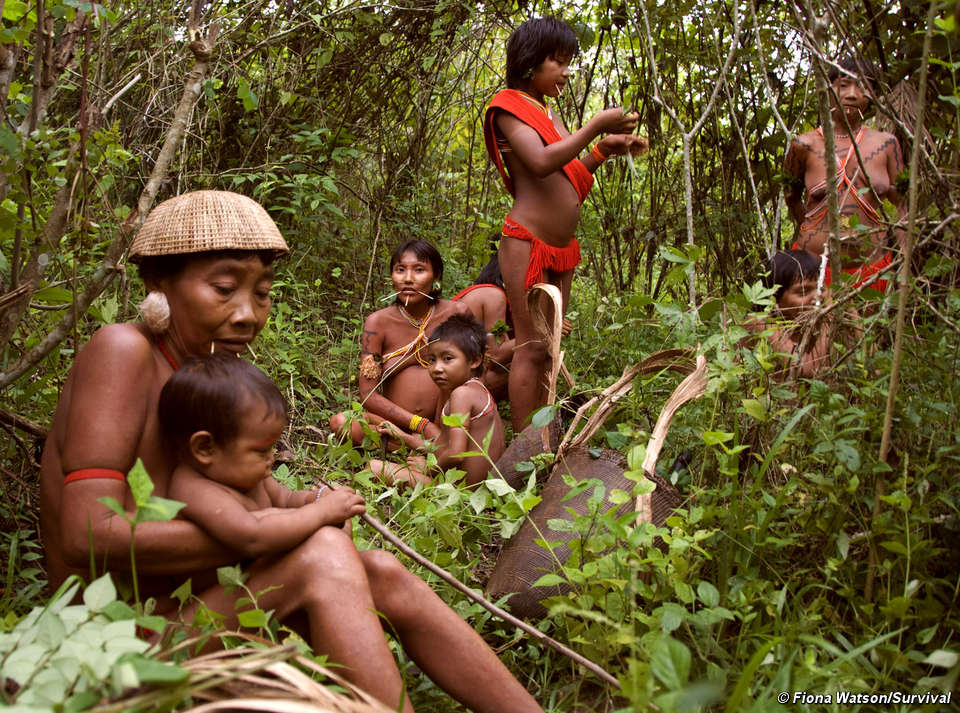
O povo feroz do título de Chagnon são os ianomâmis. Sua caracterização pelo antropólogo como uma etnia violenta, de homens “maliciosos, agressivos e intimidadores”, que acumulam homicídios para obter mais mulheres e maior sucesso reprodutivo, despertou a ira dos antropólogos culturalistas.

Primeiro, Chagnon foi acusado de distorcer a imagem do grupo e, assim, facilitar sua dizimação por brancos dos dois lados da fronteira. Depois, foi denunciado por Tierney como genocida, pois teria -intencional ou negligentemente, sob a tutela do médico americano James V. Neel- contribuído para uma epidemia de sarampo que matou centenas de índios.

BOM SELVAGEM “Noble Savages” (“bons selvagens”) é um acerto de contas com as duas tribos que infernizaram sua vida. A partir da descrição para o público não especializado de seu convívio de cinco anos com os ianomâmis, Chagnon retoma sua conclusão de que o “bom selvagem” concebido por Rousseau é um mito politicamente correto e que só há uma resposta biológica (evolucionista) -e simploriamente hobbesiana- para a questão de por que seres humanos são sociais: a luta de todos contra todos para aumentar a própria prole (ou pôr mais cópias dos próprios genes no mundo, na vulgata sociobiológica).

Não faltam páginas desairosas para os ianomâmis no livro. “Olhei para cima e arfei, em choque, quando vi uma dúzia de homens corpulentos, nus, suados e pavorosos nos encarando por trás dos caniços de suas setas apontadas!” -conta sobre a primeira visita a uma casa coletiva dos índios.

“Imensos rolos de tabaco verde estavam enfiados entre os dentes e os lábios inferiores, tornando sua aparência ainda mais pavorosa. Veios de ranho verde escuro pingavam ou pendiam de suas narinas -tão longos que se desprendiam de seus queixos, caíam sobre os músculos peitorais e escorriam preguiçosamente sobre seus ventres, mesclando-se com a pintura vermelha e o suor.”

Chagnon também não economiza relatos sobre tentativas mal sucedidas de engodo dos ianomâmis contra ele. Sempre eficazes, por outro lado, eram seus próprios ardis para levá-los a ceder amostras de sangue (para Neel) e a revelar nomes de ancestrais mortos -um tabu- para rechear suas genealogias e estatísticas. As mesmas informações, pagas com machados, facas e panelas de metal, que lhe permitiriam afirmar, depois, serem os homens com mais homicídios nas costas também os de prole mais numerosa.

Muito antes das acusações de Tierney, as conclusões sociobiológicas e os métodos traficantes de Chagnon já vinham sendo questionados por seus pares na comunidade antropológica. Até a correlação estatística entre ferocidade e fertilidade masculina, formulada num famigerado artigo de 1988 para a revista acadêmica “Science”, teve seus dados postos em dúvida (o autor foi acusado de excluir da amostra aqueles pais que já haviam sido mortos por vingança, portanto sem meios de multiplicar descendência).

Os antropólogos culturais, refratários à moldura biológica em que Chagnon queria enquadrar o painel exuberante das culturas, já estavam no seu encalço. Nada se compara, porém, com a virulência do ataque de Tierney. Assim que um capítulo do livro foi publicado na revista “New Yorker”, em outubro de 2000, a Associação Antropológica Americana entrou na briga -do lado dos culturalistas. Foi montado um comitê de investigação, que acabou por inocentar o médico Neel e descartar a epidemia intencional, mas recriminou Chagnon por desvios éticos.

O caso teve enorme repercussão na imprensa mundial, brasileira inclusive. Contudo, quando a obra do “jornalista investigativo” Tierney e os próprios investigadores da AAA passaram a ser investigados, a começar pela historiadora da ciência Susan Lindee, o vento virou.

Forçada por um referendo entre seus membros, a associação renegaria o relatório. As acusações de Tierney não paravam de pé, como reconstitui com farta documentação um ensaio demolidor da também historiadora Alice Dreger publicado em 2011 no periódico acadêmico “Human Nature”, sob o título “Darkness’s descent on the American Anthropological Association. A cautionary tale” (trevas sobre a Associação Antropológica Americana – uma fábula moral; leia em bit.ly/adreger).

Dreger puxa vários fios da teia de perseguição a Chagnon. Levanta a suspeita, intrigante, de que a cruzada de Tierney pode ter ocorrido sob o patrocínio da Igreja Católica, mais especificamente da ordem de padres salesianos, que já mantinha missões junto aos ianomâmis da Venezuela quando o antropólogo por lá baixou.

Após alguns meses de convívio e cooperação, cientista e religiosos se estranharam. Na versão fantástica narrada em “Noble Savages”, isso ocorreu depois de um hierarca pedir a Chagnon ajuda para matar um padre amasiado com índia. Na passagem do livro que mais se avizinha do estilo de Tierney, o antropólogo também acusa os salesianos de distribuir espingardas cartucheiras entre os índios para conquistar seu favor.

A inconsistência mais relevante da obra, porém, não decorre do ânimo retaliatório, e sim da pretensão de ter localizado entre os ianomâmis as nascentes da agressividade que supõe inerente à natureza humana. A antropóloga Elizabeth Povinelli assinalou, numa resenha escaldante de “Noble Savages” para o “New York Times”, que a tese se assenta sobre a premissa falaciosa de que os ianomâmis sejam relíquias de uma infância neolítica da humanidade.

FÓSSEIS Desde esse ponto de vista, compreende-se melhor o esforço retórico de Chagnon em degradar os ianomâmis, acentuando nas suas descrições uma animalidade que serve para relocar sua cultura na vizinhança da biologia. Ora, não há básica empírica nenhuma para afirmar que sociedades “primitivas” como a dos ianomâmis se mantiveram à margem da história, fósseis de um passado inaugural da espécie humana.

Como lembra Manuela Carneiro da Cunha -que presidia a Associação Brasileira de Antropologia quando esta cerrou fileiras contra Chagnon- na coletânea de ensaios “Índios no Brasil – História, Direitos e Cidadania” [Claro Enigma, 160 págs., R$ 29,50], essa é uma visão originária do século 19, que atribui “à natureza e à fatalidade de suas leis o que é produto de política e práticas humanas, […] consoladoras para todos à exceção de suas vítimas”.

Os ianomâmis, por exemplo, só permaneceram mais ou menos isolados (na realidade, longas redes de contatos já lhes garantiam acesso a artefatos de metal) porque suas terras montanhosas não interessavam a colonizador algum.

A perspectiva adotada por Chagnon -um engenheiro convertido para a antropologia- faz tábula rasa de tudo que há de peculiar no modo de vida ianomâmi. Por que cargas d’água esses índios cremam seus mortos, moem os ossos calcinados e ingerem as cinzas com um mingau de banana? É esse tipo de manifestação simbólica que a antropologia cultural se esforça por sistematizar e elucidar, mas que a obra de Chagnon relega à penumbra dos detalhes irrelevantes para a “natureza humana”.

Ótica semelhante anima o último best-seller de outro adepto declarado da sociobiologia (rebatizada psicologia evolucionista), Jared Diamond, mas com resultados muito diversos, se não opostos. Em “The World until Yesterday – What Can We Learn from Traditional Societies?” [Viking, 512 págs., R$ 96,90], Diamond acredita piamente ter aberto uma janela para o passado nas suas décadas de visitas à Nova Guiné para estudar pássaros.

A ilha, fervilhante com centenas de tribos e línguas em contato e conflito, constitui um continente cultural descoberto como tal por ocidentais só nas primeiras décadas do século 20. Fornece a Diamond, portanto, o equivalente dos ianomâmis para Chagnon, em matéria de isolamento e primitivismo.

As diferenças entre esses dois generalizadores prodigiosos, contudo, salta já do título de Diamond. Ao contrário de Chagnon, ele está aberto -mais que isso, interessado- a aprender algo com os nativos, e não só sobre eles. São muitas as lições úteis que o observador de pássaros e homens extrai para o aperfeiçoamento marginal do indubitavelmente superior modo de vida ocidental: ingerir menos sal, aleitar bebês à vontade até os três anos, dar educação bilíngue às crianças, fazer refeições lentamente com amigos…

Até das ameaças constantes da natureza e do estado de guerra crônica entre os primitivos Diamond retira um ensinamento, centro de gravidade do livro, que chama de “paranoia construtiva”: o estado de vigilância permanente para os muitos perigos que a vida oferece aos homens. Depois de embasbacar multidões com as generalizações audazes de “Armas, Germes e Aço” (livro pelo qual ganhou o Pulitzer em 1998), Diamond corteja com leveza o gênero da autoajuda e compila um volume de leitura bem mais amena que

“Noble Savages”. Os ilhéus são feios e sujos como os ianomâmis, mas simpáticos e sábios.

Já a paranoia de Chagnon, se cabe falar assim, é corrosiva. Nos termos da controvérsia que animou o Brasil escravizador de índios nos séculos 18 e 19, relatada por Manuela Carneiro da Cunha, eles podem ser encarados como cães, canibais e ferozes, ou como homens, diferentes e por isso exemplares de capacidade adaptativa e perfectibilidade. É uma questão de escolha, ou de ponto de vista.

Como diz a antropóloga, repetindo o que ouviu em conferência de Claude Lévi-Strauss, a sociodiversidade pode ser tão preciosa quanto a biodiversidade: “Creio, com efeito, que ela constitui essa reserva de achados na qual as futuras gerações poderão encontrar exemplos -e quem sabe novos pontos de partida- de processos e sínteses sociais já postos à prova”.

-

Em 2012, Napoleon Chagnon foi eleito para a prestigiada Academia Nacional de Ciências (NAS) dos Estados Unidos. Ato contínuo, em protesto, o antropólogo Marshall Sahlins -que em 2000 se engajara na campanha contra ele- renunciou à sua cadeira na NAS.

Manifesto de 17 antropólogos que trabalham com ianomâmis deblaterou mais uma vez contra a noção de “povo feroz” reiterada no novo livro, que poderia ser usada por governos para prejudicar a etnia. Uma nota do líder ianomâmi David Kopenawa sobre a obra aponta as guerras dos brancos como muito mais ferozes que as de seu povo -uma observação antropologicamente perspicaz, ao menos no que respeita às tribos dos culturalistas e dos sociobiólogos.

O mercado de almas selvagens (Rolling Stone)

Edição 63 – Dezembro de 2011

Missionários cristãos investem pesado na evangelização dos índios brasileiros com métodos ortodoxos, investimento internacional e persistência messiânica

O Mercado de almas selvagensINDIO SAN

por FELIPE MILANEZ

Jesus ressuscitou. Saiu do sepulcro e apareceu primeiro para Maria Madalena. Em seguida, ela anunciou aos que haviam estado com ele. Manifestou-se a dois que iam para o campo, e depois a outros. Finalmente, de acordo com o Evangelho segundo Marcos, capítulo 16, Jesus apareceu aos 11 assentados à mesa “e lançou-lhes em rosto a sua incredulidade e dureza de coração, por não haverem crido nos que o tinham visto já ressuscitado”. Disparou então, segundo o livro sagrado dos cristãos, a mensagem determinante da “missão”, em versículos 15 e 16:

“E disse-lhes: ide por todo o mundo, pregai o evangelho a toda criatura.”

“Quem crer e for batizado será salvo; mas quem não crer será condenado.”

No versículo 17, ainda segundo Marcos, Jesus vai mais longe: “E estes sinais seguirão aos que crerem: em meu nome expulsarão os demônios, falarão novas línguas”.

Condenadas à danação de um pecado original estão as criaturas não batizadas, portanto, todas as culturas não cristãs. Aos crentes, foi dada a obrigação, na forma de uma missão, da evangelização universal: eles deveriam traduzir a Bíblia para todas as línguas. Tarefa arriscada nos “confins da Terra”, que viria a ser complementada, pelo versículo 18, com a proteção divina: “Pegarão nas serpentes; e, se beberem alguma coisa mortífera, não lhes fará dano algum; e porão as mãos sobre os enfermos, e os curarão”.

Outubro de 2011, Caldas Novas, interior de Goiás: em um hotel de águas termais, tendas estão dispostas como uma conferência comercial, ou como uma feira de negócios na qual empresas utilizam estandes para vender seus pacotes e produtos. “Judeus por Jesus”; “Curso de Evangelização de Árabes”; “Missão Novas Tribos do Brasil”; “Adote um Povo”. Índios, ciganos, quilombolas, pobres do sertão nordestino: no VI Congresso Brasileiro de Missões, todas as criaturas desprovidas possuem representantes que negociam suas almas.

Minha alma, ateia, é a única condenada que circula pelo local. “Experimenta uma vez”, diz um senhor, com sorriso maroto no rosto. “Sou careta”, brinco. Ele quer que eu experimente a religião dele, como se fosse uma cápsula de felicidade a ser engolida. “Experimenta, você não vai se arrepender. Você vai ser feliz.”

Desconverso, contando histórias de aventuras na Amazônia. “Já sei”, diz o pastor Thomas Gregory. “Precisamos de gente com coragem.” Ele me oferece um exemplar do livro O Contrabandista de Deus, com a seguinte dedicatória: “Por Jesus vale a pena gastar nossas vidas! Experimente!” Em seguida, me apresenta a um jovem destemido da missão “Portas Abertas: Servindo Cristãos Perseguidos”. “Estamos indo traficar Bíblias para a China em dezembro. Ano que vem, vamos levar até a Coreia do Norte”, o rapaz me relata, determinado, consciente dos riscos de antecipar o que acredita ser o “julgamento final” e negando qualquer tipo de medo. “Não. Jesus está comigo”, diz.

No encontro organizado pela Associação de Missões Transculturais Brasileiras (AMTB), os índios são apenas uma parte de um universo pagão de almas condenadas. Parte pequena, porém cobiçada: de acordo com levantamento da própria AMTB, os índios são compreendidos como 616 mil indivíduos de 340 etnias (para a Funai são 220) e que falam 181 línguas. Ainda segundo os mesmos cálculos, no Brasil há 69 línguas sem a Bíblia traduzida, 182 etnias contam com presença missionária evangélica e 257 programas de evangelização estão em curso, coordenados por cerca de 15 agências missionárias de diferentes denominações evangélicas históricas, mas em sua maioria batista, associadas à AMTB.

De todas as almas selvagens existentes, as consideradas mais valiosas são as dos índios ditos “isolados”: elas representam o universo a ser conquistado e cuja alma adquire maior valor, econômico e moral, no mercado espiritual. O levantamento da AMTB indica que 147 etnias não possuem a presença missionária evangélica, e que 27 povos seriam considerados “isolados”. O principal desafio que consta no relatório “Indígenas do Brasil” são as “etnias remotas (com pouco ou nenhum contato externo)”, que somam 42 povos. A lista mais recente da Funai, a ser divulgada, aponta 84 referências onde podem existir povos indígenas sem contato. Nesses locais, geralmente áreas de difícil acesso, é proibida a entrada de qualquer indivíduo sem a autorização da Funai.

Os “índios isolados” são as comunidades indígenas que vivem de forma autônoma na floresta, evitam a aproximação com o universo ocidental e esse contato, se ocorrer, é eventual e conflituoso. A ocupação recente da Amazônia ocasionou os primeiros encontros com diversos povos, como os zo’é e suruwahá, que a Funai considera de “recente contato”. Eles recebem proteção especial em razão da vulnerabilidade física da população, suscetível a epidemias.

O principal objetivo dessas agências evangelizadoras é “alcançar” outras culturas com a leitura de sua forma de crença, daí o aspecto “trans” do tema “cultural” das religiões. “Precisamos de mais 500 novos missionários para pregar o Evangelho a todos os povos indígenas no Brasil”, conclama no microfone Ronaldo Lidório, um dos principais líderes desse movimento. Traduzindo: o objetivo é convencer os índios, assim como todas as pessoas do mundo, a se tornarem crentes – salvar as almas condenadas pelo pecado original.

Henrique terena é alto, tem cabelos longos e usa um charmoso cocar de penas azuis de arara. Falando com desenvoltura e retórica apurada, ele anda sempre próximo a Eli Tikuna, líder indígena que vem da margem do rio Solimões, já quase na fronteira com a Colômbia. Juntos, aguardam o chamado para pregar no salão lotado de brancos, curiosos para ouvir os tais “índios crentes”.

Grandes astros da conferência, os índios pastores formam o que os missionários evangélicos consideram ser a “terceira onda evangelizadora”. Primeiro, eram os estrangeiros que aportaram no Brasil com a Bíblia debaixo do braço (no século 19 e no pós-guerra); a segunda onda ocorreu por meio dos missionários brasileiros, com a institucionalização das missões estrangeiras no Brasil, ao longo da segunda metade do século passado; e hoje os próprios índios agem como missionários.

As almas indígenas são o objeto do alcance proselitista de um determinado grupo de evangélicos, principalmente os de denominação batista (conhecidos como “históricos”). O sistema de evangelização ocorre segundo regras capitalistas, com agências, igrejas e crentes financiadores. Por trás de tudo, há diversos interesses que se aliam com a conveniência exigida para a alma condenada ser alcançada – garimpeiros no Amapá, madeireiros e fazendeiros no Pará, seringueiros no Acre, o exército no Amazonas. Nessas alianças, domesticar os selvagens para servirem de mão de obra é o objetivo dos laicos. Já o alcance e a salvação das almas é a verdadeira missão religiosa.

Em 1991, a Fundação Nacional do Índio determinou a expulsão de todas as missões das áreas indígenas e rompeu os contratos que tinha com os missionários de prestação de saúde e educação para os índios. Por parte do governo, não havia o conhecimento exato do número de aldeias com presença missionária. Mas o então presidente da Funai, o sertanista Sidney Possuelo, conhecia de perto a atuação da New Tribes Mission (hoje, Missão Novas Tribos do Brasil) junto do povo zo’é, cujo primeiro contato ocorreu em 1986. Na época, a expedição contava com a presença de Edward Luz, que atualmente é o presidente da Novas Tribos do Brasil. Antropólogos afirmaram então que cerca de 30% da população índia pereceu devido a doenças levadas pelos missionários. Possuelo, que trabalhou junto aos zo’é, determinou a retirada dos missionários assim que assumiu a Funai. Na visão de Luz, que até hoje tenta retomar contato com os zo’é, a Funai “persegue” os missionários.

“Nós, como instituição, só temos a agradecer a essa perseguição. Porque quanto mais a perseguição vem, mais nós crescemos”, afirma Luz. “O Cristianismo sempre foi pautado por isso. O sangue dos mártires regava a semente daqueles que haviam de nascer. E no governo brasileiro isso foi a mesma coisa.”

Conheci Edward Luz no V Congresso Brasileiro de Missões, em 2008, em Águas de Lindoia (SP). Naquele momento, o drama da tribo dos índios suruwahá estava à tona: a Funai havia expulsado dali o grupo “Jovens com uma Missão” (Youth with a Mission, no original). Os missionários acusavam os índios de serem violentos assassinos de crianças e praticarem o infanticídio – era preciso a evangelização para salvá-los. A Funai culpa os missionários por uma leva de suicídios que chegou a atingir 10% da população local. Marcia Suzuki foi a missionária que se colocou como porta-voz do drama. “No Parque do Xingu também praticam o infanticídio, e dizem que não”, ela declarou na época. O tema do infanticídio foi levantado na mídia em torno de um filme de ficção, mas tratado como um “docudrama”, realizado pelo filho do fundador da Youth with a Mission, o cineasta David L. Cunningham. Em Hakani: A Survivor’s Story, índios suruwahá aparecem enterrando uma menina viva. O departamento da Funai que protege os suruwahá afirmou que os índios ficaram revoltados ao saber da história. Hakani, a tal criança índia, foi retirada da aldeia por Suzuki e hoje a acompanha em igrejas, na busca de recursos para a missão Atini. O drama de Hakani também serviu para divulgar um projeto de lei chamado Muwaji, que incriminaria funcionários públicos em caso de infanticídio e que legitimaria a presença de evangélicos em aldeias.

A bancada evangélica no Congresso Nacional, formada por cerca de 50 deputados, pouco se mobilizou. A maioria, pentecostal, é distante das denominações históricas, como os batistas. “Há evangélicos contra a evangelização dos índios, como os ecumênicos”, afirma Geter Borges, assessor parlamentar presente no Congresso Brasileiro de Missões. As divergências internas praticamente impediriam, diz ele, que a bancada mostrasse uma união sobre projetos – “não votam juntos, e não têm o peso e a força, por exemplo, dos ruralistas”, diz. Sobre a evangelização, Borges contextualiza: “Esse grupo da AMTB é que tem essa proposta de evangelizar os índios, que é proselitista. É a visão que se tem do Espírito Santo. Eu sou batista, mas creio que podemos ser salvos sem o batismo”.

A estratégia de utilizar os próprios índios como missionários foi definida no VI Congresso de Missões. E, para facilitar a realização do trabalho, eles farão uso de um dogma retórico: “O Estado não pode impedir um índio de encontrar um outro índio”, explica Luz. O objetivo das agências atualmente é capitalizar a maior quantidade de indígenas possível para se tornarem pastores. Para provocar uma reação pública, decidiram que irão solicitar, através dos índios kanamari, o ingresso na terra indígena Vale do Javari, onde está localizada a maior população de índios isolados remanescente do mundo. Caso a Funai negue a presença missionária, a estratégia prometida será acionar o Poder Judiciário contra o governo. “Metade dos povos indígenas não são aldeados. Um grande número frequenta as universidades. E a maioria fala: vou voltar para o meu povo e vou levar o evangelho pra eles. E contra essa força não há resistência”, conclama Luz.

O presidente da Novas Tribos insiste que o impedimento da entrada dos missionários nas aldeias tem cunho “ideológico”. “A Constituição não dá amparo para esse tipo de perseguição”, afirma Luz. “Nós temos o direito de pregar o evangelho para todo mundo. E toda pessoa tem o direito a aderir ou não. Vamos levar essa discussão às raias do Supremo.” Argumento-chave nesse debate é o que Luz chama de “direito da comunidade indígena de decidir o seu presente e seu futuro” – ou seja, de escolher sua religião. É o mesmo ponto levantado por alguns raros antropólogos que não se opõem aos missionários. “Os índios podem escolher seu destino”, declarou uma antropóloga evangélica que não quis ser identificada. “Agora, nem sempre os missionários são honestos nas opções que oferecem.”

“A motivação deles é ideológica: eles querem expandir a ideologia religiosa deles para todos os seres humanos do planeta”, rebate Márcio Meira, presidente da Funai, que alega que a Constituição Federal protege a liberdade de crença, assegurando a proteção aos locais de culto. Nesse caso, a Funai tem poder de vetar a entrada nas áreas habitadas por índios “isolados”, assim como dos povos de pouco contato: “Cabe ao Estado laico exercer o poder de proteção e impedir qualquer contato de missionários com índios isolados”.

“Alguns povos, como os zo’é, os yanomami, os suruwahá, possuem contato, mas não possuem elementos de conhecimento das outras religiões para tomar uma decisão. Temos que garantir seus espaços de liturgia”, prossegue Meira, afirmando ainda que a Fundação não intervém nos casos de povos com contato antigo com a sociedade envolvente. “A Funai tem a obrigação legal de respeitar a vontade dos índios de permanecerem isolados”, diz.

“Em 2 mil anos, a bíblia foi traduzida apenas para 500 línguas”, prega o pastor Ronaldo Lidório no grande salão do VI Congresso Brasileiro de Missões, com certo tom de indignação frente às ovelhas de seu rebanho. É a hora de provocar “um tsunami espiritual”, conforme reforça o pastor indígena Henrique Terena no mesmo salão principal. Todos parecem chocados com mais um dado “oficial” divulgado pela AMTB: “147 povos indígenas no Brasil não conhecem o Evangelho”.

O encontro das sociedades europeias com os índios na América aflorou entre os crentes a missão determinada pelo “ide” de Marcos. Pelo lado católico, a catequização foi praticada inicialmente na aliança da Companhia de Jesus, pelos jesuítas, com os estados colonizadores espanhol e português (rompida no século 18). As tentativas de conquista de holandeses e franceses foram acompanhadas de religiosos protestantes. Enquanto a famosa “Primeira Missa” católica foi celebrada em 26 de abril de 1500 pelo frade Henrique de Coimbra, o primeiro culto evangélico em terras brasileiras ocorreu mais de 50 anos depois, em 10 de março de 1557, no Rio de Janeiro, pelos huguenotes franceses. Poucos anos depois, Jacques Balleur foi enforcado por pregar a religião da Reforma junto aos índios tamoios.

Hoje, os católicos atendem sob a organização do Conselho Indigenista Missionário (Cimi), que prega, de forma oficial, o respeito às religiões indígenas. De acordo com essa leitura, o papel do Espírito Santo salvaria as almas, independentemente do batismo. “É a tese de São Tomás de Aquino. Mas alguns ainda praticam o proselitismo”, assume Paulo Suess, um dos principais teólogos do Cimi. “Nunca oficialmente. Nunca vão dizer isso abertamente em uma assembléia do Cimi. Mas na aldeia eles podem agir assim.” A última missão jesuíta em atividade no Brasil foi a Utiariti, no Mato Grosso, completamente destruída pelos índios nos anos 70. Alguns líderes indígenas, jovens na época, guardam más lembranças das atuações dos padres. “Forçavam o casamento interétnico”, recorda o índio pareci Daniel Cabixi. “A gente sofria muito.”

Com as revoluções sociais do pós-guerra, sobretudo por causa do Concílio Vaticano II, e a teologia da libertação que se desenvolveu em seguida, os católicos na América passaram a optar pelo princípio da “encarnação”, segundo manifesto escrito em Goiânia, em 1975: “Seguindo os passos de Cristo, optar seriamente, como pessoas e como igreja, por uma encarnação realista e comprometida com a vida dos povos indígenas, convivendo com eles, investigando, descobrindo e valorizando, adotando sua cultura e assumindo sua causa, com todas as consequências; superando as formas de etnocentrismo e colonialismo até o ponto de ser aceito como um deles”.

Em 1912, ocorreu a evangelização dos índios terenas, no atual Mato Grosso do Sul. Esse é o marco, entre os evangélicos, da primeira evangelização indígena no Brasil. E foi também entre os terenas que foi “plantada” a primeira igreja. Em julho de 2012, o Conselho Nacional dos Pastores e Líderes Indígenas (Conplei) prepara a comemoração do centenário desse primeiro batismo. “Vai ser um grande encontro”, promete o pastor Henrique Terena, que diz contar com a presença de indígenas evangélicos do Paraguai e da Bolívia. “Vamos receber cinco mil indígenas. E vamos criar o Conselho Mundial dos Pastores e Líderes Indígenas.” As inscrições para o evento custam de R$ 80 (índios) a R$ 200 (não índios).

Nesse verdadeiro mercado de almas que é o Congresso Brasileiro de Missões, até é possível “adotar” um povo. Em um dos estandes, a missionária explica: “Você assume esse povo, e deve orar por eles”. Além da oração, é sugerido também que sejam doados recursos para financiar o trabalho missionário. Valores não são mencionados, mas estima-se ser necessário cinco igrejas para sustentar o trabalho em um único povo. No palco, Eli Tikuna conta sobre o dia de glória que teve ao visitar uma igreja batista na Grande São Paulo: “Consegui R$ 10 mil em doações. Glória ao Pai!”

Na quinta edição do Congresso, em 2008, um empresário de São José dos Campos doou um avião modelo Caravan para a missão Asas do Socorro, que presta serviços de transporte aéreo para as agências missionárias e, segundo o comandante Rocindes Correa, conta já com 11 aeronaves. “Pregamos o evangelho integral, que cuida da alma, mas também da vida da comunidade”, diz Correa. Nesse intuito, a Asas do Socorro oferece também o transporte de médicos e dentistas evangélicos.

Segundo dados divulgados pela própria AMTB, a edição 2011 do Congresso Brasileiro de Missões custou por volta de US$ 40 mil e recebeu aproximadamente 500 pessoas (291 responderam a um questionário), sendo 40% batistas e mais da metade oriunda da região Sudeste. Um terço era de pastores, lideranças religiosas, e 98% dos presentes consideraram a programação “boa ou excelente”. A próxima edição, aliás, já tem data marcada: acontece em 2014.

E se jesus realmente retornar e for parar no meio dos índios? Dizem os crentes que a comunidade deverá estar preparada para recebê-lo – diferentemente do que aconteceu da primeira vez, quando ele nasceu em berço judaico durante a dominação romana e foi morto ainda jovem. Essa é a explicação sugerida pelo antropólogo Darcy Ribeiro, que morreu em 1997, sobre o principal motivo que leva os missionários a “gastarem sua vida” em nome da evangelização dos índios na Amazônia.

Foi Ribeiro quem trouxe os missionários do Summer Institut of Linguistics (SIL) para o Brasil, na década de 50. Preocupado com o desaparecimento das línguas indígenas, o antropólogo imaginaria que, ao custo da tradução da Bíblia, ao menos as línguas seriam documentadas, em caso de desaparecimento de um povo. Escreveu ele no livro Confissões: “Serviço maior meu foi mandar uma linguista do Instituto Linguístico de Verão, com doutorado, conviver com eles e dedicar-se por quase um ano ao estudo do idioma ofaié. Assim, ao menos sua língua se salvou pelo registro escrito e sonoro para futuros estudiosos das falas humanas”.

Quando se dedicou a salvar as línguas indígenas, Ribeiro desconhecia as ligações do SIL com a poderosa família norte-americana Rockfeller, que procurava novas jazidas de petróleo, e com a direita norte-americana e agências de informações dos Estados Unidos, fatos mostrados no livroThy Will Be Done, de Gerard Coilby e Charlotte Dennet. No Brasil, onde persiste o fantasma da “internacionalização da Amazônia”, essas ligações suspeitas fizeram crescer os temores de ações escusas dos missionários.

Se externamente há fantasmas da internacionalização, nas aldeias, os índios reclamam da interferência em suas culturas. Os missionários Manfred e Barbara Kern, da New Tribes, divulgaram que um dos líderes indígenas da tribo uru-eu-wau-wau, de Rondônia, teria cometido adultério. “Pelo que entendemos, ele é reincidente e já foi repreendido pelos outros líderes”, escreveram eles, em uma carta pública divulgada em 28 de junho. “Reze para o Senhor fazer um grande trabalho de restauração na sua vida e da sua esposa.” Os uru-eu formam um povo tupi e não são tradicionalmente monogâmicos, mas, de acordo com os missionários, estão “aprendendo a ser”.

A abordagem em relação ao adultério foi justamente o que chamou a atenção do líder indígena Davi Kopenawa Yanomami sobre a conduta suspeita de missionários. Ele afirma ter conhecido o Evangelho através da ação de membros da Novas Tribos, que estiveram presentes na aldeia yanomami Toototobi, e fez sua opção: “O missionário não é como garimpeiro. É outro político. Eles não invadiam a terra, mas a nossa cultura, a nossa tradição, o nosso conhecimento. Eles são outro pensamento para tirar o nosso conhecimento e depois colocar o conhecimento deles, a sabedoria deles, a religião deles. Isso é diferente. Eu, Davi, já fui crente. Junto com eles. Mas depois queria conhecer Jesus Cristo. E não deu certo. Um missionário não índio namorou uma yanomami. Daí não deu certo. Descobri que não é verdade. Aí eu não acreditei mais. São crentes falsos. E não acreditei mais”.

De fato, não é incomum as alianças estratégicas para a evangelização assumirem feições mais mundanas, muitas vezes contrárias aos direitos indígenas. Em um caso emblemático ocorrido em 1986, a Novas Tribos teria se unido a seringueiros que escravizavam índios no Acre, conforme relata o cacique yawanawa Biraci “Bira” Brasil.

Ainda jovem, Bira foi morar em Rio Branco (AC), onde percebeu que “nosso povo estava não apenas perdendo a língua, mas perdendo o nosso espírito. Nossa conexão espiritual com nós mesmos, com a natureza, com o nosso mundo, com os nossos ancestrais”. Decidiu, então, unir os jovens e expulsar os missionários, instalados na tribo por três décadas. “Convenceram todo mundo a ser crente. Botaram uma ameaça no nosso coração, dizendo que sem essa religião todo mundo iria para o inferno, que nós não teríamos salvação, não seríamos capaz de ser um povo feliz. Que nós vivíamos com o demônio. Que nossos rituais e nossas crenças eram coisas do demônio.”

“Eram racistas”, o cacique prossegue. “Não gostavam da gente, pareciam que tinham nojo de índio. Não deixavam índio andar no mesmo barco com eles. Não deixavam comer junto. Nos tratavam mal. Sem respeito. Principalmente os americanos. Eram muito arrogantes. A gente sofria muito. A gente tinha vergonha de ser a gente. A missão estava dizendo que a nossa cultura era coisa do demônio. Nossa ayahuasca, nossas cerimônias. Nós éramos proibidos, através da intimidação, de realizar nossos rituais. Do lado da missão estavam os seringalistas, seringueiros. Se aliavam com todo mundo. E a igreja fazia a gente aceitar ser dominado. Além da evangelização, dessa descaracterização cultural do nosso povo, ainda mantinham a presença dos não indígenas dentro da terra. Faziam a gente aceitar nossa condição de escravo.”

A expulsão dos missionários e dos seringueiros ocorreu em uma noite de 1986. Em carta publicada em 28 de fevereiro desse ano, os missionários Stephen e Corine relatam que na época os índios queriam “roubar seus pertences e queimar suas casas”. A Polícia Federal foi convocada, e Bira foi perseguido e acusado de ter se engajado com uma “organização de esquerda”.

Atualmente, Bira é referência espiritual na aldeia e há uma década organiza um dos maiores festivais indígenas do Brasil, o Yawa, quando recebe povos de outras etnias e visitantes ocidentais para celebrar a cultura e a espiritualidade yawanawa, com muito rapé e ayahuasca. Ele também viaja pelo mundo realizando rituais xamânicos tradicionais de seu povo. Aprendeu com os pajés Yawa e Tatá, que nunca deixaram de praticar os ritos, ainda que escondidos, durante a dominação da Missão Novas Tribos.

No que depender das agências evangelizadoras, porém, a luta está apenas começando. “A perseguição nos dá força. O sangue dos mártires regava as sementes daqueles que haviam de nascer”, reforça o missionário Edward Luz, prometendo jamais desistir de evangelizar o povo zo’é, de onde foi expulso pela Funai. “Nós vamos voltar para os zo’é. Não sei como. Mas vamos voltar. Nosso Deus é soberano. O homem pode espernear, mas no final vai ter um encontro com Deus. E, se não estiver preparado, vai sofrer.”

Luz prevê que, se o Estado tentar impedir a pregação da Bíblia nas aldeias, o fato poderia unir todas as denominações evangélicas, que são rivais entre si. “Se [o governo] proíbe pregar o evangelho, está proibindo a liberdade da adoração; proíbe o autor do evangelho, o senhor Jesus; e proibiu aBíblia, proibiu o Deus criador”, diz. E desafia: “E nós partimos para um confronto”

The Politics of Disimagination and the Pathologies of Power (Truth Out)

Wednesday, 27 February 2013 00:00

By Henry A GirouxTruthout | News Analysis

Eye reflecitng TV(Photo: tryingmyhardest). You write in order to change the world knowing perfectly well that you probably can’t, but also knowing that [writing] is indispensable to the world. The world changes according to the way people see it, and if you alter even by a millimeter the way people look at reality, then you can change it.” – James Baldwin

The Violence of Neoliberalism

We live in a time of deep foreboding, one that haunts any discourse about justice, democracy and the future. Not only have the points of reference that provided a sense of certainty and collective hope in the past largely evaporated, but the only referents available are increasingly supplied by a hyper-market-driven society, megacorporations and a corrupt financial service industry. The commanding economic and cultural institutions of American society have taken on what David Theo Goldberg calls a “militarizing social logic.”[1] Market discipline now regulates all aspects of social life, and the regressive economic rationality that drives it sacrifices the public good, public values and social responsibility to a tawdry consumerist dream while simultaneously creating a throwaway society of goods, resources and individuals now considered disposable.[2] This militarizing logic is also creeping into public schools and colleges with the former increasingly resembling the culture of prison and the latter opening their classrooms to the national intelligence agencies.[3] In one glaring instance of universities endorsing the basic institutions of the punishing state, Florida Atlantic University in Boca Raton, concluded a deal to rename its football stadium after the GEO Group, a private prison corporation “whose record is marred by human rights abuses, by lawsuits, by unnecessary deaths of people in their custody and a whole series of incidents.” [3A] Armed guards are now joined by armed knowledge.  Corruption, commodification and repressive state apparatuses have become the central features of a predatory society in which it is presumed irrationally “that market should dominate and determine all choices and outcomes to the occlusion of any other considerations.”[4]

The political, economic, and social consequences have done more than destroy any viable vision of a good society. They undermine the modern public’s capacity to think critically, celebrate a narcissistic hyperindividualism that borders on the pathological, destroy social protections and promote a massive shift towards a punitive state that criminalizes the behavior of those bearing the hardships imposed by a survival-of-the-fittest society that takes delight in the suffering of others. How else to account for a criminal justice stacked overwhelmingly against poor minorities, a prison system in which “prisoners can be held in solitary confinement for years in small, windowless cells in which they are kept for twenty-three hours of every day,”[5] or a police state that puts handcuffs on a 5-year old and puts him in jail because he violated a dress code by wearing sneakers that were the wrong color.[6] Why does the American public put up with a society in which “the top 1 percent of households owned 35.6 percent of net wealth (net worth) and a whopping 42.4 percent of net financial assets” in 2009, while many young people today represent the “new face of a national homeless population?”[7] American society is awash in a culture of civic illiteracy, cruelty and corruption. For example, major banks such as Barclays and HSBC swindle billions from clients and increase their profit margins by laundering money for terrorist organizations, and no one goes to jail. At the same time, we have the return of debtor prisons for the poor who cannot pay something as trivial as a parking fine. President Obama arbitrarily decides that he can ignore due process and kill American citizens through drone strikes and the American public barely blinks. Civic life collapses into a war zone and yet the dominant media is upset only because it was not invited to witness the golf match between Obama and Tiger Woods.

The celebration of violence in both virtual culture and real life now feed each other. The spectacle of carnage celebrated in movies such as A Good Day to Die Hard is now matched by the deadly violence now playing out in cities such as Chicago and New Orleans. Young people are particularly vulnerable to such violence, with 561 children age 12 and under killed by firearms between 2006 and 2010.[8] Corporate power, along with its shameless lobbyists and intellectual pundits, unabashedly argue for more guns in order to feed the bottom line, even as the senseless carnage continues tragically in places like Newtown, Connecticut, Tustin, California, and other American cities. In the meantime, the mainstream media treats the insane rambling of National Rifle Association’s (NRA) Executive Vice President Wayne LaPierre as a legitimate point of view among many voices. This is the same guy who, after the killing of 20 young children and six adults at Sandy Hook Elementary School, claimed the only way to stop more tragedies was to flood the market with more guns and provide schools with more armed guards. The American public was largely silent on the issue in spite of the fact that an increase of police in schools does nothing to prevent such massacres but does increase the number of children, particularly poor black youth, who are pulled out of class, booked and arrested for trivial behavioral infractions.

At the same time, America’s obsession with violence is reinforced by a market society that is Darwinian in its pursuit of profit and personal gain at almost any cost. Within this scenario, a social and economic order has emerged that combines the attributes and values of films such as the classics Mad Max and American Psycho. Material deprivation, galloping inequality, the weakening of public supports, the elimination of viable jobs, the mindless embrace of rabid competition and consumption, and the willful destruction of the environment speak to a society in which militarized violence finds its counterpart, if not legitimating credo, in a set of atomizing and selfish values that disdain shared social bonds and any notion of the public good. In this case, American society now mimics a market-driven culture that celebrates a narcissistic hyperindividualism that radiates with a new sociopathic lack of interest in others and a strong tendency towards violence and criminal behavior. As John le Carré once stated, “America has entered into one of its periods of historical madness.”[9] While le Carré wrote this acerbic attack on American politics in 2003, I think it is fair to say that things have gotten worse, and that the United States is further plunging into madness because of a deadening form of historical and social amnesia that has taken over the country, further reproducing a mass flight from memory and social responsibility. The politics of disimagination includes, in this instance, what Mumia Abu-Jamal labeled “mentacide,” a form of historical amnesia “inflicted on Black youth by the system’s systematic campaign to eradicate and deny them their people’s revolutionary history.”[10]

America’s Plunge Into Militarized Madness

How does one account for the lack of public outcry over millions of Americans losing their homes because of corrupt banking practices and millions more becoming unemployed because of the lack of an adequate jobs program in the United States, while at the same time stories abound of colossal greed and corruption on Wall Street? [11] For example, in 2009 alone, hedge fund manager David Tepper made approximately 4 billion dollars.[12] As Michael Yates points out: “This income, spent at a rate of $10,000 a day and exclusive of any interest, would last him and his heirs 1,096 years! If we were to suppose that Mr. Tepper worked 2,000 hours in 2009 (fifty weeks at forty hours per week), he took in $2,000,000 per hour and $30,000 a minute.”[13] This juxtaposition of robber-baron power and greed is rarely mentioned in the mainstream media in conjunction with the deep suffering and misery now experienced by millions of families, workers, children, jobless public servants and young people. This is especially true of a generation of youth who have become the new precariat[14] – a zero generation relegated to zones of social and economic abandonment and marked by zero jobs, zero future, zero hope and what Zygmunt Bauman has defined as a societal condition which is more “liquid,”less defined, punitive, and, in the end, more death dealing.[15]

Narcissism and unchecked greed have morphed into more than a psychological category that points to a character flaw among a marginal few. Such registers are now symptomatic of a market-driven society in which extremes of violence, militarization, cruelty and inequality are hardly noticed and have become normalized. Avarice and narcissism are not new. What is new is the unprecedented social sanction of the ethos of greed that has emerged since the 1980s.[16] What is also new is that military force and values have become a source of pride rather than alarm in American society. Not only has the war on terror violated a host of civil liberties, it has further sanctioned a military that has assumed a central role in American society, influencing everything from markets and education to popular culture and fashion. President Dwight D. Eisenhower left office warning about the rise of the military-industrial complex, with its pernicious alignment of the defense industry, the military and political power.[17] What he underestimated was the transition from a militarized economy to a militarized society in which the culture itself was shaped by military power, values and interests. What has become clear in contemporary America is that the organization of civil society for the production of violence is about more than producing militarized technologies and weapons; it is also about producing militarized subjects and a permanent war economy. As Aaron B. O’Connell points outs:

Our culture has militarized considerably since Eisenhower’s era, and civilians, not the armed services, have been the principal cause. From lawmakers’ constant use of “support our troops” to justify defense spending, to TV programs and video games like “NCIS,” “Homeland”and “Call of Duty,” to NBC’s shameful and unreal reality show “Stars Earn Stripes,” Americans are subjected to a daily diet of stories that valorize the military while the storytellers pursue their own opportunistic political and commercial agendas.[18]

The imaginary of war and violence informs every aspect of American society and extends from the celebration of a warrior culture in mainstream media to the use of universities to educate students in the logic of the national security state. Military deployments now protect “free trade” arrangements, provide job programs and drain revenue from public coffers. For instance, Lockheed Martin stands to gain billions of dollars in profits as Washington prepares to buy 2,443 F-35 fighter planes at a cost of $90 million each from the company. The overall cost of the project for a plane that has been called a “one trillion dollar boondoggle” is expected to cost more “than Australia’s entire GDP ($924 billion).”[19] Yet, the American government has no qualms about cutting food programs for the poor, early childhood programs for low-income students and food stamps for those who exist below the poverty line. Such misplaced priorities represent more than a military-industrial complex that is out of control. They also suggest the plunge of American society into the dark abyss of a state that is increasingly punitive, organized around the production of violence and unethical in its policies, priorities and values.

John Hinkson argues that such institutionalized violence is far from a short-lived and aberrant historical moment. In fact, he rightfully asserts that: “we have a new world economy, one crucially that lacks all substantial points of reference and is by implication nihilistic. The point is that this is not a temporary situation because of the imperatives, say, of war: it is a structural break with the past.”[20] Evidence of such a shift is obvious in the massive transfer upward in wealth and income that have not only resulted in the concentration of power in relatively few hands, but have promoted both unprecedented degrees of human suffering and hardship along with what can be called a politics of disimagination.

The Rise of the “Disimagination Machine”

Borrowing from Georges Didi-Huberman’s use of the term, “disimagination machine,” I argue that the politics of disimagination refers to images, and I would argue institutions, discourses, and other modes of representation, that undermine the capacity of individuals to bear witness to a different and critical sense of remembering, agency, ethics and collective resistance.[21] The “disimagination machine” is both a set of cultural apparatuses extending from schools and mainstream media to the new sites of screen culture, and a public pedagogy that functions primarily to undermine the ability of individuals to think critically, imagine the unimaginable, and engage in thoughtful and critical dialogue: put simply, to become critically informed citizens of the world.

Examples of the “disimagination machine” abound. A few will suffice. For instance, the Texas State Board of Education and other conservative boards of education throughout the United States are rewriting American textbooks to promote and impose on America’s public school students what Katherine Stewart calls “a Christian nationalist version of US history” in which Jesus is implored to “invade” public schools.[22] In this version of history, the term “slavery” is removed from textbooks and replaced with “Atlantic triangular trade,” the earth is 6,000 years old, and the Enlightenment is the enemy of education. Historical figures such as Jefferson, Thomas Paine and Benjamin Franklin, considered to have suspect religious views, “are ruthlessly demoted or purged altogether from the study program.”[23] Currently, 46 percent of the American population believes in the creationist view of evolution and increasingly rejects scientific evidence, research and rationality as either ‘academic’ or irreligious.[24]

The rise of the Tea Party and the renewal of the culture wars have resulted in a Republican Party which is now considered the party of anti-science. Similarly, right-wing politicians, media, talk show hosts and other conservative pundits loudly and widely spread the message that a culture of questioning is antithetical to the American way of life. Moreover, this message is also promoted by conservative groups such as The American Legislative Exchange Council, (ALEC) which has “hit the ground running in 2013, pushing ‘model bills’ mandating the teaching of climate change denial in public school systems.”[25] The climate-change-denial machine is also promoted by powerful conservative groups such as the Heartland Institute. Ignorance is never too far from repression, as was recently demonstrated in Arizona, where State Rep. Bob Thorpe, a Republican freshman Tea Party member, introduced a new bill requiring students to take a loyalty oath in order to receive a graduation diploma.[26]

The “disimagination machine” is more powerful than ever as conservative think tanks provide ample funds for training and promoting anti-public pseudo-intellectuals and religious fundamentalists while simultaneously offering policy statements and talking points to conservative media such as FOX News, Christian news networks, right-wing talk radio, and partisan social media and blogs. This ever growing information/illiteracy bubble has become a powerful force of public pedagogy in the larger culture and is responsible for not only the war on science, reason and critical thought, but also the war on women’s reproductive rights, poor minority youth, immigrants, public schooling, and any other marginalized group or institution that challenges the anti-intellectual, anti-democratic worldviews of the new extremists and the narrative supporting Christian nationalism. Liberal Democrats, of course, contribute to this “disimagination machine” through educational policies that substitute critical thinking and critical pedagogy for paralyzing pedagogies of memorization and rote learning tied to high-stakes testing in the service of creating a neoliberal, dumbed-down workforce.

As John Atcheson has pointed out, we are “witnessing an epochal shift in our socio-political world. We are de-evolving, hurtling headlong into a past that was defined by serfs and lords; by necromancy and superstition; by policies based on fiat, not facts.”[27] We are also plunging into a dark world of anti-intellectualism, civic illiteracy and a formative culture supportive of an authoritarian state. The embrace of ignorance is at the center of political life today, and a reactionary form of public pedagogy has become the most powerful element of the politics of authoritarianism. Civic illiteracy is the modus operandi for creating depoliticized subjects who believe that consumerism is the only obligation of citizenship, who privilege opinions over reasoned arguments, and who are led to believe that ignorance is a virtue rather than a political and civic liability. In any educated democracy, much of the debate that occupies political life today, extending from creationism and climate change denial to “birther” arguments, would be speedily dismissed as magical thinking, superstition and an obvious form of ignorance. Mark Slouka is right in arguing that, “Ignorance gives us a sense of community; it confers citizenship; our representatives either share it or bow down to it or risk our wrath…. Communicate intelligently in America and you’re immediately suspect.”[28] The politics and machinery of disimagination and its production of ever-deepening ignorance dominates American society because it produces, to a large degree, uninformed customers, hapless clients, depoliticized subjects and illiterate citizens incapable of holding corporate and political power accountable. At stake here is more than the dangerous concentration of economic, political and cultural power in the hands of the ultrarich, megacorporations and elite financial services industries. Also at issue is the widespread perversion of the social, critical education, the public good, and democracy itself.

Toward a Radical Imagination

Against the politics of disimagination, progressives, workers, educators, young people and others need to develop a a new language of radical reform and create new public spheres that provide the pedagogical conditions for critical thought, dialogue and thoughtful deliberation. At stake here is a notion of pedagogy that both informs the mind and creates the conditions for modes of agency that are critical, informed, engaged and socially responsible. The radical imagination can be nurtured around the merging of critique and hope, the capacity to connect private troubles with broader social considerations, and the production of alternative formative cultures that provide the precondition for political engagement and for energizing democratic movements for social change – movements willing to think beyond isolated struggles and the limits of a savage global capitalism. Stanley Aronowitz and Peter Bratsis point to such a project in their manifesto on the radical imagination. They write:

This Manifesto looks forward to the creation of a new political Left formation that can overcome fragmentation, and provide a solid basis for many-side interventions in the current economic, political and social crises that afflict people in all walks of life. The Left must once again offer to young people, people of color, women, workers, activists, intellectuals and newly-arrived immigrants places to learn how the capitalist system works in all of its forms of exploitation whether personal, political, or economic. We need to reconstruct a platform to oppose Capital. It must ask in this moment of US global hegemony what are the alternatives to its cruel power over our lives, and those of large portions of the world’s peoples. And the Left formation is needed to offer proposals on how to rebuild a militant, democratic labor movement, strengthen and transform the social movements; and, more generally, provide the opportunity to obtain a broad education that is denied to them by official institutions. We need a political formation dedicated to the proposition that radical theory and practice are inextricably linked, that knowledge without action is impotent, but action without knowledge is blind.[29]

Matters of justice, equality, and political participation are foundational to any functioning democracy, but it is important to recognize that they have to be rooted in a vibrant formative culture in which democracy is understood not just as a political and economic structure but also as a civic force enabling justice, equality and freedom to flourish. While the institutions and practices of a civil society and an aspiring democracy are essential in this project, what must also be present are the principles and modes of civic education and critical engagement that support the very foundations of democratic culture. Central to such a project is the development of a new radical imagination both through the pedagogies and projects of public intellectuals in the academy and through work that can be done in other educational sites, such as the new media. Utilizing the Internet, social media, and other elements of the digital and screen culture, public intellectuals, cultural workers, young people and others can address larger audiences and present the task of challenging diverse forms of oppression, exploitation and exclusion as part of a broader effort to create a radical democracy.

There is a need to invent modes of pedagogy that release the imagination, connect learning to social change and create social relations in which people assume responsibility for each other. Such a pedagogy is not about methods or prepping students to learn how to take tests. Nor is such an education about imposing harsh disciplinary behaviors in the service of a pedagogy of oppression. On the contrary, it is about a moral and political practice capable of enabling students and others to become more knowledgeable while creating the conditions for generating a new vision of the future in which people can recognize themselves, a vision that connects with and speaks to the desires, dreams and hopes of those who are willing to fight for a radical democracy. Americans need to develop a new understanding of civic literacy, education and engagement, one capable of developing a new conversation and a new political project about democracy, inequality, and the redistribution of wealth and power, and how such a discourse can offer the conditions for democratically inspired visions, modes of governance and policymaking. Americans need to embrace and develop modes of civic literacy, critical education and democratic social movements that view the public good as a utopian imaginary, one that harbors a trace and vision of what it means to defend old and new public spheres that offer spaces where dissent can be produced, public values asserted, dialogue made meaningful and critical thought embraced as a noble ideal.

Elements of such a utopian imaginary can be found in James Baldwin’s “Open Letter to My Sister, Angela Davis,” in which he points out that “we live in an age in which silence is not only criminal but suicidal.”[30] The utopian imaginary is also on full display in Martin Luther King Jr.’s “Letter from Birmingham City Jail,” where King states under the weight and harshness of incarceration that an “injustice anywhere is a threat to justice everywhere … [and asks whether we will] be extremists for the preservation of injustice – or will we be extremists for the cause of justice?”[31] According to King, “we must use time creatively, and forever realize that the time is always ripe to do right. Now is the time to make real the promise of democracy.”[32] We hear it in the words of former Harvard University President James B. Conant, who makes an impassioned call for “the need for the American radical – the missing political link between the past and future of this great democratic land.” [33] We hear it in the voices of young people all across the United States – the new American radicals – who are fighting for a society in which justice matters, social protections are guaranteed, equality is insured, and education becomes a right and not an entitlement. The radical imagination waits to be unleashed through social movements in which injustice is put on the run and civic literacy, economic justice, and collective struggle once again become the precondition for agency, hope and the struggle over democracy.

Endnotes

1.
David Theo Goldberg, “Mission Accomplished: Militarizing Social Logic,”in Enrique Jezik: Obstruct, destroy, conceal, ed. Cuauhtémoc Medina (Mexico: Universidad Nacional Autónoma de México, 2011), 183-198.

2.
See, for example, Colin Leys, Market Driven Politics (London: Verso, 2001); Randy Martin, Financialization of Daily Life (Philadelphia: Temple University Press, 2002); Pierre Bourdieu, Firing Back: Against the Tyranny of the Market 2. Trans. Loic Wacquant (New York: The New Press, 2003); Alfredo Saad-Filho and Deborah Johnston, Neoliberalism: A Critical Reader (London: Pluto Press, 2005); Henry A. Giroux, Against the Terror of Neoliberalism (Boulder: Paradigm, 2008); David Harvey, A Brief History of Neoliberalism (New York: Oxford University Press, 2007); Manfred B. Steger and Ravi K. Roy, Neoliberalism: A Very Short Introduction (New York: Oxford University Press, 2010); Gerad Dumenil and Dominique Levy, The Crisis of Neoliberalism (Cambridge: Harvard University Press, 2011). Henry A. Giroux, Twilight of the Social (Boulder: Paradigm, 2013); Stuart Hall, “The March of the Neoliberals,” The Guardian, (September 12, 2011). online at:http://www.guardian.co.uk/politics/2011/sep/12/march-of-the-neoliberals

3.
See most recently  Kelly V. Vlahos, “Boots on Campus,” Anti War.com (February 26, 2013). On line: http://original.antiwar.com/vlahos/2013/02/25/boots-on-campus/ and David H. Price, Weaponizing Anthropology (Oakland, CA: AK Press, 2011).

3A. Greg Bishop, “A Company that Runs Prisons Will Have its Name on a Stadium,”New York Times (February 19, 2013). Online:http://www.nytimes.com/2013/02/20/sports/ncaafootball/a-company-that-runs-prisons-will-have-its-name-on-a-stadium.html?_r=0

4.
Ibid. Goldberg, pp. 197-198.

5.
Jonathan Schell, “Cruel America”, The Nation, (September 28, 2011) online:http://www.thenation.com/article/163690/cruel-america

6.
Suzi Parker, “Cops Nab 5-Year-Old for Wearing Wrong Color Shoes to School,” Take Part, (January 18, 2013). Online:http://www.takepart.com/article/2013/01/18/cops-nab-five-year-old-wearing-wrong-color-shoes-school

7.
Susan Saulny, “After Recession, More Young Adults Are Living on Street,” The New York Times, (December 18, 2012). Online: http://www.nytimes.com/2012/12/19/us/since-recession-more-young-americans-are-homeless.html?pagewanted=all&_r=0

8.
Suzanne Gamboa and Monika Mathur, “Guns Kill Young Children Daily In The U.S.,” Huffington Post (December 24, 2012). Online:http://www.huffingtonpost.com/2012/12/24/guns-children_n_2359661.html

9.
John le Carre, “The United States of America Has Gone Mad,” CommonDreams (January 15, 2003). Online: http://www.commondreams.org/views03/0115-01.htm

10.
Eric Mann Interviews Mumbia Abu Jamal, “Mumia Abu Jamal: On his biggest political influences and the political ‘mentacide’ of today’s youth.” Voices from the Frontlines Radio (April 9, 2012).

11.
See, for example, Charles Ferguson, Predator Nation: Corporate Criminals, Political Corruption, and the Hijacking of America (New York: Random House, 2012).

12.
Michael Yates, “The Great Inequality,” Monthly Review, (March 1, 2012).

13.
Ibid.

14.
Guy Standing, The New Precariat: The New Dangerous Class (New York: Bloomsbury, 2011).

15.
Zygmunt Bauman, Liquid Times: Living in an Age of Uncertainty, (Cambridge: Polity Press, 2007).

16.
This issue is taken up brilliantly in Irving Howe, “Reaganism: The Spirit of the Times,” Selected Writings 1950-1990 (New York: Harcourt Brace Jovanovich, 1990), pp. 410-423.

17.
I take up this issue in detail in Henry A. Giroux, The University in Chains: Challenging the Military-Industrial-Academic Complex (Boulder: Paradigm, 2007).

18.
Aaron B. O’Connell, “The Permanent Militarization of America,” The New York Times, (November 4, 2012). Online:http://www.nytimes.com/2012/11/05/opinion/the-permanent-militarization-of-america.html?pagewanted=all&_r=0

19.
Dominic Tierney, “The F-35: A Weapon that Costs More Than Australia,” The Atlantic (February 13, 2013). Online:http://www.theatlantic.com/national/archive/2011/03/the-f-35-a-weapon-that-costs-more-than-australia/72454/

20.
John Hinkson, “The GFC Has Just Begun,”Arena Magazine 122 (March 2013), p. 51.

21.
Georges Didi-Huberman, Images in Spite of All: Four Photographs from Auschwitz, trans. Shane B. Lillis (Chicago: University of Chicago Press, 2008), pp. 1-2.

22.
Katherine Stewart, “Is Texas Waging War on History?”AlterNet (May 21, 2012). Online: http://www.alternet.org/story/155515/is_texas_waging_war_on_history

23.
Ibid.

24.
See, for instance, Chris Mooney, The Republican Brain: The Science of Why They Deny Science – and Reality (New York: Wiley, 2012).

25.
Steve Horn, “Three States Pushing ALEC Bill to Require Teachng Climate Change Denial in Schools,”Desmogblog.com (January 31, 2013). Online:www.desmogblog.com/2013/01/31/three-states-pushing-alec-bill-climate-change-denial-schools

26.
Igor Volsky, “Arizona Bill to Force Students to Take a Loyalty Oath,” AlterNet (January 26, 2013).

27.
John Atcheson, “Dark ages Redux: American Politics and the End of the Enlightenment,” CommonDreams (June 18, 2012). Online:https://www.commondreams.org/view/2012/06/18-2

28.
Mark Slouka, “A Quibble,” Harper’s Magazine (February 2009).

29.
Manifesto, Left Turn: An Open Letter to U.S. Radicals, (N.Y.: The Fifteenth Street Manifesto Group, March 2008), pp. 4-5.

30.
James Baldwin, “An Open Letter to My Sister, Miss Angela Davis,” The New York Review of Books, (January 7, 1971). Online: http://www.nybooks.com/articles/archives/1971/jan/07/an-open-letter-to-my-sister-miss-angela-davis/?pagination=false

31.
Martin Luther King, Jr., “Letter from Birmingham City Jail” (1963), in James M. Washington, The Essential Writings and Speeches of Martin Luther King, Jr. (New York: Harper Collins, 1991), pp.290, 298.

32.
Ibid, 296.

33.
James B. Conant, “Wanted: American Radicals”, The Atlantic, May 1943.

Copyright, Truthout. May not be reprinted without permission of the author.

The Destruction of Conscience in the National Academy of Sciences (Counter Punch)

FEBRUARY 26, 2013

An Interview With Marshall Sahlins

by DAVID H. PRICE

Last Friday, esteemed University of Chicago anthropologist Marshall Sahlins formally resigned from the National Academy of Sciences (NAS), the United States’ most prestigious scientific society.

Sahlins states that he resigned because of his “objections to the election of [Napoleon] Chagnon, and to the military research projects of the Academy.” Sahlins was elected to the National Academy of Sciences in 1991.  He issued the below statement explaining his resignation:

“By the evidence of his own writings as well as the testimony of others, including Amazonian peoples and professional scholars of the region, Chagnon has done serious harm to the indigenous communities among whom he did research.  At the same time, his “scientific” claims about human evolution and the genetic selection for male violence–as in the notorious study he published in 1988 in Science–have proven to be shallow and baseless, much to the discredit of the anthropological discipline. At best, his election to the NAS was a large moral and intellectual blunder on the part of members of the Academy. So much so that my own participation in the Academy has become an embarrassment.

Nor do I wish to be a party to the aid, comfort, and support the NAS is giving to social science research on improving the combat performance of the US military, given the toll that military has taken on the blood, treasure, and happiness of American people, and the suffering it has imposed on other peoples in the unnecessary wars of this century.  I believe that the NAS, if it involves itself at all in related research, should be studying how to promote peace, not how to make war.”

Napoleon Chagnon rose to fame after his fieldwork among the Yanomami (also known as Yanomamo) in the rainforests of northeastern South America’s Orinoco Basin in the 1960s and 70s.  He wrote a bestselling ethnography used in introductory anthropology classes around the world, describing the Yanomami as “the fierce people” because of the high levels of intra- and inter-group warfare observed during his fieldwork, warfare that he would describe as innate and as representing humankind in some sort of imagined natural state.

Chagnon, is currently basking in the limelight of a national book tour, pitching a memoir (Nobel Savages) in which he castes the bulk of American anthropologists as soft-skulled anti-science postmodern cretins embroiled in a war against science.

The truth is that outside of the distortion field of the New York Times and a few other media vortexesthere is no “science war” raging in anthropology.  Instead the widespread rejection of Chagnon’s work among many anthropologists has everything to do with the low quality of his research.  On his blog, Anthropomics, anthropologist Jon Marks recently described Chagnon as an “incompetent anthropologist,” adding:

“Let me be clear about my use of the word “incompetent”.  His methods for collecting, analyzing and interpreting his data are outside the range of acceptable anthropological practices.  Yes, he saw the Yanomamo doing nasty things.  But when he concluded from his observations that the Yanomamo are innately and primordially “fierce”  he lost his anthropological credibility, because he had not demonstrated any such thing.   He has a right to his views, as creationists and racists have a right to theirs, but the evidence does not support the conclusion, which makes it scientifically incompetent.”

The widely shared rejection of Chagnon’s interpretations among anthropologists comes from the shoddy quality of his work and the sociobiological nature of his analysis, not with an opposition to science.

Among Chagnon’s most dogged critics was my dissertation chair, anthropologist Marvin Harris, himself an arch positivist and a staunch advocate of the scientific method, yet Harris rejected Chagnon and his sociobiological findings in fierce academic debates that lasted for decades, not because Harris was anti-science, but because Chagnon was a bad scientist (I should note that Harris and Sahlins also famously feuded over fundamental theoretical differences; yet both shared common ground objecting to the militarization of the discipline, and rejecting Chagnon’s sociobiological work).

I suppose if there really were battles within anthropology between imagined camps embracing and rejecting science, I would be about as firmly in the camp of science as anyone; but if such divisions actually existed, I would be no closer to accepting the validity and reliability (the hallmarks of good science) of Chagnon’s findings than those imagined to reject the foundations of science.

In 2000, there was of course a huge painful crisis within the American Anthropological Association following the publication of Patrick Tierney’s book Darkness in El Dorado, in which numerous accusations of exploitation (and worse) were leveled against Chagnon and other anthropologists working with the Yanomami (see Barbara Rose Johnston’s essay on the José Padilha’s film, Secrets of the Tribe). Without detailing all the twists and turns involved in establishing  the wreckage of Chagnon and the paucity of his claims, suffice it to say that the choice of offering one of the select seats in the National Academy of Sciences’ Section 51 to Dr. Chagnon is an affront to a broad range of anthropologists, be they self-identified as scientists or not.

Marshall Sahlins’ resignation is an heroic stand against the subversion of science to those claiming an innate nature of human violence, and a stand opposing the increasing militarization of science.  While Sahlins’ credentials as an activist opposing the militarization of knowledge are well established—he is widely recognized as the creator of the “teach-in,” organizing the February 1965 University of Michigan teach-in—it still must have been difficult for him to resign this prestigious position.

In late 1965 Sahlins traveled to Vietnam to learn firsthand about the war and the Americans fighting it, work that resulted in his seminal essay “The Destruction of Conscience in Vietnam.”   He became one of the clearest and most forceful anthropological voices speaking out against efforts (in the 1960s and 70s, and in again in post-9/11 America) to militarize anthropology.

In 2009 I was part of a conference at the University of Chicago critically examining renewed efforts by U.S. military and intelligence agencies to use anthropological data for counterinsurgency projects.  Sahlins’ paper at the conference argued that, “in Vietnam, the famous anti-insurgency strategy was search and destroy; here it is research and destroy.  One might think it good news that the military’s appropriation of anthropological theory is incoherent, simplistic and outmoded – not to mention tedious – even as its ethnographic protocols for learning the local society and culture amount to unworkable fantasies. ”

Yesterday, Sahlins sent me an email that had been circulated to NAS Section 51 (Anthropology) members, announcing two new “consensus projects” under sponsorship of the Army Research Institute.  The first project examined “The Context of Military Environments: Social and Organizational Factors,”  the second, “Measuring Human Capabilities: Performance Potential of Individuals and Collectives.”   Reading the announcement of these projects forwarded by Sahlins, it is apparent that the military wants the help of social scientists who can streamline military operations, using social science and social engineering to enable interchangeable units of people working on military projects to smoothly interface.  This seems to be increasingly becoming the role Americans see for anthropologists and other social scientists: that of military facilitator.

Below is the exchange, I had with Sahlins yesterday discussing his resignation, Chagnon’s election to the National Academy of Sciences, and the Academy’s links to military projects.

Price:  How has Chagnon so successfully turned numerous attacks on his ethically troubling research and scientifically questionable methods and findings into what is widely seen as an attack on science itself?

Sahlins: There has been no address of the issues on Chagnon’s part, notably of the criticism of his supposed empirical results, as in the 1988 Science article, and the numerous criticisms from Amazonian anthropologists of his shallow ethnography and villainously distorted portrayal of Yanomami.  These Cro-Chagnon scientists simply refuse to discuss the facts of the ethnographic case.  Instead they issue ad hominem attacks–before it was against the Marxists, now it is the ‘fuzzy-headed humanists.’ Meanwhile they try to make it an ideological anti-science persecution–again ironically as a diversion from discussing the empirical findings.  Meanwhile the serious harm, bodily and emotionally, inflicted on the Yanomami, plus the reckless instigation of war by his field methods, are completely ignored in the name of science. Research and destroy, as I called the method. A total moral copout.

Price: Most of the publicity surrounding your resignation from the National Academy of Sciences focuses either exclusively on Napoleon Chagnon’s election to the Association, or on the supposed “science wars” in anthropology, while little media attention has focused on your statements opposing the NAS’s increasing links to military projects.   What were the reactions within NAS Section 51 to the October 2012 call to members of the Academy to conduct research aimed at improving the military’s mission effectiveness?

Sahlins: The National Association of Science would not itself do the war research. It would rather enlist recruits from its sections–as in the section 51 memos–and probably thus participate in the vetting of reports before publication.  The National Research Council organizes the actual research, obviously in collaboration with the NAS. Here is another tentacle of the militarization of anthropology and other social sciences, of which the Human Terrain Systems is a familiar example. This one as insidious as it is perfidious.

Price: Was there any internal dialogue between members of NAS Section 51 when these calls for these new Army Research Institute funded projects were issued?

Sahlins: I was not privy to any correspondence, whether to the Section officers or between the fellows, if there was any–which I don’t know.

Price: What, if any reaction have you had from other NAS members?

Sahlins: Virtually none. One said I was always opposed to sociobiology

Price: To combine themes embedded in Chagnon’s claims of human nature, and the National Academy of Sciences supporting to social science for American military projects; can you comment on the role of science and scientific societies in a culture as centrally dominated by military culture as ours?

Sahlins: There is a paragraph or two in my pamphlet on The Western Illusion of Human Nature, of which I have no copy on hand, which cites Rumsfeld to the effect (paraphrasing Full Metal Jacket) that inside every Middle eastern Muslim there’s an American ready to come out, a self-interested freedom loving American, and we just have to force it out or force out the demons who are perpetrating other ideas [see page 42 of Sahlins; The Western Illusions of Human Nature].  Isn’t American global policy, especially neo-con policy, based on the confusion of capitalist greed and human nature? Just got to liberate them from their mistaken, externally imposed ideologies. For the alternative see the above mentioned pamphlet on the one true universal, kinship, and the little book I published last month: What Kinship Is–And Is Not.

Price: You mention a desire to shift funding streams from those offering military support, to those supporting peace.  Do you have any insight on how we can work to achieve this shift?

Sahlins:  I have not thought about it, probably because the idea that the National Academy of Sciences would so such a thing is essentially unthinkable today.

There is a rising international response supporting Sahlins’ stance.  Marshall shared with me a message he received form Professor, Eduardo Viveiros de Castro, of the National Museum, Rio de Janeiro, in which de Castro wrote,

“Chagnon’s writings on the Yanomami of Amazonia have contributed powerfully to reinforce the worst prejudices against this indigenous people, who certainly do not need the kind of stereotyping pseudo-scientific anthropology Chagnon has chosen to pursue at their cost. The Yanomami are anything but the nasty, callous sociobiological robots Chagnon makes them look – projecting, in all likelihood, his perception of his own society (or personality) onto the Yanomami. They are an indigenous people who have managed, against all odds, to survive in their traditional ways in an Amazonia increasingly threatened by social and environmental destruction. Their culture is original, robust and inventive; their society is infinitely less “violent” than Brazilian or American societies.

Virtually all anthropologists who have worked with the Yanomami, many of them with far larger field experience with this people than Chagnon, find his research methods objectionable (to put it mildly) and his ethnographic characterizations fantastic. Chagnon’s election to the NAS does not do honor to American science nor to anthropology as a discipline, and it also bodes ill to the Yanomami. As far as I am concerned, I deem Chagnon an enemy of Amazonian Indians. I can only thank Prof. Sahlins for his courageous and firm position in support of the Yanomami and of anthropological science.”

We are left to wonder what is to become of science, whether practiced with a capital (at times blind) “S” or a lower case inquisitive variety, when those questioning some its practices, misapplications and outcomes are increasingly marginalized, while those whose findings align with our broader cultural values of warfare are embraced.  The NAS’s rallying around such a divisive figure as Chagnon, demonizing his critics, claiming they are attacking not his practices and theories, but science itself damages the credibility of these scientists.  It is unfortunate that the National Academy of Sciences has backed itself into this corner.

The dynamics of such divisiveness are not unique to this small segment of the scientific community. In his 1966 essay on, “The Destruction of Conscience in Vietnam,” Sahlins argued that to continue wage the war, America had to destroy its own conscience—that facing those destroyed by our actions was too much for the nation to otherwise bare, writing: “Conscience must be destroyed: it has to end at the barrel of a gun, it cannot extend to the bullet.  So all peripheral rationales fade into the background.  It becomes a war of transcendent purpose, and in such a war all efforts on the side of Good are virtuous, and all deaths unfortunate necessary.  The end justifies the means.”

It is a tragic state of affairs when good people of conscience see the only acceptable act before them to be that of resignation; but sometimes the choice of disassociation is the strongest statement one can courageously make.

David Price a professor of anthropology at Saint Martin’s University in Lacey, Washington. He is the author of Weaponizing Anthropology: Social Science in Service of the Militarized State published by CounterPunch Books.

‘Noble Savages’: Chagnon’s new book triggers resignation and protests (Survival International)

http://www.survivalinternational.org/news/8997

26 February 2013

Davi Kopenawa, Yanomami spokesperson and shaman, has spoken out against Napoleon Chagnon's new book 'Noble Savages'.

Davi Kopenawa, Yanomami spokesperson and shaman, has spoken out against Napoleon Chagnon’s new book ‘Noble Savages’. © Fiona Watson/Survival

A new book by controversial American anthropologist Napoleon Chagnon has triggered a wave of protests among experts and Yanomami Indians:

  • Marshall Sahlins, ‘the world’s most respected anthropologist alive today’, has resigned from the US National Academy of Sciences in protest at Chagnon’s election to the Academy. Sahlins previously wrote a devastating critique of Chagnon’s work in the Washington Post.
  • Davi Kopenawa, a spokesman for Brazil’s Yanomami and President of the Yanomami association Hutukara, has spoken out about Chagnon’s work: ‘[Chagnon] said about us, ‘The Yanomami are savages!’ He teaches false things to young students. ‘Look, the Yanomami kill each other because of women.’ He keeps on saying this. But what do his leaders do? I believe that some years ago his leader waged a huge war – they killed thousands of children, they killed thousands of girls and boys. These big men killed almost everything. These are the fierce people, the true fierce people. They throw bombs, fire machine guns and finish off with the Earth. We don’t do this…’
  • A large group of anthropologists who have each worked with the Yanomami for many years have issued a statement challenging Chagnon’s assessment of the tribe as ‘fierce’ and ‘violent’. They describe the Yanomami as ‘generally peaceable.’
  • Survival International’s Director Stephen Corry has said, ’Chagnon’s work is frequently used by writers, such as Jared Diamond and Steven Pinker, who want to portray tribal peoples as ‘brutal savages’ – far more violent than ‘us’. But none of them acknowledge that his central findings about Yanomami ‘violence’ have long been discredited.’

Napoleon Chagnon’s autobiography ‘Noble Savages: My Life Among Two Dangerous Tribes – the Yanomamö and the Anthropologists’, has just been published. His 1968 book ‘Yanomamö: The Fierce People’ portrayed the Yanomami as ‘sly, aggressive and intimidating’, and claimed they ‘live in a state of chronic warfare’. It is still a standard work in undergraduate anthropology.

The Yanomami live in Brazil and Venezuela and are the largest relatively isolated tribe in South America. Their territory is protected by law, but illegal goldminers and ranchers continue to invade their land, destroying their forest and spreading diseases which in the 1980s killed one out of five Brazilian Yanomami.

Napoleon Chagnon's view that the Yanomami are 'sly, aggressive and intimidating' and that they 'live in a state of chronic warfare' has been widely discredited.Napoleon Chagnon’s view that the Yanomami are ‘sly, aggressive and intimidating’ and that they ‘live in a state of chronic warfare’ has been widely discredited. © Fiona Watson/Survival

Chagnon’s work has had far-reaching consequences for the rights of the Yanomami. In the late 1970s, Brazil’s military dictatorship, which was refusing to demarcate the Yanomami territory, was clearly influenced by the characterization of the Yanomami as hostile to each other and in the 1990s, the UK government refused funding for an education project with the Yanomami, saying that any project with the tribe should work on ‘reducing violence’.

Most recently, Chagnon’s work was cited in Jared Diamond’s highly controversial book ‘The World Until Yesterday’, in which he states that most tribal peoples, including the Yanomami, are ’trapped in cycles of violence and warfare’ and calls for the imposition of state control in order to bring them peace.

Survival International’s Director Stephen Corry said today, ‘The greatest tragedy in this story is that the real Yanomami have largely been written out of it, as the media have chosen to focus only on the salacious details of the debate that rages between anthropologists or on Chagnon’s disputed characterizations. In fact, Yanomamö: The Fierce People had disastrous repercussions both for the Yanomami and tribal peoples in general. There’s no doubt it’s been used against them and it has brought the 19th century myth of the ‘Brutal Savage’ back into mainstream thinking.’

Note to editors:
The full statements and additional information about the controversy can be found here.

Janet Chernela Interview with Davi Kopenawa (Affinities Blog)

Published 23 FEBRUARY 2013

Janet Chernela Interview with Davi Kopenawa
Recorded in Demini, Parima Mountain Range, Brazil
June 7, 2001

This interview was conducted June 7, 2001, in the Yanomami village of Demini, Parima Highlands, Brazil. I had known Davi, who is a recognized spokesperson on indigenous affairs, through prior meetings in New York and in Brazil. Arrangements for the interview were made through CCPY, a Brazilian non-governmental organization working on behalf of the Yanomami. In this I relied on long-term contacts with CCPY and their abilities to reach Davi by radio. (Individuals who provided assistance included Marcos Wesley de Oliveira, Bruce Albert, Gale Gomez, and Ari Weidenshadt.) Although Davi now lives in Demini, he is from Totoobi, where, as a child of 9 he was vaccinated by the Neel team. Davi’s comments about the period of the Neel collections must be understood as childhood recollections. In the measles epidemic of 1968 Davi lost his mother and siblings. He and his older sister are the only remaining members of his immediate family. Both recall having supplied blood to the researchers. As you will see in the interview, they are not concerned with the whereabouts of their own blood as they are the whereabouts of the blood of their deceased relatives.

I invited Davi to participate in what I call “reciprocal interviewing” — that is, he could interview me as I could interview him. You will see that he exercises his privilege toward the end of the interview. He understood that he was invited to speak to the American Anthropological Assocation in this interview, and refers to the Association in the course of his talk.

Davi and I spoke in Portuguese. The interview was recorded on audio and video-tape, and later translated from tapes into English. Paragraphs, titles, and bracketed comments were added. Since Portuguese is not first language to either of us, it is not clear that the word choices were ideal. In some cases I included Davi’s choice of Portuguese term.

The publication of Patrick Tierney’s Darkness in El Dorado is dated Jan. 17, 2002; an English-language copy was circulating on the internet about six months prior to its publication. At the time of the interview no Spanish or Portuguese version yet existed. A number of anthropologists had discussed the Tierney book with Davi before my arrival. Among these were Bruce Albert, Leda Martins, and an anthropologist whose name Davi could not recall. That anthropologist may have been Javier Carrera Rubio, a Venezuelan anthropologist who worked briefly for CCPY. I was accompanied in this interview by Ari Weidenshadt of CCPY, who participated actively in the discussion. For an understanding of events in 1968 the interview should be evaluated in light of documents that have been released since it was conducted. The words of Davi Yanomami, however, continue to have resonance beyond the past to include the enterprise of anthropological research, in general. The implications for globalization, cultural rights, and morality, are far-reaching.

“RECIPRICAL INTERVIEWS”

While walking to the shabono, a circular, thatch-roofed communal dwelling, I can overhear Ari speaking to Davi in the distance. Through my tape-recorder, I first hear Davi:

Davi: “hunt, tapir, monkey…bringing relatives together…call together people to kill the guy who killed own member…remembering, crying, everyone is angry..ai…Everyone goes there, they paint themselves. Prepare arrows. Get together alot of people — 50 Yanomami. They go to another shabono. Bring food, arrows, sleep in the forest. Next day get closer, and sleep close to the shabono. So they know..they will be avenged. At dawn, the enemy approaches. While people are sleeping inside, they wait…then when people go out to urinate — tchong! They strike with arrows. Arrows. Everyone wakes up, grabs his bow and arrows [and flees]. Everyone is running. They run out another exit, shootong as they go. There are three types of fighting. This is the third. THIS is war.

Janet: Does this actually happen?

Davi: Yes.

Janet: Did it happen in your lifetime?

Davi: Yes. I know about it because when I was small my uncle carried out alot of wars like this.

Janet: So it no longer occurs?

Davi: No, no one does this anymore. The warriors died. We are their children and we don’t make war. You can’t fight any more.

Janet: Is that group in Surucucú fighting?

Davi: Yes, they are fighting there. Because there they killed alot of people — they killed the headman of Surucucú so they [group from Surucucú] went over to Moxavi and killed the headman over there. The headman of Surucucú was a valiant warrior and a hard worker. He was an honest person. So his children avenged his death and killed the headman of Moxavi. Now it’s calm.

Janet: Where are the children today?

Davi: They are over there in Surucucú — Xerimú, Vinice, Hakoma, Tarimú Davi’s comments about the period of the Neel collections must be understood as the recollections of a child at the time., they are in Surucucú — enemies of Moxavi. Three groups are friends: Piris, Surucucú, Arawapu.

Janet: How many people live in Surucucú Davi’s comments about the period of the Neel collections must be understood as the recollections of a child at the time?

Davi: Thirty-something people, divided. The group that is making war is four hours walk away. They stopped fighting — they had to go back to work in their gardens. Food began to run out — there were no more bananas because they were afraid to leave the house to work in the gardens. They were afraid that people from Moxavi would attack. They are using fire arms over there at Surucucú [army post in Brazil near Venezuelan border].

Janet: How did they get these fire arms?

Davi: They got them from the goldminers who invaded our land.

Janet: Are there Yanomami in the army base at Surucucú Davi’s comments about the period of the Neel collections must be understood as the recollections of a child at the time?

Davi: No. In the beginning they [government] wanted that. They called Yanomami to serve in the army base. But no. Life in the armed forces isn’t a good thing. It’s very bad. It’s another kind of work — another fight. So they went back. They continue to be Yanomami. You must be who you are, the way you are. If not, you will suffer alot. It will be wrong. You will do many things wrong.

Janet: In Homoxi do they have war?

Davi: I don’t know. The Escurimuteri were allies of the Wahakuwu and they are enemies of people of Thirei and Homoxi [villages I visited in 2000].

Janet: Do people of Thirei use shotguns?

Davi: Yes.

Janet: From where did they get them?

Davi: From the miners.

Formal Interview: Davi on the book Darkness in El Dorado by Patrick Tierney

Davi: An anthropologist entered Yanomami lands in Venezuela. Many people know about this. …This book told stories about the Yanomami and it spread everywhere. So I remembered it when our friend [unnamed anthropologist] mentioned his name. When that young man spoke the name I remembered. We called him Waru. He was over there in Hasabuiteri… Shamatari…A few people — Brazilian anthropologists — are asking me what I think about this.

Anthropologists who enter the Yanomami area — whether Brazil or Venezuela — should speak with the people first to establish friendships; speak to the headman to ask for permissions; arrange money for flights. Because nabu (the white) doesn’t travel without money. Nabu doesn’t travel by land. Only by plane. It’s very far. So he’s very far away, this anthropologist who worked among the Shamatari. Those people are different.

He arrived, like you, making conversation, taking photos, asking about what he saw. He arrived as a friend, without any fighting. But he had a secret. You can sleep in the shabono, take photos, I’m not saying no. It’s part of getting to know us.
But, later what happened was this. After one or two months he started to learn our language. Then he started to ask questions, “Where did we come from, who brought us here?” And the Yanomami answered, we are from right here! This is our land! This is where Omam placed us. This is our land. Then the anthropologist wanted to learn our language. I know a little Shamatari, but not much. So, he stayed there in the shabono, and he thought it was beautiful. He thanked the headman and he took some things with him. He brought pans, knives, machetes, axes. And so he arrived ready, ready to trick the Yanomami. This is how the story goes. I was small at the time…[pointing to a boy] like this..about nine. I remember. I remember when people from there came to our shabono. They said, “A white man is living over there. He speaks our language, he brings presents, hammocks.” They said that he was good, he was generous. He paid people in trade when he took photos, when he made interviews, [or] wrote in Portuguese [likely Spanish], English, and Yanomami, and taperecording too. But he didn’t say anything to me. [tape changes here]

An anthropologist should really help, as a friend. He shouldn’t deceive. He should defend…defend him when he is sick, and defend the land as well…saying “You should not come here — the Yanomami are sick.” If a Yanomami gets a cold, he can die. But he didn’t help with this. The first thing that interested him was our language. So today, we are hearing — other Yanomami are talking about it — people from Papiu, Piri, and here. People of Tootobi — my brothers-in-law — they also are talking about the American anthropologist who worked in Hasabuiteri. He wrote a book. When people made a feast and afterward a fight happened, the anthropologist took alot of photos and he also taped it. This is how it began. The anthropologist began to lose his fear — he became fearless. When he first arrived he was afraid. Then he developed courage. He wanted to show that he was brave. If the Yanomami could beat him, he could beat them. This is what the people in Tootobi told us. I am here in Watorei, but I am from Tootobi. I am here to help these people. So I knew him. He arrived speaking Yanomami. People thought he was Yanomami. There was also a missionary. He didn’t help either. They were friends. That’s how it was. He accompanied the Yanomami in their feasts…taking [the hallucinogen] ebena, and after, at the end of the feast, the Yanomami fought. They beat on one anothers’ chests with a stone, breaking the skin. This anthropologist took photos. And so he saved it, he “kept” the fight. So, after, when the fight was over, and the Yanomami lay down in their hammocks, in pain, the anthropologist recorded it all on paper. He noted it all on paper. He wrote what he saw, he wrote that the Yanomami fought. He thought it was war. This isn’t war, no! But he wrote without asking the people in the community. You have to ask first. He should have asked, “Yanomami, why are you fighting? You are fighting, hitting your very brother.” He should have helped us to stop fighting. But he didn’t. He’s no good.

I will explain.

The nabu [whites] think that every type of fighting is war. But there are three kinds of fighting [as follows].

Ha’ati kayu [titles were added later]: the chest fight to relieve anger. Let’s say your relatives take a woman. So you get angry. The Yanomami talk and form a group to fight against the other group that took the woman. So they make a feast. They call him [the relative that took the woman.] They hold him and use this club [gesturing to indicate a length about a foot long] to hit him on the chest. This club-striking is not war. It’s fighting. So, let’s say this guy took my woman. I become his enemy. So I hit him here [pointing to chest]. I want to cause him pain. He can hit me too. This club is not war. It’s to get rid of a mess in the community. Then there’s the headman. What does the headman do? He says, “OK, you have already fought. Now stop this.” So they stop. This fight doesn’t kill anyone.

Xeyu. There’s another kind of fight, Xeyu. Let’s say I have a friend who speaks badly of me. He might say I’m a coward, or he might say I’m no good. So he has to fight my relatives, my family. I have ten brothers. So I can decide whether he’s a man, whether he has courage. So we call friends from other shabonos and set a date. We go into the forest and make a small clearing for the fight, so people can see that we are angry. We take this weapon — it’s a long stick — about 10 ms long. So everyone is there. I’m here, and the enemy is there. Everyone is ready to hit. When I hit the enemy he hits me as well. My brother hits his brother and his brother hits mine back. This is how we fight [two lines with people fighting in pairs].

Janet: How does it end?

Davi: When everyone is covered with blood — heads bloodied, everyone beaten. So the headman says, ‘OK, enough. We’ve already shed blood. So, it’s over. This isn’t war either, no.

Janet: It’s not war. But it includes one group lined up on one side, and another on the other — yes?

Davi: Yes. One group of brothers or the members of a shabono in one line and the other brothers in another line.

Davi: Then there is another kind of fight with a club that’s about a meter long — Genei has one. Everyone gathers and stands in the center of the shabono. The enemy comes over. But again the headman is there. He says, ‘you can’t hit here, you can’t hit here [gesturing] — you can only hit here — in the middle of the head. It doesn’t kill anyone.

Yaimu, Noataiyu, Nakayu, Wainakayu, Bulayu. But if you hit in the wrong place, he can die. So, if this happens, a brother will grab an arrow and go after the one who killed his brother. They will both die — the first with club, the second with arrow. So, what happens? The relatives of the man killed with the club carry the body to the shabono. They take it there. They put it in the fire, burn it, gather the ashes and remaining bones and pound them into powder. They put the ash in a calabash bowl. His father, his mother, his brothers, all of his relatives sit there at the edge of the fire, crying. So the warrior thinks. If they have ten warriors, all angry, they are going to avenge the death. So the father may say, “Look, they killed my son with a club, not with arrow.” He can stop the fighting right there and then. Or, he can say, “Now we will kill them with arrows.” Then they would get all their relatives and friends from the shabono and nearby communities. They make a large feast, bringing everyone together. We call this Yaimu, Noataiyu, Nakayu, Wainakayu, Bulayu. Then they get manioc bread [beiju] and offer food to everyone. Everyone is friends — the enemies are way over there. Then they leave together. The women stay in the house, and the warriors leave to make war. They cover themselves in black paint. This is war. This is war: Waihu, Ni’aiyu. Waihu, Ni’aiyu, Niaplayu, Niyu aiyu. Then, at about nine or ten o’clock at night they start walking. These warriors are going to sleep at about 5 AM. In the forest they make a small lean-to of saplings. The next day they leave again. They are nearing the enemy. After tomorrow they are there. They don’t arrive in the open — they sneak up on the shabono. They move in closer about 3 or 4 in the morning. The enemies are sleeping in the shabono. The warriors arrive just as the sun is coming up. This is ‘fighting with arrows’ — Waihu, Ni’aiyu, Niaplayu, Niyu aiyu. These are war — war with arrows, to kill. He [the enemy] can be brother, cousin, uncle.

Janet: Is it vengeance?

Davi: It is vengeance.

Davi: So this Chagnon, he was there; he accompanied it. He took photographs, he recorded on tape, and he wrote on paper. He wrote down the day, the time, the name of the shabono, the name of the local descent group. He put down these names. But he didn’t ask us. So we are angry. He worked. He said that the Yanomami are no good, that the Yanomami are ferocious. So this story, he made this story. He took it to the United States. He had a friend who published it. It was liked. His students thought that he was a courageous man, an honest man, with important experience.

Janet: What is the word for courageous?

Davi: Waiteri. He is waiteri because he was there. He is waiteri because he was giving orders. He ordered the Yanomami to fight among themselves. He paid with pans, machetes, knives, fishooks.

Janet: Is this the truth or this is what is being said?

Davi: It’s the truth.

Janet: He paid directly or indirectly?

Davi: No, he didn’t pay directly. Only a small part. The life of the indian that dies is very expensive. But he paid little. He made them fight more to improve his work. The Yanomami didn’t know his secret.

Janet: But why did he want to make the Yanomami fight?

Davi: To make his book. To make a story about fighting among the Yanomami. He shouldn’t show the fights of the others. The Yanomami did not authorize this. He did it in the United States. He thought it would be important for him. He became famous. He is speaking badly about us. He is saying that the Yanomami are fierce, that they fight alot, that they are no good. That the Yanomami fight over women.

Janet: It is not because of women.

Davi: It’s not over women that we go to war.

Janet: It’s not over women that one goes to war with arrows?

Davi: It’s not over women that we go to war with arrows. It is because of male warriors that kill other male warriors.
Janet: to avenge the death?

Davi: [Yes,] to avenge. I no longer think that the Yanomami should authorize every anthropologist who appears. Because these books come out in public.

I ask if he has message.

Davi: I don’t know the anthropologists of the United States. If they want to help, if …you whites use the judicial process ..
Janet: Would you like to send a message to the American Anthropological Association?

DAVI’S MESSAGE TO THE AMERICAN ANTHROPOLOGICAL ASSOCIATION

Davi: I would like to speak to the young generation of anthropologists. Not to the old ones who have already studied and think in the old ways. I want to speak to the anthropologists who love nature, who like indigenous people — who favor the planet earth and indigenous peoples. This I would like. This is new, clean, thinking. To write a new book that anyone would like, instead of speaking badly about indigenous peoples. There must be born a new anthropologist who is in favor of a new future. And the message I have for him is to work with great care. If a young anthropologist enters here in Brazil or Venezuela, he should work like a friend. Arrive here in the shabono. He should say, “I am an anthropologist; I would like to learn your language. After, I would like to teach you.” Tell us something of the world of the whites. The world of the whites is not good. It is good, but it is not all good. There are good people and bad people. So, “I am an anthropologist here in the shabono, defending your rights and your land, your culture, your language, don’t fight among yourselves, don’t kill your own relatives.”

We already have an enemy among us — it is disease. This enemy kills indeed. It is disease that kills. We are all enemies of disease. So the anthropologist can bring good messages to the Indian. They can understand what we are doing, we can understand what they are doing. We can throw out ideas to defend the Yanomami, even by helping the Yanomami understand the ways of the whites to protect ourselves. They cannot speak bad of the Yanomami. They can say, “The Yanomami are there in the forest. Let’s defend them. Let’s not allow invasions. Let’s not let them die of disease.” But not to use the name of the indian to gain money. The name of the Indian is more valuable than paper. The soul of the Indian that you capture in your image is more expensive than the camera with which you shoot it. You have to work calmly. You have to work the way nature works. You see how nature works. It rains a little. The rain stops. The world clears. This is how you have to work, you anthropologists of the United States.

I never studied anything. But I am a shaman, hekura. So I have a capacity to speak in Yanomami and to speak in Portuguese. But I can’t remember all the Portuguese words.

Ari: You have to be clear, this is important.

Davi: To repeat, Chagnon is not a good friend of our relatives. He lived there, but he acted against other relatives. He had alot of pans. I remember the pans. Our relatives brought them from there. They were big and they were shallow. He bought them in Venezuela. When he arrived [at the village], and called everyone together, he said, [Yanomami]…”That shabono, three or four shabonos,” as if it were a ball game. “Whoever is the most courageous will earn more pans. If you kill ten more people I will pay more. If you kill only two, I will pay less.” Because the pans came from there. They arrived at Wayupteri, Wayukupteri, and Tootobi. Our relatives came from Wayupteri and said, “This Chagnon is very good. He gives us alot of utensils. He is giving us pans because we fight alot.”

Janet: They killed them and they died?

Davi: Yes. Because they used poison on the point of the arrow. This isn’t good. This kills. Children cried; fathers, mothers, cried. Only Chagnon was happy. Because in his book he says we are fierce. We are garbage. The book says this; I saw it. I have the book. He earned a name there, Watupari. It means king vulture — that eats decaying meat. We use this name for people who give alot of orders. He smells the indians and decides where he will land on the earth. He ordered the Yanomami to fight. He never spoke about what he was doing.

Davi: And, the blood. If he had been our friend he would not have helped the doctor of the United States. He would have said, you can go to the Yanomami. The Yanomami don’t kill anyone — only when you order them to. Chagnon brought the doctors there, he interpreted because the Yanomami don’t speak English. When the doctor requested something he translated it. So when the doctor wanted to take blood, Chagnon translated it. But he didn’t explain the secret. We didn’t know either — no one understood the purpose of giving blood; no one knew what the blood had inside it. …

After, the missionaries who lived in Totoobi spoke to my uncle, my father-in-law. He said, “Look, this doctor would like to take your blood; will you permit it?” And the Yanomami said, “Yes.” He agreed because he would receive pans — pans, machetes.

Janet: But he didn’t explain why?

Davi: The Yanomami was just supposed to give blood and stand around looking. He didn’t talk about malaria, flu, tuberculosis, or dysentery. He said nothing about these things. But he took alot of blood. He even took my blood. With a big bottle like this. He put the needle here [pressing the veins of his inner arm]; put it here, the rubber tube over here. He took alot! I was about nine or ten. He arrived there in Totoobi with the doctor. Chagnon translated. The missionaries, Protestants, lived there in Totoobi. They camped there. They slept there. And they ordered us to call other relatives: there were three shabonos. They called everyone together. Husband, wife, and children, altogether. They always took the blood of one family together. They took my mother’s blood. They took my uncle’s blood. My father had already died. And me. And my sister. She remembers it too. It was a bottle — a big one — like this. He put a needle in your arm and the blood came out. He paid with matihitu– machete, fishhooks, knives. The doctor asked him to speak for him. He translated. He would say, “Look, this doctor wants you to allow him to take your blood.” And the Yanomami understood and allowed it. The missionaries who lived there hardly helped. They were mimahodi, innocents.

Janet: The law controls this now.

Davi: Nobody can do this anymore. So now we are asking about this blood that was taken from us without explanation, without saying anything, without the results. We want to know the findings. What did they find in the blood — information regarding disease? What was good? Our relatives whose blood was taken are now dead. My mother is dead; our uncles, our relatives have died. But their blood is in the United States. But some relatives are still alive. Those survivors are wondering — “What have the doctors that are studying our blood found? What do they think? Will they send us a message? Will they ask authorization to study and look at our blood?” I think that Yanomami blood is O positive. Is it useful in their bodies? If that’s the case, and our blood is good for their bodies — then they’ll have to pay. If it helped cure a disease over there, then they should compensate us. If they don’t want to pay, then they should consider returning our blood. To return our blood for our terahonomi. If he doesn’t want to return anything, then lawyers will have to resolve the issue. I am trying to think of a word that whites do…sue. If he doesn’t want to pay, then we should sue. If he doesn’t want a suit, then he should pay. Whoever wants to use it, can use it. But they’ll have to pay. It’s not their blood. We’re asking for our blood back. If they are going to use our blood then they have to pay us.

Janet: I don’t know where it is. It may be in a university.

Davi: The blood of the Yanomami can’t stay in the United States. It can’t. It’s not their blood.

Janet: So this is a request for those who have stored the blood?

Davi: I am speaking to them. You take this recording to them. You should explain this to them. You should ask them, “What do you Nabu think?” In those days no one knew anything. Even I didn’t know anything. But now I am wanting to return to the issue. My mother gave blood. Now my mother is dead. Her blood is over there. Whatever is of the dead must be destroyed. Our customs is that when the Yanomami die, we destroy everything. To keep it, in a freezer, is not a good thing. He will get sick. He should return the Yanomami blood; if he doesn’t, he [the doctor] and his children will become ill; they will suffer.

Janet: Were there repercussions in the area of medical services after this book came out?

Davi: No. FUNAI used to bring in vaccines. When they stopped the government health agency, FUNASA, took over. Now it’s [the NGO] URIHI. They have ten posts in the region and bring vaccines to all the villages. Each post has an employee.

Janet: Are these services only on the Brazilian side of the border?

Davi: Only in Brazil.

Janet: Is that why Yanomami from Venezuela frequent the URIHI posts?

Davi: Yes. Here we have a chief. The president of Brazil. He is bad, but he is also good. He provides a little money for us to get medicines. He provides airplanes and nurses to bring vaccinations and treatments from Boa Vista all the way here. The Brazilian government is now helping — somewhat. It’s not very much, but it is something. We in Brazil are very concerned about our Venezuelan relatives. Because over there people are dying — many people — from malaria, flu.

Ari: I am talking about the epidemic of measles in 1968. I am asking Davi if this began before or after the arrival of Neel and Chagnon.

Davi: I think it began before their arrival. Many were dying. After they took blood, many died. So this missionary, Kitt, went to Manaus. He went to Manaus and there his daughter became ill with measles. She picked up measles in Manaus. At first they didn’t know it was measles. They took a plane from Manaus to Boa Vista and from there to Totoobi. She arrived sick there, all three — father, mother and child. Then they realized that it was measles. So they asked us to please stay away from them. He said, “If you get measles you will all die. Please stay far away.” They had no vaccine in those days. A Yanomami entered to greet her and he ordered the Yanomami to leave. But he had already caught it. So then the missionary spoke to us all, saying, “Look, you can’t come to our house because my daughter is ill with measles. Stay in your house.” It didn’t accomplish anything. The disease spread. It went to the shabono. Everyone began to get sick, and to die. Three nearby shabonos — each of them with people ill and dying. My uncle was the first to die. Then my mother died. Another sister, uncle, cousin, nephew. Many died. I was very sick but I didn’t die. I think Omam protected me to give this testimony. My sister and I remained.

Janet: Your uncle died, your nephew, your mother…

Davi: uncle, nephew, mother, relatives…So, later [when the road opened], we died also. This place was part of Catrimani. When the road [BR 210, Perimetral Norte] was open, there were MANY people here. Most died then of measles. Only a few survived [he recalls the names of the survivors] — only ten men survived. I was here [working with FUNAI at the time], we brought vaccines for the measles epidemic then. These things happened in our land…FUNAI didn’t take care of us before the road opened.

Janet: What years are we discussing?

Davi: 1976, no 1975.

Ari: The road went from the Wai Wai to the mission at Catrimani.

Davi: They had roads BR 210-215.

Ari: After it was closed the forest reclaimed the road.

Janet: When was it closed?

Davi: After the invasion of the garimpeiros.

Janet: Did the garimpeiros come in this far by road?

Davi: Yes. We would try to stop them. I once got everyone together to go to the road with bows and arrows to block the entrance. I said, this isn’t a place for miners. We won’t allow it. I said if you want to mine, it had better be far from here, because if you stay here you will die here. Our warriors are angry. So they left. I invented all that so they would leave and they did. So they passed by. There were more than 150 — more people than we had.

Janet: Is there a word for “warrior” in Yanomami?

Davi: Yes, waiteri.

Janet: Waiteri means warrior.

Davi: Yes; waiteri is courageous, brave. Those that aren’t are horebu.

Janet: And that means..?

Davi: Scared, fearful, weak.

Janet: Do these concepts have power still today?

Davi: No. This fight isn’t going on any more. But we are still waiteri. No one controls us. Here, we control ourselves. And there are some warriors. There’s one over there in Ananebu. A waiteri is over there in Ananebu, in the forest. Here at home, in THIS shabono, we are all cowards [chuckles].

Davi Interviews Janet

Davi: I want to ask you about these American anthropologists. Why are they fighting among themselves? Is it because of this book? Is this book bad? Did one anthropologist like it and another one say it’s wrong?

Janet: First, in the culture of anthropologists there is a type of fighting. This fight comes out in the form of publications. One anthropologist says, ‘things are like this,’ the other one says, ‘no, things are like this.’ So, after Chagnon’s book came out he received many criticisms from other anthropologists. Some said, this should not be called war. Just as you said. But Chagnon provided a definition of war and continued to use that word. This was one of the criticisms made by anthropologists. After this there were others, and these debates went on in the publications and in conferences. In the year 1994 there was a conference in which anthropologists debated the anthropology of Chagnon and others among the Yanomami. In 1988-89, when there was a struggle over demarcation of Yanomami lands and the Brazilian government favored demarcation in island fragments, the anthropologists of Brazil criticized Chagnon’s image of the Yanomami as “fierce,” saying it served the interests of the military in limiting Yanomami land rights. At that time the American Anthropological Association did not have explicit ethical guidelines. At that point they formed a committee to develop guidelines for ethical fieldwork and a committee of human rights. Now, with the book by Tierney and the support of anthropologists who have had criticisms of Chagnon, the issue was brought before the Association. This raises questions about the ethical conduct of anthropologists.

Davi: But will the anthropologists resolve this problem?

Janet: They will demand that anthropologists conform to the norms of the newly revised ethics. They will explicitly clarify the obligations of the anthropologists.

Ari: In 1968 when Chagnon worked, there was no code of ethics of the Association.

Davi: What about the taking of blood?

Janet: Performing any experimentation has been controlled by the medical profession since 1971. It is now prohibited to involve people in experiments without their explicit authorization. They must be made completely aware of the advantages and disadvantages, and all purposes. They must decide whether they will agree or disagree to participate. Nowadays, this consent has to be in writing or taped.

Davi: This Yanomami blood is going to stay there? Or will they return the blood?

Janet: I don’t know. It must be in a blood bank, perhaps at the University of Michigan.

Ari: Chagnon [once] proposed an exchange between the Universidade Federal of Roraima and the University of California at Santa Barbara. He was proposing a collaboration in human genetics with a graduate student in biology. She worked with DNA. He invited her there. Her name is Sylvana Fortes. She is now doing a doctorate at FIUCRUZ in Rio de Janeiro. Another issue in this dispute is Darwinian evolutionism. Is this the idea of the impact of the environment on man?

Davi: I don’t like this, no. I don’t like these anthropologists who use the name of the Yanomami on paper, in books. One doesn’t like it. Another says its wrong. For us Yanomami, this isn’t good. They are using our name as if we were children. The name Yanomami has to be respected. It’s not like a ball to throw around, to play with, hitting from one side to another. The name Yanomami refers to the indigenous peoples of Brazil and Venezuela. It must be respected. This name is authority. It is an old name. It is an ancient name. These anthropologists are treating us like animals — as they would fish or birds. Omam created us first. We call him Omam. He created earth, forest, trees, birds, river, this earth. We call him Omam. After him, he called us Yanomami [Yan-Omam-i]. So it must be respected. No one uses it on paper to fight — they have to respect it. It is our name and the name of our land. They should speak well of us. They should say, “These Yanomami were here first in Brazil and Venezuela.” They should respect us! They should also say that we preserve our land. Yanomami know how to conserve, to care for their lands. Yanomami never destroyed the earth. I would like to read this. Speaking well of Omam, and of the Yanomami. This would be good. But if they are going to go on fighting like this–I think that the head of the anthropologists has money …

Ari: But Tierney’s book, even as it criticizes Chagnon, has become a major seller. He is earning money selling his book because of the theme. …

Davi: Bruce Albert, Alcida Ramos are not Yanomami. You have to call the very Yanomami, to hear them speak. Look, Alcida speaks Sanuma. Chagnon speaks Shamatari. And Bruce speaks our language. So there are three anthropologists who can call three Yanomami to speak at this meeting. The anthropologists should ask us directly. The Yanomami can speak his own language. These anthropologists can translate. They have to hear our language. They have to hear us in our own language. What does the Yanomami think? What does the Yanomami think is beautiful? You have to ask the Yanomami themselves. These people are making money from the Yanomami name. Our name has value. They are playing with the name of an ancient people. I don’t know alot about politics. But I see and hear that an anthropologist is becoming famous. Famous — why? Some think its good. So he became famous, like a chief. So among them nothing will be resolved. One becomes famous, the other one [his critic] becomes famous, and they go on fighting among themselves and making money…

Janet: Did you know Tierney?

Davi: I met him in Boa Vista. I went to his house. He didn’t say anything to me about what he was doing. So, Chagnon made money using the name of the Yanomami. He sold his book. Lizot too. I want to know how much they are making each month. How much does any anthropologist earn? And how much is Patrick making? Patrick must be happy. This is alot of money. They may be fighting but they are happy. They fight and this makes them happy. They make money and fight.

Janet: Yes; the anthropologists are fighting. Patrick is a journalist.

Davi: Patrick left the fight to the others! He can let the anthropologists fight with Chagnon, and he, Patrick, he’s outside, he’s free. He’s just bringing in the money — he must be laughing at the rest. Its like starting a fight among dogs. Then they fight, they bark and he’s outside. He spoke bad of the anthropologist — others start fighting, and he’s gaining money! The name Yanomami is famous [and valuable] — more famous than the name of any anthropologist. So he’s earning money without sweating, without hurting his hands, without the heat of the sun. He’s not suffering. He just sits and writes, this is great for him. He succeeded in writing a book that is bringing in money. Now he should share some of this money with the Yanomami. We Yanomami are here, suffering from malaria, flu, sick all the time. But he’s there in good health — just spending the money that he gained in the name of the Yanomami Indians.

Ari: One American had patented the name Yanomami on the internet.

Davi: She was using our name for an internet site or to write a book and earn US$20,000. A Canadian working for CCPY discovered this. My friend explained that they are using the name of the Yanomami without requesting authorization. I said I didn’t like it. So I sent her a letter. She was an American journalist. So she stopped. So I was able to salvage the name of the Yanomami. … They have alot of names. They don’t know the trunk and the roots of the Yanomami. They only know the name. But the trunk and the roots of the Yanomami, they don’t know. They don’t know where we were born, how we were born, who brought us here. Without knowing these things, no one can use the name.

I am speaking to the American Anthropology Association. They are trying to clean up this problem. They should bring three Yanomami to their meeting. There are three anthropologists who understand our three languages: Chagnon, Alcida, and Bruce. These anthropologists could translate. We could speak, and people could ask questions of us. I could go myself, but it would be best to have three from Venezuela, or four, perhaps one from Brazil. They need to see our faces. Alcida doesn’t look like a Yanomami. Nor do Bruce or Chagnon. They don’t have Yanomami faces. The Americans will believe us if they see us. I went to the United States during the fight against the goldminers. They believed me. For this reason, I say, it’s important to go there and speak to them. … This is a fight between men who make money.

I ask what the appropriate form of compensation for an anthropology interview, and he says money. “That way he can buy what he wants — pan, machete, axe, line, fishing hooks. It is good to speak to Yanomami. If you give money to the whites, they put it in their pocket. Nabu loves money. It’s for this reason that the nabu are fighting. Its not for him, for friends, its for money.”

How Napoleon Chagnon Became Our Most Controversial Anthropologist (N.Y.Times Magazine)

Brian Finke for The New York Times

Napoleon Chagnon, one of America’s best-known and most maligned anthropologists.

By 

Published: February 13, 2013 – 167 Comments

Among the hazards Napoleon Chagnon encountered in the Venezuelan jungle were a jaguar that would have mauled him had it not become confused by his mosquito net and a 15-foot anaconda that lunged from a stream over which he bent to drink. There were also hairy black spiders, rats that clambered up and down his hammock ropes and a trio of Yanomami tribesmen who tried to smash his skull with an ax while he slept. (The men abandoned their plan when they realized that Chagnon, a light sleeper, kept a loaded shotgun within arm’s reach.) These are impressive adversaries — “Indiana Jones had nothing on me,” is how Chagnon puts it — but by far his most tenacious foes have been members of his own profession.

All photographs from Napoleon Chagnon.

At 74, Chagnon may be this country’s best-known living anthropologist; he is certainly its most maligned. His monograph, “Yanomamö: The Fierce People,” which has sold nearly a million copies since it was first published in 1968, established him as a serious scientist in the swashbuckling mode — “I looked up and gasped when I saw a dozen burly, naked, filthy, hideous men staring at us down the shafts of their drawn arrows!” — but it also embroiled him in controversy.

In turning the Yanomami into the world’s most famous “unacculturated” tribe, Chagnon also turned the romantic image of the “noble savage” on its head. Far from living in harmony with one another, the tribe engaged in frequent chest-pounding duels and deadly inter-village raids; violence or threat of violence dominated social life. The Yanomami, he declared, “live in a state of chronic warfare.”

The phrase may be the most contested in the history of anthropology. Colleagues accused him of exaggerating the violence, even of imagining it — a projection of his aggressive personality. As Chagnon’s fame grew — his book became a standard text in college courses — so did the complaints. No detail was too small to be debated, including the transliteration of the tribe’s name. As one commentator wrote: “Those who refer to the group as Yanomamö generally tend to be supporters of Chagnon’s work. Those who prefer Yanomami or Yanomama tend to take a more neutral or anti-Chagnon stance.”

In 2000, the simmering criticisms erupted in public with the release of “Darkness in El Dorado,” by the journalist Patrick Tierney. A true-life jungle horror story redolent with allusions to Conrad, the book charged Chagnon with grave misdeeds: not just fomenting violence but also fabricating data, staging documentary films and, most sensational, participating in a biomedical expedition that may have caused or worsened a measles epidemic that resulted in hundreds of Yanomami deaths. Advance word of the book was enough to plunge anthropology into a global public-relations crisis — a typical headline: “Scientist ‘Killed Amazon Indians to Test Race Theory.’ ” But even today, after thousands of pages of discussion, including a lengthy investigation by the American Anthropological Association (A.A.A.), there is no consensus about what, if anything, Chagnon did wrong.

Shut out of the jungle because he was so polarizing, he took early retirement from the University of California at Santa Barbara in 1999. “The whole point of my existence as a human being and as an anthropologist was to do more and more research before this primitive world disappeared,” he told me bitterly. He spent much of the past decade working on a memoir instead, “Noble Savages: My Life Among Two Dangerous Tribes — the Yanomamö and the Anthropologists,” which comes out this month. It is less likely to settle the score than to reignite debate. “The subtitle is typical Chagnon,” says Leslie Sponsel, an anthropologist at the University of Hawaii and a longtime critic of Chagnon. “Some will interpret it as an insult to the Yanomami and to anthropology in general.” Sponsel despaired that what is known as “the fierce controversy” would ever be satisfactorily resolved. “It’s quicksand, a Pandora’s box,” he said. “It’s also to some degree a microcosm of anthropology.”

When Chagnon first went into the jungle, in 1964, the public image of anthropology was at its peak. Claude Lévi-Strauss’s “Tristes Tropiques,” his magisterial memoir of his years studying tribes in Brazil, had recently been translated into English, prompting Susan Sontag to declare anthropology “one of the rare intellectual vocations that do not demand a sacrifice of one’s manhood. Courage, love of adventure and physical hardiness — as well as brains — are used by it.” “Dead Birds” (1963), Robert Gardner’s depiction of ritual warfare among the Dani people of New Guinea, was greeted as a landmark of ethnographic filmmaking. In the “Stone Age” culture of the Dani, anthropologists believed they had a snapshot of human development at a crucial early stage, and rumors of other “uncontacted” tribes fueled fantasies of genuine discovery. Membership in the A.A.A. doubled between 1960, when Margaret Mead, the field’s pre-eminent authority, served a term as president, and 1968.

Chagnon was well cast for life in the field. A 26-year-old graduate student at the University of Michigan, he grew up poor in rural Port Austin, Mich., the second of 12 children. He was self-sufficient and handy with a shotgun — minimum requirements for surviving on jungle terrain where the nearest airstrip was several hours downstream by motorized canoe. “It’s the harshest environment in the world, physically speaking,” Kenneth Good, an anthropologist at New Jersey City University, who accompanied Chagnon to Venezuela in 1975 and eventually married a teenage Yanomami woman, told me. “I nearly died of malaria several times.”

Today, Chagnon’s own health is fragile. He had open-heart surgery in 2006 — “a likely consequence of the attacks on me,” he says — and suffers from a lung condition that keeps him tethered to a portable oxygen tank much of the time. Still, when I met him in January, at his home in a wooded subdivision near the University of Missouri in Columbia, where he and his wife, Carlene, had just moved so that he could take up a new position in the anthropology department, he had half a dozen pheasants in his freezer, quarry from a recent hunting expedition with his German shorthaired pointer, Darwin. “Pheasant breast on toast with butter is one of the more delicious breakfasts I’ve ever eaten,” he said solemnly.

In his baseball cap and faded jeans, with a thermos of Heineken at his side, he seemed a pointed rebuke to Ivory Tower decorum. The house, a cavernous brick two-story, was only partly furnished — the Chagnons had lived there all of 10 days. But elegantly arrayed along a ledge above the mantel were a couple dozen woven baskets, like so many households around the rim of a shabono — the vine-and-leaf structure that encloses an entire Yanomami village.

Chagnon’s account of his first encounter with the tribe is legendary: he crept through the low entrance of a shabono, startling a group of Yanomami warriors — the dozen “filthy, hideous men” — who had just concluded a bloody club fight with a neighboring village over the abduction of seven women. “Immense wads of green tobacco were stuck between their lower teeth and lips making them look even more hideous,” Chagnon wrote, “and strands of dark-green slime dripped or hung from their noses.” (The green snot was a side effect of ebene, a hallucinogen that the Yanomami blow into one another’s nostrils.)

By the end of that first day, Chagnon knew he needed to rethink what he had been taught. Apart from a handful of reports by missionaries and European ethnographers, little was known about the Yanomami, who were scattered among several hundred shabonosacross roughly 70,000 square miles on the Venezuelan-Brazilian border. According to the reigning “cultural materialist” doctrine — which owed as much to Marx as to the noble-savage ideal — conflict among groups arose only when there was competition for strategic resources: food, tools, land. The Yanomami in Bisaasi-teri, the shabono that Chagnon had entered, appeared not to be lacking these things. They shouldn’t have been fighting with their neighbors, and certainly not over women — that kind of reproductive competition, cultural materialists claimed, had nothing to do with warfare. During Chagnon’s initial 17 months in the field, one nearby village was raided 25 times. “I began realizing that my training in Michigan was not all that it was supposed to be,” he said.

He spent his first few months trying to learn the villagers’ names and kinship ties, a standard practice at the time and a particular challenge in this case, given the Yanomami’s name taboos: to call someone by his name is often an insult, and the names of the dead aren’t supposed to be uttered at all. Chagnon rewarded informants with fish hooks, matches and, for men who really dished, knives and machetes. (The Yanomami made no metal tools themselves.) Then, on a visit to another village, Chagnon cautiously mentioned the names of the Bisaasi-teri headman and his wife. The residents burst out laughing. He realized that he’d been had: the names he’d been given were slang for genitalia.

Genealogies became Chagnon’s driving obsession. They were crucial for tracing patterns of reproduction — determining which men had the most offspring or how many had wives from other villages. By the end of his last trip to the jungle, in 1995, Chagnon had data on about 4,000 Yanomami, in some cases going back to the 19th century. “That’s what he lives for,” Raymond Hames, an anthropologist at the University of Nebraska who worked with Chagnon as a graduate student, told me. “To collect the data, update the data, crosscheck it. He’s incredibly meticulous.”

Genealogies could also be useful for understanding genetic variations within social groups — then a new avenue of research. Before leaving Ann Arbor, Chagnon met with James V. Neel, a prominent geneticist at the university’s medical school, to propose a collaboration. Neel was best known for his genetic studies of survivors of the Hiroshima and Nagasaki bombings. But he was interested in indigenous populations, in part because, having never been exposed to atomic radiation, they could provide a base line for comparison. After taking samples of the Yanomani’s blood, Neel discovered that the tribe’s levels of heavy metals and other environmental toxins were similar to Westerners’. They also lacked immunity to measles. In 1968, Chagnon helped Neel’s team vaccinate 1,000 Yanomami against the disease, just as it broke out near Bisaasi-teri.

Chagnon believed that biology was essential to understanding the tribe’s warfare over women. After all, more women meant more opportunities to pass on genes through reproduction — a basic tenet of evolutionary thought. But biology had no place in the cultural-materialist paradigm. And explanations of human behavior that relied on evolutionary theory were typically met with suspicion in anthropological circles, a legacy of the American eugenics movement, which invoked Darwinian ideas to justify racist efforts to “improve” the gene pool. “The last bastions of resistance to evolutionary theory,” Chagnon told me, “are organized religion and cultural anthropology.”

Marvin Harris, the leading cultural materialist and a professor at Columbia, was adamant that the Yanomami could not be fighting over women, and in 1975, he threw down a gauntlet. One of Harris’s former students, Daniel Gross, had just published a paper arguing that a scarcity of animal protein led to conditions that favored violence among Amazonian tribes, a theory Harris enthusiastically adopted. Chagnon, who had taken a job at Penn State, and three graduate students met with Harris in New York, on their way to Venezuela. “Harris said, ‘If you can show me that the Yanomami get the protein equivalent of one Big Mac per day, I’ll eat my hat,’ ” recalled Chagnon, who accepted the challenge.

By then Chagnon was waging battles on several fronts. That year, the Harvard biologist Edward O. Wilson published “Sociobiology,” to the dismay of many anthropologists, who were appalled by what they perceived as Wilson’s attempt to reduce human social behavior to an effect of genes. But Chagnon was excited by Wilson’s ideas, and in 1976 he and a colleague arranged for two sessions on sociobiology to take place at the annual A.A.A. convention. The evening before the sessions, several scholars moved to prohibit them. “Impassioned accusations of racism, fascism and Nazism punctuated the frenzied business meeting that night,” Chagnon writes in “Noble Savages.” Only after Margaret Mead denounced the motion as a “book burning” was it defeated.

At the same time, Chagnon’s portrayal of Yanomami aggression was meeting with increasing resistance. One theory had it that his habit of rewarding cooperative subjects with steel tools — common practice at the time — worsened conflicts. Jacques Lizot, a French anthropologist who spent more than 15 years in a village near Bisaasi-teri, wrote that he hoped to “revise the exaggerated representation that has been given of Yanomami violence. The Yanomami are warriors; they can be brutal and cruel, but they can also be delicate, sensitive and loving.” These latter traits also appeared, though less prominently, in Chagnon’s work. In “The Fierce People,” he recounts the night he became “emotionally close to the Yanomamö for the first time.” A village headman had been killed in a raid, and his brothers were audibly mourning his death. Moved, Chagnon lay quietly in his hammock, not wanting to intrude with his tape recorder or notebook. When asked why he was not “making a nuisance of himself as usual,” Chagnon explained that he was sad. This news was quickly passed around, and for the rest of the night he was treated with great deference: “I was hushuo, in a state of emotional disequilibrium, and had finally begun to act like a human being as far as they were concerned.”

What could have been fruitful academic debates became personal and nasty. It didn’t help that Chagnon could be arrogant and impolitic. “Oh, God, did we have some fights in the field,” says Raymond Hames, who accompanied him on the 1975 protein-challenge trip. “He’s pretty damn sure of himself.” Hames, who remains a close friend, says he and Chagnon “made it work out.” But this was not the case with others.

Kenneth Good was also on the trip and was delegated to study protein consumption at a village far upstream from Bisaasi-teri. Chagnon, he says, refused to give him a steel boat or replenish his anti-malaria pills and didn’t care that he capsized and was stranded without food for three days. “If he had behaved in a civil way, we could have been lifelong allies,” Good told me. (Chagnon says that Good’s demands were unreasonable: “He wasn’t civil to me from the very beginning. I took him into the most exciting field opportunity that existed in anthropology at the time, and he never even sent me a progress report.”)

After Good returned to the United States, he left Chagnon’s department and finished his dissertation with Harris. When the protein studies were finally published, the findings, perhaps unsurprisingly, were split: Good showed that the Yanomami in his village ate slightly less protein than what’s in a Big Mac; Chagnon and Hames showed that their group ate much more. Daniel Gross, who recently retired from the World Bank, says the debate remains unresolved. He pointed out that the Yanomami are about five feet tall, on average. “You have to wonder what accounts for their low stature,” he said. “It’s most likely not a genetic trait.”

Chagnon also fell out with Lizot, the French anthropologist, and with Timothy Asch, an ethnographic filmmaker with whom he collaborated on more than a dozen documentaries. The partnership yielded ingenious work, including “A Man Called ‘Bee’ ” (1974), in which the camera turns, for once, on the ethnographer. Chagnon strides into the middle of a shabono in a loincloth and faded high tops and strikes a warrior pose — a bearded Tarzan aping his subjects, to their audible delight. (The film’s title comes from Chagnon’s Yanomami nickname, “Shaki,” their word for a particularly pesky species of bee.) But by 1975, with the release of “The Ax Fight,” a prizewinning record of a Yanomami brawl, Chagnon and Asch’s own fighting, mostly over who should get top billing in the credits, had destroyed their relationship.

Nor did Chagnon manage to stay on good terms with the local Salesian priests, who, thanks to their influence in Caracas, had considerable say over which scientists got to work with the tribe. In 1993, Chagnon attacked the Salesians in an Op-Ed in The New York Times, charging that the Yanomami were using mission-issued guns to kill one another. The Salesians fought back, depositing anti-Chagnon leaflets at the annual A.A.A. convention and mailing packets of letters — including one from Lizot — to anthropology departments across the country, denouncing his claims.

Chagnon sensed that his access to the Yanomami was ending. Anthropology was changing, too. For more than a decade, the discipline had been engaged in a sweeping self-critique. In 1983, the New Zealand anthropologist Derek Freeman delivered a major blow when he published “Margaret Mead and Samoa,” charging that Mead had been duped by informants in her pioneering ethnography, “Coming of Age in Samoa.” Postmodern theory precipitated a crisis. Under the influence of Derrida and Foucault, cultural anthropologists turned their gaze on their own “texts” and were alarmed by what they saw. Ethnographies were not dispassionate records of cultural facts but rather unstable “fictions,” shot through with ideology and observer bias.

This postmodern turn coincided with the disappearance of anthropology’s traditional subjects — indigenous peoples. Even the Yanomami were becoming assimilated, going to mission schools, appearing on television in Caracas and flying to the United States to speak at academic conferences. Traditional fieldwork opportunities may have been drying up, but there was still plenty of work to do exposing anthropologists’ complicity in oppressing “the other.” As one scholar in the journal Current Anthropology put it, “Isn’t it odd that the true enemy of society turns out to be that guy in the office down the hall?”

One way to confront the field’s ethical dilemmas was to redefine the ethnographer’s role. A new generation of anthropologists came to see activism on their subjects’ behalf as a principal part of the job. Chagnon did not; to him, the Yanomami were invaluable data sets, not a human rights cause — at least not primarily. In 1988, he published a provocative article in Science. Drawing on his genealogies, he showed that Yanomami men who were killers had more wives and children than men who were not. Was the men’s aggression the main reason for their greater reproductive success? Chagnon suggested that the question deserved serious consideration. “Violence,” he speculated, “may be the principal driving force behind the evolution of culture.”

The article was seized on by the press, including two newspapers in Brazil, where illegal gold miners had begun invading Yanomami lands. The Brazilian Anthropological Association warned that Chagnon’s “dubious scientific conclusions” could have terrible political consequences: “Wide publicity about Yanomami ‘violence’ in racist terms . . . is being used by the powerful lobby of mining interests as an excuse for the invasion of these Indians’ lands.”

As Alcida Ramos, a Yanomami expert at the University of Brasilia, later explained to Science: “To do anthropology in Brazil is in itself a political act. We don’t separate our interests as anthropologists from our responsibility as citizens.” Her colleague Bruce Albert told Science that a plan by the Brazilian government to divide the tribe’s land into a series of disconnected “islands” was being justified by claims that, as the reporter put it, the Yanomami “are violent and need to be kept separate so they will stop killing each other.” Nevertheless, the reporter noted, Albert “cannot demonstrate a direct connection between Chagnon’s writings and the government’s Indian policy.”

Scientists have since endorsed Chagnon’s Science article. “It shouldn’t be a shocking finding,” Steven Pinker, the Harvard evolutionary psychologist who cites the paper in his book, “The Better Angels of Our Nature: Why Violence Has Declined,” told me. “As a pattern in history, it’s well documented.” Pinker said that he was troubled by the notion that social scientists should suppress unflattering information about their subjects because it could be exploited by others. “This whole tactic is a terrible mistake: always putting your moral action in jeopardy of empirical findings,” he told me. “Once you have the equation that the Yanomami are nonviolent and deserve to be protected, the converse is that if they are violent they don’t deserve to be protected.”

Chagnon had alienated most of the anthropologists in Venezuela and Brazil who might have helped broker his visits to the tribe. In 1990, desperate to return to the jungle, he accepted an invitation from an old contact, Charles Brewer-Carías, to serve as an adviser to Fundafaci, a Venezuelan foundation established by Cecilia Matos, the consort of President Carlos Andrés Pérez, to help the country’s poor. The association proved disastrous for Chagnon. Brewer-Carías, a well-connected dentist and former Venezuelan youth minister, had been accused of illegally mining for gold on Yanomami land. (Brewer-Carías has denied the allegations.) “He’s a dapper opportunist,” Chagnon told me. “Charlie can talk his way into and out of just about everything.”

For months, Fundafaci helicopters flew in and out of some of the most pristine Yanomami settlements, ferrying researchers, television crews and the occasional wealthy tourist — as well as, inevitably, their germs. According to Patrick Tierney, during one helicopter landing, several Yanomami were injured when the roof of a shabono collapsed. Chagnon and Brewer-Carías also urged President Pérez to turn part of the region into a biosphere, which, Tierney writes, would have given them “a scientific monopoly over an area the size of Connecticut.” The A.A.A., which appointed an El Dorado task force to look into Tierney’s allegations, concluded that this charge could not be proved, since Pérez abandoned the Fundafaci proposal. But the task force was harshly critical of Chagnon, stating that his affiliation with Fundafaci “violated Venezuelan laws, associated his research with the activities of corrupt politicians and involved him in activities that endangered the health and well-being of the Yanomami.”

The adventure came to an end in 1993, when Pérez was impeached. Chagnon, characteristically, is unrepentant. “I got a year’s worth of data,” he said. “It was worth it for that reason.”

Was Fundafaci an isolated case of bad judgment, or part of a pattern of ethically egregious behavior? Tierney’s “Darkness in El Dorado,” which he spent more than a decade reporting, took the latter view and was eagerly anticipated by Chagnon’s critics: the moment when a rogue anthropologist would get a rare public comeuppance. In August 2000, while the book was still in galleys, Leslie Sponsel, of the University of Hawaii, and Terence Turner, an anthropologist at Cornell, sent an e-mail to the A.A.A.’s leadership, warning of an “impending scandal,” unparalleled in its “scale, ramifications and sheer criminality and corruption.” In lurid detail, they laid out the book’s major allegations, concluding: “This nightmarish story — a real anthropological heart of darkness beyond the imagining of even a Josef [sic] Conrad (though not, perhaps, a Josef Mengele) — will be seen (rightly in our view) by the public, as well as most anthropologists, as putting the whole discipline on trial.”

By November, when the A.A.A. met for its annual meeting, the scandal had hit the press, and “Darkness in El Dorado” had been excerpted in The New Yorker and named a finalist for the National Book Award. Much of the coverage focused on Tierney’s most sensational charges regarding the 1968 measles epidemic.

In his galleys, Tierney speculated that Neel, who died in 2000, hoped to simulate a measles epidemic among the Yanomami as part of a genetics experiment. In the published book, this theory was no longer explicit — Tierney had made last-minute changes — but it was insinuated. “Measles,” Tierney wrote, “was tailor-made for experiments.” Moreover, Neel’s choice of vaccine, Edmonston B, “was a bold decision from a research perspective” because it “provided a model much closer to real measles than other, safer vaccines, in the attempt to resolve the great genetic question of selective adaptation.” Although he quoted a leading measles researcher emphatically denying that measles vaccine can transmit the virus, he nevertheless maintained that it was “unclear whether the Edmonston B became transmissible or not.” (This line was excised from the paperback edition.) Tierney repeatedly faulted the expedition’s members for putting their scientific objectives ahead of the tribe’s health. By vaccinating the Yanomami against measles, he maintained, Neel and Chagnon may have been responsible for needless illness and death.

At an open-mike A.A.A. session, attendees, few of whom had read the book, weighed in on the controversy. Thomas Gregor and Daniel Gross later described the event in a damning article in American Anthropologist: “Virtually every aspect of [Chagnon’s] behavior, relevant or otherwise, was open for public dissection. One participant took the microphone and claimed that Chagnon had treated her rudely in the field during the 1960s. A colleague from Uganda praised Tierney’s book and suggested that Westerners manufactured the Ebola virus and disseminated it in his country, just as Chagnon and Neel had started the measles epidemic. Members of the audience applauded both speakers.” For Gregor, who recently retired as an anthropologist at Vanderbilt, the session was “a watershed moment.” “These are people who are supposed to be scientists,” he told me. “This had the look of an emotionally charged witch hunt.”

Within a few months, half a dozen academic institutions had refuted aspects of Tierney’s claims, including the International Genetic Epidemiology Society, whose statement reflected a growing consensus: “Far from causing an epidemic of measles, Neel did his utmost to protect the Yanomamö from the ravages of the impending epidemic by a vaccination program using a vaccine that was widely used at the time and administered in an appropriate manner.” (In an e-mail to me, Tierney defended his book, acknowledging only “several small errors,” concerning Neel’s work in Japan.)

The A.A.A.’s El Dorado task force was the most ambitious investigation to date but was undermined by a lack of due process. The group went so far as to interview Yanomami in Venezuela but, according to Chagnon, failed to give him an opportunity to respond to its verdicts. As Gregor and Gross put it, what the inquiry most clearly demonstrated was not Chagnon’s guilt or innocence but rather anthropology’s “culture of accusation,” a “tendency within the discipline to attack its own methods and practitioners.”

At least one task-force member had doubts about the exercise. In April 2002, shortly before the group released its report, Jane Hill, the task force’s chairwoman and a former president of the A.A.A. wrote an e-mail to a colleague in which she called Tierney’s book “just a piece of sleaze, that’s all there is to it (some cosmetic language will be used in the report, but we all agree on that).” Nevertheless, she said, the A.A.A. had to act: anthropologists’ work with indigenous groups in Latin America “was put seriously at risk by its accusations,” and “silence on the part of the A.A.A would have been interpreted as either assent or cowardice. Whether we’re doing the right thing will have to be judged by posterity.”

The e-mail is quoted in a paper by Alice Dreger that appeared in the journal Human Nature in 2011. Dreger, a professor of bioethics at Northwestern, was writing a book about scientific controversies in the Internet age, when she learned about the scandal in anthropology. She researched the case for a year, conducting 40 interviews, and by the time she published her paper, she considered Chagnon a friend, a fact reflected in her sometimes zealous tone. Among other things, she discovered that Tierney helped prepare a dossier critical of Chagnon, which he attributed to Leda Martins, a Brazilian anthropologist: “Leda’s dossier was an important resource for my research.” (Martins says that she translated the dossier into Portuguese.) But Dreger reserves her most withering remarks for the A.A.A. She told me, “All these people knew that Tierney’s book was a house of cards but proceeded anyway because they needed a ritualistic cleansing.”

In fairness, Tierney seems to have gotten some things right. The task force called his account of Chagnon’s Fundafaci episode one of the “better supported allegations.” And many have vouched for Tierney’s description of Jacques Lizot, Chagnon’s French rival, ensconced in the jungle with an entourage of Yanomami boys, whom he plied with trade goods in exchange for sex. (Lizot has said that the sex was between consenting adults.)

Yet it’s possible to imagine how a discipline seeking to expiate its sins could have overreached in Chagnon’s case. He was prominent and controversial, a sociobiologist who declined to put activism on a par with research. On the rare occasions that he adopted the mantle of advocate, the gesture typically backfired, as when he told a Brazilian magazine: “The real Indians get dirty, smell bad, use drugs, belch after they eat, covet and sometimes steal each other’s women, fornicate and make war. They are normal human beings. This is reason enough for them to deserve care and attention.” His critics, appalled by the first sentence, typically ignored the rest.

In this charged atmosphere, Tierney was to play a vital role: that of the impartial journalist who would give the discipline’s verdict on Chagnon the stamp of objectivity. Yet as Tierney himself admitted, he was not impartial. “I gradually changed from being an observer to being an advocate,” he wrote. “It was a completely inverted world, where traditional, objective journalism was no longer an option for me.” Was objectivity possible for anyone?

In 2005, the A.A.A.’s members agreed to rescind the task-force report, by a vote of 846 to 338. Daniel Gross called Chagnon to give him the news. “I saved that phone message for years,” Chagnon told me. “That was the point at which my emotional stability began to ascend.” Last spring, he was elected to the National Academy of Sciences — a prestigious honor that he took as vindication. “A lot of anthropologists have red faces from the extent to which they advocated in support of the accusations against me,” he said.

Not every critic has conceded. “The charges have not all been disproven by any means,” Leslie Sponsel pointed out. Leda Martins, who teaches at Pitzer College in Los Angeles, was more circumspect. “The controversy is so big, and the devil is all in the details,” she said. “Unless you know where Chagnon was, in what village, and what he was doing — unless you know everything — it’s really hard to talk about it.” I told her I thought that Tierney was sure he’d found another Kurtz, another “Heart of Darkness.” “Patrick and Chagnon have some similar characteristics,” Martins replied. “How ironic is it that Patrick got carried away in the same way that Chagnon got carried away?”

By now, at least a few Yanomami have read both “The Fierce People” and “Darkness in El Dorado,” and many more have been told about their contents by people with varied agendas. During an interview with a member of the A.A.A.’s task force, Davi Kopenawa, a Brazilian Yanomami leader, was invited to pose some questions of his own. “I want to ask you about these American anthropologists,” he said. “Why are they fighting among themselves? Is it because of this book?”

The interviewer answered in the affirmative, and Kopenawa went on: “So, Chagnon made money using the name of the Yanomami. He sold his book. Lizot, too. I want to know how much they are making each month. How much does any anthropologist earn? And how much is Patrick making? Patrick must be happy. This is a lot of money. They may be fighting, but they are happy. They fight, and this makes them happy.”

Emily Eakin has written for The New Yorker and The New York Review of Books blog. Her last article for the magazine was on Jonathan Franzen.

Editor: Sheila Glaser

Flap Over Study Linking Poverty to Biology Exposes Gulfs Among Disciplines (Chronicle of Higher Education)

February 1, 2013

Flap Over Study Linking Poverty to Biology Exposes Gulfs Among Disciplines 1

 Photo: iStock.

A study by two economists that used genetic diversity as a proxy for ethnic and cultural diversity has drawn fierce rebuttals from anthropologists and geneticists.

By Paul Voosen

Oded Galor and Quamrul Ashraf once thought their research into the causes of societal wealth would be seen as a celebration of diversity. However it has been described, though, it has certainly not been celebrated. Instead, it has sparked a dispute among scholars in several disciplines, many of whom are dubious of any work linking societal behavior to genetics. In the latest installment of the debate, 18 Harvard University scientists have called their work “seriously flawed on both factual and methodological grounds.”

Mr. Galor and Mr. Ashraf, economists at Brown University and Williams College, respectively, have long been fascinated by the historical roots of poverty. Six years ago, they began to wonder if a society’s diversity, in any way, could explain its wealth. They probed tracts of interdisciplinary data and decided they could use records of genetic diversity as a proxy for ethnic and cultural diversity. And after doing so, they found that, yes, a bit of genetic diversity did seem to help a society’s economic growth.

Since last fall, when the pair’s work began to filter out into the broader scientific world, their study has exposed deep rifts in how economists, anthropologists, and geneticists talk—and think. It has provoked calls for caution in how economists use genetic data, and calls of persecution in response. And all of this happened before the study was finally published, in the American Economic Review this month.

“Through this analysis, we’re getting a better understanding of how the world operates in order to alleviate poverty,” Mr. Ashraf said. Any other characterization, he added, is a “gross misunderstanding.”

‘Ethical Quagmires’

A barrage of criticism has been aimed at the study since last fall by a team of anthropologists and geneticists at Harvard. The critique began with a short, stern letter, followed by a rejoinder from the economists; now an expanded version of the Harvard critique will appear in February inCurrent Anthropology.

Fundamentally, the dispute comes down to issues of data selection and statistical power. The paper is a case of “garbage in, garbage out,” the Harvard group says. The indicators of genetic diversity that the economists use stem from only four or five independent points. All the regression analysis in the world can’t change that, said Nick Patterson, a computational biologist at Harvard and MIT’s Broad Institute.

“The data just won’t stand for what you’re claiming,” Mr. Patterson said. “Technical statistical analysis can only do so much for you. … I will bet you that they can’t find a single geneticist in the world who will tell them what they did was right.”

In some respects, the study has become an exemplar for how the nascent field of “genoeconomics,” a discipline that seeks to twin the power of gene sequencing and economics, can go awry. Connections between behavior and genetics rightly need to clear high bars of evidence, said Daniel Benjamin, an economist at Cornell University and a leader in the field who has frequently called for improved rigor.

“It’s an area that’s fraught with an unfortunate history and ethical quagmires,” he said. Mr. Galor and Mr. Ashraf had a creative idea, he added, even if all their analysis doesn’t pass muster.

“I’d like to see more data before I’m convinced that their [theory] is true,” said Mr. Benjamin, who was not affiliated with the study or the critique. The Harvard critics make all sorts of complaints, many of which are valid, he said. “But fundamentally the issue is that there’s just not that much independent data.”

Claims of ‘Outsiders’

The dispute also exposes issues inside anthropology, added Carl Lipo, an anthropologist at California State University at Long Beach who is known for his study of Easter Island. “Anthropologists have long tried to walk the line whereby we argue that there are biological origins to much of what makes us human, without putting much weight that any particular attribute has its origins in genetics [or] biology,” he said.

The debate often erupts in lower-profile ways and ends with a flurry of anthropologists’ putting down claims by “outsiders,” Mr. Lipo said. (Mr. Ashraf and Mr. Galor are “out on a limb” with their conclusions, he added.) The angry reaction speaks to the limits of anthropology, which has been unable to delineate how genetics reaches up through the idiosyncratic circumstances of culture and history to influence human behavior, he said.

Certainly, that reaction has been painful for the newest pair of outsiders.

Mr. Galor is well known for studying the connections between history and economic development. And like much scientific work, his recent research began in reaction to claims made by Jared Diamond, the famed geographer at the University of California at Los Angeles, that the development of agriculture gave some societies a head start. What other factors could help explain that distribution of wealth? Mr. Galor wondered.

Since records of ethnic or cultural diversity do not exist for the distant past, they chose to use genetic diversity as a proxy. (There is little evidence that it can, or can’t, serve as such a proxy, however.) Teasing out the connection to economics was difficult—diversity could follow growth, or vice versa—but they gave it a shot, Mr. Galor said.

“We had to find some root causes of the [economic] diversity we see across the globe,” he said.

They were acquainted with the “Out of Africa” hypothesis, which explains how modern human beings migrated from Africa in several waves to Asia and, eventually, the Americas. Due to simple genetic laws, those serial waves meant that people in Africa have a higher genetic diversity than those in the Americas. It’s an idea that found support in genetic sequencing of native populations, if only at the continental scale.

Combining the genetics with population-density estimates—data the Harvard group says are outdated—along with deep statistical analysis, the economists found that the low and high diversity found among Native Americans and Africans, respectively, was detrimental to development. Meanwhile, they found a sweet spot of diversity in Europe and Asia. And they stated the link in sometimes strong, causal language, prompting another bitter discussion with the Harvard group over correlation and causation.

An ‘Artifact’ of the Data?

The list of flaws found by the Harvard group is long, but it boils down to the fact that no one has ever made a solid connection between genes and poverty before, even if genetics are used only as a proxy, said Jade d’Alpoim Guedes, a graduate student in anthropology at Harvard and the critique’s lead author.

“If my research comes up with findings that change everything we know,” Ms. d’Alpoim Guedes said, “I’d really check all of my input sources. … Can I honestly say that this pattern that I see is true and not an artifact of the input data?”

Mr. Ashraf and Mr. Galor found the response to their study, which they had previewed many times over the years to other economists, to be puzzling and emotionally charged. Their critics refused to engage, they said. They would have loved to present their work to a lecture hall full of anthropologists at Harvard. (Mr. Ashraf, who’s married to an anthropologist, is a visiting scholar this year at Harvard’s Kennedy School.) Their gestures were spurned, they said.

“We really felt like it was an inquisition,” Mr. Galor said. “The tone and level of these arguments were really so unscientific.”

Mr. Patterson, the computational biologist, doesn’t quite agree. The conflict has many roots but derives in large part from differing standards for publication. Submit the same paper to a leading genetics journal, he said, and it would not have even reached review.

“They’d laugh at you,” Mr. Patterson said. “This doesn’t even remotely meet the cut.”

In the end, it’s unfortunate the economists chose genetic diversity as their proxy for ethnic diversity, added Mr. Benjamin, the Cornell economist. They’re trying to get at an interesting point. “The genetics is really secondary, and not really that important,” he said. “It’s just something that they’re using as a measure of the amount of ethnic diversity.”

Mr. Benjamin also wishes they had used more care in their language and presentation.

“It’s not enough to be careful in the way we use genetic data,” he said. “We need to bend over backwards being careful in the way we talk about what the data means; how we interpret findings that relate to genetic data; and how we communicate those findings to readers and the public.”

Mr. Ashraf and Mr. Galor have not decided whether to respond to the Harvard critique. They say they can, point by point, but that ultimately, the American Economic Review’s decision to publish the paper as its lead study validates their work. They want to push forward on their research. They’ve just released a draft study that probes deeper into the connections between genetic diversity and cultural fragmentation, Mr. Ashraf said.

“There is much more to learn from this data,” he said. “It is certainly not the final word.”

Brazil’s ‘Poor’ Middle Class, And The Poor That No Longer Serve Them (Forbes)

By Kenneth Rapoza – 1/22/2013 @ 11:41AM |8.546 views

Let me preface this by saying that this is not a jab at Brazil. This is actually a story that shows how Brazil’s rising tide is lifting all boats. The poor have more opportunities than ever before. They are earning more money (for some, how’s 56 percent sound?). And for the middle class that used to depend on them to wash their dishes and make their lunch, those days of luxury are over.

Bemvindo a vida Americana, meu bem!

*       *       *

My “house.” Edificio Bretagne. How I miss it. Right in the fold, top floor, all three windows were mine all mine. And a maid cleaned them for me.

Ask an expat what they love most about living overseas and they will inevitably tell you this: the taxes and the maid service. That’s right. Maids. And not for the rich, mind you, but for middle-of-the-road, beer-from-a-can drinking, 2.5 GPA achieving riff-raff professionals. Whether they’re living in Dubai, Mumbai or Brazil, they all love their maids. It’s a luxury they cannot afford back home.

I lived in Brazil for 10 years. I left in March 2010. Maids cooked my lunch, always a three courser. Rice. Beans, sometimes black, sometimes Carioca-style, which meant brown. Meat. Salad. Desert. Fresh squeezed orange juice or Swiss lemonade. Passion fruit. Guarana. Then, she did my dishes. Afterwards, she washed my clothes and pressed them.

As time went on, maintaining a daily maid became too costly. I cut back. I had a maid just twice a week. She cleaned. She did laundry. I cooked. I paid her R$80 a day, or R$140 a week, which was around $78 for two full days of work. Her name was Hélia. Me and my girls loved Hélia. I hope she is doing well. Anyway…

We lived in this beautiful building pictured here in São Paulo, in the Higienopolis neighborhood. A colleague of mine from one of the big U.S. newswires lived there, too. Our children hung out together a lot, especially in the swimming pool, which was surrounded by palm trees that housed these small green parrots that blended in with the palm leaves. He too had a maid, only his maid was there every day and sometimes on the weekends. A female columnist from Folha de São Paulo newspaper lived in the building, too. She also had a daughter. Only her daughter had a maid and a nanny, seven days a week. This was an early 40-something year old newspaper columnist, not a rock star.

Like me, my colleague was an American living a life we could never afford in the States. Ever. We were both scum sucking reporters waiting for the ax to fall on our necks. He, a little richer and hopeful; me, a little younger and angrier. One thing we all appreciated was being able to afford the extra help.

My swimming pool. We even had a barman. Though he was a grump. Me, my daughter and the daughter of an American reporter colleague called him Mr. Grumpy Pumpkin Man during our Halloween parties. Ahhh, the life…

Over the last 8 years, the income of Brazil’s domestic workers has risen by an estimated 56 percent, according to the Brazilian Institute for Geography and Statistics, IBGE. It’s a hard number to quantify because every single maid in Brazil is paid under the table in cash. By comparison, the average income in general rose by 29 percent. Nationwide, the average salary paid to domestic servants runs around R$721 a month, or around $360. However, that figure is double or triple in big cities like São Paulo and Rio de Janeiro. The income of Brazilian maids has risen by an average of 6.7 percent in just one year in real terms. Adding to the price tag is a steady decline in the number of domestic workers in the market.

Quite frankly, Brazil’s economy is getting richer. The poor have better things to do than clean up after middle class teenagers who still haven’t learned to fold and put away their own  T-shirts.

Short supply, high prices. Many Brazilians cannot afford the help. Welcome to your American Dream, Brazil!

Carol Campos is an administrator at Banco do Brasil in São Paulo. It’s a nice, full-time middle class gig. She lives in Higienopolis. I’ve been to her house many times. Our kids are friends. They went to school together. She used to have a maid every day when her first child was born, then down to a couple days a week and now — because of the rising cost of living — she tells me, “We are now down to just one day per week. It’s too expensive.” She pays her maid R$90 ($45) a day.

A host of new labor laws designed to protect informal workers drove up costs. The government wanted the working poor, most of them women, to have enough money to save for retirement and, of course, healthcare. That started driving up prices around the year 2000.

“About four years ago, when me and my sister were in college and working, my family all decided to just hire a ‘diarista’,” says , Leoberto José Preuss, a systems analyst at Brazilian IT firm TOTVS in Joinville, Santa Catarina, one of the more middle class states in the country.  Back then he says, a diarista, a maid that just comes once in a while and charges a flat day rate, charged just R$60 a day to cook and clean a house. “You’re lucky if you find anyone for less than 90,” he says. “We have someone come three days a week. It’s difficult to find anyone available these days.”

It will get harder. And as time goes on, it will definitely get more costly. So costly, in fact, that the majority of middle class Brazilians will no longer have a maid.

The government recently required full time domestic workers to receive the coveted “thirteenth salary”, a whole month’s work of pay in December, plus workman’s comp through the FGTS tax.  Brazilian maid service is becoming professionalized, and that has pulled the rug out from the middle class that has come to depend on them to keep their house in order.

A poll from Folha de São Paulo this month asked respondents if they would be able to afford a maid given the new labor laws. Out of the 1,177 on line respondents, 44 percent said no, 26 percent said they’d have to cut back on hours. So a total 70 percent are starting to get used to the fact that the good ole “Banana Republic” days are gone.

*       *       *

Sarah Castro, 28, is also from Santa Catarina. She is one of the Brazilian middle class that grew up with a live-in maid, her very own Mary Poppins. For Americans, this is an imperial wet dream.  All that’s missing is Tinkerbell. In the dream, you’re from the rich nation before the days of labor rights, and your family can afford to hire your neighbors wife to clean the house, while he cleans your chimney.  Those days are gone in London. They are ending in Florianopolis, Santa Catarina, where Sarah was raised and now works as a reporter.

“Our maid was named Nice. She lived with us and was part of our family. I miss her. There was no one like her,” she says. “Nowadays, we only have a maid once a week.  A good maid is hard to find.”

Let’s rephrase that. Barring a dystopian future, by the time Sarah is in her 40s, an affordable maid will be impossible to find.

I was in my early 20s when I first came to Brazil in 1995, I lived with a family in a city called Londrina, population around 500,000.  It’s in the center of Parana state, an agribusiness boom town.  The father was a professor at the local university.  The mother owned a small business, operating a clothing company out of what was once their garage. They had one weaving machine that made fabric 24 hours a day, 7 days a week. I can still hear that thing moving back and force, swish-swoosh; swish-swoosh, swish-swoosh. They were Brazil’s middle class. By my standards, they were rich because six days a week they had a maid who cooked and cleaned for them so both parents could work. The maid served them. She picked up after the four children. She cleaned up the dog’s mess in the yard.

Here’s the rub, I was raised by a maid. My mother didn’t graduate from high school. But she grew up in America. A maid that didn’t go to school in Brazil doesn’t live like one that grew up in the U.S.  The Brazilians couldn’t believe that a maid’s son had a basketball pole in his yard, an above ground pool and that my family had three cars. Their car ran on ethanol, and that thing was a piece of junk; a jalopy is more like it. Damn, meu filho; I had aCamaro Berlinetta!

Inequality in Brazil allowed the middle class to enjoy a life of luxury their American peers envied.

I never saw a messy Brazilian house in the decade I lived there. Everything was in its place.  Two-income households in São Paulo, as busy as a two-income household in New York, never had a dish in the sink, an unmade bed, or a laundry basket overflowing onto the bathroom floor.

Embrace the mess, Brazil. (And pick up those socks!)

“I have a maid come once every 15 days and that’s it,” says Keli Bergamo, a lawyer in Parana state. “The cooking, the clothes washing, I have to do myself. But I live alone. I know a lot of people who are cutting back. Brazilians will get crafty with the labor laws, though,” she says, adding that many wealthy Brazilians will avoid the full time labor rules by getting rid of full time maids and hiring part-timers in their place.

“These new laws make it more costly to maintain domestic help in Brazil,” she says. “A lot of people are going to give up this comfort and will have to divide the labor between the members of their household from now on.”

PM dá ordem para abordar ‘negros e pardos’ (Diário de São Paulo)

23/01/2013 14:00

Instrução de comandante de batalhão se baseou na descrição de vítima de assalto em bairro luxuoso

Por THAÍS NUNES 

Desde o dia 21 de dezembro do ano passado, policiais militares do bairro Taquaral, um dos mais nobres de Campinas, cumprem a ordem de abordar “indivíduos em atitude suspeita, em especial os de cor parda e negra”. A orientação foi dada pelo oficial que chefia a companhia responsável pela região, mas o Comando da PM nega teor racista na determinação.

O documento assinado pelo capitão Ubiratan de Carvalho Góes Beneducci orienta a tropa a agir com rigor, caso se depare com jovens de 18 a 25 anos, que estejam em grupos de três a cinco pessoas e tenham a pele escura. Essas seriam as características de um suposto grupo que comete assaltos a residências no bairro.

A ordem do oficial foi motivada por uma carta de dois moradores. Um deles foi vítima de um roubo e descreveu os criminosos dessa maneira. Nenhum deles, entretanto, foi identificado pela Polícia Militar para que as abordagens fossem direcionadas nesse sentido.

Para o frei Galvão, da Educafro, a ordem de serviço dá a entender que, caso os policiais cruzem com um grupo de brancos, não há perigo. Na manhã de hoje, ele pretende enviar um pedido de explicações ao governador Geraldo Alckmin e ao secretário da Segurança Pública, Fernando Grella.

O DIÁRIO solicitou entrevista com o capitão Beneducci, sem sucesso. A reportagem também  pediu outro ofício semelhante, em que o alvo das abordagens fosse um grupo de jovens brancos, mas não obteve resposta até o fim desta edição.

Confira a íntegra da nota de esclarecimento enviada pelo Comando da Polícia Militar:

A Polícia Militar lamenta que um grupo historicamente discriminado pela sociedade, que são os negros, seja usado para fazer sensacionalismo.

O caso concreto trata de ordem escrita de uma autoridade policial militar, atendendo aos pedidos da comunidade local, no sentido de reforçar o policiamento com vistas a um grupo de criminosos, com características específicas, que por acaso era formado por negros e pardos. A ordem é clara quanto à referência a esse grupo: “focando abordagens a transeuntes e em veículos em atitude suspeita, especialmente indivíduos de cor parda e negra com idade aparentemente de 18 a 25 anos, os quais sempre estão em grupo de 3 a 5 indivíduos na prática de roubo a residência naquela localidade”.

A ordem descreve ainda os locais (quatro ruas) e horário em que os crimes ocorrem. Logo, não há o que se falar em discriminação ou em atitude racista, tendo o capitão responsável emitido a ordem com base em indicadores concretos e reais. Discriminação e racismo é o fato de explorar essa situação de maneira irresponsável e fora de contextualização.

Veja a Ordem:

Os dois lados da exclusão (Revista Fórum)

11/01/2013 1:40 pm

O encontro entre um líder do MST e um grupo de presidiários põe em contato realidades que ambos conhecem, como enfrentamentos com a polícia e ameaças de morte por defesa dos próprios direitos

Por Júlio Delmanto

Em frente ao campinho de terra, a pequena capela estava lotada. Sentados em bancos de igreja ou em pé, cerca de 40 jovens de pele escura, cabelos curtos e braços cruzados, muitos com camisas de futebol e tatuagens nos braços, ouviam atentamente João Pedro Stedile falar sobre a história do MST e da luta pela terra no Brasil. Poderia ser só mais uma atividade para o principal líder dos sem-terra, se não fosse pelo lugar nada usual: um presídio.

A convite do projeto “Como vai seu mundo?”, impulsionado pelo rapper e ex-detento Dexter e pelo juiz Jaime dos Santos Jr., garantido atualmente pelo Coletivo Peso, movimento social surgido no bairro paulistano do Jardim Pantanal, Stedile visitou em 25 de setembro o presídio José Parada Neto, em Guarulhos, para conversar com “reeducandos” do regime semiaberto sobre a trajetória do movimento e a importância da luta política para a transformação das injustiças.

Vestindo calça jeans surrada e camisa polo azul clara, Stedile iniciou sua exposição lembrando as origens da desigualdade no Brasil, apontando que, desde 1500, o país “foi se organizando numa sociedade baseada no capitalismo, ou seja, baseada no lucro. E o lucro, o que é? Alguém só consegue ficar rico se pega o trabalho de alguém”. Consolida-se assim, a seu ver, um contexto social marcado pela separação entre os pobres e os que vivem do trabalho dos pobres. “Cada vez que você vir um rico por aí, pode contar quantos dias de trabalho ele pegou de alguém, porque sozinho ninguém fica rico. Então, o capitalismo gera uma sociedade muito desigual, com os pobres cada vez mais longe dos ricos. Com o passar do tempo, o Brasil se tornou a sociedade mais desigual do mundo”, resumiu.

Stedile prosseguiu, rememorando o início do MST. “Logo depois do fim da ditadura, quando perdemos o medo dos milicos e da polícia, nós começamos a nos organizar, lá no interior”, relatou, para uma audiência em absoluto silêncio e interessada. “Muita gente entre o povo quer trabalhar na agricultura e quer viver daquilo, mas não tem terra, porque ela está concentrada. É muita terra no Brasil e pouco dono, a maior parte delas não é ocupada, o cara deixa lá só pra especulação. Tem fazendeiro que depois deixa a terra pro santo no testamento, achando que vai escapar do inferno”, brincou.

“Nós começamos, então, a ajudar a organizar os pobres, fazíamos as reuniões no interior, debaixo do pé de manga, e a primeira pergunta básica era: Quem de vocês quer terra? E por que vocês não têm terra? Porque não tem dinheiro. Aí a gente mostrava a lei: ‘Vocês sabem desta lei de reforma agrária?’. Não sabiam. ‘Então a lei tá do nosso lado?’. Nesse caso, sim. Aí aparecia sempre um crente: ‘Mas a lei de Deus é maior que a dos homens’. Porém, nós descobrimos que lá na Bíblia diz: e Deus fez a terra, e depois que estava pronta disse ‘a terra é de todos’. Não diz na Bíblia que a terra é do fazendeiro Albuquerque da Silva, se você é filho de Deus, você tem direito, pega a Bíblia e vai brigar.”

“Já pensou em desistir quando viu que o bagulho ia ficar louco?”

Conforme Stedile, a primeira iniciativa do Movimento foi no sentido da conscientização. “O pobre tem de ter conhecimento de seus direitos, senão qualquer policial chega lá, o cara não sabe e fala: ‘Sim, senhor’. Se ele tem conhecimento dos seus direitos, ele caminha com a cabeça erguida”. A partir disso, o segundo passo seria “saber o caminho para chegar aos direitos. Então nós começamos a organizar esses pobres pra botar o direito na prática.”

Os participantes da conversa aparentavam já conhecer algo do MST, mas tinham diversas dúvidas, que eram expressadas informalmente, interrompendo a exposição do gaúcho que até na certidão de nascimento tem a cor do movimento, já que nasceu em Lagoa Vermelha. Perguntavam sobre realidades que conhecem de perto, como enfrentamentos com a polícia e ameaças de morte por defesa de direitos, e também sobre o que buscavam conhecer, como os métodos para garantir uma boa ocupação e formas de se comunicar com uma sociedade vista como preconceituosa e intolerante.

“Em algum momento já pensou em parar, desistir, quando viu que o bagulho ia ficar louco mesmo?”, perguntou um rapaz de cavanhaque que não se identificou. “Quando a pessoa adquire consciência, tem conhecimento de que a sociedade é assim, aí de que adianta parar? Não tem saída”, afirmou Stedile, ressaltando, no entanto, que “tem de ter essa clareza, nós já tivemos muitos companheiros que conquistam a terra e aí falam: ‘Vou cuidar da minha vida’. Aí vira pequeno riquinho na cabeça”. Em relação a problemas de violência legal e extralegal, lembrou que, desde 1984, “foram assassinados mais de 1,5 mil companheiros, tanto pela polícia quanto pelos jagunços, tivemos muita gente assassinada”.

Para lidar com o risco, o gaúcho deu sua receita: estar bem organizado. “Isso é uma coisa que aprendemos com o tempo, e esperamos que vocês aprendam também, porque esse é o segredo dos pobres, da classe trabalhadora: a nossa força tá no número. Não tá só na justiça do teu direito, tá no número, e isso nós aprendemos de tanto apanhar”, apontou. “Se você entra com cem pessoas e chega a polícia com cem soldados, você não guenta uma meia horinha. Agora, se chegarem os cem policiais e eles encontrarem mil pessoas, aí já vão dizer: ‘Pois é, vou ter que consultar o comandante’. O que faz com que ele mude a opinião não é a lei nem a terra, que são as mesmas, mas o número de pessoas envolvidas.”

Houve perguntas também sobre a relação com a mídia, apontada como detentora de uma visão parcial e estigmatizadora dos pobres, ponderações sobre as dificuldades enfrentadas no cárcere e até o questionamento sobre a necessidade de integração entre a luta indígena pela retomada de suas terras e a luta em prol da reforma agrária. João Pedro Stedile parece ter se animado com essa primeira abertura de portas, e colocou o Movimento à disposição para ajudar em outras iniciativas de fortalecimento da cidadania da população aprisionada naquela unidade, como, por exemplo, na divulgação de textos em órgãos do MST e ajuda para alfabetização ou aulas de inglês.

Ao final da conversa, Hugo Leonardo Ferraz, de 26 anos, que trabalha na cozinha do presídio e participa do Projeto “Como vai seu mundo?” desde que chegou ao Parada Neto há nove meses, comentava que a atividade foi produtiva. “O pessoal gostou porque entendeu que estava diante de uma pessoa humilde, trabalhadora, guerreira, de um líder de verdade. Teve muita pergunta, diálogo bastante aberto, esclareceram suas dúvidas e curiosidades, pudemos guardar lições de vida”, afirmou.

Superlotação é a norma

Segundo números do Departamento Penitenciário Nacional (Depen), o Brasil terminou 2011 com 514.582 pessoas encarceradas, sendo que cerca de 190 mil delas estão presas em São Paulo. De acordo com dados fornecidos à Folha de São Paulo pelo Conselho Nacional de Justiça (CNJ), esses detentos estão acomodados num espaço de apenas 105 mil vagas. No presídio José Parada Neto, a situação não é diferente: a capacidade da unidade é de 216 vagas, mas estão detidas ali entre 640 e 650 pessoas, o que corresponde ao triplo do que o local comporta.

Para João Paulo Burquim, que tem 37 anos e é conhecido como “Professor” por dar aulas a seus companheiros de cárcere, a superlotação é o principal dos problemas da unidade. A falta de camas é comum e muitas vezes, nem sequer colchões são fornecidos aos “reeducandos”, que têm de dormir no chão – “é uma situação constrangedora”, resume Burquim. Há também falta de extintores em caso de incêndio, torneiras, chuveiros e material para higiene pessoal, mesmo que a Cartilha da Pessoa Presa, elaborada pelo CNJ, estabeleça a distribuição do “kit higiene” como direito.

“Dá pra engrossar essa lista de precariedades”, comenta Hugo Ferraz. Ele lembra da inexistência de políticas de esporte e cultura, do desleixo com que é tratada a pequena biblioteca da unidade e aponta a falta de documentos como um entrave importante para a tão proclamada “ressocialização” dos presos. Muitos dos detidos na unidade não conseguem acessar as benesses do regime semiaberto, como poder trabalhar fora ou fazer cursos, por não terem documentos, e a reivindicação da visita de uma unidade móvel do Poupatempo jamais foi atendida: eles não podem sair por não terem documentos, e não têm documentos porque não podem sair.

Além disso, não há nenhum médico para atender os internos; ocasionalmente, um enfermeiro vai ao local. Como também há poucos remédios, os detentos relatam que o medicamento Dipirona sódica, que possui efeito analgésico e antitérmico, é receitado para praticamente qualquer tipo de problema. Somente em casos muito graves a pessoa é levada a um hospital. Devido a essas dificuldades, os presos têm se reunido semanalmente para conversar e buscar formas de reivindicar seus direitos, dos quais aparentam ter grande conhecimento.

Dos quase 520 mil presos no Brasil, estima-se que 40% sequer foram julgados, estão em detenção provisória. De acordo com o CNJ, somente em São Paulo 26 mil processos envolvendo presos estão parados, o que corresponde a 14% do total dos detentos do estado.

Reeducação sem informação 

O acesso à informação também é bastante difícil. Mesmo não havendo nenhuma lei versando sobre o assunto, as prisões do estado de São Paulo não permitem a entrada de livros e jornais em seu interior. Hugo afirma que, quando questionados, os funcionários não dão argumentos que justifiquem esse procedimento. “Não entra, não é permitido pela unidade, é norma da Secretaria, é ordem da Coordenadoria, as justificativas são repetitivas. Geralmente a informação é algo que não pode, que não deve, que de forma alguma deve fazer parte do dia a dia do reeducando”, critica.

Também por esse motivo, iniciativas como o projeto que levou Stedile ao Parada Neto são valorizadas pelos presos. Conforme o professor Burquim, as informações mais importantes acabam chegando principalmente por meio do “boca a boca”, e a presença de pessoas de fora do cotidiano da prisão é muito bem-vista. “Eu fiquei um ano e meio fechado em outro CDP [Centro de Detenção Provisória] da região, e a gente não tinha acesso nenhum, tudo que nos enviavam passava por um departamento de censura. Toda informação para quem tem interesse de melhora vem de encontros com outras pessoas, e isso é impactante.”

No entanto, por causa de algum critério kafkiano, ver televisão não é proibido, e é essa a única mídia que conecta os presos ao mundo exterior. Mesmo com o direito ao voto sendo vetado a pessoas condenadas pela Justiça, as eleições são um exemplo de como a TV é usada, já que os detentos do Parada Neto demonstraram conhecimento em relação ao pleito municipal que aconteceria em 7 de outubro.

Dizem não defender nenhum candidato, mas sabem em quem não votar, e inclusive recomendam a familiares que não esqueçam dos responsáveis pelo elevado índice de encarceramento no estado e no País. Burquim relata que “às vezes, a família que tá lá fora não tem o conhecimento que a gente adquiriu através dos debates aqui dentro, então procuramos orientar. Aí a pessoa fala: ‘Poxa, eu não sabia, não acredito’”.

A questão eleitoral também foi trazida à tona durante a conversa com João Pedro Stedile, que foi questionado a respeito da posição do MST sobre o pleito deste ano. Segundo ele, no plano local as decisões são tomadas nos assentamentos, “o pessoal faz assembleia e identifica os candidatos que são mais a nosso favor, quem é a favor da reforma agrária”. Ele avalia que “de uns dez anos pra cá, por incrível que pareça, a questão partidária não pesa tanto, os partidos ficaram tudo meio igual. Há uns dez anos, a maioria nossa era do PT, e os fazendeiros eram tudo dos outros partidos. Agora misturou tudo, tem fazendeiro do PT, do PCdoB, as siglas já misturaram tudo, infelizmente”.  Ressalta, no entanto, que “em nível federal, é outra coisa, a disputa fica mais clara: nós sempre votamos contra o Alckmin, o Serra, eles são representantes dos ricos. Quando tinha o Lula, ele era mais identificado com a gente, apesar de ter uns ‘primos ricos’. A Dilma, também, é melhor que o Serra, mas tem uns ‘primos ricos’ de quem nós não gostamos”.

Como vai seu mundo?

“Grades de ferro, chão de concreto/ Na prisão tudo é quadrado do piso até o teto/É desanimante, é feio, é triste/ Rouba a sua brisa, só quem é resiste/ E não desiste, persiste, enfrenta a batalha/ Violenta é a vida no fio da navalha”: esses são alguns dos versos de Como vai seu mundo?, rap de Dexter escolhido para nomear o projeto realizado no presídio de Guarulhos.

Hoje com 39 anos, Marcos Omena, que adotou o apelido de Dexter como nome artístico, por ser este também o nome de um dos filhos de Martin Luther King, passou 13 anos atrás das grades, alguns deles no Carandiru, onde fundou o grupo 509-E em conjunto com Afro-X, atualmente também em carreira-solo. Dexter esteve detido por um período no José Parada Neto e, junto com o juiz Jaime dos Santos Jr., começou a gestar o projeto que ganhou corpo com a participação do Coletivo Peso, principal executor e garantidor da linha política da iniciativa.

Além das conversas com diferentes convidados, o projeto, que é apoiado pela ONG Instituto Crescer, realiza oficinas de música, fotografia e comunicação, exibições de filmes e até saraus – a cada três participações, um dia de pena é subtraído. Alguns dos “reeducandos” conseguiram autorização para visitar semanalmente a sede do Instituto Crescer, onde recebem formação em informática e cidadania com Eduardo Bustamente, um dos coordenadores do projeto, e dessas atividades surgiu um blogue chamado Diário da Colônia. Os presos também já fizeram um jornal de quatro páginas intitulado Nós por nós, que em sua primeira edição traz poesias e textos dos internos, além de uma reportagem criticando a proibição da entrada de cigarros falsificados, ou “paraguaios”’, no interior dos presídios de São Paulo. “Covardia é o manto dos fracos, coragem é a coroa dos fortes” e “Nosso problema não é resolvido pela sua matemática”, são algumas das frases contidas na publicação.

Which Way Did the Taliban Go? (New York Times)

Joël van Houdt for The New York Times. Colonel Daowood, left, considered his next move on the Chak Valley road.

By LUKE MOGELSON

Published: January 17, 2013 96 Comments

The village was abandoned. Streets deserted. Houses empty. Behind the central mosque rose a steep escarpment. Behind the escarpment mountains upon mountains. Up there — above the timberline, among the peaks — a white Taliban flag whipped in the wind. Several Afghan soldiers were admiring it when a stunted and contorted person emerged from an alley. Dressed in rags, he waved a hennaed fist at them and wailed. Tears streamed down his face. Most of the soldiers ignored him. Some laughed uncomfortably. A few jabbed their rifles at his chest and simulated shooting. The man carried on undeterred — reproaching them in strange tongues.

A truck pulled up, and Lt. Col. Mohammad Daowood, the battalion commander, stepped out. Everyone waited to see what he would do. Daowood is a man alive to his environment and adept at adjusting his behavior by severe or subtle degrees. He can transform, instantaneously, from empathetic ally to vicious disciplinarian. To be with him is to be in constant suspense over the direction of his mood. At the same time, there is a calculation to his temper. You feel it is always deliberately, never capriciously, employed. This only adds to his authority and makes it impossible to imagine him in a situation of which he is not the master. A flicker of recognition in the deranged man’s eyes suggested that he intuited this. He approached Daowood almost bashfully; only as he closed within striking range did he seem to regain his lunatic energy, emitting a low, threatening moan. We waited for Daowood to hit him. Instead, Daowood began to clap and sing. Instantly, the man’s face reorganized itself. Tearful indignation became pure, childish joy. He started to dance.

This continued for a surprisingly long time. The commander clapping and singing. The deranged man lost in a kind of ecstatic, whirling performance, waving his prayer cap in the air, stamping his feet. When at last Daowood stopped, the man was his. He stood there — breathless and obsequious — waiting for what came next. Daowood mimed the motion of wrapping a turban on his head. Where are the Taliban? Eager to please, the man beamed and pointed across the valley.

Several hours later, as I shared the bed of a pickup truck with an Afghan soldier who manned a machine gun mounted on the roof of the cab, it became evident that we were lost. The rest of the company was nowhere to be seen, though we could hear them, not far off, exchanging rocket and automatic-weapons fire with insurgents who had fled into the mountains and were hiding behind protective crags, shooting down. The driver sped up one narrow rutted path after another. The paths were hemmed in by rock walls — a labyrinth of cul-de-sacs — and the driver grew more panicked and reckless with each dead end. Aside from the occasional night raid, no Afghan or American forces had been to this place in more than a decade. Men stood on top of the walls, watching.

“Where are we going?” I asked the machine-gunner.

He offered the words I had heard time and again — so often, and so predictably, they could be the battalion motto. The words were invoked in response to such questions as: What is the plan? Who is shooting? Where will we sleep tonight? How many dead?

The words are “Mulam nes” — “It isn’t clear.”

Finally the driver stopped and asked a bearded man in a black turban for directions. The man — a Talib? — kindly pointed the way.

Soon we arrived on a bare ridge and found Colonel Daowood almost alone. Two young soldiers stood nearby with rifles. Daowood sat on a rock. A teenage boy knelt before him, kowtowing, wrists cuffed behind his back. Daowood was doing something to his head. As we got closer, we saw that he held scissors and was roughly shearing the boy’s hair. A neat pile of long black locks lay on the ground between Daowood’s feet.

When Daowood noticed us, he smiled and winked. Then he went back to work, screaming in the boy’s ear, “Now do you like being a Talib?”

“No,” the boy whimpered.

“What?”

“No, no, no.”

Daowood lifted him to his feet and examined with satisfaction the ugly patchwork of uneven tufts and bald scalp. He removed the boy’s handcuffs and said, “Go.”

The boy ran away, forgetting his shoes.

While Daowood was giving the haircut, our driver, who it turned out was a company commander, yelled at a pair of intrepid young soldiers who had taken it upon themselves to scale the mountain and capture the Taliban’s flag. We were leaving soon, and the commander wanted them to come back down. The young soldiers, however, were too high. They couldn’t hear him. The commander yelled and yelled. If only they had radios. If only he had a radio. In lieu of one, the commander drew his sidearm, aimed in the general vicinity of the soldiers, then shot two bullets.

The soldiers ducked, peered down. The commander waved.

It was the third day of a four-day operation being conducted by the Afghan National Army (A.N.A.) in Chak District, Wardak Province. There were no U.S. forces in sight. Every so often, a pair of American attack helicopters circled overhead; otherwise, the Afghans — roughly 400 of them — were on their own. For the A.N.A. — which every day assumes a greater share of responsibility for the security of Afghanistan — the operation was an ambitious undertaking and a test of its ability to function independently. For years now, the U.S. military’s priority in Afghanistan has been shifting from effectively prosecuting the present war to preparing Afghans for a future one in which our role is minimal. But even as American troops return home and American bases across the country close, such a future continues to feel difficult to envision. How will the A.N.A. fare when it is truly on its own? Predictions vary, tending toward the pessimistic. To the extent that assessments of the competency and preparedness of the A.N.A. take into consideration on-the-ground observations, however, they are usually limited to the perspective of American forces working in concert with Afghan units.

After a week with Daowood’s battalion, what I found is that the A.N.A. looks very different when there are no Americans around.

So does the war.

The operation to Chak District was nearly over before it began. Just hours before departure, during a briefing at Combat Outpost Dash-e Towp, the battalion headquarters, Daowood told his subordinate officers: “The only thing we’re waiting on is the fuel. If we don’t receive the fuel, we will not be able to do the operation.” A cohort of American advisers stood in the back of the room, silently listening. In the past, they probably would have offered to provide the fuel themselves. But that paradigm has changed. Increasingly, A.N.A. units must rely on their own supply lines, however inefficient they may be. Nevertheless, as the officers rose from their chairs, an Afghan captain pulled aside one of the advisers and told him the battalion lacked batteries for the metal detectors used to find improvised explosive devices. The adviser sighed. “Come over to our side,” he said, “and we’ll see what we can do.”

The American side of Dash-e Towp is separated from the Afghan side by a tall wall and a door that can be opened only with a code to which the Afghans do not have access. Whereas a close partnership between coalition and Afghan forces was for years considered a cornerstone of the overall military strategy (shohna ba shohna — shoulder to shoulder — went the ubiquitous NATO slogan), recently the Americans have distanced and even sequestered themselves from their erstwhile comrades. The about-face is a response to a rash of insider or “green on blue” attacks that killed more than 60 foreign troops in 2012 (and wounded 94), accounting for 22 percent of all coalition combat deaths. The Americans claim that many of the killings result from cultural differences; the Taliban claim to have infiltrated the security forces; the Afghan government claims “foreign spy agencies” are to blame. Whatever their provenance, the attacks have eroded trust to such a degree that NATO has begun designating some personnel as “guardian angels.” It is the guardian angel’s job to protect the NATO soldier from the Afghan soldier whom it is the NATO soldier’s job to train.

Other concerns abound. When the time comes, for instance, will Afghanistan’s army be able to maintain its own equipment and facilities? Evacuate and treat its own casualties? Overcome ethnic divisions within its ranks? Furnish its units with essential rations like food and fuel? Retain sufficient numbers despite alarmingly high attrition rates? Implement a uniform training doctrine despite alarmingly low literacy rates? Today, according to the Pentagon, exactly one Afghan brigade is capable of operating without any help from the coalition. For better or worse, come Dec. 31, 2014, the other 22 will likely have to do the same.

In anticipation of this reality, the A.N.A. has begun a countrywide realignment of troops that is transforming the battlefield. “Look at the situation,” Gen. Sher Mohamad Karimi, the chief of army staff, told me recently in Kabul. “One hundred and forty thousand international troops, with all the power that they have — the aircraft, the artillery, the tanks, the support — all of that now is going. You cannot expect the Afghan Army to do exactly what the international troops were doing.” As coalition forces diminish, that is, the A.N.A. must decide not only how to fill the gaps but also which gaps to forgo filling. For years, to secure roads and rural areas, Afghan soldiers have manned hundreds of check posts throughout the provinces. Now the A.N.A. plans to relinquish almost all of these in favor of consolidating its forces in significantly fewer locations. General Karimi claims there are two reasons for doing this. First: the Afghans simply lack the wherewithal to keep the more remote posts adequately provisioned. Second: the A.N.A. must move away from defending static positions, toward executing offensive operations. Theoretically, the police will take over check posts as the army quits them. But this will not always be the case; it may seldom be the case. And when vacated posts are not assumed by the police — as has happened in Wardak — it will be hard not to see the ongoing “realignment of troops” as anything other than an old-fashioned retreat.

Chak was one of the first districts in Afghanistan to undergo this change. When Daowood’s battalion woke around 3 a.m. and headed out from Dash-e Towp, the convoy included several large flatbed trailers hauling backhoes and bulldozers that would be used to destroy five of the six A.N.A. check posts in the area. (The last time abandoned posts were left standing in Wardak Province, the Taliban moved into them.) The sun was just starting to rise when the battalion arrived at the first one: a compact fortress of gravel-filled Hesco barriers perched on a squat hill that overlooked the entrance to the district. It was easy to see, from here, why the Taliban liked Chak. Parallel ranges form a wide valley with a river snaking down its middle. Apple orchards and trees with white trunks and bright yellow leaves crowd the basin. Dark canyons branch into the mountains. A single road follows the river deeper into the valley, connecting the lawless foothills of the Hindu Kush to Highway 1, a critical transit route that bridges Kabul and Kandahar, northern and southern Afghanistan.

After being reconstructed by an American firm at an estimated cost of $300 million, Highway 1 was extolled by the U.S. ambassador, in 2005, as “a symbol of Afghan renewal and progress.” Since then it has become one of the most dangerous roads on earth, scarred by bomb blasts, the site of frequent ambushes and executions by insurgent marauders, strewed with the charred carcasses of fuel tankers set alight on their way to NATO bases. As Daowood looked out from the top of the hill, he explained that Chak was an ideal staging ground for attacks on the highway and that the check posts were the only way to protect it. “When we had these check posts, there was good security,” Daowood said. “The people were happy. Of course, when we leave them, the Taliban will come back. As soon as we’re gone, they will own this whole area.”

Already, Daowood said, the road following the river was known to accommodate large quantities of remotely detonated bombs. As the colonel ordered the convoy to start forward, I watched two minesweepers testing out their metal detectors. The devices looked antique: Vietnam-era green with thick black wires connected to bulky plastic headphones. It was the sort of technology that made you remember ham radios, and I confess I was skeptical of their ability to clear the way. But after only a half-mile or so, one of the minesweepers stopped. A skinny, bearded soldier jumped out of a Humvee wielding a pickax. The minesweeper pointed at a spot. The soldier with the pickax attacked it. Soon he called to Daowood: “Found it!”

When C-4 explosive was packed around the bomb and exploded from what was deemed a safe remove, the blast proved much larger than anyone expected. Dirt rained down on those of us who were crouched behind a tree 100 meters away. The crater rendered the road impassable, obliging the Afghans to spend the next half-hour filling it with stones. By the time we started moving again, the minesweepers had begun working on another bomb just around the bend. I found the skinny, bearded soldier standing to the side with his pickax lightly balanced on his shoulder, smoking an immense joint.

His name was Shafiullah. He wore a pair of blue latex medical gloves and a metal helmet several sizes too big that sat low and loose over wide, wild eyes: preternaturally alert eyes bugging from their sockets as if to get a little closer to whatever they were looking at. “Did you see that last one?” Shafiullah wanted to know.

“It was big.”

He nodded rapidly, the helmet bucking forward and backward on his head, now threatening to fly off, now jerked into place by its leather chinstrap.

“Very big! Very nice!” He took another toke, held the doobie upright and became suddenly, deeply engrossed in its glowing tip.

“What are the gloves for?” I asked.

“The human body carries an electrical charge. When you work on the bombs, if you’re not careful, you can ignite them with the electricity in your fingers.”

“Do you always smoke hash before you work on the bombs?”

More vigorous nodding. “It takes away the fear.”

Shafiullah told me he joined the army about five years ago, when he turned 18. He served for three years as a regular infantry soldier in the violent Pakistani border regions before volunteering to become an explosive-ordnance-disposal technician. “I always wanted to be one,” he said. “I love when someone calls me an engineer.” About a year ago, after graduating from a six-month training program taught by French and American soldiers, Shafiullah was deployed to Wardak. Since then, he estimated, he had disposed of roughly 50 bombs. “Thanks to God I’ve never been hurt,” he said.

I asked if any of the other engineers were less fortunate. Shafiullah said that he belonged to a team of 20 technicians and that during the past three months two were killed and eight badly injured. He also said that nine of his friends from the training course were now dead or maimed. Back on the road, one of the minesweepers called for the pickax. Shafiullah took a last drag before joining them. A few minutes later, the valley echoed with a tremendous boom.

The shooting started soon after: rifles, machine guns, rocket-propelled grenades. It was too far ahead to see exactly what was happening. Later I learned that a group of insurgents ambushed the lead element in the convoy, strafing a narrow stretch in the road from within a dense stand of trees. The soldiers responded forcefully — with more and bigger weapons — killing six people in the village where the attack originated. A little while later, not far from the first shootout, there was another. This time an Afghan soldier fired a rocket-propelled grenade at a group of gunmen, killing seven. According to the soldiers, all the dead were Taliban.

By the time I reached the site with Colonel Daowood, the convoy had already moved on, resuming its lurching penetration of the valley. Perhaps not coincidentally, the ambushes occurred near a small gas station that was the target of an American airstrike the night before. The owner of the gas station — a Taliban leader named Gulam Ali, who Daowood said commanded several hundred insurgents in Chak — was killed by a missile. Two old fuel pumps still stood out front, but the row of shops behind them was ruined: windows shattered, charred metal bars curled back like the melted tines of a plastic fork. Each shop offered its own little diorama of destruction. Hundreds of pill bottles scattered on a pharmacy floor; emptied shelves hanging vertically in a general store; an iron and a sewing machine standing improbably upright on a tailor’s wooden table, among burned and tattered rolls of cloth.

Next to the gas station was Gulam Ali’s home and headquarters: an immaculate compound centered on a courtyard with rosebushes and a deep freshwater well. An exterior staircase ascended to the bedroom. Inside I was surprised to find the walls pasted with posters illustrating idyllic scenes from some future civilization, in which sleek modern buildings were harmoniously incorporated into rugged natural landscapes. Or maybe it was Switzerland — hard to say. Either way, it was odd to imagine Gulam Ali privately meditating on them. Nor did the inspirational quotes at the top of each poster lessen the oddness. “We love life,” one italicized blurb instructed, “not because we are used to living, but because we are used to loving.” And, “Even if you are on the right track, you’ll get run over if you just sit there.”

When I returned to the courtyard, Daowood announced that he was going to the village where the 13 insurgents had just been killed. “It’s Gulam Ali’s village,” he explained. “I want to pay my respects.” He headed into the trees with no protection other than the two teenage bodyguards who accompanied him everywhere. He wore no helmet or body armor (“I don’t like them; they give me a headache”), and he carried no weapon. Instead he walked with his hands clasped behind his back, casually flipping a string of turquoise prayer beads. When we reached the compound that belonged to Gulam Ali’s parents, where his relatives had gathered to mourn, Daowood told me to wait outside — the presence of a foreigner would offend the family. When he emerged several minutes later, I was happy to be leaving the place. But as we made our way back to the main road, we encountered dozens of men congregated on a low knoll among the plain stone markers and colored flags of the village graveyard. It was a funeral for the Taliban, and the men regarded us with something less than brotherly affection. Daowood said, “Keep walking.” Then he addressed the funeral. “The aircraft are coming back tonight!” he shouted. “The American Special Forces are coming! Leave this area! Don’t stay here! If you stay, you might get killed!”

Immediately, the ceremony began to scatter, the men fleeing down the slope as swiftly as they could without betraying panic. “The helicopters are coming!” Daowood went on. “The Special Forces will be here soon!”

At the time, the colonel’s prompt dissolution of what appeared to be a potentially dangerous situation seemed to me as deft and inspired as his handling of the deranged man would a couple of days later. But something else was going on as well. Expressing his condolences to Gulam Ali’s family, warning the people about a possible airstrike and night raid — it was all part of Daowood’s game. The more time I spent with him, the clearer it became that Daowood was practicing his own version of counterinsurgency, one that involved endearing himself to locals by characterizing as common enemies not only the Taliban but also the Americans and the Afghan government. In almost every village we visited, I watched Daowood rail against Kabul’s political elite to rapt audiences of disgruntled farmers. Once, in a place known to abet insurgents, the colonel told a crowd: “All the high-ranking officials in the government are thieves. They don’t care about the country, the people. They take money from the foreigners and put it in their pockets. They make themselves fat. They go abroad, sleep in big houses, buy expensive cars and never think about the people. They have done nothing for this country.”

As with Daowood’s occasional flights of rage, it was tough to tell just how much of this was theater and how much true belief. My sense was that Daowood was genuinely conflicted: a committed soldier who spent 10 years of his life in the service of a government he was profoundly disenchanted with. And he wasn’t alone. Most soldiers I spoke to conspicuously avoided expressing any fondness for — much less allegiance to — their government. Of course, this is the same with other soldiers in other armies (imagine a U.S. Marine explaining his compulsion to enlist by citing a feeling of fidelity to the Bush or Obama administrations), but the nascency of the Islamic Republic of Afghanistan makes its political leadership and national character uniquely synonymous. Put another way, in a government that has had only one president, you can’t distinguish between corrupt individuals and a broken system. All of which raises the question: In such a country, how can you be both a detractor and a patriot, as Daowood and some of his men seemed clearly to be? The Marine ostensibly fights on behalf of American principles and institutions that transcend elected officials; on behalf of what did the colonel and these soldiers fight? Most of them, when I asked, answered with the word “watan,” or “homeland.” But what does the notion of a homeland mean for someone who has seen his ruled by monarchists, dictators, communists, mujahedeen, Islamic fundamentalists and Karzai?

When it grew dark, we occupied a half-built mud house on the outskirts of a small mountain village, and Colonel Daowood told us his story. The owner of the property had killed a chicken and prepared for us a large pot of soup. Daowood and his entourage huddled around the iridescent mantles of a kerosene lamp, passing the ladle around, hugging their wool field blankets against a near-freezing night.

Daowood’s military career began three decades ago, when he fought the Russians in the tall mountains and narrow valleys of his native Paghman District. After the Soviet-backed government collapsed in 1992, rival mujahedeen groups turned viciously upon one another. While Kabul became the epicenter of a ferocious civil war, Paghman, just 20 minutes west of the city, remained relatively peaceful. Daowood stayed home, preferring not to enter a fray that was decimating the capital and its residents, with no end in sight. But in 1996, when the Taliban entered Kabul and ejected with unexpected ease each of its warring factions, Daowood took his wife and children to Panjshir Valley, an anti-Taliban stronghold where the warlord Ahmed Shah Massoud had retreated in preparation for a longer, harder fight. Although Massoud and his men were Tajiks and Daowood was a Pashtun (the ethnicity of the Taliban) — and although the recent civil war inflamed ethnic animosities — Daowood was received with open arms. Massoud gave his family a house and put Daowood in charge of 100 men.

More war followed for Daowood. Years of land mines and rockets, ambushes and close calls. Years of night operations in the orchards of the vast Shomali Plain — a verdant land between Panjshir and Kabul. Years, finally, of much spilled blood but little ground lost or gained. And then came the year everything changed. When Daowood talks about that time — after he and his comrades routed the Taliban with the help of American air power and special operators — he grins the way you might at a memory of your naïver self. It’s the optimism of those days that both embarrasses and saddens him, the feeling that Afghanistan had been born anew.

Daowood was among the tens of thousands of fighters in the so-called Northern Alliance — a loose confederation of anti-Taliban militias loyal to Massoud and other commanders. Although Massoud himself was assassinated two days before 9/11, his successor, Mohammed Qasim Fahim, supposedly a drug trafficker, was installed as the defense minister for Hamid Karzai’s interim government. Under Fahim, a majority of the Northern Alliance, including Daowood and his 100 men, became the first incarnation of the new Afghan military. While the United States remained committed to the “light footprint” approach championed by Bush and Rumsfeld — eschewing any commitment of resources that might be construed as “nation-building” — Fahim presided over the creation of a force that soon came to resemble the factionalism of the past far more than the nationalism of a future so eagerly anticipated by people like Daowood. As the International Crisis Group put it: “Units became organs of patronage, rewarding allies and supporters with officer commissions. The result was a weak chain of command over a mix of militias plagued by high desertion rates and low operational capacity.”

Whatever power-jockeying and cronyism afflicted the fledgling military, the civilian government under President Karzai was looking even worse. After two years, weary and bitter, Daowood resigned. “It was the corruption,” he explained. “It ruined everything. Everything was destroyed.” While Daowood embraced a new life back in Paghman — managing his family’s land and enjoying the company of his wife and sons — a resurgent Taliban began to exploit a growing disillusionment with the government and a meager deployment of security forces outside the capital. By 2006, there was no denying it: The insurgency had evolved from a lingering nuisance to a legitimate threat.

One day, an old friend from Panjshir, who was serving as a corps commander in the A.N.A., visited Daowood at his farm in Paghman. “We argued a lot,” Daowood recalled. “I didn’t want to be in the army anymore. I didn’t want to fight for this government. When I explained this to him, my friend told me: ‘If good men don’t participate, the criminals will take over. We have to reclaim this country from them.’ ” In the end, Daowood was convinced. Once more he left Paghman. Once more he took up arms.

When Daowood finished his story, I asked whether he really believed that the system was reformable. He thought for a while. Finally, he offered another reason for fighting — one that rang somewhat truer. “The government only steals money,” he told me. “At least they aren’t against education or women or human rights or rule of law.”

The next morning, some soldiers found a Taliban flag and brought it to Daowood. It wasn’t much: Arabic script scrawled in blue ballpoint pen on a square of white bedsheet tied with twine to a stick. Daowood slashed it with his knife and tried setting it on fire. The cloth was slow to catch. While the soldiers fussed with cardboard and kindling, Daowood received a call from the American advisers at Dash-e Towp. They wanted to remind him to begin tearing down the check posts. Daowood was incredulous; he still couldn’t believe it. “What nonsense is this?” he said when he hung up. “Do they want to hand Afghanistan to the Taliban?” The other soldiers looked just as galled. They sullenly watched the flag absorb a green lick of flame, shrivel and burn. “After these check posts are destroyed, we won’t be able to enter this valley,” Daowood said.

All the Afghans in Wardak, it seemed, shared Daowood’s contempt for the decision to close the check posts. When I met with Wardak’s provincial governor, Abdul Majid Khogyani, in Kabul, he told me: “I was a strong opponent of this idea. The police commander of Wardak and the National Directorate of Security chief were also against it. We know this will not work. The result of this strategy is that the Taliban have become stronger. Without the check posts, the Taliban will easily penetrate these areas. And once that happens, it is very difficult to clear them out again.” Majid was convinced that the realignment of troops had been forced on the A.N.A. command by NATO — a suspicion held by many Afghan officers I spoke to. “The local population are asking why NATO would deliberately provide the Taliban with such an opportunity,” the governor said. NATO has declined to comment on its involvement.

In Chak Valley, only one A.N.A. position would remain — the most distant outpost from the highway, manned by a contingent of roughly 100. That afternoon, when the convoy reached this last outpost, a fresh company relieved the bedraggled-looking men who had been stationed there for the past 12 months, collaborating with a U.S. Special Forces team, struggling to gain a foothold. Every one of them painted a similarly bleak picture of near-daily fighting against a more numerous guerrilla army. Mile after mile of mountains and forest was owned wholly by the insurgents. Out in that big wilderness, there was even a Taliban weapons bazaar, where insurgent fighters bought and sold Kalashnikovs and rockets and machine guns and grenades.

The question hovered like a bad smell: How would the Afghan soldiers who remained deep in Chak survive (or perhaps more accurately: What would they be able to accomplish beyond merely surviving?) once every check post between them and Highway 1 was razed? Severing entirely their already embattled position from the foot of the valley would be simple enough. After all, there was only one way in and out. As if to highlight this uncomfortable fact, a local informant called Daowood as soon as the convoy started to make its way back in the direction from which it had come. A number of bombs, the informant warned, were buried somewhere up ahead.

Shafiullah and his team headed to the front, and the procession of Humvees and trucks slowed to a crawl. Right away, the engineers found a copper wire attached to a massive I.E.D. buried two feet underground. A few minutes later, they found another. And then another. As soon as Shafiullah blew up the third bomb, Colonel Daowood’s informant called back to say that there were probably “many more,” though he was uncertain where. By now it was dark, and we still had miles to travel before reaching the relative security of an open area nearer the highway, where the battalion was supposed to bed down. Fifty feet or so ahead of the lead vehicle Shafiullah knelt in the dim beams of the headlights scratching at the dirt with his pickax. After a while there was some hollering and a disorderly hustle toward the rear. The explosion that followed was so powerful that bits of earth lashed our backs in a warm wave.

No one was hurt, and the convoy started forward again. Then it stopped again. While Shafiullah went back to work, I joined a group of soldiers sitting on the remains of an old Soviet tank. Someone produced a joint. The mood was jolly. It turned out the soldiers belonged to the company stationed since last winter at the remotest outpost in Chak. They were glad to be rotating out — even if it meant swapping one deadly place for another. Most of them were Pashtuns from eastern Afghanistan who served for many years and had wives and children to whom they sent their salaries and saw once every several months. The soldiers hoped to get some leave when they returned to Dash-e Towp — but visiting home, they said, was a mission in itself. Stretches of the highway between Dash-e Towp and Kabul were treacherous; many soldiers had been abducted and murdered by insurgents on their way to see their families. In the past you could dress in the traditionalshalwar kameez, hire a taxi and pose as a civilian. But now the Taliban had spies who alerted them when soldiers headed out. The only option was to catch a ride on a convoy, and those could be rare. Recently, the soldiers said, one of their lieutenants lost his infant son to an illness: though he was from Kapisa Province — a short drive north by car — it took him 20 days to get back.

Eventually Shafiullah found and detonated the fourth bomb, and the soldiers on the tank — high as kites by then — returned to the road and continued on. It was 1 in the morning by the time they reached their destination. On the way, they had to stop again and again for Shafiullah’s team to excavate and blow up I.E.D.’s — 11 in total. At some point after midnight the engineers got sloppy, igniting the C-4 on one bomb before Shafiullah could escape the blast radius. The pressure wave collapsed a mud-brick wall he was walking by, crushing his ankle. When I saw Shafiullah the next morning, his pant leg was in tatters and he was limping. His leg looked badly swollen. He hadn’t seen a medic yet and didn’t plan to.

The ground froze solid during the night and Shafiullah — who like most of the men in the battalion was never issued a sleeping bag — got no more than a cold hour’s rest. Nevertheless, while he waited in line to collect his breakfast (a plastic bag containing a hard piece of bread and a boiled egg and a mini-carton of coffee creamer), he seemed in high spirits. “I told you I’d never been hurt before, and now I’m hurt,” Shafiullah said with a laugh. “I was close! But God saved me.”

This was the day that Daowood brought his men up the mountain to a village called Ali Shah and found it deserted except for the deranged man who danced for him. Among the Afghan soldiers, Ali Shah was infamous — an insurgent sanctuary where no government forces had dared to venture in more than a decade. (“Even the women are Taliban!” one sergeant told me.) Daowood had received intelligence that there would be a wedding in the village that day with several insurgent commanders in attendance. He said he wanted to pace the operation to crash the wedding in time for lunch.

When Daowood asked where the Taliban went, the deranged man pointed to a distant hillside where a large group of villagers had gathered outside a mosque. Daowood and his men jumped in their trucks and headed that way. I rode in the back of a Toyota pickup with a middle-aged machine-gunner named Fazil. It turned out that Fazil was the lieutenant the soldiers on the tank had mentioned the night before — the one who had been unable to get home in time for his son’s burial. As we talked, there was something deeply familiar about the way Fazil described his village in Kapisa Province. He might have been a U.S. Marine reminiscing about the family ranch in Texas. The river was wide and clear, bountiful with fish. The people were kind; the air was fresh; the fruit was sweet.

Fazil’s education in the peculiarities of war began when he was 12, during the jihad. One day, while he was with his father and uncle at the local bazaar, a foot patrol of Russian commandos — or Russian soldiers who Fazil assumed were commandos because of the ski masks they were wearing — opened fire on the villagers. Fazil’s uncle bled out and died on the ground in front of him; Fazil’s father also took a bullet but survived. Several years later, a jet from the Soviet-backed government launched a missile at Fazil’s home that killed both of his parents; shortly thereafter, Fazil joined the mujahedeen in Panjshir led by Massoud. During a battle with Soviet fighters, Fazil was shot in the leg and had to be taken to a hospital in Kabul. There the government asked him to switch sides. Fazil agreed and for a year fought for the national army against his former comrades. When I asked how he could volunteer for the same force that killed his parents, Fazil said: “The mujahedeen knew I was with the government the whole time. I was giving them information.” After the government collapsed, Fazil went back to Panjshir and rejoined with Massoud.

This capacity for switching sides, betraying sides, playing sides, often simultaneously, always baffled the foreign forces in Afghanistan. The complex logic of Afghanistan’s ever-shifting allegiances is simply inscrutable to most outsiders; we have never really understood whom we’re fighting or why they’re fighting us. I once went on a mission in a volatile eastern province with a platoon of American soldiers and a member of the U.S. Army’s Human Terrain System — a historian with a doctorate and an assault rifle whose job it was to map which anti-Soviet mujahedeen groups the elders in the area identified with. Some Afghan troops were there as well, and I remember the mystified looks on their faces as this soldier-professor grilled (through an interpreter) one graybeard after another about the commanders they fought under 20 years ago.

Daowood’s method was different. When a fighting-age male struck him as suspicious, the colonel would use his thumbs and index fingers to pull open both of the man’s eyelids. Then he would lean close and stare searchingly. Usually, after several seconds, as though he had suddenly found precisely what he was looking for, Daowood would declare, in mock surprise, “He’s Taliban!”

It was a joke, of course — one that mostly made fun of the Americans. A few years ago, the coalition embarked on an ambitious enterprise to record in an electronic database the biometric information of hundreds of thousands of Afghan citizens, and a hallmark of American patrols has subsequently been the lining up of villagers to digitally register their eyes and fingerprints. Daowood’s faux iris scan was in part an acknowledgment of the A.N.A.’s inferior technology. But it was also a dig at the coalition’s somewhat desperate reliance on technology. Where Daowood’s interactions with villagers were always intimate, it is hard to imagine a more clinical and alienating dynamic between two people than that of the NATO service member aiming his Hand-held Interagency Identity Detection Equipment at the face of a rural Afghan farmer. In such moments, the difference in the field between the U.S. and Afghan soldier is far starker than that of the foreigner and the native. It is more akin to the difference in the ocean between a scuba diver and a fish.

For example: it never occurred to me that Daowood was being entirely serious when he said he wanted to arrive at the wedding in time for lunch. But as soon as we reached the gathering on the hillside in Ali Shah, we were invited into a house and served generous plates of stewed lamb and rice. Daowood dutifully commenced his anti-establishment diatribe, telling me, in a voice loud enough for everyone to hear: “These are good people, all of them. If the government worked for them, if the government helped them, they wouldn’t fight us. The government officials should come to places like this. They know nothing of the people’s lives outside of Kabul.” When one villager added that “the ministers put all the money in their own accounts, they build themselves nice houses and buy nice cars,” Daowood nodded in sympathetic agreement.

Just outside, meanwhile, some soldiers standing guard discovered a canvas sack full of rocket-propelled grenades stashed behind a boulder. A group of men were spotted fleeing into the mountains, and the day’s fighting began.

Late that night, after the rest of the battalion went to sleep, Daowood set off into a Taliban-controlled village on foot, accompanied by four guards. He wanted to meet with a local Talib, who was also a paid informant. He never said so explicitly — “he’s an old friend” and “he gives me information” was all he allowed — but I had the sense this was the man who warned Daowood about the bombs in the road. There was not much of a moon and just enough starlight to see the ground beneath our feet. As we made our way over a steep hill, along a creek, through a field and into winding streets, a chorus of dogs began to howl, and the four soldiers Daowood dragged along grew nervous. “Don’t worry,” Daowood kept telling them. “We’re close.”

When we reached the Talib’s house, a young boy ushered us into a long narrow room dimly lighted by a gas lantern. Pink lace curtains hung over the windows; plush cushions lined the walls; gaudily decorative carpets covered the floor. The informant was a middle-aged man affecting the usual beard and turban. He embraced Daowood and gestured for us to sit. The boy brought tea and then platters of rice and meat and bread. After a while, Daowood said: “We’re closing the check posts tomorrow. We’re pulling out of here.”

“That will be fine,” the man said. “The aircraft were searching here last night.”

“Just stay inside,” Daowood told him.

His phone rang. When he hung up, Daowood announced, “There’s going to be an ambush tomorrow.” And to the informant: “Tomorrow we’re going to search this area.”

The informant nodded. “There won’t be any problem.”

The next day, there was in fact an ambush — even while the bulldozers and backhoes were leveling the check posts. We were heading up a tight canyon, along the banks of a shallow stream, when rockets and machine guns echoed up ahead. By now, most of the soldiers were ragged with fatigue. Over the past four days, they had walked some 30 miles, stayed up shivering through frigid nights, eaten little more than bread and rice. And they had fought and killed people, too. As Daowood rushed ahead at a brisk pace toward the gunfire, we passed one soldier after another sitting on the side of the trail, leaning against a rock, flushed and spent. “Don’t stop!” Daowood urged them. “You’re in the enemy’s country now! Move like a lion!”

And for the most part — even if not exactly lionlike — the soldiers got up and pushed on.

It’s too early to tell what the Afghan National Army will look like on Dec. 31, 2014. No doubt its level of readiness for the uncertain future will vary hugely from region to region, unit to unit. But it is a mistake to dismiss or disparage the Afghan soldier, as is often done by foreigners in Afghanistan. After the ambush (three insurgents were injured; no soldiers), I walked toward the highway, which we could see through the bare trees at the foot of the valley, alongside a young medic from Daykundi Province named Abdul Karim. Like most of the people from Daykundi, Karim was Hazara, one of Afghanistan’s ethnic minorities. Because they follow the Shia branch of Islam, and because their distinct facial features make them easily recognizable, Hazaras are uniquely vulnerable to militant Sunni fundamentalists. In Afghanistan, this has certainly been true with the Taliban, who, during their rise to power, massacred Hazaras by the thousands. “For my people,” Karim told me, “it is important to serve in this army.” Almost all of the men in his family, he said, enlisted as soon as they were old enough. Twenty-eight of Karim’s brothers and cousins wore the uniform.

There might have been a time early in the war when most American soldiers and Marines genuinely believed that they were fighting to protect their homeland, their watan. But those days are over now; they have been for a while. You can feel it just as surely as you can feel that for soldiers like Karim they will never end.

Almost as soon as we got back to Dash-e Towp, I overheard some U.S. officers loudly complaining about the inability of Afghan soldiers to make appointments on time. Afghan soldiers do have difficulty making appointments on time, it’s true. They also don’t like to stand in straight lines or dress according to regulation or march in step or do so many of the things intrinsic to a Western notion of professional soldiering. When a lieutenant calls a formation of Afghan privates to attention, they will inevitably resemble, as my drill sergeant used to say, “a soup sandwich.” But they will also accept a much higher level of risk than any coalition force ever has. Their ranks are filled with tough and brave men who run toward the fight without body armor or helmets or armored vehicles and sleep on the frozen ground without sleeping bags and dig up I.E.D.’s with a pickax and often go hungry and seldom complain.

It was dark by the time Daowood returned to the base; he wanted to be the last man in. When I visited him in his room, he was sitting on the floor, drinking tea. A small TV played quietly in the corner, and as we talked I heard a broadcaster mention the news: yesterday, Barack Obama was re-elected president. I pointed this out to Daowood, who wasn’t much interested. “They’re all the same to us,” he said. Then, seeing I was taking notes, he added, “We just want someone who will help Afghanistan.” But the colonel seemed to know that in the end that job would be his.

Luke Mogelson is a contributing writer for the magazine and a co-editor of Razistan.org. He last wrote about a lawless Afghanistan border town.

Editor: Joel Lovell

A version of this article appeared in print on January 20, 2013, on page MM28 of the Sunday Magazine with the headline: Which Way Did the Taliban Go?.

Notificação de HIV no Brasil passará a ser obrigatória (OESP)

Por Felipe Frazão | Estadão Conteúdo – 11 horas atrás (Yahoo Notícias)

O Ministério da Saúde vai tornar compulsória a notificação de todas as pessoas infectadas com o vírus HIV, mesmo as que não desenvolveram a doença. A portaria ministerial que trata da obrigatoriedade de aviso de todos os casos de detecção do vírus da aids no País deve ser publicada em janeiro.

Atualmente, médicos e laboratórios informam ao Ministério da Saúde apenas os casos de pacientes que possuem o HIV e tenham, necessariamente, manifestado a doença. Os dados serão mantidos em sigilo. Somente as informações de perfil (sem a identificação do nome) poderão ser divulgadas para fins estatísticos.

Hoje, o governo monitora os soropositivos sem aids de maneira indireta. As informações disponíveis são de pessoas que fizeram a contagem de células de defesa nos serviços públicos ou estão cadastradas para receber antirretrovirais pelo Sistema Único de Saúde (SUS). O novo banco de dados será usado para planejamento de políticas públicas de prevenção e tratamento da aids.

“Para a saúde pública é extremamente importante, porque nós vamos poder saber realmente quantas pessoas estão infectadas e o tipo de serviços que vamos precisar”, explica Dirceu Grego, diretor do Departamento de DST, Aids e Hepatites Virais do Ministério da Saúde.

A mudança ocorre quatro meses após o governo anunciar a ampliação do acesso ao tratamento com medicação antirretroviral oferecido pelo SUS. A prescrição passou a ser feita em estágios menos avançados da aids.

Desde então, casais com um dos parceiros soropositivo passaram a ter acesso à terapia em qualquer estágio da doença.

O ministério também recomendou que a droga seja ministrada de forma mais precoce para quem não têm sintomas de aids, mas possui o vírus no organismo – uma tendência na abordagem da doença, reforçada na última Conferência Internacional de Aids, realizada em julho deste ano nos Estados Unidos.

À época, o ministério calculou que o número de brasileiros com HIV fazendo uso dos antirretrovirais aumentaria em 35 mil. Atualmente, são cerca de 220 mil pacientes com aids.

Outras 135 mil pessoas, estima o governo, têm o HIV, mas não sabem. Elas estão no foco da mudança na obrigatoriedade de notificação, porque não foram ainda diagnosticadas. Segundo Grego, essas pessoas devem ser incorporadas ao tratamento. Assim como ocorre quando os pacientes são diagnosticados com aids, caberá aos médicos e laboratórios avisar ao ministério sobre a descoberta de pessoas infectadas – os soropositivos. As informações são do jornal O Estado de S.Paulo.

Favelas: preservar o quê? (riorealblog.com)

By Julia Michaels

Posted on December 23, 2012

Um mundo na van

SONY DSC

Não existe ônibus direto para Copacabana, vindo da avenida Brasil, altura da passarela nove, Parque União.  Então, o jeito é andar de van. Só que o caminho até o ponto é um desafio mortal.

“Há cracudos,” avisa Jailson de Souza e Silva, fundador do Observatório de Favelas, “e eles avançam. Conhecem as caras das pessoas, e avançam em quem tem cara de gringo.” Ele pede para uma funcionária fazer o papel de guardacostas. No caminho, a acompanhante opina que o governo devia colocar os viciados para trabalhar. “Podiam estampar camisetas,” sugere.

thinktank Observatório de Favelas é localizado na beirada do Complexo da Maré, uma coleção de 16 favelas e conjuntos habitacionais espremidos entre a avenida Brasil e a baía de Guanabara. A pacificação não chegou ainda à Maré. Souza e  Silva morou lá sete anos, e mais onze numa favela perto da Penha.

O interior da van, quase totalmente ocupada, é escuro, fresco, sonorizado de samba. O ar está ligado e os vidros estão abertos, para aproveitar a brisa de uma das últimas tardes de primavera carioca. Não se demora muito para sair, mas na hora da partida aparece uma mulher negra, repleta de curvas e megahair. O motorista, rapaz sólido de olhos doces e redondos, para, desce, e deixa-a subir para se sentar na metade de um lugar na frente, junto a ele e mais duas mulheres.

Mas nem se andou meio metro e alguém lembra que a polícia está por aí na avenida, entre os viciados, de moto, sirene, e revólver, feita pastor de zumbi– espalhando fieis. O motorista para novamente, a bonitona desce, dá volta, e sobe na parte traseira da van, para ficar em pé junto ao cobrador.

Ponto de van e de mototáxi

Ponto de van e de mototáxi

Co-autor do recém-lançado livro O Novo Carioca, Souza e Silva faz parte de um grupo de pensadores e agitadores no Rio de Janeiro, que observa e encoraja o surgimento do tal “Novo Carioca”. Trata-se de pessoas, na sua maioria jovens, que aproveitam cada vez mais a cidade. Aventuram-se por bairros e morros, fazendo conexões e amizades, criando e participando em uma gama de manifestações culturais. A integração urbana– e a cara futura da cidade– dizem os autores do livro, dependem muito do novo carioca.

De acordo com Souza e Silva, “[…] não existe uma identidade carioca independente das favelas […] a cidade tornou-se uma referência nacional e internacional também em função do peso arquitetônico, cultural e social de seus espaços favelados. A garantia dessa riqueza paisagística e dessa pluralidade cultural é central para o Rio de Janeiro”, conforme ele escreve no livro.

Jailson de Souza e Silva

Dali a alguns metros, passados vários cracudos solitários e em grupo, alguns no meio fio,  depois da polícia, a van encosta. O motorista e a moça descem, ela dá volta,  e sobe para ficar novamente no meio, ao lado dele, na frente. E o samba brada. A viagem recomeça, a van entrando numa passarela de retorno ao outro lado da avenida. Do alto, mais cracudos a vista.

“Vamos parar pro diesel,” avisa o cobrador. Ninguém diz nada, mas ele– saradão, de tênis, regata e bermuda, cabeça raspada menos um topete aloirado e encaracolado, de tatuagens, pede desculpas. O motorista queria encher o tanque antes, mas não deu. O cobrador desliza a porta e desce para cuidar do combustível. O posto também vende empadas, e pela porta aberta o motorista e o frentista trocam comentários engraçadinhos porém herméticos para quem é de fora, sobre empadões.

Passa uma mulher negra de soutien roxo e micro saia de material elástico e barato, descalça, pedindo esmola no balcāo das empadas. Passa um rapaz de muletas, faltando uma perna.

Há pouco, Souza e Silva disse que nunca quis sair da favela. “Não é verdade que as pessoas queiram sair da favela,” falou. “Eu sou o exemplo mais concreto. Eu só me mudei da favela– eu fiz uma ótima casa na favela– porque a guerra tornou impossível criar meu filho na favela […] se fóssemos só eu e minha mulher não sairíamos, mas criar um filho com isso, com bala perdida o tempo inteiro, sem poder andar na rua, porque tem jovens com fuzis, e a policia desrespeitando o morador– foi isso que me fez sair da favela. Onde eu morava tinha coleta de esgoto, calçamento, comercio imenso, grau de solidariedade com as pessoas, grau de intensidade de vida, de festa muito forte, de envolvimento, pertencimento grande, e cada vez mais criando opções [culturais].”

Para o americano nascido num subúrbio de casas com quintal para brincar, grama para cortar, e folhas para juntar, soa familiar a descrição de vida comunitária de favela. No subúrbio americano, os vizinhos sabem quem está doente, quem precisa de canja de galinha, carona, uma visita. Lá, o estado é mais eficaz do que no Brasil– as escolas públicas geralmente são boas, por exemplo– mas fora das grandes cidades as pessoas vivem espalhadas, precisando de apoio, e dando apoio, nas horas de dificuldade. Vizinhos limpam a neve da entrada da casa dos mais velhos, andam de porta em porta distribuindo panfletos de candidatos, dão carona para a igreja, fazem babysitting, passeiam cachorros, regam plantas, distribuem balas às crianças no Halloween.

Pit stop

Pit stop

O carioca do asfalto conhece e cumprimenta vizinhos, porteiros, entregadores, feirantes, comerciantes do bairro. Brinca, zoa o time do outro. Participa de bloco de carnaval, e de festa junina na praça. Compartilha praia, cerveja, galeto, pelada de futebol. Mas raramente se junta aos vizinhos para providenciar algo necessário e de utilidade geral: água, luz, casa. No Brasil, quem mora no asfalto paga imposto, paga porteiro, paga pedreiro, passeador e empregada– e assim resolve a vida.

No Brasil, o nivel de confiança no outro é baixo, sobretudo quando o outro não é parente ou colega. Mas na favela a confiança é maior do que em geral, porque há menos desigualdade. O outro é mais parecido, menos assustador, disse Souza e Silva. E a vida é mais pública.

A van tem termometro. No painel acima da cabeça da moça de megahair, marca mais de 36 graus. Mas a brisa é fresca, o samba incita, e Mara, a moça do lado, está negociando com o motorista o transporte de um grupo em janeiro, para Jacarepaguá. Haverá um casamento. “Seu?” pergunta o cobrador, com um sorriso malicioso. Pelo tom de voz e a plenitude de expressões faciais, mais a roupa, conclui-se que ele é homossexual.

“É ruim, hein!” exclama Mara. “Eu casar em Jacarepaguá? Vou casar no Copacabana Palace!” Ela pede um preço do motorista. Ele diz que está pensando.  E para num ponto de ônibus. Sobe um rapaz de pele enrugado pelo sol, que fica em pé ao lado do cobrador. No próximo ponto, o cobrador abre a porta para revelar uma loira, segurando uma grande sacola. Ela faz não com a cabeça. O motorista diz que tem lugar. “Vem, sim!” ele exorta, dobrando-se por cima das três moças no banco de frente para que sua voz chegue aos ouvidos da cliente em potencial. Mas ela se recusa.

“Agora mete o pé!” diz um passageiro, ao passo que a van engrena na avenida Brasil.

“Vou meter,” responde o motorista. “Tem que estar em Copacabana às duas horas.”

As vans surgiram nos anos 90 no Rio de Janeiro, como resposta informal à falta de transporte entre bairros afastados e áreas centrais da cidade. “Sem a van Copacanana-Maré, nao sei o que seria da gente, galera que circula dia e noite construindo novas formas de viver a cidade,” comentou Souza e Silva.

Hoje, milicianos controlam grande parte do negócio e o prefeito Eduardo Paes tenta racionalizar o transporte urbano. Para reduzir o número de veículos nas ruas, fariam muito mais sentido linhas de ônibus ou de metrô. A questão não é tāo diferente da de ocupaçāo do solo. Já existem prédios em favelas.

S

“Quanto, então?” pergunta a Mara. “Vinte,” diz o motorista.

“Por pessoa? Isso sai do meu bolso!” Ela mexe com o celular e mostra alguma coisa, uma foto talvez, à moça do lado dela.

Neste momento, quatro anos após o início da pacificação no Rio de Janeiro, com vários reflexos economicos e imobiliarios dela em curso, fala-se muito na preservação da favela, sobretudo das na Zona Sul. Sabe-se que um número crescente de jovens estrangeiros brinca de casinha no Vidigal, na Rocinha, no Pavão-Pavãozinho e no Cantagalo. Uma breve caminhada em qualquer um desses morros revela sacas de cimento, tijolos recém-colocados. A vida ficou mais segura em muitas favelas pacificadas. As pessoas investem, a cidade se transforma. A barreira entre morro e asfalto fica um tanto menos nítida.

O que deveria ser preservado, nestas áreas da cidade tão longamente negligenciadas? “Uma grande confusão que se faz,” disse mais cedo Souza e Silva na sala dele no Observatório, “é de considerar, quando se fala em preservar a favela como habitat, [que trata-se de] preservar  paisagem.”

A paisagem, mesmo nas favelas mais cinematográficas, mesmo onde as crianças hoje brincam tranquilamente na rua e faz-se churrasco de Reveillon para turista, ainda é frequentemente feia e malcheirosa.

“Tem que garantir todas as condições básicas: saneamento, luz, água, esgoto, coleta de lixo, crêche, educação, equipamentos culturais,” acrescentou Souza e Silva. “Tudo que se tem para viver com dignidade num centro urbano tem que ter na favela. Só que isso não quer dizer eliminar a favela,” explicou. “Significa reconhecer que a favela tem uma geografia particular, que pode ser preservada como as cidades medievais foram preservadas […] podemos ter vários tipos de habitat, de estrutura urbana, sem perder a dignidade.”

SONY DSC

E, supondo que a favela ganhe essa dimensão toda nos próximos anos– pois o programa Morar Carioca, financiado pelo BID, pretende justamente urbanizar todas as favelas cariocas até 2020– o que Souza Silva e outros representantes das regiões populares da cidade querem preservar é um estilo de vida.

O cobrador manda a Mara tomar nota do celular dele, no dela. “Agora liga para mim,” ele diz. ” Para eu ter teu número também.” A negociação será demorada.

“Alguém vai para o Aterro?” pergunta o motorista. “Eu,” diz a moça do outro lado da Mara.

“Serve o Largo do Machado?”

“Serve.”

“Você que vai casar?” pergunta o cobrador novamente, como se fosse policial tentando desvendar mentiras. “So no Copa Palace,” reitera a Mara.

“Faz tempo que não vejo sua namorada,” provoca a amiga da Mara ao motorista.

“Que namorada!” ele corrige. “Sou casado.”

O próximo é próximo: cobrador e passageiro

A van passa pela estação de trem Leopoldina, pelo Sambódromo, e finalmente encosta no Largo do Machado. A temperatura já baixou um grau. O samba ameniza, e a brisa idem. A amiga da Mara desce. Mara diz que vai para São Conrado, mas para chegar lá terá que descer antes do Shopping Rio Sul e pegar outro transporte.

O passageiro de pele enrugado quer pagar seus três reais ao cobrador. “Na saída,” afirma este.

Cariocas do asfalto criam e mantém vínculos no bairro, na cidade. Os vínculos entre moradores de favela, disse Souza e Silva, precisam ser preservados. Muitas vezes, advêm de fortes experiências de vida.

Não devem ser muito diferentes dos vínculos comunitários evidentes na pequena cidade de Sandy Hook, por exemplo, cidade norte americana recentemente atingida por uma tragédia terrível. Vizinhos lá estranharam nunca terem entrado na casa da māe do matador, de acordo com reportagens. Pois lá, entra-se na casa de vizinho, mesmo que não seja amigo. Tomar essa liberdade, e sentir a confiança embutida no ato, fazem parte da democracia americana.

No Brasil, tal comportamento pode ser considerado uma intrusão. Na Zona Sul do Rio de Janeiro, pede-se licença, cheio de dedos, para conferir a criatividade de um decorador ou arquiteto, num apartamento de layout igual.

“Reconhecer que a favela é mais do que paisagem é reconhecer esses vínculos,” finalizou Souza e Silva.

O passageiro de rugas chegou no destino. A van para, o cobrador desce, o passageiro paga na calçada. “Não quer receber antes,” lamenta o motorista. “Só viado, mesmo.”

S

Não casa em Jacarepaguá

A van chega na praia do Flamengo, e descem vários passageiros, criando mais espaço. “Onde você trabalha em São Conrado?” pergunta o motorista, agora sozinho no banco da frente, para Mara.

“No Fashion Mall?” aposta o cobrador. É o shopping mais chique do Rio de Janeiro. Ela diz que sim. “Qual loja?” ele pergunta. Agora resolve receber de todo mundo. O dinheiro é passado adiante, troco feito.

“Armani,” responde a Mara. A van passa por um túnel pequeno. Na saída, Mara está colocando um óculos de sol com um AX no haste. Logo a van para no ponto, ela desce, e daí aparece no vão da porta aberta um jovem de topete e sobrancelha feita, mão sugestivamente na cintura, um pé esticado à frente do outro para ressaltar um quadril amplo.

“Seu irmão?” pergunta o motorista ao cobrador. O rapaz sobe requebrando para o assento de carona agora vazio, e o cobrador, de sorriso maroto, desce para comprar água gelada para ele e o colega de trabalho.

Enquanto os dois bebem das garrafinhas suadas de plástico azul, a van chega em Copacabana, o bairro mais denso do Rio de Janeiro. A brisa do mar adentra os vidros; o samba flui para fora. Fazem 33 graus, de acordo com os números vermelhos do painel. Os últimos descem na altura da Francisco Sá, e lá vai a dupla Copacabana-Maré pelo retorno, pela praia, de volta ao Parque União.

A luta pela sobrevivência dos Guaranis-Kaiowás (BBC Brasil)

Mônica Vasconcelos – Da BBC Brasil em Londres

12 de dezembro, 2012 – 09:58 (Brasília) 11:58 GMT

Uma série de fotos feitas pela fotógrafa paulistana Rosa Gauditano mostra a luta pela sobrevivência de índios Guarani-Kaiowá na beira das estradas de Mato Grosso do Sul.

Há hoje mais de 30 acampamentos indígenas nas rodovias do Estado, habitados, em grande parte, por Kaiowás.

“Fazem isso por desespero, mas também como uma forma de protesto”, disse a fotógrafa.

“Eu fotografo povos indígenas há 20 anos e nunca havia visto situação de penúria tão grande. O que está acontecendo no Brasil é um genocídio silencioso”.

“Em algum momento, os índios, os fazendeiros, o governo e a sociedade brasileira como um todo terão de chegar a um consenso e resolver a situação desse povo. São 43 mil pessoas que precisam de sua terra para viver com dignidade”.

“E se a solução é indenizar os fazendeiros que geram riqueza para o Brasil e que adquiriram a terra por meios legais, que seja”.

Nas imagens, feitas ao longo dos últimos três anos, o povo da segunda maior etnia indígena brasileira também é visto acampado provisoriamente em fazendas onde há disputa pela propriedade da terra ou vivendo em reservas demarcadas – às vezes, à custa de sangue derramado.

Gauditano começou a fotografar povos indígenas no Brasil em 1991. Desde então, vem documentando a cultura de diversas etnias indígenas, publicando livros e realizando exposições sobre o tema, no Brasil e no exterior (ela expôs seu trabalho no centro cultural South Bank, em Londres, Grã-Bretanha, em 2010).

Ao lado de representantes da etnia Xavante, Gauditano é também co-fundadora da ONG Nossa Tribo, que tenta ampliar a comunicação entre povos indígenas e o resto da população.

Suicídios

Segundo dados do último censo, há hoje 896,9 mil índios no Brasil. Os cerca de 43 mil Kaiowás são naturais da região onde hoje ficam o Estado de Mato Grosso do Sul e o Paraguai.

Em outubro, o caso de uma comunidade dessa tribo, acampada na fazenda Cambará, no município de Iguatemi, MS, causou comoção no Brasil.

Após uma ordem de despejo emitida pela Justiça Federal, os 170 índios do acampamento, em um local conhecido como Pyelito Kue, escreveram uma carta que dizia: “Pedimos ao Governo e à Justiça Federal para não decretar a ordem de despejo/expulsão, mas solicitamos para decretar a nossa morte coletiva e para enterrar nós todos aqui”.

A carta, divulgada pelo Conselho Indigenista Missionário (Cimi) foi interpretada como uma ameaça de suicídio coletivo. Ela circulou pelas redes sociais e deu origem a uma grande campanha em defesa dos índios, com protestos em vários pontos do país.

Como resultado, um tribunal decidiu pela permanência dos índios no local. Mas a situação do grupo ainda não está regularizada.

Em entrevista à BBC Brasil, Rosa Gauditano explicou por que a carta da comunidade de Pyelito Kue foi interpretada como uma ameaça de suicídio.

“Isso foi mal interpretado, por causa do histórico de mortes por suicídio entre os Kaiowás”, explicou. “Não disseram que iam fazer um suicídio coletivo. A intenção era dizer ao governo federal que dali só sairiam mortos”.

O índice de suicídios entre os Kaiowás começou a crescer a partir da década de 80, quando mais e mais fazendeiros passaram a adquirir terras na região do Mato Grosso do Sul, ou receberam concessões de terras do governo. Desde então, a região se dedica à produção intensiva de soja, milho, cana de açúcar e gado.

Removidos da terra, os Guaranis-Kaiowás – que ocupavam tradicionalmente a vasta região – começaram a ser levados para reservas demarcadas pelas autoridades.

“Essas reservas hoje têm uma população muito grande e as pessoas não conseguem viver ali do modo tradicional, não conseguem plantar ou caçar”, disse a fotógrafa.

Segundo o antropólogo do Centro de Estudos Ameríndios da Universidade de São Paulo Spensy Pimentel, que estuda a etnia Guarani-Kaiowá e trabalha com Gauditano, há 42 mil hectares de terras demarcadas pelo governo no Estado. “Essas são as áreas efetivamente disponíveis”, disse Pimentel à BBC Brasil. “Há mais uns 50 mil hectares demarcados, mas tudo embargado pela Justiça”.

À primeira vista, o território disponível parece grande. Mas se fosse dividido entre a população Kaiowá, cada índio receberia pouco menos do que um hectare de terra – 10.000 m2 (100m x 100m). Ali, ele teria de viver e dali tirar seu sustento – algo impossível para qualquer agricultor.

Pimentel lembrou, no entanto, que esse tipo de cálculo usa critérios que não se aplicam à cultura indígena. “A Constituição brasileira assegura aos índios o direito às suas terras tradicionalmente ocupadas segundo seus próprios critérios”.

Espremidos em reservas superpovoadas, os índios vivem sob estresse físico e mental. O alcoolismo e o uso de drogas são comuns.

Segundo o Ministério da Saúde, de 2000 a 2011 houve 555 suicídios de índios, a maioria Guaranis-Kaiowás. E o Estado de Mato Grosso do Sul é o campeão em número de suicídios no Brasil.

Esse comportamento não é parte da “tradição” da etnia, explicou o antropólogo.

“Os indígenas mais velhos são unânimes em afirmar que, por mais que possam entender a decisão de uma pessoa que toma essa opção, eles não viram mais que um ou dois casos de suicídios antes dos anos 80”, disse. “Nesse sentido, os suicídios não podem ser vistos fora do contexto do confinamento dos Guarani-Kaiowá que foi produzido pelo Estado brasileiro. Foi dentro das reservas superlotadas e diante da falta de perspectiva de vida para os jovens que os suicídios se transformaram em uma epidemia”.

Beira de Estrada

Outra resposta para essa situação de estresse intolerável – explicou Gauditano – foi abandonar as reservas e ir para a estrada.

Fotógrafa experiente, Gauditano se confessou chocada ao se deparar com os acampamentos nas estradas que cercam a cidade de Dourados, um dos polos econômicos do Estado de Mato Grosso do Sul.

“As famílias vão para as estradas, fazem acampamentos em um espaço de 30 m que fica entre a cerca da fazenda e a beira da estrada. Ficam vivendo ali durante anos. Às vezes, se mudam de um ponto para outro se são pressionados. Não têm água potável nem banheiro, não podem fazer uma roça, não têm comida, escola, nada. E fazem as casas com plástico preto. A temperatura dentro dessas cabanas chega a 50 graus durante o dia, não dá pra ficar ali dentro”.

“Crianças, velhos, famílias inteiras ficam acampadas na beira da estrada. É um desespero. E há muitos atropelamentos, porque aquilo é um corredor de auto-estrada, onde passam ônibus, caminhões, carros”.

Uma das fotos mostra a situação dentro de uma cabana à beira da estrada. Quando chove, a água alaga as cabanas, explicou a fotógrafa.

“Uma vez, choveu muito e eles passaram quatro meses com 50 cm de água dentro das cabanas”.

“O que você vê na foto é barro. A cama está suspensa porque tem barro dentro da cabana, então eles puseram pedras para poderem andar ali dentro. Se você pisa entre as pedras, seu pé afunda”.

“É como um lodo, tem até um sapo ali. Eu fiz a foto e na hora não vi, porque não tinha janela”.

Violência

A fotógrafa disse ter ficado marcada pelo olhar dos índios.

“O olhar. As pessoas têm um olhar tão triste que você fica incomodado. Bebezinhos, crianças e velhos te olham e parece que estão olhando para o nada.”

O que as fotos de Gauditano não mostram, no entanto, é a violência que permeia as vidas do povo Guarani-Kaiowá.

“Gerações de líderes são assassinadas e você não acha os corpos. Há uma violência latente, muito grande, por baixo do pano.”

Esperança

Em meio ao sofrimento que observou em suas expedições ao MS para fotografar os Guaranis-Kaiowás, Gauditano disse também ter encontrado serenidade e leveza.

Na aldeia Guaiviry, no município de Aral Moreira, a fotógrafa registrou imagens de crianças que cantavam e dançavam.

“A cena me passa esperança. O que segura o povo indígena é sua história, sua língua, sua religião e seus rituais”, disse. “E criança sempre tem um bom astral. Sentem a barra pesada, mas estão sempre brincando e pulando”.

O ano passado deve ter sido traumático para as crianças de Guaiviry. O cacique da tribo, Nísio Gomes, foi assassinado em novembro de 2011.

A terra da comunidade foi demarcada, mas a demarcação foi contestada e o caso está sendo julgado pela Justiça.

Em outra cena de aparente tranquilidade, uma Guarani-Kaiowá é vista rodeada de porquinhos.

Mas a relativa paz e contentamento em que vivem a índia e sua família, em uma pequena reserva demarcada – a aldeia de Piracuá, no município de Bela Vista -, tiveram um custo alto. Em 1983, um líder indígena que vivia na região, Marçal de Souza, também foi assassinado.

“Hoje, as famílias vivem bem ali, com sua terra, podendo fazer pequenas plantações de subsistência. Tem escola, assistência do governo, uma mata nativa”, explicou Gauditano.

‘Comunicação é Poder’

Mas se por um lado os Kaiowás anseiam por viver em paz em seus territórios – e eles entendem que as reservas ocuparão apenas uma parte da terra que um dia foi deles -, a comunidade também abraça a modernidade, disse Gauditano.

“A tecnologia é muito importante para os índios hoje, principalmente o video, os celulares e a internet”.

Segundo a fotógrafa, esses recursos permitem a comunicação não apenas dentro das próprias comunidades, mas entre as comunidades e o mundo lá fora.

“A tecnologia e as mídias sociais tiveram um papel fundamental na divulgação do drama dos Kaiowás despejados da aldeia em Pyelito Kue.”

“Nunca vi uma mobilização tão grande da população brasileira em defesa de uma comunidade indígena como a que aconteceu em outubro”, disse Gauditano.

“Isso me fez perceber o potencial imenso de mídias sociais, como o Facebook, para a causa indígena. Realmente, comunicação é poder!”.

Um dos acampamentos fotografados por Rosa Gauditano, o Laranjeira, ficava na BR 163, nas imediações de Dourados, MS. Desde que as fotos foram feitas – em 2010 – os índios conseguiram as terras que reivindicavam, no município de Rio Brilhante. Entraram nas terras, mas ainda vivem em situação provisória, aguardando que a Fundação Nacional do Índio (Funai) identifique formalmente as terras – processo burocrático demorado, feito com base em pareceres de antropólogos.

Guarani Kaiowá março 2010

Guerreiro Guarani Kaiowá recebe representantes da Secretaria de Direitos Humanos da Presidência da República, no antigo acampamento Laranjeira, na BR 163. O grupo ainda vive em situação provisória, aguardando que a Funai identifique formalmente sua terra. Foto: Rosa Gauditano/Studio R

Índios Guarani Kaiowá

O Kaiowá mostra para a câmera uma espiga de milho tradicional, de uma variedade que vem sendo cultivada pela tribo há séculos. ‘Ele não queria ser fotografado. A tristeza no olhar dele e a pobreza da comunidade são evidentes’, comenta Gauditano. Em outubro de 2012, uma comunidade Kaiowá escreveu uma polêmica carta, interpretada por alguns como uma ameaça de suicídio coletivo. O resultado foi uma grande campanha em defesa dos índios, com protestos em vários pontos do país. Foto: Rosa Gauditano/Studio R

Ver todas as fotos aqui.

You Can Give a Boy a Doll, but You Can’t Make Him Play With It (The Atlantic)

By Christina Hoff Sommers

DEC 6 2012, 11:29 AM ET 223

The logistical and ethical problems with trying to make toys gender-neutral

sommers_boydoll_post.jpg

Top-Toy

Is it discriminatory and degrading for toy catalogs to show girls playing with tea sets and boys with Nerf guns? A Swedish regulatory group says yes. The Reklamombudsmannen (RO) has reprimanded Top-Toy, a licensee of Toys”R”Us and one of the largest toy companies in Northern Europe, for its “outdated” advertisements and has pressured it to mend its “narrow-minded” ways. After receiving “training and guidance” from RO equity experts, Top-Toy introduced gender neutrality in its 2012 Christmas catalogue. The catalog shows little boys playing with a Barbie Dream House and girls with guns and gory action figures. As its marketing director explains, “For several years, we have found that the gender debate has grown so strong in the Swedish market that we have had to adjust.”

Swedes can be remarkably thorough in their pursuit of gender parity. A few years ago, a feminist political party proposed a law requiring men to sit while urinating—less messy and more equal. In 2004, the leader of the Sweden’s Left Party Feminist Council, Gudrun Schyman,proposed a “man tax”—a special tariff to be levied on men to pay for all the violence and mayhem wrought by their sex. In April 2012, following the celebration of International Women’s Day, the Swedes formally introduced the genderless pronoun “hen” to be used in place of he and she (han and hon).

Egalia, a new state-sponsored pre-school in Stockholm, is dedicated to the total obliteration of the male and female distinction. There are no boys and girls at Egalia—just “friends” and “buddies.” Classic fairy tales like Cinderellaand Snow White have been replaced by tales of two male giraffes who parent abandoned crocodile eggs. The Swedish Green Party would like Egalia to be the norm: It has suggested placing gender watchdogs in all of the nation’s preschools. “Egalia gives [children] a fantastic opportunity to be whoever they want to be,” says one excited teacher. (It is probably necessary to add that this is not an Orwellian satire or a right-wing fantasy: This school actually exists.)

The problem with Egalia and gender-neutral toy catalogs is that boys and girls, on average, do not have identical interests, propensities, or needs. Twenty years ago, Hasbro, a major American toy manufacturing company, tested a playhouse it hoped to market to both boys and girls. It soon emerged that girls and boys did not interact with the structure in the same way. The girls dressed the dolls, kissed them, and played house. The boys catapulted the toy baby carriage from the roof. A Hasbro manager came up with a novel explanation: “Boys and girls are different.”

They are different, and nothing short of radical and sustained behavior modification could significantly change their elemental play preferences. Children, with few exceptions, are powerfully drawn to sex-stereotyped play. David Geary, a developmental psychologist at the University of Missouri, told me in an email this week, “One of the largest and most persistent differences between the sexes are children’s play preferences.” The female preference for nurturing play and the male propensity for rough-and-tumble hold cross-culturally and even cross-species (with a few exceptions—female spotted hyenas seem to be at least as aggressive as males). Among our close relatives such as vervet and rhesus monkeys, researchers have found that females play with dolls far more than their brothers, who prefer balls and toy cars. It seems unlikely that the monkeys were indoctrinated by stereotypes in a Top-Toy catalog. Something else is going on.

Biology appears to play a role. Several animal studies have shown that hormonal manipulation can reverse sex-typed behavior. When researchers exposed female rhesus monkeys to male hormones prenatally, these females later displayed male-like levels of rough-and-tumble play. Similar results are found in human beings. Congenital adrenal hyperplasia (CAH) is a genetic condition that results when the female fetus is subjected to unusually large quantities of male hormones—adrenal androgens. Girls with CAH tend to prefer trucks, cars, and construction sets over dolls and play tea sets. As psychologist Doreen Kimura reported in Scientific American, “These findings suggest that these preferences were actually altered in some way by the early hormonal environment.” They also cast doubt on the view that gender-specific play is primarily shaped by socialization.

Professor Geary does not have much hope for the new gender-blind toy catalogue: “The catalog will almost certainly disappear in a few years, once parents who buy from it realize their kids don’t want these toys.” Most little girls don’t want to play with dump trucks, as almost any parent can attest. Including me: When my granddaughter Eliza was given a toy train, she placed it in a baby carriage and covered it with a blanket so it could get some sleep.

Androgyny advocates like our Swedish friends have heard such stories many times, and they have an answer. They acknowledge that sex differences have at least some foundation in biology, but they insist that culture can intensify or diminish their power and effect. Even if Eliza is prompted by nature to interact with a train in a stereotypical female way, that is no reason for her parents not to energetically correct her. Hunter College psychologist Virginia Valian, a strong proponent of Swedish-style re-genderization, wrote in the book Why So Slow? The Advancement of Women, “We do not accept biology as destiny … We vaccinate, we inoculate, we medicate… I propose we adopt the same attitude toward biological sex differences.”

Valian is absolutely right that we do not have to accept biology as destiny. But the analogy is ludicrous: We vaccinate, inoculate, and medicate children against disease. Is being a gender-typical little boy or girl a pathology in need of a cure? Failure to protect children from small pox, diphtheria, or measles places them in harm’s way. I don’t believe there is any such harm in allowing male/female differences to flourish in early childhood. As one Swedish mother, Tanja Bergkvist,told the Associated Press, “Different gender roles aren’t problematic as long as they are equally valued.” Gender neutrality is not a necessary condition for equality. Men and women can be different—but equal. And for most human beings, the differences are a vital source for meaning and happiness. Since when is uniformity a democratic ideal?

Few would deny that parents and teachers should expose children to a wide range of toys and play activities. But what the Swedes are now doing in some of their classrooms goes far beyond encouraging children to experiment with different toys and play styles—they are requiring it. And toy companies who resist the gender neutrality mandate face official censure. Is this kind of social engineering worth it? Is it even ethical?

To succeed, the Swedish parents, teachers and authorities are going to have to police—incessantly—boys’ powerful attraction to large-group rough-and-tumble play and girls’ affinity for intimate theatrical play. As Geary says, “You can change some of these behaviors with reinforcement and monitoring, but they bounce back once this stops.” But this constant monitoring can also undermine children’s healthy development.

Anthony Pellegrini, a professor of early childhood education at the University of Minnesota, defines the kind of rough-and-tumble play that boys favor as a behavior that includes “laughing, running, smiling, jumping, open-hand beating, wrestling, play fighting, chasing and fleeing.” This kind of play is often mistakenly regarded as aggression, but according to Pellegrini, it is the very opposite. In cases of schoolyard aggression, the participants are unhappy, they part as enemies, and there are often tears and injuries. Rough-and-tumble play brings boys together, makes them happy, and is a critical party of their social development.

Researchers Mary Ellin Logue (University of Maine) and Hattie Harvey (University of Denver ) agree, and they have documented the benefits of boys’ “bad guy” superhero action narratives. Teachers tend not to like such play, say Logue and Harvey, but it improves boys’ conversation, creative writing skills, and moral imagination. Swedish boys, like American boys, are languishing far behind girls in school. In a 2009 study Logue and Harvey ask an important question the Swedes should consider: “If boys, due to their choices of dramatic play themes, are discouraged from dramatic play, how will this affect their early language and literacy development and their engagement in school?”

What about the girls? Nearly 30 years ago, Vivian Gussin Paley, a beloved kindergarten teacher at the Chicago Laboratory Schools and winner of a MacArthur “genius” award, published a classic book on children’s play entitled Boys & Girls: Superheroes in the Doll Corner. Paley wondered if girls are missing out by not partaking in boys’ superhero play, but her observations of the “doll corner” allayed her doubts. Girls, she learned, are interested in their own kind of domination. Boys’ imaginative play involves a lot of conflict and imaginary violence; girls’ play, on the other hand, seems to be much gentler and more peaceful. But as Paley looked more carefully, she noticed that the girls’ fantasies were just as exciting and intense as the boys—though different. There were full of conflict, pesky characters and imaginary power struggles. “Mothers and princesses are as powerful as any superheroes the boys can devise.” Paley appreciated the benefits of gendered play for both sexes, and she had no illusions about the prospects for its elimination: “Kindergarten is a triumph of sexual self-stereotyping. No amount of adult subterfuge or propaganda deflects the five-year-old’s passion for segregation by sex.”

But subterfuge and propaganda appear to be the order of the day in Sweden. In their efforts to free children from the constraints of gender, the Swedish reformers are imposing their own set of inviolate rules, standards, and taboos. Here is how Slate author Nathalie Rothchild describes a gender-neutral classroom:

One Swedish school got rid of its toy cars because boys “gender-coded” them and ascribed the cars higher status than other toys. Another preschool removed “free playtime” from its schedule because, as a pedagogue at the school put it, when children play freely ‘stereotypical gender patterns are born and cemented. In free play there is hierarchy, exclusion, and the seed to bullying.’ And so every detail of children’s interactions gets micromanaged by concerned adults, who end up problematizing minute aspects of children’s lives, from how they form friendships to what games they play and what songs they sing.

The Swedes are treating gender-conforming children the way we once treated gender-variant children. Formerly called “tomboy girls” and “sissy boys” in the medical literature, these kids are persistently attracted to the toys of the opposite sex. They will often remain fixated on the “wrong” toys despite relentless, often cruel pressure from parents, doctors, and peers. Their total immersion in sex-stereotyped culture—a non-stop Toys”R”Us indoctrination—seems to have little effect on their passion for the toys of the opposite sex. There was a time when a boy who displayed a persistent aversion to trucks and rough play and a fixation on frilly dolls or princess paraphernalia would have been considered a candidate for behavior modification therapy. Today, most experts encourage tolerance, understanding, and acceptance: just leave him alone and let him play as he wants. The Swedes should extend the same tolerant understanding to the gender identity and preferences of the vast majority of children.

Watch your tongue: Prejudiced comments illegal in Brazil (The Christian Science Monitor)

Brazilian lawmakers and law enforcement have drawn the line on free speech when it comes to racial, religious, or ethnic agitation – even though it is a constitutional right.

Temp Headline ImagePeople leave work at the end of the day in Centro, the business district in Rio de Janeiro, in this September 18 file photo. Brazilian lawmakers and law enforcement have drawn the line on free speech when it comes to racial, religious, or ethnic agitation. (Melanie Stetson Freeman/The Christian Science Monitor/File)

By Taylor Barnes, Correspondent.

Posted December 4, 2012 at 11:11 am EST

RIO DE JANEIROIn an amateur online video, Afonso Henrique Alves Lobato describes how he and fellow members of his Evangelical church snuck into a spiritual center of Umbanda, an Afro-Brazilian faith that venerates deities originating from Africa in services led by a religious figure called a pai de santo.

“I saw a pai de santo, gay, of course, because every pai de santo is homosexual,” the young Mr. Lobato said. “As everyone knows, a [Umbanda] spiritual center is a place where the devil is called upon.”

Brazilian authorities had no tolerance for his remarks. Lobato and his pastor, Tupirani da Hora Lores, who reportedly posted disparaging remarks about other religions online, were swiftly jailed and charged with a crime: religious intolerance.

These men were the first to be jailed for such a crime in Brazil when authorities detained them pre-trial. In July the pair was found guilty and given a sentence of community service and a fine.

“No one should imagine that these religious men are being unfairly punished,” Rio’s prominent crime columnist, Jorge Antonio Barros, wrote in the national O Globo newspaper. “Nobody has the right to disrespect someone else’s religious practices, all the less so in the name of God.”

This kind of ruling may seem entirely foreign to a US audience, used to vigorous freedom of speech protection. But in Brazil, this type of ruling is the norm – especially as social media opens up a new, visible outlet for offensive comments.

Brazil’s diverse ethnic and religious makeup is often compared with that of the United States, and tensions run high. It has a legacy of slavery, a marginalized indigenous population, large immigrant clusters, and a majority Christian population that clashes with Afro-Brazilian religions. But Brazil’s approach to “hate speech” is starkly different than that of the US. From arresting an Argentine soccer player for racist shouts during a game, prosecuting a columnist in the Amazon for writing that government officials “could not stand the odor exhaled by Indians,” and ordering YouTube to remove the infamous “Innocence of Muslims” video due to its potential to incite intolerance – prejudiced comments are simply illegal in Brazil.

Despite a constitutional principle of freedom of expression, Brazilian lawmakers and law enforcement have drawn the line when it comes to agitating racial, religious, or ethnic tensions. And though the legislation is widely accepted as legitimate, even advocates of criminalizing intolerance say the best the law can do is make an offender hold his or her tongue, rather than change the racial and religious tensions that still run deep in Brazilian society.

‘Human dignity’

There are two types of offenses in Brazil when it comes to hate speech. Both are punishable by prison time under the 1990 law, which was passed after two decades of military dictatorship but is increasingly visible today. One has to do with insults directed at a specific person based on their race, ethnicity, religion, or nationality. The second is the expression and encouragement of prejudice toward the same groups in general, as was the case of the Evangelicals.

Supporters say that violent hate crimes are a reality in Brazil and that human dignity is as important a principle as freedom of speech. There’s currently a push to include the protection of sexual orientation under the law as well. In April, a gay couple was found tortured and killed inside their home in the state of Alagoas, and 226 gays, lesbians, and transvestites were killed in 2011 alone.

‘A pedagogical effect’ 

In Brazil, freedom of speech “doesn’t mean someone can use that right to impinge on someone else[‘s] rights, like the right to human dignity,” says Henrique Mariano, the president of the Brazilian Bar Association in the northeastern state of Pernambuco.

In 2010 the Pernambuco Bar Association sued law student Mayara Petruso in São Paulo for racist comments on Twitter. She was the first Brazilian to be found guilty of racism expressed over social media when convicted this May. After the election of President Dilma Rousseff in 2010, a wave of anti-northeastern comments struck social networks from opponents who accused the candidate of winning by giving handouts to the poor, especially in Brazil’s economically depressed northeast.

“Give the right to vote to northeasterners and you drown the country of those who worked to support the bums who have a kid so they can get a check,” Ms. Petruso tweeted, in addition to sending messages saying residents of the wealthy state of São Paulo should “drown” a northeasterner.

“I think this sentence has a pedagogical effect,” says Mr. Mariano, who says the case of Petruso – whose prison sentence was converted to community service because she was a first-time offender – was used as an example to emphasize that hate speech on social media can be prosecuted.

“When people see this punishment, this can restrain themselves or in the future prevent others from doing something similar.”

Petruso’s case made national headlines as she went to trial, where she did not deny having sent the tweets. She defended herself in court by saying she was not prejudiced and comparing her remarks to a heated outburst during a soccer game: “My candidate was José Serra [Rousseff’s opponent], it was something in the moment, like in a soccer game between two teams when a player yells: ‘I’m going to kill [São Paulo club] Corinthians!”

‘Disqualifies’ Brazilian democracy?

Daniel Silva, a linguistics professor at the Federal University of Rio de Janeiro, says that Brazilians largely do not protest or question the laws against prejudice and that, rather than claiming free speech, defendants typically try to reconstruct their comments as a joke or say they were misunderstood.

But Ricardo Noblat, a popular political columnist who describes himself as a member of the left, warns about the zeal to apply a law that restricts free speech in the name of human dignity but in practice is used to target so-called conservative standpoints.

In a column headlined “The fascism of the well intentioned,” Mr. Noblat defended ultra-conservative Congressman Jair Bolsonaro, who routinely speaks out on culture war issues such as abortion rights and a proposed “gay kit” that would be distributed in public schools to counter homophobic attitudes. Noblat noted that former President Luiz Inácio Lula da Silva famously said that the global financial crisis had been caused by “blonde people with blue eyes” without an outcry of racism over his comments.

“I think this [curbing of free speech] disqualifies the Brazilian democracy,” Noblat says. He adds that after a two-decade military dictatorship, which ended in 1985, Brazil does not have a deeply rooted culture of Democracy. Freedom of speech, Noblat says, “only worries a small part of society.”

“The justice system itself takes this position, that freedom of expression is less important than certain other things, like the repression and punishment of opinions that injure certain values,” he says.  

While US courts and officials routinely uphold Americans’ rights to offensive speech, as in the case of the Koran-burning pastor Terry Jones, linguistics professor Silva notes that each society finds its own limits on free speech. He gives the example of the US military investigating a WikiLeaks sympathizer for the crime of “communication with the enemy.”

“The fact that here in Brazil there is this law, it doesn’t mean that people will be any less racist,” says Mr. Silva. “They will at least know that they will be accountable for what they say. In these very fragile racial relations, at least people know that they have rights [to dignity]”

Medo vira pretexto para destituir a liberdade e criminalizar pobres (Brasil de Fato)

Renato Roseno, advogado que atua na área de direitos humanos, analisa a dinâmica política e social que põe em crise a segurança pública no país; para ele, quanto mais ordem punitiva e penal, mais violência 

 04/12/2012

José Coutinho Júnior e José Francisco Neto, da Reportagem

A onda de violência no estado de São Paulo põe em questão o papel e a função das forças de segurança pública existentes no país. Para o advogado que atua na área de direitos humanos Renato Roseno, é preciso indagar se houve mudança no papel do Estado e da Polícia Militar (a que mais mata no mundo) nos últimos anos, ou se esse é o caráter histórico dessas instituições. Os movimentos sociais responsabilizam as forças policiais pela violência contra a população, principalmente de baixa renda e negra.

Renato Roseno durante o debate na PUC-SP sobre a desmilitarização da política e da polícia. Foto: Raphael Tsavkk

“O Estado precisa educar e coagir a sociedade, e um dos dispositivos para fazer isso são as instituições de segurança pública. A violência do Estado é necessária para a produção da obediência das classes mais baixas”, avalia Roseno.

Ele participou na última segunda-feira (3) do debate “Desmilitarização da polícia e da política”, ocorrido na PUC-SP. Estiveram presentes representantes da Uneafro, Terra Livre, PSOL, MTST e do coletivo feminista Revolução Preta. Confira a entrevista dada por Renato Roseno ao Brasil de Fato.

Brasil de Fato – Como a violência está relacionada com o projeto de estado brasileiro?

Renato Roseno – O projeto está assentado na produção de exploração da opressão. Ele gera contradições sociais, que devem ser administradas por coesão ou por coerção das classes pobres, consideradas “perigosas”. O conflito social é tratado como desvio, como perigo. Então, o perigoso tem que ser estigmatizado, disciplinado, corrigido e punido.

Não é à toa que o direito penal é da idade do capitalismo. O projeto de gestão do conflito social, por via do dispositivo penal, nasce quando o estado capitalista ganha racionalidade e solidez. O estado tem que ser o monopólio da força para dar ordem, portanto, o que está fora da ordem, por algum motivo, tem que ser administrado.

Primeiro você “retribui a sociedade, vingando a sociedade”. Segundo você dá o exemplo e, por último, você “ressocializa”. Mas na verdade você não ressocializa ninguém pelo dispositivo penal. Você apenas seleciona e estigmatiza.

Como a mídia influi nesse projeto?

Ela produz legitimidade sobre quem é o perigoso, quem é o suspeito e quais são os mecanismos que devem ser dirigidos a ele. Por outro lado, ela produz e reproduz medo. O medo é uma ideia política fundamental. Como a classe trabalhadora está com medo, não produz rupturas. O medo é o pretexto para destituir a liberdade.

Na lei geral da Copa, por exemplo, em nome do combate ao terror, se aprova o recrudescimento penal contra os pobres. A mídia, portanto, produz o estigma, legitima o dispositivo penal, e também produz pânico social.

E a seletividade do encarceramento também está incluída?

O encarceramento é o resultado do dispositivo penal. A criminalização sempre será seletiva. Os negros, jovens e pobres estão nas cadeias porque eles são os extermináveis de agora. Quem não é administrado pela fábrica, quem não é administrado pela política social, vai ser administrado pelo dispositivo penal.

Essa produção de criminalização não é um defeito do sistema penal. Não é só no Brasil que se prende pobre. Em outros países também se prende pobre, porque o mecanismo penal é feito para os pobres.

Como a privatização dos presídios se insere nessa questão?

Tem a privatização dos presídios e a privatização da segurança. Para cada trabalhador da segurança pública, você tem três na esfera privada.

Não é por acaso que vários senadores e deputados são donos de empresa de segurança. Quem é que vende câmera? Quem é que vende segurança? Quem é que vende cerca elétrica? É o capital. O capital também lucra com o medo.

Como você analisa o projeto de redução da idade penal?

É a pior medida que possa ser empregada no Brasil. São os jovens que vão ser criminalizados. Você reduz a criminalização pra mantê-los mais tempo encarcerados.

Como que se aplica, na prática, esse projeto de militarização na sociedade brasileira?

É um projeto de sociabilidade capitalista. O estado mínimo produz o estado máximo. Isso significa que o estado tem que montar um aparelho repressivo por causa de uma demanda por ordem e segurança criada no período neoliberal.

Analisando os orçamentos militares na América Latina, dá para ver que o Brasil está crescendo muito em seu gasto com as forças armadas. Eu não só chamaria de militarização da questão social, mas é a criminalização da questão social.

Como é possível, diante desse cenário, desmilitarizar a polícia e a política?

Quanto mais ordem punitiva e penal, mais violência. Nós temos que disputar. É uma disputa ideológica. Aquilo que é vendido para a população, dizendo que vai resolver o problema, na verdade, é o que vai agravar o problema. Quanto mais mecanismo penal, mais população carcerária, mais mortes e mais conflitos vão ocorrer.

Torcida organizada não é sinônimo de violência (Esporte Essencial)

TORCIDA ORGANIZADA NÃO É SINÔNIMO DE VIOLÊNCIA

Por Katryn Dias – Esporte Essencial – 4 de dezembro de 2012

renzo2_426Em meados de 2001, cursando a pós-graduação em antropologia na Universidade de Columbia, em Nova York, Renzo Taddei iniciou sua pesquisa de campo, de caráter etnográfico. Como seu plano era estudar a violência, optou por um tema muito recorrente no cotidiano de diversos países: as torcidas organizadas. Comumente associadas a atos criminosos, de vandalismo ou brigas, as torcidas da Argentina foram o foco principal.

Nesta entrevista exclusiva, Taddei, que atualmente é professor da Universidade Federal do Rio de Janeiro, explica um pouco do que pode observar enquanto esteve em contato com torcedores e líderes de torcidas, vivenciando o cotidiano daquele grupo. Na medida do possível, também traça alguns paralelos entre o que viu na Argentina e o que encontra hoje no Brasil.

Esporte Essencial: Durante a sua pesquisa de campo, você teve oportunidade de conhecer de perto uma torcida organizada em Buenos Aires. O que você observou lá também se adequa ao cenário brasileiro? Em que sentido?

Renzo Taddei: Há diferenças marcantes entre a forma como as torcidas existem e se organizam na Argentina e no Brasil. Uma delas é a associação com partidos políticos. Isso é muito forte na Argentina, mas, até onde eu sei, não ocorre no Brasil. Em parte isso se dá porque o Partido Peronista tem uma imensa base popular naquele país, do tamanho que nenhum partido tem no Brasil. Muitos políticos estabelecem relações com grupos de torcedores, muitas vezes inclusive usando-os para causar confusão em eventos políticos de rivais. Mas raramente se pode dizer que uma torcida organizada participa disso; em geral são grupos pequenos.

Outra diferença deve-se à distribuição espacial dos clubes. No ano em que fiz minha pesquisa de campo mais longa, em 2001, 13 dos 20 clubes da primeira divisão Argentina estavam sediados em Buenos Aires. No Brasil, não há mais de dois ou três clubes por cidade, o que reduz a relevância espacial do lugar onde o clube está sediado. Não há muita relação entre torcer pelo Botafogo e viver em Botafogo, ou torcer pelo Palmeiras e viver próximo ao Parque Antártica, em São Paulo. Na Argentina, com exceção de times como o Boca Júniors e o River Plate, que conjugam uma participação de bairro forte com uma existência que transcende o bairro onde estão, os demais times são muito fortemente ligados às localidades e bairros em que ficam. Isso significa que outras formas de conflito, como tensões entre bairros, tendem a contaminar a relação entre as torcidas.

“HÁ MUITO MAIS NA VIDA SOCIAL DAS TORCIDAS DO QUE A VIOLÊNCIA. ESSA É UMA PARTE ÍNFIMA DA ATIVIDADE DAS TORCIDAS, E DA QUAL PARTICIPAM POUCAS PESSOAS. MAS, INFELIZMENTE, É O QUE CHAMA A ATENÇÃO E VIRA NOTÍCIA”

Eu converso bastante com torcedores no Brasil, especialmente no Rio de Janeiro e em São Paulo, e acompanho pela imprensa as notícias sobre as torcidas organizadas. Leio também os trabalhos acadêmicos produzidos no Brasil sobre o tema. Creio que há muitas semelhanças entre os dois países – ou pelo menos entre as três cidades: Buenos Aires, Rio e São Paulo. Mas minhas opiniões sobre as torcidas no Brasil não são fundamentadas em trabalho de campo sistemático, como é minha visão sobre as torcidas argentinas, e em razão disso os paralelos têm que ser traçados com muito cuidado.

EE: O que você pode concluir com a pesquisa sobre a violência nas torcidas organizadas?

RT: Inicialmente, a primeira coisa que eu concluí é que a percepção da violência varia muito em função do lugar de quem observa. Se nos basearmos em estatísticas policiais, como faz boa parte dos estudiosos sobre o assunto, o que veremos é apenas violência, que pode crescer ou diminuir, mas é sempre violência. A abordagem da antropologia parte de uma tentativa mais ampla de compreensão do mundo das torcidas, para só então analisar o papel que a violência desempenha aí. Há muito mais na vida social das torcidas do que a violência. Essa é uma parte ínfima da atividade das torcidas, e da qual participam poucas pessoas. Mas, infelizmente, é o que chama a atenção e vira notícia. Ninguém tem interesse nas demais atividades, com a exceção do carnaval, em São Paulo, onde as três maiores torcidas participam com suas escolas de samba. É óbvio que se torcida organizada fosse sinônimo de violência, como a imprensa faz parecer recorrentemente, seria impossível que essas mesmas torcidas organizassem algo grande e complexo, que demanda cooperação e organização, como um desfile de carnaval.

Minha pesquisa ocorreu em um bairro da periferia de Buenos Aires, Mataderos, numa região onde há áreas habitadas pela classe média, por famílias de classe média baixa, e onde está também uma das maiores favelas da Argentina, chamadaCiudad Oculta. E o que eu encontrei foram pessoas vivendo suas vidas e tentando resolver seus problemas, em geral sem muita ajuda do poder público. A imensa maioria dos torcedores-habitantes da região se esforçava para tentar prevenir as situações em que a violência das torcidas ocorre, incluindo aí todos os líderes de torcidas com os quais tive a oportunidade de conviver. Em geral, estavam preocupados com o crescimento do consumo de drogas (pasta base e cola de sapateiro, naquele momento) por crianças, e com o aumento da disponibilidade de armas de fogo no bairro; mas o que realmente os preocupava era o empobrecimento da população da periferia. Vi os líderes recorrentemente organizando churrascos na sede de clube, nas manhãs dos dias de jogos, onde grande quantidade de comida era distribuída entre os torcedores mais pobres. Muitas vezes os líderes dedicavam parte da semana coletando doações de comida entre diretores do clube, jogadores e alguns torcedores mais abastados do bairro. Uma vez um líder me disse que se os torcedores mais pobres entrassem no estádio com fome, coisa que não era incomum, a chance de confusão era muito maior.

onibusbastao-renzo_650

Torcedor comemorando vitória do time Nueva Chicago, na Argentina, em ônibus da torcida.

Havia pessoas da comunidade que se envolviam em atividades ilícitas – como há em qualquer lugar, independente de classe social. Na torcida do Nueva Chicago, clube com o qual trabalhei, nenhum dos líderes era “bandido”, mas eram pessoas com perfil de líderes comunitários. Havia líderes do passado que tinham se envolvido com crimes, mas na época da minha pesquisa, eram todos trabalhadores. Quando voltei ao bairro, dez anos depois da pesquisa, todos os líderes de torcida com os quais eu havia trabalhado eram líderes comunitários; alguns eram líderes sindicais. Nenhum havia sido preso ou morrido.

O fato de que boa parte deles é grande, forte, barbudo, tatuado e tem “cara de mau” não faz qualquer diferença aqui. Grande parte do problema das torcidas é reflexo da discriminação social e racismo presentes em nossas sociedades – não apenas o racismo manifestado nas arquibancadas, pelas próprias torcidas, mas principalmente o racismo que não ganha espaço na mídia, o racismo das classes médias urbanas para com os jovens pobres de periferia. Esse racismo se manifesta, sobretudo, na relação tumultuada que a polícia tem com esses jovens.

Aliás, uma das “conveniências” da expressão “violência das torcidas” é o fato de que ela faz referência à violência associada à população jovem, pobre e negra, sem precisar ser explícito a respeito. Ninguém pensa em alguém rico e branco quando se evoca o problema das torcidas – como se essas pessoas não fizessem parte das torcidas. Tenho a impressão de que, muitas vezes, o uso dessa expressão permite que algumas pessoas e instituições sejam racistas sem parecer estarem sendo racistas.

“GRANDE PARTE DO PROBLEMA DAS TORCIDAS É REFLEXO DA DISCRIMINAÇÃO SOCIAL E RACISMO PRESENTES EM NOSSAS SOCIEDADES. PRINCIPALMENTE O RACISMO DAS CLASSES MÉDIAS URBANAS PARA COM OS JOVENS POBRES DE PERIFERIA”

EE: Quais as principais causas geradoras da violência dentro das torcidas organizadas? E como evitá-las?

RT: Não há sociedade sem violência. Nunca houve, na história da humanidade. O que temos são sociedades que sabem lidar melhor com certos tipos de violência; em geral, essas são as que tem uma visão mais aberta e realista sobre a violência, e não uma visão moralista, como a nossa. Fingimos o tempo todo que a violência não existe, apenas para nos chocarmos quando ela se manifesta.

Tratar a questão da violência das torcidas como problema de polícia faz parte desse panorama. É uma forma de evitar termos que pensar a sociedade em que vivemos, encarar nossos problemas a fundo. De qualquer forma, não acho que os atos de violência que ocorrem na relação entre torcidas tenham causas diferentes de outras formas de violência da sociedade. Posso elencar alguns fatores, correndo o risco de deixar muita coisa de fora. Há o fato de tentamos suprimir artificialmente as muitas formas de discriminação que existem em nossa sociedade, fingindo que elas não existem, o que apenas faz com que elas ressurjam de formas abruptas e violentas. Eu poderia também mencionar a impunidade, mas acho que essa é apenas a ponta de um iceberg. Pelo menos no que diz respeito às torcidas, por baixo disso – de atos violentos condenáveis – há o ressentimento por parte da população para com o poder público, e em especial para com a polícia, em razão da violência desmesurada e frequentemente aleatória por parte desta sobre a população jovem, pobre e negra. Tenho a impressão que, em situações de alteração emocional coletiva, esse ressentimento se transforma em ataque ao patrimônio público. No ano de 2001, durante a crise política argentina, a multidão incendiou o Congresso Nacional daquele país. Para grande parte daquelas pessoas, o Estado está ausente de suas vidas diárias, exceto pela presença da polícia. Ou seja, a polícia é a cara do Estado. E muita gente em Buenos Aires tem a experiência de ter apanhado da polícia ou de ter sido presa sem fazer a menor ideia do motivo para tanto. No Brasil não acho que isso é diferente.

policia-renzo_650

Portanto, a questão passa pela legitimidade do Estado frente às populações, muito mais do que pelo tema da impunidade. O Estado não faz qualquer esforço no sentido de construir sua legitimidade política junto às populações mais pobres, com muito raras exceções. A percepção de que o Estado é ilegítimo, somada ao tratamento aviltante dado pela polícia à população em geral, e aos torcedores em particular, resulta em ações contra a ordem instituída – depredação do patrimônio e agressão contra a própria polícia. Mas essa reação não é planejada, não é articulada objetivamente, e por isso ela pode também ser parte de outras formas de violência, como a que ocorre entre torcidas. Ou seja, é um contexto que produz a violência como forma de expressão, e que produz pessoas que usam a violência como forma de expressão. O contexto violento impõe as regras violentas do jogo; as pessoas não são violentas por alguma “essência” interior. E isso é uma questão que se faz presente em diversos contextos sociais, não apenas no futebol.

Assassinos devem ser julgados e punidos; a não punição de assassinos não vai melhorar a situação no curto prazo, só piorar. Mas reduzir a questão mais ampla dos atos de violência associados às torcidas a um problema de polícia não vai resolver nada de forma definitiva. Na minha percepção, a maneira como o poder público trata o problema se reduz a um imenso teatro. E a população em geral não consegue pensar de outro modo que não seja “isso é problema do poder público”; por isso estamos atolados, sem sair do lugar. Ou seja, é preciso, no mínimo, transformar as forma de relação entre o Estado e a população, o que passa por transformar a polícia.

EE: No seu trabalho, você afirma que “a maioria dos torcedores torcia pelas torcidas”. Como você explica esse fato? E por que motivo o que acontece dentro do campo deixa de ser tão importante?

RT: O futebol, como esporte, passou por muitas transformações ao longo dos últimos 150 anos. Inicialmente, na Inglaterra, houve o esforço de “civilizar” a sua prática, que era notória por sua capacidade de gerar tumulto e confusão. Segundo Eric Dunning, um importante estudioso da violência no futebol, as autoridades inglesas iniciaram um combate ao futebol, através de leis que o proibiam em certos locais, por volta do ano 1314. No século 19, as regras que conhecemos foram desenvolvidas, com o objetivo de transformar uma prática de lazer popular em exercício de disciplinamento do corpo e da mente. Esse já foi um primeiro passo no processo de distanciamento entre a vida das classes populares e o esporte. Ao longo do século 20, duas outras coisas importantes ocorrem nesse sentido: o futebol se transforma em espetáculo, o que faz com que participantes sejam transformados em espectadores – a própria ideia de torcedor, que implica em alguém que não participa diretamente do jogo, aparece apenas no início do século passado. Em segundo lugar, e em especial na segunda metade do século, há um processo de profissionalização e de aburguesamento do esporte, o que distancia ainda mais o que ocorre dentro de campo e a comunidade de torcedores. Jogadores que antes eram membros da comunidade, como ainda ocorre em times pequenos, de segundas e terceiras divisões, passam a ser profissionais-celebridades com quem a torcida não interage de forma significativa; inclusive porque tais jogadores tendem a permanecer pouco tempo em cada clube. Qualquer resquício de experiência de comunidade ficou então restrito às torcidas, ao que ocorre nas arquibancadas. Foi o que eu vivenciei na Argentina: os jogadores eram festejados como celebridades, mas a relação com eles era superficial; a relação com a vida da comunidade de torcedores, com seus símbolos e rituais, no entanto, era muito mais forte e perene. Por isso eu disse que os torcedores em geral torcem muito mais por suas próprias torcidas do que pela equipe.

“REDUZIR A QUESTÃO MAIS AMPLA DOS ATOS DE VIOLÊNCIA ASSOCIADOS ÀS TORCIDAS A UM PROBLEMA DE POLÍCIA NÃO VAI RESOLVER NADA DE FORMA DEFINITIVA”

Mas isso marca mais os torcedores que frequentam os estádios e outros lugares das torcidas. Há vários tipos de torcedores. O torcedor de sofá, em geral, não tem essa experiência. O torcedor de boteco tem um pouco dela. Na relação com a torcida nos estádios, há muitos torcedores que são espectadores de terceiro grau: são espectadores do jogo e do espetáculo que as torcidas promovem nas arquibancadas, que eles só veem pela televisão. Aliás, parte do cinismo presente nos discursos midiáticos sobre a violência das torcidas é o fato de que estes jamais mencionam que muitos espectadores veem nas torcidas um espetáculo tão notável quanto o que ocorre em campo. Tenho amigos corintianos que falam com muito orgulho da Gaviões da Fiel, sem nunca terem se aproximado fisicamente da torcida. Vi a mesma coisa com a La 12, maior torcida do Boca Juniors, na Argentina.

EE: Em Buenos Aires, você descobriu que os torcedores mais jovens são geralmente os mais agressivos. No Brasil, um levantamento do jornal Lance! mostrou que, nos últimos 24 anos, mais de 150 pessoas foram mortas em decorrência de brigas entre torcidas, sendo 47% delas na faixa etária entre 11 e 20 anos. Esse número pode ser explicado pelo mesmo motivo?

arquibancada-renzo_450RT: Ninguém deveria morrer indo ao estádio. Mas esses são números que revelam que o pânico moral em torno das torcidas é ridículo. Muito mais gente morre andando de bicicleta do que indo ao estádio. Pensemos através dos números: as grandes torcidas organizadas têm dezenas de milhares de associados; só no brasileirão de 2011, o público total foi de cinco milhões e meio de pessoas. Adicione aí os estaduais, e as outras divisões, e seguramente temos mais de 10 milhões de torcedores nos estádios anualmente. E temos uma média de 10 a 12 mortes por ano. Se esses números estiverem corretos, é como dizer que a taxa é de 0,1 mortes por 100.000 habitantes, e apenas levando em consideração as pessoas que efetivamente vão aos estádios. Estatisticamente, é obvio que ir ao estádio, e mesmo participar das torcidas, não está entre as coisas mais perigosas da vida urbana; pelo contrário. Para uma grande quantidade de gente – em especial os mais pobres nos grandes centros urbanos -, participar de uma torcida dá uma sensação de pertencimento e segurança não encontrada em outras áreas da vida. Foi isso que eu vi na Argentina: boa parte dos imigrantes de outras partes do país, ou de outros países, ia morar nas favelas da capital argentina, onde não tinham rede de apoio social, parentes, amigos. Encontravam isso nas torcidas.

“SE HOUVESSE UMA MELHOR INTERLOCUÇÃO ENTRE OS DIVERSOS SETORES DA SOCIEDADE ENVOLVIDOS NA QUESTÃO, E EM ESPECIAL ENTRE AS TORCIDAS E AS AUTORIDADES, TENHO CERTEZA DE QUE AS PRÓPRIAS TORCIDAS AJUDARIAM NO CONTROLE DO PROBLEMA. MAS AS TORCIDAS E SEUS LÍDERES SÃO PREVIAMENTE TAXADOS DE BANDIDOS”

Com relação à idade dos participantes, isso remete a outras questões que eu ainda não mencionei. As culturas e sociedades humanas, quaisquer que sejam, têm que lidar com essa questão, a necessidade de controlar, de alguma forma, a abundância de energia e os comportamentos agonísticos, agressivos, dos garotos adolescentes e jovens adultos. O próprio surgimento dos esportes pode estar ligado a isso, de alguma forma. Entre os jovens ligados às torcidas organizadas, não é incomum a visão de que, para se transformar em um líder com fama e prestígio, é preciso demonstrar altos níveis de coragem e agressividade. Com o tempo, os membros das torcidas, e especialmente os líderes, que tendem a ser mais velhos, entendem que para ter a liderança é preciso muito mais do que coragem e valentia; é preciso, fundamentalmente, inteligência e carisma. E isso não se ganha no grito.

Por isso eu digo que, sem as torcidas e os controles que elas exercem sobre seus membros, os índices de violência e criminalidade em áreas periféricas, como a que eu pesquisei na Argentina, seriam provavelmente maiores. Qualquer grupo social exerce alguma forma de controle sobre seus membros; as torcidas não são diferentes. Como eu ouvi recorrentemente na Argentina, situações de violência e confusão não são convenientes aos líderes de torcida, porque estes têm muito a perder com isso. Também não são convenientes, para usar um exemplo mais chocante ao nosso senso comum, a quem trafica drogas dentro das torcidas: em situações violentas, eles correm o risco de perder a droga e serem presos. Eu vi traficantes atuando de forma a conter o ímpeto de violência de alguns torcedores, o que poderia desencadear eventos violentos coletivos. Não se trata de apresentar traficantes como “bons moços”; muitas vidas são efetivamente perdidas com o consumo de droga na torcida, e não descarto que eventos violentos podem ser desencadeados por ações tolas e desmesuradas cometidas por alguém sob efeito de drogas. O que eu estou tentando dizer é que a realidade é mais complexa do que o que faz crer essa tendência que temos de dividir o mundo entre “bons” e “maus”.

invasao-renzo_650

De qualquer forma, minha experiência com as torcidas me diz que, em geral, quando uma torcida é a causadora de atos de violência contra a polícia ou outra torcida, isso frequentemente se dá em decorrência de atos impensados e impulsivos dos torcedores mais jovens. Os torcedores mais velhos e os líderes precisam saber administrar o ímpeto dos mais jovens. Mas nem sempre são capazes de fazê-lo, e quando a situação sai de controle e o combate se estabelece, os líderes acabam tendo que entrar na briga ao lado dos jovens que a causaram.

Eu presenciei negociações entre líderes de torcida e delegados de polícia de bairros de periferia, em que os últimos autorizavam a entrada de bandeiras ou tambores nos estádios, coisa proibida em Buenos Aires quando fiz minha pesquisa, em troca da garantia dos líderes que estes iriam controlar los pibes, a “molecada”, e que não haveria confusão ao redor do estádio. Ou seja, essa relação entre as ações dos mais jovens e as brigas era entendida de forma semelhante tanto por líderes como por policiais de bairro.

“PARA UMA GRANDE QUANTIDADE DE GENTE, EM ESPECIAL OS MAIS POBRES NOS GRANDES CENTROS URBANOS, PARTICIPAR DE UMA TORCIDA DÁ UMA SENSAÇÃO DE PERTENCIMENTO E SEGURANÇA NÃO ENCONTRADA EM OUTRAS ÁREAS DA VIDA”

Na Europa, uma das iniciativas mais ousadas de que tenho notícia é a contratação de assistentes sociais, na Bélgica, Holanda e Alemanha, com o intuito de conviver com as torcidas, e agir estrategicamente nos momentos em que ações de poucos indivíduos poderiam desencadear reações em cadeia, se alastrando para toda uma multidão e resultando em violência e depredação. Ou seja, a ideia era, ao invés de criminalizar todo um contingente de pessoas, evitar que a fagulha que produz a explosão coletiva ocorresse. Acho isso uma ideia genial; liberal demais, talvez, para o pensamento de nossas elites políticas, porque desarticula as formas de discriminação que existem na base de nossa existência social.

EE: Depois da obra, o Maracanã vai contar com um conjunto de ações anti-vandalismo, que inclui a utilização de materiais anticorrosivos e resistentes a pancadas. Você acredita que essa é a maneira correta de prevenir esse tipo de ação? Como evitar confusões entre torcedores em eventos de grandes proporções, como a Copa do Mundo?

RT: O Maracanã está saindo muito caro para a sociedade. Acho bom que ele seja, pelo menos, durável. Mas não há qualquer prevenção nisso.

arquibancadanoturno-renzo_450Pensando em escala de curtíssimo prazo, para os grandes eventos que se aproximam, as autoridades devem ser capazes de identificar agressores e submetê-los à justiça, mas de forma precisa, objetiva, isenta. Se houvesse uma melhor interlocução entre os diversos setores da sociedade envolvidos na questão, e em especial entre as torcidas e as autoridades, tenho certeza de que as próprias torcidas ajudariam no controle do problema. Mas as torcidas e seus líderes são previamente taxados de bandidos, e o que se vê pautando a percepção coletiva, via mídia, é então apenas o discurso da polícia, repetido no jornalismo de forma quase sempre acrítica. Muitos jornalistas, infelizmente, pensam: “não vou dar espaço a esses bandidos” – sem perceber que, ao fazê-lo, estão pré-julgando e condenando muita gente que nunca se envolveu em violência. Essa é uma das razões pelas quais nunca se ouve a voz de quem participa das torcidas. Ou seja, em geral, a cobertura jornalística sobre a questão das torcidas tende a refletir apenas um ponto de vista, dentre muitos outros possíveis: o que manifesta certo moralismo das classes médias urbanas. Como conclusão, eu diria então que um pré-requisito para qualquer avanço nessa área é a melhoria na interlocução entre torcidas, jornalistas, autoridades e demais envolvidos.

Num prazo mais longo, é preciso mudar a relação entre o Estado e os segmentos da população diretamente envolvidos. Uma das coisas que as lideranças da polícia do Rio de Janeiro aprenderam, a duras penas, com a implantação das Unidades de Polícia Pacificadora, é que o treinamento dado aos policiais para o policiamento das ruas não era adequado para a situação de convivência com as comunidades. É justamente essa a questão, o mesmo ocorre nos estádios: os policiais precisam, antes de tudo, ser treinados para a convivência com os torcedores, entendendo as lógicas específicas dos contextos das torcidas, e só então o combate ao crime entra em cena. Não se pode pensar que a convivência é uma coisa óbvia, e o combate ao crime é que é complexo: a convivência entre torcedores e policiais deve ser tomada como um elemento fundamental, tão importante e complexo, do ponto de vista dos policiais, quanto ser capaz de identificar um crime. Por essa razão, eu sinceramente espero que o Coronel Robson, uma das autoridades policiais mais esclarecidas a esse respeito no Rio de Janeiro, seja envolvido na preparação das polícias de todo o Brasil para a Copa do Mundo de 2014.

Fotos: Renzo Taddei

Diocese de Milão cria telefone para atender à crescente demanda por exorcismo (BBC)

Publicado em Domingo, 02 Dezembro 2012 10:01

Escrito por BBC Brasil

Clérigo cita aumento na demanda, mas conta que poucos casos são de fato ‘fenômenos diabólicos’. – AFP

O interesse do público pelo exorcismo fez com que a Diocese de Milão dobrasse o número de padres que realizam a prática e criasse, inclusive, uma linha de telefone para atender à crescente demanda.

Em uma entrevista publicada por um site ligado à Igreja Católica, a diocese explicou ter aumentado de 6 para 12 o número de clérigos oficialmente treinados para exorcismos.

Pelo telefone, pessoas interessadas em receber o atendimento conseguem agendar visitas aos padres especialmente treinados.

Fenômenos diabólicos

Segundo o monsenhor Angelo Mascheroni, encarregado, nos últimos 15 anos, de treinar os padres praticantes de exorcismo, o interesse está em alta.

“A partir do número de chamadas que recebemos, (notamos que) a demanda dobrou”, disse ele ao site Incrocinews.

Um membro da diocese disse à BBC que a linha telefônica especial está recebendo entre três e quatro chamadas diárias. E, segundo Mascheroni, esse interesse vem de pessoas distintas.

“São jovens e idosos, homens e mulheres, pessoas de diferentes níveis educacionais – tanto os que abandonaram a escola como os que se formaram na universidade.”

No entanto, casos que de fato requerem exorcismo são incomuns, ele acrescentou.

“Todas as pessoas devem ser escutadas com paciência e ninguém deve ficar chocado com o que eles contam, porque Deus é sempre mais forte que o diabo. Mas os fenômenos realmente diabólicos são, pelo menos na minha experiência, muito raros.”

“Muitas vezes recebo ligações de pais dizendo que seu filho ou filha está faltando na escola, usando drogas ou se rebelando”, prossegue o clérigo. “Não há nenhum demônio neles, mas, aos 18 anos, muitos jovens não querem limites. É importante discernir as diferentes situações.”

O agronegócio e a manipulação midiática: o caso dos conflitos fundiários em Mato Grosso do Sul e o papel da Antropologia (ABA)

Fabio Mura (antropólogo, membro da CAI)

Informativo especial n° 026/2012  |  28/11/2012 (retificado)

Uma decisão judicial revertendo uma reintegração de posse e tendo como beneficiária uma comunidade indígena, e, ademais, determinando que o Estado brasileiro (através do órgão indigenista oficial) promova a conclusão dos estudos para identificação e delimitação de uma terra indígena é seguida de uma chuva de artigos em jornais, revistas e blogs, que estão com ela diretamente relacionados. Em seu cerne, estes artigos focam-se num ataque aos antropólogos que são os profissionais responsáveis por tais tipos de estudos. Tal coincidência de fatos merece uma devida contextualização e uma análise, que passaremos a delinear.

“No que toca aos indígenas em especial a Veja tem exercitado com inteira impunidade o direito de desinformar a opinião pública, realimentar velhos estigmas e preconceitos, e inculcar argumentos de encomenda que não resistem a qualquer exame ou discussão”.

As matérias mentirosas, caluniosas e carregadas de preconceito “não devem ser vistas como episódios isolados, mas como manifestações de um poder abusivo que pretende inviabilizar o cumprimento de direitos constitucionais, abafando as vozes das coletividades subalternizadas e cerceando o livre debate e a reflexão dos cidadãos”

João Pacheco de Oliveira, Coordenador da CAI, maio de 2010

O artigo  expressa o ponto de vista da Associação Brasileira de Antropologia-ABA.

O contexto que dá origem à solidariedade da sociedade civil para com os indígenas e à reação midiática em defesa do agronegócio 

Vem cada vez mais ganhando a atenção da sociedade civil a situação em que se encontram os indígenas Guarani-Kaiowa e Guarani-Ñandéva de Mato Grosso do Sul. Os episódios de violência de que estes indígenas têm sido alvo em diversos enfrentamentos fundiários chamam a atenção por sua natureza: pessoas espancadas, feridas por arma de fogo, mortas, indícios de sequestro de corpos de vítimas para confundir investigações policiais, assim como um clima de tensão, gerado em cercos aos acampamentos organizados por esses indígenas nos espaços que consideram como de sua ocupação tradicional, e demonstrações de opulência paramilitar nas estradas que conduzem às fazendas da região.

Nos últimos tempos, a luta de uma comunidade kaiowa específica, Pyelito Kue, tem se constituído em algo emblemático pela tenacidade demonstrada por seus integrantes.  Acampada próxima ao rio Hovy, no município de Iguatemi, sul do estado essa comunidade afirmou uma disposição de morrer, antes de deixar o que consideram como suas terras de origem e de onde foram expulsas. Com efeito, não obstante a fragilidade de vida no acampamento – sofrendo de fome, com casos de suicídio entre seus membros –, as famílias de Pyelito reagiram à liminar de despejo emitida pela Justiça Federal de Naviraí (MS) dispondo-se a morrer na terra ancestral.

Todos esses fatores (embasados por outros de caráter especificamente jurídicos) eram de conhecimento do Juiz, através da argumentação interposta pelo MPF.  Na audiência para decidir o pleito, o juiz pode, ademais, contar com os esclarecimentos prestados pela antropóloga responsável pelos estudos de identificação e delimitação da terra indígena correspondente à comunidade de Pyelito, no concernente ao processo de expropriação fundiária que desembocou na expulsão das famílias de Pyelito de seus espaços de ocupação tradicional – ora reivindicados.  Não obstante essas informações, e o fato de os índios ocuparem apenas um hectare do total de 700 da fazenda cujo proprietário impetrou a ação de reintegração de posse, a sentença foi desfavorável aos indígenas – de modo idêntico, aliás, à esmagadora maioria dos casos julgados em primeira instância em Mato Grosso do Sul sobre disputa fundiária envolvendo comunidades Guarani-Kaiowa e Guarani-Ñandéva.

Em seguida, a referida atitude dos indígenas provocou a solidariedade e a indignação de parte significativa da sociedade civil, que percebia na decisão judicial uma atitude que atentava ao direito à vida e à especificidade dessa vida do ponto de vista indígena, assim refutando o que se revela como um genocídio e um etnocídio dos Guarani. Através das redes sociais da internet, iniciou-se uma campanha, de repercussão nacional e internacional, focada principalmente sobre o destino da comunidade de Pyelito e, de modo mais geral, sobre o destino de todo este povo.

Em decorrência de recurso da decisão, em uma instância externa a Mato Grosso do Sul, o Tribunal Regional Federal de São Paulo, não apenas foi acatado o recurso, suspendendo a liminar de despejo, mas, no corpo da sentença, intimou-se o Governo, responsável pelo processo administrativo, a publicar, no prazo de 30 dias, o relatório de identificação e delimitação da terra indígena – no caso, a “Terra Indígena Iguatemipegua I”, que abrange as comunidades de Pyelito Kue e Mbarakay.

É justamente a partir, e contrastando o mérito desta última decisão judicial, que no espaço de apenas duas semanas tem-se uma sequência de artigos publicados pela revista “Veja” e pela “Folha de São Paulo”, apoiados em resultados de uma pesquisa feita pelo Datafolha, sob encomenda de um organismo nada isento de interesse, como é a Confederação Nacional da Agricultura e Pecuária do Brasil (CNA). Mais do que aprofundar-se em entender casos específicos como o de Pyelito, o intento destes artigos é discutir quais seriam as “reais exigências e interesses dos índios contemporâneos” (sic). Vejamos (e analisemos) a seguir os principais dados e argumentos apresentados pelos articulistas, bem como suas conclusões.

Os argumentos de certa mídia sobre os povos indígenas 

Os artigos veiculados pela revista Veja (Visão medieval de antropólogos deixa índios na penúria), de Leonardo Coutinho (http://www.abant.org.br/file?id=864 – Nota de João Pacheco de Oliveira, Coordenador da Comissão de Assuntos Indígenas, em maio de 2010 sobre a matéria intitulada “A farra da antropologia oportunista”,  elaborada pelo mesmo mau jornalista), e os de autoria de Reinaldo Azevedo (As reservas indígenas e o surrealismo brasileiro: celular, televisão, cesta básica, Bolsa Família e 13% do território brasileiro para… nada! E há gente querendo mais!, e O que realmente querem os índios e o que alguns antropólogos querem que eles queiram…), publicados respectivamente nos dias 4, 10 e 11 de novembro de 2012, bem como a matéria Uma antropologia imóvel, da senadora Kátia Abreu, na Folha de São Paulo do sábado, dia 17 de novembro, apresentam estruturas argumentativas e objetivos bastante semelhantes, complementando-se entre si. A finalidade principal é apresentar resultados de pesquisas como aquela realizada recentemente pelo Datafolha, arrogando-se a competência necessária para analisar os dados produzidos, e apresentando situações sociais, culturais e materiais de suma complexidade, como se estas fossem de simples compreensão.

Improvisando-se em especialistas em antropologia e questões indígenas, os autores declaram que as “reais necessidades” dos indígenas contemporâneos, seriam manifestadas a partir de uma lógica de consumo, em tudo semelhante àquela que impulsiona a classe média da sociedade nacional: os índios desejam celulares, televisões, casas de alvenaria, geladeiras, etc. Afirma-se que escola e trabalho seriam, portanto, os caminhos para se conseguir estes bens, que permitiriam “progredir socialmente”, sendo a terra e os recursos naturais nela presentes de importância secundária, se não irrelevante. Declara-se que os indígenas (em geral) seriam, em suas origens, “pescadores, nômades e coletores”, como escreve a senadora Abreu, razão pela qual não teriam, em suas organizações enquanto povos, um vínculo específico com um determinado lugar; eles apenas “vagam” pelo Brasil”, como afirmado por Leonardo Coutinho. Não seriam agricultores, produtores de alimentos e as reivindicações fundiárias não surgiriam, portanto, das necessidades destes povos, mas da cabeça de missionários e antropólogos, que teriam convencido os índios (sempre nas palavras de Coutinho) “de que o nascimento ou o sepultamento de um de seus membros em um pedaço de terra que ocupem enquanto vagam pelo Brasil é o suficiente para considerarem toda a área de sua propriedade”.

Como fica evidente até mesmo nos títulos das matérias, a imagem que se quer transmitir é de uma antropologia que, propositalmente ou romanticamente, buscaria descrever os indígenas com características que seriam apenas de seus antepassados remotos, com o intuito de justificar a demarcação de amplas frações do território nacional para nelas continuar tutelando os povos indígenas. Reinaldo Azevedo chega a afirmar que o processo demarcatório estaria produzindo “uma horda de miseráveis com celular, televisão e DVD”.

Desta forma, acusa-se profissionais com uma longa formação acadêmica de manifestar um “pensamento medieval”, de promover uma “antropologia do miolo mole”, como definido pelo mesmo Azevedo em seu blog, ou ainda uma “antropologia imóvel”, segundo a expressão de Kátia Abreu.  Com exceção feita ao escrito da senadora, cujo tom apresenta uma formal polidez , para veicular esses argumentos as matérias utilizam-se de uma linguagem arrogante e profundamente preconceituosa, quando não ofensiva, principalmente em relação aos indígenas. Os Guarani (Kaiowa e Ñandéva) de Mato Grosso do Sul prontamente responderam aos argumentos de Coutinho, através de nota emitida pelo conselho da Aty Guasu, a assembleia geral destes povos, manifestando indignação e acusando a revista Veja de fomentar o preconceito para com os índios, apresentados que são como incapazes de pensar com suas próprias cabeças e de tomar suas próprias decisões. No tocante ao papel da Antropologia, cabe observar que especificamente a senadora, na abertura de sua matéria, parece reconhecer os profundos conhecimentos que a Antropologia vem acumulando a respeito dos diferentes povos indígenas, mas ao mesmo tempo afirma que seria injustificável que estas informações “sejam usadas como instrumento de dominação e manipulação”. Ainda citando o caso dos povos tupi e guarani, argumenta ela que estes “são estudados há tanto tempo quanto os astecas e os incas, mas a ilusão de que eles, em seus sonhos e seus desejos, estão parados no tempo não resiste a meia hora de conversa com qualquer um dos seus descendentes atuais”.

Pois bem, estas colocações nos levam a questionar: quem de fato está manipulando informações?  Qual seria a Antropologia que não leva em consideração, em suas análises, as formas de viver e de conceituar o mundo por parte dos indígenas contemporâneos? Comecemos enfrentando a segunda questão, para, em seguida, nos dedicarmos à primeira.

Desconstruindo estereótipos e lugares comuns: o saber antropológico e a questão indígena 

Indicaremos aqui, de modo sucinto, a complexidade dos dados e dos estudos voltados a identificar e delimitar uma terra indígena, bem como dos conhecimentos antropológicos, de modo geral. Para tal propósito, focaremos um contexto específico: o das reivindicações fundiárias feitas pelos Guarani Kaiowa e Guarani Ñandéva, em Mato Grosso do Sul. Com isto queremos evitar sermos excessivamente generalistas e, ao mesmo tempo, poder informar sobre o caso que desencadeou a reação de uma certa mídia, representada aqui pelos veículos e autores citados. O objetivo é revelar quão superficiais, mal informados, caricaturais e mal intencionados são os argumentos das matérias jornalísticas aqui tratadas.

Em primeiro lugar, é totalmente falso o fato de que todos os povos indígenas sejam ou tenham, um dia, sido nômades, centrando as suas economias na caça, na pesca e na coleta. E mais importante ainda, quando nômades, estes não “vagam” por um espaço geográfico, mas constroem, através de suas experiências acumuladas ao longo de séculos, verdadeiros territórios de referência, nos quais baseiam suas atividades e desenvolvem suas vidas.

Em segundo lugar, significativa parte dos indígenas centra suas atividades econômicas na agricultura. Os Guarani aqui em tela são milenares agricultores, existindo uma ampla e rica literatura histórica, arqueológica e antropológica que documenta este fato. Esta mesma literatura coloca em destaque também o fato de os Guarani terem, ao longo de milênios, num processo de expansão civilizacional em busca de terras férteis, realizado amplas migrações; isto de modo algum os caracteriza como nômades, como é muitas vezes erroneamente apresentado pela mídia. Com efeito, ao considerarmos os últimos séculos, percebe-se um modo de ocupação sedentário; milhares de sítios arqueológicos justamente revelam para os Guarani uma continuidade ocupacional e o desenvolvimento de rotações de cultivos ao redor de centros de habitações. Estes centros são construídos nas proximidades de fontes de água (nascentes, córregos e rios), formando amplas redes de comunidades locais. A relação entre estas comunidades, que permite a integração social e a cooperação, é determinada por uma elevada mobilidade espacial, para participar de rituais, realizar atividades econômicas (coleta, caça e pesca), socializar, visitar parentes, estabelecer casamentos, formar ou fortalecer alianças e, antigamente, para organizar e empreender ações guerreiras. Como fica claro, esta mobilidade não representa absolutamente um “vagar” pelo Brasil (ou entre Brasil e Paraguai), conforme pretendido por Leonardo Coutinho em sua matéria.

Em terceiro lugar, é importante destacar que os indígenas não são uma realidade abstrata e homogênea, cada povo sendo um sujeito histórico com suas peculiaridades, constituídas ao longo do tempo, em situações sociais, econômicas e territoriais concretas. Neste sentido, os povos indígenas não podem ser vistos como estáticos, relegados a um modo de vida pretérito, nem como seres passivos, suas vidas, desejos e inspirações sendo definidas apenas por fatores externos ao seu próprio agir. Não cabe dúvida de que o impacto da colonização e o contato com outras civilizações têm-lhe proporcionado novos saberes, tornando as experiências individuais e coletivas mais ricas e diversificadas.  Por outro lado, é também verdade que estas novas experiências não são realizadas a partir de um vazio de informação, de parâmetros e de lógicas de entendimento sobre o mundo; os indígenas vêm, ao longo de séculos e milênios, construído tradições de conhecimento, produzindo cosmologias, definindo quadros morais, lógicas de troca, circulação e uso de bens materiais e simbólicos, fatores estes que permitem a definição de parâmetros para dar um sentido específico a suas coletividades.

É a partir da compreensão destes parâmetros, que costumam ser bastante sofisticados, que podemos entender qual espaço um determinado objeto ocupa na escala de valores definida pelos indígenas, qual será o seu destino de uso, suas propriedades simbólicas, como este pode ser transacionado, trocado, distribuído, etc. Para dar um pequeno exemplo, quando se encontram geladeiras nas residências kaiowa, estas são utilizadas de uma forma bem específica: suas prateleiras são quase totalmente ocupadas por garrafas PET cheias de água, que é destinada ao preparo do tererê (infusão fria da erva mate), consumido geralmente de modo coletivo, quando da visita de parentes, algo constante nas residências destes indígenas. Fica, portanto, óbvio que a eficiência técnica da geladeira, como instrumento que subtrai calor, é algo apreciado pelos kaiowa, mas o uso social deste objeto é definido de modo bem particular. Este exemplo representa apenas a ponta de um iceberg, cuja base não poderemos apresentar aqui por falta de espaço, havendo que se levar em conta todos os parâmetros acima descritos, que são absolutamente diferentes daqueles que servem como referência aos membros da nova classe média nacional, e não similar, como pretendido em seu blog por Reinaldo Azevedo.

Há que se considerar, ainda, que a terra não representa para os povos indígenas em geral um mero meio econômico, assim como a agricultura e outras atividades produtivas não apresentam apenas aspectos materiais, sendo intimamente ligadas à ordem cósmica, adquirindo fortes conotações religiosas. Neste sentido, no caso dos kaiowa, pensar-se que a retirada forçada de seus integrantes de significativas porções de seus territórios de ocupação tradicional, com a sucessiva depauperação dos mesmos (por desmatamento para pecuária extensiva e monoculturas exportadoras) leve estes indígenas a renunciarem àqueles espaços territoriais, representa uma visão extremamente superficial do fenômeno em pauta. Com efeito, as famílias indígenas consideram-se pertencentes a esses lugares, cujo uso material e simbólico revela-se para elas fundamental na manutenção da ordem cósmica e no destino de seu povo. As violências (físicas e simbólicas) sofridas por efeitos da colonização têm, ao contrário, conduzido a uma exaltação simbólica das propriedades da terra e dos lugares de origem, num complexo processo de construção cultural do sentido de pertencimento territorial, étnico e cósmico. Esta complexidade emerge através de acuradas pesquisas e não resulta das presumidas fantasias de “antropólogos de miolo mole” (como disse Azevedo), que estariam convencendo os índios de que “o nascimento ou o sepultamento de um de seus membros em um pedaço de terra” lhes outorga o direito de propriedade sobre o mesmo (como afirmado por Leonardo Coutinho, na Veja).

Finalmente, é importante observar que quando se identifica e delimita uma terra indígena busca-se relacionar famílias indígenas concretas e específicas com espaços territoriais também concretos e específicos. Para tal propósito é necessário verificar as modalidades de uso, conceituação e exploração do território por parte do grupo em consideração. Assim, em Mato Grosso do Sul, a tarefa consiste em analisar a relação de comunidades indígenas contemporâneas com os lugares de onde foram expulsas há apenas poucas décadas, delimitando-se apenas os espaços necessários à reprodução física e cultural dessas comunidades específicas, conforme os ditames da Constituição Federal vigente. No caso da comunidade de Pyelito Kue, que tem atraído toda essa atenção midiática, por exemplo, trata-se de um esbulho ocorrido a partir dos anos quarenta e que se acirrou com uma remoção maciça das famílias indígenas dos lugares que consideram de sua origem no final da década de 1970. Não se trata, pois, de definir um elo imemorial com a situação pré-colonial, criando um território indígena abstrato e sem parâmetros no tamanho. Portanto, é totalmente desprovido de fundamento afirmar-se que, uma vez que antes da conquista européia o Brasil era habitado unicamente por indígenas, estes últimos poderiam reivindicar hoje a totalidade da sua superfície, colocando assim em perigo o resto da população do país (e a capacidade produtiva e econômica da nação).

Inúmeras páginas ainda poderiam detalhar os fatores necessários para se desenvolver uma adequada pesquisa que dê embasamento aos Relatórios Circunstanciados de Identificação e Delimitação de uma Terra Indígena (orientada, aliás, por regulamentação específica e criteriosa), feitos pelos antropólogos, mas, por motivos de espaço, isto se torna impossível. O objetivo maior é apontar sua complexidade, ao tempo que revela a desinformação, a banalização e a distorção da realidade que são apresentadas nos artigos aqui elencados. Poder-se-ia talvez afirmar que isto é fruto da ignorância, mas isto não é uma justificativa válida. Há uma vasta e riquíssima literatura sobre povos indígenas, constituída por publicações, dissertações e teses, bem como por relatórios de identificação de terras e laudos periciais antropológicos, que poderia bem ser consultada. Por que será que isto não ocorre? Pensamos que seja não um problema de mera ignorância, mas devido a uma proposital intenção de manipular a informação, cujas razões consideraremos a seguir.

Os interesses do agronegócio e a Antropologia como incômodo

Os estudos e aprofundamentos antropológicos podem se constituir em uma ameaça aos interesses do agronegócio. A imprensa que apoia as suas razões, por sua vez, sabe que em processos administrativos e jurídicos, argumentações bem fundamentadas, fruto das pesquisas de profissionais sérios, com formação consistente e ampla experiência sobre os indígenas podem redundar no reconhecimento de direitos territoriais, colocando assim em risco seus empreendimentos. Seus representantes sabem, igualmente, que atacar diretamente a Antropologia como um todo, uma ciência com mais de um século de formação, seria contraproducente; proceder deste modo os exporia, deixando transparecer de modo evidente e radical a unilateralidade de seus próprios interesses. Não podendo afrontá-la diretamente, enveredam por caminhos indiretos. Em lugar de conduzir o debate a partir de conteúdos antropológicos, lançam mão dos sentimentos nacionalistas, suscitando com isto alarmismos, ao afirmar que os índios atentam à soberania nacional, representam o atraso e estão associados a interesses estrangeiros. Recorrem também a ataques pessoais, buscando contrastar os profissionais antropólogos não tanto em seus argumentos, mas como indivíduos, que seriam suspeitos. Ainda assim, necessitam contornar o fato de que os argumentos antropológicos lhes são inconvenientes. Constroem então o expediente de se referir aos antropólogos que realizam identificações e laudos periciais como sendo representantes de “certa Antropologia”. É bastante evidente o objetivo desta estratégia: deixar imaginar a existência de outras possíveis Antropologias, cujos argumentos refutariam aqueles normalmente apresentados nos relatórios e nas perícias. Afirma-se, por exemplo, que os antropólogos da FUNAI em Mato Grosso do Sul estariam querendo demarcar o maior número de terras indígenas para nelas perpetuar a tutela. Isto é algo falso, na medida em que os Grupos Técnicos que estão realizando os trabalhos naquele estado são coordenados por antropólogos que não são funcionários desta instituição oficial. Ademais, esses antropólogos têm formação acadêmica em nível de doutorado ou mestrado, em sua maioria sendo professores de universidades federais, com experiência sobre os indígenas em pauta, tendo defendido sobre eles dissertações e teses, publicando livros e diversos artigos científicos.

É evidente que estas estratégias discursivas são rapidamente desmascaradas frente a um crivo acadêmico. Porém, há que se evidenciar que o seu principal alvo (além obviamente da opinião pública, contribuindo para reforçar lugares comuns) é o mundo jurídico, mais especificamente a Justiça Federal, buscando influenciar suas decisões, formando verdadeiros dossiês, compostos com matérias de artigos impressos e da internet. Por vezes os juízes não possuem parâmetros para discernir sobre a qualidade de um estudo antropológico, nem sobre correntes, paradigmas teóricos, metodologias, etc. É justamente em virtude desta situação que, por exemplo, em vários contra-laudos (documentos elaborados para contrastar os relatórios de identificação de terras e as perícias antropológicas) são exaltados determinados autores que sequer têm formação antropológica, apresentando-os como eminências na disciplina, buscando criar assim uma Antropologia fictícia, a ser contraposta àquela “Antropologia do miolo mole”. Gera-se, nesses termos, uma imagem de autoridade sobre a matéria, cuja verificação se torna de difícil realização pelos juízes, que confiam na idoneidade de seus elaboradores.

Por último mas não menos relevante, ao deslocar a atenção do conteúdo e da qualidade dos relatórios antropológicos de identificação de uma terra indígena para um ataque à FUNAI, essas estratégias discursivas buscam igualmente desestabilizar e deslegitimar a estrutura do Estado, procurando interferir, o máximo possível, nos processos administrativos voltados ao cumprimento de ditames constitucionais.