Arquivo da tag: Depressão

The Terrible Costs of a Phone-Based Childhood (The Atlantic)

theatlantic.com

The environment in which kids grow up today is hostile to human development.

By Jonathan Haidt

Photographs by Maggie Shannon

MARCH 13, 2024

Two teens sit on a bed looking at their phones

This article was featured in the One Story to Read Today newsletter. Sign up for it here.

Something went suddenly and horribly wrong for adolescents in the early 2010s. By now you’ve likely seen the statistics: Rates of depression and anxiety in the United States—fairly stable in the 2000s—rose by more than 50 percent in many studies from 2010 to 2019. The suicide rate rose 48 percent for adolescents ages 10 to 19. For girls ages 10 to 14, it rose 131 percent.

The problem was not limited to the U.S.: Similar patterns emerged around the same time in Canada, the U.K., Australia, New Zealand, the Nordic countries, and beyond. By a variety of measures and in a variety of countries, the members of Generation Z (born in and after 1996) are suffering from anxiety, depression, self-harm, and related disorders at levels higher than any other generation for which we have data.

The decline in mental health is just one of many signs that something went awry. Loneliness and friendlessness among American teens began to surge around 2012. Academic achievement went down, too. According to “The Nation’s Report Card,” scores in reading and math began to decline for U.S. students after 2012, reversing decades of slow but generally steady increase. PISA, the major international measure of educational trends, shows that declines in math, reading, and science happened globally, also beginning in the early 2010s.

As the oldest members of Gen Z reach their late 20s, their troubles are carrying over into adulthood. Young adults are dating less, having less sex, and showing less interest in ever having children than prior generations. They are more likely to live with their parents. They were less likely to get jobs as teens, and managers say they are harder to work with. Many of these trends began with earlier generations, but most of them accelerated with Gen Z.

Surveys show that members of Gen Z are shyer and more risk averse than previous generations, too, and risk aversion may make them less ambitious. In an interview last May, OpenAI co-founder Sam Altman and Stripe co-founder Patrick Collison noted that, for the first time since the 1970s, none of Silicon Valley’s preeminent entrepreneurs are under 30. “Something has really gone wrong,” Altman said. In a famously young industry, he was baffled by the sudden absence of great founders in their 20s.

Generations are not monolithic, of course. Many young people are flourishing. Taken as a whole, however, Gen Z is in poor mental health and is lagging behind previous generations on many important metrics. And if a generation is doing poorly––if it is more anxious and depressed and is starting families, careers, and important companies at a substantially lower rate than previous generations––then the sociological and economic consequences will be profound for the entire society.
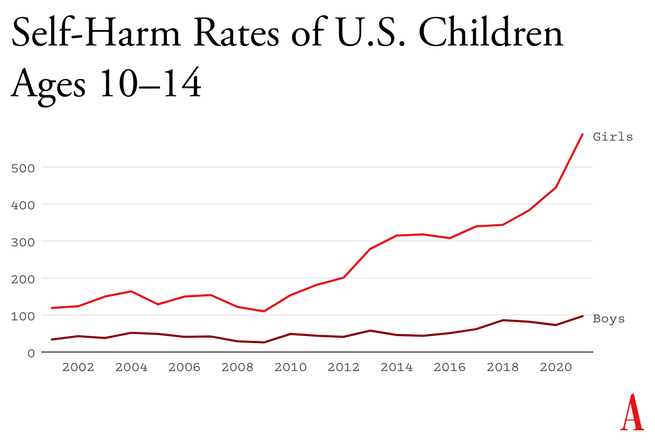
graph showing rates of self-harm in children
Number of emergency-department visits for nonfatal self-harm per 100,000 children (source: Centers for Disease Control and Prevention)

What happened in the early 2010s that altered adolescent development and worsened mental health? Theories abound, but the fact that similar trends are found in many countries worldwide means that events and trends that are specific to the United States cannot be the main story.

I think the answer can be stated simply, although the underlying psychology is complex: Those were the years when adolescents in rich countries traded in their flip phones for smartphones and moved much more of their social lives online—particularly onto social-media platforms designed for virality and addiction. Once young people began carrying the entire internet in their pockets, available to them day and night, it altered their daily experiences and developmental pathways across the board. Friendship, dating, sexuality, exercise, sleep, academics, politics, family dynamics, identity—all were affected. Life changed rapidly for younger children, too, as they began to get access to their parents’ smartphones and, later, got their own iPads, laptops, and even smartphones during elementary school.


As a social psychologist who has long studied social and moral development, I have been involved in debates about the effects of digital technology for years. Typically, the scientific questions have been framed somewhat narrowly, to make them easier to address with data. For example, do adolescents who consume more social media have higher levels of depression? Does using a smartphone just before bedtime interfere with sleep? The answer to these questions is usually found to be yes, although the size of the relationship is often statistically small, which has led some researchers to conclude that these new technologies are not responsible for the gigantic increases in mental illness that began in the early 2010s.

But before we can evaluate the evidence on any one potential avenue of harm, we need to step back and ask a broader question: What is childhood––including adolescence––and how did it change when smartphones moved to the center of it? If we take a more holistic view of what childhood is and what young children, tweens, and teens need to do to mature into competent adults, the picture becomes much clearer. Smartphone-based life, it turns out, alters or interferes with a great number of developmental processes.

The intrusion of smartphones and social media are not the only changes that have deformed childhood. There’s an important backstory, beginning as long ago as the 1980s, when we started systematically depriving children and adolescents of freedom, unsupervised play, responsibility, and opportunities for risk taking, all of which promote competence, maturity, and mental health. But the change in childhood accelerated in the early 2010s, when an already independence-deprived generation was lured into a new virtual universe that seemed safe to parents but in fact is more dangerous, in many respects, than the physical world.

My claim is that the new phone-based childhood that took shape roughly 12 years ago is making young people sick and blocking their progress to flourishing in adulthood. We need a dramatic cultural correction, and we need it now.

1. The Decline of Play and Independence

Human brains are extraordinarily large compared with those of other primates, and human childhoods are extraordinarily long, too, to give those large brains time to wire up within a particular culture. A child’s brain is already 90 percent of its adult size by about age 6. The next 10 or 15 years are about learning norms and mastering skills—physical, analytical, creative, and social. As children and adolescents seek out experiences and practice a wide variety of behaviors, the synapses and neurons that are used frequently are retained while those that are used less often disappear. Neurons that fire together wire together, as brain researchers say.

Brain development is sometimes said to be “experience-expectant,” because specific parts of the brain show increased plasticity during periods of life when an animal’s brain can “expect” to have certain kinds of experiences. You can see this with baby geese, who will imprint on whatever mother-sized object moves in their vicinity just after they hatch. You can see it with human children, who are able to learn languages quickly and take on the local accent, but only through early puberty; after that, it’s hard to learn a language and sound like a native speaker. There is also some evidence of a sensitive period for cultural learning more generally. Japanese children who spent a few years in California in the 1970s came to feel “American” in their identity and ways of interacting only if they attended American schools for a few years between ages 9 and 15. If they left before age 9, there was no lasting impact. If they didn’t arrive until they were 15, it was too late; they didn’t come to feel American.

Human childhood is an extended cultural apprenticeship with different tasks at different ages all the way through puberty. Once we see it this way, we can identify factors that promote or impede the right kinds of learning at each age. For children of all ages, one of the most powerful drivers of learning is the strong motivation to play. Play is the work of childhood, and all young mammals have the same job: to wire up their brains by playing vigorously and often, practicing the moves and skills they’ll need as adults. Kittens will play-pounce on anything that looks like a mouse tail. Human children will play games such as tag and sharks and minnows, which let them practice both their predator skills and their escaping-from-predator skills. Adolescents will play sports with greater intensity, and will incorporate playfulness into their social interactions—flirting, teasing, and developing inside jokes that bond friends together. Hundreds of studies on young rats, monkeys, and humans show that young mammals want to play, need to play, and end up socially, cognitively, and emotionally impaired when they are deprived of play.

One crucial aspect of play is physical risk taking. Children and adolescents must take risks and fail—often—in environments in which failure is not very costly. This is how they extend their abilities, overcome their fears, learn to estimate risk, and learn to cooperate in order to take on larger challenges later. The ever-present possibility of getting hurt while running around, exploring, play-fighting, or getting into a real conflict with another group adds an element of thrill, and thrilling play appears to be the most effective kind for overcoming childhood anxieties and building social, emotional, and physical competence. The desire for risk and thrill increases in the teen years, when failure might carry more serious consequences. Children of all ages need to choose the risk they are ready for at a given moment. Young people who are deprived of opportunities for risk taking and independent exploration will, on average, develop into more anxious and risk-averse adults.

Human childhood and adolescence evolved outdoors, in a physical world full of dangers and opportunities. Its central activities––play, exploration, and intense socializing––were largely unsupervised by adults, allowing children to make their own choices, resolve their own conflicts, and take care of one another. Shared adventures and shared adversity bound young people together into strong friendship clusters within which they mastered the social dynamics of small groups, which prepared them to master bigger challenges and larger groups later on.

And then we changed childhood.

The changes started slowly in the late 1970s and ’80s, before the arrival of the internet, as many parents in the U.S. grew fearful that their children would be harmed or abducted if left unsupervised. Such crimes have always been extremely rare, but they loomed larger in parents’ minds thanks in part to rising levels of street crime combined with the arrival of cable TV, which enabled round-the-clock coverage of missing-children cases. A general decline in social capital––the degree to which people knew and trusted their neighbors and institutions––exacerbated parental fears. Meanwhile, rising competition for college admissions encouraged more intensive forms of parenting. In the 1990s, American parents began pulling their children indoors or insisting that afternoons be spent in adult-run enrichment activities. Free play, independent exploration, and teen-hangout time declined.

In recent decades, seeing unchaperoned children outdoors has become so novel that when one is spotted in the wild, some adults feel it is their duty to call the police. In 2015, the Pew Research Center found that parents, on average, believed that children should be at least 10 years old to play unsupervised in front of their house, and that kids should be 14 before being allowed to go unsupervised to a public park. Most of these same parents had enjoyed joyous and unsupervised outdoor play by the age of 7 or 8.

But overprotection is only part of the story. The transition away from a more independent childhood was facilitated by steady improvements in digital technology, which made it easier and more inviting for young people to spend a lot more time at home, indoors, and alone in their rooms. Eventually, tech companies got access to children 24/7. They developed exciting virtual activities, engineered for “engagement,” that are nothing like the real-world experiences young brains evolved to expect.
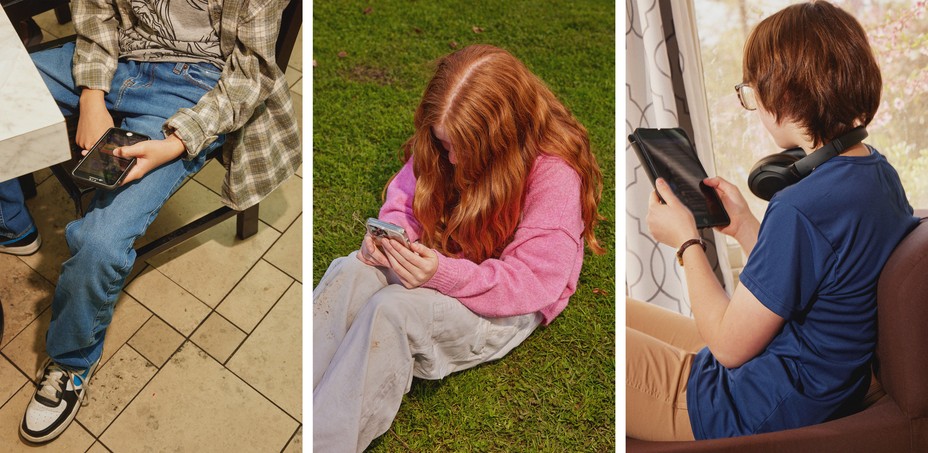
Triptych: teens on their phones at the mall, park, and bedroom

2. The Virtual World Arrives in Two Waves

The internet, which now dominates the lives of young people, arrived in two waves of linked technologies. The first one did little harm to Millennials. The second one swallowed Gen Z whole.

The first wave came ashore in the 1990s with the arrival of dial-up internet access, which made personal computers good for something beyond word processing and basic games. By 2003, 55 percent of American households had a computer with (slow) internet access. Rates of adolescent depression, loneliness, and other measures of poor mental health did not rise in this first wave. If anything, they went down a bit. Millennial teens (born 1981 through 1995), who were the first to go through puberty with access to the internet, were psychologically healthier and happier, on average, than their older siblings or parents in Generation X (born 1965 through 1980).

The second wave began to rise in the 2000s, though its full force didn’t hit until the early 2010s. It began rather innocently with the introduction of social-media platforms that helped people connect with their friends. Posting and sharing content became much easier with sites such as Friendster (launched in 2003), Myspace (2003), and Facebook (2004).

Teens embraced social media soon after it came out, but the time they could spend on these sites was limited in those early years because the sites could only be accessed from a computer, often the family computer in the living room. Young people couldn’t access social media (and the rest of the internet) from the school bus, during class time, or while hanging out with friends outdoors. Many teens in the early-to-mid-2000s had cellphones, but these were basic phones (many of them flip phones) that had no internet access. Typing on them was difficult––they had only number keys. Basic phones were tools that helped Millennials meet up with one another in person or talk with each other one-on-one. I have seen no evidence to suggest that basic cellphones harmed the mental health of Millennials.

It was not until the introduction of the iPhone (2007), the App Store (2008), and high-speed internet (which reached 50 percent of American homes in 2007)—and the corresponding pivot to mobile made by many providers of social media, video games, and porn—that it became possible for adolescents to spend nearly every waking moment online. The extraordinary synergy among these innovations was what powered the second technological wave. In 2011, only 23 percent of teens had a smartphone. By 2015, that number had risen to 73 percent, and a quarter of teens said they were online “almost constantly.” Their younger siblings in elementary school didn’t usually have their own smartphones, but after its release in 2010, the iPad quickly became a staple of young children’s daily lives. It was in this brief period, from 2010 to 2015, that childhood in America (and many other countries) was rewired into a form that was more sedentary, solitary, virtual, and incompatible with healthy human development.

3. Techno-optimism and the Birth of the Phone-Based Childhood

The phone-based childhood created by that second wave—including not just smartphones themselves, but all manner of internet-connected devices, such as tablets, laptops, video-game consoles, and smartwatches—arrived near the end of a period of enormous optimism about digital technology. The internet came into our lives in the mid-1990s, soon after the fall of the Soviet Union. By the end of that decade, it was widely thought that the web would be an ally of democracy and a slayer of tyrants. When people are connected to each other, and to all the information in the world, how could any dictator keep them down?

In the 2000s, Silicon Valley and its world-changing inventions were a source of pride and excitement in America. Smart and ambitious young people around the world wanted to move to the West Coast to be part of the digital revolution. Tech-company founders such as Steve Jobs and Sergey Brin were lauded as gods, or at least as modern Prometheans, bringing humans godlike powers. The Arab Spring bloomed in 2011 with the help of decentralized social platforms, including Twitter and Facebook. When pundits and entrepreneurs talked about the power of social media to transform society, it didn’t sound like a dark prophecy.

You have to put yourself back in this heady time to understand why adults acquiesced so readily to the rapid transformation of childhood. Many parents had concerns, even then, about what their children were doing online, especially because of the internet’s ability to put children in contact with strangers. But there was also a lot of excitement about the upsides of this new digital world. If computers and the internet were the vanguards of progress, and if young people––widely referred to as “digital natives”––were going to live their lives entwined with these technologies, then why not give them a head start? I remember how exciting it was to see my 2-year-old son master the touch-and-swipe interface of my first iPhone in 2008. I thought I could see his neurons being woven together faster as a result of the stimulation it brought to his brain, compared to the passivity of watching television or the slowness of building a block tower. I thought I could see his future job prospects improving.

Touchscreen devices were also a godsend for harried parents. Many of us discovered that we could have peace at a restaurant, on a long car trip, or at home while making dinner or replying to emails if we just gave our children what they most wanted: our smartphones and tablets. We saw that everyone else was doing it and figured it must be okay.

It was the same for older children, desperate to join their friends on social-media platforms, where the minimum age to open an account was set by law to 13, even though no research had been done to establish the safety of these products for minors. Because the platforms did nothing (and still do nothing) to verify the stated age of new-account applicants, any 10-year-old could open multiple accounts without parental permission or knowledge, and many did. Facebook and later Instagram became places where many sixth and seventh graders were hanging out and socializing. If parents did find out about these accounts, it was too late. Nobody wanted their child to be isolated and alone, so parents rarely forced their children to shut down their accounts.

We had no idea what we were doing.

4. The High Cost of a Phone-Based Childhood

In Walden, his 1854 reflection on simple living, Henry David Thoreau wrote, “The cost of a thing is the amount of … life which is required to be exchanged for it, immediately or in the long run.” It’s an elegant formulation of what economists would later call the opportunity cost of any choice—all of the things you can no longer do with your money and time once you’ve committed them to something else. So it’s important that we grasp just how much of a young person’s day is now taken up by their devices.

The numbers are hard to believe. The most recent Gallup data show that American teens spend about five hours a day just on social-media platforms (including watching videos on TikTok and YouTube). Add in all the other phone- and screen-based activities, and the number rises to somewhere between seven and nine hours a day, on average. The numbers are even higher in single-parent and low-income families, and among Black, Hispanic, and Native American families.

These very high numbers do not include time spent in front of screens for school or homework, nor do they include all the time adolescents spend paying only partial attention to events in the real world while thinking about what they’re missing on social media or waiting for their phones to ping. Pew reports that in 2022, one-third of teens said they were on one of the major social-media sites “almost constantly,” and nearly half said the same of the internet in general. For these heavy users, nearly every waking hour is an hour absorbed, in full or in part, by their devices.
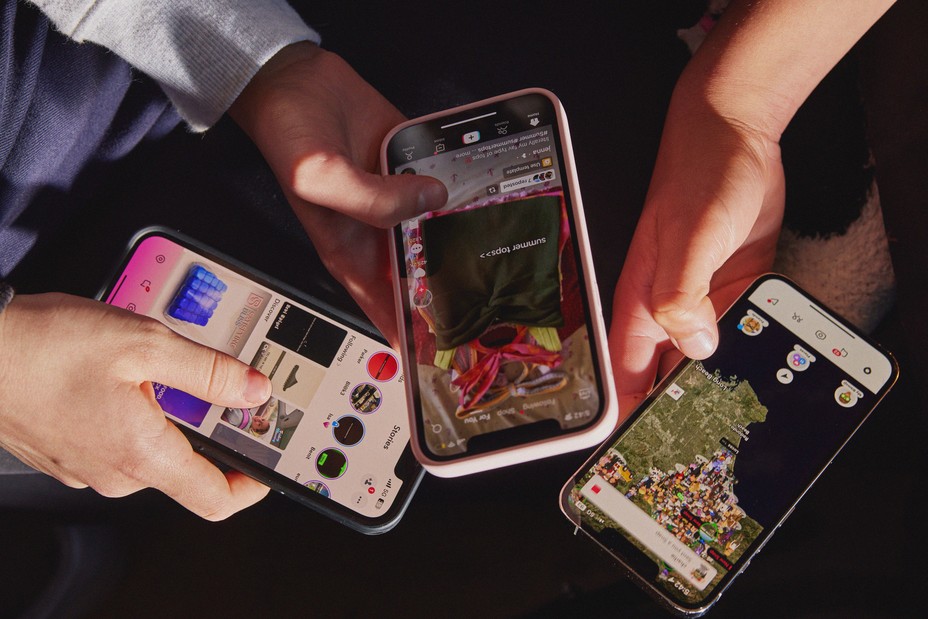
overhead image of teens hands with phones

In Thoreau’s terms, how much of life is exchanged for all this screen time? Arguably, most of it. Everything else in an adolescent’s day must get squeezed down or eliminated entirely to make room for the vast amount of content that is consumed, and for the hundreds of “friends,” “followers,” and other network connections that must be serviced with texts, posts, comments, likes, snaps, and direct messages. I recently surveyed my students at NYU, and most of them reported that the very first thing they do when they open their eyes in the morning is check their texts, direct messages, and social-media feeds. It’s also the last thing they do before they close their eyes at night. And it’s a lot of what they do in between.

The amount of time that adolescents spend sleeping declined in the early 2010s, and many studies tie sleep loss directly to the use of devices around bedtime, particularly when they’re used to scroll through social media. Exercise declined, too, which is unfortunate because exercise, like sleep, improves both mental and physical health. Book reading has been declining for decades, pushed aside by digital alternatives, but the decline, like so much else, sped up in the early 2010s. With passive entertainment always available, adolescent minds likely wander less than they used to; contemplation and imagination might be placed on the list of things winnowed down or crowded out.

But perhaps the most devastating cost of the new phone-based childhood was the collapse of time spent interacting with other people face-to-face. A study of how Americans spend their time found that, before 2010, young people (ages 15 to 24) reported spending far more time with their friends (about two hours a day, on average, not counting time together at school) than did older people (who spent just 30 to 60 minutes with friends). Time with friends began decreasing for young people in the 2000s, but the drop accelerated in the 2010s, while it barely changed for older people. By 2019, young people’s time with friends had dropped to just 67 minutes a day. It turns out that Gen Z had been socially distancing for many years and had mostly completed the project by the time COVID-19 struck.

You might question the importance of this decline. After all, isn’t much of this online time spent interacting with friends through texting, social media, and multiplayer video games? Isn’t that just as good?

Some of it surely is, and virtual interactions offer unique benefits too, especially for young people who are geographically or socially isolated. But in general, the virtual world lacks many of the features that make human interactions in the real world nutritious, as we might say, for physical, social, and emotional development. In particular, real-world relationships and social interactions are characterized by four features—typical for hundreds of thousands of years—that online interactions either distort or erase.

First, real-world interactions are embodied, meaning that we use our hands and facial expressions to communicate, and we learn to respond to the body language of others. Virtual interactions, in contrast, mostly rely on language alone. No matter how many emojis are offered as compensation, the elimination of communication channels for which we have eons of evolutionary programming is likely to produce adults who are less comfortable and less skilled at interacting in person.

Second, real-world interactions are synchronous; they happen at the same time. As a result, we learn subtle cues about timing and conversational turn taking. Synchronous interactions make us feel closer to the other person because that’s what getting “in sync” does. Texts, posts, and many other virtual interactions lack synchrony. There is less real laughter, more room for misinterpretation, and more stress after a comment that gets no immediate response.

Third, real-world interactions primarily involve one‐to‐one communication, or sometimes one-to-several. But many virtual communications are broadcast to a potentially huge audience. Online, each person can engage in dozens of asynchronous interactions in parallel, which interferes with the depth achieved in all of them. The sender’s motivations are different, too: With a large audience, one’s reputation is always on the line; an error or poor performance can damage social standing with large numbers of peers. These communications thus tend to be more performative and anxiety-inducing than one-to-one conversations.

Finally, real-world interactions usually take place within communities that have a high bar for entry and exit, so people are strongly motivated to invest in relationships and repair rifts when they happen. But in many virtual networks, people can easily block others or quit when they are displeased. Relationships within such networks are usually more disposable.

These unsatisfying and anxiety-producing features of life online should be recognizable to most adults. Online interactions can bring out antisocial behavior that people would never display in their offline communities. But if life online takes a toll on adults, just imagine what it does to adolescents in the early years of puberty, when their “experience expectant” brains are rewiring based on feedback from their social interactions.

Kids going through puberty online are likely to experience far more social comparison, self-consciousness, public shaming, and chronic anxiety than adolescents in previous generations, which could potentially set developing brains into a habitual state of defensiveness. The brain contains systems that are specialized for approach (when opportunities beckon) and withdrawal (when threats appear or seem likely). People can be in what we might call “discover mode” or “defend mode” at any moment, but generally not both. The two systems together form a mechanism for quickly adapting to changing conditions, like a thermostat that can activate either a heating system or a cooling system as the temperature fluctuates. Some people’s internal thermostats are generally set to discover mode, and they flip into defend mode only when clear threats arise. These people tend to see the world as full of opportunities. They are happier and less anxious. Other people’s internal thermostats are generally set to defend mode, and they flip into discover mode only when they feel unusually safe. They tend to see the world as full of threats and are more prone to anxiety and depressive disorders.
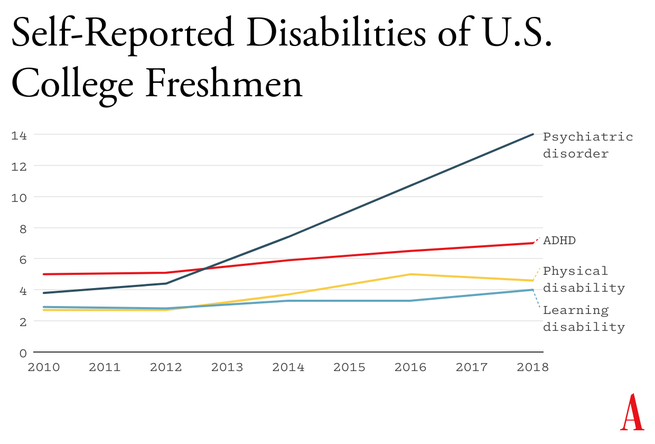
graph showing rates of disabilities in US college freshman
Percentage of U.S. college freshmen reporting various kinds of disabilities and disorders (source: Higher Education Research Institute)

A simple way to understand the differences between Gen Z and previous generations is that people born in and after 1996 have internal thermostats that were shifted toward defend mode. This is why life on college campuses changed so suddenly when Gen Z arrived, beginning around 2014. Students began requesting “safe spaces” and trigger warnings. They were highly sensitive to “microaggressions” and sometimes claimed that words were “violence.” These trends mystified those of us in older generations at the time, but in hindsight, it all makes sense. Gen Z students found words, ideas, and ambiguous social encounters more threatening than had previous generations of students because we had fundamentally altered their psychological development.

5. So Many Harms

The debate around adolescents’ use of smartphones and social media typically revolves around mental health, and understandably so. But the harms that have resulted from transforming childhood so suddenly and heedlessly go far beyond mental health. I’ve touched on some of them—social awkwardness, reduced self-confidence, and a more sedentary childhood. Here are three additional harms.

Fragmented Attention, Disrupted Learning

Staying on task while sitting at a computer is hard enough for an adult with a fully developed prefrontal cortex. It is far more difficult for adolescents in front of their laptop trying to do homework. They are probably less intrinsically motivated to stay on task. They’re certainly less able, given their undeveloped prefrontal cortex, and hence it’s easy for any company with an app to lure them away with an offer of social validation or entertainment. Their phones are pinging constantly—one study found that the typical adolescent now gets 237 notifications a day, roughly 15 every waking hour. Sustained attention is essential for doing almost anything big, creative, or valuable, yet young people find their attention chopped up into little bits by notifications offering the possibility of high-pleasure, low-effort digital experiences.

It even happens in the classroom. Studies confirm that when students have access to their phones during class time, they use them, especially for texting and checking social media, and their grades and learning suffer. This might explain why benchmark test scores began to decline in the U.S. and around the world in the early 2010s—well before the pandemic hit.

Addiction and Social Withdrawal

The neural basis of behavioral addiction to social media or video games is not exactly the same as chemical addiction to cocaine or opioids. Nonetheless, they all involve abnormally heavy and sustained activation of dopamine neurons and reward pathways. Over time, the brain adapts to these high levels of dopamine; when the child is not engaged in digital activity, their brain doesn’t have enough dopamine, and the child experiences withdrawal symptoms. These generally include anxiety, insomnia, and intense irritability. Kids with these kinds of behavioral addictions often become surly and aggressive, and withdraw from their families into their bedrooms and devices.

Social-media and gaming platforms were designed to hook users. How successful are they? How many kids suffer from digital addictions?

The main addiction risks for boys seem to be video games and porn. “Internet gaming disorder,” which was added to the main diagnosis manual of psychiatry in 2013 as a condition for further study, describes “significant impairment or distress” in several aspects of life, along with many hallmarks of addiction, including an inability to reduce usage despite attempts to do so. Estimates for the prevalence of IGD range from 7 to 15 percent among adolescent boys and young men. As for porn, a nationally representative survey of American adults published in 2019 found that 7 percent of American men agreed or strongly agreed with the statement “I am addicted to pornography”—and the rates were higher for the youngest men.

Girls have much lower rates of addiction to video games and porn, but they use social media more intensely than boys do. A study of teens in 29 nations found that between 5 and 15 percent of adolescents engage in what is called “problematic social media use,” which includes symptoms such as preoccupation, withdrawal symptoms, neglect of other areas of life, and lying to parents and friends about time spent on social media. That study did not break down results by gender, but many others have found that rates of “problematic use” are higher for girls.

I don’t want to overstate the risks: Most teens do not become addicted to their phones and video games. But across multiple studies and across genders, rates of problematic use come out in the ballpark of 5 to 15 percent. Is there any other consumer product that parents would let their children use relatively freely if they knew that something like one in 10 kids would end up with a pattern of habitual and compulsive use that disrupted various domains of life and looked a lot like an addiction?

The Decay of Wisdom and the Loss of Meaning

During that crucial sensitive period for cultural learning, from roughly ages 9 through 15, we should be especially thoughtful about who is socializing our children for adulthood. Instead, that’s when most kids get their first smartphone and sign themselves up (with or without parental permission) to consume rivers of content from random strangers. Much of that content is produced by other adolescents, in blocks of a few minutes or a few seconds.

This rerouting of enculturating content has created a generation that is largely cut off from older generations and, to some extent, from the accumulated wisdom of humankind, including knowledge about how to live a flourishing life. Adolescents spend less time steeped in their local or national culture. They are coming of age in a confusing, placeless, ahistorical maelstrom of 30-second stories curated by algorithms designed to mesmerize them. Without solid knowledge of the past and the filtering of good ideas from bad––a process that plays out over many generations––young people will be more prone to believe whatever terrible ideas become popular around them, which might explain why videos showing young people reacting positively to Osama bin Laden’s thoughts about America were trending on TikTok last fall.

All this is made worse by the fact that so much of digital public life is an unending supply of micro dramas about somebody somewhere in our country of 340 million people who did something that can fuel an outrage cycle, only to be pushed aside by the next. It doesn’t add up to anything and leaves behind only a distorted sense of human nature and affairs.

When our public life becomes fragmented, ephemeral, and incomprehensible, it is a recipe for anomie, or normlessness. The great French sociologist Émile Durkheim showed long ago that a society that fails to bind its people together with some shared sense of sacredness and common respect for rules and norms is not a society of great individual freedom; it is, rather, a place where disoriented individuals have difficulty setting goals and exerting themselves to achieve them. Durkheim argued that anomie was a major driver of suicide rates in European countries. Modern scholars continue to draw on his work to understand suicide rates today.
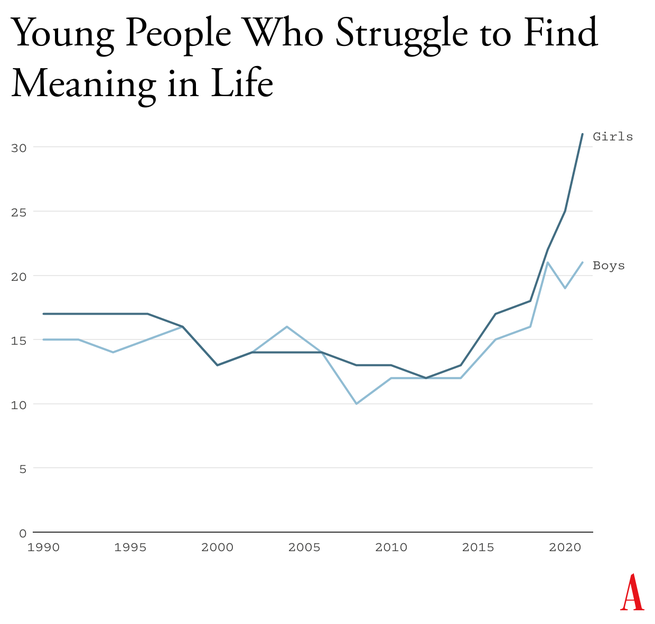
graph showing rates of young people who struggle with mental health
Percentage of U.S. high-school seniors who agreed with the statement “Life often seems meaningless.” (Source: Monitoring the Future)

Durkheim’s observations are crucial for understanding what happened in the early 2010s. A long-running survey of American teens found that, from 1990 to 2010, high-school seniors became slightly less likely to agree with statements such as “Life often feels meaningless.” But as soon as they adopted a phone-based life and many began to live in the whirlpool of social media, where no stability can be found, every measure of despair increased. From 2010 to 2019, the number who agreed that their lives felt “meaningless” increased by about 70 percent, to more than one in five.

6. Young People Don’t Like Their Phone-Based Lives

How can I be confident that the epidemic of adolescent mental illness was kicked off by the arrival of the phone-based childhood? Skeptics point to other events as possible culprits, including the 2008 global financial crisis, global warming, the 2012 Sandy Hook school shooting and the subsequent active-shooter drills, rising academic pressures, and the opioid epidemic. But while these events might have been contributing factors in some countries, none can explain both the timing and international scope of the disaster.

An additional source of evidence comes from Gen Z itself. With all the talk of regulating social media, raising age limits, and getting phones out of schools, you might expect to find many members of Gen Z writing and speaking out in opposition. I’ve looked for such arguments and found hardly any. In contrast, many young adults tell stories of devastation.

Freya India, a 24-year-old British essayist who writes about girls, explains how social-media sites carry girls off to unhealthy places: “It seems like your child is simply watching some makeup tutorials, following some mental health influencers, or experimenting with their identity. But let me tell you: they are on a conveyor belt to someplace bad. Whatever insecurity or vulnerability they are struggling with, they will be pushed further and further into it.” She continues:

Gen Z were the guinea pigs in this uncontrolled global social experiment. We were the first to have our vulnerabilities and insecurities fed into a machine that magnified and refracted them back at us, all the time, before we had any sense of who we were. We didn’t just grow up with algorithms. They raised us. They rearranged our faces. Shaped our identities. Convinced us we were sick.

Rikki Schlott, a 23-year-old American journalist and co-author of The Canceling of the American Mind, writes,

The day-to-day life of a typical teen or tween today would be unrecognizable to someone who came of age before the smartphone arrived. Zoomers are spending an average of 9 hours daily in this screen-time doom loop—desperate to forget the gaping holes they’re bleeding out of, even if just for … 9 hours a day. Uncomfortable silence could be time to ponder why they’re so miserable in the first place. Drowning it out with algorithmic white noise is far easier.

A 27-year-old man who spent his adolescent years addicted (his word) to video games and pornography sent me this reflection on what that did to him:

I missed out on a lot of stuff in life—a lot of socialization. I feel the effects now: meeting new people, talking to people. I feel that my interactions are not as smooth and fluid as I want. My knowledge of the world (geography, politics, etc.) is lacking. I didn’t spend time having conversations or learning about sports. I often feel like a hollow operating system.

Or consider what Facebook found in a research project involving focus groups of young people, revealed in 2021 by the whistleblower Frances Haugen: “Teens blame Instagram for increases in the rates of anxiety and depression among teens,” an internal document said. “This reaction was unprompted and consistent across all groups.”

How can it be that an entire generation is hooked on consumer products that so few praise and so many ultimately regret using? Because smartphones and especially social media have put members of Gen Z and their parents into a series of collective-action traps. Once you understand the dynamics of these traps, the escape routes become clear.
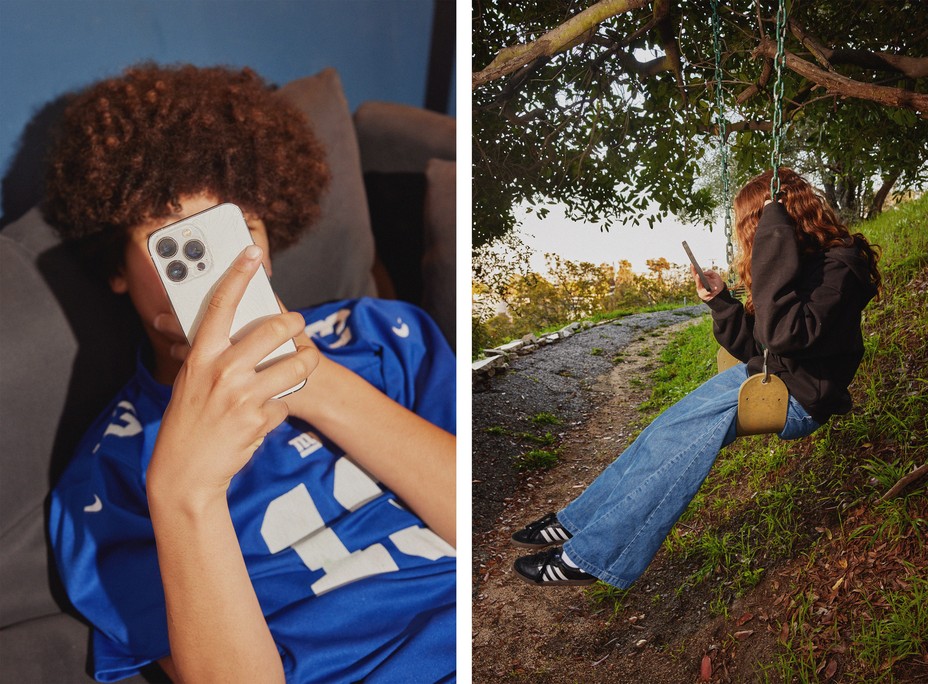
diptych: teens on phone on couch and on a swing

7. Collective-Action Problems

Social-media companies such as Meta, TikTok, and Snap are often compared to tobacco companies, but that’s not really fair to the tobacco industry. It’s true that companies in both industries marketed harmful products to children and tweaked their products for maximum customer retention (that is, addiction), but there’s a big difference: Teens could and did choose, in large numbers, not to smoke. Even at the peak of teen cigarette use, in 1997, nearly two-thirds of high-school students did not smoke.

Social media, in contrast, applies a lot more pressure on nonusers, at a much younger age and in a more insidious way. Once a few students in any middle school lie about their age and open accounts at age 11 or 12, they start posting photos and comments about themselves and other students. Drama ensues. The pressure on everyone else to join becomes intense. Even a girl who knows, consciously, that Instagram can foster beauty obsession, anxiety, and eating disorders might sooner take those risks than accept the seeming certainty of being out of the loop, clueless, and excluded. And indeed, if she resists while most of her classmates do not, she might, in fact, be marginalized, which puts her at risk for anxiety and depression, though via a different pathway than the one taken by those who use social media heavily. In this way, social media accomplishes a remarkable feat: It even harms adolescents who do not use it.

A recent study led by the University of Chicago economist Leonardo Bursztyn captured the dynamics of the social-media trap precisely. The researchers recruited more than 1,000 college students and asked them how much they’d need to be paid to deactivate their accounts on either Instagram or TikTok for four weeks. That’s a standard economist’s question to try to compute the net value of a product to society. On average, students said they’d need to be paid roughly $50 ($59 for TikTok, $47 for Instagram) to deactivate whichever platform they were asked about. Then the experimenters told the students that they were going to try to get most of the others in their school to deactivate that same platform, offering to pay them to do so as well, and asked, Now how much would you have to be paid to deactivate, if most others did so? The answer, on average, was less than zero. In each case, most students were willing to pay to have that happen.

Social media is all about network effects. Most students are only on it because everyone else is too. Most of them would prefer that nobody be on these platforms. Later in the study, students were asked directly, “Would you prefer to live in a world without Instagram [or TikTok]?” A majority of students said yes––58 percent for each app.

This is the textbook definition of what social scientists call a collective-action problem. It’s what happens when a group would be better off if everyone in the group took a particular action, but each actor is deterred from acting, because unless the others do the same, the personal cost outweighs the benefit. Fishermen considering limiting their catch to avoid wiping out the local fish population are caught in this same kind of trap. If no one else does it too, they just lose profit.

Cigarettes trapped individual smokers with a biological addiction. Social media has trapped an entire generation in a collective-action problem. Early app developers deliberately and knowingly exploited the psychological weaknesses and insecurities of young people to pressure them to consume a product that, upon reflection, many wish they could use less, or not at all.

8. Four Norms to Break Four Traps

Young people and their parents are stuck in at least four collective-action traps. Each is hard to escape for an individual family, but escape becomes much easier if families, schools, and communities coordinate and act together. Here are four norms that would roll back the phone-based childhood. I believe that any community that adopts all four will see substantial improvements in youth mental health within two years.

No smartphones before high school 

The trap here is that each child thinks they need a smartphone because “everyone else” has one, and many parents give in because they don’t want their child to feel excluded. But if no one else had a smartphone—or even if, say, only half of the child’s sixth-grade class had one—parents would feel more comfortable providing a basic flip phone (or no phone at all). Delaying round-the-clock internet access until ninth grade (around age 14) as a national or community norm would help to protect adolescents during the very vulnerable first few years of puberty. According to a 2022 British study, these are the years when social-media use is most correlated with poor mental health. Family policies about tablets, laptops, and video-game consoles should be aligned with smartphone restrictions to prevent overuse of other screen activities.

No social media before 16

The trap here, as with smartphones, is that each adolescent feels a strong need to open accounts on TikTok, Instagram, Snapchat, and other platforms primarily because that’s where most of their peers are posting and gossiping. But if the majority of adolescents were not on these accounts until they were 16, families and adolescents could more easily resist the pressure to sign up. The delay would not mean that kids younger than 16 could never watch videos on TikTok or YouTube—only that they could not open accounts, give away their data, post their own content, and let algorithms get to know them and their preferences.

Phone‐free schools

Most schools claim that they ban phones, but this usually just means that students aren’t supposed to take their phone out of their pocket during class. Research shows that most students do use their phones during class time. They also use them during lunchtime, free periods, and breaks between classes––times when students could and should be interacting with their classmates face-to-face. The only way to get students’ minds off their phones during the school day is to require all students to put their phones (and other devices that can send or receive texts) into a phone locker or locked pouch at the start of the day. Schools that have gone phone-free always seem to report that it has improved the culture, making students more attentive in class and more interactive with one another. Published studies back them up.

More independence, free play, and responsibility in the real world

Many parents are afraid to give their children the level of independence and responsibility they themselves enjoyed when they were young, even though rates of homicide, drunk driving, and other physical threats to children are way down in recent decades. Part of the fear comes from the fact that parents look at each other to determine what is normal and therefore safe, and they see few examples of families acting as if a 9-year-old can be trusted to walk to a store without a chaperone. But if many parents started sending their children out to play or run errands, then the norms of what is safe and accepted would change quickly. So would ideas about what constitutes “good parenting.” And if more parents trusted their children with more responsibility––for example, by asking their kids to do more to help out, or to care for others––then the pervasive sense of uselessness now found in surveys of high-school students might begin to dissipate.

It would be a mistake to overlook this fourth norm. If parents don’t replace screen time with real-world experiences involving friends and independent activity, then banning devices will feel like deprivation, not the opening up of a world of opportunities.

The main reason why the phone-based childhood is so harmful is because it pushes aside everything else. Smartphones are experience blockers. Our ultimate goal should not be to remove screens entirely, nor should it be to return childhood to exactly the way it was in 1960. Rather, it should be to create a version of childhood and adolescence that keeps young people anchored in the real world while flourishing in the digital age.

9. What Are We Waiting For?

An essential function of government is to solve collective-action problems. Congress could solve or help solve the ones I’ve highlighted—for instance, by raising the age of “internet adulthood” to 16 and requiring tech companies to keep underage children off their sites.

In recent decades, however, Congress has not been good at addressing public concerns when the solutions would displease a powerful and deep-pocketed industry. Governors and state legislators have been much more effective, and their successes might let us evaluate how well various reforms work. But the bottom line is that to change norms, we’re going to need to do most of the work ourselves, in neighborhood groups, schools, and other communities.

There are now hundreds of organizations––most of them started by mothers who saw what smartphones had done to their children––that are working to roll back the phone-based childhood or promote a more independent, real-world childhood. (I have assembled a list of many of them.) One that I co-founded, at LetGrow.org, suggests a variety of simple programs for parents or schools, such as play club (schools keep the playground open at least one day a week before or after school, and kids sign up for phone-free, mixed-age, unstructured play as a regular weekly activity) and the Let Grow Experience (a series of homework assignments in which students––with their parents’ consent––choose something to do on their own that they’ve never done before, such as walk the dog, climb a tree, walk to a store, or cook dinner).

Even without the help of organizations, parents could break their families out of collective-action traps if they coordinated with the parents of their children’s friends. Together they could create common smartphone rules and organize unsupervised play sessions or encourage hangouts at a home, park, or shopping mall.
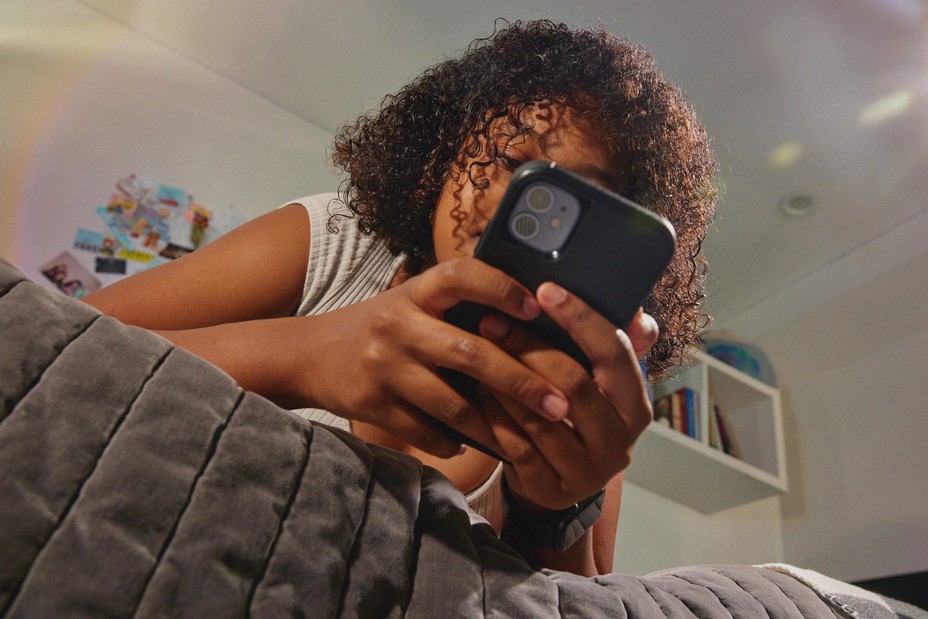
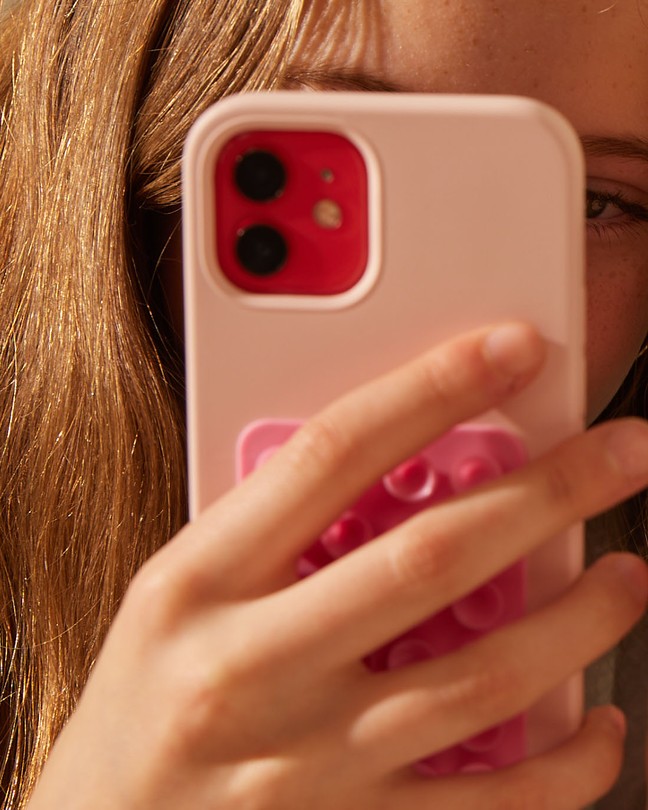
teen on her phone in her room

Parents are fed up with what childhood has become. Many are tired of having daily arguments about technologies that were designed to grab hold of their children’s attention and not let go. But the phone-based childhood is not inevitable.

The four norms I have proposed cost almost nothing to implement, they cause no clear harm to anyone, and while they could be supported by new legislation, they can be instilled even without it. We can begin implementing all of them right away, this year, especially in communities with good cooperation between schools and parents. A single memo from a principal asking parents to delay smartphones and social media, in support of the school’s effort to improve mental health by going phone free, would catalyze collective action and reset the community’s norms.

We didn’t know what we were doing in the early 2010s. Now we do. It’s time to end the phone-based childhood.


This article is adapted from Jonathan Haidt’s forthcoming book, The Anxious Generation: How the Great Rewiring of Childhood Is Causing an Epidemic of Mental Illness.

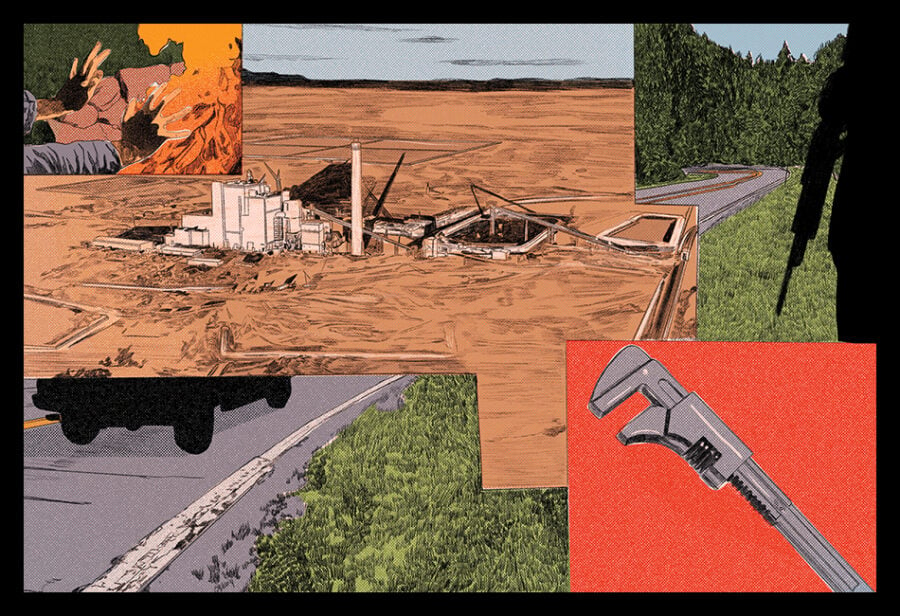
The Machine Breaker (Harper’s Magazine)

Illustrations by Nicole Rifkin

[Report]

by Christopher Ketcham

Inside the mind of an “ecoterrorist”

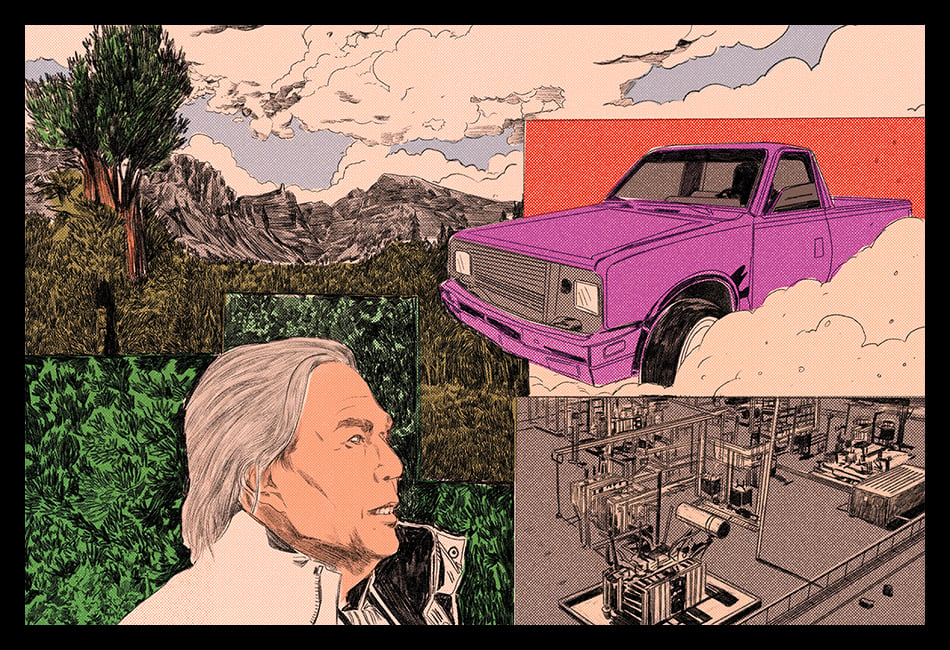
In the summer of 2016, a fifty-seven-year-old Texan named Stephen McRae drove east out of the rainforests of Oregon and into the vast expanse of the Great Basin. His plan was to commit sabotage. First up was a coal-burning power plant near Carlin, Nevada, a 242-megawatt facility owned by the Newmont Corporation that existed to service two nearby gold mines, also owned by Newmont.

McRae hated coal-burning power plants with a passion, but even more he hated gold mines. Gold represented most everything frivolous, wanton, and destructive. Love of gold was for McRae a form of civilizational degeneracy, because of the pollution associated with it, the catastrophic disruption of soil, the poisoning of water and air, and because it set people against one another.

Gold mines needed to die, McRae told me years later, around a campfire in the wilderness, when he felt that he could finally share his story. “And the power plant too. I wanted it all to go down. But it was only that summer I got up the balls to finally do it.”

He was compelled at last to act because of what he had seen in the conifer forests of Washington and Oregon that summer. They were hot and dry when they should have been cool and lush, rich with rain. He saw few of the birds that he had thought of as his companions in the Pacific Northwest—the flycatchers and vireos, the hermit warbler, the Pacific wren, the varied thrush. Even the most common birds, say the dark-eyed junco with its flashing white tail and sharp trilling, were nowhere to be found. Living out of the back of his car, camping on public lands, he stomped about at night before his fire with fists clenched, enraged at the loss.

As far as authorities know, McRae had committed industrial sabotage only once before, in San Juan County, Utah, on April Fools’ Day 2015. It was an attack on an electrical substation, a crime for which, had he been caught and convicted, he could have faced imprisonment under terrorism enhancement statutes for as many as twenty years, even though no human life had been endangered by the act. This was an essential point for McRae. “They called me a terrorist with anarchist intentions,” he would later explain. “But my hatred is for machines, not people.” He referred to the complex of machines and its technocratic tenders as the “megamachine,” after the formulation of the social historian Lewis Mumford, who warned against the takeover of society by technologies that would make us its dependents and, at long last, its servants—technologies that have now deranged the climate because they are fueled by burning carbon. “Down with the megamachine” was McRae’s motto.

Now he struck as opportunity arose, on his way across northern Nevada, headed east on I-80, bound for the Newmont power plant and mines. On the evening of August 30, 2016, while driving down a dirt road to his campsite in the foothills of the Montana Mountains in Humboldt County, some hundred and fifty miles northwest of the Newmont site in Carlin, he happened upon the Quinn River substation, a 115-kilovolt node of the sort that typically serves large industrial customers.

At 8 am the next day, he pulled up near the substation in his rickety purple Isuzu truck. The long shadows of the Nevada morning stretched across the desert. McRae scanned the horizon for traffic or pedestrians. Seeing no one, he raised his .30–40 Krag, a rifle known for its power and accuracy, and fired a single round from inside the truck. The bullet pierced the cooling fins of the transformer, as intended, causing mineral oil to gush onto the sagebrush.

The noise of the shot was tremendous, and for a moment it stunned him. He looked around as though finally awake to what he was doing. It was then that he asked himself something he would end up asking a lot, which was how it had come to this, how had he stooped so low.

McRae had once been a successful entrepreneur, the head of a high-end carpentry business in Dallas that catered to wealthy clients and brought him a six-figure income. At the height of his success, he oversaw ten journeymen, but the 2008 financial crash killed the business. Now he no longer had a cell phone, credit card, or bank account. He lived hand to mouth, working odd jobs. He had been married and in love, his wife a backpacker like him, smitten with wild places. But she was long gone, like everything else that had been stable and orderly in his life.

For one at the bottom of society’s rungs, who had given up on the doomed American dream, nomadism in the wide-open West was the way to go. He relieved his anger and despair and sadness in the solace of his campsites, where at least there were trees to talk to, stars immense and cosmic, and, if he was lucky, a purling stream running down from snowmelt high in the mountains, above the burning desert. There was room to be a bum with a degree of dignity, to disappear in the enormous backcountry, beyond the eyes of the cops and the reach of what McRae called in his diary “the Corporate Police State.” Here he declared himself a “madly matriarchal, tree-hugging, godless feminist with a gun.”

He ejected a single cartridge as he shot the Quinn River substation, and he noted where it fell in the truck so that he could quickly dispose of the evidence. (Always shoot from inside the truck, he advised, so there are no ballistics or shoe prints at the site.) Satisfied that the transformer would fail within the hour, he turned east into the sun on Nevada State Route 140, bound for the Newmont power plant.

But the Newmont attack never happened, for the stupidest of reasons: he got a flat. He knew he would have to drive on a spare over many dirt roads to escape, and he didn’t dare attempt taking out the facility on three good tires alone.

I first met McRae—and first appeared in his FBI case records—not long after the aborted assault on the Newmont site. On October 7 that same year, I stopped by the home of a friend in Escalante, Utah, where I was living that fall. The friend was Mark Austin, a sixty-five-year-old contractor who built homes for wealthy transplants. He could see I was rattled, and welcomed me in for a drink. A deer—a large buck—had charged across a field as I motored slowly into town and had rammed its antlers into my driver’s side window, shattering glass in my face and hair before fleeing. McRae was at Austin’s house for dinner when I arrived, and he thought my story was funny. The beasts of the earth are coming for you, he said. “It’s your New York plates.”

I was in no mood for joking. McRae seemed to be a big, aggressive, silver-haired Southerner, above six feet in height, with enormous shoulders, hands about the size of my head, and a broad smile that revealed a hollow space of molars gone from lack of care. A steak-fed Fort Worth or Dallas specimen, I figured, who made up with body mass what’s lacking in mind. This first impression, needless to say, was all wrong.

We ended up drinking a lot of wine, then tequila. We bonded over his love of English literature and Russian despair, the Brontës and Dostoevsky. He seemed quick to hate and quick to love, his disposition a mix of mania and menace. He said he was a follower of Native American cultures, enamored especially of the Apache, their chiefs Geronimo and Cochise, the last and fiercest of indigenous leaders in the lower forty-eight to resist white invasion. He fancied himself their ally, and he soon declared with adolescent glee his intention to destroy the white man’s industrial civilization. His most important targets were fossil fuel infrastructure and the energy grid. We discussed taking down the enemy—the Fortune 500 CEOs, say—and how the world would be a better place if they were all beheaded. “Would you really have a problem with me killing the Koch brothers?” he asked.

His eyes gleamed. He shouted over us. (The other participants in the conversation were Viva Fraser, my girlfriend; Erica Walz, publisher of the local newspaper; and Mark.) We talked about animals getting vengeance on Homo sapiens, attacking our cars en masse, cars that had killed so many of them. “Organize the animals!” cried McRae. He stood up and paced and sat down and stood up again. We drank more, and I mentioned to him that I had been a writer for this magazine. He hooted and smiled a half-toothless smile and said, “Harper’s! Goddamn!”

I have a copy of the FBI’s recording of this conversation courtesy of the Department of Justice. It goes on for another four or so hours. Much of it is garbled, the sound quality so lousy it’s unintelligible. There’s a dramatic moment around hour three, when McRae and I, barely acquainted, consider heading out the next morning to target the “infrastructure that makes industrial capitalism work,” because, he said, it “is very weak at certain points.” He harangued us, saying, “I hate everything about this culture.” We listened. I tried to get a word in. He shouted me down. According to the FBI transcript, which I’ve distilled slightly, the conversation went as follows:

McRae: I’m willing to die for what I believe. I’ve committed fifty fucking felonies against the corporate state in the last sixty days.

Ketcham: Really?

McRae: Yeah, that are called terrorism. Because I hate ’em.

Austin: I hope to God that you haven’t been killing people, dude.

McRae: I don’t have to kill people.

Ketcham: If you actually have been committing such felonies, you should be quiet about it.

McRae: I don’t care.

Ketcham: In fact, I’m inclined to think that because of your bloviating about it, that you haven’t been doing any of it.

McRae: You think I’m a fuckin liar? You’re gonna call me a fuckin liar? Come on, come get in my fuckin truck! In an hour we’ll commit five felonies.

(McRae starts yelling and cursing.)

Austin: Steve, Steve, relax!

McRae: Come get in my truck with me, in one hour, we can make five felonies. I’m not fuckin scared of the Goddamn NSA, the FBI, or any of those motherfuckers.

Walz: But Steve, what’s the point?

McRae: To teach the world how to destroy industrial capitalism. I have a political agenda to destroy industrial capitalism. I don’t want to hurt people. I’ve never hurt people. And I will try to avoid that at all costs. I know how to shut down huge mining operations costing millions and millions of dollars, by myself, for weeks. I know how to shut them down. Do I need to go on? I’m serious as a fuckin heart attack. Think I’m lying?

Ketcham: Let’s go out and do it.

McRae: You think I’m full of shit. You don’t believe me. Okay, we’ll go tomorrow, okay, is that cool? I’ll do it in broad daylight, that’s when they don’t expect it . . . You question my integrity, man.

Walz: You know what, I don’t want to hear this conversation. I prefer you not have this conversation in front of me at all.

McRae: Relax, I’m a fuckin liar, okay, fuckin lies. So anyway, do you want to meet me here in the morning?—well then, just tell me when and where.

Ketcham: We’ll talk tomorrow.

McRae: I’ll be around tomorrow . . . And if you really are a journalist you could help out my political cause. I think we can beat them. Enough of us can beat them.

Tomorrow never came, of course, because I thought he was a blowhard and a liar. I figured he’d read The Monkey Wrench Gang too many times. (He had.) The 1975 novel by Edward Abbey—the literary father of ecological sabotage—features a quartet of citizen defenders of the sandstone wilderness in southern Utah, so-called monkey wrenchers, who, like their hero Ned Ludd, the mythical eighteenth-century English weaver who rebelled against the machines overtaking the textile industry, vow to throw a spanner in the works. (Ludd’s forebears in fourteenth-century Holland are said to have used wooden shoes called sabots to smash the weaving machines that were putting them out of business.) Armed with gasoline, explosives, and rifles, Abbey’s saboteurs burn bulldozers and other road-building equipment, blow up bridges, and send coal trains into canyons, all the while pursued by local authorities. McRae, it seemed to me, was playacting in some cartoonish Abbeyite pulp fiction.

After that encounter, I had no contact with McRae for several weeks. We met again at a raucous Halloween party in Escalante, where I was dressed as a terrorist. McRae sat motionless in a chair, without a costume, alone and apart. He cast me a dour look. My face was mostly hidden in a balaclava and a kaffiyeh, and I pulled away the covering and smiled at him in what I imagine now was a dismissive way. Later he told me that it hurt his feelings to be doubted by a journalist from his favorite magazine. He had been serious about taking me along to commit felonies.

Measured against the march of machine civilization, the history of ecological sabotage has been one of petty local victories, scorched-earth retreats, and, ultimately, abject failure. The movement dates to the Seventies, when Abbey’s fictional monkey wrenchers inspired a generation of young Americans to coalesce into the direct-action group Earth First! “It is time for women and men, individually and in small groups, to act heroically and admittedly illegally in defense of the wild, to put a monkeywrench into the gears of the machine,” wrote Dave Foreman, a former Wilderness Society lobbyist and co-founder of Earth First!, and Bill Haywood in their 1985 how-to book Ecodefense. “We will not make political compromises,” the group had earlier announced in a 1980 newsletter. Saboteurs using their methods, they promised, could be “effective in stopping timber cutting, road building, overgrazing, oil & gas exploration, mining, dam building, powerline construction.” Members of Earth First! organized to defend old growth forests in the Northwest, spiking trees with sixty-penny nails to ward off chainsaw crews, blockading roads to stop logging trucks, and sitting in the crowns of ancient fir and pine to prevent their felling. They were occasionally successful, but mostly not.

The Earth Liberation Front, ideological heirs to Earth First!, arrived on the scene in the Nineties with new and improved acts of ecodefense. The elves, as they called themselves, set fire to ski resorts, SUVs on dealer lots, and labs where animals were believed to be abused. Their stated intent was to harm no living being, and to their credit, they maintained that standard. The rising militancy of the ELF produced consternation in U.S. law enforcement circles, and enough financial trouble to turn the heads of a few corporate leaders. Their crowning achievement was the daring and intricate 1998 arson of the Vail Ski Resort, undertaken with the Animal Liberation Front, which caused an estimated $24 million in damage. This led the FBI to call the two groups “the most active criminal extremist elements in the United States.” By 2006, dozens of ELF members had ratted one another out under the tremendous pressure of terrorism statutes enacted in the wake of 9/11. The FBI proclaimed victory, but writ large the government’s work was much ado about very little. The sum of the damages from arson, vandalism, and animal releases over decades of activity totaled a mere $45 million.

The growing understanding of ecosabotage as a serious endeavor coincided with an era of expansive plunder and spoliation, referred to by some historians as the Great Acceleration, a period in which human enterprise under capitalism kicked into overdrive, taxing the earth in unprecedented ways. Almost every measure of ecological health suggested decline. The problem was the seeming inevitability of the juggernaut, the constancy of its forward motion, and the inefficacy of mere individuals in the face of such odds.

Given these trends, it’s unsurprising that the movement would turn to catastrophism. At the vanguard of this shift was a group called Deep Green Resistance, the brainchild of the authors Derrick Jensen, Lierre Keith, and Aric McBay, self-described ecophilosophers and activists who had published numerous books of remonstrance against industrial society. The three asserted that our civilization was untenable and would render the earth uninhabitable. Jensen in particular exhorted his readers to

put our bodies and our lives between the industrial system and life on this planet. We must start to fight back. Those who come after, who inherit whatever’s left of the world once this culture has been stopped . . . are going to judge us by the health of the landbase, by what we leave behind. They’re not going to care how you or I lived our lives. They’re not going to care how hard we tried. They’re not going to care whether we were nice people.

His was an apocalyptic vision: the longer we waited to dismantle the machine, the more its progress would undermine the planet’s carrying capacity, and the greater our ultimate suffering would be. The American public had encountered this thinking before, of course, as it was popularized in the Nineties by the homicidal maniac Theodore Kaczynski, whose manifesto inveighed against industrial society and called for its violent overthrow. “In order to get our message before the public,” Kaczynski wrote, “we’ve had to kill people.” He addressed himself to those

who will be opposed to the industrial system on a rational, thought-out basis, with full appreciation of the problems and ambiguities involved, and of the price that has to be paid for getting rid of the system.

A majority of people will appreciate, on a rational basis, that the price is too high. As unsustainable as the megamachine may be, we must maintain it because hundreds of millions, perhaps billions, of people would likely suffer without its provisioning. To his credit, Jensen, who has Crohn’s disease and depends on high-tech drug treatments, admits that he’ll be among the first to go. (“I am also aware,” he writes, “that the fact that these drugs will probably save my life is not a good enough reason to not take down civilization.”) McRae likened our state of affairs to life on the Death Star. The Death Star succors, energizes, feeds, clothes, medicates, houses, warms, and cools us with its throbbing complexity—woe to the planets in the way of its progress. There are jobs galore paying good money to make sure the Death Star is oiled and functioning. “More money for more gadgets, gizmos, gewgaws, baubles,” McRae told me in an email. “The endless fascination with more, more, more shiny objects to continue a life of tending machines.”

After abandoning the attack on the Newmont gold mine, McRae pulled off I-80 into Carlin to get his flat fixed. He was paranoid to the point of delirium. Traffic cameras might catch his truck, cops might take random notice of him. Then there was the awfulness of visiting a Nevada town, the hideous, twisted faces of the people, the heat bearing down, the sky a burning chromium white, every interaction a kind of torture.

From Carlin he headed south in a zigzag on rough dirt roads, avoiding cops and people, feeling the pit in his gut grow. He had his eye on a substation in White Pine County two hundred miles away, not far from a favorite place replete with good memories, Great Basin National Park. As a young man he had climbed the mountain meadows with his wife. They slept under whispering bristlecone pines on a midsummer night. When he shot the Baker substation in White Pine County on September 14, 2016, he had expected, naïvely he now realized, that at some point he would have experienced an affirmation similar to the feeling he got when he climbed a mountain or smelled pines in the breeze, that is, a sense of joy, purpose, a vision of truth and beauty and meaning. But this never came. And it never would.

Every lesson from his good middle-class upbringing told him there was something wrong with what he was doing. He looked for rationalizations in the perpetual muttering of troubled people on the verge of breakdown. He spoke aloud before a lonely campfire. He thought of the peace-loving water defenders in the Dakotas, the Native Americans at Standing Rock who hoped to block the Dakota Access Pipeline, and who were attacked and beaten that summer by hired thugs from the oil companies. What had the togetherness of locked hands accomplished in defense of Mother Earth?

He had tried peaceful resistance for most of his life, volunteering for conservation groups and contributing what he could. But it was nonsense, a waste of time and money and, worse, spirit. It felt like a Ponzi scheme. He supported the right candidate, he thought: the Democrats, Hillary Clinton in particular. (He told friends and family that he was “gonna support a woman, because a woman is the only person who can lead us out of this mess.”) He tried to follow the example of his father, Jack, a civics teacher who taught in Dallas public schools for thirty years. Jack had been a socialist and later an LBJ Democrat. He believed in civic discourse, civil disobedience if necessary—but never rage and riot, never violence. When McRae was five years old, in 1964, his father traveled to Mississippi to join the Freedom Summer black voter drives.

McRae spent his late forties as caretaker to his ailing father, who died in 2008, at eighty-six, of congestive heart failure. He once told his dad that to be a pacifist was to be a fool. Jack had served in World War II, in the bloody campaigns in North Africa and Italy, so he knew violence. He was a quiet man who rarely raised his voice. But he became angry with his son. They argued for hours. McRae figured his father would be ashamed at what he had become.

It took him more than a week to cross Nevada, crawling on rutted back roads in his crummy old car, through the dust and tumbleweeds and the vast scorched salt basins and over the spines of mountains. He was heading toward the high country of the Colorado Plateau, the Canyonlands, where he found some carpentry work from Mark Austin. When McRae had visited Escalante in 2015 and first met Austin, he thought he had found a friend, a rare person he could trust. Their worldviews had seemed to align.

As the two got to know each other, Austin expressed sympathy with certain small acts of sabotage, such as toppling roadside commercial billboards. This delighted McRae. Better still, Austin was a fan of Abbey’s writing and a close friend of Doug Peacock, the Vietnam War veteran on whom Abbey based his wild-eyed saboteur George Hayduke in The Monkey Wrench Gang. McRae adored Hayduke, and was impressed that Austin knew the man who’d been the inspiration for him. He confided in Austin about Deep Green Resistance and spoke vaguely of sabotage he may or may not have committed. McRae also described, in what Austin said was an obsessive manner, taking down the energy grid. “He was maniacal,” Austin recalled. “There’s a big difference between cutting down illegal billboards and taking out infrastructure.” McRae worked several months on Austin’s job sites, drew a paycheck, hit the road, and Austin, who was mildly frightened by the man’s rhetoric, expected never to hear from him again.

On September 25, 2016, the power in Escalante went out for several hours. It had gone out, in fact, across much of southwestern Utah. It was a Sunday, and I was in Escalante at the time. The townsfolk wandered into the streets with wide eyes, wondering what had happened, as power tended to fail only in big winter storms. When Austin heard that the cause was rifle fire on a substation, he immediately suspected McRae. By the time McRae showed up to ask Austin for work two days later, Austin had already called the Garfield County sheriff to share his suspicions.

Sheriffs in White Pine and Humboldt counties had been mulling the similarities of the attacks in their jurisdictions, and now they reached out to Garfield County. Perhaps this suspect was tied to the 2014 strikes on the California electrical grid, including a rifle attack in Silicon Valley described by the New York Times as “mysterious and sophisticated.” The FBI also took an interest. The bureau suggested that Austin engage with the suspect and record their conversations. Within a few weeks of taking a job with Austin, McRae was revealing details of his recent crimes. He also began hinting at a grand plan that he was hatching for the fall. It involved taking out so many substations across the Southwest that a blackout would stretch from Las Vegas to the coast.

Though Austin considered the prospect alarming, ecosabotage now appears, in some circles, a reasonable response to the mad trajectory of the carbon machine. Even the conformist bozos in Hollywood have hinted at sympathy, with the film How to Blow Up a Pipeline, which takes after a book of the same name by Andreas Malm, a human ecologist at Lund University. Malm has advocated for organized attacks on fossil fuel infrastructure and the disruption of oil supplies. He says that he is inspired by the suffragettes of England, whose militancy centered on property destruction.

The suffragettes specialized in the “argument of the broken pane,” their enraged crews of well-dressed women mobbing central London to shatter storefronts and tear down statues and paintings with hammers and axes. Following the defeat of legislation that would have given them the vote, in 1913 the women embarked on “a systematic campaign of arson,” Malm writes, burning or blowing up “villas, tea pavilions, boathouses, hotels, haystacks, churches, post offices, aqueducts, theatres.” They burned cars and sank yachts. Over the course of a year and a half, they claimed responsibility for at least 337 attacks, which resulted in several deaths. So it should be, argues Malm, with the fight against fossil fuels: we need a critical mass of saboteurs willing to move beyond non-violence.

Or consider Kim Stanley Robinson’s 2020 novel The Ministry for the Future, in which a character clubs to death a wealthy man on a beach off of Lake Maggiore, and gets away with it, his murderous rage driven by having witnessed a heat wave in India that killed more people “than in the entirety of the First World War.” The book spans decades of climatic unraveling to chronicle the rise of the Children of Kali, a cabal that kills thousands of innocent people on Crash Day, sometime in the 2030s, by flying drones into the engines of dozens of commercial airliners. It’s a ruthless act of terrorism that Robinson’s omniscient narrator celebrates for causing the end of global aviation as we know it. No literary justice here: the saboteurs live on to fight another day, unpunished.

Here’s a novelist of no small renown—Barack Obama has endorsed Robinson’s book—who envisions an effective sabotage campaign by cells that operate in large numbers, coordinate on a global scale, and act with fanatical devotion and a code of absolute secrecy. “The War for the Earth is often said to have begun on Crash Day,” he writes. Thereafter, campaigns to sink container ships, poison the meat supply, and, not least, take out power plants and substations result in electricity outages, stock market crashes, and the end of globalization. The upside of Crash Day is that the many commercial flights felled “had been mostly occupied by business travelers.”

In the twenty-two hours of recordings that Mark Austin produced for the FBI, McRae does most of the talking. He is by turns irate, preacherly, vulgar, lyrical, sanctimonious, and cynical, but always inflamed with the belief that he can change the world. He glories in the abiding solitude of the Escalante canyons, with their curvaceous walls and hanging gardens, where in his youth he wandered for days on end. He hates that his only means of income is building homes for the rich.

McCrae, who was at one time a methamphetamine addict, also reveals that he did time in jail as a young man—imprisoned in Texas on felony charges of burglary and drug possession. Mostly he goes on tirades about the things and people he hates. These include roads, cars, fences, ranchers, cities, computers, cell phones, the rich but also the ignorant poor (most of all, white-trash Trump voters), Nazis, NPR’s Kai Ryssdal, technocrats, Apple, the internet, and monotheism. Austin listens to all this with seeming sympathy, and he chimes in at strategic moments to urge him on.

Most of the recordings were made in Austin’s pickup truck while the men drove to and from work sites, hauling construction materials across the canyons and plateaus of southwest Utah. It was during these winding sojourns that McRae began to speak in code, describing the “work” and “research” he had pursued in Nevada and his more recent “activities” in Utah.

After a long drive from Escalante to Kanab, Utah, in the third week of October, he and Austin visited a company that cut sandstone for home decor, and then drove east on Highway 89, familiar to McRae as the road he had traveled when he attacked the Buckskin substation three weeks earlier. Edward Abbey had considered this highway to be holy territory: there were the deep, remote canyons of the Paria River, and its tributaries that cut through the nearby wilderness to areas that no machine could reach. McRae, too, thought it sacred.

A construction crew was laying fiberglass cable along the highway. “What the hell is this right here?” asked Austin.

“They’re working on, that’s microfiber ca—God, now I’m tell—” said McRae, catching himself. Then he let go. “I know what all this shit is and exactly what they’re doing and I’ve got my eye on it, and I really want to fuck it up. How about that?”

He and Austin muttered back and forth. “This is Abbey’s country,” McRae went on. “Is there nothing sacred, nothing, fucking nothing? I bet you could take a gallon of gasoline and put it on that cable and burn it.”

On and on their conversations go for nearly four weeks, as Austin baits McRae and McRae bites, until at last he all but admits that he shot the Buckskin substation with his rifle. Still, Austin prods. He notes that McRae issued no communiqués, which made his effort meaningless. The Earth Liberation Front, by contrast, publicized every attack with well-written and occasionally charming statements. Austin goes on to wonder about McRae’s bizarre candor with “the journalist,” McRae’s term for me. Why risk exposing himself to a relative stranger? “I thought Ketcham was an anarchist bomb thrower,” he says. “Now I see he’s a coward.”

As the FBI prepared for an arrest, McRae described his plans for “putting Las Vegas in darkness.” He gloried in the vision of the death of the Luxor Hotel & Casino (the largest single source of light pollution on the planet) and of Caesars Palace (a monument to empire), and the quieting of the noise and febrile lights of the Strip. The air-conditioned, sunless tunnels of bright malls, the sprawl and traffic and smog, the whorehouses and strip clubs, the doomed Sodom in the desert—shut off the power and it would come to an end. Las Vegas once meant “the meadows,” but that sweet oasis was long gone, dried up and pounded under concrete. Of all the cities of the West, Vegas was most deserving of destruction.

Austin listened and nudged McRae for more information. McRae described “the grandmomma” of attacks, “five substations in a row,” by which he could produce a cascading and catastrophic energy failure across the southern regions of Nevada and California. The key was a substation facility near the town of Moapa. He expected to do $20 million in damage to the transformers alone. “If I had all the money and time, I would bring the world to its knees by myself,” he told Austin.

“This is the culmination of four years for me this week,” McRae said in a recording dated November 2, 2016. “I’m going to meet my destiny.” The next day, he awoke at 7 am to load his purple Isuzu with the camping gear he had stored in the basement of Austin’s house, where he had also stored his .30–40 Krag, a testament to how much he trusted Austin. He was headed to finish the job at Newmont and then hit Moapa. It was a lovely blue-sky day. As he emerged from the basement, seven FBI agents surrounded him. A SWAT team told him to put his hands up, which he did without resistance or complaint. He thought it laughable. Why would anybody point a gun at poor empty-handed Stephen Plato McRae? They cuffed him, and as he was being hauled away he looked over to Austin, who was also being cuffed. McRae knew instantly that Austin had betrayed him.

He was held first in Iron County in Utah, then in Salt Lake City, then put on a plane and transported to a federal pretrial holding facility in North Carolina. When three separate psychiatrists working with the U.S. Bureau of Prisons examined McRae in the years following his arrest, one concluded that he was not fit to stand trial and another questioned his fitness. McRae showed “psychotic symptoms,” including “thought disorganization, and pre-occupying persecutory delusions,” along with “depressive symptoms meeting criteria for a major depressive episode.” He also displayed “symptoms of mania.” The psychiatrists believed that he may have had bipolar disorder, possibly schizoaffective disorder, and also narcissistic personality disorder—which “makes him difficult to work with.”

While he awaited trial in the two years after his arrest, McRae and I spoke often on the phone and exchanged letters. Sometimes he shouted at me, demanding that I “do the right thing” by immediately publishing an article that came to his defense. His plan was to tell the prosecutors “to go fuck themselves,” as he would never take a plea deal. Sometimes his voice was resigned and trembled with sadness and fear. As the trial date approached, McRae’s lawyer, Robert Steele, informed me that I might be called as a witness for the defense. At the last minute, at Steele’s urging, McRae pleaded guilty to one count of industrial sabotage, the attack on the Buckskin facility in Utah, and admitted to three other attacks, against the substations in Humboldt County and White Pine County, Nevada, and in San Juan County, Utah, for which he was not prosecuted.

He was sentenced to eight years and placed in one of the nastiest institutions in the federal system, a medium-security facility in Florence, Colorado, near the supermax where the Unabomber was held until his death earlier this year. McRae saw cellmates get murdered and commit suicide. He was nearly killed in a race riot. His health, poor to begin with, took a dive with the stress of incarceration. He was infected three times with COVID-19, and was chronically infected with MRSA. Given time served, McRae wasn’t expected to get out a day before his sixty-third birthday. He suddenly felt very old.

There were few people McRae felt he could call who would answer, and often he spent hours waiting in line to spend his fifteen minutes of allotted daily phone time talking with me. His calls arrived randomly. Once, when I was with my daughter Josie, who was then nine years old, I put him on speakerphone; I had told her his story and she wanted to hear his voice.

“McRae, Josie is here, so you know,” I said.

“H-hi, Josie,” he stammered.

“Hi, McRae,” said Josie.

Then a long pause—rare for this motormouth. He knew that I’d told her what he had done, why he was in prison. “Josie, I just wanna . . . I just wanna say . . . I was thinking about . . . the youth when I did what I did. About you. I want nine-year-old girls to still be able to see a grizzly when they are grown up.”

“I want to see a grizzly, too,” replied Josie. It was the natural thing to say. Then his fifteen minutes were up and the line went dead.

Psychologists have come up with a term—solastalgia—for the feeling that occurs with the disappearance of what’s perceived as the normal, stable, healthy, natural world. The Australian philosopher Glenn Albrecht, who coined the term, identifies it as a suffering at the loss of solace, “a deep emotional response to the desolation of a loved home environment.” The condition of solastalgia, then, is primarily one of grief, environmental grief, mourning for the death of home, which is the place of solace. (“Stephen McRae seems to be a man who refused to ignore such emotion,” Albrecht told me.)

It may be that hypersensitivity to the ecological unraveling of the only home on earth we know, will ever know, is the necessary condition of an attuned few who can awaken the rest of us to the existential nature of the ecological crisis we face. If Steve McRae sounds to some like a madman, I’d suggest he’s ahead of the curve in feeling deeply the pain of solastalgia. Perhaps those of us who deny the seriousness of the crisis have had our senses dulled, our hearts hardened, and are not feeling enough.

I went to see McRae last December, two months after he got out of prison. An elderly Mormon couple who lived on a homestead in the remote Gila National Forest of southwestern New Mexico had taken him in. McRae worked as the caretaker of a little cabin they rented to elk hunters. In his emails to me, he was grateful that the family had welcomed him, but he was also deeply depressed. During my visit, I confronted him with the fact that his attacks on substations had not in any way altered the course of industrial civilization. He shattered a glass, stood up, and screamed at me. I thought he was ready to kill.

I stayed awhile in the cabin with him. We went camping in the Gila Wilderness. No machines are allowed in the protected area, no mechanized transport of any kind. We built a towering fire of pinyon and juniper and oak. It was the only time I saw him relax, happy that we were together in this sacred redoubt, beyond the reach of what he called Machine World. He spent most of the time talking about the forest. “When I walk these forests, I feel the trees’ antiquity and their beingness,” he said. He told me of the giant ponderosa pines in the high-elevation ciénaga wetlands unique to the region, where they mingle with pinnacles of rock and Gambel oaks and gray oaks as gray as the lichen-engulfed rocks that surround them. Fiery red blooming cactus at eight thousand feet—“Gorgeous!” he cried. He told me of cliff rose, and mountain mahogany, and wild yellow pea in green meadows with joyous miniature flowers of varied brilliance painting the broken land. And about the twisted, bleached, and sun-scorched ancient bonsai alligator juniper that cluster on steep cliffs. “No anthropo-meddling needed for those bonsai, praise Jesus! I’ll show you some really beautiful ones tomorrow,” McRae said. And in the morning he did.

From the

November 2023 issue

Christopher Ketcham’s most recent article for Harper’s Magazine, “The Business of Scenery,” appeared in the April 2021 issue.

Surgeon General Warns That Social Media May Harm Children and Adolescents (New York Times)

The report by Dr. Vivek Murthy cited a “profound risk of harm” to adolescent mental health and urged families to set limits and governments to set tougher standards for use.

nytimes.com

By Matt RichtelCatherine Pearson and Michael Levenson

May 23, 2023


Dr. Murthy testifying before the Senate Finance Committee on Capitol Hill on youth mental health in 2022.
Dr. Murthy testifying before the Senate Finance Committee on Capitol Hill on youth mental health in 2022. Credit: Susan Walsh/Associated Press

The nation’s top health official issued an extraordinary public warning on Tuesday about the risks of social media to young people, urging a push to fully understand the possible “harm to the mental health and well-being of children and adolescents.”

In a 19-page advisory, the United States surgeon general, Dr. Vivek Murthy, noted that the effects of social media on adolescent mental health were not fully understood, and that social media can be beneficial to some users. Nonetheless, he wrote, “There are ample indicators that social media can also have a profound risk of harm to the mental health and well-being of children and adolescents.”

The report included practical recommendations to help families guide children’s social media use. It recommended that families keep mealtimes and in-person gatherings free of devices to help build social bonds and promote conversation. It suggested creating a “family media plan” to set expectations for social media use, including boundaries around content and keeping personal information private.

Dr. Murthy also called on tech companies to enforce minimum age limits and to create default settings for children with high safety and privacy standards. And he urged the government to create age-appropriate health and safety standards for technology platforms.

Adolescents “are not just smaller adults,” Dr. Murthy said in an interview on Monday. “They’re in a different phase of development, and they’re in a critical phase of brain development.”

The report, effectively elevating long-simmering concerns around social media in the national conversation, came as state and federal lawmakers, many of them raised in an era when social media barely existed or didn’t exist at all, have been struggling with how to set limits on its use.

Montana’s governor recently signed a bill banning TikTok from operating in the state, prompting the Chinese-owned app to file a lawsuit and young TikTok users to lament what one called a “kick in the face.” In March, Utah became the first state to prohibit social media services from allowing users under 18 to have accounts without the explicit consent of a parent or guardian. That law could dramatically curtail young people’s access to apps like Instagram and Facebook.

Survey results from Pew Research have found that up to 95 percent of teens reported using at least one social media platform, while more than one-third said they used social media “almost constantly.” As social media use has risen, so have self-reports and clinical diagnoses among adolescents of anxiety and depression, along with emergency room visits for self-harm and suicidal ideation.

The report could help encourage further research to understand whether these two trends are related. It joins a growing number of calls for action around adolescents and social media. Earlier this month, the American Psychological Association issued its first-ever social media guidance, recommending that parents closely monitor teens’ usage and that tech companies reconsider features like endless scrolling and the “like” button.

A large body of research has emerged in recent years on the potential connection between social media use and soaring rates of distress among adolescents. But the results have been consistent only in their nuance and complexity.

An analysis published last year, examining research from 2019 to 2021 on social media use and mental health, found that “most reviews interpreted the associations between social media use and mental health as ‘weak’ or ‘inconsistent,’ whereas a few qualified the same associations as ‘substantial’ and ‘deleterious.’”

At their clearest, the data indicate that social media can have both a positive and negative impact on the well-being of young people, and that heavy use of social media — and screen time generally — appears to displace activities like sleep and exercise that are considered vital to developing brains.

On the positive side, social media can help many young people by giving them a forum to connect with others, find community and express themselves.

At the same time, the surgeon general’s advisory noted, social media platforms brim with “extreme, inappropriate and harmful content,” including content that “can normalize” self-harm, eating disorders and other self-destructive behavior. Cyberbullying is rampant.

Moreover, social media spaces can be fraught for young people especially, the advisory added: “In early adolescence, when identities and sense of self-worth are forming, brain development is especially susceptible to social pressures, peer opinions and peer comparison.”

The advisory noted that technology companies have a vested interest in keeping users online, and that they use tactics that entice people to engage in addictive-like behaviors. “Our children have become unknowing participants in a decades-long experiment,” the advisory states.

A spokesperson for Meta, the owner of Instagram and Facebook, said that the advisory included recommendations that “are reasonable and, in large part, Meta has already implemented.” Those measures include automatically making the accounts of people under 16 private when they join Instagram and limiting the types of content teens can see on the app.

TikTok did not immediately respond to requests for comment on Tuesday afternoon.

The advisory did not provide guidance on what a healthy use of social media might look like, nor did it condemn social-media use for all young people. Rather, it concluded, “We do not yet have enough evidence to determine if social media is sufficiently safe for children and adolescents.”

The surgeon general’s position lacks any real power beyond its potential as a bully pulpit, and Dr. Murthy’s advisory does not carry the force of law or policy. It was intended, the report said, to call Americans’ attention to “an urgent public health issue” and to make recommendations for how it should be addressed.

Similar reports from past surgeons general helped to shift the national conversation around smoking in the 1960s, drew attention to H.I.V. and AIDS in the 1980s and declared in the early 2000s that obesity had become a nationwide epidemic. Dr. Murthy has declared gun violence to be an epidemic and has decried what he has called a “public health crisis of loneliness, isolation, and the lack of connection in our country.”

In the interview on Monday, Dr. Murthy acknowledged that the lack of clarity around social media was a heavy burden for users and families to bear.

“That’s a lot to ask of parents, to take a new technology that’s rapidly evolving and that fundamentally changes how kids perceive themselves,” Dr. Murthy said. “So we’ve got to do what we do in other areas where we have product safety issues, which is to set in place safety standards that parents can rely on, that are actually enforced.”

Remy Tumin contributed reporting.

Matt Richtel is a best-selling author and Pulitzer Prize-winning reporter based in San Francisco. He joined The Times in 2000, and his work has focused on science, technology, business and narrative-driven storytelling around these issues. @mrichtel

Catherine Pearson is a reporter for the Well section of The Times, covering families and relationships.

Michael Levenson joined The Times in December 2019. He was previously a reporter at The Boston Globe, where he covered local, state and national politics and news.

A version of this article appears in print on May 24, 2023, Section A, Page 1 of the New York edition with the headline: Advisory Says Teens Face Risk On Social Sites.

Negros relatam que precisam ir arrumados a consultas para serem mais bem atendidos (Folha de S.Paulo)

www1.folha.uol.com.br

Racismo estrutural prejudica a população negra da atenção básica à saúde mental; profissionais sugerem mudanças na formação

Havolene Valinhos

19 de novembro de 2022


Mesmo não se sentindo bem de saúde, você se preocuparia com que roupa vestir antes de ir ao hospital ou a uma consulta médica? Ou teria receio da forma como seria tratada na hora de dar à luz por causa da cor de sua pele? Esta é apenas uma amostra do que passa pela cabeça da população negra brasileira.

Ainda criança, a trancista Sara Viana, 22, recebia o conselho da mãe de que elas seriam mais bem atendidas se chegassem ao hospital bem vestidas. “Ela falava que os hospitais públicos não atendem bem as pessoas da comunidade. Então eu poderia estar morrendo, mas pensava: tenho que me arrumar minimamente.”

Em 2020, a Sara sentiu na pele o que a mãe temia. Ela afirma que não sabia que estava com infecção na vesícula e foi levada ao hospital às pressas, de pijamas.

“Até meu cabelo estava molhado, pois chovia no dia. Percebi o incômodo da enfermeira da triagem, que nem me examinou e disse que era cólica e deu a classificação como baixo risco. Como estava com muita dor, meu pai e meu irmão me levaram para outro hospital, onde fui atendida por uma médica negra que me deu atenção. A situação era tão grave que passei por cirurgia no mesmo dia”, relembra.

Coordenadora de um grupo sobre maternidade na Casa de Marias, espaço de escuta e acolhimento para mulheres pretas em situação de vulnerabilidade social, a psicóloga Alessandra Marques diz ser comum ouvir relatos de violência obstétrica.

“Há uma ideia de que a mulher negra suporta mais a dor. É comum pacientes relatarem medo antes do parto. Já é um momento de mais fragilidade, e essa mulher pode sentir ainda mais dor porque não consegue relaxar devido à tensão.”

Como parte de um estudo publicado em 2016 e citado com frequência, pesquisadores da Universidade da Virginia (EUA) investigaram 222 estudantes e médicos residentes brancos e descobriram que mais de um terço deles acreditava equivocadamente que negros têm a pele mais espessa que brancos e, por isso, faziam recomendações menos adequadas para tratamentos contra dor. O estudo foi publicado na Proceedings of the National Academy of Sciences.

Essas situações têm consequências na saúde mental e podem ser agravadas quando não tratadas. “Elas nem sempre encontram escuta qualificada. Pacientes dizem que tiveram suas falas sobre racismo ou solidão da mulher negra invalidadas quando atendidas por psicólogos brancos. Esse tipo de atendimento pode agravar mais o quadro.”

Coordenadora-geral da Casa de Marias, a também psicóloga Ana Carolina Barros Silva ressalta a importância de profissionais negros no atendimento a essa população e cita a própria experiência como exemplo. Ela conta que passou por vários dermatologistas e ginecologistas brancos até encontrar, enfim, profissionais negros que correspondessem a suas expectativas.

“A dermatologia é composta majoritariamente de pessoas brancas, que dificilmente têm formação para lidar com a pele negra e, por isso, usam protocolos que não são adequados.”

De acordo com a fisioterapeuta Merllin de Souza, doutoranda na Faculdade de Medicina da USP (Universidade de São Paulo), o currículo básico dos cursos de saúde não têm disciplinas obrigatórias sobre atenção à população negra. Há, contudo, uma disciplina optativa, chamada Formação do Profissional de Saúde e Combate ao Racismo.

“Esses profissionais estão sendo formados para atender os usuários do SUS, das UBSs, dos postinhos, pessoas pretas periféricas que passam por racismo estrutural?”, questiona. “Às vezes a pessoa chega num estágio grave porque não consegue ter o atendimento necessário.”

Para Souza, a formação básica do médico deixa a desejar nesse aspecto. “O Código de Ética prevê respeito étnico racial, mas a maioria dos conselhos não discute essas questões. É preciso respeitar os direitos humanos e trabalhar o letramento racial com esses profissionais”, afirma.

Ythalo Pau-Ferro, 22, cursa o quarto semestre de medicina na USP e diz que o racismo é evidente nos ambientes de saúde. “Um paciente negro que chega vomitando pode ser considerado um usuário de drogas”, critica. Como homem preto, ele afirma querer contribuir para que esse quadro mude.

A pesquisadora Ana Claudia Sanches Baptista, 34, diz que nunca foi atendida por médicos negros, com exceção de sua psicóloga. “Ela é a primeira profissional negra da área da saúde por quem sou atendida”, diz. E relata que uma vez foi constrangida por uma ginecologista, durante um exame de rotina. “As mulheres negras são consideradas parideiras. Essa médica ficou indignada por eu não querer ter filhos.”

O dentista Guilherme Blum, 31, conta que começou a pesquisar sobre a saúde bucal do homem negro porque sentiu falta dessa abordagem no curso de odontologia. “A população negra é a que mais perde dentes ou tem doença bucal, mas não se fala sobre isso”, diz ele, referindo-se a casos de dor, cárie, perda dentária e necessidade de prótese.

Blum atua no Programa Saúde da Família e relata um episódio no qual um paciente o abraçou porque sentiu identificação e conforto. “Existe um conceito subjetivo de que pessoas pretas aguentam mais a dor, o que na verdade é racismo estrutural.”

Outro atendimento que o marcou foi o de uma criança de 7 anos com a mãe. “Ela disse que ficou feliz por ter me encontrado e chorou ao lembrar que sofreu violência odontológica, tiraram muitos dos seus dentes.”

A discriminação no ambiente de trabalho também traz riscos à saúde psíquica da população negra. A enfermeira Carla Mantovan, 38, relata que passou por situações de racismo ao longo de cinco anos que contribuíram para o avanço de quadros de depressão e também de vitiligo. Ela chegou a se afastar do trabalho por um período, para cuidar do emocional, mas acabou pedindo demissão no início deste ano porque o assédio continuou após seu retorno às atividades.

“Tive que tomar essa decisão em nome da minha saúde mental, porém hoje pago um preço alto. A renda familiar caiu muito, meu marido também ficou sem emprego, e temos financiamentos atrasados e uma bebê de um ano e meio.” Ambos trabalham hoje por conta, como confeiteiros.

“Não registrei boletim de ocorrência nem gravei o que acontecia. Quando reportei aos meus superiores o que acontecia, eu não tinha provas e não validaram o que falei. E quando levei um advogado, as testemunhas se omitiram”, afirma Carla.

A psicóloga da Casa de Marias lembra que, além do racismo, as mulheres pretas enfrentam mais dificuldades no acesso a saúde, educação, moradia e emprego, o que contribui para uma vida “cada vez mais precarizada”. “Somados, todos esses elementos produzem sofrimento psíquico. Começam a surgir sintomas psicossomáticos, transtornos de ansiedade, depressão, insônia”, diz Silva.

Quanto aos homens, ela ressalta que o homem preto é cobrado para ser forte e raramente busca ajuda profissional quando o assunto é saúde mental. “Muitos buscam apoio quando já estão em um estado de surto, de depressão grave.”

Marcelo Leite: Virada Psicodélica – Artigo aponta injustiça psicodélica contra saber indígena (Folha de S.Paulo)

www1.folha.uol.com.br

Marcelo Leite

7 de março de 2022


A cena tem algo de surreal: pesquisador europeu com o corpo tomado por grafismos indígenas tem na cabeça um gorro com dezenas de eletrodos para eletroencefalografia (EEG). Um membro do povo Huni Kuin sopra rapé na narina do branco, que traz nas costas mochila com aparelhos portáteis para registrar suas ondas cerebrais.

A Expedition Neuron aconteceu em abril de 2019, em Santa Rosa do Purus (AC). No programa, uma tentativa de diminuir o fosso entre saberes tradicionais sobre uso da ayahuasca e a consagração do chá pelo chamado renascimento psicodélico para a ciência.

O resultado mais palpável da iniciativa, até aqui, apareceu num controverso texto sobre ética, e não dados, de pesquisa.

O título do artigo no periódico Transcultural Psychiatry prometia: “Superando Injustiças Epistêmicas no Estudo Biomédico da Ayahuasca – No Rumo de Regulamentação Ética e Sustentável”. Desde a publicação, em 6 de janeiro, o texto gerou mais calor que luz –mesmo porque tem sido criticado fora das vistas do público, não às claras.

Os autores Eduardo Ekman Schenberg, do Instituto Phaneros, e Konstantin Gerber, da PUC-SP, questionam a autoridade da ciência com base na dificuldade de empregar placebo em experimentos com psicodélicos, na ênfase dada a aspectos moleculares e no mal avaliado peso do contexto (setting) para a segurança do uso, quesito em que cientistas teriam muito a aprender com indígenas.

Entre os alvos das críticas figuram pesquisas empreendidas na última década pelos grupos de Jaime Hallak na USP de Ribeirão Preto e de Dráulio de Araújo no Instituto do Cérebro da UFRN, em particular sobre efeito da ayahuasca na depressão. Procurados, cientistas e colaboradores desses grupos não responderam ou preferiram não se pronunciar.

O potencial antidepressivo da dimetiltriptamina (DMT), principal composto psicoativo do chá, está no foco também de pesquisadores de outros países. Mas outras substâncias psicodélicas, como MDMA e psilocibina, estão mais próximas de obter reconhecimento de reguladores como medicamentos psiquiátricos.

Dado o efeito óbvio de substâncias como a ayahuasca na mente e no comportamento da pessoa, argumentam Schenberg e Gerber, o sistema duplo-cego (padrão ouro de ensaios biomédicos) ficaria inviabilizado: tanto o voluntário quanto o experimentador quase sempre sabem se o primeiro tomou um composto ativo ou não. Isso aniquilaria o valor supremo atribuído a estudos desse tipo no campo psicodélico e na biomedicina em geral.

Outro ponto criticado por eles está na descontextualização e no reducionismo de experimentos realizados em hospitais ou laboratórios, com o paciente cercado de aparelhos e submetido a doses fixadas em miligramas por quilo de peso. A precisão é ilusória, afirmam, com base no erro de um artigo que cita concentração de 0,8 mg/ml de DMT e depois fala em 0,08 mg/ml.

A sanitização cultural do setting, por seu lado, faria pouco caso dos elementos contextuais (floresta, cânticos, cosmologia, rapé, danças, xamãs) que para povos como os Huni Kuin são indissociáveis do que a ayahuasca tem a oferecer e ensinar. Ao ignorá-los, cientistas estariam desprezando tudo o que os indígenas sabem sobre uso seguro e coletivo da substância.

Mais ainda, estariam ao mesmo tempo se apropriando e desrespeitando esse conhecimento tradicional. Uma atitude mais ética de pesquisadores implicaria reconhecer essa contribuição, desenvolver protocolos de pesquisa com participação indígena, registrar coautoria em publicações científicas, reconhecer propriedade intelectual e repartir eventuais lucros com tratamentos e patentes.

“A complementaridade entre antropologia, psicanálise e psiquiatria é um dos desafios da etnopsiquiatria”, escrevem Schenberg e Gerber. “A iniciativa de levar ciência biomédica à floresta pode ser criticada como uma tentativa de medicalizar o xamanismo, mas também pode constituir uma possibilidade de diálogo intercultural centrado na inovação e na resolução de ‘redes de problemas’.”

“É particularmente notável que a biomedicina se aventure agora em conceitos como ‘conexão’ e ‘identificação com a natureza’ [nature-relatedness] como efeito de psicodélicos, mais uma vez, portanto, se aproximando de conclusões epistêmicas derivadas de práticas xamânicas. O desafio final seria, assim, entender a relação entre bem-estar da comunidade e ecologia e como isso pode ser traduzido num conceito ocidental de saúde integrada.”

As reações dos poucos a criticar abertamente o texto e suas ideias grandiosas podem ser resumidas num velho dito maldoso da academia: há coisas boas e novas no artigo, mas as coisas boas não são novas e as coisas novas não são boas. Levar EEG para a floresta do Acre, por exemplo, não resolveria todos os problemas.

Schenberg é o elo de ligação entre o artigo na Transcultural Psychiatry e a Expedition Neuron, pois integrou a incursão ao Acre em 2019 e colabora nesse estudo de EEG com o pesquisador Tomas Palenicek, do Instituto Nacional de Saúde Mental da República Checa. Eis um vídeo de apresentação, em inglês:

“Estamos engajados, Konstantin e eu, em projeto inovador com os Huni Kuin e pesquisadores europeus, buscando construir uma parceria epistemicamente justa, há mais de três anos”, respondeu Schenberg quando questionado sobre o cumprimento, pelo estudo com EEG, das exigências éticas apresentadas no artigo.

Na apresentação da Expedition Neuron, ele afirma: “Nessa primeira expedição curta e exploratória [de 2019], confirmamos que há interesse mútuo de cientistas e uma cultura indígena tradicional da Amazônia em explorar conjuntamente a natureza da consciência e como sua cura tradicional funciona, incluindo –pela primeira vez– registros de atividade cerebral num cenário que muitos considerariam demasiado desafiador tecnicamente”.

“Consideramos de supremo valor investigar conjuntamente como os rituais e medicinas dos Huni Kuin afetam a cognição humana, as emoções e os vínculos de grupo e analisar a base neural desses estados alterados de consciência, incluindo possivelmente experiências místicas na floresta.”

Schenberg e seus colaboradores planejam nova expedição aos Huni Kuin para promover registros de EEG múltiplos e simultâneos com até sete indígenas durante cerimônias com ayahuasca. A ideia é testar a “possibilidade muito intrigante” de sincronia entre cérebros:

“Interpretada pelos Huni Kuin e outros povos ameríndios como um tipo de portal para o mundo espiritual, a ayahuasca é conhecida por fortalecer intensa e rapidamente vínculos comunitários e sentimentos de empatia e proximidade com os outros.”

Os propósitos de Schenberg e Gerber não convenceram a antropóloga brasileira Bia Labate, diretora do Instituto Chacruna em São Francisco (EUA). “Indígenas não parecem ter sido consultados para a produção do texto, não há vozes nativas, não são coautores, e não temos propostas específicas do que seria uma pesquisa verdadeiramente interétnica e intercultural.”

Para a antropóloga, ainda que a Expedition Neuron tenha conseguido autorização para a pesquisa, algo positivo, não configura “epistemologia alternativa à abordagem cientificista e etnocêntrica”. Uma pesquisa interétnica, em sua maneira de ver, implicaria promover uma etnografia que levasse a sério a noção indígena de que plantas são espíritos, têm agência própria, e que o mundo natural também é cultural, tem subjetividade, intencionalidade.

“Todos sabemos que a bebida ayahuasca não é a mesma coisa que ayahuasca freeze dried [liofilizada]; que o contexto importa; que os rituais e coletivos que participam fazem diferença. Coisas iguais ou análogas já haviam sido apontadas pela literatura antropológica, cujas referências foram deixadas de lado pelos autores.”

Labate também discorda de que os estudos com ayahuasca no Brasil negligenciem o reconhecimento de quem chegou antes a ela: “Do ponto de vista global, é justamente uma marca e um diferencial da pesquisa científica brasileira o fato de que houve, sim, diálogo com participantes das religiões ayahuasqueiras. Estes também são sujeitos legítimos de pesquisa, e não apenas os povos originários”.

Schenberg e Palenicek participaram em 2020 de um encontro com outra antropóloga, a franco-colombiana Emilia Sanabria, líder no projeto Encontros de Cura, do Conselho Nacional de Pesquisa Científica da França (CNRS). Ao lado do indígena Leopardo Yawa Bane, o trio debateu o estudo com EEG no painel virtual “Levando o Laboratório até a Ayahuasca”, da Conferência Interdisciplinar sobre Pesquisa Psicodélica (ICPR). Há vídeo disponível, em inglês:

Sanabria, que fala português e conhece os Huni Kuin, chegou a ser convidada por Schenberg para integrar a expedição, mas declinou, por avaliar que não se resolveria a “incomensurabilidade epistemológica” entre o pensamento indígena e o que a biomedicina quer provar. Entende que a discussão proposta na Transcultural Psychiatry é importante, apesar de complexa e não exatamente nova.

Em entrevista ao blog, afirmou que o artigo parece reinventar a roda, ao desconsiderar um longo debate sobre a assimilação de plantas e práticas tradicionais (como a medicina chinesa) pela ciência ocidental: “Não citam a reflexão anterior. É bom que ponham a discussão na mesa, mas há bibliografia de mais de um século”.

A antropóloga declarou ver problema na postura do artigo, ao apresentar-se como salvador dos nativos. “Não tem interlocutor indígena citado como autor”, pondera, corroborando a crítica de Labate, como se os povos originários precisassem ser representados por não índios. “A gente te dá um espacinho aqui no nosso mundo.”

A questão central de uma colaboração respeitosa, para Sanabria, é haver prioridade e utilidade no estudo também para os Huni Kuin, e não só para os cientistas.

Ao apresentar esse questionamento no painel, recebeu respostas genéricas de Schenberg e Palenicek, não direta e concretamente benéficas para os Huni Kuin –por exemplo, que a ciência pode ajudar na rejeição de patentes sobre ayahuasca.

Na visão da antropóloga, “é linda a ideia de levar o laboratório para condições naturalistas”, mas não fica claro como aquela maquinaria toda se enquadraria na lógica indígena. No fundo, trata-se de um argumento simétrico ao brandido pelos autores do artigo contra a pesquisa psicodélica em ambiente hospitalar: num caso se descontextualiza a experiência psicodélica total, socializada; no outro, é a descontextualização tecnológica que viaja e invade a aldeia.

Sanabria vê um dilema quase insolúvel, para povos indígenas, na pactuação de protocolos de pesquisa com a renascida ciência psicodélica. O que em 2014 parecia para muitos uma nova maneira de fazer ciência, com outros referenciais de avaliação e prova, sofreu uma “virada capitalista” desde 2018 e terminou dominado pela lógica bioquímica e de propriedade intelectual.

“Os povos indígenas não podem cair fora porque perdem seus direitos. Mas também não podem entrar [nessa lógica], porque aí perdem sua perspectiva identitária.”

“Molecularizar na floresta ou no laboratório dá no mesmo”, diz Sanabria. “Não vejo como reparação de qualquer injustiça epistêmica. Não vejo diferença radical entre essa pesquisa e o estudo da Fernanda [Palhano-Fontes]”, referindo-se à crítica “agressiva” de Schenberg e Gerber ao teste clínico de ayahuasca para depressão no Instituto do Cérebro da UFRN, extensiva aos trabalhos da USP de Ribeirão Preto.

A dupla destacou, por exemplo, o fato de autores do estudo da UFRN indicarem no artigo de 2019 que 4 dos 29 voluntários no experimento ficaram pelo menos uma semana internados no Hospital Universitário Onofre Lopes, em Natal. Lançaram, com isso, a suspeita de que a segurança na administração de ayahuasca tivesse sido inadequadamente tratada.

“Nenhum desses estudos tentou formalmente comparar a segurança no ambiente de laboratório com qualquer um dos contextos culturais em que ayahuasca é comumente usada”, pontificaram Schenberg e Gerber. “Porém, segundo nosso melhor conhecimento, nunca se relatou que 14% das pessoas participantes de um ritual de ayahuasca tenham requerido uma semana de hospitalização.”

O motivo de internação, contudo, foi trivial: pacientes portadores de depressão resistente a medicamentos convencionais, eles já estavam hospitalizados devido à gravidade de seu transtorno mental e permaneceram internados após a intervenção. Ou seja, a internação não teve a ver com terem tomado ayahuasca.

Este blog também questionou Schenberg sobre o possível exagero em pinçar um erro que poderia ser de digitação (0,8 mg/ml ou 0,08 mg/ml), no artigo de 2015 da USP de Ribeirão, como flagrante de imprecisão que poria em dúvida a superioridade epistêmica da biomedicina psicodélica.

“Se dessem mais atenção aos relatos dos voluntários/pacientes, talvez tivessem se percebido do fato”, retorquiu o pesquisador do Instituto Phaneros. “Além da injustiça epistêmica com os indígenas, existe a injustiça epistêmica com os voluntários/pacientes, que também discutimos brevemente no artigo.”

Schenberg tem vários trabalhos publicados que se encaixariam no paradigma biomédico agora em sua mira. Seria seu artigo com Gerber uma autocrítica sobre a atividade pregressa?

“Sempre fui crítico de certas limitações biomédicas e foi somente com muito esforço que consegui fazer meu pós-doc sem, por exemplo, usar um grupo placebo, apesar de a maioria dos colegas insistirem que assim eu deveria fazer, caso contrário ‘não seria científico’…”.

“No fundo, o argumento é circular, usando a biomedicina como critério último para dar respostas à crítica à biomedicina”, contesta Bia Labate. “O texto não resolve o que se propõe a resolver, mas aprofunda o gap [desvão] entre epistemologias originárias e biomédicas ao advogar por novas maneiras de produzir biomedicina a partir de critérios de validação… biomédicos.”

How to mend your broken pandemic brain (MIT Technology Review)

technologyreview.com

Life under covid has messed with our brains. Luckily, they were designed to bounce back.

Dana Smith – July 16, 2021


Orgies are back. Or at least that’s what advertisers want you to believe. One commercial for chewing gum—whose sales tanked during 2020 because who cares what your breath smells like when you’re wearing a mask—depicts the end of the pandemic as a raucous free-for-all with people embracing in the streets and making out in parks. 

The reality is a little different. Americans are slowly coming out of the pandemic, but as they reemerge, there’s still a lot of trauma to process. It’s not just our families, our communities, and our jobs that have changed; our brains have changed too. We’re not the same people we were 18 months ago. 

During the winter of 2020, more than 40% of Americans reported symptoms of anxiety or depression, double the rate of the previous year. That number dropped to 30% in June 2021 as vaccinations rose and covid-19 cases fell, but that still leaves nearly one in three Americans struggling with their mental health. In addition to diagnosable symptoms, plenty of people reported experiencing pandemic brain fog, including forgetfulness, difficulty concentrating, and general fuzziness. 

Now the question is, can our brains change back? And how can we help them do that?

How stress affects the brain

Every experience changes your brain, either helping you to gain new synapses—the connections between brain cells—or causing you to lose them. This is known as neuroplasticity, and it’s how our brains develop through childhood and adolescence. Neuroplasticity is how we continue to learn and create memories in adulthood, too, although our brains become less flexible as we get older. The process is vital for learning, memory, and general healthy brain function.

But many experiences also cause the brain to lose cells and connections that you wanted or needed to keep. For instance, stress—something almost everyone experienced during the pandemic—can not only destroy existing synapses but also inhibit the growth of new ones. 

One way stress does this is by triggering the release of hormones called glucocorticoids, most notably cortisol. In small doses, glucocorticoids help the brain and body respond to a stressor (think: fight or flight) by changing heart rate, respiration, inflammation, and more to increase one’s odds of survival. Once the stressor is gone, the hormone levels recede. With chronic stress, however, the stressor never goes away, and the brain remains flooded with the chemicals. In the long term, elevated levels of glucocorticoids can cause changes that may lead to depression, anxiety, forgetfulness, and inattention. 

Scientists haven’t been able to directly study these types of physical brain changes during the pandemic, but they can make inferences from the many mental health surveys conducted over the last 18 months and what they know about stress and the brain from years of previous research.

For example, one study showed that people who experienced financial stressors, like a job loss or economic insecurity, during the pandemic were more likely to develop depression. One of the brain areas hardest hit by chronic stress is the hippocampus, which is important for both memory and mood. These financial stressors would have flooded the hippocampus with glucocorticoids for months, damaging cells, destroying synapses, and ultimately shrinking the region. A smaller hippocampus is one of the hallmarks of depression. 

Chronic stress can also alter the prefrontal cortex, the brain’s executive control center, and the amygdala, the fear and anxiety hub. Too many glucocorticoids for too long can impair the connections both within the prefrontal cortex and between it and the amygdala. As a result, the prefrontal cortex loses its ability to control the amygdala, leaving the fear and anxiety center to run unchecked. This pattern of brain activity (too much action in the amygdala and not enough communication with the prefrontal cortex) is common in people who have post-traumatic stress disorder (PTSD), another condition that spiked during the pandemic, particularly among frontline health-care workers.

The social isolation brought on by the pandemic was also likely detrimental to the brain’s structure and function. Loneliness has been linked to reduced volume in the hippocampus and amygdala, as well as decreased connectivity in the prefrontal cortex. Perhaps unsurprisingly, people who lived alone during the pandemic experienced higher rates of depression and anxiety.

Finally, damage to these brain areas affects people not only emotionally but cognitively as well. Many psychologists have attributed pandemic brain fog to chronic stress’s impact on the prefrontal cortex, where it can impair concentration and working memory.

Reversal time

So that’s the bad news. The pandemic hit our brains hard. These negative changes ultimately come down to a stress-induced decrease in neuroplasticity—a loss of cells and synapses instead of the growth of new ones. But don’t despair; there’s some good news. For many people, the brain can spontaneously recover its plasticity once the stress goes away. If life begins to return to normal, so might our brains.

“In a lot of cases, the changes that occur with chronic stress actually abate over time,” says James Herman, a professor of psychiatry and behavioral neuroscience at the University of Cincinnati. “At the level of the brain, you can see a reversal of a lot of these negative effects.” 

“If you create for yourself a more enriched environment where you have more possible inputs and interactions and stimuli, then [your brain] will respond to that.”

Rebecca Price, associate professor of psychiatry and psychology at the University of Pittsburgh

In other words, as your routine returns to its pre-pandemic state, your brain should too. The stress hormones will recede as vaccinations continue and the anxiety about dying from a new virus (or killing someone else) subsides. And as you venture out into the world again, all the little things that used to make you happy or challenged you in a good way will do so again, helping your brain to repair the lost connections that those behaviors had once built. For example, just as social isolation is bad for the brain, social interaction is especially good for it. People with larger social networks have more volume and connections in the prefrontal cortexamygdala, and other brain regions. 

Even if you don’t feel like socializing again just yet, maybe push yourself a little anyway. Don’t do anything that feels unsafe, but there is an aspect of “fake it till you make it” in treating some mental illness. In clinical speak, it’s called behavioral activation, which emphasizes getting out and doing things even if you don’t want to. At first, you might not experience the same feelings of joy or fun you used to get from going to a bar or a backyard barbecue, but if you stick with it, these activities will often start to feel easier and can help lift feelings of depression.

Rebecca Price, an associate professor of psychiatry and psychology at the University of Pittsburgh, says behavioral activation might work by enriching your environment, which scientists know leads to the growth of new brain cells, at least in animal models. “Your brain is going to react to the environment that you present to it, so if you are in a deprived, not-enriched environment because you’ve been stuck at home alone, that will probably cause some decreases in the pathways that are available,” she says. “If you create for yourself a more enriched environment where you have more possible inputs and interactions and stimuli, then [your brain] will respond to that.” So get off your couch and go check out a museum, a botanical garden, or an outdoor concert. Your brain will thank you.

Exercise can help too. Chronic stress depletes levels of an important chemical called brain-derived neurotrophic factor (BDNF), which helps promote neuroplasticity. Without BDNF, the brain is less able to repair or replace the cells and connections that are lost to chronic stress. Exercise increases levels of BDNF, especially in the hippocampus and prefrontal cortex, which at least partially explains why exercise can boost both cognition and mood. 

Not only does BDNF help new synapses grow, but it may help produce new neurons in the hippocampus, too. For decades, scientists thought that neurogenesis in humans stopped after adolescence, but recent research has shown signs of neuron growth well into old age (though the issue is still hotly contested). Regardless of whether it works through neurogenesis or not, exercise has been shown time and again to improve people’s mood, attention, and cognition; some therapists even prescribe it to treat depression and anxiety. Time to get out there and start sweating.

Turn to treatment

There’s a lot of variation in how people’s brains recover from stress and trauma, and not everyone will bounce back from the pandemic so easily.

“Some people just seem to be more vulnerable to getting into a chronic state where they get stuck in something like depression or anxiety,” says Price. In these situations, therapy or medication might be required.

Some scientists now think that psychotherapy for depression and anxiety works at least in part by changing brain activity, and that getting the brain to fire in new patterns is a first step to getting it to wire in new patterns. A review paper that assessed psychotherapy for different anxiety disorders found that the treatment was most effective in people who displayed more activity in the prefrontal cortex after several weeks of therapy than they did beforehand—particularly when the area was exerting control over the brain’s fear center. 

Other researchers are trying to change people’s brain activity using video games. Adam Gazzaley, a professor of neurology at the University of California, San Francisco, developed the first brain-training game to receive FDA approval for its ability to treat ADHD in kids. The game has also been shown to improve attention span in adults. What’s more, EEG studies revealed greater functional connectivity involving the prefrontal cortex, suggesting a boost in neuroplasticity in the region.

Now Gazzaley wants to use the game to treat people with pandemic brain fog. “We think in terms of covid recovery there’s an incredible opportunity here,” he says. “I believe that attention as a system can help across the breadth of [mental health] conditions and symptoms that people are suffering, especially due to covid.”

While the effects of brain-training games on mental health and neuroplasticity are still up for debate, there’s abundant evidence for the benefits of psychoactive medications. In 1996, psychiatrist Yvette Sheline, now a professor at the University of Pennsylvania, was the first to show that people with depression had significantly smaller hippocampi than non-depressed people, and that the size of that brain region was related to how long and how severely they had been depressed. Seven years later, she found that if people with depression took antidepressants, they had less volume loss in the region.

That discovery shifted many researchers’ perspectives on how traditional antidepressants, particularly selective serotonin reuptake inhibitors (SSRIs), help people with depression and anxiety. As their name suggests, SSRIs target the neurochemical serotonin, increasing its levels in synapses. Serotonin is involved in several basic bodily functions, including digestion and sleep. It also helps to regulate mood, and scientists long assumed that was how the drugs worked as antidepressants. However, recent research suggests that SSRIs may also have a neuroplastic effect by boosting BDNF, especially in the hippocampus, which could help restore healthy brain function in the area. One of the newest antidepressants approved in the US, ketamine, also appears to increase BDNF levels and promote synapse growth in the brain, providing additional support for the neuroplasticity theory. 

The next frontier in pharmaceutical research for mental illness involves experimental psychedelics like MDMA and psilocybin, the active ingredient in hallucinogenic mushrooms. Some researchers think that these drugs also enhance plasticity in the brain and, when paired with psychotherapy, can be a powerful treatment.

Not all the changes to our brains from the past year are negative. Neuroscientist David Eagleman, author of the book Livewired: The Inside Story of the Ever-Changing Brain, says that some of those changes may actually have been beneficial. By forcing us out of our ruts and changing our routines, the pandemic may have caused our brains to stretch and grow in new ways.

“This past 14 months have been full of tons of stress, anxiety, depression—they’ve been really hard on everybody,” Eagleman says. “The tiny silver lining is from the point of view of brain plasticity, because we have challenged our brains to do new things and find new ways of doing things. If we hadn’t experienced 2020, we’d still have an old internal model of the world, and we wouldn’t have pushed our brains to make the changes they’ve already made. From a neuroscience point of view, this is most important thing you can do—constantly challenge it, build new pathways, find new ways of seeing the world.”


How to help your brain help itself

While everyone’s brain is different, try these activities to give your brain the best chance of recovering from the pandemic.

  1. Get out and socialize. People with larger social networks have more volume and connectivity in the prefrontal cortexamygdala, and other brain regions.
  2. Try working out. Exercise increases levels of a protein called BDNF that helps promote neuroplasticity and may even contribute to the growth of new neurons.
  3. Talk to a therapist. Therapy can help you view yourself from a different perspective, and changing your thought patterns can change your brain patterns.
  4. Enrich your environment. Get out of your pandemic rut and stimulate your brain with a trip to the museum, a botanical garden, or an outdoor concert.
  5. Take some drugs—but make sure they’re prescribed! Both classic antidepressant drugs, such as SSRIs, and more experimental ones like ketamine and psychedelics are thought to work in part by boosting neuroplasticity.
  6. Strengthen your prefrontal cortex by exercising your self-control. If you don’t have access to an (FDA-approved) attention-boosting video game, meditation can have a similar benefit. 

Quase metade dos sobreviventes do último coronavírus teve transtornos mentais (Folha de S.Paulo)

Artigo original

Matheus Moreira – 12 de fevereiro de 2020

Entre 2002 e 2003, um coronavírus provocou pânico no mundo e quase 800 mortes pela Sars (síndrome respiratória aguda grave). Mas os estragos não pararam ali: quatro anos depois, 42% dos sobreviventes haviam desenvolvido algum transtorno mental. 

A maioria deles (54,5%) manifestou transtorno de estresse pós-traumático, e 39% tiveram depressão, de acordo com um estudo publicado em 2014 na revista especializada East Asian Arch Psychiatry.

O medo é comum em momentos de crise em saúde pública e, portanto, faz parte da resposta a epidemias, aponta outro artigo, publicado na semana passada na revista médica The Lancet e que trata dos impactos da nova epidemia de coronavírus para a saúde mental.

Segundo os autores, há poucos dados sobre o programa desenvolvido pelo governo chinês para acompanhamento e tratamento psicossocial de seus cidadãos, mas, por outro lado, há um extenso plano de “intervenção emergencial em crises psicológicas” para profissionais de saúde da China, fruto do aprendizado da epidemia da Sars.

A cartilha prevê o acompanhamento psicológico de grupos de risco entre os infectados e familiares para prevenção de comportamentos impulsivos e tendências suicidas, por exemplo. 

No dia 28 de janeiro, o governo chinês inaugurou uma linha direta para que os cidadãos possam ligar para requerer ajuda psicológica emergencial, outra forma de prevenir que o que aconteceu após a epidemia de Sars.

Pacientes infectados ou com suspeita de infecção podem manifestar, principalmente, medo das consequências de portar a doença. Já aqueles que estão em quarentena podem ter experiências que vão do tédio à solidão, incluindo acessos de raiva. 

Esses sentimentos e sintomas de sofrimento psíquico podem levar a transtornos de ansiedade, ataques de pânico, depressão, agitação psicomotora (movimentos indesejados devido ao estresse), delírio e suicídio. 

Os efeitos psicológicos de epidemias também podem afetar equipes em hospitais. Durante a Sars, os profissionais de saúde que participaram dos esforços contra a doença apresentaram transtorno de estresse pós-traumático, depressão, ansiedade, medo e frustração devido à possibilidade de serem contaminados e contaminarem familiares e amigos e à impossibilidade de salvar todos os pacientes atendidos.

Até a terça (11), mais de 43 mil pessoas foram infectadas pelo novo coronavírus e outras 1.018 morreram. A epidemia atual já superou a Sars em todos os níveis. 

Os dados são importantes e são atualizados diariamente como serviço à população, mas o excesso de informação pode levar ao medo, senão pânico, segundo o artigo. 

Ana Bock, professora de psicologia social da PUC de São Paulo, explica que o medo da epidemia pode gerar a sensação de que ela é ainda maior.  

“Apesar da informação qualificada, as pessoas nem sempre estão preparadas para compreendê-la. O medo está ligado à fragilidade de lidar com a informação”, afirma. 

Já o professor de medicina da USP (Universidade de São Paulo) Esper Kallás aponta que apesar de haver muita informação disponível, a divulgação e a discussão sobre o tema podem ser benéficos. Para ele, cada segundo gasto em conversas sobre ciência é, na verdade, um investimento.

“Vejo o acesso à informação como oportunidade de discutir saúde pública com a população, de discutir investimento em pesquisa. Acho que isso constrói uma relação com a sociedade que nos permite avançar nesses assuntos.”

Além do sofrimento psicológico de pessoas que tem acesso à essas informações, Bock ressalta que pessoas já fragilizadas e/ou com quadros de transtornos mentais podem sofrer neste momento com mais intensidade. 

No domingo (9), 34 brasileiros e seus parentes que foram evacuados da China chegaram ao Brasil para ficar de quarentena em uma base militar em Anápolis (GO). 

Eles estão sujeitos aos efeitos do isolamento na saúde mental, mas há diferentes tipos de isolamento. 

De acordo com Bock, o isolamento costuma ser usado para promover sofrimento, mas o caso não se aplica aos repatriados. “O isolamento é uma questão ruim para o psicológico. Quando colocamos um filho de castigo, o mandamos para o quarto, para ficar sozinho. Nas prisões,  há a solitária como punição”, lembra. 

No caso dos brasileiros repatriados, buscou-se atenuar a sensação de isolamento. No local onde eles passarão as próximas semanas, há brinquedos para as sete crianças que integram o grupo, telão para filmes, Wi-Fi, plantas, doces e comidas saborosas.

O plano de quarentena do governo, disponível no site do Ministério da Saúde, indica que há uma equipe de assistência psicossocial à disposição dos brasileiros para atenuar o sofrimento psíquico e prevenir o transtorno de estresse pós-traumático). 

A equipe conta com um psicologo e um psiquiatra. Além da avaliação psicológica primária, já na chegada, haverá avaliações semanais. Em casos de sofrimento psíquico, o plano prevê avaliação de risco e abordagem terapêutica (psicoterapia, administração de remédios e observação).

Why nutritional psychiatry is the future of mental health treatment (The Conversation)

A lack of essential nutrients is known to contribute to the onset of poor mental health in people suffering from anxiety and depression, bipolar disorder, schizophrenia and ADHD. Nutritional psychiatry is a growing discipline that focuses on the use of food and supplements to provide these essential nutrients as part of an integrated or alternative treatment for mental health disorders.

But nutritional approaches for these debilitating conditions are not widely accepted by mainstream medicine. Treatment options tend to be limited to official National Institute for Care Excellence (NICE) guidelines which recommend talking therapies and antidepressants.

Use of antidepressants

Antidepressant use has more than doubled in recent years. In England 64.7m prescriptions were issued for antidepressants in 2016 at a cost of £266.6m. This is an increase of 3.7m on the number of items prescribed in 2015 and more than double than the 31m issued in 2006.

A recent Oxford University study found that antidepressants were more effective in treating depression than placebo. The study was led by Dr Andrea Cipriani who claimed that depression is under treated. Cipriani maintains that antidepressants are effective and a further 1m prescriptions should be issued to people in the UK.

This approach suggests that poor mental health caused by social conditions is viewed as easily treated by simply dispensing drugs. But antidepressants are shunned by people whom they could help because of the social stigma associated with mental ill-health which leads to discrimination and exclusion.

Prescriptions for 64.7m items of antidepressants were dispensed in England in 2016, the highest level recorded by the NHS. Shutterstock
More worrying is the increase in the use of antidepressants by children and young people. In Scotland, 5,572 children under 18 were prescribed antidepressants for anxiety and depression in 2016. This figure has more than doubled since 2009/2010.

But according to British psychopharmacologist Professor David Healy, 29 clinical trials of antidepressant use in young people found no benefits at all. These trials revealed that instead of relieving symptoms of anxiety and depression, antidepressants caused children and young people to feel suicidal.

Healy also challenges their safety and effectiveness in adults. He believes that antidepressants are over-prescribed and that there is little evidence that they are safe for long-term use. Antidepressants are said to create dependency, have unpleasant side effects and cannot be relied upon to always relieve symptoms.

Nutrition and poor mental health

In developed countries such as the UK people eat a greater variety of foodstuffs than ever before – but it doesn’t follow that they are well nourished. In fact, many people do not eat enough nutrients that are essential for good brain health, opting for a diet of heavily processed food containing artificial additives and sugar.

The link between poor mental health and nutritional deficiencies has long been recognised by nutritionists working in the complementary health sector. However, psychiatrists are only now becoming increasingly aware of the benefits of using nutritional approaches to mental health, calling for their peers to support and research this new field of treatment.

It is now known that many mental health conditions are caused by inflammation in the brain which ultimately causes our brain cells to die. This inflammatory response starts in our gut and is associated with a lack of nutrients from our food such as magnesium, omega-3 fatty acids, probiotics, vitamins and minerals that are all essential for the optimum functioning of our bodies.

Recent research has shown that food supplements such as zinc, magnesium, omega 3, and vitamins B and D3 can help improve people’s mood, relieve anxiety and depression and improve the mental capacity of people with Alzheimer’s.

Magnesium is one of most important minerals for optimal health, yet many people are lacking in it. One studyfound that a daily magnesium citrate supplement led to a significant improvement in depression and anxiety, regardless of age, gender or severity of depression. Improvement did not continue when the supplement was stopped.

Omega-3 fatty acids are another nutrient that is critical for the development and function of the central nervous system – and a lack has been associated with low mood, cognitive decline and poor comprehension.

Research has shown that supplements like zinc, magnesium and vitamins B and D can improve the mental capacity of people with Alzheimer’s. Shutterstock

The role of probiotics – the beneficial live bacteria in your digestive system – in improving mental health has also been explored by psychiatrists and nutritionists, who found that taking them daily was associated with a significant reduction in depression and anxiety. Vitamin B complex and zinc are other supplements found to reduce the symptoms of anxiety and depression.

Hope for the future?

These over-the-counter” supplements are widely available in supermarkets, chemists and online health food stores, although the cost and quality may vary. For people who have not responded to prescription drugs or who cannot tolerate the side effects, nutritional intervention can offer hope for the future.

There is currently much debate over the effectiveness of antidepressants. The use of food supplements offer an alternative approach that has the potential to make a significant difference to the mental health of all age groups.

The emerging scientific evidence suggests that there should be a bigger role for nutritional psychiatry in mental health within conventional health services. If the burden of mental ill health is to be reduced, GPs and psychiatrists need to be aware of the connection between food, inflammation and mental illness.

Medical education has traditionally excluded nutritional knowledge and its association with disease. This has led to a situation where very few doctors in the UK have a proper understanding of the importance of nutrition. Nutritional interventions are thought to have little evidence to support their use to prevent or maintain well-being and so are left to dietitians, rather than doctors, to advise on.

But as the evidence mounts up, it is time for medical education to take nutrition seriously so that GPs and psychiatrists of the future know as much about its role in good health as they do about anatomy and physiology. The state of our mental health could depend on it.

Estudantes de mestrado e doutorado relatam suas dores na pós-graduação (Folha de S.Paulo)

FERNANDO TADEU MORAES
DE SÃO PAULO

Após a publicação da reportagem ‘Suicídio levanta questões sobre saúde mental na pós’, no final de outubro, a Folha recebeu 272 depoimentos de alunos de pós-graduação de todo o país, dos quais uma parcela está reproduzida abaixo. Eles permitem traçar um retrato das principais agruras e dificuldades enfrentadas por estudantes de mestrado e doutorado no Brasil –e das consequências em sua saúde mental.

Vistos em conjunto, os relatos chamam a atenção, em primeiro lugar, pelo fato de terem sido escritos por estudantes dos mais diversos cursos, instituições e regiões do país.

A maioria dos depoimentos, como seria de esperar, provém de discentes de grandes universidades públicas, como USP, Unicamp, Unesp, e as federais do Rio e de Minas Gerais, que concentram a maior parte dos estudantes de pós-graduação.

Não são poucos, porém, aqueles redigidos por alunos de instituições de menor porte, como a Universidade Estadual do Sudoeste da Bahia e o Instituto Nacional de Pesquisas Espaciais, ou particulares, como a PUC-PR e a Universidade Metodista de SP.

Os relatos vieram ainda das cinco regiões do país e de estudantes de toda a sorte de áreas e carreiras: de letras a matemática, de biologia a engenharia.

Vídeo: dores da pós


O ORIENTADOR

Na intersecção da maioria das dificuldades descritas pelos estudantes –pressão exagerada, carga de trabalho frequentemente excessiva, solidão, assédio moral, entre outras– encontra-se a figura do orientador, o professor responsável por ajudá-los a realizar a tese e prepará-los para a pesquisa acadêmica.

Ele não apenas possui um papel central na formação intelectual do estudante como, pela maneira como a pós-graduação é organizada no país, detém poder considerável sobre a sua rotina.

Assim, a maneira como se desenvolve o relacionamento entre mestre e discípulo acaba sendo determinante para o sucesso ou o fracasso deste durante o mestrado ou o doutorado. Não raro, como atestam os relatos, orientadores se mostram despreparados para lidar com os alunos e exercer o papel esperado na formação deles.

Parte desse problema talvez advenha da falta de regras claras acerca do que separa cobranças normais de exigências descabidas.

Diante disso, e dada a importância dessa relação, uma das providências possíveis de serem tomadas por universidades e institutos de pesquisa que abrigam alunos de pós é preparar seus docentes para lidar com os orientandos. Também poderia ser estabelecido alguma espécie de código de conduta que esclarecesse aos orientadores o limite a partir do qual suas atitudes se tornam humilhações, maus-tratos e abusos.

AMBIENTE

Outro fator que colabora para esse quadro, embora seja costumeiramente negligenciado, é o ambiente estressante onde habitam os professores universitários. Em alguma medida, essa carga acaba se transferindo para os alunos.

Docentes, em seu dia a dia, precisam lidar com prazos apertados, obter financiamentos para seus projetos de pesquisa, dar aulas, orientar alunos, corrigir provas e teses, preparar relatórios para agências de fomento, além de sofrerem pressão para produzir artigos de alto impacto.

Além das pressões e dificuldades próprias da pós-graduação, os estudantes precisam ainda lidar com a estigmatização dos transtornos mentais dentro do ambiente acadêmico, onde ansiedade, depressão e pânico são frequentemente associados à fraqueza, incapacidade e despreparo.
Tal estigmatização -que não difere da maneira como tais enfermidades são vistas na sociedade- debilita ainda mais o aluno que já passa por dificuldades, e pode, ao ser introjetada, desestimulá-lo a buscar a ajuda necessária nos serviços de saúde.

Também nessa linha educativa, ações simples, como campanhas ou grupos de discussão, podem compor uma estratégia no combate ao preconceito que ronda a questão.

VALOR DAS BOLSAS

Diversos estudantes contam, em seus depoimentos, a situação de precariedade econômica em que vivem devido ao valor das bolsas de estudo pagas pelo governo federal. De fato, R$ 1.500 (para o mestrado) e R$ 2.200 (para o doutorado) –montantes que não são reajustados desde 2013– não constituem valores atrativos nem suficientes para exercer uma função altamente especializada e que, em grande parte dos casos, demanda dedicação exclusiva.

De outro lado, a Capes, ligada ao MEC e maior financiadora do país, paga 90 mil bolsas a mestrandos e doutorandos. Se numa época de grave restrição econômica já é difícil manter esse número estável, é pouco provável que esse valor aumente de maneira significativa.

Nesse cenário surge uma discussão sobre qual seria o modelo de financiamento mais adequado para esse sistema, debate que vem acompanhado da discussão de que tipo de pós-graduação o país deseja ter. É melhor investir em mais bolsas, ainda que pagando somas menores, ou deve-se buscar um valor maior para elas, quiçá competitivo com o que é pago pela iniciativa privada, mas numa quantidade reduzida?

Essas são apenas algumas das questões trazidas à luz pelos depoimentos enviados por pós-graduandos.

Não se deve, por certo, generalizar para todos os alunos de mestrado e doutorado os dramas expostos nesses relatos; tampouco se deve menosprezá-los, como se refletissem apenas situações isoladas ou queixas de alunos problemáticos.

Tais problemas resultam da maneira como o sistema de pós-graduação é organizado no país e, portanto, precisam ser enfrentados por todos os atores que o constituem.

Afinal, o aluno que tem a sua saúde mental afetada, embora seja o mais prejudicado, também gera custos para toda a cadeia: o grupo de pesquisa ao qual pertence, o programa de pós ao qual está vinculado, a universidade em que estuda e a agência de fomento que financia a sua bolsa.

DEPOIMENTOS ENVIADOS À FOLHA

A sensação de ser uma impostora é diária em um meio onde há pressão o tempo todo, de todas as formas possíveis. No mês que antecedeu minha defesa [conclusão do curso], chorei todos os dias. Esquecia de comer, me sentia culpada ao sair com os amigos no fim de semana, pois deveria estar terminando minha dissertação, mesmo que estivesse esgotada.

Além disso, minha orientadora sumia por meses. Faltando algumas semanas, para a defesa, ela viajou para o exterior. Escrevi tudo sozinha, sem direcionamento, até a sua volta, quando precisei virar noites para terminar a tempo.Acordei diversas vezes sem querer acordar. Levantar da cama e encarar o dia era um desafio que eu não conseguia enfrentar sem derramar lágrimas.

Fiz terapia durante quase todo o processo, mas precisei parar no final, pois a minha bolsa terminou; o programa de pós nunca ofereceu auxílio psicológico.

Neurociências, Universidade Federal de Minas Gerais


O mestrado significou longos meses de tortura e sofrimento. Minha orientadora me tratava com pouco caso, atribuindo o fracasso a mim mesmo quando não tinha a ver comigo.

Ela era sempre impositiva, me mantinha sempre sob sujeição e nunca me deu sequer um elogio; só fui elogiado no dia da defesa. Como morava numa república, longe de casa e não tinha com quem conversar, foram várias as situações que, mesmo sabendo que não cometeria suicídio, pensava “até que não seria má ideia”. Foram os dois anos mais trágicos da minha vida.

Ciências Sociais, Universidade Federal de Juiz de Fora


No meu mestrado, tive síndrome do pânico e achei que não ia conseguir terminar.

Com apoio psicológico da universidade consegui concluir, apesar do péssimo relacionamento com minha orientadora, que me cobrava muito e não entendia que estava doente.

Cinco anos depois da defesa a minha tese continua jogada na estante e não consigo sequer olhar para ela. Entrei no doutorado, mas acabei desistindo. Hoje estou bem com essa escolha, pois o meio acadêmico não é para pessoas sensíveis.

Linguística, Unicamp


Nunca consegui terminar o doutorado. Estava prestes a qualificar [exame crucial que precede a defesa da tese] quando o meu orientador simplesmente me agarrou no laboratório.

Denunciei o assédio, mas nunca deu em nada. Eu fui a quinta aluna atacada por ele. Nunca houve punição por parte do programa de pós ou da universidade.

Tive que trocar de orientador, e então, para me atrapalhar, ele me excluiu do sistema antes que eu pudesse concluir a transferência. Tive que recomeçar tudo do zero: disciplinas, projeto, experimentos. Eu não me conformava de ter sido a vítima e também a pessoa que estava sendo punida.

Todo mundo sabia da história, mas ninguém fez nada. Ele andava solto falando que eu era “a menininha não sabia ser cantada sem ficar bravinha”. Tentei por mais um ano, até que perdeu o sentido. Eu não aguentava mais.

Microbiologia, USP


No doutorado, minha pesquisa parecia travada. Nada dava certo, faltava orientação adequada. Eu estava tentando produzir algo muito novo e meu orientador não conseguia ajudar. Tive que desenvolver uma nova metodologia, o que deu muito trabalho.

Gastei quase três anos do meu doutorado nessa etapa, algo que não era para ser nem 25% da minha tese.

Estava, obviamente, muito atrasado. Em vez de receber algum mérito pelo desenvolvimento do método praticamente sem ajuda de colaboradores, fui muito criticado por estar atrasado e acabei sendo reprovado na minha qualificação.

Existe uma segunda chance de se qualificar, mas uma nova reprovação te desliga da pós. Nesse ponto comecei a dar sinais de depressão. Não conseguia dormir porque ficava pensando muito nisso. Passava noites em claro.

Comecei a ter fortes crises de ansiedade. Meu peito doía sem parar, meu coração acelerava loucamente. Fui parar no hospital universitário duas vezes achando que estava tendo um infarto.

Fizeram exames, mas nada foi constatado. O médico perguntou todo o meu histórico. No fim, só restou um diagnóstico: crise de ansiedade. O tratamento parece ser simples: parar de se preocupar. Só parece, porque obviamente não é.

Biologia, USP


Logo que entrei senti que seria mais complicado do que imaginei. Meu orientador não orientava, ele desorientava todos os seus alunos. Para completar, o (des)orientador passou em um concurso em outra universidade e foi embora.

Aí ele me abandonou de vez. Quando vinha ao laboratório, os orientandos que estavam mais próximos de defender ou de qualificar tinham prioridade e nunca sobrava tempo pra me atender. Meus e-mails raramente eram respondidos. Pedi para ter uma co-orientadora e fui informada de que “não havia necessidade”. Entrei no mestrado com 64 quilos, saí com 84. Ganhei 20 quilos em dois anos.

Descontava minha ansiedade, minhas frustrações, minha raiva e minha tristeza na comida. Quando comia, tinha o meu único momento de prazer.

Engenharia Mecânica, Universidade Federal de Minas Gerais


Meu orientador cobrava presença diária nas atividades do laboratório, mas nunca me orientou. Fiz tudo sozinha. Além do professor não orientar, o ambiente era extremamente hostil.

Minha defesa de projeto, no meio do curso, foi traumática. Meus familiares não aguentaram assistir a tanta humilhação. Eu mesma não aguentei e chorei o tempo todo.

Na minha defesa final não foi diferente: humilhação em cima de humilhação. Para não me despedaçar eu foquei no diploma do mestrado que eu estava prestes a receber.

Agronomia, Universidade Federal de Lavras


Tive uma orientadora autoritária, “workaholic”, estressada e que gostava de humilhar seus alunos. Abandonei o projeto, para o qual tinha bolsa de estudos, e fui em busca de um orientador mais justo.

Concluí o mestrado com esse orientador e atualmente faço doutorado. As coisas estão um pouco melhores, mas atualmente sofremos com o corte de verbas. Conheço muitas outros alunos que foram humilhados e passaram por situações difíceis; é algo comum. No fundo, é um ciclo. Os orientadores, quando alunos, passaram pelas mesmas coisas e replicam isso, achando normal.

Tecnologia em Processos Químicos e Bioquímicos, Universidade Federal do Rio de Janeiro


Eu deveria seguir uma carga horária de quatro a seis horas diárias, de acordo com o regulamento da bolsa. Mas não há fiscalização e ninguém sabe o que se passa dentro de um laboratório.

Quem manda é o orientador, que não se apossa apenas do seu trabalho, mas também da sua vida pessoal a depender de seu temperamento.
Tem dias que passo 12h na universidade, mais precisamente num laboratório que não deve ter mais que cinco metros quadrados.

E não é porque tenho muito trabalho a fazer, mas por capricho do chefe. Não me permitiram sequer arrumar um emprego à noite para somar a uma ultrapassada bolsa de R$ 1.500.

Quanto ao meu projeto, meu orientador faz questão de me lembrar com esses termos: “Você está fodida”.

Doenças Tropicais, Universidade Federal do Pará


É triste quando o que você ama se volta contra você. Finalizei o mestrado há dois anos e não consigo abrir a minha dissertação.

Minha ex-orientadora se tornou um pesadelo, ainda ando nas ruas conferindo todas as placas dos carros do mesmo modelo que ela tinha.

Ela sempre trabalhou com o esquema de hierarquia, em que ela, que estava no topo, podia fazer tudo, e nós deveríamos aceitar calados.

Com relação à dissertação, lembro que ela me cobrou com três meses de antecedência, e eu perguntava a ela sobre as correções até que um dia ela me disse que a única pessoa que havia olhado a minha dissertação foi a filha dela de dois anos e me mostrou vários desenhos que a criança havia feito.

Zootecnia, Universidade Federal de Viçosa


Ao entrar no mestrado sofri com as cobranças exageradas; fiquei doente, precisei de ajuda de psicólogo e neurologista, tive crises de ansiedade, não conseguia dormir. Pensava em suicídio, sim.

No doutorado tentamos retirar a medicação, pois parecia que havia me adaptando à rotina. Não deu certo. Em um mês, a ansiedade e a insônia tinham voltado.

É como se você tivesse que ser mil e uma utilidades, os orientadores exigem que o pós-graduando realize, além da sua pesquisa, outras demandas do laboratório, dê aulas em seu lugar… a jornada chega a doze horas diárias. Além disso, temos de produzir artigos e escrever inúmeros relatórios para as agências de fomento.

Biologia, Unesp


Dentro do laboratório nem sempre as coisas funcionam bem. Às vezes o experimento dá certo, e mil outras vezes, não. Era duro escutar que talvez eu não tivesse capacidade suficiente para fazer o básico, quando muitas vezes o erro era do acaso…

Sim, as coisas podem dar errado, mas dentro da ciência o erro era sempre meu, e também dos meus colegas, mas nunca dos orientadores.

O aluno de pós não é um trabalhador: não há salário, há bolsa; não há férias; não há função específica; é uma espécie de escravidão.

Que pós-graduando nunca entrou no laboratório às 7h e saiu às 23h? Qual nunca ficou até o dia 24/12 no laboratório? Qual nunca teve que repetir o mesmo experimento 200 vezes só para mostrar ao orientador que a hipótese dele estava errada?

Tudo isso machuca muito. Quantos professores não abrem a boca só para ferir o aluno? Poucos são aqueles que protegem e ensinam.

Fisiologia Humana, USP


O medo e a vergonha de ser rotulado de fraco, de louco, de exagerado são maiores do que a vontade de gritar. Como ser indiferente a jornadas cansativas, professores semideuses, orientadores abusivos?

Nunca me senti tratado como gente enquanto estive na pós, pois colocar família, saúde ou lazer, mesmo que poucas vezes, à frente das atividades acadêmicas é visto como crime. Não foram poucos os amigos que desistiram. Pior ainda, outros permaneceram, vivendo a base de remédio para dar conta.

Eu já acordei assustada depois de sonhar com meu orientador me questionando por estar dormindo. Isso quando eu conseguia dormir. Tive que me encher de ansiolíticos e antidepressivos para dar conta de continuar viva.

No último semestre do mestrado, os remédios perderam o efeito. Eu não dormia, não descansava, não conseguia escrever a dissertação. Com ajuda médica consegui defender. No doutorado tudo piorou, pois a relação com meu orientador foi se desgastando e eu tomei aversão ao trabalho e ao laboratório.

Minha depressão piorou muito e eu desenvolvi síndrome do pânico e fobia social. Cheguei ao fundo do poço e o suicídio passou a ser encarado como uma alternativa na minha vida.

Agronomia, Universidade Federal Rural de Pernambuco


Estou no meu primeiro ano de mestrado e tenho passado por muitas dificuldades. A pós-graduação já me causou muita perturbação, começando pelo ambiente de trabalho, onde as pessoas fazem você se sentir absolutamente um nada.

Além disso, o orientador te pressiona, te desmerece, quer te humilhar, muitas vezes por coisas pequenas.

A pior coisa do mundo é ter de fingir que tudo isso é normal, pois, caso contrário, vou ser tachada de fraca, imatura, burra, aquela que não aguenta. Está sendo a pior coisa do mundo.

Eu gostava muito da ideia de fazer o mestrado, mas depois que entrei eu sinto que foi uma das piores escolhas da minha vida. Já pensei em me matar e sumir. Estou fazendo acompanhamento com psiquiatra e psicólogo.

Na instituição onde estudo, depressão é vista como frescura, ou desculpa do aluno que não quer entregar um trabalho digno.

Entomologia, Instituto Nacional de Pesquisas da Amazônia


Enquanto estive no Brasil, sofri com depressão e crises de pânico. Foi só na Suécia, onde fui fazer o período sanduíche do doutorado, que eu me senti pela primeira vez respeitada como pessoa dentro do ambiente acadêmico. Lá, cada aluno tem ao menos uma cadeira e mesa individual.

Aqui, nós sentamos no meio do laboratório junto com as bactérias que cultivamos, ou próximo a reagentes cancerígenos. O salário dos meus colegas na Suécia é similar ao de um emprego regular.

Também há pressão por lá, mas o orientador é responsável para com os alunos. Não se espera que o doutorando desempenhe algo se não forem dados recursos e condições adequadas para isso. Os colegas são cooperativos, não competitivos. Existe um ambiente de ganha-ganha.

Ciência de Alimentos, Unicamp


Estou no meu segundo ano de doutorado e já fiz planos de suicídio mais de uma vez. O meu departamento ameaça quem não produz com cortes de bolsa e devolução das que já recebeu e outras coisas.

As exigências aumentam, mas as condições para cumprir o que eles pedem não melhoram. Minha orientadora (uma santa) sugeriu que eu procurasse um psiquiatra depois de perceber que eu não estava bem. Meus colegas, por estarem disputando materiais comigo, me tratam mal.

As fofocas e bullying são algo assustador, e atingem todos aqueles que mostram fragilidade. Quem fica deprimido, é covarde, alguém que não deveria ter entrado no programa.

As meninas que querem se casar ou ter filhos são ameaçadas de perder a bolsa por “não prestigiarem suas carreiras”.

No mestrado, eu tinha alucinações. Trabalhava de segunda a segunda. Mal dormia e comia. Quase perdi parte do pulmão por um descolamento da pleura num incidente de bicicleta que causei porque queria morrer.

Microbiologia, Universidade Federal do Paraná


Tive um sério problema de melancolia durante o mestrado. Não cheguei a ir a um médico, mas o choro antes de dormir denunciava meu estado.
Cheguei a travar diante da sala de aula, devido à pressão que sentia. Estudávamos de 12 a 14 horas por dia. Resenhávamos 500 páginas por semana.

Os professores riam das nossas caras quando tentávamos apresentar novas ideias e interpretações. A bolsa não pagava nem o aluguel. O terrorismo acadêmico é verdadeiro.

Até agora, escrevendo esse texto, sinto meu sangue ferver de raiva e ódio pelo que me fizeram passar. Ainda bem que fui consciente: posterguei meu sonho de ser acadêmico, mas ganhei minha vida de volta.

Relações Internacionais, PUC-Rio


No mestrado, a frieza no laboratório, a cobrança por resultados que não dependiam de mim, e sim de equipamentos, e as longas horas de trabalho me fizeram desenvolver crises insuportáveis de fibromialgia, perda de apetite a ponto de ficar com o peso corporal incompatível com a saúde e uma tristeza tão profunda que ia chorando no caminho de casa até o laboratório.

Terminei e resolvi mudar de área de pesquisa. Estava contente por iniciar um novo ciclo no doutorado. E não demorou para eu passar pelas mesmas humilhações públicas, pressões e desamparo anteriores, além de ter tido insônia, ansiedade, sensação de impotência

Educação em Ciência e Saúde, Universidade Federal do Rio de Janeiro


Fiz mestrado, doutorado e pós-doutorado no mesmo laboratório. O mais comum são estudantes sem perspectivas, desanimados, sem conseguir ver a luz no fim do túnel. Vários amigos e colegas tiveram depressão.

Duas pessoas do meu laboratório tiveram paralisia facial. Uma amiga, também do laboratório, teve um surto psicótico no ano passado. Foi horrível. E nossa chefa nem queria avisar a família, que vive em Recife. Me chamou de alarmista e imatura.

Mesmo após de ter concluído a pós, um certo trauma ficou. Eu ainda não consigo passar um final de semana sem sentir culpa por não estar trabalhando, lendo um artigo, escrevendo um “paper”. É uma loucura que só entende quem passa.

Fisiologia e Biofísica, USP


No meio do doutorado tive problemas com a minha pesquisa, o que levou a uma carga maior de trabalho e a muito estresse. Isso se somou à precariedade financeira, ao medo do futuro e aos questionamentos que sempre aparecem na mente dos pós-graduandos: o que eu estou fazendo? Onde vou chegar fazendo isso?

Comecei a ter crises de refluxo gastroesofágico combinados com crises de pânico.

Não há glamour na pesquisa científica. Ao contrário, ficamos isolados, com pouco contato social e trabalhamos incessantemente em projetos e publicações de artigos, além de vivermos sob prazos apertados. Isso é pouco discutido porque somos vistos como “privilegiados”, que são remunerados para estudar.

Ciências Florestais, Universidade de Brasília


No mestrado, as preocupações com relação a prazos me fizeram entrar em um estado no qual não conseguia fazer mais nada da vida que não fosse estudar. Se saía num sábado para me divertir, me sentia como se estivesse fazendo algo muito errado. Fiz uma viagem num feriado com a família e, nesses poucos dias, a consciência pesada por não estar estudando era tanta que cheguei a ter taquicardia. Já no doutorado, comecei a apresentar um quadro depressivo.

A pós-graduação é um ambiente de muita incerteza e não existe acolhimento para alunos que passam por problemas assim. Cheguei a um ponto no qual não queria mais levantar da cama. Viver doía. Não cheguei a pensar em suicídio especificamente, mas pensava que morrer não seria ruim.

Economia, Universidade Federal Fluminense


Uma relação bastante conturbada resultou na troca de orientador e de projeto. Na prática, fiquei com pouco tempo para desenvolver a pesquisa. Pressão, prazos apertados e vida pessoal e familiar problemáticas me renderam uma depressão.

Eis algumas frases que ouvi durante a doença: “Depressão é frescura”, “Isso é preguiça mesmo”, “mãe de família não deveria cogitar a ideia de pós graduação, nunca irá acompanhar o ritmo”.

Será que a pós é um contrato de escravidão? Não temos direitos, apenas deveres?

Botânica, Instituto de Pesquisas do Jardim Botânico do Rio de Janeiro

Psychedelic drug ayahuasca improves hard-to-treat depression (New Scientist)

DAILY NEWS 14 April 2017

Woman drinks mixture containing ayahuasca

From shamanistic ritual to medical treatment? Eitan Abramovich/AFP/Getty Images

It tastes foul and makes people vomit. But ayahuasca, a hallucinogenic concoction that has been drunk in South America for centuries in religious rituals, may help people with depression that is resistant to antidepressants.

Tourists are increasingly trying ayahuasca during holidays to countries such as Brazil and Peru, where the psychedelic drug is legal. Now the world’s first randomised clinical trial of ayahuasca for treating depression has found that it can rapidly improve mood.

The trial, which took place in Brazil, involved administering a single dose to 14 people with treatment-resistant depression, while 15 people with the same condition received a placebo drink.

A week later, those given ayahuasca showed dramatic improvements, with their mood shifting from severe to mild on a standard scale of depression. “The main evidence is that the antidepressant effect of ayahuasca is superior to the placebo effect,” says Dráulio de Araújo of the Brain Institute at the Federal University of Rio Grande do Norte in Natal, who led the trial.

Bitter brew

Shamans traditionally prepare the bitter, deep-brown brew of ayahuasca using two plants native to South America. The first, Psychotria viridis, is packed with the mind-altering compound dimetheyltryptamine (DMT). The second, the ayahuasca vine (Banisteriopsis caapi), contains substances that stop DMT from being broken down before it crosses the gut and reaches the brain.

To fool placebo recipients into thinking they were getting the real thing, de Araújo and his team concocted an equally foul tasting brown-coloured drink. They also carefully selected participants who had never tried ayahuasca or other psychedelic drugs before.

A day before their dose, the participants filled in standard questionnaires to rate their depression. The next day, they spent 8 hours in a quiet, supervised environment, where they received either the placebo or the potion, which produces hallucinogenic effects for around 4 hours. They then repeated filling in the questionnaires one, two and seven days later.

Both groups reported substantial improvements one and two days after the treatment, with placebo scores often as high as those of people who had taken the drug. In trials of new antidepressant drugs, it is common for as many as 40 per cent of participants to respond positively to placebos, says de Araújo.

But a week into this trial, 64 per cent of people who had taken ayahuasca felt the severity of their depression reduce by 50 per cent or more. This was true for only 27 per cent of those who drank the placebo.

Psychedelic treatments

“The findings suggest a rapid antidepressant benefit for ayahuasca, at least for the short term,” says David Mischoulon of Massachusetts General Hospital in Boston. “But we need studies that follow patients for longer periods to see whether these effects are sustained.”

“There is clearly potential to explore further how this most ancient of plant medicines may have a salutary effect in modern treatment settings, particularly in patients who haven’t responded well to conventional treatments,” says Charles Grob at the University of California, Los Angeles.

If the finding holds up in longer studies, it could provide a valuable new tool for helping people with treatment-resistant depression. An estimated 350 million people worldwide experience depression, and between a third to a half of them don’t improve when given standard antidepressants.

Ayahuasca isn’t the only psychedelic drug being investigated as a potential treatment for depression. Researchers have also seen some benefits with ketamine and psilocybin, extracted from magic mushrooms, although psilocybin is yet to be tested against a placebo.

Journal reference: bioRxiv, DOI: 10.1101/103531

What Did Neanderthals Leave to Modern Humans? Some Surprises (New York Times)

Geneticists tell us that somewhere between 1 and 5 percent of the genome of modern Europeans and Asians consists of DNA inherited from Neanderthals, our prehistoric cousins.

At Vanderbilt University, John Anthony Capra, an evolutionary genomics professor, has been combining high-powered computation and a medical records databank to learn what a Neanderthal heritage — even a fractional one — might mean for people today.

We spoke for two hours when Dr. Capra, 35, recently passed through New York City. An edited and condensed version of the conversation follows.

Q. Let’s begin with an indiscreet question. How did contemporary people come to have Neanderthal DNA on their genomes?

A. We hypothesize that roughly 50,000 years ago, when the ancestors of modern humans migrated out of Africa and into Eurasia, they encountered Neanderthals. Matings must have occurred then. And later.

One reason we deduce this is because the descendants of those who remained in Africa — present day Africans — don’t have Neanderthal DNA.

What does that mean for people who have it? 

At my lab, we’ve been doing genetic testing on the blood samples of 28,000 patients at Vanderbilt and eight other medical centers across the country. Computers help us pinpoint where on the human genome this Neanderthal DNA is, and we run that against information from the patients’ anonymized medical records. We’re looking for associations.

What we’ve been finding is that Neanderthal DNA has a subtle influence on risk for disease. It affects our immune system and how we respond to different immune challenges. It affects our skin. You’re slightly more prone to a condition where you can get scaly lesions after extreme sun exposure. There’s an increased risk for blood clots and tobacco addiction.

To our surprise, it appears that some Neanderthal DNA can increase the risk for depression; however, there are other Neanderthal bits that decrease the risk. Roughly 1 to 2 percent of one’s risk for depression is determined by Neanderthal DNA. It all depends on where on the genome it’s located.

Was there ever an upside to having Neanderthal DNA?

It probably helped our ancestors survive in prehistoric Europe. When humans migrated into Eurasia, they encountered unfamiliar hazards and pathogens. By mating with Neanderthals, they gave their offspring needed defenses and immunities.

That trait for blood clotting helped wounds close up quickly. In the modern world, however, this trait means greater risk for stroke and pregnancy complications. What helped us then doesn’t necessarily now.

Did you say earlier that Neanderthal DNA increases susceptibility to nicotine addiction?

Yes. Neanderthal DNA can mean you’re more likely to get hooked on nicotine, even though there were no tobacco plants in archaic Europe.

We think this might be because there’s a bit of Neanderthal DNA right next to a human gene that’s a neurotransmitter implicated in a generalized risk for addiction. In this case and probably others, we think the Neanderthal bits on the genome may serve as switches that turn human genes on or off.

Aside from the Neanderthals, do we know if our ancestors mated with other hominids?

We think they did. Sometimes when we’re examining genomes, we can see the genetic afterimages of hominids who haven’t even been identified yet.

A few years ago, the Swedish geneticist Svante Paabo received an unusual fossilized bone fragment from Siberia. He extracted the DNA, sequenced it and realized it was neither human nor Neanderthal. What Paabo found was a previously unknown hominid he named Denisovan, after the cave where it had been discovered. It turned out that Denisovan DNA can be found on the genomes of modern Southeast Asians and New Guineans.

Have you long been interested in genetics?

Growing up, I was very interested in history, but I also loved computers. I ended up majoring in computer science at college and going to graduate school in it; however, during my first year in graduate school, I realized I wasn’t very motivated by the problems that computer scientists worked on.

Fortunately, around that time — the early 2000s — it was becoming clear that people with computational skills could have a big impact in biology and genetics. The human genome had just been mapped. What an accomplishment! We now had the code to what makes you, you, and me, me. I wanted to be part of that kind of work.

So I switched over to biology. And it was there that I heard about a new field where you used computation and genetics research to look back in time — evolutionary genomics.

There may be no written records from prehistory, but genomes are a living record. If we can find ways to read them, we can discover things we couldn’t know any other way.

Not long ago, the two top editors of The New England Journal of Medicine published an editorial questioning “data sharing,” a common practice where scientists recycle raw data other researchers have collected for their own studies. They labeled some of the recycling researchers, “data parasites.” How did you feel when you read that?

I was upset. The data sets we used were not originally collected to specifically study Neanderthal DNA in modern humans. Thousands of patients at Vanderbilt consented to have their blood and their medical records deposited in a “biobank” to find genetic diseases.

Three years ago, when I set up my lab at Vanderbilt, I saw the potential of the biobank for studying both genetic diseases and human evolution. I wrote special computer programs so that we could mine existing data for these purposes.

That’s not being a “parasite.” That’s moving knowledge forward. I suspect that most of the patients who contributed their information are pleased to see it used in a wider way.

What has been the response to your Neanderthal research since you published it last year in the journal Science?

Some of it’s very touching. People are interested in learning about where they came from. Some of it is a little silly. “I have a lot of hair on my legs — is that from Neanderthals?”

But I received racist inquiries, too. I got calls from all over the world from people who thought that since Africans didn’t interbreed with Neanderthals, this somehow justified their ideas of white superiority.

It was illogical. Actually, Neanderthal DNA is mostly bad for us — though that didn’t bother them.

As you do your studies, do you ever wonder about what the lives of the Neanderthals were like?

It’s hard not to. Genetics has taught us a tremendous amount about that, and there’s a lot of evidence that they were much more human than apelike.

They’ve gotten a bad rap. We tend to think of them as dumb and brutish. There’s no reason to believe that. Maybe those of us of European heritage should be thinking, “Let’s improve their standing in the popular imagination. They’re our ancestors, too.’”

Active ingredient in magic mushrooms reduces anxiety, depression in cancer patients (Science Daily)

Date: December 10, 2015

Source: American College of Neuropsychopharmacology

Summary: Psilocybin, found in magic mushrooms, decreased anxiety and depression in patients diagnosed with life-threatening cancer. New research shows that patients who received a psilocybin dose that altered perception and produced mystical-type experiences reported significantly less anxiety and depression compared with patients who received a low dose of the drug. The positive effects lasted 6 months.


A single dose of psilocybin, the major hallucinogenic component in magic mushrooms, induces long-lasting decreases in anxiety and depression in patients diagnosed with life-threatening cancer according to a new study presented at the annual meeting of the American College of Neuropsychopharmacology.

Patients who receive a cancer diagnosis often develop debilitating symptoms of anxiety and depression. Reports from the 1960s and 1970s suggest that hallucinogenic drugs such as LSD may alleviate such symptoms in cancer patients, but the clinical value of hallucinogenic drugs for the treatment of mood disturbances in cancer patients remains unclear. In this new study, Roland Griffiths and colleagues from the Johns Hopkins University School of Medicine investigated the effects of psilocybin on symptoms of anxiety and depression in individuals diagnosed with life-threatening cancer. Five weeks after receiving a dose of psilocybin sufficiently high to induce changes in perception and mystical-type experiences, patients reported significantly lower levels of anxiety and depression compared with patients that received a low dose of the drug. The positive effects on mood persisted in the patients at 6 month follow-up.

The authors suggest that a single dose of psilocybin may be sufficient to produce enduring decreases in negative mood in patients with a life-threatening cancer.

Permission to Care: From Anxiety to Action on Climate Change (Desmog Canada)

Mon, 2015-01-26 12:59

RENEE LERTZMAN

Over the past few years, I’ve been fortunate to participate in discussions about climate change threats and environmental issues with people across private, public, governmental, and research sectors. Whether at an island retreat in Puget Sound, a corporate conference at a resort or in the halls of our esteemed universities, the same questions get asked: How can we get people to care more? How do we motivate people? What’s it going to take?

What if these are the wrong questions to be asking?

Let’s consider this question by first reconsidering the context.

Environmental issues can generate huge anxieties that make them hard for many people to contemplate. Climate change in particular taps into all sorts of cognitive dissonances and feelings of guilt, leaving many people feeling overwhelmed about their role in the problem and solution. This anxiety is often managed through an array of brilliant (usually unconscious) strategies, often both privately and socially, that help us avoid pain, discomfort and conflicts.

Assuming we can agree on these things, the questions we should be asking are: How can our well-established insights into loss and cognitive dissonance guide new approaches to reaching people? How can our understanding of the way anxiety impacts our psyche and conduct inform the way we engage, message and campaign for a more sustainable future?

Psychology and sustainability may seem like strange bedfellows but more than 100 years of psychoanalytic research reveals a lot about how people use unconscious processes to manage anxiety. If I am feeling rather down about the prognosis of our planet, I like to ask myself: “What would a good therapist do?” Does a therapist berate the patient for being scared, reticent or a bit stuck? Does a therapist offer cash incentives for changing behaviors? (I hope not.) One of the first things a (good) therapist does is create what’s called a sense of safety and containment. They can do this by acknowledging their patient’s conflict, suffering and struggle, by helping the patient feel “seen”. Then – and only then – do they form an alliance with the patient to work together in a collaborative, participatory way towards change.

How this translates into engaging people more widely and creatively can be surprising. For starters, acknowledging that people use unconscious strategies for managing anxiety changes the ways we consider (and research) how people think and feel about our world. Analysis needs to go beneath the surface to explore where people feel stuck in conflict and anxious. Second, a psychoanalytic paradigm asks not whether people care or not but focuses onwhere care may exist but may not have permission to be expressed.

This approach can infuse our engagement work, whether in research or strategy, with a mood of curiosity as opposed to frustration and irritation at how wasteful, greedy and short-sighted societies can be. And this mood of curiosity and inquiry can lead us into some unexpected behavior change strategies – particularly through conversation.

The power of conversation may be the most profound insight we can gain from those on the frontlines of the therapeutic professions. Conversation changes people. As Rosemary Randall’s development of Carbon Conversations demonstrates, it’s very simple – if we want people to change, we have to listen to them. Humans are designed to learn, be changed and process information in the act of conversing. In this context, engagement can move beyond the creation of “Green Teams” and champions, into a far more dynamic evolution that creates contexts for creative participation. This means letting go of some control and being open to seeing what emerges when we invite people to contribute (a concept usefully offered by British psychoanalyst Donald Winnicott) and exercise their agency.

What all of this amounts to is a radical reframe, a shift from a focus on motivating, persuading, cajoling and gamifying to inviting, enabling, facilitating and supporting. This is about giving people permission to care. As deeply social beings, we need some permission, we need to feel safe. Now, more than any other time, we need to start practicing a new form of engagement that presumes there is more care than can be contained – it just needs some help being channeled.

This article originally appeared on Climate Access.

Image Credit: Mark Stevens via Flickr

Dahr Jamail | Mourning Our Planet: Climate Scientists Share Their Grieving Process (Truthout)

Sunday, 25 January 2015 00:00 By Dahr JamailTruthout | News Analysis 

Scientists write their feelings about climate change

(Image: Jared Rodriguez / Truthout)

I have been researching and writing about anthropogenic climate disruption (ACD) for Truthout for the past year, because I have long been deeply troubled by how fast the planet has been emitting its obvious distress signals.

On a nearly daily basis, I’ve sought out the most recent scientific studies, interviewed the top researchers and scientists penning those studies, and connected the dots to give readers as clear a picture as possible about the magnitude of the emergency we are in.

This work has emotional consequences: I’ve struggled with depression, anger, and fear. I’ve watched myself shift through some of the five stages of grief proposed by Elisabeth Kübler-Ross: Denial, anger, bargaining, depression, acceptance I’ve grieved for the planet and all the species who live here, and continue to do so as I work today.

I have been vacillating between depression and acceptance of where we are, both as victims – fragile human beings – and as perpetrators: We are the species responsible for altering the climate system of the planet we inhabit to the point of possibly driving ourselves extinct, in addition to the 150-200 species we are already driving extinct.

Can you relate to this grieving process?

If so, you might find solace in the fact that you are not alone: Climate science researchers, scientists, journalists and activists have all been struggling with grief around what we are witnessing.

To see more stories like this, visit “Planet or Profit?”

Take Professor Camille Parmesan, a climate researcher who says that ACD is the driving cause of her depression.

“I don’t know of a single scientist that’s not having an emotional reaction to what is being lost,” Parmesan said in the National Wildlife Federation’s 2012 report. “It’s gotten to be so depressing that I’m not sure I’m going to go back to this particular site again,” she said in reference to an ocean reef she had studied since 2002, “because I just know I’m going to see more and more of the coral dead, and bleached, and covered with brown algae.”

Last year I wrote about the work of Joanna Macy, a scholar of Buddhism, eco-philosophy, general systems theory and deep ecology, and author of more than a dozen books. Her initiative, The Work That Reconnects, helps people essentially do nothing more mysterious than telling the truth about what we see, know and feel is happening to our world.

In order to remain able to continue in our work, we first must feel the full pain of what is being done to the world, according to Macy.” Refusing to feel pain, and becoming incapable of feeling the pain, which is actually the root meaning of apathy, refusal to suffer – that makes us stupid, and half alive,” she told me. “It causes us to become blind to see what is really out there.”

I recently came across a blog titled, Is This How You Feel? It is an extraordinary compilation of handwritten letters from highly credentialed climate scientists and researchers sharing their myriad feelings about what they are seeing.

The blog is run and operated by Joe Duggan, a science communicator, who described his project like this: “All the scientists that have penned letters for this site have a sound understanding of climate change. Some have spent years designing models to predict changing climate, others, years investigating the implications for animal life. More still have been exploring a range of other topics concerning the causes and implications of a changing climate. As a minimum, they’ve all achieved a PhD in their area of expertise.”

With Joe’s permission, I am happy to share the passages below. In the spirit of opening the door to a continuing dialog among readers about our collective situation, what follows are the – often very personal – thoughts and feelings of several leading climate scientists.

Frustration

“Like many others I feel frustrated with the current state of public discourse and I’m dismayed by those who, seemingly motivated by their own short-term self interest, have chosen to hijack that discussion,” wrote Dr. John Fasullo, a project scientist in the climate analysis section of the National Centre for Atmospheric Research, on the Is This How You Feel? blog. “The climate is changing and WE are the primary cause.”

Professor Peter B. deMenocal with Columbia University’s Lamont-Doherty Earth Observatory shared an analogy to the climate scientist’s predicament, comparing it to how a medical doctor would feel while having to inform their patient, who is an old, lifelong friend, of a dire but treatable diagnosis. The friend goes on to angrily disregard what you have to say, for a variety of very human reasons, as you watch helplessly as their pain and illness unfold over the rest of their now-shortened life. “Returning to our patient, I feel frustrated that my friend won’t listen,” he concluded.

Dr. Helen McGregor, a research fellow at the Australian National University’s Research School of Earth Sciences, shared a very emotionally honest letter about her experience as a climate scientist. Here is what she wrote in full:

I feel like nobody’s listening. Ok Sure, some people are listening but not enough of our leaders are listening – those that make decisions that influence all our lives. And climate change is affecting and will continue to affect all our lives.

I feel perplexed at why many of our politicians, business leaders, and members of the public don’t get that increased CO2 in the Earths atmosphere is a problem. The very premise that CO2 traps heat is based on fundamental physics – the very same physics that underpins so much of modern society. The very same physics that has seen higher C02 linked with warmer periods in the geological past. And sure, there have been warm periods in the past and the Earth weathered the storm (excuse the pun) but back then there weren’t millions of people, immovable infrastructure, or entire communities in harms way.

I feel astonished that some would accuse me of being part of some global conspiracy to get more money – if I was in it for the money I would have stayed working as a geologist in the mining industry. No, I do climate research because I find climate so very interesting, global warming or not.

I feel both exasperation and despair in equal measure, that perhaps there really is nothing I can do. I feel vulnerable, that perhaps by writing this letter I expose myself to trolling and vitriol – perhaps I’m better off just keeping quiet.

Hope

Dr. Jennie Mallela with the Research Schools of Biology and Earth Sciences at the Australian National University shared a range of emotions, including optimism.

“I believe people are capable of amazing things and I do believe that climate change can be halted and even reversed,” she wrote. “I just hope it happens in my lifetime. I don’t want to become the generation that future children talk of as having destroyed the planet. I’d like to be the generation that fought back (and won) against human induced climate change. The generation that worked out how to live in harmony with the planet – that generation!”

She wasn’t alone.

“So whilst there is enough good and committed people we can change our path of warming,” wrote Dr. Jim Salinger, an honorary research associate in climate science with the University of Auckland’s School of Environment. However, he went on to add, “I am always hopeful – but 4 to 5 degrees Celsius of change will be a challenge to survive.”

I asked Dr. Ira Lefier, an Atmospheric/Oceanic Scientist whose research has focused on methane how he felt about our current situation. He expressed his concerns and frustration, but also optimism.

“I find the current situation is highly distressing, in that the facts regarding global warming have been known for many decades, because like an aircraft carrier avoiding a collision, course changes can easily be managed well in advance, but become impossible at the last minute – inertia seals the future destiny,” he said. “And I ask myself, what did we (scientists and activists and concerned citizens of the planet), how did we get here, so close to the midnight? And I think that there was a tragic underestimate based on the successful campaign to save the Ozone Layer through the fight against CFCs – a gas with almost no political lobby, that the global society could easily accept the widespread changes needed to address global climate change through reducing CO2 emissions – which affects almost everyone on the planet. And that political change could be engendered simply by scientists presenting their facts and observations.

“So yes, I find it highly distressing that we are having a societal discussion on whether to take climate change seriously, half a century late. Still, I refuse not to be an optimist, – it is not yet too late. I continue to do whatever I can both scientifically and by communicating with the public, firstly, because it is the right thing to do, and secondly, in the hope and belief that even now, positive action will reduce the damage from ma warming climate to the ecosystem. I refuse to accept ‘apres moi le deluge’ [after me comes the flood].”

Concern

“As a human-being, and especially as a parent, I feel concerned that we are doing damage to the planet,” wrote Professor Peter Cox, of the University of Exeter, on the blog. “I don’t want to leave a mess for my children, or anyone else’s children, to clear-up. We are currently creating a problem for them at an alarming rate – that is worrying.”

Professor Gabi Hegerl, a professor of climate system science with the University of Edinburgh, wrote, “I look at my children and think about what I know is coming their way and I worry how it will affect them.”

Dr. Sarah Perkins, a climate scientist and extreme events specialist with the University of New South Wales, shared both her concern and hope about our Earth.

For sometime now I’ve been terribly worried. I wish I didn’t have to acknowledge it, but everything I have feared is happening. I used to think I was paranoid, but it’s true. She’s slipping away from us. She’s been showing signs of acute illness for quite a while, but no one has really done anything. Her increased erratic behavior is something I’ve especially noticed. Certain behaviors that were only rare occurrences are starting to occur more often, and with heightened anger. I’ve tried to highlight these changes time and time again, as well as their speed of increase, but no one has paid attention.

It almost seems everyone has been ignoring me completely, and I’m not sure why. Is it easier to pretend there’s no illness, hoping it will go away? Or because they’ve never had to live without her, so the thought of death is impossible? Perhaps they cannot see they’ve done this to her. We all have.

To me this is all false logic. How can you ignore the severe sickness of someone you are so intricately connected to and dependent upon. How can you let your selfishness and greed take control, and not protect and nurture those who need it most? How can anyone not feel an overwhelming sense of care and responsibility when those so dear to us are so desperately ill? How can you push all this to the back of your mind? This is something I will never understand. Perhaps I’m the odd one out, the anomaly of the human race. The one who cares enough, who has the compassion, to want to help make her better.

The thing is we can make her better!! If we work together, we can cure this terrible illness and restore her to her old self before we exploited her. But we must act quickly, we must act together. Time is ticking, and we need to act now.

Sharing both his frustration and concern, Dr. Alex Sen Gupta with the Climate Change Research Center at the University of New South Wales wrote:

I feel frustrated. The scientific evidence is overwhelming. We know what’s going on, we know why it’s happening, we know how serious things are going to get and still after so many years, we are still doing practically nothing to stop it. I feel concerned that unmitigated our inaction will cause terrible suffering to those least able to cope with change and that within my lifetime many of the places that make this planet so special – the snows on Kilimanjaro, the Great Barrier Reef, even the ice covered Arctic will be degraded beyond recognition – our legacy to the next generation.

Anger

“My overwhelming emotion is anger; anger that is fuelled not so much by ignorance, but by greed and profiteering at the expense of future generations,” wrote Professor Corety Bradshaw, the director of ecological modeling at the University of Adelaide. “I am not referring to some vague, existential bonding to the future human race; rather, I am speaking as a father of a seven year-old girl who loves animals and nature in general. As a biologist, I see irrefutable evidence every day that human-driven climate disruption will turn out to be one of the main drivers of the Anthropocene mass extinction event now well under way.”

The rest of his letter is worth reading in full:

Public indifference and individual short-sightedness aside, I am furious that politicians like Abbott and his anti-environment henchman are stealing the future from my daughter, and laughing about it while they line their pockets with the figurative gold proffered by the fossil-fuel industry. Whether it is sheer stupidity, greed, deliberate dishonesty or all three, the outcome is the same – destruction of the environmental life-support system that keeps us all alive and prosperous. Climates change, but the rapidity with which we are disrupting the current climate on top of the already heavily compromised environmental health of the planet makes the situation dire.

My frustration with these greedy, lying bastards is personal. Human-caused climate disruption is not a belief – it is one of the best-studied phenomena on Earth. Even a half-wit can understand this. As any father would, anyone threatening my family will by on the receiving end of my ire and vengeance. This anger is the manifestation of my deep love for my daughter, and the sadness I feel in my core about how others are treating her future.

Mark my words, you plutocrats, denialists, fossil-fuel hacks and science charlatans – your time will come when you will be backed against the wall by the full wrath of billions who have suffered from your greed and stupidity, and I’ll be first in line to put you there.

“The Pivotal Psychological Reality of Our Time”

Joe told me the response to his project has been, in general, positive.

“I have received emails from all over the world from people of all walks of life thanking me for establishing the website – from retired grandmothers through to undergraduate university students,” he said. “The letters have been picked up by various social media sites like Science Alert…and have subsequently reached massive audiences.”

He was happy to add that the responses from scientists have been positive, and said his question of “How does climate change make you feel?” is “something they have not been asked before.”

“Of course there have been some very vocal opponents to my work,” Joe added. “This is to be expected. As I have said in the past, there is a small but very vocal group of people out there whose sole goal is to misinform and mislead the general public about climate change. These people don’t have to use the facts, they don’t have to even use the real data. They can cherry-pick from graphs, or even tell flat-out lies in an attempt to mislead the greater public. To what end, who knows? ITHYF [Is This How You Feel] does not exist to change the minds of deniers. It exists to provide an avenue through which every day people can relate to climate change.”

The term “climate change deniers,” then, has an entirely new – and ever more relevant – meaning when viewed through the lenses of the Kübler-Ross five stages of grief, given that “denial” is literally one of the five stages.

Joe is now asking laypeople to send in their letters about how they feel, and plans to publish those as well.

“This approach is not the only way to communicate on climate change, but it is one way, and I certainly feel that it is effective,” he concluded.

The practice of scientists sharing their feelings runs contrary to the dominant consumer capitalist culture of the West, which guards against – and attempts to divert attention from – the prospect of people getting in touch with feelings provoked by witnessing the wholesale destruction of the planet.

In fact, Joanna Macy believes it is not in the self-perceived interest of multinational corporations, or the government and the media that serve them “for us to stop and become aware of our profound anguish with the way things are.”

Nevertheless, these disturbing trends of widespread denial, disinformation by the corporate media, and the worsening impacts of runaway ACD, which are all increasing, are something she is very mindful of. As she wrote in World as Lover, World as Self, “The loss of certainty that there will be a future is, I believe, the pivotal psychological reality of our time.”

We don’t know how long we have left on earth. Five years? 15 years? 30? Beyond the year 2100? But when we allow our hearts to be shattered – broken completely open – by these stark, cold realities, we allow our perspectives to be opened up to vistas we’ve never known. When we allow ourselves to fully experience the crisis in this way, we are then able to truly see it through new eyes.

Like reaching new heights on a mountain, we can see things we’ve never seen before. Our thinking, attitudes, and outlook on life changes dramatically. It is a new consciousness, one in which we realize the pivotal stage in history we find ourselves in.

Perhaps, within this new consciousness, we can live in this time with grace, dignity, and caring. Perhaps, here, we can find ways to save habitat for a few more species, while we share this precious lives and this precious time with loved ones, in the wild places we love so much, on this rare and precious world.

Affective Habitus, Environment & Emotions (Synthetic Zero)

“Ariel Salleh: The Vicissitudes of an Earth Democracy

Even as we face the global crisis, an Earth on fire, the role of water goes unacknowledged. Yet it is water that joins Humanity and Nature, mind and body, subject and object, men, women, queers, children, animals, plants, rocks, and air. Water carries the flow of desire, nourishes the seed, sculpts our valleys, and our imaginations. As water joins heaven and Earth, it steadies climates. But the Promethian drive to mastery, militarism, mining, manufacture, steals water, leaves deserts in its wake. More than peak oil, we face peak water. What kind of ecotheory will turn this Anthropocene around? Who embodies the deep flow of resistant affect that Adorno and Kristeva find in non-identity? Can the universities give us theory that is guided by this logic of water? Or are our canons and cognitions still too embedded in the commodities and objects of fire? While life on Earth falls into Anthropocenic disrepair, a global bourgeois culture promotes ad hoc action as policy and pastiche as style. Timothy Morton’s recent essay ‘The Oedipal Logic of Ecological Awareness’ is provocative in this respect. In response, we ask: What does the hybrid politics of ecological feminism say about affect and the dissolution of old binaries like Humanity versus Nature? How does its embodied materialism translate into an Earth Democracy? Whose affective habitus can nurture nature’s agency – indigenes, mothers, peasants? Whose common labour skills reproduce the unity of water and land?

Eileen Joy: Post/Apocalyptically Blue

This talk is an attempt to think about depression as a shared creative endeavor, as a trans-corporeal blue (and blues) ecology that would bind humans, nonhumans, and stormy weather together in what anthropologist Tim Ingold has called a meshwork, where “beings do not propel themselves across a ready-made world but rather issue forth through a world-in-formation, along the lines of their relationships.” In this enmeshment of the “strange strangers” of Timothy Morton’s dark ecology, “[t]he only way out is down” and art’s “ambiguous, vague qualities will help us to think things that remain difficult to put into words.” It may be, as Morton has also argued, that while “personhood” is real, nevertheless, “[b]oth the surface and the depth of our being are ambiguous and illusory.” And “still weirder, this illusion might have actual effects.” I want to see if it might be possible to cultivate this paradoxical interface (literally, “between faces”) between illusion and effects, especially with regard to feeling blue, a condition I believe is a form of a deeply empathic enmeshment with a world that suffers its own “sea changes” and which can never be seen as separate from the so-called individuals who supposedly only populate (“people”) it.”

Boosting depression-causing mechanisms in brain increases resilience, surprisingly (Science Daily)

Date: April 17, 2014

Source: Mount Sinai Medical Center

Summary: New research uncovers a conceptually novel approach to treating depression. Instead of dampening neuron firing found with stress-induced depression, researchers demonstrated for the first time that further activating these neurons opens a new avenue to mimic and promote natural resilience.

Researchers produced antidepressant-like behavioral effects by reversing out-of-balance electrical activity in reward circuit neurons of susceptible mice exposed to social stress. Further increasing an excitatory current (lh potentiation) triggered a compensatory increase in a potassium channel current (K’ current) — as did activating the potassium channel (K+ current) using pulses of light in mice with brain circuitry genetically engineered to respond to it (optogenetic excessive activation). Credit: Ming-Hu Han, Ph.D., Icahn School of Medicine at Mount Sinai

A new study points to a conceptually novel therapeutic strategy for treating depression. Instead of dampening neuron firing found with stress-induced depression, researchers demonstrated for the first time that further activating these neurons opens a new avenue to mimic and promote natural resilience. The findings were so surprising that the research team thinks it may lead to novel targets for naturally acting antidepressants.

Results from the study are published online April 18 in the journal Science.

Researchers from the Icahn School of Medicine at Mount Sinai point out that in mice resilient to social defeat stress (a source of constant stress brought about by losing a dispute or from a hostile interaction), their cation channel currents, which pass positive ions in dopamine neurons, are paradoxically elevated to a much greater extent than those of depressed mice and control mice. This led researchers to experimentally increase the current of cation channels with drugs in susceptible mice, those prone to depression, to see whether it would enhance coping and resilience. They found that such boosting of cation channels in dopamine neurons caused the mice to tolerate the increased stress without succumbing to depression-related symptoms, and unexpectedly the hyperactivity of the dopamine neurons was normalized.

Allyson K. Friedman, PhD, Postdoctoral Fellow in Pharmacology and Systems Therapeutics at the Icahn School of Medicine at Mount Sinai, and the study’s lead author said: “To achieve resiliency when under social stress, the brain must perform a complex balancing act in which negative stress-related changes in the brain actively trigger positive changes. But that can only happen once the negative changes reach a tipping point.”

The research team used optogenetics, a combination of laser optics and gene virus transfer, to control firing activity of the dopamine neurons. When light activation or the drug lamotrigine is given to these neurons, it drives the current and neuron firing higher. But at a certain point, it triggers compensatory mechanisms, normalizes neuron firing, and achieves a kind of homeostatic (or balanced) resilience.

“To our surprise, we found that resilient mice, instead of avoiding deleterious changes in the brain, experience further deleterious changes in response to stress, and use them beneficially,” said Ming-Hu Han, PhD, at Icahn School of Medicine at Mount Sinai, who leads the study team as senior author.

Drs. Friedman and Han see this counterintuitive finding as stimulating research in a conceptually novel antidepressant strategy. If a drug could enhance coping and resilience by pushing depressed (or susceptible) individuals past the tipping point, it potentially might have fewer side effects, and work as a more naturally acting antidepressant.

Eric Nestler, MD, PhD, at the Icahn School of Medicine at Mount Sinai praised the study. “In this elegant study, Drs. Friedman and Han and their colleagues reveal a highly novel mechanism that controls an individual’s susceptibility or resilience to chronic social stress. The discoveries have important implications for the development of new treatments for depression and other stress-related disorders.”

The study, “Enhancing Depression Mechanisms in Midbrain Dopamine Neurons Achieves Homeostatic Resilience,” was also coauthored by J.J. Walsh, B. Juarez, S.M. Ku, D. Chaudhury, J. Wang, X. Li, D.M. Dietz, N. Pan, V.F. Vialou, Z. Yue, from the Icahn School of Medicine at Mount Sinai in New York and R. L. Neve at Massachusetts Institute of Technology in Cambridge MA.

National Institute of Mental Health Grant R01 MH092306 and F32 MH096464 provided support for this research.

Journal Reference:

  1. A. K. Friedman, J. J. Walsh, B. Juarez, S. M. Ku, D. Chaudhury, J. Wang, X. Li, D. M. Dietz, N. Pan, V. F. Vialou, R. L. Neve, Z. Yue, M.-H. Han. Enhancing Depression Mechanisms in Midbrain Dopamine Neurons Achieves Homeostatic ResilienceScience, 2014; 344 (6181): 313 DOI:10.1126/science.1249240

Depression Linked to Telomere Enzyme, Aging, Chronic Disease (Science Daily)

May 23, 2013 — The first symptoms of major depression may be behavioral, but the common mental illness is based in biology — and not limited to the brain. In recent years some studies have linked major, long-term depression with life-threatening chronic disease and with earlier death, even after lifestyle risk factors have been taken into account.

The first symptoms of major depression may be behavioral, but the common mental illness is based in biology — and not limited to the brain. In recent years some studies have linked major, long-term depression with life-threatening chronic disease and with earlier death, even after lifestyle risk factors have been taken into account. (Credit: © diego cervo / Fotolia)

Now a research team led by Owen Wolkowitz, MD, professor of psychiatry at UC San Francisco, has found that within cells of the immune system, activity of an enzyme called telomerase is greater, on average, in untreated individuals with major depression. The preliminary findings from his latest, ongoing study will be reported today at the annual meeting of the American Psychiatric Association in San Francisco.

Telomerase is an enzyme that lengthens protective end caps on the chromosomes’ DNA, called telomeres. Shortened telomeres have been associated with earlier death and with chronic diseases in population studies.

The heightened telomerase activity in untreated major depression might represent the body’s attempt to fight back against the progression of disease, in order to prevent biological damage in long-depressed individuals, Wolkowitz said.

The researchers made another discovery that may suggest a protective role for telomerase. Using magnetic resonance imaging (MRI), they found that, in untreated, depressed study participants, the size of the hippocampus, a brain structure that is critical for learning and memory, was associated with the amount of telomerase activity measured in the white blood cells. Such an association at a single point in time cannot be used to conclude that there is a cause-and-effect relationship with telomerase helping to protect the hippocampus, but it is plausible, Wolkowitz said.

Remarkably, the researchers also found that the enzyme’s activity went up when some patients began taking an antidepressant. In fact, depressed participants with lower telomerase activity at baseline — as well as those in whom enzyme activity increased the most with treatment — were the most likely to become less depressed with treatment.

“Our results are consistent with the beneficial effect of telomerase when it is boosted in animal studies, where it has been associated with the growth of new nerve cells in the hippocampus and with antidepressant-like effects, evidenced by increased exploratory behavior,” Wolkowitz said. Wolkowitz cautions that his new findings are preliminary due to the small size of the study and must be confirmed through further research.

The researchers also measured telomere length in the same immune cells. Only very chronically depressed individuals showed telomere shortening, Wolkowitz said.

“The longer people had been depressed, the shorter their telomeres were,” he said. “Shortened telomere length has been previously demonstrated in major depression in most, but not all, studies that have examined it. The duration of depression may be a critical factor.”

The 20 depressed participants enrolled in the study had been untreated for at least six weeks and had an average lifetime duration of depression of about 13 years. After baseline evaluation and laboratory measures, 16 of the depressed participants were treated with sertraline, a member of the most popular class of anti-depressants, the serotonin-selective-reuptake-inhibitors (SSRIs), and then evaluated again after eight weeks. There were 20 healthy participants who served as controls.

The ongoing study still is accepting depressed participants who are not now taking antidepressants. Wolkowitz’s team also studies chronic inflammation and the biochemical phenomenon of oxidative stress, which he said have often been reported in major depression. Wolkowitz is exploring the hypothesis that inflammation and oxidative stress play a role in telomere shortening and accelerated aging in depression.

“New insights into the mechanisms of these processes may well lead to new treatments — both pharmacological and behavioral — that will be distinctly different from the current generation of drugs prescribed to treat depression,” he said. “Additional studies might lead to simple blood tests that can measure accelerated immune-cell aging.”

Wolkowitz’s research is funded by the National Institutes of Health. He is on the scientific advisory board of Telome Health, Inc., a private biotechnology company.

Story Source:

The above story is reprinted from materials provided byUniversity of California, San Francisco (UCSF). The original article was written by Jeffrey Norris.

Major Depression: Great Success With Pacemaker Electrodes, Small Study Suggests (Science Daily)

Apr. 9, 2013 — Researchers from the Bonn University Hospital implanted pacemaker electrodes into the medial forebrain bundle in the brains of patients suffering from major depression with amazing results: In six out of seven patients, symptoms improved both considerably and rapidly. The method of Deep Brain Stimulation had already been tested on various structures within the brain, but with clearly lesser effect.

The medial forebrain bundle is highlighted in green. (Credit: Volker Arnd Coenen/Uni Freiburg)

The results of this new study have now been published in the international journal Biological Psychiatry.

After months of deep sadness, a first smile appears on a patient’s face. For many years, she had suffered from major depression and tried to end her life several times. She had spent the past years mostly in a passive state on her couch; even watching TV was too much effort for her. Now this young woman has found her joie de vivre again, enjoys laughing and travelling. She and an additional six patients with treatment resistant depression participated in a study involving a novel method for addressing major depression at the Bonn University Hospital.

Considerable amelioration of depression within days

Prof. Dr. Volker Arnd Coenen, neurosurgeon at the Department of Neurosurgery (Klinik und Poliklinik für Neurochirurgie), implanted electrodes into the medial forebrain bundles in the brains of subjects suffering from major depression with the electrodes being connected to a brain pacemaker. The nerve cells were then stimulated by means of a weak electrical current, a method called Deep Brain Stimulation. In a matter of days, in six out of seven patients, symptoms such as anxiety, despondence, listlessness and joylessness had improved considerably. “Such sensational success both in terms of the strength of the effects, as well as the speed of the response has so far not been achieved with any other method,” says Prof. Dr. Thomas E. Schläpfer from the Bonn University Hospital Department of Psychiatry und Psychotherapy (Bonner Uniklinik für Psychiatrie und Psychotherapie).

Central part of the reward circuit

The medial forebrain bundle is a bundle of nerve fibers running from the deep-seated limbic system to the prefrontal cortex. In a certain place, the bundle is particularly narrow because the individual nerve fibers lie close together. “This is exactly the location in which we can have maximum effect using a minimum of current,” explains Prof. Coenen, who is now the new head of the Freiburg University Hospital’s Department of Stereotactic and Functional Neurosurgery (Abteilung Stereotaktische und Funktionelle Neurochirurgie am Universitätsklinikum Freiburg). The medial forebrain bundle is a central part of a euphoria circuit belonging to the brain’s reward system. What kind of effect stimulation exactly has on nerve cells is not yet known. But it obviously changes metabolic activity in the different brain centers.

Success clearly increased over that of earlier studies

The researchers have already shown in several studies that deep brain stimulation shows an amazing and-given the severity of the symptoms- unexpected degree of amelioration of symptoms in major depression. In those studies, however, the physicians had not implanted the electrodes into the medial forebrain bundle but instead into the nucleus accumbens, another part of the brain’s reward system. This had resulted in clear and sustainable improvements in about 50 percent of subjects. “But in this new study, our results were even much better,” says Prof. Schläpfer. A clear improvement in complaints was found in 85 percent of patients, instead of the earlier 50 percent. In addition, stimulation was performed with lower current levels, and the effects showed within a few days, instead of after weeks.

Method’s long-term success

“Obviously, we have now come closer to a critical structure within the brain that is responsible for major depression,” says the psychiatrist from the Bonn University Hospital. Another cause for optimism among the group of physicians is that, since the study’s completion, an eighth patient has also been treated successfully. The patients have been observed for a period of up to 18 month after the intervention. Prof. Schläpfer reports, “The anti-depressive effect of deep brain stimulation within the medial forebrain bundle has not decreased during this period.” This clearly indicates that the effects are not temporary. This method gives those who suffer from major depression reason to hope. However, it will take quite a bit of time for the new procedure to become part of standard therapy.

Journal Reference:

  1. Thomas E. Schlaepfer, Bettina H. Bewernick, Sarah Kayser, Burkhard Mädler, Volker A. Coenen. Rapid Effects of Deep Brain Stimulation for Treatment-Resistant Major DepressionBiological Psychiatry, 2013; DOI:10.1016/j.biopsych.2013.01.034

Depressão na Pós-Graduação e Pós-Doutorado, artigo de Sergio Arthuro (JC)

JC e-mail 4618, de 06 de Novembro de 2012.

Sergio Arthuro é médico, doutor em Psicobiologia e divulgador científico. Artigo enviado ao JC Email pelo autor.

A imagem de nós cientistas no senso comum, como estereotipada por Einstein, é que somos meio loucos. De fato, como revelado recentemente pela revista Nature, parece que realmente não temos uma boa saúde mental, dada a alta ocorrência de depressão entre pós-graduandos e pós-doutorandos.

Os pós-graduandos são os estudantes de mestrado e de doutorado, enquanto os pós-doutorandos são os recém doutores em aperfeiçoamento, que ainda não conseguiram um emprego estável. Os pós-doutorandos são comuns há muito tempo nos laboratórios da Europa e dos Estados Unidos, já no Brasil este é um fenômeno recente.

Segundo o texto, boa parte dos estudantes de pós-graduação que desenvolvem depressão foram ótimos estudantes na graduação. Lauren, doutoranda em química na Universidade do Reino Unido, começou com dificuldade em focar nas atividades acadêmicas, evoluiu com medo de apresentar a própria pesquisa, e terminou sem nem mesmo conseguir sair da cama. Felizmente, Lauren buscou ajuda e agora está terminando o seu doutorado, tendo seu caso relatado no site de ajuda Students Against Depression, cujo objetivo é “desenvolver a consciência de que a depressão não é uma falha pessoal ou uma fraqueza, mas sim uma condição séria que requer tratamento”, segundo a psicóloga Denise Meyer, que ajudou no desenvolvimento do site.

Para os cientistas em início de carreira, a competição no meio acadêmico pode levar a isolamento, ansiedade e insônia, que podem gerar depressão. Esta pode ser acentuada se o estudante de pós-graduação tiver problemas extracurriculares e/ou com seu orientador. Já que a depressão altera significativamente a capacidade de fazer julgamento racional, o deprimido perde a capacidade de se reconhecer como tal. Aqui, na minha opinião, o orientador tem um papel fundamental, mas que na prática não tenho observado muito: não se preocupar apenas com os resultados dos experimentos, mas também com a pessoa do estudante.

De acordo com o texto, os principais sinais de depressão são: a) inabilidade de assistir as aulas e/ou fazer pesquisa, b) dificuldade de concentração, c) diminuição da motivação, d) aumento da irritabilidade, e) mudança no apetite, f) dificuldades de interação social, g) problemas no sono, como dificuldade para dormir, insônia ou sono não restaurativo (a pessoa dorme muito, mas acorda cansada e tem sono durante o dia).

Segundo o texto, a maioria das universidades não tem um serviço que possa ajudar os estudantes de pós-graduação. Não obstante, formas alternativas se mostraram relativamente eficazes. Por exemplo, mestrandos e doutorandos poderiam procurar ajuda em serviços oferecidos a alunos de graduação; já os pós-doutorandos poderiam tentar ajuda em serviços oferecidos a professores, sugerem os autores do texto. A maioria dos tratamentos requer apenas uma sessão em que são discutidas as dificuldades dos estudantes, além de sugestões de como manejar melhor a depressão. Uma das principais preocupações é com relação à confidencialidade, que deve ser quebrada apenas se o profissional sentir que o paciente tem chance iminente de ferir a si ou a outrem. Segundo Sharon Milgram, diretora do setor de treinamento e educação do Instituto Nacional de Saúde dos Estados Unidos, “buscar ajuda é um sinal de força, e não de fraqueza”.

Devo admitir que o texto chamou minha atenção por me identificar com o tema, tanto na minha própria experiência, quanto na de vários colegas de pós-graduação que também enfrentaram problemas semelhantes. Acho que o sistema atual de pós-graduação tem falhas que podem aumentar os casos de depressão, como as descritas a seguir:

1- O próprio nome “Defesa” no caso do doutorado

Tem coisa mais agressiva que isso? Defesa pressupõe ataque, é isso mesmo que queremos? Algumas pessoas vão dizer que os ataques são às ideias e não às pessoas. Acho que isso acontece apenas no mundo ideal, porque na prática o limite entre as ideias e as pessoas que tiveram as ideias é muito tênue. Mas pior é nos países de língua espanhola, pois lá a banca é chamada de “tribunal”.

2- Avaliações pouco frequentes

Em vários casos, principalmente no começo do projeto, as avaliações são pouco frequentes, o que faz com que o desespero fique todo para o final. No meu caso, os últimos meses antes da “Defesa” foram os piores da minha vida, pois tive bastante insônia, vontade de desistir de tudo etc. Pior também foi ouvir das pessoas que poderiam me ajudar que aquilo era “normal” e que “fazia parte do processo”… Isso não aconteceu apenas comigo, mas com vários colegas de pós-graduação. Acho que para fazer ciência bem feita, como todo trabalho, tem que ser prazeroso, e acredito que avaliações mais frequentes podem evitar o estresse ao final do trabalho.

3 – Prazos pouco flexíveis

Cada vez mais me é claro que a ciência não é linear, e previsões geralmente são equivocadas. Dessa forma, acredito que não deveria haver nem mestrado nem doutorado com prazo fixo. O pós-graduando deveria ter bolsa por cinco anos para desenvolver sua pesquisa, e a cada ano elaboraria um relatório sobre suas atividades e resultados. Uma comissão deveria julgar esse relatório para ver se o estudante merece continuar. Como cada caso é um caso, em alguns casos, dois anos já seriam suficientes para ter um resultado que possa ser publicado num jornal científico de reputação. Isso daria ao cientista a possibilidade de bolsa por mais cinco anos, por exemplo, para ele continuar sua pesquisa. Em outros casos, cinco anos de trabalho não é suficiente, o que pode ser por causa da própria complexidade da pesquisa, ou outros motivos como atraso na importação de material etc. Nesse caso, acho que o estudante deveria ter pelo menos mais três anos de tolerância para poder concluir sua pesquisa, caso os relatórios anuais sejam aprovados, e o estudante comprove que não é por sua culpa que a pesquisa está demorando mais que o previsto.

Senti falta no texto uma discussão com relação ao fato de que para os futuros cientistas que ainda não tem um emprego definitivo, a ausência de estabilidade financeira é também um fator que contribui para o estado de humor dessa classe tão específica e especial de seres humanos.

Sugestão de Leitura:

Gewin, V. (2012) Under a cloud: Depression is rife among graduate students and postdocs. Universities are working to get them the help they need. Nature 490, 299-301