Arquivo da tag: COVID-19

How ‘vaccine nationalism’ could block vulnerable populations’ access to COVID-19 vaccines (The Conversation)

June 17, 2020 8.16am EDT

Ana Santos Rutschman, Assistant Professor of Law, Saint Louis University

Hundreds of COVID-19 vaccine candidates are currently being developed. The way emerging vaccines will be distributed to those who need them is not yet clear. The United States has now twice indicated that it would like to secure priority access to doses of COVID-19 vaccine. Other countries, including India and Russia, have taken similar stances. This prioritization of domestic markets has become known as vaccine nationalism.

As a researcher at Saint Louis University’s Center for Health Law Studies, I have been following the COVID-19 vaccine race. Vaccine nationalism is harmful for equitable access to vaccines – and, paradoxically, I’ve concluded it is detrimental even for the U.S. itself.

Vaccine nationalism during COVID-19

Vaccine nationalism occurs when a country manages to secure doses of vaccine for its own citizens or residents before they are made available in other countries. This is done through pre-purchase agreements between a government and a vaccine manufacturer.

In March, the White House met with representatives from CureVac, a German biotech company developing a COVID-19 vaccine. The U.S. government is reported to have inquired about the possibility of securing exclusive rights over the vaccine. This prompted the German government to comment that “Germany is not for sale.” Angela Merkel’s chief of staff promptly stated that a vaccine developed in Germany had to be made available in “Germany and the world.”

On June 15, the German government announced it would be investing 300 million euros (nearly US$340 million) in CureVac for a 23% stake in the company.

In April, the CEO of Sanofi, a French company whose COVID-19 vaccine work has received partial funding from the U.S Biomedical Advanced Research and Development Authority, announced that the U.S. had the “right to the largest pre-order” of vaccine.

Following public outcry and pressure from the French government, Sanofi altered its stance and said that it would not negotiate priority rights with any country.

In India, the privately held Serum Institute is developing one of the leading COVID-19 vaccine candidates. The Serum Institute signaled that, if development of the vaccine succeeds, most of the initial batches of vaccine will be distributed within India.

At the same time, India, alongside the U.S. and Russia, chose not to join the Access to COVID-19 Tools Accelerator, which was launched by the World Health Organization to promote collaboration among countries in the development and distribution of COVID-19 vaccines and treatments.

Vaccine nationalism is not new

Vaccine nationalism is not new. During the early stages of the 2009 H1N1 flu pandemic, some of the wealthiest countries entered into pre-purchase agreements with several pharmaceutical companies working on H1N1 vaccines. At that time, it was estimated that, in the best-case scenario, the maximum number of vaccine doses that could be produced globally was 2 billion. The U.S. alone negotiated and obtained the right to buy 600,000 doses. All the countries that negotiated pre-purchase orders were developed economies.

Only when the 2009 pandemic began to unwind and demand for a vaccine dropped did developed countries offer to donate vaccine doses to poorer economies.

The problems posed by nationalism

The most immediate effect of vaccine nationalism is that it further disadvantages countries with fewer resources and bargaining power. It deprives populations in the Global South from timely access to vital public health goods. Taken to its extreme, it allocates vaccines to moderately at-risk populations in wealthy countries over populations at higher risk in developing economies.

Vaccine nationalism also runs against the fundamental principles of vaccine development and global public health. Most vaccine development projects involve several parties from multiple countries.

With modern vaccines, there are very few instances in which a single country can claim to be the sole developer of a vaccine. And even if that were possible, global public health is borderless. As COVID-19 is illustrating, pathogens can travel the globe. Public health responses to outbreaks, which include the deployment of vaccines, have to acknowledge that reality.

How nationalism can backfire in the US

The U.S. in notorious for its high drug prices. Does the U.S. government deserve to obtain exclusive rights for a vaccine that may be priced too high? Such a price may mean that fewer U.S. citizens and residents – especially those who are uninsured or underinsured – would have access to the vaccine. This phenomenon is a form of what economists call deadweight loss, as populations in need of a welfare-enhancing product are priced out. In public health, deadweight loss costs lives.

This is not a hypothetical scenario. U.S. Secretary of Health and Human Services Alex Azar has told Congress that the government will not intervene to guarantee affordability of COVID-19 vaccines in the U.S.

Secretary Azar has said the U.S. government wants the private sector to invest in vaccine development and manufacturing; if the U.S. sets prices, companies may not make that investment because the vaccines won’t be profitable. This view has been widely criticized. A commentator has called it “bad public health policy,” further pointing out that American taxpayers already fund a substantial amount of vaccine research and development in the U.S. Moreover, as legal scholars have pointed out, there are many regulatory perks and other incentives available exclusively to pharmaceutical companies.

If COVID-19 vaccines are not made available affordably to those who need them, the consequences will likely be disproportionately severe for poorer or otherwise vulnerable and marginalized populations. COVID-19 has already taken a higher toll on black and Latino populations. Without broad access to a vaccine, these populations will likely continue to suffer more than others, leading to unnecessary disease burden, continued economic problems and potential loss of life.

What needs to be done

Nationalism is at odds with global public health principles. Yet, there are no provisions in international laws that prevent pre-purchase agreements like the ones described above. There is nothing inherently wrong with pre-purchase agreements of pharmaceutical products. Vaccines typically do not generate as much in sales as other medical products. If used correctly, pre-purchase agreements can even be an incentive for companies to manufacture vaccines that otherwise would not commercialized. Institutions like Gavi, an international nonprofit based in Geneva, use similar mechanisms to guarantee vaccines for developing countries.

But I see vaccine nationalism as a misuse of these agreements.

Contracts should not trump equitable access to global public health goods. I believe that developed countries should pledge to refrain from reserving vaccines for their populations during public health crises. The WHO’s Access to COVID-19 Tools Accelerator is a starting point for countries to test collaborative approaches during the current pandemic.

But more needs to be done. International institutions – including the WHO – should coordinate negotiations ahead of the next pandemic to produce a framework for equitable access to vaccines during public health crises. Equity entails both affordability of vaccines and access opportunities for populations across the world, irrespective of geography and geopolitics.

Insofar as the U.S. can be considered a leader in the global health arena, I believe it should stop engaging in overly nationalistic behaviors. Failure to do so harms patient populations across the globe. Ultimately, it may harm its own citizens and residents, and perpetuate structural inequalities in our health care system.

Data fog: Why some countries’ coronavirus numbers do not add up (Al Jazeera)

Reported numbers of confirmed cases have become fodder for the political gristmill. Here is what non-politicians think.

By Laura Winter – 17 Jun 2020

Students at a university in Germany evaluate data from COVID-19 patients [Reuters]

Have you heard the axiom “In war, truth is the first casualty?”

As healthcare providers around the world wage war against the COVID-19 pandemic, national governments have taken to brawling with researchers, the media and each other over the veracity of the data used to monitor and track the disease’s march across the globe.

Allegations of deliberate data tampering carry profound public health implications. If a country knowingly misleads the World Health Organization (WHO) about the emergence of an epidemic or conceals the severity of an outbreak within its borders, precious time is lost. Time that could be spent mobilising resources around the globe to contain the spread of the disease. Time to prepare health systems for a coming tsunami of infections. Time to save more lives.

No one country has claimed that their science or data is perfect: French and US authorities confirmed they had their first coronavirus cases weeks earlier than previously thought.

Still, coronavirus – and the data used to benchmark it – has become grist for the political mill. But if we tune out the voices of politicians and pundits, and listen to those of good governance experts, data scientists and epidemiological specialists, what does the most basic but consequential data – the number of confirmed cases per country – tell us about how various governments around the globe are crunching coronavirus numbers and spinning corona-narratives?

What the good governance advocates say

Similar to how meteorologists track storms, data scientists use models to express how epidemics progress, and to predict where the next hurricane of new infections will batter health systems.

This data is fed by researchers into computer modelling programmes that national authorities and the WHO use to advise countries and aid organisations on where to send medical professionals and equipment, and when to take actions such as issuing lockdown orders.

The WHO also harnesses this data to produce a daily report that news organisations use to provide context around policy decisions related to the pandemic. But, unlike a hurricane, which cannot be hidden, epidemic data can be fudged and manipulated.

“The WHO infection numbers are based on reporting from its member states. The WHO cannot verify these numbers,” said Michael Meyer-Resende, Democracy Reporting International’s executive director.

To date, more than 8 million people have been diagnosed as confirmed cases of COVID-19. Of that number, more than 443,000 have died from the virus, according to Johns Hopkins University.

Those numbers are commonly quoted, but what is often not explained is that they both ultimately hinge on two factors: how many people are being tested, and the accuracy of the tests being administered. These numbers we “fetishise”, said Meyer-Resende, “depend on testing, on honesty of governments and on size of the population”.

“Many authoritarian governments are not transparent with their data generally, and one should not expect that they are transparent in this case,” he said. To test Meyer-Resende’s theory that less government transparency equals less transparent COVID-19 case data, Al Jazeera used Transparency International’s Corruption Perceptions Index and the Economist Intelligence Unit’s Democracy Index as lenses through which to view the number of reported cases of the coronavirus.

Transparency International’s Corruption Perceptions Index

The examination revealed striking differences in the number of confirmed COVID-19 cases that those nations deemed transparent and democratic reported compared to the numbers reported by nations perceived to be corrupt and authoritarian.

Denmark, with a population of roughly six million, is ranked in the top 10 of the most transparent and democratic countries. The country reported on May 1 that it had 9,158 confirmed cases of COVID-19, a ratio of 1,581 confirmed cases per million. That was more than triple the world average for that day – 412 cases per million people – according to available data.

Data Fog graphic 2/Laura Winter

Meanwhile, Turkmenistan, a regular in the basement of governance and corruption indexes, maintains that not one of its roughly six million citizens has been infected with COVID-19, even though it borders and has extensive trade with Iran, a regional epicentre of the pandemic.

Also on May 1, Myanmar, with a population of more than 56 million, reported just 151 confirmed cases of infection, a rate of 2.8 infections per million. That is despite the fact that every day, roughly 10,000 workers cross the border into China, where the pandemic first began.

On February 4, Myanmar suspended its air links with Chinese cities, including Wuhan, where COVID-19 is said to have originated last December (however, a recent study reported that the virus may have hit the city as early as August 2019).

“That just seems abnormal, out of the ordinary. Right?” said Roberto Kukutschka, Transparency International’s research coordinator, in reference to the numbers of reported cases.

“In these countries where you have high levels of corruption, there are high levels of discretion as well,” he told Al Jazeera. “It’s counter-intuitive that these countries are reporting so few cases, when all countries that are more open about these things are reporting way more. It’s very strange.”

While Myanmar has started taking steps to address the pandemic, critics say a month of preparation was lost to jingoistic denial. Ten days before the first two cases were confirmed, government spokesman Zaw Htay claimed the country was protected by its lifestyle and diet, and because cash is used instead of credit cards to make purchases.

Turkmenistan’s authorities have reportedly removed almost all mentions of the coronavirus from official publications, including a read-out of a March 27 phone call between Uzbek President Shavkat Mirziyoyev and Turkmen President Gurbanguly Berdimuhamedov.

It is unclear if Turkmenistan even has a testing regime.

Russia, on the other hand, touts the number of tests it claims to have performed, but not how many people have been tested – and that is a key distinction because the same person can be tested more than once. Transparency International places Russia in the bottom third of its corruption index.

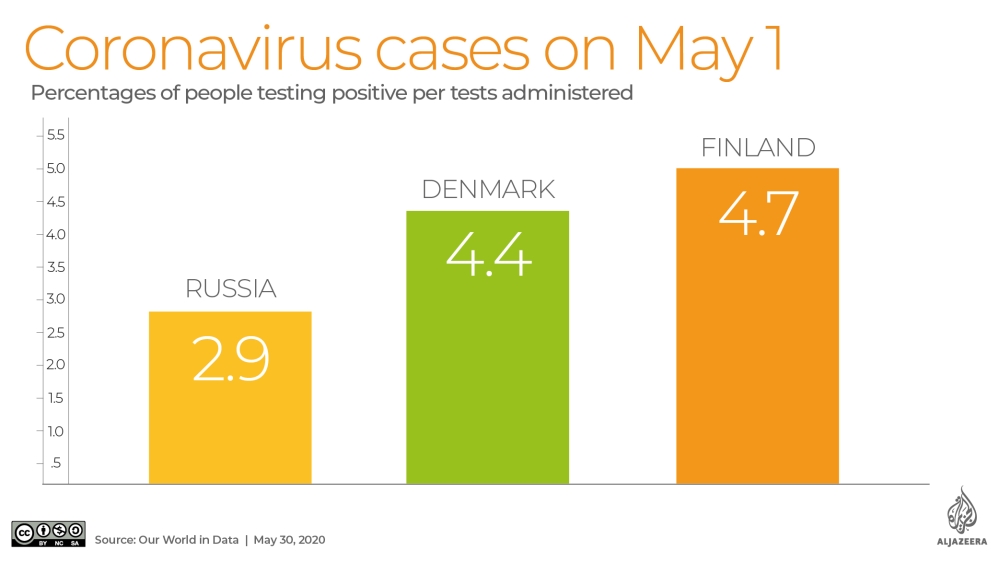
On May 1, Russia, with a population just above 145 million, reported that it had confirmed 106,498 cases of COVID-19 after conducting an astounding 3.72 million “laboratory tests”. Just 2.9 percent of the tests produced a positive result.

Data fog feature graphic 3/Laura Winter

Remember, Denmark’s population is six million, or half that of Moscow’s. Denmark had reportedly tested 206,576 people by May 1 and had 9,158 confirmed coronavirus cases, a rate of 4.4 percent. Finland, another democracy at the top of the transparency index, has a population of 5.5 million and a positive test result rate of 4.7 percent.

This discrepancy spurred the editors of PCR News, a Moscow-based Russian-language molecular diagnostics journal, to take a closer look at the Russian test. They reported that in order to achieve a positive COVID-19 result, the sample tested must contain a much higher volume of the virus, or viral load, as compared to the amount required for a positive influenza test result.

In terms of sensitivity or ability to detect COVID-19, the authors wrote: “Is it high or low? By modern standards – low.”

They later added, “The test will not reveal the onset of the disease, or it will be decided too early that the recovering patient no longer releases viruses and cannot infect anyone. And he walks along the street, and he is contagious.”

Ostensibly, if that person then dies, COVID-19 will not be certified as the cause of death.

Good governance experts see a dynamic at play.

Countries who test less will be shown as less of a problem. Countries that test badly will seem as if they don’t have a problem. Numbers are very powerful.

Michael Meyer-Resende, Democracy Reporting International

“In many of these countries, the legitimacy of the state depends on not going into crisis,” said Kukutschka, adding that he counts countries with world-class health systems among them.

“Countries who test less will be shown as less of a problem. Countries that test badly will seem as if they don’t have a problem,” said Meyer-Resende. “Numbers are very powerful. They seem objective.”

Meyer-Resende highlighted the case of China. “The Chinese government said for a while that it had zero new cases. That’s a very powerful statement. It says it all with a single digit: ‘We have solved the problem’. Except, it hadn’t. It had changed the way of counting cases.”

China – where the pandemic originated – recently escaped a joint US-Australian-led effort at the World Health Assembly to investigate whether Beijing had for weeks concealed a deadly epidemic from the WHO.

China alerted the WHO about the epidemic on December 31, 2019. Researchers at the University of Hong Kong estimated that the actual number of COVID-19 cases in China, where the coronavirus first appeared, could have been four times greater in the beginning of this year than what Chinese authorities had been reporting to the WHO.

“We estimated that by Feb 20, 2020, there would have been 232,000 confirmed cases in China as opposed to the 55,508 confirmed cases reported,” said the researchers’ report published by the Lancet.

The University of Hong Kong researchers attribute the discrepancy to ever-changing case definitions, the official guidance that tells doctors which symptoms – and therefore patients – can be diagnosed and recorded as COVID-19. China’s National Health Commission issued no less than seven versions of these guidelines between January 15 and March 3.

All of which adds to the confusion.

“Essentially, we are moving in a thick fog, and the numbers we have are no more than a small flashlight,” said Meyer-Resende.

What the epidemiological expert thinks

Dr Ghassan Aziz monitors epidemics in the Middle East. He is the Health Surveillance Program manager at the Doctors Without Borders (MSF) Middle East Unit. He spoke to Al Jazeera in his own capacity and not on behalf of the NGO.

“I think Iran, they’re not reporting everything,” he told Al Jazeera. “It’s fair to assume that [some countries] are underreporting because they are under-diagnosing. They report what they detect.”

He later added that US sanctions against Iran, which human rights groups say have drastically constrained Tehran’s ability to finance imports of medicines and medical equipment, could also be a factor.

“Maybe [it’s] on purpose, and maybe because of the sanctions and the lack of testing capacities,” said Aziz.

Once China shared the novel coronavirus genome on January 24, many governments began in earnest to test their populations. Others have placed limits on who can be tested.

In Brazil, due to a sustained lack of available tests, patients using the public health network in April were tested only if they were hospitalised with severe symptoms. On April 1, Brazil reported that 201 people had died from the virus. That number was challenged by doctors and relatives of the dead. A month later, after one minister of health was fired and another resigned after a week on the job, the testing protocols had not changed.

On May 1, Brazil reported that COVID-19 was the cause of death for 5,901 people. On June 5, Brazil’s health ministry took down the website that reported cumulative coronavirus numbers – only to be ordered by the country’s Supreme Court to reinstate the information.

Right-wing President Jair Bolsonaro has repeatedly played down the severity of the coronavirus pandemic, calling it “a little flu”. Brazilian Supreme Court Justice Gilmar Mendes accused the government of attempting to manipulate statistics, calling it “a manoeuvre of totalitarian regimes”.

Brazil currently has the dubious distinction of having the second-highest number of COVID-19 deaths in the world, behind the US. By June 15, the COVID-19 death toll in the country had surpassed 43,300 people.

Dr Aziz contends that even with testing, many countries customarily employ a “denial policy”. He said in his native country, Iraq, health authorities routinely obfuscate health emergencies by changing the names of outbreaks such as cholera to “endemic diarrhoea”, or Crimean-Congo hemorrhagic fever to “epidemic fever”.

“In Iraq, they give this idea to the people that ‘We did our best. We controlled it,'” Dr Aziz said. “When someone dies, ‘Oh. It’s not COVID-19. He was sick. He was old. This is God’s will. It was Allah.’ This is what I find so annoying.”

What the data scientist says

Sarah Callaghan, a data scientist and the editor-in-chief of Patterns, a data-science medical journal, told Al Jazeera the numbers of confirmed cases countries report reflect “the unique testing and environmental challenges that each country is facing”.

But, she cautioned: “Some countries have the resources and infrastructure to carry out widespread testing, others simply don’t. Some countries might have the money and the ability to test, but other local issues come into play, like politics.”

According to Callaghan, even in the best of times under the best circumstances, collecting data on an infectious disease is both difficult and expensive. But despite the difficulties presented by some countries’ data, she remains confident that the data and modelling that is available will indeed contribute much to understanding how COVID-19 spreads, how the virus reacts to different environmental conditions, and discovering the questions that need answers.

Her advice is: “When looking at the numbers, think about them. Ask yourself if you trust the source. Ask yourself if the source is trying to push a political or economic agenda.”

“There’s a lot about this situation that we don’t know, and a lot more misinformation that’s being spread, accidentally or deliberately.”

Dário contra a xawara (ECOA/UOL)

uol.com.br

Marcos Candido, 15 de junho de 2020

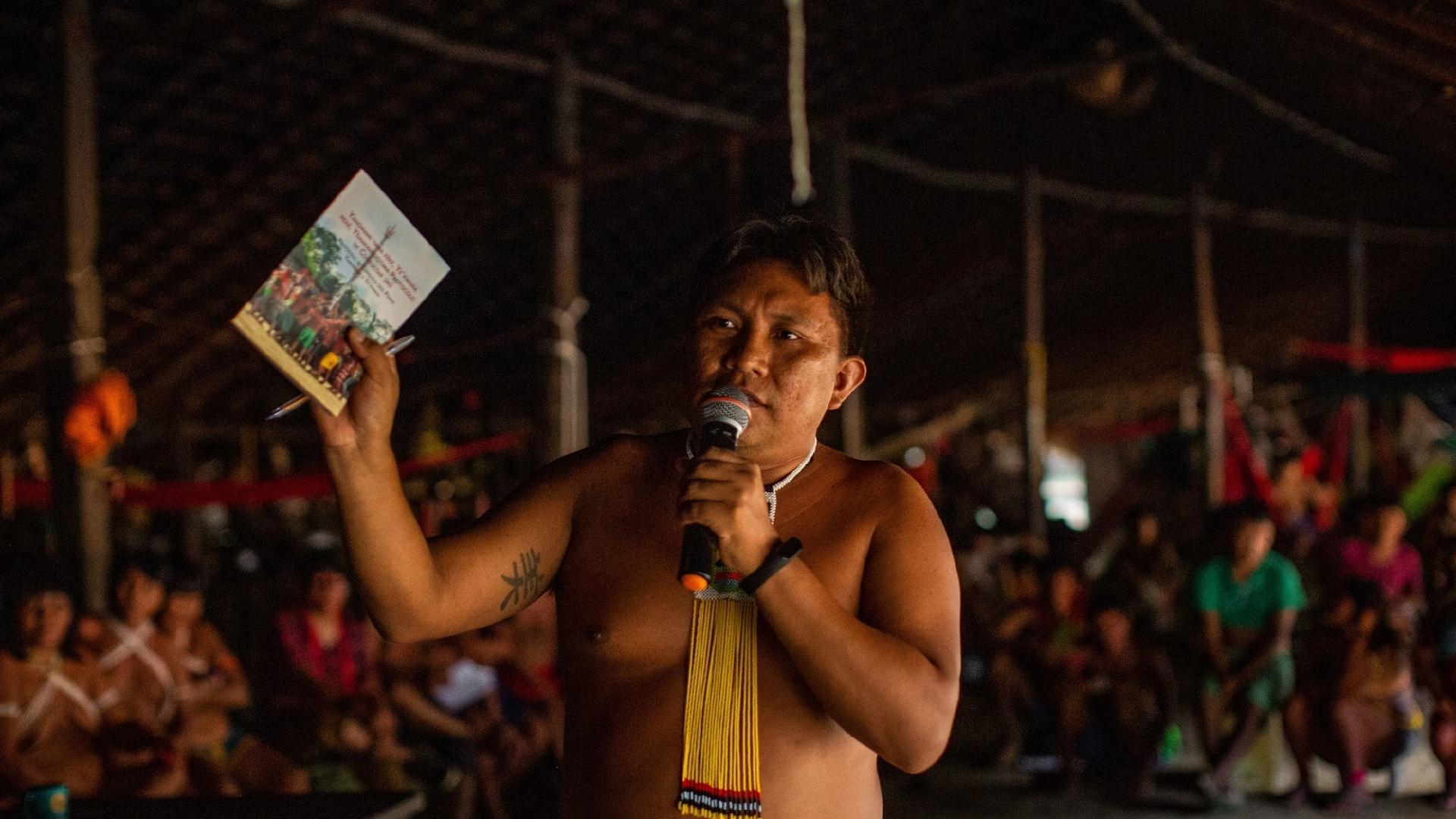
Liderança indígena, Dário Kopenawa é ameaçado de morte enquanto luta para manter os yanomami vivos.

Dário Vitório Kopenawa, 38, escondeu-se assustado por entre as pernas do pai e da mãe quando viu o homem branco pela primeira vez. Ele tinha cinco anos e acreditou que via um fantasma. Mas seu pai, o xamã Davi Kopenawa e um dos maiores propagadores da cultura indígena no mundo, já conhecia bem os visitantes. Explicou ao filho que eram pessoas com uma língua e características diferentes. A versão detalhada veio anos mais tarde.

Na tradição yanomami, as doenças foram enterradas no fundo da terra por Omama, criador da humanidade. Em busca de riquezas, os homens brancos escavaram onde estavam os males e espalharam as doenças entre os povos indígenas. Davi entendeu que era preciso lutar para preservar o subsolo sobre onde viveram seus antepassados. “Quando você crescer mais, seguirá a minha linha e a minha luta”, disse o pai para o filho.

As doenças enterradas têm um nome: xawara. Hoje, Dário luta contra garimpeiros invasores que persistem em “desenterrar” o xawara na Terra Indígena Yanomami, em Roraima, e a propagar a Covid-19 entre os povos indígenas. Vice-presidente da Associação Yanomami desde 2004, Dário encabeça a campanha “Fora Garimpo, Fora Covid!”, lançada no início de junho para coletar assinaturas e pressionar Brasília contra a extração ilegal. Desde o início o ano, ele tem convivido com o aumento das ameaças de morte, mas isso não o abala. “Para a cultura yanomami, quem é guerreiro e organiza lutas não tem medo de morrer”, diz em entrevista a Ecoa via videochamada.

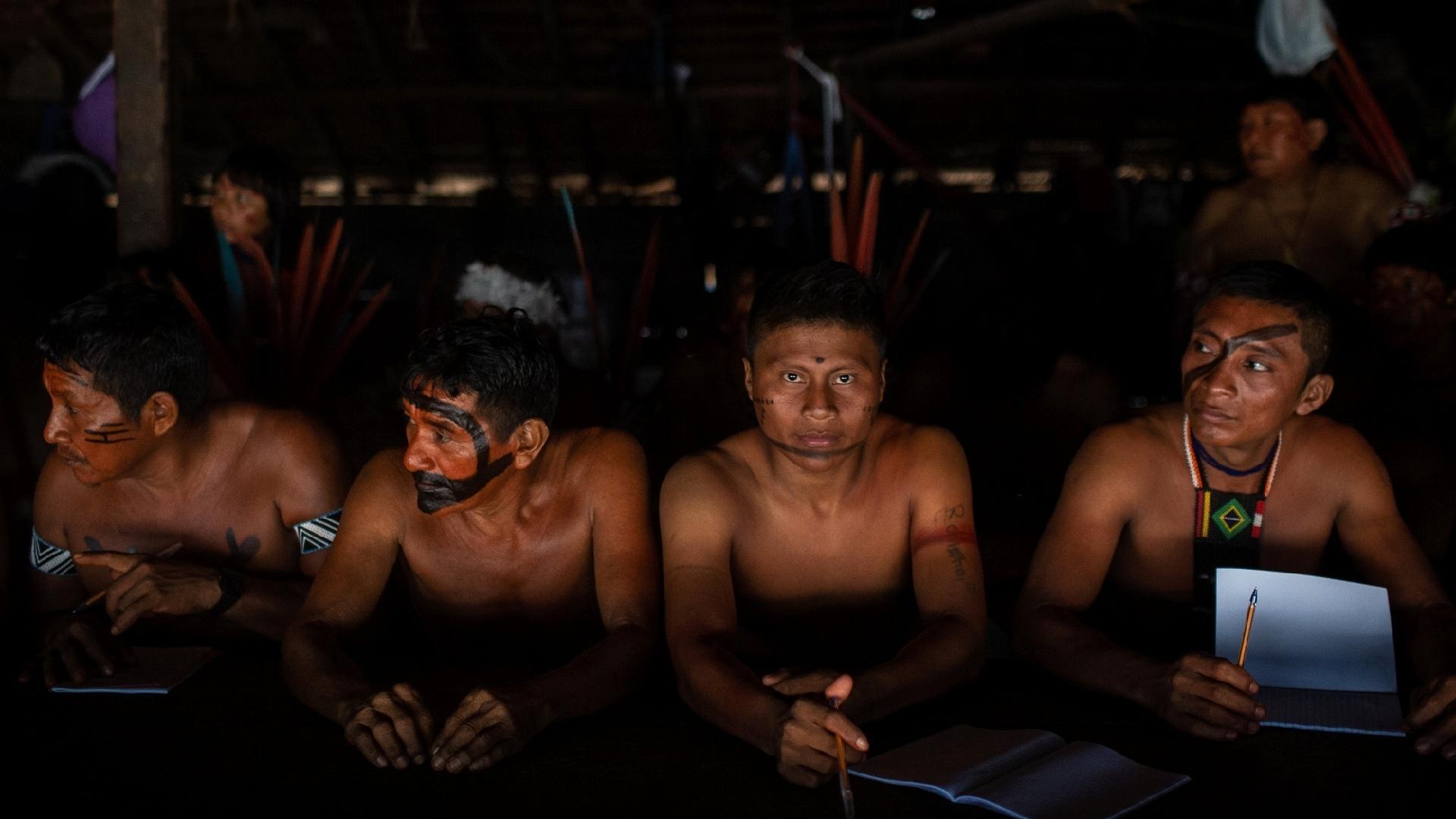
Imagens de satélite mostram extensas áreas abertas no território yanomami. Acredita-se que 20 mil garimpeiros estejam na região e transitem com vírus entre Boa Vista e o território. Até agora, quatro yanomamis foram vítimas da Covid-19, entre eles um líder reverenciado, uma gestante e um adolescente de 15 anos.

Um estudo da Universidade Federal de Minas Gerais e Instituto Socioambiental (ISA) estima que até 40% dos yanomami podem ser infectados, tornando-os o povo indígena mais vulnerável do país. O Serviço Especial de Saúde Indígena (Sesai) estima 26 mil indígenas na Terra Indígena Yanomami, onde vivem 8 povos diferentes; alguns isolados.

Dário começou a estudar português em 1995 e, dois anos depois, já era professor bilíngue e propagador da escrita da língua yanomami. No início dos anos 2000, visitou o Xingu no Mato Grosso, os Makuxi e Wapixana em Roraima e os povos indígenas no Acre. Viajou para os Estados Unidos e Europa. “Aprendi que não importa se estou com blusa, tênis, óculos, celular. Por dentro, minha identidade não muda”, diz.

Na conversa abaixo, Dário Kopenawa fala sobre identidade, rituais, o perigo real enfrentado pelos indígenas hoje e a relação do homem branco com a natureza. Ele acredita que, com o fim da pandemia, o mundo não indígena – o mesmo que estimula a busca pela xawara — vai compreender que a terra mãe é viva e se vinga

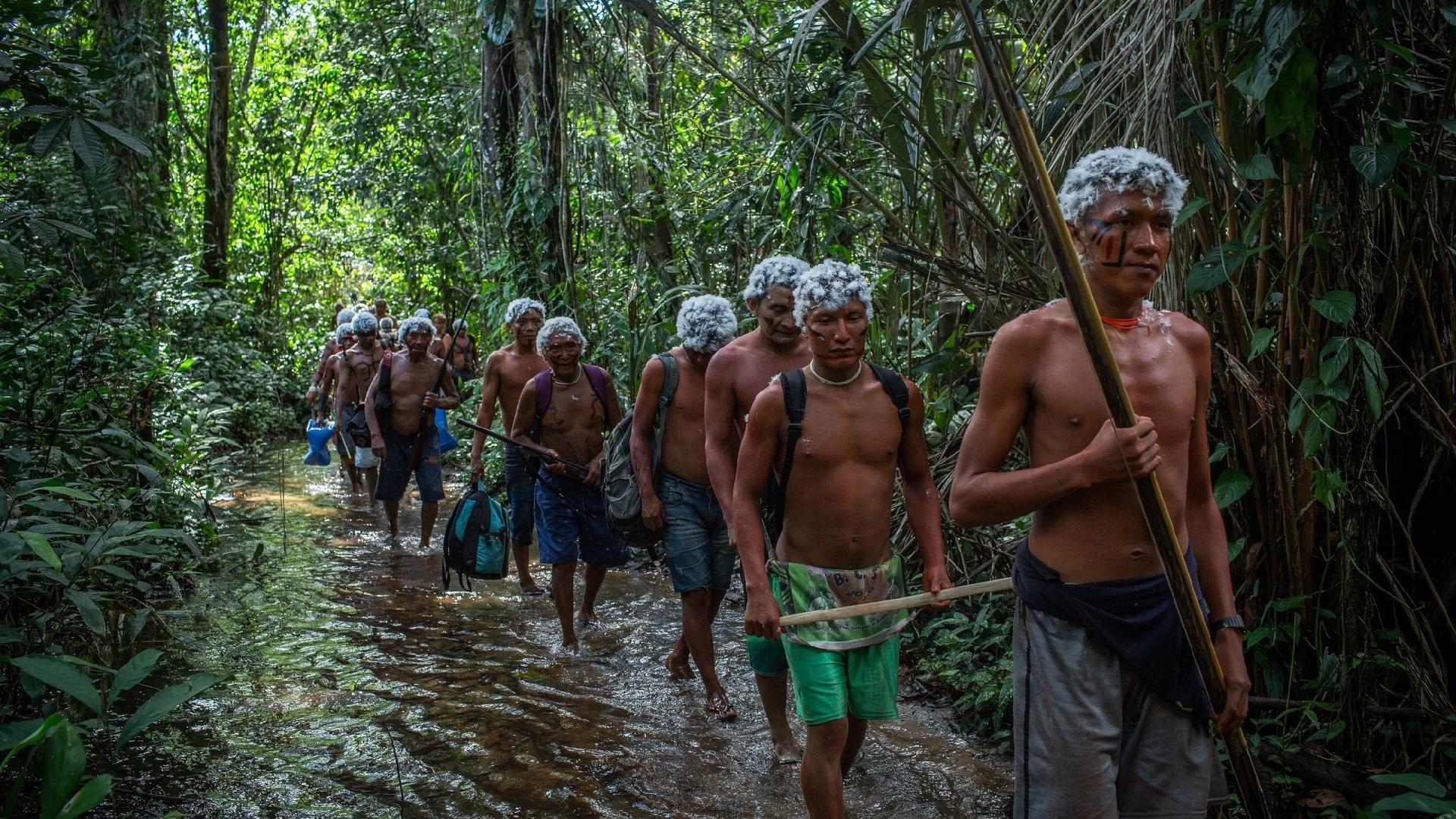
Victor Moriyama / ISA/Victor Moriyama / ISA Victor Moriyama / ISA/Victor Moriyama / ISA

Doença do homem branco

Por que na leitura dos yanomami, estamos enfrentando a Covid-19?

Na língua yanomami, as doenças a gente chama de xawara: a gripe, a malária, a diarreia. Covid-19 também é xawara. Na década de 1970, a doença já tinha chegado às terras yanomami e mais de 20% dos yanomami morreram com o sarampo. O xawara mata as pessoas. Não é uma situação simples: ficamos em alerta

Por que acontecem as xawaras?

Antes dos europeus invadirem nosso país, vivíamos em muita tranquilidade. Sem doença, sem gripe. Sem coisa que ataca a gente. Os rios limpos, os animais vivos. Nosso criador Omama enterrou a epidemia e ela se transformou em ouro, diamante, petróleo. O que está lá embaixo é a xawara, escavada pelo homem branco, o mesmo que destrói a floresta e pegam a doença lá no fundo da terra mãe. Depois queimam o ouro para fazer riqueza. É assim que a fumaça de xawara sai pela terra. Os xamãs têm conhecimento de como evitá-las.

Nós, povos da floresta, yanomami, não criamos doenças. A gente lida com respeito à natureza, conhecemos o sistema da floresta, como funciona o meio ambiente. Sabemos que não podemos causar problemas a ela, sabemos da vida yanomami com a mãe terra.

Vocês têm medo que os yanomami despareçam com as repetidas xawaras?

A gente não tem medo, mas não queremos mais morrer. Somos sobreviventes, nossa população aumentou após diminuir na década de 70 e 80. As lideranças mais velhas dizem que a doença é muito grave. Mas agora não é só a gente que não quer mais morrer, o mundo todo está com medo.

Você está em Boa Vista (RR) agora. Tem medo de ser infectado e não voltar?

Não tenho medo de pegar, tenho medo de levar a doença ao meu povo e matá-los. Preciso respeitar a hierarquia da terra mãe e não posso entrar lá enquanto houver a xawara.

Seu pai, Davi Kopenawa, está com o povo. Vocês estão se falando?

Meu pai está trabalhando com xamãs e os espíritos da floresta para enfraquecer o xawara contra a doença que se chama coronavírus. Está mais protegido do que eu, meu povo está protegido. Ele está longe, mas as lideranças sabem que estou na luta e espiritualmente me lideram. No momento, estou na luta e não quero retornar.

Uma das vítimas foi uma liderança de 64 anos. O que significa perder um idoso na cultura yanomami?

Machuca muito. Um idoso já sobreviveu a muito, cuidou de muitas famílias, organizou nossa sociedade. O idoso é o cabeça das gerações e repassa a história yanomami. Quando morre, perdemos uma pedaço história dos primeiros criadores filhos da floresta, mas outras lideranças vão continuar a ensinar às novas gerações que estão nascendo.

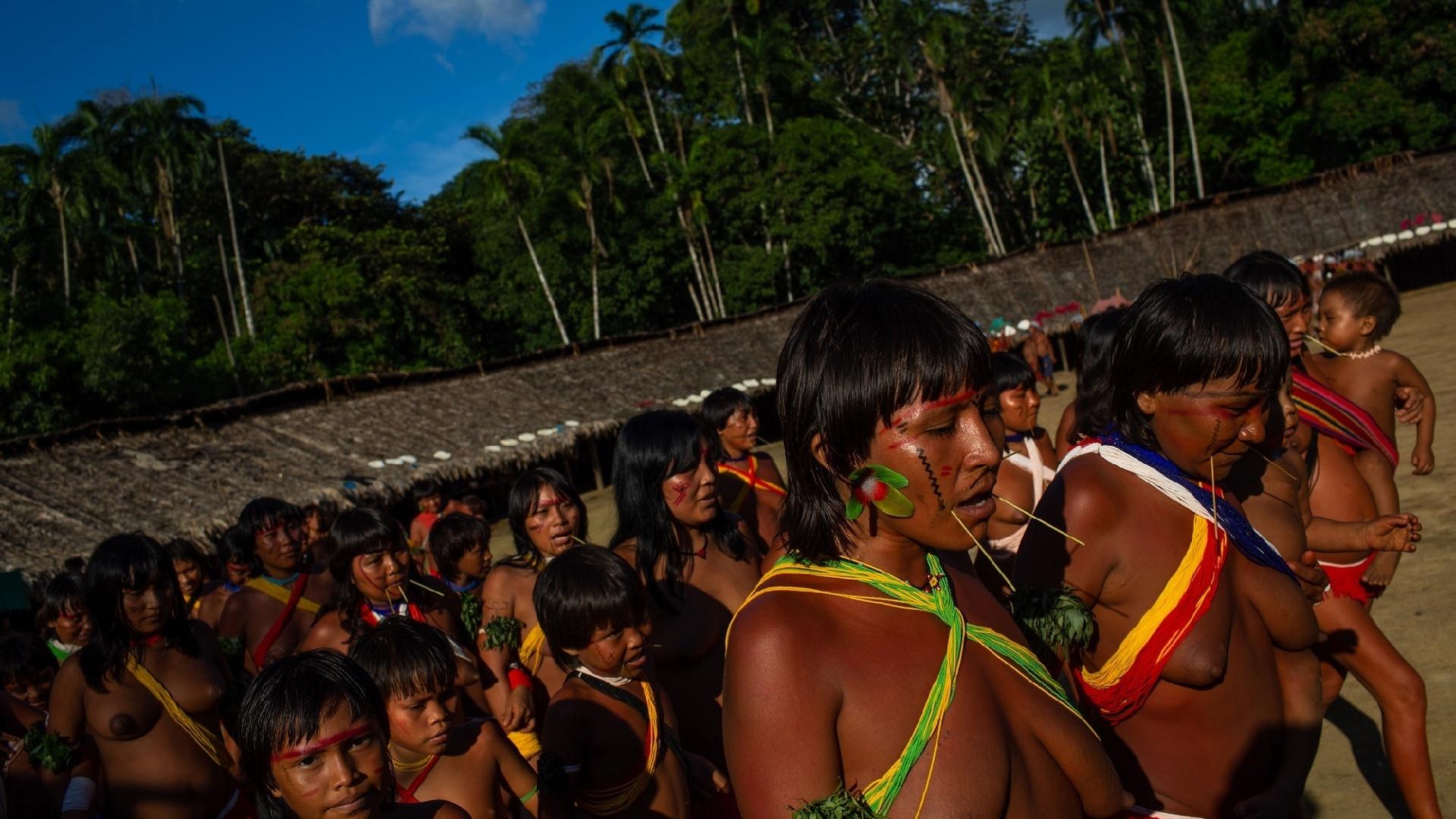
Victor Moriyama / ISA/Victor Moriyama / ISA Victor Moriyama / ISA/Victor Moriyama / ISA

O “novo normal”

Vocês destroem a terra, as florestas, matam os povos indígenas, provocam mudanças climáticas no mundo inteiro. O que está acontecendo é resultado do homem branco não deixar a mãe terra em paz. Quando a doença voltar para debaixo da terra, ela já vai ter comido os não indígenas e indígenas e vamos viver como restos de comida. Para vocês, será uma nova vida. Mas nós já sabemos que tudo foi resultado da vingança da mãe terra. Nós já a entendemos. A pandemia vai deixar uma mensagem para vocês entenderem que é uma vingança universal. Vocês, como brancos, vão aprender que estão na nossa casa.

Dário Kopenawa

A cultura yanomami

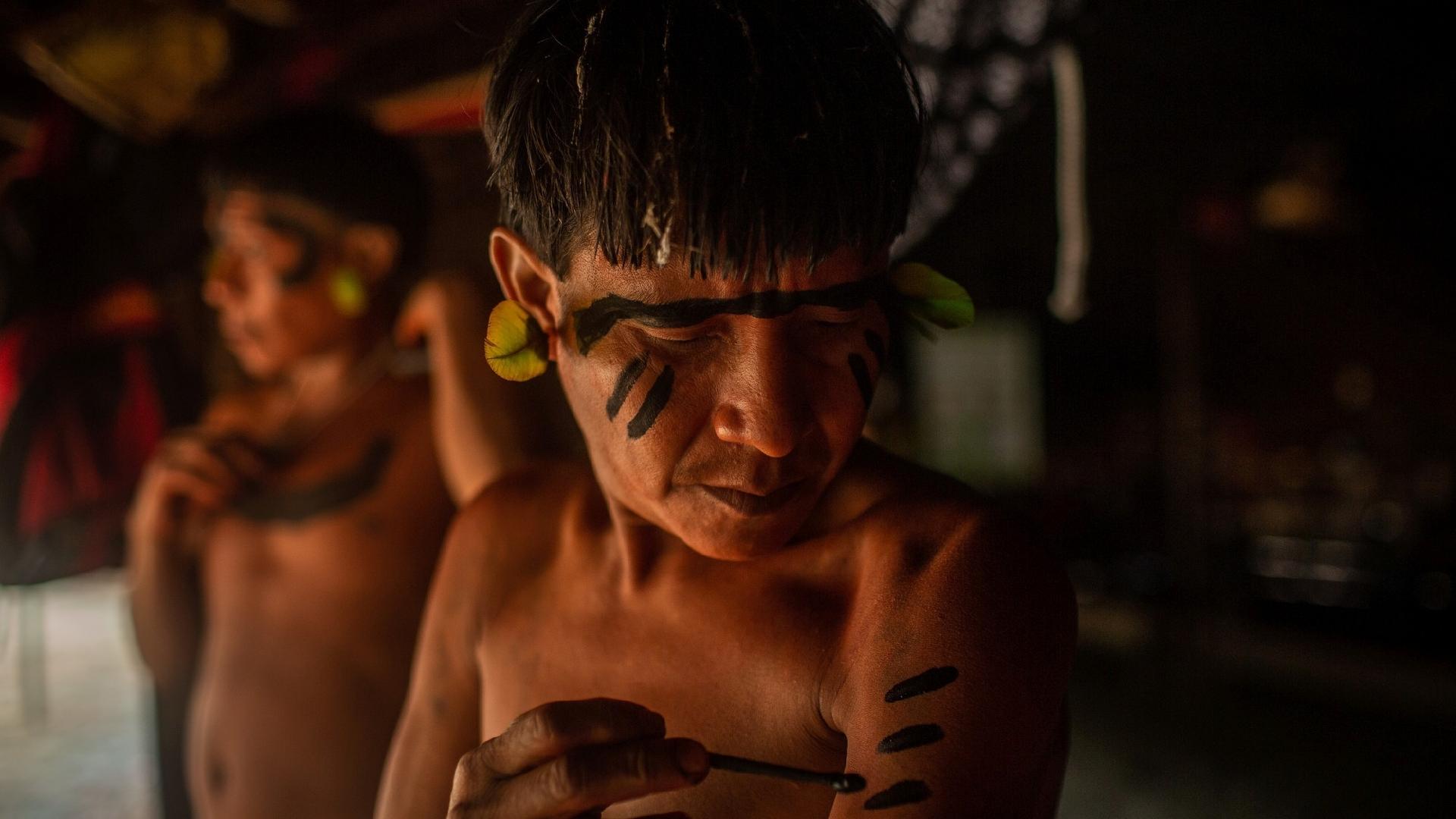
Victor Moriyama / ISA/Victor Moriyama / ISA

Há muitos anos você convive com outras culturas, outros povos e sempre há uma situação conflituosa. Você acha que o homem branco está condenado à destruição ou você ainda tem esperança entre harmonia entre os povos?

Como vocês sonham, nós sonhamos também. Nós queremos viver em paz. Sem brigas com lideranças não indígenas. Os brancos querem a riqueza, a economia, mesmo que isso destrua a natureza, escavar a terra indígena, derrubar milhares de árvores na Amazônia. Particularmente, espero que as novas gerações falem com as antigas, com seus parlamentares, senadores e governos para interromper a destruição da mãe terra. Mas o problema não vai parar. A gente está lutando e defendendo a mãe terra, mas os brancos brincam de desenvolvimento. São 520 anos de briga. Querem mais economia, mais fábricas, buscar por riqueza. Nós queremos paz, mas isso não vai acontecer. Nós, povos da floresta, vamos continuar a falar só sobre como somos discriminados e assassinados.

O que é riqueza para os povos yanomami?

Riqueza para nós é terra boa, sem destruição, sem desmatamento, ar limpo, muito alimento. Terra com muito buriti, muitas frutas, muito açaí. Para nós, isso é riqueza. É onde vivemos em paz, sem doença, onde tem alimento para nossos filhos, para criar nossos parentes, sem a contaminação dos rios, sem malária, sem problemas no ar. Para o homem branco, a riqueza é derrubar as árvores, fumaça, atmosfera poluída por máquinas, trator, carro. Esse é o pensamento do não indígena.

Diferentemente dos indígenas, o homem branco discute pouco sobre a própria identidade?

O homem branco não pensa como a gente pensa. É diferente. Ele é um desconhecido. Por isso, não se dá muito a amizade com o índio. É difícil compreender a sociedade não indígena, mas é fácil ver que no homem branco entra o preconceito contra os povos da floresta. Quando você conhece um pouco da cultura yanomami, por exemplo, você já passar a respeitar. Você já visitou os guarani em São Paulo?

Não, mas é mais ou menos perto de onde vivo.

É por isso. Você mora em capital grande. Os guarani kaiowá estão aí, mas muitos brancos não se interessam em conhecê-los. Por isso é difícil ao homem branco conhecer a cultura dos povos indígenas.

Você viajou a outros países, outros povos e culturas. O que você aprendeu sobre sua própria identidade indígena e a si mesmo ao conhecer tantas pessoas diferentes?

Conheço vários de nossos parentes no Brasil — considero como parentes todos povos da floresta. A gente luta junto, fala nossas próprias línguas. Eu viajei a outros países, mas não fui turista. Na Noruega, conheci nossos parentes indígenas: os sámi. Fiquei impressionado e triste com o histórico deles. Foi muito importante e interessante, mas a minha cultura não se muda. Eu não integrei a sociedade não indígena para me tornar um não indígena. Isso não existe. As lideranças mais velhas, como meu pai Davi Kopenawa, Raoni Metuktire e Ailton Krenak são grandes mestres e nos ensinam caminhos bons para a luta, para defesa e de diálogo com autoridades. Aprendi que não importa se estou com blusa, tênis, óculos, celular. Por dentro, minha identidade não muda. Sou Dário. Sou yanomami.

Queria saber se há um intercâmbio de culturas. A cultura do homem branco também influencia os yanomami? Dá para ser feminista, ou LGBT, por exemplo, especialmente quando há presença de yanomamis nas cidades e nas redes sociais?

A cultura não se muda. Na sociedade não indígena, a gente participa errado, por exemplo, podendo achar que vai ser rico se morrer de trabalhar, esquecer de sua cultura e achar mais fácil ter comida e dinheiro na cidade. Nós podemos querer morar na cidade, conhecer outras coisas, mas a cultura yanomami se perde muito com isso. A escola também é muito boa, mas às vezes acaba com a linguagem. Na Terra Yanomami, nós corremos atrás dos macacos, vivemos lá, flecho animais, ainda falamos na minha língua — e também uso a língua de vocês como arma de defesa. A tecnologia consome muito nosso pensamento e atrapalha a visão do povo originário. Nossas memórias também se adoecem e temos problemas de saúde. Por outro lado, é importante usar as redes sociais, ter acesso à diversidade e a cultura para ocupar as tecnologias e fazer vocês conhecerem a nossa cultura. O pensamento do branco nos manipula muito forte, e isso às vezes nos atrapalha muito, mas a cultura não morre e continua.

É possível ser yanomami e evangélico, por exemplo?

Nós temos regras e normas de cada aldeia. Nossas lideranças podem ou não autorizar uma manifestação. Particularmente, eu respeito o religioso, mas não quero ser pastor ou evangelizar meus pais. É a cultura do povo não indígena e já tenho minha religião no xapiri yanomami.

E dá para ser yanomami e feminista?

Isso é uma visão do branco, não é a nossa. A gente não pensa nisso. É um pensamento da cultura de vocês e isso não se encaixa na cultura do povo da floresta, então não consigo responder.

Victor Moriyama / ISA/Victor Moriyama / ISA Victor Moriyama / ISA/Victor Moriyama / ISA

Luta contra o garimpo

O garimpo existe há décadas na região. Por que nunca vai embora?

Os garimpos são como o sarampo. Não querem sair, não querem largar a nossa terra. Para mim, são pragas. Ele não existiria sem o preço do ouro: o garimpo não trabalha de graça e o preço do ouro é alto. Se derrubar o preço do ouro, duvido que garimpeiros vão trabalhar de graça e arriscar a vida, morrendo com seus colegas, para tirar ouro da terra yanomami. Esperamos que as autoridades os tirem, mas sem ouro eles não iriam trabalhar.

O garimpo é mais perigoso pelo desmatamento ou pela Covid-19?

Os dois. O garimpo é perigoso e a Covid-19 é perigoso. Os dois matam pessoas, destroem a terra e não respeitam nossa cultura, nossa terra que está homologada pelo próprio governo federal. Os dois são perigosos. Não vejo muita diferença.

O governo federal do presidente Jair Bolsonaro (sem partido) deu algum posicionamento, em relação ao garimpo?

Olha, ele é o chefe. Bolsonaro apoia a exploração da mineração em terras indígenas. Ele apoia o garimpo ilegal. Por isso, nós encaminhamos documentos ao governo federal e ele não nos respondeu sobre a retirada dos garimpeiros da terra yanomami. Não respondeu, mas está cada vez mais violentando, pressionando o Congresso nacional para reabrir Terras Indígenas e prejudicar a vida dos povos indígenas.

O que mudou para vocês com a presidência de Bolsonaro? Porque o garimpo não é uma situação nova.

Os governos anteriores pelo menos respeitavam um pouco a questão indígena, nossos direitos, nosso direito à floresta. Na época, quando ele ainda era deputado federal pelo Rio de Janeiro, sempre falava sobre a mineração em terra indígena e em projetos de lei. Quando o povo brasileiro o elegeu, ele se ergue e desrespeita a hierarquia da autoridade brasileira. Desrespeita a Constituição. Ele acha que, por ser presidente da república, pode desrespeitar todo mundo. O negro, o branco. Imagina os indígenas! É pior! É querer acabar com a vida dos povos indígenas. Para mim, Bolsonaro tem o pensamento doente. Vivemos uma desorganização no país e mais problemas ainda são criados. Ele fala besteira, tipo como criança. Ele tem um “pensamento muito desperdício”.

O presidente Jair Bolsonaro já disse que a demarcação do território indígena é abusivo no Brasil, e que há uma indústria de demarcação de terras. A demarcação de terras indígena é abusiva?

As terras indígenas estão demarcadas por lei. Mas Bolsonaro pensa que é fácil desmanchar nossos territórios. Por isso, nós lutamos. O mais valioso é nosso território yanomami. É fundamental e mais importante do que a fala do presidente. Sem o território, como nós vamos viver?

Mas elas são excessivamente grandes, como fala o presidente?

Na visão do povo indígena, isso não existe. Temos pedaços. Perdemos muito no território brasileiro e as cidades são muito grandes. O que temos é um rascunho. Para nós, o que temos não é um território grande. É pequeno, mas é uma conquista. Na visão do Bolsonaro, nossos territórios são grandes, maiores do que Portugal ou Rio de Janeiro. Para nós isso não existe, o que temos veio da luta e da conquista. Nossos territórios não são grandes, são pequenos.

Victor Moriyama / ISA/Victor Moriyama / ISA

Guerreiro não tem medo de morrer

Como o garimpo consegue entrar nas terras indígenas?

O garimpo é como formiga. Entram como entram nos quartos dos brancos, nas mochilas, nos carros. É a mesma coisa. Chegam de avião, de barco, pelo mato. Nosso território tem 9 milhões de hectares, então os garimpeiros chegam nos limites da terra indígena, usam barcos e aviões pagos com ouro para entrar no nosso território. O garimpo entra em qualquer território como se fosse o dono, como se fosse o sítio deles. A eles, a terra não tem dono.

O garimpo tornou-se mais organizado?

Os garimpeiros não são organizados. Os empresários é que são organizados e roubam dos garimpeiros, que são mão-de-obra. Os garimpeiros correm risco e morrem entre eles, se matam entre si. Mesmo sem organização, eles entram com barracões e destroem muito as terras.

E quem são esses empresários?

Não conheço nenhum, mas sabemos que são eles que financiam a venda e compra de ouro no Brasil e também vendem para fora do país.

Você já sofreu ameaça de morte?

Fisicamente, não. Mas meus parentes já receberam mensagens dizendo que garimpeiros queriam saber meu endereço, onde eu estava, onde vivo e o onde fica meu trabalho. As ameaças já são de muitos anos. Pioraram [nos últimos meses], mas não são mais fortes no sentido fisicamente. Mas por mensagem, aumenta cada vez mais.

Por que acha que as ameaças estão chegando cada vez mais?

Nós estamos denunciando, brigando e perturbando os garimpeiros. Eles pensam que estou atrapalhando o trabalho deles no garimpo ilegal na terra indígena yanomami. Por isso, querem acabar comigo e com meu pai quando fazemos uma denúncia nacional e internacional.

Você tem medo de morrer?

Não tenho medo. Para a cultura yanomami, quem é guerreiro e organiza lutas não tem medo de morrer. Quem rouba é que tem que ter medo. Não sei o que pode acontecer, mas não tenho medo e não quero fugir.

Victor Moriyama / ISA/Victor Moriyama / ISA

Slowing the Coronavirus Is Speeding the Spread of Other Diseases (New York Times)

nytimes.com

By Jan Hoffman and Ruth Maclean – June 14, 2020

Many mass immunization efforts worldwide were halted this spring to prevent spread of the virus at crowded inoculation sites. The consequences have been alarming.

Three-year-old Allay Ngandema, who contracted measles, ate lunch with his mother, Maboa Alpha, in the measles isolation ward in Boso-Manzi hospital  in the Democratic Republic of Congo in late February.
Three-year-old Allay Ngandema, who contracted measles, ate lunch with his mother, Maboa Alpha, in the measles isolation ward in Boso-Manzi hospital  in the Democratic Republic of Congo in late February. Credit: Hereward Holland/Reuters.

As poor countries around the world struggle to beat back the coronavirus, they are unintentionally contributing to fresh explosions of illness and death from other diseases — ones that are readily prevented by vaccines.

This spring, after the World Health Organization and UNICEF warned that the pandemic could spread swiftly when children gathered for shots, many countries suspended their inoculation programs. Even in countries that tried to keep them going, cargo flights with vaccine supplies were halted by the pandemic and health workers diverted to fight it.

Now, diphtheria is appearing in Pakistan, Bangladesh and Nepal.

Cholera is in South Sudan, Cameroon, Mozambique, Yemen and Bangladesh.

A mutated strain of poliovirus has been reported in more than 30 countries.

And measles is flaring around the globe, including in Bangladesh, Brazil, Cambodia, Central African Republic, Iraq, Kazakhstan, Nepal, Nigeria and Uzbekistan.

Of 29 countries that have currently suspended measles campaigns because of the pandemic, 18 are reporting outbreaks. An additional 13 countries are considering postponement. According to the Measles and Rubella Initiative, 178 million people are at risk of missing measles shots in 2020.

The risk now is “an epidemic in a few months’ time that will kill more children than Covid,” said Chibuzo Okonta, the president of Doctors Without Borders in West and Central Africa.

As the pandemic lingers, the W.H.O. and other international public health groups are now urging countries to carefully resume vaccination while contending with the coronavirus.

A Doctors Without Borders motorcycle convoy carrying measles vaccine crossed a log bridge in Mongala Province of the Democratic Republic of Congo in February.
A Doctors Without Borders motorcycle convoy carrying measles vaccine crossed a log bridge in Mongala Province of the Democratic Republic of Congo in February. Credit: Hereward Holland/Reuters.

“Immunization is one of the most powerful and fundamental disease prevention tools in the history of public health,” said Dr. Tedros Adhanom Ghebreyesus, director general of the W.H.O., in a statement. “Disruption to immunization programs from the Covid-19 pandemic threatens to unwind decades of progress against vaccine-preventable diseases like measles.”

But the obstacles to restarting are considerable. Vaccine supplies are still hard to come by. Health care workers are increasingly working full time on Covid-19, the infection caused by the coronavirus. And a new wave of vaccine hesitancy is keeping parents from clinics.

Many countries have yet to be hit with the full force of the pandemic itself, which will further weaken their capabilities to handle outbreaks of other diseases.

“We will have countries trying to recover from Covid and then facing measles. It would stretch their health systems further and have serious economic and humanitarian consequences,” said Dr. Robin Nandy, chief of immunization for UNICEF, which supplies vaccines to 100 countries, reaching 45 percent of children under 5.

The breakdown of vaccine delivery also has stark implications for protecting against the coronavirus itself.

At a global summit earlier this month, Gavi, the Vaccine Alliance, a health partnership founded by the Bill and Melinda Gates Foundation, announced it had received pledges of $8.8 billion for basic vaccines to children in poor and middle-income countries, and was beginning a drive to deliver Covid-19 vaccines, once they’re available.

But as services collapse under the pandemic, “they are the same ones that will be needed to send out a Covid vaccine,” warned Dr. Katherine O’Brien, the W.H.O.’s director of immunization, vaccines and biologicals, during a recent webinar on immunization challenges.

Children waited to be registered for the measles vaccine in Mbata-Siala, in western Democratic Republic of Congo, in March.
Children waited to be registered for the measles vaccine in Mbata-Siala, in western Democratic Republic of Congo, in March. Credit: Junior Kannah/Agence France-Presse — Getty Images.

Three health care workers with coolers full of vaccines and a support team of town criers and note-takers recently stepped into a motorized wooden canoe to set off down the wide Tshopo River in the Democratic Republic of Congo.

Although measles was breaking out in all of the country’s 26 provinces, the pandemic had shut down many inoculation programs weeks earlier.

The crew in the canoe needed to strike a balance between preventing the transmission of a new virus that is just starting to hit Africa hard and stopping an old, known killer. But when the long, narrow canoe pulled in at riverside communities, the crew’s biggest challenge turned out not to be the mechanics of vaccinating children while observing the pandemic’s new safety strictures. Instead, the crew found themselves working hard just to persuade villagers to allow their children to be immunized at all.

Many parents were convinced that the team was lying about the vaccine — that it was not for measles but, secretly, an experimental coronavirus vaccine, for which they would be unwitting guinea pigs.

In April, French-speaking Africa had been outraged by a French television interview in which two researchers said coronavirus vaccines should be tested in Africa — a remark that reignited memories of a long history of such abuses. And in Congo, the virologist in charge of the coronavirus response said that the country had indeed agreed to take part in clinical vaccine trials this summer. Later, he clarified that any vaccine would not be tested in Congo until it had been tested elsewhere. But pernicious rumors had already spread.

The team cajoled parents as best they could. Although vaccinators throughout Tshopo ultimately immunized 16,000 children, 2,000 others eluded them.

This had been the year that Congo, the second-largest country in Africa, was to launch a national immunization program. The urgency could not have been greater. The measles epidemic in the country, which started in 2018, has run on and on: Since this January alone, there have been more than 60,000 cases and 800 deaths. Now, Ebola has again flared, in addition to tuberculosis and cholera, which regularly strike the country.

Vaccines exist for all these diseases, although they are not always available. In late 2018, the country began an immunization initiative in nine provinces. It was a feat of coordination and initiative, and in 2019, the first full year, the percentage of fully immunized children jumped from 42 to 62 percent in Kinshasa, the capital.

This spring, as the program was being readied for its nationwide rollout, the coronavirus struck. Mass vaccination campaigns, which often mean summoning hundreds of children to sit close together in schoolyards and markets, seemed guaranteed to spread coronavirus. Even routine immunization, which typically occurs in clinics, became untenable in many areas.

The country’s health authorities decided to allow vaccinations to continue in areas with measles but no coronavirus cases. But the pandemic froze international flights that would bring medical supplies, and several provinces began running out of vaccines for polio, measles and tuberculosis.

When immunization supplies finally arrived in Kinshasa, they could not be moved around the country. Domestic flights had been suspended. Ground transport was not viable because of shoddy roads. Eventually, a United Nations peacekeeping mission ferried supplies on its planes.

Still, health workers, who had no masks, gloves or sanitizing gel, worried about getting infected; many stopped working. Others were diverted to be trained for Covid.

The cumulative impact has been particularly dire for polio eradication — around 85,000 Congolese children have not received that vaccine.

But the disease that public health officials are most concerned about erupting is measles.

Health workers immunizing against measles in Manila last month.
Health workers immunizing against measles in Manila last month. Credit: Aaron Favila/Associated Press.

Measles virus spreads easily by aerosol — tiny particles or droplets suspended in the air — and is far more contagious than the coronavirus, according to experts at the Centers for Disease Control and Prevention.

“If people walk into a room where a person with measles had been two hours ago and no one has been immunized, 100 percent of those people will get infected,” said Dr. Yvonne Maldonado, a pediatric infectious disease expert at Stanford University.

In poorer countries, the measles mortality rate for children under 5 ranges between 3 and 6 percent; conditions like malnutrition or an overcrowded refugee camp can increase the fatality rate. Children may succumb to complications such as pneumonia, encephalitis and severe diarrhea.

In 2018, the most recent year for which data worldwide has been compiled, there were nearly 10 million estimated cases of measles and 142,300 related deaths. And global immunization programs were more robust then.

Before the coronavirus pandemic in Ethiopia, 91 percent of children in the capital, Addis Ababa, received their first measles vaccination during routine visits, while 29 percent in rural regions got them. (To prevent an outbreak of a highly infectious disease like measles, the optimum coverage is 95 percent or higher, with two doses of vaccine.) When the pandemic struck, the country suspended its April measles campaign. But the government continues to report many new cases.

“Outbreak pathogens don’t recognize borders,” said Dr. O’Brien of the W.H.O. “Especially measles: Measles anywhere is measles everywhere.”

Wealthier countries’ immunization rates have also been plunging during the pandemic. Some American states report drops as steep as 70 percent below the same period a year earlier, for measles and other diseases.

Once people start traveling again, the risk of infection will surge. “It keeps me up at night,” said Dr. Stephen L. Cochi, a senior adviser at the global immunization division at the C.D.C. “These vaccine-preventable diseases are just one plane ride away.”

Hawa Hamadou, a health worker at the Gamkalé health center in Niamey, Niger, has seen a drop in visits by mothers, who are afraid to bring their children for immunizations.
Hawa Hamadou, a health worker at the Gamkalé health center in Niamey, Niger, has seen a drop in visits by mothers, who are afraid to bring their children for immunizations. Credit: Juan Haro/UNICEF.

After the W.H.O. and its vaccine partners released the results of a survey last month showing that 80 million babies under a year old were at risk of missing routine immunizations, some countries, including Ethiopia, the Central African Republic and Nepal, began trying to restart their programs.

Uganda is now supplying health workers with motorbikes. In Brazil, some pharmacies are offering drive-by immunization services. In the Indian state of Bihar, a 50-year-old health care worker learned to ride a bicycle in three days so she could take vaccines to far-flung families. UNICEF chartered a flight to deliver vaccines to seven African countries.

Dr. Cochi of the C.D.C., which provides technical and program support to more than 40 countries, said that whether such campaigns can be conducted during the pandemic is an open question. “It will be fraught with limitations. We’re talking low-income countries where social distancing is not a reality, not possible,” he said, citing Brazilian favelas and migrant caravans.

He hopes that polio campaigns will resume swiftly, fearing that the pandemic could set back a global, decades-long effort to eradicate the disease.

Dr. Cochi is particularly worried about Pakistan and Afghanistan, where 61 cases of wild poliovirus Type 1 have been reported this year, and about Chad, Ghana, Ethiopia and Pakistan, where cases of Type 2 poliovirus, mutated from the oral vaccine, have appeared.

Thabani Maphosa, a managing director at Gavi, which partners with 73 countries to purchase vaccines, said that at least a half dozen of those countries say they cannot afford their usual share of vaccine costs because of the economic toll of the pandemic.

If the pandemic cleared within three months, Mr. Maphosa said, he believed the international community could catch up with immunizations over the next year and a half.

“But our scenarios are not telling us that will happen,” he added.

Jan Hoffman reported from New York, and Ruth Maclean from Dakar, Senegal.

Updated June 12, 2020

The Coronavirus Outbreak

Frequently Asked Questions and Advice

  • What’s the risk of catching coronavirus from a surface? Touching contaminated objects and then infecting ourselves with the germs is not typically how the virus spreads. But it can happen. A number of studies of flu, rhinovirus, coronavirus and other microbes have shown that respiratory illnesses, including the new coronavirus, can spread by touching contaminated surfaces, particularly in places like day care centers, offices and hospitals. But a long chain of events has to happen for the disease to spread that way. The best way to protect yourself from coronavirus — whether it’s surface transmission or close human contact — is still social distancing, washing your hands, not touching your face and wearing masks.
  • Does asymptomatic transmission of Covid-19 happen? So far, the evidence seems to show it does. A widely cited paper published in April suggests that people are most infectious about two days before the onset of coronavirus symptoms and estimated that 44 percent of new infections were a result of transmission from people who were not yet showing symptoms. Recently, a top expert at the World Health Organization stated that transmission of the coronavirus by people who did not have symptoms was “very rare,” but she later walked back that statement.
  • How does blood type influence coronavirus? A study by European scientists is the first to document a strong statistical link between genetic variations and Covid-19, the illness caused by the coronavirus. Having Type A blood was linked to a 50 percent increase in the likelihood that a patient would need to get oxygen or to go on a ventilator, according to the new study.
  • How many people have lost their jobs due to coronavirus in the U.S.? The unemployment rate fell to 13.3 percent in May, the Labor Department said on June 5, an unexpected improvement in the nation’s job market as hiring rebounded faster than economists expected. Economists had forecast the unemployment rate to increase to as much as 20 percent, after it hit 14.7 percent in April, which was the highest since the government began keeping official statistics after World War II. But the unemployment rate dipped instead, with employers adding 2.5 million jobs, after more than 20 million jobs were lost in April.
  • Will protests set off a second viral wave of coronavirus? Mass protests against police brutality that have brought thousands of people onto the streets in cities across America are raising the specter of new coronavirus outbreaks, prompting political leaders, physicians and public health experts to warn that the crowds could cause a surge in cases. While many political leaders affirmed the right of protesters to express themselves, they urged the demonstrators to wear face masks and maintain social distancing, both to protect themselves and to prevent further community spread of the virus. Some infectious disease experts were reassured by the fact that the protests were held outdoors, saying the open air settings could mitigate the risk of transmission.
  • How do we start exercising again without hurting ourselves after months of lockdown? Exercise researchers and physicians have some blunt advice for those of us aiming to return to regular exercise now: Start slowly and then rev up your workouts, also slowly. American adults tended to be about 12 percent less active after the stay-at-home mandates began in March than they were in January. But there are steps you can take to ease your way back into regular exercise safely. First, “start at no more than 50 percent of the exercise you were doing before Covid,” says Dr. Monica Rho, the chief of musculoskeletal medicine at the Shirley Ryan AbilityLab in Chicago. Thread in some preparatory squats, too, she advises. “When you haven’t been exercising, you lose muscle mass.” Expect some muscle twinges after these preliminary, post-lockdown sessions, especially a day or two later. But sudden or increasing pain during exercise is a clarion call to stop and return home.
  • My state is reopening. Is it safe to go out? States are reopening bit by bit. This means that more public spaces are available for use and more and more businesses are being allowed to open again. The federal government is largely leaving the decision up to states, and some state leaders are leaving the decision up to local authorities. Even if you aren’t being told to stay at home, it’s still a good idea to limit trips outside and your interaction with other people.
  • What are the symptoms of coronavirus? Common symptoms include fever, a dry cough, fatigue and difficulty breathing or shortness of breath. Some of these symptoms overlap with those of the flu, making detection difficult, but runny noses and stuffy sinuses are less common. The C.D.C. has also added chills, muscle pain, sore throat, headache and a new loss of the sense of taste or smell as symptoms to look out for. Most people fall ill five to seven days after exposure, but symptoms may appear in as few as two days or as many as 14 days.
  • How can I protect myself while flying? If air travel is unavoidable, there are some steps you can take to protect yourself. Most important: Wash your hands often, and stop touching your face. If possible, choose a window seat. A study from Emory University found that during flu season, the safest place to sit on a plane is by a window, as people sitting in window seats had less contact with potentially sick people. Disinfect hard surfaces. When you get to your seat and your hands are clean, use disinfecting wipes to clean the hard surfaces at your seat like the head and arm rest, the seatbelt buckle, the remote, screen, seat back pocket and the tray table. If the seat is hard and nonporous or leather or pleather, you can wipe that down, too. (Using wipes on upholstered seats could lead to a wet seat and spreading of germs rather than killing them.)
  • How do I take my temperature? Taking one’s temperature to look for signs of fever is not as easy as it sounds, as “normal” temperature numbers can vary, but generally, keep an eye out for a temperature of 100.5 degrees Fahrenheit or higher. If you don’t have a thermometer (they can be pricey these days), there are other ways to figure out if you have a fever, or are at risk of Covid-19 complications.
  • Should I wear a mask? The C.D.C. has recommended that all Americans wear cloth masks if they go out in public. This is a shift in federal guidance reflecting new concerns that the coronavirus is being spread by infected people who have no symptoms. Until now, the C.D.C., like the W.H.O., has advised that ordinary people don’t need to wear masks unless they are sick and coughing. Part of the reason was to preserve medical-grade masks for health care workers who desperately need them at a time when they are in continuously short supply. Masks don’t replace hand washing and social distancing.
  • What should I do if I feel sick? If you’ve been exposed to the coronavirus or think you have, and have a fever or symptoms like a cough or difficulty breathing, call a doctor. They should give you advice on whether you should be tested, how to get tested, and how to seek medical treatment without potentially infecting or exposing others.
  • How do I get tested? If you’re sick and you think you’ve been exposed to the new coronavirus, the C.D.C. recommends that you call your healthcare provider and explain your symptoms and fears. They will decide if you need to be tested. Keep in mind that there’s a chance — because of a lack of testing kits or because you’re asymptomatic, for instance — you won’t be able to get tested.

Coronavírus atropela ano em que artistas indígenas tomariam os museus de SP (Folha de S.Paulo)

www1.folha.uol.com.br

Clara Balbi, 7 de junho de 2020

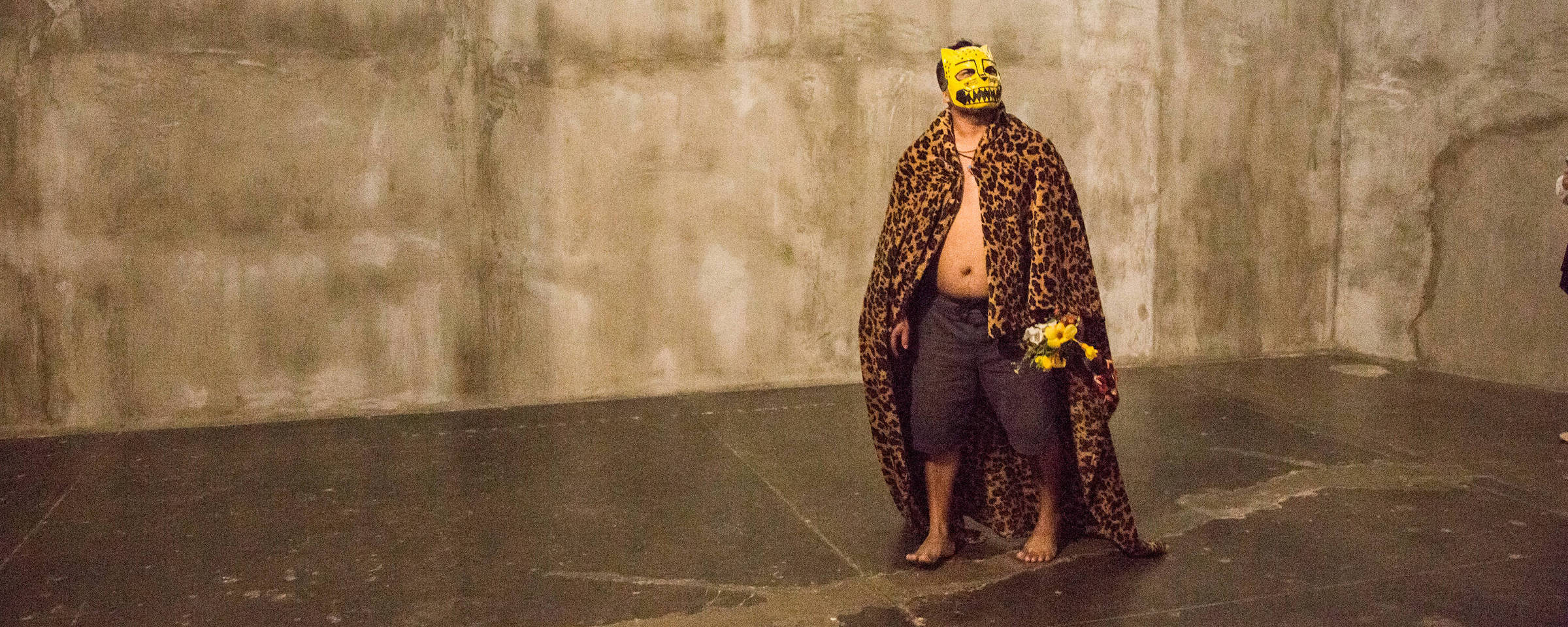
A cauda de um manto com estampa de onça desliza pelo chão do Pavilhão da Bienal, no parque Ibirapuera. Envolto nele, está um homem de pés descalços e dorso nu, o rosto coberto por uma máscara de tigre. Numa mão, ele sacode um chocalho. Na outra, traz flores, que ele deita uma a uma em frente a certas fotografias e esculturas.

O homem era o artista Denilson Baniwa, indígena do povo baniwa, da região amazônica. A exposição, a Bienal de São Paulo de dois anos atrás. E a performance, conta Baniwa, por telefone, um protesto contra a forma como os povos originários apareciam naquelas obras —figuras sem voz, presas a um passado imemorial, que não foram convidadas a representar a si mesmas, ele descreve. Seu pajé-onça servia, assim, como “uma energia ancestral, que abre verdades”.

Menos de dois anos depois, Baniwa participaria, desta vez oficialmente, da Bienal, numa mostra da programação estendida do evento no Museu de Arte Moderna de São Paulo, o MAM.

Organizada por Jaider Esbell, artista da etnia makuxi que participa do evento principal, com os pesquisadores Paula Berbert e Pedro Cesarino, “Moquém – Surarî Arte Indígena Contemporânea” reuniria trabalhos de mais de 50 artistas e coletivos, num esforço de mapear a diversidade da produção indígena pelo país e divulgar artistas sem acesso a esse circuito.

Com a pandemia do novo coronavírus, no entanto, a exposição foi cancelada pelo museu. Em nota, o MAM afirma que a decisão foi motivada pelos ajustes no orçamento e na programação ocasionados pela interrupção das suas atividades nesses meses de quarentena.

Já a Bienal diz que vem negociando cada uma dessas exposições paralelas individualmente, de modo a encontrar soluções que levem em conta as necessidades e potenciais de todos os envolvidos. Segundo Esbell, a mostra deve acontecer numa outra configuração, ainda a ser anunciada.

“Moquém – Surarî Arte Indígena Contemporânea” não foi a única exposição de arte indígena afetada pela pandemia.

O ano veria essa produção tomar a cidade, com mostras na Pinacoteca e no Sesc Ipiranga e a presença confirmada de três artistas indígenas na Bienal —além do próprio Esbell, Gustavo Caboco, wapichana, e o colombiano Abel Rodríguez, nonuya —, antecedendo um ciclo de exposições sobre o tema no Masp em 2021.

Mas o Masp adiou suas “Histórias Indígenas” para 2023, em razão das dificuldades para fazer empréstimos internacionais no contexto da pandemia e da alta do dólar, que encareceu as operações. “Não queríamos perder a amplitude, a complexidade e a potência da programação, então decidimos adiá-la”, afirma Tomás Toledo, curador-chefe do museu.

Além disso, mesmo os eventos mantidos, caso dos demais citados, podem ver uma redução significativa de público. Seja porque os museus devem limitar a quantidade de visitantes no pós-pandemia, ou por causa da chance de a população ter medo de frequentar espaços fechados.

Com isso, é possível que o espaço que os artistas indígenas vinham conquistando nos museus diminua, diz Sandra Benites, curadora do Masp —ela foi a primeira indígena convidada para uma função do tipo no país.

“Vai haver um certo apagamento, um apagamento que afeta o ser e o pensamento indígena desde a colonização, desde 1500. Mas quem vai perder não somos nós, e sim os brasileiros, que deveriam ter mais diálogo conosco”, ela afirma.

Mais do que um enfraquecimento, porém, Denilson Baniwa diz achar que as formas como ele e outros artistas negociam essa presença pode sofrer mudanças.

Ele conta que, até o início do ano, sua obra tinha um foco muito combativo em relação à história da arte oficial. “Hoje, isso não faz mais sentido. Tenho passado por situações complicadas, de perder amigos e mestres. Depois da pandemia, o que vai sobrar é a reconstrução desse mundo a partir do nosso conhecimento, que é de compartilhar, curar. Mostrar que asfalto, ferro e poluição não combinam com saúde.”

Ao mesmo tempo, continua Baniwa, essa revisão sistemática que ele e seus pares vinham empreendendo não tem mais volta. “Este ano, estaríamos escrevendo novos parágrafos, que dariam mais densidade ao nosso pensamento. Mas o parágrafo que já escrevemos não dá mais para apagar.”

Jaider Esbell, que num dos trabalhos que exibe na Bienal pretende justamente confrontar essa narrativa oficial da arte, também considera que o lugar que a produção indígena conquistou até agora é inegociável. O artista diz que a situação pode servir, na verdade, para sensibilizar o planeta de que sem os povos indígenas, não há futuro.

“Todo o mundo foi englobado nessas advertências que viemos fazendo, de que o céu vai desabar. Demorou muito tempo, mas agora estamos diante do abismo, e qualquer movimento em falso pode nos fazer pular ou nos segurar ainda mais. Temos tudo para nos segurarmos. E a questão é exatamente como as pessoas vão construir isso”, completa Esbell.

Enquanto isso, o artista participa da organização de uma série de seminários virtuais para o início de julho, que aproveitam a suspensão da agenda do que ele chama de sistemão para ouvir as demandas da comunidade indígena. “É um convite para essas instituições também. Ao menos, de escuta”, ele afirma.

Ele ainda trabalha em dois grandes eventos, para 2022, quando se comemora o centenário da Semana de Arte Moderna, e em 2028, centenário da publicação de “Macunaíma”, de Mário de Andrade —o mito que deu origem ao romance é do seu povo, os makuxi, e o artista usa no seu trabalho a ideia de que é neto do herói.

Diretor da Pinacoteca, que abrirá “Véxoa – Nós Sabemos” ainda neste ano, Jochen Volz diz que é preciso lembrar que a presença da arte indígena no museu foi fruto de um longo processo, que incluiu seminários e atividades como os encontros com líderes durante a retrospectiva de Ernesto Neto no ano passado. “Ela não está vindo do nada, mas de uma pesquisa e uma forma de escuta que o museu tem adotado.”

Tanto é que “Véxoa” será inaugurada junto de uma nova exposição permanente, incorporando trabalhos de artistas como Esbell e Baniwa à linha do tempo da arte brasileira, prossegue Volz.

“Para nós, não é um evento, é um paradigma de uma ideia de diálogo. Então não vejo como fazer isso no ano que vem. É essencial que o museu abra a nova montagem de acervo”, afirma o diretor, acrescentando que a exposição, adiada para o final de agosto, teve a duração estendida até março do ano que vem, de modo a garantir a visibilidade que merece.

Sandra Benites também diz que, mais do que fazer uma ou outra exposição, o importante é as instituições pensarem junto com os povos indígenas. “Há várias formas de estarmos presentes, enquanto curadores, palestrantes, artistas”, ela diz. “São imagens que não estão congeladas, e sim em movimento.”

Impacto da Covid-19 nas mostra de arte indígena em São Paulo

Histórias Indígenas
Tema que guiaria exposições no Masp em 2021 foi adiado para 2023

Moquém – Surarî Arte Indígena Contemporânea
Mostra no MAM, que integraria 34ª Bienal, foi cancelada, mas pode ser retomada em novo formato

Sawé
Exposição sobre lideranças indígenas no Sesc Ipiranga foi paralisada, mas será retomada quando sistema S reabrir

Véxoa – Nós Sabemos
Mostra na Pinacoteca organizada por Naine Terena foi adiada para final de agosto, mas durará mais

UN-Habitat data mapping ensures assistance reaches the most vulnerable in Brazil’s slums (ReliefWeb)

UN-HABITAT

3 Jun 2020

Rio de Janeiro, Brazil, June 2020 – Some 2,500 vulnerable and sick older people living in the slums of Brazil’s largest city, received hygiene kits to support them during the COVID-19 pandemic. The Social Territories Programme, implemented by the City of Rio de Janeiro, with the support of UN-Habitat, organized the distribution of the kits in 10 informal settlements known as favelas.

The kits, which include sanitizer, liquid soap, deodorant, shampoo and toothbrushes, donated by UNICEF, the United Nations Children’s Fund, were given to older vulnerable people, those who are bedridden and with heart problems in Alemão, Maré, Chapadão, Pedreira ,Vila Kennedy, Lins, Penha, Cidade de Deus, Jacarezinho and Rocinha. The materials were distributed alongside food baskets of staple goods.

The delivery and distribution was supported by professionals from the health department of the municipality of Rio de Janeiro. The selection of those eligible to receive assistance was made using data produced under the Social Territories Programme during which UN-Habitat Brazil has organized community data gathering to ensure the poorest and most vulnerable receive assistance.

All the elderly, sick and bedridden people who received the kits continue to be monitored by the programme over the phone during the pandemic.

UN-Habitat’s Regional Representative for Latin America and the Caribbean, Elkin Velásquez said it was important that the data bases were a result of surveys and mappings managed by community members.

“The data plays a key role in helping the municipalities target the delivery of humanitarian assistance during the COVID-19 crisis to really make sure it reaches the right people,” he said.

Since last year UN-Habitat has worked with the city of Rio de Janeiro on the Social Territories Programme to identify the vulnerable families living in the favelas. UN-Habitat hired 66 field agents, mostly women, from the city’s 10 largest slums who visited over 117,000 households between July 2019 and March 2020 to carry out interviews.

As a result some 25,000 families were identified as being the most vulnerable and during the COVID-19 pandemic, they are being monitored, and supported. About 8,000 families have been visited by health workers and approximately 4,000 have been provided with social assistance.

Since the pandemic, the team can no longer make field visits, but they have made over 6,100 phone calls to families in extreme poverty monitored by the programme including all those who received the kits.

New model predicts the peaks of the COVID-19 pandemic (Science Daily)

Date: May 29, 2020

Source: Santa Fe Institute

Summary: Researchers describe a single function that accurately describes all existing available data on active COVID-19 cases and deaths — and predicts forthcoming peaks.

As of late May, COVID-19 has killed more than 325,000 people around the world. Even though the worst seems to be over for countries like China and South Korea, public health experts warn that cases and fatalities will continue to surge in many parts of the world. Understanding how the disease evolves can help these countries prepare for an expected uptick in cases.

This week in the journal Frontiers in Physics, researchers describe a single function that accurately describes all existing available data on active cases and deaths — and predicts forthcoming peaks. The tool uses q-statistics, a set of functions and probability distributions developed by Constantino Tsallis, a physicist and member of the Santa Fe Institute’s external faculty. Tsallis worked on the new model together with Ugur Tirnakli, a physicist at Ege University, in Turkey.

“The formula works in all the countries in which we have tested,” says Tsallis.

Neither physicist ever set out to model a global pandemic. But Tsallis says that when he saw the shape of published graphs representing China’s daily active cases, he recognized shapes he’d seen before — namely, in graphs he’d helped produce almost two decades ago to describe the behavior of the stock market.

“The shape was exactly the same,” he says. For the financial data, the function described probabilities of stock exchanges; for COVID-19, it described daily the number of active cases — and fatalities — as a function of time.

Modeling financial data and tracking a global pandemic may seem unrelated, but Tsallis says they have one important thing in common. “They’re both complex systems,” he says, “and in complex systems, this happens all the time.” Disparate systems from a variety of fields — biology, network theory, computer science, mathematics — often reveal patterns that follow the same basic shapes and evolution.

The financial graph appeared in a 2004 volume co-edited by Tsallis and the late Nobelist Murray Gell-Mann. Tsallis developed q-statitics, also known as “Tsallis statistics,” in the late 1980s as a generalization of Boltzmann-Gibbs statistics to complex systems.

In the new paper, Tsallis and Tirnakli used data from China, where the active case rate is thought to have peaked, to set the main parameters for the formula. Then, they applied it to other countries including France, Brazil, and the United Kingdom, and found that it matched the evolution of the active cases and fatality rates over time.

The model, says Tsallis, could be used to create useful tools like an app that updates in real-time with new available data, and can adjust its predictions accordingly. In addition, he thinks that it could be fine-tuned to fit future outbreaks as well.

“The functional form seems to be universal,” he says, “Not just for this virus, but for the next one that might appear as well.”

Story Source:

Materials provided by Santa Fe Institute. Note: Content may be edited for style and length.

Journal Reference:

  1. Constantino Tsallis, Ugur Tirnakli. Predicting COVID-19 Peaks Around the World. Frontiers in Physics, 2020; 8 DOI: 10.3389/fphy.2020.00217

Face masks and the coronavirus: Masks probably slow the spread of covid-19 (The Economist)

But wearing one is mainly an act of altruism

Science & technology – May 28th 2020 edition

Editor’s note: Some of our covid-19 coverage is free for readers of The Economist Today, our daily newsletter. For more stories and our pandemic tracker, see our coronavirus hub

“THIS IS A, I would say, senseless dividing line,” said Doug Burgum, governor of North Dakota, his voice catching as he talked of the rows that have broken out in his state over the wearing of face-coverings. There are similar spats elsewhere in America, for masks have become the latest aspect of the culture war that has emerged there over how to deal with covid-19. Some shops refuse entry to maskwearers and Mike DeWine, the governor of Ohio, has rescinded an order requiring people to wear them, saying that he “went too far”.

Elsewhere in the world, by contrast, there is increasing acceptance that mask-wearing is a good thing. On May 5th, for example, the Royal Society, Britain’s top science academy, concluded that masks “could be an important tool for managing community transmission”. This is not so much because they protect the wearer—the normal reason people may put them on in times of pestilence—but rather because they stop the wearer infecting others.

In this context covid-19’s particular peculiarity—that people who test positive for it often do not have symptoms—is important. Research published last month in Nature Medicine, by Xi He of Guangzhou Medical University and Eric Lau of Hong Kong University, suggests that 44% of cases are caused by transmission from people without symptoms at the time of transmission.

Taking cover

Those who do have symptoms should not, of course, be out and about at all. In their case masks are irrelevant. But to break the chain, it behoves even the symptomless to assume that they might be infected. Covid-19 is transmitted, above all, by virus-laden droplets of spit. Experiments show that face-coverings as simple as tea-towels are effective. One study found that a tea-towel worn around the face captured 60% of droplets. At 75%, a surgical mask did better, but not overwhelmingly so.

Governments are beginning to take this on board. As part of the loosening their lockdown, the Dutch are required to wear face-coverings on public transport—but not ones of medical grade, which should be reserved for professionals. This encourages people to make their own.

Neither laboratory studies nor the data on asymptomatic transmission provide watertight evidence of the efficacy of masks. That would need randomised controlled trials, in which one group wore masks and the other did not. This would be ethically tricky, since it might condemn one of the groups to a higher death rate. Hamsters, which are susceptible to covid-19, are the next best thing to people. So researchers at Hong Kong University put cages of healthy hamsters next to cages of infected ones, with a fan in between drawing air from the infected to the healthy cage. They sometimes also placed a stretched-out face mask in the air stream. With no interposed mask, two-thirds of the healthy animals were infected within a week. With a mask interposed close to the healthy hamsters (the equivalent of a healthy person wearing a mask), one-third were. With the mask close to the infected hamsters, only a sixth were.

Although scientists cannot experiment on human beings deliberately, some wonder if the world is now carrying out a natural experiment that tests the value of mask-wearing. In many East Asian countries it was common practice to sport masks, even before covid-19, to protect against respiratory diseases and pollution. A lot of people in these places therefore took immediately to wearing masks when the epidemic started. Countries that adopted masks early on did not, by and large, shut their economies down. Yet they suppressed the disease more effectively than those that locked down but did not wear masks.

There is a correlation between mask-wearing and rapid suppression of covid-19. According to Patricia Greenhalgh, professor of primary health care sciences at Oxford University, “there is not a single country in which mask wearing was introduced early and with high compliance, where the disease wasn’t quickly brought under control.” Sceptics point out that this does not prove masks work, since countries in which they are widely worn also tend to be those which have been threatened by epidemics in the past, and therefore have well-established systems of testing and contact tracing.

In the West nobody normally wears a mask, though the practice is spreading. Universal masking started in the Czech Republic after Petr Ludwig, a Czech YouTube star, posted a video on March 14th recommending the practice, and it went viral. Other social-media influencers posted pictures of themselves wearing masks. “Mask trees”, where people would hang home-made masks for others to use, sprang up on street corners. By March 19th masks were mandatory in the country. Slovakia and Slovenia followed swiftly.

The World Health Organisation has not advocated widespread mask-wearing, and has received some criticism for this. Jeremy Howard, a research scientist at the University of San Francisco and co-founder of Masks4all, a charity, says “they did a good job of recommending handwashing and social distancing, but they have been slow on masks.”

In light of all this, regulations requiring people to wear masks have spread, as an increasing number of governments view the evidence as strong enough to warrant compulsion. India now requires them to be worn in crowded public spaces, as do France, Germany, Italy and Spain. In most of the world, people either wear them in such spaces without being told to, or are required to by their governments.

Among big countries, Britain and America are outliers. In Britain the government advises people to wear masks, but to little effect. On the London Underground around a third of travellers do so. On the Paris metro where people risk a €135 fine if they fail to cover their faces, everybody does. In America the Centres for Disease Control and Prevention, which previously recommended mask-wearing only for health workers, changed its mind in early April. It now recommends that everybody should wear them in places where it is hard for people to stay far enough apart. Several states have passed regulations along those lines, as has New York City. But, as Governor Burgum noted, the rows go on.■

This article appeared in the Science & technology section of the print edition under the headline “We interrupt this transmission…”

Volta às aulas após quarentena: veja 10 medidas adotadas em 7 países para a retomada do ensino (G1)

g1.globo.com

G1, 29 de maio de 2020

Alunos do ensino médio voltam à sala de aula em Wuham, província de Hubei, na China, nesta quarta-feira (6). Fonte: AFP.

Após decretarem o afrouxamento do isolamento social para conter a transmissão do novo coronavírus, países que estão voltando às aulas adotam medidas de prevenção para evitar uma nova onda de contaminação.

O G1 analisou a experiência de países como China, Coreia do Sul, Dinamarca, Finlândia, França, Portugal e Israel para saber quais cuidados estão sendo tomados na volta às aulas. No Brasil, as aulas estão suspensas em todos os estados e as escolas seguem fechadas.

Entre as medidas, estão:

  1. desinfecção de escolas
  2. tendas de desinfecção dos alunos na entrada
  3. controle de temperatura
  4. uso de máscaras
  5. lavagem de mãos e instalação de torneiras
  6. grupos menores de alunos
  7. distanciamento
  8. horários diferentes de entrada e saída
  9. arejar a sala
  10. afastar professores do grupo de risco

A reabertura das escolas é um marco no fim do isolamento porque permite que os pais possam voltar ao mercado de trabalho. Apesar dos esforços, ao menos dois dos países analisados voltaram a registrar casos de transmissão de coronavírus: Coreia do Sul e França.

Na Coreia do Sul, mais de 200 escolas foram fechadas nesta sexta-feira (29) dias após reabrirem, devido ao surgimento de novos casos de contaminação. Com isso, Seul adotou novas medidas para evitar a transmissão de casos, como limitar o número de alunos por sala, enquanto os demais ficam em casa, aprendendo por atividades remotas.

Na França, 40 mil escolas foram reabertas no início de maio. Uma semana depois, 70 registraram casos de coronavírus e tiveram que ser fechadas.

As regras de confinamento impostas para conter o avanço da disseminação do novo coronavírus deixaram mais de 1,5 bilhão de crianças e adolescentes fora da escola em 188 países, segundo balanço da Unesco divulgado em abril.

Desinfecção de escolas

20 de maio – trabalhador desinfeta escola em Parque Ivory, na África do Sul. — Foto: Siphiwe Sibeko/Reuters

Medidas extras de limpeza são uma recomendação comum. Em diversas partes do mundo, a desinfecção das escolas ocorre antes dos alunos chegarem e durante a permanência deles.

Em Portugal, 17 mil litros de desinfetantes e outros equipamentos de proteção e higiene foram distribuídos para centros educacionais.

Na França, as orientações do Ministério da Educação contêm inclusive quais produtos a serem utilizados para desinfecção das escolas e a frequência da higienização: o chão deve ser limpo uma vez por dia enquanto maçanetas, sanitários e interruptores devem ser higienizados várias vezes.

Tenda de desinfecção dos alunos

China tem volta às aulas do ensino médio com medidas de segurança e medo do coronavírus. — Foto: GREG BAKER / AFP

Na China, escolas instalaram tendas de desinfecção por onde os estudantes precisam passar antes de entrarem na escola.

Controle de temperatura

Termômetro usado para medir a temperatura das pessoas e fazer controle da Covid-19.. — Foto: Steve Parsons / Pool / AFP

O controle da temperatura para detectar se o aluno está com febre, um dos mais comuns sintomas da Covid-19, é uma preocupação em vários países.

Em Pequim,pulseiras inteligentes, que fazem essa medição em tempo real, estão sendo testadas. Os pais monitoram a situação por meio de um aplicativo. Caso a temperatura passe de 37ºC, um alerta é enviado para os professores, que são orientados a alertar a polícia.

Uso de máscara

China retoma aulas do ensino médio em Pequim e Xangai nesta segunda-feira (27). — Foto: GREG BAKER / AFP

O uso de máscaras em geral também é recomendado, mas os critérios variam de país para país.

Na China, as crianças utilizam máscaras o tempo todo, inclusive dentro da sala de aula.

Coronavírus na educação: na França, professora leciona com máscara nesta segunda-feira (18). — Foto: Sebastien Bozon/AFP

Em Israel, as crianças da 4ª série em diante tem que usar essa proteção. Na França, as crianças menores também estão dispensadas. No entanto, a escola deve ter máscaras à disposição dos alunos caso eles apresentem sintomas durante as aulas e estejam aguardando para serem retirados.

Uma exceção é a Dinamarca, país onde não existe a recomendação para utilização de máscaras em ambientes públicos.

Lavagem de mãos e instalação de torneiras

Crianças lavam as mãos na escola Gudenåskolen, na Dinamarca — Foto: Lone Mathiesen/ Divulgação/ Embaixada da Dinamarca no Brasil

O incentivo à higiene e lavagem de mãos está sendo constante nas escolas que voltam às aulas.

Na Dinamarca, as escolas chegaram a instalar torneiras fora dos edifícios para que as crianças lavem as mãos quando chegam à escola.

Em Portugal, é obrigatório a lavagem das mãos ao entrar e sair da escola. Na Coreia do Sul, os estudantes receberam material desinfetante para higienizar as mãos.

Grupos menores de alunos

18 de maio de 2020 – Alunos usam máscara em sala de aula no colégio D. Pedro V, em Lisboa, no dia em que parte dos estudantes volta a ter aula em meio à pandemia do novo coronavírus (COVID-19) em Portugal — Foto: Rafael Marchante/Reuters

Alguns países adotaram a medida de dividir os estudantes em grupos menores para evitar contatos mais próximos entre eles, como na Finlândia.

Na Dinamarca, as turmas, que têm entre 20 e 28 alunos, foram divididas para que os alunos possam interagir apenas dentro desse espectro menor.

Em Seul, na Coreia do Sul, os jardins de infância e escolas do ensino básico, fundamental e médio poderão receber apenas um aluno a cada três e os demais terão que seguir com o ensino a distância.

Distanciamento

15 de maio – Estudantes conversam enquanto praticam o distanciamento social no pátio de uma escola secundária durante sua reabertura em Bruxelas, na Bélgica, durante o surto do coronavírus (COVID-19) — Foto: Yves Herman/Reuters

Em geral, as salas de aula foram reorganizadas de maneira que as mesas dos alunos fiquem a pelo menos um metro de distância entre elas. A recomendação é feita pelo governos da França, Dinamarca. Em Israel, essa distância é de dois metros.

Na Dinamarca, além da distância de um metro entre as mesas dos alunos, o professor deve ficar a dois metros do estudante que senta mais próximo dele.

Alguns países adotam inclusive paredes acrílicas para evitar que gotículas da fala sejam trocadas entre os estudantes e entre estudantes e professores, como é o caso da Coreia do Sul.

Alunos retomam aulas na Coreia do Sul; em algumas escolas, carteiras têm divisórias — Foto: Yonhap / AFP Photo

Para estudantes menores, mantê-los afastados é um desafio. Uma solução lúdica, feita com asas de papelão, foi adotada na província de Shanxi, na China, para lembrá-los a distância que precisam ficar uns dos outros.

Alunos do ensino fundamental usam asas para manter o distanciamento na sala de aula em Taiyuan, na província de Shanxi, no norte da China. Foto tirada em 20 de maio de 2020 — Foto: AFP

Horários diferentes de entrada e saída

Em Portugal, alunos estão sendo organizados em grupos que terão horários de aula, intervalos e períodos de alimentação diferentes entre si, para minimizar o contato.

A mesma medida foi adotada pelos governo da Finlândia e Israel, que determinaram o estabelecimento de horários diferentes para intervalos, entrada e saída para evitar aglomeração.

Na Dinamarca, além dos horários variados, novos portões estão sendo utilizados para que a entrada e saída dos grupos não coincidam. Os pais também são orientados a se despedir dos filhos fora da escola e devem pedir permissão, caso necessitem entrar no estabelecimento.

Arejar a sala

Na França, as escolas são orientadas a manter as janelas abertas antes das aulas, durante o intervalo e depois da partida dos alunos.

Afastamento de professores do grupo de risco

27 de abril – Médicos de um hospital coletam amostras de professores do ensino médio para testes em uma escola após o surto da doença por coronavírus em Yichang, província de Hubei, na China — Foto: China Daily via Reuters

Em Israel, professoras com mais de 65 anos não retomaram as atividades. A medida é para evitar que eles fiquem expostos à uma possível nova onda de circulação do coronavírus.

The American way – How the world’s most powerful country is handling covid-19 (The Economist)

Contrary to what many Americans think, the death rate in America is about the same as in Europe

May 28th 2020 edition

Editor’s note: Some of our covid-19 coverage is free for readers of The Economist Today, our daily newsletter. For more stories and our pandemic tracker, see our coronavirus hub

AMERICA HAS passed a grim milestone: 100,000 deaths from a novel coronavirus that began to spread half a year and half a world away. Many Americans think their president has handled the epidemic disastrously, that their country has been hit uniquely hard and that there is a simple causal relationship between the two. The 100,000, which does not include excess deaths mistakenly attributed to other causes, is higher than any other country’s. It has routinely been compared with the 60,000 American casualties in the Vietnam war. A Trump Death Clock in Times Square purports to show how many lives the president’s ineptitude has cost: as we went to press it stood at 60,262. Yet this widespread conviction that America has failed because of Donald Trump is not supported by the numbers. Or, at least, not yet.

The official death rate in America is about the same as in the European Union—which also has excess deaths, but has less erratic leaders and universal health care. Overall, America has fared a bit worse than Switzerland and a bit better than the Netherlands, neither of which is a failed state. New York has been hit about as hard as Lombardy in northern Italy; California acted early and is currently similar to Germany; so far, rural states have, like central Europe, been spared the worst. This reflects two things, both of which will matter now that America is reopening before it has the virus fully under control.

The first is that covid-19, when it first hit, displayed an indifference to presidents and their plans. Around the world it has killed in large, dense and connected cities like New York, London and Paris, and where people are crammed together, including care homes, slaughterhouses and prisons. In some countries, including America, testing was snarled up in red tape.

Having seen what was happening in China, Mr Trump could have acted sooner—as Taiwan, Singapore and Vietnam did. He has failed to do things ordinarily expected of an American president in a crisis, such as giving clear government advice or co-ordinating a federal response. Instead, he has touted quack remedies and spent the days when America passed its sombre milestone spreading suspicion of the voting system and accusing a television host of committing a murder that never happened. All this is reprehensible and it may have been costly. Yet, tempting as it is to conclude that the president’s failures bear most of the blame for covid-19’s spread through America, the reality is more complicated (see Briefing).

That leads to the second feature of the country’s response to covid-19. The virus was always going to be hard on a population with high levels of poverty, obesity and diseases such as diabetes, especially among minorities (see Lexington). But, to a remarkable degree, other layers of government have adapted around the hole where the president should have been. The federal system has limited the damage, thanks to its decentralised decision-making. Lockdowns vary by state, city and county. California responded as soon as it saw cases. In the north-east governors largely ignored the White House and got on with coping with the disease, earning the Republican governors of Maryland and Massachusetts the president’s enmity, but high approval ratings. In Florida, though the governor was reluctant to impose a lockdown, county officials went ahead and did so anyway.

Contrary to demands for nationwide rules, this is a strength not a weakness, and will become more so as the pandemic runs its course. In the best-organised states, which have built up testing capacity, it helps ensure that flare-ups can be spotted quickly and rules adjusted accordingly. Because each region is different, that is more efficient than a nationwide approach.

One way democracies can deal with the virus is to draw on reserves of trust. People must behave in ways that protect fellow citizens whom they have never met, even if they themselves are feeling fine. Americans trust their local officials far more than the president or the federal government. And when it comes to public health those local officials have real power. Without this balancing feature, America might today look like Brazil, where a president with a similar love of hydroxychloroquine and distaste for face masks is wreaking havoc (see article).

If the public-health response in the United States so far matches Europe’s, its economic response to the virus may turn out better. True, the unemployment rate in America is 15%, double that in the EU. Yet in Europe most governments are protecting jobs that may no longer exist once lockdowns end rather than focusing help on the unemployed as America’s has. The EU is probably delaying a painful adjustment. Congress, not known for passing consequential legislation with big bipartisan majorities, agreed on a vastly bigger fiscal stimulus than in the financial crisis a decade ago. With a Democrat in the White House and a Republican-controlled Senate, America might not have mustered a response that was either so rapid or so large.

America still has a hard road ahead. Were daily fatalities to remain at today’s level, which is being celebrated as a sign that the pandemic is waning, another 100,000 people would die by the end of the year. To prevent that, America needs to work with the system it has, trusting local politicians to balance the risks of reopening against the cost of lockdowns.

In the next months the infrastructure built during the lockdown must prove itself. Because the virus has yet to decline in some states, it may flare up in new places, which will then need targeted lockdowns. The capacity to test, vital to spotting clusters of infection, has increased, but is still lacking in some places. Almost all the states lack the contact tracers needed to work out who needs testing and quarantining. When it considers how to withdraw fiscal support, Congress should remember this.

That America and Europe have fared similarly in the pandemic does not absolve Mr Trump. This is the first international crisis since 1945 in which America has not only spurned global leadership but, by cutting funds to the World Health Organisation, actively undermined a co-ordinated international response. That matters, as does Mr Trump’s inability to cleave to a consistent message or to speak to the country in words that do not enrage half of the population. Yet four years after Mr Trump was elected, the time to be surprised by his behaviour has long gone. Luckily, he has mattered less than most Americans think.■

This article appeared in the Leaders section of the print edition under the headline “The American way”

Praising Emissions Reductions Due to Coronavirus Plays Into Right-Wing Strategy (Truthout)

Construction workers wear protective face masks in the streets of Bushwick, New York, on May 19, 2020.

By Sharon Zhang, Truthout – Published May 25, 2020

Part of the Series Despair and Disparity: The Uneven Burdens of COVID-19

A study published in Nature Climate Change recently found that, in early April, daily global carbon dioxide emissions decreased by 17 percent compared to the 2019 mean levels. Because of shelter-in-place rules and businesses being closed, people have been driving and flying less, leading to lower emissions.

Shortly after emissions started dropping in March, the climate community was careful to apply nuance to the emissions reduction discussion: Less carbon dioxide emissions, while good, should not be celebrated when caused by a global pandemic. In other words, while this time may show us the extent that people can come together in action, the ends don’t justify the means — the means here being a global financial crisis and hundreds of thousands of people dead. As climate scientist Carl-Friedrich Schleussner said in Carbon Brief, “The narrative that the economic catastrophe caused by the coronavirus is ‘good’ for the climate is dangerously misleading and could undermine support for climate action.”

Though the climate community quickly dismissed this narrative, the right wing latched onto the idea that progressives were celebrating COVID-19 for its environmental benefits. Quickly, commentators on the right asserted that the world as it is under the pandemic is the world that climate advocates want under policies like the Green New Deal. The British libertarian web magazine Spiked wrote that “Covid-19 is a frightening dress rehearsal of the climate agenda.” Spiked is, incidentally, funded by the Koch foundation. Meanwhile, figures like Alex Epstein, who wrote a book entitled The Moral Case for Fossil Fuels and whose organization Center for Industrial Progress has ties to the coal industry, have said that the recession caused by the pandemic is a preview of the Green New Deal.

This argument is incorrect in many ways, the least of which being that the temporary emissions reduction isn’t nearly enough: The UN has said that emissions need to drop by 7.5 percent each year. That drop needs to be permanent.

“[Right-wingers] are grasping at straws. And they’re actually trying to spin a couple pieces of straw into silk,” says Anthony Leiserowitz, director of the Yale Program on Climate Change Communication. “I don’t see anybody in the climate community actually making that argument” that coronavirus is a good thing.

Yet for climate deniers and delayers, a straw man argument is often enough. “It’s totally in character with the entire [denier] community to make shit up and try to pin it on their opponents,” says Leiserowitz. They just need to sow enough confusion that their benefactors — usually the fossil fuel industry — can thrive under deregulation and the status quo.

Commentators on the right asserted that the world as it is under the pandemic is the world that climate advocates want under policies like the Green New Deal.

So, while these are unprecedented times, this line of attack on the climate community already has a long history. Linking the global pandemic with an imaginary environmental agenda is just part of a quiet but consistent decades-long strategy to attack climate policy. This particular argument strives to equate any climate action with suffering — or, as the reactionary right might put it, a loss of “freedom” or “liberty.”

This narrative has taken many forms over the years; the idea that climate regulation kills jobs was a prominent one for several decades. Now, as the progressive left and climate action have gained ideological ground, the right has had to adapt and warp its arguments accordingly. The new argument, it seems, is that climate regulation kills not just jobs but the entire economy, as conservative pundits and politicians argued in early 2019 when the Green New Deal became popularized.

A particular fear that deniers like to stoke — one that they also play upon in their pandemic and climate regulation fear mongering — is that people’s everyday lives will change drastically when we actually start to address the climate crisis. Consider the rhetoric of extremist “reopen” protesters and the bizarre conservative claim that Rep. Alexandria Ocasio-Cortez (D-New York) wanted to take away people’s burgers.

The irony is that many climate policies are built to be as non-disruptive as possible. “The kinds of changes that we’re going to make in our lives — some of them, we’re not even going to notice,” says Leiserowitz. Light switches will still work, people will still be free to roam outside, meat will still be available to eat; in many ways, without the most oppressive effects of climate change, life will be better.

But deniers take advantage of the fact that climate communicators haven’t quite articulated the vast amounts of life-improving changes that climate action will bring and fill in the gaps with conspiratorial scare tactics.

“The thing that intrigued us [at DeSmogBlog] about the overlap between COVID misinformation and climate denial is that we couldn’t have one without the other,” says Brendan DeMelle, executive director of DeSmogBlog. DeSmogBlog has been documenting the overlap between those who deny or downplay the effects the coronavirus and known climate deniers. The overlap is vast, with climate denialist figures such as Alex Jones and Charlie Kirk and organizations such as the Heartland Institute, The Daily Caller, The Federalist and PragerU participating in various COVID-19 denial tactics.

“This echo chamber [on the right] is rapidly spreading misinformation through The Daily Caller and through all kinds of outlets that wouldn’t exist if it weren’t for this strategy of undermining public trust in science and government leadership,” says DeMelle. Part of the efficacy of the radical right’s propaganda is that it politicizes and smears institutional authorities like scientists and journalists in order to push its counterfactual agenda.

One effective way to combat the narrative that environmentalists want to destroy freedom and liberty is “to paint the positive and inspiring picture of transitioning from polluting energy sources to clean energy,” says John Cook, a climate and cognitive science researcher at George Mason University, over email to Truthout.

After all, mitigating the climate crisis, living free of harmful air that chokes out entire communities, leaving behind the fear that rising sea levels will displace entire countries and casting off our dread of what an entirely new category of hurricane will bring — that would be true freedom.

Sharon Zhang is a development fellow at Truthout.

‘Se Brasil parar por duas semanas, é possível evitar as 125 mil mortes’, diz especialista (Folha de S.Paulo)

www1.folha.uol.com.br

Marina Dias, 28 de maio de 2020


Ali Mokdad dirige parte das projeções feitas pelo IHME, instituto de métrica da Universidade de Washington utilizado pela Casa Branca como um dos principais modelos para monitorar Covid-19.

Desde o meio de maio, Mokdad e sua equipe acompanham o avanço da pandemia no Brasil e suas conclusões são bastantes sombrias. Na segunda-feira (25), o instituto atualizou para cima a expectativa de mortes pela doença no país: de 88 mil para mais de 125 mil óbitos previstos até agosto.

Em entrevista à Folha, Mokdad diz que a tendência de casos e mortes no país é de alta e que a situação pode ser ainda pior se governo e população não levarem a crise a sério e adotarem “lockdown” por duas semanas.

“As infeções e mortes vão crescer e, o mais assustador, haverá a sobrecarga total do sistema de saúde.” Caso cumpra o confinamento total por 14 dias, explica Mokdad, o Brasil conseguirá controlar a propagação do vírus e poderá fazer a reabertura das atividades econômicas de maneira estratégica –e até mais rapidamente.

Especialista em saúde pública, diz sofrer críticas por ter um modelo que varia bastante, mas, no caso da pandemia, prefere que suas projeções se ajustem com o tempo. “Se os brasileiros ficarem em casa por duas semanas, meus números vão baixar. E não porque fiz algo errado, mas porque os brasileiros fizeram algo certo.”

Qual a situação da pandemia no Brasil? Infelizmente o que vemos no Brasil é uma tendência de aumento de casos, que vai resultar no crescimento das mortes no país. Isso se dá por várias razões. Primeiro porque o país não entrou em “lockdown” cedo para impedir a propagação do vírus. O governo e a população brasileira não levaram isso a sério e não fizeram logo as coisas certas para impedir a transmissão do vírus.

Segundo, há muita disparidade no Brasil e a Covid-19 aumenta isso. Nesse caso, é preciso proteger não só os trabalhadores de saúde mas os trabalhadores de serviços essenciais, pessoas pobres que trabalham em funções que as obrigam a sair de casa. Elas não estão protegidas e estão morrendo. A terceira e mais importante preocupação é a sobrecarga do sistema de saúde. Se o país não agir, vai haver mais casos no inverno e não haverá tempo para se preparar. É perigoso e arriscado. Se você colocar tudo isso junto, o Brasil ainda vai enfrentar sérias dificuldades diante da Covid-19.

Em duas semanas, o IHME aumentou as projeções de morte no Brasil de 88 mil para mais de 125 mil até agosto. O que aconteceu? Adicionamos mais estados [de 11 para 19] na nossa projeção, isso é uma coisa. Mas estamos vendo no Brasil mais surtos e casos do que esperávamos. O país está testando mais e encontrando mais casos, mas, mesmo quando ajustamos para os testes, há uma tendência de alta.

No Brasil há também um erro de suposição quando falamos de circulação. Os dados [de mobilidade da população] são baseados no Facebook e no Google, ou seja, em smartphones, ou seja, em pessoas mais ricas. Percebemos que a circulação não parou nas favelas, por exemplo, em lugares onde pessoas mais pobres precisam sair para trabalhar. Se as pessoas se recusarem a levar isso a sério, infelizmente vamos ver mais casos e mortes.

Quais medidas precisam ser tomadas? Fechar escolas e universidades, impedir grandes aglomerações e encontros de pessoas, fechar os estabelecimentos não essenciais, igrejas, templos e locais religiosos. Nos locais essenciais, como mercados e farmácias, é preciso estabelecer regras, limitando o número de pessoas dentro, garantindo que elas se mantenham distantes umas das outras.

A última e mais importante coisa é pedir para quem precisa sair de casa—e sabemos que há quem precise— usar máscara e manter distância de 2 metros de outras pessoas. Para o sistema de saúde, é aumentar a capacidade de tratamento, de detectar cedo a chegada de um surto, fazendo rastreamento e o isolamento de casos, o que é um desafio para o Brasil, onde muitas vezes dez pessoas vivem em uma mesma casa.

Se o Brasil não cumprir essas medidas, qual é o pior cenário para o país? As infeções e mortes vão crescer e, a parte mais assustadora, haverá a sobrecarga total do sistema de saúde. Isso vai causar mais prejuízo à economia do que se fizer o isolamento por duas semanas. Se a população ficar em casa e levar isso a sério por duas semanas, registraremos diminuição da propagação do vírus e poderemos reabrir em fases. É preciso garantir que a retomada econômica seja feita de maneira estratégica, por setores.

É possível evitar o pico de 1.500 mortes diárias em julho e as 125 mil mortes até agosto se o país parar agora? Sim. O Brasil está em uma situação muito difícil e pode ser assim por muito tempo, mas ainda há esperança. Se o governo e a população pararem por duas semanas, podemos parar a circulação do vírus e reabrir o comércio. Se você olhar para estados americanos, como Nova York, depois que há o “lockdown”, as mortes e os casos diminuem. O “lockdown” salvou muitas vidas nos EUA. Fizemos as projeções para o Brasil de 125 mil mortes até 4 de agosto, mas não significa que vai acontecer, podemos parar isso. É preciso que cada brasileiro faça sua parte.

O presidente Jair Bolsonaro é contra medidas de distanciamento social, compara a Covid-19 com uma gripezinha e defende um medicamento com eficácia não comprovada contra a doença. Como essa postura pode impactar a situação do Brasil? Aqui nos EUA temos também uma situação política nesse sentido, infelizmente. Não sou político, vejo os números e dou conselhos a partir do que concluo deles. Pelos dados, o Brasil precisa de uma ação coordenada, caso contrário, vamos ter muitas perdas.

Mas precisamos ter uma coisa clara: Covid-19 não é uma gripe, causa mais mortalidade que gripe, a gripe não causa AVC e nem ataca os pulmões da maneira que a Covid-19 ataca. Contra Covid-19 não há medicamento e ponto final. Não tem vacina. Não é possível comparar Covid-19 e gripe. Fazer isso é passar mensagem errada. Dizer para a população que é possível sair e ver quem pega a doença é inaceitável, é falha de liderança.

Como ganhar a confiança dos governos e da população com projeções que variam tanto e com tanta gente trabalhando com dados sobre o tema? Há muita gente fazendo projeção mas, pela primeira vez na história da ciência, todos concordamos. Os números podem ser diferentes, mas a mensagem mais importante é a mesma: isso é um vírus letal e temos que levá-lo a sério. Meus números mudam porque as pessoas mudam. Se os brasileiros ficarem em casa por duas semanas, meus números vão baixar. E não porque fiz algo errado, mas porque os brasileiros fizeram algo certo. Aprendemos que o modelo muda se novos dados aparecem.

O sr. já foi acusado de ser alarmista ou de produzir notícias falsas quando seus números mudam? Acusado é demais, mas tem gente que fala que meus números são mais altos ou mais baixos do que deveriam ser, e isso eu nem resposto, porque não é um debate científico, é um debate político. No debate científico está todo mundo a bordo com a mesma mensagem.

Trump parece ter sido convencido da gravidade da pandemia em parte baseado nos seus números. Foi isso mesmo? Sim. Nos EUA e também na Inglaterra nossos números mudaram a postura do governante. Claro que lá o primeiro-ministro [Boris Johnson] pegou Covid-19 ele mesmo.

Como é trabalhar tendo isso em vista, com números tão sensíveis e poderosos? A gente não dorme muito por esses dias, é muito trabalho. É muito difícil dizer que 125 mil pessoas vão morrer no Brasil até agosto. Isso não é um número, são famílias, amigos, é muito duro.

Angélica Kolody Mammana: Quem não recorre aos livros de história para lê-la está fadado a repeti-la

Angélica Kolody Mammana – Facebook, 20 de maio de 2020

Vou contar uma história longa.
Calma, leiam até o fim. Confiem em mim.
Era uma vez uma doença.
Ela surgiu em um país muito, muito distante.
De repente, começou a se alastrar como faísca sobre pólvora.
Pessoas começaram a morrer, em números enormes, aos montes.
Os jornais começaram a noticiar sobre a doença antes que ela chegasse ao nosso país. Informavam a população, mas as pessoas não acreditavam.
Diziam que era algo distante, que era apenas uma gripe comum, que era tudo um grande exagero.

Algumas pessoas que chegavam de viagem da Europa caiam doentes. Algumas morreram. Mas eram velhas. Tinham doenças. Não havia motivo para pânico.

As pessoas liam os jornais e ficavam indignadas com o exagero da imprensa.
Diziam que era uma jogada politica para derrubar o governo, para espalhar o comunismo pelo mundo.

Na tentativa de conter a doença, que a essa altura já se alastrara por várias nações, países começaram a indicar o uso de máscaras, recomendaram que as pessoas ficassem afastadas, em quarentena, em cidades do mundo todo.

– Quarentena? Como assim? O que será da nossa economia?? – gritavam pessoas indignadas.

Faziam piquetes, manifestações, carregavam cartazes dizendo que se recusavam a usar máscara. E, quando eram obrigadas, usavam placas informando que não concordavam com o uso dela.

Escolas foram fechadas, portas de negócios foram baixadas. Apenas farmácias e mercados poderiam permanecer abertos para abastecer a população.

Teatros e cinemas foram lacrados.
Todos os campeonatos de futebol e outros esportes foram cancelados.

O Rio de Janeiro tornou-se um cenário de tragédia. Hospitais lotados, sem vias de saída, pessoas morrendo em casa. Por toda parte, a falta de caixões e pessoas precisando ser enterradas em valas comuns. Em um único dia, chegam a ser registradas mais de 1.000 mortes.

No Congresso, propôs-se que a formatura dos estudantes fosse antecipada, para que fossem logo para o mercado de trabalho.

Cientistas procuravam loucamente a cura ou o tratamento para aquela doença, até que algum jornal anunciou que um medicamento incrível, até então usado para a malária, parecia ser eficiente.

As pessoas ficaram em polvorosa. Todos queriam o medicamento.
Alguns médicos passaram a anunciar o milagre dessa substância em veículos de comunicação, as pessoas se acumulavam na porta das farmácias e consultórios para recebê-la.

Não havia recomendação científica para o tal remédio, mas as pessoas não se importavam. Estavam desesperadas, qualquer coisa serviria.

Milhares de doentes foram medicados, mas a doença não parecia melhorar com o remédio.

Os veículos de comunicação então chegaram a uma conclusão que parecia óbvia: o remédio não funcionava porque estava sendo administrado tarde demais.

O ideal seria prescrevê-lo o quanto antes, até mesmo preventivamente, como garantia, para evitar a contaminação antes que ela acontecesse.

Alguns outros médicos tentaram alertar a população quanto ao risco do medicamento, mas foi em vão.

Estes médicos foram taxados de conspiracionistas, agredidos, xingados, tomados por comunistas, acusados de estarem contra o interesse da população.

As pessoas passaram a se auto administrar o medicamento para malária, como iriam esperar de braços cruzados?

Foi aí que a historia se complicou.
Havia pessoas que não podiam tomar o tal remédio, pois eram portadoras de condições clinicas adversas que eram contra indicação ao uso dele.
Algumas desmaiavam na rua. Correram lendas urbanas de pessoas que chegaram a ser tomadas por mortas e enterradas vivas, em decorrência de paradas cardíacas e arritmias causadas pelo remédio, cuja dose era propagada sem qualquer critério pela própria imprensa.

As pessoas, ao longo do tempo, ao verem que o medicamento não surtia o efeito prometido, passaram a recorrer a soluções populares e caseiras cujos boatos se disseminaram.

Aguardente, associada a limão e mel, seria um tratamento possível. Bares chegaram a ter filas de pessoas em busca de uma dose. O alcoolismo disparou. O preço da fruta atingiu valores jamais vistos e sumiu das prateleiras.

Correu o boato de que hospitais estavam administrando chás envenenados à meia noite, para pacientes terminais, para liberar leitos.

Por quase dois anos, o governo falhou em conseguir implementar um Ministério da Saúde eficiente. As opiniões se dividiam, discutiam o impacto do isolamento sobre o comércio

Da mesma forma que um famoso escritor chegou a descrever:
“Cada médico tinha uma tentativa de explicação diferente; nós não sabíamos no quê e em quem acreditar. Esperávamos por uma explicação que ninguém tinha para dar, como até hoje esperamos para saber o que foi aquela sassânida infernal.”

Enquanto isso, a doença avançava. Em meio a promessas vãs, avançou e avançou.
A única coisa que se provou eficaz para contê-la foram as regiões com alta adesão ao isolamento social e ao uso de máscaras.

Não, não se trata do coronavirus nem da cloroquina.

Trata-se da gripe espanhola e do sal de quinino, medicamento que na época era usado para malária.

O uso indiscriminado do sal de quinino foi promovido pela imprensa na época, a partir de 1918, e levou também inúmeras pessoas à morte. A imprensa em massa passou a prescrever os sais de quinino inicialmente como tratamento, e posteriormente como prevenção à gripe espanhola.

Nunca surtiu efeito.

A gripe espanhola terminou por matar 30 milhões de pessoas, sem que até hoje, 102 anos depois, tenha sido encontrada a cura.

Na época, muitas pessoas acreditavam que ela era uma mentira, um exagero e uma conspiração para alastrar a revolução comunista de 1917 pelo mundo.

A única medida que, retrospectivamente, conteve razoavelmente a doença em algumas regiões, foi o isolamento social.

A economia sobreviveu.

Quem não recorre aos livros de história para lê-la está fadado a repeti-la.

Notas:
1. A gripe espanhola matou o presidente da República brasileiro, recém reeleito, o Conselheiro Rodrigues Alves, em 1918, logo antes de sua posse.

2. O “medicamento caseiro” inventado para o tratamento da gripe espanhola, à base de aguardente, mel e limão, entrou para a cultura brasileira e hoje atende pelo nome de “caipirinha”.

3. O “chá da meia noite” foi um boato que difamou a Santa Casa do Rio de Janeiro em 1918. Foi apelidada na época de “Casa do Diabo”. Após o final da epidemia, o Chá da Meia Noite foi tema do primeiro bloco de carnaval do Rio, em 1919.

Half of Fox News Viewers Believe Bill Gates Wants to Use Virus Vaccines to Track You, New Poll Says (Rolling Stone)

May 22, 2020 5:00PM ET

Misinformation is taking a dangerous hold on Fox News viewers

By Peter Wade

Fox News Viewers Believe Bill Gates Wants Track You Through Vaccines
Two women hold anti-vaccination signs during a protest against Governor Jay Inslee’s stay-at-home order outside the State Capitol in Olympia, Washington on May 9, 2020.
JASON REDMOND/AFP/Getty Images

Misinformation is taking a dangerous hold on Fox News viewers. According to a new poll, half of all Americans who name Fox News as their primary news source believe the debunked conspiracy theory claiming Bill Gates is looking to use a coronavirus vaccine to inject a microchip into people and track the world’s population.

The Yahoo News/YouGov poll, released on Friday, found that 44 percent of Republicans also buy into the unfounded claim, while just 19 percent of Democrats believe the lie about the Microsoft co-founder and philanthropist.

According to Yahoo’s report on the poll, neither Fox News nor President Trump has promoted the false Gates conspiracy. But sowing seeds of distrust of mainstream media and the spread of misinformation is a hallmark of the network and the current president. Last month, Fox primetime host Laura Ingraham shared a tweet where she expressed agreement with a user who wrote about the debunked conspiracy theory.

“Digitally tracking Americans’ every move has been a dream of the globalists for years. This health crisis is the perfect vehicle for them to push this,” Ingraham wrote.

The poll also found that just 15 percent of MSNBC viewers believe the untrue conspiracy theory which, according to the fact-checking publication Snopes, began with the anti-vaccine movement. They chose to target Gates specifically because of his decade-long advocacy for vaccines.

According to an April report in the New York Times that looked into the right-wing targeting of Gates, media analysis company Zignal Labs found that “misinformation about Gates is now the most widespread of all coronavirus falsehoods” that the company has tracked.

This debunked conspiracy theory could be especially menacing if it deters any portion of the population from getting vaccinated, if and when one becomes available, which would then make it much tougher to rid the world of the virus.

In another poll released on Friday by Reuters/Ipsos showed increasing mistrust in the president due to his consistent habit of sharing misinformation. Thirty-six percent of those surveyed said they would be less willing to take a vaccine if it were endorsed by the president.

The picture these polls paint is both sad and obviously dangerous for all of us, especially with the current pandemic. Unfortunately, our country’s lack of trustworthy leadership means that more and more people are susceptible to bad and untrue advice that is rampant on random Reddit forums, Facebook posts and, yes, even TikTok — where conspiracy theories are paired with viral dances.

Sobre a relação entre os humanos e outras formas de vida na pandemia

Renzo Taddei – 27 de maio de 2020

Um vírus fez um bocado de gente começar a tratar fungos como animais de estimação. Refiro-me às pessoas que, receosas dos riscos do consumo de comidas preparadas artesanalmente, começaram a fazer pão em casa; e especificamente quem decidiu usar fermentação natural. Manter o fermento vivo demanda mais trabalho do um cuidar de um gato; nos vídeos de internet, as pessoas falam em situações em que o fermento está “alegre” (quando está crescendo e borbulhando) e quando está “triste” (quando, por falta de alimentação, está estagnado e começa a formar álcool na sua superfície).

De fato, o fermento está mais pra gato que pra cachorro. Um dos desafios no aprender a fazer pão com fermentação natural é que ele não se adapta ao seu ritmo, e nem negocia prazos. Conseguir adaptar o próprio ritmo ao do pão – onde há atividade lenta e constante, e qualquer interferência estraga o resultado final e obriga a pessoa a voltar ao início – é um tremendo exercício de compreensão de que, para que sejamos capazes de experimentar algumas das melhores coisas da vida, é preciso aceitar o ritmo que tais coisas impõe.

Brazil coronavirus deaths could surpass 125,000 by August, U.S. study says (Reuters)

May 26, 2020 / 1:21 PM

Gravediggers work during a mass burial of people who passed away due to the coronavirus disease (COVID-19), at the Parque Taruma cemetery in Manaus, Brazil, May 26, 2020. Picture taken with a drone. REUTERS/Bruno Kelly

BRASILIA (Reuters) – As Brazil’s daily COVID-19 death rate climbs to the highest in the world, a University of Washington study is warning its total death toll could climb five-fold to 125,000 by early August, adding to fears it has become a new hot spot in the pandemic.

The forecast from the University of Washington’s Institute for Health Metrics and Evaluation (IHME), released as Brazil’s daily death toll climbed past that of the United States on Monday, came with a call for lockdowns that Brazil’s president has resisted.

“Brazil must follow the lead of Wuhan, China, as well as Italy, Spain, and New York by enforcing mandates and measures to gain control of a fast-moving epidemic and reduce transmission of the coronavirus,” wrote IHME Director Dr. Christopher Murray.

Without such measures, the institute’s model shows Brazil’s daily death toll could keep climbing to until mid-July, driving shortages of critical hospital resources in Brazil, he said in a statement accompanying the findings.

On Monday, Brazil’s coronavirus deaths reported in the last 24 hours were higher than fatalities in the United States for the first time, according to the health ministry. Brazil registered 807 deaths and 620 died in the United States.

The U.S. government on Monday brought forward to Tuesday midnight enforcement of restrictions on travel to the United States from Brazil as the South American country reported the highest death toll in the world for that day.

Washington’s ban applies to foreigners traveling to the United States if they had been in Brazil in the last two weeks. Two days earlier, Brazil overtook Russia as the world’s No. 2 coronavirus hot spot in number of confirmed cases, after the United States.

Murray said the IHME forecast captures the effects of social distancing mandates, mobility trends and testing capacity, so projections could shift along with policy changes.

The model will be updated regularly as new data is released on cases, hospitalizations, deaths, testing and mobility.

Reporting by Anthony Boadle; Editing by Brad Haynes and Steve Orlofsky

A corrente de humanização que se tece em tempos da pandemia da Covid -19 (Blog Cidadãos do Mundo)

25/05/2020 14:32

Por Sucena Shkrada Resk*

Campanhas pelo país impulsionam o exercício de empatia e desprendimento

Uma das características singulares que emerge em tempos de crise é a humanização, que vem carregada daquela palavra ‘aconchegante’ chamada empatia. Problemas da sociedade moderna já existentes se multiplicaram exponencialmente, em tempos de quarentena devido à pandemia da Covid-19, e potencializam hoje o que cada cidadão-solo ou em esforços coletivos pode contribuir aos mais vulneráveis. Assim, as campanhas se ampliam em diferentes regiões do Brasil, com doações de tempo em trabalho, de alimentos, produtos de limpeza, medicamentos para famílias e comunidades mais necessitadas. Como também, doações em itens ou dinheiro para asilos, hospitais públicos e instituições de pesquisa e a causas de PET abandonados.

Este é o mosaico formado por uma rede-cidadã que se forja dia a dia na resiliência às adversidades aqui e em outros lugares no mundo. Caso você se sinta sensibilizado por iniciativas realizadas por organizações idôneas, não se acanhe, parta para as ações dentro de suas possibilidades! É a filosofia do ganha-ganha!

Caso não tenha ideia do ponto de partida, faça um levantamento de entidades em seu bairro ou município, que mantêm trabalhos permanentes assistenciais credenciados ou sobre causas que tenha mais afinidade em suas congregações religiosas ou não. Verifique suas necessidades. Ou quem sabe, se bem mais perto de você, o seu próprio vizinho não está precisando de ajuda? Uma palavra amiga, uma divisão de mantimento, que não faz falta em sua casa, ou se oferecer a fazer uma compra de alimentos, fazem parte deste exercício.

Aqui, em São Caetano do Sul, SP, pesquisei algumas campanhas locais e doei pequenas quantias ao Abrigo Irmã Tereza e ao Lar Bom Repouso. Também a catadores de materiais recicláveis de São Paulo, a indígenas de São Paulo (pelo Instituto Akhanda) e à Campanha Existe Amor, de Milton Nascimento e Criolo e aos franciscanos.  E continuo, neste propósito, também no papel de comunicadora. Cada um vai encontrar ferramentas próprias que dão sentido nesta engrenagem.

Para facilitar a interação entre os elos de quem quer contribuir e quem precisa receber, alguns sites têm feito pontes nestas relações.  Confira alguns:
– Ação da Cidadania: https://www.acaodacidadania.com.br/formas-de-doar
– Agência da ONU para Refugiados: https://doar.acnur.org/acnur/coronavirus.html
– Amigos do Bem (atuação no sertão de Alagoas, Ceará e Pernambuco):  amigosdobem.org/acaoemergencial/
– Articulação de Povos Indígenas do Brasil (APIB): https://www.vakinha.com.br/vaquinha/apoie-os-povos-indigenas
– Central Única das Favelas: https://www.vakinha.com.br/vaquinha/ajude-a-cufa-a-ampliar-seu-combate-ao-coronavirus
– Caritas Brasileira: https://caritas.org.br/
– Cruz Vermelha Brasileira: https://www.cruzvermelha.org.br/pb/category/noticias/covid-19/
– Projeto Mãe das Favelas: https://www.maesdafavela.com.br/
– Campanha p/Comunidade de Paraisópolis (SP): https://www.esolidar.com/en/crowdfunding/detail/3-g10-apoie-paraisopolis-a-combater-o-corona-virus?lang=br/
– Fundo Emergencial para a Saúde – Coronavírus: https://www.bsocial.com.br/causa/fundo-emergencial-para-a-saude-coronavirus-brasil
– Meu Rio (Covid nas Favelas): https://www.covid19nasfavelas.meurio.org.br/
– Defesas civis do seu município e/ou Estado
– Fundos Sociais de Solidariedade dos municípios e estados
– Fundo das Nações Unidas para a Infância (Unicef): https://secure.unicef.org.br/Default.aspx?origem=covid19
– Hospital das Clínicas de São Paulo: https://viralcure.org/hc
– Médicos Sem Fronteiras: https://coronavirus.msf.org.br/
– Movimento Família apoia Família: https://benfeitoria.com/canal/familias
– Movimento Nacional dos Catadores de Materiais Recicláveis (MNCR: https://solidariedadeaoscatadores.com.br/

É preciso sempre estar atento quanto à transparência das informações sobre as quantias e destinações desses recursos. A Associação Brasileira de Captadores de Recursos (ABCR) criou a página https://www.monitordasdoacoes.org.br/, que tem apurado o levantamento de doações à causa da Covid-19, com dados de doadores como também de mais de 350 campanhas em andamento no país. Nos informes, há dados de quanto estão recebendo (com no mínimo R$ 10 mil angariados à causa). É mais uma maneira interessante de possibilitar uma certa transparência deste universo, que tem de existir de forma autônoma nos canais de comunicação das instituições envolvidas.

– Plataforma Para Quem Doar: https://redeglobo.globo.com/Responsabilidade-Social/pra-quem-doar/
– Santa Casa de Misericórdia de São Paulo: https://www.santacasasp.org.br/portal/site/pub/16267/lista-de-doacoes—campanha-de-combate-a-covid-19
– Serviço Franciscano de Solidariedade (Sefras): https://www.sefras.org.br/novo/acao-e-solidariedade-franciscana-covid-19/
– Universidade de São Paulo – USP (plataforma para colaborações a ações de pesquisa): www.usp.br/uspvida

O que importa, no final das contas, é encontrar nestes pequenos gestos, o sentido de pertencimento, pelo qual conseguimos dividir e compartilhar, se possível, de palavras a elementos de necessidade básica. E ter a percepção de que todos estamos juntos em um mesmo barco, mas alguns precisam de mais apoio do que outros, em momentos de crise.

*Sucena Shkrada Resk – jornalista, formada há 28 anos, pela PUC-SP, com especializações lato sensu em Meio Ambiente e Sociedade e em Política Internacional, pela FESPSP, e autora do Blog Cidadãos do Mundo – jornalista Sucena Shkrada Resk (https://www.cidadaosdomundo.webnode.com), desde 2007, voltado às áreas de cidadania, socioambientalismo e sustentabilidade.

Leia mais: https://cidadaosdomundo.webnode.com/news/parte-7-a-corrente-de-humanizacao-que-se-tece-em-tempos-da-pandemia-da-covid-19/

Modeling COVID-19 data must be done with extreme care (Science Daily)

Date: May 19, 2020

Source: American Institute of Physics

Summary: At the beginning of a new wave of an epidemic, extreme care should be used when extrapolating data to determine whether lockdowns are necessary, experts say.

As the infectious virus causing the COVID-19 disease began its devastating spread around the globe, an international team of scientists was alarmed by the lack of uniform approaches by various countries’ epidemiologists to respond to it.

Germany, for example, didn’t institute a full lockdown, unlike France and the U.K., and the decision in the U.S. by New York to go into a lockdown came only after the pandemic had reached an advanced stage. Data modeling to predict the numbers of likely infections varied widely by region, from very large to very small numbers, and revealed a high degree of uncertainty.

Davide Faranda, a scientist at the French National Centre for Scientific Research (CNRS), and colleagues in the U.K., Mexico, Denmark, and Japan decided to explore the origins of these uncertainties. This work is deeply personal to Faranda, whose grandfather died of COVID-19; Faranda has dedicated the work to him.

In the journal Chaos, from AIP Publishing, the group describes why modeling and extrapolating the evolution of COVID-19 outbreaks in near real time is an enormous scientific challenge that requires a deep understanding of the nonlinearities underlying the dynamics of epidemics.

Forecasting the behavior of a complex system, such as the evolution of epidemics, requires both a physical model for its evolution and a dataset of infections to initialize the model. To create a model, the team used data provided by Johns Hopkins University’s Center for Systems Science and Engineering, which is available online at https://systems.jhu.edu/research/public-health/ncov/ or https://github.com/CSSEGISandData/COVID-19.

“Our physical model is based on assuming that the total population can be divided into four groups: those who are susceptible to catching the virus, those who have contracted the virus but don’t show any symptoms, those who are infected and, finally, those who recovered or died from the virus,” Faranda said.

To determine how people move from one group to another, it’s necessary to know the infection rate, incubation time and recovery time. Actual infection data can be used to extrapolate the behavior of the epidemic with statistical models.

“Because of the uncertainties in both the parameters involved in the models — infection rate, incubation period and recovery time — and the incompleteness of infections data within different countries, extrapolations could lead to an incredibly large range of uncertain results,” Faranda said. “For example, just assuming an underestimation of the last data in the infection counts of 20% can lead to a change in total infections estimations from few thousands to few millions of individuals.”

The group has also shown that this uncertainty is due to a lack of data quality and also to the intrinsic nature of the dynamics, because it is ultrasensitive to the parameters — especially during the initial growing phase. This means that everyone should be very careful extrapolating key quantities to decide whether to implement lockdown measures when a new wave of the virus begins.

“The total final infection counts as well as the duration of the epidemic are sensitive to the data you put in,” he said.

The team’s model handles uncertainty in a natural way, so they plan to show how modeling of the post-confinement phase can be sensitive to the measures taken.

“Preliminary results show that implementing lockdown measures when infections are in a full exponential growth phase poses serious limitations for their success,” said Faranda.


Story Source:

Materials provided by American Institute of Physics. Note: Content may be edited for style and length.


Journal Reference:

  1. Davide Faranda, Isaac Pérez Castillo, Oliver Hulme, Aglaé Jezequel, Jeroen S. W. Lamb, Yuzuru Sato, Erica L. Thompson. Asymptotic estimates of SARS-CoV-2 infection counts and their sensitivity to stochastic perturbation. Chaos: An Interdisciplinary Journal of Nonlinear Science, 2020; 30 (5): 051107 DOI: 10.1063/5.0008834

COVID-19 crisis causes 17 percent drop in global carbon emissions (Science Daily)

Date: May 19, 2020

Source: University of East Anglia

Summary: The COVID-19 global lockdown has had an ‘extreme’ effect on daily carbon emissions, but it is unlikely to last, according to a new analysis.

Coronavirus and world | Credit: © Photocreo Bednarek / stock.adobe.com

Coronavirus and world concept illustration (stock image). Credit: © Photocreo Bednarek / stock.adobe.com

The COVID-19 global lockdown has had an “extreme” effect on daily carbon emissions, but it is unlikely to last — according to a new analysis by an international team of scientists.

The study published in the journal Nature Climate Change shows that daily emissions decreased by 17% — or 17 million tonnes of carbon dioxide — globally during the peak of the confinement measures in early April compared to mean daily levels in 2019, dropping to levels last observed in 2006.

Emissions from surface transport, such as car journeys, account for almost half (43%) of the decrease in global emissions during peak confinement on April 7. Emissions from industry and from power together account for a further 43% of the decrease in daily global emissions.

Aviation is the economic sector most impacted by the lockdown, but it only accounts for 3% of global emissions, or 10% of the decrease in emissions during the pandemic.

The increase in the use of residential buildings from people working at home only marginally offset the drop in emissions from other sectors.

In individual countries, emissions decreased by 26% on average at the peak of their confinement.

The analysis also shows that social responses alone, without increases in wellbeing and/or supporting infrastructure, will not drive the deep and sustained reductions needed to reach net zero emissions.

Prof Corinne Le Quéré of the University of East Anglia, in the UK, led the analysis. She said: “Population confinement has led to drastic changes in energy use and CO2 emissions. These extreme decreases are likely to be temporary though, as they do not reflect structural changes in the economic, transport, or energy systems.

“The extent to which world leaders consider climate change when planning their economic responses post COVID-19 will influence the global CO2 emissions paths for decades to come.

“Opportunities exist to make real, durable, changes and be more resilient to future crises, by implementing economic stimulus packages that also help meet climate targets, especially for mobility, which accounts for half the decrease in emissions during confinement.

“For example in cities and suburbs, supporting walking and cycling, and the uptake of electric bikes, is far cheaper and better for wellbeing and air quality than building roads, and it preserves social distancing.”

The team analysed government policies on confinement for 69 countries responsible for 97% of global CO2 emissions. At the peak of the confinement, regions responsible for 89% of global CO2 emissions were under some level of restriction. Data on activities indicative of how much each economic sector was affected by the pandemic was then used to estimate the change in fossil CO2 emissions for each day and country from January to April 2020.

The estimated total change in emissions from the pandemic amounts to 1048 million tonnes of carbon dioxide (MtCO2) until the end of April. Of this, the changes are largest in China where the confinement started, with a decrease of 242 MtCO2, then in the US (207 MtCO2), Europe (123 MtCO2), and India (98 MtCO2). The total change in the UK for January-April 2020 is an estimated 18 MtCO2.

The impact of confinement on 2020 annual emissions is projected to be around 4% to 7% compared to 2019, depending on the duration of the lockdown and the extent of the recovery. If pre-pandemic conditions of mobility and economic activity return by mid-June, the decline would be around 4%. If some restrictions remain worldwide until the end of the year, it would be around 7%.

This annual drop is comparable to the amount of annual emission reductions needed year-on-year across decades to achieve the climate objectives of UN Paris Agreement.

Prof Rob Jackson of Stanford University and Chair of the Global Carbon Project who co-authored the analysis, added: “The drop in emissions is substantial but illustrates the challenge of reaching our Paris climate commitments. We need systemic change through green energy and electric cars, not temporary reductions from enforced behavior.”

The authors warn that the rush for economic stimulus packages must not make future emissions higher by delaying New Green Deals or weakening emissions standards.

‘Temporary reduction in daily global CO2 emissions during the COVID-19 forced confinement’, Corinne Le Quéré, Robert B. Jackson, Matthew W. Jones, Adam J. P. Smith, Sam Abernethy, Robbie M. Andrew, Anthony J. De-Gol, David R. Willis, Yuli Shan, Josep G. Canadell, Pierre Friedlingstein, Felix Creutzig, Glen P. Peters, is published in Nature Climate Change on May 19.

The research received support from the Royal Society, the European Commission projects 4C, VERIFY and CHE, the Gordon and Betty Moore Foundation, and the Australian National Environmental Science Program.


Story Source:

Materials provided by University of East Anglia. Note: Content may be edited for style and length.


Journal Reference:

  1. Corinne Le Quéré, Robert B. Jackson, Matthew W. Jones, Adam J. P. Smith, Sam Abernethy, Robbie M. Andrew, Anthony J. De-Gol, David R. Willis, Yuli Shan, Josep G. Canadell, Pierre Friedlingstein, Felix Creutzig, Glen P. Peters. Temporary reduction in daily global CO2 emissions during the COVID-19 forced confinement. Nature Climate Change, 2020; DOI: 10.1038/s41558-020-0797-x

In China, quarantine improves air and prevents thousands of premature deaths (Science Daily)

Date: May 20, 2020

Source: Yale School of Public Health

Summary: A new study finds that China’s countrywide ban on traffic mobility from February 10 to March 14, 2020 greatly limited automobile emissions and sharply reduced the country’s often severe air pollution. The improved air quality, in turn, prevented thousands of pollution-related deaths.

Soon after coronavirus appeared, an all-encompassing quarantine put into effect by the Chinese government slowed the spread of the disease and saved lives, but the quarantine also produced another unanticipated health benefit.

A new study led by researchers at the Yale School of Public Health and published in the journal Lancet Planetary Health, finds that China’s countrywide ban on traffic mobility from February 10 to March 14 greatly limited automobile emissions and sharply reduced the country’s often severe air pollution.

The improved air quality, in turn, prevented thousands of pollution-related deaths. More premature deaths were avoided by cleaner air — an estimated 12,125 — than lives lost from the pandemic — 4,633 as of May 4, the study finds.

“This is a very surprising result. The pandemic continues to be a terrible thing for China and the rest of the world, but the decrease in emissions that accompanied it has actually conferred some positive health results,” said Kai Chen, assistant professor at the Yale School of Public Health and the study’s first author. “The question is, how can we have one without the other?”

Although the findings cannot be directly applied to other countries due to different severity of and responses to COVID-19, as well as differing air pollution levels and population characteristics, reduced air pollution levels have been detected in other Asian and European countries and the U.S. after their own lockdowns, Chen said. He notes that this reduction in pollution has likely conferred similar health benefits.

The study found that ground-level air pollution levels dropped remarkably throughout China, with nitrogen dioxide (NO2) dropping by 12.9 ?g/m3 (or 37% compared with before the quarantine period) and fine particulate matter (PM2.5) dropping by 18.9 ?g/m3 (30%) across 367 Chinese cities. The decline in NO2 across China during the quarantine period was so dramatic that it was detected by satellite measurements.

NO2 is a gaseous air pollutant, which is mainly produced from fuel burning in vehicles and power plants. NO2 level before the quarantine (January 5 to 20) was as high as 40.5 ?g/m3 in Wuhan, where the outbreak began in China. During the quarantine (February 10 to March 14), those levels had fallen to 18.8 ?g/m3 (micrograms per cubic meter).

Particulate matter includes all solid and liquid particles suspended in air, many of which are hazardous when inhaled. This mixture includes both organic and inorganic particles, such as dust, pollen, soot, smoke, and liquid droplets. Before the quarantine, PM 2.5 (fine inhalable particles with diameters of 2.5 micrometers or smaller) levels were measured at 62.5 ?g/m3 in many Chinese cities. During the quarantine, the fine particulate matter reading has been 36.5 ?g/m3 in those same locations.

The authors then calculated the number of avoided deaths attributable to these decreases in NO2 and PM2.5 across China based on the short-term association between these pollutants and daily mortality using data from a previous epidemiological study of 272 Chinese cities, and mortality data from the China Health and Family Planning Statistical Yearbook 2018. The authors found that among the more than 12,000 avoided deaths, about two-thirds were from avoided cardiovascular diseases (hypertensive disease, coronary heart disease and stroke) and chronic obstructive pulmonary disease.

The findings illustrate the substantial human health benefits related to cardiovascular disease morbidity and mortality that can be achieved when aggressive air pollution control measures are put in place to reduce emissions from vehicles, such as through climate mitigation-related traffic restrictions or efforts to accelerate the transition to electric vehicles, the authors said.

“This unexpected health benefit suggests that if we were to address the climate crisis as aggressively as we are combating the COVID-19 pandemic with strong political will and urgent action, we could prevent the enormous health burdens associated with climate change,” said co-author Paul T. Anastas, professor at the Yale School of Public Health and the Teresa and H. John Heinz III Chair of Chemistry for the Environment.

The authors said that they want to further identify whether climate or weather-related factors and air pollution could influence population susceptibility to COVID-19.

The paper was written with researchers from the University at Buffalo School of Public Health and Health Professions and Boston University School of Public Health.


Story Source:

Materials provided by Yale School of Public Health. Original written by Michael Greenwood. Note: Content may be edited for style and length.


Journal Reference:

  1. Kai Chen, Meng Wang, Conghong Huang, Patrick L Kinney, Paul T Anastas. Air pollution reduction and mortality benefit during the COVID-19 outbreak in China. The Lancet Planetary Health, 2020; DOI: 10.1016/S2542-5196(20)30107-8

Promotoria pede a Covas 8 mil vagas para acolhimento de pessoas em situação de rua (Estadão)

politica.estadao.com.br

Paulo Roberto Netto e Pedro Venceslau

20 de maio de 2020 | 11h20

O Ministério Público de São Paulo emitiu recomendação ao prefeito da capital, Bruno Covas (PSDB), pela criação de 8 mil vagas para acolhimento de pessoas em situação de rua durante a pandemia do novo coronavírus. A proposta inclui o uso da rede hoteleira da cidade e dos prédios públicos municipais ociosos.

Edital da Prefeitura Municipal previa a disponibilização de 500 vagas em hotéis para idosos em situação de rua que estejam acolhidos nos serviços da rede assistencial do município. De acordo com o MP, a oferta é ‘tímida e claramente insuficiente’, visto que haveria cerca de 25 mil pessoas em situação de rua em toda a capital, segundo censo realizado em 2019.

“Destas, estão acolhidas aproximadamente 17.000, que são as vagas disponíveis de acordo com o mesmo censo” afirmou a Promotoria. “Tendo em conta o avanço do vírus e o alto risco de contágio entre a população em situação de rua, é preciso que a Prefeitura Municipal adote providências emergenciais, ainda que provisórias, destinadas à oferta de vagas a todas as pessoas em situação de rua. É preciso, pois, providenciar com urgência a criação de no mínimo 8 mil vagas”.

A recomendação foi determinada após representação do ex-presidenciável Guilherme Boulos, da deputada federal Luiza Erundina (PSOL-SP) e do Padre Júlio Lancellotti.

A Promotoria pede a utilização de mais vagas na rede hoteleira, que se encontra ociosa devido à retratação econômica, ‘inclusive como garantia de manutenção dos estabelecimentos comerciais e de emprego aos trabalhadores’.

Moradores em situação de rua na região da Avenida Paulista, em São Paulo (SP). Foto: Felipe Rau/Estadão

Outra opção é o uso de prédios públicos municipais ociosos, como escolas e centros esportivos.

“É preciso lembrar que a hipótese de confinamento compulsório (dito lockdown), que vem sendo cogitado pelo Governo Estadual e pelo Governo Municipal, tornará a providência aqui discutida indiscutivelmente necessária”, apontou o Ministério Público.

COM A PALAVRA, A PREFEITURA DE SÃO PAULO

A Prefeitura de São Paulo vem promovendo diversas ações de combate ao Coronavírus voltadas para a população em situação de vulnerabilidade, sempre seguindo as orientações da Organização Mundial da Saúde (OMS), Ministério da Saúde (MS) e das secretarias Estadual e Municipal da Saúde. O foco do Município é ampliar a rede de apoio para que todas as comunidades sejam atendidas. Com esse objetivo, a Administração já distribuiu cerca de 170 mil refeições à população em situação de rua, e mais de 280 mil cestas básicas foram entregues a famílias em extrema situa de vulnerabilidade. Na região central, diversas famílias recebem mantimentos, como itens de alimentação, limpeza e higiene. Em toda cidade, foram distribuídos, apenas no último mês,  mais de 50 mil kits de higiene e alimentação. Outra ação em andamento é o cartão alimentação, já entregue a mais 350 mil crianças matriculadas na rede municipal.

ACOLHIMENTOS

A Prefeitura de São Paulo, por meio da Secretaria Municipal de Assistência e Desenvolvimento Social (SMADS), informa que criou oito novos equipamentos emergenciais, com funcionamento 24h, para acolhimento de pessoas em situação de rua, totalizando 680 novas vagas. Outras 400 vagas serão criadas nos Centros de Educação Unificado (CEUs).

Os Centros de Acolhida têm suas estruturas higienizadas constantemente e são mantidos com as janelas abertas. Nos quartos as camas foram colocadas em distância segura. Todos os eventos agendados nos serviços foram cancelados e as visitas suspensas. Todas essas medidas contribuem para diminuir o risco de contágio.

Neste período de pandemia, a SMADS ampliou a oferta de serviços nos quais as pessoas em situação de rua têm acesso a refeições, banheiros, kits de higiene e orientações. Na região da Luz, por exemplo, desde 26/03 foi instalado um Núcleo de Convivência de caráter emergencial, para servir 200 refeições à população local (almoço e café da tarde). No dia 03/04, outro núcleo começou a funcionar, na região do Cambuci, com capacidade de oferecer café da manhã, almoço e café da tarde para 200 pessoas. A rede municipal conta com 10 Núcleos de Convivência, com 3.172 vagas. Para os Núcleos de Convivência da Sé, Prates, Porto Seguro, Complexo Boracea, Helvetia foram aditados em caráter emergencial mais 1.260 vagas.

A Secretaria informa também que já planeja a utilização de hotéis para abrigar pessoas em situação de rua. Tanto que foi publicada hoje (20) a prorrogação do Edital de Credenciamento nº 002/2020/SMADS, para 500 vagas, até o dia 29/5 para convocar os estabelecimentos hoteleiros, localizados no município, para prestarem serviços de hospedagem às pessoas em situação de rua. A data da sessão pública também foi alterada para o dia 01/06. O objetivo é disponibilizar vagas para idosos que estão nos Centros de Acolhida para Adultos e promover o distanciamento social e aumentar os espaços nos centros de acolhidas para pessoas mais vulneráveis.

Somadas as mais de 1.500 vagas de centros emergenciais e do edital de credenciamento de hotéis às 17,2 mil vagas regulares de acolhimento à população em situação de rua dos 89 serviços de SMADS, a cidade chega próximo das 20 mil vagas de para atendimento a esse público.

O edital e o comunicado estão disponíveis no link abaixo:

O fim do consumo de carne chegou (New York Times)

Se você se preocupa com os trabalhadores pobres, com a justiça racial e com as mudanças climáticas, precisa parar de comer animais.

Por Jonathan Safran Foer – 21 de maio de 2020

Pig farming symbol vector image | Public domain vectors

Algum pânico é mais primitivo do que aquele causado pela ideia de prateleiras vazias nos supermercados? Algum alívio é mais primitivo do que o reconforto fornecido pelas comidas com que temos relação afetiva?

Neste período de pandemia, quase todo mundo está cozinhando mais, postando fotos e vídeos de culinária e pensando em comida em geral. A combinação de escassez de carne e a decisão do presidente Trump de abrir abatedouros, apesar dos protestos de trabalhadores ameaçados, inspirou muitos americanos a considerar o quão essencial é a carne.

É mais essencial que a vida dos trabalhadores pobres que trabalham para produzi-lo? Assim parece. Um número surpreendente de seis em cada 10 municípios que a própria Casa Branca identificou como hot spots do coronavírus abriga os mesmos matadouros que o presidente ordenou a abertura.

Em Sioux Falls, S.D., a fábrica de suínos Smithfield, que produz cerca de 5% da carne suína do país, é um dos maiores centros de contaminação de coronavírus do país. Uma fábrica da Tyson em Perry, Iowa, tinha 730 casos de coronavírus – quase 60% de seus funcionários. Em outra fábrica da Tyson, em Waterloo, Iowa, foram registrados 1.031 casos entre cerca de 2.800 trabalhadores.

Trabalhadores doentes significam o fechamento de fábricas, o que levou ao acúmulo de animais. Alguns criadores estão induzindo abortos em porcas grávidas. Outros são forçados a sacrificar seus animais, muitas vezes com gás ou atirando neles. A situação ficou tão ruim a ponto do senador Chuck Grassley, um republicano de Iowa, pedir ao governo Trump que forneça recursos de saúde mental para os produtores de suínos.

Apesar dessa terrível realidade – e dos efeitos amplamente divulgados das fazendas industriais nas terras, comunidades, animais e saúde humana dos Estados Unidos muito antes dessa pandemia – apenas cerca de metade dos americanos diz que está tentando reduzir o consumo de carne. A carne está incorporada em nossa cultura e histórias pessoais de maneiras muito importantes, desde o peru do Dia de Ação de Graças até o cachorro-quente. A carne vem com cheiros e gostos tão maravilhosos que a satisfação sentida quase se mistura com a sensação do próprio lar. E o que mais é essencial, se não o sentimento provocado pelo lar?

E, no entanto, um número crescente de pessoas sente a inevitabilidade de mudanças iminentes.

A agricultura animal agora é reconhecida como uma das principais causas do aquecimento global. De acordo com a revista The Economist, um quarto dos americanos entre 25 e 34 anos diz ser vegetariano ou vegano, o que talvez seja uma das razões pelas quais as vendas de “carnes” à base de plantas dispararam, com Impossible e Beyond Burgers disponíveis em todos os lugares, da Whole Foods a White Castle.

Nossa mão está se esticando em direção à maçaneta da porta das mudanças nos últimos anos. O Covid-19 acabou por arrombá-la.

No mínimo, nos forçou a encarar o problema. Quando se trata de um assunto tão inconveniente quanto a carne, é tentador fingir que ciência inequívoca é ativismo, encontrar consolo em exceções que não representam o panorama da indústria e falar sobre nosso mundo como se fosse teórico.

Algumas das pessoas mais conscientes que conheço encontram maneiras de não pensar nos problemas da pecuária, da mesma forma como eu encontro maneiras de evitar pensar em mudanças climáticas e desigualdade de renda, ou nos paradoxos dos meus próprios hábitos alimentares. Um dos efeitos colaterais inesperados desses meses de isolamento é que é difícil não pensar nas coisas que são essenciais para quem somos.

Não podemos proteger nosso meio ambiente enquanto continuamos a comer carne regularmente. Esta não é uma perspectiva refutável, mas um fato incontestável. Quer se tornem Whoppers ou bifes alimentados com capim, as vacas produzem uma quantidade enorme de gases de efeito estufa. Se as vacas fossem um país, elas seriam o terceiro maior emissor de gases de efeito estufa do mundo.

De acordo com o diretor de pesquisa do Projeto Drawdown – uma organização sem fins lucrativos dedicada a criar soluções para lidar com as mudanças climáticas – comer uma dieta baseada em vegetais é “a contribuição mais importante que todo indivíduo pode dar para reverter o aquecimento global”.

Os americanos de maneira geral aceitam a ciência das mudanças climáticas. A maioria dos republicanos e democratas diz que os Estados Unidos deveriam ter permanecido no acordo climático de Paris. Não precisamos de novas informações e não precisamos de novos valores. Nós só precisamos atravessar a porta das mudanças, que está aberta.

Não podemos afirmar que nos preocupamos com o tratamento dado aos animais enquanto continuamos a comer carne regularmente. O sistema agrícola em que confiamos é tecido com miséria. As galinhas modernas foram tão geneticamente modificadas que seus próprios corpos se tornaram prisões de dor, mesmo que as libertássemos de suas gaiolas. Os perus são criados para serem tão obesos que são incapazes de se reproduzir sem inseminação artificial. As vacas mães têm seus bezerros arrancados antes do desmame, resultando em sofrimento agudo que podemos ouvir em seus gemidos e medir empiricamente através do cortisol em seus corpos.

Nenhuma etiqueta ou certificação pode evitar esse tipo de crueldade. Não precisamos de nenhum ativista dos direitos dos animais apontando um dedo para nós. Não precisamos nos convencer de nada que já não saibamos. Precisamos ouvir a nós mesmos.

Não podemos proteger-nos contra pandemias enquanto continuamos a comer carne regularmente. Muita atenção foi dada aos mercados de animais silvestres, mas as fazendas industriais, especificamente as de aves, são um campo de geração de pandemias ainda mais importante. Além disso, o C.D.C. relata que três em cada quatro doenças infecciosas novas ou emergentes são zoonóticas – o resultado de nosso relacionamento ruim com animais.

É óbvio que queremos estar seguros. Nós sabemos como nos tornar mais seguros. Mas querer e conhecer não são suficientes.

Essas não são opiniões minhas ou de quem quer que seja, apesar da tendência de publicar essas informações nas seções de opinião. E as respostas para as questões mais comuns levantadas por qualquer questionamento sério da agricultura animal não são opiniões.

Não é fato que precisamos de proteína animal? Não.

Podemos viver uma vida mais longa e saudável sem ela. A maioria dos adultos americanos come aproximadamente o dobro da ingestão recomendada de proteínas – incluindo vegetarianos, que consomem 70% a mais do que precisam. Pessoas que comem dietas ricas em proteínas animais têm maior probabilidade de morrer de doenças cardíacas, diabetes e insuficiência renal. Obviamente, carne, como bolo, pode fazer parte de uma dieta saudável. Mas nenhum nutricionista recomendaria comer bolo com muita frequência.

Se deixarmos o sistema de fazendas industriais entrar em colapso, os agricultores não sofrerão? Não.

As empresas que falam em nome dos agricultores na verdade os exploram. Hoje há menos agricultores americanos do que durante a Guerra Civil, apesar da população americana ser quase 11 vezes maior. Isso não é um acidente, mas um modelo de negócios. O sonho final do complexo industrial de agricultura animal é que as “fazendas” sejam totalmente automatizadas. A transição para alimentos à base de plantas e práticas agrícolas sustentáveis ​​criaria muito mais empregos do que extinguiria.

Não aceite minha palavra. Pergunte a um agricultor se ele ou ela ficaria feliz em ver o fim da agricultura industrial.

O movimento vegetariano não é elitista? Não.

Um estudo de 2015 descobriu que uma dieta vegetariana é US $ 750 por ano mais barata que uma dieta à base de carne. Minorias raciais são desproporcionalmente vegetarianas, e são desproporcionalmente vítimas da brutalidade da agricultura industrial. Os funcionários do matadouro atualmente colocados em situação de risco devido à pandemia, para satisfazer nosso gosto por carne, são predominantemente negros. Sugerir que um modo de agricultura mais barato, mais saudável e menos explorador seja elitista é de fato uma propaganda da indústria.

Não podemos trabalhar com empresas agrícolas para melhorar o sistema alimentar? Não.

A menos que você acredite que aqueles que se tornaram poderosos através da exploração destruirão voluntariamente os veículos que lhes deram uma riqueza espetacular. A agricultura industrial é para a agricultura real o que são os monopólios criminais para o empreendedorismo. Se por um único ano o governo removesse seus US$ 38 bilhões em subsídios e auxílios e exigisse que as empresas de carne e laticínios seguissem as regras capitalistas normais, isso as destruiria para sempre. A indústria não poderia sobreviver no mercado livre.

Talvez mais do que qualquer outro alimento, a carne inspire conforto e desconforto. Isso pode dificultar a ação sobre o que sabemos e queremos. Podemos realmente deslocar a carne do centro de nossos pratos? Essa é a questão que nos leva ao limiar do impossível. Por outro lado, é inevitável.

Com o horror da pandemia nos pressionando, e o questionamento do que é, de fato, essencial, agora podemos ver a porta que sempre esteve lá. Como em um sonho em que nossas casas têm quartos desconhecidos para nós mesmos, podemos sentir que há uma maneira melhor de comer, uma vida mais próxima de nossos valores. Por outro lado, não há algo novo, mas algo que nos chama do próprio passado – um mundo em que os agricultores não eram mitos, corpos torturados não eram comida e o planeta não era a conta no final da refeição.

Uma refeição depois da outra, é hora de cruzar o limiar. Do outro lado estaremos, efetivamente, no nosso lar.

Jonathan Safran Foer é o autor de “Eating Animals” e “We Are the Weather”.

Zizek: Podemos vencer as cidades pós-humanas (Outras Palavras)

Em Nova York, constrói-se, agora, uma distopia: não haverá contato social; as maiorias sobreviverão de trabalhos braçais e subalternos; corporações e Estado controlarão os inseridos. Alternativa: incorporar as novas tecnologias ao Comum

Outras Palavras Tecnologia em Disputa

Por Slavoj Žižek – publicado 21/05/2020 às 21:49 – Atualizado 21/05/2020 às 22:06

Por Slavoj Zizek | Tradução de Simone Paz

As funções básicas do Estado de Nova York, muito em breve, poderão ser “reimaginadas” graças à aliança do governador Andrew Cuomo com a Big Tech personificada. Seria este o campo de testes para um futuro distópico sem contato físico?

Parece que a escolha básica que nos resta para lidar com a pandemia se reduz a duas opções: uma é ao estilo de Trump (com uma volta à atividade econômica sob as condições de liberdade de mercado e lucratividade, mesmo que isso traga milhares de mortes a mais); a outra é a que nossa mídia chama de o “jeitinho chinês” (um controle estatal, total e digitalizado, dos indivíduos).

Entretanto, nos EUA, ainda existe uma terceira opção, que vem sendo divulgada pelo governador de Nova York, Andrew Cuomo, e pelo ex-CEO do Google, Eric Schmidt — em conjunto com Michael Bloomberg e Bill Gates e sua esposa Melinda, nos bastidores. Naomi Klein e o The Intercept chamam essa alternativa de Screen New Deal [alusão jocosa ao Green New Deal, que pressupõe uma Virada Sócioambiental. Screen New Deal seria algo como Virada para dentro das Telas] Ele vem com a promessa de manter o indivíduo a salvo das infecções, mantendo todas as liberdades pessoais que interessam aos liberais — mas será que tem chances de funcionar?

Em uma de suas reflexões sobre a morte, o comediante de stand-up Anthony Jeselnik fala sobre sua avó: “Nós achávamos que ela tinha morrido feliz, enquanto dormia. Mas a autópsia revelou uma verdade horrível: ela morreu durante a autópsia”. Esse é o problema da autópsia de Eric Schmidt sobre nossa situação: a autópsia e suas implicações tornam nossa situação muito mais catastrófica do que é para ser.

Cuomo e Schmidt anunciaram um projeto para “reimaginar a realidade pós-Covid do estado de Nova York, com ênfase na integração permanente da tecnologia em todos os aspectos da vida cívica”. Na visão de Klein, isso levará a um “futuro-sem-contato permanente, altamente lucrativo”, no qual não existirá o dinheiro vivo, nem a necessidade de sair de casa para gastá-lo. Todos os serviços e mercadorias possíveis poderão ser encomendados pela internet, entregues por drone, e “compartilhados numa tela, por meio de uma plataforma”. E, para fazer esse futuro funcionar, seria necessário explorar massivamente “trabalhadores anônimos aglomerados em armazéns, data centers, fábricas de moderação de conteúdo, galpões de manufatura de eletrônicos, minas de lítio, fazendas industriais, plantas de processamento de carne, e prisões”. Existem dois aspectos cruciais que chamam a atenção nesta descrição logo de cara.

O primeiro é o paradoxo de que os privilegiados que poderão usufruir de uma vida nos ambientes sem contato serão, também, os mais controlados: toda a vida deles estará nua à verdadeira sede do poder, à combinação do governo com a Big Tech. Está certo que as redes que são a alma de nossa existência estejam nas mãos de empresas privadas como Google, Amazon e Apple? Empresas que, fundidas com agências de segurança estatais, terão a capacidade de censurar e manipular os dados disponíveis para nós ou mesmo nos desconectar do espaço público? Lembre-se de que Schmidt e Cuomo recebem imensos investimentos públicos nessas empresas — então, não deveria o público ter também acesso a elas e poder controlá-las? Em resumo, como propõe Klein, eles não deveriam ser transformados em serviços públicos sem fins lucrativos? Sem um movimento semelhante, a democracia, em qualquer sentido significativo, será de fato abolida, já que o componente básico de nossos bens comuns — o espaço compartilhado de nossa comunicação e interação — estará sob controle privado

O segundo aspecto é que o Screen New Deal intervém na luta de classes num ponto bem específico e preciso. A crise do vírus nos conscientizou completamente do papel crucial daqueles que David Harvey chamou de “nova classe trabalhadora”: cuidadores de todos os tipos, desde enfermeiros até aqueles que entregam comida e outros pacotes, ou os que esvaziam nossas lixeiras, etc. Para nós, que conseguimos nos auto-isolar, esses trabalhadores se tornaram nosso principal contato com outro, em sua forma corpórea, uma fonte de ajuda, mas também de possível contágio. O Screen New Deal não passa de um plano para minimizar o papel visível dessa classe de cuidadores, que deve permanecer não-isolada, praticamente desprotegida, expondo-se ao perigo viral, para que nós, os privilegiados, possamos sobreviver em segurança — alguns até sonham com a possibilidade de que robôs passem a tomar conta dos idosos e lhes façam companhia… Mas esses cuidadores invisíveis podem se rebelar, exigindo maior proteção: na indústria de frigoríficos nos EUA, milhares de trabalhadores tiveram a covid, e dezenas morreram; e coisas semelhantes estão acontecendo na Alemanha. Agora, novas formas de luta de classes vão surgir

Se levarmos esse projeto à sua conclusão hiperbólica, ao final do Screen New Deal existe a ideia de um cérebro conectado, de nossos cérebros compartilhando diretamente experiências em uma Singularidade, uma espécie de autoconsciência coletiva divina. Elon Musk, outro gênio da tecnologia de nossos tempos, recentemente declarou que ele acredita que em questão de 10 anos a linguagem humana estará obsoleta e que, se alguém ainda a utilizar, será “por motivos sentimentais”. Como diretor da Neuralink, ele diz que planeja conectar um dispositivo ao cérebro humano dentro de 12 meses

Esse cenário, quando combinado com a extrapolação do futuro em casa de Naomi Klein, a partir das ambições dos simbiontes de Big Tech de Cuomo, não lembra a situação dos humanos no filme Matrix? Protegidos, fisicamente isolados e sem palavras em nossas bolhas de isolamento, estaremos mais unidos do que nunca, espiritualmente, enquanto os senhores da alta tecnologia lucram e uma multidão de milhões de humanos invisíveis faz o trabalho pesado — uma visão de pesadelo, se é que alguma vez existiu alguma

No Chile, durante os protestos que eclodiram em outubro de 2019, uma pichação num muro dizia: “Outro fim de mundo é possível”. Essa deveria ser nossa resposta para o Screen New Deal: sim, nosso mundo chegou ao fim, mas um futuro-sem-contato não é a única alternativa, outro fim de mundo é possível.

Countries should seize the moment to flatten the climate curve (The Economist)

economist.com

May 21st 2020 7-8 minutes


The pandemic shows how hard it will be to decarbonise—and creates an opportunity


Editor’s note: Some of our covid-19 coverage is free for readers of The Economist Today, our daily newsletter. For more stories and our pandemic tracker, see our hub

FOLLOWING THE pandemic is like watching the climate crisis with your finger jammed on the fast-forward button. Neither the virus nor greenhouse gases care much for borders, making both scourges global. Both put the poor and vulnerable at greater risk than wealthy elites and demand government action on a scale hardly ever seen in peacetime. And with China’s leadership focused only on its own advantage and America’s as scornful of the World Health Organisation as it is of the Paris climate agreement, neither calamity is getting the co-ordinated international response it deserves.

The two crises do not just resemble each other. They interact. Shutting down swathes of the economy has led to huge cuts in greenhouse-gas emissions. In the first week of April, daily emissions worldwide were 17% below what they were last year. The International Energy Agency expects global industrial greenhouse-gas emissions to be about 8% lower in 2020 than they were in 2019, the largest annual drop since the second world war.

That drop reveals a crucial truth about the climate crisis. It is much too large to be solved by the abandonment of planes, trains and automobiles. Even if people endure huge changes in how they lead their lives, this sad experiment has shown, the world would still have more than 90% of the necessary decarbonisation left to do to get on track for the Paris agreement’s most ambitious goal, of a climate only 1.5°C warmer than it was before the Industrial Revolution.

But as we explain this week (see article) the pandemic both reveals the size of the challenge ahead and also creates a unique chance to enact government policies that steer the economy away from carbon at a lower financial, social and political cost than might otherwise have been the case. Rock-bottom energy prices make it easier to cut subsidies for fossil fuels and to introduce a tax on carbon. The revenues from that tax over the next decade can help repair battered government finances. The businesses at the heart of the fossil-fuel economy—oil and gas firms, steel producers, carmakers—are already going through the agony of shrinking their long-term capacity and employment. Getting economies in medically induced comas back on their feet is a circumstance tailor-made for investment in climate-friendly infrastructure that boosts growth and creates new jobs. Low interest rates make the bill smaller than ever.

Take carbon-pricing first. Long cherished by economists (and The Economist), such schemes use the power of the market to incentivise consumers and firms to cut their emissions, thus ensuring that the shift from carbon happens in the most efficient way possible. The timing is particularly propitious because such prices have the most immediate effects when they tip the balance between two already available technologies. In the past it was possible to argue that, although prices might entrench an advantage for cleaner gas over dirtier coal, renewable technologies were too immature to benefit. But over the past decade the costs of wind and solar power have tumbled. A relatively small push from a carbon price could give renewables a decisive advantage—one which would become permanent as wider deployment made them cheaper still. There may never have been a time when carbon prices could achieve so much so quickly.

Carbon prices are not as popular with politicians as they are with economists, which is why too few of them exist. But even before covid-19 there were hints their time was coming. Europe is planning an expansion of its carbon-pricing scheme, the largest in the world; China is instituting a brand new one. Joe Biden, who backed carbon prices when he was vice-president, will do so again in the coming election campaign—and at least some on the right will agree with that. The proceeds from a carbon tax could raise over 1% of GDP early on and would then taper away over several decades. This money could either be paid as a dividend to the public or, as is more likely now, help lower government debts, which are already forecast to reach an average of 122% of GDP in the rich world this year, and will rise further if green investments are debt-financed.

Carbon pricing is only part of the big-bang response now possible. By itself, it is unlikely to create a network of electric-vehicle charging-points, more nuclear power plants to underpin the cheap but intermittent electricity supplied by renewables, programmes to retrofit inefficient buildings and to develop technologies aimed at reducing emissions that cannot simply be electrified away, such as those from large aircraft and some farms. In these areas subsidies and direct government investment are needed to ensure that tomorrow’s consumers and firms have the technologies which carbon prices will encourage.

Some governments have put their efforts into greening their covid-19 bail-outs. Air France has been told either to scrap domestic routes that compete with high-speed trains, powered by nuclear electricity, or to forfeit taxpayer assistance. But dirigisme disguised as a helping hand could have dangerous consequences: better to focus on insisting that governments must not skew their bail-outs towards fossil fuels. In other countries the risk is of climate-damaging policies. America has been relaxing its environmental rules further during the pandemic. China—whose stimulus for heavy industry sent global emissions soaring after the global financial crisis—continues to build new coal plants (see article).

Carpe covid

The covid-19 pause is not inherently climate-friendly. Countries must make it so. Their aim should be to show by 2021, when they gather to take stock of progress made since the Paris agreement and commit themselves to raising their game, that the pandemic has been a catalyst for a breakthrough on the environment.

Covid-19 has demonstrated that the foundations of prosperity are precarious. Disasters long talked about, and long ignored, can come upon you with no warning, turning life inside out and shaking all that seemed stable. The harm from climate change will be slower than the pandemic but more massive and longer-lasting. If there is a moment for leaders to show bravery in heading off that disaster, this is it. They will never have a more attentive audience. ■

This article appeared in the Leaders section of the print edition under the headline “Seize the moment”

economist.com

Can covid help flatten the climate curve?

May 21st 2020 8-10 minutes


Editor’s note: Some of our covid-19 coverage is free for readers of The Economist Today, our daily newsletter. For more stories and our pandemic tracker, see our hub

AMID COVID-19’s sweeping devastation, its effect on greenhouse gases has emerged as something of a bright spot. Between January and March demand for coal dropped by 8% and oil by 5%, compared with the same period in 2019. By the end of the year energy demand may be 6% down overall, according to the International Energy Agency (IEA), an intergovernmental forecaster, amounting to the largest drop it has ever seen.

Because less energy use means less burning of fossil fuels, greenhouse-gas emissions are tumbling, too. According to an analysis by the Global Carbon Project, a consortium of scientists, 2020’s emissions will be 2-7% lower than 2019’s if the world gets back to prepandemic conditions by mid-June; if restrictions stay in place all year, the estimated drop is 3-13% depending on how strict they are. The IEA’s best guess for the drop is 8%.

That is not enough to make any difference to the total warming the world can expect. Warming depends on the cumulative emissions to date; a fraction of one year’s toll makes no appreciable difference. But returning the world to the emission levels of 2010—for a 7% drop—raises the tantalising prospect of crossing a psychologically significant boundary. The peak in carbon-dioxide emissions from fossil fuels may be a lot closer than many assume. It might, just possibly, turn out to lie in the past.

That emissions from fossil fuels have to peak, and soon, is a central tenet of climate policy. Precisely when they might do so, though, is so policy-dependent that many forecasters decline to give a straight answer. The IEA makes a range of projections depending on whether governments keep on with today’s policies or enact new ones. In the scenario which assumes that current policies stay in place, fossil-fuel demand rises by nearly 30% from 2018 to 2040, with no peak in sight.

The IEA, though, has persistently underestimated the renewable-energy sector. Others are more bullish. Carbon Tracker, a financial think-tank, predicted in 2018 that with impressive but plausible growth in renewable deployment and relatively slow growth in overall demand, even under current policy fossil-fuel emissions should peak in the 2020s—perhaps as early as 2023. Michael Liebreich, who founded BloombergNEF, an energy-data outfit, has also written about a possible peak in the mid 2020s. Depending on how the pandemic pans out he now thinks that it may be in 2023—or may have been in 2019.

Previously, drops in emissions caused by economic downturns have proved only temporary setbacks to the ongoing rise in fossil-fuel use. The collapse of the Soviet Union in 1991, the Asian financial crash in 1997 and the financial crisis of 2007-09 all saw emissions stumble briefly before beginning to rise again (see chart). But if a peak really was a near-term prospect before the pandemic, almost a decade’s worth of setback could mean that, though emissions will rise over the next few years, they never again reach the level they stood at last year.

The alternative, more orthodox pre-covid view was that the peak was both further off and destined to be higher. On this view, emissions will regain their pre-pandemic level within a few years and will climb right on past it. Covid’s damage to the economy probably means that the peak, when it arrives, will be lower than it might have been, says Roman Kramarchuk of S&P Global Platts Analytics, a data and research firm. But an economic dip is unlikely to bring it on sooner.

What, though, if covid does not merely knock demand back, but reshapes it? This shock, unlike prior ones, comes upon an energy sector already in the throes of change. The cost of renewables is dipping below that of new fossil-fuel plants in much of the world. After years of development, electric vehicles are at last poised for the mass market. In such circumstances covid-19 may spur decisions—by individuals, firms, investors and governments—that hasten fossil fuels’ decline.

So far, renewables have had a pretty good pandemic, despite some disruptions to supply chains. With no fuel costs and the preferential access to electricity grids granted by some governments, renewables demand jumped 1.5% in the first quarter, even as demand for all other forms of energy sank. America’s Energy Information Administration expects renewables to surpass coal’s share of power generation in America for the first time this year.

Coal prices have fallen, given the low demand, which may position it well post-pandemic in some places. Even before covid, China was building new coal-fired plants (see article). But the cost of borrowing is also low, and likely to stay that way, which means installing renewables should stay cheap for longer. Renewable developers such as Iberdrola and Orsted, both of which have weathered covid-19 rather well so far, are keen to replace coal on an ever larger scale.

Those who see demand for fossil fuels continuing to climb as populations and economies grow have assumed demand for oil will be much more persistent than that for coal. Coal is almost entirely a source of electricity, which makes it ripe for replacement by renewables. Oil is harder to shift. Electric vehicles are sure to eat into some of its demand; but a rising appetite for petrochemicals and jet fuel, to which lithium-ion batteries offer no competition, was thought likely to offset the loss.

Breaking bounds

Now oil’s future looks much more murky, depending as it does on a gallimaufry of newly questionable assumptions about commuting, airline routes, government intervention, capital spending and price recovery. In the future more people may work from home, and commuting accounts for about 8% of oil demand. But those who do commute may prefer to do so alone in their cars, offsetting some of those gains. Chinese demand for oil has picked up again quickly in part because of reticence about buses and trains.

As to planes, Jeff Currie of Goldman Sachs estimates that demand for oil will recover to pre-crisis levels by the middle of 2022, but that demand for jet fuel may well stay 1.7m barrels a day below what it was as business travel declines. That is equivalent to nearly 2% of oil demand.

Such uncertainty means more trouble for the oil sector, whose poor returns and climate risks have been repelling investors for a while. Companies are slashing spending on new projects. By the mid-2020s today’s underinvestment in oil may boost crude prices—making demand for electric vehicles grow all the faster.

Natural gas, the fossil fuel for which analysts have long predicted continued growth, has weathered the pandemic better than its two older siblings. But it, too, faces accelerating competition. One of gas’s niches is powering the “peaker” plants which provide quick influxes of energy when demand outstrips a grid’s supply. It looks increasingly possible for batteries to take a good chunk of that business.

Those hoping for fossil fuels’ imminent demise should not be overconfident. As lockdowns around the world end, use of dirty fuels will tick back up, as they have in China. Energy emissions no longer rise in lockstep with economic growth, but demand for fossil fuels remains tied to it. Mr Currie of Goldman Sachs, for one, is wary of declaring a permanent decoupling: “I’m not willing to say there is a structural shift in oil demand to GDP.” Even so, a peak of fossil fuels in the 2020s looks less and less farfetched—depending on what governments do next in their struggle with the pandemic. Of all the uncertainties in energy markets, none currently looms larger than that. ■