Arquivo da categoria: Uncategorized

Losing our Fear! Facing the Anthro-Obscene (Entitle Blog)

entitlefellows
October 20, 2014

by Erik Swyngedouw**

It’s useless to wait-for a breakthrough, for the revolution, the nuclear apocalypse or a social movement. To go on waiting is madness. The catastrophe is not coming, it is here. We are already situated within the collapse of a civilisation. It is within this reality that we must choose sides.

The Invisible Committee

The hegemonic liberal frame that sutures the environmental literary landscape today is ‘market environmentalism’. Greening the market economy, so the fantasy goes, is systematically advanced across the academic and popular media landscape as the panacea for the environmental deadlock we are in. The dominant argumentation of ‘green economy’ pundits maintains that merely greening the existing socio-economic relations will bring a sustainable solution. Ecologising the economy would be necessary and sufficient to evade a pending ecological Armageddon while permitting the untroubled continuation of civilisation as we know it for a while longer.

It is precisely the premise of this biblical promise of an ecological catastrophe coming near you in the near future that should be rejected completely. Confronted with cataclysmic images of imminent ecological disaster, which predominate the ecological and climate discourse and imaginary, and whose ultimate goal is precisely to make sure that the disaster does not take place (if we take the right measures), the only correct radical answer seems to be ‘don’t worry’ (Al Gore, Prince Charles, green boys and girls, eco-responsible companies, environmental civil servants), your disaster scenario is factually correct, but just a bit out-of-synch; social-ecological Armageddon will not only take place, it is already taking place, it has already happened. Many already live in the apocalypse, in those places where the intertwining of environmental change and social conditions has already reduced living conditions to ‘bare life’. Socio-ecological entanglements have already reached the ‘point of no return’. It is already too late to do something about nature. It has always already been too late. It is precisely by accepting this reality that a new politics can emerge.

Source: Robyn Woolston

‘Welcome to the Anthropocene’ has become an often-heard slogan to inform us that a new geological era has started, that it is already too late to save Nature. Whereas until recently earthly processes only proceeded very slowly and irrespective of human interventions at the earth’s surface or in the atmosphere, human beings have now become co-producers of a deep geological time itself. Paul Crutzen, a Nobel Prize winning chemist, invented the term about ten years ago to refer to what comes after the Holocene, the relatively moderate geo-climatic period in which agriculture, cities and complex human civilisations came into being. The notion of the Anthropocene suggests that the intertwining of social and ‘natural’ processes is now so intense that Nature as the merely external condition of existence for human beings has come to an end. There is no longer a form of Nature that is not influenced by social, cultural, and economic relations. Henrik Ernstson, eminent political ecologist, recently proffered the term ‘Anthro-Obscene’ to signal the starkly de-politicising and plainly disempowering mobilisation of what nonetheless sounds like a revolutionary concept. Is the ‘Anthropocene’ and its intense human – non-human entanglements not precisely the name for the disavowed historical unfolding of the capitalist political ecology of the past few centuries? Has it not been the historical-geographical dynamic of capitalism and its global spread that has banned the very existence of an external nature?

The Anthropocene heralds the period since the beginning of industrialisation, and therefore capitalism, which brought a qualitative change in the geo-eco-climatic dynamic on earth as a result of the ever intensifying interaction between human beings and their physical conditions of existence. The Anthropocene is therefore nothing else than a geological name for capitalism WITH nature. Ocean acidification, changes in biodiversity, genetic migration and new genetic combinations, climate change, large infrastructures which influence the geodetic dynamic, new materials, global and often unexpected new disease carriers and so on and so forth resulted in ever more complex entanglements of ‘natural’ and ‘social’ processes whereby human beings became active agents in the co-production of the earth’s future history. The Anthropocene is just another name to indicate the End or the Death of Nature. This cannot be undone, however hard we try. Time is irreversible. There is no ideal, lost place, time or ecology, no Arcadia to which we can return. Eden has never existed anyway. The past is foreclosed forever, but the future – now including the future of a thoroughly socialised nature – is radically open. It is within this historically and geographically specific configuration that not only the possibility, but also the necessity for a real politicisation of the environment arises, that choices have to be made and different socio-ecological entanglements have to be experimented with and produced.

The Anthropocene in its Anthro-Obscenic reality displaces the terrain of the political as merely inter-human activity to the environment as a whole, including those processes, which recently were left to (the laws of) nature. Non-human actants and processes are now engaged in a process of politicisation. And this should be recognised fully in its radical materiality. The Anthro-Obscene opens a perspective whereby different nature-realities and social-ecological interactions can be imagined and realised. The political struggle about the nature, direction and development of these interactions and about the process of egalitarian social-ecological co-production of the commons of life is what a progressive politicisation of the environment envisages. Yes, the apocalypse is already here, but that is not a reason for despair or panic. Let us fully recognise the emancipatory possibilities of apocalyptic life!

The ‘green economy’. Source: Nation of Change

Many people would concur with the view that the climate crisis will fundamentally not be solved by hegemonic approaches of the ‘green economy’, by making capital compatible with – if not cashing in on – ecology; they note that energy costs are on the rise, social inequalities increase, rigid nationalisms – if not worse – emerge everywhere, and that the marketisation of everything is being paid for at an extravagant ecological and social cost. Many people know that things can and should be different. However, like me, they do not know what to do or how to get to something not only different, but better. We all share this gnawing and uncanny feeling that hopeless attempts by economic and political elites to translate the ecological and social catastrophe which surrounds us into a ecological and social crisisthat can and needs to be managed does not solve the problems but push them into the future or to other places. Indeed, does the dominant rhetoric of the elite not maintain that ‘the situation is serious but not catastrophic’? Is their neoliberal recipe book proffered as guarantee that the disaster will not occur? Don’t they claim that the crisis can be overcome with a bit of goodwill and effort: social unity will be restored, economic growth will recover and ecological problems will be addressed sustainably? ‘Hold on for a while’, they seem to be saying, ‘rescue is on its way!’

Don’t you have the surreptitious feeling that something is wrong about this rhetoric of those who (sometimes literally) want to conserve the existing situation at all cost; that the ecological and social crisis cannot be made manageable with the help of mere technical and organisational adaptations; that the attempts of the elite to reduce the catastrophe to a crisis which only requires ‘good’, ‘participatory’ and ‘ecological’ management only enlarges the anxiety, increases insecurity, and especially, worsens the catastrophe which many already experience?

What would happen if we threw off the fear? If we resolutely accepted that the ecological, social and economic apocalypse is already here, that we live in the Anthro-Obscene, that it no longer needs to be announced as a dystopian promise for an avoidable future (if only the right measures are taken today)? What if we really would believe that things can not only change, but have to? That it really is already too late for many people and ecologies?

Yes but, you might think. After all, there is no catastrophe, we don’t live in the Apocalypse. It was a good wine year, the summer was a bit disappointing but the holidays were sunny, the financial crisis is being addressed without too much pain for me and my siblings, my education proceeds as planned, sustainable environmental technologies are stimulated, the hybrid car really drives smoothly, waste is being reduced, and the new IKEA catalogue promises sustainable entrepreneurship. Furthermore, the green parties are not doing badly in the polls. You’re right. The catastrophe is not for most of you or for me. Crisis, yes, but talking about catastrophe appears a bit overdone.

But perhaps we should not forget the words of the Italian Marxist Amadeo Bordiga: ‘when the ship goes down, so too do the first class passengers’. There is no salvation island where the elites can retreat into splendid isolation (despite their best efforts to do so) he claimed. This slogan is often adopted by ecologists of a variety of stripes or colours. We are all in the same boat. Bill Gates, Al Gore, Jeffrey, Richard Branson, the inhabitants of sinking islands, my son, and even Prince Charles today share the opinion of this notorious communist of the common threat facing the commons. But on closer inspection – I would argue — good old Amadeo was desperately wrong. See the blockbuster movie Titanic once again. A large share of the upper class passengers found a lifeboat; the others remained stuck in the underbelly of the beast. The social and ecological catastrophe is indeed not here for everyone; the apocalypse is uneven. And this is where the ultimate truth of our current predicament is situated. Remember the images of the earthquake in Haiti a few years ago, or the devastation wrought by hurricane Katrina in New Orleans: hundreds of thousands of homeless people, hundreds of deaths, dysentery and malaria spreading fast, exaggerated reports about thieves who stole paltry possessions to stay alive, shortages of drinking water. The earthquake was not the consequence of human interventions in nature, the hurricane perhaps. But what we know very well is that the socio-ecological catastrophe is not caused by the earthquake or the hurricane. It was there long before disaster struck. Nature was not responsible for the post-apocalyptic post-human landscape after the quake. Most Haitians, together with all the others who balance on the verge of survival, have always already lived in the apocalypse, before, during and after the quake. Racial prejudices, dire living conditions and a precarious socio-ecological existence were also the lot of the poor in New Orleans. Or think about the incalculable number of environmental refugees.

Source: FightBack

We have a rough idea about the number that is reaching European shores via the Mediterranean, but we have not a clue about the countless migrants, except through occasional harrowing stories of sunken boats, that fail to make it to the continent, and become fish fodder. It is precisely the combination of ecological, social and economic relations, which pushes them, often with desperately little means, to leave their home countries. They, too, fled a catastrophe. Our apocalyptic times are perversely uneven, whereby the survival pods of the elites are fed and sustained by the disintegration of life-worlds elsewhere.

Consider, for example, how the socio-ecological conditions in Chinese mega-factories, like Foxconn, where our iPhone, iPod, iPad and other gadgets, so indispensable for ‘normal’ life are assembled, make 19th century European cities look like socio-ecological utopias. The social and ecological catastrophe which international elites imposed upon Greece to make sure the European neoliberal model could be sustained a while longer shows that the collapse of daily life is reserved for certain people, so that the others can go on with business as usual. If nuclear power plants close down tomorrow, the lights will continue burning on Putin’s gas. Despite Pussy Riot. And tar sands exploitation or ‘fracking’ will protect us from the disaster of ‘peak oil’ while further pumping up greenhouse gas concentrations in the atmosphere never before found in the earth’s history.

‘Natural’ and ecological disasters show in all their sharpness what we have already known for a long time, namely, the politically powerless and economically weak are paying the price, they always do. The apocalypse is always theirs, and only theirs. While the biblical apocalypse of Saint John announced the final judgment which offered paradise to the chosen few and damned the evil ones, the socio-ecological apocalypse separates the elite from the powerless and excluded.

Perhaps something must be done about the lifeboats. For some, the solution is to seal them off hermetically, to protect them with electric fences and impenetrable walls, to strengthen militarised forces to secure the perimeter of their own little eco-paradise. The zombies of the apocalypse, the hordes at the gates, the motley crew that demands its share of nature, the rebels who ask a new order: they represent the reality of catastrophe today. And this reality should be taken seriously. We all share in it. Eco-warrior, advocate of nuclear energy, incorrigible Malthusian and inventor of the Gaia hypothesis James Lovelock summarised the possible consequences of the uneven apocalypse very eloquently and soberly:

“… what if at some time in the next few years we realise, as we did in 1939, that democracy had temporarily to be suspended and we had to accept a disciplined regime that saw the UK as a legitimate but limited safe haven for civilisation. Orderly survival requires an unusual degree of human understanding and leadership and may require, as in war, the suspension of democratic government for the duration of the survival emergency.”

The emergency situation evoked by Lovelock is not there to make sure everyone survives. It is supposed to be the consequence of the demographic explosion cum ecological disintegration of the Global South as a result of which hordes of eco-zombies will crowd at the gates of the egalitarian social-ecological paradise at the other side of the Channel. An autocratic leadership and the suspension of democracy are precisely needed to keep the gates firmly shut. This might appear a somewhat exaggerated perspective. But is this not exactly what happened over the past few years? Perhaps not so much with regard to climate change (very little has happened on that terrain), but surely with regard to attempts to reduce the economic-financial catastrophe to a manageable crisis. All other problems were shoved aside. Draconian austerity measures were imposed which especially affected the weakest, massive public means were and are mobilised to keep financial institutions afloat, migration is being managed with all possible repressive means. Despite profound and previously unseen protest, only one set of recipes was applied to restore the existing financial-economic order. The elite indeed will, if necessary, use all means available to maintain its status and position.

But does in the generalised forms of resistance reside not only the hope, but the absolute certainty, that change is possible and needed? A change that revolves around the signifiers of democracy, solidarity and the egalitarian management of the commons? Does this not suggest, rather provocatively, that the political project that combines those terms might carry the name ‘communism’; ‘a communism of the commons’. This suggestion breaks so strongly with the currently hegemonic logic and recipes that many will sceptically respond: how can the democratic management of the commons ever be realised? How can the egalitarian and collective management of the commons be organised in the current neoliberal climate which includes the privatisation of nature, the individualisation of daily life, and the fragmentation of the political and ideological landscape? Of course, the critique of the hegemonic project of the green economy is valid, and another approach is necessary, but should we – faced with the coming catastrophes – not rather opt for practical solutions, which maybe do not really question the status quo, but are at least a bit more realistic, less weighted down by history, and feasible today?

Furthermore, the term ‘communism’ probably – and rightly – evokes the horror of the 20th century (the Stalinist terror, the ecological disaster, the social inequality), or at least, the term refers to a radical failure of what was once presented as a utopian solution for society’s ills. Perhaps ‘communism’ is indeed not a good name to refer to a democratic ecological project of the commons. Perhaps we should let fear triumph here too. Or maybe it is better to reserve the term socialism or communism for the elitist and undemocratic mobilisation of the commons for personal gain and the reinforcement of the elite’s power position.

We are all socialists now. Source: Newsweek

In February 2009, Newsweek, not immediately the most radical magazine, stated on its cover “We are all socialists now”. The title evidently referred to the 1.5 trillion dollars of public money that President Barack Obama pumped into the banking system to save Wall Street and to prevent a (foretold apocalyptic) planetary financial meltdown. Shortly afterwards, other countries, including the European Union would follow suit. Trillions of euros, part of the common capital, of our commons, were mobilised to provide the sputtering profit motor with new oil. Is there a better example to show that socialism is a real possibility, that collective means, the commons, can massively and collectively be used to reach a particular social goal, in this case the maintenance of elite positions, the avoidance of the apocalypse for the elite on the back of the weakest? Despite the Spanish Indignados, the Greek outraged, and many Occupy! movements which demand ‘Real Democracy Now’, the assembled elites continue undisturbed, realising their collective phantasmagorical utopia. Indeed, we are living in properly socialist times, a socialism of the elites.

We are NOT all socialists now…..Source: Serr8d.blogspot.se

Is a better example possible that the commons can indeed be used collectively (in this case the collective of the 1% – still a significant number)? That a communism of the elites is precisely the political name for the current neoliberal practice? Putin’s Russia is a good example of the appropriation of the commons by an oligarchic ultra-minority. As Marx stated long ago, history unfolds as a drama (the real socialism of the 20th century) and repeats itself as a farce (the real socialism of the elites today). What the socialist movement of the 20th century mostly failed to realise (the nationalisation of the banks) is being achieved by the elite in a very short lapse of time, in the name of the recovery of and sustainability of capitalism! It appears indeed that the collective management of the commons as such is not the problem. It is certainly not a naive or utopian proposal. The question is rather one of its management by whom and for whom?

Where resides the problem then? What is it that we don’t dare to face? What withholds us from tackling the unequal social-ecological apocalypse? The answer is implicit in what precedes. Not the collective management of the commons, of the environment, is the problem, but rather the undemocratic character of the current type of management. This does not relate to the shortcomings of the institutional and electoral machines of daily policy-making (parliaments, regular elections, public administration, political parties, etcetera  – very few still believe in its potential to nurture democratizing and egalitarian change), but to the basis of a democratic society itself. The foundation of democracy is that everyone is supposed to be equal. Democratic equality is not a sociologically verifiable given – we all know that each concrete society knows many clearly observable inequalities – but an axiomatic principle. The democratic is precisely the axiomatic acceptance of the equality of everyone and the recognition of the egalitarian capacity to govern in a concrete context, which is always marked by social and ecological inequalities.  That is the truth which is put forward time and again by resistance movements, Indignados, the Arab Spring, the women’s, workers’ and environmental movements. That is why the truth of democracy is not a universal standard. Its universal truth (we are all equal in principle) is carried by the particular group who is wronged as its equality is mis- or unrecognised. That is why we can conclusively state that Al Gore, Richard Branson, the president of the European Central bank, or Angela Merkel are undemocratic, while environmental refugees, climate justice activists, resistance movements against the privatisation of the commons and Occupy! activists, through their political action, reveal the scandal of institutionalised democracy and the necessity of an egalitarian communist restructuration of political, social and ecological relations, although they too are a sociological minority. In this sense, they precisely indicate what really matters in these apocalyptic times. Let’s join them. Translating the egalitarian demand in concrete social-ecological equality is the stake of a real politicisation of the environment. And this requires intellectual courage, social mobilisation, and new forms of political action and organisation. We have nothing to lose but our fear.

* I have taken the term ‘Anthro-Obscene’ from Henrik Ernstson, eminent political ecologists of the Universities of Stockholm, Stanford, and Cape Town, who suggested it as part of the theme for an upcoming workshop on politicizing urban political ecology that we are organising in 2015. This blog is a redacted reflection of a foreword for a fantastic book coming out in 2015: Kennis A. and Lievens M. The Myth of the Green Economy. (London and New York: Routledge).

** Erik Swyngedouw Erik is Professor of Geography at the University of Manchester in its School of Environment and Development. He received his PhD entitled “The production of new spaces of production” under the supervision of David Harvey at Johns Hopkins University (1991). From 1988 until 2006 he taught at the University of Oxford and was a Fellow of St. Peter’s College. He moved to the University of Manchester in 2006. Erik has published several books and research papers in the fields of political economy, political ecology, and urban theory and culture. He aims at bringing politically explicit yet theoretically and empirically grounded research that contributes to the practice of constructing a more genuinely humanising geography.

‘Não somos ratos de laboratório’, diz diretor da Sangamo Biosciences (O Globo)

Aparelho para sequenciamento genético. Para Lanphier, pesquisas com células-tronco não-reprodutivas são as únicas aceitáveis – David Paul Morris BLOOMBERG

Edward Lanphier comanda entidade ligada à medicina regenerativa e pede um freio nas pesquisas de manipulação do DNA com células reprodutivas

POR FABIO TEIXEIRA

RIO – Edward Lanphier comanda a Sangamo Biosciences, uma das entidades que formam a Aliança para a Medicina Regenerativa (ARM, na sigla em inglês), organização que reúne mais de 200 empresas no mundo da área de biotecnologia e instituições de pesquisa. A Aliança pediu uma moratória de prazo indefinido para pesquisas e prática de manipulação do DNA de células reprodutivas.

O debate sobre o tema, que já dura anos, esquentou com o desenvolvimento de técnicas que permitem que a edição de genes ocorra na prática, o que abre a possibilidade de gerar bebês sob medida.

Lanphier anunciou o pedido de interrupção nas pesquisas em um documento assinado por ele e outros membros da aliança. O texto, publicado na “Nature”, revista científica de renome internacional, declara que este tipo de pesquisa não deve ser levada adiante.

Edward Lanphier, diretor-presidente da Sangamo Biosciences – Divulgação

Enquanto nos Estados Unidos e em países europeus ainda não há uma definição prática sobre se é permitida ou não a manipulação genética de células reprodutivas, no Brasil, estudos deste tipo já foram proibidos. A resolução foi publicada em 2004 pela Comissão Nacional de Ética em Pesquisa (Conep), órgão do Ministério da Saúde. Ela diz: “As pesquisas com intervenção para modificação do genoma humano só poderão ser realizadas em células somáticas (não-reprodutivas).” Agora a questão seria o uso ilícito de técnicas desenvolvidas no exterior.

Em entrevista publicada esta segunda-feira na revista digital O GLOBO a Mais, Lanphier explica por que considera que até mesmo a pesquisa básica deve ser banida.

A moratória é geral?

Sim. O pedido de moratória é para que tenhamos um tempo para que todas as partes discutam o assunto. É um pedido. Mas a premissa da qual partimos é que mesmo com essa discussão existe uma linha que não pode ser ultrapassada.

Qual é o principal risco de editar o genoma de células reprodutivas (espermatozoides e óvulos)?

O grande problema é ético, apesar de haver também riscos de segurança e técnicos, que limitam o uso prático. A questão ética ultrapassa a barreira da legislação e políticas de cada país. Ela é fundamental.

Se é possível alterar o genoma, é possível escolher a cor do cabelo, dos olhos ou até da pele de um bebê?

Vai além disso. O problema é não só poder alterar as características de um indivíduo, mas também de todas as futuras gerações. Não somos ratos de laboratório, muito menos algo como um milho transgênico. Como espécie, nós humanos decidimos que somos únicos. Por décadas, os países desenvolvidos debateram a modificação de genes em células reprodutivas e se posicionaram contra isso.

É possível alterar genes que ditam características como inteligência ou até comportamento?

Essa é a nossa preocupação. Pois o indivíduo alterado passará as mudanças para as gerações futuras. Aberta a oportunidade deste tipo de pesquisa, ela pode ser usada para objetivos que não têm valor terapêutico, de tratamento de doenças. É um caminho sem volta. Nós, como sociedade, precisamos pensar no que nos torna humanos. No passado já nos posicionamos contra ações deste tipo, que podem nos levar a uma sociedade pautada pela eugenia.

O senhor poderia explicar a diferença entre a manipulação de células somáticas (não-reprodutivas) e a de óvulos e espermatozoides?

Existe uma diferença fundamental. É preto e branco. Na manipulação de células somáticas, você busca alterar um gene para criar uma resistência no indivíduo contra uma doença específica. Você não altera os genes de futuras gerações, caso a pessoa tenha filhos. A única coisa que se tenta fazer é curar doenças. Existe, porém, uma linha que não deve ser ultrapassada. E ela é alterar óvulos e espermatozoides, pois eles conferem hereditariedade para as características manipuladas.

Se o senhor muda uma única característica e ela é passada para gerações futuras, não é possível que outras mutações inesperadas aconteçam?

Isso é perfeitamente possível. É uma das questões que levantamos. Atualmente a natureza disto e suas possíveis consequências são completamente desconhecidas. Há muitas questões sem respostas. Precisamos responder a todas antes de sequer considerar a questão maior, que é a ética do processo. Ainda é muito cedo. Por isso, pedimos uma moratória.

Quais limites o senhor sente que é necessário criar a longo prazo?

Propusemos a moratória justamente para discutir o assunto. Não existe justificativa para realizar alterações genéticas em células reprodutivas.

O senhor cita uma possibilidade de rejeição da sociedade contra este tipo de pesquisa. O temor é de que isso atinja também a pesquisa com as demais células?

Seria uma rejeição motivada por falta de conhecimento.

Que linhas de estudo são consideradas promissoras?

As doenças com mais chances de serem curadas por este tipo de pesquisa são aquelas que têm um gene específico associado. É o caso de hemofilia, anemia falciforme e vários tipos de câncer. Essas são as oportunidades mais imediatas que se abrem com a pesquisa. Tecnicamente e teoricamente é possível ainda usar a tecnologia para alterar mais de um gene, para curar doenças relacionadas a múltiplos genes.

Há algum argumento a favor da alteração de genes em óvulos e espermatozoides?

Não. Mesmo em situações onde pais tenham genes com falhas ligadas a doenças hereditárias, não se justifica. Há exames pré-natais e tratamentos de fertilização in vitro para contornar estes problemas. Não há justificativa para editar o genoma humano em células reprodutivas.

Se é possível alterar o genoma humano, não é necessário questionar o que nos torna humanos? Não estaríamos criando uma nova espécie?

A grande questão é que, se mudarmos o DNA, mudamos a espécie.

Por que você foi às ruas? (TV Folha e BBC)

Em ato contra governo, manifestantes divergem sobre impeachment (TV Folha)

16/03/2015 – TV Folha – Multimídia – Folha de S.Paulo

Vídeo

As manifestações de rua realizadas neste domingo (15) contra o governo da presidente Dilma Rousseff e o PT alcançaram todos os Estados do país, com protestos reunindo milhares de pessoas mesmo em redutos petistas.

O maior ato ocorreu em São Paulo, onde 210 mil pessoas passaram pela avenida Paulista ao longo do dia, segundo o Datafolha, apesar da chuva intermitente.

Nas ruas, apesar do discurso ser contrário ao governo de Dilma Rousseff, os manifestantes divergiam sobre o impeachment da presidente, como mostra o vídeo acima.

A Polícia Militar calculou em 1 milhão o número de participantes, com base em fotografias aéreas, segundo nota da corporação.

Se considerado o número do Datafolha, os protestos reuniram ao menos 877 mil pessoas em todo o Brasil. Pela estimativa da PM paulista, o total sobe para 1,7 milhão.

Editoria de Arte/Folhapress

*   *   *

Por que você foi às ruas? (BBC)

Atualizado pela última vez 05:29 (Brasília) 08:29 GMT

Vídeo

A BBC Brasil conversou com pessoas que foram às ruas de São Paulo – palco das maiores manifestações do país nos últimos dias – para saber o que as levou às ruas contra e a favor do governo de Dilma Rousseff.

Na sexta-feira, 13 de março, sindicatos, movimentos estudantis e sociais levaram milhares de pessoas à Avenida Paulista em uma manifestação que fez críticas ao governo, mas ofereceu apoio à presidente.

Muitos dos manifestantes falavam em evitar “uma tentativa de golpe”, referindo-se aos pedidos de impeachment, que outro grupo levou às ruas, com centenas de milhares de vozes, no domingo.

O protesto contra a presidente petista no dia 15 de março reuniu discursos diferentes a respeito dos problemas e das soluções possíveis para o sistema político brasileiro – alguns falavam em reforma política, outros chegavam a pedir uma intervenção militar.

On pi day, how scientists use this number (Science Daily)

Date: March 12, 2015

Source: NASA/Jet Propulsion Laboratory

Summary: If you like numbers, you will love March 14, 2015. When written as a numerical date, it’s 3/14/15, corresponding to the first five digits of pi (3.1415) — a once-in-a-century coincidence! Pi Day, which would have been the 136th birthday of Albert Einstein, is a great excuse to eat pie, and to appreciate how important the number pi is to math and science.

Take JPL Education’s Pi Day challenge featuring real-world questions about NASA spacecraft — then tweet your answers to @NASAJPL_Edu using the hashtag #PiDay. Answers will be revealed on March 16. Credit: NASA/JPL-Caltech

If you like numbers, you will love March 14, 2015. When written as a numerical date, it’s 3/14/15, corresponding to the first five digits of pi (3.1415) — a once-in-a-century coincidence! Pi Day, which would have been the 136th birthday of Albert Einstein, is a great excuse to eat pie, and to appreciate how important the number pi is to math and science.

Pi is the ratio of circumference to diameter of a circle. Any time you want to find out the distance around a circle when you have the distance across it, you will need this formula.

Despite its frequent appearance in math and science, you can’t write pi as a simple fraction or calculate it by dividing two integers (…3, -2, -1, 0, 1, 2, 3…). For this reason, pi is said to be “irrational.” Pi’s digits extend infinitely and without any pattern, adding to its intrigue and mystery.

Pi is useful for all kinds of calculations involving the volume and surface area of spheres, as well as for determining the rotations of circular objects such as wheels. That’s why pi is important for scientists who work with planetary bodies and the spacecraft that visit them.

At NASA’s Jet Propulsion Laboratory, Pasadena, California, pi makes a frequent appearance. It’s a staple for Marc Rayman, chief engineer and mission director for NASA’s Dawn spacecraft. Dawn went into orbit around dwarf planet Ceres on March 6. Rayman uses a formula involving pi to calculate the length of time it takes the spacecraft to orbit Ceres at any given altitude. You can also use pi to think about Earth’s rotation.

“On Pi Day, I will think about the nature of a day, as Earth’s rotation on its axis carries me on a circle 21,000 miles (34,000 kilometers) in circumference, which I calculated using pi and my latitude,” Rayman said.

Steve Vance, a planetary chemist and astrobiologist at JPL, also frequently uses pi. Lately, he has been using pi in his calculations of how much hydrogen might be available for chemical processes, and possibly biology, in the ocean beneath the surface of Jupiter’s moon Europa.

“To calculate the hydrogen produced in a given unit area, we divide by Europa’s surface area, which is the area of a sphere with a radius of 970 miles (1,561 kilometers),” Vance said.

Luisa Rebull, a research scientist at NASA’s Spitzer Science Center at the California Institute of Technology, Pasadena, also considers pi to be important in astronomy. When calculating the distance between stars in a projection of the sky, scientists use a special kind of geometry called spherical trigonometry. That’s an extension of the geometry you probably learned in middle school, but it takes place on a sphere rather than a flat plane.

“In order to do these calculations, we need to use formulae, the derivation of which uses pi,” she said. “So, this is pi in the sky!”

Make sure to note when the date and time spell out the first 10 digits of pi: 3.141592653. On 3/14/15 at 9:26:53 a.m., it is literally the most perfectly “pi” time of the century — so grab a slice of your favorite pie, and celebrate math!

For more fun with pi, check out JPL Education’s second annual Pi Day challenge, featuring real-world NASA math problems. NASA/JPL education specialists, with input from scientists and engineers, have crafted questions involving pi aimed at students in grades 4 through 11, but open to everyone. Take a crack at them at:

http://www.jpl.nasa.gov/infographics/infographic.view.php?id=11257

Share your answers on Twitter by tweeting to @NASAJPL_Edu with the hashtag #PiDay. Answers will be revealed on March 16 (aka Pi + 2 Day!).

Resources for educators, including printable Pi Day challenge classroom handouts, are available at: www.jpl.nasa.gov/edu/piday2015

Caltech manages JPL for NASA.

Sabesp inicia obras às pressas sem avaliar risco (OESP)

Fabio Leite – O Estado de S. Paulo

15 Março 2015 | 02h 01

Companhia de Saneamento Básico do Estado de São Paulo desengavetou planos sem ter tempo de estudar impacto ambiental

SÃO PAULO – A busca por novos mananciais para suprir a escassez hídrica a curto prazo e tentar evitar o rodízio oficial de água na Grande São Paulo levou a Companhia de Saneamento Básico do Estado de São Paulo (Sabesp) a tirar do papel uma série de projetos engavetados há anos e a executá-los a toque de caixa sem Estudo de Impacto Ambiental (EIA), aprovação em comitês ou decreto de estado de emergência.

Até o momento, são seis obras (uma já concluída) que envolvem transposições entre rios e reservatórios com o objetivo de aumentar a oferta de água para conseguir abastecer 20 milhões de pessoas durante o período seco (que vai de abril a setembro) sem decretar racionamento generalizado. A principal delas é a interligação do Sistema Rio Grande com o Alto Tietê, o segundo manancial mais crítico (21% da capacidade), melhor só que o Cantareira.

Segundo a Sabesp, já foi iniciada a construção de 11 quilômetros de adutora e uma estação de bombeamento para levar até 4 mil litros por segundo da Billings, no ABC, para a Represa Taiaçupeba, em Suzano. A conclusão está prevista para julho. Técnicos do governo Geraldo Alckmin (PSDB) afirmam, contudo, que uma obra desse porte precisaria de EIA, aprovação no Comitê da Bacia do Alto Tietê, além da outorga do Departamento de Águas e Energia Elétrica de São Paulo (DAEE).

A principal das obras é a interligação do Sistema Rio Grande com o Alto Tietê, o segundo manancial mais crítico (21% da capacidade), melhor só que o Cantareira.

A principal das obras é a interligação do Sistema Rio Grande com o Alto Tietê, o segundo manancial mais crítico (21% da capacidade), melhor só que o Cantareira.

Com a provável reversão das águas do poluído corpo central da Billings para o Braço Rio Grande, já manifestada pela Sabesp, seria preciso ainda aprovação prévia do Conselho Estadual do Meio Ambiente (Consema) e de outorga da Agência Nacional de Energia Elétrica (Aneel), já que a represa também fornece água para geração de energia na Usina Henry Borden, em Cubatão. Todo esse trâmite teve de ser seguido para a execução da ligação Billings-Guarapiranga, pelo Braço Taquacetuba, na crise de 2000.

“Ou o governo decreta estado de emergência para tocar as chamadas obras emergenciais sem licitação e estudo de impacto ambiental, com perda de capacidade de concorrência e de participação social, ou então licita e produz os relatórios necessários. Do jeito que está, há uma incoerência brutal”, afirmou o engenheiro Darcy Brega Filho, especialista em gestão de sustentabilidade e ex-funcionário da Sabesp.

Mar. No pacote de obras emergenciais estão a interligação de dois rios de vertente marítima (que deságuam no mar), Itatinga e Capivari, para rios que são afluentes das Represas Jundiaí (Alto Tietê) e Guarapiranga. As duas intervenções recém-anunciadas pela Sabesp já constavam do Plano Diretor de Águas e Abastecimento (PDAA) de 2004 e ficaram engavetadas. Cada uma deve aumentar a vazão dos sistemas em 1 mil litros por segundo e também precisariam de aprovação do Comitê da Bacia da Baixada Santista.

“Sem dúvida, é preciso de obras emergenciais para trazer água para a região metropolitana, mas isso não anula uma avaliação mais acurada desse conjunto de transposições para calcular a eficiência desses projetos e seus efeitos indiretos”, afirmou o especialista em recursos hídricos José Galizia Tundisi, presidente do Instituto Internacional de Ecologia e vice-presidente do Instituto Acqua.

Um exemplo citado por funcionários do governo sobre a falta de avaliação dos projetos é a construção de 9 quilômetros de adutora para levar 1 mil litros por segundo do Rio Guaió para a Represa Taiaçupeba. As obras começaram em fevereiro e devem ser concluídas em maio, segundo a Sabesp. Técnicos da área afirmam que durante o período de estiagem a vazão média desse rio é de apenas 300 litros por segundo, ou seja, 70% menor do que a pretendida.

Brasileiro faz música em dueto com fungo (BBC)

10 março 2015

Crédito: Edurado Miranda e Ed Braun

Biocomputador com mofo toca dueto com piano

Um músico brasileiro apresentou na Grã-Bretanha um dueto inédito: no piano, ele interagiu com um fungo.

E mofo toca música? Nas mãos de Eduardo Miranda, sim.

Especialista em música computadorizada, ele transformou a decomposição em composição: seu novo trabalho usa culturas do fungo Physarum polycephalumcomo um componente central de um biocomputador interativo, que recebe sinais de som e envia de volta as respostas.

“A composição, Biocomputer Music, se desenvolve como uma interação entre mim e a máquina Physarum,” disse Miranda.

“Eu toco alguma coisa, o sistema escuta, toca alguma coisa de volta, e então eu respondo, e assim por diante.”

Brasileiro de Porto Alegre, Miranda leciona na Universidade de Plymouth, na Inglaterra.

Ele disse à BBC Brasil que Heitor Villa-Lobos tem uma grande inflluência em sua obra e que gostaria de levar a apresentação Biocomputer para o Brasil, mas que, por enquanto, questões técnicas impedem que ele viaje com o equipamento.

Funcionamento

O mofo Physarum forma um componente eletrônico vivo e mutante em um circuito que processa sons captados por um microfone treinado no piano.

Credito: Eduardo Miranda e Ed Braun

Projeto foi desenvolvido na Universidade de Plymouth

Pequenos tubos formados pelo Physarum têm a propriedade elétrica de agir como uma resistência variável que muda de acordo com tensões aplicadas anteriormente, de acordo com Ed Braund, aluno de doutorado no Centro Interdisciplinar de Computer Music Research na Universidade de Plymouth.

“As notas de piano são transformados em uma onda elétrica complexa que enviamos através de um desses túbulos Physarum. A resistência Physarum muda em função das entradas anteriores, e as notas musicais viram, então, uma nova saída que é então enviada de volta para o piano. O biocomputador atua como um dispositivo de memória”, acrescenta Miranda.

“Quando você diz a ele para tocar novamente, ele vai embaralhar as notas enviadas. Pode até gerar alguns sons que não estavam nas notas tocadas. A máquina tem um pouco de ‘criatividade’.”

Enquanto o pianista toca piano na forma convencional, utilizando as teclas, o biocomputador induz notas por pequenos eletroímãs que pairam milímetros acima das cordas de metal, imbuindo a música com um tom etéreo.

Acaso

Miranda compara seu uso de um biocomputador às técnicas “aleatórias” do compositor de vanguarda americano John Cage (1912-1992), que se voltou para o livro chinês de mudanças i-ching e ao lançamento de dados para controlar partes de suas composições.

Credito: Eduardo Miranda e Ed Braund

Som de computador tem traço ‘etéreo’

“John Cage acreditava no acaso, mas não na aleatoriedade. Ele queria aproveitar a estrutura que estava fora de seu controle. Aqui nós temos o efeito, programado em uma máquina viva. Eu acho que isso é o sonho de John Cage realizado.”

Miranda vem explorando há algum tempo o uso de computadores em peças interativas de composições eletrônicas, mas valoriza a simplicidade do processador Physarum.

“O que eu ouço é muito diferente de ter um computador digital programado com cadeias de dados. Não é inteligente, mas é vivo. O que é interessante…”

A estreia de Biocomputer Music ocorreu no Peninsular Arts Contemporary Music Festival “Biomusic” no dia 1º de março.

Received wisdom about mental illness challenged by new report (Science Daily)

Date: March 11, 2015

Source: British Psychological Society

Summary: A new report challenges received wisdom about the nature of mental illness and has led to widespread media coverage and debate in the UK. Many people believe that schizophrenia is a frightening brain disease that makes people unpredictable and potentially violent, and can only be controlled by medication. However the UK has been at the forefront of research into the psychology of psychosis conducted over the last twenty years, and which reveals that this view is false.


21st March 2015 will see the US launch of the British Psychological Society’s Division of Clinical Psychology’s ground-breaking report ‘Understanding Psychosis and Schizophrenia’.

The report, which will be launched at 9am at the Cooper Union, Manhattan, NYC by invitation of the International Society for Psychological and Social approaches to Psychosis (ISPS), challenges received wisdom about the nature of mental illness and has led to widespread media coverage and debate in the UK.

Many people believe that schizophrenia is a frightening brain disease that makes people unpredictable and potentially violent, and can only be controlled by medication. However the UK has been at the forefront of research into the psychology of psychosis conducted over the last twenty years, and which reveals that this view is false.

Rather:

  • The problems we think of as ‘psychosis’ — hearing voices, believing things that others find strange, or appearing out of touch with reality — can be understood in the same way as other psychological problems such as anxiety or shyness.
  • They are often a reaction to trauma or adversity of some kind which impacts on the way we experience and interpret the world.
  • They rarely lead to violence.
  • No-one can tell for sure what has caused a particular person’s problems. The only way is to sit down with them and try and work it out.
  • Services should not insist that people see themselves as ill. Some prefer to think of their problems as, for example, an aspect of their personality which sometimes gets them into trouble but which they would not want to be without.
  • We need to invest much more in prevention by attending to inequality and child maltreatment.

Concentrating resources only on treating existing problems is like mopping the floor while the tap is still running.

The report is entitled ‘Understanding psychosis and schizophrenia: why people sometimes hear voices, believe things that others find strange, or appear out of touch with reality, and what can help’. It has been written by a group of eminent clinical psychologists drawn from eight UK universities and the UK National Health Service, together with people who have themselves experienced psychosis. It provides an accessible overview of the current state of knowledge, and its conclusions have profound implications both for the way we understand ‘mental illness’ and for the future of mental health services. ?

The report’s editor, Consultant Clinical Psychologist Anne Cooke from the Salomons Centre for Applied Psychology, Canterbury Christ Church University, said: “The finding that psychosis can be understood and treated in the same way as other psychological problems such as anxiety is one of the most important of recent years, and services need to change accordingly.

In the past we have often seen drugs as the most important form of treatment. Whilst they have a place, we now need to concentrate on helping each person to make sense of their experiences and find the support that works for them. My dream is that our report will contribute to a sea change in attitudes so that rather than facing prejudice, fear and discrimination, people who experience psychosis will find those around them accepting, open-minded and willing to help.”

Dr Geraldine Strathdee, NHS England’s National Clinical Director for Mental Health, said: “I am a passionate advocate of supporting people to develop an understanding of the events and difficulties that led them to mental health services.

That is the first step to getting back in control, and this important report will be a vital resource both for them and for those of us who design and deliver services. The British Psychological Society are a great force for change right at the grass roots of frontline services, in both acute care and long term conditions, and are at the forefront of innovations that integrate physical and psychological care in primary care, community and acute hospital settings.”

Rt Hon Norman Lamb, UK Minister of State for Care and Support, said: “I strongly welcome the publication of this report. The Government is committed to the provision of psychological therapies, and has recently announced that, for the first time, maximum waiting times will be introduced for NHS mental health services, including for Early Intervention in Psychosis.

We have also committed substantial resources to support the provision of psychological care for people with a range of mental health problems, including psychosis. I am delighted, therefore, to add my voice in recommending this report, which explains in everyday language the psychological science of why people sometimes hear voices, believe things other people find strange, or appear out of touch with reality. I am particularly pleased that it is the product of a partnership between expert psychologists in universities and NHS Trusts, and experts by experience — people who have themselves experienced psychosis. It helps us to understand such experiences better, to empathise with those who are distressed by them and to appreciate why the Government has made the psychological care of mental health problems a priority.”

Professor Jamie Hacker-Hughes, President Elect of the British Psychological Society, said: “This report will be remembered as a milestone in psychological health.”

Jacqui Dillon, Chair of the UK Hearing Voices Network, said “This report is an example of the amazing things that are possible when professionals and people with personal experience work together. Both the report’s content and the collaborative process by which it has been written are wonderful examples of the importance and power of moving beyond ‘them and us’ thinking in mental health.”

Beth Murphy, Head of Information at the UK Mental Health Charity Mind, said: “We welcome this report which highlights the range of ways in which we can understand experiences such as hearing voices. Anyone of us can experience problems with our mental health, whether we are diagnosed or not.

People describe and relate to their own experiences in very different ways and it’s important that services can accommodate the complex and varied range of experiences that people have. This can only be done by offering the widest possible range of treatments and therapies and by treating the person as whole, rather than as a set of symptoms.”

Trama ultramarina (Fapesp)

Projeto evidencia a importância da ideia profética de “esperança” nas relações entre Portugal, Holanda e Inglaterra no século XVII

JULIANA SAYURI | ED. 229 | MARÇO 2015

Alegorias e símbolos da esperança deixaram seu registro na iconografia. A gravura em papel Esperança (c. 1559-1562), de Philips Galle, a partir de um desenho de Brueghel, é uma das primeiras nas quais a âncora e o mar estão relacionados com a virtude da esperança em tempos turbulentos (225 mm × 293 mm, Rijksmuseum, Amsterdã)

Era o despertar de um sonho. Um sonho impulsionado pelo padre português Antônio Vieira no século XVII: a esperança profética de um “Quinto Império”, inspirada no livro bíblico de Daniel, considerado apocalíptico por tratar dos acontecimentos relacionados ao fim do mundo. Vieira acreditava que, após os domínios dos assírios, dos persas, dos gregos e dos romanos, era o momento do último reino na Terra, o Império Português. A essa trama ultramarina se dedicou o historiador Luís Filipe Silvério Lima, professor de História Moderna desde 2007 na Escola de Filosofia, Letras e Ciências Humanas da Universidade Federal de São Paulo (Unifesp), campus de Guarulhos. “No século XVII ocidental, principalmente europeu, o sonho era uma ideia muito poderosa para explicar o próprio mundo. Era uma metáfora do que é a vida. Diversos autores, entre dramaturgos, filósofos, políticos, padres, pintores e poetas, usavam o sonho para dar sentido à realidade”, diz Lima.

Durante suas investigações, o pesquisador observou conexões entre a ideia de Quinto Império proposta por Portugal e a Quinta Monarquia idealizada na Inglaterra e partiu para um novo projeto de estudo sobre interpretações e leituras das profecias no século XVII. “Na época da elaboração do projeto, discutiam-se muito os limites metodológicos da história comparada. Eram propostas outras abordagens que permitissem pensar para além das fronteiras nacionais, como as histórias conectadas, as histórias cruzadas, emaranhadas. Assim, a partir dessas perspectivas, pretendi identificar possibilidades de conexões entre Portugal e Inglaterra nesse período, em torno das expectativas proféticas e os projetos de Quinta Monarquia que, quase simultaneamente, apareceram durante a Restauração Portuguesa e a Revolução Inglesa”, explica o historiador, autor de Padre Vieira: Sonhos proféticos, profecias oníricas. O tempo do Quinto Império nos sermões de Xavier Dormindo (Humanitas, 2004) e O império dos sonhos: Narrativas proféticas, sebastianismo e messianismo brigantino (Alameda, 2010), desdobramentos, respectivamente, de sua dissertação de mestrado e sua tese de doutorado, orientadas por José Carlos Sebe Bom Meihy e defendidas na Faculdade de Filosofia, Letras e Ciências Humanas da Universidade de São Paulo.

fac-símile de Esperança de Israel

O rabino e o padre
Nesse contexto, Lima identificou a Holanda como espaço privilegiado para vincular Portugal e Inglaterra. “O que é marcante, por exemplo, com o papel desempenhado pelo rabino Menasseh Ben Israel, um judeu de origem portuguesa que viveu na primeira metade do século XVII”, ilustra. Menasseh era de família cristã-nova portuguesa, cristãos de origem judaica convertidos compulsoriamente ao catolicismo. Assim como muitos judeus radicados em países católicos, como Portugal e Espanha, Menasseh migrou para França e depois para a Holanda para se reconverter ao judaísmo. Ali ajudou a fundar a Talmud Torá, também conhecida como Sinagoga Portuguesa. Nos tempos dominados pelo catolicismo, Amsterdã era uma das cidades onde se podia viver “publicamente” como judeu. “Era um porto relativamente seguro para quem quisesse professar a fé judaica. Muitos cristãos-novos portugueses foram para lá, fugidos ou não da Inquisição.”

O rabino Menasseh Ben Israel tornou-se uma referência para católicos e protestantes, reconhecido por seus conhecimentos bíblicos. Dialogou com outros expoentes da época, como o jesuíta Antônio Vieira, com quem certa vez teve um encontro e uma longa conversa sobre o fim do mundo, um tópico dominante nas discussões vigentes. Menasseh ainda despertou interesse de importantes círculos políticos, como os de Vasco Luís da Gama, conde de Vidigueira, depois marquês de Nisa, descendente direto do almirante português que descobriu o caminho marítimo para as Índias no século XV. Esses círculos estavam preocupados, entre outras coisas, com o papel possível dos judeus para a restauração da independência de Portugal de 1640, com a nova dinastia de dom João IV de Bragança, destacando o impacto negativo dos tribunais do Santo Ofício contra os cristãos-novos, alguns deles importantes mercadores. “A questão tinha uma dimensão religiosa e teológica, mas também política”, pondera.

A partir de suas pesquisas nos arquivos de Amsterdã, Lisboa, Londres e Washington, o historiador traçou conexões que permitem compreender as inquietações religiosas e políticas no século XVII, dominadas por uma ideia principal: a esperança. Entre 1649 e 1650, Menasseh Ben Israel escreveu o pequeno tratado Miqveh Israel ou esperança de Israel, por conta do interesse de milenaristas ingleses na suposta “descoberta”, relatada pelo cristão-novo Antonio de Montesinos, de uma das 10 tribos perdidas de Israel na América espanhola, mais especificamente na Amazônia. Na interpretação das páginas bíblicas, indicaria a vinda do Messias, a instauração do Quinto Império e, assim, a iminência do fim do mundo. A “notícia” parece não ter comovido particularmente a comunidade dos judeus-portugueses na Holanda, mas mobilizou os protestantes na Inglaterra. O livro do rabino foi traduzido para o latim (Spes Israelis) e para o inglês (Hope of Israel). “A América era o novo mundo, uma terra ainda desconhecida que se ‘encaixava’ perfeitamente na profecia. Quem eram esses americanos? Eram ou não descendentes de judeus? Se a Bíblia tinha todas as respostas, mas não tinha menções à América, quem eram então esses povos?”, diz o pesquisador, reverberando as questões que intrigavam os personagens daquele período. “Isso atraiu as atenções do mundo protestante, pois alguns milenaristas ingleses pensavam que também seria possível que os índios do norte da América fossem descendentes das tribos judaicas, além dos supostamente encontrados na Amazônia. Em parte devido a essas discussões, passou-se a reconsiderar a readmissão dos judeus na Inglaterra.”

L’Espérance, gravura sobre papel de Abraham Bosse (1636), publicada por Hernan Weyen (7,3 x 4,6 cm, Metropolitan)

Esperança
Além do tratado Esperança de Israel impresso na Holanda, outros escritos da época se pautaram pela esperança profética, que se traduziram em projetos políticos diferentes. Em Portugal, a carta Esperanças de Portugal, escrita pelo padre Antônio Vieira em 1659, consolando a rainha por conta da morte do rei dom João IV, anunciava sua ressurreição e o início do reino de Cristo na terra com o Quinto Império português. Na Inglaterra, o panfleto Door of hope, documento de autoria desconhecida divulgado em 1661, anunciava o reino dos santos para derrubar o rei Carlos II, recém-restaurado no trono inglês, conclamando um levante da Quinta Monarquia liderado pelo tanoeiro Thomas Venner.

Um ponto comum desses escritos era a fonte bíblica: as visões e os sonhos do livro de Daniel sobre os cinco reinos. Segundo Lima, porém, eram diferentes interpretações, que serviram para diferentes propostas e justificativas teórico-ideológicas para intervenções políticas. “A discussão teológica tinha um rebatimento político muito forte. No fundo, a questão era: qual é o espaço da ação humana para um projeto de Deus? Qual é o cálculo político possível? Parafraseando uma narrativa de Vieira: o capitão perdeu a hora e não chegou a tempo no porto, assim o navio demorou e a frota se atrasou, assim a esquadra não chegou a tempo na Índia e não conseguiu socorrer um forte, assim se perdeu o domínio do campo, se perdeu o dinheiro e, por fim, se perdeu o império. Isto é, o império seria um projeto divino, mas a ação humana era importante para realizá-lo”, exemplifica.

Nos três casos – Portugal, Inglaterra e Holanda –, a esperança era a palavra-chave. Na pesquisa iconográfica, o historiador descobriu ainda alegorias, emblemas e símbolos para a esperança, intrinsecamente relacionados ao mar desbravado pelas navegações. Ao longo dos séculos XVI e XVII, a esperança era retratada com uma mulher e uma âncora, que simbolizariam um porto seguro e, ao mesmo tempo, uma bússola para atravessar os mares tempestuosos. “A esperança, afinal, era uma virtude que implicava a ‘espera’ de algo. Para os cristãos católicos e protestantes, era a espera pela segunda volta de Cristo, pela salvação ou pelo Juízo Final. Para os judeus, a vinda do Messias”, diz Lima. “Na bibliografia, muitas vezes os termos ‘messianismo’ e ‘milenarismo’ são usados indistintamente. Mas há diferenças”, diz o pesquisador. Por “messianismo” compreende-se a volta do Messias. “Milenarismo” refere-se à volta de Jesus Cristo para um reino de mil anos na Terra, o millenium. No século XVII, os movimentos do Quinto Império português e da Quinta Monarquia inglesa se fundamentavam nesses pensamentos proféticos. Essas diferenças entre messianismo e milenarismo, no entanto, alerta o pesquisador, não são tão importantes ou operacionais para a pesquisa.

A partir desse projeto de estudo, encerrado em 2014, Luís Filipe Silvério Lima desdobrou outras iniciativas. Por um lado, pretende escrever um novo livro sobre as considerações já desenvolvidas. Por outro, na Unifesp, consolidou o Grupo de Pesquisa CNPq Poder e Política na Época Moderna. O objetivo é estimular mais estudos e consolidar a área de História Moderna no campus da universidade federal. Também desse projeto saiu um colóquio em 2012 sobre messianismo no mundo ibérico, que deve resultar em um livro publicado no exterior, organizado com a professora Ana Paula Megiani, da Universidade de São Paulo (USP).

Projeto
As interpretações e leituras das profecias dos cinco reinos no século XVII (nº 09/53257-3); Modalidade Jovem Pesquisador; Pesquisador responsável Luís Filipe Silvério Lima (EFLCH-Unifesp); Investimento R$ 93.023,00 (FAPESP).

Como a ciência é vista em São Paulo (Fapesp)

16 de março de 2015

Agência FAPESP – Uma pesquisa feita pelo Datafolha apontou que a profissão de cientista é a terceira mais admirada pela população (61%), depois das de professor (77%) e médico (70%). Outro destaque é que, apesar de 88% considerarem muito importante investir em ciência e tecnologia, 70% acham insuficiente o investimento atual feito pelo país no setor e 86% acham que o governo deve financiar a pesquisa científica, mesmo que isso não traga benefícios imediatos.

Entre pesquisadores, melhores recursos financeiros e credibilidade são considerados os principais fatores para a escolha da FAPESP como agência de fomento para seus estudos.

Os números são de pesquisas feitas pelo Datafolha com três públicos no Estado de São Paulo: população geral, cientistas e formadores de opinião.

A pesquisa com a população geral foi feita em 138 cidades no Estado de São Paulo. Foram realizadas 3.217 entrevistas com homens e mulheres de 16 anos ou mais, de todas as classes sociais. A pesquisa quantitativa contou com abordagem pessoal dos entrevistados mediante aplicação de questionário estruturado com cerca de 25 minutos de duração.

Dos entrevistados, 63% disseram ter algum interesse em ciência e tecnologia e 26%, muito interesse. O percentual com muito interesse no assunto “Ciência e Tecnologia” (26%) foi superior ao de “Economia e Empresas” (24%), “Moda” (14%), “Política” (12%) e “Curiosidades sobre pessoas famosas” (7%). Os assuntos de maior interesse foram “Medicina e Saúde” (51%), “Alimentação e Consumo” (45%), “Meio Ambiente e Ecologia” (39%), “Religião” (38%), “Esportes” (32%) e “Cinema, Arte e Cultura” (30%).

A população disse obter informações frequentes sobre ciência e tecnologia principalmente na TV (31%), na internet (24%) e em conversa com amigos (21%), seguido por jornais (18%) e revistas (10%).

Para 39%, a pesquisa científica no país está atrasada e 51% concordaram com a afirmação de que, ao tomarem as decisões, os políticos deveriam levar mais em conta as evidências científicas do que a opinião pública.

Para o presidente da FAPESP, Celso Lafer, “a pesquisa feita pelo Datafolha mostra a importância que a população atribui à ciência e o respeito que tem pelos cientistas. Em segundo lugar, evidencia a clara percepção de que cabe ao Estado apoiar a pesquisa científica, mesmo quando ela possa não trazer benefícios imediatos, e que a iniciativa privada também pode aumentar seus investimentos no setor”, disse.

Ao mesmo tempo que a população valoriza a ciência e a atividade científica, a pesquisa revela que seu desconhecimento a respeito das instituições de pesquisa é grande: de acordo com o levantamento do Datafolha, 77% não sabem mencionar o nome de uma instituição no setor, nem mesmo de universidades. Ao serem apresentados a nomes de instituições, 26% disseram já ter ouvido falar da FAPESP, mas, desses, 65% não souberam dizer o que a faz a Fundação.

O conhecimento científico e tecnológico foi considerado de “muita utilidade”, principalmente no “cuidado com a saúde e prevenção de doenças” (70%), na “compreensão do mundo” (51%) e na “preservação do entorno de minha casa e do meio ambiente” (47%).

“A alta prioridade que a população dá ao apoio à pesquisa e o valor que dá à profissão científica ecoam o sentimento verificado em outros países e estimulam a comunidade científica paulista a obter cada vez mais e melhores resultados de impacto científico, social, e econômico. A pesquisa destaca também a necessidade de maior empenho das instituições na demonstração e associação de seus nomes aos resultados”, disse Carlos Henrique de Brito Cruz, diretor científico da FAPESP.

A opinião dos pesquisadores

A pesquisa do Datafolha com pesquisadores apoiados pela FAPESP resultou de 505 entrevistas, feitas com homens e mulheres no Estado de São Paulo.

O governo foi citado como o principal financiador de pesquisa científica no país e os entrevistados defenderam que as empresas aumentem seus investimentos. Para 67% dos entrevistados o país é “intermediário” em pesquisa científica e, para 80%, tem investimento insuficiente.

“Melhores recursos financeiros” e “credibilidade” são os principais fatores para a escolha da FAPESP, segundo a pesquisa.

“O público mais diretamente envolvido reconhece a contribuição da FAPESP e ressalta a sua credibilidade. Em resumo, os dados confirmam o apoio do contribuinte paulista às atividades da FAPESP”, disse Lafer.

Praticamente a totalidade (99%) acredita na contribuição da pesquisa científica para o crescimento do país e defende a independência dos cientistas.

Dos entrevistados, 60% consideraram que o país tem muito destaque em agricultura e pecuária e apenas 6% acham que tem muito destaque em desenvolvimento de tecnologias.

Em relação à satisfação com o desenvolvimento científico da área de atuação, 55% disseram estar satisfeitos, contra 44% que se declararam insatisfeitos – 1% não respondeu. Dos que se mostraram satisfeitos, 31% apontaram como principal motivo o “reconhecimento ou destaque internacional” e 29%, “avanços e desenvolvimento na área de pesquisa”.

A maioria considera a profissão de cientista pouco atrativa para os jovens por ter baixos salários e pouco prestígio e 58% consideram que a vocação pelo conhecimento é a principal motivação dos cientistas.

O apoio da FAPESP aos pesquisadores entrevistados se dá por meio de Bolsas de Doutorado (36%), Bolsas de Pós-doutorado (30%), Auxílio à Pesquisa – Regular (26%), Bolsas de Mestrado (26%), Bolsas de Iniciação Científica (22%), Auxílio à Pesquisa – Projeto Temático (5%), Programa de Pesquisa Inovadora em Pequenas Empresas, PIPE (3%), Jovem Pesquisador (2%) e outros (6%).

Do total, 85% tiveram apoio para pesquisa de outra instituição, principalmente do Conselho Nacional de Desenvolvimento Científico e Tecnológico (CNPq).

Formadores de opinião

O Datafolha também realizou uma pesquisa com formadores de opinião. Foram feitas 30 entrevistas em profundidade: 15 com jornalistas e 15 com professores do ensino médio de escolas públicas e particulares, ambos no Estado de São Paulo.

O estudo observou que tanto jornalistas como professores têm o hábito de buscar informações sobre ciência e tecnologia, sobretudo na internet. Enquanto os professores costumam ler mais comunicações específicas da sua área, os jornalistas leem diversos meios de comunicação.

A maioria concorda que a linguagem dos artigos sobre ciência e tecnologia está mais fácil hoje em dia, assim como o acesso à informação científica. De acordo com os entrevistados, o ensino de ciências nas escolas precisa melhorar e há falta de estímulos e capacitação, tanto para professores como para alunos.

O grau de satisfação com a pesquisa científica no Brasil foi considerado regular. Os entrevistados citaram a falta de investimento e a baixa tradição em pesquisa como aspectos negativos. Por outro lado, acham que o Brasil forma grandes cientistas, mas que esses muitas vezes atuam fora do país.

Todos os entrevistados consideram que o volume de investimentos na área, atualmente, não é suficiente. Segundo eles, são necessários mais investimentos para melhorar a pesquisa científica, para melhorar a qualidade de vida e para garantir o avanço de que o país necessita, tanto de parte do governo como da iniciativa privada.

Entre os jornalistas entrevistados, a FAPESP foi a instituição de fomento à pesquisa mais conhecida. Os entrevistados que conhecem a FAPESP têm uma imagem positiva dela – a de instituição séria. Todos os participantes são a favor da existência de instituições públicas de apoio à pesquisa científica no país.

Os resultados das pesquisas feitas pelo Datafolha estão disponíveis em:

Anthropocene: New dates proposed for the ‘Age of Man’ (BBC)

Old World New World Map

Scientists believe the collision between the Old and New Worlds led to the start of the Anthropocene 

The Anthropocene – a new geological time period that marks the “Age of man” – began in 1610, a study suggests.

Scientists believe that the arrival of Europeans in the Americas had an unprecedented impact on the planet, marking the dawn of this new epoch.

The findings are published in the journal Nature.

Others say that the industrial revolution or the first nuclear tests better signal the start of the Anthropocene.

While some believe the exact date for a new epoch can only be determined with the benefit of thousands or even millions of years of hindsight.

An international Anthropocene Working Group is currently reviewing the evidence and will announce its favoured start date next year.

We look for these golden spikes – a real point in time when you can show in a record when the whole Earth has changed” – Prof Mark Maslin, University College London

Golden spikes

Geologists carve up Earth’s history into chunks that reflect times of significant change on the planet, perhaps as a result of continental movement, a big asteroid strike, or a major shift in climate.

We are still formally in the Holocene Epoch. It started more than 11,500 years ago as the last Ice Age came to an end.

But now scientists say that humanity has dramatically altered the Earth again.

To pinpoint the start of this new phase, geologists are looking for a clear signal, described as a “golden spike”, that will be captured in rocks, sediments or ice.

Prof Mark Maslin, from University College London, a co-author of the paper, said: “We look for these golden spikes – a real point in time when you can show in a record when the whole Earth has changed.

“If you look back through the entire, wonderful geological timescale, we have defined almost every boundary in that way.”

Painting of Columbus arrives in the Americas, 1492

The arrival of Christopher Columbus in the Americas started an exchange of people, crops – and disease

The study suggests that one such golden spike places the start of the Anthropocene in 1610.

The researchers say the arrival of the Europeans in the Americas 100 years earlier was the start of a major global transformation.

We saw these species jump continents, which is a geologically unprecedented impact, setting Earth off on a new evolutionary trajectory” – Dr Simon Lewis, UCL

Co-author Dr Simon Lewis, also from UCL, said: “The rapid global trade after that time moved species around.

“Maize from Central America was grown in southern Europe and Africa and China. Potatoes from South America were grown in the UK, and all the way through Europe to China. Species went the other way: wheat came to North America and sugar came to South America – a real mixing of species around the world.

“We saw these species jump continents, which is a geologically unprecedented impact, setting Earth off on a new evolutionary trajectory.”

Ancient pollen found in sediments provides a record of this change, but the team says another golden spike relates to deadly diseases brought into the Americas from Europe.

“Around 50 million people (in the Americas) died, and most of those people were farmers,” Dr Lewis told the BBC World Service’s Science in Action programme.

“And this farmland grew back to the original vegetation – tropical forest, dry forest or savannah. And about half the dry weight of a tree is carbon, so all that growing vegetation removed enough carbon from the atmosphere to see a pronounced dip in the global atmospheric carbon dioxide concentration that can be seen in ice core records.

“It provides an exact marker of the Anthropocene at 1610, the lowest point of CO2 in the ice-core record at that time.”

Atomic bomb

Nuclear weapons tests in the mid-20th Century have also left a clear signal of humanity’s impact on the Earth

The researchers also said another date for the new epoch could be 1964, when the nuclear tests of the 1940s, 50s and early 60s came to an end after a ban came into force.

A golden spike is provided by an increase in radioactive carbon in the atmosphere while the tests were taking place, followed by a very sharp drop off when they stopped.

It certainly adds positively to the overall debate on the Anthropocene, and to the growing number of suggestions about where it should start” – Dr Jan Zalasiewicz, Anthropocene Working Group

But Prof Maslin said that while the signal was very sharp, the radioactivity was not related to other great changes taking place at that time.

He explained: “In the mid-1960s, there is a huge change in everything around the planet, which is called the ‘great acceleration’ – with the population increasing by 2% per year, unprecedented changes in agriculture and food production – but the marker doesn’t link to that in any shape or form.”

Commenting on the research, Dr Jan Zalasiewicz, from the University of Leicester, who chairs the Anthropocene Working Group, said it was an interesting piece of work with some “intriguing ideas”.

“The working group will certainly be discussing them,” he told BBC News.

“It adds positively to the overall debate on the Anthropocene, and to the growing number of suggestions about where it should start.

“The 1610 suggestion clearly reflects a historically important event, though it would need more evidence, I think, whether the criteria they suggest would work better than the multiple signals now known to be associated with the mid-20th century ‘great acceleration’.”

Related Stories

Funcionários da Sabesp marcam greve geral (Conta D’Água)

11 de março de 2015

Trabalhadores contestam as demissões que estão ocorrendo na empresa e vão parar as atividades no dia 19 de março. “Os trabalhadores e a população não podem ser penalizados enquanto a Sabesp quer agradar e atender a demanda dos acionistas”, diz presidente do Sintaema

Por SpressoSP

Os funcionários da Companhia de Saneamento Básico de São Paulo (Sabesp) convocaram, na noite de ontem (10), greve geral a partir do dia 19 de março, por tempo indeterminado. A decisão foi tomada em assembleia no Sindicato dos Trabalhadores em Água, Esgoto e Meio Ambiente de São Paulo (Sintaema).

Foto: Sintame. Em assembléia, centenas de trabalhadores da Sabesp aprovaram greve a partir do dia 19 de março.

O sindicato exige a readmissão dos 400 funcionários pensados pela companhia somente neste ano. “A Sabesp já demitiu 400 e pretende chegar aos 600, não podemos admitir isso. Os trabalhadores são essenciais em todas as situações, e principalmente em um momento como este de crise hídrica”, disse o presidente do Sintaema, Rene Vicente, durante o encontro.

“Somos totalmente contra qualquer demissão. Os trabalhadores e a população não podem ser penalizados enquanto a Sabesp quer agradar e atender a demanda dos acionistas”, concluiu.

Na última semana, a Sabesp iniciou um plano de reestruturação em seu quadro pessoal. De acordo com o Sintaema, 300 dispensas já haviam sido homologadas em todo o estado, sendo 70% na área operacional da empresa.

Climatology Versus Pseudoscience: Exposing the Failed Predictions of Global Warming Skeptics (Science Blogs)

Greg Laden, March 11, 2015

O tsunami fluvial que encanta, devasta e assusta o Acre (Conta D’Água)

por Laura Capriglione da Ponte com fotos de Mídia NINJA

3 de março de 2015

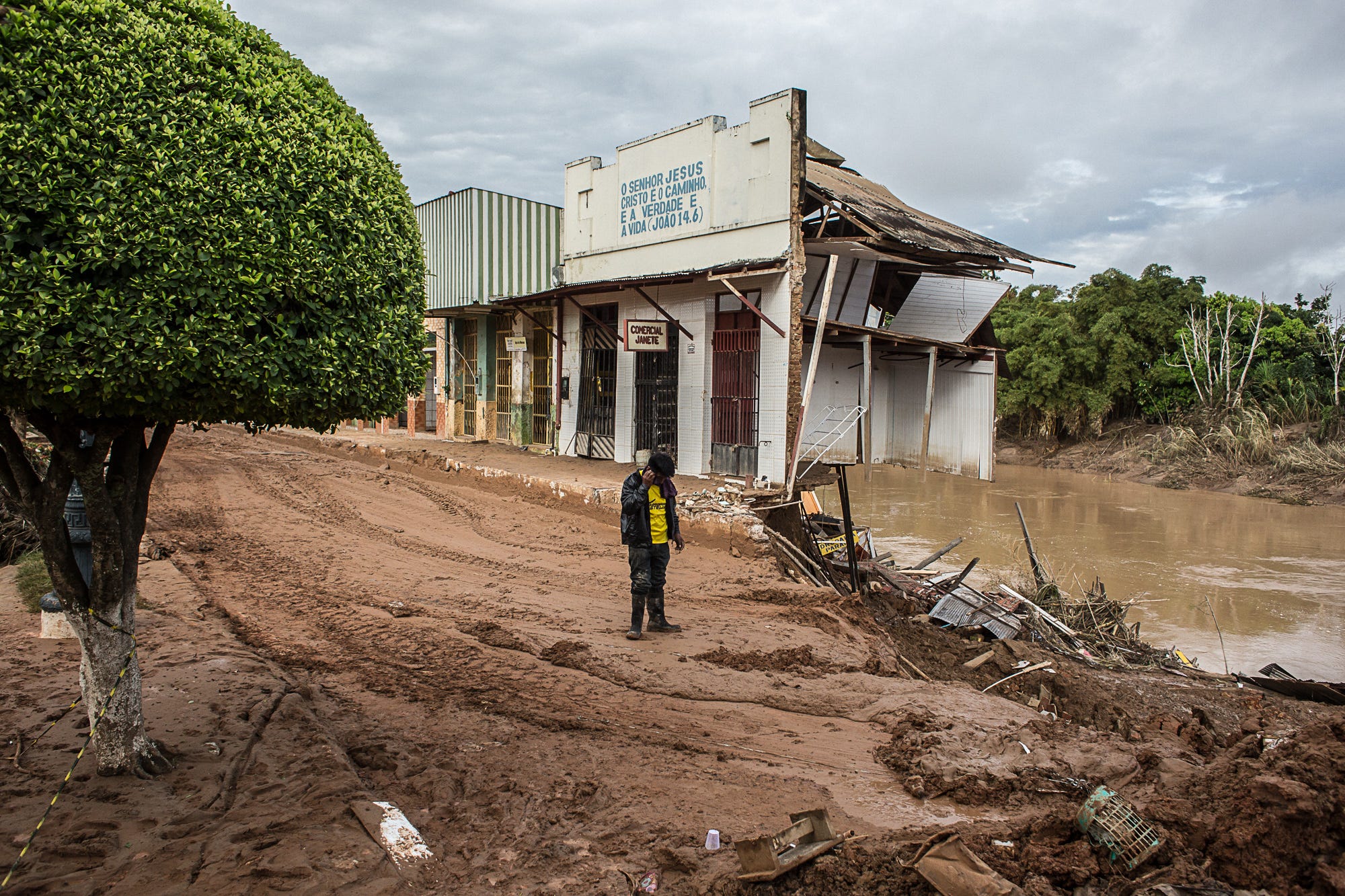
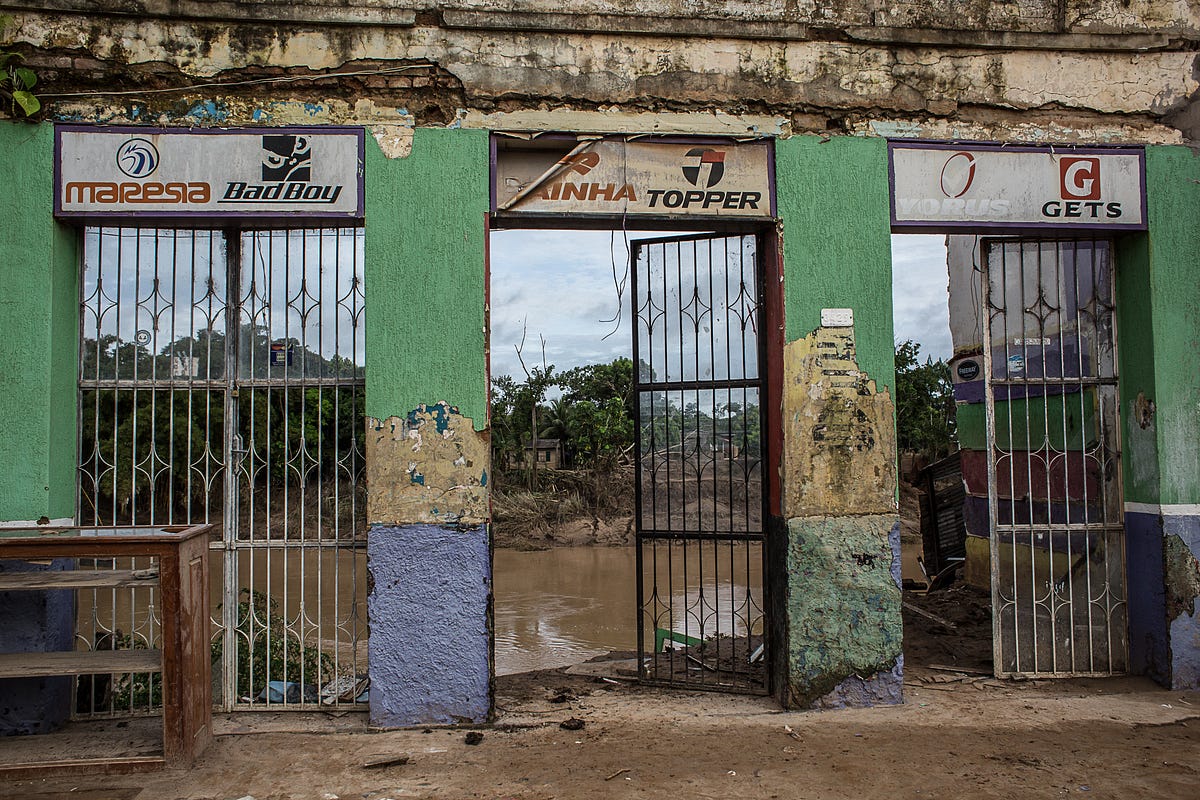
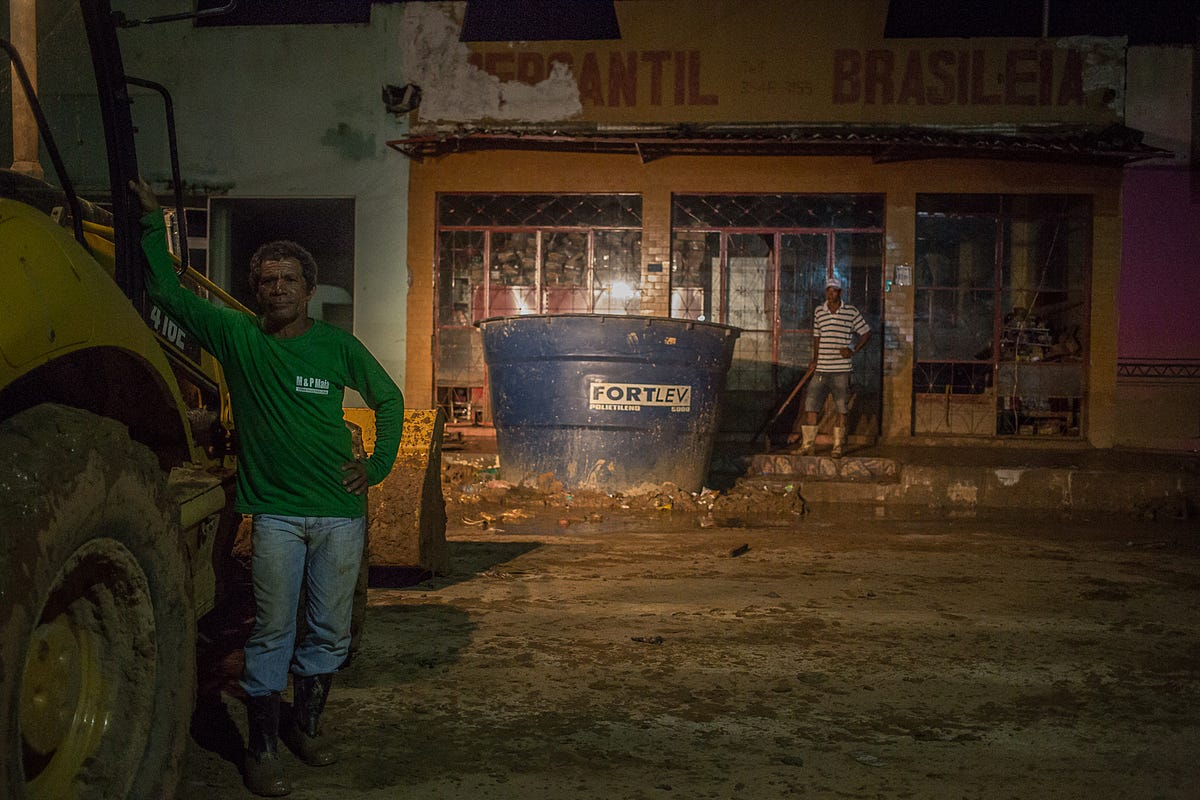
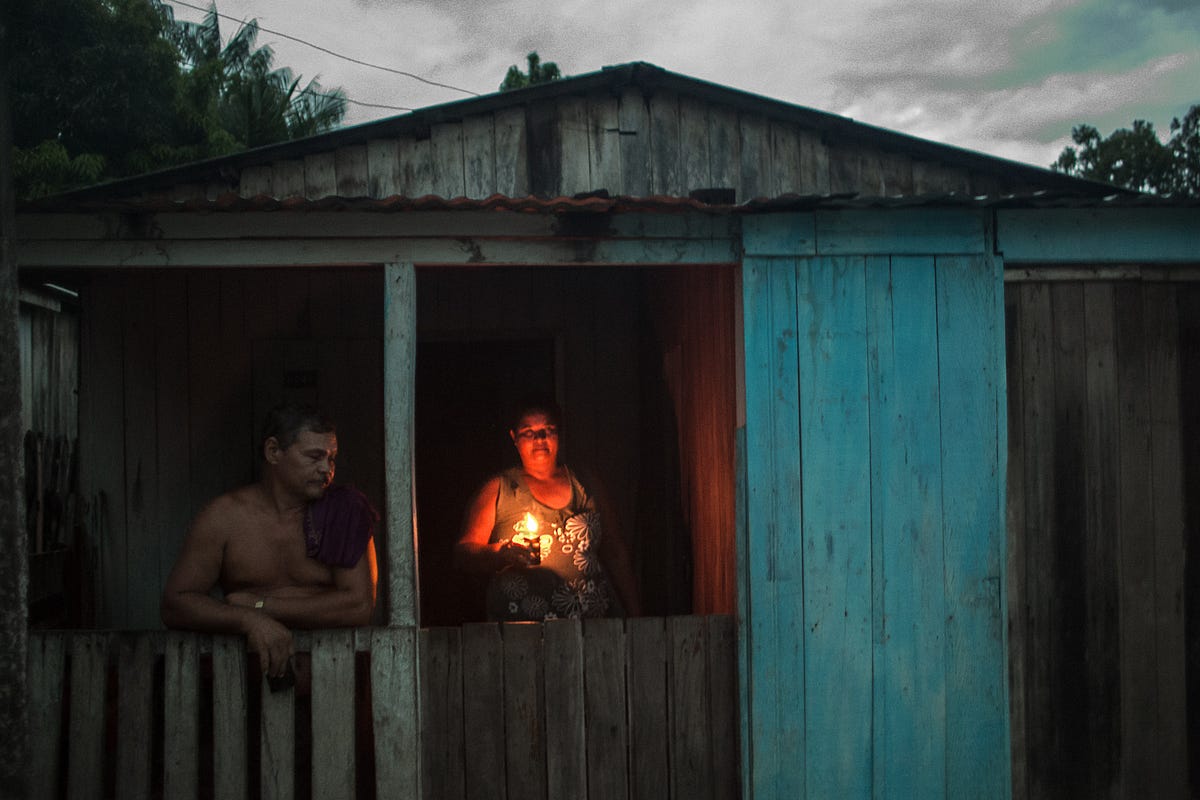
Relato da viagem de dois paulistas açoitados pela crise hídrica à maior cheia da história do estado amazônico.

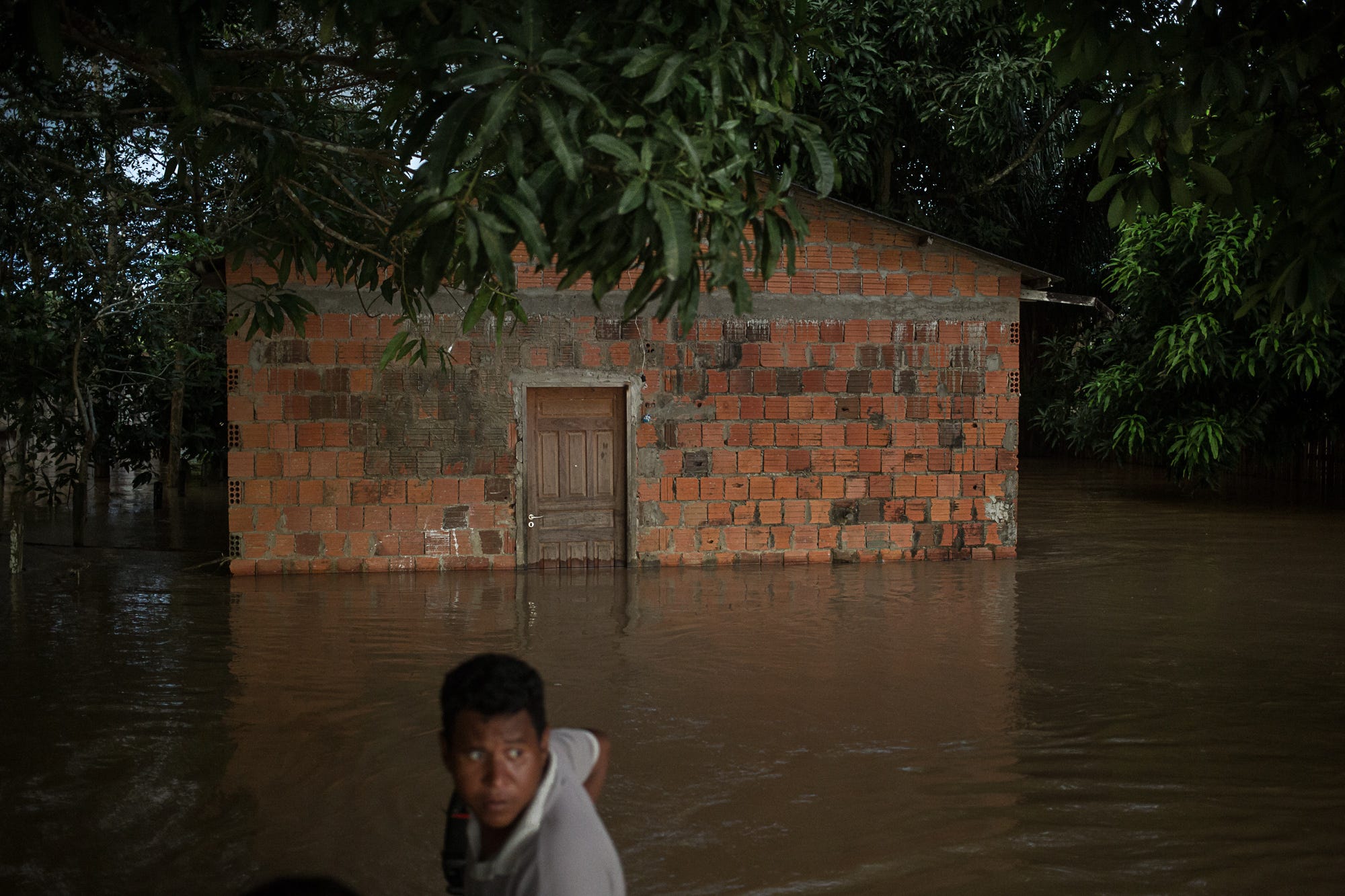
Enquanto o sudeste angustia-se com reservatórios de água em situação crítica, e dá boas vindas às águas de março, o Estado do Acre, no extremo oeste do país, vive realidade absolutamente oposta. O nível do rio Acre atingiu os 17,80 metros na segunda-feira (2/03), em Rio Branco, a capital. Com a cheia histórica, o rio bateu seu próprio recorde de altura, obtido em 1997, quando cravou a cota de 17,66 metros acima do leito normal.

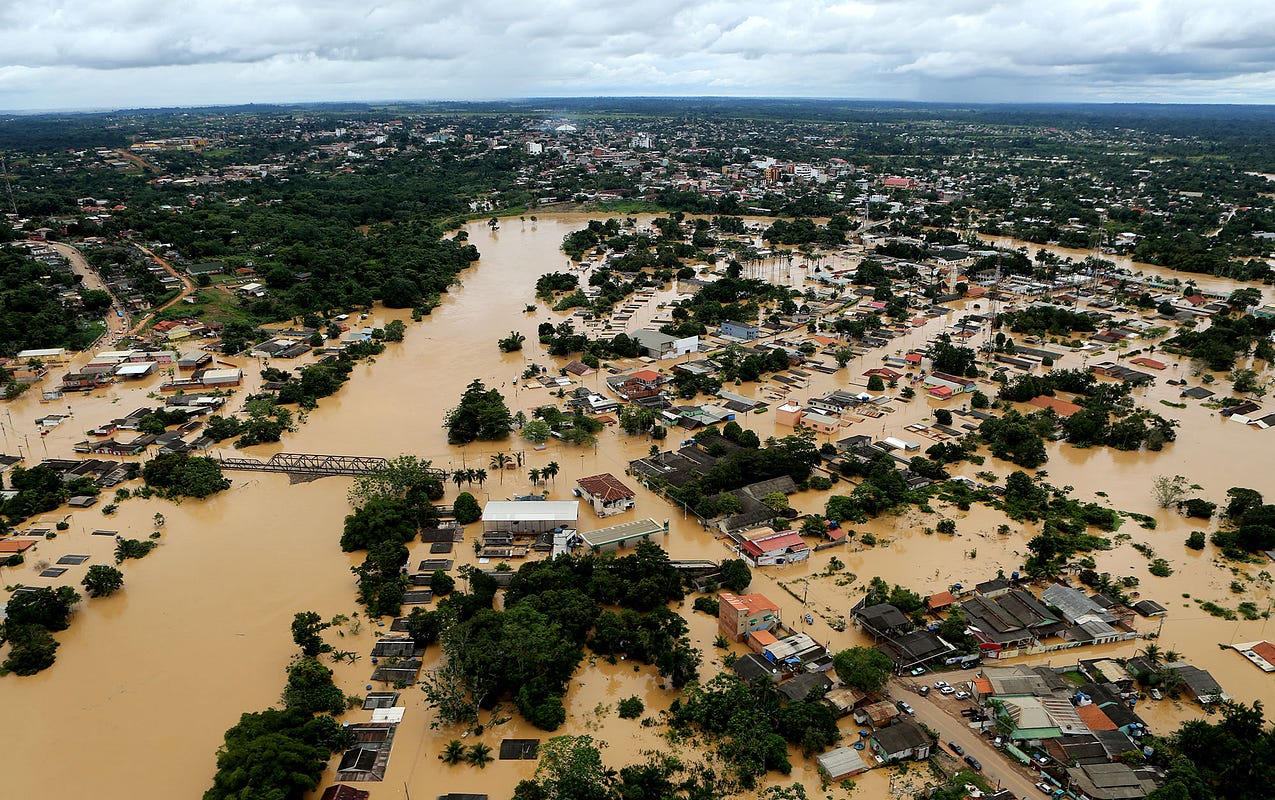
Já se contam mais de 8.000 desabrigados em todo o Estado, 5.450 apenas na capital, divididos em cinco abrigos públicos. A cheia atinge 40 dos 212 bairros da cidade. E as águas não param de subir.

Vista aérea de Brasiléia no ápice da cheia. Foto: Secom/AC

Nas ruas, no comércio, o Acre só fala nisso. Em períodos normais de chuvas, o rio sobe de seis a oito metros. Nas estações secas, desce três metros.

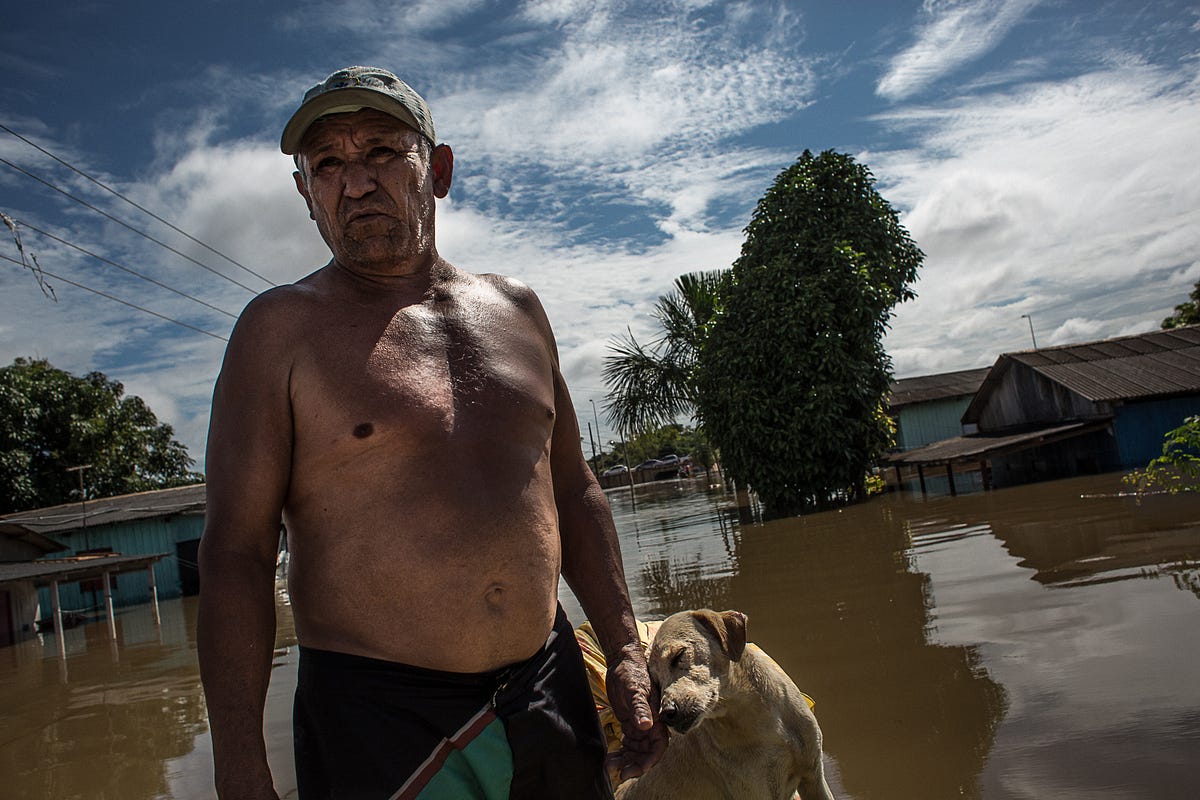
“Eu nunca vi uma situação como esta”, disse Raimundo Nonato da Silva, 85 anos, seringueiro aposentado, que perdeu tudo na atual cheia.

Com o nível do rio subindo dia após dia, Raimundo foi pouco a pouco subindo as coisas de casa. A televisão foi para cima do armário, a geladeira ficou deitada em cima da mesa, roupas escalaram os ganchos mais altos da rede.

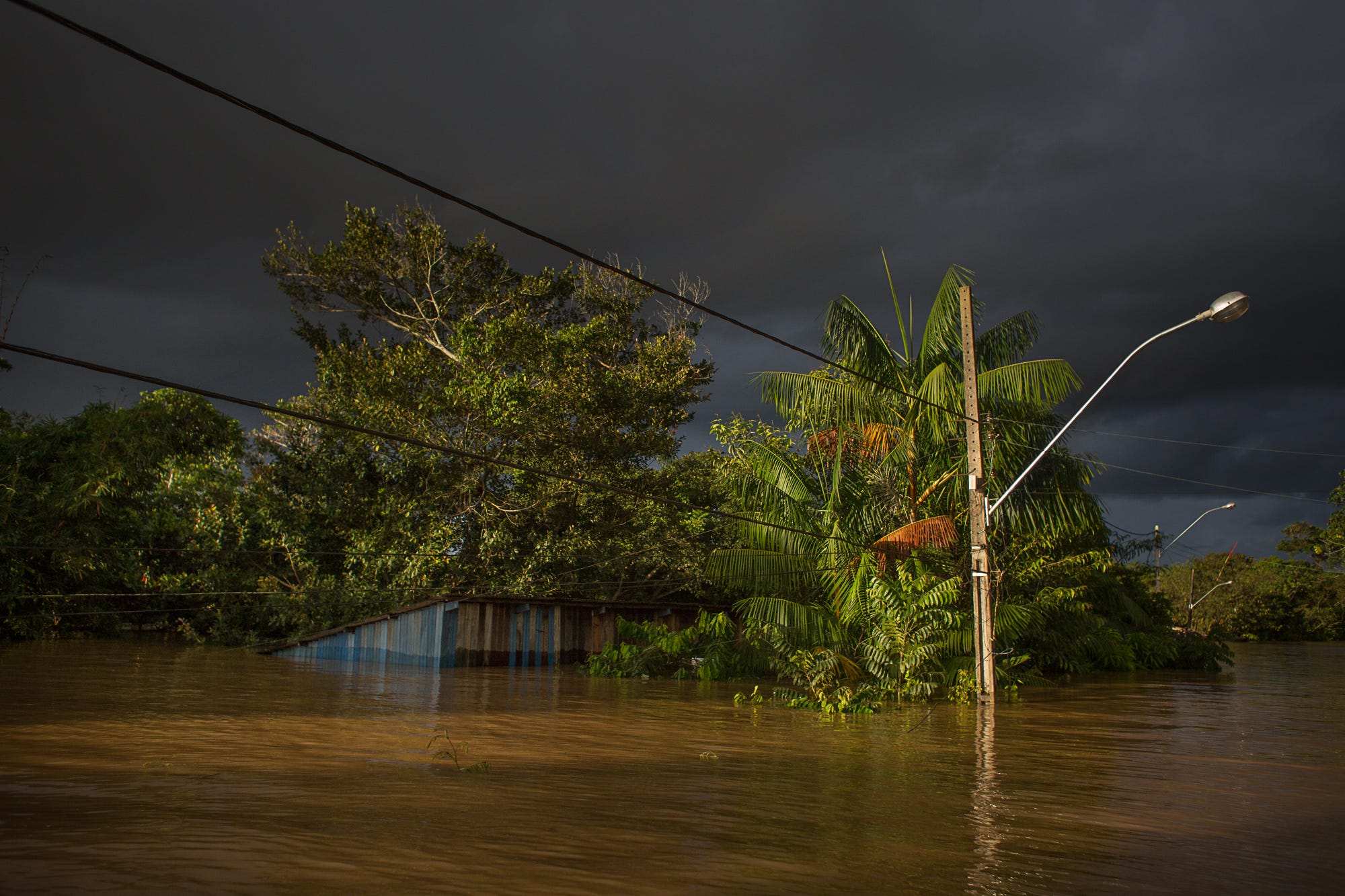
Centenas de casas alagadas no Bairro 6 de Agosto, na capital Rio Branco. Foto: Mídia NINJA

Mas a cheia do rio surpreendeu e ultrapassou o teto da casa do seringueiro, no bairro 6 de Agosto –nesta segunda-feira quase totalmente submerso. Isso apesar de a casa ficar em cima de palafitas.

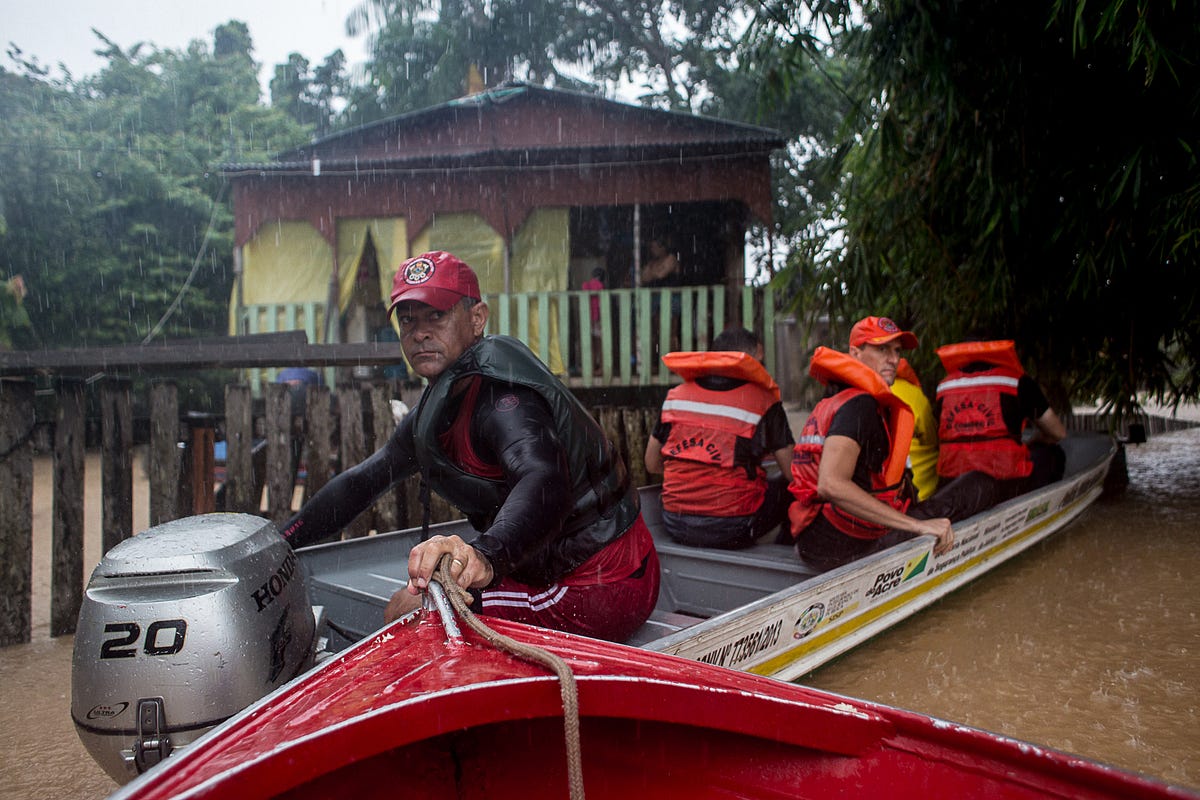
Raimundo só saiu no último instante, quando um bote de resgate da Defesa Civil do município propôs-lhe a derradeira chance de ainda tentar a retirada de umas coisinhas, agora pelo telhado da casa. Não deu tempo.

Selva urbana, o bairro de Taquari foi um dos mais afetados da capital. Foto: Mídia NINJA

O prefeito de Rio Branco, Marcus Alexandre (PT), decretou no domingo o estado de calamidade pública. Estado e município cancelaram as atividades normais do funcionalismo e pediram a todos os servidores públicos que ajudem na assistência aos desabrigados.

A equipe do Conta D’água acompanhou de perto a operação de resgate e suporte da alagação, realizada pela defesa civil na zona rural do estado. Foto: Mídia NINJA

O Acre está assustado com a cheia inédita, mas está também encantado com o espetáculo promovido pelo rio amazônicos.

No domingo, enquanto o rio Acre subia rapidamente, e engordava, avançando sobre o calçadão da Gameleira, um dos principais cartões postais de Rio Branco, milhares de moradores saíram de suas casas para apreciar o espetáculo da corredeira.

Carrinhos vendendo pipocas verdes, amarelas e vermelhas, as cores da bandeira do Acre, disputavam terreno com camelôs que ofereciam balões coloridos do Mickey, dos Angrybirds, de Minions (R$ 10 cada).

Turismo hídrico: a cheia virou atração nesse domingo na capital Rio Branco. Foto: Mídia NINJA

Foto: Mídia NINJA

Meninos jogavam-se no rio feroz e cheio de galhos arrancados das florestas por onde passou. Eram arrastados até a ponte velha, de lá emergindo. E, de novo, jogavam-se no rio. E, de novo.

Os ricos exibiam-se em acrobacias a bordo de jet skis.

Pulos dos mais diversos lugares e alturas marcaram o entretenimento fluvial dos acrianos. Foto: Mídia NINJA

“É triste ver as pessoas perderem tudo com a cheia do rio, mas que é bonito ver essa força das águas, ah, isso é!”, disseram, com variações pequenas, todas as pessoas que entrevistamos.

“Trata-se de uma outra relação com o rio, com a natureza, com os ciclos da vida”, explicou–nos a irmã Maria Amélia, uma freira católica gaúcha que morou em São Paulo durante oito anos. Ela também se admirava com o espetáculo fluvial, enquanto conversava com outra freira, traçando planos de viagem para Brasiléia, na fronteira com a Bolívia, para ajudar os desabrigados de lá.

Centro comercial de Brasiléia, no interior do estado, devastado pela alagação. Foto: Mídia NINJA

Banhada pelo rio Acre, Brasiléia é um município difícil de definir, por causa das incríveis contradições que contém. É por lá que entram os haitianos trazidos por coiotes (especialistas em tráfico de gente). São centenas (já foram milhares) esperando a documentação de refugiados no posto da Polícia Federal.

Também se veem cholas e bolivianos em geral andando pelas ruas, sempre acompanhados por suas famílias. Provêm do vizinho município de Cobija, onde se pode comprar muambas variadas, já que possui uma zona franca à moda de Ciudad Del Leste, no Paraguai. “Chegou Notebook — HP, Asus, Apple, Celulares”, lê-se à guisa de boas vindas, na fronteira.

Pela proximidade com a Bolívia, a região de Brasiléia é marcada pelo comércio. Foto: Mídia NINJA

A ação de limpeza e recuperação da cidade já dura dias. Foto: Mídia NINJA

Separados de Brasiléia apenas pelo rio Acre, os bolivianos pobres de Cobija percorrem as ruas brasileiras, investigando o lixo que os acrianos jogam fora. Reaproveitam quase tudo.

Com as inundações atingiram o centro comercial de Brasiléia como um tsunami fluvial, os brasileiros descartaram de tudo: de mesas com a madeira inchada pela água, roupas e sapatos sujos de lama, fantasias, fogões, geladeiras, colchões, pedaços de vidraças estouradas pela força das águas, pacotes de alimentos e até remédios.

Tudo que aparecesse envolto em um creme cor de chocolate, mas que pudesse recuperar alguma função uma vez lavado era ente recolhido pelas famílias bolivianas, e levado para o outro lado da fronteira.

Mesas, vidros, restos de roupas: de tudo se aproveita. Foto: Mídia NINJA

A inundação criou uma apreensão absolutamente original (e em boa parte imaginária) em Brasiléia. Nos bairros Leonardo Barbosa e Samaúma, situados em uma curva do rio Acre, a cheia ilhou os moradores brasileiros dentro do território boliviano.

“Minha família perdeu quase tudo. Estamos sem energia, sem água; estamos agora ilhados. Perdemos muito, porque não acreditamos que a água fosse subir tanto. Mas não perdemos a vida e o amor pelo Brasil. Não aceito, a esta altura da minha vida, virar boliviano”, disse Francisco Nogueira Cavalcanti, casado, uma filha, enquanto acompanhava a movimentação de uma retroescavadeira cedida pela Prefeitura, que recompunha a ligação entre os dois bairros e o Brasil. Ufa!

Oito dias sem luz, Dona Maria improvisa a iluminação de sua casa com velas. Foto: Mídia NINJA

A cheia dos rios da região amazônica é diferente da cheia dos rios em outras regiões do país. Na bacia amazônica, as cheias fazem parte do regime hidrológico da região. Quando chove, um rio não transborda imediatamente, como acontece em São Paulo, por exemplo. Como vasos comunicantes, os rios sofrem o impacto das cheias nas regiões altas, que “descem” por gravidade para as partes mais baixas do leito fluvial.

Eis porque Rio Branco viveu em suspense toda a semana passada, acompanhando as notícias sobre o comportamento do rio Acre quando passou por Brasiléia primeiro e, depois, por Xapuri. Se subisse fortemente em Brasiléia, se mantivesse a mesma força ao varrer Xapuri, provavelmente as águas chegariam desvastadoras em Rio Branco.

Foi o que aconteceu.


Continuaremos este relato de viagem com as histórias sobre como a cheia devastou a cidade de Xapuri, terra do líder seringueiro e sindicalista Chico Mendes. Também postaremos a entrevista com seu companheiro de sindicato e de luta pela preservação da floresta, Luiz Targino de Oliveira de 83 anos.

*   *   *

A alagação vista dos céus

Confira imagens de Rio Branco, no Acre, durante a maior cheia de sua história

fotos de Mídia NINJA

3 de março de 2015

Já se contam mais de 8.000 desabrigados em todo o Estado, 5.450 apenas na capital, divididos em cinco abrigos públicos. A cheia atinge 40 dos 212 bairros da cidade, com a elevação de 18m do rio. E as águas não param de subir..


A Major Surge in Atmospheric Warming Is Probably Coming in the Next Five Years (Motherboard)

Written by NAFEEZ AHMED

March 2, 2015 // 08:25 PM CET

Forget the so-called ‘pause’ in global warming—new research says we might be in for an era of deeply accelerated heating.

While the rate of atmospheric warming in recent years has, indeed, slowed due to various natural weather cycles—hence the skeptics’ droning on about “pauses”—global warming, as a whole, has not stopped. Far from it. It’s actually sped up, dramatically, as excess heat has absorbed into the oceans. We’ve only begun to realize the extent of this phenomenon in recent years, after scientists developed new technologies capable of measuring ocean temperatures with a depth and precision that was previously lacking.

In 2011, a paper in Geophysical Research Letters tallied up the total warming data from land, air, ice, and the oceans. In 2012, the lead author of that study, oceanographer John Church, updated his research. What Church found was shocking: in recent decades, climate change has been adding on average around 125 trillion Joules of heat energy to the oceans per second.

How to convey this extraordinary fact? His team came up with an analogy: it was roughly the same amount of energy that would be released by the detonation of two atomic bombs the size dropped on Hiroshima. In other words, these scientists found that anthropogenic climate is warming the oceans at a rate equivalent to around two Hiroshima bombs per second. But as new data came in, the situation has looked worse: over the last 17 years, the rate of warming has doubled to about four bombs per second. In 2013, the rate of warming tripled to become equivalent to 12 Hiroshima bombs every second.

So not only is warming intensifying, it is also accelerating. By burning fossil fuels, humans are effectively detonating 378 million atomic bombs in the oceans each year—this, along with the ocean’s over-absorption of carbon dioxide, has fuelled ocean acidification, and now threatens the entire marine food chain as well as animals who feed on marine species. Like, er, many humans.

According to a new paper from a crack team of climate scientists, a key reason that the oceans are absorbing all this heat in recent decades so well (thus masking the extent of global warming by allowing atmospheric average temperatures to heat more slowly), is due to the Pacific Decadal Oscillation (PDO), an El Nino-like weather pattern that can last anywhere between 15-30 years.

In its previous positive phase, which ran from around 1977 to 1998, the PDO meant the oceans would absorb less heat, thus operating as an accelerator on atmospheric temperatures. Since 1998, the PDO has been in a largely negative phase, during which the oceans absorb more heat from the atmosphere.

Such decadal ocean cycles have broken down recently, and become more sporadic. The last, mostly negative phase, was punctuated by a brief positive phase that lasted 3 years between 2002 and 2005. The authors of the new study, Penn State climatologist Michael Mann, University of Minnesota geologist Byron Steinman, and Penn State meteorologist Sonya Miller, point out that the PDO, as well as the Atlantic Multidecadal Oscillation (AMO), have thus played a major role in temporarily dampening atmospheric warming.

“In other words, the ‘slowdown’ is fleeting and will likely soon disappear.”

So what has happened? During this period, Mann and his team show, there has been increased “heat burial” in the Pacific ocean, that is, a greater absorption of all that heat equivalent to hundreds of millions of Hiroshimas. For some, this has created the false impression, solely from looking at global average surface air temperatures, of a ‘pause’ in warming. But as Mann said, the combination of the AMO and PDO “likely offset anthropogenic warming over the past decade.”

Therefore, the “pause” doesn’t really exist, and instead is an artifact of the limitations of our different measuring instruments.

“The ‘false pause’ is explained in part by cooling in the Pacific ocean over the past one-to-two decades,” Mann told me, “but that is likely to reverse soon: in other words, the ‘slowdown’ is fleeting and will likely soon disappear.”

The disappearance of the ‘slowdown’ will, in tangible terms, mean that the oceans will absorb less atmospheric heat. While all the accumulated ocean heat “is certainly not going to pop back out,” NASA’s chief climate scientist Dr. Gavin Schmidt told me, it is likely to mean that less atmospheric heat will end up being absorbed. “Ocean cycles can modulate the uptake of anthropogenic heat, as some have speculated for the last decade or so, but… net flux is still going to be going into the ocean.”

According to Mann and his team, at some point, this will manifest as an acceleration in the rise of global average surface air temperatures. In their Science study, they observe: “Given the pattern of past historical variation, this trend will likely reverse with internal variability, instead adding to anthropogenic warming in the coming decades.”

So at some point in the near future, the PDO will switch from its current negative phase back to positive, reducing the capacity of the oceans to accumulate heat from the atmosphere. That positive phase of the PDO will therefore see a rapid rise in global surface air temperatures, as the oceans’ capacity to absorb all those Hiroshima bomb equivalents declines—and leaves it to accumulate in our skies. In other words, after years of slower-than-expected warming, we may suddenly feel the heat.

So when will that happen? No one knows for sure, but at the end of last year, signs emerged that the phase shift to a positive PDO could be happening right now.

In the five months before November 2014, measures of surface temperature differences in the Pacific shifted to positive, according to the National Oceanic and Atmospheric Administration. This is the longest such positive shift detected in about 12 years. Although too soon to determine for sure whether this is, indeed, the beginning of the PDO’s switch to a new positive phase, this interpretation is consistent with current temperature variations, which during a positive PDO phase should be relatively warm in the tropical Pacific and relatively cool in regions north of about 20 degrees latitude.

In January 2015, further signs emerged that the PDO is right now in transition to a new warm phase. “Global warming is about the get a boost,” ventured meteorologist Eric Holthaus. Recent data including California’s intensifying drought and sightings of tropical fish off the Alaskan coast “are further evidence of unusual ocean warming,” suggesting that a PDO transition “may already be underway a new warm phase.”

While it’s still not clear whether the PDO is really shifting into a new phase just yet, when it does, it won’t be good. Scientists from the UK Met Office’s Hadley Center led by Dr. Chris Roberts of the Oceans and Cryosphere Group estimate in a new paper in Nature that there is an 85 percent chance the faux ‘pause’ will end in the next five years, followed by a burst of warming likely to consist of a decade or so of warm ocean oscillations.

Roberts and his team found that a “slow down” period is usually (60 percent of the time) followed by rapid warming at twice the background rate for at least five years, and potentially longer. And mostly, this warming would be concentrated in the Arctic, a region where temperatures are already higher than the global average, and which is widely recognized to be a barometer of the health of the global climate due to how Arctic changes dramatically alter trends elsewhere. Recent extreme weather events around the world have been attributed to the melting Arctic ice sheets and the impact on ocean circulations and jet streams.

What this means, if the UK Met Office is right, is that we probably have five years (likely less) before we witness a supercharged surge of rapid global warming that could last a decade, further destabilizing the climate system in deeply unpredictable ways.

California’s terrifying climate forecast: It could face droughts nearly every year (Washington Post)

March 2 2015

Not long ago, scientists at NASA and two major universities warned of an inevitable “megadrought” that will parch the southwestern United States for 35 years, starting around 2050. By then, a new study says, Californians should be fairly accustomed to long, harsh and dry conditions.

Over the past 15 years, temperatures have been rising in the Golden State, resulting in annual periods of extreme and blazing heat, while the cycle of low and moderate precipitation cycles have not changed since 1977. That means that it’s far more likely that extreme heat years will coincide with dry years.

[NASA: A ‘megadrought’ will grip U.S. in the coming decades]

That’s a recipe for drought, the authors said. Mix searing heat with little to no rain and snow, then bake.

Unlike other climate studies that sound an alarm for impact far into the future, the Stanford University study led by associate professor Noah Diffenbaugh pored through historical data from the U.S. National Climatic Data Center to explain current conditionsand concluded that California should get used to it. It was published Monday afternoon in the journal of the Proceedings of the National Academy of Sciences.

Diffenbaugh and two graduate students at Stanford’s School of Earth, Energy an Environmental Sciences explored the role temperature has played in California’s drought for 120 years. Between 1896 and 1994, climate patterns in the state created a 50 percent chance that a year of extremely warm temperatures would merge with a year of moderately dry conditions. But between 1995 and 2014, extreme temperature years were so common that their chance of combining with dry years increased to 80 percent.

The forecast is negative, but not necessarily the outlook, the authors said. California has opportunities to manage its risks with smart water policies that use precipitation to bank ground water so that farms, which use 77 percent of the state’s water, can survive. The statewide water use is similar to what it was 40 years ago, meaning that even though the population has exploded to 33 million, Californians share about as much water now as they did in the 1970s.

State officials can learn from advanced water management practices already in use in the Middle East in nations such as Saudi Arabia and Israel.

“California was already on the cusp, where 100 percent of the years are not only warm but severely warm,” said Diffenbaugh, a senior fellow at Stanford’s university’s Woods Institute for the Environment. “When a low precipitation year occurs with warm conditions, it’s twice as likely to result in drought.”

[Tropical forests may be vanishing even faster than previously thought]

As part of the study, the researchers also observed the impact of greenhouse gases from human activity — carbon dioxide, nitrous oxide and methane from power plants, vehicles, factories and other sources — on temperature and precipitation, Diffenbaugh said. Graduate students Daniel Swain and Danielle Touma were co-authors for the study.

“A lot of this paper is about greenhouse gas emissions that have already happened,” Diffenbaugh said. “Really what California is experiencing is the cumulative emissions of greenhouse gases globally. And the United States has been responsible for a large fraction. Historically the United States has been responsible for a quarter of the emissions and the European Union another quarter.”

Even if world governments that are sharply divided over the approach to lowering greenhouse gas emissions somehow managed to reach a consensus, California will still feel the heat well into the future, Diffenbaugh said.

[How dust leaves the Sahara and floats to Amazon forest]

California, the nation’s most populous state, is suffering one of its worst droughts ever, fueled by the exact conditions cited  in the study — record-low precipitation and record-high heat. The lowest calendar year of precipitation on record in the state happened between 2013 and 2014, and 2014 was the hottest year in California history.

Earlier scientific research suggests that the extremely dry and hot period between 2012 and 2014 might be the worst in a millennium, the study said. But even that can’t hold a candle to the droughts expected 35 years from now. Scientists at NASA and at Cornell and Columbia universities said climate models used for a study released two weeks ago show 80 percent chance of an extended drought between 2050 and 2099, lasting more than three decades if world governments fail to act aggressively to mitigate the effects of climate change.
North America has experienced so-called megadroughts before, during the 12th and 13th centuries. But those were caused by natural changes in weather patterns that give megadroughts a 10 percent chance of forming at any time. The harsh future drought will be the result of human-caused warming.

An international panel of leading climate scientists said in 2013 that the planet is warming at an accelerated pace and found with 95 percent certainty that human activity is the cause. The past three decades have been the hottest on the planet since 1850. Carbon concentrations in the atmosphere have increased 40 percent since then, and carbon, methane and nitrous oxide are at levels unprecedented in at least 800,000 years.

“With climate change, the likelihood of a megadrought goes up considerably,” said Toby R. Ault, an assistant professor in the department of Earth and atmospheric sciences at Cornell, one of the co-authors. Benjamin I. Cook of NASA’s Goddard Institute for Space Studies and Jason E. Smerdon of  Columbia’s Lamont-Doherty Earth Observatory were the other authors for that study.

After 2050, there is “overwhelming evidence of a dry shift,” Ault said, “way drier than the megadroughts of the 1100s and 1200s.” The cause, Smerdon continued, “is twofold, reductions in rainfall and snowfall. Not just rainfall but soil moisture … and changes in evaporation that dry out the soil much more than normal.”

Leading to the theorized megadrought, California is likely to experience a series of micro droughts, researchers say.

[West’s historic drought stokes fears of water crisis]

A third study published three years ago had similar findings. The research is newly published, but its findings are not dramatically different from similar studies in the past. Beverly Law, a specialist in global change biology at Oregon State University’s College of Forestry, co-authored a study of megadroughts three years ago.
It showed that a drought that affected the American West from 2000 to 2004 compared to conditions seen during the medieval megadroughts. But the predicted megadrought this century would be far worse. Law said the NASA study confirmed her previous findings.

“We took the climate model . . . and compared” two periods, 2050 to 2099 and 1950 to 1999, she said. “What it showed is this big, red blotch over Southern California.”

Mais um peixe-leão é encontrado no Brasil (Estadão)

Herton Escobar

04 março 2015 | 08:45

Espécie invasora já se espalhou por todo o Caribe e ameaça avançar também pela costa brasileira. Peixe foi avistado por mergulhadores em Arraial do Cabo, no RJ

Peixe-leão encontrado em Arraial do Cabo (RJ) no dia 1 de março. Foto: Queiroz Diver/Divulgação, via Facebook 

Peixe-leão encontrado em Arraial do Cabo (RJ) no dia 1 de março. Foto: Queiroz Diver/Divulgação, via Facebook

Uma das maiores ameaças à biodiversidade marinha do Caribe pode ter chegado de fato à costa brasileira. Está circulando no Facebook o vídeo de um segundo peixe-leão encontrado em Arraial do Cabo, no Rio de Janeiro, por um grupo de mergulhadores da empresa Queiroz Divers: http://goo.gl/0S5DAu

O peixe-leão é uma espécie invasora do Indo-Pacífico que se espalhou pelo Caribe ao longo dos últimos 20 anos, causando sérios danos à biodiversidade nativa dos recifes de coral da região. Ele é um predador voraz, que come tudo que encontra pela frente e se multiplica numa velocidade espantosa. Em pouco tempo, torna-se o peixe dominante do ecossistema, em detrimento de todas as outras espécies que habitam os recifes. Tanto que, em muitos recifes de coral do Caribe hoje, a única coisa que você encontra é o peixe-leão. Os outros peixes nativos do ecossistema tiveram suas populações drasticamente reduzidas ou desapareceram por completo, devorados por ele.

Segundo as informações postadas no Facebook, esse segundo peixe foi avistado no dia 1/3, no ponto de mergulho Anequim. O vídeo foi postado no dia seguinte. “Assim que o encontramos, informamos aos órgãos competentes: AMA – IEAPM – ICMBio. Feito isso nos solicitaram que postássemos o vídeo e divulgássemos para que podéssemos (sic) unir nossas forças em prol da nossa região e capturá-lo”, diz o post da Queiroz Diver.

O primeiro peixe-leão do Brasil foi avistado pouco menos de um ano atrás, em maio de 2014, também em Arraial do Cabo, como relatei aqui no blog na ocasião: Peixe-leão é encontrado no Brasil

Em 2011 fiz uma reportagem especial sobre a invasão do peixe-leão no Caribe e venho acompanhando esse assunto desde então. É um problema seríssimo. Se esse bicho começar a se reproduzir e se espalhar de fato pela costa brasileira, o estrago causado à nossa biodiversidade marinha (que já é, naturalmente, bem menor do que a do Caribe) será imenso. No Caribe, faz 20 anos que tentam erradicar o bicho e não conseguem. Ele é muito resiliente e se reproduz rápido demais. O que se pode fazer é apenas controlar a expansão da população, por meio da caça.

Reportagem especial sobre a invasão do Caribe pelo peixe-leão, publicada no Estadão em 2011. 

Reportagem especial sobre a invasão do Caribe pelo peixe-leão, e já alertando sobre o risco de invasão no Brasil, publicada no Estadão em 2011.

Suspeita-se que a invasão do Caribe tenha começado no sul da Flórida, com alguns poucos peixes que foram soltos no mar por aquaristas, depois que os bichos se tornaram grandes demais para os seus aquários. Espero que seja este o caso também em Arraial do Cabo, e que esses dois peixes avistados até agora sejam indivíduos isolados, que não tiveram parceiros ou tempo suficiente para se reproduzirem. É improvável que eles sejam da mesma população do Caribe, pois neste caso o natural seria que a invasão tivesse começado pelo Norte e Nordeste do Brasil, e não pelo Sudeste. Mas nunca se sabe … Mergulhadores e autoridades ambientais precisam estar alertas para combater a invasão imediatamente e impedir que ela se alastre pela costa brasileira, caso novos peixes apareçam por aí.

Espero também que não seja alguma jogada publicitária ou brincadeira de mau gosto (tipo, alguém botou o peixe lá de propósito …). O peixe foi avistado no mesmo dia que o Fantástico, da Rede Globo, veiculou uma grande reportagem sobre o assunto, feita pelo meu camarada Ernesto Paglia: http://glo.bo/1E7VaFh

Um peixe-leão arpoado nas Bahamas. Foto: Herton Escobar/Estadão (2011) 

Um peixe-leão arpoado nas Bahamas. Foto: Herton Escobar/Estadão (2011)

Para ver um vídeográfico que mostra a evolução da invasão do peixe-leão no Caribe, clique aqui: http://migre.me/jbH3B

Para saber mais sobre o peixe-leão, leia também: De olho no peixe-leãoPeixe-Leão nos Recifes de Bonaire e Temporada de caça

Por fim, um estudo que analisa o risco de invasão do peixe-leão no Brasil: http://migre.me/jbH6Q

Abaixo, um vídeo postado de Arraial do Cabo, mostrando o primeiro peixe encontrado lá:

E dois feitos por mim, em Bonaire e nas Bahamas, quando estive lá pesquisando esse assunto para o jornal em 2011:

Inuits do Canadá: uma longa jornada de volta (Estadão)

The Economist

04 Março 2015 | 03h 00

Esqueletos foram descobertos há pouco tempo em um museu francês, mas caminho para repatriá-los não é fácil

Em agosto de 1880, oito Inuits da costa nordeste do Canadá aceitaram viajar para a Europa a fim de serem exibidos em um zoológico humano. Pouco depois, morriam de varíola, antes de retornar ao seu lar. Os esqueletos de Abraham Ulrikab e da maior parte dos seus companheiros foram descobertos há pouco tempo, montados completamente nos depósitos de um museu francês para serem exibidos. Os anciãos Inuits querem que os restos mortais de seu povo, até mesmo dos que morreram longe dos territórios de caça do Norte, nos séculos 19 e 20, voltem para o seu país. Mas isso levará muito tempo.

O governo de Nunatsiavut, uma região Inuit do norte do Labrador criada em 2005, já recuperou restos humanos de museus de Chicago e da Terranova. David Lough, vice-ministro da Cultura de Nunatsiavut, não sabe ao certo quantos outros há para serem reclamados. Mas ele acredita que, em 500 anos de contato entre o Labrador e o mundo exterior, muitas pessoas e artefatos foram parar do outro lado do oceano. Nancy Columbia fez parte de um grupo encarregado de apresentar a cultura Inuit na Feira Mundial de Chicago, e chegou a Hollywood, onde estrelou filmes western como princesa americana nativa.

The New York Times

Governo procura descendentes para definir o que será feito

Até pouco tempo atrás, os museus resistiam a devolver restos humanos, em nome da ciência e da preservação da cultura. As múmias egípcias do Museu Britânico e as tsantsas (cabeças encolhidas) do Amazonas, do Museu Pitt Rivers de Oxford, são as peças mais importantes de suas coleções. Mas, pressionados por grupos indígenas, começaram a ceder. A Declaração sobre os Direitos das Nações Indígenas da ONU, adotada em 2007, consagra o direito de reclamar restos humanos, assim como a legislação em Grã-Bretanha, Austrália e Estados Unidos (mas não a do Canadá). Dezenas de museus (incluindo o Museu Britânico e o Pitt Rivers) elaboraram políticas de repatriação e códigos éticos sobre o tratamento a ser dado a restos mortais. O Museu do Homem da França, onde os esqueletos de Abraham Ulrikab e seus companheiros estão guardados, pretende devolvê-los, afirma France Rivet, autora de um novo livro sobre a saga do grupo. “Eles aguardam apenas uma solicitação do Canadá”, afirma.

A solicitação não chegou, diz Lough, em parte porque “os Inuits querem que todos sejam consultados”. A frágil situação das comunidades Inuit torna isso difícil. Hebron, terra natal da família Ulrikab, foi fundada por missionários da Morávia. Mas o assentamento foi abandonado em 1959, quando a missão fechou; os descendentes da família se dispersaram. Eles deverão ser encontrados para ajudar a decidir onde os restos deverão ser sepultados e o tipo de cerimônia que será realizado. Nakvak, local de origem de outros integrantes do grupo original, agora fica no Parque Nacional das Montanhas Torngat, e existem obstáculos burocráticos para utilizá-lo como local de sepultamento.

Somente depois que os Inuits decidirem o que fazer com os restos mortais as negociações poderão começar entre os governos do Canadá e da França a respeito de sua devolução e do pagamento dos custos da repatriação. Em 2013, Stephen Harper, primeiro-ministro do Canadá, e o presidente da França, François Hollande, concordaram em colaborar para a repatriação. Mas a África do Sul esperou oito anos por Saartjie Baartman, a “Vênus hotentote”, depois que Nelson Mandela solicitou seu regresso, em 1994. Para Abraham Ulrikab e seus amigos, pelo menos, a jornada de volta começou.

© 2015 THE ECONOMIST NEWSPAPER LIMITED. DIREITOS RESERVADOS. TRADUZIDO POR ANNA CAPOVILLA, PUBLICADO SOB LICENÇA. O TEXTO ORIGINAL EM INGLÊS ESTÁ EM WWW.ECONOMIST.COM

Carro “símbolo” da falta de água no Cantareira foi roubado há 20 anos em SP (UOL)

Fabiana Maranhão

Do UOL, em São Paulo

03/03/201509h26 Atualizada 03/03/201515h11 

Seca em SP revela carros, construções antigas e lixo

19.fev.2015 – As chuvas que têm atingido São Paulo em fevereiro estão recuperando o nível do sistema Cantareira, que fornece água para 6,5 milhões de pessoas na Grande São Paulo. Na montagem, a imagem onde aparece menos água foi feita em dezembro de 2014. Já a foto que mostra a represa mais cheia é deste mês. Com a elevação, carros que surgiram com a seca e não foram retirados voltam a ser encobertos pelas águas Leia mais Estadão Conteúdo

A carcaça de um carro que se tornou uma espécie de símbolo da falta de água no Cantareira, sistema que abastece um terço da população da Grande São Paulo(6,5 milhões de pessoas), foi furtado há 20 anos.

Segundo a SSP (Secretaria de Segurança Pública), após averiguar o número do chassi, a polícia descobriu que o veículo foi furtado em 1995 na cidade de São Paulo.

O caso é investigado pela delegacia de Nazaré Paulista (a 64 km de São Paulo). A polícia ainda não identificou os suspeitos pelo crime.

A carcaça passou a chamar a atenção de quem passava pela região da represa Atibainha, que faz parte do sistema Cantareira, depois que foi grafitada em 2014 pelo artista Mundano. No carro, foi escrito “Bem-vindo ao deserto da Cantareira”, um protesto contra a crise de falta de água.

O veículo foi removido da represa em 25 de fevereiro. Um dia depois, o desenho do carro com a mesma mensagem foi grafitado na pilastra perto de onde a carcaça ficava e que servia de referência para as subidas e quedas do nível do reservatório.

De acordo com a SSP, 31 carros foram retirados do Atibainha desde o ano passado. Levantamento feito pela reportagem do UOL revela que, desde o meio do ano passado, ao menos 83 veículos foram tirados do fundo de reservatórios em São Paulo.

Os primeiros começaram a aparecer em meados de agosto de 2014, à medida que foram caindo os níveis de água das represas de São Paulo por causa da falta de chuva.

Evelson de Freitas/Agência Estado

Grafite em pilastra na represa Atibainha reproduz carro que virou símbolo da seca

Seco e colorido: Grafiteiros vão ao Cantareira em protesto artístico (Conta D’Água)

Em tempos de seca grafiteiros fazem arte-protesto no complexo cantareira e dão medidor de nível de água para a população

Por Henrique Santana, da Revista Vaidapé

2 de março de 2015

Submersos no maior colapso de abastecimento de água da história do Estado de São Paulo, grafiteiros resolveram dar um rolê pela represa de Atibainha, em Nazaré Paulista, para fazer o que sabem melhor: grafitar. A Vaidapé participou da ação do início ao fim e o registro vocês conferem nesta reportagem.

O time foi composto por grandes nomes do graffite da cidade: Thiago Mundano, encabeçador do projeto “Pimp My Carroça”, que estiliza o principal objeto de trabalho dos carroceiros paulistas; Mauro, do movimento Imargem; Enivo, um dos responsáveis pelo polêmico graffite nos Arcos do Jânio, criticado por fazer uma suposta exaltação ao líder venezuelano, Hugo Chavez; Subtu, famoso pelos desenhos de macacos brancos espalhados pela cidade; e Fel, exímio escalador de prédios, que estampa desenhos gigantes edifícios da cidade.

O APARELHO DE MEDIÇÃO

A trupe do spray foi ao Cantareira com o objetivo de fazer um graffite-medidor. As pinturas, realizadas em baixo da ponte da represa de Atibainha , serão usadas de parâmetro para acompanhar o nível da água. “Estamos aqui para ver, de fato, o nível da água do Cantareira, porque não dá para confiar muito no que a gente vê na TV, no que a Sabesb diz, no que dizem nossos governadores. Então a gente veio fazer uma arte para ser um nivelador, para a população que vem aqui também possa acompanhar a situação da água Não é porque cresceu um pouquinho que está bem. O nível está negativo e a gente vai acompanhar por essa arte, que é um jeito de trazer um novo olhar para essa crise hídrica”, explica Mundano.

Torneiras colocadas por Mundano em cactos da represa (Foto: André D’Elia)

Subtu, o famoso pintor de macacos brancos, criticou o desperdício de água e não deixou de lado seu carro chefe, estampando na ponte mais um de seus primatas. “Eu fiz o macaco assim, desperdiçando água, porque o macaco é o ser humano desprovido de inteligência. Então ele é meio burro e tal. É para fazer uma referência a essas pessoas que não se tocaram ainda que a gente está numa crise violenta de água, que continua lavando o carro, que não reutiliza a água. Então é meio que isso, ele tá na ‘gozolândia’, ele tá aqui na Cantareira despejando água da garrafinha”, provoca.

“A gente está aqui hoje, na Cantareira, fazendo o que a gente mais gosta de fazer, que é arte, que é pintar. E hoje tá servindo como um alerta, como uma crítica”, conta Enivo ao falar que a ideia é que os graffites sejam submerso — caso o nível da represa volte a subir.

O protesto artístico surgiu de uma camaradagem que aflorou nas ruas de São Paulo. Apesar dos grafiteiros atuarem em diferentes regiões da cidade, a afinidade entre seus projetos individuais e os roles pelo asfalto quente da terra da garoa fez com que seus caminhos se cruzassem. Enivo pontua que a ação “acaba sendo um encontro de amigos para pintar, mas agora com um porquê”.

ARTE DENTRO E FORA DE CASA

Além do graffite-medidor, a ida para a represa de Atibainha teve outros porquês. Tanto Mundano quanto Mauro irão, no dia 7 de março, inaugurar a exposição “Ver-A-Cidade Mudana”, na galeria A7MA, Vila Madalena, zona oeste de São Paulo. O nome da mostra faz referência ao trabalho dos dois artistas. A ideia é construir um diálogo entre a arte exposta dentro e fora das galerias. Enivo é um dos sócios da A7MA, que abriu espaço para que artistas independentes consigam vender obras para garantir sua subesistência.

“Para a gente, que é artista, grafiteiro, é um prazer e uma missão poder falar disso, seja nas ruas, seja aqui nesse marco, nesse lugar monumental, importante para a sociedade paulistana. E também poder mostrar isso em um ambiente fechado, relacionando toda essa nossa poética em obras móveis que as pessoas podem olhar, podem até levar para casa. Então, na galeria A7MA, a gente vai fazer está exposição e vai relacionar tudo isso: arte na rua e arte dentro dos espaços”, diz Mauro, que também é idealizador de outros projetos, como o Cartograffiti.

Grafites de Mauro e Mundano, lado a lado na represa de Atibainda (Foto: André D’Elia)

Os artistas também vão abordar temas relativos a crise de abastecimento, levando para a galeria o projeto dos cinco grafiteiros no Cantareira. A arte ganha moldes de protesto e navega de Nazaré Paulista ao centro. Do subúrbio seco aos bairros em que o racionamento não veio.

A arte vai ao sertão paulista e os arredores da terra rachada ganham vida. Enquanto isso, os moradores da ‘gozolândia’ central continuam sem ver a cor da falta d’água. Na periferia, por outro lado, a torneira que não pinga já virou rotineira.

Dahr Jamail | The “Mega-Drought Future,” the Disappearance of Coral Reefs and the Unwillingness to Listen (Truthout)

Monday, 02 March 2015 00:00

By Dahr Jamail, Truthout | Report 

Since 2011, destruction of the oceans has not only continued, but it has increased dramatically. A World Resources report states that all coral reefs will be gone by 2050 "if no actions are taken," a study published in BioScience states that oysters are already "functionally extinct" since their populations are decimated by overharvesting and disease, and the "dead zone" in the Gulf of Mexico, and others around the globe, continue to break size records. (Photo via Shutterstock)

Since 2011, destruction of the oceans has not only continued, but it has increased dramatically. (Photo: Dead Coral Reef via Shutterstock)

Scientists are now mapping a world that is changing rapidly in often-terrifying ways. Climate disruption and world leaders’ unwillingness to act have put us at risk of experiencing mega-droughts, the disappearance of coral reefs and other ecological impacts of an anthropogenically warming planet.

The UN World Meteorological Organization recently announced that 14 of the 15 hottest years ever recorded have occurred since 2000. Ponder that for a moment before reading further.

In what is perhaps eerily prophetic timing, this February marked the 50th anniversary of US President Lyndon B. Johnson’s warning about carbon dioxide. In a 1965 special message to Congress, he warned about the buildup of carbon dioxide and said, in what would become the harbinger warning of anthropogenic climate disruption (ACD):

Air pollution is no longer confined to isolated places. This generation has altered the composition of the atmosphere on a global scale through radioactive materials and a steady increase in carbon dioxide from the burning of fossil fuels.

The potential consequences of this warming are also multiplying, as witnessed by a recent NASA study that shows that the United States is “at risk of [a] mega-drought future.” The research shows that the Southwest and Central Plains are both on course for super-droughts, which have not been witnessed in over 1,000 years.

To see more stories like this, visit “Planet or Profit?”

In this month’s climate dispatch, we document a wide range of research along similar lines: Scientists are now mapping a world that is changing rapidly in often terrifying ways.

Earth

After the single worst mountaineering accident in history took place last summer on Mount Everest, the standard climbing route for that mountain has become off limits. Many mountaineers, including this writer, credit ACD with making the section of the route where the deadly accident occurred more dangerous than ever before.

Climate Disruption DispatchesAn increasing number of reports now demonstrate that ACD is leading to new disease outbreaks around the world. In fact, many scientists fear that ACD is already creating the ecological basis for infectious deadly diseases to spread to both new places and new hosts as the planet’s atmosphere changes.

Other scientists are warning of a coming “climate plague,” and say that exotic diseases like Ebola, SARS and West Nile virus will become “increasingly common” as ACD progresses. Less dramatically but equally pertinent, recent studies are already linking ACD to longer and more intense hay fever seasons in the United States.

Wildlife is reflecting the changes to the climate as well. Grizzlies in Yellowstone National Park emerged several weeks early from their winter hibernation due to the arrival of spring-like weather, with warmer temperatures and rain falling instead of the usual snow, according to a park spokesperson.

Dramatic acceleration of ACD and its impacts on agriculture mean that “profound” societal changes are needed in order to feed the world’s ever-growing population.

Madagascar’s lemur species, most of them already imperiled, are now being severely impacted by the effects of ACD, which will cause an average of half of their current habitats to be removed over the next 70 years.

Although it’s not as though we needed any further evidence that ACD is real and progressing rapidly, a study recently published in Nature, drawn from evidence taken from ancient plankton fossils drilled from the ocean floor, supports current predictions about ACD, as it verifies what we are seeing today, and where it will lead, since it has happened in the past.

On the human front, a recent report shows how disasters resulting from ACD are pushing India’s poorest children further into poverty and sometimes human trafficking, as parents are displaced.

Lastly, researchers at an annual American Association for the Advancement of Science conference in the United States reported that the dramatic acceleration of ACD and its impacts on agriculture mean that “profound” societal changes are needed in order to feed the world’s ever-growing population. One example of these changes is the fact that, according to one of the scientists at the conference, in order to feed the planet between 2000 and 2050, agricultural output would have to produce the same amount of food as was produced in the last 500 years.

Water

As usual, the impact of ACD is extremely clear when it comes to water and water-related issues around the globe.

In Alaska, the annual Iditarod sled dog race is in increasing jeopardy, as warmer temperatures and dwindling snow cover are making it more challenging to run the race. Mushers are having to skirt open-water sections of previously frozen rivers, run their teams and sleds over long sections of bare ground, and run their dogs at night because daytime temperatures are sometimes too warm.

In the Pacific Northwest, a possibly record-setting bad snow year is in full swing, as mountain snowfalls remain at record low levels, and forecasts for the rest of the season are calling for more of the same. By way of example, the snowpack in the Olympic Mountains is at only 8 percent of its usual level.

The planet is experiencing “unabated planetary warming” when one includes the vast amounts of greenhouse-trapped heat in the oceans.

recent report revealed that anthropogenic air pollution in the northern hemisphere is reducing rainfall over Central America. Scientists explained that sun-masking pollution cools the northern hemisphere where most global industry is based. This then pushes the intertropical convergence zone (a rain band that encircles the globe) south because it moves toward the warmer hemisphere.

Researchers from the University of Arizona have shown that melting ice is causing the land to rise up in Iceland, and possibly elsewhere. The result of this could be a dramatic increase in the number of volcanic eruptions around the globe – yet another unintended consequence of ACD.

While it’s no secret that glaciers are melting in Antarctica and Greenland, a recently published study provided new evidence that the carbon from melting glaciers is impacting the downstream food chains and having a significant impact on those ecosystems. This means substantial changes to the base of the food web, changes that will have clear ramifications for global fisheries and ultimately, humans’ ability to feed themselves.

A recent study published in the journal PLOS ONE, titled “Smothered Oceans: Extreme Oxygen Loss in Oceans Accompanied Past Global Climate Change,” revealed that abrupt, extensive loss of oxygen occurred in the oceans when the global ice sheets melted approximately 10,000 to 17,000 years ago. These findings explain similar changes that are already occurring in the oceans right now.

New analysis of thousands of temperature measurements taken during deep ocean probes confirmed that the planet is experiencing “unabated planetary warming” when one includes the vast amounts of greenhouse-trapped heat in the oceans.

Life in the oceans is being impacted in what are increasingly obvious ways. Rutgers University professor Malin Pinsky, who studies the effects of ACD on fisheries, recently announced a study showing species redistribution (having to move to new areas due to temperature changes) of fluke, which are being pushed north toward cooler waters. Pinsky has already studied a similar phenomenon happening with flounder.

In California, nearly 1,000 sea lions have been washed ashore this year in what rehabilitation centers state is a growing crisis for the animals. National Oceanic and Atmospheric Administration officials are blaming warming ocean temperatures for the problem.

ACD-fueled drought continues to plague the planet, as the major vacillations between extreme dryness and floods grow increasingly common.

It’s important to place this distressing news for the planet’s oceans in a larger – and even more distressing – context. Now is a good time to recall an alarming 2011 report, in which the International Program on the State of the Ocean warned of mass extinction, based on the then-current rate of marine distress. The expert panel of scientists warned that a mass extinction event “unlike anything human history has ever seen” was coming, if the multifaceted degradation of the world’s oceans continues.

Since 2011, destruction of the oceans has not only continued, but it has increased dramatically. A World Resources report states that all coral reefs will be gone by 2050 “if no actions are taken,” a study published in BioScience states that oysters are already “functionally extinct” since their populations are decimated by overharvesting and disease, and the “dead zone” in the Gulf of Mexico, and others around the globe, continue to break size records.

Other water-related effects of climate disruption abound.

The massive snowfall in Boston this winter set all-time records for snow within 14, 20, and 30-day periods, and has been tied to ACD.

ACD-fueled drought continues to plague the planet, as the major vacillations between extreme dryness and floods grow increasingly common.

Sao Paulo, Brazil’s largest and wealthiest city that typically has access to one-eighth of the fresh water on the planet, is now seeing its taps run dry as the region struggles to cope with “an unprecedented water crisis.” And in the United States, California’s drought continues to make front-page news, as usual. The state suffered one of its driest Januarys on record, indicating that, without a doubt, the state is headed into a fourth straight year of drought.

Also in California, scientists are seeing that state’s shrinking snowpack as a harbinger of things to come. They are expecting the snowpack to shrink by at least one-third as the climate continues to warm in the coming decades, and expect that by the end of this century, more than half of what now functions as a massive natural freshwater reservoir could be gone.

Indeed, a recent NASA study warns us of an “unprecedented” North American drought, and shows that California is currently in the midst of its worst drought in more than 1,200 years. The study also shows how things are only going to get worse.

Meanwhile, the distress signals from the Arctic continue to make themselves known, in the form of melting ice.

A study recently published in the Journal of Climate shows that the amount of ice already lost in the Arctic dwarfs any of the ice gains that have occurred around Antarctica. ACD deniers had pointed toward increasing ice buildup in parts of the Antarctic as a sign that ACD was not happening, but this study blows that “argument” out of the water. “I hope that these results will make it clear that, globally, the Earth has lost sea ice over the past several decades, despite the Antarctic gains,” wrote study author Claire Parkinson, a sea ice researcher at NASA’s Goddard Space Flight Center in Maryland.

Seattle-based urban planner Jeffrey Linn produced a series of maps that show what is going to occur as sea levels continue to rise and major cities are submerged in hundreds of feet of water. They are worth looking at closely.

A study just published in the journal Nature Communications shows that sea levels north of New York City “jumped by 128mm (5 inches)” in just two years. This is an unprecedented rate in the history of tide gauge records. The US scientists who authored the study warned that coastal areas now need to prepare for “short term and extreme sea level events.”

Lastly, on the subject of rising sea levels, researchers recently reported that rising sea levels are already impacting Kennedy Space Center in Florida, where the historic and iconic launch pads 39A and 39B are under threat as nearby beachfront is washing away at an alarming rate.

Fire

A recent state-commissioned study in the US projects between a 2.5 to 5.5-degree Fahrenheit temperature increase by 2050, which would bring more disease, crop damage and wildfires to the state of Colorado, along with other states in the center of the country.

To make matters worse, another recent report makes it clear that wildfire season in the United States, which used to be confined to the months of July and August, has grown two and a half months longer in the last 40 years – and continues to expand.

Beyond the US, a recent study in the New Scientist revealed that ACD-augmented wildfires could begin releasing radioactive material locked in contaminated forest soils around Chernobyl, allowing them to spread all over Europe.

Air

A recent study published in Scientific Reports reveals that the forests’ ability to suck carbon from the atmosphere is likely slowing down. The ramifications for this are obvious: With forests’ ability to remove carbon dioxide from the atmosphere compromised, the impacts of ACD speed up dramatically.

Climate Central recently published an interactive tool called Winter Loses Its Cool, which allows you to see how daily low temperature projections for US cities are being impacted by ACD.

A modeling study published in LiveScience in February shows how ACD is spawning even more tornadoes in the US Southeast.

Another report – which shouldn’t surprise anyone living in the frigid northeastern US – shows how ACD is clearly shifting the jet stream that drives the weather for that region. This has been evident throughout most of February, where record-breakingbitterly cold air from Siberia wracked the region, along with the eastern half of Canada, with incredibly low temperatures and record snowfalls. It is obvious that something is amiss with the planet’s atmosphere when the US Northeast is getting weather, regularly now, that used to be found only within the Arctic Circle. As global temperatures slowly equalize as a result of ACD, the jet stream is no longer contained to its previous patterns.

January 2015 showed that worldwide temperatures are showing little sign of relenting from 2014’s record high levels, as January matched the warmest records for the month in 125 years of data records, according to Japan’s Meteorological Agency.

Lastly, the giant craters in Siberia that are believed to have been caused by methane gas eruptions in melting permafrost are now sparking fears of the unfolding of an Arctic natural disaster. That disaster would look like increasingly escalating temperatures that cause self-reinforcing feedback loops to kick in, and cause the permafrost in the Arctic to continue melting, hence releasing the rest of the trapped methane.

Denial and Reality

There is some big news on the ACD-denial front this month, as it was recently revealed how the deniers’ favorite scientist, Harvard-Smithsonian Center for Astrophysics’ Wei-Hock Soon, has been taking cash from corporate interests – and the documents are there to prove it. He has accepted more than a cool $1.2 million in money from the fossil fuel industry, and opted not to disclose that minor conflict of interest in the vast majority of his so-called scientific papers.

Nevertheless, others who are taking massive amounts of cash from the fossil fuel industry, like the infamous Sen. Jim Inhofe (R-Oklahoma), continue to spout onabout how only God can cause climate change.

A recently published op-ed in LiveScience asks the question, “Is it safe to be a climate scientist?” given how aggressive and even dangerous the pushback has been against scientists for simply doing their jobs.

It’s a legitimate question because given the fact that 2014 was the hottest year on record and all the other overwhelming evidence that ACD is in full swing and accelerating by the day, the denial movement has began to reach new heights of lying and propagandizing. By way of example, Australian Prime Minister Tony Abbott’s top business advisor Maurice Newman says that he believes ACD is a “myth.”

“We are conditioning ourselves to ignore the information coming into our ears.”

Meanwhile, talk of “geoengineering” as a “solution” for ACD continues to grow in frequency and volume, to the extent that the National Academy of Sciences (NAS) recently issued two firmly pessimistic reports on the subject. The NAS refused to call it “geoengineering,” however, instead calling it “climate intervention.” The NAS panel rejects the use of the term “geoengineering” because, “We felt ‘engineering’ implied a level of control that is illusory,” according to Dr. Marcia McNutt, who led the report committee.

Another, little-noticed factor that may be driving denial: noise pollution. A senior US scientist recently expressed concerns about how human-created noise is making us oblivious to the sound of nature. Rising background noise in some areas threatens to make people deaf to the sounds of birds, flowing water and wind blowing through trees, and the problem is exacerbated by people opting to use iPods during their hikes. “We are conditioning ourselves to ignore the information coming into our ears,” the scientist said. Along with the fact that the majority of the global population now lacks regular access to wilderness, it is becoming ever easier for people to avoid thinking about ACD, since they are out of touch with the planet.

There have been important recent developments on the reality front for this section.

As a mitigation option, a recent Reuters story reminds us, “Giving more women who want it access to birth control to limit their family size, in both rich and poor countries, could be a hugely effective way to curb climate change, according to experts.”

Truthout also recently published an analytical piece on this topic, noting that there are 225,000 people at the dinner table tonight who weren’t there last night – and that the vast majority of carbon emissions are coming from so-called developed countries, rather than poorer “developing” countries.

In an action geared toward raising global awareness, Catholics in 45 countries aim to send an ACD message through their Lenten chain of fasting this year. In addition, Pope Francis’ scheduled address to a joint session of Congress this fall is aiming to put Republican lawmakers who are ACD deniers square on the hot seat.

Given recent reports and events, let us remember the shockwaves caused in the global scientific community when, in 2010, Australian emeritus professor of microbiology Frank Fenner, who helped eradicate smallpox from the planet, predicted the human race would be extinct within the next 100 years. Believing humans will be unable to survive the ongoing twin-headed dragon of unbridled population explosion and overconsumption, Fenner stated unequivocally, “It’s an irreversible situation. I think it’s too late. I try not to express that because people are trying to do something, but they keep putting it off.”

On that note, researchers at Oxford University recently compiled a “scientific assessment about the possibility of oblivion” that predicts various scenarios of how human civilization will most likely end.

With ACD listed as the No. 1 most likely way we perish, the list goes on to include other possibilities like global thermonuclear war, a global pandemic, ecological catastrophe and global system catastrophe. Only two of the 12 scenarios – major asteroid impact and a super volcano – were not anthropogenic.

Regarding ACD, the researchers believe the possibility of global coordination to mitigate the impacts to be the largest controllable factor in whether or not catastrophe can be prevented. However, they also warned that the impact of ACD would be strongest in poorer countries, and that large human die-offs stemming from migrations and famines would cause major global instability.

Copyright, Truthout. May not be reprinted without permission.

Protocolo de Kyoto completa 10 anos em vigor (Envolverde)

02/3/2015 – 09h27

por Fundação Grupo Boticário

emissoes_1

Maior acordo ambiental internacional sobre clima já estabelecido no mundo deve ser substituído por novo compromisso que será firmado neste ano  

Há exatamente uma década, no início de 2005, entrava em vigor o Protocolo de Kyoto. Na ocasião, o documento que havia sido aprovado oito anos antes, durante uma conferência internacional da ONU, adquiria valor jurídico para os 141 países que o ratificaram.

André Ferretti, gerente de Estratégias de Conservação da Fundação Grupo Boticário de Proteção à Natureza, instituição ambientalista que apoia projetos relacionados às mudanças climáticas, explica que o principal objetivo do acordo era reduzir as emissões de Gases de Efeitos Estufa (GEEs) no planeta. “O Protocolo de Kyoto foi um grande avanço para o combate às mudanças climáticas. O documento estabelecia metas específicas e obrigatórias de redução de GEEs para os países industrializados, considerados os principais responsáveis pelas mudanças no clima global.” De modo geral, a maior parte das nações industrializadas deveriam reduzir as emissões, até 2012, a níveis 5% menores daqueles registrados em 1990.

A isenção de metas para os países não industrializados, comentada por Ferretti, acabou tornando-se um dos pontos polêmicos que envolveram o Protocolo. O principal emissor mundial de emissões na época, os Estados Unidos (hoje na 2ª posição, atrás da China), não ratificaram Kyoto. “A falta de exigência de redução de emissões para as nações em desenvolvimento e possíveis prejuízos para a economia do país foram os principais motivos que levaram os norte-americanos a se retirarem das negociações do Protocolo”, relembra.

Na COP 18, no Qatar, o Protocolo de Kyoto teve seu prazo prorrogado até 2020, porém sem contar com a assinatura de países como Japão, Rússia, Canadá, Nova Zelândia e novamente os EUA.

E o Brasil como fica?

Com a maior potência comercial do mundo de fora, o tratado perdeu força. Embora tenha havido reduções significativas em algumas nações industrializadas signatárias, muitas nações industrializadas e economias emergentes aumentaram significativamente suas emissões de GEEs em relação ao que emitiam em 1990. Entre elas, China, Índia e o próprio Brasil.

De acordo com dados divulgados em novembro de 2014 pelo Observatório do Clima, rede de ONGs que atuam na agenda climática nacional, as emissões brasileiras atingiram 1,57 bilhão de t CO2e [tonelada de gás carbônico equivalente] em 2013. O valor é o maior desde 2008 e 7,8% maior do que o registrado em 2012, representando a reversão de uma tendência observada desde 2005 no país, quando as emissões vinham caindo ano a ano, devido a sucessivas quedas no desmatamento.

“O perfil brasileiro de emissões tem mudado ao longo dos últimos anos e o país tem se aproximado do modelo de nações industrializadas, nas quais setores como energia e indústria representam a maior parte das emissões. No Brasil, a emissão dessas áreas tem aumentado ano após ano, embora a maior parcela ainda seja proveniente de mudanças no uso do solo, especialmente em virtude de desmatamentos na Amazônia e no Cerrado”, detalha Ferretti.

Próximos passos para Kyoto

A 20ª edição da Conferência das Partes da Convenção-Quadro da ONU sobre Mudança do Clima, a COP 20, foi realizada em dezembro de 2014, em Lima, no Peru. Durante o evento, foi elaborado o “Chamamento de Lima para a Ação sobre o Clima”, um documento com os elementos básicos para o novo acordo global que substituirá Kyoto, previsto para ser aprovado durante a COP 21, que será realizada no final deste ano, em Paris.

Nesta semana, adiantando-se ao prazo informal estipulado pela ONU, a União Europeia (UE) divulgou sua proposta de redução de GEEs para o novo tratado global. Os 27 países do bloco indicaram que a Contribuição Nacionalmente Determinada Pretendida (INDC) da UE é reduzir as emissões “em pelo menos 40%”, até 2030, em relação aos níveis de 1990. O novo acordo passará a valer a partir de 2021.

Para conferir o documento na íntegra, clique aqui. Confira também a avaliação de especialistas brasileiros sobre a proposta da União Europeia, neste link.

How Silicon Valley controls our future (Fear and the Technopanic)

Translated: THE WORLD GOVERNMENT
How Silicon Valley controls our future

Jeff Jarvis

Oh, My!

Just 12 hours ago, I posted a brief piece about the continuing Europtechnopanic in Germany and the effort of publishers there to blame their every trouble on Google—even the so-called sin of free content and the price of metaphoric wurst.

Now Germany one-ups even itself with the most amazing specimen of Europtechnopanic I have yet seen. The cover of Der Spiegel, the country’s most important news outlet, makes the titans of Silicon Valley look dark, wicked, and, well—I just don’t know how else to say it—all too much like this.

This must be Spiegel’s Dystopian Special Issue. Note the additional cover billing: “Michel Houellebecq: ‘Humanism and enlightenment are dead.’”

I bought the issue online—you’re welcome—so you can read along with me (and correct my translations, please).

The cover story gets right to the point. Inside, the opening headline warns: “Tomorrowland: In Silicon Valley, a new elite doesn’t just want to determine what we consume but how we live. They want to change the world and accept no regulation. Must we stop them?”

Ah, yes, German publishers want to regulate Google—and now, watch out, Facebook, Apple, Uber, and Yahoo! (Yahoo?), they’re gunning for you next.

Turn the page and the first thing you read is this: “By all accounts, Travis Kalanick, founder and head of Uber, is an asshole.”

Oh, my.

It continues: “Uber is not the only company with plans for such world conquest. That’s how they all think: Google and Facebook, Apple and Airbnb, all those digital giants and thousands of smaller firms in their neighborhood. Their goal is never the niche but always the whole world. They don’t follow delusional fantasies but have thoroughly realistic goals in sight. It’s all made possible by a Dynamic Duo almost unique in economic history: globalization coupled with digitilization.”

Digitalization, you see, is not just a spectre haunting Europe but a dark force overcoming the world. Must it be stopped? We’re merely asking.

Spiegel’s editors next fret that “progress will be faster and bigger, like an avalanche:” iPhone, self-driving cars, the world’s knowledge now digital and retrievable, 70% of stock trading controlled by algorithms, commercial drones, artificial intelligence, robots. “Madness but everyday madness,” Spiegel cries. “No longer science fiction.”

What all this means is misunderstood, Spiegel says, “above all by politicians,” who must decide whether to stand by as spectators while “others organize a global revolution. Because what is happening is much more than the triumph of new technology, much more than an economic phenomenon. It’s not just about ‘the internet’ or ‘social networks,’ not about intelligence and Edward Snowden and the question of what Google does with data.” It’s not just about newspapers shutting down and jobs lost to software. We are in the path of social change, “which in the end no one can escape.” Distinct from the industrial revolution, this time “digitization doesn’t just change industries but how we think and how we live. Only this time the change is controlled centrally by a few hundred people…. They aren’t stumbling into the future, they are ideologues with a clear agenda…. a high-tech doctrine of salvation.”

Nerdnazis.

Oh, fuck!

The article then takes us on a tour of our new world capital, home to our “new Masters of the Universe,” who—perversely, apparently—are not concerned primarily about money. “Power through money isn’t enough for them.” It examines the roots of their philosophy from the “tradition of radical thinkers such as Noam Chomsky, Ayn Rand, and Friedrich Hayek,” leading to a “strange mixture of esoteric hippie-thinking and bare-knuckled capitalism.” Spiegel calls it their Menschheitsbeglückungswerks. I had to ask Twitter WTF that means.

Aha. So must we just go along with having this damned happiness shoved down our throats? “Is now the time for regulation before the world is finally dominated by digital monopolies?” Spiegel demands — I mean, merely asks? “Is this the time for democratic societies to defend themselves?”

Spiegel then visits four Silicon Valley geniuses: singularity man Ray Kurzweil; the conveniently German Sebastian Thrun, he of the self-driving car and online university; the always-good-for-a-WTF Peter Thiel (who was born in Germany but moved away after a year); and Airbnb’s Joe Gebbia. It recounts German President Joachim Gauck telling Thrun, “you scare me.” And it allows Thrun to respond that it’s the optimists, not the naysayers, who change the world.

I feared that these hapless four would be presented as ugly caricatures of the frightening, alien tribe of dark-bearded technopeople. You know what I’m getting at. But I’m relieved to say that’s not the case. What follows all the fear-mongering bluster of the cover story’s start is actual reporting. That is to say, a newsmagazine did what a newsmagazine does: It tops off its journalism with its agenda: frosting on the cupcake. And the agenda here is that of German publishers—some of them, which I explored last night and earlier. They attack Google and enlist politicians to do their bidding with new regulations to disadvantage their big, new, American, technological competitors.

And you know what? The German publishers’ strategy is working. German lawmakers passed a new ancillary copyright (nevermind that Google won that round when publishers gave it permission to quote their snippets) and EU politicians are talking not just about creating new copyright and privacy law but even about breaking up Google. The publishers are bringing Google to heel. The company waited far too long to empathize with publishers’ plight—albeit self-induced—and to recognize their political clout (a dangerous combination: desperation and power, as Google now knows). Now see how Matt Brittin, the head of EMEA for Google, drops birds at Europe’s feet like a willing hund, showing all the good that Google does indeed bring them.

I have also noted that Google is working on initiatives with European publishers to find mutual benefit and I celebrate that. That is why—ever helpful as I am—I wrote this post about what Google could do for news and this one about what news could do for Google. I see real opportunity for enlightened self-interest to take hold both inside Google and among publishers and for innovation and investment to come to news. But I’m one of those silly and apparently dangerous American optimists.

As I’ve often said, the publishers—led by Mathias Döpfner of Axel Springer and Paul-Bernhard Kallen of Burda—are smart. I admire them both. They know what they’re doing, using the power of their presses and thus their political clout to box in even big, powerful Google. It’s a game to them. It’s negotiation. It’s just business. I don’t agree with or much like their message or the tactic. But I get it.

Then comes this Scheißebombe from Der Spiegel. It goes far beyond the publishers’ game. It is nothing less than prewar propaganda, trying to stir up a populace against a boogeyman enemy in hopes of goading politicians to action to stop these people. If anyone would know better, you’d think they would. Schade.

Science and Technology: Anarchist Perspectives

Avatar de Robert GrahamRobert Graham's Anarchism Weblog

Yoked to the Machine Yoked to the Machine

Continuing with my installments from “The Anarchist Current,” the afterword to Volume Three of Anarchism: A Documentary History of Libertarian Ideas, I discuss anarchist perspectives on science and technology. Although some anarchists, such as Carlo Cafiero, took a somewhat uncritical view of technology, other anarchists developed a sophisticated critique of the role of science and technology in modern capitalist societies, a critique that was sharpened by later anarchists and their fellow travellers, such as Paul Goodman and Ivan Illich. As Gustav Landauer argued, this more critical perspective on science and technology helped to distinguish the views of the anarchists from other revolutionary currents, particularly Marxism, which saw technological development as the key to social emancipation.

science and tech

Science and Technology

The anarchist critique of science and technology goes back at least to Proudhon, who denounced machinery which, “after having degraded the worker by giving…

Ver o post original 885 mais palavras