Arquivo da tag: Educação

É um erro escolarizar o conhecimento tradicional, avalia pesquisadora da USP (Notícias da UFMG)

Foca Lisboa/UFMG
_DSC5225%20-%20Foca%20Lisboa.JPG
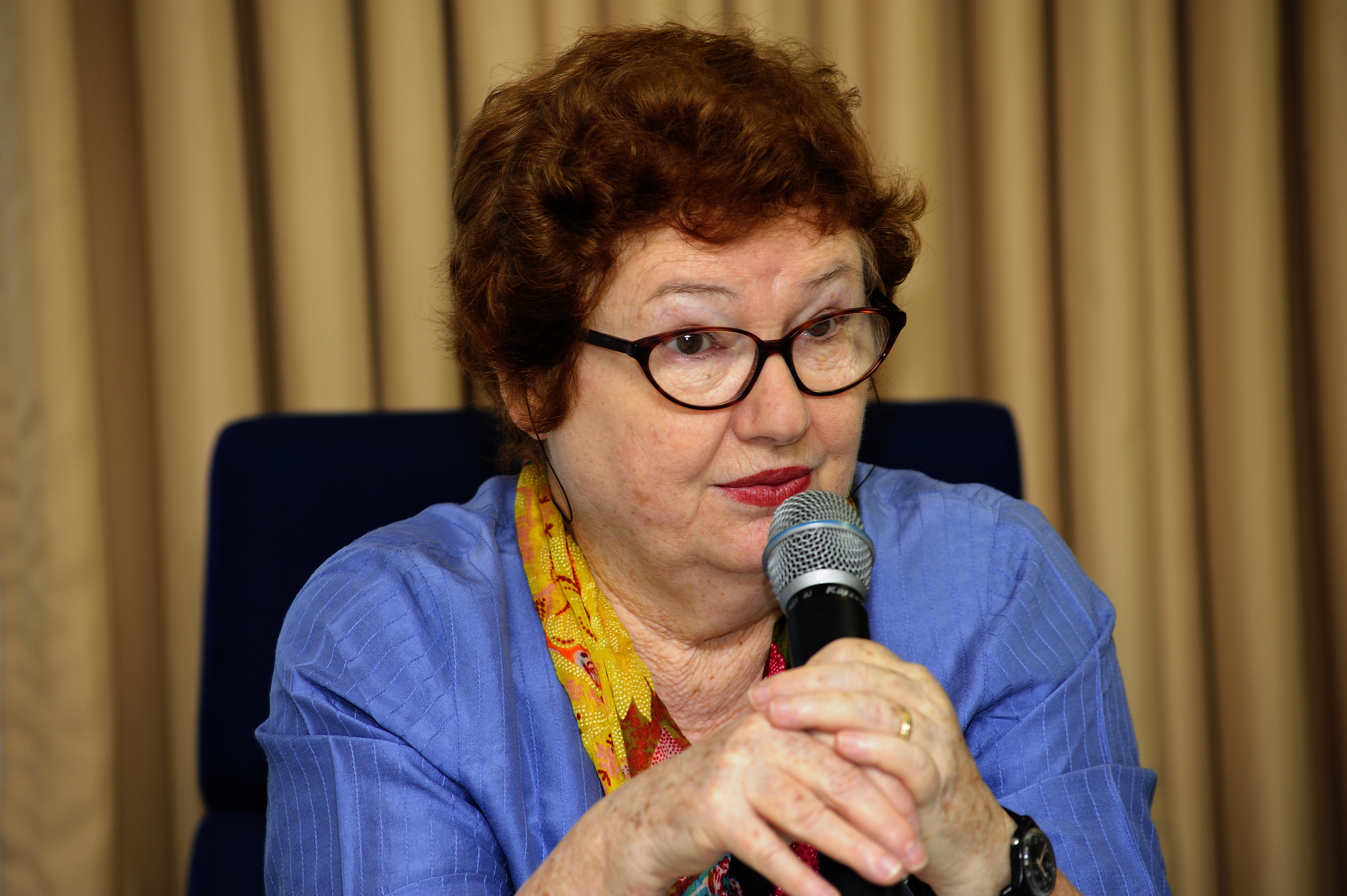
Manuela Carneiro propôs projeto de valorização do conhecimento tradicional

Quinta-feira, 21 de novembro de 2013, às 5h50

As possibilidades de cooperação entre os cientistas acadêmicos e os chamados “conhecedores tradicionais” – em especial os indígenas – foram abordadas em conferência na UFMG da professora Maria Manuela Carneiro da Cunha, da Universidade de São Paulo (USP), no início deste mês. O evento integrou a programação doColóquio Davi Kopenawa e a Hutukara: um encontro com a cosmopolítica Yanomami.

Para a professora, é um contrassenso tentar escolarizar o conhecimento tradicional. “Ele não é só conteúdo; são também formas de existência e de transmissão desse conteúdo. Assim, em vez de se pensar em escolarização, devemos propor programas de pesquisa de conhecimentos tradicionais estabelecendo pontes entre o conhecimento prático e o que se aprende na escola”, defendeu.

Na ocasião, Maria Manuela detalhou a proposta que submeteu ao Ministério da Ciência, Tecnologia e Inovação para a criação de programa focado na valorização do conhecimento tradicional e na criação de uma economia na Amazônia que seja compatível com o conceito de “floresta em pé”

“Fizemos a proposta ao Ministério, que parece ter gostado do projeto, e o incluiu no seu programa para o período de 2010-2014. A ideia é que o projeto resulte em editais anuais, e que fomente a distribuição equitativa de poder e de recursos”, explicou.

O Portal UFMG resumiu aspectos da conferência de Maria Manuela Carneiro da Cunha. Confira a seguir.

O contexto político
Formamos um conselho consultivo e propusemos ao MCTI um programa focado na importância da valorização dos conhecimentos tradicionais para o Brasil. O Ministério demonstrou interesse e pôs o programa na sua agenda para o período 2010-2014. Mas quiseram começar de uma forma mais prudente do que se poderia esperar. Encomendaram um estudo de três anos para avaliar a viabilidade e o formato de um programa permanente. É o que estamos fazendo atualmente. Mas sabemos que, quando mudam governo e secretário, mudam as políticas. E em 2014 teremos novas eleições. Portanto, não temos nenhuma segurança de que o programa vai se reverter em algo permanente. Mas estamos trabalhando para isso. Já foi um importante avanço tratar a questão no âmbito do Ministério da Ciência, Tecnologia e Inovação (MCTI), em vez do Ministério da Educação (MEC).

Floresta em pé
O programa se chama Bases para um programa de pesquisas interculturais e fortalecimento do conhecimento tradicional e tem dois pilares principais. Um trata de fomentar a criação de um tipo de economia na Amazônia que seja compatível com a ideia de “floresta em pé”. Essa parte foi mais facilmente aceita. O segundo diz respeito à valorização dos conhecimentos tradicionais. Ou seja, de se reconhecê-lo e buscar o auxílio das populações tradicionais, que têm o know-how nesse tipo de manejo da floresta, para fomentar seu uso sustentável. Essa é uma ação que enfrenta mais resistência. Temos implantado projetos pilotos. São tentativas de demonstrar que é possível criar uma agricultura da “floresta em pé”, de que essa mudança de paradigma é interessante para todas as partes – populações tradicionais, cientistas das universidades e para a sociedade como um todo.

Contribuição do saber tradicional
Tenho trabalhado junto a especialistas solicitando levantamentos sobre as contribuições econômicas que os conhecimentos tradicionais podem oferecer. Mas temos de ter em mente que o mais importante não é mensurável. Não se pode medir o conhecimento tradicional pelo seu valor econômico; existem questões mais importantes. Um grande problema hoje é que, se o aspecto econômico não é mensurado, a contribuição oferecida pelo conhecimento tradicional não é apreciada, não é levada em conta, apesar de ser imprescindível para o trabalho. Pesquisadores fazem “descobertas” e não reconhecem o conhecimento tradicional embutido em seus trabalhos. Dizem: “não devo nada aos conhecimentos tradicionais”, quando, na verdade, devem muito.

Repartição equitativa
Até hoje não temos uma medida precisa para fazer essa avaliação. Mas estamos chegando a algum tipo de consenso de como deve ser feita a regulamentação desse reconhecimento. O Congresso Nacional está recebendo um projeto de lei que vai substituir medida provisória sobre o assunto. A ideia é estipular o pagamento equitativo, a recompensa, a “repartição equitativa de benefícios”; esse é o termo, porque essa recompensa pode até mesmo ser não monetária. Uma frente de trabalho tem sido a de colaborar para o estabelecimento de qual deve ser, do ponto de vista econômico, o aporte a ser feito em remuneração ao conhecimento tradicional embutido nos processos científicos. No entanto, cabe repetir: não se pode exigir uma justificativa estritamente econômica para preservar a diversidade de línguas, práticas e cantos. Reduzir tudo isso à questão do capital seria um absurdo.

Conhecimento em construção
Quando os cientistas apreciam o conhecimento tradicional, eles pensam o seguinte: “vamos fazer um levantamento e então guardar o recurso para futuras pesquisas”. O problema é que essa postura desconsidera que o conhecimento tradicional é fruto de um processo vivo, que está sempre em transformação. Ele depende da população que o gerou, depende dela para continuar se transformando, se aprimorando. Se você armazena cientificamente uma informação, ela não terá a mesma validade quando for retomada. Venho insistindo com o MCTI que não se deve pensar o conhecimento tradicional como algo pronto e consolidado, mas sim como conhecimento em constante construção, tal qual o conhecimento científico. Por incrível que pareça, isso é muito difícil de entrar na cabeça de biólogos, de cientistas acadêmicos.

O valor dos mateiros
Quando os cientistas vão adentrar a floresta, eles sempre precisam da orientação dos mateiros, oriundos da população local: são eles que conhecem a mata, os territórios, e que estão sempre descobrindo coisas novas, novos caminhos. Ainda assim eles são sempre depreciados nos institutos de pesquisa. Sempre são colocados como assistentes, sendo muito pouco valorizados no contexto da construção do conhecimento – e muito mal pagos. E a verdade é que os mateiros são os primeiros pesquisadores. Eles aprenderam no local e estão transmitindo esses conhecimentos para os pesquisadores científicos.

Desvalorização histórica
A história tradicional faz tudo para solapar o conhecimento tradicional. Por exemplo: a nossa escola, ao ser levada para essas comunidades, considera que o que a criança aprende em casa é algo sem valor. Faz com que esse conhecimento seja visto como de uma instância inferior. A escola atrapalha de várias maneiras: sua forma de elaborar seu calendário, seus horários… Por isso, as pessoas mais velhas dessas sociedades acabam se sentindo desvalorizadas quando em contato com a nossa. Em muitas dessas comunidades, eles são os responsáveis por passar certos conhecimentos de pai para filho. E a nossa escola canônica não entende ou aceita isso muito bem. A reação são as “escolas diferenciadas”, criadas pelas próprias comunidades indígenas – e que naturalmente vêm sofrendo muita resistência. São escolas que pensam seu calendário para que ele seja compatível com as atividades tradicionais da comunidade, que pensam a importância da língua, do conhecimento local, das tradições, das festas, da participação social. Aí está um aspecto muito importante a ser solucionado. É preciso que a escola se adapte à realidade dessas comunidades, no sentido de uma política de fortalecimento do conhecimento tradicional. Saber como fazer uma canoa, por exemplo, importa muito mais do que certos “conhecimentos” que as escolas acham importante disseminar.

Os riscos da ‘revolução verde’
Uma retomada histórica explica o desafio que se vive hoje na agricultura. Com o fim da Segunda Guerra Mundial, houve uma “revolução verde”: uma ambiciosa tentativa de aumentar a produção agrícola no mundo inteiro e resolver o problema da fome. Foi algo muito importante. Entre as mais de sete mil espécies de plantas alimentícias existentes no mundo, as trinta mais produtivas foram selecionadas para formarem a base da alimentação da maioria. Mas as demais espécies dessa enorme variedade foram de certa forma esquecidas. Apesar de sua importância na época, foi uma medida política muito arriscada. Quando a base de alimentação mundial é tão pequena, crescem os riscos de escassez caso algo aconteça com alguma dessas espécies. É uma medida em que não se considera que as variedades são adaptadas a cada lugar, ao tipo de solo, à quantidade de sol e chuva, às pragas. Então resolveram o problema da não adaptação das espécies às pragas e às demais dificuldades dos novos ambientes com o uso maciço de fertilizantes e de defensivos agrícolas. E hoje o Brasil é um “campeão” no uso dos dois. Resolveu-se o problema. Mas a que custo? Tornamo-nos reféns dos fertilizantes e dos defensivos agrícolas. Ao custo do sacrifício das variedades locais. E o risco disso é enorme.

Cultivo on farm
Em algum momento, percebemos que o que se estava fazendo era uma política agrícola extremamente perigosa. Na Irlanda, por exemplo, aconteceu um desastre em função disso. Assim como na Bélgica, França, Alemanha, a base da alimentação no país era a batata, que havia sido domesticada pelos índios da América e levada para a Europa pelos espanhóis após a colonização. Os espanhóis levaram poucas espécies, as mais produtivas. Os irlandeses, em dado momento, estavam se alimentando só de duas espécies. Foi quando aconteceu uma praga que durou quatro anos e acabou com tudo. Um milhão de pessoas morreu de fome. Outro milhão migrou. É um exemplo de como é necessário guardar as variedades. Mas não basta fazer bancos de sementes como os da Embrapa, em que as sementes ficam em uma geladeira, mas não continuam se adaptando às mudanças do meio ambiente. O clima muda, o solo muda. Então, é preciso que as espécies continuem sendo cultivadas na roça, sendo cultivadas on farm, pois só se adaptam aquelas que continuam sendo cultivadas em campo. Isso é fundamental para a nossa segurança alimentar. E aí entra a questão dos conhecimentos tradicionais, dos índios, que tem o hábito de cultivar variedades.

Experiência no Rio Negro
Um desses projetos-pilotos de que falei está sendo desenvolvido às margens do Rio Negro, na Amazônia. Lá, a despeito das políticas governamentais que buscam consolidar a plantação apenas das poucas espécies mais produtivas, os índios estão plantando em seus roçados mais de cem variedades de mandioca, colaborando com a diversidade tão importante para a segurança de nosso sistema agrário. Hoje, 500 milhões de pessoas comem mandioca no mundo. É um alimento que tem enorme consumo na África, por exemplo. Se houvesse uma praga como a das batatas, teríamos hoje um problema enorme, a exemplo do que aconteceu na Irlanda. Esse caso da mandioca é um exemplo de como o conhecimento tradicional tem uma importância fundamental. Porque é o conhecimento tradicional dos índios que possibilita que lá, no Rio Negro, haja tanta variedade da espécie. Normalmente, a mandioca é plantada como “clone”; come-se a raiz e planta-se o caule. Mas a mandioca sabe dar flor, que tem semente. E, quando dá flor, é porque houve reprodução sexuada, de forma que essa semente não é um clone. A formiga gosta dessa semente, que é docinha. Então ela leva a semente para debaixo da terra. Essa é uma semente que só brota se houver fogo; só nasce na capoeira. Nesse sentido, ela tem brotado no Rio Negro em função do trabalho dos índios mais antigos, que gostam de cultivar as variedades e trabalham para que haja essa capoeira. As variedades também são fruto do trabalho das mulheres indígenas, que cultivam experimentalmente as sementes. Elas plantam em uma margem da roça algo que só vai dar a partir do segundo ou do terceiro ano. É um trabalho de colecionador. Essas mulheres de fato pesquisam para avaliar cada nova variedade e depois para cultivá-la. Há ainda a cultura de troca de sementes entre famílias e tribos, nas festas. Há um gosto pela coleção.

Virada política
Mesmo assim, ainda há hoje uma política do governo querendo disseminar o cultivo das espécies de mandioca entre as comunidades tradicionais, algo como “ensinar padre a rezar missa”. Insistem em focar nas espécies mais produtivas, ainda na lógica da revolução verde. E isso em um contexto em que o Brasil é signatário de um tratado que obriga o país a fomentar o cultivo de variedades na roça, de fomentar esse cultivo on farm, e não em bancos de sementes. O Brasil não está cumprindo esse tratado. Nesse sentido, nosso projeto-piloto visa transformar essas práticas tradicionais do Rio Negro em um sistema reconhecido como forma de conservação on farm valiosa e estratégica para o Brasil e para o mundo. É isso que a gente está construindo.

Leia também o perfil do líder yanomami David Kopenawa, publicado na edição 1845 do Boletim UFMG.

(Ewerton Martins Ribeiro)

Engineering Education May Diminish Concern for Public Welfare Issues (Science Daily)

Nov. 20, 2013 — Collegiate engineering education may foster a “culture of disengagement” regarding issues of public welfare, according to new research by a sociologist at Rice University.

imagesFor the first-of-its-kind study, the researcher used survey data from four U.S. colleges to examine how students’ public-welfare beliefs change during their college engineering education and whether the curricular emphases of their engineering programs are related to students’ beliefs about public welfare. The study found that engineering students leave college less concerned about public welfare than when they entered.

Study author Erin Cech, an assistant professor of sociology who has B.S. degrees in both electrical engineering and sociology, said that many people inside and outside engineering have emphasized the importance of training ethical, socially conscious engineers, but she wonders if engineering education in the U.S. actually encourages young engineers to take seriously their professional responsibility to public welfare.

“There’s an overarching assumption that professional engineering education results in individuals who have a deeper understanding of the public welfare concerns of their profession,” Cech said. “My study found that this is not necessarily the case for the engineering students in my sample.”

Cech said that as part of their education, engineering students learn the profession’s code of ethics, which includes taking seriously the safety, health and welfare of the public. However, she said, it appears that there is something about engineering education that results in students becoming more cynical and less concerned with public policy and social engagement issues.

“The way many people think about the engineering profession as separate from social, political and emotional realms is not an accurate assessment,” Cech said. “People have emotional and social reactions to engineered products all the time, and those products shape people’s lives in deep ways; so it stands to reason that it is important for engineers to be conscious of broader ethical and social issues related to technology.”

Cech said that this “culture of disengagement” is rooted in how engineering education frames engineering problem-solving.

“Issues that are nontechnical in nature are often perceived as irrelevant to the problem-solving process,” Cech said. “There seems to be very little time or space in engineering curricula for nontechnical conversations about how particular designs may reproduce inequality — for example, debating whether to make a computer faster, more technologically savvy and expensive versus making it less sophisticated and more accessible for customers.”

Cech said ignoring these issues does a disservice to students because practicing engineers are required to address social welfare concerns on a regular basis, even if it involves a conflict of interest or whistleblowing.

“If students are not prepared to think through these issues of public welfare, then we might say they are not fully prepared to enter the engineering practice,” Cech said.

Cech became interested in this research topic as an undergraduate electrical engineering student.

“Because I went through engineering education myself, I care deeply about this topic,” she said. “I want to advance the conversation about how engineering education can be the best it can possibly be.”

The study included more than 300 students who entered engineering programs as freshmen in 2003 at four U.S. universities in the Northeast. Rice students were not included in the study. Participants were surveyed in the spring of each year and at 18 months after graduation. In the surveys, students were asked to rate the importance of professional and ethical responsibilities and their individual views on the importance of improving society, being active in their community, promoting racial understanding and helping others in need. In addition, the students were asked how important the following factors are to their engineering programs: ethical and/or social issues, policy implications of engineering, and broad education in humanities and social sciences.

“Culture of Disengagement in Engineering Education?” will appear in an upcoming issue of the journal Science, Technology and Human Values. The research was funded by the National Science Foundation.

Primate Calls, Like Human Speech, Can Help Infants Form Categories (Science Daily)

Sep. 2, 2013 — Human infants’ responses to the vocalizations of non-human primates shed light on the developmental origin of a crucial link between human language and core cognitive capacities, a new study reports.

Mantled howler (Alouatta seniculus) howling. (Credit: © michaklootwijk / Fotolia)

Previous studies have shown that even in infants too young to speak, listening to human speech supports core cognitive processes, including the formation of object categories.

Alissa Ferry, lead author and currently a postdoctoral fellow in the Language, Cognition and Development Lab at the Scuola Internationale Superiore di Studi Avanzati in Trieste, Italy, together with Northwestern University colleagues, documented that this link is initially broad enough to include the vocalizations of non-human primates.

“We found that for 3- and 4-month-old infants, non-human primate vocalizations promoted object categorization, mirroring exactly the effects of human speech, but that by six months, non-human primate vocalizations no longer had this effect — the link to cognition had been tuned specifically to human language,” Ferry said.

In humans, language is the primary conduit for conveying our thoughts. The new findings document that for young infants, listening to the vocalizations of humans and non-human primates supports the fundamental cognitive process of categorization. From this broad beginning, the infant mind identifies which signals are part of their language and begins to systematically link these signals to meaning.

Furthermore, the researchers found that infants’ response to non-human primate vocalizations at three and four months was not just due to the sounds’ acoustic complexity, as infants who heard backward human speech segments failed to form object categories at any age.

Susan Hespos, co-author and associate professor of psychology at Northwestern said, “For me, the most stunning aspect of these findings is that an unfamiliar sound like a lemur call confers precisely the same effect as human language for 3- and 4-month-old infants. More broadly, this finding implies that the origins of the link between language and categorization cannot be derived from learning alone.”

“These results reveal that the link between language and object categories, evident as early as three months, derives from a broader template that initially encompasses vocalizations of human and non-human primates and is rapidly tuned specifically to human vocalizations,” said Sandra Waxman, co-author and Louis W. Menk Professor of Psychology at Northwestern.

Waxman said these new results open the door to new research questions.

“Is this link sufficiently broad to include vocalizations beyond those of our closest genealogical cousins,” asks Waxman, “or is it restricted to primates, whose vocalizations may be perceptually just close enough to our own to serve as early candidates for the platform on which human language is launched?”

Journal Reference:

  1. Alissa Ferry et al. Non-human primate vocalizations support categorizations in very young human infants.Proceedings of the National Academy of Sciences, September 3, 2013

Only a few countries are teaching children how to think (The Economist)

Best and brightest

Aug 17th 2013

The Smartest Kids in the World: And How They Got That Way. By Amanda Ripley. Simon and Schuster; 320 pages; $28.

BAMA Companies has been making pies and biscuits in Oklahoma since the 1920s. But the company is struggling to find Okies with the skills to fill even its most basic factory jobs. Such posts require workers to think critically, yet graduates of local schools are often unable to read or do simple maths. This is why the company recently decided to open a new factory in Poland—its first in Europe. “We hear that educated people are plentiful,” explains Paula Marshall, Bama’s boss.

Poland has made some dramatic gains in education in the past decade. Before 2000 half of the country’s rural adults had finished only primary school. Yet international rankings now put the country’s students well ahead of America’s in science and maths (the strongest predictor of future earnings), even as the country spends far less per pupil. What is Poland doing right? And what is America doing wrong? Amanda Ripley, an American journalist, seeks to answer such questions in “The Smartest Kids in the World”, her fine new book about the schools that are working around the globe.

Though America’s grim education results come in for special drubbing in this book, the country is not alone in failing to teach its children how to think critically. This, at least, is the view of Andreas Schleicher, the “educational scientist” behind what is known as the Program for International Student Assessment, or the PISA test. If most exams quantify students’ ability to memorise material, this one aims to assess their effectiveness at problem-solving. Since 2000 it has been administered to millions of teenagers in more than 40 countries, with surprising results. Pupils in Finland, Korea, Japan and Canada consistently score much higher than their peers in Germany, Britain, America and France. The usual explanations for these achievements, such as wealth, privilege and race, do not apply.

To understand what is happening in these classrooms, Ms Ripley follows three American teenagers who spend a year as foreign-exchange students in Finland, Poland and South Korea. Their wide-eyed observations make for compelling reading. In each country, the Americans are startled by how hard their new peers work and how seriously they take their studies. Maths classes tend to be more sophisticated, with lessons that show the often fascinating ways that geometry, trigonometry and calculus work together in the real world. Students forego calculators, having learned how to manipulate numbers in their heads. Classrooms tend to be understated, free of the high-tech gadgetry of their schools back home. And teachers in every subject exhibit the authority of professionals held in high regard.

Ms Ripley credits Poland’s swift turnaround to Miroslaw Handke, the former minister of education. When he entered the post in 1997, Poland’s economy was growing but Poles seemed destined for the low-skilled jobs that other Europeans did not want. So he launched an epic programme of school reforms, with a new core curriculum and standardised tests. Yet his most effective change was also his wooliest: he expected the best work from all of his pupils. He decided to keep all Polish children in the same schools until they were 16, delaying the moment when some would have entered vocational tracks. Poland’s swift rise in PISA rankings is largely the result of the high scores of these supposedly non-academic children.

This is a lesson Ms Ripley sees throughout her tour of “the smart-kid countries”. Children succeed in classrooms where they are expected to succeed. Schools work best when they operate with a clarity of mission: as places to help students master complex academic material (not as sites dedicated to excellence in sport, she hastens to add). When teachers demand rigorous work, students often rise to the occasion, whereas tracking students at different cognitive levels tends to “diminish learning and boost inequality”. Low expectations are often duly rewarded.

In Helsinki Ms Ripley visits a school in a bleak part of town, where classrooms are full of refugee immigrants.“I don’t want to think about their backgrounds too much,” says their teacher, wary of letting sympathy cloud his judgment of his students’ work. “It’s your brain that counts”. She marvels at how refreshing this view is when compared with that of teachers in America, where academic mediocrity is often blamed on backgrounds and neighbourhoods. And she laments the “perverse sort of compassion” that prevents American teachers from failing bad students, not least because this sets these youths up to fail in a worse way later on.

Not every story of academic success is a happy one. In South Korea Ms Ripley finds a “culture of educational masochism”, where pupils study at all hours in the hope of securing a precious spot in one of the country’s three prestigious universities. The country may have one of the highest school-graduation rates in the world, but children appear miserable. Even so, South Korea offers some good lessons for how quickly a country can change its fate. Largely illiterate in the 1950s, it is now an “extreme meritocracy”.

America’s classrooms do not fare well in this book. Against these examples of academic achievement, the country’s expensive mistakes look all the more foolish. For example, unlike the schools in Finland, which channel more resources to the neediest kids, America funds its schools through property taxes, ensuring the most disadvantaged students are warehoused together in the worst schools.

Ms Ripley packs a startling amount of insight in this slim book. She notes that Finland, Poland and South Korea all experienced moments of crisis—economic and existential—before they buckled down and changed their stories. America, she observes, may soon reach a similar moment. She cites the World Economic Forum’s most recent ranking of global competitiveness, which placed America seventh, marking its third consecutive year of decline. Meanwhile Finland, that small, remote Nordic country with few resources, has been steadily moving up this ladder, and now sits comfortably in third place.

CORRECTION: An earlier version of this review repeated Ms Ripley’s assertion that in 2000 “only half” of Poland’s rural adults had completed primary school. In fact half of rural adults had completed no more than primary school. Sorry.

Juventude “apolítica” reinventa a política (Envolverde/IPS)

02/7/2013 – 09h20

por Fabiana Frayssinet, da IPS

n11 300x225 Juventude “apolítica” reinventa a política

A estudante Stephany Gonçalves dos Santos escreve seu politizado cartaz. Foto: Fabiana Frayssinet/IPS

Rio de Janeiro, Brasil, 2/7/2013 – Com palavras de ordem contra os partidos políticos, as manifestações juvenis no Brasil trazem consigo o paradoxo de uma nova e efetiva forma de fazer política, que consegue respostas concretas dos poderes do Estado. A palavra de ordem nas ruas é “partidos políticos, não”, e a maioria dos manifestantes se declara, com orgulho “apolítica”. “Não tenho nenhum partido”, diz à IPS a estudante Stephany Gonçalves dos Santos.

Como centenas de milhares de estudantes que protestam, convocados por meio das redes sociais, como o Facebook, ela escreve um cartaz para um protesto no Rio de Janeiro, com lápis de cor em uma simples cartolina. E escolhe a frase “Um filho teu não foge à luta”, do hino nacional brasileiro. “Estou aqui por um ideal de país. quero que meu país seja democrático. Mas onde há repressão não há democracia”, argumentou Stephany, referindo-se à dura resposta policial que, longe de aplacar os protestos, estimulou muitos a aderirem a eles.

“O governo quer alienar o povo com o futebol”, acrescentou, ao abordar outro tema de descontentamento: os gastos milionários em instalações para competições esportivas como a Copa das Confederações, a Copa do Mundo em 2014 e as Olimpíadas em 2016. Stephany vive em um país onde diariamente se respira futebol e este é parte de uma cultura popular tão arraigada quanto o carnaval. Mas reclama, indignada, do dinheiro que se deixou de investir em educação e saúde para construir grandes instalações esportivas. “Construíram estádios de primeiro mundo, mas ao redor deles não temos nada. É uma falta de respeito com o povo”, afirmou.

A revolta nasceu de um tema específico: o aumento das passagens de ônibus, serviço já caro e ineficiente. Porém, se estendeu a outras áreas: saúde, educação e a suposta corrupção de muitos dirigentes políticos. “A maioria dos que participam do movimento constitui uma massa de jovens que se sentem muito desgostosos com a atual vida política”, apontou à IPS o especialista político William Gonçalves, da Universidade Estadual do Rio de Janeiro. “Eles repudiam a corrupção e a cumplicidade de forças que se apresentam como progressistas com as que são símbolo do atraso”, afirmou, referindo-se a alianças parlamentares forjadas pelos partidos para governarem.

Pelas dimensões e pela diversidade territorial do Brasil e da sua população, nenhum partido pode assegurar a Presidência e a maioria das cadeiras no Congresso. “Desta forma, temos um parlamentarismo disfarçado, já que todos os partidos que chegam à Presidência só podem governar aliando-se a outros que têm a única ambição de obter cargos em troca de apoio parlamentar”, explicou Gonçalves. “Até o Partido dos Trabalhadores é prisioneiro dessa aliança. A saída seria uma reforma política”, acrescentou.

Tal reforma, largamente reclamada, não saía das gavetas oficiais. E, curiosamente, foi o susto diante da “apolítica” ebulição das ruas que conseguiu em poucos dias que esse assunto entrasse na agenda oficial. Os manifestantes também conseguiram reduzir o preço do transporte público, a aprovação em tempo recorde de uma lei que declara a corrupção crime “hediondo” e a votação de outra lei para destinar royalties do petróleo para a saúde e educação.

Isto é ser apolítico? O dirigente do Movimento dos Trabalhadores Rurais Sem Terra, João Pedro Stédile, acredita que não. “A juventude não é apolítica, pelo contrário. Tanto não é, que levou a política às ruas, mesmo sem ter consciência de seu significado”, afirmou em uma entrevista ao jornal Brasil de Fato. “A juventude está cansada dessa forma de fazer política, burguesa e mercantilista. O mais grave é que os partidos da esquerda institucional, todos eles, se amoldaram a esses métodos. E, portanto, gerou-se na juventude uma repulsa à forma de atuar dos partidos”, ressaltou.

Para o historiador Marcelo Carreiro, da Universidade Federal do Rio de Janeiro, “este é um novo dado da história nacional, cujo contexto já era claramente observável no esvaziamento dessas instituições”. Carreiro disse à IPS que “as manifestações confirmam essa caducidade das instituições e mostram, apesar de tudo, que a população pode estar mais politicamente ativa que nunca”.

Os três poderes do Estado tomaram nota e já começam a propor e discutir formas alternativas de incluir a cidadania em mecanismos mais dinâmicos e participativos. A presidente Dilma Rousseff deu um passo nessa direção ao admitir que “estas vozes têm de ser ouvidas” porque “deixaram evidente que superam os mecanismos tradicionais das instituições, dos partidos, das entidades de classe e da própria imprensa”. Uma proposta em debate é estabelecer a consulta popular como instrumento permanente de democracia direta.

Algumas organizações não governamentais propõem, por outro lado, a participação efetiva de diferentes grupos sociais, comunidades e bairros, em decisões sobre onde e como aplicar orçamentos de saúde, educação, infraestrutura, transporte e saneamento. “Tudo o que está acontecendo com estas novas expressões da sociedade em rede – no Brasil e em outros países – aponta para uma reinvenção da política para reinventar a democracia”, opinou Augusto de Franco, diretor da organização Escola de Redes. Os jovens manifestantes atiraram a primeira pedra, e não somente contra a repressão policial.

Estudo mostra que cotas não são o melhor instrumento para facilitar o acesso ao ensino superior (Jornal da Ciência)

JC e-mail 4741, de 06 de Junho de 2013.

Trabalho demonstra ainda que ações afirmativas podem encorajar a evasão e levar à redução da qualidade dos cursos mais competitivos

As cotas sociais ou raciais nas universidades não são o melhor instrumento para facilitar o acesso ao ensino superior, não garantem que os alunos cotistas tenham o desempenho esperado, além de encorajar a evasão e levar à redução da qualidade dos cursos mais competitivos. As conclusões são do estudo “Ações Afirmativas nas Universidades Brasileiras”, feito sob encomenda pela Academia de Ciências do Estado de São Paulo (Aciesp) e preparado por quatro especialistas na área de educação, os professores José Goldemberg, Eunice Durham, Maria Helena de Castro Guimarães e Simon Schwartzman.

O estudo foi apresentado hoje por José Eduardo Krieger e Regina Pekelmann Markus, presidente e diretora da Aciesp, respectivamente, e José Goldemberg, professor aposentado da Universidade de São Paulo (USP) e ex-ministro da Educação, em coletiva de imprensa no Centro Universitário Maria Antônia. Segundo Krieger, o estudo foi pedido porque há diversos aspectos que permeiam a questão do acesso dos alunos nas universidades públicas.

Uma das preocupações que o trabalho levantou é a formação educacional do cidadão até a entrada na universidade, que depende de diversas influências, como o ambiente familiar e a sociedade, além do Ensino Básico e Fundamental. Segundo o estudo, a educação no país requer uma reestruturação competente, que exigirá tempo e investimentos vultosos para que ela seja qualidade. “Este trabalho é importante porque nos traz dados que serão importantes para ampliar as discussões e tomadas de decisão”, afirmou Regina.

Para os autores do estudo, as cotas nas universidades introduzem um novo tipo de discriminação, como exemplo dos quais são a discriminação contra o branco pobre (em relação ao negro pobre) e contra o pobre (branco ou negro), cuja família economizou para mandar o filho à escola privada, para prepará-lo melhor para os vestibulares. “O critério ideal para a implantação de ações afirmativas deveria basear-se na renda per capita”, sugerem.

Eles reconhecem que a discriminação social ou racial no Brasil é real, mas não apenas no acesso às universidades públicas, e deve ser eliminada. “O problema é decidir como fazê-lo, sem prejudicar o desempenho das universidades públicas, cuja excelência é indispensável para o desenvolvimento do país”, escrevem nas suas conclusões. “A melhor solução a nosso ver é por meio de cursos preparatórios gratuitos para ingresso nas universidades, que utilizariam preferencialmente os alunos de pós-graduação como professores, e criando um sistema de bolsas de estudo para apoiar estudantes carentes.”

Para Krieger, enquanto isso não ocorre é preciso encontrar outras soluções para o problema, mesmo que paliativas para sanar as lacunas, sem prejudicar o que já está bom. “Em 30, 40 anos, sucateamos um sistema (de educação) que funcionava”, disse. “A educação de São Paulo já foi boa. Toda a minha formação foi feita em escola pública. E em tão pouco tempo tudo mudou. Hoje, eu não colocaria seu filho para estudar numa delas. A única coisa que não mudou foi a qualidade da USP.”

A professora Regina, salientou que é preciso que o governo faça investimentos, porque a universidade deve ser para todos. “Mas em que condições?”, indagou. “Por isso, é preciso dar condições para que todos tenham o mesmo acesso”. O ponto fundamental é a qualidade das universidades. “As decisões a serem implementadas não devem prejudicar o desempenho das universidades públicas, cuja excelência é indispensável para o desenvolvimento do país”, finalizou Goldemberg.

(Vivian Costa)

Lord of All I Survey (Slate)

By 

Posted Thursday, May 2, 2013, at 10:30 AM

Science and religion

How much do you know about science and religion?. Illustration by Shutterstock/ollyy

Last week, a couple of online surveys came to my attention. Both were from the Pew Research Center (a non-profit, respected group); one was about public knowledge ofscience, the other about religion.

If you haven’t taken them, they are very short (13 and 15 questions each) and will literally only take a couple of minutes for you to fill out—they don’t ask for any specific personal info, and the questions are very simply stated. So please, go take them both before you continue reading here.

<sound of “Jeopardy!” theme>

OK, all done? How did you do?

Bragging time: I got all the answers right, on both quizzes. But, apropos of a test on religion, I have a confession: I guessed on the last religion question; I’m not all that clear on the First Great Awakening (though I knew it wasn’t Billy Graham, so my odds went up to 50/50 for my guess).

I found the questions and results interesting. I’ll note the religious test was given out in 2010 (32 questions were used in the phone survey; only 15 are listed online), but I didn’t find the questions particularly dated.

Not surprisingly, I was pretty confident in the science test, and knew my answers were right. I was shakier on some of the religious questions; I have a broad knowledge of many religions, but specifics not so much. Still, I did well.

Also not surprisingly, Americans didn’t fare so well in the science test (maybe we should make members of Congress pass both tests before being allowed to sit on the House Science Committee). But more interesting is which questions were answered incorrectly, and by what percentage; Pew reports the results.

For example, only 20 percent of the respondents were correct in answering that nitrogen is the most abundant element in our atmosphere (over three times more abundant than oxygen, which I’d guess is what most people think makes up the majority of our air). I think people should know that, in that I think people should have a broad working knowledge of basic science and its principles. On the other hand, it’s not criticallyimportant that people know that. It won’t directly impact their lives, for example.

On the other hand, only 58 percent knew that carbon dioxide causes rising temperatures. Global warming is a fantastically important issue, even if you think (incorrectly) it’s not real. Either way, it’s a big political topic, and one our economy (and our very lives) depends on. Yet 42 percent of Americans don’t know the single most basic fact about it.

That’s terrifying.

What I found most fascinating, though, are the percentiles of the overall surveys; that is, how many people got how many correct total. By getting all the science questions right, I did better than 93 percent of the people surveyed (only 7 percent got all 13 questions right). By getting all the religion questions right, I did better than 99 percent of the people surveyed (only 1 percent got them all right).

Mind you, only a few thousand people were surveyed, there was probably no overlap between the two groups, and it’s a small number of questions. Still, this implies something interesting: people know less about religion than science!

I’m not sure how strong an inference to take here. How do you compare the two questions? After all, most Americans are supposed to get a basic science education, but I expect it’s extremely unlikely that most will get a firm basic knowledge of religions other than their own (and sometimes not even then). I’d even bet there’s a bias against it, in fact.

So I wouldn’t read too much into this. It’s just interesting. I suspect the real impact of this survey is personal. What did you get right? What did you get wrong? How important is the distinction to you?

I think there’s always room for more learning, and if these surveys spur that on, even a little bit, then that’s a pretty good thing.

Uma brincadeira para aguçar o interesse das crianças pela biodiversidade (Faperj)

25/04/2013

Vinicius Zepeda

Atividade voltada a crianças de cinco a oito anos proporciona reflexão sobre temas como biopirataria e tráfico de animais. Peter Ilicciev

“Por que o bicho-preguiça dorme pendurado nas árvores? Por que as plantas da floresta têm tantas cores? Que animais fazem esses barulhos? Por que algumas matas são fechadas e outras abertas? E quais bichos vivem aqui?” Quem convive com crianças sabe o quanto elas nos enchem de perguntas que, muitas vezes, não sabemos responder. Também sabe que elas gostam muito de brincar o tempo todo. E como seria se elas pudessem aguçar sua natural curiosidade sobre a biodiversidade brasileira em um jogo onde fossem pequenos guardiões de uma floresta e sentissem como se estivessem passeando dentro dela? Esta é a proposta de “Floresta dos Sentidos”, ciclo de atividades que começa nesta sexta, 26 de abril, na sala de exposições do Museu da Vida, da Fundação Oswaldo Cruz (Fiocruz). Voltada para crianças de cinco a oito anos, a iniciativa é resultado da união de um projeto coordenado por Luisa Medeiros Massarani, diretora do Museu da Vida/Fiocruz e divulgadora de ciências, organizado com auxílio do programa de Apoio à Difusão e Popularização da Ciência no Estado do Rio de Janeiro, e outro coordenado pela médica e pesquisadora da Universidade Federal do Rio de Janeiro (UFRJ), Daniela Uziel, por meio do programa de Apoio a Projetos de Extensão e Pesquisa, ambos por meio de editais lançados pela FAPERJ.

Luisa Massarani explica que a proposta se assemelha a um jogo de caça ao tesouro. “As crianças são divididas em grupos de 20 por sessão e recebem um pequeno kit, com lanterna, lupa, bloco de anotações e uma corda para entrar na floresta e realizarem uma série de tarefas. Antes, porém, um computador apresenta uma animação em que, tendo o bicho-preguiça como mascote, se passam as instruções para realizar a atividade”, explica a diretora do Museu da Vida, que é também coordenadora da área da FAPERJ. Além disso, os mediadores do museu permanecem a postos para orientar e esclarecer quaisquer dúvidas que as crianças possam ter. “Ao mesmo tempo em que se divertem, elas são sensibilizadas sobre temas atuais, como o roubo de conhecimento gerado a partir da nossa biodiversidade – a chamada biopirataria –, tráfico de animais e disputa pelos nichos ecológicos entre espécies nativas e introduzidas nas florestas brasileiras”, complementa.

No jogo, as crianças são desafiadas a explorar e conhecer a fauna e a flora brasileira através do tato, audição e visão. Peter Ilicciev

Segundo as pesquisadoras, o nome Floresta dos Sentidos diz respeito à forma como a exploração do tema é apresentada às crianças. “Durante a atividade, os pequenos guardiões são desafiados a explorar e conhecer a fauna e a flora brasileira através do tato, da audição e da visão”, explicam. “Assim, além de ser fundamentalmente interativa e demandar o uso dos quatro sentidos, ela também possibilita a participação de crianças portadoras de necessidades especiais”, acrescentam.

Daniela Uziel descreve algumas das atividades propostas e destaca algumas curiosidades. “Em meio à brincadeira, os pequenos se encantam com uma caverna que reproduz os sons da fauna brasileira, como o coaxar de uma rã ou o zumbido de um mosquito, e podem desvendar com as próprias mãos os segredos escondidos no tronco do Toca-Toca”, descreve. Quando optam pelo tema “espécies invasoras”, as crianças descobrem, por exemplo, que aquele simpático mico que se vê por todo o Rio de Janeiro não é uma espécie nativa da região e causa prejuízos, comendo filhotes de aves e disputando espaço com outras espécies de primatas já ameaçadas de extinção. “Já no tema ‘espécies traficadas’, as crianças descobrem que animais que causam pavor a muitas pessoas, como as aranhas, produzem substâncias úteis na pesquisa de novos medicamentos”, complementa

Na “Floresta dos Sentidos, espécies naturais e invasoras, bem como a vegetação, reproduzem fielmente a realidade local. Peter Ilicciev

Luisa Massarani destaca ainda que a pequena floresta foi toda montada pensando nas crianças. “Inclusive, a montagem do espaço foi feita em tamanho proporcional ao das crianças, de forma que elas realmente se sintam no interior de uma floresta”, explica. Para isso, elas contaram com a consultoria de um grupo de cientistas, ajudando a planejar o espaço minuciosamente do ponto de vista científico. “É um microcosmos da realidade: as espécies nativas e introduzidas, bem como a vegetação são reproduzidas fielmente”, salienta.

Segundo experiências anteriores que vem desenvolvendo na área de divulgação da ciência, a diretora do Museu da Vida percebe que o público infantil tem interesse pela temática científica. “Assim, ações voltadas para crianças tem grande potencial para permitir que elas desenvolvam o gosto pelas ciências e possam, futuramente, se transformar nos cientistas de amanhã”, conclui.

Mas é só vivenciando que conseguimos realmente descobrir como funciona esta floresta. E brincando, as crianças com certeza vão se divertir e assimilar informações muito mais facilmente…

Serviço: Floresta dos Sentidos – Atividade gratuita
Inauguração: 26 de abril, ás 15h
Local: Sala de exposições do Museu da Vida
Visitação: de terça a sexta, das 9h às 16h30, mediante agendamento. No sábado, visitação livre, das 10h às 16h.
Endereço: Av. Brasil, 4365 – Manguinhos – Rio de Janeiro (dentro do campus da Fiocruz e próximo à passarela 6)
Mais informações e agendamento: (21) 2590-6747 (21) 2590-6747 e recepcaomv@coc.fiocruz.br

© FAPERJ – Todas as matérias poderão ser reproduzidas, desde que citada a fonte.

A Radical Anthropologist Finds Himself in Academic ‘Exile’ (The Chronicle of Higher Education)

April 15, 2013

A Radical Anthropologist Finds Himself in Academic 'Exile' 1

Pete Marovich for The Chronicle. David Graeber, an anthropologist who studies and participates in the radical left, finds fans of his work inside academe and out. Here he speaks with audience members during a talk at a public library in Washington, D.C.

By Christopher Shea

Who’s afraid of David Graeber? Not the dozens of D.C.-area residents who showed up on a recent night at the Martin Luther King Jr. Memorial Library to hear the anthropologist and radical activist talk about his new book, The Democracy Project: A History, a Crisis, a Movement(Spiegel & Grau). Aimed at the mainstream, the book discusses Mr. Graeber’s involvement in the Occupy Wall Street movement and the idea that principles drawn from anarchist theory—a wholesale rejection of current electoral politics, for starters, in favor of groups operating on the basis of consensus—offer an alternative to our present polity, which he calls “organized bribery” (or “mafia capitalism”).

On this warm spring evening the rumpled scholar was interviewed by a friendly and more conventionally telegenic writer, Thomas Frank. Graying lefties and young liberals and radicals in the crowd alike seemed impressed. Even the token skeptical economist in the audience framed her question respectfully, and C-Span broadcast live.

Mr. Graeber is a star in the left-academic world. Indeed, it’s possible that, given his activism and his writings, he is the most influential anthropologist in the world. He played a part in establishing the nonhierarchical “organization” of the Occupy movement, in its early days in Manhattan, and his 500-plus-page Debt: The First 5,000 Years (Melville House, 2011) struck scholars for its verve and sweep. It made the case that lending and borrowing evolved out of humane, communitarian impulses in premodern societies—out of a free-floating interest in the common weal—and only later became institutionalized actions spawning moral guilt and legal punishment.

The book ranged from discussions of ancient Sumerian economics to analyses of how Nambikwara tribesmen in Brazil settle their affairs to the international monetary system. “An argument of Debt’s scope hasn’t been made by a professional anthropologist for the best part of a century, certainly not one with as much contemporary relevance,” wrote the British anthropologist Keith Hart, of Goldsmiths College, University of London, in a review on his Web site last year. The book won a prize for best book in anthropology from the Society for Cultural Anthropology in 2012 and according to his agent has sold nearly 100,000 copies in English alone.

But strikingly, Mr. Graeber, 52, has been unable to get an academic job in the United States. In an incident that drew national attention, Yale University, in 2005, told him it would not renew his contract (which would have promoted him from assistant professor to “term associate” professor). After a fight, he won a reprieve—but only for two years. He never came up for tenure.

Foreign universities immediately sent out feelers, he says. From 2008 through this spring, Mr. Graeber was a lecturer and then a reader at Goldsmiths College and, just last month, he accepted a professorship at the London School of Economics and Political Science.

But no American universities approached him, he says, and nearly 20 job applications in this country (or Canada) have borne no fruit. The applications came in two waves: directly after the Yale brouhaha and a couple of years later, when he concluded he wanted to return to the States for reasons that were partly personal (a long-distance romantic relationship, the death of his mother and older brother).

His academic “exile,” as he calls it, has not gone unnoticed. “It is possible to view the fact that Graeber has not secured a permanent academic position in the United States after his controversial departure from Yale University as evidence of U.S. anthropology’s intolerance of political outspokenness,” writes Jeff Maskovsky, an associate professor of anthropology at the Graduate Center of the City University of New York, in the March issue of American Anthropologist.

That charge might seem paradoxical, given anthropology’s reputation as a leftist redoubt, but some of Mr. Graeber’s champions see that leftism as shallower than it might first appear. Anthropology “is radical in the abstract,” says Laura Nader, a professor in the field at the University of California at Berkeley. “You can quote Foucault and Gramsci, but if you tell it like it is,” it’s a different story, she says.

Mr. Graeber “talks about possibilities, and God, if there’s anything we need now it’s possibilities,” she says. “We are in tunnels. We are turned in. We are more ethnocentric than ever. We’ve turned the United States into a military zone. And into this move-to-the-right country comes David Graeber.”

When he applied to Berkeley in the early 2000s and the department failed to hire him, “we really missed the boat,” she says.

Jonathan Marks, a professor of anthropology at the University of North Carolina at Charlotte, who had no direct experience with any Graeber job search, agrees: “Whoever had a chance to hire him and didn’t missed out on having the author of one of the most important books in recent memory on their faculty,” he wrote in an e-mail.

 ‘Incredibly Conformist’

Mr. Graeber was at first reluctant to talk about his failed job searches, for fear of coming across as bitter and souring future chances, but he decided to open up after the LSE job became official. As he recalled, the places to which he applied twice were the City University of New York Graduate Center, the New School, Cornell University, and the University of Chicago. The others were Hunter College, Emory, Duke, Columbia, Stanford, and Johns Hopkins—as well as the University of Toronto. He heard indirectly of colleagues at other universities trying to secure him a position, to no avail.

Responding to anthropologists’ frequent claim that they embrace activist scholarship, he echoes Ms. Nader: “They don’t mean it”—at least when it comes truly radical activism.

“If I were to generalize,” Mr. Graeber says, “I would say that what we see is a university system which mitigates against creativity and any form of daring. It’s incredibly conformist and it represents itself as the opposite, and I think this kind of conformism is a result of the bureaucratization of the university.”

He and his allies also suspect that false information emanating from his public fight with Yale, garnered secondhand, has hurt him.

When Yale announced it was not renewing his contract, students and some professors rallied behind him, and he gave interviews suggesting that the decision was politically motivated. (The story made The New York Times.) He had spent part of a sabbatical working with the Global Justice Movement, which has mounted protests against such groups as the International Monetary Fund and the World Bank. Perhaps surprisingly, he did not take much part in the heated Yale debate over graduate-student unionization. He was, he likes to say, “a scholar in New Haven and an activist in New York.”

During the dispute over his Yale position, he said, he’d been accused of not doing service work (though he did all he was asked, he said), of being late for classes, and of being ill prepared to teach. Yancey Orr, a graduate student in religion at the time who took courses from Mr. Graeber and is now an assistant professor of anthropology at the University of Alberta, says that charge is absurd: “He was easily the most helpful seminar leader you could ask for.”

Being denied tenure at Yale is hardly unusual, but not getting rehired at Mr. Graeber’s stage is. Some professors Mr. Orr has talked to at institutions that failed to hire Mr. Graeber were under the impression that he went nuclear over a tenure denial, but the situation was more complex, more unorthodox, says Mr. Orr.

The chairs of the departments to which Mr. Graeber applied who could be reached all cited confidentiality in declining to talk about the decisions—or, typically, even to confirm he’d applied. But several denied that politics would affect such decisions. “I can say without hesitation,” wrote James Ferguson, the chair of anthropology at Stanford, in an e-mail, “that I personally would not regard Graeber’s political orientation as in any way disqualifying, nor would I expect such views to be held by my colleagues.”

“As is known throughout the world,” wrote Janet Roitman, chair of anthropology at the New School, “the New School prides itself for its longstanding tradition of radical politics; David would not have been the first hire or tenured faculty member to pursue ‘radical’ political positions or to engage in activism.”

Some anthropologists, including Alex Golub, a contributor to the popular blog Savage Minds and an assistant professor at the University of Hawaii-Manoa, suggested that a general dearth of jobs in the field would be enough to explain Mr. Graeber’s run of bad luck—especially because the book that brought him fame, Debt, had not been published at the time of the searches. (Though he’d published four others by 2009, as well as a much-read pamphlet, “Fragments of an Anarchist Anthropology,” with Prickly Paradigm.) But Mr. Graeber scoffs at that: “Gee, I applied for 17. Somebody got those jobs.” Moreover, Britain is not brimming with anthropology jobs, either, yet he’s had little problem there.

“I believe it’s possible that his politics have helped him in some cases and hurt him in others,” says Mr. Maskovksy, of CUNY, who in his American Anthropologist essay raised the issue of what Mr. Graeber’s academic exile to England meant for the profession . “He has a huge following among graduate students because of his protest work and because he links his protest work to the kind of anthropology he wants to do. But there’s a huge gap between generating that kind of interest and respect, on the one hand, and job-hiring decisions. I don’t know what makes people hire and what makes them not.”

On Collegiality

One charge that has dogged Mr. Graeber is that he is “difficult,” an attribute that’s obviously hard to gauge. Ms. Nader says she urged him to soften his rough edges—to send thank-you cards, even, when protocol suggested it. (Mr. Graeber does not recall that counseling session on manners and says he always sends thank-you notes.) But she finds it deplorable that scholars would value superficial clubbability over originality of thought; she decries the “‘harmony ideology’ that has hit the academy.” She also thinks the fact that he “writes in English,” eschewing jargon, hasn’t helped him.

There is some evidence of Mr. Graeber’s contentiousness. During an online seminar about Debt on the blog Crooked Timber, Henry Farrell, an associate professor of political science at George Washington University, said Mr. Graeber had—for example—provided insufficient evidence that in the first Gulf War the United States had attacked Iraq partly because Iraq had stopped using dollars as its reserve currency and turned to the euro. In Mr. Graeber’s response, he accused Mr. Farrell of “consummate dishonesty” and said he had failed to engage with the argument and instead sought to show its maker was a “lunatic.” Mr. Farrell responded that he was “very unhappy” with Mr. Graeber’s charges and tone.

From February to April 1, J. Bradford DeLong, an economist at the University of California at Berkeley, baited Mr. Graeber by setting up an automated Twitter stream that sarcastically recounted dozens of alleged (or actual) errors of fact in Debt. For example: “Learned that 12 Regional Fed Banks not private banks like Citi or Goldman Sachs? Stay away until you do! #Graebererrors.” Mr. Graeber responded aggressively. At one point he wrote, on Twitter, referring to Mr. DeLong’s work in the Clinton Treasury Department on the North American Free Trade Agreement: “I bet the poor guy had a rough time at 14. Tried to compensate by gaining power, then look—destroyed Mexico’s economy.”

Mr. Graeber calls some of Mr. DeLong’s postings “libelous”—a virtual campaign of harassment. “He has been on a crusade to hurt me in every way,” he says, growing angry.

“Yet these guys are considered mainstream and I’m the crazy guy who can’t get a job.” He adds, “I don’t even write negative book reviews.”

Mr. Graeber, who says he gets along just fine with his colleagues in London—and, indeed, with most of his former colleagues at Yale—has his own take on what scholars mean by “collegiality”: “What collegiality means in practice is: ‘He knows how to operate appropriately within an extremely hierarchical environment.’ You never see anyone accused of lack of collegiality for abusing their inferiors. It means ‘not playing the game in what we say is the proper way.'”

In his American Anthropologist essay, CUNY’s Mr. Maskovsky said that the many graduate students who took part in Occupy Wall Street might view Mr. Graeber’s difficulty finding a job as a cautionary tale. Would their advisers see their activism as, at the least, a distraction from their research?

Manissa Maharawal is one such student, at CUNY, a participant in Occupy now studying the activist projects that emerged from it. She says she has received nothing but support from her advisers and doesn’t understand the politics of academic hiring, but finds the Graeber situation perplexing—in a bad way. “His work is really good, he’s well reviewed, he’s become pretty famous in the last year,” she says. “I’m not sure what’s going on. You can have all the boxes you’re supposed to check checked and still not get a job. It’s scary, for sure.”

A ontogênese e o aprender (O Estado de São Paulo)

[A despeiro das boas intenções do autor, esse artigo é um retrocesso. Se acumulam evidências e contribuições da antropologia – ver Clifford Geertz, Tim Ingold, Bruno Latour, pra citar apenas alguns – em sentido oposto: desenvolvimento biológico e cultural estão relacionados diretamente; na genética, todo o campo da epigenética se desenvolve também na direção oposta. O discurso do artigo se funda mais em argumentos burocráticos, de organização do conhecimento e da atividade estatal de educação, do que numa discussão verdadeiramente ontológica. RT] 

JC e-mail 4703, de 11 de Abril de 2013.

Artigo de Fernando Reinach publicado no jornal O Estado de São Paulo

O uso da palavra aprender não acompanhou o progresso científico. O resultado é que ainda usamos a mesma palavra para descrever dois fenômenos distintos. Considere a seguinte frase: “Meu filho aprendeu a andar com 1 ano e aprendeu a escrever com 6”. Esses dois processos, descritos como “aprender”, são fenômenos muito diferentes. Não reconhecer essa diferença atrapalha nossa concepção de educação.

Todas as pessoas, de qualquer origem, nascidas em qualquer sociedade nos últimos milhares de séculos, começaram a andar na infância. Por outro lado, somente uma pequena fração das pessoas sabe escrever – e essa capacidade apareceu entre os humanos faz alguns milhares de anos. A razão é simples e conhecida dos biólogos há muito tempo. Andar faz parte de nossa ontogênese; escrever faz parte de nossa herança cultural.

Ontogênese é o nome dado ao processo de formação de um ser vivo. Descreve a transformação de uma semente em árvore ou o surgimento de uma pessoa a partir de um óvulo fecundado. Inicialmente, o conceito de ontogênese era usado para descrever as mudanças de forma durante o desenvolvimento de um ser vivo. Descrevia a formação da espinha vertebral, do coração, o aparecimento dos dedos, o crescimento do cabelo, e todas as mudanças que ocorrem antes do nascimento. Mas o processo de ontogênese continua após o nascimento. O corpo cresce, atingimos a maturidade sexual, paramos de crescer e finalmente começamos a envelhecer. São as etapas inevitáveis de nossa ontogênese.

A ontogênese se caracteriza por uma sequência de eventos que ocorrem de maneira precisa e semelhante em todos os seres vivos de uma espécie. Ela é determinada por nossos genes e modulada pelo meio ambiente. Todas as crianças crescem, mas, se bem alimentadas, crescem mais rápido.

Não é usual utilizarmos a palavra aprender para descrever processos que fazem parte da ontogênese. É por isso que afirmar que “minha filha aprendeu a menstruar aos 13 anos” soa estranho. Ao longo de todo o século XX houve uma melhor compreensão dos processos que fazem parte de nossa ontogênese e se descobriu que um número crescente de etapas pelas quais passamos durante a vida é parte de nossa ontogênese.

É o caso do andar e do falar, cujos aparecimentos estão codificados em nossos genes da mesma maneira que a capacidade de crescer pelos pubianos. É muito difícil, e é necessário um ambiente muito hostil, para evitar que uma criança desenvolva o andar e a capacidade de falar. No caso da fala, sabemos que a língua que a pessoa vai utilizar depende unicamente do ambiente ao qual ela está exposta, mas o surgimento, nos primeiros anos, da capacidade de falar alguma língua faz parte de nossa ontogênese.

Aos poucos, os cientistas descobriram que um número crescente de características que desenvolvemos em alguma fase de nossa vida faz parte de nossa ontogenia. Hoje sabemos que nascemos com a capacidade de fazer adições e subtrações de pequenos números (até três ou quatro). Sabemos que parte de nossa capacidade de julgamento moral, de convivência social, de comunicação por meio de expressões faciais e inúmeras outras características comportamentais também fazem parte de nosso processo ontogenético.

Nossa ontogênese surgiu à medida que nossa espécie e a de nossos ancestrais foi moldada pelo processo de seleção natural. Cada etapa e cada característica de nossa ontogênese foram incorporadas ao longo de milhões de anos e agora fazem parte das características de nossa espécie. O surgimento de um dedo durante nossa vida no útero e de nossa capacidade de somar números pequenos ao nascer é o resultado de um único e longo processo de seleção natural. É por isso que essas capacidades surgem aparentemente de forma espontânea durante as diferentes fases de nossa vida. Como são programadas para ocorrer, seu aparecimento é difícil de ser evitado e, caso seu aparecimento seja inibidos violentamente, as consequências podem ser nefastas para o indivíduo.

A distinção entre esses dois fenômenos seria mais fácil se a palavra aprender fosse restrita à aquisição de novas características e habilidades que não fazem parte de nosso processo ontogenético. Fazer operações matemáticas com números grandes, escrever, andar de bicicleta, calcular a órbita de um satélite e programar um computador são capacidades que podemos adquirir porque nosso corpo e cérebro têm a flexibilidade para incorporar novos comportamentos e conhecimentos, mas não foram moldadas pela seleção natural nem incorporadas à nossa ontogênese.

Essas habilidades foram descobertas muito recentemente pelo homem e derivam da evolução cultural. Esses aprendizados podem ser incluídos no repertório de cada um de nós de maneira opcional, num processo que chamamos de educação. E, como todos sabemos, sua incorporação depende de um grande esforço e dedicação de quem ensina e de quem aprende, leva um longo tempo e consome muita energia dos indivíduos e da sociedade.

Reconhecer as mudanças que fazem parte de nossa ontogênese e separar e cultivar de maneira distinta as mudanças ontogenéticas das induzidas pelo processo educacional podem gerar seres humanos mais felizes. Mas para isso não podemos confundir os dois fenômenos que hoje chamamos de “aprender”.

Fernando Reinach é biólogo.

Na avaliação de especialistas, pré-sal deve trazer benefícios econômicos e científicos para o Brasil (Jornal da Ciência)

JC e-mail 4665, de 15 de Fevereiro de 2013.

Viviane Monteiro

O país não pode perder a oportunidade de utilizar os royalties do petróleo para investir em educação e em pesquisas científicas

Apesar dos riscos ambientais, a exploração do petróleo da camada pré-sal deve assegurar ao país, em longo prazo, novos patamares de desenvolvimento, tanto econômico quanto cientifico e tecnológico. Essa é a opinião que prevalece entre especialistas e pesquisadores da área de petróleo do Instituto Alberto Luiz Coimbra de Pós-Graduação e Pesquisa de Engenharia da Universidade Federal do Rio de Janeiro (Coppe-UFRJ), da Universidade Federal do Espírito Santo (UFES) e da Escola Politécnica da Universidade de São Paulo (Poli-USP).

Para eles, o Brasil não pode perder a oportunidade de explorar o pré-sal e nem de utilizar os royalties do petróleo extraído dessa camada profunda para investir em educação e em pesquisas científicas e tecnológicas. Um dos objetivos desses investimentos deve ser produzir energias limpas e renováveis, que devem substituir o combustível fóssil no período “pós-petróleo”, o que deve ocorrer nas próximas cinco décadas, aproximadamente.

Diante da exploração do pré-sal, o diretor de tecnologia e inovação da Coppe/UFRJ, Segen Estefen, diz que o Brasil deve se tornar um dos líderes mundiais na produção de tecnologias de ponta tanto para a exploração de petróleo quanto para o desenvolvimento de energias limpas e renováveis. A exploração do pré-sal, segundo ele acredita, representa uma janela de oportunidades para o Brasil figurar entre os maiores produtores de petróleo do mundo, tornando-se um dos “pelotões” de frente da Organização dos Países Exportadores de Petróleo (OPEP).

Nos últimos dois anos, o país passou da 18ª para a 13ª posição no ranking dos produtores de petróleo, conforme o relatório “Statistical Review of World Energy 2011”, da empresa britânica British Petroleum (BP). Com as descobertas das jazidas do pré-sal, as estimativas para as reservas nacionais de petróleo cresceram de 8 bilhões de barris, por volta de 2006, para algo entre 60 bilhões e 70 bilhões, atualmente. Ao colocar esses números na ponta do lápis, Segen calcula que tais cifras representariam uma receita de US$ 4 trilhões para o país, levando-se em conta o preço atual (US$ 100) do barril de petróleo. Ou seja, é um montante similar ao valor corrente do Produto Interno Bruto (PIB) nacional de R$ 4,143 trilhões, em 2011.

Em termos de reservas de petróleo, o pesquisador e professor Eustáquio Vinícius de Castro, do Laboratório de Petróleo da UFES, concorda que o pré-sal colocará o Brasil entre os cinco maiores produtores do petróleo do mundo, como Arábia Saudita, Estados Unidos e Venezuela. “A tecnologia a ser desenvolvida para atender à exploração do pré-sal deve ser estendida, também, para outras áreas, sobretudo as indústrias metal-mecânica e a de química ambiental”, diz.

Como exemplo, Castro cita equipamentos de perfuração de áreas ultraprofundas capazes de suportar fortes pressões, que podem ser utilizados pela construção civil; e agentes químicos (aditivos) que devem estar presente nos aparelhos para remoção de impurezas e purificação do óleo do pré-sal. “Esses aditivos, inclusive, podem ser utilizados na purificação de água residual, gerada por empresas fabricantes de tinta, na despoluição de rios ou de esgotos urbanos”, acrescenta.

Modelo norueguês – Também defensor da exploração do pré-sal, o professor Ricardo Cabral de Azevedo, do Departamento de Engenharia de Minas e de Petróleo da Poli/USP, aconselha o Brasil a adotar o modelo da Noruega na extração do petróleo da camada pré-sal e evitar a chamada “doença holandesa”. “Outros países que tiveram grandes reservas a explorar e produzir são exemplos do que devemos ou não fazer no Brasil”, explica. “A Holanda, por exemplo, sofreu o que ficou sendo conhecido como ‘doença holandesa’, porque sua economia se tornou excessivamente dependente do petróleo. Já a Noruega se transformou radicalmente e hoje é um dos países com maior IDH [Índice de Desenvolvimento Humano] do mundo”, lembra.

Até então, a Noruega era um dos países mais pobres da Europa, cujas finanças dependiam principalmente de exportações de commodities, como minérios e peixes enlatados. A virada da economia norueguesa ocorreu a partir de 1969, quando foram descobertas grandes reservas de petróleo no Mar do Norte e a receita foi dirigida principalmente para saúde e educação. Hoje, esse país europeu detém a terceira maior renda per capita do mundo (US$ 59,3 mil) e o IDH mais alto do planeta.

Royalties para educação e CT&I – Assim, para fazer frente aos desafios que se apresentam na extração do petróleo na camada pré-sal no Brasil, os especialistas reforçam a necessidade de destinar parte significativa da receita dessa atividade para educação, ciência, tecnologia e inovação, seguindo o modelo norueguês. Aliás, essa é uma bandeira levantada pela comunidade científica, representada pela Sociedade Brasileira para o Progresso da Ciência (SBPC).

Os especialistas são unânimes em afirmar que o país precisa aproveitar as riquezas do pré-sal a fim de conquistar novos patamares de desenvolvimento, dar um salto na qualidade na educação e melhorar o capital humano – lembrando que um dia as reservas do petróleo acabarão. “Lembramos que são reservas muito grandes, mas finitas”, alerta Azevedo. “Cabe a nós transformá-las em um legado permanente, investindo na educação e no desenvolvimento do nosso país”, defende.

Já o diretor de tecnologia e inovação da Coppe/UFRJ, Estefen, acrescenta que o país precisa preparar o terreno, na área de pesquisas científicas e tecnológicas, para o período pós-petróleo. Nesse caso, ele considera fundamental assegurar investimentos para ampliar consideravelmente as pesquisas e estudos científicos para o desenvolvimento de tecnologias para produção de energias limpas e renováveis, lembrando que há um esforço de vários países em prol da redução de emissões em médio prazo. Vale destacar que o petróleo é um combustível fóssil que contribui significativamente para o aumento do efeito estufa.

Para o pesquisador da UFES, Castro, que considera positiva a proposta de criação do fundo do pré-sal (fundo soberano) – para o qual deve ser destinada metade da receita do óleo a ser extraído de águas ultraprofundas para educação – a exploração do pré-sal precisa ser inteligente, com responsabilidade ambiental e investimento em educação. “O petróleo traz muita riqueza, mas pode trazer, também, muita pobreza e muito dano ambiental”, lembra. “Por isso, a exploração tem de ser de forma inteligente, com responsabilidade ambiental e investimento em educação.” Hoje as riquezas do petróleo são distribuídas a estados, municípios e União por intermédio de royalties. Pela lei em vigor, os recursos devem ser investidos na parte social do país, “mas as prefeituras fazem mau uso dos recursos”, avalia.

Explorar o pré-sal requer esforços científicos e tecnológicos, considerando que os reservatórios estão a quase sete mil metros de profundidade a partir do nível do mar, com destaque para as Bacias de Santos (SP) e de Campos (RJ). Para fazer frente a esses desafios, Estefen diz que o país precisa mobilizar a comunidade científica nacional, seu conhecimento disponível, criar novos laboratórios, formar capital humano e gerar empregos de qualidade. “Extrair o petróleo do pré-sal vai demandar grande esforço tecnológico, esforços que vão ajudar o Brasil a conquistar novos patamares de desenvolvimento, futuramente”, diz. “Isto é, se usarmos bem os recursos do pré-sal, vamos educar as crianças, desenvolver a indústria, a ciência e a tecnologia. Se seguir tal receituário, o Brasil deverá se destacar no cenário internacional como um dos líderes tecnológicos, dentre os quais figuram Estados Unidos, Japão e países europeus”, conclui.

Pesquisadores analisam os custos ambientais da exploração profunda
Ao colocar na balança os benefícios que as riquezas do pré-sal podem proporcionar ao país e os eventuais custos ambientais, pesquisadores avaliam que o Brasil não pode renunciar à exploração do petróleo em águas profundas, unilateralmente, mesmo reconhecendo que a queima do petróleo contribui para o aquecimento global. Isso não significa que o processo de exploração do pré-sal desconsidere os danos ambientais.

O diretor de tecnologia e inovação da Coppe/UFRJ, Segen Estefen, insiste em dizer que todas as pesquisas em andamento vislumbram a proteção do meio ambiente, em uma tentativa de dar mais segurança às operações. “Não faz sentido o Brasil se beneficiar do petróleo por três ou quatro décadas, mas deixar o país em uma situação ruim para o meio ambiente”, explica.

Hoje os pesquisadores da Coppe, por exemplo, trabalham, simultaneamente, com assuntos ligados tanto à produção de petróleo, nos dias atuais, quanto a outras tecnologias que podem ser usadas na era “pós-petróleo”. Estudam, entre outros aspectos, a produção de eletricidade pelas ondas do mar – uma energia limpa e renovável – aproveitando a mesma estrutura montada e financiada pela indústria do petróleo para desenvolver conhecimento para o período pós-petróleo.

Para o especialista da Coppe/UFRJ, o Brasil não pode renunciar ao óleo do pré-sal porque essa “é uma riqueza importante para o Brasil” por ser uma fonte de energia competitiva. Dessa forma, ele acrescenta, a extração do pré-sal deverá render frutos positivos ao país. “No Brasil, ainda com tanta desigualdade, não podemos abdicar dessas riquezas”, diz. “Se não forem exploradas, talvez, daqui a 50 anos o preço do petróleo não valha metade dos valores atuais.” Por enquanto, Estefen acrescenta, não existe nenhum combustível capaz de substituir o petróleo e nem previsões para os próximos 20 anos, aproximadamente. Além disso, a demanda por essa energia tende a aumentar muito em função do aumento da população e da demanda de países, principalmente nos países asiáticos.

Demonstrando a mesma opinião, o professor Ricardo Cabral de Azevedo, do Departamento de Engenharia de Minas e de Petróleo da Escola Politécnica da Universidade de São Paulo (Poli/USP), considera ideal o país investir no conhecimento para substituir o uso do combustível fóssil, paulatinamente, em uma tentativa de minimizar os impactos ambientais. “O fato é que sempre haverá riscos, nessa ou em qualquer outra atividade, mas o ser humano ainda precisa do petróleo”, lembra. “Desse modo, o fundamental é procurarmos reduzi-los ao máximo. Aí também as experiências do passado são fundamentais, para aprendermos com os erros já cometidos.”

O eventual retorno socioeconômico proporcionado pela exploração de petróleo na camada pré-sal compensam os riscos ambientais, na observação do pesquisador e professor Eustáquio Vinícius de Castro, do Laboratório de Petróleo da Universidade Federal do Espírito Santo (UFES). “Compensam desde que as coisas aconteçam de forma inteligente e sustentável e com racionalidade no processo de produção”, diz. ” Hoje, as empresas petrolíferas, que no passado foram mais poluentes, adotam mais segurança no processo de extração do petróleo, mesmo que alguns problemas aconteçam de vez em quando”.

Dimensão – O petróleo na camada pré-sal ocupa, aproximadamente, uma área de 800 km de comprimento por 200 km de largura, acompanhando a linha do litoral sudeste brasileiro. Segundo dados da Petrobras, desde 2006, foram perfurados mais de 80 poços, tanto na Bacia de Santos quanto na de Campos, com índice “de sucesso exploratório” acima de 80%. A estimativa é de que outras 19 novas plataformas entrem em operação até 2016; e outras 19 entrem em atividade até 2020. Segundo dados de suas assessoria de imprensa, a companhia petrolífera, líder na exploração do pré-sal, encomendou ainda 21 plataformas de produção e 28 sondas de exploração marítima a serem construídas até 2020 no País, além de 49 navios-tanque e centenas de barcos de apoio e serviços offshore.

Faltam cinco dias para um alerta global pela consciência ambiental (WWF/Envolverde)

18/3/2013 – 10h50

por Redação do WWF Brasil

n12 300x183 Faltam cinco dias para um alerta global pela consciência ambientalNo próximo sábado, 23 de março, às 20h30 (hora local), milhares, talvez bilhões de pessoas apagarão as luzes de suas casas, comércios, repartições, monumentos e outros logradouros importantes num ato simbólico de alerta contra as mudanças no clima.

É a nona edição da Hora do Planeta, um movimento que começou tímido na Austrália e hoje envolve milhares de cidades em mais de 152 países. Aqui o País a Hora do Planeta é promovida pelo WWF-Brasil e o objetivo é superar os números do ano passado, atraindo para a Hora do Planeta todas as capitais estaduais e o Distrito Federal, e ultrapassando a marca de 131 cidades participantes em 2012.

Sua cidade pode seguir o exemplo das muitas que já o fizeram e se inscrever enviando um email para cidades@wwf.org.br e assinando o Termo de Adesão. Escolas e instituições também não podem ficar de fora.

Sua participação pessoal é fundamental para o sucesso da Hora do Planeta. Não podemos mais consumir o equivalente a um planeta e meio de recursos para nossa subsistência na Terra. Adote práticas sustentáveis desde já e depois do 23 de março. Recicle. Reduza. Reutilize. É possível adotar mudanças simples no seu estilo de vida, que terão um grande impacto global. Evite desperdício de água e energia. Recorra a fontes alternativas, como solar e eólica, se possível. Use menos o carro e prefira o transporte público, a bicicleta e andar a pé. Coma menos carne vermelha. Consuma produtos locais, sempre que possível orgânicos. Informe-se mais sobre o tema. Nosso futuro comum está em perigo e as mudanças climáticas em curso ameaçam toda a vida na Terra. Sua consciência é a maior arma para combatê-las.

Acompanhe a Hora do Planeta no Brasil através dos nossos canais no Facebook, Twitter e YouTube. Divulgue a nossa mensagem. E veja aqui os desafios do “Eu vou se você for” — pessoas propondo alternativas para que todos adotem um estilo de vida mais correto ecologicamente (e de quebra mais saudável!).

Junte-se a nós. A Hora do Planeta já começou e não pode terminar quando as luzes se acenderem no sábado.

* Publicado originalmente no site WWF Brasil.

Nobel de Química fala sobre a ‘magia da ciência’ em São Carlos (Fapesp)

Na palestra de abertura do simpósio em homenagem ao professor do MIT Daniel Kleppner, Dudley Herschbach, ganhador do prêmio de Química em 1986, apresentou parábolas para ilustrar o que a química é capaz de fazer (foto:Silvio Pires/FAPESP)

28/02/2013

Por Karina Toledo

Agência FAPESP – Com uma palestra intitulada “Glimpses of Chemical Wizardry” (Vislumbres da Magia da Química), o norte-americano Dudley Herschbach – ganhador do prêmio Nobel de Química de 1986 – deu início às atividades de um simpósioque reúne esta semana grandes nomes da ciência mundial em São Carlos, no interior de São Paulo.

A um auditório repleto de estudantes, principalmente dos cursos de Física, Química e Ciências Biológicas da Universidade Federal de São Carlos (UFSCar), Herschbach apresentou três “parábolas moleculares” com o intuito de mostrar algumas das coisas espetaculares que a ciência é capaz de fazer.

Em uma das histórias, intitulada “A vida em turnê no interior das células”, Herschbach falou sobre técnicas avançadas de microscopia com super-resolução desenvolvidas por Xiaowei Zhuang, pesquisadora da Universidade Harvard, que permitem, por exemplo, estudar a interação entre células e a expressão de genes em tempo real.

“A ciência faz coisas que realmente pareciam impossíveis antes de acontecerem. De vez em quando, alguém, em alguma parte do mundo, faz algo mágico e muda as coisas. É maravilhoso saber que você faz parte disso. É parte da recompensa da ciência que você não tem na maioria das profissões”, disse Herschbach à Agência FAPESP.

Graduado em Matemática pela Universidade Stanford, Herschbach fez mestrado em Física e em Química, além de doutorado em Físico-Química pela Universidade Harvard, onde hoje é professor.

“Fui o primeiro da minha família a ir para a universidade. Ofereceram-me uma bolsa para jogar futebol [norte-americano], mas acabei trocando por uma bolsa acadêmica, pois o técnico havia me proibido de frequentar as aulas de laboratório para não me atrasar para os treinos. A verdade é que eu achava a ciência muito mais fascinante”, contou.

Nos anos 1960, o cientista conduziu experimentos pioneiros com a técnica de feixes moleculares cruzados para estudar reações químicas e a dinâmica dos átomos das moléculas em tempo real. Por suas pesquisas nesse campo, recebeu em 1986 – junto com o taiwanês Yuan Lee e o canadense John Polanyi – o Nobel de Química.

Os resultados foram de grande importância para o desenvolvimento de um novo campo de pesquisa — o da dinâmica de reação — e proporcionaram um entendimento detalhado de como as reações químicas acontecem.

“Quando olho no espelho, ao me barbear, percebo que ganhar o Nobel não mudou nada em mim. A única diferença é que as pessoas ficaram mais interessadas no que tenho a dizer. Convidam-me para palestras e entrevistas. E isso acabou me transformando numa espécie de embaixador da ciência”, disse Herschbach.

Poesia em sala de aula

Durante toda a apresentação, Herschbach combateu o mito de que ciência é algo muito difícil, reservado para os muito inteligentes. “Costumo ouvir pessoas dizendo que é preciso ser muito bom em matemática para ser um bom pesquisador, mas a maioria dos cientistas usa a mesma matemática que um caixa de supermercado. Você não precisa ser bom em tudo, apenas em uma coisa, achar um nicho”, afirmou.

Ao comparar a ciência com outras atividades humanas, Herschbach disse que, em nenhuma outra profissão, você pode falhar inúmeras vezes e ainda ser aplaudido quando consegue fazer alguma coisa certa. “Um músico pode tocar quase todas as notas certas em um concerto e ser criticado por ter errado apenas algumas”, comparou.

Herschbach contou que costumava pedir a seus alunos que escrevessem poemas para lhes mostrar que é mais importante se preocupar em fazer as perguntas certas do que encontrar a resposta certa.

“Isso, mais do que resolver equações, é como fazer ciência de verdade. Ninguém diz se um poema está certo ou errado e sim o quanto ele é capaz de abrir seus olhos para algo que parecia ordinário, fazer você enxergar aquilo de outra forma. É assim com a ciência. Se você faz pesquisa de fronteira, coisas novas, é muito artístico. Quero que os estudantes percebam que eles também podem ser feiticeiros”, concluiu.

O Simpósio em Homenagem ao Prof. Daniel Kleppner “Física atômica e áreas correlatas”, que termina no dia 1º de março, é promovido pelo Centro de Pesquisa em Óptica e Fotônica (Cepof) de São Carlos, um dos Centros de Pesquisa, Inovação e Difusão (CEPID) financiados pela FAPESP.

O objetivo do encontro é prestar uma homenagem ao físico norte-americano Daniel Kleppner, do Instituto de Tecnologia de Massachusetts (MIT), que receberá o título de professor honorário do Instituto de Física de São Carlos, da Universidade de São Paulo (IFSC-USP).

Além de Herschbach, amigo de Kleppner desde os tempos da graduação, outros quatro ganhadores do Nobel também participam do evento: Serge Haroche (Nobel de Física 2012), David Wineland (Nobel de Física 2012), Eric Cornell (Nobel de Física 2001) e William Phillips (Nobel de Física 1997).

Revolução nas universidades (OESP)

JC e-mail 4656, de 30 de Janeiro de 2013.

Artigo de Thomas Friedman* no The New York Times, publicado no O Estado de São Paulo

Avanço do ensino superior online nas melhores escolas tornará o conceito de diploma algo arcaico; e isso é bom
Deus sabe que há muitas más notícias no mundo atual que nos derrubam, mas está ocorrendo alguma coisa formidável que me deixa esperançoso com relação ao futuro. Trata-se da revolução, incipiente, no ensino superior online.

Nada tem mais potencial para tirar as pessoas da pobreza – oferecendo a elas um ensino acessível que vai ajudá-las a conseguir trabalho ou ter melhores condições no seu emprego.
Nada tem mais potencial para libertar um bilhão de cérebros para solucionar os grandes problemas do mundo.

E nada tem mais potencial para recriar o ensino superior do que as MOOC (Massive Open Online Course), plataformas desenvolvidas por especialistas de Stanford, por colegas do MIT (Massachusetts Institute of Technology) e por empresas como Goursera e Udacity.

Em maio, escrevi um artigo sobre a Goursera – fundada por dois cientistas da computação de Stanford, Daphne Koller e Andrew Ng. Há duas semanas, retornei a Paio Alto para saber do seu progresso. Quando visitei a Goursera, em 2012, cerca de 300 mil pessoas participavam de 38 cursos proferidos por professores de Stanford e de outras universidades de elite.

Hoje, são 2,4 milhões de alunos e 214 cursos de 33 universidades, incluindo 8 internacionais. AnantAgarwal, ex-diretor do laboratório de inteligência artificial do MIT, hoje é presidente da edX, uma plataforma sem fins lucrativos criada em conjunto pelo MIT e pela Univer-sidade Harvard. Anant disse que, desde maio, cerca de 155 mil alunos do mundo todo participam do primeiro curso da edX: um curso introdutório sobre circuitos do MIT.

“E um número superior ao total dos alunos do MIT em sua história de 150 anos”, afirmou.
Claro que somente uma pequena porcentagem desses alunos completa o curso, mas estou convencido de que, dentro de cinco anos, essas plataformas alcançarão um público mais amplo. Imagine como isso poderá mudar a ajuda externa dos EUA.

Gastando relativamente pouco, o país poderia arrendar um espaço num vilarejo egípcio, instalar duas dezenas de computadores e dispositivos de acesso à internet de alta velocidade via satélite, contratar um professor local como coordenador e convidar todos os egípcios que desejarem ter aulas online com os melhores professores do mundo e legendas em árabe.

É preciso ouvir as histórias narradas pelos pioneiros dessa iniciativa para compreender seu potencial revolucionário. Uma das favoritas de Daphne Koller é sobre Daniel, um jovem de 17 anos com autismo que se comunica por meio do computador. Ele fez um curso online de poesia moderna oferecido pela Universidade da Pensilvânia.

Segundo Daniel e seus pais, a combinação de um currículo acadêmico rigoroso, que exige que ele se concentre na sua tarefa, e do sistema de aprendizado online, que não força sua capacidade de se relacionar, permite que ele administre melhor o autismo.

Daphne mostrou uma carta de Daniel em que ele escreveu: “Por favor, relateà Goursera e à Universidade da Pensilvânia a minhahistória. Souumjovem saindo do autismo. Ainda não consigo sentar-me numa sala de aula, de modo que esse foi meu primeiro curso de verdade.

Agora, sei que posso me beneficiar de um trabalho que exige muito de mim e ter o prazer de me sintonizar com o mundo.” Um membro da equipe do Goursera, que fez um curso sobre sustentabilida-de, me disse que foi muito mais interessante do que um estudo similar que ele fez na faculdade. Do curso online participaram estudantes do mundo todo e, assim, “as discussões que surgiram foram muito mais valiosas e interessantes do que os debates com pessoas iguais de uma típica faculdade americana. Mitch Duneier, professor de sociologia de Princeton, escreveu um ensaio sobre sua experiência ao dar aula num curso da Coursera.

“Há alguns meses, quando o campus de Princeton ficou quase em silêncio depois das cerimônias de graduação, 40 mil estudantes de 113 países chegaram aqui via internet para um curso grátis de introdução à sociologia. Minha aula de abertura, sobre o clássico de C. Wright Mills, de 1959, The Sociological Imagination, foi concentrada na leitura minuciosa do texto de um capítulo-chave. Pedi aos alunos para seguirem a análise em suas cópias, como faço em sala de aula. Quando dou essa aula em Princeton, normalmente, são feitas algumas perguntas perspicazes. Nesse caso, algumas horas depois de postar a versão online, os fóruns pegaram fogo, com centenas de comentários e perguntas. Alguns dias depois, eram milhares. Num espaço de três semanas, recebi mais feed-back sobre minhas ideias 11a área de sociologia do que em toda a minha carreira de professor, o que influenciou consideravelmente cada uma das minhas aulas e seminários seguintes.”

Anant Agarwal, da edX, fala sobre um estudante no Cairo que teve dificuldades e postou uma mensagem dizendo que pretendia abandonar o curso online. Em resposta, outros alunos no Cairo, da mesma classe, o convidaram para um encontro numa casa de chá, onde se ofereceram para ajudá-lo. Um estudante da Mongólia, de 15 anos, que estava na mesma classe, participando de um curso semipre-sencial, hoje está se candidatando a uma vaga no MIT e na Universidade da Califórnia, em Berkeley.

À medida que pensamos no futuro do ensino superior, segundo o presidente do MIT, Rafael Reif, algo que hoje chamamos “diploma” será um conceito relacionado com “tijolos e argamassa” – e as tradicionais experiências 110 campus, que influenciarão cada vez mais a tecnologia e a internet para melhorar o trabalho em sala de aula e no laboratório.

Ao lado disso, contudo, muitas universidades oferecerão cursos online para estudantes de qualquer parte do mundo, em que eles conseguirão “credenciais” – ou seja, certificados atestando que realizaram o trabalho e passaram, em todos os exames.

O processo de criação de credenciais fidedignas certificando que o aluno domina adequadamente o assunto – e no qual um empregador pode confiar ainda está sendo aperfeiçoado por todos os MOOCs. No entanto, uma vez resolvida a questão, esse fenômeno realmente se propagará muito.

Posso ver o dia em que você criará o seu diploma universitário participando dos melhores cursos online com os mais capacitados professores do mundo todo – de computação de Stanford, de empreendedorismo da Wharton, de ética da Brandeis, de literatura da Universidade de Edimburgo – pagando apenas uma taxa pelo certificado de conclusão do curso. Isso mudará o ensino, o aprendizado e o caminho para o emprego.

“Um novo mundo está se revelando”, disse Reif. “E todos terão de se adaptar”.

* Thomas Friedman é colunista do The New York Times. (O texto foi traduzido por Terezinha Martinho do O Estado de São Paulo)

Bolsa Família and the Feminist Revolution in the Sertão (rioonwatch.org)

By Mariana Sanches – January 14, 2013

Over the past five years anthropologist Walquiria Domingues Leão Rêgo has witnessed a change in behavior in the poorest, and probably most sexist, areas of Brazil. The money provided by the federal income subsidy program Bolsa Família has brought the power of choice to women. They now decide everything from the grocery list to whether to file for divorce.

Money from “Bolsa-Família” brought the power of choice to the women of the Sertão, Brazil’s hinterland (Photo from: Editora Globo)

A revolution is underway. Silent and slow—52 years after the creation of the birth control pill—feminism begins to take shape in the poorest, and possibly most chauvinistic, corners of Brazil. The interior of Piauí, the coast of Alagoas, the Jequitinhonha Valley in Minas Gerais, the interior of Maranhão and the outskirts of São Luís are this movement’s setting, described by anthropologist Walquiria Domingues Leão Rêgo, of the State University of Campinas (Unicamp). Over the past five years, Walquiria followed the annual changes in the lives of over a hundred women, all beneficiaries of Bolsa Família. She visited the most isolated areas, relying on her own resources, for an unusual exercise: to hear from these women how their lives had (or had not) changed after the creation of the program. Walquiria’s research will be published in a book, to be released later this year, but we will advance some of her conclusions.

WOMEN WITHOUT RIGHTS

The areas Walquiria visited are those where families at times cannot get any income over a whole month. Ultimately, they live off a barter system. With a labor market too small for men, there rests no hope of employment opportunity for women. There is poor access to education and health. Families tend to have many children. The social structure is patriarchal and religious. The woman is always under the yoke of her father, her husband or her pastor. “Many of these women went through the humiliating experience of being literally forced to ‘hunt for food,’” says Walquiria. “It’s people who live without the right to have rights.” Walquiria wanted to know if Bolsa Família had either become a welfare crutch or rescued some sense of citizenship for these people.

LIPSTICK AND DANONE YOGURT

“There is more freedom in money,” says Edineide, one of Walquiria’s interviewees and a resident of Pasmadinho in Jequitinhonha Valley. Women make up more than 90% of the titleholders of Bolsa Família; they are the ones who withdraw the money from the cash machine on a monthly basis. Edineide translates the meaning of this government decision of giving the benefit card to the woman: “When the husband goes shopping, he buys what he wants. And if I go, I buy what I want.” They started buying yogurt for children and to entitle themselves to vanity. Walquiria witnessed women buying lipstick for themselves for the first time in their lives. Finally, they had the power of choice. And that changes many things.

DOES MONEY LEAD TO DIVORCE AND A DROP IN THE NUMBER OF CHILDREN?

“A lot of these women have a fixed income for the first time, and many now have more than their husbands,”says Walquiria. More than simply choosing between buying noodles or rice, Bolsa Família also allowed them to decide whether or not to continue their marriages. It is still rare for a woman to initiate a separation in these regions. Yet this is precisely what is beginning to happen, as Walquiria reports: “In the first interview in April 2006 with Quitéria Ferreira da Silva, 34, a married mother of three in Inhapi, I asked her about the issue of abuse. She cried and told me she did not want to talk about it. The following year, when I returned, I found her separated from her husband, boasting a much more relaxed appearance.”

Despite husbands’ harassments, none of the women interviewed by Walquiria admitted to yielding to their appeals and handing over the Bolsa Família money. “This is my money, President Lula gave it to me to take care of my children and grandchildren. Why am I going to give it to my husband now? I won’t!” said Maria das Mercês Pinheiro Dias, 60, mother of six, a resident of São Luís, in an interview in 2009.

Walquiria also reports that the number of women who seek contraception has increased. They began to feel more comfortable making decisions about their bodies and their lives. It is clear that changes are still subtle. No one visiting these areas will find women burning bras and quoting Betty Friedan. But they are beginning to break with a perverse dynamic, first described in 1911 by English philosopher John Stuart Mill. According to Mill, women are trained since childhood not only to serve men, husbands and fathers, but to want to serve them. It seems that the poorest women of Brazil are finding they can want more than just that.

Quando o controle remoto não resolve (Carta Maior)

Durante muito tempo a crítica da mídia esteve restrita às universidades e a alguns sindicatos de jornalistas ou radialistas. Hoje a internet tem um papel importante na ampliação desse debate. Mas na academia houve um retrocesso.

Laurindo Lalo Leal Filho  – 14/12/2012

(*) Artigo publicado originalmente na Revista do Brasil, edição de dezembro de 2012.

Jornais, revistas, o rádio e a televisão tratam de inúmeros assuntos, quase sem restrição. Apenas um assunto é tabu: eles mesmos.

Durante muito tempo a crítica da mídia esteve restrita às universidades e a alguns sindicatos de jornalistas ou radialistas. Hoje a internet tem um papel importante na ampliação desse debate.

Mas na academia houve um retrocesso. O programa “Globo Universidade”, das Organizações Globo, tem parcela importante de responsabilidade nessa mudança. Surgiu com o objetivo de neutralizar aquela que era uma das poucas áreas onde se realizava uma análise crítica sistemática dos meios de comunicação.

Passou a financiar laboratórios de pesquisa e eventos científicos e, com isso, o objeto de investigação, no caso a própria Globo, tornou-se patrocinador do investigador, retirando da pesquisa a necessária isenção.

Fez na comunicação o que a indústria farmacêutica faz com a medicina há muito tempo, bancando viagens e congressos médicos para propagandear remédios.

O resultado prático pode ser visto no número crescente de trabalhos acadêmicos sobre o uso de novas tecnologias associadas à TV e as formas de aplicação dos seus resultados pelo mercado.

Enfatizam cada vez mais o papel do receptor como elemento capaz de selecionar, a seu critério, os conteúdos que lhe interessam.

Fazem, dessa forma, o jogo dos controladores dos meios, retirando deles a responsabilidade por aquilo que é veiculado. Fica tudo nas costas do pobre receptor, como se ele fosse dono de um livre-arbítrio midiático.

Esquecem o fenômeno da concentração dos meios que reduz o mundo a uma pauta única, com pouca diferenciação entre os veículos.

Dizem em linguagem empolada o que empresários de TV costumam expressar de modo simples: “o melhor controle é o controle remoto”. Como se ao mudar de canal fosse possível ver algo muito diferente.
Cresce também o número de empresas de comunicação oferecendo cursos até em universidades públicas retirando dessas instituições o espaço do debate e da critica.

Saem dos cursos de comunicação jovens adestrados para o mercado, capazes de se tornarem bons profissionais. No entanto, a débil formação geral recebida os impedirá de colocar os conhecimentos obtidos a serviço da cidadania e da transformação social.

O papel político desempenhado pelos meios de comunicação e a análise criteriosa dos conteúdos emitidos ficam em segundo plano, tanto na pesquisa como no ensino.

Foi-se o tempo em que, logo dos primeiros anos do curso, praticava-se a comunicação comparada com exercícios capazes de identificar as linhas político-editoriais adotadas pelos diferentes veículos.

Caso fosse aplicada hoje mostraria, com certeza, a uniformidade das pautas com jornais e telejornais reduzindo os acontecimentos a meia dúzia de fatos capazes de “render matéria”, no jargão das redações.

Mas poderia, em alguns momentos excepcionais, realçar diferenças significativas, imperceptíveis aos olhos do receptor comum.

Como no caso ocorrido logo após a condenação de José Dirceu pelo STF. Ao sair de uma reunião, o líder do PT na Câmara dos Deputados, Jilmar Tatto foi abordado por vários repórteres.

Queriam saber sua opinião sobre o veredicto do Supremo. Claro que ele deu apenas uma resposta mas para quem viu os telejornais da Rede TV e da Globo foram respostas diferentes.

Na primeira Tatto dizia: “a Corte tem autonomia soberana e pagamos alto preço por isso. E só espero que esta jurisprudência usada pelo STF continue e que tenha o mesmo tratamento com os acusados do PSDB”. Na Globo a frase sobre o “mensalão tucano” desapareceu.

Em casa o telespectador, mesmo vendo os dois jornais, dificilmente perceberia a diferença entre ambos, dada a seqüência rápida das imagens.

Mas para a universidade seria um excelente mote de pesquisa cujos resultados teriam uma importância sócio-política muito maior do que longos discursos sobre transmídias e receptores.

Laurindo Lalo Leal Filho, sociólogo e jornalista, é professor de Jornalismo da ECA-USP. É autor, entre outros, de “A TV sob controle – A resposta da sociedade ao poder da televisão” (Summus Editorial). Twitter: @lalolealfilho.

AL aprova lei que institui Sistema Estadual de REDD+ em MT (ICV)

André Alves – Especial para o Institutto Centro de Vida – ICV

21/12/2012

A Assembleia Legislativa de Mato Grosso aprovou nesta quarta-feira (19/12) projeto de lei que cria o Sistema Estadual de REDD+ em Mato Grosso. O projeto, de autoria do poder executivo, segue agora para a sanção do governador Silval Barbosa (PMDB) e não deverá sofrer alterações no texto. O sistema tem como objetivo promover a redução das emissões dos gases de efeito estufa com origem no desmatamento e degradação florestal e também estimular o manejo florestal sustentável, além do aumento de estoques de carbono no estado.

“A aprovação desta lei representa um marco regulatório para o estado, pois vamos compartilhar os benefícios da conservação ambiental”, declarou o secretário estadual de Meio Ambiente Vicente Falcão. “É uma conquista do governo, mas também da sociedade civil que durante dois anos discutiu uma proposta que veio na maturidade certa”, complementou.

O texto aprovado na Assembleia prevê ainda a participação efetiva dos diferentes grupos sociais envolvidos ou afetados pelas ações de REDD. Ou seja, os projetos e programas de desmatamento evitado em áreas de assentamentos ou terras indígenas, por exemplo, terão que atender as demandas dessas comunidades, além de prever um mecanismo de distribuição justa de benefícios.

Para o secretário a implantação de um sistema de REDD+ consolida as políticas ambientais e significa um passo importante para cumprir a meta de reduzir o desmatamento no estado em 89% até o ano de 2020. “Agora há uma nova leitura, pois além do comando e controle vamos ter instrumentos de incentivo para inibir o desmatamento”, concluiu.

Laurent Micol, coordenador executivo do Instituto Centro de Vida – ICV, entidade que coordena o GT REDD no Fórum Mato-grossense de Mudanças Climáticas, explica que com a aprovação da lei, Mato Grosso assume um protagonismo nacional em relação a instrumentos de desmatamento evitado. “Os futuros projetos e programas de redução de desmatamento em andamento poderão se enquadrar na lei assim como os futuros projetos terão que assegurar as questões sociais e ambientais previstas na lei”, explicou. “Há também uma maior segurança para os investidores e doadores para estes projetos e programas”, completou. Micol usou como exemplo a recente doação do banco alemão KFW que repassou 8 milhões de reais ao governo do Acre, o primeiro estado na Amazônia a ter uma legislação com esta finalidade, como pagamento por serviços ambientais.

A discussão da proposta da lei começou com a instituição do Grupo de Trabalho REDD, em março de 2009, no âmbito do Fórum Mato-grossense de Mudanças Climáticas. O grupo trabalhou durante dois anos na elaboração da proposta, que foi debatida em consultas públicas e recebeu propostas de modificações pela internet. Ao todo foram 171 proposições que foram analisadas até a versão final da minuta ser validada pelo Fórum.

Assim que sancionada a lei, o governo deverá instituir o Conselho Gestor do Sistema Estadual de REDD+, que terá função deliberativa. O conselho terá 12 representantes e será paritário entre governo estadual e federal com a sociedade civil. Enquanto isso, o GT REDD está trabalhando na proposta de um programa setorial para o manejo florestal para ser apresentado a Secretaria de Estado de Meio Ambiente (Sema).

Sobre o GT REDD

O GT REDD MT conta com 78 membros, incluindo a Sema e outras secretarias estaduais, a Procuradoria do Estado, a Assembleia Legislativa, representações de organizações dos setores agropecuário, florestal, organizações da sociedade civil e movimentos sociais, a Ordem dos Advogados do Brasil e a Universidade Federal de Mato Grosso. O ICV foi eleito para coordenar e facilitar os trabalhos do grupo.

REDD+

REDD+ é a sigla em inglês para Redução de Emissões por Desmatamento e Degradação Florestal, incluindo a conservação e ao manejo das florestas e o aumento dos estoques de carbono.

Outras informações ICV: 65 3621-3148

The Decline of the ‘Great Equalizer’ (The Atlantic)

DEC 19 2012, 9:15 AM – DAVID ROHDE, KRISTINA COOKE, AND HIMANSHU OJHA

Massachusetts, home to America’s best schools and best-educated workforce, has seen income inequality soar. Why? The poor are losing an academic arms race with the rich.

615 student silhouette.jpg

Reuters

“Education then, beyond all other devices of human origin, is a great equalizer of the conditions of men — the balance wheel of the social machinery.”
Horace Mann, pioneering American educator, 1848

“In America, education is still the great equalizer.”
Arne Duncan, U.S. Secretary of Education, 2011

BOSTON – When Puritan settlers established America’s first public school here in 1635, they planted the seed of a national ideal: that education should serve as the country’s “great equalizer.”

Americans came to believe over time that education could ensure that all children of any class had a shot at success. And if any state should be able to make that belief a reality, it was Massachusetts.

The Bay State is home to America’s oldest school, Boston Latin, and its oldest college, Harvard. It was the first state to appoint an education secretary, Horace Mann, who penned the “equalizer” motto in 1848. Today, Massachusetts has the country’s greatest concentration of elite private colleges, and its students place first in nationwide Department of Education rankings.

Yet over the past 20 years, America’s best-educated state also has experienced the country’s second-biggest increase in income inequality, according to a Reuters analysis of U.S. Census data. As the gap between rich and poor widens in the world’s richest nation, America’s best-educated state is among those leading the way.

Between 1989 and 2011, the average income of the state’s top fifth of households jumped 17 percent. The middle fifth’s income dropped 2 percent, and the bottom fifth’s fell 9 percent. Massachusetts now has one of the widest chasms between rich and poor in America: It is the seventh-most unequal of the 50 states, according to a Reuters ranking of income inequality. Two decades ago, it placed 23rd.

If the great equalizer’s ability to equalize America is dwindling, it’s not because education is growing less important in the modern economy. Paradoxically, it’s precisely because schooling is now even more important.

Screen Shot 2012-12-19 at 9.10.22 AM.png

One force behind rising inequality, in both America and other advanced economies, is well-known. The decline of manufacturing and the replacement of clerks and secretaries with software mean there are fewer high-paying jobs for low-skilled workers.

The good jobs that do exist increasingly require higher education: Since the recession started in the U.S. in 2007, the number of jobs needing a college degree has risen by 2.2 million, according to a recent Georgetown University study. The number of jobs for mere high-school graduates fell by 5.8 million.

FALLING BEHIND THE RICHJust to stay even, poorer Americans need to obtain better credentials. But that points to another rich-poor divide in the United States. Educators call it the scholastic “achievement gap.” It has been around forever, but it’s getting wider. Lower-class children are getting better educations than before. But richer kids are outpacing their gains, which in turn is stoking the widening income gap.

Across the country, a Stanford University study found last year, the achievement gap between rich and poor students on standardized tests is 30 to 40 percent wider than it was a quarter-century ago. Because excellent students are more likely to grow rich, the authors argued, income inequality risks becoming more entrenched.

“Now, we’re in a situation where we need to educate everyone at the level of the elite in the past,” said Paul Reville, Massachusetts secretary of education. “We don’t have a system to do that.”

It’s an academic arms race, and it can be seen in the sharply contrasting fortunes of Weston, a booming Boston suburb, and the blue-collar community of Gardner, where a 20-foot-tall chair sits on Elm Street as a monument to the town’s past as a furniture-manufacturing hub.

The percentage of Gardner children bound for four-year colleges has held steady at about half in the past decade, and median incomes have tumbled as furniture makers headed south or overseas. Gardner High School graduate Curtis Dorval dropped out of the University of Massachusetts this year after his father, a Walmart worker, ran short of money. He’s working at a Walmart now, too, and then heading off to the military.

In Weston, hedge-fund managers are tearing down modest homes to build mansions. Per-capita incomes have leaped 161 percent in the past two decades, and the high school is sending 96 percent of its graduates to universities.

Tanner Skenderian, president of the class of 2012, is now at Harvard; in her graduation speech, she told her classmates to “reach for the moon.”

VICIOUS CYCLE

This correlation between educational attainment and financial fortune is clear statewide. In the bottom fifth of Massachusetts households, the average income dropped 9 percent in the past 20 years to $12,000. They fared worse despite a sizable gain in educational attainment: The share of people 25 and older in the group with a bachelor’s degree rose to 18.5 percent from 11 percent.

The same thing happened to the middle fifth. Their average income slipped 2 percent to $63,000. The share of adults with a bachelor’s rose to 43 percent from 29 percent.

But the top fifth saw their average income leap 17 percent, to $217,000, as their education levels soared far higher. Three-quarters had a bachelor’s, up from half. Fully 50 percent had a post-graduate degree, up from a quarter.

GRAPHIC: Degrees of inequity: Bay State households at all levels of income are getting better educations. But only the richest are seeing income rise.

Some Massachusetts officials say they fear a vicious cycle is taking hold, in which income inequality and educational inequality feed off each other. Democrats and Republicans agree that the increased disparity is a threat to economic mobility in the state. But as in much of the rest of the United States, they disagree over what to do about it. Democrats argue the solution is more – and earlier – schooling. Republicans believe traditional public schools are part of the problem.

The education gap is just one factor behind growing inequality. The U.S. economy has been so weak that large numbers of graduates are underemployed: In 2010, according to Andy Sum, director of the Center for Labor Market Studies at Northeastern University in Boston, only 59 percent of Massachusetts adults with a bachelor’s degree were in jobs that actually required one.

Long-term changes in marriage patterns matter, too, because they are stoking the educational-attainment gap that in turn feeds the income chasm.

People are increasingly more likely to marry their educational equal, Sum’s research finds, creating well-paid two-income couples at the top. At the bottom fifth, the number of single-parent families has risen 15 percent since 1990. Those parents have lower incomes and less time to devote to their children’s schooling. In a pattern echoed nationwide, 70 percent of Massachusetts families with children in the bottom fifth are headed by a single parent – compared with 7 percent in the top fifth.

“All the evidence shows that children born to two highly educated, high-income people tend to obtain the highest level of academic achievement,” said Sum. “At the bottom, where the mom is not that well-educated and tends to have lower income, children tend to do worse.”

EDUCATED BUT MEDIOCRE

A brainier workforce alone isn’t sufficient to drive growth, though. Even as education levels in the Bay State have risen lately, faster growth hasn’t followed. Between 2000 and 2010, Sum found, Massachusetts ranked just 37th in job creation. In fact, none of the 10 states with the top students placed in the top 10 on payroll growth.

“The best educated states were overwhelmingly mediocre in job creation,” he wrote in a study last year. He urges states to complement education with such steps as tax credits, infrastructure spending and on-the-job training.

Seventy miles northwest of Boston, Gardner once touted itself as the “chair-making capital of the world.” The factories employed thousands of workers who supported large families on single incomes. The first workplace time-recorder was invented here, too; as a result of its adoption, “punching the clock” became part of the vernacular.

Today, the factories have gone south or closed. Gardner still calls itself the furniture capital of New England but because of its outlet stores, not its factories. The biggest employers are a hospital and a community college. Retail jobs at Walmart and other chains have replaced better-paying factory work. Between 1989 and 2009, the town’s per capita income slipped 19 percent to $18,000.

A town of some 20,000 people, Gardner has roughly twice the population of wealthy Weston, but spends just 60 percent as much on education. The town’s high school has had six principals in the past eight years.

Even kids who excel at Gardner High School increasingly face financial hurdles after they graduate, say teachers and students. Mayor Mark Hawke said cost routinely prices high-achieving students out of elite private colleges. “It happens every day,” he said.

David Dorval, 47, was laid off in 2009 after working at an area hospital registering patients for 16 years. Dorval, who has an associate’s degree, struggled to find work, and he and his wife divorced. Today he takes home $1,000 a month at Walmart in Gardner and pays half of his earnings to his ex-wife in child support. He goes to his 79-year-old mother’s house for lunch each day.

“I don’t feel like I am able to do what my parents were able to do,” he said. “My parents were able to support eight kids.”

PRICED OUT

His son, Curtis Dorval, works at Walmart as well. When he was a senior at Gardner High School, Curtis was class president. He was accepted by Northeastern University, a private school in Boston.

But Northeastern cost $50,000 a year, which Curtis, then 17, felt he couldn’t afford. Instead, he enrolled last year at the state-run University of Massachusetts Amherst, studying mechanical engineering. With the help of a scholarship for graduating in the top quarter of his class, Curtis paid $10,200 a year.

He got some help from his father, who had saved up $10,000 in stocks and bonds from his days in the hospital job. This summer, that money ran out and Curtis left UMass to enlist in the Air Force. He will serve as an airman – and hopes to use military benefits to pay for parttime university classes.

“The main reason was I needed a way to pay for college,” he said.

David Dorval quickly used up his savings for Curtis's education. New England's excellent colleges are America's priciest - some 25 percent above the U.S. average. REUTERS/Brian Snyder

David Dorval quickly used up his savings for Curtis’s education. New England’s excellent colleges are America’s priciest – some 25 percent above the U.S. average. (Brian Snyder/Reuters)

That is the flip side of New England’s excellent universities: They are the most expensive in the country, according to a study by the College Board. A four-year education at a public or private university costs nearly one-fourth more than the national average.

Sticker shock is forcing those who do stay in college to pass up elite private schools for cheaper state ones. That’s also happening in the middle-class town of Leominster, a former plastics-manufacturing center 15 miles east of Gardner.

Among last year’s top students was Eric Marcoux, co-leader of the robotics team and member of the National Honor Society. He was accepted to Worcester Polytechnic Institute, a top private engineering university. WPI offered him a $20,000 annual scholarship – but he and his family still faced taking on roughly $30,000 a year in debt. Marcoux chose the University of Massachusetts Lowell, where he’ll have to borrow only half as much.

“It was a lot of going back and forth,” said Marcoux, whose dream is to work for Google. “It was a hard decision but I think it was the right one.”

Trading down can carry a stiff cost: A Harvard study published this year found that students who go to Massachusetts state colleges are less likely to graduate than those who attend Massachusetts private colleges.

The state has tried to help poorer kids. In the early 1990s, Massachusetts sharply increased state funding of local elementary and secondary schools and mandated comprehensive testing. The overhaul was designed to improve student performance and eradicate the achievement gap.

THE SAT GAP

Twenty years later, Massachusetts spends $4.8 billion a year on its public schools, up 83 percent from 1990. Children from lower income families have improved their scores on tests, but their results still lag, as a look at results from the Scholastic Aptitude Tests makes clear.

In the state’s five wealthiest school districts, students had average scores ranging from 594 to 621 on the 800-point college-admissions test in 2009-2010. In the five poorest districts for which data are available, the SAT scores averaged from 403 to 469.

Reville, the education secretary, wants a redoubled push on childhood education: The 1990s reforms were good but didn’t go far enough. “There is no way for someone who is poorly educated to be self-sufficient,” he said. “It’s in our national interest to do something that we should have done morally anyway.”

What he proposes is sweeping change.

Income depends on educational achievement, and the single best predictor of a child’s likelihood of academic success remains in turn the socio-economic status of his or her mother, said Reville. The solution to erasing the achievement gap involves, in essence, providing low-income students with the advantages their wealthier peers enjoy: pre-school at the age of three, tutors, summer camps, and after-school activities like sports and music lessons. Schools could contract with outside organizations to provide those activities, or lengthen their school day or school year by one-third.

Asked how much such an initiative might cost, Reville responded, “How much would it cost to give every child an upper-middle-class life?”

Such talk makes Massachusetts Republicans blanch. They say they care about income disparities that harm people’s ability to move up the income ladder. Americans are now less likely to move to a higher economic class in their lifetime than Western Europeans or Canadians, according to a number of recent studies.

Republicans argue that the problem is not resources in the public schools: Massachusetts already ranks No. 8 in the amount of money states spend per student, according to the Census Bureau.

CHOICE AND CHARTERS

“What Reville is suggesting is wraparound social services,” said Jim Stergios, executive director of the Pioneer Institute, a conservative think tank in Boston. “We think decentralized decision-making in the schools makes more sense.”

Instead of spending more, Stergios said, give parents greater choice over which schools their children attend. Expand the use of charter schools, financed by the public but managed independently. Make cities strictly follow the course of study set out by the state. Increase the accountability of teachers by linking pay to student test scores.

“We haven’t closed the (achievement) gap because the Massachusetts curriculum isn’t being taught rigorously enough in the urban areas, principals don’t have enough power and independence, and there’s a cap on charter schools,” said Stergios. “That’s why we haven’t seen the great equalizer working as it should.”

Adding to the complexity of addressing the income and educational gaps is a widening geographical divide in the state.

In Massachusetts, some 230,000 people were unemployed in October, Conference Board data show, and roughly 140,000 unfilled jobs were advertised online. Skilled professions, including software engineers and web developers, topped the list. Nearly seven out of 10 vacancies were in the Boston area.

Harvard economist Ed Glaeser calls this the new reality of a knowledge-based global economy. More than ever, innovation, growth and opportunity are clustered in large cities such as Boston. Let decaying factory towns become ghost towns. Instead of building better transportation links, Glaeser believes their inhabitants should be encouraged to move to the closest economic hub.

“In 1940, you wanted to be in an area with resources for your mill,” he said. “In 2012, you want to be in a cluster of smart people.”

CLASS CLUSTERS

Weston, where Glaeser himself lives, is such a cluster. But it isn’t for everyone. Its house prices and real estate taxes put it out of reach for most Massachusetts residents, which points up a conundrum.

As those who can afford to do so head for the clusters, inequality grows. Across the state, communities are becoming more homogenous by income group, said Ben Forman, research director at think tank MassInc.

“There are definitely more Westons now than there were a couple of decades ago,” Forman said. “What the research shows is that more economic segregation leads to high-income children performing better and better and lower-income children falling behind.”

The Boston suburbs where Weston is located are home to the most-educated workforce in the nation’s best-educated state, according to the Boston Federal Reserve.

A Reuters analysis of Census and American Community Survey data found that two-thirds of working-age adults in Weston and surrounding towns had at least a bachelor’s degree in 2010. That’s more than double the national average of 28 percent. Just 23 percent of their peers in Gardner and its neighbors had a bachelor’s or better. As earnings fell in Gardner they soared in Weston. In 1990, Weston residents made 3.5 times more than Gardnerites. By 2009, it was 12 to 1.

On a summer Tuesday afternoon, a man was reading a copy of “Horseback Riding for Dummies” outside Bruegger’s Bagels, the sole fast-food chain that Weston has allowed to open as it tries, with mixed success, to preserve its historic character.

One hedge-fund manager built a 22-room mansion with a basketball court, pool and 10-car garage. Another tore down two homes to build a private equestrian center for his wife and daughter with an indoor riding ring.

WESTON’S ADVANTAGES

Town leaders say they are struggling to keep the town from becoming even wealthier. “We have three selectmen who are trying to find ways to diversify our population with affordable housing,” said Michael Harrity, chairman of the board of selectmen. “It’s difficult when lots are selling for $700,000 for teardowns.”

One area where development is warmly welcome is education. This fall, the town opened a new $13 million science wing for Weston High School that includes nine state-of-the art labs and a multimedia conference center.

Weston High is one of the finest public schools in the country. In 2011, 96 percent of its graduates planned to go on to four-year degree programs. In Gardner, only about half did. Nationally, a 2011 University of Michigan study found that the gap in college-completion rates between rich and poor students has grown by about half since the late 1980s.

Those differentials have a long-term impact. An American with a bachelor’s degree earns on average about $1 million more over a lifetime than one with just some college, according to recent studies.

Another advantage Weston kids have is their involved and demanding parents.

Gardner High has no parent-teacher organization. In Weston, parents raised $300,000 last year for additional after-school activities in the public schools. Top scientists living in Weston help with school science fairs. Parental involvement is so intense that three parents sit on the interview panel for every prospective new teacher. Stay-at-home Weston mothers attend meetings of student-body leaders and help students organize events. They’re known as “Grade Moms”.

‘VERY FORTUNATE’
At Harvard Yard. A study ranked Massachusetts No. 1 in education, No. 37 in job creation. REUTERS/Brian SnyderAt Harvard Yard. A study ranked Massachusetts No. 1 in education, No. 37 in job creation. (Brian Snyder/Reuters)

Liz Hochberger, a recent president of the Weston Parent-Teacher Organization, said the town’s excellent public schools had become a “self-fulfilling prophecy.” Professors from Harvard and the Massachusetts Institute of Technology, along with the wealthy, move to Weston for its public schools, which further improves test scores and college acceptance rates. “Whenever someone is moving to this area and they research the schools,” Hochberger said, “this is always on the list.”

Tanner Skenderian, president of this year’s Weston High graduating class, joked in a speech about her town’s hyper-competitive students. “Welcome to Weston, where third graders take AP Physics, middle-school students sleep for 42 minutes a night, and the most competitive race run by the 2012 boys state champion track team was the race to get the cookies in the cafeteria,” she said.

Competition in high school was fierce. In one advanced placement physics class, she said, six of the 12 students were the children of professors at MIT, America’s premier science university.

But Tanner thrived there. She also found school to be a source of support after her father died while she was in middle school. This fall, she headed to Harvard, after spending the summer interning at the governor’s office. Given the job market, she said she may apply to business or law school after graduating.

Weston, in short, gave her an education that raises her odds of joining her mother – who owns a marketing and event-planning company – at the top of America’s economic ladder.

“We’re very fortunate that we’re rather affluent,” she said. “We have more opportunities, more technology, more classes and more teachers.”

_____

Edited by Michael Williams and Janet Roberts. See more at our Income Inequality homepage.

With Mental Health Issues Rising On Campuses, New Student Initiative to Maintain Balanced Mental Health Is Emerging (Science Daily)

Dec. 18, 2012 — Rates of serious mental illness among university students are drastically rising, and universities are struggling with how to respond to students who show symptoms. Traumatic situations such as academics, financial problems, family problems, intimate and other relationship issues, and career related issues are leaving students overwhelmed, exhausted, sad, lonely, hopeless and depressed.

Volume 60, Issue 1, 2012 of the Journal of American College Health includes publication of the first ever feasibility study on Psychiatric Advance Directives (PADs) for college students. PADs allow students who are living with serious mental illnesses to plan ahead with a support person, creating and documenting an intervention strategy to be used in the event of a psychiatric crisis.

The study entitled “University Students’ Views on the Utility of Psychiatric Advance Directives” was conducted by Anna M. Scheyett, PhD and Adrienne Rooks, MSW. The researchers found that students perceived PADs as beneficial.

“With a PAD, university students could give permission for the university to communicate with relevant support people, identify warning signs of relapse, describe effective interventions and give advance permission for administration of specific medications,” wrote Scheyett and Rooks. “By providing this novel intervention, we may be able to ensure that university students not only get the care they need during crises but also reduce crises through early and effective action and treatment.”

Access free articles from the issue: http://www.tandfonline.com/toc/vach20/60/7

Journal Reference:

  1. Reginald Fennell. Should College Campuses Become Tobacco Free Without an Enforcement Plan? Journal of American College Health, 2012; 60 (7): 491 DOI:10.1080/07448481.2012.716981

Bullying by Childhood Peers Leaves a Trace That Can Change the Expression of a Gene Linked to Mood (Science Daily)

Dec. 18, 2012 — A recent study by a researcher at the Centre for Studies on Human Stress (CSHS) at the Hôpital Louis-H. Lafontaine and professor at the Université de Montréal suggests that bullying by peers changes the structure surrounding a gene involved in regulating mood, making victims more vulnerable to mental health problems as they age.

The study published in the journal Psychological Medicine seeks to better understand the mechanisms that explain how difficult experiences disrupt our response to stressful situations. “Many people think that our genes are immutable; however this study suggests that environment, even the social environment, can affect their functioning. This is particularly the case for victimization experiences in childhood, which change not only our stress response but also the functioning of genes involved in mood regulation,” says Isabelle Ouellet-Morin, lead author of the study.

A previous study by Ouellet-Morin, conducted at the Institute of Psychiatry in London (UK), showed that bullied children secrete less cortisol — the stress hormone — but had more problems with social interaction and aggressive behaviour. The present study indicates that the reduction of cortisol, which occurs around the age of 12, is preceded two years earlier by a change in the structure surrounding a gene (SERT) that regulates serotonin, a neurotransmitter involved in mood regulation and depression.

To achieve these results, 28 pairs of identical twins with a mean age of 10 years were analyzed separately according to their experiences of bullying by peers: one twin had been bullied at school while the other had not. “Since they were identical twins living in the same conditions, changes in the chemical structure surrounding the gene cannot be explained by genetics or family environment. Our results suggest that victimization experiences are the source of these changes,” says Ouellet-Morin. According to the author, it would now be worthwhile to evaluate the possibility of reversing these psychological effects, in particular, through interventions at school and support for victims.

Journal Reference:

  1. I. Ouellet-Morin, C. C. Y. Wong, A. Danese, C. M. Pariante, A. S. Papadopoulos, J. Mill, L. Arseneault. Increased serotonin transporter gene (SERT) DNA methylation is associated with bullying victimization and blunted cortisol response to stress in childhood: a longitudinal study of discordant monozygotic twinsPsychological Medicine, 2012; DOI: 10.1017/S0033291712002784

Visualizing The Way Americans Value Water (fastcoexist.com)

By Ariel Schwartz (accessed December 17, 2012)

It’s a pretty precious resource, considering that we need it to live. But do we actually care enough to change our behavior to make sure we have it in the future?

The aging water infrastructure in the U.S. is fragile, to say the least; every year, over 1.7 trillion gallons of water are lost due to leaks and breaks in the system. It’s never good to waste water, but that’s a staggeringly unacceptable figure at a time when the country is facing unprecedented droughts. But on a grassroots level, things may be starting to change. Water technology company Xylem’s new Value of Water Index, which examines American attitudes toward water, indicates that the public is finally realizing the magnitude of our water problem–and that everyone might need to pitch in to fix it.

According to the report–culled from a survey of 1,008 voters in the U.S.–79% of Americans realize we have a water scarcity problem. That may seem high, but 86% of respondents also say they have dealt with water shortages and contamination, meaning it takes a lot (or is just impossible) to convince some people. A whopping 88% of respondents think the country’s water structure needs reform.

Americans also think they have some personal responsibility for the crisis–specifically, 31% of respondents think they should have to pay a bit more on water bills for infrastructure improvements. If Americans upped their monthly water bill by just $7.70, we would see an extra $6.4 billion for water infrastructure investments.

In spite of everything, 69% of those polled say they take clean water for granted, and just 29% think problems with our water infrastructure will seriously affect them (remember: the vast majority of respondents have dealt with water shortages and contamination already). Water awareness still has a long way to go–but it will most likely be sped up as water shortages become more common.

Here’s the whole infographic

Monbiot: The Gift of Death (The Guardian)

December 10, 2012

Pathological consumption has become so normalised that we scarcely notice it.

By George Monbiot, published in the Guardian 11th December 2012

There’s nothing they need, nothing they don’t own already, nothing they even want. So you buy them a solar-powered waving queen; a belly button brush; a silver-plated ice cream tub holder; a “hilarious” inflatable zimmer frame; a confection of plastic and electronics called Terry the Swearing Turtle; or – and somehow I find this significant – a Scratch Off World wall map.

They seem amusing on the first day of Christmas, daft on the second, embarrassing on the third. By the twelfth they’re in landfill. For thirty seconds of dubious entertainment, or a hedonic stimulus that lasts no longer than a nicotine hit, we commission the use of materials whose impacts will ramify for generations.

Researching her film The Story of Stuff, Annie Leonard discovered that of the materials flowing through the consumer economy, only 1% remain in use six months after sale(1). Even the goods we might have expected to hold onto are soon condemned to destruction through either planned obsolescence (breaking quickly) or perceived obsolesence (becoming unfashionable).

But many of the products we buy, especially for Christmas, cannot become obsolescent. The term implies a loss of utility, but they had no utility in the first place. An electronic drum-machine t-shirt; a Darth Vader talking piggy bank; an ear-shaped i-phone case; an individual beer can chiller; an electronic wine breather; a sonic screwdriver remote control; bacon toothpaste; a dancing dog: no one is expected to use them, or even look at them, after Christmas Day. They are designed to elicit thanks, perhaps a snigger or two, and then be thrown away.

The fatuity of the products is matched by the profundity of the impacts. Rare materials, complex electronics, the energy needed for manufacture and transport are extracted and refined and combined into compounds of utter pointlessness. When you take account of the fossil fuels whose use we commission in other countries, manufacturing and consumption are responsible for more than half of our carbon dioxide production(2). We are screwing the planet to make solar-powered bath thermometers and desktop crazy golfers.

People in eastern Congo are massacred to facilitate smart phone upgrades of ever diminishing marginal utility(3). Forests are felled to make “personalised heart-shaped wooden cheese board sets”. Rivers are poisoned to manufacture talking fish. This is pathological consumption: a world-consuming epidemic of collective madness, rendered so normal by advertising and the media that we scarcely notice what has happened to us.

In 2007, the journalist Adam Welz records, 13 rhinos were killed by poachers in South Africa. This year, so far, 585 have been shot(4). No one is entirely sure why. But one answer is that very rich people in Vietnam are now sprinkling ground rhino horn on their food or snorting it like cocaine to display their wealth. It’s grotesque, but it scarcely differs from what almost everyone in industrialised nations is doing: trashing the living world through pointless consumption.

This boom has not happened by accident. Our lives have been corralled and shaped in order to encourage it. World trade rules force countries to participate in the festival of junk. Governments cut taxes, deregulate business, manipulate interest rates to stimulate spending. But seldom do the engineers of these policies stop and ask “spending on what?”. When every conceivable want and need has been met (among those who have disposable money), growth depends on selling the utterly useless. The solemnity of the state, its might and majesty, are harnessed to the task of delivering Terry the Swearing Turtle to our doors.

Grown men and women devote their lives to manufacturing and marketing this rubbish, and dissing the idea of living without it. “I always knit my gifts”, says a woman in a television ad for an electronics outlet. “Well you shouldn’t,” replies the narrator(5). An advertisement for Google’s latest tablet shows a father and son camping in the woods. Their enjoyment depends on the Nexus 7’s special features(6). The best things in life are free, but we’ve found a way of selling them to you.

The growth of inequality that has accompanied the consumer boom ensures that the rising economic tide no longer lifts all boats. In the US in 2010 a remarkable 93% of the growth in incomes accrued to the top 1% of the population(7). The old excuse, that we must trash the planet to help the poor, simply does not wash. For a few decades of extra enrichment for those who already possess more money than they know how to spend, the prospects of everyone else who will live on this earth are diminished.

So effectively have governments, the media and advertisers associated consumption with prosperity and happiness that to say these things is to expose yourself to opprobrium and ridicule. Witness last week’s Moral Maze programme, in which most of the panel lined up to decry the idea of consuming less, and to associate it, somehow, with authoritarianism(8). When the world goes mad, those who resist are denounced as lunatics.

Bake them a cake, write them a poem, give them a kiss, tell them a joke, but for god’s sake stop trashing the planet to tell someone you care. All it shows is that you don’t.

http://www.monbiot.com

1. http://www.storyofstuff.org/movies-all/story-of-stuff/

2. It’s 57%. See http://www.monbiot.com/2010/05/05/carbon-graveyard/

3. See the film Blood in the Mobile. http://bloodinthemobile.org/

4.http://e360.yale.edu/feature/the_dirty_war_against_africas_remaining_rhinos/2595/

5. http://www.youtube.com/watch?v=i7VE2wlDkr8&list=UU25QbTq58EYBGf2_PDTqzFQ&index=9

6. http://www.ubergizmo.com/2012/07/commercial-for-googles-nexus-7-tablet-revealed/

7. Emmanuel Saez, 2nd March 2012. Striking it Richer: the Evolution of Top Incomes in the United States (Updated with 2009 and 2010 estimates).http://elsa.berkeley.edu/~saez/saez-UStopincomes-2010.pdf

8. http://www.bbc.co.uk/programmes/b01p424r

You Can Give a Boy a Doll, but You Can’t Make Him Play With It (The Atlantic)

By Christina Hoff Sommers

DEC 6 2012, 11:29 AM ET 223

The logistical and ethical problems with trying to make toys gender-neutral

sommers_boydoll_post.jpg

Top-Toy

Is it discriminatory and degrading for toy catalogs to show girls playing with tea sets and boys with Nerf guns? A Swedish regulatory group says yes. The Reklamombudsmannen (RO) has reprimanded Top-Toy, a licensee of Toys”R”Us and one of the largest toy companies in Northern Europe, for its “outdated” advertisements and has pressured it to mend its “narrow-minded” ways. After receiving “training and guidance” from RO equity experts, Top-Toy introduced gender neutrality in its 2012 Christmas catalogue. The catalog shows little boys playing with a Barbie Dream House and girls with guns and gory action figures. As its marketing director explains, “For several years, we have found that the gender debate has grown so strong in the Swedish market that we have had to adjust.”

Swedes can be remarkably thorough in their pursuit of gender parity. A few years ago, a feminist political party proposed a law requiring men to sit while urinating—less messy and more equal. In 2004, the leader of the Sweden’s Left Party Feminist Council, Gudrun Schyman,proposed a “man tax”—a special tariff to be levied on men to pay for all the violence and mayhem wrought by their sex. In April 2012, following the celebration of International Women’s Day, the Swedes formally introduced the genderless pronoun “hen” to be used in place of he and she (han and hon).

Egalia, a new state-sponsored pre-school in Stockholm, is dedicated to the total obliteration of the male and female distinction. There are no boys and girls at Egalia—just “friends” and “buddies.” Classic fairy tales like Cinderellaand Snow White have been replaced by tales of two male giraffes who parent abandoned crocodile eggs. The Swedish Green Party would like Egalia to be the norm: It has suggested placing gender watchdogs in all of the nation’s preschools. “Egalia gives [children] a fantastic opportunity to be whoever they want to be,” says one excited teacher. (It is probably necessary to add that this is not an Orwellian satire or a right-wing fantasy: This school actually exists.)

The problem with Egalia and gender-neutral toy catalogs is that boys and girls, on average, do not have identical interests, propensities, or needs. Twenty years ago, Hasbro, a major American toy manufacturing company, tested a playhouse it hoped to market to both boys and girls. It soon emerged that girls and boys did not interact with the structure in the same way. The girls dressed the dolls, kissed them, and played house. The boys catapulted the toy baby carriage from the roof. A Hasbro manager came up with a novel explanation: “Boys and girls are different.”

They are different, and nothing short of radical and sustained behavior modification could significantly change their elemental play preferences. Children, with few exceptions, are powerfully drawn to sex-stereotyped play. David Geary, a developmental psychologist at the University of Missouri, told me in an email this week, “One of the largest and most persistent differences between the sexes are children’s play preferences.” The female preference for nurturing play and the male propensity for rough-and-tumble hold cross-culturally and even cross-species (with a few exceptions—female spotted hyenas seem to be at least as aggressive as males). Among our close relatives such as vervet and rhesus monkeys, researchers have found that females play with dolls far more than their brothers, who prefer balls and toy cars. It seems unlikely that the monkeys were indoctrinated by stereotypes in a Top-Toy catalog. Something else is going on.

Biology appears to play a role. Several animal studies have shown that hormonal manipulation can reverse sex-typed behavior. When researchers exposed female rhesus monkeys to male hormones prenatally, these females later displayed male-like levels of rough-and-tumble play. Similar results are found in human beings. Congenital adrenal hyperplasia (CAH) is a genetic condition that results when the female fetus is subjected to unusually large quantities of male hormones—adrenal androgens. Girls with CAH tend to prefer trucks, cars, and construction sets over dolls and play tea sets. As psychologist Doreen Kimura reported in Scientific American, “These findings suggest that these preferences were actually altered in some way by the early hormonal environment.” They also cast doubt on the view that gender-specific play is primarily shaped by socialization.

Professor Geary does not have much hope for the new gender-blind toy catalogue: “The catalog will almost certainly disappear in a few years, once parents who buy from it realize their kids don’t want these toys.” Most little girls don’t want to play with dump trucks, as almost any parent can attest. Including me: When my granddaughter Eliza was given a toy train, she placed it in a baby carriage and covered it with a blanket so it could get some sleep.

Androgyny advocates like our Swedish friends have heard such stories many times, and they have an answer. They acknowledge that sex differences have at least some foundation in biology, but they insist that culture can intensify or diminish their power and effect. Even if Eliza is prompted by nature to interact with a train in a stereotypical female way, that is no reason for her parents not to energetically correct her. Hunter College psychologist Virginia Valian, a strong proponent of Swedish-style re-genderization, wrote in the book Why So Slow? The Advancement of Women, “We do not accept biology as destiny … We vaccinate, we inoculate, we medicate… I propose we adopt the same attitude toward biological sex differences.”

Valian is absolutely right that we do not have to accept biology as destiny. But the analogy is ludicrous: We vaccinate, inoculate, and medicate children against disease. Is being a gender-typical little boy or girl a pathology in need of a cure? Failure to protect children from small pox, diphtheria, or measles places them in harm’s way. I don’t believe there is any such harm in allowing male/female differences to flourish in early childhood. As one Swedish mother, Tanja Bergkvist,told the Associated Press, “Different gender roles aren’t problematic as long as they are equally valued.” Gender neutrality is not a necessary condition for equality. Men and women can be different—but equal. And for most human beings, the differences are a vital source for meaning and happiness. Since when is uniformity a democratic ideal?

Few would deny that parents and teachers should expose children to a wide range of toys and play activities. But what the Swedes are now doing in some of their classrooms goes far beyond encouraging children to experiment with different toys and play styles—they are requiring it. And toy companies who resist the gender neutrality mandate face official censure. Is this kind of social engineering worth it? Is it even ethical?

To succeed, the Swedish parents, teachers and authorities are going to have to police—incessantly—boys’ powerful attraction to large-group rough-and-tumble play and girls’ affinity for intimate theatrical play. As Geary says, “You can change some of these behaviors with reinforcement and monitoring, but they bounce back once this stops.” But this constant monitoring can also undermine children’s healthy development.

Anthony Pellegrini, a professor of early childhood education at the University of Minnesota, defines the kind of rough-and-tumble play that boys favor as a behavior that includes “laughing, running, smiling, jumping, open-hand beating, wrestling, play fighting, chasing and fleeing.” This kind of play is often mistakenly regarded as aggression, but according to Pellegrini, it is the very opposite. In cases of schoolyard aggression, the participants are unhappy, they part as enemies, and there are often tears and injuries. Rough-and-tumble play brings boys together, makes them happy, and is a critical party of their social development.

Researchers Mary Ellin Logue (University of Maine) and Hattie Harvey (University of Denver ) agree, and they have documented the benefits of boys’ “bad guy” superhero action narratives. Teachers tend not to like such play, say Logue and Harvey, but it improves boys’ conversation, creative writing skills, and moral imagination. Swedish boys, like American boys, are languishing far behind girls in school. In a 2009 study Logue and Harvey ask an important question the Swedes should consider: “If boys, due to their choices of dramatic play themes, are discouraged from dramatic play, how will this affect their early language and literacy development and their engagement in school?”

What about the girls? Nearly 30 years ago, Vivian Gussin Paley, a beloved kindergarten teacher at the Chicago Laboratory Schools and winner of a MacArthur “genius” award, published a classic book on children’s play entitled Boys & Girls: Superheroes in the Doll Corner. Paley wondered if girls are missing out by not partaking in boys’ superhero play, but her observations of the “doll corner” allayed her doubts. Girls, she learned, are interested in their own kind of domination. Boys’ imaginative play involves a lot of conflict and imaginary violence; girls’ play, on the other hand, seems to be much gentler and more peaceful. But as Paley looked more carefully, she noticed that the girls’ fantasies were just as exciting and intense as the boys—though different. There were full of conflict, pesky characters and imaginary power struggles. “Mothers and princesses are as powerful as any superheroes the boys can devise.” Paley appreciated the benefits of gendered play for both sexes, and she had no illusions about the prospects for its elimination: “Kindergarten is a triumph of sexual self-stereotyping. No amount of adult subterfuge or propaganda deflects the five-year-old’s passion for segregation by sex.”

But subterfuge and propaganda appear to be the order of the day in Sweden. In their efforts to free children from the constraints of gender, the Swedish reformers are imposing their own set of inviolate rules, standards, and taboos. Here is how Slate author Nathalie Rothchild describes a gender-neutral classroom:

One Swedish school got rid of its toy cars because boys “gender-coded” them and ascribed the cars higher status than other toys. Another preschool removed “free playtime” from its schedule because, as a pedagogue at the school put it, when children play freely ‘stereotypical gender patterns are born and cemented. In free play there is hierarchy, exclusion, and the seed to bullying.’ And so every detail of children’s interactions gets micromanaged by concerned adults, who end up problematizing minute aspects of children’s lives, from how they form friendships to what games they play and what songs they sing.

The Swedes are treating gender-conforming children the way we once treated gender-variant children. Formerly called “tomboy girls” and “sissy boys” in the medical literature, these kids are persistently attracted to the toys of the opposite sex. They will often remain fixated on the “wrong” toys despite relentless, often cruel pressure from parents, doctors, and peers. Their total immersion in sex-stereotyped culture—a non-stop Toys”R”Us indoctrination—seems to have little effect on their passion for the toys of the opposite sex. There was a time when a boy who displayed a persistent aversion to trucks and rough play and a fixation on frilly dolls or princess paraphernalia would have been considered a candidate for behavior modification therapy. Today, most experts encourage tolerance, understanding, and acceptance: just leave him alone and let him play as he wants. The Swedes should extend the same tolerant understanding to the gender identity and preferences of the vast majority of children.

Diocese de Milão cria telefone para atender à crescente demanda por exorcismo (BBC)

Publicado em Domingo, 02 Dezembro 2012 10:01

Escrito por BBC Brasil

Clérigo cita aumento na demanda, mas conta que poucos casos são de fato ‘fenômenos diabólicos’. – AFP

O interesse do público pelo exorcismo fez com que a Diocese de Milão dobrasse o número de padres que realizam a prática e criasse, inclusive, uma linha de telefone para atender à crescente demanda.

Em uma entrevista publicada por um site ligado à Igreja Católica, a diocese explicou ter aumentado de 6 para 12 o número de clérigos oficialmente treinados para exorcismos.

Pelo telefone, pessoas interessadas em receber o atendimento conseguem agendar visitas aos padres especialmente treinados.

Fenômenos diabólicos

Segundo o monsenhor Angelo Mascheroni, encarregado, nos últimos 15 anos, de treinar os padres praticantes de exorcismo, o interesse está em alta.

“A partir do número de chamadas que recebemos, (notamos que) a demanda dobrou”, disse ele ao site Incrocinews.

Um membro da diocese disse à BBC que a linha telefônica especial está recebendo entre três e quatro chamadas diárias. E, segundo Mascheroni, esse interesse vem de pessoas distintas.

“São jovens e idosos, homens e mulheres, pessoas de diferentes níveis educacionais – tanto os que abandonaram a escola como os que se formaram na universidade.”

No entanto, casos que de fato requerem exorcismo são incomuns, ele acrescentou.

“Todas as pessoas devem ser escutadas com paciência e ninguém deve ficar chocado com o que eles contam, porque Deus é sempre mais forte que o diabo. Mas os fenômenos realmente diabólicos são, pelo menos na minha experiência, muito raros.”

“Muitas vezes recebo ligações de pais dizendo que seu filho ou filha está faltando na escola, usando drogas ou se rebelando”, prossegue o clérigo. “Não há nenhum demônio neles, mas, aos 18 anos, muitos jovens não querem limites. É importante discernir as diferentes situações.”