As verbas representam 8% do valor de US$ 5 bilhões que deve ser repassado à instituição pelo governo federal nos próximos anos e dizem respeito principalmente a contratos de prestação de serviço e financiamento a pesquisa.
Em 2024, Columbia teve receita de US$ 6,6 bilhões, a maior parte arrecadada com mensalidades e cobranças médicas de seus hospitais universitários. Já os gastos foram de US$ 6,3 bilhões —além disso, a instituição possui US$ 14,8 bilhões no seu fundo mantenedor, entre bens e valores investidos.
Em nota conjunta, os departamentos de Educação, Justiça e Saúde disseram nesta sexta que o corte é apenas o começo e acusaram Columbia de “omissão frente a perseguição persistente contra estudantes judeus”.
O comunicado não dá exemplos desses casos de perseguição, mas a secretária de Educação de Trump, Linda McMahon, disse que “desde 7 de outubro [de 2023, data do ataque terrorista contra Israel realizado pelo grupo terrorista Hamas], estudantes judeus enfrentam violência, intimidação e perseguição antissemita de maneira implacável em seus campi —e são ignorados por aqueles que deveriam protegê-los”.
“Todas as universidades precisam obedecer leis antidiscriminação se quiserem receber verbas federais”, prosseguiu McMahon. “Columbia vem abandonando sua obrigação com estudantes judeus há tempo demais em seu campus. Hoje, demonstramos para esta universidade e outras que não toleraremos mais sua chocante omissão.”
Embora o comunicado do governo Trump não entre em detalhes, membros do Partido Republicano frequentemente representaram os protestos estudantis em Columbia e outras universidades como manifestações que defendiam o extermínio de judeus, em parte pelo seu uso da frase “do rio ao mar, a Palestina será livre”.
A palavra de ordem, que faz referência ao território entre o rio Jordão e o mar Mediterrâneo, é interpretada por apoiadores de Israel como defendendo a remoção de israelenses da região. Manifestantes pró-Palestina, entretanto, negam essa significação e afirmam que a frase é um pedido de liberdade —destacando que muitos dos estudantes que protestaram contra a guerra são judeus.
Além disso, esses manifestantes denunciam a aparente intenção de republicanos e do governo Trump de, ao classificar todo protesto contra Israel de antissemita, buscar restringir qualquer crítica a Tel Aviv e cercear a liberdade de expressão em universidades.
O corte de verbas anunciado nesta sexta é, até aqui, a medida mais drástica tomada pelo novo governo Trump contra uma instituição de ensino superior e tem o objetivo declarado de pressionar Columbia e outras universidades a agirem contra estudantes que participam desses protestos.
Columbia disse em nota na sexta que está “analisando o anúncio do governo federal e promete trabalhar com as autoridades para reverter a decisão”. “Levamos nossas obrigações legais a sério e entendemos a seriedade desta decisão. Columbia está comprometida com o combate ao antissemitismo e com garantir a segurança dos nossos estudantes, trabalhadores e corpo docente”, prosseguiu a nota.
Nas últimas semanas, Columbia expulsou três estudantes envolvidos em ações como essa: dois por supostamente interferir em uma aula chamada “História de Israel Moderno”, dada no campus por um ex-soldado das Forças Armadas israelenses, e um terceiro por participar da invasão de um prédio em abril de 2024.
A pressão do governo Trump também veio na forma de ameaças contra os estudantes estrangeiros que estudam em universidades americanas. “Aqueles que apoiam organizações terroristas conhecidas, como o Hamas, ameaçam nossa segurança nacional”, disse o secretário de Estado dos EUA, Marco Rubio. “Os EUA têm tolerância zero para visitantes estrangeiros que apoiam terroristas, e quem quebra a lei, incluindo estudantes internacionais, pode perder o visto e sofrer deportação.”
Mais tarde, a imprensa americana relatou que o Departamento de Estado estuda utilizar inteligência artificial para analisar postagens de estudantes e determinar quais delas são “pró-Hamas” para, assim, deportar alunos estrangeiros.
Indigenous leader criticizes the environmental and social impacts of administrations led by politicians such as Donald Trump and Jair Bolsonaro. Interviewed by Repórter Brasil, he asks people to stop wearing gold jewelry: ‘My people’s blood’
By Daniel Camargos
28/11/2024
BOA VISTA, RORAIMA – This year alone, Yanomami shaman Davi Kopenawa was received by Pope Francis at the Vatican, was featured at a special place by Salgueiro Samba School aduring Rio de Janeiro’s carnival parade, and was given enthusiastic applause during the Cannes Film Festival in France. However, in his home state of Roraima, he has to travel in a patrol car escorted by armed police officers.
In addition to being a shaman, 68-year-old Kopenawa is a political leader active in denouncing the gold miners who illegally invaded the Yanomami Indigenous Land, in the Brazilian Amazon. Because he defends the rights of his people, he cannot walk freely.
In addition to the gold miners, he makes a point of naming politicians who he sees as enemies of the Yanomami and the Amazon rainforest, such as the recently elected US President Donald Trump and Brazil’s former President Jair Bolsonaro.
In an exclusive interview with Repórter Brasil, Kopenawa compared Trump to a “disease,” saying that the Republican politician represents a threat to indigenous peoples and the environment.
The indigenous leader fears that the influence of Trump and other far-right leaders could pave the way for unbridled exploitation of indigenous lands.
In addition, Kopenawa harshly criticizes Bolsonaro, whom he considers the “son of the military dictatorship” who never cared about indigenous people or the environment. He says that the Bolsonaro government “ruined everything,” allowing illegal mining to advance in the Yanomami territory and the health of his people to deteriorate.
The Yanomami, who inhabit Brazil’s largest indigenous territory, still face a humanitarian and health crisis, worsened by the invasion of 70,000 illegal miners. Increased under Bolsonaro, the invasion brought diseases such as malaria and the flu and contaminated rivers with mercury that affects drinking water and fish, which are the basis of the Yanomami diet.
Child malnutrition affected 63% of Yanomami under the age of five and resulted in the deaths of 570 children from malnutrition and preventable diseases between 2019 and 2022.
Kopenawa is hopeful regarding the commitment of the Lula (PT) administration to combating illegal mining but criticizes its health care policies. He recognizes the current government’s efforts to reverse the damage caused by previous administrations. However, he warns that more effective action is needed such as completely removing miners from their ancestral territory and sending more health professionals.
The shaman is also an internationally acclaimed writer. He is the author of The Falling Sky: words of a Yanomami shaman (Belknap Pres, 2013), written with anthropologist Bruce Albert.
The works have been translated into several languages, inspired films and documentaries, and have become landmarks in contemporary ecological and anthropological thought, introducing the world to Yanomami cosmology and the importance of the forest for the planet’s health.
“An arrow to touch the heart of non-indigenous society,” Kopenawa writes when someone asks for a dedication in his works.
The shamans of the Yanomami, known as xapiri thëpë, are crucial to their culture and cosmology. They act as intermediaries between the material world and the spiritual world, connecting with the spirits of the forest (xapiripë) to seek guidance, healing, and protection for the community.
Davi Kopenawa is the best known of these guardians of ancestral wisdom and one of the people responsible for maintaining balance between humanity and nature.
Shamans learn through dreams, visions and the use of psychoactive substances, such as yãkoana – a powder made from a resin of trees of the Virola genus, which enables them to access the spiritual world and receive teachings from the xapiripë.
After a 12-year hiatus, a historic meeting of Yanomami shamans took place in November in the Yakeplaopi community, in Palimiu, on the banks of the Uraricoera River, one of the areas most affected by the invasion of illegal miners. The event gathered more than 500 indigenous people, including 62 shamans, from 18 regions of Roraima and Amazonas, to celebrate the 20th anniversary of the Hutukara Yanomami Association.
Kopenawa stresses the importance of the xapiri (shamans) and criticizes the relationship between white man and nature, stating that the “merchandise man” seeks only to exploit natural resources in order to get rich, without caring about the consequences for the environment and indigenous peoples.
The shaman emphasizes the need for a change of mindset on the part of white men, so that they learn to respect nature. He vehemently expresses his aversion to wearing gold, associating it with greed and destruction.
He says that gold is the “blood” of the land, the forest and its people, stained with the suffering caused by illegal mining. And he urges people not to wear gold. “That has to stop. You don’t need to adorn yourselves with jewellery. You don’t need rings and necklaces. You can wear other things, wear something that isn’t covered in blood,” he says.
Read the interview.
Illegal mining in Homoxi, Yanomami Indigenous Territory (Photo: Bruno Kelly/Amazônia Real)
Repórter Brasil – How do you see the government’s work to remove the miners from the Yanomami land? Is this fight over?
Davi Kopenawa – The fight to defend my Yanomami people, our land, water and forest is an old one. White people have been destroying nature and disturbing the indigenous people who have lived here for thousands of years. The government’s move to Boa Vista made it easier to work against the miners on Yanomami land [In February, the federal government opened a government headquarters in the state capital of Roraima.] The Lula administration supported the cause and was against continuing illegal mining and the suffering of the indigenous people.
What concerns you most about mining?
Mining brings disease and violence, causing many problems. The miners arrive with machinery, gasoline, alcoholic beverages and weapons, in addition to bringing diseases and mistreating the Yanomami people. The government’s operation resulted in the removal of many miners and the destruction of their machinery, but the problem persists. Many remain in hiding or buy new equipment, counting on remote support.
What needs to be done now?
We must remove more miners. Not all of them have left. They are hiding in the mountains and in Venezuela, waiting for the government to leave so they can return. And they are returning.
And how is the health of the Yanomami people? Malaria, hunger and disease?
Malaria, the flu, dysentery and worm diseases continue. The disease will not go away. There is a lack of care for the health of the Yanomami. We lack doctors, nurses, technicians, equipment, medicines and spraying to kill mosquitoes. The disease has not gone away. Our relatives* who live near the mining sites continue to get sick. Malaria is a dangerous disease for everyone, not just for indigenous people. We need a government that takes care of health, that organizes a work plan and cures the Yanomami in the communities, providing equipment and medicines.
* It is common for indigenous peoples from different groups to address one another as “relatives,” even without direct blood ties. This practice reflects a shared recognition of their identity as indigenous people across diverse communities
Illegal mining has increased and health has worsened a lot under the Bolsonaro administration. What do you feel when you see the former president?
You people chose the wrong man. You were wrong to think he was good. For me, for the Yanomami, he is the son of the military dictatorship, which never liked Brazil’s indigenous people. He is not a good man, he is not a friend of indigenous people, the land, the rivers and the environment. He is against our country.
For many years, you have fought for your people and the Amazon. You have a very rich background. What gives you the strength to continue?
I feel and dream about Mother Earth, about the great soul of the land and the forest. This gives me the strength to continue fighting.
Connecting sky and earth, like the xapiri spirits who safeguard the forest, shaman Davi Kopenawa warns of the earth’s retaliation. In his book ‘The Falling Sky’, he urges humanity to protect the forest before the Hutukara (sky) collapses again (Photo: Felipe Medeiros/Amazônia Real)
You are like a bridge between the white people’s world (napë) and the Yanomami world. How do you feel in this role?
I’m a translator for my people. I listen to Portuguese, which is difficult, but I can understand. I translate it for them: “Look, my relatives, the whites keep talking about taking the wealth from the land. Non-indigenous society loves what is beneath the surface. Gold, diamonds, precious stones, niobium to make the hearts of machines. The white people love minerals to make money and trade them with other peoples. They still want the timber, and the loggers cut down the trees to make money. They want to destroy the streams where we drink, to take the wealth away from the indigenous land. They don’t want us to continue living here; they want to remove us, to put us somewhere else, where there is no gold, where there is nothing.”
The Yanomami also ask me to translate their words for the white man: “White men have already taken a lot of wealth from the land. Why do they want more? Where are they planting this wealth? Where are they keeping it? For thousands of years, they have taken a lot, they’ve cut down the forests. Is this the right thing to do? Where are they taking all this? Why do white men destroy nature? What do they think? And what about the water? The white man drinks a lot of water, he is making it dirty. Why?” I’m a translator. I translate it for my people and for non-indigenous society, so that they can better understand each other, because men in society are used to extracting and exploiting the underground.
Is the Earth taking revenge on the white man with these changes in the climate?
Yes, the Earth is revolted by the unceasing human actions. Month after month, year after year, rivers are destroyed, water is polluted, fish die, and people get sick. Non-indigenous society only thinks about money and about exploiting it more and more. The authorities, who should protect nature, ignore the laws and contribute to increasing deforestation. This causes the forest to heat up and dry out, and our Mother Earth to show her anger. We are already seeing the effects of this revenge in other places such as in Europe and the US, with fires and natural disasters. This destruction doesn’t stop and is killing our Mother Earth.
Can we do anything to prevent the Earth’s revenge?
There is no way to go back, to normalize it. No man can heal our Mother Earth. They can spend money and hold many beautiful meetings, but they will not heal her. I’m a shaman, I’m a dreamer, the Yanomami people are different. We listen to the Earth speak, and it tells us: “Look, Yanomami, be careful, I’m going to let the white man suffer, he’s going to suffer a lot, he’s going to face some suffering, it’s going to get worse.” Climate change has already taken root and spread, and now it is strong. There is no cure for global warming.
You talk a lot about dreams. How important are dreams for the Yanomami? Can white people dream like you?
Dreams are not just for indigenous people, they’re for everyone. You can dream about other things. About work, about extracting gold, extracting oil from the sea, cutting down trees to make paper, making poison, mercury. About airplanes, cars, factories, about city lights and monuments. Our dreams are different. We are different, we are the children of Omama, the king of the forest, the king of the world. We dream because we are connected to the great soul of the land, to the great soul of the forest, to the wind, the rain, the thunder, the light, the sun, the moon. We are connected in a different way. Since we live in the forest, far from the city and the light, we are different dreamers. Do we dream good or bad? This is the natural dream, as Omama created for the people of the forest. The people of the city also dream, but many don’t dream because they don’t sleep. They walk, they party, they drink. The city has no darkness; it is lit day and night. The white man sleeps little.
What did the recent meeting of shamans mean to the Yanomami people?
The Hutukara Yanomami Association plays a crucial role in defending our people. “Hutukara” means “world”, while “association” is a term that comes from non-indigenous society, and “Yanomami” means “people.” The Hutukara is the Law of Omama’s People. In 2004, we didn’t have this structure, but we learned from the white man about the importance of laws. Last month, we celebrated the 20th anniversary of the Hutukara with a big party in the communities. It was a beautiful, valuable and essential event for us. Even though many people are unaware or doubt it, we are taking care of everything. Hutukara is a symbol of the defence of our land and the planet. We brought together more than 300 people, including 62 shamans – indigenous people who care for the health of the land, the forest and the environment. We renewed our commitment to strengthening Hutukara.
Shaman meeting took place during the 20th anniversary of the Hutukara Yanomami Association
Shaman gathering held from November 9 to 11, in Yakeplaopi village, Palimiu region, within the Yanomami Indigenous Territory. The meeting was symbolic, marking a resurgence in a region that has been one of the hardest hit by illegal mining. The Uraricoera River served as a key transit route for supplies fueling the unlawful gold exploitation within the territory (Photos: Bruno Kelly/Hutukara Yanomami Association)
Why did you choose to hold the meeting in a place that has suffered major impacts caused by gold mining?
Uraricoera is a route used by illegal gold miners. That is why we built a house there, which symbolizes the resistance of the Yanomami people, as a clear message that this path is not for gold miners. They can explore their own lands, but the Yanomami Indigenous Land must be respected. However, the miners are persistent. This house was built as a landmark to protect the rivers in the region and reinforce our struggle.
Do you think President Lula is truly committed to the indigenous cause?
He is the best. I’ve known him since 1988, when they drafted the Federal Constitution in Brasília. At that time, he was already becoming friends with us. When Lula was the president, he was arresting the miners. He dreamed of a place without mining, without farmers, nothing. He had a good idea and he tried it, but there is a lot of destruction in the city, in the communities, in the municipalities. Bolsonaro ruined everything. Lula is trying to heal the city, the municipalities and the Yanomami land. He is demarcating indigenous lands that had never been demarcated. He has good ideas, he picked up his pen, like an honest man, to write and save Brazil. Not only the Yanomami, but the whole country. He is trying, but there are a lot of bad people.
How do you see the participation of your relatives women Sônia Guajajara as the Minister of Indigenous Peoples and Joenia Wapichana at Funai?
There aren’t many of us, but we need more people to stand by the Lula administration and the Yanomami and indigenous warriors who are fighting. They learned from us. Sônia Guajajara was in the village and Joenia Wapichana learned from her people. They prepared themselves, and we put them there to be warriors for the indigenous people and the city as well. They are learning to solve problems, but they won’t solve everything. They have a lot of responsibility that the government has given them. It’s difficult for us because we don’t know the political role. Indigenous people don’t know much about that. They are learning, walking alongside the shamans, with the indigenous movement in Brasília, with deputies, senators and others who fight on our side. We are working to live, so that everyone can have a life. Without the fight, we’ll suffer more.
Is there anything you would like to add, any important message?
I’d like to talk more about my concern about US president [elect] Donald Trump. This guy is no good. He has already made many mistakes, and I fear that he will cause even more destruction. Bolsonaro seems to support these ideas, and that worries me. Trump is like a disease, a problem that paves the way for illegal mining on indigenous lands, such as the Kayapó, Munduruku and Yanomami territories. We can’t let this happen again. There has been too much suffering. Enough is enough.
What would you say to someone who reads this interview and is wearing a gold necklace, a gold ring?
My message is for everyone in the city: people are fascinated by gold, wearing it as rings, earrings and other jewellery. But they need to understand that it is extracted from indigenous lands. This gold carries the blood of my people, of the trees, the rivers, the fish and Mother Earth. Many are dying because of that exploitation. It has to stop. They don’t need to adorn themselves with jewellery. They don’t need rings and necklaces. They can wear other things, wear something that is not blood.
The Facebook engineer was itching to know why his date hadn’t responded to his messages. Perhaps there was a simple explanation—maybe she was sick or on vacation.
So at 10 p.m. one night in the company’s Menlo Park headquarters, he brought up her Facebook profile on the company’s internal systems and began looking at her personal data. Her politics, her lifestyle, her interests—even her real-time location.
The engineer would be fired for his behavior, along with 51 other employees who had inappropriately abused their access to company data, a privilege that was then available to everyone who worked at Facebook, regardless of their job function or seniority. The vast majority of the 51 were just like him: men looking up information about the women they were interested in.
In September 2015, after Alex Stamos, the new chief security officer, brought the issue to Mark Zuckerberg’s attention, the CEO ordered a system overhaul to restrict employee access to user data. It was a rare victory for Stamos, one in which he convinced Zuckerberg that Facebook’s design was to blame, rather than individual behavior.
So begins An Ugly Truth, a new book about Facebook written by veteran New York Times reporters Sheera Frenkel and Cecilia Kang. With Frenkel’s expertise in cybersecurity, Kang’s expertise in technology and regulatory policy, and their deep well of sources, the duo provide a compelling account of Facebook’s years spanning the 2016 and 2020 elections.
Stamos would no longer be so lucky. The issues that derived from Facebook’s business model would only escalate in the years that followed but as Stamos unearthed more egregious problems, including Russian interference in US elections, he was pushed out for making Zuckerberg and Sheryl Sandberg face inconvenient truths. Once he left, the leadership continued to refuse to address a whole host of profoundly disturbing problems, including the Cambridge Analytica scandal, the genocide in Myanmar, and rampant covid misinformation.
The authors, Cecilia Kang and Sheera Frenkel
Frenkel and Kang argue that Facebook’s problems today are not the product of a company that lost its way. Instead they are part of its very design, built atop Zuckerberg’s narrow worldview, the careless privacy culture he cultivated, and the staggering ambitions he chased with Sandberg.
When the company was still small, perhaps such a lack of foresight and imagination could be excused. But since then, Zuckerberg’s and Sandberg’s decisions have shown that growth and revenue trump everything else.
In a chapter titled “Company Over Country,” for example, the authors chronicle how the leadership tried to bury the extent of Russian election interference on the platform from the US intelligence community, Congress, and the American public. They censored the Facebook security team’s multiple attempts to publish details of what they had found, and cherry-picked the data to downplay the severity and partisan nature of the problem. When Stamos proposed a redesign of the company’s organization to prevent a repeat of the issue, other leaders dismissed the idea as “alarmist” and focused their resources on getting control of the public narrative and keeping regulators at bay.
In 2014, a similar pattern began to play out in Facebook’s response to the escalating violence in Myanmar, detailed in the chapter “Think Before You Share.” A year prior, Myanmar-based activists had already begun to warn the company about the concerning levels of hate speech and misinformation on the platform being directed at the country’s Rohingya Muslim minority. But driven by Zuckerberg’s desire to expand globally, Facebook didn’t take the warnings seriously.
When riots erupted in the country, the company further underscored their priorities. It remained silent in the face of two deaths and fourteen injured but jumped in the moment the Burmese government cut off Facebook access for the country. Leadership then continued to delay investments and platform changes that could have prevented the violence from getting worse because it risked reducing user engagement. By 2017, ethnic tensions had devolved into a full-blown genocide, which the UN later found had been “substantively contributed to” by Facebook, resulting in the killing of more than 24,000 Rohingya Muslims.
This is what Frenkel and Kang call Facebook’s “ugly truth.” Its “irreconcilable dichotomy” of wanting to connect people to advance society but also enrich its bottom line. Chapter after chapter makes abundantly clear that it isn’t possible to satisfy both—and Facebook has time again chosen the latter at the expense of the former.
The book is as much a feat of storytelling as it is reporting. Whether you have followed Facebook’s scandals closely as I have, or only heard bits and pieces at a distance, Frenkel and Kang weave it together in a way that leaves something for everyone. The detailed anecdotes take readers behind the scenes into Zuckerberg’s conference room known as “Aquarium,” where key decisions shaped the course of the company. The pacing of each chapter guarantees fresh revelations with every turn of the page.
While I recognized each of the events that the authors referenced, the degree to which the company sought to protect itself at the cost of others was still worse than I had previously known. Meanwhile, my partner who read it side-by-side with me and squarely falls into the second category of reader repeatedly looked up stunned by what he had learned.
The authors keep their own analysis light, preferring to let the facts speak for themselves. In this spirit, they demur at the end of their account from making any hard conclusions about what to do with Facebook, or where this leaves us. “Even if the company undergoes a radical transformation in the coming year,” they write, “that change is unlikely to come from within.” But between the lines, the message is loud and clear: Facebook will never fix itself.
COVID-19 has laid bare some of the pitfalls of the relationship between scientific experts and policymakers—but some researchers say there are ways to make it better.
Science has taken center stage during the COVID-19 pandemic. Early on, as SARS-CoV-2 started spreading around the globe, many researchers pivoted to focus on studying the virus. At the same time, some scientists and science advisors—experts responsible for providing scientific information to policymakers—gained celebrity status as they calmly and cautiously updated the public on the rapidly evolving situation and lent their expertise to help governments make critical decisions, such as those relating to lockdowns and other transmission-slowing measures.
“Academia, in the case of COVID, has done an amazing job of trying to get as much information relevant to COVID gathered and distributed into the policymaking process as possible,” says Chris Tyler, the director of research and policy in University College London’s Department of Science, Technology, Engineering and Public Policy (STEaPP).
But the pace at which COVID-related science has been conducted and disseminated during the pandemic has also revealed the challenges associated with translating fast-accumulating evidence for an audience not well versed in the process of science. As research findings are speedily posted to preprint servers, preliminary results have made headlines in major news outlets, sometimes without the appropriate dose of scrutiny.
Some politicians, such as Brazil’s President Jair Bolsonaro, have been quick to jump on premature findings, publicly touting the benefits of treatments such as hydroxychloroquine with minimal or no supporting evidence. Others have pointed to the flip-flopping of the current state of knowledge as a sign of scientists’ untrustworthiness or incompetence—as was seen, for example, in the backlash against Anthony Fauci, one of the US government’s top science advisors.
Some comments from world leaders have been even more concerning. “For me, the most shocking thing I saw,” Tyler says, “was Donald Trump suggesting the injection of disinfectant as a way of treating COVID—that was an eye-popping, mind-boggling moment.”
Still, Tyler notes that there are many countries in which the relationship between the scientific community and policymakers during the course of the pandemic has been “pretty impressive.” As an example, he points to Germany, where the government has both enlisted and heeded the advice of scientists across a range of disciplines, including epidemiology, virology, economics, public health, and the humanities.
Researchers will likely be assessing the response to the pandemic for years to come. In the meantime, for scientists interested in getting involved in policymaking, there are lessons to be learned, as well some preliminary insights from the pandemic that may help to improve interactions between scientists and policymakers and thereby pave the way to better evidence-based policy.
Cultural divisions between scientists and policymakers
Even in the absence of a public-health emergency, there are several obstacles to the smooth implementation of scientific advice into policy. One is simply that scientists and policymakers are generally beholden to different incentive systems. “Classically, a scientist wants to understand something for the sake of understanding, because they have a passion toward that topic—so discovery is driven by the value of discovery,” says Kai Ruggeri, a professor of health policy and management at Columbia University. “Whereas the policymaker has a much more utilitarian approach. . . . They have to come up with interventions that produce the best outcomes for the most people.”
Scientists and policymakers are operating on considerably different timescales, too. “Normally, research programs take months and years, whereas policy decisions take weeks and months, sometimes days,” Tyler says. “This discrepancy makes it much more difficult to get scientifically generated knowledge into the policymaking process.” Tyler adds that the two groups deal with uncertainty in very different ways: academics are comfortable with it, as measuring uncertainty is part of the scientific process, whereas policymakers tend to view it as something that can cloud what a “right” answer might be.
This cultural mismatch has been particularly pronounced during the COVID-19 pandemic. Even as scientists work at breakneck speeds, many crucial questions about COVID-19—such as how long immunity to the virus lasts, and how much of a role children play in the spread of infection—remain unresolved, and policy decisions have had to be addressed with limited evidence, with advice changing as new research emerges.
“We have seen the messy side of science, [that] not all studies are equally well-done and that they build over time to contribute to the weight of knowledge,” says Karen Akerlof, a professor of environmental science and policy at George Mason University. “The short timeframes needed for COVID-19 decisions have run straight into the much longer timeframes needed for robust scientific conclusions.”
Academia has done an amazing job of trying to get as much information relevant to COVID gathered and distributed into the policymaking process as possible. —Chris Tyler, University College London
Widespread mask use, for example, was initially discouraged by many politicians and public health officials due to concerns about a shortage of supplies for healthcare workers and limited data on whether mask use by the general public would help reduce the spread of the virus. At the time, there were few mask-wearing laws outside of East Asia, where such practices were commonplace long before the COVID-19 pandemic began.
Gradually, however, as studies began to provide evidence to support the use of face coverings as a means of stemming transmission, scientists and public health officials started to recommend their use. This shift led local, state, and federal officials around the world to implement mandatory mask-wearing rules in certain public spaces. Some politicians, however, used this about-face in advice as a reason to criticize health experts.
“We’re dealing with evidence that is changing very rapidly,” says Meghan Azad, a professor of pediatrics at the University of Manitoba. “I think there’s a risk of people perceiving that rapid evolution as science [being] a bad process, which is worrisome.” On the other hand, the spotlight the pandemic has put on scientists provides opportunities to educate the general public and policymakers about the scientific process, Azad adds. It’s important to help them understand that “it’s good that things are changing, because it means we’re paying attention to the new evidence as it comes out.”
Bringing science and policy closer together
Despite these challenges, science and policy experts say that there are both short- and long-term ways to improve the relationship between the two communities and to help policymakers arrive at decisions that are more evidence-based.
Better tools, for one, could help close the gap. Earlier this year, Ruggeri brought together a group of people from a range of disciplines, including medicine, engineering, economics, and policy, to develop the Theoretical, Empirical, Applicable, Replicable, Impact (THEARI) rating system, a five-tiered framework for evaluating the robustness of scientific evidence in the context of policy decisions. The ratings range from “theoretical” (the lowest level, where a scientifically viable idea has been proposed but not tested) to “impact” (the highest level, in which a concept has been successfully tested, replicated, applied, and validated in the real world).
The team developed THEARI partly to establish a “common language” across scientific disciplines, which Ruggeri says would be particularly useful to policymakers evaluating evidence from a field they may know little about. Ruggeri hopes to see the THEARI framework—or something like it—adopted by policymakers and policy advisors, and even by journals and preprint servers. “I don’t necessarily think [THEARI] will be used right away,” he says. “It’d be great if it was, but we . . . [developed] it as kind of a starting point.”
Other approaches to improve the communication between scientists and policymakers may require more resources and time. According to Akerlof, one method could include providing better incentives for both parties to engage with each other—by offering increased funding for academics who take part in this kind of activity, for instance—and boosting opportunities for such interactions to happen.
Akerlof points to the American Association for the Advancement of Science’s Science & Technology Policy Fellowships, which place scientists and engineers in various branches of the US government for a year, as an example of a way in which important ties between the two communities could be forged. “Many of those scientists either stay in government or continue to work in science policy in other organizations,” Akerlof says. “By understanding the language and culture of both the scientific and policy communities, they are able to bridge between them.”
In Canada, such a program was established in 2018, when the Canadian Science Policy Center and Mona Nemer, Canada’s Chief Science Advisor, held the country’s first “Science Meets Parliament” event. The 28 scientists in attendance, including Azad, spent two days learning about effective communication and the policymaking process, and interacting with senators and members of parliament. “It was eye opening for me because I didn’t know how parliamentarians really live and work,” Azad says. “We hope it’ll grow and involve more scientists and continue on an annual basis . . . and also happen at the provincial level.”
The short timeframes needed for COVID-19 decisions have run straight into the much longer timeframes needed for robust scientific conclusions. —Karen Akerlof, George Mason University
There may also be insights from scientist-policymaker exchanges in other domains that experts can apply to the current pandemic. Maria Carmen Lemos, a social scientist focused on climate policy at the University of Michigan, says that one way to make those interactions more productive is by closing something she calls the “usability gap.”
“The usability gap highlights the fact that one of the reasons that research fails to connect is because [scientists] only pay attention to the [science],” Lemos explains. “We are putting everything out there in papers, in policy briefs, in reports, but rarely do we actually systematically and intentionally try to understand who is on the other side” receiving this information, and what they will do with it.
The way to deal with this usability gap, according to Lemos, is for more scientists to consult the people who actually make, influence, and implement policy changes early on in the scientific process. Lemos and her team, for example, have engaged in this way with city officials, farmers, forest managers, tribal leaders, and others whose decision making would directly benefit from their work. “We help with organization and funding, and we also work with them very closely to produce climate information that is tailored for them, for the problems that they are trying to solve,” she adds.
Azad applied this kind of approach in a study that involves assessing the effects of the pandemic on a cohort of children that her team has been following from infancy, starting in 2010. When she and her colleagues were putting together the proposal for the COVID-19 project this year, they reached out to public health decision makers across the Canadian provinces to find out what information would be most useful. “We have made sure to embed those decision makers in the project from the very beginning to ensure we’re asking the right questions, getting the most useful information, and getting it back to them in a very quick turnaround manner,” Azad says.
There will also likely be lessons to take away from the pandemic in the years to come, notes Noam Obermeister, a PhD student studying science policy at the University of Cambridge. These include insights from scientific advisors about how providing guidance to policymakers during COVID-19 compared to pre-pandemic times, and how scientists’ prominent role during the pandemic has affected how they are viewed by the public; efforts to collect this sort of information are already underway.
“I don’t think scientists anticipated that much power and visibility, or that [they] would be in [public] saying science is complicated and uncertain,” Obermeister says. “I think what that does to the authority of science in the public eye is still to be determined.”
Talking Science to PolicymakersFor academics who have never engaged with policymakers, the thought of making contact may be daunting. Researchers with experience of these interactions share their tips for success. 1. Do your homework. Policymakers usually have many different people vying for their time and attention. When you get a meeting, make sure you make the most of it. “Find out which issues related to your research are a priority for the policymaker and which decisions are on the horizon,” says Karen Akerlof, a professor of environmental science and policy at George Mason University. 2. Get to the point, but don’t oversimplify. “I find policymakers tend to know a lot about the topics they work on, and when they don’t, they know what to ask about,” says Kai Ruggeri, a professor of health policy and management at Columbia University. “Finding a good balance in the communication goes a long way.” 3. Keep in mind that policymakers’ expertise differs from that of scientists. “Park your ego at the door and treat policymakers and their staff with respect,” Akerlof says. “Recognize that the skills, knowledge, and culture that translate to success in policy may seem very different than those in academia.” 4. Be persistent. “Don’t be discouraged if you don’t get a response immediately, or if promising communications don’t pan out,” says Meghan Azad, a professor of pediatrics at the University of Manitoba. “Policymakers are busy and their attention shifts rapidly. Meetings get cancelled. It’s not personal. Keep trying.” 5. Remember that not all policymakers are politicians, and vice versa. Politicians are usually elected and are affiliated with a political party, and they may not always be directly involved in creating new policies. This is not the case for the vast majority of policymakers—most are career civil servants whose decisions impact the daily living of constituents, Ruggeri explains.
Editor’s note: Some of our covid-19 coverage is free for readers of The Economist Today, our daily newsletter. For more stories and our pandemic tracker, see our coronavirus hub
AMERICA HAS passed a grim milestone: 100,000 deaths from a novel coronavirus that began to spread half a year and half a world away. Many Americans think their president has handled the epidemic disastrously, that their country has been hit uniquely hard and that there is a simple causal relationship between the two. The 100,000, which does not include excess deaths mistakenly attributed to other causes, is higher than any other country’s. It has routinely been compared with the 60,000 American casualties in the Vietnam war. A Trump Death Clock in Times Square purports to show how many lives the president’s ineptitude has cost: as we went to press it stood at 60,262. Yet this widespread conviction that America has failed because of Donald Trump is not supported by the numbers. Or, at least, not yet.
The official death rate in America is about the same as in the European Union—which also has excess deaths, but has less erratic leaders and universal health care. Overall, America has fared a bit worse than Switzerland and a bit better than the Netherlands, neither of which is a failed state. New York has been hit about as hard as Lombardy in northern Italy; California acted early and is currently similar to Germany; so far, rural states have, like central Europe, been spared the worst. This reflects two things, both of which will matter now that America is reopening before it has the virus fully under control.
The first is that covid-19, when it first hit, displayed an indifference to presidents and their plans. Around the world it has killed in large, dense and connected cities like New York, London and Paris, and where people are crammed together, including care homes, slaughterhouses and prisons. In some countries, including America, testing was snarled up in red tape.
Having seen what was happening in China, Mr Trump could have acted sooner—as Taiwan, Singapore and Vietnam did. He has failed to do things ordinarily expected of an American president in a crisis, such as giving clear government advice or co-ordinating a federal response. Instead, he has touted quack remedies and spent the days when America passed its sombre milestone spreading suspicion of the voting system and accusing a television host of committing a murder that never happened. All this is reprehensible and it may have been costly. Yet, tempting as it is to conclude that the president’s failures bear most of the blame for covid-19’s spread through America, the reality is more complicated (see Briefing).
That leads to the second feature of the country’s response to covid-19. The virus was always going to be hard on a population with high levels of poverty, obesity and diseases such as diabetes, especially among minorities (see Lexington). But, to a remarkable degree, other layers of government have adapted around the hole where the president should have been. The federal system has limited the damage, thanks to its decentralised decision-making. Lockdowns vary by state, city and county. California responded as soon as it saw cases. In the north-east governors largely ignored the White House and got on with coping with the disease, earning the Republican governors of Maryland and Massachusetts the president’s enmity, but high approval ratings. In Florida, though the governor was reluctant to impose a lockdown, county officials went ahead and did so anyway.
Contrary to demands for nationwide rules, this is a strength not a weakness, and will become more so as the pandemic runs its course. In the best-organised states, which have built up testing capacity, it helps ensure that flare-ups can be spotted quickly and rules adjusted accordingly. Because each region is different, that is more efficient than a nationwide approach.
One way democracies can deal with the virus is to draw on reserves of trust. People must behave in ways that protect fellow citizens whom they have never met, even if they themselves are feeling fine. Americans trust their local officials far more than the president or the federal government. And when it comes to public health those local officials have real power. Without this balancing feature, America might today look like Brazil, where a president with a similar love of hydroxychloroquine and distaste for face masks is wreaking havoc (see article).
If the public-health response in the United States so far matches Europe’s, its economic response to the virus may turn out better. True, the unemployment rate in America is 15%, double that in the EU. Yet in Europe most governments are protecting jobs that may no longer exist once lockdowns end rather than focusing help on the unemployed as America’s has. The EU is probably delaying a painful adjustment. Congress, not known for passing consequential legislation with big bipartisan majorities, agreed on a vastly bigger fiscal stimulus than in the financial crisis a decade ago. With a Democrat in the White House and a Republican-controlled Senate, America might not have mustered a response that was either so rapid or so large.
America still has a hard road ahead. Were daily fatalities to remain at today’s level, which is being celebrated as a sign that the pandemic is waning, another 100,000 people would die by the end of the year. To prevent that, America needs to work with the system it has, trusting local politicians to balance the risks of reopening against the cost of lockdowns.
In the next months the infrastructure built during the lockdown must prove itself. Because the virus has yet to decline in some states, it may flare up in new places, which will then need targeted lockdowns. The capacity to test, vital to spotting clusters of infection, has increased, but is still lacking in some places. Almost all the states lack the contact tracers needed to work out who needs testing and quarantining. When it considers how to withdraw fiscal support, Congress should remember this.
That America and Europe have fared similarly in the pandemic does not absolve Mr Trump. This is the first international crisis since 1945 in which America has not only spurned global leadership but, by cutting funds to the World Health Organisation, actively undermined a co-ordinated international response. That matters, as does Mr Trump’s inability to cleave to a consistent message or to speak to the country in words that do not enrage half of the population. Yet four years after Mr Trump was elected, the time to be surprised by his behaviour has long gone. Luckily, he has mattered less than most Americans think.■
This article appeared in the Leaders section of the print edition under the headline “The American way”
(CNN) As the novel coronavirus has spread across the globe, President Trump has repeated one phrase like a mantra: It will go away.
Since February Trump has said the virus will “go away” at least 15 times, most recently on May 15.
“It’s going to disappear one day,” he said on February 27. “It’s like a miracle.”
Invoking a miracle is an understandable response during a pandemic, but to some, the President’s insistence that the coronavirus will simply vanish sounds dangerously like magical thinking — the popular but baffling idea that we can mold the world to our liking, reality be damned.
The coronavirus, despite Trump’s predictions, has not disappeared. It has spread rapidly, killing more than 90,000 Americans.
In that light, Trump’s response to the pandemic, his fulsome self-praise and downplaying of mass death seems contrary to reality. But long ago, his biographers say, Trump learned how to craft his own version of reality, a lesson he learned in an unlikely place: a church.
It’s called the “power of positive thinking,” and Trump heard it from the master himself: the Rev. Norman Vincent Peale, a Manhattan pastor who became a self-help juggernaut, the Joel Osteen of the 1950s.
“He thought I was his greatest student of all time,” Trump has said.
Undoubtedly, the power of positive thinking has taken Trump a long way — through multiple business failures to the most powerful office in the world.
Trump has repeatedly credited Peale — who died in 1993 — and positive thinking with helping him through rough patches.
Norman Vincent Peale wrote the bestselling 1952 self-help book, “The Power of Positive Thinking.” It sold millions of copies.
“I refused to be sucked into negative thinking on any level, even when the indications weren’t great,” Trump said of the early 1990s, when his casinos were tanking and he owed creditors billions of dollars.
But during a global public health crisis there can be a negative side to positive thinking.
“Trump pretending that this pandemic will just go away is not just an unacceptable fantasy,” said Christopher Lane, author of “Surge of Piety: Norman Vincent Peale and the Remaking of American Religious Life.”
“It is in the realm of dangerous delusion.”
Trump says Peale has made him feel better about himself
Though they were professed Presbyterians, it’s more accurate to call Trump’s family Peale-ites.
On Sundays, Trump’s businessman father drove the family from Queens to Peale’s pulpit at Marble Collegiate Church in Manhattan.
The centuries-old edifice was, and remains, the closest thing Trump has to a family church. Funerals for both of his parents were held there, and Peale presided over Trump’s marriage to Ivana at Marble Collegiate in 1977. Two of his siblings were also married in the sanctuary.
The draw, Trump’s biographers say, was Peale, who elevated businessmen like the Trumps to saint-like status as crusaders of American capitalism.
Known as “God’s Salesman,” Peale wrote many self-help books, including “The Power of Positive Thinking,” that sold millions of copies.
From left to right, Donald Trump, Ivana Trump, Ruth Peale and Dr. Norman V. Peale at Peale’s 90th birthday party in 1988.
Peale drew throngs of followers, but also sharp criticism from Christians who accused him of cherry-picking Bible verses and peddling simplistic solutions.
But the young Donald Trump was hooked.
“He would instill a very positive feeling about God that also made me feel positive about myself,” Trump writes in “Great Again,” one of his books. “I would literally leave that church feeling like I could listen to another three sermons.”
Peale peppered his sermons with pop psychology. Sin and guilt were jettisoned in favor of “spirit-lifters,” “energy-producing thoughts” and “7 simple steps” to happy living.
“Attitudes are more important than facts,” Peale preached, a virtual prophecy of our post-truth age.”Formulate and stamp indelibly on your mind a mental picture of yourself as succeeding,” Peale writes in “The Power of Positive Thinking.”
“Hold this picture tenaciously. Never permit it to fade.”
Peale has also influenced Trump’s spiritual advisers
To this day, Trump surrounds himself with Peale-like figures, particularly prosperity gospel preachers.
One of his closest spiritual confidantes, Florida pastor Paula White, leads the White House’s faith-based office and is a spiritual descendent of Peale’s positive thinking — with a Pentecostal twist.
White, a televangelist, belongs to the Word of Faith movement, which teaches that God bestows health and wealth on true believers.
In a Rose Garden ceremony for the National Day of Prayer earlier this month, White quoted from the Bible’s Book of Job: “If you decree and declare a thing, it will be established.”
“I declare no more delays to the deliverance of Covid-19,” White continued. “No more delays to healing and a vaccination.”
Paula White, a televangelist and religious adviser to President Trump.
The Book of Job, a parable of human suffering and powerlessness, may be a strange book for a preacher to cite while “declaring” an end to the pandemic. If it were so easy, Job’s story would involve fewer boils and tortures.
But in a way, White perfectly captures the problem with positive thinking: It tries to twist every situation into a “victory,” even when reality demonstrates otherwise.
“Positive thinking can help people focus on goals and affirm one’s merits,” said Lane, author of the book on Peale. “But it does need a reality check, and to be based in fact.
“Sometimes, the reality is that you’ve failed and need to change course. But to Peale, that wasn’t an option. Even self-doubt was a sin, he taught, an affront to God.
“He had a huge problem with failure,” Lane said. “He would berate people for even talking about it.”
Peale’s teachings can explain why Trump won’t accept criticism
You can hear echoes of Peale’s no-fail philosophy in Trump’s angry response to reporters’ questions about his handling of the coronavirus pandemic, said Trump biographer Michael D’Antonio.
“Nothing is an exchange of ideas or discussion of facts,” D’Antonio said. “Everything is a life or death struggle for the definition of reality. For him, being wrong feels like being obliterated.”
President Donald Trump answers questions with members of the White House Coronavirus Task Force on April 3, 2020 in Washington.
And that’s one reason why the President refuses to accept any criticism or admit to any failure. To do so would puncture his bubble of positivity, not to mention his self-image.
Instead, he has misled the public, claiming in February that the situation was “under control” when it was not; promising a vaccine is coming “very soon,” which it is not; and falsely insisting that “anyone can get tested,” when they could not and many still cannot.
Terça-feira (28) participei de uma teleconversa curiosa, sobre inteligência artificial (IA) e humanização da medicina. Parecia contradição nos termos, em especial nesta pandemia de Covid-19, ou debate sobre sexo dos anjos, quando estamos fracassando já na antessala da alta tecnologia –realizar testes diagnósticos, contar mortes corretamente e produzir dados estatísticos confiáveis.
O encontro virtual, que vai ao ar amanhã, faz parte de uma série (youtube.com/rio2c) que vem substituir a conferência sobre economia criativa Rio2C, cuja realização neste mês foi cancelada. Coube-me moderar o diálogo entre Sonoo Thadaney, do Presence –centro da Universidade Stanford dedicado à humanização do atendimento de saúde–, e Jorge Moll Neto, do Instituto D’Or de Pesquisa e Ensino (Idor), conhecido como Gito.
O coronavírus CoV-2 já legou cerca de 3,5 milhões de infectados e 250 mil mortos (números subestimados). A pandemia é agravada por líderes de nações populosas que chegaram ao poder e nele se mantêm espalhando desinformação com ajuda de algoritmos de redes sociais que privilegiam a estridência e os vieses de confirmação de seus seguidores.
Você entendeu: Donald Trump (EUA, 1/3 dos casos no mundo) e Jair Bolsonaro (Brasil, um distante 0,2% do total, mas marchando para números dantescos). Trump corrigiu alguns graus no curso na nau de desvairados em que se tornou a Casa Branca; o Messias que não faz milagres ainda não deu sinais de imitá-lo, porque neste caso seria fazer a coisa certa.
Na teleconversa da Rio2C, Sonoo e Gito fizeram as perorações de praxe contra a substituição da ciência por ideologia na condução da pandemia. O diretor do Idor deu a entender que nunca viu tanta besteira saindo da boca de leigos e autointitulados especialistas.
A diretora do centro de Stanford, originária da Índia, disse que, se precisar preparar um frango tandoori, vai ligar e perguntar para quem sabe fazer. E não para qualquer médico que se aventura nos mares da epidemiologia dizendo que a Terra é plana, deduzo eu, para encompridar a metáfora, na esperança de que leitores brasileiros entendam de que deputado se trata.
Há razão para ver o vídeo da conversa (com legendas em português) e sair um pouco otimista. Gito afirmou que se dá mais importância e visibilidade para consequências não pretendidas negativas da tecnologia.
No caso, a IA e seus algoritmos dinâmicos, que tomam resultados em conta para indicar soluções, como apresentar em cada linha do tempo na rede social as notas com maior probabilidade de atraírem novos seguidores e de serem reproduzidas, curtidas ou comentadas (o chamado engajamento, que muitos confundem com sucesso).
Um bom nome para isso seria desinteligência artificial. A cizânia se espalha porque os usuários aprendem que receberão mais cliques quanto mais agressivos forem, substituindo por raiva os argumentos de que não dispõem para confirmar as próprias convicções e as daqueles que pensam como ele (viés de confirmação).
Já se pregou no passado que se deve acreditar mesmo que seja absurdo, ou porque absurdo (ouçam os “améns” com que fanáticos brindam Bolsonaro). Também já se disse que o sono da razão produz monstros.
O neurocientista do Idor prefere desviar a atenção para efeitos não pretendidos positivos das tecnologias. Cita as possibilidades abertas para enfrentar a Covid-19 com telefones celulares de última geração disseminados pelo mundo, mesmo em países pobres, como difusão de informação e bases de dados para monitorar mobilidade em tempos de isolamento social.
Há também os aplicativos multiusuário de conversa com vídeo, que facilitam o contato para coordenação entre colegas trabalhando em casa, a deliberação parlamentar a distância e, claro, as teleconsultas entre médicos e pacientes.
Sonoo diz que a IA libera profissionais de saúde para exercerem mais o que está na base da medicina, cuidar de pessoas de carne e osso. Mesmo que seja em ambiente virtual, o grande médico se diferencia do médico apenas bom por tratar o doente, não a doença.
Fica tudo mais complicado quando o espectro do contágio pelo corona paira sobre todos e uma interface de vídeo ou a parafernália na UTI afasta o doutor do enfermo. Mas há dicas simples para humanizar esses encontros, de portar uma foto da pessoa por trás da máscara a perguntar a origem de objetos que se vê pela tela na casa do paciente (mais sugestões em inglês aqui: youtu.be/DbLjEsD1XOI).
Conversamos ainda sobre diversidade, equidade, acesso e outras coisas importantes. Para terminar, contudo, cabe destacar o chamado de Gito para embutir valores nos algoritmos e chamar filósofos e outros especialistas de humanidades para as equipes que inventam aplicações de IA.
Os dois governos mencionados, porém, são inimigos da humanidade, no singular (empatia, mas também conjunto de mulheres, homens, velhos, crianças, enfermos, sãos, deficientes, atletas, patriotas ou não, ateus e crentes) e no plural (disciplinas que se ocupam das fontes e razões do que dá certo ou dá errado nas sociedades humanas e na cabeça das pessoas que as compõem).
São os reis eleitos da desinteligência artificial.
A grant to a New York nonprofit aimed at detecting and preventing future outbreaks of coronaviruses from bats has been canceled by the National Institutes of Health, Politico reports, apparently at the direction of President Donald Trump because the research involved the Wuhan Institute of Virology in China. The virology institute has become a focal point for the idea that SARS-CoV-2 escaped from the laboratory and caused the current COVID-19 pandemic, a scenario experts say is not supported by evidence. Instead, virologists The Scientist has spoken to say the virus most likely jumped from infected animals to humans.
The grant, first awarded in fiscal year 2014 and most recently renewed last year, went to EcoHealth Alliance, which describes itself as “a global environmental health nonprofit organization dedicated to protecting wildlife and public health from the emergence of disease.” The aims of the funded project included characterizing coronaviruses present in bat populations in southern China and conducting surveillance to detect spillover events of such viruses to people. The project has resulted in 20 publications, most recently a March report on zoonotic risk factors in rural southern China.
EcoHealth Alliance’s partners on the project include researchers at the Wuhan Institute of Virology, a BSL-4 facility that has for months been a focus of conspiracy theories that SARS-CoV-2 escaped or was released from a lab. On April 14, the The Washington Post published a column highlighting State Department cables about concerns regarding safety at the institute. (Experts tell NPR that, even in light of the cables, accidental escape of the virus from a lab remains a far less likely scenario than a jump from animals.)
Then, in an April 17 White House coronavirus briefing, a reporter, whom Politico identifies as being from Newsmax, falsely stated in a question that “US intelligence is saying this week that the coronavirus likely came from a level 4 lab in Wuhan,” and that the NIH had awarded a $3.7 million grant to the Wuhan lab. “Why would the US give a grant like that to China?” she asked. “We will end that grant very quickly,” Trump said in his answer.
An NIH official then wrote to EcoHealth Alliance to inquire about money sent to “China-based participants in this work,” Politico reports, and the organization’s head, Peter Daszak, responded that a complete response would take time, but that “I can categorically state that no fund from [the grant] have been sent to the Wuhan Institute of Virology, nor has any contract been signed.” Days later, NIH notified EcoHealth Alliance that future funding for the project was canceled, and that it must immediately “stop spending the $369,819 remaining from its 2020 grant”—an unusual move generally reserved for cases of scientific misconduct or financial improprieties, according to Politico.
In a statement about the cancellation, EcoHealth Alliance says the terminated research “aimed to analyze the risk of coronavirus emergence and help in designing vaccines and drugs to protect us from COVID-19 and other coronavirus threats,” and that it addresses “all four strategic research priorities of the NIH/NIAID Strategic Plan for COVID-19 Research, released just this week.” The organization will, it says, “continue our fight against this and other emerging diseases.”
Isaac Stanley-Becker and Tony Romm, April 22, 2020
A network of right-leaning individuals and groups, aided by nimble online outfits, has helped incubate the fervor erupting in state capitals across the country. The activism is often organic and the frustration deeply felt, but it is also being amplified, and in some cases coordinated, by longtime conservative activists, whose robust operations were initially set up with help from Republican megadonors.
The Convention of States project launched in 2015 with a high-dollar donation from the family foundation of Robert Mercer, a billionaire hedge fund manager and Republican patron. It boasts past support from two members of the Trump administration — Ken Cuccinelli, acting director of U.S. Citizenship and Immigration Services, and Ben Carson, secretary of housing and urban development.
It also trumpets a prior endorsement from Ron DeSantis, the Republican governor of Florida and a close Trump ally who is pursuing an aggressive plan to reopen his state’s economy. A spokesman for Carson declined to comment. Cuccinelli and DeSantis did not respond to requests for comment.
The initiative, aimed at curtailing federal power, is now leveraging its sweeping national network and digital arsenal to help stitch together scattered demonstrations across the country, making opposition to stay-at-home orders appear more widespread than is suggested by polling.
“We’re providing a digital platform for people to plan and communicate about what they’re doing,” said Eric O’Keefe, board president of Citizens for Self-Governance, the parent organization of the Convention of States project.
A longtime associate of the conservative activist Koch family, O’Keefe helped manage David Koch’s 1980 bid for the White House when he served as the No. 2 on the Libertarian ticket.
“To shut down our rural counties because of what’s going on in New York City, or in some sense Milwaukee, is draconian,” said O’Keefe, who lives in Wisconsin.
Polls suggest most Americans support local directives encouraging them to stay at home as covid-19, the disease caused by the new coronavirus, ravages the country, killing more than 44,000 people in the United States so far. Public health officials, including epidemiologists advising Trump’s White House, agree that sweeping restrictions represent the most effective mitigation strategy in the absence of a vaccine, which could be more than a year away.
Still, some activists insist that states should lift controls on commercial activity and public assembly, citing the effects of mass closures on businesses. They have been encouraged at times by Trump, whose attorney general, William P. Barr, said in an interview with radio host Hugh Hewitt on Tuesday that the Justice Department would consider supporting lawsuits against restrictions that go “too far.”
The swelling frustration on the right coincides with major policy changes in some states, especially those with Republican governors. Georgia, South Carolina and Tennessee have all begun relaxing their restrictions in recent days after bowing to pressure and imposing far-reaching guidelines.
The protests are reminiscent in some ways of the tea party movement and the demonstrations against the Affordable Care Act that erupted in 2010, which also involved a mix of homegrown activism and shrewd behind-the-scenes funding.
For the Convention of States, public health is an unusual focus. It was founded to push for a convention that would add a balanced-budget amendment to the Constitution. That same anti-government impulse is now animating the group’s campaign against coronavirus precautions.
“Heavy-handed government orders that interfere with our most basic liberties will do more harm than good,” read its Facebook ads, which had been viewed as many as 36,000 times as of Tuesday evening.
Asking for a $5 donation “to support our fight,” the paid posts are part of an online blitz called “Open the States,” which also includes newly created websites, a data-collecting petition and an ominous video about the economic effects of the lockdown.
The group’s president, Mark Meckler, said his aim was to act as a “clearinghouse where these guys can all find each other” — a role he learned as co-founder of the Tea Party Patriots. FreedomWorks, a libertarian advocacy group also active in the tea party movement, is seeking to play a similar function, creating an online calendar of protests.
“The major need back in 2009 was no different than it is today — some easy centralizing point to list events, to allow people to communicate with each other,” he said.
Meckler, who draws a salary of about $250,000 from the Convention of States parent group, a tax-exempt nonprofit organization, according to filings with the Internal Revenue Service, hailed the “spontaneous citizen groups self-organizing on the Internet and protesting what they perceive to be government overreach.”
So far, the protests against stay-at-home orders in states including Washington and Pennsylvania have captured headlines and drawn rebukes from some governors and epidemiologists. Experts say a sudden, widespread reopening of the country is likely to worsen the outbreak, overwhelming hospitals and killing tens of thousands.
The protesters so far have not aimed their ire at Trump, though it is his administration’s experts whose guidelines underlie many of the states’ actions.
Trump’s public comments — including his recent tweets calling for supporters to “liberate” states including Michigan, a coronavirus hot spot — have catalyzed some of the broader public reaction. Following those tweets, tens of thousands of people joined Facebook groups calling for protests in states including Pennsylvania and Ohio, where the efforts are coordinated by a trio of brothers who typically focus their efforts on fighting gun control.
In recent days, conservatives have set their sights on Wisconsin, where a few dozen protesters turned out at the Capitol to air their frustrations with Gov. Tony Evers, a Democrat, after he extended his state’s stay-at-home order until late May. Ahead of the demonstration, Moore, the Trump ally, revealed on a live stream that he was “working with a group” in the state with the goal of trying “to shut down the capital.”
Moore, who served as a Trump campaign adviser in 2016, said he had located a big donor to aid in the effort, though he never elaborated. “I told him about this, and he said, ‘Steve, I promise to pay the bail and legal fees for anyone who gets arrested,’ ” Moore said in the video. He likened his quest to the civil rights movement, adding, “We need to be the Rosa Parks here and protest against these government injustices.”
Moore, who has also worked at the right-leaning Heritage Foundation, did not respond to a request for comment.
In Michigan, among those organizing “Operation Gridlock” was Meshawn Maddock, who sits on the Trump campaign’s advisory board and is a prominent figure in the “Women for Trump” coalition. Funds to promote the demonstrations on Facebook came from the Michigan Freedom Fund, which is headed by Greg McNeilly, a longtime adviser to the family of Education Secretary Betsy DeVos.
McNeilly said the money used to advance the anti-quarantine protests came from “grass-roots fundraising efforts” and had “nothing to do with any DeVos work.”
Many of the seemingly scattered, spontaneous outbursts of citizen activism reflect deeply interwoven networks of conservative and libertarian nonprofit organizations. One of the most vocal groups opposing the lockdown in Texas is an Austin-based conservative think tank called the Texas Public Policy Foundation, which also hails the demonstrations nationwide.
“Some Americans are angry,” its director wrote in an op-ed promoted on Facebook and placed in the local media, telling readers in Texas about the achievements of protesters in Michigan.
The board vice chairman of the Texas Public Policy Foundation, oil executive Tim Dunn, is also a founding board member of the group promoting the Convention of States initiative. And the foundation’s former president, Brooke Rollins, now works as an assistant to Trump in the Office of American Innovation.
Neither Dunn nor Rollins responded to requests for comment.
The John Hancock Committee for the States — the name used in IRS filings by the group behind the Convention of States — gave more than $100,000 to the Texas Public Policy Foundation in 2011.
The Convention of States project, meanwhile, has received backing from DonorsTrust, a tax-exempt financial conduit for right-wing causes that does not disclose its contributors. The same fund has helped bankroll the Idaho Freedom Foundation, which is encouraging protests of a stay-at-home order imposed by the state’s Republican governor, Brad Little.
“Disobey Idaho,” say its Facebook ads, which use an image of the “Join or Die” snake woodcut emblematic of the Revolutionary War and later adopted by the tea party movement.
In 2014, the year before it launched the Convention of States initiative, Citizens for Self-Governance received $500,000 from the Mercer Family Foundation, a donation Meckler said helped jump-start the campaign. Mercer declined to comment.
While groups and individual activists associated with the Koch brothers have boosted this far-flung network, Emily Seidel, the chief executive of the Koch-backed Americans for Prosperity advocacy group, sought to distance the organization from the protest activity, which she said was “not the best way” to “get people back to work.”
“Instead, we are working directly with policymakers, to bring business leaders and public health officials together to help develop standards to safely reopen the economy without jeopardizing public health,” Seidel said.
But others see linkages to groups pushing anti-quarantine uprisings.
“The involvement of the Koch institutional apparatus in groups supporting these protests is clear to me,” said Robert J. Brulle, a sociologist at Drexel University whose research has focused on climate lobbying. “The presence of allies on the board usually means that they are deeply engaged in the organization and most likely a funder.”
Brulle said the blowback against the coronavirus precautions carries echoes of efforts to deny climate change, both of which rely on hostility toward government action.
“These are extreme right-wing efforts to delegitimize government,” he said. “It’s an anti-government crusade.”
Predict, a government research program, sought to identify animal viruses that might infect humans and to head off new pandemics.
Arlette Kavugho, 40, mother of six and an Ebola survivor, carries Kambale Eloge, 16 months old, whose mother died of the disease, in Katwa, near Butembo, Democratic Republic of Congo. USAID’s Predict project helped identify Ebola’s routes of transmission. Credit Zohra Bensemra/Reuters
In a move that worries many public health experts, the federal government is quietly shutting down a surveillance program for dangerous animal viruses that someday may infect humans.
The initiative has collected over 140,000 biological samples from animals and found over 1,000 new viruses, including a new strain of Ebola. Predict also trained about 5,000 people in 30 African and Asian countries, and has built or strengthened 60 medical research laboratories, mostly in poor countries.
Dennis Carroll, the former director of USAID’s emerging threats division who helped design Predict, oversaw it for a decade and retired when it was shut down. The surveillance project is closing because of “the ascension of risk-averse bureaucrats,” he said.
Because USAID’s chief mission is economic aid, he added, some federal officials felt uncomfortable funding cutting-edge science like tracking exotic pathogens.
Congress, along with the administrations of George W. Bush and Barack Obama, were “enormously supportive,” said Dr. Carroll, who is now a fellow at Texas A&M’s Bush School of Government and Public Service.
“But things got complicated in the last two years, and by January, Predict was essentially collapsed into hibernation.”
The end of the program “is definitely a loss,” said Peter Daszak, president of the EcoHealth Alliance, a nonprofit global health organization that received funding from the program. “Predict was an approach to heading off pandemics, instead of sitting there waiting for them to emerge and then mobilizing. That’s expensive.”
“The United States spent $5 billion fighting Ebola in West Africa,” he added. “This costs far less.”
A civet cat in a meat market in Guangzhou, China, in 2004. Researchers isolated the lethal SARS virus in civet cats, suggesting that they were infecting humans.Credit European Pressphoto Agency
It has long been known, of course, that AIDS originated in chimpanzees and probably was first contracted by bushmeat hunters. Ebola circulates in bats and apes, while SARS was found in captive civet cats in China.
These discoveries led to new ways of preventing spillovers of infections into human populations: closing markets where wildlife is butchered for food,; putting bamboo skirts on sap-collection jars to keep bats out; or penning pigs and camels in places where they cannot eat fruit that bats have gnawed.
Predict teams have investigated mysterious disease outbreaks in many countries, including a die-off of 3,000 wild birds in a Mongolian lake. One team proved that endangered otters in a Cambodian zoo were killed by their feed — raw chickens infected with bird flu.
A Predict laboratory helped identify bat-borne viruses that a boys’ soccer team might have been exposed to while trapped for weeks in a cave in Thailand.
Camels for export at the sea port in Mogadishu, Somalia, in 2013. The MERS virus is passed from camels to humans, scientists discovered. Credit Feisal Omar/Reuters
Allowing Predict to end “is really unfortunate, and the opposite of what we’d like to see happening,” said Dr. Gro Harlem Brundtland, the former prime minister of Norway and former World Health Organization director-general.
She was co-chair of a panel that in September issued a report detailing the world’s failure to prepare for pandemics. “Americans need to understand how much their health security depends on that of other countries, often countries that have no capacity to do this themselves,” Dr. Brundtland said.
Even though USAID is “incredibly proud and happy over the work Predict has done,” the program is closing because it reached the end of a 10-year funding cycle, said Irene Koek, acting assistant administrator of the agency’s global health bureau.
“We typically do programs in five-year cycles, and it had two,” she said. Some similar research will be part of future budget requests, “but it’s still in the design-and-procurement cycle, so exactly what will continue is a bit of a black box.”
In mid-October, the agency said it would spend $85 million over the next five years helping universities in Africa and Asia teach the “one-health” approach that Predict used. (“One health” describes the nexus between animal, human and environmental medicine).
But it will not involve the daring fieldwork that Predict specialized in.
Some Predict projects will be taken over by other government agencies, such as the Pentagon’s Defense Threat Reduction Agency or the National Institutes of Health. But those agencies have different missions, such as basic research or troop protection. They do not share USAID’s goal of training poor countries to do the work themselves.
A man prepares chickens for sale at the a market in Phnom Penh, Cambodia. Poultry may carry influenza viruses that are transmitted to humans. Credit Nicolas Axelrod/Getty Images
As an agency that gives money to countries, USAID often has a friendlier, more cooperative relationship with governments in poor nations than, for example, Pentagon-led efforts might.
“I’ve always been impressed with the way they were able to work with ministries of health,” said Dr. James M. Hughes, a former chief of infectious diseases at the Centers for Disease Control and Prevention who was on Predict’s advisory board. “They have a high level of trust, and they help countries comply with the International Health Regulations.”
(Those regulations, in force since 2007, require countries to report all major disease outbreaks to the World Health Organization and allow the W.H.O. to declare health emergencies.)
USAID still supports some health-related programs like the President’s Malaria Initiative and the President’s Emergency Plan for AIDS Relief. But Dr. Carroll described those as “cookbook portfolios.”
How to fight those diseases is well-known, he explained, so the agency just comes up with a budget for drugs, diagnostic kits, insecticides, mosquito nets, condoms or other long-established interventions.
Predict more often placed medical detectives in the field, training local doctors, veterinarians, wildlife rangers and others to collect samples from wild and domestic animals.
It can be highly specialized work. Getting blood samples from pigs or wild rodents is fairly routine, but catching birds, bats or monkeys alive is not. Gorillas are harder. (Scientists usually content themselves with just collecting gorilla feces.)
Predict also experimented with novel ways to catch and release animals unharmed, to transport samples without refrigeration and to use DNA testing that can scan for whole viral families instead of just known viruses, said Dr. Christine Kreuder Johnson, associate director of the One Health Institute at the University of California, Davis.
Predict sponsored epidemiological modeling to predict where outbreaks are likely to erupt. It also sought ways to curb practices, such as hunting for bushmeat or breeding racing camels, that encourage eruptions.
The Zaire strain was found in a bat that roosts in caves and mines, said Dr. Jonathan Epstein, an EcoHealth Alliance veterinarian, while the Bombali type was in a species that roosts in houses.
Distinctions like that are important for telling people — especially people who eat bats — which species are dangerous.
“We generated an illustrated book on how to keep bats out of houses by putting screens on windows or mesh below the roof thatch,” he said. “That’s the kind of thing Predict paid for.”
Predict served as a proof of concept for a much more ambitious idea that Dr. Carroll proposed several years ago: the Global Virome Project, which envisioned trying to compile a genetic atlas of all the viruses circulating in all animals. By some estimates, there are more than 800,000 such viruses waiting to be discovered.
“Predict needed to go on for 20 years, not 10,” Dr. Epstein said. “We were getting to the point of having a trained work force that could gather animal samples and labs that could test for unknown viruses, not just known ones.”
“Once it stops, it’s going to be hard to maintain that level of proficiency.”
Mr. Sutter during his Advanced Placement environmental science class. He was hired from a program that recruits science professionals into teaching.Credit: Maddie McGarvey for The New York Times
For his part, Mr. Sutter occasionally fell short of his goal of providing Gwen — the most vocal of a raft of student climate skeptics — with calm, evidence-based responses. “Why would I lie to you?” he demanded one morning. “It’s not like I’m making a lot of money here.”
She was, he knew, a straight-A student. She would have had no trouble comprehending the evidence, embedded in ancient tree rings, ice, leaves and shells, as well as sophisticated computer models, that atmospheric carbon dioxide is the chief culprit when it comes to warming the world. Or the graph he showed of how sharply it has spiked since the Industrial Revolution, when humans began pumping vast quantities of it into the air.
Thinking it a useful soothing device, Mr. Sutter assented to Gwen’s request that she be allowed to sand the bark off the sections of wood he used to illustrate tree rings during class. When she did so with an energy that, classmates said, increased during discussion points with which she disagreed, he let it go.
When she insisted that teachers “are supposed to be open to opinions,” however, Mr. Sutter held his ground.
“It’s not about opinions,” he told her. “It’s about the evidence.”
“It’s like you can’t disagree with a scientist or you’re ‘denying science,”’ she sniffed to her friends.
Gwen, 17, could not put her finger on why she found Mr. Sutter, whose biology class she had enjoyed, suddenly so insufferable. Mr. Sutter, sensing that his facts and figures were not helping, was at a loss. And the day she grew so agitated by a documentary he was showing that she bolted out of the school left them both shaken.
“I have a runner,” Mr. Sutter called down to the office, switching off the video.
He had chosen the video, an episode from an Emmy-winning series that featured a Christian climate activist and high production values, as a counterpoint to another of Gwen’s objections, that a belief in climate change does not jibe with Christianity.
“It was just so biased toward saying climate change is real,” she said later, trying to explain her flight. “And that all these people that I pretty much am like are wrong and stupid.”
Classroom Culture Wars
As more of the nation’s teachers seek to integrate climate science into the curriculum, many of them are reckoning with students for whom suspicion of the subject is deeply rooted.
In rural Wellston, a former coal and manufacturing town seeking its next act, rejecting the key findings of climate science can seem like a matter of loyalty to a way of life already under siege. Originally tied, perhaps, to economic self-interest, climate skepticism has itself become a proxy for conservative ideals of hard work, small government and what people here call “self-sustainability.”
A tractor near Wellston, an area where coal and manufacturing were once the primary employment opportunities.Credit: Maddie McGarvey for The New York Times
Assiduously promoted by fossil fuel interests, that powerful link to a collective worldview largely explains why just 22 percent of Mr. Trump’s supporters in a 2016 poll said they believed that human activity is warming the planet, compared with half of all registered voters. And the prevailing outlook among his base may in turn have facilitated the president’s move to withdraw from the global agreement to battle rising temperatures.
“What people ‘believe’ about global warming doesn’t reflect what they know,” Dan Kahan, a Yale researcher who studies political polarization, has stressed in talks, papers and blog posts. “It expresses who they are.”
But public-school science classrooms are also proving to be a rare place where views on climate change may shift, research has found. There, in contrast with much of adult life, it can be hard to entirely tune out new information.
“Adolescents are still heavily influenced by their parents, but they’re also figuring themselves out,” said Kathryn Stevenson, a researcher at North Carolina State University who studies climate literacy.
Gwen’s father died when she was young, and her mother and uncle, both Trump supporters, doubt climate change as much as she does.
“If she was in math class and teacher told her two plus two equals four and she argued with him about that, I would say she’s wrong,” said her uncle, Mark Beatty. “But no one knows if she’s wrong.”
As Gwen clashed with her teacher over the notion of human-caused climate change, one of her best friends, Jacynda Patton, was still circling the taboo subject. “I learned some stuff, that’s all,’’ Jacynda told Gwen, on whom she often relied to supply the $2.40 for school lunch that she could not otherwise afford.
Jacynda Patton, right, during Mr. Sutter’s class. “I thought it would be an easy A,” she said. “It wasn’t.”Credit: Maddie McGarvey for The New York Times
Hired a year earlier, Mr. Sutter was the first science teacher at Wellston to emphasize climate science. He happened to do so at a time when the mounting evidence of the toll that global warming is likely to take, and the Trump administration’s considerable efforts to discredit those findings, are drawing new attention to the classroom from both sides of the nation’s culture war.
The Alliance for Climate Education, which runs assemblies based on the consensus science for high schools across the country, received new funding from a donor who sees teenagers as the best means of reaching and influencing their parents.
Idaho, however, this year joined several other states that have declined to adopt new science standards that emphasize the role human activities play in climate change.
At Wellston, where most students live below the poverty line and the needle-strewn bike path that abuts the marching band’s practice field is known as “heroin highway,” climate change is not regarded as the most pressing issue. And since most Wellston graduates typically do not go on to obtain a four-year college degree, this may be the only chance many of them have to study the impact of global warming.
But Mr. Sutter’s classroom shows how curriculum can sometimes influence culture on a subject that stands to have a more profound impact on today’s high schoolers than their parents.
“I thought it would be an easy A,” said Jacynda, 16, an outspoken Trump supporter. “It wasn’t.”
God’s Gift to Wellston?
Mr. Sutter, who grew up three hours north of Wellston in the largely Democratic city of Akron, applied for the job at Wellston High straight from a program to recruit science professionals into teaching, a kind of science-focused Teach for America.
He already had a graduate-level certificate in environmental science from the University of Akron and a private sector job assessing environmental risk for corporations. But a series of personal crises that included his sister’s suicide, he said, had compelled him to look for a way to channel his knowledge to more meaningful use.
The fellowship gave him a degree in science education in exchange for a three-year commitment to teach in a high-needs Ohio school district. Megan Sowers, the principal, had been looking for someone qualified to teach an Advanced Placement course, which could help improve her financially challenged school’s poor performance ranking. She hired him on the spot.
Mr. Sutter walking with his students on a nature trail near the high school, where he pointed out evidence of climate change.Credit: Maddie McGarvey for The New York Times
But at a school where most teachers were raised in the same southeastern corner of Appalachian Ohio as their students, Mr. Sutter’s credentials themselves could raise hackles.
“He says, ‘I left a higher-paying job to come teach in an area like this,’” Jacynda recalled. “We’re like, ‘What is that supposed to mean?”’
“He acts,” Gwen said with her patented eye roll, “like he’s God’s gift to Wellston.”
In truth, he was largely winging it.
Some 20 states, including a handful of red ones, have recently begun requiring students to learn that human activity is a major cause of climate change, but few, if any, have provided a road map for how to teach it, and most science teachers, according to one recent survey, spend at most two hours on the subject.
Chagrined to learn that none of his students could recall a school visit by a scientist, Mr. Sutter hosted several graduate students from nearby Ohio University.
On a field trip to a biology laboratory there, many of his students took their first ride on an escalator. To illustrate why some scientists in the 1970s believed the world was cooling rather than warming (“So why should we believe them now?” students sometimes asked), he brought in a 1968 push-button phone and a 1980s Nintendo game cartridge.
“Our data and our ability to process it is just so much better now,” he said.
In the A.P. class, Mr. Sutter took an informal poll midway through: In all, 14 of 17 students said their parents thought he was, at best, wasting their time. “My stepdad says they’re brainwashing me,” one said.
Jacynda’s father, for one, did not raise an eyebrow when his daughter stopped attending Mr. Sutter’s class for a period in the early winter. A former coal miner who had endured two years of unemployment before taking a construction job, he declined a request to talk about it.
“I think it’s that it’s taken a lot from him,” Jacynda said. “He sees it as the environmental people have taken his job.”
And having listened to Mr. Sutter reiterate the overwhelming agreement among scientists regarding humanity’s role in global warming in answer to another classmate’s questions — “What if we’re not the cause of it? What if this is something that’s natural?” — Jacynda texted the classmate one night using an expletive to refer to Mr. Sutter’s teaching approach.
But even the staunchest climate-change skeptics could not ignore the dearth of snow days last winter, the cap to a year that turned out to be the warmest Earth has experienced since 1880, according to NASA. The high mark eclipsed the record set just the year before, which had eclipsed the year before that.
In woods behind the school, where Mr. Sutter had his students scout out a nature trail, he showed them the preponderance of emerald ash borers, an invasive insect that, because of the warm weather, had not experienced the usual die-off that winter. There was flooding, too: Once, more than 5.5 inches of rain fell in 48 hours.
The field trip to a local stream where the water runs neon orange also made an impression. Mr. Sutter had the class collect water samples: The pH levels were as acidic as “the white vinegar you buy at a grocery store,” he told them. And the drainage, they could see, was from the mine.
It was the realization that she had failed to grasp the damage done to her immediate environment, Jacynda said, that made her begin to pay more attention. She did some reading. She also began thinking that she might enjoy a job working for the Environmental Protection Agency — until she learned that, under Mr. Trump, the agency would undergo huge layoffs.
“O.K., I’m not going to lie. I did a 180,” she said that afternoon in the library with Gwen, casting a guilty look at her friend. “This is happening, and we have to fix it.”
After fleeing Mr. Sutter’s classroom that day, Gwen never returned, a pragmatic decision about which he has regrets. “That’s one student I feel I failed a little bit,” he said.
As an alternative, Gwen took an online class for environmental science credit, which she does not recall ever mentioning climate change. She and Jacynda had other things to talk about, like planning a bonfire after prom.
As they tried on dresses last month, Jacynda mentioned that others in their circle, including the boys they had invited to prom, believed the world was dangerously warming, and that humans were to blame. By the last days of school, most of Mr. Sutter’s doubters, in fact, had come to that conclusion.
“I know,” Gwen said, pausing for a moment. “Now help me zip this up.”
2.jun.2017 – Post da Fundação Cacique Cobra Coral no Instagram. Instagram/Reprodução
Em nota publicada no Instagram nesta sexta-feira (2), a Fundação Cacique Cobra Coral afirmou que deixará de prestar atendimentos climáticos aos EUA. A medida será mantida “enquanto perdurar a falta de bom senso do presidente Donald Trump com relação a retirada dos EUA do Acordo de Paris, rompendo o acordo global firmado em dezembro de 2015 com mais de 190 países para reduzir a emissão de gases que produzem o efeito estufa”.
A entidade esotérica diz, em seu site, que sua missão é “minimizar catástrofes que podem ocorrer em razão dos desequilíbrios provocados pelo homem na natureza”. Também diz ser orientada pelo Cacique Cobra Coral, “espírito que teria sido de Galileu Galilei e Abraham Lincoln”.
O presidente americano afirmou que pacto climático internacional é injusto, representa um enorme fardo econômico para os EUA e não seria eficaz o suficiente. Em seu discurso, a expressão “mudança climática” não foi mencionada sequer uma vez. Trump preferiu falar de mais dinheiro e empregos.
“O Acordo de Paris sobre o clima é simplesmente o mais recente exemplo de que Washington cedeu a uma resolução que penaliza os Estados Unidos para beneficiar outros países. Deixa os trabalhadores americanos, que eu amo, e o contribuintes absorverem o custo, em termos de perda de empregos, menores salários, fechamento de fábricas e enorme redução na produção econômica”, disse Trump.
By Bruno Latour, from The Great Regression, a collection of essays edited by Heinrich Geiselberger that will be published next month by Polity. Latour is a philosopher and the author, most recently, of An Inquiry into Modes of Existence. Translated from the French by Andrew Brown.
Ever since the American elections of November 2016 things have become clearer. Europe is being dismembered: it counts less than a hazelnut in a nutcracker. And this time around, it can no longer rely on the United States to fix anything.
Perhaps this is the time to reconstruct a United Europe. Not the same one that was dreamed up after the war, a Europe based on iron, coal, and steel, or the one more recently built on the deluded hope of escaping from history via standardization and the single currency. No — if Europe must reunite, it is because of the grave threats it is facing: the decline of its states that invented globalization; climate change; and the need to shelter millions of migrants and refugees.
By far the most significant event is not Brexit or the election of Donald Trump but the United Nations Climate Change Conference (COP21) in Paris, where on December 12, 2015, delegates finally came to an agreement. The significant thing is not what the delegates decided; it is not even that this agreement will take effect. (The climate-change deniers in the White House and the Senate will do everything they can to hamstring it.) No, the significant thing is that all the countries that signed the accord realized that if they were to go ahead and follow their individual modernization plans, this planet simply would not be big enough.
If there is no planet, no earth, no soil, no territory for the globalization to which all countries at COP21 claim to be heading, what should we do? Either we deny the existence of the problem or we seek to come down to earth. This choice is what now divides people, much more than being politically on the right or the left.
The United States had two options after the election. It could recognize the extent of the change in global circumstances, and the enormousness of its responsibility, and finally become realistic, leading the free world out of the abyss; or it could sink into denial. Trump seems to have decided to let America dream on for a few more years, and to drag other countries into the abyss along the way.
We Europeans cannot allow ourselves to dream. Even as we are becoming aware of many different threats, we will need to take into our continent millions of people — people who, thanks to the combined impact of war, the failure of globalization, and climate change, will be thrown (like us, against us, or with us) into the search for a land where they and their children can live. We are going to have to live together with people who have not hitherto shared our traditions, our way of life, or our ideals, who are close to us and foreign to us — terribly close and terribly foreign.
The thing we share with these migrating peoples is that we are all deprived of land. We, the old Europeans, are deprived because there is no planet for globalization and we must now change the entire way we live; they, the future Europeans, are deprived because they have had to leave their old, devastated lands and will need to learn to change the entire way they live.
This is the new universe. The only alternative is to pretend that nothing has changed, to withdraw behind a wall, and to continue to promote, with eyes wide open, the dream of the “American way of life,” all the while knowing that billions of human beings will never benefit from it.
Most of our fellow citizens deny what is happening to the earth but understand perfectly well that the immigrant question will put all their desires for identity to the test. For now, encouraged by the so-called populist parties, they have grasped only one aspect of the reality of ecological change: it is sending huge numbers of unwanted people across their borders. Hence their response: “We must erect firm borders so we won’t be swamped.”
But there is another aspect of this same change, which they haven’t properly realized: for a long time, the new climate has been sweeping away all borders, exposing us to every storm. Against such an invasion, we can build no walls. Migration and climate are one and the same threat.
If we wish to defend our identities, we are also going to have to identify those shapeless, stateless migrants known as erosion, pollution, resource depletion, and habitat destruction. You may seal your borders against human refugees, but you will never be able to stop the others getting by.
This is where we need to introduce a plausible fiction.
The enlightened elites — they do exist — realized, after the 1990s, that the dangers summed up in the word “climate” were increasing. Until then, human relationships with the earth had been quite stable. It was possible to grab a piece of land, secure property rights over it, work it, use it, and abuse it. The land itself kept more or less quiet.
The enlightened elites soon started to pile up evidence suggesting that this state of affairs wasn’t going to last. But even once elites understood that the warning was accurate, they did not deduce from this undeniable truth that they would have to pay dearly.
Instead they drew two conclusions, both of which have now led to the election of a lord of misrule to the White House: Yes, this catastrophe needs to be paid for at a high price, but it’s the others who will pay, not us; we will continue to deny this undeniable truth.
If this plausible fiction is correct, it enables us to grasp the “deregulation” and the “dismantling of the welfare state” of the 1980s, the “climate change denial” of the 2000s, and, above all, the dizzying increase in inequality over the past forty years. All these things are part of the same phenomenon: the elites were so thoroughly enlightened that they realized there would be no future for the world and that they needed to get rid of all the burdens of solidarity as fast as possible (hence, deregulation); to construct a kind of golden fortress for the tiny percent of people who would manage to get on in life (leading us to soaring inequality); and, to hide the crass selfishness of this flight from the common world, to completely deny the existence of the threat (i.e., deny climate change). Without this plausible fiction, we can’t explain the inequality, the skepticism about climate change, or the raging deregulation.
Let’s draw on the threadbare metaphor of the Titanic: enlightened people see the prow heading straight for the iceberg, know that shipwreck is inevitable, grab the lifeboats, and ask the orchestra to play lullabies so that they can make a clean getaway before the alarm alerts the other classes.
From the ship’s rails, the lower classes — who are now wide awake — can see the lifeboats bobbing off into the distance. The orchestra continues to play “Nearer, My God, to Thee,” but the music is no longer enough to cover the howls of rage.
And “rage” is indeed the word to describe the disbelief and bafflement that such a betrayal arouses.
When political analysts try to grasp the current situation, they use the term “populism.” They accuse “ordinary people” of indulging in a narrow-minded vision, criticizing their fears, their naïve mistrust of elites, their bad taste in culture, and above all their passion for identity, folklore, archaism, and boundaries. These people lack generosity, open-mindedness, rationality; they have no taste for risk. (Ah, that taste for risk, preached by those who are safe wherever their air miles permit them to fly!)
This is to forget that “ordinary folk” have been callously betrayed by the elites, who abandoned the idea of modernizing the planet for everyone because they knew, before everyone else, better than everyone else, that this modernization was impossible.
Trump’s originality lies in the way he brings together, in a single movement, a mad dash for maximum profit (the new members of his team are billionaires), a whole nation’s mad dash backward to ethnic divisions, and, finally, an explicit denial of the geologic and climatic situation.
Just as fascism managed to combine extremes, to the surprise of the politicians and commentators of the time, Trumpism combines extremes and deceives the world with its trumpery. Instead of contrasting the two movements — forward toward globalization and back toward the old national terrain — Trump acts as if they can be fused. This fusion is of course possible only if the very existence of a conflict between modernization on the one hand and material realities on the other is denied. Hence the role of climate change skepticism, which cannot be understood without this denial. And it is easy to see why: the total lack of realism in the combination — billionaires encouraging millions of members of the so-called middle classes to return to protecting the past! — is blindingly self-evident. For now, it’s nothing more than a matter of remaining completely indifferent to the geopolitical situation.
For the first time, a whole political movement is no longer claiming that it can seriously confront geopolitical realities and is instead placing itself outside any constraint, offshore, as it were. What counts most of all is that they should not have to share with the masses a world that they know will never again be held in common.
It is remarkable that this innovation comes from a real estate developer who is forever in debt, going from one bankruptcy to another, who became a celebrity thanks to reality TV (another form of escapism). The complete indifference to facts that marked the campaign is simply a consequence of claiming you can live without being grounded in reality. When you’ve promised those who think they’re heading back to a country they once knew that they will indeed rediscover their past there (and are actually dragging them toward a place that has no real existence), then you can’t be too picky about empirical evidence.
It’s pointless to get angry that Trump’s electors don’t believe the facts: they’re not stupid. The situation is quite the opposite: it’s because the overall geopolitical situation has to be denied that an indifference to facts becomes so essential. If they had to realize the huge contradiction, they’d have to start coming down to earth. In this sense, Trumpism defines (albeit negatively, by taking up the opposite position) the first ecological government.
And it goes without saying that “ordinary folk” shouldn’t have too many illusions about how the venture is going to turn out. You don’t need to be very bright to foresee that the whole thing will end in a terrible conflagration. This is the only real parallel with the different fascisms.
The challenge to be met is tailor-made for Europe, since it is Europe that invented the strange story of globalization and then became one of its victims. History will belong to those who can be the first to come to earth, to land on an earth that can be inhabited — unless the others, the dreamers of old-style realpolitik, have finally made that earth vanish for good.
Congressional Committee tweets don’t usually get much attention. But when the House Committee on Science, Space, and Technology sent out a link to a Breitbart story claiming a “plunge” in global temperatures, people took notice. The takedowns flew in, from Slateand Bernie Sanders, from plenty of scientists, and most notably from the Weather Channel, which deemed Breitbart’s use of their meteorologist’s face worthy of a point-by-point debunking video.
There is nothing particularly noteworthy about Breitbart screwing up climate science, but the House Science Committee is among the most important scientific oversight bodies in the country. Since Texas Republican Lamar Smith took over its leadership in 2012, the Committee has spiraled down an increasingly anti-science rabbit hole: absurd hearings aimed at debunking consensus on global warming, outright witch hunts using the Committee’s subpoena power to intimidate scientists, and a Republican membership that includes some of the most anti-science lawmakers in the land.
The GOP’s shenanigans get the headlines, but what about the other side of the aisle? What is it like to be a member of Congress and sit on a science committee that doesn’t seem to understand science? What is it like to be an adult in a room full of toddlers? I asked some of the adults.
“I think it’s completely embarrassing,” said Mark Veasey, who represents Texas’s 33rd district, including parts of Dallas and Fort Worth. “You’re talking about something that 99.9 percent—if not 100 percent—of people in the legitimate science community says is a threat….To quote Breitbart over some of the most brilliant people in the world—and those are American scientists—and how they see climate change, I just think it’s a total embarrassment.”
Paul Tonko, who represents a chunk of upstate New York that includes Albany, has also called it embarrassing. “It is frustrating when you have the majority party of a committee pushing junk science and disproven myths to serve a political agenda,” he said. “It’s not just beneath the dignity of the Science Committee or Congress as a whole, it’s inherently dangerous. Science and research seek the truth—they don’t always fit so neatly with agendas.”
“I think it’s completely embarrassing.”
Suzanne Bonamici, of Oregon’s 1st District, also called it frustrating “to say the least” that the Committee “is spending time questioning climate researchers and ignoring the broad scientific consensus.” California Rep. Eric Swalwellcalled it the “Science” Committee in an email, and made sure I noted the air quotes. He said that in Obama’s first term, the Committee helped push forward on climate change and a green economy. “For the last four years, however, being on the Committee has meant defending the progress we’ve made.”
Frustration, embarrassment, a sense of Sisyphean hopelessness—this sounds like a grim gig. And Veasey also said that he doesn’t have much hope for a change in the Science Committee’s direction, because that change would have to come from the chairman. Smith has received hundreds of thousands of dollars in campaign support from the oil and gas industry over the years, and somehow finds himself in even greater climate change denial than ExxonMobil.
And of course, it isn’t just the leadership. The League of Conservation Voters maintains a scorecard of every legislator in Congress: for 2015, the most recent year available, the average of all the Democratic members on the science committee is 92.75 percent (with 100 being a perfect environment-friendly score). On the GOP side of the aisle, the average is just over three percent.
(I reached out to a smattering of GOP members of the Committee to get their take on its recent direction. None of them responded.)
Bill Foster, who represents a district including some suburbs of Chicago, is the only science PhD in all of Congress (“I very often feel lonely,” he said, before encouraging other scientists to run for office). “Since I made the transition from science into politics not so long ago, I’ve become very cognizant of the difference between scientific facts, and political facts,” he said. “Political facts can be established by repeating over and over something that is demonstrably false, then if it comes to be accepted by enough people it becomes a political fact.” Witness the 52 percent of Republicans who currently believe Trump won the popular vote, and you get the idea.
I’m not sure “climate change isn’t happening” has reached that “political fact” level, though Smith and his ilk have done their damndest. Recent polls suggest most Americans do understand the issue, and more and more they believe the government should act aggressively to tackle it.
“Political facts can be established by repeating over and over something that is demonstrably false, then if it comes to be accepted by enough people it becomes a political fact.”
That those in charge of our government disagree so publicly and strongly now has scientists terrified. “This has a high profile,” Foster said, “because if there is any committee in Congress that should operate on the basis of scientific truth, it ought to be the Science, Space, and Technology committee—so when it goes off the rails, then people notice.”
The odds of the train jumping back on the rails over the next four years appear slim. Policies that came from the Obama White House, like the Clean Power Plan, are obviously on thin ice with a Trump administration, and without any sort of check on Smith and company it is hard to say just how pro-fossil fuel, anti-climate the committee could really get.
In the face of all that, what is a sane member of Congress to do? Elizabeth Esty, who represents Connecticut’s 5th district, was among several Committee members to note that in spite of the disagreements on climate, she has managed to work with GOP leadership on other scientific issues. Rep. Swalwell said he will try and focus on bits of common ground, like the jobs that come with an expanding green economy. Rep. Veasey said his best hope is that some strong conservative voices from outside of Congress might start to make themselves heard by the Party’s upper echelons on climate and related issues.
An ugly and dire scenario, then, but the Democrats all seem to carry at least a glimmer of hope. “It’s certainly frustrating and concerning but I’m an optimist,” Esty said. “I wouldn’t run for this job if I weren’t.”
Dave Levitan is a science journalist, and author of the book Not A Scientist: How politicians mistake, misrepresent, and utterly mangle science. Find him on Twitter and at his website.
Com menos dinheiro no orçamento, ciência pode ser uma das áreas mais afetadas
SALVADOR NOGUEIRA
COLABORAÇÃO PARA A FOLHA
23/12/2016 02h00
A eleição de Donald Trump pode pressagiar um período de declínio para a ciência nos Estados Unidos.
Noves fora a retórica que lhe ganhou a Casa Branca, os planos que ele apresenta para a próxima gestão podem significar cortes orçamentários significativos em pesquisas.
A campanha do republicano à Presidência bateu fortemente em duas teclas: um plano vigoroso de corte de impostos, que reduziria a arrecadação em pelo menos US$ 4,4 trilhões nos próximos dez anos, e um plano de investimento em infraestrutura que consumiria US$ 1 trilhão no mesmo período.
Na prática, isso significa que haverá menos dinheiro no Orçamento americano que poderá ser direcionado para os gastos “discricionários” -aqueles que já não caem automaticamente na conta do governo por força de lei. É de onde vem o financiamento da ciência americana.
“Se o montante de gastos discricionários cai, o subcomitê de Comércio, Justiça e Ciência no Congresso receberá uma alocação menor, e eles terão menos dinheiro disponível para financiar suas agências”, diz Casey Dreier, especialista em política espacial da ONG Planetary Society.
Entre os órgãos financiados diretamente por esse subcomitê estão a Fundação Nacional de Ciência (NSF), a Administração Nacional de Atmosfera e Oceano (Noaa) e a Administração Nacional de Aeronáutica e Espaço (Nasa).
Existe a possibilidade de o financiamento sair intacto desse processo? Sim, mas não é provável. Algum outro setor precisaria pagar a conta.
SEM CLIMA
Ao menos no discurso, e fortemente apoiado por nomeações recentes, Trump já decidiu onde devem ocorrer os cortes mais profundos: ciência climática.
Que Trump se apresenta desde a campanha eleitoral como um negacionista da mudança do clima, não é segredo. No passado, ele chegou a afirmar que o aquecimento global é um embuste criado pelos chineses para tirar a competitividade da indústria americana.
(Para comprar essa versão, claro, teríamos de fingir que não foi a Nasa, agência americana, a maior e mais contundente coletora de evidências da mudança climática.)
Até aí, é o discurso antiglobalização para ganhar a eleição. Mas vai se concretizar no mandato?
Os sinais são os piores possíveis. O advogado Scott Pruitt, indicado para a EPA (Agência de Proteção do Ambiente), vê com ceticismo as políticas contra as mudanças climáticas. E o chefe da equipe de transição escolhido por Trump para a EPA é Myron Ebell, um notório negacionista da mudança climática.
O Centro para Energia e Ambiente do Instituto para Empreendimentos Competitivos, que Ebell dirige, recebe financiamento das indústrias do carvão e do petróleo. Colocá-lo para fazer a transição entre governos da EPA pode ser o clássico “deixar a raposa tomando conta do galinheiro”.
Como se isso não bastasse, durante a campanha os principais consultores de Trump na área de pesquisa espacial, Robert Walker e Peter Navarro, escreveram editoriais sugerindo que a agência espacial devia parar de estudar a própria Terra.
“A Nasa deveria estar concentrada primariamente em atividades no espaço profundo em vez de trabalho Terra-cêntrico que seria melhor conduzido por outras agências”, escreveram.
Há consenso entre os cientistas de que não há outro órgão com competência para tocar esses estudos e assumir a frota de satélites de monitoramento terrestre gerida pela agência espacial.
Além disso, passar as responsabilidades a outra instituição sem atribuir o orçamento correspondente é um jeito sutil de encerrar o programa de monitoramento do clima.
BACKUP
Se isso faz você ficar preocupado com o futuro das pesquisas, imagine os climatologistas nos EUA.
De acordo com o jornal “Washington Post”, eles estão se organizando para criar repositórios independentes dos dados colhidos, com medo que eles sumam das bases de dados governamentais durante o governo Trump.
Ainda que a grita possa evitar esse descaramento, a interrupção das pesquisas pode ter o mesmo efeito.
“Acho que é bem mais provável que eles tentem cortar a coleção de dados, o que minimizaria seu valor”, diz Andrew Dessler, professor de ciências atmosféricas da Universidade Texas A&M. “Ter dados contínuos é crucial para entender as tendências de longo prazo.”
E O QUE SOBRA?
Tirando a mudança climática, a Nasa deve ter algum suporte para dar continuidade a seus planos de longo prazo durante o governo Trump -talvez com alguma mudança.
De certo, há apenas a restituição do Conselho Espacial Nacional, criado durante o governo George Bush (o pai) e desativado desde 1993.
Reunindo as principais autoridades pertinentes, ele tem por objetivo coordenar as ações entre diferentes braços do governo e, com isso, dar uma direção estratégica mais clara e eficiente aos executores das atividades espaciais.
Isso poderia significar uma ameaça ao SLS (novo foguete de alta capacidade da Nasa) e à Orion (cápsula para viagem a espaço profundo), que devem fazer seu primeiro voo teste, não tripulado, em 2018.
Contudo, o apoio a esses programas no Congresso é amplo e bipartidário, de forma que dificilmente Trump conseguirá cancelá-los.
O que ele pode é redirecionar sua função. Em vez de se tornarem as primeiras peças para a “jornada a Marte”, que Barack Obama defendia para a década de 2030, eles seriam integrados num programa de exploração da Lua.
(Tradicionalmente, no Congresso americano, a Lua é um objetivo republicano, e Marte, um objetivo democrata. Não pergunte por quê.)
Trump deve ainda dar maior ênfase às iniciativas de parcerias comerciais para a exploração espacial. Em dezembro, Elon Musk, diretor da empresa SpaceX e franco apoiador da campanha de Hillary Clinton, passou a fazer parte de um grupo de consultores de Trump para a indústria de alta tecnologia.
–
Áreas afetadas
NASA
Assessores de Trump querem tirar da agência a função de estudar a Terra em favor da exploração espacial
Nasa Goddard Space Flight Center/Flickr
Imagem feita pela Nasa
PROTEÇÃO?
Scott Pruitt, indicado para Agência de Proteção do Ambiente, já processou o órgão por limitações impostas à indústria petrolífera. A agência pode perder força e deixar certas regulações a cargo dos Estados
Spencer Platt-7.dez.2016/Getty Images/AFP
Scott Pruitt chega a Trump Tower, em 7 de dezembro, para encontro com Donald Trump
PETRÓLEO
Rex Tillerson, executivo da petroleira ExxonMobil, foi indicado para o posto de secretário de Estado, o que dá mais sinais de que o governo Trump não deve se esforçar para promover fontes de energia limpa
Stanford, Calif. — THE good news got pretty much drowned out this month: Yes, 2016 is on track to become the hottest year on record, but thankfully also the third year in a row to see relatively flat growth in global greenhouse gas emissions. With global economic growth on the order of 3 percent a year, we may well have turned a corner toward a sustainable climate economy.
The bad news, of course, is that the world’s wealthiest nation, home to many of the scholars scrambling to reverse global warming, has elected a new president with little or no interest in the topic. Or an active disinterest. Donald J. Trump is surrounding himself with advisers who are likely to do little to challenge his notion of climate change as a Chinese hoax. People like to think of us as living in an age of information, but a better descriptor might be “the age of ignorance.”
How did we get into this predicament? Why are we about to inaugurate the most anti-science administration in American history?
As a graduate student at Harvard in the 1970s and early 1980s, I was astonished to find how little concern there was for the beliefs of ordinary Americans. I was in the history of science department, where all the talk was of Einstein and Darwin and Newton, with the occasional glance at the “reception” of such ideas in the larger literate populace.
I had grown up in a small town in Texas, and later in Kansas City, where the people I knew often talked about nature and God’s glory and corruption and the good life. At Harvard, though, I was puzzled that my professors seemed to have little interest in people outside the vanguard, the kinds of people I had come from, many of whom were fundamentalist Christians, people of solid faith but often in desperate conditions. Why was there so little interest in what they thought or believed? That’s Point 1.
INTERACTIVE MAP
What Trump’s Climate Legacy Could Look Like
How the president-elect deals with climate change could make him the man who shrunk America or the man who helped save the planet.
Point 2: Early in my career as a historian, I was further bothered by how little attention was given to science as an instrument of popular deception. We like to think of science as the opposite of ignorance, the light that washes away the darkness, but there’s much more to that story.
Here my Harvard years were more illuminating. I got into a crowd of appropriately radicalized students, and started to better understand the place of science in the arc of human history. I learned about how science has not always been the saving grace we like to imagine; science gives rise as easily to nuclear bombs and bioweapons as to penicillin and the iPad. I taught for several years in the biology department, where I learned that cigarette makers had been giving millions of dollars to Harvard and other elite institutions to curry favor.
I also started understanding how science could be used as an instrument of deception — and to create or perpetuate ignorance. That is important, because while scholars were ignoring what Karl Marx dismissively called “the idiocy of rural life” (Point 1), tobacco and soft drink and oil companies facing taxation and regulation were busily disseminating mythologies about their products, to keep potential regulators at bay (Point 2).
The denialist conspiracy of the cigarette industry was crucial in this context, since science was one of the instruments used by Big Tobacco to carry out its denial (and distraction) campaign. Cigarette makers had met at the Plaza Hotel in New York City on Dec. 14, 1953, to plan a strategy to rebut the evidence that cigarettes were causing cancer and other maladies. The strategy was pure genius: The claim would be that it had not been “proved” that cigarettes really cause disease, so there was room for honest doubt. Cigarette makers promised to finance research to get to the truth, while privately acknowledging (in a notorious Brown & Williamson document from 1969) that “Doubt is our product.”
For decades thereafter, cigarette makers poured hundreds of millions of dollars into basic biomedical research, exploring things like genetic and viral or occupational causes of cancer — anything but tobacco. Research financed by the industry led to over 7,000 publications in peer-reviewed medical literature and 10 Nobel Prizes. Including consulting relationships, my research shows that at least 25 Nobel laureates have taken money from the cigarette industry over the past half-century. (Full disclosure: I’ve testified against that industry in dozens of tobacco trials.)
Now we know that many other industries have learned from Big Tobacco’s playbook. Physicians hired by the National Football League have questioned the evidence that concussions can cause brain disease, and soda sellers have financed research to deny that sugar causes obesity. And climate deniers have conducted a kind of scavenger hunt for oddities that appear to challenge the overwhelming consensus of climate scientists.
This latter fact might be little more than a historical quirk, were it not for the fact that we’ll soon have a president whose understanding of science is more like that of the people in the towns where I grew up than those scholars who taught me about Darwin and Einstein at Harvard.
We now live in a world where ignorance of a very dangerous sort is being deliberately manufactured, to protect certain kinds of unfettered corporate enterprise. The global climate catastrophe gets short shrift, largely because powerful fossil fuel producers still have enormous political clout, following decades-long campaigns to sow doubt about whether anthropogenic emissions are really causing planetary warming. Trust in science suffers, but also trust in government. And that is not an accident. Climate deniers are not so much anti-science as anti-regulation and anti-government.
Jeff Nesbit, in his recent book, “Poison Tea: How Big Oil and Big Tobacco Invented the Tea Party and Captured the G.O.P.,” documents how Big Tobacco joined with Big Oil in the early 1990s to create anti-tax front groups. These AstroTurf organizations waged a concerted effort to defend the unencumbered sale of cigarettes and petro-products. The breathtaking idea was to protect tobacco and oil from regulation and taxes by starting a movement that would combat all regulation and all taxes.
Part of the strategy, according to Mr. Nesbit, who worked for a group involved in the effort and witnessed firsthand the beginning of this devil’s dance, was to sow doubt by corrupting expertise, while simultaneously capturing the high ground of open-mindedness and even caution itself, with the deceptive mantra: “We need more research.” Much of the climate denial now embraced by people like Mr. Trump was first expressed in the disinformation campaigns of Big Oil — campaigns modeled closely on Big Tobacco’s strategies.
We sometimes hear that those who ignore history are doomed to repeat it, but a “repeat” is perhaps now the least of our worries. Judging purely from his transition team, Mr. Trump’s administration could be more hostile to modern science — and especially earth and environmental sciences — than any we have ever had. Whole agencies could go on the chopping block or face deliberate evisceration. President Obama’s Clean Power Plan may be in jeopardy, along with funding for the Environmental Protection Agency and the National Oceanic and Atmospheric Administration. Grumblings can even be heard from Europe that if the Paris climate accord is abandoned, the United States may face carbon taxes on its export goods. Ignorance and its diabolic facilitator — the corruption of expertise — both have real-world costs that we ignore at our peril.
And it’s not gender, age, income, race or religion.
If I asked you what most defines Donald Trump supporters, what would you say? They’re white? They’re poor? They’re uneducated?
You’d be wrong.
In fact, I’ve found a single statistically significant variable predicts whether a voter supports Trump—and it’s not race, income or education levels: It’s authoritarianism.
That’s right, Trump’s electoral strength—and his staying power—have been buoyed, above all, by Americans with authoritarian inclinations. And because of the prevalence of authoritarians in the American electorate, among Democrats as well as Republicans, it’s very possible that Trump’s fan base will continue to grow.
My finding is the result of a national poll I conducted in the last five days of December under the auspices of the University of Massachusetts, Amherst, sampling 1,800 registered voters across the country and the political spectrum. Running a standard statistical analysis, I found that education, income, gender, age, ideology and religiosity had no significant bearing on a Republican voter’s preferred candidate. Only two of the variables I looked at were statistically significant: authoritarianism, followed by fear of terrorism, though the former was far more significant than the latter.
Authoritarianism is not a new, untested concept in the American electorate. Since the rise of Nazi Germany, it has been one of the most widely studied ideas in social science. While its causes are still debated, the political behavior of authoritarians is not. Authoritarians obey. They rally to and follow strong leaders. And they respond aggressively to outsiders, especially when they feel threatened. From pledging to “make America great again” by building a wall on the border to promising to close mosques and ban Muslims from visiting the United States, Trump is playing directly to authoritarian inclinations.
Not all authoritarians are Republicans by any means; in national surveys since 1992, many authoritarians have also self-identified as independents and Democrats. And in the 2008 Democratic primary, the political scientist Marc Hetherington found that authoritarianism mattered more than income, ideology, gender, age and education in predicting whether voters preferred Hillary Clinton over Barack Obama. But Hetherington has also found, based on 14 years of polling, that authoritarians have steadily moved from the Democratic to the Republican Party over time. He hypothesizes that the trend began decades ago, as Democrats embraced civil rights, gay rights, employment protections and other political positions valuing freedom and equality. In my poll results, authoritarianism was not a statistically significant factor in the Democratic primary race, at least not so far, but it does appear to be playing an important role on the Republican side. Indeed, 49 percent of likely Republican primary voters I surveyed score in the top quarter of the authoritarian scale—more than twice as many as Democratic voters.
Political pollsters have missed this key component of Trump’s support because they simply don’t include questions about authoritarianism in their polls. In addition to the typical battery of demographic, horse race, thermometer-scale and policy questions, my poll asked a set of four simple survey questions that political scientists have employed since 1992 to measure inclination toward authoritarianism. These questions pertain to child-rearing: whether it is more important for the voter to have a child who is respectful or independent; obedient or self-reliant; well-behaved or considerate; and well-mannered or curious. Respondents who pick the first option in each of these questions are strongly authoritarian.
Based on these questions, Trump was the only candidate—Republican or Democrat—whose support among authoritarians was statistically significant.
So what does this mean for the election? It doesn’t just help us understand what motivates Trump’s backers—it suggests that his support isn’t capped. In a statistical analysis of the polling results, I found that Trump has alreadycaptured 43 percent of Republican primary voters who are strong authoritarians, and 37 percent of Republican authoritarians overall. A majority of Republican authoritarians in my poll also strongly supported Trump’s proposals to deport 11 million illegal immigrants, prohibit Muslims from entering the United States, shutter mosques and establish a nationwide database that track Muslims.
And in a general election, Trump’s strongman rhetoric will surely appeal to some of the 39 percent of independents in my poll who identify as authoritarians and the 17 percent of self-identified Democrats who are strong authoritarians.
What’s more, the number of Americans worried about the threat of terrorism is growing. In 2011, Hetherington published research finding that non-authoritarians respond to the perception of threat by behaving more like authoritarians. More fear and more threats—of the kind we’ve seen recently in the San Bernardino and Paris terrorist attacks—mean more voters are susceptible to Trump’s message about protecting Americans. In my survey, 52 percent of those voters expressing the most fear that another terrorist attack will occur in the United States in the next 12 months were non-authoritarians—ripe targets for Trump’s message.
Take activated authoritarians from across the partisan spectrum and the growing cadre of threatened non-authoritarians, then add them to the base of Republican general election voters, and the potential electoral path to a Trump presidency becomes clearer.
So, those who say a Trump presidency “can’t happen here” should check their conventional wisdom at the door. The candidate has confounded conventional expectations this primary season because those expectations are based on an oversimplified caricature of the electorate in general and his supporters in particular. Conditions are ripe for an authoritarian leader to emerge. Trump is seizing the opportunity. And the institutions—from the Republican Party to the press—that are supposed to guard against what James Madison called “the infection of violent passions” among the people have either been cowed by Trump’s bluster or are asleep on the job.
It is time for those who would appeal to our better angels to take his insurgency seriously and stop dismissing his supporters as a small band of the dispossessed. Trump support is firmly rooted in American authoritarianism and, once awakened, it is a force to be reckoned with. That means it’s also time for political pollsters to take authoritarianism seriously and begin measuring it in their polls.
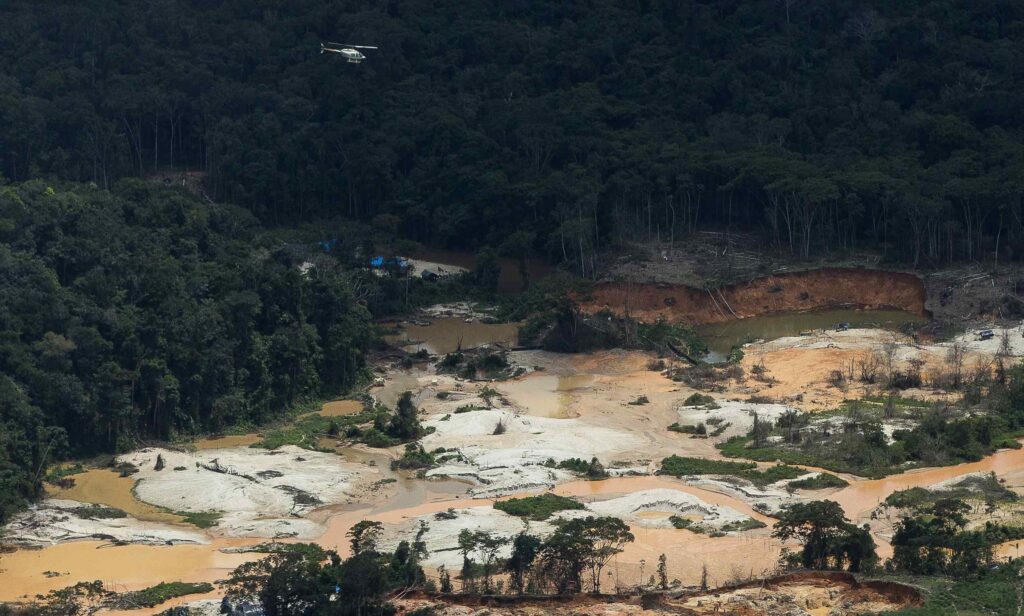
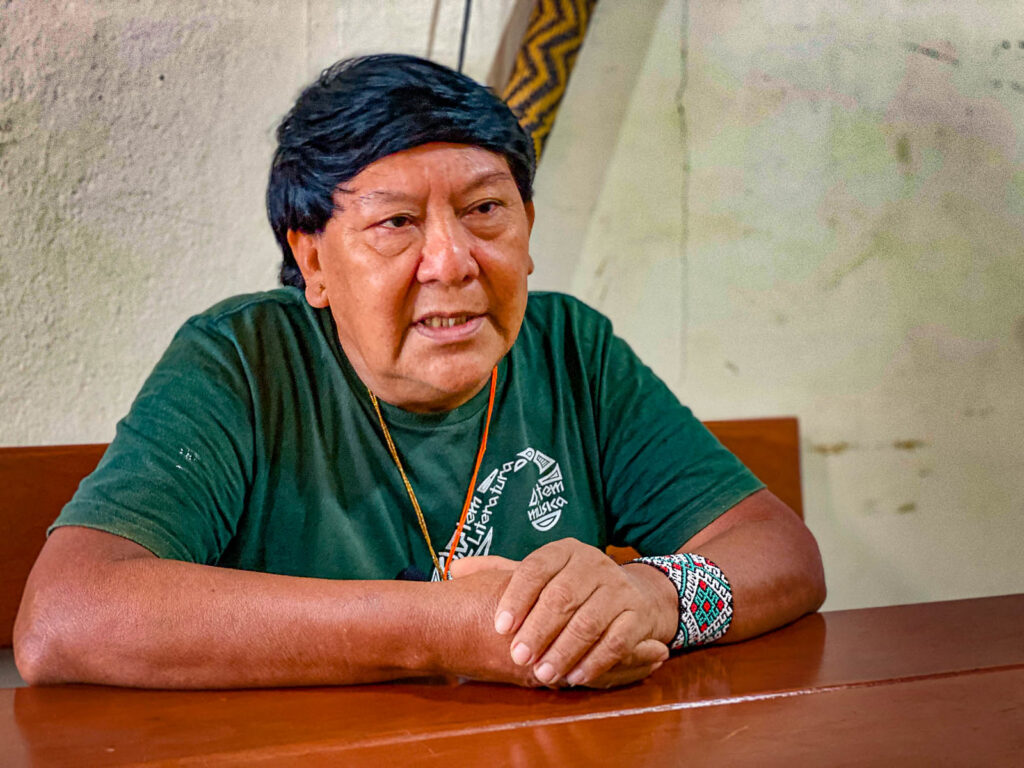
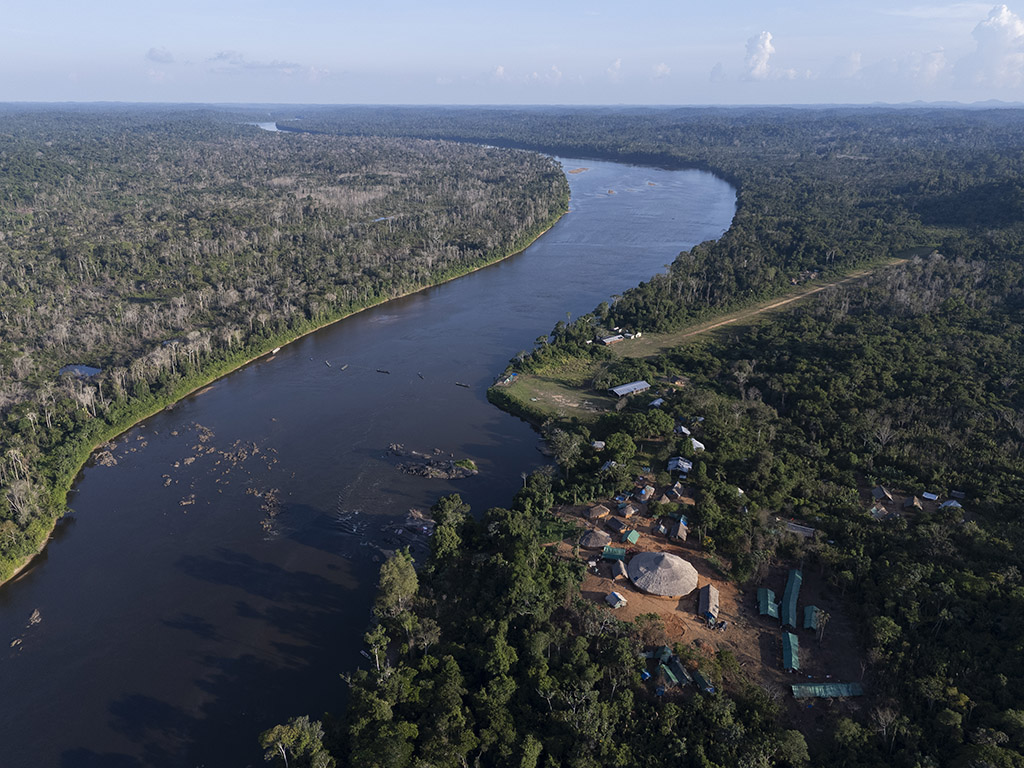
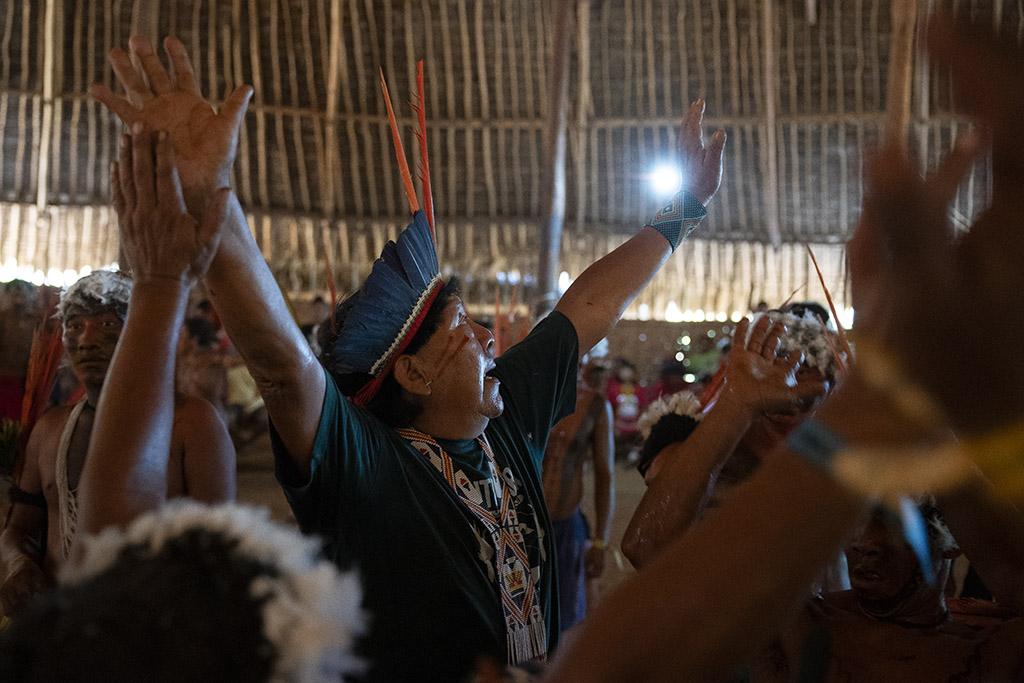



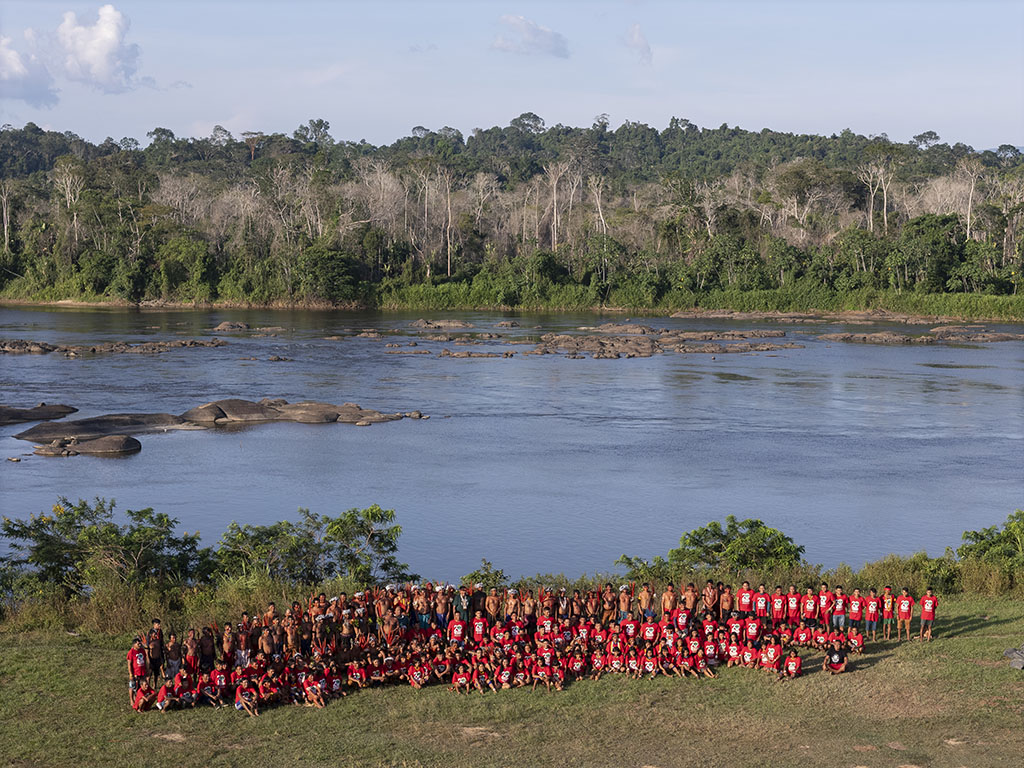
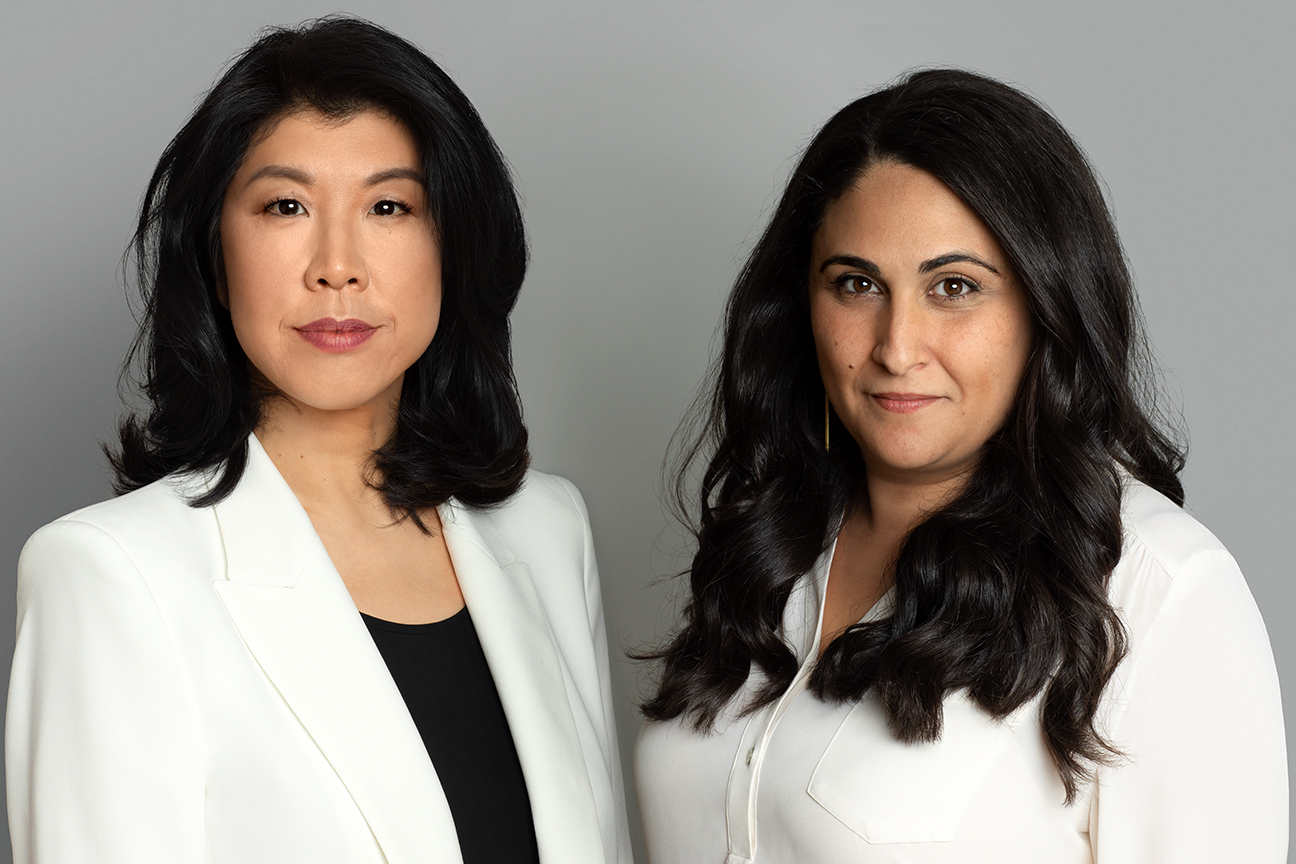


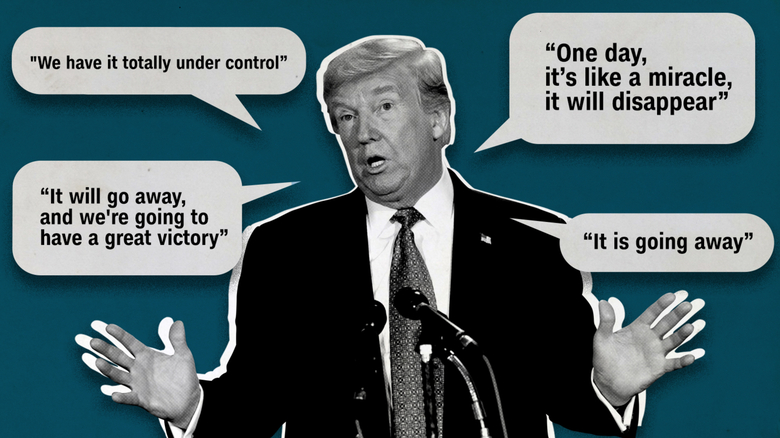
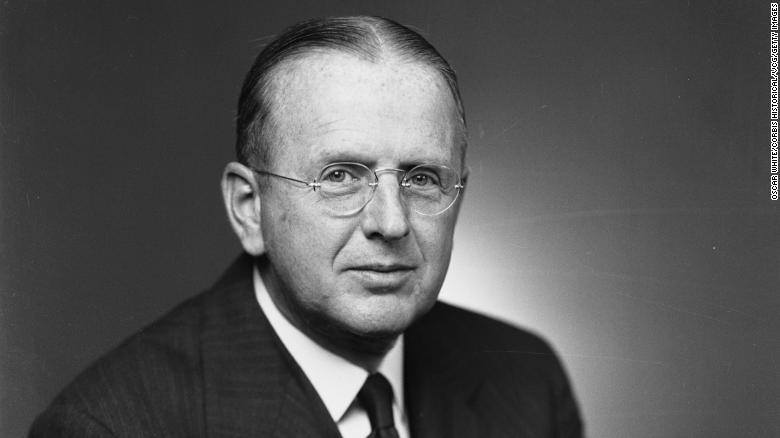
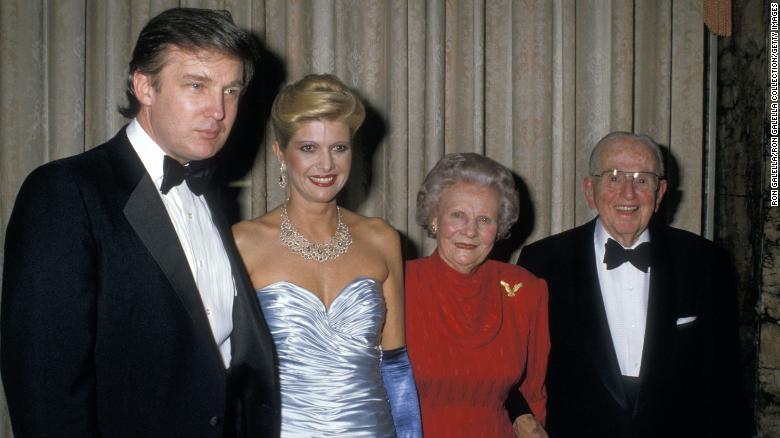
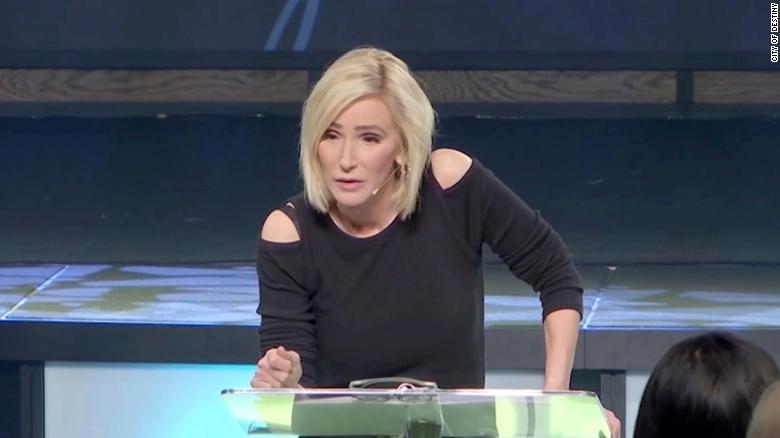
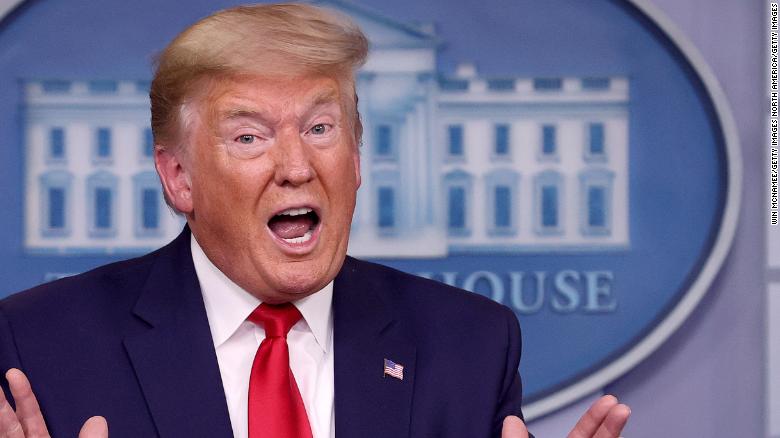


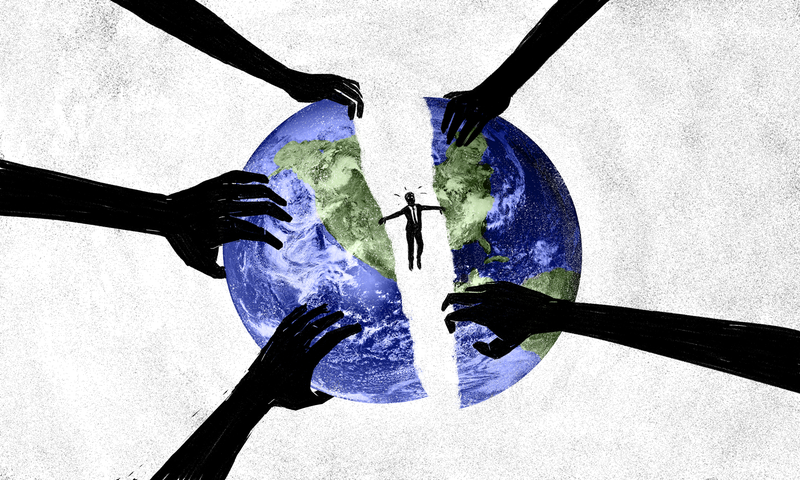


 Credit: Richard Baker/Getty Images
 Uma (in)certa antropologia
Você precisa fazer login para comentar.