Arquivo da tag: Religião

‘El rayo fue un castigo’: Mamo que sobrevivió a tragedia de la Sierra (El Tiempo)

EL TIEMPO visitó el pueblo donde murieron 11 indígenas y habló con su máxima autoridad.

Por:   |

2:29 p.m. | 7 de octubre de 2014

En la foto, el mamo Ramón Gil, que perdió a su hijo Juan Ramón Gil cuando cayó el rayo que mató a 11 indígenas.

Foto: Carlos Capella / EL TIEMPO. En la foto, el mamo Ramón Gil, que perdió a su hijo Juan Ramón Gil cuando cayó el rayo que mató a 11 indígenas.

El mamo Ramón Gil, la máxima autoridad de los wiwa y uno de los indígenas tradicionales más conocidos de la Sierra Nevada, dice que hace dos años la naturaleza le había advertido que debían pagar por tantas talas y saqueos que se han realizado en estas montañas. (Lea también: Llegan ayudas a comunidad wiwa tras caída de rayo en Sierra Nevada)

Esa advertencia se hizo realidad cuando en la madrugada de este lunes, asegura el mamo, un rayo cayó sobre la unguma, choza ceremonial donde estaban reunidos unos 50 wiwas de la cuenca media del río Guachaca, y mató a 11 indígenas y dejó a otros 20 con heridas.

La comunidad wiwa de la sierra nevada de Santa Marta se repone de la tragedia que ocasionó la caída de un rayo que mató 11 personas y dejó 20 heridos. Foto: CEET

Luego de la tragedia, en la noche del lunes, los indígenas se fueron del pueblo por temor a que otro rayo volviera a castigarlos. Los cadáveres fueron recogidos en una choza y acomodados en el piso, donde pasaron la noche. Hoy, en la mañana, cuando escucharon el sonido del helicóptero volvieron a bajar de las montañas al pueblo. (Lea también: ‘Un trueno retumbó en la Sierra y en segundos se prendió la choza’)

“El domingo a las seis de la tarde, cuando cayeron los primeros relámpagos, sentí que estaban molestos, pidiendo que le devuelvan a la naturaleza todo lo que se han llevado de la Sierra”, contó el hombre ayer entre las cenizas de la choza ceremonial, de donde aún, pese a los últimos aguaceros, se levantan pequeñas columnas de humo que salen de la tierra y el olor a quemado invade las 40 chozas de kemakúmake, el pueblo ancestral que llora por la tragedia. (Vea las fotos de la zona donde cayó el rayo y la operación para evacuar a los heridos)

En su relato, Ramón, que perdió a su hijo, recuerda que le dijo a la comunidad que el relámpago necesitaba un pago, por tantos árboles talados y cuarzo saqueado. También les había dicho que desde hace tiempo la naturaleza le estaba pidiendo que le cobrara a todos aquellos que habían profanado esos lugares sagrados y él no lo había hecho. (Vea en un mapa los 2.900 rayos que cayeron en la zona de la Sierra Nevada)

“Le dije a la comunidad, el trueno está bravo, dice que nos mandó el primer castigo el verano, pero como suplicamos mucho, manda el aguacero, pero no pagamos y ahora va a venir guerra de la naturaleza y de la humanidad”, asegura el viejo mamo que le dijo la naturaleza.

Esa noche, él estaba hablando con los hombres del pueblo en la choza ceremonial, cuando sintió como la luz iluminó el lugar y todos fueron cayendo lentamente. “Cuando la candela vino hacia mí se me nubló la vista. Me levanté, me dio rabia y lo insulté. A los pocos minutos solo hubo caos y el fuego se apoderó del lugar”, recuerda . Los indígenas que llegaron de las otras chozas tuvieron que sacar los cuerpos para evitar que las llamas los consumieran. (Lea también: Unas 100 personas mueren por rayos en Colombia cada año)

“Le quitamos 11 para que reflexione, analice y hable con los hermanitos menores y les advierta también”, dice Ramón que es el mensaje de la naturaleza.

Pide reunión con mamos

El mamo Ramón le pidió al Gobierno que los ayude para citar un encuentro de por lo menos un mes con los mamos ancestrales y espirituales de los cuatro pueblos indígenas de la Sierra Nevada: koguis, arhuacos, kankuamos y wiwas, para que analicen como autoridades todas las problemáticas que se viven en estos momentos en los resguardos.

Luego de la tragedia, en la noche del lunes, los indígenas se fueron del pueblo por temor a que otro rayo volviera a castigarlos. Foto CEET

También reconoció que los cabildos gobernadores de estos pueblos se han convertido en una especie de talanquera para que las autoridades espirituales y guías de estos pueblos se reúnan. “Necesitamos analizar y unificar un criterio, interna y espiritualmente, ya que los cabildos gobernadores no se ponen de acuerdo”, dijo.

Ayer, Ramón se lamentó de no saber leer ni escribir en español para poder hacer una cartilla para que todos entiendan y comprendan cuál es el mensaje que la naturaleza les da a los mamos y así respeten los últimos recursos que quedan en la Sierra Nevada.

Siguen llegando ayudas

A las 6:30 a.m. de hoy salió el primer helicóptero con alimentos, frazadas, medicamentos y hamacas recogidos por la Defensa Civil y enviados por la Unidad Nacional de Riesgo.

Desde la primera División del Ejército, entre ayer hoy, unos nueve viajes se hicieron en helicópteros sacando heridos, llevando ayudas y periodistas. “No solamente estamos para la guerra, también para ayudas humanitarias”, dijo el capitán del Ejército, Ómar Pardo, quien está al frente de los vuelos.

Ejército y Policía acompañados de la Defensa Civil llevan ayudas. Foto: CEET

A su turno, el coronel Luis Alfonso Quintero Parada, comandante de la Policía Metropolitana de Santa Marta, encabezó con la Policía Judicial la última inspección a los cadáveres, que hoy mismo serán entregados a la comunidad.

“Tenemos un equipo medico revisando a los indígenas, tal como lo solicitaron, para brindarles un apoyo con medicamento y curación, al equipo de Policía judicial se les sumaron dos médicos forenses de Barranquilla, para apoyar el trabajo”, dijo el oficial.

L​eonardo Herrera Delghams
Enviado especial de EL TIEMPO
Sierra Nevada de Santa Marta

Bolivianos apelam ao diabo contra montanha ‘comedora de gente’ (BBC)

4 outubro 2014

Foto: Catharina Moh/BBC

Minas de Cerro Rico são fonte de riqueza e temor para moradores da região (Foto: Catharina Moh/BBC)

As minas da montanha de Cerro Rico, na Bolívia, têm cerca de 500 anos de idade e delas saiu a prata que gerou riquezas ao antigo império espanhol.

Mas, agora, a região está cheia de túneis e perigos, o que transforma a montanha em uma armadilha para homens e meninos que trabalham no local.

Tanto que a população chega a apelar até para o diabo, rogando por segurança: a superstição fez com que os trabalhadores colocassem imagens de uma criatura com chifres nos túneis.

Marco, 15 anos, um dos moradores da região, trabalha em um destes túneis perigosos, coberto de suor e poeira. Ele carrega rochas em um carrinho de mão – algo que repete entre 35 e 40 vezes durante seu turno de cinco horas de trabalho, frequentemente à noite, depois de passar o dia na escola.

A mãe de Marco e se mudou para Cerro Rico com os quatro filhos, depois que o pai foi embora. Eles vivem na entrada de um dos túneis, sem água corrente e usando uma mina abandonada como banheiro.

“Quero ser uma pessoa melhor, não trabalhar na mina… Gostaria de me formar, ser advogado”, diz Marco, cuja família depende de seu salário.

Na era colonial espanhola, a montanha produziu toneladas e mais toneladas de prata. Durante o mesmo período, estima-se que 8 milhões de pessoas tenham morrido no local, o que deu a Cerro Rico o apelido de Montanha que Devora Homens.

Hoje cerca de 15 mil mineiros trabalham na montanha, e uma associação local informa que 14 mulheres da região ficam viúvas a cada mês. A expectativa de vida é de 40 anos em média.

Acidentes

Foto: Catharina Moh/BBCMarco trabalha na mina há um ano (Foto: Catharina Moh/BBC)

Como todos os que trabalham na montanha, Marco teme os acidentes e também a silicose, uma doença causada pela inalação de poeira. Marco conta que o cunhado morreu antes dos 30 anos devido à doença.

“Você come a poeira, vai para seus pulmões e te ataca”, disse Olga, mãe solteira que guarda os equipamentos para os mineiros.

Os filhos de Olga, Luis, 14 anos, e Carlos, 15, trabalham levando os carrinhos de mão, como Marco. Às vezes eles começam a trabalhar às 2h da madrugada para completar o turno de oito horas antes de ir para a escola.

Eles também enfrentam outro perigo da montanha – o gás tóxico liberado nas rochas.

“Os pés ficam fracos e você tem dor de cabeça. O gás é o que fica depois que a dinamite explode”, explicou Carlos.

Uma mulher contou que o marido respirou o gás, ficou tonto e caiu em um poço da mina, onde morreu.

O grande número de mortes acaba gerando superstições.

Os homens e meninos mastigam folhas de coca, afirmando que isso ajuda a filtrar a poeira. Eles também fazem oferendas de folhas de coca junto com bebida alcoólica e cigarros para El Tio, o deus-demônio das minas.

Cada uma das 38 empresas que gerenciam as minas na montanham tem uma estátua do El Tio em seus túneis.

Foto: Catharina Moh/BBCTúneis contam com estátuas de El Tio, que recebem oferendas (Foto: Catharina Moh/BBC)

“Ele tem chifres porque é o deus das profundezas”, disse Grover, chefe de Marco. “Geralmente nos reunimos aqui às sexta-feiras para fazer as oferendas, agradecendo por ele ter nos dado muitos minerais, e também para pedir proteção dele contra acidentes.”

“Fora da mina, somos católicos, quando entramos, adoramos o diabo”, disse.

Mais crianças

Marco e Luis não são os mais jovens trabalhando nas minas.

Foto: Catharina Moh/BBCLuis masca folhas de coca antes de começar a trabalhar (Foto: Catharina Moh/BBC)

“Há dez crianças que vejo (trabalhando). Quando elas vêm aqui, têm bolhas nas mãos, então acho que estão dentro das minas. Crianças de oito, nove, dez anos..”, disse Nicolas Marin Martinez, diretor da única escola da montanha, mantida por uma organização de caridade suíça.

Uma mudança recente na lei da Bolívia permite que crianças de dez anos trabalhem legalmente, mas não nas minas, consideradas perigosas demais.

No entanto, um relatório do ombudsman do governo da Bolívia estima que 145 crianças trabalham nas minas. Outra estimativa sugere que o número de crianças trabalhando na montanha possa chegar a 400.

Apesar de tudo isso, o FMI afirma que a Bolívia reduziu seus níveis de pobreza e quase triplicou a renda per capita desde que o presidente Evo Morales assumiu o cargo, em 2005.

No dia 12 de outubro, Morales tentará ser eleito para o terceiro mandato, prometendo devolver aos pobres as riquezas da terra.

Para os que vivem em Cerro Rico, os benefícios do governo de Morales parecem ainda não ter chegado.

Indian scientists significantly more religious than UK scientists (Science Daily)

Date: September 24, 2014

Source: Rice University

Summary: Indian scientists are significantly more religious than United Kingdom scientists, according to the first cross-national study of religion and spirituality among scientists.


Indian scientists are significantly more religious than United Kingdom scientists, according to the first cross-national study of religion and spirituality among scientists.

The U.K. and India results from Religion Among Scientists in International Context (RASIC) study were presented at the Policies and Perspectives: Implications From the Religion Among Scientists in International Context Study conference held today in London. Rice’s Religion and Public Life Program and Baker Institute for Public Policy sponsored the conference. The U.K. results were also presented at the Uses and Abuses of Biology conference Sept. 22 at Cambridge University’s Faraday Institute in Cambridge, England.

The surveys and in-depth interviews with scientists revealed that while 65 percent of U.K. scientists identify as nonreligious, only 6 percent of Indian scientists identify as nonreligious. In addition, while only 12 percent of scientists in the U.K. attend religious services on a regular basis — once a month or more — 32 percent of scientists in India do.

Elaine Howard Ecklund, Rice’s Autrey Professor of Sociology and the study’s principal investigator, said the U.K. and India data are being released simultaneously because of the history between the U.K. and India. She noted that their differences are quite interesting to compare.

“India and the U.K. are at the same time deeply intertwined historically while deeply different religiously,” Ecklund said. “There is a vastly different character of religion among scientists in the U.K. than in India — potentially overturning the view that scientists are universal carriers of secularization.”

Despite the number of U.K. scientists identifying themselves as nonreligious, 49 percent of U.K. survey respondents acknowledged that there are basic truths in many religions. In addition, 11 percent of U.K. survey respondents said they do believe in God without any doubt, and another 8 percent said they believe in a higher power of some kind.

Ecklund noted that although the U.K. is known for its secularism, scientists in particular are significantly more likely to identify as not belonging to a religion than members of the general population.

“According to available data, only 50 percent of the general U.K. population responded that they did not belong to a religion, compared with 65 percent of U.K. scientists in the survey,” Ecklund said. “In addition, 47 percent of the U.K. population report never attending religious services compared with 68 percent of scientists.”

According to the India survey, 73 percent of scientists responded that there are basic truths in many religions, 27 percent said they believe in God and 38 percent expressed belief in a higher power of some kind. However, while only 4 percent of the general Indian population said they never attend religious services, 19 percent of Indian scientists said they never attend.

“Despite the high level of religiosity evident among Indian scientists when it comes to religious affiliation, we can see here that when we look at religious practices, Indian scientists are significantly more likely than the Indian general population to never participate in a religious service or ritual, even at home,” Ecklund said.

Although there appear to be striking differences in the religious views of U.K. and Indian scientists, less than half of both groups (38 percent of U.K. scientists and 18 percent of Indian scientists) perceived conflict between religion and science.

“When we interviewed Indian scientists in their offices and laboratories, many quickly made it clear that there is no reason for religion and science to be in conflict; for some Indian scientists, religious beliefs actually lead to a deeper sense of doing justice through their work as scientists,” Ecklund said. “And even many U.K. scientists who are themselves not personally religious still do not think there needs to be a conflict between religion and science.”

The U.K. survey included 1,581 scientists, representing a 50 percent response rate. The India survey included 1,763 scientists from 159 universities and/or research institutions. Both surveys also utilized population data from the World Values Survey to make comparisons with the general public. In addition, the researchers conducted nearly 200 in-depth interviews with U.K. and Indian scientists, many of these in person.

The complete study will include a survey of 22,000 biologists and physicists at different points in their careers at top universities and research institutes in the U.S., U.K., Turkey, Italy, France, India, Hong Kong and Taiwan — nations that have very different approaches to the relationship between religious and state institutions, different levels of religiosity and different levels of scientific infrastructure. Respondents were randomly selected from a sampling frame of nearly 50,000 scientists and compiled by undergraduate and graduate students at Rice University through an innovative sampling process. The study will also include qualitative interviews with 700 scientists. The entire RASIC study will be completed by the end of 2015.

Liberia: Dead Ebola Patients Resurrect? (The New Dawn)

24 SEPTEMBER 2014

Photo: Boakai Fofana/allAfricaA burial team carries the body of a suspected Ebola victim under the watchful eyes of police officers.

By Franklin Doloquee

Two Ebola patients, who died of the virus in separate communities in Nimba County have reportedly resurrected in the county. The victims, both females, believed to be in their 60s and 40s respectively, died of the Ebola virus recently in Hope Village Community and the Catholic Community in Ganta, Nimba.

But to the amazement of residents and onlookers on Monday, the deceased reportedly regained life in total disbelief. The New Dawn Nimba County correspondent said the late Dorris Quoi of Hope Village Community and the second victim only identified as Ma Kebeh, said to be in her late 60s, were about to be taken for burial when they resurrected.

Ma Kebeh had reportedly been in door for two nights without food and medication before her alleged death. Nimba County has had bizarre news of Ebola cases with a native doctor from the county, who claimed that he could cure infected victims, dying of the virus himself last week.

News of the resurrection of the two victims has reportedly created panic in residents of Hope Village Community and Ganta at large, with some citizens describing Dorris Quoi as a ghost, who shouldn’t live among them. Since the Ebola outbreak in Nimba County, this is the first incident of dead victims resurrecting.

It’s Not Genghis Khan’s Mongolia (New York Times)

Ayush Ish in her home with her son and grandson in the Gobi Desert in Mongolia. Extreme winter events killed off her livestock twice. CreditRachel Nuwer

ULAN BATOR, Mongolia — For all of his victories and skills, Genghis Khan always insisted that the god Tengri — the Eternal Blue Sky — deserved the credit for his triumphant success in uniting the vast Mongol Empire in the early 13th century.

Now 21st-century science may be proving him right. Not long ago, researchers studying ancient tree rings found evidence that the Great Khan rose to power during an exceptionally mild 15-year stretch.

Back-to-back years of plentiful rain and favorable temperatures — known as pluvials, the opposite of droughts — promoted vegetation growth, the researchers believe, and that in turn supported the livestock needed to power an army.

“The Mongol Empire pluvial was quite exceptional in its duration,” said Neil Pederson, an ecologist at Harvard Forest in central Massachusetts. “It was the only one in the past 1,000 years that lasted more than 10 years, so it’s really a singular event.”

These days, Mongolia’s climatic tides have been shifting toward another extreme. A 10-year drought and heat wave from 2000 to 2010, according to the tree ring data, was the most severe the country had had in a millennium.

“I’m more and more convinced that the only way we can understand this 21st-century event is within the context of climate change,” said Amy Hessl, a geographer at West Virginia University. “And the human side of that — combined with a constellation of other factors — is going to be incredible.”

Today, Mongolia is largely herders, not warriors. Sandwiched between Russia and China, it has almost three million people in a vast tract of desert and rolling steppe grassland, punctuated by mountains and forests. Climate continues to significantly shape the lives of Genghis Khan’s descendants, around one-third of whom still practice the seminomadic herding of their ancestors, moving their house — traditionally, a dome-shaped tent called a ger — with the seasons.

While televisions and solar panels are a common sight in modern gers, herders still rely on thousands of years of collective knowledge to thrive in the harsh Mongolian environment, where the temperature regularly dips below minus 15 degrees Fahrenheit in winter. Yet the predictable ebb and flow of warmth and cold, rain and snow, has begun to falter in recent years.

“I don’t know why the weather has become unusual, but I’m very worried about it,” said Urgamaltsetsg Suvita, 47, a herder in the Gobi Desert. Summer is hotter and drier and plagued by sandstorms, she said, and winter brings too much snow or too little.

In 2010, an extreme snowstorm killed her flock of livestock — nearly 1,000 animals, including horses, sheep and goats. “Winter is no longer winter,” she said.

Like much of the world, Mongolia is already experiencing the effects of climate change. The country’s average annual temperature has risen more than 3.8 degrees Fahrenheit since 1940; paradoxically, winter months have grown colder over the past 20 years. Streams and lakes have begun to dry up, and fires frequently blaze across millions of acres of steppe and forest.

“The steppe ecosystem is burning and burning and burning,” said Oyunsanaa Byambasuren, a lecturer in forestry at the National University of Mongolia. “But we really don’t have enough specialists or professionals dealing with those issues.”

Dzuds — extreme winter events that cause mass livestock die-offs — also seem to be increasing in frequency and intensity. From 1999 to 2002, a succession of winter dzuds followed by summer droughts killed 30 percentof all livestock in Mongolia, and a 2010 dzud claimed 8.8 million livestock — losses equivalent to 4.4 percent of the country’s economic output.

“Wealth in much of Mongolia is measured in animals,” said Nicole Davi, a research scientist at Lamont-Doherty Earth Observatory and at William Paterson University. “If you lose all of your animals, you lose everything.”

Ayush Ish, 69, has lived in the Gobi Desert all her life. She and her husband lost their flock of goats and sheep in the 2002 dzud and drought, then slowly rebuilt it with the help of 50 animals allocated by the government. But when the 2010 dzud struck, all but 20 died. Around the same time, her husband died as well.

“I don’t know if it will happen again,” she said, tears running down her cheeks. “I can only hope that we’re entering a good period now.”

Like many rural Mongolians who follow a shamanistic belief system, Ms. Ish says that mining — which has recently become widespread around the country — is to blame for the changing weather patterns. Troy Sternberg, a geographer at the University of Oxford, said that “under the Mongolian belief system, the earth and sky are connected, so if you take gold out of the ground, you’re disrupting the natural rhythms of weather and climate.”

Whether or not that is true, the rise of mining — along with overgrazing by herders chasing the cashmere market — has led to wide desertification. Some studies indicate that 70 percent of Mongolia’s grasslands are degraded.

Taken together, these patterns bode ominously for the herders’ way of life. A team of Mongolian and international experts warned in a 2009 report that such trends “may lead to the end of the Mongolian traditional way of animal husbandry as we know it, that at onetime was the very core of the entire nomadic civilization.”

Some herders have already reached that breaking point. After the 1999 to 2002 dzuds alone, 180,000 people moved to the capital, Ulan Bator, in search of a better life. “The movement from a rural, agrarian life to an urban industrial one is not necessarily a bad thing if people are interested in doing other things that are tied to a more diverse economy,” said Maria Fernandez-Gimenez, an ecologist at Colorado State University. “But opportunities and services have to exist to enable that.”

Those who reach the capital usually settle in the ger district, a sprawling, makeshift neighborhood that encircles the city and creeps into the surrounding valleys. Although the skyscrapers of downtown are in eyesight, basic services are luxuries. Families must trek up to a mile to collect water from communal wells, and in winter, they burn coal and garbage to keep warm, helping to make Ulan Bator one of the world’s most polluted cities.

Khishigee Shuurai, 36, moved from western Mongolia to the capital around 15 years ago. In 2002, after losing their flock, her parents joined her in the city. Then her father died of a heart attack. Before that, she said, he frequently expressed a longing to return to the countryside.

For many, however, life here is preferable to the uncertainty and harshness of nomadic herding. Ms. Shuurai, a school custodian and mother of four, does not share her father’s regrets.

She and her husband, a construction worker, have jobs, and they recently got electricity in their ger. Her 7-year-old daughter was honored as the top student in her class, and her 12-year-old son wants to become an engineer.

“There’s many reasons to stay,” she said. “I don’t want to go back.”

California water witches see big business as the drought drags on (The Guardian)

Dowsers, sometimes known as ‘water witches,’ are in high demand in drought-stricken California, where four dry years find farmers and vintners taking desperate measures

Mary Catherine O’Connor

Monday 15 September 2014 07.00 BST

VIDEO:

Sharron Hope has been a dowser since 1997. Markedly cheaper than hiring a hydrogeologist – which can cost as much as $50,000 – Hope OFFERS her services for around $500 a consultation. Video: Mary Catherine O’Connor

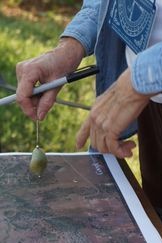
Outside of a farmhouse on a 1,800-acre organic dairy farm near Oroville, California, Sharron Hope bends over a printout of a Google Earth map, holding a small jade Buddha pendant. The map shows a small section of the farm to the east, and Hope is hunting for water. As the pendant swings, she notes a subtle change in motion that, she says, indicates she has found some.

Is there any significance to the jade? No, she says, I just like it. Plus, she adds, “I figure Buddha’s gotta know.”

Hope is a water dowser, or someone who uses intuition, energy VIBRATIONS and divining rods or pendulums to mark the best spots for wells.

As California rounds the corner towards a four-year historic drought, many farmers and vintners have become completely reliant on groundwater. After divvying surface water allotments to satisfy urban, ecosystem and industrial needs, farmers in many parts of the state received little or no irrigation water from state agencies this year. In a normal year, allotments would cover roughly two-thirds of farmers’ needs.

1Sharron Hope, a water dowser in California, uses a jade pendant to locate underground water on a map. Photograph: Mary Catherine O’Connor

Under these severe drought conditions, the success or failure of a well can mean the success or failure of a farm or vineyard, so before the drill bit hits the dirt, landowners need an educated guess as to where to find the most productive well site on their property. To get that, they can call in a professional hydrogeologist, which can cost tens of thousands of dollars – or they can drop a fraction of the cost on a dowser, such as Hope.

Despite a distinct lack of empirical evidence regarding dowsers’ efficacy, demand is high and dowsers’ phones are ringing off the hook.

“I’ve gotten far more calls this year from farmers looking for a water dowser than in most years,” says Sacramento-based Donna Alhers, who heads the Sierra Dowsers, a chapter of the American Society of Dowsers.

Water dowsers from around the state are also seeing a spike in demand. “I’m getting a lot of calls from people whose wells have run dry,” Hope says.

Where did dowsing come from?

The exact origins of dowsing are murky, but its roots can be traced back as far as the Middle Ages. The practice, sometimes used by miners and fortune seekers, was reportedly condemned in the 16th century as the work of the devil.

Today, dowsers hail from one of two camps. Some have agrarian backgrounds, and learned the practice from ancestors who used it to locate good sites for wells on their own or their neighbors’ farms. The second group hails from the New Age movement and tend to be devotees of a wide range of mystical practices and “energy work”.

Traditionally, dowsing has been used not just to find groundwater, but also minerals and natural gas. Many dowsers claim they can dowse anything, from lost items or pets to criminals on the lam. You name it, they say they can divine it.

Hope began dowsing for water in 1977 after learning about the practice from Walter Woods, a science teacher at Butte College, where she was a STUDENT. Woods had learned dowsing from his father, a farmer, and eventually became a well-known authority on dowsing. He authored a widely read dowsing primer, Letter to Robin, and served as president of the American Society of Dowsers.

Woods taught Hope to scan for signs of groundwater by observing the landscape and looking for signs like deer trails. “Deer have magnetite in their pineal gland [an endocrine gland in the brain]. As water moves underground, electrons are stripped out and move to the surface,” Hope says. “Deer can sense it and tend to walk along that vein of underground water toward a spring.” Dowsing is based on the premise that humans can tap into that energy, too, using instruments such as branches and pendulums.

Energy marks the spot

After Hope finishes with the map, she heads out to the spots she has marked, walking the land and searching for very faint energy markings over the landscape, which she’ll use more talismans to locate.

She begins a general scan of the area with a forked pine branch, holding the ends in her hands and sweeping it through the air. Despite scientific evidence, Hope believes that the branch she holds channels the energy emitted by submerged water. Once she homes in on the most promising region (which matches, as it turns out, the area she had marked on the map) she TRADES the branch for what are known in the dowsing world as “L-rods”, two long metal bars with a short handle and long extension, forming an L.

2Sharron Hope works as a dowser in California’s CENTRAL VALLEY. Here she uses a pine branch to lead her to to a potential well site. Photograph: Mary Catherine O’Connor

Hope holds these in front of her, with her elbows at 90 degrees, and walks slowly up – and then laterally along – the rise. As the long ends of the bars begin to fall away from each other, she stops.

The energy moving up from the groundwater, she says, creates a field that L-rods respond to. This, she says, marks the edge of the underground stream. She then traverses the hillside, down slope, and stops again when the bars cross in front of her. This, she explains, marks the spot where two veins of groundwater cross over each other, making it a potentially very productive well site.

“I have goosebumps,” Hope says with a smile. “I feel the energy moving up from the ground.”

Although Hope and other dowsers often refer to underground veins and streams, USGS hydrologist Ralph Health, in a highly cited report on groundwater basics, says the vast majority of groundwater is found in relatively still aquifers. Swiftly moving streams are quite rare.

Water, water everywhere

Out in the field, Hope locates three possible well sites in roughly 30 minutes. She decides that the third is the best option, even though she doesn’t think it has the strongest flow rate, because it is relatively shallow at 200 feet (about 61 meters) below ground and is the most accessible and FLAT option. Daley stakes the spot and the dowsing is done. Daley is now awaiting drilling permits, and once those come through, she’ll call in a local driller.

“I have about 90% accuracy,” Hope claims, meaning that 90% of the sites she recommends produce water.

This actually isn’t that surprising, hydrogeologists say. “Dowsers may seem convincing, but when [their practice is] exposed to scientific review, groundwater is very prevalent, so it’s hard to miss it when you drill a well,” says Ted Johnson, chief hydrogeologist for the Water Replenishment District of Southern California and president of the board of the Groundwater Resources Association of California. “When you use science to site a well, you can test for quality, depth and how long [the flow] will last.”

To site a well, hydrogeologists will review driller well logs from the Department of Water Resources and geologic maps that show areas of alluvial soils, under which groundwater is most likely to accumulate. To really zero in on well sites, they drill a test well, which produces cuttings of the various strata. They then test for each layer’s ability to transport water. It’s a time-consuming and expensive process.

Because a landowner is unlikely to hire both a dowser and a hydrogeologist to see who finds the best-producing well (though that could make for some mildly entertaining reality television), the two groups coexist and generally ignore each other, aside from tossing verbal jabs.

“I’m a scientist and I’ve been trained on scientific principles, and that’s what I use [to locate groundwater],” says Tim Parker, a hydrogeologist and independent consultant based in Sacramento. “There’s no scientific evidence that dowsing is more effective than random chance.”

Of cash and crops

So why are so many farmers turning to dowsers instead of hydrologists? Part of it’s probably the money: dowsers might charge $1,000 (Hope charges most of her clients around $500, and less for a small residential well), while a big consulting firm costs $10,000 to $50,000, Johnson says. “All a farmer cares about is getting the groundwater,” he says.

But Cynthia Daley, who hired Sharron Hope to dowse for a well on her dairy farm, says it’s not about costs. “Dowsing is based on energy and it is something that the scientific community has not embraced, but I’m not arrogant enough to think science knows everything – and I am a scientist; I have a PhD,” she says.

Whether farmers and vintners are using dowsers merely as a result of their relative affordability or out of a strong belief in the practice is hard to, well, divine. What is clear is that the popularity of dowsing is growing, not just in the CENTRAL VALLEY, but throughout the state.

Daley, who has degrees in animal science with a doctorate in endocrinology, is a professor in the College of Agriculture at nearby California State University at Chico, where she runs an organic dairy program. She is developing an organic dairy operation on her property, which is why she’s drilling wells. “Everyone I know who has had wells put in around here has used dowsers.”

Many more wells are springing up. State agencies from counties around California are issuing twice – and sometimes three times as many – well drilling permits this summer than last summer, according to the Associated Press.

Keeping Marc Mondavi busy

Marc Mondavi, grandson of Napa Valley WINE pioneer Cesare Mondavi and a longtime dowser, says that he can’t keep up with the demand: “I’m doing anywhere from two to four projects a week and I’m backlogged, and drillers around here are backlogged for three to five months.”

Mondavi uses dowsing not only as a revenue stream, but also as a means of marketing his own brand, The Divining Rod. He doesn’t shy away from the name “water witch”, a term other dowsers consider pejorative. His daughter Alycia Mondavi even made a short promo VIDEO CALLED “My Dad is a Witch.”

He acknowledges it’s hard not to strike groundwater, but says that using his intuitive dowsing skills allows him to find the best spots, especially as the drought depletes the water table. “No matter where you drill, you might hit [a flow of] four gallons per minute,” he says. “In those areas maybe I can find eight to 10 gallons per minute.”

The dowsing divide might persist for decades to come, but there is plenty of indisputable evidence that groundwater is being overtaxed as the drought drags on. Amplifying the problem of groundwater scarcity, policy experts say, is a lack of regulation. That looks likely to change. Governor Brown is expected to sign one of three separate groundwater regulation bills currently sitting on his desk.

Some agriculture groups, including the Agriculture Council of California and Blue Diamond Growers, have rallied against the bills, saying they will drive up costs for already cash-strapped farmers and deny long-held water rights.

But Daley says groundwater is too important to remain unchecked. “We have to regulate it. It’s a very important resource.”

Until that happens, however, sun-baked farmers will keep digging for rain.

Mary Catherine O’Connor is an independent reporter and co-founder of Climate Confidential.

The Vital Signs platform is funded by Avery Dennison, Domtar and Chiquita. All content is editorially independent except for pieces labelled advertisement feature. Find out more here.

Pajés Caiapó Kukrit e Mati-í fazem pajelança e terminam incêncio de mais de dois meses em Roraima, em 1998

“No dia 30 de março, quando o incêndio completava 63 dias, chegam a Roraima, levados pela Fundação Nacional do Indio-FUNAI, os pajés Caiapó Kukrit e Mati-í, determinados a realizar uma pajelança para atrair chuva para Roraima. Na noite do dia 30, os pajés dirigiram-se à beira do rio Curupira, que banha Boa Vista, e fizeram um ritual de chuva. Retornaram ao hotel, afirmando que no dia seguinte choveria “muito”. De madrugada choveu muito, apagando 95% dos focos de incêndio.

A partir desse fato a imprensa debruçou-se sobre o tema durante vários dias, mudando o rumo da discussão pública sobre o incêndio, concentrando-a na participação dos pajés nos esforços para debelar o incêndio. Antropólogos discutiram a eficácia dos rituais indígenas . José Jorge de Carvalho, da Universidade de Brasília, contemporizou: “Nem toda vez que você faz ritual para chover, chove. Como nem toda vez que você vai ao médico, o médico te cura.” Júlio Cezar Melatti, também da UnB: “Depende da fé de cada um. Fazer chover, eu acho que é coincidência”. Marcos Terena, organizador do I Encontro Nacional de Pajés (que se realizaria de 15 a 18 do mesmo mês, em Brasília): “Quem manda é o criador, a natureza. A gente pede. Não é uma coisa mágica”. Terena acredita que os rituais dão certo por causa da “relação íntima do índio com a natureza”.

O sociólogo Eurico Gonzalez, da UnB deu outra interpretação: “as crendices são fruto do fracasso da razão. Ou seja, da incapacidade do homem de resolver seus próprios problemas. O nosso projeto de sociedade moderna nunca funcionou direito. E isso abre espaço para que crenças mágicas ocupem o lugar das soluções.”

O temporal da madrugada do dia 31 de março alagou ruas e derrubou árvores em Boa Vista. Segundo relatório do Núcleo de Monitoramento Ambiental da Empresa Brasileira de Pesquisa Agropecuária-Embrapa, chegou a chover mais de 30 mm em algumas regiões do Estado. O documento diz: “A principal e mais espetacular consequência das chuvas foi uma redução quase completa (em mais de 95%) dos pontos de incêndios e queimadas no Estado”. A avaliação foi feita a partir de imagens obtidas do satélite NOAA 14.”

Trecho do relatório da comissão especial do Senado Federal para acompanhar o caso, disponível em http://www.senado.leg.br/atividade/materia/getPDF.asp?t=79112&tp=1.

Agradeço a B. Esteves pela indicação do material.

Teoria quântica, múltiplos universos, e o destino da consciência humana após a morte (Biocentrismo, Robert Lanza)

[Nota do editor do blogue: o título da matéria em português não é fiel ao título original em inglês, e tem caráter sensacionalista. Por ser este blogue uma hemeroteca, não alterei o título.]

Cientistas comprovam a reencarnação humana (Duniverso)

s/d; acessado em 14 de setembro de 2014. Desde que o mundo é mundo discutimos e tentamos descobrir o que existe além da morte. Desta vez a ciência quântica explica e comprova que existe sim vida (não física) após a morte de qualquer ser humano. Um livro intitulado “O biocentrismo: Como a vida e a consciência são as chaves para entender a natureza do Universo” “causou” na Internet, porque continha uma noção de que a vida não acaba quando o corpo morre e que pode durar para sempre. O autor desta publicação o cientista Dr. Robert Lanza, eleito o terceiro mais importante cientista vivo pelo NY Times, não tem dúvidas de que isso é possível.

Além do tempo e do espaço

Lanza é um especialista em medicina regenerativa e diretor científico da Advanced Cell Technology Company. No passado ficou conhecido por sua extensa pesquisa com células-tronco e também por várias experiências bem sucedidas sobre clonagem de espécies animais ameaçadas de extinção. Mas não há muito tempo, o cientista se envolveu com física, mecânica quântica e astrofísica. Esta mistura explosiva deu à luz a nova teoria do biocentrismo que vem pregando desde então. O biocentrismo ensina que a vida e a consciência são fundamentais para o universo. É a consciência que cria o universo material e não o contrário. Lanza aponta para a estrutura do próprio universo e diz que as leis, forças e constantes variações do universo parecem ser afinadas para a vida, ou seja, a inteligência que existia antes importa muito. Ele também afirma que o espaço e o tempo não são objetos ou coisas mas sim ferramentas de nosso entendimento animal. Lanza diz que carregamos o espaço e o tempo em torno de nós “como tartarugas”, o que significa que quando a casca sai, espaço e tempo ainda existem. ciencia-quantica-comprova-reencarnacao

A teoria sugere que a morte da consciência simplesmente não existe. Ele só existe como um pensamento porque as pessoas se identificam com o seu corpo. Eles acreditam que o corpo vai morrer mais cedo ou mais tarde, pensando que a sua consciência vai desaparecer também. Se o corpo gera a consciência então a consciência morre quando o corpo morre. Mas se o corpo recebe a consciência da mesma forma que uma caixa de tv a cabo recebe sinais de satélite então é claro que a consciência não termina com a morte do veículo físico. Na verdade a consciência existe fora das restrições de tempo e espaço. Ele é capaz de estar em qualquer lugar: no corpo humano e no exterior de si mesma. Em outras palavras é não-local, no mesmo sentido que os objetos quânticos são não-local. Lanza também acredita que múltiplos universos podem existir simultaneamente. Em um universo o corpo pode estar morto e em outro continua a existir, absorvendo consciência que migraram para este universo. Isto significa que uma pessoa morta enquanto viaja através do mesmo túnel acaba não no inferno ou no céu, mas em um mundo semelhante a ele ou ela que foi habitado, mas desta vez vivo. E assim por diante, infinitamente, quase como um efeito cósmico vida após a morte.

Vários mundos

Não são apenas meros mortais que querem viver para sempre mas também alguns cientistas de renome têm a mesma opinião de Lanza. São os físicos e astrofísicos que tendem a concordar com a existência de mundos paralelos e que sugerem a possibilidade de múltiplos universos. Multiverso (multi-universo) é o conceito científico da teoria que eles defendem. Eles acreditam que não existem leis físicas que proibiriam a existência de mundos paralelos.

ciencia-quantica-comprova-reencarnacao-2

O primeiro a falar sobre isto foi o escritor de ficção científica HG Wells em 1895 com o livro “The Door in the Wall“. Após 62 anos essa ideia foi desenvolvida pelo Dr. Hugh Everett em sua tese de pós-graduação na Universidade de Princeton. Basicamente postula que, em determinado momento o universo se divide em inúmeros casos semelhantes e no momento seguinte, esses universos “recém-nascidos” dividem-se de forma semelhante. Então em alguns desses mundos que podemos estar presentes, lendo este artigo em um universo e assistir TV em outro. Na década de 1980 Andrei Linde cientista do Instituto de Física da Lebedev, desenvolveu a teoria de múltiplos universos. Agora como professor da Universidade de Stanford, Linde explicou: o espaço consiste em muitas esferas de insuflar que dão origem a esferas semelhantes, e aqueles, por sua vez, produzem esferas em números ainda maiores e assim por diante até o infinito. No universo eles são separados. Eles não estão cientes da existência do outro mas eles representam partes de um mesmo universo físico. A física Laura Mersini Houghton da Universidade da Carolina do Norte com seus colegas argumentam: as anomalias do fundo do cosmos existe devido ao fato de que o nosso universo é influenciado por outros universos existentes nas proximidades e que buracos e falhas são um resultado direto de ataques contra nós por universos vizinhos.

Alma

Assim, há abundância de lugares ou outros universos onde a nossa alma poderia migrar após a morte, de acordo com a teoria de neo biocentrismo. Mas será que a alma existe? Existe alguma teoria científica da consciência que poderia acomodar tal afirmação? Segundo o Dr. Stuart Hameroff uma experiência de quase morte acontece quando a informação quântica que habita o sistema nervoso deixa o corpo e se dissipa no universo. Ao contrário do que defendem os materialistas Dr. Hameroff oferece uma explicação alternativa da consciência que pode, talvez, apelar para a mente científica racional e intuições pessoais. A consciência reside, de acordo com Stuart e o físico britânico Sir Roger Penrose, nos microtúbulos das células cerebrais que são os sítios primários de processamento quântico. Após a morte esta informação é liberada de seu corpo, o que significa que a sua consciência vai com ele. Eles argumentaram que a nossa experiência da consciência é o resultado de efeitos da gravidade quântica nesses microtúbulos, uma teoria que eles batizaram Redução Objetiva Orquestrada. Consciência ou pelo menos proto consciência é teorizada por eles para ser uma propriedade fundamental do universo, presente até mesmo no primeiro momento do universo durante o Big Bang. “Em uma dessas experiências conscientes comprova-se que o proto esquema é uma propriedade básica da realidade física acessível a um processo quântico associado com atividade cerebral.” Nossas almas estão de fato construídas a partir da própria estrutura do universo e pode ter existido desde o início dos tempos. Nossos cérebros são apenas receptores e amplificadores para a proto-consciência que é intrínseca ao tecido do espaço-tempo. Então, há realmente uma parte de sua consciência que é não material e vai viver após a morte de seu corpo físico. ciencia-quantica-comprova-reencarnacao-3

Dr. Hameroff disse ao Canal Science através do documentário Wormhole: “Vamos dizer que o coração pare de bater, o sangue pare de fluir e os microtúbulos percam seu estado quântico. A informação quântica dentro dos microtúbulos não é destruída, não pode ser destruída, ele só distribui e se dissipa com o universo como um todo.” Robert Lanza acrescenta aqui que não só existem em um único universo, ela existe talvez, em outro universo. Se o paciente é ressuscitado, esta informação quântica pode voltar para os microtúbulos e o paciente diz: “Eu tive uma experiência de quase morte”. Ele acrescenta: “Se ele não reviveu e o paciente morre é possível que esta informação quântica possa existir fora do corpo talvez indefinidamente, como uma alma.” Esta conta de consciência quântica explica coisas como experiências de quase morte, projeção astral, experiências fora do corpo e até mesmo a reencarnação sem a necessidade de recorrer a ideologia religiosa. A energia de sua consciência potencialmente é reciclada de volta em um corpo diferente em algum momento e nesse meio tempo ela existe fora do corpo físico em algum outro nível de realidade e possivelmente, em outro universo.

E você o que acha? Concorda com Lanza?

Grande abraço!

Indicação: Pedro Lopes Martins Artigo publicado originalmente em inglês no site SPIRIT SCIENCE AND METAPHYSICS.

*   *   *

Scientists Claim That Quantum Theory Proves Consciousness Moves To Another Universe At Death

STEVEN BANCARZ, JANUARY 7, 2014

A book titled “Biocentrism: How Life and Consciousness Are the Keys to Understanding the Nature of the Universe“ has stirred up the Internet, because it contained a notion that life does not end when the body dies, and it can last forever. The author of this publication, scientist Dr. Robert Lanza who was voted the 3rd most important scientist alive by the NY Times, has no doubts that this is possible.

Lanza is an expert in regenerative medicine and scientific director of Advanced Cell Technology Company. Before he has been known for his extensive research which dealt with stem cells, he was also famous for several successful experiments on cloning endangered animal species. But not so long ago, the scientist became involved with physics, quantum mechanics and astrophysics. This explosive mixture has given birth to the new theory of biocentrism, which the professor has been preaching ever since.  Biocentrism teaches that life and consciousness are fundamental to the universe.  It is consciousness that creates the material universe, not the other way around. Lanza points to the structure of the universe itself, and that the laws, forces, and constants of the universe appear to be fine-tuned for life, implying intelligence existed prior to matter.  He also claims that space and time are not objects or things, but rather tools of our animal understanding.  Lanza says that we carry space and time around with us “like turtles with shells.” meaning that when the shell comes off (space and time), we still exist. The theory implies that death of consciousness simply does not exist.   It only exists as a thought because people identify themselves with their body. They believe that the body is going to perish, sooner or later, thinking their consciousness will disappear too.  If the body generates consciousness, then consciousness dies when the body dies.  But if the body receives consciousness in the same way that a cable box receives satellite signals, then of course consciousness does not end at the death of the physical vehicle. In fact, consciousness exists outside of constraints of time and space. It is able to be anywhere: in the human body and outside of it. In other words, it is non-local in the same sense that quantum objects are non-local. Lanza also believes that multiple universes can exist simultaneously.  In one universe, the body can be dead. And in another it continues to exist, absorbing consciousness which migrated into this universe.  This means that a dead person while traveling through the same tunnel ends up not in hell or in heaven, but in a similar world he or she once inhabited, but this time alive. And so on, infinitely.  It’s almost like a cosmic Russian doll afterlife effect.

Multiple worlds

This hope-instilling, but extremely controversial theory by Lanza has many unwitting supporters, not just mere mortals who want to live forever, but also some well-known scientists. These are the physicists and astrophysicists who tend to agree with existence of parallel worlds and who suggest the possibility of multiple universes. Multiverse (multi-universe) is a so-called scientific concept, which they defend. They believe that no physical laws exist which would prohibit the existence of parallel worlds. The first one was a science fiction writer H.G. Wells who proclaimed in 1895 in his story “The Door in the Wall”.  And after 62 years, this idea was developed by Dr. Hugh Everett in his graduate thesis at the Princeton University. It basically posits that at any given moment the universe divides into countless similar instances. And the next moment, these “newborn” universes split in a similar fashion. In some of these worlds you may be present: reading this article in one universe, or watching TV in another. The triggering factor for these multiplyingworlds is our actions, explained Everett. If we make some choices, instantly one universe splits into two with different versions of outcomes. In the 1980s, Andrei Linde, scientist from the Lebedev’s Institute of physics, developed the theory of multiple universes. He is now a professor at Stanford University.  Linde explained: Space consists of many inflating spheres, which give rise to similar spheres, and those, in turn, produce spheres in even greater numbers, and so on to infinity. In the universe, they are spaced apart. They are not aware of each other’s existence. But they represent parts of the same physical universe. The fact that our universe is not alone is supported by data received from the Planck space telescope. Using the data, scientists have created the most accurate map of the microwave background, the so-called cosmic relic background radiation, which has remained since the inception of our universe. They also found that the universe has a lot of dark recesses represented by some holes and extensive gaps. Theoretical physicist Laura Mersini-Houghton from the North Carolina University with her colleagues argue: the anomalies of the microwave background exist due to the fact that our universe is influenced by other universes existing nearby. And holes and gaps are a direct result of attacks on us by neighboring universes.

Soul

So, there is abundance of places or other universes where our soul could migrate after death, according to the theory of neo-biocentrism. But does the soul exist?  Is there any scientific theory of consciousness that could accommodate such a claim?  According to Dr. Stuart Hameroff, a near-death experience happens when the quantum information that inhabits the nervous system leaves the body and dissipates into the universe.  Contrary to materialistic accounts of consciousness, Dr. Hameroff offers an alternative explanation of consciousness that can perhaps appeal to both the rational scientific mind and personal intuitions. Consciousness resides, according to Stuart and British physicist Sir Roger Penrose, in the microtubules of the brain cells, which are the primary sites of quantum processing.  Upon death, this information is released from your body, meaning that your consciousness goes with it. They have argued that our experience of consciousness is the result of quantum gravity effects in these microtubules, a theory which they dubbed orchestrated objective reduction (Orch-OR). Consciousness, or at least proto-consciousness is theorized by them to be a fundamental property of the universe, present even at the first moment of the universe during the Big Bang. “In one such scheme proto-conscious experience is a basic property of physical reality accessible to a quantum process associated with brain activity.” Our souls are in fact constructed from the very fabric of the universe – and may have existed since the beginning of time.  Our brains are just receivers and amplifiers for the proto-consciousness that is intrinsic to the fabric of space-time. So is there really a part of your consciousness that is non-material and will live on after the death of your physical body? Dr Hameroff told the Science Channel’s Through the Wormhole documentary: “Let’s say the heart stops beating, the blood stops flowing, the microtubules lose their quantum state. The quantum information within the microtubules is not destroyed, it can’t be destroyed, it just distributes and dissipates to the universe at large”.  Robert Lanza would add here that not only does it exist in the universe, it exists perhaps in another universe. If the patient is resuscitated, revived, this quantum information can go back into the microtubules and the patient says “I had a near death experience”‘

He adds: “If they’re not revived, and the patient dies, it’s possible that this quantum information can exist outside the body, perhaps indefinitely, as a soul.”

This account of quantum consciousness explains things like near-death experiences, astral projection, out of body experiences, and even reincarnation without needing to appeal to religious ideology.  The energy of your consciousness potentially gets recycled back into a different body at some point, and in the mean time it exists outside of the physical body on some other level of reality, and possibly in another universe. Robert Lanza on Biocentrism:

Sources: http://www.learning-mind.com/quantum-theory-proves-that-consciousness-moves-to-another-universe-after-death/ http://en.wikipedia.org/wiki/Biocentric_universe http://www.dailymail.co.uk/sciencetech/article-2225190/Can-quantum-physics-explain-bizarre-experiences-patients-brought-brink-death.html#axzz2JyudSqhB http://www.news.com.au/news/quantum-scientists-offer-proof-soul-exists/story-fnenjnc3-1226507686757 http://www.psychologytoday.com/blog/biocentrism/201112/does-the-soul-exist-evidence-says-yes http://www.hameroff.com/penrose-hameroff/fundamentality.html

– See more at: http://www.spiritscienceandmetaphysics.com/scientists-claim-that-quantum-theory-proves-consciousness-moves-to-another-universe-at-death/#sthash.QVylhCNb.dpuf

Physicists, alchemists, and ayahuasca shamans: A study of grammar and the body (Cultural Admixtures)

Posted on by

Are there any common denominators that may underlie the practices of leading physicists and scientists, Renaissance alchemists, and indigenous Amazonian ayahuasca healers? There are obviously a myriad of things that these practices do not have in common. Yet through an analysis of the body and the senses and styles of grammar and social practice, these seemingly very different modes of existence may be triangulated to reveal a curious set of logics at play. Ways in which practitioners identify their subjectivities (or ‘self’) with nonhuman entities and ‘natural’ processes are detailed in the three contexts. A logic of identification illustrates similarities, and also differences, in the practices of advanced physics, Renaissance alchemy, and ayahuasca healing.

Physics and the “I” and “You” of experimentation

physics-physicists-wallpaper-physics-31670037-530-425

A small group of physicists at a leading American university in the early 1990s are investigating magnetic temporality and atomic spins in a crystalline lattice; undertaking experiments within the field of condensed matter physics. The scientists collaborate together, presenting experimental or theoretical findings on blackboards, overhead projectors, printed pages and various other forms of visual media. Miguel, a researcher, describes to a colleague the experiments he has just conducted. He points down and then up across a visual representation of the experiment while describing an aspect of the experiment, “We lowered the field [and] raised the field”. In response, his collaborator Ron replies using what is a common type of informal scientific language. The language-style identifies, conflates, or brings-together the researcher with the object being researched. In the following reply, the pronoun ‘he’ refers to both Miguel and the object or process under investigation: Ron asks, “Is there a possibility that he hasn’t seen anything real? I mean is there a [he points to the diagram]“. Miguel sharply interjects “I-, i-, it is possible… I am amazed by his measurement because when I come down I’m in the domain state”. Here Miguel is referring to a physical process of temperature change; a cooling that moves ‘down’ to the ‘domain state’. Ron replies, “You quench from five to two tesla, a magnet, a superconducting magnet”.  What is central here in regards to the common denominators explored in this paper is the way in which the scientists collaborate with certain figurative styles of language that blur the borders between physicist and physical process or state.

The collaboration between Miguel and Ron was filmed and examined by linguistic ethnographers Elinor Ochs, Sally Jacoby, and Patrick Gonzales (1994, 1996:328).  In the experiment, the physicists, Ochs et al illustrate, refer to ‘themselves as the thematic agents and experiencers of [the physical] phenomena’ (Osch et al 1996:335). By employing the pronouns ‘you’, ‘he’, and ‘I’ to refer to the physical processes and states under investigation, the physicists identify their own subjectivities, bodies, and investigations with the objects they are studying.

In the physics laboratory, members are trying to understand physical worlds that are not directly accessible by any of their perceptual abilities. To bridge this gap, it seems, they take embodied interpretive journeys across and through see-able, touchable two-dimensional artefacts that conventionally symbolize those worlds… Their sensory-motor gesturing is a means not only of representing (possible) worlds but also of imagining or vicariously experiencing them… Through verbal and gestural (re)enactments of constructed physical processes, physicist and physical entity are conjoined in simultaneous, multiple constructed worlds: the here-and-now interaction, the visual representation, and the represented physical process. The indeterminate grammatical constructions, along with gestural journeys through visual displays, constitute physicist and physical entity as coexperiencers of dynamic processes and, therefore, as coreferents of the personal pronoun. (Ochs et al 1994:163,164)

When Miguel says “I am in the domain state” he is using a type of ‘private, informal scientific discourse’  that has been observed in many other types of scientific practice (Latour & Woolgar 1987; Gilbert & Mulkay 1984 ). This style of erudition and scientific collaboration obviously has become established in state-of-the-art universities given the utility that it provides in regards to empirical problems and the development of scientific ideas.

What could this style of practice have in common with the healing practices of Amazonian shamans drinking the powerful psychoactive brew ayahuasca? Before moving on to an analysis of grammar and the body in types of ayahuasca use, the practice of Renaissance alchemy is introduced given the bridge or resemblance it offers between these scientific practices and certain notions of healing.

Renaissance alchemy, “As above so below”

khunrath-amphitheatrum-engraving

Heinrich Khunrath: 1595 engraving Amphitheatre

Graduating from the Basel Medical Academy in 1588, the physician Heinrich Khunrath defended his thesis that concerns a particular development of the relationship between alchemy and medicine. Inspired by the works of key figures in Roman and Greek medicine, key alchemists and practitioners of the hermetic arts, and key botanists, philosophers and others, Khunrath went on to produced innovative and influential texts and illustrations that informed various trajectories in medical and occult practice.

Alchemy flourished in the Renaissance period and was draw upon by elites such as Queen Elizabeth I and the Holy Emperor of Rome, Rudolf II . Central to the practices of Renaissance alchemists was a belief that all metals sprang from one source deep within the earth and that this process may be reversed and every metal be potentially turned into gold. The process of ‘transmutation’ or reversal of nature, it was claimed, could also lead to the elixir of life, the philosopher’s stone, or eternal youth and immortality. It was a spiritual pursuit of purification and regeneration which depended heavily on natural science experimentation.

Alchemical experiments were typically undertaken in a laboratory and alchemists were often contracted by elites for pragmatic purposes related to mining, medical services, and the production of chemicals, metals, and gemstones (Nummedal 2007). Allison Coudert describes and distills the practice of Renaissance alchemy with a basic overview of the relationship between an alchemist and the ‘natural entities’ of his practice.

All the ingredients mentioned in alchemical recipes—the minerals, metals, acids, compounds, and mixtures—were in truth only one, the alchemist himself. He was the base matter in need of purification from the fire; and the acid needed to accomplish this transformation came from his own spiritual malaise and longing for wholeness and peace. The various alchemical processes… were steps in the mysterious process of spiritual regeneration. (cited in Hanegraaff 1996:395)

The physician-alchemist Khunrath worked within a laboratory/oratory that included various alchemical apparatuses, including ‘smelting equipment for the extraction of metal from ore… glass vessels, ovens… [a] furnace or athanor… [and] a mirror’. Khunrath spoke of using the mirror as a ‘physico-magical instrument for setting a coal or lamp-fire alight by the heat of the sun’ (Forshaw 2005:205). Urszula Szulakowska argues that this use of the mirror embodies the general alchemical process and purpose of Khunruth’s practice. The functions of his practice and his alchemical illustrations and glyphs (such as his engraving Amphitheatre above) are aimed towards various outcomes of transmutation or reversal of nature. Khunruth’s engravings and illustrations,  Szulakowska (2000:9) argues:

are intended to excite the imagination of the viewer so that a mystic alchemy can take place through the act of visual contemplation… Khunrath’s theatre of images, like a mirror, catoptrically reflects the celestial spheres to the human mind, awakening the empathetic faculty of the human spirit which unites, through the imagination, with the heavenly realms. Thus, the visual imagery of Khunrath’s treatises has become the alchemical quintessence, the spiritualized matter of the philosopher’s stone.

Khunrath called himself a ‘lover of both medicines’, referring to the inseparability of material and spiritual forms of medicine.  Illustrating the centrality of alchemical practice in his medical approach, he described his ‘down-to-earth Physical-Chemistry of Nature’ as:

[T]he art of chemically dissolving, purifying and rightly reuniting Physical Things by Nature’s method; the Universal (Macro-Cosmically, the Philosopher’s Stone; Micro-Cosmically, the parts of the human body…) and ALL the particulars of the inferior globe. (cited in Forshaw 2005:205).

In Renaissance alchemy there is a certain kind of laboratory visionary mixing that happens between the human body and the human temperaments and ‘entities’ and processes of the natural world. This is condensed in the hermetic dictum “As above, so below” where the signatures of nature (‘above’) may be found in the human body (‘below’). The experiments involved certain practices of perception, contemplation, and language, that were undertaken in laboratory settings.

The practice of Renaissance alchemy, illustrated in recipes, glyphs, and instructional texts, includes styles of grammar in which minerals, metals, and other natural entities are animated with subjectivity and human temperaments. Lead “wants” or “desires” to transmute into gold; antimony feels a wilful “attraction” to silver (Kaiser 2010; Waite 1894). This form of grammar is entailed in the doctrine of medico-alchemical practice described by Khunrath above. Under certain circumstances and conditions, minerals, metals, and other natural entities may embody aspects of ‘Yourself’, or the subjectivity of the alchemist, and vice versa.

Renaissance alchemical language and practice bares a certain level of resemblance to the contemporary practices of physicists and scientists and the ways in which they identify themselves with the objects and processes of their experiments. The methods of physicists appear to differ considerably insofar as they use metaphors and trade spiritual for figurative approaches when ‘journeying through’ cognitive tasks, embodied gestures, and visual representations of empirical or natural processes. It is no coincidence that contemporary state-of-the-art scientists are employing forms of alchemical language and practice in advanced types of experimentation. Alchemical and hermetic thought and practice were highly influential in the emergence of modern forms of science (Moran 2006; Newman 2006; Hanegraaff 2013).

Ayahuasca shamanism and shapeshifting

ayahuasca-visions_023

Pablo Amaringo

In the Amazon jungle a radically different type of practice to the Renaissance alchemical traditions exists. Yet, as we will see, the practices of indigenous Amazonian shamans and Renaissance alchemists appear to include certain similarities — particularly in terms of the way in which ‘natural entities’ and the subjectivity of the practitioner may merge or swap positions — this is evidenced in the grammar and language of shamanic healing songs and in Amazonian cosmologies more generally.

In the late 1980s, Cambridge anthropologist Graham Townsley was undertaking PhD fieldwork with the indigenous Amazonian Yaminahua on the Yurua river. His research was focused on ways in which forms of social organisation are embedded in cosmology and the practice of everyday life. Yaminahua healing practices are embedded in broad animistic cosmological frames and at the centre of these healing practices is song. ‘What Yaminahua shamans do, above everything else, is sing’, Townsley explains, and this ritual singing is typically done while under the effects of the psychoactive concoction ayahuasca.

The psychoactive drink provides shamans with a means of drawing upon the healing assistance of benevolent spirit persons of the natural world (such as plant-persons, animal-persons, sun-persons etc.) and of banishing malevolent spirit persons that are affecting the wellbeing of a patient. The Yaminahua practice of ayahuasca shamanism resembles broader types of Amazonian shamanism. Shapeshifting, or the metamorphosis of human persons into nonhuman persons (such as jaguar-persons and anaconda-persons) is central to understandings of illness and to practices of healing in various types of Amazonian shamanism (Chaumeil 1992; Praet 2009; Riviere 1994).

The grammatical styles and sensory experiences of indigenous ayahuasca curing rituals and songs bare some similarities with the logic of identification noted in the sections on physics and alchemy above. Townsley (1993) describes a Yaminahua ritual where a shaman attempts to heal a patient that was still bleeding several days after giving birth. The healing songs that the shaman sings (called wai which also means ‘path’ and ‘myth’ orabodes of the spirits) make very little reference to the illness in which they are aimed to heal. The shaman’s songs do not communicate meanings to the patient but they embody complex metaphors and analogies, or what Yaminahua call ‘twisted language’; a language only comprehensible to shamans. There are ‘perceptual resemblances’ that inform the logic of Yaminahua twisted language. For example, “white-collared peccaries” becomes fish given the similarities between the gills of the fish and designs on the peccaries neck. The use of visual or sensory resonance in shamanic song metaphors is not arbitrary but central to the practice Yaminahua ayahuasca healing.

Ayahuasca typically produces a powerful visionary experience. The shaman’s use of complex metaphors in ritual song helps him shape his visions and bring a level of control to the visionary content. Resembling the common denominators and logic of identification explored above, the songs allow the shaman to perceive from the various perspectives that the meanings of the metaphors (or the spirits) afford.

Everything said about shamanic songs points to the fact that as they are sung the shaman actively visualizes the images referred to by the external analogy of the song, but he does this through a carefully controlled “seeing as” the different things actually named by the internal metaphors of his song. This “seeing as” in some way creates a space in which powerful visionary experience can occur. (Townsley 1993:460)

The use of analogies and metaphors provides a particularly powerful means of navigating the visionary experience of ayahuasca. There appears to be a kind of pragmatics involved in the use of metaphor over literal meanings. For instance, a shaman states, “twisted language brings me close but not too close [to the meanings of the metaphors]–with normal words I would crash into things–with twisted ones I circle around them–I can see them clearly” (Townsley 1993:460). Through this method of “seeing as”, the shaman embodies a variety of animal and nature spirits, or yoshi in Yaminahua, including anaconda-yoshi, jaguar-yoshi and solar or sun-yoshi, in order to perform acts of healing and various other shamanic activities.

While Yaminahua shamans use metaphors to control visions and shapeshift (or “see as”), they, and Amazonians more generally, reportedly understand shapeshifting in literal terms. For example, Lenaerts describes this notion of ‘seeing like the spirits’, and the ‘physical’ or literal view that the Ashéninka hold in regards to the practice of ayahuasca-induced shapeshifting.

What is at stake here is a temporary bodily process, whereby a human being assumes the embodied point of view of another species… There is no need to appeal to any sort of metaphoric sense here. A literal interpretation of this process of disembodiment/re-embodiment is absolutely consistent with all what an Ashéninka knowns and directly feels during this experience, in a quite physical sense. (2006, 13)

The practices of indigenous ayahuasca shamans are centred on an ability to shapeshift and ‘see nonhumans as they [nonhumans] see themselves’ (Viveiros de Castro 2004:468). Practitioners not only identify with nonhuman persons or ‘natural entities’ but they embody their point of view with the help of psychoactive plants and  ‘twisted language’ in song.

Some final thoughts

Through a brief exploration of techniques employed by advanced physicists, Renaissance alchemists, and Amazonian ayahuasca shamans, a logic of identification may be observed in which practitioners embody different means of transcending themselves and becoming the objects or spirits of their respective practices. While the physicists tend to embody secular principles and relate to this logic of identification in a purely figurative or metaphorical sense, Renaissance alchemists and Amazonian shamans embody epistemological stances that afford much more weight to the existential qualities and ‘persons’ or ‘spirits’ of their respective practices. A cognitive value in employing forms of language and sensory experience that momentarily take the practitioner beyond him or herself is evidenced by these three different practices. However, there is arguably more at stake here than values confined to cogito. The boundaries of bodies, subjectivities and humanness in each of these practices become porous, blurred, and are transcended while the contours of various forms of possibility are exposed, defined, and acted upon — possibilities that inform the outcomes of the practices and the definitions of the human they imply.

 References

Chaumeil, Jean-Pierre 1992, ‘Varieties of Amazonian shamanism’. Diogenes. Vol. 158 p.101
Forshaw, P. 2008 ‘”Paradoxes, Absurdities, and Madness”: Conflicts over Alchemy, Magic and Medicine in the Works of Andreas Libavius and Heinrich Khunrath. Early Science and Medicine. Vol. 1 pp.53
Forshaw, P. 2006 ‘Alchemy in the Amphitheatre: Some considerations of the alchemical content of the engravings in Heinrich Khunrath’s Amphitheatre of Eternal Wisdom’ in Jacob Wamberg Art and Alchemy. p.195-221
Gilbert, G. N. & Mulkay, M. 1984 Opening Bandora’s Box: A sociological analysis of scientists’ discourse. Cambridge, Cambridge University Press 
Hanegraaff, W. 2012 Esotericism and the Academy: Rejected knowledge in Western culture. Cambridge, Cambridge University Press
Hanegraaff, W. 1996 New Age Religion and Western Culture: Esotericism in the Mirror of Secular Thought. New York: SUNY Press
Latour, B. & Woolgar, S. 1987 Laboratory Life: The social construction of scientific facts. Cambridge, Harvard University Press
Lenaerts, M. 2006, ‘Substance, relationships and the omnipresence of the body: an overview of Ashéninka ethnomedicine (Western Amazonia)’ Journal of Ethnobiology and Ethnomedicine, Vol. 2, (1) 49 http://www.ethnobiomed.com/content/2/1/49
Moran, B. 2006 Distilling Knowledge: Alchemy, Chemistry, and the Scientific Revolution. Harvard, Harvard University Press
Newman, W. 2006 Atoms and Alchemy: Chymistry and the Experimental Origins of the Scientific Revolution. Chicago, Chicago University Press
Nummedal, T. 2007 Alchemy and Authroity in the Holy Roman Empire. Chicago, Chicago University Press
Ochs, E. Gonzales, P., Jacoby, S. 1996 ‘”When I come down I’m in the domain state”: grammar and graphic representation in the interpretive activities of physicists’ in Ochs, E., Schegloff, E. & Thompson, S (ed.)Interaction and Grammar. Cambridge, Cambridge University Press
Ochs, E. Gonzales, P., Jacoby, S 1994 ‘Interpretive Journeys: How Physicists Talk and Travel through Graphic Space’ Configurations. (1) p.151
Praet, I. 2009, ‘Shamanism and ritual in South America: an inquiry into Amerindian shape-shifting’. Journal of the Royal Anthropological Institute. Vol. 15 pp.737-754
Riviere, P. 1994, ‘WYSINWYG in Amazonia’. Journal of the Anthropological Society of Oxford. Vol. 25
Szulakowska, U. 2000 The Alchemy of Light: Geometry and Optics in Late Renaissance Alchemical Illustration. Leiden, Brill Press
Townsley, G. 1993 ‘Song Paths: The ways and means of Yaminahua shamanic knowledge’. L’Hommee. Vol. 33 p. 449
Viveiros de Castro, E. 2004, ‘Exchanging perspectives: The Transformation of Objects into Subjects in Amerindian Ontologies’.Common Knowledge. Vol. 10 (3) pp.463-484
Waite, A. 1894 The Hermetic and Alchemical Writings of Aureolus Philippus Theophrastrus Bombast, of Hohenheim, called Paracelcus the Great. Cornell University Library, ebook

Folhinha de Mariana (Arquidiocese de Mariana)

FOLHINHA ECLESIÁSTICA DE MARIANA
s/d, acessado em 12 de setembro de 2014

Côn. José Geraldo Vidigal de Carvalho*

Publica-se em Mariana desde 1870, portanto há 136 anos, a tradicional “Folhinha Eclesiástica de Mariana”, fundada por D. Silvério para ser um sucedâneo aos calendários, por vezes, uns tanto licenciosos. Ela foi precedida em 1830 pela “Folhinha de Rezas do Bispado de Mariana” que apresentava preces e informações de utilidade pública.

Famosa pelo Regulamento do tempo a folhinha de Mariana que se firmou, no decorrer dos anos, como infalível, tem uma tiragem de cerca de trezentos mil exemplares. É conhecida em todo o Estado e em outras regiões do País.

Em 1959, o então Arcebispo de Mariana, D. Oscar de Oliveira adquiriu os direitos autorais de Agripino Claudino dos Santos e, em 1965, os da similar Folhinha Civil e Eclesiástica do Arcebispado de Mariana, editada pela Tipografia e Livraria Moraes, passando a imprimi-la a Editora Dom Viçoso, que possui o Lunário Perpétuo para os cálculos anuais.

Estes são feitos em torno do ano lunar, cujo início se fez coincidir com lunação que começa em Dezembro. Cada lunação tem a duração exata de 19 dias, 12 horas e 44 minutos. De dezenove em dezenove anos se repetem os fenômenos causados pela influência lunar.

O Lunário Perpétuo oferece as regras para se poder calcular as variações do tempo, conforme registra o referido Regulamento estampado na Folhinha. É claro que tais previsões valem para o contexto geográfico assinalado no referido Lunário Perpétuo.

De 1960 a 1994 fomos o diretor desta Folhinha e nestes 34 anos impressionante a correspondência exaltando a fidelidade deste Calendário em acertar a previsão do tempo. Inúmeros os jornais que publicaram reportagens sobre o mesmo sempre ressaltando este pormenor. É claro que em torno da Folhinha de Mariana se criaram algumas lendas, mas que, no fundo, servem para afirmar o seu alto conceito popular.

Assim que junto do povo por vezes se diz que “é mais fácil em galinha nascer dente do que a folhinha de Mariana falhar!” Conta-se também que alguém telefonou para um amigo de uma cidade vizinha, dizendo-se decepcionado porque a Folhinha de Mariana marcava chuva e nada de chuva. A resposta foi imediata: “Você não perde por esperar!” Pouco depois uma tempestade confirmava lá a previsão “tempo revolto”, repreendendo a dúvida daquele Tomé!

O escritor Carlos Drumonnd de Andrade assim se expressou sobre este calendário em crônica publicada no Jornal do Brasil, dia 27 de Dezembro de 1973, à página 5 do primeiro caderno, sob a epígrafe A Boa Folhinha: “Ela não quer iludir-nos com as pompas deste mundo. Adverte-nos que há dias de penitência, esta última comutada em obras de caridade e exercícios piedosos.

Para cada dia do ano, o santo, a santa ou os santos que nos convém aceitar, como companheiros de jornada: breve companhia, companhia sempre variada, e o ano escoam sob luz tranqüila, mesmo que o tempo seja brusco e haja abundância de água”. Termina o renomado escritor com este conselho: “Vamos à boa, veraz, singela e insubstituível Folhinha de Mariana”.

Esse calendário apresenta orações, instruções religiosas, tabela do amanhecer e do anoitecer, das festas móveis, dos feriados, época de plantio, resoluções da CNBB, dados biográficos do Papa, além de reservar um espaço 11×15 para a propaganda das casas comerciais que distribuem aos fregueses como brinde de fim de ano.

Ao redigir estas linhas estamos com um exemplar deste calendário do ano 2000, enviado por uma Farmácia que “oferece muito mais segurança para sua saúde e garantia de bom atendimento!”.

*Ex-Diretor da Folhinha de Mariana (1960-1994)

Fundação Cacique Cobra Coral no Youtube – 1 de setembro de 2014

Cesar Maia – FCCC – Prefeito do Rio de Janeiro dá seu Testemunho – Força da Mente


Globo Repórter/World Trade Center


Dâniel Fraga: Eduardo Paes e José Serra acreditam que “reza” evitará chuvas


Prefeito do Rio, contrata, adivinhos, espiritas do demonio cobra coral


Maldição no Rio, Sob o governo de Eduardo Paes

Mexico’s Arriaga brings religious-themed “Words with Gods” to Venice (EFE)

Published August 30, 2014

A wave of spirituality washed over the Venice Film Festival on Saturday with the out-of-competition screening of “Words with Gods,” a series of religious-themed short films directed by Mexico’s Guillermo Arriaga and eight other filmmakers, including Spain’s Alex de la Iglesia and Argentine-born Brazilian Hector Babenco.

“It doesn’t deal with religions so much as human beings,” Arriaga, who also produced the project, said here of his short, “La Sangre de Dios” (Blood of God).

“The goal of the film is to spark a dialogue so we can understand ourselves better and become better human beings,” he added.

“Words with Gods” consists of nine short films that take the movie-goer from the Australian desert to Iranian Kurdistan and from boisterous Mumbai to tsunami-battered Japan.

Mira Nair, Emir Kusturica and Amos Gitai are among the other directors whose short films were included in “Words with Gods,” the first of four installments in the Heartbeat of the World anthology film series.

“La Sangre de Dios” tackles the theme of atheism and “the death of God” through a story focused on the devastating impact of human beings on nature.

“It’s an ambiguous work that leaves open all the interpretations about what God is, if (God) exists or not,” Arriaga, former screenwriter for Mexican filmmaker Alejandro Gonzalez Iñarritu and the director of “The Burning Plain,” said.

The short that received the most applause at the Venice Film Festival, which kicked off on Wednesday and runs through Sept. 6, was De la Iglesia’s, the only one of the nine to use humor to address its theme – Catholicism and the forgiveness of sins.

De la Iglesia said that at first he wondered whether the theme might be too transcendent for a “comedian” like him to tackle and that he might offend people, even though he considers himself a Catholic.

“Then I thought that humor is a technique of expression that helps us approach reality more freely, and that was very important in talking about religion,” he said.

“For me, the forgiveness of sins is the most important part of the Catholic religion, which is defined precisely by its preference for the repentant sinner over someone who always does good. That fills me with hope,” De la Iglesia added.

Babenco’s film, meanwhile, invites the viewer to follow a homeless man who is distraught over the death of his son and attends an Afro-Brazilian religious ritual in which evil spirits are exorcised through dance. EFE

Evangelical Declaration on Global Warming (Cornwall Alliance)

By

May 1, 2009

PREAMBLE

As governments consider policies to fight alleged man-made global warming, evangelical leaders have a responsibility to be well informed, and then to speak out. A Renewed Call to Truth, Prudence, and Protection of the Poor: An Evangelical Examination of the Theology, Science, and Economics of Global Warming demonstrates that many of these proposed policies would destroy jobs and impose trillions of dollars in costs to achieve no net benefits. They could be implemented only by enormous and dangerous expansion of government control over private life. Worst of all, by raising energy prices and hindering economic development, they would slow or stop the rise of the world’s poor out of poverty and so condemn millions to premature death.

WHAT WE BELIEVE

  1. We believe Earth and its ecosystems—created by God’s intelligent design and infinite power and sustained by His faithful providence —are robust, resilient, self-regulating, and self-correcting, admirably suited for human flourishing, and displaying His glory.  Earth’s climate system is no exception. Recent global warming is one of many natural cycles of warming and cooling in geologic history.
  2. We believe abundant, affordable energy is indispensable to human flourishing, particularly to societies which are rising out of abject poverty and the high rates of disease and premature death that accompany it. With present technologies, fossil and nuclear fuels are indispensable if energy is to be abundant and affordable.
  3. We believe mandatory reductions in carbon dioxide and other greenhouse gas emissions, achievable mainly by greatly reduced use of fossil fuels, will greatly increase the price of energy and harm economies.
  4. We believe such policies will harm the poor more than others because the poor spend a higher percentage of their income on energy and desperately need economic growth to rise out of poverty and overcome its miseries.

WHAT WE DENY

  1. We deny that Earth and its ecosystems are the fragile and unstable products of chance, and particularly that Earth’s climate system is vulnerable to dangerous alteration because of minuscule changes in atmospheric chemistry. Recent warming was neither abnormally large nor abnormally rapid. There is no convincing scientific evidence that human contribution to greenhouse gases is causing dangerous global warming.
  2. We deny that alternative, renewable fuels can, with present or near-term technology, replace fossil and nuclear fuels, either wholly or in significant part, to provide the abundant, affordable energy necessary to sustain prosperous economies or overcome poverty.
  3. We deny that carbon dioxide—essential to all plant growth—is a pollutant. Reducing greenhouse gases cannot achieve significant reductions in future global temperatures, and the costs of the policies would far exceed the benefits.
  4. We deny that such policies, which amount to a regressive tax, comply with the Biblical requirement of protecting the poor from harm and oppression.

A CALL TO ACTION

In light of these facts,

  1. We call on our fellow Christians to practice creation stewardship out of Biblical conviction, adoration for our Creator, and love for our fellow man—especially the poor.
  2. We call on Christian leaders to understand the truth about climate change and embrace Biblical thinking, sound science, and careful economic analysis in creation stewardship.
  3. We call on political leaders to adopt policies that protect human liberty, make energy more affordable, and free the poor to rise out of poverty, while abandoning fruitless, indeed harmful policies to control global temperature.

– See more at: http://www.cornwallalliance.org/2009/05/01/evangelical-declaration-on-global-warming/#sthash.BAbK7cNe.dpuf

Global Warming Deniers Are Growing More Desperate by the Day (Moyers & Co.)

August 6, 2014

Fox News aired a report by the Heartland Institute purporting to "debunk" a top climate change report while obscuring the background of the organization, which previously denied the science demonstrating the dangers of tobacco and secondhand smoke. (Image: Media Matters)

Fox News aired a report by the Heartland Institute purporting to “debunk” a top climate change report while obscuring the background of the organization, which previously denied the dangers of tobacco. (Image: Media Matters)

This post originally appeared at Desmogblog.

The Heartland Institute’s recent International Climate Change Conference in Las Vegas illustrates climate change deniers’ desperate confusion. AsBloomberg News noted, “Heartland’s strategy seemed to be to throw many theories at the wall and see what stuck.” A who’s who of fossil fuel industry supporters and anti-science shills variously argued that global warming is a myth; that it’s happening but natural — a result of the sun or “Pacific Decadal Oscillation”; that it’s happening but we shouldn’t worry about it; or that global cooling is the real problem.

The only common thread, Bloomberg reported, was the preponderance of attacks on and jokes about Al Gore: “It rarely took more than a minute or two before one punctuated the swirl of opaque and occasionally conflicting scientific theories.”

Personal attacks are common among deniers. Their lies are continually debunked, leaving them with no rational challenge to overwhelming scientific evidence that the world is warming and that humans are largely responsible. Comments under my columns about global warming include endless repetition of falsehoods like “there’s been no warming for 18 years,” “it’s the sun,” and references to “communist misanthropes,” “libtard warmers,” and worse…

Far worse. Katharine Hayhoe, director of Texas Tech’s Climate Science Center and an evangelical Christian, had her email inbox flooded with hate mail and threats after conservative pundit Rush Limbaugh denounced her, and right-wing blogger Mark Morano published her email address. “I got an email the other day so obscene I had to file a police report,” Hayhoe said in an interview on the Responding to Climate Change website. “They mentioned my child. It had all kinds of sexual perversions in it — it just makes your skin crawl.”

One email chastised her for taking “a man’s job” and called for her public execution, finishing with, “If you have a child, then women in the future will be even more leery of lying to get ahead, when they see your baby crying next to the basket next to the guillotine.”

Many attacks came from fellow Christians unable to accept that humans can affect “God’s creation.” That’s a belief held even by a few well-known scientists and others held up as climate experts, including Roy Spencer, David Legates and Canadian economist Ross McKitrick. They’ve signed the Cornwall Alliance’s Evangelical Declaration on Global Warming, which says, “We believe Earth and its ecosystems — created by God’s intelligent design and infinite power and sustained by His faithful providence — are robust, resilient, self-regulating, and self-correcting, admirably suited for human flourishing, and displaying His glory. Earth’s climate system is no exception.” This worldview predetermines their approach to the science.

Lest you think nasty, irrational comments are exclusively from fringe elements, remember the gathering place for most deniers, the Heartland Institute, has compared those who accept the evidence for human-caused climate change to terrorists. Similar language was used to describe the US Environmental Protection Agency in a full-page ad in USA Today and Politico from the Environmental Policy Alliance, a front group set up by the PR firm Berman and Company, which has attacked environmentalists, labor-rights advocates, health organizations — even Mothers Against Drunk Driving and the Humane Society — on behalf of funders and clients including Monsanto, Wendy’s and tobacco giant Phillip Morris. The terrorism meme was later picked up by Pennsylvania Republican congressman Mike Kelly.

David Suzuki: The War on Climate Scientists


Fortunately, most people don’t buy irrational attempts to disavow science. A Forum Research poll found 81 percent of Canadians accept the reality of global warming, and 58 per cent agree it’s mostly human-caused. An Ipsos MORI poll found that, although the US has a higher number of climate change deniers than 20 countries surveyed, 54 per cent of Americans believe in human-caused climate change. (Research also shows climate change denial is most prevalent in English-speaking countries, especially in areas “served” by media outlets owned by Rupert Murdoch, who rejects climate science.)

It’s time to shift attention from those who sow doubt and confusion, either out of ignorance or misanthropic greed, to those who want to address a real, serious problem. The BBC has the right idea, instructing its reporters to improve accuracy by giving less air time to people with anti-science views, including climate change deniers.

Solutions exist, but every delay makes them more difficult and costly.

Written with contributions from David Suzuki Foundation Senior Editor Ian Hanington.

The views expressed in this post are the author’s alone, and presented here to offer a variety of perspectives to our readers.

 
David Suzuki, co-Founder of the David Suzuki Foundation, is an award-winning scientist, environmentalist and broadcaster.

Anthropology and Christianity (Oxford University Press’s Blog)

BY TIMOTHY LARSEN

AUGUST 13TH 2014

The relationship between anthropologists and Christian identity and belief is a riddle. I first became interested in it by studying the intellectual reasons for the loss of faith given by figures in the nineteenth and twentieth centuries. There are an obvious set of such intellectual triggers.

They were influenced by David Hume or Tom Paine, for example. Or, surprisingly often, it was modern biblical criticism. The big intellectual guns, of course, were figures such as Darwin, Marx, and Freud (and perhaps we can also squeeze Nietzsche in as a kind of d’Artagnan alongside those Three Musketeers). The so-called acids of modernity eat away at traditional religious claims.

As I accumulated and analyzed actual life stories, however, I hit one such trigger that had not been explored by scholars: the discipline of anthropology. It is not hard to find studies – sometimes daunting heaps of them – on Christianity and evolution or Christianity and Marxism and so on, but it was not clear to me what anthropology had to offer that was so unsettling to Christianity. Nor could I find where to go to read about it. Then there was the self-reporting of anthropologists. I’m a historian so I was coming at the discipline as an outsider. Every anthropologist I talked to, however, confidently told me that anthropology was and always had been from its very beginning a discipline that was dominated by scepticism and the rejection of faith.

Many were quite willing to go so far as to call it anti-Christian in ethos. They reported this whether they themselves were personally religious or hostile to religion – whether they self-identified as Catholic, evangelical, liberal Protestant, Jewish, secular, or atheist. If my random encounters were not profoundly unrepresentative, it seemed to be a consensus opinion. And it was not hard to find printed sources that also offered this assessment emphatically.

But then something strange began to happen. As I had shown interested in the relationship between anthropology and Christianity, my informants (to use an anthropological category!) would also casually mention as a kind of irrelevant, quirky novelty that a certain leading anthropologist was a Christian.

Kryst1Gurlo

“Of course, dear old Mary Douglas was a devout Catholic, you know.” Purity and Danger Mary Douglas? One of the most influential anthropologists theorists of the second half of the twentieth century – no, I didn’t know. “Curiously, Margaret Mead, to the bemusement of her parents, chose to become an Episcopalian in her teens and was an active churchwomen for the rest of her life, even serving on the Commission on Church and Society of the World Council of Churches.” Coming of Age in Samoa Margaret Mead? One of the most prominent public intellectuals of twentieth-century America? That is curious.

“Strange to say, Victor Turner, who had been an agnostic Marxist, converted to Catholicism as an adult.” Really? The anthropologist who got us all talking about liminality and rites of passage and so on? The theorist behind the work of whole generations and departments of anthropology? Curiouser and curiouser.

“Oh, Catholic converts interest you? Well, of course, the presiding genius of the golden age of Oxford anthropology, E. E. Evans-Pritchard was one, as was Godfrey Lienhardt, and David Pocock, and . . .”

“What is that you say? What about Protestants? Well, Robertson Smith was an ordained minister in the Free Church of Scotland. Another fun fact was that the Primitive Methodist missionary Edwin W. Smith became the president of the Royal Anthropological Institute.” And so it went on.

What is one to make of the strong perception that anthropologists are hostile to religion with the reality of all these Christian anthropologists hiding in plain sight? The answer to such a question would no doubt be a complicated one with multiple, entangled factors. One of them, however, clearly relates to changing attitudes over time regarding the intellectual integrity and beliefs of people in traditional cultures.

Early anthropologists who rejected Christian faith such as E. B. Tylor (often called the father of anthropology) and James Frazer (of Golden Bough fame) were convinced that so-called “primitive” people had not yet reached a stage of progress in which they could be rational and logical. These pioneering anthropologists saw Christianity as a vehicle that was perniciously carrying into the modern world the superstitious, irrational ways of thinking of “savages”.

As the twentieth century unfolded, however, anthropologists learned to reject such condescending assumptions about traditional cultures. As they came to respect the people they studied, they often decided that their religious life and beliefs also had their own integrity and merit. This sometimes led them to reevaluate faith more generally—and even more personally. This connection is particularly strong in the life and work of E. E. Evans-Pritchard. He was both an adult convert to Catholicism and a major, highly influential champion of the notion that peoples such as the Azande were not “pre-logical” but rather deeply rational.

Victor and Edith Turner went into the field as committed Marxists and agnostics with a touch of bitterness in their anti-Christian stance (Edith had been raised by judgmental evangelical missionary parents). The Turners’ dawning conviction that Ndembu rituals had an irreducible spiritual reality, however, ultimately led them to receive the Christian faith as spiritually efficacious, true, and as their own spiritual home.

When anthropologists today glory in their discipline’s rejection of faith they often have in mind a very specific form of belief: a highly judgmental, narrowly sectarian version of religious commitment that condemns the indigenous people they study as totally cut off from any positive, authentic spiritual knowledge and experience. Evans-Pritchard and Victor Turner, however, are typical of numerous Christian anthropologists who were convinced that the traditional African cultures they studied possessed a natural revelation of God.

The riddle of anthropologists and the Christian faith is at least partially solved by distinguishing between “the wrong kind of faith”—the rejecting of which is a standard trope in the discipline—from an ethnographic openness to spirituality which can surprisingly often find expression in Christian forms for individual theorists.


Image credit: Old Christian Cross, by Filipov Ivo. CC-BY-SA-3.0 via Wikimedia Commons.

Polícia enfrenta ‘demônios’ em grupo evangélico; conheça os PMs de Cristo (Folha de S.Paulo)

12/08/2014 06h00

“Na hora de decidir por atirar ou não, muitas vezes a técnica não vai ajudar. O policial vai precisar de um sentido maior.”

A afirmação do coronel da PM Alexandre Terra ajuda a justificar, no vídeo abaixo, a existência dos PMs de Cristo.

A associação, de cunho religioso e atualmente presidida pelo policial, existe há 22 anos na corporação paulista e contrasta com a rotina muitas vezes violenta dos seus membros.

Na reportagem, de Anna Virginia Balloussier com fotografia de Rodrigo Machado e edição de Diego Arvate, o coronel exalta a busca do equilíbrio para superar “situações sobrenaturais” vividas por policiais que “ficaram possessos por demônios”.

Veja vídeo

Ice age lion figurine: Ancient fragment of ivory belonging to 40,000 year old animal figurine unearthed (Science Daily)

Date: July 30, 2014

Source: Universitaet Tübingen

Summary: Archaeologists have found an ancient fragment of ivory belonging to a 40,000 year old animal figurine. Both pieces were found in the Vogelherd Cave in southwestern Germany, which has yielded a number of remarkable works of art dating to the Ice Age. The mammoth ivory figurine depicting a lion was discovered during excavations in 1931. The new fragment makes up one side of the figurine’s head.

The fragment on the left makes up half the head of the animal figure on the right, showing that the “lion” was fully three-dimensional, and not a relief as long thought. Credit: Hilde Jensen, Universität Tübingen

Archaeologists from the University of Tübingen have found an ancient fragment of ivory belonging to a 40,000 year old animal figurine. Both pieces were found in the Vogelherd Cave in southwestern Germany, which has yielded a number of remarkable works of art dating to the Ice Age. The mammoth ivory figurine depicting a lion was discovered during excavations in 1931. The new fragment makes up one side of the figurine’s head, and the sculpture may be viewed at the Tübingen University Museum from 30 July.

“The figurine depicts a lion,” says Professor Nicholas Conard of Tübingen University’s Institute of Prehistory and Medieval Archaeology, and the Senckenberg Center for Human Evolution and Palaeoenvironment Tübingen. “It is one of the most famous Ice Age works of art, and until now, we thought it was a relief, unique among these finds dating to the dawn of figurative art. The reconstructed figurine clearly is a three dimensional sculpture.”

The new fragment was discovered when today’s archaeologists revisited the work of their predecessors from the 1930s. “We have been carrying out renewed excavations and analysis at Vogelherd Cave for nearly ten years,” says Conard. “The site has yielded a wealth of objects that illuminate the development of early symbolic artifacts dating to the period when modern humans arrived in Europe and displaced the indigenous Neanderthals.” He points out that the Vogelherd Cave has provided evidence of the world’s earliest art and music and is a key element in the push to make the caves of the Swabian Jura a UNESCO World Heritage site.

Vogelherd is one of four caves in the region where the world’s earliest figurines have been found, dating back to 40,000 years ago. Several dozen figurines and fragments of figurines have been found in the Vogelherd alone, and researchers are piecing together thousands of mammoth ivory fragments.

Pope Francis and the psychology of exorcism and possession (The Guardian)

Endorsement of exorcism by the Vatican will do nothing to prevent future tragedies like the death of Victoria Climbié

Chris French

Wednesday 9 July 2014

Last week it was reported that Pope Francis had formally recognised the International Association of Exorcists, a group of 250 priests spread across 30 countries who supposedly cast out demons. The head of the association, Rev Francesco Bamonte, announced that this was a cause for joy because, “Exorcism is a form of charity that benefits those who suffer.” While Pope Francis, who frequently mentions Satan, no doubt agrees with this sentiment, this granting of legal recognition to the concepts of possession and exorcism has come as something of a shock to those who do not share this world view.

Belief in possession is widespread both geographically and historically and is far from rare in modern western societies. A YouGov poll of 1,000 US adults last year found that over half of the respondents endorsed belief in possession and 20% remained unsure. Only 11% said categorically that they did not believe people could be “possessed by the devil”.

Is it possible that the pope is right and demons can sometimes take control of their victims’ behaviour? Are exorcists really bravely battling against the most powerful, evil forces imaginable? Or are possession and exorcism best explained in terms of psychological factors without any need to postulate the existence of incorporeal spiritual entities? I would argue that the available evidence strongly supports the latter interpretation.

There can be no doubt that some forms of behaviour that would once have been seen as evidence for possession by demons or evil spirits would now be recognised as being caused by neuropathology. Hippocrates, in The Sacred Disease, declared that epileptic convulsions were caused by brain malfunction, not evil spirits. Belief in possession was still widespread some 400 years later, however, when Jesus encountered an individual believed to be possessed but who was, in fact, clearly suffering from epilepsy.

Another condition that would often have been interpreted in a similar manner is Tourette’s syndrome. Interestingly, the first recorded description of a case of Tourette’s may be in Malleus Maleficarum (or Witch’s Hammer) published in the 15th century by Jakob Sprenger and Heinrich Kraemer. This notorious book served as a guide for identifying witches and the possessed and included a description of a priest whose tics were thought to be a result of possession by the devil. Although the symptom that people most readily associate with Tourette’s syndrome is vocal outbursts of foul language, this symptom is in fact quite rare, affecting only around 10% of sufferers. Having said that, this is probably the main symptom that, in times gone by, would have led to suspicion of possession.

There are several other neuropathologies (eg certain forms of schizophrenia) that might also have been interpreted as possession in less enlightened times (and sadly sometimes still are) but it is not plausible to explain all cases of apparent possession in neuropathological terms. It should also be borne in mind that the type of phenomenon that would be the main focus for the International Association of Exorcists is but one example of situations where an individual appears to have been taken over by some agent, resulting in a dramatic change in behaviour, mannerisms, voice and even, allegedly, memories.

Other examples would include mediums “channelling” communications from the dead; shamans inviting possession by the gods, ancestors or animal spirits; individuals apparently reliving past-lives, having gone through a process of hypnotic regression; and volunteers during hypnosis stage shows apparently taking on the identities of celebrities, animals or even aliens.

The controversial diagnosis of dissociative identity disorder (formerly known as multiple personality disorder) is yet another example of this phenomenon, though many commentators, myself included, believe that it is not in fact a genuine psychiatric disorder but is instead a product of dubious forms of therapy.

The sociocognitive approach, as outlined by Nick Spanos in his posthumously published book, Multiple Identities and False Memories, has the potential to explain all the phenomena listed in the previous two paragraphs without the need to invoke disembodied spiritual entities. Essentially, this approach argues that all of these phenomena reflect learned patterns of behaviour that constitute particular recognised roles within specific cultural contexts.

Although it may not always be immediately obvious, there are often benefits to enacting the role of being possessed. Indeed, in many societies, certain forms of possession are welcomed. For example, glossolalia, or “speaking in tongues”, is encouraged in many western Christian societies and is interpreted as possession by the Holy Spirit. During glossolalia, the individual produces vocalisations of meaningless syllables. Although these may sound superficially like a foreign language, analysis shows them to have no true linguistic structure whatsoever. Glossolalia can sometimes involve dramatic behaviour such as convulsions, sweating and rolling eyes but can also be much more subdued. The actual form the glossolalia takes is entirely determined by the expectations of the particular religious community involved.

For less positive forms of possession, the benefits of taking on this role may be harder to identify but they still exist. As Michael Cuneo describes in his excellent book, American Exorcism, the phenomena of alleged possession and exorcism are much more widespread in the US than is officially recognised. For many people, the idea that all of their previous socially and morally unacceptable behaviour was not in fact their fault but due to possession by demons is appealing. Furthermore, once those demons have been exorcised, the repentant sinner is now welcomed back into the loving arms of his or her community.

Anthropologists have pointed out that in some cultures, those with little or no social influence can let off steam and vent their true feelings towards the more powerful members of their society while “possessed” without having to face any repercussions. They are not held to be responsible for their actions, the possessing spirit is. It is notable that historically in Europe, it was women who were much more likely to be “possessed” than men.

Of course, we must not forget that the outcome for the person who is labelled as “possessed” can sometimes be far from positive. To give one notorious example, the parents of 23-year-old Anneliese Michel and two West German priests were convicted in 1978 of causing her death (they received suspended sentences). They had starved the young epileptic as part of a horrendous 11-month exorcism. She weighed just 68 pounds (5 stone or 30 kilograms) at the time of her death. The Guardian has noted that belief in possession has been a factor in several child abuse cases in the UK, including the tragic death of Victoria Climbié in 2000.

The official recognition of such pre-Enlightenment beliefs by the Vatican will do nothing to prevent future tragedies of this kind.

guardian.co.uk Copyright (c) Guardian News and Media Limited. 2014 Registered in England and Wales No. 908396 Registered office: PO Box 68164, Kings Place, 90 York Way, London N1P 2AP

In This Papua New Guinea Village, People Use Cell Phones to Call the Dead (New Republic)

JUNE 17, 2014

By 

We often fret that we’re too attached to our smartphones or that we let them wield too much influence over our lives. But our reverence for technology is relative. In the remote Ambonwari society of Papua New Guinea, villagers believe that cell phones are extensions of their human owners and can be used to commune with the departed.

Borut Telban, an associate professor of anthropology at the Slovenian Academy of Sciences and Arts, and Daniela Vavrova, an anthropologist at James Cook University in Australia, spent a year embedded in the remote village of Ambonwari in Papua New Guinea, looking at how the locals incorporate new digital technology into their existing cosmologies. They published an early version of their findings online in the Australian Journal of Anthropology.

“For 60,000 years, they had no influence of Western philosophy, no influence of Eastern or Western religion,” says Telban, who has spent years living and working with the Ambonwari as well as other cultures of Papua New Guinea. “They developed their own philosophy of life.” In the 1950s, a Catholic bishop introduced them to Christianity; in 1994, Australian Charismatics brought their brand of Pentecostalism to the village. The Ambonwari adapted elements of each Christian tradition while maintaining many of their own rituals and social structures.

When the mobile phone network provider Digicel began introducing cell phones to the village in 2007, the Ambonwari enthusiastically embraced the new technology. Even though their service was, and remains, sporadicvillagers travel to the hills of nearby towns to try to get a connection, and can rarely scrape together enough credit for a real conversationthey have found other uses for their phones: as watches, torches, music players, and simply toys. “They love playing with the phones,” said Telban. “They’ll look at the screen endlessly.”

The Ambonwari have also incorporated the new technology into their existing systems of thought. They have long been confident in their ability to talk to the dead, believing they can communicate with the world of spirits in dreams, visions, and trances induced by special rituals. The introduction of mobile phones has opened up new possibilities: The Ambonwari believe they can use them to contact their dead relatives, whose numbers they obtain from healers. And once they reach them, they can ask for anything. “It is a general conviction,” write Telban and Vavrova, “that once people know the phone numbers of their deceased relatives they can ring and ask the spirits to put money in their bank accounts.” I asked Telban if the villagers are discouraged that they never get through to the spirit world; he assured me that they’re not. They might assume the spirits aren’t available. And they ring random numbers so often that occasionally they do reach someone, whose voice they attribute to a spirit.

When their calls don’t go through, they don’t blame shoddy service or wrong numbers; they believe the spirits of the dead can interfere with their connections. Telban recalled one instance when an Ambonwari man called Terence died in the nearby province of Madang. Over the course of the next few weeks, several men attempted to call Madang. When they had trouble getting through, they concluded that Terence’s spirit was getting in the way of the phone line.

Better cell phone service would allow villagers to stay in touch with family members who move to other towns, but the prospect of increased connectivity presents risks, too. Telban is concerned about what would happen if the villagers got Internet connection through their phones. “They have no clue about spam,” he said. “They would be tricked immediately into sending money.”

And mobile phonesa prized possessionhave already proved a source of conflict in this traditionally egalitarian society. “Those few who are in possession of a wireless or mobile phone are constantly watched and expected to provide others with both information and goods,” write Telban and Vavrova. And Digicel has unintentionally incited ill will between villages, which compete to host the cell phone towers.

They haven’t had time to develop telephone etiquette have, either. Back in Slovenia, Telban’s phone rings nonstop. “They really love just to ring me,” he said. He never knows who’s calling, since villagers share the phones, and as soon as he answers, the other person hangs up: They don’t have enough credit for an actual conversation. But Telban doesn’t mind. “They are my friends,” he said. “They’re just saying hello.”

Academic article: http://onlinelibrary.wiley.com/doi/10.1111/taja.12090/abstract

Ancient Man Used “Super-Acoustics” to Alter Consciousness (… and speak with the dead?) (Phys.Org)

June 16th, 2014 Linda Eneix

Ancient Man Used “Super-Acoustics” to Alter Consciousness (... and speak with the dead?)

Research team members enter the “Oracle Room” of the Hal Saflieni Hypogeum, Malta (ca. 3600 BCE)

A prehistoric necropolis yields clues to the ancient use of sound and its effect on human brain activity.Researchers detected the presence of a strong double resonance frequency at 70Hz and 114Hz inside a 5,000-years-old mortuary temple on the Mediterranean island of Malta. The Ħal Saflieni Hypogeum is an underground complex created in the Neolithic (New Stone Age) period as a depository for bones and a shrine for ritual use. A chamber known as “The Oracle Room” has a fabled reputation for exceptional sound behavior.

During testing, a deep male voice tuned to these frequencies stimulated a resonance phenomenon throughout the hypogeum, creating bone-chilling effects. It was reported that sounds echoed for up to 8 seconds. Archaeologist Fernando Coimbra said that he felt the sound crossing his body at high speed, leaving a sensation of relaxation. When it was repeated, the sensation returned and he also had the illusion that the sound was reflected from his body to the ancient red ochre paintings on the walls. One can only imagine the experience in antiquity: standing in what must have been somewhat odorous dark and listening to ritual chant while low light flickered over the bones of one’s departed loved ones.

Sound in a Basso/Baritone range of 70 – 130 hz vibrates in a certain way as a natural phenomenon of the environment in the Hypogeum, as it does in Newgrange passage tomb, megalithic cairns and any stone cavity of the right dimensions. At these resonance frequencies, even small periodic driving forces can produce large amplitude oscillations, because the system stores vibrational energy. Echoes bounce off the hard surfaces and compound before they fade. Laboratory testing indicates that exposure to these particular resonant frequencies can have a physical effect on human brain activity.

In the publication from the conference on Archaeoacoustics which sparked the study, Dr. Paolo Debertolis reports on tests conducted at the Clinical Neurophysiology Unit at the University of Trieste in Italy: “…each volunteer has their own individual frequency of activation, …always between 90 and 120 hz. Those volunteers with a frontal lobe prevalence during the testing received ideas and thoughts similar to what happens during meditation, whilst those with occipital lobe prevalence visualized images.” He goes on to state that under the right circumstances, “Ancient populations were able to obtain different states of consciousness without the use of drugs or other chemical substances.”

Hal Saflieni (ca. 3600 BCE)

Credit: Mediterranean Institute of Ancient CivilizationsWriting jointly, Anthropologist, Dr. Ezra Zubrow, Archaeologist and Psychologist, Dr. Torill Lindstrom state: “We regard it as almost inevitable that people in the Neolithic past in Malta discovered the acoustic effects of the Hypogeum, and experienced them as extraordinary, strange, perhaps even as weird and “otherworldly”.

What is astounding is that five thousand years ago the builders exploited the phenomenon, intentionally using architectural techniques to boost these “super-acoustics”. Glenn Kreisberg, a radio frequency spectrum engineer who was with the research group, observed that in the Hypogeum, “The Oracle Chamber ceiling, especially near its entrance from the outer area, and the elongated inner chamber itself, appears to be intentionally carved into the form of a wave guide.”

Project organizer Linda Eneix points to other features: “The carving of the two niches which concentrate the effect of sound, the curved shape of the Oracle Chamber with its shallow “shelf” cut high across the back, the corbelled ceilings and concave walls in the finer rooms are all precursors of todays’ acoustically engineered performance environments.” She says, “If we can accept that these developments were not by accident, then it’s clear that Ħal Saflieni’s builders knew how to manipulate a desired human psychological and physiological experience, whether they could explain it or not.”

Why?

It was demonstrated at the conference that special sound is associated with the sacred: from prehistoric caves in France and Spain to musical stone temples in India; from protected Aztec codexes in Mexico to Eleusinian Mysteries and sanctuaries in Greece to sacred Elamite valleys in Iran. It was human nature to isolate these hyper-acoustic places from mundane daily life and to place high importance to them because abnormal sound behavior implied a divine presence.

In the same conference publication Emeritus Professor Iegor Reznikoff suggests that Ħal Saflieni is a link between Palaeolithic painted caves and Romanesque chapels … “That people sang laments or prayers for the dead in the Hypogeum is certain, for a) it is a universal practice in all oral traditions we know, b) at the same period, around 3,000 BC, we have the Sumerian or Egyptian inscriptions mentioning singing to the Invisible, particularly in relationship with death and Second Life, and finally c) the resonance is so strong in the Hypogeum already when simply speaking, that one is forced to use it and singing becomes natural.”

Drs. Lindstrom and Zubrow hint at a more hierarchal purpose for the manipulation of sound. “The Neolithic itself was characterized by cultures focused on new invention…enormous collective collaborations over extended periods of time. For these large-scale projects of agriculture and building, social cohesion and compliance was absolutely necessary.”

The same people who created Ħal Saflieni also engineered a complete solar calendar with solstice and equinox sunrise alignments that still function today in one of their above-ground megalithic structures. There is no question that a sophisticated school of architectural, astronomic and audiologic knowledge was already in place a thousand years before the Egyptians started building pyramids. Eneix believes that Malta’s Ħal Saflieni Hypogeum is a remnant of a rich cultural tradition carried by the Neolithic migrations that spanned thousands of years and thousands of miles.

Ayahuasca: A Strong Cup of Tea (New York Times)

Then, one at a time, each got up to receive a cup of thick brownish liquid with a muddy herbal taste. It was ayahuasca (eye-uh-WAH-skuh) tea, a hallucinogenic brew from the Amazon that they hoped would open them to personal insights through optic and auditory hallucinations.

Once they drank and had settled into their spots, they waited in the darkness with just one candle flickering. The shaman played traditional stringed and wind instruments while chanting ritualistic melodies, some sweet, some guttural.

A participant who asked that her name not be used because it might jeopardize her teaching positions at several graduate programs in Manhattan settled in for the all-night journey. She had abstained for several days from alcohol, red meat, spicy foods, aged cheese and television, as prescribed by email. She had not had sex and she was not on antidepressants.

Those who have spoken positively of ayahuasca’s powers include, clockwise from top left, Lindsay Lohan, Tori Amos, Penn Badgley, Devendra Banhart and Sting. Credit Scott Roth/Invision/AP; Mike Marsland/WireImage; Dimitrios Kambouris/Getty Images; Robert Wright for The New York Times; Frazer Harrison/Getty Images

This would be the second time she would be in Brooklyn to participate since February, when she decided to have an ayahuasca experience just a month after her husband, who was Peruvian, had died. She had done it in Lima several years ago and found it meaningful.

“It’s a transitional time for me right now, and I want to stay open,” she had said in a phone interview the night before. “I find ayahuasca to be a purifying psychological journey.”

She’s not alone. In a world increasingly dominated by screen time, not dream time, it is not surprising that many people, having binged on yoga and meditation for years, are turning to a more dramatic catalyst for inner growth. But those who swear by ayahuasca’s usefulness (many say it’s like having 10 years of therapy in a night) also caution that it has to be treated seriously, calling their experiences while under its influence “work” because, in addition to causing them to vomit and sometimes have diarrhea, it can be frightening and challenging to the psyche.

And although two religious organizations in the United States are sanctioned to use it legally, the N, N-Dimethyltryptamine (or D.M.T.) in ayahuasca is a Schedule I controlled substance — considered to have no medical use and a high potential for abuse. It is in the same category as ecstasy and heroin.

“It must be used carefully, but it has a good mind and body connection,” said Rick Doblin, the founder of the Multidisciplinary Association for Psychedelic Studies in Santa Cruz, Calif., who has a doctorate in public policy from Harvard. “You have a sense of inner light in your brain.”

Or as William S. Burroughs put it in a letter to Allen Ginsberg collected in the book, “The Yage Letters” about his ayahuasca experience in Panama in 1953, “I experienced first a feeling of serene wisdom so that I was quite content to sit there indefinitely.”

If the proliferation of websites, blogs, books and conferences are any indication, interest of late has been soaring for ayahuasca tea, a mix of two Amazonian plants, one a vine, the other a leaf. Combined, they contain D.M.T. and monoamine oxidase inhibitors, which promote psychedelic visions and euphoria.

Following the paths of Paul Simon, Oliver Stone, Tori Amos and Sting (who wrote in his 2005 autobiography, “Broken Music,” that it was the only religious experience he ever had), younger musicians like Devendra Banhart, Ben Lee and Father John Misty of the Fleet Foxes are speaking out and creating work about their ayahuasca use in the Amazon or at home.

In an interview with L.A. Weekly, which last November put ayahuasca on its cover (calling it “exceedingly trendy” and referencing “ladies at Soho House discussing their transcendental experiences”), Chris Robinson, the lead singer of the Black Crowes and the former husband of Kate Hudson, attributed it to the opening of his mind and heart.

And at a 2012 event, Ayahuasca Monologues, Penn Badgley, who made his mark with the less than transcendent “Gossip Girl,” called it a “glittering spiritual tool.” Jennifer Aniston has a notably inauthentic Ayahuasca experience in the 2012 movie “Wanderlust,” and it has also shown up on “Weeds” and “Nip/Tuck.”

Then, in April, to push things into another level of trending, Lindsay Lohan confided on the OWN channel’s series about her that she had participated in an ayahuasca cleanse and it was helping with her addiction issues and keeping her sober.

“I saw my whole life in front of me,” she told the camera while putting on thigh high black boots and having her lips done by a makeup man. “And I had to let go of past things.” She added that she saw herself die and then being reborn.

“It was intense,” she said.

One could imagine a better advocate. On the other hand, researchers have for years been investigating psychedelics for stopping addiction to everything from cigarettes and alcohol to methamphetamine. Ibogaine (an African bark derivative with psychoactive properties that is banned in the United States) is used for heroin addiction in other countries, including Canada, Mexico and New Zealand. Ayahuasca is under study for similar uses.

“It’s a fascinating compound with a great deal to be learned from its effects,” said Dr. Charles Grob, a psychiatrist who is the director of the division of child and adolescent psychiatry at the Harbor-U.C.L.A. Medical Center and who helped administer a study in Manaus, Brazil, in the 1990s that linked dramatic positive transformations among alcoholics and drug addicts with ayahuasca use. But along with its positives, Dr. Grob is quick to list its dangers.

“When used with antidepressants it creates an excess of serotonin in the central nervous system, which can cause confusion and tremulousness,” he said. “And it can affect cardiovascular function when people have heart issues.” There are also risks of adverse effects among people with psychological problems like bipolarity or schizophrenia.

“It all comes down to preparation and setting,” he said. “If the individual is prepared, following medical and dietary restrictions in advance, and is having the experience with a knowledgeable facilitator like a traditional shaman, it is relatively safe.”

Soaring popularity has been increasing greed and trouble. In Amazonian regions of Brazil and Peru, where ayahuasca is deemed a traditional and legal medicine, tourists flock to partake in ceremonies. Most are conducted at jungle retreats by legitimate medicine men that screen for physical and mental stability and are skilled in handing severe psychological responses.

But increasingly, wrote Kelly Hearn in 2013 in Men’s Journal, a visit for ayahuasca tourists can become a nightmare, “and some don’t go home at all.” Inexpertly mixed brews or the use of another more dangerous plant, Toe, have contributed to bad reactions, as well as poor screening for medical issues. There have been cases of sexual molestation, too.

In the United States, perhaps because of the secrecy surrounding ayahuasca use and the law, there have been no negative reports. But ayahuasca made the news in 2006 when a Supreme Court ruling deemed its use legal as a tea for religious purposes. A group based in New Mexico with Brazilian roots called Centro Espírita Beneficente União do Vegetal, commonly known as U.D.V., had won its case. (The United States Court of Appeals for the Ninth Circuit also sanctioned another religious organization with Brazilian roots, Santo Daime, to use ayahuasca.)

Jeffrey Bronfman, whose family once controlled the Seagram Company, is the national vice president of the U.D.V. church. “The tea really is an instrument to help us get in touch with our own spiritual nature,” he told National Public Radio last year.

Several years ago, Dr. Doblin of the Multidisciplinary Association of Psychedelic Studies attended a ceremony at the U.D.V. church in Santa Fe. The intense ritualistic singing prompted him to think about his own inability to sing and lack of emotional connection. He went home to the Boston area, took voice lessons and started sharing lullabies with his children.

“I felt such relief when I finally sang to them,” he said.

Stories of transcendence and psychological advancement triggered by ayahuasca are a regular part of the conversation. But if visions are achieved that psychologists link to the collective unconscious, they are only made useful with rigorous interpretation upon waking.

Abby Aguirre, reporting for Marie Claire in February, described a hairdresser in her group in California using ayahuasca for addiction problems and an actress who found it helped her get over a romantic breakup by suggesting that her ex-boyfriend didn’t matter anymore.

“It’s as though a lens has been dropped over my vision, giving me heightened self-awareness and emotional intelligence,” she wrote of her own experience. The outcome? A realization that the extensive to-do lists she carries are an absurd manifestation of anxiety.

If it sounds banal to an outsider, for her, as for many others, the takeaway is profound. One fashion insider hallucinated a snake coming toward her that she perceived as representing a difficult work colleague and found herself saying, “I won’t harm you,” which reduced the threat’s size. Dr. Eduardo Gastelumendi, a psychiatrist in Lima, Peru, recalled hearing from a patient who had a troubled and distant relationship with his father. He hallucinated hugging him. A few days later, he knocked on his father’s door, threw his arms around him and they reconciled in tears.

“It opened a transformative experience for him,” said Dr. Gastelumendi, who is also a psychoanalyst. “With ayahuasca, empathy is enhanced and you see things in a different light.”

In the ayahuasca ceremony in Brooklyn, after taking a second dose of the brew and regurgitating violently (commonly referred to as a purge), the woman who had recently lost her husband was starting to see things.

“It was like a collage or jigsaw puzzle of words that was bright as an LED display in Times Square,” she recalled the next day. “It was very beautiful, but the only words I could decipher in all of it were ‘Enjoy life.’ ” She thought it might be a message from her late husband.

Not long after that, the shaman and his assistant awakened her and the rest of the group, including a young couple with a baby, to the light of a Brooklyn morning. The woman got a ritual hug, a ceremonial brushing with a frond from the jungle, ate the healthy foods people had brought, and listened to and shared hallucinatory experiences. A man in the group seemed unmoored as he talked about his discovery on this evening that everything written on paper is a lie. Others shared gentler visions and insights. Then, with two friends she had brought along, the woman left to drive back to Manhattan.

One of her friends wasn’t so sure of what she had just experienced.

“It was cool, but what did I learn from it?” she asked.

Correction: June 15, 2014
An earlier version of this article described Ayahuasca as a stimulant. It is a hallucinogen.

Wyoming is 1st state to reject science standards (AP)

By BOB MOEN

May 8, 2014 6:24 PM

CHEYENNE, Wyo. (AP) — Wyoming, the nation’s top coal-producing state, is the first to reject new K-12 science standards proposed by national education groups mainly because of global warming components.

The Wyoming Board of Education decided recently that the Next Generation Science Standards need more review after questions were raised about the treatment of man-made global warming.

Board President Ron Micheli said the review will look into whether “we can’t get some standards that are Wyoming standards and standards we all can be proud of.”

Others see the decision as a blow to science education in Wyoming.

“The science standards are acknowledged to be the best to prepare our kids for the future, and they are evidence based, peer reviewed, etc. Why would we want anything less for Wyoming?” Marguerite Herman, a proponent of the standards, said.

Twelve states have adopted the standards since they were released in April 2013 with the goal of improving science education, and Wyoming is the first to reject them, Chad Colby, spokesman for Achieve, one of the organizations that helped write the standards.

“The standards are what students should be expected to know at the end of each grade, but how a teacher teaches them is still up to the local districts and the states, and even the teachers in most cases,” Colby said.

But the global warming and evolution components have created pushback around the country.

Amy Edmonds, of the Wyoming Liberty Group, said teaching “one view of what is not settled science about global warming” is just one of a number of problems with the standards.

“I think Wyoming can do far better,” Edmonds said.

Wyoming produces almost 40 percent of the nation’s coal, with much of it used by power plants to provide electricity around the nation. Minerals taxes on coal provided $1 billion to the state and local governments in 2012 and coal mining supports some 6,900 jobs in the state.

Burning coal to generate electricity produces large amounts of CO2, which is considered a heat-trapping gas in the atmosphere. Most scientists recognize that man-made CO2 emissions contribute to global warming. However, the degree to which it can be blamed for global warming is in dispute among some scientists.

Gov. Matt Mead has called federal efforts to curtail greenhouse emissions a “war on coal” and has said that he’s skeptical about man-made climate change.

This past winter, state lawmakers approved budget wording that sought to stop adoption of the standards.

“Wyoming is certainly unique in having legislators and the governor making comments about perceived impacts on the fossil fuel industry of kids learning climate science, and unique in acting on that one objection to prohibit consideration of the package of standards, of which climate science is a small component,” said John Friedrich, a member of the national organization Climate Parents, which supports the standards.

Friedrich and Colby noted that oil and gas industry giants Exxon Mobile and Chevron support the standards.

Opponents argue the standards incorrectly assert that man-made emissions are the main cause of global warming and shouldn’t be taught in a state that derives much of its school funding from the energy industry.

“I think those concepts should be taught in science; I just think they should be taught as theory and not as scientific fact,” state Rep. Matt Teeters, R-Lingle, said.

Paul Bruno, an eighth-grade California science teacher who reviewed the standards for the Thomas B. Fordham Institute, said the climate-change components can cause confusion because they are difficult to navigate.

The Fordham Institute, a conservative think tank, gave the standards a “C” grade.

While the standards overall are “mediocre,” Bruno said they are being “a little bit unfairly impugned on more controversial topics like climate change or evolution.”

The standards for high school assert that models predict human activity is contributing to climate change, but leave an “appropriate amount of uncertainty” and note that it’s important to factor in costs, reliability and other issues when considering global warming solutions, he said.

“And so I think it’s fair to say that the Next Generation Standards at least make gestures in the direction of wanting to accommodate those potentially skeptical viewpoints, particularly when it comes to things like energy production,” Bruno said.

Latinos in the U.S. have a strong belief in the spirit world (Pew Research Center)

MAY 15, 2014

BY 

A majority of American Catholics see Pope Francis as a major change for the Catholic Church. But in one area, Francis may be the most traditional pope in a generation: He has “not only dwelled far more on Satan in sermons and speeches than his recent predecessors have,” according to a recent Washington Post article, “but also sought to rekindle the Devil’s image as a supernatural entity with the forces of evil at his beck and call.”

Francis is the first pope from Latin America, where “mystical views of Satan still hold sway in broad areas of the region,” according to the Post. Last week, Catholics from 33 countries gathered in Vatican City for a conference on exorcism. The Post estimated the number of “official exorcists” to be between 500 and 600, “the vast majority operating in Latin America and Eastern Europe.”

While we do not have data on how many Americans overall believe in the presence of spirits, a recent Pew Research survey found widespread belief in this among Latinos in the United States. More than half (57%) said that people can be possessed by spirits, and 44% said magic, sorcery or witchcraft can influence people’s lives.

In our survey, about one-in-eight Hispanic Catholics in the U.S. (12%) said they have witnessed an exorcism. Even more Hispanic Protestants (37%) – including 59% of Pentecostals – said they have seen “the devil or evil spirits being driven out of a person.”

Varying percentages of U.S. Hispanics also hold other spiritual beliefs, which in some cases may reflect a mix of Christian and indigenous or Afro-Caribbean influences.

Roughly four-in-ten U.S. Hispanics (39%), including a similar share of Hispanic Catholics, said they believe in the “evil eye,” or that certain people can cast curses or spells that cause bad things to happen. A smaller share (15%) said they have had witchcraft or black magic practiced on them or someone close to them.

A Via Sacra dos índios (Diário do Amazonas/Taqui Pra Ti)

José Ribamar Bessa Freire

20/04/2014 – Diário do Amazonas

A Semana do Índio celebrada nas escolas do Brasil coincidiu este ano com a Semana Santa, quando o mundo cristão rememora a paixão e morte de Cristo. Em Brasília, na Esplanada dos Ministérios, a II Bienal Brasil do Livro e da Leitura programou no sábado de aleluia, Dia do Índio, o seminário Narrativas Contemporâneas da História do Brasil. Numa das mesas, no Auditório Jorge Amado, a índia Fernanda Kaingang, advogada com mestrado em Direito Público, debate as desigualdades sociais no Brasil com Muniz Sodré, Afonso Celso e este locutor que vos fala.

Qual é o índio celebrado cada ano, em abril, que emerge nas narrativas da história do Brasil? O índio de Pero Vaz de Caminha que permanece no imaginário dos brasileiros? Aquele escravizado pelos bandeirantes ou o catequizado pelos missionários? O índio da senadora Kátia Abreu e do agronegócio “obstáculo ao progresso”? Ou o das descrições etnográficas dos antropólogos, que nos ensina que outro mundo é possível? O “índio atrasado” ou o que acumulou sofisticados saberes? A vítima do colonialismo ou o combatente que resistiu?

Afinal, qual o pedaço de nós que comemoramos no Dia do Índio? Ou ele não é parte de nós? No século XVI, na polêmica com o advogado Sepúlveda, Bartolomeu De Las Casas afirmou que durante todo o período colonial milhares de Cristos foram crucificados na América, sem a esperança da ressurreição. Testemunha da dor, do sofrimento e da resistência dos índios, Las Casas descreve o trajeto seguido por eles carregando a cruz numa via sacra dolorosa, que vai do Pretório Ibérico até o Calvário, de 1492 aos dias atuais.

As Estações

Logo na 1ª Estação, o índio é condenado à morte. Colombo e Cabral que aqui desembarcam com a cruz, perguntam às Coroas Ibéricas: “O que faço com o índio?” Aqueles que querem se apropriar das terras indígenas gritam: “Que o crucifiquem”. Os reis lavam as mãos e através de leis e ordenações do Reino, entregam o índio aos seus súditos.

Despojado de suas terras, escravizado, na 2ª Estação, o índio começa a carregar a cruz às costas, num processo que não terminou. Las Casas registra a invasão das aldeias, o massacre e a prisão dos índios nas chamadas ‘guerras justas’: “Oh! Grande Deus e Senhor, como podiam ser escravizados de ‘forma justa’ estando em suas próprias terras e em suas casas sem fazer mal a ninguém?”.

Na 3ª Estação, o índio cai pela primeira vez, numa jornada de trabalho que dura até 18 horas diárias, segundo Las Casas que detalha o recrutamento de menores e mulheres gestantes, os acidentes de trabalho, os castigos físicos, as doenças, a alimentação insuficiente: “E até mesmo as bestas costumam ter um tempinho de liberdade para pastarem no campo e os nossos espanhóis nem sequer isto concediam aos índios”.

O encontro com a Mãe acontece na 4ª Estação. A Mãe Terra, que dá vida aos seres do universo, símbolo da fecundidade e da biodiversidade, tem sua alma transpassada por uma espada. Matas devastadas, minas escavadas em busca de metais preciosos, rios poluídos, animais, plantas e gente exterminados: a Mãe Terra é ferida de morte. Acontece a maior catástrofe demográfica da histórica da humanidade: nunca um continente foi esvaziado tão rapidamente como a América, escrevem os demógrafos da Escola de Berkeley.

A cruz pesa em demasia. Na 5ª Estação, os soldados obrigam Simão de Cirene, do Norte da África, a ajudar a carregar a cruz, ao lado do Negro oriundo do mesmo continente. Com o rosto ensanguentado, sujo, cansado e cheio de escarros, na 6ª Estação o índio espera que apareça uma Verônica para enxugá-lo, para deixar a imagem da coroa de espinhos gravada no lenço. Em vão. Como no poema “Los dados eternos”, de César Vallejo, vem a justificativa: “Tu no tienes Marias que se ván“.

Eliminar da História

Na 7ª Estação o índio, esgotado, cai pela segunda vez, depois das novas investidas dos bandeirantes, cujo modus operandi é descrito por Raposo Tavares em depoimento ao padre Vieira“Nós damos uma descarga cerrada de tiros: muitos caem mortos, outros fogem. Invadimos, então, a aldeia. Agarramos tudo o que necessitamos e levamos para as nossas canoas. Se as canoas deles forem melhores que as nossas, nós nos apropriamos delas, para continuar a viagem”.

As mulheres de Belém estavam na 8ª Estação, ao lado de Maria Quitéria de Jesus, a baiana heroína da Guerra da Independência, que depois recebeu o título de Patrona dos Oficiais do Exército Brasileiro. No encontro com o índio, as mulheres paraenses e até Maria Quitéria, embora sendo de Jesus, não choraram por ele, mas por elas mesmas e por seus filhos.

Na 9ª Estação, a terceira queda sob o peso da cruz ocorre, quando Paulo de Frontin, presidente da Comissão do Quarto Centenário do Descobrimento do Brasil, em 1900, no seu discurso oficial de abertura, declara:

“O Brasil não é o índio; os selvícolas, esparsos, ainda abundam nas nossas magestosas florestas e em nada differem dos seus ascendentes de 400 anos atrás; não são nem podem ser considerados parte integrante da nossa nacionalidade; a esta cabe assimilá-los e, não o conseguindo, eliminá-los”.

As cinco últimas estações da via sacra, a caminho do Calvário, se localizam já no Brasil republicano. O índio despojado de sua língua, de seus saberes, é definitivamente eliminado das narrativas sobre a história do Brasil.

Na 10ª Estação, o índio é esbofeteado na comemoração do 5° Centenário, em 2000, quando o então Ministro da Cultura, Francisco Weffort, depois de fazer uma apologia dos bandeirantes, propõe a criação do Museu Aberto do Descobrimento, incompatível com a historiografia crítica e com o projeto intelectual de renovação da cultura brasileira, numa vitória inequívoca do obscurantismo intelectual.

Anos depois, já como ex-ministro, Weffort publica o livro “Espada, Cobiça e Fé – As Origens do Brasil”.  No desenho que faz do nosso país, ele justifica o calvário dos índios, afirmando que os bandeirantes faziam “parte de uma cultura na qual a violência na vida cotidiana e o saqueio na guerra eram recursos habituais. (…) Sei que os bandeirantes foram brutais e violentos, mas conquistaram esta terra. Todos temos uma dívida com eles. Então é preciso entendê-los”.

Diakui Abreu

Na 11ª Estação, o índio é ferido de morte pelo escárnio da senadora Kátia Abreu (PMDB-TO, viche, viche) em artigo no Caderno Mercado da Folha de São Paulo – Cidadania, e não apito.Presidente da Confederação Nacional da Agricultura e Pecuária (CNA), ela repete pela milésima vez que o calvário dos índios se deve ao “difícil acesso à saúde e não à falta de terra“, fingindo não ver a relação entre uma e outra. Admite, no entanto, que “se o problema consiste em terra, que sejam compradas a preço de mercado” pelo Estado brasileiro “com seus próprios meios que são os impostos extraídos de toda a populaçao brasileira“.

Na 12 ª Estação, ela tenta convencer o índio agonizante que gosta dele e, por isso, “minha homenagem pessoal aos povos indígenas fiz a cada nascimento de meus filhos que não por acaso se chamam Irajá, Iratã e Iana”. Além das terras, a senadora se apropria também dos nomes indígenas. Anunciará qualquer dia, no Caderno Mercado, que vai ao Cartório mudar de Kátia para Diakui Abreu.

Na 13ª Estação, o deputado federal Osmar Seraglio (PMDB – PR, viche, viche), relator da Proposta de Emenda Constitucional – a PEC 215 – enfia uma lança no ventre do índio ao justificar, em artigo na FSP (19/04/14) que o poder de demarcar terras indígenas deve ser transferido do Executivo para o Congresso Nacional, atendendo os interesses da bancada ruralista, que torna inviável qualquer processo de demarcação.

O protagonista da 14ª e última estação é o deputado federal Luis Carlos Heinze (PP- RS, viche, viche). Ele apoia a Portaria do Ministério da Justiça que, antes mesmo da aprovação da PEC 215, já permite a ingerência dos ruralistas nos estudos sobre demarcação de terras indígenas. Na audiência realizada no município de Vicente Dutra (RS), Heinze afirma que “índios, quilombolas, gays e lésbicas são tudo o que não presta”.

A partir daqui, a via sacra continua,desdobrando a agonia lenta e inexorável em outras estações, colocando em dúvida se um dia haverá ressurreição.