Arquivo da tag: Mudanças climáticas

ONU desiste de criar órgão para cuidar de refugiados climáticos (O Globo)

Ideia foi retirada do rascunho de acordo que será levado à Conferência de Paris

POR O GLOBO

Operários cruzam com o Ministro das Relações Exteriores da França, Laurent Fabius, durante sua visita ao local onde será realizada a 21ª Conferência do Clima, em Le Bourget – JACKY NAEGELEN / REUTERS

RIO — O rascunho do acordo global sobre mudanças climáticas, publicado pela Organização das Nações Unidas (ONU) na última segunda-feira, já mostra alterações feitas, aparentemente, devido a pressões de alguns países. O documento será usado como base para as negociações durante a 21ª Conferência do Clima (COP 21) em Paris, em dezembro.Porém, foi retirada do documento a ideia de se criar um organismo para ajudar as pessoas a escapar dos desastres causados pelas mudanças climáticas.

Segundo o site do jornal britânico “The Guardian”, o passo atrás aconteceu por pressão da Austrália, que vem sendo criticada por sua pouca ambição em diminuir a emissão de gases de efeito estufa. A versão anterior do acordo incluía “instalações para a coordenação dos deslocamentos causados pelas mudanças climáticas” que deveriam prover “migrações organizadas e realocações planejadas”, assim como compensações, em dinheiro, para as pessoas que necessitam deixar suas casas para escapar da elevação do nível do mar, de condições meteorológicas extremas ou se mudar por conta da destruição da agricultura local.

A Austrália, no entanto, se opôs à criação das instalações, e essa medida foi retirada do novo texto. “A Austrália não vê a criação de instalações para a coordenação dos deslocamentos causados pelo clima como a maneira mais eficaz ou eficiente de progredir em direção a uma ação internacional significativa para enfrentar os impactos das mudanças climáticas”, disse um porta-voz do Ministério das Relações Exteriores e Comércio, segundo o jornal “Guardian”. “A Austrália já está trabalhando com os nossos parceiros do Pacífico nessas questões importantes”.O país da Oceania já gastou mais de US$ 50 milhões em projetos de combate às mudanças climáticas no Pacífico e contribuiu com US$ 200 milhões para o Fundo Verde do Clima, mas vem sendo criticado por sua falta de ambição em cortar suas emissões de gases do efeito estufa e não ter um quadro político que apoie a causa de maneira consistente. O novo rascunho de 20 páginas, que substituiu outro, de 90, exortou todas as nações a se comprometerem com políticas de mitigação e endurecerem seus compromissos a cada cinco anos.

O projeto também salienta a importância da cooperação internacional e do apoio aos esforços de adaptação dos países em desenvolvimento, mais vulneráveis aos efeitos da mudança climática. O acordo ainda aponta a necessidade de todos os governos estarem engajados na causa.

Os impactos da mudanças climáticas devem deslocar até 250 milhões de pessoas em todo o mundo até 2050, incluindo muitos habitantes das ilhas do Pacífico. Em algumas áreas do Pacífico, o nível do mar está subindo 1,2 centímetros por ano, quatro vezes mais rápido do que a média global, o que é alarmante. Em ilhas a dois ou três metros acima do nível do mar, comunidades já estão sendo realocadas, e a água potável e as colheitas são constantemente ameaçadas por inundações de água salgada.

A COP 21 terá como principal objetivo costurar um novo acordo entre os países para diminuir a emissão de gases de efeito estufa, diminuindo o aquecimento global e, em consequência, limitar o aumento da temperatura global em 2ºC até 2100.

Leia mais sobre esse assunto em  http://oglobo.globo.com/sociedade/sustentabilidade/onu-desiste-de-criar-orgao-para-cuidar-de-refugiados-climaticos-17709772#ixzz3o0X1HOcF
© 1996 – 2015. Todos direitos reservados a Infoglobo Comunicação e Participações S.A. Este material não pode ser publicado, transmitido por broadcast, reescrito ou redistribuído sem autorização.

Desastres naturais forçam migrações de 60 mil por dia (O Globo)

Vítimas das mudanças climáticas deslocam-se em busca de meios de subsistência

POR RENATO GRANDELLE

Somalis caminham em direção a um campo de refugiados no Quênia: desertificação do campo – Rebecca Blackwell/AP

BOGOTÁ — O Pentágono chama de “multiplicação de ameaças”. O secretário de Estado americano, John Kerry, alerta para os “novos refugiados”. Sua antecessora, a pré-candidata à Presidência dos EUA Hillary Clinton, ressalta a “guerra pela água”. Paddy Ashdown, um político veterano britânico, acredita que o planeta vive uma “crise humanitária”. Não importa o termo, a população desalojada pelas mudanças climáticas e pelas catástrofes naturais preocupa autoridades mundiais. Estima-se que, desde 2008, cerca de 22,5 milhões de pessoas deixaram suas casas, por ano, devido a eventos extremos do clima — o equivalente a 62 mil casos diários. Este cenário ainda pode piorar.

Essas pessoas são desabrigadas por problemas como a desertificação de terras, ou mesmo por catástrofes como tufões e inundações, mais comuns devido às mudanças no clima. A odisseia em busca de moradia pode começar dentro do próprio país. Normalmente, os refugiados migram do campo para áreas urbanas, onde enfrentam problemas, já que habilidades como o cultivo agrícola não podem ser aproveitadas.— Cada centro urbano deve desenvolver uma forma para reduzir o contraste entre a elite local e os miseráveis que chegam — defendeu Beatriz Sanches, professora de Direito Internacional da Universidade de Los Andes, na Colômbia, durante o Encontro das Américas sobre as Mudanças Climáticas, que aconteceu em Bogotá. — Mesmo diante das dificuldades das zonas rurais, deixamos que um Deus Todo Poderoso resolva tudo.

EXCLUÍDOS NA CIDADE

Javier Gonzaga, da Faculdade de Ciências Jurídicas e Sociais da Universidade de Caldas, também da Colômbia, assinala que os migrantes climáticos não conseguem mais manter os meios seculares que garantiam sua sobrevivência.

— Não é possível saber se a principal causa da migração é a pobreza ou a destruição do ecossistema rural. Ambos estão unidos — explica Gonzaga. — A vulnerabilidade social, associada às migrações ligadas ao clima, está aumentando com diferentes intensidades em cada país. Alguns cenários alarmistas previstos pela ONU para 2070 já podem ocorrer no meio do século.

A ONU e algumas instituições de pesquisa, como o Centro de Monitoramento de Deslocamento do Conselho Norueguês de Refugiados, acreditam que o número de pessoas desalojadas pelo clima pode chegar à marca de 250 milhões, por ano, em 2050.

A categoria de migrantes climáticos não é protegida pelo direito internacional, como são os refugiados de guerra que há meses deixam a Síria ou as vítimas de violações de direitos humanos. Então, podem ser obrigados a voltar para a região devastada. Também precisam adaptar-se a diferentes legislações, idiomas e culturas, e podem ser excluídos de sistemas básicos de assistência social, como o acesso a escolas ou a programas de saúde.

Refugiados sírios passam por cerca para atravessar a fronteira entre a Sérvia e a Hungria: além da guerra civil, país asiático sofre com estiagem há cinco anos – Bela Szandelszky/AP

Para piorar, há uma confusão crescente sobre as categorias dos refugiados. Os milhares de migrantes que tentam trocar a guerra civil na Síria pela Europa Ocidental fogem também da seca. Entre 2006 e 2011, o país asiático sofreu com a estiagem. O mesmo problema se manifesta na África, onde somalis e etíopes testemunham a desertificação do campo, inviabilizando a agricultura de subsistência. Tentam buscar uma solução nas balsas lotadas que atravessam o Mar Mediterrâneo, em direção à Itália.

— Em qualquer lugar do planeta, as mudanças climáticas podem levar à desertificação e à perda da qualidade de vida. Com um ambiente propício à violência, pode ocorrer um cenário semelhante ao da Síria — avalia o economista Pavan Sukhdev, embaixador da ONU para Meio Ambiente, que esteve semana passada no Fórum Agenda Bahia. — E há locais em que o clima, sozinho, já serve como um gatilho para a migração. O derretimento de calotas polares da Antártica e do Ártico, por exemplo, pode levar a um aumento do nível do mar de até seis metros neste século.

A inundação teria consequências drásticas em Bangladesh, o oitavo país mais populoso do mundo, que perderia para as águas cerca de 17% de seu território até 2050. Estes eventos extremos levariam ao surgimento de mais de 20 milhões de refugiados climáticos naquela região.

Alguns Estados insulares já providenciam o deslocamento de sua população. O arquipélago de Kiribati, no Oceano Pacífico, comprou terras na vizinha Fiji. No Oceano Índico, as Maldivas perderiam todas as suas 1.200 ilhas. A economia, baseada no turismo e na pesca, seria aniquilada. Por isso, seu governo planeja construir ilhas artificiais flutuantes, enquanto negocia programas de evacuação com autoridades da Austrália e da Índia.

— A falta de preparo para lidar com as catástrofes naturais sempre foi um grande desafio para as nações — lamenta Irwin Redlener, diretor do Centro Nacional de Preparação para Desastres dos EUA. — Às vezes, os custos são importantes. Em outras ocasiões, há fatores psicológicos e culturais que inibem a adoção de uma “preparação mental” entre os cidadãos ou mesmo dos chefes de Estado.

MORTE DOS CORAIS

Segundo Sukhdev, as consequências das mudanças climáticas nos oceanos podem repercutir mesmo nos países que não correm risco de serem afundados.

— Os oceanos vão absorver o excesso de carbono na atmosfera e, com isso, as águas ficarão mais ácidas — descreve. — A vida marinha dos corais, que são a fonte de alimentação dos peixes, está ameaçada. Até 600 milhões de pessoas que dependem da indústria pesqueira nos litorais não conseguirão manter sua atividade econômica e precisarão migrar. E, muitas vezes, estão próximas a zonas urbanas superpopulosas, onde não devem encontrar espaço ou oportunidades.

Coordenador do Centro Universitário de Estudos e Pesquisas sobre Desastres (Ceped-UFSC), Antonio Edésio Jungles pondera que o Brasil melhorou recentemente seus sistemas de alerta precoce contra desastres climáticos. O país, no entanto, continua exposto a fenômenos cada vez mais intensificados pelas mudanças climáticas.

— As consequências são lentas e graduais. Em Santa Catarina, por exemplo, temos problemas de estiagens cíclicas, o que faz com que a população se afaste e as empresas deixem de se instalar em algumas regiões. Essas catástrofes climáticas devem se acirrar nos próximos anos — comenta. — Tudo tem um limite, um ponto em que o equilíbrio com a cadeia produtiva, a flora e a fauna fica comprometido, e muitas vezes estas mudanças não são rapidamente percebidas.

Sukhdev já enxerga mudanças provocadas pelo clima no país.

— Algumas cidades costeiras, como Salvador, Rio, Recife e São Luís, estarão entre as prejudicadas pela modificação no ecossistema marinho — revela. — Em São Paulo, a temperatura registrada no último dia de inverno foi de 37 graus Celsius. Nem no verão este índice seria comum.

Perguntado sobre qual região do planeta estaria mais a salvo das mudanças climáticas — e receptiva aos migrantes —, Sukhdev foi taxativo:

— Estamos em uma estrada e está vindo um caminhão. Podemos sair da frente dele daqui a um segundo ou daqui a cinco ou dez, mas ele vai passar de qualquer forma. Não há uma região. O que existe é a economia verde e sustentável. E ela precisa ser adotada.

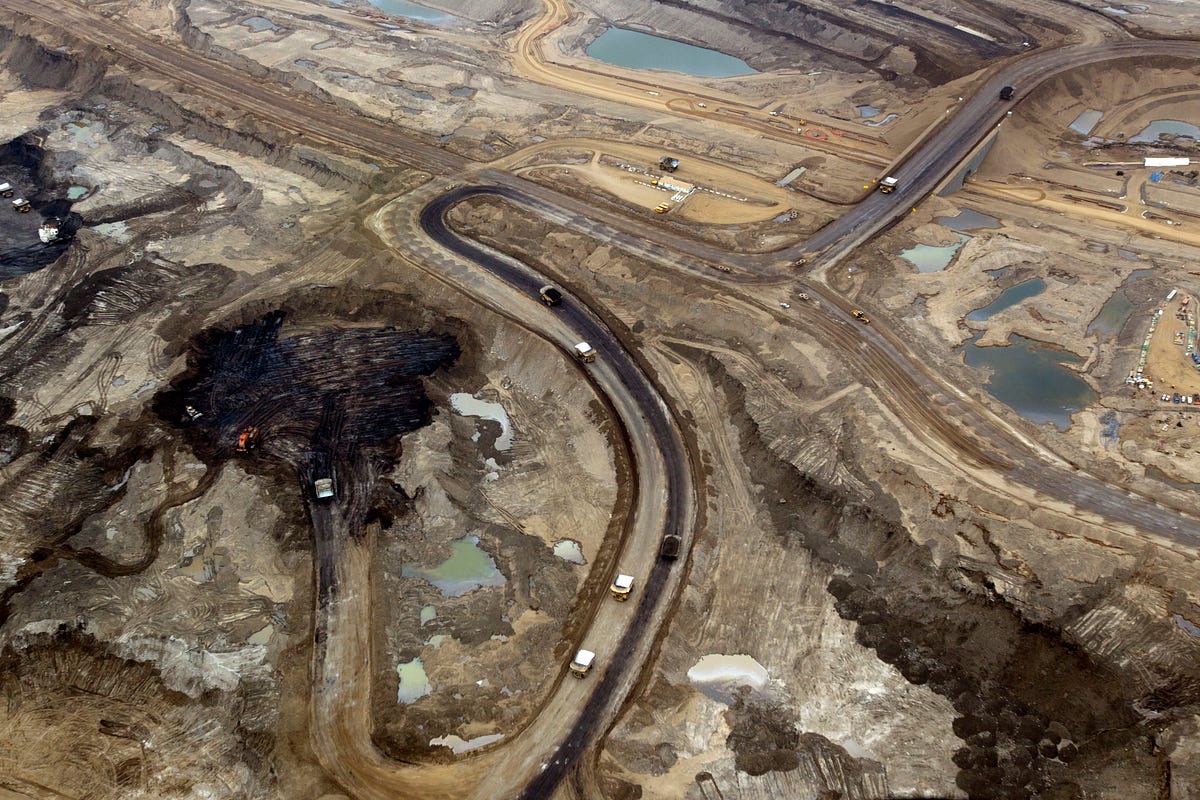
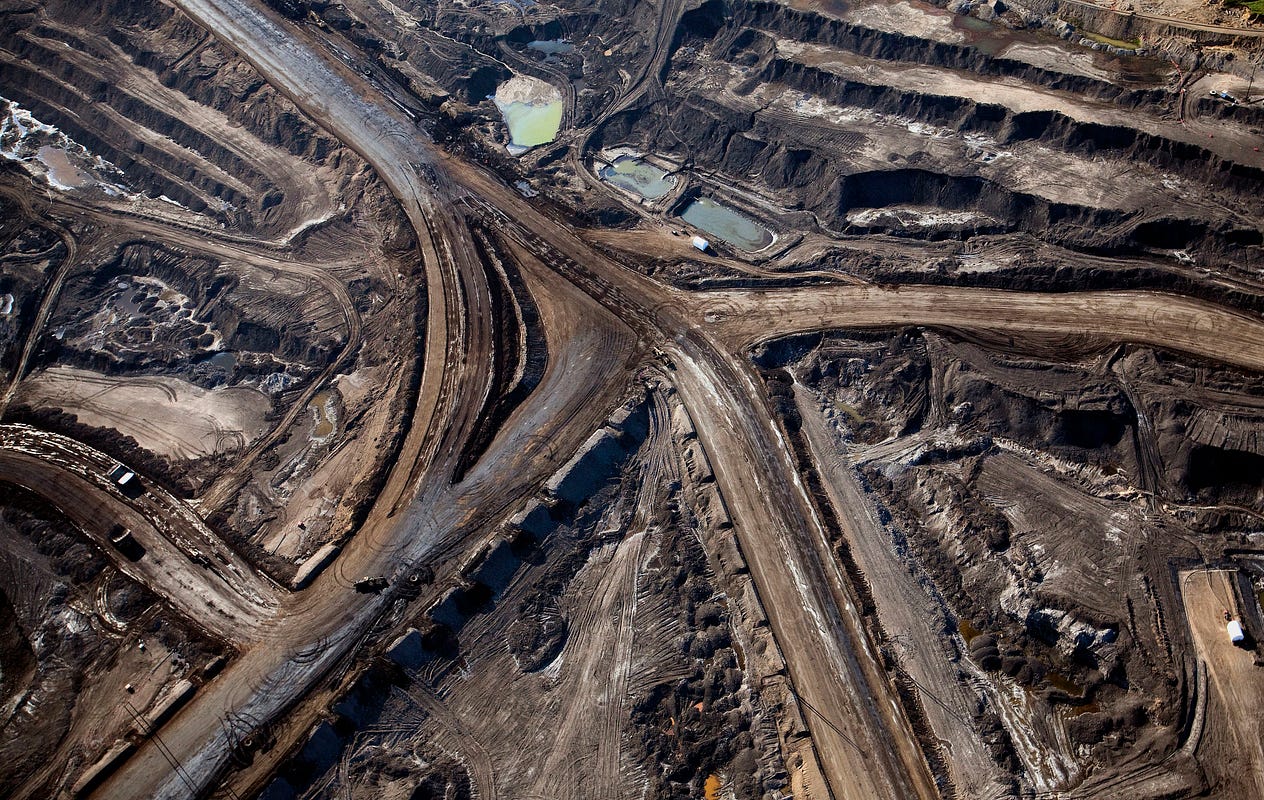
Petróleo, gás e mineração ameaçam quase um terço dos Patrimônios Naturais Mundiais (WWF)

01 Outubro 2015

Londres – 1º de outubro de 2015 – Quase um terço de todos os locais pertencentes à lista de Patrimônio Mundial Natural está ameaçado pela exploração de petróleo, gás e mineração. A informação foi divulgada no novo relatório “Protegendo um Excepcional Valor Natural”, produzido pelo WWF, Aviva Investors and Investec Asset Management, e que ressalta ainda o risco para os investidores que trabalham ou possuem a intenção de trabalhar com empresas que atuam com extração nesses lugares ou próximos a eles.

Patrimônios Mundiais Naturais (ou World Heritage Site, em inglês) são lugares de enorme valor natural, como o Grand Canyon, a Grande Barreira de Corais e a Reserva Selous Game, na Tanzânia. Cobrindo menos de 1% do planeta, eles contêm um enorme valor natural, como paisagens singulares e alguns dos animais mais raros da Terra, como gorilas da montanha, elefantes africanos, leopardos da neve, baleias e tartarugas marinhas.

De acordo com o relatório, os pontos de Patrimônio Mundial Natural estão em risco mais elevado do que jamais se pensou até então.

As ameaças estão relacionadas às operações em atividade ou à entrada de empresas para concessão de exploração de minérios, petróleo ou gás, e podem causar danos irreparáveis aos locais à biodiversidade, além de prejudicar as comunidades que tiram dali sua subsistência. No mundo todo, a maior ameaça está na África, onde o risco atinge 61% desses locais.

No relatório, os investidores estão sendo alertados dos riscos que correm ao apoiarem essas empresas – tanto riscos financeiros quanto de reputação. Em resumo, neste caso, há muito risco envolvido para um retorno que não é o suficiente.

O documento convida potenciais financiadores e apoiadores a:

•    Buscar informações se as empresas em que estão investindo, ou considerando investir, possuem concessões ou operações dentro de lugares considerados Patrimônios Mundiais Naturais;

•    Abordar diretamente companhias que trabalham nesses locais ou próximos a eles e as encorajar a mudar seus planos;

•    Considerar retirar o investimento nessas companhias se não forem tomadas medidas para sair desses lugares, e ainda divulgar o fim do apoio e as razões para isso.

O desenvolvimento alternativo e sustentável dos Patrimônios Naturais Mundiais é uma proposta muito melhor para resguardar tanto o futuro dos recursos naturais quanto o das comunidades locais, nacionais e globais. A preservação desses locais e de seus ecossistemas pode fornecer, a longo prazo, benefícios significativos, visto que:

•    93% dos Patrimônios Mundiais Naturais promovem o turismo e a recreação;
•    91% deles geram empregos;
•    84% deles contribuem para a educação.

O WWF convoca investidores a usar as evidências desse relatório para abordar as companhias de extração e encorajá-las a adotar compromissos significativos de “não atuação” e “não impacto” nos Patrimônios Mundiais Naturais, além de divulgar de forma proativa as operações em atividade (existentes, ou em vias de existir), dentro ou nas proximidades de Patrimônios Mundiais Naturais.

De acordo com o diretor-executivo do WWF do Reino Unido, David Nussbaum: “nós estamos indo aos confins da Terra em busca de mais recursos – incluindo minérios, petróleo e gás, que estão cada vez mais caros e difíceis de serem extraídos. Com isso, alguns dos lugares mais preciosos do mundo estão ameaçados por atividades industriais destrutivas que põem em perigo os valores pelos quais eles foram agraciados com o maior nível de reconhecimento do planeta”, comenta.

“Proteger esses locais únicos não é somente importante do ponto de vista ambiental, é crucial para o sustento e o futuro da população que depende deles. Os investidores têm uma oportunidade única assim como uma responsabilidade de administrar seu capital e desenhar nosso futuro”, completa Nussbaum.

Climate Debate Needs More Social Science, New Book Argues (Inside Science)

Image credit: Matt Jiggins via Flickr | http://bit.ly/1M6iSlZ

Physical scientists aren’t trained for all the political and moral issues.
Oct 2 2015 – 10:00am

By: Joel N. Shurkin, Contributor

(Inside Science) — The notion that Earth’s climate is changing—and that the threat to the world is serious—goes back to the 1980s, when a consensus began to form among climate scientists as temperatures began to rise noticeably. Thirty years later, that consensus is solid, yet climate change and the disruption it may cause remain divisive political issues, and millions of people remain unconvinced.

A new book argues that social scientists should play a greater role in helping natural scientists convince people of the reality of climate change and drive policy.

Climate Change and Society consists of 13 essays on why the debate needs the voices of social scientists, including political scientists, psychologists, anthropologists, and sociologists. It is edited by Riley E. Dunlap, professor of sociology at Oklahoma State University in Stillwater, and Robert J. Brulle, of Drexel University, professor of sociology and environmental science in Philadelphia.

Brulle said the physical scientists tend to frame climate change “as a technocratic and managerial problem.”

“Contrast that to the Pope,” he said.

Pope Francis sees it as a “political, moral issue that won’t be settled by a group of experts sitting in a room,” said Brulle, who emphasized that it will be settled by political process. Sociologists agree.

Sheila Jasanoff also agrees. She is the Pforzheimer professor of science and technology studies at the Harvard Kennedy School in Cambridge, Massachusetts, and did not participate in the book.

She said that understanding how people behave differently depending on their belief system is important.

“Denial is a somewhat mystical thing in people’s heads,” Jasanoff said. “One can bring tools of sociology of knowledge and belief—or social studies—to understand how commitments to particular statements of nature are linked with understanding how you would feel compelled to behave if nature were that way.”

Parts of the world where climate change is considered a result of the colonial past may resist taking drastic action at the behest of the former colonial rulers. Jasanoff said that governments will have to convince these groups that climate change is a present danger and attention must be paid.

Some who agree there is a threat are reluctant to advocate for drastic economic changes because they believe the world will be rescued by innovation and technology, Jasanoff said. Even among industrialized countries, views about the potential of technology differ.

Understanding these attitudes is what social scientists do, the book’s authors maintain.

“One of the most pressing contributions our field can make is to legitimate big questions, especially the ability of the current global economic system to take the steps needed to avoid catastrophic climate change,” editors of the book wrote.

The issue also is deeply embedded in the social science of economics and in the problem of “have” and “have-not” societies in consumerism and the economy.

For example, Bangladesh sits at sea level, and if the seas rise enough, nearly the entire country could disappear in the waters. Hurricane Katrina brought hints of the consequences of that reality to New Orleans, a city that now sits below sea level. The heaviest burden of the storm’s effects fell on the poor neighborhoods, Brulle said.

“The people of Bangladesh will suffer more than the people on the Upper East Side of Manhattan,” Brulle said. He said they have to be treated differently, which is not something many physical scientists studying the processes behind sea level rise have to factor into their research.

“Those of us engaged in the climate fight need valuable insight from political scientists and sociologists and psychologists and economists just as surely as from physicists,” agreed Bill McKibben, an environmentalist and author who is a scholar in residence at Middlebury College in Vermont. “It’s very clear carbon is warming the planet; it’s very unclear what mix of prods and preferences might nudge us to use much less.”


Joel Shurkin is a freelance writer in Baltimore. He was former science writer at the Philadelphia Inquirer and was part of the team that won a Pulitzer Prize for covering Three Mile Island. He has nine published books and is working on a tenth. He has taught journalism at Stanford University, the University of California at Santa Cruz and the University of Alaska Fairbanks. He tweets at @shurkin.

Aquecimento extremo trará ‘mortes em massa’ (Observatório do Clima)

aquecimentoGrupo de elite da climatologia quer que governos considerem risco de planeta esquentar de 4 a 7 graus Celsius, o que causaria o colapso da civilização; análise começa a ser feita no Brasil

Por Claudio Angelo, do OC –

30/09/2015

Um vídeo exibido a uma plateia pequena na última segunda-feira, em Brasília, mostrava sem eufemismos o que poderia acontecer com o planeta caso o aquecimento global saísse de controle e atingisse o patamar de 4oC a 7oC. Imagens de florestas queimando, lavouras mortas e inundações se sucediam enquanto uma narradora vaticinava “mortes em massa para pessoas que não tiverem ar-condicionado 24 horas por dia” e “migrações forçadas”. “Nos tornaremos parte de um ambiente extinto”, sentenciou. O fato de que a cidade passava por uma onda de calor, tendo registrado dias antes a maior temperatura desde sua fundação, ajudava a compor a atmosfera.

Num pequeno palco, em poltronas brancas, um grupo formado em sua maioria por homens de meia idade assistia à exibição. Entre eles estavam alguns membros da elite da ciência do clima, como Carlos Afonso Nobre e José Marengo, membros do Painel Intergovernamental sobre Mudanças Climáticas, e Sir David King, representante para Mudanças Climáticas do Reino Unido.

Até não muito tempo atrás, esses mesmos homens descontariam como alarmismo ou ficção científica as afirmações do vídeo. Hoje, são as pesquisas deles que embasam os cenários de apocalipse pintados ali.

Os cientistas reunidos em Brasília fazem parte de um grupo internacional reunido por David King em 2013 para tentar produzir uma avaliação de riscos de mudanças climáticas extremas. O trabalho foi iniciado nos EUA, na Índia, na China e no Reino Unido e agora começa a ser feito no Brasil. Ele parte do princípio de que a probabilidade de que o aquecimento da Terra ultrapasse 4oC é baixa, mas as consequências potenciais são tão dramáticas que os governos deveriam considerá-las na hora de tomar decisões sobre corte de emissões e adaptação.

“Trata-se de uma visão muito diferente da mudança climática”, afirmou King, um físico sul-africano que serviu durante anos como conselheiro-chefe para ciência do primeiro-ministro Tony Blair. “O IPCC fez um ótimo trabalho, mas é preciso uma avaliação do risco de que aconteça algo catastrófico ligado à mudança climática.”

Ele citou como exemplo os piores cenários de mudança climática projetados para a China: elevações do nível do mar que afetassem a costa leste do país, lar de 200 milhões de pessoas, quebras da safra de arroz – que têm de 5% a 10% de chance de ocorrer mesmo com elevações modestas na temperatura – e ondas de calor que estejam acima da capacidade fisiológica de adaptação do ser humano.

“Com mais de três dias com temperaturas superiores a 40oC e muita umidade você não consegue compensar o calor pela transpiração e morre”, afirmou King.

Com um aquecimento de 4oC a 7oC, estresses múltiplos podem acontecer de uma vez em várias partes do mundo. “Estamos olhando para perdas maciças de vidas”, afirmou King. “Seria o colapso da civilização.”

Rumo ao 4°C

Os modelos climáticos usados pelo IPCC projetam diferentes variações de temperatura de acordo com a concentração de gás carbônico na atmosfera. Esses cenários se chamam RCP, sigla em inglês para “trajetórias representativas de concentração”, e medem quanto muda o balanço de radiação do planeta, em watts por metro quadrado. Eles vão de 2.6 W/m2 – o cenário compatível com a manutenção do aquecimento na meta de 2oC, considerada pela ONU o limite “seguro” – a 8.5 w/m2, que é para onde o ritmo atual de emissões está levando a humanidade.

“O RCP 8.5 nos dá quase 100% de probabilidade de o aquecimento ultrapassar os 4oC no fim deste século”, afirmou Sir David King. E quais seriam as chances de mais de 7oC? Até o fim do século, baixas. “Eu sou velho, então estou bem. Mas tenho dois netos que vão viver até o fim do século, e eles vão querer ter netos também. Não ligamos para o futuro?”

Segundo Carlos Nobre, avaliar e prevenir riscos de um aquecimento extremo é como comprar um seguro residencial: mesmo com probabilidade baixa de um desastre, é algo que não dá para não fazer, porque os custos do impacto são basicamente impossíveis de manejar.

Para o Brasil, esses riscos são múltiplos: vão desde a redução em 30% da vazão dos principais rios até o comprometimento do agronegócio e extinção de espécies. Cenários regionais traçados a partir dos modelos do IPCC já apontam para aquecimentos de até 8oC em algumas regiões do país neste século, o que tornaria essas áreas essencialmente inabitáveis por longos períodos.

“Mesmo se limitarmos as emissões a 1 trilhão de toneladas de CO2, [limite compatível com os 2oC] ainda podemos ultrapassar os 3oC”, afirmou o cientista, atualmente presidente da Capes (Coordenação de Aperfeiçoamento de Pessoal de Nível Superior).

Segundo ele, não há outro caminho a tomar que não seja limitar as concentrações de CO2 na atmosfera a 350 partes por milhão. Ocorre que já ultrapassamos as 400 partes por milhão em 2014, e os compromissos registrados pelos países para o acordo de Paris não são capazes nem mesmo de garantir o limite te 1 trilhão de toneladas.

Única mulher do painel, Beatriz Oliveira, da Fiocruz, apontou o risco de muita gente no Brasil literalmente morrer de calor, em especial nas regiões Norte e Nordeste. “Você poderia ficar exposto e realizar atividades externas no máximo por 30 minutos. O resto do dia teria de passar no ar-condicionado”, disse.

Questionada pela plateia ao final do evento, a pesquisadora mencionou um único lado positivo do aquecimento extremo: a redução na incidência de doenças transmitidas por insetos, como a dengue. “Nem o mosquito sobrevive”, disse. (Observatório do Clima/ #Envolverde)

* Publicado originalmente no site Observatório do Clima.

Exxon’s Own Research Confirmed Fossil Fuels’ Role in Global Warming Decades Ago (Inside Climate News)

Top executives were warned of possible catastrophe from greenhouse effect, then led efforts to block solutions.

By Neela Banerjee, Lisa Song and David Hasemyer

Sep 16, 2015

Exxon Experiment

Exxon’s Richard Werthamer (right) and Edward Garvey (left) are aboard the company’s Esso Atlantic tanker working on a project to measure the carbon dioxide levels in the ocean and atmosphere. The project ran from 1979 to 1982. (Credit: Richard Werthamer)

“In the first place, there is general scientific agreement that the most likely manner in which mankind is influencing the global climate is through carbon dioxide release from the burning of fossil fuels,” Black told Exxon’s Management Committee, according to a written version he recorded later.

It was July 1977 when Exxon’s leaders received this blunt assessment, well before most of the world had heard of the looming climate crisis.

A year later, Black, a top technical expert in Exxon’s Research & Engineering division, took an updated version of his presentation to a broader audience. He warned Exxon scientists and managers that independent researchers estimated a doubling of the carbon dioxide (CO2) concentration in the atmosphere would increase average global temperatures by 2 to 3 degrees Celsius (4 to 5 degrees Fahrenheit), and as much as 10 degrees Celsius (18 degrees Fahrenheit) at the poles.  Rainfall might get heavier in some regions, and other places might turn to desert.

“Some countries would benefit but others would have their agricultural output reduced or destroyed,” Black said, in the written summary of his 1978 talk.

His presentations reflected uncertainty running through scientific circles about the details of climate change, such as the role the oceans played in absorbing emissions. Still, Black estimated quick action was needed. “Present thinking,” he wrote in the 1978 summary, “holds that man has a time window of five to ten years before the need for hard decisions regarding changes in energy strategies might become critical.”

Exxon responded swiftly. Within months the company launched its own extraordinary research into carbon dioxide from fossil fuels and its impact on the earth. Exxon’s ambitious program included both empirical CO2 sampling and rigorous climate modeling. It assembled a brain trust that would spend more than a decade deepening the company’s understanding of an environmental problem that posed an existential threat to the oil business.

Then, toward the end of the 1980s, Exxon curtailed its carbon dioxide research. In the decades that followed, Exxon worked instead at the forefront of climate denial. It put its muscle behind efforts to manufacture doubt about the reality of global warming its own scientists had once confirmed. It lobbied to block federal and international action to control greenhouse gas emissions. It helped to erect a vast edifice of misinformation that stands to this day.

This untold chapter in Exxon’s history, when one of the world’s largest energy companies worked to understand the damage caused by fossil fuels, stems from an eight-month investigation by InsideClimate News. ICN’s reporters interviewed former Exxon employees, scientists, and federal officials, and consulted hundreds of pages of internal Exxon documents, many of them written between 1977 and 1986, during the heyday of Exxon’s innovative climate research program. ICN combed through thousands of documents from archives including those held at the University of Texas-Austin, the Massachusetts Institute of Technology and the American Association for the Advancement of Science.

The documents record budget requests, research priorities, and debates over findings, and reveal the arc of Exxon’s internal attitudes and work on climate and how much attention the results received.

Of particular significance was a project launched in August 1979, when the company outfitted a supertanker with custom-made instruments. The project’s mission was to sample carbon dioxide in the air and ocean along a route from the Gulf of Mexico to the Persian Gulf.

In 1980, Exxon assembled a team of climate modelers who investigated fundamental questions about the climate’s sensitivity to the buildup  of carbon dioxide in the air. Working with university scientists and the U.S. Department of Energy, Exxon strove to be on the cutting edge of inquiry into what was then called the greenhouse effect.

Exxon’s early determination to understand rising carbon dioxide levels grew out of a corporate culture of farsightedness, former employees said. They described a company that continuously examined risks to its bottom line, including environmental factors. In the 1970s, Exxon modeled its research division after Bell Labs, staffing it with highly accomplished scientists and engineers.

In written responses to questions about the history of its research, ExxonMobil spokesman Richard D. Keil said that “from the time that climate change first emerged as a topic for scientific study and analysis in the late 1970s, ExxonMobil has committed itself to scientific, fact-based analysis of this important issue.”

“At all times,” he said, “the opinions and conclusions of our scientists and researchers on this topic have been solidly within the mainstream of the consensus scientific opinion of the day and our work has been guided by an overarching principle to follow where the science leads. The risk of climate change is real and warrants action.”

At the outset of its climate investigations almost four decades ago, many Exxon executives, middle managers and scientists armed themselves with a sense of urgency and mission.

One manager at Exxon Research, Harold N. Weinberg, shared his “grandiose thoughts” about Exxon’s potential role in climate research in a March 1978 internal company memorandum that read: “This may be the kind of opportunity that we are looking for to have Exxon technology, management and leadership resources put into the context of a project aimed at benefitting mankind.”

His sentiment was echoed by Henry Shaw, the scientist leading the company’s nascent carbon dioxide research effort.

“Exxon must develop a credible scientific team that can critically evaluate the information generated on the subject and be able to carry bad news, if any, to the corporation,” Shaw wrote to his boss Edward E. David, the executive director of Exxon Research and Engineering in 1978. “This team must be recognized for its excellence in the scientific community, the government, and internally by Exxon management.”

Irreversible and Catastrophic

Exxon budgeted more than $1 million over three years for the tanker project to measure how quickly the oceans were taking in CO2. It was a small fraction of Exxon Research’s annual $300 million budget, but the question the scientists tackled was one of the biggest uncertainties in climate science: how quickly could the deep oceans absorb atmospheric CO2? If Exxon could pinpoint the answer, it would know how long it had before CO2 accumulation in the atmosphere could force a transition away from fossil fuels.

Exxon also hired scientists and mathematicians to develop better climate models and publish research results in peer-reviewed journals. By 1982, the company’s own scientists, collaborating with outside researchers, created rigorous climate models – computer programs that simulate the workings of the climate to assess the impact of emissions on global temperatures. They confirmed an emerging scientific consensus that warming could be even worse than Black had warned five years earlier.

Esso Atlantic

Between 1979 and 1982, Exxon researchers sampled carbon dioxide levels aboard the company’s Esso Atlantic tanker (shown here).

Exxon’s research laid the groundwork for a 1982 corporate primer on carbon dioxide and climate change prepared by its environmental affairs office. Marked “not to be distributed externally,” it contained information that “has been given wide circulation to Exxon management.” In it, the company recognized, despite the many lingering unknowns, that heading off global warming “would require major reductions in fossil fuel combustion.”

Unless that happened, “there are some potentially catastrophic events that must be considered,” the primer said, citing independent experts. “Once the effects are measurable, they might not be reversible.”

The Certainty of Uncertainty

Like others in the scientific community, Exxon researchers acknowledged the uncertainties surrounding many aspects of climate science, especially in the area of forecasting models. But they saw those uncertainties as questions they wanted to address, not an excuse to dismiss what was increasingly understood.

“Models are controversial,” Roger Cohen, head of theoretical sciences at Exxon Corporate Research Laboratories, and his colleague, Richard Werthamer, senior technology advisor at Exxon Corporation, wrote in a May 1980 status report on Exxon’s climate modeling program. “Therefore, there are research opportunities for us.”

When Exxon’s researchers confirmed information the company might find troubling, they did not sweep it under the rug.

“Over the past several years a clear scientific consensus has emerged,” Cohen wrote in September 1982, reporting on Exxon’s own analysis of climate models. It was that a doubling of the carbon dioxide blanket in the atmosphere would produce average global warming of 3 degrees Celsius, plus or minus 1.5 degrees C (equal to 5 degrees Fahrenheit plus or minus 1.7 degrees F).

“There is unanimous agreement in the scientific community that a temperature increase of this magnitude would bring about significant changes in the earth’s climate,” he wrote, “including rainfall distribution and alterations in the biosphere.”

He warned that publication of the company’s conclusions might attract media attention because of the “connection between Exxon’s major business and the role of fossil fuel combustion in contributing to the increase of atmospheric CO2.”

Nevertheless, he recommended publication.

Our “ethical responsibility is to permit the publication of our research in the scientific literature,” Cohen wrote. “Indeed, to do otherwise would be a breach of Exxon’s public position and ethical credo on honesty and integrity.”

Exxon followed his advice. Between 1983 and 1984, its researchers published their results in at least three peer-reviewed papers in Journal of the Atmospheric Sciences and an American Geophysical Union monograph.

David, the head of Exxon Research, told a global warming conference financed by Exxon in October 1982 that “few people doubt that the world has entered an energy transition away from dependence upon fossil fuels and toward some mix of renewable resources that will not pose problems of COaccumulation.” The only question, he said, was how fast this would happen.

But the challenge did not daunt him. “I’m generally upbeat about the chances of coming through this most adventurous of all human experiments with the ecosystem,” David said.

Exxon considered itself unique among corporations for its carbon dioxide and climate research.  The company boasted in a January 1981 report, “Scoping Study on CO2,” that no other company appeared to be conducting similar in-house research into carbon dioxide, and it swiftly gained a reputation among outsiders for genuine expertise.

“We are very pleased with Exxon’s research intentions related to the CO2 question. This represents very responsible action, which we hope will serve as a model for research contributions from the corporate sector,” said David Slade, manager of the federal government’s carbon dioxide research program at the Energy Department, in a May 1979 letter to Shaw. “This is truly a national and international service.”

Business Imperatives

In the early 1980s Exxon researchers often repeated that unbiased science would give it legitimacy in helping shape climate-related laws that would affect its profitability.

Still, corporate executives remained cautious about what they told Exxon’s shareholders about global warming and the role petroleum played in causing it, a review of federal filings shows. The company did not elaborate on the carbon problem in annual reports filed with securities regulators during the height of its CO2 research.

Nor did it mention in those filings that concern over CO2 was beginning to influence business decisions it was facing.

Throughout the 1980s, the company was worried about developing an enormous gas field off the coast of Indonesia because of the vast amount of CO2 the unusual reservoir would release.

Exxon was also concerned about reports that synthetic oil made from coal, tar sands and oil shales could significantly boost CO2 emissions. The company was banking on synfuels to meet growing demand for energy in the future, in a world it believed was running out of conventional oil.

In the mid-1980s, after an unexpected oil glut caused prices to collapse, Exxon cut its staff deeply to save money, including many working on climate. But the climate change problem remained, and it was becoming a more prominent part of the political landscape.

“Global Warming Has Begun, Expert Tells Senate,” declared the headline of a June 1988 New York Times article describing the Congressional testimony of NASA’s James Hansen, a leading climate expert. Hansen’s statements compelled Sen. Tim Wirth (D-Colo.) to declare during the hearing that “Congress must begin to consider how we are going to slow or halt that warming trend.”

With alarm bells suddenly ringing, Exxon started financing efforts to amplify doubt about the state of climate science.

Exxon helped to found and lead the Global Climate Coalition, an alliance of some of the world’s largest companies seeking to halt government efforts to curb fossil fuel emissions. Exxon used the American Petroleum Institute, right-wing think tanks, campaign contributions and its own lobbying to push a narrative that climate science was too uncertain to necessitate cuts in fossil fuel emissions.

As the international community moved in 1997 to take a first step in curbing emissions with the Kyoto Protocol, Exxon’s chairman and CEO Lee Raymond argued to stop it.

“Let’s agree there’s a lot we really don’t know about how climate will change in the 21st century and beyond,” Raymond said in his speech before the World Petroleum Congress in Beijing in October 1997.

“We need to understand the issue better, and fortunately, we have time,” he said. “It is highly unlikely that the temperature in the middle of the next century will be significantly affected whether policies are enacted now or 20 years from now.”

Over the years, several Exxon scientists who had confirmed the climate consensus during its early research, including Cohen and David, took Raymond’s side, publishing views that ran contrary to the scientific mainstream.

Paying the Price

Exxon’s about-face on climate change earned the scorn of the scientific establishment it had once courted.

In 2006, the Royal Society, the United Kingdom’s science academy, sent a harsh letter to Exxon accusing it of being “inaccurate and misleading” on the question of climate uncertainty. Bob Ward, the Academy’s senior manager for policy communication, demanded that Exxon stop giving money to dozens of organizations he said were actively distorting the science.

In 2008, under mounting pressure from activist shareholders, the company announced it would end support for some prominent groups such as those Ward had identified.

Still, the millions of dollars Exxon had spent since the 1990s on climate change deniers had long surpassed what it had once invested in its path-breaking climate science aboard the Esso Atlantic.

“They spent so much money and they were the only company that did this kind of research as far as I know,” Edward Garvey, who was a key researcher on Exxon’s oil tanker project, said in a recent interview with InsideClimate News and Frontline. “That was an opportunity not just to get a place at the table, but to lead, in many respects, some of the discussion. And the fact that they chose not to do that into the future is a sad point.”

Michael Mann, director of the Earth System Science Center at Pennsylvania State University, who has been a frequent target of climate deniers, said that inaction, just like actions, have consequences. When he recently spoke to InsideClimate News, he was unaware of this chapter in Exxon’s history.

“All it would’ve taken is for one prominent fossil fuel CEO to know this was about more than just shareholder profits, and a question about our legacy,” he said. “But now because of the cost of inaction—what I call the ‘procrastination penalty’—we face a far more uphill battle.”

Part II, coming on September 17, will further examine Exxon’s early climate research.

ICN staff members Zahra Hirji, Paul Horn, Naveena Sadasivam, Sabrina Shankman and Alexander Wood also contributed to this report.

Exxon and Climate Change

The fossil-fuel industry’s campaign to mislead the American people (The Washington Post)

 May 29

Sheldon Whitehouse, a Democrat, represents Rhode Island in the Senate.

Fossil fuel companies and their allies are funding a massive and sophisticated campaign to mislead the American people about the environmental harm caused by carbon pollution.

Their activities are often compared to those of Big Tobacco denying the health dangers of smoking. Big Tobacco’s denial scheme was ultimately found by a federal judge to have amounted to a racketeering enterprise.

The Big Tobacco playbook looked something like this: (1) pay scientists to produce studies defending your product; (2) develop an intricate web of PR experts and front groups to spread doubt about the real science; (3) relentlessly attack your opponents.

Thankfully, the government had a playbook, too: the Racketeer Influenced and Corrupt Organizations Act, or RICO. In 1999, the Justice Department filed a civil RICO lawsuit against the major tobacco companies and their associated industry groups, alleging that the companies “engaged in and executed — and continue to engage in and execute — a massive 50-year scheme to defraud the public, including consumers of cigarettes, in violation of RICO.”

Tobacco spent millions of dollars and years of litigation fighting the government. But finally, through the discovery process, government lawyers were able to peel back the layers of deceit and denial and see what the tobacco companies really knew all along about cigarettes.

In 2006, Judge Gladys Kessler of the U.S. District Court for the District of Columbia decided that the tobacco companies’ fraudulent campaign amounted to a racketeering enterprise. According to the court: “Defendants coordinated significant aspects of their public relations, scientific, legal, and marketing activity in furtherance of a shared objective — to . . . maximize industry profits by preserving and expanding the market for cigarettes through a scheme to deceive the public.”

The parallels between what the tobacco industry did and what the fossil fuel industry is doing now are striking.

In the case of fossil fuels, just as with tobacco, the industry joined together in a common enterprise and coordinated strategy. In 1998, the Clinton administration was building support for international climate action under the Kyoto Protocol. The fossil fuel industry, its trade associations and the conservative policy institutes that often do the industry’s dirty work met at the Washington office of the American Petroleum Institute. A memo from that meeting that was leaked to the New York Times documented their plans for a multimillion-dollar public relations campaign to undermine climate science and to raise “questions among those (e.g. Congress) who chart the future U.S. course on global climate change.”

The shape of the fossil fuel industry’s denial operation has been documented by, among others, Drexel University professor Robert Brulle. In a 2013 paper published in the journal Climatic Change, Brulle described a complex network of organizations and funding that appears designed to obscure the fossil fuel industry’s fingerprints. To quote directly from Brulle’s report, it was “a deliberate and organized effort to misdirect the public discussion and distort the public’s understanding of climate.” That sounds a lot like Kessler’s findings in the tobacco racketeering case.

The coordinated tactics of the climate denial network, Brulle’s report states, “span a wide range of activities, including political lobbying, contributions to political candidates, and a large number of communication and media efforts that aim at undermining climate science.” Compare that again to the findings in the tobacco case.

The tobacco industry was proved to have conducted research that showed the direct opposite of what the industry stated publicly — namely, that tobacco use had serious health effects. Civil discovery would reveal whether and to what extent the fossil fuel industry has crossed this same line. We do know that it has funded research that — to its benefit — directly contradicts the vast majority of peer-reviewed climate science. One scientist who consistently published papers downplaying the role of carbon emissions in climate change, Willie Soon, reportedly received more than half of his funding from oil and electric utility interests: more than $1.2 million.

To be clear: I don’t know whether the fossil fuel industry and its allies engaged in the same kind of racketeering activity as the tobacco industry. We don’t have enough information to make that conclusion. Perhaps it’s all smoke and no fire. But there’s an awful lot of smoke.

*   *   *

The Long Tale of Exxon and Climate Change (Inside Climate News)

ExxonTigerTimeline1058px

How Climate Change is Behind the Surge of Migrants to Europe (Time) + other related articles

Even as Europe wrestles over how to absorb the migrant tide, experts warn that the flood is likely to get worse as climate change becomes a driving factor.

More than 10,000 migrants and refugees traveled to Western Europe via Hungary over the weekend, fleeing conflict-ravaged and impoverished homelands in the hope of finding a more secure life abroad. Even as Europe wrestles over how to absorb the new arrivals, human rights activists and migration experts warn that the movement is not likely to slow anytime soon. Intractable wars, terror and poverty in the Middle East and beyond will continue to drive the surge. One additional factor, say scientists, is likely to make it even worse: climate change.

From 2006 to 2011, large swaths of Syria suffered an extreme drought that, according to climatologists, was exacerbated by climate change. The drought lead to increased poverty and relocation to urban areas, according to a recent report by the Proceedings of the National Academy of Sciences and cited by Scientific American. “That drought, in addition to its mismanagement by the Assad regime, contributed to the displacement of two million in Syria,” says Francesco Femia, of the Washington, D.C.-based Center for Climate and Security. “That internal displacement may have contributed to the social unrest that precipitated the civil war. Which generated the refugee flows into Europe.” And what happened in Syria, he says, is likely to play out elsewhere going forward.

Across the Middle East and Africa climate change, according to climatologists at the U.S. Department of Defense-funded Strauss Center project on Climate Change and African Political Stability in Texas, has already affected weather. These changes have contributed to more frequent natural disasters like flooding and drought. Agricultural land is turning to desert and heat waves are killing of crops and grazing animals. Over the long term, changing weather patterns are likely to drive farmers, fishermen and herders away from affected areas, according to Femia’s Center for Climate and Security, and into urban centers — as has already happened in Syria. Both the Pentagon, which calls climate change a “threat multiplier” and U.S. Presidential candidate Hillary Clinton have warned of “water wars,” in which rival governments or militias fight over declining resources, sending even greater waves of migrants in search of security and sustenance. On Aug. 31, Secretary of State John Kerry warned that climate change could create a new class of migrants, what he called “climate refugees” at a conference on climate change conference in Anchorage, Alaska. “You think migration is a challenge to Europe today because of extremism, wait until you see what happens when there’s an absence of water, an absence of food, or one tribe fighting against another for mere survival,” he said.

Security analysts say they are already seeing the impact, particularly in migration patterns from northern Africa and the Sahel region, which is the band of farmland just below the Sahara desert. “All the indicators seem to fairly solidly convey that climate change — desertification and lack of water, or floods, are massively contributing to human mobility,” says Michael Werz, a Senior Fellow at the Center for American Progress policy group in Washington, D.C. Syrians and Afghans may make up the largest number of refugees flooding into Europe right now, but Africans from the Sahel are not far behind. “No one is saying ‘I’d better pack my stuff and go to Europe because I expect CO2 emissions to rise,’” he says. But the knock on effects — failed crops, ailing livestock and localized conflicts over resources—are already driving residents of the Sahel northward to flee poverty. Libya’s collapse has opened the doors wide for migrants, and the smugglers who ship them across the Mediterranean to Europe.

As Europeans debate over what to do about the influx of migrants, there has been a call for an international effort to stabilize the regions from which they come. But it’s not enough to talk about ending conflict, says Femia. “A lot more attention has to be paid to putting more resources into climate adaptation and water security and food security, so migration doesn’t become the primary option.” Tackling the problem at its source doesn’t mean ending conflict, but stopping it before it starts. And that means addressing climate change as well.

The European Migrant Crisis Is A Nightmare. Climate Change Will Make It Worse (Huff Post)

Hundreds of thousands of migrants are seeking refuge in Europe, but millions more will be displaced as the climate warms.

<span class='image-component__caption' itemprop="caption">2-year-old Aliou Seyni Diallo eats dry couscous given to him by a neighbor, after he collapsed in tears of hunger in the village of Goudoude Diobe, in the Matam region of northeastern Senegal, Tuesday, May 1, 2012.</span>

CREDIT: REBECCA BLACKWELL/ASSOCIATED PRESS. 2-year-old Aliou Seyni Diallo eats dry couscous given to him by a neighbor, after he collapsed in tears of hunger in the village of Goudoude Diobe, in the Matam region of northeastern Senegal, Tuesday, May 1, 2012.

The hundreds of thousands of migrants arriving in Europe or dying on the way to its shores could be a harbinger of things to come, researchers and policymakers warn, because a potentially greater driver of displacement looms on the horizon: climate change.

As U.S. Secretary of State John Kerry warned at a recent State Department-led conference on climate change in the Arctic, the scenes of chaos and heartbreak in Europe will be repeated globally unless the world acts to mitigate climate change.

“Wait until you see what happens when there’s an absence of water, an absence of food, or one tribe fighting against another for mere survival,” Kerry said.

World leaders have long warned that natural disasters and degraded environments linked to climate change could — indeed, have already started to — drive people from their homes. UN High Commissioner for Refugees António Guterres declared in 2009 that climate change will create millions of refugees and internally displaced populations. “Not only states, but cultures and identities will be drowned,” Guterres said.

Displacement is already happening in some parts of the world. Almost 28 million people on average were displaced by environmental disasters every year between 2008 and 2013, according to the Internal Displacement Monitoring Center — roughly three times as many as were forced from their homes by conflict and violence.

It’s difficult to predict exactly how many more may be displaced as climate change progresses. “When global warming takes hold there could be as many as 200 million people overtaken” by the consequences, professor Norman Myers of Oxford University argued in a 2005 paper. For comparison’s sake, 350,000 migrants sought entry into the  European Union in 2014, the International Organization for Migration estimated.

Few countries or international organizations are prepared to deal with environmentally displaced people. As a 2011 report from the European Parliament’s Directorate-General for Internal Policies detailed, there is no specific legal protection for “environmentally displaced individuals” beyond temporary measures that would prove insufficient if the environmental damage to their homeland endured.

The UN has a non-binding agreement on internal displacement from 1998 that includes provisions for people fleeing natural disasters, but it is not obligatory and includes no penalties for countries that ignore it, as Roger Zetter, a professor emeritus in refugee studies at Oxford, told The Huffington Post. The portions addressing natural disasters focus on storms, not the more complex and slow-onset effects of climate change.

Myers’ sensational prediction of hundreds of millions of climate change refugees has come under fire in the years since its 2005 publication. “It’s a very contentious overestimate,” Zetter said. “It’s a back-of-the-envelope figure.”

It’s difficult, if not impossible, to get data on the number of current migrants who left their homes primarily because of climate change. For most, environmental degradation is one factor among many, Zetter and other experts cautioned. Nevertheless, climate change-related environmental impacts will present “very significant challenges,” Zetter said.

“What climate change and displacement do is present developmental problems for countries that are already struggling,” he explained. “If you’ve got to start spending more and more money on flood relief channels or earthquake-proof buildings or increasing huge water transfer programs to cope with depleting aquifers, there’s no question that it will add a huge additional financial burden and make planning and development strategies more difficult.” 

And for some countries, climate change poses an immediate and very real threat — countries like the small island states threatened by rising seas. “If there’s no land, they’ll have to leave,” Zetter said.

<span class='image-component__caption' itemprop="caption">In this March 30, 2004 file photo, a man fishes on a bridge on Tarawa atoll, Kiribati. Fearing that climate change could wipe out their entire Pacific archipelago, the leaders of Kiribati are considering an unusual backup plan: moving the populace to Fiji.</span>

CREDIT: RICHARD VOGEL/ASSOCIATED PRESS. In this March 30, 2004 file photo, a man fishes on a bridge on Tarawa atoll, Kiribati. Fearing that climate change could wipe out their entire Pacific archipelago, the leaders of Kiribati are considering an unusual backup plan: moving the populace to Fiji.

That includes places like Kiribati, a country made up of 33 islands in the remote South Pacific. Kiribati will be among the first countries to vanish beneath the rising ocean, possibly as soon as the end of this century. But long before then, its atolls and reef islands will be uninhabitable for their 103,000 residents if a violent storm comes crashing through, or if the ocean seeps into their already inadequate supply of fresh groundwater. Half of the country’s citizens live on the Tarawa Atoll, a crescent of white sand two-thirds of a mile across whose highest point is just 10 feet above the ocean.

Operating on the unfortunate assumption that the sea will swallow the country, the government of Kiribati purchased 6,000 acres of land in Fiji last year, in case they need to uproot an entire people and put them somewhere else.

Major storms and flooding already cause tremendous displacement — almost 28 million per year on average, according to the Internal Displacement Monitoring Center. Many more are affected, but not necessarily displaced — an average of 140 million people yearly, the International Panel on Climate Change reports. Scientists expect climate change to make violent storms like Typhoon Haiyan, which forced a million people to flee their homes in the Philippines in 2013, stronger and more frequent.

Typhoons and monsoon floods hit people hard and fast, forcing them to literally flee for their lives. Scientists call those rapid-onset climate events. But there are also slow-onset climate events like drought, desertification and sea level rise.

These slow-moving changes are “much more difficult to relate to mobility patterns,” Albert Kraler, a program manager for research at the International Center for Migration Policy Development in Vienna, told HuffPost. Often, environmental changes are just “one of the factors informing people’s migration choices.”

Despite the difficulty in determining exact numbers, the United Nations Environment Program concluded in a 2011 study on the Sahel, a semi-arid belt across northern Africa, that “migration occurs when livelihoods cannot be maintained, especially when agriculture or herding is severely affected by environmental degradation or extreme events.”

The changes in the Sahel are perhaps the most obvious example of slow-onset events. The UN dubbed the region “ground zero” for climate change “due to its extreme climatic conditions and highly vulnerable population.” Its arid climate and infrequent rain are getting worse, and scientists blame climate change. The rain is less predictable than it used to be — sometimes there is too much and sometimes nowhere near enough. For almost everyone in the Sahel, food has become more expensive and scarcer. As a result, 30 percent of households in Burkina Faso, in the heart of the Sahel, have relocated in the last 20 years because they could no longer survive, The Guardian reported in 2013.

People have always migrated across this region. But these days, “the traditional temporary and seasonal migration patterns of many farmers, herders and fishermen in the region are increasingly being replaced by a more permanent shift southward and to urban areas,” UNEP reports. “Nearly half of the West African population now lives in largely overcrowded coastal cities, including 12 townships of over one million inhabitants along the coastline from Senegal to Nigeria.”

The population of the Sahel region is expected to skyrocket over the next few decades. Competition between tribes and ethnic groups, pastoralists, farmers and fishermen over ever-scarcer natural resources, which has existed for as long as people have lived there, is becoming intense. And then there’s Boko Haram. Its fighters have set up camps on islands emerging out of Lake Chad, a once-majestic expanse of fresh water that in the past supported millions of people in the heart of the Sahel. But the lake has lost 90 percent of its area since the 1960s. Now, there’s a militant Muslim fundamentalist insurgency taking hold amid an ongoing environmental disaster.

<span class='image-component__caption' itemprop="caption"><!-- [if gte mso 9]>

<![endif]--> <!-- [if gte mso 9]>

  Normal
  0

  false
  false
  false

  EN-US
  JA
  X-NONE

<![endif]--><!-- [if gte mso 9]>

<![endif]--> <!-- [if gte mso 10]>

 /* Style Definitions */
table.MsoNormalTable
	{mso-style-name:"Table Normal";
	mso-tstyle-rowband-size:0;
	mso-tstyle-colband-size:0;
	mso-style-noshow:yes;
	mso-style-priority:99;
	mso-style-parent:"";
	mso-padding-alt:0in 5.4pt 0in 5.4pt;
	mso-para-margin:0in;
	mso-para-margin-bottom:.0001pt;
	mso-pagination:widow-orphan;
	font-size:12.0pt;
	font-family:Cambria;
	mso-ascii-font-family:Cambria;
	mso-ascii-theme-font:minor-latin;
	mso-hansi-font-family:Cambria;
	mso-hansi-theme-font:minor-latin;}

<![endif]--> <!--StartFragment--> <!--EndFragment-->
A dead donkey lies partially covered by the wind-swept sand near the village of Dala in the Sahel belt of Chad, Friday, April 20, 2012. UNICEF estimates that 127,000 children under five in Chad's Sahel belt will require lifesaving treatment for severe acute malnutrition this year, with an estimated 1 million expected throughout the wider Sahel region. The organization says the current food and nutrition crisis stems from scarce rainfalls in 2011, which caused poor harvests and livestock production.</span>

CREDIT: BEN CURTIS/ASSOCIATED PRESS. A dead donkey lies partially covered by the wind-swept sand near the village of Dala in the Sahel belt of Chad, Friday, April 20, 2012. UNICEF estimates that 127,000 children under five in Chad’s Sahel belt will require lifesaving treatment for severe acute malnutrition this year, with an estimated 1 million expected throughout the wider Sahel region. The organization says the current food and nutrition crisis stems from scarce rainfalls in 2011, which caused poor harvests and livestock production.

Climate change is also a factor in the worsening storms and environmental degradation of coastal South Asia — factors that, when combined with mismanagement and political dysfunction, are putting millions of people at risk. Some have already started to migrate because their ways of living are becoming impossible. In the Indus delta in Pakistan, entire villages have been wiped off the map. Bangladeshis and Indians in the Sundarbans, a vast mangrove forest where the Ganges meets the sea, are heading inland, away from the rising ocean and the increasingly saline farmland.

Bangladesh is expected to be the largest single source of climate refugees, with up to 30 million people at risk. Many end up in slums in cities like Dhaka, Bangladesh’s capital and the world’s fastest-growing megacity. Some 70 percent of Dhaka’s slum dwellers moved there because of environmental degradation, according to the International Organization for Migration.

Migrants and refugees across the world, driven by rapid-onset natural disasters or by a complex combination of the more slow-moving effects of a changing climate, are already putting immense strain on the countries and cities they end up in. A lot of the time locals aren’t happy to see them, and many governments have been caught unprepared and unwilling to take them in.

Already, migrants and refugees across the world are already putting immense strain on the countries and cities where they end up.

In Europe, Hungary is putting up a fence to keep migrants and refugees out. “We don’t want to [live together with Muslims],” Hungary’s prime minister Victor Orban said on Thursday, “and I think we have a right to decide that we do not want a large number of Muslim people in our country.”

<span class='image-component__caption' itemprop="caption"><!-- [if gte mso 9]>

<![endif]--> <!-- [if gte mso 9]>

  Normal
  0

  false
  false
  false

  EN-US
  JA
  X-NONE

<![endif]--><!-- [if gte mso 9]>

<![endif]--> <!-- [if gte mso 10]>

 /* Style Definitions */
table.MsoNormalTable
	{mso-style-name:"Table Normal";
	mso-tstyle-rowband-size:0;
	mso-tstyle-colband-size:0;
	mso-style-noshow:yes;
	mso-style-priority:99;
	mso-style-parent:"";
	mso-padding-alt:0in 5.4pt 0in 5.4pt;
	mso-para-margin:0in;
	mso-para-margin-bottom:.0001pt;
	mso-pagination:widow-orphan;
	font-size:12.0pt;
	font-family:Cambria;
	mso-ascii-font-family:Cambria;
	mso-ascii-theme-font:minor-latin;
	mso-hansi-font-family:Cambria;
	mso-hansi-theme-font:minor-latin;}

<![endif]--> <!--StartFragment--> <!--EndFragment-->
Detainees sit in a detention center on the outskirts of Kuala Lumpur, Malaysia, July 23, 2009. Australia came under fire from the U.N. children's aid agency and human rights advocates June 3, 2011, over its plan to send unaccompanied child asylum seekers to Malaysia under a refugee swap deal.</span>

CREDIT: MARK BAKER/ASSOCIATED PRESS. Detainees sit in a detention center on the outskirts of Kuala Lumpur, Malaysia, July 23, 2009. Australia came under fire from the U.N. children’s aid agency and human rights advocates June 3, 2011, over its plan to send unaccompanied child asylum seekers to Malaysia under a refugee swap deal.

For the past two years, Australia has deployed its navy to force migrants and asylum-seekers away. The government allegedly bribed one captain more than $30,000 to take his boatload of migrants to Indonesia. Other migrants are being held in detention centers on tiny islands like Nauru, where, according to an Australian Senate committee report, children are sexually abused and guards offer weed in exchange for sex.

As for America, when residents of Kivalina, a Native village in northwestern Alaska that is rapidly disappearing into the ocean, tried to get the government to lend a hand, the response they received was that “there’s no agency set up to address those questions.”

Europe’s handling of the current refugee situation doesn’t bode well for a future in which vulnerable populations fleeing the effects of climate change are again knocking at their doors. Nor does it seem likely that Western countries will embark on the expensive and challenging task of helping at-risk countries prepare, as John Kerry warned we must do. The Western world is facing a lot of tough questions, Zetter said.

“We’ve not faced up to the challenge that we obviously are the emitters, that we are creating climate change, that we are creating this additional pressure on the developmental trajectories that many countries face,” he said.

The Village That Will Be Swept Away (The Atlantic)

Residents of Newtok, Alaska, voted to relocate as erosion destroyed their land. That was the easy part.

Andrew Burton / Getty

ALANA SEMUELS

AUG 30, 2015

NEWTOK, Alaska—Two decades ago, the people of this tiny village came to terms with what had become increasingly obvious: They could no longer fight back the rising waters.

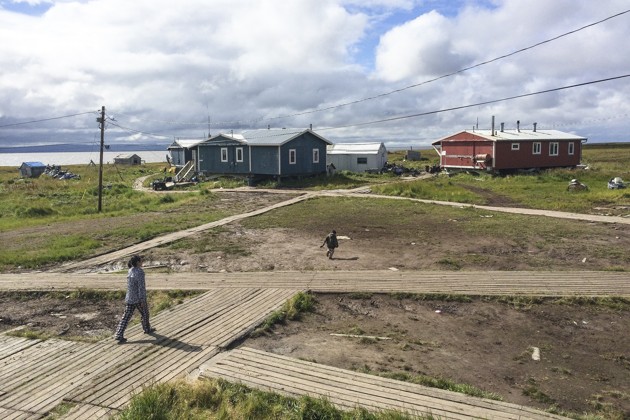
Their homes perched on a low-lying, treeless tuft of land between two rivers on Alaska’s west coast, residents saw the water creeping closer every year, gobbling up fields where they used to pick berries and hunt moose. Paul and Teresa Charles watched from their blue home on stilts on Newtok’s southern side as the Ninglick River inched closer and closer, bringing with it the salt waters of the Bering Sea.

“Sometimes, we lose 100 feet a year,” Paul Charles told me, over a bowl of moose soup.

Many communities across the world are trying to stay put as the climate changes, installing expensive levees and dikes and pumps, but not Newtok, a settlement of about 350 members of the Yupik people. In 1996, the village decided that fighting Mother Nature was fruitless, and they voted to move to a new piece of land nine miles away, elevated on bedrock.

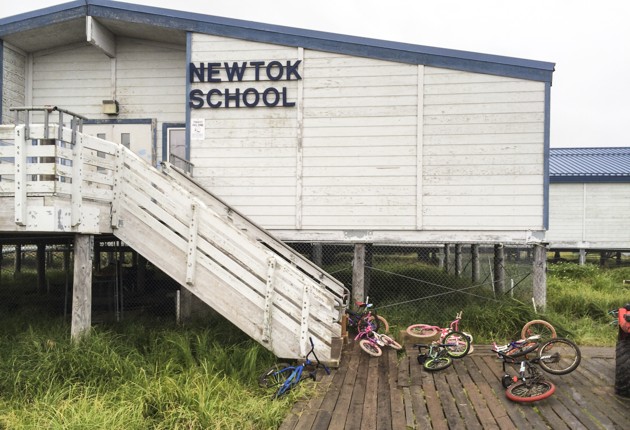
It wasn’t an easy decision, to leave behind the place where many of them were born, and where most have memories of following their parents and grandparents out on the tundra to hunt and fish. But villagers could see the water creeping closer to their homes and school, which the Army Corps of Engineers said could be underwater as soon as 2017.

Alana Semuels

Newtok is eroding in part because it sits on permafrost, a once-permanently frozen sublayer of soil found in Arctic region. As temperatures increase in Alaska, that permafrost is melting, leading to rapid erosion. Snow is melting earlier in the spring in Alaska, sea ice is disappearing and the ocean temperature is increasing. Alaska is warming at a rate two to three times faster than the mainland United States, and the average winter temperature has risen 6.3 degrees over the past 50 years.

Alaska sits on the front lines of climate change. But the rest of the nation is getting warmer, too, and so communities across the country may soon have to face some of the same problems. That’s one reason President Obama is visiting the region this week.

“What’s happening in Alaska isn’t just a preview of what will happen to the rest of us if we don’t take action,” Obama said in a video previewing his visit. “It’s our wakeup call.”

But many of the nation’s climate change policies are focused on helping victims rebuild in place after a disaster. There’s little funding or political will to spend money on moving communities away from disaster-prone zones to prevent tragedies from happening, perhaps because policymakers don’t want to believe the dire predictions about what will happen to many of the nation’s coastal villages and towns.

But the experience of Alaska shows that failing to take action could be costly.A  2003 report from the Government Accountability Office found that most of Alaska’s 200-plus native villages are affected by erosion and flooding, and that four were in “imminent danger.” By 2009, the GAO said 31 villages were in imminent danger.

As of this year, though, only a few of those villages are making immediate plans to move. Newtok is the furthest along of these four villages in its relocation efforts, and the scariest part is that it isn’t very far along at all.

* * *

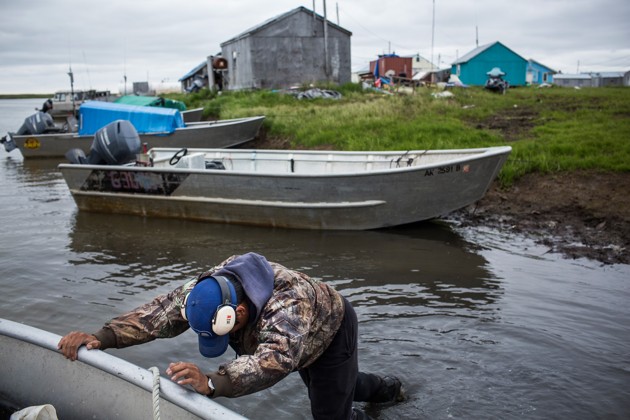
Newtok is an isolated village. There are no roads that lead there—the only way a visitor can get in or out is by a propeller plane that stops by a few times each day, except in inclement weather. There are no roads in Newtok, either— boardwalks run between the homes and the school and the post office, and just about every family has a small boat that is its primary mode of transportation.

It wasn’t that long ago that Yupik communities like this one were nomadic, traveling to the rivers to catch salmon and to higher ground when the waters rose. But between 1900 and 1950, as missionaries in Alaska tried to “civilize” native Alaskans, the Yupik began to settle in villages, in part because of legislation that required all children of a certain age to attend school. One group of people ended up in the place where Newtok now stands in part because a federal-government barge carrying a new school building could only reach this far up the Newtok River before getting stuck.

The river is fast approaching Newtok’s series of boardwalks. (Alana Semuels)

Villagers did not abandon their lifestyle just because they began living in a town with a post office and electricity. This is still a place built on a subsistence system, where residents survive off moose, seals, fish, berries, and other local plants all year round. The homes, small wooden boxes on stilts, often have pelts from a musk ox hanging on their porches, or moose antlers stacked alongside the snowmobiles and ATVs in the yard. As Canadian geese caw overhead, different breeds of dogs run throughout the village, a reminder of the dog teams that used to help villagers travel through snow. Just about every house has a small shelter out back where residents hang the moose, seal, and fish they’ve caught to dry.

As I wandered around town, I encountered Zenia Andy, who was watching her son Paiton disembowel a seal he had hunted. His hands stained red with blood, he gutted the creature with  an ulu, a sharp rounded blade attached to a handle. He separated the ribs, the heart, the flippers, the head, carefully saving every part.

The dedication to this subsistence lifestyle could have made it difficult for residents to pick up and move, since most Alaska Natives want to continue to be close to traditional hunting grounds but high enough off the land that the rising tides will not displace them ever again. Kivalina and Shismaref, two of the other threatened Alaska Native villages, have struggled to find a place to relocate that is within reach of their traditional hunting grounds and can also withstand decades of melting permafrost, Robin Bronen, the executive director of the Alaska Immigration Justice Project, told me.

But Newtok was lucky. Villagers had once spent summers nine miles from Newtok on a place called Nelson Island, part of a vast stretch of land on Alaska’s western coast that sits on volcanic bedrock elevated from the river. Villagers voted to move there, to a piece of land they call Mertarvik, which in Yupik means “getting water from the stream.”

In 1996, the Newtok Native Corporation, which was then the village’s governing body, passed a resolution allowing leaders to negotiate with U.S. Fish and Wildlife Service, which managed the land where Mertarvik sits. Newtok had to hire a lobbyist to prod Congress for eight years to get title to the land, Bronen said, and in exchange they offered to relent their claim to their current land and allow the government to turn it into a wildlife refuge. This shouldn’t have been a difficult swap—fly over Mertarvik or Newtok by plane, and all you can see is vast stretches of land and water with no development (or trees) whatsoever. The trade was finally approved in 2003.

But it’s been 12 years since then and not a whole lot has happened since, despite two massive flooding incidents in 2004 and 2005, one of which temporarily turned Newtok into an island. Three homes have been constructed in Mertarvik, but no one lives there year round. There’s a half-completed evacuation center next to piles of pipes and Dura-base flooring.

“We’ve been waiting so long. I don’t know. I’m beginning to lose a little bit of hope,” Newtok resident Jimmy Charles told me as he stopped by the one-room post office to pick up his mail.

The difficulty of relocating Newtok was evident from the beginning. Most villages can’t find funding for relocation projects because the costs often outweigh the expected benefits, according to the 2003 GAO report. Money to build new runways is usually only available after the old runways have been flooded or eroded, not to prevent such flooding from happening. It’s expensive to bring in materials and labor to remote villages, and the Army Corps of Engineers requires villages to pay up to half of the costs of these projects—“funding that many of them do not have,” according to the report. Dave Williams, a U.S. Army Corps of Engineers project manager in Alaska, told me his group had been approved to build a road and community building at the new site. Newtok would be required to pay 35 percent of the costs, but has not followed through on the necessary paperwork, he saidThe Corps estimated that moving Newtok could cost $130 million in total.

The whole effort to move a village feels a bit like a giant Catch-22: The school district won’t build a new school at the new site until 25 families live there, but no families want to live there without a school. The FAA won’t fund the design and construction of the Newtok airport until there is power generation at Mertarvik to provide runway lighting, but without an airport, it’s difficult to get a power source there. Mail service requires at least 25 families and regularly scheduled transportation to the community, which doesn’t exist without an airport.

Paiton Andy gets help from friends gutting a seal. (Alana Semuels)

Newtok’s experience demonstrates that decades after the nation first became familiar with climate change, Americans are still focused on responding to climate-related disasters, not preventing them.

“In almost every disaster event in America, from Hurricane Sandy to tornadoes in Oklahoma, the rally cry of ‘we will rebuild’ and FEMA’s support of rebuilding in place exemplifies the hazard-centric idea that disasters are one-off aberrations of normal conditions and that increased warning infrastructure, response plans, and technological interventions can prevent the next disaster,” writes Elizabeth Marino, an anthropologist who has studied Shismaref and has a book coming out about the town’s efforts to move. “Rebuilding in the same way, in the same place leaves no space for reconsidering our relationship with the environment.”

In Kivalina, for example, the U.S. government completed a $2.5 million sea wall to protect the village from the sea in 2006 to great fanfare. The wall was partially destroyed in a storm surge the same year, according to Bronen. In 1900, Galveston, Texas, was destroyed by a hurricane that killed 6,000 people, but the city rebuilt, only to be damaged repeatedly by storms, including Hurricane Ike in 2008. The city is now considering building an “Ike Dike,” which would cost billions.

Still, no matter how compelling it might be to try and move Newtok, neither the state nor federal government has the authority or the funding to spearhead the move.

“There has not been any formal direction on how to proceed on all of this,” Sally Russell Cox, a planner with Alaska’s Department of Commerce, Community, and Economic Development, told me. “While I can advise and assist and provide resources, it’s really the community that’s supposed to be relocating themselves.”

I was referred to Cox by a number of different governmental agencies when I asked for a name of a point person on the move. Yet Cox told me she was never asked to formally lead any sort of relocation project, it’s just fallen to her because she’s in her department’s division of community and rural affairs.

To be sure, there are problems inherent in having a state or federal agency step in and move a Native community, but the village voted to move itself, and needs assistance and funding to carry out those plans. Yet there is nowhere the village could apply on the state level to get the funding they need to move, said Jeremy Zidek, a spokesman for the Alaska Division of Homeland Security and Emergency Management.

“To my knowledge, there is no mechanism within any of the departments of state government that could wholly fund the move of Newtok to Mertarvik,” he told me.

Funds are even tighter now that Alaska is facing a $3.7 billion budget deficit because of the declining price of oil. The state gets almost 90 percent of its revenues from oil taxes and royalties.

The river is eroding whole chunks of land near homes. (Alana Semuels)

While it has waited for funding, erosion has made Newtok even more isolated.  In 1996, the Newtok river was captured by the Ninglick River, creating more powerful tides on the smaller river, and in 2005, a raging storm temporarily turned the village into an island. A 2013 storm destroyed the barge landing where the town gets most of its supplies. The barge now drops off goods at a makeshift landing on ground that is continuing to erode.

“It’s getting closer each year,” Zenia Andy told me, as her son gutted the seal. She glanced up at the river, which is now just a few hundred feet from her house. “It used to be so far away.”

The community members in 2006 partnered with state and federal agencies to create the Newtok Planning Group, which meets a few times a year to coordinate efforts. But the group comes with no funding mandate, nor does it have much authority. Four homes close to the Ninglick River need to be moved, but when the group asked the Natural Resources Conservation Service for funding to do so, they were told the move would not meet the program’s criteria. Funds designated by Congress to move communities like Newtok were instead used to study the feasibility of a move, Bronen told me.

The villagers’ biggest hope for funding is now FEMA, thanks to the 2013 storm and the subsequent flooding, which allowed Newtok to apply for $4 million of FEMA funds through the Hazard Mitigation Grant Program. That money, if it is approved, will be used to relocate 12 homes and buy out five homeowners in Newtok, who can use that money to build a new house in Mertarvik. But that application was submitted in July and funds won’t be available for another year.

The two decades the village has been trying to move seem especially long when compared to the amount of time it took the village of Pattonsburg, Missouri, to move after the Great Flood of 1993. The community had experienced floods for years, but the Great Flood buried homes and businesses under 20 feet of water. That year, the village voted to move, and by 1994, the town of New Pattonsburg had been established on higher ground. All it took was a disaster.

* * *

Nine miles may sound close to people accustomed to paved roads, highways, and dense cities. But the nine-mile-long ride from Newtok to Mertarvik is 50 minutes on a bumpy boat across a river so wide it looks like the sea. In the winter, villagers go back and forth by snowmobile once the river freezes up, and they say that freeze-up is happening later and later. Boat and snowmobile are the only way to get between the two sites.

I visited Mertarvik with Tom John, a tribal administrator, and his wife Bernice, on a recent August afternoon. We had to wait for high tide, since the Newtok river is now too shallow during low tide for boats. As the motor coughed up mud, we headed out to the wider waters of the Ninglick River. We passed land sloughing off into the sea and signs of erosion everywhere, as if someone had taken a guillotine and chopped the Earth away. Though it was summer, typically an easy time to get across, the air was cold and the water bumpy, and the journey felt long.

Andrew Burton / Getty

We arrived in Mertarvik, parked the boat at a small dirt beach there, and walked up a steep ramp of road made from Dura-base—mats that are easier and faster to install than roads—laid by the military as part of the Defense Department’s Innovative Readiness Training program, which seeks to deploy military personnel to help civilian communities as part of war preparation. (The soldiers have since left.)

In addition to the Dura-base road and three tan houses on the hillside, there are the beginnings of a massive evacuation center, funded by Alaska’s state legislature, but so far, only the foundation has been completed. Nails are falling out of the stairway leading to the elevated evacuation center, which had been considered a top priority because the village needs somewhere to house families while their homes are being transported between the two sites. (A 2013 audit of the evacuation center found that the group in charge of building the center, the Newtok Traditional Council, failed to inspect the workmanship and the materials. That council has been replaced by the Newtok Village Council, which employs Tom John.)

It was spitting rain and windy the day we visited Mertarvik, weather that will become more common through the fall months, the Johns told me. The wet weather only made the urgency of the move more evident to them as they stood on this high mountain, looking out over the water towards their village, which this fall will be threatened with floods every time it rains.

“We have to get it right this time,” Tom John told me, standing on the platform of the rickety evaluation center as his grandson played on nearby abandoned construction vehicles.

“The whole world is watching us,” Bernice added, and then she headed off to a nearby field to pick salmon berries and blackberries.

Bernice and Tom John in the half-completed evacuation center in Mertarvik. (Alana Semuels)

Much of the move is out of their hands, though. Without a major influx of new homes and an airport it will be difficult to convince anyone to live in Mertarvik. And without more money—a lot more money—the town can’t build anything.

Lisa and Jeff Charles and their five children moved to one of the three new homes in Mertarvik in the summer of 2012. There was no electricity or running water, so the experience felt like camping, but they enjoyed the quiet, Lisa Charles told me. But their children needed to go to school, so the family couldn’t stay in Mertarvik during the school year.

When Lisa got pregnant, she didn’t want to be a 50-minute boat ride from medical care. Though they could survive on the food they caught, the Charles’ have loans to pay, for the snowmobiles and ATV that allow them to subsistence hunt. To pay those loans, they needed jobs back in the village. After the summer, they returned home to Newtok, and the tribal council gave the Mertarvik home to someone else.

* * *

While the village waits to move to Mertarvik, Newtok is falling apart. State agencies have been hesitant to invest in the town, since it is supposed to be moving soon. The boardwalks connecting the homes are rotted, their nails falling out, pieces of wood surrendered to the mud. A small spit of land runs between the air strip and the village, but the boardwalk connecting the two has gaping holes, making the ride over it in a four-wheeler harrowing.

Without running water or toilets, villagers use “honey buckets” for waste, which they dump into the river, but high waters sometimes bring waste back into the village. The dump site was lost to erosion, and the new dump is only accessible during high tide by boat. “Do not burn your trash here,” one sign reads on the banks of the Ninglick River.

The village’s water supply, a freshwater lake, is just a few hundred feet from the saltwater river—in a severe storm, it could be compromised by the saltwater. A rickety series of pipes, held up on stilts, connects the lake to a shed where villagers collect tap water, where the boardwalk is nearly always covered in mud and trash.

The deterioration is taking a toll on public health. Between 1994 and 2009, more than one-quarter of infants in Newtok were hospitalized with lower respiratory tract infections, which meant Newtok had one of the highest rates of infection in the state. Public health professionals in 2006 found that inadequate levels of drinking water and high levels of contamination from honey bucket waste could be contributing to the infections.

Lisa Charles raised two of her children in Anchorage, and the rest in Newtok. Her infants had no health problems in Anchorage, but in Newtok, two of her babies came down with fevers and respiratory infections, she told me.

With little progress on Mertarvik and the water continuing to rise, it’s unclear how much longer the villagers will wait. If they leave and head to a bigger city, the centuries-old traditions and culture that they’ve preserved could disappear.

“My kids’ education comes first,” Zenia Andy told me, when I asked her whether she planned to move. If the school begins to lose teachers and students, she may move her family somewhere else.

The waters could reach Newtok’s school by 2017. (Alana Semuels)

Another resident, Jimmy Charles, told me that his children didn’t want to stay in Newtok because of the frequent floods.

Lisa and Jeff Charles have stuck around despite the floods and the health scares because they think Newtok is a good place to raise their children, and they want their kids to have the same experiences they did, trapping muskrats in the winter and fishing in the summer for survival. But Lisa Charles is beginning to worry for their safety. During the 2013 storm, she and her family watched as the water got higher and higher, eventually reaching 20 feet from their house. Charles eventually evacuated her grandmother and children to the school to be safe.

She wants to stay and relocate the nine miles across the water to Mertarvik, but she’s been waiting a long time.

“If it gets too dangerous, I have to get my kids out,” she told me.

Over the past few weeks, the fall rains have started, once again threatening to flood her hometown.

RELATED STORY

Alaska’s Climate Refugees 

Anthropologies #21: Annual Review of Anthropology, Climate Change, Anthropocene (Savage Minds)

August 31, 2015 / 

To kick off this issue, we begin with Sean Seary’s excellent overview of recent literature about anthropology’s engagement with climate. This review originally appeared on Anthropology Report, has been reproduced here to give us a solid foundation for moving forward. Seary, a recent graduate from Hartwick College, currently lives in Brunswick, Maine. His research interests focus on the convergence of anthropology and climate change. Seary’s work has also been featured on PopAnth. –R.A.

Introduction: Anthropological Interventions

Since the 1960s, global climate and environmental change have been important topics of contemporary scientific research. Growing concerns about climate change have introduced a (relatively) new variable in climate change research: the anthropogenic causes of local-global climate and environmental change. Despite archaeologists providing some of the first research and commentary on climate change–a point that is explored in Daniel Sandweiss and Alice Kelley’s Archaeological Contributions to Climate Change Research: The Archaeological Record as a Paleoclimatic and Paleoenvironmental Archive–the field of climate and environmental change research has been predominantly studied by “natural scientists.” This is where Susan Crate’s Climate and Culture: Anthropology in the Era of Contemporary Climate Change in the 2011 Annual Review of Anthropology intervenes. Crate calls for anthropological engagement with the natural sciences (and vice versa) on global climate change discourse, with the intention of creating new multidisciplinary ethnographies that reflect all the contributors to global environmental change.

Crate’s review begins by stating that the earliest anthropological research on climate change was associated with archaeologists: most of whom studied how climate change had an impact on cultural dynamics, societal resilience and decline, and social structure. Anthropological and archaeological engagement with climate change revolved around how cultures attributed meaning and value to their interpretations of weather and climate. Archaeology has long been working on understanding the relationship between climate, environment, and culture. Historically, archaeologists have worked with “natural” scientists in the recovery of climate and environmental data pulled from archaeological strata (Sandweiss and Kelley 2012:372). Such works include Environment and Archaeology: An Introduction to Pleistocene Geography (Butzer 1964), Principles of Geoarchaeology: A North American Perspective (Waters 1992) and Environmental Archaeology: Principles and Practice(Dincauze 2000). The archaeological record incorporates not only stratigraphic data, but also proxy records. These records contributed to much larger paleoclimate and paleoenvironmental studies, including publications in general science literature like ScienceNature, and Proceedings of the National Academy of Sciences (Sandweiss and Kelley 2012:372; see also the 2013 article in NatureContribution of anthropology to the study of climate change). Conversely, the work of “natural” scientists has also appeared in archaeological literature. Contemporarily, archaeologists have studied the impacts that water (or lack thereof) can have on human-environment interactions, through the study of soil and settlements drawing from case studies in Coastal Peru, Northern Mesopotamia, the Penobscot Valley in Maine, or Shetland Island.

Contemporary anthropological analysis of climate change usually focuses on adaptations towards local climate, temperature, flooding, rainfall, and drought (Crate 2011:178). Climate change impacts the cultural framework in which people perceive, understand, experience, and respond to the world in which they live. Crate believes that because of anthropologists’ ability to “be there,” anthropologists are well-suited to interpret, facilitate, translate, communicate, advocate, and act in response to the cultural implications of global (and local) climate change. Understanding the role that people and culture play in understanding land use changes is crucial to defining anthropology’s engagement with climate change. Anthropologists, as well as scientists from allied disciplines must engage in vigorous cross-scale, local-global approaches in order to understand the implications of climate change (Crate 2011:176).

Crate urges that anthropology use its experience in place-based community research and apply it to a global scale, while focusing on ethnoclimatology, resilience, disasters, displacement, and resource management. By studying people living in “climate-sensitive” areas, anthropologists can document how people observe, perceive, and respond to the local effects of global climate change, which at times can compromise not only their physical livelihood, but also undermine their cultural orientations and frameworks (Crate 2011:179). Anthropology is well positioned to understand the “second disaster,” or sociocultural displacement which follows the first disaster (physical displacement), as a result local environmental and climate change. Some of these “second disasters” include shifts in local governance, resource rights, and domestic and international politics (Crate 2011:180). These “second disasters” present yet another challenge to anthropology’s involvement with global climate change: that global climate change is a human rights issue. Therefore, anthropologists should take the initiative in being active and empowering local populations, regions, and even nation-states to seek redress for the damage done by climate change (Crate 2011:182) It is the responsibility of anthropologists working in the field of climate change to link the local and lived realities of environmental change with national and international policies.

In order to accommodate to the rapidly changing (human) ecology, anthropology is in need of new ethnographies that show how the “global” envelops the local, and the subsequent imbalance (environmental injustice/racism) that it creates during this process. Crate urgently calls for anthropologists to become actors in the policy process, utilizing a multidisciplinary, multi-sited collaboration between organizations, foundations, associations, as well as political think tanks and other scientific disciplines. Anthropology’s task at hand is to bridge what is known about climate change to those who are not aware of its impacts, in order to facilitate a global understanding of climate change and its reach (Crate 2011:184).

Crate’s “Climate and Culture” may not have been the first Annual Review article regarding climate change and anthropology, but it is certainly one of the most urgent and pressing. Crate became a member of the American Anthropological Association’s Global Climate Change Task Force. Their report released in January 2015 sets an ambitious agenda for anthropology and climate change. Crate’s article also became foundational for a thematic emphasis of the 2012 Annual Review of Anthropology, which featured seven additional articles on anthropology and climate change.

Politics of the Anthropogenic

Nathan Sayre’s Politics of the Anthropogenic continues where Crate’s Climate and Culture left off: at the advent of a new form of anthropology, one that utilizes an interdisciplinary approach towards understanding the human ecology in relation to global climate change. Sayre invokes a term which Crate did not use in her review article, but that seems to have increasing salience to anthropology: The Anthropocene. Notably, the idea of the Anthropocene and its relationship to anthropology was also the subject of Bruno Latour’s keynote lecture to the American Anthropological Association in 2014: Anthropology at the Time of the Anthropocene.

Sayre describes the Anthropocene as the moment in history when humanity began to dominate, rather than coexist with the “natural” world (Sayre 2012:58). What defines the Anthropocene as a distinct epoch or era is when human activities rapidly shifted (most often considered the Industrial Revolution) from merely influencing the environment in some ways to dominating it in many ways. This is evident in population growth, urbanization, dams, transportation, greenhouse gas emissions, deforestation, and the overexploitation of natural resources. The adverse effects of anthropogenic climate change can be measured on nearly every corner of the earth. As a result of local environmental change and global climate change, humans, climate, soil, and nonhuman biota have begun to collapse into one another; in this scenario, it is impossible to disentangle the “social” from the “natural” (Sayre 2012:62). Sayre states that anthropology’s role, together with other sciences, in analyzing climate change in the Anthropocene is to understand that there is no dichotomy between what is considered natural and cultural. Understanding the fluctuations in the earth’s ecosystems cannot be accounted for without dispelling the ideological separation between the natural and the cultural. By adopting conceptual models of “climate justice” and earth system science, anthropologists and biophysical scientists can further dispel the archaic dichotomy of humanity and nature.

The atmosphere, the earth, the oceans, are genuinely global commons. However, environmental climate change and the subsequent effects are profoundly and unevenly distributed throughout space and time (Sayre 2012:65). Biophysically and socioeconomically, the areas that have contributed most to global climate change are the least likely to suffer from its consequences. Those who have contributed the least suffer the most. Anthropologists can play an important role in utilizing climate-based ethnography to help explain and understand the institutions that are most responsible for anthropogenic global warming–oil, coal, electricity, automobiles–and the misinformation, lobbying, and public relations behind “climate denialism” in the Anthropocene. This is the first step in seeking redress for the atrocities of environmental injustice.

Evolution and Environmental Change in Early Human Prehistory

Understanding climate change in the Anthropocene is no easy task, but as Richard Potts argues in Evolution and Environmental Change in Early Human Prehistory, humans have been influencing their environments and their environments have been influencing them well before the era that is considered the “Anthropocene.” Throughout the last several million years the earth has experienced one of its most dramatic eras of climate change, which consequently coincided with the origin of hominins. Homo sapiens represent a turning point in the history of protohuman and human life, because of their capacity to modify habitats and transform ecosystems. Now, approximately 50% of today’s land surface is reserved for human energy flow, and a further 83% of all the viable land on the planet has either been occupied or altered to some extent (Potts 2012:152).

Vrba’s turnover-pulse hypothesis (TPH) and Potts’s variability selection hypothesis (VSH) both serve as explanations for the correlation between environmental and evolutionary change. Vrba’s TPH focused on the origination and extinction of lineages coinciding with environmental change, particularly the rate of species turnovers following major dry periods across equatorial Africa. Potts’s VSH focused on the inherited traits that arose in times of habitat variability, and the selection/favoring of traits that were more adaptively versatile to unstable environments (Potts 2012:154-5). There are three ways in which environmental change and human evolution can potentially be linked. First, evolutionary events may be concentrated in periods of directional environmental change. Second, evolution may be elicited during times of rising environmental variability and resource uncertainty. Finally, evolution may be independent of environmental trend or variability (Potts 2012:155). The aforementioned hypotheses and subsequent links between evolution and environmental change help shed light on the origins and adaptations of Homo sapiens and Homo neanderthals. The anatomical, behavioral, and environmental differences between neanderthals and modern humans suggests that their distinct fates reflect their differing abilities to adjusting to diverse and fluctuating habitats (Potts 2012:160). Potts does an excellent job of stating that before the Anthropocene, early Homo sapiens and Homo neanderthals not only impacted and manipulate their surrounding environments, but were (genetically) impacted by their environments.

Sea Change: Island Communities and Climate Change

Heather Lazrus’s Annual Review article Sea Change: Island Communities and Climate Change returns to climate change in the more recent Anthropocene. For island communities, climate change is an immediate and lived reality in already environmentally fragile areas. These island communities, despite their seeming isolation and impoverishment, are often deeply globally connected in ways that go beyond simplistic descriptions of “poverty” and “isolated” (Lazrus 2012:286). Globally, islands are home to one-tenth of the world’s population, and much of the world’s population tends to be concentrated along coasts. Therefore both are subject to very similar changes in climate and extreme weather events. Islands tend to be regarded as the planet’s “barometers of change” because of their sensitivity to climate change (Lazrus 2012:287). Not only are islands environmentally dynamic areas, consisting of a variety of plants and animal species, but they also have the potential to be areas of significant social, economic, and political interest.

Madagascar: A History of Arrivals, What Happened, and Will Happen Next

Madagascar is a fascinating example of sociopolitical and ecological convergence, and is explored by Robert Dewar and Alison Richard in their Madagascar: A History of Arrivals, What Happened, and Will Happen Next. Madagascar has an extremely diverse system of human ecology that is nearly as diverse the island’s topography, environments, and climate. As a product of its physical diversity, the human ecology of Madagascar has a dynamic social and cultural history. In the Southwest, the Mikea derive significant portions of their food from foraging in the dry forest. Outside of most urban areas, hunting and collecting wild plants is common. Along the west coast, fishing is crucial as a central focus of the economy, but also as a supplement to farming. Farmers in Madagascar have a wide range of varieties and species to choose from including maize, sweet potatoes, coffee, cacao, pepper, cloves, cattle, chickens, sheep, goats, pigs, and turkeys (Dewar and Richard 2012:505). Throughout the island, rice and cattle are the two most culturally and economically important domesticates, and are subsequently adapted to growing under the local conditions of the microclimates of Madagascar. Semi-nomadic cattle pastoralism takes place in the drier regions of Madagascar. Whatever the environmental, climatic, social, or economic surroundings may be, Madagascar (as well as other islands) serve as local microcosms for climate change on the global scale. This relates to Crate’s call for an anthropology that brings forth the global array of connections (“natural”/ sociocultural) portraying local issues of climate change to the global sphere.

Ethnoprimatology and the Anthropology of the Human-Primate Interface

Agustin Fuentes’s main arguments in Ethnoprimatology and the Anthropology of the Human-Primate Interface focus on human-induced climate change and how it affects a vast amount of species, including the other primates (Fuentes 2012:110). By getting rid of the ideology that humans are separate from natural ecosystems and the animals within them, then anthropology can better grasp inquiries relating to global climate change within the Anthropocene. Fuentes then goes on to say (similarly to Crate and Sayre) that by freeing anthropological (and other scientific discourse) from the dichotomy of nature and culture, people will fully understand their relationship in the order of primates, but also their place within the environment. Our human capacity to build vast urban areas, transportation systems, and the deforestation of woodland all impact the local environments in which we live, and consequently gives humans an aura of dominance over nature. As Fuentes states, “at the global level, humans are ecosystem engineers on the largest of scales, and these altered ecologies are inherited not only by subsequent generations of humans but by all the sympatric species residing within them. The ways in which humans and other organisms coexist (and/or conflict) within these anthropogenic ecologies shape the perceptions, interactions, histories, and futures of the inhabitants” (Fuentes 2012:110). Essentially, Fuentes points out that humans have dominated ecosystems on a global scale; however, this has impacted not only human populations but also various plant and animals species, as well as entire ecosystems. It is only within the understanding of the symbiotic relationship between human/plants/animals/ecosystems that people will realize their impact on the environment on a global scale.

Lives With Others: Climate Change and Human-Animal Relations

In Lives With Others: Climate Change and Human-Animal Relations, Rebecca Cassidy ties together Fuentes’s arguments with Crate’s by demonstrating how climate change not only impacts people’s physical livelihood, but also their sociocultural lives. Cassidy states that people with animal-centered livelihoods experience climate change on many different levels, and subsequently, climate change may see those animals (or plants) become incapable of fulfilling their existing functions. Societies that are most frequently geopolitically marginalized often are left reeling from the impacts that climate change has on their social, political, economic, and environmental lives (Cassidy 2012:24). The impacts that climate change has on marginalized societies often affects their ability to live symbiotically and sustainably with other species. Human/animal “persons” are conceived to be reciprocal and equal, living in a symbiotic world system, in which their sustenance, reproduction, life, and death are all equally important. The extinction of particular species of animals and plants can cause cosmological crises, as well as disrupt the potential for future adaptability.

Cassidy’s claim that humans, animals, plants, and their environments are reciprocal and symbiotic ties in with Crate’s plea for an anthropology that rids itself of the old dichotomy of the natural and cultural. Crate’s idea for new ethnographies that consider the human ecology of climate change begin by utilizing what Lazrus calls Traditional Environmental Knowledge, or TEK. TEK is “a cumulative body of knowledge, practice, and belief, evolving by adaptive process and handed down through generations by cultural transmission, about the relationship of living beings (including humans) with one another and with their environment” (Lazrus 2012:290). TEK utilizes the spiritual, cosmological, and moral practices that condition human relationships with their surrounding physical environments. Such ethnographies should reflect all of the potential contributors to climate change in the Anthropocene, but they should also infuse new urgency to anthropological approaches. As Crate states “anthropologists need to become more globalized agents for change by being more active as public servants and engaging more with nonanthropological approaches regarding climate change” (Crate 2011: 183).

As made evident by the work of Sandweiss and Kelley, anthropology has early roots in climate change research dating back to the 1960s. Since then, anthropology’s contribution to climate change research has been significant, and is now sparking a new generation of engaged anthropology in the Anthropocene.

No escaping the Blue Marble (The Conversation)

August 20, 2015 6.46pm EDT

The Earth seen from Apollo, a photo now known as the “Blue Marble”. NASA

It is often said that the first full image of the Earth, “Blue Marble”, taken by the Apollo 17 space mission in December 1972, revealed Earth to be precious, fragile and protected only by a wafer-thin atmospheric layer. It reinforced the imperative for better stewardship of our “only home”.

But there was another way of seeing the Earth revealed by those photographs. For some the image showed the Earth as a total object, a knowable system, and validated the belief that the planet is there to be used for our own ends.

In this way, the “Blue Marble” image was not a break from technological thinking but its affirmation. A few years earlier, reflecting on the spiritual consequences of space flight, the theologian Paul Tillich wrote of how the possibility of looking down at the Earth gives rise to “a kind of estrangement between man and earth” so that the Earth is seen as a totally calculable material body.

For some, by objectifying the planet this way the Apollo 17 photograph legitimised the Earth as a domain of technological manipulation, a domain from which any unknowable and unanalysable element has been banished. It prompts the idea that the Earth as a whole could be subject to regulation.

This metaphysical possibility is today a physical reality in work now being carried out on geoengineering – technologies aimed at deliberate, large-scale intervention in the climate system designed to counter global warming or offset some of its effects.

While some proposed schemes are modest and relatively benign, the more ambitious ones – each now with a substantial scientific-commercial constituency – would see humanity mobilising its technological power to seize control of the climate system. And because the climate system cannot be separated from the rest of the Earth System, that means regulating the planet, probably in perpetuity.

Dreams of escape

Geoengineering is often referred to as Plan B, one we should be ready to deploy because Plan A, cutting global greenhouse gas emissions, seems unlikely to be implemented in time. Others are now working on what might be called Plan C. It was announced last year in The Times:

British scientists and architects are working on plans for a “living spaceship” like an interstellar Noah’s Ark that will launch in 100 years’ time to carry humans away from a dying Earth.

This version of Plan C is known as Project Persephone, which is curious as Persephone in Greek mythology was the queen of the dead. The project’s goal is to build “prototype exovivaria – closed ecosystems inside satellites, to be maintained from Earth telebotically, and democratically governed by a global community.”

NASA and DARPA, the US Defense Department’s advanced technologies agency, are also developing a “worldship” designed to take a multi-generational community of humans beyond the solar system.

Paul Tillich noticed the intoxicating appeal that space travel holds for certain kinds of people. Those first space flights became symbols of a new ideal of human existence, “the image of the man who looks down at the earth, not from heaven, but from a cosmic sphere above the earth”. A more common reaction to Project Persephone is summed up by a reader of the Daily Mail: “Only the ‘elite’ will go. The rest of us will be left to die.”

Perhaps being left to die on the home planet would be a more welcome fate. Imagine being trapped on this “exovivarium”, a self-contained world in which exported nature becomes a tool for human survival; a world where there is no night and day; no seasons; no mountains, streams, oceans or bald eagles; no ice, storms or winds; no sky; no sunrise; a closed world whose occupants would work to keep alive by simulation the archetypal habits of life on Earth.

Into the endless void

What kind of person imagines himself or herself living in such a world? What kind of being, after some decades, would such a post-terrestrial realm create? What kind of children would be bred there?

According to Project Persephone’s sociologist, Steve Fuller: “If the Earth ends up a no-go zone for human beings [sic] due to climate change or nuclear or biological warfare, we have to preserve human civilisation.”

Why would we have to preserve human civilisation? What is the value of a civilisation if not to raise human beings to a higher level of intellectual sophistication and moral responsibility? What is a civilisation worth if it cannot protect the natural conditions that gave birth to it?

Those who blast off leaving behind a ruined Earth would carry into space a fallen civilisation. As the Earth receded into the all-consuming blackness those who looked back on it would be the beings who had shirked their most primordial responsibility, beings corroded by nostalgia and survivor guilt.

He’s now mostly forgotten, but in the 1950s and 1960s the Swedish poet Harry Martinson was famous for his haunting epic poem Aniara, which told the story of a spaceship carrying a community of several thousand humans out into space escaping an Earth devastated by nuclear conflagration. At the end of the epic the spaceship’s controller laments the failure to create a new Eden:

“I had meant to make them an Edenic place,

but since we left the one we had destroyed

our only home became the night of space

where no god heard us in the endless void.”

So from the cruel fantasy of Plan C we are obliged to return to Plan A, and do all we can to slow the geological clock that has ticked over into the Anthropocene. If, on this Earthen beast provoked, a return to the halcyon days of an undisturbed climate is no longer possible, at least we can resolve to calm the agitations of “the wakened giant” and so make this new and unwanted epoch one in which humans can survive.

Cortar emissões aumenta PIB (Observatório do Clima)

26/08/2015

 O biodiesel é uma das tecnologias de mitigação propostas. Foto: Agência Brasil

O biodiesel é uma das tecnologias de mitigação propostas. Foto: Agência Brasil

Por Cíntya Feitosa, do OC – 

Relatório produzido por grupo de 80 especialistas indica que economia cresce quase 4% mais com políticas mais ambiciosas de redução de gases-estufa até 2030.

Se o governo brasileiro ampliar medidas de redução de emissões de gases de efeito estufa em sua economia, o país pode crescer mais e com menos desigualdades sociais em 2030. A conclusão é de um grande estudo realizado durante um ano por um grupo de 80 especialistas, sob coordenação do Fórum Brasileiro de Mudanças Climáticas.

Segundo o estudo, o PIB (Produto Interno Bruto) do país pode chegar a R$ 5,68 trilhões em 2030 se forem adotadas medidas adicionais de redução de emissões no cenário mais ambicioso. A cifra é 3,98% maior do que o PIB previsto se forem adotadas apenas ações de mitigação já em curso, do atual Plano Nacional de Mudanças Climáticas. Com as ações sugeridas pelo relatório, o país pode chegar a 2030 emitindo 1 bilhão de toneladas de gás carbônico equivalente (CO2e), 39% a menos que o estimado com a adoção de ações governamentais já previstas (1,6 bilhão de toneladas) e 25% menos do que o país emitia em 1990. No cenário menos ambicioso, a redução de emissões é de 5% em relação a 1990, as emissões chegam a 1,3 bilhão de toneladas e o PIB fica 3,91% maior do que sem medidas adicionais.

De acordo com o “IES Brasil: Implicações Econômicas e Sociais: Cenários de Mitigação de GEE 2030”, 75% do potencial de abatimento de emissões tem custo abaixo de US$ 20 por tonelada de CO2e. O setor com maior margem de redução de emissões é o de agricultura, florestas e uso da terra – que também é o setor que mais emite gases causadores do efeito estufa no Brasil. As medidas mais caras são as de mudança em infraestrutura urbana, como melhorias no sistema de transporte.

A taxa de desemprego também cai com os cenários de mitigação adicional – com mais medidas de redução de emissões do que o Plano Nacional de Mudanças Climáticas. A projeção é que, com a adoção de medidas mais ousadas do que as previstas, a taxa varie entre 3,5% e 4,08%, enquanto a taxa de acordo com o cenário projetado pelo governo deve ser de 4,35%.

“A nossa projeção considera que o governo vai reduzir o custo Brasil, aumentar a nossa produtividade, investir em educação e inclusão social”, ressaltou William Wills, coordenador de modelagem do IES Brasil. “Se o governo brasileiro fizer o que tem que ser feito, não são políticas mais ambiciosas de redução de emissões que vão reduzir o potencial de crescimento”, disse. Ele apresentou os dados nesta terça-feira, durante audiência pública na Comissão Mista de Mudança Climática do Congresso.

grafico-ies-brasil


Os cenários de mitigação adicional preveem investimentos que variam entre R$ 164 bilhões, com adoção de medidas de baixo custo, e R$ 524 bilhões, contemplando medidas de maior custo, de 2015 e 2030. Em 2030, o valor investido poderia variar entre R$ 20,7 bilhões e R$ 82,9 bilhões – de 0,37% a 1,46% do PIB previsto para aquele ano.

Aumento de renda e poder de compra

O estudo também projeta um aumento de renda e poder de compra em todas as classes sociais. De acordo com o estudo, alguns setores produtivos em uma economia de baixo carbono – com menos emissões – empregam mais que os setores que emitem gases de efeito estufa. O relatório do IES Brasil destaca a oportunidade de geração de empregos no setor energético, em especial na produção de biomassa e biocombustíveis.

Se as negociações climáticas internacionais adotarem a taxação de carbono como medida de mitigação, a economia brasileira também pode ser beneficiada, de acordo com o estudo. Apesar de uma leve queda na projeção do PIB, a taxa de desemprego pode ser menor. Além disso, a imposição de uma taxa de carbono global pode beneficiar a indústria brasileira, que utiliza fontes mais limpas de energia, aumentando a competitividade no mercado.

Os técnicos responsáveis pelo relatório sugerem alocar a receita da taxa imposta aos setores que emitem mais gases de efeito estufa na desoneração da folha de pagamento dos que emitem menos, estimulando a criação de empregos. “É possível crescer economicamente, reduzir desigualdades e reduzir emissões, em todos os cenários estudados”, concluiu Wills. (Observatório do Clima/ #Envolverde)

* Publicado originalmente no site Observatório do Clima.

‘Targeted punishments’ against countries could tackle climate change (Science Daily)

Date:
August 25, 2015
Source:
University of Warwick
Summary:
Targeted punishments could provide a path to international climate change cooperation, new research in game theory has found.

This is a diagram of two possible strategies of targeted punishment studied in the paper. Credit: Royal Society Open Science

Targeted punishments could provide a path to international climate change cooperation, new research in game theory has found.

Conducted at the University of Warwick, the research suggests that in situations such as climate change, where everyone would be better off if everyone cooperated but it may not be individually advantageous to do so, the use of a strategy called ‘targeted punishment’ could help shift society towards global cooperation.

Despite the name, the ‘targeted punishment’ mechanism can apply to positive or negative incentives. The research argues that the key factor is that these incentives are not necessarily applied to everyone who may seem to deserve them. Rather, rules should be devised according to which only a small number of players are considered responsible at any one time.

The study’s author Dr Samuel Johnson, from the University of Warwick’s Mathematics Institute, explains: “It is well known that some form of punishment, or positive incentives, can help maintain cooperation in situations where almost everyone is already cooperating, such as in a country with very little crime. But when there are only a few people cooperating and many more not doing so punishment can be too dilute to have any effect. In this regard, the international community is a bit like a failed state.”

The paper, published in Royal Society Open Science, shows that in situations of entrenched defection (non-cooperation), there exist strategies of ‘targeted punishment’ available to would-be punishers which can allow them to move a community towards global cooperation.

“The idea,” said Dr Johnson, “is not to punish everyone who is defecting, but rather to devise a rule whereby only a small number of defectors are considered at fault at any one time. For example, if you want to get a group of people to cooperate on something, you might arrange them on an imaginary line and declare that a person is liable to be punished if and only if the person to their left is cooperating while they are not. This way, those people considered at fault will find themselves under a lot more pressure than if responsibility were distributed, and cooperation can build up gradually as each person decides to fall in line when the spotlight reaches them.”

For the case of climate change, the paper suggests that countries should be divided into groups, and these groups placed in some order — ideally, according roughly to their natural tendencies to cooperate. Governments would make commitments (to reduce emissions or leave fossil fuels in the ground, for instance) conditional on the performance of the group before them. This way, any combination of sanctions and positive incentives that other countries might be willing to impose would have a much greater effect.

“In the mathematical model,” said Dr Johnson, “the mechanism works best if the players are somewhat irrational. It seems a reasonable assumption that this might apply to the international community.”


Journal Reference:

  1. Samuel Johnson. Escaping the Tragedy of the Commons through Targeted PunishmentRoyal Society Open Science, 2015 [link]

California Drought Is Made Worse by Global Warming, Scientists Say (New York Times)

Visitors along the recessed shores of Beal’s Point in California’s Folsom Lake State Recreation Area. A new study has found that inevitable droughts in California were made worse by global warming. CreditDamon Winter/The New York Times 

Global warming caused by human emissions has most likely intensified the drought in California by 15 to 20 percent, scientists said on Thursday, warning that future dry spells in the state are almost certain to be worse than this one as the world continues to heat up.

Even though the findings suggest that the drought is primarily a consequence of natural climate variability, the scientists added that the likelihood of any drought becoming acute is rising because of climate change. The odds of California suffering droughts at the far end of the scale, like the current one that began in 2012, have roughly doubled over the past century, they said.

“This would be a drought no matter what,” said A. Park Williams, a climate scientist at the Lamont-Doherty Earth Observatory of Columbia University and the lead author of a paperpublished by the journal Geophysical Research Letters. “It would be a fairly bad drought no matter what. But it’s definitely made worse by global warming.”

The National Oceanic and Atmospheric Administration also reportedThursday that global temperatures in July had been the hottest for any month since record-keeping began in 1880, and that the first seven months of 2015 had also been the hottest such period ever. Heat waves on several continents this summer have killed thousands of people.

Dry grassland south of the El Dorado Freeway near Folsom, Calif. The study credited human-caused climate change for between 8 percent and 27 percent of the state’s soil moisture deficit. CreditDamon Winter/The New York Times 

The paper on the California drought echoes a growing body of research that has cited the effects of human emissions, but scientists not involved in the work described it as more thorough than any previous effort because it analyzed nearly every possible combination of data on temperature, rainfall, wind speed and other factors that could be influencing the severity of the drought. The research, said David B. Lobell, a Stanford University climate scientist, is “probably the best I’ve seen on this question.”

The paper provides new scientific support for political leaders, including President Obama and Gov. Jerry Brown of California, who have cited human emissions and the resulting global warming as a factor in the drought. As he races around his battered state, from massive forest fires to parched farms, Mr. Brown has been trying to cajole the Republican presidential candidates into explaining what they would do about climate change.

“To say you’re going to ignore that there’s a huge risk here, the way we’re filling the atmosphere with heat-trapping gases, is folly, ignorance and totally irresponsible,” Mr. Brown said Thursday in a telephone interview. “And virtually the entire Republican Party in Congress is saying exactly that. It’s inexplicable.”

Several Republican presidential candidates, including Senator Lindsey Graham of South Carolina and Gov. John R. Kasich of Ohio, do acknowledge that climate change poses risks, but they are skeptical of the way Mr. Obama has gone about trying to limit emissions, with a planexpected to force the shutdown of many coal-fired power plants.

Chris Schrimpf, a spokesman for Mr. Kasich, said Thursday that political leaders confronting questions about climate change “can’t stick their heads in the sand and pretend it isn’t happening. Instead we need to be about the business of taking action, but action that doesn’t throw the economy and jobs out the window at the same time.”

However, many of the leading Republican candidates are openly skeptical of climate science and play down the risks. In response to a letter from Mr. Brown asking about their plans, several of the candidates retorted last week that California should be building more dams to store water for future droughts. Senator Ted Cruz of Texas said that “alarmists” about global warming were trying to gain “more power over the economy and our lives.”

report this week by researchers at the University of California, Davis, projected that the drought would cost the California economy some $2.7 billion this year. Much of that pain is being felt in the state’s huge farming industry, which has been forced to idle a half-million acres and has seen valuable crops like almond trees and grape vines die.

As climate scientists analyze the origins of the drought, they have been tackling two related questions: What caused the dearth of rain and snow that began in 2012? And, regardless of the cause, how have the effects been influenced by global warming?

The immediate reason for the drought is clear enough: For more than three years, a persistent ridge of high pressure in the western Pacific Ocean has blocked storms from reaching California in the winter, when the state typically gets most of its moisture. That pattern closely resembles past California droughts.

Some scientists have argued that the ocean and atmospheric factors that produced the ridge have become somewhat more likely because of global warming, but others have disputed that, and the matter remains unresolved.

On the question of the effects, scientists have been much clearer. Rising temperatures dry the soil faster and cause more rapid evaporation from streams and reservoirs, so they did not need any research to tell them that the drought was probably worse because of the warming trend over the past century. The challenge has been to quantify how much worse.

The group led by Dr. Williams concluded that human-caused climate change was responsible for between 8 and 27 percent of the deficit in soil moisture that California experienced from 2012 to 2014.

But, in an interview, Dr. Williams said the low number was derived from a method that did not take account of the way global warming had sped up since the 1970s. That led him and his colleagues to conclude that climate change was most likely responsible for about 15 to 20 percent of the moisture deficit.

Since 1895, California has warmed by a little more than 2 degrees Fahrenheit. That increase sounds small, but as an average over an entire state in all seasons, scientists say, it is a large number. The warmer air can hold more water vapor, and the result is that however much rain or snow falls in a given year, the atmosphere will draw it out of the soil more aggressively.

“It really is quite simple,” said Richard Seager, a senior climate scientist at Lamont and a co-author on the Williams paper. “When the atmosphere is as warm as it is, the air is capable of holding far more water. So more of the precipitation that falls on the ground is evaporated, and less is in the soil, and less gets into streams.”

Dr. Williams calculated that the air over California can absorb about 8.5 trillion more gallons of water in a typical year than would have been the case in the cooler atmosphere at the end of the 19th century. The air does not always manage to soak up that much, however, because evaporation slows as the soils dry out.

How much more California will warm depends on how high global emissions of greenhouse gases are allowed to go, but scientists say efforts to control the problem have been so ineffective that they cannot rule out another 5 or 6 degrees of warming over the state in this century, a level that could turn even modest rainfall deficits into record-shattering droughts.

For politicians like Mr. Obama and Mr. Brown, the emerging question is whether Americans will awaken to the risks and demand stronger action before emissions reach such catastrophic levels.

“I don’t think climate change is anywhere near the issue that it’s going to be, but the concern is rising in the public mind,” Mr. Brown said Thursday. “The facts can’t be concealed forever.”

Europe hit by one of the worst droughts since 2003 (Science Daily)

Date:
August 20, 2015
Source:
European Commission, Joint Research Centre (JRC)
Summary:
Much of the European continent has been affected by severe drought in June and July 2015, one of the worst since the drought and heat wave of summer of 2003, according to the latest reports.

Areas with the lowest soil moisture content since 1990 in July 2015 (in red) and in July 2003 (in blue). Credit: JRC-EDEA database (EDO). © EU, 2015

Much of the European continent has been affected by severe drought in June and July 2015, one of the worst since the drought and heat wave of summer of 2003, according to the latest report by the JRC’s European Drought Observatory (EDO). The drought, which particularly affects France, Benelux, Germany, Hungary, the Czech Republic, northern Italy and northern Spain, is caused by a combination of prolonged rain shortages and exceptionally high temperatures.

Satellite imagery and modelling revealed that the drought, caused by prolonged rainfall shortage since April, had already affected soil moisture content and vegetation conditions in June. Furthermore, the areas with the largest rainfall deficits also recorded exceptionally high maximum daily temperatures: in some cases these reached record values.

Another characteristic of this period was the persistence of the thermal anomalies: in the entire Mediterranean region, and particularly in Spain, the heat wave was even longer than that of 2003, with maximum daily temperatures consistently above 30°C for durations of 30 to 35 days (even more than 40 days in Spain).

While sectors such as tourism, viticulture and solar energy benefited from the unusual drought conditions, many environmental and production sectors suffered due to water restrictions, agricultural losses, disruptions to inland water transport, increased wildfires, and threats to forestry, energy production, and human health.

Rainfall is urgently needed in the coming months to offset the negative impacts of the 2015 drought situation. The current seasonal weather forecast envisages more abundant rains for the Mediterranean region in September, but no effective improvement is yet foreseen for parts of western, central and eastern Europe.

California drought causing valley land to sink (Science Daily)

Date:
August 20, 2015
Source:
NASA/Jet Propulsion Laboratory
Summary:
As Californians continue pumping groundwater in response to the historic drought, the California Department of Water Resources has released a new NASA report showing land in the San Joaquin Valley is sinking faster than ever before, nearly 2 inches (5 centimeters) per month in some locations.

Total subsidence in California’s San Joaquin Valley for the period May 3, 2014 to Jan. 22, 2015, as measured by Canada’s Radarsat-2 satellite. Two large subsidence bowls are evident, centered on Corcoran and south of El Nido. Credit: Canadian Space Agency/NASA/JPL-Caltech

As Californians continue pumping groundwater in response to the historic drought, the California Department of Water Resources has released a new NASA report showing land in the San Joaquin Valley is sinking faster than ever before, nearly 2 inches (5 centimeters) per month in some locations.

“Because of increased pumping, groundwater levels are reaching record lows — up to 100 feet (30 meters) lower than previous records,” said Department of Water Resources Director Mark Cowin. “As extensive groundwater pumping continues, the land is sinking more rapidly and this puts nearby infrastructure at greater risk of costly damage.”

Sinking land, known as subsidence, has occurred for decades in California because of excessive groundwater pumping during drought conditions, but the new NASA data show the sinking is happening faster, putting infrastructure on the surface at growing risk of damage.

NASA obtained the subsidence data by comparing satellite images of Earth’s surface over time. Over the last few years, interferometric synthetic aperture radar (InSAR) observations from satellite and aircraft platforms have been used to produce maps of subsidence with approximately centimeter-level accuracy. For this study, JPL researchers analyzed satellite data from Japan’s PALSAR (2006 to 2010); and Canada’s Radarsat-2 (May 2014 to January 2015), and then produced subsidence maps for those periods. High-resolution InSAR data were also acquired along the California Aqueduct by NASA’s Uninhabited Aerial Vehicle Synthetic Aperture Radar (UAVSAR) (2013 to 2015) to identify and quantify new, highly localized areas of accelerated subsidence along the aqueduct that occurred in 2014. The California Aqueduct is a system of canals, pipelines and tunnels that carries water collected from the Sierra Nevada Mountains and Northern and Central California valleys to Southern California.

Using multiple scenes acquired by these systems, the JPL researchers were able to produce time histories of subsidence at selected locations, as well as profiles showing how subsidence varies over space and time.

“This study represents an unprecedented use of multiple satellites and aircraft to map subsidence in California and address a practical problem we’re all facing,” said JPL research scientist and report co-author Tom Farr. “We’re pleased to supply the California DWR with information they can use to better manage California’s groundwater. It’s like the old saying: ‘you can’t manage what you don’t measure’.”

Land near Corcoran in the Tulare basin sank 13 inches (33 centimeters) in just eight months — about 1.6 inches (4 centimeters) per month. One area in the Sacramento Valley was sinking approximately half-an-inch (1.3 centimeters) per month, faster than previous measurements.

Using the UAVSAR data, NASA also found areas near the California Aqueduct sank up to 12.5 inches (32 centimeters), with 8 inches (20 centimeters) of that occurring in just four months of 2014.

“Subsidence is directly impacting the California Aqueduct, and this NASA technology is ideal for identifying which areas are subsiding the most in order to focus monitoring and repair efforts,” said JPL research scientist and study co-author Cathleen Jones. “Knowledge is power, and in this case knowledge can save water and help the state better maintain this critical element of the state’s water delivery system.” UAVSAR flies on a C-20A research aircraft based at NASA’s Armstrong Flight Research Center facility in Palmdale, California.

The increased subsidence rates have the potential to damage local, state and federal infrastructure, including aqueducts, bridges, roads and flood control structures. Long-term subsidence has already destroyed thousands of public and private groundwater well casings in the San Joaquin Valley. Over time, subsidence can permanently reduce the underground aquifer’s water storage capacity.

“Groundwater acts as a savings account to provide supplies during drought, but the NASA report shows the consequences of excessive withdrawals as we head into the fifth year of historic drought,” Director Cowin said. “We will work together with counties, local water districts, and affected communities to identify ways to slow the rate of subsidence and protect vital infrastructure such as canals, pumping stations, bridges and wells.”

NASA will also continue its subsidence monitoring, using data from the European Space Agency’s recently launched Sentinel-1 mission to cover a broader area and identify more vulnerable locations.

DWR also completed a recent land survey along the Aqueduct — which found 70-plus miles (113-plus kilometers) in Fresno, Kings and Kern counties sank more than 1.25 feet (0.4 meters) in two years — and will now conduct a system-wide evaluation of subsidence along the California Aqueduct and the condition of State Water Project facilities. The evaluation will help the department develop a capital improvement program to repair damage from subsidence. Past evaluations found that segments of the Aqueduct from Los Banos to Lost Hills sank more than 5 feet (1.5 meters) since construction.

NASA and the Indian Space Research Organisation are jointly developing the NASA-ISRO Synthetic Aperture Radar (NISAR) mission. Targeted to launch in 2020, NISAR will make global measurements of the causes and consequences of land surface changes. Potential areas of research include ecosystem disturbances, ice sheet collapse and natural hazards. The NISAR mission is optimized to measure subtle changes of Earth’s surface associated with motions of the crust and ice surfaces. NISAR will improve our understanding of key impacts of climate change and advance our knowledge of natural hazards.

The report, Progress Report: Subsidence in the Central Valley, California, prepared for DWR by researchers at NASA’s Jet Propulsion Laboratory, Pasadena, California, is available at: http://water.ca.gov/groundwater/docs/NASA_REPORT.pdf (14 MB)

Warming climate is deepening California drought (Science Daily)

Scientists say increasing heat drives moisture from ground

Date:
August 20, 2015
Source:
The Earth Institute at Columbia University
Summary:
A new study says that global warming has measurably worsened the ongoing California drought. While scientists largely agree that natural weather variations have caused a lack of rain, an emerging consensus says that rising temperatures may be making things worse by driving moisture from plants and soil into the air. The new study is the first to estimate how much worse: as much as a quarter.

Drought in California. Credit: © Tupungato / Fotolia

A new study says that global warming has measurably worsened the ongoing California drought. While scientists largely agree that natural weather variations have caused a lack of rain, an emerging consensus says that rising temperatures may be making things worse by driving moisture from plants and soil into the air. The new study is the first to estimate how much worse: as much as a quarter. The findings suggest that within a few decades, continually increasing temperatures and resulting moisture losses will push California into even more persistent aridity. The study appears this week in the journal Geophysical Research Letters.

“A lot of people think that the amount of rain that falls out the sky is the only thing that matters,” said lead author A. Park Williams, a bioclimatologist at Columbia University’s Lamont-Doherty Earth Observatory. “But warming changes the baseline amount of water that’s available to us, because it sends water back into the sky.”

The study adds to growing evidence that climate change is already bringing extreme weather to some regions. California is the world’s eighth-largest economy, ahead of most countries, but many scientists think that the nice weather it is famous for may now be in the process of going away. The record-breaking drought is now in its fourth year; it is drying up wells, affecting major produce growers and feeding wildfires now sweeping over vast areas.

The researchers analyzed multiple sets of month-by-month data from 1901 to 2014. They looked at precipitation, temperature, humidity, wind and other factors. They could find no long-term rainfall trend. But average temperatures have been creeping up–about 2.5 degrees Fahrenheit over the 114-year period, in step with building fossil-fuel emissions. Natural weather variations have made California unusually hot over the last several years; added to this was the background trend. Thus, when rainfall declined in 2012, the air sucked already scant moisture from soil, trees and crops harder than ever. The study did not look directly at snow, but in the past, gradual melting of the high-mountain winter snowpack has helped water the lowlands in warm months. Now, melting has accelerated, or the snowpack has not formed at all, helping make warm months even dryer according to other researchers.

Due to the complexity of the data, the scientists could put only a range, not a single number, on the proportion of the drought caused by global warming. The paper estimates 8 to 27 percent, but Williams said that somewhere in the middle–probably 15 to 20 percent–is most likely.

Last year, the U.S. National Oceanic and Atmospheric Administration sponsored a study that blamed the rain deficit on a persistent ridge of high-pressure air over the northeast Pacific, which has been blocking moisture-laden ocean air from reaching land. Lamont-Doherty climatologist Richard Seager, who led that study (and coauthored the new one), said the blockage probably has nothing to do with global warming; normal weather patterns will eventually push away the obstacle, and rainfall will return. In fact, most projections say that warming will eventually increase California’s rainfall a bit. But the new study says that evaporation will overpower any increase in rain, and then some. This means that by around the 2060s, more or less permanent drought will set in, interrupted only by the rainiest years. More intense rainfall is expected to come in short bursts, then disappear.

Many researchers believe that rain will resume as early as this winter. “When this happens, the danger is that it will lull people into thinking that everything is now OK, back to normal,” said Williams. “But as time goes on, precipitation will be less able to make up for the intensified warmth. People will have to adapt to a new normal.”

This study is not the first to make such assertions, but it is the most specific. A paper by scientists from Lamont-Doherty and Cornell University, published this February, warned that climate change will push much of the central and western United States into the driest period for at least 1,000 years. A March study out of Stanford University said that California droughts have been intensified by higher temperatures, and gives similar warnings for the future.

A further twist was introduced in a 2010 study by researchers at the NASA Goddard Institute for Space Studies. They showed that massive irrigation from underground aquifers has been offsetting global warming in some areas, because the water cools the air. The effect has been especially sharp in California’s heavily irrigated Central Valley–possibly up to 3.5 degrees Fahrenheit during some seasons. Now, aquifers are dropping fast, sending irrigation on a downward trajectory. If irrigation’s cooling effect declines, this will boost air temperatures even higher, which will dry aquifers further, and so on. Scientists call this process “positive feedback.”

Climatologist Noah Diffenbaugh, who led the earlier Stanford research, said the new study is an important step forward. It has “brought together the most comprehensive set of data for the current drought,” he said. “It supports the previous work showing that temperature makes it harder for drought to break, and increases the long-term risk.”

Jonathan Overpeck, co-director of the Institute of the Environment at the University of Arizona, said, “It’s important to have quantitative estimates of how much human-caused warming is already making droughts more severe.” But, he said, “it’s troubling to know that human influence will continue to make droughts more severe until greenhouse gas emissions are cut back in a big way.”


Journal Reference:

  1. A.P. Williams et al. Contribution of anthropogenic warming to California drought during 2012–2014Geophysical Research Letters, 2015 DOI: 10.1002/2015GL064924

EUA apresentam programa mais ambicioso de sua História contra as mudanças climáticas (O Globo)

Obama anuncia o Plano Energia Limpa, para reduzir emissões em usinas termelétricas e incentivar uso de fontes renováveis

POR RENATO GRANDELLE

03/08/2015 6:00

Alvo. Usina termelétrica em Nova York: projeto apresentado por Obama obrigará instalações a acelerarem desenvolvimento em fontes de energia renováveis, como a eólica e a solar; – LUKE SHARRETT / NYT

WASHINGTON – Na investida mais forte já tomada pelos EUA para combater as mudanças climáticas, o presidente Barack Obama apresentará hoje o Plano de Energia Limpa, uma série de medidas concebidas para reduzir drasticamente as emissões de usinas termelétricas, substituindo o uso de combustíveis fósseis por fontes renováveis, como a eólica e a solar.

O plano será uma visão final e mais ambiciosa dos regulamentos esboçados em 2012 e 2014 pela Agência de Proteção Ambiental (EPA, na sigla em inglês) do país. O novo regulamento pode culminar no fechamento de usinas de energia movidas a carvão, que ainda movimentam uma fatia significativa da economia americana.

Obama elegeu o combate às mudanças climáticas como uma prioridade em seu segundo mandato à frente da Casa Branca. Em um vídeo postado na madrugada de domingo na conta da Casa Branca no Facebook, ele avaliou que o clima afeta a “economia, a segurança e a saúde”.

“Todos os desastres estão se tornando mais frequentes, caros e perigosos. As mudanças climáticas não são um problema para outra geração. Não mais”, ressaltou, enquanto o vídeo exibia uma foto de sua família.

O presidente destacou que, até agora, o governo americano nunca impôs limites para a quantidade de carbono emitida pelas usinas termelétricas.

O plano exige que as usinas termelétricas reduzam em 32% suas emissões até 2030, em relação aos níveis medidos em 2005. No rascunho do plano, este índice era de 30%.

Outra novidade é a imposição de que as usinas acelerem a transição para energias renováveis, aumentando de 22% para 28% o uso das fontes que não emitem carbono na atmosfera.

Os climatologistas alertam que a atual emissão de gases-estufa está levando o planeta à escalada da temperatura média global para mais de 2 graus Celsius, deixando-o vulnerável à ocorrência de eventos extremos, como a elevação do nível do mar, tempestades devastadoras e estiagens.

FORÇA DIPLOMÁTICA

Os novos mandamentos de Obama não serão suficientes para tirar o planeta do caos climático. Os cientistas, no entanto, avaliam que é possível evitar uma catástrofe. Para isso, regras semelhantes às propostas pelo presidente americano devem ser adotadas por governantes de outros grandes países poluidores, como a Índia e a China. E o sucessor de Obama deve ser ainda mais intolerante com os gases-estufa, aprimorando o projeto divulgado hoje.

Obama pretende usar seu novo plano para pressionar outros países a assumirem metas ambiciosas para reduzir suas emissões de carbono. De acordo com o Painel Intergovernamental de Mudanças Climáticas, todas as nações devem apresentar compromissos voluntários sobre seus cortes de emissões nos próximos meses. Os documentos, então, serão discutidos em dezembro na Conferência do Clima de Paris, um encontro de chefes de Estado de todo o mundo que discutirão um acordo global contra as mudanças do clima.

Os primeiros passos do presidente americano foram traçados ainda no ano passado, em Pequim. Obama anunciou que os EUA cortariam a emissão de gases-estufa em 28% até 2025, em relação aos níveis de 2005. Já o mandatário chinês, Xi Jinping, afirmou que o país atingiria o pico da liberação de carbono até, no máximo, 2030. Somados, os países são responsáveis por 45% das emissões de poluentes no planeta.

— (O Plano de Energia Limpa) é um sinal do esforço interno do governo e de seu esforço internacional contra as mudanças climáticas — avaliou Durwood Zaelke, presidente do Instituto para Governança e Desenvolvimento Sustentável. — É um passo diplomático relevante dos EUA nos últimos meses antes da Conferência de Paris. Isso pode servir como alavanca para as outras grandes economias: China, Índia, Brasil, África do Sul, Indonésia.

Opositores do projeto o classificam como um instrumento que aumentará o desemprego, o preço do consumo de energia e a pressão sobre a credibilidade das usinas de energia. Governadores republicanos classificam o plano como uma intromissão do governo federal em assuntos econômicos que não estão em sua esfera.

A Casa Branca rebate as acusações. Segundo o governo, o novo plano levará a uma economia familiar anual de US$ 85 no consumo de energia e trará benefícios à saúde, como a redução dos poluentes que causam asma — cuja incidência mais do que duplicou nos últimos 30 anos — e doenças pulmonares. Obama assegura que considerou os argumentos de seus adversários políticos e, por isso, aumentou em dois anos, até 2022, o prazo para o corte almejado das emissões.

EMISSÕES ZERADAS ATÉ 2100

Em um encontro na Alemanha em junho, os líderes do G7 concordaram que as emissões de gases de efeito estufa devem ser zeradas até o fim do século. Para isso, a liberação de poluentes deveria ser reduzida de 40% a 70% até 2050, em relação aos níveis de 2010.

Os chefes de Estado das sete nações mais ricas do mundo também garantiram que doarão US$ 100 bilhões por ano, até 2020, para ajudar as nações mais pobres do planeta a desenvolver tecnologia para mitigação e adaptação contra as mudanças climáticas — a prioridade seria os países africanos e insulares, que receberiam US$ 400 milhões para criar sistemas de alerta precoce que prevenissem sua população de eventos extremos. A iniciativa, porém, não é nova. O Fundo Verde, como atende o programa, foi criado em 2009, mas jamais saiu do papel.

O Brasil também já anunciou sua primeira ação. Em visita à Casa Branca em julho, a presidente Dilma Rousseff analisou a restauração de 12 milhões de hectares degradados até 2030.

Protocolo de Paris será maior acordo climático do mundo com 190 signatários (Agência Brasil)

01/08/2015 08h36

Alana Gandra – Repórter da Agência Brasil

A pouco mais de 100 dias para o início da 21ª Conferência das Partes da Convenção das Nações Unidas sobre Mudança do Clima (COP21), que ocorrerá entre 30 de novembro e 11 de dezembro próximo, em Paris, na França, a perspectiva é de assinatura do maior acordo climático do mundo. O Protocolo de Paris vai substituir o Protocolo de Kyoto, que entrou em vigor em fevereiro de 2005. Mas ao contrário do acordo anterior, que tinha metas específicas para um grupo de menos de 40 países desenvolvidos, o Protocolo de Paris será um acordo global que envolverá mais de 190 países que fazem parte da Convenção do Clima da Organização das Nações Unidas (ONU).

Para o coordenador do Observatório do Clima, rede de organizações não governamentais (ONGs) e movimentos sociais que atuam na agenda climática brasileira, André Ferretti, a realidade do mundo mudou bastante de lá para cá. “Muitos países que naquela época tinham um papel bem menor nas emissões globais assumiram posições de mais emissões – como a China – e a economia dos países emergentes evoluiu na economia global em relação ao que ocorria nos anos de 1990. Isso por si só já exige novas formas de tratar da questão”, disse.

O novo acordo será uma espécie de guia de desenvolvimento para o futuro. Ferretti explicou que, por mais que se trate o protocolo como uma discussão ambiental, ele é, na verdade, uma discussão de desenvolvimento, já que vai estabelecer parâmetros para os países signatários seguirem durante as próximas décadas, “até a metade do século, pelo menos”. O intuito é estabilizar as emissões de gases de efeito estufa (GEE), “para que, ao final do século, não ultrapasse aquecimento superior a 2 graus Celsius (°C) em relação ao que havia no período pré-industrial”.

O coordenador do Observatório do Clima disse que a temperatura da Terra já subiu cerca de 0,8% desde a revolução industrial até hoje. “Estamos falando de um máximo de 1,2 graus. Acima disso, as consequências poderiam ser desastrosas para a humanidade”. Cientistas alertam que nem a espécie humana, nem muitas espécies de animais e plantas passaram por uma temperatura média tão alta. “Então, os riscos são muito maiores”.

Por essa razão, Ferretti afirmou que os países precisam entrar em um acordo. Eles devem apontar medidas domésticas que pretendem colocar em prática para um horizonte de curto prazo, entre 2025 e 2030 e, depois, para um horizonte mais longo, até 2050. A ONU estabeleceu o prazo até 1º de outubro para que os países apresentem suas propostas de redução das emissões de GEE, que constituem a principal causa do aquecimento global. Poucos países encaminharam suas propostas até agora, entre eles estão Noruega, Gabão, Suíça, México e Estados Unidos.

O Brasil, segundo Ferretti, está atrasado no envio de suas metas porque, embora o prazo final seja o início de outubro, havia uma solicitação formal do secretariado da Convenção do Clima para que as propostas fossem enviadas até o final de março, para facilitar a evolução das negociações, uma vez que as propostas terão de ser traduzidas para as seis línguas oficiais da ONU (inglês, francês, espanhol, árabe, chinês e russo). Além disso, o esforço de cada país pode ser apresentado em bases distintas umas das outras e ele terá de ser colocado em uma mesma base, para ver o que a população global pretende fazer. “Se o Brasil e outros países deixarem para outubro, corre-se o risco de se chegar no dia 30 de novembro com esses números [de emissões] ainda não muito claros”.

Na avaliação do Observatório do Clima, o Brasil – que esteve sempre na liderança nas negociações internacionais de clima, desde a assinatura da Convenção do Clima, em 1992, no Rio de Janeiro, durante a Conferência das Nações Unidas sobre Meio Ambiente e Desenvolvimento (Rio 92) – “nos últimos anos se acomodou”. O governo brasileiro conseguiu reduzir o desmatamento na Amazônia, principal fonte de emissões no país, após 2004, mas a partir daí “ficou em uma situação muito confortável”. Ferretti lembrou, porém, que o Brasil continua emitindo gases de efeito estufa por desmatamento na Amazônia, no Cerrado, na Caatinga e em outros biomas.

A última estimativa feita pela Rede Observatório do Clima, com base em dados de 2013, mostra que a mudança de uso da terra equivale a 34,6% das emissões brasileiras; energia, 30,2%; agropecuária, 26,6%; indústria, 5,5%; e resíduos, 3,1%. “A gente vê que agropecuária, energia e mudança de uso da terra, juntas, representam mais de 90% das emissões. Infelizmente, o Brasil, nessa última década, aumentou suas emissões em todos os setores avaliados. Só conseguiu reduzir na mudança do uso da terra. E mesmo aí, nós aumentamos um pouco, de novo, nos dois últimos anos”, alertou.

Para o ambientalista, o Brasil está na contramão dos investimentos em fontes limpas de energia. Enquanto países como China e Coreia estão investindo muito em fontes renováveis, como solar e eólica (dos ventos), o Brasil, de acordo com o Plano de Expansão Decenal de Energia 2014/2023, prevê investir em torno de 71% dos investimentos projetados de R$ 1,263 trilhão em combustíveis fósseis e apenas 9,2% em fontes renováveis.

Todas essas questões serão debatidas no 8º Congresso Brasileiro de Unidades de Conservação (Cbuc), que ocorrerá no período de 21 a 25 de setembro próximo, em Curitiba (PR). Está programado um simpósio com participação de especialistas internacionais, para discutir o tema da adaptação às mudanças climáticas, de forma a reduzir os impactos delas para a sociedade em geral.

Edição: Denise Griesinger

Fungi: Key to tree survival in warming forest (Science Daily)

Date:
July 22, 2015
Source:
Northern Arizona University
Summary:
Much like healthy bacteria in one’s gut supports health of the human body, fungus in soil can be integral to survival of trees, according to a new study.

Pinyon pine test plot east of Flagstaff, Ariz. Credit: Photo by Thomas Whitham

Much like healthy bacteria in one’s gut supports health of the human body, fungus in soil can be integral to survival of trees. Northern Arizona University researcher Catherine Gehring reached this conclusion while studying pinyon-juniper woodlands in northern Arizona, which support nearly 1,000 unique species.

“Just like the human microbiome, plants have a micro biome. It just tends to be fungi instead of bacteria,” Gehring said. “Every tissue of a plant that you look at has fungi inside of it and we are trying to figure out what they do and if they are going to be important for allowing plants to survive climate change.”

Along with a team of researchers, Gehring is studying pinyon pine trees and their susceptibility to severe drought conditions. While many tree species become vulnerable to insects during drought conditions, Gehring’s team discovered a twist: the pinyons that were insect-resistant were not surviving the drought.

“That group of trees had 60 percent mortality and the group susceptible to insects had only 20 percent mortality,” Gehring said.

The answers to this mystery were underground. The group of drought-tolerant trees a different community of beneficial fungi than the trees that died during drought.

Offspring from the two groups, when planted in a greenhouse without fungi, grow to the same size. When the beneficial fungus is included in the soil, the community of fungi associated with drought tolerant trees allowed their seedlings to grow much larger in drought conditions.

Fungi often manifest above ground as mushrooms, but in northern Arizona’s pinyon habitat, the microorganisms are primarily below ground. The species of fungi that are so important during drought are new to science, Gehring said.

There is an interchange after fungi set up residence among roots: fungus gives the tree nutrients and water from the soil and the tree takes sugar from photosynthesis and shares it with the fungi.

Gehring believes understanding the processes and contributions of fungi could have consequences for many species. As warming conditions kill off families of trees, restoration best practices could include replanting and supplementing with fungi-rich soil.

Experiments are conducted in a greenhouse, at field sites and a research garden northwest of Flagstaff.

King Coal, Long Besieged, Is Deposed by the Market (New York Times)

A miner at a coal processing facility near Gilbert, W.Va. This year the number of coal miners in the United States dropped more than 10 percent, to just over 80,000 workers.Credit Robert Galbraith/Reuters 

In April 2005, President George W. Bush hailed “clean coal” as a key to “greater energy independence,” pledging $2 billion in research funds that promised a new golden age for America’s most abundant energy resource.

But a decade later, the United States coal industry is reeling as never before in its history, the victim of new environmental regulations, intensifying attacks by activists, collapsing coal prices, and — above all — the rise of cheap alternative fuels, especially natural gas.

This week President Obama slammed the industry with tougher-than-expected rules from the Environmental Protection Agency limiting power plant carbon emissions, which will accelerate an already huge shift from coal to natural gas and other alternatives.

“Clean coal” remains an expensive and thus far impractical pipe dream. Coal is the world’s biggest source of carbon emissions by far and the leading culprit in global warming. Coal advocates like Mitch McConnell, the Kentucky senator and Republican majority leader, have accused the president of an out-and-out “war on coal.”

But it’s collapsing prices and heavy debt loads that are driving the industry into bankruptcy. Alpha Natural Resources, the nation’s fourth-largest coal producer after it doubled down on coal four years ago in acquiring Massey Coal for $7.1 billion, filed for bankruptcy protection on Monday. It follows Walter Energy, which filed last month; Patriot Coal, which sought court protection in May; and numerous smaller mining companies.

The demise of the two biggest surviving publicly traded coal companies — Peabody Energy and Arch Coal, the nation’s two largest producers — may just be a matter of time, based on their recent stock performance. Peabody shares, which traded at more than $16 less than a year ago, hit 99 cents this week, and Arch shares have fallen to $1 from more than $33, making them among the biggest losers this year in the Standard & Poor’s 500-stock index.

“This has been a storm gathering for a very long time,” said Jeff Goodell, author of the 2006 book “Big Coal: The Dirty Secret Behind America’s Energy Future.” “When I wrote my book, coal looked indomitable. But below the surface you could see all these issues coming at them. You can only hold off the larger forces of progress and science for so long. The bottom line is that it’s a 19th-century fuel very badly suited for the 21st century. There’s no way you can wash or scrub coal to make that essential fact go away.”

Market forces have accomplished in just a few years what environmentalists and social advocates have struggled for decades to achieve. Coal prices have plunged about 70 percent in the last four years. This year the number of underground and surface coal miners in the United States dropped more than 10 percent, to just over 80,000 workers. There are now more than twice as many workers in the fast-growing solar power industry than there are coal miners.

Mountaintop removal, the poster child for environmental destruction, has all but ground to a halt as coal companies continue to close mines, lay off workers and slash capital spending on expensive new mining operations. Meantime, natural gas production has soared and electric utilities have built up gas-fired generation to replace aging coal-fired power plants.

“It’s kind of the ultimate irony that market forces, and not the administration or environmentalists, have displaced coal,” said Jorge Beristain, head of Americas metals and mining equity research for Deutsche Bank. “It’s human ingenuity that found a cheaper, cleaner way to skin the cat, which is by producing natural gas from fracking. They’re both fossil fuels, of course, but burning natural gas puts out a lot less carbon than coal.”

Burning coal produces nearly twice as much carbon dioxide as does natural gas, according to the United States Energy Information Administration.

Anthony Young, a mining analyst at the Macquarie Group, agreed. “There have been a lot of protests and animosity towards the coal industry, but lo and behold, it was the natural gas industry that has stopped many of the worst mining practices,” he said. “There are concerns about fracking, but it’s way better than cutting down mountains.”

Environmentalists are starting to notice that financial arguments may prove more effective than moral or social ones at persuading major investors to shun coal. Stanford University, which announced last May that it would divest itself of direct investments in coal producers, looks at least as much like a shrewd investor as an environmental steward, given the subsequent plunge in coal prices and coal company stock prices, and other big investors have taken notice.

In June, Norway’s government pension fund — considered the world’s largest sovereign wealth fund with $890 billion in assets, much of it generated from oil revenue — said it would divest itself of coal holdings. A spokeswoman for the fund said this was a financial decision, not a political one, with the goal of “building financial wealth for future generations.”

“I think you’re seeing a generational shift where the activists are getting more market-savvy,” said Mr. Beristain of Deutsche Bank. “They’re targeting Wall Street and the analysts. It’s becoming part of the environmental agenda to kneecap the coal sector at the source of its cash.”

Carbon Tracker, a London-based think tank, is among those trying to use financial data to affect climate change. “We try to stay out of the political discussion,” said Luke Sussams, a senior researcher and co-author of “The US Coal Crash,” a report arguing that coal faces a long-term, and not just cyclical, decline. “We look at it purely from a risk versus return perspective,” he said. “Our stance is: It’s a bad investment.”

Environmentalists still have their work cut out for them. The coal industry may be in dire straits, but it’s not going to vanish overnight. In 2013 the United States produced 985 million tons of coal, although it was the first time in 20 years that production fell below one billion tons. The United States consumed 924 million tons, 93 percent of it accounted for by the electric power industry, according to government statistics. In 2011, the United States consumed 1.1 billion tons.

“It’s premature to say the industry is dead,” said Mr. Young, the Macquarie analyst. He estimated the industry needs to shrink by about 25 percent to meet current demand, and more if electric utilities accelerate the shift to natural gas. But as coal companies “go through bankruptcy, their assets aren’t going to shut down. Mismanagement will be addressed, and their balance sheets will be restructured, but viable assets will re-emerge and be profitable.”

But it seems safe to say that the coal industry will never wield the enormous economic and political clout that it had even 10 years ago. “In the aftermath of the Bush-Cheney administration, there was this resurgence of the idea that coal was the American rock,” Mr. Goodell said. “America’s industrial strength was built on burning coal. No politician wanted to mess with coal.”

But with the shrinking of the industry, coal interests “are losing their clout, and they’re not going to get it back,” Mr. Goodell said. “It’s becoming clear where the future is going. The politically smart thing is to jump on the renewables bandwagon.”

Correction: August 10, 2015
The Common Sense column on Friday, about the declining fortunes of the coal industry, misstated the number of years ago that the coal company Alpha Natural Resources acquired a rival, Massey Energy. It was four years ago, not two.

It’s everything change (Matter/Medium)

By Margaret Atwood, Jul 27, 2015

Animations by Carl Burton

Oil! Our secret god, our secret sharer, our magic wand, fulfiller of our every desire, our co-conspirator, the sine qua non in all we do! Can’t live with it, can’t — right at this moment — live without it. But it’s on everyone’s mind.

Back in 2009, as fracking and the mining of the oil/tar sands in Alberta ramped up — when people were talking about Peak Oil and the dangers of the supply giving out — I wrote a piece for the German newspaper Die Zeit. In English it was called “The Future Without Oil.” It went like this:


The future without oil! For optimists, a pleasant picture: let’s call it Picture One. Shall we imagine it?

There we are, driving around in our cars fueled by hydrogen, or methane, or solar, or something else we have yet to dream up. Goods from afar come to us by solar-and-sail-driven ship — the sails computerized to catch every whiff of air — or else by new versions of the airship, which can lift and carry a huge amount of freight with minimal pollution and no ear-slitting noise. Trains have made a comeback. So have bicycles, when it isn’t snowing; but maybe there won’t be any more winter.

(Frank Carroll/NBCU Photo Bank; Visions of America/UIG via Getty Images; J. A. Hampton/Topical Press Agency/Getty Images)

We’ve gone back to small-scale hydropower, using fish-friendly dams. We’re eating locally, and even growing organic vegetables on our erstwhile front lawns, watering them with greywater and rainwater, and with the water saved from using low-flush toilets, showers instead of baths, water-saving washing machines, and other appliances already on the market. We’re using low-draw lightbulbs — incandescents have been banned — and energy-efficient heating systems, including pellet stoves, radiant panels, and long underwear. Heat yourself, not the room is no longer a slogan for nutty eccentrics: it’s the way we all live now.

(The Asahi Shimbun via Getty Images; Getty Images; Valery Hache/AFP/Getty Images)

Due to improved insulation and indoor-climate-enhancing practices, including heatproof blinds and awnings, air-conditioning systems are obsolete, so they no longer suck up huge amounts of power every summer. As for power, in addition to hydro, solar, geothermal, wave, and wind generation, and emissions-free coal plants, we’re using almost foolproof nuclear power. Even when there are accidents it isn’t all bad news, because instant wildlife refuges are created as Nature invades those high-radiation zones where Man now fears to tread. There’s said to be some remarkable wildlife and botany in the area surrounding Chernobyl.

(Brendan Smialowski/AFP/Getty Images; Terry O’Neill/Hulton Archive/Getty Images)

What will we wear? A lot of hemp clothing, I expect: hemp is a hardy fiber source with few pesticide requirements, and cotton will have proven too costly and destructive to grow. We might also be wearing a lot of recycled tinfoil — keeps the heat in — and garments made from the recycled plastic we’ve harvested from the island of it twice the size of Texas currently floating around in the Pacific Ocean. What will we eat, besides our front-lawn vegetables? That may be a problem — we’re coming to the end of cheap fish, and there are other shortages looming. Abundant animal protein in large hunks may have had its day. However, we’re an inventive species, and when push comes to shove we don’t have a lot of fastidiousness: being omnivores, we’ll eat anything as long as there’s ketchup. Looking on the bright side: obesity due to over-eating will no longer be a crisis, and diet plans will not only be free, but mandatory.

(Pier Marco Tacca/Getty Images; Arcaid/UIG via Getty Images)

That’s Picture One. I like it. It’s comforting. Under certain conditions, it might even come true. Sort of. More or less.

Then there’s Picture Two. Suppose the future without oil arrives very quickly. Suppose a bad fairy waves his wand, and poof! Suddenly there’s no oil, anywhere, at all.

Everything would immediately come to a halt. No cars, no planes; a few trains still running on hydroelectric, and some bicycles, but that wouldn’t take very many people very far. Food would cease to flow into the cities, water would cease to flow out of the taps. Within hours, panic would set in.

(Feng Li/Getty Images; Tim Pershing/AFP/Getty Images; Wolfgang Simlinger/ASAblanca via Getty Images)

The first result would be the disappearance of the word “we”: except in areas with exceptional organization and leadership, the word “I” would replace it, as the war of all against all sets in. There would be a run on the supermarkets, followed immediately by food riots and looting. There would also be a run on the banks — people would want their money out for black market purchasing, although all currencies would quickly lose value, replaced by bartering. In any case the banks would close: their electronic systems would shut down, and they’d run out of cash.

(Yasuyoshi Chiba/AFP/Getty Images; Dave Einsel/Getty Images)

Having looted and hoarded some food and filled their bathtubs with water, people would hunker down in their houses, creeping out into the backyards if they dared because their toilets would no longer flush. The lights would go out. Communication systems would break down. What next? Open a can of dog food, eat it, then eat the dog, then wait for the authorities to restore order. But the authorities — lacking transport — would be unable to do this.

(Richard Blanshard/Getty Images; Giles Clarke/Getty Images)

Other authorities would take over. These would at first be known as thugs and street gangs, then as warlords. They’d attack the barricaded houses, raping, pillaging and murdering. But soon even they would run out of stolen food. It wouldn’t take long — given starvation, festering garbage, multiplying rats, and putrefying corpses — for pandemic disease to break out. It will quickly become apparent that the present world population of six and a half billion people is not only dependent on oil, but was created by it: humanity has expanded to fill the space made possible to it by oil, and without that oil it would shrink with astounding rapidity. As for the costs to “the economy,” there won’t be any “economy.” Money will vanish: the only items of exchange will be food, water, and most likely — before everyone topples over — sex.

(Peter Macdiarmid/Getty Images)

Picture Two is extreme, and also unlikely, but it exposes the truth: we’re hooked on oil, and without it we can’t do much of anything. And since it’s bound to run out eventually, and since cheap oil is already a thing of the past, we ought to be investing a lot of time, effort, and money in ways to replace it.

Unfortunately, like every other species on the planet, we’re conservative: we don’t change our ways unless necessity forces us. The early lungfish didn’t develop lungs because it wanted to be a land animal, but because it wanted to remain a fish even as the dry season drew down the water around it. We’re also self-interested: unless there are laws mandating conservation of energy, most won’t do it, because why make sacrifices if others don’t? The absence of fair and enforceable energy-use rules penalizes the conscientious while enriching the amoral. In business, the laws of competition mean that most corporations will extract maximum riches from available resources with not much thought to the consequences. Why expect any human being or institution to behave otherwise unless they can see clear benefits?

Inaddition to Pictures One and Two, there’s Picture Three. In Picture Three, some countries plan for the future of diminished oil, some don’t. Those planning now include — not strangely — those that don’t have any, or don’t need any. Iceland generates over half its power from abundant geothermal sources: it will not suffer much from an oil dearth. Germany is rapidly converting, as are a number of other oil-poor European countries. They are preparing to weather the coming storm.

(Rolf Schulten/Bloomberg via Getty Images)

Then there are the oil-rich countries. Of these, those who were poor in the past, who got rich quick, and who have no resources other than oil are investing the oil wealth they know to be temporary in technologies they hope will work for them when the oil runs out. But in countries that have oil, but that have other resources too, such foresight is lacking. It does exist in one form: as a Pentagon report of 2003 called “An Abrupt Climate Change Scenario and its Implications for United States National Security” put it, “Nations with the resources to do so may build virtual fortresses around their countries, preserving resources for themselves.” That’s already happening: the walls grow higher and stronger every day.

(Kurita Kaku/Gamma-Rapho via Getty Images; Phil Inglis/Getty Images)

But the long-term government planning needed to deal with diminishing oil within rich, mixed-resource countries is mostly lacking. Biofuel is largely delusional: the amount of oil required to make it is larger than the payout. Some oil companies are exploring the development of other energy sources, but by and large they’re simply lobbying against anything and anyone that might cause a decrease in consumption and thus impact on their profits. It’s gold-rush time, and oil is the gold, and short-term gain outweighs long-term pain, and madness is afoot, and anyone who wants to stop the rush is deemed an enemy.

My own country, Canada, is an oil-rich country. A lot of the oil is in the Athabasca oil sands, where licenses to mine oil are sold to anyone with the cash, and where CO2 is being poured into the atmosphere, not only from the oil used as an end product, but also in the course of its manufacture. Also used in its manufacture is an enormous amount of water. The water mostly comes from the Athabasca River, which is fed by a glacier. But due to global warming, glaciers are melting fast. When they’re gone, no more water, and thus no more oil from oil sands. Maybe we’ll be saved — partially — by our own ineptness. But we’ll leave much destruction in our wake.

(Brent Lewin/Bloomberg via Getty Images [2]; Ben Nelms/Bloomberg via Getty Images [2])

The Athabasca oil-sand project has now replaced the pyramids as the must-see manmade colossal sight, although it’s not exactly a monument to hopes of immortality. There has even been a tour to it: the venerable Canadian company Butterfield & Robinson ran one in 2008 as part of its series “Places on the Verge.”

Destinations at risk: first stop, the oil sands. Next stop, the planet. If we don’t start aiming for Picture One, we’ll end up with some version of Picture Two. So hoard some dog food, because you may be needing it.

It’s interesting to look back on what I wrote about oil in 2009, and to reflect on how the conversation has changed in a mere six years. Much of what most people took for granted back then is no longer universally accepted, including the idea that we could just go on and on the way we were living then, with no consequences. There was already some alarm back then, but those voicing it were seen as extreme. Now their concerns have moved to the center of the conversation. Here are some of the main worries.

Planet Earth — the Goldilocks planet we’ve taken for granted, neither too hot or too cold, neither too wet or too dry, with fertile soils that accumulated for millennia before we started to farm them –- that planet is altering. The shift towards the warmer end of the thermometer that was once predicted to happen much later, when the generations now alive had had lots of fun and made lots of money and gobbled up lots of resources and burned lots of fossil fuels and then died, are happening much sooner than anticipated back then. In fact, they’re happening now.

(DeAgostini/Getty Images [3])

Here are three top warning signs. First, the transformation of the oceans. Not only are these being harmed by the warming of their waters, in itself a huge affector of climate. There is also the increased acidification due to CO2 absorption, the ever-increasing amount of oil-based plastic trash and toxic pollutants that human beings are pouring into the seas, and the overfishing and destruction of marine ecosystems and spawning grounds by bottom-dragging trawlers. Most lethal to us — and affected by warming, acidification, toxins, and dying marine ecosystems — would be the destruction of the bluegreen marine algae that created our present oxygen-rich atmosphere 2.45 billion years ago, and that continue to make the majority of the oxygen we breathe. If the algae die, that would put an end to us, as we would gasp to death like fish out of water.

(Michael Blann/Getty Images; Rosemary Calvert/Getty Images)

A second top warning sign is the drought in California, said to be the worst for 1,200 years. This drought is now in its fourth year; it is mirrored by droughts in other western U.S. states, such as Utah and Idaho. The snowpack in the mountains that usually feeds the water supplies in these states was only 3% of the norm this winter. It’s going to be a long, hot, dry summer. The knockon effect of such widespread drought on such things as the price of fruit and vegetables has yet to be calculated, but it will be extensive. As drought conditions spread elsewhere, we may expect water wars as the world’s supply of fresh water is exhausted.

(David McNew/Getty Images)

A third warning sign is the rise in ocean levels. There have already been some noteworthy flooding events, the most expensive in North America being Hurricane Katrina, and the inundation of lower Manhattan at the time of Hurricane Sandy in 2012. Should the predicted sea-level rise of a foot to two feet take place, the state of Florida stands to lose most of its beaches, and the city of Miami will be wading. Many other lowlying cities around the world will be affected.

(Christos Pathiakis/Getty Images)

This result, however, is not accepted by some of the politicians who are supposed to be alert to dangers threatening the welfare of their constituents. The present governor of Florida, Rick Scott, is said to have issued a memo to all government of Florida employees forbidding them to use the terms “climate change” and “global warming,” because he doesn’t believe in them (though Scott has denied this to the press). I myself would like to disbelieve in gravitational forces, because then I could fly, and also in viruses, because then I would never get colds. Makes sense: you can’t see viruses or gravity, and seeing is believing, and when you’ve got your head stuck in the sand you can’t see a thing, right?

The Florida government employees also aren’t allowed to talk about sea-level rise: when things get very wet inside people’s houses, it’s to be called “nuisance flooding.” (If the city of Miami gets soaked, as it will should the level rise the two feet predicted in the foreseeable future, it will indeed be a nuisance, especially in the real-estate sector; so the governor isn’t all wrong.) What a practical idea for solving pesky problems: let’s not talk about it, and maybe it will go away.

(Joe Raedle/Getty Images)

The Canadian federal government, not to be outdone in the area of misleading messages, has just issued a new map that shows more Arctic sea ice than the previous map did. Good news! The sea ice is actually increasing! So global warming and climate change doesn’t exist? How reassuring for the population, and how convenient for those invested in carbon fuels!

But there’s some fine print. It seems that this new map shows an averageamount of sea ice, and the averaging goes back thirty years. As the Globe and Mail article on this new map puts it:

In reality, climate change has been gnawing away at the planet’s permanent polar ice cap and it is projected to continue doing so.

‘It’s a subtle way, on a map, to change the perspective on the way something is viewed,’ said Christopher Storie, an assistant professor of geography at the University of Winnipeg and president of the Canadian Cartographic Association.

(2006; 2015)

Whereas the older version of the map showed only that part of the sea ice that permanently covered Arctic waters year round at that time, the new edition uses a 30-year median of September sea-ice extent from 1981 through 2010. September sea ice hit a record low in 2012 and is projected to decline further. The change means there is far more ice shown on the 2015 version of the map than on its predecessor.

‘Both are correct,’ Dr. Storie said. ‘They’ve provided the right notation for the representation, but not many people will read that or understand what it means.’

Cute trick, wouldn’t you say? Not as cute as Florida’s trick, but cute. And both tricks emphasize the need for scientific literacy. Increasingly, the public needs to know how to evaluate the worth of whatever facts they’re being told. Who’s saying it? What’s their source? Do they have a bias? Unfortunately, very few people have the expertise necessary to decode the numbers and statistics that are constantly being flung at us.

(Photo via Tumblr)

Both the Florida cute trick and the Canadian map one originate in worries about the Future, and the bad things that may happen in that future; also the desire to deny these things or sweep them under the carpet so business can go on as usual, leaving the young folks and future generations to deal with the mess and chaos that will result from a changed climate, and then pay the bill. Because there will be a bill: the cost will be high, not only in money but in human lives. The laws of chemistry and physics are unrelenting, and they don’t give second chances. In fact, that bill is already coming due.

There are many other effects, from species extinction to the spread of diseases to a decline in overall food production, but the main point is that these effects are not happening in some dim, distant future. They are happening now.

(Xurxo Lobato/Cover/Getty Images; Bhaskar Paul/The India Today Group/Getty Images)

In response to our growing awareness of these effects, there have been some changes in public and political attitudes, though these changes have not been universal. Some acknowledge the situation, but shrug and go about their daily lives taking a “What can I do?” position. Some merely despair. But only those with their heads stuck so firmly into the sand that they’re talking through their nether ends are still denying that reality has changed.

Even if the deniers can be brought reluctantly to acknowledge the facts on the ground, they display two fallback positions: 1) The changes are natural. They have nothing to do with humankind’s burning of fossil fuels. Therefore we can keep on having our picnic, such as it is, perhaps making a few gestures in the direction of “adaptation” — a seawall here, the building of a desalination plant there — without worrying about our own responsibility. 2) The changes are divine. They are punishments being inflicted on humankind for its sins by supernatural agency. In extreme form, they are part of a divine plan to destroy the world, send most of its inhabitants to a hideous death, and make a new world for those who will be saved. People who believe this kind of thing usually number themselves among the lucky few. It would, however, be a mistake to vote for them, as in a crisis they would doubtless simply head for higher ground or their own specially equipped oxygen shelters, and then cheer while billions die, rather than lifting a finger to save their fellow citizens.

Back in 2009, discussion of the future of energy and thus of civilization as we know it tended to be theoretical. Now, however, action is being taken and statements are being made, some of them coming from the usual suspects — “left-wingers” and “artists” and “radicals,” and other such dubious folks — but others now coming from directions that would once have been unthinkable. Some are even coming — mirabile dictu! — from politicians. Here are some examples of all three kinds:

In September 2014, the international petition site Avaaz (over 41 million members) pulled together a Manhattan climate march of 400,000 people, said to be the largest climate march in history. On April 11, 2015, approximately 25,000 people congregated in Quebec City to serve notice on Canadian politicians that they want them to start taking climate change seriously. Five years ago, that number would probably have been 2,500. Just before that date, Canada’s most populous province, Ontario, announced that it was bringing in a cap-and-trade plan. The chances of that happening five years ago were nil.

(Andrew Burton/Getty Images; Jewel Samad/AFP/Getty Images; Oli Scarff/Getty Images)

In case anyone thinks that it’s only people on the so-called political left that are concerned, there are numerous straws in the wind that’s blowing from what might once have been considered the resistant right. Henry Paulson, Secretary of the Treasury under George W. Bush, has just said that there are two threats to our society that are even greater than the 2008 financial meltdown he himself helped the world navigate: environmental damage due to climate change, and the possible failure of China. (Chinese success probably means China can tackle its own carbon emissions and bring them under control; Chinese failure means it probably can’t.)

(ChinaFotoPress/Getty Images [2])

In Canada, an organization called the Ecofiscal Commission has been formed; it includes representatives from the erstwhile Reform Party (right), the Liberal Party (centrist), and the NDP (left), as well as members from the business community. Its belief is that environmental problems can be solved by business sense and common sense, working together; that a gain for the environment does not have to be a financial loss, but can be a gain. In America, the Tesla story would certainly bear this out: this electric plug-in is doing a booming business among the rich. Meanwhile, there are other changes afoot. Faith-based environmental movements such as A Rocha are gaining ground; others, such as Make Way For Monarchs, engage groups of many vocations and political stripes. The coalition of the well-intentioned and action-oriented from finance, faith, and science could prove to be a very powerful one indeed.

But will all of this, in the aggregate, be enough?

(Howard R. Hollem via The Library of Congress; ChinaFotoPress/Getty Images)

Two writers have recently contributed some theorizing about overall social and energy systems and the way they function that may be helpful to us in our slowly unfolding crisis. One is from art historian and energetic social thinker Barry Lord; it’s called Art and Energy (AAM Press). Briefly, Lord’s thesis is that the kind of art a society makes and values is joined at the hip with the kind of energy that society depends on to keep itself going. He traces the various forms of energy we have known as a species throughout our pre-history — our millennia spent in the Pleistocene — and in our recorded history — sexual energy, without which societies can’t continue; the energy of the body while hunting and foraging; wood for fire; slaves; wind and water; coal; oil; and “renewables” — and makes some cogent observations about their relationship to art and culture. In his Prologue, he says:

Everyone knows that all life requires energy. But we rarely consider how dependent art and culture are on the energy that is needed to produce, practice and sustain them. What we fail to see are the usually invisible sources of energy that make our art and culture(s) possible and bring with them fundamental values that we are all constrained to live with (whether we approve of them or not). Coal brought one set of values to all industrialized countries; oil brought a very different set… I may not approve of the culture of consumption that comes with oil… but I must use [it] if I want to do anything at all.

(Photo via gettystation.com)

Those living within an energy system, says Lord, may disapprove of certain features, but they can’t question the system itself. Within the culture of slavery, which lasted at least 5,000 years, nobody wanted to be a slave, but nobody said slavery should be abolished, because what else could keep things going?

(Sébastien Bonaimé/Getty Images; Viktor Drachev/AFP/Getty Images)

Coal, says Lord, produced a culture of production: think about those giant steel mills. Oil and gas, once they were up and running, fostered a culture of consumption. Lord cites “the widespread belief of the 1950s and early ’60s in the possibility of continuing indefinitely with unlimited abundance and economic growth, contrasted with the widespread agreement today that both that assumption and the world it predicts are unsustainable.” We’re in a transition phase, he says: the next culture will be a culture of “stewardship,” the energy driving it will be renewables, and the art it produces will be quite different from the art favored by production and consumption cultures.

(Gadtan Rossier/Getty Images)

What are the implications for the way we view both ourselves and the way we live? In brief: in the coal energy culture — a culture of workers and production — you are your job. “I am what I make.” In an oil and gas energy culture — a culture of consumption — you are your possessions. “I am what I buy.” But in a renewable energy culture, you are what you conserve. “I am what I save and protect.” We aren’t used to thinking like this, because we can’t see where the money will come from. But in a culture of renewables, money will not be the only measure of wealth. Well-being will factor as an economic positive, too.

The second book I’ll mention is by anthropologist, classical scholar, and social thinker Ian Morris, whose book, Foragers, Farmers, and Fossil Fuels: How Human Values Evolve, has just appeared from Princeton University Press. Like Barry Lord, Morris is interested in the link between energy-capture systems and the cultural values associated with them, though in his case it’s the moral values, not only the aesthetic ones — supposing these can be separated — that concern him. Roughly, his argument runs that each form of energy capture favors values that maximize the chance of survival for those using both that energy system and that package of moral values. Hunter-gatherers show more social egalitarianism, wealth-sharing, and more gender equality than do farmer societies, which subordinate women — men are favored, as they must do the upper-body-strength heavy lifting — tend to practice some form of slavery, and support social hierarchies, with peasants at the low end and kings, religious leaders, and army commanders at the high end. Fossil fuel societies start leveling out gender inequalities — you don’t need upper body strength to operate keyboards or push machine buttons — and also social distinctions, though they retain differences in wealth.

(Kevin Frayer/Getty Images; John Kobal Foundation/Getty Images)

The second part of his argument is more pertinent to our subject, for he postulates that each form of energy capture must hit a “hard ceiling,” past which expansion is impossible; people must either die out or convert to a new system and a new set of values, often after a “great collapse” that has involved the same five factors: uncontrolled migration, state failure, food shortages, epidemic disease, and “always in the mix, though contributing in unpredictable ways–- climate change.” Thus, for hunting societies, their way of life is over once there are no longer enough large animals to sustain their numbers. For farmers, arable land is a limiting factor. The five factors of doom combine and augment one another, and people in those periods have a thoroughly miserable time of it, until new societies arise that utilize some not yet exhausted form of energy capture.

(DIMAS/AFP/GettyImages)

And for those who use fossil fuels as their main energy source — that would be us, now — is there also a hard ceiling? Morris says there is. We can’t keep pouring carbon into the air — nearly 40 billion tons of CO2 in 2013 alone — without the consequences being somewhere between “terrible and catastrophic.” Past collapses have been grim, he says, but the possibilities for the next big collapse are much grimmer.

We are all joined together globally in ways we have never been joined before, so if we fail, we all fail together: we have “just one chance to get it right.” This is not the way we will inevitably go, says he, though it is the way we will inevitably go unless we choose to invent and follow some less hazardous road.

But even if we sidestep the big collapse and keep on expanding at our present rate, we will become so numerous and ubiquitous and densely packed that we will transform both ourselves and our planet in ways we can’t begin to imagine. “The 21st century, he says, “shows signs of producing shifts in energy capture and social organization that dwarf anything seen since the evolution of modern humans.”

(Jonas Bendiksen/Magnum)

Science fiction? you may say. Or you may say “speculative fiction.” For a final straw in the wind, let’s turn to what the actual writers of these kinds of stories (and films, and television series, and video games, and graphic novels) have been busying themselves with lately.

A British author called Piers Torday has just come out with a Young Adult book called The Wild Beyond. In April, he wrote a piece in The Guardian that summarizes the field, and explains the very recent term, “cli-fi:”

“Cli‐fi” is a term coined by blogger Dan Bloom to describe fiction dealing with the current and projected effects of climate change. … Cli-fi as a new genre has taken off in a big way and is now being studied by universities all over the world. But don’t make the mistake of confusing it with sci-fi. If you think stories showing the effects of climate change are still only futuristic fantasies, think again. For example, I would argue that the only truly fantastical element in my books is that the animals talk. To one boy. Other cli‐fi elements of my story that are often described as fantastical or dystopian, include the death of nearly all the animals in the world. That’s just me painting an extreme picture, right, to make a good story? I wish.

(FPG/Hulton Archive/Getty Images)

The recent 2014 WWF Living Planet Report revealed that the entire animal population of the planet had in fact halved over the last 40 years. 52% of our wildlife, gone, just like that. Whether through the effects of climate change to the growth in human population to the depredation of natural habitats, the children reading my books now might well find themselves experiencing middle‐age in a world without the biodiversity we once took for granted. A world of humans and just a few pigeons, rats and cockroaches scratching around… So, how about the futuristic vision of a planet where previously inhabited areas become too hot and dry to sustain human life? That’s standard dystopian world-building fare, surely?

(Farooq Naeem/AFP/Getty Images; Nichole Sobecki for The Washington Post via Getty Images)

Yes, except that right now, as you read this, super developed and technological California — the eighth largest economy in the world, bigger than Russia — is suffering a record breaking drought. The lowest rainfall since 1885 and enforced water restrictions of up to 25%. They can track every mouse click ever made from Palo Alto apparently, but they can’t figure out how to keep the taps running. That’s just California — never mind Africa or Australia.

Every effect of climate change in the books — from the rising sea levels of The Dark Wild to the acidic and jelly‐fish filled oceans in The Wild Beyond, is happening right now, albeit on a lesser level.

(Lynne Rostochil/Getty Images)

Could cli-fi be a way of educating young people about the dangers that face them, and helping them to think through the problems and divine solutions? Or will it become just another part of the “entertainment business”? Time will tell. But if Barry Lord is right, the outbreak of such fictions is in part a response to the transition now taking place — from the consumer values of oil to the stewardship values of renewables. The material world should no longer be treated as a bottomless cornucopia of use-and-toss endlessly replaceable mounds of “stuff”: supplies are limited, and must be conserved and treasured.

Can we change our energy system? Can we change it fast enough to avoid being destroyed by it? Are we clever enough to come up with some viable plans? Do we have the political will to carry out such plans? Are we capable of thinking about longer-term issues, or, like the lobster in a pot full of water that’s being brought slowly to the boil, will we fail to realize the danger we’re in until it’s too late?

(Philippe Desmazes/AFP/Getty Images)

Not that the lobster can do anything about it, once in the pot. But we might. We’re supposed to be smarter than lobsters. We’ve committed some very stupid acts over the course of our history, but our stupidity isn’t inevitable. Here are three smart things we’ve managed to do:

First, despite all those fallout shelters built in suburban backyards during the Cold War, we haven’t yet blown ourselves up with nuclear bombs. Second, thanks to Rachel Carson’s groundbreaking book on pesticides, Silent Spring, not all the birds were killed by DDT in the ’50s and ’60s. And, third, we managed to stop the lethal hole in the protective ozone layer that was being caused by the chlorofluorocarbons in refrigerants and spray cans, thus keeping ourselves from being radiated to death. As we head towards the third decade of the 21st century, it’s hopeful to bear in mind that we don’t always act in our own worst interests.

(NASA)

For everything to stay the same, everything has to change,” says a character in Giuseppe di Lampedusa’s 1963 novel, The Leopard. What do we need to change to keep our world stable? How do we solve for X+Y+Z — X being our civilization’s need for energy, without which it will fall swiftly into anarchy; Y being the finite nature of the earth’s atmosphere, incapable of absorbing infinite amounts of CO2 without destroying us; and Z being our understandable wish to live full and happy lives on a healthy planet, followed by future human generations doing the same. One way of solving this equation is to devise more efficient ways of turning sunlight into electrical energy. Another way is to make oil itself — and the CO2 it emits — part of a cyclical process rather than a linear one. Oil, it seems, does not have to come out of the ground, and it doesn’t have to have pollution as its end product.

There are many smart people applying themselves to these problems, and many new technologies emerging. On my desk right now is a list of 15 of them. Some take carbon directly out of the air and turn it into other materials, such as cement. Others capture carbon by regenerating degraded tropical rainforests — a fast and cheap method — or sequestering carbon in the soil by means of biochar, which has the added benefit of increasing soil fertility. Some use algae, which can also be used to make biofuel. One makes a carbon-sequestering asphalt. Carbon has been recycled ever since plant life emerged on earth; these technologies and enterprises are enhancing that process.

Meanwhile, courage: homo sapiens sapiens sometimes deserves his double plus for intelligence. Let’s hope we are about to start living in one of those times.

An earlier version of this article appeared in the Norwegian magazine Samtiden.

Appendix: Companies that take CO2 out of the air

by Margaret Atwood

The Point of No Return: Climate Change Nightmares Are Already Here (Rolling Stone)

The worst predicted impacts of climate change are starting to happen — and much faster than climate scientists expected

BY  August 5, 2015

Walruses

Walruses, like these in Alaska, are being forced ashore in record numbers. Corey Accardo/NOAA/AP 

Historians may look to 2015 as the year when shit really started hitting the fan. Some snapshots: In just the past few months, record-setting heat waves in Pakistan and India each killed more than 1,000 people. In Washington state’s Olympic National Park, the rainforest caught fire for the first time in living memory. London reached 98 degrees Fahrenheit during the hottest July day ever recorded in the U.K.; The Guardian briefly had to pause its live blog of the heat wave because its computer servers overheated. In California, suffering from its worst drought in a millennium, a 50-acre brush fire swelled seventyfold in a matter of hours, jumping across the I-15 freeway during rush-hour traffic. Then, a few days later, the region was pounded by intense, virtually unheard-of summer rains. Puerto Rico is under its strictest water rationing in history as a monster El Niño forms in the tropical Pacific Ocean, shifting weather patterns worldwide.

On July 20th, James Hansen, the former NASA climatologist who brought climate change to the public’s attention in the summer of 1988, issued a bombshell: He and a team of climate scientists had identified a newly important feedback mechanism off the coast of Antarctica that suggests mean sea levels could rise 10 times faster than previously predicted: 10 feet by 2065. The authors included this chilling warning: If emissions aren’t cut, “We conclude that multi-meter sea-level rise would become practically unavoidable. Social disruption and economic consequences of such large sea-level rise could be devastating. It is not difficult to imagine that conflicts arising from forced migrations and economic collapse might make the planet ungovernable, threatening the fabric of civilization.”

Eric Rignot, a climate scientist at NASA and the University of California-Irvine and a co-author on Hansen’s study, said their new research doesn’t necessarily change the worst-case scenario on sea-level rise, it just makes it much more pressing to think about and discuss, especially among world leaders. In particular, says Rignot, the new research shows a two-degree Celsius rise in global temperature — the previously agreed upon “safe” level of climate change — “would be a catastrophe for sea-level rise.”

Hansen’s new study also shows how complicated and unpredictable climate change can be. Even as global ocean temperatures rise to their highest levels in recorded history, some parts of the ocean, near where ice is melting exceptionally fast, are actually cooling, slowing ocean circulation currents and sending weather patterns into a frenzy. Sure enough, a persistently cold patch of ocean is starting to show up just south of Greenland, exactly where previous experimental predictions of a sudden surge of freshwater from melting ice expected it to be. Michael Mann, another prominent climate scientist, recently said of the unexpectedly sudden Atlantic slowdown, “This is yet another example of where observations suggest that climate model predictions may be too conservative when it comes to the pace at which certain aspects of climate change are proceeding.”

Since storm systems and jet streams in the United States and Europe partially draw their energy from the difference in ocean temperatures, the implication of one patch of ocean cooling while the rest of the ocean warms is profound. Storms will get stronger, and sea-level rise will accelerate. Scientists like Hansen only expect extreme weather to get worse in the years to come, though Mann said it was still “unclear” whether recent severe winters on the East Coast are connected to the phenomenon.

And yet, these aren’t even the most disturbing changes happening to the Earth’s biosphere that climate scientists are discovering this year. For that, you have to look not at the rising sea levels but to what is actually happening within the oceans themselves.

Water temperatures this year in the North Pacific have never been this high for this long over such a large area — and it is already having a profound effect on marine life.

Eighty-year-old Roger Thomas runs whale-watching trips out of San Francisco. On an excursion earlier this year, Thomas spotted 25 humpbacks and three blue whales. During a survey on July 4th, federal officials spotted 115 whales in a single hour near the Farallon Islands — enough to issue a boating warning. Humpbacks are occasionally seen offshore in California, but rarely so close to the coast or in such numbers. Why are they coming so close to shore? Exceptionally warm water has concentrated the krill and anchovies they feed on into a narrow band of relatively cool coastal water. The whales are having a heyday. “It’s unbelievable,” Thomas told a local paper. “Whales are all over
the place.”

Last fall, in northern Alaska, in the same part of the Arctic where Shell is planning to drill for oil, federal scientists discovered 35,000 walruses congregating on a single beach. It was the largest-ever documented “haul out” of walruses, and a sign that sea ice, their favored habitat, is becoming harder and harder to find.

Marine life is moving north, adapting in real time to the warming ocean. Great white sharks have been sighted breeding near Monterey Bay, California, the farthest north that’s ever been known to occur. A blue marlin was caught last summer near Catalina Island — 1,000 miles north of its typical range. Across California, there have been sightings of non-native animals moving north, such as Mexican red crabs.

Salmon

Salmon on the brink of dying out. Michael Quinton/Newscom

No species may be as uniquely endangered as the one most associated with the Pacific Northwest, the salmon. Every two weeks, Bill Peterson, an oceanographer and senior scientist at the National Oceanic and Atmospheric Administration’s Northwest Fisheries Science Center in Oregon, takes to the sea to collect data he uses to forecast the return of salmon. What he’s been seeing this year is deeply troubling.

Salmon are crucial to their coastal ecosystem like perhaps few other species on the planet. A significant portion of the nitrogen in West Coast forests has been traced back to salmon, which can travel hundreds of miles upstream to lay their eggs. The largest trees on Earth simply wouldn’t exist without salmon.

But their situation is precarious. This year, officials in California are bringing salmon downstream in convoys of trucks, because river levels are too low and the temperatures too warm for them to have a reasonable chance of surviving. One species, the winter-run Chinook salmon, is at a particularly increased risk of decline in the next few years, should the warm water persist offshore.

“You talk to fishermen, and they all say: ‘We’ve never seen anything like this before,’ ” says Peterson. “So when you have no experience with something like this, it gets like, ‘What the hell’s going on?’ ”

Atmospheric scientists increasingly believe that the exceptionally warm waters over the past months are the early indications of a phase shift in the Pacific Decadal Oscillation, a cyclical warming of the North Pacific that happens a few times each century. Positive phases of the PDO have been known to last for 15 to 20 years, during which global warming can increase at double the rate as during negative phases of the PDO. It also makes big El Niños, like this year’s, more likely. The nature of PDO phase shifts is unpredictable — climate scientists simply haven’t yet figured out precisely what’s behind them and why they happen when they do. It’s not a permanent change — the ocean’s temperature will likely drop from these record highs, at least temporarily, some time over the next few years — but the impact on marine species will be lasting, and scientists have pointed to the PDO as a global-warming preview.

“The climate [change] models predict this gentle, slow increase in temperature,” says Peterson, “but the main problem we’ve had for the last few years is the variability is so high. As scientists, we can’t keep up with it, and neither can the animals.” Peterson likens it to a boxer getting pummeled round after round: “At some point, you knock them down, and the fight is over.”

India

Pavement-melting heat waves in India. Harish Tyagi/EPA/Corbis

Attendant with this weird wildlife behavior is a stunning drop in the number of plankton — the basis of the ocean’s food chain. In July, another major study concluded that acidifying oceans are likely to have a “quite traumatic” impact on plankton diversity, with some species dying out while others flourish. As the oceans absorb carbon dioxide from the atmosphere, it’s converted into carbonic acid — and the pH of seawater declines. According to lead author Stephanie Dutkiewicz of MIT, that trend means “the whole food chain is going to be different.”

The Hansen study may have gotten more attention, but the Dutkiewicz study, and others like it, could have even more dire implications for our future. The rapid changes Dutkiewicz and her colleagues are observing have shocked some of their fellow scientists into thinking that yes, actually, we’re heading toward the worst-case scenario. Unlike a prediction of massive sea-level rise just decades away, the warming and acidifying oceans represent a problem that seems to have kick-started a mass extinction on the same time scale.

Jacquelyn Gill is a paleoecologist at the University of Maine. She knows a lot about extinction, and her work is more relevant than ever. Essentially, she’s trying to save the species that are alive right now by learning more about what killed off the ones that aren’t. The ancient data she studies shows “really compelling evidence that there can be events of abrupt climate change that can happen well within human life spans. We’re talking less than a decade.”

For the past year or two, a persistent change in winds over the North Pacific has given rise to what meteorologists and oceanographers are calling “the blob” — a highly anomalous patch of warm water between Hawaii, Alaska and Baja California that’s thrown the marine ecosystem into a tailspin. Amid warmer temperatures, plankton numbers have plummeted, and the myriad species that depend on them have migrated or seen their own numbers dwindle.

Significant northward surges of warm water have happened before, even frequently. El Niño, for example, does this on a predictable basis. But what’s happening this year appears to be something new. Some climate scientists think that the wind shift is linked to the rapid decline in Arctic sea ice over the past few years, which separate research has shown makes weather patterns more likely to get stuck.

A similar shift in the behavior of the jet stream has also contributed to the California drought and severe polar vortex winters in the Northeast over the past two years. An amplified jet-stream pattern has produced an unusual doldrum off the West Coast that’s persisted for most of the past 18 months. Daniel Swain, a Stanford University meteorologist, has called it the “Ridiculously Resilient Ridge” — weather patterns just aren’t supposed to last this long.

What’s increasingly uncontroversial among scientists is that in many ecosystems, the impacts of the current off-the-charts temperatures in the North Pacific will linger for years, or longer. The largest ocean on Earth, the Pacific is exhibiting cyclical variability to greater extremes than other ocean basins. While the North Pacific is currently the most dramatic area of change in the world’s oceans, it’s not alone: Globally, 2014 was a record-setting year for ocean temperatures, and 2015 is on pace to beat it soundly, boosted by the El Niño in the Pacific. Six percent of the world’s reefs could disappear before the end of the decade, perhaps permanently, thanks to warming waters.

Since warmer oceans expand in volume, it’s also leading to a surge in sea-level rise. One recent study showed a slowdown in Atlantic Ocean currents, perhaps linked to glacial melt from Greenland, that caused a four-inch rise in sea levels along the Northeast coast in just two years, from 2009 to 2010. To be sure, it seems like this sudden and unpredicted surge was only temporary, but scientists who studied the surge estimated it to be a 1-in-850-year event, and it’s been blamed on accelerated beach erosion “almost as significant as some hurricane events.”

Turkey

Biblical floods in Turkey. Ali Atmaca/Anadolu Agency/Getty

Possibly worse than rising ocean temperatures is the acidification of the waters. Acidification has a direct effect on mollusks and other marine animals with hard outer bodies: A striking study last year showed that, along the West Coast, the shells of tiny snails are already dissolving, with as-yet-unknown consequences on the ecosystem. One of the study’s authors, Nina Bednaršek, told Science magazine that the snails’ shells, pitted by the acidifying ocean, resembled “cauliflower” or “sandpaper.” A similarly striking study by more than a dozen of the world’s top ocean scientists this July said that the current pace of increasing carbon emissions would force an “effectively irreversible” change on ocean ecosystems during this century. In as little as a decade, the study suggested, chemical changes will rise significantly above background levels in nearly half of the world’s oceans.

“I used to think it was kind of hard to make things in the ocean go extinct,” James Barry of the Monterey Bay Aquarium Research Institute in California told the Seattle Times in 2013. “But this change we’re seeing is happening so fast it’s almost instantaneous.”

Thanks to the pressure we’re putting on the planet’s ecosystem — warming, acidification and good old-fashioned pollution — the oceans are set up for several decades of rapid change. Here’s what could happen next.

The combination of excessive nutrients from agricultural runoff, abnormal wind patterns and the warming oceans is already creating seasonal dead zones in coastal regions when algae blooms suck up most of the available oxygen. The appearance of low-oxygen regions has doubled in frequency every 10 years since 1960 and should continue to grow over the coming decades at an even greater rate.

So far, dead zones have remained mostly close to the coasts, but in the 21st century, deep-ocean dead zones could become common. These low-oxygen regions could gradually expand in size — potentially thousands of miles across — which would force fish, whales, pretty much everything upward. If this were to occur, large sections of the temperate deep oceans would suffer should the oxygen-free layer grow so pronounced that it stratifies, pushing surface ocean warming into overdrive and hindering upwelling of cooler, nutrient-rich deeper water.

Enhanced evaporation from the warmer oceans will create heavier downpours, perhaps destabilizing the root systems of forests, and accelerated runoff will pour more excess nutrients into coastal areas, further enhancing dead zones. In the past year, downpours have broken records in Long Island, Phoenix, Detroit, Baltimore, Houston and Pensacola, Florida.

Evidence for the above scenario comes in large part from our best understanding of what happened 250 million years ago, during the “Great Dying,” when more than 90 percent of all oceanic species perished after a pulse of carbon dioxide and methane from land-based sources began a period of profound climate change. The conditions that triggered “Great Dying” took hundreds of thousands of years to develop. But humans have been emitting carbon dioxide at a much quicker rate, so the current mass extinction only took 100 years or so to kick-start.

With all these stressors working against it, a hypoxic feedback loop could wind up destroying some of the oceans’ most species-rich ecosystems within our lifetime. A recent study by Sarah Moffitt of the University of California-Davis said it could take the ocean thousands of years to recover. “Looking forward for my kid, people in the future are not going to have the same ocean that I have today,” Moffitt said.

As you might expect, having tickets to the front row of a global environmental catastrophe is taking an increasingly emotional toll on scientists, and in some cases pushing them toward advocacy. Of the two dozen or so scientists I interviewed for this piece, virtually all drifted into apocalyptic language at some point.

For Simone Alin, an oceanographer focusing on ocean acidification at NOAA’s Pacific Marine Environmental Laboratory in Seattle, the changes she’s seeing hit close to home. The Puget Sound is a natural laboratory for the coming decades of rapid change because its waters are naturally more acidified than most of the world’s marine ecosystems.

The local oyster industry here is already seeing serious impacts from acidifying waters and is going to great lengths to avoid a total collapse. Alin calls oysters, which are non-native, the canary in the coal mine for the Puget Sound: “A canary is also not native to a coal mine, but that doesn’t mean it’s not a good indicator of change.”

Though she works on fundamental oceanic changes every day, the Dutkiewicz study on the impending large-scale changes to plankton caught her off-guard: “This was alarming to me because if the basis of the food web changes, then . . . everything could change, right?”

Alin’s frank discussion of the looming oceanic apocalypse is perhaps a product of studying unfathomable change every day. But four years ago, the birth of her twins “heightened the whole issue,” she says. “I was worried enough about these problems before having kids that I maybe wondered whether it was a good idea. Now, it just makes me feel crushed.”

Katharine Hayhoe

Katharine Hayhoe speaks about climate change to students and faculty at Wayland Baptist University in 2011. Geoffrey McAllister/Chicago Tribune/MCT/Getty

Katharine Hayhoe, a climate scientist and evangelical Christian, moved from Canada to Texas with her husband, a pastor, precisely because of its vulnerability to climate change. There, she engages with the evangelical community on science — almost as a missionary would. But she’s already planning her exit strategy: “If we continue on our current pathway, Canada will be home for us long term. But the majority of people don’t have an exit strategy. . . . So that’s who I’m here trying to help.”

James Hansen, the dean of climate scientists, retired from NASA in 2013 to become a climate activist. But for all the gloom of the report he just put his name to, Hansen is actually somewhat hopeful. That’s because he knows that climate change has a straightforward solution: End fossil-fuel use as quickly as possible. If tomorrow, the leaders of the United States and China would agree to a sufficiently strong, coordinated carbon tax that’s also applied to imports, the rest of the world would have no choice but to sign up. This idea has already been pitched to Congress several times, with tepid bipartisan support. Even though a carbon tax is probably a long shot, for Hansen, even the slim possibility that bold action like this might happen is enough for him to devote the rest of his life to working to achieve it. On a conference call with reporters in July, Hansen said a potential joint U.S.-China carbon tax is more important than whatever happens at the United Nations climate talks in Paris.

One group Hansen is helping is Our Children’s Trust, a legal advocacy organization that’s filed a number of novel challenges on behalf of minors under the idea that climate change is a violation of intergenerational equity — children, the group argues, are lawfully entitled to inherit a healthy planet.

A separate challenge to U.S. law is being brought by a former EPA scientist arguing that carbon dioxide isn’t just a pollutant (which, under the Clean Air Act, can dissipate on its own), it’s also a toxic substance. In general, these substances have exceptionally long life spans in the environment, cause an unreasonable risk, and therefore require remediation. In this case, remediation may involve planting vast numbers of trees or restoring wetlands to bury excess carbon underground.

Even if these novel challenges succeed, it will take years before a bend in the curve is noticeable. But maybe that’s enough. When all feels lost, saving a few species will feel like a triumph.

From The Archives Issue 1241: August 13, 2015

Read more: http://www.rollingstone.com/politics/news/the-point-of-no-return-climate-change-nightmares-are-already-here-20150805#ixzz3iRVjFBme
Follow us: @rollingstone on Twitter | RollingStone on Facebook

Climate change seen as greatest threat by global population (The Guardian)

Environment damage followed by worldwide economic instability and Isis in list of concerns, according to survey by Pew Research Center

Climate change

Climate change was the highest concern in almost half of all countries polled, with the issue particularly feared in Latin America and Africa. Photograph: Daniel Reinhardt/EPA

Climate change is what the world’s population perceives as the top global threat, according to research conducted by the Pew Research Center, with countries in Latin America and Africa particularly concerned about the issue.

It is followed by global economic instability and the Islamic State militant group.

The survey, conducted in 40 countries and taking in the views of more than 45,000 respondents, attempts to measure perceptions of global threats. In 19 of the 40 countries polled, climate change was found to be the issue of highest concern.

A median average of 61% of Latin Americans said they were very concerned about climate change, the highest share of any region. In Brazil and Peru, 75% of respondents said they were very concerned about the issue. Burkina Faso had the highest share of any country, with 79% expressing the highest level of concern.
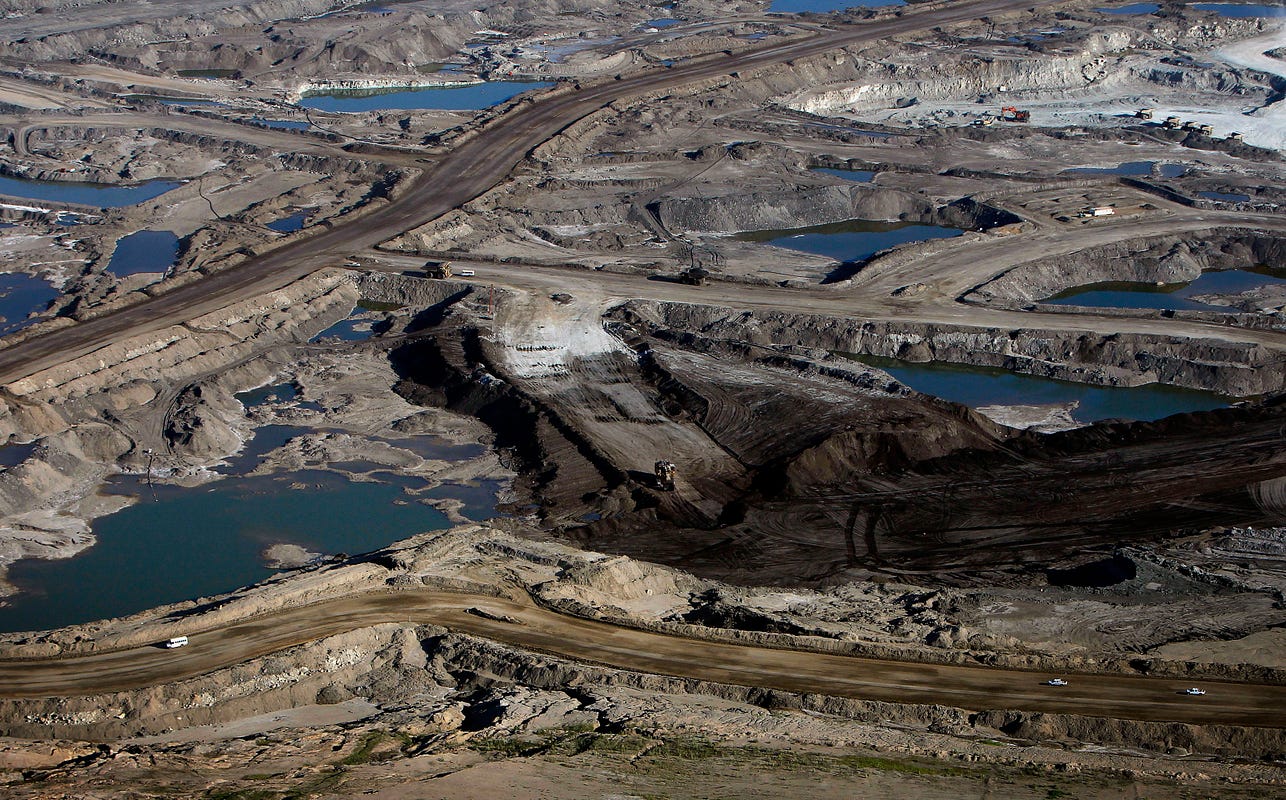
Isis was viewed as the biggest threat for people in Lebanon with 84% saying they were very concerned – understandable given the region’s close proximity to the group’s activities. However, Isis was also viewed as the top threat a lot further away in the US (68%), Australia (69%) and the UK (66%).

Global economic instability is another major worry. It was found to be the top concern in a number of countries, including Venezuela – which has been undergoing a severe financial crisis – as well as Senegal and Tanzania. It was also found to be the second biggest concern in half of all those surveyed.

Pew found that major worries about Iran’s nuclear programme were limited to a few nations, with the US, Spain and Israel (the only country to cite Iran as the highest threat) the most concerned.

Tensions between Russia and its neighbours, and territorial disputes between China and surrounding countries, “remain regional concerns”, said Pew – 62% of respondents in Ukraine and 44% in Poland said they were very concerned about tensions with Moscow. However, 44% of US respondents were also very concerned about this issue, closely followed by France (41%), the UK (41%) and Germany (40%).

Cyber-attacks are also viewed as a considerable threat in the US, with 59% of Americans saying they were very concerned. The survey was conducted after the hack and leak of Sony Pictures emails, which the US government blamed on North Korea. In South Korea, cyber-attacks were the second highest concern (55%) after Isis (75%).

The report focuses on those who say they are “very concerned” about each issue and surveyed respondents from March 25 to May 27, 2015.