Arquivo da tag: Animais

Stefano Mancuso, pionero en el estudio de la neurobiología de las plantas (La Vanguardia)

Victor-M Amela, Ima Sanchís, Lluís Amiguet

“Las plantas tienen neuronas, son seres inteligentes”

29/12/2010 – 02:03

"Las plantas tienen neuronas, son seres inteligentes"

Foto: KIM MANRESA

IMA SANCHÍS

Cerebro vegetal

Gracias a nuestros amigos de Redes, el programa de Eduard Punset, buscadores incansables de todo conocimiento científico que amplíe los límites del saber, de quiénes somos y qué papel desempeñamos en esta sopa de universos, descubrimos a Mancuso, que nos explica que las plantas, vistas a cámara rápida, se comportan como si tuvieran cerebro: tienen neuronas, se comunican mediante señales químicas, toman decisiones, son altruistas y manipuladoras. ¿Hace cinco años era imposible hablar de comportamiento de las plantas, hoy podemos empezar a hablar de su inteligencia¿… Puede que pronto empecemos a hablar de sus sentimientos. Mancuso estará en Redes el próximo día 2. No se lo pierdan.

Sorpréndame.

Las plantas son organismos inteligentes, pero se mueven y toman decisiones en un tiempo más largo que el del hombre.

Lo intuía.

Hoy sabemos que tienen familia y parientes y que reconocen su cercanía. Se comportan de manera totalmente distinta si a su lado hay parientes o hay extraños. Si son parientes no compiten: a través de las raíces, dividen el territorio de manera equitativa.

¿Un árbol puede voluntariamente mandar savia a una planta pequeña?

Sí. Las plantas requieren luz para vivir, ypara que una semilla llegue a la luz deben pasar muchos años; mientras tanto, son nutridas por árboles de su misma especie.

Curioso.

Los cuidados parentales sólo se dan en animales muy evolucionados y es increíble que se den en las plantas.

Entonces, se comunican.

Sí, en una selva todas las plantas están en comunicación subterránea a través de las raíces. Y también fabrican moléculas volátiles que avisan a plantas lejanas sobre lo que está sucediendo.

¿Por ejemplo?

Cuando una planta es atacada por un patógeno, inmediatamente produce moléculas volátiles que pueden viajar kilómetros, y que avisan a todas las demás para que preparen sus defensas.

¿Qué defensas?

Producen moléculas químicas que las convierten en indigeribles, y pueden ser muy agresivas. Hace diez años, en Botsuana introdujeron en un gran parque 200.000 antílopes, que comenzaron a comerse las acacias con intensidad. Tras pocas semanas muchos murieron y al cabo de seis meses murieron más de 10.000, y no advertían por qué. Hoy sabemos que fueron las plantas.

Demasiada predación.

Sí, y las plantas aumentaron hasta tal punto la concentración de taninos en sus hojas, que se convirtieron en un veneno.

¿Las plantas también son empáticas con otros seres?

Es difícil decirlo, pero hay una cosa segura: las plantas pueden manipular a los animales. Durante la polinización producen néctar y otras sustancias para atraer a los insectos. Las orquídeas producen flores que son muy similares a las hembras de algunos insectos, que, engañados, acuden a ellas. Y hay quien afirma que hasta el ser humano es manipulado por las plantas.

¿. ..?

Todas las drogas que usa el hombre (café, tabaco, opio, marihuana…) derivan de las plantas, ¿pero por qué las plantas producen una sustancia que convierte a humanos en dependientes? Porque así las propagamos. Las plantas utilizan al hombre como transporte. Hay investigaciones sobre ello.

Increíble.

Si mañana desaparecieran las plantas del planeta, en un mes toda la vida se extinguiría porque no habría comida ni oxígeno. Todo el oxígeno que respiramos viene de ellas. Pero si nosotros desapareciéramos, no pasaría nada. Somos dependientes de las plantas, pero las plantas no lo son de nosotros. Quien es dependiente está en una situación inferior, ¿no?

Las plantas son mucho más sensibles. Cuando algo cambia en el ambiente, como ellas no pueden escapar, han de ser capaces de sentir con mucha anticipación cualquier mínimo cambio para adaptarse.

¿Y cómo perciben?

Cada punta de raíz es capaz de percibir continuamente y a la vez como mínimo quince parámetros distintos físicos y químicos (temperatura, luz, gravedad, presencia de nutrientes, oxígeno).

Es su gran descubrimiento, y es suyo.

En cada punta de las raíces existen células similares a nuestras neuronas y su función es la misma: comunicar señales mediante impulsos eléctricos, igual que nuestro cerebro. En una planta puede haber millones de puntas de raíces, cada una con su pequeña comunidad de células; y trabajan en red como internet.

Ha encontrado el cerebro vegetal.

Sí, su zona de cálculo. La cuestión es cómo medir su inteligencia. Pero de una cosa estamos seguros: son muy inteligentes, su poder de resolver problemas, de adaptación, es grande. Hoy sobre el planeta el 99,6% de todo lo que está vivo son plantas.

… Y sólo conocemos el 10%.

Y en ese porcentaje tenemos todo nuestro alimento y la medicina. ¿Qué habrá en el restante 90%?… A diario, cientos de especies vegetales desconocidas se extinguen. Tal vez poseían la capacidad de una cura importante, no lo sabremos nunca. Debemos proteger las plantas por nuestra supervivencia.

¿Qué le emociona de las plantas?

Algunos comportamientos son muy emocionantes. Todas las plantas duermen, se despiertan, buscan la luz con sus hojas; tienen una actividad similar a la de los animales. Filmé el crecimiento de unos girasoles, y se ve clarísimo cómo juegan entre ellos.

¿Juegan?

Sí, establecen el comportamiento típico del juego que se ve en tantos animales. Cogimos una de esas pequeñas plantas y la hicimos crecer sola. De adulta tenía problemas de comportamiento: le costaba girar en busca del sol, le faltaba el aprendizaje a través del juego. Ver estas cosas es emocionante.

Leer más: http://www.lavanguardia.com/lacontra/20101229/54095622430/las-plantas-tienen-neuronas-son-seres-inteligentes.html#ixzz3A8PpebKp

Wild sheep show benefits of putting up with parasites (Science Daily)

Date: August 7, 2014

Source: Princeton University

Summary: In the first evidence that natural selection favors an individual’s infection tolerance, researchers have found that an animal’s ability to endure an internal parasite strongly influences its reproductive success. The finding could provide the groundwork for boosting the resilience of humans and livestock to infection.

The researchers examined the relationship between each sheep’s body weight and its level of infection by nematodes, tiny parasitic worms that thrive in the gastrointestinal tract of sheep. This scanning electron micrograph shows nematodes on the surface of a sheep’s gut with a field of view of approximately one centimeter. An economic detriment to sheep farmers, nematodes infect both wild and domesticated sheep, resulting in weight loss, reduced wool growth and death. Credit: Photo by David Smith/Moredun Research Institute

In the first evidence that natural selection favors an individual’s infection tolerance, researchers from Princeton University and the University of Edinburgh have found that an animal’s ability to endure an internal parasite strongly influences its reproductive success. Reported in the journalPLoS Biology, the finding could provide the groundwork for boosting the resilience of humans and livestock to infection.

The researchers used 25 years of data on a population of wild sheep living on an island in northwest Scotland to assess the evolutionary importance of infection tolerance. They first examined the relationship between each sheep’s body weight and its level of infection with nematodes, tiny parasitic worms that thrive in the gastrointestinal tract of sheep. The level of infection was determined by the number of nematode eggs per gram of the animal’s feces.

While all of the animals lost weight as a result of nematode infection, the degree of weight loss varied widely: an adult female sheep with the maximum egg count of 2,000 eggs per gram of feces might lose as little as 2 percent or as much as 20 percent of her body weight. The researchers then tracked the number of offspring produced by each of nearly 2,500 sheep and found that sheep with the highest tolerance to nematode infection produced the most offspring, while sheep with lower parasite tolerance left fewer descendants.

To measure individual differences in parasite tolerance, the researchers used statistical methods that could be extended to studies of disease epidemiology in humans, said senior author Andrea Graham, an assistant professor of ecology and evolutionary biology at Princeton. Medical researchers have long understood that people with similar levels of parasite infection can experience very different symptoms. But biologists are just beginning to appreciate the evolutionary importance of this individual variation.

“For a long time, people assumed that if you knew an individual’s parasite burden, you could perfectly predict its health and survival prospects,” Graham said. “More recently, evolutionary biologists have come to realize that’s not the case, and so have developed statistical tools to measure variation among hosts in the fitness consequences of infection.”

Graham and her colleagues used the wealth of information collected over many years on the Soay sheep living on the island of Hirta, about 100 miles west of the Scottish mainland. These sheep provide a unique opportunity to study the effects of parasites, weather, vegetation changes and other factors on a population of wild animals. Brought to the island by people about 4,000 years ago, the sheep have run wild since the last permanent human inhabitants left Hirta in 1930. By keeping a detailed pedigree, the researchers of the St Kilda Soay Sheep Project can trace any individual’s ancestry back to the beginning of the project in 1985, and, conversely, can count the number of descendants left by each individual.

Expending energy to fight infection

Nematodes puncture an animal’s gut and can impede the absorption of nutrients. Therefore, tolerance to nematode infection could result from an ability to make up for the lost nutrition, or from the ability to repair damage the parasites cause to the gut, Graham said. “This island is way out in the North Atlantic, where the sun doesn’t shine much,” she said. “So tolerant individuals might be the ones who are better able to compete for food or better able to assimilate protein and other useful nutrients from the limited forage.”

Tolerant animals might invest energy in gut repair, but would then be expected to incur costs. Graham and her colleagues identified a similar evolutionary tradeoff in a 2010 study that compared immune-response levels and reproductive success in female Soay sheep. They found that animals with strong antibody responses produced fewer offspring each year, but also lived longer. The team has not yet been able to detect costs of parasite tolerance in the sheep, but such costs could help explain variation in tolerance if the most tolerant animals were at a disadvantage under particular conditions.

While the PLoS Biology findings provide strong evidence that natural selection favors infection tolerance, they do raise questions, such as how the tolerance is generated, and why variation might persist from one generation to the next despite the reproductive advantage of tolerance, Graham said. The data in this study did not permit the researchers to detect a genetic component to tolerance. If genetics do play a role, she suspects multiple genes may interact with environmental factors to determine tolerance; ongoing research will help to tease apart these possibilities.

Understanding the genetic underpinnings of nematode tolerance could someday guide efforts to boost tolerance in livestock by identifying and selectively breeding those animals that exhibit a heightened parasite tolerance, said David Schneider, an associate professor of microbiology and immunology at Stanford University.

“This study shows that parasite tolerance can have a profound effect on animal health and breeding success,” said Schneider, who is familiar with the work but was not involved in it. “In the long term, this suggests that it could be profitable to invest in breeding tolerant livestock.”

In humans and domesticated animals, intestinal parasites are becoming increasingly resistant to the drugs used to treat infections, Graham said. If the availability of nutrients, even just during the first few months of life, impacts lifelong parasite tolerance, simple nutritional supplements could be an effective way to promote tolerance in people. About 2 billion people are persistently infected with intestinal nematode parasites worldwide, mostly in developing nations. Children are especially vulnerable to the worms’ effects, which include anemia, stunted growth and cognitive difficulties.

“Ideally, we would clear the worms from the bellies of the kids who have those heavy burdens,” Graham said. “But if we could also understand how to ameliorate the health consequences and thus promote tolerance of nematodes, that could be a very powerful tool.”

Journal Reference:

  1. Adam D. Hayward, Daniel H. Nussey, Alastair J. Wilson, Camillo Berenos, Jill G. Pilkington, Kathryn A. Watt, Josephine M. Pemberton, Andrea L. Graham. Natural Selection on Individual Variation in Tolerance of Gastrointestinal Nematode Infection. PLoS Biology, 2014; 12 (7): e1001917 DOI:10.1371/journal.pbio.1001917

The Future Will Be Swarming With Rats (Motherboard)

Written by BRIAN MERCHANT, SENIOR EDITOR

July 29, 2014 // 02:00 PM CET

That cockroaches will inherit our despoiled earth is just a tired misconception. The real champions will be disease-carrying rats.

Even though cockroaches seem to be of inexhaustible supply, their invertebrate ilk are actually suffering a fairly rapid decline—and the rodents are rising up. In a recent and widely-discussed study in Science, researchers examined a process called defaunation—remember that term, it’s likely to prove as vital as ‘Arctic ice melt’ or ‘habitat loss’ to understanding our planet’s ecological collapse—that describes how the majority of the world’s animals are vanishing at a rapid pace.

Led by Rodolfo Dirzo, a professor of biology at Stanford University, a team of scientists documented the rate that fauna are going extinct in the modern era. Since the year 1500 AD, at least 320 vertebrate species have been extinguished, primarily due to human activity. Those that remain have seen their total populations decline by 25 percent. Even more striking is the decline of insects: In the past 35 years alone, the scientists found that the number of invertebrates have plummeted 45 percent. The researchers cite the drops as further evidence that we are bearing witness to the unfurling of the Anthropocene Extinction event—the planet’s sixth great mass extinction.

So who wins, besides humans, when the bees and the tigers and the bears lose? Rats.

“Where human density is high, you get high rates of defaunation, high incidence of rodents, and thus high levels of pathogens, which increases the risks of disease transmission,” Dirzo said in a statement upon the study’s publication. “Who would have thought that just defaunation would have all these dramatic consequences? But it can be a vicious circle.”

Hilary Young, one of the study’s authors, has conducted previous research examining how rodents thrived after a large species went extinct.

RATS COULD GROW LARGER THAN SHEEP

“What we found was that these areas quickly experienced massive increases of rodents,” Young told The Current. “All the grass and shrubs normally eaten by this megafauna was, instead, available for rodents—both as food and as shelter. Consequently, the number of rodents doubled—and so did the abundance of the disease-carrying ectoparasites that they harbored.”

Twice the rats. And twice the ectoparasites. A 2013 study in the International Journal of Current Microbiology and Applied Sciences examined how parasite-carrying rats are instrumental in transporting disease: “Rodents together with arthropod ectoparasites can play an important role in the distribution of the arboviruses, streptococcal infections, choriomeningitis, plague, tularemia, leptospirosis, spirochaetosis etc.,” the authors wrote.

“Ectoparasites include insects and acarnies (fleas and mites),” the 2013 study continued, “some of them are permanent like lice, while most of the mature ticks and fleas are temporary parasites. Rats are known to harbor four groups of arthropod ectoparasites: fleas, ticks, mites and lice… Some of the ectoparasites can biologically or mechanically transfer infectious agents to the human or animals and results in the spread of infection.”

In other words, rats carry a lot of parasites, which carry a lot of diseases. Here, according to the Centers for Disease Control, is a quick list of the diseases rats are currently responsible for spreading in the United States:

  • Hantavirus Pulmonary Syndrome
  • Hemorrhagic Fever with Renal Syndrome
  • Lassa Fever
  • Leptospirosis
  • Lymphocytic Chorio-meningitis (LCM)
  • Omsk Hemorrhagic Fever
  • Plague
  • Rat-Bite Fever
  • Salmonellosis
  • South American Arenaviruses (Argentine hemorrhagic fever, Bolivian hemorrhagic fever, Sabiá-associated hemorrhagic fever, Venezuelan hemorrhagic fever)
  • Tularemia

It’s an ugly list. And in light of their impending dominance, it’s worth remembering that rats played a key role in helping spread the bubonic plague during the Black Death. Crammed, unhygienic living conditions helped it become such a devastating killer, but it was an ectoparasite—a flea—that brought the plague.

“The bubonic plague, a disease still present in some areas of the world, is now known to have spread via fleas living on rats,” Mark Ormrod, a professor of history at the University of York, wrote for the BBC.

Our hygiene and health-care are much improved from Medieval times, but we are headed towards a future marked by shared, maybe cramped, living spaces: More than half the world’s population currently lives in cities, billions are slated to join them, and so, the megacities are growing. More urban living, paired with more rats, could beget similar, if not as deadly, health woes.

And Dirzo and his crew aren’t the only ones who worry about the rise of the rats. In fact, just earlier this year, another group of scientists determined that rodents would be the species most likely to outlast all others.

Dr. Jan Zalasiewicz, a geologist at the University of Leicester, believes that rats are the animal best suited to repopulate the world in the event of a mass extinction.

“[Rats] are now on many, if not most, islands around the world,” he explained, “and once there, have proved extraordinarily hard to eradicate. They’re often there for good, essentially. Once there, they have out-competed many native species and at times have driven them to extinction. As a result, ecospace is being emptied—and rats are in a good position to re-fill a significant chunk of it, in the mid to far geological future.”

For many of us, that future is exceedingly easy to imagine. By some counts, in New York, there are twice as many rats as human residents. They are a scourge in other cities, too, of course.

As humans continue to knock out the larger fauna, and the number of rats “double” to fill the void, we can, theoretically, look forward to seeing more of all of the above. And even if you’re not concerned with the health implications, there’s the simple fact that we’re hacking away at our immense, spectacular biodiversity, and trading it in for a deeply unpleasant, rat-centric monotony.

Beyond defaunation, there’s evidence that climate change is improving conditions for rats in general in many regions, too. It’s also probably worth adding at this point that warmer temperatures are causing some rat species to grow larger, too, thus adding another potential population booster. Zalasiewicz, for his part, imagines that once its competition is scarce, rats could become larger than sheep.

So that, then, is a foreboding slice of the Anthropocene: Giant, parasite-and-disease-carrying rats, multiplying in droves while everything else goes extinct.


Ice age lion figurine: Ancient fragment of ivory belonging to 40,000 year old animal figurine unearthed (Science Daily)

Date: July 30, 2014

Source: Universitaet Tübingen

Summary: Archaeologists have found an ancient fragment of ivory belonging to a 40,000 year old animal figurine. Both pieces were found in the Vogelherd Cave in southwestern Germany, which has yielded a number of remarkable works of art dating to the Ice Age. The mammoth ivory figurine depicting a lion was discovered during excavations in 1931. The new fragment makes up one side of the figurine’s head.

The fragment on the left makes up half the head of the animal figure on the right, showing that the “lion” was fully three-dimensional, and not a relief as long thought. Credit: Hilde Jensen, Universität Tübingen

Archaeologists from the University of Tübingen have found an ancient fragment of ivory belonging to a 40,000 year old animal figurine. Both pieces were found in the Vogelherd Cave in southwestern Germany, which has yielded a number of remarkable works of art dating to the Ice Age. The mammoth ivory figurine depicting a lion was discovered during excavations in 1931. The new fragment makes up one side of the figurine’s head, and the sculpture may be viewed at the Tübingen University Museum from 30 July.

“The figurine depicts a lion,” says Professor Nicholas Conard of Tübingen University’s Institute of Prehistory and Medieval Archaeology, and the Senckenberg Center for Human Evolution and Palaeoenvironment Tübingen. “It is one of the most famous Ice Age works of art, and until now, we thought it was a relief, unique among these finds dating to the dawn of figurative art. The reconstructed figurine clearly is a three dimensional sculpture.”

The new fragment was discovered when today’s archaeologists revisited the work of their predecessors from the 1930s. “We have been carrying out renewed excavations and analysis at Vogelherd Cave for nearly ten years,” says Conard. “The site has yielded a wealth of objects that illuminate the development of early symbolic artifacts dating to the period when modern humans arrived in Europe and displaced the indigenous Neanderthals.” He points out that the Vogelherd Cave has provided evidence of the world’s earliest art and music and is a key element in the push to make the caves of the Swabian Jura a UNESCO World Heritage site.

Vogelherd is one of four caves in the region where the world’s earliest figurines have been found, dating back to 40,000 years ago. Several dozen figurines and fragments of figurines have been found in the Vogelherd alone, and researchers are piecing together thousands of mammoth ivory fragments.

Learning the smell of fear: Mothers teach babies their own fears via odor, animal study shows (Science Daily)

Date: July 28, 2014

Source: University of Michigan Health System

Summary: Babies can learn what to fear in the first days of life just by smelling the odor of their distressed mothers’, new research suggests. And not just “natural” fears: If a mother experienced something before pregnancy that made her fear something specific, her baby will quickly learn to fear it too — through her odor when she feels fear.


Even when just the odor of the frightened mother was piped in to a chamber where baby rats were exposed to peppermint smell, the babies developed a fear of the same smell, and their blood cortisol levels rose when they smelled it. Credit: Image courtesy of University of Michigan Health System

Babies can learn what to fear in the first days of life just by smelling the odor of their distressed mothers, new research suggests. And not just “natural” fears: If a mother experienced something before pregnancy that made her fear something specific, her baby will quickly learn to fear it too — through the odor she gives off when she feels fear.

In the first direct observation of this kind of fear transmission, a team of University of Michigan Medical School and New York University studied mother rats who had learned to fear the smell of peppermint — and showed how they “taught” this fear to their babies in their first days of life through their alarm odor released during distress.

In a new paper in the Proceedings of the National Academy of Sciences, the team reports how they pinpointed the specific area of the brain where this fear transmission takes root in the earliest days of life.

Their findings in animals may help explain a phenomenon that has puzzled mental health experts for generations: how a mother’s traumatic experience can affect her children in profound ways, even when it happened long before they were born.

The researchers also hope their work will lead to better understanding of why not all children of traumatized mothers, or of mothers with major phobias, other anxiety disorders or major depression, experience the same effects.

“During the early days of an infant rat’s life, they are immune to learning information about environmental dangers. But if their mother is the source of threat information, we have shown they can learn from her and produce lasting memories,” says Jacek Debiec, M.D., Ph.D., the U-M psychiatrist and neuroscientist who led the research.

“Our research demonstrates that infants can learn from maternal expression of fear, very early in life,” he adds. “Before they can even make their own experiences, they basically acquire their mothers’ experiences. Most importantly, these maternally-transmitted memories are long-lived, whereas other types of infant learning, if not repeated, rapidly perish.”

Peering inside the fearful brain

Debiec, who treats children and mothers with anxiety and other conditions in the U-M Department of Psychiatry, notes that the research on rats allows scientists to see what’s going on inside the brain during fear transmission, in ways they could never do in humans.

He began the research during his fellowship at NYU with Regina Marie Sullivan, Ph.D., senior author of the new paper, and continues it in his new lab at U-M’s Molecular and Behavioral Neuroscience Institute.

The researchers taught female rats to fear the smell of peppermint by exposing them to mild, unpleasant electric shocks while they smelled the scent, before they were pregnant. Then after they gave birth, the team exposed the mothers to just the minty smell, without the shocks, to provoke the fear response. They also used a comparison group of female rats that didn’t fear peppermint.

They exposed the pups of both groups of mothers to the peppermint smell, under many different conditions with and without their mothers present.

Using special brain imaging, and studies of genetic activity in individual brain cells and cortisol in the blood, they zeroed in on a brain structure called the lateral amygdala as the key location for learning fears. During later life, this area is key to detecting and planning response to threats — so it makes sense that it would also be the hub for learning new fears.

But the fact that these fears could be learned in a way that lasted, during a time when the baby rat’s ability to learn any fears directly was naturally suppressed, is what makes the new findings so interesting, says Debiec.

The team even showed that the newborns could learn their mothers’ fears even when the mothers weren’t present. Just the piped-in scent of their mother reacting to the peppermint odor she feared was enough to make them fear the same thing.

And when the researchers gave the baby rats a substance that blocked activity in the amygdala, they failed to learn the fear of peppermint smell from their mothers. This suggests, Debiec says, that there may be ways to intervene to prevent children from learning irrational or harmful fear responses from their mothers, or reduce their impact.

From animals to humans: next steps

The new research builds on what scientists have learned over time about the fear circuitry in the brain, and what can go wrong with it. That work has helped psychiatrists develop new treatments for human patients with phobias and other anxiety disorders — for instance, exposure therapy that helps them overcome fears by gradually confronting the thing or experience that causes their fear.

In much the same way, Debiec hopes that exploring the roots of fear in infancy, and how maternal trauma can affect subsequent generations, could help human patients. While it’s too soon to know if the same odor-based effect happens between human mothers and babies, the role of a mother’s scent in calming human babies has been shown.

Debiec, who hails from Poland, recalls working with the grown children of Holocaust survivors, who experienced nightmares, avoidance instincts and even flashbacks related to traumatic experiences they never had themselves. While they would have learned about the Holocaust from their parents, this deeply ingrained fear suggests something more at work, he says.

Going forward, he hopes to work with U-M researchers to observe human infants and their mothers — including U-M psychiatrist Maria Muzik, M.D. and psychologist Kate Rosenblum, Ph.D., who run a Women and Infants Mental Health clinic and research program and also work with military families. The program is currently seeking women and their children to take part in a range of studies.

Journal Reference:

  1. Jacek Debiec and Regina Marie Sullivan. Intergenerational transmission of emotional trauma through amygdala-dependent mother-to-infant transfer of specific fear. PNAS, July 28, 2014 DOI: 10.1073/pnas.1316740111

Luxury cruise line accused of offering ‘environmental disaster tourism’ with high-carbon footprint Arctic voyage (The Independent)

Cruise passengers will pay upwards of £12,000 to see polar bears and humpback whales in their natural habitat – before it disappears

ADAM WITHNALL
Tuesday 29 July 2014

A luxury cruise operator in the US has announced it will offer a “once-in-a-lifetime” trip to experience the environmental devastation of the Arctic – using a mode of transport that emits three times more CO2 per passenger per mile than a jumbo jet.

It will be the first ever leisure cruise through the Northwest Passage, only accessible now because of the melting of polar ice, and is being marketed at those with an interest in witnessing the effects of climate change first-hand.

Tickets for the trip, scheduled for 16 August 2016 and organised by Crystal Cruises, will cost between $20,000 (£12,000) and $44,000.

Yet there is no mention on Crystal Cruises’ promotion or FAQ for the journey of the boat’s own carbon footprint.

Up to 1,070 passengers will be taken on the 32-day expedition to see seals, walruses, humpback whales and musk-ox – though the company admits there is “no guarantee” of catching a glimpse of a polar bear.

The bulk of the voyage will take place on the Crystal Serenity, a 68,000-ton, 13-deck ship, though it will also be accompanied by an escort vessel and a helicopter.

Popular Science described the trip as “environmental disaster tourism”, and quoted research which suggests that the carbon footprint of a cruise ship, per passenger per mile covered, is triple that of a Boeing 747 flight.

The company said passengers may be able to see endangered polar bears while on the cruise

The company said passengers may be able to see endangered polar bears while on the cruise

The cruise promotion was criticised by social media users for giving people the opportunity to “see/help ruin the environment”, “watch the ravages of global warming in person and become a human vulture” and take a “high-carbon-footprint cruise to watch polar bears drown”.

World Ocean Observatory wrote: “Is no place safe from our intrusion, waste, and consumption?”

In an FAQ on its website, Crystal Cruises said 14 experts would be accompanying guests on the cruise to give lectures about the impacts on the environment around them of climate change, as well as the “historic” nature of their inaugural journey down the Northern Passage.

Company executive Thomas Mazloum told the website GCaptain: “During this voyage, speakers will enlighten guests on information regarding climate change, and how it has impacted this passage.

“With the recent retreat of polar ice, the time is right for us to lead the way within the travel industry, as Crystal has done throughout our 25-year history.”

Under the heading of “Environmental” on its FAQ, Crystal Cruises said both the main ship and escort vessel would “voluntarily use Marine Gas Oil, a low-sulphur fuel… well in excess of the existing environmental regulations”.

Global wildlife decline driving slave labor, organized crime (Science Daily)

Date: July 24, 2014

Source: University of California – Berkeley

Summary: Global decline of wildlife populations is driving increases in violent conflicts, organized crime and child labor around the world, according to a experts. Researchers call for biologists to join forces with experts such as economists, political scientists, criminologists, public health officials and international development specialists to collectively tackle a complex challenge.


Global decline of wildlife populations is driving increases in violent conflicts, organized crime and child labor around the world, according to a policy paper led by researchers at the University of California, Berkeley. The authors call for biologists to join forces with experts such as economists, political scientists, criminologists, public health officials and international development specialists to collectively tackle a complex challenge.

The paper, to be published Thursday, July 24, in the journal Science, highlights how losses of food and employment from wildlife decline cause increases in human trafficking and other crime, as well as foster political instability.

“This paper is about recognizing wildlife decline as a source of social conflict rather than a symptom,” said lead author Justin Brashares, associate professor of ecology and conservation at UC Berkeley’s Department of Environmental Science, Policy and Management. “Billions of people rely directly and indirectly on wild sources of meat for income and sustenance, and this resource is declining. It’s not surprising that the loss of this critical piece of human livelihoods has huge social consequences. Yet, both conservation and political science have generally overlooked these fundamental connections.”

Fishing and the rise of piracy

Fewer animals to hunt and less fish to catch demand increasingly greater effort to harvest. Laborers — many of whom are children — are often sold to fishing boats and forced to work 18-20 hour days at sea for years without pay.

“Impoverished families are relying upon these resources for their livelihoods, so we can’t apply economic models that prescribe increases in prices or reduced demand as supplies become scarce,” said Brashares. “Instead, as more labor is needed to capture scarce wild animals and fish, hunters and fishers use children as a source of cheap labor. Hundreds of thousands of impoverished families are selling their kids to work in harsh conditions.”

The authors connected the rise of piracy and maritime violence in Somalia to battles over fishing rights. What began as an effort to repel foreign vessels illegally trawling through Somali waters escalated into hijacking fishing — and then non-fishing — vessels for ransom.

“Surprisingly few people recognize that competition for fish stocks led to the birth of Somali piracy,” said Brashares. “For Somali fishermen, and for hundreds of millions of others, fish and wildlife were their only source of livelihood, so when that was threatened by international fishing fleets, drastic measures were taken.”

The authors also compared wildlife poaching to the drug trade, noting that huge profits from trafficking luxury wildlife goods, such as elephant tusks and rhino horns, have attracted guerilla groups and crime syndicates worldwide. They pointed to the Lord’s Resistance Army, al-Shabab and Boko Haram as groups known to use wildlife poaching to fund terrorist attacks.

Holistic solutions required

“This paper begins to touch the tip of the iceberg about issues on wildlife decline, and in doing so the authors offer a provocative and completely necessary perspective about the holistic nature of the causes and consequences of wildlife declines,” said Meredith Gore, a Michigan State University associate professor in the nascent field of conservation criminology who was not part of the study.

As potential models for this integrated approach, the authors point to organizations and initiatives in the field of climate change, such as the Intergovernmental Panel on Climate Change, and the United for Wildlife Collaboration. But the paper notes that those global efforts must also be accompanied by multi-pronged approaches that address wildlife declines at a local and regional scale.

“The most important bit from this article, I think, is that we need to better understand the factors that underlie fish and wildlife declines from a local perspective, and that interdisciplinary approaches are likely the best option for facilitating this understanding,” said Gore.

The authors give examples of local governments heading off social tension, such as the granting of exclusive rights to hunting and fishing grounds to locals in Fiji, and the control of management zones in Namibia to reduce poaching and improve the livelihoods of local populations.

“This prescribed re-visioning of why we should conserve wildlife helps make clearer what the stakes are in this game,” said UC Santa Barbara assistant professor Douglas McCauley, a co-author who began this work as a postdoctoral researcher in Brashares’ lab. “Losses of wildlife essentially pull the rug out from underneath societies that depend on these resources. We are not just losing species. We are losing children, breaking apart communities, and fostering crime. This makes wildlife conservation a more important job than it ever has been.”

Journal Reference:

  1. J. S. Brashares, B. Abrahms, K. J. Fiorella, C. D. Golden, C. E. Hojnowski, R. A. Marsh, D. J. McCauley, T. A. Nunez, K. Seto, L. Withey. Wildlife decline and social conflict. Science, 2014; 345 (6195): 376 DOI: 10.1126/science.1256734

Carne bovina é dez vezes mais custosa ao meio ambiente, diz estudo (G1)

PUBLICADO 28 JULHO 2014

Produção de gado bovino demanda de mais recursos naturais, como terra e água, que outras culturas (Foto: Cristino Martins/O Liberal)

Criação de gado bovino demanda mais recursos naturais que demais culturas.
Estudo foi publicado nesta semana na revista científica ‘PNAS’.

Da EFE

O gado bovino demanda 28 vezes mais terra e 11 vezes mais irrigação que os suínos e as aves, e uma dieta com sua carne é dez vezes mais custosa para o meio ambiente, segundo um estudo publicado esta semana pela revista da Academia Nacional de Ciências dos Estados Unidos, a “PNAS”.

A equipe observou as cinco fontes principais de proteínas na dieta dos americanos: produtos lácteos, carne bovina, carne de aves, carne de suínos e ovos. O propósito era calcular os custos ambientais por unidade nutritiva, isto é uma caloria ou grama de proteína. A composição do índice encontrou dificuldades dada à complexidade e variações na produção dos alimentos derivados de animais.

Por exemplo, o gado pastoreado na metade ocidental dos Estados Unidos emprega enormes superfícies de terra, mas muito menos água de irrigação que em outras regiões, enquanto o gado em currais e alimentado com ração consome principalmente milho, que requer menos terra, mas muito mais água e adubos nitrogenados.

A informação que os pesquisadores usaram como base para seu estudo proveio, majoritariamente, dos bancos de dados do Departamento de Agricultura.

Os insumos agropecuários levados em consideração incluíram o uso da terra, da água de irrigação, das emissões dos gases que contribuem ao aquecimento atmosférico, e do uso de adubos nitrogenados.
Carne ‘cara’

Os cálculos mostraram que o alimento humano de origem animal com o custo ambiental mais elevado é a carne bovina: dez vezes mais alto que todos os outros produtos alimentícios de origem animal, inclusive carne suína e de aves. “O gado requer, na média, 28 vezes mais terra e 11 vezes mais água de irrigação, emite cinco vezes mais gases e consome seis vezes mais nitrogênio que a produção de ovos ou carne de aves”, indica o estudo.

Por seu lado, a produção de carne suína ou de aves, os ovos e os lácteos mostraram custos ambientais similares. Os autores se mostraram surpreendidos pelo custo ambiental da produção de lácteos, considerada em geral menos onerosa para o ambiente.

Se for levado em conta o preço de irrigação e os adubos que se aplicam na produção da ração que alimenta o gado bovino para ordenha assim como a ineficiência relativa das vacas comparadas com outros bovinos, o custo ambiental dos lácteos sobe substancialmente.

A pesquisa foi conduzida por Ron Milo do Instituto Weizmann de Ciência, em Rehovot (Israel), com a colaboração de pesquisadores do Centro Canadense de Pesquisa de Energias Alternativas, do Conselho Europeu de Pesquisa, e Charles Rotschild e Selmo Nissenbaum, do Brasil.

Edição especial da Science alerta para 6º Grande Extinção (Carbono Brasil)

28/7/2014 – 11h10

por Fernanda B. Müller, do CarbonoBrasil

Vanishing Fauna Edição especial da Science alerta para 6º Grande Extinção

Em uma coletânea de estudos sobre a crise e os desafios do imenso número de extinções causadas pelos humanos, revista ressalta as implicações da ‘defaunação’ dos ecossistemas.

A triste conclusão de que as nossas florestas, além de estarem em um processo contínuo de desmatamento, estão vazias, cada vez mais depauperadas da vida que as constitui, é o foco de uma série especial da revista Science.

A publicação chama a atenção para um termo que deve se tornar cada vez mais conhecido, a ‘defaunação’: a atual biodiversidade animal, produto de 3,5 bilhões de anos de evolução, apesar da extrema riqueza, está decaindo em níveis que podem estar alcançando um ponto sem volta.

Segundo cientistas, tal perda parece estar contribuindo com o que classificam como o início do sexto evento de extinção biológica em massa – ao contrário dos outros, que tiveram causas naturais, nós seríamos os culpados, devido às chamadas atividades antrópicas.

“Muito permanece desconhecido sobre a ‘defaunação do antropoceno’; essas brechas no conhecimento prejudicam a nossa capacidade de prever e limitar os seus impactos. Porém, claramente, a defaunação é tanto um componente perverso da sexta extinção em massa do planeta quanto uma grande causadora da mudança ecológica global”, concluíram pesquisadores no artigo ‘Defaunação no Antropoceno‘.

Na abertura da revista, um dos editores, Sacha Vignieri, lembra que, há alguns milhares de anos, o planeta servia de lar para espetaculares animais de grande porte, como mamutes, tartarugas gigantes, tigres-dente-de-sabre, entre outros.

Porém, evidências apontam o ser humano como o grande culpado pelo desaparecimento desses animais, afirma o editor.

E infelizmente, a tendência parece longe de mudar, e com ela, toda uma série de funções dos ecossistemas, das quais depende a nossa vida, são alteradas de formas dramáticas.

Como mostram os artigos na Science, os impactos da perda da fauna vão desde o empobrecimento da cobertura vegetal até a redução na produção agrícola devido à falta de polinizadores, passando pelo aumento de doenças, a erosão do solo, os impactos na qualidade da água, entre outros. Ou seja, os efeitos da perda de uma única espécie são sistêmicos.

MacacoCR Edição especial da Science alerta para 6º Grande ExtinçãoNúmeros

De acordo com o estudo ‘Defaunação no Antropoceno‘, as populações de vertebrados declinaram em uma média de mais de um quarto nos últimos quarenta anos. Isso fica extremamente evidente quando qualquer um de nós caminha nos remanescentes de Mata Atlântica: é realmente muito difícil encontrar animais de médio e grande portes.

Pelo menos 322 espécies de vertebrados foram extintas desde 1500, e esse número só não é maior porque não conhecemos todas as espécies que já habitaram ou ainda residem em nossas florestas.

Se a situação é complicada para os vertebrados, que são muito mais conhecidos, é angustiante imaginar o tamanho da crise para os invertebrados, como os insetos, muito menos estudados.

“Apesar de menos de 1% das 1,4 milhão de espécies de invertebrados descritas terem sido avaliadas quanto à ameaça pela IUCN, das analisadas, cerca de 40% são consideradas ameaçadas”, afirma o estudo.

Solução?

Certamente, a resolução dessa crise do Antropoceno não é simples.

As causas dessas perdas são bem conhecidas – caça, fragmentação dos habitats, uso de agrotóxicos, poluição, etc. –, e as tentativas para reverter essas tendências estão aumentando, como a reintrodução da fauna.

araraFACostaR Edição especial da Science alerta para 6º Grande ExtinçãoNo artigo ‘Revertendo a defaunação: restaurando espécies em um mundo mutante’, pesquisadores revisam uma série de translocações conservacionistas, como o reforço, a reintrodução e métodos mais controversos que buscam restaurar populações fora do seu habitat natural ou substituir espécies extintas.

Os autores escrevem que a meta mais tradicional, de ter populações selvagens autosustentadas em paisagens pristinas intocadas pela influência humana, é “cada vez mais inalcançável”. Assim, eles sugerem que criar a “selva”, em vez de restaurá-la, é o caminho mais prático para avançar.

Entretanto, os desafios para reverter as extinções estão se mostrando muito desafiadores, e as pesquisas atuais mostram que, “se não conseguirmos acabar ou reverter as taxas dessas perdas, significará mais para o nosso futuro do apenas que corações desiludidos ou uma floresta vazia”, disse Vignieri, o editor do especial na Science.

Rodolfo Dirzo, professor da Universidade de Stanford – um dos autores de Defaunação no Antropoceno –, argumenta que reduzir imediatamente as taxas de alteração dos habitats e a sobre-exploração ajudaria, mas que isso precisaria ser feito de acordo com as características de cada região e situação.

Ele espera que a sensibilização sobre a atual extinção em massa e suas consequências ajude a desencadear mudanças.

“Os animais importam para as pessoas, mas no equilíbrio, eles importam menos do que a alimentação, emprego, energia, dinheiro e desenvolvimento. Enquanto continuarmos a enxergar os animais nos ecossistemas como tão irrelevantes para essas necessidades básicas, os animais perderão”, disseram Joshua Tewksbury e Haldre Rogers no artigo “Um futuro rico em animais”.

* Publicado originalmente no site CarbonoBrasil.

(CarbonoBrasil)

*   *   *

Pesquisadores alertam para riscos da defaunação promovida pelo homem (Fapesp)

28/07/2014

Agência FAPESP – A revista científica norte-americana Scienceacaba de publicar uma edição especial sobre as consequências do desaparecimento de espécies animais para a biodiversidade do planeta e para o próprio futuro da humanidade.

“Durante o Pleistoceno, apenas dezenas de milhares de anos atrás, nosso planeta sustentava animais grandes e espetaculares. Mamutes, ‘aves do terror’, tartarugas gigantes e tigres-dentes-de-sabre, bem como espécies muito menos conhecidas, como preguiças gigantes (algumas das quais chegavam a 7 metros de altura) e gliptodontes (que pareciam tatus do tamanho de automóveis), vagavam livremente”, diz a introdução do especial.

“Desde então, no entanto, o número e a diversidade de espécies animais na Terra têm declinado consistente e firmemente. Hoje, ficamos com uma fauna relativamente depauperada e continuamos a ver a rápida extinção de espécies animais. Embora algum debate persista, a maioria das evidências sugere que os seres humanos foram responsáveis pela extinção dessa fauna do Pleistoceno, e continuamos a induzir extinções de animais por meio da destruição de terras selvagens, da caça para consumo ou como luxo e da perseguição de espécies que vemos como ameaças ou concorrentes”, destaca o texto.

O especial traz artigos em que pesquisadores de diversos países citam espécies animais que estão desaparecendo, os complexos fatores por trás do processo de defaunação e as dificuldades para colocar em prática alternativas eficazes de conservação.

Um dos artigos do especial, Defaunation in the Anthropocene, tem entre seus autores o professor Mauro Galetti, do Departamento de Ecologia da Universidade Estadual Paulista (Unesp), campus de Rio Claro, responsável por projetos de pesquisa que integram o programa BIOTA-FAPESP.

O artigo de Galetti, produzido em colaboração com pesquisadores dos Estados Unidos, do México e do Reino Unido, ressalta que o mundo está passando por uma das maiores extinções de animais em sua história.

De acordo com os autores, a onda global de perda de biodiversidade tem a ação humana como principal causadora. Mas os impactos humanos sobre a biodiversidade animal representam uma forma ainda não reconhecida de mudanças ambientais globais.

“Dos vertebrados terrestres, 322 espécies se tornaram extintas desde 1500, e populações das espécies restantes mostram declínio médio de 25% em abundância”, dizem os autores.

“Tais declínios animais impactarão o funcionamento de ecossistemas e o bem-estar humano. Muito permanece desconhecido sobre a ‘defaunação antropocênica’. Essas lacunas de conhecimento dificultam a nossa capacidade de prever e limitar os impactos da defaunação. Claramente, no entanto, a defaunação é tanto um componente pervasivo da sexta extinção em massa do planeta como também um grande condutor de mudança ecológica global”, destacam.

Segundo Galetti e colegas, de todas as espécies animais atuais – estimadas entre 5 milhões e 9 milhões –, o mundo perde anualmente entre 11 mil e 58 mil espécies. E isso não inclui os declínios de abundância animal entre populações, ou seja, de espécies que agonizam lentamente.

“A ciência tem se preocupado com o impacto das extinções das espécies, mas o problema também envolve a extinção local de populações. Algumas espécies podem não estar globalmente ameaçadas mas podem estar extintas localmente. Essa extinção local de animais afeta o funcionamento dos ecossistemas naturais vitais ao homem. Nesse trabalho agora publicado, compilamos dados populacionais de grandes mamíferos, como rinocerontes, gorilas e leões, e também de invertebrados, como borboletas. Uma em cada quatro espécies de vertebrados tem suas populações reduzidas”, disse Galetti, em entrevista ao site da Unesp.

“A maioria dos pesquisadores analisa os efeitos humanos sobre a extinção das espécies e, nesse trabalho, nós enfocamos a extinção local de populações. A extinção de uma espécie tem um grande impacto, e a redução das populações animais causa um impacto maior ainda nos ecossistemas”, disse.

Monkeys Use Researchers as Human Shields (IFLScience)

July 26, 2014 | by Janet Fang

photo credit: hyper7pro via Flickr

A team of researchers working in South Africa have a sneaking suspicion that they’re being used as human shields. Monkeys who normally spend their time in trees avoiding predators like leopards and raptors seem to relax their vigilance a little around humans, venturing down to eat.

Humans, as well as human infrastructure, can alter the relationship between predators and prey by shielding one from the other. A stone wall filled with crevices could provide a refuge for a small critter, while a person’s presence might indirectly guard an animal against its would-be killer. Those who are used to us may actually begin to take more risks when we’re around.

To quantify this alteration in risk-taking behavior, Katarzyna Nowak of Durham University and colleagues tested the magnitude of the “human shield effect” on two groups of samango monkeys (Cercopithecus mitis erythrarcus) at a site with high natural predator density and no human hunting pressure.

Samango monkeys spend most of their time in trees avoiding predators on the ground, like large cats, and those in the canopies above, like birds of prey. They don’t stray very far, and they don’t climb too high. When observed by humans, however, the monkeys preferred to climb down to eat food from the forest floor. The work was published in Behavioral Ecology earlier this month.

The researchers set up feeding stations at various levels in the forest and looked at a fear measure known as “giving-up densities.” That’s the density of food remaining in a patch when a forager leaves. (It’s a little like, say, you were in a hurry and didn’t eat your whole burger.) With lots of predators at this site, the giving-up densities were greatest at ground level (0.1 meter) relative to the three tree canopy levels (2.5, 5, and 7.5 meters up). This highlights a strong vertical axis of fear, as they researchers say.

“The amount of food monkeys depleted from buckets over the course of the experiment varied with height, with the most food left uneaten at ground level, where there is a risk of predation by leopards and caracals,” Nowak tells The Independent.

When human followers were present, giving-up densities were reduced at all four heights. In one of the groups, the vertical axis totally disappeared in the presence of human observers. By passively keeping terrestrial predators away from the area, we seem to lower the monkeys’ perceived risks.

“When a human observer was following monkeys, they ate more food at every height, with the most notable differences at the bottom two levels,” Nowak explains. “Animals are expected to deplete more food where and when they feel safe [but] we had not expected human followers to have such strong effect!”

Read more at http://www.iflscience.com/plants-and-animals/monkeys-use-researchers-human-shields#WutB7Z7V2WuAe7ou.99

Itália enfrenta invasão de javalis radioativos quase 30 anos após Chernobyl (UOL)

Patrícia Araújo

Do UOL, em Roma

28/07/201406h00

Quase trinta anos após o desastre da usina de Chernobyl (Ucrânia), a maior tragédia radioativa da história continua a causar graves problemas na Europa e a deixar a população em alerta. Desta vez, o alarme foi soado em uma zona de caça livre no norte da Itália. Após um ano de pesquisas, o Instituto Zooprofilático Experimental de Piemonte, Ligúria e Valle d’Aosta – entidade ligada ao governo regional – divulgou a presença de traços de césio-137 acima dos limites permitidos pela União Européia em dezenas de javalis encontrados na província piemontesa de Verbano-Cusio-Ossola, especialmente na pequena comunidade de Valsesia. A carne do javali seria consumida pelos caçadores.

O instituto começou a investigar a área com maior rigor em março de 2013, após a descoberta de 27 animais contaminados. Em pouco mais de um ano, foram analisados 1.441 porcos selvagens e a constatação foi a de que mais de 10% da população (166 javalis) apresentam índice de radioatividade superior a 600 becquerel/quilo, limite máximo permitido pela UE em animais selvagens. O becquerel é a unidade usada internacionalmente para mediação de radioatividade.

Embora não tenha revelado precisamente o nível de radiação encontrado nos animais de Vasesia, Maria Caramelli, diretora do instituto, afirmou que as análises apresentaram traços de césio-137 “significativamente superiores” ao permitido pela comunidade europeia.

Nuvem radioativa

De acordo com a instituição, a contaminação dos javalis é consequência ainda da nuvem radioativa provocada pela explosão de Chernobyl em 1986. Nos dias decorrentes ao desastre, a nuvem se espalhou por dezenas de países da Europa. Na Itália, um mapeamento feito pelo CCR (Centro Comum de Pesquisa da União Européia) constatou que as regiões mais afetadas foram Lombardia e Piemonte. Fortes chuvas atingiram essas áreas naquele período fazendo com que o césio penetrasse maciçamente maciçamente no solo.

A atual propagação da substância radioativa entre a população de porcos selvagens, e não em outros animais, pode ser consequência dos hábitos alimentares dos javalis. Como eles se nutrem principalmente de raízes, escavam camadas profundas do solo em busca do alimento, expondo-se assim à radiação. Além disso, as raízes são por si próprias grandes concentradoras de radiatividade.

Após a descoberta, o instituto zooprofilático emitiu um alerta pedindo maior controle na zona de caça da província de Verbano-Cusio-Ossola. Atualmente, o Piemonte possui um plano de monitoramento da carne proveniente da caça na região. Porém, a fiscalização não atinge a totalidade dos animais abatidos em zonas selvagens antes de serem consumidos.

Índices subestimados

Para Massimo Bonfatti, coordenador na Itália do Projeto Humus, que trabalha com políticas de contenção de contaminação em áreas atingidas por radioatividade, a situação é ainda mais grave do que parece. Segundo o médico, dois fatores não estão sendo levados em consideração para avaliar precisamente o quadro. O primeiro deles seria a análise exclusiva de somente um isótopo radioativo.

“Um problema grave é que o índice de validação de contaminação na Europa é feito só com o césio-137, mas a nuvem que foi liberada por Chernobyl era cheia de outros elementos em proporções diversas. Não conseguimos nunca ter, por exemplo, o resultado da contaminação no norte da Itália por césio-134, que também pode causar sérios danos”.

Além disso, segundo o coordenador, o valor permitido de radiação de 600 becquerel por quilo de carne é extremamente elevado. “É complicado, mas estamos trabalhando na elaboração de uma proposta de projeto de lei para baixar esse índice para 10 bq/kg”

Maior rigor

Ainda de acordo com Bonfatti, os danos causados à saúde humana por contaminação radioativa são gigantescos. “Nós sustentamos que a grande epidemia de câncer que existe no mundo é provavelmente consequência da radiação que foi liberada do pós-guerra até hoje no planeta. Além disso, estudos já revelaram que o césio-137 se liga às fibras do coração provocando o surgimento de graves patologias cardíacas.”

A reportagem do UOL entrou em contato com as assessorias do governo da região do Piemonte e do Ministério da Saúde italiano para saber quais providências devem ser tomadas após a divulgação do estudo. A administração regional informou que o Instituto Zooprofilático Experimental é o único “ente responsável pela solução de casos do gênero” na área e que, portanto, apenas ele pode falar sobre o assunto. Já o Ministério da Saúde, embora tenha sido procurado diversas vezes ao longo da última semana, não se pronunciou até a publicação desta reportagem.

It’s Time to Destroy Corporate Personhood (IO9)

July 21, 2014

It's Time to Destroy Corporate Personhood

The United States in the only country in the world that recognizes corporations as persons. It’s a so-called “legal fiction” that’s meant to uphold the rights of groups and to smooth business processes. But it’s a dangerous concept that’s gone too far — and could endanger social freedoms in the future.

Illustration from Judge Dredd: Mega City Two by Ulises Farinas

Corporate personhood is a legal concept that’s used in the U.S. to recognize corporations as individuals in the eyes of the law. Like actual people, corporations hold and exercise certain rights and protections under the law and the U.S. Constitution. As legal persons, they can sue and be sued, have the right to appear in court, enter into contracts, and own property — and they can do this separate from their members or shareholders. At the same time, it provides a single entity for taxation and regulation and it simplifies complex transactions — challenges that didn’t exist during the era of sole proprietorships or partnerships when the owners were held liable for the debts and affairs of the business.

That said, a corporation does not have the full suite of rights afforded to persons of flesh-and-blood. Corporations cannot vote, run for office, or bear arms — nor can they contribute to federal political campaigns. What’s more, the concept doesn’t claim that corporations are biological people in the literal sense of the term.

A “Legal Fiction”

It's Time to Destroy Corporate Personhood

“Corporations are ‘legal fictions’ — a fact or facts assumed or created by courts, used to create rights for convenience and to serve the ends of justice,” says ethicist and attorney-at-law Linda MacDonald Glenn. “The idea of ‘corporations as persons’ though, all started because of a headnote mistake in the 1886 case of Santa Clara County v. Pacific Railroad Co, 113, U.S. 394 — a mistake that has been perpetuated with profound consequences.

Mistake or no mistake, the doctrine was affirmed in 1888 during Pembina Consolidated Silver Mining Co. v. Pennsylvania, when the Court stated that, “Under the designation of ‘person’ there is no doubt that a private corporation is included [in the Fourteenth Amendment]. Such corporations are merely associations of individuals united for a special purpose and permitted to do business under a particular name and have a succession of members without dissolution.”

It’s a doctrine that’s held ever since, one that works off the conviction that corporations are organizations of people, and that people should not be deprived of their constitutional rights when they act collectively.

The concept may seem strange and problematic, but UCLA Law Professor Adam Winkler says corporate personhood has had profound and beneficial economic consequences:

It means that the obligations the law imposes on the corporation, such as liability for harms caused by the firm’s operations, are not generally extended to the shareholders. Limited liability protects the owners’ personal assets, which ordinarily can’t be taken to pay the debts of the corporation. This creates incentives for investment, promotes entrepreneurial activity, and encourages corporate managers to take the risks necessary for growth and innovation. That’s why the Supreme Court, in business cases, has held that “incorporation’s basic purpose is to create a legally distinct entity, with legal rights, obligations, powers, and privileges different from those of the natural individuals who created it, who own it, or whom it employs.

Of course, other nations don’t employ this “fiction”, yet they’ve found ways to cope with these challenges.

Living in a World of Make-believe

Moreover, the problem with evoking a fiction is that it can lead us down some strange paths. By living in a world of make-believe, courts have extended other rights to corporations beyond those necessary. It’s hardly a fiction anymore, with “person” now having a wider meaning than ever before.

It's Time to Destroy Corporate Personhood

(YanLev/Shutterstock)

Here’s what Judge O’Dell-Seneca said last year in the Hallowich v Range case:

Corporations, companies and partnership have no spiritual nature, feelings, intellect, beliefs, thoughts, emotions or sensations because they do not exist in the manner that humankind exists…They cannot be ‘let alone’ by government because businesses are but grapes, ripe upon the vine of the law, that the people of this Commonwealth raise, tend and prune at their pleasure and need.

To this list of attributes, MacDonald Glenn adds a lack of conscience.

“I’ve heard it said that if a corporation had a psychological profile done, it would be a psychopath,” she told io9. ” The concept of corporations was created partially to shield natural persons from liability; and it allowed individuals to create something, a business, that was larger than themselves and could exist in perpetuity. But it’s twisted reasoning to allow them to have equal or higher status than ‘natural’ persons or other sentient beings. A corporation cannot laugh or love; it doesn’t enjoy the warm breezes of summer, or mourn the loss of a loved one. In short, corporations are not sentient beings; they are artifacts.”

Similarly, solicitor general Elena Kagan has warned against expanding the notion of corporate personhood. In 2009 she said: “Few of us are only our economic interests. We have beliefs. We have convictions. [Corporations] engage the political process in an entirely different way, and this is what makes them so much more damaging.”

The New York Times has also come out in condemnation of the concept:

The law also gives corporations special legal status: limited liability, special rules for the accumulation of assets and the ability to live forever. These rules put corporations in a privileged position in producing profits and aggregating wealth. Their influence would be overwhelming with the full array of rights that people have.

One of the main areas where corporations’ rights have long been limited is politics. Polls suggest that Americans are worried about the influence that corporations already have with elected officials. The drive to give corporations more rights is coming from the court’s conservative bloc — a curious position given their often-proclaimed devotion to the text of the Constitution.

The founders of this nation knew just what they were doing when they drew a line between legally created economic entities and living, breathing human beings. The court should stick to that line.

Causing Harm

I asked MacDonald Glenn if the concept of corporate personhood is demeaning or damaging tobona fide persons, particularly women.

“It’s about sentience — the ability to feel pleasure and pain,” she responded. “Corporate personhood emphasizes profits, property, assets. It should be noted that corporations were given legal status as persons before women were.”

MacDonald Glenn says that although the Declaration of Independence starts out idealistically with the words, “We hold these truths to be self-evident, that all men are created equal”, we still live in very hierarchical class-based society.

“Although we have made significant strides towards recognizing the value of all persons, generally speaking, the wealthier you are, the more powerful you are, the more influence you exert,” she says. “So, if corporations are the ones with the money, they become the ones who have the power and influence. The recent Supreme court decisions reinforce that and, sadly, it encourages social stratification — a system not very different than those portrayed recently in recent movies, such as The Hunger Games or Elysium. No notion of ‘all (wo)men are created equally’ there.”

It's Time to Destroy Corporate Personhood

The notion of fictitious persons can be harmful to women in other ways as well. If it can be argued that artifacts are persons — objects devoid of an inner psychological life — it’s conceivable that other crazy fictions can be devised as well — such as fetal personhood. It’s something that should make pro-life advocates very nervous.

At the same time, while corporations are thought of as persons, an entire subset of nonhuman animals deserving of personhood status are refused to be recognized as such. In the future, the concept could lead to the attribution of personhood onto artificial intelligences or robots devoid of sentient capacities. Furthermore, the practice of recognizing artifacts as persons diminishes what it truly means to be a genuine person.

Clearly, corporations deserve rights and protections, but certainly not under the rubric of something as precious and cherished as personhood.

The Hobby Lobby Decision

Which brings us to the controversial Hobby Lobby case — a prime example of what can happen when corporate personhood is taken too far. In this controversial case, the owners of a craft store claimed that their personal religious beliefs would be offended if they had to provide certain forms of birth control coverage to employees.

It's Time to Destroy Corporate PersonhoodEXPAND

(Nicholas Eckhart)

“The purpose of extending rights to corporations is to protect the rights of people associated with the corporation, including shareholders, officers, and employees,” Justice Samuel Alito wrote in the ensuing decision. “Protecting the free-exercise rights of closely held corporations thus protects the religious liberty of the humans who own and control them.”

Of course, the Supreme Court justices failed to acknowledge a number of aspects indelible to the U.S. Constitution, including the right to be free from religion, not to the mention the fact that corporate personhood was never the intention of the Founding Fathers in the first place.

Indeed, as Washington Post’s Dana Milbank recently pointed out, the decision went way too far: “…corporations enjoy rights that ‘natural persons’ do not. The act of incorporating allows officers to avoid personal responsibility for corporate actions. Corporations have the benefits of personhood without those pesky responsibilities.”

And as MacDonald Glenn told me, the decision doesn’t protect religious liberties of individuals — it gives an artifact human rights, previously only reserved to natural persons.

“It’s form of corporate idolatry,” MacDonald Glenn told io9. “Granting the rights of citizens to corporate structures creates a disproportionate impact where the rights of those with wealth supersede the rights of those without.”

Related: 

Hilariously Useless Comments About Science from the US Supreme Court

Chimps like listening to music with a different beat (Science Daily)

Date: June 26, 2014

Source: American Psychological Association (APA)

Summary: While preferring silence to music from the West, chimpanzees apparently like to listen to the different rhythms of music from Africa and India, according to new research published by the American Psychological Association.

Psychological research with chimpanzees like Tara, above, has found chimps prefer silence to Western music. New research published by the American Psychological Association reveals chimpanzees like listening to other types of world music, such as African and Indian. Credit: Photo courtesy of the Yerkes National Primate Research Center, Emory University

While preferring silence to music from the West, chimpanzees apparently like to listen to the different rhythms of music from Africa and India, according to new research published by the American Psychological Association.

“Our objective was not to find a preference for different cultures’ music. We used cultural music from Africa, India and Japan to pinpoint specific acoustic properties,” said study coauthor Frans de Waal, PhD, of Emory University. “Past research has focused only on Western music and has not addressed the very different acoustic features of non-Western music. While nonhuman primates have previously indicated a preference among music choices, they have consistently chosen silence over the types of music previously tested.”

Previous research has found that some nonhuman primates prefer slower tempos, but the current findings may be the first to show that they display a preference for particular rhythmic patterns, according to the study. “Although Western music, such as pop, blues and classical, sound different to the casual listener, they all follow the same musical and acoustic patterns. Therefore, by testing only different Western music, previous research has essentially replicated itself,” the authors wrote. The study was published in APA’s Journal of Experimental Psychology: Animal Learning and Cognition.

When African and Indian music was played near their large outdoor enclosures, the chimps spent significantly more time in areas where they could best hear the music. When Japanese music was played, they were more likely to be found in spots where it was more difficult or impossible to hear the music. The African and Indian music in the experiment had extreme ratios of strong to weak beats, whereas the Japanese music had regular strong beats, which is also typical of Western music.

“Chimpanzees may perceive the strong, predictable rhythmic patterns as threatening, as chimpanzee dominance displays commonly incorporate repeated rhythmic sounds such as stomping, clapping and banging objects,” said de Waal.

Sixteen adult chimps in two groups participated in the experiment at the Yerkes National Primate Research Center at Emory University. Over 12 consecutive days for 40 minutes each morning, the groups were given the opportunity to listen to African, Indian or Japanese music playing on a portable stereo near their outdoor enclosure. Another portable stereo not playing any music was located at a different spot near the enclosure to rule out behavior that might be associated with an object rather than the music. The different types of music were at the same volume but played in random order. Each day, researchers observed the chimps and recorded their location every two minutes with handwritten notes. They also videotaped the activity in the enclosure. The chimps’ behavior when the music was played was compared to their behavior with no music.

“Chimpanzees displaying a preference for music over silence is compelling evidence that our shared evolutionary histories may include favoring sounds outside of both humans’ and chimpanzees’ immediate survival cues,” said lead author Morgan Mingle, BA, of Emory and Southwestern University in Austin. “Our study highlights the importance of sampling across the gamut of human music to potentially identify features that could have a shared evolutionary root.”

Journal Reference:
  1. Morgan E. Mingle, Timothy M. Eppley, Matthew W. Campbell, Katie Hall, Victoria Horner, Frans B. M. de Waal. Chimpanzees Prefer African and Indian Music Over Silence.Journal of Experimental Psychology: Animal Learning and Cognition, 2014; DOI: 10.1037/xan0000032

Animals and Cultural Diplomacy (Huff Post)

Posted: 07/09/2014 4:22 pm EDT Updated: 07/09/2014 4:59 pm EDT

It was almost a decade after the Puritan government of England had executed King Charles I, and the country had begun to descend into chaos. Oliver Cromwell, who ruled as Lord Protector silenced criticism by banning newspapers, intercepting letters, and employing a network of secret police. In his History of Four-Footed Beasts, Serpents and Insects, Reverend Edward Topsell wrote, “Would it not make all men reverence a good king set over them by God, seeing the bees seek out their king if he lose himself, and by a most sagacious smelling sense, never cease till he be found out and then bear him upon their bodies if he be not able to fly. . . .” Topsell then tried to add a bit of balance by continuing, “And what king is not invited to clemency and deterred from tyranny, seeing the king of bees hath a sting but never uses the same.” We have no reason to think Topsell was a political dissident, in fact he may really have believed that he was simply recording the ways of bees. Consciously intended or not, a subtext comes through, and the English Parliament apparently agreed with it, since, two years later in 1660, it invited Charles II, son of the beheaded king, back to rule, requiring, however, that he not use his office for revenge against the regicides. Simply by speaking of animals, one participates in an ongoing process of cultural, and often political, negotiation.

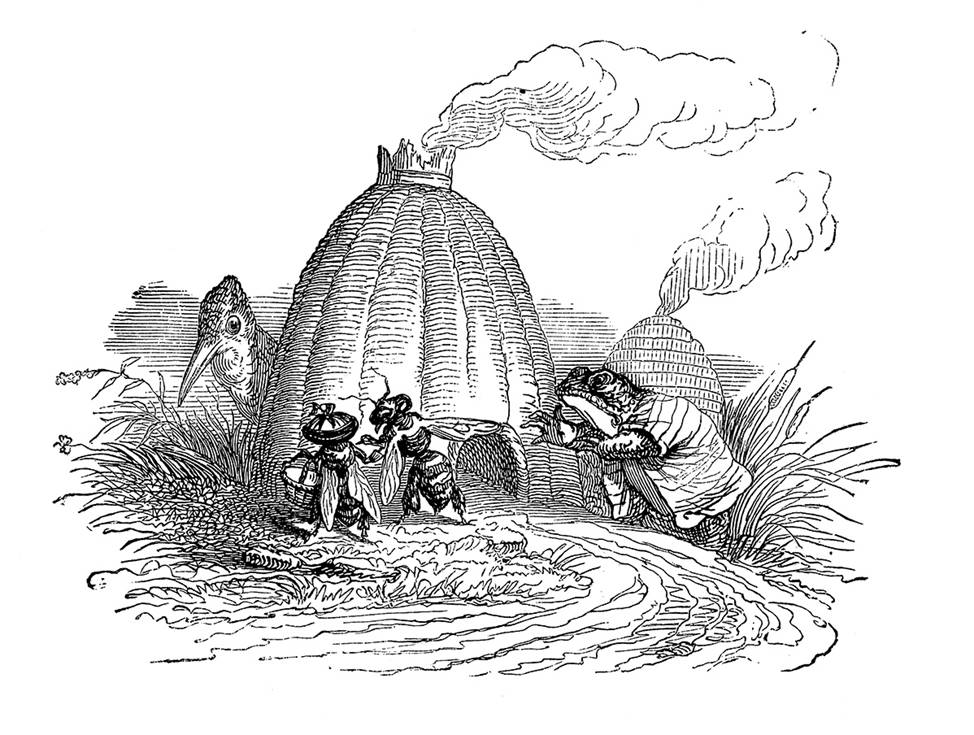
2014-07-09-Grandville_Beehive_1842.jpg

J. J. Grandville, “Beehive,” 1842

The world of animals here appears parallel to that of human beings, and differences of species may stand in for those of tribe, gender, class, profession and so on. This is a sort of vision that we associate with “totemism,” which the anthropologist Claude Levi-Strauss explained in the mid-twentieth century as the application of structures initially found in the natural world, especially among animals, to human culture, as a means of representing social distinctions among indigenous peoples. Apart from the vastness of their scale and the complexity of their organization, nations are essentially tribes, and the relations between them follow many of the same dynamics. Animal symbolism is so deeply embedded in human culture that it is almost impossible to talk about animals without, simultaneously, speaking indirectly about human beings.

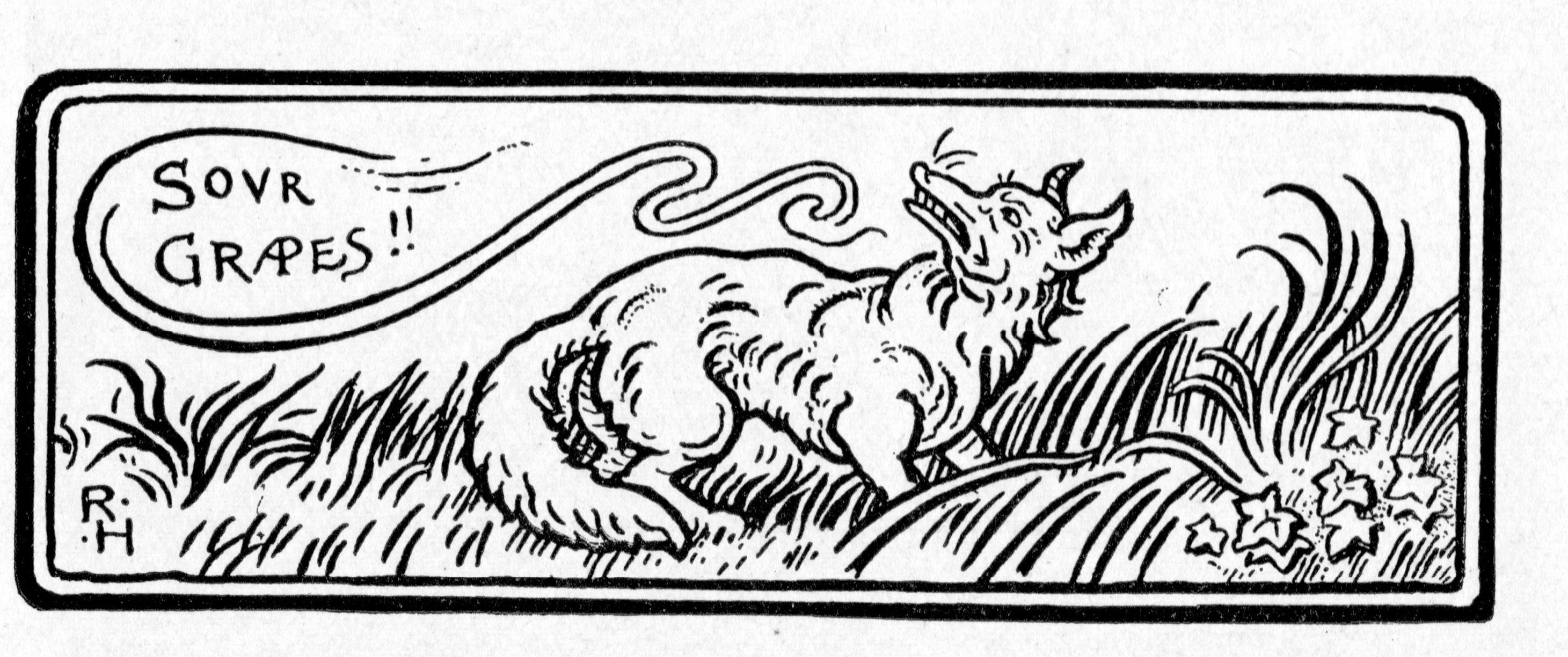
Levi-Strauss’ notion of totemism has been qualified, challenged and refined by subsequent thinkers, but, without trying to tease out all possible implications, it still serves as a rough working model for understanding how animals and nature may contribute to cultural diplomacy. This is apparent in the beast fables from the tradition of Aesop, a half-legendary storyteller from the Greek isle of Samos in the seventh century BCE. Several of the stories commonly attributed to him such as “The Tortoise and the Hare” or “The Fox and the Grapes” are still familiar to contemporary people from childhood. Behind the moralistic tales of talking lions and foxes, we can discern a tribal religion, with its animal totems, deities, sages and tricksters, largely deprived of their numinous qualities yet, nevertheless, in ways not terribly different from those of many indigenous peoples of Africa or the Americas.
2014-07-09-FoxGrapes_Heighway004.jpg

Richard Heighway, illustration to Aesop’s “The Fox and the Grapes,” 1910

From very early times, the fable has been primarily, though by no means exclusively, a form associated with slaves. Aesop, Phaedrus and Babrius – the three most celebrated fabulists of the ancient world, were all slaves, as was Uncle Remus, the mouthpiece for Afro-Indian tales in the Aesopian tradition, collected by Joel Chandler Harris in the deep south of the United States just after the Civil War. The fable enabled slaves, as well as people of other social orders, to indirectly express things which might otherwise be sensitive or forbidden.

Totemism became even more overt in the High Middle Ages, with the development of heraldry. This was initially a system of emblems painted on shields to identify knights in jousts, when their faces and bodies were completely covered by armor. In the most literal way, heraldic symbols were a substitute for the human face. Heraldry was gradually extended to feudal families, and then to states, businesses, clubs and almost all other institutions. These symbols were by no means confined to animals and vegetation, but creatures such as boars, wolves, bears, lions and eagles figured very prominently. Heraldry represented identity in terms of abstract relationships among symbolic objects, which are joined in fantastic patterns with no regard for common sense. They are deliberately esoteric, pointing to the mystery which is ultimately at the core of identity.
2014-07-09-LionandUnicorn.jpg

Crest of Britain with the Lion of England and the Unicorn of Scotland

In some contexts at least, modern societies have identified with animals with constancy comparable to that of tribal peoples. These creatures need not necessarily be indigenous, wild, contemporary, or even real. England is represented by the lion, which is not indigenous, or the bulldog, which is a domestic breed. The animal representing Mauritius is the extinct dodo, while Scotland is represented by the mythical unicorn. Those are simply animals that ─ whether for historical, folkloric, commercial or geographic reasons ─ seem to embody a nation’s uniqueness. Underlying this totemic practice is an implicit analogy between the diversity of human cultures and that of all living things.

The animals in fables of the Renaissance, such as those of La Fontaine, and of political cartoons, are essentially those of heraldry. The totemic notion that animals constitute a world parallel to that of people was also responsible for the practice of physiognomy, which held that the character of a person could be read by the resemblance of his features to certain animals, so there would be wolf people, pig people, bat people and so on. That tradition, without the theoretical underpinnings, continues in caricatures and, most especially, political cartoons up through the present day, as well as in literary works such as Orwell’s Animal Farm.

2014-07-09-kaulbach.jpg

Illustration by Wilhelm Kaulbach’s to Goethe’s “Reineke Fox,” c. 1830

One might perhaps think that the stylized animals of literary fables, heraldry and editorial cartoons are too detached from their original models for their representation to have much impact on relationships between human beings and the natural world; experience suggests otherwise. White-tailed deer, turkeys and Canada geese, though on the brink of extinction in the early twentieth century, may now be more common in the United States and Canada than they were in preColumbian times. Bald eagles, moose, beaver, buffalo, and coyotes are making significant comebacks as well. These resurgent animals are precisely those that have great iconic importance in both Amerindian and immigrant cultures. The bald eagle is the national animal of the United States, and the beaver of Canada. The turkey is an old symbol of the New World, the buffalo of the Great Plains, and moose of the far North. All of the others as well are closely identified with certain regions, landscapes or peoples.

To be sure, iconic status in human culture can often endanger animals. In the United States immediately following the Civil War, the American buffalo were deliberately hunted almost to extinction, in order to dishearten the Plains Indians, in whose lives they had a central role. In Asia today, the South China tiger is being hunted to extinction in large part because of the central role that its body parts play in folk medicine. But such events simply show another aspect of the way cultural and natural concerns are inextricably bound together.

The United States Bureau of Fish and Wildlife currently lists about 500 species as “endangered” and about another 200 as “threatened.” The many thousand additional species have been proposed for these lists. Having a local species listed can bring publicity and status as well as money for conservation, as well as less-tangible psychological satisfactions, but there is no clear criterion for either categorization. Inclusion is, therefore, a subject of continual lobbying, in which it is not always easy to tell cultural or economic motives from environmental ones.

The mediation performed by animals in human affairs is continuous, if seldom noticed, like the sound of crickets on an autumn day. In the past, this process has occasionally emerged from the background, as when Harun al Rashid gifted two leopards to Charlemagne or, in 1972, when the government of China presented a mated pair of pandas to the National Zoo in Washington, D. C. It is hard to say how much ecological awareness, if any, is reflected by either of these gifts. But the presents were at the least a reminder to the recipient that the distant land contained not only wealth and people but also natural wonders.

My broader point is that environmental problems are also cultural, in fact one cannot address one apart from the other. In general, we can say that the representation of people in terms of animals and nature, an essentially totemic tradition, can place human concerns in a broader perspective, diffusing tensions and helping us to:
• Look beyond immediate personal or collective interests;
• Comment indirectly on subjects that might otherwise be too sensitive;
• Eliminate evasive political rhetoric;
• Unite people around shared concerns such as conservation and sustainability.
Like other forms of cultural diplomacy, this may remain primarily beneath the threshold of awareness, but can be made more effective through conscious appreciation.

The borders between nations are mapped out with great precision, but boundaries among cultures are fundamentally poetic. Literary, artistic and architectural accomplishments help to distinguish human cultures from one another. Interaction with the natural world, also embodied in customs from funerals to foodways, further differentiates them from domains that are still largely beyond human understanding or control. These frontiers, in turn, are constantly in flux, a bit like wetlands that shift with the weather, season and tide. Like the elements, cultures are engaged in a perpetual negotiation. Cultural diplomacy is essentially a natural process, which requires only a hospitable environment.

Topsell was not the only person who used bees to comment on human institutions. Socrates, in Plato’s dialogue “Phaedo,” suggested that people who lived as good citizens might be reincarnated as bees. Virgil upheld the bees to his fellow Romans as models of austere living and martial valor, especially because they would sting intruders at the cost of their own lives. In the Middle Ages, people thought of the hive as a sort of monastery, but, in the early modern period, Bernard de Mandeville satirized it as an imperiled feudal state that had failed to adapt to the ways of commerce, an idea that eerily anticipates the way honey bees are dying out today. Napoleon chose bees as his emblem, because of their association with industry but also with the early medieval rulers of France. At the beginning of the twentieth century, Maurice Maeterlink stated that bees were the most intelligent animals after man, and thought of them as socialists. On learning that the so-called “king” was actually a queen, some feminists have upheld the hive as a model of matriarchal society. These various philosophies and social systems might seem to have little in common, yet they are based on essentially the same imagery.

2014-07-09-Standard_NapoleonIII.png

Standard of Napoleon III

Suppose, then, that one were to hold a conference on the current dying out of bees ─ together with its agrarian, cultural, spiritual and economic implications ─ and invite representatives of groups with radically opposing social, religious and political views, from the tea party to the communists. I cannot predict what the various factions might say or what the final outcome would be, but that is precisely why such a meeting might be beneficial. You would likely to encounter some surprising coalitions and novel initiatives. All would be compelled to think beyond their accustomed rhetoric, and probably to articulate some of their core values, thus extending the mediation to other problems.

(A version of this essay was read by the author on June 27 at the Symposium on Cultural Diplomacy in the USA at the Czech Embassy in New York City.)

Ciência Hoje On-line: Pelas abelhas

JC e-mail 4991, de 17 de julho de 2014

Campanha internacional criada por brasileiros chama atenção para o desaparecimento de colmeias e seu impacto sobre o ambiente e a segurança alimentar dos humanos

A notícia de que a população mundial de abelhas tem se reduzido pode até ser novidade para alguns, mas não aqui na CH On-line. Esses insetos vêm desaparecendo nos últimos 60 anos e 13 espécies foram extintas do planeta – das cerca de 20 mil existentes. O que parece uma boa notícia para os alérgicos é, no entanto, preocupante para o futuro da humanidade. Por isso, pesquisadores brasileiros lançaram uma campanha global para divulgar o sumiço de abelhas batizada de Bee or not to be? – um trocadilho em inglês com o verbo ‘ser’ (to be) e a palavra ‘abelha’ (bee) baseado na famosa frase de William Shakespeare: “Ser ou não ser, eis a questão.”

Os pesquisadores chamam a atenção para um fenômeno mundial denominado ‘síndrome do desaparecimento das abelhas’, decorrente de um problema no sistema nervoso desses insetos que faz com que eles ‘esqueçam’ o caminho de volta para sua colmeia e morram ao relento. Essa alteração está relacionada principalmente ao uso na agricultura de uma classe de pesticidas à base de nicotina, os neonicotinoides. Ao tentar polinizar os vegetais tratados com esses pesticidas, as abelhas se contaminam e desenvolvem o problema.

Leia o post completo na CH On-line, que tem conteúdo exclusivo atualizado diariamente: http://cienciahoje.uol.com.br/blogues/bussola/2014/07/pelas-abelhas

Precipitation, not warming temperatures, may be key in bird adaptation to climate change (Science Daily)

Date: July 11, 2014

Source: Oregon State University

Summary: A new model analyzing how birds in western North America will respond to climate change suggests that for most species, regional warming is not as likely to influence population trends as will precipitation changes. “In general, our study suggests that if climate change results in winters with less precipitation, we likely will see a spring drying effect,” one researcher said. “This means that populations of drought-tolerant species will expand and birds that rely heavily on moisture should decline.”

Rufous hummingbird. Credit: Image courtesy of Oregon State University

A new model analyzing how birds in western North America will respond to climate change suggests that for most species, regional warming is not as likely to influence population trends as will precipitation changes.

Several past studies have found that temperature increases can push some animal species — including birds — into higher latitudes or higher elevations. Few studies, however, have tackled the role that changes in precipitation may cause, according to Matthew Betts, an Oregon State University ecologist and a principal investigator on the study.

“When we think of climate change, we automatically think warmer temperatures,” said Betts, an associate professor in Oregon State’s College of Forestry. “But our analysis found that for many species, it is precipitation that most affects the long-term survival of many bird species.

“It makes sense when you think about it,” Betts added. “Changes in precipitation can affect plant growth, soil moisture, water storage and insect abundance and distributions.”

Results of the study, which was funded by the National Science Foundation with support from the U.S. Geological Survey and others, are being published in the journalGlobal Change Biology.

The researchers examined long-term data on bird distributions and abundance covering five states in the western United States, and in the Canadian province of British Columbia, testing statistical models to predict temporal changes in population of 132 bird species over a 32-year period. They analyzed the impacts of temperature and precipitation on bird distributions at the beginning of the study period (the 1970s) and then tested how well the predictions performed against actual population trends over the ensuing 30 years.

The scientists keyed in on several variables, including possible changes during the wettest month in each region, the breeding season of different species, and the driest month by area. Their model found that models including precipitation were most successful at predicting bird population trends.

“For some species, the model can predict about 80 percent of variation,” Betts said, “and for some species, it’s just a flip of the coin. But the strongest message is that precipitation is an important factor and we should pay more attention to the implications of this moving forward.”

The study incorporated a lot of complex variables into the model, including micro-climatic changes that are present in mountainous environments. The research area encompassed California to northern British Columbia and the mountain systems drive much of the changes in both temperature and precipitation.

The researchers chose December precipitation as one variable and found it to be influential in affecting bird populations.

“Someone might ask why December, since half of the bird species usually present in the Pacific Northwest, for instance, might not even be here since they’re migratory,” Betts noted. “But much of the critical precipitation is snow that falls in the winter and has a carryover effect for months later — and the runoff is what affects stream flows, plant growth and insect abundance well down the road.”

The rufous hummingbird is one species that appeared affected by changes in December precipitation, the researchers say. The species is declining across western North America at a rate of about 3 percent a year, and the model suggest it is linked to an overall drying trend in the Northwest. The evening grosbeak is similarly affected the authors say.

On the other hand, the California towhee shows a negative association with December precipitation, appears to be drought-tolerant — and its populations remain stable.

“We cannot say for certain that a change in December precipitation caused declines in evening grosbeaks or rufous hummingbirds,” said Javier Gutiérrez Illán, a former postdoctoral researcher at Oregon State and lead author on the study. “Our model shows, however, a strong association between the birds’ decline and precipitation changes and the fact that this variable pointed to actual past changes in populations gives it validity.”

“The study shows that models can predict the direction and magnitude of population changes,” he added. “This is of fundamental importance considering predictions were successful even in new locations.”

The next phase of the research is to use the model to determine if there are patterns in the sorts of species affected — for instance, birds that are migratory or non-migratory, or short- or long-lived. They also hope to test additional variables, including land use changes, wildfire impacts, competition between species and other factors.

“In general, our study suggests that if climate change results in winters with less precipitation, we likely will see a spring drying effect,” Betts said. “This means that populations of drought-tolerant species will expand and birds that rely heavily on moisture should decline.”

Journal Reference:
  1. Javier Gutiérrez Illán, Chris D. Thomas, Julia A. Jones, Weng-Keen Wong, Susan M. Shirley, Matthew G. Betts. Precipitation and winter temperature predict long-term range-scale abundance changes in Western North American birds.Global Change Biology, 2014; DOI: 10.1111/gcb.12642

Cientistas exploram microbiota de formigas em busca de novos fármacos (Fapesp)

Projeto reúne pesquisadores da USP e de Harvard e foi aprovado na primeira chamada conjunta lançada pela FAPESP e pelo NIH (foto: Michael Poulsen/capa: Eduardo Afonso da Silva Jr.)

11/07/2014

Por Karina Toledo

Agência FAPESP – Como os moradores de grandes cidades bem sabem, ambientes com grande aglomeração de indivíduos são favoráveis à disseminação de patógenos e, portanto, requerem cuidados para evitar doenças.

Se nós humanos podemos contar com vacinas, remédios e desinfetantes para nos proteger, os insetos sociais – como abelhas, formigas e cupins – também desenvolveram ao longo de milhares de anos de evolução suas próprias “armas químicas”, que agora começam a ser exploradas pela ciência.

“Uma das estratégias usadas por insetos que vivem em colônias é a associação com microrganismos simbiontes – na maioria das vezes bactérias – capazes de produzir compostos químicos com ação antibiótica e antifúngica”, contou Monica Tallarico Pupo, professora da Faculdade de Ciências Farmacêuticas de Ribeirão Preto (FCFRP) da Universidade de São Paulo (USP).

Em um projeto recentemente aprovado na primeira chamada de propostas conjunta lançada pela FAPESP e pelo National Institutes of Health (NIH), dos Estados Unidos, a equipe de Pupo vai se unir ao grupo de Jon Clardy, da Harvard University, para explorar a microbiota existente nos corpos de formigas brasileiras em busca de moléculas naturais que possam dar origem a novos fármacos.

“Vamos nos concentrar inicialmente nas espécies de formigas cortadeiras, como a saúva, pois são as que têm essa relação de simbiose mais bem descrita na literatura científica”, disse Pupo.

De acordo com a pesquisadora, as formigas cortadeiras se comportam como verdadeiras agricultoras, carregando pedaços de planta para o interior do ninho com o intuito de nutrir as culturas de fungos das quais se alimentam. “Isso cria um ambiente rico em nutrientes e suscetível ao ataque de microrganismos oportunistas. Para manter a saúde do formigueiro, é importante que tenham os simbiontes associados”, explicou Pupo.

Os pesquisadores sairão à caça de formigas em parques nacionais localizados em diferentes biomas brasileiros, como Cerrado, Mata Atlântica, Amazônia e Caatinga. Também fará parte da área de coleta o Parque Estadual Vassununga, no município de Santa Rita do Passa Quatro (SP).

A meta do grupo é isolar cerca de 500 linhagens de bactérias por ano o que, estima-se, dê origem a cerca de 1.500 diferentes extratos. “O primeiro passo será coletar os insetos e fragmentos do ninho para análise em laboratório. Em seguida, vamos isolar as linhagens de bactérias existentes e usar métodos de morfologia e de sequenciamento de DNA para caracterizar os microrganismos”, contou Pupo.

Depois que as bactérias estiverem bem preservadas e catalogadas, acrescentou a pesquisadora, será possível cultivar as linhagens para, então, extrair o caldo de cultivo. “Nossa estimativa é que cada linhagem dê origem a três diferentes extratos, de acordo com o nutriente usado no cultivo e a técnica de extração escolhida”, disse.

Esses extratos serão testados in vitro para avaliar se são capazes de inibir o crescimento de fungos, células cancerígenas e de parasitas causadores de leishmanioses e doença de Chagas. Os mais promissores terão os princípios ativos isolados e estudados mais profundamente.

“Nesse tipo de pesquisa é comum ter redundância, ou seja, isolar compostos já conhecidos na literatura. Para agilizar a descoberta de novas substâncias ativas vamos usar ferramentas de desreplicação e de sequenciamento genômico”, disse Pupo.

Também farão parte da equipe o bacteriologista Cameron Currie (University of Wisconsin-Madison), Fabio Santos do Nascimento (Faculdade de Filosofia, Ciências e Letras de Ribeirão Preto da USP), André Rodrigues (Universidade Estadual Paulista em Rio Claro), Adriano Defini Andricopulo (Instituto de Física de São Carlos, da USP), James E. Bradner (Harvard Medical School), Dana-Farber (Cancer Institute), Timothy Bugni (University of Wisconsin – Madison) e David Andes (University of Wisconsin – Madison).

A chamada Fapesp/NIH está vinculada ao programa International Biodiversity Cooperative Groups (ICBG), do qual o Brasil participa pela primeira vez.

Início

Segundo Pupo, o projeto colaborativo é uma ampliação do trabalho que vem sendo realizado no âmbito de um Auxílio Regular aprovado em meados de 2013, que também conta com a colaboração de Clardy e de Currie.

“Estamos estudando uma espécie de abelha [ Scaptotrigona depilis] e uma espécie de formiga [Atta sexdens] encontradas no campus da USP em Ribeirão Preto. Nesse caso, exploramos toda a microbiota dos insetos, tanto bactérias quanto fungos, e alguns compostos isolados estão apresentando potencial antibacteriano e antifúngico bastante acentuado”, contou.

O trabalho está sendo desenvolvido durante o doutorado de Eduardo Afonso da Silva Júnior eCamila Raquel Paludo – ambos com Bolsa da FAPESP. Também tem a participação da bolsista de Iniciação Científica Taise Tomie Hebihara Fukuda.

Does That Cat Have O.C.D.? (New York Times)

It was love at first pet when Laurel Braitman and her husband adopted a 4-year-old Bernese mountain dog, a 120-pound bundle of fur named Oliver.

The first few months were blissful. But over time, Oliver’s troubled mind slowly began to reveal itself. He snapped at invisible flies. He licked his tail until it was wounded and raw. He fell to pieces when he spied a suitcase. And once, while home alone, he ripped a hole in a screen and jumped out of a fourth-floor window. To everyone’s astonishment, he survived.

Oliver’s anguish devastated Dr. Braitman, a historian of science, but it also awakened her curiosity and sent her on an investigation deep into the minds of animals. The result is the lovely, big-hearted book “Animal Madness,” in which Dr. Braitman makes a compelling case that nonhuman creatures can also be afflicted with mental illness and that their suffering is not so different from our own.

In the 17th century, Descartes described animals as automatons, a view that held sway for centuries. Today, however, a large and growing body of research makes it clear that animals have never been unthinking machines.

ANIMAL MADNESS How Anxious Dogs, Compulsive Parrots and Elephants in Recovery Help Us Understand Ourselves. By Laurel Braitman. Simon & Schuster. 384 pages. $28.CreditSonny Figueroa/The New York Times

We now know that species from magpies to elephants can recognize themselves in the mirror, which some scientists consider a sign of self-awareness. Rats emit a form of laughter when they’re tickled. And dolphins, parrots and dogs show clear signs of distress when their companions die. Together, these and many other findings demonstrate what any devoted pet owner has probably already concluded: that animals have complex minds and rich emotional lives.

Unfortunately, as Dr. Braitman notes, “every animal with a mind has the capacity to lose hold of it from time to time.”

Take Gigi, a female gorilla who developed what looked like panic attacks after being terrorized by a younger male. Whenever she saw her tormentor, she “seemed to shut down, rocking and trembling,” Dr. Braitman writes. Many other beasts round out the miserable menagerie, including Sunita, a tiger with stress-induced facial tics; Charlie, a macaw who plucked out all her feathers; and Gus, a polar bear who swam endless figure eights — for as many as 12 hours a day — in his pool at the Central Park Zoo.

Dr. Braitman and the experts she consults are careful about how they interpret this behavior. For example, although a dog’s nonstop tail-licking may resemble the endless hand-washing of a human with obsessive-compulsive disorder, one veterinary behaviorist points out that because she cannot prove that dogs are having obsessive thoughts, she prefers a diagnosis of “compulsive disorder” instead.

Still, it’s clear that the animals are suffering, and the triggers are often the same sorts of stress and trauma that can cause breakdowns in humans: a natural disaster, abuse, the loss of a loved one. And we’re not the only species that bears the burden of war; some of the military dogs that served in Iraq and Afghanistan display the same PTSD-like symptoms that afflict their human colleagues.

Dr. Braitman does not shy away from controversial topics — most notably, the question of whether animals can commit suicide. Charlie, the feather-plucking macaw, died when she fell out of a tree and onto a metal stake in the ground, prompting her owner to wonder if the bird had deliberately brought about her own demise. “Suicide” is a loaded word, and Charlie’s story is unconvincing, but animals can certainly engage in self-harming behaviors, from repeatedly banging their heads against walls to simply refusing to eat.

Animals “may have fewer tools available to them to inflict mortal wounds and also lack humanity’s sophisticated cognitive abilities to plan their own ends, but they can and do harm themselves,” Dr. Braitman writes. “Sometimes they die.”

Throughout the book, she argues that anthropomorphism — or the assignment of human traits to other species — can serve a useful purpose, especially if we “anthropomorphize well.” She writes, “Instead of self-centered projection, anthropomorphism can be a recognition of bits and pieces of our human selves in other animals and vice versa.”

Though we may never know for sure what parrots or polar bears are feeling, “making educated guesses about animal emotions” is often the first step in alleviating their pain. Healing troubled animal minds is now a bona fide industry, populated with dog behaviorists, cat whisperers, elephant monks and horse massagers.

For some animals, behavioral therapy, environmental enrichment or companionship is enough to ease the agony. Others may need a pharmaceutical assist — from Prozac, Valium, Thorazine or one of the many psychiatric drugs now available to creatures throughout the animal kingdom.

“Prozac Nation has been offering citizenship to nonhumans for decades,” Dr. Braitman writes. Gigi, the terrorized gorilla, received a round of Xanax and Paxil and eventually recovered (mostly) with the help of a psychiatrist and a zookeeper who never gave up on her.

Though humans are a leading cause of animal unhappiness — captivity alone causes many problems, even in the absence of outright neglect or abuse — “Animal Madness” is also brimming with compassion and the tales of the many, many humans who devote their days to making animals well.

Brazil plans to stop the killing of pink dolphins (Washington Post)

FILE – In this Nov. 2005 FILE photo released by Instituto Nacional de Pesquisas da Amazonia (INPA), an Amazon river dolphin swims in the Airao River in Amazonas state, Brazil. Brazil will temporarily ban the catch of a type of catfish in an effort to halt the killing of the Amazon pink dolphin, whose flesh is used as bait, the Fishing and Aquaculture Ministry said Tuesday, June, 3, 2014. (Sefora Antela Violante, INPA, File/Associated Press)

 June 3

SAO PAULO — Brazil will temporarily ban the catch of a type of catfish in an effort to halt the killing of the Amazon pink dolphin, whose flesh is used as bait, the Fishing and Aquaculture Ministry said Tuesday.

Ministry spokesman Ultimo Valadares said the government is working out the details of a five-year moratorium on fishing of the species called piracatinga that is expected to go into effect early next year.

“That should give us enough time to find an alternative bait for the piracatinga,” Valadares said by phone.

Nivia do Campo, president of an environmental activist group in the northern jungle state of Amazonas, welcomed the news because more than 1,500 freshwater dolphins are killed annually in the Mamiraua Reserve where she studies the mammals.

She said that since 2000, when fishermen started slaughtering them for bait, the number of dolphins living on the reserve has been dropping by about 10 percent a year. The reserve currently has a population of about 13,000 dolphins.

Poor fishermen are encouraged to use dolphin flesh as bait by merchants from neighboring Colombia, a big market for that species, de Campo said.

Known as the “water vulture” because it thrives on decomposing matter in rivers, the piracatinga is not consumed by people living along the rivers of the Amazon region.

The pink dolphin is under threat, “and if nothing is done to stop the killing it will become extinct,” de Campo added. “That is why the moratorium is excellent news. It will allow us to discover other baits fishermen can and continue earning money selling piracatinga she said.

The moratorium will also help stop the killing of the Amazon caiman, whose flesh is also used as bait to catch piracatinga.

For centuries, the pink dolphins have been revered by locals and protected by myth. According to one tale, the dolphins transform into handsome men and leave the water at night, seducing local women before returning to the river. Many consider it bad luck to kill them.

Copyright 2014 The Associated Press. All rights reserved. This material may not be published, broadcast, rewritten or redistributed.

Working with community dogs in Brazil (University of British Columbia)

UNDERGRADUATE EUGENIA KWOK: WORKING WITH COMMUNITY DOGS IN BRAZIL

Eugenia with cachorro

Under the supervision of UBC’s Nina von Keyserlingk, Eugenia Kwok, an undergraduate in the Faculty of Land and Food Systems Applied Animal Biology Program, applied for a MITACS undergraduate research grant to work this summer with Dr Carla Molento, Laboratório de Bem-estar Animal, Division of Agricultural Sciences, Universidade Federal do Parana. Eugenia will spend the summer working on a project entitled “Assessing the incidents of positive and negative behaviour and interaction between stray dogs and the community of Campo Largo, Brazil”. While these animals are collectively cared for by community members, community dogs seem to maintain casual relationships with people and lack true owners or guardians. Currently, very little is known about the daily activities of these stray dogs or the types of interactions that they encounter with humans and other dogs in their area.  Eugenia hopes that her work will contribute valuable information that can improve population management of these community dogs without jeopardizing animal welfare.

Abelhas “biônicas” vão ajudar a monitorar mudanças climáticas na Amazônia (O Globo)

JC e-mail 4966, de 04 de junho de 2014

Microssensores instalados em insetos vão colher dados sobre seu comportamento e do ambiente

Nas suas idas e vindas das colmeias, as abelhas interagem com boa parte do ambiente em sua volta, além de realizarem um importante trabalho de polinização de plantas que muito contribui para a manutenção da biodiversidade e a produção de alimentos em todo mundo. Agora, enxames delas vão assumir um outro papel, o de estações meteorológicas “biônicas”, para ajudar a monitorar os efeitos das mudanças climáticas na Amazônia e em seu próprio comportamento.

Desde a semana passada, pesquisadores do Instituto Tecnológico Vale (ITV) e da CSIRO, agência federal de pesquisas científicas da Austrália, estão instalando microssensores em 400 abelhas de um apiário no município de Santa Bárbara do Pará, a uma hora de distância de Belém, na primeira fase da experiência, que também visa descobrir as causas do chamado Distúrbio de Colapso de Colônias (CCD, na sigla em inglês), que só nos Estados Unidos já provocou a morte de 35% desses insetos criados em cativeiro.

– Não sabemos como as abelhas vão se comportar diante das projeções de aumento da temperatura e mudanças no clima devido ao aquecimento global – conta o físico Paulo de Souza, pesquisador-visitante do ITV e da CSIRO e responsável pela experiência. – Assim, entender como elas vão se adaptar a estas mudanças é importante para podermos estimar o que pode acontecer no futuro.

Souza explica que os microssensores usados no experimento são capazes de gerar a própria energia e captar e armazenar dados não só do comportamento das abelhas como da temperatura, umidade e nível de insolação do ambiente. Tudo isso espremido em um pequeno quadrado com 2,5 milímetros de lado com peso de 5,4 miligramas, o que faz com que as abelhas, da espécie Apis mellifera africanizadas, com em média 70 miligramas de peso, sintam como se estivessem “carregando uma mochila nas costas”.

– Mas isso não afeta o comportamento delas, que se adaptam muito rapidamente à instalação dos microssensores – garante.

Já a partir no próximo semestre, os pesquisadores deverão começar a instalar os microssensores, que custam US$ 0,30 (cerca de R$ 0,70) cada, em espécies nativas da Amazônia não dotadas de ferrão. Segundo Souza, estas abelhas são ainda mais importantes para a polinização das plantas da região, e são também mais sensíveis a mudanças no ambiente. Assim, a escala da experiência deve aumentar, com a utilização de 10 mil dos pequenos aparelhos ao longo de várias gerações de abelhas, que vivem em média dois meses.

O tamanho dos atuais sensores, porém, não permite que o dispositivo seja instalado em insetos menores, como mosquitos. Por isso, o grupo de Paulo de Souza já trabalha numa nova geração de microssensores com um décimo de milímetro, ou o equivalente a um grão de areia. Segundo o pesquisador, os novos sensores, que devem ficar prontos em quatro anos, terão as mesmas capacidades dos atuais, com a vantagem de serem “ativos”, isto é, vão poder transmitir em tempo real os dados coletados.

– Quando tivermos os sensores deste tamanho, poderemos aplicá-los na forma de spray nas colmeias, além de usá-los para monitorar outras espécies de insetos, como mosquitos transmissores de doenças – diz. – Mas a vantagem principal é que com eles vamos poder fazer das abelhas e outros insetos verdadeiras estações meteorológicas ambulantes, permitindo um monitoramento ambiental numa escala sem precedentes, já que cada abelha ou mosquito vai atuar como um agente de campo.

(Cesar Baima / O Globo)
http://oglobo.globo.com/sociedade/ciencia/abelhas-bionicas-vao-ajudar-monitorar-mudancas-climaticas-na-amazonia-12712798#ixzz33gDI4XQy

Câmara aprova projeto que restringe uso de animais em testes de cosméticos (Agência Câmara)

JC e-mail 4967, de 05 de junho de 2014

Os testes só serão admitidos em produtos com ingredientes que tenham efeitos desconhecidos no ser humano e caso não haja outra técnica capaz de comprovar a segurança das substâncias

O Plenário da Câmara dos Deputados aprovou nesta quarta-feira (4) a restrição ao uso de animais em testes na indústria de cosméticos, higiene pessoal e perfume. Os testes só serão admitidos em produtos com ingredientes que tenham efeitos desconhecidos no ser humano e caso não haja outra técnica capaz de comprovar a segurança das substâncias. A proposta segue para análise do Senado Federal.

Os parlamentares aprovaram o parecer do deputado Weverton Rocha (PDT-MA) ao Projeto de Lei 6602/13, do deputado Ricardo Izar (PSD-SP). O texto aprovado é menos severo que o projeto original, que bania qualquer uso de animal na indústria cosmética, mas incluiu na proibição os produtos de higiene pessoal e perfumes.

Pelo texto aprovado, a pesquisa em animais será banida quando os ingredientes utilizados em cosméticos, perfumes, ou produtos de higiene pessoal forem comprovadamente seguros para uso humano ou quando se tratar de produto cosmético acabado, a ser definido pela Agência Nacional de Vigilância Sanitária (Anvisa).

Quando houver produto com efeito desconhecido, a proibição de uso de animais só será aplicada em até cinco anos contados do reconhecimento de uma técnica alternativa capaz de comprovar a segurança para uso humano.

Weverton Rocha destacou que o texto não é o ideal, mas inicia o debate para acabar de vez com o uso de animais nas pesquisas para cosméticos. “Ainda não é o que individualmente gostaríamos, mas é uma boa saída entre governo e oposição para levar ao Senado um marco zero para abolir o uso de animais em testes em cosméticos, como já ocorre na União Europeia”, disse.

Rocha afirmou que o Brasil deixa de exportar cerca de R$ 900 milhões em cosméticos para a Europa pelo fato de usar animais nos testes.

Instituto Royal
O debate sobre o uso de animais em testes e pesquisas de cosméticos ganhou força após o caso do Instituto Royal. Em outubro de 2013, 178 cães da raça beagle e sete coelhos usados em pesquisas foram retirados por ativistas e moradores de São Roque, no interior paulista, de uma das sedes do instituto.

Deputados criaram uma comissão externa para investigar o caso e recomendaram a votação da proposta. Ativistas também passaram a cobrar a instalação de uma comissão parlamentar de inquérito (CPI) na Câmara para investigar os maus-tratos em animais.

Multas
O projeto também aumenta o teto das multas para quem violar as regras para o uso de animais em ensino, testes e pesquisa, que poderão chegar a até R$ 500 mil.

A multa para instituições que violem as regras será elevada de R$ 5 mil a R$ 20 mil para R$ 5 mil a R$ 500 mil; e a penalidade para pessoas que descumpram as regras será aumentada de R$ 1 mil a R$ 5 mil para R$ 1 mil a R$ 50 mil.

Empresas estrangeiras
O deputado Domingos Sávio (PSDB-MG) apresentou uma emenda para impedir a importação de cosmético que tenha ingrediente testado em animais sem cumprir os requisitos da lei brasileira, mas a emenda foi rejeitada, o que gerou protestos do deputado.

“Sabemos que outros países permitem o teste, assim as empresas fazem a pesquisa com animais lá fora e importam o produto. Além de criar concorrência desleal, continuam sacrificando animais”, disse.

(Agência Câmara)

Outras matérias sobre o assunto:

Folha de S.Paulo
Câmara aprova lei que proíbe animais em testes de cosméticos
http://www1.folha.uol.com.br/fsp/saudeciencia/169458-camara-aprova-lei-que-proibe-animais-em-testes-de-cosmeticos.shtml

O Globo
Câmara aprova projeto que restringe o uso de animais em testes de produtos cosméticos
http://oglobo.globo.com/brasil/camara-aprova-projeto-que-restringe-uso-de-animais-em-testes-de-produtos-cosmeticos-12726240#ixzz33mCQIOWc

Humans, not climate, to blame for Ice Age-era disappearance of large mammals, study concludes (Science Daily)

Date: June 4, 2014

Source: Aarhus University

Summary: Was it humankind or climate change that caused the extinction of a considerable number of large mammals about the time of the last Ice Age? Researchers have carried out the first global analysis of the extinction of the large animals, and the conclusion is clear — humans are to blame. The study unequivocally points to humans as the cause of the mass extinction of large animals all over the world during the course of the last 100,000 years.

Skeleton of a giant ground sloth at the Los Angeles County Museum of Natural History, circa 1920. Credit: Public Domain, via Wikimedia Commons

Was it humankind or climate change that caused the extinction of a considerable number of large mammals about the time of the last Ice Age? Researchers at Aarhus University have carried out the first global analysis of the extinction of the large animals, and the conclusion is clear — humans are to blame. A new study unequivocally points to humans as the cause of the mass extinction of large animals all over the world during the course of the last 100,000 years.

“Our results strongly underline the fact that human expansion throughout the world has meant an enormous loss of large animals,” says Postdoctoral Fellow Søren Faurby, Aarhus University.

Was it due to climate change?

For almost 50 years, scientists have been discussing what led to the mass extinction of large animals (also known as megafauna) during and immediately after the last Ice Age.

One of two leading theories states that the large animals became extinct as a result of climate change. There were significant climate changes, especially towards the end of the last Ice Age — just as there had been during previous Ice Ages — and this meant that many species no longer had the potential to find suitable habitats and they died out as a result. However, because the last Ice Age was just one in a long series of Ice Ages, it is puzzling that a corresponding extinction of large animals did not take place during the earlier ones.

Theory of overkill

The other theory concerning the extinction of the animals is ‘overkill’. Modern man spread from Africa to all parts of the world during the course of a little more than the last 100,000 years. In simple terms, the overkill hypothesis states that modern man exterminated many of the large animal species on arrival in the new continents. This was either because their populations could not withstand human hunting, or for indirect reasons such as the loss of their prey, which were also hunted by humans.

First global mapping

In their study, the researchers produced the first global analysis and relatively fine-grained mapping of all the large mammals (with a body weight of at least 10 kg) that existed during the period 132,000-1,000 years ago — the period during which the extinction in question took place. They were thus able to study the geographical variation in the percentage of large species that became extinct on a much finer scale than previously achieved.

The researchers found that a total of 177 species of large mammals disappeared during this period — a massive loss. Africa ‘only’ lost 18 species and Europe 19, while Asia lost 38 species, Australia and the surrounding area 26, North America 43 and South America a total of 62 species of large mammals.

The extinction of the large animals took place in virtually all climate zones and affected cold-adapted species such as woolly mammoths, temperate species such as forest elephants and giant deer, and tropical species such as giant cape buffalo and some giant sloths. It was observed on virtually every continent, although a particularly large number of animals became extinct in North and South America, where species including sabre-toothed cats, mastodons, giant sloths and giant armadillos disappeared, and in Australia, which lost animals such as giant kangaroos, giant wombats and marsupial lions. There were also fairly large losses in Europe and Asia, including a number of elephants, rhinoceroses and giant deer.

Weak climate effect

The results show that the correlation between climate change — i.e. the variation in temperature and precipitation between glacials and interglacials — and the loss of megafauna is weak, and can only be seen in one sub-region, namely Eurasia (Europe and Asia). “The significant loss of megafauna all over the world can therefore not be explained by climate change, even though it has definitely played a role as a driving force in changing the distribution of some species of animals. Reindeer and polar foxes were found in Central Europe during the Ice Age, for example, but they withdrew northwards as the climate became warmer,” says Postdoctoral Fellow Christopher Sandom, Aarhus University.

Extinction linked to humans

On the other hand, the results show a very strong correlation between the extinction and the history of human expansion. “We consistently find very large rates of extinction in areas where there had been no contact between wildlife and primitive human races, and which were suddenly confronted by fully developed modern humans (Homo sapiens). In general, at least 30% of the large species of animals disappeared from all such areas,” says Professor Jens-Christian Svenning, Aarhus University.

The researchers’ geographical analysis thereby points very strongly at humans as the cause of the loss of most of the large animals.

The results also draw a straight line from the prehistoric extinction of large animals via the historical regional or global extermination due to hunting (American bison, European bison, quagga, Eurasian wild horse or tarpan, and many others) to the current critical situation for a considerable number of large animals as a result of poaching and hunting (e.g. the rhino poaching epidemic).

Journal Reference:

  1. C. Sandom, S. Faurby, B. Sandel, J.-C. Svenning. Global late Quaternary megafauna extinctions linked to humans, not climate changeProceedings of the Royal Society B: Biological Sciences, 2014; 281 (1787): 20133254 DOI:10.1098/rspb.2013.3254

Extinção de espécies está dez mil vezes mais veloz do que se imaginava, alerta pesquisa (O Globo)

JC e-mail 4963, de 30 de maio de 2014

Ação humana sobre a natureza é tão destruidora quanto o fenômeno que causou o fim dos dinossauros

A ação humana acelerou em mil vezes a extinção de espécies, de acordo com um estudo publicado esta semana na revista “Science”. Novas tecnologias para mapear o desmatamento e a destruição de habitats permitiram uma revisão dos números que serviam como base para encontros internacionais, como a Convenção sobre Diversidade Biológica (CBD).

Se não houver ações urgentes, o impacto provocado pelo homem no meio ambiente causaria a sexta maior extinção em massa da História do planeta – uma das anteriores foi o desaparecimento dos dinossauros.

Não é simples estimar quantas espécies foram extintas desde o início do século XX, já que, segundo estimativas, apenas 3,6% delas são conhecidas pelos cientistas. Para calcular a velocidade das extinções, os cientistas criaram um modelo matemático levando em conta o percentual de desaparição das espécies conhecidas em relação a sua população total e extrapolaram os resultados.

O estudo defende que a Lista Vermelha de Espécies Ameaçadas seja radicalmente ampliada – a publicação abrigaria 160 mil espécies que correm o risco de extinção, em vez de 70 mil, como ocorre hoje. Esta atualização da listagem pode levar à criação de novas políticas de conservação ambiental.

– Hoje temos novas tecnologias para detectar o desmatamento e analisar o deslocamento de cada espécie – avalia Clinton Jones, coautor do estudo e pesquisador do Instituto de Pesquisas Ecológicas do Brasil (Ipê). – A maioria vive fora das áreas protegidas, por isso a compreensão da mudança de seus ecossistemas é vital. É uma oportunidade para atualizar mapas sobre os impactos e as ameaças a cada área.

Coautor do levantamento, Stuart Limm, professor de Ecologia de Conservação da Universidade de Duke (EUA), ressalta que ainda existe uma “cratera” entre o que os pesquisadores sabem e o que ignoram sobre a biodiversidade do planeta. A tecnologia, no entanto, está preenchendo este espaço, além de estender o acesso a dados científicos para amadores. Bancos de dados on-line e até aplicativos de smartphones facilitam a identificação de espécies.

– Quando combinamos informações sobre o uso da terra com as observações de milhões de cientistas amadores, conseguimos acompanhar melhor a biodiversidade e suas ameaças – assinala. – No entanto, precisamos desenvolver tecnologias ainda mais sofisticadas para sabermos qual é a taxa de extinção das espécies.

Espaço restrito
O homem eliminou os principais predadores e outras grandes espécies. As savanas africanas, por exemplo, já cobriram 13,5 milhões de km². Agora, os leões dispõem de somente 1 milhão de km². Trata-se de um exemplo de como a restrição do espaço colabora para as extinções.

– Sabemos que muitas espécies terrestres ocupam pequenas áreas, algumas menores do que o Estado do Rio. – alerta Jones. – Espécies distribuídas em pequenas regiões estão mais vulneráveis à extinção. Precisamos concentrar nossos projetos de conservação nestes locais.

Um dos pontos mais críticos é a Mata Atlântica, uma das 34 regiões do planeta onde há maior número de espécies exclusivas – ou seja, aquelas que só ocorrem naquele local – enfrentando risco de extinção.

– A floresta remanescente está degradada e há muitas espécies exclusivas em todos os seus ambientes, do solo às montanhas – destaca Jones. – Sua preservação deve ser uma prioridade mundial.

Os oceanos são ainda menos preservados. Somente 2% de suas espécies seriam conhecidas.

(Renato Grandelle / O Globo)
http://oglobo.globo.com/sociedade/ciencia/extincao-de-especies-esta-dez-mil-vezes-mais-veloz-do-que-se-imaginava-alerta-pesquisa-12655770#ixzz33Cw1T5yR

Outra matéria sobre o assunto:

Folha de São Paulo
Homem acelerou ritmo de extinções em mil vezes
http://www1.folha.uol.com.br/fsp/cienciasaude/168399-homem-acelerou-ritmo-de-extincoes-em-mil-vezes.shtml