Todos os posts de renzotaddei

Avatar de Desconhecido

Sobre renzotaddei

Anthropologist, professor at the Federal University of São Paulo

Alianças familiares, vingança de sangue e política eleitoral no sertão nordestino (Pesquisa Fapesp)

Alianças familiares, vingança de sangue e política eleitoral no sertão nordestino

24 de setembro de 2024

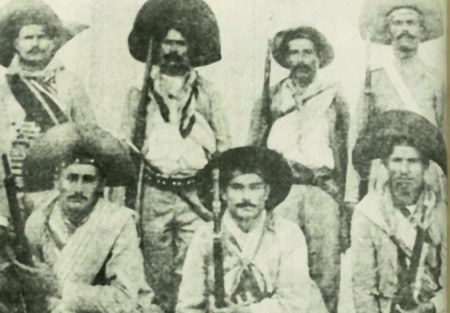
Antonio Silvino e seu bando. Ele é o segundo a esquerda, em pé. Silvino, cujo nome verdadeiro era Manoel Baptista de Moraes (1872-1944), foi, muito antes de Lampião, o mais famoso chefe do cangaço (foto: Wikimedia Commons)

José Tadeu Arantes | Agência FAPESP – As ideias de “coronelismo”, de “mando exclusivista”, de “curral eleitoral”, de “voto de cabresto” tornaram-se quase um lugar-comum na literatura sociológica e moldaram a visão dominante sobre o sertão nordestino – da Primeira República aos tempos atuais. Essas ideias receberam uma refutação consistente por parte do antropólogo Jorge Mattar Villela, professor titular da Universidade Federal de São Carlos (UFSCar).

Fruto de duas décadas de pesquisa nas regiões do Pajeú e do Navio, no sertão de Pernambuco, o material acumulado por Villela resultou em três livros e vários artigos sobre política eleitoral, administração pública da violência e culto dos mortos, em um intervalo cronológico de 120 anos. Tudo isso foi, de certo modo, condensado no artigo A Antropologia do Sertão de Pernambuco. Pajeú e Navio, publicado recentemente na Revista de Antropologia da UFSCar.

Villela contesta a noção de “coronelismo”, que considera uma explicação simplista do poder local durante a Primeira República. E apresenta um panorama muito mais complexo, com um sistema de poder descentralizado e baseado em alianças familiares e vinganças de sangue. Essas vinganças teriam criado um ambiente em que os conflitos eram gestados e geridos de um modo capaz de formar e desfazer laços familiares em simultâneo à atualização de laços políticos. Em vez de um controle centralizado por coronéis, havia uma rede de alianças que moldavam o comportamento político e social.

Nessa região, onde nasceu Virgulino Ferreira, o Lampião, o pesquisador identificou um ambiente em que o porte e o uso das armas não eram inusitados, em que vivia um “povo em armas” (conceito criado para refutar o da figura do coronel), em que as vinganças de sangue abundavam. “Dispondo de altos níveis de autonomia nos conflitos, como se poderia viver sob esse regime de submissão sem que houvesse uma circunstância de revolta?”, questiona.

Com base na vasta documentação estudada, Villela informa que, nas grandes brigas de famílias, havia gente capaz de arregimentar, ou atrair, vários microgrupos de base familiar formando bandos instáveis de mais de cem homens armados, voltados para o ataque a um inimigo. “Homens de fama eram capazes de fazer aderir às questões de sua família outros microgrupos arregimentados por outros homens de fama”, escreve.

O pesquisador ressalva que o mando exclusivista já havia sido objeto de uma crítica feita por intelectuais importantes, como Maria Isaura Pereira de Queiroz e Moacir Palmeira, mas afirma que essa crítica não chegou ao fundo da questão, porque se manteve presa ao viés de pensar a política a partir do Estado. O Estado funcionaria como um farol ofuscante, que impediria o estudioso de perceber tramas mais sutis.

Outra ideia recorrente que sua pesquisa contesta é a do cangaço como reação da população mais pobre contra o mandonismo dos ricos ou do poder estatal. “Todos os grandes capitães de cangaço, salvo Virgulino Ferreira, o Lampião, eram de grandes e antigas famílias do sertão de Pernambuco, do Ceará e da Paraíba. Famílias prestigiadas, de poder, altas patentes na Guarda Nacional e honrarias desde o período monárquico”, diz Vilella.

Essa intrincada teia de relações familiares, que estruturou o cangaço, teria se perpetuado na vida social e na política eleitoral, sendo ela, e não o Estado, o elemento definidor. Mas Vilella ressalva que a política é tão constituída pelos laços de sangue quanto os laços de sangue são constituídos pela política. Ainda que não sejam parentes biológicos, os apoiadores políticos fiéis costumavam ser incorporados à família estendida. E a feitura do parentesco se dá em aliança com a política de um jeito tão segmentar quanto o das vinganças, porque há também nas eleições microgrupos de base familiar capazes de arregimentar votos, num crescente semelhante ao que redundava nos grandes bandos de cangaço.

A “casa” está no cerne da noção de microgrupos de base familiar. “As ‘casas’ no sertão se ligam entre elas e constituem formações mais amplas, atadas por um personagem ancestral chamado ‘tronco’ e cuja localização nas genealogias é determinável (mas não necessariamente determinada) por meio da sua biografia”, conta o pesquisador.

Nesse contexto, o culto aos mortos, com seus retratos pendurados nas paredes das casas, tornou-se um ingrediente fundamental da política partidária e eleitoral. A memória dos ancestrais foi mantida viva por meio de rituais e celebrações, que serviram para reforçar a coesão familiar e comunitária. A celebração de missas em sua homenagem e a publicação de genealogias ilustram como os mortos são mobilizados para legitimar as posições sociais e políticas das famílias. “Nos túmulos dos cemitérios, os mortos fazem política ao fazerem genealogia”, afirma Vilella.

Na análise da democracia atual, o pesquisador observa que a política eleitoral do sertão de Pernambuco, e de todo o sertão nordestino por extensão, se mantém no contexto contemporâneo. “O que eu quero dizer é que, de uma certa forma, essas coisas acontecem em qualquer lugar. Podem acontecer, por exemplo, na avenida Faria Lima, em São Paulo. Um escritório lobista da Faria Lima também é power-user da democracia e da economia. Não é uma coisa de gente pobre periférica, é de gente que está colada à obtenção de recursos gerados no Estado nacional. A segmentaridade do voto, as complexas negociações intergrupais, as alianças familiares e locais continuam presentes, e dão o tom ao processo”, enfatiza Vilella.

No sertão nordestino, as visitas eleitorais, nas quais os candidatos visitam pessoalmente os eleitores em suas residências, reforçam a importância das relações interpessoais na política. Como relata o pesquisador, essas visitas sempre se fazem em grupo, e o tamanho do grupo depende do prestígio do candidato ou candidata e do cargo que se pretende alcançar. As visitas não são realizadas da porta para fora. O grupo entra, senta-se, come, bebe, conversa, ouve e fala. As negociações propriamente políticas são feitas em particular, fora das casas quando elas não têm um cômodo apropriado. Todo mundo sabe do que se trata, mas a etiqueta impede que a “política” macule a recepção.

O estudo de Villela oferece uma visão rica e detalhada das dinâmicas sociais e políticas no sertão nordestino, desafiando interpretações simplistas e iluminando a complexidade das relações de poder e memória na região. Recebeu apoio da FAPESP por meio do Projeto Temático “Artes e semânticas da criação e da memória”.

O artigo A Antropologia do Sertão de Pernambuco. Pajeú e Navio pode ser encontrado em: http://metis.fflch.usp.br/sites/metis.fflch.usp.br/files/anexos/2024-09/Jorge%20Luiz%20Mattar%20Villela-2024.pdf.
 

Superfreak pivot: When climate engineering came to South Africa (Daily Maverick)

Our Burning Planet

Superfreak pivot: When climate engineering came to South Africa

 Illustrative image. Photo by Andy Hutchinson on Unsplash

By Kevin Bloom

22 Jan 2019 

Cooling the earth by blocking out the sun, although potentially disastrous, is now a real answer to climate change. As a Harvard research paper published late last year proved, solar geo-engineering is both technically feasible and relatively cheap. With governments and international bodies considering the technology, a South African university has just announced a study. But how convenient is this answer for our politicians and heavy emitters?

I.Global Hollywood

In his book The Planet Remade: How Geo-engineering Could Change the World, Oliver Morton laid down a potential scenario from the not-too-distant future. As briefings editor at The Economist and former chief news and features editor at the scientific journal Nature, it was a given that this scenario—a thought experiment on the deployment into the stratosphere of “climate engineering” aerosols—would be based more in science fact than science fiction. Which is exactly what made it, like the best work of Robert Heinlein or Charlie Brooker, truly terrifying.

According to a Harvard study published in November 2018, three years after the release of Morton’s book, it would work in practice like this: a fleet of purpose-built aircraft, with disproportionately large wings relative to their fuselages, so as to allow “level flight at an altitude of 20 kilometres while carrying a 25-ton payload,” would inject 0.2 million tons of sulphur dioxide into the lower stratosphere per year—thereby reflecting enough solar radiation back out into space to cut the rate of global warming progressively in half. Pre-launch costs in 2018 values would come in at $3.5 billion, with yearly operating costs at $2.25 billion. Given that in 2017 around 50 nations had military budgets of $3 billion or more, noted the Harvard scientists, the barriers to entry would be remarkably low.

“It is not a large nation that does it—indeed, it is not a single nation’s action at all,” speculated Morton back in 2015. “Sometime in the 2020s, there is a small group of them, two of which are in a position to host the runways. They call themselves the Concert; once they go public, others call them the Affront. None of them is a rich nation, but nor are they among the least developed. All of them already have low carbon-dioxide emissions, and all of them are on pathways to no emissions at all. In climate terms, they look like the good guys. But their low emissions and the esteem of the environmentally conscious part of the international community are doing nothing to reduce the climate-related risks their citizens face.”

So why “truly terrifying”?

Because, as Morton went on to explain, solar geo-engineering—otherwise known as solar radiation management, or SRM—was not (or at least was no longer) a conceptual absurdity. When he wrote his book, its probability of deployment was already based on two of the most urgent existential questions in the history of humanity: 1) Are the risks of climate change great enough to warrant serious action aimed at mitigating them? 2) Will the world’s largest industrial economies be able to lower their carbon emissions to net zero by the middle of the century?

But terrifying more specifically because, by 2018, the answer to the first question was a scientifically unqualified “yes” and to the second a statistically implausible “no”—and yet the effect of SRM on the biosphere was still unknown. With the results from the Harvard study leading to the scheduling of tests as early as the first half of 2019, the Berlin-based climate science and policy institute Climate Analytics wasted no time in recommending a global ban on the technology.

“Solar radiation management aims at limiting temperature increase by deflecting sunlight, mostly through injection of particles into the atmosphere,” the institute noted. “At best, SRM would mask warming temporarily, but more fundamentally is itself a potentially dangerous interference with the climate system.”

SRM, argued the scientists at Climate Analytics, would “alter the global hydrological cycle as well as fundamentally affect global circulation patterns such as monsoons.” It would not “halt, reverse or address in any other way the profound and dangerous problem of ocean acidification which threatens coral reefs and marine life as it does not reduce CO2 emissions and hence influence atmospheric C02 concentration.” Also, the scientists pointed out, the approach was “unlikely to attenuate the effects of global warming on global agricultural production” as its “potentially positive effect due to cooling” was projected to be counterbalanced by “negative effects on crop production of reducing solar radiation at the earth’s surface.”

In other words, according to Climate Analytics, while cooler temperatures would be helpful to the world’s farmers, the crops would still need sunlight to grow. And none of the above even counted as the number one reason that the institute was raising the alarm—SRM’s gravest danger, these scientists and policy experts insisted, was that it would divert attention from the core problem, which remained the unprecedented amount of carbon being spewed daily into the atmosphere by the extraction of coal, crude oil and natural gas.

For Morton, this was the predicament known as the “superfreak pivot”—the turning of large masses of humanity from the position that “global warming requires no emissions reduction because it isn’t a real problem” to the position that “the Concert has it all covered”. It was a predicament highlighted too by Harvard scientist David Keith, who told the Guardian in 2017:

“One of the main concerns I and everyone involved in this have is that Trump might tweet ‘geoengineering solves everything—we don’t have to bother about emissions.’ That would break the slow-moving agreement among many environmental groups that sound research in this field makes sense.”

As for South Africa, less than two months after publication of the seminal Harvard paper of late 2018, a press release was issued by the African Climate and Development Initiative of the University of Cape Town.

“UCT researchers to embark on pioneering study on potential impacts of solar geoengineering in southern Africa,” it stated.

II. Local Hollywood

As the recipient of a grant from the international DECIMALS Fund (Developing Country Impacts Modelling Analysis for SRM), the UCT team cited two reasons for going ahead with the study—and both of them had to do with the social and economic havoc that anthropogenic climate change had so far wrought in our corner of the world. First, the 2015/16 summer rainfall failure over southern Africa, which led to 30 million people becoming food insecure in South Africa, Mozambique, Botswana and Zimbabwe. Second, Cape Town almost running out of water in 2018. If SRM could be done in a safe and reliable manner, so the rationale went, it was “the only known way” to quickly offset the temperature increases that were behind the droughts.

“We want to understand the impact of solar radiation management on drought conditions,” Dr Romaric Odoulami, the project’s leader, told Daily Maverick, “that’s our motivation. What will the implications be for regional agriculture? But I want to make one thing clear: SRM has never been implemented in the real world… and we are not going to do it either.”

What the African Climate and Development Initiative was going to do, said Odoulami, was climate modelling. The project, he added, would run for the next “one or two years”—as soon as he got “something interesting,” he promised, he would let Daily Maverick know. For the moment, he wanted to leave us with this:

“Solar radiation management doesn’t stop climate change. It doesn’t stop global emissions of greenhouse gases. The only thing it does is help to reduce the global temperature by reducing the amount of solar radiation reaching the earth’s surface.”

This caution in the face of the sheer unprecedented scale of the thing was also detectable in the words of Andy Parker, project director of the Solar Radiation Management Governance Initiative, the UK-based organisation—founded in 2010 by, among others, The World Academy of Sciences and the Royal Society—that set up the DECIMALS Fund in 2018. Speaking to Daily Maverick from a conference in Bangladesh, Parker was vague yet morbidly fascinating on the legislative context that could eventually give the green light to SRM.

“That’s really tricky to predict,” he said. “We can imagine various different deployment scenarios. There’s the desperation scenario, where a country or perhaps a coalition of countries that are really suffering from climate change decide that they are going to use solar geo-engineering to stop the temperature from rising. That could be seen as unilateral and illegitimate deployment. At the other end of things, it’s possible that through the United Nations—the UN General Assembly or one of the UN conventions—there’s a much broader coalition that comes together with much more legitimacy to develop a decision-making infrastructure for if we were to ever use this, or indeed, for how we would reject it.

“Really, at this stage, we don’t know what’s going to happen. We don’t know what’s going to happen with the research, we don’t know how governments are going to deal with this, and we don’t know how quickly and how deeply the impacts of climate change are going to bite.”

In South Africa, unfortunately, all indications are that the bite is going to be serious. As Daily Maverick learned from the country’s leading land-based climate scientist in October last year, we are warming at twice the global average. At 3°C of global warming, which is 6°C regionally—and which at current emission rates we are steaming towards, as per the most conservative estimates, before the end of the century—there will be a total collapse of the maize crop and livestock industry. This is something that the Department of Environmental Affairs seems to understand well, as evidenced by their “Third National Communication” under the United Nations Framework Convention on Climate Change, submitted in March 2018.

But the other unknown factor in this general SRM universe of “unknown unknowns” is the person that currently sits atop the DEA. Has Nomvula Mokonyane, who was named at the State Capture inquiry on Monday for allegedly accepting bribes in the form of monthly cash payments, even read the Third National Communication? Does President Cyril Ramaphosa plan on replacing her with someone who will? Aside from Tito Mboweni at treasury, does anyone in the upper echelons of the ANC get the urgency of the situation?

These are the questions that highlight the possibility of South Africa one day performing the superfreak pivot. Because it might not only suit the government to defer to technology when the food and water shortages get real, it might also suit Sasol, the coal mining companies and the country’s heavy emitters at large. DM

Spray and Pray – The risky business of geoengineering Africa’s climate (Daily Maverick)

CLIMATE GEOENGINEERING

Spray and Pray – The risky business of geoengineering Africa’s climate

 Solar Radiation Modification refers to deliberate, large-scale interventions in the global climate system to increase the amount of sunlight reflected away from the planet to reduce global temperatures. Illustrative image: (Generated with Flux AI)

By Ethan van Diemen

07 Aug 2024 

In a webinar on Tuesday, scientists and other experts agreed on the need for solar geoengineering research to enhance the portfolio of climate change responses.

Solar geoengineering, whether through space mirrors or stratospheric particles, is a complex, controversial and contentious field. In a webinar on Tuesday, atmospheric scientists and other experts from across Africa agreed that it is completely rational to explore its role in a portfolio of climate change responses. 

Geoengineering refers to deliberate, large-scale interventions in the Earth’s natural systems with the aim of counteracting climate change. The primary goal of geoengineering is to mitigate the adverse effects of global warming and manage the Earth’s climate system. There are two main categories of geoengineering: Solar Radiation Management (SRM) and Carbon Dioxide Removal (CDR).

The webinar focused on the former, which The Alliance for Just Deliberation on Solar Geoengineering says refers to “deliberate, large-scale interventions in the global climate system to increase the amount of sunlight reflected away from the planet to reduce global temperatures”.

Read more: Superfreak pivot: When climate engineering came to South Africa

The Intergovernmental Panel on Climate Change (IPCC) in its Sixth Assessment Report defines SRM as “a range of radiation modification measures not related to greenhouse gas mitigation that seek to limit global warming. Most methods involve reducing the amount of incoming solar radiation reaching the surface, but others also act on the longwave radiation budget by reducing optical thickness and cloud lifetime.”

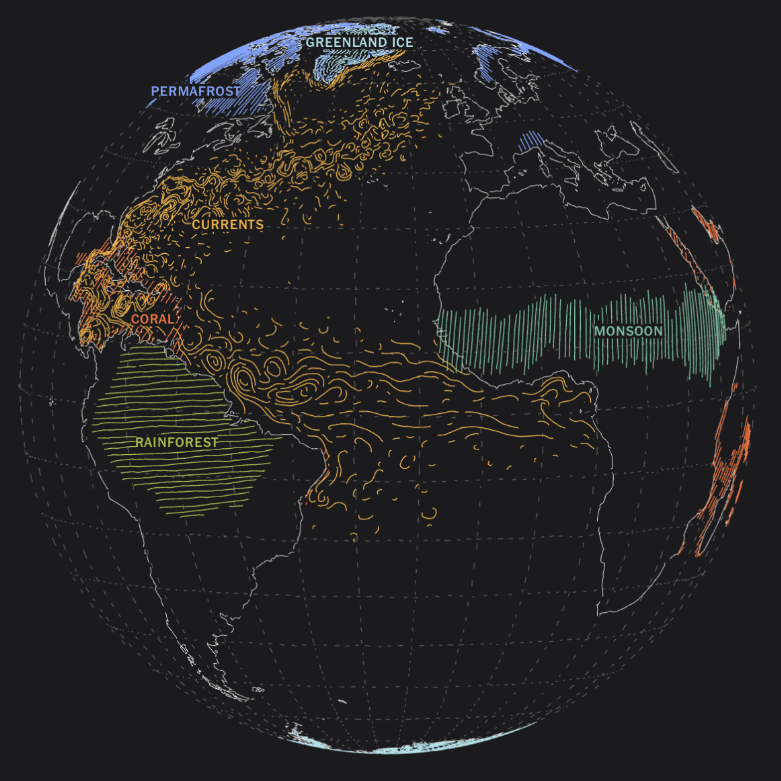
geoengineering africa climate

(Source: The Alliance for Just Deliberation on Solar Geoengineering)
Hassaan Sipra, director of global engagement at The Alliance and a climate researcher, explained that SRM – in line with conclusions by the IPCC – is not meant to stop climate change but only to buy time for the deep reductions in greenhouse gas emissions needed to limit global warming. He also set out the context wherein SRM was an increasingly attractive area of research. 

During the UN climate conference in Paris, the world agreed to accelerate efforts to limit the global average temperature increase over pre-industrial levels to below 1.5°C. At present, we are on a trajectory to exceed even 2°C. This is important because every fraction of a degree drastically increases the risks associated with anthropogenic climate change. 

“And typically, now, within this context,” said Sipra, “what is being talked about is the use of carbon dioxide removal technologies. So we know that we’re not going to get to net zero emissions until about 2100 if we’re looking for 1.5°C. If it’s 2°C, we’re not going to get there until after 2100. So in the meantime, we also need to start scaling up our carbon dioxide removal technologies so that whatever carbon is in the atmosphere, we are immediately able to capture it and bring that back.”

Put differently, carbon removal will still be necessary in the future because even with significant reductions in greenhouse gas emissions, existing atmospheric carbon levels must be reduced to meet net zero targets and stabilise global temperatures, as outlined in the Paris Agreement. This ensures long-term climate goals are achievable by offsetting any remaining emissions.

Sipra explained that the problem with carbon dioxide removal was the interrelated problems of cost and scale. 

It’s “an expensive technology or a set of technologies that would take a long time to scale up and would require a tremendous amount of resources, and at present, those resources are not yet scalable… they’re not yet available, the technologies are not yet fully tested, and so we need a lot of time before we’re going to get to carbon dioxide removal technologies.

“We need time to cut emissions and we need time to get to carbon dioxide removal technologies. Yet climate impacts are continuing to rise in the meantime. And this is the point where for scientists, policymakers, civil society, the deliberation has begun as to what might be the possibility of buying some additional time; putting in a potential stopgap measure.”

geoengineering africa climate

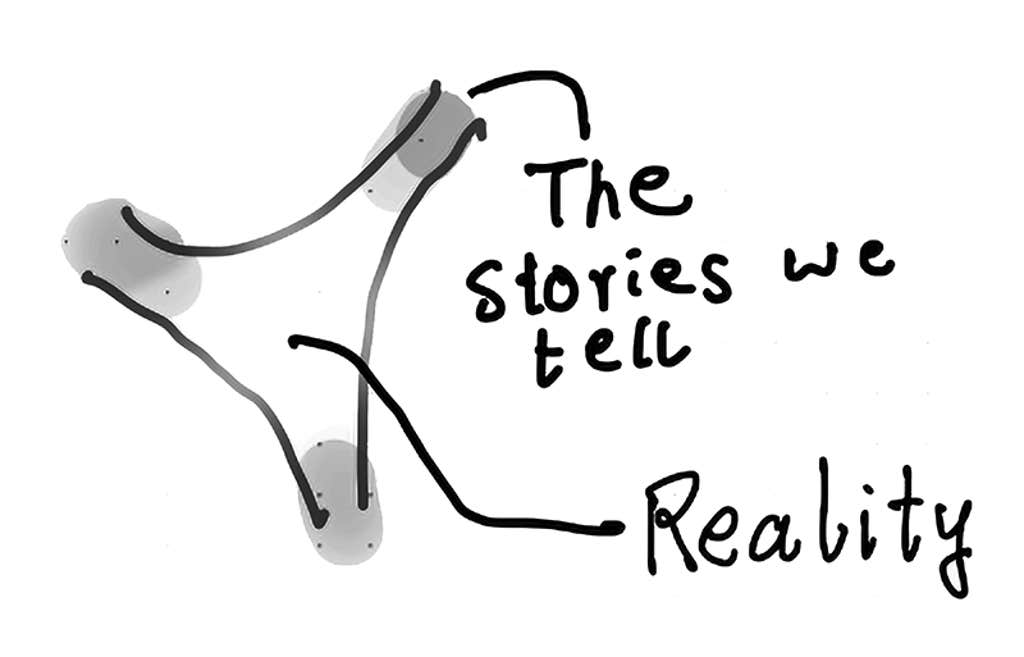
Napkin diagram roughly showing SRM’s role in managing climate risks.(This work is licensed under a Creative Commons Attribution-NonCommercial-ShareAlike 4.0 International License.)

SRM is a “stopgap measure”, Sipra explained, in contrast to emissions reductions or carbon dioxide removal because “it does not actually offer a solution to our climate problems, it merely masks it. And so, without addressing the root cause of climate change, you are kind of just giving yourself this, in essence, a drug which may delay – potentially – some of the impacts of climate change”.

But just how is SRM meant to achieve this? 

Prof Babatunde Abiodun, an expert in climate model developments and applications, shared some details on the state of SRM research and the various approaches being explored and experiments undertaken. Three of the projects he noted are highlighted here:

  • Stratospheric Aerosol Processes, Budget and Radiative Effects (SABRE): SABRE investigates how tiny particles in the stratosphere may reflect sunlight to cool the Earth. The project is “an extended airborne science measurement programme” and aims to understand the effectiveness and potential impacts of these aerosols so as to strengthen the “scientific foundation to inform policy decisions related to regulating global emissions that impact the stratosphere (eg ozone depleting substances, rocket exhaust) and the potential injection of material into the stratosphere to combat global warming (climate intervention)”.
  • Stratospheric Controlled Perturbation Experiment (SCoPex): SCoPex, a Harvard University-led project, explores the feasibility of dispersing reflective particles in the stratosphere to mimic volcanic cooling effects using a high-altitude balloon to release small amounts of aerosols over a small area. However, the project has recently moved away from its focus on science related to solar geoengineering.
  • Geoengineering Assessment Across Uncertainties, Scenarios and Strategies (GAUSS): GAUSS evaluates the potential risks and benefits of various geoengineering methods by using complex computer simulations. Early findings suggest that while geoengineering can reduce global temperatures, it may also lead to regional climate changes, emphasising the need for careful, scenario-based planning. They explain that “one challenge today is a degree of arbitrariness in the scenarios used in current SRM simulations”.

SRM and other geoengineering approaches, however, are not without controversy. The main concerns are the potential for unintended environmental side effects, ethical issues regarding the manipulation of natural systems and the risk of unequal impacts on different regions potentially exacerbating global inequalities.

The IPCC says in the Summary for Policymakers of its Sixth Assessment Report that, with high confidence, “solar radiation modification approaches, if they were to be implemented, introduce a widespread range of new risks to people and ecosystems, which are not well understood. Solar radiation modification approaches have the potential to offset warming and ameliorate some climate hazards, but substantial residual climate change or overcompensating change would occur at regional scales and seasonal timescales.

“Large uncertainties and knowledge gaps are associated with the potential of solar radiation modification approaches to reduce climate change risks. Solar radiation modification would not stop atmospheric CO₂ concentrations from increasing or reducing resulting ocean acidification under continued anthropogenic emissions.”

To this, the gathered scientists and experts said that while they recognised the potential risks, these should be weighed against the risk of the status quo or inaction.

“It makes sense to think about SRM as a very risky proposition, but it’s a risky proposition that has to be compared to an alternative risky proposition, which is worsening climate change. So, climate change increases risks to peoples and ecosystems. With each ton of carbon dioxide we’re adding into the atmosphere, with each incremental bit of warming, those risks rise exponentially.

“So, just like climate change has its risks, SRM has risks. It also has potential benefits, and it has a large amount of uncertainties, and none of them are well understood. So, in order to make a comparison against climate change with SRM, we need to really have an informed decision-making process around SRM so that we can have a better sense of its benefits and its drawbacks,” said Sipra.

“We need to explore SRM in the context of worsening climate change,” he said, adding that geoengineering would “not be a discussion if the climate situation had been resolved after the Rio summit when they formulated the UN Framework Convention on Climate Change.

The fact that the climate is getting worse; the fact that we are not mitigating, is the reason people are beginning to have a conversation about SRM. So, it can only ever be contextualised in comparison to climate change.” DM

Injetar partículas na atmosfera poderia reduzir temporariamente o aquecimento global (Pesquisa Fapesp)

Polêmica, a liberação de aerossóis diminuiria a quantidade de luz solar que chega à Terra, mas seus efeitos colaterais negativos poderiam ser maiores que os positivos

Aumentar a quantidade de aerossóis na atmosfera poderia barrar a chegada à Terra de uma pequena fração da luz solar e resfriar provisoriamente o planeta. Cadan Cummings / Jacobs / JETS / NASA-JSC

Marcos Pivetta

Atualizado em 6 set 2024

Edição 343, set 2024

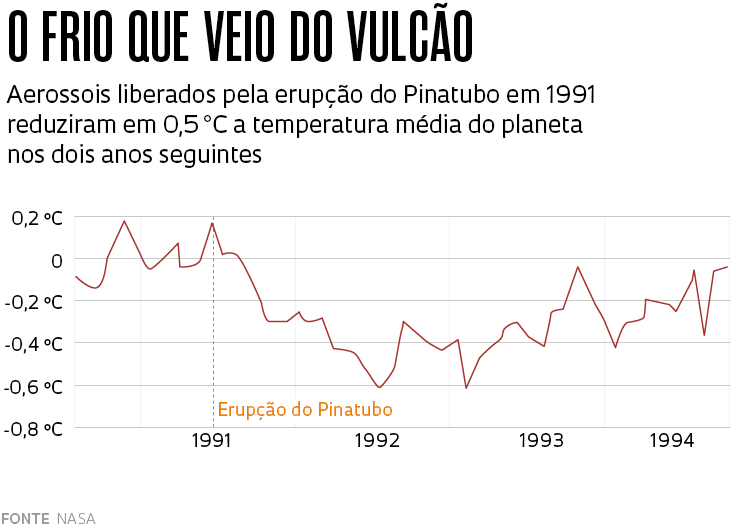
Depois de ter permanecido em silêncio por 600 anos, o monte Pinatubo, nas Filipinas, acordou em 1991. Uma série de pequenas explosões ao longo de dois meses culminou em uma grande erupção em meados de junho daquele ano, considerada a segunda maior do século passado. Cerca de 200 mil pessoas tiveram de deixar suas casas e mais de 700 morreram no arquipélago filipino como consequência da eclosão. A explosão produziu uma coluna de fumaça e cinzas vulcânicas que se elevou até 40 quilômetros (km) acima da superfície e invadiu a estratosfera, a segunda das cinco camadas da atmosfera que envolve a Terra. Esse manto de partículas em suspensão, geralmente com tamanhos micrométricos, atrapalhou o tráfego aéreo, queimou plantas e cultivos e produziu outros danos locais.

Apesar de ter causado grandes prejuízos materiais e a perda de vidas humanas nas Filipinas, a erupção do Pinatubo é lembrada hoje no meio científico por ter tido uma consequência surpreendente no clima global: a temperatura média da Terra reduziu-se cerca de 0,5 grau Celsius (°C) nos dois anos seguintes à sua atividade vulcânica. A enorme quantidade de partículas em suspensão, os chamados aerossóis, lançada pelo vulcão entrou no sistema de circulação de ar da estratosfera, espalhou-se pelo planeta e atuou por meses como uma espécie de filtro solar: parte dos raios do Sol que chegariam normalmente à superfície terrestre foi refletida ao incidir sobre essa quantidade extra de partículas de aerossóis injetados no sistema. Essa ação produziu um resfriamento temporário do planeta.

Os aerossóis também resfriam a Terra quando estão na troposfera, a camada mais baixa da atmosfera, mas sua ação é mais intensa na estratosfera. O efeito Pinatubo serve de inspiração para uma linha de pesquisa polêmica, cercada de incertezas científicas e riscos ambientais e geopolíticos: a geoengenharia solar ou modificação da radiação solar (SRM, na sigla derivada do inglês). Ela começou a tomar corpo lentamente nos últimos 20 anos em algumas universidades dos Estados Unidos e da Europa à medida que o aquecimento global se tornou mais pronunciado. A ideia central dessa abordagem é aumentar deliberadamente o albedo da Terra, sobretudo na estratosfera, para que ela passe a refletir mais radiação de volta ao espaço e, assim, torne-se um pouco menos quente.

Glauco Lara

O albedo é a fração da luz refletida em relação à absorvida por um corpo ou superfície. Quanto maior o albedo, como em superfícies claras ou brancas, menor a quantidade de calor absorvida. Injetar aerossóis na atmosfera é uma das formas de tentar aumentar o albedo terrestre. Alguns cálculos indicam que uma redução de 1% a 2% da quantidade de radiação solar que normalmente chega à Terra seria suficiente para diminuir sua temperatura média em um 1 °C.

A possibilidade de reduzir a quantidade de radiação solar sobre a Terra começou a ser aventada ainda na década de 1960. Mas sempre foi vista como uma excentricidade perigosa, quase um devaneio. A ideia só ganhou alguma relevância científica depois da erupção do Pinatubo e, mais recentemente, com a emergência da crise climática, causada pelo aumento significativo da temperatua global decorrente da emissão de gases de efeito estufa. Ainda assim, a pesquisa experimental – que envolveria a soltura de alguns quilos de aerossóis na estratosfera para observar seus eventuais efeitos em âmbito local (não global, como ocorreu na gigantesca erupção do vulcão nas Filipinas) – pouco progrediu até hoje em razão da oposição de parte da comunidade científica e de grupos ambientalistas.

“Até agora, existem poucos trabalhos de modelagem climática envolvendo as técnicas de geoengenharia solar”, comenta o físico Paulo Artaxo, do Instituto de Física da Universidade de São Paulo (IF-USP), especialista no estudo de aerossóis atmosféricos. “Nenhum experimento mais significativo foi feito em campo.” Duas abordagens que visam à modificação da radiação solar dominam as discussões. A principal delas é a injeção de aerossóis na estratosfera, a 15 ou 20 km de altitude, conhecida pela sigla SAI, que tenta reproduzir de forma artificial o que as grandes erupções fazem de maneira natural.

Glauco Lara

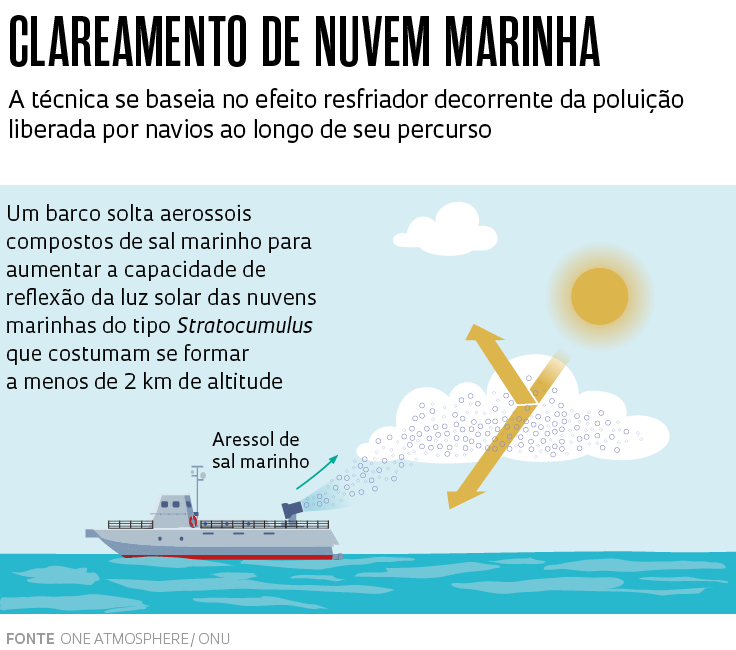
A outra, vista como de impacto mais localizado, é o clareamento de nuvens marítimas (marine cloud brightening ou MCB). Ela também envolve a liberação de aerossóis (nesse caso, partículas de sal marinho), que funcionam como núcleos de condensação das nuvens. Mas a soltura dessas partículas ocorre em altitudes bem mais baixas, de no máximo 2 km, ainda na troposfera. Com mais aerossóis, as gotas de nuvens ficam menores, refletem mais radiação solar de volta ao espaço e resfriam a superfície. Há outras técnicas cogitadas, como aumentar o albedo em grandes superfícies brancas do planeta, como o Ártico, mas as duas primeiras propostas dominam o debate.

Artaxo colabora com um grupo da Universidade Harvard, dos Estados Unidos, em estudos de modelagem computacional para tentar entender se o comportamento dos aerossóis na estratosfera é realmente similar à sua ação na troposfera. “Precisamos de mais pesquisas sobre esse tema antes de sequer pensarmos em implementar alguma intervenção desse tipo”, comenta o físico da USP, um dos coordenadores do Programa FAPESP de Pesquisa sobre Mudanças Climáticas Globais. “Não temos condições de garantir que a injeção de mais aerossóis não vá, por exemplo, diminuir as chuvas de monções no Sudeste Asiático e colocar em risco uma população de bilhões de pessoas. Se isso ocorrer, quem decide se essa injeção de aerossóis para ou continua? Esse tipo de decisão não pode ficar na mão de um pequeno grupo de países ou de um bilionário que financie um experimento desse tipo.”

Também há indícios de que uma dose extra de aerossóis na estratosfera poderia afetar a camada de ozônio, que protege a vida terrestre da ação nociva da radiação ultravioleta vinda do Sol. Isso sem falar que essas partículas em suspensão são uma forma de poluição do ar. Elas naturalmente se depositam, descem da estratosfera para a troposfera, onde podem causar ou agravar problemas de saúde, sobretudo os respiratórios. Por ora, essas e outras questões não têm respostas satisfatórias.

A posição do físico da USP é partilhada por muitos colegas. “A modificação da radiação solar é um tema sensível e o IPCC [Painel Intergovernamental sobre Mudanças Climáticas, da ONU]reconhece que ainda há muitas incertezas sobre seus potenciais efeitos”, comenta a matemática Thelma Krug, que foi vice-presidente do painel entre 2015 e 2023 e representou o Brasil em negociações internacionais sobre o clima por uma década. “Pessoalmente, sou a favor da pesquisa na área. Mas é preciso ir passo a passo com os experimentos, ter transparência e estabelecer uma governança para esse processo.”

Erupção do vulcão Pinatubo, em 1991, é considerada a segunda maior do século passadoArlan Naeg / AFP via Getty Images

O tema é tão controverso que alguns pesquisadores são contra até que se faça pesquisa sobre as técnicas de geoengenharia solar. Isso porque elas não têm impacto na redução das emissões de gases de efeito estufa, que causam o aumento da temperatura da Terra. Ainda que se mostrem relativamente seguras e eficientes em esfriar temporariamente a Terra, objetivo que hoje é apenas uma hipótese, técnicas como a SAI seriam, no máximo, paliativas. No fundo, dizem os críticos dessa abordagem, os trabalhos nessa área desviariam recursos e tomariam um tempo que poderia ser mais bem empregado na busca por ações que reduzissem a emissão de gases como dióxido de carbono (CO2) e metano (CH4). “Os estudos sobre geoengenharia solar também poderiam ser usados como a desculpa perfeita para que os grandes produtores de gases de efeito estufa não reduzissem suas emissões”, pondera o climatologista Carlos Nobre, do Instituto de Estudos Avançados (IEA) da USP.

Além de ser encarada como um diversionismo em relação à meta central de zerar as emissões de gases de efeito estufa nas próximas décadas, a adoção das técnicas de SRM poderia tornar o planeta refém desse tipo de intervenção climática por um prazo muito longo e indefinido, de décadas ou séculos. Isso criaria um problema extra: o risco de promover o chamado termination shock. Quando o planeta abandonasse o emprego das técnicas de SRM, a temperatura subiria novamente – só que dessa vez de forma muito mais rápida do que no cenário atual de aquecimento global. Isso tornaria quase impossível a adaptação a essa brusca elevação de temperatura. Qualquer oscilação significativa da temperatura, para cima ou para baixo, em um curto período, representa um desafio adaptativo.

Alguns estudos de modelagem climática têm sugerido cenários preocupantes em simulações de possíveis impactos do emprego de técnicas de geoengenharia solar. Esses trabalhos costumam averiguar que outros efeitos (colaterais) essas técnicas de intervenção no clima poderiam induzir, além da redução temporária da temperatura terrestre. Um dos problemas é que a maioria desses estudos se concentra em possíveis consequências no hemisfério Norte, onde ficam os países mais ricos e vive e trabalha a maior parte dos pesquisadores do clima.

Começam, no entanto, a surgir pesquisas com foco em outras partes do planeta. Trabalho publicado em junho deste ano na revista Environmental Research Climate sugere que a adoção da SAI ao longo deste século alteraria os prováveis impactos do aquecimento global sobre a formação de ciclones extratropicais no hemisfério Sul, como aqueles que se formam com certa regularidade na região Sul do Brasil. A previsão é de que, até o fim deste século, o aumento da temperatura global reduza o número de ciclones gerados nessa parte do globo terrestre, mas aumente a intensidade dos fenômenos produzidos. Ou seja, menos ciclones, mas mais fortes.

Glauco Lara

Quando diferentes regimes de injeção de aerossóis na estratosfera são simulados em três modelos climáticos internacionais até 2100, os resultados sinalizam um aumento na frequência de ciclones, mas uma redução em sua força em relação aos prognósticos obtidos em cenários de aquecimento global sem a adoção de qualquer protocolo da SAI. “Não somos contra nem a favor da geoengenharia solar”, diz a pesquisadora Michelle Reboita, da Universidade Federal de Itajubá (Unifei), de Minas Gerais, coordenadora do estudo. “Precisamos é estudá-la. Ela pode produzir resultados positivos em uma parte do mundo e negativos em outra.”

Há também estudos de simulação que tentam prever os possíveis impactos da SAI sobre a biodiversidade. “Nosso objetivo é entender como a SAI pode afetar as espécies de vertebrados terrestres no cenário das mudanças climáticas”, conta o biólogo brasileiro Andreas Schwarz Meyer, que faz estágio de pós-doutorado na Universidade da Cidade do Cabo, na África do Sul, e coordena um projeto de pesquisa sobre o tema. “Em outras palavras, queremos saber quais seriam as espécies ‘vencedoras’ e ‘perdedoras’ no globo caso o emprego dessas técnicas para diminuir a temperatura do planeta venha a se tornar uma realidade.”

No projeto, que ainda está em andamento, Meyer adota uma abordagem chamada perfis horizontais de biodiversidade, que usa dados climáticos históricos para estimar o intervalo térmico (a temperatura máxima e a mínima) e o grau de umidade em que as espécies ocorrem. A técnica é normalmente usada para estimar o impacto sobre as espécies de diferentes cenários de aquecimento global previstos pelo IPCC ao longo deste século.

“Assim, temos uma ideia de quantas espécies serão expostas a essas mudanças, quando e o quão rapidamente isso poderá ocorrer”, comenta o biólogo. Em 2022, o brasileiro publicou um artigo no periódico científico Philosophical Transactions of the Royal Society B em que simulou os efeitos sobre mais de 30 mil espécies de vertebrados marinhos e terrestres de um cenário particular ao longo deste século: primeiro haveria um aquecimento global superior a 2 °C e, em seguida, ocorreria uma redução de temperatura da Terra de forma artificial, por meio da remoção direta de dióxido de carbono da atmosfera. A retirada do principal gás de efeito estufa é hoje ensaiada por um conjunto de técnicas que, por ora, são muito caras e ineficientes em perseguir esse objetivo.

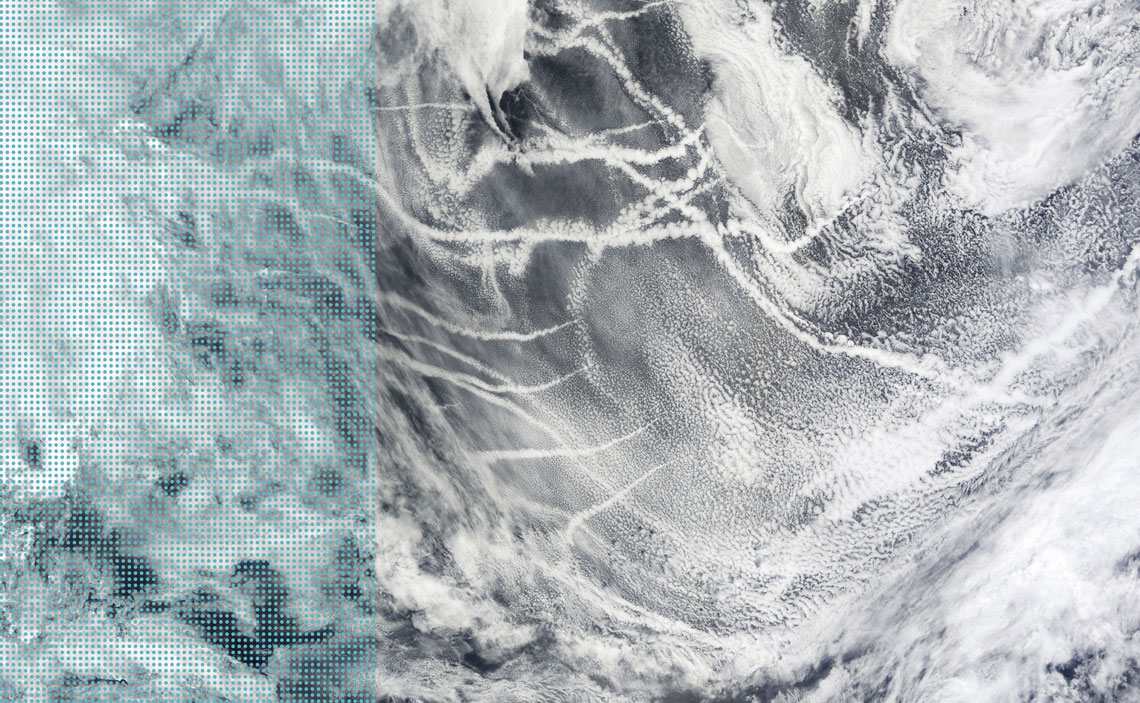
Trilhas de nuvens criadas no mar pela emissão de partículas de poeira por navios

A conclusão geral do estudo é que a subida e a posterior queda artificial da temperatura terrestre poderiam inviabilizar a sobrevivência de muitas espécies e produziriam danos a essas comunidades décadas após se ter atingido uma hipotética estabilização da temperatura do planeta. Meyer está fazendo um estudo semelhante agora, mas com o emprego da SAI no lugar da remoção direta de carbono.

Os trabalhos de Reboita e Meyer se dão no âmbito de uma iniciativa internacional, a Developing country governance research and evaluation for SRM, ou simplesmente Degrees. Seu objetivo é estimular estudos e formar recursos humanos especializados nas técnicas de modificação da radiação solar em países da África, América Latina e sul da Ásia. A Degrees nasceu na década passada dentro da Academia Mundial de Ciências (TWAS) e posteriormente foi assumida por uma organização não governamental britânica, a homônima Degrees. Ela financia quase 40 projetos. No Brasil, além das pesquisas da meteorologista da Unifei, duas linhas de estudo de professores da Universidade Federal de Santa Catarina (UFSC) passaram a ser apoiadas em julho passado.

Com parceiros no exterior, a equipe do engenheiro Mauricio Uriona, do Departamento de Engenharia de Produção e Sistemas da UFSC, pretende estudar como é a percepção do setor produtivo, do governo e da comunidade científica de três países (Brasil, Índia e África do Sul) sobre os potenciais riscos das técnicas de SRM. “Trabalhamos no passado com o tema da transição energética com uma abordagem de cunho socioeconômico e vimos agora uma boa oportunidade de fazer um estudo semelhante sobre geoengenharia solar”, afirma Uriona.

A socióloga ambiental Julia S. Guivant, do Instituto de Pesquisa em Riscos e Sustentabilidade (Iris), da UFSC, vai estudar como diversos atores-chave do país, como a comunidade científica, reguladores políticos, agricultores e representantes de organizações não governamentais, posicionam-se diante dos desafios de governança da geoengenharia solar. “Não temos uma posição sobre se a SRM deve ser usada ou como seu eventual emprego deve ser governado. Somos a favor das pesquisas e do debate democrático sobre o tema, diante dos problemas para atingir as metas de mitigação e adaptação às mudanças climáticas”, diz a socióloga. Colegas da USP e da Universidade Federal de São Paulo (Unifesp) vão colaborar na pesquisa coordenada por Guivant.

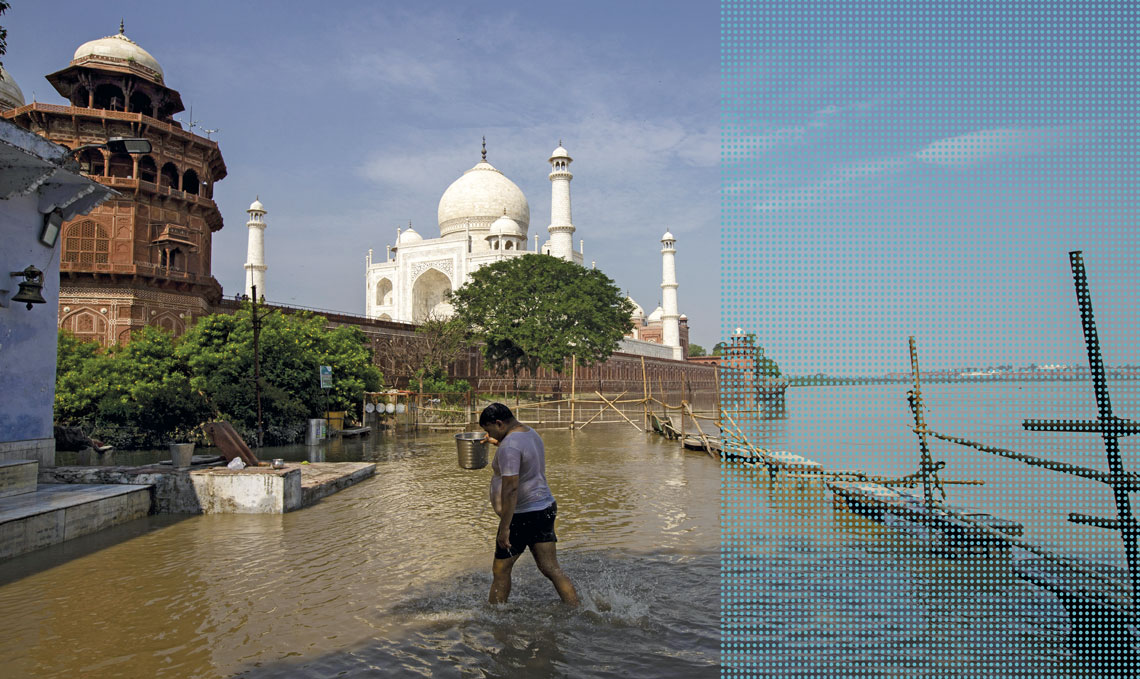
Há preocupação de que a geoengenharia solar possa afetar o regime das chuvas de monções na ÍndiaAmarjeet Kumar Singh / Anadolu Agency via Getty Images

As técnicas de SRM são tão polêmicas e sem qualquer tipo de regulação em acordos internacionais que mesmo grupos de pesquisas de instituições renomadas enfrentam dificuldades extremas de realizar pequenos experimentos de campo. Esses trabalhos não têm o potencial de influenciar o clima global, no máximo produzir ciência para se entender os processos envolvidos, com alguma alteração localmente. Ainda assim, os obstáculos práticos à sua realização são quase intransponíveis.

Em março deste ano, foi abandonado o Stratospheric Controlled Perturbation Experiment (SCoPEx), experimento concebido na década passada pelo grupo do físico-químico Frank Keutsch, da Universidade Harvard. A ideia da iniciativa era usar um balão de alta altitude para injetar 2 quilos de aerossóis (no caso, carbonato de cálcio) cerca de 20 km acima da superfície. “Essa quantidade de partículas é ínfima. Equivale à poluição expelida por um jato comercial durante apenas 1 minuto de voo”, disse Keutsch em entrevista dada em 2021 (ver Pesquisa FAPESP nº 303). O balão do SCoPEx era para ter ganho inicialmente os ares dos Estados Unidos em 2018. Mas isso não ocorreu. Em seguida, sua soltura foi prevista para a Suécia, também sem sucesso. Devido a protestos de ambientalistas e de grupos indígenas, o projeto nunca decolou de fato.

Alguns testes de campo com a técnica de clareamento de nuvens marinhas, uma abordagem menos ambiciosa do que a SAI, têm sido feitos, quase sempre a duras penas e diante de críticas de vários setores da sociedade. Em abril deste ano, um grupo da Universidade de Washington, dos Estados Unidos, usou um tipo de ventilador para espalhar partículas de sal marinho na pista de um navio porta-aviões aposentado que estava estacionado no litoral da cidade de Alameda, na Califórnia. A ideia da iniciativa era apenas ver se as partículas poderiam causar algum mal à saúde. Dois meses mais tarde, o município californiano proibiu esse tipo de experimento em seu território.

Na Austrália, pesquisadores da Southern Cross University e organizações locais tocam desde 2020 um projeto-piloto em que tentam aferir se a técnica de MCB pode ser útil para diminuir o branqueamento de corais na região de Townsville. O objetivo do experimento é averiguar se o método diminuiria localmente a temperatura do oceano no centro da Grande Barreira de Corais. O aquecimento das águas marinhas é a principal causa do branqueamento.

Alterar a capacidade de o Ártico refletir a luz do Sol poderia, em tese, minorar o aquecimento globalsodar99 via Getty Images

A desconfiança dos experimentos de campo deriva, em parte, do surgimento periódico de iniciativas pouco transparentes, geridas às vezes por empresas privadas obscuras. Em 2022, a Make Sunsets, uma startup norte-americana, soltou sem autorização no norte do México dois balões com aerossóis destinados à estratosfera. Pouco depois, o governo mexicano proibiu esse tipo de iniciativa em seu território. Agora, a empresa anunciou que está fazendo esse tipo de experimento nos Estados Unidos, mas os resultados dessas iniciativas são desconhecidos.

Para o físico norte-americano David Keith, da Universidade de Chicago, nos Estados Unidos, o interesse em estimular as pesquisas sobre geoengenharia solar tem aumentado, a despeito das incertezas científicas que cercam o emprego dessas técnicas. “Isso é visível nos principais relatórios internacionais, como os do Programa das Nações Unidas para o Meio Ambiente, do Programa Mundial de Pesquisa do Clima, também da ONU, e de grandes grupos ambientalistas, como Environmental Defense”, comenta Keith, em entrevista por e-mail a Pesquisa FAPESP. “Não há dúvida de que a oposição à investigação enfraqueceu, mas é difícil dizer por quê. Talvez seja por causa do aumento das temperaturas ou porque [acredito que] o mundo esteja fazendo agora esforços substanciais para reduzir as emissões de gases de efeito estufa.”

Keith foi membro do programa de geoengenharia solar de Harvard por 12 anos. Hoje ele é a favor da adoção de uma moratória internacional em experimentos de campo até que a ciência sobre o tema esteja mais bem estabelecida e haja alguma forma de governança internacional. Se esse cenário se materializar algum dia, ele diz que a humanidade deveria considerar a realização de um teste no qual se injetaria por uma década na estratosfera cerca de 10% da quantidade necessária de aerossóis para baixar em 1 °C a temperatura global. Dessa forma, seria possível conferir claramente os efeitos dessa abordagem sem correr muitos riscos.

A operação envolveria transportar cerca de 100 mil toneladas de enxofre por ano para a estratosfera – equivalente a 0,3% da quantidade de poluição por enxofre que chega anualmente à atmosfera – por uma frota de 15 jatinhos capazes de voar em altas altitudes. A operação custaria aproximadamente US$ 500 milhões ao ano. É mais uma ideia polêmica. Para alguns, é possível que a única parte boa da sugestão seja a adoção de uma moratória para esse tipo de experimento.

A reportagem acima foi publicada com o título “Controlando o sol” na edição impressa nº 343, de setembro de 2024.

Artigos científicos
REBOITA, M. S. et alResponse of the Southern Hemisphere extratropical cyclone climatology to climate intervention with stratospheric aerosol injectionEnvironmental Research: Climate. 20 jun. 2024.
MEYER. A.  L. S. et alRisks to biodiversity from temperature overshoot pathways. Philosophical Transactions of the Royal Society B. 27 jun. 2022.

6 Facts About Ancient Navigation (History Facts)

Original article

Thousands of years ago, the oceans seemed a lot wider, even unnavigable. Before mariners developed tried-and-true navigation techniques, sailing the seas involved a lot of guesswork — or, if you want it to sound cooler, “dead reckoning.”

Slowly, our ancestors moved beyond their initial stabs in the dark. Some looked to the sky, using their new knowledge about the cosmos to help them better understand life on Earth. Others took a keen interest in the seas, learning to intuitively navigate the vast expanses based on their currents and swells.

Nowadays, we have a relatively easy time getting around — thanks, GPS! — but it took a long time to get here. How were Polynesians able to cross thousands of miles of open ocean more than 3,000 years ago? Which seafaring society might have successfully used crystals to find their way? What persistent navigation myth just won’t die? Read on and get your sea legs with these six facts.

Photo credit: Science & Society Picture Library via Getty Images

Polynesians Were Pioneers of the Open Ocean

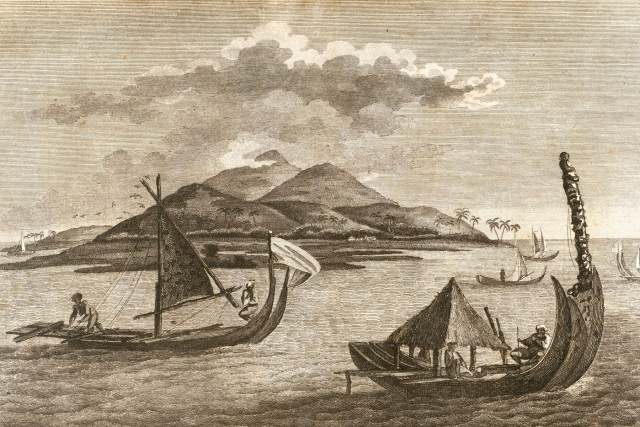
In the early days of ocean navigation, explorers stayed pretty close to the shoreline and used visible landmarks to mark their position. However, Polynesians, the first developers of open ocean exploration, set off from New Guinea and moved eastward in about 1500 BCE. After first traveling to the adjacent Solomon Islands, they gradually journeyed farther and farther east. Their vessel of choice was a double canoe with two hulls connected by crossbeams, kind of like a catamaran.

Venturing out into the open ocean, these explorers eventually reached Fiji, Tonga, Samoa, and Tahiti. They then traveled more than 2,600 miles north to Hawaii — longer than the distance across the U.S. from Portland, Maine, to Seattle, Washington. By roughly 1,000 or possibly 1,200 CE, the descendants of those early explorers populated the entire Polynesian Triangle, the three corners of which are Hawaii, Rapa Nui (aka Easter Island), and New Zealand.

The Polynesians didn’t have any navigational instruments that we know of, so how did they do it? Although their navigation techniques were passed down orally, historians think they navigated using stars, ocean swells, the sun, the moon, and migratory birds. Some Pacific Islanders navigated simply by using the waves themselves. In 1976, a group of Polynesian canoeing enthusiasts made the Tahiti-Hawaii trip using no navigational instruments and a traditional voyaging canoe — a feat that’s since been repeated several times.

Photo credit: Pictures from History/ Universal Images Group via Getty Images

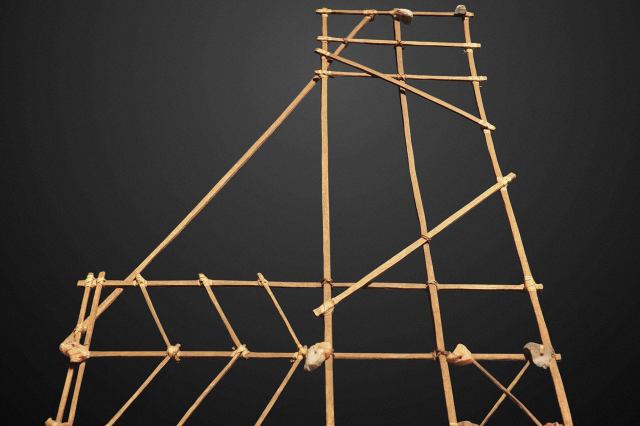
Some Early Nautical Charts Were Made From Shells and Sticks

A nautical chart provides not only topographical information, but also details about the behavior of the sea, such as how tidal patterns interact. Today, we can easily read this data on screens and paper, but ancient Micronesian navigators called ri-metos recorded their knowledge using elaborate “stick charts” made from palm strips, coconut strips, and cowrie shells. 

As you might imagine, these charts weren’t especially portable, so they were designed to be memorized before a voyage. The charts didn’t follow any kind of uniform style, and some of them were only designed to be read by the person who created them, so they can be hard for modern viewers to interpret. We do know, though, that some charts depicted general ocean patterns, while others contained precise piloting instructions.

Photo credit: Universal History Archive/ Universal Images Group via Getty Images

Early Magnetic Compasses Bore Little Resemblance to Their Modern Counterparts

Today, magnetic compasses are so ubiquitous that we just call them “compasses.” They contain a magnetized needle that naturally lines up with the Earth’s magnetic field, so the ends point to magnetic north and magnetic south (moving targets that are  fairly close to true north and true south, but that can lead to errors when traveling very far north or very far south).

Scientists don’t know for sure who made the first compass, but they believe the first compasses to be used for navigation came from 11th- or 12th-century China. The first European usage of a compass was recorded at the end of the 12th century. These early prototypes used lodestones (pieces of naturally-occurring magnetic ore) or needles magnetized with lodestones that were then attached to sticks or corks so they could float in water. 

At first, magnetic compasses were used primarily as backup navigation aids, but as engineers got more savvy, compasses became more reliable. By the 13th century, the compass’s design had graduated to a magnetized needle mounted on a pin at the bottom of a bowl. In time, a directional card with the 32 principal points of direction began to be mounted beneath the needle. The design of the card itself evolved, too: The north point was first marked by a spearhead and a “T” for the Latin word Tramontana, meaning “the north wind.” Around 1490, these symbols were replaced with a fleur-de-lis, which is still commonly seen on compasses today.

Photo credit: Science & Society Picture Library via Getty Images

Astrolabes Weren’t Just Used for Navigation

The concept of an astrolabe, a device used to measure the positions of celestial bodies, dates back to ancient Greece in the third or second century BCE — although its exact origin is unclear. By the ninth century CE, astrolabes were highly developed and utilized in Arabic cultures. The devices made their way back to Europe in the 12th century, and the mariner’s astrolabe was a standard piece of navigational equipment by the end of the 15th century, just in time for the Age of Exploration.

Astrolabes are used to determine the locations of celestial bodies relative to the user. A disk called a “mater” holds a series of smaller rotating and sliding disks — one with Earth’s latitude lines and another with well-known constellations and stars. A straight “rule,” or bar, spins around that, and a sight helps determine the altitude of the sun or another star that can then be used as an anchor point. Astrolabes often came with specific plates that corresponded to the different latitudes of certain large cities, because the sky’s geography is affected by one’s latitude.

While these devices were very useful for navigation, it wasn’t their only claim to fame:  In the Islamic world, they helped determine prayer times and the direction of Mecca. During the Middle Ages in Europe, they were consulted to help with decision-making, much like modern horoscopes. And more mundanely, they could also be used for making topographical surveys.

Photo credit: Astrid Harrisson/ Alamy Stock Photo

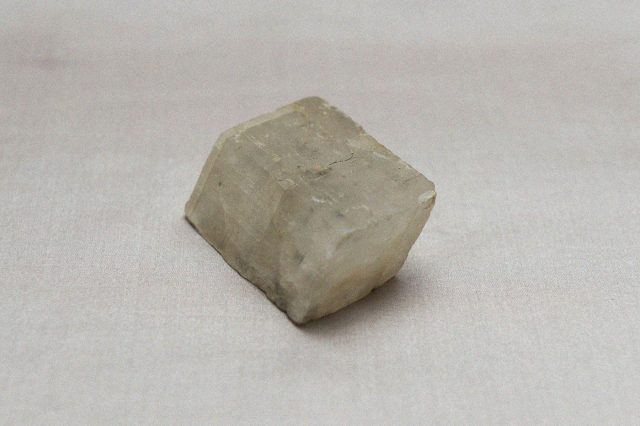
Vikings May Have Used Crystals to Navigate

The Vikings, a group of seafaring Scandinavian warriors, were also skilled ocean navigators. They began to populate Iceland — around 500 miles from their native Norway — in about 900 CE, even eventually reaching North America. The specifics of their navigation techniques are somewhat mysterious, but recent research indicates they may have used crystals.

Because they sailed their longships in the far North Atlantic, Viking travelers benefitted from up to 24 hours of continuous daylight, but they encountered a lot of fog, too. Ancient Norse literature mentions “sunstones,” stones that helped their holders find the sun — and scientists now think these may have really existed. In 2011, researchers used calcite crystals to pinpoint the location of the sun within 1 degree. It’s not magic, although it sounds like it: Through polarization, crystals can show sunlight patterns that can’t be seen with the naked eye.

Another study from 2014 suggests these crystals may have been used in conjunction with a sun compass. Researchers simulated 3,600 trips between Norway and Greenland at the spring equinox and summer solstice, two dates marked on a disc believed to be a component of a sun compass. They found that by checking the crystals every few hours, the computer-generated voyages successfully reached Greenland 92% of the time.

That study hasn’t been replicated in the real world yet, but it offers some clues to how Viking navigators were able to navigate without the use of magnetic compasses or astrolabes.

Photo credit: Heritage Images/ Hulton Archive via Getty Images

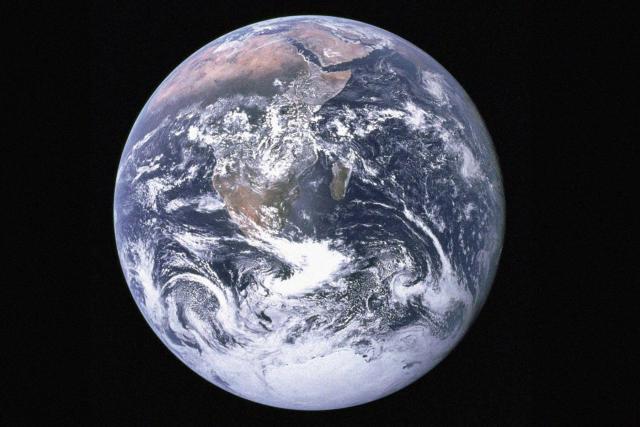
Navigators Knew the Earth Was Round Earlier Than You Might Think

There’s a persistent myth that Christopher Columbus “proved” the Earth was round in the 15th century during his voyage from Europe to the Americas, but he was many centuries too late. In fact, formally educated people knew the world wasn’t flat starting way back in the third century BCE, while scientists and mathematicians may have known as early as the sixth century BCE. Columbus’ surprise landing in the Americas had nothing to do with thinking the Earth was flat — he just thought the global circumference to be smaller than it is and believed he’d end up in Asia. This tenacious myth comes from a highly embellished 1828 biography of Columbus written by Washington Irving, better known for fictional works such as “The Legend of Sleepy Hollow” and “Rip Van Winkle.”

Like the aforementioned scientists and scholars, mariners were aware of the world’s roundness very early on. Sailors observed that when viewing distant ships, the tops of sails and masts were visible before the decks and hulls of the vessels to which they were attached. And as they traveled to different points of the Earth, they also noted being able to see different constellations. Celestial navigation would have been pretty difficult otherwise.

Prevenção a desastres I e II (Sler)

Prevenção a desastres I

Se está evidente que podemos ter novos eventos extremos, o que está sendo feito para capacitar a Defesa Civil e as comunidades vulneráveis?

Artigo original

Sílvia Marcuzzo

16 de agosto de 2024

De 6 a 8 de agosto, aconteceram três lives muito esclarecedoras sobre o que está por trás do antes e depois dos desastres que fomos submetidos no Rio Grande do Sul. Como ainda estamos vivendo o rescaldo de tanta destruição, creio ser muito útil este texto e outros que seguirão nas próximas semanas. Espero que sirva para compreendermos melhor o que estamos atravessando. Se você já se deu conta que precisa acompanhar o que está acontecendo nessa fase de agravamento do aquecimento global, pois isso afeta diretamente o seu cotidiano, inclusive seus planos, o que vou trazer nas próximas linhas será esclarecedor.

Um grupo de jornalistas mulheres, que compõe o Grupo de Trabalho de Comunicação da Rede de Emergência Climática e Ambiental (Reca), organizou em parceria da Federação Nacional de Jornalista (Fenaj) três lives intituladas “Diálogos entre jornalistas e especialistas acerca do desastre”. Dá para acompanhar a gravação no YouTube da Fenaj.

Esses encontros trouxeram muitas coisas que a mídia convencional e as redes sociais não abordaram.

Já parou para pensar o que o jornalismo faz com a ocorrência de desastres e o que os desastres fazem com o jornalismo? Essa foi a indagação da professora Marcia Franz Amaral, da UFSM, na abertura do encontro. Diante do que passamos, com tanta falta de orientação sobre o que fazer, tanto desespero, como deve ser a comunicação com população, com os atingidos, com a imprensa das autoridades e dos detentores de informações técnicas?

Tenho feito a cobertura de desastres, fui diretamente afetada por essa última enchente e venho trabalhando em projetos para despertar o interesse de diferentes públicos sobre as mudanças climáticas. Esse contexto complexo me fez voltar à universidade. Estou fazendo mestrado em comunicação, justamente para pesquisar, desvelar contextos e com aspiração de contribuir para que saibamos encarar com mais assertividade esse momento que exige adaptação e mitigação às mudanças climáticas.

Fui uma das painelistas da primeira live. Foi um mega desafio, pois estava quase sem voz. Peguei uma virose, uma pereba que tem deixado muita gente doente em Porto Alegre e Região Metropolitana. Escrevo isso só para explicar o meu desempenho, se você for me ouvir na live. Eu avalio que também é uma consequência da remexida geral da cidade, na qual o ambiente foi submetido.

E sabem por que fui uma das convidadas a falar? Porque fiz reportagens mostrando contextos em que outros colegas jornalistas não se debruçaram. Fiquei muito tocada com a declaração do Roberto Villar Belmonte, professor da Uniritter, que escreveu em um grupo sobre minha atuação.

“Depois da enchente de 2023, apenas a repórter freelancer Sílvia Marcuzzo fez reportagens de fôlego apontando a falta de governança ambiental (proposital) no RS. A imprensa regional dita hegemônica continua fingindo que o tema não existe, mesmo após maio de 2024. Seria legal citar isso na tua fala, Sílvia, na tua abordagem contínua da pauta, não apenas durante a desgraça (quando a morte é o principal valor notícia)”.

Ele escreveu isso também para justificar a minha participação na programação do 8º Congresso Brasileiro de Jornalismo Ambiental, que esse ano será em Fortaleza. Confere a programação do CBJA, será híbrida, online e presencial.

A primeira live, realizada em 6 de agosto, trouxe a chamada: os alertas foram emitidos. E agora?

Reinaldo Estelles, coordenador-geral do Departamento de Articulação e Gestão, da Secretaria Nacional de Proteção e Defesa Civil do Ministério da Integração e Desenvolvimento Regional, foi categórico: “Não adianta emitir alarmes se a população não souber o que é para fazer”. Esse é um dos pontos nevrálgicos, não basta uma sirene tocar, os bombeiros chamarem. A população precisa compreender o que significa estar em perigo. Creio que quem teve a experiência dos episódios dos meses de maio e junho no Rio Grande do Sul sabe muito bem o que isso quer dizer. Fomos vítimas de uma sequência de trapalhadas, de falta de gestão dos poderes públicos municipais e estadual.

Há muitas dimensões diferentes de informação, que estão intimamente ligadas a vários fatores. Ou seja, mais uma vez ficou supernítido o quanto o Estado que se gaba de “ter façanhas que sirvam de modelo a toda terra” se equivocou em insistir em determinados erros. Há muitas questões por trás das medidas dos tomadores de decisão que precisam ser esclarecidas.

Na live, Estelles anunciou o lançamento do projeto-piloto de um novo sistema de alerta, que aciona todos os celulares de uma região em risco. E reforçou: as Defesas Civis dos municípios e do Estado precisam se capacitar. Outros desastres virão. Ele salientou o quanto as Defesas Civis precisam promover a criação e a mobilização de núcleos comunitários. A participação de vários segmentos, principalmente com a atuação de lideranças locais, são essenciais para a estruturação de planos de contingência. Por favor, se você que me lê souber de algum lugar no Rio Grande do Sul onde isso esteja acontecendo, me conte.

Vagner Anabor, professor de Meteorologia da UFSM, lembrou que o Estado está em uma das regiões de maior incidência de tempestades severas. E na sua opinião, o que vivemos esse ano foi o maior desastre já ocorrido no Brasil. Outra curiosidade apontada por ele é que uns 25% da força de trabalho da Metereologia do País é composta por profissionais formados no RS. Ou seja, o Estado exporta gente qualificada, mas não dispõe de servidores que atuem no próprio território onde nasceram.

Ele defende o fortalecimento de medidas de prevenção. E lamenta que o Climatempo, do governo do Estado, conte apenas com dois metereologistas e um engenheiro hidrólogo. Anabor estima que seria necessária uma equipe entre 20 e 25 pessoas para dar conta de uma área do tamanho do RS.

Outro ponto importante colocado por Anabor é que “a cadeia da informação é muito longa”. E, por questão de minutos, muitas vidas podem ser salvas. Isso quer dizer que, desde o momento em que se sabe o que vem pela frente, até informar e mobilizar diferentes equipes, transmitir alerta e comunicar às comunidades sobre os riscos que eles correm, há muitas etapas a serem cumpridas até o momento de chegar em regiões que serão atingidas. Há diferentes atores envolvidos.

No caso do RS e de Porto Alegre, então, ocorreram muitas situações que deixaram evidente o quanto isso foi prejudicial. E a preparação para lidar com situações de perigo iminente requer planejamento e a execução de um bom plano de contingência (o que também não tivemos por aqui).

Os painelistas salientaram o quanto a imprensa desempenha função crucial para ampliar a percepção de risco da população. Quem cobre precisa saber o que significa uma chuva de 100 milímetros. E para complicar ainda mais o contexto, tem proliferado o número de influencers, gente que só porque sabe falar diante da câmera fica espalhando informações que muitas vezes mais atrapalham do que ajudam. Isso sem falar nas fake news.

Resumindo: enquanto as respectivas autoridades não adotarem condutas responsivas, que assumam o processo de uma comunicação para o bem comum, para salvar vidas, para evitar o pior, teremos que conviver com a insegurança, de procurar entender o que fazer diante de uma situação de risco.

O repórter Luciano Velleda, do Sul21, destacou que diversas vezes a imprensa precisou esperar anúncios da Defesa Civil porque seriam dados pelo governador e pelo prefeito de Porto Alegre em coletivas. Ou seja, assim que chega até a autoridade uma determinada informação, ela é avaliada se é o governador ou o prefeito que serão os porta-vozes. Vale lembrar da vez em que o prefeito sugeriu que os porto-alegrenses deixassem a cidade, fossem para a praia.

Em outros países, onde a comunicação de risco faz parte da cultura e funciona, como o Japão, a cadeia (o caminho que a informação percorre) é curta. Todos são treinados para saber o que fazer em caso de perigo. A autoridade máxima é técnica. Uma série de medidas, como a emissão de alerta em todos os canais de rádio e televisão, são acionadas em caso de risco.

Na próxima semana, trarei mais sobre esse assunto. Porque já está na cara que precisamos avançar nas medidas de prevenção a desastres. Esse assunto não pode e não deve ficar restrito a decisões políticas. A sociedade precisa se apropriar das diversas camadas de conhecimento para evitar danos de toda ordem. Ainda mais em ano de eleição!

Com a palavra, os professores das escolas atingidas pelas enchentes.

Para encerrar, sugiro que vejam a live Inundações no RS e a situação das escolas na RME/POA, realizada no dia 12, onde professores da rede municipal de ensino da Capital contam o que passaram e o que está sendo feito nas escolas atingidas pela enchente. A iniciativa é do projeto de extensão Fazeres Pedagógicos da Faculdade de Educação da UFRGS.

Foto da Capa: Freepik / Gerada por IA
Mais textos de Sílvia Marcuzzo: Clique aqui.

Por Sílvia Marcuzzo – Jornalista e artivista

Sílvia Marcuzzo é jornalista, artivista, mestranda na Famecos/PUCRS e integrante do Grupo de Pesquisa sobre Comunicação, Crise e Cuidado. Articuladora de coletivos, repórter freelancer e editora de publicações socioambientais. Trabalha com comunicação e meio ambiente desde 1993. É consultora e assessora de organizações que atuam pelo bem da coletividade, por um mundo mais sustentável e com qualidade de vida para todos. Saiba mais em silviamarcuzzo.com.br


Prevenção a desastres II

Artigo original

Jornalistas têm muita a dificuldade no acesso às fontes oficiais, o que dificulta muito a imprensa de cumprir o seu papel em momentos de desastre

Sílvia Marcuzzo

23 de agosto de 2024

Seguindo a sequência que comecei a semana passada (clique aqui para ler), hoje abordo o que rolou na live “Diálogos entre jornalistas e especialistas acerca do desastre”, realizada dia 7 de agosto, que pode ser acessada no YouTube da Federação Nacional dos Jornalistas (Fenaj). É o segundo dos três encontros promovidos pelo Grupo de Trabalho de Comunicação da Rede de Emergência Climática e Ambiental (Reca).

Com o tema “O desastre eclodiu. Quais são os protocolos?” Com essa pergunta, a mediadora Débora Gallas, do Grupo de Pesquisa de Jornalismo Ambiental e RECA, conduziu o encontro online que teve a participação de Irineu de Brito Junior, especialista em gestão de desastres da Unesp, Armin Braun, diretor do Centro Nacional de Gerenciamento de Riscos e Desastres (Cenad), e dos jornalistas Maria Teresa Cruz e Paulo Mueller.

Um dos pontos que foi unanimidade entre os debatedores foi a necessidade de se cumprir protocolos. O grande X da questão é que, por aqui, pelos pagos, pela Capital gaúcha, o protocolo é algo nebuloso. Digamos que o protocolo aqui durante a enchente era a Defesa Civil avisar pelos seus canais, incluindo o grupo de WhatsApp, o Instagram e o site oficial, que uma tempestade intensa estava vindo. O governador e o prefeito eram os porta-vozes das informações importantes também.

Armin Braun ressaltou a importância dos jornalistas de veículos para dar a noção sobre a percepção da previsão do tempo. Ele explicou que o Cenad trabalha na preparação e na resposta aos desastres. O foco é justamente articular e capacitar os estados e municípios para encarar os riscos hidrológicos, geológicos, meteorológicos. Há vários órgãos públicos envolvidos nessa rede.

Já o professor Irineu destacou o quanto precisa ser feito um planejamento prévio para que se tenha condições de gerenciar o problema provocado por um desastre. Ele citou variáveis que envolvem a logística para o atendimento às demandas. Tudo isso precisa ser pensado em tempo de calma, antes de uma temporada de tempestades, por exemplo.

E a resposta a situações de calamidade não são apenas com relação a intempéries climáticas. Ele lembrou-se do caso do grande número de venezuelanos entrando em Roraima, que também exigiu uma mobilização do governo. Ou seja, a Defesa Civil dos Estados e municípios precisa estar estruturada, com ações já ensaiadas antes de haver um incidente. Para você que me lê, isso parece óbvio. Mas o que vivemos nesse ano no Rio Grande do Sul demonstrou que pouco ou muito pouco de planos de antecipação, ou de contingência, foi colocado em prática.

Vale lembrar que, só em 2023, ocorreram mortes provocadas por enchentes e enxurradas em março, junho, julho, setembro, novembro e dezembro. Ou seja, já tínhamos tido 81 mortes em distintas regiões do Estado. Esses dados eu mesma levantei junto à Defesa Civil. Mas isso não bastou para que os órgãos competentes tomassem as medidas de precaução em 2024.

O jornalista e radialista Paulo Mueller, que acompanhou vários episódios de acidentes de todo tipo em Santa Catarina, tocou numa situação que todo mundo que cobre esse tipo de pauta enfrenta: a dificuldade de se ter acesso às fontes oficiais. É muito comum os jornalistas pedirem informações para a assessoria de imprensa do governo ou da Defesa Civil, mas se tiver a resposta, a prioridade é o atendimento ao chamado, não a imprensa.

Mueller contou o quanto a Defesa Civil de Santa Catarina se capacitou, se estruturou ao longo do tempo, depois de tantos episódios de enchente. Em Blumenau, por exemplo, todos os moradores já sabem se a sua rua vai alagar. O Estado vizinho também utiliza as escolas para trabalhar a cultura da prevenção. Lá também há muitos problemas devido à ocupação desordenada no solo.

E aí, pergunto: por que ainda não se estruturou programas de educação e comunicação que atendam às necessidades das comunidades e da imprensa? Será que os governos estão se dando conta que se houvesse um sistema eficiente que explicasse o risco, nesse momento de crise climática, as mortes e perdas incalculáveis seriam evitadas? Isso é ou não é negacionismo?

Essas lives são muito esclarecedoras para termos noção do quanto esse assunto precisa ser compreendido por todos. Pois somos todos vulneráveis a novos possíveis episódios. Pior: situações terríveis de desgraça ainda são usadas politicamente para contar vantagem de que estão fazendo isso, aquilo, quando, na verdade, para evitar que o pior acontecesse, quase nada foi feito. Assim que um técnico fica sabendo o risco que determinada região, município corre, o tomador de decisão é informado. Só que o que sentimos na pele, aqui no RS, é que a decisão de informar e como informar é muito lenta ou considera primeiro o contexto político e não o socioambiental e econômico.

Em tempos de redes sociais e de “influencers” que se aproveitam de tragédias para ter mais visualizações, muita mentira, desinformação da pior espécie circulou. Então, é mais do que na hora dos governos estruturarem mecanismos de comunicação que traduzam e deixem claro o que deve ser feito em caso de risco. Será que não seria mais eficiente do que ter que desmentir as mentiras que espalham durante os desastres?

Segundo Maria Teresa, que acompanhou de perto o desastre de São Sebastião, no carnaval do ano passado, as autoridades de São Paulo sabiam que choveria muito acima da média naquele feriadão, mas não se empenharam em alertar sobre o risco que as pessoas correriam ao ir para o badalado litoral paulista. Ela disse ainda que o Instituto de Pesquisas Tecnológicas (IPT) já tinha feito um levantamento e mapeado 52 áreas de risco – mais da metade no lugar onde houve o deslizamento – em São Sebastião. Será que o governo não tomou as medidas de prevenção necessárias para salvar vidas?

A jornalista reforçou a necessidade de os profissionais de imprensa saberem se cuidar e obedecerem aos protocolos de seguranças. Ela atualmente atua em favelas no Rio e diz que as medidas são iguais à cobertura de um campo minado de guerra. Maria Teresa salientou a necessidade das redações, de quem atua direto nas coberturas, se capacitarem para enfrentar desafios extremos. Ficar sem conexão de celular, sem conseguir chegar aos locais e, ao mesmo tempo, ter empatia para saber se colocar no lugar do outro, são desafios complexos que precisam ser pensados muito antes de um desastre acontecer.

Você sabe doar direito?

A comunicação sobre o que doar e formas de como enviar também foram abordadas no encontro. Os participantes evidenciaram o quanto a população precisa ser solidária na hora de escolher e remeter as doações. Tem gente que mandou fantasia de carnaval, roupas íntimas – aliás, não se deve mandar esse tipo de vestimenta usada, só se for nova – pinguim de geladeira e até fita VHS de como fazer bijuterias para abrigos. Outra dica é que pares de sapatos devem estar amarrados juntos, pois também é fácil de se perder um pé do outro.

Situação das escolas

Marque na agenda, haverá outra live sobre a situação hoje das escolas atingidas pela enchente. Já foram realizados encontros online nos dias 22 de julho e 12 de agosto, com as escolas da Rede Municipal de Ensino de POA. A próxima será no dia 2 de setembro, às 19h30. Os professores estarão tratando das escolas públicas de Região Metropolitana. No YouTube do projeto Fazeres Pedagógicos, um projeto da Faculdade de Educação da UFRGS.

Foto da Capa: Freepik
Mais textos de Sílvia Marcuzzo: Clique Aqui.

Por Sílvia Marcuzzo – Jornalista e artivista

Sílvia Marcuzzo é jornalista, artivista, mestranda na Famecos/PUCRS e integrante do Grupo de Pesquisa sobre Comunicação, Crise e Cuidado. Articuladora de coletivos, repórter freelancer e editora de publicações socioambientais. Trabalha com comunicação e meio ambiente desde 1993. É consultora e assessora de organizações que atuam pelo bem da coletividade, por um mundo mais sustentável e com qualidade de vida para todos. Saiba mais em silviamarcuzzo.com.br

Extreme weather 101: Your guide to staying prepared and informed (Grist)

Original article

How to pack a go-bag, get emergency alerts, and find disaster aid.

Chandan Khanna/AFP via Getty Images

Lyndsey Gilpin & Jake Bittle

PublishedAug 20, 2024

This guide is part of State of Emergency, a Grist series exploring how climate disasters are impacting voting and politics. A companion piece examines the logistics of voting if you’ve been impacted by extreme weather.

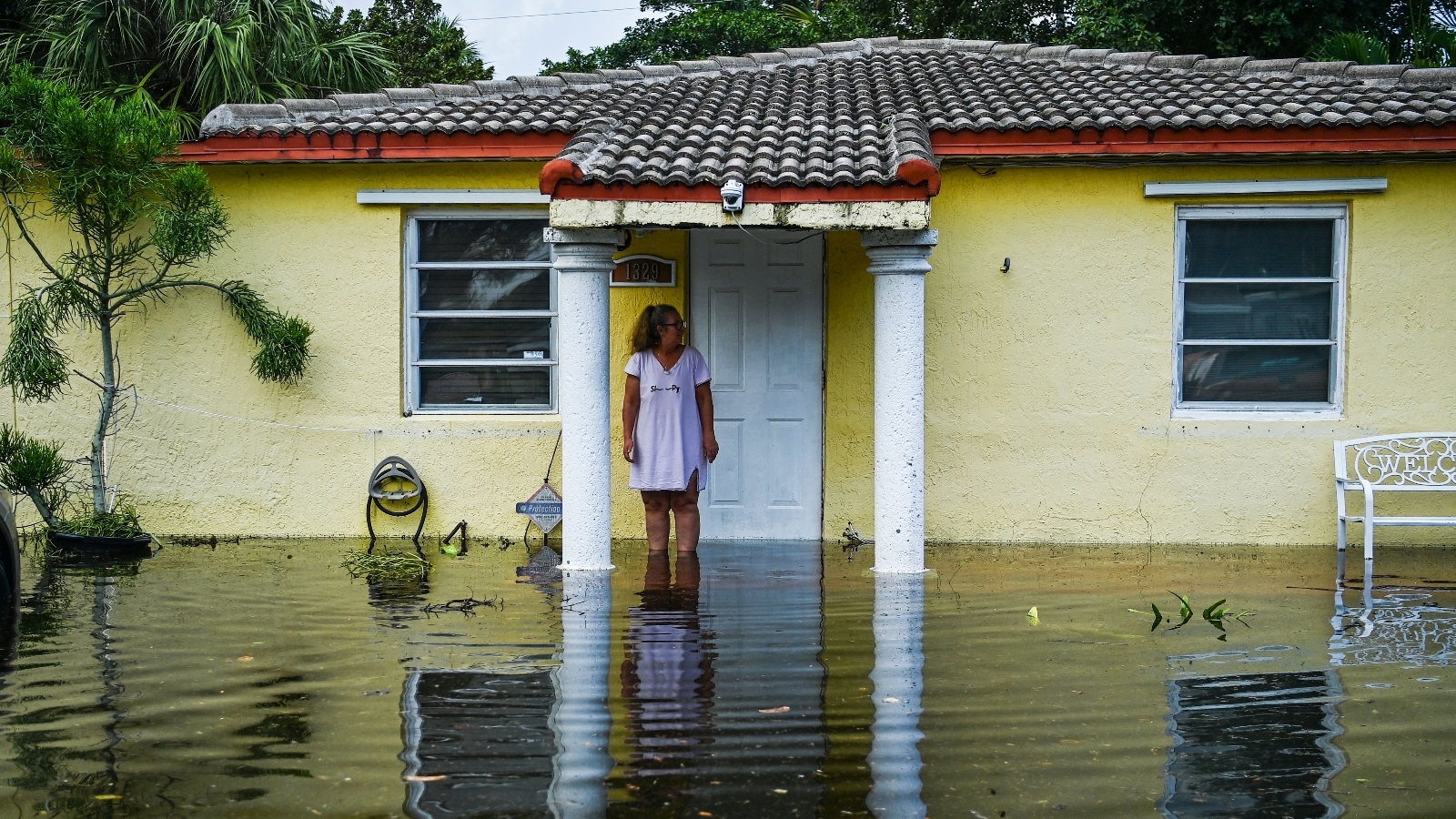
No matter where you live, extreme weather can hit your area, causing damage to homes, power outages, and dangerous or deadly conditions. If you’re on the coast, it may be a hurricane; in the Midwest or South, a tornado; in the West, wildfires; and as we’ve seen in recent years, anywhere can experience heat waves or flash flooding

Living through a disaster and its aftermath can be both traumatic and chaotic, from the immediate losses of life and belongings to conflicting information around where to access aid. The weeks and months after may be even more difficult, as the attention on your community is gone but civic services and events have stalled or changed drastically. 

Grist compiled this resource guide to help you stay prepared and informed. It looks at everything from how to find the most accurate forecasts to signing up for emergency alerts to the roles that different agencies play in disaster aid. 

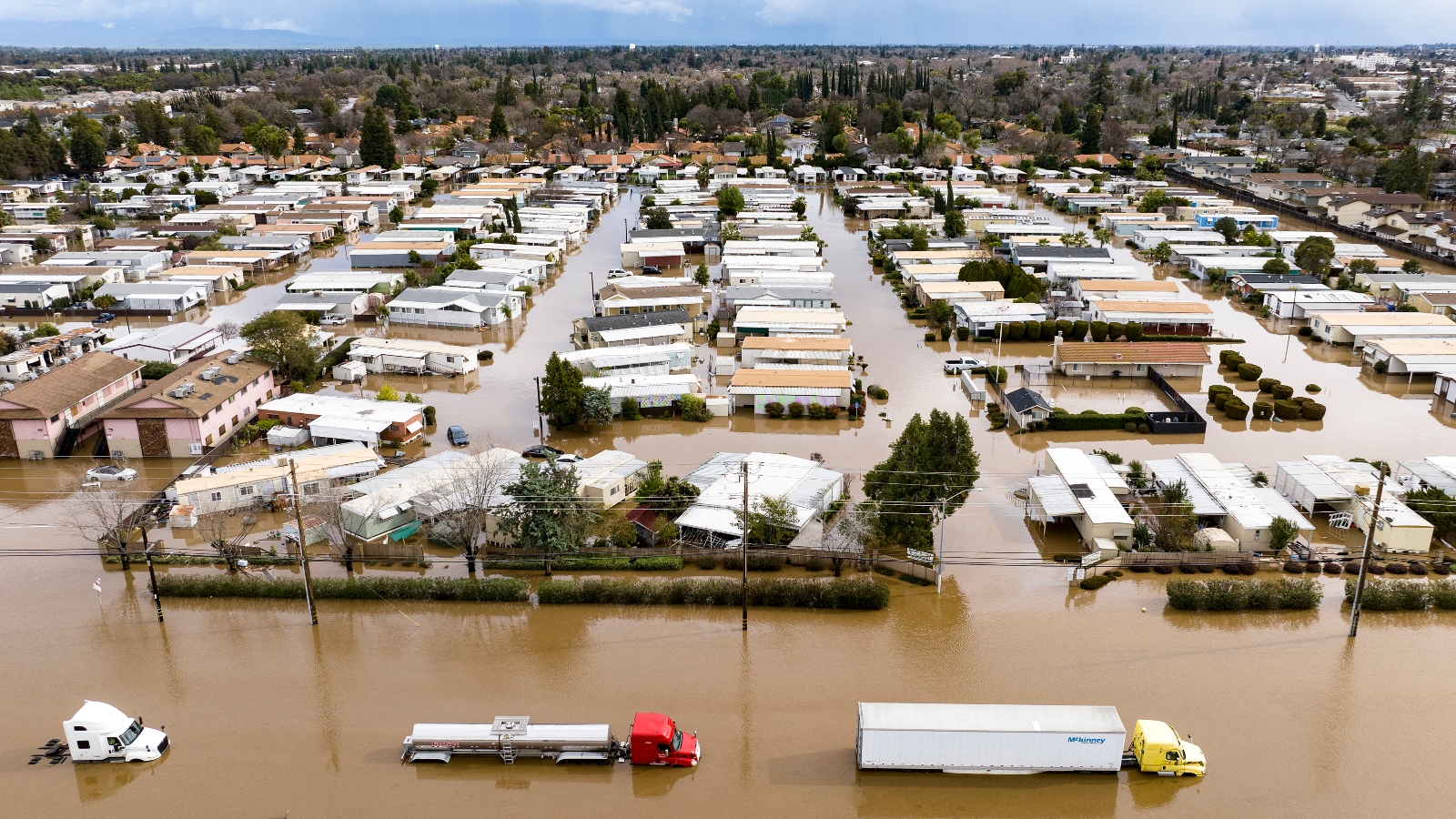
An aerial view shows flooding in Merced, California following a “bomb cyclone” in January 2023. Josh Edelson / AFP via Getty Images

Where to find the facts on disasters 

These days, many people find out about disasters in their area via social media. But it’s important to make sure the information you’re receiving is accurate. Here’s where to find the facts on extreme weather and the most reliable places to check for emergency alerts and updates.

Your local emergency manager:  Your city or county will have an emergency management department, which is part of the local government. In larger cities, it’s often a separate agency; in smaller communities, fire chiefs or sheriff’s offices may manage emergency response and alerts. Emergency managers are responsible for communicating with the public about disasters, managing rescue and response efforts, and coordinating between different agencies. They usually have an SMS-based emergency alert system, so sign up for those via your local website (Note: Some cities have multiple languages available, but most emergency alerts are only in English.) Many emergency management agencies are active on Facebook, so check there for updates as well. 

Local news: The local television news and social media accounts from verified news sources will have live updates during and after a storm. Follow your local newspaper and television station on Facebook or other social media, or check their websites regularly. 

Weather stations and apps: The Weather Channel, Apple Weather, and Google will have information on major storms, but that may not be the case for smaller-scale weather events, and you shouldn’t rely on these apps to tell you if you need to evacuate or move to higher ground. 

National Weather Service: This agency, also known as NWS, is part of the National Oceanic and Atmospheric Administration and offers information and updates on everything from wildfires to hurricanes to air quality. You can enter your zip code on weather.gov and customize your homepage. The NWS also has regional and local branches where you can sign up for SMS alerts. If you’re in a rural area or somewhere that isn’t highlighted on its maps, keep an eye out for local alerts and evacuation orders, as NWS may not have as much information ahead of time.  

Cal Fire firefighters livestream images and data from efforts to control and contain the Park Fire on July 29 near Chico, California. David McNew/Getty Images

How to pack an emergency kit

As you prepare for a storm, it’s important to have an emergency kit ready in case you lose power or need to leave your home. Review this checklist from the Federal Emergency Management Agency, or FEMA, for what to pack so you can stay safe, hydrated, and healthy. 

These can often be expensive to create, so contact your local disaster aid organizations, houses of worship, or charities to see if there are free or affordable kits available. Try to gather as much as you can ahead of time in case shelves are empty when a storm is on the way.

Some of the most important things to have:

  • Water (one gallon per person per day for several days)
  • Food (at least a several-day supply of non-perishable food) and a can opener
  • Medicines and documentation of your medical needs
  • Identification and proof of residency documents (see a more detailed list below)
  • Battery-powered or hand crank radio, batteries, flashlight
  • First aid kit
  • Masks, hand sanitizer, and trash bags 
  • Wrench or pliers 
  • Cell phone with chargers and a backup battery
  • Diapers, wipes, and food or formula for babies and children
  • Food and medicines for any household pets

Don’t forget: Documents

One of the most important things to have in your emergency kit is documents you may need to prove your residence, demonstrate extent of damage, and vote. FEMA often requires you to provide these documents in order to receive financial assistance after a disaster.

  • Government issued ID, such as a drivers’ license for for each member of your household
  • Proof of citizenship or legal residency for each member of your household (passport, green card, etc.)
  • Social Security card for each member of your household
  • Documentation of your medical needs, such as medications or special equipment including oxygen tanks, wheelchairs, etc.
  • Health insurance card
  • Car title and registration documents
  • Pre-disaster photos of the inside and outside of your house and belongings
  • Copy of your homeowners’ or renters’ insurance policy
  • For homeowners: copies of your deed, mortgage information, and flood insurance policy, if applicable
  • For renters: a copy of your lease
  • Financial documents such as a checkbook or voided check

You can find more details about why you may need these documents here.

A volunteer assesses the remains of a charred apartment complex in the aftermath of a wildfire in Lahaina, western Maui, Hawaiʻi in 2023.
Yuki Iwamura/AFP via Getty Images

Disaster aid 101

It can be hard to know who to lean on or trust when it comes to natural disasters. Where do official evacuation orders come from, for example, or who do you call if you need to be rescued? And where can you get money to help pay for emergency housing or to rebuild your home or community. Here’s a breakdown of the government officials and agencies in charge of delivering aid before, during, and after a disaster:

Emergency management agencies: Almost all cities and counties have local emergency management departments, which are part of the local government. Sometimes they’re agencies all their own, but in smaller communities, fire chiefs or sheriff’s offices may manage emergency response and alerts. These departments are the first line of defense during a weather disaster. They’re responsible for communicating with the public about incoming disasters, managing rescue and response efforts during an extreme weather event, and coordinating between different agencies. Many emergency management agencies, however, have a small staff and are under-resourced.

Much of the work that emergency managers do happens before a disaster: They develop response plans that lay out evacuation routes and communication procedures, and they also delegate responsibility to different government agencies like the police, fire, and public health departments. Most counties and cities publish these plans online. 

In most cases, they are the most trustworthy resource in the days just before and just after a hurricane or other big weather event. They’ll send out alerts and warnings, coordinate evacuation efforts, and direct survivors and victims to resources and shelter.

You can find your state emergency management agency here. There isn’t a comprehensive list by county or city, but if you search your location online you’ll likely find a website, a page on the county or city website, or a Facebook page that posts updates. 

Law enforcement: County sheriffs and city police departments are often the largest and best-staffed agencies in a given community, so they play a key role during disasters. Sheriff’s departments often enforce mandatory evacuation orders, going door-to-door to ensure that people vacate an area. They manage traffic flow during evacuations and help conduct search and rescue operations. 

Law enforcement agencies may restrict access to disaster areas for the first few days after a flood or fire. In most states, city and county governments also have the power to issue curfew orders, and law enforcement officers can enforce these curfews with fines or even arrests. In some rural counties, the sheriff’s department may serve as the emergency management department. 

Lexington Firefighters’ swift water teams rescue people stranded by extreme rain in Lost Creek, Kentucky in 2022. Michael Swensen/Getty Images

Governor: State governors control several key aspects of disaster response. They have the power to declare a state of emergency, which allows them to deploy rescue and repair workers, distribute financial assistance to local governments, and activate the state National Guard. The governor has a key role in the immediate response to a disaster, but a smaller role in distributing aid and assistance to individual disaster victims.

In almost all U.S. states, and all hurricane-prone states along the Gulf of Mexico, the governor also has the power to announce mandatory evacuation orders. The penalty for not following these orders differs, but is most often a cash fine. (Though states seldom enforce these penalties.) The state government also decides whether to implement other transportation procedures such as contraflow, where officials reverse traffic flow on one side of a highway to allow larger amounts of people to evacuate. 

HUD: The Department of Housing and Urban Development, or HUD, also spends billions of dollars to help communities recover after disasters, building new housing and public buildings such as schools — but this money takes much longer to arrive. Unlike FEMA, HUD must wait for Congress to approve its post-disaster work, and then it must dole out grants to states for specific projects. In some cases, such as the aftermaths of Hurricane Laura in Louisiana or Hurricane Florence in North Carolina, it took years for projects to get off the ground. States and local governments, not individual people, apply for money from HUD, but the agency can direct you to FEMA or housing counselors.

A homeowner hangs a sign that reads “FEMA please help make Mexico Beach great again” on a house damaged by Hurricane Michael in Florida in 2018. Hector Retamal/AFP via Getty Images

FEMA

The Federal Emergency Management Agency, or FEMA, is the federal government’s main disaster response agency. It provides assistance to states and local governments during large events like hurricanes, wildfires, and floods. FEMA is part of the Department of Homeland Security.

FEMA is almost never the first resource on the ground after a disaster strikes. In order for the agency to send resources to a disaster area, the state’s governor must first request a disaster declaration from the president, and the president must approve it. For large disasters such as Category 4 or 5 hurricanes, this typically happens fast. For smaller disasters, like severe rain or flooding events, it can take weeks or even months for the president to grant a declaration and activate the agency. FEMA has historically not responded to heat waves.

FEMA is broken into regional offices and offers specific contacts and information for each of those, as well as for tribal nations. You can find your FEMA region here.

FEMA has two primary roles after a federally declared disaster:

Contributing to community rebuilding costs: The agency helps states and local governments pay for the cost of removing debris and rebuilding public infrastructure. During only the most extreme events, the agency also deploys its own teams of firefighters and rescue workers to help locate missing people, clear roadways, and restore public services. For the most part, states and local law enforcement conduct on-the-ground recovery work. (Read more about FEMA’s responsibilities and programs here.)

Individual financial assistance: FEMA gives out financial assistance to individual people who have lost their homes and belongings. This assistance can take several forms. FEMA gives out pre-loaded debit cards to help people buy food and fuel in the first days after a disaster, and may also provide cash payments for home repairs that your insurance doesn’t cover. The agency also provides up to 18 months of housing assistance for people who lose their homes in a disaster, and sometimes houses disaster survivors in its own manufactured housing units or “FEMA trailers.” FEMA also sometimes covers funeral and grieving expenses as well as medical and dental treatment.

In the aftermath of a disaster, FEMA offers survivors:

  • A one-time payment of $750 for emergency needs
  • Temporary housing assistance equivalent to 14 nights’ stay in a hotel in your area 
  • Up to 18 months of rental assistance
  • Payments for lost property that isn’t covered by your homeowner’s insurance
  • And other forms of assistance, depending on your needs and losses

If you are a U.S. citizen or meet certain qualifications as a non-citizen and live in a federal disaster declaration area, you are eligible for financial assistance. Regardless of citizenship or immigration status, if you are affected by a disaster you may be eligible for crisis counseling, disaster legal services, disaster case management, medical care, shelter, food, and water. 

FEMA representatives take information from people displaced by Hurricane Ian in Estero, Florida in 2022. Thomas Simonetti for The Washington Post via Getty Images

FEMA also runs the National Flood Insurance Program, which provides insurance coverage of up to $350,000 for home flood damage. The agency recommends that everyone who lives in a flood zone purchase this coverage — and most mortgage lenders require it for borrowers in flood zones — though many homes outside the zones are also vulnerable. You must begin paying for flood insurance at least 30 days before a disaster in order to be eligible for a payout. You can check if your home is in a flood zone by using this FEMA website.

How to get FEMA aid: The easiest way to apply for individual assistance from FEMA is to fill out the application form on disasterassistance.gov. This is easiest to do from a personal computer over Wi-Fi, but you can do it from a smartphone with cellular data if necessary. This website does not become active until the president issues a disaster declaration.

Some important things to know:

  • FEMA will require you to create an account on the secure website Login.gov. Use this account to submit your aid application. 
  • You can track the status of your aid application and receive notifications if FEMA needs more documents from you. 
  • If FEMA denies your application for aid, you can appeal, but the process is lengthy. 

Visiting a FEMA site in your area after a disaster: FEMA disaster recovery centers are facilities and mobile units where you can find information about the agency’s programs as well as other state and local resources. FEMA representatives can help you navigate the aid application process or direct you to nonprofits, shelters, or state and local resources. Visit this website to locate a recovery center in your area or text DRC and a ZIP Code to 43362. Example: DRC 01234.  

A woman looks over her apartment in Fort Myers, Florida, after Hurricane Ian inundated it with floodwaters in 2022. Joe Raedle/Getty Images

What to expect after a disaster

Disasters affect people in many different ways, and it’s normal to grieve your losses — personal, professional, community — in your own time. Here are a few resources if you need mental health support after experiencing an extreme weather event.

  • The National Center for PTSD, or post-traumatic stress disorder, on what to expect after experiencing a disaster.
  • The American Red Cross has disaster mental health volunteers they often dispatch to areas hit by a disaster.
  • The Substance Abuse and Mental Health Services Administration, or SAMHSA, has a fact sheet on managing stress after a disaster. The agency has a Disaster Distress Helpline that provides 24/7 crisis counseling and support. Call or text: 1-800-985-5990

After a disaster is an especially vulnerable time. Beware of scams and make sure to know your rights. 

  • Be wary of solicitors who arrive at your home after a disaster claiming to represent FEMA or another agency. FEMA will never ask you for money. The safest way to apply for aid is through FEMA’s official website: disasterassistance.gov
  • Be cautious about hiring contractors or construction workers in the days after a disaster. Many cities require permits for rebuilding work, and it’s common for scammers to pose as contractors after a disaster. 
  • Renters can often face evictions after a disaster, so familiarize yourself with tenant rights in your state. 
Residents of Paradise, California visit the town’s planning department to file permitting applications to re-build homes and other structures after the devastating 2018 Camp Fire. Gabrielle Lurie/San Francisco Chronicle via Getty Image

What to keep in mind before, during, and after a disaster

The most important thing to consider during a disaster is your own, your family’s, and your community’s safety. The National Weather Service has a guide for hurricanes and floods; FEMA has a guide for wildfires; the Centers for Disease Control and Prevention has a guide for extreme heat safety.

A few potentially life-saving things to remember:

  • Never wade in floodwaters. They often contain harmful runoff from sewer systems and can cause serious illness and health issues.
  • If it’s safe to do so, turn off electricity at the main breaker or fuse box in your home or business before a hurricane to prevent electric shock. 
  • If you lose power, never operate a generator inside your home. Generators emit carbon monoxide, a colorless and odorless gas that can be fatal if inhaled.

Did we miss something? Please let us know by emailing community@grist.org.

Confessions of a Theoretical Physicist (Nautilus)

My life among the elementary particles has made me question whether reality exists at all.

By Vijay Balasubramanian

August 19, 2024

Iremember the day when, at the age of 7, I realized that I wanted to figure out how reality worked. My mother and father had just taken us shopping at a market in Calcutta. On the way back home, we passed through a dimly lit arcade where a sidewalk bookseller was displaying his collection of slim volumes. I spotted an enigmatic cover with a man looking through a microscope; the words “Famous Scientists” were emblazoned on it, and when I asked my parents to get it for me, they agreed. As I read the chapters, I learned about discoveries by Antonie van Leeuwenhoek of the world of microscopic life, by Marie Curie about radioactivity, by Albert Einstein about relativity, and I thought, “My God, I could do this, too!” By the time I was 8, I was convinced that everything could be explained, and that I, personally, was going to do it.

Decades have passed, and I am now a theoretical physicist. My job is to work out how all of reality works, and I take that mission seriously, working on subjects ranging from the quantum theory of gravity to theoretical neuroscience. But I must confess to an increasing sense of uncertainty, even bafflement. I am no longer sure that working out what is “real” is possible, or that the reality that my 7-year-old self conceived of even exists, rather than being simply unknown. Perhaps reality is genuinely unknowable: Things exist and there is a truth about them, but we have no way of finding it out. Or perhaps the things we call “real” are called into being by their descriptions but do not independently exist.

The theories and concepts we build are like ladders we use to reach the truth.

I am steeped in the cultural traditions of physics, a field that is my calling and trade, and in the philosophies of India with which I was raised. As a physicist, I remain committed to a system of thought which posits that: (1) things we observe are definitely real, (2) the details may be unknown, (3) bounded resources may slow progress, but (4) physical inquiry can lead us to the real truth, as long as we have time and proceed with patience. On the other hand, I am also acutely aware of philosophical traditions to the effect that: (1) there may be a reality, but (2) measurements from the world are inherently misleading and partial, so that (3) the real may be formally indescribable, and that (4) we may not have a systematic way to reach the fundamentally real and true.

The idea that the real may be unknowable is very old. Consider the creation hymn in the Rig Veda, composed around 1500 to 1000 B.C., called the “Nasadiya Sukta.” This verse addresses fundamental questions of cosmology and the origin of the universe. In a beautiful translation by Juan Mascaró, it asks: 

Who knows the truth? Who can tell whence and how arose this universe? The gods are later than its beginning: Who therefore knows whence comes this creation? Only he who sees in the highest heaven: He only knows whence came this universe and whether it was made or un-created. He only knows, or perhaps he knows not.

The poet who wrote this verse points out the fundamental problem of epistemology: We don’t know some things and may not even have any way of determining what we don’t know. Some questions may be intrinsically unanswerable. Or the answers may be contradictory. The “Isha Upanishad,” a Sanskrit text from the first millennium B.C., attempts to describe a reality that escapes common sense: “It moves and it moves not, it is far and it is near, it is inside and it is outside.”

A second problem is that perception fundamentally limits our ability to apprehend reality. A prosaic example is the perception of color. Eagles, turtles, bees, and shrimp sense more and different colors than we humans do; in effect, they see different worlds. Different perceptual realities can create different cognitive or conceptual realities.

Jorge Luis Borges pushed this idea to the limit in his story “Funes the Memorious,” about a man who acquires a sort of infinite perceptual capacity. Borges writes: “A circle drawn on a blackboard, a right triangle … are forms that we can fully grasp; … [Funes] could do the same with the stormy mane of a pony … with the changing fire and its innumerable ashes.” Funes’ superpower sounds wondrous, but there is a catch. Borges writes that Funes was “almost incapable of ideas of a general, Platonic sort. Not only was it difficult for him to comprehend that the generic symbol dog embraces so many unlike individuals of diverse size and form; it bothered him that the dog … (seen from the side) should have the same name as the dog … (seen from the front).” The precision of Funes’ perception of reality prevents him from thinking in the coarse-grained categories that we associate with thought and cognition—categories which, necessarily rough, texture our imagined reality.

The arbitrariness of categories was the subject of another Borges story, “The Analytical Language of John Wilkins,” in which Wilkins imagined dividing animals into those belonging to the Emperor, those that are crazy-acting, those painted with the finest brush made of camel hair, those which have just broken a vase, those that from a long way off look like flies, and other oddly specific groupings.

In Body Image
SKETCHY: Students and the public are often told the world consists of real particles called quarks and leptons. Yet these are only concepts that approximate a certain sketch of the structure of the world. Image by Fouad A. Saad / Shutterstock.

The philosopher Michel Foucault, in his book The Order of Things, drew inspiration from Borges’ stories to reflect on the nature of categorization. He suggested that the categories and concepts that we define control our bounded cognition and, in their intrinsic arbitrariness, structure the realities that reside in our minds.

Foucault’s analysis resonates with me because it reminds me of categories in physics. For example, we routinely tell our students and the public that the world consists of particles called quarks and leptons, along with subatomic force fields. Yet these are concepts that reify a certain approximate sketch of the structure of the world. Physicists once thought that these categories were fundamental and real, but we now understand them as necessarily inexact because they ignore the finer details that our instruments have just not been able to measure.

If our categories determine the reality we perceive, can having an idea call a reality into being? This question is a version of the “simulation hypothesis,” whereby all of reality as we know it is simply a simulation in some computational engine, or perhaps a version of the idealism of Plato, where things that we can conceive in the world echo imperfectly an ideal that is the true reality.

Consider, for example, Mymosh the Self-begotten, the tragic hero of a story by Polish writer, Stanislaw Lem, in his volume The Cyberiad. Mymosh, a sentient machine self-organized by accident from a cosmic garbage heap, conjures up entire worlds and peoples just by imagining them. Are those people real, or are they all in his head? In fact, is there a difference? After all, Mymosh’s imagination is a physical process—electrical impulses in his brain. So perhaps the people he imagines are real in some sense.

Things exist and there is a truth about them, but we have no way of finding it out.

Some of these philosophical conundrums have concrete avatars in theoretical physics. Consider the notion of “duality” between physical theories. In this context, a “theory” means a mathematical description of a hypothetical universe, which we develop as a stepping-stone to understanding the actual universe in which we live. Two theories are said to be “dual,” or equivalent, if every observable in one matches some observable in the other. In other words, the two theories are different representations of the same physical system. Often in these dualities the elementary variables, or particles, of one theory become the collective variables, or lumps of particles, of the other, and vice versa. Dual theories scramble some of the most basic categories in physics, such as the difference between “bosonic” particles (any number of which can be in the same place at the same time) and “fermionic” particles (no two of which can be in the same place at the same time). These two kinds of particles have entirely different physical properties, so you would think that they could not be equivalent. But through dualities, it turns out that lumps of bosons can act like fermions, and vice versa. So, what’s the reality here?

Even more dramatic are dualities involving the force of gravity. On one side, we have theories of matter and all the forces except gravity; on the other, we have theories of matter and forces including gravity. These theories look very different. They are couched in terms of different forms of matter, different types of forces, and even different numbers of spacetime dimensions. Yet they describe precisely the same fundamental physics. So, what is “real” here? If one theory says the force of gravity operates and the other says it doesn’t, what do we conclude about the reality of gravity? Perhaps we can use my sketch to visualize the situation—we are able to tell stories about the corners of this diagram of possible worlds, where simplifications and approximations suffice, but the categories and concepts that we have been capable of, at least to date, fail to describe the interior where reality is actually located.

In Body Image
Sketch by Vijay Balasubramanian

Quantum mechanics makes things even more confusing. Quantum-mechanical states of a system can be combined, or superposed, in seemingly contradictory ways. So, the spin of an electron can be in a superposition of pointing up and down—an idea that might seem akin to suggesting that, say, a cat can be in a superposition of alive and dead. Does that mean these objects are in both states or neither state? Some theories suggest that measuring a cat (to continue with this metaphor) could cause it to collapse into a state of aliveness or deadness; others, evoking something like the many-worlds theory, suggest that the combined superposition continues through time. This is a casse-tête, a head breaker.

Where does this leave me? Perhaps we can reconcile all these ideas by following Ludwig Wittgenstein, who proposed in his Tractatus Logico-Philosophicus, possibly referencing previous ideas of Søren Kierkegaard, that the theories and concepts we build are like ladders or nets we use to reach the truth, but we must throw them away upon getting there. I myself am trying to find my way by working in multiple fields, both physics and neuroscience, studying both the world and the mind that perceives it, because I believe that the quest to understand the reality of the universe must contend with the truncations imposed by the perceptual and cognitive limitations of the mind.

Should we bother seeking truths about the world in light of the doubts I have set out? I am hardly the first to ask. Socrates, according to Plato, remarked to Meno: “I would contend … that we will be better [people], braver and less idle, if we believe that one must search for the things one does not know, rather than if we believe that it is not possible to find out what we do not know and that we must not look for it.”

I am with Socrates on this one—his attitude is wise and pragmatic. If there is a reality and a truth about it, we will be better off and more likely to find it by searching, rather than assuming that it is not there. And even if the search, and the ladders we use to climb obstacles, do not lead us to the truth, we will enjoy the journey.  

Lead image by Tasnuva Elahi; with photos by Vijay Balasubramanian

Andrew Ng’s new model lets you play around with solar geoengineering to see what would happen (MIT Technology Review)

technologyreview.com

The climate emulator invites you to explore the controversial climate intervention. I gave it a whirl.

August 23, 2024

James Temple


AI pioneer Andrew Ng has released a simple online tool that allows anyone to tinker with the dials of a solar geoengineering model, exploring what might happen if nations attempt to counteract climate change by spraying reflective particles into the atmosphere.

The concept of solar geoengineering was born from the realization that the planet has cooled in the months following massive volcanic eruptions, including one that occurred in 1991, when Mt. Pinatubo blasted some 20 million tons of sulfur dioxide into the stratosphere. But critics fear that deliberately releasing such materials could harm certain regions of the world, discourage efforts to cut greenhouse-gas emissions, or spark conflicts between nations, among other counterproductive consequences.

The goal of Ng’s emulator, called Planet Parasol, is to invite more people to think about solar geoengineering, explore the potential trade-offs involved in such interventions, and use the results to discuss and debate our options for climate action. The tool, developed in partnership with researchers at Cornell, the University of California, San Diego, and other institutions, also highlights how AI could help advance our understanding of solar geoengineering. 

The current version is bare-bones. It allows users to select different emissions scenarios and various quantities of particles that would be released each year, from 25% of a Pinatubo eruption to 125%. 

Planet Parasol then displays a pair of diverging lines that represent warming levels globally through 2100. One shows the steady rise in temperatures that would occur without solar geoengineering, and the other indicates how much warming could be reduced under your selected scenario. The model can also highlight regional temperature differences on heat maps.

You can also scribble your own rising, falling, or squiggling line representing different levels of intervention across the decades to see what might happen as reflective aerosols are released.

I tried to simulate what’s known as the “termination shock” scenario, exploring how much temperatures would rise if, for some reason, the world had to suddenly halt or cut back on solar geoengineering after using it at high levels. The sudden surge of warming that could occur afterward is often cited as a risk of geoengineering. The model projects that global temperatures would quickly rise over the following years, though they might take several decades to fully rebound to the curve they would have been on if the nations in this simulation hadn’t conducted such an intervention in the first place. 

To be clear, this is an exaggerated scenario, in which I maxed out the warming and the geoengineering. No one is proposing anything like this. I was playing around to see what would happen because, well, that’s what an emulator lets you do.

You can give it a try yourself here

Emulators are effectively stripped-down climate models. They’re not as precise, since they don’t simulate as many of the planet’s complex, interconnected processes. But they don’t require nearly as much time and computing power to run.

International negotiators and policymakers often use climate emulators, like En-ROADS, to get a quick, rough sense of the impact that potential rules or commitments on greenhouse-gas emissions could have. 

The Parasol team wanted to develop a similar tool specifically to allow people to evaluate the potential effects of various solar geoengineering scenarios, says Daniele Visioni, a climate scientist focused on solar geoengineering at Cornell, who contributed to Planet Parasol (as well as an earlier emulator).

Climate models are steadily becoming more powerful, simulating more Earth system processes at higher resolutions, and spitting out more and more information as they do. AI is well suited to help draw meaning and understanding from that data. It’s getting ever better at spotting patterns within huge data sets and predicting outcomes based on them.

Ng’s machine-learning group at Stanford has applied AI to a growing list of climate-related subjects. Among other projects, it has developed tools to identify sources of methane emissions, recognize the drivers of deforestation, and forecast the availability of solar energy. Ng also helps oversee the AI for Climate Change bootcamp at the university.

But he says he’s been spending more and more of his time exploring the potential of solar geoengineering (sometimes referred to as solar radiation management, or SRM), given the threat of climate change and the role that AI can play in advancing the research field. 

There are “many things one can do—and that society broadly should work on—to help address climate change, first and foremost decarbonization,” he wrote in an email. “And SRM is where I’m focusing most of my climate-related efforts right now, given that this is one of the places where engineers and researchers can make a big difference (in addition to decarbonization).”

In a 2022 piece, Ng noted that AI could play several important roles in geoengineering research, including “autonomously piloting high-altitude drones” that would disperse reflective particles, modeling effects of geoengineering across specific regions, and optimizing techniques. 

Planet Parasol itself is built on top of another climate emulator, developed by researchers at the University of Leeds and the University of Oxford, that relies on the rules of physics to project global average temperatures under various scenarios. Ng’s team then harnessed machine learning to estimate the local cooling effects that could result from varying levels of solar geoengineering, says Jeremy Irvin, a grad student in his research group at Stanford.

One of the clearest limits of the current version of the tool, however, is that the results look dazzling. In the scenarios I tested, solar geoengineering cleanly cuts off the predicted rise in temperatures over the coming decades, which it may well do. 

That might lead the casual user of such a tool to conclude: Cool, let’s do it!

But even if solar geoengineering does help the world on average, it could still have negative effects, such as harming the protective ozone layer, disturbing regional rainfall patterns, undermining agriculture productivity, and changing the distribution of infectious diseases. 

None of that is incorporated in the results as yet. Plus, a climate emulator isn’t equipped to address deeply complex societal concerns. For instance, does researching such possibilities ease pressure to address the root causes of climate change? Can a tool that works at the scale of the planet ever be managed in a globally equitable way? Planet Parasol won’t be able to answer either of those questions.

Holly Buck, an environmental social scientist at the University at Buffalo and author of After Geoengineering, questioned the broader value of such a tool along similar lines.

In focus groups that she has conducted on the topic of solar geoengineering, she’s found that people easily grok the concept that it can curb warming, even without seeing the results plotted out in a model.

“They want to hear about what can go wrong, the impact on precipitation and extreme weather, who will control it, what it means existentially to fail to deal with the root of the problem, and so on,” she said in an email. “So it is hard to imagine who would actually use this and how.”

Visioni explained that the group did make a point of highlighting major challenges and concerns at the top of the page. He added that they intend to improve the tool over time in ways that will provide a fuller sense of the uncertainties, trade-offs, and regional impacts.

“This is hard, and I struggled a lot with your same observation,” Visioni wrote in an email. “But at the same time … I came to the conclusion it’s worth putting something down and work[ing] to improve it with user feedback, rather than wait until we have the perfect, nuanced version.”

As to the value of the tool, Irvin added that seeing the temperature reduction laid out clearly can make a “stronger, lasting impression.” 

“We are calling for more research to push the science forward about other areas of concern prior to potential implementation, and we hope the tool helps people understand the capabilities of SAI and support future research on it,” he said.

One-quarter of unresponsive people with brain injuries are conscious (Nature)

More people than we thought who are in comas or similar states can hear what is happening around them, a study shows.

14 August 2024

Julian Nowogrodzki

    A coloured CT scan showing a bleed on a patient's brain.
    Blood (red; artificially coloured) pools in the brain of a person who has had a stroke, a common cause of coma.Credit: Zephyr/Science Photo Library

    At least one-quarter of people who have severe brain injuries and cannot respond physically to commands are actually conscious, according to the first international study of its kind1.

    Although these people could not, say, give a thumbs-up when prompted, they nevertheless repeatedly showed brain activity when asked to imagine themselves moving or exercising.

    “This is one of the very big landmark studies” in the field of coma and other consciousness disorders, says Daniel Kondziella, a neurologist at Rigshospitalet, the teaching hospital for Copenhagen University.

    The results mean that a substantial number of people with brain injuries who seem unresponsive can hear things going on around them and might even be able to use brain–computer interfaces (BCIs) to communicate, says study leader Nicholas Schiff, a neurologist at Weill Cornell Medicine in New York City. BCIs are devices implanted into a person’s head that capture brain activity, decode it and translate it into commands that can, for instance, move a computer cursor. “We should be allocating resources to go out and find these people and help them,” Schiff says. The work was published today in The New England Journal of Medicine1.

    Scanning the brain

    The study included 353 people with brain injuries caused by events such as physical trauma, heart attacks or strokes. Of these, 241 could not react to any of a battery of standard bedside tests for responsiveness, including one that asks for a thumbs-up; the other 112 could.

    Everyone enrolled in the study underwent one or both of two types of brain scan. The first was functional magnetic resonance imaging (fMRI), which measures mental activity indirectly by detecting the oxygenation of blood in the brain. The second was electroencephalography (EEG), which uses an electrode-covered cap on a person’s scalp to measure brain-wave activity directly. During each scan, people were told to imagine themselves playing tennis or opening and closing their hand. The commands were repeated continuously for 15–30 seconds, then there was a pause; the exercise was then repeated for six to eight command sessions.

    Of the physically unresponsive people, about 25% showed brain activity across the entire exam for either EEG or fMRI. The medical name for being able to respond mentally but not physically is cognitive motor dissociation. The 112 people in the study who were classified as responsive did a bit better on the brain-activity tests, but not much: only about 38% showed consistent activity. This is probably because the tests set a high bar, Schiff says. “I’ve been in the MRI, and I’ve done this experiment, and it’s hard,” he adds.

    This isn’t the first time a study has found cognitive motor dissociation in people with brain injuries who were physically unresponsive. For instance, in a 2019 paper, 15% of the 104 people undergoing testing displayed this behaviour2. The latest study, however, is larger and is the first multicentre investigation of its kind. Tests were run at six medical facilities in four countries: Belgium, France, the United Kingdom and the United States.

    The 25% of unresponsive people who showed brain activity tended to be younger than those who did not, to have injuries that were from physical trauma and to have been living with their injuries for longer than the others. Kondziella cautions that further investigating these links would require repeat assessments of individuals over weeks or months. “We know very little about consciousness-recovery trajectories over time and across different brain injuries,” he says.

    Room for improvement

    But the study has some limitations. For example, the medical centres did not all use the same number or set of tasks during the EEG or fMRI scans, or the same number of electrodes during EEG sessions, which could skew results.

    In the end, however, with such a high bar set for registering brain activity, the study probably underestimates the proportion of physically unresponsive people who are conscious, Schiff says. Kondziella agrees. Rates of cognitive motor dissociation were highest for people tested with both EEG and fMRI, he points out, so if both methods were used with every person in the study, the overall rates might have been even higher.

    However, the kinds of test used are logistically and computationally challenging, “which is why really only a handful or so of centres worldwide are able to adopt these techniques”, Kondziella says.

    Schiff stresses that it’s important to be able to identify people with brain injuries who seem unresponsive but are conscious. “There are going to be people we can help get out of this condition,” he says, perhaps by using BCIs or other treatments, or simply continuing to provide medical care. Knowing that someone is conscious can change how families and medical teams make decisions about life support and treatment. “It makes a difference every time you find out that somebody is responsive,” he says.

    doi: https://doi.org/10.1038/d41586-024-02614-z

    References

    1. Bodien, Y. G. et al. N. Engl. J. Med. 391, 598–608 (2024).
    2. Claassen, J. et al. N. Engl. J. Med. 380, 2497–2505 (2019).

    Decades-long bet on consciousness ends — and it’s philosopher 1, neuroscientist 0

    Decoding the neuroscience of consciousness

    What does ‘brain dead’ really mean? The battle over how science defines the end of life

    Horses can plan ahead and think strategically, scientists find (Guardian)

    Team hopes findings will help improve equine welfare after showing cognitive abilities include being ‘goal-directed’

    Original article

    Donna Ferguson

    Mon 12 Aug 2024 00.01 BST

    Equine scientists believe they have demonstrated a much higher degree of intelligence in horses than previously assumed. Photograph: anakondaN/Getty Images.

    The old English proverb “you can lead a horse to water, but you can’t make it drink” has been used since the 16th century to describe the difficulty of getting someone to act in their own best interests.

    Now, research by equine scientists suggests the use of this phrase has been inadvertently maligning horses for centuries.

    Horses have the ability to think and plan ahead and are far more intelligent than scientists previously thought, according to a Nottingham Trent University study that analysed the animal’s responses to a reward-based game.

    The horses cannily adapted their approach to the game to get the most treats – while making the least effort.

    “Previously, research has suggested that horses simply respond to stimuli in the moment, they don’t proactively look ahead, think ahead and plan their actions – whereas our study shows that they do have an awareness of the consequences and outcomes of their actions,” said the lead researcher, Louise Evans.

    The three-stage game involved 20 horses, who were initially rewarded with a treat merely for touching a piece of card with their noses. Then, in the second stage, researchers started switching on a “stop light”. The horses were only given a snack if they touched the card while the stop light was off.

    At first, they ignored the light and carried on indiscriminately touching the card, regardless of whether or not the light was on.

    But when, in the third stage, researchers introduced a penalty for touching the card while the stop light was on – a 10 second timeout during which the horses could not play the game at all – the team found there was a sudden and highly significant reduction in errors by all the equine participants. The horses started correctly touching the card only at the right time to get a treat.

    “That timeout was enough to immediately get the performance out of them that we wanted,” said Evans. “That was enough for the horses to go: ‘OK, let’s just play by the rules.’”

    Instantly switching strategies in this way indicates horses have a higher level of cognitive reasoning than previously thought possible. It suggests that, rather than failing to grasp the tenets of the game, the horses had understood the rules the whole time but, astutely, had not seen any need to pay much attention to them in the second stage.

    “When there was a timeout for getting something wrong, they switched on and started paying attention,” said Evans. This behaviour requires the horse to think into the future, researchers say, and is very goal-directed, with horses required to focus on what they want to achieve and the steps they need to take to do this.

    Evans hopes the groundbreaking study, which will be published in the journal Applied Animal Behaviour Science, will help to improve welfare for horses. “Generally, when we start to think that animals may have better cognitive abilities than previously thought, their welfare does improve. But also, what we’ve shown is that, in training, you really don’t need to use aversive methods or anything too harsh to get really good performance out of horses.”

    How Close Are the Planet’s Climate Tipping Points? (New York Times)

    nytimes.com

    Raymond Zhong, Mira Rojanasakul

    12 Aug 2024


    Right now, every moment of every day, we humans are reconfiguring Earth’s climate bit by bit. Hotter summers and wetter storms. Higher seas and fiercer wildfires. The steady, upward turn of the dial on a host of threats to our homes, our societies and the environment around us.

    We might also be changing the climate in an even bigger way.

    For the past two decades, scientists have been raising alarms about great systems in the natural world that warming, caused by carbon emissions, might be pushing toward collapse. These systems are so vast that they can stay somewhat in balance even as temperatures rise. But only to a point.

    Once we warm the planet beyond certain levels, this balance might be lost, scientists say. The effects would be sweeping and hard to reverse. Not like the turning of a dial, but the flipping of a switch. One that wouldn’t be easily flipped back.

    Mass Death of Coral Reefs

    When corals go ghostly white, they aren’t necessarily dead, and their reefs aren’t necessarily gone forever. Too much heat in the water causes the corals to expel the symbiotic algae living inside their tissues. If conditions improve, they can survive this bleaching. In time, the reefs can bounce back. As the world gets warmer, though, occasional bleaching is becoming regular bleaching. Mild bleaching is becoming severe bleaching.

    Scientists’ latest predictions are grim. Even if humanity moves swiftly to rein in global warming, 70 percent to 90 percent of today’s reef-building corals could die in the coming decades. If we don’t, the toll could be 99 percent or more. A reef can look healthy right up until its corals start bleaching and dying. Eventually, it is a graveyard.

    This doesn’t necessarily mean reef-building corals will go extinct. Hardier ones might endure in pockets. But the vibrant ecosystems these creatures support will be unrecognizable. There is no bouncing back anytime soon, not in the places corals live today, not at any scale.

    When it might happen: It could already be underway.

    Abrupt Thawing of Permafrost

    In the ground beneath the world’s cold places, the accumulated remains of long-dead plants and animals contain a lot of carbon, roughly twice the amount that’s currently in the atmosphere. As heat, wildfires and rains thaw and destabilize the frozen ground, microbes get to work, converting this carbon into carbon dioxide and methane. These greenhouse gasses worsen the heat and the fire and the rain, which intensifies the thawing.

    Like many of these vast, self-propelling shifts in our climate, permafrost thaw is complicated to predict. Large areas have already come unfrozen, in Western Canada, in Alaska, in Siberia. But how quickly the rest of it might defrost, how much that would add to global warming, how much of the carbon might stay trapped down there because the thawing causes new vegetation to sprout up on top of it — all of that is tricky to pin down.

    “Because these things are very uncertain, there’s a bias toward not talking about it or dismissing the possibility, even,” said Tapio Schneider, a climate scientist at the California Institute of Technology. “That, I think, is a mistake,” he said. “It’s still important to explore the risks, even if the probability of occurrence in the near future is relatively small.”

    When it might happen: The timing will vary place to place. The effects on global warming could accumulate over a century or more.

    Collapse of Greenland Ice

    The colossal ice sheets that blanket Earth’s poles aren’t melting the way an ice cube melts. Because of their sheer bigness and geometric complexity, a host of factors shapes how quickly the ice sheds its bulk and adds to the rising oceans. Among these factors, scientists are particularly concerned about ones that could start feeding on themselves, causing the melting to accelerate in a way that would be very hard to stop.

    In Greenland, the issue is elevation. As the surface of the ice loses height, more of it sits at a balmier altitude, exposed to warmer air. That makes it melt even faster.

    Scientists know, from geological evidence, that large parts of Greenland have been ice-free before. They also know that the consequences of another great melt could reverberate worldwide, affecting ocean currents and rainfall down into the tropics and beyond.

    When it might happen: Irreversible melting could begin this century and unfold over hundreds, even thousands, of years.

    Breakup of West Antarctic Ice

    At the other end of the world from Greenland, the ice of western Antarctica is threatened less by warm air than by warm water.

    Many West Antarctic glaciers flow out to sea, which means their undersides are exposed to constant bathing by ocean currents. As the water warms, these floating ice shelves melt and weaken from below, particularly where they sit on the seafloor. Like a dancer holding a difficult pose, the shelf starts to lose its footing. With less floating ice to hold it back, more ice from the continent’s interior would slide into the ocean. Eventually, the ice at the water’s edge might fail to support its own weight and crack into pieces.

    The West Antarctic ice sheet has probably collapsed before, in Earth’s deep past. How close today’s ice is to suffering the same fate is something scientists are still trying to figure out.

    “If you think about the future of the world’s coastlines, 50 percent of the story is going to be the melt of Antarctica,” said David Holland, a New York University scientist who studies polar regions. And yet, he said, when it comes to understanding how the continent’s ice might break apart, “we are at Day Zero.”

    When it might happen: As in Greenland, the ice sheet could begin to recede irreversibly in this century.

    Sudden Shift in the West African Monsoon

    Around 15,000 years ago, the Sahara started turning green. It began when small shifts in Earth’s orbit caused North Africa to be sunnier each summer. This warmed the land, causing the winds to shift and draw in more moist air from over the Atlantic. The moisture fell as monsoon rain, which fed grasses and filled lakes, some as large as the Caspian Sea. Animals flourished: elephants, giraffes, ancestral cattle. So did humans, as engravings and rock paintings from the era attest. Only about 5,000 years ago did the region transform back into the harsh desert we know today.

    Scientists now understand that the Sahara has flipped several times over the ages between arid and humid, between barren and temperate. They are less sure about how, and whether, the West African monsoon might shift or intensify in response to today’s warming. (Despite its name, the region’s monsoon unleashes rain over parts of East Africa as well.)

    Whatever happens will matter hugely to an area of the world where many people’s nutrition and livelihoods depend on the skies.

    When it might happen: Hard to predict.

    Loss of Amazon Rainforest

    Besides being home to hundreds of Indigenous communities, millions of animal and plant species and 400 billion trees; besides containing untold numbers of other living things that have yet to be discovered, named and described; and besides storing an abundance of carbon that might otherwise be warming the planet, the Amazon rainforest plays another big role. It is a living, churning, breathing engine of weather.

    The combined exhalations of all those trees give rise to clouds fat with moisture. When this moisture falls, it helps keep the region lush and forested.

    Now, though, ranchers and farmers are clearing the trees, and global warming is worsening wildfires and droughts. Scientists worry that once too much more of the forest is gone, this rain machine could break down, causing the rest of the forest to wither and degrade into grassy savanna.

    By 2050, as much of half of today’s Amazon forest could be at risk of undergoing this kind of degradation, researchers recently estimated.

    When it might happen: Will depend on how rapidly people clear, or protect, the remaining forest.

    Shutdown of Atlantic Currents

    Sweeping across the Atlantic Ocean, from the western coasts of Africa, round through the Caribbean and up toward Europe before heading down again, a colossal loop of seawater sets temperatures and rainfall for a big part of the globe. Saltier, denser water sinks to the ocean depths while fresher, lighter water rises, keeping this conveyor belt turning.

    Now, though, Greenland’s melting ice is upsetting this balance by infusing the North Atlantic with immense new flows of freshwater. Scientists fear that if the motor slows too much, it could stall, upending weather patterns for billions of people in Europe and the tropics.

    Scientists have already seen signs of a slowdown in these currents, which go by an unwieldy name: the Atlantic Meridional Overturning Circulation, or AMOC. The hard part is predicting when a slowdown might become a shutdown. At the moment, our data and records are just too limited, said Niklas Boers, a climate scientist at the Technical University of Munich and the Potsdam Institute for Climate Impact Research.

    Already, though, we know enough to be sure about one thing, Dr. Boers said. “With every gram of additional CO2 in the atmosphere, we are increasing the likelihood of tipping events,” he said. “The longer we wait” to slash emissions, he said, “the farther we go into dangerous territory.”

    When it might happen: Very hard to predict.

    Methodology

    The range of warming levels at which each tipping point might potentially be triggered is from David I. Armstrong McKay et al., Science.

    The shaded areas on the maps [see here] show the present-day extent of relevant areas for each natural system. They don’t necessarily indicate precisely where large-scale changes could occur if a tipping point is reached.

    Prefeitura de Paris não contrata Cacique Cobra Coral e faz abertura das Olimpíadas na chuva (Sensacionalista/O Globo)

    Sensacionalista

    Humor. O jornal isento de verdade.

    28/07/2024 09h05

    Torcedores na chuva em Paris
    Torcedores na chuva em Paris — Foto: Nir Elias / POOL / AFP

    Paris não seguiu o exemplo de César Maia e Eduardo Paes, que pagaram por serviços de metereologia mediúnicos, e fez sua cerimônia de abertura debaixo de um temporal.

    A cidade elevou o sarrafo dos espetáculos de aberturas e outras sedes olímpicas terão que treinar o salto em altura para superar a festa.

    São Paulo anunciou sua candidatura e disse que o Tietê está pronto. “É só os atletas usarem aqueles trajes de risco biológico, que também protegem contra uma possível chuva”, disse o prefeito Ricardo Nunes.

    Hashtag: Chove em Paris e nas redes chovem memes de abertura morna (Folha de S.Paulo)

    www1.folha.uol.com.br

    Internautas culpam o prefeito da cidade-luz por não ter encontrado um ‘caciqueux cobraint coral’

    26 de julho de 2024


    Chove chuva, chove sem parar em Paris. A cerimônia de abertura das Olimpíadas de Paris-2024 está debaixo de chuva desde seu início, às 14h30, horário de Brasília. Isso não impediu, porém, as apresentações, e muito menos os memes. Quem curte de casa esperava imagens avassaladoras do pôr do sol parisiense, enquanto os que estão presencialmente esperavam assistir à cerimônia, secos.

    No X (ex-Twitter), entrou para os assuntos mais comentados “cacique cobra coral”, meme de uma fundação que tem como propósito minimizar ou impedir eventos climáticos, como catástrofes ou, no caso de Paris, a chuva. Internautas reclamam que a prefeita esqueceu de contratar a Fundação Cacique Cobra Coral (FCCC).

    Galvão Bueno protagonizou um momento “Parasita” ao elogiar a chuva.

    Celine Dion entra só depois de um barco afundar?

    Paris sob chuva.

    ‘Cerimônia de abertura poderia ter sido sem chuva, mas não fomos chamados’, diz Fundação Cacique Cobra Coral (Folha de S.Paulo)

    f5.folha.uol.com.br

    Delegações desfilaram debaixo d’água na abertura das Olimpíadas de Paris

    Anahi Martinho

    26.jul.2024 às 17h37

    Espectadores tomam chuva na cerimônia de abertura das Olimpíadas, em Paris – AFP

    São Paulo

    Osmar Santos, um dos diretores da Fundação Cacique Cobra Coral, lamentou a chuva intensa que atingiu a cerimônia de abertura das Olimpíadas nesta sexta-feira (26), em Paris.

    A fundação, que afirma intervir misticamente no clima, não foi contratada para os Jogos de 2024. Em Tóquio, porém, eles estiveram presentes e asseguraram o tempo firme. Nos Jogos de Londres, em 2012, desviaram uma chuva torrencial que estava prevista para cair bem na hora da cerimônia de abertura.

    Segundo Osmar, o evento em si é apenas um detalhe. A entidade só desvia a chuva quando há motivo sério para isso. A equipe conta com cientistas e meterologistas que estudam para onde as chuvas podem ir.

    Na ocasião de Londres, a água foi desviada para regiões de Portugal e Espanha que sofriam com queimadas.

    “Paris poderia ter sido diferente, mas não fomos chamados e não temos tempo de ficar atrás de quem precisa”, disse Osmar ao F5. Segundo ele, a fundação está com muita demanda e não houve procura do COI neste ano, diferente do que já ocorreu em outras edições das Olimpíadas.

    O diretor ainda lamentou o descaso com as mudanças climáticas a nível mundial. “Não é só em Paris, o clima está muito estável em todo o planeta”, afirmou.

    Calor pode nos tornar mais agressivos e menos inteligentes (Folha de S.Paulo)

    www1.folha.uol.com.br

    Dana G. Smith

    02.julho.2024


    The New York Times Em julho de 2016, uma onda de calor atingiu Boston, nos EUA, com temperaturas diurnas médias de 33 graus Celsius durante cinco dias consecutivos. Alguns estudantes universitários locais que ficaram na cidade durante o verão tiveram sorte e moravam em dormitórios com ar-condicionado central. Outros estudantes, nem tanto —ficaram presos em dormitórios mais antigos sem ar-condicionado.

    Jose Guillermo Cedeño Laurent, um pesquisador da Universidade de Harvard na época, decidiu aproveitar esse experimento natural para ver como o calor, e especialmente o calor à noite, afetava o desempenho cognitivo dos jovens adultos. Ele fez com que 44 alunos realizassem testes de matemática e autocontrole cinco dias antes da temperatura subir, todos os dias durante a onda de calor e dois dias depois.

    “Muitos de nós pensamos que somos imunes ao calor”, afirma Cedeño, agora professor assistente de saúde ambiental e ocupacional e justiça na Universidade Rutgers. “Então, algo que eu queria testar era se isso era realmente verdade.”

    Acontece que até estudantes universitários jovens e saudáveis são afetados por altas temperaturas. Durante os dias mais quentes, os alunos nos dormitórios sem ar-condicionado, onde as temperaturas noturnas médias eram de 26 graus, tiveram um desempenho significativamente pior nos testes que fizeram todas as manhãs do que os alunos com ar-condicionado, cujos quartos permaneciam agradáveis a 21 graus.

    Uma onda de calor está cobrindo novamente o Nordeste, Sul e Centro-Oeste dos EUA. Altas temperaturas podem ter um efeito alarmante em nossos corpos, aumentando o risco de ataques cardíacos, insolação e morte, especialmente entre adultos mais velhos e pessoas com doenças crônicas. Mas o calor também prejudica nossos cérebros, prejudicando a cognição e nos tornando irritáveis, impulsivos e agressivos.

    Como o calor nos torna menos inteligentes

    Numerosos estudos em ambientes de laboratório produziram resultados semelhantes aos da pesquisa de Cedeño, com pontuações em testes cognitivos diminuindo à medida que os cientistas aumentavam a temperatura na sala.

    Isso pode ter consequências reais. R. Jisung Park, um economista ambiental e do trabalho na Universidade da Pensilvânia, analisou as notas de testes padronizados do ensino médio e descobriu que elas caíram 0,2% para cada grau acima de 22 Celsius. Isso pode não parecer muito, mas pode acumular para estudantes fazendo um exame em uma sala sem ar-condicionado durante uma onda de calor de 32 graus.

    Em outro estudo, Park descobriu que quanto mais dias mais quentes do que a média havia durante o ano letivo, pior os alunos se saíam em um teste padronizado —especialmente quando o termômetro subia acima de 26 graus. Ele acredita que isso pode ser porque a maior exposição ao calor estava afetando o aprendizado dos alunos ao longo do ano.

    O efeito foi “mais pronunciado para estudantes de baixa renda e minorias raciais”, explica Park, possivelmente porque eles tinham menos probabilidade de ter ar-condicionado, tanto na escola quanto em casa.

    Por que o calor nos torna agressivos

    Pesquisadores descobriram pela primeira vez a ligação entre calor e agressão ao analisar dados de crimes, descobrindo que há mais assassinatos, agressões e episódios de violência doméstica em dias quentes. A conexão também se aplica a atos não violentos: quando as temperaturas sobem, as pessoas são mais propensas a se envolver em discursos de ódio online e a buzinar no trânsito.

    Estudos de laboratório confirmam isso. Em um experimento de 2019, as pessoas agiram com mais rancor em relação aos outros enquanto jogavam um videogame especialmente projetado em uma sala quente do que em uma sala fria.

    A chamada agressão reativa tende a ser especialmente sensível ao calor, provavelmente porque as pessoas tendem a interpretar as ações dos outros como mais hostis em dias quentes, levando-as a responder da mesma forma.

    Kimberly Meidenbauer, professora assistente de psicologia na Washington State University, acha que esse aumento na agressão reativa pode estar relacionado ao efeito do calor na cognição, particularmente na queda no autocontrole. “Sua tendência de agir sem pensar, ou não conseguir se impedir de agir de certa maneira, essas coisas também parecem ser afetadas pelo calor,” afirma.

    O que acontece no cérebro

    Os pesquisadores não sabem por que o calor afeta nossa cognição e emoções, mas existem algumas teorias.

    Uma é que os recursos do cérebro estão sendo desviados para mantê-lo frio, deixando menos energia para todo o resto. “Se você está alocando todo o sangue e toda a glicose para partes do seu cérebro que estão focadas na termorregulação, parece muito plausível que você simplesmente não teria o suficiente para algumas dessas funções cognitivas mais altas,” diz Meidenbauer.

    Você também pode ficar distraído e irritado por causa do calor e da tristeza que sente. Acontece que essa é, na verdade, uma das respostas de enfrentamento do cérebro. Se você não conseguir se acalmar, seu cérebro “fará você se sentir ainda mais desconfortável, de modo que encontrar o que você precisa para sobreviver se tornará desgastante”, explicou Shaun Morrison, professor de cirurgia neurológica na Oregon Health and Science University.

    O efeito do calor no sono também pode desempenhar um papel. No estudo de Boston, quanto mais quente ficava, mais o sono dos alunos era interrompido —e pior eles se saíam nos testes.

    A melhor maneira de compensar esses efeitos é se refrescar o mais rápido possível. Se você não tem acesso ao ar-condicionado, ventiladores podem ajudar, e certifique-se de se manter hidratado. Pode parecer óbvio, mas o que mais importa para seu cérebro, humor e cognição é quão quente seu corpo está, não a temperatura lá fora.

    2 em cada 3 pagariam mais caro em carro elétrico para combater mudanças climáticas, diz Datafolha (Folha de S.Paulo)

    www1.folha.uol.com.br

    Jéssica Maes

    02.julho.2024


    Os brasileiros estão dispostos a modificar hábitos de consumo para ajudar na luta contra o aquecimento global, mostra uma nova pesquisa Datafolha, divulgada nesta segunda-feira (1º).

    Em uma questão em que foram apresentadas possíveis medidas individuais para combater as mudanças climáticas, 100% dos entrevistados afirmaram que adotariam alguma delas.

    Quase a totalidade concordaria com atitudes simples, como trocar as lâmpadas de casa por modelos mais econômicos (99%) e reduzir o uso de plástico e embalagens descartáveis (94%). Os índices de aceitação são altos mesmo entre atitudes de custo superior, como colocar painéis solares em casa (89%) ou pagar mais caro por produtos com baixa emissão de carbono (74%) Dois em cada três (63%) investiriam mais por um carro elétrico (63%).

    A pesquisa sobre a compreensão e a relação da população com as mudanças climáticas foi realizada presencialmente, com 2.457 pessoas de 16 anos ou mais em 130 municípios pelo Brasil, entre os dias 17 e 22 de junho. A margem de erro é de dois pontos percentuais, com taxa de confiança de 95%.

    O levantamento mostra que a maioria das pessoas também aceitaria usar mais o transporte público ou a bicicleta (82%), escolher viagens para lugares mais próximos para evitar usar avião (77%) e até mesmo reduzir o consumo de carne (68%) em prol do meio ambiente.

    A queima de combustíveis fósseis, como petróleo, carvão e gás, para produção de energia, transporte e pela indústria é a maior fonte de emissões de gases de efeito estufa no mundo. No Brasil, a principal fonte de emissões é o desmatamento, que tem no setor agropecuário o seu motor mais significativo.

    Além disso, o plástico, que é um derivado do petróleo, ainda causa um problema ambiental por si só —especialmente aquele de uso único, como embalagens ou produtos descartáveis. Cerca de 450 milhões de toneladas desse material são descartadas por ano no mundo e apenas 9% é reciclado. Até 2050, as previsões são de que haja mais plástico do peixe nos oceanos.

    Os resultados da pesquisa Datafolha apontam, ainda, que 83% dos brasileiros acreditam que atitudes individuais têm um papel importante para resolver problemas ambientais.

    Metade (51%) das pessoas diz acreditar que ações individuais contribuem muito para a sustentabilidade e preservação do meio ambiente, e um terço (32%) que contribuem um pouco, enquanto apenas 16% dizem que essas atitudes não contribuem.

    O índice de quem acredita na importância de ações individuais para a conservação chega a 93% entre aqueles com ensino superior, 86% para quem tem nível médio e cai a 73% entre os de nível fundamental.

    A taxa também cresce, atingindo 88%, na parcela mais jovem dos entrevistados, de 16 a 24 anos. O número fica em 86% para o estrato de 25 a 44 anos, 82% para a faixa etária entre 45 e 59 anos e reduz para 76% na parcela mais velha, de 60 anos ou mais.

    Ao mesmo tempo que metade dos brasileiros acreditam que ações individuais são muito significativas para a sustentabilidade, apenas 25% se sentem, pessoalmente, muito responsáveis pelas mudanças climáticas. Outros 51% dizem se sentir um pouco responsáveis e 23%, nada responsáveis. Só 1% não soube opinar.

    De modo geral, ações tomadas individualmente pelos cidadãos podem contribuir para reduzir as emissões de gases que aquecem o planeta, como abrir mão de meios de transporte movidos a combustão, fazer adaptações na dieta e consumir produtos de origem sustentável, como recomendado pelo Programa das Nações Unidas para o Meio Ambiente.

    Contudo, para mudar significativamente o cenário e as previsões para o futuro do clima, são necessárias grandes transformações em setores econômicos, o que requer medidas contundentes de governos e corporações.

    97% dos brasileiros percebem mudanças climáticas no dia a dia, aponta Datafolha (Folha de S.Paulo)

    www1.folha.uol.com.br

    Jéssica Maes

    02.julho.2024


    Em meio a fenômenos de proporções históricas, como os alagamentos que devastaram o Rio Grande do Sul e a seca que vem causando incêndios florestais recordes no pantanal, 97% dos brasileiros afirmam que percebem no dia a dia que o planeta está passando por mudanças climáticas.

    O dado pertence a uma nova pesquisa Datafolha, divulgada nesta segunda-feira (1º), que aponta que apenas 2% dos entrevistados negam a existência das alterações no clima, enquanto 1% não soube responder.

    O levantamento foi realizado presencialmente, com 2.457 pessoas de 16 anos ou mais em 130 municípios pelo Brasil, entre os dias 17 e 22 de junho. A margem de erro é de dois pontos percentuais, com taxa de confiança de 95%.

    Os resultados mostram que essa percepção quase unânime se repete mesmo considerando diferentes recortes, como gênero, nível de escolaridade e faixa etária —chegando, por exemplo, a 100% de concordância sobre a ocorrência das mudanças climáticas entre os mais jovens, de 16 a 24 anos.

    Os índices caem, porém, quando questionados sobre os agentes que provocam essa transformação. São 77% quem acha que as mudanças climáticas são causadas principalmente pelas ações humanas, enquanto 20% defendem que a causa delas é a oscilação natural da temperatura.

    Conforme aponta o consenso científico, a crise do clima atual é provocada pelos gases de efeito estufa emitidos pelas atividades humanas, principalmente a queima de combustíveis fósseis e o desmatamento, que aquecem o planeta. Em 2021, uma análise de quase 90 mil artigos científicos mostrou que mais de 99,9% dos pesquisadores do mundo concordam sobre essas causas e efeitos.

    Os altos índices gerais de reconhecimento da mudança do clima podem estar relacionados ao aumento da intensidade, frequência e exposição a eventos climáticos extremos. A pesquisa perguntou se nas últimas semanas o lugar onde o entrevistado mora passou por diferentes tipos de fenômenos desta natureza, e 77% disseram que sim.

    Entre esses, o número mais expressivo foi o de pessoas que passaram por calor extremo (65%), seguido de chuva intensa ou tempestade (33%), e seca extrema (29%). Enchentes atingiram 20% dos entrevistados e deslizamentos de terra, 7%.

    Um quarto dos respondentes (23%) afirmou não ter vivenciado nenhum destes eventos recentemente.

    Para Paulo Artaxo, professor de física da USP (Universidade de São Paulo) e membro do IPCC (Painel Intergovernamental sobre Mudanças Climáticas), vinculado à ONU, no mundo inteiro a população está percebendo que o clima mudou para pior, o que é reforçado pela ocorrência de fenômenos extremos.

    “As mudanças climáticas se dão em dois níveis. Primeiro, um lento e gradual: degradação ambiental com o aumento lento da temperatura, redução ou aumento lento da precipitação, o aumento do nível do mar que afeta as áreas costeiras e assim por diante”, explica.

    “Um segundo componente é a intensificação dos eventos climáticos extremos, que cada vez mais se tornam muito perceptíveis para a população em geral, causando enormes danos na saúde, na economia e na sociedade em geral”.

    Marcio Astrini, secretário-executivo do Observatório do Clima, que reúne mais de uma centena de organizações ambientais, concorda.

    “As pessoas não precisam mais procurar um relatório científico para se informar. Elas abrem a janela de casa, ligam a televisão e as mudanças climáticas estão acontecendo —não são mais uma previsão, são o presente”, diz. “Isso, obviamente, faz com que as pessoas tenham mais capacidade de compreender o que está acontecendo”.

    O Datafolha mostra que a escolaridade é um fator que impacta a percepção dos brasileiros sobre o clima. Entre pessoas com educação de nível fundamental, 67% acreditam que as mudanças climáticas são causadas pela humanidade, 26% dizem que elas fazem parte da natureza e 4%, que não existem, Entre aquelas com ensino superior, os números são, respectivamente, 87%, 13% e 1%.

    Astrini afirma que os resultados estão relacionados à falta de acesso à informação qualificada e à abundância de fake news disseminadas sobre o tema.

    “Nós vivemos em um mundo em que existe desinformação em larga escala e alguns setores são alvos preferenciais de quem provoca a desinformação. O meio ambiente é um deles”, diz. “Em meio ambiente há muito, muito tempo, a gente enfrenta um verdadeiro batalhão —que vem enfraquecendo, mas ainda existe— de negacionismo, de desinformação”.

    Também é entre os que passaram menos tempo na educação formal que está a taxa mais alta de descrença nas previsões da ciência sobre as consequências do aquecimento global. Daqueles que estudaram até o ensino fundamental, 43% dizem acreditar que cientistas e ambientalistas exageram sobre os impactos das mudanças climáticas, enquanto na população geral o índice é de 31%.

    O nível mais alto de confiança nos especialistas está entre os mais jovens, com 77% dos que têm entre 16 e 24 anos afirmando que não há exagero a respeito do tema; 21% dizem o contrário.

    Já entre aqueles com 60 anos ou mais o patamar de descrença está acima da média nacional, com mais de um terço (36%) concordando com a afirmação de que cientistas e ambientalistas exageram ao tratar dos impactos da crise do clima.

    “É esperado que os mais jovens e os com mais acesso à informação mostrem maior concordância com as avaliações científicas. Os mais velhos têm a memória de condições mais estáveis e se formaram em um ambiente onde o tema não estava tão difundido, estudado ou documentado”, avalia Mercedes Bustamante, professora do departamento de ecologia da UnB (Universidade de Brasília).

    Cruzando os dados da pesquisa, é possível notar, ainda, que aqueles que relatam não terem vivenciado um evento climático extremo no local onde moram são mais propensos a duvidar do parecer científico sobre os impactos do aquecimento global. Neste grupo, 36% das pessoas acham que os especialistas exageram, 61% acham que não e 3% não souberam responder.

    A taxa de descrédito cai para 29% entre aqueles que passaram por alguma situação climática extrema recentemente, enquanto 69% deste estrato acha que não há exagero e 2% não soube responder.

    Mais da metade dos brasileiros diz que crise do clima representa ameaça imediata, mostra Datafolha (Folha de S.Paulo)

    www1.folha.uol.com.br

    Jéssica Maes

    02.julho.2024


    Mais da metade (52%) dos brasileiros acha que as mudanças climáticas são um risco imediato para a população do planeta, enquanto 43% opinam que elas só representarão perigo para quem viverá daqui a muitos anos. Apenas 5% dizem que a crise do clima não representa risco algum.

    Os números são da pesquisa Datafolha divulgada nesta segunda-feira (1º), que trata das percepções e opiniões sobre as alterações no clima. O levantamento ouviu 2.457 pessoas de 16 anos ou mais em 130 municípios pelo Brasil, entre os dias 17 e 22 de junho. A margem de erro é de dois pontos percentuais, com taxa de confiança de 95%.

    “O percentual de brasileiros que compreende a mudança climática é elevado em comparação a outros países (por exemplo, os Estados Unidos)”, analisa Mercedes Bustamante, professora do departamento de Ecologia da Universidade de Brasília. Ela se refere a outros dados da pesquisa, que mostram que 77% das pessoas dizem acreditar que as mudanças climáticas são provocadas principalmente pelas atividades humanas.

    A pesquisadora pondera, porém, que é interessante comparar esses índices com a divisão que aparece quando os entrevistados são questionados sobre os efeitos do aquecimento global. “Isso talvez seja uma indicação [de que há uma] percepção da existência do problema, mas ainda não [percebe-se] como seus mais variados efeitos já estão no dia a dia.”

    Estudos mostram que o planeta já aqueceu mais de 1,2°C desde o período pré-industrial (1850-1900), que marca o grande aumento na emissão de carbono pela humanidade, e que fenômenos climáticos extremos, como tempestades e ondas de calor, já estão mais intensos e frequentes.

    O Datafolha aponta ainda que, para 58% dos entrevistados, a humanidade não conseguirá agir para reverter os impactos das mudanças climáticas. Menos de um terço da população (31%) acha que será possível retornar a um clima mais ameno, enquanto 7% dizem que isso não faz diferença para a humanidade e o planeta.

    O patamar de descrença na capacidade da humanidade de reverter as mudanças climáticas varia de acordo com a escolaridade, sendo mais alto entre aqueles que têm ensino de nível médio (60%). No estrato da população com ensino superior, 36% acreditam na possibilidade dos humanos conseguirem frear a crise climática.

    Apesar disso, a pesquisa mostra que a disposição dos próprios brasileiros para mudar atitudes que têm o poder de potencializar o aquecimento global é alta.

    Quase a totalidade diz que concordaria em adotar atitudes simples, como trocar as lâmpadas de casa por modelos mais econômicos (99%) e reduzir o uso de plástico (94%), e os índices de aceitação são altos mesmo diante de uma atitude custosa, como colocar paineis solares em casa (89%) e pagar mais caro por produtos com baixa emissão de carbono (74%) ou para ter um carro elétrico (63%).

    Para especialistas, o que pode parecer uma contradição pode ser, na verdade, apenas desesperança com a inação de governantes e grandes corporações –que são os maiores culpados pelas emissões de gases de efeito estufa e, portanto, os principais responsáveis por reduzi-las.

    “A ciência mostra caminhos para a resolução da mudança do clima. No entanto, creio que a percepção de que não haverá reversão indica a avaliação da morosidade ou mesmo falta de ações políticas concretas e robustas para abordar as soluções”, afirma Bustamante.

    “A falta de ação das indústrias do petróleo e dos governos que são associados a elas, que financiam uma enorme quantidade de governos no mundo todo, está fazendo com que o planeta esteja indo por uma trajetória de aumento de temperatura médio da ordem de 3°C”, afirma o físico Paulo Artaxo, pesquisador da USP.

    “Isto pode comprometer muito a qualidade de vida das próximas gerações, e isso não é para o final do século, já é para as próximas décadas”, acrescenta ele.

    Para Marcio Astrini, secretário-executivo do Observatório do Clima, rede que reúne mais de uma centena de organizações ambientais, o impacto dessa desesperança da população em reverter as mudanças climáticas pode ter um efeito nocivo, de diminuir esforços nesse sentido.

    “Quando o ser humano pensa, ‘olha, já que não tem jeito, então para que que eu vou me esforçar? Para resolver algo que não tem solução?’. Isso, inclusive, se reflete no voto, na escolha dos governantes que vão gerenciar a máquina estatal, que é quem vai resolver o problema”, explica.

    “Isso desencadeia um problema em cima do outro, porque é uma imobilização. E quanto mais passa o tempo, mais estreita vai ficar a janela para termos alguma esperança de solução”, diz Astrini.

    Análise: Fatalismo domina percepção sobre mudança climática (Folha de S.Paulo)

    www1.folha.uol.com.br

    Marcelo Leite

    02.julho.2024


    Talvez o fator mais determinante para essa opinião unânime decorra da repetição de eventos extremos, como secas incendiárias, ondas de calor mortíferas e tempestades avassaladoras. Em 2020 o fogo já devastara o pantanal, e o Sul fora açoitado por sucessivas chuvas torrenciais no segundo semestre de 2023.

    Com a reincidência e o porte desses desastres, muita gente passou a ter experiência direta com flagelos. Ao Datafolha, 65% relataram ter enfrentado calor extremo, assim como 33% apontaram chuva intensa ou tempestade e 29%, seca extrema. Só um quarto (23%) afirmou não ter vivido nenhum desses eventos.

    Eram favas contadas que a maioria dos 2.457 brasileiros entrevistados pelo Datafolha, de 17 a 22 de junho, acusaria os golpes seguidos do aquecimento global, diante da avalanche de imagens dantescas a cada noite na TV. Poucos ainda negam a mudança climática, mas isso não significa que o negacionismo morreu.

    Só 77% dos ouvidos atribuem as alterações aos gases do efeito estufa produzidos pela atividade humana, como a queima de combustíveis fósseis (derivados de petróleo, carvão e gás natural), o desmatamento e a agropecuária. Um contingente expressivo de 20% prefere enxergar causas naturais para a crise.

    Menos gente ainda, 53%, diz acreditar que o fim da normalidade seja um risco imediato para a população da Terra. Outros 43% afirmam que o impacto afetará apenas as gerações futuras.

    Quase um terço dos entrevistados (31%) avalia haver exagero de pesquisadores e ambientalistas quanto a impactos da mudança climática. Esse grupo de céticos alcança 43% entre pessoas que têm nível fundamental de escolaridade.

    O dado da pesquisa que causa mais alarme aponta um excesso de fatalismo: 58% dos brasileiros opinam que a humanidade será incapaz de reverter a crise do clima. Meros 31% consideram possível manter o clima sob relativo controle, e 7% dizem que não faz diferença para a humanidade ou a natureza.

    Esses bolsões remanescentes de ceticismo climático refletem o sucesso parcial da propaganda negacionista em sua tática de semear dúvidas múltiplas e variadas. Quando se torna impossível contradizer a existência do aquecimento global, dado o acúmulo de evidências e medições, lança-se suspeita sobre a contribuição humana para o fenômeno.

    No mesmo diapasão, argumenta-se que a sociedade humana não tem meios para contra-arrestar fenômenos em escala planetária. Em paralelo, assegura-se que os impactos não serão tão graves assim, quem sabe até benéficos.

    E pensar que há supostos cientistas dispostos a propagar tais fake news, em realidade pesquisadores argentários, aposentados ou desacreditados. Essa traição à ciência tem consequências, porém.

    Embora tenha muito a perder com o desvario climático, a banda atrasada do agronegócio aplaude os mercadores de dúvidas e ajuda a eleger parlamentares, sobretudo no centrão, que tanto retrocesso impuseram à pauta ambiental no governo Bolsonaro (PL) e ainda dão suas mordidas sob a ambivalência de Lula (PT).

    Ciência sozinha não vai resolver crise climática, diz filósofo americano (Folha de S.Paulo)

    www1.folha.uol.com.br

    Maurício Meireles

    26.junho.2024


    Só a ciência, sem a política, não vai conseguir produzir as soluções que o mundo precisa para combater a crise climática.

    Quem diz é Michael Sandel, professor de filosofia política da Universidade Harvard e autor de diversos livros —o último publicado no Brasil é “O Descontentamento da Democracia” (ed. Civilização Brasileira).

    A frase pode até parecer um truísmo, mas resume o cerne das críticas de Sandel às democracias contemporâneas: quando a política é dominada pelo discurso tecnocrático, os cidadãos acabam sem voz e sem meios de participar das decisões que afetam suas vidas.

    Em “O Descontentamento da Democracia”, ele diz que a culpa da ascensão do autoritarismo pelo mundo é do chamado neoliberalismo, que promoveu o fortalecimento do setor financeiro e a desregulação dos mercados.

    Para Sandel, essas políticas foram levadas adiante por tecnocratas de direita e esquerda que alienaram cidadãos das decisões econômicas, amparados por um discurso de meritocracia, gerando uma reação de ressentimento contra as elites e ceticismo quanto à democracia.

    Por isso, diz, é importante não repetir o mesmo erro com a política climática. A ciência é, sim, crucial para embasar as decisões, mas é preciso participação democrática —e as lideranças não podem usar o discurso científico como forma de escapar de suas responsabilidades.

    Sandel participou recentemente do ciclo de palestras online Clima e Sociedade, promovido pela UFSM (Universidade Federal de Santa Maria), em que conversou com lideranças comunitárias que estão no front de combate aos efeitos das enchentes que atingiram o Rio Grande do Sul.

    Em entrevista à Folha, ele explica como os pontos levantados em seu livro se aplicam ao debate climático, avalia a atuação de instituições multilaterais nesse campo e defende que se evite o discurso apocalíptico.

    Em vez de reforçar um sentimento de solidariedade, crises como a pandemia parecem ter explicitado divisões —e democracias como os Estados Unidos continuam tão polarizadas quanto antes. O mundo superestima a capacidade dessas crises de gerar solidariedade mútua?

    A pandemia foi um ótimo teste. No começo da crise de saúde, com frequência ouvíamos que essa emergência iria nos unir, mostrando que somos igualmente vulneráveis, apesar das desigualdades econômicas. Quem podia trabalhar de casa logo percebeu o quanto dependemos do trabalho de pessoas que são ignoradas.

    Poderia ter sido a hora para debater melhores salários e reconhecimento para os trabalhadores essenciais. Mas isso não ocorreu. A pandemia retrocedeu e a gratidão a eles também. Foi uma oportunidade perdida, a pandemia não nos levou a uma transformação social ou espiritual.

    Para manter o senso de comunidade que crises como as enchentes no Sul despertam, é necessário criar instituições e espaços públicos sólidos, além formas de organização. Pressionar os governos por recursos é importante, mas é preciso construir instituições na sociedade civil, estabelecer um diálogo contínuo para que todos entendam que dividimos uma vida comum.

    Você coloca a economia no centro da sua análise da crise das democracias liberais, em detrimento de uma análise mais cultural, que hoje parece mais popular no debate público. Por que essa abordagem econômica é mais adequada?

    Em “O Descontentamento da Democracia”, escrevo sobre o que chamo de economia política da cidadania. Nas últimas décadas, erramos ao pressupor que o único propósito da economia é promover o consumo. E que, portanto, nosso foco principal deveria ser o crescimento do PIB e a distribuição da riqueza.

    Tudo isso importa, é claro, mas não são as únicas questões que devemos levar em conta. É preciso se perguntar quais arranjos econômicos são favoráveis à participação democrática.

    Democracia não é só ir votar. Democracia é criar condições econômicas e sociais que possibilitem às pessoas deliberar como iguais [sobre seu destino], moldando as forças que as governam.

    Quando as pessoas não têm voz, elas se sentem excluídas, raivosas, ressentidas —e vão se conectar a políticos demagogos que canalizam essa alienação. Isso é o que começa a explicar o que está havendo, nos últimos anos, tanto nos EUA quanto no Brasil.

    Sou contra uma separação tão dura entre uma análise econômica e outra cultural sobre por que cidadãos têm apoiado líderes autoritários pelo mundo.

    Nos últimos anos, a divisão entre vencedores e derrotados se aprofundou, envenenando a política. Isso tem em partes a ver com a desigualdade, mas há também uma mudança de atitude em relação ao sucesso individual.

    Quem está no topo acha que os lucros que recebeu do mercado são a medida de seus méritos —e que quem ficou para trás, por consequência, também mereceria o próprio destino.

    Isso ajuda a explicar a política da raiva e do ressentimento. E também o crescimento do populismo autoritário de direita. Muitos da classe trabalhadora acham que as elites os olham de cima para baixo, com especial desprezo contra aqueles que não receberam educação universitária.

    Agora, quanto dessa análise é econômica e quanto é cultural? São ambos os casos. É econômica porque mostra como a economia pode deteriorar a democracia participativa. E porque foca no papel do crescimento da desigualdade. Mas também é cultural, porque identifico esses elementos de ressentimento.

    É preciso atar as duas pontas, resolver as desigualdades e lidar com a sensação de não ter voz, a raiva de tantos da classe trabalhadora.

    Sua análise está centrada na globalização e nas chamadas políticas neoliberais. Qual o impacto disso no debate político sobre a mudança climática?

    A política da mudança climática é um exemplo de como algo focado nas elites rapidamente vira um discurso tecnocrático quanto ao meio ambiente, que pode reforçar a polarização.

    Há um jeito de organizar a economia e conduzir as políticas públicas que leva os cidadãos a se sentir sem voz. É uma política que trata as questões econômicas e ambientais como algo técnico, que só diz respeito aos especialistas.

    Vimos esse discurso tecnocrático durante a pandemia, quando representantes das elites diziam que só estavam “seguindo a ciência”, o que é um jeito de escapar das responsabilidades.

    Claro que é importante seguir a ciência no meio de uma pandemia ou da mudança climática —mas é um erro pressupor que a ciência sozinha pode realizar as avaliações políticas necessárias.

    Por exemplo, durante a pandemia, a ciência não podia resolver se deveríamos fechar as escolas e por quanto tempo. Esse era um julgamento político, que teve que ser debatido pelos cidadãos dentro do processo democrático —e quem tomou as decisões teria que assumir responsabilidade por elas.

    Não adianta só dizer que se está seguindo a ciência. No caso da política climática, a ciência precisa informar as decisões que vamos tomar, mas essas medidas precisam ser debatidas entre as pessoas implicadas nelas. Pois isso envolve negociações, questões distributivas, um debate sobre quem vai pagar o preço da transição para a economia verde… E por aí vai.

    O que nos trouxe a esse momento tão polarizado é a insistência das elites políticas de que são especialistas ou que estão amparadas por especialistas. Com isso, fica implícito que quem discorda ou está mal informado ou é ignorante. E que, portanto, essas pessoas não estariam qualificadas a ter voz.

    É o mesmo que ocorreu com a dignidade da classe trabalhadora, deteriorada pela financeirização da economia, a terceirização do trabalho, tudo em nome dos especialistas que diziam que isso seria bom para todos.

    Se repetimos essa postura tecnocrática no combate à mudança climática, teremos outra vez as elites olhando os cidadãos de cima, dizendo que estão só seguindo a ciência.

    A mudança climática é uma crise que requer ação global. Mas, no seu livro, você mostra ceticismo quanto às organizações multilaterais. Como elas deveriam funcionar?

    A mudança climática requer cooperação global, sem dúvidas. E isso significa que precisamos de instituições multilaterais para conceber e implementar políticas, a fim de proteger o planeta e promover a transição para a economia verde.

    As instituições globais hoje operam como instituições tecnocráticas, sem legitimidade ou participação democrática. E esse é um problema com o qual teremos que lidar.

    A Europa já estava lidando com isso antes de a crise climática se tornar algo tão central. Mesmo esse bloco, onde a maioria dos países têm tradição democrática, tem sido associado aos burocratas de Bruxelas. Cidadãos nacionais se ressentem de determinações vindas desses burocratas e acham que não têm voz.

    O mesmo vale para as instituições que serão necessárias para lidarmos com a crise climática. Precisamos de plataformas para um discurso público global, que possa envolver os cidadãos comuns na formulação de políticas que nos levarão a uma economia verde.

    Se for algo puramente tecnocrático, mesmo o grupo de especialistas melhor administrado não vai ser capaz de conquistar legitimidade democrática e implementar qualquer política. Em resumo, não sou cético quanto às instituições multilaterais, apenas quero enfatizar a necessidade de participação democrática.

    Seu principal ponto é que as políticas neoliberais teriam levado eleitores para a extrema direita. Você aponta que o presidente Joe Biden foi o primeiro a romper com essas diretrizes econômicas. No entanto, Donald Trump tem grandes chances de ser eleito. O que houve?

    Um novo mandato de Trump aumentaria os riscos que a democracia americana enfrenta. Sim, Joe Biden rompeu com o mercado neoliberal que produziu a polarização política.

    Ele falou sobre tentar restaurar a dignidade do trabalho, inclusive para quem não tem formação universitária.

    Biden revitalizou as políticas antitruste, não só com objetivo de diminuir preços ao consumidor, mas também de responsabilizar o poder econômico, especialmente no caso das “big techs”. Também levou o Congresso a implementar investimentos públicos em infraestrutura que não eram vistos há décadas.

    Por que ele não está colhendo dividendos políticos disso? Ele não foi capaz de articular essas medidas em uma nova visão de governo, não conseguiu explicar como todas essas políticas, se vistas em conjunto, podem renovar a cidadania democrática. E que, ao restaurar a dignidade do trabalho, as pessoas podem ter voz na política.

    Uma liderança não depende só de implementar boas políticas, mas de oferecer uma visão que seja ao mesmo tempo econômica, política e moral.


    RAIO-X

    Michael J. Sandel, 71

    É professor de filosofia política na Universidade Harvard, nos EUA, com obras que já foram traduzidas para mais de 30 línguas. Em livros como “O Descontentamento da Democracia” e “A Tirania do Mérito”, escreve sobre ética, economia e democracia, entre outros temas. Seu curso intitulado Justiça foi o primeiro de Harvard a ser disponibilizado gratuitamente online —e já foi visto por dezenas de milhões de pessoas.

    ‘A língua que falamos determina como pensamos’: americano que cresceu com indígenas na Amazônia explica relação (Folha de S.Paulo)

    www1.folha.uol.com.br

    25.jun.2024 às 23h00


    Todos nós humanos vivemos no mesmo mundo e temos experiências semelhantes. Por isso, todas as línguas faladas no planeta possuem as mesmas categorias básicas para expressar ideias e objetos, refletindo essa experiência humana comum.

    Essa noção foi defendida por anos por diversos linguistas, mas para o linguista americano Caleb Everett, quando analisamos os idiomas mais de perto, descobrimos que muitos conceitos básicos não são universais e que falantes de línguas diferentes veem e pensam o mundo de forma diferente.

    Em um novo livro, baseado em muitas línguas que ele pesquisou na Amazônia brasileira, Everett mostra que muitas culturas não pensam da mesma forma o tempo, o espaço ou os números.

    Algumas línguas têm muitas palavras para descrever um conceito como tempo. Outras, como a Tupi Kawahib, sequer tem uma definição de tempo.

    Talvez poucas pessoas estejam mais aptas a pensar sobre esse problema do que Everett. Nascido nos Estados Unidos, ele teve uma infância incomum nos anos 1980, dividindo seu tempo entre seu país natal, escolas públicas em São Paulo e Porto Velho, e aldeias indígenas no interior da Amazônia, em Rondônia.

    Caleb é filho do americano Daniel Everett, que veio ao Brasil nos anos 1970 como missionário cristão com o propósito de traduzir a Bíblia para o idioma pirahã, uma língua falada hoje por cerca de 300 indígenas brasileiros.

    Daniel veio para ajudar a converter os indígenas, mas acabou ele próprio convertido: abandonou a religião e passou a se dedicar ao estudo do pirahã, com um doutorado em linguística na Unicamp.

    Desde cedo, Caleb acompanhou o pai e a mãe (que também era missionária) em missões na Amazônia brasileira. Chegou a viver entre os indígenas, passando parte da infância pescando e brincando com eles na floresta.

    De volta aos EUA, se formou e foi trabalhar no mercado financeiro. Mas uma questão sempre o perturbou: interessado em psicologia, ele lia em revistas científicas que diziam que a forma que os humanos aprendem e entendem os números é universal.

    “Nem todos os humanos pensam assim. Eu tenho o grande privilégio de conhecer alguns dos povos indígenas do Brasil que não pensam assim”, diz Everett.

    Cada vez mais interessado em pesquisar sobre os indígenas que conheceu na sua infância, ele resolveu dar uma guinada na sua vida. Abandonou o mundo financeiro, fez doutorado e voltou para Rondônia, onde foi investigar as línguas amazônicas.

    Da pesquisa, saiu seu primeiro livro, de 2017, “Numbers and the Making of Us: Counting and the Course of Human Cultures”(os números e a nossa formação: a contagem e o curso das culturas humanas). No livro, Caleb Everett defende que os números são um conceito que não é natural ou inato ao ser humano, e varia imensamente de acordo com cada cultura e idioma, ao ponto que é impossível dizer que existe uma forma universal e “natural” para os humanos aprenderem quantidades.

    Recentemente, ele lançou outro livro em que volta ao tema. Em “A Myriad of Tongues: How Languages Reveal Differences in How We Think” (uma miríade de línguas: como as línguas revelam diferenças na forma como pensamos), Everett diz que nos acostumamos a acreditar que todas as línguas do mundo usam categorias universais para classificar ideias e objetos, já que a experiência humana é limitada a alguns aspectos comuns de todas as culturas.

    Afinal, todos nós, independente de onde nascemos, contamos quantidades, lembramos do passado, planejamos o futuro e usamos pontos geográficos para nos localizarmos.

    Mas, segundo Everett, nem todas as línguas refletem o mundo dessa forma. Há línguas no mundo, como a pirahã, que ele aprendeu na infância, que sequer têm números precisos. Algumas línguas possuem apenas dois tempos verbais (o futuro e o não futuro), outras possuem sete.

    Essas discrepâncias são muito maiores do que apenas diferenças culturais, argumenta Caleb. Elas determinam de forma profunda como cada ser humano percebe e pensa o mundo.

    A diferença é que para um povo, algumas noções de tempo podem ser não só irrelevantes, como quase incompreensíveis. Já outros povos podem ter uma compreensão mais sofisticada de tempo do que outros.

    Para entender isso, linguistas como Caleb estão se debruçando sobre muitas línguas que não eram devidamente estudadas no passado, sobretudo na Amazônia. A tecnologia e a facilidade de se viajar no mundo atual acelerou o trabalho dos linguistas.

    Mas eles correm contra o tempo, já que a modernidade está “matando” línguas em um ritmo mais acelerado, com povos indígenas tendo cada vez mais dificuldade de se sustentarem sem o aprendizado de outros idiomas.

    O estudo das línguas amazônicas também está desafiando noções antigas de intelectuais sobre como os humanos falam. Esse debate traz à tona uma famosa disputa que existe no mundo acadêmico entre seu pai, Daniel, e o linguista americano Noam Chomsky, em torno da língua pirahã, de Rondônia, justamente a que Caleb aprendeu ainda quando criança.

    Chomsky é famoso por propor o conceito de “gramática universal”, a ideia de que todas as línguas humanas possuem uma estrutura comum, independente de onde essas línguas se desenvolvem.

    Mas Daniel Everett afirma que a língua pirahã desmente a tese de Chomsky. Em pirahã, não existiria a recursividade, algo que Chomsky diz ser inerente a todas as línguas e, portanto, universal. Recursividade é quando se insere uma frase dentro de outra, como em: “O policial que prendeu o bandido que roubou uma casa está na delegacia”.

    Esse é um dos debates mais acalorados no mundo da linguística. Chomsky chegou a chamar Daniel Everett de charlatão e sugeriu que sua pesquisa sobre os pirahã era falsificada, já que por anos Daniel foi o único acadêmico a falar a língua.

    Em entrevista para a BBC News Brasil, Caleb disse acreditar que este debate está ficando no passado, com os avanços tecnológicos que estão acontecendo no mundo da linguística. No mundo de hoje, são faladas mais de 7 mil línguas, e graças a avanços como ciência de dados e aprendizado de máquina, linguistas estão conseguindo expandir sua compreensão desses idiomas em uma velocidade inédita.

    O resultado, segundo Caleb, é que algumas noções clássicas do mundo da linguística dos anos 1970 estão finalmente podendo ser colocadas à prova, e muitas delas não estão sendo aprovadas no teste.

    Confira abaixo a entrevista que Caleb Everett deu à BBC News Brasil na qual fala sobre suas experiências na Amazônia brasileira, o debate sobre como as línguas moldam o mundo que experimentamos e os avanços no estudo dos idiomas nos dias de hoje.

    Seu livro sugere que estamos tendo uma melhor compreensão das mais de 7.000 línguas que hoje são faladas no mundo. O que os linguistas estão aprendendo com essas línguas menos conhecidas?

    Estamos aprendendo muito. O que está claro é que as línguas são muito mais diferentes entre si do que pensávamos. Nós costumávamos supor que existia essa diversidade entre as línguas, mas que por trás delas haveria algum tipo de componente universal, algo que todas as línguas compartilhavam.

    E o que estamos descobrindo, à medida que olhamos para mais e mais línguas, é que elas são diferentes em maneiras muito profundas, que não foram previstas em alguns dos modelos teóricos da linguística dos anos 1960 e 1970.

    Existem alguns pontos em comum, é claro. Todos nós temos os mesmos ouvidos, as mesmas bocas e os mesmos cérebros.

    Há essas semelhanças entre as línguas, mas não é porque existe algo geneticamente programado dentro da linguagem.

    Muito do seu trabalho é baseado em línguas amazônicas que você estuda há muito tempo. O que você aprendeu especificamente com elas?

    A Amazônia é realmente fascinante, porque embora existam outras regiões do mundo, como a Nova Guiné ou a África Ocidental, que têm mais línguas, as línguas da Amazônia são totalmente não relacionadas entre si.

    Existem algumas centenas de línguas, mas existem dezenas de famílias linguísticas, como tupi ou aruaque ou algumas outras línguas isoladas que não têm “parentes” conhecidos.

    Algumas são totalmente distintas entre si e estão a apenas 100 quilômetros de distância uma da outra.

    A Amazônia é uma espécie de microcosmo fascinante da diversidade linguística que existe no mundo.

    E podemos aprender muito sobre as diversas formas como os humanos se comunicam olhando apenas para as pessoas na Amazônia.

    Muitas vezes, eu acho, nós somos culpados no Ocidente de uma espécie de homogeneização desses grupos. Nós meio que os colocamos suas línguas, suas culturas no mesmo bojo.

    Na Amazônia, o que você descobriu que sustenta essa ideia de que as pessoas pensam diferente porque falam diferente?

    Uma forma pela qual as línguas dessa região produziram insights é como as pessoas pensam sobre o tempo.

    Em inglês e em muitas línguas, temos a tendência, por exemplo, de usar metáforas em que o futuro está na nossa frente e o passado está atrás de nós.

    Mas existem alguns grupos na Amazônia que não falam sobre o tempo dessa forma.

    Há um caso famoso de língua Tupi Kawahib, onde eles nem falam sobre tempo em termos de espaço.

    Quando uma língua como o inglês tem três tempos, algumas línguas têm até sete tempos. Elas dividem o tempo de maneiras muito diferentes.

    Então não se trata apenas de coisas superficiais, como “eles falam sobre plantas e animais de forma diferente”.

    E isso é verdade até certo ponto. Mas o que mais me interessa, e o foco do livro, são esses aspectos fundamentais do pensamento humano.

    Como pensamos sobre as quantidades, como pensamos sobre o espaço, como pensamos sobre o tempo e como os humanos desenvolvem essas capacidades, e como isso parece variar em alguns aspectos entre culturas.

    No seu livro, você dá o exemplo de uma frase em inglês com muitas referências ao tempo: “Na segunda-feira passada eu corri por meia hora, como eu faço todas as semanas”. Você disse que algumas das línguas que estuda não têm todos os recursos para enquadrar o tempo dessa forma. Já outras têm sete tempos verbais. Essas línguas são menos ou mais sofisticadas do que as que estamos acostumados?

    Você vê idiomas que talvez prestem atenção ao tempo e às maneiras que nós não fazemos.

    Se você tiver na sua língua apenas passado, presente ou futuro, quando você estiver falando, basta indicar se foi em um desses três tempos.

    Mas se você tem sete tempos que podem incluir algo como passado muito distante ou um futuro muito distante, então você deve prestar atenção a esses aspectos temporais e talvez a formas mais sutis.

    Em que idioma foi isso?

    É uma linguagem chamada yagua [falada na Amazônia peruana]. Embora existam muitas línguas que possuem cinco ou seis tempos, há algumas que não possuem nenhum tempo verbal.

    Uma das línguas que trabalhei na Amazônia, Karitiana, tem dois tempos: futuro e não futuro. Essa é uma língua falada no Estado de Rondônia. Esse é um sistema de tempo bastante comum. Mas o exemplo que você lembrou, sobre uma corrida que fiz de 30 minutos ontem ou na semana passada. Vamos pensar sobre essa frase. O que são 30 minutos? Minutos é algo muito definido cultural e linguisticamente. O minuto vem de um sistema numérico de base 60 que remonta à Mesopotâmia, e é por isso que dividimos a nossa hora 60, e depois dividimos novamente para ter segundos. São coisas culturais muito arbitrárias que aprendemos, e parecem naturais para nós à medida que aprendemos a contar as horas.

    Mas é realmente antinatural para muitas pessoas.

    Então você pode imaginar se estiver conversando com um amazônico que nunca topou com o conceito de horas, minutos ou semana, que também é culturalmente construída. Há tantas tradições culturais muito específicas incorporadas apenas nessa frase que impactam como pensamos.

    Pense no quanto o seu dia é ditado olhando os relógios e pensando onde você tem que estar em um determinado horário e em determinados minutos. Isso tudo é arbitrário.

    Muitas culturas prescindem completamente destas noções. Estas coisas são codificadas na linguagem aprendida pelas crianças desde cedo, que moldam a forma como pensamos sobre a passagem do tempo. E isso parece totalmente natural para nós até que você seja confrontado com alguém para quem esses conceitos sejam totalmente antinaturais e você percebe “este é um humano inteligente e eles não precisam desses conceitos.”

    Isso não quer dizer que eles sejam inúteis. Acho que são muito úteis, mas são úteis no nosso contexto cultural. E são apenas uma maneira diferente de pensar sobre o mundo. Eles não são “a” maneira de pensar sobre o mundo.

    Vamos pegar, por exemplo, o idioma que você mencionou que tem sete tempos. O que você percebe que é diferente na maneira como eles pensam ou na forma como sua sociedade é?

    Parte disso, eu diria, é arbitrário.

    Mas o que alguns pesquisadores tentaram fazer é um teste experimental: será que estas diferenças linguísticas têm impacto na forma como as pessoas pensam sobre o tempo em geral, mesmo quando não estão falando?

    E há uma boa quantidade de evidências agora de que isso acontece.

    Como no exemplo do futuro estando à sua frente no passado, atrás de você.

    Há uma boa quantidade de evidências experimentais agora de que, mesmo quando as pessoas nessas línguas estavam, o passado está à sua frente e o futuro está atrás de você, há uma boa quantidade de evidências de que as pessoas pensam sobre o tempo de maneira diferente, mesmo quando elas não estão falando.

    Experiências básicas mostraram que quando as pessoas falam sobre o futuro em algumas destas línguas, elas apontam para trás, e quando falam sobre o passado, apontam para a frente, enquanto os falantes de inglês fazem o inverso.

    Tendemos a pensar que estamos caminhando em direção ao futuro, enquanto para muitas dessas culturas é o contrário. E se você pensar bem, faz sentido. Porque você pode ver o passado. Você vê o que comeu no café da manhã. Você sabe o que aconteceu ontem. Mas o futuro é meio desconhecido para nós, então esse tipo de metáfora básica de visão e ver o passado, não ver o futuro, é a base de como as pessoas pensam sobre o tempo. E algumas dessas culturas e essa forma de pensar sobre o tempo surge mesmo em contextos não linguísticos.

    Você teve uma infância muito interessante e inusitada, tendo passado grande parte do tempo com indígenas no Brasil. Como foi essa experiência?

    Tenho boas lembranças da minha infância e do Brasil. Passei grande parte da minha infância na aldeia pirahã com minhas duas irmãs e meus pais.

    Mas também passei um tempo em escolas públicas brasileiras, indo e voltando e ocasionalmente visitando os EUA.

    Minha infância foi uma mistura de estar na aldeia no meio da selva, estar em cidades brasileiras e depois estar ocasionalmente em cidades americanas.

    Em Porto Velho e São Paulo, porque meu pai acabou fazendo doutorado na Unicamp e assim em Campinas e em São Paulo.

    As memórias de estar na selva são geralmente muito boas. Eu olho para trás agora e penso que nunca faria isso com meu filho (risos), quando penso nos riscos que corremos. Todos nós contraímos malária. É fácil olhar para trás com carinho quando todos sobreviveram.

    Mas porque todos nós sobrevivemos e eu tenho boas lembranças de estar na aldeia nadando no rio com meus amigos indígenas, de caçar ou pescar com minhas irmãs, mas também alguns dos aspectos negativos, como a exploração dos indígenas por comerciantes locais.

    No geral, foi uma infância muito positiva e tenho ótimas lembranças de estar na selva.

    Você mencionou a língua pirahã e esse tem sido um debate bastante famoso no mundo linguístico entre seu pai e o famoso linguista americano Noam Chomsky. Esse debate intelectual chegou a ser bastante feroz na troca de palavras. O seu trabalho parece estar muito relacionado a essa questão que é central no mundo da linguística. Como você vê esse debate tão polêmico?

    É um debate muito polêmico. Gosto de pensar que, de certa forma, a ciência superou alguns desses debates e o campo se tornou mais empírico. Meu pai foi certamente uma das pessoas que contribuiu para isso. Muitos pesquisadores nas últimas décadas trouxeram dados de diferentes idiomas na Austrália, na Amazônia e na África, que não parecem estar de acordo com os modelos que Chomsky e que outros promoveram nas décadas de 60 e 70. E esses modelos se tornaram muito influentes.

    Na defesa desses modelos, eles parecem ter funcionado muito bem no começo. Mas na medida em que surgem mais e mais exceções, as coisas simplesmente não parecem se encaixar. E você tem que perguntar qual é a utilidade desse modelo?

    O modelo é baseado, em grande parte, no inglês.

    A nova safra de pesquisadores, a minha geração e a geração seguinte, não está muito satisfeita com os modelos dos anos 60 e 70. E isso não é um insulto.

    Isso acontece em muitos campos. As coisas evoluem.

    E agora acho que já ultrapassamos isso de uma forma que não é mais o debate central da linguística.

    Mas ele ainda desperta muitas emoções fortes. Você acha que o mundo da linguística vai acabar deixando a gramática universal para trás?

    A ideia de gramática universal mudou muito. Se você voltar e olhar os estudos dos anos 60 e 70, eles fizeram previsões muito grandes. Agora as previsões são quase impossíveis de serem provadas falsas.

    Eles dizem: todos os humanos têm uma linguagem e então deve haver uma gramática universal.

    É algo tão vago que não se pode discordar, mas que já não ajuda a se fazer nenhuma previsão, na minha opinião.

    Mas digo isso também porque os pesquisadores que realmente respeito agora, que são talvez 10 anos mais novos que eu, certo, que estão fazendo pesquisas de ponta, eles não parecem estar levando em conta esse debate no seu trabalho.

    Em vez disso, eles estão focados em realizar experimentos realmente bons, usando big data, ciência de dados e programação de computador, que se tornaram central para o trabalho que fazemos.

    E isso não é verdade apenas na pesquisa linguística.

    Quando as pessoas investem décadas de suas vidas em qualquer modelo teórico específico em qualquer disciplina, elas tendem a ser indivíduos bastante tendenciosos.

    E então existe uma velha expressão que diz: a ciência muda uma aposentadoria por vez. E, de certa forma, acho que isso é verdade, que leva tempo.

    Gostamos de pensar que somos objetivos, mas na verdade não somos, depois que investimos décadas em uma determinada visão e a promovemos, é preciso ser uma pessoa realmente grande para dizer “sabe: eu estive errado nos últimos 30 anos e preciso reconhecer isso diante de tantas evidências”.

    Eu não vou ficar parado esperando isso acontecer. Eu acho que é apenas uma mudança social gradual em uma disciplina.

    A tecnologia recente acelerou o estudo das línguas. Mas muitas dessas línguas estão morrendo rapidamente também. Existe uma corrida contra o tempo para estudá-las antes que morram?

    Sim. Eu acho que há muita documentação linguística ao redor do mundo e às vezes eu acho que na verdade somos meio egoístas como pesquisadores, queremos obter todos esses dados antes que eles desapareçam ou queremos manter as pessoas falando suas línguas.

    Na Amazônia, por exemplo, você vê que existem alguns grupos indígenas que realmente importam muito para eles manterem sua língua e para alguns deles isso não parece importar muito.

    E quem somos nós para dizer a eles que isso deveria importar?

    Acho que às vezes isso é importante para mim porque eu tenho um interesse egoísta de querer mais idiomas e é uma coisa fascinante para mim e para minha carreira olhar para esses dados.

    Mas sim, infelizmente, para alguns, as línguas estão morrendo.

    Elas estão morrendo principalmente hoje em dia por razões econômicas, na medida em que grupos de pessoas que estão no Brasil e em outros lugares, se quiserem que seus filhos possam ser economicamente viáveis diante do encolhimento das reservas e da dificuldade cada vez maior de sobreviver da caça e da pesca, essas pessoas têm que falar português, espanhol ou inglês.

    Dependendo do contexto em que se encontram, as pressões econômicas são tão fortes sobre alguns destes grupos individuais que a maioria dos modelos sugere que muitas destas línguas desaparecerão nos próximos 100 anos.

    Ao longo da sua vida, você viu línguas amazônicas morrerem ou prestes a morrer?

    Sim. Um exemplo que me vem à mente é o idioma suruí que também é falado em Rondônia e ainda há falantes. O missionário que foi um dos primeiros a contatá-los nos anos 60 falava que era um idioma vibrante em termos linguísticos, mas agora muitas dessas pessoas falam principalmente português.

    E se você olhar a proporção de crianças que estão aprendendo a língua como primeira língua e vê que isso está diminuindo. Esse é geralmente o melhor indicador de se uma linguagem sobreviverá ou não.

    Para muitas destas línguas, simplesmente não há muitas crianças a aprendê-las.

    Existem outras línguas que vimos morrer completamente.

    Uma que me vem à mente é uma língua chamada Orouim, que era falada na fronteira brasileira com a Bolívia.

    Mas há muitos exemplos de línguas que acabaram morrendo. Ou de línguas onde ainda há muitos falantes, mas a proporção de número de falantes de português aumentou muito entre as crianças. Você vê isso no parque Xingu, por exemplo. Muitas das línguas ainda são faladas, mas muitas vezes as crianças falam principalmente português.

    E com a morte das línguas a humanidade está perdendo diversidade na forma de se pensar o mundo?

    Uma das coisas que descobrimos e que é mencionada no livro é que há vários grupos que demonstraram ter vocabulários ricos sobre cheiros.

    Isso é outra coisa que costumávamos pensar: “nós, humanos, não temos palavras abstratas para cheiros”.

    Mas acontece que houve uma série de línguas documentadas nos últimos 10 anos que possuem palavras ricas e abstratas para cheiros.

    À medida que essas línguas morrem e algumas delas estão à beira da extinção, estamos perdendo algo crítico sobre como os humanos pensam sobre cheiros e como eles podem falar sobre cheiros. Se perdemos isso, nós perderemos um pouco de como os humanos pensam sobre os cheiros que sentem.

    Na medida em que as línguas morrem, estamos perdendo algo básico de nossa compreensão de como os humanos pensam sobre as sensações que sentem.

    Você compara línguas amplamente faladas com línguas pouco conhecidas para ilustrar como pessoas podem pensar de formas diferentes. Mas existe essa diferença na forma de pensar o mundo mesmo entre línguas amplamente faladas? Por exemplo, um chinês pensa o mundo diferente de um alemão, por conta da língua que fala?

    É sempre difícil saber quanto disso é a cultura e quanto disso é a linguagem. Mas no caso chinês, por exemplo, tem havido algumas pesquisas fascinantes mostrando que os falantes de mandarim parecem pensar sobre o tempo de maneiras diferentes dos falantes de inglês, porque as metáforas que usam para o tempo são um pouco diferentes.

    Os chineses usam metáforas verticais, em que o tempo está caindo, em oposição à metáfora horizontal do futuro estar diante de você, como no inglês.

    Outro exemplo com falantes de chinês é o da cognição quantitativa, como as pessoas pensam sobre quantidades.

    Os falantes de inglês, por exemplo, tendem ser um pouco mais lentos do que os falantes de chinês no aprendizado de números, por causa como de números como 11 (“eleven”) e 12 (“twelve”).

    No inglês, nas dezenas de 13 em diante, existe um padrão previsível: “thirteen” (13) e “fourteen” (14) são a junção do número três e quatro com a dezena (“teen”). Mas isso não acontece com as palavras “eleven” (11) e “twelve” (12).

    Em idiomas como o chinês isso é mais transparente. Na parte das dezenas, você aprende a junção “um-dezena”, dois-dezena”, etc.

    Isso ajudaria a explicar por que as crianças chinesas se saem um pouco melhor mais cedo em alguns exercícios de adição do que as crianças que falam inglês.

    Um exemplo que se costuma dar em linguística é que os esquimós têm mais de 50 palavras para neve, já que é algo importante na cultura deles. Mas isso é um exemplo errado?

    Isso se tornou uma coisa divertida para os linguistas zombarem.

    Chegou ao ponto de o New York Times publicar um artigo que dizia que os esquimós têm centenas de palavras para neve e isso simplesmente não é verdade.

    No entanto, a ideia central por trás dessa mentira não é imprecisa, que é a de que as pessoas vivem em ambientes muito diferentes. Não é de surpreender que alguns grupos amazônicos não tenham palavras para neve.

    Há algumas evidências agora de que alguns destes termos que existem no ambiente podem ter impacto na forma como as pessoas pensam sobre algumas destas coisas externas.

    Você menciona que as sociedades WEIRD (sigla em inglês para sociedades ocidentais, educadas, industrializadas, ricas e democráticas) não são uma população boa para se generalizar as capacidades da humanidade. Por que isso?

    Foram pesquisadores de psicologia há cerca de 15 anos que inventaram essa sigla para WEIRD.

    E eu acho que é uma maneira muito inteligente de fazer isso. As pessoas estão cientes hoje em dia que, se existem cerca de 7.000 línguas e culturas distintas no mundo, é problemático nós ficarmos nos debruçando repetidamente apenas no que pensam os americanos, os britânicos ou até mesmo os japoneses, e generalizar que é assim que os humanos pensam.

    Nós [dos países WEIRD] somos uma pequena amostra da diversidade humana.

    E além disso não somos representativos.

    Um dos motivos disso é que estudos mostram que a alfabetização, por exemplo, muda a composição do cérebro.

    Á medida que as pessoas aprendem a ler e escrever e ficam focadas em imagens bidimensionais. As crianças fazem isso repetidas vezes com livros e telas e isso tem alguns efeitos cognitivos.

    Mas na perspectiva da história humana, se pensarmos em escalas de tempo maiores, os humanos deixaram a África há cerca de 100.000 anos, aproximadamente em ondas diferentes.

    Eles caminharam por todo o mundo e chegaram a diversos lugares, incluindo o sul da América do Sul, há 20 mil anos.

    Durante esse tempo, desenvolvemos formas muito diferentes de pensar.

    Na vertente europeia, a agricultura tem apenas cerca de 8.000 anos e a industrialização tem apenas alguns 100 anos.

    E a alfabetização generalizada, em que se espera que todas as pessoas leiam e escrevam, é um fenômeno recente.

    Quando usamos as pessoas dos países WEIRD para generalizar como os humanos pensam, estamos olhando apenas para uma vertente específica de humanos que se desenvolveu em uma determinada parte do mundo durante apenas alguns mil anos de toda essa história de 100 mil anos.

    É uma parte muito pequena da história de uma perspectiva histórica.

    Obviamente, hoje é incrivelmente influente porque estes grupos tornaram-se potências colonizadoras e mudaram a forma como o mundo funciona.

    Mas de uma perspectiva histórica e antropológica, isso é apenas uma parte do quadro. E às vezes é uma parte não representativa.

    Temos que buscar uma amostragem menos tendenciosa de como os humanos falam e pensam.

    Você convive há anos com indígenas brasileiros. Na sua visão, a vida deles melhorou ou piorou ao longo dos anos?

    Essa é uma pergunta difícil. Depende do contexto. Acho que em muitos aspectos a vida deles piorou. Mas depende de com quem você fala. E não gosto de projetar minha opinião sobre se a situação piorou.

    Obviamente, o maior acontecimento na história das populações indígenas no Brasil e em outros lugares foi a introdução de doenças que dizimaram muitas delas e, de muitas maneiras, elas nunca se recuperaram dessa devastação.

    Isso segue algo muito importante: ter acesso a bons remédios. Quando você conhece qualquer mãe indígena, independente da formação cultural, ela quer a saúde do filho.

    E a saúde continua realmente inadequada. Alguns criticaram e acho que com razão, o governo brasileiro por isso, por não priorizar o suficiente, a saúde dos povos indígenas, apesar da criação de diferentes agências que tentaram fazer isso.

    As comunidades indígenas estão tendo poder para conduzir seus rumos? Ou elas estão sendo conduzidas por outros?

    Minha opinião é que eles estão sendo mais conduzidos. Os poderes que atuam em suas vidas são muito maiores do que qualquer tipo de liberdade que eles tenham.

    É o caso, por exemplo, do povo que eu conheço bem, os karitianas. Eles têm uma reserva enorme. Alguns dos brasileiros que são pobres chegam a ter inveja deles e pensam: “por que eles têm tanta terra e eu não?”

    Mas se você pegar uma reserva assim, ela é cercada pelos brasileiros. Isso significa que a caça, os animais e a pesca simplesmente não são mais o que eram. Mesmo sendo um grande pedaço de terra, não há animais e peixes suficientes para subsistir.

    Então agora essas pessoas são forçadas a ir a locais como o Porto Velho para tentar ganhar a vida vendendo artefatos. Isso cria todos os tipos de problemas e cria pessoas que agora estão interagindo na cultura brasileira com aspectos dela que talvez não estivessem preparados. Às vezes eles podem não ter tolerância ao álcool ou enfrentar coisas que não enfrentaram na aldeia, e agora você tem filhos que estão lá fora. É uma coisa fundamentalmente econômica.

    Alguns deles eu sei que querem viver na reserva e ter uma vida mais tradicional. Até mesmo para alguns dos mais jovens. Mas simplesmente não é viável.

    Como é o dia a dia do trabalho de um linguista no Brasil?

    Muito do trabalho envolve eu sentado em frente a um computador fazendo programação. Com isso, eu meio que me afastei do trabalho de campo, mas isso também aconteceu porque tive um filho e não queríamos ficar levando ele para a aldeia.

    Estou de volta ao início dos anos 2000, quando estava fazendo meu doutorado, passei muito tempo na cidade de Porto Velho pesquisando todos os dias com amigos que falavam a língua e gravando suas vozes, analisando. Fiquei focado principalmente em padrões sonoros que achei bastante interessantes.

    Então você pode analisar isso com um software acústico, mas meu dia a dia era andar de moto, andar pela selva, conversar com eles, entrevistá-los. Foi muito divertido.

    A pesquisa em si, voltando ao computador e observando esses padrões, porque a linguagem é realmente complexa em certos aspectos, é tentar descobrir alguns desses padrões. Mesmo que algumas pessoas tenham estudado a linguagem antes, é realmente muito desgastante mentalmente.

    Você ainda mantém contato com amigos lá?

    Sim. Eu não volto tanto, embora espere voltar no próximo ano por um longo tempo.

    Eu tenho contato por email com algumas dessas pessoas e muitas delas estão no Facebook agora.

    O engraçado é que não estou muito nas redes sociais, mas elas estão. Então, se eu quiser segui-los, talvez eu tenha que entrar no Facebook pela primeira vez em anos e ver o que está acontecendo. Mas mantenho contato por email.

    Em português?

    Sim, em português. Às vezes eles escrevem na língua deles e eu tenho que tentar lembrar, porque estou sem prática. E isso não é algo que você pode clicar no Google Tradutor para te ajudar (risos).

    A inteligência artificial está ajudando a estudar novas línguas. Mas ela também está mudando as línguas que falamos. Quais os perigos da inteligência artificial para as nossas línguas?

    Acho que isso está exacerbando a tendência que já existe há muito tempo, de que as maiores línguas estão se tornando ainda mais influentes.

    Isso acontece, por exemplo, com os large language models, que são a base de tecnologias como o Chat GPT.

    Esses modelos são abastecidos com muitos dados e isso só pode ser feito com poucas línguas no mundo que são muito faladas.

    O mundo tem cerca de 7.400 línguas e só algumas poucas dezenas delas possuem dados suficientes para informar esses modelos.

    Talvez um dia haja uma maneira de coletar dados suficientes e isso me deixa otimista de que existem maneiras pelas quais a inteligência artificial poderia ser usada para substituir os trabalhadores linguísticos de campo para coletar apenas grandes quantidades de dados desses grupos indígenas, assumindo que eles estão eles concordam com isso para registrar e depois analisar e novas maneiras suas linguagens.

    Essa parte ainda não é possível, mas há uma parte de mim que está otimista de que isso será possível nas próximas décadas e que poderá realmente ajudar a preservar algumas destas línguas.

    Mas agora eu diria que grande parte da tecnologia baseada em grandes modelos de linguagem apenas cria um “pool” maior para essas linguagens muito grandes

    Este texto foi publicado originalmente aqui.

    The world’s on the verge of a carbon storage boom (MIT Technology Review)

    technologyreview.com

    Hundreds of looming projects will force communities to weight the climate claims and environmental risks of capturing, moving, and storing carbon dioxide.

    James Temple

    June 12, 2024


    Pump jacks and pipelines clutter the Elk Hills oil field of California, a scrubby stretch of land in the southern Central Valley that rests above one of the nation’s richest deposits of fossil fuels.

    Oil production has been steadily declining in the state for decades, as tech jobs have boomed and legislators have enacted rigorous environmental and climate rules. Companies, towns, and residents across Kern County, where the poverty rate hovers around 18%, have grown increasingly desperate for new economic opportunities.

    Late last year, California Resources Corporation (CRC), one of the state’s largest oil and gas producers, secured draft permits from the US Environmental Protection Agency to develop a new type of well in the oil field, which it asserts would provide just that. If the company gets final approval from regulators, it intends to drill a series of boreholes down to a sprawling sedimentary formation roughly 6,000 feet below the surface, where it will inject tens of millions of metric tons of carbon dioxide to store it away forever. 

    They’re likely to become California’s first set of what are known as Class VI wells, designed specifically for sequestering the planet-warming greenhouse gas. But many, many similar carbon storage projects are on the way across the state, the US, and the world—a trend driven by growing government subsidies, looming national climate targets, and declining revenue and growth in traditional oil and gas activities.

    Since the start of 2022, companies like CRC have submitted nearly 200 applications in the US alone to develop wells of this new type. That offers one of the clearest signs yet that capturing the carbon dioxide pollution from industrial and energy operations instead of releasing it into the atmosphere is about to become a much bigger business. 

    Proponents hope it’s the start of a sort of oil boom in reverse, kick-starting a process through which the world will eventually bury more greenhouse gas than it adds to the atmosphere. They argue that embracing carbon capture and storage (CCS) is essential to any plan to rapidly slash emissions. This is, in part, because retrofitting the world’s massive existing infrastructure with carbon dioxide–scrubbing equipment could be faster and easier than rebuilding every power plant and factory. CCS can be a particularly helpful way to cut emissions in certain heavy industries, like cement, fertilizer, and paper and pulp production, where we don’t have scalable, affordable ways of producing crucial goods without releasing carbon dioxide. 

    “In the right context, CCS saves time, it saves money, and it lowers risks,” says Julio Friedmann, chief scientist at Carbon Direct and previously the principal deputy assistant secretary for the Department of Energy’s Office of Fossil Energy.

    But opponents insist these efforts will prolong the life of fossil-fuel plants, allow air and water pollution to continue, and create new health and environmental risks that could disproportionately harm disadvantaged communities surrounding the projects, including those near the Elk Hills oil field.

    “It’s the oil majors that are proposing and funding a lot of these projects,” says Catherine Garoupa, executive director of the Central Valley Air Quality Coalition, which has tracked a surge of applications for carbon storage projects throughout the district. “They see it as a way of extending business as usual and allowing them to be carbon neutral on paper while still doing the same old dirty practices.”

    A slow start

    The US federal government began overseeing injection wells in the 1970s. A growing number of companies had begun injecting waste underground, sparking a torrent of water pollution lawsuits and the passage of several major laws designed to ensure clean drinking water. The EPA developed standards and rules for a variety of wells and waste types, including deep Class I wells for hazardous or even radioactive refuse and shallower Class V wells for non-hazardous fluids.

    In 2010, amid federal efforts to create incentives for industries to capture more carbon dioxide, the agency added Class VI wells for CO2 sequestration. To qualify, a proposed well site must have the appropriate geology, with a deep reservoir of porous rock that can accommodate carbon dioxide molecules sitting below a layer of nonporous “cap rock” like shale. The reservoir also needs to sit well below any groundwater aquifers, so that it won’t contaminate drinking water supplies, and it must be far enough from fault lines to reduce the chances that earthquakes might crack open pathways for the greenhouse gas to escape. 

    The carbon sequestration program got off to a slow start. As of late 2021, there were only two Class VI injection wells in operation and 22 applications pending before regulators.

    But there’s been a flurry of proposals since—both to the EPA and to the three states that have secured permission to authorize such wells themselves, which include North Dakota, Wyoming, and Louisiana. The Clean Air Task Force, a Boston-based energy policy think tank keeping track of such projects, says there are now more than 200 pending applications.

    What changed is the federal incentives. The Inflation Reduction Act of 2022 dramatically boosted the tax credits available for permanently storing carbon dioxide in geological formations, bumping it up from $50 a ton to $85 when it’s captured from industrial and power plants. The credit rose from $50 to $180 a ton when the greenhouse gas is sourced from direct-air-capture facilities, a different technology that sucks greenhouse gas out of the air. Tax credits allow companies to directly reduce their federal tax obligations, which can cover the added expense of CCS across a growing number of sectors.

    The separate Bipartisan Infrastructure Law also provided billions of dollars for carbon capture demonstration and pilot projects.

    A tax credit windfall 

    CRC became an independent company in 2014, when Occidental Petroleum, one of the world’s largest oil and gas producers, spun it off along with many of its California assets. But the new company quickly ran into financial difficulties, filing for bankruptcy protection in 2020 amid plummeting energy demand during the early stages of the covid-19 pandemic. It emerged several months later, after restructuring its debt, converting loans into equity, and raising new lines of credit. 

    The following year, CRC created a carbon management subsidiary, Carbon TerraVault, seizing an emerging opportunity to develop a new business around putting carbon dioxide back underground, whether for itself or for customers. The company says it was also motivated by the chance to “help advance the energy transition and curb rising global temperatures at 1.5 °C.”

    CRC didn’t respond to inquiries from MIT Technology Review.

    In its EPA application the company, based in Long Beach, California, says that hundreds of thousands of tons of carbon dioxide would initially be captured each year from a gas treatment facility in the Elk Hills area as well as a planned plant designed to produce hydrogen from natural gas. The gas is purified and compressed before it’s pumped underground.

    The company says the four wells for which it has secured draft permits could store nearly 1.5 million tons of carbon dioxide per year from those and other facilities, with a total capacity of 38 million tons over 26 years. CRC says the projects will create local jobs and help the state meet its pressing climate targets.

    “We are committed to supporting the state in reaching carbon neutrality and developing a more sustainable future for all Californians,” Francisco Leon, chief executive of CRC, said of the draft EPA decision in a statement. 

    Those wells, however, are just the start of the company’s carbon management plans: Carbon TerraVault has applied to develop 27 additional wells for carbon storage across the state, including two more at Elk Hills, according to the EPA’s permit tracker. If those are all approved and developed, it would transform the subsidiary into a major player in the emerging business of carbon storage—and set it up for a windfall in federal tax credits. 

    Carbon sequestration projects can qualify for 12 years of US subsidies. If Carbon TerraVault injects half a million tons of carbon dioxide into each of the 31 wells it has applied for over that time period, the projects could secure tax credits worth more than $15.8 billion.

    That figure doesn’t take inflation into account and assumes the company meets the most stringent requirements of the law and sources all the carbon dioxide from industrial facilities and power plants. The number could rise significantly if the company injects more than that amount into wells, or if a significant share of the carbon dioxide is sourced through direct air capture. 

    Chevron, BP, ExxonMobil, and Archer Daniels Midland, a major producer of ethanol, have also submitted Class VI well applications to the EPA and could be poised to secure significant IRA subsidies as well.

    To be sure, it takes years to secure regulatory permits, and not every proposed project will move forward in the end. The companies involved will still need to raise financing, add carbon capture equipment to polluting facilities, and in many cases build out carbon dioxide pipelines that require separate approvals. But the increased IRA tax credits could drive as much as 250 million metric tons of additional annual storage or use of carbon dioxide in the US by 2035, according to the latest figures from the Princeton-led REPEAT Project.

    “It’s a gold rush,” Garoupa says. “It’s being shoved down our throats as ‘Oh, it’s for climate goals.’” But if we’re “not doing it judiciously and really trying to achieve real emissions reductions first,” she adds, it’s merely a distraction from the other types of climate action needed to prevent dangerous levels of warming. 

    Carbon accounting

    Even if CCS can help drive down emissions in the aggregate, the net climate benefits from any given project will depend on a variety of factors, including how well it’s developed and run—and what other changes it brings about throughout complex, interconnected energy systems over time.

    Notably, adding carbon capture equipment to a plant doesn’t trap all the climate pollution. Project developers are generally aiming for around 90%. So if you build a new project with CCS, you’ve increased emissions, not cut them, relative to the status quo.

    In addition, the carbon capture process requires a lot of power to run, which may significantly increase emissions of greenhouse gas and other pollutants elsewhere by, for example, drawing on additional generation from natural-gas plants on the grid. Plus, the added tax incentives may make it profitable for a company to continue operating a fossil-fuel plant that it would otherwise have shut down or to run the facilities more hours of the day to generate more carbon dioxide to bury. 

    All the uncaptured emissions associated with those changes can reduce, if not wipe out, any carbon benefits from incorporating CCS, says Danny Cullenward, a senior fellow with the Kleinman Center for Energy Policy at the University of Pennsylvania.

    But none of that matters as far as the carbon storage subsidies are concerned. Businesses could even use the savings to expand their traditional oil and gas operations, he says.

    “It’s not about the net climate impact—it’s about the gross tons you stick under ground,” Cullenward says of the tax credits.

    A study last year raised a warning about how that could play out in the years to come, noting that the IRA may require the US to provide hundreds of billions to trillions of dollars in tax credits for power plants that add CCS. Under the scenarios explored, those projects could collectively deliver emissions reductions of as much as 24% or increases as high as 82%. The difference depends largely on how much the incentives alter energy production and the degree to which they extend the life of coal and natural-gas plants.

    Coauthor Emily Grubert, an associate professor at Notre Dame and a former deputy assistant secretary at the Department of Energy, stressed that regulators must carefully consider these complex, cascading emissions impacts when weighing whether to approve such proposals.

    “Not taking this seriously risks potentially trillions of dollars and billions of tonnes of [greenhouse-gas] emissions, not to mention the trust and goodwill of the American public, which is reasonably skeptical of these potentially critically important technologies,” she wrote in an op-ed in the industry outlet Utility Dive.

    Global goals

    Other nations and regions are also accelerating efforts to capture and store carbon as part of their broader efforts to lower emissions and combat climate change. The EU, which has dedicated tens of billions of euros to accelerating the development of CCS, is working to develop the capacity to store 50 million tons of carbon dioxide per year by 2030, according to the Global CCS Institute’s 2023 industry report.

    Likewise, Japan hopes to sequester 240 million tons annually by 2050, while Saudi Arabia is aiming for 44 million tons by 2035. The industry trade group said there were 41 CCS projects in operation around the world at the time, with another 351 under development.

    A handful of US facilities have been capturing carbon dioxide for decades for a variety of uses, including processing or producing natural gas, ammonia, and soda ash, which is used in soaps, cosmetics, baking soda, and other goods.

    But Ben Grove, carbon storage manager at the Clean Air Task Force, says the increased subsidies in the IRA made CCS economical for many industry segments in the US, including: chemicals, petrochemicals, hydrogen, cement, oil, gas and ethanol refineries, and steel, at least on the low end of the estimated cost ranges. 

    In many cases, the available subsidies still won’t fully cover the added cost of CCS in power plants and certain other industrial facilities. But the broader hope is that these federal programs will help companies scale up and optimize these processes over time, driving down the cost of CCS and making it feasible for more sectors, Grove says.

    ‘Against all evidence’

    In addition to the gas treatment and hydrogen plants, CRC says, another source for the captured carbon dioxide could eventually include its own Elk Hills Power Plant, which runs on natural gas extracted from the oil field. The company has said it intends to retrofit the facility to capture 1.5 million tons of emissions a year.

    Still other sources could include renewable fuels plants, which may mean biofuel facilities, steam generators, and a proposed direct-air-capture plant that would be developed by the carbon-removal startup Avnos, according to the EPA filing. Carbon TerraVault is part of a consortium, which includes Avnos, Climeworks, Southern California Gas Company, and others, that has proposed developing a direct-air-capture hub in Kern County, where the Elk Hills field is located. Last year, the Department of Energy awarded the so-called California DAC Hub nearly $12 million to conduct engineering design studies for direct-air-capture facilities.

    CCS may be a helpful tool for heavy industries that are really hard to clean up, but that’s largely not what CRC has proposed, says Natalia Ospina, legal director at the Center on Race, Poverty & the Environment, an environmental-justice advocacy organization in Delano, California. 

    “The initial source will be the Elk Hills oil field itself and the plant that refines gas in the first place,” she says. “That is just going to allow them to extend the life of the oil and gas industry in Kern County, which goes against all the evidence in front of us in terms of how we should be addressing the climate crisis.”

    Natalia Ospina
    Natalia Ospina, legal director at the Center on Race, Poverty & the Environment.

    Critics of the project also fear that some of these facilities will continue producing other types of pollution, like volatile organic compounds and fine particulate matter, in a region that’s already heavily polluted. Some analyses show that adding a carbon capture process reduces those other pollutants in certain cases. But Ospina argues that oil and gas companies can’t be trusted to operate such projects in ways that reduce pollution to the levels necessary to protect neighboring communities.

    ‘You need it’

    Still, a variety of studies, from the state level to the global, conclude that CCS may play an essential role in cutting greenhouse-gas emissions fast enough to moderate the global dangers of climate change.

    California is banking heavily on capturing carbon from plants or removing it from the air through various means to meet its 2045 climate neutrality goal, aiming for 20 million metric tons by 2030 and 100 million by midcentury. The Air Resources Board, the state’s main climate regulator, declared that “there is no path to carbon neutrality without carbon removal and sequestration.” 

    Recent reports from the UN’s climate panel have also stressed that carbon capture could be a “critical mitigation option” for cutting emissions from cement and chemical production. The body’s modeling study scenarios that limit global warming to 1.5 °C over preindustrial levels rely on significant levels of CCS, including tens to hundreds of billions of tons of carbon dioxide captured this century from plants that use biomatter to produce heat and electricity—a process known as BECCS.

    Meeting global climate targets without carbon capture would require shutting down about a quarter of the world’s fossil-fuel plants before they’ve reached the typical 50-year life span, the International Energy Agency notes. That’s an expensive proposition, and one that owners, investors, industry trade groups, and even nations will fiercely resist.

    “Everyone keeps coming to the same conclusion, which is that you need it,” Friedmann says.

    Lorelei Oviatt, director of the Kern County Planning and Natural Resources Department, declined to express an opinion about CRC’s Elk Hills project while local regulators are reviewing it. But she strongly supports the development of CCS projects in general, describing it as a way to help her region restore lost tax revenue and jobs as “the state puts the area’s oil companies out of business” through tighter regulations.

    County officials have proposed the development of a more than 4,000-acre carbon management park, which could include hydrogen, steel, and biomass facilities with carbon-capture components. An economic analysis last year found that the campus and related activities could create more than 22,000 jobs, and generate more than $88 million in sales and property taxes for the economically challenged county and cities, under a high-end scenario. 

    Oviatt adds that embracing carbon capture may also allow the region to avoid the “stranded asset” problem, in which major employers are forced to shut down expensive power plants, refineries, and extraction wells that could otherwise continue operating for years to decades.

    “We’re the largest producer of oil in California and seventh in the country; we have trillions and trillions of dollars in infrastructure,” she says. “The idea that all of that should just be abandoned does not seem like a thoughtful way to design an economy.”

    Carbon dioxide leaks

    But critics fear that preserving it simply means creating new dangers for the disproportionately poor, unhealthy, and marginalized communities surrounding these projects.

    In a 2022 letter to the EPA, the Center for Biological Diversity raised the possibility that the sequestered carbon dioxide could leak out of wells or pipelines, contributing to climate change and harming local residents.

    These concerns are not without foundation.

    In February 2020, Denbury Enterprises’ Delta pipeline, which stretches more than 100 miles between Mississippi and Louisiana, ruptured and released more than 30,000 barrels’ worth of compressed, liquid CO2 gas near the town of Satartia, Mississippi. 

    The leak forced hundreds of people to evacuate their homes and sent dozens to local hospitals, some struggling to breathe and others unconscious and foaming at the mouth, as the Huffington Post detailed in an investigative piece. Some vehicles stopped running as well: the carbon dioxide in air displaced oxygen, which is essential to the combustion in combustion engines.

    There have also been repeated carbon dioxide releases over the last two decades at an enhanced oil recovery project at the Salt Creek oil field in Wyoming. Starting in the late 1800s, a variety of operators have drilled, abandoned, sealed, and resealed thousands of wells at the site, with varying degrees of quality, reliability, and documentation, according to the Natural Resources Defense Council. A sustained leak in 2004 emitted 12,000 cubic feet of the gas per day, on average, while a 2016 release of carbon dioxide and methane forced a school near the field to relocate its classes for the remainder of the year.

    Some fear that similar issues could arise at Elk Hills, which could become the nation’s first carbon sequestration project developed in a depleted oil field. Companies have drilled and operated thousands of wells over decades at the site, many of which have sat idle and unplugged for years, according to a 2020 investigation by the Los Angeles Times and the Center for Public Integrity.

    Ospina argues that CRC and county officials are asking the residents of Kern County to act as test subjects for unproven and possibly dangerous CCS use cases, compounding the health risks facing a region that is already exposed to too many.

    Whether the Elk Hills project moves forward or not, the looming carbon storage boom will soon force many other areas to wrestle with similar issues. What remains to be seen is whether companies and regulators can adequately address community fears and demonstrate that the climate benefits promised in modeling studies will be delivered in reality. 

    Update: This story was updated to remove a photo that was not of the Elk Hills oil field and had been improperly captioned.