Todos os posts de renzotaddei

Avatar de Desconhecido

Sobre renzotaddei

Anthropologist, professor at the Federal University of São Paulo

U.S. Seems Unlikely to Accept That Rights Treaty Applies to Its Actions Abroad (New York Times)

By  – MARCH 6, 2014

WASHINGTON — In 1995, Conrad Harper, the Clinton administration’s top State Department lawyer, appeared before a United Nations panel in Geneva to discuss American compliance with a global Bill of Rights-style treaty the Senate had recently ratified, and he was asked a pointed question: Did the United States believe it applied outside its borders?

Mr. Harper returned two days later and delivered an answer: American officials, he said, had no obligations under the rights accord when operating abroad. The Bush administration would amplify that claim after the Sept. 11 attacks — and extend it to another United Nations convention that bans the use of torture — to justify its treatment of terrorism suspects in overseas prisons operated by the military and the C.I.A.

The United Nations panel in Geneva that monitors compliance with the rights treaty disagrees with the American interpretation, and human rights advocates have urged the United States to reverse its position when it sends a delegation to answer the panel’s questions next week. But the Obama administration is unlikely to do that, according to interviews, rejecting a strong push by two high-ranking State Department officials from President Obama’s first term.

Caitlin Hayden, a National Security Council spokeswoman, declined to discuss deliberations but defended the existing interpretation of the accord as applying only within American borders. Called the International Covenant on Civil and Political Rights, it bars such things as unfair trials, arbitrary killings and the imprisonment of people without judicial review.

“The legal position held by prior administrations — Republican and Democratic — is a carefully considered position with a strong basis in the text of the treaty, and there is a very high bar for change under those circumstances,” she said.

Still, in a 56-page internal memo, the State Department’s former top lawyer, Harold Koh, concluded in October 2010 that the “best reading” of the accord is that it does “impose certain obligations on a State Party’s extraterritorial conduct.”

And in January 2013 Mr. Koh went further in a 90-page memo on the Convention Against Torture. “In my legal opinion, it is not legally available to policy makers to claim” it has no application abroad, he wrote. Michael Posner, the former assistant secretary for human rights, shared that view. Both stepped down in 2013 and have not been replaced by political appointees.

In Mr. Obama’s first term, when the State Department was preparing to file an earlier report to the United Nations about the accord, both officials pushed to reverse the United States’ position. But military and intelligence lawyers resisted, officials said, and the final report in 2011 said only that the United States was “mindful” that many disagreed with the position it had taken in the past.

The ambiguous comment in the report left the door open to re-examine the question for the coming United Nations presentation. But the administration never fully re-engaged with the issue, officials said. No one produced a memo rebutting the details of Mr. Koh’s analysis, though one official maintained the memos were never cleared as the official State Department position, and said agencies had “unanimously” concluded the existing interpretation was sound.

Mr. Koh, who now teaches at Yale, declined to comment.

Ms. Hayden, citing an executive order by Mr. Obama requiring interrogations to be “consistent with the requirements” of the torture convention, argued that “there’s no question we take seriously the need to protect civilians outside our borders.” She emphasized that the government considered itself bound abroad by the Geneva Conventions and domestic detainee abuse laws.

Mr. Posner, now a New York University professor, said his hope was that the administration would “take the next step, which is to say, ‘This isn’t just policy — it is an international legal obligation’ ” to respect rights wherever in the world American forces are in control of someone.

But Matthew Waxman, a Columbia professor who was a top detainee policy official for the Bush administration, said military and intelligence agencies had been skeptical of taking that step because they worried about potentially complicating their overseas operations.

John Bellinger, the top State Department lawyer in the Bush administration, noted that the presentation comes in the midst of a furor over National Security Agency surveillance. The rights treaty also bars “arbitrary or unlawful interference” with privacy, although it is not clear that it requires parties to respect rights of foreigners not in its custody.

“This is a particularly sensitive time because of the N.S.A. controversy,” he said. “I cannot imagine the U.S. government would change its position, even if it were previously tempted to.”

Under the terms of the rights treaty, a state must respect and ensure rights to people “within its territory and subject to its jurisdiction.” The question is whether to interpret this phrase as describing one group of people or two — those on domestic soil and also those abroad who are subject to its exclusive control.

In 2006, the Bush administration told the United Nations that it applied only domestically. It cited Eleanor Roosevelt, who negotiated the treaty, arguing she proposed adding “its territory” to prevent it from covering the United States in postwar occupied Germany and Japan. Several Obama officials have said they find that argument compelling.

But the Koh memo, citing different wording in an earlier draft and various comments by Mrs. Roosevelt, contended that this misread what happened. It argued her intent was to avoid requiring Congress to enact legislation guaranteeing the rights of people abroad from abuses by others — not to allow American officials to violate them.

Another murky area is whether a shift would require major changes in American policy, or just raise new debates about issues like how the treaties interact with the laws of war. The treaties have no enforcement mechanisms, but can provide fodder for critics seeking to shame a country over its practices.

The Koh memo argued that very little about American policy would need to change. Still, Gabor Rona of Human Rights First questioned whether the practice of holding terrorism suspects without judicial review in Afghanistan and aboard ships would comport with the treaty.

But Beth van Schaack, a former State Department official who wrote a law review article on the issue, argued that the Obama administration had decent legal arguments in support of its policies and need not also argue that its human rights treaty obligations stop at its shores. “It’s a loser’s argument that we should let go, in order to be able to focus on arguments that have much more traction,” she said.

A version of this article appears in print on March 7, 2014, on page A6 of the New York edition with the headline: U.S. Seems Unlikely to Accept That Rights Treaty Applies to Its Actions Abroad.

At Last! Brazil Begins Long-Awaited Operation to Save Earth’s Most Threatened Tribe (transcend.org)

BRICS, 3 March 2014

by Survival International – TRANSCEND Media Service

More than six months after the Brazilian army moved in to tackle illegal logging outside the land of the Awá, the Brazilian government has now started a major ground operation to evict illegal invaders from inside the Awá's land.

More than six months after the Brazilian army moved in to tackle illegal logging outside the land of the Awá, the Brazilian government has now started a major ground operation to evict illegal invaders from inside the Awá’s land. © Globo TV

After months of campaigning by Survival International, Brazil’s government has launched a major ground operation to evict illegal invaders from the land of the Awá, Earth’s most threatened tribe .

Soldiers, field workers from Brazil’s indigenous affairs department FUNAI, Environment Ministry special agents and police officers are being dispatched to notify and remove the illegal settlers, ranchers and loggers – many of whom are heavily armed – from the Awá indigenous territory in the North-Eastern Brazilian Amazon.

brasil-awa-

The operation comes at a crucial time as loggers are closing in on the tribe and more than 30% of the forest has already been destroyed.

In June 2013 Brazil’s military launched a ground operation against illegal logging around the land of the Awá. The forces closed down at least eight saw mills and confiscated and destroyed other machinery, but they did not remove the loggers and ranchers from inside the Indians’ land.

An Awá man told Survival, ‘For a long time we’ve been asking for the invaders to be removed… we don’t want to see the loggers destroying our forest. We like to see the forest standing.’

Army helicopters and trucks move in as part of the operation. © Globo TV

Army helicopters and trucks move in as part of the operation. © Globo TV

This break-through operation follows a high-profile campaign by Survival International, which has been backed by celebrities such as Hollywood stars Colin Firth and Gillian Anderson, UK fashion designer Vivienne Westwood and Brazilian photographer Sebastião Salgado, who recently visited the tribe to document their plight.

Salgado’s images and the Awá’s shocking story reached millions of people worldwide as they were featured in Vanity Fair, the Sunday Times and Brazilian news outlet O Globo.

Since the launch of the campaign in April 2012, Survival’s supporters have sent more than 55,000 letters to Brazil’s Minister of Justice, urging him to evict the invaders, and have spread the campaign’s awáicon logo around the world’s landmarks, such as Brazil’s Sugarloaf Mountain, South Africa’s Table Mountain, San Francisco’s Golden Gate Bridge and the Eiffel Tower in Paris.

The Inter-American Commission on Human Rights, the Americas’ leading human rights body, alsodemanded answers from the Brazilian government, having received an urgent petition from Survival and Brazilian NGO CIMI.

As a result of the global campaign, the Awá were put at the top of FUNAI’s priority list in April 2012, but it has taken the government until now to start evicting the illegal invaders, while more forest has been destroyed.

The Awá are one of the last nomadic hunter-gatherer tribes in Brazil and depend entirely on the rainforest. They have been finding it increasingly difficult to find game and are scared to go huntingfor fear of encountering the armed loggers.

Around 100 Awá are uncontacted and are particularly vulnerable to attacks and the spread of diseases to which they have little immunity.

Survival has welcomed the start of the evictions operation, and is now urging the Brazilian authorities to put in place a long-term solution to stop the invaders from returning, and to guarantee the safety of the 450-strong tribe.

Survival’s Director Stephen Corry said today, ‘This is a momentous and potentially life-saving occasion for the Awá. Their many thousands of supporters worldwide can be proud of the change they have helped the tribe bring about. But all eyes are now on Brazil to ensure it completes the operation before the World Cup kicks off in June, and protects Awá land once and for all.’

*******************************

Note to editors:

– Download a timeline of Survival’s campaign to save the Awá (pdf, 92 kb)

Act now to help the Awá

Your support is vital if the Awá are to survive. There are many ways you can help.

Go to Original – survivalinternational.org

Click to share this article: facebook | twitter | email.

Click here to download this article as a PDF file.

The Mammoth Cometh (New York Times Magazine)

Bringing extinct animals back to life is really happening — and it’s going to be very, very cool. Unless it ends up being very, very bad.

By NATHANIEL RICHFEB. 27, 2014

Photo

CreditStephen Wilkes for The New York Times; Woolly Mammoth, Royal BC Museum, Victoria, British Columbia

The first time Ben Novak saw a passenger pigeon, he fell to his knees and remained in that position, speechless, for 20 minutes. He was 16. At 13, Novak vowed to devote his life to resurrecting extinct animals. At 14, he saw a photograph of a passenger pigeon in an Audubon Society book and “fell in love.” But he didn’t know that the Science Museum of Minnesota, which he was then visiting with a summer program for North Dakotan high-school students, had them in their collection, so he was shocked when he came across a cabinet containing two stuffed pigeons, a male and a female, mounted in lifelike poses. He was overcome by awe, sadness and the birds’ physical beauty: their bright auburn breasts, slate-gray backs and the dusting of iridescence around their napes that, depending on the light and angle, appeared purple, fuchsia or green. Before his chaperones dragged him out of the room, Novak snapped a photograph with his disposable camera. The flash was too strong, however, and when the film was processed several weeks later, he was haunted to discover that the photograph hadn’t developed. It was blank, just a flash of white light.

In the decade since, Novak has visited 339 passenger pigeons — at the Burke Museum in Seattle, the Carnegie Museum of Natural History in Pittsburgh, the American Museum of Natural History in New York and Harvard’s Ornithology Department, which has 145 specimens, including eight pigeon corpses preserved in jars of ethanol, 31 eggs and a partly albino pigeon. There are 1,532 passenger-pigeon specimens left on Earth. On Sept. 1, 1914, Martha, the last captive passenger pigeon, died at the Cincinnati Zoo. She outlasted George, the penultimate survivor of her species and her only companion, by four years. As news spread of her species’ imminent extinction, Martha became a minor tourist attraction. In her final years, whether depressed or just old, she barely moved. Underwhelmed zoo visitors threw fistfuls of sand at her to elicit a reaction. When she finally died, her body was taken to the Cincinnati Ice Company, frozen in a 300-pound ice cube and shipped by train to the Smithsonian Institution, where she was stuffed and mounted and visited, 99 years later, by Ben Novak.

The fact that we can pinpoint the death of the last known passenger pigeon is one of many peculiarities that distinguish the species. Many thousands of species go extinct every year, but we tend to be unaware of their passing, because we’re unaware of the existence of most species. The passenger pigeon’s decline was impossible to ignore, because as recently as the 1880s, it was the most populous vertebrate in North America. It made up as much as 40 percent of the continent’s bird population. In “A Feathered River Across the Sky,” Joel Greenberg suggests that the species’ population “may have exceeded that of every other bird on earth.” In 1860, a naturalist observed a single flock that he estimated to contain 3,717,120,000 pigeons. By comparison, there are currently 260 million rock pigeons in existence. A single passenger-pigeon nesting ground once occupied an area as large as 850 square miles, or 37 Manhattans.

The species’ incredible abundance was an enticement to mass slaughter. The birds were hunted for their meat, which was sold by the ton (at the higher end of the market, Delmonico’s served pigeon cutlets); for their oil and feathers; and for sport. Even so, their rapid decline — from approximately five billion to extinction within a few decades — baffled most Americans. Science magazine published an article claiming that the birds had all fled to the Arizona desert. Others hypothesized that the pigeons had taken refuge in the Chilean pine forests or somewhere east of Puget Sound or in Australia. Another theory held that every passenger pigeon had joined a single megaflock and disappeared into the Bermuda Triangle.

Stewart Brand, who was born in Rockford, Ill., in 1938, has never forgotten the mournful way his mother spoke about passenger pigeons when he was a child. During summers, the Brands vacationed near the top of Michigan’s mitten, not far from Pigeon River, one of the hundreds of American places named after the species. (Michigan alone has four Pigeon Rivers, four Pigeon Lakes, two Pigeon Creeks, Pigeon Cove, Pigeon Hill and Pigeon Point). Old-timers told stories about the pigeon that to Brand assumed a mythic quality. They said that the flocks were so large they blotted out the sun.

Brand’s compassion for the natural world has taken many diverse forms, but none more broadly influential than the Whole Earth Catalog, which he founded in 1968 and edited until 1984. Brand has said that the catalog, a dense compendium of environmentalist tools and practices, among other things, “encouraged individual power.” As it turned out, Whole Earth’s success gave Brand more power than most individuals, allowing him intimate access to the world’s most imaginative thinkers and patrons wealthy enough to finance those thinkers’ most ambitious ideas. In the last two decades, several of these ideas have materialized under the aegis of the Long Now Foundation, a nonprofit organization that Brand helped to establish in 1996 to support projects designed to inspire “long-term responsibility.” Among these projects are a 300-foot-tall clock designed to tick uninterruptedly for the next 10,000 years, financed by a $42 million investment from the Amazon.com founder Jeff Bezos and situated inside an excavated mountain that Bezos owns near Van Horn, Tex.; and a disk of pure nickel inscribed with 1,500 languages that has been mounted on the Rosetta space probe, which this year is scheduled to land on Comet 67P/Churyumov-Gerasimenko, 500 million miles from earth.

Three years ago Brand invited the zoologist Tim Flannery, a friend, to speak at Long Now’s Seminar About Long-Term Thinking, a monthly series held in San Francisco. The theme of the talk was “Is Mass Extinction of Life on Earth Inevitable?” In the question-and-answer period that followed, Brand, grasping for a silver lining, mentioned a novel approach to ecological conservation that was gaining wider public attention: the resurrection of extinct species, like the woolly mammoth, aided by new genomic technologies developed by the Harvard molecular biologist George Church. “It gives people hope when rewilding occurs — when the wolves come back, when the buffalo come back,” Brand said at the seminar. He paused. “I suppose we could get passenger pigeons back. I hadn’t thought of that before.”

‘One or two mammoths is not a success. 100,000 mammoths is a success.’ – STEWART BRAND

Brand became obsessed with the idea. Reviving an extinct species was exactly the kind of ambitious, interdisciplinary and slightly loopy project that appealed to him. Three weeks after his conversation with Flannery, Brand sent an email to Church and the biologist Edward O. Wilson:

Dear Ed and George . . .

The death of the last passenger pigeon in 1914 was an event that broke the public’s heart and persuaded everyone that extinction is the core of humanity’s relation with nature.

George, could we bring the bird back through genetic techniques? I recall chatting with Ed in front of a stuffed passenger pigeon at the Comparative Zoology Museum [at Harvard, where Wilson is a faculty emeritus], and I know of other stuffed birds at the Smithsonian and in Toronto, presumably replete with the requisite genes. Surely it would be easier than reviving the woolly mammoth, which you have espoused.

The environmental and conservation movements have mired themselves in a tragic view of life. The return of the passenger pigeon could shake them out of it — and invite them to embrace prudent biotechnology as a Green tool instead of menace in this century. . . . I would gladly set up a nonprofit to fund the passenger pigeon revival. . . .

Wild scheme. Could be fun. Could improve things. It could, as they say, advance the story.

Photo

Passenger Pigeon Extinct 1914. Billions of the pigeons were alive just a few decades earlier. Like the other animals shown here, it has been proposed for de-extinction projects. Credit Stephen Wilkes for The New York Times. Passenger pigeon, Museum of Comparative Zoology, Harvard University.

What do you think?

In less than three hours, Church responded with a detailed plan to return “a flock of millions to billions” of passenger pigeons to the planet.

In February 2012, Church hosted a symposium at Harvard Medical School called “Bringing Back the Passenger Pigeon.” Church gave a demonstration of his new genome-editing technology, and other biologists and avian specialists expressed enthusiasm for the idea. “De-extinction went from concept to potential reality right before our eyes,” said Ryan Phelan, Brand’s wife, an entrepreneur who founded an early consumer medical-genetics company. “We realized that we could do it not only for the passenger pigeon, but for other species. There was so much interest and so many ideas that we needed to create an infrastructure around it. It was like, ‘Oh, my God, look at what we’ve unleashed.’ ” Phelan, 61, became executive director of the new project, which they named Revive & Restore.

Several months later, the National Geographic Society hosted a larger conference to debate the scientific and ethical questions raised by the prospect of “de-extinction.” Brand and Phelan invited 36 of the world’s leading genetic engineers and biologists, among them Stanley Temple, a founder of conservation biology; Oliver Ryder, director of the San Diego Zoo’s Frozen Zoo, which stockpiles frozen cells of endangered species; and Sergey Zimov, who has created an experimental preserve in Siberia called Pleistocene Park, which he hopes to populate with woolly mammoths.

To Brand’s idea that the pigeon project would provide “a beacon of hope for conservation,” conference attendees added a number of ecological arguments in support of de-extinction. Just as the loss of a species decreases the richness of an ecosystem, the addition of new animals could achieve the opposite effect. The grazing habits of mammoths, for instance, might encourage the growth of a variety of grasses, which could help to protect the Arctic permafrost from melting — a benefit with global significance, as the Arctic permafrost contains two to three times as much carbon as the world’s rain forests. “We’ve framed it in terms of conservation,” Brand told me. “We’re bringing back the mammoth to restore the steppe in the Arctic. One or two mammoths is not a success. 100,000 mammoths is a success.”

A less scientific, if more persuasive, argument was advanced by the ethicist Hank Greely and the law professor Jacob Sherkow, both of Stanford. De-extinction should be pursued, they argued in a paper published in Science, because it would be really cool. “This may be the biggest attraction and possibly the biggest benefit of de-extinction. It would surely be very cool to see a living woolly mammoth.”

‘I appreciated his devotion to the bird, but I worried that his zeal might interfere with his ability to do serious science.’ – BETH SHAPIRO

Ben Novak needed no convincing. When he heard that Revive & Restore had decided to resurrect the passenger pigeon, he sent an email to Church, who forwarded it to Brand and Phelan. “Passenger pigeons have been my passion in life for a very long time,” Novak wrote. “Any way I can be part of this work would be my honor.”

Behind the biohazard signs and double-encoded security doors that mark the entrance of the paleogenomics lab at the University of California, Santa Cruz, I found no mastodon tusks, dinosaur eggs or mosquitoes trapped in amber — only a sterile, largely empty room in which Novak and several graduate students were busy checking their Gmail accounts. The only visible work in progress was Metroplex, a giant Transformers figurine that Novak constructed, which was hunched over his keyboard like a dead robot.

Novak, who is 27, hastened to assure me that the construction of the passenger-pigeon genome was also underway. In fact, it had been for years. Beth Shapiro, one of the scientists who runs the lab, began to sequence the species’ DNA in 2001, a decade before Brand had his big idea. The sequencing process is now in its data-analysis phase, which leaves Novak, who studied ecology in college, but has no advanced scientific degrees, time to consult on academic papers about de-extinction, write his own paper about the ecological relationship between passenger pigeons and chestnut trees and correspond with the scientists behind the world’s other species-resurrection efforts. These include the Uruz project, which is selectively breeding cattle to create a new subspecies that resembles aurochs, a form of wild ox, extinct since 1627; a group hoping to use genetic methods to revive the heath hen, extinct since 1932; and the Lazarus Project, which is trying to revive an Australian frog, extinct for 30 years, that gave birth through its mouth.

As Brand and Phelan’s only full-time employee at Revive & Restore, Novak fields emails sent by scientists eager to begin work on new candidates for de-extinction, like the California grizzly bear, the Carolina parakeet, the Tasmanian tiger, Steller’s sea cow and the great auk, which hasn’t been seen since 1844, when the last two known members of its species were strangled by Icelandic fishermen. Because de-extinction requires collaboration from a number of different disciplines, Phelan sees Revive & Restore as a “facilitator,” helping to connect geneticists, molecular biologists, synthetic biologists and conservation biologists. She also hopes that Revive & Restore’s support will enable experimental projects to proceed. She and Novak realize that the new discipline of de-extinction will advance regardless of their involvement, but, she says, “We just want it to happen responsibly.”

When Novak joined Shapiro’s lab, he knew nothing about Santa Cruz and nobody there. A year later, apart from an occasional dinner on the Brands’ tugboat in Sausalito, little has changed. Novak is largely left alone with his thoughts and his dead animals. But it has always been this way for Novak, who grew up in a house three miles from his closest neighbor, halfway between Williston, the eighth-largest city in North Dakota, and Alexander, which has a population of 269. As a boy, Novak often took solitary hikes through the badlands near his home, exploring a vast petrified forest that runs through the Sentinel Butte formation. Fifty million years ago, that part of western North Dakota resembled the Florida Everglades. Novak frequently came across vertebrae, phalanges and rib fragments of extinct crocodiles and champsosaurs.

This was two hours north of Elkhorn Ranch, where Theodore Roosevelt developed the theories about wildlife protection that led to the preservation of 230 million acres of land. The local schools emphasized conservation in their science classes. In sixth grade, Novak was astonished to learn that he was living in the middle of a mass extinction. (Scientists predict that changes made by human beings to the composition of the atmosphere could kill off a quarter of the planet’s mammal species, a fifth of its reptiles and a sixth of its birds by 2050.) “I felt a certain amount of solidarity with these species,” he told me. “Maybe because I spent so much time alone.”

Photo

Great Auk Not seen since 1844, when Icelandic fishermen strangled the last known survivors. Credit Stephen Wilkes for The New York Times. Great Auk, Museum of Comparative Zoology, Harvard University.

After graduating from Montana State University in Bozeman, Novak applied to study under Beth Shapiro, who had already begun to sequence passenger-pigeon DNA. He was rejected. “I appreciated his devotion to the bird,” she told me, “but I worried that his zeal might interfere with his ability to do serious science.” Novak instead entered a graduate program at the McMaster Ancient DNA Center in Hamilton, Ontario, where he worked on the sequencing of mastodon DNA. But he remained obsessed by passenger pigeons. He decided that, if he couldn’t join Shapiro’s lab, he would sequence the pigeon’s genome himself. He needed tissue samples, so he sent letters to every museum he could find that possessed the stuffed specimens. He was denied more than 30 times before Chicago’s Field Museum sent him a tiny slice of a pigeon’s toe. A lab in Toronto conducted the sequencing for a little more than $2,500, which Novak raised from his family and friends. He had just begun to analyze the data when he learned about Revive & Restore.

After Novak was hired, Shapiro offered him office space at the U.C.S.C. paleogenomics lab, where he could witness the sequencing work as it happened. Now, when asked what he does for a living, Novak says that his job is to resurrect the passenger pigeon.

Novak is tall, solemn, polite and stiff in conversation, until the conversation turns to passenger pigeons, which it always does. One of the few times I saw him laugh was when I asked whether de-extinction might turn out to be impossible. He reminded me that it has already happened. More than 10 years ago, a team that included Alberto Fernández-Arias (now a Revive & Restore adviser) resurrected a bucardo, a subspecies of mountain goat also known as the Pyrenean ibex, that went extinct in 2000. The last surviving bucardo was a 13-year-old female named Celia. Before she died — her skull was crushed by a falling tree — Fernández-Arias extracted skin scrapings from one of her ears and froze them in liquid nitrogen. Using the same cloning technology that created Dolly the sheep, the first cloned mammal, the team used Celia’s DNA to create embryos that were implanted in the wombs of 57 goats. One of the does successfully brought her egg to term on July 30, 2003. “To our knowledge,” wrote the scientists, “this is the first animal born from an extinct subspecies.” But it didn’t live long. After struggling to breathe for several minutes, the kid choked to death.

This cloning method, called somatic cell nuclear transfer, can be used only on species for which we have cellular material. For species like the passenger pigeon that had the misfortune of going extinct before the advent of cryopreservation, a more complicated process is required. The first step is to reconstruct the species’ genome. This is difficult, because DNA begins to decay as soon as an organism dies. The DNA also mixes with the DNA of other organisms with which it comes into contact, like fungus, bacteria and other animals. If you imagine a strand of DNA as a book, then the DNA of a long-dead animal is a shuffled pile of torn pages, some of the scraps as long as a paragraph, others a single sentence or just a few words. The scraps are not in the right order, and many of them belong to other books. And the book is an epic: The passenger pigeon’s genome is about 1.2 billion base pairs long. If you imagine each base pair as a word, then the book of the passenger pigeon would be four million pages long.

There is a shortcut. The genome of a closely related species will have a high proportion of identical DNA, so it can serve as a blueprint, or “scaffold.” The passenger pigeon’s closest genetic relative is the band-tailed pigeon, which Shapiro is now sequencing. By comparing the fragments of passenger-pigeon DNA with the genomes of similar species, researchers can assemble an approximation of an actual passenger-pigeon genome. How close an approximation, it will be impossible to know. As with any translation, there may be errors of grammar, clumsy phrases and perhaps a few missing passages, but the book will be legible. It should, at least, tell a good story.

Shapiro hopes to complete this part of the process in the coming months. At that point, the researchers will have, on their hard drives, a working passenger-pigeon genome. If you opened the file on a computer screen, you would see a chain of 1.2 billion letters, all of them A, G, C or T. Shapiro hopes to publish an analysis of the genome by Sept. 1, in time for the centenary of Martha’s death.

Photo

Woolly Mammoth Became extinct about 4,000 years ago. Credit Stephen Wilkes for The New York Times; Woolly Mammoth, Royal BC Museum, Victoria, British Columbia

That, unfortunately, is the easy part. Next the genome will have to be inscribed into a living cell. This is even more complicated than it sounds. Molecular biologists will begin by trying to culture germ cells from a band-tailed pigeon. Cell culturing is the process by which living tissue is made to grow in a petri dish. Bird cells can be especially difficult to culture. They strongly prefer not to exist outside of a body. “For birds,” Novak said, “this is the hump to get over.” But it is largely a question of trial and error — a question, in other words, of time, which Revive & Restore has in abundance.

Should scientists succeed in culturing a band-tailed-pigeon germ cell, they will begin to tinker with its genetic code. Biologists describe this as a “cut-and-paste job.” They will replace chunks of band-tailed-pigeon DNA with synthesized chunks of passenger-pigeon DNA, until the cell’s genome matches their working passenger-pigeon genome. They will be aided in this process by a fantastical new technology, invented by George Church, with the appropriately runic name of MAGE (Multiplex Automated Genome Engineering). MAGE is nicknamed the “evolution machine” because it can introduce the equivalent of millions of years of genetic mutations within minutes. After MAGE works its magic, scientists will have in their petri dishes living passenger-pigeon cells, or at least what they will call passenger-pigeon cells.

The biologists would next introduce these living cells into a band-tailed-pigeon embryo. No hocus-pocus is involved here: You chop off the top of a pigeon egg, inject the passenger-pigeon cells inside and cover the hole with a material that looks like Saran wrap. The genetically engineered germ cells integrate into the embryo; into its gonads, to be specific. When the chick hatches, it should look and act like a band-tailed pigeon. But it will have a secret. If it is a male, it carries passenger-pigeon sperm; if it is a female, its eggs are passenger-pigeon eggs. These creatures — band-tailed pigeons on the outside and passenger pigeons on the inside — are called “chimeras” (from the Middle English for “wild fantasy”). Chimeras would be bred with one another in an effort to produce passenger pigeons. Novak hopes to observe the birth of his first passenger-pigeon chick by 2020, though he suspects 2025 is more likely.

At that point, the de-extinction process would move from the lab to the coop. Developmental and behavioral biologists would take over, just in time to answer some difficult questions. Chicks imitate their parents’ behavior. How do you raise a passenger pigeon without parents of its own species? And how do you train band-tailed pigeons to nurture the strange spawn that emerge from their eggs; chicks that, to them, might seem monstrous: an avian Rosemary’s Baby?

Despite the genetic similarity between the two pigeon species, significant differences remain. Band-tailed pigeons are a western bird and migrate vast distances north and south; passenger pigeons lived in the eastern half of the continent and had no fixed migration patterns. In order to ease the transition between band-tailed parents and passenger chicks, a Revive & Restore partner will soon begin to breed a flock of band-tailed pigeons to resemble passenger pigeons. They will try to alter the birds’ diets, migration habits and environment. The behavior of each subsequent generation will more closely resemble that of their genetic cousins. “Eventually,” Novak said, “we’ll have band-tailed pigeons that are faux-passenger-pigeon parents.” As unlikely as this sounds, there is a strong precedent; surrogate species have been used extensively in pigeon breeding.

During the breeding process, small modifications would be made to the genome in order to ensure genetic diversity within the new population. After three to five years, some of the birds would be moved to a large outdoor aviary, where they would be exposed to nature for the first time: trees, weather, bacteria. Small-population biologists will be consulted, as will biologists who study species reintroduction. Other animals would gradually be introduced into the aviary, one at a time. The pigeons would be transferred between aviaries to simulate their hopscotching migratory patterns. Ecologists will study how the birds affect their environment and are affected by it. After about 10 years, some of the birds in the aviary would be set free into the wild, monitored by G.P.S. chips implanted under their skin. The project will be considered a full success when the population in the wild is capable of perpetuating itself without the addition of new pigeons from the aviary. Novak expects this to occur as early as 25 years after the first birds are let into the wild, or 2060. And he hopes that he will be there to witness it.

‘Nature makes monsters. Nature makes threats. Many of the things that are most threatening to us are a product of nature.’ – DAVID HAUSSLER

While Novak’s pigeons are reproducing, Revive & Restore will have embarked on a parallel course with a number of other species, both extinct and endangered. Besides the woolly mammoth, candidates include the black-footed ferret, the Caribbean monk seal, the golden lion tamarin, the ivory-billed woodpecker and the northern white rhinoceros, a species that is down to its final handful of members. For endangered species with tiny populations, scientists would introduce genetic diversity to offset inbreeding. For species threatened by contagion, an effort would be made to fortify their DNA with genes that make them disease-resistant. Millions of North American bats have died in the past decade from white-nose syndrome, a disease named after a deadly fungus that was likely imported from Europe. Many European bat species appear to be immune to the fungus; if the gene responsible for this immunity is identified, one theory holds that it could be synthesized and injected into North American bats. The scientific term for this type of genetic intervention is “facilitated adaptation.” A better name for Revive & Restore would be Revive & Restore & Improve.

This optimistic, soft-focus fantasy of de-extinction, while thrilling to Ben Novak, is disturbing to many conservation biologists, who consider it a threat to their entire discipline and even to the environmental movement. At a recent Revive & Restore conference and in articles appearing in both the popular and academic press since then, they have articulated their litany of criticisms at an increasingly high pitch. In response, particularly in recent months, supporters of de-extinction have more aggressively begun to advance their counterarguments. “We have answers for every question,” Novak told me. “We’ve been thinking about this a long time.”

The first question posed by conservationists addresses the logic of bringing back an animal whose native habitat has disappeared. Why go through all the trouble just to have the animal go extinct all over again? While this criticism is valid for some species, the passenger pigeon should be especially well suited to survive in new habitats, because it had no specific native habitat to begin with. It was an opportunistic eater, devouring a wide range of nuts and acorns and flying wherever there was food.

There is also anxiety about disease. “Pathogens in the environment are constantly evolving, and animals are developing new immune systems,” said Doug Armstrong, a conservation biologist in New Zealand who studies the reintroduction of species. “If you recreate a species genetically and release it, and that genotype is based on a bird from a 100-year-old environment, you probably will increase risk.” A revived passenger pigeon might be a vector for modern diseases. But this concern, said David Haussler, the co-founder of the Genome 10K Project, is overblown. “There’s always this fear that somehow, if we do it, we’re going to accidentally make something horrible, because only nature can really do it right. But nature is totally random. Nature makes monsters. Nature makes threats. Many of the things that are most threatening to us are a product of nature. Revive & Restore is not going to tip the balance in any way.” (Some scientists have speculated that, by competing for acorns with rodents and deer, the passenger pigeon could bring about a decrease in Lyme disease.)

More pressing to conservationists is a practical anxiety: Money. De-extinction is a flashy new competitor for patronage. As the conservationist David Ehrenfeld said at a Revive & Restore conference: “If it works, de-extinction will only target a very few species and is extremely expensive. Will it divert conservation dollars from tried-and-true conservation measures that already work, which are already short of funds?” This argument can be made for any conservation strategy, says the ecologist Josh Donlan, an adviser to Revive & Restore. “In my view,” Donlan wrote in a paper that is scheduled to be published in the forthcoming issue of Frontiers of Biogeography, “[the] conservation strategies are not mutually exclusive — a point conservation scientists tend to overlook.” So far this prediction has held up. Much of the money spent so far for sequencing the passenger-pigeon genome has been provided by Beth Shapiro’s U.C.S.C. research budget. Revive & Restore’s budget, which was $350,000 last year, has been raised largely from tech millionaires who are not known for supporting ecological causes.

De-extinction also poses a rhetorical threat to conservation biologists. The specter of extinction has been the conservation movement’s most powerful argument. What if extinction begins to be seen as a temporary inconvenience? The ecologist Daniel Simberloff raised a related concern. “It’s at best a technofix dealing with a few species,” he told me. “Technofixes for environmental problems are band-aids for massive hemorrhages. To the extent that the public, who will never be terribly well informed on the larger issue, thinks that we can just go and resurrect a species, it is extremely dangerous. . . . De-extinction suggests that we can technofix our way out of environmental issues generally, and that’s very, very bad.”

Photo

The extinct heath hen, a candidate for resurrection. CreditStephen Wilkes for The New York Times. Heath hen: Museum of Comparative Zoology, Harvard University.

Ben Novak — who trails Simberloff in professional stature by a doctorate, hundreds of scientific publications and a pair of lifetime-achievement awards — rejects this view. “This is about an expansion of the field, not a reduction,” he says. “We get asked these big questions, but no one is asking people who work on elephants why they’re not working with giraffes, when giraffes need a lot more conservation work than elephants do. Nobody asks the people who work on rhinos why they aren’t working on the Arctic pollinators that are being devastated by climate change. The panda program rarely gets criticized, even though that project is completely pointless in the grand scheme of biodiversity on this planet, because the panda is a cute animal.” If the success of de-extinction, or even its failure, increases public awareness of the threats of mass extinction, Novak says, then it will have been a triumph.

How will we decide which species to resurrect? Some have questioned the logic of beginning with a pigeon. “Do you think that wealthy people on the East Coast are going to want billions of passenger pigeons flying over their freshly manicured lawns and just-waxed S.U.V.s?” asked Shapiro, whose involvement in the passenger-pigeon project will end once she finishes analyzing its genome. (She is writing a book about the challenges of de-extinction.) In an attempt to develop scientific criteria, the New Zealand zoologist Philip Seddon recently published a 10-point checklist to determine the suitability of any species for revival, taking into account causes of its extinction, possible threats it might face upon resurrection and man’s ability to destroy the species “in the event of unacceptable ecological or socioeconomic impacts.” If passenger pigeons, in other words, turn out to be an environmental scourge — if, following nature’s example, we create a monster — will we be able to kill them off? (The answer: Yes, we’ve done it before.)

But the most visceral argument against de-extinction is animal cruelty. Consider the 56 female mountain goats who were unable to bring to term the deformed bucardo embryos that were implanted in their wombs. Or the bucardo that was born and lived only a few minutes, gasping for breath, before dying of a lung deformity? “Is it fair to do this to these animals?” Shapiro asked. “Is ‘because we feel guilty’ a good-enough reason?” Stewart Brand made a utilitarian counterargument: “We’re going to go through some suffering, because you try a lot of times, and you get ones that don’t take. On the other hand, if you can bring bucardos back, then how many would get to live that would not have gotten to live?”

And, finally, what will the courts make of packs of woolly mammoths and millions of passenger pigeons let loose on the continent? In “How to Permit Your Mammoth,” published in The Stanford Environmental Law Journal, Norman F. Carlin asks whether revived species should be protected by the Endangered Species Act or regulated as a genetically modified organism. He concludes that revived species, “as products of human ingenuity,” should be eligible for patenting.

This question of “human ingenuity” approaches one of the least commented upon but most significant points about de-extinction. The term “de-extinction” is misleading. Passenger pigeons will not rise from the grave. Instead, band-tailed-pigeon DNA will be altered to resemble passenger-pigeon DNA. But we won’t know how closely the new pigeon will resemble the extinct pigeon until it is born; even then, we’ll only be able to compare physical characteristics with precision. Our understanding of the passenger pigeon’s behavior derives entirely from historical accounts. While many of these, including John James Audubon’s chapter on the pigeon in “Ornithological Biography,” are vividly written, few are scientific in nature. “There are a million things that you cannot predict about an organism just from having its genome sequence,” said Ed Green, a biomolecular engineer who works on genome-sequencing technology in the U.C.S.C. paleogenomics lab. Shapiro said: “It’s just one guess. And it’s not even a very good guess.”

Shapiro is no more sanguine about the woolly-mammoth project. “You’re never going to get a genetic clone of a mammoth,” she said. “What’s going to happen, I imagine, is that someone, maybe George Church, is going to insert some genes into the Asian-elephant genome that make it slightly hairier. That would be just a tiny portion of the genome manipulated, but a few years later, you have a thing born that is an elephant, only hairier, and the press will write, ‘George Church has cloned a mammoth!’ ” Church, though he plans to do more than just alter the gene for hairiness, concedes the point. “I would like to have an elephant that likes the cold weather,” he told me. “Whether you call it a ‘mammoth’ or not, I don’t care.”

Photo

Tasmanian Tiger Also known as the thylacine, it was last spotted in Tasmania in 1930.CreditStephen Wilkes for The New York Times. Tasmanian Tiger, Mammalogy Department, American Museum of Natural History.

There is no authoritative definition of “species.” The most widely accepted definition describes a group of organisms that can procreate with one another and produce fertile offspring, but there are many exceptions. De-extinction operates under a different definition altogether. Revive & Restore hopes to create a bird that interacts with its ecosystem as the passenger pigeon did. If the new bird fills the same ecological niche, it will be successful; if not, back to the petri dish. “It’s ecological resurrection, not species resurrection,” Shapiro says. A similar logic informs the restoration of Renaissance paintings. If you visit “The Last Supper” in the refectory of the Convent of Santa Maria delle Grazie in Milan, you won’t see a single speck of paint from the brush of Leonardo da Vinci. You will see a mural with the same proportions and design as the original, and you may feel the same sense of awe as the refectory’s parishioners felt in 1498, but the original artwork disappeared centuries ago. Philosophers call this Theseus’ Paradox, a reference to the ship that Theseus sailed back to Athens from Crete after he had slain the Minotaur. The ship, Plutarch writes, was preserved by the Athenians, who “took away the old planks as they decayed, putting in new and stronger timber in their place.” Theseus’ ship, therefore, “became a standing example among the philosophers . . . one side holding that the ship remained the same, and the other contending that it was not the same.”

What does it matter whether Passenger Pigeon 2.0 is a real passenger pigeon or a persuasive impostor? If the new, synthetically created bird enriches the ecology of the forests it populates, few people, including conservationists, will object. The genetically adjusted birds would hardly be the first aspect of the deciduous forest ecosystem to bear man’s influence; invasive species, disease, deforestation and a toxic atmosphere have engineered forests that would be unrecognizable to the continent’s earliest European settlers. When human beings first arrived, the continent was populated by camels, eight-foot beavers and 550-pound ground sloths. “People grow up with this idea that the nature they see is ‘natural,’ ” Novak says, “but there’s been no real ‘natural’ element to the earth the entire time humans have been around.”

The earth is about to become a lot less “natural.” Biologists have already created new forms of bacteria in the lab, modified the genetic code of countless living species and cloned dogs, cats, wolves and water buffalo, but the engineering of novel vertebrates — of breathing, flying, defecating pigeons — will represent a milestone for synthetic biology. This is the fact that will overwhelm all arguments against de-extinction. Thanks, perhaps, to “Jurassic Park,” popular sentiment already is behind it. (“That movie has done a lot for de-extinction,” Stewart Brand told me in all earnestness.) In a 2010 poll by the Pew Research Center, half of the respondents agreed that “an extinct animal will be brought back.” Among Americans, belief in de-extinction trails belief in evolution by only 10 percentage points. “Our assumption from the beginning has been that this is coming anyway,” Brand said, “so what’s the most benign form it can take?”

What is coming will go well beyond the resurrection of extinct species. For millenniums, we have customized our environment, our vegetables and our animals, through breeding, fertilization and pollination. Synthetic biology offers far more sophisticated tools. The creation of novel organisms, like new animals, plants and bacteria, will transform human medicine, agriculture, energy production and much else. De-extinction “is the most conservative, earliest application of this technology,” says Danny Hillis, a Long Now board member and a prolific inventor who pioneered the technology that is the basis for most supercomputers. Hillis mentioned Marshall McLuhan’s observation that the content of a new medium is the old medium: that each new technology, when first introduced, recreates the familiar technology it will supersede. Early television shows were filmed radio shows. Early movies were filmed stage plays. Synthetic biology, in the same way, may gain widespread public acceptance through the resurrection of lost animals for which we have nostalgia. “Using the tool to recreate old things,” Hillis said, “is a much more comfortable way to get engaged with the power of the tool.”

“By the end of this decade we’ll seem incredibly conservative,” Brand said. “A lot of this stuff is going to become part of the standard tool kit. I would guess that within a decade or two, most of the major conservation organizations will have de-extinction as part of the portfolio of their activities.” He said he hoped to see the birth of a baby woolly mammoth in his lifetime. The opening line of the first Whole Earth Catalog was “We are as gods and might as well get good at it.” Brand has revised this motto to: “We are as gods and HAVE to get good at it.” De-extinction is a good way to practice.

A passion for bringing a lost pigeon back to life is hardly inconsistent with scientific inquiry. Ben Novak insists that he is motivated purely by ecological concerns. “To some people, it might be about making some crazy new pet or zoo animal, but that’s not our organization,” he told me. The scientists who work beside him in the paleogenomics lab — who hear his daily passenger-pigeon rhapsodies — suspect a second motivation. “I’m a biologist, I’ve seen people passionate about animals before,” Andre Soares, a young Brazilian member of Shapiro’s staff, said, “but I’ve never seen anyone this passionate.” He laughed. “It’s not like he ever saw the pigeon flying around. And it’s not like a dinosaur, a massive beast that walked around millions of years ago. No, it’s just a pigeon. I don’t know why he loves them so much.”

I repeated what Novak told me, that the passenger-pigeon project was “all under the framework of conservation.” Soares shook his head. “I think the birds are his thing,” he said.

Ed Green, the biomolecular engineer down the hall, was more succinct. “The passenger pigeon,” he said, “makes Ben want to write poetry.”

Nathaniel Rich is a contributing writer and the author, most recently, of “Odds Against Tomorrow,” a novel.

Editor: Jon Kelly

Native American city on the Mississippi was America’s first ‘melting pot’ (Phys)

phys.org

March 4, 2014

New evidence establishes for the first time that Cahokia, a sprawling, pre-Columbian city situated at the confluence of the Missouri and Mississippi rivers, hosted a sizable population of immigrants.

Cahokia was an early experiment in urban life, said Thomas Emerson, who led the new analysis. Emerson is Illinois state archaeologist and the director of the Illinois State Archaeological Survey at the University of Illinois.

Researchers have traditionally thought of Cahokia as a relatively homogeneous and stable population drawn from the immediate area, he said. “But increasingly archaeologists are realizing that Cahokia at AD 1100 was very likely an urban center with as many as 20,000 inhabitants,” he said. “Such early centers around the world grow by immigration, not by birthrate.”

The new analysis, reported in the Journal of Archaeological Research, tested the chemical composition of 133  from 87 people buried at Cahokia during its heyday. The researchers looked specifically at strontium isotope ratios in the teeth and in the remains of small mammals from the same area.

“Strontium isotope ratios in rock, soil, groundwater and vegetation vary according to the underlying geology of a region,” the researchers wrote. “As an animal eats and drinks, the local strontium isotope composition of the water, plants and animals consumed is recorded in its skeletal tissues.” Strontium signatures may not be unique to a location, Emerson said, but the ratios in a person’s teeth can be compared to those of plants and animals in the immediate environment.

“Teeth retain the isotopic signature of an individual’s diet at various periods of life depending on the tooth type sampled, ranging from in utero to approximately 16 years of age,” the researchers wrote. The strontium signature in the teeth can be compared to that of their place of burial, to determine whether the person lived only in that vicinity. Early teeth and later teeth may have different strontium signatures, an indication that the person immigrated.

By analyzing the teeth of those buried in different locations in Cahokia, Emerson, state archaeological survey bioarchaeologist Kristin Hedman and graduate student Philip Slater discovered that immigrants formed one-third of the population of the city throughout its history (from about AD 1050 through the early 1300s).

“This indicates that Cahokia as a political, social and religious center was extremely fluid and dynamic, with a constantly fluctuating composition,” Emerson said.

The findings contradict traditional anthropological models of Cahokian society that are built on analogies with 19th-century Native American groups, Emerson said.

“Cahokia, because it was multiethnic and perhaps even multilingual, must have been a virtual ‘melting pot’ that fostered new ways of living, new political and social patterns and perhaps even new religious beliefs,” he said.

More information: “Immigrants at the Mississippian Polity of Cahokia: Strontium Isotope Evidence for Population Movement,” Journal of Archaeological Research, 2014.

Read more at: http://phys.org/news/2014-03-native-american-city-mississippi-america.html#jCp

“Otherwise Anthropology” Otherwise: The View From Technology (culanth.org)

by Debbora Battaglia and Rafael Antunes AlmeidaFebruary 24, 2014

[Citation: Battaglia, Debbora and Almeida, Rafael Antunes.”“Otherwise Anthropology” Otherwise: The View From Technology.” Fieldsights – Commentary, Cultural Anthropology Online, February 24, 2014, http://culanth.org/fieldsights/493-otherwise-anthropology-otherwise-the-view-from-technology ]

In the first Commentary essay, Debbora Battaglia and Rafael Antunes Almeida respond to Martin Holbraad, Morten Axel Pedersen, and Eduardo Viveiros de Castro’s “The Politics of Ontology: Anthropological Positions,” from the Theorizing the Contemporary series, “The Politics of Ontology” published in January 2014.

“Otherwise Anthropology” Otherwise

Recent thinking on the politics of ontology (Holbraad, et. al. 2013) invites commentary on the ontological sensibility of what Povinelli calls “an anthropology of the otherwise” (Povinelli 2011). In this paper, we are concerned to bring the domain of technology into the discussion, foregrounding possible implications of its impact on the “new turn” in political world-making discourse.

Overall, a politics of ontology recognizes the multiplicity of modes of existence and concretely enacted relations. This approach carries with it a commitment to a transfigurative ethnographic practice and “experimenting with the conceptual affordances present in a given body of materials.” In other words, the idea is to take native claims and experiment with them. The political axis here is about enabling difference to flourish against the coercive powers of sameness. In the authors’ words, “Domination is a matter of holding the capacity of difference under control” (Holbraad, et. al. 2013).

So where do we look for models that can appreciate that dimension of the project amenable to techniques of diplomacy—an artisanal zone of exchange that creates a value for non-stable design visions (Corsín Jiménez 2013; During 2002; Escobar 2012)? Where do we look to re-imagine mutual “apparatuses of welcoming” (Derrida 2002) that operate in conditions of technologically asymmetrical power relations? Or else to re-imagine modalities of resistance: contaminants to both beautiful and unbeautiful ontologies (cf. Jensen 2014; de la Cadena 2010)? Leenhardt’s (1979) classic description of conceptual and material tools deployed by Kanak in their dealings with colonizers exemplifies both. But things get further complicated when discussion turns to inter-species, human–machine relations, and alien otherwises and lifeworlds as we don’t yet know them.

By this route, we are positioned to invoke the idea of the onto-dispositif. The concept allies with Law and Evelyn’s (2013) notion of devices that create their own heterogeneous arrangements for relating, with the difference that it is a sensibility-engendering rather than an analytic device. Further, the onto-dispositif creates its own heterogeneousexchange protensions—prospecting for its own possible worlds and opening to things like Mars rovers and growing bioart sculptures alongside experiments on earthlings as understood by E.T./UFO believers (Antunes Almeida 2012; Battaglia 2006; Lepselter 2005), or more prosaically, mining machinery and A.I. “robots” studying our commercial preferences.

Inline_meerkcatAll these operations create space for intercession in recombinant worlding, whereby different onto-dispositifs can have different ways of relating—and different onto-politics. The issue is not other peoples’ anthropologies, but the possibilities for an anthropology of appreciating actions like hacking as a mode of relating for humans or nonhumans alike. Jensen (2014) alerts us to ethnography that “begins to look like small machines for intervening in this or that part of the world.” But “small machines” exist that intervene without regard for subject–object distinctions beyond their own interests: Google sampling “robots” only care about subjectivity in algorithmic terms. Cross-species anthropology gets into the same subject–object issues differently: Should a mammal who climbs a human to better scan a far horizon be conscripted into a project that turns on the value of “affection” (Candea 2010)?

Not always, but in some cases, yes—as Sá (2013) describes for the intersubjective relations between Muriquis and primatologists. Or has the ethnographer become primates’ “new technologies”? Google or our E.T. experimenters are taking us as resources, as in nonextractive ways mammals do (the meerkat in the image below), repurposing us to their goals—exposing our hackability.

That sites and operations of dominance are invariably of human design is no longer a given. Our appellations must be parsed more finely, our ears attuned to who or what is engendering value hierarchies, the sina qua non for any dominance to be understood as such—that is, as an undervaluation of something else within its particular ontological sensibility, or beyond it.

Our work, then, is to ask which devices and strategies are useful for crafting a diplomacy adequate to engage “the powers that be.” Onto-dispositifs that can create an interest in slowing down (Battaglia 2013), or in post-cyborgian “transaffection” (Haraway 2003), are cases in point for worlding in a new key. And here is what such a diplomacy might sound like, courtesy of Stefan Helmreich (see video below).

Reference List

Antunes Almeida, Rafael. 2012. “Do Conhecimento Tácito à Noção de Skill, ou Como Saber o Que é um Disco Voador.” Paper Presented at IX Jornadas Latinoamericanas de Estudios Sociales de La Ciencia y de la tecnología, México, Esocite.

Battaglia, Debbora, ed. 2006. E.T. Culture: Anthropology in Outerspaces. Durham, N.C.: Duke University Press.

Battaglia, Debbora. 2013. “Cosmic Exo-Surprise, or When the Sky is (Really) Falling, What’s the Media to Do?” e-flux 46.

Candea, Matei. 2010. “I Fell in Love With Carlos the Meerkat: Engagement and Detachment in Human-Animal Relations.” American Ethnologist 37, no. 2: 241–58.

Corsín Jiménez, Alberto. 2013. “Introduction—The Prototype: More Than Many and Less Than One.” In “Prototyping Cultures: Art, Science and Politics in Beta,” ed. Alberto Corsín Jiménez. Special issue, Journal of Cultural Economy. Published electronically December 3.

de la Cadena, Marisol. 2010. “Indigenous Cosmopolitics in the Andes: Conceptual Reflections Beyond Politics.” Cultural Anthropology, 25, no 2: 334–70.

Derrida, Jacques. 2002. “Hospitality.” In Acts of Religion, edited by Gil Anidjar, 358–420. New York: Routledge.

During, Élie. 2002. “From Project to Prototype (Or How to Avoid Making a Work).” InPanorama 3: Living Prototypes, 17–29. Le Fresnoy, Studio National des Arts Contemporains.

Escobar, Arturo. 2012. “Notes on the Ontology of Design.” Paper presented at the Sawyer Seminar, Indigenous Cosmopolitics: Dialogues about the Reconstitution of Worlds, organized by Marisol de La Cadena and Mario Blaser, October 30. University of California, Davis.

Haraway, Donna. 2003. The Companion Species Manifesto: Dogs, People and Significant Otherness. Chicago: Prickly Paradigm Press.

Holbraad, Martin, Morten Axel Pedersen, and Eduardo Viveiros de Castro. 2013. “The Politics of Ontology: Anthropological Positions.” Theorizing the ContemporaryCultural Anthropology website, January 13.

Jensen, Casper Brunn. 2014. “Practical Ontologies.” Theorizing the contemporary,Cultural Anthropology website, January 13.

Law, John, and Evelyn Ruppert. 2013. “The Social Life of Methods: Devices.” Journal of Cultural Economy 6, no. 3: 229–40.

Leenhardt, Maurice. 1979. Do Kamo: Person and Myth in the Melanesian World. Chicago: University of Chicago Press.

Lepselter, Susan. 2005. “The Flight of the Ordinary: Narratives, Poetics, Power and UFOs in the American Uncanny.” PhD dissertation. University of Texas, Austin.

Pedersen, Axel Morten. 2012. “Common Nonsense: A Review of Certain Reviews of the Ontological Turn.” Anthropology of This Century, no. 5.

Povinelli, Elizabeth. 2011.“Routes/Worlds.” e-flux, September 27.

Sá, Guilherme J. S. 2013. No Mesmo Galho: Antropologia de Coletivos Humanos e Animais. Rio de Janeiro: 7 Letras.

They threw God out of the garden – Letters from Gregory Bateson to Philip Wylie and Warren McCulloch (oikos.org)

The following article was originally published in the CoEvolutionary Quarterly, Winter 1982, pp. 62-67. With very many thanks to Stewart Brand for his permission to reproduce it in this web page.

This is a small sampling of the voluminous correspondence of Gregory Bateson. This correspondence, along with all the rest of Bateson’s professional papers, films, and tape recordings, is in the process of being organized and catalogued, following which a volume of the correspondence will be edited for publication.

The three letters in this selection were written in 1967, during the highly fertile period which preceded the publication of Steps to an Ecology of Mind (NWEC, p. 28). At this time Bateson was increasingly turning his attention away from the dolphins with whom he had been working since 1963 and towards the thinking which reached a peak in the 1968 Wenner-Gren Conference on the Effects of Conscious Purpose on Human Adaptation, the conference described by Mary Catherine Bateson in Our Own Metaphor (Alfred A. Knopf, 1972). These letters offer an illuminating glimpse into the evolution of ideas which preceded that meeting.

The first two letters – vintage Bateson – were written to Bateson’s neighbor and friend, the novelist-essayist Philip Wylie, stimulated by a reading of the latter’s The Magic Animal (Doubleday, 1968). Attentive readers will recognize an early, and much more colorful, version of the myth offered in ‘Conscious Purpose Versus Nature’ (Steps, pp. 434-436).

In the third letter, to neurophysiologist Warren McCulloch, Bateson expands some of the thinking in the Wylie letters to arrive at a new way of analyzing religious ideas and behavior.

– Rodney E. Donaldson


Oceanic Institute

Memorial Day

June, 1967

Dear Phil,

I want to get this written down while I have it vivid in my head.

I have read about half of Magic Animal and these are first reactions. Of course, as you know, I agree with nine-tenth of it and am delighted with much of it. You have said many things which I never knew how to say – some which I never knew.

But I want to write about points of disagreement. There are two points, and both of them derive from the same philosophic roots.

My colleagues and Darwin and Ockham always spit at me for saying these things – but I am willing Darwin should borrow O’s razor to slit his own throat.

The first point is the concept of ‘instinct’ and the second is the relation between ‘magic’ and ‘religion’

And bad cess to B.F. Skinner who resembles his famous namesake, the schoolmaster in Way of All Flesh, combining the ‘wisdom of the dove with the harmlessness of the serpent.’

Be that as it may (or, as my former Swiss colleague Ruesch put it, ‘May that be as it is….’), the instinct thing can be said two (and more) ways:

A. Rats have an instinct for spacing themselves, and when this is thwarted by overcrowding, complex confusions occur in their life processes, so that they die of endocrine imbalance. Or B. Rats have an instinct for endocrine imbalance, which is touched off by overcrowding. Failing such stimulation, the rats are forced into all the complex business of living – the symptoms of thwarted instinct for death by crowding.

Now, if I were an engineer, I would build rats on one or the other of these two systems, according to what specifications I had to meet. But, pace Darwin and the whole industrial revolution and Ockham, evolution is not an engineer; and I do not believe that rats are built on either of these principles.

The engineer’s question is: on which side of the fence do you want to place the complexity? Is normal life simple and pathology complex? Or vice versa?

Now, we know from genetics that there are some cases in which a single gene determines a definite (?single) characteristic; and my namesake Gregor Mendel (my namesake is bigger than yours, Dr. Skinner) was lucky enough or cunning enough to happen on some of these. But, as genetic progresses, it becomes clearer and clearer that the characteristics of animals are determined by complex, interacting, overlapping and ‘redundant’ ( in the technical sense) constellations of genes. And this probably is progressively more so as we approach more ‘fundamental’ characteristics (the great homologies, symmetry, etc.).

If this be true of physical characteristics, it is probably also true of behavioral-physiological characteristics, and it then becomes nonsense to ask the engineer’s question, above. The complexity is on both sides.

And I do know this, that the older an automobile gets and the further it is from the engineer who designed it, the more complex it gets with multiple ‘pathologies’ and the more it takes on characteristics of a living thing – moods, caprice, etc. New cars are ‘it’ but an old car is ‘she’.

So – I personally avoid the word instinct because it suggests to the reader a specific tag or gene or something which determines directly a specific ‘piece’ of behavior. There may be such tags for the dancing mice, but I doubt it for such constellations of behavior as are denoted by words like territory.

Norbert Wiener once described ants as ‘cheap mass-produced articles,’ and it may be true that insects with their extremely economical circuitry are constructed on the engineer’s plan but even this I doubt.

Consider the lilies of the field – they are not racked by separable purposes; and yet neither Darwin nor B. F. Skinner was ever arrayed like one of these.

The whole trouble (or a lot of it) results from the instinctive (innate) vulgarity of scientists, which is derived from the same ‘instinct’ as is the vulgarity of magic. (Even old Fraser knew that magic and science were somehow one.)

The innate component of this vulgarity is relational. It is the relation between mind and consciousness – a relation of partial separation. You and I and Darwin and Skinner are all genotypically built upon a plan whereby that small selection from mind which appears upon the ‘screen’ of consciousness, is, for the most part, those bits and pieces which will inform our purposes.

(The conscious/unconscious barrier is surely both an engineering necessity and genotypically determined. Whether the principles governing the selection of items for the screen of consciousness are also genotypically determined, I don’t know. There is surely some learning and habit formation in this business. That attention and the content of consciousness are linked must be laid down deep in the genome. But, no doubt, the directions of selective attention are part learned and part instinctive. There are always difficulties of this sort whenever we ask about components of an ‘instinct’.)

But the bits and pieces of mind which appear before consciousness invariably give a false picture of mind as a whole. The systemic character of mind is never there depicted, because the sampling is governed by purpose. We see on the screen that ‘A ® B ® C’ and ‘L ® M’ and ‘X ® Y ® Z’ but never the truth which looks more like:

We never see in consciousness that the mind is like an ecosystem – a self-corrective network of circuits. We only see arcs of these circuits.

And the instinctive vulgarity of scientists consists precisely in mistaking these arcs for the larger truth, i.e., thinking that because what is seen by consciousness has one character, the total mind must have the same character.

Freud’s personified ‘ego’, ‘id’, ‘super-ego’ are, in fact not, truly personified at all. Each of his components is constructed in the image of only consciousness (even though the component may be unconscious) and the ‘consciousness’ does not resemble a total person. The isolated consciousness is necessarily depersonified.

The whole iceberg does not have those characteristics which could be guessed at from looking only at what is above water. I mean: the iceberg does – mind does not. Mind is not like an iceberg.

But the vulgar scientist talks and plans as if mind resembled iceberg. He plans and acts upon his plans. Invents atom bombs and feels hurt when a beneficient deity screws up international relations and sends fall-out.

Now you are ready to think about religion and magic.

The instinctive, innate barrier between consciousness and the rest of mind is very old (though its effects have recently become disastrous through the technological implementation of consciousness). Even before man chipped flint, it must have been necessary to correct for the murderous destructiveness which necessarily goes with conscious, calculating and common-sense policies. If bacteria, or Jews, or rats offend you – import mongooses to exterminate them. Of course. This is Nazism and the bacterial theory of disease. As they say of Skinner’s operant conditioning, ‘It works’. But this theory, even in the Stone Age, would not work between people.

Love is contrary to conscious common sense because love involves the total systemic mind.

Cain was, appropriately enough, an inventor. He invented agriculture. God (Cain’s total systemic mind or the systemic human ecosystem in which Cain lived) refused the cabbages, which Cain sacrificed. God then told Cain that Abel loved him (Cain). ‘His desire shall be unto thee and thou shalt rule over him.’(cf. the curse on Eve in previous chapter – ‘Thy desire shall be unto thy husband and he shall rule over thee.’) This was the last straw because love is precisely that to which the pragmatic, headstrong, purposive consciousness must always be allergic.

So Cain picked up a big stone and smashed Abel’s skull.

So Cain won.

As usual.

A more modern deity would have thrown a bucket of fall-out over the both of them.

But that’s only a parable. Of course! The point is that, even before modern technology, something had to be done about the innate split between consciousness and the rest of the mind, because the unaided consciousness would always wreck human relations. Because the unaided consciousness must always combine the wisdom of the dove with the harmlessness of the serpent.

And I will tell you what they did in the old Stone Age to deal with that split.

Religion is what they did.

It’s that simple, and religion is whatever they could devise to beat into man the fact that most of him (and, analogously, most of his society and the ecosystem around him) was systemic in nature and imperceptible to his consciousness.

This included dreams and trances, intoxication, castration, rituals, human sacrifices, myths of all sorts, invocations of death, art, poetry, music and so on.

And of course, they did not and could not really say or know clearly what it was they were doing or why. And, often, it did not work.

Darwin says somewhere in the autobiography that as he got more famous (or old or something), he became less and less able to read poetry.

Perhaps the attempt to achieve grace by identification with the animals was the most sensible thing which was tried in the whole bloody history of religion. Australian totemism makes a lot of sense. And the cave paintings of Altamira, and Konrad Lorenz drawing live animals on the blackboard.1

See also God’s rebuke to Job’s arrogance:

‘Dost thou know when the wild goats of the rock do calve? Or knowest thou when the hinds bring forth?’ And so on.

I was delighted by what you said about the morality of animals!

But magic is something else again.

You describe magic as the voluntary parent of religion, but this is surely wrong.

Magic is what the vulgar and purposive consciousness snipped out of religion. (Just as the viruses are DNA that came unstuck.) The use of quasi-Religion to bolster priesthood is, of course, an another vulgarity.

So, you see, my objections to the vulgar scientific theories of instinct and my view of the nature of magic both spring from the same philosophic roots.

Now hurry back from Kauai so we can talk about all this before you leave Hawaii.

Gregory

…………………………………………Gregory…………………………………………………………………………………


P.S. I keep meeting people who think that the opening words of Genesis are ‘In the beginning was the Word … etc.’ I hope you are not guilty of this error.

The correct text is as follows:

In the beginning, all was mush; and the mush was without form and void. And God brooded on the face of the mush, as it is written. ‘A hen is an egg’s way of making another egg.’ And as he brooded, so the mush divided itself and became many small pieces of mush. And God looked and saw that it was good.

And behold the Name of that God was called Tinkertoy and Tinkertoy had a grab bag in which were very many handy little magical tricks.

And each small piece of mush reached into the grab bag to see what it could get. And the lucky got more tricks than the unlucky. As it is written: To him that hath shall be given, but from him that hath not shall be taken away even that which he seemeth too have.

And God called the tricks adaptations, and god looked and saw that it was good.

And after that they ran around, each according to his kind. And they did eat each other. And some kinds did eat their own kind. Only the dog did not so.

And God looked and saw that it was good and God said: Behold these creatures, which I have created in the image of Charles Darwin. How cleverly they do steal each other’s ideas.

And it came to pass that, between meals, they all played a game. Each against all, and all against each.

And the name of the game was ‘Free Enterprise’. And each played as dirty as he could according to the tricks which he had received.

But God always won because he played zigzag as a snipe flies.

So they threw him out.

G.B.


Memorial Day + 3


Dear Phil:

On the last chapter now – ‘supererogation’ – No – check this word with Mrs. Malaprop –

I have told you the story of the Creation. Here is: ‘The Garden of Eden’ – The myth in biblical form is (as is so often the case) upside-down. Adam and Eve ate the fruit of knowledge. An apple, high on the Tree. They had to place one box on top of another in order to reach it. They then ate it – the sweet reward of a successful short-sighted scheme consciously planned. This, as you suggest, no doubt made them drunk, with partial arrogance.

The arrogance was partial in the sense that what they were arrogant about was that miniscule part of themselves which achieved the conscious plan. (No arrogance is total.)

In this arrogance, they threw out all the rest of themselves – thus breaking up the total systemic thing they called ‘mind’.

I.e., They threw god out of the garden.

After that, the ecosystem of the garden got out of kilter – because God is the inner and the outer systemic character of everything – mind and garden.

So they said: ‘It’s a vengeful god.’

After the loss of the rich topsoil, of course gardening became very hard work, and Adam sweated (especially and the brow).

(This was before Cain had invented the combined tractor-plough-harvester, and all farmers devoted the rest of their lives to buying the damn things on the installment plan.)

Eve began to resent the processes of coition and reproduction, which always somehow reminded her of that larger life, which Adam had sacrificed in order to buy her a washing machine – which she had asked for.

So she experienced a good deal of pain in childbirth, and felt that the capacity and need for love was God’s curse on women, which was true in an upside-down way.

Adam managed to get some vengeful satisfaction out of the game of Free Enterprise – killing everything in sight.

But the customs of that benighted time did not permit Eve to do this.

So she joined a bridge club.

As to their children, I have already told you that story in the literal unchanged biblical version – the ‘Authorized’. (The newer versions, specially retranslated for illiterate inhabitants of the suburbs, have dropped the homosexual bit.)

Finally, god sent his only begotten sons, Wylie and Bateson, to try to unravel the whole mess, and I’d hate to tell you what happened to them.

Gregory

……………………………………………………………………………………………………………………

December 20, 1967

(To Warren McCulloch)

I begin to wonder whether I am mad or have hit on an idea which is much bigger than I am. Of course these are not mutually exclusive alternatives but I would like your confidential judgement as to whether one of these alternatives is true to the exclusion of the other or in what proportions they coexist.

You have had a memorandum which I prepared as a springboard for our summer conference in Austria. And what I am now thinking is a development from that memorandum. I suggested in that memorandum that the lineal arguments of human purpose necessarily conflict with the cybernetic arguments of physiology, sociology, and ecology, and that therefore, following his purposes, man almost inevitably messes up his own physiology, social system, and ecosystem.

I had joked, though not in my memorandum, about the idea that Original Sin was the discovery of planned purpose; and that, following this discovery, Adam and Eve expelled God from the Garden. This led to the loss of topsoil, etc. the general notion was that God symbolized the systemic and cybernetic nature of the environment which inevitably took vengeance on man’s short-sightedness.

It occurs to me now that this little parable can be considered to be a serious truth – especially if we turn it upside down.

I suggest that one of the things that man has done through the ages to correct for his short-sighted purposiveness is to imagine personified entities with various sorts of super natural power, i.e., gods. These entities, being fictitious persons, are more or less endowed with cybernetic and circuit characteristics.

In a word, I suggest that the supernatural entities of religion are, in some sort, cybernetic models built into the larger cybernetic system in order to correct for noncybernetic computation in a part of that system.

I do not believe anybody has said this but I do not think that this view of religion contradicts what has been said by others – the religious, the mystical, and the scientific. There is therefore no conflicting hypothesis against which mine can be tested.

I have been reading over The Cloud of Unknowing2 and most of the traps against which the author warns the would-be contemplative are precisely the patterns of purposive thought.

If I am right, my hypothesis will provide an almost totally new way of analyzing religious ideas and religious behavior. We shall have to ask, for example, what sort of corrective is introduced into an otherwise purposive system by the Mass. In this connection, it looks to me as though the whole Catholic insistence on the ‘reality’ of the metaphoric statement ‘This is my body’ is a command to approach the ritual in terms of primary process.

Totemism in its preheraldic forms also seems to be a constructing of cybernetic models using identification or empathy with animals.

There are also a lot of questions regarding psychotherapy. When the therapist catalyses group processes, is he in fact demonstrating a cybernetic model to his patients?

Are there any cybernetic systems made of hardware in which cybernetic models have to be embedded in order to correct for lineal computation?

I wonder a good deal how much of this should be considered at Burg Wartenstein.

Or am I crazy?

Our conference comes along pretty well. We now have fairly sure affirmatives from Peter Klopfer, Gertrude Hendrix, Will Jones, Taylor Pryor, Erik Erikson, Barry Commoner, Ted Schwartz, and Geoffrey Vickers, and doubtful affirmatives from Anatol Holt and Konrad Lorenz. These, at any rate, are sufficiently affirmative for their names to be given out. Donald MacKay unfortunately could not come, nor Evelyn Hutchinson.I am looking for a good theologian, preferably one who will combine both comparative religion and pastoral experience. Aoki would have been wonderful and wanted to come but could not.

Well, please tell me what you think. I think that the idea which I have sketched above is the biggest thing I have bumped into yet. May the seasons make sense to you and yours.

…………………………………………………..Yours sincerely,

………………………………………………………………………….Gregory


*******

1. For more on Lorenz’s drawings see Bateson’s Mind and Nature (NWEC, p.28), p. 156.

2. The Cloud of Unknowing, author unknown (probably a late fourteenth century parson); translated by William Johnston; 1973; $ 3.95 post-paid from Doubleday and Company, 501 Franklin Avenue, Garden City, NY 11530.

Making it (The New Yorker)

Pick up a spot welder and join the revolution.

BY  – JANUARY 13, 2014

Enthusiasts of the maker movement foresee a third industrial revolution.

Enthusiasts of the maker movement foresee a third industrial revolution. Illustration by Harry Campbell.

In January of 1903, the small Boston magazine Handicraft ran an essay by the Harvard professor Denman W. Ross, who argued that the American Arts and Crafts movement was in deep crisis. The movement was concerned with promoting good taste and self-fulfillment through the creation and the appreciation of beautiful objects; its more radical wing also sought to advance worker autonomy. The problem was that no one in America seemed to need its products. The solution, according to Ross, was to provide technical education to the critics and the consumers of art alike. This would stimulate demand for high-quality objects and encourage more workers to take up craftsmanship. The cause of the Arts and Crafts movement would be achieved, he maintained, only “when the philosopher goes to work and the working man becomes a philosopher.”

In a long rebuttal, Mary Dennett, who later became an important advocate for women’s rights, pointed out that the roots of the problem were economic and moral. Reforming the school curriculum wouldn’t do much to change the structural conditions that made craftsmanship impossible. The Arts and Crafts movement was spending far too much time on “rag-rugs, baskets, and . . . exhibitions of work chiefly by amateurs,” rather than asking the most basic questions about inequality. “The employed craftsman can almost never use in his own home things similar to those he works on every day,” she observed, because those things were simply unaffordable. Economics, not aesthetics, explained the movement’s failures. “The modern man, who should be a craftsman, but who, in most cases, is compelled by force of circumstances to be a mill operative, has no freedom,” she wrote earlier. “He must make what his machine is geared to make.”

Dennett’s tireless social activism bore fruit in other realms, but she lost this fight to aesthetes like Ross. As the historian Jackson Lears describes it in “No Place of Grace” (1981), the Arts and Crafts movement no longer represented a radical alternative to the alienated labor of the factories. Instead, it provided yet another therapeutic escape from it, turning into a “revivifying hobby for the affluent.” Lears concluded, “The craft impulse has become dispersed in millions of do-it-yourself projects and basement workshops, where men and women have sought the wholeness, the autonomy, and the joy they cannot find on the job or in domestic drudgery.”

Although the Arts and Crafts movement was dead by the First World War, the sentiment behind it lingered. It resurfaced in the counterculture of the nineteen-sixties, with its celebration of simplicity, its back-to-the-land sloganeering, and, especially, its endorsement of savvy consumerism as a form of political activism. The publisher and sage Stewart Brand was the chief proponent of such views. “The consumer has more power for good or ill than the voter,” he announced in the pages of his “Whole Earth Catalog,” which débuted in 1968 and was geared to communalists and others who sought to drop out of the mainstream.

Inspired by the technophilia of his intellectual hero Buckminster Fuller, Brand played a key role in celebrating the personal computer as the ultimate tool of emancipation. He convinced the consumers he celebrated that they were actually far more radical than the student rebels who were being beaten up by the police. At a recent conference, Brand drew a contrast between “what happened around Berkeley in the sixties and what happened around Stanford in the sixties,” a contrast that captures the fate of activism in America more broadly:

Around Berkeley, it was Free Speech Movement, “power to the people.” Around Stanford, it was “Whole Earth Catalog,” Steve Wozniak, Steve Jobs, people like that, and they were just power to people. They just wanted to power anybody who was interested, not “the people.” Well, it turns out there is no, probably, “the people.” So the political blind alley that Berkeley went down was interesting, we were all taking the same drugs, the same length of hair, but the stuff came out of the Stanford area, I think because it took a Buckminster Fuller access-to-tools angle on things.

To convince consumers that they were rebels, Brand first convinced them that they were “hackers,” a slang term that was already in use in places like M.I.T. but that Brand went on to popularize and infuse with much wider meaning. In 1972, he published “Spacewar,” a long and much read article in Rolling Stone about Stanford’s Artificial Intelligence Laboratory. He distinguished the hackers from the planners, those rigid and unimaginative technocrats, noting that “when computers become available to everybody, the hackers take over.” For Brand, hackers were “a mobile new-found elite.” He seemed to have had a transcendental experience in that lab: “Those magnificent men with their flying machines, scouting a leading edge of technology which has an odd softness to it; outlaw country, where rules are not decree or routine so much as the starker demands of what’s possible.” Computers were the new drugs—without any of the side effects.

In a later edition of the “Whole Earth Catalog,” Brand reminisced about its mid-seventies heyday, when it recommended two products: the Vermont Castings Defiant woodstove and the Apple personal computer. The odd juxtaposition made sense to Brand. “Both cost a few hundred dollars, both were made by and for revolutionaries who wanted to de-institutionalize society and empower the individual.” Yet, while the Defiant woodstove ran into trouble, Apple prospered—because it was in the business of manipulating information, not heat. With information now intruding into every field, Brand held, there was considerably more scope for hacking. And the country was ready for it. His subscribers were more likely to be office workers than factory workers; few were forced to be mill operatives, as in Dennett’s day. But the transition to “cognitive capitalism” (as some labor theorists would put it) didn’t make the workplace less alienating. Brand’s remedy was hacking of a particular kind: “With over half of the American workforce now managing information for a living, any apparent drone drudging away on mainstream information chores might be recruited, via some handy outlaw techniques or tool, into the holy disorder of hackerdom. A hacker takes nothing as given, everything as worth creatively fiddling with, and the variety which proceeds from that enricheth the adaptivity, resilience, and delight of us all.”

For all the talk of the “de-institutionalization of society” enabled by the personal computer, Brand was brutally honest about the kinds of emancipation that he had to offer. The way to join the holy disorder of hackerdom was by, say, playing Tetris—and, on weekends, going home and hacking rubber stamps, postcards, and whatever else one had ordered from the “Whole Earth Catalog.”

Is Brand’s hacking revolutionary, or counter-revolutionary? The plentiful recent books that preach hacking as a way of life—“Reality Hacking,” “Hacking Your Education,” “Hacking Happiness”—express devotion at least to the rhetoric of revolt. “Hacking Work,” a business book published in 2010, announces that “you were born to hack” and suggests ways in which one could “hack” work to achieve “morebetterfaster results.” As in most of these books, our hackers aren’t smashing the system; they’re fiddling with it so that they can get more work done. In this vision, it’s up to individuals to accommodate themselves to the system rather than to try to reform it. The shrinking of political imagination that accompanies such attempts at doing more with less usually goes unremarked.

That hacking has come to mean two very different aspirations became evident when Barack Obama belittled Edward Snowden as “a twenty-nine-year-old hacker” only a few weeks after the White House endorsed the first National Day of Civic Hacking. In Britain, the Metropolitan Police might be busy finding hackers like Snowden, but in April it helped organize “Hack the Police!”—a so-called “hackathon,” where software developers and designers were encouraged to bring their “unique talents to the fight against crime.” In contrast to jabbering, feckless politicians, hackers offer hope for the most hopeless endeavors. “I’d like to see the spirit of hackerdom improve peace in the Middle East,” the influential technology publisher and investor Tim O’Reilly proclaimed a couple of years ago.

Inevitably, hacking itself had to get hacked. When, in November, Brand was asked about who carries the flag of counterculture today, he pointed to the maker movement. The makers, Brand said, “take whatever we’re not supposed to take the back off of, rip the back off and get our fingers in there and mess around. That’s the old impulse of basically defying authority and of doing it your way.” Makers, in other words, are the new hackers.

There are already plenty of intellectual entrepreneurs eager to capitalize on the new counterculture. Kevin Kelly—who used to work with Brand on his many magazines—has revived the “Whole Earth Catalog” tradition with his new catalogue-like publication, “Cool Tools.” It features product tips for the true reality hacker—from “quick-refreshing underwear for travel” to the “luxurious, squirting WC seat” (thermostatically warmed, and yours for just eight hundred dollars). “A third industrial revolution is stirring—the Maker era,” Kelly writes in the introduction to “Cool Tools.” “The skills for this accelerated era lean toward the agile and decentralized. Therefore tools recommended here are aimed at small groups, decentralized communities, the do-it-yourselfer, and the self-educated. . . . These possibilities cataloged here will help makers become better makers.” In his world, the main thing it takes to be a maker is a credit card.

The maker era might not be upon us yet, but the maker movement has arrived. Just who are these people? Like the Arts and Crafts movement—a mélange of back-to-the-land simplifiers, socialists, anarchists, and tweedy art connoisseurs—the makers are a diverse bunch. They include 3-D-printing enthusiasts who like making their own toys, instruments, and weapons; tinkerers and mechanics who like to customize household objects by outfitting them with sensors and Internet connectivity; and appreciators of craft who prefer to design their own objects and then have them manufactured on demand.

Each of these subgroups has its own history. What turns them into a movement is the intellectual infrastructure that allows makers to reflect on what it means to be a maker. Makers interested in honing their skills can take classes in well-equipped “makerspaces,” where they can also design and manufacture their wares. Makers have their own widely read publication—the magazine Make—a cheerleader for “technology on your time.” Then there are Maker Faires—exhibitions dedicated to the celebration of the D.I.Y. mind-set which were pioneered by Make and have quickly spread across the country and far beyond, including a Maker Faire Africa. And, as befits a contemporary movement, the makers want respect: a Maker’s Bill of Rights has been drafted. Kelly isn’t jesting when he identifies the rise of makers with a third industrial revolution: many promoters of the maker movement believe that personal manufacturing will undermine the clout of large corporations. It might even liberate labor in a way that the Arts and Crafts radicals hadn’t anticipated, with office workers abandoning their jobs in pursuit of meaningful self-employment amid sensors and 3-D printers. Meanwhile, the prospect of being able to print guns, drug paraphernalia, and other regulated objects appeals to libertarians.

A proper movement requires more than newsletters and magazines; it also needs manifestos. Chris Anderson, the Wired editor-in-chief who quit his job to become the C.E.O. of 3D Robotics, a company that develops personal drones, published one such manifesto, “Makers,” in 2012. More recently, Mark Hatch, the C.E.O. of TechShop, a chain of makerspaces across the country, published “The Maker Movement Manifesto.” Both books promise a revolution.

Anderson defines “making” so expansively that all of us seem to qualify, at least once a day. “If you love to plant, you’re a garden Maker. Knitting and sewing, scrap-booking, beading, and cross-stitching—all Making.” There’s nothing in this book about mythmaking, but that surely qualifies as well. For someone who spent more than a decade at the helm of Wired, Anderson sounds surprisingly unhappy with the virtual turn that our lives have taken. He repeatedly blames screens and personal computers for our lack of contact with physical objects. “The digital natives are starting to hunger for life beyond the screen,” he writes. “Making something that starts virtual but quickly becomes tactile and usable in the everyday world is satisfying in a way that pure pixels are not.” Many aesthetes in the early Arts and Crafts debates complained about machines, rather than about the economic conditions under which they were used. Anderson, likewise, sees “pure pixels” as the source of discontent, as opposed to the uses to which those pixels are put (the boring spreadsheet, the senseless PowerPoint deck).

For Anderson, it’s the democratization of invention—anyone can become an app mogul these days—that defines the past two decades of Internet history. Owing to the maker movement, he thinks, the same thing might happen to manufacturing: “ ‘Three guys with laptops’ used to describe a Web startup. Now it describes a hardware company, too.” Every inventor can become an entrepreneur. Indeed, he anticipates a Web-like future for the maker movement: “ever-accelerating entrepreneurship and innovation with ever-dropping barriers to entry.”

The kind of Internet metaphysics that informs Anderson’s account sees ingrained traits of technology where others might see a cascade of decisions made by businessmen and policymakers. (Would “the history of the Web” be the same if the National Science Foundation hadn’t relinquished control of the Internet to the private sector in 1995?) This is why Anderson starts by confusing the history of the Web with the history of capitalism and ends by speculating about the future of the maker movement, which, on closer examination, is actually speculation on the future of capitalism. What Anderson envisages—more of the same but with greater diversity and competition—may come to pass. But to set the threshold for the third industrial revolution so low just because someone somewhere forgot to regulate A.T. & T. (or Google) seems rather unambitious.

In the absence of a savvy political strategy, the maker movement could have even weaker political and social impact than Anderson foresees. One worrying sign appeared in the fall of 2012, when MakerBot, a pioneer in open-source 3-D printing, embraced a controlled, closed model. Then MakerBot was acquired by Stratasys, a big, established manufacturer of 3-D printers—a company that is the opposite of what MakerBot once aspired to be. 3-D printing is raising challenges with respect to copyright and trademark law, and regulatory backlash is inevitable. Some corporations will target the many intermediaries involved in the process, from the manufacturers of 3-D printers to sites hosting the files that users download in order to print an object. Other companies are developing software that would prevent printers from creating components that could be used to assemble a gun. Such a mechanism might control the printing of other artifacts, like the ones that litigious, patent-holding corporations claim a property interest in.

Then there are the temptations facing the movement. Two years ago, darpa—the research arm of the Department of Defense—announced a ten-million-dollar grant to promote the maker movement among high-school students. darpa also gave three and a half million dollars to TechShop to establish new makerspaces that could help the agency with its “innovation agenda.” As a senior darpa official told Bloomberg BusinessWeek, “We are pretty in tune with the maker movement. We want to reach out to a much broader section of society, a much broader collection of brains.” The Chinese government, too, seems to have embraced the makers with open arms. Authorities in Shanghai have announced plans to launch a hundred makerspaces, while the Communist Youth League has been active in recruiting visitors to Maker Faires—or Maker Carnivals, as they are known in China. One of the co-founders of MakerBot has left New York for Shenzhen. Makers, it appears, are not necessarily troublemakers.

Mark Hatch, for one, shows no concern that proximity to power might compromise his movement’s revolutionary potential. “Now, with the tools available at a makerspace, anyone can change the world,” he writes in “The Maker Movement Manifesto.” “Every revolution needs an army. . . . My objective with this book is toradicalize you and get you to become a soldier in this army.” How radical is Hatch’s project? At the start of the acknowledgments that open the book, he thanks Autodesk, Ford, darpa, the V.A., Lowe’s, and G.E. His talk of becoming an army soldier may not be a metaphor.

TechShop charges a monthly membership fee, which provides access to facilities equipped with everything from oxyacetylene welders to the latest design software. TechShop’s support staffers are called Dream Consultants, and the book is peppered with yarns about desperate souls—laid off, poor, depressed, sleeping in their cars right next to the makerspace—who have been transformed by the experience of making. (Describing a woman who became a vender on Etsy after visiting TechShop, Hatch writes, “An accidental entrepreneur was born. And what was Tina’s background? She was a labor organizer.”) Like Anderson, Hatch emphasizes how we are all born makers but are everywhere in ready-made chains. We must abandon the virtual and embrace the physical—preferably at Hatch’s TechShop.

Hatch and Anderson alike invoke Marx and argue that the success of the maker movement shows that the means of production can be made affordable to workers even under capitalism. Now that money can be raised on sites such as Kickstarter, even large-scale investors have become unnecessary. But both overlook one key development: in a world where everyone is an entrepreneur, it’s hard work getting others excited about funding your project. Money goes to those who know how to attract attention.

Simply put, if you need to raise money on Kickstarter, it helps to have fifty thousand Twitter followers, not fifty. It helps enormously if Google puts your product on the first page of search results, and making sure it stays there might require an investment in search-engine optimization. Some would view this new kind of immaterial labor as “virtual craftsmanship”; others as vulgar hustling. The good news is that now you don’t have to worry about getting fired; the bad news is that you have to worry about getting downgraded by Google.

Hatch assumes that online platforms are ruled by equality of opportunity. But they aren’t. Inequality here is not just a matter of who owns and runs the means of physical production but also of who owns and runs the means of intellectual production—the so-called “attention economy” (or what the German writer Hans Magnus Enzensberger, in the early sixties, called the “consciousness industry”). All of this suggests that there’s more politicking—and politics—to be done here than enthusiasts like Anderson or Hatch are willing to acknowledge.

A comparison to the world of original hackers—the folks that Brand profiled in hisRolling Stone article, not the “reality hackers” of later decades—may be illuminating. It’s a comparison that the makers are fond of. The subtitle of Hatch’s book, tellingly, is “Rules for Innovation in the New World of Crafters, Hackers, and Tinkerers.” Anderson pays homage to the Homebrew Computer Club—a small hobbyist group that, starting in 1975, brought together computer enthusiasts from the Bay Area, including Steve Wozniak and Steve Jobs. For Anderson, such innovation is the prelude to a great business: when hobbyists cluster together to work on obscure technologies, someone eventually gets rich. But it’s misleading to view the Homebrew Computer Club solely through the prism of innovation and entrepreneurship. It also had, at least at first, a political vision.

One of the leaders of the Homebrew Computer Club was Lee Felsenstein. A veteran of the Free Speech Movement in Berkeley, he wanted to build communication infrastructure that would allow citizens to swap information in a decentralized manner, bypassing the mistrusted traditional media. In the early nineteen-seventies, he helped launch Community Memory—a handful of computer terminals installed in public spaces in Berkeley and San Francisco which allowed local residents to communicate anonymously. It was the first true “social media.”

Felsenstein got his inspiration from reading Ivan Illich’s “Tools for Conviviality,” which called for devices and machines that would be easy to understand, learn, and repair, thus making experts and institutions unnecessary. “Convivial tools rule out certain levels of power, compulsion, and programming, which are precisely those features that now tend to make all governments look more or less alike,” Illich wrote. He had little faith in traditional politics. Whereas Stewart Brand wanted citizens to replace politics with savvy shopping, Illich wanted to “retool” society so that traditional politics, with its penchant for endless talk, becomes unnecessary.

Felsenstein took Illich’s advice to heart, not least because it resembled his own experience with ham radios, which were easy to understand and fiddle with. If the computer were to assist ordinary folks in their political struggles, the computer needed a ham-radio-like community of hobbyists. Such a club would help counter the power of I.B.M., then the dominant manufacturer of large and expensive computers, and make computers smaller, cheaper, and more useful in political struggles.

Then Steve Jobs showed up. Felsenstein’s political project, of building computers that would undermine institutions and allow citizens to share information and organize, was recast as an aesthetic project of self-reliance and personal empowerment. For Jobs, who saw computers as “a bicycle for our minds,” it was of only secondary importance whether one could peek inside or program them.

Jobs had his share of sins, but the naïveté of Illich and his followers shouldn’t be underestimated. Seeking salvation through tools alone is no more viable as a political strategy than addressing the ills of capitalism by cultivating a public appreciation of arts and crafts. Society is always in flux, and the designer can’t predict how various political, social, and economic systems will come to blunt, augment, or redirect the power of the tool that is being designed. Instead of deinstitutionalizing society, the radicals would have done better to advocate reinstitutionalizing it: pushing for political and legal reforms to secure the transparency and decentralization of power they associated with their favorite technology.

One thinker who saw through the naïveté of Illich, the Homebrewers, and the Whole Earthers was the libertarian socialist Murray Bookchin. Back in the late sixties, he published a fiery essay called “Towards a Liberatory Technology,” arguing that technology is not an enemy of craftsmanship and personal freedom. Unlike Brand, though, Bookchin never thought that such liberation could occur just by getting more technology into everyone’s hands; the nature of the political community mattered. In his book “The Ecology of Freedom” (1982), he couldn’t hide his frustration with the “access-to-tools” mentality. Bookchin’s critique of the counterculture’s turn to tools parallels Dennett’s critique of the aesthetes’ turn to education eighty years earlier. It didn’t make sense to speak of “convivial tools,” he argued, without taking a close look at the political and social structures in which they were embedded.

A reluctance to talk about institutions and political change doomed the Arts and Crafts movement, channelling the spirit of labor reform into consumerism and D.I.Y. tinkering. The same thing is happening to the movement’s successors. Our tech imagination, to judge from catalogues like “Cool Tools,” is at its zenith. (Never before have so many had access to thermostatically warmed toilet seats.) But our institutional imagination has stalled, and with it the democratizing potential of radical technologies. We carry personal computers in our pockets—nothing could be more decentralized than this!—but have surrendered control of our data, which is stored on centralized servers, far away from our pockets. The hackers won their fight against I.B.M.—only to lose it to Facebook and Google. And the spooks at the National Security Agency must be surprised to learn that gadgets were supposed to usher in the “de-institutionalization of society.”

The lure of the technological sublime has ruined more than one social movement, and, in this respect, even Mary Dennett fared no better than Felsenstein. For all her sensitivity to questions of inequality, she also believed that, once “cheap electric power” is “at every village door,” the “emancipation of the craftsman and the unchaining of art” would naturally follow. What electric company would disagree? ♦

Shepherd of the City’s Rebirth, Rio’s Mayor Feels the Strains, Too (New York Times)

FEB. 28, 2014

“Don’t ever in your life do a World Cup and the Olympic Games at the same time,” Mr. Paes recently said. “This will make your life almost impossible.” Credit: Marizilda Cruppe for The New York Times

RIO DE JANEIRO — IN his fits of rage, Eduardo Paes, the mayor of Rio de Janeiro, has thrown a stapler at one aide. He threw an ashtray at another. He berated a councilwoman in her chambers, calling her a tramp. Stunning diners at a crowded Japanese restaurant where he was being taunted by one constituent, a singer in a rock band, he punched the man in the face.

While Mr. Paes, 44, has apologized to the targets of his wrath after each episode, he adds that he is under a lot of stress. Normally clocking 15-hour days as he tears up and rebuilds parts of Rio in the most far-reaching overhaul of the city in decades, Mr. Paes is finding that consensus over his plans is elusive.

“Don’t ever in your life do a World Cup and the Olympic Games at the same time,” Mr. Paes recently said at a debate here on Rio’s transformation, making at a stab at gallows humor over the street protests that have seized the city over the past year. “This will make your life almost impossible.”

Mr. Paes has a point. Political leaders across the country may have thought that landing these mega-events would open the way for widespread celebrations of Brazil’s emergence as a developing-world powerhouse, with Rio dazzling in its resurgence. But as Mr. Paes acknowledges, things have not quite worked out that way.

“I’m not cut out to be a masochist, to be someone shouted down and cursed at,” he said in an interview, referring to the way some of his more vocal critics approach him on Rio’s streets. “But this process reflects democratization, the development of citizens in Brazil,” he added. “I don’t think the protests are over.”

Instead of widespread jubilation, Brazil is confronting embarrassing delays in getting stadiums, airports and transit systems finished before the World Cup even starts in June. Protesters are questioning why funds are being lavished on sporting venues when public schools and hospitals remain underfunded. Evictions here of slum dwellers are fueling resentment over big development projects.

Meanwhile, the explosive Mr. Paes, whose political fortunes were rising before the street protests, finds himself at the center of increasingly fierce disputes over what kind of city Rio is turning into.

“I think this guy is a 171,” said Gilva Gomes da Silva, 40, the owner of a tire-repair shop in Favela do Metrô, a slum where his home was demolished. The term 171 is slang on Rio’s streets for someone deceptive, a reference to the penal code number for the crime of fraud. While Mr. Gomes da Silva said that his new public housing unit was acceptable, he complained that the project for which his home was destroyed, a large commercial area for car repairs, had not even materialized. “He’s fooling us,” the tire repairman said of the mayor.

For more than a decade, Brazil has been led by two leftists famous for their struggles. President Dilma Rousseff is a former urban guerrilla who was jailed and tortured during the military dictatorship. Her predecessor, Luiz Inácio Lula da Silva, who rose to the presidency after making his name as a union leader, was born into a family of sharecroppers and never made it past elementary school.

Mr. Paes stands in stark contrast to that. Born into privilege and raised in exclusive districts of Rio, he was educated as a lawyer at the city’s top private university before going into politics.

He cut his teeth in the early 1990s as an aide to César Maia, a former Rio mayor, joining a total of five political parties over the span of his career, finally landing in the centrist Brazilian Democratic Movement Party.

After stints as a city councilman and a congressman, he defeated Fernando Gabeira, an iconic leader of Brazil’s Green Party, in the 2008 mayoral race. And even though Rio’s left rallied around Marcelo Freixo, a human rights activist, in opposition to Mr. Paes in 2012, the mayor glided to re-election with 65 percent of the votes.

But in the space of a few months, the landslide victory gave way to scenes in which Mr. Paes was hounded by protesters. Despite being faced with frequent criticism, Mr. Paes, an aficionado of the short, narrow cigars called cigarrilhas, shows few signs of growing a thicker skin.

Lashing out at the masked protesters called the Black Blocs, named for their black clothing and face-concealing scarves, he called them morons. He defended costly endeavors like the $100 million Museum of Tomorrow, an ambitious project designed by the Spanish architect Santiago Calatrava, saying, “We need icons.” And he insisted on putting his aggressive overhaul of Rio into context.

“I don’t want to compare my city to Zurich, thank God we’re not that boring,” said Mr. Paes over breakfast served by uniformed servants at Rio’s imposing City Hall, a tower commonly called the Piranhão, or Big Harlot, since it stands in an area where the authorities razed a red-light district in the 1970s and ’80s.

“Rio is advancing fast,” he said, “but we’re at a different phase in our civilization.”

FEW people here dispute that Mr. Paes has put into motion a construction spree with few parallels in Rio’s history. Work crews are feverishly rebuilding areas around the port, a dilapidated district of decaying buildings that resembles old Havana, while tearing down eyesores like the elevated highway cutting through the old center.

At the same time, Mr. Paes is overseeing ventures like the Transcarioca, a roadway linking the international airport to Barra da Tijuca, a sprawling zone of residential towers, slums and gated communities, and an array of new installations for the Summer Olympics in 2016, when his second term is scheduled to end.

Mr. Paes’s real estate frenzy has drawn comparisons to the vision of Francisco Pereira Passos, the mayor who ripped apart swaths of Rio at the start of the 20th century to put in Beaux-Arts buildings and boulevards inspired by Paris.

But Mr. Paes insisted that the Pereira Passos era was different because it largely involved attempts to Europeanize coveted areas of Rio. “My projects aren’t in the most noble areas,” he said, contending that the exclusive beachfront districts are mostly absent from his plans.

The bonanza for developers and construction companies is accentuating tension on Rio’s streets, with the huge demonstrations over rising transportation fares and unsatisfactory public services in 2013 evolving into a steady drip of smaller but violent confrontations between protesters and the police.

Some of the animosity is related to efforts by officials to assert control over some of Rio’s favelas, or slums, with new protests erupting over killings of favela residents by the police. Armed gangs in some favelas have aggressively countered police forces in recent weeks, pointing to the erosion of gains made in lowering crime rates.

Mr. Paes argues that certain developments are beyond his control. Responsibility over the police rests with the governor of Rio de Janeiro State, Sérgio Cabral, who may be the only elected official in Rio to have attracted more ire from protesters than Mr. Paes.

Indeed, Mr. Paes seems more admired abroad than at home. At a summit meeting in South Africa in February, he succeeded Michael R. Bloomberg, New York’s former mayor, as the leader of the C40, a network of cities seeking to reduce greenhouse gas emissions.

WHEN in Rio, Mr. Paes insists he is having the time of his life as mayor. He says that he appreciates the vibrancy of Brazil’s democracy and that he still enjoys drinking draft beer at Rio’s botecos, the street dives that are an elemental part of the city’s social fabric. He clearly revels in the perks of his job.

He said Gracie Mansion had nothing on his home, comparing the residence of New York’s mayor to Gávea Pequena, the luxurious palace, replete with tropical gardens and, at least during a stretch in 2013, protesters camped at the entrance, where Mr. Paes lives with his wife and two children.

Mr. Paes argued that the disillusionment with Rio’s political class was generalized and not necessarily directed just at him. Some of Rio’s residents, including those who have grown accustomed to hearing that the city’s time to shine has finally arrived, agree.

“I have nothing against him,” said Gilmar Mello, 47, who owns a small store selling motorcycle gear in Favela do Metrô. His business sits next to a pile of rubble after recent evictions and demolitions in the slum, not far from the refurbished Maracanã soccer stadium. “Everyone who gets into the mayor’s office will do the same thing.”

A mobilidade dos movimentos sociais (Fapesp)

Análise das redes de organizações da sociedade civil contraria tese da “onguização”

MÁRCIO FERRARI | Edição 216 – Fevereiro de 2014

© NARA ISODA

Movimentos sociais tiveram papéis ativos nos processos de democratização ocorridos na América Latina nas últimas décadas do século XX. Daquele período até os dias de hoje, muitos passaram por uma evolução amplamente registrada na literatura das ciências sociais, especialmente naquela dedicada ao estudo da sociedade civil na região. Um aspecto quase consensual entre os pesquisadores do setor é que a partir dos anos 1990 houve uma renovação da sociedade civil e que ela se deu de forma substitutiva – isto é, com certos tipos de atores tomando o lugar de outros. Isso teria culminado, a partir dos anos 1990, numa preponderância das organizações não governamentais (ONGs), deslocamento que ficou conhecido como “onguização” dos movimentos sociais, entre os que estudam esses fenômenos.

Em suma, os movimentos populares, formados pelos próprios interessados nas demandas de mudança, teriam cedido espaço para organizações que também defendem mudanças, mas em nome de grupos que não são seus membros constituintes (atividade chamada de advocacy nas ciências sociais). Essas ações teriam acarretado uma despolitização da sociedade civil.

O cientista político Adrian Gurza Lavalle, da Faculdade de Filosofia, Letras e Ciências Humanas da Universidade de São Paulo (FFLCH-USP), pesquisador do Centro de Estudos da Metrópole (CEM), no entanto, vem conduzindo estudos que contradizem a tese da “onguização”. Um mapeamento das organizações em dois dos maiores conglomerados urbanos da América Latina, São Paulo e Cidade do México, que configuram as “ecologias organizacionais” das cidades da região, demonstrou que as ONGs conquistaram e mantiveram protagonismo, mas os movimentos sociais também estão em posição de centralidade, apesar das predições em contrário. “Nossas pesquisas contrariam diagnósticos céticos que mostram uma sociedade civil de organizações orientadas principalmente para a prestação de serviços e a trabalhar com assuntos públicos de modo desenraizado ou pouco voltado para a população de baixa renda”, diz Gurza Lavalle, que também é pesquisador do Centro Brasileiro de Análise e Planejamento (Cebrap). “Mais: elas mostram que a sociedade civil se modernizou, se diversificou e se especializou funcionalmente, tornando as ecologias organizacionais da região mais complexas, sem que essa complexidade implique a substituição de um tipo de ator por outro.”

© MARA ISODA

Essas conclusões vêm de uma sequência de estudos comandados por ele nos últimos anos. Os mais recentes foram desenvolvidos em coautoria com Natália Bueno no CEM, um dos 17 Centros de Pesquisa, Inovação e Difusão (Cepid) financiados pela FAPESP. O trabalho tem como pesquisadores convidados Ernesto Isunza Vera (Centro de Estudios Superiores en Antropología Social, de Xalapa, México) e Elisa Reis (Universidade Federal do Rio de Janeiro). Concentra-se no papel das organizações civis e na composição das ecologias organizacionais nas sociedades civis de diversas cidades no México e no Brasil.

O que o cientista político apresenta nos seus estudos de rede pode ser uma contribuição para que os tomadores de decisão conheçam melhor a heterogeneidade das organizações civis. “Há implicações claras para a regulação sobre o terceiro setor, no sentido de que ela se torne menos uma camisa de força e mais um marco que ofereça segurança jurídica aos diferentes tipos de organizações da sociedade civil que recebem recursos públicos ou exercem funções públicas”, diz o pesquisador.

“O trabalho que vem sendo realizado por Gurza Lavalle, seus alunos e colaboradores é especialmente valioso porque, por meio da análise de redes, permite mapear com mais rigor e de maneira mais fina as relações entre os movimentos sociais”, diz Marisa von Bülow, professora do Instituto de Ciência Política da Universidade de Brasília (UnB), especializada no estudo das sociedades civis latino-americanas. “A análise de redes não é necessariamente o melhor método, mas complementa muito bem métodos como as pesquisas qualitativas e de campo, as entrevistas etc. Permite que se vejam coisas que não poderiam ser lidas com tanta clareza pelas vias tradicionais. No caso das pesquisas de Gurza Lavalle, acabaram mostrando que as sociedades civis da região são mais diversas e plurais do que se pensava.”

“As análises que tínhamos eram geralmente leituras impressionistas ou dados sem capacidade de produzir inferências”, diz Gurza Lavalle. Ele tirou da literatura local a evolução dos atores sociais na região, que identifica duas ondas distintas de inovação na mobilização social: tomando como plano de comparação as organizações tradicionais como as entidades assistenciais ou as associações de bairro, a nova onda de atores surgida nos anos 1960, 1970 e metade dos 1980, e a novíssima onda de atores que ganhou força nos anos 1990.

A primeira se caracterizou pelas organizações criadas em razão de demandas sociais de segmentos amplos da população durante a vigência do regime militar. É o caso das pastorais incentivadas pela Igreja Católica e os movimentos por moradia, pela saúde e contra a carestia. As organizações da segunda onda costumam ser agrupadas na denominação de ONGs, que por sua vez deram origem às entidades articuladoras, aquelas que trabalham para outras organizações, e não para indivíduos, segmentos da população ou movimentos localizados – por exemplo, a Associação Brasileira de Organizações Não Governamentais (Abong) ou a Rede Brasileira Agroflorestal (Rebraf).

A análise de redes, segundo Gurza Lavalle, permitiu avaliar a influência das associações, “tanto no seio da sociedade civil quanto em relação a outros atores sociais e políticos”. Esse resultado foi obtido por um conjunto de medidas de centralidade que computam os vínculos no interior da rede, não só aqueles diretos ou de vizinhança, mas, sobretudo, aqueles indiretos ou entre uma organização e os vínculos de outra organização com a qual a primeira interage e aos quais não tem acesso direto. “Quando nos relacionamos, estamos vinculados de forma indireta aos vínculos dos outros”, diz o pesquisador.

© NARA ISODA

A análise de redes, de acordo com o cientista político, registrou desenvolvimento acelerado nas últimas duas décadas e é aplicável a diversas áreas do conhecimento. “Graças aos avanços da análise de redes é possível, por exemplo, detectar padrões de difusão de doenças, pois permite identificar estruturas indiretas que não estão à disposição dos indivíduos, mas atuam num quadro maior. É um caminho para superar as caracterizações extremamente abstratas e estilizadas dos atores comuns nas ciências sociais, mas sem abrir mão da generalização de resultados.” Segundo Gurza Lavalle, uma das principais vantagens desse método é complementar e ir além dos estudos de caso e controlar as declarações das próprias organizações estudadas (autodescrição) e investigar as posições objetivas dos atores dentro das redes, bem como as estruturas de vínculos que condensam e condicionam as lógicas de sua atuação.

O método de amostragem adotado para apurar a estrutura de vínculos entre as organizações é conhecido como bola de neve. Cada entidade foi chamada a citar cinco outras organizações importantes no andamento do trabalho da entidade entrevistada. Na cidade de São Paulo foram ouvidos representantes de 202 associações civis, que geraram um total de 827 atores diferentes, 1.368 vínculos e 549.081 relações potenciais. Essa rede permitiu identificar claramente a vitalidade dos movimentos sociais, semelhante à das ONGs. Além disso, o estudo detectou quatro tendências da ecologia organizacional da sociedade civil em São Paulo e, em menor grau, na Cidade do México: ampliação, modernização, diversificação e, em alguns casos, especialização funcional (capacidade de desenvolver funções complementares com outras organizações).

O que o pesquisador utiliza como aproximação aos “movimentos sociais” são organizações populares, “entidades cuja estratégia de atuação distintiva é a mobilização popular”, como o Movimento de Moradia do Centro, a Unificação de Lutas de Cortiços e, numa escala bem maior, o Movimento dos Sem-Terra. Estas, na rede, estão em pé de igualdade com as ONGs e as articuladoras. Numa posição de “centralidade intermediária” estão as pastorais, os fóruns e as associações assistenciais. Finalmente, em condição periférica, estão organizações de corte tradicional, como as associações de bairro e comunitárias.

“As organizações civis passaram a desempenhar novas funções de intermediação, ora em instituições participativas como representantes de determinados grupos, ora gerindo uma parte da política, ora como receptoras de recursos públicos para a execução de projetos”, diz Gurza Lavalle. “As redes de organizações civis examinadas são produto de bolas de neve iniciadas em áreas populares da cidade e por isso nos informam a respeito da capacidade de intermediação das organizações civis em relação a esses grupos sociais.”

Outros estudos confirmam as conclusões do trabalho conduzido por Gurza Lavalle, como os de Lígia Lüchmann, professora do Departamento de Sociologia e Ciência Política da Universidade Federal de Santa Catarina, que vem estudando as organizações civis de Florianópolis. “Eu confirmaria a ideia de que a sociedade civil é hoje funcionalmente mais diversificada do que costumava ser, com atores tradicionais coexistindo com os novos”, diz. Ela cita, na capital catarinense, a atuação de articuladoras como a União Florianopolitana de Entidades Comunitárias e o Fórum de Políticas Públicas.

No cenário latino-americano, Gurza Lavalle e Marisa von Büllow veem o Brasil como um caso excepcional de articulação das organizações sociais ao conseguir acesso ao poder público, o que não ocorre no México. Gurza Lavalle cita como exemplos os casos do Estatuto da Cidade, que teve origem no Fórum Nacional da Reforma Urbana, e do ativismo feminista no interior do Movimento Negro, cuja história é um componente imprescindível da configuração do campo da saúde para a população negra dentro da política nacional de saúde, embora sejam mais conhecidos os casos do movimento pela reforma da saúde ou do ativismo de organizações civis na definição das diretrizes das políticas para HIV/Aids.

Projeto
Centro de Estudos da Metrópole – CEM (nº 2013/07616-7); Modalidade Centros de Pesquisa, Inovação e Difusão (Cepid); Pesquisadora responsável Martha Teresa da Silva Arretche; Investimento R$ 7.103.665,40 para todo o Cepid (FAPESP).

Artigo científico
GURZA LAVALLE, A. e Bueno, N. S. Waves of change within civil society in Latin America: Mexico City and Sao PauloPolitics & Society. v. 39, p. 415-50, 2011.

Events in the collective environmental memory of humanity


Publicado em 26/02/2014

What are the most important events in the collective environmental memory of humanity? This is the question addressed in this video highlighting 22 events that professional environmental historians regard as turning points in the relationship between humans and the environment. Topics include deforestation, mining and oil extraction, nuclear disaster, bugs, Earth Day, a dust veil event and the invention of agriculture. The events discussed in the video move beyond the confines of human history. The earliest event is the asteroid impact that ended the age of the dinosaurs 65 million years ago. At the other end of the timeline the video moves into the future and speculates about a future mega-earthquake in the Tokyo Bay area. In spatial terms, events were scattered over all five continents as well as the entire globe

This video provides an introduction to some of the most prominent events in the interaction between humans and the planetary environment that have shaped history.

The video is based on an article compiled and introduced by Frank Uekötter: “What Should We Remember? A Global Poll Among Environmental Historians”, Global Environment, 11 (2013), pp. 209-210.

The Ocean Is Coming (Truthout)

Thursday, 27 February 2014 09:06By William Rivers Pitt, Truthout | Op-Ed

Storms.(Photo: Lance Page / Truthout )

It occurs to me that I spend an inordinate amount of time in this space pointing out the ludicrous, the extreme and the absurd in America. Doing so is just slightly less fun than emergency root canal during a national novocaine shortage. To be fair, however, there’s a hell of a lot to talk about in that particular vein, the fodder for these stories are the people running the country, and not nearly enough people in a position to inform the public are talking about it, so I do it.

When a Virginia GOP senator labels all women as incubators – “some refer to them as mothers,” he said – someone needs to shine a light.

When 65 miles of the Mississippi River gets shut down due to a massive oil spill, including the port of New Orleans, when that causes public drinking water intakes to be shuttered, and no bit of it makes the national news, someone needs to say it happened.

When the Tokyo Electric Power Company, a.k.a. Tepco, announces that radiation levels at the disaster zone formerly known as the Fukushima nuclear power plant are being “significantly undercounted,” and nary a word is said about it in the “mainstream” news, someone needs to put the word out.

These serial astonishments make for easy copy, and pointing them out is important for no other reason than they actually and truly fa-chrissakes happened, and people need to know…but merely pointing at absurdity for the sake of exposure changes nothing to the good, and turns politics into just another broadcast of a car chase that ends in a messy wreck.

So.

I believe the minimum wage should be somewhere between $15 and $20 an hour, and that all the so-called business “leaders” crowing against any raise to that wage are self-destructive idiots. Commerce needs funds in the hands of consumers to survive and thrive, and consumers today are barely handling rent. Put more money in the worker’s pocket, and he will spend some of it at your store, because he can. The minimum wage has been stagnant for 30 years, and is due for a right and proper boost. If people don’t have money, your store won’t sell any goods. Get out of your own way and pay your people, so they can have money to spend on what you’re selling. This strikes me as simple arithmetic.

I believe the weather is going crazy because there is an enormous amount of moisture in the atmosphere due to the ongoing collapse of the Arctic ecosystem. More water in the atmosphere leads to fiercer storms and higher tides, and every major city on the coast is under dire threat. The ocean is coming, higher and higher each year, so we can either run for high ground, or we can adjust our behavior. The ocean is coming, and it brooks no argument. It is stronger than all of us, and will take what it pleases.

I believe the Keystone XL pipeline, the drought-causing national practice of fracking, the coal-oriented water disasters in West Virginia and North Carolina, the serial poison spills nationwide, the oil train derailments, and the entire practice of allowing the fossil fuels industry to write its own regulations so as to do as it pleases, are collectively a suicide pact that I did not sign up for. The ocean is coming, unless we find a better way.

I believe President Obama, who talks about the environment while pushing the Keystone pipeline, who talks about economic inequality while demanding fast-track authority for the Trans Pacific Partnership trade deal, is a Hall-of-Fame worthy bullshit artist. I believe the sooner people see this truth for what it is, the better. He is not your friend. He is selling you out.

I believe the 50% of eligible American voters who can’t be bothered to turn out one Tuesday every two years should be ashamed of themselves, because this is a good country, but if that goodness doesn’t show up at the polls, we wind up in this ditch with a bunch of self-satisfied non-voters complaining about the mess we’re in. Decisions are made by those who show up, and lately, the small minority of hateful nutbags showing up become a large majority because they’re the only ones pulling the lever.

And that’s for openers.

These things are happening nationally, but they are also happening locally, right in your back yard. These are your fights, in your communities, involving your air and drinking water and basic rights. The ocean is coming, boys and girls, and it will sweep us all away with a flick of its finger – rich and poor, powerful and powerless alike – unless we figure out a few home truths at speed and make serial changes to the way we operate on this small planet.

Stand up.

Jogos promovem maior despejo da história do Rio (Vi o Mundo)

Dario de Negreiros

publicado em 24 de fevereiro de 2014 às 21:56

Amaro Couta da Silva, morador da Vila Autódromo (Fotos Dario de Negreiros)

Rio de remoções: por quais motivos e de que forma a Cidade Olímpica tem promovido a maior leva de despejos de toda a sua história

por Dario de Negreiros, do Rio de Janeiro, especial para o Viomundo* 

No quintal da casa de Amaro Couto da Silva, 58, na Vila Autódromo, zona Oeste do Rio de Janeiro, tem pé de seriguela, cajá, acerola, maracujá, carambola, coco, goiaba e limão. Há ainda algumas galinhas, patos, dois cachorros e um bode – para não falar das outras árvores frutíferas rapidamente listadas pelo morador, mas que escaparam à caneta do repórter.

Talvez o que mais surpreenda aqueles que têm a curiosidade de visitar as casas de moradores ameaçados de remoção em virtude das grandes intervenções urbanas no Rio é como, ao contrário do que se pode imaginar, não são poucos os que vivem em condições de dar inveja aos que se espremem em apartamentos de áreas nobres da capital.

São casas como a da diarista Maria da Penha, 48, também moradora da pacata Vila Autódromo. Ao seu amplo quintal, soma-se ainda uma grande laje coberta, com vista para a lagoa de Jacarepaguá.

 Quintal da casa de Maria da Penha, moradora da Vila Autódromo ameaçada de remoção

“Meu sonho era morar em uma casa com quintal”, diz Penha, que há vinte anos deixou a favela da Rocinha e começou a erguer sua moradia, onde antes só havia um terreno baldio.

Amaro, no terreno de sua casa, construiu também um bar e seis quitinetes, fontes importantes de renda para ele, a esposa e três filhos. “Ficaram insistindo para eu ir ver o apartamento [da proposta de reassentamento]. Não fui e nem vou”, afirma. “Como é que eu vou fazer, lá?”.

Este drama tem sido vivido, no Rio, por mais de 100 mil pessoas, segundo as contas da Anistia Internacional. Entre 2009 e 2013, a Prefeitura admite já ter removido 20.229 famílias, o que equivaleria a aproximadamente 65 mil pessoas, se considerado o tamanho médio da família brasileira.

A elas, acrescentam-se todos os que ainda estão ameaçados de remoção.

“Os ameaçados, nós não sabemos quantos são. A Prefeitura não tem transparência quanto aos projetos, então fica difícil de estimar os impactos”, explica Renata Neder, da Anistia Internacional, segundo quem a capital fluminense estaria vivendo hoje a maior leva de remoções de toda a sua história.

Mas por quais motivos, afinal de contas, estas dezenas de milhares de pessoas estariam sendo despejadas de suas casas? Quais direitos destes moradores estão sendo desrespeitados pelo Estado? Quais alternativas lhes são oferecidas, em quais termos e em que condições?

Os direitos dos moradores e o legado de violações

Se fizermos um recenseamento de todas as salvaguardas que, de acordo com a ONU (Organização das Nações Unidas), deveriam ser observadas em processos inevitáveis de remoção, encontraremos uma boa lista de tudo o que, de acordo com ativistas, está sendo feito no Rio. Só que ao avesso.

“Uma oportunidade de consulta genuína com aqueles que serão afetados” deve ser oferecida, reza documento oficial da ONU, assim como um “aviso adequado e razoável, para todas as pessoas afetadas, da data agendada para a remoção”.

No Rio, para a ampla maioria das famílias já removidas, foi com uma marcação à tinta, feita no muro de suas casas sem seus consentimentos, que o aviso chegou.

Casas marcadas para remoção na Vila União de Curicica

Caminhando pela Vila União de Curicica, comunidade com cerca de 3 mil moradores localizada na região de Jacarepaguá, na zona Oeste, passa-se por ruas em que quase todas as casas possuem a indesejada marcação: “SMH”, sigla da Secretaria Municipal de Habitação.

“Parece nazista marcando judeu com a Estrela de Davi. Isso não é tortura física, é tortura psicológica.” Esta comparação, por estranho que possa parecer, foi feita pelo próprio prefeito Eduardo Paes, em entrevista ao jornalista Juca Kfouri.

“É uma coisa que a Prefeitura do Rio faz há vinte anos”, justificou-se, à época, o alcaide. “Eu nunca tinha me tocado, ninguém tinha se tocado disso.”

Em junho de 2011, o subprocurador geral de Justiça do Ministério Público Federal do Rio, Leonardo de Souza, havia feito exatamente a mesma analogia, na presença de Jorge Bittar, então secretário de Habitação de Paes. Mas foi necessário que se passassem mais de dois anos para que o prefeito, por decreto, proibisse a prática.

Independentemente da proibição de marcação, as formas e o tempo de notificação, afirma a Anistia Internacional, continuam sendo inadequados.

“O padrão de notificação é baixíssimo, totalmente inaceitável”, diz Renata Neder. “Há casos de famílias que receberam notificação com um dia de antecedência. E até de gente que chegou à sua casa e a encontrou demolida. Zero notificação”.

Elmar Freitas, ao lado do seu bar e dos escombros das casas demolidas, na favela Metrô-Mangueira

Quanto ao modo de consulta à comunidade afetada, é emblemático o caso de Elmar Freitas, 38, dono de um bar e ex-morador, recém-despejado, da favela Metrô-Mangueira, zona Norte do Rio.

Em vez de promover audiências com as comunidades e seus representantes, negociando coletivamente, como recomendam os protocolos internacionais, a Prefeitura, dizem os ativistas, prefere bater de porta em porta.

As casas daqueles que aceitam as propostas iniciais de reassentamento são demolidas e seus escombros, a exemplo do que relata Elmar, são abandonados. Os entulhos dos imóveis de seus vizinhos passaram a servir de banheiro público e ponto de consumo de drogas, acumulam lixo e ratos, exalam mau-cheiro e instalam na vizinhança um verdadeiro cenário de guerra.

“Eu saía na porta da minha casa e só via escombros”, diz Elmar, que ainda viu despencar o movimento do seu bar. “Diminuiu 95% o meu lucro. Aqui era cheio”, diz, apontando dezenas de cadeiras empilhadas e mesas empoeiradas.

“Isso tem sido um padrão claro”, diz Renata Neder. “Demole-se as casas e deixa-se os restos como forma de pressionar os moradores.”

Em outras ocasiões, dizem ativistas e moradores, as demolições de casas anexas provocam a interrupção do fornecimento de água e luz daqueles que ficam. “Eles chegam a destruir casas geminadas, mesmo abalando a estrutura da outra casa”, diz Renato Cosentino.

Mas a lista das salvaguardas internacionalmente acordadas que não estariam sendo cumpridas, ainda não a esgotamos: oferecer, sempre, reassentamento próximo à área de remoção; indenizar adequadamente aqueles que preferirem compensação financeira; garantir que o morador vá melhorar ou, no mínimo, manter o seu padrão de vida atual.

“Eles chegaram batendo na minha porta e falando que eu tinha três opções: Cosmos [bairro no extremo Oeste da cidade, a mais de 60 km do Metrô-Mangueira], albergue ou rua”, conta Elmar.

Depois de intensa mobilização da comunidade, foram construídos os conjuntos de Mangueira 1 e Mangueira 2, localizados em região bastante próxima à favela. Antes disso, contudo, mais de 100 famílias, segundo a Anistia Internacional, acabaram por aceitar a oferta inicial e se mudaram para Cosmos.

No caso das comunidades removidas em função das obras da via Transoeste, a média das indenizações oferecidas, diz Renata Neder, ficou na faixa de R$ 8 mil.

“Eles indenizam apenas pela melhoria ou investimento que você fez no local, sem levar em conta o valor do terreno”, explica Renata, segundo quem todos os que optam pela indenização acabam por piorar o seu padrão de vida.

“Se você tira alguém do Metrô-Mangueira, uma área nobre, e paga apenas pelo tijolo que a pessoa botou naquela casa, com aquele dinheiro ela não vai conseguir nem ir para uma favela daquela região, vai ter que ir para uma favela em área distante”, diz.

As remoções formam, assim, a face mais visível do “legado de violação de direitos”, na expressão de Renato Cosentino, deixado até agora pelas obras relacionadas à Copa e às Olimpíadas.

Mas, analisados de maneira mais ampla, quais devem ser os efeitos das grandes intervenções urbanas ligadas aos megaeventos para a organização sócio-espacial do Rio de Janeiro, como um todo?

“O resultado desse processo é, inexoravelmente, uma cidade muito mais desigual”, afirmou o professor Carlos Vainer, da Universidade Federal do Rio de Janeiro, em recente entrevista ao Viomundo.

Aprofundamento da desigualdade que é acompanhado, segundo ele, por aumento de violência, guetificação de áreas pobres, extinção das expectativas de gestão democrática do espaço urbano, criminalização da pobreza e dos movimentos sociais.

“Eu torci bastante para o Brasil ser escolhido sede da Copa, das Olimpíadas”, conta Antônio Carlos de Jesus, 35, um dos moradores ameaçados de remoção na Vila União de Curicica. “Mas não sabia que ia ser assim.”

Pico do morro Dona Marta

Os motivos aparentes e os interesses subjacentes

Como entender a lógica existente por trás da maior onda de remoções da história do Rio? Se funestas são as consequências, justas seriam, ao menos, as motivações iniciais?

Eis uma breve lista, sem pretensões de exaustão, de todos os motivos que já apareceram, em diferentes momentos, para justificar a necessidade de reassentamento dos moradores da Vila Autódromo: obras dos Jogos Panamericanos, perímetro de segurança do Parque Olímpico, área de risco, zona de proteção ambiental, construção de um centro de mídia, da via Transolímpica, de passarelas fixas e móveis, de um estacionamento.

Para estudiosos e ativistas, a falta de transparência dos projetos de intervenção urbana e a mudança constante das alegações que justificariam as remoções seriam sintomas de uma mentira fundamental: as remoções, dizem, longe de constituírem consequências inevitáveis e lastimáveis das operações urbanas, são antes um de seus principais objetivos.

“Os pretextos são os mais variados, mas na verdade são meros pretextos”, afirma Carlos Vainer. “Eles querem limpar aquela área [da Vila Autódromo], fazer um processo de higienização.”

Segundo a Associação de Moradores, a comunidade sequer costuma ser comunicada oficialmente sobre as supostas causas de sua necessidade de reassentamento, descobrindo-as na maioria das vezes por intermédio da imprensa.

“Se antes usaram o argumento de zona de preservação ambiental, como podem, depois, argumentar que vão construir uma via?”, questiona Inalva Mendes Brito, moradora e membro da Associação.

Renato Cosentino, da Justiça Global, oferece uma resposta para a contradição: “É que eles não têm nem o cuidado de manter a mesma mentira”.

Renata Neder, da Anistia Internacional, considera a Vila Autódromo “um exemplo incrível” de como os projetos, ao invés de buscar os menores impactos sociais possíveis – outro imperativo acordado pela ONU –, estão sendo pensados, ao contrário, justamente para promover os despejos.

“Em volta da Vila Autódromo, há um monte de terrenos vazios, que poderiam ser usados para todos os equipamentos que eles gostariam de construir”, diz. “Mas eles querem colocá-los todos onde está a comunidade, para justificar a remoção”.

Entre o final de 2010 e o início de 2011, teria sido a construção da Transoeste, um dos grandes projetos viários da Cidade Olímpica, o fator responsável pela remoção de cerca de 500 das comunidades de Restinga, Vila Harmonia e Vila Recreio II.

“A Transoeste foi construída e a área da qual as casas da Vila Harmonia foram removidas ficou intocada”, conta Carlos Vainer. O mesmo aconteceu, segundo a Anistia Internacional, com parte da área de remoção da Vila Recreio II.

No pico do morro Dona Marta, o governo do Estado, argumentando tratar-se de área de risco, planeja a remoção de 150 famílias. A comissão de moradores, entretanto, conta com um contra-laudo, elaborado pelo engenheiro Maurício Campos, que desmente o perigo.

Como a ocupação do morro, nos anos 1930, se deu de cima para baixo, é no pico que estão as famílias mais antigas da comunidade. Está ameaçada de remoção, inclusive, até mesmo a santa que deu nome ao local, já que é também na parte mais alta da favela que está a capela que abriga a imagem de Santa Marta.

Vitor Lira, morador da favela Santa Marta ameaçado de remoção. A casa de sua família, uma das mais antigas do morro, tem paredes de pedra 

“Eu tenho raízes aqui. Tenho história, luta, sofrimento. Nós não chegamos aqui ontem, não”, diz Vitor Lira, membro da comissão de moradores e cuja família foi uma das primeiras a ocuparem o local.

Vitor não hesita em atribuir aos interesses da especulação imobiliária a tentativa de remoção contra a qual lutam os moradores da favela, localizada no nobre bairro do Botafogo, zona Sul do Rio.

Cinco anos atrás, a primeira de todas as UPPs (Unidade de Polícia Pacificadora) era instalada no Dona Marta. De lá para cá, a valorização dos imóveis e o crescimento da atividade turística têm provocado aumento considerável do custo de vida, causando a saída de antigos moradores. É a chamada “remoção branca”.

“O Estado nunca contribuiu em nada, nunca beneficiou a gente em nada”, diz Vitor, que trabalha como guia turístico no morro. “A gente roeu o osso esse tempo todo e, agora, vai deixar o filé para eles?”.

Um mapa dos reassentamentos, elaborado pelo arquiteto Lucas Faulhaber, mostra com clareza o vetor que orienta esta onda de remoções: é a zona Oeste, região carente de serviços públicos, que recebe a população de baixa renda retirada das áreas nobres ou de interesse da especulação imobiliária.

“Dentre a população de zero a três salários mínimos, 88% dos conjuntos do Minha Casa Minha Vida estão na periferia da zona Oeste”, afirma o deputado estadual Marcelo Freixo (PSOL). “São lugares que não têm sequer acesso a saneamento básico, nem zonas de hospitais e de escolas”, diz.

E onde os serviços públicos claudicam, sabe-se bem, florescem as milícias. Conversando com moradores ameaçados de despejos, não é raro ouvir denúncias de que diversos conjuntos do Minha Casa Minha Vida já estariam sob domínio de milicianos.

Antes, até mesmo, da chegada dos futuros proprietários.

“Mais do que ocupar e controlar, os milicianos chegavam a revender os apartamentos”, conta Renato Cosentino, da Justiça Global. “A pessoa chegava lá e tinha alguém no apartamento, dizendo que o havia comprado.”

Casas colocadas à venda ao lado da estátua de Michael Jackson, na parte turística da favela Santa Marta. Aumento do custo de vida tem provocado a saída de muitos moradores

Vila Autódromo: símbolo de resistência e contra-modelo de cidade

Na luta contra a remoção, os moradores da Vila Autódromo, com o auxílio de pesquisadores da Universidade Federal do Rio de Janeiro e da Universidade Federal Fluminense, elaboraram o Plano Popular da Vila Autódromo.

Em dezembro do ano passado, o plano recebeu o prêmio Urban Age Award, concedido pela London School of Economics e pelo Deutsche Bank. Com a premiação, de US$ 80 mil, a associação de moradores planeja construir uma creche.

Enquanto a proposta inicial da Prefeitura previa a remoção de todos os moradores, o Plano Popular manteria 368 das 450 famílias em suas casas, sendo as demais reassentadas na própria comunidade.

“Esse plano se transformou numa espécie de contra-modelo de cidade”, diz Carlos Vainer, que coordenou uma das equipes responsáveis por sua elaboração.

“Enquanto a cidade, dominada pelos interesses empresariais, é anti-democrática, autoritária, ambientalmente destrutiva e transfere recursos públicos para as mãos de empresários privados, esse é um plano democrático, ambientalmente responsável e que economiza recursos públicos”, diz Vainer.

Segundo quadro comparativo divulgado pelo Comitê Popular da Copa do Rio, o plano popular tem custo estimado de R$ 13,5 milhões, contra R$ 68 milhões da proposta oficial.

“Ali, na Vila Autódromo, se trava uma batalha fundamental, do ponto de vista simbólico e cultural, entre dois modelos de cidade”, complementa.

Organizada juridicamente desde 1987, quando se constituiu como um loteamento popular, a Vila Autódromo serviu também de refúgio para militantes perseguidos pela ditadura civil-militar (1964-1985), fato que ajuda a explicar o alto grau de organização política de seus moradores.

“Há um extraordinário espírito de resistência e coesão dessa comunidade”, diz Carlos Vainer.

Até hoje, a Vila Autódromo é uma das poucas comunidades pobres não-pacificadas do Rio que não estão nem sob o controle de milicianos, nem sob o jugo das facções do tráfico.

Além disso, a maioria dos moradores tem, desde 1998, concessão de direito real de uso de seus terrenos por 99 anos, estando, portanto, em situação legal.

Inalva Mendes Brito, da Associação de Moradores da Vila Autódromo 

Tomo uma bronca de Inalva, da associação de moradores, quando lhe pergunto, em tom de desesperança, se ela considera haver alguma remota possibilidade de que o Plano Popular vença as pressões da Prefeitura e consiga, de fato, sair do papel.

“Eu nem te respondo essa pergunta. Seria negar o que nós construímos durante dois anos”, diz. Em seguida, resume aquele que parece ser o desejo maior de todos os que lutam contra as remoções forçadas: “Nós sempre gostamos de ser sujeitos de nosso próprio destino.”

Outro lado

Consultada pela reportagem, a Secretaria Municipal de Habitação emitiu, por meio de sua assessoria, o seguinte comunicado:

“A Prefeitura vem conduzindo os processos de reassentamento da maneira mais democrática, respeitando os direitos de cada família. O próprio decreto municipal que trata dos reassentamentos estabelece todos os procedimentos obrigatórios para reassentar uma família. Isso implica avisá-las com antecedência, esclarecer sobre a natureza e a importância desse reassentamento, sempre motivado por interesse público mais amplo.


Além das informações prestadas, as famílias são recebidas na própria Secretaria Municipal de Habitação (SMH) para conhecerem os critérios que definem o valor de suas benfeitorias e as alternativas para reassentamento. As famílias são reassentadas de diferentes formas: transferência direta para apartamentos do Programa Minha Casa, Minha Vida; recebimento de aluguel social (R$ 400 por mês) enquanto aguardam uma unidade do Programa Minha Casa, Minha Vida em local desejado; ou indenização. No caso da opção pelo imóvel, as negociações são coletivas. Já quando se trata de indenização, elas são individuais, já que os valores são definidos a partir de critérios de avaliação das moradias.

Todos os reassentamentos são feitos com base em decreto municipal, que estabelece regras claras, baseadas nos direitos humanos e na busca da moradia digna. O primeiro decreto é o de número 20.454, de 24 de agosto de 2001. Depois disso, ao longo do tempo, ele sofreu alterações e atualizações. O mais recente é o 38.197, publicado no Diário Oficial do Município do Rio em 17 de dezembro de 2013. Ele atualiza, sobretudo, os valores pagos aos moradores pela Prefeitura.

De janeiro de 2009 a dezembro de 2013, a Secretaria Municipal de Habitação realizou o reassentamento de 20.299 famílias, que viviam nas áreas informais da cidade. Deste total, 4.953 tiveram que sair de suas casas por viverem em beiras de rios e 8.215 em encostas, ambas as situações classificadas como alto risco. Outros tipos de risco são responsáveis pelo reassentamento de 5.411 famílias, enquanto que 1.720 precisaram deixar suas casas em função de obras.

No quadro atual, 9.320 famílias (cerca de 45% do total de reassentados) receberam imóveis do Minha Casa, Minha Vida, 25% estão recebendo aluguel social e 30% receberam indenização ou realizaram a compra assistida.

A Prefeitura do Rio informa que o processo de transferência dos moradores da Vila Autódromo, que optaram em ir para o Parque Carioca, será feito de forma gradual e deve acontecer a partir da segunda quinzena de março.

Das 285 famílias que deixarão a comunidade para a realização das obras de canalização dos rios e duplicação das Avenidas Salvador Allende e Abelardo Bueno, 253 já optaram entre indenização e imóveis no Parque Carioca – condomínio com 900 unidades localizado a um quilômetro da Vila Autódromo, com apartamentos de dois e três quartos com infraestrutura de lazer, além de creche e espaço comercial.

Elas só serão transferidas para lá quando o empreendimento, que está em fase final de acabamento, estiver concluído. Assim também, qualquer obra na comunidade só acontecerá quando todas as casas estiverem desocupadas.


Quanto ao traçado da Transolímpica, a informação [de que ele teria sido concebido com o intuito de provocar a remoção dos moradores da Vila Autódromo] não procede. A Secretaria Municipal de Obras reafirma que o traçado do corredor expresso Transolímpica foi estudado para evitar o maior número possível de desapropriações e reassentamentos.”

 Obras do Parque Olímpico, vistas da Vila Autódromo

*Dario de Negreiros viajou ao Rio de Janeiro graças ao apoio financeiro dos assinantes do Viomundo, aos quais agradecemos de coração por compartilhar gratuitamente conteúdo jornalístico exclusivo com outros internautas.

Leia também:

Carlos Vainer: A lógica por trás dos megaeventos no Rio

*   *   *

As Brazil Gears Up For Olympics, Some Poor Families Get Moved Out (NPR)

February 27, 2014 3:25 AM
Maria Victoria Agostinho, 5, walks outside her home in the Vila Autodromo area of Rio. Her family is slated for eviction, along with others in the area, to make way for building projects related to the 2016 Summer Olympics.

Maria Victoria Agostinho, 5, walks outside her home in the Vila Autodromo area of Rio. Her family is slated for eviction, along with others in the area, to make way for building projects related to the 2016 Summer Olympics.

Lianne Milton for NPR

Jeane Tomas scraped all her money together to build a house where she could raise her son. She’d been renting in the favela, or shanty town, of Vila Harmonia and wanted to put down roots in the community where she lived when her child was born.

The house went up — only to quickly come down.

“There is this frustration to have worked so hard, dreamed so much to leave everything behind,” she said.

Now that the Winter Olympics in Sochi are over attention will be turning to Brazil, the host of the 2016 Summer Olympics.

Rio de Janeiro is undergoing a massive transformation in advance of the games
and that has brought with it a number of criticisms. Chief among them are the forcible evictions that are taking place across the city.

Tomas was among those who were moved.

It was near her work, near doctors, and other key amenities, she said. About three years ago, she was told she would have to leave to make way for a new road that was being built as part of an infrastructure upgrade.

“And I would ask them, where to? They were asking us to sign papers without knowing where we were going,” she said. “Then they showed us this place and, to be honest, we really didn’t have a choice.”

With the money she received in compensation, she said she couldn’t afford anywhere else.

Jeane Tomas, with her mother, in their two-bedroom apartment, in Rio de Janeiro's far west zone of Campo Grande. The family was relocated to this area three years ago to make way for building projects related to the 2016 Summer Olympics in Rio.

A woman and child at a playground. Nearby, construction is taking place for the Olympic Village.

A youth guides his horse and cart down the main road of Vila Autodromo, an area where many families have been evicted and moved to far away neighborhoods. Construction on the Olympic Village is taking place nearby.

Neighbors gather on Sunday afternoon in Vila Autodromo. More then half of the 3,000 families who have been moved did not want to leave, but say they were pressured.

An elderly woman walks past a home that is marked for eviction in the favela community of Vila Autodromo.

Marcos dos Santos Ribeiro, 11, plays the guitar in his bedroom at home, in Vila Autodromo, where many families have been evicted.

Residents hang out in front of their apartment, in Rio de Janeiro's far west zone of Campo Grande. Many families relocated to this area three years ago to make way for Olympic building.

A resident plays with a kite in the Oiti apartment complex, in Rio de Janeiro's far west zone of Campo Grande. Many families were relocated here three years ago from another part of Rio.

Lianne Milton/for NPR

Some 3,000 Families Uprooted

According to human rights groups, some 3,000 families have already been evicted from their homes in Rio alone. As many as 200,000 people across the country are at risk of the same, according to the Popular Committees for the World Cup and Olympics.

It’s not just the evictions, but also where people are being sent to.

The place where Jeane Tomas now lives is called the OITI complex.

Favelas — for all their poverty — are teeming with life. But the OITI complex feels like it’s on life support. It’s a barren, treeless, apartment compound in a Rio suburb called Campo Grande, miles away from where Tomas lived in Barra de Tijuca.

“Our lives were built around were we lived. The transport is awful here. They talk about this special bus line they built for us out here but it’s not the miracle they say it is. Its chaos,” she said. “There are days when the air-conditioning works, others when it doesn’t. We wait for hours to get out of here.”

The housing is new though and the people live there at a relatively low cost. They pay a small condo fee and utilities.

Still, they don’t own these homes and they can’t rent them to others.

Jeane Tomas complains there are no schools nearby. She still hasn’t been able to enroll her child in daycare. There are no jobs close either. She says her husband lost his job because suddenly he was so far away from it.

Tomas works as a maid and she said she suspects the reason so many people are being moved is because its the Rio elites making the decisions.

“In my opinion, they want us to be there to serve them, then they want us to go as far away as possible,” she said.

Government officials deny those allegations. They say those who have been moved now live in government housing that is far superior to where they lived before.

The Terni apartment complex in Rio de Janeiro's far west zone of Campo Grande. Many residents were relocated to this area because their old neighborhoods were knocked down to make way for building projects related to the Olympics.

The Terni apartment complex in Rio de Janeiro’s far west zone of Campo Grande. Many residents were relocated to this area because their old neighborhoods were knocked down to make way for building projects related to the Olympics.

Lianne Milton for NPR

Upgrades Or Evictions

Leonardo Gryner, the chief operating officer of Rio’s Olympic Organizing Committee, said a few families have been moved to improve the life of many people. The roads and bus lines that have been put in place will allow people to travel more freely, he said.

“One of the main reasons that people live in favelas in Rio is because of transportation,” he said. “When you offer them a new means of transportation, that will help … people to move to new areas farther from the city, living in better conditions that in living in favelas.”

However, activists and academics allege the forcible evictions have more to do with real estate than real help to the poor.

Rio’s Olympic Park is being built in Barra de Tijuca, where Jeane Tomas once lived.

It used to be a poor area. But with the influx of development and roads for the Olympics, luxury apartment complexes are springing up along with Miami-style malls. Land is becoming extremely valuable. For example, the athletes housing during the games is going to be turned into high-end apartment buildings once the games are over.

Orlando Santos Junior is a professor of urban planning at Rio de Janeiro Federal University who has studied the evictions for years.

“The other issue is that the people who are moved live on the margins, if they are uprooted from their networks that allow them to survive it actually makes them worse off, not better,” he said.

He said what is happening is going against the very fabric of what a city should be. In Rio, the changes are creating more homogenous spaces with walls, sometimes real, sometimes invisible, that separate social classes.

Other activists say what are being created are tomorrow’s favelas. As the city moves out these people, they are being trapped in places where they cannot thrive.

Back in the government housing complex, Jeane Tomas said she was grateful for a roof over her head but she spoke wistfully of her former home. On her way to work, she passes the place her favela used to be. Now it’s an empty field next to a new gas station.

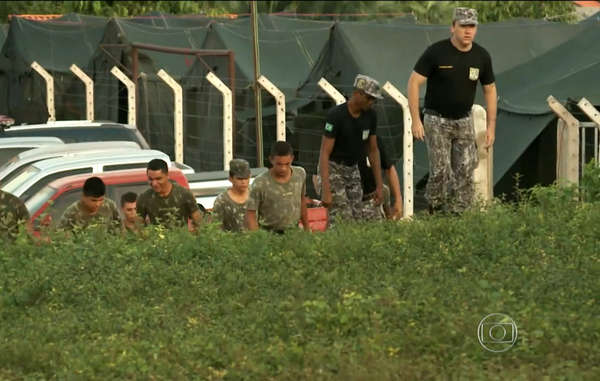
Rio police demonstrate (Rio Real)

Posted on February 26, 2014by 

On both sides of the field: preparedness is tantamount

Police in protesters' shoes

Police in protesters’ shoes

Commander Vidal Araújo

Commander Vidal Araújo, in fatigues

Rio’s Batalhão de Choque, the crowd control division of the state military police, today showed members of the foreign press an example of their daily training exercises, as Rio approaches the June-July World Cup.

Tool box

Tool box

Working in conjunction with police motorcyclists and helicopter imaging personnel, the “Shock Battalion” went through a hierarchy of responses, from negotiation via megaphone with leaders (which solves 90% of all such situations, according to commander André Luiz Araújo Vidal), to arrests (until recently, carried out by another division), to tear gas (colored smoke, not the real stuff). Rubber bullets weren’t used, though they have been in real street violence; after causing serious injuries, the bullets were shelved  last October. A water cannon is expected to be available by the time the ball starts getting kicked around.

Police on high

Police on high

In the act

In the act

Click here to watch a video of the helicopter imaging work, plus the “demonstration” at ground level.

Araújo Vidal said the Rio police have been adapting techniques and strategies shared by French and Spanish police.

Police coming off duty hammed up the part of demonstrators, even to the point of chanting the traditional Acordou, o gigante acordou, “The giant has awakened”. They threw empty water bottles at Battalion comrades in formation, then lit a tire and some trash in flames. The challenge of the uniformed police was to arrest those committing crimes, such as acts of vandalism, and disperse the protesters. Araújo Vidal emphasized that demonstrating is a right that Brazilians hold under the democratic regime.

Yellow for tear gas

Yellow for tear gas

More tools

Scary

Brazil’s Congress is currently working on a legislative response to the street violence of recent days, particularly the death of a Brazilian cameraman, hit by a firecracker that protesters allegedly threw.

Two hundred Shock Battalion troops will initially be at the ready during each upcoming demonstration, Araújo Vidal said, out of a total corps of 1,000. Martial arts techniques are used in making arrests, although the Rio police don’t call themselves ninjas, as do the São Paulo cops. During a Não vai ter Copa (There’ll be no World Cup) protest last weekend there, police arrested more than 200 people, including several journalists.

SONY DSC

At the ready

Neat formation

Kingpins

“We are concerned with journalists, we want them to use protective gear, and we ask them to stay behind our formation, both so they can see what’s being thrown at us and also for their own protection,” said Araújo Vidal.

Asked what impact last year’s Confederation Cup had on the Battalion’s plans, the commander said it was a laboratory for the World Cup and the 2016 Olympic Games. “We are learning every day,” he added.

SONY DSC

An update might be in order

SONY DSC

While the Rio police have upgraded their training and equipment, the Battalion headquarters, a century-old building, suffers from neglect. Plants grow out of cracks and the antique décor still glorifies militarism, something State Public Safety Secretary José Mariano Beltrame has been trying to downplay among military police since the 2008 rollout of Rio’s program to pacify at least 40 favelas before the Cup starts.

But then, this is the Batalhão de Choque.

SONY DSC

Meanwhile, the mood in Rio is unusually sour, with heat, prices and transportation knots top-of-mind for many cariocas. Those who are able to will leave the city over Carnival, which begins this Friday. Those who stay will seek the pleasures of the Momo King — or air conditioning.

Veterinária espanhola denuncia tráfico de orangotangos para prostituição (Brasília em Pauta)

Postado por Simone de Moraes 05:54:00 27/02/2014 

Crédito : Reprodução

A prostituição de orangotangos é uma prática comum em alguns países asiáticos, sendo que muitos destes animais são enclausurados e sofrem abusos sexuais contínuos de várias pessoas, de acordo com a veterinária espanhola Karmele Llano, que trabalha na Borneo Orangutan Survival (BOS).

Llano, que há oito anos denunciou os abusos sofridos, no Bornéu, de um orangotango de 12 anos, chamada Pony, diz que a prostituição de orangotangos é comum em locais com a Tailândia, por exemplo.

“O caso de Pony não é isolado. Sabemos que na Tailândia é frequente ver bordéis a usarem fêmeas de orangotango como diversão sexual para os clientes”, explicou Llano à revista Taringa.

De acordo com a associação Orangutan Conservancy, há apenas 20 mil orangotangos no mundo. A ONG explica que estes se poderão extinguir em apenas 10 anos, caso continuem a ocorrer casos como estes – ou, por exemplo, combates de boxe entre estes animais.

No caso de Pony, ela foi descoberta completamente depilada, perfumada e com os lábios pintados. O animal estava acorrentado a uma cama, para que os clientes do bordel, na vila de Keremgpangi, pudessem abusar dela – de acordo com Llano, tratam-se sobretudo de trabalhadores da indústria madeireira e extracção de óleo de palma.

Porém, estes casos não ocorrem apenas na Ásia. Segundo noticia o La Gaceta, este tipo de práticas são também recorrentes em países onde a legislação em matéria de protecção dos direitos dos animais é inexistente. Inclusive na Europa.

Segundo o espanhol diariomascota, na Alemanha a legislação não comtempla como ilegal a prática de sexo com animais. Existem, por isso, pequenos bordéis, na sua maioria clandestinos, que se dedicam a este tipo de clientes com inclinações zoófilas

Prostituição e extincão

Orangotangos são encontrados apenas na Ásia , Sumatra e Bornéu. De acordo com a Associação Americana de orangotango Conservancy, 20.000 é o número estimado no momento e eles podem estar extintos em 10 anos . 

De acordo com um relatório da Fundação Orangotango, esta é uma das mais graves ameaças à sua sobrevivência , junto com a sua venda como animais de estimação, o que alimenta ainda mais o grande contrabando desses animais . Um tráfego que vem , apesar dos controles , para a Europa, a partir de uma rota através do Oriente Médio. Orangotangos são importados de outros países da Ásia , especialmente Taiwan , onde são utilizados principalmente como animais de estimação por famílias ricas.

Acontece também na Europa

Apesar de entender essas práticas como incivilizado ou característica de países com menor desenvolvimento e legislação para a protecção dos direitos, tanto humanos como animais ou ambientais , em muitos casos, elas são inexistente. O fato é que estas práticas também são comuns na Europa, como denuncia a diariomascota web na Alemanha, “a legislação não cobre sexo ilegal com os animais, não se destina a violar qualquer lei ou que envolve os ataque contra eles. Não sendo punido , nenhuma pessoa pode enfrentar consequências legais para isso, então você poderia dizer que a manutenção e relações com os animais é permitida”.

Há também pequenos bordéis clandestino envolvidos em tais práticas. Os bordéis são centros “especializados” em clientes que têm tendências zoofílicas.

The March of Anthropogenic Climate Disruption (Truthout)

Monday, 24 February 2014 09:11

By Dahr JamailTruthout | News Analysis

The March of Anthropogenic Climate Disruption

(Image: Jared Rodriguez / Truthout)

Last year marked the 37th consecutive year of above-average global temperature, according to data from NASA.

The signs of advanced Anthropogenic Climate Disruption (ACD) are all around us, becoming ever more visible by the day.

At least for those choosing to pay attention.

An Abundance of Signs

While the causes of most of these signs cannot be solely attributed to ACD, the correlation of the increasing intensity and frequency of events to ACD is unmistakable.

Let’s take a closer look at a random sampling of some of the more recent signs.

Sao Paulo, South America’s largest city (over 12 million people), will see its biggest water-supply system run dry soon if there is no rain. Concurry, a town in Australia’s outback, is so dry after two rainless years that their mayor is now looking at permanent evacuation as a final possibility. Record temperatures in Australia have been so intense that in January, around 100,000 bats literally fell from the sky during an extreme heat wave.

A now-chronic drought in California, which is also one of the most important agricultural regions in the United States, has reached a new level of severity never before recorded on the US drought monitor in the state. In an effort to preserve what little water remained, state officials there recently announced they would cut off water that the state provides to local public water agencies that serve 25 million residents and about 750,000 acres of farmland. Another impact of the drought there has 17 communities about to run out of water. Leading scientists have discussed how California’s historic drought has been worsened by ACD, and a recent NASA report on the drought, by some measures the deepest in over a century, adds:

“The entire west coast of the United States is changing color as the deepest drought in more than a century unfolds. According to the US Dept. of Agriculture and NOAA, dry conditions have become extreme across more than 62% of California’s land area – and there is little relief in sight.

“Up and down California, from Oregon to Mexico, it’s dry as a bone,” comments JPL climatologst Bill Patzert. “To make matters worse, the snowpack in the water-storing Sierras is less than 20% of normal for this time of the year.”

“The drought is so bad, NASA satellites can see it from space. On Jan. 18, 2014 – just one day after California governor Jerry Brown declared a state of emergency – NASA’s Terra satellite snapped a sobering picture of the Sierra Nevada mountain range. Where thousands of square miles of white snowpack should have been, there was just bare dirt and rock.”

During a recent interview, a climate change scientist, while discussing ACD-induced drought plaguing the US Southwest, said that he had now become hesitant to use the word drought, because “the word drought implies that there is an ending.”

Meanwhile, New Mexico’s chronic drought is so severe the state’s two largest rivers are now regularly drying up. Summer 2013 saw the Rio Grande drying up only 18 miles south of Albuquerque, with the drying now likely to spread north and into the city itself. By September 2013, nearly half of the entire US was in moderate to extreme drought.

During a recent interview, a climate change scientist, while discussing ACD-induced drought plaguing the US Southwest, said that he had now become hesitant to use the word drought, because “the word drought implies that there is an ending.”

As if things aren’t already severe enough, the new report Hydraulic Fracturing and Water Stress: Water Demand by the Numbers shows that much of the oil and gas fracking activity in both the United States and Canada is happening in “arid, water stressed regions, creating significant long-term water sourcing risks” that will strongly and negatively impact the local ecosystem, communities and people living nearby.

The president of the organization that produced this report said, “Hydraulic fracturing is increasing competitive pressures for water in some of the country’s most water-stressed and drought-ridden regions. Barring stiffer water-use regulations and improved on-the-ground practices, the industry’s water needs in many regions are on a collision course with other water users, especially agriculture and municipal water use.”

Recent data from NASA shows that one billion people around the world now lack access to safe drinking water.  Last year at an international water conference in Abu Dhabi, the UAE’s Crown Prince Sheikh Mohammed bin Zayed al-Nahyan said: “For us, water is [now] more important than oil.” Experts now warn that the world is “standing on a precipice” when it comes to growing water scarcity.

Looking northward, Alaska, given its Arctic geo-proximity, regularly sees the signs of advanced ACD. According to a recent NASA report on the northernmost US state:

“The last half of January was one of the warmest winter periods in Alaska’s history, with temperatures as much as 40°F (22°C) above normal on some days in the central and western portions of the state, according to Weather Underground’s Christopher Bart. The all-time warmest January temperature ever observed in Alaska was tied on January 27 when the temperature peaked at 62°F (16.7°C) at Port Alsworth. Numerous other locations – including Nome, Denali Park Headquarters, Palmer, Homer, Alyseka, Seward, Talkeetna, and Kotzebue – all set January records. The combination of heat and rain has caused Alaska’s rivers to swell and brighten with sediment, creating satellite views reminiscent of spring and summer runoff.”

Another recent study published in The Cryosphere shows that Alaska’s Arctic icy lakes are losing their thickness and fewer are freezing all the way through to the bottom during winter. This should not come as a surprise, given that the reflective capacity of Arctic sea ice has is disappearing at twice the rate previously shown.

(Photo: Subhankar Banerjee)

Polar bear on Bernard Harbor, along the Beaufort Sea coast, Arctic Alaska, June 2001. (Photo: Subhankar Banerjee)

As aforementioned, science now shows that global temperatures are rising every year. In addition to this overall trend, we are now in the midst of a 28-year streak of summer records above the 20th century average.

In another indicator from the north, a new study by the UC Boulder Institute of Arctic and Alpine Research showed that average summer temperatures in the Eastern Canadian Arctic during the last 100 years are higher now than during any century in the past 44,000 years, and indications are that Canadian Arctic temperatures today have not been matched or exceeded for roughly 120,000 years. Research leader Gifford Miller added, “The key piece here is just how unprecedented the warming of Arctic Canada is. This study really says the warming we are seeing is outside any kind of known natural variability, and it has to be due to increased greenhouse gases in the atmosphere.”

As ACD progresses, weather patterns come to resemble a heart-rate chart for a heart in defibrillation. Hence, rather than uniform increases in drought or temperatures, we are experiencing haphazard chaotic extreme weather events all over the planet, and the only pattern we might safely assume to continue is an intensification of these events, in both strength and frequency.

Iran’s Lake Urmia, once the largest lake in the country, has shrunk to less than half its normal size, causing Iran to face a crisis of water supply. The situation is so dire, government officials are making contingency plans to ration water in Tehran, a city of 22 million. Iran’s President Hassan Rouhani has even named water as a “national security issue,” and when he gives public speeches in areas impacted by water shortages he is now promising residents he will “bring the water back.”

In other parts of the world, while water scarcity is heightening already strained caste tensions in India, the UK is experiencing the opposite problems with water. January rains brought parts of England their wettest January since records began more than 100 years ago. The UK’s Met Office reported before the end of that month that much of southern England and parts of the Midlands had already seen twice the average rainfall for January, and there were still three days left in the month. January flooding across the UK went on to surpass all 247 years of data on the books, spurring the chief scientist at Britain’s Met Office to say that “all the evidence” suggests that the extreme weather in the UK is linked to ACD.

Another part of the world facing a crisis from too much water is Fiji, where residents from a village facing rising sea levels that are flooding their farmlands and seeping into their homes are having to flee. The village is the first to have its people relocated under Fiji’s “climate change refugee” program.

More bad news comes from a recently published study showing that Earth’s vegetation could be saturated with carbon by the end of this century, and would thus cease acting as a break on ACD.

More bad news comes from a recently published study showing that Earth’s vegetation could be saturated with carbon by the end of this century, and would thus cease acting as a break on ACD. However, this study could be an under-estimate of the phenomenon, as it is based on a predicted 4C rise in global temperature by 2100, and other studies and modeling predict a 4C temperature increase far sooner. (The Hadley Centre for Meteorological Researchsuggests a 4C temperature increase by 2060. The Global Carbon Project, which monitors the global carbon cycle, and the Copenhagen Diagnosis, a climate science report, predict 6C and 7C temperature increases, respectively, by 2100. The UN Environment Program predicts up to a 5C increase by 2050.)

Whenever we reach the 4C increase, whether it is by 2050, or sooner, this shall mark the threshold at which terrestrial trees and plants are no longer able to soak up any more carbon from the atmosphere, and we will see an abrupt increase in atmospheric carbon, and an even further acceleration of ACD.

And it’s not just global weather events providing the signs. Other first-time phenomena abound as well.

For the first time, scientists have discovered species of Atlantic Ocean zooplankton reproducing in Arctic waters. German researchers say the discovery indicates a possible shift in the Arctic zooplankton community as the region warms, one that could be detrimental to Arctic birds, fish, and marine mammals.

Another study shows an increase in both the range and risk for malaria due to ACD, and cat parasites have even been found in Beluga whales in the Arctic, in addition to recently published research showing other diseases in seals and other Arctic life.

Distressing signs of ACD’s increasing decimation of life continue unabated. In addition to between 150-200 species going extinct daily, Monarch butterflies are now in danger of disappearing as well. Experts recently reported that the numbers of Monarch butterflies have dropped to their lowest levels since record-keeping began. At their peak, the butterflies covered an area of Mexican pine and fir forests of 44.5 acres. Now, after steep and persistent declines in the last three years, they only cover 1.65 acres. Extreme weather trends, illegal logging, and a dramatic reduction of the butterflies’ habitat are all to blame.

recently published study that spanned 27-years showed that ACD is “killing Argentina’s Magellanic penguin chicks.” Torrential rainstorms and extreme heat are killing the young birds in significant numbers.

Distressingly, the vast majority of these citations and studies are only from the last six weeks.

More Pollution, More Denial

Meanwhile, the polluting continues as global carbon emissions only continue to increase.

Another recent study shows that black carbon emissions in India and China could be two to three times more concentrated than previously estimated. Black carbon is a major element of soot, and comes from the incomplete combustion of fossil fuels. The study showed that parts of India and China could have as much as 130 percent higher black carbon concentrations than shown in standard country models.

India is now rated as having some of the worst air quality in the world, and is tied with China for exposing its population to hazardous air pollution.

Meanwhile, Australian government authorities recently approved a project that will dump dredged sediment near the Great Barrier Reef, a so-called World Heritage Site, to create one of the world’s largest coal ports.

Also on the front lines of the coal industry, miners now want to ignite deep coal seams to capture the gases created from the fires to use them for power generation. It’s called underground coal gasification, it is on deck for what comes next after the fracking blitz, and it is a good idea for those wishing to turn Earth into Venus.

Then we have BP’s “Energy Outlook” for the future, an annual report where the oil giant plots trends in global energy production and consumption. With this, we can expect nothing less than full steam ahead when it comes to vomiting as much carbon into the atmosphere in as short a time as possible.

BP CEO Bob Dudley announced at a January press conference that his company’s Outlook sees carbon emissions projected to rise “29% by 2035.”

Speaking of BP, the corporate-driven government of the United States continues to serve its masters well.

The US State Department recently released its environmental impact statement that found “no major climate impact” from a continuation in the construction of the Keystone XL pipeline, a pipeline that will transport tar sands oil – the dirtiest fossil fuel on Earth, produced by the most environmentally destructive fossil fuel extraction process ever known.

US President Barack Obama claims he has yet to make a decision on the pipeline, but we can guess what his decision shall be.

In late January, the US House Energy and Commerce Committee voted down an amendment that would have stated conclusively that ACD is occurring, despite recent evidence that ACD has literally shifted the jet stream, the main system that helps determine all of the weather in North America and Northern Europe. The 24 members of the committee who voted down the amendment, all of them Republicans and more overtly honest about who they are working for than is Obama, have accepted approximately $9.3 million in career contributions from the oil, gas, and coal industries.

Systemic problems require systemic solutions, and thinking the radical change necessary to preserve what life remains on the planet is possible without the complete removal of the system that is killing us, is futile.

The fact that the planet is most likely long past having gone over the cliff when it comes to passing the point of no returnregarding ACD is a fact most people prefer not to contemplate.

And who can blame them? The relentless onslaught of distress signals from the planet, coupled with the fact that the governments of the countries generating the most emissions are those marching lock-step with the fossil fuel industries are daunting, to say the least.

Oil, gas, and coal are the fuels the capitalist system uses to generate the all-important next quarterly profit on the road toward infinite growth, as required by the capitalist system.

Systemic problems require systemic solutions, and thinking the radical change necessary to preserve what life remains on the planet is possible without the complete removal of the system that is killing us, is futile.

Half measures, as we have seen all too often, avail us nothing.

Copyright, Truthout. May not be reprinted without permission.

Mudança climática já é parte dos modelos estratégicos centrais de empresas globais (Ecopolítica)

25/2/2014 – 11h55

por Sérgio Abranches, da Ecopolítica

mudancasclimaticas 300x209 Mudança climática já é parte dos modelos estratégicos centrais de empresas globais

As maiores empresas globais estão mudando de atitude com relação à mudança climática. Já incluíram a mudança climática como um fator de risco real em suas decisões. A maioria já avalia seu risco climático e desenvolve mecanismos de gestão desse risco. A primeira reação, havido sido a de negar sua existência ou a possibilidade de levá-la em consideração em seus cálculos e estratégias centrais. Depois, passaram a tratar a mudança climática como uma incerteza sobre a qual nada podiam fazer. Agora ela está no centro de suas decisões estratégicas.

Como se dá essa gestão de risco? Do mesmo modo que as empresas manejam seus riscos financeiros, econômicos, regulatórios e políticos. Tomam medidas preventivas, tentam se adaptar ao ambiente de risco, tornando-se mais resilientes, mudam suas estratégias para considerar o impacto possível desses riscos. Investem em pesquisa e desenvolvimento de novas tecnologias e métodos de operação que lhes permitam reduzir sua vulnerabilidade aos riscos.

Pesquisa revelou recentemente que 29 grandes empresas usam preço sombra para o carbono em seus modelos financeiros para avaliar o risco climático. O governo Obama também usa um preço para o carbono, um custo social do carbono, para orientar as decisões regulatórias da agência ambiental EPA, que fixou em US$ 36.00 a tonelada. A lei do ar limpo obriga a regulação a se basear em análise de custo-benefício e uma ordem executiva (espécie de decreto presidencial) regulamentou esse processo pelas agências, ficando a “filosofia regulatória do governo federal”, segundo a qual cada agência deve fazer estimativas que lhe permitam arrazoada determinação de que a regulação justifica seus custos.

Por que as empresas estão fazendo isso? Porque quando elas examinam o que os cenários de mudança climática mostram como futuro provável e verificam que alguns deles afetariam diretamente sua lucratividade. Eventos extremos cada vez mais frequentes, variabilidade climática imprevisível são fatores concretos de risco que rompem frequentemente as cadeias de suprimentos. Empresas, por exemplo, que dependem de água, já perderam muito com a escassez de água em várias regiões, com o aumento e a severidade da seca desde 2004 e com enchentes cada vez mais violentas, a cada dois anos. Empresas que usam algodão, no vestuário e na produção de equipamentos esportivos, ou milho e soja, para ração ou como matéria prima alimentar, estão em alerta após oito anos consecutivos de quebras de safra em vários países grandes produtores por causa de eventos climáticos extremos. E podemos estar entrando no nono ano em que essas perdas podem voltar a acontecer. Outro exemplo é o de empresas em áreas de de furacões e tornados, que estão ficando mais destrutivos. Esses eventos extremos reduzem a oferta de produtos agrícolas de que dependem, interrompendo as cadeias de suprimento e os fluxos logísticos (por causa de danos no sistema de transporte e interrupção do tráfego), elevando significativamente os custos de produção e, consequentemente, o preço final. Elas vêem o que está acontecendo como uma prévia dos extremos climáticos que vêm por aí.

O risco climático acendeu, definitivamente, uma forte luz amarela no painel de controle das maiores empresas globais. Tudo começou com as seguradoras, que já perderam muito com o pagamento de seguros por danos materiais associados a eventos climáticos extremos. Elas começaram a pressionar seus clientes para avaliar seu risco climático e tomar medidas a respeito. As empresas que não avaliam seus riscos têm dificuldade em comprar seguros ou devem pagar um prêmio proibitivo. Depois vieram os investidores que olham a mais longo prazo, como os fundos institucionais e os grandes fundos de pensão independentes. Também começaram a ameaçar retirar de seu portfólio as empresas que não avaliassem adequadamente seu risco climático e não o incorporassem ao seu bottom line, a linha que determina sua taxa de retorno. O risco climático é visto, hoje, como disruptivo das operações das empresas, danoso às suas taxas de retorno e passíveis de reduzir seu horizonte de vida rentável.

Por outro lado, do ponto de vista da equação financeira, as empresas já não têm dúvida de que o custo do carbono se imporá e aumentará, elevando, também, o custo da energia. Na última reunião do Fórum Econômico Mundial, houve uma sessão inteira, toda a sexta-feira, dedicada apenas à ameaça climática.

As práticas de gestão de risco das maiores empresas globais já estão contribuindo para a formação de um preço de carbono de mercado que, no futuro, pode vir a ser usado para calcular impostos sobre o carbono. Entre os economistas que colocaram a mudança climática em seu radar, já não há mais dúvidas sobre seu impacto econômico negativo e sobre o efeito econômico positivo das ações de gestão do risco climático, que aumentam o investimento em tecnologias e energias de baixo carbono ou carbono-zero. São as áreas de maior dinamismo da economia em várias países, e com melhores perspectivas de longo prazo, e geram mais e melhores empregos. Agora é uma questão de investir para reduzir os efeitos econômicos e financeiros e aumentar os benefícios decorrentes das mudanças que acabam tornando as empresas mais resilientes, mais competitivas e mais eficientes.

As empresas não estão ficando boazinhas. Falhas de mercado também têm impacto negativo sobre cadeias produtivas, cadeias de suprimento e cadeias logísticas. As grandes corporações globais continuam operando com a filosofia do interesse próprio e da ideologia empresarial do “lean and mean”, do tamanho ótimo e da máxima agressividade empresarial. É da natureza do animal e do seu ambiente, o capitalismo. Mas, quando algo de alto interesse coletivo atinge seus interesses particulares centrais, passa a ser problema delas e não apenas da sociedade. Elas preferem resolver o problema por conta própria a ter que enfrentar intervenções regulatórias cada vez mais exigentes.

* Publicado originalmente no site Ecopolítica.

Hurricane prediction: Real time forecast of Hurricane Sandy had track and intensity accuracy (Science Daily)

Date:

February 25, 2014

Source: Penn State

Summary: A real-time hurricane analysis and prediction system that effectively incorporates airborne Doppler radar information may accurately track the path, intensity and wind force in a hurricane, according to meteorologists. This system can also identify the sources of forecast uncertainty.

Zhang stated that the model predicted storm paths 50 mile accuracy four to five days ahead of landfall for Hurricane Sandy. “We also had accurate predictions of Sandy’s intensity.” Credit: NOAA/NASA

A real-time hurricane analysis and prediction system that effectively incorporates airborne Doppler radar information may accurately track the path, intensity and wind force in a hurricane, according to Penn State meteorologists. This system can also identify the sources of forecast uncertainty.

“For this particular study aircraft-based Doppler radar information was ingested into the system,” said Fuqing Zhang, professor of meteorology, Penn State. “Our predictions were comparable to or better than those made by operational global models.”

Zhang and Erin B. Munsell, graduate student in meteorology, used The Pennsylvania State University real-time convection-permitting hurricane analysis and forecasting system (WRF-EnKF) to analyze Hurricane Sandy. While Sandy made landfall on the New Jersey coast on the evening of Oct. 29, 2012, the analysis and forecast system began tracking on Oct. 21 and the Doppler radar data analyzed covers Oct. 26 through 28.

The researchers compared The WRF-EnKF predictions to the National Oceanic and Atmospheric Administration’s Global Forecast System (GFS) and the European Centre for Medium-Range Weather Forecasts (ECMWF). Besides the ability to effectively assimilate real-time Doppler radar information, the WRF-EnKF model also includes high-resolution cloud-permitting grids, which allow for the existence of individual clouds in the model.

“Our model predicted storm paths with 100 km — 50 mile — accuracy four to five days ahead of landfall for Hurricane Sandy,” said Zhang. “We also had accurate predictions of Sandy’s intensity.”

The WRF-EnKF model also runs 60 storm predictions simultaneously as an ensemble, each with slightly differing initial conditions. The program runs on NOAA’s dedicated computer, and the analysis was done on the Texas Advanced Computing Center computer because of the enormity of data collected.

To analyze the Hurricane Sandy forecast data, the researchers divided the 60 runs into groups — good, fair and poor. This approach was able to isolate uncertainties in the model initial conditions, which are most prevalent on Oct. 26, when 10 of the predictions suggested that Sandy would not make landfall at all. By looking at this portion of the model, Zhang suggests that the errors occur because of differences in the initial steering level winds in the tropics that Sandy was embedded in, instead of a mid-latitude trough — an area of relatively low atmospheric pressure — ahead of Sandy’s path.

“Though the mid-latitude system does not strongly influence the final position of Sandy, differences in the timing and location of its interactions with Sandy lead to considerable differences in rainfall forecasts, especially with respect to heavy precipitation over land,” the researchers report in a recent issue of the Journal of Advances in Modeling Earth Systems.

By two days before landfall, the WRF-EnKF model was accurately predicting the hurricane’s path with landfall in southern New Jersey, while the GFS model predicted a more northern landfall in New York and Connecticut, and the ECMWF model forecast landfall in northern New Jersey.

Hurricane Sandy is a good storm to analyze because its path was unusual among Atlantic tropical storms, which do not usually turn northwest into the mid-Atlantic or New England. While all three models did a fairly good job at predicting aspects of this hurricane, the WRF-EnKF model was very promising in predicting path, intensity and rainfall.

NOAA is currently evaluating the use of the WRF-EnKF system in storm prediction, and other researchers are using it to predict storm surge and risk analysis.

Journal Reference:

  1. Erin B. Munsell, Fuqing Zhang. Prediction and uncertainty of Hurricane Sandy (2012) explored through a real-time cloud-permitting ensemble analysis and forecast system assimilating airborne Doppler radar observationsJournal of Advances in Modeling Earth Systems, 2014; DOI: 10.1002/2013MS000297

Volcanoes contribute to recent global warming ‘hiatus’ (Science Daily)

Date: February 24, 2014

Source: DOE/Lawrence Livermore National Laboratory

Summary: Volcanic eruptions in the early part of the 21st century have cooled the planet, according to a new study. This cooling partly offset the warming produced by greenhouse gases.

LLNL scientist Benjamin Santer and his climbing group ascend Mt. St. Helens via the “Dogshead Route” in April 1980, about a month before its major eruption. The group was the last to reach the summit of Mt. St. Helens before its major eruption that May. New research by Santer and his colleagues shows that volcanic eruptions contribute to a recent warming “hiatus.” Credit: Image courtesy of DOE/Lawrence Livermore National Laboratory

Volcanic eruptions in the early part of the 21st century have cooled the planet, according to a study led by Lawrence Livermore National Laboratory. This cooling partly offset the warming produced by greenhouse gases.

Despite continuing increases in atmospheric levels of greenhouse gases, and in the total heat content of the ocean, global-mean temperatures at the surface of the planet and in the troposphere (the lowest portion of Earth’s atmosphere) have shown relatively little warming since 1998. This so-called ‘slow-down’ or ‘hiatus’ has received considerable scientific, political and popular attention. The volcanic contribution to the ‘slow-down’ is the subject of a new paper appearing in the Feb. 23 edition of the journalNature Geoscience.

Volcanic eruptions inject sulfur dioxide gas into the atmosphere. If the eruptions are large enough to add sulfur dioxide to the stratosphere (the atmospheric layer above the troposphere), the gas forms tiny droplets of sulfuric acid, also known as “volcanic aerosols.” These droplets reflect some portion of the incoming sunlight back into space, cooling Earth’s surface and the lower atmosphere.

“In the last decade, the amount of volcanic aerosol in the stratosphere has increased, so more sunlight is being reflected back into space,” said Lawrence Livermore climate scientist Benjamin Santer, who serves as lead author of the study. “This has created a natural cooling of the planet and has partly offset the increase in surface and atmospheric temperatures due to human influence.”

From 2000-2012, emissions of greenhouse gases into the atmosphere have increased — as they have done since the Industrial Revolution. This human-induced change typically causes the troposphere to warm and the stratosphere to cool. In contrast, large volcanic eruptions cool the troposphere and warm the stratosphere. The researchers report that early 21st century volcanic eruptions have contributed to this recent “warming hiatus,” and that most climate models have not accurately accounted for this effect.

“The recent slow-down in observed surface and tropospheric warming is a fascinating detective story,” Santer said. “There is not a single culprit, as some scientists have claimed. Multiple factors are implicated. One is the temporary cooling effect of internal climate noise. Other factors are the external cooling influences of 21st century volcanic activity, an unusually low and long minimum in the last solar cycle, and an uptick in Chinese emissions of sulfur dioxide.

“The real scientific challenge is to obtain hard quantitative estimates of the contributions of each of these factors to the slow-down.”

The researchers performed two different statistical tests to determine whether recent volcanic eruptions have cooling effects that can be distinguished from the intrinsic variability of the climate. The team found evidence for significant correlations between volcanic aerosol observations and satellite-based estimates of lower tropospheric temperatures as well as the sunlight reflected back to space by the aerosol particles.

“This is the most comprehensive observational evaluation of the role of volcanic activity on climate in the early part of the 21st century,” said co-author Susan Solomon, the Ellen Swallow Richards professor of atmospheric chemistry and climate science at MIT. “We assess the contributions of volcanoes on temperatures in the troposphere — the lowest layer of the atmosphere — and find they’ve certainly played some role in keeping Earth cooler.”

The research is funded by the Department of Energy’s Office of Biological and Environmental Science in the Office of Science. The research involved a large, interdisciplinary team of researchers with expertise in climate modeling, satellite data, stratospheric dynamics and volcanic effects on climate, model evaluation and computer science.

Journal Reference:

  1. Benjamin D. Santer, Céline Bonfils, Jeffrey F. Painter, Mark D. Zelinka, Carl Mears, Susan Solomon, Gavin A. Schmidt, John C. Fyfe, Jason N. S. Cole, Larissa Nazarenko, Karl E. Taylor, Frank J. Wentz. Volcanic contribution to decadal changes in tropospheric temperatureNature Geoscience, 2014; DOI:10.1038/ngeo2098

New research helps explain how social understanding is performed by the brain (Science Daily)

Date:

February 24, 2014

Source: Aarhus University

Summary: An important question has been answered about how social understanding is performed in the brain. The findings may help us to attain a better understanding of why people with autism and schizophrenia have difficulties with social interaction. Using magnetic stimulation to temporarily disrupt normal processing of the areas of the human brain involved in the production of actions of human participants, it is demonstrated that these areas are also involved in the understanding of actions. The study is the first to demonstrate a clear causal effect, whereas earlier studies primarily have looked at correlations, which are difficult to interpret.

A new study from Aarhus University, Denmark, helps us understand why people with autism and schizophrenia have difficulties with social interaction. Credit: © styleuneed / Fotolia

In a study to be published in Psychological Science, researchers from Aarhus University and the University of Copenhagen demonstrate that brain cells in what is called the mirror system help people make sense of the actions they see other people perform in everyday life.

Using magnetic stimulation to temporarily disrupt normal processing of the areas of the human brain involved in the production of actions of human participants, it is demonstrated that these areas are also involved in the understanding of actions. The study is the first to demonstrate a clear causal effect, whereas earlier studies primarily have looked at correlations, which are difficult to interpret.

One of the researchers, John Michael, explains the process: “There has been a great deal of hype about the mirror system, and now we have performed an experiment that finally provides clear and straightforward evidence that the mirror system serves to help people make sense of others’ actions,” says John Michael.

Understanding autism and schizophrenia

The study shows that there are areas of the brain that are involved in the production of actions. And the researchers found evidence that these areas contribute to understanding others’ actions. This means that the same areas are involved in producing actions and understanding others’ actions. This helps us in everyday life, but it also holds great potential when trying to understand why people with autism and schizophrenia have difficulties with social interaction.

“Attaining knowledge of the processes underlying social understanding in people in general is an important part of the process of attaining knowledge of the underlying causes of the difficulties that some people diagnosed with autism and schizophrenia experience in sustaining social understanding. But it is important to emphasize that this is just one piece of the puzzle.”

“The findings may be interesting to therapists and psychiatrists who work with patients with schizophrenia or autism, or even to educational researchers,” adds John Michael.

Facts about the empirical basis

The participants (20 adults) came to the lab three times. They were given brain scans on the first visit. On the second and third, they received stimulation to their motor system and then performed a typical psychological task in which they watched brief videos of actors pantomiming actions (about 250 videos each time). After each video they had to choose a picture of an object that matched the pantomimed video. For example, a hammer was the correct answer for the video of an actor pretending to hammer.

This task was intended to gauge their understanding of the observed actions. The researchers found that the stimulation interfered with their performance of this task.

Innovative method

The researchers used an innovative technique for magnetically stimulating highly specific brain areas in order to temporarily disrupt normal processing in those areas. The reason for using this technique (called continuous theta-burst stimulation) in general is that it makes it possible to determine which brain areas perform which functions. For example, if you stimulate (and thus temporarily impair) area A, and the participants subsequently have difficulty with some specific task (task T), then you can infer that area A usually performs task T. The effect goes away after 20 minutes, so this is a harmless and widely applicable way to identify which tasks are performed by which areas.

With continuous theta-burst stimulation, you can actually determine that the activation of A contributes as a cause to people performing T. This method thus promises to be of great use to neuroscientists in the coming years.

Journal Reference:

  1. J. Michael, K. Sandberg, J. Skewes, T. Wolf, J. Blicher, M. Overgaard, C. D. Frith.Continuous Theta-Burst Stimulation Demonstrates a Causal Role of Premotor Homunculus in Action UnderstandingPsychological Science, 2014; DOI: 10.1177/0956797613520608

In the eye of a chicken, a new state of matter comes into view (Science Daily)

Date: February 24, 2014

Source: Princeton University

Summary: Along with eggs, soup and rubber toys, the list of the chicken’s most lasting legacies may eventually include advanced materials, according to scientists. The researchers report that the unusual arrangement of cells in a chicken’s eye constitutes the first known biological occurrence of a potentially new state of matter known as ‘disordered hyperuniformity,’ which has been shown to have unique physical properties.

Researchers from Princeton University and Washington University in St. Louis report that the unusual arrangement of cells in a chicken’s eye … Credit: Courtesy of Joseph Corbo and Timothy Lau, Washington University in St. Louis

Along with eggs, soup and rubber toys, the list of the chicken’s most lasting legacies may eventually include advanced materials such as self-organizing colloids, or optics that can transmit light with the efficiency of a crystal and the flexibility of a liquid.

The unusual arrangement of cells in a chicken’s eye constitutes the first known biological occurrence of a potentially new state of matter known as “disordered hyperuniformity,” according to researchers from Princeton University and Washington University in St. Louis. Research in the past decade has shown that disordered hyperuniform materials have unique properties when it comes to transmitting and controlling light waves, the researchers report in the journal Physical Review E.

States of disordered hyperuniformity behave like crystal and liquid states of matter, exhibiting order over large distances and disorder over small distances. Like crystals, these states greatly suppress variations in the density of particles — as in the individual granules of a substance — across large spatial distances so that the arrangement is highly uniform. At the same time, disordered hyperuniform systems are similar to liquids in that they have the same physical properties in all directions. Combined, these characteristics mean that hyperuniform optical circuits, light detectors and other materials could be controlled to be sensitive or impervious to certain light wavelengths, the researchers report.

“Disordered hyperuniform materials possess a hidden order,” explained co-corresponding author Salvatore Torquato, a Princeton professor of chemistry. It was Torquato who, with Frank Stillinger, a senior scientist in Princeton’s chemistry department, first identified hyperuniformity in a 2003 paper in Physical Review E.

“We’ve since discovered that such physical systems are endowed with exotic physical properties and therefore have novel capabilities,” Torquato said. “The more we learn about these special disordered systems, the more we find that they really should be considered a new distinguishable state of matter.”

The researchers studied the light-sensitive cells known as cones that are in the eyes of chickens and most other birds active in daytime. These birds have four types of cones for color — violet, blue, green and red — and one type for detecting light levels, and each cone type is a different size. The cones are packed into a single epithelial, or tissue, layer called the retina. Yet, they are not arranged in the usual way, the researchers report.

In many creatures’ eyes, visual cells are evenly distributed in an obvious pattern such as the familiar hexagonal compact eyes of insects. In many creatures, the different types of cones are laid out so that they are not near cones of the same type. At first glance, however, the chicken eye appears to have a scattershot of cones distributed in no particular order.

The lab of co-corresponding author Joseph Corbo, an associate professor of pathology and immunology, and genetics at Washington University in St. Louis, studies how the chicken’s unusual visual layout evolved. Thinking that perhaps it had something to do with how the cones are packed into such a small space, Corbo approached Torquato, whose group studies the geometry and dynamics of densely packed objects such as particles.

Torquato then worked with the paper’s first author Yang Jiao, who received his Ph.D. in mechanical and aerospace engineering from Princeton in 2010 and is now an assistant professor of materials science and engineering at Arizona State University. Torquato and Jiao developed a computer-simulation model that went beyond standard packing algorithms to mimic the final arrangement of chicken cones and allowed them to see the underlying method to the madness.

It turned out that each type of cone has an area around it called an “exclusion region” that other cones cannot enter. Cones of the same type shut out each other more than they do unlike cones, and this variant exclusion causes distinctive cone patterns. Each type of cone’s pattern overlays the pattern of another cone so that the formations are intertwined in an organized but disordered way — a kind of uniform disarray. So, while it appeared that the cones were irregularly placed, their distribution was actually uniform over large distances. That’s disordered hyperuniformity, Torquato said.

“Because the cones are of different sizes it’s not easy for the system to go into a crystal or ordered state,” Torquato said. “The system is frustrated from finding what might be the optimal solution, which would be the typical ordered arrangement. While the pattern must be disordered, it must also be as uniform as possible. Thus, disordered hyperuniformity is an excellent solution.”

The researchers’ findings add a new dimension called multi-hyperuniformity. This means that the elements that make up the arrangement are themselves hyperuniform. While individual cones of the same type appear to be unconnected, they are actually subtly linked by exclusion regions, which they use to self-organize into patterns. Multi-hyperuniformity is crucial for the avian system to evenly sample incoming light, Torquato said. He and his co-authors speculate that this behavior could provide a basis for developing materials that can self-assemble into a disordered hyperuniform state.

“You also can think of each one of these five different visual cones as hyperuniform,” Torquato said. “If I gave you the avian system with these cones and removed the red, it’s still hyperuniform. Now, let’s remove the blue — what remains is still hyperuniform. That’s never been seen in any system, physical or biological. If you had asked me to recreate this arrangement before I saw this data I might have initially said that it would be very difficult to do.”

The discovery of hyperuniformity in a biological system could mean that the state is more common than previously thought, said Remi Dreyfus, a researcher at the Pennsylvania-based Complex Assemblies of Soft Matter lab (COMPASS) co-run by the University of Pennsylvania, the French National Centre for Scientific Research and the French chemical company Solvay. Previously, disordered hyperuniformity had only been observed in specialized physical systems such as liquid helium, simple plasmas and densely packed granules.

“It really looks like this idea of hyperuniformity, which started from a theoretical basis, is extremely general and that we can find them in many places,” said Dreyfus, who is familiar with the research but had no role in it. “I think more and more people will look back at their data and figure out whether there is hyperuniformity or not. They will find this kind of hyperuniformity is more common in many physical and biological systems.”

The findings also provide researchers with a detailed natural model that could be useful in efforts to construct hyperuniform systems and technologies, Dreyfus said. “Nature has found a way to make multi-hyperuniformity,” he said. “Now you can take the cue from what nature has found to create a multi-hyperuniform pattern if you intend to.”

Evolutionarily speaking, the researchers’ results show that nature found a unique workaround to the problem of cramming all those cones into the compact avian eye, Corbo said. The ordered pattern of cells in most other animals’ eyes are thought to be the “optimal” arrangement, and anything less would result in impaired vision. Yet, birds with the arrangement studied here — including chickens — have impeccable vision, Corbo said.

“These findings are significant because they suggest that the arrangement of photoreceptors in the bird, although not perfectly regular, are, in fact, as regular as they can be given the packing constraints in the epithelium,” Corbo said.

“This result indicates that evolution has driven the system to the ‘optimal’ arrangement possible, given these constraints,” he said. “We still know nothing about the cellular and molecular mechanisms that underlie this beautiful and highly organized arrangement in birds. So, future research directions will include efforts to decipher how these patterns develop in the embryo.”

The paper, “Avian photoreceptor patterns represent a disordered hyperuniform solution to a multiscale packing problem,” was published Feb. 24 in Physical Review E. The work was supported by grants from the National Science Foundation (grant no. DMS-1211087), National Cancer Institute (grant no. U54CA143803); the National Institutes of Health (grant nos. EY018826, HG006346 and HG006790); the Human Frontier Science Program; the German Research Foundation (DFG); and the Simons Foundation (grant no. 231015).

Journal Reference:

  1. J. T. Miller, A. Lazarus, B. Audoly, P. M. Reis. Shapes of a Suspended Curly HairPhysical Review Letters, 2014; 112 (6) DOI:10.1103/PhysRevLett.112.068103

New ideas change your brain cells, research shows (Science Daily)

Date: 

February 24, 2014

Source: University of British Columbia

Summary: An important molecular change has been discovered that occurs in the brain when we learn and remember. The research shows that learning stimulates our brain cells in a manner that causes a small fatty acid to attach to delta-catenin, a protein in the brain. This biochemical modification is essential in producing the changes in brain cell connectivity associated with learning, the study finds. Findings may provide an explanation for some mental disabilities, the researchers say.

UBC’s Shernaz Bamji and Stefano Brigidi have discovered how brain cells change during learning and memories. Credit: UBC

A new University of British Columbia study identifies an important molecular change that occurs in the brain when we learn and remember.

Published this month in Nature Neuroscience, the research shows that learning stimulates our brain cells in a manner that causes a small fatty acid to attach to delta-catenin, a protein in the brain. This biochemical modification is essential in producing the changes in brain cell connectivity associated with learning, the study finds.

In animal models, the scientists found almost twice the amount of modified delta-catenin in the brain after learning about new environments. While delta-catenin has previously been linked to learning, this study is the first to describe the protein’s role in the molecular mechanism behind memory formation.

“More work is needed, but this discovery gives us a much better understanding of the tools our brains use to learn and remember, and provides insight into how these processes become disrupted in neurological diseases,” says co-author Shernaz Bamji, an associate professor in UBC’s Life Sciences Institute.

It may also provide an explanation for some mental disabilities, the researchers say. People born without the gene have a severe form of mental retardation called Cri-du-chat syndrome, a rare genetic disorder named for the high-pitched cat-like cry of affected infants. Disruption of the delta-catenin gene has also been observed in some patients with schizophrenia.

“Brain activity can change both the structure of this protein, as well as its function,” says Stefano Brigidi, first author of the article and a PhD candidate Bamji’s laboratory. “When we introduced a mutation that blocked the biochemical modification that occurs in healthy subjects, we abolished the structural changes in brain’s cells that are known to be important for memory formation.”

Journal Reference:

  1. G Stefano Brigidi, Yu Sun, Dayne Beccano-Kelly, Kimberley Pitman, Mahsan Mobasser, Stephanie L Borgland, Austen J Milnerwood, Shernaz X Bamji.Palmitoylation of δ-catenin by DHHC5 mediates activity-induced synapse plasticityNature Neuroscience, 2014; DOI: 10.1038/nn.3657

What Alexander The Great Teaches Brazil About Inequality (Worldcrunch)

Eduardo Giannetti (2014-02-21) Article illustrative image

In Parque do Gato, favela life for Brazil’s huge underclass

For the Greek philosopher Diogenes, self-control and self-sufficiency were the essential values. He lived a life with no possessions, except for a cloak, a purse and a barrel made out of clay in which he would sleep.

Intrigued, the emperor Alexander The Great went to visit him. “I’m the most powerful man in the world. Ask what you want and I will give it to you.” Diogenes did not falter: “Yes. Step out of my light, you’re blocking the sun.”

The philosopher and the Emperor are examples of the extreme, and have been used to illustrate Socrates’s theory that, among mortals, those with the fewer possessions are those closest to the gods.

Alexander, a former pupil and patron of Aristotle’s, learned his lesson. When one of his courtiers mocked the philosopher for “turning down” the offer that was put to him, the Emperor replied: “If I were not Alexander, I would like to be Diogenes.” Extremes share much in common.

And so from an ethical point of view, what is wrong with inequality? Our ancient example reminds us that inequality is not bad in itself. What matters instead is the legitimacy of the process that may create it.

The justice — or lack thereof — of the end result depends on the means that brought us there. The crucial question therefore should be: Is the observed inequality essentially a reflection of the difference in talents, efforts and values, or is it the result of a game that was rigged to begin with. In other words, does the disparity come from a deep lack of equity in the initial conditions of life, of the deprivation of basic rights and/or of racial, sexual or religious discrimination?

Billions (and billions) wasted

In the last 20 years, Brazil has made real progress thanks to achievement of economic stability and policies of social inclusion. Still, despite that, the country remains one of the most unequal on the planet. As far as income distribution is concerned, Brazil is the second worst in the G20, the fourth in Latin America and the 12th in the world.

But we must not confuse the symptom with the virus. Brazil’s poor income distribution is the fruit of a grave anomaly: the brutal disparity in the initial conditions of life as well as in the opportunities for young children and teenagers to develop according to their abilities and talents, which would allow them to widen their range of possible choices and more often realize dreams for their future.

Brazil’s “new middle class” gained access to consumption, but not to true civic goods. In the 21st century, half of the population has no sewer system, public education and health are in an appalling state, public transport is a daily nightmare for commuters, about 5% of all deaths — mostly of the poor, the young and black people — are homicides. Finally, one-third of those who have left superior education (if the term actually applies) are functional illiterates.

This doesn’t seem due to a lack of resources, or at least, there is no shortage of resources when the government spends $4.5 billion on Swedish fighter jets, or when it finances the construction of football stadiums for the World Cup, or when it plans to build a bullet-train for $16.7 billion, or $6.7 billion on nuclear submarines. The total amount of subsidies granted by the Brazilian Development Bank (BNDES) to a selected group of partners and companies surpasses the amount spent in the whole Family Allowance welfare program.

No, what is lacking here is simply common sense!

Brazil will continue being a violent and absurdly unjust country, put to shame by its inequality, for as long as the conditions of the family in which a child has the good or bad luck to be born plays the overriding role in defining his future.

Human diversity gave us Diogenes and Alexander The Great. But the lack of a minimum of equity in the initial conditions of life limits greatly the room for choice, rigs the game of income distribution and poisons our society.

Inequality in opportunity to succeed, I dare to believe, is the root of what’s wrong with Brazil.

*Eduardo Giannetti is an economist, lecturer at Cambridge University and writer.

Read the full article: What Alexander The Great Teaches Brazil About Inequality – All News Is Global
Worldcrunch – top stories from the world’s best news sources

People tend to blame fate when faced with a hard decision (Science Daily)

Date: February 19, 2014

Source: Association for Psychological Science

Summary: We tend to deal with difficult decisions by shifting responsibility for the decision to fate, according to new research. Life is full of decisions. Some, like what to eat for breakfast, are relatively easy. Others, like whether to move cities for a new job, are quite a bit more difficult. Difficult decisions tend to make us feel stressed and uncomfortable — we don’t want to feel responsible if the outcome is less than desirable. New research suggests that we deal with such difficult decisions by shifting responsibility for the decision to fate.

Life is full of decisions. Some, like what to eat for breakfast, are relatively easy. Others, like whether to move cities for a new job, are quite a bit more difficult. Difficult decisions tend to make us feel stressed and uncomfortable — we don’t want to feel responsible if the outcome is less than desirable. New research suggests that we deal with such difficult decisions by shifting responsibility for the decision to fate.

The findings are published in Psychological Science, a journal of the Association for Psychological Science.

“Fate is a ubiquitous supernatural belief, spanning time and place,” write researchers Aaron Kay, Simone Tang, and Steven Shepherd of Duke University. “It exerts a range of positive and negative effects on health, coping, and both action and inaction.”

Kay, Tang, and Shepherd hypothesized that people may invoke fate as a way of assuaging their own stress and fears — a way of saying “It’s out of my hands now, there’s nothing I can do.”

“Belief in fate, defined as the belief that whatever happens was supposed to happen and that outcomes are ultimately predetermined, may be especially useful when one is facing these types of difficult decisions,” they explain.

To test their hypothesis, the researchers capitalized on a current event of considerable significance: the 2012 U.S. presidential election.

They conducted an online survey with 189 participants and found that the greater difficulty participants reported in choosing between Obama and Romney (e.g., “both candidates seem equally good,” “I am not sure how to compare the candidates’ plans”), the more likely they were to believe in fate (e.g., “Fate will make sure that the candidate that eventually gets elected is the right one”).

In a second online survey, the researchers actually manipulated participants’ decision difficulty by making it harder to distinguish between the candidates.

Participants read real policy statements from the two presidential candidates — some read quotes from the candidates that emphasized the similarities in their policy positions, others read quotes that emphasized the differences.

As predicted, participants who read statements that highlighted similarities viewed the decision between the candidates as more difficult and reported greater belief in fate than the participants that read statements focused on differences.

“The two studies presented here provide consistent and converging evidence that decision difficulty can motivate increased belief in fate,” write Kay and colleagues.

The researchers note that these findings raise additional questions that still need to be answered.

For example, do people invoke fate when they have to make decisions that are personally but not societally significant, such as where to invest money? And are we just as likely to invoke luck or other supernatural worldviews when faced with a difficult decision?

“Belief in fate may ease the psychological burden of a difficult decision, but whether that comes at the cost of short-circuiting an effective decision-making process is an important question for future research,” the researchers conclude.

Journal Reference:

  1. S. Tang, S. Shepherd, A. C. Kay. Do Difficult Decisions Motivate Belief in Fate? A Test in the Context of the 2012 U.S. Presidential Election.Psychological Science, 2014; DOI: 10.1177/0956797613519448

Better way to make sense of ‘Big Data?’ (Science Daily)

Date:  February 19, 2014

Source: Society for Industrial and Applied Mathematics

Summary: Vast amounts of data related to climate change are being compiled by researchers worldwide with varying climate projections. This requires combining information across data sets to arrive at a consensus regarding future climate estimates. Scientists propose a statistical hierarchical Bayesian model that consolidates climate change information from observation-based data sets and climate models.

Regional analysis for climate change assessment. Credit: Melissa Bukovsky, National Center for Atmospheric Research (NCAR/IMAGe)

Vast amounts of data related to climate change are being compiled by research groups all over the world. Data from these many and varied sources results in different climate projections; hence, the need arises to combine information across data sets to arrive at a consensus regarding future climate estimates.

In a paper published last December in the SIAM Journal on Uncertainty Quantification, authors Matthew Heaton, Tamara Greasby, and Stephan Sain propose a statistical hierarchical Bayesian model that consolidates climate change information from observation-based data sets and climate models. “The vast array of climate data — from reconstructions of historic temperatures and modern observational temperature measurements to climate model projections of future climate — seems to agree that global temperatures are changing,” says author Matthew Heaton. “Where these data sources disagree, however, is by how much temperatures have changed and are expected to change in the future. Our research seeks to combine many different sources of climate data, in a statistically rigorous way, to determine a consensus on how much temperatures are changing.” Using a hierarchical model, the authors combine information from these various sources to obtain an ensemble estimate of current and future climate along with an associated measure of uncertainty. “Each climate data source provides us with an estimate of how much temperatures are changing. But, each data source also has a degree of uncertainty in its climate projection,” says Heaton. “Statistical modeling is a tool to not only get a consensus estimate of temperature change but also an estimate of our uncertainty about this temperature change.” The approach proposed in the paper combines information from observation-based data, general circulation models (GCMs) and regional climate models (RCMs). Observation-based data sets, which focus mainly on local and regional climate, are obtained by taking raw climate measurements from weather stations and applying it to a grid defined over the globe. This allows the final data product to provide an aggregate measure of climate rather than be restricted to individual weather data sets. Such data sets are restricted to current and historical time periods. Another source of information related to observation-based data sets are reanalysis data sets in which numerical model forecasts and weather station observations are combined into a single gridded reconstruction of climate over the globe. GCMs are computer models which capture physical processes governing the atmosphere and oceans to simulate the response of temperature, precipitation, and other meteorological variables in different scenarios. While a GCM portrayal of temperature would not be accurate to a given day, these models give fairly good estimates for long-term average temperatures, such as 30-year periods, which closely match observed data. A big advantage of GCMs over observed and reanalyzed data is that GCMs are able to simulate climate systems in the future. RCMs are used to simulate climate over a specific region, as opposed to global simulations created by GCMs. Since climate in a specific region is affected by the rest of Earth, atmospheric conditions such as temperature and moisture at the region’s boundary are estimated by using other sources such as GCMs or reanalysis data. By combining information from multiple observation-based data sets, GCMs and RCMs, the model obtains an estimate and measure of uncertainty for the average temperature, temporal trend, as well as the variability of seasonal average temperatures. The model was used to analyze average summer and winter temperatures for the Pacific Southwest, Prairie and North Atlantic regions (seen in the image above) — regions that represent three distinct climates. The assumption would be that climate models would behave differently for each of these regions. Data from each region was considered individually so that the model could be fit to each region separately. “Our understanding of how much temperatures are changing is reflected in all the data available to us,” says Heaton. “For example, one data source might suggest that temperatures are increasing by 2 degrees Celsius while another source suggests temperatures are increasing by 4 degrees. So, do we believe a 2-degree increase or a 4-degree increase? The answer is probably ‘neither’ because combining data sources together suggests that increases would likely be somewhere between 2 and 4 degrees. The point is that that no single data source has all the answers. And, only by combining many different sources of climate data are we really able to quantify how much we think temperatures are changing.” While most previous such work focuses on mean or average values, the authors in this paper acknowledge that climate in the broader sense encompasses variations between years, trends, averages and extreme events. Hence the hierarchical Bayesian model used here simultaneously considers the average, linear trend and interannual variability (variation between years). Many previous models also assume independence between climate models, whereas this paper accounts for commonalities shared by various models — such as physical equations or fluid dynamics — and correlates between data sets. “While our work is a good first step in combining many different sources of climate information, we still fall short in that we still leave out many viable sources of climate information,” says Heaton. “Furthermore, our work focuses on increases/decreases in temperatures, but similar analyses are needed to estimate consensus changes in other meteorological variables such as precipitation. Finally, we hope to expand our analysis from regional temperatures (say, over just a portion of the U.S.) to global temperatures.”
 
Journal Reference:

  1. Matthew J. Heaton, Tamara A. Greasby, Stephan R. Sain. Modeling Uncertainty in Climate Using Ensembles of Regional and Global Climate Models and Multiple Observation-Based Data SetsSIAM/ASA Journal on Uncertainty Quantification, 2013; 1 (1): 535 DOI: 10.1137/12088505X