Arquivo da tag: Violência

A Thousand Kinds of Life: Culture, Nature, and Anthropology (Dissent)

Yanomami villagers at an indigenous expo in Caracas (Luigino Bracci, 2011, Flickr creative commons)

By David Moberg – March 21, 2013

In the latest twist in an unusually public academic dispute, one of the world’s most influential and highly regarded anthropologists resigned in protest from the prestigious National Academy of Sciences in late February. In quitting the academy, Marshall Sahlins took aim in part at the work of fellow anthropologist Napoleon Chagnon, whose contentious memoir, Noble Savages: My Life Among Two Dangerous Tribes—The Yanamamö and the Anthropologists, was recently published by Simon & Schuster. But his action is also a skirmish in a much longer and very important debate over what it means to be human—a debate with consequences for the broader public discussion.

Sahlins, the Charles F. Grey Distinguished Service Professor Emeritus of Anthropology at the University of Chicago, said that he was leaving the 150-year-old academy for two reasons: the election of Chagnon to the NAS last year and the involvement of the NAS in research for the military. His action prompted an outpouring of petitions and statements of support from colleagues, including several hundred in Brazil.

The academy says that principled resignations like Sahlins’ are “rare”—so rare that the only precedent anyone could identify was famed Harvard biologist and geneticist Richard Lewontin’s 1971 departure in protest against NAS military work related to the war in Vietnam. In the 1960s Sahlins himself was helping to launch campus teach-ins against the Vietnam War and to raise issues about the relationship of anthropology to the military.

Sahlins initially tried to resign last year in May, after Chagnon was named to the NAS, then again in October, when he received a request sent to all eighty-four anthropologists at the academy for advice on two research projects aimed at making the military more effective. The request arrived at a time when a controversy was already smoldering in the field about anthropologists’ involvement in implementing the Human Terrain Systems counterinsurgency strategy in Iraq (the October request for help appears unrelated to HTS). The academy had indirectly been involved in military research since the allied National Research Council was established in 1916 specifically for military research. But Sahlins objected to any NAS involvement in projects such as the two proposed in October. One focused on “contextual factors that influence individual and small unit behavior,” and the other sought scientifically valid methods, including any suggested by neuroscience, for improving individual and group military performance.

The publication of Chagnon’s memoirs prompted a third, successful attempt at resignation. Sahlins had objected to the NAS admitting Chagnon—formerly at the Universities of Michigan and of California at Santa Barbara, now at the University of Missouri—because of the quality of his research and his ethics in the field. Sahlins is also critical of both the theoretical and empirical underpinnings of sociobiology, more often referred to now as evolutionary psychology. A minority of anthropologists adopt its viewpoint. But many non-anthropologists—such as Richard Dawkins, Stephen Pinker, and Jared Diamond—have used the work of Chagnon and like-minded anthropologists to reach a large audience.

Fundamentally, this group of writers and researchers see biology as destiny. They argue that biological evolution defines human nature through the inheritance of traits that provide individuals with a reproductive advantage—that is, with more offspring.

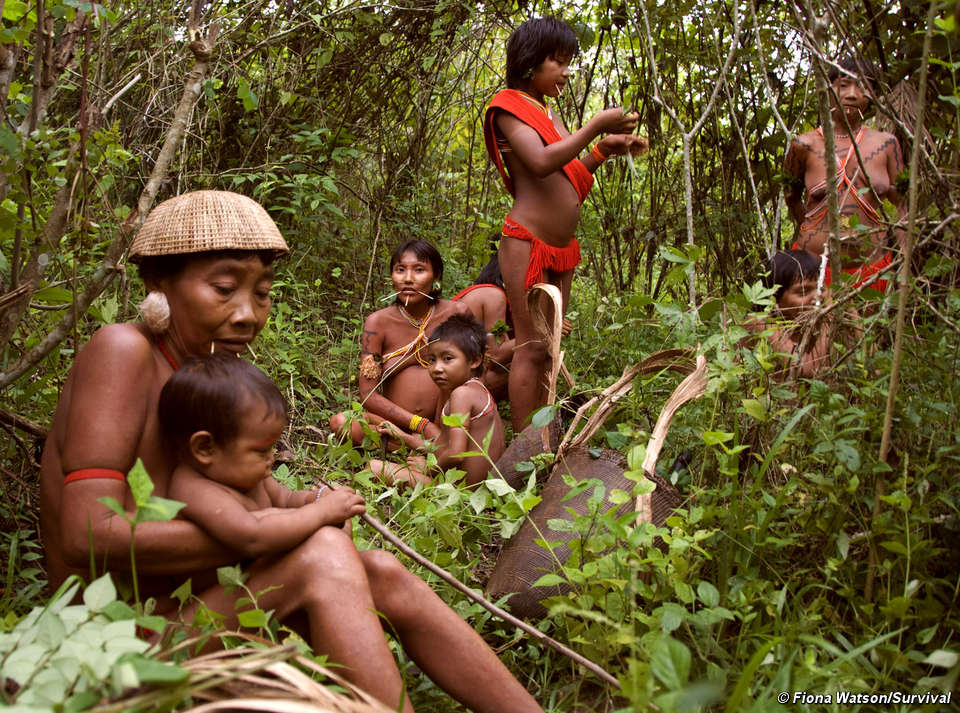
In the late 1960s Chagnon worked among the Yanomami people living on both sides of the border between Venezuela and Brazil. He portrayed the Yanomami—which he dubbed “the fierce people,” for their frequent inter-village warfare—as living in a “state of nature” essentially like that of our Paleolithic ancestors. And he claimed to present evidence that men who were “killers” had many more offspring—which, even when he occasionally hedged, others took as proof that evolution favored and preserved traits for male aggression and violence.

Anthropologists, including Sahlins, have since criticized nearly every aspect of Chagnon’s research. (See “Natural Born Nonkillers.”) For example, many note that other tribal people have relatively peaceful, cooperative cultures. Research from various perspectives also runs counter to Chagnon’s argument that evolution rewards killers with more offspring—including computer simulations of evolution, studies of animal behavior showing that killing within a species is rare, even military studies of how men in combat try to avoid killing others. In any case, critics say, the Yanomami were not in a pristine state of nature when Chagnon first visited: they had a history, including likely displacement from their original land by pressures from European colonial settlers and some continuing contact with the wider world that led to the acquisition of a few trade goods. There were many more charges that his data were flawed. To take one example, Chagnon categorized Yanomami men as killers or not killers based on their own classification as unokai or not unokai. But the term identifies a man who has gone through a purification ritual, which was used by both real “killers” and by men who, say, had employed sorcery.

In 2000 journalist Patrick Tierney published Darkness in El Dorado, which accused Chagnon of spreading fatal diseases (like measles) through his collaboration with geneticist James V. Neel, of fomenting some of the inter-village fighting, and other ethical offenses. The American Anthropological Association established a taskforce that dismissed some of Tierney’s most lurid charges but concluded that Chagnon, among other lapses, did not get informed consent from Yanomami research subjects and may have improperly delayed immunizations he and Neel were providing. At its convention, the AAA adopted the taskforce’s report and criticisms, but later Chagnon’s supporters moved to rescind the report largely on procedural grounds. With only 10 percent of members voting, the AAA reversed its endorsement of the report—which Chagnon backers inappropriately claimed as the profession’s vindication of his work.

Sahlins first weighed in against sociobiology in the mid-1970s with The Use and Abuse of Biology, but he has continued to pursue many of the same critical themes in recent books, such as What Kinship Is—And Is Not and The Western Illusion of Human Nature. He argues that human nature is culture—that is, the learned values, beliefs, and patterns of behavior that social groups follow or believe they should follow, as well as the capacity to change those ideas passed from previous generations. Culture—and not some special features of biological evolution, like a carnivore’s teeth or the short beak of a seed-eating bird—provides humans with a flexible, varied means of adapting to a wide and changing variety of circumstances.

Homo sapiens evolved biologically and mentally from our hominid ancestors over several million years within the context of the hominid tool-making culture. “What evolved was our capacity to realize biological necessities, from sex to nutrition, in the thousand different ways that different societies have developed,” Sahlins says. “Hence, culture, the symbolically organized modes of the ways we live, including our bodily functioning, is the specifically ‘human nature.’”

Sahlins argues against the sociobiologists’ neo-Hobbesian view of human nature as a war of all against all—with a brutal, competitive nature clashing with culture. This view of human nature has deep roots in Western cultural traditions, he writes, but it also projects a more modern capitalist view of self-interested, even selfish, behavior on both humanity and the rest of the natural world. In many other societies, people do not see the same sharp division between nature and culture. And all human societies have systems of kinship, which Sahlins defines as “mutuality of being,” meaning that “kinfolk are members of one another, intrinsic to each other’s identity and existence.”

“Symbolically and emotionally, kinfolk live each other’s lives and die each other’s deaths,” Sahlins says. “Why don’t scientists base their ideas of human nature on this truly universal condition—a condition in which self-interest at the expense of others is precluded by definition, insofar as people are parts of one another?” Sahlins cites a classic definition of kinship first developed by Aristotle: kinfolk are in various degrees other selves of ourselves.

Moreover, this kinship is not biological. There are many ways besides birth that societies have developed notions of mutual being, Sahlins says. For example, in the highlands of New Guinea, strangers can become your kin by eating from the land where your ancestors are buried. The food raised on that land is in effect the transubstantiation of the ancestors. Accordingly, people who eat from it share ancestral being. In the local conception, they are as much kin to each other as people who have the same parents.

In the West, and even in much anthropological writing past and present, kinship is treated as genealogy, or biology. But even biological reproduction, Sahlins argues, takes place within the context of a particular kinship system, and to reproduce children is to reproduce that culturally defined kinship order. And in most cultures, notions of kinship diverge, often dramatically, from our “folk theory,” with its emphasis on biological genealogy. In any case, all human societies exist within some framework of “mutuality of being,” which starkly contrasts with the view of human life run by selfish genes.


In an email interview, Sahlins responded to a few questions about his resignation, incorporating some passages from his recent writings.

DM: You offered two reasons for your resignation from the National Academy of Sciences. Starting with the election of Napoleon Chagnon to the NAS, what were your most important objections to that election—the quality of his scholarship, professional ethics in the field, or other issues?

MS: He deals in caricature: of the people he studies, of science, of anthropological theory, of fellow anthropologists, and of himself as a beleaguered “fierce person.” His vicious misrepresentations of Yanomami as savage and disgusting have, as many local scholars have pointed out, aided and abetted national and entrepreneurial forces anxious to exploit and pollute their land and, directly or indirectly, drive them to extinction. Likewise, his own fieldwork methods have contributed to the sufferings and destabilization of the Yanomami (as I discussed in an article for the Washington Post).

The idea that the Yanomami represent the primordial human condition of the Stone Age is preposterous. Why them and not the numerous other, quite different societies—including many, such as Australian aboriginals, with just as modest economies but a quite different social order and inter-group relationships? In fact, all have long histories, including dynamic relations with other societies, that remove them as far from the Paleolithic as modern nations. Moreover, as other studies of Yanomami show, they have a richness of oral tradition (so-called mythology), a spiritual pantheon, and a metaphysics of culture and nature that is virtually totally ignored by Chagnon where it is not simply dismissed.

Compared to the rich fieldwork of many Amazonian anthropologists, his ethnography is shallow. His generalizations are sophomoric. His thesis about the reproductive success of Yanomami warriors, contradicted by his own data, has been thoroughly refuted by others. His evolutionary anthropology is from the ancien régime, outdated by almost a century.

DM: You argue that “biologism” is the problem, that “human nature is culture,” and that Western thought in general is dominated by the idea that there is a conflict between a disruptive human nature and vulnerable culture. How would you address a predictable layperson’s view that surely human nature must be at least in part an independent biology as well as culture? What essential qualities, if any, do you think “human nature” may have if it is indeed defined in terms of culture?

MS: Yes, all cultures have sex, aggression, etc., but whether and how it is expressed is subordinate to the cultural order. Sociobiologists say that individuals achieve immortality by having many children, but apparently no one ever told that to the Catholic clergy. The important point is not that all cultures have sex, but that all sex has culture, that is, social norms that specify with whom, how, where, and when sexual relations are appropriate or inappropriate. Culture preceded modern human physical form by a million years or more. The body of the modern human species, Homo sapiens, was formed under the aegis of culture. What evolved was the ability and necessity to realize our bodily needs and dispositions in cultural forms.

Biology became the dependent variable. These needs had to be subordinate to and encompassed by their cultural forms of expression, otherwise how could the same needs or dispositions be realized in the thousands of different ways known to history and ethnography—the various cultural ways of having sex, eating, being aggressive, and the like? As Clifford Geertz put it, we “all begin with the natural equipment to live a thousand kinds of life but end in the end having lived only one.” That can only be if our natural dispositions were subject to cultural ordering rather than the source thereof.

For over two thousand years, Western people have been haunted recurrently by the specter of their own inner being: an apparition of human nature so covetous and contentious that unless it is somehow governed it will plunge society into anarchy. Indeed, by the twentieth century the worst in us had become the best. In the neoliberal view, self-interest in the form of each person’s pursuit of happiness at the cost of whom it might concern was a god-given right. The insatiable love of the flesh that for Augustine was slavery became “freedom” itself. Likewise, then, political Augustinism has been reversed: self-interest having been transformed from slavery to liberty, the least government is now the best. Although for neoliberalism the ancient vice of self-love is greatly to be desired, in other native anthropologies it remains a potentially fatal quality of the human make-up.

DM: Given the harsh criticism of Chagnon’s work by the American Anthropological Association, the leading professional academic organization in the field, how do you account for the NAS decision and for the apparent popular appeal of his work, such as suggested by two recent, highly sympathetic articles about him and his new memoir in the New York Times?

MS: NAS decision? I am not sure, but I believe that many members, those who elected him, have a natural science sense of anthropology, as archaeologists almost have by necessity, and Chagnon promotes himself under that description. Popularity? Mostly on college campuses, I would think, from his textbooks and movies, which resonate with certain popular undergraduate preoccupations: sex, drugs, and violence. America.

DM: You also said that you were resigning because the NAS was supporting social science research on improving combat performance of the U.S. military. To what extent is support for such military-related research a new or growing development within the NAS?

MS: Since resigning I have learned that the NAS, with its charter of research for the nation, engaged in secret military research as far back as the Vietnam War, and who knows how much before or since. At least one prominent scientist, the extraordinary biologist Richard Lewontin, has resigned from the NAS for that reason. Professor Lewontin did so in 1971.

DM: You suggest that NAS should instead, if it does anything in the field, study how to promote peace. Do you have any suggestions about what sort of research would be useful for anthropologists or others to pursue to that end?

MS: What are the consequences of attempts to forcefully impose democracy on societies with no such traditions? Especially, how does the imposition of “winner-take-all” democratic elections in ethnically divided societies exacerbate violence, as has happened time and again in many postcolonial societies in recent decades? How does the reframing of local differences in terms of international issues, backed by opposed international forces, create a virtual state of nature, as happened in Iraq, India, Sri Lanka, and many other similar situations, going back to the encompassment of local disputes in the opposition between democratic-imperial Athens and oligarchic Sparta in the Peloponnesian War? (See “Iraq, The State of Nature Effect.”)

DM: Finally, do you see any connection between your two reasons for resigning or are they independent motivations?

MS: There is a connection: it is referenced in one of my answers in a Counterpunch article by David Price. The premise of American overseas aggression, according to Donald Rumsfeld and others, is something like the line in the movie Full Metal Jacket: “inside every gook there is an American trying to get out.” All we have to do to liberate this innately freedom-loving, self-interested, democracy-needing, capitalist-in-waiting is to rid him of the oppressive, evil-minded regime holding him down—by force if necessary. That is, Chagnon’s view of self-aggrandizing human nature is the sociobiological equivalent of the neocon premise of the virtues of American imperialism: making the world safe for self-interest. It is the same native Western ideology of the innate character of mankind. A huge ethnocentric and egocentric philosophy of human nature underlies the double imperialism of our sociobiological science and our global militarism.


David Moberg is a senior editor at In These Times.

Security Risks of Extreme Weather and Climate Change (Science Daily)

Feb. 11, 2013 — A Harvard researcher is pointing toward a new reason to worry about the effects of climate change — national security.

Hurricane Katrina. Predicted changes in extremes include more record high temperatures; fewer but stronger tropical cyclones; wider areas of drought and increases in precipitation; increased climate variability; Arctic warming and attendant impacts; and continued sea level rise as greenhouse warming continues and even accelerates. (Credit: NOAA)

A new report co-authored by Michael McElroy, the Gilbert Butler Professor of Environmental Studies, and D. James Baker, a former administrator of the National Oceanic and Atmospheric Administration, connects global climate change, extreme weather, and national security. During the next decade, the report concludes, climate change could have wide-reaching effects on everything from food, water, and energy supplies to critical infrastructure and economic security.

“Over the last century, the trend has been toward urbanization — to concentrate people in smaller areas,” McElroy said. “We’ve built an infrastructure — whether it’s where we build our homes or where we put our roads and bridges — that fits with that trend. If the weather pattern suddenly changes in a serious way, it could create very large problems. Bridges may be in the wrong place, or sea walls may not be high enough.”

Possible effects on critical infrastructure, however, only scratch the surface of the security concerns.

On an international scale, the report points to recent events, such as flooding in Pakistan and sustained drought in eastern Africa, that may be tied to changing weather patterns. How the United States responds to such disasters — whether by delivering humanitarian aid or through technical support — could affect security.

“By recognizing the immediacy of these risks, the U.S. can enhance its own security and help other countries do a better job of preparing for and coping with near-term climate extremes,” Baker said.

The report suggests that climate changes could even have long-reaching political effects.

It’s possible, McElroy said, that climate changes may have contributed to the uprisings of the Arab Spring by causing a rise in food prices, or that the extended drought in northern Mexico has contributed to political instability and a rise in drug trafficking in the region.

“We don’t have definitive answers, but our report raises these questions, because what we are saying is that these conditions are likely to be more normal than they were in the past,” McElroy said. “There are also questions related to sea-level rise. The conventional wisdom is that sea level is rising by a small amount, but observations show it’s rising about twice as fast as the models suggested. Could it actually go up by a large amount in a short period? I don’t think you can rule that out.”

Other potential effects, McElroy said, are tied to changes in an atmospheric circulation pattern called the Hadley circulation, in which warm tropical air rises, resulting in tropical rains. As the air moves to higher latitudes, it descends, causing the now-dry air to heat up. Regions where the hot, dry air returns to the surface are typically dominated by desert.

The problem, he said, is that evidence shows those arid regions are expanding.

“The observational data suggest that the Hadley circulation has expanded by several degrees in latitude,” McElroy said. “That’s a big deal, because if you shift where deserts are by just a few degrees, you’re talking about moving the southwestern desert into the grain-producing region of the country, or moving the Sahara into southern Europe.”

The report is the result of the authors’ involvement with Medea, a group of scientists who support the U.S. government by examining declassified national security data useful for scientific inquiry. In recent decades, the group has worked with officials in the United States and Russia to declassify data on climatic conditions in the Arctic and thousands of spy satellite images. Those images have been used to study ancient settlement patterns in the Middle East and changes in Arctic ice.

“I would be reluctant to say that our report is the last word on short-term climate change,” McElroy said. “Climate change is a moving target. We’ve done an honest, useful assessment of the state of play today, but we will need more information and more hard work to get it right. One of the recommendations in our report is the need for a serious investment in measurement and observation. It’s really important to keep doing that, otherwise we’re going to be flying blind.”

The study was conducted with funds provided by the Central Intelligence Agency. Any opinions, findings, conclusions, or recommendations expressed in this material are those of the authors and do not necessarily reflect the view of the CIA or the U.S. government.

Report: Climate Extremes: Recent Trends with Implications for National Security at www.environment.harvard.edu/climate-extremes

Aggressive Advertising Makes for Aggressive Men (Science Daily)

Feb. 28, 2013 — Does advertising influence society, or is it merely a reflection of society’s pre-existing norms? Where male attitudes are concerned, a new study implicates magazine advertisements specifically aimed at men as helping to reinforce a certain set of views on masculinity termed “hyper-masculinity.” The article by Megan Vokey, a Ph.D. candidate from the University of Manitoba, and colleagues is published in Springer’s journal Sex Roles.

Hyper-masculinity is an extreme form of masculine gender ideology comprising four main components: toughness, violence, dangerousness and calloused attitudes toward women and sex. The authors found that hyper-masculine depictions of men, centered on this cluster of beliefs, appear to be common place in U.S. magazine advertisements.

Using a range of eight, high-circulation magazines marketed to men of different ages, levels of education and income (e.g. Golf Digest to Game Informer), Vokey and her colleagues analyzed the ads in each magazine where a photograph, picture or symbol of a man was shown. The researchers then categorized these advertisements using the four components that constitute hyper-masculinity. They found that at least one of these hyper-masculine attitudes was depicted in 56 percent of the total sample of 527 advertisements. In some magazines, this percentage was as high as 90 percent.

Vokey’s results are consistent with considerable prior research showing a positive association between hyper-masculine beliefs and a host of social and health problems, such as dangerous driving, drug use and violence towards women. Further analysis of the data showed that magazines with the highest proportion of hyper-masculine advertisements were those aimed at younger, less-affluent and less-educated men. The authors argue that this is an area of real concern as young men are still learning appropriate gender behaviors, and their beliefs and attitudes can be subtly shaped by images that the mass media repeatedly represent. In addition, men with lower social and economic power are already more likely to use a facade of toughness and physical violence as methods of gaining power and respect. These advertisements are thought to help reinforce the belief that this is desirable behavior..

The authors conclude, “The widespread depiction of hyper-masculinity in men’s magazine advertising may be detrimental to both men and society at large.. Although theoretically, men as a group can resist the harmful aspects of hyper-masculine images, the effects of such images cannot be escaped completely.” They add that educating advertisers about the potential negative consequences of their advertising may help reduce the use of these stereotypes.

Journal Reference:

  1. Megan Vokey, Bruce Tefft, Chris Tysiaczny. An Analysis of Hyper-Masculinity in Magazine AdvertisementsSex Roles, 2013; DOI: 10.1007/s11199-013-0268-1

Notas sobre a violência – De antropólogos e outras tribos ferozes (Folha de S.Paulo)

DOMINGO, 17 DE MARÇO DE 2013

MARCELO LEITE

RESUMO Antropólogo Napoleon Chagnon retoma em novo livro teoria sobre agressividade ianomâmi e ataca adversários da sociobiologia. Jared Diamond escreve obra de bases semelhantes, mas mais generosa com ‘primitivos’, aproximando-se de adversários de Chagnon, como Manuela Carneiro da Cunha, que lança coletânea.

É preciso ter estômago forte para digerir a narrativa de um antropólogo que escolhe iniciar o relato de seu primeiro dia de campo entre os ianomâmis -meio século depois- com a frase: “Nunca antes tinha visto tanto ranho verde”. Não é a antropologia, porém, a disciplina que ensina a combinar o máximo de disciplina com o mínimo de conforto em benefício do entendimento do homem?

Leia-se então com dose generosa de bonomia antropológica a obra mais recente do americano Napoleon Chagnon, “Noble Savages – My Life among two Dangerous Tribes – The Yanomamö and the Anthropologists” [Simon & Schuster, 531 págs., R$ 87,50]. Em desagravo, que seja, porque Chagnon pagou um preço alto demais por sua crença nas explicações ultradarwinistas do comportamento, cuja matriz -a natureza humana- acredita ter desvendado nas selvas do Orinoco.

O estudioso americano dedicou pelo menos duas décadas de sua vida a longas permanências em terras ianomâmis, quase sempre na Venezuela (com desastradas incursões também do lado brasileiro). As três seguintes ele ocupou em defesa da carreira e da reputação quase arruinadas por dois outros livros: “O Povo Feroz” (1968), trabalho acadêmico de sua própria lavra, e “Trevas no Eldorado”, um panfleto do jornalista Patrick Tierney (2000).

Os que desconhecem a crônica dessa guerra entre os clãs cultural e biológico da antropologia encontrarão um resumo devastador das acusações mútuas no documentário “Os Segredos da Tribo”, de José Padilha. Não se recomenda o consumo de pipoca na sessão de barbaridades que a fita apresenta.

O povo feroz do título de Chagnon são os ianomâmis. Sua caracterização pelo antropólogo como uma etnia violenta, de homens “maliciosos, agressivos e intimidadores”, que acumulam homicídios para obter mais mulheres e maior sucesso reprodutivo, despertou a ira dos antropólogos culturalistas.

Primeiro, Chagnon foi acusado de distorcer a imagem do grupo e, assim, facilitar sua dizimação por brancos dos dois lados da fronteira. Depois, foi denunciado por Tierney como genocida, pois teria -intencional ou negligentemente, sob a tutela do médico americano James V. Neel- contribuído para uma epidemia de sarampo que matou centenas de índios.

BOM SELVAGEM “Noble Savages” (“bons selvagens”) é um acerto de contas com as duas tribos que infernizaram sua vida. A partir da descrição para o público não especializado de seu convívio de cinco anos com os ianomâmis, Chagnon retoma sua conclusão de que o “bom selvagem” concebido por Rousseau é um mito politicamente correto e que só há uma resposta biológica (evolucionista) -e simploriamente hobbesiana- para a questão de por que seres humanos são sociais: a luta de todos contra todos para aumentar a própria prole (ou pôr mais cópias dos próprios genes no mundo, na vulgata sociobiológica).

Não faltam páginas desairosas para os ianomâmis no livro. “Olhei para cima e arfei, em choque, quando vi uma dúzia de homens corpulentos, nus, suados e pavorosos nos encarando por trás dos caniços de suas setas apontadas!” -conta sobre a primeira visita a uma casa coletiva dos índios.

“Imensos rolos de tabaco verde estavam enfiados entre os dentes e os lábios inferiores, tornando sua aparência ainda mais pavorosa. Veios de ranho verde escuro pingavam ou pendiam de suas narinas -tão longos que se desprendiam de seus queixos, caíam sobre os músculos peitorais e escorriam preguiçosamente sobre seus ventres, mesclando-se com a pintura vermelha e o suor.”

Chagnon também não economiza relatos sobre tentativas mal sucedidas de engodo dos ianomâmis contra ele. Sempre eficazes, por outro lado, eram seus próprios ardis para levá-los a ceder amostras de sangue (para Neel) e a revelar nomes de ancestrais mortos -um tabu- para rechear suas genealogias e estatísticas. As mesmas informações, pagas com machados, facas e panelas de metal, que lhe permitiriam afirmar, depois, serem os homens com mais homicídios nas costas também os de prole mais numerosa.

Muito antes das acusações de Tierney, as conclusões sociobiológicas e os métodos traficantes de Chagnon já vinham sendo questionados por seus pares na comunidade antropológica. Até a correlação estatística entre ferocidade e fertilidade masculina, formulada num famigerado artigo de 1988 para a revista acadêmica “Science”, teve seus dados postos em dúvida (o autor foi acusado de excluir da amostra aqueles pais que já haviam sido mortos por vingança, portanto sem meios de multiplicar descendência).

Os antropólogos culturais, refratários à moldura biológica em que Chagnon queria enquadrar o painel exuberante das culturas, já estavam no seu encalço. Nada se compara, porém, com a virulência do ataque de Tierney. Assim que um capítulo do livro foi publicado na revista “New Yorker”, em outubro de 2000, a Associação Antropológica Americana entrou na briga -do lado dos culturalistas. Foi montado um comitê de investigação, que acabou por inocentar o médico Neel e descartar a epidemia intencional, mas recriminou Chagnon por desvios éticos.

O caso teve enorme repercussão na imprensa mundial, brasileira inclusive. Contudo, quando a obra do “jornalista investigativo” Tierney e os próprios investigadores da AAA passaram a ser investigados, a começar pela historiadora da ciência Susan Lindee, o vento virou.

Forçada por um referendo entre seus membros, a associação renegaria o relatório. As acusações de Tierney não paravam de pé, como reconstitui com farta documentação um ensaio demolidor da também historiadora Alice Dreger publicado em 2011 no periódico acadêmico “Human Nature”, sob o título “Darkness’s descent on the American Anthropological Association. A cautionary tale” (trevas sobre a Associação Antropológica Americana – uma fábula moral; leia em bit.ly/adreger).

Dreger puxa vários fios da teia de perseguição a Chagnon. Levanta a suspeita, intrigante, de que a cruzada de Tierney pode ter ocorrido sob o patrocínio da Igreja Católica, mais especificamente da ordem de padres salesianos, que já mantinha missões junto aos ianomâmis da Venezuela quando o antropólogo por lá baixou.

Após alguns meses de convívio e cooperação, cientista e religiosos se estranharam. Na versão fantástica narrada em “Noble Savages”, isso ocorreu depois de um hierarca pedir a Chagnon ajuda para matar um padre amasiado com índia. Na passagem do livro que mais se avizinha do estilo de Tierney, o antropólogo também acusa os salesianos de distribuir espingardas cartucheiras entre os índios para conquistar seu favor.

A inconsistência mais relevante da obra, porém, não decorre do ânimo retaliatório, e sim da pretensão de ter localizado entre os ianomâmis as nascentes da agressividade que supõe inerente à natureza humana. A antropóloga Elizabeth Povinelli assinalou, numa resenha escaldante de “Noble Savages” para o “New York Times”, que a tese se assenta sobre a premissa falaciosa de que os ianomâmis sejam relíquias de uma infância neolítica da humanidade.

FÓSSEIS Desde esse ponto de vista, compreende-se melhor o esforço retórico de Chagnon em degradar os ianomâmis, acentuando nas suas descrições uma animalidade que serve para relocar sua cultura na vizinhança da biologia. Ora, não há básica empírica nenhuma para afirmar que sociedades “primitivas” como a dos ianomâmis se mantiveram à margem da história, fósseis de um passado inaugural da espécie humana.

Como lembra Manuela Carneiro da Cunha -que presidia a Associação Brasileira de Antropologia quando esta cerrou fileiras contra Chagnon- na coletânea de ensaios “Índios no Brasil – História, Direitos e Cidadania” [Claro Enigma, 160 págs., R$ 29,50], essa é uma visão originária do século 19, que atribui “à natureza e à fatalidade de suas leis o que é produto de política e práticas humanas, […] consoladoras para todos à exceção de suas vítimas”.

Os ianomâmis, por exemplo, só permaneceram mais ou menos isolados (na realidade, longas redes de contatos já lhes garantiam acesso a artefatos de metal) porque suas terras montanhosas não interessavam a colonizador algum.

A perspectiva adotada por Chagnon -um engenheiro convertido para a antropologia- faz tábula rasa de tudo que há de peculiar no modo de vida ianomâmi. Por que cargas d’água esses índios cremam seus mortos, moem os ossos calcinados e ingerem as cinzas com um mingau de banana? É esse tipo de manifestação simbólica que a antropologia cultural se esforça por sistematizar e elucidar, mas que a obra de Chagnon relega à penumbra dos detalhes irrelevantes para a “natureza humana”.

Ótica semelhante anima o último best-seller de outro adepto declarado da sociobiologia (rebatizada psicologia evolucionista), Jared Diamond, mas com resultados muito diversos, se não opostos. Em “The World until Yesterday – What Can We Learn from Traditional Societies?” [Viking, 512 págs., R$ 96,90], Diamond acredita piamente ter aberto uma janela para o passado nas suas décadas de visitas à Nova Guiné para estudar pássaros.

A ilha, fervilhante com centenas de tribos e línguas em contato e conflito, constitui um continente cultural descoberto como tal por ocidentais só nas primeiras décadas do século 20. Fornece a Diamond, portanto, o equivalente dos ianomâmis para Chagnon, em matéria de isolamento e primitivismo.

As diferenças entre esses dois generalizadores prodigiosos, contudo, salta já do título de Diamond. Ao contrário de Chagnon, ele está aberto -mais que isso, interessado- a aprender algo com os nativos, e não só sobre eles. São muitas as lições úteis que o observador de pássaros e homens extrai para o aperfeiçoamento marginal do indubitavelmente superior modo de vida ocidental: ingerir menos sal, aleitar bebês à vontade até os três anos, dar educação bilíngue às crianças, fazer refeições lentamente com amigos…

Até das ameaças constantes da natureza e do estado de guerra crônica entre os primitivos Diamond retira um ensinamento, centro de gravidade do livro, que chama de “paranoia construtiva”: o estado de vigilância permanente para os muitos perigos que a vida oferece aos homens. Depois de embasbacar multidões com as generalizações audazes de “Armas, Germes e Aço” (livro pelo qual ganhou o Pulitzer em 1998), Diamond corteja com leveza o gênero da autoajuda e compila um volume de leitura bem mais amena que

“Noble Savages”. Os ilhéus são feios e sujos como os ianomâmis, mas simpáticos e sábios.

Já a paranoia de Chagnon, se cabe falar assim, é corrosiva. Nos termos da controvérsia que animou o Brasil escravizador de índios nos séculos 18 e 19, relatada por Manuela Carneiro da Cunha, eles podem ser encarados como cães, canibais e ferozes, ou como homens, diferentes e por isso exemplares de capacidade adaptativa e perfectibilidade. É uma questão de escolha, ou de ponto de vista.

Como diz a antropóloga, repetindo o que ouviu em conferência de Claude Lévi-Strauss, a sociodiversidade pode ser tão preciosa quanto a biodiversidade: “Creio, com efeito, que ela constitui essa reserva de achados na qual as futuras gerações poderão encontrar exemplos -e quem sabe novos pontos de partida- de processos e sínteses sociais já postos à prova”.

-

Em 2012, Napoleon Chagnon foi eleito para a prestigiada Academia Nacional de Ciências (NAS) dos Estados Unidos. Ato contínuo, em protesto, o antropólogo Marshall Sahlins -que em 2000 se engajara na campanha contra ele- renunciou à sua cadeira na NAS.

Manifesto de 17 antropólogos que trabalham com ianomâmis deblaterou mais uma vez contra a noção de “povo feroz” reiterada no novo livro, que poderia ser usada por governos para prejudicar a etnia. Uma nota do líder ianomâmi David Kopenawa sobre a obra aponta as guerras dos brancos como muito mais ferozes que as de seu povo -uma observação antropologicamente perspicaz, ao menos no que respeita às tribos dos culturalistas e dos sociobiólogos.

Palmeiras tenta barrar agressores da Mancha até em jogos fora do país (Folha de S.Paulo)

12/03/2013 – 19h58

FABIO LEITE

DE SÃO PAULO

O Palmeiras montou uma operação para tentar impedir a entrada dos integrantes da Mancha Alviverde que agrediram jogadores no aeroporto em Buenos Aires, na semana passada, em todos os jogos do time, até fora do país.

O clube está identificando os envolvidos no episódio para prestar queixa por lesão corporal à polícia de São Paulo e entregar um dossiê à FPF (Federação Paulista de Futebol) com os nomes e as imagens do incidente.

O objetivo é que a entidade proíba a entrada dos torcedores nos estádios paulistas. “Assim que chegar o material providenciamos a resolução para o impedimento da entrada desses torcedores”, disse o coronel Marcos Marinho, chefe do departamento de segurança da FPF.

Ontem, o presidente palmeirense, Paulo Nobre, e o mandatário da federação, Marco Polo Del Nero, combinaram que a entidade vai enviar os nomes dos agressores à Polícia Federal como um alerta de que eles podem cometer crime fora do país.

O clube fará ao menos mais um jogo no exterior, contra o Sporting Cristal, no Peru, dia 18 de abril, pela última rodada da fase de grupos da Libertadores.

“Estamos dando sequência àquilo que foi falado [punição aos agressores], até que esses irresponsáveis sejam realmente enquadrados”, disse o diretor-executivo do clube, José Carlos Brunoro nesta segunda-feira.

A ideia é de que o dossiê seja concluído esta semana e seja enviado também ao ministro do Esporte, Aldo Rebelo.

AGRESSÃO
A agressão ocorreu na última quinta-feira, no embarque da delegação alviverde no Aeroparque, em Buenos Aires, após a derrota para o Tigre por 1 a 0 pela Libertadores.

Um grupo da Mancha tentou agredir Valdivia atirando xícaras na sala de embarque sob alegação de que o meia havia feito um gesto obsceno a um torcedor da facção que o xingara antes da partida.

Estilhaços atingiram o goleiro Fernando Prass, que sofreu um corte na orelha e levou três pontos na cabeça.

Após o caso, Paulo Nobre disse que não daria mais ingressos às torcidas organizadas até que os culpados sejam apresentados. A Mancha ainda avalia o que irá fazer.

Outras três facções palmeirenses pediram ao clube que a punição ficasse restrita à Mancha porque não participaram da agressão, mas o Palmeiras optou por manter a medida.

“Nós somos inocentes, mas fomos prejudicados nesta história. Acatamos a decisão da diretoria, mas não concordamos”, disse o presidente da TUP (Torcida Uniformizada do Palmeiras), Marcelo Moura Lima.

“Nós não fazemos distinção. Organizada é organizada”, justificou Brunoro.

O mercado de almas selvagens (Rolling Stone)

Edição 63 – Dezembro de 2011

Missionários cristãos investem pesado na evangelização dos índios brasileiros com métodos ortodoxos, investimento internacional e persistência messiânica

O Mercado de almas selvagensINDIO SAN

por FELIPE MILANEZ

Jesus ressuscitou. Saiu do sepulcro e apareceu primeiro para Maria Madalena. Em seguida, ela anunciou aos que haviam estado com ele. Manifestou-se a dois que iam para o campo, e depois a outros. Finalmente, de acordo com o Evangelho segundo Marcos, capítulo 16, Jesus apareceu aos 11 assentados à mesa “e lançou-lhes em rosto a sua incredulidade e dureza de coração, por não haverem crido nos que o tinham visto já ressuscitado”. Disparou então, segundo o livro sagrado dos cristãos, a mensagem determinante da “missão”, em versículos 15 e 16:

“E disse-lhes: ide por todo o mundo, pregai o evangelho a toda criatura.”

“Quem crer e for batizado será salvo; mas quem não crer será condenado.”

No versículo 17, ainda segundo Marcos, Jesus vai mais longe: “E estes sinais seguirão aos que crerem: em meu nome expulsarão os demônios, falarão novas línguas”.

Condenadas à danação de um pecado original estão as criaturas não batizadas, portanto, todas as culturas não cristãs. Aos crentes, foi dada a obrigação, na forma de uma missão, da evangelização universal: eles deveriam traduzir a Bíblia para todas as línguas. Tarefa arriscada nos “confins da Terra”, que viria a ser complementada, pelo versículo 18, com a proteção divina: “Pegarão nas serpentes; e, se beberem alguma coisa mortífera, não lhes fará dano algum; e porão as mãos sobre os enfermos, e os curarão”.

Outubro de 2011, Caldas Novas, interior de Goiás: em um hotel de águas termais, tendas estão dispostas como uma conferência comercial, ou como uma feira de negócios na qual empresas utilizam estandes para vender seus pacotes e produtos. “Judeus por Jesus”; “Curso de Evangelização de Árabes”; “Missão Novas Tribos do Brasil”; “Adote um Povo”. Índios, ciganos, quilombolas, pobres do sertão nordestino: no VI Congresso Brasileiro de Missões, todas as criaturas desprovidas possuem representantes que negociam suas almas.

Minha alma, ateia, é a única condenada que circula pelo local. “Experimenta uma vez”, diz um senhor, com sorriso maroto no rosto. “Sou careta”, brinco. Ele quer que eu experimente a religião dele, como se fosse uma cápsula de felicidade a ser engolida. “Experimenta, você não vai se arrepender. Você vai ser feliz.”

Desconverso, contando histórias de aventuras na Amazônia. “Já sei”, diz o pastor Thomas Gregory. “Precisamos de gente com coragem.” Ele me oferece um exemplar do livro O Contrabandista de Deus, com a seguinte dedicatória: “Por Jesus vale a pena gastar nossas vidas! Experimente!” Em seguida, me apresenta a um jovem destemido da missão “Portas Abertas: Servindo Cristãos Perseguidos”. “Estamos indo traficar Bíblias para a China em dezembro. Ano que vem, vamos levar até a Coreia do Norte”, o rapaz me relata, determinado, consciente dos riscos de antecipar o que acredita ser o “julgamento final” e negando qualquer tipo de medo. “Não. Jesus está comigo”, diz.

No encontro organizado pela Associação de Missões Transculturais Brasileiras (AMTB), os índios são apenas uma parte de um universo pagão de almas condenadas. Parte pequena, porém cobiçada: de acordo com levantamento da própria AMTB, os índios são compreendidos como 616 mil indivíduos de 340 etnias (para a Funai são 220) e que falam 181 línguas. Ainda segundo os mesmos cálculos, no Brasil há 69 línguas sem a Bíblia traduzida, 182 etnias contam com presença missionária evangélica e 257 programas de evangelização estão em curso, coordenados por cerca de 15 agências missionárias de diferentes denominações evangélicas históricas, mas em sua maioria batista, associadas à AMTB.

De todas as almas selvagens existentes, as consideradas mais valiosas são as dos índios ditos “isolados”: elas representam o universo a ser conquistado e cuja alma adquire maior valor, econômico e moral, no mercado espiritual. O levantamento da AMTB indica que 147 etnias não possuem a presença missionária evangélica, e que 27 povos seriam considerados “isolados”. O principal desafio que consta no relatório “Indígenas do Brasil” são as “etnias remotas (com pouco ou nenhum contato externo)”, que somam 42 povos. A lista mais recente da Funai, a ser divulgada, aponta 84 referências onde podem existir povos indígenas sem contato. Nesses locais, geralmente áreas de difícil acesso, é proibida a entrada de qualquer indivíduo sem a autorização da Funai.

Os “índios isolados” são as comunidades indígenas que vivem de forma autônoma na floresta, evitam a aproximação com o universo ocidental e esse contato, se ocorrer, é eventual e conflituoso. A ocupação recente da Amazônia ocasionou os primeiros encontros com diversos povos, como os zo’é e suruwahá, que a Funai considera de “recente contato”. Eles recebem proteção especial em razão da vulnerabilidade física da população, suscetível a epidemias.

O principal objetivo dessas agências evangelizadoras é “alcançar” outras culturas com a leitura de sua forma de crença, daí o aspecto “trans” do tema “cultural” das religiões. “Precisamos de mais 500 novos missionários para pregar o Evangelho a todos os povos indígenas no Brasil”, conclama no microfone Ronaldo Lidório, um dos principais líderes desse movimento. Traduzindo: o objetivo é convencer os índios, assim como todas as pessoas do mundo, a se tornarem crentes – salvar as almas condenadas pelo pecado original.

Henrique terena é alto, tem cabelos longos e usa um charmoso cocar de penas azuis de arara. Falando com desenvoltura e retórica apurada, ele anda sempre próximo a Eli Tikuna, líder indígena que vem da margem do rio Solimões, já quase na fronteira com a Colômbia. Juntos, aguardam o chamado para pregar no salão lotado de brancos, curiosos para ouvir os tais “índios crentes”.

Grandes astros da conferência, os índios pastores formam o que os missionários evangélicos consideram ser a “terceira onda evangelizadora”. Primeiro, eram os estrangeiros que aportaram no Brasil com a Bíblia debaixo do braço (no século 19 e no pós-guerra); a segunda onda ocorreu por meio dos missionários brasileiros, com a institucionalização das missões estrangeiras no Brasil, ao longo da segunda metade do século passado; e hoje os próprios índios agem como missionários.

As almas indígenas são o objeto do alcance proselitista de um determinado grupo de evangélicos, principalmente os de denominação batista (conhecidos como “históricos”). O sistema de evangelização ocorre segundo regras capitalistas, com agências, igrejas e crentes financiadores. Por trás de tudo, há diversos interesses que se aliam com a conveniência exigida para a alma condenada ser alcançada – garimpeiros no Amapá, madeireiros e fazendeiros no Pará, seringueiros no Acre, o exército no Amazonas. Nessas alianças, domesticar os selvagens para servirem de mão de obra é o objetivo dos laicos. Já o alcance e a salvação das almas é a verdadeira missão religiosa.

Em 1991, a Fundação Nacional do Índio determinou a expulsão de todas as missões das áreas indígenas e rompeu os contratos que tinha com os missionários de prestação de saúde e educação para os índios. Por parte do governo, não havia o conhecimento exato do número de aldeias com presença missionária. Mas o então presidente da Funai, o sertanista Sidney Possuelo, conhecia de perto a atuação da New Tribes Mission (hoje, Missão Novas Tribos do Brasil) junto do povo zo’é, cujo primeiro contato ocorreu em 1986. Na época, a expedição contava com a presença de Edward Luz, que atualmente é o presidente da Novas Tribos do Brasil. Antropólogos afirmaram então que cerca de 30% da população índia pereceu devido a doenças levadas pelos missionários. Possuelo, que trabalhou junto aos zo’é, determinou a retirada dos missionários assim que assumiu a Funai. Na visão de Luz, que até hoje tenta retomar contato com os zo’é, a Funai “persegue” os missionários.

“Nós, como instituição, só temos a agradecer a essa perseguição. Porque quanto mais a perseguição vem, mais nós crescemos”, afirma Luz. “O Cristianismo sempre foi pautado por isso. O sangue dos mártires regava a semente daqueles que haviam de nascer. E no governo brasileiro isso foi a mesma coisa.”

Conheci Edward Luz no V Congresso Brasileiro de Missões, em 2008, em Águas de Lindoia (SP). Naquele momento, o drama da tribo dos índios suruwahá estava à tona: a Funai havia expulsado dali o grupo “Jovens com uma Missão” (Youth with a Mission, no original). Os missionários acusavam os índios de serem violentos assassinos de crianças e praticarem o infanticídio – era preciso a evangelização para salvá-los. A Funai culpa os missionários por uma leva de suicídios que chegou a atingir 10% da população local. Marcia Suzuki foi a missionária que se colocou como porta-voz do drama. “No Parque do Xingu também praticam o infanticídio, e dizem que não”, ela declarou na época. O tema do infanticídio foi levantado na mídia em torno de um filme de ficção, mas tratado como um “docudrama”, realizado pelo filho do fundador da Youth with a Mission, o cineasta David L. Cunningham. Em Hakani: A Survivor’s Story, índios suruwahá aparecem enterrando uma menina viva. O departamento da Funai que protege os suruwahá afirmou que os índios ficaram revoltados ao saber da história. Hakani, a tal criança índia, foi retirada da aldeia por Suzuki e hoje a acompanha em igrejas, na busca de recursos para a missão Atini. O drama de Hakani também serviu para divulgar um projeto de lei chamado Muwaji, que incriminaria funcionários públicos em caso de infanticídio e que legitimaria a presença de evangélicos em aldeias.

A bancada evangélica no Congresso Nacional, formada por cerca de 50 deputados, pouco se mobilizou. A maioria, pentecostal, é distante das denominações históricas, como os batistas. “Há evangélicos contra a evangelização dos índios, como os ecumênicos”, afirma Geter Borges, assessor parlamentar presente no Congresso Brasileiro de Missões. As divergências internas praticamente impediriam, diz ele, que a bancada mostrasse uma união sobre projetos – “não votam juntos, e não têm o peso e a força, por exemplo, dos ruralistas”, diz. Sobre a evangelização, Borges contextualiza: “Esse grupo da AMTB é que tem essa proposta de evangelizar os índios, que é proselitista. É a visão que se tem do Espírito Santo. Eu sou batista, mas creio que podemos ser salvos sem o batismo”.

A estratégia de utilizar os próprios índios como missionários foi definida no VI Congresso de Missões. E, para facilitar a realização do trabalho, eles farão uso de um dogma retórico: “O Estado não pode impedir um índio de encontrar um outro índio”, explica Luz. O objetivo das agências atualmente é capitalizar a maior quantidade de indígenas possível para se tornarem pastores. Para provocar uma reação pública, decidiram que irão solicitar, através dos índios kanamari, o ingresso na terra indígena Vale do Javari, onde está localizada a maior população de índios isolados remanescente do mundo. Caso a Funai negue a presença missionária, a estratégia prometida será acionar o Poder Judiciário contra o governo. “Metade dos povos indígenas não são aldeados. Um grande número frequenta as universidades. E a maioria fala: vou voltar para o meu povo e vou levar o evangelho pra eles. E contra essa força não há resistência”, conclama Luz.

O presidente da Novas Tribos insiste que o impedimento da entrada dos missionários nas aldeias tem cunho “ideológico”. “A Constituição não dá amparo para esse tipo de perseguição”, afirma Luz. “Nós temos o direito de pregar o evangelho para todo mundo. E toda pessoa tem o direito a aderir ou não. Vamos levar essa discussão às raias do Supremo.” Argumento-chave nesse debate é o que Luz chama de “direito da comunidade indígena de decidir o seu presente e seu futuro” – ou seja, de escolher sua religião. É o mesmo ponto levantado por alguns raros antropólogos que não se opõem aos missionários. “Os índios podem escolher seu destino”, declarou uma antropóloga evangélica que não quis ser identificada. “Agora, nem sempre os missionários são honestos nas opções que oferecem.”

“A motivação deles é ideológica: eles querem expandir a ideologia religiosa deles para todos os seres humanos do planeta”, rebate Márcio Meira, presidente da Funai, que alega que a Constituição Federal protege a liberdade de crença, assegurando a proteção aos locais de culto. Nesse caso, a Funai tem poder de vetar a entrada nas áreas habitadas por índios “isolados”, assim como dos povos de pouco contato: “Cabe ao Estado laico exercer o poder de proteção e impedir qualquer contato de missionários com índios isolados”.

“Alguns povos, como os zo’é, os yanomami, os suruwahá, possuem contato, mas não possuem elementos de conhecimento das outras religiões para tomar uma decisão. Temos que garantir seus espaços de liturgia”, prossegue Meira, afirmando ainda que a Fundação não intervém nos casos de povos com contato antigo com a sociedade envolvente. “A Funai tem a obrigação legal de respeitar a vontade dos índios de permanecerem isolados”, diz.

“Em 2 mil anos, a bíblia foi traduzida apenas para 500 línguas”, prega o pastor Ronaldo Lidório no grande salão do VI Congresso Brasileiro de Missões, com certo tom de indignação frente às ovelhas de seu rebanho. É a hora de provocar “um tsunami espiritual”, conforme reforça o pastor indígena Henrique Terena no mesmo salão principal. Todos parecem chocados com mais um dado “oficial” divulgado pela AMTB: “147 povos indígenas no Brasil não conhecem o Evangelho”.

O encontro das sociedades europeias com os índios na América aflorou entre os crentes a missão determinada pelo “ide” de Marcos. Pelo lado católico, a catequização foi praticada inicialmente na aliança da Companhia de Jesus, pelos jesuítas, com os estados colonizadores espanhol e português (rompida no século 18). As tentativas de conquista de holandeses e franceses foram acompanhadas de religiosos protestantes. Enquanto a famosa “Primeira Missa” católica foi celebrada em 26 de abril de 1500 pelo frade Henrique de Coimbra, o primeiro culto evangélico em terras brasileiras ocorreu mais de 50 anos depois, em 10 de março de 1557, no Rio de Janeiro, pelos huguenotes franceses. Poucos anos depois, Jacques Balleur foi enforcado por pregar a religião da Reforma junto aos índios tamoios.

Hoje, os católicos atendem sob a organização do Conselho Indigenista Missionário (Cimi), que prega, de forma oficial, o respeito às religiões indígenas. De acordo com essa leitura, o papel do Espírito Santo salvaria as almas, independentemente do batismo. “É a tese de São Tomás de Aquino. Mas alguns ainda praticam o proselitismo”, assume Paulo Suess, um dos principais teólogos do Cimi. “Nunca oficialmente. Nunca vão dizer isso abertamente em uma assembléia do Cimi. Mas na aldeia eles podem agir assim.” A última missão jesuíta em atividade no Brasil foi a Utiariti, no Mato Grosso, completamente destruída pelos índios nos anos 70. Alguns líderes indígenas, jovens na época, guardam más lembranças das atuações dos padres. “Forçavam o casamento interétnico”, recorda o índio pareci Daniel Cabixi. “A gente sofria muito.”

Com as revoluções sociais do pós-guerra, sobretudo por causa do Concílio Vaticano II, e a teologia da libertação que se desenvolveu em seguida, os católicos na América passaram a optar pelo princípio da “encarnação”, segundo manifesto escrito em Goiânia, em 1975: “Seguindo os passos de Cristo, optar seriamente, como pessoas e como igreja, por uma encarnação realista e comprometida com a vida dos povos indígenas, convivendo com eles, investigando, descobrindo e valorizando, adotando sua cultura e assumindo sua causa, com todas as consequências; superando as formas de etnocentrismo e colonialismo até o ponto de ser aceito como um deles”.

Em 1912, ocorreu a evangelização dos índios terenas, no atual Mato Grosso do Sul. Esse é o marco, entre os evangélicos, da primeira evangelização indígena no Brasil. E foi também entre os terenas que foi “plantada” a primeira igreja. Em julho de 2012, o Conselho Nacional dos Pastores e Líderes Indígenas (Conplei) prepara a comemoração do centenário desse primeiro batismo. “Vai ser um grande encontro”, promete o pastor Henrique Terena, que diz contar com a presença de indígenas evangélicos do Paraguai e da Bolívia. “Vamos receber cinco mil indígenas. E vamos criar o Conselho Mundial dos Pastores e Líderes Indígenas.” As inscrições para o evento custam de R$ 80 (índios) a R$ 200 (não índios).

Nesse verdadeiro mercado de almas que é o Congresso Brasileiro de Missões, até é possível “adotar” um povo. Em um dos estandes, a missionária explica: “Você assume esse povo, e deve orar por eles”. Além da oração, é sugerido também que sejam doados recursos para financiar o trabalho missionário. Valores não são mencionados, mas estima-se ser necessário cinco igrejas para sustentar o trabalho em um único povo. No palco, Eli Tikuna conta sobre o dia de glória que teve ao visitar uma igreja batista na Grande São Paulo: “Consegui R$ 10 mil em doações. Glória ao Pai!”

Na quinta edição do Congresso, em 2008, um empresário de São José dos Campos doou um avião modelo Caravan para a missão Asas do Socorro, que presta serviços de transporte aéreo para as agências missionárias e, segundo o comandante Rocindes Correa, conta já com 11 aeronaves. “Pregamos o evangelho integral, que cuida da alma, mas também da vida da comunidade”, diz Correa. Nesse intuito, a Asas do Socorro oferece também o transporte de médicos e dentistas evangélicos.

Segundo dados divulgados pela própria AMTB, a edição 2011 do Congresso Brasileiro de Missões custou por volta de US$ 40 mil e recebeu aproximadamente 500 pessoas (291 responderam a um questionário), sendo 40% batistas e mais da metade oriunda da região Sudeste. Um terço era de pastores, lideranças religiosas, e 98% dos presentes consideraram a programação “boa ou excelente”. A próxima edição, aliás, já tem data marcada: acontece em 2014.

E se jesus realmente retornar e for parar no meio dos índios? Dizem os crentes que a comunidade deverá estar preparada para recebê-lo – diferentemente do que aconteceu da primeira vez, quando ele nasceu em berço judaico durante a dominação romana e foi morto ainda jovem. Essa é a explicação sugerida pelo antropólogo Darcy Ribeiro, que morreu em 1997, sobre o principal motivo que leva os missionários a “gastarem sua vida” em nome da evangelização dos índios na Amazônia.

Foi Ribeiro quem trouxe os missionários do Summer Institut of Linguistics (SIL) para o Brasil, na década de 50. Preocupado com o desaparecimento das línguas indígenas, o antropólogo imaginaria que, ao custo da tradução da Bíblia, ao menos as línguas seriam documentadas, em caso de desaparecimento de um povo. Escreveu ele no livro Confissões: “Serviço maior meu foi mandar uma linguista do Instituto Linguístico de Verão, com doutorado, conviver com eles e dedicar-se por quase um ano ao estudo do idioma ofaié. Assim, ao menos sua língua se salvou pelo registro escrito e sonoro para futuros estudiosos das falas humanas”.

Quando se dedicou a salvar as línguas indígenas, Ribeiro desconhecia as ligações do SIL com a poderosa família norte-americana Rockfeller, que procurava novas jazidas de petróleo, e com a direita norte-americana e agências de informações dos Estados Unidos, fatos mostrados no livroThy Will Be Done, de Gerard Coilby e Charlotte Dennet. No Brasil, onde persiste o fantasma da “internacionalização da Amazônia”, essas ligações suspeitas fizeram crescer os temores de ações escusas dos missionários.

Se externamente há fantasmas da internacionalização, nas aldeias, os índios reclamam da interferência em suas culturas. Os missionários Manfred e Barbara Kern, da New Tribes, divulgaram que um dos líderes indígenas da tribo uru-eu-wau-wau, de Rondônia, teria cometido adultério. “Pelo que entendemos, ele é reincidente e já foi repreendido pelos outros líderes”, escreveram eles, em uma carta pública divulgada em 28 de junho. “Reze para o Senhor fazer um grande trabalho de restauração na sua vida e da sua esposa.” Os uru-eu formam um povo tupi e não são tradicionalmente monogâmicos, mas, de acordo com os missionários, estão “aprendendo a ser”.

A abordagem em relação ao adultério foi justamente o que chamou a atenção do líder indígena Davi Kopenawa Yanomami sobre a conduta suspeita de missionários. Ele afirma ter conhecido o Evangelho através da ação de membros da Novas Tribos, que estiveram presentes na aldeia yanomami Toototobi, e fez sua opção: “O missionário não é como garimpeiro. É outro político. Eles não invadiam a terra, mas a nossa cultura, a nossa tradição, o nosso conhecimento. Eles são outro pensamento para tirar o nosso conhecimento e depois colocar o conhecimento deles, a sabedoria deles, a religião deles. Isso é diferente. Eu, Davi, já fui crente. Junto com eles. Mas depois queria conhecer Jesus Cristo. E não deu certo. Um missionário não índio namorou uma yanomami. Daí não deu certo. Descobri que não é verdade. Aí eu não acreditei mais. São crentes falsos. E não acreditei mais”.

De fato, não é incomum as alianças estratégicas para a evangelização assumirem feições mais mundanas, muitas vezes contrárias aos direitos indígenas. Em um caso emblemático ocorrido em 1986, a Novas Tribos teria se unido a seringueiros que escravizavam índios no Acre, conforme relata o cacique yawanawa Biraci “Bira” Brasil.

Ainda jovem, Bira foi morar em Rio Branco (AC), onde percebeu que “nosso povo estava não apenas perdendo a língua, mas perdendo o nosso espírito. Nossa conexão espiritual com nós mesmos, com a natureza, com o nosso mundo, com os nossos ancestrais”. Decidiu, então, unir os jovens e expulsar os missionários, instalados na tribo por três décadas. “Convenceram todo mundo a ser crente. Botaram uma ameaça no nosso coração, dizendo que sem essa religião todo mundo iria para o inferno, que nós não teríamos salvação, não seríamos capaz de ser um povo feliz. Que nós vivíamos com o demônio. Que nossos rituais e nossas crenças eram coisas do demônio.”

“Eram racistas”, o cacique prossegue. “Não gostavam da gente, pareciam que tinham nojo de índio. Não deixavam índio andar no mesmo barco com eles. Não deixavam comer junto. Nos tratavam mal. Sem respeito. Principalmente os americanos. Eram muito arrogantes. A gente sofria muito. A gente tinha vergonha de ser a gente. A missão estava dizendo que a nossa cultura era coisa do demônio. Nossa ayahuasca, nossas cerimônias. Nós éramos proibidos, através da intimidação, de realizar nossos rituais. Do lado da missão estavam os seringalistas, seringueiros. Se aliavam com todo mundo. E a igreja fazia a gente aceitar ser dominado. Além da evangelização, dessa descaracterização cultural do nosso povo, ainda mantinham a presença dos não indígenas dentro da terra. Faziam a gente aceitar nossa condição de escravo.”

A expulsão dos missionários e dos seringueiros ocorreu em uma noite de 1986. Em carta publicada em 28 de fevereiro desse ano, os missionários Stephen e Corine relatam que na época os índios queriam “roubar seus pertences e queimar suas casas”. A Polícia Federal foi convocada, e Bira foi perseguido e acusado de ter se engajado com uma “organização de esquerda”.

Atualmente, Bira é referência espiritual na aldeia e há uma década organiza um dos maiores festivais indígenas do Brasil, o Yawa, quando recebe povos de outras etnias e visitantes ocidentais para celebrar a cultura e a espiritualidade yawanawa, com muito rapé e ayahuasca. Ele também viaja pelo mundo realizando rituais xamânicos tradicionais de seu povo. Aprendeu com os pajés Yawa e Tatá, que nunca deixaram de praticar os ritos, ainda que escondidos, durante a dominação da Missão Novas Tribos.

No que depender das agências evangelizadoras, porém, a luta está apenas começando. “A perseguição nos dá força. O sangue dos mártires regava as sementes daqueles que haviam de nascer”, reforça o missionário Edward Luz, prometendo jamais desistir de evangelizar o povo zo’é, de onde foi expulso pela Funai. “Nós vamos voltar para os zo’é. Não sei como. Mas vamos voltar. Nosso Deus é soberano. O homem pode espernear, mas no final vai ter um encontro com Deus. E, se não estiver preparado, vai sofrer.”

Luz prevê que, se o Estado tentar impedir a pregação da Bíblia nas aldeias, o fato poderia unir todas as denominações evangélicas, que são rivais entre si. “Se [o governo] proíbe pregar o evangelho, está proibindo a liberdade da adoração; proíbe o autor do evangelho, o senhor Jesus; e proibiu aBíblia, proibiu o Deus criador”, diz. E desafia: “E nós partimos para um confronto”

Entrevista sobre empreendedorismo e pacificação (Cirandas.net)

11 de Março de 2013, por Celso Alexandre Souza de Alvear

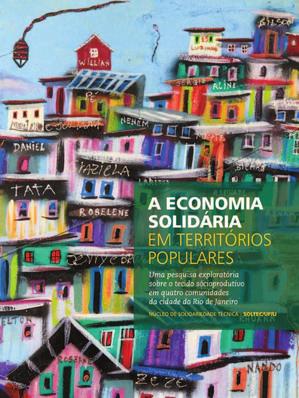
No início de março a jornalista Bruna Cerdeira do portal das UPPs me pediu uma entrevista sobre empreendedorismo e pacificação, devido a nosso projeto RioEcoSol. Quando liguei para saber se ela tinha recebido minha resposta, ela disse que não teve como usá-la, pois demorei muito (acho que demorei uns 3 dias pra responder) e que já tinha feito a matéria. Mas acho que minha resposta não agradou muito ela não… Pedi para ela me informar quando entrasse no ar, porém até hoje não tive resposta e não vi nada no site da upps. Assim, estou publicando minha resposta. Acho importante desmistificar um pouco essa visão acrítica que depois da pacificação aumentou o empreendedorismo nas favelas. Abaixo minhas respostas:

Repórter: Fui informada que o senhor foi o responsável por uma pesquisa sobre empreendedorismo em 4 comunidades pacificadas: Cidade de Deus, Complexo do Alemão, Manguinhos e Santa Marta.

Na verdade, não fui responsável por uma pesquisa sobre empreendedorismo em 4 comunidades pacificadas, mas sim pelo livro  resultante da pesquisa sobre economia solidária e economia popular nas 4 favelas (conhecida como RioEcoSol). Diferentemente da maior parte das abordagem de empreendedorismo, que prezam pela competição e pela individualidade dos empreendimentos (sob uma ótica capitalista de quanto mais lucro melhor), a economia solidária preza por uma relação de trabalho sem chefes e empregados (numa cooperativa todos os trabalhadores são donos do empreendimento) e numa lógica de cooperação e solidariedade entre os empreendimentos e entre esses e seu território.

De qualquer jeito, espero que possa te ajudar com sua pesquisa. Seguem minhas respostas.

1) Como a pacificação está ajudando a transformar as comunidades em ambientes favoráveis ao empreendedorismo e a fomentar o consumo dos produtos dos negócios locais pelos moradores?

O programa de pacificação ajudou na vida dos moradores e dos empreendimentos dessas favelas com a possibilidade de um transito mais livre no território e com uma diminuição de uma estigmatização negativa dessas favelas e dos empreendimentos localizados nelas (principalmente aqueles que vendem para pessoas de fora de suas favelas). Porém, com a repressão da polícia a diversas atividades culturais na favela (como no caso dos bailes funks), muitos empreendimentos relatam uma grande diminuição de suas vendas, pois essas atividades culturais geravam uma dinâmica econômica endógena. Outro problema é que muitos empreendimentos relatam que, com o programa de pacificação, muitos empreendimentos familiares vêm sofrendo coerção para se formalizarem (alguns empreendimentos populares, familiares, ou coletivos não tem capacidade para se formalizarem no momento).

Por fim, com o livre transito nesses territórios, a tendência é que os grandes empresários entrem nesses territórios acabando com todo o comércio local (assim como os de Barra/Jacarepaguá tem feito na Cidade de Deus, de botafogo e da zona sul estão fazendo no Santa Marta etc.). Existem vários exemplos de rádios comunitárias que foram fechadas depois da pacificação e de tvs comunitárias que fecharam pois as teves a cabo não tiveram interessem em colocar na grade. No alemão, também temos o exemplo de um empreendedor que comercializava internet (de forma regular e legal) antes da pacificação, mas que agora, com a entrada de velox, tem dificuldades para competir com essas grandes empresas. A pergunta seria então quais estratégias podem evitar a morte desses empreendimentos locais? Consideramos que só com políticas públicas e investimento do Estado pode-se evitar isso (e não com programas como pretendem casar a demanda desses territórios com o que o mercado pode ofertar). Uma política que deveria ser mais estimulado são os bancos comunitários e as moedas sociais. Isso porque, com a moeda social, por exemplo, você favorece a que se compre no comércio local, por conta do desconto.

2) Qual faixa etária (jovens, adultos) está se tornando a principal característica do empreendedorismo nas comunidades?

Todos os dados de nossa pesquisa são estáticos, então não podemos afirmar que é algo de agora ou uma tendência. Os dados detalhados estão no arquivo em anexo.

3) Que tipo de empreendimento mais cresce nessas 4 comunidades pacificadas e qual o perfil do empreendedor? (se tiver um dado mais geral, que englobe outras comunidades pacificadas)

Todos os dados de nossa pesquisa são estáticos, então não podemos afirmar que é algo de agora ou uma tendência. Os dados detalhados estão no arquivo em anexo.

4) Que cursos e/ou oficinas podem contribuir para a formação empresarial dos moradores com vocação para abrir seus próprios negócios?

Além de formações técnicas que possibilitem melhorar seus produtos e gerirem melhor seus empreendimentos, consideramos fundamental formações que desenvolvam a consciência crítica desses empreendedores, sob uma ótica de economia solidária, que permitam refletir seu empreendimento em relação a seu território. Sobre formação empresarial, não fizemos nenhuma pesquisa.

Indígenas ameaçam guerra para barrar hidrelétricas no rio Tapajós (Valor Econômico)

JC e-mail 4671, de 25 de Fevereiro de 2013.

Um grupo de líderes de aldeias localizadas no Pará e no norte do Mato Grosso esteve em Brasília para protestar contra ações de empresas na região

Não houve acordo. O governo teve uma pequena amostra, na semana passada, da resistência que enfrentará para levar adiante seu projeto de construção de hidrelétricas ao longo do rio Tapajós, uma região isolada da Amazônia onde vivem hoje cerca de 8 mil índios da etnia munduruku. Um grupo de líderes de aldeias localizadas no Pará e no norte do Mato Grosso, Estados que são cortados pelo rio, esteve em Brasília para protestar contra ações de empresas na região, que realizam levantamento de informações para preparar o licenciamento ambiental das usinas.

Os índios tiveram uma reunião com o ministro de Minas e Energia (MME), Edison Lobão. Na mesa, os projetos da hidrelétricas de São Luiz do Tapajós e de Jatobá, dois dos maiores projetos de geração previstos pelo governo. Lobão foi firme. Disse aos índios que o governo não vai abrir mãos das duas usinas e que eles precisam entender isso. Valter Cardeal, diretor da Eletrobras que também participou da discussão, tentou convencer os índios de que o negócio é viável e de que eles serão devidamente compensados pelos impactos. Os índios deixaram a sala.

Para o cacique Arnaldo Koba Munduruku, que lidera todos os povos indígenas da região do Tapajós, o resultado do encontro foi negativo. “Nosso povo não quer indenização, nem quer o dinheiro de usina. Nosso povo quer o rio como ele é”, disse Koba ao Valor. “Não vamos permitir que usinas ou até mesmo que estudos sejam feitos. Vamos unir nossa gente e vamos para o enfrentamento. O Tapajós não vai sofrer como sofre hoje o rio Xingu”, afirmou o líder indígena, referindo-se às complicações indígenas que envolvem o licenciamento e a construção da hidrelétrica de Belo Monte, em Altamira (PA).

Numa carta que foi entregue nas mãos do secretário-geral da Presidência, ministro Gilberto Carvalho, os índios pediram “que o governo brasileiro respeite a decisão do povo munduruku e desista de construir essas hidrelétricas”. No mesmo documento, os índios cobram agilidade na investigação da morte de Adenilson Kirixi Munduruku, que foi assassinado com três tiros em novembro do ano passado, na região do Teles Pires, rio localizado no norte do Mato Grosso e que forma o Tapajós, em sua confluência com o rio Juruena.

Os índios se negaram a assinar um documento apresentado pela Presidência, que previa compromissos a serem assumidos pelo governo, por entenderem que se tratava de uma consulta prévia já atrelada ao licenciamento das usinas do Tapajós. “Viemos até aqui para cobrar a punição pelo assassinato de nosso irmão, mas vimos que a intenção do governo era outra. Ele queria mesmo era tratar das usinas, mas não permitimos isso”, disse o líder indígena Waldelirio Manhuary Munduruku. “Não vamos nos ajoelhar. Não haverá usinas, nem estudos de usinas. Iremos até o fim nessa guerra.”

No balanço do Programa de Aceleração do Crescimento (PAC) divulgado na semana passada, o cronograma de São Luiz do Tapajós e de Jatobá estabelece o mês de setembro para conclusão dos estudos ambientais das usinas. O levantamento de informações na região começou a ser feito pela Eletrobras há pelo menos um ano e meio. Analistas ambientais e técnicos da estatal têm enfrentado resistências na região para colher informações dos moradores.

O grupo de empresas que o governo reuniu em agosto do ano passado para participar da elaboração dos estudos dá uma ideia do interesse energético que a União tem no Tapajós. Com a Eletrobras estão Cemig Geração e Transmissão, Copel Geração e Transmissão, GDF Suez Energy Latin America Participações, Endesa do Brasil e Neoenergia Investimentos.

Com as usinas de São Luiz e Jatobá, o governo quer adicionar 8.471 megawatts de potência à sua matriz energética. O custo ambiental disso seria a inundação de 1.368 quilômetros quadrados de floresta virgem, duas vezes e meia a inundação que será causada pela hidrelétrica de Belo Monte. O governo diz que é pouco e que, se forem implementadas todas as usinas previstas para a Amazônia, menos de 1% da floresta ficaria embaixo d”água.

(André Borges – Valor Econômico)

The Destruction of Conscience in the National Academy of Sciences (Counter Punch)

FEBRUARY 26, 2013

An Interview With Marshall Sahlins

by DAVID H. PRICE

Last Friday, esteemed University of Chicago anthropologist Marshall Sahlins formally resigned from the National Academy of Sciences (NAS), the United States’ most prestigious scientific society.

Sahlins states that he resigned because of his “objections to the election of [Napoleon] Chagnon, and to the military research projects of the Academy.” Sahlins was elected to the National Academy of Sciences in 1991.  He issued the below statement explaining his resignation:

“By the evidence of his own writings as well as the testimony of others, including Amazonian peoples and professional scholars of the region, Chagnon has done serious harm to the indigenous communities among whom he did research.  At the same time, his “scientific” claims about human evolution and the genetic selection for male violence–as in the notorious study he published in 1988 in Science–have proven to be shallow and baseless, much to the discredit of the anthropological discipline. At best, his election to the NAS was a large moral and intellectual blunder on the part of members of the Academy. So much so that my own participation in the Academy has become an embarrassment.

Nor do I wish to be a party to the aid, comfort, and support the NAS is giving to social science research on improving the combat performance of the US military, given the toll that military has taken on the blood, treasure, and happiness of American people, and the suffering it has imposed on other peoples in the unnecessary wars of this century.  I believe that the NAS, if it involves itself at all in related research, should be studying how to promote peace, not how to make war.”

Napoleon Chagnon rose to fame after his fieldwork among the Yanomami (also known as Yanomamo) in the rainforests of northeastern South America’s Orinoco Basin in the 1960s and 70s.  He wrote a bestselling ethnography used in introductory anthropology classes around the world, describing the Yanomami as “the fierce people” because of the high levels of intra- and inter-group warfare observed during his fieldwork, warfare that he would describe as innate and as representing humankind in some sort of imagined natural state.

Chagnon, is currently basking in the limelight of a national book tour, pitching a memoir (Nobel Savages) in which he castes the bulk of American anthropologists as soft-skulled anti-science postmodern cretins embroiled in a war against science.

The truth is that outside of the distortion field of the New York Times and a few other media vortexesthere is no “science war” raging in anthropology.  Instead the widespread rejection of Chagnon’s work among many anthropologists has everything to do with the low quality of his research.  On his blog, Anthropomics, anthropologist Jon Marks recently described Chagnon as an “incompetent anthropologist,” adding:

“Let me be clear about my use of the word “incompetent”.  His methods for collecting, analyzing and interpreting his data are outside the range of acceptable anthropological practices.  Yes, he saw the Yanomamo doing nasty things.  But when he concluded from his observations that the Yanomamo are innately and primordially “fierce”  he lost his anthropological credibility, because he had not demonstrated any such thing.   He has a right to his views, as creationists and racists have a right to theirs, but the evidence does not support the conclusion, which makes it scientifically incompetent.”

The widely shared rejection of Chagnon’s interpretations among anthropologists comes from the shoddy quality of his work and the sociobiological nature of his analysis, not with an opposition to science.

Among Chagnon’s most dogged critics was my dissertation chair, anthropologist Marvin Harris, himself an arch positivist and a staunch advocate of the scientific method, yet Harris rejected Chagnon and his sociobiological findings in fierce academic debates that lasted for decades, not because Harris was anti-science, but because Chagnon was a bad scientist (I should note that Harris and Sahlins also famously feuded over fundamental theoretical differences; yet both shared common ground objecting to the militarization of the discipline, and rejecting Chagnon’s sociobiological work).

I suppose if there really were battles within anthropology between imagined camps embracing and rejecting science, I would be about as firmly in the camp of science as anyone; but if such divisions actually existed, I would be no closer to accepting the validity and reliability (the hallmarks of good science) of Chagnon’s findings than those imagined to reject the foundations of science.

In 2000, there was of course a huge painful crisis within the American Anthropological Association following the publication of Patrick Tierney’s book Darkness in El Dorado, in which numerous accusations of exploitation (and worse) were leveled against Chagnon and other anthropologists working with the Yanomami (see Barbara Rose Johnston’s essay on the José Padilha’s film, Secrets of the Tribe). Without detailing all the twists and turns involved in establishing  the wreckage of Chagnon and the paucity of his claims, suffice it to say that the choice of offering one of the select seats in the National Academy of Sciences’ Section 51 to Dr. Chagnon is an affront to a broad range of anthropologists, be they self-identified as scientists or not.

Marshall Sahlins’ resignation is an heroic stand against the subversion of science to those claiming an innate nature of human violence, and a stand opposing the increasing militarization of science.  While Sahlins’ credentials as an activist opposing the militarization of knowledge are well established—he is widely recognized as the creator of the “teach-in,” organizing the February 1965 University of Michigan teach-in—it still must have been difficult for him to resign this prestigious position.

In late 1965 Sahlins traveled to Vietnam to learn firsthand about the war and the Americans fighting it, work that resulted in his seminal essay “The Destruction of Conscience in Vietnam.”   He became one of the clearest and most forceful anthropological voices speaking out against efforts (in the 1960s and 70s, and in again in post-9/11 America) to militarize anthropology.

In 2009 I was part of a conference at the University of Chicago critically examining renewed efforts by U.S. military and intelligence agencies to use anthropological data for counterinsurgency projects.  Sahlins’ paper at the conference argued that, “in Vietnam, the famous anti-insurgency strategy was search and destroy; here it is research and destroy.  One might think it good news that the military’s appropriation of anthropological theory is incoherent, simplistic and outmoded – not to mention tedious – even as its ethnographic protocols for learning the local society and culture amount to unworkable fantasies. ”

Yesterday, Sahlins sent me an email that had been circulated to NAS Section 51 (Anthropology) members, announcing two new “consensus projects” under sponsorship of the Army Research Institute.  The first project examined “The Context of Military Environments: Social and Organizational Factors,”  the second, “Measuring Human Capabilities: Performance Potential of Individuals and Collectives.”   Reading the announcement of these projects forwarded by Sahlins, it is apparent that the military wants the help of social scientists who can streamline military operations, using social science and social engineering to enable interchangeable units of people working on military projects to smoothly interface.  This seems to be increasingly becoming the role Americans see for anthropologists and other social scientists: that of military facilitator.

Below is the exchange, I had with Sahlins yesterday discussing his resignation, Chagnon’s election to the National Academy of Sciences, and the Academy’s links to military projects.

Price:  How has Chagnon so successfully turned numerous attacks on his ethically troubling research and scientifically questionable methods and findings into what is widely seen as an attack on science itself?

Sahlins: There has been no address of the issues on Chagnon’s part, notably of the criticism of his supposed empirical results, as in the 1988 Science article, and the numerous criticisms from Amazonian anthropologists of his shallow ethnography and villainously distorted portrayal of Yanomami.  These Cro-Chagnon scientists simply refuse to discuss the facts of the ethnographic case.  Instead they issue ad hominem attacks–before it was against the Marxists, now it is the ‘fuzzy-headed humanists.’ Meanwhile they try to make it an ideological anti-science persecution–again ironically as a diversion from discussing the empirical findings.  Meanwhile the serious harm, bodily and emotionally, inflicted on the Yanomami, plus the reckless instigation of war by his field methods, are completely ignored in the name of science. Research and destroy, as I called the method. A total moral copout.

Price: Most of the publicity surrounding your resignation from the National Academy of Sciences focuses either exclusively on Napoleon Chagnon’s election to the Association, or on the supposed “science wars” in anthropology, while little media attention has focused on your statements opposing the NAS’s increasing links to military projects.   What were the reactions within NAS Section 51 to the October 2012 call to members of the Academy to conduct research aimed at improving the military’s mission effectiveness?

Sahlins: The National Association of Science would not itself do the war research. It would rather enlist recruits from its sections–as in the section 51 memos–and probably thus participate in the vetting of reports before publication.  The National Research Council organizes the actual research, obviously in collaboration with the NAS. Here is another tentacle of the militarization of anthropology and other social sciences, of which the Human Terrain Systems is a familiar example. This one as insidious as it is perfidious.

Price: Was there any internal dialogue between members of NAS Section 51 when these calls for these new Army Research Institute funded projects were issued?

Sahlins: I was not privy to any correspondence, whether to the Section officers or between the fellows, if there was any–which I don’t know.

Price: What, if any reaction have you had from other NAS members?

Sahlins: Virtually none. One said I was always opposed to sociobiology

Price: To combine themes embedded in Chagnon’s claims of human nature, and the National Academy of Sciences supporting to social science for American military projects; can you comment on the role of science and scientific societies in a culture as centrally dominated by military culture as ours?

Sahlins: There is a paragraph or two in my pamphlet on The Western Illusion of Human Nature, of which I have no copy on hand, which cites Rumsfeld to the effect (paraphrasing Full Metal Jacket) that inside every Middle eastern Muslim there’s an American ready to come out, a self-interested freedom loving American, and we just have to force it out or force out the demons who are perpetrating other ideas [see page 42 of Sahlins; The Western Illusions of Human Nature].  Isn’t American global policy, especially neo-con policy, based on the confusion of capitalist greed and human nature? Just got to liberate them from their mistaken, externally imposed ideologies. For the alternative see the above mentioned pamphlet on the one true universal, kinship, and the little book I published last month: What Kinship Is–And Is Not.

Price: You mention a desire to shift funding streams from those offering military support, to those supporting peace.  Do you have any insight on how we can work to achieve this shift?

Sahlins:  I have not thought about it, probably because the idea that the National Academy of Sciences would so such a thing is essentially unthinkable today.

There is a rising international response supporting Sahlins’ stance.  Marshall shared with me a message he received form Professor, Eduardo Viveiros de Castro, of the National Museum, Rio de Janeiro, in which de Castro wrote,

“Chagnon’s writings on the Yanomami of Amazonia have contributed powerfully to reinforce the worst prejudices against this indigenous people, who certainly do not need the kind of stereotyping pseudo-scientific anthropology Chagnon has chosen to pursue at their cost. The Yanomami are anything but the nasty, callous sociobiological robots Chagnon makes them look – projecting, in all likelihood, his perception of his own society (or personality) onto the Yanomami. They are an indigenous people who have managed, against all odds, to survive in their traditional ways in an Amazonia increasingly threatened by social and environmental destruction. Their culture is original, robust and inventive; their society is infinitely less “violent” than Brazilian or American societies.

Virtually all anthropologists who have worked with the Yanomami, many of them with far larger field experience with this people than Chagnon, find his research methods objectionable (to put it mildly) and his ethnographic characterizations fantastic. Chagnon’s election to the NAS does not do honor to American science nor to anthropology as a discipline, and it also bodes ill to the Yanomami. As far as I am concerned, I deem Chagnon an enemy of Amazonian Indians. I can only thank Prof. Sahlins for his courageous and firm position in support of the Yanomami and of anthropological science.”

We are left to wonder what is to become of science, whether practiced with a capital (at times blind) “S” or a lower case inquisitive variety, when those questioning some its practices, misapplications and outcomes are increasingly marginalized, while those whose findings align with our broader cultural values of warfare are embraced.  The NAS’s rallying around such a divisive figure as Chagnon, demonizing his critics, claiming they are attacking not his practices and theories, but science itself damages the credibility of these scientists.  It is unfortunate that the National Academy of Sciences has backed itself into this corner.

The dynamics of such divisiveness are not unique to this small segment of the scientific community. In his 1966 essay on, “The Destruction of Conscience in Vietnam,” Sahlins argued that to continue wage the war, America had to destroy its own conscience—that facing those destroyed by our actions was too much for the nation to otherwise bare, writing: “Conscience must be destroyed: it has to end at the barrel of a gun, it cannot extend to the bullet.  So all peripheral rationales fade into the background.  It becomes a war of transcendent purpose, and in such a war all efforts on the side of Good are virtuous, and all deaths unfortunate necessary.  The end justifies the means.”

It is a tragic state of affairs when good people of conscience see the only acceptable act before them to be that of resignation; but sometimes the choice of disassociation is the strongest statement one can courageously make.

David Price a professor of anthropology at Saint Martin’s University in Lacey, Washington. He is the author of Weaponizing Anthropology: Social Science in Service of the Militarized State published by CounterPunch Books.

‘Noble Savages’: Chagnon’s new book triggers resignation and protests (Survival International)

http://www.survivalinternational.org/news/8997

26 February 2013

Davi Kopenawa, Yanomami spokesperson and shaman, has spoken out against Napoleon Chagnon's new book 'Noble Savages'.

Davi Kopenawa, Yanomami spokesperson and shaman, has spoken out against Napoleon Chagnon’s new book ‘Noble Savages’. © Fiona Watson/Survival

A new book by controversial American anthropologist Napoleon Chagnon has triggered a wave of protests among experts and Yanomami Indians:

  • Marshall Sahlins, ‘the world’s most respected anthropologist alive today’, has resigned from the US National Academy of Sciences in protest at Chagnon’s election to the Academy. Sahlins previously wrote a devastating critique of Chagnon’s work in the Washington Post.
  • Davi Kopenawa, a spokesman for Brazil’s Yanomami and President of the Yanomami association Hutukara, has spoken out about Chagnon’s work: ‘[Chagnon] said about us, ‘The Yanomami are savages!’ He teaches false things to young students. ‘Look, the Yanomami kill each other because of women.’ He keeps on saying this. But what do his leaders do? I believe that some years ago his leader waged a huge war – they killed thousands of children, they killed thousands of girls and boys. These big men killed almost everything. These are the fierce people, the true fierce people. They throw bombs, fire machine guns and finish off with the Earth. We don’t do this…’
  • A large group of anthropologists who have each worked with the Yanomami for many years have issued a statement challenging Chagnon’s assessment of the tribe as ‘fierce’ and ‘violent’. They describe the Yanomami as ‘generally peaceable.’
  • Survival International’s Director Stephen Corry has said, ’Chagnon’s work is frequently used by writers, such as Jared Diamond and Steven Pinker, who want to portray tribal peoples as ‘brutal savages’ – far more violent than ‘us’. But none of them acknowledge that his central findings about Yanomami ‘violence’ have long been discredited.’

Napoleon Chagnon’s autobiography ‘Noble Savages: My Life Among Two Dangerous Tribes – the Yanomamö and the Anthropologists’, has just been published. His 1968 book ‘Yanomamö: The Fierce People’ portrayed the Yanomami as ‘sly, aggressive and intimidating’, and claimed they ‘live in a state of chronic warfare’. It is still a standard work in undergraduate anthropology.

The Yanomami live in Brazil and Venezuela and are the largest relatively isolated tribe in South America. Their territory is protected by law, but illegal goldminers and ranchers continue to invade their land, destroying their forest and spreading diseases which in the 1980s killed one out of five Brazilian Yanomami.

Napoleon Chagnon's view that the Yanomami are 'sly, aggressive and intimidating' and that they 'live in a state of chronic warfare' has been widely discredited.Napoleon Chagnon’s view that the Yanomami are ‘sly, aggressive and intimidating’ and that they ‘live in a state of chronic warfare’ has been widely discredited. © Fiona Watson/Survival

Chagnon’s work has had far-reaching consequences for the rights of the Yanomami. In the late 1970s, Brazil’s military dictatorship, which was refusing to demarcate the Yanomami territory, was clearly influenced by the characterization of the Yanomami as hostile to each other and in the 1990s, the UK government refused funding for an education project with the Yanomami, saying that any project with the tribe should work on ‘reducing violence’.

Most recently, Chagnon’s work was cited in Jared Diamond’s highly controversial book ‘The World Until Yesterday’, in which he states that most tribal peoples, including the Yanomami, are ’trapped in cycles of violence and warfare’ and calls for the imposition of state control in order to bring them peace.

Survival International’s Director Stephen Corry said today, ‘The greatest tragedy in this story is that the real Yanomami have largely been written out of it, as the media have chosen to focus only on the salacious details of the debate that rages between anthropologists or on Chagnon’s disputed characterizations. In fact, Yanomamö: The Fierce People had disastrous repercussions both for the Yanomami and tribal peoples in general. There’s no doubt it’s been used against them and it has brought the 19th century myth of the ‘Brutal Savage’ back into mainstream thinking.’

Note to editors:
The full statements and additional information about the controversy can be found here.

Janet Chernela Interview with Davi Kopenawa (Affinities Blog)

Published 23 FEBRUARY 2013

Janet Chernela Interview with Davi Kopenawa
Recorded in Demini, Parima Mountain Range, Brazil
June 7, 2001

This interview was conducted June 7, 2001, in the Yanomami village of Demini, Parima Highlands, Brazil. I had known Davi, who is a recognized spokesperson on indigenous affairs, through prior meetings in New York and in Brazil. Arrangements for the interview were made through CCPY, a Brazilian non-governmental organization working on behalf of the Yanomami. In this I relied on long-term contacts with CCPY and their abilities to reach Davi by radio. (Individuals who provided assistance included Marcos Wesley de Oliveira, Bruce Albert, Gale Gomez, and Ari Weidenshadt.) Although Davi now lives in Demini, he is from Totoobi, where, as a child of 9 he was vaccinated by the Neel team. Davi’s comments about the period of the Neel collections must be understood as childhood recollections. In the measles epidemic of 1968 Davi lost his mother and siblings. He and his older sister are the only remaining members of his immediate family. Both recall having supplied blood to the researchers. As you will see in the interview, they are not concerned with the whereabouts of their own blood as they are the whereabouts of the blood of their deceased relatives.

I invited Davi to participate in what I call “reciprocal interviewing” — that is, he could interview me as I could interview him. You will see that he exercises his privilege toward the end of the interview. He understood that he was invited to speak to the American Anthropological Assocation in this interview, and refers to the Association in the course of his talk.

Davi and I spoke in Portuguese. The interview was recorded on audio and video-tape, and later translated from tapes into English. Paragraphs, titles, and bracketed comments were added. Since Portuguese is not first language to either of us, it is not clear that the word choices were ideal. In some cases I included Davi’s choice of Portuguese term.

The publication of Patrick Tierney’s Darkness in El Dorado is dated Jan. 17, 2002; an English-language copy was circulating on the internet about six months prior to its publication. At the time of the interview no Spanish or Portuguese version yet existed. A number of anthropologists had discussed the Tierney book with Davi before my arrival. Among these were Bruce Albert, Leda Martins, and an anthropologist whose name Davi could not recall. That anthropologist may have been Javier Carrera Rubio, a Venezuelan anthropologist who worked briefly for CCPY. I was accompanied in this interview by Ari Weidenshadt of CCPY, who participated actively in the discussion. For an understanding of events in 1968 the interview should be evaluated in light of documents that have been released since it was conducted. The words of Davi Yanomami, however, continue to have resonance beyond the past to include the enterprise of anthropological research, in general. The implications for globalization, cultural rights, and morality, are far-reaching.

“RECIPRICAL INTERVIEWS”

While walking to the shabono, a circular, thatch-roofed communal dwelling, I can overhear Ari speaking to Davi in the distance. Through my tape-recorder, I first hear Davi:

Davi: “hunt, tapir, monkey…bringing relatives together…call together people to kill the guy who killed own member…remembering, crying, everyone is angry..ai…Everyone goes there, they paint themselves. Prepare arrows. Get together alot of people — 50 Yanomami. They go to another shabono. Bring food, arrows, sleep in the forest. Next day get closer, and sleep close to the shabono. So they know..they will be avenged. At dawn, the enemy approaches. While people are sleeping inside, they wait…then when people go out to urinate — tchong! They strike with arrows. Arrows. Everyone wakes up, grabs his bow and arrows [and flees]. Everyone is running. They run out another exit, shootong as they go. There are three types of fighting. This is the third. THIS is war.

Janet: Does this actually happen?

Davi: Yes.

Janet: Did it happen in your lifetime?

Davi: Yes. I know about it because when I was small my uncle carried out alot of wars like this.

Janet: So it no longer occurs?

Davi: No, no one does this anymore. The warriors died. We are their children and we don’t make war. You can’t fight any more.

Janet: Is that group in Surucucú fighting?

Davi: Yes, they are fighting there. Because there they killed alot of people — they killed the headman of Surucucú so they [group from Surucucú] went over to Moxavi and killed the headman over there. The headman of Surucucú was a valiant warrior and a hard worker. He was an honest person. So his children avenged his death and killed the headman of Moxavi. Now it’s calm.

Janet: Where are the children today?

Davi: They are over there in Surucucú — Xerimú, Vinice, Hakoma, Tarimú Davi’s comments about the period of the Neel collections must be understood as the recollections of a child at the time., they are in Surucucú — enemies of Moxavi. Three groups are friends: Piris, Surucucú, Arawapu.

Janet: How many people live in Surucucú Davi’s comments about the period of the Neel collections must be understood as the recollections of a child at the time?

Davi: Thirty-something people, divided. The group that is making war is four hours walk away. They stopped fighting — they had to go back to work in their gardens. Food began to run out — there were no more bananas because they were afraid to leave the house to work in the gardens. They were afraid that people from Moxavi would attack. They are using fire arms over there at Surucucú [army post in Brazil near Venezuelan border].

Janet: How did they get these fire arms?

Davi: They got them from the goldminers who invaded our land.

Janet: Are there Yanomami in the army base at Surucucú Davi’s comments about the period of the Neel collections must be understood as the recollections of a child at the time?

Davi: No. In the beginning they [government] wanted that. They called Yanomami to serve in the army base. But no. Life in the armed forces isn’t a good thing. It’s very bad. It’s another kind of work — another fight. So they went back. They continue to be Yanomami. You must be who you are, the way you are. If not, you will suffer alot. It will be wrong. You will do many things wrong.

Janet: In Homoxi do they have war?

Davi: I don’t know. The Escurimuteri were allies of the Wahakuwu and they are enemies of people of Thirei and Homoxi [villages I visited in 2000].

Janet: Do people of Thirei use shotguns?

Davi: Yes.

Janet: From where did they get them?

Davi: From the miners.

Formal Interview: Davi on the book Darkness in El Dorado by Patrick Tierney

Davi: An anthropologist entered Yanomami lands in Venezuela. Many people know about this. …This book told stories about the Yanomami and it spread everywhere. So I remembered it when our friend [unnamed anthropologist] mentioned his name. When that young man spoke the name I remembered. We called him Waru. He was over there in Hasabuiteri… Shamatari…A few people — Brazilian anthropologists — are asking me what I think about this.

Anthropologists who enter the Yanomami area — whether Brazil or Venezuela — should speak with the people first to establish friendships; speak to the headman to ask for permissions; arrange money for flights. Because nabu (the white) doesn’t travel without money. Nabu doesn’t travel by land. Only by plane. It’s very far. So he’s very far away, this anthropologist who worked among the Shamatari. Those people are different.

He arrived, like you, making conversation, taking photos, asking about what he saw. He arrived as a friend, without any fighting. But he had a secret. You can sleep in the shabono, take photos, I’m not saying no. It’s part of getting to know us.
But, later what happened was this. After one or two months he started to learn our language. Then he started to ask questions, “Where did we come from, who brought us here?” And the Yanomami answered, we are from right here! This is our land! This is where Omam placed us. This is our land. Then the anthropologist wanted to learn our language. I know a little Shamatari, but not much. So, he stayed there in the shabono, and he thought it was beautiful. He thanked the headman and he took some things with him. He brought pans, knives, machetes, axes. And so he arrived ready, ready to trick the Yanomami. This is how the story goes. I was small at the time…[pointing to a boy] like this..about nine. I remember. I remember when people from there came to our shabono. They said, “A white man is living over there. He speaks our language, he brings presents, hammocks.” They said that he was good, he was generous. He paid people in trade when he took photos, when he made interviews, [or] wrote in Portuguese [likely Spanish], English, and Yanomami, and taperecording too. But he didn’t say anything to me. [tape changes here]

An anthropologist should really help, as a friend. He shouldn’t deceive. He should defend…defend him when he is sick, and defend the land as well…saying “You should not come here — the Yanomami are sick.” If a Yanomami gets a cold, he can die. But he didn’t help with this. The first thing that interested him was our language. So today, we are hearing — other Yanomami are talking about it — people from Papiu, Piri, and here. People of Tootobi — my brothers-in-law — they also are talking about the American anthropologist who worked in Hasabuiteri. He wrote a book. When people made a feast and afterward a fight happened, the anthropologist took alot of photos and he also taped it. This is how it began. The anthropologist began to lose his fear — he became fearless. When he first arrived he was afraid. Then he developed courage. He wanted to show that he was brave. If the Yanomami could beat him, he could beat them. This is what the people in Tootobi told us. I am here in Watorei, but I am from Tootobi. I am here to help these people. So I knew him. He arrived speaking Yanomami. People thought he was Yanomami. There was also a missionary. He didn’t help either. They were friends. That’s how it was. He accompanied the Yanomami in their feasts…taking [the hallucinogen] ebena, and after, at the end of the feast, the Yanomami fought. They beat on one anothers’ chests with a stone, breaking the skin. This anthropologist took photos. And so he saved it, he “kept” the fight. So, after, when the fight was over, and the Yanomami lay down in their hammocks, in pain, the anthropologist recorded it all on paper. He noted it all on paper. He wrote what he saw, he wrote that the Yanomami fought. He thought it was war. This isn’t war, no! But he wrote without asking the people in the community. You have to ask first. He should have asked, “Yanomami, why are you fighting? You are fighting, hitting your very brother.” He should have helped us to stop fighting. But he didn’t. He’s no good.

I will explain.

The nabu [whites] think that every type of fighting is war. But there are three kinds of fighting [as follows].

Ha’ati kayu [titles were added later]: the chest fight to relieve anger. Let’s say your relatives take a woman. So you get angry. The Yanomami talk and form a group to fight against the other group that took the woman. So they make a feast. They call him [the relative that took the woman.] They hold him and use this club [gesturing to indicate a length about a foot long] to hit him on the chest. This club-striking is not war. It’s fighting. So, let’s say this guy took my woman. I become his enemy. So I hit him here [pointing to chest]. I want to cause him pain. He can hit me too. This club is not war. It’s to get rid of a mess in the community. Then there’s the headman. What does the headman do? He says, “OK, you have already fought. Now stop this.” So they stop. This fight doesn’t kill anyone.

Xeyu. There’s another kind of fight, Xeyu. Let’s say I have a friend who speaks badly of me. He might say I’m a coward, or he might say I’m no good. So he has to fight my relatives, my family. I have ten brothers. So I can decide whether he’s a man, whether he has courage. So we call friends from other shabonos and set a date. We go into the forest and make a small clearing for the fight, so people can see that we are angry. We take this weapon — it’s a long stick — about 10 ms long. So everyone is there. I’m here, and the enemy is there. Everyone is ready to hit. When I hit the enemy he hits me as well. My brother hits his brother and his brother hits mine back. This is how we fight [two lines with people fighting in pairs].

Janet: How does it end?

Davi: When everyone is covered with blood — heads bloodied, everyone beaten. So the headman says, ‘OK, enough. We’ve already shed blood. So, it’s over. This isn’t war either, no.

Janet: It’s not war. But it includes one group lined up on one side, and another on the other — yes?

Davi: Yes. One group of brothers or the members of a shabono in one line and the other brothers in another line.

Davi: Then there is another kind of fight with a club that’s about a meter long — Genei has one. Everyone gathers and stands in the center of the shabono. The enemy comes over. But again the headman is there. He says, ‘you can’t hit here, you can’t hit here [gesturing] — you can only hit here — in the middle of the head. It doesn’t kill anyone.

Yaimu, Noataiyu, Nakayu, Wainakayu, Bulayu. But if you hit in the wrong place, he can die. So, if this happens, a brother will grab an arrow and go after the one who killed his brother. They will both die — the first with club, the second with arrow. So, what happens? The relatives of the man killed with the club carry the body to the shabono. They take it there. They put it in the fire, burn it, gather the ashes and remaining bones and pound them into powder. They put the ash in a calabash bowl. His father, his mother, his brothers, all of his relatives sit there at the edge of the fire, crying. So the warrior thinks. If they have ten warriors, all angry, they are going to avenge the death. So the father may say, “Look, they killed my son with a club, not with arrow.” He can stop the fighting right there and then. Or, he can say, “Now we will kill them with arrows.” Then they would get all their relatives and friends from the shabono and nearby communities. They make a large feast, bringing everyone together. We call this Yaimu, Noataiyu, Nakayu, Wainakayu, Bulayu. Then they get manioc bread [beiju] and offer food to everyone. Everyone is friends — the enemies are way over there. Then they leave together. The women stay in the house, and the warriors leave to make war. They cover themselves in black paint. This is war. This is war: Waihu, Ni’aiyu. Waihu, Ni’aiyu, Niaplayu, Niyu aiyu. Then, at about nine or ten o’clock at night they start walking. These warriors are going to sleep at about 5 AM. In the forest they make a small lean-to of saplings. The next day they leave again. They are nearing the enemy. After tomorrow they are there. They don’t arrive in the open — they sneak up on the shabono. They move in closer about 3 or 4 in the morning. The enemies are sleeping in the shabono. The warriors arrive just as the sun is coming up. This is ‘fighting with arrows’ — Waihu, Ni’aiyu, Niaplayu, Niyu aiyu. These are war — war with arrows, to kill. He [the enemy] can be brother, cousin, uncle.

Janet: Is it vengeance?

Davi: It is vengeance.

Davi: So this Chagnon, he was there; he accompanied it. He took photographs, he recorded on tape, and he wrote on paper. He wrote down the day, the time, the name of the shabono, the name of the local descent group. He put down these names. But he didn’t ask us. So we are angry. He worked. He said that the Yanomami are no good, that the Yanomami are ferocious. So this story, he made this story. He took it to the United States. He had a friend who published it. It was liked. His students thought that he was a courageous man, an honest man, with important experience.

Janet: What is the word for courageous?

Davi: Waiteri. He is waiteri because he was there. He is waiteri because he was giving orders. He ordered the Yanomami to fight among themselves. He paid with pans, machetes, knives, fishooks.

Janet: Is this the truth or this is what is being said?

Davi: It’s the truth.

Janet: He paid directly or indirectly?

Davi: No, he didn’t pay directly. Only a small part. The life of the indian that dies is very expensive. But he paid little. He made them fight more to improve his work. The Yanomami didn’t know his secret.

Janet: But why did he want to make the Yanomami fight?

Davi: To make his book. To make a story about fighting among the Yanomami. He shouldn’t show the fights of the others. The Yanomami did not authorize this. He did it in the United States. He thought it would be important for him. He became famous. He is speaking badly about us. He is saying that the Yanomami are fierce, that they fight alot, that they are no good. That the Yanomami fight over women.

Janet: It is not because of women.

Davi: It’s not over women that we go to war.

Janet: It’s not over women that one goes to war with arrows?

Davi: It’s not over women that we go to war with arrows. It is because of male warriors that kill other male warriors.
Janet: to avenge the death?

Davi: [Yes,] to avenge. I no longer think that the Yanomami should authorize every anthropologist who appears. Because these books come out in public.

I ask if he has message.

Davi: I don’t know the anthropologists of the United States. If they want to help, if …you whites use the judicial process ..
Janet: Would you like to send a message to the American Anthropological Association?

DAVI’S MESSAGE TO THE AMERICAN ANTHROPOLOGICAL ASSOCIATION

Davi: I would like to speak to the young generation of anthropologists. Not to the old ones who have already studied and think in the old ways. I want to speak to the anthropologists who love nature, who like indigenous people — who favor the planet earth and indigenous peoples. This I would like. This is new, clean, thinking. To write a new book that anyone would like, instead of speaking badly about indigenous peoples. There must be born a new anthropologist who is in favor of a new future. And the message I have for him is to work with great care. If a young anthropologist enters here in Brazil or Venezuela, he should work like a friend. Arrive here in the shabono. He should say, “I am an anthropologist; I would like to learn your language. After, I would like to teach you.” Tell us something of the world of the whites. The world of the whites is not good. It is good, but it is not all good. There are good people and bad people. So, “I am an anthropologist here in the shabono, defending your rights and your land, your culture, your language, don’t fight among yourselves, don’t kill your own relatives.”

We already have an enemy among us — it is disease. This enemy kills indeed. It is disease that kills. We are all enemies of disease. So the anthropologist can bring good messages to the Indian. They can understand what we are doing, we can understand what they are doing. We can throw out ideas to defend the Yanomami, even by helping the Yanomami understand the ways of the whites to protect ourselves. They cannot speak bad of the Yanomami. They can say, “The Yanomami are there in the forest. Let’s defend them. Let’s not allow invasions. Let’s not let them die of disease.” But not to use the name of the indian to gain money. The name of the Indian is more valuable than paper. The soul of the Indian that you capture in your image is more expensive than the camera with which you shoot it. You have to work calmly. You have to work the way nature works. You see how nature works. It rains a little. The rain stops. The world clears. This is how you have to work, you anthropologists of the United States.

I never studied anything. But I am a shaman, hekura. So I have a capacity to speak in Yanomami and to speak in Portuguese. But I can’t remember all the Portuguese words.

Ari: You have to be clear, this is important.

Davi: To repeat, Chagnon is not a good friend of our relatives. He lived there, but he acted against other relatives. He had alot of pans. I remember the pans. Our relatives brought them from there. They were big and they were shallow. He bought them in Venezuela. When he arrived [at the village], and called everyone together, he said, [Yanomami]…”That shabono, three or four shabonos,” as if it were a ball game. “Whoever is the most courageous will earn more pans. If you kill ten more people I will pay more. If you kill only two, I will pay less.” Because the pans came from there. They arrived at Wayupteri, Wayukupteri, and Tootobi. Our relatives came from Wayupteri and said, “This Chagnon is very good. He gives us alot of utensils. He is giving us pans because we fight alot.”

Janet: They killed them and they died?

Davi: Yes. Because they used poison on the point of the arrow. This isn’t good. This kills. Children cried; fathers, mothers, cried. Only Chagnon was happy. Because in his book he says we are fierce. We are garbage. The book says this; I saw it. I have the book. He earned a name there, Watupari. It means king vulture — that eats decaying meat. We use this name for people who give alot of orders. He smells the indians and decides where he will land on the earth. He ordered the Yanomami to fight. He never spoke about what he was doing.

Davi: And, the blood. If he had been our friend he would not have helped the doctor of the United States. He would have said, you can go to the Yanomami. The Yanomami don’t kill anyone — only when you order them to. Chagnon brought the doctors there, he interpreted because the Yanomami don’t speak English. When the doctor requested something he translated it. So when the doctor wanted to take blood, Chagnon translated it. But he didn’t explain the secret. We didn’t know either — no one understood the purpose of giving blood; no one knew what the blood had inside it. …

After, the missionaries who lived in Totoobi spoke to my uncle, my father-in-law. He said, “Look, this doctor would like to take your blood; will you permit it?” And the Yanomami said, “Yes.” He agreed because he would receive pans — pans, machetes.

Janet: But he didn’t explain why?

Davi: The Yanomami was just supposed to give blood and stand around looking. He didn’t talk about malaria, flu, tuberculosis, or dysentery. He said nothing about these things. But he took alot of blood. He even took my blood. With a big bottle like this. He put the needle here [pressing the veins of his inner arm]; put it here, the rubber tube over here. He took alot! I was about nine or ten. He arrived there in Totoobi with the doctor. Chagnon translated. The missionaries, Protestants, lived there in Totoobi. They camped there. They slept there. And they ordered us to call other relatives: there were three shabonos. They called everyone together. Husband, wife, and children, altogether. They always took the blood of one family together. They took my mother’s blood. They took my uncle’s blood. My father had already died. And me. And my sister. She remembers it too. It was a bottle — a big one — like this. He put a needle in your arm and the blood came out. He paid with matihitu– machete, fishhooks, knives. The doctor asked him to speak for him. He translated. He would say, “Look, this doctor wants you to allow him to take your blood.” And the Yanomami understood and allowed it. The missionaries who lived there hardly helped. They were mimahodi, innocents.

Janet: The law controls this now.

Davi: Nobody can do this anymore. So now we are asking about this blood that was taken from us without explanation, without saying anything, without the results. We want to know the findings. What did they find in the blood — information regarding disease? What was good? Our relatives whose blood was taken are now dead. My mother is dead; our uncles, our relatives have died. But their blood is in the United States. But some relatives are still alive. Those survivors are wondering — “What have the doctors that are studying our blood found? What do they think? Will they send us a message? Will they ask authorization to study and look at our blood?” I think that Yanomami blood is O positive. Is it useful in their bodies? If that’s the case, and our blood is good for their bodies — then they’ll have to pay. If it helped cure a disease over there, then they should compensate us. If they don’t want to pay, then they should consider returning our blood. To return our blood for our terahonomi. If he doesn’t want to return anything, then lawyers will have to resolve the issue. I am trying to think of a word that whites do…sue. If he doesn’t want to pay, then we should sue. If he doesn’t want a suit, then he should pay. Whoever wants to use it, can use it. But they’ll have to pay. It’s not their blood. We’re asking for our blood back. If they are going to use our blood then they have to pay us.

Janet: I don’t know where it is. It may be in a university.

Davi: The blood of the Yanomami can’t stay in the United States. It can’t. It’s not their blood.

Janet: So this is a request for those who have stored the blood?

Davi: I am speaking to them. You take this recording to them. You should explain this to them. You should ask them, “What do you Nabu think?” In those days no one knew anything. Even I didn’t know anything. But now I am wanting to return to the issue. My mother gave blood. Now my mother is dead. Her blood is over there. Whatever is of the dead must be destroyed. Our customs is that when the Yanomami die, we destroy everything. To keep it, in a freezer, is not a good thing. He will get sick. He should return the Yanomami blood; if he doesn’t, he [the doctor] and his children will become ill; they will suffer.

Janet: Were there repercussions in the area of medical services after this book came out?

Davi: No. FUNAI used to bring in vaccines. When they stopped the government health agency, FUNASA, took over. Now it’s [the NGO] URIHI. They have ten posts in the region and bring vaccines to all the villages. Each post has an employee.

Janet: Are these services only on the Brazilian side of the border?

Davi: Only in Brazil.

Janet: Is that why Yanomami from Venezuela frequent the URIHI posts?

Davi: Yes. Here we have a chief. The president of Brazil. He is bad, but he is also good. He provides a little money for us to get medicines. He provides airplanes and nurses to bring vaccinations and treatments from Boa Vista all the way here. The Brazilian government is now helping — somewhat. It’s not very much, but it is something. We in Brazil are very concerned about our Venezuelan relatives. Because over there people are dying — many people — from malaria, flu.

Ari: I am talking about the epidemic of measles in 1968. I am asking Davi if this began before or after the arrival of Neel and Chagnon.

Davi: I think it began before their arrival. Many were dying. After they took blood, many died. So this missionary, Kitt, went to Manaus. He went to Manaus and there his daughter became ill with measles. She picked up measles in Manaus. At first they didn’t know it was measles. They took a plane from Manaus to Boa Vista and from there to Totoobi. She arrived sick there, all three — father, mother and child. Then they realized that it was measles. So they asked us to please stay away from them. He said, “If you get measles you will all die. Please stay far away.” They had no vaccine in those days. A Yanomami entered to greet her and he ordered the Yanomami to leave. But he had already caught it. So then the missionary spoke to us all, saying, “Look, you can’t come to our house because my daughter is ill with measles. Stay in your house.” It didn’t accomplish anything. The disease spread. It went to the shabono. Everyone began to get sick, and to die. Three nearby shabonos — each of them with people ill and dying. My uncle was the first to die. Then my mother died. Another sister, uncle, cousin, nephew. Many died. I was very sick but I didn’t die. I think Omam protected me to give this testimony. My sister and I remained.

Janet: Your uncle died, your nephew, your mother…

Davi: uncle, nephew, mother, relatives…So, later [when the road opened], we died also. This place was part of Catrimani. When the road [BR 210, Perimetral Norte] was open, there were MANY people here. Most died then of measles. Only a few survived [he recalls the names of the survivors] — only ten men survived. I was here [working with FUNAI at the time], we brought vaccines for the measles epidemic then. These things happened in our land…FUNAI didn’t take care of us before the road opened.

Janet: What years are we discussing?

Davi: 1976, no 1975.

Ari: The road went from the Wai Wai to the mission at Catrimani.

Davi: They had roads BR 210-215.

Ari: After it was closed the forest reclaimed the road.

Janet: When was it closed?

Davi: After the invasion of the garimpeiros.

Janet: Did the garimpeiros come in this far by road?

Davi: Yes. We would try to stop them. I once got everyone together to go to the road with bows and arrows to block the entrance. I said, this isn’t a place for miners. We won’t allow it. I said if you want to mine, it had better be far from here, because if you stay here you will die here. Our warriors are angry. So they left. I invented all that so they would leave and they did. So they passed by. There were more than 150 — more people than we had.

Janet: Is there a word for “warrior” in Yanomami?

Davi: Yes, waiteri.

Janet: Waiteri means warrior.

Davi: Yes; waiteri is courageous, brave. Those that aren’t are horebu.

Janet: And that means..?

Davi: Scared, fearful, weak.

Janet: Do these concepts have power still today?

Davi: No. This fight isn’t going on any more. But we are still waiteri. No one controls us. Here, we control ourselves. And there are some warriors. There’s one over there in Ananebu. A waiteri is over there in Ananebu, in the forest. Here at home, in THIS shabono, we are all cowards [chuckles].

Davi Interviews Janet

Davi: I want to ask you about these American anthropologists. Why are they fighting among themselves? Is it because of this book? Is this book bad? Did one anthropologist like it and another one say it’s wrong?

Janet: First, in the culture of anthropologists there is a type of fighting. This fight comes out in the form of publications. One anthropologist says, ‘things are like this,’ the other one says, ‘no, things are like this.’ So, after Chagnon’s book came out he received many criticisms from other anthropologists. Some said, this should not be called war. Just as you said. But Chagnon provided a definition of war and continued to use that word. This was one of the criticisms made by anthropologists. After this there were others, and these debates went on in the publications and in conferences. In the year 1994 there was a conference in which anthropologists debated the anthropology of Chagnon and others among the Yanomami. In 1988-89, when there was a struggle over demarcation of Yanomami lands and the Brazilian government favored demarcation in island fragments, the anthropologists of Brazil criticized Chagnon’s image of the Yanomami as “fierce,” saying it served the interests of the military in limiting Yanomami land rights. At that time the American Anthropological Association did not have explicit ethical guidelines. At that point they formed a committee to develop guidelines for ethical fieldwork and a committee of human rights. Now, with the book by Tierney and the support of anthropologists who have had criticisms of Chagnon, the issue was brought before the Association. This raises questions about the ethical conduct of anthropologists.

Davi: But will the anthropologists resolve this problem?

Janet: They will demand that anthropologists conform to the norms of the newly revised ethics. They will explicitly clarify the obligations of the anthropologists.

Ari: In 1968 when Chagnon worked, there was no code of ethics of the Association.

Davi: What about the taking of blood?

Janet: Performing any experimentation has been controlled by the medical profession since 1971. It is now prohibited to involve people in experiments without their explicit authorization. They must be made completely aware of the advantages and disadvantages, and all purposes. They must decide whether they will agree or disagree to participate. Nowadays, this consent has to be in writing or taped.

Davi: This Yanomami blood is going to stay there? Or will they return the blood?

Janet: I don’t know. It must be in a blood bank, perhaps at the University of Michigan.

Ari: Chagnon [once] proposed an exchange between the Universidade Federal of Roraima and the University of California at Santa Barbara. He was proposing a collaboration in human genetics with a graduate student in biology. She worked with DNA. He invited her there. Her name is Sylvana Fortes. She is now doing a doctorate at FIUCRUZ in Rio de Janeiro. Another issue in this dispute is Darwinian evolutionism. Is this the idea of the impact of the environment on man?

Davi: I don’t like this, no. I don’t like these anthropologists who use the name of the Yanomami on paper, in books. One doesn’t like it. Another says its wrong. For us Yanomami, this isn’t good. They are using our name as if we were children. The name Yanomami has to be respected. It’s not like a ball to throw around, to play with, hitting from one side to another. The name Yanomami refers to the indigenous peoples of Brazil and Venezuela. It must be respected. This name is authority. It is an old name. It is an ancient name. These anthropologists are treating us like animals — as they would fish or birds. Omam created us first. We call him Omam. He created earth, forest, trees, birds, river, this earth. We call him Omam. After him, he called us Yanomami [Yan-Omam-i]. So it must be respected. No one uses it on paper to fight — they have to respect it. It is our name and the name of our land. They should speak well of us. They should say, “These Yanomami were here first in Brazil and Venezuela.” They should respect us! They should also say that we preserve our land. Yanomami know how to conserve, to care for their lands. Yanomami never destroyed the earth. I would like to read this. Speaking well of Omam, and of the Yanomami. This would be good. But if they are going to go on fighting like this–I think that the head of the anthropologists has money …

Ari: But Tierney’s book, even as it criticizes Chagnon, has become a major seller. He is earning money selling his book because of the theme. …

Davi: Bruce Albert, Alcida Ramos are not Yanomami. You have to call the very Yanomami, to hear them speak. Look, Alcida speaks Sanuma. Chagnon speaks Shamatari. And Bruce speaks our language. So there are three anthropologists who can call three Yanomami to speak at this meeting. The anthropologists should ask us directly. The Yanomami can speak his own language. These anthropologists can translate. They have to hear our language. They have to hear us in our own language. What does the Yanomami think? What does the Yanomami think is beautiful? You have to ask the Yanomami themselves. These people are making money from the Yanomami name. Our name has value. They are playing with the name of an ancient people. I don’t know alot about politics. But I see and hear that an anthropologist is becoming famous. Famous — why? Some think its good. So he became famous, like a chief. So among them nothing will be resolved. One becomes famous, the other one [his critic] becomes famous, and they go on fighting among themselves and making money…

Janet: Did you know Tierney?

Davi: I met him in Boa Vista. I went to his house. He didn’t say anything to me about what he was doing. So, Chagnon made money using the name of the Yanomami. He sold his book. Lizot too. I want to know how much they are making each month. How much does any anthropologist earn? And how much is Patrick making? Patrick must be happy. This is alot of money. They may be fighting but they are happy. They fight and this makes them happy. They make money and fight.

Janet: Yes; the anthropologists are fighting. Patrick is a journalist.

Davi: Patrick left the fight to the others! He can let the anthropologists fight with Chagnon, and he, Patrick, he’s outside, he’s free. He’s just bringing in the money — he must be laughing at the rest. Its like starting a fight among dogs. Then they fight, they bark and he’s outside. He spoke bad of the anthropologist — others start fighting, and he’s gaining money! The name Yanomami is famous [and valuable] — more famous than the name of any anthropologist. So he’s earning money without sweating, without hurting his hands, without the heat of the sun. He’s not suffering. He just sits and writes, this is great for him. He succeeded in writing a book that is bringing in money. Now he should share some of this money with the Yanomami. We Yanomami are here, suffering from malaria, flu, sick all the time. But he’s there in good health — just spending the money that he gained in the name of the Yanomami Indians.

Ari: One American had patented the name Yanomami on the internet.

Davi: She was using our name for an internet site or to write a book and earn US$20,000. A Canadian working for CCPY discovered this. My friend explained that they are using the name of the Yanomami without requesting authorization. I said I didn’t like it. So I sent her a letter. She was an American journalist. So she stopped. So I was able to salvage the name of the Yanomami. … They have alot of names. They don’t know the trunk and the roots of the Yanomami. They only know the name. But the trunk and the roots of the Yanomami, they don’t know. They don’t know where we were born, how we were born, who brought us here. Without knowing these things, no one can use the name.

I am speaking to the American Anthropology Association. They are trying to clean up this problem. They should bring three Yanomami to their meeting. There are three anthropologists who understand our three languages: Chagnon, Alcida, and Bruce. These anthropologists could translate. We could speak, and people could ask questions of us. I could go myself, but it would be best to have three from Venezuela, or four, perhaps one from Brazil. They need to see our faces. Alcida doesn’t look like a Yanomami. Nor do Bruce or Chagnon. They don’t have Yanomami faces. The Americans will believe us if they see us. I went to the United States during the fight against the goldminers. They believed me. For this reason, I say, it’s important to go there and speak to them. … This is a fight between men who make money.

I ask what the appropriate form of compensation for an anthropology interview, and he says money. “That way he can buy what he wants — pan, machete, axe, line, fishing hooks. It is good to speak to Yanomami. If you give money to the whites, they put it in their pocket. Nabu loves money. It’s for this reason that the nabu are fighting. Its not for him, for friends, its for money.”

Jungle Fever: Marshall Sahlins on Napoleon Chagnon and the Darkness in El Dorado controversy (The Washington Post)

Internet Source: The Washington Post, BOOK WORLD; Pg. X01, December 10, 2000

Jungle Fever

Marshall Sahlins

DARKNESS IN EL DORADO
How Scientists and Journalists
Devastated the Amazon
By Patrick Tierney
Norton. 417 pp. $ 27.95

Guilty not as charged.

Well before it reached the bookstores, Patrick Tierney’s Darkness in El Dorado set off a flurry of publicity and electronic debate over its allegations that, at about the same time American soldiers were carrying out search-and-destroy missions in the jungles of Vietnam, American scientists were doing something like research-and-destroy by knowingly spreading disease in the jungles of Amazonia. On closer examination, the alleged scientific horror turned out to be something less than that, even as it was always the lesser part of Tierney’s book. By far the greater part is the story, sufficiently notorious in its own right, of the well-known anthropologist Napoleon Chagnon: of his work among the Yanomami people of Venezuela and his fame among the science tribe of America.

The pre-publication sound and fury, however, concerned the decorated geneticist and physician the late James Neel–for whose researches in the upper Orinoco during the late 1960s and early 1970s Chagnon had served as a jungle advance man and blood collector. Sponsored by the U.S. Atomic Energy Commission (AEC), Neel’s investigations were designed to establish mutation rates in a population uncontaminated by nuclear radiation for comparison with the survivors of Hiroshima and Nagasaki. But according to Tierney, Neel also had another agenda: He wanted to test an original theory of immunity-formation in a “virgin soil” population, exposed for the first time to a devastating foreign disease. Hence the sensational chapter on “The Outbreak,” where Tierney alleges that Neel abetted, if not created, a deadly measles epidemic by inoculating Yanomami Indians with an outmoded type of vaccine known to cause severe reactions. Or so it says in the original review galleys of the book.

But by the time Darkness in El Dorado was published, it was already in a second, revised edition, one that qualified some of Tierney’s more sensational claims in the galley proofs of “The Outbreak.” Tierney is an investigative journalist, and critical aspects of his original indictment of Neel took the form of well-documented speculation, leaving plenty of space for the heated exchanges by e-mail and Internet that ensued among respectable scholars who for the most part hadn’t read the book. These hasty incriminations and recriminations created their own versions of what Neel had done–and, accordingly, criticisms of Tierney that had nothing to do with what he had said. Still, it became clear enough that Neel could not have originated or spread genuine measles by the vaccine he administered. Tierney then revised the conclusion of the relevant chapter in the published version, making the vaccine issue more problematic–and to that extent, the chapter self-contradictory. Other issues, such as whether Neel was doing some kind of experiment that got out of hand, remain unresolved as of this writing.

The brouhaha in cyberspace seemed to help Chagnon’s reputation as much as Neel’s, for in the fallout from the latter’s defense many academics also took the opportunity to make tendentious arguments on Chagnon’s behalf. Against Tierney’s brief that Chagnon acted as an anthro-provocateur of certain conflicts among the Yanomami, one anthropologist solemnly demonstrated that warfare was endemic and prehistoric in the Amazon. Such feckless debate is the more remarkable because most of the criticisms of Chagnon rehearsed by Tierney have been circulating among anthropologists for years, and the best evidence for them can be found in Chagnon’s writings going back to the 1960s.

The ’60s were the longest decade of the 20th century, and Vietnam was the longest war. In the West, the war prolonged itself in arrogant perceptions of the weaker peoples as instrumental means of the global projects of the stronger. In the human sciences, the war persists in an obsessive search for power in every nook and cranny of our society and history, and an equally strong postmodern urge to “deconstruct” it. For his part, Chagnon writes popular textbooks that describe his ethnography among the Yanomami in the 1960s in terms of gaining control over people.

Demonstrating his own power has been not only a necessary condition of Chagnon’s fieldwork, but a main technique of investigation. In a scientific reprise of a losing military tactic, he also attempted to win the hearts and minds of the people by a calculated redistribution of material wealth, and in so doing, managed to further destabilize the countryside and escalate the violence. Tierney quotes a prominent Yanomami leader: “Chagnon is fierce. Chagnon is very dangerous. He has his own personal war.” Meanwhile, back in California a defender of Chagnon in the e-mail battles has lauded him as “perhaps the world’s most famous living social anthropologist.” The Kurtzian narrative of how Chagnon achieved the political status of a monster in Amazonia and a hero in academia is truly the heart of Darkness in El Dorado. While some of Tierney’s reporting has come under fire, this is nonetheless a revealing book, with a cautionary message that extends well beyond the field of anthropology. It reads like an allegory of American power and culture since Vietnam.

“I soon learned that I had to become very much like the Yanomami to be able to get along with them on their terms: sly, aggressive, and intimidating,” Chagnon writes in his famous study Yanomamo: The Fierce People. This was not the usual stance toward fieldwork in the 1960s, when the anthropologist already enjoyed the protection of the colonial masters. Chagnon was working in the Amazonian Wild West, populated by small, independent and mobile communities in uneasy relations of alliance and hostility that could readily escalate to death by poisoned arrow. Moreover, when Chagnon began to collaborate with biological scientists, his fieldwork became highly peripatetic itself, and highly demanding of the Yanomami’s compliance. By 1974, he had visited 40 to 50 villages in less than as many months, collecting blood, urine and genealogies–a tour punctuated by stints of filmmaking with the noted cineaste Timothy Asch. Hitting-and-running, Chagnon did fieldwork in the mode of a military campaign.

This helps explain why many other anthropologists who have done longer and more sedentary work in particular Yanomami villages, including former students and colleagues of Chagnon, have disavowed his one-sided depiction of the Yanomami as “a fierce people.” “The biggest misnomer in the history of anthropology,” said anthropologist Kenneth Good of Chagnon’s use of that phrase in the title of his popular textbook.

Good and other Yanomami specialists make it clear that the supreme accolade of Yanomami personhood–the term waiteri that Chagnon translates as “fierce people”–involves a subtle combination of valor, humor and generosity. All of these, moreover, are reciprocal relations. One should return blow for blow, and Chagnon is hardly the only male anthropologist to get into dust-ups with Yanomami warriors. But according to his own account, while Chagnon readily joined the negative game of holding one’s ground, he knowingly brought contempt on himself by refusing to be generous with food. Continuous food-sharing is a basic criterion of humanity for Yanomami, the material foundation of their sociality.

Needing blood and information quickly, Chagnon would announce his visits to a village in the guise of a Yanomami warrior: dressed only in loincloth, body painted red, feathered–and carrying a shotgun. His field kits have been known to contain chemical mace and an electric stun gun. He tried to cultivate a reputation for dangerous magical power by engaging in narcotic shamanistic seances. When someone stole from him, he got children to inform on the thief; then he returned the favor by carrying off the latter’s hammock until he got his stuff back. But when it came to the reciprocity of food sharing, he protested that he could not feed the whole village. On the contrary, he disgusted curious Yanomami by telling them the canned frankfurters he was eating were animal penises, and peanut butter likewise was just what it looked like. Unselfconsciously, he acknowledges that his unwillingness to share food generously or widely made him “despicable in their eyes.”

“The next morning,” he writes, “I began the delicate task of identifying everyone by name and numbering them with indelible ink to make sure that everyone had only one name and identity.” Chagnon inscribed these indelible identification numbers on people’s arms–barely 20 years after World War II.

But he indeed had a delicate problem. He badly needed to know the people’s names and their genealogies. This information was indispensable to the AEC biological studies. He was also engaged in an absurdist anthropological project, which he took seriously, of finding ancestor-based lineage institutions among a people who by taboo could not know, could not trace and could not name their ancestors–or for that matter, could not bear to hear their own names. To utter people’s names in their presence is the gravest offense, a horror: “In battle they shout out the name because they are enemies.” As for the dead, they are completely excluded from Yanomami society, ritually as well as verbally, as a necessary condition of the continued existence of the living. But for the sake of science, Chagnon had to know–and so set in motion an opposition between their humanity and his epistemology that developed progressively through his professorial career.

Chagnon invented draconian devices for getting around the name taboos. He exploited animosities within the village to induce some people to tell on others. He “bribed” (his quotation marks) children to disclose names when their elders were not around. Most productive of all, he went to enemy villages to get people’s genealogies, and then confirmed the information by seeing if they got angry when he recited the names to their faces. By the early 1970s Chagnon had collected some 10,000 Yanomami names, including 7,000 names of the dead. It must have caused a lot of pain and hate.

Collecting names and blood was destabilizing not only for the insults it required, but because Chagnon was buying these with large payments of machetes, axes, utensils and other steel trade goods. These were prize objects of Yanomami desire, but not simply because of their economic advantages. The history of native Americans is too often written as if there had to be a white man behind every red man. Incorporating the foreign technology in their own cultural order, the Yanomami became the authors of its distinctive historical effects. They placed imported steel in the highest category of their own hierarchy of values, together with their most precious things, a position to which the foreign objects were entitled because of their analogous associations with marvelous powers–in this case, European powers. Surely steel was useful, but its utility was transcendent, beyond the ways Yanomami knew of making or controlling things. And as signs and means of power, the foreign goods were engaged in the fundamental transactions of a native Yanomami system of alliance and competition. They were materials of feasting, marriage payments, trading, making alliances, attracting followers, sorcerizing and much more. More than producing food, trade goods produced and reproduced Yanomami culture, hence every kind of satisfaction the Yanomami know. Accordingly, the foreign goods themselves became objects of native competition–as did their human sources, notably Napoleon Chagnon.

Chagnon was not the only outsider whose distribution of steel goods plunged him in a maelstrom of Yanomami violence, although it’s doubtful that any other anthropologist became so involved in participant-instigation. “The distribution of trade goods,” as Chagnon observed early on, “would always anger people who did not receive something they wanted, and it was useless to try and work any longer in the village.” Yet moving could only generate further contention, now among the villages so favored and disfavored by Chagnon’s presence. Hostilities thus tracked the always-changing geopolitics of Chagnon-wealth, including even pre-emptive attacks to deny others access to him. As one Yanomami man recently related to Tierney: “Shaki [Chagnon] promised us many things, and that’s why other communities were jealous and began to fight against us.”

Movie-making was an additional mode of provocation, especially when Chagnon and Timothy Asch used wealth to broker alliances among previously hostile groups for that purpose. The allies were then disposed to cement their newfound amity by combining in magical or actual raids on Yanomami third parties. Deaths from disease were also known to follow filming, prompting Tierney to observe that Chagnon and Asch were being awarded prizes for “the greatest snuff films of all time.”

Over time, the demands on Chagnon’s person and goods became more importuning and aggressive, to which he would respond with an equal and opposite display of machismo. (“He glared at me with naked hatred in his eyes, and I glared back at him in the same fashion.”) Soon enough he had good reason to fear for his life, by magical as well as physical attack–including the time when some erstwhile Yanomami friends shot arrows into an effigy of him. Yet Chagnon also knew how to mobilize his own camp. Early on, he fostered what was to become a life-long sociology of conflicts whose “basic logic,” as Tierney put it, saw “Yanomami villages opposed to Chagnon attacking those villages that received him.”

By 1976, however, Chagnon’s ethnography had cost him official anthropological support in Caracas, and for nearly a decade he was unable to secure a permit to resume fieldwork. In 1985, when he did return, in the company of one of his students, the latter reported they were greeted by a crowd of Indians shouting the Yanomami version of “Chagnon go home!” In 1989 Chagnon was again kept out because the law required that foreign researchers collaborate with Venezuelan scientists, and, as he complained to a missionary whose help he sought, “the local anthropologists do not like me.” Bereft of legitimate support, Chagnon returned in 1990 under the dubious aegis of Cecelia Matos, the mistress of then-president of Venezuela, and one Charles Brewer Carias, a self-proclaimed naturalist, known opponent of Indian land rights and entrepreneur with a reputation for illegal gold mining. The trio had concocted a scheme to create a Yanomami reserve and scientific biosphere in 6,000 square miles of the remote Siapa Highlands, to be directed by Brewer and Chagnon and subsidized by a foundation set up by Matos. According to Tierney, Brewer had his eye on rich tin resources in Yanomami territory. In an intensified repetition of a now-established pattern, the huge amount of goods that military aircraft ferried in for the project helped set off the bloodiest war in Yanomami history, with Chagnon’s people pitted against a coalition of Yanomami opponents, directed by a charismatic leader of their own.

In three years, the scheme collapsed. Matos was eventually indicted for corruption, in part for her role in commandeering military support for the reserve caper, and she remains a fugitive from Venezuelan justice. In September 1993, in the wake of huge protests that followed from their appointment as administrators of the reserve, Chagnon and Brewer were expelled from Yanomami territory by judicial decree. (Among the protesters were the 300 Indians representing 19 tribes at the first Amazon Indian Congress, who took to the streets against Chagnon and Brewer in the town of Porto Ayachuco.) An army colonel escorted Chagnon to Caracas and advised him to leave the country, which he did forthwith.

In America anyhow, he suffered no such indignities. On the contrary, the more unwanted Chagnon became in the Venezuelan jungle, the more celebrated he was in American science. The day before his last expulsion from Yanomami land, the New York Academy of Sciences held a special meeting devoted to his work.

In the course of Chagnon’s career, the further away he got from any sort of anthropological humanism, the more he became a natural scientist. (This could be a lesson for us all.) Whatever the accusations of ferocity and inhumanity made against his ethnography, he increasingly justified it by claims of empirical-scientific value. So he was able to answer his growing chorus of critics by the scientific assertion that they were “left-wing anthropologists,” “anti-Darwinian romantics” and other such practitioners of the “politically correct.” One might say that Chagnon made a scientific value of the belligerence in which he was entangled, elevating it to the status of the sociobiological theory that human social evolution positively selects for homicidal violence. Whatever the other consolations of this theory, it brought Chagnon the massive support of prominent sociobiologists. The support remained constant right through the fiasco that attended his attempt in 1988 to prove the reproductive (hence genetic) advantages of killing in the pages of Science.

The truth claims of the argument presented by Chagnon in Science may have had the shortest half-life of any study ever published in that august journal. Chagnon set out to demonstrate statistically that known killers among the Yanomami had more than twice as many wives and three times as many children as non-killers. This would prove that humans (i.e., men) do indeed compete for reproductive advantages, as sociobiologists claimed, and homicidal violence is a main means of the competition. Allowing the further (and fatuous) assumption that the Yanomami represent a primitive stage of human evolution, Chagnon’s findings would support the theory that violence has been progressively inscribed in our genes.

But Chagnon’s statistics were hardly out before Yanomami specialists dismembered them by showing, among other things, that designated killers among this people have not necessarily killed, nor have designated fathers necessarily fathered. Many more Yanomami are known as killers than there are people killed because the Yanomami accord the ritual status of man-slayer to sorcerers who do death magic and warriors who shoot arrows into already wounded or dead enemies. Anyhow, it is a wise father who knows his own child (or vice versa) in a society that practices wife-sharing and adultery as much as the Yanomami do. Archkillers, besides, are likely to father fewer children inasmuch as they are prime targets for vengeance, a possibility Chagnon conveniently omitted from his statistics by not including dead fathers of living children. Nor did his calculations allow for the effects of age, shamanistic attainments, headship, hunting ability or trading skill–all of which are known on ethnographic grounds to confer marital advantages for Yanomami men.

Supporters of Chagnon, and lately Chagnon himself, have defended his sociobiology by referring to several other studies showing that men who incarnate the values of their society, whatever these values may be, have the most sex and children. Even granting this to be true–except for our society, where the rich get richer but the poor get children–this claim only demonstrates that the genetic impulses of a people are under the control of their culture rather than the other way around. For dominant cultural values vary from society to society, even as they may change rapidly in any given society. There is no universal selective pressure for violence or any other genetic disposition, nor could genes track the behavioral values varying rapidly and independently of them. It follows that what is strongly selected for in human beings is the ability to realize innate biological dispositions in a variety of meaningful ways, by a great number of cultural means. Violence may be inherently satisfying, but we humans can make war on the playing fields of Eton, by sorcery, by desecrating the flag or a thousand other ways of “kicking butt,” including writing book reviews. What evolution has allowed us is the symbolic capacity to sublimate our impulses in all the kinds of cultural forms that human history has known.

In time, Chagnon became a legend of ferocity in the Amazon. Representations of him grew more monstrous in proportion to the scale of the struggles he provoked, and even his trade goods were poisoned with the memories of death. Tierney reports that shamans now portray his cameras, guns, helicopters and blood-collecting equipment as machinery of black magic, the products of a factory of xawara wakeshi, the deadly smoke of disease.

Yet in America, the scientific doctors accord the sociobiological gases emanating from this same technology the highest esteem, worthy of hours and hours of inhalation in the rooms of the New York Academy of Sciences. On college campuses across the country, Chagnon’s name is a dormitory word. His textbooks have sold in the millions. In the huge undergraduate courses that pass for education in major universities, his prize-winning films are able to hold late adolescents spellbound by primitivizing, hence, eternalizing, their own fascination with drugs, sex and violence. America.

Marshall Sahlins is the Charles F. Grey Distinguished Service Professor of Anthropology emeritus at the University of Chicago. He is the author of the just- published essay collection “Culture in Practice.

An Anthropologist’s War Stories (N.Y.Times)

BOOKS

“Noble Savages”

By 

Published: February 18, 2013

What were our early ancestors really like as they accomplished the transition from hunter-gathering bands to more complex settled societies? The anthropologist Napoleon A. Chagnon may have come closest to the answer in his 35-year study of a remarkable population, the Yanomamö of Venezuela and Brazil.

His new book, “Noble Savages,” has three themes. First, it is a beautifully written adventure story of how Dr. Chagnon learned to survive in an entirely alien culture and environment, among villages locked in perpetual warfare and jaguars that would stalk his tracks through the jungle. Second, it describes the author’s gradual piecing together of how Yanomamö society actually works, a matter of great relevance to recent human evolution. Third, it recounts his travails at the hands of the American Anthropological Association.

Most tribes studied by anthropologists have lost much of their culture and structure under Western influences. In the 1960s, when Dr. Chagnon first visited them, the Yanomamö were probably as close as could be to people living in a state of nature. Their warfare had not been suppressed by colonial powers. They had been isolated for so long, even from other tribes in the Amazon, that their language bears little or no relationship to any other. Consisting of some 25,000 people, living in 250 villages, the Yanomamö cultivated plantains, hunted wild animals and raided one another incessantly.

Trained as an engineer before taking up anthropology, Dr. Chagnon was interested in the mechanics of how the Yanomamö worked. He perceived that kinship was the glue that held societies together, so he started to construct an elaborate genealogy of the Yanomamö (often spelled Yanomani.)

The genealogy took many years, in part because of the Yanomamö taboo on mentioning the names of the dead. When completed, it held the key to unlocking many important features of Yanomamö society. One of Dr. Chagnon’s discoveries was that warriors who had killed a man in battle sired three times more children than men who had not killed.

His report, published in Science in 1988, set off a storm among anthropologists who believed that peace, not war, was the natural state of human existence. Dr. Chagnon’s descriptions of Yanomamö warfare had been bad enough; now he seemed to be saying that aggression was rewarded and could be inherited.

A repeated theme in his book is the clash between his empirical findings and the ideology of his fellow anthropologists. The general bias in anthropological theory draws heavily from Marxism, Dr. Chagnon writes. His colleagues insisted that the Yanomamö were fighting over material possessions, whereas Dr. Chagnon believed the fights were about something much more basic — access to nubile young women.

In his view, evolution and sociobiology, not Marxist theory, held the best promise of understanding human societies. In this light, he writes, it made perfect sense that the struggle among the Yanomamö, and probably among all human societies at such a stage in their history, was for reproductive advantage.

Men form coalitions to gain access to women. Because some men will be able to have many wives, others must share a wife or go without, creating a great scarcity of women. This is why Yanomamö villages constantly raid one another.

The raiding over women creates a more complex problem, that of maintaining the social cohesion required to support warfare. A major cause of a village’s splitting up is fights over women. But a smaller village is less able to defend itself against larger neighbors. The most efficient strategy to keep a village both large and cohesive through kinship bonds is for two male lineage groups to exchange cousins in marriage. Dr. Chagnon found that this is indeed the general system practiced by the Yanomamö.

After overtaxing one of his informants, the shaman Dedeheiwä, about the reason for a succession of village fissions into smaller hostile groups, Dr. Chagnon found himself rebuked with the outburst, “Don’t ask such stupid questions! Women! Women! Women! Women! Women!”

During his years of working among the Yanomamö, Dr. Chagnon fell into cross purposes with the Salesians, the Catholic missionary group that was the major Western influence in the Yanomamö region. Instead of traveling by canoe and foot to the remote Yanomamö villages, the Salesians preferred to induce the Yanomami to settle near their mission sites, even though it exposed them to Western diseases to which they had little or no immunity, Dr. Chagnon writes. He also objected to the Salesians’ offering the Yanomamö guns, which tribe members used to kill one another as well as for hunting.

The Salesians and Dr. Chagnon’s academic enemies saw the chance to join forces against him when the writer Patrick Tierney published a book, “Darkness in El Dorado” (2000), accusing Dr. Chagnon and the well-known medical geneticist James V. Neel of having deliberately caused a measles epidemic among the Yanomamö in 1968.

On the basis of these accusations, two of Dr. Chagnon’s academic critics denounced him to the American Anthropological Association, comparing him with the Nazi physician Josef Mengele. The association appointed a committee that, though it cleared Dr. Chagnon of the measles charge, was nevertheless hostile, accusing him of going against the Yanomamös’ interests.

In 2005, the association’s members voted by a 2-to-1 margin to rescind acceptance of the committee’s report. But the damage was done. Dr. Chagnon’s opponents in Brazil were able to block further research trips. His final years of research on the Yanomamö were disrupted.

In 2010 the A.A.A. voted to strip the word “science” from its long-range mission plan and focus instead on “public understanding.” Its distaste for science and its attack on Dr. Chagnon are now an indelible part of its record.

Dr. Chagnon’s legacy, on the other hand, is that he was able to gain a deep insight into the last remaining tribe living in a state of nature. “Noble Savages” is a remarkable testament to an engineer’s 35-year effort to unravel the complex working of an untouched human society.

Read an excerpt of “Noble Savages.”

A version of this review appeared in print on February 19, 2013, on page D3 of the New York edition with the headline: An Anthropologist’s War Stories.

How Napoleon Chagnon Became Our Most Controversial Anthropologist (N.Y.Times Magazine)

Brian Finke for The New York Times

Napoleon Chagnon, one of America’s best-known and most maligned anthropologists.

By 

Published: February 13, 2013 – 167 Comments

Among the hazards Napoleon Chagnon encountered in the Venezuelan jungle were a jaguar that would have mauled him had it not become confused by his mosquito net and a 15-foot anaconda that lunged from a stream over which he bent to drink. There were also hairy black spiders, rats that clambered up and down his hammock ropes and a trio of Yanomami tribesmen who tried to smash his skull with an ax while he slept. (The men abandoned their plan when they realized that Chagnon, a light sleeper, kept a loaded shotgun within arm’s reach.) These are impressive adversaries — “Indiana Jones had nothing on me,” is how Chagnon puts it — but by far his most tenacious foes have been members of his own profession.

All photographs from Napoleon Chagnon.

At 74, Chagnon may be this country’s best-known living anthropologist; he is certainly its most maligned. His monograph, “Yanomamö: The Fierce People,” which has sold nearly a million copies since it was first published in 1968, established him as a serious scientist in the swashbuckling mode — “I looked up and gasped when I saw a dozen burly, naked, filthy, hideous men staring at us down the shafts of their drawn arrows!” — but it also embroiled him in controversy.

In turning the Yanomami into the world’s most famous “unacculturated” tribe, Chagnon also turned the romantic image of the “noble savage” on its head. Far from living in harmony with one another, the tribe engaged in frequent chest-pounding duels and deadly inter-village raids; violence or threat of violence dominated social life. The Yanomami, he declared, “live in a state of chronic warfare.”

The phrase may be the most contested in the history of anthropology. Colleagues accused him of exaggerating the violence, even of imagining it — a projection of his aggressive personality. As Chagnon’s fame grew — his book became a standard text in college courses — so did the complaints. No detail was too small to be debated, including the transliteration of the tribe’s name. As one commentator wrote: “Those who refer to the group as Yanomamö generally tend to be supporters of Chagnon’s work. Those who prefer Yanomami or Yanomama tend to take a more neutral or anti-Chagnon stance.”

In 2000, the simmering criticisms erupted in public with the release of “Darkness in El Dorado,” by the journalist Patrick Tierney. A true-life jungle horror story redolent with allusions to Conrad, the book charged Chagnon with grave misdeeds: not just fomenting violence but also fabricating data, staging documentary films and, most sensational, participating in a biomedical expedition that may have caused or worsened a measles epidemic that resulted in hundreds of Yanomami deaths. Advance word of the book was enough to plunge anthropology into a global public-relations crisis — a typical headline: “Scientist ‘Killed Amazon Indians to Test Race Theory.’ ” But even today, after thousands of pages of discussion, including a lengthy investigation by the American Anthropological Association (A.A.A.), there is no consensus about what, if anything, Chagnon did wrong.

Shut out of the jungle because he was so polarizing, he took early retirement from the University of California at Santa Barbara in 1999. “The whole point of my existence as a human being and as an anthropologist was to do more and more research before this primitive world disappeared,” he told me bitterly. He spent much of the past decade working on a memoir instead, “Noble Savages: My Life Among Two Dangerous Tribes — the Yanomamö and the Anthropologists,” which comes out this month. It is less likely to settle the score than to reignite debate. “The subtitle is typical Chagnon,” says Leslie Sponsel, an anthropologist at the University of Hawaii and a longtime critic of Chagnon. “Some will interpret it as an insult to the Yanomami and to anthropology in general.” Sponsel despaired that what is known as “the fierce controversy” would ever be satisfactorily resolved. “It’s quicksand, a Pandora’s box,” he said. “It’s also to some degree a microcosm of anthropology.”

When Chagnon first went into the jungle, in 1964, the public image of anthropology was at its peak. Claude Lévi-Strauss’s “Tristes Tropiques,” his magisterial memoir of his years studying tribes in Brazil, had recently been translated into English, prompting Susan Sontag to declare anthropology “one of the rare intellectual vocations that do not demand a sacrifice of one’s manhood. Courage, love of adventure and physical hardiness — as well as brains — are used by it.” “Dead Birds” (1963), Robert Gardner’s depiction of ritual warfare among the Dani people of New Guinea, was greeted as a landmark of ethnographic filmmaking. In the “Stone Age” culture of the Dani, anthropologists believed they had a snapshot of human development at a crucial early stage, and rumors of other “uncontacted” tribes fueled fantasies of genuine discovery. Membership in the A.A.A. doubled between 1960, when Margaret Mead, the field’s pre-eminent authority, served a term as president, and 1968.

Chagnon was well cast for life in the field. A 26-year-old graduate student at the University of Michigan, he grew up poor in rural Port Austin, Mich., the second of 12 children. He was self-sufficient and handy with a shotgun — minimum requirements for surviving on jungle terrain where the nearest airstrip was several hours downstream by motorized canoe. “It’s the harshest environment in the world, physically speaking,” Kenneth Good, an anthropologist at New Jersey City University, who accompanied Chagnon to Venezuela in 1975 and eventually married a teenage Yanomami woman, told me. “I nearly died of malaria several times.”

Today, Chagnon’s own health is fragile. He had open-heart surgery in 2006 — “a likely consequence of the attacks on me,” he says — and suffers from a lung condition that keeps him tethered to a portable oxygen tank much of the time. Still, when I met him in January, at his home in a wooded subdivision near the University of Missouri in Columbia, where he and his wife, Carlene, had just moved so that he could take up a new position in the anthropology department, he had half a dozen pheasants in his freezer, quarry from a recent hunting expedition with his German shorthaired pointer, Darwin. “Pheasant breast on toast with butter is one of the more delicious breakfasts I’ve ever eaten,” he said solemnly.

In his baseball cap and faded jeans, with a thermos of Heineken at his side, he seemed a pointed rebuke to Ivory Tower decorum. The house, a cavernous brick two-story, was only partly furnished — the Chagnons had lived there all of 10 days. But elegantly arrayed along a ledge above the mantel were a couple dozen woven baskets, like so many households around the rim of a shabono — the vine-and-leaf structure that encloses an entire Yanomami village.

Chagnon’s account of his first encounter with the tribe is legendary: he crept through the low entrance of a shabono, startling a group of Yanomami warriors — the dozen “filthy, hideous men” — who had just concluded a bloody club fight with a neighboring village over the abduction of seven women. “Immense wads of green tobacco were stuck between their lower teeth and lips making them look even more hideous,” Chagnon wrote, “and strands of dark-green slime dripped or hung from their noses.” (The green snot was a side effect of ebene, a hallucinogen that the Yanomami blow into one another’s nostrils.)

By the end of that first day, Chagnon knew he needed to rethink what he had been taught. Apart from a handful of reports by missionaries and European ethnographers, little was known about the Yanomami, who were scattered among several hundred shabonosacross roughly 70,000 square miles on the Venezuelan-Brazilian border. According to the reigning “cultural materialist” doctrine — which owed as much to Marx as to the noble-savage ideal — conflict among groups arose only when there was competition for strategic resources: food, tools, land. The Yanomami in Bisaasi-teri, the shabono that Chagnon had entered, appeared not to be lacking these things. They shouldn’t have been fighting with their neighbors, and certainly not over women — that kind of reproductive competition, cultural materialists claimed, had nothing to do with warfare. During Chagnon’s initial 17 months in the field, one nearby village was raided 25 times. “I began realizing that my training in Michigan was not all that it was supposed to be,” he said.

He spent his first few months trying to learn the villagers’ names and kinship ties, a standard practice at the time and a particular challenge in this case, given the Yanomami’s name taboos: to call someone by his name is often an insult, and the names of the dead aren’t supposed to be uttered at all. Chagnon rewarded informants with fish hooks, matches and, for men who really dished, knives and machetes. (The Yanomami made no metal tools themselves.) Then, on a visit to another village, Chagnon cautiously mentioned the names of the Bisaasi-teri headman and his wife. The residents burst out laughing. He realized that he’d been had: the names he’d been given were slang for genitalia.

Genealogies became Chagnon’s driving obsession. They were crucial for tracing patterns of reproduction — determining which men had the most offspring or how many had wives from other villages. By the end of his last trip to the jungle, in 1995, Chagnon had data on about 4,000 Yanomami, in some cases going back to the 19th century. “That’s what he lives for,” Raymond Hames, an anthropologist at the University of Nebraska who worked with Chagnon as a graduate student, told me. “To collect the data, update the data, crosscheck it. He’s incredibly meticulous.”

Genealogies could also be useful for understanding genetic variations within social groups — then a new avenue of research. Before leaving Ann Arbor, Chagnon met with James V. Neel, a prominent geneticist at the university’s medical school, to propose a collaboration. Neel was best known for his genetic studies of survivors of the Hiroshima and Nagasaki bombings. But he was interested in indigenous populations, in part because, having never been exposed to atomic radiation, they could provide a base line for comparison. After taking samples of the Yanomani’s blood, Neel discovered that the tribe’s levels of heavy metals and other environmental toxins were similar to Westerners’. They also lacked immunity to measles. In 1968, Chagnon helped Neel’s team vaccinate 1,000 Yanomami against the disease, just as it broke out near Bisaasi-teri.

Chagnon believed that biology was essential to understanding the tribe’s warfare over women. After all, more women meant more opportunities to pass on genes through reproduction — a basic tenet of evolutionary thought. But biology had no place in the cultural-materialist paradigm. And explanations of human behavior that relied on evolutionary theory were typically met with suspicion in anthropological circles, a legacy of the American eugenics movement, which invoked Darwinian ideas to justify racist efforts to “improve” the gene pool. “The last bastions of resistance to evolutionary theory,” Chagnon told me, “are organized religion and cultural anthropology.”

Marvin Harris, the leading cultural materialist and a professor at Columbia, was adamant that the Yanomami could not be fighting over women, and in 1975, he threw down a gauntlet. One of Harris’s former students, Daniel Gross, had just published a paper arguing that a scarcity of animal protein led to conditions that favored violence among Amazonian tribes, a theory Harris enthusiastically adopted. Chagnon, who had taken a job at Penn State, and three graduate students met with Harris in New York, on their way to Venezuela. “Harris said, ‘If you can show me that the Yanomami get the protein equivalent of one Big Mac per day, I’ll eat my hat,’ ” recalled Chagnon, who accepted the challenge.

By then Chagnon was waging battles on several fronts. That year, the Harvard biologist Edward O. Wilson published “Sociobiology,” to the dismay of many anthropologists, who were appalled by what they perceived as Wilson’s attempt to reduce human social behavior to an effect of genes. But Chagnon was excited by Wilson’s ideas, and in 1976 he and a colleague arranged for two sessions on sociobiology to take place at the annual A.A.A. convention. The evening before the sessions, several scholars moved to prohibit them. “Impassioned accusations of racism, fascism and Nazism punctuated the frenzied business meeting that night,” Chagnon writes in “Noble Savages.” Only after Margaret Mead denounced the motion as a “book burning” was it defeated.

At the same time, Chagnon’s portrayal of Yanomami aggression was meeting with increasing resistance. One theory had it that his habit of rewarding cooperative subjects with steel tools — common practice at the time — worsened conflicts. Jacques Lizot, a French anthropologist who spent more than 15 years in a village near Bisaasi-teri, wrote that he hoped to “revise the exaggerated representation that has been given of Yanomami violence. The Yanomami are warriors; they can be brutal and cruel, but they can also be delicate, sensitive and loving.” These latter traits also appeared, though less prominently, in Chagnon’s work. In “The Fierce People,” he recounts the night he became “emotionally close to the Yanomamö for the first time.” A village headman had been killed in a raid, and his brothers were audibly mourning his death. Moved, Chagnon lay quietly in his hammock, not wanting to intrude with his tape recorder or notebook. When asked why he was not “making a nuisance of himself as usual,” Chagnon explained that he was sad. This news was quickly passed around, and for the rest of the night he was treated with great deference: “I was hushuo, in a state of emotional disequilibrium, and had finally begun to act like a human being as far as they were concerned.”

What could have been fruitful academic debates became personal and nasty. It didn’t help that Chagnon could be arrogant and impolitic. “Oh, God, did we have some fights in the field,” says Raymond Hames, who accompanied him on the 1975 protein-challenge trip. “He’s pretty damn sure of himself.” Hames, who remains a close friend, says he and Chagnon “made it work out.” But this was not the case with others.

Kenneth Good was also on the trip and was delegated to study protein consumption at a village far upstream from Bisaasi-teri. Chagnon, he says, refused to give him a steel boat or replenish his anti-malaria pills and didn’t care that he capsized and was stranded without food for three days. “If he had behaved in a civil way, we could have been lifelong allies,” Good told me. (Chagnon says that Good’s demands were unreasonable: “He wasn’t civil to me from the very beginning. I took him into the most exciting field opportunity that existed in anthropology at the time, and he never even sent me a progress report.”)

After Good returned to the United States, he left Chagnon’s department and finished his dissertation with Harris. When the protein studies were finally published, the findings, perhaps unsurprisingly, were split: Good showed that the Yanomami in his village ate slightly less protein than what’s in a Big Mac; Chagnon and Hames showed that their group ate much more. Daniel Gross, who recently retired from the World Bank, says the debate remains unresolved. He pointed out that the Yanomami are about five feet tall, on average. “You have to wonder what accounts for their low stature,” he said. “It’s most likely not a genetic trait.”

Chagnon also fell out with Lizot, the French anthropologist, and with Timothy Asch, an ethnographic filmmaker with whom he collaborated on more than a dozen documentaries. The partnership yielded ingenious work, including “A Man Called ‘Bee’ ” (1974), in which the camera turns, for once, on the ethnographer. Chagnon strides into the middle of a shabono in a loincloth and faded high tops and strikes a warrior pose — a bearded Tarzan aping his subjects, to their audible delight. (The film’s title comes from Chagnon’s Yanomami nickname, “Shaki,” their word for a particularly pesky species of bee.) But by 1975, with the release of “The Ax Fight,” a prizewinning record of a Yanomami brawl, Chagnon and Asch’s own fighting, mostly over who should get top billing in the credits, had destroyed their relationship.

Nor did Chagnon manage to stay on good terms with the local Salesian priests, who, thanks to their influence in Caracas, had considerable say over which scientists got to work with the tribe. In 1993, Chagnon attacked the Salesians in an Op-Ed in The New York Times, charging that the Yanomami were using mission-issued guns to kill one another. The Salesians fought back, depositing anti-Chagnon leaflets at the annual A.A.A. convention and mailing packets of letters — including one from Lizot — to anthropology departments across the country, denouncing his claims.

Chagnon sensed that his access to the Yanomami was ending. Anthropology was changing, too. For more than a decade, the discipline had been engaged in a sweeping self-critique. In 1983, the New Zealand anthropologist Derek Freeman delivered a major blow when he published “Margaret Mead and Samoa,” charging that Mead had been duped by informants in her pioneering ethnography, “Coming of Age in Samoa.” Postmodern theory precipitated a crisis. Under the influence of Derrida and Foucault, cultural anthropologists turned their gaze on their own “texts” and were alarmed by what they saw. Ethnographies were not dispassionate records of cultural facts but rather unstable “fictions,” shot through with ideology and observer bias.

This postmodern turn coincided with the disappearance of anthropology’s traditional subjects — indigenous peoples. Even the Yanomami were becoming assimilated, going to mission schools, appearing on television in Caracas and flying to the United States to speak at academic conferences. Traditional fieldwork opportunities may have been drying up, but there was still plenty of work to do exposing anthropologists’ complicity in oppressing “the other.” As one scholar in the journal Current Anthropology put it, “Isn’t it odd that the true enemy of society turns out to be that guy in the office down the hall?”

One way to confront the field’s ethical dilemmas was to redefine the ethnographer’s role. A new generation of anthropologists came to see activism on their subjects’ behalf as a principal part of the job. Chagnon did not; to him, the Yanomami were invaluable data sets, not a human rights cause — at least not primarily. In 1988, he published a provocative article in Science. Drawing on his genealogies, he showed that Yanomami men who were killers had more wives and children than men who were not. Was the men’s aggression the main reason for their greater reproductive success? Chagnon suggested that the question deserved serious consideration. “Violence,” he speculated, “may be the principal driving force behind the evolution of culture.”

The article was seized on by the press, including two newspapers in Brazil, where illegal gold miners had begun invading Yanomami lands. The Brazilian Anthropological Association warned that Chagnon’s “dubious scientific conclusions” could have terrible political consequences: “Wide publicity about Yanomami ‘violence’ in racist terms . . . is being used by the powerful lobby of mining interests as an excuse for the invasion of these Indians’ lands.”

As Alcida Ramos, a Yanomami expert at the University of Brasilia, later explained to Science: “To do anthropology in Brazil is in itself a political act. We don’t separate our interests as anthropologists from our responsibility as citizens.” Her colleague Bruce Albert told Science that a plan by the Brazilian government to divide the tribe’s land into a series of disconnected “islands” was being justified by claims that, as the reporter put it, the Yanomami “are violent and need to be kept separate so they will stop killing each other.” Nevertheless, the reporter noted, Albert “cannot demonstrate a direct connection between Chagnon’s writings and the government’s Indian policy.”

Scientists have since endorsed Chagnon’s Science article. “It shouldn’t be a shocking finding,” Steven Pinker, the Harvard evolutionary psychologist who cites the paper in his book, “The Better Angels of Our Nature: Why Violence Has Declined,” told me. “As a pattern in history, it’s well documented.” Pinker said that he was troubled by the notion that social scientists should suppress unflattering information about their subjects because it could be exploited by others. “This whole tactic is a terrible mistake: always putting your moral action in jeopardy of empirical findings,” he told me. “Once you have the equation that the Yanomami are nonviolent and deserve to be protected, the converse is that if they are violent they don’t deserve to be protected.”

Chagnon had alienated most of the anthropologists in Venezuela and Brazil who might have helped broker his visits to the tribe. In 1990, desperate to return to the jungle, he accepted an invitation from an old contact, Charles Brewer-Carías, to serve as an adviser to Fundafaci, a Venezuelan foundation established by Cecilia Matos, the consort of President Carlos Andrés Pérez, to help the country’s poor. The association proved disastrous for Chagnon. Brewer-Carías, a well-connected dentist and former Venezuelan youth minister, had been accused of illegally mining for gold on Yanomami land. (Brewer-Carías has denied the allegations.) “He’s a dapper opportunist,” Chagnon told me. “Charlie can talk his way into and out of just about everything.”

For months, Fundafaci helicopters flew in and out of some of the most pristine Yanomami settlements, ferrying researchers, television crews and the occasional wealthy tourist — as well as, inevitably, their germs. According to Patrick Tierney, during one helicopter landing, several Yanomami were injured when the roof of a shabono collapsed. Chagnon and Brewer-Carías also urged President Pérez to turn part of the region into a biosphere, which, Tierney writes, would have given them “a scientific monopoly over an area the size of Connecticut.” The A.A.A., which appointed an El Dorado task force to look into Tierney’s allegations, concluded that this charge could not be proved, since Pérez abandoned the Fundafaci proposal. But the task force was harshly critical of Chagnon, stating that his affiliation with Fundafaci “violated Venezuelan laws, associated his research with the activities of corrupt politicians and involved him in activities that endangered the health and well-being of the Yanomami.”

The adventure came to an end in 1993, when Pérez was impeached. Chagnon, characteristically, is unrepentant. “I got a year’s worth of data,” he said. “It was worth it for that reason.”

Was Fundafaci an isolated case of bad judgment, or part of a pattern of ethically egregious behavior? Tierney’s “Darkness in El Dorado,” which he spent more than a decade reporting, took the latter view and was eagerly anticipated by Chagnon’s critics: the moment when a rogue anthropologist would get a rare public comeuppance. In August 2000, while the book was still in galleys, Leslie Sponsel, of the University of Hawaii, and Terence Turner, an anthropologist at Cornell, sent an e-mail to the A.A.A.’s leadership, warning of an “impending scandal,” unparalleled in its “scale, ramifications and sheer criminality and corruption.” In lurid detail, they laid out the book’s major allegations, concluding: “This nightmarish story — a real anthropological heart of darkness beyond the imagining of even a Josef [sic] Conrad (though not, perhaps, a Josef Mengele) — will be seen (rightly in our view) by the public, as well as most anthropologists, as putting the whole discipline on trial.”

By November, when the A.A.A. met for its annual meeting, the scandal had hit the press, and “Darkness in El Dorado” had been excerpted in The New Yorker and named a finalist for the National Book Award. Much of the coverage focused on Tierney’s most sensational charges regarding the 1968 measles epidemic.

In his galleys, Tierney speculated that Neel, who died in 2000, hoped to simulate a measles epidemic among the Yanomami as part of a genetics experiment. In the published book, this theory was no longer explicit — Tierney had made last-minute changes — but it was insinuated. “Measles,” Tierney wrote, “was tailor-made for experiments.” Moreover, Neel’s choice of vaccine, Edmonston B, “was a bold decision from a research perspective” because it “provided a model much closer to real measles than other, safer vaccines, in the attempt to resolve the great genetic question of selective adaptation.” Although he quoted a leading measles researcher emphatically denying that measles vaccine can transmit the virus, he nevertheless maintained that it was “unclear whether the Edmonston B became transmissible or not.” (This line was excised from the paperback edition.) Tierney repeatedly faulted the expedition’s members for putting their scientific objectives ahead of the tribe’s health. By vaccinating the Yanomami against measles, he maintained, Neel and Chagnon may have been responsible for needless illness and death.

At an open-mike A.A.A. session, attendees, few of whom had read the book, weighed in on the controversy. Thomas Gregor and Daniel Gross later described the event in a damning article in American Anthropologist: “Virtually every aspect of [Chagnon’s] behavior, relevant or otherwise, was open for public dissection. One participant took the microphone and claimed that Chagnon had treated her rudely in the field during the 1960s. A colleague from Uganda praised Tierney’s book and suggested that Westerners manufactured the Ebola virus and disseminated it in his country, just as Chagnon and Neel had started the measles epidemic. Members of the audience applauded both speakers.” For Gregor, who recently retired as an anthropologist at Vanderbilt, the session was “a watershed moment.” “These are people who are supposed to be scientists,” he told me. “This had the look of an emotionally charged witch hunt.”

Within a few months, half a dozen academic institutions had refuted aspects of Tierney’s claims, including the International Genetic Epidemiology Society, whose statement reflected a growing consensus: “Far from causing an epidemic of measles, Neel did his utmost to protect the Yanomamö from the ravages of the impending epidemic by a vaccination program using a vaccine that was widely used at the time and administered in an appropriate manner.” (In an e-mail to me, Tierney defended his book, acknowledging only “several small errors,” concerning Neel’s work in Japan.)

The A.A.A.’s El Dorado task force was the most ambitious investigation to date but was undermined by a lack of due process. The group went so far as to interview Yanomami in Venezuela but, according to Chagnon, failed to give him an opportunity to respond to its verdicts. As Gregor and Gross put it, what the inquiry most clearly demonstrated was not Chagnon’s guilt or innocence but rather anthropology’s “culture of accusation,” a “tendency within the discipline to attack its own methods and practitioners.”

At least one task-force member had doubts about the exercise. In April 2002, shortly before the group released its report, Jane Hill, the task force’s chairwoman and a former president of the A.A.A. wrote an e-mail to a colleague in which she called Tierney’s book “just a piece of sleaze, that’s all there is to it (some cosmetic language will be used in the report, but we all agree on that).” Nevertheless, she said, the A.A.A. had to act: anthropologists’ work with indigenous groups in Latin America “was put seriously at risk by its accusations,” and “silence on the part of the A.A.A would have been interpreted as either assent or cowardice. Whether we’re doing the right thing will have to be judged by posterity.”

The e-mail is quoted in a paper by Alice Dreger that appeared in the journal Human Nature in 2011. Dreger, a professor of bioethics at Northwestern, was writing a book about scientific controversies in the Internet age, when she learned about the scandal in anthropology. She researched the case for a year, conducting 40 interviews, and by the time she published her paper, she considered Chagnon a friend, a fact reflected in her sometimes zealous tone. Among other things, she discovered that Tierney helped prepare a dossier critical of Chagnon, which he attributed to Leda Martins, a Brazilian anthropologist: “Leda’s dossier was an important resource for my research.” (Martins says that she translated the dossier into Portuguese.) But Dreger reserves her most withering remarks for the A.A.A. She told me, “All these people knew that Tierney’s book was a house of cards but proceeded anyway because they needed a ritualistic cleansing.”

In fairness, Tierney seems to have gotten some things right. The task force called his account of Chagnon’s Fundafaci episode one of the “better supported allegations.” And many have vouched for Tierney’s description of Jacques Lizot, Chagnon’s French rival, ensconced in the jungle with an entourage of Yanomami boys, whom he plied with trade goods in exchange for sex. (Lizot has said that the sex was between consenting adults.)

Yet it’s possible to imagine how a discipline seeking to expiate its sins could have overreached in Chagnon’s case. He was prominent and controversial, a sociobiologist who declined to put activism on a par with research. On the rare occasions that he adopted the mantle of advocate, the gesture typically backfired, as when he told a Brazilian magazine: “The real Indians get dirty, smell bad, use drugs, belch after they eat, covet and sometimes steal each other’s women, fornicate and make war. They are normal human beings. This is reason enough for them to deserve care and attention.” His critics, appalled by the first sentence, typically ignored the rest.

In this charged atmosphere, Tierney was to play a vital role: that of the impartial journalist who would give the discipline’s verdict on Chagnon the stamp of objectivity. Yet as Tierney himself admitted, he was not impartial. “I gradually changed from being an observer to being an advocate,” he wrote. “It was a completely inverted world, where traditional, objective journalism was no longer an option for me.” Was objectivity possible for anyone?

In 2005, the A.A.A.’s members agreed to rescind the task-force report, by a vote of 846 to 338. Daniel Gross called Chagnon to give him the news. “I saved that phone message for years,” Chagnon told me. “That was the point at which my emotional stability began to ascend.” Last spring, he was elected to the National Academy of Sciences — a prestigious honor that he took as vindication. “A lot of anthropologists have red faces from the extent to which they advocated in support of the accusations against me,” he said.

Not every critic has conceded. “The charges have not all been disproven by any means,” Leslie Sponsel pointed out. Leda Martins, who teaches at Pitzer College in Los Angeles, was more circumspect. “The controversy is so big, and the devil is all in the details,” she said. “Unless you know where Chagnon was, in what village, and what he was doing — unless you know everything — it’s really hard to talk about it.” I told her I thought that Tierney was sure he’d found another Kurtz, another “Heart of Darkness.” “Patrick and Chagnon have some similar characteristics,” Martins replied. “How ironic is it that Patrick got carried away in the same way that Chagnon got carried away?”

By now, at least a few Yanomami have read both “The Fierce People” and “Darkness in El Dorado,” and many more have been told about their contents by people with varied agendas. During an interview with a member of the A.A.A.’s task force, Davi Kopenawa, a Brazilian Yanomami leader, was invited to pose some questions of his own. “I want to ask you about these American anthropologists,” he said. “Why are they fighting among themselves? Is it because of this book?”

The interviewer answered in the affirmative, and Kopenawa went on: “So, Chagnon made money using the name of the Yanomami. He sold his book. Lizot, too. I want to know how much they are making each month. How much does any anthropologist earn? And how much is Patrick making? Patrick must be happy. This is a lot of money. They may be fighting, but they are happy. They fight, and this makes them happy.”

Emily Eakin has written for The New Yorker and The New York Review of Books blog. Her last article for the magazine was on Jonathan Franzen.

Editor: Sheila Glaser

O futuro dos índios: entrevista com Manuela Carneiro da Cunha (O Globo)

16.02.2013 – Blog Prosa

Por Guilherme Freitas

Muitas vezes vistos como “atrasados” ou como entraves à expansão econômica, os povos indígenas apontam, com seus saberes e seu modo de se relacionar com o meio ambiente, um caminho alternativo para o Brasil, diz a antropóloga Manuela Carneiro da Cunha, que lança coletânea de ensaios sobre o tema. Em “Índios no Brasil: História, direitos e cidadania” (Companhia das Letras), ela reúne trabalhos das últimas três décadas sobre temas como a demarcação de terras e as mudanças na Constituição. Nesta entrevista, a professora da Universidade de Chicago, convidada pelo governo federal para desenvolver um estudo sobre a relação entre os saberes tradicionais e as ciências, critica o ‘desenvolvimentismo acelerado’ da gestão Dilma e defende ‘um novo pacto’ da sociedade com as populações indígenas.

“Índios no Brasil” é uma compilação de textos publicados desde o início da década de 1980. Ao longo desse período, quais foram as principais mudanças no debate público brasileiro sobre as populações indígenas?

Eu colocaria como marco inicial o ano de 1978, ano em que, em plena ditadura, houve uma mobilização sem precedentes em favor dos direitos dos índios. Na época, o Ministro do Interior, a pretexto de emancipar índios de qualquer tutela, queria “emancipar” as terras indígenas e colocá-las no mercado. O verdadeiro debate centrava-se no direito dos índios às suas terras, um princípio que vigorou desde a Colônia. Nesse direito não se mexia. Mas desde a Lei das Terras de 1850 pelo menos, o expediente foi o mesmo: afirmava-se que os índios estavam “confundidos com a massa da população” e distribuía-se suas terras. Em 1978, tentou-se repetir essa mistificação. A sociedade civil, na época impedida de se manifestar em assuntos políticos, desaguou seu protesto na causa indígena. Acho que o avanço muito significativo das demarcações desde essa época teve um impulso decisivo nessa mobilização popular. Outro marco foi a Assembleia Constituinte, dez anos mais tarde. O direito às terras tendo sido novamente proclamado e especificado, o debate transferiu-se para o que se podia e não se podia fazer nas terras indígenas, e dois temas dominaram esse debate: mineração e hidrelétricas. Muito significativa foi a defesa feita pela Coordenação Nacional dos Geólogos de que não se minerasse em áreas indígenas, que deveriam ficar como uma reserva mineral para o país. Desde essa época, as mudanças radicais dos meios de comunicação disseminaram para um público muito amplo controvérsias como a que envolve por exemplo Belo Monte e hidrelétricas no Tapajós, e situações dramáticas como as dos awá no Maranhão ou dos kaiowá no Mato Grosso do Sul. Creio que a maior informação da sociedade civil mudou a qualidade dos debates. Um tema novo de debates surgiu com a Convenção da Biodiversidade, em 1992, o dos direitos intelectuais dos povos indígenas sobre seus conhecimentos. E finalmente, com a Convenção 169 da Organização Internacional do Trabalho (OIT), está se debatendo a forma de colocar em prática o direito dos povos indígenas a serem consultados sobre projetos que os afetam.

Você observa que a população indígena no país aumentou de 250 mil pessoas, em 1993, para 897 mil, segundo o Censo de 2010. A que pode ser atribuído esse aumento? As políticas de demarcação de terras e promoção dos direitos indígenas têm correspondido a ele?

O grande aumento da população indígena se deu no período de 1991 a 2000. Entre 2000 e 2010, o aumento foi proporcionalmente menor do que na população em geral. Só uma parcela desse crescimento pode ser atribuído a uma melhora na mortalidade infantil e na fertilidade. O que realmente mudou é que ser índio deixou de ser uma identidade da qual se tem vergonha. Índios que moram nas cidades, em Manaus por exemplo, passaram a se declarar como tais. E comunidades indígenas, sobretudo no Nordeste, reemergiram. Mas, contrariamente ao que se pode imaginar (e se tenta fazer crer), essas etnias reemergentes não têm reclamos de terras de áreas significativas.

Como avalia a atuação do governo da presidente Dilma Rousseff em relação às populações indígenas, diante das críticas provocadas pela Portaria 303 (que limitaria o usufruto das terras indígenas demarcadas) e o novo Código Florestal, por exemplo?

O Executivo tem várias faces: seu programa de redistribuição de renda está sendo um sucesso; mas seu desenvolvimentismo acelerado atropela outros valores básicos. Além disso, o agronegócio só tem aumentado seu poder político, o que desembocou no decepcionante resultado do aggiornamento do Código Florestal em 2012. O governo tentou se colocar como árbitro, mas ficou refém de um setor particularmente míope do agronegócio, aquele que não mede as consequências do desmatamento e da destruição dos rios. A Sociedade Brasileira para o Progresso da Ciência e a Academia Brasileira de Ciências, em vários estudos enviados ao Congresso e publicados, apresentaram as conclusões e recomendações dos cientistas. Foram ignoradas. Agora acaba de sair um estudo do Imazon (Instituto do Homem e Meio Ambiente da Amazônia) que reitera e quantifica uma das recomendações centrais desses estudos. Para atender à demanda crescente de alimentos, a solução não é ocupar novas terras, e sim aumentar a produtividade, particularmente na pecuária, responsável pela ocupação de novos desmatamentos. O governo tem um papel fundamental a desempenhar: cabe a ele estabelecer segurança, regularizando o caos que hoje reina na titulação das terras no Brasil. Basta ver que, como se noticiou há dias, as terras tituladas no Brasil ultrapassam as terras que realmente existem em área equivalente a mais de dois estados de São Paulo. Um cadastro confiável é perfeitamente possível, é preciso vontade política para alcançá-lo. Você perguntou especificamente pela Portaria 303/2012, da Advocacia Geral da União, que pretende abusivamente estender a todas as situações de terras indígenas as restrições decididas pelo STF para o caso complicadíssimo de Raposa Serra do Sol em Roraima. Ela é mais um sintoma de tendências contraditórias dentro do Executivo, que, por um lado, conseguiu “desintrusar” pacificamente uma área xavante, mas, por outro lado, admite uma portaria como essa. Ela é um absurdo, e não é à toa que foi colocada em banho-maria pelo governo. Foi suspensa, mas não cancelada… A própria Associação Nacional dos Advogados da União pediu em setembro sua revogação e caracterizou sua orientação como “flagrantemente inconstitucional”. Essa portaria também fere pelo menos quatro artigos da Convenção 169 da OIT, da qual o Brasil é signatário.

Em um ensaio da década de 1990, você já falava sobre a disputa por recursos minerais e hídricos em áreas indígenas. Acredita que essas disputas estão mais acirradas hoje?

Já na Constituinte, em 1988, esses dois temas foram centrais. Chegou-se a um compromisso, que estipulava condições para acesso a esses recursos: ouvir as comunidades afetadas e autorização do Congresso Nacional (artigo 231 parágrafo 3). A disputa não mudou, mas o ambiente político atual favorece uma nova ofensiva da parte dos que nunca se conformaram. E assim surgem novas investidas no Congresso: projetos de lei para usurpar do Executivo a responsabilidade da demarcação das terras e para abrir as áreas indígenas à mineração. Por sua vez, Belo Monte foi enfiado goela abaixo de modo autoritário: o Executivo atropelou a consulta prévia, livre e informada a que os índios têm direito, e não foram cumpridas condicionantes essenciais acordadas, por exemplo no tocante ao atendimento à saúde indígena.

No ensaio sobre a política indigenista do século XIX, você mostra como naquele momento se consolidou uma visão dos índios como povos “primitivos” que teriam por destino serem incorporados ao “progresso” ocidental. Até que ponto essa ideia persiste hoje?

Essa visão está cada vez mais obsoleta: a noção triunfalista de um progresso medido por indicadores como o PIB é hoje seriamente criticada. Valores como sustentabilidade ambiental, justiça social, desenvolvimento humano e diversidade são parte agora do modo de avaliar o verdadeiro progresso de um país. Por outra parte, no século XIX, positivistas e evolucionistas sociais puseram em voga a ideia de uma marcha inexorável da História: qualquer que fosse a política, os índios estariam fadados ao desaparecimento, quando não simplesmente físico, pelo menos social. Essa também é uma falácia que a História ela própria desmistificou: os índios, felizmente, estão aqui para ficar. A História não se faz por si, são pessoas que fazem a História, e seus atos têm consequências. Usa esse entulho ideológico quem carece de argumentos.

No ensaio “O futuro da questão indígena”, você defende a necessidade de “um novo pacto com as populações indígenas” e aponta a “sociodiversidade” como “condição de sobrevivência” para o mundo. Como define “sociodiversidade”, e o que seria esse “novo pacto”?

O Brasil não é só megadiverso pela sua grande diversidade de espécies, ele também é megadiverso pelas sociedades distintas que abriga. Segundo o censo do IBGE de 2010, há 305 etnias indígenas no Brasil, que falam 274 línguas. Essa sociodiversidade é, segundo Lévi-Strauss, um capital inestimável de imaginação sociológica e uma fonte de conhecimento. Um mundo sem diversidade é um mundo morto. E quanto ao pacto com as populações indígenas que evoco, trata-se do seguinte: os índios que conservaram a floresta e a biodiversidade até agora (basta ver como o Parque Nacional do Xingu é uma ilha verde num mar de devastação) estão sujeitos a grandes pressões de madeireiras e de vários outros agentes econômicos. Nada garante, se as condições não mudarem, que possam continuar nesse rumo. Para o Brasil, que precisa com urgência de um programa de conservação da floresta em pé, um pacto com as populações indígenas para esse fim seria essencial.

Na Rio+20, você participou de um painel sobre as contribuições dos saberes indígenas para as ciências. O que pode ser feito para possibilitar esse diálogo?

O conhecimento das diversas sociedades indígenas pode continuar a trazer contribuições da maior relevância para temas como previsão e adaptação a mudanças climáticas, conservação da biodiversidade, ecologia, substâncias com atividade biológica, substâncias com possíveis usos industriais e muitos outros. Isso já está reconhecido e posto em prática no âmbito da Convenção pela Diversidade Biológica e no Painel do Clima, por exemplo. Poder-se-ia pensar que bastaria recolher essas informações e usá-las na nossa ciência quando úteis. Mas há outra dimensão importante desses saberes, que é seu modo específico de produzir conhecimento. Essa diversidade nos permite pensar diferentemente, sair dos limites de nossos axiomas. Não se trata, como fazem certos movimentos new age, de atribuir um valor superior aos conhecimentos tradicionais; não se trata de aderir a eles. Tampouco se trata de assimilá-los e diluí-los na ciência acadêmica. A importância de modos de conhecimento diferentes é nos fazer perceber que se pode pensar de outro modo. Foi abandonando um único postulado de Euclides que Lobatchevski e Bolayi viram de modo inteiramente novo a geometria. Por isso o diálogo dos diferentes sistemas de conhecimentos entre si e com a ciência deve preservar a autonomia de cada qual. O Ministério da Ciência, Tecnologia e Inovação, via CNPq, encomendou-me um estudo para lançar as bases de um novo diálogo entre ciência e sistemas de conhecimentos tradicionais. Não é simples. Mas desde já sabemos que isso implicará formas institucionais que empoderem os vários parceiros. Um projeto-piloto que está sendo planejado nesse contexto responde a uma das diretrizes da FAO (Organização das Nações Unidas para Agricultura e Alimentação) que faz parte do Tratado sobre Recursos Fitogenéticos. Trata-se da conservação da diversidade agrícola de cultivares de mandioca, sob a condução de populações indígenas do Rio Negro. A escolha não é por acaso. As agricultoras do médio e do alto Rio Negro conseguiram manter, criar e acumular centenas de variedades de mandioca.

Como interpreta mobilizações populares recentes em torno de causas indígenas, como aconteceu em favor dos guarani kaiowá?

Acho salutares essas mobilizações que, como já disse, são fruto de uma nova era na informação. Diante do recuo político nas questões ambiental, indígena e quilombola, há vozes que se levantam com indignação. A situação trágica dos guarani kaiowá, pontuada por suicídios de jovens, é emblemática do absurdo que seria a aplicação da Portaria 303/2012. Uma ampliação mais do que justa de suas terras — já que as que lhes garantiram não correspondem ao que determina o artigo 231 da Constituição — levaria a colocar em risco as poucas terras que têm. Os suicídios kaiowá atingem cada um de nós: somos todos kaiowá.

Criminalizing Dissent and Punishing Occupy Protesters: Introduction to Henry Giroux’s “Youth in Revolt” (Truth Out)

Thursday, 31 January 2013 06:22By Henry A GirouxTruthout | Book Excerpt

Military-style command and control systems are now be­ing established to support “zero tolerance” policing and urban surveillance practices designed to exclude failed consumers or undesirable persons from the new enclaves of urban consumption and leisure.

—Stephen Graham

Youth in Revolt.(Image: Paradigm Publishers)

Young people are demonstrating all over the world against a variety of issues ranging from economic injustice and massive inequality to drastic cuts in education and public services.1 In the fall of 2011, on the tenth anniversary of September 11, as the United States revisited the tragic loss and celebrated the courage displayed on that torturous day, another kind of commemoration took place. The Occupy movement shone out like flame in the darkness—a beacon of the irrepressible spirit of democracy and a humane desire for justice. Unfortunately, the peacefully organized protests across America have often been met with derogatory commentaries in the mainstream media and, increasingly, state-sanctioned violence. The war against society has become a war against youthful protesters and in­creasingly bears a striking resemblance to the violence waged against Occupy movement protesters and the violence associ­ated with the contemporary war zone.2 Missing from both the dominant media and state and national politics is an attempt to critically engage the issues the protesters are raising, not to mention any attempt to dialogue with them over their strate­gies, tactics, and political concerns. That many young people have become “a new class of stateless individuals … cast into a threatening and faceless mass whose identities collapse into the language of debt, survival, and disposability” appears to have escaped the attention of the mainstream media.3 Matters of justice, human dignity, and social responsibility have given way to a double gesture that seeks to undercut democratic public spheres through the criminalization of dissent while also resorting to crude and violent forms of punishment as the only mediating tools to use with young people who are at­tempting to open a new conversation about politics, inequality, and social justice.

In the United States, the state monopoly on the use of violence has intensified since the 1980s and in the process has been di­rected disproportionately against young people, poor minorities, immigrants, women, and the elderly. Guided by the notion that unregulated, market-driven values and relations should shape every domain of human life, a business model of governance has eviscerated any viable notion of social responsibility and conscience, thereby furthering the dismissal of social problems and expanding cutbacks in basic social services.4 The examples are endless, but one in particular stands out. In March 2012, Texas governor Rick Perry7joined eight other states in passing legislation to ban funding for clinics, including Planned Parent­hood facilities, affiliated with abortion services for women.5 As a result, the federal government has stopped funding the Texas Women’s Health Program. Unfortunately, this attempt by Perry to punish all women because of his antiabortion stance means that more than 130,000 women in Texas will not have access to vital services ranging from mammograms to health care for their children. There is more at work here than a resurgent war on women and their children or “an insane bout of mass misogyny.”8 There is also a deep-seated religious and political authoritarianism that has become one of the fundamental pil­lars of what I call a neoliberal culture of cruelty. As the welfare state is hollowed out. a culture of compassion is replaced by a culture of violence, cruelty, waste, and disposability.7Banks, hedge funds, and finance capital as the contemporary registers of class power have a new visibility, and their spokespersons are unabashedly blunt in supporting a corporate culture in which “ruthlessness is prized and money is the ultimate measure.”Collective insurance policies and social protections have given way to the forces of economic deregulation, the transformation of the welfare state into punitive workfare programs, the privatiza­tion of public goods, and an appeal to individual culpability as a substitute for civic responsibility. At the same time, violence—or what Anne-Marie Cusac calls “American punishment”—travels from our prisons and schools to various aspects of our daily lives, “becoming omnipresent … [from] the shows we watch on television, [to] the way many of us treat children [to] some influential religious practices.”9

David Harvey has argued that neoliberalism is “a political proj­ect to re-establish the conditions for capital accumulation and to restore the power of economic elites” through the implementation of “an institutional framework characterized by strong private property rights, free markets, and free trade.”10 Neoliberalism is also a pedagogical project designed to create particular subjects, desires, and values defined largely by market considerations. National destiny becomes linked to a market-driven logic in which freedom is stripped down to freedom from government regulation, freedom to consume, and freedom to say anything one wants, regardless of how racist or toxic the consequences might be. This neoliberal notion of freedom is abstracted from any sense of civic responsibility or social cost. In fact, “neoliberalism is grounded in the idea of the ‘free, possessive individual,'” with the state cast “as tyrannical and oppressive.”11 The welfare state, in particular, becomes the archenemy of freedom. As Stuart Hall points out, according to apostles of free-market fundamentalism, ‘The state must never govern society, dictate to free individuals how to dispose of their private property, regulate a free-market economy or interfere with the God-given right to make profits and amass personal wealth.”12

Paradoxically, neoliberalism severely proscribes any vestige of social and civic agency through the figure of the isolated automaton for whom choice is reduced to the practice of end­less shopping, fleeing from any sense of civic obligation, and safeguarding a radically individualized existence. Neoliberal governance translates into a state that attempts to substitute individual security for social welfare but in doing so offers only the protection of gated communities for the privileged and incarceration for those considered flawed consumers or threats to the mythic ideal of a white Christian nation. Neoliberalism refuses to recognize how private troubles are connected to broader systemic issues, legitimating instead an ode to self-reliance in which the experience of personal misfortune becomes merely the just desserts delivered by the righteous hand of the free market—not a pernicious outcome of the social order being hijacked by an antisocial ruling elite and forced to serve a narrow set of interests. Critical thought and human agency are rendered impotent as neoliberal rationality “substitutes emotional and personal vocabularies for political ones in formulating solutions to political problems.”13 Within such a depoliticized discourse, youths are told that there is no dream of the collective, no viable social bonds, only the ac­tions of autonomous individuals who must rely on their own resources and who bear sole responsibility for the effects of larger systemic political and economic problems.

Under the regime of neoliberalism, no claims are recognized that call for compassion, justice, and social responsibility. No claims are recognized that demand youths have a future better than the present, and no claims are recognized in which young people assert the need to narrate themselves as part of a broader struggle for global justice and radical democracy. Parading as a species of democracy, neoliberal economics and ideology cancel out democracy “as the incommensurable sharing of existence that makes the political possible.”14 Symptoms of ethical, politi­cal, and economic impoverishment are all around us. And, as if that were not enough, at the current moment in history we are witnessing the merging of violence and governance along with a systemic disinvestment in and breakdown of institutions and public spheres that have provided the minimal conditions for democracy and the principles of communal responsibil­ity. Young people are particularly vulnerable. As Jean-Marie Durand points out, “Youth is no longer considered the world’s future, but as a threat to its present. [For] youth, there is no longer any political discourse except for a disciplinary one.”13

As young people make diverse claims on the promise of a radical democracy in the streets, on campuses, and at other occupied sites, articulating what a fair and just world might be, they are treated as criminal populations—rogue groups incapable of toeing the line, “prone to irrational, intemperate and unpredictable” behavior.16Moreover, they are increasingly subjected to orchestrated modes of control and containment, if not police violence. Such youths are now viewed as the enemy by the political and corporate establishment because they make visible the repressed images of the common good and the impor­tance of democratic public spheres, public services, the social state, and a society shaped by democratic values rather than market values. Youthful protesters and others are reclaiming the repressed memories of the Good Society and a social state that once, as Zygmunt Bauman has pointed out, “endorsed collective insurance against individual misfortune and its consequences.”17 Bauman explains that such a state “lifts members of society to the status of citizens—that is, makes them stake-holders in addition to being stock-holders, beneficiaries but also actors responsible for the benefits’ creation and availability, individuals with acute interest in the common good understood as the shared institutions that can be trusted to assure solidity and reliability of the state-issued ‘collective insurance policy.'”18 In an attempt to excavate the repressed memories of the welfare state, David Theo Goldberg spells out in detail the specific mechanisms and policies it produced in the name of the general welfare between the 1930s and 1970s in the United States. He writes,

From the 1930s through the 1970s, the liberal democratic state had offered a more or less robust set of institutional appara­tuses concerned in principle at least to advance the welfare of its citizens. This was the period of advancing social security, welfare safety nets, various forms of national health system, the expansion of and investment in public education, including higher education, in some states to the exclusion of private and religiously sponsored educational institutions. It saw the emer­gence of state bureaucracies as major employers especially in later years of historically excluded groups. And all this, in turn, offered optimism among a growing proportion of the populace for access to middle-class amenities, including those previously racially excluded within the state and new immigrants from the global south.19

Young people today are protesting against a strengthening global capitalist project that erases the benefits of the welfare state and the possibility of a radical notion of democracy. They are protesting against a neoliberal project of accumulation, dispossession, deregulation, privatization, and commodification that leaves them out of any viable notion of the future. They are rejecting and resisting a form of casino capitalism that has ushered in a permanent revolution marked by a massive project of depoliticization, on the one hand, and an aggressive, if not savage, practice of distributing upward wealth, income, and op­portunity for the 1 percent on the other. Under neoliberalism, every moment, space, practice, and social relation offers the possibility of financial investment, or what Ernst Bloch once called the “swindle of fulfillment.”20 Goods, services, and targeted human beings are ingested into its waste machine and dismissed and disposed of as excess. Flawed consumers are now assigned the status of damaged and defective human beings. Resistance to such oppressive policies and practices does not come easily, and many young people are paying a price for such resistance. According to OccupyArrests.com, “there have been at least 6705 arrests in over 112 different cities as of March 6, 2012.”21

Occupy movement protests and state-sponsored violence “have become a mirror”—and I would add a defining feature—”of the contemporary state.”22 Abandoned by the existing political system, young people in Oakland, California, New York City, and numerous other cities have placed their bodies on the line, protesting peacefully while trying to produce a new language, politics, and “community that manifests the values of equality and mutual respect that they see missing in a world that is structured by neoliberal principles.”23 Well aware that the spaces, sites, and spheres for the representation of their voices, desires, and concerns have collapsed, they have occupied a number of spaces ranging from public parks to college campuses in an effort to create a public forum where they can narrate themselves and their visions of the future while representing the misfortunes, suffering, and hopes of the unemployed, poor, incarcerated, and marginalized. This movement is not simply about reclaiming space but also about producing new ideas, generating a new conversation, and introducing a new political language.

Rejecting the notion that democracy and markets are the same, young people are calling for the termination of corporate control over the commanding institutions of politics, culture, and economics, an end to the suppression of dissent, and a shutting down of the permanent warfare state. Richard Lichtman is right to insist that the Occupy movement should be praised for its embrace of communal democracy as well as an emerging set of shared concerns, principles, and values articulated “by a demand for equality, or, at the very least, for a significant lessening of the horrid extent of inequality; for a working democracy; for the elimination of the moneyed foun­dation of politics; for the abolition of political domination by a dehumanized plutocracy; for the replacement of ubiquitous commodification by the reciprocal recognition of humanity in the actions of its agents.”24 As Arundhati Roy points out, what connects the protests in the United States to resistance move­ments all over the globe is that young people “know that their being excluded from the obscene amassing of wealth of U.S. corporations is part of the same system of the exclusion and war that is being waged by these corporations in places like India, Africa, and the Middle East.”25 Of course, Lichtman, Roy, and others believe that this is just the beginning of a movement and that much needs to be done, as Staughton Lynd argues, to build new strategies, a vast network of new institutions and public spheres, a community of trust, and political organiza­tion that invites poor people into its ranks.26 Stanley Aronowitz goes further and insists that the Occupy movement needs to bring together the fight for economic equality and security with the task of reshaping American institutions along genuinely democratic lines.27

All of these issues are important, but what must be addressed in the most immediate sense is the danger the emerging police state in the United States poses not just to the young protesters occupying a number of American cities but to democracy itself. This threat is particularly evident in the results of a merging of neoliberal modes of discipline and education with a warlike mentality in which it becomes nearly impossible to reclaim the language of obligation, compassion, community, social re­sponsibility, and civic engagement. And unless the actions of young protesters, however diverse they may be, are understood alongside a robust notion of the social, civic courage, com­munal bonds, and the imperatives of a vital democracy, it will be difficult for the American public to challenge state violence and the framing of protest, dissent, and civic engagement as un-American or, worse, as a species of criminal behavior.

Although considerable coverage has been given in the pro­gressive media to the violence being waged against the Occupy protesters, these analyses rarely go far enough. I want to build on these critiques by arguing that it is important to situate the growing police violence within a broader set of categories that both enables a critical understanding of the underlying social, economic, and political forces at work in such assaults and al­lows us to reflect critically on the distinctiveness of the current historical period in which they are taking place. For example, it is difficult to address such state-sponsored violence against young people and the Occupy movement without analyzing the devolution of the social state and the corresponding rise of the warfare and punishing state.’2b The notion of historical conjunc­ture is important here because it both provides an opening into the diverse forces shaping a particular moment and allows for a productive balance of theory and strategy to inform future interventions. That is. it helps us to address theoretically how youth protests are largely related to and might resist a histori­cally specific neoliberal project that promotes vast inequalities in income and wealth, creates the student-loan debt bomb, eliminates much-needed social programs, privileges profits and commodities over people, and eviscerates the social wage.

Within the United States, the often violent response to non­violent forms of youth protest must also be analyzed within the framework of a mammoth military-industrial state and its commitment to war and the militarization of the entire society. The merging of the military-industrial complex and unchecked finance capital points to the need for strategies that address what is specific about the current warfare state and the neo­liberal project that legitimates it. That is, what are the diverse practices, interests, modes of power, social relations, public pedagogies, and economic configurations that shape the poli­tics of the punishing state? Focusing on the specifics of the current historical conjuncture is invaluable politically in that such an approach makes visible the ideologies, policies, and modes of governance produced by the neoliberal warfare state. When neoliberal mechanisms of power and ideology are made visible, it becomes easier for the American public to challenge the common assumptions that legitimate these apparatuses of power. This type of interrogative strategy also reclaims the necessity of critical thought, civic engagement, and democratic politics by invoking the pedagogical imperative that humans not only make history but can alter its course and future direction.

For many young people today, human agency is denned as a mode of self-reflection and critical social engagement rather than a surrender to a paralyzing and unchallengeable fate. Likewise, democratic expression has become fundamental to their existence. Many young people are embracing democracy not merely as a mode of governance, but more importantly, as Bill Moyers points out, as a means of dignifying people “so they become fully free to claim their moral and political agency.”29 Human agency has become a vital force to struggle over as part of an ongoing project in which the future remains an open horizon that cannot be dismissed through appeals to the end of history or end of ideology.30 But to understand how politics refuses any guarantees and resistance becomes possible, we must first understand the present. Following Stuart Hall. I want to argue that the current historical moment, or what he calls the “long march of the Neoliberal Revolution,”31 has to be understood not only through the emergent power of finance capital and its institutions but also in terms of the growing forms of authoritarian violence that it deploys and reinforces. I want to address these antidemocratic pressures and their relationship to the rising protests of young people in the United States and abroad through the lens of two interrelated crises: the crisis of governing through violence and the crisis of what Alex Honneth has called “a failed sociality”32—which currently conjoin as a driving force to dismantle any viable notion of public pedagogy and civic education. If we are not to fall prey to a third crisis—”the crisis of negation”33—then it is imperative that we recognize the hope symbolized and embodied by young people across America and their attempt to remake society in order to ensure a better, more democratic future for us all.

The Crisis of Governing through Violence

The United States is addicted to violence, and this dependency is fueled increasingly by its willingness to wage war at home and abroad.34 As Andrew Bacevich rightly argues, “war has be­come a normal condition [matched by] Washington’s seemingly irrevocable abandonment of any semblance of self-restraint regarding the use of violence as an instrument of statecraft.”35 But war in this instance is not merely the outgrowth of policies designed ‘to protect the security- and well-being of the United States. It is also, as C. Wright Mills pointed out. part of a “mili­tary metaphysics”36—a complex of forces that includes corpora­tions, defense industries, politicians, financial institutions, and universities. The culture of war provides jobs, profits, political payoffs, research funds, and forms of political and economic power that reach into every aspect of society. War is also one of the nation’s most honored virtues. Its militaristic values now bear down on almost every aspect of American life.37 Similarly, as the governing-through-violence complex becomes normalized in the broader society, it continually works in a variety of ways to erode any distinction between war and peace.

Increasingly stoked by a moral arnd political hysteria, war­like values produce and endorse shared fears and organized violence as the primary registers of social relations. The con­ceptual merging of war and violence is evident in the ways in which the language of militarization is now used by politicians to address a range of policies as if they are operating on a battlefield or in a war zone. War becomes the adjective of choice as policymakers talk about waging war on drugs, poverty, and the underclass. There is more at work here than the prevalence of armed knowledge and a militarized discourse; there is also the emergence of a militarized society in which “the range of acceptable opinion inevitably shrinks.”38 And this choice of vocabulary and slow narrowing of democratic vision further enable the use of violence as an instrument of domestic policy.

How else to explain that the United States has become the punishing state par excellence, as indicated by the hideous fact that while it contains “5 percent of the Earth’s population, it is home to nearly a quarter of its prisoners”?39 Senator Lindsay Graham made this very clear in his rhetorical justification of the 2012 National Defense Authorization Act by stating “that under this Act the U.S. homeland is considered a ‘battlefield.'”40 The ominous implications behind this statement, especially for Oc­cupy movement protesters, became obvious in light of the fact that the act gives the US government the right to detain “U.S. citizens indefinitely without charge or trial if deemed necessary by the president…. Detentions can follow mere membership, past or present, in ‘suspect organizations.'”41

Since 9/11, the war on terror and the campaign for home­land security have increasingly mimicked the tactics of the enemies they sought to crush and as such have become a war on democracy. A new military urbanism has taken root the United States as state surveillance projects proliferate, signaling what Stephen Graham calls “the startling militariza­tion of civil society—the extension of military ideas of tracking, identification, and targeting into the quotidian spaces and circulations of everyday life.”42 This is partly evident in the ongoing militarization of police departments throughout the United States. Baton-wielding cops are now being supplied with the latest military equipment imported straight from the war zones of Iraq and Afghanistan. Military technologies once used exclusively on the battlefield are now being supplied to police units across the nation: drones, machine-gun-equipped armored trucks, SWAT-type vehicles, “digital communications equipment, and Kevlar helmets, like those used by soldiers used in foreign wars.”43The domestic war against “terrorists” (code for young protesters) provides new opportunities for major defense contractors and corporations to become “more a part of our domestic lives.”44 As Glenn Greenwald points out, the United States since 9/11

has aggressively paramilitarized the nation’s domestic police forces by lavishing them with countless military-style weapons and other war-like technologies, training them in war-zone mili­tary tactics, and generally imposing a war mentality on them. Arming domestic police forces with paramilitary weaponry will ensure their systematic use even in the absence of a terrorist attack on U.S. soil; they will simply find other, increasingly permissive uses for those weapons.45

These domestic paramilitary forces also undermine free speech and dissent through the sheer threat of violence while often wielding power that runs roughshod over civil liberties, human rights, and civic responsibilities.46 Given that “by age 23, almost a third of Americans are arrested for a crime,” it is not unreason­able to assume that in the new militarized state the perception of young people as predators, threats to corporate governance, and disposable objects will intensify, as will the growth of a punish­ing state that acts out against young protesters in increasingly unrestrained and savage ways.47 Young people, particularly poor minorities of color, have already become the targets of what David Theo Goldberg calls “extraordinary power in the name of securitization … [viewed as] unruly populations … [who] are to be subjected to necropolitical discipline through the threat of imprisonment or death, physical or social.”4

Shared fears and the media hysteria that promotes them pro­duce more than a culture of suspects and unbridled intimidation. Fear on a broad public scale serves the interests of policymakers who support a growing militarization of the police along with the corporations that supply high-tech scanners, surveillance cameras, riot extinguishers, and toxic chemicals—all of which are increasingly used with impunity on anyone who engages in peaceful protests against the warfare and corporate state.49 Im­ages abound in the mainstream media of such abuses. There is the now famous image of an eighty-four-year-old woman looking straight into a camera, her face drenched in a liquid spray used by the police after attending a protest rally. There is the image of a woman who is two months pregnant being carried to safety after being pepper-sprayed by the police. By now, the images of young people being dragged by their hair across a street to a waiting police van have become all too familiar.50 Some protesters have been seriously hurt, as in the case of Scott Olsen. an Iraq War veteran who was critically injured in a protest in Oakland in October 2011. Too much of this violence is reminiscent of the violence used against civil rights demonstrators by the enforcers of Jim Crow in the 1950s and 1960s.51

No longer restricted to a particular military ideology, the celebration and permeation of warlike values throughout the culture have hastened the militarization of the entire society. As Michael Geyer points out, militarization can be defined as “the contradictory and tense social process in which civil society organizes itself for the production of violence.”52 As the late Tony Judt put it, “The United States is becoming not just a militarized state but a military society: a country where armed power is the measure of national greatness, and war, or planning for war, is the exemplary (and only) common project.”55 But the prevailing intensification of American society’s permanent war status does more than embrace a set of unifying symbols that promote a survival-of-the-fittest ethic, conformity over dissent, the strong over the weak, and fear over responsibility. Such a move also gives rise to a “failed sociality” in which violence becomes the most important tool of power and the mediating force in shaping social relationships.

A state that embraces a policy of permanent war needs willing subjects to abide by its values, ideology, and narratives of fear and violence. Such legitimation is largely provided through people’s immersion in a market-driven society that appears increasingly addicted to consumerism, militarism, and the spectacles of violence endlessly circulated through popular culture.54 Examples of the violent fare on offer extend from the realm of high fashion and Hollywood movies to extreme sports, video games, and music concerts sponsored by the Pentagon.55 The market-driven celebration of a militaristic mind-set de­mands a culture of conformity, quiet intellectuals, and a largely passive republic of consumers. It also needs subjects who find intense pleasure in spectacles of violence.56

In a society saturated with hyperviolence and spectacular representations of cruelty, it becomes more difficult for the American public to respond politically and ethically to the violence as it is actually happening on the ground. In this in­stance, previously unfamiliar violence such as extreme images of torture and death become banally familiar, while familiar violence that occurs daily is barely recognized, relegated to the realm of the unnoticed and unnoticeable. How else to explain the public indifference to the violence inflicted on nonviolent youth protesters who are raising their voices against a state in which they have been excluded from any claim on hope, pros­perity, and democracy? While an increasing volume of brutal­ity is pumped into the culture, yesterday’s spine-chilling and nerve-wrenching displays of violence lose their shock value. As the demand for more intense images of violence accumulates, the moral indifference and desensitization to violence grow, while matters of savage cruelty and suffering are offered up as fodder for sports, entertainment, news media, and other pleasure-seeking outlets.

As American culture is more and more marked by exag­gerated aggression and a virulent notion of hard masculinity, state violence—particularly the use of torture, abductions, and targeted assassinations—wins public support and requires little or no justification as US exceptionalism becomes accepted by many Americans as a matter of common sense.57 The social impacts of a “political culture of hyper punitiveness”58 can be seen in how structures of discipline and punishment have in­filtrated the social order like a highly charged electric current. For example, the growing taste for violence can be seen in the criminalization of behaviors such as homelessness that once elicited compassion and social protection. We throw the home­less in jail instead of building houses, just as we increasingly send poor, semiliterate students to jail instead of providing them with a decent education. Similarly, instead of creating jobs for the unemployed, we allow banks to foreclose on their mortgages and in some cases put jobless people in debtors’ prisons. The prison in the twenty-first century7 becomes a way of making the effects of ruthless power invisible by making the victims of such power disappear. As Angela Davis points out, “According to this logic the prison becomes a way of disappearing people in the false hope of disappearing the underlying social problems they represent.”39 As the notion of the social is emptied out. criminality is now defined as an essential part of a person’s identity. As a rhetoric of punishment gains ground in American society, social problems are reduced to character flaws, insuf­ficient morality, or a eugenicist notion of being “born evil.”60

Another symptomatic example of the way in which violence has saturated everyday life and produced a “failed sociality” can be seen in the growing acceptance by the American pub­lic of modeling public schools after prisons and criminalizing the behavior of young people in public schools. Incidents that were traditionally handled by teachers, guidance counselors, and school administrators are now dealt with by the police and the criminal justice system. The consequences have been disastrous for young people. Not only do schools increasingly resemble the culture of prisons, but young children are being arrested and subjected to court appearances for behaviors that can only be called trivial. How else to explain the case of the five-year-old student in Florida who was put in handcuffs and taken to the local jail because she had a temper tantrum, or the case of Alexa Gonzales in New York, who was arrested for doodling on her desk? Or twelve-year-old Sarah Bustamatenes, who was pulled from a Texas classroom, charged with a crimi­nal misdemeanor, and hauled into court because she sprayed perfume on herself?61 How do we explain the arrest of a thirteen-year-old student in a Maryland school for refusing to say the pledge of allegiance?62 Or the case of a sixteen-year-old student with an IQ below 70 being pepper-sprayed because he did not understand a question asked by the police officer in his school? After being pepper-sprayed, the startled youth started swinging his arms and for that was charged with two counts of assault on a public servant and faces a possible prison sentence .63 In

The most extreme cases, children have been beaten, Tasered, and killed by the police.

These examples may still be unusual enough to shock, though they are becoming more commonplace. What must be recognized is that too many schools have become combat zones in which students are routinely subjected to metal detectors, surveillance cameras, uniformed security guards, weapons searches, and in some cases SWAT raids and police dogs sniffing for drugs.64 Under such circumstances, the purpose of school­ing becomes to contain and punish young people, especially those marginalized by race and class, rather than educate them. “Arrests and police interactions … disproportionately affect low-income schools with large African-American and Latino populations.”65 For the many disadvantaged students being funnelled into the “school-to-prison pipeline,” schools ensure that their futures look grim indeed as their educational experiences acclimatize them to forms of carceral treatment.66 There is more at work here than a flight from responsibility on the part of educators, parents, and politicians who support and maintain policies that fuel this expanding edifice of law enforce­ment against youth. Underlying the repeated decisions to turn away from helping young people is the growing sentiment that youths, particularly minorities of color and class, constitute a threat to adults and the only effective way to deal with them is to subject them to mind-crushing punishment. Students being miseducated, criminalized, and arrested through a form of pe­nal pedagogy in prison-type schools provides a grave reminder of the degree to which the ethos of containment and punishment now creeps into spheres of everyday life that were largely im­mune in the past to this type of state and institutional violence.

The era of failed sociality that Americans now inhabit reminds us that we live in a time that breaks young people, devalues justice, and saturates the minute details of everyday life with the constant threat, if not reality, of violence. The medieval turn to embracing forms of punishment that inflict pain on the psyches and bodies of young people is part of a larger immersion of society in public spectacles of violence. The control society67 is now the ultimate form of entertainment in America, as the pain of others, especially those considered disposable and pow­erless, is no longer a subject of compassion but one of ridicule and amusement. High-octane violence and human suffering are now considered consumer entertainment products designed to raise the collective pleasure quotient. Brute force and savage killing replayed over and over in the culture function as part of an anti-immune system that turns the economy of genuine pleasure into a mode of sadism that saps democracy of any political substance and moral vitality, even as the body politic appears engaged in a process of cannibalizing its own young. It is perhaps not far-fetched to imagine a reality TV show in which millions tune in to watch young kids being handcuffed, arrested, tried in the courts, and sent to juvenile detention centers. No society can make a claim to being a democracy as long as it defines itself through shared hatred and fears rather than shared responsibilities.

In the United States, society has been reconfigured to eliminate many young people’s access to the minimal condi­tions required for living a full, dignified, and productive life as well as the conditions necessary for sustaining and nurturing democratic structures and ideologies. The cruelty and violence infecting the culture are both a symptom and a cause of our collective failure to mobilize large-scale collective resistance against a growing police state and the massive suffering caused by the savagery of neoliberal capitalism. Unfortunately, even as expressions of authentic rage against Wall Street continue in the Occupy movement, the widespread hardship that young people and other marginalized populations face today “has not found resonance in the public space of articulation. “fs With the collapse of a market economy into a market society, democracy no longer makes a claim on the importance of the common good. As a mode of diseased sociality, the current version of market fundamentalism has turned the principle of freedom against itself, deforming a collective vision of democracy and social justice that once made equality a viable economic idea and political goal in the pursuit of one’s own freedom and civil liberties. As Zygmunt Bauman insists, one of the consequences of this market-driven sovereignty is “the progressive decomposi­tion and crumbling of social bonds and communal cohesion.”6

Neoliberalism creates a language of social magic in which the social either vaporizes into thin air or is utterly pathologized. Shared realities and effects of poverty, racism, inequality, and financial corruption disappear, but not the ideological and institutional mechanisms that make such scourges possible.70 And when the social is invoked favorably, the invocation is only ever used to recognize the claims and values of corporations, the ultrarich, banks, hedgefund managers, and other privileged groups comprising the 1 percent. Self-reliance and the image of the self-made man cancel out any viable notion of social relations, the common good, public values, and collective struggle.

The Occupy movements have recognized that what erodes under such conditions is not only an acknowledgment of the historical contexts, social and economic formations, relations of power, and systemic forms of discrimination that have pro­duced massive inequalities in wealth, income, and opportunity but also any claim to the promise of a substantive democracy. Increasingly, as both the public pedagogy and economic dic­tates of neoliberalism are contested by the Occupiers, the state responds with violence. But the challenges to militarism, in­equality, and political corruption with which young people have confronted American society are being met with a violence that encompasses more than isolated incidents of police brutality. It is a violence emanating from an ongoing wholesale transfor­mation of the United States into a warfare state, from a state that once embraced the social contract—at least minimally—to one that no longer has even a language for community, a state in which the bonds of fear and commodification have replaced the bonds of civic responsibility and democratic commitment. As a result, violence on the part of the state and corporations is not aimed just at youthful protesters. Through a range of visible and invisible mechanisms, an ever-expanding multitude of individuals and populations has been caught in a web of cruelty, dispossession, exclusion, and exploitation.

The predominance of violence in all aspects of social life suggests that young people and others marginalized by class, race, and ethnicity have been abandoned as American soci­ety’s claim on democracy gives way to the forces of militarism, market fundamentalism, and state terrorism. We must ad­dress how a metaphysics of war and violence has taken hold of American society, and the savage social costs it has entailed.

It is these very forms of social, political, and economic violence that young people have recognized and endured against their own minds and bodies, but they are using their indignation to inspire action rather than despair. The spreading imprint of violence throughout society suggests the need for a politics that riot only critiques the established order but imagines a new one—one informed by a radical vision in which the future does not imitate the present. Critique must emerge alongside a sense of realistic hope, and individual struggles must merge into larger social movements.

Occupy Wall Street surfaced in the wake of the 9/11 memori­als and global economic devastation rooted in market deregu­lation and financial corruption. It also developed in response to atrocities committed by the US military in the name of the war on terror, violent and racist extremism spreading through US politics and popular culture, a growing regime of discipline and punishment aimed at marginalized youth, retrograde edu­cation policies destructive of knowledge and critical learning, and the enactment of ruthless austerity policies that serve only to increase human suffering. With the democratic horizon in the United States increasingly darkened by the shadows of a looming authoritarianism and unprecedented levels of social and economic inequality, the Occupy movement and other global movements signify hope and renewal. The power of these movements to educate and act for change should not be under­estimated, particularly among youths, even as we collectively bear witness to the violent retaliation of official power against democratic protesters and the growing fury of the punishing state. In the book that follows, I present chapters that move from negation to hope, from critique to imagining otherwise in order to act otherwise.

The first chapter provides a retrospective on 9/11 that ac­knowledges the way in which the tragic events of 2001 were used to unleash brutal violence on a global scale and legitimate the expansion of the warfare state and unthinkable forms of torture against populations increasingly deemed disposable. In particular, the traumatic aftermath of 9/11 in the United States was distorted into a culture of fear: heightened domes­tic security; and accelerated disciplinary forces that targeted youth, particularly the most vulnerable marginalized by race and class, as potential threats to the social order. This chapter exposes some of the widespread impacts of an unchecked pun­ishing state and its apparatuses—most notably the escalating war on youth, the attack on the social state, and the growth of a “governing through crime” complex—while also paying tribute to the resilience and humanity of the victims of the 9/11 at­tacks and their families. It asserts that public recollection in the aftermath of those traumatic events—particularly the sense of common purpose and civic commitment that ensued—should serve as a source of collective hope for a different future than the one we have seen on display since September 2001.71

Chapter 2 discusses in further detail the cultural shift in the United States that has led to the inscription and normalization of cruelty and violence. In spring 2011, the role of the domi­nant media in sanctioning this culture of cruelty extended to its failure to provide a critical response when the “Kill Team” photographs were released. Even as young people around the world demonstrated against military power and authoritarian regimes, soldiers in the US military fighting in the “war on ter­ror” gleefully participated in horrifying injustices inflicted upon helpless others. The “Kill Team” photos—images of US soldiers smiling and posing with dead Afghan civilians and their des­ecrated bodies—serve as but one example signaling a broader shift in American culture away from compassion for the suffer­ing of other human beings toward a militarization of the culture and a sadistic pleasure in violent spectacles of pain and torture. Further discussion of American popular culture demonstrates how US society increasingly manifests a “depravity of aesthetics” through eagerly consuming displays of aggression, brutality, and death. Connecting this culture of cruelty to the growing influence of neoliberal policies across all sectors, I suggest that this disturbing new enjoyment of the humiliation of others—far from representing an individualized pathology—now infects US society as a whole in a way that portends the demise of the social state, if not any vestige of a real and substantive democ­racy. Recognizing the power of dominant culture to shape our thoughts, identities, and desires, we must struggle to uncover “instants of truth” that draw upon our compassion for others and rupture the hardened order of reality constructed by the media and other dominant cultural forces.

The third chapter suggests that even as US popular culture increasingly circulates images of mind-crushing brutality, American political culture in a similar fashion now functions like a theater of cruelty in which spectacles and public policies display gratuitous and unthinking violence toward the most vulnerable groups in the country, especially children. Despite persistent characterizations of terrorists as “other,” the greatest threat to US security lies in homegrown, right-wing extremism of a kind similar to that espoused by Anders Behring Breivik who in July 2011 bombed government buildings in Oslo, kill­ing eight people, and then went on a murderous shooting rampage in Norway, killing sixty-nine youths attending a Labor Party camp. The eruption of violent speech and racist rhetoric within US political discourse indicates a growing tolerance at the highest levels of government of extremist elements and the authoritarian views and racist hatred they deploy to advance their agenda—which includes dismantling the social state, legitimating a governing apparatus based on fear and punish­ment, undermining critical thought and education through ap­peals to conformity and authoritarian populism, and disposing of all populations deemed dangerous and threatening to the dominance of a white conservative nationalism. Bespeaking far more than a disturbing turn in US politics and the broader cul­ture, right-wing policymakers abetted by the dominant media are waging a campaign of domestic terrorism against children, the poor, and other vulnerable groups as part of a larger war against democracy and the democratic formative culture on which it depends for survival.

Continuing an exploration of the neoliberal mode of authori­tarianism that has infiltrated US politics, Chapter 4 discusses how anti-immigrant and racist political ideology couched in a discourse of patriotism is being translated into regressive educational policies and an attack on critical education. Remi­niscent of the book burnings conducted in Nazi Germany, the Arizona state legislature and school board in Tucson have systematically eliminated ethnic studies from elementary schools and banned books that: discuss racism and oppres­sion, including several books by Mexican American authors in a school district where more than 60 percent of the students are from a Mexican American background. Within a neoliberal regime that supports corporate hegemony, social and economic inequality, and antidemocratic forms of governance, racism is either privatized by encouraging individual solutions to socially produced problems or disavowed, appearing instead in the guise of a language of punishment that persecutes anyone who even raises the specter of ongoing racism. The censorship of ethnic studies in Arizona and of forms of pedagogy that give voice to oppression points to how ideas that engage people in a struggle for equality and democracy pose a threat to fundamentalist ideologues and their war against the bodies, histories, and modes of knowledge that could produce the critical conscious­ness and civic courage necessary for a just society.

Chapter 5 examines the politics of austerity in terms of how it releases corporations and the rich from responsibility for the global economic recession and instead inflicts vast amounts of pain and suffering upon the most vulnerable in society. As an extension of the culture of cruelty, austerity measures encode a fear and contempt for social and economic equality, leading not only to the weakening of social protections and tax breaks for the wealthy but also to the criminalization of social prob­lems. Austerity as a form of “trickle-down cruelty” symbolizes much more than neglect—it suggests a new mode of violence mobilized to address pervasive social ills that will only serve to hasten the emergence of punishing states and networks of global violence. Hope for preventing the escalation of human suffering must be situated in a concerted effort both to raise awareness about the damage wreaked by unchecked casino capitalism and to rethink the very nature of what democracy means and might look like in the United States. A capacity for critical thought, compassion, and informed judgment needs to be nurtured against the forms of bigotry, omission, and social irresponsibility that appear increasingly not only to sanction but also to revel in horror stories of inhumanity and destruc­tion.

Tracing the trajectory of class struggle and inequality in America up to the present day, Chapter 6 argues that a grow­ing concentration of wealth in the hands of the ruling elite means that the political system and mode of governance in the United States are no longer democratic, even as state power is subordinated to the interests of corporate sovereignty. In this chapter, an account of the political, social, and economic injus­tices confronting the vast majority of Americans—the result of a decades-long unchecked supremacy of corporate power, the reign of corrupt financiers, and a ruthless attack on the social state and social protections—sets the stage for what emerged as the Occupy Wall Street movement in September 2011. While making visible the ongoing significance of class as a political category, the Occupiers did much more than rehash the tired rhetoric of “class warfare” (marshaled by their opponents in an effort to position the ruling elites as victims of class resentment) Quite to the contrary, the Occupiers revealed the potential for a broad collective movement both to expose the material realities of inequality and injustice and to counter prevailing antidemocratic narratives while also fundamentally changing the terms of engagement by producing new images, stories, and memories that challenged the complacency of the public and the impoverished imagination of political and corporate leadership in America.

Chapter 7 concludes the book by reviewing the impact and legacy of the Occupy movement, particularly how it exposed the many ways in which US society has mortgaged the future of youth. The Occupiers have become the new public intellectu­als, and they are creating a newpedagogy and politics firmly rooted in democracy, social justice, and human dignity that increasingly occupies the terrain of public discourse and poses a fundamental challenge to the control of the public sphere by corporate elites and their teaching machines. At risk of losing ideological dominance, the authorities retaliated against Oc­cupy protesters by resorting to brutal forms of punishment. This police violence at once made visible the modes of au­thoritarianism and culture of cruelty that permeate American society—as was seen even at universities and colleges across the United States, institutions charged with contributing to the intellectual, social, and moral growth of society’s youth.

As I complete the writing of this introduction, the Occupy struggle for social and economic justice continues on American university campuses—where the influence of austerity mea­sures is increasingly being felt, although the working conditions for faculty and the quality of education for students began to deteriorate under the neoliberal ascendancy decades ago. The issues impacting higher education are undoubtedly symptom­atic of the accelerated pace with which the withering away of the public realm is happening. The book finishes, however, by suggesting that the Occupy movement is far from over— despite the shrinking of physical space in which it can protest. As it expands and spreads across the globe, the movement is producing a new public realm of ideas and making important connections between the deteriorating state of education, an­tidemocratic forces, and the savage inequalities produced by a market society. The response of young people as the new generation of public intellectuals offers us both critique and hope. It is a call to work collectively to foster new modes of thought and action—one that should be actively supported by higher education and other remaining public spheres in the United States, if American democracy is to have a future at all.


Notes for Introduction

1.   Clearly, there are many reasons for the various youthful pro­tests across the globe, ranging from the murder of young people and anger against financial corruption to the riots against cuts to social benefits and the rise of educational costs.

2.   Christopher McMichael, ‘The Shock-and-Awe of Mega Sports Events,” OpenDemocracy (January 30, 2012), online at: http://www.opendemocracy.net/christopher-mcmichael/shock-and-awe-of-mega-sports-events.

3.  Zygmunt Bauman, Wasted Lives (London: Polity, 2004), p. 76.

4.   See Loic Wacquant, Punishing the Poor: The Neoliberal Govern­ment of Social Insecurity (Durham, NC: Duke University Press, 2009).

5.  Amanda Peterson Beadle, “Obama Administration Ends Medicaid Funding for Texas Women’s Health Program,” Think-Progress (March 16, 2012), online at:http://thinkprogress.org/ health/2012/03/16/445894/funding-cut-for-texas-womens-health-program.

6.   Maureen Dowd, “Don’t Tread on Us,” New York Times (March 14, 2012), p. A25.

7.   See, for example, Daisy Grewal, “How Wealth Reduces Com­passion: As Riches Grow, Empathy for Others Seems to Decline,” Scientific American (Tuesday, April 10, 2012), online at: http:// http://www.scientificamerican.com/article.cfm?id=how-wealth-reduces-compassion&print=true.

8.  Azam Ahmed, “The Hunch, the Pounce and the Kill: How Boaz Weinstein and Hedge Funds Outsmarted JPMorgan,” New York Times (May 27, 2012), p. BUI.

9.  Anne-Marie Cusac, Cruel and Unusual: The Culture of Punish­ment in America (New Haven, CT: Yale University Press, 2009), p. 3.

10.   David Harvey, A Brief History of Neoliberalism (New York: Oxford University Press, 2007), p. 19.

11.   Stuart Hall, “The Neo-Liberal Revolution,” Cultural Studies 25:6 (November 2011): 706.

12.   Ibid.

13.  Wendy Brown, Regulating Aversion (Princeton, NJ: Princeton University Press, 2008), p. 16.

14.   Pascale-Anne Brault and Michael Naas, “Translators’ Note,” in Jean-Luc Nancy, The Truth of Democracy (New York: Fordham University Press, 2010), p. ix.

15.  Jean-Marie Durand, “For Youth: A Disciplinary Discourse Only,” TruthOut (November 15, 2009), trans. Leslie Thatcher, online at: http://www.truthout.0rg/l1190911.

16.   David Theo Goldberg, The Threat of Race: Reflections on Racial Neoliberalism (Maiden, MA: Wiley-Blackwell, 2009), p. 347.

17.   Zygmunt Bauman, “Has the Future a Left?” Soundings 35 (Spring 2007): 5-6.

18.   Ibid.

19.   Goldberg, The Threat of Race, p. 331.

20.   Cited in Anson Rabinach, “Unclaimed Heritage: Ernst Bloch’s Heritage of Our Times and the Theory of Fascism,” New German Cri­tique (Spring 1997): 8.

21.   See OccupyArreste.com, http://occupyarrests.moonfruit.com.

22.   Durand, “For Youth.”

23.   Kyle Bella, “Bodies in Alliance: Gender Theorist Judith Butler on the Occupy and SlutWalk Movements,” TruthOut (December 15, 2011), online at:http://www.truth-out.org/bodies-alliance-gender-theorist-judith-butler-occupy-and-slutwalk-movements/1323880210.

24.   Richard Lichtman, “Not a Revolution?” TruthOut (Decem­ber 14, 2011), online at: http://www.truth-out.org/not-revolu-tion/1323801994.

25.   Arun Gupta, “Arundhati Roy: The People Who Created the Crisis Will Not Be the Ones That Come up with a Solution,'” Guard­ian (November 30, 2011), online at:http://www.guardian.co.uk/ world/2011 /nov/30/arundhati-roy-interview.

26.   Staughton Lynd, “What Is to Be Done Next?” Counter-Punch (February 29, 2012), online at: http://www.counterpunch .org/2012/02/29/what-is-to-be-done-next.

27.   Stanley Aronowitz, “Notes on the Occupy Movement,” Logos (Fall 2011), online at: http://logosjournal.com/201 l/fall_aronowitz.

28.   On the rise of the punishing state, see Cusac, Cruel and Unusual; Wacquant, Punishing the Poor, Angela Y. Davis, Abolition Democracy: Beyond Empire, Prisons, and Torture (New York: Seven Stories Press, 2005).

29.   Bill Moyers, “Discovering What Democracy Means,” Tom-Paine (February 12, 2007), online at: http://www.tompaine.com/articles/2007/02/12/discovering_what_democracy_means.php.

30.   Daniel Bell, The End of Ideology: On the Exhaustion of Political Ideas in the Fifties (New York: Free Press, 1966); and the more recent Francis Fukuyama, The End of History and the Last Man (New York: Free Press, 2006).

31.   Stuart Hall, “The March of the Neoliberals,” Guardian (September 12, 2011), online at: http://www.guardian.co.uk/poli-tics/201 l/sep/12/march-of-the-neoliberals/.

32.  Alex Honneth, Pathologies of Reason (New York: Columbia University Press, 2009), p. 188.

33.   John Van Houdt, ‘The Crisis of Negation: An Interview with Alain Badiou,” Continent 1:4 (2011): 234-238, online at: http://con-tinentcontinent.cc/index.php/continent/article/viewArticle/65.

34.   See for instance, Noam Chomsky, Failed States: The Abuse of Power and the Assault on Democracy (New York: Holt Paperbacks, 2007).

35.   Andrew Bacevich, “After Iraq, War Is US,” Reader Supported News (December 20, 2011), online at: http://readersupportednews. org/opinion2/424-national-security/9007-after-iraq-war-is-us.

36.   C. Wright Mills, The Power Elite (New York: Oxford University Press, 2000), p. 222.

37.   See Gore Vidal, Imperial America: Reflections on the United States of Amnesia (New York: Nation Books, 2004); Gore Vidal, Perpetual War for Perpetual Peace (New York: Nation Books, 2002); Chris Hedges, War Is a Force That Gives Us Meaning (New York: Anchor Books, 2003); Chalmers Johnson, The Sorrows of Empire: Militarism, Secrecy, and the End of the Republic (New York: Metropolitan Books, 2004); Andrew Bacevich, The New American Militarism (New York: Oxford University Press, 2005); Chalmers Johnson, Nemesis: The Last Days of the Republic (New York: Metropolitan Books); Andrew J. Bacevich, Washington Rules: America’s Path to Permanent War (New York: Metropolitan Books, 2010); and Nick Turse, The Complex: How the Military Invades Our Everyday Lives (New York: Metropolitan Books, 2008).

38.   Tony Judt, “The New World Order,” New York Review of Books 11:2 (July 14, 2005): 17.

39.   Cusac, Cruel and Unusual, p. 2.

40.   Jim Garrison, “Obama’s Most Fateful Decision,” Huffington Post (December 12, 2011), online at: http://www.hufflngtonpost.com/ jim-garrison/obamas-most-fateful-decis_b_l 143005.html.

41.   Ibid.

42.   Stephen Graham, Cities under Siege: The New Military Urban-ism (London: Verso, 2010), p. xi.

43.  Andrew Becker and G. W. Schulz, “Cops Ready for War,” Reader Supported News (December 21, 2011), online at: http:// readersupportednews.org/news-section2/316-20/9023-focus-cops-ready-for-war.

44.   Ibid.

45.   Glenn Greenwald, “The Roots of the UC-Davis Pepper-Spraying,” Salon (November 20, 2011), online at: http://www.salon .com/2011/11 /20/the_roots_of_the_uc_davis_pepper_spraying.

46.   See, for instance, Steven Rosenfeld, “5 Freedom-Killing Tactics Police Will Use to Crack Down on Protests in 2012,” AlterNet (March 16, 2012), online at:http://www.alternet.org/story/154577/5_freedom-killing_tactics_police_will_use_to_crack_down_on_protests_in_2012.

47.   Erica Goode, “Many in U.S. Are Arrested by Age 23, Study Finds,” New York Times (December 19, 2011), p. A15.

48.   Goldberg, The Threat of Race, p. 334.

49.   Lauren Kelley, “Occupy Updates: Extreme Police Violence in Berkeley, with Calls for a Strike; Harvard Protesters Shut out of Harvard Yard,” AlterNet (November 14, 2011), online at: http://www.alternet.org/newsandviews/article/728865/occupy_updates%3A_ex-treme_police_violence_in_berkeley,_with_calls_for_a_strike%3B_har-vard_protesters_shut_out_of_harvard_yard; Conor Friedersdorf, “UC Berkeley Riot Police Use Batons to Clear Students from Sproul Plaza,” Atlantic (November 10, 2011), online at: http://www.theatlantic. com/national/print/2011/11 /uc-berkeley-riot-police-use-batons-to-clear-students-from-sproul-plaza/248228; Al Baker, “When the Police Go Military,” New York Times (December 3, 2011), p. SR6; and Rania Khalek, “Pepper-Spraying Protesters Is Just the Beginning: Here Are More Hypermilitarized Weapons Your Local Police Force Could Employ,” AlterNet (November 22, 2011), online at: http://www .alternet.org/story/153147/pepper-spraying_protesters_is_just_the_ beginning%3A_here_are_more_hypermilitarized_weapons_your_lo-caLpolice_force_could_employ.

50.   Philip Govrevitch, “Whose Police?” New Yorker (November 17, 2011), online at:http://www.newyorker.com/online/blogs/com-ment/2011/11/occupy-wall-street-police-bloomberg.html.

51.   Phil Rockstroh, “The Police State Makes Its Move: Re­taining One’s Humanity in the Face of Tyranny,” CommonDreams (November 15, 2011), online at:http://www.commondreams.org/ view/2011/11/15.

52.   Michael Geyer, ‘The Militarization of Europe, 1914-1945,” in John R. Gillis, ed. The Militarization of the Western World (New Brunswick, NJ: Rutgers University Press, 1989), p. 79.

53.  Judt, “The New World Order,” pp. 14-18.

54.   Geoff Martin and Erin Steuter, Pop Culture Goes to War: Enlisting and Resisting Militarism in the War on Terror (New York: Lexington Books, 2010).

55.   Carl Boggs and Tom Pollard, The Hollywood War Machine: U.S. Militarism and Popular Culture (Boulder, CO: Paradigm Publish­ers, 2006).

56.   Kostas Gouliamos and Christos Kassimeris, eds., The Market­ing of War in the Age of Neo-Militarism (New York: Routledge, 2011).

57.   David Cole, “An Executive Power to Kill?” New York Review of Books (March 6, 2012), online at: http://www.nybooks.com/blogs/ nyrblog/2012/mar/06/targeted-killings-holder-speech.

58.   Steve Herbert and Elizabeth Brown, “Conceptions of Space and Crime in the Punitive Neoliberal City,” Antipode (2006): 757.

59.   Davis, Abolition Democracy, p. 41.

60.   One classic example of this neoliberal screed can be found most recently in an unapologetic defense of social Darwinism by Charles Murray, Coming Apart: The State of White America, 1960-2010 (New York: Crown Forum, 2012). For a critique of this position, see David Garland, The Culture of Control: Crime and Social Order in Con­temporary Society (Chicago: University of Chicago Press, 2001); Philip Jenkins, Decade of Nightmares: The End of the Sixties and the Making of Eighties America (New York: Oxford University Press, 2006); and Jonathan Simon, Governing through Crime: How the War on Crime Transformed American Democracy and Created a Culture of Fear (New York: Oxford University Press, 2007).

61.   Chris McGreal, ‘The US Schools with Their Own Police,” Guardian (January 9, 2012), online at: http://www.guardian.co.uk/ world/2012/jan/09/texas-police-schools.

62.   Daniel Tancer, “Student Punished for Refusing to Cite the Pledge,” Psyche, Science, and Society (February 25, 2010), online at:http://psychoanalystsopposewar.org/blog/2010/02/25/student-punished-for-refusing-to-recite-the-pledge.

63.   McGreal, ‘The US Schools with Their Own Police.”

64.   Criminal Injustice Kos, “Criminal Injustice Kos: Interrupting the School to Prison Pipeline,” Daily Kos (March 30, 2011), online at:http://www.dailykos.com/story/2011/03/30/960807/-Criminal-InJustice-Kos:-Interruptlng-the-School-to-Prison-Pipeline.

65.   “A Failure of Imagination,” Smartypants (March 3, 2010), online at:http://immasmartypants.blogspot.com/2010/03/failure-of-imagination.html.

66.   See Mark P. Fancher, Reclaiming Michigan’s Throwaway Kids: Students Trapped in the School-to-Prison Pipeline (Michigan: ACLU, 2011), online at:http://www.njjn.org/uploads/digitaljibrary/ resource_1287.pdf; and Advancement Project, Test, Punish, and Push Out: How “Zero Tolerance” and High-Stakes Testing Funnel Youth into the School-to-Prison Pipeline (Washington, DC: Advancement Project, March 2010), online at: http://www.advancementproject.org/sites/default/flles/publications/rev_fln.pdf.

67.   Gilles Deleuze, “Postscript on the Societies of Control,” October 59 (Winter 1992): 3-7.

68.  Alex Honneth, Pathologies of Reason (New York: Columbia University Press, 2009), p. 188.

69.   Bauman, “Has the Future a Left?” p. 2.

70.   Barbara Ehrenreich, “How We Cured The Culture of Pov­erty,’ Not Poverty Itself,” Truthout (March 15, 2012), online at: http:// http://www.truth-out.org/how-we-cured-culture-poverty-not-poverty-itself/1331821823.

71.  This theme is taken up in great detail in Jonathan Simon, Governing through Crime: How the War on Crime Transformed American Democracy and Created a Culture of Fear (New York: Oxford University Press, 2007).

This piece was reprinted by Truthout with permission or license. It may not be reproduced in any form without permission or license from the source.

Os dois lados da exclusão (Revista Fórum)

11/01/2013 1:40 pm

O encontro entre um líder do MST e um grupo de presidiários põe em contato realidades que ambos conhecem, como enfrentamentos com a polícia e ameaças de morte por defesa dos próprios direitos

Por Júlio Delmanto

Em frente ao campinho de terra, a pequena capela estava lotada. Sentados em bancos de igreja ou em pé, cerca de 40 jovens de pele escura, cabelos curtos e braços cruzados, muitos com camisas de futebol e tatuagens nos braços, ouviam atentamente João Pedro Stedile falar sobre a história do MST e da luta pela terra no Brasil. Poderia ser só mais uma atividade para o principal líder dos sem-terra, se não fosse pelo lugar nada usual: um presídio.

A convite do projeto “Como vai seu mundo?”, impulsionado pelo rapper e ex-detento Dexter e pelo juiz Jaime dos Santos Jr., garantido atualmente pelo Coletivo Peso, movimento social surgido no bairro paulistano do Jardim Pantanal, Stedile visitou em 25 de setembro o presídio José Parada Neto, em Guarulhos, para conversar com “reeducandos” do regime semiaberto sobre a trajetória do movimento e a importância da luta política para a transformação das injustiças.

Vestindo calça jeans surrada e camisa polo azul clara, Stedile iniciou sua exposição lembrando as origens da desigualdade no Brasil, apontando que, desde 1500, o país “foi se organizando numa sociedade baseada no capitalismo, ou seja, baseada no lucro. E o lucro, o que é? Alguém só consegue ficar rico se pega o trabalho de alguém”. Consolida-se assim, a seu ver, um contexto social marcado pela separação entre os pobres e os que vivem do trabalho dos pobres. “Cada vez que você vir um rico por aí, pode contar quantos dias de trabalho ele pegou de alguém, porque sozinho ninguém fica rico. Então, o capitalismo gera uma sociedade muito desigual, com os pobres cada vez mais longe dos ricos. Com o passar do tempo, o Brasil se tornou a sociedade mais desigual do mundo”, resumiu.

Stedile prosseguiu, rememorando o início do MST. “Logo depois do fim da ditadura, quando perdemos o medo dos milicos e da polícia, nós começamos a nos organizar, lá no interior”, relatou, para uma audiência em absoluto silêncio e interessada. “Muita gente entre o povo quer trabalhar na agricultura e quer viver daquilo, mas não tem terra, porque ela está concentrada. É muita terra no Brasil e pouco dono, a maior parte delas não é ocupada, o cara deixa lá só pra especulação. Tem fazendeiro que depois deixa a terra pro santo no testamento, achando que vai escapar do inferno”, brincou.

“Nós começamos, então, a ajudar a organizar os pobres, fazíamos as reuniões no interior, debaixo do pé de manga, e a primeira pergunta básica era: Quem de vocês quer terra? E por que vocês não têm terra? Porque não tem dinheiro. Aí a gente mostrava a lei: ‘Vocês sabem desta lei de reforma agrária?’. Não sabiam. ‘Então a lei tá do nosso lado?’. Nesse caso, sim. Aí aparecia sempre um crente: ‘Mas a lei de Deus é maior que a dos homens’. Porém, nós descobrimos que lá na Bíblia diz: e Deus fez a terra, e depois que estava pronta disse ‘a terra é de todos’. Não diz na Bíblia que a terra é do fazendeiro Albuquerque da Silva, se você é filho de Deus, você tem direito, pega a Bíblia e vai brigar.”

“Já pensou em desistir quando viu que o bagulho ia ficar louco?”

Conforme Stedile, a primeira iniciativa do Movimento foi no sentido da conscientização. “O pobre tem de ter conhecimento de seus direitos, senão qualquer policial chega lá, o cara não sabe e fala: ‘Sim, senhor’. Se ele tem conhecimento dos seus direitos, ele caminha com a cabeça erguida”. A partir disso, o segundo passo seria “saber o caminho para chegar aos direitos. Então nós começamos a organizar esses pobres pra botar o direito na prática.”

Os participantes da conversa aparentavam já conhecer algo do MST, mas tinham diversas dúvidas, que eram expressadas informalmente, interrompendo a exposição do gaúcho que até na certidão de nascimento tem a cor do movimento, já que nasceu em Lagoa Vermelha. Perguntavam sobre realidades que conhecem de perto, como enfrentamentos com a polícia e ameaças de morte por defesa de direitos, e também sobre o que buscavam conhecer, como os métodos para garantir uma boa ocupação e formas de se comunicar com uma sociedade vista como preconceituosa e intolerante.

“Em algum momento já pensou em parar, desistir, quando viu que o bagulho ia ficar louco mesmo?”, perguntou um rapaz de cavanhaque que não se identificou. “Quando a pessoa adquire consciência, tem conhecimento de que a sociedade é assim, aí de que adianta parar? Não tem saída”, afirmou Stedile, ressaltando, no entanto, que “tem de ter essa clareza, nós já tivemos muitos companheiros que conquistam a terra e aí falam: ‘Vou cuidar da minha vida’. Aí vira pequeno riquinho na cabeça”. Em relação a problemas de violência legal e extralegal, lembrou que, desde 1984, “foram assassinados mais de 1,5 mil companheiros, tanto pela polícia quanto pelos jagunços, tivemos muita gente assassinada”.

Para lidar com o risco, o gaúcho deu sua receita: estar bem organizado. “Isso é uma coisa que aprendemos com o tempo, e esperamos que vocês aprendam também, porque esse é o segredo dos pobres, da classe trabalhadora: a nossa força tá no número. Não tá só na justiça do teu direito, tá no número, e isso nós aprendemos de tanto apanhar”, apontou. “Se você entra com cem pessoas e chega a polícia com cem soldados, você não guenta uma meia horinha. Agora, se chegarem os cem policiais e eles encontrarem mil pessoas, aí já vão dizer: ‘Pois é, vou ter que consultar o comandante’. O que faz com que ele mude a opinião não é a lei nem a terra, que são as mesmas, mas o número de pessoas envolvidas.”

Houve perguntas também sobre a relação com a mídia, apontada como detentora de uma visão parcial e estigmatizadora dos pobres, ponderações sobre as dificuldades enfrentadas no cárcere e até o questionamento sobre a necessidade de integração entre a luta indígena pela retomada de suas terras e a luta em prol da reforma agrária. João Pedro Stedile parece ter se animado com essa primeira abertura de portas, e colocou o Movimento à disposição para ajudar em outras iniciativas de fortalecimento da cidadania da população aprisionada naquela unidade, como, por exemplo, na divulgação de textos em órgãos do MST e ajuda para alfabetização ou aulas de inglês.

Ao final da conversa, Hugo Leonardo Ferraz, de 26 anos, que trabalha na cozinha do presídio e participa do Projeto “Como vai seu mundo?” desde que chegou ao Parada Neto há nove meses, comentava que a atividade foi produtiva. “O pessoal gostou porque entendeu que estava diante de uma pessoa humilde, trabalhadora, guerreira, de um líder de verdade. Teve muita pergunta, diálogo bastante aberto, esclareceram suas dúvidas e curiosidades, pudemos guardar lições de vida”, afirmou.

Superlotação é a norma

Segundo números do Departamento Penitenciário Nacional (Depen), o Brasil terminou 2011 com 514.582 pessoas encarceradas, sendo que cerca de 190 mil delas estão presas em São Paulo. De acordo com dados fornecidos à Folha de São Paulo pelo Conselho Nacional de Justiça (CNJ), esses detentos estão acomodados num espaço de apenas 105 mil vagas. No presídio José Parada Neto, a situação não é diferente: a capacidade da unidade é de 216 vagas, mas estão detidas ali entre 640 e 650 pessoas, o que corresponde ao triplo do que o local comporta.

Para João Paulo Burquim, que tem 37 anos e é conhecido como “Professor” por dar aulas a seus companheiros de cárcere, a superlotação é o principal dos problemas da unidade. A falta de camas é comum e muitas vezes, nem sequer colchões são fornecidos aos “reeducandos”, que têm de dormir no chão – “é uma situação constrangedora”, resume Burquim. Há também falta de extintores em caso de incêndio, torneiras, chuveiros e material para higiene pessoal, mesmo que a Cartilha da Pessoa Presa, elaborada pelo CNJ, estabeleça a distribuição do “kit higiene” como direito.

“Dá pra engrossar essa lista de precariedades”, comenta Hugo Ferraz. Ele lembra da inexistência de políticas de esporte e cultura, do desleixo com que é tratada a pequena biblioteca da unidade e aponta a falta de documentos como um entrave importante para a tão proclamada “ressocialização” dos presos. Muitos dos detidos na unidade não conseguem acessar as benesses do regime semiaberto, como poder trabalhar fora ou fazer cursos, por não terem documentos, e a reivindicação da visita de uma unidade móvel do Poupatempo jamais foi atendida: eles não podem sair por não terem documentos, e não têm documentos porque não podem sair.

Além disso, não há nenhum médico para atender os internos; ocasionalmente, um enfermeiro vai ao local. Como também há poucos remédios, os detentos relatam que o medicamento Dipirona sódica, que possui efeito analgésico e antitérmico, é receitado para praticamente qualquer tipo de problema. Somente em casos muito graves a pessoa é levada a um hospital. Devido a essas dificuldades, os presos têm se reunido semanalmente para conversar e buscar formas de reivindicar seus direitos, dos quais aparentam ter grande conhecimento.

Dos quase 520 mil presos no Brasil, estima-se que 40% sequer foram julgados, estão em detenção provisória. De acordo com o CNJ, somente em São Paulo 26 mil processos envolvendo presos estão parados, o que corresponde a 14% do total dos detentos do estado.

Reeducação sem informação 

O acesso à informação também é bastante difícil. Mesmo não havendo nenhuma lei versando sobre o assunto, as prisões do estado de São Paulo não permitem a entrada de livros e jornais em seu interior. Hugo afirma que, quando questionados, os funcionários não dão argumentos que justifiquem esse procedimento. “Não entra, não é permitido pela unidade, é norma da Secretaria, é ordem da Coordenadoria, as justificativas são repetitivas. Geralmente a informação é algo que não pode, que não deve, que de forma alguma deve fazer parte do dia a dia do reeducando”, critica.

Também por esse motivo, iniciativas como o projeto que levou Stedile ao Parada Neto são valorizadas pelos presos. Conforme o professor Burquim, as informações mais importantes acabam chegando principalmente por meio do “boca a boca”, e a presença de pessoas de fora do cotidiano da prisão é muito bem-vista. “Eu fiquei um ano e meio fechado em outro CDP [Centro de Detenção Provisória] da região, e a gente não tinha acesso nenhum, tudo que nos enviavam passava por um departamento de censura. Toda informação para quem tem interesse de melhora vem de encontros com outras pessoas, e isso é impactante.”

No entanto, por causa de algum critério kafkiano, ver televisão não é proibido, e é essa a única mídia que conecta os presos ao mundo exterior. Mesmo com o direito ao voto sendo vetado a pessoas condenadas pela Justiça, as eleições são um exemplo de como a TV é usada, já que os detentos do Parada Neto demonstraram conhecimento em relação ao pleito municipal que aconteceria em 7 de outubro.

Dizem não defender nenhum candidato, mas sabem em quem não votar, e inclusive recomendam a familiares que não esqueçam dos responsáveis pelo elevado índice de encarceramento no estado e no País. Burquim relata que “às vezes, a família que tá lá fora não tem o conhecimento que a gente adquiriu através dos debates aqui dentro, então procuramos orientar. Aí a pessoa fala: ‘Poxa, eu não sabia, não acredito’”.

A questão eleitoral também foi trazida à tona durante a conversa com João Pedro Stedile, que foi questionado a respeito da posição do MST sobre o pleito deste ano. Segundo ele, no plano local as decisões são tomadas nos assentamentos, “o pessoal faz assembleia e identifica os candidatos que são mais a nosso favor, quem é a favor da reforma agrária”. Ele avalia que “de uns dez anos pra cá, por incrível que pareça, a questão partidária não pesa tanto, os partidos ficaram tudo meio igual. Há uns dez anos, a maioria nossa era do PT, e os fazendeiros eram tudo dos outros partidos. Agora misturou tudo, tem fazendeiro do PT, do PCdoB, as siglas já misturaram tudo, infelizmente”.  Ressalta, no entanto, que “em nível federal, é outra coisa, a disputa fica mais clara: nós sempre votamos contra o Alckmin, o Serra, eles são representantes dos ricos. Quando tinha o Lula, ele era mais identificado com a gente, apesar de ter uns ‘primos ricos’. A Dilma, também, é melhor que o Serra, mas tem uns ‘primos ricos’ de quem nós não gostamos”.

Como vai seu mundo?

“Grades de ferro, chão de concreto/ Na prisão tudo é quadrado do piso até o teto/É desanimante, é feio, é triste/ Rouba a sua brisa, só quem é resiste/ E não desiste, persiste, enfrenta a batalha/ Violenta é a vida no fio da navalha”: esses são alguns dos versos de Como vai seu mundo?, rap de Dexter escolhido para nomear o projeto realizado no presídio de Guarulhos.

Hoje com 39 anos, Marcos Omena, que adotou o apelido de Dexter como nome artístico, por ser este também o nome de um dos filhos de Martin Luther King, passou 13 anos atrás das grades, alguns deles no Carandiru, onde fundou o grupo 509-E em conjunto com Afro-X, atualmente também em carreira-solo. Dexter esteve detido por um período no José Parada Neto e, junto com o juiz Jaime dos Santos Jr., começou a gestar o projeto que ganhou corpo com a participação do Coletivo Peso, principal executor e garantidor da linha política da iniciativa.

Além das conversas com diferentes convidados, o projeto, que é apoiado pela ONG Instituto Crescer, realiza oficinas de música, fotografia e comunicação, exibições de filmes e até saraus – a cada três participações, um dia de pena é subtraído. Alguns dos “reeducandos” conseguiram autorização para visitar semanalmente a sede do Instituto Crescer, onde recebem formação em informática e cidadania com Eduardo Bustamente, um dos coordenadores do projeto, e dessas atividades surgiu um blogue chamado Diário da Colônia. Os presos também já fizeram um jornal de quatro páginas intitulado Nós por nós, que em sua primeira edição traz poesias e textos dos internos, além de uma reportagem criticando a proibição da entrada de cigarros falsificados, ou “paraguaios”’, no interior dos presídios de São Paulo. “Covardia é o manto dos fracos, coragem é a coroa dos fortes” e “Nosso problema não é resolvido pela sua matemática”, são algumas das frases contidas na publicação.

A Aldeia Maracanã é dos índios, diz antropólogo (Revista Fórum)

18/01/2013 12:47 pm

A ocupação do ex-museu do índio dá visibilidade à luta por políticas públicas indígenas em áreas urbanas e permite a governo do Rio dialogar, afirma Marcos Albuquerque, da UERJ

Por Jessica Mota

Marcos Albuquerque: Cerca de 40% da população indígena original hoje está dispersa nos grandes centros urbanos do país (Foto: André Mantelli)

“Quanto à origem deste prédio, há poucas informações disponíveis e muitas delas se contradizem”, diz o relatório feito em 1997 pelo Instituto Estadual do Patrimônio Cultural, o INEPAC, órgão vinculado à Secretaria de Cultura do estado do Rio de Janeiro, sobre o prédio conhecido como “antigo Museu do Índio”, que o governo do Rio quer demolir para facilitar o trânsito no entorno do estádio Maracanã, em reforma para a Copa 2014.

O que se sabe é que, no início do século XIX, a região era de engenhos de açúcar e, provavelmente, ainda repleta de aves chamadas maracanãs. Em 1889, com a chegada da República, aquelas terras adquiridas pelo Duque de Saxe, genro de D. Pedro II, deixariam de pertencer ao Império do Brasil e passariam a ser propriedade do Ministério da Agricultura, Indústria e Comércio.

O casarão imperial se tornaria conhecido a partir de 1953, como sede do Museu do Índio, chefiado por Darcy Ribeiro. O museu se tornaria referência internacional, servindo de “modelo a diversas instituições, orientando-a quanto à catalogação e classificação de material etnográfico e quanto aos melhores métodos de exposição museográficas”, como aponta o relatório do INEPAC.

Em 1978, o Museu do Índio mudou de endereço e o prédio caiu no abandono. Deteriorado, acabou não merecendo tombamento do Iphan, que o avaliou como de baixa relevância nacional do ponto de vista histórico e arquitetônico.

Para o antropólogo Marcos Albuquerque, professor adjunto da Universidade do Estado do Rio de Janeiro (UERJ) e pesquisador da presença da população indígena nas grandes cidades, não há dúvida que o prédio tem valor histórico pelo que representa para o indigenismo nacional e sua ocupação legitima a construção de “referenciais” indígenas na cidade do Rio de Janeiro, onde a luta por políticas públicas tem maior visibilidade.

Leia a entrevista.

OCUPAÇÃO É LEGÍTIMA E PODE ABRIR DIÁLOGO

O governador Sérgio Cabral, em uma fala veiculada na televisão, deu a entender que a Aldeia Maracanã não teria legitimidade por não estar ali desde o descobrimento, nem no período colonial. Qual a sua visão sobre isso?

O que o governador falou é algo que vai contra preceitos constitucionais e regras jurídicas que determinam o tipo de atenção ao caso. A ocupação dos indígenas naquele espaço é legítima independentemente do ano em que foi feita. Do ponto de vista da política indigenista, o que está em jogo ali é o fato de ser uma comunidade indígena reivindicando um direito constitucional. No mínimo, os indígenas teriam o direito de usucapião, que é um direito coletivo. Além disso, é um espaço que tem valor histórico e que deve ser mantido. A intercessão entre esse valor histórico e a presença da população indígena ali, em um espaço da memória do movimento indigenista, já daria toda a legitimidade ao que eles estão reivindicando, que não é de direito individual. É uma reivindicação de um direito coletivo, claramente legítima do ponto de vista de preceitos constitucionais. Esse tipo de fala que o governador ou o prefeito tem feito às pressas não tem nenhum valor oficial e o que o governo do estado irá fazer com relação a essa questão não pode estar baseado em uma afirmação como essa, feita às pressas.

O tombamento do prédio do antigo Museu do Índio foi recusado na avaliação do Iphan. Mas a questão se resume ao caráter histórico do lugar ou vai além disso?

Pelo que a gente está acompanhando da mobilização em torno do antigo museu por conta da ocupação indígena, a questão é mais complexa, envolve a presença de uma população indígena que já está há pelo menos seis anos ali. É um tipo de ocupação que não está apenas pela preservação da memória do imóvel, que tem a ver com a história do indigenismo nacional, mas também com o projeto de construção de referenciais na cidade do Rio de Janeiro para a cultura indígena e – por que não? – de projetos de implementação de políticas públicas a partir desse epicentro.

Quem são os índios que estão ali, de onde vêm, o que fazem?

A ocupação do local foi uma forma de – na medida do possível, sem recursos – implementar uma política cultural que funcionasse como pólo de visibilidade da questão indígena local e nacional, até porque existem indígenas do país todo lá. O núcleo principal era formado por cerca de seis indígenas, principalmente homens adultos e solteiros, mas há alguns deles que estão há mais de 20 anos morando aqui no Rio de Janeiro. A maior parte vem do norte do país, principalmente do estado do Amazonas, e alguns já tinham uma trajetória de mobilização política pró-indígena em Brasília e em outras capitais. Outros, como os Guajajara, vieram ao Rio de Janeiro com família, estavam morando em residências sem condições de saúde e segurança, mesmo que tivessem formação acadêmica, como é o caso do Arão [da Providência], que é advogado e atua junto à OAB e ao Ministério Público, e o irmão dele, o Zé, que é doutorando em linguística no Museu Nacional, mais as famílias, todas em situação econômica bastante precária. São situações bastante diversas.

Qual é a situação hoje dos índios que vivem em cidades, como o Rio de Janeiro?

Cerca de 40% da população indígena original hoje está dispersa nos grandes centros urbanos do país: Porto Alegre, Rio de Janeiro, São Paulo, Minas Gerais, Brasília, Salvador e Manaus, principalmente. E todas as grandes cidades têm políticas de atenção à população indígena, mas que são muito diferentes porque não há uma regulamentação federal de como deve ser feito o atendimento a essa população. E a implementação dessas políticas públicas, em quase 100% dos casos, vêm por conta da mobilização dos próprios indígenas. Principalmente com relação ao atendimento à saúde, educação e moradia. São Paulo e Manaus são centros de referência para esse tipo de política pública.

Por que a população indígena migra para as cidades?

Essa migração tem mais de 50 anos, no mínimo. Os indígenas migram, principalmente os do nordeste brasileiro e, mais recentemente, da região norte, por conta de conflitos fundiários, por conta de violência pela posse da terra, por conta de muitas populações indígenas, principalmente do nordeste, estarem hoje ocupando territórios que não tem viabilidade econômica. Então os migrantes indígenas são migrantes tal como os migrantes do nordeste brasileiro. Mas a Constituição de 1988 regulamenta uma certa autonomia de representação dos povos indígenas através de suas associações, que passam a não depender apenas da Funai e do Ministério Público e aí começam a ter visibilidade. E eles também migram em busca de melhoria na educação, formação na educação básica e universitária e, em menor parte, em busca de atendimento à saúde. O Estado brasileiro tem o papel constitucional de criar políticas públicas para amenizar o impacto da violência imposta aos indígenas durante a construção do país. É uma espécie de compensação histórica feita aos povos indígenas. Mas o que o Estado vem fazendo ao longo do tempo é um tipo de atendimento, feito pela Funai, dentro das aldeias, e não nas cidades. Embora a redação do texto constitucional não faça distinção entre comunidades em aldeias ou centros urbanos. É por conta disso que os povos indígenas estão exigindo que os órgãos públicos implementem, ou regulamentem, o preceito constitucional. Essa é a luta deles.

Como o governo do Rio tem tratado a questão indígena?

Pelo que consegui sondar até o momento, e pelo que informam os próprios indígenas, o estado do Rio de Janeiro não tem nenhuma política pública para os povos indígenas, o que é um fosso bastante significativo no cenário nacional. Até porque a cidade do Rio de Janeiro, oficialmente, pelo Censo, tem mais de 6 mil indígenas. Mas pelas contas dos próprios indígenas e de pessoas envolvidas, esse número é, no mínimo, três vezes maior. Em São Paulo, os indígenas, ao constituírem associações, passaram a ter uma melhor organização e conseguiram montar autonomamente o seu próprio censo. Mas no Rio de Janeiro não tem nenhuma associação institucionalizada ou indígena que já tenha condições de fazer esse tipo de mapeamento. O governo do estado do Rio e a prefeitura do Rio não cedem nenhum funcionário ou espaço institucional para o fortalecimento das associações indígenas. Não promovem nenhum tipo de atendimento diferenciado na saúde ou na educação, nenhum tipo de política pública para os povos indígenas, e não há nem um conselho estadual de povos indígenas, como ocorre em outros estados.

O que significaria, então, o reconhecimento de que é legítima a reivindicação dos índios a um espaço, um centro cultural, que preserve a memória e a história deles, no Rio de Janeiro?

A Aldeia, tal como ela existe, já se configura como espaço de pressão para que o governo do Rio de Janeiro implemente políticas públicas para essa população. Minimamente já se consegue promover algo muito importante que é um impacto de articulação, de encontro – festivo, mas também político. E ao se tornarem visíveis, como é o caso da Aldeia Maracanã, o governo passa a chamá-los para dialogar. E é possível que esse diálogo, nascido da Aldeia Maracanã, possa se desdobrar efetivamente na construção de políticas públicas. E não só para esses que estão na Aldeia, mas para todos que estão no estado do Rio de Janeiro, que são muitos mais. Esse movimento é muito maior do que o número específico de índios que estão na Aldeia.

Como você acha que um evento como a Copa pode definir essa representação que os índios estão tentando conseguir frente ao governo?

A Copa levou a uma grande visibilidade internacional principalmente nesse último ano, em 2012 e agora no começo de 2013, por conta do incremento das reformas no Maracanã e do impacto sobre a Aldeia Maracanã. Isso vem levando os indígenas a ter uma visibilidade internacional muito grande. É evidente o desnível entre o interesse da mídia internacional e o da mídia nacional, que passou a olhar para essa questão muito recentemente e com muito mais reticências do que a mídia internacional. É um pouco ilógica a política do governo do estado de não tornar a ocupação dos índios algo positivo. É um paradoxo no que se refere a um elemento de grande significação internacional, que é a manutenção, o registro, a atualização de um patrimônio em pleno coração da cidade para onde os olhos do mundo estarão voltados.

A foto desta matéria foi gentilmente cedida por André Mantelli.

Which Way Did the Taliban Go? (New York Times)

Joël van Houdt for The New York Times. Colonel Daowood, left, considered his next move on the Chak Valley road.

By LUKE MOGELSON

Published: January 17, 2013 96 Comments

The village was abandoned. Streets deserted. Houses empty. Behind the central mosque rose a steep escarpment. Behind the escarpment mountains upon mountains. Up there — above the timberline, among the peaks — a white Taliban flag whipped in the wind. Several Afghan soldiers were admiring it when a stunted and contorted person emerged from an alley. Dressed in rags, he waved a hennaed fist at them and wailed. Tears streamed down his face. Most of the soldiers ignored him. Some laughed uncomfortably. A few jabbed their rifles at his chest and simulated shooting. The man carried on undeterred — reproaching them in strange tongues.

A truck pulled up, and Lt. Col. Mohammad Daowood, the battalion commander, stepped out. Everyone waited to see what he would do. Daowood is a man alive to his environment and adept at adjusting his behavior by severe or subtle degrees. He can transform, instantaneously, from empathetic ally to vicious disciplinarian. To be with him is to be in constant suspense over the direction of his mood. At the same time, there is a calculation to his temper. You feel it is always deliberately, never capriciously, employed. This only adds to his authority and makes it impossible to imagine him in a situation of which he is not the master. A flicker of recognition in the deranged man’s eyes suggested that he intuited this. He approached Daowood almost bashfully; only as he closed within striking range did he seem to regain his lunatic energy, emitting a low, threatening moan. We waited for Daowood to hit him. Instead, Daowood began to clap and sing. Instantly, the man’s face reorganized itself. Tearful indignation became pure, childish joy. He started to dance.

This continued for a surprisingly long time. The commander clapping and singing. The deranged man lost in a kind of ecstatic, whirling performance, waving his prayer cap in the air, stamping his feet. When at last Daowood stopped, the man was his. He stood there — breathless and obsequious — waiting for what came next. Daowood mimed the motion of wrapping a turban on his head. Where are the Taliban? Eager to please, the man beamed and pointed across the valley.

Several hours later, as I shared the bed of a pickup truck with an Afghan soldier who manned a machine gun mounted on the roof of the cab, it became evident that we were lost. The rest of the company was nowhere to be seen, though we could hear them, not far off, exchanging rocket and automatic-weapons fire with insurgents who had fled into the mountains and were hiding behind protective crags, shooting down. The driver sped up one narrow rutted path after another. The paths were hemmed in by rock walls — a labyrinth of cul-de-sacs — and the driver grew more panicked and reckless with each dead end. Aside from the occasional night raid, no Afghan or American forces had been to this place in more than a decade. Men stood on top of the walls, watching.

“Where are we going?” I asked the machine-gunner.

He offered the words I had heard time and again — so often, and so predictably, they could be the battalion motto. The words were invoked in response to such questions as: What is the plan? Who is shooting? Where will we sleep tonight? How many dead?

The words are “Mulam nes” — “It isn’t clear.”

Finally the driver stopped and asked a bearded man in a black turban for directions. The man — a Talib? — kindly pointed the way.

Soon we arrived on a bare ridge and found Colonel Daowood almost alone. Two young soldiers stood nearby with rifles. Daowood sat on a rock. A teenage boy knelt before him, kowtowing, wrists cuffed behind his back. Daowood was doing something to his head. As we got closer, we saw that he held scissors and was roughly shearing the boy’s hair. A neat pile of long black locks lay on the ground between Daowood’s feet.

When Daowood noticed us, he smiled and winked. Then he went back to work, screaming in the boy’s ear, “Now do you like being a Talib?”

“No,” the boy whimpered.

“What?”

“No, no, no.”

Daowood lifted him to his feet and examined with satisfaction the ugly patchwork of uneven tufts and bald scalp. He removed the boy’s handcuffs and said, “Go.”

The boy ran away, forgetting his shoes.

While Daowood was giving the haircut, our driver, who it turned out was a company commander, yelled at a pair of intrepid young soldiers who had taken it upon themselves to scale the mountain and capture the Taliban’s flag. We were leaving soon, and the commander wanted them to come back down. The young soldiers, however, were too high. They couldn’t hear him. The commander yelled and yelled. If only they had radios. If only he had a radio. In lieu of one, the commander drew his sidearm, aimed in the general vicinity of the soldiers, then shot two bullets.

The soldiers ducked, peered down. The commander waved.

It was the third day of a four-day operation being conducted by the Afghan National Army (A.N.A.) in Chak District, Wardak Province. There were no U.S. forces in sight. Every so often, a pair of American attack helicopters circled overhead; otherwise, the Afghans — roughly 400 of them — were on their own. For the A.N.A. — which every day assumes a greater share of responsibility for the security of Afghanistan — the operation was an ambitious undertaking and a test of its ability to function independently. For years now, the U.S. military’s priority in Afghanistan has been shifting from effectively prosecuting the present war to preparing Afghans for a future one in which our role is minimal. But even as American troops return home and American bases across the country close, such a future continues to feel difficult to envision. How will the A.N.A. fare when it is truly on its own? Predictions vary, tending toward the pessimistic. To the extent that assessments of the competency and preparedness of the A.N.A. take into consideration on-the-ground observations, however, they are usually limited to the perspective of American forces working in concert with Afghan units.

After a week with Daowood’s battalion, what I found is that the A.N.A. looks very different when there are no Americans around.

So does the war.

The operation to Chak District was nearly over before it began. Just hours before departure, during a briefing at Combat Outpost Dash-e Towp, the battalion headquarters, Daowood told his subordinate officers: “The only thing we’re waiting on is the fuel. If we don’t receive the fuel, we will not be able to do the operation.” A cohort of American advisers stood in the back of the room, silently listening. In the past, they probably would have offered to provide the fuel themselves. But that paradigm has changed. Increasingly, A.N.A. units must rely on their own supply lines, however inefficient they may be. Nevertheless, as the officers rose from their chairs, an Afghan captain pulled aside one of the advisers and told him the battalion lacked batteries for the metal detectors used to find improvised explosive devices. The adviser sighed. “Come over to our side,” he said, “and we’ll see what we can do.”

The American side of Dash-e Towp is separated from the Afghan side by a tall wall and a door that can be opened only with a code to which the Afghans do not have access. Whereas a close partnership between coalition and Afghan forces was for years considered a cornerstone of the overall military strategy (shohna ba shohna — shoulder to shoulder — went the ubiquitous NATO slogan), recently the Americans have distanced and even sequestered themselves from their erstwhile comrades. The about-face is a response to a rash of insider or “green on blue” attacks that killed more than 60 foreign troops in 2012 (and wounded 94), accounting for 22 percent of all coalition combat deaths. The Americans claim that many of the killings result from cultural differences; the Taliban claim to have infiltrated the security forces; the Afghan government claims “foreign spy agencies” are to blame. Whatever their provenance, the attacks have eroded trust to such a degree that NATO has begun designating some personnel as “guardian angels.” It is the guardian angel’s job to protect the NATO soldier from the Afghan soldier whom it is the NATO soldier’s job to train.

Other concerns abound. When the time comes, for instance, will Afghanistan’s army be able to maintain its own equipment and facilities? Evacuate and treat its own casualties? Overcome ethnic divisions within its ranks? Furnish its units with essential rations like food and fuel? Retain sufficient numbers despite alarmingly high attrition rates? Implement a uniform training doctrine despite alarmingly low literacy rates? Today, according to the Pentagon, exactly one Afghan brigade is capable of operating without any help from the coalition. For better or worse, come Dec. 31, 2014, the other 22 will likely have to do the same.

In anticipation of this reality, the A.N.A. has begun a countrywide realignment of troops that is transforming the battlefield. “Look at the situation,” Gen. Sher Mohamad Karimi, the chief of army staff, told me recently in Kabul. “One hundred and forty thousand international troops, with all the power that they have — the aircraft, the artillery, the tanks, the support — all of that now is going. You cannot expect the Afghan Army to do exactly what the international troops were doing.” As coalition forces diminish, that is, the A.N.A. must decide not only how to fill the gaps but also which gaps to forgo filling. For years, to secure roads and rural areas, Afghan soldiers have manned hundreds of check posts throughout the provinces. Now the A.N.A. plans to relinquish almost all of these in favor of consolidating its forces in significantly fewer locations. General Karimi claims there are two reasons for doing this. First: the Afghans simply lack the wherewithal to keep the more remote posts adequately provisioned. Second: the A.N.A. must move away from defending static positions, toward executing offensive operations. Theoretically, the police will take over check posts as the army quits them. But this will not always be the case; it may seldom be the case. And when vacated posts are not assumed by the police — as has happened in Wardak — it will be hard not to see the ongoing “realignment of troops” as anything other than an old-fashioned retreat.

Chak was one of the first districts in Afghanistan to undergo this change. When Daowood’s battalion woke around 3 a.m. and headed out from Dash-e Towp, the convoy included several large flatbed trailers hauling backhoes and bulldozers that would be used to destroy five of the six A.N.A. check posts in the area. (The last time abandoned posts were left standing in Wardak Province, the Taliban moved into them.) The sun was just starting to rise when the battalion arrived at the first one: a compact fortress of gravel-filled Hesco barriers perched on a squat hill that overlooked the entrance to the district. It was easy to see, from here, why the Taliban liked Chak. Parallel ranges form a wide valley with a river snaking down its middle. Apple orchards and trees with white trunks and bright yellow leaves crowd the basin. Dark canyons branch into the mountains. A single road follows the river deeper into the valley, connecting the lawless foothills of the Hindu Kush to Highway 1, a critical transit route that bridges Kabul and Kandahar, northern and southern Afghanistan.

After being reconstructed by an American firm at an estimated cost of $300 million, Highway 1 was extolled by the U.S. ambassador, in 2005, as “a symbol of Afghan renewal and progress.” Since then it has become one of the most dangerous roads on earth, scarred by bomb blasts, the site of frequent ambushes and executions by insurgent marauders, strewed with the charred carcasses of fuel tankers set alight on their way to NATO bases. As Daowood looked out from the top of the hill, he explained that Chak was an ideal staging ground for attacks on the highway and that the check posts were the only way to protect it. “When we had these check posts, there was good security,” Daowood said. “The people were happy. Of course, when we leave them, the Taliban will come back. As soon as we’re gone, they will own this whole area.”

Already, Daowood said, the road following the river was known to accommodate large quantities of remotely detonated bombs. As the colonel ordered the convoy to start forward, I watched two minesweepers testing out their metal detectors. The devices looked antique: Vietnam-era green with thick black wires connected to bulky plastic headphones. It was the sort of technology that made you remember ham radios, and I confess I was skeptical of their ability to clear the way. But after only a half-mile or so, one of the minesweepers stopped. A skinny, bearded soldier jumped out of a Humvee wielding a pickax. The minesweeper pointed at a spot. The soldier with the pickax attacked it. Soon he called to Daowood: “Found it!”

When C-4 explosive was packed around the bomb and exploded from what was deemed a safe remove, the blast proved much larger than anyone expected. Dirt rained down on those of us who were crouched behind a tree 100 meters away. The crater rendered the road impassable, obliging the Afghans to spend the next half-hour filling it with stones. By the time we started moving again, the minesweepers had begun working on another bomb just around the bend. I found the skinny, bearded soldier standing to the side with his pickax lightly balanced on his shoulder, smoking an immense joint.

His name was Shafiullah. He wore a pair of blue latex medical gloves and a metal helmet several sizes too big that sat low and loose over wide, wild eyes: preternaturally alert eyes bugging from their sockets as if to get a little closer to whatever they were looking at. “Did you see that last one?” Shafiullah wanted to know.

“It was big.”

He nodded rapidly, the helmet bucking forward and backward on his head, now threatening to fly off, now jerked into place by its leather chinstrap.

“Very big! Very nice!” He took another toke, held the doobie upright and became suddenly, deeply engrossed in its glowing tip.

“What are the gloves for?” I asked.

“The human body carries an electrical charge. When you work on the bombs, if you’re not careful, you can ignite them with the electricity in your fingers.”

“Do you always smoke hash before you work on the bombs?”

More vigorous nodding. “It takes away the fear.”

Shafiullah told me he joined the army about five years ago, when he turned 18. He served for three years as a regular infantry soldier in the violent Pakistani border regions before volunteering to become an explosive-ordnance-disposal technician. “I always wanted to be one,” he said. “I love when someone calls me an engineer.” About a year ago, after graduating from a six-month training program taught by French and American soldiers, Shafiullah was deployed to Wardak. Since then, he estimated, he had disposed of roughly 50 bombs. “Thanks to God I’ve never been hurt,” he said.

I asked if any of the other engineers were less fortunate. Shafiullah said that he belonged to a team of 20 technicians and that during the past three months two were killed and eight badly injured. He also said that nine of his friends from the training course were now dead or maimed. Back on the road, one of the minesweepers called for the pickax. Shafiullah took a last drag before joining them. A few minutes later, the valley echoed with a tremendous boom.

The shooting started soon after: rifles, machine guns, rocket-propelled grenades. It was too far ahead to see exactly what was happening. Later I learned that a group of insurgents ambushed the lead element in the convoy, strafing a narrow stretch in the road from within a dense stand of trees. The soldiers responded forcefully — with more and bigger weapons — killing six people in the village where the attack originated. A little while later, not far from the first shootout, there was another. This time an Afghan soldier fired a rocket-propelled grenade at a group of gunmen, killing seven. According to the soldiers, all the dead were Taliban.

By the time I reached the site with Colonel Daowood, the convoy had already moved on, resuming its lurching penetration of the valley. Perhaps not coincidentally, the ambushes occurred near a small gas station that was the target of an American airstrike the night before. The owner of the gas station — a Taliban leader named Gulam Ali, who Daowood said commanded several hundred insurgents in Chak — was killed by a missile. Two old fuel pumps still stood out front, but the row of shops behind them was ruined: windows shattered, charred metal bars curled back like the melted tines of a plastic fork. Each shop offered its own little diorama of destruction. Hundreds of pill bottles scattered on a pharmacy floor; emptied shelves hanging vertically in a general store; an iron and a sewing machine standing improbably upright on a tailor’s wooden table, among burned and tattered rolls of cloth.

Next to the gas station was Gulam Ali’s home and headquarters: an immaculate compound centered on a courtyard with rosebushes and a deep freshwater well. An exterior staircase ascended to the bedroom. Inside I was surprised to find the walls pasted with posters illustrating idyllic scenes from some future civilization, in which sleek modern buildings were harmoniously incorporated into rugged natural landscapes. Or maybe it was Switzerland — hard to say. Either way, it was odd to imagine Gulam Ali privately meditating on them. Nor did the inspirational quotes at the top of each poster lessen the oddness. “We love life,” one italicized blurb instructed, “not because we are used to living, but because we are used to loving.” And, “Even if you are on the right track, you’ll get run over if you just sit there.”

When I returned to the courtyard, Daowood announced that he was going to the village where the 13 insurgents had just been killed. “It’s Gulam Ali’s village,” he explained. “I want to pay my respects.” He headed into the trees with no protection other than the two teenage bodyguards who accompanied him everywhere. He wore no helmet or body armor (“I don’t like them; they give me a headache”), and he carried no weapon. Instead he walked with his hands clasped behind his back, casually flipping a string of turquoise prayer beads. When we reached the compound that belonged to Gulam Ali’s parents, where his relatives had gathered to mourn, Daowood told me to wait outside — the presence of a foreigner would offend the family. When he emerged several minutes later, I was happy to be leaving the place. But as we made our way back to the main road, we encountered dozens of men congregated on a low knoll among the plain stone markers and colored flags of the village graveyard. It was a funeral for the Taliban, and the men regarded us with something less than brotherly affection. Daowood said, “Keep walking.” Then he addressed the funeral. “The aircraft are coming back tonight!” he shouted. “The American Special Forces are coming! Leave this area! Don’t stay here! If you stay, you might get killed!”

Immediately, the ceremony began to scatter, the men fleeing down the slope as swiftly as they could without betraying panic. “The helicopters are coming!” Daowood went on. “The Special Forces will be here soon!”

At the time, the colonel’s prompt dissolution of what appeared to be a potentially dangerous situation seemed to me as deft and inspired as his handling of the deranged man would a couple of days later. But something else was going on as well. Expressing his condolences to Gulam Ali’s family, warning the people about a possible airstrike and night raid — it was all part of Daowood’s game. The more time I spent with him, the clearer it became that Daowood was practicing his own version of counterinsurgency, one that involved endearing himself to locals by characterizing as common enemies not only the Taliban but also the Americans and the Afghan government. In almost every village we visited, I watched Daowood rail against Kabul’s political elite to rapt audiences of disgruntled farmers. Once, in a place known to abet insurgents, the colonel told a crowd: “All the high-ranking officials in the government are thieves. They don’t care about the country, the people. They take money from the foreigners and put it in their pockets. They make themselves fat. They go abroad, sleep in big houses, buy expensive cars and never think about the people. They have done nothing for this country.”

As with Daowood’s occasional flights of rage, it was tough to tell just how much of this was theater and how much true belief. My sense was that Daowood was genuinely conflicted: a committed soldier who spent 10 years of his life in the service of a government he was profoundly disenchanted with. And he wasn’t alone. Most soldiers I spoke to conspicuously avoided expressing any fondness for — much less allegiance to — their government. Of course, this is the same with other soldiers in other armies (imagine a U.S. Marine explaining his compulsion to enlist by citing a feeling of fidelity to the Bush or Obama administrations), but the nascency of the Islamic Republic of Afghanistan makes its political leadership and national character uniquely synonymous. Put another way, in a government that has had only one president, you can’t distinguish between corrupt individuals and a broken system. All of which raises the question: In such a country, how can you be both a detractor and a patriot, as Daowood and some of his men seemed clearly to be? The Marine ostensibly fights on behalf of American principles and institutions that transcend elected officials; on behalf of what did the colonel and these soldiers fight? Most of them, when I asked, answered with the word “watan,” or “homeland.” But what does the notion of a homeland mean for someone who has seen his ruled by monarchists, dictators, communists, mujahedeen, Islamic fundamentalists and Karzai?

When it grew dark, we occupied a half-built mud house on the outskirts of a small mountain village, and Colonel Daowood told us his story. The owner of the property had killed a chicken and prepared for us a large pot of soup. Daowood and his entourage huddled around the iridescent mantles of a kerosene lamp, passing the ladle around, hugging their wool field blankets against a near-freezing night.

Daowood’s military career began three decades ago, when he fought the Russians in the tall mountains and narrow valleys of his native Paghman District. After the Soviet-backed government collapsed in 1992, rival mujahedeen groups turned viciously upon one another. While Kabul became the epicenter of a ferocious civil war, Paghman, just 20 minutes west of the city, remained relatively peaceful. Daowood stayed home, preferring not to enter a fray that was decimating the capital and its residents, with no end in sight. But in 1996, when the Taliban entered Kabul and ejected with unexpected ease each of its warring factions, Daowood took his wife and children to Panjshir Valley, an anti-Taliban stronghold where the warlord Ahmed Shah Massoud had retreated in preparation for a longer, harder fight. Although Massoud and his men were Tajiks and Daowood was a Pashtun (the ethnicity of the Taliban) — and although the recent civil war inflamed ethnic animosities — Daowood was received with open arms. Massoud gave his family a house and put Daowood in charge of 100 men.

More war followed for Daowood. Years of land mines and rockets, ambushes and close calls. Years of night operations in the orchards of the vast Shomali Plain — a verdant land between Panjshir and Kabul. Years, finally, of much spilled blood but little ground lost or gained. And then came the year everything changed. When Daowood talks about that time — after he and his comrades routed the Taliban with the help of American air power and special operators — he grins the way you might at a memory of your naïver self. It’s the optimism of those days that both embarrasses and saddens him, the feeling that Afghanistan had been born anew.

Daowood was among the tens of thousands of fighters in the so-called Northern Alliance — a loose confederation of anti-Taliban militias loyal to Massoud and other commanders. Although Massoud himself was assassinated two days before 9/11, his successor, Mohammed Qasim Fahim, supposedly a drug trafficker, was installed as the defense minister for Hamid Karzai’s interim government. Under Fahim, a majority of the Northern Alliance, including Daowood and his 100 men, became the first incarnation of the new Afghan military. While the United States remained committed to the “light footprint” approach championed by Bush and Rumsfeld — eschewing any commitment of resources that might be construed as “nation-building” — Fahim presided over the creation of a force that soon came to resemble the factionalism of the past far more than the nationalism of a future so eagerly anticipated by people like Daowood. As the International Crisis Group put it: “Units became organs of patronage, rewarding allies and supporters with officer commissions. The result was a weak chain of command over a mix of militias plagued by high desertion rates and low operational capacity.”

Whatever power-jockeying and cronyism afflicted the fledgling military, the civilian government under President Karzai was looking even worse. After two years, weary and bitter, Daowood resigned. “It was the corruption,” he explained. “It ruined everything. Everything was destroyed.” While Daowood embraced a new life back in Paghman — managing his family’s land and enjoying the company of his wife and sons — a resurgent Taliban began to exploit a growing disillusionment with the government and a meager deployment of security forces outside the capital. By 2006, there was no denying it: The insurgency had evolved from a lingering nuisance to a legitimate threat.

One day, an old friend from Panjshir, who was serving as a corps commander in the A.N.A., visited Daowood at his farm in Paghman. “We argued a lot,” Daowood recalled. “I didn’t want to be in the army anymore. I didn’t want to fight for this government. When I explained this to him, my friend told me: ‘If good men don’t participate, the criminals will take over. We have to reclaim this country from them.’ ” In the end, Daowood was convinced. Once more he left Paghman. Once more he took up arms.

When Daowood finished his story, I asked whether he really believed that the system was reformable. He thought for a while. Finally, he offered another reason for fighting — one that rang somewhat truer. “The government only steals money,” he told me. “At least they aren’t against education or women or human rights or rule of law.”

The next morning, some soldiers found a Taliban flag and brought it to Daowood. It wasn’t much: Arabic script scrawled in blue ballpoint pen on a square of white bedsheet tied with twine to a stick. Daowood slashed it with his knife and tried setting it on fire. The cloth was slow to catch. While the soldiers fussed with cardboard and kindling, Daowood received a call from the American advisers at Dash-e Towp. They wanted to remind him to begin tearing down the check posts. Daowood was incredulous; he still couldn’t believe it. “What nonsense is this?” he said when he hung up. “Do they want to hand Afghanistan to the Taliban?” The other soldiers looked just as galled. They sullenly watched the flag absorb a green lick of flame, shrivel and burn. “After these check posts are destroyed, we won’t be able to enter this valley,” Daowood said.

All the Afghans in Wardak, it seemed, shared Daowood’s contempt for the decision to close the check posts. When I met with Wardak’s provincial governor, Abdul Majid Khogyani, in Kabul, he told me: “I was a strong opponent of this idea. The police commander of Wardak and the National Directorate of Security chief were also against it. We know this will not work. The result of this strategy is that the Taliban have become stronger. Without the check posts, the Taliban will easily penetrate these areas. And once that happens, it is very difficult to clear them out again.” Majid was convinced that the realignment of troops had been forced on the A.N.A. command by NATO — a suspicion held by many Afghan officers I spoke to. “The local population are asking why NATO would deliberately provide the Taliban with such an opportunity,” the governor said. NATO has declined to comment on its involvement.

In Chak Valley, only one A.N.A. position would remain — the most distant outpost from the highway, manned by a contingent of roughly 100. That afternoon, when the convoy reached this last outpost, a fresh company relieved the bedraggled-looking men who had been stationed there for the past 12 months, collaborating with a U.S. Special Forces team, struggling to gain a foothold. Every one of them painted a similarly bleak picture of near-daily fighting against a more numerous guerrilla army. Mile after mile of mountains and forest was owned wholly by the insurgents. Out in that big wilderness, there was even a Taliban weapons bazaar, where insurgent fighters bought and sold Kalashnikovs and rockets and machine guns and grenades.

The question hovered like a bad smell: How would the Afghan soldiers who remained deep in Chak survive (or perhaps more accurately: What would they be able to accomplish beyond merely surviving?) once every check post between them and Highway 1 was razed? Severing entirely their already embattled position from the foot of the valley would be simple enough. After all, there was only one way in and out. As if to highlight this uncomfortable fact, a local informant called Daowood as soon as the convoy started to make its way back in the direction from which it had come. A number of bombs, the informant warned, were buried somewhere up ahead.

Shafiullah and his team headed to the front, and the procession of Humvees and trucks slowed to a crawl. Right away, the engineers found a copper wire attached to a massive I.E.D. buried two feet underground. A few minutes later, they found another. And then another. As soon as Shafiullah blew up the third bomb, Colonel Daowood’s informant called back to say that there were probably “many more,” though he was uncertain where. By now it was dark, and we still had miles to travel before reaching the relative security of an open area nearer the highway, where the battalion was supposed to bed down. Fifty feet or so ahead of the lead vehicle Shafiullah knelt in the dim beams of the headlights scratching at the dirt with his pickax. After a while there was some hollering and a disorderly hustle toward the rear. The explosion that followed was so powerful that bits of earth lashed our backs in a warm wave.

No one was hurt, and the convoy started forward again. Then it stopped again. While Shafiullah went back to work, I joined a group of soldiers sitting on the remains of an old Soviet tank. Someone produced a joint. The mood was jolly. It turned out the soldiers belonged to the company stationed since last winter at the remotest outpost in Chak. They were glad to be rotating out — even if it meant swapping one deadly place for another. Most of them were Pashtuns from eastern Afghanistan who served for many years and had wives and children to whom they sent their salaries and saw once every several months. The soldiers hoped to get some leave when they returned to Dash-e Towp — but visiting home, they said, was a mission in itself. Stretches of the highway between Dash-e Towp and Kabul were treacherous; many soldiers had been abducted and murdered by insurgents on their way to see their families. In the past you could dress in the traditionalshalwar kameez, hire a taxi and pose as a civilian. But now the Taliban had spies who alerted them when soldiers headed out. The only option was to catch a ride on a convoy, and those could be rare. Recently, the soldiers said, one of their lieutenants lost his infant son to an illness: though he was from Kapisa Province — a short drive north by car — it took him 20 days to get back.

Eventually Shafiullah found and detonated the fourth bomb, and the soldiers on the tank — high as kites by then — returned to the road and continued on. It was 1 in the morning by the time they reached their destination. On the way, they had to stop again and again for Shafiullah’s team to excavate and blow up I.E.D.’s — 11 in total. At some point after midnight the engineers got sloppy, igniting the C-4 on one bomb before Shafiullah could escape the blast radius. The pressure wave collapsed a mud-brick wall he was walking by, crushing his ankle. When I saw Shafiullah the next morning, his pant leg was in tatters and he was limping. His leg looked badly swollen. He hadn’t seen a medic yet and didn’t plan to.

The ground froze solid during the night and Shafiullah — who like most of the men in the battalion was never issued a sleeping bag — got no more than a cold hour’s rest. Nevertheless, while he waited in line to collect his breakfast (a plastic bag containing a hard piece of bread and a boiled egg and a mini-carton of coffee creamer), he seemed in high spirits. “I told you I’d never been hurt before, and now I’m hurt,” Shafiullah said with a laugh. “I was close! But God saved me.”

This was the day that Daowood brought his men up the mountain to a village called Ali Shah and found it deserted except for the deranged man who danced for him. Among the Afghan soldiers, Ali Shah was infamous — an insurgent sanctuary where no government forces had dared to venture in more than a decade. (“Even the women are Taliban!” one sergeant told me.) Daowood had received intelligence that there would be a wedding in the village that day with several insurgent commanders in attendance. He said he wanted to pace the operation to crash the wedding in time for lunch.

When Daowood asked where the Taliban went, the deranged man pointed to a distant hillside where a large group of villagers had gathered outside a mosque. Daowood and his men jumped in their trucks and headed that way. I rode in the back of a Toyota pickup with a middle-aged machine-gunner named Fazil. It turned out that Fazil was the lieutenant the soldiers on the tank had mentioned the night before — the one who had been unable to get home in time for his son’s burial. As we talked, there was something deeply familiar about the way Fazil described his village in Kapisa Province. He might have been a U.S. Marine reminiscing about the family ranch in Texas. The river was wide and clear, bountiful with fish. The people were kind; the air was fresh; the fruit was sweet.

Fazil’s education in the peculiarities of war began when he was 12, during the jihad. One day, while he was with his father and uncle at the local bazaar, a foot patrol of Russian commandos — or Russian soldiers who Fazil assumed were commandos because of the ski masks they were wearing — opened fire on the villagers. Fazil’s uncle bled out and died on the ground in front of him; Fazil’s father also took a bullet but survived. Several years later, a jet from the Soviet-backed government launched a missile at Fazil’s home that killed both of his parents; shortly thereafter, Fazil joined the mujahedeen in Panjshir led by Massoud. During a battle with Soviet fighters, Fazil was shot in the leg and had to be taken to a hospital in Kabul. There the government asked him to switch sides. Fazil agreed and for a year fought for the national army against his former comrades. When I asked how he could volunteer for the same force that killed his parents, Fazil said: “The mujahedeen knew I was with the government the whole time. I was giving them information.” After the government collapsed, Fazil went back to Panjshir and rejoined with Massoud.

This capacity for switching sides, betraying sides, playing sides, often simultaneously, always baffled the foreign forces in Afghanistan. The complex logic of Afghanistan’s ever-shifting allegiances is simply inscrutable to most outsiders; we have never really understood whom we’re fighting or why they’re fighting us. I once went on a mission in a volatile eastern province with a platoon of American soldiers and a member of the U.S. Army’s Human Terrain System — a historian with a doctorate and an assault rifle whose job it was to map which anti-Soviet mujahedeen groups the elders in the area identified with. Some Afghan troops were there as well, and I remember the mystified looks on their faces as this soldier-professor grilled (through an interpreter) one graybeard after another about the commanders they fought under 20 years ago.

Daowood’s method was different. When a fighting-age male struck him as suspicious, the colonel would use his thumbs and index fingers to pull open both of the man’s eyelids. Then he would lean close and stare searchingly. Usually, after several seconds, as though he had suddenly found precisely what he was looking for, Daowood would declare, in mock surprise, “He’s Taliban!”

It was a joke, of course — one that mostly made fun of the Americans. A few years ago, the coalition embarked on an ambitious enterprise to record in an electronic database the biometric information of hundreds of thousands of Afghan citizens, and a hallmark of American patrols has subsequently been the lining up of villagers to digitally register their eyes and fingerprints. Daowood’s faux iris scan was in part an acknowledgment of the A.N.A.’s inferior technology. But it was also a dig at the coalition’s somewhat desperate reliance on technology. Where Daowood’s interactions with villagers were always intimate, it is hard to imagine a more clinical and alienating dynamic between two people than that of the NATO service member aiming his Hand-held Interagency Identity Detection Equipment at the face of a rural Afghan farmer. In such moments, the difference in the field between the U.S. and Afghan soldier is far starker than that of the foreigner and the native. It is more akin to the difference in the ocean between a scuba diver and a fish.

For example: it never occurred to me that Daowood was being entirely serious when he said he wanted to arrive at the wedding in time for lunch. But as soon as we reached the gathering on the hillside in Ali Shah, we were invited into a house and served generous plates of stewed lamb and rice. Daowood dutifully commenced his anti-establishment diatribe, telling me, in a voice loud enough for everyone to hear: “These are good people, all of them. If the government worked for them, if the government helped them, they wouldn’t fight us. The government officials should come to places like this. They know nothing of the people’s lives outside of Kabul.” When one villager added that “the ministers put all the money in their own accounts, they build themselves nice houses and buy nice cars,” Daowood nodded in sympathetic agreement.

Just outside, meanwhile, some soldiers standing guard discovered a canvas sack full of rocket-propelled grenades stashed behind a boulder. A group of men were spotted fleeing into the mountains, and the day’s fighting began.

Late that night, after the rest of the battalion went to sleep, Daowood set off into a Taliban-controlled village on foot, accompanied by four guards. He wanted to meet with a local Talib, who was also a paid informant. He never said so explicitly — “he’s an old friend” and “he gives me information” was all he allowed — but I had the sense this was the man who warned Daowood about the bombs in the road. There was not much of a moon and just enough starlight to see the ground beneath our feet. As we made our way over a steep hill, along a creek, through a field and into winding streets, a chorus of dogs began to howl, and the four soldiers Daowood dragged along grew nervous. “Don’t worry,” Daowood kept telling them. “We’re close.”

When we reached the Talib’s house, a young boy ushered us into a long narrow room dimly lighted by a gas lantern. Pink lace curtains hung over the windows; plush cushions lined the walls; gaudily decorative carpets covered the floor. The informant was a middle-aged man affecting the usual beard and turban. He embraced Daowood and gestured for us to sit. The boy brought tea and then platters of rice and meat and bread. After a while, Daowood said: “We’re closing the check posts tomorrow. We’re pulling out of here.”

“That will be fine,” the man said. “The aircraft were searching here last night.”

“Just stay inside,” Daowood told him.

His phone rang. When he hung up, Daowood announced, “There’s going to be an ambush tomorrow.” And to the informant: “Tomorrow we’re going to search this area.”

The informant nodded. “There won’t be any problem.”

The next day, there was in fact an ambush — even while the bulldozers and backhoes were leveling the check posts. We were heading up a tight canyon, along the banks of a shallow stream, when rockets and machine guns echoed up ahead. By now, most of the soldiers were ragged with fatigue. Over the past four days, they had walked some 30 miles, stayed up shivering through frigid nights, eaten little more than bread and rice. And they had fought and killed people, too. As Daowood rushed ahead at a brisk pace toward the gunfire, we passed one soldier after another sitting on the side of the trail, leaning against a rock, flushed and spent. “Don’t stop!” Daowood urged them. “You’re in the enemy’s country now! Move like a lion!”

And for the most part — even if not exactly lionlike — the soldiers got up and pushed on.

It’s too early to tell what the Afghan National Army will look like on Dec. 31, 2014. No doubt its level of readiness for the uncertain future will vary hugely from region to region, unit to unit. But it is a mistake to dismiss or disparage the Afghan soldier, as is often done by foreigners in Afghanistan. After the ambush (three insurgents were injured; no soldiers), I walked toward the highway, which we could see through the bare trees at the foot of the valley, alongside a young medic from Daykundi Province named Abdul Karim. Like most of the people from Daykundi, Karim was Hazara, one of Afghanistan’s ethnic minorities. Because they follow the Shia branch of Islam, and because their distinct facial features make them easily recognizable, Hazaras are uniquely vulnerable to militant Sunni fundamentalists. In Afghanistan, this has certainly been true with the Taliban, who, during their rise to power, massacred Hazaras by the thousands. “For my people,” Karim told me, “it is important to serve in this army.” Almost all of the men in his family, he said, enlisted as soon as they were old enough. Twenty-eight of Karim’s brothers and cousins wore the uniform.

There might have been a time early in the war when most American soldiers and Marines genuinely believed that they were fighting to protect their homeland, their watan. But those days are over now; they have been for a while. You can feel it just as surely as you can feel that for soldiers like Karim they will never end.

Almost as soon as we got back to Dash-e Towp, I overheard some U.S. officers loudly complaining about the inability of Afghan soldiers to make appointments on time. Afghan soldiers do have difficulty making appointments on time, it’s true. They also don’t like to stand in straight lines or dress according to regulation or march in step or do so many of the things intrinsic to a Western notion of professional soldiering. When a lieutenant calls a formation of Afghan privates to attention, they will inevitably resemble, as my drill sergeant used to say, “a soup sandwich.” But they will also accept a much higher level of risk than any coalition force ever has. Their ranks are filled with tough and brave men who run toward the fight without body armor or helmets or armored vehicles and sleep on the frozen ground without sleeping bags and dig up I.E.D.’s with a pickax and often go hungry and seldom complain.

It was dark by the time Daowood returned to the base; he wanted to be the last man in. When I visited him in his room, he was sitting on the floor, drinking tea. A small TV played quietly in the corner, and as we talked I heard a broadcaster mention the news: yesterday, Barack Obama was re-elected president. I pointed this out to Daowood, who wasn’t much interested. “They’re all the same to us,” he said. Then, seeing I was taking notes, he added, “We just want someone who will help Afghanistan.” But the colonel seemed to know that in the end that job would be his.

Luke Mogelson is a contributing writer for the magazine and a co-editor of Razistan.org. He last wrote about a lawless Afghanistan border town.

Editor: Joel Lovell

A version of this article appeared in print on January 20, 2013, on page MM28 of the Sunday Magazine with the headline: Which Way Did the Taliban Go?.

Medo e tensão no Oeste (Rolling Stone)

Edição 49 – Outubro de 2010

Paraíso perdido na Amazônia, a região de Nova Olinda vive em conflito: de um lado, comunidades a favor da extração da madeira; de outro, aquelas que querem manter suas terras. O impasse continua

Medo e tensão no Oeste

Foto: GREENPEACE

por POR FELIPE MILANEZ

O excesso de céu e águas que se abre à minha frente a partir da proa do barco é deslumbrante. A floresta é uma linha verdejante suave no horizonte, que marca a distinção entre o azul cósmico e o azul mais escuro do rio. Nas margens, praias com areias brancas. Dinael Cardoso, liderança indígena e uma das personalidades mais ativas no Movimento, me acompanha. Chegando a uma pequena comunidade estendida na beira do rio Arapiuns, ele aponta para uma dessas margens paradisíacas, que poderiam estar no Caribe, escoltadas pelo verde da mata: “Foi ali, ano passado. Vai fazer um ano agora que as balsas queimaram”.

É apenas uma ponta de areia, chamada São Pedro, que marca uma confluência. A partir daqui, cada vez mais o Arapiuns, afluente do Tapajós, se fecha, até culminar em uma bifurcação. De um lado, o Maró. Do outro, o Aruã. Essa terra em frente, para onde sigo, se chama Gleba Nova Olinda. O fogo de um ano antes selou a ligação política entre a insurgência presente na Nova Olinda e as comunidades ribeirinhas ao longo do Arapiuns, criando o Movimento em Defesa da Vida e da Cultura do Rio Arapiuns. Em oposição estariam os empresários que comercializam madeira da região, as comunidades que são ligadas a esses empresários e os agentes econômicos com interesse mais amplo: a mineradora Alcoa, que explora bauxita e faz prospecção em toda a área, e os produtores de soja.

Não apenas pelo significado político, mas também pela dimensão social de unir as comunidades, o protesto e o fogo rebelde em balsas carregadas de madeira marcou definitivamente essa curva do Arapiuns.

O fogo explodiu em chamas gigantes pelo meio do rio, de um tamanho nunca antes visto, em um calor nunca antes sentido. As labaredas invadiram o breu, seguiram o outro dia e queimaram por mais duas noites. As comunidades da beira do rio estavam unidas na revolta.

O sindicato dos trabalhadores rurais, que convocou a manifestação, havia abandonado a luta. O Procurador Federal declarou que havia indícios de extração irregular da madeira. A Secretaria de Meio Ambiente (Sema) veio fiscalizar a origem das toras e disse que tudo era legal e dentro dos conformes. Ou seja, a madeira continuaria saindo. “Sendo saqueada”, pensaram as lideranças que estavam no local. Não houve ordem de ninguém para dar início ao fogo, mas uma reação coletiva, em assembleias. “O motivador maior da queima foi a conivência do Estado com a exploração madeireira. O Estado não quis discutir com as comunidades, mandou apenas um técnico para fiscalizar. Isso revoltou os manifestantes, que esperaram por um mês”, afirmou uma liderança que não quis ser identificada.

Quase um ano atrás, no dia 10 de novembro, cansada de uma manifestação que já durava um mês, a multidão queimou duas balsas carregadas de madeira, avaliadas em R$ 5 milhões. Se a região vivia tempos de medo e tensão, o ato tornou-se um divisor, o momento em que as comunidades que lutam contra os empresários perceberam que poderiam se insurgir.

Neste último ano, sem a demarcação da terra indígena pretendida pelos índios borari, sem a regularização dos assentamentos das comunidades ribeirinhas, mas com as autorizações de corte de madeira na área e o patrimônio florestal sendo assim comercializado, o ambiente na Gleba Nova Olinda está tomado de medo e tensão.

“O medo sempre existiu. Mas eu não fiquei com medo de abandonar a luta. Fiquei com mais vontade de lutar”, diz Odair José Alves de Sousa, o Dadá, 28 anos, segundo cacique da aldeia borari Novo Lugar (o primeiro cacique é seu tio Higino, mais velho e experiente). À noite, a água do rio é ainda mais escura. Reflete as estrelas tão nitidamente que a sensação é a de que o barco levita. A aldeia Novo Lugar dorme na terra firme onde atracamos. Há calma no ar. Nessa hora, Dadá pode ficar tranquilo para conversar. Em 2007 ele foi sequestrado e espancado. Desde então faz parte do programa de proteção à testemunha e anda com seguranças. Mas, depois que surgiu o Movimento, a confiança na capacidade de luta aumentou. “O movimento está forte. Nossa luta é justa”, afirma.

Antes do episódio do fogo, escorriam semanalmente pelo Arapiuns cerca de 40 balsas carregadas de toras. Cada uma com uma média de dois mil metros cúbicos de madeira. Agora, diz Dadá, se passarem três balsas por mês é muito. Foi o fogo? “Questão de amedrontamento”, analisa o jovem cacique. O fogo transferiu, ao menos em parte, o medo para o “outro lado”. “A gente está falando no canal de rádio que não tem hora nem momento para ter outra manifestação, para pegar outra balsa. Então eles reduziram a quantidade”, explica. O foco da pressão é a empacada regularização fundiária da Gleba, estacionada em gabinetes e negociada entre audiências públicas e lobbies políticos.

Nova Olinda se divide em duas posições antagônicas. Para entrar na Gleba, é preciso estar de um lado. “A gente vai ter que discutir com a comunidade.” Minha recepção na aldeia Novo Lugar é permeada de desconfiança. Poucas semanas antes, eles haviam recebido uma jornalista que se mostrou envolvida com o tal “outro lado”. Para ter acesso, era preciso explicar que minha presença não implicava em vínculos diretos com o “lado de lá”, os empresários madeireiros, identificados pelo apoio que recebem de comunidades como Fé em Deus, Repartimento e Vista Alegre. Em todas as outras comunidades, o procedimento de abordagem foi o mesmo. Como iniciei a viagem pelo lado da resistência aos empresários, que se encontrava antes pela logística do rio, as comunidades opostas fecharam as portas.

Um daqueles paraísos perdidos na Amazônia, lugar de floresta altamente preservada, onde um sonho de éden ainda parece persistir, a região de Nova Olinda é banhada por rios de águas escuras, que escorrem de forma sinuosa, de difícil acesso, praticamente isolando a área na seca do acesso de barcos maiores – com o rio cheio, leva-se pelo menos um dia para se chegar de barco até Santarém, percurso feito em semanas nas canoas tradicionais.

Com 182 mil hectares, a Gleba integra um mosaico de terras, no Oeste do Pará, parte em Santarém e outra em Juriti, que está em lento processo de regularização fundiária: o conjunto de glebas Mamuru-Arapiuns, com 1,2 milhão de hectares. Seria a primeira de cinco glebas de terras públicas nessa região a ter o problema de destinação do uso resolvido – para exploração, preservação ou uso tradicional. O processo, assim que concluído, poderia servir de modelo de resolução para as demais terras. Algumas áreas de assentamento já foram regularizadas. Falta definir a situação dos assentamentos de duas comunidades, Prainha e Vista Alegre, e a demarcação da terra indígena. A conclusão estacionou, e a tensão cresceu.

Há cerca de 15 comunidades na área. Pela lei, elas devem ser ouvidas sobre sua ocupação e o uso que fazem da terra, e as necessidades devem ser respeitadas na hora da concessão do título, seja na forma de projeto de assentamento, que pode ser coletivo ou em lotes individuais, seja na forma de uma reserva indígena. Mas as interferências externas, ou seja, dos novos migrantes, mudaram a relação pacífica que existia entre as comunidades, que hoje não se comunicam.

Seria natural imaginar que todas demandariam direitos semelhantes. Mas há aquelas que querem a presença dos empresários, e as que refutam. Permeada por essa disputa, surge uma batalha por identidades: para marcar suas diferenças e posições políticas assumem cada uma suas raízes. A grande batalha acontece entre as que reivindicam a identidade indígena, do povo Borari, e aquelas que querem se ver brasileiras e modernas.

Foram os gaúchos (termo genérico para forasteiros) que trouxeram o sonho do progresso e os conflitos. Empresários madeireiros transferidos pelo governo do Pará, eles ocupavam uma área pública que havia sido transformada em terra indígena de ocupação dos índios caiapós no Sul do Estado. O governo paraense decidiu, à época, fazer uma espécie de permuta com os empresários, transferindo-os para outra área administrada pelo Instituto de Terras do Pará (Iterpa). Com a transferência dos títulos, veio junto a grilagem da terra. A partir de 2002, começaram a surgir “laranjas” e milhares de novos madeireiros permutados. Na floresta, cortes de lotes sobrepunham-se, enquanto as populações locais observavam tudo cada vez mais esmagadas nas margens.

Para as comunidades a favor da chegada dos madeireiros, da pesquisa mineral de bauxita ou da instalação da agricultura mecanizada de soja, deixar a vida dura da exclusão em que vivem tornou-se um objetivo urgente. Ainda que tenham se dividido entre grupos que passaram a apoiar a entrada dos empresários, recebendo benfeitorias para isso, e os que os enfrentaram, recebendo ameaças, mas mantendo o sonho da autonomia. A comunidade Repartimento, no rio Aruã, foi a primeira a ceder. No rio Maró, o povoado de Fé em Deus tomou a frente, liderado por Manoel Benezildo Sousa, que passou a agrupar lideranças com ações financiadas pelos empresários. Os benefícios imediatos como um gerador mais potente, alguns salários e alguns empregos na extração da madeira, são de grande importância para quem vive na área. Mas podem ser considerados baixos se comparados ao valor em potencial das terras que estão em jogo. A contrapartida exigida para a chegada do progresso é a demanda por terras menores no processo fundiário em curso.

Contrárias aos madeireiros, as outras comunidades se organizaram com o sindicato dos trabalhadores rurais e os movimentos sociais da região. Decidiram lutar para garantir a terra de uso tradicional. Pelo menos, a maior fatia possível do bolo que estava sendo dividido. Esse é o lado do chamado Movimento no conflito instaurado na Nova Olinda.

Em uma terça-feira pela manhã, estive em Fé em Deus, para conhecer as reivindicações, demandas e os benefícios que têm sido distribuídos. Chovia, ventava, e o dia tinha um aspecto antipático. Eu havia sido informado de que poderia não ser recebido quando o barco que faz a linha de transporte até Santarém, o Crê em Deus, que levava as lideranças aliadas aos madeireiros para uma audiência pública na cidade, atracou junto ao que eu estava para me avisar: a minha presença na área não estava autorizada.

Não souberam informar do que se tratava a audiência pública para a qual haviam sido convocados – no caso, era para discutir a situação ambiental de um porto construído em Santarém, pela Cargill, para o escoamento da soja. Mas o transporte era pago.

Chegando em Fé em Deus, percebi um clima de tensão. Pessoas assustadas, conversas em voz baixa sobre a presença do forasteiro, olhares preocupados. Até que jovens líderes vieram informar que não seria realmente possível o diálogo na ausência de Benezildo de Souza e outras lideranças políticas. No pátio da escola vi tremularem bandeirinhas coloridas que anunciam a festa junina, marcada para o sábado seguinte. A comunidade borari Novo Lugar não vai ser convidada. Na festa deles tampouco alguém de Fé em Deus foi chamado. Sequer fui convidado para entrar na comunidade. A justificativa: eu estaria comprometido com o “outro lado”. Nova Olinda, dividida, vive uma guerra fria.

“Não queremos conversa. Vocês vieram aqui criar índio. Nós queremos ficar em paz e resolver os problemas”, disse um dos líderes da Fé em Deus. Atrás da roda de homens, gritou uma senhora: “A gente fala com vocês, depois vocês vão embora e a gente fica aqui, correndo perigo”. O temor que ela expressa representa alguma repressão interna que aquele povo vive e sobre a qual não quiseram falar.

Em Fé em Deus e nas demais comunidades que se comportam como se tivessem sido pressionadas, também se desconfia de jornalistas. Quando têm interesse de que algo seja publicado, convidam aqueles vistos como pertencentes a “seu lado”. Assim foi com um jornal local, de Santarém, o Impacto, e a revista Veja, que publicaram reportagens sob a égide de progresso e desenvolvimento. Ambos veículos de imprensa deixaram naquelas terras um rastro de desconforto que atinge qualquer jornalista que for para a Gleba, tornando infrutíferas qualquer tentativa de contato com os produtores rurais e os empresários.

Acompanhando um antropólogo de um instituto federal de pesquisa, interessado em compreender a relação das populações tradicionais com o Estado e sem nenhuma relação com questões étnicas, eu não havia sido levado por quaisquer dos dois lados do conflito por terras na região. Da mesma forma que os que desejam o progresso consideram terem “seus” jornalistas, também pensam disporem de antropólogos que os defendem. Nesse caso, eles contrataram Edward Luz, um antropólogo missionário, cuja missão é provar que nessa área não existem índios. Engajado de corpo e alma em acabar com o assunto, jovem líder evangélico na faixa de 30 anos, casado e pai de família, filho do pastor e presidente da Missão Novas Tribos do Brasil e formado em antropologia pela Universidade de Brasília, Edward Luz “nasceu e cresceu em berço missionário”, o próprio me diz numa linda manhã de sol em São Paulo. Era o primeiro dia da primavera de 2009, a mesma época em que tinham início as revoltas no Arapiuns. Estávamos em uma sala confortável na Universidade Mackenzie, junto de uns 15 alunos. Ele ministrava um curso para ensinar outros missionários a traduzirem a Bíblia para línguas indígenas. A missão, aqui, é levar a palavra da religião protestante para povos indígenas de pouco contato ou mesmo isolados. Um caso de proselitismo, que causou ao pai de Edward Luz (os dois têm o mesmo nome) a expulsão do território dos índios Zo’é, quando o filho ainda era criança. Além do proselitismo, também foram acusados de genocídio pela Funai, em razão de epidemias que podem ter provocado. Os Luz, desde então, foram proibidos de entrar em terras indígenas na posição de missionários.

Contratado pela Associação Comunitária dos Trabalhadores Rurais do Aruã e Maró (Acutarm), que é ligada aos empresários, foi solicitado a Luz, segundo ele escreveu em uma carta à qual tive acesso, “que se inteirasse dos fatos que vinham transcorrendo na região da mesopotâmia do Maró e o Aruan” para orientar a associação. Ele esteve nas três comunidades que “se autointitulam indígenas”, mas o acesso lhe foi negado. Ele quer analisar a situação étnica dos borari, que vivem em Cachoeira do Maró, Novo Lugar e São José. Essa demanda fundiária dos indígenas, dependendo dos cálculos da Funai, pode ficar entre 35 e 80 mil hectares. Edward sabe como funciona a Funai – ele já foi contratado pela própria para identificar terras indígenas do povo Kokama, na região do rio Solimões. Mas ele derrubou as pretensões da própria Funai e hoje responde a um processo.

A mais recente disputa de antropólogos sobre o tema ocorreu em meados de agosto, em Santarém, numa audiência pública. De um lado estavam Edward e Inácio Regis – intelectual local que também se apresenta como pesquisador e que também quer provar que aqueles índios, na verdade, não são índios, e que a terra deve ser destinada ao desenvolvimento. Em oposição estavam a antropóloga Manoela Carneiro da Cunha, professora aposentada da Universidade de Chicago, e Maria Rosário Carvalho, da Universidade Federal da Bahia.

Régis, que, procurado por e-mail, não respondeu a tentativas de entrevista, afirmou que os índios do Tapajós estão sendo induzidos a se assumirem indígenas. Luz disse que os vizinhos e parentes dos índios do Maró afirmam que eles não são índios. As duas mulheres foram polidas, e disseram que não estavam na área fazendo pesquisas de campo e, portanto, não poderiam opinar sobre o caso específico. Deixaram no ar, no entanto, que consideram essas comunidades indígenas sem colocar em questão a legitimidade da identidade.

Assim como minha presença na área foi notada com rapidez, o mesmo ocorre quando os órgãos públicos aportam para debates fundiários. De acordo com o relatório de um funcionário do Ibama que participou de uma fiscalização em 2007, a embarcação da equipe foi interceptada por uma lancha conduzida por Edson Taparello, na qual também estava Fernando Belusso, dono e gerente, respectivamente, da empresa Rondobel: “Indagaram para onde ia a equipe”, escreveu o funcionário.

Os empresários estavam acompanhados de Manoel Benezildo e da repórter Gerciene Belo, do jornal Impacto. Convocaram uma reunião-surpresa, sem programação oficial – burocracia que se faz necessária para ter a presença de representantes públicos. A equipe do Iterpa cedeu à pressão e deslocou-se na lancha do empresário. O técnico do Ibama preferiu não comparecer, pois, segundo ele, tratava-se de transporte oferecido por uma empresa que tinha interesse direto no problema e isso poderia causar interferência na fiscalização.

O relatório do Ibama, cujo integrante não compareceu à reunião, descreve o que a funcionária do Iterpa lhe contou: “Os participantes decidiram pela regularização fundiária dos lotes comunitários na modalidade individual, conforme era desejo, também, dos empresários”. A Terra Indígena Cachoeira do Maró está em processo de demarcação pela Funai. A última visita de funcionários do órgão ocorreu em setembro deste ano e buscava identificar fisicamente o local de ocupação. Para a Funai, não está em questão a autenticidade da reivindicação dos índios. “Não cabe ao Estado, ou à Funai, dizer quem é índio e quem não é”, afirma Márcio Meira, presidente da entidade

A lei e a antropologia, segundo Meira, definem a legitimidade da afirmação étnica pela autodeclaração. “Índio é qualquer membro de uma comunidade indígena, que se reconhece como tal e é reconhecido pela comunidade como um membro”, explica. É questão de afirmação social, histórica, econômica e cultural.

Na complexa teia de demandas por terras da Gleba Nova Olinda, a bola da vez é a criação do Projeto de Assentamento Estadual Agroextrativista (Peaex), que envolve as comunidades Vista Alegre e Prainha. Os títulos podem ser regularizados em cinco ou 25 mil hectares, em lotes individuais ou coletivos. E, para cada possibilidade, surge uma pressão contrária. É onde ocorrem os maiores achaques, já que a demanda dos boraris está nas mãos da Funai. Em Vista Alegre e Prainha também há divisão. Um lado, liderado por Márcio Crispim, na Prainha, e Sidiclei Fernandes dos Santos, na Vista Alegre, presidentes de associações locais montadas pelos empresários, pede ao Iterpa uma pequena área de cinco mil hectares e lotes individuais, de forma que vão poder seguir vendendo madeira para os empresários. A maioria se mostra contra esse posicionamento, mas não sabe como se manifestar oficialmente. Pedem um assentamento de lote coletivo, com cerca de 25 mil hectares – número próximo ao definido por uma pesquisa realizada pelo Museu Paraense Emilio Goeldi, e que identifica a área realmente ocupada pelo uso tradicional, incluindo reservas de caça e terras para plantações de mandioca, como entre 15 e 20 mil hectares.

Algumas associações comunitárias, como a Acutarm, estão unidas para a luta por uma terra menor. No dia 18 de junho ocorreu uma reunião com os empresários, os presidentes das associações, equipes do Iterpa e da Sema. “Os funcionários públicos não estavam capacitados juridicamente para a discussão fundiária. Estavam ali apenas para fazer vistorias dos planos de manejo de madeira”, relatou um funcionário do Ministério Público que não quis se identificar. Isso não foi um empecilho, pois a reunião ocorreu, de acordo com um relatório do MP, inclusive com a presença dos madeireiros Rosenil Vaz, Francisco Souza e Alfredo Sippert.

Laurimar dos santos, o guariba, 63 anos, vive na Prainha e mostrou-se revoltado com a situação que está vivendo quando nos encontramos. Simpático, ele afirmou que não gosta de ir à cidade: “Lá nos tratam que nem bicho, nos chamam de índio”. Santos não aceita um terreno de cinco mil hectares para toda sua família e comunidade. “Estão nos espremendo, vamos comer areia”, esbraveja.

Contrário à posição de Santos está o desejo de Márcio Crispim, que me recebeu de uma forma também simpática, ainda que um tanto desconfiada. Crispim é presidente da associação da sua comunidade, mas ele não se lembra do nome. Diz que não precisam dessa terra toda. Sobre a associação que preside (mais tarde descobri que se trata da Ainorma), Crispim afirmou que nunca houve uma reunião ou assembleia, assumiu sem desconforto que é ligado aos madeireiros, e que por isso recebe um salário com carteira assinada. Está certo de estar contribuindo para o desenvolvimento da região. Mas em outra roda de conversa comentaram que ele deseja partir para Manaus com o dinheiro que tem recebido.

Crispim é amigo de Sidiclei, pastor evangélico da Vista Alegre, que por sua vez é amigo de Edward Luz, o antropólogo missionário. Sidiclei também luta para convencer sua comunidade a aceitar um território menor, ajudar os empresários e receber benefícios e investimentos em troca. Só que Sidiclei deu uma derrapada no terreno da ética, logo após o episódio do fogo no Arapiuns. E foi obrigado a retratar-se publicamente de seus atos, acusado de achacar sua própria comunidade. Ele havia escrito uma carta, “impulsionado pela raiva da informação que foi repassada para nós”, em suas palavras, e resolveu escrever outra em seguida, para as autoridades, desmentindo-se da primeira. As duas cartas estão com o Ministério Público do Estado. A primeira é um abaixo-assinado organizado por ele, no qual a comunidade abria mão de 20 mil hectares em favor das empresas madeireiras e do desenvolvimento regional. Mas a história não foi bem assim, segundo Sidiclei. Em 7 de dezembro passado, ele assinou a segunda carta, direcionada ao Iterpa, na qual constava: “A lista foi feita como um abaixo-assinado das pessoas que queriam um gerador e não dos que queriam a ampliação da área da comunidade… quem foi coletar essas assinaturas fui eu… quando conversava com os moradores, explicava que era uma lista para conseguir o gerador”. Resumo: o abaixo-assinado que ele mesmo organizou foi feito para pedir a diminuição de terras, e não para ganhar um gerador elétrico.

Sidiclei abriu para o Iterpa o jogo para reduzir o território comunitário. Mas seguiu lutando ao lado daqueles que ofereciam o gerador em troca de madeira de lei. As doações têm sido feitas, e a comunidade tem se mostrado receptiva com as benfeitorias. De acordo com o que se ouviu numa recente visita do MP à Vista Alegre, disseram que “receberam doações de seu Francisco Souza, ganharam um grupo gerador, fiação elétrica, vão construir um templo”. Eles “preferem ficar com os cinco mil hectares e ter certeza de que terão os empregos com os empresários madeireiros”. A promotora de justiça também os ouviu dizer que “há pessoas empregadas de carteira assinada e que recebem direitinho e que a vida melhorou bastante e acham que pode melhorar ainda mais”.

Desde que a indústria madeireira passou a sofrer com a repressão à extração ilegal, a partir de 2008, o Oeste paraense foi alçado à posição de um dos grandes fornecedores do mercado. No último ano houve um crescimento de 76% das autorizações de manejo florestal, segundo o jornal Folha de S. Paulo. Operações de fiscalização têm sido realizadas – inclusive, contando com apoio logístico dos madeireiros. Por vezes são distribuídas multas. Os bens apreendidos, como carretas, motosserras, tratores, quando pegos em flagrante, têm sido liberados pela Justiça Federal de Santarém. E, por mais que os fiscais do Ibama percebam que há algo estranho no ar, eles não têm conseguido comprovar. E, em ano eleitoral, um dos setores mais importantes da economia do estado, o setor madeireiro passou a ter ainda mais influência política. “A gente sabe que tem coisa errada, que extraem madeira fora do plano. O problema é que é difícil provar”, afirma um ex-funcionário do Ibama local que também não quer se identificar.

No caso do incêndio das balsas, como nem o IBAMA nem a Sema conseguiam provar as ações ilegais na região, e a demanda fundiária não foi resolvida, surgiu a revolta. Para reagir contra a retirada da madeira e a falta de definição dos títulos de terras, os moradores da Gleba Nova Olinda se juntaram com os ribeirinhos e indígenas do Arapiuns e apreenderam as duas balsas.

Diversas lideranças comunitárias estavam presentes. Agiam de forma coletiva. Mas uma personalidade, já de destaque no movimento social de resistência, foi acusada de ser uma das responsáveis e responde judicialmente pelo ato, junto de um grupo de líderes. É Dadá, do Novo Lugar. “Sou perseguido”, ele diz. Tem sido assim desde que ele fez um curso de agente ambiental do Ibama, em 2003, época em que teria iniciado sua luta política.

Foi nos tempos do Ibama que Dadá, com acesso a relatórios de fiscalização e autorizações de manejo de madeira, descobriu a chegada dos madeireiros na área e passou a organizar a resistência. Com ele estavam Edil e Valnei, líderes de suas respectivas comunidades (Novo Lugar, Cachoeira do Maró e Sociedade dos Parentes). Esses dois tiveram de fugir da região, sob escolta do programa de proteção, para não serem mortos. Dadá ficou: “O que adianta eu ter uma proteção fora, se na aldeia vão ficar meus filhos, minha esposa, minha mãe, meus tios? Se querem me proteger, que seja na minha casa, na aldeia”.

José Heder Benatti, presidente do Iterpa, diz que está informado das negociações por terra que estão ocorrendo sob pressão e achaque. Justifica que o Estado está tomando providências para regularizar a região e consertar os erros anteriores. “As comunidades estão sendo ouvidas, com prioridade, sobre o uso tradicional da terra”, afirma, lembrando que isso não ocorreu quando transferiram os madeireiros.

Se insistirem em trocar um gerador por 20 mil hectares, Benatti diz que o instituto vai negar a titulação. “Essa pressão vai ser inócua”, garante. “A área vai ser formalizada, junto ao Ministério Público, com referência ao estudo do Museu Goeldi. Eles vão ter direito à área que ocupam e usufruem.” Se a programação correr da maneira que ele espera, em três anos o Oeste do Pará, que era uma área esquecida, terá regularizado 1,3 milhão de hectares. No entanto, “período eleitoral não é muito favorável para esse tipo de conversa”, pondera o presidente do Iterpa. Outro problema é que, enquanto isso, a valiosa madeira que pertence em parte às comunidades, e em parte ao patrimônio público, terá sido escoada por mãos privadas.

“Eu tenho medo”, relata a mãe de dadá. Dona Edite assistiu seu filho chegar em casa ferido após o espancamento, a casa dele ser queimada na aldeia, e, neste ano, o outro filho, Poró, também chegar em casa espancado, em maio último. “Dizem por aí que não tem conflito”, ela diz, em alusão a declarações de lideranças de Fé em Deus e Vista Alegre. “Isso é mentira! Aqui tem conflito, e temo por meus filhos. Eu fico muito preocupada. Tem noite que não durmo. Fico tensa quando vão à cidade. Sonho que meu filho pode estar sendo morto”, desabafa a senhora. “Eu tenho muito medo.”

UPP: o poder simplesmente mudou de mãos? (Le Monde Diplomatique Brasil)

REESTRUTURAÇÃO URBANA NO RIO DE JANEIRO

O coronel Robson Rodrigues, da Polícia Militar do Rio, uma das cabeças pensantes do projeto de pacificação, reconhece de bom grado: “Realmente são as Olimpíadas que ditam nossa escolha. Eu diria até que, sem esse evento, a pacificação nunca teria acontecido”

Por Anne Vigna – 07 de Janeiro de 2013

06845668(Helicóptero da Polícia Militar do Rio de Janeiro durante a operação para instalação de UPP na favela da Rocinha. Ilustração: Rafael Andrade / Folhapress)

A cena poderia acontecer em qualquer bairro da cidade: uma patrulha da polícia que desembarca com estrondo e piora ainda mais o engarrafamento. Mas é preciso estar numa favela do Rio de Janeiro para observar uma jovem tentando acalmar a polícia e ouvindo como resposta, aos gritos, que era melhor “não insistir” porque, afinal de contas, “quem manda aqui somos nós”. Desde 2009, os moradores da favela do Pavão dizem: “O dono do morro mudou”. Os traficantes deram lugar à polícia; as armas e o poder simplesmente mudaram de mãos. Trata-se aqui do resultado mais flagrante de um programa que data de 2008: a “pacificação” das favelas. Mas seu impacto nem sempre é negativo.

Os donos do morroé o título que a equipe do Laboratório de Análise da Violência, dirigido pelo sociólogo Ignácio Cano, escolheu para seu estudo (publicado em julho de 2012) sobre a pacificação no Rio.1 Os trabalhos mostram que, mesmo incompleto e imperfeito, o dispositivo ofereceria resultados incontestáveis em matéria de segurança. “Nas treze primeiras favelas pacificadas no Rio, o número de mortes violentas diminuiu em 70% e as que eram provocadas por intervenções policiais estão agora próximas de zero”, explica o sociólogo. Crítico de longa data da violência das forças da ordem, Cano não poderia ser acusado de idolatria securitária. E seu relatório não poupa os excessos policiais e as escolhas estratégicas duvidosas: “Teria sido bem mais inteligente pacificar em primeiro lugar as favelas mais violentas. Mas a escolha foi feita em função dos grandes eventos esportivos, não da realidade da criminalidade”. O coronel Robson Rodrigues, da Polícia Militar do Rio, uma das cabeças pensantes do projeto de pacificação, reconhece isso de bom grado: “Realmente são as Olimpíadas que ditam nossa escolha. Eu diria até que, sem esse evento, a pacificação nunca teria acontecido”.

A pacificação nasceu do que se chama no Rio uma “conjuntura excepcional”: a cidade ganhou a organização das Olimpíadas e, pela primeira vez, o então presidente, Luiz Inácio Lula da Silva, o governador do estado, Sérgio Cabral, e o prefeito do Rio, Eduardo Paes, selaram uma aliança política. Há muito tempo a luta contra as facções criminosas do Rio não produzia quase nenhum resultado, apenas um número cada vez mais elevado de mortos, particularmente jovens negros. Um pequeno grupo de policiais foi então enviado a Boston, em 2005, para analisar a operação Cease fire (“Cessar fogo”), que acontecia nos bairros pobres (e portanto negros) da cidade. A ideia: criar uma unidade de polícia próxima, ao contrário das ideias que tinham sido defendidas pelo prefeito de Nova York, Rudolph Giuliani, e sua “tolerância zero” entre 1994 e 2001. Em Boston e no Rio, a polícia concentrou seus esforços contra as armas e renunciou a interferir no tráfico de drogas, mesmo que a tarefa se revelasse muito mais árdua no Brasil, onde era preciso também recuperar o acesso aos territórios onde a polícia só se aventurava esporadicamente numa efusão de violência.

A primeira operação ocorreu em 2008: foi uma agência de comunicação que criou o termo “pacificação” (que não era utilizado em Boston). Depois disso, alguns símbolos permaneceram: a polícia de elite do Batalhão de Operações Especiais (Bope) – que se tornou célebre pelo filme Tropa de elite (2007) – fincou sua bandeira no meio do território, antes que uma Unidade de Polícia Pacificadora (UPP) fosse instalada. Uma maneira de deixar bem clara a “mudança de proprietários”. Com a preocupação de evitar a violência, as operações eram comunicadas com antecedência a fim de que os traficantes e as armas pudessem desaparecer. A maioria das pacificações aconteceu, então, sem que se atirasse uma só bala.

Uma vez que a UPP é estabelecida, entra em ação a segunda fase da pacificação: a UPP social, “um componente essencial sem o qual a política de segurança não pode funcionar”, insiste o coronel Rodrigues. O objetivo é instalar serviços públicos e criar equipamentos destinados a dinamizar a economia local. “No papel, o projeto é maravilhoso, mas na prática há poucos meios e nenhuma democracia”, deplora a urbanista Neiva Vieira da Cunha. Censuram a cidade por construir teleféricos custosos nos morros, ao passo que os moradores pedem em primeiro lugar hospitais e serviços de saneamento básico.

No entanto, algumas mudanças sociais e econômicas já são visíveis. Para Cano, esse é inclusive um dos efeitos mais positivos da pacificação: “A diminuição da estigmatização das favelas é real; os moradores não sentem mais a necessidade de omitir seu endereço no momento de procurar emprego”. Os moradores das favelas pacificadas finalmente obtêm empregos formais. Será o suficiente para afastar os jovens do tráfico de drogas? “O tráfico não é apenas questão de dinheiro, mas também de poder. Ao tirar as armas, a pacificação derrubou os bastiões e o tráfico perdeu muito de seu atrativo”, estima Rubem César, diretor da ONG Viva Rio, que trabalha há vinte anos nas favelas. Um atrativo que a polícia ainda não possui, principalmente quando ela se comporta, como é por vezes o caso, num “terreno conquistado” e exerce a mesma forma de controle social autoritário.

Anne Vigna é jornalista.

1 . Laboratório de Ánalise da Violência, “Os donos do morro: uma avaliação exploratória do impacto das Unidades de Polícia Pacificadora (UPPs) no Rio de Janeiro”. Universidade Federal do Rio de Janeiro, 2012

Direitos humanos: um estorvo para as esquerdas? (Le Monde Diplomatique Brasil)

Sob a perspectiva da urgente retomada de um projeto de profunda e efetiva transformação social no Brasil, gostaríamos de discutir algumas interpretações e as principais objeções que uma parte das esquerdas brasileiras tem feito às reivindicações baseadas nos direitos humanos

por Deisy Ventura, Rossana Rocha Reis
07 de Janeiro de 2013

01181761(1)Mãe e filho dormem na rua em São Paulo ao lado do operário que opera britadeira. Renato Stockler/ Reuters

Entre os anos 1960 e 1980, numa América Latina esmagada por regimes ditatoriais, grande parte das esquerdas abraçou o discurso e a pauta dos direitos humanos. Em incontáveis casos, os direitos humanos foram o fulcro de movimentos e ações autoproclamadas esquerdistas. Retomada a democracia, o gozo dos direitos civis e políticos tornou possível que personagens, grupos e partidos identificados com esse campo chegassem ao governo em diversos Estados latino-americanos. Atualmente, o exercício do poder suscita questões sobre a concepção de direitos humanos tanto da esquerda que governacomo da esquerda que defende incondicionalmente esses governos, embora amiúde obnubilada em larguíssimas coalizões.

O objetivo deste artigo é refletir sobre a interação entre os direitos humanos e a política no Brasil de hoje. As críticas ao governo pautadas pelos direitos humanos têm merecido uma virulenta reação. Pululam as contradições não apenas entre discurso e prática, mas também dentro dos próprios discursos, e entre certas práticas. É como se um projeto de transformação social prescindisse ou, em alguns casos, fosse considerado até mesmo incompatível com a garantia de certos direitos, paulatinamente convertidos em estorvos. Quem cobra do governo federal o respeito aos direitos humanos é acusado de fazer o jogo da oposição, supostamente pondo em risco um “projeto maior”. Argumentos conjunturais como os de que faltam os meios ou o momento não é oportuno para sua efetivação, confundem-se, a cada dia mais, com a minimização da importância dos direitos humanos.

Em resposta a mobilizações como as relacionadas à hidrelétrica de Belo Monte e aos índios Guarani-Kaiowá, entre outros episódios recentes, um número inquietante de autoridades governamentais não tem hesitado em difundir argumentos gravemente equivocados sobre direitos humanos, com efeitos nefastos não apenas sobre a agenda política, mas também sobre a opinião pública. Sob a perspectiva da urgente retomada de um projeto de profunda e efetiva transformação social no Brasil, gostaríamos de discutir algumas interpretações e as principais objeções que uma parte das esquerdas brasileiras tem feito às reivindicações baseadas nos direitos humanos.

Os direitos humanos são burgueses. A relação entre a esquerda e os direitos humanos foi marcada pela interpretação oferecida por Karl Marx, principalmente em Sobre a questão judaica (1843),a propósito dos processos de construção da cidadania moderna. Para Marx, o reconhecimento da igualdade formal (jurídico-política) do indivíduo não é suficiente para a realização do ideal de emancipação humana almejado pelo socialismo. A afirmação de um direito natural tal qual expresso nas Declarações de Direitos Humanos seria, assim, a consagração do homem egoísta e do interesse privado. No entanto, avaliar a conjuntura atual pinçando da obra de Marx apenas sua concepção de direitos humanos, sem levar em conta sua crítica ao direito em geral, à política em si e, sobretudo, à existência do Estado, configura um reducionismo imperdoável, se não uma espécie de marxismo à la carte. Por outro lado, a emancipação humana, tal como imaginada por Marx, depende de mudanças estruturais, certamente inalcançáveis por meio de uma pauta adstrita aos direitos humanos. Contudo, essa constatação não diminui a importância histórica e tangível dos direitos humanos em processos emancipatórios. Se “o homem é um ser que esquece”, como diz um antigo provérbio, é preciso reiterar o que a história recente do Brasil e da América Latina nos ensina: a importância da emancipação civil e política na luta pela transformação da sociedade e da economia. É claro que os direitos humanos não são, nem devem ser, o objetivo final das esquerdas. Entretanto, nenhum sistema político pelo qual vale a pena lutar pode prescindir do respeito à dignidade humana e do feixe de direitos que dela deriva. Ademais, desafiada pela complexidade do presente, a esquerda não pode ser condenada a uma percepção de direitos humanos do século XIX.

Os direitos humanos são uma invenção ocidental, e a política de direitos humanos no plano internacional é uma forma de imperialismo. Embora a perspectiva do respeito à dignidade humana exista em diversas culturas e épocas, é indiscutível que a noção moderna de direitos humanos, base das normas internacionais nessa matéria, tem suas raízes intelectuais no Iluminismo, na Revolução Francesa e na independência norte-americana. Porém, o sentido de um conjunto de ideias não pode ser limitado ao contexto no qual ele foi produzido. Ao longo dos séculos, o conceito da igual dignidade dos indivíduos em liberdades e direitos mobilizou, no mundo inteiro, grupos e agendas muito diversificados. A revolução que levou à independência haitiana, por exemplo, não apenas reproduziu, mas reinterpretou e acrescentou direitos à Carta de Direitos do Homem e do Cidadão. Da mesma maneira, o movimento feminista, execrado pelos revolucionários franceses, valeu-se dos termos da Carta para formular suas demandas; e a Constituição mexicana de 1917 e os movimentos de libertação nacional e de reconhecimento de direitos coletivos apropriaram-se da ideia de direitos humanos e expandiram seu significado. Portanto, sua origem histórica e cultural não deve ser vista como um pecado original, já que não impediu a emergência de direitos que podem fundamentar a própria resistência às diferentes formas de imperialismo.

Incorporar a agenda de direitos humanos na política externa seria fazer o jogo dos Estados Unidos nas relações internacionais. Os Estados Unidos são grandes objetores e violadores do direito internacional. Por exemplo, lutaram contra a aprovação do Estatuto de Roma, que criou o Tribunal Penal Internacional; e, descumprindo promessas, mantêm aberta a base de Guantánamo, em Cuba. A instrumentalização do discurso dos direitos humanos por Washington, uma das marcas da Guerra Fria, confirmou sua atualidade, entre outros, nos casos das intervenções no Iraque e no Afeganistão. Na Líbia, em 2011, “a comunidade internacional” teria recorrido à intervenção militar a fim de “evitar o massacre” da população civil por um cruel ditador, um aliado do Ocidente frescamente descartado. O uso da força foi então autorizado pelo Conselho de Segurança da Organização das Nações Unidas, com base no princípio da “responsabilidade de proteger”. Trata-se de uma nova forma jurídica do antigo direito de ingerência, ampla o suficiente para derrubar o governo da Líbia e omitir-se diante do linchamento de Muamar Kadafi, ao mesmo tempo que dá guarida a graves violações de direitos humanos no Barein, na Síria e no Iêmen. Segundo o presidente Barack Obama, os Estados Unidos devem intervir, coletiva ou unilateralmente, quando seus “interesses e valores” forem ameaçados, sem preocupação com a coerência. O que prevalece é o interesse na preservação das zonas de influência, em detrimento de qualquer concepção de direitos humanos. Logo, para o Brasil, descartar o respeito aos direitos humanos como critério de sua política externa jamais constituiria uma forma de oposição à hegemonia dos Estados Unidos. É preciso opor-se aos atos, não aos pretextos.

A Organização dos Estados Americanos (OEA) praticou uma ingerência inaceitável nos assuntos internos brasileiros no caso Belo Monte. A oposição à construção da usina é promovida pelos Estados Unidos. O recente ataque do governo federal ao sistema interamericano de proteção dos direitos humanos foi um desserviço às gerações futuras. Não se pode confundir a OEA com a Comissão ou a Corte interamericanas, e ainda menos com os Estados Unidos, que jamais aceitaram a Convenção Americana dos Direitos do Homem. A oposição à hidrelétrica de Belo Monte é legítima e genuinamente brasileira, vinculada à luta histórica pelos direitos dos povos indígenas e pela preservação do meio ambiente. Ainda que imperfeitos, os mecanismos regionais de proteção aos direitos humanos são uma grande conquista dos povos, salvaguarda indispensável diante do autoritarismo que segue assombrando nosso continente. Os recentes golpes impunes em Honduras e no Paraguai, ambos avalizados pelos Estados Unidos, demonstram que os mecanismos regionais precisam ser valorizados.

Impor condicionalidades em termos de respeito aos direitos humanos e ao meio ambiente nos empréstimos concedidos pelo governo brasileiro a outros países é um tipo insuportável de interferência e uma forma de imperialismo. Na década de 1970, uma importante conquista da sociedade norte-americana foi a exigência de que os países beneficiados por empréstimos respeitassem determinados padrões de cumprimento de direitos humanos. Essa medida teve um impacto importante nas relações entre os Estados Unidos e as ditaduras latino-americanas, corroendo a sustentação interna da política norte-americana de apoio aos regimes autoritários e impondo constrangimentos ao Executivo. No contexto atual, em que bancos e agências do Estado brasileiro se tornam importantes fontes de financiamento de obras de infraestrutura na América Latina, é importante que os empréstimos concedidos e os acordos de cooperação incorporem a exigência de respeito aos direitos humanos. Longe de ser uma forma de ingerência, trata-se de garantir que o dinheiro dos contribuintes brasileiros não seja utilizado para financiar intervenções que comprometam a dignidade das populações envolvidas. Conceder financiamentos sem compromisso com a promoção de direitos é uma característica fundamental do mercado, não do Estado, necessariamente submetido ao interesse público.

Direitos civis e políticos são de direita, direitos econômicos e sociais são de esquerda. Os direitos humanos são, na verdade, indivisíveis. Longe de ser uma formalidade vazia, a afirmação da indivisibilidade é uma forma de proteção dos indivíduos contra a seletividade dos Estados. A identificação de alguns direitos com a direita e de outros com a esquerda, embora guarde relação com a geopolítica da Guerra Fria, aproxima-se perigosamente da justificativa apresentada pelos generais-presidentes brasileiros aos organismos internacionais, quando interpelados sobre as frequentes violações cometidas em nome da segurança nacional. Para eles, os avanços na área de saneamento básico, habitação e saúde constituíam a política brasileira de direitos humanos, enquanto as denúncias sobre torturas, prisões arbitrárias, assassinatos e desaparecimentos faziam parte de um complô comunista mundial.

O desenvolvimento é mais importante para as pessoas do que o respeito aos direitos humanos. Em um mundo com recursos materiais e humanos limitados, existem muitas escolhas difíceis a fazer. As exigências em relação a um governo vão muito além daquelas colocada pela pauta dos direitos humanos. No atual contexto de crise econômica mundial, com perspectivas de agravamento, o tema do desenvolvimento adquire importância renovada, e é natural que assim seja. Entretanto, o contexto econômico não pode servir de justificativa para o atropelamento de direitos humanos, sob pena de produzir, mais uma vez, um crescimento econômico que não se traduz em uma melhora real e equitativa do panorama social brasileiro. Nós já tivemos, no Brasil, desenvolvimento sem respeito aos direitos humanos. Não foi bom para as esquerdas.

O combate à miséria é a forma mais efetiva de combater a violação dos direitos humanos. O combate à miséria é parte fundamental de uma política de direitos humanos. Mais do que isso, podemos afirmar que, sem uma política de erradicação da miséria, a promoção dos direitos humanos está fadada ao fracasso. No entanto, ela não é suficiente para garantir a observância dos direitos humanos. Infelizmente, o conjunto de desigualdades que afetam a dignidade dos indivíduos em nosso país é muito mais amplo. Iniquidades e discriminações que envolvem questões de gênero, cor, orientação sexual, regionalismo e xenofobia exigem ações específicas. Uma sociedade menos desigual em termos econômicos não é sinônimo de uma sociedade que respeita igualmente os direitos humanos de todos os seus cidadãos. Quando a inclusão social se opera essencialmente pelo aumento do consumo, toda sorte de egoísmo pode ser favorecida.

O respeito aos direitos humanos é uma etapa já conquistada no Brasil. Atualmente, nosso problema seria a falta de meios, não a falta de consenso em relação aos princípios. Esperava-se que os direitos humanos alcançassem lugar de destaque na agenda política pós-redemocratização. Seria o momento de generalizar o acesso a esses direitos (prioridade de investimento em políticas sociais) e de afirmar a cultura dos direitos (os bens da vida não constituem privilégios de alguns, nem assistencialismo). Porém, grande parte da população brasileira acredita piamente que os direitos humanos são o maior obstáculo à sua segurança. A vulnerabilidade fala mais alto do que a cidadania. A erosão da perspectiva dos direitos é evidente em nosso tempo, e não apenas no Brasil. Cresce o respaldo eleitoral de grupos e partidos que militam abertamente contra direitos fundamentais já consagrados por lei. É chocante a maneira leviana com que temas como a tortura, o aborto ou a sexualidade, entre tantos outros, têm sido discutidos nos períodos eleitorais. Cresce também a estapafúrdia naturalização das alianças com esses grupos. É preciso reconhecer que a defesa incondicional dos direitos humanos está ameaçada nas campanhas e nos programas de governos de candidatos das esquerdas, mas, sobretudo, em suas gestões.

Por fim, um projeto de transformação da sociedade brasileira com vista à emancipação humana não pode prescindir da luta pelos direitos humanos. Há valores e parâmetros éticos – como o reconhecimento e o respeito pelas especificidades e pelas diferenças étnicas, de gênero e orientação sexual – que não podem ser negociados ou plebiscitados, seja em nome da democracia, do desenvolvimento ou de um suposto anti-imperialismo. Uma agenda positiva de direitos humanos deve estabelecer mínimos denominadores para a ação política. No momento em que os valores de mercado avançam sobre todos os governos, este talvez seja, ainda que temporariamente, nosso “projeto maior”.

Deisy Ventura
Professora do Instituto de Relações Internacionais da Universidade de São Paulo, IRI-USP

Rossana Rocha Reis
Professora do Departamento de Ciência Política e do Instituto de Relações Internacionais da Universidade de São Paulo

Somos todos eles: o poema onomatotêmico de André Vallias (Folha de S.Paulo)

06/01/2013 – 03h00

EDUARDO VIVEIROS DE CASTRO – 

ESPECIAL PARA A FOLHA

Tudo começou quando uma porção de gente de outros lugares do Brasil incluiu “Guarani Kaiowá” em seu identificador pessoal nas redes sociais, afirmando assim sua solidariedade política e espiritual com este povo indígena do Mato Grosso do Sul.

Os Kaiowá são um dos três subgrupos em que se divide a grande nação Guarani, espalhada entre o Paraguai, o Brasil, a Argentina e a Bolívia. A situação dos Kaiowá, que habitam um estado arrasado pela monocultura de exportação, é uma das mais terríveis por que passam as minorias étnicas do planeta, implacavelmente ignoradas, quando não deliberadamente exterminadas, pelos entes soberanos nacionais e pelos interesses econômicos internacionais.

Os Kaiowá ganharam notoriedade com a divulgação de uma carta indignada, dirigida às autoridades pelos membros de um de seus “acampamentos” de beira de estrada ou fundo de pasto (a isto estão reduzidos).

Cansados de serem perseguidos, escorraçados e assassinados por fazendeiros, políticos e outros próceres de nossa brava nação brasileira, pediam que os matassem todos de uma vez antes que aos pouquinhos. Essa carta furou o muro de silêncio hipócrita que costuma impedir que as vozes indígenas sejam ouvidas pelos demais cidadãos do país, e, graças ao circuito informal das redes sociais da internet, acabou tendo que ser divulgada pela mídia convencional.

Quando todos -todos, isto é, todos aqueles que dizemos “todos” como um grito de raiva e de guerra- passaram a se assinar “Fulano Guarani Kaiowá”, era como se o Brasil tivesse descoberto outro Brasil. Um Brasil que sempre esteve lá, que estava e que continua lá. Ou melhor, que está aqui, que é daqui. Os Munduruku são daqui. Os Xavantes são nosso parentes. Os Kaiowá somos nós.

Os índios não são “nossos índios”. Eles não são “nossos”. Eles são nós. Nós somos eles. Todos nós somos todos eles. Somos outros, como todos. Somos deste outro país, esta terra vasta que se vai devastando, onde ainda ecoam centenas, milhares de gentílicos, etnônimos, nomes de povos, palavras estranhas, gramáticas misteriosas, sons inauditos, sílabas pedregosas mas também ditongos doces, palavras que escondem gentes e línguas de que sequer suspeitávamos os nomes.

Nomes que mal sabemos, nomes que nunca ouvimos, mas vamos descobrindo.

Totemismo

O narrador da “História do Cerco de Lisboa”, de José Saramago, observava: “Os homens só conseguem dizer o que são se puderem alegar que são outra coisa”. Definição perfeita do que a antropologia chamava de “totemismo”, forma de organização dos povos ditos primitivos caracterizada pela associação onomástica entre um subgrupo humano e uma espécie natural, frequentemente considerada como o antepassado mítico do grupo.

Os diferentes coletivos de parentesco ou de residência em que se divide a sociedade são assim distinguidos por nomes, emblemas e práticas ligadas a uma ou mais espécies animais ou vegetais, a astros, elementos da paisagem etc. Sem essas “outras coisas”, os homens não conseguiriam dizer “o que são”, isto é, como são diferentes uns dos outros, e por isso se ligam uns aos outros.

No fim das contas, todo nome é sempre isso, uma alegação que pede uma ligação, o apelo a uma outra coisa (do) que se é. Nomear é repetir o ser com uma diferença. Este é o método do totem. Não saia ao mato sem um.

Os índios do noroeste da América do Norte, artistas refinadíssimos, esculpiam mastros monumentais de madeira nobre, onde dispunham verticalmente as figuras de seus animais e espíritos totêmicos. Na linguagem corrente, costuma-se usar a palavra “totem” para designar estes mastros, que eram verdadeiras listas icônicas dos nomes do grupo.

O poema de Andre Vallias é isso -um totem. Um poema que diz o que somos, quem somos, nosso nomes, os nomes de nossos “antepassados” míticos que nos distinguem no desconcerto das nações. Uma lista sempre inacabada, nomes que surgem e nomes que desaparecem, nomes inventados, nomes sonhados, nomes equivocados, nomes dados por outrem, nomes de um na língua de outro, às vezes meros garranchos nos livros-registros do Estado, ganchos onde os brancos penduram sua ignorância e sua arrogância. Meros nomes.

Entretanto, como dizem os Daribi da Nova Guiné (apud Roy Wagner): “Um homem é uma coisa de nada. Mas quando se ouve seu nome, ele se torna algo grande”.

Nomes dos povos, nomes dos índios, nomes de nosso tios. Somos todos como Antônio de Jesus, aliás Tonho Tigreiro, aliás Macuncôzo, aliás Bacuriquepa, o onceiro de “Meu Tio, o Iauaretê”, o conto espantoso de Guimarães Rosa. O mestiço de branco com índia que, depois de passar a vida perseguindo o animal totêmico de seu povo, o Jaguar, volta para os seus, renega o pai branco, desvira branco e vira onça, isto é, revira índio. Assume assim o nome da mãe, o nome do tio materno.

Estamos no matriarcado antropofágico profetizado por Oswald de Andrade; mas aqui sob a forma de tragédia. A lição do conto de Rosa é sombria: mestiço que volta a ser índio, branco mata. E nem lembra o nome.

Todo povo é um nome. Todo nome é um meme. Uma memória sonora que não vai-se embora. Que este totem de Andre Vallias em forma de onomatopoema possa dar um sentido mais puro às palavras da tribo.

Nota do editor
Este texto foi escrito como apresentação do poema “Totem”, de André Vallias, para a exposição realizada no Espaço Oi Futuro Ipanema, no Rio de Janeiro

06/01/2013 – 03h00

Totem

ANDRÉ VALLIAS

sou guarani kaiowá
munduruku, kadiwéu
arapium, pankará
xokó, tapuio, xeréu

yanomami, asurini
cinta larga, kayapó
waimiri atroari
tariana, pataxó

kalapalo, nambikwara
jenipapo-kanindé
amondawa, potiguara
kalabaça, araweté

migueleno, karajá
tabajara, bakairi
gavião, tupinambá
anacé, kanamari

deni, xavante, zoró
aranã, pankararé
palikur, ingarikó
makurap, apinayé

matsés, uru eu wau wau
pira-tapuya, akuntsu
kisêdjê, kinikinau
ashaninka, matipu

sou wari’, nadöb, terena
puyanawa, paumari,
wassu-cocal, warekena
puroborá, krikati
ka’apor, nahukuá
jiahui, baniwa, tembé
kuikuro, kaxinawá
naruvotu, tremembé

kuntanawa, aikanã
juma, torá, kaxixó
siriano, pipipã
rikbaktsá, karapotó

krepumkateyê, aruá
kaxuyana, arikapu
witoto, pankaiuká
tapeba, karuazu

desana, parakanã
jarawara, kaiabi
fulni-ô, apurinã
charrua, issé, nukini

aweti, nawa, korubo
miranha, kantaruré
karitiana, marubo
yawalapiti, zo’é

parintintin, katukina
wayana, xakriabá
yaminawá, umutina
avá-canoeiro, kwazá

sou enawenê-nawê
chiquitano, apiaká
manchineri, kanoê
pirahã, kamaiurá

jamamadi, guajajara
anambé, tingui-botó,
yudjá, kambeba, arara
aparai, jiripancó

krenak, xerente, ticuna
krahô, tukano, trumai
patamona, karipuna
hixkaryana, waiwai

katuenayana, baré
menky manoki, truká
kapinawá, javaé
karapanã, panará

sakurabiat, kaingang
kotiria, makuxi
maxakali, taurepang
aripuaná, paresi

iranxe, kamba, tuxá
tapirapé, wajuru
mehinako, kambiwá
ariken, pankararu

sou guajá, djeoromitxi
koiupanká, tunayana
ikolen, dow, wajãpi
amawáka, barasana

kubeo, kulina, ikpeng
ofaié, hupda, xipaya
suruí paiter, xokleng
tupiniquim, kuruaya

zuruahã, galibi
tsohom-dyapa, waujá
xukuru, kaxarari
tuyuka, tumbalalá

borari, amanayé
hi-merimã, aikewara
kujubim, arikosé
arapaço, turiwara

kalankó, pitaguary
shanenawa, tapayuna
coripaco, kiriri
kaimbé, kokama, makuna

matis, karo, banawá
chamacoco, tenharim
tupari, krenyê, bará
wapixana, oro win

sateré mawé, guató
xetá, bororo, atikum
ye’kuana, tiriyó
canela, mura, borum


Sobre o texto
“Totem” foi concebido pelo poeta André Vallias para ser reproduzido em 13 metros de comprimento, no chão do centro cultural Oi Futuro Ipanema, no Rio de Janeiro (rua Visconde de Pirajá, 54, de sábado, 12, a 31/3, de terça a domingo, das 13h às 21h. Grátis). Vallias criou uma tipologia especial para apresentar o poema na mostra, além de um totem multimídia e uma vitrine com informações sobre as 223 etnias citadas.

New York Post Helps NYPD Slander Occupy Wall Street (Again) (Village Voice)

By Nick Pinto Thu., Jan. 3 2013 at 2:57 PM

morgangliedman.jpgFacebook – Morgan Gliedman was arrested with Aaron Greene, who the Post incorrectly linked to Occupy Wall Street.

When police raided the West Village apartment of Morgan Gliedman and Aaron Greene on Saturday, the New York Post was first to the story.

It was the sort of story that was right in the Post‘s wheelhouse. Gliedman, 27, nine months pregnant, the daughter of a prominent doctor and the product of a Park-Avenue-and-Dalton upbringing, and Greene, a Harvard alumnus, caught in a filthy den of drugs, decadence, and bomb-making materials just blocks from the townhouse where Weather Underground bomb-makers accidentally blew themselves up decades before.

The story also had another element that appears to becoming a Post signature: citing anonymous sources, apparently from within the NYPD, Post reporters Jamie Schram, Antonio Antenucci, and Matt McNulty reported that Greene had ties to Occupy Wall Street. The assertion was right up top in the story’s lead sentence:

“The privileged daughter of a prominent city doctor, and her boyfriend — a Harvard grad and Occupy Wall Street activist — have been busted for allegedly having a cache of weapons and a bombmaking explosive in their Greenwich Village apartment.”

The Occupy association was quickly picked up and rebroadcast by both Reuters and the Associated Press.

Needless to say, the Occupy angle was red meat to FBI-informant-turned-right-wing-bloviator Brandon Darby, who used the link to justify the recent revelation (dropped on the deadest Friday afternoon of the year) that the FBI had indeed been centrally involved in nationwide surveillance of the Occupy movement.

The thing is, the story didn’t hold up. People involved in Occupy Wall Street had no memory of ever encountering Greene. And by the first afternoon, the Occupy link was already being stepped back in the media. As the Associated Press reported, Police Commissioner Ray Kelly suggested that the question of radical affiliations was still open:

“No political writings were discovered, and Kelly said the investigation was continuing into whether the couple had any larger plans or ties to any radical groups.”

That evening, the Daily Beast called the whole scenario into question with a post entitled “NY Couple Not Terrorists, Say Cops, Just Rich Kids With Drug Habits

By the next day, the NYPD was in the Times fully contradicting the Post’s initial Occupy claims:

“But the police said they did not believe that Mr. Greene was active in any political movements.”

Even so, activists, say, the damage had already been done. None of the outlets ran corrections, and most of the initial stories are still online.

It’s worth noting that this isn’t the first time that the Post — and more specifically, Schram, one of its top cop reporters — has been a conduit for vaguely sourced and ultimately baseless police claims linking scary high-profile crimes to Occupy Wall Street.

In July, Schram co-authored a cover story for the Post under the screaming front-page headline “OWS Murder Link,” citing the claims of anonymous sources that the cold-case murder of a jogger in Inwood had been linked by DNA to a chain used to hold open subway doors during a fare strike by transit workers and Occupy activists last winter. The local NBC affiliate did the same.

That story too was quickly rolled back, as officials conceded that in fact the match was far more likely to have resulted from sloppy lab work, but not before the fabricated link had been picked up by media outlets far and wide.

Occupy Wall Street is now pushing back. An online petition decrying the Post story is approaching 1,000 signatures.

Some activists see a pattern emerging, in which the NYPD uses it’s cozy relationship with the Post to put out anonymous slanders of a nonviolent social-justice movement without having to get its hands dirty.

Whether or not that’s the case, the fact that his has happened twice now raises real questions about the Post’s policies governing the use of anonymous law-enforcement sources and its commitment to correcting factually inaccurate reporting.

Kelly McBride, the senior ethics faculty at the Poynter Institute, told the Voice the Post is definitely doing this wrong:

“In a case like this, the best practices would suggest that The Post is definitely obligated to correct their mistake, both by updating the online version of the story and noting the error, as well as printing a correction in the paper to inform people who saw the mistake there.”

We emailed both Schram and the Post’s PR office for comment, but haven’t heard back yet. We’ll update the post if we do.

UPDATEMore Misreporting On the West Village Explosives Arrests

Previous Coverage: