Arquivo da tag: Interação humanos-animais

Chimps: Ability to ‘Think About Thinking’ Not Limited to Humans (Science Daily)

Apr. 3, 2013 — Humans’ closest animal relatives, chimpanzees, have the ability to “think about thinking” — what is called “metacognition,” according to new research by scientists at Georgia State University and the University at Buffalo.

Humans’ closest animal relatives, chimpanzees, have the ability to “think about thinking.” (Credit: © Ambigreen / Fotolia)

Michael J. Beran and Bonnie M. Perdue of the Georgia State Language Research Center (LRC) and J. David Smith of the University at Buffalo conducted the research, published in the journalPsychological Science of the Association for Psychological Science.

“The demonstration of metacognition in nonhuman primates has important implications regarding the emergence of self-reflective mind during humans’ cognitive evolution,” the research team noted.

Metacognition is the ability to recognize one’s own cognitive states. For example, a game show contestant must make the decision to “phone a friend” or risk it all, dependent on how confident he or she is in knowing the answer.

“There has been an intense debate in the scientific literature in recent years over whether metacognition is unique to humans,” Beran said.

Chimpanzees at Georgia State’s LRC have been trained to use a language-like system of symbols to name things, giving researchers a unique way to query animals about their states of knowing or not knowing.

In the experiment, researchers tested the chimpanzees on a task that required them to use symbols to name what food was hidden in a location. If a piece of banana was hidden, the chimpanzees would report that fact and gain the food by touching the symbol for banana on their symbol keyboards.

But then, the researchers provided chimpanzees either with complete or incomplete information about the identity of the food rewards.

In some cases, the chimpanzees had already seen what item was available in the hidden location and could immediately name it by touching the correct symbol without going to look at the item in the hidden location to see what it was.

In other cases, the chimpanzees could not know what food item was in the hidden location, because either they had not seen any food yet on that trial, or because even if they had seen a food item, it may not have been the one moved to the hidden location.

In those cases, they should have first gone to look in the hidden location before trying to name any food.

In the end, chimpanzees named items immediately and directly when they knew what was there, but they sought out more information before naming when they did not already know.

The research team said, “This pattern of behavior reflects a controlled information-seeking capacity that serves to support intelligent responding, and it strongly suggests that our closest living relative has metacognitive abilities closely related to those of humans.”

The research was supported in part by the National Institutes of Health and the National Science Foundation.

Journal Reference:

  1. M. J. Beran, J. D. Smith, B. M. Perdue. Language-Trained Chimpanzees (Pan troglodytes) Name What They Have Seen but Look First at What They Have Not SeenPsychological Science, 2013; DOI:10.1177/0956797612458936

When Animals Learn to Control Robots, You Know We’re in Trouble (Wired)

BY WIRED SCIENCE

03.21.13 – 6:30 AM

Unless an asteroid or deadly pandemic wipes us out first, the force we are most afraid will rob us of our place as rulers of Earth is robots. The warnings range from sarcastic to nervous to dead serious, but they all describe the same scenario: Robots become sentient, join forces and turn on us en masse.

But with all the paranoia about machines, we’ve ignored another possibility: Animals learn to control robots and decide it’s their turn to rule the planet. This would be even more dangerous than dolphins evolving opposable thumbs. And the first signs of this coming threat are already starting to appear in laboratories around the world where robots are being driven by birds, trained by moths and controlled by the minds of monkeys.

Mascote em extinção? (Ciência Hoje)

Pesquisadores criam plano de ação para preservar o macaco muriqui. Confira a entrevista concedida por um dos responsáveis pelo projeto à CH On-line.

Por: Mariana Rocha, Ciência Hoje On-line

Publicado em 19/03/2013 | Atualizado em 20/03/2013

Mascote em extinção?Maior primata não humano das Américas, o muriqui sofre em função do desmatamento desenfreado e da caça para consumo humano. (foto: Sinara Conessa/ Flickr – CC BY 2.0)

Menos de três mil exemplares. É tudo o que resta do macaco muriqui na Mata Atlântica. Forte candidato a mascote das Olimpíadas de 2016, o primata corre o risco de sumir das florestas por conta do desmatamento desenfreado e da caça para consumo humano. No intuito de reverter esse quadro, pesquisadores traçam estratégias para garantir a sobrevivência do muriqui.

Batizado de Plano de Ação Nacional para a Conservação dos Muriquis (PAN Muriquis) e desenvolvido no âmbito do Instituto Chico Mendes de Conservação da Biodiversidade(ICMBio), o projeto conta com dez metas e 54 ações. As atividades são diversas e englobam medidas como a contagem das populações de muriquis, a fiscalização das florestas para protegê-los de caçadores e iniciativas de educação ambiental que conscientizem a população sobre a importância do macaco.

Na lista vermelha da União Internacional para a Conservação da Natureza, o muriqui-do-norte, que ocupa Minas Gerais e Espírito Santo, é classificado como animal criticamente em perigo e, dentro de três gerações, pode sofrer uma redução populacional de 80%. Já o muriqui-do-sul, encontrado no Rio de Janeiro, São Paulo e norte do Paraná, é classificado como espécie em perigo e pode ter sua população diminuída em pelo menos 20% dentro de duas gerações.

Até 2020, o PAN Muriquis pretende retroceder em pelo menos um nível o risco de extinção do primata. A meta é fazer com que o muriqui-do-norte seja classificado como espécie em perigo e o do sul como vulnerável.

Candidato a mascote

De origem indígena, a palavra muriqui significa povo manso da floresta e descreve um animal de comportamento pacífico e solidário. O hábito de abraçar seus companheiros fez do macaco um forte candidato a representar os anfitriões brasileiros nas Olimpíadas de 2016.

Veja vídeo da campanha em favor do muriqui como mascote das Olimpíadas de 2016

A campanha para eleger o primata-mascote do evento conta com o apoio de instituições envolvidas no PAN Muriquis e discute a necessidade de preservá-lo.

Para saber mais sobre ações que buscam garantir a sobrevivência do macaco muriqui, a CH On-line conversou com Maurício Talebi, bioantropólogo da Universidade Federal de São Paulo-Diadema e coautor do PAN Muriquis.

Maurício TalebiComo e quando começou a elaboração do PAN Muriquis?
O projeto surgiu a partir do Plano de Sobrevivência das Espécies, uma ferramenta conceitual da Comissão de Sobrevivência das Espécies (CSE), uma divisão da União Internacional para Conservação da Natureza. A CSE desenvolve atividades para a conservação de diversas espécies ameaçadas no planeta. O documento que descreve as ações do PAN Muriqui começou a ser desenvolvido em 2003 pelo ICMBio e foi finalizado em 2010. Esse planejamento contou com a participação de diversos setores da sociedade, como governo, universidades e organizações não governamentais.

Quais são as principais atividades do homem que prejudicam os muriquis?
Diversas ameaças acometem populações selvagens de muriquis. As principais são a redução de hábitat, caça ilegal, baixos investimentos em vigilância e fiscalização, índices reduzidos de reprodução em cativeiro e a fragmentação do hábitat em ilhas de florestas.

O senhor coordena o monitoramento das populações de muriquis em vários locais – alguns deles já são estudados há 20 anos. Como essa medida auxilia no planejamento de ações para preservar os muriquis?
Pesquisas de longa duração são fundamentais por vários motivos. É importante obter informações sobre os animais em várias épocas do ano, conhecer seu comportamento frente a variações ambientais, entender como eles organizam sua vida cotidiana e como executam tarefas vitais para a sobrevivência. Obtemos, também, informações sobre quais variáveis ambientais devem ser levadas em conta durante ações de reflorestamento do hábitat desses primatas. Complementarmente, esses estudos propiciam o treinamento das futuras gerações de pesquisadores. Nosso grupo de pesquisa na Associação Pró-muriqui treinou mais de 200 estudantes de graduação e pós-graduação nos últimos dez anos.

Quais são as principais dificuldades na execução do PAN Muriquis?
O principal fator restritivo é a baixa disponibilidade de recursos financeiros. Atualmente, contamos com recursos humanos qualificados para a execução desses trabalhos, mas faltam recursos para financiar a mão de obra. Uma das metas é criar um fundo financeiro que viabilize a execução de todas as ações do plano. Lamentamos que, no Brasil, os fundos financeiros para a conservação de hábitat e de espécies ainda sejam praticamente inexistentes.

O senhor acredita que a candidatura do muriqui a mascote das Olimpíadas de 2016 pode auxiliar na preservação do primata?

Caso seja confirmado como mascote olímpico, o muriqui será conhecido globalmente e diversos setores da economia se interessarão por investir em um emblema tão poderoso quanto ele

Certamente sim. A maioria dos brasileiros desconhece que o maior primata (não humano) das Américas ocorre exclusivamente em nosso país. Caso seja confirmado como mascote olímpico, o muriqui será conhecido globalmente e diversos setores da economia se interessarão por investir em um emblema tão poderoso quanto ele. Assim, será possível conseguir recursos para os esforços que poucos brasileiros e estudantes estão fazendo para a pesquisa e conservação da espécie. A conscientização nos níveis nacional e internacional poderá gerar recursos para continuarmos trabalhando e assim contribuirmos para que o muriqui possa ser visto ao vivo e a cores em seu hábitat natural pelas futuras gerações.

Este texto foi atualizado para incluir a seguinte alteração:
Além de Rio de Janeiro e São Paulo, o muriqui-do-sul é encontrado no norte do Paraná. (20/03/2013)

Dogs May Understand Human Point of View (Science Daily)

Feb. 11, 2013 — Domestic dogs are much more likely to steal food when they think nobody can see them, suggesting for the first time that dogs are capable of understanding a human’s point of view.

Dr Juliane Kaminski and her dog, Ambula. (Credit: Image courtesy of University of Portsmouth)

Many dog owners think their pets are clever or that they understand humans but, until now, this has not been tested by science.

Dr Juliane Kaminski, of the University of Portsmouth’s Department of Psychology, has shown that when a human forbids a dog from taking food, dogs are four times more likely to disobey in a dark room than a lit room, suggesting they take into account what the human can or cannot see.

Dr Kaminski said: “That’s incredible because it implies dogs understand the human can’t see them, meaning they might understand the human perspective.”

This is the first study to examine if dogs differentiate between different levels of light when they are developing strategies on whether to steal food. It is published in the journal Animal Cognition. The research was funded by the Max Planck Society, Dr Kaminski’s former employer.

Dr Kaminski said: “Humans constantly attribute certain qualities and emotions to other living things. We know that our own dog is clever or sensitive, but that’s us thinking, not them.

“These results suggest humans might be right, where dogs are concerned, but we still can’t be completely sure if the results mean dogs have a truly flexible understanding of the mind and others’ minds. It has always been assumed only humans had this ability.”

The research is an incremental step in our understanding of dogs’ ability to think and to understand which could, in turn, be of use to those working with dogs and those who keep them as pets.

Dr Kaminski ran a series of experiments in varied light conditions. In each test, a dog was forbidden by a human from taking the food. When the room was dark, the dogs took more food and took it more quickly than when the room was lit.

The tests were complex and involved many variables to rule out that dogs were basing their decisions on simple associative rules, for example, that dark means food.

There is no evidence on how well dogs can see in the dark, but the results of this research show dogs can differentiate between light and dark.

Dr Kaminski said: “The results of these tests suggest that dogs are deciding it’s safer to steal the food when the room is dark because they understand something of the human’s perspective.”

Dogs’ understanding may be limited to the here and now, rather than on any higher understanding, Dr Kaminski said, and more research is needed to identify what mechanisms are controlling dogs’ behaviour.

In total, 42 female and 42 male domestic dogs aged one year or older took part in the tests. They were chosen only if they were comfortable without their owners in the room, even in complete darkness, and if they were interested in food. “Some dogs are more interested in by food than others,” Dr Kaminski said.

Previous studies have shown chimpanzees have a sophisticated understanding and seem to know when someone else can or can’t see them and can also remember what others have seen in the past. It is not known how sophisticated dogs’ understanding is in comparison. Many earlier research papers have found that, for dogs, a human’s eyes are an important signal when deciding how to behave, and that they respond more willingly to attentive humans, than inattentive ones.

Journal Reference:

  1. Juliane Kaminski, Andrea Pitsch, Michael Tomasello. Dogs steal in the darkAnimal Cognition, 2012; DOI:10.1007/s10071-012-0579-6

Pioneiro da epigenética fala sobre relação entre ambiente e genoma (Fapesp)

Moshe Szyf, da Universidade McGill, participa de simpósio internacional organizado pela FAPESP e pela Natura. Discussões do evento embasarão edital para a criação de centros de pesquisa (foto: Edu César)

Especiais
14/03/2013

Por Karina Toledo

Agência FAPESP – Um dos primeiros cientistas a sugerir que os hábitos de vida e o ambiente social em que uma pessoa está inserida poderiam modular o funcionamento de seus genes foi Moshe Szyf, professor de Farmacologia e Terapêutica da Universidade McGill, no Canadá.

Szyf também foi pioneiro ao afirmar que essa programação do genoma – que ocorre por meio de processos bioquímicos batizados de mecanismos epigenéticos – seria um processo fisiológico, uma espécie de resposta adaptativa ao ambiente que começa ainda na vida uterina.

Entre os mecanismos epigenéticos conhecidos, o mais comum e o mais estudado por Szyf é a metilação do DNA, que ocorre quando um conjunto de partículas de hidrogênio e carbono se agrupa na base de alguns genes e impede que eles se expressem.

Embora o processo seja fisiológico, pode se tornar patológico quando acontece no contexto errado. Por exemplo, quando os genes que deveriam nos proteger contra o câncer são desligados.

Pesquisas realizadas pelo grupo de Szyf e colaboradores nos últimos anos mostraram que o padrão de metilação do DNA pode ser alterado por fatores como a qualidade do cuidado materno nos primeiros anos de vida ou a exposição a maus-tratos na infância, criando marcas epigenéticas que perduram ao longo da vida.

Os resultados de alguns desses estudos foram apresentados por Szyf durante o Simpósio Internacional Integração Corpo-Mente-Meio, realizado na sede da FAPESP no dia 12 de março, em parceria com a Natura.

Em um trabalho de 2004, feito com o neurocientista Michael Meaney, também da Universidade McGill, foram comparados dois grupos de ratas: aquelas que tinham recebido lambidas frequentes de suas mães quando ainda eram bebês e aquelas que não haviam recebido cuidados maternos.

Os resultados mostraram que os animais lambidos pelas mães se tornaram adultos mais tranquilos. Isso porque o amor materno alterou os níveis de metilação nas regiões do hipocampo que regulam o gene do receptor de glicocorticoides, ou seja, alteraram a regulação dos níveis de hormônios do estresse durante toda a vida adulta.

Para mostrar que essa lógica se aplicava também a humanos, os pesquisadores da McGill se associaram ao Instituto Universitário de Saúde Mental Douglas, também do Canadá, e ao Instituto de Ciências Clínicas de Cingapura, para analisar cérebros de vítimas de suicídio.

Por meio de seus históricos médicos e de entrevistas com familiares, foi possível identificar entre os suicidas aqueles que tinham sofrido abuso severo durante a infância – seja verbal, sexual ou físico.

Os pesquisadores viram que nesse grupo que teve uma infância difícil os genes que regulam os receptores de glicocorticoides estavam 40% menos ativos quando comparados aos dos suicidas que não sofreram abuso e também quando comparados aos do grupo controle (pessoas que morreram por outras causas, como acidentes de carro).

Os resultados sugerem, portanto, que o abuso infantil deixou essas pessoas mais sensíveis aos danos causados pelo estresse no cérebro; eles foram publicados em 2009 na revista Nature Neuroscience.

Em outros estudos apresentados durante o evento, o cientista mostrou que o padrão de expressão dos genes também pode ser influenciado pela condição socioeconômica na infância e pelo estresse vivenciado pela mãe durante a gestação.

“O avanço no conhecimento sobre a relação entre o ambiente e o genoma ajuda a combater o determinismo genético, ou seja, aquela ideia de que, se você nasce com genes da inteligência, você será inteligente, e se você nasce com genes saudáveis, você será saudável, não importa o que você faça a respeito. Isso coloca mais peso em nossas escolhas. Mostra que temos controle enquanto pais, enquanto formuladores de políticas públicas e enquanto sociedade. Isso pode definir novos modelos para políticas públicas”, disse Szyf à Agência FAPESP.

Para o pesquisador, muitas coisas na prática médica e no cotidiano têm sido feitas sem levar em conta as consequências disso no futuro, mas o avanço no conhecimento sobre a epigenética deve mudar a atitude das pessoas.

“Quando eu era um jovem pai, a ideia predominante era deixar a criança chorar para ela aprender a se virar sozinha. Hoje não fazemos isso porque temos medo do estresse que isso vai causar e de suas consequências. Da mesma forma, temos feito fertilização in vitro, barriga de aluguel, cesarianas desnecessárias sem pensar muito sobre as consequências disso para a criança. Precisamos começar a avaliar o custo-benefício e tomar decisões conscientes, com base em informações”, defendeu.

No campo da medicina, a epigenética traz outras implicações importantes. Uma delas é a possibilidade de identificar biomarcadores que permitam identificar a população mais vulnerável a desenvolver doenças como câncer, infarto, pressão alta ou transtornos mentais.

“O maior desafio é encontrar formas de intervir antes que os sinais clínicos apareçam e a situação se deteriore. Por isso, é tão importante entender o que torna as pessoas vulneráveis. Esse conhecimento também vai nos guiar quanto ao tipo de intervenção mais adequada”, disse.

No rol das intervenções epigenéticas possíveis, afirmou Szyf, estão as drogas capazes de reverter as alterações no padrão de expressão dos genes – algo que já é feito na área de oncologia e começa a ser testado na área psiquiátrica.

Intervenções epigenéticas podem ser feitas também por meio de psicoterapia ou de políticas públicas que promovam a mudança do comportamento. “A grande revolução virá quando aprendermos como nos comportar para atingir o mesmo efeito que as drogas são capazes de promover. Descobrir como intervir no sistema de forma que se possa reverter adaptações epigenéticas adversas unicamente pelo comportamento”, afirmou.

Parceria entre FAPESP e Natura

O Simpósio Internacional Integração Corpo-Mente-Meio também contou com a participação do professor Paul Rozin, da Universidade da Pennsylvania (Estados Unidos), que falou sobre as perspectivas na área de Psicologia Positiva – definida como o estudo das forças e virtudes que permitem aos indivíduos e às comunidades prosperar.

Também participaram os brasileiros Silvia Koller, da Universidade Federal do Rio Grande do Sul (UFRGS), Mirian Galvonas Jasiulionis, da Universidade Federal de São Paulo (Unifesp), e Edson Amaro Júnior, da Faculdade de Medicina da Universidade de São Paulo (FMUSP). Respectivamente, eles apresentaram o cenário nacional das pesquisas em Psicologia Positiva, Epigenética e Neurociências.

Segundo o diretor científico da FAPESP, Carlos Henrique de Brito Cruz, as discussões do evento vão embasar a elaboração de um edital que será lançado pela Fundação e pela Natura para a criação de um ou mais centros de pesquisa nos moldes do CEPID (Centros de Pesquisa, Inovação e Difusão), caso em que o financiamento pode durar até dez anos.

“Queremos aprender mais sobre os desafios relacionados a esses temas para que possamos definir como será o financiamento, qual é a melhor forma de montar a armadilha para o conhecimento e obter bons resultados. Nem sempre é simples acertar o relacionamento entre as pessoas das universidades e as pessoas das empresas. Sempre há objetivos não convergentes. Nossa tarefa é achar as convergências possíveis”, afirmou Brito Cruz.

Além do diretor científico da FAPESP, também participou da abertura do evento o diretor de Ciência e Tecnologia da Natura, Victor Fernandes. “Estamos aqui tentando entender qual é a interface científica entre três ciências muito relevantes: Neurosciência Comportamental, Psicologia Positiva e Epigenética. O objetivo é entender como o comportamento e o cotidiano influenciam o comportamento biológico e, em cima disso, buscar oportunidades de fomento à ciência e à inovação”, destacou.

Doing Business With a Parrot: Self-Control Observed in Cockatoos (Science Daily)

Mar. 13, 2013 — Alice Auersperg from the Department of Cognitive Biology from the University of Vienna and her team has for the first time succeeded in observing self-control in cockatoos.

The results of this research project appear in the current issue of the journal Biology Letters.

Waiting: a clever move

In the 1970’s, self-control of human infants was investigated using the prominent ‘Stanford Marshmallow Experiment’: the children were presented with a marshmallow and were told they could either eat it now or wait and receive a second one if the first one was still intact after a time delay of several minutes. Interestingly, children that were able to wait for the delayed reward showed greater success in adult life than the ones that ate the first marshmallow right away.

Schematic presentation of the Procedure: The birds were first shown both food types inside the open hands of the experimenter and are then allowed to pick up the item of lower quality. Thereafter the animals have to decide to either eat the lower quality food straight away or to wait out the time delay to earn the better food. (Credit: Image courtesy of University of Vienna)

The ability to anticipate a delayed gain is considered cognitively challenging since it requires not only the capacity to control an direct impulse but also to assess the gain’s beneficial value relative to the costs associated with having to wait as well as the reliability of the trader. Such abilities can be considered precursors of economic decision making and are rarely found outside humans. Only few, typically large-brained animals, have been shown to be able to inhibit the consumption of an immediate food reward in anticipation for a bigger one for more than one minute.

Speculative trading of the Goffin cockatoos

A new study at the University of Vienna, on an Indonesian cockatoo species — the Goffin’s cockatoo — showed notable results. “The animals were allowed to pick up an initial food item and given the opportunity to return it directly into the experimenter’s hand after an increasing time delay. If the initial food item had not been nibbled by this time, the bird received another reward of an even higher preferred food type or of a larger quantity than the initial food in exchange” explains Isabelle Laumer, who conducted the study at the Goffin Lab at the University of Vienna. “Although we picked pecan nuts as initial reward which were highly liked by the birds and would under normal circumstances be consumed straight away, we found that all 14 of birds waited for food of higher quality, such as cashew nut for up to 80 seconds,” she further reports.

Evolution of self-control

Alice Auersperg, the manager of the Vienna Goffin Lab says: “When exchanging for better qualities, the Goffins acted astonishingly like economic agents, flexibly trading-off between immediate and future benefits. They did so, relative not only to the length of delay, but also to the difference in trade value between the ‘currency’ and the ‘merchandise’: they tended to trade their initial items more often for their most preferred food, than for one of intermediate preference value and did not exchange in a control test in which the value of the initial item was higher than that of the expected one.” She adds: “While human infants or primates can hold the initial food in their hands, one should also consider that the birds were able to wait, although they had to hold the food in their beaks, directly against their taste organs while waiting. Imagine placing a cookie directly into a toddler’s mouth and telling him/her, he/she will only receive a piece of chocolate if the cookie is not nibbled for over a minute.”

Thomas Bugnyar, who previously conducted similar studies on ravens and crows, says, “Until recently, birds were considered to lack any self-control. When we found that corvids could wait for delayed food, we speculated which socio-ecological conditions could favor the evolution of such skills. To test our ideas we needed clever birds that are distantly related to corvids. Parrots were the obvious choice and the results on Goffins show that we are on the right track.”

Journal Reference:

  1. A. M. I. Auersperg, I. B. Laumer, T. Bugnyar. Goffin cockatoos wait for qualitative and quantitative gains but prefer ‘better’ to ‘more’Biology Letters, 2013; 9 (3): 20121092 DOI: 10.1098/rsbl.2012.1092

The interspecies internet: Diana Reiss, Peter Gabriel, Neil Gershenfeld and Vint Cerf at TED2013 (TED)

Posted by: Kate Torgovnick 

February 28, 2013 at 8:13 pm EST

Photos: James Duncan Davidson

The internet connects people all over the world. But could the internet also connect us with dolphins, apes, elephants and other highly intelligent species?

In a bold talk in Session 10 of TED2013, four incredible thinkers come together to launch the idea of the interspecies internet. Each takes four minutes to talk, then passes the metaphorical baton, building the narrative in parts.

The talk begins with Diana Reiss, a cognitive psychologist who studies intelligence in animals. She shows us a video of an adorable dolphin twirling in the water. But the dolphin isn’t spinning playfully for the camera — the dolphin is watching itself in a two-way mirror.

“A dolphin has self-awareness,” says Reiss. “We used to think this was a uniquely human quality, but dolphins aren’t the only non-human animals to show self-recognition in a mirror. Great apes, our closest relatives, also show this ability.” Ditto for elephants and even magpies.

Reiss shares her work with dolphins — she’s been teaching them to communicate through an underwater keyboard of symbols that correspond to whistles and playful activities. Through this keyboard, the dolphins learned to perform activities on demand, and also to express their desire for them. (For more on how a similar dolphin keyboard works, read up on Denise Herzing’s talk from earlier today.)

TED2013_0065235_D41_2938

“You can’t get more alien than the dolphin. We’re separated by 95 million years of divergent evolution. These are true non-terrestrials,” says Reiss. “This self-organized learning, the same thing we heard from TED Prize winner Sugata Mitra. I’m suggesting this is our Hole in the Water.”

Reiss was conducting this work on her own. And then she got a call from iconic musician Peter Gabriel.

“I make noises for a living, and on a good day it’s music,” says Gabriel. He has always looked into the eyes of animals and wondered what is going on inside their heads, he says, soe excitedly read about research, like Reiss’, examining communication with animals.

“What was amazing to me was that [the animals] seemed a lot more adept at getting a handle on our language than we were at getting a handle on theirs,” says Gabriel. “I work with a lot of musicians from around the world. Often we don’t have any common language at all. We sit behind our instruments and it’s a way to connect.”

TED2013_0064754_DSC_8824

So Gabriel started cold-calling scientists to see if he could be a part of this work. His goal: To try writing music with an animal. And he got his chance.

In a video clip that raises oohs and ahhs from audience, Gabriel shares a video of a bonobo with a keyboard. While bonobos had been introduced to percussion instruments before, and bashed them with their fists, this was the first time this bonobo had ever seen a keyboard. And with accompaniment, she played truly amazing music.

“She discovers a note she likes. She finds the octave,” says Gabriel, narrating the beautiful melody in the video. “We began to dream … What would happen if we could somehow find new interfaces – visual, audio — to allow us to communicate with the remarkable beings we share the planet with.”

Gabriel brought the video of this unusual jam session to Neil Gershenfeld, the Director of MIT’s Center for Bits and Atoms.

TED2013_0064789_DSC_8859

“I lost it when I saw that clip,” says Gershenfeld, stepping up to the stage. “I was struck by the history of the internet, because it started as the internet of middle-aged white men … I realized that we humans had missed something — the rest of the planet.”

At this point, Gershenfeld video-conferenced in animals live — including orangutans in Waco, Texas, dolphins at the National Aquarium in Baltimore, and elephants in Thailand.

Gershenfeld is known for his work in the internet of things. And he thinks animals can be a part of it, too. ”We’re starting to think about how you integrate the rest of the biomass of the planet into the internet,” he says.

Which brings us to Vint Cerf, who helped lay the foundations for the internet as we know it and is now vice president and Chief Internet Evangelist for  Google.

TED2013_0065415_D41_3118

“Forty years ago we wrote the script of the internet. Thirty years ago we turned it on,” says Cerf. “We thought we were building a system to connect computers together. But we quickly learned that it’s a system for connecting people.”

“You know where this is going,” Cerf continues, to a laugh, bringing it back to research in communicating with animals. ”What’s important about what these people are doing: They’re beginning to learn how to communicate with species that are not us, but share a sensory environment. [They’re figuring out] what it means to communicate with something that’s not a person. I can’t wait to see these experiments unfold.”

So what’s next? The internet of things, yes, and the ability for us to communicate with computers without keyboards and mice. And in addition to the internet of species, he even imagines an interplanetary internet.

“These interactions with other animals will teach us, ultimately, how we might interact with an alien from another world,” says Cerf. “I can hardly wait.”

Primates, Too, Can Move in Unison (Science Daily)

Jan. 28, 2013 — Japanese researchers show for the first time that primates modify their body movements to be in tune with others, just like humans do. Humans unconsciously modify their movements to be in synchrony with their peers. For example, we adapt our pace to walk in step or clap in unison at the end of a concert. This phenomenon is thought to reflect bonding and facilitate human interaction. Researchers from the RIKEN Brain Science Institute report that pairs of macaque monkeys also spontaneously coordinate their movements to reach synchrony.

Monkey training (A), and experimental setting (B and C). (Credit: Image courtesy of RIKEN)

This research opens the door to much-needed neurophysiological studies of spontaneous synchronization in monkeys, which could shed light into human behavioral dysfunctions such as those observed in patients with autism spectrum disorders, echopraxia and echolalia — where patients uncontrollably imitate others.

In the research, recently published in the journal Scientific Reports, the team led by Naotaka Fujii developed an experimental set-up to test whether pairs of Japanese macaque monkeys synchronize a simple push-button movement.

Before the experiment, the monkeys were trained to push a button with one hand. In a first experiment the monkeys were paired and placed facing each other and the timing of their push-button movements was recorded. The same experiment was repeated but this time each monkey was shown videos of another monkey pushing a button at varying speeds. And in a last experiment the macaques were not allowed to either see or hear their video-partner.

The results show that the monkeys modified their movements — increased or decreased the speed of their push-button movement — to be in synchrony with their partner, both when the partner was real and on video. The speed of the button pressing movement changed to be in harmonic or sub-harmonic synchrony with the partners’ speed. However, different pairs of monkeys synchronized differently and reached different speeds, and the monkeys synchronized their movements the most when they could both see and hear their partner.

The researchers note that this behavior cannot have been learnt by the monkeys during the experiment, as previous research has shown that it is extremely difficult for monkeys to learn intentional synchronization.

They add: “The reasons why the monkeys showed behavioral synchronization are not clear. It may be a vital aspect of other socially adaptive behavior, important for survival in the wild.”

The study was partly supported by Grant-in-Aid for Scientific Research on Innovative Areas ‘Neural creativity for communication’ (22120522 and 24120720) of MEXT, Japan.

Journal Reference:

  1. Yasuo Nagasaka, Zenas C. Chao, Naomi Hasegawa, Tomonori Notoya, Naotaka Fujii. Spontaneous synchronization of arm motion between Japanese macaquesScientific Reports, 2013; 3 DOI:10.1038/srep01151

Digestão bloqueada, praga controlada (Revista Fapesp)

[Curioso que tanto receio exista com relação à geoengenharia, e tão pouco direcionado a esse tipo de zooengenharia.]
Pesquisa da função intestinal de insetos aumenta o conhecimento da fisiologia desses animais e pode ajudar a criar métodos inovadores de combater doenças e controlar pragas da lavoura (estrutura 3D da catepsina L2)

30/01/2013

Por Fábio Reynol

Agência FAPESP – Diversas enfermidades humanas, como dengue, doença de chagas e leishmaniose, e pragas que destroem lavouras de algodão, cana-de-açúcar e bananeira são problemas que têm como ponto comum o fato de serem provocadas por insetos.

Uma extensa pesquisa feita no Instituto de Química (IQ) da Universidade de São Paulo (USP) ampliou o conhecimento sobre diferentes insetos por meio de uma abordagem peculiar: a investigação da função intestinal. Com isso, abriu espaço para métodos inovadores de controle.

O trabalho compôs o projeto “A digestão dos insetos: uma abordagem molecular, celular, fisiológica e evolutiva”, conduzido de 2008 a 2012 e apoiado pela FAPESP por meio da modalidade Auxílio à Pesquisa – Projeto Temático.

O projeto, coordenado por Walter Ribeiro Terra, professor titular do IQ-USP – com a professora Clelia Ferreira como investigadora principal e vice-coordenadora –, é uma continuação de Temáticos sobre o mesmo tema desenvolvidos desde 1991. O novo projeto teve início em 2012 com conclusão prevista para 2017.

Entre as principais descobertas do projeto concluído este ano foi a de que mosquitos hematófagos da ordem Díptera têm em comum tripsinas especiais, fundamentais para a digestão de proteínas. “Essa informação torna esse tipo de tripsina um possível alvo de controle para todos os mosquitos desse grupo”, disse Terra.

Trata-se de um alvo bastante relevante, uma vez que a ordem Díptera engloba os gênerosAnophelesAedes e Culex, os quais agrupam insetos vetores de importantes doenças como malária, febre amarela, dengue e filariose.

Segundo Terra, inibir a tripsina poderia ser um método eficaz de controle dessas doenças, uma vez que bloquearia o processo de digestão dos insetos. Para isso, o trabalho também envolveu a busca por inibidores químicos das enzimas encontradas.

O método utilizado foi o da modelagem computacional a partir de imagens tridimensionais dessas moléculas. Em um modelo digital em 3D da enzima a ser inibida são testadas virtualmente moléculas inibidoras que se encaixam no maior número possível de reentrâncias, ou sítios funcionais.

“Em quanto mais sítios funcionais o reagente atracar, mais forte será a ligação e mais eficiente será o inibidor”, disse Terra à Agência FAPESP, explicando que a modelagem molecular 3D é amplamente usada na indústria farmacêutica.

A enzima bloqueada não consegue se recombinar e cumprir sua função no processo de digestão, o de quebrar outras moléculas. Sem conseguir absorver os nutrientes de que precisam, os mosquitos morrem.

O estudo da fisiologia do barbeiro Rhodnius prolixus, vetor da doença de chagas, sempre foi difícil e a observação de sua função intestinal um obstáculo para os pesquisadores.

A equipe de Terra contornou o problema encontrando um inseto similar, o Dysdercus peruvianus, percevejo que ataca o algodão. Transcriptomas (partes do genoma que codificam proteínas) desse inseto mostraram detalhes que podem ser válidos também para o barbeiro, podendo gerar alvos de controle naquele inseto.

O agronegócio da cana-de-açúcar também poderá se beneficiar do estudo. A catepsina L, enzima digestiva típica de muitos besouros, foi isolada no Sphenophorus levis, besouro cuja fase larval ataca o sistema radicular da cana. Essa enzima foi clonada, expressa e caracterizada com substratos sintéticos e inibidores. A mesma enzima encontrada no Tenebrio molitor, besouro conhecido como bicho-da-farinha, teve sua estrutura tridimensional resolvida.

“O maior desafio em identificar a estrutura tridimensional é a cristalização da proteína, porque se ela não cristaliza não conseguimos obter o modelo”, disse Terra, esclarecendo que várias proteínas não conseguem formar cristais, inviabilizando a sua visualização tridimensional.

Estrutura do desenvolvimento

Uma estrutura particular do sistema intestinal dos insetos recebeu atenção especial no Projeto Temático conduzido no IQ-USP: a membrana peritrófica.

Em formato de um minúsculo tubo, sabe-se que seu papel está ligado à eficiência digestiva, porém suas funções ainda não são totalmente conhecidas pela ciência. Algumas dessas funções hipotéticas foram testadas em insetos modelos e descobriu-se que ela possui participação preponderante no desenvolvimento dos insetos.

Insetos cujas membranas peritróficas foram inibidas tiveram o seu desenvolvimento prejudicado. Ao mesmo tempo, algumas plantas possuem reagentes naturais que atacam essa membrana, o que as protege de serem devoradas por insetos. “Essas informações tornam essa estrutura um importante alvo para processos inovadores de controle”, observou Terra.

O Projeto Temático também promoveu avanços consideráveis no conhecimento da evolução das espécies. Além de possível alvo de controle das moscas domésticas, a enzima catepsina D também está presente em humanos e em outros animais que possuem sistemas digestivos muito ácidos voltados a processar alimentos ricos em bactérias.

“O interessante dessa descoberta foi constatar que a mesma adaptação evolutiva ocorreu duas vezes e de maneira independente na mosca e na espécie humana”, disse Terra.

Outro avanço importante foi sobre a morfofisiologia dos insetos. Um estudo com o percevejoPodisus nigrispinus, predador de outros insetos, mostrou que a então chamada digestão extraoral daquele inseto é uma dispersão dos tecidos da presa por ação de uma substância salivar. A digestão propriamente dita ocorre no interior do intestino do inseto.

A descoberta, publicada no Journal of Insect Physiology, provocou uma menção especial de um parecerista da revista. “Ele escreveu que a partir desse trabalho deve-se repensar os conceitos de digestão fora do corpo”, disse Terra, salientando que a equipe recebeu com muito orgulho esse reconhecimento.

O projeto ainda identificou a lisozima como uma enzima crítica na digestão de moscas que atacam frutas, a trealase é crucial para lagartas pragas de lavouras e as beta-glucanases, ausentes nos mamíferos, estão relacionadas à digestão e ao sistema imunológico de insetos. Todas elas são potenciais alvos de controle dos insetos envolvidos.

Mais de 1,3 mil citações

Os resultados dos quatro anos de estudos estão registrados em 20 publicações e quatro capítulos de livros e os trabalhos de laboratório do projeto foram citados 1.357 vezes na literatura científica mundial nesse período.

No âmbito do Projeto Temático foram desenvolvidas três dissertações de mestrado, seis teses de doutorado e duas de pós-doutorado. O projeto contou com cinco Bolsas FAPESP de Iniciação Científica, uma de Doutorado e as duas de Pós-Doutorado.

O Temático ainda promoveu trabalhos em parcerias com diversas instituições nacionais como a Universidade Federal de Santa Catarina (UFSC), a Universidade Federal de Lavras (UFL), a Universidade Federal de São Carlos (UFSCar), o Instituto Nacional de Ciência e Tecnologia (INCT) de Entomologia Molecular do qual o IQ-USP faz parte e a Escola Superior de Agricultura Luiz de Queiroz (Esalq) também da USP.

O grupo ainda participa de um consórcio internacional para o sequenciamento do genoma do barbeiro Rhodnius prolixus cujos resultados ainda estão em análise e, de acordo com Terra, ainda devem gerar diversas aplicações práticas.

Chimpanzees Successfully Play the Ultimatum Game: Apes’ Sense of Fairness Confirmed (Science Daily)

Jan. 14, 2013 — Researchers at the Yerkes National Primate Research Center, Emory University, are the first to show chimpanzees possess a sense of fairness that has previously been attributed as uniquely human. Working with colleagues from Georgia State University, the researchers played the Ultimatum Game with the chimpanzees to determine how sensitive the animals are to the reward distribution between two individuals if both need to agree on the outcome.

Researchers have shown that chimpanzees possess a sense of fairness that has previously been attributed as uniquely human. (Credit: © Sunshine Pics / Fotolia)

The researchers say the findings, available in an early online edition of the Proceedings of the National Academy of Sciences (PNAS) available this week, suggest a long evolutionary history of the human aversion to inequity as well as a shared preference for fair outcomes by the common ancestor of humans and apes.

According to first author Darby Proctor, PhD, “We used the Ultimatum Game because it is the gold standard to determine the human sense of fairness. In the game, one individual needs to propose a reward division to another individual and then have that individual accept the proposition before both can obtain the rewards. Humans typically offer generous portions, such as 50 percent of the reward, to their partners, and that’s exactly what we recorded in our study with chimpanzees.”

Co-author Frans de Waal, PhD, adds, “Until our study, the behavioral economics community assumed the Ultimatum Game could not be played with animals or that animals would choose only the most selfish option while playing. We’ve concluded that chimpanzees not only get very close to the human sense of fairness, but the animals may actually have exactly the same preferences as our own species.” For purposes of direct comparison, the study was also conducted separately with human children.

In the study, researchers tested six adult chimpanzees (Pan troglodytes) and 20 human children (ages 2 — 7 years) on a modified Ultimatum Game. One individual chose between two differently colored tokens that, with his or her partner’s cooperation, could be exchanged for rewards (small food rewards for chimpanzees and stickers for children). One token offered equal rewards to both players, whereas the other token favored the individual making the choice at the expense of his or her partner. The chooser then needed to hand the token to the partner, who needed to exchange it with the experimenter for food. This way, both individuals needed to be in agreement.

Both the chimpanzees and the children responded like adult humans typically do. If the partner’s cooperation was required, the chimpanzees and children split the rewards equally. However, with a passive partner, who had no chance to reject the offer, chimpanzees and children chose the selfish option.

Chimpanzees, who are highly cooperative in the wild, likely need to be sensitive to reward distributions in order to reap the benefits of cooperation. Thus, this study opens the door for further explorations into the mechanisms behind this human-like behavior.

For eight decades, the Yerkes National Primate Research Center, Emory University, has been dedicated to conducting essential basic science and translational research to advance scientific understanding and to improve the health and well-being of humans and nonhuman primates. Today, the center, as one of only eight National Institutes of Health-funded national primate research centers, provides leadership, training and resources to foster scientific creativity, collaboration and discoveries. Yerkes-based research is grounded in scientific integrity, expert knowledge, respect for colleagues, an open exchange of ideas and compassionate quality animal care.

Within the fields of microbiology and immunology, neurologic diseases, neuropharmacology, behavioral, cognitive and developmental neuroscience, and psychiatric disorders, the center’s research programs are seeking ways to: develop vaccines for infectious and noninfectious diseases; treat drug addiction; interpret brain activity through imaging; increase understanding of progressive illnesses such as Alzheimer’s and Parkinson’s diseases; unlock the secrets of memory; determine how the interaction between genetics and society shape who we are; and advance knowledge about the evolutionary links between biology and behavior.

Journal Reference:

  1. Darby Proctor, Rebecca A. Williamson, Frans B. M. de Waal, and Sarah F. Brosnan. Chimpanzees play the ultimatum gamePNAS, January 14, 2013 DOI:10.1073/pnas.1220806110

Dogs Can Accurately Sniff out ‘Superbug’ Infections (Science Daily)

A new study finds that dogs can sniff out Clostridium difficile (the infective agent that is responsible for many of the dreaded “hospital acquired infections”) in stool samples and even in the air surrounding patients in hospital with a very high degree of accuracy. (Credit: © CallallooAlexis / Fotolia)

Dec. 13, 2012 — Dogs can sniff out Clostridium difficile (the infective agent that is responsible for many of the dreaded “hospital acquired infections”) in stool samples and even in the air surrounding patients in hospital with a very high degree of accuracy, finds a study in the Christmas issue published on bmj.com today.

The findings support previous studies of dogs detecting various types of cancer and could have great potential for screening hospital wards to help prevent C. difficile outbreaks, say the researchers.

C. difficile infection most commonly occurs in older people who have recently had a course of antibiotics in hospital, but it can also start in the community, especially in care homes. Symptoms can range from mild diarrhoea to a life-threatening inflammation of the bowel.

Early detection is vital to prevent transmission, but diagnostic tests can be expensive and slow, which can delay treatment for up to a week.

Diarrhoea due to C. difficile has a specific smell, and dogs have a superior sense of smell compared with humans. This prompted researchers in the Netherlands to investigate whether a dog could be trained to detect C. difficile.

A two-year old male beagle (called Cliff) was trained by a professional instructor to identify C. difficile in stool samples and in patients with C. difficile infection. He was taught to indicate the presence of the specific scent by sitting or lying down.

The dog had not been trained for detection purposes before.

After two months of training, the dog’s detection abilities were formally tested on 50 C. difficile positive and 50 C. difficilenegative stool samples. He correctly identified all 50 positive samples and 47 out of 50 negative samples.

This equates to 100% sensitivity and 94% specificity (sensitivity measures the proportion of positives correctly identified, while specificity measures the proportion of negatives correctly identified).

The dog was then taken onto two hospital wards to test his detection abilities in patients. He correctly identified 25 out of 30 cases (sensitivity 83%) and 265 out of 270 negative controls (specificity 98%).

The researchers add that the dog was quick and efficient, screening a complete hospital ward for the presence of patients with C. difficile infection in less than 10 minutes.

They point to some study limitations, such as the unpredictability of using an animal as a diagnostic tool and the potential for spreading infections via the dog, and say some unanswered questions remain.

However, they say their study demonstrates that a detection dog can be trained to identify C. difficile infection with a high degree of accuracy, both in stool samples and in hospitalised patients. “This could have great potential for C. difficileinfection screening in healthcare facilities and thus contribute to C. difficile infection outbreak control and prevention,” they conclude.

Journal Reference:

  1. M. K. Bomers, M. A. van Agtmael, H. Luik, M. C. van Veen, C. M. J. E. Vandenbroucke-Grauls, Y. M. Smulders. Using a dog’s superior olfactory sensitivity to identify Clostridium difficile in stools and patients: proof of principle studyBMJ, 2012; 345 (dec13 8): e7396 DOI:10.1136/bmj.e7396

Lully & nós (Valor)

23/11/2012 às 00h00

Por Joselia Aguiar | Para o Valor, de São Paulo

Daryan Dornelles/FolhapressCosta Lima ou Bruno Negri, que homenageia sua shitzu branca e preta: livro traz as reflexões filosófico-caninas capturadas por uma máquina inventada para traduzir “auês”

A obra podia entrar na prateleira reservada aos livros fofos, se tal existisse. O que existe, de verdade, é a chance de parar na lista de best-sellers como um “Marley & Eu” à brasileira. “Confesso minha ignorância: não sei que livro é esse, ‘Marley & Eu'”, responde o ficcionista novato Bruno Negri sobre uma possível influência ao escrever “Me chamo Lully”, seu relato de uma vidinha de cachorro que chega agora às livrarias – o lançamento, pela Book Makers, será no dia 5, na Livraria Argumento, no Leblon, no Rio. Vai ter jazz, MPB e coquetel para gente e bichos.

A ignorância confessada, que seria fatal em alguém que pretendesse fazer sucesso no metier dos livros comerciais – afinal, “Marley & Eu” foi lido por milhões no mundo inteiro -, pode ser vista como um divertido alheamento intencional ou uma saudável distância técnica, quando se conhece enfim a identidade de quem está disfarçado pelo pseudônimo. Bruno Negri é Luiz Costa Lima, de 75 anos, um dos críticos literários mais importantes do país, há quatro décadas em atividade, mais de 20 títulos publicados, obra premiada aqui e no exterior.

De parecido com o livro do jornalista americano John Grogan, que narrou as peripécias de seu Marley, há, além do tema, uma capa com seu apelo emotivo: em close, um cãozinho se apresenta com olhar sedutor. Aí param as semelhanças. A grande diferença se configura pelo ponto de vista. Marley teve a história contada por Grogan, seu dono. Lully, ao contrário, é autora da própria história. Pois um laboratório nos Estados Unidos desenvolveu equipamento ainda em fase de testes que captura o pensamento de animais e o decodifica em linguagem de humanos. Aparentemente, só com alguns o experimento parece funcionar, com outros o resultado não é o mesmo. Com Lully, cachorra filósofa, funciona. Não com Benjy, seu filho e companheiro, incapaz da concentração necessária, muito menos raciocínio organizado para ter o pensamento capturado ou decodificado. Benjy é, por assim dizer, um cão atávico – uma de suas raras preocupações é impedir que Lully brinque com uma bolinha, enquanto ele mesmo não parece saber o motivo de cultivar tal hábito, já que nunca aproveita o objeto furtado.

O grau de autoconsciência de Lully é evidente desde o título, retirado da primeira frase que diz à máquina, “Me chamo”, e não “Me chamam”. Lully sobretudo compreende que os fios que a conectam da cabeça ao computador transmitem seu “auês”, a língua que domina. A seu jeito canino – filosófico, mas ainda canino -, ela narra dos primeiros dias no canil até os oito anos na casa de Pedro, Joana e o filho, Dani. Lully pensa não só sobre as coisas que observa como também as coisas que sente: medo, um tipo de afeição que não sabe dar nome (seria amor? paixão? decerto não é cio), a maternidade e a finitude. O que ela nunca consegue compreender é a passagem do tempo – o que são mesmo os dias, semanas, passado e futuro – e a divisão de classe social – o que se nota pela dificuldade de entender o que é uma princesa, título que lhe atribuem, e o que são os mendigos catadores no pós-Carnaval do Rio.

Cachorrinha que inspirou o crítico é “faceira e sedutora como uma teenager”, apesar de já ter oito anos; sugestão para livro foi da mulher dele

As perguntas ao crítico se encaminham com a devida vênia. Das fábulas de La Fontaine às de Orwell, os livros protagonizados por bichos, o “Flush” de Virginia Woolf ou o “Timbuktu” de Paul Auster, o que um crítico conhecido pelo rigor e exigência pensou em fazer ao publicar um livro fofo? Algum experimento? “Não pensei em coisa alguma, senão em dar alguma verossimilhança à história que queria fosse de minha querida Lully.”

Eis que Lully existe mesmo. É a shitzu de oito anos da família. “Não pense que é brincadeira ou fingimento. Embora saiba de ficções sobre animais de estimação, nunca li nenhuma delas”, prossegue Costa Lima. “Só lhe garanto que não quis brincar com Lully. Ela nos é muito querida para sujeitá-la a uma brincadeira. Seria explorar sua admirável ingenuidade canina.”

O campo dos estudos animais, da animalidade, dos limites do humano tem crescido nas universidades: trata-se de área multidisciplinar, que combina filosofia, literatura, ciências sociais. Uma nova pergunta quer identificar se houve, da parte do professor emérito da PUC-SP, uma tentativa de se aproximar desse tipo de reflexão a partir da própria experiência. “Sei disso, de livros escritos há décadas por Günter Lorenz. Mas lhe confesso que nunca li nada a respeito.” O processo da escrita? A resposta não dá mais margem para teorizações previsíveis: “Simplesmente não houve”.

A sugestão veio da mulher, a psicanalista Rebeca Schwartz. Então ele se sentou à mesa e, como diz, escreveu como sempre faz: primeiro à mão, depois no computador. “Creio que as emendas foram mínimas. Era como se a história estivesse amadurecida dentro de mim.” De que modo o crítico agiu no escritor, desmontando e remontando a maquinaria ficcional? “Alguém já disse que a crítica que se limite a ser o julgamento de um livro é algo bastante chato. O crítico seria uma espécie semelhante aos juízes do nosso STF que têm seu instante de glória à custa do que outros fizeram”, pondera. Temos algo diferente, portanto. “Embora a crítica não seja e não deva ser ficção, ela só presta quando traz consigo um ‘impulso ficcional’. No “Me chamo Lully”, a máquina ficcional pôde se mostrar explicitamente, sem disfarces ou transformações.”

É aqui, leitor, nessa parte da conversa, que você se lembra que o tal aparelho recém-inventado nos Estados Unidos, aquele que captura e decodifica as reflexões filosófico-caninas de Lully, é pura ficção. Não por outra, críticos costumam ser vistos pelos leitores como “desmancha-prazeres”, como nota Costa Lima. As engrenagens se expõem para quem quiser ver.

A perspectiva de atrair um leitor quase oposto ao seu parece animadora, horrorosa ou engraçada? “Alguns por certo me dizem que o livro atrairá muitos leitores, algo bem diferente do que conheço com meus livros de teoria e crítica literária. Se isso se der, ficarei muito contente. Em vez de engraçada, a hipótese me parece surpreendente. Mas não creio que seja possível.”

Lully tem longuíssimos pelos lisos – por sua pelagem, a raça é identificada no nome original em chinês como o “cão leão” -, é pequenina – a espécie nunca ultrapassa os 25 cm – e, na descrição de seu dono, “faceira e sedutora como uma teenager”, apesar dos oito anos, idade da maturidade em sua categoria. “Melhor, mais do que a maioria das que vejo frequentar a PUC.”

Benjy, que também existe, tem no livro um nome falso. O verdadeiro é Billy. O cão é “meio bobão, manhoso e longe do charme de Lully”, descreve-o o dono bastante crítico (a palavra “crítico” no sentido comezinho), para mais à frente reconhecer a possibilidade de ter sido injusto no relato que faz do cão macho por uma inconsciente competição pela fêmea.

Se escrever o primeiro manuscrito lhe custou duas horas, foi só depois da leitura de Rebeca, mais minuciosa e atenta aos acréscimos, que vicissitudes da vidinha de cachorro puderam ser registradas – desde a ração antialergênica às bolinhas homeopáticas – e muitos episódios, recordados com exatidão, do treinamento avançado de artes marciais para cachorro às crises de pânico de Billy ao entrar num carro, o que fez o casal ter de se desfazer de uma casa de praia. Quase tudo o que é contado Lully de fato viveu, à exceção de um sequestro, este completamente fictício. E há mais uma coisa ou outra recriada. “A cena da paixão pelo vira-lata tem um fundo de verdade, mas é um tanto estilizada”, diz Costa Lima. De fato, esta já dava para notar.

Resta saber por que escolheu o nome de Bruno Negri. “Eu mesmo não sei!”, diz. “Talvez porque de imediato pensei o título como ‘Me Chiamo Lully’. Sei apenas que tanto Bruno como Negri pretendiam acentuar, direta ou indiretamente, a cor da ‘autobiografada’: branca com manchas negras. Mas, no fundo, o nome não tem maiores razões.” Existe razão, essa sim, para adotar um pseudônimo, como explica: “Temia que o nome do crítico prejudicasse a circulação do livro”.

A trajetória de crítico não se interrompe. Meses atrás, saiu o recente “A Ficção e o Poema”, pela Companhia das Letras, desdobramento de dois anteriores, “História. Ficção. Literatura” e “O Controle do Imaginário e o Romance”. Costa Lima conclui agora um novo volume, que se chamará “Frestas” e deve sair apenas em 2014. Outra notícia recente vem de fora: um dos seus livros clássicos, “Mímesis: Desafio ao Pensamento”, acaba de ter tradução para o mercado de língua alemã. E para Bruno Negri, há futuro literário? John Grogan fez vários na linha do “Marley & Eu”. “Não, não creio. Pode parecer louco. Mas tenho muitos projetos de livros longos e trabalhosos. ‘Me Chamo Lully’ foi um felicíssimo acidente. Ainda que não fosse difícil continuar a aventura ficcional, suponho que minha opção de vida é outra.”

© 2000 – 2012. Todos os direitos reservados ao Valor Econômico S.A. . Verifique nossos Termos de Uso em http://www.valor.com.br/termos-de-uso. Este material não pode ser publicado, reescrito, redistribuído ou transmitido por broadcast sem autorização do Valor Econômico. Leia mais em: http://www.valor.com.br/cultura/2914400/lully-nos#ixzz2E5M8kORc

Origin of intelligence and mental illness linked to ancient genetic accident (University of Edinburgh)

2-Dec-2012 – By Tara Womersley, University of Edinburgh

Scientists have discovered for the first time how humans – and other mammals – have evolved to have intelligence

Scientists have discovered for the first time how humans – and other mammals – have evolved to have intelligence.

Researchers have identified the moment in history when the genes that enabled us to think and reason evolved.

This point 500 million years ago provided our ability to learn complex skills, analyse situations and have flexibility in the way in which we think.

Professor Seth Grant, of the University of Edinburgh, who led the research, said: “One of the greatest scientific problems is to explain how intelligence and complex behaviours arose during evolution.”

The research, which is detailed in two papers in Nature Neuroscience, also shows a direct link between the evolution of behaviour and the origins of brain diseases.

Scientists believe that the same genes that improved our mental capacity are also responsible for a number of brain disorders.

“This ground breaking work has implications for how we understand the emergence of psychiatric disorders and will offer new avenues for the development of new treatments,” said John Williams, Head of Neuroscience and Mental Health at the Wellcome Trust, one of the study funders.

The study shows that intelligence in humans developed as the result of an increase in the number of brain genes in our evolutionary ancestors.

The researchers suggest that a simple invertebrate animal living in the sea 500 million years ago experienced a ‘genetic accident’, which resulted in extra copies of these genes being made.

This animal’s descendants benefited from these extra genes, leading to behaviourally sophisticated vertebrates – including humans.

The research team studied the mental abilities of mice and humans, using comparative tasks that involved identifying objects on touch-screen computers.

Researchers then combined results of these behavioural tests with information from the genetic codes of various species to work out when different behaviours evolved.

They found that higher mental functions in humans and mice were controlled by the same genes.

The study also showed that when these genes were mutated or damaged, they impaired higher mental functions.

“Our work shows that the price of higher intelligence and more complex behaviours is more mental illness,” said Professor Grant.

The researchers had previously shown that more than 100 childhood and adult brain diseases are caused by gene mutations.

“We can now apply genetics and behavioural testing to help patients with these diseases”, said Dr Tim Bussey from Cambridge University, which was also involved in the study.

The study was funded by the Wellcome Trust, the Medical Research Council and European Union.

The Case Against Big Cat Ownership (N.Y.Times)

November 9, 2012, 7:51 AM

By RACHEL NUWER

Titan, Bali and Java, three massive tigers, recently journeyed from a financially struggling Texas shelter to a new home in North Carolina. Driven through the night in the back of a trailer, convivial Titan accepted the change without batting a whisker, while stressed-out Java and Bali protested with booming roars and skittish lunges.

The tigers will never see the jungles of their species’ native Asia, but rather will live out the remainder of their lives in their new Appalachian enclosure.

A tiger being moved  to a sanctuary in Indiana.© M. Booth/I.F.A.W.A tiger being moved to a sanctuary in Indiana.

A new documentary film, “Removed,” tells the tigers’ story. (Its premiere was originally scheduled for Thursday at the third annual New York Wildlife and Conservation Film Festival, but organizers postponed the festival after last week’s hurricane.)

Titan, Mali and Java’s ordeal — shuttling from facility to facility and living in cramped captivity after being rescued from zoos, private homes and failing shelters — is an all-too-familiar situation in the United States, cat activists say.

The implications are far from trivial. More tigers live in private captivity in Texas than in the wild, where conservationists estimate that around 3,000 of the endangered animals remain. No one knows for sure how many big cats — including tigers, lions, panthers, cheetahs, leopards and others — are kept today in backyards and apartments across the United States, but estimates run as high as 20,000. (The Endangered Species Act does not prohibit domestic trade in captive-bred wildlife.)

“Many of these cases are misguided animal enthusiasts who become enamored by a beautiful baby that quickly becomes wild, and then the situation gets out of control,” said Tracy Coppola, a campaigns officer at the International Fund for Animal Welfare.

“The animals are often abandoned, relinquished or just kept in very substandard and dangerous conditions because they’re wild animals and people don’t know how to deal with them,” she said.

The Department of Agriculture assumes responsibility for monitoring big cat possession and for inspecting the animals’ facilities, but Ms. Coppola said the department does not have the resources to thoroughly evaluate each situation, meaning that some individual animals are never assessed.

When owners eventually realize that they can no longer care for a big cat — each of which costs upward of $6,000 annually to care for — they often donate it to a sanctuary. But sanctuaries usually lack the resources to care for an influx of animals, and many of these privately financed institutions were hit hard by the recession.

“Sanctuaries are critical and do a lot of public good, but they’re not enough to battle this problem,” Ms. Coppola said.

To address this need, the International Fund for Animal Welfare, along with a coalition of other animal charities, is pushing for legislation that would bolster regulations on big cat ownership in the United States.

Currently, 28 states fully ban big cat possession, yet seven do not address the issue at all, the fund says. The others fall somewhere in between, making for a confusing patchwork of skimpy-to-stringent rules. “If you or I moved to West Virginia, we could basically have a tiger in our backyard with no regulation whatsoever,” Ms. Coppola said.

The proposed legislation, the Big Cats and Public Safety Protection Act, aims to change that. The bill would amend the Lacey Act Amendments of 1981 to explicitly prevent private big cat ownership across the United States. Private pet owners who already owned big cats could keep them as long as they registered them with the Department of Agriculture, but going forward, only zoos or sanctuaries could adopt new felines.

Private owners could no longer breed and auction off their animals, either. The Senate bill, sponsored by Senator John Kerry of Massachusetts, is currently in the Committee on Environment and Public Works, while two California lawmakers, Representative Buck McKeon, a Republican, and Representative Loretta Sanchez, a Democrat, are sponsoring the House version.

Ms. Coppola and her colleagues lobbied for the legislation not just to protect animals, but to ensure the safety of local communities, too. A major impetus, she said, was the abrupt decision of an exotic animal farm owner in Zanesville, Ohio, to release all of his animals, including 38 large cats, last year. Of the cats, only three leopards survived the ordeal.

While no locals were apparently harmed by the animals, past cases — like the 2005 death of a 17-year-old who was attacked by a Siberian tiger as she was posing for a photo — demonstrate the threat that big cat ownership poses to public safety.

“I’m afraid there’s going to be another Zanesville,” Ms. Coppola said. “We’re trying to phase out the big cat trade and help the U.S.D.A. before that happens.”

A jumble of varying state regulations makes it difficult to ensure that big cats are humanely cared for.
International Fund for Animal WelfareA jumble of varying state regulations makes it difficult to ensure that big cats are humanely cared for.

How animals predict earthquakes (BBC)

1 December 2011

By Victoria Gill – Science reporter, BBC Nature
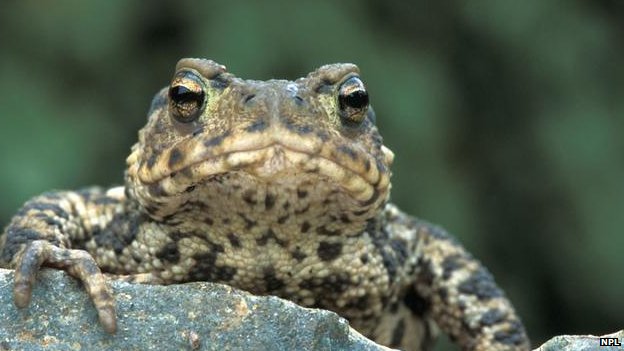
Common toadCan pond-dwelling animals pick up pre-earthquake signals?

Animals may sense chemical changes in groundwater that occur when an earthquake is about to strike.

This, scientists say, could be the cause of bizarre earthquake-associated animal behaviour.

Researchers began to investigate these chemical effects after seeing a colony of toads abandon its pond in L’Aquila, Italy, in 2009 – days before a quake.

They suggest that animal behaviour could be incorporated into earthquake forecasting.

When you think of all of the many things that are happening to these rocks, it would be weird if the animals weren’t affected in some way” – Rachel GrantThe Open University

The team’s findings are published in the International Journal of Environmental Research and Public Health. In this paper, they describe a mechanism whereby stressed rocks in the Earth’s crust release charged particles that react with the groundwater.

Animals that live in or near groundwater are highly sensitive to any changes in its chemistry, so they might sense this days before the rocks finally “slip” and cause a quake.

The team, led by Friedemann Freund from Nasa and Rachel Grant from the UK’s Open University hope their hypothesis will inspire biologists and geologists to work together, to find out exactly how animals might help us recognise some of the elusive signs of an imminent earthquake.

Strange behaviour

The L’Aquila toads are not the first example of strange animal behaviour before a major seismic event. There have been reports throughout history of reptiles, amphibians and fish behaving in unusual ways just before an earthquake struck.

STRANGE OR NOT

  • In July 2009, just hours after a large earthquake in San Diego, local residents discovered dozens of Humboldt squid washed up on beaches. These deep sea squid are usually found at depths of between 200 and 600m
  • At 5.58am on 28 June 1992 the ground began to shake in the Mojave Desert, California, right in the middle of a scientific study on desert harvester ants. Measurements revealed the ants did not change their behaviour at all during the earthquake, the largest to strike the US in four decades.

In 1975, in Haicheng, China, for example, many people spotted snakes emerging from their burrows a month before the city was hit by a large earthquake.

This was particularly odd, because it occurred during the winter. The snakes were in the middle of their annual hibernation, and with temperatures well below freezing, venturing outside was suicide for the cold-blooded reptiles.

But each of these cases – of waking reptiles, fleeing amphibians or deep-sea fish rising to the surface – has been an individual anecdote. And major earthquakes are so rare that the events surrounding them are almost impossible to study in detail.

This is where the case of the L’Aquila toads was different.

Toad exodus

Ms Grant, a biologist from the Open University, was monitoring the toad colony as part of her PhD project.

“It was very dramatic,” she recalled. “It went from 96 toads to almost zero over three days.”

Ms Grant published her observations in the Journal of Zoology.

“After that, I was contacted by Nasa,” she told BBC Nature.

Scientists at the US space agency had been studying the chemical changes that occur when rocks are under extreme stress. They wondered if these changes were linked to the mass exodus of the toads.

Their laboratory-based tests have now revealed, not only that these changes could be connected, but that the Earth’s crust could directly affect the chemistry of the pond that the toads were living and breeding in at the time.

Toads mating (c) Rachel GrantAll of the toads left the breeding colony days before the 2009 earthquake

Nasa geophysicist Friedemann Freund showed that, when rocks were under very high levels of stress – for example by the “gargantuan tectonic forces” just before an earthquake, they release charged particles.

These charged particles can flow out into the surrounding rocks, explained Dr Freund. And when they arrive at the Earth’s surface they react with the air – converting air molecules into charged particles known as ions.

“Positive airborne ions are known in the medical community to cause headaches and nausea in humans and to increase the level of serotonin, a stress hormone, in the blood of animals,” said Dr Freund. They can also react with water, turning it into hydrogen peroxide.

This chemical chain of events could affect the organic material dissolved in the pond water – turning harmless organic material into substances that are toxic to aquatic animals.

It’s a complicated mechanism and the scientists stress that it needs to be tested thoroughly.

But, Dr Grant says this is the first convincing possible mechanism for a “pre-earthquake cue” that aquatic, semi-aquatic and burrowing animals might be able to sense and respond to.

“When you think of all of the many things that are happening to these rocks, it would be weird if the animals weren’t affected in some way,” she said.

Dr Freund said that the behaviour of animals could be one of a number of connected events that might forecast an earthquake.

“Once we understand how all of these signals are connected,” he told BBC Nature, “if we see four of five signals all pointing in [the same] direction, we can say, ‘ok, something is about to happen’.”

*   *   *

Toads can ‘predict earthquakes’ and seismic activity

Wednesday, 31 March 2010

By Matt Walker 
Editor, Earth News

Common toad (Bufo bufo)

Common toads sense danger

Common toads appear to be able to sense an impending earthquake and will flee their colony days before the seismic activity strikes.

The evidence comes from a population of toads which left their breeding colony three days before an earthquake that struck L’Aquila in Italy in 2009.

How toads sensed the quake is unclear, but most breeding pairs and males fled.

They reacted despite the colony being 74km from the quake’s epicentre, say biologists in the Journal of Zoology.

It is hard to objectively and quantifiably study how animals respond to seismic activity, in part because earthquakes are rare and unpredictable.

Some studies have been done on how domestic animals respond, but measuring the response of wild animals is more difficult.

Even those that have been shown to react, such as fish, rodents and snakes tend to do so shortly before an earthquakes strikes, rather than days ahead of the event.

However, biologist Dr Rachel Grant of the Open University, in Milton Keynes, UK, was routinely studying the behaviour of various colonies of common toads on a daily basis in Italy around the time a massive earthquake struck.

Her studies included a 29-day period gathering data before, during and after the earthquake that hit Italy on 6 April 2009.

The quake, a 6.3-magnitude event, struck close to L’Aquila city, about 95km (60 miles) north-east of Rome.

Dr Grant was studying toads 74km away in San Ruffino Lake in central Italy, when she recorded the toads behaving oddly.

Five days before the earthquake, the number of male common toads in the breeding colony fell by 96%.

Common frogs (Rana temporaria) mating

That is highly unusual for male toads: once they have bred, they normally remain active in large numbers at breeding sites until spawning has finished.

Yet spawning had barely begun at the San Ruffino Lake site before the earthquake struck.

Also, no weather event could be linked to the toads’ disappearance.

Three days before the earthquake, the number of breeding pairs also suddenly dropped to zero.

While spawn was found at the site up to six days before the earthquake, and again six days after it, no spawn was laid during the so-called earthquake period – the time from the first main shock to the last aftershock.

“Our study is one of the first to document animal behaviour before, during and after an earthquake,” says Dr Grant.

She believes the toads fled to higher ground, possibly where they would be at less risk from rock falls, landslides and flooding.

Sensing danger

Exactly how the toads sense impending seismic activity is unclear.

The shift in the toads’ behaviour coincided with disruptions in the ionosphere, the uppermost electromagnetic layer of the earth’s atmosphere, which researchers detected around the time of the L’Aquila quake using a technique known as very low frequency (VLF) radio sounding.

Such changes to the atmosphere have in turn been linked by some scientists to the release of radon gas, or gravity waves, prior to an earthquake.

In the case of the L’Aquila quake, Dr Grant could not determine what caused the disruptions in the ionosphere.

However, her findings do suggest that the toads can detect something.

“Our findings suggest that toads are able to detect pre-seismic cues such as the release of gases and charged particles, and use these as a form of earthquake early warning system,” she says.

Ants ignore quakes

One other study has quantified an animal’s response to a major earthquake.

Researchers had the serendipitous opportunity to measure how the behaviour of the desert harvester ant (Messor pergandei) changed as the ground began to tremble in the Mojave Desert, California, on 28 June 1992.

The largest quake to hit the US in four decades struck during the middle of an ongoing study, which measured how many ants walked the trails to and from the colony, the distributions of worker ants and even how much carbon dioxide the ants produced.

However, in response to that 7.4 magnitude quake, the ants did not appear to alter their behaviour at all.

ITALIAN EARTHQUAKE


Os últimos 300 Muriquis: o macaco é um dos animais com maior risco de extinção no mundo (O Globo)

JC e-mail 4609, de 23 de Outubro de 2012.

Pesquisadores vão mapear os locais no Rio onde o maior primata das Américas e candidato a mascote das Olimpíadas de 2016 resiste.

Restam apenas 300 muriquis no estado do Rio de Janeiro. Eles são ameaçados pela diminuição das áreas de floresta, pela caça e por doenças transmitidas por outros bichos. Correndo risco de extinção, o maior primata das Américas e candidato a mascote dos Jogos Olímpicos de 2016 ainda padece com a falta generalizada de informações. Pesquisadores vão a campo a partir de janeiro e, num prazo de dois anos, pretendem concluir o primeiro censo populacional e o georreferenciamento do mono-carvoeiro, como também é conhecido esse macaco exclusivamente brasileiro.

Uma força-tarefa com 20 pesquisadores vai percorrer 350 mil hectares de florestas no estado. Além do censo e do georreferenciamento, eles pretendem coletar material genético, observar hábitos, costumes, analisar a dieta, identificar os vegetais que servem de alimento. Tudo isso para entender como se dá a interação dos muriquis com o meio ambiente. O trabalho, que custará em torno de R$ 5,5 milhões, vai servir de base científica para a criação de um plano estadual de proteção do macaco. Este documento deverá orientar desde a localização de novas áreas de preservação até a escolha das espécies de plantas usadas em programas de reflorestamento, sempre levando em consideração as preferências do animal.

A iniciativa faz parte de um conjunto de outras medidas, que incluem a campanha para a escolha da mascote dos Jogos Olímpicos, programas de educação ambiental e propagandas, que pretendem fazer do muriqui um animal conhecido e protegido. A meta é criar as condições que permitam aumento da população e, principalmente, a retirada da espécie da lista de extinção.

“O muriqui servirá de modelo para outros estudos científicos, com certeza. O boto-cinza, por exemplo, também receberá investimentos do estado para pesquisas científicas”, antecipa o secretário estadual do Ambiente, Carlos Minc.

O projeto, chamado oficialmente de “Conservação do Muriqui no Rio de Janeiro: levantamento da situação da espécie para a elaboração de um plano de ação estadual”, mobilizará especialistas da ONG Ecoatlântica, do Instituto Estadual do Ambiente (Inea), do Jardim Botânico, dos centros de primatologias do Brasil e do Rio de Janeiro, da Fiocruz, UFF e UFRJ, entre outras instituições.

Não vai ser fácil mapear os hábitos do muriqui. Ao menor barulho, ele foge, com uma agilidade tão grande que é praticamente impossível persegui-lo. A desenvoltura do animal na mata, que faz lembrar a agilidade de um atleta olímpico, é um dos argumentos para fazer do muriqui a mascote dos Jogos Olímpicos do Rio. Para observar de perto esse bicho arredio, os pesquisadores terão que escalar montanhas e se embrenharem em locais de difícil acesso.

A estratégia será dividir os especialistas em dez grupos. Nas primeiras incursões, eles se espalharão pelo estado em busca de relatos e de vestígios dos muriquis. Nos locais nos quais haja alguma probabilidade de encontrar o macaco, todos eles se reunirão para fazer a varredura para a contagem e coleta de material. Quando for possível, será realizada a captura, com o auxílio de armas que lançam tranquilizantes. Nestes casos, será feita a coleta de sangue e marcação do animal.

“O muriqui é um banco genético. A gente não tem ideia hoje de como está realmente a área verde. Por exemplo, quando fizermos o estudo das fezes e analisarmos as sementes encontradas, tenho quase certeza de que identificaremos espécies novas da flora da Mata Atlântica”, explica Paula Breves, veterinária e presidente da ONG Ecoatlântica. “O Jardim Botânico ficará responsável pela análise da flora. A UFF fará o georreferenciamento das informações, mapa de ameaças, do estudo botânico. Serão muitos mapas. O pessoal da Fiocruz vai desenvolver ações de educação ambiental. Por exemplo, como trabalhar com agricultores a prevenção das queimadas.”

Os especialistas pretendem comprovar, ainda, que o Rio é o único estado da federação no qual é possível encontrar não apenas o muriqui-do-sul (Brachyteles arachnoides), que também ocorre nas matas de São Paulo e extremo Norte do Paraná, como também o muriqui-do-norte (Brachyteles hypoxanthus).

“Nenhum outro estado tem a ocorrência das duas outras espécies do animal. Vamos tentar identificar o muriqui-do-norte em Itatiaia”, antecipa Daniela Pires e Albuquerque, técnica do Inea.

Há diferenças físicas entre os muriquis-do-norte, mais despigmentado, e do sul, aparentemente mais escuro. O estudo vai permitir uma comparação entre ambas as espécies, já que hoje é grande a desinformação em relação ao muriqui-do-sul. Tanto que uma das hipóteses a ser verificada é a de que não se tratam de duas espécies distintas, mas de uma subespécie.

“Temos grandes dúvidas se realmente são duas espécies distintas. Ou se um deles é uma subespécie. Vamos tentar entender isso, porque até então não há um estudo genético do muriqui-do-sul”, salienta Paula. “A pesquisa não vai gerar informações apenas sobre o muriqui. Qualquer animal que aparecer será identificado. Vamos usar câmeras para tirar fotos de qualquer bicho que se mover em uma determinada área. Até pássaros, o que for observado, anotaremos. Será um resultado secundário, que vai gerar informação importante para os parques.”

Os pesquisadores terão atenção especial em áreas nas quais haja indícios da presença do muriqui, sobretudo os parques estaduais do Desengano (que se espalha por Santa Maria Madalena, São Fidélis e Campos), dos Três Picos (Cachoeiras de Macacu, Friburgo, Teresópolis, Guapimirim e Silva Jardim), Cunhambebe (Mangaratiba, Rio Claro, Angra e Itaguaí); parques nacionais da Serra dos Órgãos (Teresópolis, Guapimirim, Magé e Petrópolis), de Itatiaia; Área de Proteção Ambiental do Cairuçu; e Reserva Ecológica da Juatinga (ambas em Paraty).

“Este estudo de campo é fundamental para a preservação do muriqui”, resume Paula. “Ainda temos relatos de caça, em Cunhambebe, há um mês. O legal é que já estamos recebendo telefones de proprietários de áreas com mata perguntando o que eles podem fazer para ajudar o muriqui, o que eles podem plantar. Isso é fantástico.”

Outro importante local para especialistas é o Centro de Primatologia do Rio de Janeiro (CPRJ), em Guapimirim. Mantido pelo Inea, há 22 espécies de primatas e 230 animais. Porém, faltam pesquisadores. Apenas o chefe da unidade, Alcides Pissinatti, desenvolve trabalhos científicos, dividindo seu tempo com a administração local. O CPRJ recebe estudiosos visitantes, mas sem vínculo com o local. Está prevista a contratação de um veterinário no próximo concurso público, diz o Inea.

“Com os muriquis em cativeiro, é possível conhecer a biologia e o comportamento da espécie. Temos seis animais, sendo que o último nasceu no dia 5 de fevereiro de 2012”, relata Pissinatti. “O ideal seria contar com cerca de 30 animais, que não podem ser da mesma família.”

Falta de espaço – Diferentemente do muriqui do Estado do Rio, que sofre com a falta de informações científicas, há cerca de 30 anos o muriqui-do-norte (Brachyteles hypoxanthus), sobretudo os que vivem na reserva Feliciano Miguel Abdala, em Caratinga, Leste de Minas Gerais, vêm sendo estudado pelo grupo de pesquisadores liderados pela primatóloga americana Karen Strier, pesquisadora e professora da Universidade de Wisconsin-Madison. Neste período, a população do macaco pulou de 60 para cerca de 200. Se, por um lado, o crescimento revela o sucesso das medidas de preservação; por outro, mostra os problemas de manter o muriqui confinado em pequenas unidades de conservação. Já falta espaço.

Esta situação está provocando mudanças de comportamento do muriqui. Os macacos ficam mais no chão, para terem outros locais além da copa das árvores. E procuram matas vizinhas, nem sempre seguras. Por este motivo, os ambientalistas querem criar um corredor ligando as unidades de conservação, com o objetivo de dar mais espaço para o maior primata das Américas se expandir.

“A mata tem seus limites. Crescendo a população, para onde vão os muriquis? É a mesma situação de uma família, quando ela cresce, precisa ir para uma casa maior ou encontrar outro espaço”, explica Karen.

Pesquisadores também constataram o aumento do número de machos. Para a especialista, esta pode ser uma forma de controle do número de macacos. Se a população crescesse muito, haveria disputa entre os animais. Neste momento, a tendência é que o índice de crescimento da população diminua.

“Ninguém entende como esse mecanismo funciona, mas, quando há excesso de população, nascem mais machos. A população cresce mais quando há mais fêmeas”, revela Karen. “Os muriquis são as espécies mais pacíficas do mundo. Eles têm um comportamento sem agressividade, não brigam. Os dentes caninos são muito pequenos. Entre eles, em vários aspectos, não tem hierarquia. Vivem numa sociedade igualitária.”

Em vez de brigar, os muriquis têm o hábito de abraçar uns aos outros. De acordo com a pesquisadora, esta é uma forma de cumprimentar o companheiro. E, se algo os assusta, eles se abraçam para se sentirem mais confiantes. Os machos não têm dominância sobre as fêmeas. Quando copulam, os machos da maioria das outras espécies ficam muito agressivos, há forte competição. No caso do muriqui, não há disputa entre machos, que compartilham as fêmeas. Pesquisadores relatam casos em que os machos esperam em fila a sua vez de ficar com a fêmea.

“Já vi cinco machos copulando no prazo de 11 minutos, sem briga alguma. Por isso os muriquis já foram comparados com os hippies: paz e amor”, conta Karen. “Eles nos mostram que é possível viver numa sociedade, até mesmo em densidade demográfica alta, sem brigas, sem disputas. E com muita tolerância, paciência e pacifismo. Hoje em dia me inspiro no comportamento do muriqui. Quando eu percebo após 30 anos de trabalho, que a espécie está crescendo e que o problema agora é procura novas áreas protegidas para esta população, fico mais esperançosa. Existe solução, é fácil. Os próprios macacos estão nos mostrando de que eles precisam: mais florestas preservadas e protegidas.”

As rotas das suçuaranas (Fapesp)

Felinos conseguem se movimentar em zonas de ocupação humana, mas encontram obstáculos nas estradas

MARIA GUIMARÃES | Edição 199 – Setembro de 2012

A onça-parda (Puma concolor), um dos maiores predadores das Américas, ainda é pouco conhecida pela ciência brasileira. © EDUARDO CESAR (FOTO FEITA NA FUNDAÇÃO ZOOLÓGICO DE SÃO PAULO)

Análises genéticas estão revelando um pouco da história e da ecologia da suçuarana, ou onça-parda (Puma concolor), um dos maiores felinos do Brasil, atrás apenas da onça-pintada. Esses discretos animais são altamente adaptáveis e vivem mesmo em zonas com pouca floresta. Mas enfrentam problemas com a caça e nas estradas, conforme vem mostrando o trabalho paralelo de duas pesquisadoras que nunca se encontraram pessoalmente: Camila Castilho, atualmente na Universidade de São Paulo (USP), e Renata Miotto, agora na Escola Superior de Agricultura Luiz de Queiroz (Esalq), também da USP, em Piracicaba.

As duas estudaram aspectos genéticos de populações locais de suçuaranas, chegando em grande parte a resultados semelhantes, conforme mostram o artigo de Renata naConservation Genetics em 2011, e de Camila publicado este ano na Genetics and Molecular Biology. O primeiro aspecto importante é que há pouca diferenciação genética nas áreas estudadas, sinal de uma população não fragmentada. Isso indica que esses animais conseguem percorrer grandes distâncias e manter o fluxo de material genético, apesar de não haver continuidade de floresta. É bem diferente do que acontece com a onça-pintada, que se aventura pouco fora das áreas de mata e acaba ficando isolada em fragmentos e gerando populações diferenciadas, conforme já mostraram outros estudos.

Na prática, a onça-parda forma populações contínuas ao longo de áreas extensas. No caso de Camila, que desenvolveu o trabalho durante o doutorado pela Universidade Federal do Rio Grande do Sul (UFRGS), a área englobava boa parte de Santa Catarina, uma parte do sul do Paraná e algumas amostras no extremo norte do Rio Grande do Sul, um total de mais de 140 mil quilômetros quadrados (km2). O estudo de Renata, à época doutoranda na Universidade Federal de São Carlos (UFSCar), era mais circunscrito, mas nada diminuto: cerca de 1.700 km2 do interior paulista que incluem 15 municípios, entre eles Ribeirão Preto, Rio Claro e São Carlos.

O outro achado semelhante entre os dois estudos mostra que recentemente, em algum ponto do último século, houve uma drástica redução nos números das suçuaranas, que os geneticistas de populações chamam de gargalo populacional. Ao passar por um desses gargalos, a população perde parte da sua diversidade genética, o que em certos casos pode gerar problemas. “A perda de genes é aleatória e é possível que nada importante se vá”, explica Camila, “mas é maior a probabilidade de acontecer um azar”. Um azar seria o animal não poder contar com algum gene essencial para enfrentar a alterações no ambiente. Uma coisa é certa quando se detecta um gargalo: aconteceu algum desequilíbrio na população, seja uma redução importante em tamanho ou, mais raramente, uma alteração drástica na proporção entre machos e fêmeas.

Canavial

É aí que começam as diferenças entre os dois estudos. O interior de São Paulo, onde Renata trabalha, está recoberto de cana-de-açúcar. “A maior parte foi plantada nos anos 1960 e 1970, em razão do Proálcool [Programa Nacional do Álcool]”, diz a pesquisadora. “Os dados genéticos indicam que o gargalo pode ter acontecido nessa época.” Nesse caso, muitas suçuaranas teriam morrido nesse período de intenso desmatamento, e depois aos poucos a população teria voltado a aumentar, à medida que suas presas se adaptaram a viver nos canaviais. “A dieta das onças na região consiste principalmente em tatus, cervos, capivaras e outros roedores”, conta. São animais que aparentemente vêm se adaptando bem à agricultura, alguns deles consumidores de cana-de-açúcar. Com alimento abundante, as suçuaranas podem facilmente viver na região, sem representar problemas para os donos das plantações.

O grande problema que esses animais enfrentam hoje são as estradas movimentadas, praticamente intransponíveis para pedestres – sejam eles humanos ou felinos –, que cortam o estado. Isso pode bloquear as rotas das suçuaranas e, com o tempo, reduzir a variabilidade genética.

Além de limitar o trânsito das suçuaranas, atropelamentos são uma causa importante de mortalidade. “Os machos jovens, que se dispersam para longe da área onde nasceram, são as principais vítimas”, diz Renata. Entre os 23 animais atropelados de sua amostragem, 16 são machos. A suçuarana Anhanguera, apelidada em 2009 com o nome da estrada em que foi atropelada, no interior paulista, era justamente um macho jovem. “Essa mortalidade diferencial pode alterar a razão sexual, o que pode ser detectado como um gargalo.” Isso acontece porque são eles os emissários do material genético, já que se mudam para uma zona distante onde afinal se estabelecem e acasalam.

As fêmeas permanecem mais próximas ao local onde nasceram, conforme Renata mostrou em cinco anos de monitoramento na Estação Ecológica de Jataí, no município de Luis Antônio, perto de Ribeirão Preto. Ao longo desse período ela percorreu trilhas e coletou fezes frescas, de onde extraiu material genético. Os dados, publicados este ano na Biotropica, mostram que todas as onças residentes são fêmeas.


Gado

Na Região Sul, Camila deparou com uma relação mais conflituosa entre os seres humanos e o leão-baio, como o felino é conhecido em terras catarinenses. Ali se criam vários tipos de gado – vacas, cabras, ovelhas – de forma extensiva, com os animais sempre soltos no pasto. Além das pacas, cutias e veados, os animais domésticos acabam virando boas refeições para as suçuaranas, que em seguida precisam enfrentar o fazendeiro armado. “Embora a caça seja ilegal, sabemos que acontece muito nessa região”, conta Camila, que aos poucos venceu as resistências e conseguiu que os donos das fazendas lhe cedessem amostras dos leões-baios caçados, para extração de material genético. A zona de estudo da pesquisadora se concentrou no sul de Santa Catarina, onde as fazendas se estendem por campos de altitude com resquícios de floresta – os capões – em meio ao pasto. É nesses capões, e nas matas ao longo de rios, que as suçuaranas se refugiam e onde por vezes encontram uma cabra ou bezerro também em busca de abrigo.

Assim como em São Paulo, os dados de Camila mostram que o gargalo populacional aconteceu no último século, coincidindo com a ampla derrubada da floresta de araucárias que caracterizava a região. Atualmente, a caça parece ser responsável pela maior parte da mortalidade por ali, e não a falta de hábitat. “Conectividade não parece ser um problema”, comenta Camila. Por meio de modelos ecológicos que analisam a paisagem ela sugere, em artigo de 2011 na Mammalian Biology, que não há impedimento para que esses animais se locomovam por toda a sua área de estudo, que abrange boa parte da Região Sul. Um dado genético que corrobora essa ideia é o baixo parentesco entre os indivíduos que conseguiu analisar. “Apenas 6,6% dos indivíduos que analisamos eram aparentados”, conta. Para ela, é preciso conscientizar os fazendeiros da importância ecológica dos grandes predadores e buscar soluções, como a construção de currais onde o gado possa passar a noite.

Mesmo nunca tendo conversado, as duas pesquisadoras continuam a seguir caminhos paralelos. Ambas, atualmente no pós-doutorado, deixaram a genética de lado para se concentrar na análise da paisagem. “São abordagens complementares”, explica Camila. Diante das informações fornecidas pela distribuição da variação genética, surgiram novas perguntas que as levaram a buscar entender o ambiente por onde as onças-pardas circulam em busca de detectar os problemas que elas enfrentam e propor soluções para manter populações viáveis desse grande felino encontrado em quase toda a América, exceto em boa parte da Argentina e na metade leste da América do Norte.

Agora ambas trabalham em São Paulo: Renata está construindo um banco de dados sobre a cobertura vegetal e a ocupação da mesma região que examinou até o momento, incluindo um mapeamento detalhado da malha viária e do fluxo de veículos, que em conjunto com os dados genéticos formarão um modelo de dispersão. Ao mesmo tempo compila dados de atropelamentos e, com ajuda da Polícia Florestal, aumenta sua coleção de amostras genéticas. “A partir desses modelos, quero avaliar as rotas preferenciais no deslocamento das onças para definir o que se pode fazer em termos de manejo da paisagem”, explica. Camila concentra seu projeto no mosaico das serras da Bocaina e da Mantiqueira, no nordeste paulista, que inclui a região de São José dos Campos. Nessa região, avaliará o hábitat disponível e as possibilidades de locomoção das suçuaranas. “Vou criar valores de permeabilidade para detectar as áreas prioritárias em termos de conservação.”

Em conjunto, os dois projetos podem contribuir para reduzir o desequilíbrio que existe entre a América do Norte e a do Sul no que diz respeito ao conhecimento a respeito desse imponente predador. Talvez também cheguem a propostas de práticas pecuárias que melhorem a convivência entre fazendeiros e predadores, e a passarelas ou túneis para travessia de suçuaranas.

Artigos científicos
CASTILHO, C. S. et alGenetic structure and conservation of Mountain Lions in the South-Brazilian Atlantic Rain ForestGenetics and Molecular Biology. v. 35 (1), p. 65-73. 2012.
CASTILHO, C. S. et alLandscape genetics of mountain lions (Puma concolor) in southern BrazilMammalian Biology. v. 76 (4), p. 476-83. 2011.
MIOTTO, R. A. et alMonitoring a puma (Puma concolor) population in a fragmented landscape in Southeast BrazilBiotropica. v. 44 (1), p. 98-104. 2012.
MIOTTO, R. A. et alGenetic diversity and population structure of pumas (Puma concolor) in southeastern Brazil: implications for conservation in a human-dominated landscapeConservation Genecits. v. 12 (6), p. 1.447-55. 2011.

NIH Decision Signals the Beginning of the End for Medical Research on Chimps (Wired)

By Brandon Keim

September 21, 2012

Henry, one of the chimps at Chimp Haven. Image: Steven Snodgrass/Flickr

With the retirement of 110 government-owned chimpanzees, the end of medical research on man’s closest living relative may be near.

Today, the National Institutes of Health announced that all of its chimps now living at the New Iberia Research Center would be permanently removed from the research population.

Long criticized by animal advocates for mistreating animals and illegally breeding chimps, New Iberia operates the largest research chimp colony in the United States and is a bastion of a practice abandoned in every other country.

“This is a major message from the NIH: that this era is coming to an end,” said John Pippin of the Physicians Committee for Responsible Medicine, an animal advocacy group. “This is huge.”

In December of last year, an expert panel convened by the Institute of Medicine, the nation’s medical science advisers, declared that medical research on chimpanzees was ethically problematic and, in most cases, scientifically unnecessary. The NIH announced a moratorium on new chimp research funding and agreed to review the status of its own animals. After years of fighting for an end to medical research on chimps, whose ability to think, feel and suffer is not far removed from our own, animal advocates greeted that news with cautious relief. The NIH’s intentions sounded good, but what they’d actually do remained to be seen.

With the decision to retire 110 chimps at New Iberia, the NIH leaves little doubt of its plans. “This is a significant step in winding down NIH’s investment in chimpanzee research based on the way science has evolved and our great sensitivity to the special nature of these remarkable animals, our closest relatives,” said NIH director Francis Collins to the Washington Post.

‘They do not have scientific or ethical justification to continue.’
Excluding the retired chimpanzees, the NIH still owns an estimated 475 chimps eligible for research. Another 500 or so are owned by pharmaceutical companies. The NIH’s decisions influence their fate as well, said Pippin.

“With this indication that the NIH is going to get out of chimp research, that’s going to drop the bottom out of the whole chimpanzee research enterprise,” Pippin said. “How are you going to justify your research in light of what the IOM and NIH have said? Even those not directly affected by this prohibition are going to give up. They do not have scientific or ethical justification to continue.”

Kathleen Conlee, animal research director with the Humane Society of the United States, was more measured in her response.

“They’re taking a step in the right direction by deeming these chimps ineligible for research,” she said. “But we’d rather see them go to sanctuary.” She noted that while 10 of the New Iberia retirees will be sent to the Chimp Haven sanctuary, the rest will go to the Texas Biomedical Institute’s Southwest National Primate Research Center.

Though the newly retired chimps won’t be used again in medical research, that type of research still occurs at Southwest. Indeed, it was an attempt to send retired chimps back into research at Southwestthat sparked the controversy that led to the IOM report and NIH review.

“Places like Southwest were built to be research labs. We’d urge the chimps to be sent somewhere where the mission is the well-being of chimps,” Conlee said. According to Conlee, housing animals at Chimp Haven costs the government $40 per day, compared to $60 per day at research laboratories.

Conlee said that some companies, including Abbott Labs and Idenix, have agreed to follow the IOM guidelines for chimp research or abandon it altogether. Others, including GlaxoSmithKline, have already given up.

Rather than relying on corporate goodwill, however, both Conlee and Pippin urged people to support the Great Ape Protection Act and Cost Savings Act. Now under Congressional consideration, the bill would end on medical research on chimps.

Reciprocity an Important Component of Prosocial Behavior: Scorekeeping of Past Favors Isn’t, However, a Factor (Science Daily)

ScienceDaily (Sep. 3, 2012) — While exchanging favors with others, humans tend to think in terms of tit-for-tat, an assumption easily extended to other animals. As a result, reciprocity is often viewed as a cognitive feat requiring memory, perhaps even calculation. But what if the process is simpler, not only in other animals but in humans as well?

Researchers at the Yerkes National Primate Research Center, Emory University, have determined monkeys may gain the advantages of reciprocal exchange of favors without necessarily keeping precise track of past favors. Malini Suchak, a graduate student at Emory University, and Frans de Waal, PhD, director of the Living Links Center at Yerkes and C.H. Candler Professor of Psychology at Emory, led the study. Their findings will appear in an Early Online Edition of theProceedings of the National Academy of Sciences this week.

“Prosocial is defined as a motivation to assist others regardless of benefits for self, explained Suchak. “We used a prosocial choice test to study whether direct reciprocity could promote generosity among brown capuchin monkeys. We found one monkey willing to do another favors if the first monkey was the only one to choose, and we found the monkeys became even more prosocial if they could alternate and help each other. We did not find any evidence that the monkeys paid close attention to each other’s past choices, so they were prosocial regardless of what their partner had just done,” she continued.

Suchak and de Waal suggest the synchronization of the same actions in alternation creates a more positive attitude the same way humans who row a boat together or work toward a shared goal develop a more positive attitude about each other.

Another interesting finding according to the researchers is the capuchin monkeys were prosocial whether they were paired with a familiar partner from their own group {in-group} or a partner from a different social group {out-group}.

According to de Waal, “This research has several implications for better understanding human behavior. First, we observed an increase in prosocial behavior as a result of reciprocity, but the monkeys did not develop a contingency between their own and their partners’ behaviors. Like humans, the capuchins may have understood the benefits of reciprocity and used this understanding to maximize their own benefits. Second, that the capuchins responded similarly to in-group and out-group partners has implications for the commonly held view that humans are unique in their ability to cooperate with strangers,” de Waal explained.

According to the researchers, capuchin monkeys (Cebus apella) are ideal subjects for this type of study given the numerous observations of cooperative and prosocial behavior in the field, their sensitivity to other monkeys’ efforts in coordination experiments, and their robust, spontaneous prosocial behavior in the prosocial choice test compared with, for example, chimpanzees, which seem more sensitive to methodological variables.

In this study, the researchers tested 12 brown capuchin monkeys in pairs on a prosocial choice task. The monkeys had the choice between a selfish token that benefited only them and a prosocial token that benefited themselves and a partner. By comparing each monkey’s behavior with a familiar partner from the monkey’s own group and a partner from a different social group, the researchers examined the influence of each monkey’s relationship outside the experimental context on prosocial behavior. There was no difference between in-group and out-group pairs in any of the test conditions. To test the role of reciprocity, the researchers allowed the monkeys to take turns making choices and found this greatly increased prosocial behavior, but the researchers did not observe any tit-for-tat behavior. The researchers also tested whether the monkeys could overcome their aversion for inequity by creating a situation in which both individuals could provide each other with superior rewards, making reciprocity an even more attractive strategy. The monkeys did, but again without keeping track of each other’s choices. Finally, through a series of control conditions, the researchers established the monkeys were responding to their partners’ behaviors, rather than the rewards delivered by their partners, and that the monkeys understood the values of the tokens and were flexibly responding to changing conditions throughout the test sessions.

This research opens several avenues for future research, including further examining the emergence of reciprocity among humans without the cognition required for tit-for-tat and the tendency to cooperate with out-group partners.

Journal Reference:

  1. Malini Suchak and Frans B. M. de Waal. Monkeys benefit from reciprocity without the cognitive burden.Proceedings of the National Academy of Sciences, 2012; DOI: 10.1073/pnas.1213173109

Tigers Take the Night Shift to Coexist With People (Science Daily)

ScienceDaily (Sep. 3, 2012) — Tigers aren’t known for being accommodating, but a new study in the Proceedings of the National Academy of Sciences indicates that the carnivores in Nepal are taking the night shift to better coexist with humans.

A tiger camera trapped in Chitwan National Forest in Nepal. (Credit: Center for Systems Integration and Sustainability, Michigan State University)

The revelation that tigers and people are sharing exactly the same space — the same roads and trails — of Chitwan National Park flies in the face of long-held convictions in conservation circles. It also underscores how successful conservation efforts need sciences that takes into account both nature and humans.

“As our planet becomes more crowded, we need to find creative solutions that consider both human and natural systems,” said Jianguo “Jack” Liu, the director of the Center for Systems Integration and Sustainability at Michigan State University. “Sustainability can be achieved if we have a good understanding of the complicated connections between both worlds. We’ve found something very interesting is happening in Nepal that holds promise for both humans and nature to thrive.”

Conventional conservation wisdom is that tigers need plenty of people-free space, which often leads to people being relocated or their access to resources compromised to make way for tigers.

Neil Carter, MSU doctoral student and one of the paper’s co-authors, spent two seasons setting motion-detecting camera traps. His analysis of the images shows that people and tigers are walking the same paths, albeit at different times.

Tigers typically move around at all times of the day and night, monitoring their territory, mating and hunting. But in the study area, the tigers had become creatures of the night. People in Nepal generally avoid the forests at night. Essentially, quitting time for people signals starting time for Chitwan’s tigers.

“It’s a very fundamental conflict over resources,” Carter said. “Tigers need resources, people need the same resources. If we operate under the traditional wisdom that tigers only can survive with space dedicated solely for them, there would always be conflict. If your priority is people, tigers lose out. If your priority is tigers, people lose out.”

In Chitwan, tigers seem to be adapting to make it work, he added.

“There appears to be a middle ground where you might actually be able to protect the species at high densities and give people access to forest goods they need to live,” Carter said. “If that’s the case, then this can happen in other places, and the future of tigers is much brighter than it would be otherwise.”

Additional co-authors of the paper include Binoj Shresthaof the Institute for Social and Environmental Research in Nepal, Jhamak Karkiof Nepal’s Department of National Parks and Wildlife Conservation and Narendra Man Babu Pradhan of the World Wildlife Fund in Nepal.

The research was funded by the National Science Foundation, NASA, the U.S. Fish and Wildlife Service Rhinoceros and Tiger Conservation Fund and MSU AgBioReseach. It was part of the Partnership for International Research and Education.