Arquivo da tag: Ecologia

A guerra científica contra os gatos (El País)

Como a eliminação dos felinos em 83 ilhas do mundo todo beneficiou centenas de espécies

MANUEL ANSEDE

28 MAR 2016 – 17:06 CEST

Gato selvagem ataca uma ave na Austrália.

Gato selvagem ataca uma ave na Austrália. Brisbane City Council

Em 25 de abril de 2006, há quase dez anos, um gato de rua apareceu na praia do Inglês, nas Ilhas Canárias (Espanha), carregando na boca o cadáver de um lagarto gigante de La Gomera. Havia apenas 50 animais em liberdade dessa espécie, que sofre uma grave ameaça de extinção. E não se tratava de uma exceção. Os gatos que invadem as matas e vagueiam pelas ilhas no mundo todo têm levado ao desaparecimento de pelo menos 22 espécies de aves, nove de mamíferos e duas de répteis, representando 14% do total de extinções de animais vertebrados registradas pela União Internacional de Preservação da Natureza.

Autoridades de todo o planeta iniciaram uma guerra secreta aos gatos das ilhas. Eles são capturados com armadilhas, envenenados com ceva de peixe, caçados com cães adestrados ou até mesmos mortos com tiros de espingarda, como já ocorreu em algumas ilhas do arquipélago equatoriano dos Galápagos. Os gatos selvagens já foram extintos em pelo menos 83 ilhas, como Santa Catalina (México), Baltra (Equador), Trindade (Brasil), além das ilhotas espanholas de Lobos e Alegranza, segundo o relatório mais recente, produzido há cinco anos.

Agora, um novo estudo atesta a eficácia dessa estratégia, que não deixa de ser polêmica de certa forma. O trabalho, encabeçado pela bióloga norte-americana Holly Jones, mostra que a extinção de mamíferos invasores (principalmente ratos, cabras e gatos) beneficiou 236 espécies animais nativas de 181 ilhas em todo o mundo. Quatro delas tiveram o seu nível de risco de extinção diminuído na Lista Vermelha de espécies ameaçadas da IUCN (sigla em inglês para União Internacional para a Conservação da Natureza e dos Recursos Naturais), segundo o detalhado estudo publicado na revista científica PNAS.

Na ilha Natividad, no México, a eliminação dos gatos selvagens foi crucial para a recuperação da pardela-culinegra, uma ave de 80 centímetros existente em algumas poucas ilhas do Oceano Pacífico. “Essa intervenção foi importante para que a espécie passasse da classificação de vulnerável para quase ameaçada” na Lista Vermelha, como destaca Heath Packard, porta-voz da ONG norte-americana Island Conservation, que participa do estudo. O mesmo aconteceu na ilha britânica de Asunción, no Atlântico, onde a eliminação dos gatos permitiu que o rabiforcado-de-Ascensão, uma ave em ameaça crítica de extinção, reocupasse o seu território.

“Nós, biólogos da preservação, também amamos os animais. A maior parte de nós tem dedicado suas carreiras a proteger a biodiversidade, mas também avaliamos que aceitar a persistência de mamíferos invasores nas ilhas é uma decisão que permite que as espécies nativas sejam atacadas e, em alguns casos, levadas à extinção”, explica Jones, da Universidade do Norte de Illinois.

O comum é fazer a eutanásia dos gatos retirados das ilhas, mas no Japão os gatos capturados foram esterilizados e colocados para doação

A bióloga lembra o caso de uma gata de um homem que chegou em 1894 à ilha de Stephens, na Nova Zelândia, para cuidar de seu farol. A gata, prenhe, fugiu e a sua prole acabou em poucos meses com todos os exemplares de garrinchas de Stephens, uma ave arredondada e incapaz de voar, que era própria daquela ilha. Hoje em dia restam apenas exemplares empalhados dessa espécie extinta.

As ilhas são paraísos da biodiversidade. São a casa de 15% das espécies terrestres do planeta, e nelas sobrevivem 37% das espécies sob ameaça crítica de extinção, segundo destaca a equipe de Jones.

Uma garrincha de Stephens empalhado.

Uma garrincha de Stephens empalhado. Te Papa

 O biólogo espanhol Manuel Nogales, do Grupo de Ecologia e Evolução em Ilhas do Consejo Superior de Investigaciones Científicas, vem propondo há anos a erradicação total de gatos selvagens nas ilhas com menos de 200 quilômetros quadrados. Sua equipe, quando trabalhava na Universidade de la Laguna, na Espanha, capturou com ceva de sardinhas, há mais de dez anos, os dez gatos que tinham invadido a ilhota de Alegranza, um refúgio para aves marinhas como a águia pescadora e a pardela-de-bico-amarelo. Em Lobos, também na Espanha, o único gato do local foi retirado.

Os gatos têm levado ao desaparecimento de pelo menos 22 espécies de aves, nove de mamíferos e duas de répteis

“Na Espanha e na Europa de um modo geral, as autoridades resistem em organizar campanhas pela erradicação dos gatos. Em outros países, a conscientização está mais avançada”, lamenta. Nogales, que não participou do novo estudo, faz um chamamento à ação: “Não podemos ficar de braços cruzados”. Ele e seu colega Félix Medina estão envolvidos em um estudo inicial para avaliar a possível eliminação dos gatos de La Graciosa, uma ilha canária, onde se realizaria a maior eliminação de felinos na Espanha. La Graciosa tem uma área de 30 quilômetros quadrados, o triplo de Alegranza e seis vezes mais do que a superfície da ilhota de Lobos.

Nogales admite que o comum é fazer a eutanásia dos gatos retirados das ilhas, mas aponta outras possíveis alternativas. “No Japão, os gatos capturados na ilha de Okinawa foram levados a Tóquio, esterilizados e colocados para doação”, relata.

“Em muitas ilhas do mundo onde há esses gatos invasores é imprescindível eliminá-los, para que acabar com a pressão que eles fazem sobre muitas espécies nativas ameaçadas por esse predador. Em outras ilhas, seria praticamente impossível, mas é possível adotar outras medidas, como a esterilização, a marcação ou mesmo a reclusão em casa, o que é quase impossível”, acrescenta Medina.

Profetas das chuvas e a ecologia (Diário do Nordeste)

00:00 · 17.01.2016

Participar do XX Encontro dos Profetas da Chuva foi uma experiência única. Foi uma manhã de grande aprendizado em Quixadá, pois tive uma verdadeira “aula magna” sobre a sabedoria popular camponesa e a cultura sertaneja. Grandes intelectuais da atualidade, como Edgard Morin (Centre Nationale de Recherche Scientifique de Paris), da corrente do pensamento complexo, ou Boaventura Santos (Universidade de Coimbra), defensor da ecologia dos saberes, apreciariam muito a experiência. Os relatos das previsões guardam uma riqueza e diversidade nos seus métodos.

A maioria dos profetas é idosa e, portanto, afirma que suas experiências têm, no mínimo, 40 anos de aplicação. Seus parâmetros de análise se baseiam nos astros, nas nuvens, na observação da fauna e da flora, com testes da pedra de sal em datas específicas e nos seus próprios sentidos. Alguns se autodenominam cientistas populares ou da natureza, pois suas previsões partem de uma rigorosa observação cotidiana da mesma. É importante destacar que a maioria, além do vínculo com a terra, é também poeta e há até alguns escritores.

Que lições os profetas da chuva podem dar aos cientistas?

Fazendo o diálogo com Morin, podemos adiantar que eles nos ajudam a pensar de forma complexa. A ciência moderna, a título de simplificar para captar o real, muitas vezes adota práticas de recortar tanto seu objeto de análise que acaba ficando com sua análise limitada.

Não é fácil controlar tantas variáveis como as envolvidas no clima, mas vejam como os profetas lidam com vários indicadores. É evidente que existem limitações em todas as abordagens, tanto a científica quanto a popular. Nesse momento é oportuna a prática da ecologia dos saberes. Ela não nega os avanços da ciência moderna, mas não trata o conhecimento popular como algo inferior ou folclórico.

Ambos cumprem papéis muito importantes na nossa sociedade e o desafio é fazer esses conhecimentos dialogarem em prol de um mundo melhor. Será que existe possibilidade de complementaridade nos prognósticos meteorológicos científicos com os dos Profetas da Chuva? Em vez de competição haverá espaço para um diálogo de saberes onde existe um respeito e uma relação horizontal, cujo objetivo maior é orientar os agricultores a encontrar o momento certo para plantar?

A Fiocruz decidiu priorizar, em seu âmbito nacional, o tema da relação água e saúde para ações de pesquisa, formação e cooperação. No Ceará, um de seus focos também será o de fomentar o desenvolvimento de tecnologias socioambientais de cuidados com a água voltado para o convívio com a seca. Está sendo elaborada uma proposta de mestrado profissional sobre saúde, saneamento e direitos humanos em rede com as universidades públicas do Nordeste e o desenvolvimento de linhas de pesquisa para a produção de conhecimento que promovam esse diálogo de saberes. Recebemos uma homenagem no encontro e assumimos a honraria como um símbolo de nosso compromisso com essa causa tão importante para o povo do sertão. Finalmente, tivemos uma manhã animada, regada de alegria e esperança de que este ano vai ser possível plantar e colher no sertão do Ceará. Para alguns até com fartura, pois estamos vivendo a pior seca dos timos 50 anos no Nordeste. A última profecia terminou com um canto de um profeta: e naquele momento, literalmente, começou a chover.

FERNANDO FERREIRA CARNEIRO

Biólogo e pós-doutor em sociologia

Scientists call for national effort to understand and harness Earth’s microbes (Science Daily)

Berkeley Lab researchers co-author Science article proposing Unified Microbiome Initiative

Date:
October 29, 2015
Source:
DOE/Lawrence Berkeley National Laboratory
Summary:
To understand and harness the capabilities of Earth’s microbial ecosystems, nearly fifty scientists propose a national effort in the US called the Unified Microbiome Initiative.

This colorized microscopy image hints at the complexity of microbial life. It shows two bacterial cells in soil. The bacteria glue clay particles together and protect themselves from predators. This also stabilizes soil and stores carbon that could otherwise enter the atmosphere. Credit: Manfred Auer, Berkeley Lab

Microbes are essential to life on Earth. They’re found in soil and water and inside the human gut. In fact, nearly every habitat and organism hosts a community of microbes, called a microbiome. What’s more, microbes hold tremendous promise for innovations in medicine, energy, agriculture, and understanding climate change.

Scientists have made great strides learning the functions of many microbes and microbiomes, but this research also highlights how much more there is to know about the connections between Earth’s microorganisms and a vast number of processes. Deciphering how microbes interact with each other, their hosts, and their environment could transform our understanding of the planet. It could also lead to new antibiotics, ways to fight obesity, drought-resistant crops, or next-gen biofuels, to name a few possibilities.

To understand and harness the capabilities of Earth’s microbial ecosystems, nearly fifty scientists from Department of Energy national laboratories, universities, and research institutions have proposed a national effort called the Unified Microbiome Initiative. The scientists call for the initiative in a policy forum entitled “A unified initiative to harness Earth’s microbiomes” published Oct. 30, 2015, in the journal Science.

The Unified Microbiome Initiative would involve many disciplines, including engineering, physical, life, and biomedical sciences; and collaborations between government institutions, private foundations, and industry. It would also entail the development of new tools that enable a mechanistic and predictive understanding of Earth’s microbial processes.

Among the authors of the Science article are several scientists from the Department of Energy’s Lawrence Berkeley National Laboratory (Berkeley Lab). These are Berkeley Lab Director Paul Alivisatos; Eoin Brodie, Deputy Director of the Climate and Ecosystem Sciences Division; Mary Maxon, the Biosciences Area Principal Deputy; Eddy Rubin, Director of the Joint Genome Institute; and Peidong Yang, a Faculty Scientist in the Materials Sciences Division. Alivisatos is also the Director of the Kavli Energy Nanoscience Institute, and Yang is the Co-Director.

Berkeley Lab has a long history of microbial research, from its pioneering work in metagenomics at the Joint Genome Institute, to the more recent Microbes to Biomes initiative, which is designed to harness microbes in ways that protect fuel and food supplies, environmental security, and health.

The call for the Unified Microbiome Initiative comes at a critical time in microbial research. DNA sequencing has enabled scientists to detect microbes in every biological system, thriving deep underground and inside insects for example, and in mind-boggling numbers: Earth’s microbes outnumber the stars in the universe. But to benefit from this knowledge, this descriptive phase must transition to a new phase that explores how microbial communities function, how to predict their actions, and how to make use of them.

“Technology has gotten us to the point where we realize that microbes are like dark matter in the universe. We know microbes are everywhere, and are far more complex than we previously thought, but we really need to understand how they communicate and relate to the environment,” says Brodie.

“And just like physicists are trying to understand dark matter, we need to understand the functions of microbes and their genes. We need to study what life is like at the scale of microbes, and how they relate to the planet,” Brodie adds.

This next phase of microbiome research will require strong ties between disciplines and institutions, and new technologies that accelerate discovery. The scientists map out several opportunities in the Science article. These include:

  • Tools to understand the biochemical functions of gene products, a large portion of which are unknown.
  • Technologies that quickly generate complete genomes from individual cells found in complex microbiomes.
  • Imaging capabilities that visualize individual microbes, along with their interactions and chemical products, in complex microbial networks.
  • Adaptive models that capture the complexity of interactions from molecules to microbes, and from microbial communities to ecosystems.

Many of these new technologies would be flexible platforms, designed initially for microbial research, but likely to find uses in other fields.

Ten years after the launch of the Unified Microbiome Initiative, the authors of the Science article envision an era in which a predictive understanding of microbial processes enables scientists to manage and design microbiomes in a responsible way–a key step toward harnessing their capabilities for beneficial applications.

“This is an incredibly exciting time to be involved in microbial research,” says Brodie. “It has the potential to contribute to so many advances, such as in medicine, energy, agriculture, biomanufacturing, and the environment.”


Journal Reference:

  1. A. P. Alivisatos, M. J. Blaser, E. L. Brodie, M. Chun, J. L. Dangl, T. J. Donohue, P. C. Dorrestein, J. A. Gilbert, J. L. Green, J. K. Jansson, R. Knight, M. E. Maxon, M. J. McFall-Ngai, J. F. Miller, K. S. Pollard, E. G. Ruby, S. A. Taha. A unified initiative to harness Earth’s microbiomesScience, 2015; 350 (6260): 507 DOI: 10.1126/science.aac8480

Animal spirits (The Economist)

Releasing animals into the wild is in vogue—with unwelcome consequences

Sep 12th 2015  | SHANGHAI

The Huangpu: hardly loach heaven

EVERY Saturday morning hundreds of devotees gather by Shanghai’s Huangpu river to liberate fish. Over three hours some 2,000 loach are tipped into the murky waters to the sound of chants.

This is fang sheng, or “animal release”, an East Asian Buddhist ritual in which captive creatures are freed. The point is to demonstrate compassion and earn merit. The practice is ancient, though along with everything else, it was condemned as so much superstition under Mao Zedong. Today fang sheng is making a comeback, especially among the young and well-off. Officials estimate around 200m fish, snakes, turtles, birds and even ants are released each year—though no one really has a clue.

Fang sheng associations can rake in around 1m yuan ($157,000) in annual donations. For some monks it has become a racket. The greatest price, however, is paid by the animals themselves and the ecosystems from which they come and into which they go.

A vast and mainly illegal wildlife trade caters to the demand for animals. Figures are hard to come by, but one paper estimated that in Hong Kong two markets sold over 630,000 birds a year, most destined for fang sheng. Many animals—perhaps half of all the birds—die during capture or transit from stress, disease or mishandling.

Nor does using reared or exotic species help. They create havoc in local ecosystems. Zhou Zhuocheng, chairman of China’s main body on aquatic ecology, cites the case of the mosquito fish from North America, a popular fish for fang sheng. It feeds on the eggs of the native Japanese rice fish, causing the latter to disappear completely in some areas. To add to the grimness, many animals, once released, are hoovered up and sold again to fresh devotees. Animals that do not survive the trauma are often sold as food.

Wang Tianbao, a 26-year-old programmer and evangelical Buddhist, admits that paying for animals that have only recently been released is “a waste of money”. Yet still he is prepared to spend oodles on fang sheng, through whose associations he can disseminate Buddhist information and reach new followers. He says he first practised fang sheng as a student, releasing two turtles that cost him 98 yuan, his food budget for three weeks. Today he spends 5,000-7,000 yuan, or about 5% of his annual salary. There may just be better ways to earn merit.

Fungi: Key to tree survival in warming forest (Science Daily)

Date:
July 22, 2015
Source:
Northern Arizona University
Summary:
Much like healthy bacteria in one’s gut supports health of the human body, fungus in soil can be integral to survival of trees, according to a new study.

Pinyon pine test plot east of Flagstaff, Ariz. Credit: Photo by Thomas Whitham

Much like healthy bacteria in one’s gut supports health of the human body, fungus in soil can be integral to survival of trees. Northern Arizona University researcher Catherine Gehring reached this conclusion while studying pinyon-juniper woodlands in northern Arizona, which support nearly 1,000 unique species.

“Just like the human microbiome, plants have a micro biome. It just tends to be fungi instead of bacteria,” Gehring said. “Every tissue of a plant that you look at has fungi inside of it and we are trying to figure out what they do and if they are going to be important for allowing plants to survive climate change.”

Along with a team of researchers, Gehring is studying pinyon pine trees and their susceptibility to severe drought conditions. While many tree species become vulnerable to insects during drought conditions, Gehring’s team discovered a twist: the pinyons that were insect-resistant were not surviving the drought.

“That group of trees had 60 percent mortality and the group susceptible to insects had only 20 percent mortality,” Gehring said.

The answers to this mystery were underground. The group of drought-tolerant trees a different community of beneficial fungi than the trees that died during drought.

Offspring from the two groups, when planted in a greenhouse without fungi, grow to the same size. When the beneficial fungus is included in the soil, the community of fungi associated with drought tolerant trees allowed their seedlings to grow much larger in drought conditions.

Fungi often manifest above ground as mushrooms, but in northern Arizona’s pinyon habitat, the microorganisms are primarily below ground. The species of fungi that are so important during drought are new to science, Gehring said.

There is an interchange after fungi set up residence among roots: fungus gives the tree nutrients and water from the soil and the tree takes sugar from photosynthesis and shares it with the fungi.

Gehring believes understanding the processes and contributions of fungi could have consequences for many species. As warming conditions kill off families of trees, restoration best practices could include replanting and supplementing with fungi-rich soil.

Experiments are conducted in a greenhouse, at field sites and a research garden northwest of Flagstaff.

Da crise emergirá o pós-capitalismo? (Outras Palavras)

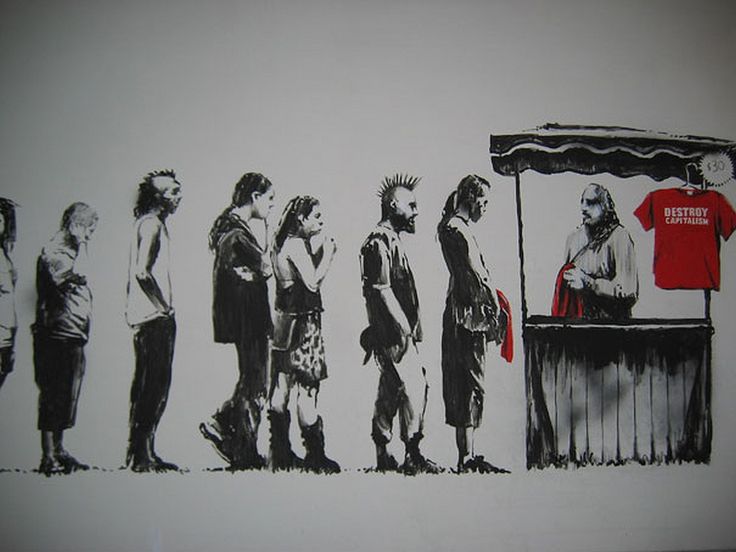
150728-Banksy2

Jornalista britânico que cobriu levantes pós-2011 em todo o mundo aposta: sistema não suportará sociedade conectada em rede que ajudou a criar

28/07/2015

Entrevista a Jonathan Derbyshire, em Prospect | Tradução: Gabriela Leite Inês Castilho | Imagem: Banksy

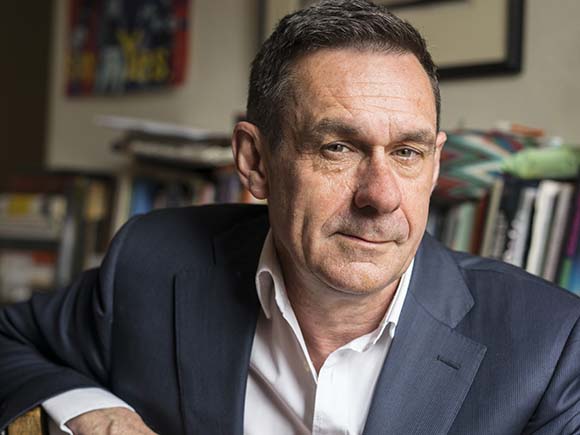
Ao cobrir, para a TV britânica, a fase mais recente da crise na Grécia, o jornalista Paul Mason alcançou quase-onipresença em seu país: Mason falando com Alexis Tsipras e outros membros do Syriza; Mason em mangas de camisa diante da câmera, diante do banco central da Grécia; Mason desviando de bombas em outro confronto entre anarquistas e a polícia — isso forma parte da iconografia da crise grega para muitos britânicos.

Agora, enquanto a Grécia e o resto da Europa recuperam seu fôlego, Mason retornou para a Inglaterra para lançar seu novo livro: “Post-Capitalism: a guide to our future” [“Pós-capitalismo: um guia para nosso futuro”]. Não é um trabalho de reportagem, mas uma ampla análise histórica e econômica. Inspirada pela análise de Marx sore relações sociais capitalistas, ela vai, no entanto, além disso — de uma maneira que, reconhece o autor, talvez não agrade alguns de seus amigos na extrema esquerda. O livro é uma análise do “neoliberalismo” — o capitalismo altamente financeirizado que dominou a maior parte do mundo desenvolvido nos últimos 30 anos — e, ao mesmo tempo, uma tentativa de imaginar o que poderia substituí-lo.

“Pós-Capitalismo: Um Guia para Nosso Futuro”, de Paul Mason, foi publicado por Allen Lane.

O capitalismo, escreve Mason, é um sistema altamente adaptativo: “Nos grandes momentos de encruzilhada, ele se transforma e muda, em resposta ao perigo”. Seu instinto mais básico de sobrevivência, ele argumenta, “é impulsionar mudanças tecnológicas”. Mas o autor acredita que as tecnologias de informação que o capitalismo desenvolveu nos últimos vinte anos ou mais não são, apesar das aparências, compatíveis com o capitalismo — não em sua forma presente, e talvez nem em qualquer outra forma. “Quando o capitalismo não puder mais se adaptar à mudança tecnológica, o pós-capitalismo irá se tornar necessário”.

Mason não está sozinho ao acreditar que a humanidade está à beira de uma profunda revolução tecnológica, é claro. Ouve-se isso de outras vozes: que falam, por exemplo, sobre a “Segunda Era da Máquina” e a promessa (assim como a ameaça) de máquinas inteligentes e da “internet das coisas”. O que torna singular a análise de Mason é, no entanto, a maneira pela qual ele funde um balanço das mutações tecnológicas do que costumava ser chamado de “capitalismo tardio” com uma tentativa de identificar o que Engels chamou, no final do século XIX, de a “parteira da sociedade”, a classe capaz de liderar a transformação social. Segundo o livro, não será a velha classe trabalhadora, como Marx e Engels pensaram, mas o que Mason chama de “rede”. Ao colocar em contato permanente milhões de pessoas, Mason escreve, “o capitalismo da informação criou um novo agente de mudança na história: o ser humano bem formado e conectado”.

Encontrei-me com Mason em Londres e comecei a entrevista pedindo a ele:

Paul Mason: para ele, "indivíduos em rede"  são um novo sujeito histórico, que substituíram a velha classe trabalhadora do marxismo, e se converteram no que Engels chamava de "parteiros da história"

Descreva, por favor, o modelo “neoliberal”, que segundo você chegou a um ponto de ruptura

O neoliberalismo é tanto uma ideologia quanto um modelo econômico. O capitalismo precisa ser compreendido em seu conjunto em cada fase de sua existência. Vivemos o que podemos chamar de capitalismo neoliberal. Este sistema que funciona com um núcleo que opera de acordo com valores neoliberais e uma periferia que não opera. Argumento que o neoliberalismo, como sistema funcional, está em crise porque sua mola central — o amplo consumo financeirizado, combinado com baixo crescimento dos salários — é uma máquina para produzir bolhas e seu estouro. No livro, sustento que uma eventual saída para o sistema (rumar para um info-capitalismo bem sucedido) pode ser viável em certas circunstâncias, mas esta transição é improvável.

Lado a lado com o que você identifica como as características negativas do neoliberalismo (financeirização excessiva e desestabilizadora), também há a revolução tecnológica.

O neoliberalismo foi a forma econômica na qual ocorreram os avanços mais dramáticos da técnica humana sobre a natureza. Em segundo lugar, foi o período no qual países como China e Índia desenvolveram-se de modo surpreendente, um fenômeno que ainda precisa ser compreendido em sua totalidade. Argumento, porém, que esta forma econômica não é mais capaz de conter os níveis do dinamismo tecnológico que conseguiu liberar. Não acredito que o próprio neoliberalismo, eu seus próprios valores neoliberais, seja o condutor da mudança tecnológica. A economista Mariana Mazzicato prova esse ponto: não são apenas o Vale do Silício, o empreendedorismo e o dinheiro dos fundos de hedge que produzem o iPhone — é a Nasa, são as grandes universidades como Stamford.

O que estamos vendo hoje é que a rapidez da inovação não está sendo combinada com implementação de políticas ou evolução de modelos de negócios. Isso impõe uma questão: até que ponto o poder de transformação destas novas tecnologias resultará numa terceira revolução industrial? Eu não vejo isso acontecer sob paradigma neoliberal.

Mas, como você mesmo aponta, a nova tecnologia também foi possibilitadora do neoliberalismo, por ter aprimorado a capacidade de explorar o que é chamado algumas vezes de “capital humano”.

A era Keynesiana produziu a última geração de indivíduos hierarquizados, coletivizados. Eu fui produzido por ela e sei que este mundo acabou. Uma das virtudes de se ter 55 anos é ter visto o novo mundo nascer. Hoje, como Foucault afirma, somos empreendedores do self. A internet permitiu que as massas fossem parte do laboratório social do self. Ela nos permite fazê-lo de uma maneira que nem começamos a entender. Ela criou um novo sujeito humano.

A divergência entre eu e os apoiadores do neoliberalismo é em torno de uma questão: o sujeito humano vai transcender o sistema atual, romper com ele e reformar a sociedade humana? Todas as visões de transformação social têm, a partir de agora, de enxergar o que eu chamo de “indivíduo em rede”. Acredito que as revoltas que narrei em meu livro anterior, Why It’s Kicking Off Everywhere (“Por que está começando em todo lugar”, em tradução livre), são revoltas destas pessoas. Se elas são um novo sujeito histórico, que substitui a velha classe trabalhadora do marxismo, essa é uma grande coisa. É uma grande novidade que devemos buscar compreender.

Você lamenta o mundo que perdemos? O mundo keynesiano de coletividades e solidariedades? Poucas partes de seu livro têm tom de elegia. A nota dominante é mais de excitação com as possibilidades econômicas e políticas que as novas tecnologias e novos modos de subjetividade humana oferecem.

Eu lamento, sim. Escrevi em meu primeiro livro, Live Working or Die Fighting (Viva trabalhando ou morra lutando”, em tradução livre), que o que estamos lamentando, e o que ficou para trás, foi uma anomalia na história do movimento dos trabalhadores. Foi um movimento de trabalhadores socialmente estável, que construiu um caminho de coexistência pacífica com o capital. O que fiz foi cavar na história e descobrir que a indisciplinada história do trabalho foi a de pessoas que foram, elas mesmas e de sua própria maneira, empreendedoras de si mesmas. E tiveram um nível de quase total oposição ao mundo que viveram, coisa que a geração do meu pai, a da era keynesiana, não teve.

De que tradições você está falando, especificamente?

Anarquismo na comuna de Paris. Anarco-sindicalismo nos EUA — os Wobblies. O que o comunismo acrescentou a essas histórias foi a coletividade. Mas se você esquecer as histórias oficiais marxistas sobre a Comuna ou os Wobblies, descobrirá que é uma história de indivíduos rebeldes. Quando comecei a mergulhar nessa história, percebi que a era Keynesiana, apesar do nosso luto, foi uma anomalia.

Também foi uma anomalia na história do capitalismo, não? Não é essa uma das mensagens do livro de Thomas Pikkety, O Capital no Século XXI?

É uma anomalia na história do capitalismo. Também é uma anomalia da história da classe trabalhadora.

Vamos nos voltar ao aspecto econômico de sua argumentação no livro. Sua afirmação é que o capitalismo não consegue “capturar o ‘valor’ gerado pela nova tecnologia.” Você pode desenvolver isso um pouco?

Assim que soubemos que estávamos em uma economia da informação, ficou óbvio que a categoria das coisas chamadas pelos economistas de “externalidades” seriam importantes. O teorista do capital cognitivo, Yann Moulier-Boutang, coloca desta maneira (e eu concordo): toda a questão do capitalismo do século XXI é saber quem captura as externalidades. Devem ser as empresas, que vão ter posse delas e utilizá-las, como faz o Google? A externalidade positiva para o Google é que ele pode ver o que estamos buscando, mas nós não conseguimos ver o que nós mesmo estamos. Então ele pode, agora, construir um modelo de negócio monopolizado, com base nos segredos revelados por sua mineração de dados.

Você quer dizer que, sob os atuais arranjos, o capitalismo só pode capturar o valor gerado pelas novas tecnologias por meio do monopólio? Google, Apple e outros estão ganhando muito dinheiro com isso.

Eles estão ganhando dinheiro. Criaram um monopólio da informação. E, especialmente no que diz respeito aos bens de informação, têm conseguido suprimir o mecanismo de formação de preços. Ele iria, em condições naturais, reduzir o preço da informação que estão vendendo a zero. Eu digo no livro que a declaração da missão da Apple deveria ser, na verdade: “Existimos para prevenir a abundância de música!” Ou, do Google: “Existimos para prevenir a abundância do autoconhecimento das pessoas sobre o que elas fazem na internet”.

Existem dois problemas com isso. Primeiro, é lógico sugerir que nenhum desse monopólios pode sobreviver. Certamente, seu valor de mercado não reflete sua capacidade para continuar monopolizando o que fazem. Segundo: portanto, você não pode ter a completa utilização da informação. A próxima questão é: Existe um meio termo? Haverá algum espaço, que possamos explorar, entre o monopólio e a liberdade? Acredito realmente que sim. Não estou dizendo que tudo deve ser de graça. Estou dizendo que deve haver múltiplos modelos de negócio entre o monopólio e a liberdade.

Você não está dizendo, então, que os mercados vão desaparecer em um futuro pós-capitalista? Afinal, mercados e capitalismo não são a mesma coisa. Mercados são apenas mecanismos para alocar recursos.

É natural — e está acontecendo — que a natureza social da informação leve a formas de atividade de não-mercado. A Wikipédia é uma forma de atividade não mercantil — é um buraco de 3 milhões de dólares no mundo da propaganda.

Você escreve, em certo ponto, que os membros “mais perspicazes” da elite global já são lúcidos a ponto de abordar algumas das questões com as quais você lida no livro — por exemplo, a desigualdade, seu impacto sobre o crescimento, a “estagnação secular” e o papel da negociação coletiva na garantia de salários maiores. O antigo secretário do Tesouro dos EUA, Larry Summers, escreveu vastamente sobre todos estes três problemas, oferecendo diagnósticos não tão diferentes dos seus.

Há pessoas na elite global que se permitiram entender o que estamos passando. Uma das coisas que compreendem é que a desigualdade vai ser desfuncional. Não apenas não querem ser linchados em suas camas, mas também entendem que o dinamismo das economias capitalistas só será retomado se houver um aumento dos salários. Também compreenderam a chamada questão do limite de juro zero — a ideia de que, em uma economia onde as taxas de juros reais estão constantemente zeradas, será constantemente necessário adotar políticas monetárias não-ortodoxas. Políticas monetária não-ortodoxas são arenosas. Qualquer um que entendeu a crítica de Keynes nos anos 1920 e começo dos 1930 vai entender o problema da “viscosidade”. Nos anos trinta, os salários eram pegajosos — eles não iriam cair o suficiente. Agora, é a política monetária que é pegajosa. O problema é: de onde o novo dinamismo da economia virá? Larry Summers entende isso. E pessoas nos mercados de títulos também.

O passo final é que eles olham aos choques exógenos e isso os aterroriza. Isso me aterroriza também. As pessoas no poder, nos ministérios da Fazenda, não vão se autorizar a quantificar a gravidade dos choques que estão a caminho. Se 60% dos títulos emitidos pelos Tesouros nacionais tornarem-se insolventes devido aos custos relacionados com o envelhecimento das populações, algo que as agências de risco consideram provável; se a imigração acontecer na escala que se espera; se tivermos nove bilhões de pessoas clamando para entrar no mundo desenvolvido…

Se o neoliberalismo fosse um sistema funcional, como era nos idos de 2001, e não tivesse deixado esta condição, você provavelmente poderia dizer: “Droga, as coisas vão ficar realmente difíceis, mas provavelmente será possível resolver.” Mas esse capitalismo eclerosado, estagnado e fibrilado sob o qual vivemos desde 2008, não tem chance alguma de sobreviver às tormentas. E mesmo que eu esteja errado sobre a transição que vejo e desejo, seus defensores teriam de aparecer e dizer o que um info-capitalismo dinâmico, o que uma terceira revolução industrial poderia ser.

Mas me parece que Summers ou alguém como o economista Robert Gordon teriam que aceitar a parte de diagnóstico de sua análise…

Certo. Mas a razão pela qual não atravessei o caminho até o território do Robert Gordon é que lá está a produtividade potencial. Sua visão da produtividade potencial inerente à tecnologia da informação transbordando para o mundo real … Acho que é maior do que ele aceita ser.

Por que você pensa que ele subestima isso?

É porque pessoas como Gordon não estão preparadas para entrar nesse mundo inferior, entre valor de uso e valor de troca, que as externalidades representam. Não acho que lendo meu livro a maioria das pessoas aceitarão que a transição, potencialmente, se dá em direção ao  mundo não-mercantil, centralizado na informação, de baixa intensidade de trabalho, pós-capitalista. Mas se pensam que estamos indo em direção a uma forma de info-capitalismo com uma terceira revolução industrial, eles precisam contar para nós qual é a síntese de alto-valor. Que cara terá essa era eduardiana da terceira revolução industrial?

Haverá sinais desse futuro na chamada economia do compartilhamento? Em empreendimentos como Airbnb e Uber?

Meu palpite é que eles são o AltaVista da economia de partilha. O teórico social francês André Gorz explorou isso. Disse que é perfeitamente possível imaginar o capitalismo colonizando as relações interpessoais. O Uber é isso – a questão não são os motoristas de taxi, mas as pessoas darem carona umas às outras. Gorz prevê que nos tornaríamos provedores mútuos de microsserviços. Mas disse: “Essa não pode ser uma economia de alto-valor”. Esse é o problema. Você não pode construir um negócio garimpando a reserva da capacidade automobilística de todos, sua capacidade para fazer massagem Reiki, a meia hora sobressalente de cada eletricista. Você pode fazê-lo, e a economia da partilha é a maneira perfeita para fazê-lo, mas isso simplesmente não resulta na era eduardiana, na Belle Epoque. A Belle Epoque será o sequenciamento de genes e a possibilidade de gastar metade do dia jogando squash.

A maioria dos marxistas detestará esta hipótese. Significa dizer, contra Marx, que a humanidade se liberta por si própria, que as pessoas podem descobrir, dentro do capitalismo, recursos mentais para imaginar um novo futuro e ir direto a ele de um modo que, de 1844 em diante, Marx pensou ser impossível.

Você toma emprestada a ideia de “ciclo longo” do economista soviético Nikolai Kondratieff. Ele argumentava que a história do capitalismo pode ser entendida como uma sucessão de ciclos, cada um deles com uma ascensão turbinada por inovação tecnológica com duração de aproximadamente 25 anos, seguida de uma queda com aproximadamente a mesma duração e que geralmente acaba numa depressão. Esses longos ciclos são muito mais longos que os ciclos de negócio identificados com a economia convencional. Por que você considera proveitosa a abordagem de Kondratieff?

Penso que necessitamos de teorias maiores que os ciclos de negócio e menores que a destruição completa do sistema. Quando você aplica a teoria de Kondratieff ao período pós 1945, percebe o sistema funcionando perfeitamente até 1973. E então ele desmorona. O neoliberalismo vem junto e resolve o problema destruindo o poder de barganha do trabalho. Olhar para as coisas através das lentes de Kondratieff força você a colocar a questão: será o neoliberalismo a forma bem sucedida do novo capitalismo ou o fim da linha que prolongou o ciclo por tempo demais? Escolho a segunda alternativa.

Em que parte do ciclo nos encontramos agora?

Estamos bem no fim de um quarto longo ciclo muito prolongado. Estamos na fase de depressão do quarto longo ciclo, que coincidiu com a ascensão tecnológica do quinto. De modo que acredito que os longos ciclos podem sobrepor-se. Penso que estamos numa posição incomum, do ponto de vista histórico. Claramente, a revolução da informação está ai e as bases de um tipo de capitalismo completamente novo podem estar emergindo. O que aconteceu é que as velhas relações sociais da metade passada da onda anterior não irão adiante. Não há Keynes, apenas o reminiscente do velho. Se você olha para Mark Zuckerberg, do Facebook, ou Jeff Bezos, da Amazon, verá que são pessoas agnósticas sobre o futuro de todo o sistema. Eles veem apenas o futuro de sua própria corporação.

Meu uso de Kondratieff é para tentar responder a pergunta sobre onde estamos. As outras periodicidades – o ciclo de negócio de dez anos e a época, de 500 anos – não são suficientes. Não há uma cadeira de Estudos Pós Capitalistas na Universidade de Wolverhampton! Eles estão na infância.

Você mencionou André Gorz. No livro, você cita um trecho em que ele diz, em 1980, que a classe trabalhadora está morta. Se estava certo, quem será o agente de mudança social?

O fato terrível e desafiante pode ser que, se o capitalismo tem um início, um meio e um fim, então o movimento dos trabalhadores também. Em outras palavras, o declínio da luta trabalhista organizada, com base no trabalho manual, especializado, branco e masculino, parece-me partedo que está acontecendo ao capitalismo. Sou alguém que veio deste background e viveu mergulhado nele. Mas argumento que o sujeito histórico que trará o pós-capitalismo já existe e é o indivíduo em rede. A noção de Antonio Negri de “fábrica social” era arrogante nos anos 1970s, porque era muito cedo. Mas me parece ser justa agora – todos nós participamos na criação de marcas, no estabelecimento de escolhas de consumo, estamos alimentando o capitalismo financeiro por meio do nosso uso das finanças. Por isso, consigo comprar a ideia de que existe uma fábrica social. Se quiser desligá-la, deve fazer como William Benbow sugeriu na década de 1820, parando a “grande festa”. Agora, duvido que isso vá acontecer. Portanto, a maneira menos utópica de fazer isso é lutando pelos interesses dos indivíduos em rede, para que eles não tenham suas informações roubadas, arbitrariamente acessadas pelo Estado, para seus estilos de vida poderem florescer, para que eles tenham escolhas.

São tantos os levantes que cobri – Turquia e Brasil são bons exemplos. São assalariados em rede que não aguentam os níveis de corrupção e intromissão em suas vidas – o islamismo na Turquia, corrupção no Brasil. Que tipo de revolução é essa? Há uma discussão entre aqueles que se envolveram com meu livro: se este é o agente, é “por si” ou “em si”, como diria Marx. Seriam essas pessoas capazes de adquirir um nível espontâneo de entendimento da situação que os levasse a tomar algumas das medidas políticas insinuadas neste livro como um caminho a seguir? Neste momento eles ainda não chegaram lá, claramente. O que são é muito hábeis em construir seu espaço pessoal. Podemos zombar disso, por ser em pequena escala. Mas, ao construir um espaço que é simultaneamente econômico e pessoal, penso que esta geração está fazendo algo muito significativo.

Será que os impregno com a mesma inevitabilidade e teleologia com que o marxismo impregnou a classe trabalhadora? Não. No livro, gasto muito tempo desmontando a compreensão marxista de classe trabalhadora. Sempre senti, como alguém que tem essa bagagem, que o kit de ferramentas que o marxismo tinha para descrever a classe trabalhadora era dos menos convincentes – sobretudo para a própria classe trabalhadora.

A certa altura, você altura escreve que o marxismo é uma grande “teoria da história”, porm se equivoca como “teoria da crise”. O que quer dizer com isso?

Quero dizer que é uma grande teoria para analisar a sociedade de classes. Por exemplo, durante a revolução do Egito em 2011, tendo lido O 18 Brumário de Luis Bonaparte, de Marx, eu poderia dizer aos radicais egípcios que, quando o caos se instalasse, as mesmas pessoas que estavam ao lado deles dariam as boas vindas à ditadura. É provável que o capitalismo evocasse algo novo, capaz de impor ordem. O que impôs desordem foi a Irmandade Muçulmana. Ver as mesmas pessoas que tinham apoiado a revolução chamando o general Sisi para derrubar a Irmandade faz sentido, se você leu O 18 Brumário.

Eu perguntei a Alexis Tsipras antes de o Syriza ser eleito: “Quais seriam as ameaças para um governo de esquerda, se você conquistasse o poder?” Contei a ele: “Você se lembra que [Salvador] Allende nomeou [Augusto] Pinochet [no Chile]? Allende nomeou o general para deter um golpe militar. Nós rimos. A questão, você poderia argumentar, é que o governo da Grécia está sendo colonizado pelas mesmas forças que ele imaginou estar ali para combater. Neste momento, a elite empresarial está pensando: “Apenas Tsipras pode governar a Grécia.” Eles prefeririam que ele governasse a Grécia sem a extrema esquerda do próprio partido. Sempre encontro capitalistas gregos que me dizem: “Se Tsipras nos escutasse, a Grécia seria um grande país.”

O marxismo força você a fazer perguntas que não são feitas pelos jornalistas mainstream. Neste momento, a questão mais importante para os gregos é: o que está acontecendo com as massas? As massas não estão derrotadas. Elas não acreditam que Tsipras é Luis Bonaparte. Muitos fazem objeção ao que ele fez, mas não acreditam que ele seja uma força da reação. Eles acreditam no que está dizendo – que está fazendo algo contra a própria vontade e que irá compensar isso com um ataque à oligarquia. Esperam que esse ataque à oligarquia aconteça. Minha observação é de que houve uma grande radicalização, na Grécia. Quando o verão terminar, veremos uma renovação real tanto das lutas de base como do radicalismo do governo.

O foco naquilo que as pessoas estão dizendo nos pubs é algo que interessa muito a dois tipos de pessoas: às forças da polícia secreta e aos marxistas! Eu gasto o maior tempo possível ouvindo as pessoas.

Qual é o desafio jornalístico para ventilar esse tipo de questão? Trabalhar para uma rede de TV como o Channel Four impõe certamente certas restrições ao modo como você opera.

Um bom jornalista de assuntos sociais, que é o que penso ser, irá, na Grécia por exemplo, conversar com primeiros-ministros, ministros de Estado, mas irá também atrás dos estivadores, dos anarquistas. Ainda por cima, você tem somente dois minutos e trinta segundos. Essa é a razão por que gastei os últimos seis meses buscando recursos e realizando um grande documentário que virá a público, espero, no final deste ano, e que conta a história do Syriza desde as bases, a partir das ruas. Queria fazer isso porque no meu trabalho diário nunca poderia contar essa história. É simplesmente impossível.

E sobre a acusação, frequentemente dirigida a você (e feita várias vezes, durante os últimos meses na Grécia) de que, ao operar dessa forma, você excede os limites da propriedade jornalística ou da isenção?

Penso que todos estão errados! A realidade é que o mundo é governado por uma elite dedicada a reforçar, de modo às vezes completamente aberto, a desigualdade e tudo o que a acompanha. Na Grécia, a “austeridade” é uma forma de coerção. Fico feliz de dizer isso porque essa é a minha análise da realidade. Muita gente no Financial Times ou no Wall Street Journal não compartilha dessa minha visão. Mas estou muito feliz, e meus patrões estão permanentemente felizes com o modo como pratico o jornalismo. As pessoas que não gostam devem simplesmente acostumar-se a ele.

Com ideias como as que estão neste livro, a razão de divulgar uma ideia radical é que você não espera que Andy Burnham ou Tim Farron, [dirigentes do Partido Trabalhista britânico] irão telefonar e dizer, “gosto disso, Paul. Vamos incluir na política do partido.” A questão é ser um pouco do contra. Há pensamento único demais. Meu desejo com esse livro é fazer como num workshop de teatro – levar as pessoas a uma experiência fora do corpo, a ficar largadas no chão, na piscina das próprias lágrimas. Então, quando elas voltarem à segurança do grupo, talvez possam fazer alguma coisa mais honesta.

The Magna Carta of integral ecology: cry of the Earth-cry of the poor (Leonardo Boff)

18/06/2015

Before making any comment it is worth highlighting some peculiarities of the Laudato si encyclical of Pope Francis.

It is the first time a pope addresses the issue of ecology in the sense of an integral ecology (as it goes beyond the environment) in such a complete way. Big surprise: he elaborates the subject on the new ecological paradigm, which no official document of the UN has done so far. He bases his speech with the safest data of life sciences and Earth. He reads the data affectionately (with a sensitive or cordial intelligence), as he discerns that behind them hides human tragedy and suffering and also for Mother Earth. The current situation is serious, but Pope Francis always finds reasons for hope and trust that human beings can find viable solutions. He links to the Popes who preceded him, John Paul II and Benedict XVI, quoting them frequently. And something absolutely new: the text is part of collegiality, as it values ​​the contributions of dozens of bishops’ conferences around the world, from the US to Germany, that of Brazil, Patagonia-Comahue, and Paraguay. He gathers the contributions of other thinkers, such as Catholics Pierre Teilhard de Chardin, Romano Guardini, Dante Alighieri, the Argentinian maestro Juan Carlos Scannone, Protestant Paul Ricoeur and the Sufi Muslim Ali Al-Khawwas. The recipients are all of us human beings, we are all inhabitants of the same common house (commonly used term by the Pope) and suffer the same threats.

Pope Francis does not write as a Master or Doctor of faith, but as a zealous pastor who cares for the common home of all beings, not just humans, that inhabit it.

One element deserves to be highlighted, as it reveals the “forma mentis” (the way he organizes hi thinking) of Pope Francis. This is a contribution of the pastoral and theological experience of Latin American churches in the light of the documents of Latin American Bishops (CELAM) in Medellin (1968), Puebla (1979) and Aparecida (2007), that were an option for the poor against poverty and in favor of liberation.

The wording and tone of the encyclical are typical of Pope Francis, and the ecological culture that he has accumulated, but I also realize that many expressions and ways of speaking refer to what is being thought and written mainly in Latin America. The themes of the “common home”, of “Mother Earth”, the “cry of the Earth and the cry of the poor”, the “care” of the “interdependence of all beings”, of the “poor and vulnerable “, the” paradigm shift, “the” human being as Earth “that feels, thinks, loves and reveres, the” integral ecology “among others, are recurrent among us.

The structure of the encyclical obeys to the methodological ritual used by our churches and theological reflection linked to the practice of liberation, now taken over and consecrated by the Pope: see, judge, act and celebrate.

First, he begins revealing his main source of inspiration: St. Francis of Assisi, whom he calls “the quintessential example of comprehensive care and ecology, who showed special concern for the poor and the abandoned” (n.10, n.66).

Then he moves on to see “What is happening in our home” (nn.17-61). The Pope says, “just by looking at the reality with sincerity we can see that there is a deterioration of our common home” (n.61). This part incorporates the most consistent data on climate change (nn.20-22), the issue of water (n.27-31), erosion of biodiversity (nn.32-42), the deterioration of the quality of human life and the degradation of social life (nn.43-47), he denounces the high rate of planetary inequality, which affects all areas of life (nn.48-52), with the poor as its main victims (n. 48).

In this part there is a phrase which refers to the reflection made in Latin America: “Today we cannot ignore that a true ecological approach always becomes a social approach and should integrate justice in discussions on the environment to hear both the cry of the Earth and the cry of the poor “(n.49). Then he adds: “the cries of the Earth join the cries of the abandoned of this world” (n.53). This is quite consistent since the beginning he has said that “we are Earth” (No. 2; cf. Gen 2.7.), Very in line with the great singer and poet Argentine indigenous Atahualpa Yupanqui: “humans beings are the Earth walking, feeling, thinking and loving.”

He condemns the proposed internationalization of the Amazon that “only serves the interests of multinationals” (n.38). There is a great statement of ethical force, “it is severely grave to obtain significant benefits making the rest of humanity, present and future, pay for the high costs of environmental degradation” (n.36).

He acknowledges with sadness: “We had never mistreated and offended our common home as much as in the last two centuries” (n.53). Faced with this human offensive against Mother Earth that many scientists have denounced as the beginning of a new geological era -the antropocene- he regrets the weakness of the powers of this world, that deceived, “believed that everything can continue as it is, as an alibi to “maintain its self-destructive habits” (n.59) with “a behavior that seems suicidal” (n.55).

Prudently, he recognizes the diversity of opinions (nn.60-61) and that “there is no single way to solve the problem” (n.60). However, “it is true that the global system is unsustainable from many points of view because we have stopped thinking about the purpose of human action” (n.61) and we get lost in the construction of means for unlimited accumulation at the expense of ecological injustice (degradation of ecosystems) and social injustice (impoverishment of populations). Mankind simply disappointed the divine hope “(n.61).

The urgent challenge, then, is “to protect our common home” (n.13); and for that we need, quoting Pope John Paul II, “a global ecological conversion” (n.5); “A culture of caring that permeates all of society” (n.231).
Once the seeing dimension is realized, the dimension of judgment prevails. This judging is done in two aspects, the scientific and the theological.

Let´s see the scientific. The encyclical devoted the entire third chapter to the analysis “of the human root of the ecological crisis” (nn.101-136). Here the Pope proposes to analyze techno-science, without prejudice, recognizing what it has brought such as “precious things to improve the quality of human life” (n. 103). But this is not the problem, but the independence, submitted to the economy, politics and nature in view of the accumulation of material goods (cf.n.109). Technoscience nourishes on a mistaken assumption that there is an “infinite availability of goods in the world” (n.106), when we know that we have surpassed the physical limits of the Earth and that much of the goods and services are not renewable. Technoscience has turned into technocracy, which has become a real dictatorship with a firm logic of domination over everything and everyone (n.108).

The great illusion, dominant today, lies in believing that technoscience can solve all environmental problems. This is a misleading idea because it “involves isolating the things that are always connected” (n.111). In fact, “everything is connected” (n.117) “everything is related” (n.120), a claim that appears throughout the encyclical text of the as a refrain, as it is a new contemporary paradigm key concept. The great limitation of technocracy is the fact of ‘knowledge fragmentation and losing the sense of wholeness “(n.110). The worst thing is “not to recognize the intrinsic value of every being and even denying a peculiar value to the human being” (n.118).

The intrinsic value of each being, even if it is minuscule, it is permanently highlighted in the encyclical (N.69), as does the Earth Charter. By denying the intrinsic value we are preventing “each being to communicate its message and to give glory to God” (n.33).

The largest deviation of technocracy is anthropocentrism. This means an illusion that things have value only insofar as they are ordered to human use, forgetting that its existence is valuable by itself (n.33). If it is true that everything is related, then “we humans are united as brothers and sisters and join with tender affection to Brother Sun, Sister Moon, Brother river and Mother Earth” (n.92). How can we expect to dominate them and view them within the narrow perspective of domination by humans?

All these “ecological virtues” (n.88) are lost by the will of power and domination of others to nature. We live a distressing “loss of meaning of life and the desire to live together” (n.110). He sometimes quotes the Italian-German Romano Guardini (1885-1968) theologist, one of the most read in the middle of the last century, who wrote a critical book against the claims of the modernity (n.105 note 83: Das Ende der Neuzeit, The decline of the Modern Age, 1958).

The other side of judgment is the theological. The encyclical reserves an important space for the “Gospel of Creation” (nos. 62-100). It begins justifying the contribution of religions and Christianity, as it is global crisis, each instance must, with its religious capital contribute to the care of the Earth (n.62). He does not insists in doctrines but on this wisdom in the various spiritual paths. Christianity prefers to speak of creation rather than nature, because “creation is related to a project of love of God” (n.76). Quote, more than once, a beautiful text of the Book of Wisdom (21.24) where it is clear that “the creation of the order of love” (n.77) and God emerges as “the Lord lover of life “(Wis 11:26).

The text opens for an evolutionary view of the universe without using the word, but doing a circumlocution referring to the universe “consisting of open systems that come into communion with each other” (n.79). It uses the main texts that link Christ incarnated and risen with the world and with the whole universe, making all matters of the Earth sacred (n.83). In this context he quotes Pierre Teilhard de Chardin (1881-1955, n.83 note 53) as a precursor of this cosmic vision.
The fact that Trinity-God is divine and it related with people means that all things are related resonances of the divine Trinity (n.240).

Quoting the Ecumenical Patriarch Bartholomew of the Orthodox Church “recognizes that sins against creation are sins against God” (n.7). Hence the urgency of a collective ecological conversion to repair the lost harmony.

The encyclical concludes well with this part “The analysis showed the need for a change of course … we must escape the spiral of self-destruction in which we are sinking” (n.163). It is not a reform, but, citing the Earth Charter, but to seek “a new beginning” (n.207). The interdependence of all with all leads us to believe “in one world with a common project” (n.164).

Since reality has many aspects, all closely related, Pope Francis proposes an “integral ecology” that goes beyond the environmental ecology to which we are accustomed (n.137). It covers all areas, the environmental, economic, social, cultural and everyday life (n.147-148). Never forget the poor who also testify human and social ecology living ties of belonging and solidarity with each other (n.149).

The third methodological step is to act. In this part, the Encyclical observes the major issues of the international, national and local politics (nn.164-181). It stresses the interdependence of the social and educational aspect with ecological and sadly states the difficulties that bring the prevalence of technocracy, creating difficulty for the changes that restrain the greed of accumulation and consumption, that can be opened again (n.141) . He mentions again the theme of economics and politics that should serve the common good and create conditions for a possible human fulfillment (n.189-198). He re-emphasizes on the dialogue between science and religion, as it is being suggested by the great biologist Edward O.Wilson (cf. the book Creation: how to save life on Earth, 2008). All religions “should seek the care of nature and the defense of the poor” (n.201).

Still in the aspect of acting, he challenges education in the sense of creating “ecological citizenship” (n.211) and a new lifestyle, seated on caring, compassion, shared sobriety, the alliance between humanity and the environment, since both are umbilically linked, and the co-responsibility for everything that exists and lives and our common destiny (nn.203-208).

Finally, the time to celebrate. The celebration takes place in a context of “ecological conversion” (n.216), it involves an “ecological spirituality” (n.216). This stems not so much from theological doctrines but the motivations that faith arises to take care of the common house and “nurture a passion for caring for the world” (216). Such a mystical experience is what mobilizes people to live the ecological balance, “to those who are solidary inside themselves, with others, with nature and with all living and spiritual beings and God” (n.210). That appears to be the truth that “less is more” and that we can be happy with little.

In the sense of celebrating “the world is more than something to be solved, it is a joyous mystery to be contemplated in joy and with love” (n.12).

The tender and fraternal spirit of St. Francis of Assisi is present through the entire text of the encyclical Laudato. The current situation does not mean an announced tragedy, but a challenge for us to care for the common house and for each other. The text highlights poetry and joy in the Spirit and indestructible hope that if the threat is big, greater is the opportunity for solving our environmental problems.

The text poetically ends with the words “Beyond the Sun”, saying: “let’s walk singing. That our struggles and our concerns about this planet do not take away our joy of hope “(n.244).
I would like to end with the final words of the Earth Charter which the Pope quotes himself (n.207): ” Let ours be a time remembered for the awakening of a new reverence for life, the firm resolve to achieve sustainability, the quickening of the struggle for justice and peace, and the joyful celebration of life.¨

 This text is a chapter of a book in italien Curare la Madre Terra, EMI, Bologna 2015

Leonardo Boff is theologist and ecologist

Study explores how past Native American settlement modified WNY forests (Buffalo University)

June 2, 2015

Charlotte Hsu

Fire-tolerant trees that bear edible nuts were unusually abundant near the historical sites of Native American villages, research suggests

BUFFALO, N.Y. — A new study by University at Buffalo geographers explores how humans altered the arboreal make-up of Western New York forests before European settlers arrived in large numbers.

The research looked at land survey data from around 1799-1814, and used this information to model which tree species were present in different areas of Chautauqua County, New York, at that time.

The analysis placed hickory, chestnut and oak trees in larger-than-expected numbers near the historical sites of Native American villages, said co-author Steve Tulowiecki, who conducted the research as a geography PhD candidate at the University at Buffalo and is now an adjunct lecturer of geography at SUNY Geneseo. This finding is important because these species produce edible nuts, and are also more likely than many other trees to survive fires.

PHOTOS: http://www.buffalo.edu/news/releases/2015/05/048.html

“Our results contribute to the conversation about how natural or humanized the landscape of America was when Europeans first arrived,” Tulowiecki said. “Our society has competing views about this: On one hand, there is the argument that it was a wilderness relatively untouched by man. Recently, we’ve had this perspective challenged, with some saying that the landscape was dramatically altered, particularly through burning and other clearance practices.”

The findings of the new research — more fire-tolerant, large-nut-bearing trees than expected within about 15 kilometers of village sites — suggest that Native American communities in the study area modified the forest in ways that favored those species, Tulowiecki said. He noted that flame-sensitive beech and sugar maples, which burn readily in forest fires, appeared in smaller numbers than expected near village sites.

Forest modifications may have impacted upwards of 20 percent of total land area in modern-day Chautauqua County, according to Tulowiecki’s analysis.

The research is important, he said, because it uses data to address questions surrounding historical forest modification.

“There have been contentious debates over the past few decades regarding the spatial extent of Native American impacts upon pre-European landscapes,” he said. “Yet, very few studies have offered exhaustive methods to understand or quantify these impacts. Our study utilizes advanced quantitative models, geographic information systems, original land survey data, and historical-archaeological records of Native American settlement in order to understand these impacts.”

Tulowiecki, who finished his PhD in 2015, conducted the study with his advisor, UB Associate Professor of Geography Chris Larsen, PhD. The research was published online on May 19 in Ecological Monographs, a journal of the Ecological Society of America.

Picturing a 19th-century forest

To predict how the forest looked 200 years ago, Tulowiecki and Larsen synthesized several sources of information.

They began with the observations of surveyors from the Holland Land Company, who documented the terrain of Chautauqua County between 1799 and 1814. These assessors included details on which types of trees they found at thousands of locations in the region.

Tulowiecki and Larsen mapped this information, then overlaid it with data showing the temperature, precipitation, soil conditions and other environmental variables at different locations. This helped the researchers understand what types of trees typically grew under various conditions, and they used this information to build predictive models showing how all of Chautauqua County would have looked, tree-wise, at the turn of the 19th century if environmental conditions were the only factor at play.

Apparently, they were not, because in some places the distribution of tree species predicted by the model didn’t match the reality of what surveyors saw.

The sites where these discrepancies occurred coincided with the historical location of Native American villages as mapped or described by various sources, Tulowiecki says. This suggested that Native American societies – particularly the Seneca – modified the areas surrounding their communities.

To account for this possibility, the researchers refined their predictive models. In addition to the original environmental variables, they incorporated a new variable that captured information related to proximity to village sites.

The models improved as a result.

New Territories in Acre and Why They Matter (E-flux)

Journal #59, 11/2014

Marjetica Potrč

The Croa River community consists of approximately four hundred families spread out across eighty thousand hectares of Amazonian forest. They aspire to see the land they inhabit become an extraction reserve, and in fact, it is in the process of becoming precisely this: one of the new territories in Acre. As such, it is a good example of the current trend toward territorialization in the Brazilian state. It is also a good example of what territories stand for: self-organization, sustainable growth, and local knowledge.


Territorialization of Acre State (1988, 1999, 2006), Courtesy the artist

The Croa community’s land is located a few hours’ drive and a short boat ride from Cruzeiro do Sul. A small city, Cruzeiro do Sul is a major center for the western part of Acre and the region around the Jurua River. There are daily flights from Rio Branco, and the town is accessible by road from Rio Branco six months of the year and by the Jurua River throughout the year. From Cruzeiro do Sul it takes two to three weeks to travel by boat to Manaus. In short, the Croa community is nestled in the western corner of Brazil’s Amazonian forest and, from the perspective of São Paulo, seems a remote and isolated place—something that, in our world of excessive connectivity, is considered a negative. But from the perspective of the people who live there, relative isolation can be a bonus. The communities I saw, including the Croa community, draw strength from their cultural identity and a sustainable economy. Not all these communities are strong, but they understand clearly that both these conditions are necessary if they are to thrive. The communities are well connected among themselves and, beyond Acre, with the world—strangely enough, many of the things that concern them are, in fact, more closely related to world issues than to specifically Brazilian ones.


Left: Ashanika Indian, Acre. Photo by Mauro Almeida. Right: Marjetica Potrč, Drawing No.1/7: Pattern Protects, 2007, 7 drawings. Courtesy the artist and Galerie Nordenhake, Berlin.

When such communities reach out to others, they want to do it on their own terms. They want to interact in a positive way with others and at the same time remain separate. By reaffirming their own territories, they are actively participating in the creation of twenty-first-century models of coexistence, where the melting pot of global cities is balanced by centers where people voluntarily segregate themselves. After all, one of the most successful and sought-after models of living together today is the gated community—the small-scale residential entity. But unlike gated communities, which represent static strategies of retreat and self-enclosure, the new territories in Acre are dynamic and proactive: they reach out to others.


Isolation and Connectivity, Left: Marjetica Potrč, drawing for project The Struggle for Spatial Justice (A luta por justiça espacial) for 27a. Bienal de São Paulo. Right: Marjetica Potrč, Drawing No.5/12, Florestania, 2006, 12 drawings. Courtesy the artist and Max Protetch Gallery, New York.

Statement #1: The world must be pixelized! Democracy is particles!

Over the past two decades, Acre has been pixelizing itself into new territories, such as extraction reserves and Indian territories, along with sustainable urban territories. The government supports the territorialization of the state. These new territories are the result of collaboration between the government and local communities. The communities are self-organized entities and, basically, bottom-up initiatives. Their focus is on empowering their own people (education is a primary concern); practicing the sustainable extraction of forest-based resources; and developing a small-scale economy as both a tool for their communities’ survival (several communities have been successfully selling their goods on the global market) and as a counter-model to the globalized economy created by multinational companies and organizations. The Acrean communities have a particular approach to land ownership. In the new territories, the emphasis is not on the individual owning land and extracting resources from it solely for his own benefit, but on the collective ownership and sustainable management of natural resources for the benefit of the whole community. Here, the existence of an individual is understood essentially as coexistence. Being always means “being with,” and “I” does not take precedence over “we.”1 In short, the new territories suggest forms of living together that go beyond neoliberalism and its understanding of individualism, liberal democracy, and market capitalism.

Notice that the new territories of Acre represent a social and economic alternative to China’s new territories, which are characterized by fast-growing, large-scale economies and an ideology of progress. The territories of Acre, by contrast, are grounded in a small-scale economy; the people who live there feel a personal responsibility both toward their own communities and toward the world community.

In fact, in their dynamics of deregulation and strategies of transition, Acre’s new territories suggest a different comparison: with the European Union as it is today. As a geopolitical entity, Europe is constantly expanding. It is a body in flux. Within its shifting boundaries, the consequences of the gradual dissolution of the social state and the ideology of multiculturalism can be seen in territories consolidated around ethnic groups and other kinds of communities. As last year’s rejection of the EU constitution by French and Dutch voters indicates, people want to live in a more localized European Union; similarly, the EU explores a paradigm in which regional entities serve as a counterbalance to the nation-state. An emphasis on the local means that more decisions are taken at the local level and bottom-up initiatives are on the increase. The state of “transition” is accepted as a working model, and there is a civil society in the making that is quite different not only from the society of twentieth-century modernism, which feared any threat to unity, but also from the present-day ideology of globalization. As regionalism and localism gain ground, new models of coexistence emerge, such as urban villages and urban villas, new typologies of residential architecture. In the heyday of the modernist national state, a residential community could mean some ten thousand people. Today, an urban village means two thousand people—a dramatic shrinkage from the earlier model. Another important distinction is that today’s urban villages are, again, bottom-up initiatives, while the modernist residential community was organized from the top down. The question is: just how far is it possible to “downscale” the world community?

The territories in Acre are the result of “degrowth,” the process by which society fragments and pixelizes itself down to the level of the local community, and sometimes even further, to the level of the individual.2 Age-old wisdom tells us that when individuals take responsibility for building their own lives, they also build their communities, and beyond that, the world community: “When I build my life, I build the world.” As the Acrean territories show, communities see the consequences of such practices very clearly: they see “upscaling”—the scaling down of the economy and the pixelation of territories produce a new kind of connectedness: “upgrowth.” In Acre, particles and group identities are forces of democracy.

Statement #2: We must grow up strong together!

A precondition for communities in the new territories to thrive is that they draw strength from a sustainable economy, local experience—a loose notion that embraces the importance of cultural identity—and education. The communities believe that territories which are strong in these areas have the best chance to prosper. Although the emphasis is clearly on the local (they see rural communities as guaranteeing greater dignity, in contrast to the kind of life migrants to urban centers experience), they do not romanticize localness. They see themselves as players in the contemporary world: they had to overcome both the colonial past and the dominant globalizing pressures of the present. Theirs is a post-colonial, post-neoliberal practice. From where they stand, they see the future as their present.

Universidade da Floresta (University of the Forest), Acre. Left: video still by Garret Linn, in Marjetica Potrč, Florestania: A New Citizenship, video, 2006. Courtesy the artist and Max Protetch Gallery, New York. Right: Marjetica Potrč, drawing for project The Struggle for Spatial Justice (A luta por justiça espacial) for 27a. Bienal de São Paulo.

Practice #1: We are growing up together strong; we are connected! But first, let’s isolate ourselves. Only then we will be able to connect on our own terms.

The new territories of Acre are, indeed, strong and well aware of the benefits that come from being connected. Clearly, local emphasis, self-esteem, and connectedness make a perfect match, not a contradiction. I am thinking in particular of an ongoing initiative by Indian tribes to connect their remote areas via satellite through solar-powered communication centers. Representatives from the tribes are traveling all the time—at least this was the impression I received from encountering them on the streets of Rio Branco and at airports, or, for that matter, not seeing them because they were in São Paulo while I was in Rio Branco, or in Rio Branco when I was in Cruzeiro do Sul. Indeed, I had the feeling that they traveled more than Paulistas. An Acrean can with justice say to a Paulista: “I know you, but you don’t know me.” The general feeling one gets in São Paulo is that Acre is very far away, an unknown, isolated region, not well connected at all. This perspective of the center toward the periphery is overturned in Acre, where territories are understood as centers that want to connect on their own terms. Acreans don’t see themselves as being too isolated. They like their degree of isolation. They draw on the wisdom of the forest: the “center” is a place in the forest where the “game”—the chance to make a good life for oneself thanks to the proximity of natural resources and community infrastructure—is strong and multiple connections to the outside world are not necessarily a bonus; the “periphery,” meanwhile, is along the river, where a person may be more connected to the world outside but the “game” is not so strong. As always—and as common wisdom tells us—the center is what’s most important.


School Bus, Croa Community, Acre. Left: video still by Garret Linn, in Marjetica Potrč, Florestania: A New Citizenship, video, 2006. Courtesy the artist and Max Protetch Gallery, New York. Right: Marjetica Potrč, drawing for project The Struggle for Spatial Justice (A luta por justiça espacial) for 27a. Bienal de São Paulo.

Practice #2: We marry local experience with hi-tech knowledge!

The new territories of Acre are strong “centers” with rich local experience; they balance connectedness and isolation well. In a way, these territories are perfect islands: you can reach anyone from here but not everyone can reach you. The next most important thing is their practice of self-sustainable management—the result of blending local experience and hi-tech knowledge. Hi-tech sustainable solutions help them upgrade their living conditions, and allow them to communicate and trade from remote locations with little or no energy infrastructure. Advanced technology (such as solar-powered satellite dishes) means that at last, in the twenty-first century, the remote territories of Acre can themselves become centers, no less than other places, by using self-generated energy, which in turn gives them greater freedom in communicating. Without a doubt, the combination of local experience (from the territories) with hi-tech knowledge (from Brazil) is potentially a geopolitical advantage. But can it really work without the support of the state?

Practice #3: Happiness is: growing in small steps! Ours is a dignified life! We are accountable for ourselves and to others!

Those who manage the sustainable extraction of forest-based resources see the small-scale economy both as a tool for their own survival as well as a new economic model that is necessary for the survival of the planet and society at large. In Acre, clichés acquire real meaning: “The survival of the rain forest is the survival of the earth; the rain forest is the final frontier; the world is one community.” It feels as if Acre’s government and its people are on a mission. Does the future of the world depend on locally managed territories and small-scale economies providing a balance to the globalizing forces of multinational companies and organizations? The people I spoke with in Acre are convinced of this. But there’s a Catch-22, an obvious contradiction that resides in the very notion of sustainability. While any nonsustainable extraction of forest resources would have dire consequences not only to these communities but also to the entire world, efforts to achieve self-sustainable management of the forest through a small-scale economy present important challenges. Can the territories really survive and even thrive on this? Apart from natural resources, how well does local knowledge trade on the global market?

Practice #4: We protect what belongs to us! Cupuaçu is ours!

The new territories of Acre are strong centers and well connected; they practice self-sustainability and self-protection. The protection of the new territories is a must, not only because of the long history of their cultures being abused—which means self-protection comes naturally to those who live here—but also because of the ongoing threat of bio-piracy. The unlawful theft of natural resources in a region whose greatest wealth is biodiversity ranges from famous incidents involving the theft of rubber tree seeds (which led to the collapse of the region’s rubber extraction economy), to recent cases of a Japanese company, among others, attempting to patent the indigenous fruit known as cupuaçu (the Japanese patent has recently been revoked). So it’s no surprise, really, that Acre’s efforts to protect the territories from outsiders may seem excessive. The remoteness of their location does not guarantee sufficient protection for the Indian territories. If visitors to an extraction reserve are viewed with healthy suspicion because of fears that they might be involved with bio-piracy, a visit to an Indian tribe is extremely difficult to arrange. The main reason for this is to shield indigenous cultures. In theory, all would-be visitors to an Indian tribe must state their reasons for wanting to travel there, and visits must then be approved by the community. In this way, the territories remind us of the fortified city-states of Renaissance Italy or today’s contested territories in the West Bank. Indeed, the Acrean practice of planting trees as border protection in defense of one’s territory mirrors practices by Palestinians and Jewish settlers before the erection of the Israeli Barrier Wall halted negotiations between the two communities. A major difference, however, is that, while the Acrean territories may recall walled cities, they are not closed off. Today, the borders of these fragile and contested territories are porous. They permit and even welcome negotiations. And as for any precise demarcation of these territories’ borders, this remains in flux for the simple reason that rivers change their course and villages relocate themselves in the search for natural resources. And here is a contradiction: these strong territories are in fact fragile territories. To be able to exist and prosper, they need to be constantly communicating with the world and negotiating with their neighbors.

Practice #5: We are not objects of study! We want to share our knowledge on equal terms! In a horizontal world, education must be horizontal! To each group, their own education! We are unique!

Education—learning and sharing knowledge—is a crucial issue for the new territories, but the same may be said for the whole of Brazil and beyond. We have learned that the riches of education, though seemingly immaterial, are what guarantee the material wealth of nations. Today, the richest countries are those with the strongest educational systems. This awareness is even more important in the context of Brazil, ranked first in the world in the gap between rich and poor—which also means there is an immense gap where education is concerned. The new territories of Acre, although wealthy in both natural and intellectual resources, cannot hope to provide the kind of high-quality education the rich world demands. But being so inventive, the people of Acre organize things differently. The goal is to customize education for particular groups in the community. Established hierarchies are put in question, and education is organized in a way that makes sense for the community. Schools and local knowledge are cherished and protected—just as the territories themselves are. It struck me that the demands that shape education are, in a way, similar to those that shape the territories. Both exist for their people and both are necessary for people’s prosperity and aspirations, framing the life of the community.

Two collaborations are under way in Acre that I find especially inspiring. One involves the building of schools in remote areas for primary education; this is a collaboration between the local communities and the government. A typical school of this sort is equipped with extensive solar paneling and a satellite dish—in other words, an energy supply and a means of communication with the world. The second collaboration concerns higher education. This is the University of the Forest, whose goal is to bring together the knowledge of rubber-tappers, Indians, academics, and scientists so as to marry local experience with Western science. This makes sense. Brazil, after all, is a hi-tech country where the knowledge of those who live in the forest is not taught in the classroom but experienced directly. Indians and rubber-tappers, the caretakers of the forest, don’t want to be objects of research. They want to contribute to our shared knowledge on an equal basis. They want to trade their knowledge as they see fit. I see the University of the Forest as a new and important model for higher education.

Statement #3: The people of the ’60s were thinkers; we are doers!

My aim in writing this was to make sense of what I experienced during my stay in Acre in March and April 2006. I know that my assessment of the situation is far from thorough, but so be it. For me, it all comes down to the question: “What does it mean to live a dignified and responsible life today?” I realize that the community structures in Acre are not intended as models for other communities. The things I have mentioned here are simply their practice—the practice of sustainable existence. For me, their strategies recall other twenty-first-century experiences, such as the new states of the Western Balkans, which were formed when the region collapsed in the wars in the 1990s; like Acre, this region, too, has become pixelized into small territories—territories that are rejuvenating themselves by implementing practices and pursuing aspirations similar to those of the people of Acre. In both cases, downscaling is producing a scaling up: these particles and group identities are not static and self-enclosed, but dynamic and open to the world. I believe that faster and slower worlds can exist simultaneously in parallel realities, and the Western Balkans and Acre seem to me to be fast worlds, in some ways ahead of the rest. So it’s possible for us to learn from their practices.

I loved what I saw in Acre. It would be nice to think that the proposals of Constant and Yona Friedman, as well as other thinkers of the 1960s, such as Hélio Oiticica and Lygia Clark, who dreamed of a world community, provided inspiration for the people who are today forging Acre’s new territories, but I know that the Acreans have very likely never heard of them. Still, it’s beautiful to see that the doers of today are materializing the ideas of the thinkers of the ’60s. I thought it was fantastic how everyone we talked with in Acre saw clearly the benefits of their practices, for both themselves and the world community, and understood how to implement them. The new Acrean territories make me hopeful for our future coexistence. Their success is evidence that humanity can function as an intelligent organism. As it reaches critical mass, the world community, combined with a free-market economy, is generating alternative approaches to today’s neoliberalism, whether this means an emphasis on small-scale economies or a society based on local communities. Most importantly, those who live in the Acrean territories understand themselves as particles in, and contributors to, the world community.


Rural School “Luiz Placido Fernandes,” Acre. Left: Courtesy of Seplands and Prodeem, the State of Acre, Brazil. Right: Marjetica Potrč, drawing for project The Struggle for Spatial Justice (A luta por justiça espacial) for 27a. Bienal de São Paulo.

For sharing their vision and experience, I am particularly grateful to Camila Sposati, who provided me with a superb introduction to Acre and its people, to Sergio de Carvalho e Souza, who was an incredible guide for understanding the new territories, to members of the Croa community (Gean Carlos de Oliveira and Silvana Rossi), to representatives of the Indians (Luiz Waldenir Silva de Souza and Mutsa Katukina), the extraction reserves, and the government (Chico Genu and Marcus Vinicius), as well as to Manuela Carneiro da Cunha, co-author of the Enciclopédia da Floresta and a key figure in the University of the Forest, and many others besides.

Confessions of a Shark Anthropologist (Anthropology News)

Anthropology and Environment Society

April 22, 2015

Patrick Nason

Earlier this year I received a phone call from an unknown number. “This is the National Geographic Channel. Is it true that you are a shark anthropologist?” I paused— “Yes, I guess you can say that.” “Great, we are doing a program about sharks and are asking experts why sharks attack at certain times and in certain places more than others. Can you tell me a bit about your work?”

My interest in sharks began in 2005 during an internship at a resort in Papua New Guinea. Ten miles from shore and ninety feet below the surface, a twelve-foot hammerhead shark swam straight at me, stopping only three feet away before turning to rejoin its group. As it moved gracefully into the deep, I caught my breath and returned to the surface.

Four years later, I was working on a dive boat in South Florida when a sport-fishing boat motored past with a large grey hammerhead hung from its rigging. For a brief moment, I thought it was the shark I encountered years before. And why couldn’t it be? Like whales, most species of sharks are highly migratory. They have little respect for exclusive economic zones, marine protected areas, or any other enclosures. What might appear as absolute freedom in these animals has led to the production of an abstract image of sharks as transgressive predators, menaces to society, and worthy targets of sport. Regardless of what the category of the shark has become, the individual animal hanging from that fishing boat was certainly dead—no longer a terrible monster.

Sharks Arranged for Sale at Fish Market, Indonesia (Photo credit: Patrick Nason)

This incident took place in 2009, just after Rob Stewart’s film Sharkwater revealed the decimation of global shark populations by the finning industry. Considering the importance of sharks to healthy marine ecosystems, surely it was wrong to continue killing them for sport. Thinking I might do some good, I spoke with the captain of the boat about their catch.

“Couldn’t you release them from now on?” I asked.

“They normally die during the fight.”

“Well, what about fishing for something else?”

“Sailfish and marlin are not in season,” he said. “And besides, the clients are paying for the experience, and they want their photo taken with the big sharks.”

“Yes but hammerhead populations are in serious decline.” I said.

“We catch plenty of them, and easily too. More this year than last.”

I was stuck. How could I prove something was threatened when local knowledge suggests otherwise? Even worse, how could anyone prove sharks were in decline when, as free-roaming marine animals, they cannot be easily counted?

That same year, National Geographic aired a documentary entitled Drain the OceanThe promotional abstract read: “In this special, we look at what most call ‘The Final Frontier.’ Using the newest data from scientists all over the world and the latest advancements in computer generated imaging, we are able to explore some of the most dramatic landscapes the Earth has to offer.” This was exactly what my argument lacked—quantitative support through technological innovation. If computers could reveal the geological truths of this invisible realm, perhaps they could also reveal the ecological truths of a planet in decline—dolphins tangled in drift nets, massive whales with harpoons rusting in their backs, and dwindling populations of sharks swishing their tales through the muddy terrain. If this could be done, then maybe I could convince the fisherman that killing sharks for money was wrong.

But draining the ocean is not yet possible, nor should it be. Even if through some technological means we could illuminate the other seventy percent of our planet, the lives and the forms of relationality between humans and marine animals (however contentious they may be) would change at the moment of discovery. In trying to protect sharks, neither scientific nor emotional appeals alone are sufficient to effect social change. There remains a mystery of what oceanic animals do, how they do it, and exactly how many are required to keep doing what they do. If this mystery were completely resolved, the result would be equally harmful to marine life and to those who make their living upon the sea; for this unknown marks the distinction between our terrestrial selves and aquatic others, and is therefore what makes knowledge of the ocean (and thus ourselves) possible.

 An Anthropology of the Ocean

My phone call with National Geographic didn’t last long. The producer ended it by saying, “Your work sounds interesting, but we are looking for more evidence about why these attacks are occurring. Could you recommend a good marine biologist?” I did, and promptly hung up. I thought about our conversation—I don’t even know what a shark anthropologist is, and I’m supposed to be one! 

As human interests are directed into the sea in the form of extractive industry, state securitization, renewable energy, and conservation enclosure, we find ourselves as a species grappling with the politics and hermeneutics of the life aquatic. Responding to this with continued interest in the protection of marine life and forms of relationality, I have begun to sketch an Anthropology of the OceanWorking alongside indigenous fishing communities, ecologists, oceanographers, and drawing on the work of fellow anthropologists like Stefan Helmreich, such an approach examines how oceanic spaces and bodies are imagined, explored, and controlled, and how rights to marine resources are established and translated across social, spatial, and categorical boundaries

Within this framework, an Anthropology of Sharks could do the following: 1) draw upon the history of anthropological theory and method to ask how valuable spaces become ‘final frontiers,’ 2) describe how these produced frontiers are explored, claimed, enclosed—in short, how they are settled, and 3) reveal the forms of dispossession and disenchantment that occur when such settlement attempts to cultivate spaces have already been occupied by other ways of being and knowing. Putting a multispecies twist on subaltern studies and postcolonial anthropology, this approach would not only ask if the shark could “speak,” but if and how it might be heard amid the cacophony of other voices.

Patrick Nason is a doctoral student in the Department of Anthropology at Columbia University, and a blogger at the Shark Research Institute.

Colombian tribe scores ‘historic’ victory versus Big Gas (The Guardian)

State company Ecopetrol pulls out of drilling site in territories belonging to the indigenous U’wa people

U'was in north-east Colombia protesting against operations by state oil and gas company Ecopetrol.

U’was in north-east Colombia protesting against operations by state oil and gas company Ecopetrol. Photograph: Asou’wa/Asou’wa

The indigenous U’wa people living in north-east Colombia have won what observers call an “historic” and “decisive” victory after state oil and gas company Ecopetrol dismantled a gas drilling site in their territories.

The U’wa Association of Traditional Authorities and Councils (Asou’wa) reported in February last year the arrival of an “avalanche of heavy machinery” and increasing numbers of soldiers at the site, called Magallanes, where Ecopetrol intended to drill three wells. After statements fiercely opposing operations and a series of meetings with government and company representatives, Ecopetrol agreed to suspend operations last May and announced a decision in July to withdraw equipment – but only finished doing so in January this year.

“It’s a triumph,” Asou’wa vice-president Heber Tegria Uncaria told the Guardian. “It’s one more battle we’ve won over the last 20 to 30 years, and it’s thanks to the U’wa people themselves, national and international support, and the role of the media in drawing people’s attention to what is happening.”

“We feel extremely happy about the Magallanes victory and it gives us strength to continue fighting for our lives, for our rights and for Mother Earth,” says U’wa lawyer Aura Tegria Cristancho. “Ecopetrol’s decision was a very intelligent one. It knows the U’was and knew we wouldn’t stop fighting.”

Asou’wa issued a statement calling Ecopetrol’s withdrawal an “act of respect” for U’wa rights and an “important achievement” in the defence of their territories, and acknowledging the importance of support from organisations and individuals working on human rights and environmental issues, particularly the US-based NGO Amazon Watch.

Andrew Miller, Amazon Watch’s advocacy director, describes Ecopetrol’s decision as a “decisive victory” and says it is “very significant” that “one of Latin America’s largest corporations” would dismantle a gas drilling site following pressure.

“I can’t say this is unprecedented, but we’ve never seen a similar circumstance in the last 20 years,” he says. “Once actual construction starts, it is extremely difficult to force corporations, especially one with the full backing of the state, to reverse course.”

Carlos Andres Baquero, a lawyer from Bogota-based Dejusticia, told the Guardian Ecopetrol’s decision was “historic.”

“It’s been several decades since the U’wa started their fight to protect their territory and although it has not been easy, the withdrawal from Magallanes is a testament to their strength and capacity to mobilise,” he says.

The United Nations’s Special Rapporteur on the Rights of Indigenous Peoples, Victoria Tauli-Corpuz, calls it an “important victory” for indigenous peoples in Colombia.

“Such victories are far too rare,” she told the Guardian. “Too often projects see indigenous peoples driven from their lands. I hope other corporations can draw lessons from these conflicts and obtain the free, prior, and informed consent of indigenous peoples before making use of their territories.”

Camila Mariño, a Colombian lawyer with Earthrights International, describes Ecopetrol’s decision as “in line” with the agreements made with the U’was last May, as well as recent commitments by the government – made during peace talks with Farc guerrillas in Cuba – to take human rights and indigenous communities fully into account.

Asked by the Guardian if it had pulled out of Magallanes because of U’wa opposition, Ecopetrol emailed a statement saying it had agreed to meet with them in June last year but they had failed to show up.

“Since this led to delays, Ecopetrol decided to remove the drilling equipment and facilities from the area, as has effectively happened,” the company states.

However, as Tegria Uncaria points out, Ecopetrol retains its environmental license to operate at Magallanes, and the company itself has called the suspension “temporary.” In correspondence last August Ecopetrol emphasised that suspension “didn’t imply a definite termination of the project”, and told the Guardian it “would like to continue exploring in the area, but respecting the U’wa nation and all the agreements made with them.”

The U’was have now taken legal action to have the environmental license annulled.

“We won the political battle, but the license remains in force,” says Tegria Uncaria.

The Magallanes site is roughly 270ms beyond the northern boundary of a 220,000 hectare reserve established for the U’was in 1999, but remains within their ancestral territories.

Asou’wa warns that, Magallanes aside, the U’was continue to face other serious threats. These include mining concessions in their reserve, the Cano Limon-Covenas oil pipeline which has been attacked 100s of times, and armed conflict between guerrillas, paramilitaries and the Colombian army.

The pipeline, owned by Cenit, an Ecopetrol subsidiary, mainly transports oil from the Cano Limon oil fields in which, says Ecopetrol, it has a 55% stake and US oil firm Occidental has 45%. According to Adam Isacson, from the Washington Office on Latin America (WOLA), some of the US’s multi-billion dollar “Plan Colombia” “aid” package – ostensibly about combating the drugs trade – has been spent on Colombian army brigades in this region in order to protect the pipeline, with the “bulk of it” going to “Black Hawk helicopters, pilot training, maintenance training, communications equipment and fuel sustenance.” According to a 2011 WOLA report co-authored by Isacson, “Plan Colombia” aid was delivered during a period of “severe human rights abuses” by security forces and paramilitary and army violence spiralling “tragically upwards”, while US officials, he says, “downplayed human rights groups’ constant warnings about military-paramilitary collaboration” and the “false positives” scandal in which Colombian soldiers dressed victims like guerrillas and claimed them killed during fighting.

“The military presence is far greater than it used to be, especially in that part of the pipeline [Arauca to Santander, through U’wa territories],” Isacson says. “Who really benefits? The oil companies getting free security would be the main ones, and all their investors. This is not designed to protect citizens.”

The U’was have repeatedly denounced the militarisation of their territories, and are now requesting that the pipeline is either buried or re-routed.

“Given the constant blowing-up of the pipeline and the environmental and human rights dangers this causes, we have requested that studies are done on the possibility of burying it underground between the points where it crosses our reserve, or finding another route outside the reserve,” says Tegria Uncaria. “To date, it hasn’t been buried, but according to Ecopetrol they’re doing technical studies.”

Ecopetrol told the Guardian that it was doing such studies and says “it is hoped they will be finished by the first half of 2015.”

In the 1990s the U’was issued a series of threats to commit mass suicide if operations went ahead at another drilling site in their territories, called Gibraltar, just to the east of Magallanes.

Climate change: at last a breakthrough to our catastrophic political impasse? (The Guardian)

Expecting the Paris talks to succeed is a pious hope: but the Oslo principles, launched today, argue that governments are already in flagrant breach of their legal obligations to the planet

climate change conference in peru 2014

‘The dismal pace of international negotiations is why the Guardian has thrown its weight behind a divestment campaign.’ The South Korea delegation are all smiles at the 2014 UN climate change conference in Peru, intended to produce a draft deal to be adopted in Paris in December. Photograph: Rodrigo Abd/AP

Today a group of eminent jurists accuse governments and enterprises of being in clear and flagrant breach of their legal obligations on climate change – under human rights law, international law, environmental law, and tort law.

Human ravaging of our planet and climate through relentless fossil fuel extraction and greenhouse gas emissions is undoubtedly the defining existential challenge of our time. Our collective failure to commit to meaningful reductions in emissions is a political and moral travesty, with catastrophic implications, particularly for the poorest and most marginalised, domestically and globally.

The dismal pace of international negotiations – and the prospect of yet more disappointment at the UN Paris conference in December – is why the Guardian has thrown its weight behind a divestment campaign, pressurising moral investors to take a stand against those responsible for the greatest emissions. After all, two-thirds of all greenhouse emissions come from just 90 coal, oil and gas companies.

But in the Oslo Principles on Global Climate Change Obligations – launching in London today – a working group of current and ex-judges, advocates and professors, drawn from each region of the world, argue that any new international agreement will just be a coda to obligations already present, pressing and unavoidable in existing law.

What the Oslo principles offer is a solution to our infuriating impasse in which governments – especially those from developed nations, responsible for 70% of the world’s emissions between 1890 and 2007 – are in effect saying: “We all agree that something needs to be done, but we cannot agree on who has to do what and how much. In the absence of any such agreement, we have no obligation to do anything.” The Oslo principles bring a battery of legal arguments to dispute and disarm that second claim. In essence, the working group asserts that governments are violating their legal duties if they each act in a way that, collectively, is known to lead to grave harms.

Governments will retort that they cannot know their obligations to reduce emissions in the absence of an international agreement. The working group’s response is that they can know this, already, and with sufficient precision.

There is a clear answer to the question of each country’s reasonable share, based on a permissible quantum of emissions per capita that never threatens the perilous 2C mean temperature increase that would profoundly and irreversibly affect all life on earth. This reasonable share is what nations owe on the basis of their common but differentiated responsibilities for contributing to climate change. The Oslo principles duly incorporate mechanisms to accommodate the differential impacts and demands on nations and enterprises, particularly in the least developed countries.

Backed by distinguished international lawyers, professors and judges, the principles are a template for courts, advocates and lawmakers to act swiftly, embodying the urgency, conviction and black-letter reasoning required if humanity is to turn the corner before it is too late.

The document is the product of an independent, rigorous, multi-year effort led by Yale University’s Professor Thomas Pogge, and Jaap Spier, the advocate-general of the Netherlands supreme court. It is championed by, among others, Antonio Benjamin, the Brazilian high court justice; Michael Kirby, a former Australian high court justice; Dinah Shelton, a former president of the inter-American commission on human rights; and Elisabeth Steiner, a judge at the European court of human rights.

These principles deserve detailed consideration by lawyers, scientists, advocates and – critically – the policymakers engaged in last-ditch negotiations in Paris in December to divert us from the path towards climate catastrophe. They provide some opinio juris that allows judges to prohibit conduct that, practised by many or all states, will cause enormous damage to people and the planet.

But the working group’s core message is that we simply cannot wait in the pious hope that short-term-minded governments and enterprises will save us; and that when we act it must be on the basis of equity and justice, according to law. Every year that we miss increases the challenge and risk. We’ve squandered decades already, and our window for action is closing. We must act now.

Multi species Epistemes (Knowledge Ecology)

March 23, 2015

sea-dragon_702_600x450-590x442

The epistemic import of camouflage vis-a-vis notions of realism is an under researched area of inquiry.

CAqkfZBUUAAZIiw

Camouflaged critters bring to mind not just the intersubjective character of perception but also its interspecies reality.

CAqj0PwVIAED_34

Different organisms hide not just from us humans but also from a wide variety of other species, playing on appearances.

CAqjRDIUYAAEXpn

This means that we humans encounter phenomena in terms of specific perceptual capacities, but not in a way entirely alien to other species.

CAqmQ4iUsAEWQxl

The point is not to efface differences across species but to explore multispecies entanglements in perception.

CAqlAs8UYAAX4z_

Because the aesthetic play of appearances can be life or death in multispecies epistemes.

Crocodile-fish_1594835i

Earth is halfway to being inhospitable to life, scientist says (RT)

Published time: March 20, 2015 04:02

Edited time: March 21, 2015 10:25 

Reuters / NASA

Reuters / NASA

A Swedish scientist claims in a new theory that humanity has exceeded four of the nine limits for keeping the planet hospitable to modern life, while another professor told RT Earth may be seeing an impending human-made extinction of various species.

Environmental science professor Johan Rockstrom, the executive director of the Stockholm Resilience Centre in Sweden, argues that there are nine “planetary boundaries” in a new paper published in Science – and human beings have already crossed four of them.

Those nine include carbon dioxide concentrations, maintaining biodiversity at 90 percent, the use of nitrogen and phosphorous, maintaining 75 percent of original forests, aerosol emissions, stratospheric ozone depletion, ocean acidification, fresh water use and the dumping of pollutants.

The planet has been our best friend by buffering our actions and showing its resilience,” said Rockstrom. “But for the first time ever, we might shift the planet from friend to foe.”

Image from ideas.ted.com

Image from ideas.ted.com

Rockstrom’s planetary boundary theory was first conceived in 2007. His new paper reveals that because of climate stability, which began when the Ice Age ended 11,000 years ago, a planetary calm helped our ancestors to cultivate wheat, domesticate animals, and launch industrial and communications revolutions. But those advances have strained the stability of the planet, and Rockstrom says we have broken four boundaries: too much nitrogen has been added to ecosystems, too many forests have been cut down, the climate is changing too quickly and species are going extinct at too great a rate.

Speaking to RT’s Ben Swann, Professor of Ethics Bron Taylor from the University of Florida said that we have accelerated the extinction crisis through deforestation and ocean acidification, a development which is driving species to extinction.

“[Human] beings have increased, even from 1925, from 2 billion – which is considered to be a sustainable population for human beings, according to northern European consumption standards – to 7.2 billion at this point,” he said.

What we have also done is increased the number of domestic animals, the ones we eat and the ones that are companion animals. We have 4.3 domestic animals one for every two human beings on the planet. Cultivating the land they need creates species extinction because where they are, other organism are not. Where we cut down forests for cattle, other species are not there.”

We are losing literally tens of thousands of endemic or native species to these trends.”

Professor Taylor told RT that scientists say we entering the Sixth extinction, but that this an anthropogenic extinction caused by human beings.

If you don’t have control over something, there is no moral obligation,” said Taylor. “In this case, we are doing it. So we have to ask the question: If we are doing something that is driving species off the planet, are we in some sense morally culpable?”

“What right do we have to drive [out] other species, who got here in precisely in the same way that we have, who have participated in the long struggle for existence just as we have?”

Meanwhile, Professor Rockstrom is using his planetary boundary theory not as a doomsday message but as analysis to keep the planet “safe” for humanity. He said nations can cut their carbon emissions to almost nothing and pull the Earth back across the climate boundary.

“For the first time,” he said, “we have a framework for growth, for eradicating poverty and hunger, and for improving health.”

Mais um peixe-leão é encontrado no Brasil (Estadão)

Herton Escobar

04 março 2015 | 08:45

Espécie invasora já se espalhou por todo o Caribe e ameaça avançar também pela costa brasileira. Peixe foi avistado por mergulhadores em Arraial do Cabo, no RJ

Peixe-leão encontrado em Arraial do Cabo (RJ) no dia 1 de março. Foto: Queiroz Diver/Divulgação, via Facebook 

Peixe-leão encontrado em Arraial do Cabo (RJ) no dia 1 de março. Foto: Queiroz Diver/Divulgação, via Facebook

Uma das maiores ameaças à biodiversidade marinha do Caribe pode ter chegado de fato à costa brasileira. Está circulando no Facebook o vídeo de um segundo peixe-leão encontrado em Arraial do Cabo, no Rio de Janeiro, por um grupo de mergulhadores da empresa Queiroz Divers: http://goo.gl/0S5DAu

O peixe-leão é uma espécie invasora do Indo-Pacífico que se espalhou pelo Caribe ao longo dos últimos 20 anos, causando sérios danos à biodiversidade nativa dos recifes de coral da região. Ele é um predador voraz, que come tudo que encontra pela frente e se multiplica numa velocidade espantosa. Em pouco tempo, torna-se o peixe dominante do ecossistema, em detrimento de todas as outras espécies que habitam os recifes. Tanto que, em muitos recifes de coral do Caribe hoje, a única coisa que você encontra é o peixe-leão. Os outros peixes nativos do ecossistema tiveram suas populações drasticamente reduzidas ou desapareceram por completo, devorados por ele.

Segundo as informações postadas no Facebook, esse segundo peixe foi avistado no dia 1/3, no ponto de mergulho Anequim. O vídeo foi postado no dia seguinte. “Assim que o encontramos, informamos aos órgãos competentes: AMA – IEAPM – ICMBio. Feito isso nos solicitaram que postássemos o vídeo e divulgássemos para que podéssemos (sic) unir nossas forças em prol da nossa região e capturá-lo”, diz o post da Queiroz Diver.

O primeiro peixe-leão do Brasil foi avistado pouco menos de um ano atrás, em maio de 2014, também em Arraial do Cabo, como relatei aqui no blog na ocasião: Peixe-leão é encontrado no Brasil

Em 2011 fiz uma reportagem especial sobre a invasão do peixe-leão no Caribe e venho acompanhando esse assunto desde então. É um problema seríssimo. Se esse bicho começar a se reproduzir e se espalhar de fato pela costa brasileira, o estrago causado à nossa biodiversidade marinha (que já é, naturalmente, bem menor do que a do Caribe) será imenso. No Caribe, faz 20 anos que tentam erradicar o bicho e não conseguem. Ele é muito resiliente e se reproduz rápido demais. O que se pode fazer é apenas controlar a expansão da população, por meio da caça.

Reportagem especial sobre a invasão do Caribe pelo peixe-leão, publicada no Estadão em 2011. 

Reportagem especial sobre a invasão do Caribe pelo peixe-leão, e já alertando sobre o risco de invasão no Brasil, publicada no Estadão em 2011.

Suspeita-se que a invasão do Caribe tenha começado no sul da Flórida, com alguns poucos peixes que foram soltos no mar por aquaristas, depois que os bichos se tornaram grandes demais para os seus aquários. Espero que seja este o caso também em Arraial do Cabo, e que esses dois peixes avistados até agora sejam indivíduos isolados, que não tiveram parceiros ou tempo suficiente para se reproduzirem. É improvável que eles sejam da mesma população do Caribe, pois neste caso o natural seria que a invasão tivesse começado pelo Norte e Nordeste do Brasil, e não pelo Sudeste. Mas nunca se sabe … Mergulhadores e autoridades ambientais precisam estar alertas para combater a invasão imediatamente e impedir que ela se alastre pela costa brasileira, caso novos peixes apareçam por aí.

Espero também que não seja alguma jogada publicitária ou brincadeira de mau gosto (tipo, alguém botou o peixe lá de propósito …). O peixe foi avistado no mesmo dia que o Fantástico, da Rede Globo, veiculou uma grande reportagem sobre o assunto, feita pelo meu camarada Ernesto Paglia: http://glo.bo/1E7VaFh

Um peixe-leão arpoado nas Bahamas. Foto: Herton Escobar/Estadão (2011) 

Um peixe-leão arpoado nas Bahamas. Foto: Herton Escobar/Estadão (2011)

Para ver um vídeográfico que mostra a evolução da invasão do peixe-leão no Caribe, clique aqui: http://migre.me/jbH3B

Para saber mais sobre o peixe-leão, leia também: De olho no peixe-leãoPeixe-Leão nos Recifes de Bonaire e Temporada de caça

Por fim, um estudo que analisa o risco de invasão do peixe-leão no Brasil: http://migre.me/jbH6Q

Abaixo, um vídeo postado de Arraial do Cabo, mostrando o primeiro peixe encontrado lá:

E dois feitos por mim, em Bonaire e nas Bahamas, quando estive lá pesquisando esse assunto para o jornal em 2011:

Dahr Jamail | The “Mega-Drought Future,” the Disappearance of Coral Reefs and the Unwillingness to Listen (Truthout)

Monday, 02 March 2015 00:00

By Dahr Jamail, Truthout | Report 

Since 2011, destruction of the oceans has not only continued, but it has increased dramatically. A World Resources report states that all coral reefs will be gone by 2050 "if no actions are taken," a study published in BioScience states that oysters are already "functionally extinct" since their populations are decimated by overharvesting and disease, and the "dead zone" in the Gulf of Mexico, and others around the globe, continue to break size records. (Photo via Shutterstock)

Since 2011, destruction of the oceans has not only continued, but it has increased dramatically. (Photo: Dead Coral Reef via Shutterstock)

Scientists are now mapping a world that is changing rapidly in often-terrifying ways. Climate disruption and world leaders’ unwillingness to act have put us at risk of experiencing mega-droughts, the disappearance of coral reefs and other ecological impacts of an anthropogenically warming planet.

The UN World Meteorological Organization recently announced that 14 of the 15 hottest years ever recorded have occurred since 2000. Ponder that for a moment before reading further.

In what is perhaps eerily prophetic timing, this February marked the 50th anniversary of US President Lyndon B. Johnson’s warning about carbon dioxide. In a 1965 special message to Congress, he warned about the buildup of carbon dioxide and said, in what would become the harbinger warning of anthropogenic climate disruption (ACD):

Air pollution is no longer confined to isolated places. This generation has altered the composition of the atmosphere on a global scale through radioactive materials and a steady increase in carbon dioxide from the burning of fossil fuels.

The potential consequences of this warming are also multiplying, as witnessed by a recent NASA study that shows that the United States is “at risk of [a] mega-drought future.” The research shows that the Southwest and Central Plains are both on course for super-droughts, which have not been witnessed in over 1,000 years.

To see more stories like this, visit “Planet or Profit?”

In this month’s climate dispatch, we document a wide range of research along similar lines: Scientists are now mapping a world that is changing rapidly in often terrifying ways.

Earth

After the single worst mountaineering accident in history took place last summer on Mount Everest, the standard climbing route for that mountain has become off limits. Many mountaineers, including this writer, credit ACD with making the section of the route where the deadly accident occurred more dangerous than ever before.

Climate Disruption DispatchesAn increasing number of reports now demonstrate that ACD is leading to new disease outbreaks around the world. In fact, many scientists fear that ACD is already creating the ecological basis for infectious deadly diseases to spread to both new places and new hosts as the planet’s atmosphere changes.

Other scientists are warning of a coming “climate plague,” and say that exotic diseases like Ebola, SARS and West Nile virus will become “increasingly common” as ACD progresses. Less dramatically but equally pertinent, recent studies are already linking ACD to longer and more intense hay fever seasons in the United States.

Wildlife is reflecting the changes to the climate as well. Grizzlies in Yellowstone National Park emerged several weeks early from their winter hibernation due to the arrival of spring-like weather, with warmer temperatures and rain falling instead of the usual snow, according to a park spokesperson.

Dramatic acceleration of ACD and its impacts on agriculture mean that “profound” societal changes are needed in order to feed the world’s ever-growing population.

Madagascar’s lemur species, most of them already imperiled, are now being severely impacted by the effects of ACD, which will cause an average of half of their current habitats to be removed over the next 70 years.

Although it’s not as though we needed any further evidence that ACD is real and progressing rapidly, a study recently published in Nature, drawn from evidence taken from ancient plankton fossils drilled from the ocean floor, supports current predictions about ACD, as it verifies what we are seeing today, and where it will lead, since it has happened in the past.

On the human front, a recent report shows how disasters resulting from ACD are pushing India’s poorest children further into poverty and sometimes human trafficking, as parents are displaced.

Lastly, researchers at an annual American Association for the Advancement of Science conference in the United States reported that the dramatic acceleration of ACD and its impacts on agriculture mean that “profound” societal changes are needed in order to feed the world’s ever-growing population. One example of these changes is the fact that, according to one of the scientists at the conference, in order to feed the planet between 2000 and 2050, agricultural output would have to produce the same amount of food as was produced in the last 500 years.

Water

As usual, the impact of ACD is extremely clear when it comes to water and water-related issues around the globe.

In Alaska, the annual Iditarod sled dog race is in increasing jeopardy, as warmer temperatures and dwindling snow cover are making it more challenging to run the race. Mushers are having to skirt open-water sections of previously frozen rivers, run their teams and sleds over long sections of bare ground, and run their dogs at night because daytime temperatures are sometimes too warm.

In the Pacific Northwest, a possibly record-setting bad snow year is in full swing, as mountain snowfalls remain at record low levels, and forecasts for the rest of the season are calling for more of the same. By way of example, the snowpack in the Olympic Mountains is at only 8 percent of its usual level.

The planet is experiencing “unabated planetary warming” when one includes the vast amounts of greenhouse-trapped heat in the oceans.

recent report revealed that anthropogenic air pollution in the northern hemisphere is reducing rainfall over Central America. Scientists explained that sun-masking pollution cools the northern hemisphere where most global industry is based. This then pushes the intertropical convergence zone (a rain band that encircles the globe) south because it moves toward the warmer hemisphere.

Researchers from the University of Arizona have shown that melting ice is causing the land to rise up in Iceland, and possibly elsewhere. The result of this could be a dramatic increase in the number of volcanic eruptions around the globe – yet another unintended consequence of ACD.

While it’s no secret that glaciers are melting in Antarctica and Greenland, a recently published study provided new evidence that the carbon from melting glaciers is impacting the downstream food chains and having a significant impact on those ecosystems. This means substantial changes to the base of the food web, changes that will have clear ramifications for global fisheries and ultimately, humans’ ability to feed themselves.

A recent study published in the journal PLOS ONE, titled “Smothered Oceans: Extreme Oxygen Loss in Oceans Accompanied Past Global Climate Change,” revealed that abrupt, extensive loss of oxygen occurred in the oceans when the global ice sheets melted approximately 10,000 to 17,000 years ago. These findings explain similar changes that are already occurring in the oceans right now.

New analysis of thousands of temperature measurements taken during deep ocean probes confirmed that the planet is experiencing “unabated planetary warming” when one includes the vast amounts of greenhouse-trapped heat in the oceans.

Life in the oceans is being impacted in what are increasingly obvious ways. Rutgers University professor Malin Pinsky, who studies the effects of ACD on fisheries, recently announced a study showing species redistribution (having to move to new areas due to temperature changes) of fluke, which are being pushed north toward cooler waters. Pinsky has already studied a similar phenomenon happening with flounder.

In California, nearly 1,000 sea lions have been washed ashore this year in what rehabilitation centers state is a growing crisis for the animals. National Oceanic and Atmospheric Administration officials are blaming warming ocean temperatures for the problem.

ACD-fueled drought continues to plague the planet, as the major vacillations between extreme dryness and floods grow increasingly common.

It’s important to place this distressing news for the planet’s oceans in a larger – and even more distressing – context. Now is a good time to recall an alarming 2011 report, in which the International Program on the State of the Ocean warned of mass extinction, based on the then-current rate of marine distress. The expert panel of scientists warned that a mass extinction event “unlike anything human history has ever seen” was coming, if the multifaceted degradation of the world’s oceans continues.

Since 2011, destruction of the oceans has not only continued, but it has increased dramatically. A World Resources report states that all coral reefs will be gone by 2050 “if no actions are taken,” a study published in BioScience states that oysters are already “functionally extinct” since their populations are decimated by overharvesting and disease, and the “dead zone” in the Gulf of Mexico, and others around the globe, continue to break size records.

Other water-related effects of climate disruption abound.

The massive snowfall in Boston this winter set all-time records for snow within 14, 20, and 30-day periods, and has been tied to ACD.

ACD-fueled drought continues to plague the planet, as the major vacillations between extreme dryness and floods grow increasingly common.

Sao Paulo, Brazil’s largest and wealthiest city that typically has access to one-eighth of the fresh water on the planet, is now seeing its taps run dry as the region struggles to cope with “an unprecedented water crisis.” And in the United States, California’s drought continues to make front-page news, as usual. The state suffered one of its driest Januarys on record, indicating that, without a doubt, the state is headed into a fourth straight year of drought.

Also in California, scientists are seeing that state’s shrinking snowpack as a harbinger of things to come. They are expecting the snowpack to shrink by at least one-third as the climate continues to warm in the coming decades, and expect that by the end of this century, more than half of what now functions as a massive natural freshwater reservoir could be gone.

Indeed, a recent NASA study warns us of an “unprecedented” North American drought, and shows that California is currently in the midst of its worst drought in more than 1,200 years. The study also shows how things are only going to get worse.

Meanwhile, the distress signals from the Arctic continue to make themselves known, in the form of melting ice.

A study recently published in the Journal of Climate shows that the amount of ice already lost in the Arctic dwarfs any of the ice gains that have occurred around Antarctica. ACD deniers had pointed toward increasing ice buildup in parts of the Antarctic as a sign that ACD was not happening, but this study blows that “argument” out of the water. “I hope that these results will make it clear that, globally, the Earth has lost sea ice over the past several decades, despite the Antarctic gains,” wrote study author Claire Parkinson, a sea ice researcher at NASA’s Goddard Space Flight Center in Maryland.

Seattle-based urban planner Jeffrey Linn produced a series of maps that show what is going to occur as sea levels continue to rise and major cities are submerged in hundreds of feet of water. They are worth looking at closely.

A study just published in the journal Nature Communications shows that sea levels north of New York City “jumped by 128mm (5 inches)” in just two years. This is an unprecedented rate in the history of tide gauge records. The US scientists who authored the study warned that coastal areas now need to prepare for “short term and extreme sea level events.”

Lastly, on the subject of rising sea levels, researchers recently reported that rising sea levels are already impacting Kennedy Space Center in Florida, where the historic and iconic launch pads 39A and 39B are under threat as nearby beachfront is washing away at an alarming rate.

Fire

A recent state-commissioned study in the US projects between a 2.5 to 5.5-degree Fahrenheit temperature increase by 2050, which would bring more disease, crop damage and wildfires to the state of Colorado, along with other states in the center of the country.

To make matters worse, another recent report makes it clear that wildfire season in the United States, which used to be confined to the months of July and August, has grown two and a half months longer in the last 40 years – and continues to expand.

Beyond the US, a recent study in the New Scientist revealed that ACD-augmented wildfires could begin releasing radioactive material locked in contaminated forest soils around Chernobyl, allowing them to spread all over Europe.

Air

A recent study published in Scientific Reports reveals that the forests’ ability to suck carbon from the atmosphere is likely slowing down. The ramifications for this are obvious: With forests’ ability to remove carbon dioxide from the atmosphere compromised, the impacts of ACD speed up dramatically.

Climate Central recently published an interactive tool called Winter Loses Its Cool, which allows you to see how daily low temperature projections for US cities are being impacted by ACD.

A modeling study published in LiveScience in February shows how ACD is spawning even more tornadoes in the US Southeast.

Another report – which shouldn’t surprise anyone living in the frigid northeastern US – shows how ACD is clearly shifting the jet stream that drives the weather for that region. This has been evident throughout most of February, where record-breakingbitterly cold air from Siberia wracked the region, along with the eastern half of Canada, with incredibly low temperatures and record snowfalls. It is obvious that something is amiss with the planet’s atmosphere when the US Northeast is getting weather, regularly now, that used to be found only within the Arctic Circle. As global temperatures slowly equalize as a result of ACD, the jet stream is no longer contained to its previous patterns.

January 2015 showed that worldwide temperatures are showing little sign of relenting from 2014’s record high levels, as January matched the warmest records for the month in 125 years of data records, according to Japan’s Meteorological Agency.

Lastly, the giant craters in Siberia that are believed to have been caused by methane gas eruptions in melting permafrost are now sparking fears of the unfolding of an Arctic natural disaster. That disaster would look like increasingly escalating temperatures that cause self-reinforcing feedback loops to kick in, and cause the permafrost in the Arctic to continue melting, hence releasing the rest of the trapped methane.

Denial and Reality

There is some big news on the ACD-denial front this month, as it was recently revealed how the deniers’ favorite scientist, Harvard-Smithsonian Center for Astrophysics’ Wei-Hock Soon, has been taking cash from corporate interests – and the documents are there to prove it. He has accepted more than a cool $1.2 million in money from the fossil fuel industry, and opted not to disclose that minor conflict of interest in the vast majority of his so-called scientific papers.

Nevertheless, others who are taking massive amounts of cash from the fossil fuel industry, like the infamous Sen. Jim Inhofe (R-Oklahoma), continue to spout onabout how only God can cause climate change.

A recently published op-ed in LiveScience asks the question, “Is it safe to be a climate scientist?” given how aggressive and even dangerous the pushback has been against scientists for simply doing their jobs.

It’s a legitimate question because given the fact that 2014 was the hottest year on record and all the other overwhelming evidence that ACD is in full swing and accelerating by the day, the denial movement has began to reach new heights of lying and propagandizing. By way of example, Australian Prime Minister Tony Abbott’s top business advisor Maurice Newman says that he believes ACD is a “myth.”

“We are conditioning ourselves to ignore the information coming into our ears.”

Meanwhile, talk of “geoengineering” as a “solution” for ACD continues to grow in frequency and volume, to the extent that the National Academy of Sciences (NAS) recently issued two firmly pessimistic reports on the subject. The NAS refused to call it “geoengineering,” however, instead calling it “climate intervention.” The NAS panel rejects the use of the term “geoengineering” because, “We felt ‘engineering’ implied a level of control that is illusory,” according to Dr. Marcia McNutt, who led the report committee.

Another, little-noticed factor that may be driving denial: noise pollution. A senior US scientist recently expressed concerns about how human-created noise is making us oblivious to the sound of nature. Rising background noise in some areas threatens to make people deaf to the sounds of birds, flowing water and wind blowing through trees, and the problem is exacerbated by people opting to use iPods during their hikes. “We are conditioning ourselves to ignore the information coming into our ears,” the scientist said. Along with the fact that the majority of the global population now lacks regular access to wilderness, it is becoming ever easier for people to avoid thinking about ACD, since they are out of touch with the planet.

There have been important recent developments on the reality front for this section.

As a mitigation option, a recent Reuters story reminds us, “Giving more women who want it access to birth control to limit their family size, in both rich and poor countries, could be a hugely effective way to curb climate change, according to experts.”

Truthout also recently published an analytical piece on this topic, noting that there are 225,000 people at the dinner table tonight who weren’t there last night – and that the vast majority of carbon emissions are coming from so-called developed countries, rather than poorer “developing” countries.

In an action geared toward raising global awareness, Catholics in 45 countries aim to send an ACD message through their Lenten chain of fasting this year. In addition, Pope Francis’ scheduled address to a joint session of Congress this fall is aiming to put Republican lawmakers who are ACD deniers square on the hot seat.

Given recent reports and events, let us remember the shockwaves caused in the global scientific community when, in 2010, Australian emeritus professor of microbiology Frank Fenner, who helped eradicate smallpox from the planet, predicted the human race would be extinct within the next 100 years. Believing humans will be unable to survive the ongoing twin-headed dragon of unbridled population explosion and overconsumption, Fenner stated unequivocally, “It’s an irreversible situation. I think it’s too late. I try not to express that because people are trying to do something, but they keep putting it off.”

On that note, researchers at Oxford University recently compiled a “scientific assessment about the possibility of oblivion” that predicts various scenarios of how human civilization will most likely end.

With ACD listed as the No. 1 most likely way we perish, the list goes on to include other possibilities like global thermonuclear war, a global pandemic, ecological catastrophe and global system catastrophe. Only two of the 12 scenarios – major asteroid impact and a super volcano – were not anthropogenic.

Regarding ACD, the researchers believe the possibility of global coordination to mitigate the impacts to be the largest controllable factor in whether or not catastrophe can be prevented. However, they also warned that the impact of ACD would be strongest in poorer countries, and that large human die-offs stemming from migrations and famines would cause major global instability.

Copyright, Truthout. May not be reprinted without permission.

Affective Habitus, Environment & Emotions (Synthetic Zero)

“Ariel Salleh: The Vicissitudes of an Earth Democracy

Even as we face the global crisis, an Earth on fire, the role of water goes unacknowledged. Yet it is water that joins Humanity and Nature, mind and body, subject and object, men, women, queers, children, animals, plants, rocks, and air. Water carries the flow of desire, nourishes the seed, sculpts our valleys, and our imaginations. As water joins heaven and Earth, it steadies climates. But the Promethian drive to mastery, militarism, mining, manufacture, steals water, leaves deserts in its wake. More than peak oil, we face peak water. What kind of ecotheory will turn this Anthropocene around? Who embodies the deep flow of resistant affect that Adorno and Kristeva find in non-identity? Can the universities give us theory that is guided by this logic of water? Or are our canons and cognitions still too embedded in the commodities and objects of fire? While life on Earth falls into Anthropocenic disrepair, a global bourgeois culture promotes ad hoc action as policy and pastiche as style. Timothy Morton’s recent essay ‘The Oedipal Logic of Ecological Awareness’ is provocative in this respect. In response, we ask: What does the hybrid politics of ecological feminism say about affect and the dissolution of old binaries like Humanity versus Nature? How does its embodied materialism translate into an Earth Democracy? Whose affective habitus can nurture nature’s agency – indigenes, mothers, peasants? Whose common labour skills reproduce the unity of water and land?

Eileen Joy: Post/Apocalyptically Blue

This talk is an attempt to think about depression as a shared creative endeavor, as a trans-corporeal blue (and blues) ecology that would bind humans, nonhumans, and stormy weather together in what anthropologist Tim Ingold has called a meshwork, where “beings do not propel themselves across a ready-made world but rather issue forth through a world-in-formation, along the lines of their relationships.” In this enmeshment of the “strange strangers” of Timothy Morton’s dark ecology, “[t]he only way out is down” and art’s “ambiguous, vague qualities will help us to think things that remain difficult to put into words.” It may be, as Morton has also argued, that while “personhood” is real, nevertheless, “[b]oth the surface and the depth of our being are ambiguous and illusory.” And “still weirder, this illusion might have actual effects.” I want to see if it might be possible to cultivate this paradoxical interface (literally, “between faces”) between illusion and effects, especially with regard to feeling blue, a condition I believe is a form of a deeply empathic enmeshment with a world that suffers its own “sea changes” and which can never be seen as separate from the so-called individuals who supposedly only populate (“people”) it.”

Você sabia que a maior parte das células do seu corpo não é humana? (UOL)

Tatiana Pronin

Do UOL, em São Paulo

20/01/201506h00

Micróbios infestam nosso corpo: mas sem eles, ninguém é tão humano

Micróbios infestam nosso corpo: mas sem eles, ninguém é tão humano

É de deixar qualquer um espantado: 90% das células presentes no nosso corpo não são humanas. Em outras palavras, você é muito mais micróbios do que você mesmo. Esses “invasores”, embora “invisíveis”, são fundamentais para o nosso equilíbrio. Mas qualquer deslize nesse ecossistema pode causar doenças, muitas delas graves. Por isso, não se descuide: o perigo mora dentro de você e também fora, na superfície da sua pele.

Especialista no tema, o pesquisador Luis Caetano Antunes, da Escola Nacional de Saúde Pública Sergio Arouca, da Fundação Oswaldo Cruz, explica que os seres humanos são colonizados por mais de 35 mil espécies diferentes de bactérias, segundo algumas estimativas. “Lembrando que esse número não leva em conta vírus, protozoários etc”, esclarece.

Considerando apenas um indivíduo, a estimativa é de mais de mil espécies diferentes. “Já se você considerar cepas (que são indivíduos pertencentes à mesma espécie, mas com características peculiares), esse número sobe para mais de 7 mil”, diz. Se você pudesse colocar todas elas numa balança, os ponteiros marcariam aproximadamente 1 kg.

Essa microbiota (flora e fauna microscópica de uma região) é formada assim que chegamos ao mundo. Antunes afirma, inclusive, que bebês nascidos por parto normal têm micróbios diferentes daqueles que nascem por cesariana, pois o contato com o canal vaginal da mãe funciona como um “primeiro banho” de micro-organismos.

Intestino é albergue

Apesar de se estabilizar depois que a pessoa completa 1 ano de idade, a população de micro-organismos está sempre em evolução, graças ao contato com o ambiente externo. Assim, a variedade e a quantidade são maiores em locais mais expostos, como boca, pele, olhos, estômago, intestino, tratos respiratórios, genitais e urinários.

A parte do nosso corpo mais colonizada é de longe o intestino, com 70% do total de bactérias, segundo o pesquisador. “Um dos motivos é que o intestino possui uma quantidade grande de nutrientes para as bactérias. Além disso, ainda existem secreções, células humanas mortas etc”, diz Luis Caetano Antunes.

O especialista também chama atenção para o tamanho desse órgão, que é cheio de vilosidades (dobras, basicamente). “O intestino humano, quando esticado, tem área equivalente a uma quadra de tênis, ou cerca de 200 metros quadrados”, informa.

Médicos, cientistas e nutricionistas têm alertado para a importância da microbiota intestinal. Não é à toa que produtos com lactobacilos se tornaram mais comuns nas prateleiras dos supermercados.

Antunes descreve três funções principais desse exército de micróbios. A primeira é a nutrição: “Os micro-organismos intestinais auxiliam na degradação de nutrientes que o ser humano, sozinho, não conseguiria degradar”, diz. Além disso, eles produzem substâncias, como vitaminas, que nós não produzimos, e afetam as células para que elas consigam extrair mais energia da dieta.

A segunda é treinar o sistema imunológico, fazendo-o identificar o que representa ou não uma ameaça ao nosso organismo. “Um exemplo dessa função vem da observação de que hoje em dia as taxas de doenças relacionadas ao sistema imune (doenças alérgicas, principalmente) está muito mais alta, e isso tem sido associado ao uso indiscriminado de antibióticos, aumento no número de partos por cesariana e excesso de limpeza”, comenta o pesquisador.

A terceira (e não menos importante) missão da microbiota é nos defender contra agentes nocivos. “Sem as bactérias naturais do nosso corpo ficamos muito mais vulneráveis aos ataques de bactérias perigosas”, garante Luis Caetano Antunes, lembrando que há uma série de infecções que são mais comuns em pessoas com histórico de uso recente de antibióticos. “Eles matam as bactérias inofensivas, abrindo espaço para que outras bactérias invadam o nosso organismo e causem doenças.”

Boca cheia

Um dos primeiros cientistas a observar a existência de comunidades de bactérias em nosso corpo foi o holandês Antonie van Leeuwenhoek, que no século 17 analisou um raspado da superfície de seus dentes e descobriu um grande número de seres vivos minúsculos.

Uma organização também holandesa, chamada TNO, divulgou recentemente, após um estudo, que nossa boca abriga cerca de 700 variedades diferentes de bactérias. Os pesquisadores descobriram que um único beijo de língua é capaz de transferir 80 milhões de bactérias de uma boca para outra. Os dados foram publicados na revista Microbiome.

Algumas pessoas podem ficar enojadas, mas a verdade é que beijar pode ser uma maneira de fortalecer o sistema imunológico, tomando por base a lógica descrita pelo pesquisador da Fiocruz.

Pele que habito

Se os micróbios do intestino representam um exército estratégico dentro do corpo, os que habitam nossa pele são a linha de frente. “É a armadura que nos protege contra agentes externos”, considera o médico Jayme de Oliveira Filho, vice-presidente da Sociedade Brasileira de Dermatologia.

Assim como na selva a falta de leões pode levar ao excesso de zebras, qualquer desequilíbrio na microbiota da pele pode levar a problemas variados. A integridade pode ser afetada por banhos longos e quentes, e até pelo uso excessivo de álcool em gel e sabonetes antibacterianos. “Se você usa um produto que promete matar 99% das bactérias, ainda sobrarão muitas, mas você pode matar aquelas que são úteis à pele”, diz o médico.

Tomar muito sol sem filtro também é uma forma de agredir a cútis. É por isso que muita gente tem crises de herpes labial, doença provocada por vírus, depois que volta da praia. Ou adquire manchas nos braços e nas costas (pitiríase versicolor), provocadas por um tipo de fungo. O médico avisa que algumas famílias são mais predispostas a certos tipos de micro-organismos. Se a integridade da pele é afetada, você pode desenvolver um problema que nunca havia aparecido antes. E, acredite, pode até pegar gripe com mais facilidade.

Do viruses make us smarter? (Science Daily)

Date: January 12, 2015

Source: Lund University

Summary: Inherited viruses that are millions of years old play an important role in building up the complex networks that characterize the human brain, researchers say. They have found that retroviruses seem to play a central role in the basic functions of the brain, more specifically in the regulation of which genes are to be expressed, and when.

Retroviruses seem to play a central role in the basic functions of the brain, more specifically in the regulation of which genes are to be expressed, and when, researchers say. Credit: © Sergey Bogdanov / Fotolia

A new study from Lund University in Sweden indicates that inherited viruses that are millions of years old play an important role in building up the complex networks that characterise the human brain.

Researchers have long been aware that endogenous retroviruses constitute around five per cent of our DNA. For many years, they were considered junk DNA of no real use, a side-effect of our evolutionary journey.

In the current study, Johan Jakobsson and his colleagues show that retroviruses seem to play a central role in the basic functions of the brain, more specifically in the regulation of which genes are to be expressed, and when. The findings indicate that, over the course of evolution, the viruses took an increasingly firm hold on the steering wheel in our cellular machinery. The reason the viruses are activated specifically in the brain is probably due to the fact that tumours cannot form in nerve cells, unlike in other tissues.

“We have been able to observe that these viruses are activated specifically in the brain cells and have an important regulatory role. We believe that the role of retroviruses can contribute to explaining why brain cells in particular are so dynamic and multifaceted in their function. It may also be the case that the viruses’ more or less complex functions in various species can help us to understand why we are so different,” says Johan Jakobsson, head of the research team for molecular neurogenetics at Lund University.

The article, based on studies of neural stem cells, shows that these cells use a particular molecular mechanism to control the activation processes of the retroviruses. The findings provide us with a complex insight into the innermost workings of the most basal functions of the nerve cells. At the same time, the results open up potential for new research paths concerning brain diseases linked to genetic factors.

“I believe that this can lead to new, exciting studies on the diseases of the brain. Currently, when we look for genetic factors linked to various diseases, we usually look for the genes we are familiar with, which make up a mere two per cent of the genome. Now we are opening up the possibility of looking at a much larger part of the genetic material which was previously considered unimportant. The image of the brain becomes more complex, but the area in which to search for errors linked to diseases with a genetic component, such as neurodegenerative diseases, psychiatric illness and brain tumours, also increases.”


Journal Reference:

  1. Liana Fasching, Adamandia Kapopoulou, Rohit Sachdeva, Rebecca Petri, Marie E. Jönsson, Christian Männe, Priscilla Turelli, Patric Jern, Florence Cammas, Didier Trono, Johan Jakobsson. TRIM28 Represses Transcription of Endogenous Retroviruses in Neural Progenitor CellsCell Reports, 2015; 10 (1): 20 DOI: 10.1016/j.celrep.2014.12.004

Do we need “the Anthropocene?” (Inhabiting the Anthropocene)

Zev Trachtenberg | January 5, 2015 at 7:00 am

As 2014 came to a close I received a wonderfully provocative e-mail from my friend and colleague in the Environmental Political Theory community John Meyer. He wrote that he has been led to

ask — out loud — a question that may seem either naive or cynical, but is not meant as either: so what’s the big deal about the Anthropocene? . . . To be clear, I get why it’s a big deal in geological terms. But what I’m wondering is: in what ways does it alter our understanding/approach/argument as philosophers, political theorists, political ecologists, environmental humanists, etc., that have already been working on environmental/sustainability concerns?

Does it add to or modify established critiques of “nature”? Does it convey an urgency that might otherwise be lacking? Does it alter our sense of human/more-than-human relations? Is it primarily a vehicle that might convey a set of concerns to a broader public? I know that none of these questions are original, but I pose them b/c I’m fascinated with the explosion of attention to the concept over the past couple years and yet genuinely struggling to make sense of the impetus/es for it.

This strikes me as a really good question. So as 2015 begins, here are some (I hope) seasonally appropriate reflections–not direct answers to John–on whether speaking about the Anthropocene adds some distinctive value to preexisting conversations about anthropogenic environmental change.

An immediate issue has to do with the status of the word as a term in Geology; in that context of course the Anthropocene is a proposed period in the geological time-scale, and it is an open question as to whether or not it will be formally adopted by the International Commission on Stratigraphy (the “ICS”—the decision is anticipated in 2016; here is the website for the working group handling the proposal). But the “explosion of attention” John mentions is due to the usage of the term in an informal way to refer to the massive transformation of Earth systems by human beings. Reference to the Anthropocene lends a kind of scientific prestige; it may be that work in the Humanities (my own area) is particularly prone to the urge to bolster its relevance and credibility by affiliating itself with a scientific endorsement of the project of discussing human-induced environmental change. And that appeal (made explicitly or implicitly) to Geology seems to vindicate the sense that anthropogenic change is really happening.

There is, no doubt, a degree of “wow factor” to the idea that humanity has become a force of nature, akin to geological phenomena like volcanoes and earthquakes, and potentially just as cataclysmic. Reference to the Anthropocene seems to ground this amazing thought in the sober authority of dispassionate geologists attuned to processes that shape the Earth itself. To speak of the Anthropocene is thus to hitch one’s claims to a fundamental understanding of nature, which can help justify one’s own demands on one’s audience for belief, and for action. It is not impossible, therefore, that we are experiencing a bandwagon effect–that the term “Anthropocene” is functioning as a buzzword in what will turn out to be a passing wave of academic fashion. Its passage might be accelerated if people find that, after all, adding the term to studies of particular examples of anthropogenic environmental change does not in fact add any value. And I can’t help but wonder what would happen if the ICS ends up rejecting the term next year. Will that deflate an academic bubble? Or will there be an intensification of C.P. Snow’s split between two cultures?

My own sense is that the “buzzier” sense of “Anthropocene” in fact does have some value—though I want to acknowledge that it is probably not be the best word for the job I want to approve. As a geological term “Anthropocene” refers to a hypothesized condition or set of facts about the Earth; it is the task of the ICS to decide whether that hypothesis is, in it sbest scientific judgment, true. But the informal usage of the word seems to connote a meaning over and above the idea that the present condition of the Earth has been profoundly shaped by human activity. On this additional meaning the word refers not to a condition, but to a broad intellectual approach. In this sense “Anthropocene” can be taken to name something like a paradigm: an intellectual framework which provides a consistent way for understanding diverse phenomena. The framework brings together a range of ideas and outlooks which harmonize around the theme that human activity has led to a distinctive condition of the Earth; it might therefore be called “Anthropocenism.” Thankfully I’ve not see that word before—and hope never to again. But the absence of a viable name leaves the imprecise usage—of the name for the condition—in place as the label for the approach, i.e. for the cluster of views that overlap by attending to anthropogenic environmental change.

In other words, the recent “explosion of attention” to the Anthropocene John notices might reflect the emergence of a consensus across a fairly wide range of disciplines on how to think about the relationship between human beings and the physical environment. The concept may not add any new information to any given field—many of which have well established traditions of examining that relationship. But, by redescribing ideas that are already available it facilitates the recognition that disparate fields indeed address a common theme. The shared term holds out at least the potential that researchers with profoundly different interests can see in each other’s work ideas that can advance their own. At the risk of sounding Pollyannaish, I believe that the possibility that the Anthropocene proposal might facilitate disciplinary cross-fertilization means that the value it adds to existing work is not negligible.

What I’ve said so far is pretty general; I have not given much detail about the content of the “paradigm” I’ve suggested the term the Anthropocene should be taken to name. One hope for this blog is that that content might emerge out the readings we are presenting in our reading posts. But I will conclude with a highly compressed (and too general) statement of what I take to be the core notions.

As the name of an outlook, the Anthropocene articulates the idea that human beings are natural: human life is embedded in the natural world. I draw two key implications from this starting point. First, while it is a commonplace of environmental thinking that our embeddedness means that human beings are essentially dependent on the causal processes at work in natural world, embeddedness equally means that human actions have effects in the natural world; this fact is also essential to our status as natural beings. The causal continuity here points to a systemic understanding, whereby there is no clear conceptual distinction between human and natural domains. Second, the humancharacter of the causal processes by which human beings affect the world is associated with technology. An image from the beginning of Stanley Kubrick’s 2001 conveys my point here. The proto-human creature becomes human by using a tool—the bone it uses as a weapon. It then tosses the bone in the air, and we next see a space craft. But the human character of human causality is at the same time social—and technology can only be understood in terms of the social and economic structures and processes through which it is developed and deployed.

As a matter of shorthand I interpret the Anthropocene (in the precise sense of a condition of the Earth) as the consequence of these two implications of naturalism: the socially organized deployment of technology so amplifies and concentrates human causal power that human activity can redirect or disrupt planetary-scale Earth system processes, yielding a state of the system best characterized by reference to human influence. But I am suggesting that we also use the term Anthropocene in a less precise way, to point to something like a paradigm. In that sense it gathers together empirical research that describes and explains the socially and technologically mediated effects human beings have on the world. Within this paradigm the project of understanding observations involves interpreting them in terms of the traces of human causal influence they might reveal. And that is why, I believe, this paradigm can successfully link normative inquiries to descriptive ones. For, by attending centrally to the structure and dynamics of human causal power within the natural world, it keeps in clear focus the issue of moral responsibility.

New insights into predicting future droughts in California: Natural cycles, sea surface temperatures found to be main drivers in ongoing event (Science Daily)

Date: December 8, 2014

Source: National Oceanic and Atmospheric Administration

Summary: Natural oceanic and atmospheric patterns are the primary drivers behind California’s ongoing drought. A high pressure ridge off the West Coast (typical of historic droughts) prevailed for three winters, blocking important wet season storms, with ocean surface temperature patterns making such a ridge much more likely.


Folsom Lake. Top photo taken in 2011, bottom taken in 2014. Credit: CA Dept. of Water Resources

According to a new NOAA-sponsored study, natural oceanic and atmospheric patterns are the primary drivers behind California’s ongoing drought. A high pressure ridge off the West Coast (typical of historic droughts) prevailed for three winters, blocking important wet season storms, with ocean surface temperature patterns making such a ridge much more likely. Typically, the winter season in California provides the state with a majority of its annual snow and rainfall that replenish water supplies for communities and ecosystems.

Further studies on these oceanic conditions and their effect on California’s climate may lead to advances in drought early warning that can help water managers and major industries better prepare for lengthy dry spells in the future.

“It’s important to note that California’s drought, while extreme, is not an uncommon occurrence for the state. In fact, multi-year droughts appear regularly in the state’s climate record, and it’s a safe bet that a similar event will happen again. Thus, preparedness is key,” said Richard Seager, report lead author and professor with Columbia University’s Lamont Doherty Earth Observatory.

This report builds on earlier studies, published in September in the Bulletin of the American Meteorological Society, which found no conclusive evidence linking human-caused climate change and the California drought. The current study notes that the atmospheric ridge over the North Pacific, which has resulted in decreased rain and snowfall since 2011, is almost opposite to what models project to result from human-induced climate change. The report illustrates that mid-winter precipitation is actually projected to increase due to human-induced climate change over most of the state, though warming temperatures may sap much of those benefits for water resources overall, while only spring precipitation is projected to decrease.

The report makes clear that to provide improved drought forecasts for California, scientists will need to fully understand the links between sea surface temperature variations and winter precipitation over the state, discover how these ocean variations are generated, and better characterize their predictability.

This report contributes to a growing field of science-climate attribution-where teams of scientists aim to identify the sources of observed climate and weather patterns.

“There is immense value in examining the causes of this drought from multiple scientific viewpoints,” said Marty Hoerling, report co-author and researcher with NOAA’s Earth System Research Laboratory. “It’s paramount that we use our collective ability to provide communities and businesses with the environmental intelligence they need to make decisions concerning water resources, which are becoming increasingly strained.”

To view the report, visit: http://cpo.noaa.gov/MAPP/californiadroughtreport.

Jovem que não produz lixo há 2 anos prova que levar uma vida sustentável é mais fácil do que você imagina (Portal do Meio Ambiente)

PUBLICADO  29 NOVEMBRO 2014

01

por Redação Hypeness

Graduanda em Estudos Ambientais, a nova-iorquina Lauren Singer sempre se incomodava quando seus colegas traziam embalagens de alimentos para a sala de aula e as jogavam no lixo, ao fim do dia. Foi então que viu a quantidade de embalagens que ela mesma utilizava em sua casa. Percebendo-se uma grande hipócrita, por falar sobre sustentabilidade e meio ambiente e não aplicar esses conceitos em sua dia a dia, a garota de 23 anos decidiu mudar, adotando um estilo de vida a lixo zero.

Para eliminar o uso de plástico e papelão em sua vida, Lauren percebeu que precisaria mudar por completo. Contudo, por mais drástica que a mudança de vida possa parecer ter sido, ela afirma que não foi tão difícil e que vale a pena. A garota começou aos poucos, usando sacolas retornáveis e recipientes próprios, optando por comprar alimentos a granel, de produtores locais, e criando seus próprios produtos de higiene e limpeza em casa. Até mesmo as roupas de Lauren mudaram e agora ela faz compras somente em lojas de segunda mão. A estudante se sente feliz por poder afirmar que está há dois anos sem produzir nada de lixo.

No dia a dia, ela se acostumou a negar recibos de papel, canudos, sacolas plásticas e folhetos. Além disso, Lauren descobriu as vantagens dos alimentos produzidos localmente, além de adotar um estilo de vida muito mais simples. Segundo ela, os resultados dessa intensa mudança de hábitos foram: 1) economia de dinheiro, já que toda e qualquer compra é pensada; 2) uma alimentação melhor e 3) ela se sente mais feliz por agir de acordo com os conceitos sustentáveis em que acredita.

Em seu blog, Trash is for Tossers (“Lixo é para Babacas”, em tradução livre), Lauren dá dicas e compartilha receitas de produtos que vão de sabão para lavar roupa a pasta de dente. Vale a pena conhecer!

02

03Fotos © Margaret Badore

04

05Fotos © Margaret Badore

Plantas se comunicam e ‘brigam’ usando ‘internet de fungos’ (BBC)

Nic Fleming

Filamentos de fungos chamados micélios formam uma rede conhecida como micorriza

Uma via superrápida para tráfego de dados, que coloca em contato uma grande população de indivíduos diversos e dispersos. Essa via facilita a comunicação e colaboração entre os indivíduos, mas também abre caminho para que crimes sejam cometidos.

Parece uma descrição da internet, mas estamos falando de fungos. Os fungos – sejam eles cogumelos ou não – são formados de um emaranhado de pequenos filamentos conhecidos como micélio. O solo está cheio desta rede de micélios, que ajuda a “conectar” diferentes plantas no mesmo solo.

Muitos cientistas estudam a forma como as plantas usam essa rede de micélios para trocar nutrientes e até mesmo para “se comunicar”. Em alguns casos, as plantas formam até mesmo uma união para “sabotar” outras espécies invasoras de plantas, liberando toxinas na rede.

Cerca de 90% das plantas terrestres têm uma relação simbiótica com fungos, que é batizada de micorriza. Com a simbiose, as plantas recebem carboidratos, fósforo e nitrogênio dos fungos, que também as ajudam a extrair água do solo. Esse processo é importante no desenvolvimento das plantas.

‘Internet natural’

Filme de ficção ‘Avatar’ tinha uma ideia parecida com a ‘internet natural’ que existe na Terra

Para o especialista em fungos Paul Stamets, essa rede é uma “internet natural” do planeta Terra. Sua tese é que ela coloca em contato plantas que estão muito distantes de si e não apenas as que estão próximas. Ele traça um paralelo com o filme Avatar, de 2009, em que vários organismos em uma lua conseguem se comunicar e dividir recursos graças a uma espécie de ligação eletroquímica entre as raízes das árvores.

Só em 1997 é que foi possível comprovar concretamente algumas dessas comunicaçõeos via “internet natural”. Suzanne Simard, da Universidade de British Columbia, no Canadá, mostrou que havia uma transferência de carbono por micélio entre o abeto de Douglas (uma árvore conífera) e uma bétula. Desde então, também ficou provado que algumas plantas trocam fósforo e nitrogênio da mesma forma.

Simard acredita que árvores de grande porte usam o micélio para alimentar outras em nascimento. Sem essa ajuda, a cientista argumenta, muitas das novas árvores não conseguiriam sobreviver.

Simard conta que as plantas parecem trabalhar no sentido contrário ao observado por Charles Darwin, de competição por recursos entre espécies. Em muitos casos, espécies diferentes de plantas estão usando a rede para trocar nutrientes e se ajudarem na sobrevivência.

Os cientistas estão convencidos de que as trocas de nutrientes realmente acontece pelo fungo no solo, mas eles ainda não entendem exatamente como isso ocorre.

‘Conluio’

Uma pesquisa recente foi além. Em 2010, Ren Sem Zeng, da faculdade de agronomia da Universidade de Guangzhou, na China, conseguiu observar que algumas plantas “se comunicam entre si” para formar uma espécie de sabotagem a espécies invasoras.

A experiência foi feita com tomates plantados em vários vasos e ligados entre si por micorriza. Um dos tomates foi borrifado com o fungo Alternaria solani, que provoca doenças na planta.

Depois de 65 horas, os cientistas borrifaram outro vaso e descobriram que a resistência deste tomate era muito superior.

“Acreditamos que os tomates conseguem ‘espiar’ o que está acontecendo em outros lugares e aumentar sua resposta à doença contra uma potencial patogenia”, escreveu Zeng no artigo científico.

Ou seja, as plantas não só usam a “internet natural” para compartilhar nutrientes, mas também para formar um “conluio” contra doenças.

Esse tipo de comportamento não foi observado apenas em tomates. Em 2013, o pesquisador David Johnson, da Universidade de Aberdeen, na Escócia, também detectou isso em favas, que se protegem contra insetos mínusculos conhecidos com afídios.

Lado negro

Experiência mostrou que tomates se ‘comunicam’ pela micorriza sobre doenças

Mas assim como a internet humana, a internet natural também possui seu lado negro. A nossa internet reduz a privacidade e facilita crimes e a disseminação de vírus.

O mesmo acontece com as plantas na micorriza, segundo os cientistas. Algumas plantas não possuem clorofila e não conseguem produzir sua própria energia por fotossíntese.

Algumas plantas, como a orquídea Cephalanthera austiniae, “roubam” o carbono que necessitam de árvores das proximidades, usando a rede de micélio. Outras orquídeas que são capazes de fotossíntese roubam carbono, mesmo sem necessitar.

Esse tipo de comportamento faz com que algumas árvores soltem toxinas na rede para combater plantas que roubam recursos. Isso é comum em acácias. No entanto, cientistas duvidam da eficácia desta técnica, já que muitas toxinas acabam sendo absorvidas pelo solo ou por micróbios antes de atingir o alvo desejado.

Para vários cientistas, a internet dos fungos é um exemplo de uma grande lição do mundo natural: organismos aparentemente isolados podem estar, na verdade, conectados de alguma forma, e até depender uns do outros.

Leia a versão original em inglês desta reportagem no site BBC Earth.

“O Cerrado está extinto e isso leva ao fim dos rios e dos reservatórios de água” (Jornal Opção)

Edição 2048 (5 a 11 de outubro de 2014)

Uma das maiores autoridades sobre o tema, professor da PUC Goiás diz que destruição do bioma é irreversível e que isso compromete o abastecimento potável em todo o País

Fernando Leite/Jornal Opção

Elder Dias

Uma ilha ambiental em meio à metrópole está no Campus 2 da Pon­tifícia Universidade Católica de Goiás (PUC Goiás). É lá o local onde Altair Sales Barbosa idealizou e realizou uma obra que se tornou ponto turístico da capital: o Memorial do Cerrado, eleito em 2008 o local mais bonito de Goiânia e um dos projetos do Instituto do Trópico Subúmido (ITS), dirigido pelo professor.

Foi lá que Altair, um dos mais profundos conhecedores do bioma Cerrado, recebeu a equipe do Jornal Opção. Como professor e pesquisador, tem graduação em Antropologia pela Universidade Católica do Chile e doutorado em Arqueologia Pré-Histórica pelo Museu Nacional de História Natural, em Washington (EUA). Mais do que isso, tem vivência do conhecimento que conduz.

É justamente pela força da ciência que ele dá a notícia que não queria: na prática o Cerrado já está extinto como bioma. E, como reza o dito popular, notícia ruim não vem sozinha, antes de recuperar o fôlego para absorver o impacto de habitar um ecossistema que já não existe, outra afirmação produz perplexidade: a devastação do Cer­rado vai produzir também o desaparecimento dos reservatórios de água, localizados no Cerrado, o que já vem ocorrendo — a crise de a­bastecimento em São Paulo foi só o início do problema. Os sinais dos tempos indicam já o começo do período sombrio: “Enquanto se es­tá na fartura, você é capaz de re­partir um copo d’água com o ir­mão; mas, no dia da penúria, ninguém repartirá”, sentencia o professor.

“Memorial do Cerrado” – o nome deste espaço de preservação criado pelo sr. aqui no Campus 2 da PUC Goiás, é uma expressão pomposa. Mas, tendo em vista o que vivemos hoje, é algo quase que tristemente profético. O Cerrado está mesmo em vias de extinção?
Para entender isso é preciso primeiramente entender o que é o Cerrado. Dos ambientes recentes do planeta Terra, o Cerrado é o mais antigo. A história recente da Terra começou há 70 milhões de anos, quando a vida foi extinta em mais de 99%. A partir de então, o planeta começou a se refazer novamente. Os primeiros sinais de vida, principalmente de vegetação, que ressurgem na Terra se deram no que hoje constitui o Cerrado. Por­tanto, vivemos aqui no local onde houve as formas de ambiente mais antigas da história recente do planeta, principalmente se levarmos em consideração as formações vegetais. No mínimo, o Cerrado começou há 65 milhões de anos e se concretizou há 40 milhões de anos.

O Cerrado é um tipo de am­biente em que vários elementos vi­vem intimamente interligados uns aos outros. A vegetação depende do solo, que é oligotrófico [com nível muito baixo de nutrientes]; o solo depende de um tipo de clima especial, que é o tropical subúmido com duas estações, uma seca e outra chuvosa. Vários outros fatores, incluindo o fogo, influenciaram na formação do bioma – o fogo é um elemento extremamente importante porque é ele que quebra a dormência da maioria das plantas com sementes que existem no Cerrado.

Assim, é um ambiente que de­pen­de de vários elementos. Isso significa que já chegou em seu clímax evolutivo. Ou seja, uma vez degradado não vai mais se recuperar na plenitude de sua biodiversidade. Por isso é que falamos que o Cerrado é uma matriz ambiental que já se encontra em vias de extinção.

Por que o sr. é tão taxativo?
Uma comunidade vegetal é medida não por um determinado tipo de planta ou outro, mas, sim, por comunidades e populações de plantas. E já não se encontram mais populações de plantas nativas do Cerrado. Podemos encontrar uma ou outra espécie isolada, mas encontrar essas populações é algo praticamente impossível.

Outra questão: o solo do Cerrado foi degradado por meio da ocupação intensiva. Retiraram a gramínea nativa para a implantação de espécies exóticas, vindas da África e da Austrália. A introdução dessas gramíneas, para o pastoreio, modificou radicalmente a estrutura do solo. Isso significa que naquele solo, já modificado, a maioria das plantas não conseguirá brotar mais.

Como se não bastasse tudo isso, o Cerrado foi incluído na política de ex­pansão econômica brasileira co­mo fronteira de expansão. É uma á­rea fácil de trabalhar, em um planalto, sem grandes modificações geomorfológicas e com estações bem definidas. Junte-se a isso toda a tecnologia que hoje há para correção do solo. É possível tirar a acidez do solo utilizando o calcário; aumentar a fertilidade, usando adubos. Com isso, altera-se a qualidade do solo, mas se afetam os lençóis subterrâneos e, sem a vegetação nativa, a água não pode mais infiltrar na terra.

Onde há pastagens e cultivo, então, o Cerrado está inviabilizado para sempre, é isso?
Onde houve modificação do solo a vegetação do Cerrado não brota mais. O solo do Cerrado é oligotrófico, carente de nutrientes básicos. Quando o agricultor e o pecuarista enriquecem esse solo, melhorando sua qualidade, isso é bom para outros tipos de planta, mas não para as do Cerrado. Por causa disso, não há mais como recuperar o ambiente original, em termos de vegetação e de solo.

Mas o mais importante de tudo isso é que as águas que brotam do Cerrado são as mesmas águas que alimentam as grandes bacias do continente sul-americano. É daqui que saem as nascentes da maioria dessas bacias. Esses rios todos nascem de aquíferos. Um aquífero tem sua área de recarga e sua área de descarga. Ao local onde ele brota, formando uma nascente, chamamos de área de descarga. Como ele se recarrega? Nas partes planas, com a água das chuvas, que é absorvida pela vegetação nativa do Cerrado. Essa vegetação tem plantas que ficam com um terço de sua estrutura exposta, acima do solo, e dois terços no subsolo. Isso evidencia um sistema radicular [de raízes] extremamente complexo. Assim, quando a chuva cai, esse sistema radicular absorve a água e alimenta o lençol freático, que vai alimentar o lençol artesiano, que são os aquíferos.

Quando se retira a vegetação na­tiva dos chapadões, trocando-a por outro tipo, alterou-se o ambiente. Ocorre que essa vegetação introduzida – por exemplo, a soja ou o al­go­dão ou qualquer outro tipo de cul­tura para a produção de grãos – tem uma raiz extremamente superficial. Então, quando as chuvas caem, a água não infiltra como deveria. Com o passar dos tempos, o nível dos lençóis vai diminuindo, afetando o nível dos aquíferos, que fica menor a cada ano.

As plantas  do cerrado são de crescimento muito lento. Quando Pedro Álvares Cabral chegou ao Brasil, os Buritis que vemos hoje estavam nascendo. eles demoram 500 anos para ter de 25 a 30 metros. também por isso, o dano ao bioma é irreversível

Qual é a consequência imediata desse quadro?
Em média, dez pequenos rios do Cerrado desaparecem a cada ano. Esses riozinhos são alimentadores de rios maiores, que, por causa disso, também têm sua vazão diminuída e não alimentam reservatórios e outros rios, de que são afluentes. Assim, o rio que forma a bacia também vê seu volume diminuindo, já que não é abastecido de forma suficiente. Com o passar do tempo, as águas vão desaparecendo da área do Cerrado. A água, então, é outro elemento importante do bioma que vai se extinguindo.

Hoje, usa-se ainda a agricultura irrigada porque há uma pequena reserva nos aquíferos. Mas, daqui a cinco anos, não haverá mais essa pequena reserva. Estamos colhendo os frutos da ocupação desenfreada que o agronegócio impôs ao Cerrado a partir dos anos 1970: entraram nas áreas de recarga dos aquíferos e, quando vêm as chuvas, as águas não conseguem infiltrar como antes e, como consequência, o nível desses aquíferos vai caindo a cada ano. Vai chegar um tempo, não muito distante, em que não haverá mais água para alimentar os rios. Então, esses rios vão desaparecer.

Por isso, falamos que o Cerrado é um ambiente em extinção: não existem mais comunidades vegetais de formas intactas; não existem mais comunidades de animais – grande parte da fauna já foi extinta ou está em processo de extinção; os insetos e animais polinizadores já foram, na maioria, extintos também; por consequência, as plantas não dão mais frutos por não serem polinizadas, o que as leva à extinção também. Por fim, a água, fator primordial para o equilíbrio de todo esse ecossistema, está em menor quantidade a cada ano.

Como é a situação desses aquíferos atualmente?
Há três grandes aquíferos na região do Cerrado: o Bambuí, que se formou de 1 bilhão de anos a 800 milhões de anos antes do momento presente; os outros dois são divisões do Aquífero Guarani, que está associado ao Arenito Botucatu e ao Arenito Bauru que começou a se formar há 70 milhões de anos. O Guarani alimenta toda a Bacia do Rio Paraná: a maior parte dos rios de São Paulo, de Mato Grosso, de Mato Grosso do Sul – incluindo o Pantanal Mato-Grossense – e grande parte dos rios de Goiás que correm para o Paranaíba, como o Meia Ponte. Toda essa bacia depende do Aquífero Guarani, que já chegou em seu nível de base e está alimentando insuficientemente os rios que dependem dele. Por isso, os rios da Bacia do Paraná diminuem sua vazão a cada ano que passa.

Então, podemos ter nisso a explicação para a crise da água em São Paulo?
Exato. Como medida de urgência, já estão perfurando o Arenito Bauru – que é mais profundo que o Botucatu, já insuficiente –, tentando retirar pequenas reservas de água para alimentar o sistema Cantareira [o mais afetado pela escassez e que abastece a capital paulista]. Mesmo se chover em grande quantidade, isso não será suficiente para que os rios juntem água suficiente para esse reservatório.

Assim como ocorre no Can­tareira, outros reservatórios espalhados pela região do Cerrado – Sobradinho, Serra da Mesa e outros – vão passar pelo mesmo problema. Isso porque o processo de sedimentação no fundo do lago de um reservatório é um processo lento. Os sedimentos vão formando argila, que é uma rocha impermeável. Então, a água daquele lago não vai alimentar os aquíferos. Mesmo tendo muita quantidade de água superficial, ela não consegue penetrar no solo para alimentar os aquíferos. Se não for usada no consumo, ela vai simplesmente evaporar e vai cair em outro lugar, levada pelas correntes aéreas. Isso é outro motivo pelo qual os aquíferos não conseguem recuperar seu nível, porque não recebem água.

Geologicamente sendo o mais antigo, seria natural que o Cerrado fosse o primeiro bioma a desaparecer. Mas isso em escala geológica, de milhões de anos. Mas, pelo que o sr. diz, a antropização [ação humana no ambiente] multiplicou em muitíssimas vezes esse processo de extinção.

Sim. Até meados dos anos 1950, tínhamos o Cerrado praticamente intacto no Centro-Oeste brasileiro. Desde então, com a implantação de infraestrutura viária básica, com a construção de grandes cidades, como Brasília, criou-se um conjunto que modificou radicalmente o ambiente. A partir de 1970, quando as grandes multinacionais da agroindústria se apossaram dos ambientes do Cerrado para grandes monoculturas, aí começa o processo de finalização desse bioma. Ou seja, o homem sendo responsável pelo fim desse ambiente que é precioso para a história do planeta Terra.

Em que o Cerrado é tão precioso?
De todas as formas de vegetação que existem, o Cerrado é a que mais limpa a atmosfera. Isso ocorre porque ele se alimenta basicamente do gás carbônico que está no ar, porque seu solo é oligotrófico.

Diz-se que o Cerrado é o contrário da Amazônia: uma floresta invertida, em confirmação à definição que o sr. deu sobre o fato de dois terços de cada planta do Cerrado estarem debaixo da terra. Ou seja, a destruição do Cerrado é muito mais séria do que alcança a nossa visão com o avanço da fronteira agrícola. É uma devastação muito maior, porque também ocorre longe dos olhos, subterrânea.

Isso faz sentido, porque, na parte subterrânea, além do sequestro de carbono está armazenada a água, sem a qual não prospera nenhuma atividade econômica. A Amazônia terminou de ser formada há apenas 3 mil anos, um processo que começou há 11 mil anos, com o fim da glaciação no Hemisfério Norte. A configuração que tem hoje existe na plenitude só há 3 mil anos. A Mata Atlântica tem 7 mil anos. São ambientes que, se degradados, é possível recuperá-los, porque são novos, estão em formação ainda.

Já com o Cerrado isso é impossível, porque suas árvores já atingiram alto grau de especialização. Tanto que o processo de quebra da dormência de determinadas sementes são extremamente sofisticados. Uma semente de araticum, por exemplo, só pode ter sua dormência quebrada no intestino delgado de um canídeo nativo do Cerrado – um lobo guará, uma raposa. Como esses animais estão em extinção, fica cada vez mais difícil quebrar a dormência de um araticum, que é uma anonácea [família de plantas que inclui também a graviola e a ata (fruta-do-conde), entre outras].

As abelhas europeias e africanas são recentes, foram introduzidas no século passado. O professor Warwick Kerr, que introduziu a abelha africana no Brasil, na década de 1950, ainda é vivo e atua na Universidade Federal de Uber­lândia (UFU). São boas produtoras de mel, mas não estão adaptadas para fazer a polinização das plantas do Cerrado. As abelhas nativas do Cerrado, que não tem ferrão e são chamadas de meliponinas – jataí, mandaçaia, uruçu – eram os maiores agentes polinizadores naturais, juntamente com os insetos, em função de sua anatomia. Hoje estão praticamente extintas, como esses insetos, pelo uso de herbicidas e outros tipos de veneno, que combatiam pragas de vegetações exóticas em lavouras e pastagens. Quando se utiliza o pesticida para extinguir essas pragas também se mata o inseto nativo, que é polinizador das plantas do Cerrado. Por isso, se encontram muitas plantas nativas sem fruto, por não terem sido polinizadas.

A flora do Cerrado é geralmente desprezada. O que ela representa, de fato?
Nós vivemos em meio à mais diversificada flora do planeta. O Cerrado contém a maior biodiversidade florística. Isso não está na Amazônia, nem na Mata Atlântica, nem em uma savana africana ou em uma savana australiana. Nem qualquer outro ambiente da Terra. São 12.365 plantas catalogadas no Cerrado. Só as que conhecemos. A cada expedição que fazemos, cada vez que vamos a campo, pelo menos 50 novas espécies são descobertas. Dessas 12.365 plantas conhecidas, somos capazes de multiplicar em viveiro apenas 180. Isso é cerca de 1,5% do total, quase nada em relação a esse universo. E só conseguimos fazer mudas de plantas arbóreas.

Para as demais, que são extremamente importantes para o equilíbrio ecológico, para o sequestro de carbono e para a captação de água, não temos tecnologia para fazer mudas. Por exemplo, o capim-barba-de-bode, a canela-de-ema, a arnica, o tucum-rasteiro, esses dois últimos com raízes extremamente complexas. Se tirarmos um tucum-rasteiro, que está no máximo 40 centímetros acima do nível do solo, e olharmos seu tronco, vamos encontrar milhares ou até milhões de raízes grudados naquele tronco. Se tirarmos um pedaço pequeno dessas raízes e levarmos ao microscópio, veremos centenas de radículas que saem delas. Uma pequena plantinha com um sistema radicular extremamente complexo, que retém a água e alimenta os diversos ambientes do Cerrado. É algo que não se consegue reproduzir em viveiro, porque não há tecnologia. O que conseguimos é em relação a algumas plantas arbóreas.

Outro aspecto que indica que o Cerrado já entrou em vias de extinção é que as plantas do Cerrado são de crescimento muito lento. Uma canela-de-ema atinge a idade adulta com mil anos de idade. O capim-barba-de-bode fica adulto com 600 anos. Um buriti atinge 30 metros de altura com 500 anos. Nossas veredas – que existiam em abundância até pouco tempo – eram compostas de plantas “nenês” quando Pedro Álvares Cabral chegou ao Brasil, estavam nascendo naquela época e sua planta mais comum, o buriti, está hoje com 25 metros, 30 metros.

“Tragédia urbana começa com drama no campo”

Mas a tecnologia e a biotecnologia não fornecem nenhuma alternativa para mudar esse quadro?
Para se ter ideia da complexidade, vamos tomar o caso do buriti, que só pode ser plantado em uma lama turfosa, cheia de turfa, com muita umidade. Se o solo estiver seco, o buriti não vai vingar ali. Mas, mesmo se conseguíssemos plantar – o que é difícil, porque não existe mais o solo apropriado –, aquele buriti só atingiria a idade adulta e dar frutos depois de muitos séculos. Então, não tem como tentar dizer que se pode usar técnicas para revitalizar o Cerrado. Isso é praticamente impossível.

A interface do Cerrado, para falar em uma linguagem moderna, não é amigável para o uso da tecnologia conhecida. Não tem como acelerar o crescimento de um buriti como se faz com a soja.
Não dá para fazer isso, até porque as plantas do Cerrado convivem com uma porção de outros elementos que, para outras plantas, seriam nocivos. Por exemplo, certos fungos convivem em simbiose com espécies do Cerrado. Um simples fungo pode impedir a biotecnologia. Seria possível desenvolver, por meio de tecidos, tal planta em laboratório. Mas sem aquele fungo a planta não sobrevive. E com o fungo, mas em laboratório, ela também não se desenvolve. Ou seja, é algo extremamente complicado, mais do que podemos imaginar.

Mesmo que os mais pragmáticos menosprezem a importância de um determinado animal ou uma “plantinha” em relação a uma obra portentosa, como uma hidrelétrica, há algo que está sob ameaça com o fim do Cerrado, como a água. Isso é algo básico para todos. A contradição é que o Cerrado – assim como a caatinga e os pampas – não são ainda patrimônio nacional, ao contrário da Mata Atlântica, o Pantanal e a Amazônia. Há uma lei, a PEC 115/95 [proposta de emenda constitucional], de autoria do então deputado Pedro Wilson (PT-GO), que pede essa isonomia há quase 20 anos. Essa lei ajudaria alguma coisa?
Na prática, não poderia ajudar mais em nada, porque o que tinha de ser ocupado do Cerrado já foi. O bioma já chegou em seu limiar máximo de ocupação. Mas o governo brasileiro é tão maquiavélico e inteligente que, para evitar maiores discussões, no ano passado redesenhou todo o mapa ambiental brasileiro. Dessa forma, separou o Pantanal do Cerrado – embora o primeiro seja um subsistema do segundo –, transformou-o em patrimônio nacional e a área do Cerrado já ocupada foi ignorada e incluída no plano de desenvolvimento como área de expansão da fronteira agrícola. Ou seja, o Cerrado, em sua totalidade, já foi contemplado para não ser protegido.

O que os parques nacionais poderiam agregar em uma política de subsistência do Cerrado?
Existe um manejo inadequado dos parques existentes na região do Cerrado. Esse manejo começa com o fogo, quando se cria uma brigada para evitar incêndios no Parque Nacional das Emas, por exemplo. O fogo natural é importante para a preservação do Cerrado. Ora, se se trabalha com o intuito de preservar o Cerrado é preciso conviver com o fogo; agora, se se trabalha com a visão do agrônomo, o fogo é prejudicial, porque acentua o oligotrofismo do solo. O Cerrado precisa desse solo oligotrófico, mas, se o fogo é eliminado, as condições do solo serão alteradas e a planta nativa vai deixar de existir, porque o solo vai adquirir uma melhoria e aquela planta precisa de um solo pobre. Assim, quando se barra o uso do fogo em um parque de Cerrado, o trabalho se dá não com a noção de preservação do ambiente, mas dentro da visão da agricultura. Raciocina-se como agrônomo, não como biólogo.

Outra questão nos parques é que o entorno dos parques já foi tomado por vegetações exóticas. Entre essas vegetações existe o brachiaria, que é uma gramínea extremamente invasora que, à medida que espalha suas sementes, alcança até as áreas dos parques, tomando o lugar das gramíneas nativas. No Parque Nacional das Emas já temos gramínea que não é nativa, o que faz com que haja também vegetação arbórea, de porte maior, também não nativa. Os animais, em função do isolamento do parque, não têm mais contato com áreas naturais, como os barreiros, que forneceriam a eles cálcio e sais naturais. Quando encontramos um osso de animal morto em um parque vemos que está sem calcificação completa, porque falta esse elemento, que é obtido lambendo cinzas queimadas ou visitando os barreiros, que são salinas naturais em que existe esse o elemento. Geralmente há poucos barreiros nos parques, o que torna mais difícil a sobrevivência do animal, que acaba entrando em vias de extinção, o que está acontecendo.

Não há, em nenhum parque nacional criado, aumento da vegetação nativa ou da fauna nativa. O que há é a diminuição dos caracteres nativos daquela vegetação, bem como da fauna. Isso prova que esse isolamento não trouxe benefícios. O que poderia funcionar seria se essas áreas de preservação estivessem interligadas por meio de corredores de migração faunística. Isso evitaria uma série de erros cometidos quando se delimita uma área.

Mas, pelo que o sr. diz, hoje isso seria impossível.
Praticamente impossível, por­que as matas ciliares, que de­ve­riam servir como corredores ecológicos, de migração, foram totalmente degradadas. A maioria dos rios foi ocupada, em suas margens, por ambientes urbanos, com a presença do homem, que é um elemento extremamente predatório. Mais que isso: os sistemas agrícolas implantados chegam, em alguns locais, até a margem de córregos e rios, impedindo, também, a existência desses corredores de migração.

Fica, assim, um cenário praticamente inviável. É triste falar isso , mas, na realidade, falamos baseados em dados científicos, no que observamos. Sou o amante número um do Cerrado. Gostaria que ele existisse durante milhões e milhões de anos ainda, mas infelizmente não é isso que vemos acontecer. Se, por exemplo, você observar as nascentes dos grandes rios, verá que elas ou estão secando ou estão migrando cada vez mais para áreas mais baixas. Quando isso ocorre, é sinal de que o lençol que abastece essa nascente está rebaixando.

Observe, por exemplo, o caso das nascentes do Rio São Francis­co, na Serra da Canastra; o caso das nascentes do Rio Araguaia ou do Rio Tocantins, que tem o Rio Uru em sua cabeceira mais alta. A cada dia que passa as nascentes vão descendo mais. Vai ocorrer o dia em que chegarão ao nível de base do lençol que as abastece e desaparecerão.

Ao mesmo tempo em que o­cor­re esse fenômeno, temos um au­mento rápido do consumo de água.
Há o aumento da população. Mas, além do mais, o Cerrado entrou, nos últimos anos, por um processo extremamente complicado, que chamamos de desterritorialização. O grande capital chegou às áreas do Cerrado e expulsou os posseiros que lá moravam, por meio da falsificação de documentos, da negociata com cartórios e com políticos. Com a grilagem, adquiriu milhares de hectares e tirou os moradores antigos da região. Isso desestruturou comunidades inteiras.

Isso ainda ocorre em Goiás e em diversos lugares?
Ocorreu e está ocorrendo. E o que isso provoca? O aumento das cidades. Quase não há mais cidadezinhas na região do Cerrado, elas são de médio ou grande porte, porque a população do campo, desamparada e sem terra, veio para a zona urbana. Essas pessoas vêm buscar abrigo na cidade, que oferece a eles algum tipo de serviço. Na cidade, se transformam em outro tipo de categoria social: os sem-teto. Estes vivem aqui e ali, ocupando as áreas mais periféricas da cidade. Vão ocupar planícies de inundação, beiras de córregos, entre outros ambientes desorganizados.

Um homem que vive em um ambiente assim, que nasce, é criado e compartilha dessa desorganização, terá uma mente que tende a ser desorganizada. Ou seja, ao fazer a desterritorialização trabalhamos contra a formação de pessoas sadias. Formamos pessoas transtornadas, mutiladas mentalmente, ocupando as periferias. Não existe plano diretor que dê conta de acompanhar o desenvolvimento das áreas urbanas no Brasil, porque a cada dia chegam novas famílias nessas áreas.

Crescendo em um ambiente desorganizado, sem perspectivas para o futuro, essas pessoas acabam caindo em neuroses para a fuga. A neurose mais comum desse tipo é o uso de drogas. Acabam cometendo o que chamamos de atos ilícitos, mas provocados por uma situação socioeconômica de limitação, vivendo em ambientes precários. Essas pessoas constroem sua vida nesses locais, formam famílias e passam anos ou décadas nesses locais. Só que um dia vem um fenômeno natural qualquer – como El Niño ou La Niña – que, por exemplo, acomete aquele local com uma quantidade muito maior de chuva. Então, o córrego enche e encontra, em sua área de inundação, os barracos daquela população. Aí começa a tragédia urbana, com desabrigados e mortos. Aumenta, ainda mais, o processo de sofrimento no qual estão inseridas essas populações.

Hoje vejo muitos profissionais, principalmente arquitetos, falando em mobilidade urbana. Falam em construir monotrilhos, linhas específicas para ônibus, corredores para bicicletas, mas ninguém toca na ferida: o problema não está ali, mas na desestruturação do homem do campo. Quanto mais se desestrutura o campo, mais pessoas vêm para a cidade, que não consegue absorvê-las, por mais que se implantem linhas novas, estações e bicicletários. O problema está no drama do campo, não na cidade.

Antigamente, se usava a expressão “fixação do homem no campo”. Isso parece que ficou para trás na visão dos governos.
Desistiram porque o que manda é o grande capital. Os bancos estatais se alegram com as safras recordes, fazem propaganda disso. Eles patrocinam os grandes proprietários, só que estes não têm grande quantidade de funcionários, têm uma agricultura intensiva, mecanizada. Isso não ajuda de forma alguma a manter as pessoas na zona rural.

Uma notícia grave é a extinção do Cerrado. Outra, tão ou mais grave, que – pelo que o sr. diz – já pode ser dada, é que em pouco tempo não teremos mais água. A crise da água no Brasil é uma bomba-relógio?
A extinção do Cerrado envolve também a extinção dos grandes mananciais de água do Brasil, porque as grandes bacias hidrográficas “brotam” do Cerrado. O Rio São Francisco é uma consequência do Cerrado: ele nasce em área de Cerrado e é alimentado, em sua margem esquerda, por afluentes do Cerrado: Rio Preto, que nasce em Formosa (GO); Rio Paracatu (MG); Rio Carinhanha, no Oeste da Bahia; Rio Formoso, que nasce no Jalapão (TO) e corre para o São Francisco. Se há a degradação do Cerrado, não há rios para alimentar o São Francisco. Você po­de contar no mínimo dez afluentes por ano desses grandes rios que estão desaparecendo.

Professor Altair Sales fala ao jornalista Elder Dias: "A proteção das águas tinha de ser questão de segurança nacional”

Como o sr. analisa a transposição do Rio São Francisco?
É um ato muito mais político do que científico. Ela atende muito mais a interesses políticos de grandes proprietários do Nordeste na área da Caatinga, no sertão nordestino. A transposição está sendo feita em dois canais, um norte, com 750 quilômetros e outro, leste, com pouco mais de 600 quilômetros. A água é sugada da barragem de Sobradinho (BA), através de uma bomba, para abastecer esses canais, com 10 metros de profundidade e largura de 25 metros. Ao fazer essa obra, se altera toda a mecânica do São Francisco: o rio, que corria lento, passa a correr mais rapidamente, porque está tendo sua água sugada. Seus afluentes, então, também passam a seguir mais velozes. Isso acelera o processo de assoreamento e de erosão.

Consequente­mente, aceleram a morte dos afluentes. Fazer a transposição do São Francisco simplesmente é estabelecer uma data para a morte do rio, para seu desaparecimento total. Podem até atender interesses econômicos e sociais de maneira efêmera, em curto prazo, mas em dez anos acabou tudo.

E será um processo rápido, assim?
Sim, é um processo de décadas. Basta ver o Rio Meia Ponte, na altura do Setor Jaó. Onde havia uma bonita cachoeira, na antiga barragem, há só um filete d’água. O nível da água do Meia Ponte é o mesmo do Córrego Botafogo há décadas atrás. Este praticamente não existe mais, a não ser por uma nascente muito rica no Jardim Botânico, que ainda o alimenta. Mas ele só parece mesmo exis­tir quando as chuvas o en­chem rapidamente. Mas, no outro dia, ele vira novamente um filete.

Goiânia foi planejada em função também dos cursos d’água. Tendo em vista o que ocorre hoje, podemos dizer que ela é, então, o cenário de uma tragédia hidrográfica?
Eu não diria que apenas Goiânia está realmente dessa forma. Mas foi toda uma política de ocupação do centro e do interior do Brasil que motivou essa ocupação desordenada, desde a época da Fundação Brasil Central, da Expedição Roncador–Xingu, depois a construção de Goiânia e de Brasília, a divisão de Mato Grosso e a criação do Tocan­tins. Isso é fruto do capital dinâmico que transforma a realidade. Vem uma urbanização rápida de áreas de campo, aumentando as ilhas de calor e, consequentemente, pela pavimentação, impedindo que as águas das chuvas se infiltrem para alimentar os mananciais que deram origem a essas mesmas cidades. Se continuar dessa forma, com esse tipo de desordenamento, podemos prever grandes colapsos sociais e econômicos no Centro-Oeste do Brasil. E não só aqui, mas nas áreas que aqui brotam.

O que significa quase toda a área do Brasil, não?
Sim, até mesmo a Amazônia. O Rio Amazonas é alimentado por três vetores: as águas da Cordilheira dos Andes, que é um sistema de abastecimento extremamente irregular; as águas de sua margem esquerda, principalmente do Solimões, que também é irregular, em que duas estiagens longas podem expor o assoreamento, ilhas de areias – ali foi um deserto até bem pouco tempo, chamado Deserto de Óbidos. Ou seja, o Amazonas é alimentado mesmo pelos rios que nascem no Cerrado, como Teles Pires (São Manuel), Xingu, Tapajós, Madeira, Araguaia, Tocantins. Estes caem quase na foz do Amazonas, mas contribuem com grande parte de seu volume. Ou seja, temos o São Francisco, já drasticamente afetado; o Amazonas, também afetado; e a Bacia do Paraná, afetada quase da mesma forma que o São Francisco, provavelmente com período de vida muito curto.

Será um processo tão rápido assim?
Uma vez que se inicia tal processo de degradação e de diminuição drástica do nível dos lençóis, isso é irreversível. Em alguns casos duram algumas décadas; em outros, até menos do que isso. Temos exemplos clássicos no mundo de transposições de rios que não deram certo e até secaram mares inteiros. No Mar de Aral, no Leste Europeu, há navios ancorados em sal. Sua drenagem é endorreica, fechada, sem saída para o oceano. A União Soviética, na ânsia de se tornar autossuficiente na produção de algodão, fez a transposição dos dois rios que abasteciam o mar. Resultado: no prazo de uma década, as plantações não vingaram, o mar secou e uma grande quantidade de tempestades de poeira e sal afetam 30 milhões de pessoas, causando doenças respiratórias graves, incluindo o câncer.

Com nossos rios, acontecerá o mesmo processo. A diferença é que o processo de ocupação aqui foi relativamente recente, a partir dos anos 1970. São 40 e poucos anos. Ou seja: em menos de meio século, se devastou um bioma inteiro. Não acabou totalmente porque ainda há um pouco de água. Mas, quando isso acabar, imagine as convulsões sociais que ocorrerão. Enquanto se está na fartura, você é capaz de repartir um copo d’água com o irmão; mas, no dia da penúria, ninguém repartirá. Isso faz parte da natureza do ser humano, que é essencialmente egoísta. Isso está no princípio da evolução da humanidade. A Igreja Católica chama isso de “pecado original”, mas nada mais é do que o egoísmo, apossar-se de determinados bens e impedir que outros usufruam deles. Isso já levou outros povos e raças à extinção. E pode nos levar também à extinção.

Até bem pouco tempo tínhamos duas humanidades: o homem-de-neanderthal, o Homo sapiens neanderthalensis; e o Homo sapiens sapiens. Hoje podemos falar também em duas humanidades: uma humanidade subdesenvolvida, tentando soerguer em meio a um lodo movediço; e outra humanidade, que nada na opulência. A questão é que, se essa situação persistir, brevemente teremos a pós e a sub-humanidade.

É um cenário doloroso.
É doloroso, mas são os dados que a ciência mostra. Tem jeito, tem perspectiva para um futuro melhor? Possivelmente, a saída esteja na pesquisa. Mas uma pesquisa precisa de um longo tempo para que apareçam resultados positivos. E nossas universidades não incentivam a pesquisa, o que é muito triste, porque essa é a essência de uma universidade.

O sr. vê, em algum lugar do mundo, trabalhos e pesquisas pensando em um mundo mais sustentável?
Não. O que existe é muito localizado e incipiente. Não tem grande repercussão. Mas, mesmo se fossem proveitosas, jamais poderiam ser aplicadas ao Cer­rado, que é um ambiente muito peculiar. Teria de haver pesquisa dirigida especialmente para nosso bioma. Como recuperar uma nascente de Cerrado? Eu não sei dizer. Um engenheiro ambiental também não lhe dará resposta. Nenhum cientista brasileiro sabe a resposta, porque não temos pesquisas sobre isso. Talvez poderíamos ter um futuro melhor se houvesse investimentos em pesquisa.

E a educação ocupa que papel nesse contexto sombrio?
Nós, como educadores, deveríamos pensar mais nisso – e eu penso: talvez ainda seja tempo de salvar o que ainda resta, mas se não dermos uma guinada muito violenta não terá como fazer mais nada. É preciso haver real mudança de hábitos e mudar a forma de observar os bens patrimoniais do planeta e da nossa região. A água tinha de ser uma questão de segurança nacional. A vegetação nativa, da mesma forma. Os bens naturais teriam de ser tratados assim também, porque deles depende o bem-estar das futuras gerações. Mas isso só se consegue com investimento muito alto em educação, mudando mentalidade de educadores. As escolas têm de trabalhar a consciência e não apenas o conhecimento. Uma coisa é conhecer o problema; outra, é ter consciência do problema. A consciência exige um passo a mais. Exige atitude revolucionária e radical. Ou mudamos radicalmente ou plantaremos um futuro cada vez pior para as gerações que virão.