Arquivo da tag: Incerteza

Saving the world should be based on promise, not fear (The Guardian)

For 30 years I banged on about threats. But research shows we must to be true to ourselves – and to the wonder in nature

Monday 16 June 2014 20.41 BST

Le Conte Glacier, alaska

Le Conte Glacier, Alaska: ‘Almost everyone I know in this field is motivated by the love and ­enchantment nature inspires.’ Photograph: Ernest Manewal/Purestock/Super

If we had set out to alienate and antagonise the people we’ve been trying to reach, we could scarcely have done it better. This is how I feel, looking back on the past few decades of environmental campaigning, including my own.

This thought is prompted by responses to the column I wrote last week. It examined the psychological illiteracy that’s driving leftwing politics into oblivion. It argued that the failure by Labour and Democratic party strategists to listen to psychologists and cognitive linguists has resulted in a terrible mistake: the belief that they can best secure their survival by narrowing the distance between themselves and their conservative opponents.

Twenty years of research, comprehensively ignored by these parties, reveals that shifts such as privatisation and cutting essential public services strongly promote people’s extrinsic values (an attraction to power, prestige, image and status) while suppressing intrinsic values (intimacy, kindness, self-acceptance, independent thought and action). As extrinsic values are powerfully linked to conservative politics, pursuing policies that reinforce them is blatantly self-destructive.

One of the drivers of extrinsic values is a sense of threat. Experimental work suggests that when fears are whipped up, they trigger an instinctive survival response. You suppress your concern for other people and focus on your own interests. Conservative strategists seem to know this, which is why they emphasise crime, terrorism, deficits and immigration.

“Isn’t this what you’ve spent your life doing?” several people asked. “Emphasising threats?” It took me a while. If threats promote extrinsic values and if (as the research strongly suggests) extrinsic values are linked to a lack of interest in the state of the living planet, I’ve been engaged in contradiction and futility. For about 30 years. The threats, of course, are of a different nature: climate breakdown, mass extinction, pollution and the rest. And they are real. But there’s no obvious reason why the results should be different. Terrify the living daylights out of people, and they will protect themselves at the expense of others and of the living world.

It’s an issue taken up in a report by several green groups called Common Cause for Nature. “Provoking feelings of threat, fear or loss may successfully raise the profile of an issue,” but “these feelings may leave people feeling helpless and increasingly demotivated, or even inclined to actively avoid the issue”. People respond to feelings of insecurity “by attempting to exert control elsewhere, or retreating into materialistic comforts”.

Where we have not used threat and terror, we have tried money: an even graver mistake. Nothing better reinforces extrinsic values than putting a price on nature, or appealing to financial self-interest. It doesn’t work, even on its own terms. A study published in Nature Climate Change tested two notices placed in a filling station. One asked: “Want to protect the environment? Check your car’s tyre pressure.” The other tried: “Want to save money? Check your car’s tyre pressure.” The first was effective, the second useless.

We’ve tended to assume people are more selfish than they really are. Surveys across 60 countries show that most people consistently hold concern for others, tolerance, kindness and thinking for themselves to be more important than wealth, image and power. But those whose voices are loudest belong to a small minority with the opposite set of values. And often, idiotically, we have sought to appease them.

This is a form of lying – to ourselves and other people. I don’t know anyone who became an environmentalist because she or he was worried about ecological impacts on their bank balance. Almost everyone I know in this field is motivated by something completely different: the love and wonder and enchantment nature inspires. Yet, perhaps because we fear we will not be taken seriously, we scarcely mention them. We hide our passions behind columns of figures. Sure, we need the numbers and the rigour and the science, but we should stop pretending these came first.

Without being fully conscious of the failure and frustration that’s been driving it, I’ve been trying, like others, to promote a positive environmentalism, based on promise, not threat.

This is what rewilding, the mass restoration of ecosystems, is all about; and why I wrote my book Feral, which is a manifesto for rewilding – and for wonder and enchantment. But I’m beginning to see that this is not just another method: expounding a positive vision should be at the centre of attempts to protect the things we love. An ounce of hope is worth a ton of despair.

Part of this means changing the language. The language we use to describe our relations with nature could scarcely be more alienating. “Reserve” is alienation itself, or at least detachment: think of what it means when you apply that word to people. “Site of special scientific interest”, “no-take zone“, “ecosystem services”: these terms are a communications disaster. Even “environment” is a cold and distancing word, which creates no pictures. These days I tend to use natural world or living planet, which invoke vivid images. One of the many tasks for the rewilding campaign some of us will be launching in the next few months is to set up a working group to change the language. There’s a parallel here with the Landreader project by the photographer Dominick Tyler, which seeks to rescue beautiful words describing nature from obscurity.

None of this is to suggest that we should not discuss the threats or pretend that the crises faced by this magnificent planet are not happening. Or that we should cease to employ rigorous research and statistics. What it means is that we should embed both the awareness of these threats and their scientific description in a different framework: one that emphasises the joy and awe to be found in the marvels at risk; one that proposes a better world, rather than (if we work really hard for it), just a slightly-less-shitty-one-than-there-would-otherwise-have-been.

Above all, this means not abandoning ourselves to attempts to appease a minority who couldn’t give a cuss about the living world, but think only of their wealth and power. Be true to yourself and those around you, and you will find the necessary means of reaching others.

• Twitter: @georgemonbiot. A fully referenced version of this article can be found at monbiot.com

The Coming Climate Crash (New York Times)

Carbon dioxide emissions like those from coal-fired power plants should be taxed to spur energy innovation. Credit Luke Sharrett for The New York Times

THERE is a time for weighing evidence and a time for acting. And if there’s one thing I’ve learned throughout my work in finance, government and conservation, it is to act before problems become too big to manage.

For too many years, we failed to rein in the excesses building up in the nation’s financial markets. When the credit bubble burst in 2008, the damage was devastating. Millions suffered. Many still do.

We’re making the same mistake today with climate change. We’re staring down a climate bubble that poses enormous risks to both our environmentand economy. The warning signs are clear and growing more urgent as the risks go unchecked.

This is a crisis we can’t afford to ignore. I feel as if I’m watching as we fly in slow motion on a collision course toward a giant mountain. We can see the crash coming, and yet we’re sitting on our hands rather than altering course.

We need to act now, even though there is much disagreement, including from members of my own Republican Party, on how to address this issue while remaining economically competitive. They’re right to consider the economic implications. But we must not lose sight of the profound economic risks of doing nothing.

The solution can be a fundamentally conservative one that will empower the marketplace to find the most efficient response. We can do this by putting a price on emissions of carbon dioxide — a carbon tax. Few in the United States now pay to emit this potent greenhouse gas into the atmosphere we all share. Putting a price on emissions will create incentives to develop new, cleaner energy technologies.

It’s true that the United States can’t solve this problem alone. But we’re not going to be able to persuade other big carbon polluters to take the urgent action that’s needed if we’re not doing everything we can do to slow our carbon emissions and mitigate our risks.

I was secretary of the Treasury when the credit bubble burst, so I think it’s fair to say that I know a little bit about risk, assessing outcomes and problem-solving. Looking back at the dark days of the financial crisis in 2008, it is easy to see the similarities between the financial crisis and the climate challenge we now face.

We are building up excesses (debt in 2008, greenhouse gas emissions that are trapping heat now). Our government policies are flawed (incentivizing us to borrow too much to finance homes then, and encouraging the overuse of carbon-based fuels now). Our experts (financial experts then, climate scientists now) try to understand what they see and to model possible futures. And the outsize risks have the potential to be tremendously damaging (to a globalized economy then, and the global climate now).

Back then, we narrowly avoided an economic catastrophe at the last minute by rescuing a collapsing financial system through government action. But climate change is a more intractable problem. The carbon dioxide we’re sending into the atmosphere remains there for centuries, heating up the planet.

That means the decisions we’re making today — to continue along a path that’s almost entirely carbon-dependent — are locking us in for long-term consequences that we will not be able to change but only adapt to, at enormous cost. To protect New York City from rising seas and storm surges is expected to cost at least $20 billion initially, and eventually far more. And that’s just one coastal city.

New York can reasonably predict those obvious risks. When I worry about risks, I worry about the biggest ones, particularly those that are difficult to predict — the ones I call small but deep holes. While odds are you will avoid them, if you do fall in one, it’s a long way down and nearly impossible to claw your way out.

Scientists have identified a number of these holes — potential thresholds that, once crossed, could cause sweeping, irreversible changes. They don’t know exactly when we would reach them. But they know we should do everything we can to avoid them.

Already, observations are catching up with years of scientific models, and the trends are not in our favor.

Fewer than 10 years ago, the best analysis projected that melting Arctic sea ice would mean nearly ice-free summers by the end of the 21st century. Now the ice is melting so rapidly that virtually ice-free Arctic summers could be here in the next decade or two. The lack of reflective ice will mean that more of the sun’s heat will be absorbed by the oceans, accelerating warming of both the oceans and the atmosphere, and ultimately raising sea levels.

Even worse, in May, two separate studies discovered that one of the biggest thresholds has already been reached. The West Antarctic ice sheet has begun to melt, a process that scientists estimate may take centuries but that could eventually raise sea levels by as much as 14 feet. Now that this process has begun, there is nothing we can do to undo the underlying dynamics, which scientists say are “baked in.” And 10 years from now, will other thresholds be crossed that scientists are only now contemplating?

It is true that there is uncertainty about the timing and magnitude of these risks and many others. But those who claim the science is unsettled or action is too costly are simply trying to ignore the problem. We must see the bigger picture.

The nature of a crisis is its unpredictability. And as we all witnessed during the financial crisis, a chain reaction of cascading failures ensued from one intertwined part of the system to the next. It’s easy to see a single part in motion. It’s not so easy to calculate the resulting domino effect. That sort of contagion nearly took down the global financial system.

With that experience indelibly affecting my perspective, viewing climate change in terms of risk assessment and risk management makes clear to me that taking a cautiously conservative stance — that is, waiting for more information before acting — is actually taking a very radical risk. We’ll never know enough to resolve all of the uncertainties. But we know enough to recognize that we must act now.

I’m a businessman, not a climatologist. But I’ve spent a considerable amount of time with climate scientists and economists who have devoted their careers to this issue. There is virtually no debate among them that the planet is warming and that the burning of fossil fuels is largely responsible.

Farseeing business leaders are already involved in this issue. It’s time for more to weigh in. To add reliable financial data to the science, I’ve joined with the former mayor of New York City, Michael R. Bloomberg, and the retired hedge fund manager Tom Steyer on an economic analysis of the costs of inaction across key regions and economic sectors. Our goal for the Risky Business project — starting with a new study that will be released this week — is to influence business and investor decision making worldwide.

We need to craft national policy that uses market forces to provide incentives for the technological advances required to address climate change. As I’ve said, we can do this by placing a tax on carbon dioxide emissions. Many respected economists, of all ideological persuasions, support this approach. We can debate the appropriate pricing and policy design and how to use the money generated. But a price on carbon would change the behavior of both individuals and businesses. At the same time, all fossil fuel — and renewable energy — subsidies should be phased out. Renewable energy can outcompete dirty fuels once pollution costs are accounted for.

Some members of my political party worry that pricing carbon is a “big government” intervention. In fact, it will reduce the role of government, which, on our present course, increasingly will be called on to help communities and regions affected by climate-related disasters like floods, drought-related crop failures and extreme weather like tornadoes, hurricanes and other violent storms. We’ll all be paying those costs. Not once, but many times over.

This is already happening, with taxpayer dollars rebuilding homes damaged by Hurricane Sandy and the deadly Oklahoma tornadoes. This is a proper role of government. But our failure to act on the underlying problem is deeply misguided, financially and logically.

In a future with more severe storms, deeper droughts, longer fire seasons and rising seas that imperil coastal cities, public funding to pay for adaptations and disaster relief will add significantly to our fiscal deficit and threaten our long-term economic security. So it is perverse that those who want limited government and rail against bailouts would put the economy at risk by ignoring climate change.

This is short-termism. There is a tendency, particularly in government and politics, to avoid focusing on difficult problems until they balloon into crisis. We would be fools to wait for that to happen to our climate.

When you run a company, you want to hand it off in better shape than you found it. In the same way, just as we shouldn’t leave our children or grandchildren with mountains of national debt and unsustainable entitlement programs, we shouldn’t leave them with the economic and environmental costs of climate change. Republicans must not shrink from this issue. Risk management is a conservative principle, as is preserving our natural environment for future generations. We are, after all, the party of Teddy Roosevelt.

THIS problem can’t be solved without strong leadership from the developing world. The key is cooperation between the United States and China — the two biggest economies, the two biggest emitters of carbon dioxide and the two biggest consumers of energy.

When it comes to developing new technologies, no country can innovate like America. And no country can test new technologies and roll them out at scale quicker than China.

The two nations must come together on climate. The Paulson Institute at the University of Chicago, a “think-and-do tank” I founded to help strengthen the economic and environmental relationship between these two countries, is focused on bridging this gap.

We already have a head start on the technologies we need. The costs of the policies necessary to make the transition to an economy powered by clean energy are real, but modest relative to the risks.

A tax on carbon emissions will unleash a wave of innovation to develop technologies, lower the costs of clean energy and create jobs as we and other nations develop new energy products and infrastructure. This would strengthen national security by reducing the world’s dependence on governments like Russia and Iran.

Climate change is the challenge of our time. Each of us must recognize that the risks are personal. We’ve seen and felt the costs of underestimating the financial bubble. Let’s not ignore the climate bubble.

Imponderável futebol clube (Ciência Hoje)

Empolgado com os jogos da Copa do Mundo no Brasil, Adilson de Oliveira lança mão da física para tratar em sua coluna de junho das circunstâncias indefiníveis que podem interferir no resultado de uma partida.

Por: Adilson de Oliveira

Publicado em 20/06/2014 | Atualizado em 20/06/2014

Imponderável futebol clube

O atacante Neymar, da seleção brasileira, é candidato a craque da Copa do Mundo no Brasil. Mas, como no futebol o imponderável não pode ser desprezado, será preciso esperar para ver se a previsão se confirma. (foto: Hao Ke/ Flickr – CC BY-NC-SA 2.0)

Estamos novamente em época de Copa do Mundo, o maior evento esportivo mundial, que ocorre a cada quatro anos – desta vez no Brasil. Apesar de todos os contratempos, como atrasos nas obras de infraestrutura e na construção de estádios, protestos, greves etc., a Copa começou e praticamente todas as pessoas ficam ligadas nos jogos.

Para nós, brasileiros, os maiores campeões das Copas e do futebol mundial (só não temos a medalha de ouro olímpica), há a grande expectativa do sexto título. Afinal, jogamos em casa, temos um time com grandes jogadores, que atuam nos melhores clubes do mundo (temos Neymar!), ganhamos a Copa das Confederações no ano passado, vencendo, na final, a Espanha, última campeã mundial.

Contudo, o futebol talvez seja o esporte coletivo mais imprevisível que existe. No basquete, voleibol, handebol etc., dezenas de pontos são marcados em uma partida, e um time muito superior tecnicamente dificilmente perde para o mais fraco. No futebol nem sempre isso é verdade. Apenas uma pequena falha muda o resultado do jogo. Como costumava dizer o famoso jornalista e radialista esportivo Benjamim Wright, “o futebol é uma caixinha de surpresas”.

As Copas do Mundo são famosas por resultados inusitados. Para nós, brasileiros, o maior trauma foi perder a final da Copa de 1950, em pleno Maracanã, no jogo em que precisávamos apenas de um empate com o Uruguai. Em um lance, o jogador uruguaio Ghiggia calou 200 mil pessoas. Se fosse possível voltar no tempo, com certeza gostaríamos de mudar esse resultado (veja a coluna A Copa e as viagens no tempo).

Uma partida de futebol é o que chamamos de um problema complexo com múltiplas variáveis

Será que podemos tentar entender essa imponderabilidade do futebol? A física pode ajudar nisso?

Uma partida de futebol é o que chamamos de um problema complexo com múltiplas variáveis. Temos 22 jogadores (cada um com a sua própria vontade) distribuídos em dois times em um campo que não é exatamente do mesmo tamanho em todos os estádios. O Maracanã tem 110 m x 75 m ou 8.250 m2 (375 m2 por jogador).

Diferentes condições, como clima (na Copa do Mundo teremos partidas na fria Porto Alegre e na abafada Manaus), condicionamento físico dos atletas e, principalmente, habilidades técnicas e táticas de cada jogador, para citar apenas algumas, podem interferir no resultado de um jogo.

Dessa forma, tentar explicar o resultado de uma partida de futebol tentando equacionar todas essas variáveis parece algo impossível de resolver. Da mesma maneira, muitos problemas físicos são muito complexos para ser resolvidos de uma forma exata, mas podemos resolvê-los se fizermos abordagens diferentes, com algumas aproximações e simplificações.

Por exemplo, se quisermos compreender o comportamento de um gás em um determinado volume (como dentro de uma sala), dependendo da abordagem utilizada isso pode se transformar em um problema insolúvel. Em uma sala de 27 m3 de volume (3 m x 3 m x 3 m), temos cerca de 1026 moléculas (10 seguido de 26 zeros!). Se quisermos descrever o movimento de cada molécula individualmente, teremos 1026 equações de movimento acopladas. Esse é um problema impossível de ser resolvido do ponto de vista matemático.

Não podemos tentar prever o movimento de cada jogador em uma partida de futebol. Diferentemente das moléculas de um gás, cada jogador tem características diferentes e vontade própria para decidir o que fará no jogo

Por outro lado, se, em vez de considerarmos o movimento de cada molécula, quisermos descrever propriedades que representam o comportamento como um todo, podemos obter informações importantes. Se descrevermos estatisticamente as colisões das moléculas nas paredes da sala, poderemos calcular a pressão, a temperatura e o volume do gás. Esse modelo é muito simplificado, mas permite calcular com boa precisão essas propriedades de um gás, que são de fato as relevantes para se determinar seu comportamento.

Não podemos tentar prever da mesma maneira o movimento de cada jogador em uma partida de futebol. Diferentemente das moléculas de um gás, cada jogador tem características diferentes e, principalmente, tem vontade própria para decidir cada movimento que fará no jogo. Mas podemos tentar compreender o comportamento coletivo dos jogadores e a forma de cada um se posicionar durante a partida em função do esquema tático proposto pelo técnico.

Como seria muita pretensão minha tentar descrever o comportamento dos jogadores em uma partida de futebol da mesma maneira que é possível fazer com um gás, como todo torcedor que acha que entende de futebol, vou apenas dar alguns palpites, apontar algumas variáveis que talvez sejam as mais relevantes.

Esquemas táticos e lances mágicos

Normalmente os técnicos de futebol apontam que o fator campo é determinante para a vitória do time. Campos maiores tendem a favorecer times que atacam muito, pois há mais espaço para a movimentação dos jogadores; campos menores favorecem times que jogam com postura mais defensiva, pois há menos espaço para a movimentação da bola. A torcida predominante de um time costuma incentivar mais os jogadores, e estes se empenham mais. Mas, se não estiverem jogando bem, a torcida maior pode vaiar e atrapalhar o time.

O futebol, por ser um jogo coletivo, faz com que os técnicos posicionem os jogadores com diferentes esquemas táticos, representados por números como 4-4-2 (quatro defensores, quatro meio-campistas e dois atacantes), 3-5-2 (três defensores, cinco meio-campistas e dois atacantes) ou o esquema da moda, 4-3-2-1 (quatro defensores, três meio-campistas, dois meias-atacantes e um centroavante).

Cobrança de falta

Seleção brasileira prepara-se para cobrar uma falta em partida contra a Bielorrússia em 2012. No futebol moderno, os lances de bola parada são extremamente perigosos e têm sido responsáveis por cerca de 70% dos gols feitos ultimamente em disputas de alto nível. (foto: Flickr/ daniel0685 – CC BY 2.0)

Cada esquema funciona ou não dependendo de cada jogador que vai ocupar ou não a posição. Times com muitos atacantes nem sempre ganham as partidas. Ao contrário, geralmente perdem, porque, para se ganhar um jogo, é necessário não apenas fazer gols, mas também não tomar gols.

Da mesma forma que um gás em uma sala, se o time estiver espalhado por todo o campo, ficando os jogadores muito distantes uns dos outros, haverá poucas interações entre eles, dificultando as trocas de bolas. Quando o time faz pressão na marcação, ou seja, os jogadores se aproximam muito dos adversários, normalmente consegue tomar posse da bola e atacar. Como em um gás, quando aumentamos a pressão, as moléculas vão para determinada direção. No futebol, essa direção é a meta do adversário.

Da mesma forma que um gás em uma sala, se o time estiver espalhado por todo o campo, ficando os jogadores muito distantes uns dos outros, haverá poucas interações entre eles, dificultando as trocas de bolas

Mas, se aumentarmos muito a pressão, pode ocorrer um vazamento, fazendo com que o gás escape do recipiente em que se encontra. Na partida de futebol, se todo o time estiver pressionando o adversário, um deles pode escapar e ir na direção oposta, surpreendendo o time que está pressionando. É o famoso contra-ataque. Uma arrancada de um jogador, driblando todo um time, como a que redundou no antológico gol de Maradona contra a Inglaterra na Copa de 1986, é um exemplo disso.

Outro exemplo de jogada que pode ser decisiva em um jogo são os lances de bola parada. Um escanteio, uma falta ou um pênalti são lances que costumam ser muito perigosos no futebol. É nesses momentos, em que os jogadores se posicionam normalmente em uma jogada ensaiada ou chutam a bola diretamente para a meta, que ocorrem grandes chances de gol. Nesse caso, tenta-se colocar a bola com precisão, esperando que ela interaja o menos possível, pois qualquer toque pode desviá-la do alvo.

O futebol é um esporte maravilhoso e emocionante. Em frações de segundo, decisões que sequer são raciocinadas produzem lances mágicos e memoráveis. Gênios do futebol como Pelé, Garrincha e Maradona, entre muitos outros, produziram em Copas do Mundo momentos inesquecíveis do futebol. Esperamos que essa Copa no Brasil também nos deixe na memória lances que contaremos para as futuras gerações, principalmente se forem da nossa seleção.

Adilson de Oliveira
Departamento de Física
Universidade Federal de São Carlos

The Turning Point: New Hope for the Climate (Rolling Stone)

It’s time to accelerate the shift toward a low-carbon future

JUNE 18, 2014

In the struggle to solve the climate crisis, a powerful, largely unnoticed shift is taking place. The forward journey for human civilization will be difficult and dangerous, but it is now clear that we will ultimately prevail. The only question is how quickly we can accelerate and complete the transition to a low-carbon civilization. There will be many times in the decades ahead when we will have to take care to guard against despair, lest it become another form of denial, paralyzing action. It is true that we have waited too long to avoid some serious damage to the planetary ecosystem – some of it, unfortunately, irreversible. Yet the truly catastrophic damages that have the potential for ending civilization as we know it can still – almost certainly – be avoided. Moreover, the pace of the changes already set in motion can still be moderated significantly.

Global Warming’s Terrifying New Math

There is surprising – even shocking – good news: Our ability to convert sunshine into usable energy has become much cheaper far more rapidly than anyone had predicted. The cost of electricity from photovoltaic, or PV, solar cells is now equal to or less than the cost of electricity from other sources powering electric grids in at least 79 countries. By 2020 – as the scale of deployments grows and the costs continue to decline – more than 80 percent of the world’s people will live in regions where solar will be competitive with electricity from other sources.

No matter what the large carbon polluters and their ideological allies say or do, in markets there is a huge difference between “more expensive than” and “cheaper than.” Not unlike the difference between 32 degrees and 33 degrees Fahrenheit. It’s not just a difference of a degree, it’s the difference between a market that’s frozen up and one that’s liquid. As a result, all over the world, the executives of companies selling electricity generated from the burning of carbon-based fuels (primarily from coal) are openly discussing their growing fears of a “utility death spiral.”

Germany, Europe’s industrial powerhouse, where renewable subsidies have been especially high, now generates 37 percent of its daily electricity from wind and solar; and analysts predict that number will rise to 50 percent by 2020. (Indeed, one day this year, renewables created 74 percent of the nation’s electricity!)

Scorched Earth: How Climate Change Is Spreading Drought Throughout the Globe

What’s more, Germany’s two largest coal-burning utilities have lost 56 percent of their value over the past four years, and the losses have continued into the first half of 2014. And it’s not just Germany. Last year, the top 20 utilities throughout Europe reported losing half of their value since 2008. According to the Swiss bank UBS, nine out of 10 European coal and gas plants are now losing money.

In the United States, where up to 49 percent of the new generating capacity came from renewables in 2012, 166 coal-fired electricity-generating plants have either closed or have announced they are closing in the past four and a half years. An additional 183 proposed new coal plants have been canceled since 2005.

To be sure, some of these closings have been due to the substitution of gas for coal, but the transition under way in both the American and global energy markets is far more significant than one fossil fuel replacing another. We are witnessing the beginning of a massive shift to a new energy-distribution model – from the “central station” utility-grid model that goes back to the 1880s to a “widely distributed” model with rooftop solar cells, on-site and grid battery storage, and microgrids.

The principal trade group representing U.S. electric utilities, the Edison Electric Institute, has identified distributed generation as the “largest near-term threat to the utility model.” Last May, Barclays downgraded the entirety of the U.S. electric sector, warning that “a confluence of declining cost trends in distributed solar­photovoltaic-power generation and residential­scale power storage is likely to disrupt the status quo” and make utility investments less attractive.

See the 10 Dumbest Things Said About Global Warming

This year, Citigroup reported that the widespread belief that natural gas – the supply of which has ballooned in the U.S. with the fracking of shale gas – will continue to be the chosen alternative to coal is mistaken, because it too will fall victim to the continuing decline in the cost of solar and wind electricity. Significantly, the cost of battery storage, long considered a barrier to the new electricity system, has also been declining steadily – even before the introduction of disruptive new battery technologies that are now in advanced development. Along with the impressive gains of clean-energy programs in the past decade, there have been similar improvements in our ability to do more with less. Since 1980, the U.S. has reduced total energy intensity by 49 percent.

It is worth remembering this key fact about the supply of the basic “fuel”: Enough raw energy reaches the Earth from the sun in one hour to equal all of the energy used by the entire world in a full year.

In poorer countries, where most of the world’s people live and most of the growth in energy use is occurring, photovoltaic electricity is not so much displacing carbon-based energy as leapfrogging it altogether. In his first days in office, the government of the newly elected prime minister of India, Narendra Modi (who has authored an e-book on global warming), announced a stunning plan to rely principally upon photovoltaic energy in providing electricity to 400 million Indians who currently do not have it. One of Modi’s supporters, S.L. Rao, the former utility regulator of India, added that the industry he once oversaw “has reached a stage where either we change the whole system quickly, or it will collapse.”

Nor is India an outlier. Neighboring Bangladesh is installing nearly two new rooftop PV systems every minute — making it the most rapidly growing market for PVs in the world. In West and East Africa, solar-electric cells are beginning what is widely predicted to be a period of explosive growth.

At the turn of the 21st century, some scoffed at projections that the world would be installing one gigawatt of new solar electricity per year by 2010. That goal was exceeded 17 times over; last year it was exceeded 39 times over; and this year the world is on pace to exceed that benchmark as much as 55 times over. In May, China announced that by 2017, it would have the capacity to generate 70 gigawatts of photovoltaic electricity. The state with by far the biggest amount of wind energy is Texas, not historically known for its progressive energy policies.

The cost of wind energy is also plummeting, having dropped 43 percent in the United States since 2009 – making it now cheaper than coal for new generating capacity. Though the downward cost curve is not quite as steep as that for solar, the projections in 2000 for annual worldwide wind deployments by the end of that decade were exceeded seven times over, and are now more than 10 times that figure. In the United States alone, nearly one-third of all new electricity-generating capacity in the past five years has come from wind, and installed wind capacity in the U.S. has increased more than fivefold since 2006.

For consumers, this good news may soon get even better. While the cost of carbon­based energy continues to increase, the cost of solar electricity has dropped by an average of 20 percent per year since 2010. Some energy economists, including those who produced an authoritative report this past spring for Bernstein Research, are now predicting energy-price deflation as soon as the next decade.

For those (including me) who are surprised at the speed with which this impending transition has been accelerating, there are precedents that help explain it. Remember the first mobile-telephone handsets? I do; as an inveterate “early adopter” of new technologies, I thought those first huge, clunky cellphones were fun to use and looked cool (they look silly now, of course). In 1980, a few years before I bought one of the early models, AT&T conducted a global market study and came to the conclusion that by the year 2000 there would be a market for 900,000 subscribers. They were not only wrong, they were way wrong: 109 million contracts were active in 2000. Barely a decade and a half later, there are 6.8 billion globally. 
These parallels have certainly caught the attention of the fossil-fuel industry and its investors: Eighteen months ago, the Edison Electric Institute described the floundering state of the once-proud landline-telephone companies as a grim predictor of what may soon be their fate.


The utilities are fighting back, of course, by using their wealth and the entrenched political power they have built up over the past century. In the United States, brothers Charles and David Koch, who run Koch Industries, the second-largest privately owned corporation in the U.S., have secretively donated at least $70 million to a number of opaque political organizations tasked with spreading disinformation about the climate crisis and intimidating political candidates who dare to support renewable energy or the pricing of carbon pollution.

A Call to Arms: An invitation to Demand Action on Climate Change

They regularly repeat shopworn complaints about the inadequate, intermittent and inconsistent subsidies that some governments have used in an effort to speed up the deployment of renewables, while ignoring the fact that global subsidies for carbon-based energy are 25 times larger than global subsidies for renewables.

One of the most effective of the groups financed by the Koch brothers and other carbon polluters is the American Legislative Exchange Council, or ALEC, which grooms conservative state legislators throughout the country to act as their agents in introducing legislation written by utilities and carbon-fuel lobbyists in a desperate effort to slow, if not stop, the transition to renewable energy.

The Kochs claim to act on principles of low taxation and minimal regulation, but in their attempts to choke the development of alternative energy, they have induced the recipients of their generous campaign contributions to contradict these supposedly bedrock values, pushing legislative and regulatory measures in 34 states to discourage solar, or encourage carbon energy, or both. The most controversial of their initiatives is focused on persuading state legislatures and public-utility commissions to tax homeowners who install a PV solar cell on their roofs, and to manipulate the byzantine utility laws and regulations to penalize renewable energy in a variety of novel schemes.

The chief battleground in this war between the energy systems of the past and future is our electrical grid. For more than a century, the grid – along with the regulatory and legal framework governing it – has been dominated by electric utilities and their centralized, fossil-fuel-powered­ electricity-generation plants. But the rise of distributed alternate energy sources allows consumers to participate in the production of electricity through a policy called net metering. In 43 states, homeowners who install solar PV to systems on their rooftops are permitted to sell electricity back into the grid when they generate more than they need.

These policies have been crucial to the growth of solar power. But net metering represents an existential threat to the future of electric utilities, the so-called utility death spiral: As more consumers install solar panels on their roofs, utilities will have to raise prices on their remaining customers to recover the lost revenues. Those higher rates will, in turn, drive more consumers to leave the utility system, and so on.

But here is more good news: The Koch brothers are losing rather badly. In Kansas, their home state, a poll by North Star Opinion Research reported that 91 percent of registered voters support solar and wind. Three-quarters supported stronger policy encouragement of renewable energy, even if such policies raised their electricity bills.

In Georgia, the Atlanta Tea Party joined forces with the Sierra Club to form a new organization called – wait for it – the Green Tea Coalition, which promptly defeated a Koch-funded scheme to tax rooftop solar panels.

Meanwhile, in Arizona, after the state’s largest utility, an ALEC member, asked the public-utility commission for a tax of up to $150 per month for solar households, the opposition was fierce and well-organized. A compromise was worked out – those households would be charged just $5 per month – but Barry Goldwater Jr., the leader of a newly formed organization called TUSK (Tell Utilities Solar won’t be Killed), is fighting a new attempt to discourage rooftop solar in Arizona. Characteristically, the Koch brothers and their allies have been using secretive and deceptive funding in Arizona to run television advertisements attacking “greedy” owners of rooftop solar panels – but their effort has thus far backfired, as local journalists have exposed the funding scam.

Even though the Koch-funded forces recently scored a partial (and almost certainly temporary) victory in Ohio, where the legislature voted to put a hold on the state’s renewable-portfolio standard and study the issue for two years, it’s clear that the attack on solar energy is too little, too late. Last year, the Edison Electric Institute warned the utility industry that it had waited too long to respond to the sharp cost declines and growing popularity of solar: “At the point when utility investors become focused on these new risks and start to witness significant customer- and earnings-erosion trends, they will respond to these challenges. But, by then, it may be too late to repair the utility business model.”

The most seductive argument deployed by the Koch brothers and their allies is that those who use rooftop solar electricity and benefit from the net-metering policies are “free riders” – that is, they are allegedly not paying their share of the maintenance costs for the infrastructure of the old utility model, including the grid itself. This deceptive message, especially when coupled with campaign contributions, has persuaded some legislators to support the proposed new taxes on solar panels.

But the argument ignores two important realities facing the electric utilities: First, most of the excess solar electricity is supplied by owners of solar cells during peak-load hours of the day, when the grid’s capacity is most stressed – thereby alleviating the pressure to add expensive new coal- or gas-fired generating capacity. But here’s the rub: What saves money for their customers cuts into the growth of their profits and depresses their stock prices. As is often the case, the real conflict is between the public interest and the special interest.

The second reality ignored by the Koch brothers is the one they least like to discuss, the one they spend so much money trying to obfuscate with their hired “merchants of doubt.” You want to talk about the uncompensated use of infrastructure? What about sewage infrastructure for 98 million tons per day of gaseous, heat-trapping waste that is daily released into our skies, threatening the future of human civilization? Is it acceptable to use the thin shell of atmosphere surrounding our planet as an open sewer? Free of charge? Really?


This, after all, is the reason the climate crisis has become an existential threat to the future of human civilization. Last April, the average CO2 concentrations in the Earth’s atmosphere exceeded 400 parts-per-million on a sustained basis for the first time in at least 800,000 years and probably for the first time in at least 4.5 million years (a period that was considerably warmer than at present).

According to a cautious analysis by the influential climate scientist James Hansen, the accumulated man-made global-warming pollution already built up in the Earth’s atmosphere now traps as much extra heat energy every day as would be released by the explosion of 400,000 Hiroshima-class nuclear bombs. It’s a big planet, but that’s a lot of energy.

And it is that heat energy that is giving the Earth a fever. Denialists hate the “fever” metaphor, but as the American Association for the Advancement of Science (AAAS) pointed out this year, “Just as a 1.4­degree-fever change would be seen as significant in a child’s body, a similar change in our Earth’s temperature is also a concern for human society.”

Thirteen of the 14 hottest years ever measured with instruments have occurred in this century. This is the 37th year in a row that has been hotter than the 20th-century average. April was the 350th month in a row hotter than the average in the preceding century. The past decade was by far the warmest decade ever measured.

Many scientists expect the coming year could break all of these records by a fair margin because of the extra boost from the anticipated El Niño now gathering in the waters of the eastern Pacific. (The effects of periodic El Niño events are likely to become stronger because of global warming, and this one is projected by many scientists to be stronger than average, perhaps on the scale of the epic El Niño of 1997 to 1998.)

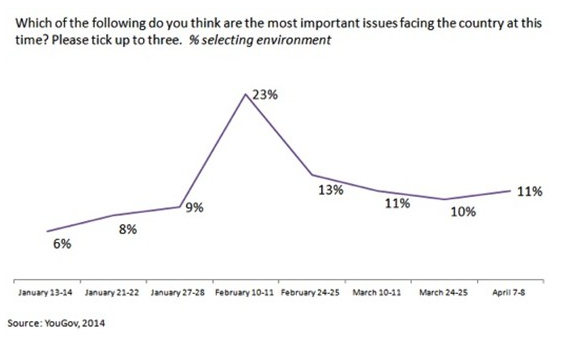
The fast-growing number of extreme-weather events, connected to the climate crisis, has already had a powerful impact on public attitudes toward global warming. A clear majority of Americans now acknowledge thatman-made pollution is responsible. As the storms, floods, mudslides, droughts, fires and other catastrophes become ever more destructive, the arcane discussions over how much of their extra-destructive force should be attributed to global warming have become largely irrelevant. The public at large feels it viscerally now. As Bob Dylan sang, “You don’t need a weatherman to know which way the wind blows.”

Besides, there is a simple difference between linear cause and effect and systemic cause and effect. As one of the world’s most-respected atmospheric scientists, Kevin Trenberth, has said, “The environment in which all storms form has changed owing to human activities.”

For example, when Supertyphoon Haiyan crossed the Pacific toward the Philippines last fall, the storm gained strength across seas that were 5.4 degrees Fahrenheit warmer than they used to be because of greenhouse­gas pollution. As a result, Haiyan went from being merely strong to being the most powerful and destructive ocean-based storm on record to make landfall. Four million people were displaced (more than twice as many as by the Indian Ocean tsunami of 10 years ago), and there are still more than 2 million Haiyan refugees desperately trying to rebuild their lives.

When Superstorm Sandy traversed the areas of the Atlantic Ocean windward of New York and New Jersey in 2012, the water temperature was nine degrees Fahrenheit warmer than normal. The extra convection energy in those waters fed the storm and made the winds stronger than they would otherwise have been. Moreover, the sea level was higher than it used to be, elevated by the melting of ice in the frozen regions of the Earth and the expanded volume of warmer ocean waters.

Five years earlier, denialists accused me of demagogic exaggeration in an animated scene in my documentary An Inconvenient Truth that showed the waters of the Atlantic Ocean flooding into the 9/11 Ground Zero Memorial site. But in Sandy’s wake, the Atlantic did in fact flood Ground Zero – many years before scientists had expected that to occur.

Similarly, the inundation of Miami Beach by rising sea levels has now begun, and freshwater aquifers in low-lying areas from South Florida to the Nile Delta to Bangladesh to Indochina are being invaded by saltwater pushed upward by rising oceans. And of course, many low-lying islands – not least in the Bay of Bengal – are in danger of disappearing altogether. Where will the climate refugees go? Similarly, the continued melting of mountain glaciers and snowpacks is, according to the best scientists, already “affecting water supplies for as many as a billion people around the world.”

Just as the extreme-weather events we are now experiencing are exactly the kind that were predicted by scientists decades ago, the scientific community is now projecting far worse extreme-weather events in the years to come. Eighty percent of the warming in the past 150 years (since the burning of carbon-based fuels gained momentum) has occurred in the past few decades. And it is worth noting that the previous scientific projections consistently low-balled the extent of the global­warming consequences that later took place – for a variety of reasons rooted in the culture of science that favor conservative estimates of future effects.

In an effort to avoid these cultural biases, the AAAS noted this year that not only are the impacts of the climate crisis “very likely to become worse over the next 10 to 20 years and beyond,” but “there is a possibility that temperatures will rise much higher and impacts will be much worse than expected. Moreover, as global temperature rises, the risk increases that one or more important parts of the Earth’s climate system will experience changes that may be abrupt, unpredictable and potentially irreversible, causing large damages and high costs.”

Just weeks after that report, there was shock and, for some, a temptation to despair when the startling news was released in May by scientists at both NASA and the University of Washington that the long-feared “collapse” of a portion of the West Antarctic ice sheet is not only under way but is also now “irreversible.” Even as some labored to understand what the word “collapse” implied about the suddenness with which this catastrophe will ultimately unfold, it was the word “irreversible” that had a deeper impact on the collective psyche.

Just as scientists 200 years ago could not comprehend the idea that species had once lived on Earth and had subsequently become extinct, and just as some people still find it hard to accept the fact that human beings have become a sufficiently powerful force of nature to reshape the ecological system of our planet, many – including some who had long since accepted the truth about global warming – had difficulty coming to grips with the stark new reality that one of the long-feared “tipping points” had been crossed. And that, as a result, no matter what we do, sea levels will rise by at least an additional three feet.

The uncertainty about how long the process will take (some of the best ice scientists warn that a rise of 10 feet in this century cannot be ruled out) did not change the irreversibility of the forces that we have set in motion. But as Eric Rignot, the lead author of the NASA study, pointed out in The Guardian, it’s still imperative that we take action: “Controlling climate warming may ultimately make a difference not only about how fast West Antarctic ice will melt to sea, but also whether other parts of Antarctica will take their turn.”

The news about the irreversible collapse in West Antarctica caused some to almost forget that only two months earlier, a similar startling announcement had been made about the Greenland ice sheet. Scientists found that the northeastern part of Greenland – long thought to be resistant to melting – has in fact been losing more than 10 billion tons of ice per year for the past decade, making 100 percent of Greenland unstable and likely, as with West Antarctica, to contribute to significantly more sea-level rise than scientists had previously thought.


The heating of the oceans not only melts the ice and makes hurricanes, cyclones and typhoons more intense, it also evaporates around 2 trillion gallons of additional water vapor into the skies above the U.S. The warmer air holds more of this water vapor and carries it over the landmasses, where it is funneled into land-based storms that are releasing record downpours all over the world.

For example, an “April shower” came to Pensacola, Florida, this spring, but it was a freak – another rainstorm on steroids: two feet of rain in 26 hours. It broke all the records in the region, but as usual, virtually no media outlets made the connection to global warming. Similar “once in a thousand years” storms have been occurring regularly in recent years all over the world, including in my hometown of Nashville in May 2010.

All-time record flooding swamped large portions of England this winter, submerging thousands of homes for more than six weeks. Massive downpours hit Serbia and Bosnia this spring, causing flooding of “biblical proportions” (a phrase now used so frequently in the Western world that it has become almost a cliché) and thousands of landslides. Torrential rains in Afghanistan in April triggered mudslides that killed thousands of people – almost as many, according to relief organizations, as all of the Afghans killed in the war there the previous year.

In March, persistent rains triggered an unusually large mudslide in Oso, Washington, killing more than 40 people. There are literally hundreds of other examples of extreme rainfall occurring in recent years in the Americas, Europe, Asia, Africa and Oceania.

In the planet’s drier regions, the same extra heat trapped in the atmosphere by man-made global-warming pollution has also been driving faster evaporation of soil moisture and causing record-breaking droughts. As of this writing, 100 percent of California is in “severe,” “extreme” or “exceptional” drought. Record fires are ravaging the desiccated landscape. Experts now project that an increase of one degree Celsius over pre-industrial temperatures will lead to as much as a 600-­percent increase in the median area burned by forest fires in some areas of the American West – including large portions of Colorado. The National Research Council has reported that fire season is two and a half months longer than it was 30 years ago, and in California, firefighters are saying that the season is now effectively year-round.

Drought has been intensifying in many other dry regions around the world this year: Brazil, Indonesia, central and northwest Africa and Madagascar, central and western Europe, the Middle East up to the Caspian Sea and north of the Black Sea, Southeast Asia, Northeast Asia, Western Australia and New Zealand.

Syria is one of the countries that has been in the bull’s-eye of climate change. From 2006 to 2010, a historic drought destroyed 60 percent of the country’s farms and 80 percent of its livestock – driving a million refugees from rural agricultural areas into cities already crowded with the million refugees who had taken shelter there from the Iraq War. As early as 2008, U.S. State Department cables quoted Syrian government officials warning that the social and economic impacts of the drought are “beyond our capacity as a country to deal with.” Though the hellish and ongoing civil war in Syria has multiple causes – including the perfidy of the Assad government and the brutality on all sides – their climate-related drought may have been the biggest underlying trigger for the horror.

The U.S. military has taken notice of the strategic dangers inherent in the climate crisis. Last March, a Pentagon advisory committee described the climate crisis as a “catalyst for conflict” that may well cause failures of governance and societal collapse. “In the past, the thinking was that climate change multiplied the significance of a situation,” said retired Air Force Gen. Charles F. Wald. “Now we’re saying it’s going to be a direct cause of instability.”

Pentagon spokesman Mark Wright told the press, “For DOD, this is a mission reality, not a political debate. The scientific forecast is for more Arctic ice melt, more sea-level rise, more intense storms, more flooding from storm surge and more drought.” And in yet another forecast difficult for congressional climate denialists to rebut, climate experts advising the military have also warned that the world’s largest naval base, in Norfolk, Virginia, is likely to be inundated by rising sea levels in the future.

And how did the Republican-dominated House of Representatives respond to these grim warnings? By passing legislation seeking to prohibit the Department of Defense from taking any action to prepare for the effects of climate disruption.

There are so many knock-on consequences of the climate crisis that listing them can be depressing – diseases spreading, crop yields declining, more heat waves affecting vulnerable and elderly populations, the disappearance of summer-ice cover in the Arctic Ocean, the potential extinction of up to half of all the living species, and so much more. And that in itself is a growing problem too, because when you add it all up, it’s no wonder that many feel a new inclination to despair.

So, clearly, we will just have to gird ourselves for the difficult challenges ahead. There is indeed, literally, light at the end of the tunnel, but there is a tunnel, and we are well into it.

In November 1936, Winston Churchill stood before the United Kingdom’s House of Commons and placed a period at the end of the misguided debate over the nature of the “gathering storm” on the other side of the English Channel: “Owing to past neglect, in the face of the plainest warnings, we have entered upon a period of danger. . . . The era of procrastination, of half measures, of soothing and baffling expedience of delays is coming to its close. In its place, we are entering a period of consequences. . . . We cannot avoid this period; we are in it now.”

Our civilization is confronting this existential challenge at a moment in our historical development when our dominant global ideology – democratic capitalism – has been failing us in important respects.

Democracy is accepted in theory by more people than ever before as the best form of political organization, but it has been “hacked” by large corporations (defined as “persons” by the Supreme Court) and special interests corrupting the political system with obscene amounts of money (defined as “speech” by the same court).

Capitalism, for its part, is accepted by more people than ever before as a superior form of economic organization, but is – in its current form – failing to measure and include the categories of “value” that are most relevant to the solutions we need in order to respond to this threatening crisis (clean air and water, safe food, a benign climate balance, public goods like education and a greener infrastructure, etc.).

Pressure for meaningful reform in democratic capitalism is beginning to build powerfully. The progressive introduction of Internet-based communication – social media, blogs, digital journalism – is laying the foundation for the renewal of individual participation in democracy, and the re-elevation of reason over wealth and power as the basis for collective decision­making. And the growing levels of inequality worldwide, combined with growing structural unemployment and more frequent market disruptions (like the Great Recession), are building support for reforms in capitalism.

Both waves of reform are still at an early stage, but once again, Churchill’s words inspire: “If you’re going through hell, keep going.” And that is why it is all the more important to fully appreciate the incredible opportunity for salvation that is now within our grasp. As the satirical newspaper The Onion recently noted in one of its trademark headlines: “Scientists Politely Remind World That Clean Energy Technology Ready to Go Whenever.”

We have the policy tools that can dramatically accelerate the transition to clean energy that market forces will eventually produce at a slower pace. The most important has long since been identified: We have to put a price on carbon in our markets, and we need to eliminate the massive subsidies that fuel the profligate emissions of global-warming pollution.

We need to establish “green banks” that provide access to capital investment necessary to develop renewable energy, sustainable agriculture and forestry, an electrified transportation fleet, the retrofitting of buildings to reduce wasteful energy consumption, and the full integration of sustainability in the design and architecture of cities and towns. While the burning of fossil fuels is the largest cause of the climate crisis, deforestation and “factory farming” also play an important role. Financial and technological approaches to addressing these challenges are emerging, but we must continue to make progress in converting to sustainable forestry and agriculture.

In order to accomplish these policy shifts, we must not only put a price on carbon in markets, but also find a way to put a price on climate denial in our politics. We already know the reforms that are needed – and the political will to enact them is a renewable resource. Yet the necessary renewal can only come from an awakened citizenry empowered by a sense of urgency and emboldened with the courage to reject despair and become active. Most importantly, now is the time to support candidates who accept the reality of the climate crisis and are genuinely working hard to solve it – and to bluntly tell candidates who are not on board how much this issue matters to you. If you are willing to summon the resolve to communicate that blunt message forcefully – with dignity and absolute sincerity – you will be amazed at the political power an individual can still wield in America’s diminished democracy.

Something else is also new this summer. Three years ago, in these pages, I criticized the seeming diffidence of President Obama toward the great task of solving the climate crisis; this summer, it is abundantly evident that he has taken hold of the challenge with determination and seriousness of purpose.

He has empowered his Environmental Protection Agency to enforce limits on CO2 emissions for both new and, as of this June, existing sources of CO2. He has enforced bold new standards for the fuel economy of the U.S. transportation fleet. He has signaled that he is likely to reject the absurdly reckless Keystone XL-pipeline proposal for the transport of oil from carbon­intensive tar sands to be taken to market through the United States on its way to China, thus effectively limiting their exploitation. And he is even now preparing to impose new limits on the release of methane pollution.

All of these welcome steps forward have to be seen, of course, in the context of Obama’s continued advocacy of a so-called all-of-the-above energy policy – which is the prevailing code for aggressively pushing more drilling and fracking for oil and gas. And to put the good news in perspective, it is important to remember that U.S. emissions – after declining for five years during the slow recovery from the Great Recession – actually increased by 2.4 percent in 2013.


Nevertheless, the president is clearly changing his overall policy emphasis to make CO2 reductions a much higher priority now and has made a series of inspiring speeches about the challenges posed by climate change and the exciting opportunities available as we solve it. As a result, Obama will go to the United Nations this fall and to Paris at the end of 2015 with the credibility and moral authority that he lacked during the disastrous meeting in Copenhagen four and a half years ago.

The international treaty process has been so fraught with seemingly intractable disagreements that some parties have all but given up on the possibility of ever reaching a meaningful treaty.

Ultimately, there must be one if we are to succeed. And there are signs that a way forward may be opening up. In May, I attended a preparatory session in Abu Dhabi, UAE, organized by United Nations Secretary General Ban Ki-moon to bolster commitments from governments, businesses and nongovernmental organizations ahead of this September’s U.N. Climate Summit. The two-day meeting was different from many of the others I have attended. There were welcome changes in rhetoric, and it was clear that the reality of the climate crisis is now weighing on almost every nation. Moreover, there were encouraging reports from around the world that many of the policy changes necessary to solve the crisis are being adopted piecemeal by a growing number of regional, state and city governments.

For these and other reasons, I believe there is a realistic hope that momentum toward a global agreement will continue to build in September and carry through to the Paris negotiations in late 2015.

The American poet Wallace Stevens once wrote, “After the final ‘no’ there comes a ‘yes’/And on that ‘yes’ the future world depends.” There were many no’s before the emergence of a global consensus to abolish chattel slavery, before the consensus that women must have the right to vote, before the fever of the nuclear­arms race was broken, before the quickening global recognition of gay and lesbian equality, and indeed before every forward advance toward social progress. Though a great many obstacles remain in the path of this essential agreement, I am among the growing number of people who are allowing themselves to become more optimistic than ever that a bold and comprehensive pact may well emerge from the Paris negotiations late next year, which many regard as the last chance to avoid civilizational catastrophe while there is still time.

It will be essential for the United States and other major historical emitters to commit to strong action. The U.S. is, finally, now beginning to shift its stance. And the European Union has announced its commitment to achieve a 40-percent reduction in CO2 emissions by 2030. Some individual European nations are acting even more aggressively, including Finland’s pledge to reduce emissions 80 percent by 2050.

It will also be crucial for the larger developing and emerging nations – particularly China and India – to play a strong leadership role. Fortunately, there are encouraging signs. China’s new president, Xi Jinping, has launched a pilot cap-and-trade system in two cities and five provinces as a model for a nationwide cap-and-trade program in the next few years. He has banned all new coal burning in several cities and required the reporting of CO2 emissions by all major industrial sources. China and the U.S. have jointly reached an important agreement to limit another potent source of global-warming pollution – the chemical compounds known as hydro-fluorocarbons, or HFCs. And the new prime minister of India, as noted earlier, has launched the world’s most ambitious plan to accelerate the transition to solar electricity.

Underlying this new breaking of logjams in international politics, there are momentous changes in the marketplace that are exercising enormous influence on the perceptions by political leaders of the new possibilities for historic breakthroughs. More and more, investors are diversifying their portfolios to include significant investments in renewables. In June, Warren Buffett announced he was ready to double Berkshire Hathaway’s existing $15 billion investment in wind and solar energy.

A growing number of large investors – including pension funds, university endowments (Stanford announced its decision in May), family offices and others – have announced decisions to divest themselves from carbon­intensive assets. Activist and “impact” investors are pushing for divestment from carbon­rich assets and new investments in renewable and sustainable assets.

Several large banks and asset managers around the world (full disclosure: Generation Investment Management, which I co-founded with David Blood and for which I serve as chairman, is in this group) have advised their clients of the danger that carbon assets will become “stranded.” A “stranded asset” is one whose price is vulnerable to a sudden decline when markets belatedly recognize the truth about their underlying value – just as the infamous “subprime mortgages” suddenly lost their value in 2007 to 2008 once investors came to grips with the fact that the borrowers had absolutely no ability to pay off their mortgages.

Shareholder activists and public campaigners have pressed carbon-dependent corporations to deal with these growing concerns. But the biggest ones are still behaving as if they are in denial. In May 2013, ExxonMobil CEO Rex Tillerson responded to those pointing out the need to stop using the Earth’s atmosphere as a sewer by asking, “What good is it to save the planet if humanity suffers?”

I don’t even know where to start in responding to that statement, but here is a clue: Pope Francis said in May, “If we destroy creation, creation will destroy us. Never forget this.”


Exxonmobil, Shell and many other holders of carbon-intensive assets have argued, in essence, that they simply do not believe that elected national leaders around the world will ever reach an agreement to put a price on carbon pollution.

But a prospective global treaty (however likely or unlikely you think that might be) is only one of several routes to overturning the fossil-fuel economy. Rapid technological advances in renewable energy are stranding carbon investments; grassroots movements are building opposition to the holding of such assets; and new legal restrictions on collateral flows of pollution – like particulate air pollution in China and mercury pollution in the U.S. – are further reducing the value of coal, tar sands, and oil and gas assets.

In its series of reports to energy investors this spring, Citigroup questioned the feasibility of new coal plants not only in Europe and North America, but in China as well. Although there is clearly a political struggle under way in China between regional governments closely linked to carbon-­energy generators, suppliers and users and the central government in Beijing – which is under growing pressure from citizens angry about pollution – the nation’s new leadership appears to be determined to engineer a transition toward renewable energy. Only time will tell how successful they will be.

The stock exchanges in Johannesburg and São Paulo have decided to require the full integration of sustainability from all listed companies. Standard & Poor’s announced this spring that some nations vulnerable to the impacts of the climate crisis may soon have their bonds downgraded because of the enhanced risk to holders of those assets.

A growing number of businesses around the world are implementing sustainability plans, as more and more consumers demand a more responsible approach from businesses they patronize. Significantly, many have been pleasantly surprised to find that adopting efficient, low-carbon approaches can lead to major cost savings.

And all the while, the surprising and relentless ongoing decline in the cost of renewable energy and efficiency improvements are driving the transition to a low-carbon economy.

Is there enough time? Yes. Damage has been done, and the period of consequences will continue for some time to come, but there is still time to avoid the catastrophes that most threaten our future. Each of the trends described above – in technology, business, economics and politics – represents a break from the past. Taken together, they add up to genuine and realistic hope that we are finally putting ourselves on a path to solve the climate crisis.

How long will it take? When Martin Luther King Jr. was asked that question during some of the bleakest hours of the U.S. civil rights revolution, he responded, “How long? Not long. Because no lie can live forever. . . . How long? Not long. Because the arc of the moral universe is long, but it bends toward justice.”

And so it is today: How long? Not long.

This story is from the July 3rd-17th, 2014 issue of Rolling Stone.

http://www.rollingstone.com/politics/news/the-turning-point-new-hope-for-the-climate-20140618

Os limites das negociações do clima (Valor Econômico)

JC e-mail 4979, de 27 de junho de 2014

Artigo de Jeffrey D. Sachs publicado no Valor Econômico

Para o mundo vencer a crise decorrente das mudanças climáticas, precisaremos de uma nova abordagem. Atualmente, as maiores potências encaram o assunto como uma oportunidade para negociações sobre quem reduzirá suas emissões de CO2 (principalmente decorrentes do uso de carvão, petróleo e gás). Cada país aceita fazer pequenas “contribuições” para a redução das emissões, tentando induzir os outros países a fazer mais. Os EUA, por exemplo, vão “admitir” um pouco de redução de CO2 se a China fizer o mesmo.

Durante duas décadas ficamos presos a essa mentalidade minimalista e incremental, errônea em dois aspectos fundamentais. Em primeiro lugar, ela não está funcionando: as emissões de CO2 estão crescendo – e não caindo. A indústria petrolífera mundial está deitando e rolando – fracking, perfuração, exploração no Ártico, gaseificando carvão e construindo novas usinas produtoras de gás natural liquefeito (GNL). O mundo está aniquilando os sistemas de climatização e de produção de alimentos a um ritmo alucinante.

Em segundo lugar, a “descarbonização” do sistema energético é tecnologicamente complicada. O verdadeiro problema para os EUA não é a competição chinesa, é a complexidade de migrar uma economia que gera US$ 17,5 trilhões dos combustíveis fósseis para alternativas de baixo carbono. O problema da China não são os EUA, mas como eliminar a dependência da segunda maior economia do mundo do consumo arraigado de carvão. Na verdade, trata-se de problemas de engenharia, não de negociações.

A questão é como descarbonizar mantendo-se economicamente vigorosos. Negociadores envolvidos com a questão climática não podem dar respostas a essa questão, mas inovadores como Elon Musk, da Tesla, e cientistas como Klaus Lackner, da Universidade Columbia, podem.

A descarbonização do sistema energético mundial exige impedir que nossa vasta e crescente produção de eletricidade intensifique as emissões atmosféricas de CO2. Isso pressupõe também trocarmos nossas frotas de transporte por outras que não produzam carbono.

Gerar eletricidade com produção nula de carbono é factível. Energia de fontes solar e eólica já são capazes de proporcionar isso, mas não necessariamente quando e onde necessário. Necessitamos progressos em armazenamento para essas fontes de energia limpa.

Energia nuclear, outra fonte não geradora de carbono, também terá de desempenhar um grande papel no futuro, o que implica melhorar a confiança pública em sua segurança. Até mesmo os combustíveis fósseis podem produzir eletricidade sem liberação de carbono, se forem empregadas tecnologias para captura e armazenamento de carbono (CAC). Klaus Lackner é um líder mundial em pesquisa de novas estratégias de CAC.

A eletrificação dos transportes já foi viabilizada, e a Tesla, com os sofisticados veículos elétricos, está capturando a imaginação e o interesse do público. Elon Musk, ansioso por estimular o rápido desenvolvimento dos veículos, fez história, na semana passada, liberando as patentes de Tesla para uso por competidores.

Novas técnicas para projeto de edificações reduziram substancialmente os custos com aquecimento e refrigeração, ao basearem-se muito mais em isolamento, ventilação natural e energia solar.

O mundo precisa de um esforço concertado para adotar a geração de eletricidade com baixas emanações de carbono, e não mais negociações do tipo “nós contra eles”. Todos os países necessitam novas tecnologias de baixo carbono, muitas das quais ainda estão fora do alcance comercial. Negociadores de acordos climáticos devem, portanto, concentrar-se em como cooperar para assegurar que inovações tecnológicas sejam criadas e beneficiem todos os países.

Os países precisam inspirar-se em outros casos em que governos, cientistas e indústria uniram-se para produzir grandes mudanças. Por exemplo, o Projeto Manhattan (para produzir a bomba atômica, durante a Segunda Guerra Mundial) e ao assumir como objetivo realizar o primeiro pouso na Lua, o governo americano estabeleceu uma meta notável, um calendário ousado e alocou os recursos financeiros para concretizar os objetivos. Nos dois casos, cientistas e engenheiros cumpriram seus prazos.

Na realidade, processos de “mudança tecnológica direcionada”, em que objetivos são definidos ousadamente, etapas são identificadas e cronogramas são postos em prática, são muito mais comuns. A revolução em TI que nos deu computadores, smartphones, GPS e muito mais, foi construída sobre uma série de roteiros definidos pela indústria e por governos.

O genoma humano foi mapeado mediante esse tipo esforço governamental – que em última instância incorporou o setor privado. Mais recentemente, governo e indústria cooperaram para reduzir os custos do sequenciamento de um genoma individual – de cerca de US$ 100 milhões em 2001, para apenas US$ 1 mil, hoje. Uma meta de enorme redução de custos foi definida, os cientistas começaram a trabalhar e o progresso alvo foi alcançado dentro do cronograma.

Mas deixemos de fingir que trata-se de um jogo de pôquer, em vez de um quebra-cabeça científico e tecnológico da mais alta ordem. Precisamos de gente como Elon Musk e Klaus Lackner, precisamos da General Electric, Siemens, Ericsson, Intel, Electricité de France, Huawei, Google, Baidu, Samsung, Apple e outros em laboratórios, usinas de eletricidade e em cidades ao redor do mundo para forjar os avanços tecnológicos que reduzirão as emissões mundiais de CO2.

Há um lugar à mesa até mesmo para companhias como ExxonMobil, Chevron, BP, Peabody, Koch Industries e outras gigantes no setor do petróleo e carvão. Se desejam que seus produtos sejam usados no futuro, é melhor torná-los seguros mediante a implantação de tecnologias avançadas de CCS. A questão crucial é que a meta de profunda descarbonização é um trabalho para todos os interessados, entre eles o setor de combustíveis fósseis – e trata-se uma missão em que todos nós precisamos ficar no lado da sobrevivência e do bem-estar humanos. (Tradução de Sergio Blum)

Jeffrey D. Sachs é professor de economia e diretor do Instituto Terra, da Columbia University. É também assessor especial do secretário-geral das Nações Unidas no tema das Metas de Desenvolvimento do Milênio. Copyright: Project Syndicate, 2014.
http://www.project-syndicate.org

(Valor Econômico)
http://www.valor.com.br/opiniao/3595802/os-limites-das-negociacoes-do-clima#ixzz35qfSi4gm

The fight to reform Econ 101 (Al Jazeera)

Economics is a dismal nonscience, but it need not remain that way

July 16, 2014 6:00AM ET

by 

During the last weekend of June, hundreds of students, university lecturers, professors and interested members of the public descended on the halls of University College London to attend the Rethinking Economics conference. They all shared a similar belief: that economics education in most universities had become narrow, insular and detached from the real world.

For a brief period after the financial crisis of 2008, the shortcomings of the economics profession and the way it is taught were recognized. Many economists offered up mea culpas of various kinds and conceded that since they did not foresee the biggest economic event since the Great Depression, there was probably something seriously wrong with the discipline. But as time passed and many economies began to experience gradual, somewhat muted recoveries, the profession regained its confidence.

When I was completing my master’s degree at Kingston University last year, I experienced this firsthand from the more mainstream faculty there. Lecturers offered potted explanations of the crisis using old analytical tools such as supply and demand graphs that cannot incorporate expectations to explain asset price bubbles. The same economists who, just a few years ago, told us that financial markets were the conduits of perfect information began to introduce doublethink phrases in the media such as “rational bubble” (in which investors allegedly act irrationally by bidding up asset prices in full knowledge that prices are heavily inflated but think they can bail out of the market before prices fall) to explain the events of the past few years. There is nothing rational about investors’ acting this way, because they cannot know when the bubble will burst and so cannot time their exit from the market. They cannot know when the herd movement that they are part of will come to an end, so any action that they take to ride the wave will be just as irrational as those of people unaware of the bubble. The entire exercise appeared to be an ad hoc attempt to reinterpret the facts to fit the pet theory — economic agents aware of relevant information act rationally — rather than to alter the theory in light of the facts.

It was difficult not to sense the Soviet-style revisionism that had occurred within the halls of learning: The party had tossed history down the memory hole and introduced a strange, seemingly self-contradictory language that they were busy foisting upon an unwitting public. One Chicago school economist, Ray Ball, argues that the now notorious efficient market hypothesis (EMH), which states that financial markets price in all relevant information, is actually supported by the recent crisis. He argues that the capital flight that led to the bank meltdowns lends support to the EMH because it shows how rapidly financial markets react to new information. But as many will remember, investigations clearly showed that information was not being processed efficiently by market participants in the run-up to the crisis. The most colorful example of this was the Standard & Poor’s employee who, responding to a colleague who said that they should not be rating a mortgage-backed security deal because the estimations of risk were incorrect, said that cows could be estimating the risk of a product and S&P would still rate it.

Shine a light

Despite such attempts to shore up the orthodoxy, students have sensed that something is wrong: Over the past two years, they have been organizing across more than 60 countries with the aim of forcing the vampire that is the economics profession into the light of day. While the students in the movement have a diversity of opinions on various issues, they have all come to believe that the best way to reform economics is to demand that a plurality of approaches be taught. They have rightly identified the key fault with contemporary economics teaching: the monoculture it engenders. Currently only one approach to economics is taught in the vast majority of departments in the U.S. and Europe: what is usually called neoclassical or marginalist economics, epitomized by Harvard’s Gregory Mankiw — a former chairman of the Council of Economic Advisers under President George W. Bush — and Chicago’s Gary Becker, a Nobel laureate. This is the economics of the rational, atomized individual purged of all social context, whose only goal is to maximize a mysterious, effervescent quantity called utility. In this view, the economy tends toward an equilibrium end point, at which everyone has a job and wages and profits are set in line with what each individual contributes to society.

Donald Gillies, a former president of the British Society for the Philosophy of Science, told a stunned audience that he had examined three well-known Nobel Prize–winning papers in economics and could find nothing in them that he could call scientific.

When I spoke with the students, they were struck by how even those who dissented from contemporary economic policies like austerity shared this overarching vision. Paul Krugman, for example, to whom many turned after the crisis to provide context — including many of the students I met — also accepted the orthodox view (although he has not embraced some of the worst excesses echoed by his peers).

True dissenters

The students at the June conference also said that there were true dissenters in the discipline who found that economics was a highly contested field. Cambridge University’s Ha-Joon Chang pointed out that there are any number of schools of economic thought, each with their own approaches and insights. Their opinions range from the Austrians, who believe that government interference in the economy leads to wasted resources, to post-Keynesians, who believe that capitalist economies are inherently unstable and require government intervention to stave off collapse and stagnation, to Marxians, institutionalists, Schumpeterians, neo-Ricardians and so on. Chang argued that none of these schools of thought were inherently right or wrong; they all had insights into the working of the economy, and every one of them had a right to be taught to students as a competing point of view. It was up to the students, he said, to find what they found interesting, useful and credible.

One of the conference speakers pointed out that this is required in all the other disciplines that study people and society. He told an anecdote about being in the psychology department of his university when an inspector from a psychological association turned up to ensure that there was an adequately pluralist approach being undertaken. The speaker quipped that it would be far more likely that an inspector from an economics association would turn up to ensure that the current doctrine was being firmly adhered to.

But what, exactly, constitutes this dogmatic thinking? For starters, the firm belief that economics is a science on par with physics and chemistry. After all, these economists say, only a crank would demand that a plurality of approaches to physics and chemistry should be taught in universities. But the truth of the matter is that economics is not a science on par with physics and chemistry and it never will be. Donald Gillies, a former president of the British Society for the Philosophy of Science, told a stunned audience that he had examined three well-known Nobel Prize–winning papers in economics and could find nothing in them that he could call scientific. Rather, he said, they utilized sophisticated mathematics to hide the fact that they were not saying anything remotely relevant about the real world that could be proved or disproved.

The dirty little secret about economics is that it cannot, like other sciences, undertake proper laboratory experiments. Even the experiments of the behaviorist economists are open to doubt in that it seems unlikely that the manner in which people act in a lab while under observation is identical to how they act day to day. Economics is therefore ill equipped to make claims with the same confidence as bona fide sciences. What economists offer are instead interpretations of the world around them. Once this is understood, it becomes very difficult to argue against a plurality of opinions in the discipline. This was what the students sensed, and this is why their clarion call became one for pluralism.

New curriculum

These students are well organized, and their numbers are growing; their commitment is unlikely to go away anytime soon. They are focused in a manner that is impressive for a protest movement, willing to transcend their political differences in order to fight for a common goal. Every week a new group springs up. At the conference I attended, organizers went around with pads and pens collecting the contact details of sympathetic faculty members and other students in countries where the movement was only partially developed.

Even institutions are hopping on board. Many employers complain that the mainstream departments are churning out employees with mathematical skills completely out of proportion to the jobs they do but who seem unable to undertake basic economic analysis. Often these employees have to be retrained on the job in order to function at their institutions. The chief economist of the Bank of England, Andy Haldane, wrote in the foreword to the students’ international manifesto that “employers of economists, like the Bank of England, stand to benefit from such an evolution in the economics curriculum.” Given that mainstream economists often claim that the consumer is king and competition is sacrosanct, it is increasingly difficult to see how they make a case for their current monopoly over the educational process.

In September another conference will take place in New York, and rumor has it that an enormous international meeting will soon be organized too. If and when the movement reaches that level of international organization, it could start putting real pressure on companies, governments and economics departments to rethink their models and their ways. If the profession wishes to uphold what is left of its credibility, it would do well to pay attention.

Philip Pilkington is a London-based economist and member of the Political Economy Research Group at Kingston University. He runs the blog Fixing the Economists.

Miami, the great world city, is drowning while the powers that be look away (The Observer)

Low-lying south Florida, at the front line of climate change in the US, will be swallowed as sea levels rise. Astonishingly, the population is growing, house prices are rising and building goes on. The problem is the city is run by climate change deniers

, science editor, in Miami

The Observer, Friday 11 July 2014 08.59 BST

Miami coastline

The Miami coastline: there are fears that even a 30cm rise in the sea level could be catastrophic. Photograph: Joe Raedle/Getty

A drive through the sticky Florida heat into Alton Road in Miami Beach can be an unexpectedly awkward business. Most of the boulevard, which runs north through the heart of the resort’s most opulent palm-fringed real estate, has been reduced to a single lane that is hemmed in by bollards, road-closed signs, diggers, trucks, workmen, stacks of giant concrete cylinders and mounds of grey, foul-smelling earth.

It is an unedifying experience but an illuminating one – for this once glamorous thoroughfare, a few blocks from Miami Beach’s art deco waterfront and its white beaches, has taken on an unexpected role. It now lies on the front line of America’s battle against climate change and the rise in sea levels that it has triggered.

“Climate change is no longer viewed as a future threat round here,” says atmosphere expert Professor Ben Kirtman, of the University of Miami. “It is something that we are having to deal with today.”

Every year, with the coming of high spring and autumn tides, the sea surges up the Florida coast and hits the west side of Miami Beach, which lies on a long, thin island that runs north and south across the water from the city of Miami. The problem is particularly severe in autumn when winds often reach hurricane levels. Tidal surges are turned into walls of seawater that batter Miami Beach’s west coast and sweep into the resort’s storm drains, reversing the flow of water that normally comes down from the streets above. Instead seawater floods up into the gutters of Alton Road, the first main thoroughfare on the western side of Miami Beach, and pours into the street. Then the water surges across the rest of the island.

The effect is calamitous. Shops and houses are inundated; city life is paralysed; cars are ruined by the corrosive seawater that immerses them. During one recent high spring tide, laundromat owner Eliseo Toussaint watched as slimy green saltwater bubbled up from the gutters. It rapidly filled the street and then blocked his front door. “This never used to happen,” Toussaint told reporters. “I’ve owned this place eight years and now it’s all the time.”

Today, shop owners keep plastic bags and rubber bands handy to wrap around their feet when they have to get to their cars through rising waters, while householders have found that ground-floor spaces in garages are no longer safe to keep their cars. Only those on higher floors can hope to protect their cars from surging sea waters that corrode and rot the innards of their vehicles.

Hence the construction work at Alton Road, where $400m is now being spent in an attempt to halt these devastating floods – by improving Miami Beach’s stricken system of drains and sewers. In total, around $1.5bn is to be invested in projects aimed at holding back the rising waters. Few scientists believe the works will have a long-term effect.

lowlying houses miami

Low-lying houses in Miami Beach are especially vulnerable. Photograph: Joe Raedle/Getty Images

“There has been a rise of about 10 inches in sea levels since the 19th century – brought about by humanity’s heating of the planet through its industrial practices – and that is now bringing chaos to Miami Beach by regularly flooding places like Alton Road,” says Harold Wanless, a geology professor at the University of Miami. “And it is going to get worse. By the end of this century we could easily have a rise of six feet, possibly 10 feet. Nothing much will survive that. Most of the land here is less than 10 feet above sea level.”

What makes Miami exceptionally vulnerable to climate change is its unique geology. The city – and its satellite towns and resorts – is built on a dome of porous limestone which is soaking up the rising seawater, slowly filling up the city’s foundations and then bubbling up through drains and pipes. Sewage is being forced upwards and fresh water polluted. Miami’s low topography only adds to these problems. There is little land out here that rises more than six feet above sea level. Many condos and apartment blocks open straight on the edge of the sea. Of the total of 4.2 million US citizens who live at an elevation of four feet or less, 2.4 million of them live in south Florida.

At Florida International University, geologist Peter Harlem has created a series of maps that chart what will happen as the sea continues to rise. These show that by the time oceans have risen by four feet – a fairly conservative forecast – most of Miami Beach, Key Biscayne, Virginia Key and all the area’s other pieces of prime real estate, will be bathtubs. At six feet, Miami city’s waterfront and the Florida Keys will have disappeared. The world’s busiest cruise ship port, which handles four million passengers, will disappear beneath the waves. “This is the fact of life about the ocean: it is very, very powerful,” says Harlem.

Miami and its surroundings are facing a calamity worthy of the Old Testament. It is an astonishing story. Despite its vast wealth, the city might soon be consumed by the waves, for even if all emissions of carbon dioxide were halted tomorrow – a very unlikely event given their consistent rise over the decades – there is probably enough of the gas in the atmosphere to continue to warm our planet, heat and expand our seas, and melt polar ice. In short, there seems there is nothing that can stop the waters washing over Miami completely.

It a devastating scenario. But what really surprises visitors and observers is the city’s response, or to be more accurate, its almost total lack of reaction. The local population is steadily increasing; land prices continue to surge; and building is progressing at a generous pace. During my visit last month, signs of construction – new shopping malls, cranes towering over new condominiums and scaffolding enclosing freshly built apartment blocks – could be seen across the city, its backers apparently oblivious of scientists’ warnings that the foundations of their buildings may be awash very soon.

Activists Demonstrate Against Sen. Rubio's Miami Office

Protesters gather near the office of Senator Marco Rubio to ask him to take action to address climate change. Photograph: Joe Raedle/Getty Images

Not that they are alone. Most of Florida’s senior politicians – in particular, Senator Marco Rubio, former governor Jeb Bush and current governor Rick Scott, all Republican climate-change deniers – have refused to act or respond to warnings of people like Wanless or Harlem or to give media interviews to explain their stance, though Rubio, a Republican party star and a possible 2016 presidential contender, has made his views clear in speeches. “I do not believe that human activity is causing these dramatic changes to our climate the way these scientists are portraying it. I do not believe that the laws that they propose we pass will do anything about it, except it will destroy our economy,” he said recently. Miami is in denial in every sense, it would seem. Or as Wanless puts it: “People are simply sticking their heads in the sand. It is mind-boggling.”

Not surprisingly, Rubio’s insistence that his state is no danger from climate change has brought him into conflict with local people. Philip Stoddard, the mayor of South Miami, has a particularly succinct view of the man and his stance. “Rubio is an idiot,” says Stoddard. “He says he is not a scientist so he doesn’t have a view about climate change and sea-level rise and so won’t do anything about it. Yet Florida’s other senator, Democrat Bill Nelson, is holding field hearings where scientists can tell people what the data means. Unfortunately, not enough people follow his example. And all the time, the waters are rising.”

Philip Stoddard is particularly well-placed to judge what is happening to Miami. Tall, thin, with a dry sense of humour, he is a politician, having won two successive elections to be mayor of South Miami, and a scientist, a biology professor at Florida International University. The backyard of the home that he shares with his architect wife, Grey Reid, reflects his passion for the living world. While most other South Miami residences sport bright blue swimming pools and barbecues, Stoddard has created a small lake, fringed with palms and ferns, that would do justice to the swampy Everglades near his home. Bass, koi and mosquito fish swim here, while bright dragonflies and zebra lapwing butterflies flit overhead. It is a naturalists’ haven but Stoddard is under no illusions about the risks facing his home. Although several miles inland, the house is certainly not immune to the changes that threaten to engulf south Florida.

“The thing about Miami is that when it goes, it will all be gone,” says Stoddard. “I used to work at Cornell University and every morning, when I went to work, I climbed more elevation than exists in the entire state of Florida. Our living-room floor here in south Miami is at an elevation of 10 feet above sea level at present. There are significant parts of south Florida that are less than six feet above sea level and which are now under serious threat of inundation.”

Nor will south Florida have to wait that long for the devastation to come. Long before the seas have risen a further three or four feet, there will be irreversible breakdowns in society, he says. “Another foot of sea-level rise will be enough to bring salt water into our fresh water supplies and our sewage system. Those services will be lost when that happens,” says Stoddard.

“You won’t be able to flush away your sewage and taps will no longer provide homes with fresh water. Then you will find you will no longer be able to get flood insurance for your home. Land and property values will plummet and people will start to leave. Places like South Miami will no longer be able to raise enough taxes to run our neighbourhoods. Where will we find the money to fund police to protect us or fire services to tackle house fires? Will there even be enough water pressure for their fire hoses? It takes us into all sorts of post-apocalyptic scenarios. And that is only with a one-foot sea-level rise. It makes one thing clear though: mayhem is coming.”

Miami flooding

In November 2013, a full moon and high tides led to flooding in parts of the city, including here at Alton Road and 10th Street. Photograph: Corbis

And then there is the issue of Turkey Point nuclear plant, which lies 24 miles south of Miami. Its operators insist it can survive sea surges and hurricanes and point out that its reactor vessel has been built 20 feet above sea level. But critics who include Stoddard, Harlem and others argue that anciliary equipment – including emergency diesel generators that are crucial to keeping cooling waters circulating in the event of power failure – are not so well protected. In the event of sea rise and a major storm surge, a power supply disruption could cause a repeat of the Fukushima accident of 2011, they claim. In addition, inundation maps like those prepared by Harlem show that with a three-foot sea-level rise, Turkey Point will be cut off from the mainland and will become accessible only by boat or aircraft. And the higher the seas go, the deeper it will be submerged.

Turkey Point was built in the 1970s when sea level rises were not an issue, of course. But for scientists like Ben Kirtman, they are now a fact of life. The problem is that many planners and managers still do not take the threat into account when planning for the future, he argues. A classic example is provided by the state’s water management. South Florida, because it is so low-lying, is criss-crossed with canals that take away water when there is heavy rainfall and let it pour into the sea.

“But if you have sea level rises of much more than a foot in the near future, when you raise the canal gates to let the rain water out, you will find sea water rushing in instead,” Kirtman said. “The answer is to install massive pumps as they have done in New Orleans. Admittedly, these are expensive. They each cost millions of dollars. But we are going to need them and if we don’t act now we are going to get caught out. The trouble is that no one is thinking about climate change or sea-level rises at a senior management level.”

The problem stems from the top, Kirtman said, from the absolute insistence of influential climate change deniers that global warming is not happening. “When statesmen like Rubio say things like that, they make it very, very hard for anything to get done on a local level – for instance for Miami to raise the millions it needs to build new sewers and canals. If local people have been told by their leaders that global warming is not happening, they will simply assume you are wasting their money by building defences against it.

“But global warming is occurring. That is absolutely unequivocal. Since the 1950s, the climate system has warmed. That is an absolute fact. And we are now 95% sure that that warming is due to human activities. If I was 95% sure that my house was on fire, would I get out? Obviously I would. It is straightforward.”

This point is backed by Harold Wanless. “Every day we continue to pump uncontrolled amounts of greenhouse gas into the atmosphere, we strengthen the monster that is going to consume us. We are heating up the atmosphere and then we are heating up the oceans so that they expand and rise. There doesn’t look as if anything is going to stop that. People are starting to plan in Miami but really they just don’t see where it is all going.”

Thus one of the great cities of the world faces obliteration in the coming decades. “It is over for south Florida. It is as simple as that. Nor is it on its own,” Wanless admits.

“The next two or three feet of sea-level rise that we get will do away with just about every barrier island we have across the planet. Then, when rises get to four-to-six feet, all the world’s great river deltas will disappear and with them the great stretches of agricultural land that surrounds them. People still have their heads in the sand about this but it is coming. Miami is just the start. It is worth watching just for that reason alone. It is a major US city and it is going to let itself drown.”

Other areas at risk

London

With eight power stations, 35 tube stations and all of Whitehall in the tidal Thames floodplain, the threat of floods has long loomed large, posing a risk to the economy, infrastructure and national heritage. With sea level rises and increased rainfall on the cards thanks to climate change, measures are being put in place to revamp and boost the ageing flood defences. Meanwhile, the south-east of England is sinking by around 1.5mm a year.

Amsterdam/Netherlands

The Dutch are often looked to as the masters of flood defence engineering with their impressive array of dams, dikes and barriers. It’s a skill they have had to acquire as almost half the population lives less than 3ft above sea level and many livelihoods depend on the country’s strong flood defences. They have adopted a “live with water, rather than fight it” attitude in recent years, with innovations including “floating homes” being built in Amsterdam.

New Orleans

Bearing in mind that roughly half of New Orleans is below sea level, its future in terms of coastal flooding does not look too bright. Indeed, according to the World Bank it is the fourth-most vulnerable city to future sea level rise in economic costs, with predicted average annual losses of $1.8bn in 2050. It is predicted that rising waters and subsiding land could result in relative sea level rises of up to 4.6ft by 2100, one of the highest rates in the US.

Maldives

The Maldives is generally thought of as an island paradise but is critically endangered by the rising ocean that both supports and surrounds it. Of its 1,192 islands, 80% are less than 3ft above sea level, with global warming putting the Maldives at risk of becoming the Atlantis of our time. So perhaps it is unsurprising that the Maldivian president is looking at the options of buying land should the country’s 200 densely inhabited islands need to be evacuated.There’s even a pot of money especially allocated for buying land overseas and moving the islands’s residents to safer ground.

Bangladesh

Bangladesh is a nation in which three majestic Himalayan rivers converge, before meandering their way to the sea via the Ganges delta: beautiful on a map, but not ideal in terms of river flooding, or tidal flooding for that matter. The country is basically a massive floodplain, with more than 20% of its land awash with water every year and around 70% experiencing severe flooding in extreme cases. As one of the world’s least developed countries, it cannot afford the technology others use to mitigate the effects of flooding and has to turn to more imaginative means, such as creating houses built on stilts in coastal areas.

Abigail Hayward

Mudança climática ameaça estabilidade econômica de cidades (CarbonoBrasil)

11/7/2014 – 11h48

por Jéssica Lipinski, do CarbonoBrasil

bhcdp Mudança climática ameaça estabilidade econômica de cidades

Novo relatório mostra que 76% dos 207 municípios analisados creem que as alterações ambientais trazem riscos físicos a seus habitantes e empresas; documento identificou 757 atividades de adaptação e mitigação nas cidades avaliadas

Uma nova pesquisa do Carbon Diclosure Project (CDP), organização sem fins lucrativos que ajuda cidades e empresas e medirem, divulgarem, gerirem e compartilharem informações ambientais, revelou que os governos locais das principais cidades do mundo estão avançando com as ações para combater as mudanças climáticas, já que acreditam que o fenômeno coloca em perigo a estabilidade de suas economias.

O relatório, intitulado Protecting our Capital (Protegendo nosso Capital ou Protegendo nossa Capital),aponta que 76% dos 207 municípios analisados acreditam que os efeitos das mudanças climáticas possam trazer algum tipo de risco físico a seus habitantes e companhias.

Entre as cidades avaliadas pelo estudo estão Caracas (Venezuela), Hong Kong, Johanesburgo (África do Sul), Londres (Inglaterra), Nova Iorque (Estados Unidos), São Paulo, Tóquio (Japão), Wellington (Nova Zelândia) e Sidney (Austrália).

Alguns dos principais riscos identificados pelas cidades são: danos materiais e a bens de capital; destruição de meios de transporte e infraestrutura; e problemas relacionados ao bem-estar dos cidadãos.

“Os governos locais estão agindo à frente para protegerem seus cidadãos e empresas dos impactos das mudanças climáticas, porém é preciso mais colaboração com as empresas para aumentar a resiliência urbana. Através do fornecimento de informação, políticas e incentivos, as cidades podem ajudar a equipar as empresas para gerirem esses riscos e abraçarem as oportunidades”, observou Larissa Bulla, diretora do programa de cidades do CDP.

Na verdade, segundo o documento, os municípios estão muito alinhados com as companhias quando o assunto é identificação de riscos. Eles reconhecem 69% dos riscos físicos das mudanças climáticas que as empresas identificam nessas cidades, e estão procurando resolver cerca de 66% dos identificados pelas corporações.

Por exemplo, a cidade de Caracas relata: “a água potável e a geração de eletricidade podem ser interrompidas por causa das mudanças climáticas. Esses fatores podem afetar o setor privado. As enchentes podem interromper as operações e as companhias de seguros podem enfrentar reivindicações mais elevadas”.

Tal situação também ocorre no município de Pittsburgh, nos EUA, em que alguns proprietários de empresas estão abandonando seus investimentos porque não são mais capazes de buscar compensação pelas perdas ocorridas como resultado das mudanças climáticas. Tanto é que a indústria local de seguros recentemente apresentou ações contra as cidades devido ao fato de que elas não estavam buscando se adaptar às consequências das mudanças climáticas.

Felizmente, a situação crítica parece estar levando a mais ação por parte dos municípios e também das empresas. No total, o CDP identificou 757 atividades de adaptação aos efeitos das mudanças climáticas nas cidades avaliadas, como o reporte e redução de emissões de gases do efeito estufa (GEEs). O documento também aponta que 102 dos 207 municípios já têm planos de adaptação em vigor.

É o caso de Hong Kong, cuja fornecedora de energia CLP Holdings sofreu danos locais e interrupção das atividades como resultado do aumento do nível do mar. A empresa gastou US$ 193 mil elevando os níveis dos pisos de suas edificações, e investiu mais US$ 516 mil para aumentar a capacidade de drenagem.

Enquanto isso, o Departamento de Serviços de Drenagem de Hong Kong direcionou US$ 2,7 bilhões para infraestrutura contra enchentes, incluindo o alargamento de rios e o armazenamento subterrâneo de água.

Em Londres, para combater o aumento das temperaturas, a assessoria financeira Morgan Stanley gastou US$ 4,4 milhões aprimorando o sistema de condicionadores de ar em seu centro de dados. Além disso, a cidade está usando seu sistema de planejamento para uma maior eficiência nos sistemas energético e de resfriamento, garantindo mais contribuição para uma cidade mais resiliente.

spriscos 1 Mudança climática ameaça estabilidade econômica de cidadesDe acordo com o relatório, no Brasil também há bons exemplos de ações climáticas. Em Campinas, no estado de São Paulo, a indústria alimentícia e de bebidas exportou bens no valor de US$ 11 bilhões em 2013, mas a cidade informa que “as indústrias que exigem uso intenso de água, como as companhias de refrigerante, podem escolher outra região devido à escassez de água no estado de São Paulo”.

Por isso, algumas cidades do estado, como a capital e o município de Caieiras, estão desenvolvendo planos de adaptação climática. Caieiras criou uma parceria com o governo nacional em um projeto de US$ 5,3 milhões para aumentar a capacidade de fluxo do rio Juquery, que é responsável pelas enchentes locais, diminuindo o risco e intensidade das inundações.

Já o município de São Paulo está investindo US$ 22 bilhões para melhorar sua infraestrutura de transporte. Tal investimento tem o potencial de criar melhores condições para as empresas operarem, tais como aumentar a mobilidade dos funcionários e clientes, e gerar um movimento mais eficiente de insumos e produtos.

A cidade também está colaborando com grandes companhias para melhorar sua infraestrutura hídrica.A Sabesp, maior companhia de água do país, fez uma parceria com a capital paulista para criar o Programa Vida Nova, que investiu US$ 600 milhões em coordenação com o programa de urbanização de favelas da cidade para fornecer redes de esgoto para 43 favelas e regiões de pouco desenvolvimento na cidade.

“A colaboração entre as cidades e as empresas é essencial para reduzir os impactos às populações mais vulneráveis”, afirma o relatório.

“Três quartos das cidades que fizeram parte do programa de cidades do CDP neste ano identificaram benefícios substanciais que fluem para economias públicas e privadas a partir de iniciativas de adaptação climáticas. Esses benefícios podem ser ampliados através de colaborações mais estreitas e do compartilhamento de conhecimento e recursos técnicos” concluiu Gary Lawrence, diretor de sustentabilidade da firma de serviços de suporte e infraestrutura AECOM.

* Publicado originalmente no site CarbonoBrasil.

(CarbonoBrasil)

Negócio arriscado (Folha de São Paulo)

JC e-mail 4987, de 11 de julho de 2014

Em editorial, a Folha de São Paulo faz uma leitura sobre as mudanças climáticas no Planeta

O ano de 2015 poderá assistir a uma mudança de sinal na questão da mudança climática planetária. Há indícios de que ela já deixa o terreno estéril das polêmicas ao estilo Fla-Flu para se tornar, cada vez mais, uma preocupação crescente entre empresários e governantes de todos os matizes.

Não têm faltado manifestações nesse sentido. Elas aparecem bem sumarizadas na entrevista de Achim Steiner, diretor-executivo do Programa das Nações Unidas para o Meio Ambiente (Pnuma) ao jornal “Valor Econômico”.

Steiner aposta num bom acordo internacional em Paris, no final de 2015, decisiva reunião de cúpula sobre o clima. Um tratado abrangente e ambicioso reverteria o fiasco de Copenhague (2009), que deveria ter produzido um documento para substituir o Protocolo de Kyoto (1997), extinto em 2012.

Para o diretor do Pnuma, a poluição do carbono –que agrava o efeito estufa e leva ao aquecimento global– não é o preço inevitável do desenvolvimento. Seus argumentos são essencialmente econômicos, e não ideológicos.

Ele aponta a distorção dos subsídios concedidos mundialmente aos combustíveis fósseis (carvão, petróleo e gás natural), principal fonte do carbono lançado na atmosfera por atividades humanas. A conta fica entre US$ 600 bilhões e US$ 700 bilhões anuais e correspondente a cerca de dez vezes os incentivos para energias renováveis, como a eólica (ventos).

Seu exemplo é o Quênia, país que planeja incluir em cinco anos os 75% da população hoje sem acesso à eletricidade –e o fará com 95% de fontes limpas. Poderia ter citado o Brasil, que tem 80% de sua matriz com geração renovável e, nos últimos anos, descobriu os atrativos da energia eólica.

E Achim Steiner não está só. No contexto da opinião pública dos EUA, talvez a mais refratária ao tema do aquecimento global, líderes da política e da economia –democratas e republicanos– também vieram a público para defender que a inação diante dos problemas do clima, hoje, custará caro no futuro cada vez menos distante.

A manifestação apareceu no relatório “Risky Business” (negócio arriscado), com o endosso de pesos pesados como os ex-secretários do Tesouro dos EUA Henry Paulson, Robert Rubin e George Shultz, além de Michael Bloomberg, ex-prefeito de Nova York.

Seu raciocínio é cristalino: por remoto que seja o perigo, faz-se seguro contra incêndio; que sentido haveria, então, em ignorar os riscos do aquecimento global? A resposta será dada, ou não, em Paris.

(Folha de São Paulo)
http://www1.folha.uol.com.br/fsp/opiniao/175354-negocio-arriscado.shtml

Climate change: IPCC must consider alternate policy views, researchers say (Science Daily)

Date: July 7, 2014

Source: Princeton University, Woodrow Wilson School of Public and International Affairs

Summary: The Summary for Policymakers recently produced by the Intergovernmental Panel on Climate Change has triggered a public debate about excessive governmental intrusion in the IPCC process. The IPCC cannot avoid alternative political interpretations of data and must involve policy makers in finding out how to address these implications, according to a team of researchers.

 In addition to providing regular assessments of scientific literature, the Intergovernmental Panel on Climate Change Process (IPCC) also produces a “Summary for Policymakers” intended to highlight relevant policy issues through data.

While the summary presents powerful scientific evidence, it goes through an approval process in which governments can question wording and the selection of findings but not alter scientific facts or introduce statements at odds with the science. In particular, during this process, the most recent summary on mitigation policies was stripped of several important figures and paragraphs that were in the scientists’ draft, leading some IPCC scientists to express concerns about excessive political intrusion.

Delicate issues of political interpretation cannot be avoided, wrote three IPCC authors in the journalScience. In their analysis, the team — which includes Marc Fleurbaey from Princeton University’s Woodrow Wilson School of Public and International Affairs — uses global emissions data to show how multiple political interpretations can be made from the same dataset. They argue that the IPCC should consider a writing process that better connects scientific findings with multiple political outcomes.

“The IPCC should consider opening up more channels for dialogue in which salient political discussions are connected to relevant scientific material,” said the article’s co-author Marc Fleurbaey, the Robert E. Kuenne Professor in Economics, Humanistic Studies and Public Affairs. “Such a collaboration or coproduction is what lends the IPCC its credibility as the voice of scientists — but with more weight for policy.”

While the IPCC undoubtedly produces the most up-to-date, comprehensive scientific reports on climate change, its approval process has become tediously extensive. As the panel embarks upon its sixth assessment, those involved have been working toward streamlining the process.

In their review, Fleurbaey and his co-authors — Navroz Dubash from the Centre for Policy Research in India and Sivan Kartha from the Stockholm Environment Institute — write that this approval process sets the IPCC apart from other technical reports. Instead of changing the approval process, they suggest an alternate vision for articulating science and policy at the IPCC.

To illustrate their vision, the researchers analyzed global emissions by reviewing income growth across countries, a key driver of emissions growth. When looking at income, countries are sometimes grouped into such categories as lower-income, lower-middle income, upper-middle income and high-income. The trouble, however, is that some countries are rapidly changing in terms of income, which elides relevant information. Likewise, a few big countries can dominate the statistics, and the time reference used for grouping them also can lead to large differences.

When global emissions are analyzed according to groupings based on current income figures, upper-middle income countries account for 75 percent of the rise in global emissions from 2000 to 2010. This presentation of data was deleted from the recent summary report. A political interpretation of this, Fleurbaey and his collaborators write, may be that country groupings should reflect the increasing role of upper-middle income countries and perhaps impose commensurate emission limits.

However, when grouping countries according to their income in the middle of the decade (2005), global emissions rose three quarters in lower-middle income countries, a change due in part to the fact that China joined the upper-middle income group in 2010 only. This presentation highlighting lower-middle income countries may suggest supporting these countries financially and technologically in developing lower carbon economies.

“As you can see, both representations would be equally faithful to the underlying data, but they are also equally synthetic and incomplete, and they differ markedly in their political extrapolations,” said Fleurbaey. “It’s hard to accurately group these countries without imposing political perceptions, and analysis by country groups is highly sensitive in the current context of the renegotiation of the groups defined in the Kyoto protocol.”

As an illustration that more positive outcomes can be obtained from governmental dealings, the authors report that some sections benefited from the approval process, as they were eventually expanded and clarified by additional explanations. For example, the framing section of the summary, which was taken up for discussion early in the approval process, achieved a smooth convergence between the authors and country delegates.

On the flip side, the international cooperation section was much shortened, simplified and seemingly stripped of controversy. This section had much less time allowed for discussion and was examined in a contentious atmosphere after the removal of several figures involving country groupings.

Fellow IPCC author Michael Oppenheimer, the Albert G. Milbank Professor of Geosciences and International Affairs in the Woodrow Wilson School and Department of Geosciences, who was not an author of the Science article, fully supported its position.

“IPCC, and attempts to solve the climate problem, would benefit immensely from a strengthening of the science-policy interface,” Oppenheimer said. “Proposals to completely separate the science and policy functions are simply wrong-headed and self-defeating. This collaboration is what makes IPCC unique and uniquely effective”

“Seemingly technical choices can crystallize into value-laden political conclusions, particularly given tight word and time limits,” said Fleurbaey. “It is more productive for authors to be aware of the varying political implications and factor these into their representations of data.”

Journal Reference:
  1. N. K. Dubash, M. Fleurbaey, S. Kartha. Political implications of data presentationScience, 2014; 345 (6192): 36 DOI: 10.1126/science.1255734

Os céticos estão perdendo espaço (Valor Econômico)

JC e-mail 4985, de 09 de julho de 2014

Artigo de Martin Wolf publicado no Valor Econômico

Não temos uma atmosfera chinesa ou americana. Temos uma atmosfera planetária. Não podemos fazer experimentos independentes com ela. Mas temos feito um experimento conjunto. Não foi uma decisão consciente: ocorreu em consequência da Revolução Industrial. Mas estamos decidindo conscientemente não suspendê-lo.

Realizar experimentos irreversíveis com o único planeta que temos é irresponsável. Só seria racional se recusar a fazer alguma coisa para mitigar os riscos se tivéssemos certeza de que a ciência da mudança climática provocada pelo homem é um embuste.

Qualquer leitor razoavelmente aberto a novas ideias do “Summary for Policymakers” do Painel Intergovernamental sobre Mudança Climática chegaria à conclusão que qualquer certeza desse tipo sobre a ciência seria absurda. É racional perguntar se os benefícios da mitigação superam os custos. É irracional negar que é plausível a mudança climática provocada pelo homem.

Nessas discussões e, aliás, na política climática, os Estados Unidos desempenham papel central, por quatro motivos. Em primeiro lugar, os EUA ainda são o segundo maior emissor mundial de dióxido de carbono, embora sua participação de 14% do total mundial em 2012 o situe bem atrás dos 27% da China. Em segundo lugar, as emissões americanas per capita correspondem aproximadamente ao dobro das emissões das principais economias da Europa ocidental ou do Japão. Seria impossível convencer as economias emergentes a reduzir as emissões se os EUA não aderissem. Em terceiro lugar, os EUA dispõem de recursos científicos e tecnológicos insuperáveis, que serão necessários para que o mundo possa enfrentar o desafio de associar baixas emissões à prosperidade para todos. Finalmente, os EUA abrigam o maior número de opositores ativistas apaixonados e engajados.

Diante desse quadro, dois acontecimentos recentes são estimulantes para os que (como eu) acreditam que o senso comum mais elementar nos obriga a agir. Um deles foi a publicação do “President’s Climate Action Plan” no mês passado. Esse plano abrange a mitigação, a adaptação e a cooperação mundial. Seu objetivo é reduzir até 2020 as emissões de gases-estufa para níveis 17% inferiores aos de 2005.

O outro acontecimento, também ocorrido no mês passado, foi a publicação de um relatório – o “Risky Business” – por um poderoso grupo bipartidário que incluía o ex-prefeito de Nova York, Michael Bloomberg, os ex-secretários do Tesouro dos EUA, Hank Paulson e Robert Rubin, e o ex-secretário de Estado George Shultz.

Mas precisamos moderar nossa alegria. Mesmo se o governo implementar seu plano com êxito, ao explorar sua autoridade reguladora, será um começo apenas modesto. As concentrações de dióxido de carbono, metano e óxido nitroso subiram para níveis sem precedentes do último período de pelo menos 800 mil anos, muito antes do surgimento do “Homo sapiens”. Pelo nosso ritmo atual, o aumento será muito maior até o fim do século, e os impactos sobre o clima tenderão a ser grandes, irreversíveis e talvez catastróficos. Aumentos da média da temperatura de 5° C acima dos níveis pré-industriais são concebíveis à luz do nosso ritmo atual. O planeta seria diferente do que é hoje.

“Risky Business” revela o que isso poderia significar para os EUA. O documento se concentra nos danos aos imóveis e à infraestrutura litorâneos decorrentes da elevação dos níveis do mar. Examina os riscos de tempestades mais fortes e mais frequentes. Considera possíveis mudanças na agricultura e na demanda por energia, bem como o impacto da alta das temperaturas sobre a produtividade e a saúde pública. algumas áreas do país poderão se tornar quase inabitáveis.

O que faz do relatório um documento importante é que ele expõe a questão, corretamente, como um problema de gestão de risco. O objetivo tem de ser eliminar os riscos localizados na extremidade da distribuição das possíveis consequências. A maneira de fazer isso é mudar o comportamento. Ninguém pode nos vender seguros contra mudanças planetárias. Já vimos o que o risco remoto, localizado na extremidade da distribuição de riscos, significa em finanças. No âmbito do clima, as extremidades são mais encorpadas e tendentes a ser muito mais prejudiciais.

A questão é se uma coisa real e importante pode derivar desses novos começos modestos. Pode sim, embora deter o aumento das concentrações de gases-estufa é coisa que exige muito esforço.

Sempre pensei que a maneira de avançar seria por meio de um acordo mundial de limitação das emissões, à base de alguma combinação entre impostos e cotas. Atualmente considero esse enfoque inútil, como demonstra o fracasso do Protocolo de Kyoto de 1997 em promover qualquer verdadeira mudança na nossa trajetória de emissões. O debate político em favor de políticas públicas substanciais terá sucesso se, e somente se, duas coisas acontecerem: em primeiro lugar, as pessoas precisam acreditar que o impacto da mudança climática pode ser ao mesmo tempo grande e caro; em segundo lugar, elas precisam acreditar que os custos da mitigação serão toleráveis. Esse último fator, por sua vez, exige o desenvolvimento de tecnologias confiáveis e exequíveis para um futuro de baixos teores de carbono. Assim que ficar demonstrada a viabilidade de um futuro desse tipo, a adoção das políticas necessárias será mais fácil.

Nesse contexto, os dois novos documentos se corroboram mutuamente. “Risky Business” documenta os custos potenciais para os americanos da mudança climática não mitigada. O foco do governo em padrões reguladores é, portanto, uma grande parte da resposta, principalmente porque os padrões certamente obrigarão a uma aceleração da inovação na produção e no uso da energia. Ao reforçar o apoio à pesquisa fundamental, o governo americano poderá desencadear ondas de inovação benéficas em nossos sistemas de energia e de transportes marcados pelo desperdício. Se promovida com urgência suficiente, essa medida também poderá transformar o contexto das negociações mundiais. Além disso, em vista da falta de mitigação até esta altura, uma grande parte da reação deverá consistir em adaptação. Mais uma vez, o engajamento dos EUA deverá fornecer mais exemplos de medidas que funcionam.

Secretamente esperava que o tempo desse razão aos opositores. Só assim a ausência de resposta a esse desafio se revelaria sem custo. Mas é pouco provável que tenhamos essa sorte.

Continuar no nosso caminho atual deverá gerar danos irreversíveis e onerosos. Existe uma possibilidade mais alvissareira. Talvez se mostre possível reduzir o custo da mitigação em tal medida que ele se torne politicamente palatável. Talvez, também, nos conscientizemos muito mais dos riscos. Nenhuma das duas hipóteses parece provável. Mas, se esses dois relatórios efetivamente motivarem uma mudança na postura dos EUA, as probabilidades de escapar do perigo terão aumentado, embora talvez tarde demais. Isso não merece dois, muito menos três vivas. Mas poderíamos tentar um. (Tradução de Rachel Warszawski)

Martin Wolf é editor e principal analista econômico do FT.

(Valor Econômico)
http://www.valor.com.br/opiniao/3607960/os-ceticos-estao-perdendo-espaco#ixzz36yVZ5PEw

The New Abolitionism (The Nation)

Transgênicos, 20 anos de avanços e polêmicas (Valor Econômico)

JC e-mail 4973, de 16 de junho de 2014

Futuro imaginado: desafio dos cientistas é entender a soja como um circuito, onde todas as peças são conhecidas

Vinte anos após a aprovação do primeiro alimento geneticamente modificado do mundo – um tomate com maior durabilidade criado na Califórnia -, o mercado de transgênicos atinge a maturidade com números expressivos, ainda que cercado de polêmicas. A cada 100 hectares plantados com soja hoje no planeta, 80 já são de sementes com os genes alterados. No caso do milho, são 30 para cada 100, o que significa que a chance de encontrar essas matérias-primas na dieta alimentar humana e animal cresceu substancialmente.

Em menos de duas décadas, a área com culturas transgênicas subiu 100 vezes, de 1,7 milhão de hectares para 175,2 milhões. Os EUA continuam na liderança desse processo, com 70 milhões de hectares e 90% de adoção de tecnologia em lavouras de soja, milho e algodão, espelhando uma tendência em outros grandes países agrícola.

Com movimentação global de US$ 16 bilhões em 2013 nessas tecnologias, as companhias agrícolas travam uma “batalha de foice no escuro” para arrebatar mercados ainda não conquistados.

Na soma de perdas e ganhos, os produtores rurais dizem ter angariado benefícios, o que justificou a adoção da tecnologia. Desde a aprovação para consumo do tomate “Flavr Savr”, desenvolvido pela Calgene (comprada pela Monsanto), em 1994, a redução das aplicações de inseticidas recuaram 90% até 2010. O uso de herbicidas também caiu, embora casos pontuais de resistência de plantas daninhas ao glifosato, tenham acendido o sinal amarelo no Sul do Brasil e em regiões do EUA. A Monsanto, detentora da tecnologia, credita esses episódios a erros do produtor, como falta de rotação de culturas e o mau uso de produtos químicos.

Se os números até agora são favoráveis, a descoberta de novos “eventos” – o jargão da indústria para variedades novas – é crucial para manter o fôlego da indústria. Nos EUA, os pedidos para liberações de testes de campo, um medidor importante da intensidade das pesquisas em biotecnologia agrícola, têm se mantido à ordem 800 por ano, segundo o Departamento de Agricultura dos EUA (USDA). A Monsanto é a empresa que mais protocola esses pedidos junto às autoridades americanas, seguida por DuPont Pioneer e Syngenta.

No Brasil, 53 tiveram a liberação planejada no ambiente aprovadas este ano pela Comissão Técnica Nacional para a Biossegurança (CTNBio) e 19 aguardam o O.K. comercial – a maior parte para milho e soja, com novidades também em cana-de-açúcar e eucalipto.

Os esforços nos laboratórios estão centrados em trazer soluções para velhas e novas necessidades do campo. Questões agronômicas, como o aumento de produtividade, continuam norteando as pesquisas. Mas as mudanças no clima trouxeram demandas de outra ordem, como a de sementes resistentes ao calor e ao estresse hídrico.

A complexidade também mudou. Segundo os cientistas, para atender os sistemas de produção atuais, não basta reformular plantas com uma única característica. Kristie Bell, gerente de comunicação da DuPont Pioneer para América Latina, diz que o avanço está em construir variedades agrícolas com benefícios múltiplos – os chamados eventos “piramidados”, tidos como a evolução natural do conhecimento científico. É aí que reside o futuro da biotecnologia.

“À medida em que a população global crescerá de sete para nove bilhões até 2050, os produtores rurais enfrentarão necessidades pontuais tanto para elevar a produtividade quanto entregar alimentos mais nutritivos”, diz Bell, acrescentando que mais da metade das vendas de sementes da companhia já são de variedades transgênicas. Em 2013, a divisão de sementes da DuPont investiu US$ 2,2 bilhões em Pesquisa e Desenvolvimento (P&D), sendo que 60% foi destinado a inovações em agricultura e biotecnologia.

Extremamente complexas do ponto de vista fisiológico, essas sementes “piramidadas” tentarão agrupar o maior número possível de características genéticas novas. “Essa tem sido a maior demanda do mercado”, afirma Ricardo Abdenoor, pesquisador da Embrapa Soja. Nos países que adotaram a biotecnologia, a área com tratamentos combinados totalizou 47,1 milhões, ou 27% do total.

Hoje, o que há de mais avançado aprovado no mercado é a soja Intacta RR2 PRO, da Monsanto. A tecnologia combina resistência ao herbicida glifosato e é tolerância a lagarta e, segundo a empresa, entrega também um ganho de produtividade de 10% em relação à tecnologia anterior. A Intacta fez sua estreia no mercado brasileiro nesta safra, a 2013/14. “Ela foi aprovada apenas no mercado brasileiro porque não há incidência de lagartas nos Estados Unidos”, afirma Geraldo U. Berger, diretor de regulamentação da Monsanto no Brasil, segundo maior mercado para a multinacional americana.

Desde 1996 no mercado de sementes transgênicas, com a aprovação nos EUA da soja Roundup Ready (RR), tolerante ao herbicida glifosato, a Monsanto lidera o segmento com US$ 14,9 bilhões em vendas em 2013, 70% dos quais da divisão de sementes e genômica.

Se o agrupamento de características novas às plantas já é uma realidade nos centros de pesquisa agrícola, a remodelação completa de um cromossomo é o exercício mais difícil da engenharia genética. Elibio Rech, pesquisador da Embrapa Recursos Genéticos e Biotecnologia, diz o que se pretende é trabalhar com as plantas como um circuito, onde todas as peças são conhecidas. Nesse sentido, ao invés de substituir genes ou blocos de genes de uma soja, por exemplo, os cientistas criarão um cromossomo novo. “Queremos modificar a rota metabólica até reconstruir completamente um cromossomo. É a fronteira da fronteira científica”. A vantagem? Editar mais facilmente os gentes, ganhando tempo, dinheiro e agilidade na obtenção dos resultados.

Até agora, soja, milho e algodão mantiveram-se como as mais presentes no pipeline (produtos em desenvolvimento) das empresas. Segundo Adriana Brondani, diretora-executiva do Conselho de Informações sobre Biotecnologia (CIB), isso se explica porque “com o custo alto e o tempo de demora entre o desenvolvimento de uma variedade à chegada ao mercado, só as commodities pagam o investimento”. A tendência, porém, é que as pesquisas gradativamente contemplem outras culturas, de forma a minimizar a chamada “fome oculta” – alimentos populares mas com baixo valor nutricional.

Na Ásia, pesquisadores filipinos do Instituto Internacional de Pesquisa do Arroz (IRRI, em inglês) concluíram os testes de campo do recém-desenvolvido “arroz dourado”, variedade com altos níveis de vitamina A graças à modificação genética. Aqui, a Embrapa recebeu a aprovação comercial do feijão resistente ao vírus do mosaico, enquanto outro grupo de cientistas da entidade tenta criar uma alface enriquecida com ácido fólico.

Curiosamente, outro efeito da biotecnologia foi alavancar as pesquisas científicas convencionais, nas quais os cruzamentos são feitos sem a transferência de material genético. “O domínio da biologia molecular ajudou os cientistas a entender melhor e aperfeiçoar as plantas”, diz Adriana, do CIB.

Por causa disso, a Monsanto tornou-se também a maior empresa global de sementes de hortifrutis convencionais, com legumes mais doces, crocantes e nutritivos. “A Monsanto acumulou tanto know-how científico que criou vegetais com as vantagens da engenharia genética sem lançar mão de qualquer traço Frankenstein”, escreveu a revista americana “Wired”, repetindo o termo usado por grupos contrários à tecnologia para se referir aos transgênicos. “Se não precisassem de agrotóxico, poderiam até ser considerados orgânicos”.

(Bettina Barros / Valor Econômico)
http://www.valor.com.br/agro/3584620/transgenicos-20-anos-de-avancos-e-polemicas#ixzz34o6ixLiV

Agora manteiga faz bem e carne faz mal? (Jornal da Ciência)

JC e-mail 4973, de 16 de junho de 2014

Artigo de Luís Maurício Trambaioli para o Jornal da Ciência

Está sendo amplamente divulgado na mídia um recente estudo em que os pesquisadores de Harvard, a partir de questionário de perguntas feito em 1991 a enfermeiras, inferiu que mulheres teriam 22 % de risco relativo aumentado de câncer de mama quando consumindo uma porção a mais de carne vermelha que mulheres que consomem menos.

Entretanto, risco relativo não é risco absoluto, o qual pode ser calculado pelos dados originais. A chance de desenvolver a doença seria vista em 1 em cada 100.000 mulheres, e não em 22 em cada 100 mulheres como tem sido noticiado pela falsa impressão que o ‘risco relativo’ nos dá. Mais, esta incidência é exatamente em grupos de mulheres que mais fumam.

É importante cuidado na forma que se divulga as notícias de estudos epidemiológicos e feitos por apenas um grupo. Melhor seria obter um parecer de especialistas na área e ainda preferencialmente resultados advindos de mais estudos obtidos por outros pesquisadores, evitando assim bias e viés na ciência. Sob risco de acontecer acusações levianas como ocorrido na década de 80 que levou a demonizar a gordura saturada há exatos 30 anos sem evidências científicas que suportassem tal idéia, o que direcionou a humanidade ao desespero de consumo de alimentos sem gordura e compensando com a ingestão de mais “carboidratos complexos” (amido) e baixos em micronutrientes. E o resultado foi a epidemia de diabetes e obesidade (chamado no exterior de diabesity), doenças cardiovasculares, câncer, dentre outras.

E agora, o que cortar do bacon: a gordura ou a carne ?

Luís Maurício Trambaioli é professor associado da Faculdade de Farmácia da UFRJ e pesquisador associado do INMETRO

Referências:

BMJ – “Dietary protein sources in early adulthood and breast cancer incidence: prospective cohort study” – http://dx.doi.org/10.1136/bmj.g3437

Resposta ao estudo: http://www.bmj.com/content/348/bmj.g3437?tab=responses

Time Magazine, 26/03/1984 – And Now the Bad News –
http://content.time.com/time/specials/2007/article/0,28804,1704183_1704257_1704499,00.html

Time Magazine, 23/06/2014 – Ending the War on Fat – http://time.com/2863227/ending-the-war-on-fat/
http://oglobo.globo.com/sociedade/saude/carne-vermelha-pode-aumentar-risco-de-cancer-de-mama-diz-estudo-de-harvard-12803653

We Have a Weather Forecast For Every World Cup Match, Even the Ones a Month Away (Five Thirty Eight)

It’s the moment every soccer fan’s been waiting for. The teams are out on the field and the match is about to begin. Then comes the rain. And then the thunder. And then the lightning. Enough of it that the match is delayed.

With the World Cup taking place in a country comprising several different ecosystems — a rain forest among them — you’re going to be hearing a lot about the weather in Brazil over the next month.

But we don’t have to wait until the day of — or even five days before — any given match to get a sense of what the weather will be. We already know the broad outlines of the next month of weather in Brazil — June and July have happened before, after all, and somebody kept track of whether it rained.

I did something like this for the Super Bowl in New York, when I provided a climatological forecast based on years worth of historical data. This isn’t the most accurate way to predict the weather — seven days before a match there will be far better forecasts — but it is a solid way to do it many weeks in advance.

I collected past weather data for the World Cup’s timespan (mid-June through mid-July) from WeatherSpark and Weather Underground for the observation stations closest to the 12 different World Cup sites. Keep in mind, the data for the different areas of Brazil hasn’t been collected for as long as it has in the United States. In some cases, we only have records since the late 1990s, which is about half as many years as I’d like to make the best climatological assessment. Still, history can give us an idea of the variability of the weather in Brazil.

You can see what high temperatures have looked like for the 12 World Cup sites in the table below. I’ve taken the average, as well as the 10th, 25th, 75th and 90th percentile for past high temperatures. This gives us a better idea of the range of what could occur than just the average. Remember, 20 percent of high temperatures have fallen out of this range.  (For games starting in the early evening, knock off a few degrees to get the expected average.)

enten-feature-worldcupweather3

What we see is that the weather can be quite comfortable or hot, depending on the site. In the southern coastal region, we see high temperatures that average below 70 degrees Fahrenheit in the cities of Curitiba and Porto Alegre. (I’ve presented all temperatures in Fahrenheit.) It may seem odd to you that southern areas are actually coolest, but remember that this is the southern hemisphere, so everything’s topsy-turvy for a Northerner. It’s winter in Brazil, and climatology suggests that we shouldn’t be surprised if the high temperature is below 60 degrees at one of these sites.

Host sites for the 2014 World Cup.
Wikimedia CommonsHost sites for the 2014 World Cup.

But most of the country is not like these two sites. Belo Horizonte and Brasilia reach the mid- to high 70s usually, but don’t go too much higher because of their elevation (2,720 feet for the former and 3,500 feet for the latter). From Rio de Janeiro northward, temperatures average 80 degrees or greater, but winds from the ocean will often keep them from getting out of hand.

The site tied for the highest median temperature is Manaus, which is also surrounded by the Amazonian rainforest, making it the most interesting site climatologically. There’s a 15 percent chance that it will rain in Manaus on any given day during the tournament. In small quantities, rain can help a passing game by making the grass slick, but if there’s too much precipitation, it can slow the ball significantly as the pitch gets waterlogged. And that doesn’t even get to the threat of lightning, which can halt a game completely.

But Manaus isn’t the site with the highest chance of rain. (Just the highest chance of thunderstorms.) To figure out what is, I looked at the average rainfall and thunderstorm tallies during the 1 p.m. to 6 p.m. hours during June and July in past years. From there I estimated the chance of rain during two-hour stretches in the afternoon and early evening, rather than for the entire day.

So here are approximations for each site on rain and thunderstorms during the games:

enten-weather-table-1It probably won’t rain during any given match, but if it does it’s likely to be in the sites closest to the tropics in the north and thehumid subtropical climate in the south. Recife, for example, has the best chance of rain of any site in the country, in part because it’s right where a lot of different air masses combine, which makes the weather there somewhat more unpredictable.

Thunderstorms, on the other hand, rarely occur anywhere besides Manaus, where the chance of a thunderstorm in a given afternoon hour is in the double digits. Manaus is also where the United States will be playing against Portugal in its second match; climatology suggests it should be a muggy game.

The Americans’ other games are likely to be hot but dry. The United States’ first match, against Ghana, is in Natal on Monday, a city that normally is expected to offer a high temperature around 84 degrees, with a slightly cooler temperature by the evening game time. The current forecasts (based on meteorological data, rather than climatology) are calling for something around normal with around a 15 percent chance of rain, as we’d expect. The weather for the U.S. team’s third match, on the coast in Recife, should be about the same. Thunderstorms probably won’t interrupt the game, but rain is possible.

Most likely, though, the weather will hold up just fine. The optimistic U.S. fan can safely engage in blue-sky thinking — for the team’s chances, and for the skies above it, even if our coach is finding another way to rain on the parade.

World Bank Revamping Is Rattling Employees (New York Times)

By ANNIE LOWREY

MAY 27, 2014

WASHINGTON — The World Bank, a famously bureaucratic institution, is undergoing its first restructuring in nearly two decades. The overhaul is intended to keep it relevant at a time when even the poorest countries can easily tap the global capital markets, but with just weeks to go, the process has turned into what several staff members described as a nightmare, stalling their work and sapping morale.

In an interview, Jim Yong Kim, the American doctor and former president of Dartmouth College who took over leadership of the bank two years ago, strongly defended his plan. The overarching goal is to break down the bank’s regional “silos,” he explained, which discourage, for instance, experts who are working on mobile banking in sub-Saharan Africa from sharing best practices with experts handling the same issue in Central America.

To tackle that problem, Dr. Kim has created more than a dozen new global practices — on subjects like trade, health and infrastructure. Technical staff based in Washington will be organized into those practice groups as of July 1. “We had to make this change in order to really force the information to flow,” Dr. Kim said.

“We had to make this change in order to really force the information to flow,” said Jim Yong Kim. Credit Jonathan Ernst/Reuters

Along with that restructuring of 15,000 bank employees, Dr. Kim has also undertaken a sweeping financial review, to squeeze out inefficiencies and cut $400 million from the bank’s operating budget.

“This is the first time we’ve been able to say: Here’s where the revenue’s coming from” and where the spending is going, Dr. Kim said. “For the first time, we’re going to be able to compare expenditures.”

Current and former staff members said they agreed that change needed to come to the World Bank. “The bank is losing its relevance in middle-income countries,” said Uri Dadush, the director of the international economics program at the Carnegie Endowment for International Peace, referring to countries like India, China and Brazil.

“These countries don’t need a $1 billion or $2 billion loan from the bank,” Mr. Dadush said. “And many of the countries now have a lot of indigenous capacity to analyze and make technical decisions” without assistance from World Bank experts, he added.

Dr. Kim pointed out that the bank had recently doubled its lending capacity for middle-income countries.

The complaints from the bank’s core staff in Washington, most of whom spoke on the condition of anonymity because they feared retaliation, started piling up almost as soon as Dr. Kim initiated the reorganization. And over time, more and more of those complaints have been directed at Dr. Kim personally.

“This is not the way you run a change program,” said Paul Cadario, who worked at the bank for more than three decades. “No vision. No communications mechanism. No indication when it’s all going to be over.”

That turmoil has created what some people inside the World Bank described as a toxic environment. In not-for-attribution interviews, midlevel officials voiced concerns about such moves as restrictions on travel expenses even as hordes of highly paid McKinsey and Booz Allen consultants roamed the halls — and Dr. Kim was accused of hypocrisy for his own expenditures.

“The staff are clearly unhappy,” said Nancy Birdsall, the president of the Center for Global Development, a Washington-based research group. “There’s been a loss of confidence, not necessarily in the idea of the reorganization, but in the process.”

Yet even some World Bank staff members said that employees’ own sense of entitlement, and the fact that the bank had not undergone such a major internal review in nearly two decades, also explained some of the negative reaction.

In part, employees said they were concerned about personnel decisions. Four dozen executives have had to apply for new jobs. Last year, three highly regarded female executives were also unceremoniously pushed from their positions, which angered many other women at the bank.

Others said they were unimpressed with the executives named to lead the global-practices teams. “They’re good people, they might be great people,” said one bank official. “But they’re not top-quality people. These aren’t big names.”

Moreover, the global-practices leaders did not include any people from Africa or East Asia, arguably the bank’s two most important client regions. When African governors of the bank objected, Dr. Kim sent a letter to reply, if not to apologize.

“Thank you for our meeting yesterday,” it said. “I apologize for having had to leave so quickly; I had a meeting scheduled immediately after our session. I would like to take this opportunity to reiterate to you my personal commitment to diversity and specifically the inclusion of Africans among all ranks of staff at the World Bank Group.”

Another central concern is that the restructuring has taken up too much time, distracting the bank’s workers, rattling relations with clients and leading to risk aversion. “People are desperately trying to justify themselves and veering away from projects that might raise questions,” a staff member said.

But Dr. Kim pointed out that the bank was on track to do more business this year than it did last year; during earlier restructurings, parts of the bank’s business shrank. High-level bank employees also stressed that Dr. Kim had instituted regular review processes that would reduce the need for such stark reorganizations in the future.

Pettier concerns have abounded, too. As part of the $400 million cost-cutting exercise, the bank issued new guidelines on travel, limiting business-class flights and even adjusting breakfast allowances. “Leadership needs to reflect: Are ‘breakfast savings’ worth the ‘expense’ of staff morale?” said one letter in a popular alumni newsletter.

Perhaps no change caused more outrage than the elimination of parking subsidies for the crowded and expensive downtown garages where many officials park. Yet “to subsidize parking is a little weird for an organization like us,” countered Bertrand Badré, the bank’s chief financial officer, pointing out that the bank is committed to combating climate change.

Many complaints, serious and frivolous, have also questioned Dr. Kim’s management — especially concerns about his lack of communication with rank-and-file employees and perceptions of his overspending when asking the rest of the bank to cut back.

A much-discussed Financial Times editorial rebuked him for his use of private planes. One other popular rumor had Dr. Kim purchasing a tuxedo and charging the World Bank for it.

A press officer responded that Dr. Kim had taken chartered planes only to otherwise inaccessible destinations, and that he had used them less frequently than past presidents. (More than 90 percent of his travel is commercial, the spokesman said.) And the tuxedo story is just a story, he said: Dr. Kim had purchased white-tie wear for a Nobel Prize event, but he paid for the clothes himself.

Dr. Kim said that he did think he could have communicated about the restructuring process more clearly, and sooner. “I’ve been told this a million times by people who have gone through this,” he said. “It’s this notion that you can never communicate enough.” He added: “If I were to give anyone else advice, it would be to overcommunicate from the beginning.”

For all the complaints, many others involved with the bank and its lending policies said they supported the reorganization. “Let’s keep the mission of the bank in mind,” said Ian Solomon, a former World Bank executive director. “This is not about whether people in Washington are comfortable, or whether the process is simple. Development is hard. There’s a lot more we don’t know about getting it right than we do know.”

He added: “I applaud Jim for taking this one on.”

The Obama administration, which effectively named Dr. Kim to his post, also threw its weight behind the reorganization. “The United States is confident that the World Bank’s restructuring addresses the changing development challenges of the 21st century and will better equip the bank to meet its global mission,” said Marisa Lago, the assistant Treasury secretary for international markets and development. “Implementation and execution are key to this process.”

And Dr. Kim himself said that he believed the bank’s staff would see dividends after July 1. “I think it’s going better than I could have imagined two years ago,” he said.

Setor privado é essencial para adaptação às mudanças climáticas (Fapesp)

Para Laura Canevari, da Acclimatise, engajar empresas em discussões sobre o tema significa criar uma economia resiliente, assegurar empregos e desenvolvimento. Para isso, no entanto, cientistas devem traduzir conceitos em experiências reais (foto:Rogério Lima)

28/05/2014

Por Karina Toledo, de Fortaleza

Agência FAPESP – As mudanças climáticas são uma realidade cada vez mais difícil de ser ignorada e à humanidade resta adaptar-se para reduzir seu grau de vulnerabilidade. Diante dessa necessidade premente, cientistas têm se esforçado para engajar os formuladores de políticas públicas nas discussões sobre o tema. No entanto, pouca atenção é dada a um importante ator da sociedade: o setor privado.

A análise foi feita pela colombiana Laura Canevari, consultora em adaptação às mudanças climáticas, durante a conferência internacional Adaptation Futures 2014, ocorrida entre 12 e 16 de maio em Fortaleza. Formada em Ciências Marinhas, com mestrado em Manejo de Mudanças Climáticas pela University of Oxford, no Reino Unido, Canevari já atuou como militante, defendendo a necessidade de adaptação das zonas costeiras contra a elevação do nível do mar.

Atualmente, trabalha para a Acclimatise, empresa britânica que presta assistência técnica a instituições governamentais e empresas privadas no entendimento de riscos relacionados às mudanças climáticas e ajuda a identificar soluções de adaptação viáveis.

Na avaliação de Canevari, o setor público tem o importante papel de regulamentar e criar um ambiente adequado para que ações de adaptação aconteçam, mas é o setor privado que vai colocá-las em prática. A fim de engajar as empresas na empreitada, porém, os cientistas terão de adaptar sua linguagem e traduzir os conceitos científicos em experiências reais do cotidiano.

Leia abaixo trechos da entrevista concedida por ela à Agência FAPESP.

Agência FAPESP – Qual é a sua formação e área de atuação na Acclimatise? 
Laura Canevari – Sou formada em Ciências Marinhas e fiz mestrado em Manejo de Mudanças Climáticas na University of Oxford, no Reino Unido. Antes de começar a trabalhar na Acclimatise eu era uma grande defensora da necessidade de adaptação da zona costeira contra a elevação do nível do mar.

Agência FAPESP – Vocês trabalham mais com o setor público ou o privado?
Canevari – Inicialmente nosso foco era o setor privado, mas temos nos voltado mais ao setor público, pois as negociações internacionais estão mais focadas em adaptação e os governos estão mais preocupados com as mudanças climáticas. Recentemente, ajudamos a elaborar o Plano Nacional de Adaptação do Quênia, por exemplo. Ajudamos a desenvolver a estratégia de adaptação das cidades de Londres e Leeds [ambas no Reino Unido], Moscou e outras cinco na Rússia. Muitas vezes, o que fazemos para os governos é fomentar a capacidade institucional, ajudar a identificar lacunas e necessidades em nível institucional. Se um país quer começar a pensar em mudanças climáticas, quais são as coisas que as instituições têm de ser capazes de lidar, como coordenar informação entre diferentes ministérios, como coletar e armazenar informações, como usar serviços meteorológicos para obter dados precisos sobre mudanças climáticas. Atuamos em diferentes setores, como energia, transporte, varejo e cadeias de abastecimento.

Agência FAPESP – Em sua palestra você afirmou que a academia, no que se refere às discussões sobre adaptação às mudanças climáticas, está muito focada no setor público e deveria prestar mais atenção ao setor privado. Por que pensa assim? 
Canevari – Não penso que devemos parar de investir tempo e energia no setor público. Ele é importante, pois permite regular as ações de adaptação às mudanças climáticas necessárias e criar o suporte e o ambiente favorável para que elas aconteçam. Mas não deveríamos olhar para o setor público como o implementador dessas medidas. Quem realmente vai colocar em prática as soluções de adaptação é o setor privado. O setor público deve permitir às empresas investir mais seguramente nesse tipo de tópico. Não é a primeira vez que falo da necessidade de os acadêmicos mudarem sua mentalidade sobre quais são os mais importantes setores da sociedade com quem temos de dialogar. Mas nós, cientistas, tendemos a ficar em nossas zonas de conforto, onde falamos todos a mesma linguagem e lidamos com os problemas da mesma forma. E dialogar com o setor privado requer uma mudança no discurso sobre as questões climáticas. Falamos do ponto de vista de políticas públicas e com uma mentalidade acadêmica e isso não vai funcionar. Precisamos mudar a forma como concebemos os problemas e as soluções.

Agência FAPESP – Como os cientistas conseguirão o engajamento do setor privado? 
Canevari – Primeiro, precisamos reconhecer que esse é um importante ator, pois isso nos fará ter curiosidade sobre como ele pensa. Os acadêmicos costumam ficar muito fechados na academia, mas viram rapidamente a necessidade de disseminar a informação para os governos. Fizeram, então, o esforço de compreender o que ressoa com a governança para discutir questões que vêm da ciência e transformá-las em políticas públicas. Mas os acadêmicos precisam entender que o setor privado tem diferentes formas de conceber riscos e lidar com eles. Para um homem de negócios, lidar com riscos significa a continuidade de sua produção. Então falar sobre a continuidade do negócio é uma forma de abordar questões de adaptação sem usar esse termo. É preciso traduzir a linguagem. Falamos muito aqui sobre o cenário de “4 graus Celsius” [de elevação da temperatura terrestre até 2100] e parece que todos entendemos o que isso significa sob um ponto de vista ambiental. Mas o que os 4 graus Celsius significam para uma empresa? Nós fizemos uma análise de risco para um porto na Colômbia na qual olhamos o impacto do aumento das temperaturas na performance do maquinário que retira a carga dos barcos e leva para o estoque. Essas máquinas são sensíveis ao estresse térmico e não trabalham tão bem com muito calor. Em vez de ir para o setor privado e dizer: “Há uma ameaça de subir 4 graus Celsius”, devemos dizer que os maquinários vão começar a trabalhar de forma mais lenta e não serão tão eficientes em realizar o trabalho e isso vai afetar os lucros. No fim das contas, é preciso abordar a questão do lucro e de como a mudança climática vai afetar a performance empresarial. Outro ponto de muito apelo para as empresas é: como conseguirão manter sua licença social e ambiental para operar. Se a força de trabalho atua ao ar livre e há uma alta incidência de estresse térmico, há um risco de segurança ocupacional. A empresa pode perder a habilidade de operar em uma determinada área se não se preocupar em avaliar como o estresse térmico provocado pela elevação de temperatura afetará seus empregados. É um trabalho de transformar conceitos em experiências reais do cotidiano.

Agência FAPESP – Se é tudo uma questão de lucros, por que é importante estimular o setor privado a se adaptar? 
Canevari – Porque se trata de construir uma economia resiliente. Precisamos parar de ignorar o setor privado, pois ele é parte importante das comunidades e oferece empregos, bens e serviços. Quando pensamos nos fatores que determinam o bem-estar das sociedades, temos as políticas públicas que criam regulamentações, códigos de conduta para as pessoas interagirem umas com as outras de formas não agressivas, garantem liberdade de expressão, democracia, etc. Esses são componentes importantes, mas os produtos e serviços que as pessoas desejam adquirir também são. As pessoas também desejam estar empregadas, pois é uma forma de conseguir reconhecimento na sociedade. Não é apenas pelo dinheiro em si, mas porque você assume um papel social quando tem um emprego. Por outro lado, o setor privado tem o dinheiro e o potencial de investir em atividades que podem ter implicações que vão além da própria organização.

Agência FAPESP – Já é possível perceber ações de adaptação no setor privado?
Canevari – Há dois tipos de empresas que estão liderando ações de adaptação. No primeiro, estão as empresas que fizeram grandes investimentos em estruturas de longa duração, como petrolíferas, empresas de energia e portos. São companhias que esperam que aquelas instalações durem 30 ou 40 anos. Nesse tipo de empresa também costuma haver muita pressão dos stakeholders e da sociedade, que espera padrões elevados em termos ambientais e sociais. Do segundo tipo fazem parte as empresas que estão se adaptando e que são as sensíveis a fatores climáticos, como as que produzem ou comercializam bens agrícolas e empresas que dependem fortemente de água. São empresas que já sentem fortemente os impactos das mudanças no clima e respondem a eles como forma de sobreviver, pois, se não melhorarem seus padrões de eficiência no uso de energia e água, poderão ter conflitos com a comunidade em que estão inseridas e com a mídia. Mas não há muita coisa sendo feita na América Latina, o que é uma pena, pois há grandes oportunidades em países como o Brasil, onde é possível começar da maneira correta. Muitos novos investimentos em infraestrutura podem ser feitos à prova do clima. É muito mais barato do que fazer a adaptação depois que já estiver pronto. Temos uma oportunidade que os países desenvolvidos já perderam, que é começar na direção certa. Temos experiências e aprendizados de outros países, sabemos o que vale a pena fazer, então é só colocar em prática.

Agência FAPESP – Há quem diga que foi o próprio setor privado o responsável pelas mudanças climáticas.
Canevari – Podemos dizer que o setor privado é responsável pela maior parte das emissões de gases-estufa e a mudança climática é basicamente causada por eles. Mas estamos falando de apenas cerca de 20 grandes empresas, responsáveis por mais de 80% das emissões. A maioria é da área de óleo e gás, mineração e agricultura. Então, estamos falamos de um pequeno número de empresas em oposição a uma enorme gama de outras companhias que compõem o setor privado. Há uma enorme diversidade. Por que também não estamos culpando os governos por não criarem as regulamentações apropriadas para essas empresas? Muitos governos reduzem a rigidez de sua regulamentação para atrair essas empresas poluidoras. Penso que os governos também são responsáveis por permitir que essas empresas atuem como bem entendem. A empresa age de acordo com os seus interesses. Cabe ao governo regular essas atividades e garantir que estejam dentro de limites aceitáveis.

West Antarctic Ice Sheet Is Collapsing (Science)

12 May 2014 6:15 pm

Linchpin. Thwaites Glacier (shown) in West Antarctica is connected with its neighbors in ways that threaten a wholesale collapse if it recedes too far inland.

NASA. Linchpin. Thwaites Glacier (shown) in West Antarctica is connected with its neighbors in ways that threaten a wholesale collapse if it recedes too far inland.

A disaster may be unfolding—in slow motion. Earlier this week, two teams of scientists reported that the Thwaites Glacier, a keystone holding the massive West Antarctic Ice Sheet together, is starting to collapse. In the long run, they say, the entire ice sheet is doomed, which would release enough meltwater to raise sea levels by more than 3 meters.

One team combined data on the recent retreat of the 182,000-square-kilometer Thwaites Glacier with a model of the glacier’s dynamics to forecast its future. In a paper published online today in Science, they report that in as few as 2 centuries Thwaites Glacier’s outermost edge will recede past an underwater ridge now stalling its retreat. Their modeling suggests that the glacier will then cascade into rapid collapse. The second team, writing in Geophysical Research Letters (GRL), describes recent radar mapping of West Antarctica’s glaciers and confirms that the 600-meter-deep ridge is the final obstacle before the bedrock underlying the glacier dips into a deep basin.

Because inland basins connect Thwaites Glacier to other major glaciers in the region, both research teams say its collapse would flood West Antarctica with seawater, prompting a near-complete loss of ice in the area. “The next stable state for the West Antarctic Ice Sheet might be no ice sheet at all,” says the Science paper’s lead author, glaciologist Ian Joughin of the University of Washington (UW), Seattle.

“Very crudely, we are now committed to global sea level rise equivalent to a permanent Hurricane Sandy storm surge,” says glaciologist Richard Alley of Pennsylvania State University, University Park, referring to the storm that ravaged the Caribbean and the U.S. East Coast in 2012. Alley was not involved in either study.

Where Thwaites Glacier meets the Amundsen Sea, deep warm water burrows under the ice sheet’s base, forming an ice shelf from which icebergs break off. When melt and iceberg creation outpace fresh snowfall farther inland, the glacier shrinks. According to the radar mapping released today in GRL from the European Remote Sensing satellite, from 1992 to 2011 the Thwaites Glacier retreated 14 kilometers at its core. “Nowhere else in Antarctica is changing this fast,” says UW Seattle glaciologist Benjamin Smith, co-author of the Sciencepaper.

To forecast Thwaites Glacier’s fate, the team plugged satellite and aircraft radar maps of the glacier’s ice and underlying bedrock into a computer model. In simulations that assumed various melting trends, the model accurately reproduced recent ice-loss measurements and churned out a disturbing result: In all but the most conservative melt scenarios, a glacial collapse has already started and will accelerate rapidly once the glacier’s “grounding line”—the point at which the ice begins to float—retreats past the ridge.

At that point, the glacier’s face will become taller and, like a towering sand pile, more prone to collapse. The retreat will then accelerate to more than 5 kilometers per year, the team says. “On a glacial timescale, 200 to 500 years is the blink of an eye,” Joughin says.

And once Thwaites is gone, the rest of West Antarctica would be at risk.

Eric Rignot, a climate scientist at the University of California, Irvine, and the lead author of theGRL radar mapping study, is skeptical of Joughin’s timeline because the computer model used estimates of future melting rates instead of calculations based on physical processes such as changing sea temperatures. “These simulations ought to go to the next stage and include realistic ocean forcing,” he says. If they do, he says, they might predict an even more rapid retreat.

Antarctic history confirms the danger, Alley says: Core samples drilled into the inland basins that connect Thwaites Glacier with its neighbors have revealed algae preserved beneath the ice sheet, a hint that seawater has filled the basins within the past 750,000 years. That past flooding shows that modest climate warming can cause the entire ice sheet to collapse. “The possibility that we have already committed to 3 or more meters of sea level rise from West Antarctica will be disquieting to many people, even if the rise waits centuries before arriving.”

CONCLIMA 2013 – acesse vídeos de todas as palestras (Rede Clima)

CONCLIMA 2013 – acesse vídeos de todas as palestras

imagem video conclimaEstão disponíveis na Internet os vídeos de todas as apresentações realizadas durante a 1ª CONCLIMA – Conferência Nacional da Rede CLIMA, INCT para Mudanças Climáticas (INCT-MC) e Programa Fapesp de Pesquisas sobre Mudanças Climáticas Globais (PFPMCG), realizada de 9 a 13 de setembro em São Paulo. A Rede CLIMA também produziu uma síntese de toda a conferência, com duração de 30 minutos.

O objetivo da CONCLIMA foi apresentar os resultados das pesquisas e o conhecimento gerado por esses importantes programas e projetos – um ambicioso empreendimento científico criado pelos governos federal e do Estado de São Paulo para prover informações de alta qualidade em estudos de clima, detecção de variabilidade climática e mudança climática, e seus impactos em setores chaves do Brasil.

Acesse os vídeos:

Vídeo da CONCLIMA – 1a Conferência Nacional de Mudanças Climáticas Globais:

Apresentações – arquivos PDF

Íntegra das apresentações – VÍDEOS

Mesa de Abertura

MODELO BRASILEIRO DO SISTEMA TERRESTRE

Paulo Nobre – INPE

Iracema Cavalcanti – INPE

Léo Siqueira – INPE

Marcos Heil Costa – UFV

Sérgio Correa – UERJ

PAINEL BRASILEIRO DE MUDANÇAS CLIMÁTICAS

Tércio Ambrizzi – USP 

Eduardo Assad – Embrapa

Mercedes Bustamante – UnB

REDE CLIMA

Agricultura – Hilton Silveira Pinto – Embrapa

Recursos Hídricos – Alfredo Ribeiro Neto – UFPE

Energias Renováveis – Marcos Freitas – COPPE/UFRJ

Biodiversidade e Ecossistemas – Alexandre Aleixo – MPEG

Desastres Naturais – Regina Rodrigues – UFSC 

Zonas Costeiras – Carlos Garcia – FURG

Urbanização e Cidades – Roberto do Carmo – Unicamp

Economia – Eduardo Haddad – USP

Saúde – Sandra Hacon – Fiocruz

Desenvolvimento Regional – Saulo Rodrigues Filho – UnB

INCT PARA MUDANÇAS CLIMÁTICAS

O INCT para Mudanças Climáticas – José Marengo – INPE

Detecção e atribuição e variabilidade natural do clima – Simone Ferraz – UFSM

Mudanças no uso da terra – Ana Paula Aguiar – INPE

Ciclos Biogeoquímicos Globais e Biodiversidade – Mercedes Bustamante – UnB

Oceanos – Regina Rodrigues – UFSC

REDD – Osvaldo Stella – IPAM

Cenários Climáticos Futuros e Redução de Incertezas – José Marengo – INPE

Gases de Efeito Estufa – Plínio Alvalá – INPE

Estudos de ciência, tecnologia e políticas públicas – Myanna Lahsen – INPE

Interações biosfera-atmosfera – Gilvan Sampaio – INPE

Amazônia – Gilberto Fisch – IAE/DCTA

PROGRAMA FAPESP MUDANÇAS CLIMÁTICAS

Sistema de Alerta Precoce para Doenças Infecciosas Emergentes na Amazônia Ocidental – Manuel Cesario – Unifran

Clima e população em uma região de tensão entre alta taxa de urbanização e alta biodiversidade: Dimensões sociais e ecológicas das mudanças climáticas – Lucia da Costa Ferreira – Unicamp

Cenários de impactos das mudanças climáticas na produção de álcool visando a definição de políticas públicas – Jurandir Zullo – Unicamp

Fluxos hidrológicos e fluxos de carbono – casos da Bacia Amazônica e reflorestamento de microbacias – Humberto Rocha – USP

O papel dos rios no balanço regional do carbono – Maria Victoria Ballester – USP

Aerossóis atmosféricos, balanço de radiação, nuvens e gases traços associados com mudanças de uso de solo na Amazônia – Paulo Artaxo – USP

Socio-economic impacts of climate change in Brazil: quantitative inputs for the design of public policies – Joaquim José Martins Guilhoto e Rafael Feltran Barbieri- USP

Emissão de dióxido de carbono em solos de áreas de cana-de-açúcar sob diferentes estratégias de manejo – Newton La Scala Jr – Unesp

Impacto do Oceano Atlantico Sudoeste no Clima da America do Sul ao longo dos séculos 20 e 21 – Tércio Ambrizzi – USP

MESA REDONDA: C,T&I EM MUDANÇAS GLOBAIS COMO APOIO ÀS POLÍTICAS PÚBLICAS 

Apresentação Sergio Margulis – SAE – Presidência da República

Apresentação Gustavo Luedemann (MCTI)

Apresentação Carlos Klink (SMCQ/MMA)

Apresentação Couto Silva (MMA): Ambiente sobre o status da Elaboração do Plano Nacional de Adaptação. Funcionamento do GT Adaptação e suas redes temáticas. Proposta de Calendário. Proposta de Estrutura do Plano. 

Apresentação Alexandre Gross (FGV): Recortes temáticos do Plano Nacional de Adaptação: apresentação do Relatório sobre dimensões temporal, espacial e temática na adaptação às mudanças climáticas (Produto 4), processo e resultados do GT Adaptação, coleta de contribuições e discussão.

Mesa redonda: Mudanças climáticas, extremos e desastres naturais 

Apresentação Rafael Schadeck – CENAD 

Apresentação Marcos Airton de Sousa Freitas – ANA 

Mesa redonda: Relação ciência – planos setoriais; políticas públicas

Apresentação Carlos Nobre – SEPED/MCTI

Apresentação Luiz Pinguelli Rosa (COPPE UFRJ, FBMC)

Apresentação Eduardo Viola – UnB

Mesa redonda: Inventários e monitoramento das emissões e remoções de GEE 

Apresentação Gustavo Luedemann – MCTI 

CONFERÊNCIAS SOBRE A VISÃO DA PRODUÇÃO DO CONHECIMENTO: DETECÇÃO, MITIGAÇÃO, IMPACTOS, VULNERABILIDADE, ADAPTAÇÃO, INOVAÇÃO

Apresentação Patrícia Pinho – IGBP/INPE

Apresentação Paulo Artaxo – USP

Are We Bothered? (Monbiot)

May 16, 2014

The more we consume, the less we care about the living planet.

By George Monbiot, published on the Guardian’s website, 9th May 2014

That didn’t take long. The public interest in the state of the natural world stimulated by the winter floods receded almost as quickly as the waters did. A YouGov poll showed that the number of respondents placing the environment among their top three issues of concern rose from 6% in mid-January to 23% in mid-February. By early April – though the Intergovernmental Panel on Climate Change had just published two massive and horrifying reports – the proportion had fallen back to 11%.

CarbonBrief has plotted the results on this graph:

public response to floods

Sustaining interest in this great but slow-burning crisis is a challenge no one seems to have mastered. Only when the crisis causes or exacerbates an acute disaster – such as the floods – is there a flicker of anxiety, but that quickly dies away.

Why is it so difficult to persuade people to care about our wonderful planet, the world that gave rise to us and upon which we wholly depend? And why do you encounter a barrage of hostility and denial whenever you attempt it (and not only from the professional liars who are paid by coal and oil and timber companies to sow confusion and channel hatred)?

The first thing to note, in trying to answer this question, is that the rich anglophone countries are anomalous. In this bar chart (copied from the website of the New York Times) you can see how atypical the attitudes of people in the US and the UK are. Because almost everything we read in this country is published in rich, English-speaking nations, we might get the false impression that the world doesn’t care very much.

bar chart from New York Times

This belief is likely to be reinforced by the cherished notion that we lead the world in knowledge, sophistication and compassion. The bar chart puts me in mind of the famous quote perhaps mistakenly attributed to Gandhi. When asked by a journalist during a visit to Britain, “What do you think of Western civilization?”, he’s reputed to have replied, “I think it would be a good idea.”

Our erroneous belief that we are more concerned about manmade climate change than the people of other nations informs the sentiment, often voiced by the press and politicians, that there’s no point in acting if the rest of the world won’t play its part. For example, last year the Chancellor, George Osborne, remarked:

“I don’t want us to be the only people out there in front of the rest of the world. I certainly think we shouldn’t be further ahead of our partners in Europe.”

But we’re not “the only people out there in front of the rest of the world.” In fact we’re not in front at all. As this map produced by Oxford University’s Smith School suggests, we are some way behind not only some other rich nations but also a number of countries much poorer than ours.

mapping climate change commitments

As for the US, Australia and Canada, they are ranked among the worst of all: comprehensively failing to limit their massive contribution to a global problem. We justify our foot-dragging with a mistaken premise. Our refusal to stop pumping so much carbon dioxide into the atmosphere is pure selfishness.

Both the map and the bar chart overlap to some degree with the fascinating results of the Greendex survey of consumer attitudes.

For years we’ve been told that people cannot afford to care about the natural world until they become rich; that only economic growth can save the biosphere, that civilisation marches towards enlightenment about our impacts on the living planet. The results suggest the opposite.

As you can see from the following graph, the people consulted in poorer countries feel, on average, much guiltier about their impacts on the natural world than people in rich countries, even though those impacts tend to be smaller. Of the nations surveyed, the people of Germany, the US, Australia and Britain feel the least consumer guilt; the people of India, China, Mexico and Brazil the most.

Greendex graph

The more we consume, the less we feel. And maybe that doesn’t just apply to guilt.

Perhaps that’s the point of our otherwise-pointless hyperconsumption: it smothers feeling. It might also be the effect of the constant bombardment of advertising and marketing. They seek to replace our attachments to people and place with attachments to objects: attachments which the next round of advertising then breaks in the hope of attaching us to a different set of objects.

The richer we are and the more we consume, the more self-centred and careless of the lives of others we appear to become. Even if you somehow put aside the direct, physical impacts of rising consumption, it’s hard to understand how anyone could imagine that economic growth is a formula for protecting the planet.

So what we seem to see here is the turning of a vicious circle. The more harm we do, the less concerned about it we become. And the more hyperconsumerism destroys relationships, communities and the physical fabric of the Earth, the more we try to fill the void in our lives by buying more stuff.

All this is accompanied in the rich anglophone nations with the extreme neoliberalism promoted by both press and politicians, and a great concentration of power in the hands of the financial and fossil fuel sectors, which lobby hard, in the public sphere and in private, to prevent change.

So the perennially low level of concern, which flickers upwards momentarily when disaster strikes, then slumps back into the customary stupor, is an almost inevitable result of a society that has become restructured around shopping, fashion, celebrity and an obsession with money. How we break the circle and wake people out of this dreamworld is the question that all those who love the living planet should address. There will be no easy answers.

John Oliver Does Science Communication Right (I Fucking Love Science)

May 15, 2014 | by Stephen Luntz

photo credit: Last Week Tonight With John Oliver (HBO). Satirist John Oliver shows how scientific pseudo-debates should be covered

One of the most frustrating experiences scientists, science communicators and anyone who cares about science have is the sight of media outlets giving equal time to positions held by a tiny minority of researchers.

This sort of behavior turns up for all sorts of concocted “controversies”, satirized as “Opinions differ on the Shape of the Earth”. However, the most egregious examples occur in reporting climate change. Thousands of carefully researched peer reviewed papers are weighed in the balance and judged equal to a handful of shoddily writtennumerically flaky publications whose flaws take less than a day  to come to light.

That is, of course, if you ignore the places where the anti-science side pretty much gets free range.

So it is a delight to see John Oliver show how it should be done.
We have only one problem with Oliver’s work. He repeats the claim that 97% of climate scientists agree that humans are warming the planet. In fact the study he referred to has 97.1% of peer reviewed papers on climate change endorsing this position. However, these papers were usually produced by large research teams, while the opposing minority were often cooked up by a couple of kooks in their garage. When you look at the numbers of scientists involved the numbers are actually 98.4% to 1.2%, with the rest undecided. Which might not sound like a big difference, but would make Oliver’s tame “skeptic” look even more lonely.
HT Vox, with a nice summary of the evidence


Read more at http://www.iflscience.com/environment/john-oliver-does-science-communication-right#9A4CD6abdJTOOMHK.99

Crazy Climate Economics (New York Times)

MAY 11, 2014

Paul Krugman

Everywhere you look these days, you see Marxism on the rise. Well, O.K., maybe you don’t — but conservatives do. If you so much as mention income inequality, you’ll be denounced as the second coming of Joseph Stalin; Rick Santorum has declared that any use of the word “class” is “Marxism talk.” In the right’s eyes, sinister motives lurk everywhere — for example, George Will says the only reason progressives favor trains is their goal of “diminishing Americans’ individualism in order to make them more amenable to collectivism.”

So it goes without saying that Obamacare, based on ideas originally developed at the Heritage Foundation, is a Marxist scheme — why, requiring that people purchase insurance is practically the same as sending them to gulags.

And just wait until the Environmental Protection Agency announces rules intended to slow the pace of climate change.

Until now, the right’s climate craziness has mainly been focused on attacking the science. And it has been quite a spectacle: At this point almost all card-carrying conservatives endorse the view that climate change is a gigantic hoax, that thousands of research papers showing a warming planet — 97 percent of the literature — are the product of a vast international conspiracy. But as the Obama administration moves toward actually doing something based on that science, crazy climate economics will come into its own.

You can already get a taste of what’s coming in the dissenting opinions from a recent Supreme Court ruling on power-plant pollution. A majority of the justices agreed that the E.P.A. has the right to regulate smog from coal-fired power plants, which drifts across state lines. But Justice Scalia didn’t just dissent; he suggested that the E.P.A.’s proposed rule — which would tie the size of required smog reductions to cost — reflected the Marxist concept of “from each according to his ability.” Taking cost into consideration is Marxist? Who knew?

And you can just imagine what will happen when the E.P.A., buoyed by the smog ruling, moves on to regulation of greenhouse gas emissions.

What do I mean by crazy climate economics?

First, we’ll see any effort to limit pollution denounced as a tyrannical act. Pollution wasn’t always a deeply partisan issue: Economists in the George W. Bush administration wrote paeans to “market based” pollution controls, and in 2008 John McCain made proposals for cap-and-trade limits on greenhouse gases part of his presidential campaign. But when House Democrats actually passed a cap-and-trade bill in 2009, it was attacked as, you guessed it, Marxist. And these days Republicans come out in force to oppose even the most obviously needed regulations, like the plan to reduce the pollution that’s killing Chesapeake Bay.

Second, we’ll see claims that any effort to limit emissions will have what Senator Marco Rubio is already calling “a devastating impact on our economy.”

Why is this crazy? Normally, conservatives extol the magic of markets and the adaptability of the private sector, which is supposedly able to transcend with ease any constraints posed by, say, limited supplies of natural resources. But as soon as anyone proposes adding a few limits to reflect environmental issues — such as a cap on carbon emissions — those all-capable corporations supposedly lose any ability to cope with change.

Now, the rules the E.P.A. is likely to impose won’t give the private sector as much flexibility as it would have had in dealing with an economywide carbon cap or emissions tax. But Republicans have only themselves to blame: Their scorched-earth opposition to any kind of climate policy has left executive action by the White House as the only route forward.

Furthermore, it turns out that focusing climate policy on coal-fired power plants isn’t bad as a first step. Such plants aren’t the only source of greenhouse gas emissions, but they’re a large part of the problem — and the best estimates we have of the path forward suggest that reducing power-plant emissions will be a large part of any solution.

What about the argument that unilateral U.S. action won’t work, because China is the real problem? It’s true that we’re no longer No. 1 in greenhouse gases — but we’re still a strong No. 2. Furthermore, U.S. action on climate is a necessary first step toward a broader international agreement, which will surely include sanctions on countries that don’t participate.

So the coming firestorm over new power-plant regulations won’t be a genuine debate — just as there isn’t a genuine debate about climate science. Instead, the airwaves will be filled with conspiracy theories and wild claims about costs, all of which should be ignored. Climate policy may finally be getting somewhere; let’s not let crazy climate economics get in the way.

Tornadoes, Dust Storms and Floods: What the Hell Happened This Week? (Mashable)

Tornado-april-2014

John Smith reacts after seeing what’s left of his auto repair shop in Mayflower, Ark., Monday, April 28, 2014, after a tornado struck the town late Sunday. IMAGE: KAREN E. SEGRAVE/ASSOCIATED PRESS

The United States had its most unusual weather week of the year to date, with a massive, slow-moving storm system spawning dozens of killer tornadoes, generating widespread flooding and even whipping up hurricane force winds amid blinding dust in the Great Plains.Here are just some of the statistics from this storm system:

    • In Mississippi, the storm spawned at least 14 tornadoes on April 28, including one EF-4 tornado that damaged the city of Louisville in Winston County. At least 10 tornado-related fatalities occurred in Mississippi.
    • In Arkansas, an EF-4 tornado with winds approaching 200 mph touched down on April 27, remaining on the ground for 42 miles, causing heavy damage to the small towns of Mayflower and Vilonia.
    • Along the Alabama and Florida Gulf Coast, including the city of Pensacola, Fla., a staggering 15 to 25 inches of rain fell in just 24 hours, including an hourly rainfall rate of nearly six inches per hour. The National Weather Service said such rainfall rates made this a 1-in-200 to 1-in-500 year rainfall event, meaning there is between a 0.2 to 0.5% likelihood of such a deluge occurring in any given year. These rainfall totals were higher than records set during landfalling hurricanes.
    • The heavy rain spread up the East Coast, where New York City had its 10th-wettest calendar day on record, with 4.97 inches of rain. The wettest day on record was Sept. 23, 1882, when 8.28 inches of rain fell.
    • In the Plains, which is enduring a severe droughtmultiple days of strong winds gusting above 60 mph created blinding dust storms. In Garden City, Kan., for example, wind gusts reached 65 mph on Tuesday, making it the fourth day in a row that wind speeds exceeded 45 mph.

Below, we answered some key questions about this wild weather week.

What the heck kind of storm was this, anyway?

The storm system that helped cause the tornadoes and the flooding is known as a “closed low,” or a low pressure area in the upper levels of the atmosphere that has been cut off from the atmosphere’s steering currents and left to meander on its own. Think of it as a storm that the jet stream cast aside, for unknown reasons.

In any event, the closed low meandered above the High Plains, as the jet stream took on a bizarre, sinuous S-like shape across the U.S. and Canada.

Jet Stream IMAGE: MASHABLE

The jet stream barely changed throughout the week, keeping the closed low locked in place. The firehose-like feed of Gulf of Mexico moisture blasted northward on its eastern flank, resulting from the counterclockwise flow of air around the low pressure area.

This moist air was one of the main ingredients that helped spark the tornado outbreak on April 27 and 28, as well as the flash flooding on April 30.

BmVou9tIAAAFB98

Tweet by Andrew FreedmanThe weather pattern in the US is stuck, one swirl in Plains, another offshore. Tornado outbreak in b/w. 6:14 PM – 28 Apr 2014


Interestingly, the closed low that spun its way around the High Plains was mirrored by another closed low off the East Coast, in a weather pattern that seemed to have been engineered for the sole purpose of producing extreme outcomes across the U.S.

Why did the storm move so slowly?

As happens from time to time — although some suspect it is happening more frequently now — the weather pattern got stuck in place this week. An unusually large and intense area of high pressure across southeastern Canada helped ensure that the closed low above the Plains had nowhere to escape, as the S-shaped jet stream slowly slithered its way eastward toward the East Coast, like a snake slowly digesting its prey.

The S-shaped jet stream slowly slithered its way eastward toward the East Coast, like a snake slowly digesting its prey.

Blocking patterns such as this one often lead to extreme weather events, especially temperature and precipitation extremes.

For example, a blocking pattern across Europe and Russia in 2010 led to the deadly Russian heat wave that killed thousands and contributed to massive wildfires, as well as the disastrous Pakistan floods that occurred around the same time. Another blocking pattern resulted in the deadly 2003 European heat wave, which killed an estimated 40,000 people.

In the U.S., meteorologists generally view closed, meandering, almost drunk weather patterns like the one from this past week with a sense of foreboding, since they can instigate and prolong severe weather outbreaks. In other words, closed lows usually mean trouble.

How might global warming have contributed to this storm?

Given the sharp increase in greenhouse gases such as carbon dioxide, the atmosphere now contains more moisture, on average, and is warmer, on average, than it used to be. Therefore, any weather system that occurs does so in an altered setting. However, that doesn’t really tell us much, so we have to pick this event apart into its many components.

First, let’s take the blocking pattern itself. Some meteorologists and climate scientists suspect that global warming is leading to more amplified, or wavy, jet stream patterns like the one we saw this week. This can prolong weather events and lead to more extreme events. One such scientist, Jennifer Francis of Rutgers University, has published several studies arguing that rapid climate change in the Arctic, where temperatures are increasing twice as fast as the rest of the world, is behind the jet stream changes in the northern midlatitudes.

However, many atmospheric scientists are not yet sold on this hypothesis, and see little evidence of detectable jet stream changes at all. Nevertheless, this remains a subject of intense ongoing research.

Severe Weather Florida

Workers repair Euclid Street near 12th Ave. in Pensacola, Fla. that was washed out due to recent flooding, Thursday, May 1, 2014. IMAGE: JOHN RAOUX/ASSOCIATED PRESS

Next, let’s look at the tornado outbreaks. This is another subject of ongoing research, with evidence from computer modeling studies so far pointing to projected increase in the number of severe thunderstorm days in a warmer world, but a possible decrease in the number of tornado days as one of the key ingredients for tornadoes, wind shear, becomes more scarce across parts of the U.S.

Wind shear occurs when winds vary in speed or direction with height, or both. When the tornadoes struck Arkansas, Mississippi and Alabama this week, wind shear was extremely high, with low-level winds blowing from the southeast, and winds a few thousand feet off the ground coming out of the southwest. This helped create the spinning motion that eventually resulted in the tornadoes.

According to the AP, data shows that the number of days with at least one significant tornado in the U.S. has been declining since the 1970s. Yet at the same time, the number of tornado outbreak days, with 30 tornadoes or more, has increased.

Rainfall Chart

Chart showing storm total rainfall amounts (in most cases these are two-day totals) along with average monthly precipitation for April. Data comes from Climate Central and NOAA. IMAGE: MASHABLE

“Something has been happening and we’re not sure yet why,” tornado expert Harold Brooks of the National Severe Storms Laboratory told the AP.

This transition to a “boom or bust” tornado regime is consistent with some climate studies showing that even if wind shear declines, it will still be present on some days, leading to potentially larger, but less frequent, outbreaks.

Lastly, there’s the heavy rainfall and flooding to consider. Here, at least, the scientific evidence is clearer — global warming is already leading to an increase in heavy rainfall events in the U.S. and elsewhere, and this is expected to continue. The reason for this is that warmer air holds more water vapor, which provides added fuel for storms.

According to the National Climate Assessment report, which is to be released on May 6, every region in the country (except Hawaii) has seen an increase in heavy precipitation events since 1991.

This means that we better get used to events like the one that occurred in Pensacola, where total 24-hour rainfall amounts approached two feet in some spots.

SEE ALSO: America Underwater: 20 Images From a Week of Record Rains

O futuro de nosso planeta depende de 58 pessoas (IPS)

28/4/2014 – 11h23

por Roberto Savio, da IPS

RSavio0976 O futuro de nosso planeta depende de 58 pessoas

Roma, Itália, abril/2014 – Embora para muitos tenha passado inadvertidamente, o Grupo Intergovernamental de Especialistas sobre Mudança Climática (IPCC) publicou, no dia 13 de abril, a terceira e última parte de um informe no qual adverte sem rodeios que temos apenas 15 anos para evitar ultrapassar a barreira de um aquecimento global de dois graus. Além disso, as consequências serão dramáticas.

Somente os mais míopes não tomam consciência do que se trata: aumento do nível do mar, furacões e tempestades mais frequentes e um impacto adverso na produção de alimentos.

Em um mundo normal e participativo, no qual 83% das pessoas que vivem hoje ainda existirão dentro de 15 anos, esse informe teria provocado uma reação dramática.

Entretanto, não houve um único comentário dos líderes dos 196 países nos quais habitam os 7,5 bilhões de “consumidores” do planeta.

Os antropólogos que estudam as semelhanças e diferenças entre os seres humanos e outros animais há um bom tempo chegaram à conclusão de que a humanidade não é superior em todos os aspectos.

Por exemplo, o ser humano é menos adaptável à sobrevivência do que muitos animais em casos de terremotos, furacões e outros desastres naturais. A esta altura, eles devem manifestar sintomas de alerta e mal-estar.

O primeiro volume desse informe do IPCC, divulgado em setembro de 2013 em Estocolmo, estabelece que os humanos são a causa principal do aquecimento global, enquanto a segunda parte, apresentada em Yokohama no dia 31 de março, afirma que “nas últimas décadas as mudanças climáticas causaram impactos nos sistemas naturais e humanos em todos os continentes e em todos os oceanos”.

O IPCC é formado por mais de dois mil cientistas de todo o mundo e essa é a primeira vez que chega a firmes conclusões finais desde sua criação pelas Nações Unidas, em 1988. A principal conclusão é que, para deter a corrida rumo a um ponto sem volta, as emissões globais devem cair entre 40% e 70% antes de 2050.

O informe adverte que “só as grandes mudanças institucionais e tecnológicas darão uma oportunidade superior a 50%” para o aquecimento global não ultrapassar o limite de segurança, e acrescenta que as medidas devem começar, no mais tardar, em 15 anos, completando-se em 35.

Vale a pena assinalar que dois terços da humanidade têm menos de 21 anos e em grande parte são eles que terão que suportar os enormes custos da luta contra a mudança climática.

A principal recomendação do IPCC é muito simples: as principais economias devem fixar um imposto sobre a contaminação com dióxido de carbono, elevando o custo dos combustíveis fósseis, para impulsionar o mercado de fontes de energias limpas, como a eólica, solar ou nuclear.

Dez países são causadores de 70% do total da contaminação mundial de gases-estufa, sendo que Estados Unidos e China respondem por 55% desse total.

Ambos estão tomando medidas sérias para combater a contaminação.

O presidente norte-americano, Barack Obama, tentou em vão obter o beneplácito do Senado e teve que exercer sua autoridade sob a Lei de Ar Limpo de 1970 para reduzir a contaminação de carbono dos veículos e instalações industriais, estimulando as tecnologias limpas. Mas não pode fazer mais nada sem apoio do Senado.

O todo poderoso presidente da China, Xi Jinping, considera prioritário o ambiente, em parte porque fontes oficiais estimam em cinco milhões anuais o número de mortes nesse país em razão da contaminação.

Mas a China precisa de carvão para seu crescimento, e a postura de Xi é: “por que deveríamos frear nosso desenvolvimento, quando os países ricos que criaram o problema atual querem que tomemos medidas que atrasam nosso crescimento?”.

Dessa forma, cria-se um círculo vicioso. Os países do Sul querem que as nações ricas financiem seus custos de redução da contaminação e os do Norte querem que esses deixem de contaminar e assumam seus próprios custos.

Como resultado, o resumo do informe, que destina-se aos governantes, foi despojado das premissas que poderiam dar a entender a necessidade de o Sul fazer mais, enquanto os países ricos pressionaram para evitar uma linguagem que pudesse ser interpretada como a necessidade de eles assumirem as obrigações financeiras.

Isso deveria facilitar um compromisso brando na próxima Conferência das Nações Unidas sobre Mudança Climática, em Lima, onde se deveria alcançar um novo acordo global (lembremos o desastre da conferência de Copenhague, em 2009).

A chave de qualquer acordo está nas mãos dos Estados Unidos. O Congresso desse país bloqueia toda iniciativa sobre o controle climático, proporcionando uma saída fácil para China, Índia e o resto dos contaminadores: “por que devemos assumir compromissos e sacrifícios se os Estados Unidos não participam?”.

O problema é que os republicanos converteram a mudança climática em uma de suas bandeiras de identidade. A última vez que se propôs um imposto sobre o carbono, em 2009, depois de um voto positivo na Câmara de Representantes, controlada pelos democratas, o Senado, dominado pelos republicanos, o rejeitou.

Nas eleições de 2010, uma série de políticos que votaram a favor do imposto sobre carbono perderam suas cadeiras, o que contribuiu para que os republicanos assumissem o controle da Câmara.

Agora, a única esperança para os que querem uma mudança é aguardar as eleições de 2016 e esperar que o novo presidente norte-americano seja capaz de mudar a situação. Esse é um bom exemplo do que os gregos antigos diziam: que a esperança é a última deusa…

O quadro é muito simples. O Senado dos Estados Unidos tem cem integrantes, o que significa que bastam 51 votos para liquidar qualquer projeto de lei de imposto sobre os combustíveis fosseis.

Na China, a situação é diferente. Na melhor das hipóteses, as decisões são tomadas pelo Comitê Permanente do Comitê Central, formado por sete membros, que são o verdadeiro poder no Partido Comunista.

Em outras palavras, o futuro de nosso planeta é decidido por 58 pessoas de uma população de quase 7,7 bilhões de habitantes. Envolverde/IPS

Roberto Savio é fundador e presidente emérito da agência de notícias Inter Press Service (IPS) e editor do Other News.

(IPS)