Todos os posts de renzotaddei

Avatar de Desconhecido

Sobre renzotaddei

Anthropologist, professor at the Federal University of São Paulo

>Stricter controls urged for the UN’s climate body (BBC)

>
By Paul Rincon Science reporter, BBC News
30 August 2010

Himalayan herdsman on glacier The IPCC came under fire after using the wrong date for Himalayan glacier melt

The UN’s climate science body needs stricter checks to prevent damage to the organisation’s credibility, an independent review has concluded.

The Intergovernmental Panel on Climate Change (IPCC) has faced mounting pressure over errors in its last major assessment of climate science in 2007.

The review said guidelines were needed to ensure IPCC leaders were not seen as advocating specific climate policies.

It also urges transparency and suggests changes to the management of the body.

The IPCC has admitted it made a mistake in its 2007 assessment in asserting that Himalayan glaciers could disappear by 2035. But it says this error did not change the broad picture of man-made climate change.

The review committee stressed that previous IPCC science assessments had been successful overall, but it said the body’s response to revelations of errors in its 2007 report had been “slow and inadequate”.

Critics have previously called on the IPCC’s chair, Dr Rajendra Pachauri, to resign. Responding to the report, Dr Pachauri said he wanted to stay to implement changes at the organisation.

He stressed that none of the reviews set up in the wake of recent climate controversies found flaws with the fundamental science of climate change.

In the past year, climate science and political negotiations aimed at dealing with global warming, such as the Copenhagen summit, have come under unprecedented scrutiny.

In February, the UN panel suggested setting up an independent review, feeling that its 20-year-old rules might need an overhaul. It was overseen by the Inter-Academy Council (IAC), an international umbrella body for science academies.

There was also a sense the UN body might have been ill-equipped to handle the attention in the wake of “Glaciergate” and the release of e-mails hacked from the Climatic Research Unit (CRU) and the the University of East Anglia, UK.

The e-mails issue came to light in November last year, when hundreds of messages between CRU scientists and their peers around the world were posted on the internet, along with other documents.

Critics said the e-mail exchanges revealed an attempt by the researchers to manipulate data and three independent reviews were initiated into the affair.

This review of the IPCC’s workings was released at a news conference in New York on Monday. Among the committee’s recommendations was that the UN body should appoint an executive director to handle day-to-day operations and speak on behalf of the panel.

It also said the current limit of two six-year terms for the chair of the organisation was too long.

The report favoured the post of IPCC chair and that of the executive director being limited to the term of one climate science assessment.

Dr Pachauri became head of the organisation in 2002 and was re-elected for his second term in 2008.

A conflict of interest charge has also been levelled at Dr Pachauri over his business interests. The IPCC chair has vigorously defended himself over these charges, but the report said the UN organisation needed a robust conflict of interest policy.

Speaking in New York, Harold Shapiro, who led the IAC review, said that although the IPCC’s assessment process had “served society well”, fundamental changes would help the IPCC continue to perform successfully under a “public microscope”.

Dr Shapiro conceded that controversy over errors in climate science assessments had dented the credibility of the process.

‘Slow’ response

The IAC report concentrates on review processes at the UN body, including the use of non-peer reviewed sources, and quality control on data.

It said the IPCC should establish an executive committee that could include individuals from outside the climate science community in order to enhance credibility and independence.

The IAC committee said processes used by the UN panel to review material in its assessment reports were thorough.
Continue reading the main story

But it said procedures needed tightening to minimise errors. And the IAC urged editors to ensure genuine controversies were reflected and alternative views were accounted for.

Speaking to the BBC, Dr Benny Peiser, director of the Global Warming Policy Foundation, a “sceptical” climate think-tank, welcomed the recommendations, but added: “We really want the IPCC to accept these recommendations and implement them not in 2015, but now. Otherwise, their next report will not be credible.”

Mike Hulme, professor of climate science at the University of East Anglia, called the reforms radical and far-reaching.

“If the recommendations are fully implemented, the way the IPCC reports and communicates its findings will be very different in future,” he told the BBC.

The IAC says part of the IPCC 2007 report contained statements that were based on little evidence, and urges IPCC authors to make future projections only when there is sufficient support for them.

The use by the IPCC of so-called “grey literature” – that which has not been peer-reviewed or published in scientific journals – has sparked controversy, partly because this type of material was behind the glacier error.

The committee said such literature was often appropriate for inclusion in the IPCC’s assessment reports. But it said authors needed to follow the IPCC’s guidelines more closely and that the guidelines themselves were too vague.

The report’s recommendations are likely to be considered at the IPCC’s next plenary meeting in South Korea in October.

Paul.Rincon-INTERNET@bbc.co.uk

Review’s terms of reference

* Analyse the IPCC process, including links with other UN agencies
* Review the use of non-peer reviewed sources, and quality control on data
* Assess how procedures handle “the full range of scientific views”
* Review how the IPCC communicates with the public and the media

Analysis
Roger Harrabin Environment analyst

The Inter-Academy Council (IAC) is actually complimentary about much of the IPCC’s work, praising it for creating a “remarkable international conversation on climate research both among scientists and policymakers”.

When you see this sort of accolade you remember what an extraordinary and unprecedented intellectual venture the IPCC represents.

But in many ways the IAC report looks like more of a triumph for those “outsider” critics sometimes seen as enemies by “insider” climate scientists.

This is because the IAC has accepted many of what the outsider critics have said about the way official climate science is governed.

And when you see those criticisms spelled out in the way the IAC has done, you might wonder why the IPCC has not been more able to reform itself.

>Review Finds Flaws in U.N. Climate Panel Structure (N.Y. Times)

>
Review Finds Flaws in U.N. Climate Panel Structure
By NEIL MacFARQUHAR
August 30, 2010

UNITED NATIONS — The United Nations needs to revise the way it manages its assessments of climate change, with the scientists involved more open to alternative views, more transparent about possible conflicts of interest and more careful to avoid making policy prescriptions, an independent review panel said Monday.

A review has been interpreted as hinting that Rajendra K. Pachauri, chairman of a climate change panel, step down. Attila Kisbenedek/Agence France-Presse — Getty Images

The review panel also recommended that the senior officials involved in producing the periodic assessments serve in their voluntary positions for only one report — a statement interpreted to suggest that the current chairman of the climate panel, Rajendra K. Pachauri, step down.

Ban Ki-moon, the secretary general of the United Nations, has been struggling to make the United Nations the main stage for addressing climate change. Errors in the 2007 assessment report, including a prediction that the Himalayan glaciers could disappear by 2035, have threatened to overshadow the United Nations’ message that climate change is a significant threat requiring urgent collective action.

“I think the errors made did dent the credibility of the process,” said Harold T. Shapiro, a former president of Princeton University and professor of economic and public affairs there. Being more open about the process will help the report withstand the public scrutiny it now endures, Mr. Shapiro, the chairman of the review committee, told a news conference.

Although there is widespread scientific consensus that human activity is heating the planet, critics used the mistakes — which emerged at the same time as the unauthorized release of hundreds of e-mails from a climate research center in Britain — to question all the science involved. The e-mails opened prominent climate scientists to charges that they had manipulated some data. Numerous investigations have largely cleared the scientists.

The review committee, which did not evaluate the scientific conclusions made by the United Nations panel, said the way the panel went about its work was “successful over all.”

The review committee’s major recommendation is that, after nearly 20 years of periodic reports produced by scientists volunteering their time, the Intergovernmental Panel on Climate Change should become a more professional organization, paying salaries to its top management. The panel shared the Nobel Peace Prize with former Vice President Al Gore in 2007.

The committee noted that some climate panel leaders had been criticized for public statements perceived as advocating specific policies. “Straying into advocacy can only hurt I.P.C.C.’s credibility,” the report said.

It also suggested that the panel revise the way it rates doubts about some of the science, that the process of choosing the scientists who write the report be more open and that the panel require that any possible conflicts of interest be revealed.

Mr. Pachauri himself has been accused by two British newspapers of profiting from his position by accepting large consulting fees. An independent assessment by KPMG auditors released this month showed that he had, as he claimed, turned over all such fees to a nonprofit organization he founded, the Energy and Resources Institute. The Sunday Telegraph has since apologized to him for the allegations.

The review committee suggested that the top eight officials involved in producing the assessments step down every eight years, hinting that Mr. Pachauri, who has served since 2002, should not direct the fifth assessment report, due in 2013-14.

Asked if he would resign, Mr. Pachauri said that he wanted to see through the reforms but that the ultimate decision lay with the member states. Representatives of the 194 such states that control the panel are scheduled to meet in South Korea in October.

Initial reaction from scientists to the review by the InterAcademy Council, a multinational organization of science academies, was positive. “These are solid recommendations that people would agree with,” said Andrew Weaver, a climatologist at the University of Victoria and longtime panel author.

In the review process for the 2007 report, some 90,000 comments were submitted. The overwhelming number contributed to the fact that a scientist’s offhand remark in an interview about the Himalayan glaciers made it into the final report, Mr. Shapiro said.

Hans von Storch, a climate researcher at the Institute of Meteorology at the University of Hamburg and a frequent critic of the climate panel who has called on Mr. Pachauri to resign, said past mistakes tended to dramatize the effects of climate change.

Carrying out the recommendations would make the climate panel much less aloof and help the climate change debate, Dr. von Storch said. He added, “I am pretty optimistic that all this will lead to a much more rational and cooled-down exchange.”

>Comitê propõe mudanças fundamentais no funcionamento do IPCC (FAPESP)

>
Especiais

31/8/2010

Entre as conclusões da análise sobre o Painel Intergovernamental de Mudanças Climáticas estão que o IPCC precisa reformar sua estrutura gerencial, fortalecer procedimentos, ser mais transparente e destacar a base científica e até mesmo as discordâncias em seus relatórios (foto: Nasa)

Agência FAPESP – Os processos empregados pelo Painel Intergovernamental de Mudanças Climáticas (IPCC) para produzir seus relatórios periódicos têm sido, de modo geral, bem sucedidos. Entretanto, o IPCC precisa reformar fundamentalmente sua estrutura gerencial e fortalecer seus procedimentos, para que possa lidar com avaliações climáticas cada vez mais complexas, bem como com uma intensa demanda pública a respeito dos efeitos das mudanças climáticas globais.

A conclusão é de um comitê independente de especialistas reunido pelo InterAcademy Council (IAC), organização que reúne academias de ciências de diversos países, e está em relatório entregue nesta segunda-feira (30/8), na sede da Organização das Nações Unidas (ONU), em Nova York, ao secretário-geral da ONU, Ban Ki-moon, e ao presidente do conselho do IPCC, Rajendra Pachauri.

O relatório, intitulado Climate change assessments: review of the processes and procedures of the IPCC, foi produzido por 12 especialistas coordenados pelo economista Harold Shapiro, ex-reitor das universidades Princeton e de Michigan, nos Estados Unidos. Carlos Henrique de Brito Cruz, diretor científico da FAPESP, integra o comitê indicado pela Academia Brasileira de Ciências (ABC), uma das academias de ciência que aprovaram o relatório.

“O comitê fez recomendações sobre a governança do IPCC, funções e limites dos mandatos de dirigentes do painel e enfatizou o debate e a valorização de ideias contraditórias. A análise feita trata de como lidar com as incertezas e recomenda cuidado com a avaliação de impactos”, disse Brito Cruz.

A revisão do IPCC foi solicitada pelas Nações Unidas. O comitê revisou os procedimentos empregados pelo painel na preparação de seus relatórios. Entre os assuntos analisados estão o controle e a qualidade dos dados utilizados e a forma como os relatórios lidaram com diferentes pontos de vista científicos.

“Operar sob o foco do microscópio do público da forma como o IPCC faz exige liderança firme, a participação contínua e entusiástica de cientistas destacados, capacidade de adaptação e um comprometimento com a transparência”, disse Shapiro.

O IPCC foi estabelecido em 1988 pela Organização Meteorológica Mundial e pelo Programa das Nações Unidas para o Meio Ambiente com o objetivo de auxiliar na formulação de políticas públicas a partir da divulgação de relatórios sobre os aspectos científicos conhecidos sobre as mudanças climáticas, os impactos globais e regionais dessas mudanças e as alternativas de adaptação e mitigação.

Após a divulgação de seu primeiro relatório, em 1990, o IPCC passou a ganhar a atenção e o respeito do público, a ponto de ter sido premiado com o Nobel da Paz de 2007. No entanto, com a divulgação do relatório de 2007, o painel de especialistas passou a ser alvo de questionamentos a respeito de suas conclusões.

O crescente debate público sobre a acurácia dos relatórios levou a ONU a solicitar ao IAC uma revisão do IPCC e recomendações sobre como fortalecer os procedimentos e processos do painel para os próximos relatórios.

A análise do IAC faz diversas recomendações para que o IPCC melhore sua estrutura gerencial, entre as quais estabelecer um comitê executivo que atue em nome do painel e garanta a manutenção de sua capacidade de tomar decisões.

“Para aumentar sua credibilidade e a independência, esse comitê executivo deveria incluir especialistas externos, não ligados ao IPCC e nem mesmo à comunidade mundial dos cientistas climáticos”, disse Shapiro.

O IPCC também deveria ter um diretor executivo que liderasse o secretariado do painel. Esse diretor seria o responsável pelas operações diárias e falaria em nome do IPCC. Segundo a análise do IAC, o atual secretário do IPCC não tem os níveis de autonomia e responsabilidade equivalentes aos dos diretores executivos de outras organizações.

Os mandatos do presidente do conselho e do novo diretor executivo também deveriam ser menores do que os dos atuais coordenadores do IPCC, limitando-se ao período de produção e divulgação de cada relatório, de modo a manter a variedade de perspectivas e o frescor das abordagens em cada relatório – o mandato atual do presidente do conselho é de até 12 anos.

A análise do IAC também recomenda que o IPCC adote uma política rigorosa para evitar conflitos de interesse entre as lideranças do painel, autores, revisores e responsáveis pela publicação dos relatórios.

Para a produção de sua análise, o comitê de especialistas consultou não apenas o próprio IPCC, mas também pesquisadores de diversos países que participaram na produção dos relatórios, bem como cientistas que criticaram os procedimentos adotados pelo painel em suas conclusões.

O público em geral participou da avaliação, por meio de questionários publicados na internet. O comitê também realizou diversas reuniões, inclusive no Brasil, para chegar às suas considerações.

Abordagem de controvérsias

Como a análise do comitê de especialistas convocado pelo IAC foi solicitada em parte por problemas no mais recente relatório do IPCC, o comitê também examinou os processos de revisão adotados pelo painel.

A conclusão é que o processo é eficaz, mas o comitê sugere que os procedimentos de revisão empregados atualmente sejam fortalecidos de modo a minimizar o número de erros. Para isso, o IPCC deveria encorajar seus editores a exercer sua autoridade de modo que todas as conclusões fossem consideradas adequadamente.

Os editores também deveriam garantir que os relatórios abordem controvérsias genuínas e que a consideração devida seja dada a pontos de vista conflitantes e propriamente bem documentados. Os autores principais deveriam documentar explicitamente que a mais completa gama de abordagens científicas foi considerada.

O uso da chamada “literatura cinza” (de trabalhos científicos não publicados ou não revisados por pares) tem sido bastante discutido, mas a análise do IAC destaca que frequentemente tais fontes de dados e informações são relevantes e apropriadas para utilização nos relatórios do IPCC.

“O IPCC já tem uma norma sobre uso criterioso de fontes de informação sem revisão por pares. O relatório do comitê de revisão confirma que esse tipo de fonte pode ser usado, desde que sejam seguidas as normas estritas já existentes e que protegem a qualidade científica das conclusões”, disse Brito Cruz.

Os problemas ocorrem quando os autores não seguem as normas do painel para a avaliação de tais fontes ou porque tais normas são muito vagas. O comitê recomenda que as normas sejam revisadas de modo a se tornarem mais claras e específicas, principalmente na orientação de que dados do tipo sejam destacados nos relatórios.

O comitê também sugere que os três grupos de trabalho do IPCC sejam mais consistentes nos momentos de caracterizar as incertezas. No relatório de 2007, o comitê identificou que cada grupo usou uma variação diferente das normas do painel sobre incertezas e que as próprias normas não foram sempre seguidas.

O relatório do grupo de trabalho 2, por exemplo, continha conclusões consideradas como de “alta confiança”, mas para as quais havia pouca evidência. O comitê recomenda que os grupos de trabalho descrevam a quantidade de evidência disponível bem como as discordâncias entre os especialistas.

“O relatório do comitê sugere atenção para levar em consideração as diferentes opiniões baseadas em fatos com base científica e para considerar atentamente o uso da literatura científica revisada por pares em línguas que não a inglesa. A intenção é tornar o relatório o mais abrangente possível”, disse Brito Cruz.

A demora do IPCC em responder a críticas sobre as conclusões de seu relatório de 2007 faz da comunicação um assunto crítico para o painel, de acordo com o comitê de revisão.

Os 12 especialistas recomendam que o IPCC complete e implemente a estratégia de comunicação que está em desenvolvimento. Essa estratégia deve se pautar na transparência e incluir um plano de contingência para respostas rápidas e eficazes em momentos de crise.

Segundo o comitê, como o escrutínio intenso por parte dos responsáveis pela formação de políticas públicas, bem como do público em geral, deverá continuar, o IPCC precisa ser “o mais transparente possível no detalhamento de seus processos, particularmente nos seus critérios de seleção de participantes e no tipo de informação científica e técnica utilizado”, disse Shapiro.

O relatório do comitê do IAC e mais informações podem ser lidos em: http://reviewipcc.interacademycouncil.net.

Mais informações sobre o IPCC: http://www.ipcc.ch

>A Human Disaster (An interview with Steve Picou)

>
Q&A: A Human Disaster

By Barry Yeoman
August 26, 2010
Nature & Wildlife Frontlines Fall 2010

Sweet Home Alabama: Steve Picou saw oil wash up 400 yards from his home. Photograph for OnEarth by Cedric Angeles

Gushing pipes, surface slicks, and oiled pelicans — the visible impact of the BP spill was all too apparent. But the invisible toll on people may be every bit as pernicious.


An interview with Steve Picou

In June, when oil from the Deepwater Horizon spill washed up on Orange Beach, Alabama, 400 yards from Steve Picou’s house, the irony couldn’t have been more bitter. A sociology professor at the University of South Alabama, Picou is an expert on the human impact of technological disasters that cause massive environmental contamination. After the Exxon Valdez spill in 1989, he spent two decades studying Cordova, Alaska, a commercial fishing village whose residents have suffered from depression, family conflict, and a host of other woes. In late June, two months after the BP spill, he spoke with Barry Yeoman, a journalist and former Louisianan.

You’ve talked about how a natural disaster can make a community more cohesive, whereas a man-made disaster causes it to become more fragmented. Why is that so?

If you look at the traditional natural-disaster model, people generally quit blaming God for their misfortune within a week and come back to rebuild the community better than it was before. However, with technological disasters, there is a principal responsible party. There’s never an “all-clear” that the disaster is over. People are permanent victims. This becomes a continuous, corrosive source of distress and fragmentation over time.

Helping Hand

The Gulf Coast Resource Center in Buras, Louisiana, provides a space for communities affected by the BP oil disaster to collect and exchange important information. The center, founded by NRDC and its partners, will help share local residents’ stories with a wider audience, incubate investigative journalism, and connect NRDC’s advocates, media staff, and other experts with Gulf residents and journalists. The center will also support local and national initiatives to respond to the oil spill’s impact on public health, wildlife, the local ecology, and the economy.

Tell me about your work in Cordova after the Exxon Valdez spill.

I flew to Cordova in August 1989 with my friend and colleague Duane Gill, who is a sociologist. With such a small community we mapped literally all the residences, and then randomly selected houses, knocked on the doors, and asked people if they would give a face-to-face interview. It may have been the pity factor: two Southern guys walking around in the rain with questionnaires. But we got over 200 interviews. With those in hand, I applied for a National Science Foundation grant and put together an entire research team.


What did you find? And what were the long-term impacts?

In 1993 the former mayor of Cordova, Bobby Van Brocklin, committed suicide. He left a note that partially blamed the spill. By 1994 it was obvious that the community was having serious problems. A grassroots organization called the Cordova Family Resource Center was created to provide shelter for battered women. This wonderful little community had never had that need before. There were a lot of mental health problems. We’re talking about commercial fishermen who are self-reliant, hardworking, and supportive of one another in times of distress at sea. It’s just not their fashion to drive their pickup truck to the mental health center, where everybody sees it, and say, “Look, I need help.” Even though the majority of people who needed help were not receiving it, the center was overrun. Counselors were burning out. Directors were overwhelmed. The caseloads were very, very heavy.

How about the impact at the broader social level?

There was a loss of trust, a breakdown of family and friendship networks. People weren’t talking to one another. Professor Kai Erikson of Yale University talks about “collective trauma.” For example, people would rather not go to the bar—which in Alaska is like the pub in Ireland. They said, “I don’t want to hear all of the venting and anger about this oil spill. So I will go to the liquor store and make my purchase and stay home.” Then, as the litigation dragged on, there were still a lot of people suffering. The primary source of stress had moved from the oil spill to this incredibly complex process that was going back and forth in the courts. So litigation became the second disaster.

I imagine that process must have created a lot of cynicism.

We saw the complete distrust of institutions. Corporations: certainly no trust. Federal government: totally unreliable. State government: How can you believe anything they say? And the legal system: one commercial fisher told us, “I can’t even say the Pledge of Allegiance anymore, because at the very end it says, ‘with liberty and justice for all.’ “

It’s easy for me to understand how all of this causes the social fabric to fragment. Does it also create actual conflict between people?

Yes. For example, some people get their boats leased and some people get to work on the cleanup, but others don’t. There’s no logic to who is selected. That drives a stake through the heart of a community, because you have some people who are fortunate enough to be making money and other people who are hoping to be able to pay their mortgage next month. In Alaska, they called the winners “spillionaires.” But I also heard another term: “Exxon whores.”


Let’s turn to the Gulf. Is it too early to gauge what’s happening there?

I have to be honest with you: what I’m observing is like the Exxon Valdez fast-forwarded. In Alaska we started seeing devastating impacts emerge three, four, five years after the spill. Here, we’ve already had our first suicide [a charter boat captain named Allen Kruse]. It took four years before a suicide occurred in Prince William Sound. I heard the mayor of Bayou La Batre, Alabama, say on local television that calls to his police department have doubled in one month. He also said there’s been a spike in domestic violence. It took time before that happened up in Alaska. But we learned from the Exxon Valdez that this is a marathon. This is not a 100-meter dash.


In dealing with mental health issues, have the Gulf Coast communities been able to draw directly on the techniques that were developed after the Exxon Valdez?

We’re just beginning. Some people came down from Alaska—fishermen and Alaska natives. They did not want any fanfare, but they met with people in South Louisiana and along the Mississippi Gulf Coast. I know St. Bernard Parish, Louisiana, has already developed a peer-to-peer listening program based on a program we started in Cordova. People are getting trained to recognize clinical levels of anger, symptoms of PTSD, depression, and suicidal ideation, and to provide a constant source of friendship.

You talked about Exxon whores. Are we now going to see BP whores?

I think that will unfold over time. Right now, everyone wants to be a BP whore. There are going to be some winners and some losers.You’ve said that although Prince William Sound and the Gulf Coast seem different on the surface, there are also some striking similarities. They’re both made up of small fishing communities, and the Cajuns in South Louisiana have traditions that are very similar in many ways to those of Alaska natives. The communities are entirely dependent on the harvest of renewable resources and are proud to pass this heritage on to the next generation. The children are not prepped to go to college. They are raised to work on their grandfather’s boat.

Unlike the Exxon Valdez, this spill has had a direct impact on you, living right here on the Gulf. What was your first reaction when it happened?

When they said there was no oil coming out after the rig exploded, I said, “I know that’s not true.” So the first feeling was: I don’t trust them. I do not trust BP, and I do not trust the relationship they have with the Coast Guard. It seems too cozy. Then the information came out about the Minerals Management Service and the environmental impact assessment that was written to save walruses and sea lions and sea otters. Even my 8-year-old granddaughter knows there are no walruses and sea lions and sea otters in the Gulf of Mexico. So I have a real understanding of why the people in Cordova can’t say the Pledge of Allegiance.

You can actually walk down to the beach from your house and watch the oil washing up. How does that make you feel?

I had a very emotional response when I saw all these people coming out with cameras to take pictures of the oil. People come from all over the country because of our pristine sugar-sand beaches. Now they’re taking pictures of this poison on my beach. We went out there just one day. We’re not going back. Too much pain.

>Bjørn Lomborg: $100bn a year needed to fight climate change (Guardian)

>
Exclusive: ‘Sceptical environmentalist’ and critic of climate scientists to declare global warming a chief concern facing world

Danish professor Bjorn Lomborg. Photograph: Adrian Dennis/AFP/Getty Images

The world’s most high-profile climate change sceptic is to declare that global warming is “undoubtedly one of the chief concerns facing the world today” and “a challenge humanity must confront”, in an apparent U-turn that will give a huge boost to the embattled environmental lobby.

Bjørn Lomborg, the self-styled “sceptical environmentalist” once compared to Adolf Hitler by the UN’s climate chief, is famous for attacking climate scientists, campaigners, the media and others for exaggerating the rate of global warming and its effects on humans, and the costly waste of policies to stop the problem.

But in a new book to be published next month, Lomborg will call for tens of billions of dollars a year to be invested in tackling climate change. “Investing $100bn annually would mean that we could essentially resolve the climate change problem by the end of this century,” the book concludes.

Examining eight methods to reduce or stop global warming, Lomborg and his fellow economists recommend pouring money into researching and developing clean energy sources such as wind, wave, solar and nuclear power, and more work on climate engineering ideas such as “cloud whitening” to reflect the sun’s heat back into the outer atmosphere.

In a Guardian interview, he said he would finance investment through a tax on carbon emissions that would also raise $50bn to mitigate the effect of climate change, for example by building better sea defences, and $100bn for global healthcare.

His declaration about the importance of action on climate change comes at a crucial point in the debate, with international efforts to agree a global deal on emissions stalled amid a resurgence in scepticism caused by rows over the reliability of the scientific evidence for global warming.

The fallout from those rows continued yesterday when Rajendra Pachauri, head of the UN Intergovernmental Panel on Climate Change, came under new pressure to step down after an independent review of the panel’s work called for tighter term limits for its senior executives and greater transparency in its workings. The IPCC has come under fire in recent months following revelations of inaccuracies in the last assessment of global warming, provided to governments in 2007 – for which it won the Nobel peace prize with former the US vice-president Al Gore. The mistakes, including a claim that the Himalayan glaciers could melt by 2035, prompted a review of the IPCC’s processes and procedures by the InterAcademy Council (IAC), an organisation of world science bodies.

The IAC said the IPCC needed to be as transparent as possible in how it worked, how it selected people to participate in assessments and its choice of scientific information to assess.

Although Pachauri once compared Lomborg to Hitler, he has now given an unlikely endorsement to the new book, Smart Solutions to Climate Change. In a quote for the launch, Pachauri said: “This book provides not only a reservoir of information on the reality of human-induced climate change, but raises vital questions and examines viable options on what can be done.”

Lomborg denies he has performed a volte face, pointing out that even in his first book he accepted the existence of man-made global warming. “The point I’ve always been making is it’s not the end of the world,” he told the Guardian. “That’s why we should be measuring up to what everybody else says, which is we should be spending our money well.”

But he said the crucial turning point in his argument was the Copenhagen Consensus project, in which a group of economists were asked to consider how best to spend $50bn. The first results, in 2004, put global warming near the bottom of the list, arguing instead for policies such as fighting malaria and HIV/Aids. But a repeat analysis in 2008 included new ideas for reducing the temperature rise, some of which emerged about halfway up the ranking. Lomborg said he then decided to consider a much wider variety of policies to reduce global warming, “so it wouldn’t end up at the bottom”.

The difference was made by examining not just the dominant international policy to cut carbon emissions, but also seven other “solutions” including more investment in technology, climate engineering, and planting more trees and reducing soot and methane, also significant contributors to climate change, said Lomborg.
“If the world is going to spend hundreds of millions to treat climate, where could you get the most bang for your buck?” was the question posed, he added.After the analyses, five economists were asked to rank the 15 possible policies which emerged. Current policies to cut carbon emissions through taxes – of which Lomborg has long been critical – were ranked largely at the bottom of four of the lists. At the top were more direct public investment in research and development rather than spending money on low carbon energy now, and climate engineering.

Lomborg acknowledged trust was a problem when committing to long term R&D, but said politicians were already reneging on promises to cut emissions, and spending on R&D would be easier to monitor. Although many believe private companies are better at R&D than governments, Lomborg said low carbon energy was a special case comparable to massive public investment in computers from the 1950s, which later precpitated the commercial IT revolution.

Lomborg also admitted climate engineering could cause “really bad stuff” to happen, but argued if it could be a cheap and quick way to reduce the worst impacts of climate change and thus there was an “obligation to at least look at it”.

He added: “This is not about ‘we have all got to live with less, wear hair-shirts and cut our carbon emissions’. It’s about technologies, about realising there’s a vast array of solutions.”

Despite his change of tack, however, Lomborg is likely to continue to have trenchant critics. Writing for today’s Guardian, Howard Friel, author of the book The Lomborg Deception, said: “If Lomborg were really looking for smart solutions, he would push for an end to perpetual and brutal war, which diverts scarce resources from nearly everything that Lomborg legitimately says needs more money.”

>Islã: a tolerância denegrida pelo terror

>
Após os atentados de 11 de setembro de 2001, a fé de 1,5 bilhão de pessoas vem sendo estigmatizada por conta das atrocidades de uma minoria.

Bruno Franco
Jornal da UFRJ, No. 55, julho-agosto 2010, pág. 26-27

Após os atentados terroristas ao edifício World Trade Center, símbolo do capitalismo, no coração de Nova Iorque, e ao Pentágono, sede do Departamento de Defesa dos Estados Unidos, o mundo entrou em uma nova era geopolítica – a guerra ao terror – capitaneada pelos norte-americanos, vítimas desses grandes atentados, que tiveram a maior repercussão na história. A agressão foi planejada, financiada e conduzida pela al-Qaeda, organização terrorista até então praticamente desconhecida, liderada pelo milionário saudita Osama bin Laden. Dezenove terroristas, 15 dos quais sauditas, sequestraram quatro aviões. Dois chocaram-se com as torres gêmeas do World Trade Center, um contra o Pentágono e o quarto caiu na Pensilvânia antes de atingir seu alvo, possivelmente o Capitólio, em Washington.

A reação dos EUA foi endossada pela ampla maioria da comunidade internacional, que apoiou a invasão do Afeganistão, país no qual o governo extremista Talibã abrigava e praticava treinamentos conjuntos com diversos grupos terroristas como a al-Qaeda e o Movimento Islâmico do Uzbequistão (MIU), que supostamente representa uma ameaça à estabilidade não apenas da república uzbeque como às demais nações da Ásia Central.

O 11 de setembro e o seu corolário, a guerra ao terror, não tiveram apenas conseqüências militares. Os check-ins dos aeroportos norte-americanos tornaram-se mais rigorosos para viajantes do mundo todo, sobretudo a revista aos passageiros muçulmanos, ou somente de aparência muçulmana. Nos EUA, até mesmo sikhs, confundidos com muçulmanos pelo uso do turbante, foram vítimas de agressões, e na Europa, nos países que contam com significativas minorias islâmicas, a animosidade cresceu.

Os injustificáveis atos de uma minoria extremista têm sido associados a um dos maiores grupos religiosos do planeta, reforçando preconceitos, estereótipos e fomentando discriminação e hostilidade, em uma espiral de irracionalidade na qual mídia e opinião pública nutrem-se mutuamente.

Mas a idéia de que o islamismo está associado à intolerância e à violência é contradita pelo próprio significado do Islã, uma palavra que deriva de salaam, ou seja, paz, no idioma árabe. Como explica Sami Isbelle, diretor pedagógico da Sociedade Beneficente Muçulmana do Rio de Janeiro (SBMRJ) e autor dos livros Islam: a sua crença e a sua prática e O Estado islâmico e a sua organização (ambos da editora Azaan), muçulmano é todo aquele que se submete voluntariamente à vontade de Deus e assim está em paz consigo mesmo, com a sociedade ao seu redor e com Deus. “A primeira palavra que o muçulmano diz pela manhã é salaam e a saudação entre muçulmanos é Assalamu Alaikum (Que a paz esteja sobre vós!), com a resposta Alaikum Assalam (E sobre vós a paz!). A paz é o que norteia esta religião, e não a guerra, o terrorismo”, ensina o pedagogo.

Inquisição e Cruzadas: o Ocidente esqueceu?

O estereótipo da intolerância islâmica frente às demais culturas é desmentido pela história, tal como ela é conhecida por qualquer ocidental. Durante oito séculos, parte do atual território espanhol (a Andaluzia) esteve sob domínio muçulmano. A liberdade de culto de judeus e cristãos foi preservada durante todo esse tempo, bem como foram respeitadas igrejas e sinagogas. A ocupação islâmica deixou um significativo legado na Arte, na Arquitetura, na Álgebra, na Geometria e na Química. “Quando os cristãos reconquistaram a região, não procederam da mesma forma, mas perseguiram todos os que professavam outras religiões, os convertiam à força ou os matavam e instauraram a Inquisição”, relembra Isbelle.

O mesmo se deu na Palestina, à época das Cruzadas, onde cristãos e judeus tinham garantida sua liberdade de culto e de construção de templos, embora o governo fosse islâmico. “Quando os cruzados chegaram, os historiadores, mesmos os cristãos, relatam os massacres que impuseram não apenas a muçulmanos e judeus, mas mesmo aos cristãos que não seguiam a fé católica, como os ortodoxos. Quando chegaram a al-Aqsa, o sangue derramado de suas vítimas batia nos joelhos de seus cavalos e não faziam distinção se eram idosos, mulheres ou crianças”, relata o diretor da SBMRJ.

O terrorismo não é justificado, nem aceito pelo clero muçulmano. Em sermão proferido em agosto de 2008, o principal líder religioso saudita, o mufti Abdulaziz bin Abdala al Sheikh, enfatizou que nem o Islã nem Alá apóiam o terrorismo e missões suicidas. “O terrorismo é um problema internacional […]. O dever do muçulmano é se opor a isso”, afirmou o xeque, na mesquita de Namira, local em que, segundo a crença, o profeta Maomé pronunciou seu último sermão.

Mídia como reprodutora de preconceitos

A concentração dos meios de comunicação nas mãos de poucos empresários faz com que as informações das grandes agências de notícias sejam reproduzidas quase literalmente por veículos do mundo todo. Essa é a visão de Isbelle, para quem a mídia passa uma mensagem subliminar. “Bate na mesma tecla e as pessoas desenvolvem aversão ao Islã e nem mesmo querem saber do que se trata. As primeiras coisas que lhes vêm à mente são terrorismo, Bin Laden, mulher oprimida. É isso o que a mídia veicula o tempo inteiro. Parece que há um objetivo de levar as pessoas à aversão completa ao Islã”, protesta o islamita.

O escritor adverte que um ato terrorista, quando realizado por um muçulmano, é sempre noticiado enfatizando-se a religião do criminoso. Mas, se o mesmo ato é feito por um não-muçulmano, a fé dessa pessoa não costuma ser mencionada: “Quando o Exército Republicano Irlandês (IRA) fazia algum atentado na Irlanda do Norte, não se falava em terrorismo católico. Agem como se o terrorismo fosse algo pregado pelo Islã. Hoje, somos mais de 1,5 bilhão de muçulmanos. Caso isso fosse algo pregado pela nossa religião, acho que já não existiria mais pedra sobre pedra. Não é?”.

Para Renzo Taddei, antropólogo e professor da Escola de Comunicação (ECO) da UFRJ, tal representação feita pela mídia ocorre em um contexto específico e mesmo durante a primeira guerra do Golfo não era forte “essa balela de choque de civilizações”. Segundo Taddei, essa teoria (proposta pelo cientista político norte-americano Samuel Huntington, pela qual as diferenças culturais seriam a causa maior de conflitos), do ponto de vista antropológico, é completamente equivocada. “Não existem no mundo representações estanques. Impossível pensar isso no contexto atual de integração de comunicações, de finanças, de mercado de trabalho. Tampouco existe uma única coisa chamada islamismo. Existe uma infinidade de variações do islamismo da mesma forma que acontece com o cristianismo. Não há como contrapor mundo ocidental e mundo islâmico, pois não são blocos monolíticos”, explica o professor.
O fundamentalismo, de acordo com Taddei, é um problema comum ao islamismo, ao cristianismo e ao judaísmo. “Um dos maiores problemas do Estado de Israel é com o fundamentalismo judaico, responsável pela morte do ex-primeiro-ministro Yitzhak Rabin. Todos os grupos culturais têm problemas com fundamentalistas. A questão é o porquê de a mídia tratar os fundamentalistas como se fossem bons representantes da comunidade muçulmana, coisa que nunca faria com fundamentalistas cristãos”, critica o professor.

Como exemplo desses dois pesos e duas medidas da mídia, Taddei relembra um caso ocorrido quando morava nos EUA: “Um artista africano fez uma exposição no Museu de Arte do Brooklyn e um de seus quadros, uma Ave-Maria, cuja composição tinha excrementos de elefante, causou grande comoção em Nova Iorque. A exposição foi cancelada quase que imediatamente”. Comoção semelhante despertou a publicação de 12 charges, chamadas de “As Faces de Maomé”, pelo jornal dinamarquês Jyllands-Posten. As caricaturas levaram a protestos de ministros árabes e a passeatas pelas ruas de Copenhague. “A história do artista africano é muito parecida, mas afetando a sensibilidade cristã, e ninguém menciona a semelhança”, compara o antropólogo.

“A imprensa sofre cronicamente a ditadura do espaço”, analisa Taddei, para quem “às vezes o jornalista tem de se esforçar para preencher o espaço do jornal, mas é mais comum que ocorra o contrário.” Nesse panorama, o antropólogo considera difícil que a mídia dê conta de questões culturais complexas, buscando assim o lugar-comum. “O estereótipo é uma coisa ruim do ponto de vista ideológico, mas é conveniente do ponto de vista operacional. É um mecanismo de concisão coletiva, por mais distorcido que seja, e todos são. Ele faz com que a comunicação funcione de maneira mais rápida e tomando menos tempo e menos espaço”, analisa o professor.

Isso explica por que a mídia faz uso de estereótipos, e como eles refletem o senso comum; os jornalistas nem sempre percebem que fazem uso deles. “Quando se apresenta uma situação de complexidade cultural, a coisa fica mais difícil. Desmontar o estereótipo requer esforço intelectual, tempo”, conclui Taddei.

Um dos mais frequentes estereótipos associados ao Islã é o da submissão da mulher. Isbelle rebate mais essa caricaturização com argumentos históricos. “O Islã garantiu à mulher o direito a escolher seu marido, a receber herança, a divorciar-se, a ter prazer sexual, a estudar (uma obrigação religiosa, na verdade), a trabalhar e receber o mesmo salário que o homem, no exercício da mesma função, e de dispor de seus bens sem interferência do pai ou marido. A sociedade ocidental somente conferiu alguns desses direitos às mulheres no século passado”, explica o escritor.

Jihad

Um conceito islâmico que é constantemente distorcido e entendido como algo ruim é o jihad. Essa palavra, quase sempre traduzida como guerra santa (harb al makadass), na realidade significa empenho. O Islã distingue o conceito em duas variantes. No livro Jihad (ed. Cosac & Naify), o jornalista Ahmed Rashid ensina que “o grande Jihad, na explicação do profeta Muhammad, é, em primeiro lugar, uma busca interior: implica o esforço de cada muçulmano para se tornar um ser humano melhor, a luta para melhorar a si mesmo”.

O jihad menor, por sua vez, é extremamente amplo. “É desde tirar uma pedra do caminho para outra pessoa não tropeçar, até conceder uma entrevista para esclarecer o que é o Islã”, explica Isbelle. Como reforça Rashid em seu livro, “em parte alguma dos escritos ou da tradição muçulmana o Jihad sanciona a matança de homens, mulheres ou crianças inocentes, muçulmanos ou não, com base em etnia, seita ou crença. É esse desvirtuamento do Jihad – como justificativa para massacrar inocentes – que em parte define o neofundamentalismo radical dos movimentos islâmicos mais extremistas da atualidade”.

O Islã permite ao muçulmano a autodefesa, mas não que inicie um combate, e caso o adversário cesse as hostilidades, o muçulmano deve fazer o mesmo. “O Corão antecipou em mais de 1.400 anos a Convenção de Genebra (que dispõe sobre o direito em conflitos armados) e muitos de seus artigos, na proibição de ataques a mananciais de água, a crianças, mulheres e idosos”, orgulha-se Isbelle.

Is it time to retire the term 'global warming'?

By Leo Hickman – Thursday 5 August 2010 – guardian.co.uk

As its 35th ‘birthday’ approaches, is it now time to drop the politically charged and scientifically limited term ‘global warming’ for something else?

Melting Icebergs, Ililussat, Greenland
Melting water streams from iceberg calved from Ilulissat Kangerlua Glacier in 2006 Photograph: Paul Souders/Corbis

Anniversaries are always a fairly arbitrary (yet media friendly) reason for discussing any subject. But given the fact that some people, such as the folk at RealClimate, are already “celebrating” the 35th anniversary of the coining of the term “global warming”, which is marked this Sunday, it seems as good a time as any to assess whether the term is still fit for purpose.

Names are important (just witness the “sceptic” vs “denier” hoo-ha), so it does seem a valid question to ask. I strongly doubt whether Wally Broecker realised that when his 1975 Science paper was titled “Are we on the brink of a pronounced global warming?” he knew that the term would go on to gain such international traction.

I doubt, therefore, that he gave it much thought whether it would withstand the rigours of intense scrutiny and debate that it would attract over the coming decades. (Some of the comments beneath the RealClimate piece do note that other earlier papers used the term “global warming trend”, such as this one from 1961.)

The term is still near-universally used in the US, whereas “climate change” is more commonly used here in the UK. I’m not too sure why this should be the case (reader thoughts most welcome, but it seems likely that James Hansen’s use of the term “global warming” during his famous 1988 testimony to the Senate influenced the US media, and perhaps Margaret Thatcher’s use of ‘climate change’ in her famous 1989 speech did the same here). But the two terms are largely interchangeable in common discussion, even though climate scientists will rightly argue there are subtle, but important distinctions.

One often-heard criticism is that “climate change” was invented by “warmists” to hide a perceived inconvenient truth that global temperatures aren’t actually warming. In other words, “climate change” is a clever sleight of hand that acts as a catch-all for a bevy of climactic phenomena. This ignores the inconvenient truth that the term “climate change” actually pre-dates “global warming”. After all, the full title of Broecker’s paper is “Climatic Change: Are We on the Brink of a Pronounced Global Warming?”

There’s a nicely turned history of the two terms’ usage here on the Nasa website written by Erik Conway, a historian at the Jet Propulsion Laboratory in Pasadena. It includes a paragraph on how, in the 1970s, the term “inadvertent climate modification” was common parlance. Thankfully, this was abandoned in 1979 when the National Academy of Science published its first decisive study of carbon dioxide’s impact on climate and chose to adopt the terms we still use today:

In place of inadvertent climate modification, Charney [MIT’s Jule Charney, the report’s chairman] adopted Broecker’s usage. When referring to surface temperature change, Charney used “global warming.” When discussing the many other changes that would be induced by increasing carbon dioxide, Charney used “climate change.” Within scientific journals, this is still how the two terms are used.

There have been some subtle tweaks made over the years, though. For example, on the blogosphere in particular, you will often see “AGW” used as shorthand, which adds the all-important clarifying prefix “Anthropogenic” to Global Warming.

There are also some prominent voices in the climate debate who do not particularly like the terms “global warming” or “climate change” because they don’t exude the urgency and reality of the subject they describe. For example, James Lovelock prefers the term “global heating”, whereas George Monbiot has argued that the term “climate breakdown” is a more accurate description.

Equally, on the other side of the fence, there are those who dismissively label the subject – or, rather, what they see as the mainstream reaction to the subject – as the “climate con”, “climate hoax”, “climate alarmism” or “climatism”.

Personally, I’ve never much taken to the term “global warming” (perhaps, it’s my British roots, or that, yes, it seems too narrow in its scope) so I’m happy to stick with “climate change”. I think we’ve reached a point now when we all know what we are talking about, even though the world will always be populated by the predictable pedants who love to crow that “the climate has always changed” when they know full well that what is being discussed is anthropogenic climate change. But, more importantly, to change the name now to something entirely new would only feed those conspiratorial minds that believe “climate change” is being intentionally used in some quarters in order to usurp “global warming”, in the way a corporation might undergo a rebranding to help dissociate itself from a previous mishap.

But what are you thoughts – which term do you prefer? Or perhaps you have a brand new moniker you wish to introduce to the world? And does anyone know when the term ‘climate change’ first emerged?

[Ver as mais de 400 respostas aqui]

>Paquistão e as mudanças climáticas: “Se isto não é a ira de Deus, o que é?”

>
Inundações reavivam debate sobre mudança climática

Por Zofeen Ebrahim, da IPS

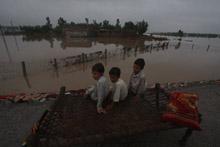
Crianças paquistanesas afetadas pelas inundações. Shabbir Hussain Imam/IPS.

Karachi, Paquistão, 18/8/2010 – “Se isto não é a ira de Deus, o que é?”, perguntou o taxista paquistanês Bakht Zada, de 40 anos, com relação às inundações que acabaram com todos os seus bens. No diálogo com a IPS, da cidade de Madyan, em Khyber Pakhtunkhwa (ex-província da Fronteira Nordeste), Bakht culpou as forças sobrenaturais pelas piores inundações no país em 80 anos, mas os especialistas em meio ambiente debatem se estas estão vinculadas a um fenômeno muito mais terreno, a mudança climática.

As inundações, que começaram no dia 12 de julho com chuvas excepcionalmente fortes, já afetaram cerca de 20 milhões de paquistaneses, segundo o governo, e mataram 1.600, além de causar danos a enormes áreas de terras agrícolas, base da economia. O governo, as agências humanitárias internacionais e organizações beneméritas locais continuam enfrentando o desastre, que primeiro atingiu a região nordeste deste país asiático e agora afeta as províncias de Punjab, no leste, e Sindh, no sul.

A Organização das Nações Unidas (ONU) solicitou US$ 459 milhões para enfrentar esta situação, mas conseguiu compromissos de apenas 27% dessa quantia. Neste contexto, os especialistas tentam compreender instâncias recentes de eventos climáticos extremos. Na China, as inundações também mataram mais de 1.100 pessoas, enquanto uma onda de calor, com seca e incêndios, açoita a Rússia. Todos estes sinais parecem consistentes com o aquecimento global devido ao acúmulo na atmosfera de enormes quantidades de gases-estufa, como o dióxido de carbono.

“O aquecimento global causa eventos meteorológicos catastróficos. As recentes inundações são, sem dúvida, resultado da mudança climática”, insistiu Simi Kamal, geógrafa e especialista em água. “Temperaturas superiores às normais no Oceano Índico causam aumento das precipitações. No norte do Paquistão, quando correntes de ventos carregados de umidade se chocam com as montanhas e são impulsionados para altitudes mais frias, a umidade é liberada na forma de explosões de nuvens”, acrescentou Khalid Rashid, matemático e físico que estuda as mudanças nos padrões meteorológicos mundiais. “Isto é o que parece estar ocorrendo este ano”, afirmou.

Outros já se mostram cautelosos na hora de tirar conclusões categóricas sobre a ligação com a mudança climática, mas concordam que os padrões meteorológicos se alteraram, tornando-se mais extremos e imprevisíveis. “Os cientistas climáticos não podem estar seguros se as atuais inundações são um evento meteorológico extremo do atual padrão climático ou uma mudança nele”, destacou Ayub Qutub, especialista em manejo hídrico, radicado em Islamabad.

Inclusive Rajendra Kumar Pachauri, presidente do Grupo Intergovernamental de Especialistas sobre a Mudança Climática (IPCC), disse que é cientificamente incorreto vincular qualquer série particular de eventos com a mudança climática induzida pelos homens. Contudo, concordou que há evidências suficientes que mostram aumento na frequência e intensidade de inundações, secas e precipitações extremas em todo o mundo. “Inundações como as do Paquistão podem se tornar mais comuns e intensas no futuro, nesta e em outras partes do mundo”, disse à IPS.

Danish Mustafa, especialista paquistanês em temas hídricos e professor de geografia no King’s College, em Londres, reconheceu que padrões de monções “bastante incomuns” estão se tornando mais frequentes. Ejaz Ahmad, subdiretor do capítulo paquistanês do Fundo Mundial para a Natureza (WWF), vinculou as mudanças meteorológicas à “mudança nos padrões de uso da terra, ao forte desmatamento no norte do Paquistão e aos conflitos”, mais do que à mudança climática. De todo modo, concordou que ultimamente houve mais eventos meteorológicos “estranhos”.

“O Paquistão experimentou um período seco em março, praticamente sem chuvas, e a produção de trigo foi seriamente prejudicada. Depois, choveu em áreas que geralmente não são afetadas pelas monções, como Gilgit-Baltistão e Broghil. E a frequência dos ciclones também aumentou”, explicou Ejaz. Em 2007, “o ciclone Yemyin atingiu o país, e este ano tivemos o Phet. No passado, sofríamos ciclones” a cada década, disse.

Simi acrescentou que o aumento das temperaturas ajuda a acelerar o derretimento de geleiras como as do Himalaia, ao norte do Paquistão, que são o terceiro maior depósito mundial de gelo e neve. “Nossa região (Ásia meridional) está entre os principais pontos da mudança climática, e especialistas internacionais prevêem inundações e secas”, destacou.

O Himalaia tem origem na bacia tibetana, e também alimenta a bacia do Rio Indo. Este, que agora transbordou devido às inundações, atravessa o Paquistão antes de desembocar no Mar Arábico. Seu trajeto é de aproximadamente 3.180 quilômetros. “O aquecimento global planetário está muito mais rápido, causando eventos climáticos extremos. Não estou segura de que isto possa ser detido agora. Nem mesmo estou certa de que podemos nos adaptar tão rapidamente”, disse Simi.

O fato de o Paquistão não estar preparado para estes acontecimentos deixou pior as consequências das inundações, acrescentou Simi. A bacia do Indo sempre foi propensa a inundar, então, “porque simplesmente nos pegam de surpresa?”, perguntou. No entanto, Maurizio Giuliano, porta-voz do Escritório das Nações Unidas para a Coordenação de Assuntos Humanitários em Islamabad, disse que o governo implementou alguns projetos, e que, do contrário, os efeitos teriam sido muito piores.

De todo modo, há lições a se aprender. “Precisamos que funcione o sistema telemétrico sobre o Rio Indo, que também terá de ser estendido para controlar as inundações em tempo real”, disse Danish. “A capacidade local deve ser fortalecida para estar na primeira linha de defesa na proteção e alívio em caso de inundações. O distante governo central não pode fazê-lo”, acrescentou. Envolverde/IPS

Wildlife conservation projects do more harm than good, says expert

New book claims western-style schemes to protect animals damage the environment and criminalise local people

Amelia Hill
The Guardian
Thursday 29 July 2010

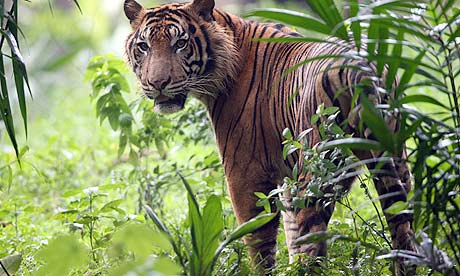
A new book claims that schemes to protect habitats of endangered animals, such as the Sumatran tiger, often end up criminalising local communities. Photograph: Bagus Indahono/EPA

Ecotourism and western-style conservation projects are harming wildlife, damaging the environment, and displacing and criminalising local people, according to a controversial new book.

The pristine beaches and wildlife tours demanded by overseas tourists has led to developments that do not benefit wildlife, such as beaches being built, mangroves stripped out, waterholes drilled and forests cleared, says Rosaleen Duffy, a world expert on the ethical dimensions of wildlife conservation and management.

These picture-perfect images all too often hide a “darker history”, she adds. Her new book, Nature Crime: How We’re Getting Conservation Wrong, which draws on 15 years of research, 300 interviews with conservation professionals, local communities, tour operators and government officials, is published today.

When wildlife reserves are established, Duffy says, local communities can suddenly find that their everyday subsistence activities, such as hunting and collecting wood, have been outlawed.

At the same time, well-intentioned attempts to protect the habitats of animal species on the edge of extinction lead to the creation of wild, “people-free” areas. This approach has led to the displacement of millions of people across the world.

“Conservation does not constitute neat win-win scenarios. Schemes come with rules and regulations that criminalise communities, dressed up in the language of partnership and participation, coupled with promises of new jobs in the tourism industry,” claims Duffy, professor of international politics at Manchester University.

A key failure of the western-style conservation approach is the assumption that people are the enemies of wildlife conservation – that they are the illegal traders, the poachers, the hunters and the habitat destroyers. Equally flawed, she says, is the belief that those engaged in conservation are “wildlife saviours”.

Such images, she argues, are oversimplifications. “The inability to negotiate these conflicts and work with people on the ground is where conservation often sows the seeds of its own doom,” she adds.

“Why do some attempts to conserve wildlife end up pitting local communities against conservationists?” she asks. “It is because they are regarded as unjust impositions, despite their good intentions. This is vital because failing to tackle such injustices damages wildlife conservation in the long run.”

Duffy stresses that her intention is not to persuade people to stop supporting conservation schemes. “Wildlife is under threat and we need to act urgently,” she acknowledges. Instead, she says, she wants to encourage environmentalists to examine what the real costs and benefits of conservation are, so that better practices for people and for animals can be developed.

“The assumption that the ends justify the means results in a situation where the international conservation movement and their supporters around the world assume they are making ethical and environmentally sound decisions to save wildlife,” she says. “In fact, they are supporting practices that have counterproductive, unethical and highly unjust outcomes.”

Duffy focuses on what she says is the fallacious belief that ecotourism is a solution to the problem of delivering economic development in an environmentally sustainable way.

This is, she says, a “bewitchingly simple argument” but the assumption that such tourism necessarily translates into the kinds of development that benefits wildlife is far too simplistic.

“Holiday makers are mostly unaware of how their tourist paradises have been produced,” she says. “They assume that the picture-perfect landscape or the silver Caribbean beach is a natural feature. This is very far from the truth. Tourist playgrounds are manufactured environments, usually cleared of people. Similarly, hotel construction in tropical areas can result in clearing ecologically important mangroves or beach building which harms coral reefs.”

But the World Wildlife Fund for Nature, one of the four biggest environmental NGOs in the world, maintains that the loss of wildlife is one of the most important challenges facing our planet. As such, a powerful focus on conservation is necessary: “Conservation is essential so let’s not throw the baby out with the bathwater,” says a WWF-UK spokesman. “There are examples out there where ecotourism is working and has thrown a lifeline to communities in terms of economics and social benefits, as well as added biodiversity benefits.

“Let’s have more of those projects that are working for everybody and everything,” he adds. “There is no one-size-fits-all when it comes to ecotourism and conservation.”

>"O humor é uma conquista" (Diário do Nordeste)

>
ENTREVISTA – MARCIO ACSERALD (1/8/2010)
Coordenador do Laboratório de Estudos do Humor e do Riso (Labgraça) e professor da Universidade de Fortaleza (Unifor)

Marcio Acselrad: “Tem muita gente que não tem o que comer e nem por isso vai ser mais infeliz, considero perigoso associar bem-estar a bens de consumo.” FOTO: KELLY FREITAS

Com um pé atrás. É dessa forma que o pesquisador Marcio Acselrad recebe a pesquisa que coloca o Brasil como o 12º mais feliz do mundo. Uma das críticas é quanto à associação entre felicidade e consumo. Ainda considera compatível rir e pensar

Podemos começar conversando sobre o resultado da pesquisa divulgada pela revista Forbes na qual o Brasil é considerado o 12º país mais feliz do mundo numa lista de 155 países. A que podemos atribuir esse grau razoável de felicidade ?

É muito comum, praticamente imediato na sociedade na qual se vive, associar felicidade a bem-estar material, conquistas de bens de consumo e serviços. O primeiro passo é quebrar essa linha de continuidade sobretudo entre consumo e felicidade. Acho que é uma característica típica do nosso tempo. Se voltarmos um pouco atrás, podemos perceber que, no passado, felicidade já esteve associada a inúmeras outras conquistas que não fossem bens materiais ou de consumo e produtos com tecnologia, cada vez mais, elaborada.

E como seria?

Houve filósofos na Antiguidade, inclusive, que faziam associação justamente ao contrário, à frugalidade e não necessidade de bens materiais. A pessoa seria mais feliz quanto mais soubesse viver com aquilo que se tem e não com o que não se tem. Nesse sentido, a sociedade de consumo faz exatamente o contrário. Não é uma máquina de produção de felicidade, mas uma máquina de produção de insatisfação, ela precisa muito mais da infelicidade constante para poder se alimentar. Levando tudo isso em consideração, não acho tão contraditório assim um país como o Brasil, apesar de todas as mazelas e de todas as dificuldades no campo material, consiga produzir seres muito felizes, isso é louvável.

Como o Brasil poderia tirar proveito dessa sua característica bastante particular, o otimismo, de acreditar sempre?

Por mais interessante que seja esse tipo de pesquisa, é preciso tomar muito cuidado. Da mesma forma que é muito difícil definir o que é felicidade. Tenho muita dificuldade com esses estereótipos. Quem é o brasileiro? São milhões de pessoas com características muito diferentes entre si. Ou mesmo o cearense que tem a fama de ser um humorista nato, é preciso levar em consideração outros fatores. Nem todo cearense é humorista e nem todo brasileiro é engraçado. Tem muito brasileiro melancólico, deprimido como existe em outras partes do mundo, mas acho que essa ideia de alegria, felicidade é algo a ser sempre conquistado e trabalhado individualmente. Outro perigo bastante ligado à sociedade de consumo, é que a alegria ou a felicidade no nosso mundo contemporâneo, meio enlouquecido, deixa de ser uma espécie de conquista e passa a ser uma espécie de obrigação. A pessoa tem que ser feliz, tem que estar alegre, disposto, e a vida não é assim, na realidade.

Felicidade e humor estão relacionados?

O humor é uma conquista. Tentar estar bem com o mundo, com você, com o trabalho e a função que exerce, sabendo que não adianta se esforçar a ser feliz porque todo mundo é. Na verdade, no fundo, no fundo, essa obrigação de felicidade tem a ver com produtividade e isso não é saudável. Porque a pessoa ser feliz é diferente de estar feliz porque assim produz mais, consome mais e alimenta a máquina, o que é contraditório. Isso não é felicidade propriamente dita. É uma felicidade imposta pelo sistema que, literalmente, não está preocupado com a felicidade das pessoas.

O que torna um povo feliz e como pode ser medido esse índice de felicidade? Ele varia de acordo com o nível sociocultural?

De forma nenhuma. Tem muito rico deprimido e muito pobre rindo à toa. Tem muita gente que não tem o que comer e nem por isso vai ser mais infeliz. Acho essa relação extremamente perigosa, associar bem-estar a bens de consumo, na realidade, é produção de falsa necessidade. Você não precisa exercer a sua felicidade através do cartão de crédito num shopping, a pessoa pode olhar para os produtos e perceber que não precisa de nada disso para ser feliz.

Como o povo brasileiro trabalha essa questão da razão e paixão? Seria essa a diferença ?

O humor tem uma relação, de uma certa maneira, com a racionalidade. No caso de uma piada, se você não entende não consegue achar graça dela. No geral, a maior parte do campo do humor está muito mais ligado a sentimentos, sensações. Costumo colocar o humor dentro de uma categoria estética junto com a arte. Ou seja, está mais ligado à sensibilidade do que à racionalidade. Nesse sentido, o que o meu laboratório propõe fazer é uma espécie de paradoxo, de contradição, que significa, estudar, tentar dar uma racionalidade no sentido de compreender os princípios que regem o humor, o riso, a comédia. Não é algo impossível de fazer, é até meio engraçado, tentar dar racionalidade para algo que é da ordem do emocional. Em princípio, uma racionalidade exagerada seria incompatível com o humor.

Para que serve o humor?

Serve para derrubar as pessoas e as instituições dos seus pedestais e mostrar que, no fundo, é todo mundo humano, mortal e que vai acabar na sepultura.

A partir desse contexto, o Brasil poderia produzir um pensamento e parar de apenas reproduzir e adaptar conceitos?

Acho que sim. Inaugurar, não, ele já existe, um pensamento mais leve, bem humorado. Uma boa referência sobre isso, não vem do Brasil, mas de um alemão: Nietzsche, o princípio máximo da racionalidade ocidental. Foi ele quem, no século XIX, disse que o mundo precisava de um pensamento leve, de uma ciência leve, de uma ciência que saiba rir e dançar. A influência ao longo dos séculos XX e XXI é inequívoca. Muita gente percebe a importância desse riso crítico, dessa associação entre o criticismo e o riso.

O senhor acha que a política faz bom uso deste traço ou tira proveito dessa situação?

Acho que são dois pontos diferentes. Um é a apropriação que os políticos ou a política fazem do humor que, no geral, tomando cuidado com generalizações, é inegável que é um uso forçado. O político usa do humor para ganhar votos e angariar popularidade. O outro sentido, este me interessa mais, é o uso do humor como crítica da estrutura política. O papel do humor é tirar os políticos do seu pedestal e mostrar que são humanos, erram e falam besteira como qualquer outra pessoa, trazendo um pouco de humanidade para a política, mas nem sempre isso é bem visto. Alguns políticos, ou devido ao próprio bom humor ou esperteza e prática política, conseguem fazer aliança com esse tipo de humor. É isso o que a gente ver o Lula fazendo a toda hora. E, quando acontece, a piada perde a graça quando há a conivência com o objeto do escárnio.

O fato de ser de terceiro mundo, colonizado, faz com que esse traço alegre ou otimista do brasileiro não seja bem aproveitado, podendo ser visto como algo menor, pejorativo, típico de um povo que não pensa?

Também acho muito difícil fazer essa relação porque existem muitos países que são colonizados e que não têm esse bom humor em relação ao fato de ser colonizado que lutam pela sua independência. O Brasil tem uma história muito particular, nunca precisou lutar pela sua independência que veio de cima para baixo. Mas acho muito curioso, no caso do Brasil, e que é muito propício ao exercício do humor, o fato da miscigenação, fazendo com que não tenha s muito identidade ou uma cara. Então ele é português, índio; mas é também japonês, árabe. Essa mistura é muito propícia porque coloca o Brasil na condição de não-lugar, que é muito bom como terreno para o surgimento do humor, um certo bom humor, mas isso não é garantia, mas costuma funcionar. Já que você não tem identidade, não tem uma cara muito própria e, além disso, é colonizado, pobre, o que a gente faz? Vamos fazer graça disso.

Mas não se corre o risco de rir da própria cara?

Esse é um risco muito salutar o rir de si. É um momento raro que considero como de esclarecimento. Rir de si mesmo já é começar a perceber que as coisas não são tão definitivas assim, tão sérias e que podem mudar. Quando se consegue rir, principalmente, da própria desgraça já começa a relativizar um pouco essa desgraça. Tanto que se diz, um dia a gente ainda vai rir de tudo isso no futuro. Isso significa que, quando a gente tomar distância do que está acontecendo no momento e refletir sobre a realidade, vai poder perceber que tudo não era tão ruim assim e fazer humor, rir. Pego o que é ruim e pelo riso consegue ver que não era tão ruim assim. É um jogo de criança.

Neste sentido, o riso não aliena as pessoas?

O riso serve para pensar. Não se trata de se alienar do mundo, muito pelo contrário, penso o humor como ferramenta de conhecimento do mundo e de autoconhecimento.

Então, humor e pensar são compatíveis?

São totalmente compatíveis, sendo necessária essa articulação. Rir é tão bom e pensar é também algo muito bom. Pensar é também uma coisa boa, não precisa ser chato, impenetrável. Pode ser alegre.

A felicidade é uma utopia ou é compatível com a sociedade contemporânea?

Utopia é sempre algo que não está aqui, mas em outro lugar. A ideia da utopia é de que não tenho agora, mas posso vir a ter no futuro, como por exemplo, a sociedade ideal, pode vir a ser alcançada. Aqui, temos um exemplo oposto, o humor não tem nada a ver com a utopia, pode ser atingido em qualquer momento, se estiver disponível a graça para a graça. É igual à beleza, ninguém sabe onde ela está, pode olhar para uma obra de arte num momento e achar feia, e, noutra, achar bela, por causa da abertura para aquela situação.

Essa “felicidade” do povo brasileiro pode estar associada às melhores condições de vida e políticas públicas?

Acho essas conquistas fundamentais e importantes, como se ter maior poder aquisitivo. Afinal, vivemos numa sociedade de consumo, é isso o que se tem para ser oferecido. Acho perigoso é fazer essa associação direta entre felicidade e consumir. Essa ideia de que a pessoa só é feliz se consumir. É uma associação fascista, não é uma permissão, é como se fosse uma obrigação. Você pode consumir porque tem melhor poder aquisitivo, para mim, isso não é felicidade.

Quem é Márcio Acselrad

Márcio Acselrad é graduado em Psicologia, mestre em Comunicação e doutor em Comunicação e Cultura pela Universidade Federal do Rio de Janeiro. Atualmente é professor titular da Universidade de Fortaleza (Unifor) e professor horista da Faculdade 7 de Setembro. Suas pesquisas são desenvolvidas na área de Comunicação, com ênfase em Teoria da Comunicação e em Estética. Atua como pesquisador, sendo Coordenador do Labgraça e como curador e mediador do Cineclube Unifor. Márcio também é apresentador e mediador do programa de televisão Cineclube Unifor, exibido pela TV Unifor e pela TV Cultura do Ceará.

IRACEMA SALES
Repórter

>Are you ready for life in world 3? (New Scientist)

>
Jo Marchant, consultant
New Scientist – 2 August 2010

In the 1970s, Karl Popper came up with a philosophical theory of reality that involved three interacting worlds: the physical world, the mental world, and “world 3”, which comprises all products of the human mind – from ideas, pictures and music to every word ever written.

Something very similar to world 3 is now real and increasingly influencing how we live, says George Djorgovski, co-director of the Center for Advanced Computing Research at Caltech. It’s called the internet.

It’s the first morning of Science Foo camp, and I’ve chosen a session called “virtualisation of science and virtualisation of the world”. In fact – fittingly for a meeting being held at Google headquarters – how we deal with life increasingly lived online turns out to be one of the main themes of the day. Djorgovski reckons that before long, being online will soon mean (among other things) not staring at a computer screen but being immersed in 3D virtual reality.

He thinks this will be key to how we’ll make scientific discoveries in the future. Forget graphs – two dimensions are totally inadequate for dealing with the vast amounts of data pouring out of everything from high-throughput genome sequencing to atom smashers like the Large Hadron Collider. We’ll need machine intelligence capable of analysing these huge data sets, he says, as well as ways to visualise and interact with the results in three dimensions.

Such technologies will surely revolutionise education too, with virtual learning replacing the traditional lecture. Djorgovski wants scientists and researchers to get more involved with this process now, pointing out that so far, advances in 3D technology are all coming from the entertainment industry: “We can’t let the video game industry drive the future in what’s the most important technology on the planet. There has to be more to it than spilling blood and slaying dragons.”

Sitting round the table are experts in everything from psychology and bioethics to space science. Pat Kuhl, an expert in early child learning from the University of Washington, wonders what learning everything online will do to young brains. The consensus around the table is that good or bad, the move into virtual reality environments is inevitable. “So let’s try and offer something more than games,” says Djorgovski.

In a subsequent session on children’s minds, Kuhl tells us about the importance of social cues in early learning. For example, it’s well-known that babies differ in their ability to distinguish sounds, depending on the language they are exposed to, by the time they are 10-12 months old. But Kuhl and her colleagues have recently shown that simply hearing the sounds is not enough. After a few sessions with a Mandarin speaker, American babies could distinguish certain sounds as well as Taiwanese babies, but those given the same exposure via audio or video learned nothing.

So if we don’t want kids’ brains to atrophy in an increasingly virtual world, we must work out how to incorporate the relevant social cues. Kuhl has already found that making the TV screen interactive, so babies can turn it on and off by slapping it, increases – a little bit – how much they learn. She’s now experimenting with web cams.

In the afternoon, UK journalist and commentator Andrew Marr tackles the question of what will happen to journalism in an online world, particularly as e-readers like the iPad – which Marr calls a “great engine of destruction” – become ubiquitous.

The media we consume will no longer be just words, or just pictures, but a collision of text, video, audio and animated graphics. And people will be able to choose individual items to consume, rather than buying a whole newspaper or watching just one channel.

Like most commentators, Marr thinks this will be the end of newspapers – and perhaps of traditional journalists too. But he thinks this can only be a good thing, arguing that journalism, with its short-term focus and trivial level of debate, has been failing us anyway. In the future he thinks news will come from niche, specialist groups, for example people interested in access to clean water, coming together online. These might include bloggers, campaigners and lobbyists. Above them, authoratitive news aggregators will pick out the most important stories of the day and feed them to the rest of us.

Marr says this new model will be good for journalism and for democracy, because the people within each community of interest will be experts, and won’t lose interest in a topic in the way that traditional reporters do.

I’m sure Marr’s right that newspapers as we know them are not going to survive. But I don’t feel so optimistic about his vision. I’m not sure that having aggregators pick from a pool of stories written by specialists with an agenda is necessarily going to give us good journalism. Who is going to write articles in a way that non-specialists can understand? Who will make connections between different fields? Who will have the authority to hold politicans to account? Unfortunately the session ends before we have a chance to get into these questions.

For some historical perspective, I end the day in a session run by Tilly Blyth, curator of computing at the Science Museum in London. Whereas Marr spoke to a packed lecture hall, now just five of us sit cosily around a table. Blyth tells us how the Science Museum is using online technologies to try to bring the history of science and technology into our everyday lives.

One project is an iPhone app that displays stories and pictures from history that are relevant to a user’s location. The other involves asking 200 British scientists to tell their life stories, then linking those oral histories to video clips, searchable transcripts, and perhaps the relevant scientific papers.

Blyth wants to create a “global memory” for science, so that we can learn from changes that have gone before. “We tend to think that we’re living through this amazing period of revolution,” she says.

Then she shows us a satirical illustration from 1880, entitled March of the Intellect, which depicts an array of futuristic contraptions including a steam-powered horse, a flying man, and a pneumatic tube linking London with Bengal. We aren’t the first generation to grapple with the implications of radical technological change. Food for thought as I join the queue for dinner.

>Xamãs, artesãos e mestres da cultura popular serão professores da UnB

>
Universidade será a primeira no Brasil a ter uma disciplina baseada nos saberes tradicionais. Aulas devem começar no próximo semestre

Ana Lúcia Moura – Secretaria de Comunicação da UnB
12/07/2010

Benki Pianko é um grande especialista brasileiro em reflorestamento. Maniwa Kamayurá conhece em detalhes as técnicas de construção indígena. Lucely Pio é capaz de identificar com precisão qualquer planta do cerrado. Mas o conhecimento de nenhum deles veio das salas de aula. Eles aprenderam o ofício com os avós e com os pais, e o repassam aos filhos, aos netos. No próximo semestre, porém, vão ensinar o que aprenderam também aos alunos da Universidade de Brasília.

Benki, Maniwa e Lucely serão professores de uma disciplina de módulo livre: Artes e Ofícios dos Saberes Tradicionais. Benki, que é mestre do povo indígena Ashaninka, no Acre, Maniwa, pajé e representante dos povos indígenas do Alto Xingu e Lucely, mestre raizeira da Comunidade Quilombola do Cedro, em Goiás, vão passar adiante o conhecimento acumulado durante mais de séculos nas comunidades onde cresceram e vivem até hoje. Benki e Maniwa são xamãs indígenas, líderes espirituais com funções e poderes ritualísticos. Lucely é mestre quilombola.

Além deles, serão também professores da nova disciplina Zé Jerome, mestre de Congado e Folia de Reis do Vale do Paraíba, em São Paulo, e Biu Alexandre, mestre do Cavalo Marinho Estrela de Ouro de Condado, um dos tradicionais grupos folclóricos da Zona da Mata pernambucana, que reúne teatro, dança, música e poesia.

A criação da disciplina, que deve ter carga semanal de seis horas, depende ainda de aprovação do Decanato de Ensino de Graduação. Ela faz parte de um projeto de introdução dos saberes tradicionais na universidade. “Queremos promover um diálogo, uma troca de conhecimentos”, explica o professor José Jorge de Carvalho, coordenador do projeto e também do Instituto Nacional de Ciência e Tecnologia para Inclusão no Ensino Superior e na Pesquisa. “Os mestres que aqui estarão têm um modo de construir saberes que leva em conta não só o pensar, que é característico da cultura das universidades, mas também o fazer e o sentir”, completa o professor.

AVANÇO – O professor José Jorge destaca, no entanto, que a introdução dos saberes tradicionais não é uma negação da forma utilizada pelas universidades de produzir e transmitir conhecimento. “Pelo contrário. É uma soma. Sabemos coisas que os mestres tradicionais não sabem, assim como eles conhecem muito do que não conhecemos. A universidade pode ser muito mais rica do que é”, acrescenta. Cada mestre passará duas semanas na UnB e será acompanhado por um professor na sala de aula. “A universidade pode ser mais rica do que é. E, para isso, precisa fazer jus à riqueza de saberes que existem no Brasil”, completa o professor José Jorge.

O chefe do Departamento de Antropologia, Luís Roberto Cardoso de Oliveira, lembra que a criação de disciplinas de módulo livre, que permitem aos alunos contato com um conhecimento totalmente fora de sua área, foi um avanço. “E colocar os mestres frente a frente com os alunos e ao lado dos professores é uma proposta que vai ainda mais além”, comenta.

Para Nina de Paula Laranjeira, diretora de Acompanhamento e Integração Acadêmica do Decanato de Ensino de Graduação, a iniciativa por si só já demostra uma mudança nos modos de pensar. “Precisamos superar o paradigma de que o conhecimento está limitado à comprovação científica”, afirma.

TROCA DE SABERES – As bases pedagógicas e antropológicas da nova disciplina serão discutidas nos dias 15 e 16 de julho, como parte do seminário internacional que vai tratar da introdução de novos saberes nas universidades. “O método de transmissão dos mestres tradicionais é completamente diferente do nosso. O ideal para a raizeira Lucily, por exemplo, é ensinar caminhando pelo cerrado”, explica o professor José Jorge.

Organizado pelos Institutos Nacionais de Ciência e Tecnologia e Ministério da Cultura, o Encontro de Saberes vai reunir mestres indígenas e de atividades folclóricas, professores brasileiros e latino americanos, além de representantes do Governo Federal. No encontro, serão apresentadas experiências de universidades de cinco países da América Latina que desenvolvem projetos de inclusão de saberes tradicionais em seus cursos, disciplinas e programas de extensão. O seminário, que acontece no Auditório Dois Candangos, também será uma oportunidade para os novos professores conhecerem melhor a UnB.

Entre os palestrantes estão o reitor da Universidade Amawtay Wasi do Equador; Maria Mercedes Díaz, da Universidade de Catamarca na Argentina; Jaime Arocha, professor de Antropologia da Universidade Nacional da Colômbia; Carlos Callisaya, coordenador das Universidades Indígenas da Bolívia no Ministério da Educação boliviano e Maria Luísa Duarte Medina, que atua em projetos de inclusão dos saberes indígenas nas instituições de ensino superior do Paraguai. “A presença de cada um deles mostra que a inclusão dos saberes tradicionais na academia é um movimento cada vez mais forte”, afirma o professor José Jorge.

>Copa de estatísticas

>
Notícias

23/6/2010

Agência FAPESP – Pesquisadores da Universidade Federal de São Carlos (UFSCar) publicaram na internet um modelo estatístico dinâmico com estimativas das chances dos selecionados de atingir cada etapa da Copa do Mundo da África do Sul.

O modelo matemático foi elaborado no Centro de Estudos do Risco do Departamento de Estatística e utiliza como parâmetros a opinião de especialistas sobre os placares da primeira fase, o ranking da Federação Internacional de Futebol (FIFA) divulgado em maio e os resultados ao longo do torneio.

Esse caráter dinâmico é responsável pela alteração constante na lista das equipes com maior chance de vencer o mundial. No início do campeonato a Espanha encabeçava esse grupo. Após a primeira rodada, a Alemanha ficou no topo da lista e, em seguida, o Brasil assumiu a primeira posição.

Os placares de cada jogo são comparados às previsões, mostrando que os resultados improváveis foram abundantes nessa Copa. Foi o caso do empate entre Portugal e Costa do Marfim, que tinha 15,9% de chances de ocorrer, de acordo com o modelo da UFSCar, e a vitória da Sérvia sobre a Alemanha, com apenas 9,6% de probabilidade.

A Previsão Estatística Copa 2010 da UFSCar pode ser acessada no endereço: www.copa2010.ufscar.br/index_br.html

>What cap? Dems’ climate word war

>
By Darren Samuelsohn
Politico.com, Capitol News Company
July 18, 2010 07:12

Senate Majority Leader Harry Reid played dumb last week when a reporter asked him if the energy and climate bill headed to the floor would come with a “cap” on greenhouse gas emissions.

“I don’t use that,” the Nevada Democrat replied. “Those words are not in my vocabulary. We’re going to work on pollution.”

Moments earlier, Reid had confirmed he was trying to craft legislation targeting the heat-trapping pollution that comes from power plants. But he’s determined to win the war of words when it comes to a carbon cap — and that means losing the lexicon attached to past climate battles.

Gone, in the Democrat’s mind, are the terms “cap” and “cap and trade,” which are synonymous with last June’s House-passed climate bill as well as other existing environmental policies for curbing traditional air pollutants. In their place are new slogans recommended by prominent pollsters (and even a neuroscientist) that Reid and allies hope they can use to overcome the long-shot prospects for passing climate legislation.

But they’ve got a difficult job ahead. Already, Republican-led attacks during the past year have crushed the Democrats in the message war over a very complex piece of legislation. GOP opponents have exploited public angst over record unemployment levels, higher taxes and the creation of a new carbon market that’s potentially worth trillions of dollars, a reminder for voters of the recent Wall Street collapse.

“There’s been a communication battle that’s been very much one-sided up to this point,” said Anthony Leiserowitz, director of the Yale Project on Climate Change and an expert on public opinion surrounding global warming science and policy.

In January, Leiserowitz published a study that found that fewer than a third of Americans had ever heard of the term “cap and trade” — not exactly fertile ground to be passing legislation with such a program at its core.

“That’s an enormous indictment of how little Democrats and environmental advocates, all of the stakeholders, how poorly they’d laid the groundwork among the public to actually get something done,” he said.

“And that left a giant vacuum in which opponents of legislation have been very quick … to call it ‘cap and tax’ and a ‘national energy tax.’”

Enter the rebranding strategy — a controversial overhaul that many Republicans still see as spin. Some Democrats remain dubious, too. Last week, Reid’s office brought in Drew Westen, an Emory University neuroscience professor, to explain the best messaging practices to about 30 Democratic Senate chiefs of staff and communications directors.

A Senate Democratic aide in the room said Westen covered a lot of ground, starting with a call to “get us out of acronym land, get us out of Senate-speak and [get] it down to regular terminology of what’s effective and what’s not.”

That means no longer referring to climate legislation by any one particular author, such as Sen. John Kerry (D-Mass.) or Sen. Joe Lieberman (I-Conn.). It’s also about playing up the patriotism angle, including the prospect of losing out to the Chinese on development of clean energy technologies. And then Westen urged them to go for the political jugular by associating Democrats with new ideas for clean fuels while labeling GOP opponents as “trying to go backward with dirty fuels.”

“Being aspirational but also drawing clear contrasts,” the Senate Democratic staffer said.

In fact, climate bill advocates have been trying to implement ideas from Westen and other well-known wordsmiths over the past year.

Just before President Barack Obama’s State of the Union speech, Environmental Defense Fund President Fred Krupp and GOP pollster Frank Luntz, who had famously done work for climate change opponents during the George W. Bush administration, released a study showing that the best way to sell greenhouse gas legislation was by talking about national security and “energy independence,” while avoiding debate over the science of climate change.

Then there’s Sen. Lindsey Graham (R-S.C.), who worked from October 2009 until April 2010 in closed-door talks with Kerry and Lieberman on a climate bill and became arguably the issue’s best spokesman. Earlier this year, Graham declared “cap and trade economywide is dead,” even as Senate staff worked on a plan that placed the economy’s three biggest polluting sectors (power plants, manufacturers and transportation) into their own regulatory schemes.

Graham also has tried to appeal to climate bill opponents by arguing the measure isn’t about global warming. “There’s nowhere near 60 votes to save the polar bear,” he said last month.

While the South Carolina Republican remains on the sidelines when it comes to brass-tack negotiations before the floor, he told POLITICO last week that he still believes in the message.

“Controlling smokestack emissions as part of an energy independence, job creation plan has some resonance with me,” he said. “Cap and trade is associated with a solution to global warming. Again, carbon pollution is bad for people, bad for the environment. But you’re not going to turn the economy upside down based on that theory.”

Many Republicans said they aren’t buying the rhetorical shift, and they say they will pound away on the bill as a new tax increase if and when the legislation hits the floor.

“It’s cap and trade,” said New Hampshire Sen. Judd Gregg, one of a handful of Republicans Democrats still consider swing votes on the legislation. “If it looks like a duck, walks like a duck, swims like a duck, it’s a duck.”

“That’s just an exercise in spin,” said Robert Dillon, a spokesman for Energy and Natural Resources Committee Chairman Lisa Murkowski (R-Alaska). “The bottom line is, it’s legislation that will raise energy prices for Americans.”

“Why has Sen. Reid engaged in semantics in trying to change the wording, if not because he knows that raising energy prices in a time of economic woe is a nonstarter?” Dillon added.

Climate bill advocates look at the historical record and scratch their heads. They recall that free-market Republicans are the original source of the “cap-and-trade” concept, after they went looking for alternatives to the “command-and-control” system of the 1970s, when direct limits went on tailpipes and smokestacks.

President George H.W. Bush proposed and signed into law the 1990 Clean Air Act Amendments that set up a cap-and-trade system to reduce acid rain. Climate critics of the second President Bush hounded him whenever he talked about the issue without bending in his opposition to mandatory caps. And Sen. John McCain (R-Ariz.) even embraced an economywide climate cap-and-trade bill to distinguish himself from the Bush administration.

“Cap and trade has certainly been demonized,” said Sen. Ben Cardin (D-Md.). “I think that’s unfortunate. … So we’ll just call it something different.”

Mark Mellman, a Washington-based Democratic pollster, said Republicans are misleading the public when they smack a “tax” label on a policy that forces companies, rather than individual citizens, to clean up their pollution.

“They’re stretching the meaning of these words so far that they have no meaning at all,” said Mellman, who has given more than a dozen briefings to House and Senate Democrats and their staffs on the lingo of climate change legislation. “And there’s a definition for that. It’s called the ‘big lie’ technique.”

Yet some advocates for climate legislation still concede that their messaging campaign isn’t working — especially not so late in the game.

“Rebranded strategies rarely work when people say, ‘I’m not going to use those words anymore,’” said an environmental advocate close to the debate. “They usually require a different, more subtle approach.”

“The problem with a rebranding strategy is, the other side has to go along, too. This is a mature, 10-year debate, and I don’t think you can change the paint job the day before the sale.

>Forecasting Uncertainty

>
New research from Maxim Ulrich shows that inflation uncertainty impacts bond prices and yields more dramatically than GDP uncertainty.

Columbia Business School – Ideas at work
June 18, 2010

Treasury bonds are typically viewed as among the safest investments, providing lower returns than the stock market but avoiding high degrees of risk and volatility. But no investor can escape uncertainty altogether, and bond investors use GDP and inflation forecasts as rough barometers for term structure, or bond prices and yields.

Dozens of forecasters provide quarterly estimates of how much inflation and GDP are likely to change in the short term, providing bond investors a means to gauge future yields. But when forecasts vary significantly, investors are left to determine which of these conflicting stories represents the best estimate. All forecasts can’t be correct, and few are ever spot-on, so what’s a savvy investor to do?

“Some argue that investors should simply take the average of forecasts to get at the best projection of GDP and inflation,” Professor Maxim Ulrich says. But some forecasts are very close to each other, suggesting low uncertainty, while in other quarters the forecasts diverge widely, suggesting high uncertainty. An average taken in a quarter with a great deal of variance in forecasts is likely to be less reliable than one taken in a quarter with low variance.

Nor do GDP and inflation estimates fluctuate at the same time or rate, so there is no clear means to determine how each measure exerts influence on term structure. Research has typically focused on the impact of GDP uncertainty, rather than inflation uncertainty. Ulrich attributes this focus to the greater variance in GDP forecasts than inflation forecasts. “That variance suggests that there is greater uncertainty about GDP than about inflation,” he says, “and that it should be easier for investors to predict how inflation will move than how GDP will move.”

Ulrich modeled the term structure for U.S. government bonds, taking into account the many estimates for GDP and inflation that investors are confronted with. Using the Survey of Professional Forecasters, published quarterly by the Federal Reserve Bank of Philadelphia, Ulrich observed the variance among all forecasts as a measure of general uncertainty. By comparing this modeled GDP and inflation, Ulrich was able to distinguish GDP uncertainty from inflation uncertainty and show how each affects real and nominal bond prices and rates. He concluded that while GDP forecasts may vary more from quarter to quarter, uncertainty about inflation has a greater long-term impact on term structure.

“The quarterly forecasts for inflation don’t vary a lot, but over the long term, the misspecifications will have a greater effect on yields,” Ulrich explains. He found that investors demand a bigger premium for long-run inflation uncertainty than for long-run GDP uncertainty.

The model also provides a simple method investors can use when consulting the forecasts. “The Survey of Professional Forecasters provides our best empirical proxy for determining the amount of uncertainty bond investors face,” Ulrich says. “Investors can look at all key forecasts of GDP and inflation each quarter and, using a simple calculation, observe the magnitude of uncertainty.”

Maxim Ulrich is assistant professor of finance and economics at Columbia Business School.

>O Nordeste e as mudanças climáticas (FAPESP)

>
Especiais

Por Fabio Reynol, de Natal (RN)
27/7/2010

Agência FAPESP – O primeiro quadrimestre de 2010 foi o mais quente já registrado, de acordo com dados de satélite da National Oceanic and Atmospheric Administration (NOAA), dos Estados Unidos.

No Brasil, a situação não foi diferente. Entre 1980 e 2005, as temperaturas máximas medidas no Estado de Pernambuco, por exemplo, subiram 3ºC. Modelos climáticos apontam que, nesse ritmo, o número de dias ininterruptos de estiagem irá aumentar e envolver uma faixa que vai do norte do Nordeste do país até o Amapá, na região Amazônica.

Os dados foram apresentados pelo pesquisador Paulo Nobre, do Instituto Nacional de Pesquisas Espaciais (Inpe), durante a 62ª Reunião da Sociedade Brasileira para o Progresso da Ciência (SBPC) que começou no domingo (25) e vai até a sexta-feira (30), em Natal, no campus da Universidade Federal do Rio Grande do Norte (UFRN).

Além da expansão da seca, o pesquisador frisou que o Nordeste deverá sofrer também com as alterações nos oceanos, cujos níveis vêm subindo devido ao aumento da temperatura do planeta. Isso ocorre não somente pelo derretimento das geleiras, mas também devido à expansão natural da água quando aquecida.

Cidades que possuem relevos mais baixos, como Recife (PE), sentirão mais o aumento do nível dos oceanos. E Nobre alerta que a capital pernambucana já está sofrendo as alterações no clima. “Com o aumento do volume de chuva, Recife tem inundado com mais facilidade, pois não possui uma rede de drenagem pluvial adequada para um volume maior”, disse.

Um dos grandes obstáculos ao desenvolvimento da região Nordeste seria a constante associação entre seca e pobreza. A pobreza, segundo o pesquisador, vem de atividades não apropriadas ao clima local e que vêm sendo praticadas ao longo dos anos na região. Plantações de milho e feijão e outras culturas praticadas no Nordeste não são bem-sucedidas por não serem adequadas à caatinga, segundo Nobre.

“A agricultura de subsistência é difícil hoje e ficará inviável em breve. Para que o sertanejo prospere, teremos que mudar sua atividade econômica”, disse.

O cientista citou um estudo feito na Universidade Federal de Minas Gerais e na Fundação Oswaldo Cruz (Fiocruz), que indicou que o desemprego no Nordeste tenderá a aumentar caso as atividades econômicas praticadas no interior continuem.

Nobre sugere a instalação de usinas de energia solar como alternativa. “A Europa está investindo US$ 495 bilhões em produção de energia captada de raios solares a partir do deserto do Saara, no norte da África. O mercado de energia solar tem o Brasil como um de seus potenciais produtores devido à sua localização geográfica e clima, e o Nordeste é a região mais adequada a receber essas usinas”, indicou.

“Ficar sem chuva durante longos períodos é motivo de comemoração para um produtor de energia solar”, disse Nobre, que ressaltou a importância dessa fonte energética na mitigação do aquecimento, pois, além de não liberar carbono, ainda economiza custos de transmissão por ser produzida localmente.

Mais eventos extremos

O potencial do Nordeste para a geração de energia eólica também foi destacado pelo pesquisador do Inpe. Devido aos ventos alísios que sopram do oceano Atlântico, o Nordeste tem em seu litoral um constante fluxo de vento que poderia alimentar uma vasta rede de turbinas.

Além da economia, Nobre chamou a atenção para as atividades que visam a mitigar os efeitos das mudanças climáticas, que seriam importantes também para o Nordeste. “Os efeitos dessas mudanças são locais e cada lugar as sofre de um modo diferente”, disse.

Um dos efeitos dessas alterações é o aumento dos eventos extremos como tempestades, furacões e tsunamis. Em Pernambuco, as chuvas de volume superior a 100 milímetros em um período de 24 horas aumentaram em quantidade nos últimos anos.

“Isso é terrível, pois as culturas agrícolas precisam de uma precipitação regular. Uma chuva intensa e rápida leva os nutrientes da terra, não alimenta os aquíferos e ainda provoca assoreamento dos rios, reduzindo ainda mais a capacidade de armazenamento dos açudes”, disse.

Nobre propõe que os governos dos Estados do Nordeste poderiam empregar ex-agricultores sertanejos em projetos de reflorestamento da caatinga com espécies nativas. A reconstrução dessa vegetação e das matas ciliares ajudaria a proteger o ecossistema das alterações climáticas e ainda contribuiria para mitigá-las.

O cientista defendeu também o acesso à educação de qualidade a toda a população, uma vez que a porção mais afetada é aquela que menos tem acesso a recursos financeiros e educacionais.

A implantação de uma indústria de fruticultura para exportação é outra sugestão de Nobre para preparar o Nordeste para as mudanças no clima e que poderia fortalecer a sua economia.

“A relação seca-pobreza é um ciclo vicioso de escravidão e que precisa ser rompido. Isso se manterá enquanto nossas crianças não souberem ler, não aprenderem inglês ou não conseguirem programar um celular, por exemplo”, disse.

>Germans shell-shocked by oracle octopus (Reuters)

>
By Erik Kirschbaum, Reuters
BERLIN, Tue Jul 6, 2010 10:22am EDT

Two year-old octopus Paul, the so-called ”octopus oracle” predicts Spain’s victory in their 2010 World Cup semi-final soccer match against Germany by choosing a mussel, from a glass box decorated with the Spanish national flag instead of a glass box with the German flag, at the Sea Life Aquarium in the western German city of Oberhausen July 6, 2010. Paul has correctly picked the winner of Germany’s five World Cup results so far. REUTERS/Wolfgang Rattay

BERLIN (Reuters) – Germany was in a state of shock on Tuesday after their “oracle octopus” Paul picked Spain to win the World Cup semi-final match against Germany in South Africa on Wednesday.

Not an ordinarily superstitious people, Germans have become believers in Paul’s possible psychic powers.

“This is not a good omen,” wrote Bild newspaper’s online edition after the news of Paul’s pick flashed across Germany.

The octopus has turned into an international celebrity after accurately picking the winner of all five German World Cup matches to date — including their 1-0 loss to Serbia.

Two national networks interrupted their programing on Tuesday for live coverage of Paul’s latest forecast, and groans of disappointment rang out across Germany after Paul went for a container with a morsel of food in it bearing the Spanish flag.

“We were all a little bit shocked when Paul picked Spain,” said Tanja Munzig, a spokeswoman for Sea Life in Oberhausen. “To err is not only human — animals can also make mistakes. Let’s hope Paul got this one wrong.”

The octopus, considered by some to be the most intelligent of all invertebrates, was again given the choice of picking food from two different transparent containers lowered into his tank — one with a German flag on it and one with a Spanish.

The container Paul opens first is regarded as his pick for the match. Paul first put his tentacles around the German container before moving to his left to the Spanish box — first opening the lid and then snatching the morsel of food inside.

Germans stunned by Paul’s decision to pick Spain took consolation in the fact that Paul got one of his five picks wrong at the Euro in 2008. Oddly enough it also involved Spain: In the final Paul picked Germany over Spain. But Spain won 1-0.

It was Paul’s only inaccurate pick of that tournament. He has never been wrong since and has an overall record of 9-1.

“Maybe Paul was just trying to give Spain a false sense of security,” said Munzig, who said scores of journalists were at Sea Life to witness Paul’s latest pick. Thousands of people have visited Sea Life to see Germany’s newest celebrity.

“To be honest I’m going to have butterflies in my stomach watching the Spain match,” she added. “I’m not a superstitious person but he’s had an incredible winning streak so far.”

Paul was born in England. He has been five for five at the World Cup. He picked Germany wins over Australia, Ghana, England and Argentina — as well as their Group D loss to Serbia.

Media attention over Paul’s picks in Germany and abroad has grown with each pick and some commentators have even wondered aloud whether his uncanny run might even be having an influence on superstitious players.

Paul’s winning streak may have contributed to a growing superstition among the Germany team.

Germany coach Joachim Loew admitted he will not wash a favorite blue sweater as long as his team keeps winning. Loew said he bowed to pressure from other coaching staff and players to keep wearing the sweater for their matches.

Every time Loew wore the blue V-neck sweater Germany scored four goals. “I am not even allowed to wash it now and I think I will wear it again (against Spain),” Loew said on Monday.

(Additional reporting by Brian Rohan and Reuters Television. Editing by Jon Bramley and Paul Casciato)

A arte do (des)encontro

Parceria entre cientistas e jornalistas em prol da cultura científica ainda está distante

Mariluce Moura, de Madri e Brasília
Pesquisa FAPESP, Edição Impressa 172 – Junho 2010

Ainda que jornalistas sejam na origem generalistas por definição, hoje estão se acumulando as evidências de que os profissionais do jornalismo científico em toda parte – e não apenas nos paí­ses de tradição anglo-saxônica – investem mais e mais na estratégia do aperfeiçoamento contínuo para exercer seu ofício com o necessário rigor, espírito crítico e, claro, um grau de conhecimento indispensável do campo que é objeto de suas narrativas. Nessa busca valem tanto os caminhos tradicionais da pós­-graduação que permitem refletir e investigar com apoio teórico e mais profundamente sua própria prática quanto as oficinas e workshops de caráter mais pragmático que se propõem, por exemplo, a ampliar em curto prazo a competência dos jornalistas no manejo das bases de dados de produção científica, na separação do joio e do trigo – diga-se, ciência e pseudociência – dentro da vastidão da web e nas vias de articulação possíveis e eficazes entre redes sociais e jornalismo, entre outros temas. E é possível que essa tendência se expanda, com novos apoios institucionais, a julgar por uma das principais recomendações do seminário “A cultura e a ciência narradas pelos jornalistas: desafios e oportunidades”, realizado de 20 a 22 de abril passado, em Madri: dar alta prioridade à formação e ao aperfeiçoamento contínuo dos jornalistas voltados para a ciência e a cultura, ampliando-se os mecanismos de bolsas e outras formas de financiamento para tanto nos países ibero-americanos.

Depois de dois dias e meio de debates intensos levados a cabo por quase meia centena de jornalistas, professores, pesquisadores e produtores culturais da Espanha e de vários países da América Latina – o Brasil entre eles –, essa recomendação, assim como a de procurar as conexões entre cultura, ciência e tecnologia no jornalismo, a de se adaptar o trabalho jornalístico aos novos formatos que a internet oferece e a de formar uma ampla rede de cooperação de jornalistas de ciência e de cultura na web, tinha o respaldo das instituições por trás do seminário. Eram elas a Organização dos Estados Ibero-americanos para a Educação, a Ciência e a Cultura (OEI), por quem falou seu secretário-geral, Alvaro Marchesi, e a Fundação Novo Jornalismo Ibero-americano (FNPI), representada por seu diretor-geral, Jaime Abello, com o apoio da Agência Espanhola de Cooperação para o Desenvolvimento (Aecid), da Agência Efe e Escola de Jornalismo UAM-El País.

Vale dizer que essas recomendações consensuais foram construídas a despeito de toda a diferença entre as experiências de jornalismo científico e cultural apresentadas e mesmo das divergências conceituais profundas que se explicitaram. Assim, se para alguns jornalistas a internet e a democratização da produção de conteúdos via web representam uma ameaça à própria existência de sua profissão, para outros, como o diretor adjunto do respeitado jornal espanhol El País, Gumersindo Lafuente, constituem um belo desafio à quase reinvenção do jornalista. “Nossa narrativa foi sempre conectada com a realidade e hoje a realidade está nas ruas e está na rede. Como jornalistas, temos que contar o que se passa também na rede”, disse ele. Observou que não estamos mais em tempo de esperar que as pessoas vão em busca dos meios de comunicação, e sim em tempo “de irmos com nossas histórias aos lugares em que se está falando dos temas que tratamos na internet”. Lafuente destacou que mais que nunca é fundamental o papel do jornalista independente, capaz de filtrar o que tem valor e de contrastar a informação no mar fervilhante da internet. E ainda apostou que, como num ambiente darwiniano, “as plataformas da internet que tenham qualidade, sejam blogs ou twitters, se converterão em marcas, enquanto os meios que já são marcas só vão sobreviver se conservarem sua qualidade”.

Divergências também se levantaram em torno da propriedade ou impropriedade de um caráter mais literário nas narrativas do jornalismo científico. Se para María Ángeles Erazo, diretora do Centro de Estudos sobre Ciência, Tecnologia, Sociedade e Inovação de Otovalo, no Equador, e Liliana Chávez, jornalista da revista mexicana Día Siete, é necessário hoje experimentar novos gêneros para contar de forma atraente e mais literária fatos do campo da ciência, a jornalista Milagros Pérez Oliva, professora da Escola de Jornalismo UAM-El País e ombudsman de El País, vê nessas tentativas “um perigo para o jornalismo e seus profissionais, além de uma contaminação narrativa”, uma vez que “a linguagem jornalística é objetiva”.

A propósito, Milagros, ao participar no dia anterior da mesa-redonda sobre “divulgação do conhecimento científico e as indústrias da ciência” (que incluiu a apresentação sobre a experiência de Pesquisa FAPESP), observara que “a notícia científica tem um grande valor quando bem elaborada, porque gera opinião e conhecimento, mas é a mais arriscada quando malfeita e tendenciosa porque pode provocar danos sociais pelos quais vamos todos pagar”. Em sua visão as portas do jornalismo estão cada dia mais abertas para a pseudociência, o que exige, em especial na informação digital, contenção e comprovação.

No meio das discussões pairava alguma coisa da fala do professor José Manuel Sánchez Ron, catedrático de história da ciência na Universidade Autônoma de Madri, na conferência inaugural do encontro. “Cultura e ciência são parte da vida intelectual, mas entre elas existe uma mútua incompreensão, hostilidade e antipatia.” Os meios de comunicação, além de informar, em sua visão, devem educar ao tratar da ciência – com o que dificilmente algum jornalista concordará em termos estritos. “O jornalista, além de crítico e rigoroso no desempenho de sua função, não deve renunciar à imaginação e à boa escrita, para fazer da ciência precisamente algo interessante e oportuno”, disse ele. E ainda: “É importante escrever bem, com graça e originalidade quando se fala de ciência”.

Silêncio e ruídos – Se no front dos jornalistas e dos cursos de comunicação há visível preocupação com a qualidade do jornalismo científico, há indícios de que dentro do sistema nacional de ciência e tecnologia a ideia de parceria com os meios de comunicação para difundir a cultura científica na sociedade, que parecia vicejar no começo da década, experimenta hoje retrocesso. Assim, na IV Conferência Nacional de Ciência, Tecnologia e Inovação, realizada de 26 a 28 de maio em Brasília (ver reportagem na página 26), evento em que se procurou ressaltar ao máximo as parcerias entre a comunidade científica, o Estado, os empresários e os chamados setores sociais, para o desenvolvimento de uma verdadeira sociedade do conhecimento no país, o papel da mídia foi ignorado, mesmo quando se falava em popularização da ciência. Entre todos os debates, reservaram-se apenas 15 minutos à fala de um jornalista, aliás, uma jornalista, a presidente da Associação Brasileira de Jornalismo Científico (ABJC), Cilene Victor, dentro da sessão “Construção da cultura científica”. Vale lembrar que na II Conferência Nacional, em 2001, sob o comando do ministro Ronaldo Sardenberg e organização do professor Cylon Gonçalves, foram várias as mesas que debateram a questão da comunicação pública da ciência com mediação do jornalismo.

Dessa forma, parece voltar à cena, de certa maneira, uma velha visão meramente instrumental do jornalismo ante a ciência, o primeiro submetido à segunda, em vez de uma visão mais contemporânea de parceria para a difusão social do conhecimento.

* A jornalista viajou a convite da Organização dos Estados Ibero-americanos (OEI).

>Tensions Grow Between Tornado Scientists and Storm Chasers

>
By Jeffrey R. Young
Boulder, Colo.
The Chronicle of Higher Education
June 17, 2010

A long line of storm chasers gets in the way of scientists studying severe weather. Photo: Carlye Calvin

There is a crowd under the funnel cloud.

Researchers wrapping up one of the largest-ever scientific field studies of tornadoes say that amateur storm chasers hindered their research and created dangerous traffic jams. Storm chasers, for their part, say that they have just as much right to observe storms as Ph.D.’s.

Hundreds of camera-toting amateurs in cars ended up chasing the same storms as a fleet of scientific vehicles during the high-profile research project, called Vortex2, which wrapped up data collection this week. At times the line of traffic caused the Midwestern roads to look like the freeways of Los Angeles, said Roger Wakimoto, director of the National Center for Atmospheric Research, during a briefing for reporters this week.

“I worry about this as a safety hazard,” Mr. Wakimoto said. “These people were blocking our escape routes because of the sheer number of cars.”

Researchers refer to their own fleet as an “armada,” and it was made up of about 40 vehicles, several of them carrying radar gear. The research goal is to understand how tornadoes form, to discover why some big storms generate deadly tornadoes and others don’t, and to improve forecasters’ ability to warn people of the severe weather events.

“It’s embarrassing to say, but we still do not understand what triggers tornado genesis,” Mr. Wakimoto said. “It’s got to be one of the most fundamental things we don’t understand today, but maybe we captured the data [during this study] to answer the question.”

At times amateur storm chasers kept the armada of science trucks from even getting to a budding tornado. One example was on May 19 in Oklahoma, when the number of storm chasers reached about 200 to 300 cars, according to Joshua Wurman, president of the Center for Severe Weather Research, in Boulder.

“The chasers basically made a rolling roadblock,” he said in a phone interview Thursday, while preparing to head out for his last day of data collection. He said that many of the amateur chasers were trying to roll along parallel to the storm to shoot video, but the researchers wanted to get ahead of the storm to set up their radar equipment. Mr. Wurman said that most of the chasers refused to move aside to let the research vehicles pass. While people have no legal obligation to yield to radar trucks, he said that he felt the amateurs should have given way as a courtesy.

“Just like you open the door for a guy with crutches—it’s not required by law, it’s just polite,” he said. “Nobody let us by, and I was really disappointed by that. It basically crippled our science mission that day.”

One veteran storm chaser pointed out on his blog, however, that some of the scientists involved in Vortex2 have been on major television programs that have led to an increase in amateur storm chasers. “Dr. Wurman’s research has benefited financially from his previous affiliation with the Discovery Channel program Storm Chasers—this program implicitly is encouraging viewers to engage in storm-chasing by glamorizing it,” wrote Chuck Doswell.”Dr. Wurman is a well-respected researcher, but he’s not Moses. Nor is he a first responder going about his duties—law enforcement officers are authorized to break laws in the performance of their jobs. I know of no researcher/storm chaser who has that particular blank check.”

Citizen Scientists?

Storm chasers argue that they offer a valuable service because some call in reports and observations to the National Weather Service.

“Storm chasers are out there to save lives—we’re out there to give warnings faster than the early warning systems,” said Aaron Estman, who has been chasing storms for a few years and runs a Web site called TexasChaser.com, in an interview.

But Mr. Wurman said that amateur storm chasers rarely offer useful information because, by the time they call in their reports, officials are already aware of the storms, thanks to radar equipment. And even the few storm chasers who equip their cars with scientific instruments do not properly calibrate their equipment to aid scientific literature, he said.

“They haven’t done the boring stuff—the tedious stuff of doing good science,” he said.

Some researchers say there is hope that storm chasers can become valuable citizen scientists, as has happened in other fields, such as astronomy.

“Right now there’s no coordination,” said Brian M. Argrow, a professor of aerospace engineering sciences and associate dean for education at the University of Colorado at Boulder. “That’s an important thing that Vortex2 brings to the table—a coordinated effort.”
The Next Step

This is the final year of the two-year Vortex2 project, which cost about $13-million and is supported by the National Science Foundation and the National Oceanic and Atmospheric Administration, and involves about 20 teams of scientists from universities and federal laboratories. The endeavor is a sequel to the original Vortex project, a similar effort in 1994 and 1995. (It became one of the inspirations for the Hollywood film “Twister,” which, like the television shows cited by bloggers, helped increase interest in storm-chasing.)

The scientists will now analyze the terabytes of data—the equivalent of thousands of filled hard drives from typical laptops—including images of the storms they observed. The first papers from the project are expected to be presented at a severe-weather conference in Boulder in October.

>Terrorists Versus Soccer

>
Repressive governments and extremist insurgent groups have attempted to tamp down soccer obsession without success.

Adam Serwer | June 17, 2010
The American Prospect

Local children play soccer at the Nangarhar Provincial Reconstruction Team Forward Operating Base in Jalalabad, Afghanistan. (U.S. Air Force/Joshua T. Jasper)

While millions of people all over the planet are tuning into the World Cup this month, Somali soccer fans in the areas controlled by the rival extremist insurgent groups al Shabaab and Hizbul Islam will have to do so in secret. That’s because both groups, locked in a brutal struggle with the internationally recognized Transitional Federal Government, have forbidden anyone from watching the games.

“They isolate and punish people for these types of activities, because in their twisted logic it takes you away from jihad as they see it, which is fighting the Transitional Federal Government,” says Areej Noor, a research assistant at the Brookings Institution’s Doha Center.

The ban on the World Cup has been upheld with lethal force. On Tuesday, Hizbul Islam members killed two people and arrested ten others for watching the games. It’s not just watching soccer either — human rights advocates say that defying the insurgents by playing soccer, or any other game, local residents risk flogging, amputations, or summary executions. Nevertheless, in an extraordinary act of mass defiance, Somalis continue to huddle near radios and satellite televisions just to catch the beautiful game.

It’s not just soccer—the insurgents have sought to control all aspects of Somalis’ daily lives, forcing their hardline religious views on the populace. “What we’re seeing now with the soccer crackdown is happening every day, on multiple levels, in terms of the crackdown on activities, daily, routine mundane activities,” says Letta Tayler, a researcher with Human Rights Watch who authored a 2010 report on human rights abuses in Somalia.

Soccer has been a particular target for violent extremists. It’s not just al-Qaeda connected groups in Somalia that have targeted the sport. Al Qaeda’s affiliate in Algeria has threatened to disrupt the World Cup by launching an attack on the games being held in South Africa. During the 1990s in Afghanistan, the Taliban turned the UN constructed soccer stadium in Kabul into a giant execution chamber.

Other repressive governments have attempted to tamp down soccer obsession without success — as Franklin Foer recounts in his 2006 book, How Soccer Explains the World , the mullahs’ attempts to ban soccer failed, and the regime instead attempted to co-opt Iranian love for the sport by having regime loyalists attempt to lead religious chants in the stadiums. The Mullahs were eventually forced to rescind a ban on women watching soccer on television after they began dressing as men and sneaking into games.

Conservative blogger Ilya Somin recently criticized the sport for promoting “nationalist and ethnic violence,” but it’s actually because of those nationalistic feelings that violent religious extremists find the sport so threatening. International soccer interferes with the extremist vision of a fundamentalist society free of secular influences in a number of ways — most notably by cultivating a secular, national identity separate from the religious one. It showcases peaceful interaction not only between rival, even hostile nations, but between Muslims and non-Muslims, undermining the narrative of an inevitable clash of civilizations between Islam and the West. This isn’t to say that soccer is necessarily a liberalizing force — Mussolini’s Italy did win the last World Cup before World War II. But the world’s love for soccer offers a particularly difficult challenge for the pan-Islamist extremist ideology of groups like al Shabaab and Hizbul Islam.

“It’s a time and place where conflict is suspended,” says Noor. “When people in Afghanistan or Somalia get together and watch a game, how anti-Western are they being? [Soccer] cultivates a kind of affinity with the rest of the world that these people are not interested in Somalis having.”

Al Shabaab and Hizbul Islam’s crackdown on soccer — along with their general callousness and brutality — also represents the kind of cultural overreach that helps delegitimize extremist groups in the eyes of local residents. In May, hundreds of Mogadishu residents took to the streets to protest Al Shabaab’s desecration of the gravesites of Sufi Muslim clerics.

“When al-Qaeda in Iraq started to come apart was when they first started imposing their cultish interpretation of Islamic law on the Western tribes,” says Malcolm Nance, a former Navy Intelligence Officer who served in Iraq. AQI’s brutality and indiscriminate attacks on civilians damaged their reputation among ordinary Iraqis, and led to their being driven to near-destruction by the U.S. military who were now able to enlist — with generous sums of cash — the aid of the Sunni Tribes. Nance says the ban on soccer also highlights something else — the distance between traditional cultural practices and the relatively novel extremism of these groups, which he says “operate at the level of a cult.” “There is nothing in the Koran about games,” Nance says. “What we see as a simple innocent game, they see as a threat.”

The situation in Somalia is bleak however, and despite the self-defeating brutality of al Shabaab and Hizbul Islam, the two continue to control most of the country. The Transitional Federal Government, which controls the capital, Mogadishu, is losing the war despite having embraced some of the opposition’s most reprehensible practices, such as the recruitment of child soldiers. Victory for the insurgents could have drastic international consequences. Al Shabaab, which now controls more of Somalia than any other faction, emerged from the ashes of the Islamic Courts Union after the ICU was deposed by the Bush administration-supported Ethiopian invasion of Somalia in 2006. The group, originally a splinter faction of ICU hardliners, has recruited more than 20 American citizens to their cause. Al Shabaab has assassinated government ministers, and others have simply resigned in frustration over the lack of progress. It’s unclear whether the TFG can survive.

“The idea of global jihad has found a new bastion in Somalia, and it seems that will continue,” says Areej Noor. “I don’t know if there’s an end in sight for that.” At the moment, it’s hard to imagine a future for Somalia without the brutal, Taliban-style “justice” of the insurgents. Letta Tayler is concerned that once the World Cup is over, the international community will be all too ready to once again turn its eyes away from war-torn Somalia.

“It’s unfortunate that the world is only paying attention to it because it’s soccer and it’s now the World Cup. It’s unfortunate that the world is not paying attention to this when it’s a woman who is not allowed to sell cups of tea in the market because it will bring her into contact with men,” Tayler says. “It’s not just soccer, it’s every little detail of daily life.”

Guarani é oficializado como segunda língua em município do Mato Grosso do Sul

Culturas Indígenas

Heli Espíndola
Comunicação – Secretaria da Identidade e da Diversidade Cultural do Ministério da Cultura

O guarani é a segunda língua oficial do município de Tacuru, no Mato Grosso do Sul. O município é o segundo do país a adotar um idioma indígena como língua oficial, depois da sanção, pelo presidente da República, Luiz Inácio Lula da Silva, no dia 24 de maio, do Projeto de lei que oficializa a língua guarani em Tacuru. Com a nova lei, os serviços públicos básicos na área de saúde e as campanhas de prevenção de doenças neste município devem, a partir de agora, prestar informações em guarani e em português.

O primeiro município do Brasil a adotar idioma indígena como língua oficial, além do português, foi São Gabriel da Cachoeira, localizado no extremo norte do Amazonas. Além do português, São Gabriel tem três línguas indígenas oficiais: o Nheengatu, o Tukano e o Baniwa.

Em Tacuru, pequeno município no cone sul do estado do Mato Grosso do Sul, próximo ao Paraguai formado por uma população de 9.554 habitantes, segundo estimativa do IBGE de 2009, 30% de seus habitantes são guarani residentes na aldeia de Jaguapiré, situada no município. A maioria dos 3.245 indígenas de Tacuru não é bilíngue, ou seja, fala somente o Guarani o que dificulta o acesso aos serviços públicos mais essenciais.

Com a nova lei, a Prefeitura de Tacuru se compromete a apoiar e a incentivar o ensino da língua guarani nas escolas e nos meios de comunicação do município. A lei estabelece também que nenhuma pessoa poderá ser discriminada em razão da língua oficial falada, devendo ser respeitada e valorizada as variedades da língua guarani, como o kaiowá, o ñandeva e o mbya.

O Ministério Público Federal do Mato Grosso do Sul (MPF-MS) elogiou a aprovação da medida e argumentou que o Brasil é multiétnico e que o português não pode ser considerado a única língua utilizada no país. O MPF lembrou que o Brasil é signatário do Pacto Internacional dos Direitos Civis e Políticos, que determina que, nos Estados onde haja minorias étnicas ou linguísticas, pessoas pertencentes a esses grupos não poderão ser privadas de usar sua própria língua.

A Convenção nº 169 da Organização Internacional do Trabalho (OIT) sobre os Povos Indígenas e Tribais determina, dentre outras coisas, que deverão ser adotadas medidas para garantir que os membros das minorias étnicas possam compreender e se fazer compreender em procedimentos legais, facilitando para eles, se for necessário, intérpretes ou outros meios eficazes.

Em Paranhos, também no Mato Grosso do Sul, tramita um projeto de lei semelhante ao aprovado em Tacuru, que propõe a oficialização do idioma guarani como segunda língua do município. Em Paranhos existem 4.250 indígenas guarani. Em todo o estado do Mato Grosso do Sul são 68.824 indígenas, divididos em 75 aldeias.

Para o secretário da Identidade e Diversidade Cultural/MinC, Américo Córdula, a oficialização da língua guarani em mais um município brasileiro vai de encontro à política cultural desenvolvida pelo Ministério da Cultura de proteção e proteção dos saberes tradicionais dos povos indígenas.

No mês de fevereiro (de 2 a 5), a SID/MinC realizou, juntamente com a Itaipu Binacional, o Encontro dos Povos Guarani da América do Sul – Aty Guasu Ñande Reko Resakã Yvy Rupa que reuniu cerca de 800 índios da etnia do Brasil, Bolívia, Paraguai e Argentina, em Diamante D”Oeste, no Paraná, para discutir formas de fortalecer o intercâmbio cultural entre as comunidades dos quatro países.

“Temos no Brasil uma comunidade de aproximadamente um milhão de indígenas, formada por 270 povos diferentes, falantes de mais de 180 línguas”, informa Córdula. Segundo ele, a população indígena brasileira é detentora de uma grande diversidade cultural, que deve ser protegida por seu caráter formador da nacionalidade brasileira. Com esse objetivo, a SID/MinC já realizou dois prêmios culturais (2006 e 2007) voltados para as comunidades tradicionais indígenas. Foram investidos R$ 3,6 milhões para a premiação de 182 projetos em todo o Brasil.

Este ano, no mês de março, foi criado o primeiro Colegiado de Culturas Indígenas, formado por 15 titulares e 15 suplentes representantes do segmento. No último dia 1º, foi eleito o conselheiro do Colegiado para o Plenário do Conselho Nacional de Políticas Culturais (CNPC).

Maria das Dores do Prado, da etnia Pankararu, foi escolhida para defender, junto ao CNPC, as políticas públicas voltadas para a valorização da cultura de todas as comunidades indígenas brasileiras. Um das reivindicações defendidas pelo segmento durante a Conferência Nacional de Cultural, realizada em março, quando se deu a eleição do Colegiado, é a manutenção de todas as línguas nativas.

>A Monsanto e os transgênicos: uma história de horror (da Vanity Fair)

>
Investigation

Monsanto’s Harvest of Fear

Monsanto already dominates America’s food chain with its genetically modified seeds. Now it has targeted milk production. Just as frightening as the corporation’s tactics–ruthless legal battles against small farmers–is its decades-long history of toxic contamination.

By Donald L. Barlett and James B. Steele
Vanity Fair
May 2008

Go to the article:http://www.vanityfair.com/politics/features/2008/05/monsanto200805

No thanks: An anti-Monsanto crop circle made by farmers and volunteers in the Philippines. By Melvyn Calderon/Greenpeace HO/A.P. Images.