Arquivo da tag: sociedade civil

Multiplying the Old Divisions of Class in Britain (N.Y.Times)

By SARAH LYALL

Published: April 3, 2013

LONDON — Class in Britain used to be a relatively simple matter, or at least it used to be treated that way. It came in three flavors — upper, middle and working — and people supposedly knew by some mysterious native sixth sense exactly where they stood. As the very tall John Cleese declared to the less-tall Ronnie Corbett in the famous 1966 satirical television sketch meant to illustrate class attitudes in Britain — or, possibly, attitudes toward class attitudes — “I look down on him, because I am upper class.”

From left: John Cleese, Ronnie Barker and Ronnie Corbett in a video still from a satirical British TV sketch illustrating class. And height.

It is not as easy as all that, obviously. The 2010 election was enlivened at one point by a perfectly serious discussion of whether David Cameron, now the prime minister, counted as upper upper-middle class, or lower upper-middle class. But on Wednesday, along came the BBC, muddying the waters with a whole new set of definitions.

Having commissioned what it called The Great British Class Survey, an online questionnaire filled out by more than 161,000 people, the BBC concluded that in today’s complicated world, there are now seven different social classes. (“As if three weren’t annoying enough,” a woman named Laura Phelps said on Twitter.) These range from the “elite” at the top, distinguished by money, connections and rarefied cultural interests, to the “precariat” at the bottom, characterized by lack of money, lack of connections and unrarefied cultural interests.

That might sound kind of familiar, but Fiona Devine, a sociologist who helped devise the study, said, “It’s what’s in the middle which is really interesting and exciting.”

The middle categories, as the study defines them, include the “technical middle class,” a group that has a lot of money but few superior social connections or cultural activity; the “emergent service workers,” a young, urban group that has little money but a high amount of social and cultural capital; and the “new affluent workers,” who score high on social and cultural activity, but have only a middling amount of money.

“There’s a much more fuzzy area between the traditional working class and the traditional middle class,” Ms. Devine, a professor of sociology at Manchester University, said in remarks accompanying the research. “The survey has really allowed us to drill down and get a much more complete picture of class in modern Britain.”

Not everyone sees it that way. In a country that is not sure whether it is (a.) obsessed with class, or (b.) merely obsessed with whether it is as obsessed about class as it used to be (if it ever really was), the survey got widespread attention. But some Britons thought the researchers had not considered the correct criteria.

“There are only two classes: those with tattoos, and those without,” said one Daily Mail reader, commenting on the paper’s article about the new categories.

Another wrote: “What are they called in ‘Brave New World’? Alphas, Betas, Gammas and Epsilons? That’s well on the way to becoming a factual book. We already have most of the population on ‘Soma,’ ” a reference to the antidepressant in the book.

The study was published in the journal Sociology and conducted by Ms. Devine in conjunction with Mike Savage, a professor of sociology at the London School of Economics, and the BBC Lab UK.

Throwing out the old formula by which class was defined according to occupation, wealth and education, it created in its place a definition calculated according to “economic capital,” which includes income and savings; “social capital,” which refers to whom one knows from among 37 different occupations; and “cultural capital,” which is defined as the sorts of cultural interests one pursues, from a list of 27.

In the 1950s, the author Nancy Mitford argued that it was possible to tell which class people were in — upper class (“U”) or not upper class (“non-U”) — according to their choice of vocabulary. U-speakers said “rich” and “jam,” she observed, while non-U speakers said “wealthy” and “preserves,” among other things.

(“Almost everyone I know has some personal antipathy which they condemn as middle class quite irrationally,” Evelyn Waugh wrote in response. “My mother-in-law believes it is middle class to decant claret.”)

Mitford was being mischievous, except that she kind of wasn’t, since she was describing the way people actually spoke. In conjunction with today’s study, the BBC offered a modern adaptation of the Mitford test, a handy do-it-yourself online class calculator.

In their report, the researchers acknowledged that their Web survey showed a large amount of bias, in that the type of people who filled it out were the type of people inclined to fill out BBC surveys (well educated, and 90 percent white, for instance). So they conducted a separate face-to-face survey of 1,026 nationally representative people and then combined the two sets of results, arriving at the seven categories.

Cary L. Cooper, a professor at Lancaster University and the chairman of the Academy of Social Sciences, said that what he found intriguing was not what the study said about different social categories, but rather what it said about people’s desire to place themselves in one or another such category .

“People love filling in questionnaires,” Mr. Cooper said in an interview. “From a psychologists’ point of view, it’s very interesting that they love to pigeonhole themselves — ‘I am that kind of person,’ ‘No matter what people like to say, I am an X.’ ”

Britain remains a “status-conscious society,” he said, especially at times of social and economic insecurity. He attributed the public’s love of “Downton Abbey” and other class-related nostalgic entertainment to a yearning for a time when things were simpler, when “even though there was a rigid class system, at least it was stable.”

Back on the Daily Mail Web site, readers continued to debate the conclusions, and the limitations, of the BBC research.

“I couldn’t find ‘awesome’ class,” one commenter complained.

Another wrote: “What rubbish. Only three classes, working, middle and wealthy. You either have money, no money or some money.”

Lições Espanholas: debate entre o movimento 15M da Espanha e os movimentos de Porto Alegre (MaterialismoS)

Publicado em abril 4, 2013 por 

Debate com participante do movimento 15M, da Espanha, este sábado às 17h45 no Quilombo das Artes/Assentamento Urbano Utopia e Luta, escadaria da Borges.

Lições Espanholas MaterialismosG

Enquanto Porto Alegre viu, nas últimas semanas, aquilo que pode ser o início de um novo movimento de massa, a Espanha tem vivido desde maio de 2011 um momento riquíssimo de mobilização popular. Mais antigo, mais numeroso e mais duradouro que o movimento Occupy dos Estados Unidos, o 15M foi o primeiro dos movimentos globais a seguir o exemplo da Primavera Árabe e reagir contra as políticas de austeridade, a ditadura do capital financeiro e a erosão da democracia representativa no estado espanhol e na Europa; foi da Espanha que originalmente partiu o chamado para o dia de ação global de 15 de outubro de 2011, que transformou Occupy em um fenômeno global.

Nestes quase dois anos, o 15M se deparou com vários desafios que os movimentos de Porto Alegre terão de enfrentar cada vez mais: a necessidade de ampliar seu alcance para parcelas cada vez maiores da população; as tentativas de criminalização pela polícia e a mídia; a relação com os partidos políticos e a política institucional; o problema de como aumentar a capacidade de agir mantendo a democracia interna; a necessidade de desenvolver diversidade e flexibilidade de táticas de ação e comunicação para atacar as questões sociais de diferentes ângulos.

Este encontro é uma oportunidade para aprender mais sobre esta experiência com alguém que a vive por dentro: Sérgio González, cientista político e ecólogo, membro da rede 15M de Barcelona e do projeto X.net, associação de defesa da cultura livre e da democracia em rede. É também uma ocasião para refletir sobre o que estamos fazendo em Porto Alegre, e pensar, a partir daquilo que tem se construído na Espanha, quais podem ser nossos próximos passos.

O debate é coorganizado pelo grupo de pesquisa MaterialismoS e o Assentamento Urbano Utopia e Luta, e dá continuidade a discussões iniciadas no evento O que significa mudar o mundo hoje? de outubro de 2011.

Para saber mais sobre o 15M:

http://es.wikipedia.org/wiki/Movimiento_15-M
https://es.wikipedia.org/wiki/X.net
https://es.wikipedia.org/wiki/Stop_Desahucios#Stop_Desahucios
http://15mparato.wordpress.com/
http://www.youtube.com/watch?v=kODIHGNokrI&list=PL92FE5C92CA3F3211

Para saber mais sobre o Assentamento Urbano Utopia e Luta:

http://www.sul21.com.br/jornal/2011/09/assentamento-em-predio-publico-de-porto-alegre-desafia-politica-habitacional/

Everybody Knows. Climate Denialism has peaked. Now what are we going to do? (EcoEquity)

– Tom Athanasiou (toma@ecoequity.org).  April 2, 2013.

It was never going to be easy to face the ecological crisis.  Even back in the 1970s, before climate took center stage, it was clear that we the prosperous were walking far too heavily.  And that “environmentalism,” as it was called, was only going to be a small beginning.  But it was only when the climate crisis pushed fossil energy into the spotlight that the real stakes were widely recognized.  Fossil fuels are the meat and potatoes of industrial civilization, and the need to rapidly and radically reduce their emissions cut right through to the heart of the great American dream.  And the European dream.  And, inevitably, the Chinese dream as well.

Decades later, 81% of global energy is still supplied by the fossil fuels: coal, gas, and oil.[1]  And though the solar revolution is finally beginning, the day is late.  The Arctic is melting, and, soon, as each year the northern ocean lies bare beneath the summer sun, the warming will accelerate.  Moreover, our plight is becoming visible.  We have discovered, to our considerable astonishment, that most of the fossil fuel on the books of our largest corporations is “unburnable” – in the precise sense that, if we burn it, we are doomed.[2]  Not that we know what to do with this rather strange knowledge.  Also, even as China rises, it’s obvious that it’s not the last in line for the promised land.  Billions of people, all around the world, watch the wealthy on TV, and most all of them want a drink from the well of modern prosperity.  Why wouldn’t they?  Life belongs to us all, as does the Earth.

The challenge, in short, is rather daunting.

The denial of the challenge, on the other hand, always came ready-made.  As Francis Bacon said so long ago, “what a man would rather were true, he more readily believes.”  And we really did want to believe that ours was still a boundless world.  The alternative – an honest reckoning – was just too challenging.  For one thing, there was no obvious way to reconcile the Earth’s finitude with the relentless expansion of the capitalist market.  And as long as we believed in a world without limits, there was no need to see that economic stratification would again become a fatal issue.  Sure, our world was bitterly riven between haves and have-nots, but this problem, too, would fade in time.  With enough growth – the universal balm – redistribution would never be necessary.  In time, every man would be a king.

The denial had many cheerleaders.  The chemical-company flacks who derided Rachel Carson as a “hysterical woman” couldn’t have known that they were pioneering a massive trend.  Also, and of course, big money always has plenty of mouthpieces.  But it’s no secret that, during the 20th Century, the “engineering of consent” reached new levels of sophistication.  The composed image of benign scientific competence became one of its favorite tools, and somewhere along the way tobacco-industry science became a founding prototype of anti-environmental denialism.  On this front, I’m happy to say that the long and instructive history of today’s denialist pseudo-science has already been expertly deconstructed.[3]  Given this, I can safely focus on the new world, the post-Sandy world of manifest climatic disruption in which the denialists have lost any residual aura of scientific legitimacy, and have ceased to be a decisive political force.  A world in which climate denialism is increasingly seen, and increasingly ridiculed, as the jibbering of trolls.

To be clear, I’m not claiming that the denialists are going to shut up anytime soon.  Or that they’ll call off their suicidal, demoralizing campaigns.  Or that their fogs and poisons are not useful to the fossil-fuel cartel.  But the battle of the science is over, at least as far as the scientists are concerned.  And even on the street, hard denialism is looking pretty ridiculous.  To be sure, the core partisans of the right will fight on, for the win and, of course, for the money.[4]  And they’ll continue to have real weight too, for just as long as people do not believe that life beyond carbon is possible.  But for all this, their influence has peaked, and their position is vulnerable.  They are – and visibly now – agents of a mad and dangerous ideology.  They are knaves, and often they are fools.[5]

As for the rest of us, we can at least draw conclusions, and make plans.

As bad as the human prospect may be – and it is quite bad – this is not “game over.”  We have the technology we need to save ourselves, or most of it in any case; and much of it is ready to go.  Moreover, the “clean tech” revolution is going to be disruptive indeed.  There will be cascades of innovation, delivering opportunities of all kinds, all around the world.  Also, our powers of research and development are strong.  Also, and contrary to today’s vogue for austerity and “we’re broke” political posturing, we have the money to rebuild, quickly and on a global scale.  Also, we know how to cooperate, at least when we have to.  All of which is to say that we still have options.  We are not doomed.

But we are in extremely serious danger, and it is too late to pretend otherwise.  So allow me to tip my hand by noting Jorgen Randers’ new book, 2052: A Global Forecast for the Next Forty Years.[6]  Randers is a Norwegian modeler, futurist, professor, executive, and consultant who made his name as co-author of 1972’s landmark The Limits to Growth.  Limits, of course, was a global blockbuster; it remains the best-selling environmental title of all times.  Also, Limits has been relentlessly ridiculed (the early denialists cut their teeth by distorting it[7]) so it must be said that – very much contrary to the mass-produced opinions of the denialist age – its central, climate-related projections are holding up depressingly well.[8]

By 2012 (when he published 2052) Randers had decided to step away from the detached exploration of multiple scenarios that was the methodological core of Limits, and to make actual predictions.  After a lifetime of frustrated efforts, these predictions are vivid, pessimistic and bitter.  In a nutshell, Randers doesn’t expect anything beyond what he calls “progress as usual,” and while he expects it to yield a “light green” buildout (e.g., solar on a large scale) he doesn’t think it will suffice to stabilize the climate system.  Such stabilization, he grants, is still possible, but it would require concerted global action on a scale that neither he nor Dennis Meadows, the leader of the old Limits team, see on today’s horizon.  Let’s call that kind of action global emergency mobilization.  Meadows, when he peers forwards, sees instead “many decades of uncontrolled climatic disruption and extremely difficult decline.”[9]  Randers is more precise, and predicts that we will by 2052 wake to find ourselves on a dark and frightening shore, knowing full well that our planet is irrevocably “on its way towards runaway climate change in the last third of the twenty-first century.”

This is an extraordinary claim, and it requires extraordinary evidence.[10]  Such evidence, unfortunately, is readily available, but for the moment let me simply state the public secret of this whole discussion.  To wit: we (and I use this pronoun advisedly) can still avoid a global catastrophe, but it’s not at all obvious that we will do so.  What is obvious is that stabilizing the global climate is going to be very, very hard.  Which is a real problem, because we don’t do hard anymore.  Rather, when confronted with a serious problem, we just do what we can, hoping that it will be enough and trying our best not to offend the rich.  In truth, and particularly in America, we count ourselves lucky if we can manage governance at all.

This essay is about climate politics after legitimate skepticism.  Climate politics in a world where, as Leonard Cohen put it, “everybody knows.”  What does this mean?  In the first place, it means that we’ve reached the end of what might be called “environmentalism-as-usual.”  This point is widely understood and routinely granted, as when people say something like “climate is not a merely environmental problem,” but my concern is a more particular one.  As left-green writer Eddie Yuen astutely noted in a recent book on “catastrophism,” the problems of the environmental movement are to a very large degree rooted in “the pairing of overwhelmingly bleak analysis with inadequate solutions.”[11]  This is exactly right.

The climate crisis demands a “new environmentalism,” and such a thing does seem to be emerging.  It’s final shape is unknowable, but one thing is certain – the environmentalism that we need will only exist when its solutions and strategies stand up to its own analyses.  The problem is that this requires us to take our “overwhelmingly bleak” analyses straight, rather than soft-pedaling them so that our “inadequate solutions” might look good.  Pessimism, after all, is closely related to realism.  It cannot just be wished away.

Soft-pedaling, alas, has long been standard practice, on both the scientific and the political sides of the climate movement.  Examples abound, but the best would have to be the IPCC itself, the U.N’s Intergovernmental Panel on Climate Change.  The world’s premier climate-science clearinghouse, the IPCC is often attacked from the right, and has developed a shy and reticent culture.  Even more importantly, though, and far more rarely noted, is that the IPCC is conservative by definition and by design.[12]  It almost has to be conservative to do its job, which is to herd the planet’s decision makers towards scientific realism.  The wrinkle is that, at this point, this isn’t even close to being good enough, not at least in the larger scheme.  At this point, we need strategic realism as well as baseline scientific realism, and it demands a brutal honesty in which underlying scientific and political truths are clearly drawn and publicly expressed.

Yet when it comes to strategic realism, we balk.  The first impulse of the “messaging” experts is always to repeat their perennial caution that sharp portraits of the danger can be frightening, and disempowering, and thus lead to despair and passivity.  This is an excellent point, but it’s only the beginning of the truth, not the end.  The deeper problem is that the physical impacts of climate disruption – the destruction and the suffering – will continue to escalate.  “Superstorm Sandy” was bad, but the future will be much worse.  Moreover, the most severe suffering will be far away, and easy for the good citizens of the wealthy world to ignore.  Imagine, for example, a major failure of the Indian Monsoon, and a subsequent South Asian famine.  Imagine it against a drumbeat background in which food is becoming progressively more expensive.  Imagine the permanence of such droughts, and increasing evidence of tipping points on the horizon, and a world in which ever more scientists take it upon themselves to deliver desperate warnings.  The bottom line will not be the importance of communications strategies, but rather the manifest reality, no longer distant and abstract, and the certain knowledge that we are in deep trouble.  And this is where the dangers of soft-pedaling lie.  For as people come to see the scale of the danger, and then to look about for commensurate strategies and responses, the question will be if such strategies are available, and if they are known, and if they are plausible.  If they’re not, then we’ll all going, together, down the road “from aware to despair.”

Absent the public sense of a future in which human resourcefulness and cooperation can make a decisive difference, we assuredly face an even more difficult future in which denial fades into a sense of pervasive hopelessness.  The last third of the century (when Randers is predicting “runaway climate change”) is not so very far away.  Which is to say that, as denialism collapses – and it will – the challenge of working out a large and plausible response to the climate crisis will become overwhelmingly important.  If we cannot imagine such a response, and explain how it would actually work, then people will draw their own conclusions.  And, so far, it seems that we cannot.  Even those of us who are now climate full-timers don’t have a shared vision, not in any meaningful detail, nor do we have a common sense of the strategic initiatives that could make such a vision cohere.

The larger landscape is even worse.  For though many scientists are steeling themselves to speak, the elites themselves are still stiff and timid, and show few signs of rising to the occasion.  Each month, it seems, there’s another major report on the approaching crisis – the World Bank, the National Intelligence Council, and the International Energy Agency have all recently made hair-raising contributions – but they never quite get around to the really important questions.  How should we contrive the necessary global mobilization?  What conditions are needed to absolutely maximize the speed of the clean-tech revolution?  By what strategy will we actually manage to keep the fossil-fuels in the ground?  What kind of international treaties are necessary, and how shall we establish them?  What would a fast-enough global transition cost, and how shall we pay for it?  What about all those who are forced to retreat from rising waters and drying lands?  How shall they live, and where?  How shall we talk about rights and responsibilities in the Greenhouse Century?  And what about the poor?  How shall they find futures in a climate-constrained world?  Can we even imagine a world in which they do?

In the face of such questions, you have a choice.  You can conclude that we’ll just have to do the best we can, and then you can have a drink.  Or maybe two.  Or you can conclude that, despite all evidence to the contrary, enough of us will soon awaken to reality.  What’s certain is that, all around us, there is a vast potentiality – for reinvention, for resistance, for redistribution, and for renewal of all kinds – and that it could at any time snap into solidity.  And into action.

Forget about “hope.”  What we need now is intention.

***

About a decade ago, in San Francisco, I was on a PBS talk show with, among others, Myron Ebell, chief of climate propaganda at the Competitive Enterprise Institute.  Ebell is an aggressive professional, and given the host’s commitment to phony balance he was easily able to frame the conversation.[13]  The result was a travesty, but not an entirely wasted time, at least not for me.  It was instructive to speak, tentatively, of the need for global climate justice, and to hear, in response, that I was a non-governmental fraud that was only in it for the money.  Moreover, as the hour wore on, I came to appreciate the brutal simplicity of the denialist strategy.  The whole point is to suck the oxygen out of the room, to weave such a tangle of confusionism and pseudo-debate that the Really Big Question – What is to be done? – becomes impossible to even ask, let alone discuss.

When Superstorm Sandy slammed into the New York City region, Ebell’s style of hard denialism took a body blow, though obviously it has not dropped finally to the mat.  Had it done do, the Big Question, in all its many forms, would be buzzing constantly around us.  Clearly, that great day has not yet come.  Still, back in November of 2012, when Bloomberg’s Business Week blared “It’s Global Warming, Stupid” from its front cover, this was widely welcomed as a overdue milestone.  It may even be that Michael Tobis, the editor of the excellent Planet 3.0, will prove correct in his long-standing, half-facetious prediction that 2015 will be the date when “the Wall Street Journal will acknowledge the indisputable and apparent fact of anthropogenic climate change; the year in which it will simply be ridiculous to deny it.”[14]  Or maybe not.  Maybe that day will never come.  Maybe Ebell’s style of well-funded, front-group denialism will live on, zombie-like, forever.  Or maybe (and this is my personal prediction) hard climate denialism will soon go the way of creationism and far-right Christianity, becoming a kind of political lifestyle choice, one that’s dangerous but contained.  One that’s ultimately more dangerous to the right than it is to the reality-based community.

If so, then at some point we’re going to have to ask ourselves if we’ve been so long distracted by the hard denialists that we’ve missed the parallel danger of a “soft denialism.”  By which I mean the denialism of a world in which, though the dangers of climate change are simply too ridiculous to deny, they still – somehow – are not taken to imply courage, and reckoning, and large-scale mobilization.  This is a long story, but the point is that, now that the Big Question is finally on the table, we’re going to have to answer it.  Which is to say that we’re going to have to face the many ways in which political timidity and small-bore realism have trained us to calibrate our sense of what must be done by our sense of what can be done, which these days is inadequate by definition.

And not just because of the denialists.

George Orwell once said that “To see what is in front of one’s nose needs a constant struggle.”[15]  As we hurtle forward, this struggle will rage as never before.  The Big Question, after all, changes everything.  Another way of saying this is that our futures will be shaped by the effort to avoid a full-on global climate catastrophe.  Despite all the rest of the geo-political and geo-economic commotion that will mark the 21st Century (and there’ll be plenty) it will be most fundamentally the Greenhouse Century.  We know this now, if we care to, though still only in preliminary outline.  The details, inevitably, will surprise us all.

The core problem, of course, will be “ambition” – action on the scale that’s actually necessary, rather than the scale that is or appears to be possible.  And here, the legacies of the denialist age – the long-ingrained habits of soft-pedaling and strained optimism – will weigh heavily.  Consider the quasi-official global goal (codified, for example, in the Copenhagen Accord) to hold total planetary warming to 2°C (Earth surface average) above pre-industrial levels.  This is the so-called “2°C target.”  What are we to do with it in the post-denialist age?  Let me count the complications: One, all sorts of Very Important People are now telling us it’s going to all but impossible to avoid overshooting 2°C.[16]  Two, in so doing, they are making a political and not a scientific judgment, though they’re not always clear on this point.  (It’s probably still technically possible to hold the 2°C line – if we’re not too unlucky – though it wouldn’t be easy under the best of circumstances.)[17]  Three, the 2°C line, which was once taken to be reasonably safe, is now widely seen (at least among the scientists) to mark the approximate point of transition from “dangerous” to “extremely dangerous,” and possibly to altogether unmanageable levels of warming.[18]  Four, and finally, it’s now widely recognized that any future in which we approach the 2°C line (which we will do) is one in which we also have a real possibility of pushing the average global temperature up by 3°C, and if this were to come to pass we’d be playing a very high-stakes game indeed, one in which uncontrolled positive feedbacks and worst-case scenarios were surrounding us on every side.

The bottom line is today as it was decades ago.  Greenhouse-gas emissions were increasing then, and they are increasing now.  In late 2012, the authoritative Global Carbon Project reported that, since 1990, they had risen by an astonishing 58 percent.[19]  The climate system has unsurprisingly responded with storms, droughts, ice-melt, conflagrations and floods.  The weather has become “extreme,” and may finally be getting our attention.  In Australia, according to the acute Mark Thomson of the Institute for Backyard Studies in Adelaide, the crushing heatwave of early 2013 even pushed aside “the idiot commentariat” and cleared the path for a bit of 11th-hour optimism: “Another year of this trend will shift public opinion wholesale.  We’re used to this sort of that temperature now and then and even take a perverse pride in dealing with it, but there seems to be a subtle shift in mood that ‘This Could Be Serious.’”  Let’s hope he’s right.  Let’s hope, too, that the mood shift that swept through America after Sandy also lasts, and leads us, too, to conclude that ‘This Could Be Serious.’  Not that this alone would be enough to support a real mobilization – the “moral equivalent of war” that we need – but it would be something.  It might even lead us to wonder about our future, and about the influence of money and power on our lives, and to ask how serious things will have to get before it becomes possible to imagine a meaningful change of direction.

The wrinkle is that, before we can advocate for a meaningful change of direction, we have to have one we believe in, one that we’re willing to explain in global terms that actually scale to the problem.  None of which is going to be easy, given that we’re fast approaching a point where only tales of existential danger ring true.  (cf the zombie apocalypse).  The Arctic ice, as noted above, offers an excellent marker.  In fact, the first famous photos of Earth from space – the “blue marble” photos taken in 1972 by the crew of the Apollo 17 – allow us to anchor our predicament in time and in memory.  For these are photos of an old Earth now passed away; they must be, because they show great expanses of ice that are nowhere to be found.  By August of 2012 the Arctic Sea’s ice cover had declined by 40%,[20] a melt that’s easily large enough to be visible from space.  Moreover, beneath the surface, ice volume is dropping even more precipitously.  The polar researchers who are now feverishly evaluating the great melting haven’t yet pushed the entire scientific community to the edge of despair, though they have managed to inspire a great deal of dark muttering about positive feedbacks and tipping points.  Soon, it seems, that muttering will become louder.  Perhaps as early as 2015, the Arctic Ocean will become virtually ice free for the first time in recorded history.[21]  When it does, the solar absorptivity of the Arctic waters will increase, and shift the planetary heat balance by a surprisingly large amount, and by so doing increase the rate of  planetary warming.  And this, of course, will not be end of it.  The feedbacks will continue.  The cycles will go on.

Should we remain silent about such matters, for risk of inflaming the “idiot commentariat?”  It’s absurd to even ask.  The suffering is already high, and if you know the science, you also know that the real surprise would be an absence of positive feedbacks.  The ice melt, the methane plumes, the drying of the rainforests – they’re all real.  Which is to say that there are obviously tipping points before us, though we do not and can not know how much time will pass before they force themselves upon our attention.  The real question is what we must do if we would talk of them in good earnest, while at the same time speaking, without despair and effectively, about the human future.


[1] Jorgen Randers, 2052: A Global Forecast for the Next Forty Years, Chelsea Green, 2012, page 99.

[2] Begin at the Carbon Track Initiative’s website.  http://www.carbontracker.org/

[3] Two excellent examples: Naomi Oreskes, Erik M. M. Conway, Merchants of Doubt: How a Handful of Scientists Obscured the Truth on Issues from Tobacco Smoke to Global Warming, Bloomsbury Press, 2011,  Chris Mooney, The Republican War on Science, Basic Books, 2006.

[4] See, for example, Suzanne Goldenberg, “Secret funding helped build vast network of climate denial thinktanks,” February 14, 2013, The Guardian.

[5] “Lord Monckton,” in particular, is fantastic.  See http://www.youtube.com/watch?v=w833cAs9EN0

[6] Randers, 2012.  See also Randers’ essay and video at the University of Cambridge 2013 “State of Sustainability Leadership,” athttp://www.cpsl.cam.ac.uk/About-Us/What-is-Sustainability-Leadership/The-State-of-Sustainability-Leadership.aspx

[7] Ugo Bardi, in The Limits to Growth Revisited (Springer Briefs, 2011) offers this summary:

“If, at the beginning, the debate on LTG had seemed to be balanced, gradually the general attitude on the study became more negative. It tilted decisively against the study when, in 1989, Ronald Bailey published a paper in “Forbes” where he accused the authors of having predicted that the world’s economy should have already run out of some vital mineral commodities whereas that had not, obviously, occurred.

Bailey’s statement was only the result of a flawed reading of the data in a single table of the 1972 edition of LTG. In reality, none of the several scenarios presented in the book showed that the world would be running out of any important commodity before the end of the twentieth century and not even of the twenty-first. However, the concept of the “mistakes of the Club of Rome” caught on. With the 1990s, it became commonplace to state that LTG had been a mistake if not a joke designed to tease the public, or even an attempt to force humankind into a planet-wide dictatorship, as it had been claimed in some earlier appraisals (Golub and Townsend 1977; Larouche 1983). By the end of the twentieth century, the victory of the critics of LTG seemed to be complete. But the debate was far from being settled.”

[8] See, for example, Graham Turner, “A Comparison of The Limits to Growth with Thirty Years of Reality.” Global Environmental Change, Volume 18, Issue 3, August 2008, Pages 397–411.  An unprotected copy (without the graphics) can be downloaded at www.csiro.au/files/files/plje.pdf.  Also

[9] In late 2012, Dennis Meadows said that “In the early 1970s, it was possible to believe that maybe we could make the necessary changes.  But now it is too late.  We are entering a period of many decades of uncontrolled climatic disruption and extremely difficult decline.”  See Christian Parenti, “The Limits to Growth’: A Book That Launched a Movement,” The Nation, December 24, 2012.

[11] Eddie Yuen, “The Politics of Failure Have Failed: The Environmental Movement and Catastrophism,” in Catastrophism: The Apocalyptic Politics of Collapse and Rebirth, Sasha Lilley, David McNally, Eddie Yuen, James Davis, with a foreword by Doug Henwood. PM Press 2012.  Yuen’s whole line is “the main reasons that [it] has not led to more dynamic social movements; these include catastrophe fatigue, the paralyzing effects of fear; the pairing of overwhelmingly bleak analysis with inadequate solutions, and a misunderstanding of the process of politicization.” 

[12] See Glenn Scherer, “Special Report: IPCC, assessing climate risks, consistently underestimates,” The Daily Climate, December 6, 2012.   More formally (and more interestingly) see Brysse, Oreskes, O’Reilly, and Oppenheimer, “Climate change prediction: Erring on the side of least drama?,” Global Environmental Change 23 (2013), 327-337.

[13] KQED-FM, Forum, July 22, 2003.

[14] Michael Tobis, editor of Planet 3.0, is amusing on this point.  He notes that “many data-driven climate skeptics are reassessing the issue,” that “In 1996 I defined the turning point of the discussion about climate science (the point where we could actually start talking about policy) as the date when theWall Street Journal would acknowledge the indisputable and apparent fact of anthropogenic climate change; the year in which it would simply be ridiculous to deny it.  My prediction was that this would happen around 2015… I’m not sure the WSJ has actually accepted reality yet.  It’s just starting to squint in its general direction.  2015 still looks like a good bet.”  See http://planet3.org/2012/08/07/is-the-tide-turning/

[15] The Collected Essays, Journalism and Letters of George Orwell: In Front of Your Nose, 1945-1950, Sonia Orwell and Ian Angus, Editors / Paperback / Harcourt Brace Jovanovich, 1968, p. 125.

[16] See for example, Fatih Birol and Nicholas Stern, “Urgent steps to stop the climate door closing,” The Financial Times, March 9, 2011.  And see Sir Robert Watson’s Union Frontiers of Geophysics Lecture at the 2012 meeting of the American Geophysical Union, athttp://fallmeeting.agu.org/2012/events/union-frontiers-of-geophysics-lecture-professor-sir-bob-watson-cmg-frs-chief-scientific-adviser-to-defra/

[17] I just wrote “probably still technically possible.”  I could have written “Excluding the small probability of a very bad case, and the even smaller probability of a very good case, it’s probably still technically possible to hold the 2°C line, though it wouldn’t be easy.”  This, however, is a pretty ugly sentence.  I could also have written “Unless we’re unlucky, and the climate sensitivity turns out be on the high side of the expected range, it’s still technically possible to hold the 2°C line, though it wouldn’t be easy, unless we’re very lucky, and the climate sensitivity turns out to be on the low side.”  Saying something like this, though, kind of puts the cart before the horse, since I haven’t said anything about “climate sensitivity,” or about how the scientists think about probability – and of course it’s even uglier.  The point, at least for now, is that climate projections are probabilistic by nature, which does not mean that they are merely “uncertain.”  We know a lot about the probabilities.

[18] See Kevin Anderson, a former director of Britain’s Tyndall Center, who has been unusually frank on this point.  His views are clearly laid out in a (non-peer-reviewed) essay published by the Dag Hammarskjold Foundation in Sweden.  See “Climate change going beyond dangerous – Brutal numbers and tenuous hope” in Development Dialog #61, September 2012, available at http://www.dhf.uu.se/wordpress/wp-content/uploads/2012/10/dd61_art2.pdf.  For a peer-reviewed paper, see Anderson and Bows, “Beyond ‘dangerous’ climate change: emission scenarios for a new world.”  Philosophical Transactions of The Royal Society, (2011) 369, 20-44 and for a lecture, see “Are climate scientists the most dangerous climate skeptics?” a Tyndall Centre video lecture (September 2010) at http://www.tyndall.ac.uk/audio/are-climate-scientist-most-dangerous-climate-sceptics.

[19] “The challenge to keep global warming below 2°C,” Glen P. Peters, et. al., Nature Climate Change (2012) 3, 4–6 (2013) doi:10.1038/nclimate1783.  December 2, 2012.  This figure might actually be revised upward, as 2012 saw the second-largest annual  concentration increase on record (http://climatedesk.org/2013/03/large-rise-in-co2-emissions-sounds-climate-change-alarm/)

[20] The story of the photos is on Wikipedia – see “blue marble.”  For the latest on the Arctic ice, see the “Arctic Sea Ice News and Analysis” page that the National Snow and Ice Data Center — http://nsidc.org/arcticseaicenews/

[21] Climate Progress is covering the “Arctic Death Spiral” in detail.  See for example Joe Romm, “NOAA: Climate Change Driving Arctic Into A ‘New State’ With Rapid Ice Loss And Record Permafrost Warming,” Climate Progress, Dec 6, 2012.  Give yourself a few hours and follow the links.

Climate Maverick to Retire From NASA (N.Y.Times)

Michael Nagle for The New York Times. James E. Hansen of NASA, retiring this week, reflected in a window at his farm in Pennsylvania.

By 

Published: April 1, 2013

His departure, after a 46-year career at the space agency’s Goddard Institute for Space Studies in Manhattan, will deprive federally sponsored climate research of its best-known public figure.

At the same time, retirement will allow Dr. Hansen to press his cause in court. He plans to take a more active role in lawsuits challenging the federal and state governments over their failure to limit emissions, for instance, as well as in fighting the development in Canada of a particularly dirty form of oil extracted from tar sands.

“As a government employee, you can’t testify against the government,” he said in an interview.

Dr. Hansen had already become an activist in recent years, taking vacation time from NASA to appear at climate protests and allowing himself to be arrested or cited a half-dozen times.

But those activities, going well beyond the usual role of government scientists, had raised eyebrows at NASA headquarters in Washington. “It was becoming clear that there were people in NASA who would be much happier if the ‘sideshow’ would exit,” Dr. Hansen said in an e-mail.

At 72, he said, he feels a moral obligation to step up his activism in his remaining years.

“If we burn even a substantial fraction of the fossil fuels, we guarantee there’s going to be unstoppable changes” in the climate of the earth, he said. “We’re going to leave a situation for young people and future generations that they may have no way to deal with.”

His departure, on Wednesday, will end a career of nearly half a century working not just for a single agency but also in a single building, on the edge of the Columbia University campus.

From that perch, seven floors above the diner made famous by “Seinfeld,” Dr. Hansen battled the White House, testified dozens of times in Congress, commanded some of the world’s most powerful computers and pleaded with ordinary citizens to grasp the basics of a complex science.

His warnings and his scientific papers have drawn frequent attack from climate-change skeptics, to whom he gives no quarter. But Dr. Hansen is a maverick, just as likely to vex his allies in the environmental movement. He supports nuclear power and has taken stands that sometimes undercut their political strategy in Washington.

In the interview and in subsequent e-mails, Dr. Hansen made it clear that his new independence would allow him to take steps he could not have taken as a government employee. He plans to lobby European leaders — who are among the most concerned about climate change — to impose a tax on oil derived from tar sands. Its extraction results in greater greenhouse emissions than conventional oil.

Dr. Hansen’s activism of recent years dismayed some of his scientific colleagues, who felt that it backfired by allowing climate skeptics to question his objectivity. But others expressed admiration for his willingness to risk his career for his convictions.

Initially, Dr. Hansen plans to work out of a converted barn on his farm in Pennsylvania. He has not ruled out setting up a small institute or taking an academic appointment.

He said he would continue publishing scientific papers, but he will no longer command the computer time and other NASA resources that allowed him to track the earth’s rising temperatures and forecast the long-run implications.

Dr. Hansen, raised in small-town Iowa, began his career studying Venus, not the earth. But as concern arose in the 1970s about the effects of human emissions of greenhouse gases, he switched gears, publishing pioneering scientific papers.

His initial estimate of the earth’s sensitivity to greenhouse gases was somewhat on the high side, later work showed. But he was among the first scientists to identify the many ways the planet is likely to respond to rising temperatures and to show how those effects would reinforce one another to produce immense changes in the climate and environment, including a sea level rise that could ultimately flood many of the world’s major cities.

“He’s done the most important science on the most important question that there ever was,” said Bill McKibben, a climate activist who has worked closely with Dr. Hansen.

Around the time Dr. Hansen switched his research focus, in the 1970s, a sharp rise in global temperatures began. He labored in obscurity over the next decade, but on a blistering June day in 1988 he was called before a Congressional committee and testifiedthat human-induced global warming had begun.

Speaking to reporters afterward in his flat Midwestern accent, he uttered a sentence that would appear in news reports across the land: “It is time to stop waffling so much and say that the evidence is pretty strong that the greenhouse effect is here.”

Given the natural variability of climate, it was a bold claim to make after only a decade of rising temperatures, and to this day some of his colleagues do not think he had the evidence.

Yet subsequent events bore him out. Since the day he spoke, not a single month’s temperatures have fallen below the 20th-century average for that month. Half the world’s population is now too young to have lived through the last colder-than-average month, February 1985.

In worldwide temperature records going back to 1880, the 19 hottest years have all occurred since his testimony.

Again and again, Dr. Hansen made predictions that were ahead of the rest of the scientific community and, arguably, a bit ahead of the evidence.

“Jim has a real track record of being right before you can actually prove he’s right with statistics,” said Raymond T. Pierrehumbert, a planetary scientist at the University of Chicago.

Dr. Hansen’s record has by no means been spotless. Even some of his allies consider him prone to rhetorical excess and to occasional scientific error.

He has repeatedly called for trying the most vociferous climate-change deniers for “crimes against humanity.” And in recent years, he stated that excessive carbon dioxide emissions might eventually lead to a runaway greenhouse effect that would boil the oceans and render earth uninhabitable, much like Venus.

His colleagues pointed out that this had not happened even during exceedingly warm episodes in the earth’s ancient past. “I have huge respect for Jim, but in this particular case, he overstated the risk,” said Daniel P. Schrag, a geochemist and the head of Harvard’s Center for the Environment, who is nonetheless deeply worried about climate change.

Climate skeptics have routinely accused Dr. Hansen of alarmism. “He consistently exaggerates all the dangers,” Freeman Dyson, the famed physicist and climate contrarian,told The New York Times Magazine in 2009.

Perhaps the biggest fight of Dr. Hansen’s career broke out in late 2005, when a young political appointee in the administration of George W. Bush began exercising control over Dr. Hansen’s statements and his access to journalists. Dr. Hansen took the fight public and the administration backed down.

For all his battles with conservatives, however, he has also been hard on environmentalists. He was a harsh critic of a failed climate bill they supported in 2009, on the grounds that it would have sent billions into the federal government’s coffers without limiting emissions effectively.

Dr. Hansen agrees that a price is needed on carbon dioxide emissions, but he wants the money returned to the public in the form of rebates on tax bills. “It needs to be done on the basis of conservative principles — not one dime to make the government bigger,” said Dr. Hansen, who is registered as a political independent.

In the absence of such a broad policy, Dr. Hansen has been lending his support to fights against individual fossil fuel projects. Students lured him to a coal protest in 2009, and he was arrested for the first time. That fall he was cited again after sleeping overnight in a tent on the Boston Common with students trying to pressure Massachusetts into passingclimate legislation.

“It was just humbling to have that solidarity and support from this leader, this lion among men,” said Craig S. Altemose, an organizer of the Boston protest.

Dr. Hansen says he senses the beginnings of a mass movement on climate change, led by young people. Once he finishes his final papers as a NASA employee, he intends to give it his full support.

“At my age,” he said, “I am not worried about having an arrest record.”

Latour: “No estaba escrito que la ecología fuera un partido” (El País)

ENTREVISTA

“No estaba escrito que la ecología fuera un partido”

Sociólogo, antropólogo, filósofo y director científico del Instituto de Estudios Políticos de París.

Bruno Latour tiene una mirada ácida y provocadora de la sociedad y el medio ambiente.

MIGUEL MORA 25 MAR 2013 – 11:52 CET19

Bruno Latour. / MANUEL BRAUN

¿Ha servido para algo el activismo ecológico? ¿Han forjado los verdes una política común? ¿Escuchan los políticos a los científicos cuando alertan sobre el cambio climático? ¿Puede la Tierra soportar más agresiones? El sociólogo, antropólogo y filósofo francés Bruno Latour(Beaune, 1947) lleva más de 20 años reflexionando sobre estos asuntos, y su pronóstico es desolador. A su juicio, la llegada de los ecologistas a la política ha sido un fracaso porque los verdes han renunciado al debate inteligente, los políticos se limitan a aplicar viejas recetas sin darse cuenta de que la revolución se ha producido ya y fue “una catástrofe”: ocurrió en 1947, cuando la población mundial superó el número que garantizaba el acceso a los recursos. Según Latour, es urgente poner en marcha una nueva forma de hacer ecología política, basada en una constitución que comprometa a gobernantes, científicos y ciudadanos a garantizar el futuro de la Tierra. Esta idea es una de las propuestas de su libro Políticas de la naturaleza. Por una democracia de las ciencias, publicado en Francia en 1999 y que ahora edita en español RBA.

Latour, aire de sabio despistado, recibe a El País Semanal en su caótico y enorme despacho del Instituto de Estudios Políticos de París, del que es director científico y director adjunto desde 2007.

PREGUNTA: Este libro se publicó en Francia hace ya 14 años. ¿Sigue suscribiendo lo que escribió?

RESPUESTA: Casi todo, sí. Pero las cosas no han mejorado. He seguido trabajando en lo mismo, pero con otro tono. Hoy debo de ser el único que se ocupa de estas cuestiones, de una filosofía política que exige una verdadera política ecologista. Lo que no ha funcionado es que pensé que iba a ser un libro fundador para los ecologistas. ¡Y ha sido un fracaso total! Los ecologistas han desaparecido.

P: En Francia al menos hay verdes en el Gobierno.

R: Sí, pero tienen una visión muy estrecha de la ecología, no reflexionan ni sobre la economía ni sobre la sociedad. La ecología está limitada a las cuestiones de la naturaleza, cuando en realidad no tiene nada que ver con eso. Hay que elegir entre naturaleza y política. Desgraciadamente, se ha intentado hacer una política ecologista que no ha producido nada bueno porque se ha basado en la lucha tradicional, que tenía como objetivo torpedear la política o, mejor, someterla; en cierto modo, los verdes actúan como un tribunal que trata de definir una especie de soberanía.

P: ¿De superioridad moral o natural?

R: Sí, pero sobre todo de estupidez. Evidentemente, el tomar la naturaleza como un fin no ha hecho más que debilitar la posición de los ecologistas, que nunca han sido capaces de hacer política; en fin, auténtica política en el sentido de la tradición socialista, en la que se hubieran debido inspirar. No han hecho el trabajo que el socialismo primero, el marxismo después y luego la socialdemocracia hicieron. No ha habido, para nada, un trabajo de invención intelectual, de exploración; han preferido “el escaparate”. Puede que no hubiera otra solución, pues no estaba escrito que la ecología se fuera a convertir en un partido.

“Hay una ecología profunda con un gran papel en EE UU y alemania”

P: ¿Entonces el ecologismo es hoy una especie de ac­­tivismo sin conexión científica?

R: Ha habido movimientos interesantes gracias a una casuística muy concreta, importante en lo que concierne a los animales, las plantas, los dientes de los elefantes, el agua, los ríos, etcétera. Han mostrado además gran energía en las cuestiones locales, pero sin afrontar las cuestiones de la política, de la vida en común. Por eso el ecologismo sigue siendo marginal, justo en un momento en que las cuestiones ecológicas se han convertido en un asunto de todos. Y se da una paradoja: la ecología se ocupa de temas minúsculos relacionados con la naturaleza y la sociedad mientras que la cuestión de la Tierra, la presencia de la Tierra en la política, se hace cada vez más apremiante. Esa urgencia, que ya era acuciante hace 10 o 15 años, lo es mucho más ahora.

P: ¿Quizá ha faltado formar una Internacional Verde?

R: No se ha hecho porque los ecologistas pensaban que la Tierra iba a unificar todos estos movimientos. Han surgido un montón de redes, basadas en casos concretos, como Greenpeace. Hay asociaciones, pero nada a nivel político. La internacional sigue siendo la geopolítica clásica de los Estados nación. No ha habido reflexión sobre la nueva situación. Existe una ecología profunda, deep ecology, en Francia prácticamente inexistente, que ha tenido un papel importante en Alemania, en los países escandinavos y en Norteamérica. Pero está muy poco politizada.

P: Estamos ante un fracaso político y ante una mayor conciencia de los científicos. ¿Y los ciudadanos?

R: Paradójicamente, esa dolorosa pelea sobre el clima nos ha permitido progresar. En cierto modo, la querella ha tenido un papel importante en una “comprensión renovada” por parte del público de la realidad científica. El problema es que intentamos insertar las cuestiones ecológicas en el viejo modelo “ciencia y política”. Desde este punto de vista, incluso los científicos más avanzados siguen intentando poner estas cuestiones dentro del marco de esa situación superada que intento criticar. Este es el tema del libro, y en ese sentido sigue de actualidad.

P: En Francia hay una identificación entre ecologismo y territorio. José Bové, por ejemplo, es un proteccionista a ultranza. Es rara esta evolución de la ecología hacia el nacionalismo, ¿no?

R: Sí, pero al mismo tiempo es útil e interesante replantearse lo que es el territorio, el terruño, por usar la palabra francesa. Los ecologistas siempre se han mostrado indecisos sobre el carácter progresista o reaccionario de su apego a la tierra, porque la expresión en francés puede significar cosas muy distintas. Pero es importante, porque es una de las dimensiones de la cuestión ecológica, tanto de la progresista como de la arcaica. Ese era uno de los objetivos fundamentales del libro, saber si hemos sido realmente modernos alguna vez. Hay aspectos regresivos en el apego al terruño, y a la vez hay otros muy importantes sobre la definición de los límites, de los entornos en los cuales vivimos, que son decisivos para el porvenir. Una vez más, los verdes han omitido trabajar esa cuestión. Pero el problema de la orientación, de la diferencia entre el apego reaccionario o progresista a la tierra, es fundamental. Si vemos movimientos como Slow Food, nos preguntamos si están adelantados o retrasados, porque tienen aspectos regresivos. Pero si se piensa en el tema de los circuitos de distribución, ¿por qué las lasañas inglesas tendrían que estar hechas con caballo rumano y transitar por 25 intermediarios? No es una tontería: si tomamos caballo francés, rumano o turco, las cuestiones de pertenencia y de límites se convierten en cuestiones progresistas.

El antropólogo iconoclasta

Bruno Latour nació en la Borgoña, donde surgen los vinos más caros del planeta. Su padre era viticultor. De ahí sus pecualiares análisis sobre el terruño y la tradición. Cursó Antropología y Sociología. Su formación es tan variopinta como los centros donde ha impartido clase, desde la Escuela de Minas de París hasta la London School of Economics y la cátedra de Historia de Harvard.

Escritor incansable, es autor de una treintena de libros de ensayo, todos los últimos editados por Harvard, por los que circulan la tierra, la sociedad, la guerra, la energía, la ciencia, la tecnología, la modernidad y los medios de comunicación.

Su último proyecto está conectado con el llamado medialab, un espacio donde desarrollar conexiones entre las tecnologías digitales, la sociología y los estudios científicos.

P: Su libro llama a superar los esquemas de izquierda y derecha. Pero no parece que eso haya cambiado mucho.

R: El debate afronta un gran problema. Hay una inversión de las relaciones entre el marco geográfico y la política: el marco ha cambiado mucho más que la política. Las grandes negociaciones internacionales manifiestan esa inercia de la organización económica, legal y política, mientras que el marco, lo que antes llamábamos la Tierra, la geografía, cambia a velocidad asombrosa. Esa mutación es difícil de comprender por la gente acostumbrada a la historia de antes, en la cual había humanos que se peleaban, como en el siglo XX: hombres haciéndose la guerra dentro de un marco geográfico estable desde la última glaciación. Es una razón demasiado filosófica. Así que preferimos pensar que tenemos tiempo, que todo está en su sitio, que la economía es así, que el derecho internacional es así, etcétera. Pero incluso los términos para señalar las aceleraciones rápidas han cambiado, volcándose hacia la naturaleza y los glaciares. El tiempo que vivimos es el del antropoceno, y las cosas ya no son como antes. Lo que ha cambiado desde que escribí el libro es que en aquel momento no teníamos la noción del antropoceno. Fue una invención muy útil de Crutzen, un climatólogo, pero no existía entonces, me habría ayudado mucho.

P: ¿Y qué fue de su propuesta de aprobar una constitución ecológica?

R: Intenté construir una asociación de parlamentarios y lanzar una constitución para que las cuestiones de la energía empezaran a ser tratadas de otro modo. Intentaba abrir un debate, que naturalmente no ha tenido lugar. El debate sobre la Constitución empezó bien, se consideró una gran invención de la democracia europea. El problema es que ya no se trata de la cuestión de la representación de los humanos, sino que ese debate atañe a los innumerables seres que viven en la Tierra. Me parecía necesario en aquel momento, y ahora más incluso, hacer un debate constitucional. ¿Cómo sería un Parlamento dedicado a la política ecológica? Tendrá que crearse, pero no reflexionamos lo suficiente sobre las cuestiones de fondo.

P: ¿Las grandes conferencias medioambientales resuelven algo?

R: El problema es que la geopolítica organizada en torno a una nación, con sus propios intereses y nivel de agregación, está mal adaptada a las cuestiones ecológicas, que son transnacionales. Todo el mundo sabe eso, los avances no pueden plasmarse ya a base de mapas, no jugamos en territorios clásicos. Así, desde Copenhague 2009 hay una desafección por las grandes cumbres, no solo porque no se consigue decidir nada, sino también porque nos damos cuenta de que el nivel de decisión y agregación política no es el correcto. De hecho, las ciudades, las regiones, las naciones, las provincias, toman a menudo más iniciativas que los Estados.

P: Francia es uno de los países más nuclearizados del mundo. Los ecologistas braman. ¿Le parece bien?

R: Los ecologistas se han obstinado en la cuestión nuclear, pero nadie ha venido a explicarnos por qué lo nuclear es antiecológico, mientras mucha gente seria considera que el átomo es una de las soluciones, a largo plazo no, pero a corto plazo sí. De nuevo estamos ante la ausencia total de reflexión política por parte de los ecologistas, que militan contra lo nuclear sin explicar por qué. Por consiguiente, no hemos avanzado un centímetro. De hecho, en este momento hay un gran debate público sobre la transición energética, y los verdes siguen siendo incapaces de comprender nada, incluso de discutir, porque han moralizado la cuestión nuclear. Cuando se hace ética, no hay que hacer política, hay que hacer religión.

P: ¿Está realmente en cuestión la supervivencia de la especie?

R: La especie humana se las apañará. Nadie piensa que vaya a desaparecer, ¿pero la civilización? No se sabe lo que es una Tierra a seis u ocho grados, no lo hemos conocido. Hay que remontarse centenares de millones de años. El problema no se abordaba con la misma urgencia cuando escribí el libro en 1999, se hablaba aún de las generaciones futuras. Ahora hablamos de nuestros hijos. No hay una sola empresa que haga un cálculo más allá de 2050, es el horizonte más corto que ha habido nunca. La mutación de la historia es increíblemente rápida. Ahora se trata de acontecimientos naturales, mucho más rápidos que los humanos. Es inimaginable para la gente formada en el siglo XX, una novedad total.

P: ¿Es la globalización? ¿O más que eso?

R: Tiene relación con la globalización, pero no por la extensión de las conexiones entre los humanos. Se trata de la llegada de un mundo desagradable que impide la globalización real: es un conflicto entre globos. Nos hemos globalizado, y eso resulta tranquilizador porque todo está conectado y hace de la Tierra un planeta pequeño. Pero que un gran pueblo sea aplastado al chocar con otra cosa tranquiliza menos.

La especie humana se las apañará. nadie piensa que va a desaparecer”

P: ¿Y el malestar que sentimos, la indignación, tiene que ver con ese miedo?

R: Ese catastrofismo siempre ha existido; siempre ha habido momentos de apocalipsis, de literatura de la catástrofe; pero al mismo tiempo existe un sentimiento nuevo: no se trata del apocalipsis de los humanos, sino del final de recursos, en un sentido, creo, literal.

P: ¿Nos hemos zampado el planeta?

R: La gente que analiza el antropoceno dibuja esquemas de este tipo (muestra un famoso gráfico de población y recursos). Esto se llama “la gran aceleración”, ocurrió en 1947. La revolución ya ha tenido lugar, y es una de las causas de esa nueva ansiedad. La gente sigue hablando de la revolución, desesperándose porque no llega, pero ya está aquí. Es un acontecimiento pasado y de consecuencias catastróficas. Eso también nubla la mente de progresistas y reaccionarios. ¿Qué significa vivir en una época en la cual la revolución ha ocurrido ya y cuyos resultados son catastróficos?

P: ¿No querrá decir que la austeridad es la solución?

R: Ya existe el concepto del decrecimiento feliz, no sé si la tienen en España… ¡Sí! Ustedes están muy adelantados sobre decrecimiento.

P: Estamos en plena vanguardia, pero del infeliz.

R: Es uno de los grandes temas del momento, la crisis económica es decrecimiento no deseado, desigualmente repartido; y hay algo más: austeridad no es necesariamente la palabra, sino ascetismo. Sería la visión religiosa, o espiritual, de la austeridad. Eso se mezcla con las nuevas visiones geológicas de los límites que debemos imponernos…

P: ¿Habla del regreso al campo o de reconstruir el planeta?

R: No me refiero a volver al campo, sino a otra Tierra.

P: ¿La tecnología es la única brújula?

R: La tecnología se encuentra en esa misma situación. Existe una solución muy importante de la geoingeniería, que considera que la situación es reversible, que se pueden recrear artificialmente unas condiciones favorables tras haberlas destruido sin saberlo. Así ha surgido un inmenso movimiento de geoingeniería en todas partes. Ya que es la energía de la Tierra, podemos mandar naves espaciales, modificar la acidez de las aguas del mar, etcétera. Hacer algo que contrarreste lo que se hizo mal. Si hemos podido modificar la Tierra, podemos modificarla en el otro sentido, lo que es un argumento peligroso, porque la podemos destrozar por segunda vez.

P: ¿No se regenerará sola?

R: Sí, ¡pero sin humanos! Se regenerará sola mientras no haya humanos. Puede deshacerse de nosotros, es una de las hipótesis, volviéndose invivible, pero eso no sería muy positivo. La era de los límites puede llegar hasta la extinción.

P: ¿Acabaremos fatal?

R: La historia no está repleta de ejemplos favorables. No se sabe. No hay nada en la naturaleza humana que favorezca la reflexión, por lo cual la solución solo puede ser mala.

P: Algunos temen que acabaremos devorados por los chinos.

R: Los chinos tienen más problemas que nosotros y corren el peligro de comerse a sí mismos por el suelo, el agua y el aire. No nos amenazan, desaparecerán antes que nosotros.

P: Žižek dice que nuestros problemas provienen de la mediocridad intelectual de Alemania y Francia, que esa es la razón principal de la decadencia actual. ¿Qué piensa?

R: Es una estupidez. Ocurren muchas más cosas intelectualmente en Europa que en América, infinitamente más. Por ejemplo, en arte, en filosofía, en ciencias, en urbanismo. Es insensato decir cosas así, pero es que Žižek es un viejo cretino, una especie de cosa de extrema izquierda, fruto del agotamiento de la extrema izquierda, de su decadencia final, de la cual es el síntoma. Por otra parte, es un chico muy majo. La extrema izquierda se ha equivocado tanto sobre el mundo que al final todos estos viejos de extrema izquierda no tienen otra cosa que hacer salvo vomitar sobre el mundo, como hace Alain Badiou en Francia.

P: ¿Prefiere a Marine Le Pen?

R: No soy político, no puedo responder a esta pregunta, no me interesa.

P: ¿No le gusta hablar de política?

R: Sí hablo de política, he escrito un libro sobre política, ¡que yo sepa!,Las políticas de la naturaleza.

P: ¿No le interesa la política de todos los días?

R: La de todos los días sí, pero no la de los partidos, son agitaciones superficiales, sobre todo en Francia, donde ya no hay verdaderamente política.

P: Critica a la extrema izquierda, ¿y nada a la extrema derecha?

R: Se agita, intenta agarrarse a un clavo ardiendo, pero no tiene mucha importancia. No es ahí donde las cosas están en juego.

P: ¿Cree que es residual?

R: No, no es residual, puede desarrollarse y provocar daños, tanto como la extrema izquierda; el no pensar siempre provoca daños, pero no es eso lo que va a solucionar los problemas de la Tierra, la economía, las ciudades, el transporte y la tecnología.

P: ¿Qué escenario prevé para 2050? ¿Qué Tierra, qué humanidad?

R: Ese no es mi trabajo, mi trabajo consiste en prepararnos para las guerras. Las guerras ecológicas van a ser muy importantes y tenemos que preparar nuestros ejércitos de un modo intelectual y humano. Ese es mi trabajo.

P: ¿Habrá guerras violentas por el clima?

R: La definición misma de guerra va a cambiar, estamos en una situación en la cual no podemos ganar contra la Tierra, es una guerra asimétrica: si ganamos, perdemos, y si perdemos, ganamos. Así pues, esta situación crea obligaciones a multitud de gente y antes que nada a los intelectuales.

P: ¿La batalla principal es esa?

R: Si no tenemos mundo, no podemos hacer gran cosa, ni siquiera la revolución. Cuando se lee a Marx, uno se queda impresionado por lo que dice sobre los humanos. En esta época, la cuestión de la ciencia y del margen geográfico, más la presencia de miles de millones de personas, conforma un escenario crucial. Antes teníamos otros problemas, pero este no.

P: ¿Así que se trata de ser o no ser?

R: En cada informe científico, las previsiones son peores, el plan más pesimista siempre aparece. Hay que tener en cuenta eso. Son previsiones extremas, pero de momento son las únicas válidas. No se trata de una guerra mundial, sino de una acumulación de guerras mundiales. Es parecido al invierno nuclear de la guerra fría, una situación de cataclismo, pero con algunas ventajas: es más radical, pero más lento, tenemos mucha capacidad de invención, 9.000 millones de personas y muchas mentes inteligentes. Pero también es un reto. Por tanto, es una cuestión de alta política y no de naturaleza. La política viene primero.

P: ¿Tiene la sensación de estar solo?

R: Lo que era complicado en este libro era crear el vínculo entre ciencia y política, y no puedo decir que haya convencido a mucha gente. Si además se hace el vínculo entre la religión y las artes, es más difícil. Gente como Sloterdijk sería muy capaz de comprenderlo. Sin embargo, muchos intelectuales siguen en el siglo XX, como Žižek. Permanecen en un contexto, en un ideal revolucionario, de decepción. Están decepcionados con los humanos.

P: ¿Cree que los humanos se dejarán ayudar?

R: Primero hay que ayudar a la Tierra. En el antropoceno ya no se puede hacer la distinción entre los humanos y la Tierra.

P: ¿Y sus estudiantes están listos para la lucha?

R: En mi escuela soy el único en dar clases sobre cuestiones donde no entra la política en el sentido clásico. Hay un curso o dos sobre cuestiones ecológicas. Es culpa mía, no he trabajado lo suficiente como para cambiar las cosas. Llevamos mucho retraso.

O episódio Marco Feliciano, o Congresso e as manifestações populares

Guilherme Karakida, da UFRJ Plural, me entrevistou ontem, poucas horas antes do anúncio, por parte do PSC, de que Marco Feliciano permaneceria na presidência da CDHM. Reproduzo a entrevista abaixo – Renzo Taddei.

Por Guilherme Karakida – 26 de março de 2013

O que significa, do ponto de vista político, a presidência do Marco Feliciano na Comissão dos Direitos Humanos e Minorias(CDHM)?

Essa não é uma questão simples. Há vários fatores distintos que marcam o momento político atual brasileiro, e que se cruzam no caso do Marco Feliciano. Vou mencionar alguns que acho mais importantes, do meu ponto de vista. E o meu ponto de vista é o de alguém mais próximo aos movimentos sociais e não de um especialista no funcionamento do legislativo. É importante deixar claro a partir de onde se está falando. Se o Marco Feliciano tem uma virtude que muitos outros congressistas não têm, é o fato de ele não esconder quem ele é.

Em primeiro lugar, há a estratégia de amplas alianças partidárias como forma de chegar ao poder e se manter nele, usada pelo PT desde meados da década de 1990. Isso não é marca exclusiva do PT: em ciência política, se diz que o Brasil tem como sistema político um presidencialismo de coalizão. Isso significa que os partidos necessitam criar coalisões para ter sucesso eleitoral, e os presidentes da república precisam delas para governar, especialmente no que diz respeito às formas como a presidência se relaciona com o Congresso Nacional. O que ocorre é que, no caso da era PT, há partidos na base aliada que são marcadamente conservadores. Ou seja, aquela ideia antiga que diz que o governo do PT é de esquerda e a oposição é de direita não condiz com a realidade. O PT se relaciona melhor com partidos de centro-direita do que com partidos de esquerda, como o PSTU e o PSOL. É nesse contexto que o PSC passa a fazer parte da ampla coligação de partidos em apoio à candidatura de Dilma Roussef em 2010. Marco Feliciano foi cabo eleitoral importante de Dilma dentro do mundo evangélico. Com o consequente loteamento de cargos dentro das várias instâncias do governo, inclusive no legislativo, era de se esperar que Marco Feliciano assumisse alguma posição de liderança.

Em segundo lugar há o avanço da bancada evangélica no universo da política, de forma crescente, nos últimos anos. Há, entre lideranças políticas evangélicas, a agenda declarada de ocupar todos os cargos possíveis, com o intuito de barrar a aprovação de legislação que vá contra os preceitos morais que defendem. O próprio Marco Feliciano diz abertamente que está lá para barrar a aprovação do PL 122, o projeto de lei que criminaliza a homofobia.

E, finalmente, há o descaso do governo Dilma para com as questões dos direitos humanos e das minorias. Apesar de o governo Dilma ter sinalizado,no início de sua gestão, em direção favorável no que diz respeito a esses temas, com a criação da Comissão da Verdade e com a valorização da questão de gênero na composição do governo, e também com a manutenção do movimento pró-cotas que herdou do governo Lula, o que viria depois iria demonstrar que aquelas eram iniciativas de certa forma pontuais, e que não constituiriam uma linha de ação perene. Em virtude de uma série de conflitos com grande parte dos movimentos sociais, por razões que vão do descaso e desrespeito às populações chamadas tradicionais, como os indígenas, ao retrocesso quanto às políticas culturais da gestão anterior, onde havia a compreensão de que o direito à própria cultura é uma forma de direito humano, o governo Dilma enfrenta a oposição massiva das organizações da sociedade civil – pelo menos daquelas que não foram cooptadas pelo governo e passaram a depender de verba federal para existir. De certa forma, o governo Dilma reduz o tema dos direitos humanos, como todos os demais problemas sociais, à questão da renda, pura e simplesmente. O governo Dilma foi criticado pela Anistia Internacional e pelo HumanRightsWatch, apenas para mencionar duas entidades importantes na área. É esse descaso que fez com que a Comissão dos Direitos Humanos e Minorias não fosse prioridade das lideranças governistas no legislativo, e esta se tornou alvo fácil da bancada evangélica.

Como um parlamentar que deu declarações homofóbicas e racistas pode assumir um órgão que luta justamente pela garantia e manutenção dos direitos humanos desses grupos?

Trata-se de uma estratégia política, fundamentada na agenda específica da bancada evangélica, e não na compreensão que o senso comum tem do que são os direitos humanos e as minorias. Ou seja, é óbvio que Marco Feliciano não está lá para avançar na questão dos direitos humanos e das minorias, da forma como estas pautas se constituem historicamente no Brasil; pelo contrário, ele está lá para evitar que qualquer avanço nessa área se dê de forma conflitante com a agenda moralizante da bancada à qual ele faz parte. No Brasil, os temas dos direitos humanos e das minorias são historicamente parte das agendas políticas da esquerda; a direita sempre defendeu a supressão desses temas dos debates nacionais, como ainda se pode ver dentro dos meios militares, por exemplo. O que ocorre é que é a direita religiosa, e não a direita histórica, formada por militares e ruralistas, por exemplo, e com a qual a esquerda sempre esteve mais acostumada, começou a ocupar cargos importantes. E, o que é mais problemático, o faz de dentro mesmo do governo, como parte da base aliada.

É preciso que se diga, no entanto, que a bancada evangélica é notoriamente fragmentada em questões políticas, convergindo apenas em questões ligadasas decorrência políticas de sua fé, como nos temas do casamento entre pessoas do mesmo sexo e aborto. Nesse contexto, Marco Feliciano é particularmente patético e espalhafatoso, a ponto de uma grande quantidade de pastores evangélicos no país terem aderido à campanha “Marco Feliciano não me representa”. Ou seja, ele se transformou num abacaxi até mesmo para parte importante do universo evangélico.

Um aspecto disso que passa despercebido da maioria dos debates é o fato de que há o risco de que se reforcem os preconceitos de classe associados à população evangélica, tipicamente proveniente de camadas populares. Ou seja, dentro do contexto de ascensão conservadora em lugares como a cidade de São Paulo, tema de debate recente na USP, há o potencial de que o ressentimento da classe média dita “tradicional” para com as populações favorecidas pelos programas sociais das últimas duas décadas se dê na forma de recrudescimento de preconceitos religiosos.

A presidência do CDHM por um sujeito como o parlamentar do PSC reflete o cenário político brasileiro, no qual os absurdos se repetem?

Sem dúvida, e o uso do termo absurdo ilustra outra dimensão do problema: a crise de legitimidade do Estado atinge agora níveis estratosféricos. Particularmente no parlamento, com Renan Calheiros na presidência do Senado, Marco Feliciano na Comissão dos Direitos Humanos e Minorias – e esses são apenas os exemplos do momento -, as duas casas são marcadas porum nível de descrédito talvez inédito. Ou seja, a população vive a velha sensação de desconexão com o parlamento de forma inflacionada, em parte porque tanto Renan Calheiros quanto Marco Feliciano e alguns de seus apoiadores, como o Jair Bolsonaro, dão performances públicas profundamente desrespeitosas à população brasileira.

Por outro lado, há um aspecto positivo nisso tudo: tenho a impressão de que essa controvérsia toda, somada a outros conflitos como o de Belo Monte, o dos Guarani Kaiowá do Mato Grosso do Sul, o da Aldeia Maracanã e demais remoções desumanas ocorridas no Rio de Janeiro em função dos chamados grandes eventos, esta inserindo um bocado de gente jovem no mundo da política, repolitizando gente não tão jovem assim, e quebrando a ideia de que a população só pode se relacionar com a política através de partidos políticos e das eleições. Frequentemente escuto alguém dizer “mas ele foi eleito,e não há nada que se possa fazer a esse respeito”. Isso é discurso de quem não tem interesse na efetiva participação popular na política desse país. A democracia participativa é mais democrática que a representativa; manifestações populares nas ruas e petições públicas são coisas que fortalecem a democracia. E há iniciativas ligadas à democracia participativa ocorrendo em diversas partes do mundo. O sociólogo espanhol Manuel Castells tem escrito sobre a iniciativa chamada Partido do Futuro naquele país; no Brasil, articula-se o #rede. Em ambos os casos, um dos objetivos centrais é a valorização e o fortalecimento de ações políticas existentes fora das instituições tradicionais de poder.

É de se esperar, naturalmente, que aslideranças ligadas ao status quo tendam a ser conservadoras, e se esforcem para diminuir a importância das manifestações populares: em todos os poderes iremos escutar que não se pode administrar um país em função do clamor que vem das ruas, sob o risco de se deixar levar por sentimentalismos de momento e, assim, fragilizar as instituições e o Estado. Não se pode discutir a redução da maioridade penal ou a pena de morte com base no sensacionalismo da mídia; obviamente existe lógica no argumento. O problema é que ele é frequentemente usado para desarticular movimentos políticos legítimos – Renan Calheiros usou esse argumento para justificar a razão pela qual não deixaria a presidência do Senado. O resultado disso tudo é a sensação de que o custo da estabilidade institucional do parlamento é a sua falência moral. O ponto é justamente esse: para grande parte da população brasileira, as instituições de poder estão moralmente falidas, e as ações de membros da base aliada, como Renan Calheiros e Marco Feliciano, sem que as principais lideranças se manifestem a esse respeito, não fazem mais do que evidenciar isso de forma contundente.

O parlamentar já se defendeu publicamente e pediu um “voto de confiança” da população. Nesse caso, e com a repercussão que o assunto alcançou, isso é possível?

Marco Feliciano não vai mudar sua linha de ação. Talvez modere o seu discurso, mas não vai mudar de agenda. Mesmo após o movimento que exige sua renúncia tomar as proporções que tomou, ele afirmou recentemente à revista Veja que a população LGBT não constitui minoria; na tentativa de dizer que os negros não são amaldiçoados, ele simplesmente repetiu o argumento original e, portanto, a calúnia, e pateticamente adicionou “Eu não disse que os africanos são todos amaldiçoados. Até porque o continente africano é grande demais. Não tem só negros. A África do Sul tem brancos”.

Não estou dizendo, com isso, que não há lugar no parlamento para ele. Isso seria profundamente antidemocrático. É natural que exista a bancada evangélica, e ela deve ser respeitada. O que é um contrassenso é ter um líder de comissão cuja agenda é impedir que a comissão funcione, como é claramente o caso de Marco Feliciano.

O que pode vir a ocorrer caso o deputado permaneça no cargo?

Infelizmente nem a Dilma nem o PT, insulados que estão no jogo do poder, tem preocupação com o que pensam a sociedade civil e os movimentos sociais. A cada pesquisa de opinião que mostra os níveis elevados de popularidade da presidenta, menos interesse ela tem em dialogar com os atores ativos da sociedade civil. Daí o mutismo presidencial no que diz respeito a esse imbróglio político. O que ocorre, no entanto, é que nunca no Brasil o movimento LGBT, por exemplo, foi tão organizado e ativo; o mesmo pode se dizer de grupos que atuam em defesa de populações indígenas, muitas das quais veem na atividade missionária evangélica uma ameaça real à sua existência cultural. Não acredito que possa haver qualquer forma de acomodação quanto à presença de Marco Feliciano na presidência da Comissão dos Direitos Humanos e Minorias. Marco Feliciano provavelmente irá bloquear a discussão de pontos importantes da agenda de alguns movimentos, notadamente o LGBT, o que sem dúvida irá manter a briga acirrada.

As manifestações tanto nas redes sociais como nas ruas podem contribuir de que maneira para sua saída?

Cabe à sociedade civil transformar essa questão em algo que cause desgaste político a Dilma e ao PSC; ou seja, é hora de fazer barulho.Nesse exato momento, o PSC examina o custo político de deixar as coisas como estão, porque sentiu o efeito da mobilização popular. Não há qualquer dúvida de que foram as redes sociais, nesse caso, como na coleta de mais de um milhão e seiscentas mil assinaturas na petição em favor da renúncia de Renan Calheiros, ou no apoio aos Guarani Kaiowá ou à Aldeia Maracanã, que fizeram toda a diferença.

As redes sociais tem papel fundamental na circulação de informações que não figuram na mídia tradicional, ou pela possibilidade de enquadramentos diversos àqueles que caracterizam as grandes corporações de imprensa desse país. Além disso, a própria forma como as informações existem nas redes sociais são um diferencial enorme: boa parte delas circula como dado, como declaração de apoio à causa e como convocação à ação, tudo isso ao mesmo tempo. Quebra-se assim a falsidade ideológica característica do discurso supostamente neutro da imprensa corporativa. Há também o risco de que a mobilização política nas redes ganhe um caráter de linchamento cibernético, como tem reclamado o próprio Marco Feliciano; infelizmente os movimentos sociais não sabem como lidar com esse problema, que é real.

O fato é que vivemos um momento de transformação dos processos políticos, em especial no que diz respeito à relação destes com as tecnologias digitais. Ninguém sabe exatamente como se dá a relação entre redes sociais e a política, porque não temos muita experiência a esse respeito, tudo é muito novo, ainda estamos engatinhando nesse sentido. Mas já pudemos ver o potencial existente nessa articulação. E é exatamente por isso que vivemos um momento excepcional: estou certo de que 2014 será um ano de enormes surpresas. Espero que aí se inicie um processo através do qual muitos dos paleopolíticos que infestam Brasília sejam extintos; mas só esperando pra ver. Só não podemos esperar sentados: para que isso efetivamente ocorra, é preciso acreditar que a política das ruas e dos teclados é tão, senão mais, importante que a das instituições centrais do poder.

A política do futuro já chegou (Revista Fórum)

25/03/2013 9:12 pm

Uma iniciativa popular na Espanha propõe exercer a democracia direta. A ideia se disseminou na internet e evidenciou a crise institucional do país, e também, a necessidade de outro sistema de representação.

Por Manuel Castells*

No dia 8 de janeiro foi anunciada, na internet, a criação do “partido do futuro”, um método experimental para construir uma democracia sem intermediários, que substituiria as atuais instituições deslegitimadas na mente dos cidadãos. A repercussão social e midiática tem sido considerável. Apenas no primeiro dia de lançamento, apesar do colapso do servidor ao receber 600 petições por segundo, foram 13 mil seguidores no twitter, 7 mil no Facebook e 100 mil visitas no Youtube. Mídias estrangeiras e espanholas têm repercutido o futuro que anuncia o triunfo eleitoral de seu programa: democracia e ponto. (http://partidodelfuturo.net).

Movimento 15-M em Madri: nova política (Foto: Wikimedia Commons)

Sinal de que já não se pode ignorar o que surge do 15-M (nascimento do movimento dos indignados). Porque este partido emerge do caldo  criado pelo movimento, embora de forma alguma se equipare ao mesmo. Porque não há “o movimento” com estrutura organizada, nem representantes, e sim pessoas em movimento que compartilham de uma denúncia básica das formas de representação política que tem deixado pessoas indefesas diante dos efeitos de uma crise que não foram culpadas, porém sofrem os resultados a cada dia. O 15-M é uma prática coletiva e individual diversificada e de mudanças, que vive na rede e nas ruas, e cujos componentes tomam iniciativas de todo o tipo, desde a defesa contra o escândalo das hipotecas até a proposta de lei eleitoral que democratize a política.

Porém, até agora, muitas destas iniciativas parecem condenadas a um beco sem saída. Por um lado, as pesquisas mostram que uma grande maioria dos cidadãos (cerca de 70%) concorda com a crítica do 15-M e com muitas de suas propostas. Por outro lado, toda esta mobilização não se traduz em medidas concretas que aliviem as pessoas, pois há um bloqueio institucional para a adoção destas propostas. Os dois grandes partidos espanhóis são corresponsáveis pela submissão da política aos poderes financeiros no tratamento da crise, compartilhando, por exemplo, a gestão irresponsável dos diretores do Banco da Espanha, com um governador socialista, no caso de Bankia e do sistema de caixas, que tem conduzido a ruína milhares de famílias. Por isso, o 15-M se expressou no espaço público, em acampamentos, manifestações, assembleias de bairro e em ações pontuais de denúncia. Mas, embora esta intervenção seja essencial para criar consciência, se esgota em si mesma quando se confronta com uma repressão policial cada vez mais violenta.

Felizmente, o 15-M tem freado qualquer impulso de protesto violento, e tem feito um papel de canalizador pacífico da ira popular. O dilema é como superar as barreiras atuais sem deixar de ser um movimento espontâneo, auto-organizado, com múltiplas iniciativas que não são um programa. E por isso, podem unir potencialmente os 99% que sabem o que não querem, e que concordam em buscar um conjunto de novas vias políticas de gestão pela vida.

Para avançar nesse sentido, tem surgido uma iniciativa espontânea de ocupar o único espaço em que o movimento é pouco presente: as instituições. Mas não imediatamente, porque seu projeto não é ser uma minoria parlamentar, e sim de modificar a forma de fazer política, mediante uma democracia direta, instrumentada na internet, propondo referendos sobre temas-chaves, elaborando propostas legislativas mediante consultas e debates no espaço público, urbano e cibernético, implantando medidas concretas de debates entre os cidadãos e utilizando a plataforma com propostas que saiam do povo.

Na realidade, não é um partido, embora esteja inscrito no registro dos partidos, mas sim um experimento político, que vai se reinventando conforme avança. No horizonte vislumbra-se um momento em que o apoio do povo para votar contra todos os políticos de uma vez e em favor de uma plataforma eleitoral que tenha como único ponto no programa, permitir uma ocupação legal do parlamento e o desmantelamento do sistema tradicional de representação por dentro dele mesmo. Não é tão descabido. É muito o que aconteceu na Islândia, referência explicita do partido do futuro.

Mas, como evitar reproduzir o esquema de partido no processo de conquistar a maioria eleitoral? Aqui é onde surge a decisão, criticada pela classe política e alguns meios, das pessoas que têm tomado esta iniciativa de manter-se no anonimato. Porque se não há nomes, não há lideres, nem cargos, nem comitês federais, nem porta-vozes que dizem falar pelos demais, mas que acabam representando a si mesmos. Se não há rostos, o que sobra são ideias, práticas, iniciativas. De fato, é a prática da máscara como forma de criação de um sujeito coletivo composto de milhões de indivíduos mascarados, como fizeram os zapatistas, ou como fazem os Anonymous com a sua famosa máscara reconhecida em todo o mundo, mas com múltiplos portadores. Inclusive o anonimato do protesto se encontra em nossos clássicos: “Fuenteovejuna todos a una”.

Talvez chegue o momento em que as listas eleitorais queiram nomes, mas não necessariamente serão líderes, porque poderão ser sorteados os nomes entre milhares de pessoas que estejam de acordo com uma plataforma de ideias. No fundo se trata de pôr em primeiro plano a política das ideias com a que os políticos enchem a boca, enquanto fazem sua carreira entre cotoveladas. A personalização da política é maior sequela da liderança ao longo da história, baseada na demagogia, na ditadura do chefe e na política do escândalo para destruir pessoas representativas. O X do partido do futuro não é para esconder-se, mas sim para que seu conteúdo preencha as pessoas que projetem neste experimento seus sonhos pessoais em um sonho coletivo: democracia e ponto. A definir.

*Tradução: Carolina Rovai. Artigo publicado originalmente no La Vanguardia

Making a New Economy: Getting Cooperative (Truthout)

Saturday, 16 March 2013 00:00By David MorganTruthout | Op-Ed

Hands together(Image: Hands together via Shutterstock)

A new economy is coming. While Wall Street banks are on a trend of corporate mergers and acquisitions, Main Street businesses are generating community wealth while undergoing a transition of their own. Traditional companies are becoming worker cooperatives, both to sustain during tough economic times and because years of success have enabled these companies to reward their workers. State and local governments are beginning to get wise to this trend, too, adding legislative influence to an already vibrant movement.

Take the example of Zingerman’s Community of Businesses, an umbrella company that runs a fleet of food service outfits based in Ann Arbor, Michigan. Over the course of more than 30 years, Zingerman’s has become a statewide destination for food lovers, and their owners have become business community luminaries. Nearly 600 employees work in the eight distinct businesses that comprise the Zingerman’s Community, generating annual revenues of $46 million. Inc. Magazine once rated Zingerman’s among the coolest companies in the States, and the very same leaders whose vision has been so celebrated are now designing a plan to transition Zingerman’s to an employee-owned worker cooperative. When the transition is complete, Zingerman’s will be among the largest worker co-ops in the United States.

“It’s exciting to see so many of these transitions happening today, and when a relatively large and remarkably successful company like Zingerman’s moves in this direction, it says something powerful about the possibilities of the Next Economy,” says John Abrams of South Mountain Company. Abrams is advising Zingerman’s on its transition, and brings more than 25 years of experience to the Zingerman’s table. In 1987, Abrams was among those who transitioned his workplace, a design/build firm in Massachusetts named South Mountain Company, to a worker-owned cooperative. “Ownership is a very big deal,” he explains, “and when the people who are making the decisions share in both the rewards and the consequences of those decisions, it’s natural that better decisions result.”

Putting decision-making power in the employees’ hands can keep a local economy going in tough times, and create stable jobs that are far less likely to disappear in times of crisis. The high-profile example of Chicago’s Republic Windows & Doors is one such case of a transition born out of conflict and economic strife. In late 2008, Bank of America cancelled the company’s line of credit, driving it into bankruptcy, and the workers were set to be laid off without their due severance pay or other benefits. Days later, the embattled workers occupied the factory and took control of what the bank had threatened to take away. Assisted by many players in the cooperative movement, those same workers who occupied Republic Windows & Doors have since decided to take permanent control of the company and turn it into a cooperative called New Era Windows.

These recent conversions draw from deep roots. Businesses transitioning today enjoy a broad support network of co-ops drawing from decades of experience. Pioneering company conversions include the 25-year-old Collective Copies of western Massachusetts, whose unionized, striking employees pooled their skills and experience to change over the failing and exploitative Gnomon Copies, revitalizing, strengthening, and updating it to a modern, collectively-run print shop.

These historical examples and the current economic climate are convincing municipalities across the country that transitioning to a co-op-focused economy is a good idea. Recently, two dozen city officials met in Reading, Pennsylvania, to discuss boosting the local economy by creating co-ops, and the mayor of Richmond, California, created a co-op development position to advise the city government.

The picture isn’t as rosy elsewhere in the country, however. “You can’t even form a cooperative in every state in the US,” says Melissa Hoover, president of the US Federation of Worker Cooperatives, because “the legal form simply does not exist in some states.” Indeed, even among cooperative enterprises, only one percent are worker-owned.

As one of the five states that offer worker cooperatives an official business identity, Massachusetts leads the way in supporting worker cooperatives. Legislation is currently on the table that would formalize and clarify the transition process for companies looking to become worker-owned. The new laws would require business owners to notify their workers when they intend to sell the company, making it clear to employees that they are eligible to purchase or bid on the company. It would also give the employees the right of first refusal.

Where co-ops don’t already have a foothold, advocacy groups are making strides, including the formative New Orleans Cooperative Development Project, which describes itself as “a community consortium to facilitate the startup and development of worker-owned cooperative businesses in the region.” In the midwest, the Cincinnati Union Co-op Initiative, pairs United Steelworkers – the largest US-based union – with the Mondragon Cooperative Complex, the largest co-op worker system in the world.

“To survive the boom and bust, bubble-driven economic cycles fueled by Wall Street, we must look for new ways to create and sustain good jobs on Main Street,” Leo Gerard, president of United Steelworkers, told The Nation last year. “Worker-ownership can provide the opportunity to figure out collective alternatives to layoffs, bankruptcies and closings.”

The cooperative movement enjoys growing acceptance in the business community, aided by visionary political leadership that recognizes the value of community resilience. A crucial part of the co-op movement is how it integrates with our communities; each new co-op makes the economy more accountable to the people who live on Main Street, and has the power to change how we will build a new economy.

Copyright, Truthout. May not be reprinted without permission.

David Graeber: Some Remarks on Consensus (Occupy Wall Street)

Posted on Feb. 26, 2013, 3:37 p.m. EST by OccupyWallSt 

the medium is the message

As part of our recent series on Occupy and consensus, we are posting this timely piece by David Graeber, originally published at OccupyWallStreet.net

There has been a flurry of discussion around process in OWS of late. This can only be a good thing. Atrophy and complacency are the death of movements. Any viable experiment in freedom is pretty much going to have to constantly re-examine itself, see what’s working and what isn’t—partly because situations keep changing, partly because we’re trying to invent a culture of democracy in a society where almost no one really has any experience in democratic decision-making, and most have been told for most of their lives that it would be impossible, and partly just because it’s all an experiment, and it’s in the nature of experiments that sometimes they don’t work.

A lot of this debate has centered around the role of consensus. This is healthy too, because there seem to be a lot of misconceptions floating around about what consensus is and is supposed to be about. Some of these misconceptions are so basic, though, I must admit I find them a bit startling.

Just one telling example. Justine Tunney recently wrote a piece called “Occupiers: Stop Using Consensus!” that begins by describing it as “the idea that a group must strictly adhere to a protocol where all decisions are unanimous”—and then goes on to claim that OWS used such a process, with disastrous results. This is bizarre. OWS never used absolute consensus. On the very first meeting on August 2, 2011 we established we’d use a form of modified consensus with a fallback to a two-thirds vote. Anyway, the description is wrong even if we had been using absolute consensus (an approach nowadays rarely used in groups of over 20 or 30 people), since consensus is not a system of unanimous voting, it’s a system where any participant has the right to veto a proposal which they consider either to violate some fundamental principle, or which they object to so fundamentally that proceeding would cause them to quit the group. If we can have people who have been involved with OWS from the very beginning who still don’t know that much, but think consensus is some kind of “strict” unanimous voting system, we’ve got a major problem. How could anyone have worked with OWS that long and still remained apparently completely unaware of the basic principles under which we were supposed to be operating?

Granted, this seems to be an extreme case. But it reflects a more general confusion. And it exists on both sides of the argument: both some of the consensus’ greatest supporters, and its greatest detractors, seem to think “consensus” is a formal set of rules, analogous to Roberts’ Rules of Order, which must be strictly observed, or thrown away. This certainly was not what people who first developed formal process thought that they were doing! They saw consensus as a set of principles, a commitment to making decisions in a spirit of problem-solving, mutual respect, and above all, a refusal of coercion. It was an attempt to create processes that could work in a truly free society. None of them, even the most legalistic, were so presumptuous to claim those were the only procedures that could ever work in a free society. That would have been ridiculous.

Let me return to this point in a moment. First,

1) CONSENSUS IS “A WHITE THING” (OR A MIDDLE CLASS WHITE THING, OR AN ELITIST FORM OF OPPRESSION, ETC)

The first thing to be said about this statement is that this idea is a very American thing. Anyone I mention it to who is not from the United States tends to react to the statement with complete confusion. Even in the US, it is a relatively recent idea, and the product of a very particular set of historical circumstances.

The confusion overseas is due to the fact that almost everywhere except the US, the exact opposite is true. In the Americas, Africa, Asia, Oceania, one finds longstanding traditions of making decisions by consensus, and then, histories of white colonialists coming and imposing Roberts Rules of Order, majority voting, elected representatives, and the whole associated package—by force. South Asian panchayat councils did not operate by majority voting and still don’t unless there has been a direct colonial influence, or by political parties that learned their idea of democracy in colonial schools and government bodies the colonialists set up. The same is true of communal assemblies in Africa. (In China, village assemblies also operated by consensus until the ’50s when the Communist Party imposed majority voting, since Mao felt voting was more “Western” and therefore “modern.”) Almost everywhere in the Americas, indigenous communities use consensus and the white or mestizo descendants of colonialists use majority voting (insofar as they made decisions on an equal basis at all, which mostly they didn’t), and when you find an indigenous community using majority voting, it is again under the explicit influence of European ideas—almost always, along with elected officials, and formal rules of procedure obviously learned in colonial schools or borrowed from colonial regimes. Insofar as anyone is teaching anyone else to use consensus, it’s the other way around: as in the case of the Maya-speaking Zapatista communities who insisted the EZLN adopt consensus over the strong initial objections of Spanish-speaking mestizos like Marcos, or for that matter the white Australian activists I know who told me that student groups in the ’80s and ’90s had to turn to veterans of the Maoist New People’s Army to train them in consensus process—not because Maoists were supposed to believe in consensus, since Mao himself didn’t like the idea, but because NPA guerillas were mostly from rural communities in the Philippines that had always used consensus to make decisions and therefore guerilla units had adopted the same techniques spontaneously.

So where does the idea that consensus is a “white thing” actually come from? Indigenous communities in America all used consensus decision-making instead of voting. Africans brought to the Americas had been kidnapped from communities where consensus was the normal mode of making collective decisions, and violently thrust into a society where “democracy” meant voting (even though they themselves were not allowed to vote.) Meanwhile, the only significant group of white settlers who employed consensus were the Quakers—and even they had developed much of their process under the influence of Native Americans like the Haudenosaunee.

As far as I can make out the ideas comes out of political arguments that surrounded the rise of Black Nationalism in the 1960s. The very first mass movement in the United States that operated by consensus was the SNCC, or Student Non-Violent Coordinating Committee, a primarily African-American group created in 1960 as a horizontal alternative to Martin Luther King’s (very vertical) SCLC. SNCC operated in a decentralized fashion and used consensus decision-making. It was SNCC for instance that organized the famous “freedom rides” and most of the direct action campaigns of the early ’60s. By 1964, an emerging Black Power faction was looking for an issue with which to isolate and ultimately expel the white members of the group. They seized on consensus as a kind of wedge issue—this made sense, politically, because many of those white allies were Quakers, and it was advantageous, at first, to frame the argument as one of efficiency, rather than being about more fundamental moral and political issues like non-violence. It’s important to emphasize though that the objections to consensus as inefficient and culturally alien that were put forward at the time were not put forward in the name of moving to some other form of direct democracy (i.e., majority voting), but ultimately, part of a rejection of the whole package of horizontality, consensus, and non-violence with the ultimate aim of creating top-down organizational structures that could support much greater militancy. It also corresponded to an overt attack on the place of women in the organization—an organization that had in fact been founded by the famous African-American activist Ella Baker on the principle “strong people don’t need strong leaders.” Stokely Carmichael, the most famous early Black Power advocate in SNCC, notoriously responded to a paper circulated by feminists noting that women seemed to be systematically excluded from positions in the emerging leadership structure by saying as far as he was concerned, “the only position for women in SNCC is prone.”

Within a few years SNCC began to splinter; white allies were expelled in 1965; after a brief merger with the Panthers it split again, and dissolved in the ’70s.

These tensions—challenges to horizontalism and consensus, macho leadership styles, the marginalization of women—were by no means peculiar to SNCC. Similar battles were going on in predominantly white groups: notably SDS, which ultimately ditched consensus too, and ended up splitting between Maoists and Weathermen. This is one reason the feminist movement of the early ’70s, which within the New Left began partly as a reaction to just this kind of macho posturing, embraced consensus as an antidote. (Anarchists only later adopted it from them.) But one point bears emphasizing. It’s important. None of those who challenged consensus did so in the name of a different form of direct democracy. In fact, I’m not aware of any example of an activist group that abandoned consensus and then went on to settle on some different, but equally horizontal approach to decision-making. The end result is invariably abandoning direct democracy entirely Sometimes that’s because, as here, that is explicitly what those challenging consensus want. But even when it’s not, the same thing happens, because moving from consensus sets off a dynamic that inevitably leads in a vertical direction. When consensus is abandoned, some are likely to quit in protest. These are likely to be the most dedicated to horizontal principles. Factions form. Minority factions that consistently lose key votes, and don’t have their concerns incorporated in resulting proposals, will often split off. Since they too are likely to consist of more horizontally oriented participants, the group becomes ever more vertical. Before long, those who never liked direct democracy to begin with start saying it’s what’s really to blame for all these problems, it’s inefficient, things would run far more smoothly with clearly defined leadership roles—and it only takes a vote of 51% of the remaining, much more vertical group, to ditch direct democracy entirely.

Obviously, the widespread perception of consensus process as white isn’t just be a hold-over from events that took place forty years ago. A lot of the problem is that, since the ’70s, consensus process has largely been developed among direct-action oriented groups, and, while there are certainly African-American-based groups operating in what might be called the Ella Baker tradition, most of those groups have been largely white. The reasons are pretty obvious. Those lacking white privilege face much higher levels of state repression, and (unlike, in say, Mexico, or India, where those who face the most repression are generally speaking already organized in semi-autonomous communities that operate at least partly by consensus), in the US, this limits the degree to which it’s possible to engage in creating experimental spaces outside the system. Communities face immediate such practical concerns so pressing many feel working outside the system would be irresponsible. Those who don’t often feel they have no choice but to adopt either strict, rigorous, MLK-style non-violence, or adopt revolutionary militarism like the panthers—both of which tend to lead to top down forms of organization. As a result, the culture of consensus, the style in which it’s conducted, the sensibilities surrounding it, inevitably comes to reflect the white middle-class background of so many of those who have created and shaped it, and the result is that those who do not share these sensibilities feel alienated and excluded. Obviously this is something that urgently needs to be addressed. But the problem here is not with the principles underlying consensus (that all voices have equal weight, that no one be compelled to act against their will), but with the way it’s being done—and the fact that the way it’s being done have the effect of undermining those very principles.

2) RULES VERSUS PRINCIPLES

I think the real problem here is a misunderstanding about what we’re basically arguing about. A lot of people on both sides of the debate seem to think “consensus” is a set of rules. If you follow the rules, you’re doing consensus. If you break the rules, or even do them in the wrong order it’s somehow not. I’ve seen people show up to meetings armed with elaborate diagrams or flow-charts for some kind of formal process downloaded from some web page and insist that only this is the really real thing. So it’s hardly surprising that other people put off by all this, or who see that particular form of process hit some kind of loggerhead, say “well consensus doesn’t work. Let’s try something else.”

As far as I’m concerned both sides completely miss the point.

I’ll say it again. Consensus is not a set of rules. It’s a set of principles. Actually I’d even go so far to say that if you really boil it down, it ultimately comes down to just two principles: everyone should have equal say (call this “equality”), and nobody should be compelled to do anything they really don’t want to do (call this, “freedom.”)

Basically, that’s it. The rules are just a way to try to come to decisions in the spirit of those principles. “Formal consensus process,” in is various manifestations, is just one technique people have made up, over the years, to try to come to group decisions that solve practical problems in a way that ensures no one’s perspective is ignored, and no one is forced to do anything or comply with rules they find truly obnoxious. That’s it. It’s a way to find consensus. It’s not itself “consensus.” Formal process as it exists today has been proved to work pretty well for some kinds of people, under some circumstances. It is obviously completely inappropriate in others. To take an obvious example: most small groups of friends don’t need formal process at all. Other groups might, over time, develop a completely different approach that suits their own dynamics, relations, situation, culture, sensibilities. And there’s absolutely no reason any group can’t improvise an entirely new one if that’s what they want to do. As long as they are trying to create a process that embodies those basic principles, one that gives everyone equal say and doesn’t force anyone to go along with a decision they find fundamentally objectionable, then what they come up with is a form of consensus process—no matter how it operates. After all, it a group of people all decide they want to be bound by a majority decision, well, who exactly is going to stop them? But if they all decide to be bound by a majority decision, then they have reached a consensus (in fact, an absolute consensus) that they want to operate that way. The same would be true if they all decided they wanted to be bound by the decisions of a Ouija Board, or appointed one member of the group Il Duce. Who’s going to stop them? However, for the exact same reason, the moment the majority (or Ouija board, or Il Duce) comes up with a decision to do something that some people think is absolutely outrageous and refuse to do, how exactly is anyone going to force them to go along? Threaten to shoot them? Basically, it could only happen if the majority is somehow in control of some key resource—money, space, connections, a name—and others aren’t. That is, if there is some means of coercion, subtle or otherwise. In the absence of a way to compel people to do things they do not wish to do, you’re ultimately stuck with some kind of consensus whether you like it or not.

The question then is what kind of decision making process is most likely to lead to decisions that no one will object to so fundamentally that they will march off in frustration or simply refuse to cooperate? Sometimes that will be some sort of formal consensus process. In other circumstances that’s the last thing one should try. Still, there’s a reason that 51/49% majority voting is so rarely employed in such circumstances: usually, it is the method least likely to come up with such decisions.

Think of it this way.

Imagine the city is about to destroy some cherished landmark and someone puts up posters calling for people to meet in a nearby square to organize against it. Fifty people show up. Someone says, okay, “I propose we all lay down in front of the bulldozers. Let’s hold a vote.” So 30 people raised their hands yes, and 20 people raise their hands no. Well, what possible reason is there that the 20 people who said no would somehow feel obliged to now go and lay in front of the bulldozers? These were just 50 strangers gathered in a square. Why should the opinions of a majority of a group of strangers oblige the minority to do anything—let alone something which will expose them to personal danger?

The example might seem absurd—who would hold such a vote?—but I experienced something almost exactly like it a few years ago, at an “all-anarchist” meeting called in London before a mass mobilization against the G8. About 200 people showed up at the RampArts Social Center. The facilitator, a syndicalist who disliked consensus, explained that another group had proposed a march, followed by some kind of direct action, and immediately proceeded to hold a vote on whether we, as a group, wanted to join as. Oddly, it did not seem to occur to him that, since we were not in fact a group, but just a bunch of people who had showed up at a meeting, there was no reason to think that those who did not want to join such an action would be swayed by the result. In fact he wasn’t taking a vote at all. He was taking a poll: “how many people are thinking of joining the march?” Now, there’s nothing wrong with polls; arguably, the most helpful thing he could have done under the circumstance was to ask for a show of hands so everyone could see what other people were thinking. The results might even have changed some people’s minds—”well, it looks like a lot of people are going to that march, maybe I will too” (though in this case, in fact, it didn’t.) But the facilitator thought he was actually conducting a vote on what to do, as if they were somehow bound by the decision.

How could he have been so oblivious? Well, he was a syndicalist; unions use majority vote; that’s why he preferred it. But of course, unions are membership-based groups. If you join a union, you are, by the very act of doing so, agreeing to abide by its rules, which includes, accepting majority vote decisions. Those who do not follow the group’s rules can be sanctioned, or even expelled. It simply didn’t occur to him that most unions’ voting system depended on the prior existence of membership rolls, dues, charters, and usually, legal standing—which in effect meant that either everyone who had voluntarily joined the unions was in effect consenting to the rules, or else, if membership was obligatory in a certain shop or industry owing to some prior government-enforced agreement, was ultimately enforced by the power of the state. To act the same way when people had not consented to be bound by such a decision, and then expect them to follow the dictates of the majority anyway, is just going to annoy people and make them less, not more, likely to do so.

So let’s go back to Justine’s first example,

the first time I saw a block used at Occupy was at one of the first general assemblies in August 2011. There were about a hundred people that day and in the middle of the meeting a proposal was made to join Verizon workers on the picket line as a gesture of solidarity in the hope that they might also support us in return. People loved the idea and there was quite a bit of positive energy until one woman in the crowd, busy tweeting on her phone, casually raised her hand and said, “I block that”. The moderator, quite flabbergasted asked why she blocked and she explained that showing solidarity with workers would alienate the phantasm of our right-wing supporters. Discussion then abruptly ended and the meeting went on. The truth was irrelevant, popular opinion didn’t matter, and solidarity—the most important of all leftist values—was thrown to the wind based on the whims of just one individual. Occupy had to find a new way to do outreach.

Now, I was at this meeting, and I remember the event quite vividly because at the time I was one of the participants who was more than a little bit annoyed by the block. But I also know that this is simply not what happened.

First of all, as I remarked, OWS from the beginning did not have a system where just one person could block a proposal; in the event of a block, we had the option to fall back on a 2/3 majority vote. So if everyone had really loved the proposal, the block could have been simply brushed aside. While many felt the woman in question was being ridiculous (most of us suspected the “national movement” she claimed to represent didn’t really exist), the facilitator, when she asked if anyone felt the same way, was surprised to discover a significant contingent–some, but not all, insurrectionist anarchists–did in fact object to holding the next meeting at a picket line, since they didn’t want to immediately identify the movement with the institutional left. Once it became clear it was not just one crazy person, but a significant chunk of the meeting—probably not quite a third, but close (there weren’t really a hundred people there, incidentally; more like sixty)—she asked if anyone felt strongly that we should move to a vote, and no one insisted. Was this a terrible failure of process? I must admit at the time I found it exasperating. But in retrospect I realize that had we forced a vote, the results might well have been catastrophic. Because at that point we, too were just a bunch of people who’d all showed up in a park. We weren’t a “group” at all. Nobody had committed to anything; certainly, no one had committed to going along with a majority decision.

A block is not a “no” vote. It’s a veto. Or maybe a better way to put it is that giving everyone the power to block is like giving the power to take on the role of the Supreme Court, and stop a piece of legislation that they feel to be unconstitutional, to anyone who has the courage to stand up in front of the entire group and use it. When you block you are saying a proposal violates one of the group’s agreed-on common principles. Of course, in this case we didn’t have any agreed-on common principles. In cases like that, the usual rule of thumb is that you should only block if you feel so strongly about an issue that you’d actually leave the group. In this sense I suspect the initial blocker was indeed being irresponsible (she wouldn’t have really left; and many wouldn’t have mourned her if she had.) However, others felt strongly. Had we held a vote and decided to hold our next meeting at a picket line over their objections, many of them would likely not have shown up. The anti-authoritarian contingent would have been weakened. Had that happened, there was a real chance later decisions, much more important ones, might have gone the other way. I am thinking here in particular of the crucial decision, made some weeks later, not to appoint official marshals and police liaisons for September 17. Judging by the experience of other camps, had that happened, everything might have gone differently and the entire occupation failed. In retrospect, the loss of one early opportunity to create ties with striking unionists now seems a small price to pay for heading off on a road that might have led to that. Especially since we had no trouble establishing strong ties with unions later—precisely because we had succeeded in creating a real occupation in the park.

There are a lot of other issues that one could discuss. Above all, we desperately need to have a conversation about decentralization. Another point of confusion about consensus is the idea that it’s crucial to get approval from everyone about everything, which is again stifling and absurd. Consensus only works if working groups or collectives don’t feel they need to seek constant approval from the larger group, if initiative arises from below, and people only check upwards if there’s a genuinely compelling reason not to go ahead with some initiative without clearing it with everyone else. In a weird way, the very unwieldiness of consensus meetings is helpful here, since it can discourage people from taking trivial issues to a larger group, and thus potentially waste hours of everyone’s time.

But all this will no doubt will be hashed out in the discussions that are going on (another good rule of thumb for consensus meetings: you don’t need to say everything you can think to say if you’re pretty sure someone else will make a lot of the same points anyway). Mainly what I want to say is this:

Our power is in our principles. The power of Occupy has always been that it is an experiment in human freedom. That’s what inspired so many to join us. That’s what terrified the banks and politicians, who scrambled to do everything in their power—infiltration, disruption, propaganda, terror, violence—to be able to tell the word we’d failed, that they had proved a genuinely free society is impossible, that it would necessarily collapse into chaos, squalor, antagonism, violence, and dysfunction. We cannot allow them such a victory. The only way to fight back is to renew our absolute commitment to those principles. We will never compromise on equality and freedom. We will always base our relations to each other on those principles. We will not fall back on top-down structures and forms of decision making premised on the power of coercion. But as long as we do that, and if we really believe in those principles, that necessarily means being as open and flexible as we can about pretty much everything else.

Entrevista sobre empreendedorismo e pacificação (Cirandas.net)

11 de Março de 2013, por Celso Alexandre Souza de Alvear

No início de março a jornalista Bruna Cerdeira do portal das UPPs me pediu uma entrevista sobre empreendedorismo e pacificação, devido a nosso projeto RioEcoSol. Quando liguei para saber se ela tinha recebido minha resposta, ela disse que não teve como usá-la, pois demorei muito (acho que demorei uns 3 dias pra responder) e que já tinha feito a matéria. Mas acho que minha resposta não agradou muito ela não… Pedi para ela me informar quando entrasse no ar, porém até hoje não tive resposta e não vi nada no site da upps. Assim, estou publicando minha resposta. Acho importante desmistificar um pouco essa visão acrítica que depois da pacificação aumentou o empreendedorismo nas favelas. Abaixo minhas respostas:

Repórter: Fui informada que o senhor foi o responsável por uma pesquisa sobre empreendedorismo em 4 comunidades pacificadas: Cidade de Deus, Complexo do Alemão, Manguinhos e Santa Marta.

Na verdade, não fui responsável por uma pesquisa sobre empreendedorismo em 4 comunidades pacificadas, mas sim pelo livro  resultante da pesquisa sobre economia solidária e economia popular nas 4 favelas (conhecida como RioEcoSol). Diferentemente da maior parte das abordagem de empreendedorismo, que prezam pela competição e pela individualidade dos empreendimentos (sob uma ótica capitalista de quanto mais lucro melhor), a economia solidária preza por uma relação de trabalho sem chefes e empregados (numa cooperativa todos os trabalhadores são donos do empreendimento) e numa lógica de cooperação e solidariedade entre os empreendimentos e entre esses e seu território.

De qualquer jeito, espero que possa te ajudar com sua pesquisa. Seguem minhas respostas.

1) Como a pacificação está ajudando a transformar as comunidades em ambientes favoráveis ao empreendedorismo e a fomentar o consumo dos produtos dos negócios locais pelos moradores?

O programa de pacificação ajudou na vida dos moradores e dos empreendimentos dessas favelas com a possibilidade de um transito mais livre no território e com uma diminuição de uma estigmatização negativa dessas favelas e dos empreendimentos localizados nelas (principalmente aqueles que vendem para pessoas de fora de suas favelas). Porém, com a repressão da polícia a diversas atividades culturais na favela (como no caso dos bailes funks), muitos empreendimentos relatam uma grande diminuição de suas vendas, pois essas atividades culturais geravam uma dinâmica econômica endógena. Outro problema é que muitos empreendimentos relatam que, com o programa de pacificação, muitos empreendimentos familiares vêm sofrendo coerção para se formalizarem (alguns empreendimentos populares, familiares, ou coletivos não tem capacidade para se formalizarem no momento).

Por fim, com o livre transito nesses territórios, a tendência é que os grandes empresários entrem nesses territórios acabando com todo o comércio local (assim como os de Barra/Jacarepaguá tem feito na Cidade de Deus, de botafogo e da zona sul estão fazendo no Santa Marta etc.). Existem vários exemplos de rádios comunitárias que foram fechadas depois da pacificação e de tvs comunitárias que fecharam pois as teves a cabo não tiveram interessem em colocar na grade. No alemão, também temos o exemplo de um empreendedor que comercializava internet (de forma regular e legal) antes da pacificação, mas que agora, com a entrada de velox, tem dificuldades para competir com essas grandes empresas. A pergunta seria então quais estratégias podem evitar a morte desses empreendimentos locais? Consideramos que só com políticas públicas e investimento do Estado pode-se evitar isso (e não com programas como pretendem casar a demanda desses territórios com o que o mercado pode ofertar). Uma política que deveria ser mais estimulado são os bancos comunitários e as moedas sociais. Isso porque, com a moeda social, por exemplo, você favorece a que se compre no comércio local, por conta do desconto.

2) Qual faixa etária (jovens, adultos) está se tornando a principal característica do empreendedorismo nas comunidades?

Todos os dados de nossa pesquisa são estáticos, então não podemos afirmar que é algo de agora ou uma tendência. Os dados detalhados estão no arquivo em anexo.

3) Que tipo de empreendimento mais cresce nessas 4 comunidades pacificadas e qual o perfil do empreendedor? (se tiver um dado mais geral, que englobe outras comunidades pacificadas)

Todos os dados de nossa pesquisa são estáticos, então não podemos afirmar que é algo de agora ou uma tendência. Os dados detalhados estão no arquivo em anexo.

4) Que cursos e/ou oficinas podem contribuir para a formação empresarial dos moradores com vocação para abrir seus próprios negócios?

Além de formações técnicas que possibilitem melhorar seus produtos e gerirem melhor seus empreendimentos, consideramos fundamental formações que desenvolvam a consciência crítica desses empreendedores, sob uma ótica de economia solidária, que permitam refletir seu empreendimento em relação a seu território. Sobre formação empresarial, não fizemos nenhuma pesquisa.

The Politics of Disimagination and the Pathologies of Power (Truth Out)

Wednesday, 27 February 2013 00:00

By Henry A GirouxTruthout | News Analysis

Eye reflecitng TV(Photo: tryingmyhardest). You write in order to change the world knowing perfectly well that you probably can’t, but also knowing that [writing] is indispensable to the world. The world changes according to the way people see it, and if you alter even by a millimeter the way people look at reality, then you can change it.” – James Baldwin

The Violence of Neoliberalism

We live in a time of deep foreboding, one that haunts any discourse about justice, democracy and the future. Not only have the points of reference that provided a sense of certainty and collective hope in the past largely evaporated, but the only referents available are increasingly supplied by a hyper-market-driven society, megacorporations and a corrupt financial service industry. The commanding economic and cultural institutions of American society have taken on what David Theo Goldberg calls a “militarizing social logic.”[1] Market discipline now regulates all aspects of social life, and the regressive economic rationality that drives it sacrifices the public good, public values and social responsibility to a tawdry consumerist dream while simultaneously creating a throwaway society of goods, resources and individuals now considered disposable.[2] This militarizing logic is also creeping into public schools and colleges with the former increasingly resembling the culture of prison and the latter opening their classrooms to the national intelligence agencies.[3] In one glaring instance of universities endorsing the basic institutions of the punishing state, Florida Atlantic University in Boca Raton, concluded a deal to rename its football stadium after the GEO Group, a private prison corporation “whose record is marred by human rights abuses, by lawsuits, by unnecessary deaths of people in their custody and a whole series of incidents.” [3A] Armed guards are now joined by armed knowledge.  Corruption, commodification and repressive state apparatuses have become the central features of a predatory society in which it is presumed irrationally “that market should dominate and determine all choices and outcomes to the occlusion of any other considerations.”[4]

The political, economic, and social consequences have done more than destroy any viable vision of a good society. They undermine the modern public’s capacity to think critically, celebrate a narcissistic hyperindividualism that borders on the pathological, destroy social protections and promote a massive shift towards a punitive state that criminalizes the behavior of those bearing the hardships imposed by a survival-of-the-fittest society that takes delight in the suffering of others. How else to account for a criminal justice stacked overwhelmingly against poor minorities, a prison system in which “prisoners can be held in solitary confinement for years in small, windowless cells in which they are kept for twenty-three hours of every day,”[5] or a police state that puts handcuffs on a 5-year old and puts him in jail because he violated a dress code by wearing sneakers that were the wrong color.[6] Why does the American public put up with a society in which “the top 1 percent of households owned 35.6 percent of net wealth (net worth) and a whopping 42.4 percent of net financial assets” in 2009, while many young people today represent the “new face of a national homeless population?”[7] American society is awash in a culture of civic illiteracy, cruelty and corruption. For example, major banks such as Barclays and HSBC swindle billions from clients and increase their profit margins by laundering money for terrorist organizations, and no one goes to jail. At the same time, we have the return of debtor prisons for the poor who cannot pay something as trivial as a parking fine. President Obama arbitrarily decides that he can ignore due process and kill American citizens through drone strikes and the American public barely blinks. Civic life collapses into a war zone and yet the dominant media is upset only because it was not invited to witness the golf match between Obama and Tiger Woods.

The celebration of violence in both virtual culture and real life now feed each other. The spectacle of carnage celebrated in movies such as A Good Day to Die Hard is now matched by the deadly violence now playing out in cities such as Chicago and New Orleans. Young people are particularly vulnerable to such violence, with 561 children age 12 and under killed by firearms between 2006 and 2010.[8] Corporate power, along with its shameless lobbyists and intellectual pundits, unabashedly argue for more guns in order to feed the bottom line, even as the senseless carnage continues tragically in places like Newtown, Connecticut, Tustin, California, and other American cities. In the meantime, the mainstream media treats the insane rambling of National Rifle Association’s (NRA) Executive Vice President Wayne LaPierre as a legitimate point of view among many voices. This is the same guy who, after the killing of 20 young children and six adults at Sandy Hook Elementary School, claimed the only way to stop more tragedies was to flood the market with more guns and provide schools with more armed guards. The American public was largely silent on the issue in spite of the fact that an increase of police in schools does nothing to prevent such massacres but does increase the number of children, particularly poor black youth, who are pulled out of class, booked and arrested for trivial behavioral infractions.

At the same time, America’s obsession with violence is reinforced by a market society that is Darwinian in its pursuit of profit and personal gain at almost any cost. Within this scenario, a social and economic order has emerged that combines the attributes and values of films such as the classics Mad Max and American Psycho. Material deprivation, galloping inequality, the weakening of public supports, the elimination of viable jobs, the mindless embrace of rabid competition and consumption, and the willful destruction of the environment speak to a society in which militarized violence finds its counterpart, if not legitimating credo, in a set of atomizing and selfish values that disdain shared social bonds and any notion of the public good. In this case, American society now mimics a market-driven culture that celebrates a narcissistic hyperindividualism that radiates with a new sociopathic lack of interest in others and a strong tendency towards violence and criminal behavior. As John le Carré once stated, “America has entered into one of its periods of historical madness.”[9] While le Carré wrote this acerbic attack on American politics in 2003, I think it is fair to say that things have gotten worse, and that the United States is further plunging into madness because of a deadening form of historical and social amnesia that has taken over the country, further reproducing a mass flight from memory and social responsibility. The politics of disimagination includes, in this instance, what Mumia Abu-Jamal labeled “mentacide,” a form of historical amnesia “inflicted on Black youth by the system’s systematic campaign to eradicate and deny them their people’s revolutionary history.”[10]

America’s Plunge Into Militarized Madness

How does one account for the lack of public outcry over millions of Americans losing their homes because of corrupt banking practices and millions more becoming unemployed because of the lack of an adequate jobs program in the United States, while at the same time stories abound of colossal greed and corruption on Wall Street? [11] For example, in 2009 alone, hedge fund manager David Tepper made approximately 4 billion dollars.[12] As Michael Yates points out: “This income, spent at a rate of $10,000 a day and exclusive of any interest, would last him and his heirs 1,096 years! If we were to suppose that Mr. Tepper worked 2,000 hours in 2009 (fifty weeks at forty hours per week), he took in $2,000,000 per hour and $30,000 a minute.”[13] This juxtaposition of robber-baron power and greed is rarely mentioned in the mainstream media in conjunction with the deep suffering and misery now experienced by millions of families, workers, children, jobless public servants and young people. This is especially true of a generation of youth who have become the new precariat[14] – a zero generation relegated to zones of social and economic abandonment and marked by zero jobs, zero future, zero hope and what Zygmunt Bauman has defined as a societal condition which is more “liquid,”less defined, punitive, and, in the end, more death dealing.[15]

Narcissism and unchecked greed have morphed into more than a psychological category that points to a character flaw among a marginal few. Such registers are now symptomatic of a market-driven society in which extremes of violence, militarization, cruelty and inequality are hardly noticed and have become normalized. Avarice and narcissism are not new. What is new is the unprecedented social sanction of the ethos of greed that has emerged since the 1980s.[16] What is also new is that military force and values have become a source of pride rather than alarm in American society. Not only has the war on terror violated a host of civil liberties, it has further sanctioned a military that has assumed a central role in American society, influencing everything from markets and education to popular culture and fashion. President Dwight D. Eisenhower left office warning about the rise of the military-industrial complex, with its pernicious alignment of the defense industry, the military and political power.[17] What he underestimated was the transition from a militarized economy to a militarized society in which the culture itself was shaped by military power, values and interests. What has become clear in contemporary America is that the organization of civil society for the production of violence is about more than producing militarized technologies and weapons; it is also about producing militarized subjects and a permanent war economy. As Aaron B. O’Connell points outs:

Our culture has militarized considerably since Eisenhower’s era, and civilians, not the armed services, have been the principal cause. From lawmakers’ constant use of “support our troops” to justify defense spending, to TV programs and video games like “NCIS,” “Homeland”and “Call of Duty,” to NBC’s shameful and unreal reality show “Stars Earn Stripes,” Americans are subjected to a daily diet of stories that valorize the military while the storytellers pursue their own opportunistic political and commercial agendas.[18]

The imaginary of war and violence informs every aspect of American society and extends from the celebration of a warrior culture in mainstream media to the use of universities to educate students in the logic of the national security state. Military deployments now protect “free trade” arrangements, provide job programs and drain revenue from public coffers. For instance, Lockheed Martin stands to gain billions of dollars in profits as Washington prepares to buy 2,443 F-35 fighter planes at a cost of $90 million each from the company. The overall cost of the project for a plane that has been called a “one trillion dollar boondoggle” is expected to cost more “than Australia’s entire GDP ($924 billion).”[19] Yet, the American government has no qualms about cutting food programs for the poor, early childhood programs for low-income students and food stamps for those who exist below the poverty line. Such misplaced priorities represent more than a military-industrial complex that is out of control. They also suggest the plunge of American society into the dark abyss of a state that is increasingly punitive, organized around the production of violence and unethical in its policies, priorities and values.

John Hinkson argues that such institutionalized violence is far from a short-lived and aberrant historical moment. In fact, he rightfully asserts that: “we have a new world economy, one crucially that lacks all substantial points of reference and is by implication nihilistic. The point is that this is not a temporary situation because of the imperatives, say, of war: it is a structural break with the past.”[20] Evidence of such a shift is obvious in the massive transfer upward in wealth and income that have not only resulted in the concentration of power in relatively few hands, but have promoted both unprecedented degrees of human suffering and hardship along with what can be called a politics of disimagination.

The Rise of the “Disimagination Machine”

Borrowing from Georges Didi-Huberman’s use of the term, “disimagination machine,” I argue that the politics of disimagination refers to images, and I would argue institutions, discourses, and other modes of representation, that undermine the capacity of individuals to bear witness to a different and critical sense of remembering, agency, ethics and collective resistance.[21] The “disimagination machine” is both a set of cultural apparatuses extending from schools and mainstream media to the new sites of screen culture, and a public pedagogy that functions primarily to undermine the ability of individuals to think critically, imagine the unimaginable, and engage in thoughtful and critical dialogue: put simply, to become critically informed citizens of the world.

Examples of the “disimagination machine” abound. A few will suffice. For instance, the Texas State Board of Education and other conservative boards of education throughout the United States are rewriting American textbooks to promote and impose on America’s public school students what Katherine Stewart calls “a Christian nationalist version of US history” in which Jesus is implored to “invade” public schools.[22] In this version of history, the term “slavery” is removed from textbooks and replaced with “Atlantic triangular trade,” the earth is 6,000 years old, and the Enlightenment is the enemy of education. Historical figures such as Jefferson, Thomas Paine and Benjamin Franklin, considered to have suspect religious views, “are ruthlessly demoted or purged altogether from the study program.”[23] Currently, 46 percent of the American population believes in the creationist view of evolution and increasingly rejects scientific evidence, research and rationality as either ‘academic’ or irreligious.[24]

The rise of the Tea Party and the renewal of the culture wars have resulted in a Republican Party which is now considered the party of anti-science. Similarly, right-wing politicians, media, talk show hosts and other conservative pundits loudly and widely spread the message that a culture of questioning is antithetical to the American way of life. Moreover, this message is also promoted by conservative groups such as The American Legislative Exchange Council, (ALEC) which has “hit the ground running in 2013, pushing ‘model bills’ mandating the teaching of climate change denial in public school systems.”[25] The climate-change-denial machine is also promoted by powerful conservative groups such as the Heartland Institute. Ignorance is never too far from repression, as was recently demonstrated in Arizona, where State Rep. Bob Thorpe, a Republican freshman Tea Party member, introduced a new bill requiring students to take a loyalty oath in order to receive a graduation diploma.[26]

The “disimagination machine” is more powerful than ever as conservative think tanks provide ample funds for training and promoting anti-public pseudo-intellectuals and religious fundamentalists while simultaneously offering policy statements and talking points to conservative media such as FOX News, Christian news networks, right-wing talk radio, and partisan social media and blogs. This ever growing information/illiteracy bubble has become a powerful force of public pedagogy in the larger culture and is responsible for not only the war on science, reason and critical thought, but also the war on women’s reproductive rights, poor minority youth, immigrants, public schooling, and any other marginalized group or institution that challenges the anti-intellectual, anti-democratic worldviews of the new extremists and the narrative supporting Christian nationalism. Liberal Democrats, of course, contribute to this “disimagination machine” through educational policies that substitute critical thinking and critical pedagogy for paralyzing pedagogies of memorization and rote learning tied to high-stakes testing in the service of creating a neoliberal, dumbed-down workforce.

As John Atcheson has pointed out, we are “witnessing an epochal shift in our socio-political world. We are de-evolving, hurtling headlong into a past that was defined by serfs and lords; by necromancy and superstition; by policies based on fiat, not facts.”[27] We are also plunging into a dark world of anti-intellectualism, civic illiteracy and a formative culture supportive of an authoritarian state. The embrace of ignorance is at the center of political life today, and a reactionary form of public pedagogy has become the most powerful element of the politics of authoritarianism. Civic illiteracy is the modus operandi for creating depoliticized subjects who believe that consumerism is the only obligation of citizenship, who privilege opinions over reasoned arguments, and who are led to believe that ignorance is a virtue rather than a political and civic liability. In any educated democracy, much of the debate that occupies political life today, extending from creationism and climate change denial to “birther” arguments, would be speedily dismissed as magical thinking, superstition and an obvious form of ignorance. Mark Slouka is right in arguing that, “Ignorance gives us a sense of community; it confers citizenship; our representatives either share it or bow down to it or risk our wrath…. Communicate intelligently in America and you’re immediately suspect.”[28] The politics and machinery of disimagination and its production of ever-deepening ignorance dominates American society because it produces, to a large degree, uninformed customers, hapless clients, depoliticized subjects and illiterate citizens incapable of holding corporate and political power accountable. At stake here is more than the dangerous concentration of economic, political and cultural power in the hands of the ultrarich, megacorporations and elite financial services industries. Also at issue is the widespread perversion of the social, critical education, the public good, and democracy itself.

Toward a Radical Imagination

Against the politics of disimagination, progressives, workers, educators, young people and others need to develop a a new language of radical reform and create new public spheres that provide the pedagogical conditions for critical thought, dialogue and thoughtful deliberation. At stake here is a notion of pedagogy that both informs the mind and creates the conditions for modes of agency that are critical, informed, engaged and socially responsible. The radical imagination can be nurtured around the merging of critique and hope, the capacity to connect private troubles with broader social considerations, and the production of alternative formative cultures that provide the precondition for political engagement and for energizing democratic movements for social change – movements willing to think beyond isolated struggles and the limits of a savage global capitalism. Stanley Aronowitz and Peter Bratsis point to such a project in their manifesto on the radical imagination. They write:

This Manifesto looks forward to the creation of a new political Left formation that can overcome fragmentation, and provide a solid basis for many-side interventions in the current economic, political and social crises that afflict people in all walks of life. The Left must once again offer to young people, people of color, women, workers, activists, intellectuals and newly-arrived immigrants places to learn how the capitalist system works in all of its forms of exploitation whether personal, political, or economic. We need to reconstruct a platform to oppose Capital. It must ask in this moment of US global hegemony what are the alternatives to its cruel power over our lives, and those of large portions of the world’s peoples. And the Left formation is needed to offer proposals on how to rebuild a militant, democratic labor movement, strengthen and transform the social movements; and, more generally, provide the opportunity to obtain a broad education that is denied to them by official institutions. We need a political formation dedicated to the proposition that radical theory and practice are inextricably linked, that knowledge without action is impotent, but action without knowledge is blind.[29]

Matters of justice, equality, and political participation are foundational to any functioning democracy, but it is important to recognize that they have to be rooted in a vibrant formative culture in which democracy is understood not just as a political and economic structure but also as a civic force enabling justice, equality and freedom to flourish. While the institutions and practices of a civil society and an aspiring democracy are essential in this project, what must also be present are the principles and modes of civic education and critical engagement that support the very foundations of democratic culture. Central to such a project is the development of a new radical imagination both through the pedagogies and projects of public intellectuals in the academy and through work that can be done in other educational sites, such as the new media. Utilizing the Internet, social media, and other elements of the digital and screen culture, public intellectuals, cultural workers, young people and others can address larger audiences and present the task of challenging diverse forms of oppression, exploitation and exclusion as part of a broader effort to create a radical democracy.

There is a need to invent modes of pedagogy that release the imagination, connect learning to social change and create social relations in which people assume responsibility for each other. Such a pedagogy is not about methods or prepping students to learn how to take tests. Nor is such an education about imposing harsh disciplinary behaviors in the service of a pedagogy of oppression. On the contrary, it is about a moral and political practice capable of enabling students and others to become more knowledgeable while creating the conditions for generating a new vision of the future in which people can recognize themselves, a vision that connects with and speaks to the desires, dreams and hopes of those who are willing to fight for a radical democracy. Americans need to develop a new understanding of civic literacy, education and engagement, one capable of developing a new conversation and a new political project about democracy, inequality, and the redistribution of wealth and power, and how such a discourse can offer the conditions for democratically inspired visions, modes of governance and policymaking. Americans need to embrace and develop modes of civic literacy, critical education and democratic social movements that view the public good as a utopian imaginary, one that harbors a trace and vision of what it means to defend old and new public spheres that offer spaces where dissent can be produced, public values asserted, dialogue made meaningful and critical thought embraced as a noble ideal.

Elements of such a utopian imaginary can be found in James Baldwin’s “Open Letter to My Sister, Angela Davis,” in which he points out that “we live in an age in which silence is not only criminal but suicidal.”[30] The utopian imaginary is also on full display in Martin Luther King Jr.’s “Letter from Birmingham City Jail,” where King states under the weight and harshness of incarceration that an “injustice anywhere is a threat to justice everywhere … [and asks whether we will] be extremists for the preservation of injustice – or will we be extremists for the cause of justice?”[31] According to King, “we must use time creatively, and forever realize that the time is always ripe to do right. Now is the time to make real the promise of democracy.”[32] We hear it in the words of former Harvard University President James B. Conant, who makes an impassioned call for “the need for the American radical – the missing political link between the past and future of this great democratic land.” [33] We hear it in the voices of young people all across the United States – the new American radicals – who are fighting for a society in which justice matters, social protections are guaranteed, equality is insured, and education becomes a right and not an entitlement. The radical imagination waits to be unleashed through social movements in which injustice is put on the run and civic literacy, economic justice, and collective struggle once again become the precondition for agency, hope and the struggle over democracy.

Endnotes

1.
David Theo Goldberg, “Mission Accomplished: Militarizing Social Logic,”in Enrique Jezik: Obstruct, destroy, conceal, ed. Cuauhtémoc Medina (Mexico: Universidad Nacional Autónoma de México, 2011), 183-198.

2.
See, for example, Colin Leys, Market Driven Politics (London: Verso, 2001); Randy Martin, Financialization of Daily Life (Philadelphia: Temple University Press, 2002); Pierre Bourdieu, Firing Back: Against the Tyranny of the Market 2. Trans. Loic Wacquant (New York: The New Press, 2003); Alfredo Saad-Filho and Deborah Johnston, Neoliberalism: A Critical Reader (London: Pluto Press, 2005); Henry A. Giroux, Against the Terror of Neoliberalism (Boulder: Paradigm, 2008); David Harvey, A Brief History of Neoliberalism (New York: Oxford University Press, 2007); Manfred B. Steger and Ravi K. Roy, Neoliberalism: A Very Short Introduction (New York: Oxford University Press, 2010); Gerad Dumenil and Dominique Levy, The Crisis of Neoliberalism (Cambridge: Harvard University Press, 2011). Henry A. Giroux, Twilight of the Social (Boulder: Paradigm, 2013); Stuart Hall, “The March of the Neoliberals,” The Guardian, (September 12, 2011). online at:http://www.guardian.co.uk/politics/2011/sep/12/march-of-the-neoliberals

3.
See most recently  Kelly V. Vlahos, “Boots on Campus,” Anti War.com (February 26, 2013). On line: http://original.antiwar.com/vlahos/2013/02/25/boots-on-campus/ and David H. Price, Weaponizing Anthropology (Oakland, CA: AK Press, 2011).

3A. Greg Bishop, “A Company that Runs Prisons Will Have its Name on a Stadium,”New York Times (February 19, 2013). Online:http://www.nytimes.com/2013/02/20/sports/ncaafootball/a-company-that-runs-prisons-will-have-its-name-on-a-stadium.html?_r=0

4.
Ibid. Goldberg, pp. 197-198.

5.
Jonathan Schell, “Cruel America”, The Nation, (September 28, 2011) online:http://www.thenation.com/article/163690/cruel-america

6.
Suzi Parker, “Cops Nab 5-Year-Old for Wearing Wrong Color Shoes to School,” Take Part, (January 18, 2013). Online:http://www.takepart.com/article/2013/01/18/cops-nab-five-year-old-wearing-wrong-color-shoes-school

7.
Susan Saulny, “After Recession, More Young Adults Are Living on Street,” The New York Times, (December 18, 2012). Online: http://www.nytimes.com/2012/12/19/us/since-recession-more-young-americans-are-homeless.html?pagewanted=all&_r=0

8.
Suzanne Gamboa and Monika Mathur, “Guns Kill Young Children Daily In The U.S.,” Huffington Post (December 24, 2012). Online:http://www.huffingtonpost.com/2012/12/24/guns-children_n_2359661.html

9.
John le Carre, “The United States of America Has Gone Mad,” CommonDreams (January 15, 2003). Online: http://www.commondreams.org/views03/0115-01.htm

10.
Eric Mann Interviews Mumbia Abu Jamal, “Mumia Abu Jamal: On his biggest political influences and the political ‘mentacide’ of today’s youth.” Voices from the Frontlines Radio (April 9, 2012).

11.
See, for example, Charles Ferguson, Predator Nation: Corporate Criminals, Political Corruption, and the Hijacking of America (New York: Random House, 2012).

12.
Michael Yates, “The Great Inequality,” Monthly Review, (March 1, 2012).

13.
Ibid.

14.
Guy Standing, The New Precariat: The New Dangerous Class (New York: Bloomsbury, 2011).

15.
Zygmunt Bauman, Liquid Times: Living in an Age of Uncertainty, (Cambridge: Polity Press, 2007).

16.
This issue is taken up brilliantly in Irving Howe, “Reaganism: The Spirit of the Times,” Selected Writings 1950-1990 (New York: Harcourt Brace Jovanovich, 1990), pp. 410-423.

17.
I take up this issue in detail in Henry A. Giroux, The University in Chains: Challenging the Military-Industrial-Academic Complex (Boulder: Paradigm, 2007).

18.
Aaron B. O’Connell, “The Permanent Militarization of America,” The New York Times, (November 4, 2012). Online:http://www.nytimes.com/2012/11/05/opinion/the-permanent-militarization-of-america.html?pagewanted=all&_r=0

19.
Dominic Tierney, “The F-35: A Weapon that Costs More Than Australia,” The Atlantic (February 13, 2013). Online:http://www.theatlantic.com/national/archive/2011/03/the-f-35-a-weapon-that-costs-more-than-australia/72454/

20.
John Hinkson, “The GFC Has Just Begun,”Arena Magazine 122 (March 2013), p. 51.

21.
Georges Didi-Huberman, Images in Spite of All: Four Photographs from Auschwitz, trans. Shane B. Lillis (Chicago: University of Chicago Press, 2008), pp. 1-2.

22.
Katherine Stewart, “Is Texas Waging War on History?”AlterNet (May 21, 2012). Online: http://www.alternet.org/story/155515/is_texas_waging_war_on_history

23.
Ibid.

24.
See, for instance, Chris Mooney, The Republican Brain: The Science of Why They Deny Science – and Reality (New York: Wiley, 2012).

25.
Steve Horn, “Three States Pushing ALEC Bill to Require Teachng Climate Change Denial in Schools,”Desmogblog.com (January 31, 2013). Online:www.desmogblog.com/2013/01/31/three-states-pushing-alec-bill-climate-change-denial-schools

26.
Igor Volsky, “Arizona Bill to Force Students to Take a Loyalty Oath,” AlterNet (January 26, 2013).

27.
John Atcheson, “Dark ages Redux: American Politics and the End of the Enlightenment,” CommonDreams (June 18, 2012). Online:https://www.commondreams.org/view/2012/06/18-2

28.
Mark Slouka, “A Quibble,” Harper’s Magazine (February 2009).

29.
Manifesto, Left Turn: An Open Letter to U.S. Radicals, (N.Y.: The Fifteenth Street Manifesto Group, March 2008), pp. 4-5.

30.
James Baldwin, “An Open Letter to My Sister, Miss Angela Davis,” The New York Review of Books, (January 7, 1971). Online: http://www.nybooks.com/articles/archives/1971/jan/07/an-open-letter-to-my-sister-miss-angela-davis/?pagination=false

31.
Martin Luther King, Jr., “Letter from Birmingham City Jail” (1963), in James M. Washington, The Essential Writings and Speeches of Martin Luther King, Jr. (New York: Harper Collins, 1991), pp.290, 298.

32.
Ibid, 296.

33.
James B. Conant, “Wanted: American Radicals”, The Atlantic, May 1943.

Copyright, Truthout. May not be reprinted without permission of the author.

A tinta vermelha: discurso de Slavoj Žižek aos manifestantes do movimento Occupy Wall Street (Boitempo)

http://www.comunistas.spruz.com/pt/A-tinta-vermelha-discurso-de-Slavoj-Zizek-aos-manifestantes-do-Occupy-Wall-Street/blog.htm

Oct 9, 2011

Não se apaixonem por si mesmos, nem pelo momento agradável que estamos tendo aqui. Carnavais custam muito pouco – o verdadeiro teste de seu valor é o que permanece no dia seguinte, ou a maneira como nossa vida normal e cotidiana será modificada. Apaixone-se pelo trabalho duro e paciente – somos o início, não o fim. Nossa mensagem básica é: o tabu já foi rompido, não vivemos no melhor mundo possível, temos a permissão e a obrigação de pensar em alternativas. Há um longo caminho pela frente, e em pouco tempo teremos de enfrentar questões realmente difíceis – questões não sobre aquilo que não queremos, mas sobre aquilo que QUEREMOS. Qual organização social pode substituir o capitalismo vigente? De quais tipos de líderes nós precisamos? As alternativas do século XX obviamente não servem.

Então não culpe o povo e suas atitudes: o problema não é a corrupção ou a ganância, mas o sistema que nos incita a sermos corruptos. A solução não é o lema “Main Street, not Wall Street”, mas sim mudar o sistema em que a Main Street não funciona sem o Wall Street. Tenham cuidado não só com os inimigos, mas também com falsos amigos que fingem nos apoiar e já fazem de tudo para diluir nosso protesto. Da mesma maneira que compramos café sem cafeína, cerveja sem álcool e sorvete sem gordura, eles tentarão transformar isto aqui em um protesto moral inofensivo. Mas a razão de estarmos reunidos é o fato de já termos tido o bastante de um mundo onde reciclar latas de Coca-Cola, dar alguns dólares para a caridade ou comprar um cappuccino da Starbucks que tem 1% da renda revertida para problemas do Terceiro Mundo é o suficiente para nos fazer sentir bem. Depois de terceirizar o trabalho, depois de terceirizar a tortura, depois que as agências matrimoniais começaram a terceirizar até nossos encontros, é que percebemos que, há muito tempo, também permitimos que nossos engajamentos políticos sejam terceirizados – mas agora nós os queremos de volta.

Dirão que somos “não americanos”. Mas quando fundamentalistas conservadores nos disserem que os Estados Unidos são uma nação cristã, lembrem-se do que é o Cristianismo: o Espírito Santo, a comunidade livre e igualitária de fiéis unidos pelo amor. Nós, aqui, somos o Espírito Santo, enquanto em Wall Street eles são pagãos que adoram falsos ídolos.

Dirão que somos violentos, que nossa linguagem é violenta, referindo-se à ocupação e assim por diante. Sim, somos violentos, mas somente no mesmo sentido em que Mahatma Gandhi foi violento. Somos violentos porque queremos dar um basta no modo como as coisas andam – mas o que significa essa violência puramente simbólica quando comparada à violência necessária para sustentar o funcionamento constante do sistema capitalista global?

Seremos chamados de perdedores – mas os verdadeiros perdedores não estariam lá em Wall Street, os que se safaram com a ajuda de centenas de bilhões do nosso dinheiro? Vocês são chamados de socialistas, mas nos Estados Unidos já existe o socialismo para os ricos. Eles dirão que vocês não respeitam a propriedade privada, mas as especulações de Wall Street que levaram à queda de 2008 foram mais responsáveis pela extinção de propriedades privadas obtidas a duras penas do que se estivéssemos destruindo-as agora, dia e noite – pense nas centenas de casas hipotecadas…

Nós não somos comunistas, se o comunismo significa o sistema que merecidamente entrou em colapso em 1990 – e lembrem-se de que os comunistas que ainda detêm o poder atualmente governam o mais implacável dos capitalismos (na China). O sucesso do capitalismo chinês liderado pelo comunismo é um sinal abominável de que o casamento entre o capitalismo e a democracia está próximo do divórcio. Nós somos comunistas em um sentido apenas: nós nos importamos com os bens comuns – os da natureza, do conhecimento – que estão ameaçados pelo sistema.

Eles dirão que vocês estão sonhando, mas os verdadeiros sonhadores são os que pensam que as coisas podem continuar sendo o que são por um tempo indefinido, assim como ocorre com as mudanças cosméticas. Nós não estamos sonhando; nós acordamos de um sonho que está se transformando em pesadelo. Não estamos destruindo nada; somos apenas testemunhas de como o sistema está gradualmente destruindo a si próprio. Todos nós conhecemos a cena clássica dos desenhos animados: o gato chega à beira do precipício e continua caminhando, ignorando o fato de que não há chão sob suas patas; ele só começa a cair quando olha para baixo e vê o abismo. O que estamos fazendo é simplesmente levar os que estão no poder a olhar para baixo…

Então, a mudança é realmente possível? Hoje, o possível e o impossível são dispostos de maneira estranha. Nos domínios da liberdade pessoal e da tecnologia científica, o impossível está se tornando cada vez mais possível (ou pelo menos é o que nos dizem): “nada é impossível”, podemos ter sexo em suas mais perversas variações; arquivos inteiros de músicas, filmes e seriados de TV estão disponíveis para download; a viagem espacial está à venda para quem tiver dinheiro; podemos melhorar nossas habilidades físicas e psíquicas por meio de intervenções no genoma, e até mesmo realizar o sonho tecnognóstico de atingir a imortalidade transformando nossa identidade em um programa de computador. Por outro lado, no domínio das relações econômicas e sociais, somos bombardeados o tempo todo por um discurso do “você não pode” se envolver em atos políticos coletivos (que necessariamente terminam no terror totalitário), ou aderir ao antigo Estado de bem-estar social (ele nos transforma em não competitivos e leva à crise econômica), ou se isolar do mercado global etc. Quando medidas de austeridade são impostas, dizem-nos repetidas vezes que se trata apenas do que tem de ser feito. Quem sabe não chegou a hora de inverter as coordenadas do que é possível e impossível? Quem sabe não podemos ter mais solidariedade e assistência médica, já que não somos imortais?

Em meados de abril de 2011, a mídia revelou que o governo chinês havia proibido a exibição, em cinemas e na TV, de filmes que falassem de viagens no tempo e histórias paralelas, argumentando que elas trazem frivolidade para questões históricas sérias – até mesmo a fuga fictícia para uma realidade alternativa é considerada perigosa demais. Nós, do mundo Ocidental liberal, não precisamos de uma proibição tão explícita: a ideologia exerce poder material suficiente para evitar que narrativas históricas alternativas sejam interpretadas com o mínimo de seriedade. Para nós é fácil imaginar o fim do mundo – vide os inúmeros filmes apocalípticos –, mas não o fim do capitalismo.

Em uma velha piada da antiga República Democrática Alemã, um trabalhador alemão consegue um emprego na Sibéria; sabendo que todas as suas correspondências serão lidas pelos censores, ele diz para os amigos: “Vamos combinar um código: se vocês receberem uma carta minha escrita com tinta azul, ela é verdadeira; se a tinta for vermelha, é falsa”. Depois de um mês, os amigos receberam a primeira carta, escrita em azul: “Tudo é uma maravilha por aqui: os estoques estão cheios, a comida é abundante, os apartamentos são amplos e aquecidos, os cinemas exibem filmes ocidentais, há mulheres lindas prontas para um romance – a única coisa que não temos é tinta vermelha.” E essa situação, não é a mesma que vivemos até hoje? Temos toda a liberdade que desejamos – a única coisa que falta é a “tinta vermelha”: nós nos “sentimos livres” porque somos desprovidos da linguagem para articular nossa falta de liberdade. O que a falta de tinta vermelha significa é que, hoje, todos os principais termos que usamos para designar o conflito atual – “guerra ao terror”, “democracia e liberdade”, “direitos humanos” etc. etc. – são termos FALSOS que mistificam nossa percepção da situação em vez de permitir que pensemos nela. Você, que está aqui presente, está dando a todos nós tinta vermelha.

*   *   *

Slavoj Žižek speaks at Occupy Wall Street: Transcript (Impose)

BY SARAHANA » Don’t fall in love with yourselves

Posted on October 10, 2011

slavoj zizek speaking at occupy wall street

Yesterday at noon, this blog’s trusty mentor, the Slovenian philosopher-scholar Slavoj Žižek, spoke at Zuccotti Park, where Occupy Wall Street protests are being held. Here is a full transcript of his speech. Update: Transcript of the Q&A portion of the talk has been posted as well.

Made some corrections, Oct 25, 6:30PM EST

— TRANSCRIPT —

They are saying we are all losers, but the true losers are down there on Wall Street. They were bailed out by billions of our money. We are called socialists, but here there is always socialism for the rich. They say we don’t respect private property, but in the 2008 financial crash-down more hard-earned private property was destroyed than if all of us here were to be destroying it night and day for weeks. They tell you we are dreamers. The true dreamers are those who think things can go on indefinitely the way they are. We are not dreamers. We are the awakening from a dream that is turning into a nightmare.

We are not destroying anything. We are only witnessing how the system is destroying itself. We all know the classic scene from cartoons. The cat reaches a precipice but it goes on walking, ignoring the fact that there is nothing beneath this ground. Only when it looks down and notices it, it falls down. This is what we are doing here. We are telling the guys there on Wall Street, “Hey, look down!”

In mid-April 2011, the Chinese government prohibited on TV, films, and novels all stories that contain alternate reality or time travel. This is a good sign for China. These people still dream about alternatives, so you have to prohibit this dreaming. Here, we don’t need a prohibition because the ruling system has even oppressed our capacity to dream. Look at the movies that we see all the time. It’s easy to imagine the end of the world. An asteroid destroying all life and so on. But you cannot imagine the end of capitalism.

So what are we doing here? Let me tell you a wonderful, old joke from Communist times. A guy was sent from East Germany to work in Siberia. He knew his mail would be read by censors, so he told his friends: “Let’s establish a code. If a letter you get from me is written in blue ink, it is true what I say. If it is written in red ink, it is false.” After a month, his friends get the first letter. Everything is in blue. It says, this letter: “Everything is wonderful here. Stores are full of good food. Movie theatres show good films from the west. Apartments are large and luxurious. The only thing you cannot buy is red ink.” This is how we live. We have all the freedoms we want. But what we are missing is red ink: the language to articulate our non-freedom. The way we are taught to speak about freedom— war on terror and so on—falsifies freedom. And this is what you are doing here. You are giving all of us red ink.

There is a danger. Don’t fall in love with yourselves. We have a nice time here. But remember, carnivals come cheap. What matters is the day after, when we will have to return to normal lives. Will there be any changes then? I don’t want you to remember these days, you know, like “Oh. we were young and it was beautiful.” Remember that our basic message is “We are allowed to think about alternatives.” If the taboo is broken, we do not live in the best possible world. But there is a long road ahead. There are truly difficult questions that confront us. We know what we do not want. But what do we want? What social organization can replace capitalism? What type of new leaders do we want?

Remember. The problem is not corruption or greed. The problem is the system. It forces you to be corrupt. Beware not only of the enemies, but also of false friends who are already working to dilute this process. In the same way you get coffee without caffeine, beer without alcohol, ice cream without fat, they will try to make this into a harmless, moral protest. A decaffienated protest. But the reason we are here is that we have had enough of a world where, to recycle Coke cans, to give a couple of dollars for charity, or to buy a Starbucks cappuccino where 1% goes to third world starving children is enough to make us feel good. After outsourcing work and torture, after marriage agencies are now outsourcing our love life, we can see that for a long time, we allow our political engagement also to be outsourced. We want it back.

We are not Communists if Communism means a system which collapsed in 1990. Remember that today those Communists are the most efficient, ruthless Capitalists. In China today, we have Capitalism which is even more dynamic than your American Capitalism, but doesn’t need democracy. Which means when you criticize Capitalism, don’t allow yourself to be blackmailed that you are against democracy. The marriage between democracy and Capitalism is over. The change is possible.

What do we perceive today as possible? Just follow the media. On the one hand, in technology and sexuality, everything seems to be possible. You can travel to the moon, you can become immortal by biogenetics, you can have sex with animals or whatever, but look at the field of society and economy. There, almost everything is considered impossible. You want to raise taxes by little bit for the rich. They tell you it’s impossible. We lose competitivity. You want more money for health care, they tell you, “Impossible, this means totalitarian state.” There’s something wrong in the world, where you are promised to be immortal but cannot spend a little bit more for healthcare. Maybe we need to set our priorities straight here. We don’t want higher standard of living. We want a better standard of living. The only sense in which we are Communists is that we care for the commons. The commons of nature. The commons of privatized by intellectual property. The commons of biogenetics. For this, and only for this, we should fight.

Communism failed absolutely, but the problems of the commons are here. They are telling you we are not American here. But the conservatives fundamentalists who claim they really are American have to be reminded of something: What is Christianity? It’s the holy spirit. What is the holy spirit? It’s an egalitarian community of believers who are linked by love for each other, and who only have their own freedom and responsibility to do it. In this sense, the holy spirit is here now. And down there on Wall Street, there are pagans who are worshipping blasphemous idols. So all we need is patience. The only thing I’m afraid of is that we will someday just go home and then we will meet once a year, drinking beer, and nostaligically remembering “What a nice time we had here.” Promise yourselves that this will not be the case. We know that people often desire something but do not really want it. Don’t be afraid to really want what you desire. Thank you very much.

— END OF TRANSCRIPT —

Here’s Astra Taylor, who made the documentaries Zizek! and An Examined Life. (She also happens to be married to Jeff Mangum, who performed earlier in the week for the protestors.)

Free training included how to undo a handcuff:

– See more at: http://www.imposemagazine.com/bytes/slavoj-zizek-at-occupy-wall-street-transcript#sthash.XOa1Suzj.dpuf

O futuro dos índios: entrevista com Manuela Carneiro da Cunha (O Globo)

16.02.2013 – Blog Prosa

Por Guilherme Freitas

Muitas vezes vistos como “atrasados” ou como entraves à expansão econômica, os povos indígenas apontam, com seus saberes e seu modo de se relacionar com o meio ambiente, um caminho alternativo para o Brasil, diz a antropóloga Manuela Carneiro da Cunha, que lança coletânea de ensaios sobre o tema. Em “Índios no Brasil: História, direitos e cidadania” (Companhia das Letras), ela reúne trabalhos das últimas três décadas sobre temas como a demarcação de terras e as mudanças na Constituição. Nesta entrevista, a professora da Universidade de Chicago, convidada pelo governo federal para desenvolver um estudo sobre a relação entre os saberes tradicionais e as ciências, critica o ‘desenvolvimentismo acelerado’ da gestão Dilma e defende ‘um novo pacto’ da sociedade com as populações indígenas.

“Índios no Brasil” é uma compilação de textos publicados desde o início da década de 1980. Ao longo desse período, quais foram as principais mudanças no debate público brasileiro sobre as populações indígenas?

Eu colocaria como marco inicial o ano de 1978, ano em que, em plena ditadura, houve uma mobilização sem precedentes em favor dos direitos dos índios. Na época, o Ministro do Interior, a pretexto de emancipar índios de qualquer tutela, queria “emancipar” as terras indígenas e colocá-las no mercado. O verdadeiro debate centrava-se no direito dos índios às suas terras, um princípio que vigorou desde a Colônia. Nesse direito não se mexia. Mas desde a Lei das Terras de 1850 pelo menos, o expediente foi o mesmo: afirmava-se que os índios estavam “confundidos com a massa da população” e distribuía-se suas terras. Em 1978, tentou-se repetir essa mistificação. A sociedade civil, na época impedida de se manifestar em assuntos políticos, desaguou seu protesto na causa indígena. Acho que o avanço muito significativo das demarcações desde essa época teve um impulso decisivo nessa mobilização popular. Outro marco foi a Assembleia Constituinte, dez anos mais tarde. O direito às terras tendo sido novamente proclamado e especificado, o debate transferiu-se para o que se podia e não se podia fazer nas terras indígenas, e dois temas dominaram esse debate: mineração e hidrelétricas. Muito significativa foi a defesa feita pela Coordenação Nacional dos Geólogos de que não se minerasse em áreas indígenas, que deveriam ficar como uma reserva mineral para o país. Desde essa época, as mudanças radicais dos meios de comunicação disseminaram para um público muito amplo controvérsias como a que envolve por exemplo Belo Monte e hidrelétricas no Tapajós, e situações dramáticas como as dos awá no Maranhão ou dos kaiowá no Mato Grosso do Sul. Creio que a maior informação da sociedade civil mudou a qualidade dos debates. Um tema novo de debates surgiu com a Convenção da Biodiversidade, em 1992, o dos direitos intelectuais dos povos indígenas sobre seus conhecimentos. E finalmente, com a Convenção 169 da Organização Internacional do Trabalho (OIT), está se debatendo a forma de colocar em prática o direito dos povos indígenas a serem consultados sobre projetos que os afetam.

Você observa que a população indígena no país aumentou de 250 mil pessoas, em 1993, para 897 mil, segundo o Censo de 2010. A que pode ser atribuído esse aumento? As políticas de demarcação de terras e promoção dos direitos indígenas têm correspondido a ele?

O grande aumento da população indígena se deu no período de 1991 a 2000. Entre 2000 e 2010, o aumento foi proporcionalmente menor do que na população em geral. Só uma parcela desse crescimento pode ser atribuído a uma melhora na mortalidade infantil e na fertilidade. O que realmente mudou é que ser índio deixou de ser uma identidade da qual se tem vergonha. Índios que moram nas cidades, em Manaus por exemplo, passaram a se declarar como tais. E comunidades indígenas, sobretudo no Nordeste, reemergiram. Mas, contrariamente ao que se pode imaginar (e se tenta fazer crer), essas etnias reemergentes não têm reclamos de terras de áreas significativas.

Como avalia a atuação do governo da presidente Dilma Rousseff em relação às populações indígenas, diante das críticas provocadas pela Portaria 303 (que limitaria o usufruto das terras indígenas demarcadas) e o novo Código Florestal, por exemplo?

O Executivo tem várias faces: seu programa de redistribuição de renda está sendo um sucesso; mas seu desenvolvimentismo acelerado atropela outros valores básicos. Além disso, o agronegócio só tem aumentado seu poder político, o que desembocou no decepcionante resultado do aggiornamento do Código Florestal em 2012. O governo tentou se colocar como árbitro, mas ficou refém de um setor particularmente míope do agronegócio, aquele que não mede as consequências do desmatamento e da destruição dos rios. A Sociedade Brasileira para o Progresso da Ciência e a Academia Brasileira de Ciências, em vários estudos enviados ao Congresso e publicados, apresentaram as conclusões e recomendações dos cientistas. Foram ignoradas. Agora acaba de sair um estudo do Imazon (Instituto do Homem e Meio Ambiente da Amazônia) que reitera e quantifica uma das recomendações centrais desses estudos. Para atender à demanda crescente de alimentos, a solução não é ocupar novas terras, e sim aumentar a produtividade, particularmente na pecuária, responsável pela ocupação de novos desmatamentos. O governo tem um papel fundamental a desempenhar: cabe a ele estabelecer segurança, regularizando o caos que hoje reina na titulação das terras no Brasil. Basta ver que, como se noticiou há dias, as terras tituladas no Brasil ultrapassam as terras que realmente existem em área equivalente a mais de dois estados de São Paulo. Um cadastro confiável é perfeitamente possível, é preciso vontade política para alcançá-lo. Você perguntou especificamente pela Portaria 303/2012, da Advocacia Geral da União, que pretende abusivamente estender a todas as situações de terras indígenas as restrições decididas pelo STF para o caso complicadíssimo de Raposa Serra do Sol em Roraima. Ela é mais um sintoma de tendências contraditórias dentro do Executivo, que, por um lado, conseguiu “desintrusar” pacificamente uma área xavante, mas, por outro lado, admite uma portaria como essa. Ela é um absurdo, e não é à toa que foi colocada em banho-maria pelo governo. Foi suspensa, mas não cancelada… A própria Associação Nacional dos Advogados da União pediu em setembro sua revogação e caracterizou sua orientação como “flagrantemente inconstitucional”. Essa portaria também fere pelo menos quatro artigos da Convenção 169 da OIT, da qual o Brasil é signatário.

Em um ensaio da década de 1990, você já falava sobre a disputa por recursos minerais e hídricos em áreas indígenas. Acredita que essas disputas estão mais acirradas hoje?

Já na Constituinte, em 1988, esses dois temas foram centrais. Chegou-se a um compromisso, que estipulava condições para acesso a esses recursos: ouvir as comunidades afetadas e autorização do Congresso Nacional (artigo 231 parágrafo 3). A disputa não mudou, mas o ambiente político atual favorece uma nova ofensiva da parte dos que nunca se conformaram. E assim surgem novas investidas no Congresso: projetos de lei para usurpar do Executivo a responsabilidade da demarcação das terras e para abrir as áreas indígenas à mineração. Por sua vez, Belo Monte foi enfiado goela abaixo de modo autoritário: o Executivo atropelou a consulta prévia, livre e informada a que os índios têm direito, e não foram cumpridas condicionantes essenciais acordadas, por exemplo no tocante ao atendimento à saúde indígena.

No ensaio sobre a política indigenista do século XIX, você mostra como naquele momento se consolidou uma visão dos índios como povos “primitivos” que teriam por destino serem incorporados ao “progresso” ocidental. Até que ponto essa ideia persiste hoje?

Essa visão está cada vez mais obsoleta: a noção triunfalista de um progresso medido por indicadores como o PIB é hoje seriamente criticada. Valores como sustentabilidade ambiental, justiça social, desenvolvimento humano e diversidade são parte agora do modo de avaliar o verdadeiro progresso de um país. Por outra parte, no século XIX, positivistas e evolucionistas sociais puseram em voga a ideia de uma marcha inexorável da História: qualquer que fosse a política, os índios estariam fadados ao desaparecimento, quando não simplesmente físico, pelo menos social. Essa também é uma falácia que a História ela própria desmistificou: os índios, felizmente, estão aqui para ficar. A História não se faz por si, são pessoas que fazem a História, e seus atos têm consequências. Usa esse entulho ideológico quem carece de argumentos.

No ensaio “O futuro da questão indígena”, você defende a necessidade de “um novo pacto com as populações indígenas” e aponta a “sociodiversidade” como “condição de sobrevivência” para o mundo. Como define “sociodiversidade”, e o que seria esse “novo pacto”?

O Brasil não é só megadiverso pela sua grande diversidade de espécies, ele também é megadiverso pelas sociedades distintas que abriga. Segundo o censo do IBGE de 2010, há 305 etnias indígenas no Brasil, que falam 274 línguas. Essa sociodiversidade é, segundo Lévi-Strauss, um capital inestimável de imaginação sociológica e uma fonte de conhecimento. Um mundo sem diversidade é um mundo morto. E quanto ao pacto com as populações indígenas que evoco, trata-se do seguinte: os índios que conservaram a floresta e a biodiversidade até agora (basta ver como o Parque Nacional do Xingu é uma ilha verde num mar de devastação) estão sujeitos a grandes pressões de madeireiras e de vários outros agentes econômicos. Nada garante, se as condições não mudarem, que possam continuar nesse rumo. Para o Brasil, que precisa com urgência de um programa de conservação da floresta em pé, um pacto com as populações indígenas para esse fim seria essencial.

Na Rio+20, você participou de um painel sobre as contribuições dos saberes indígenas para as ciências. O que pode ser feito para possibilitar esse diálogo?

O conhecimento das diversas sociedades indígenas pode continuar a trazer contribuições da maior relevância para temas como previsão e adaptação a mudanças climáticas, conservação da biodiversidade, ecologia, substâncias com atividade biológica, substâncias com possíveis usos industriais e muitos outros. Isso já está reconhecido e posto em prática no âmbito da Convenção pela Diversidade Biológica e no Painel do Clima, por exemplo. Poder-se-ia pensar que bastaria recolher essas informações e usá-las na nossa ciência quando úteis. Mas há outra dimensão importante desses saberes, que é seu modo específico de produzir conhecimento. Essa diversidade nos permite pensar diferentemente, sair dos limites de nossos axiomas. Não se trata, como fazem certos movimentos new age, de atribuir um valor superior aos conhecimentos tradicionais; não se trata de aderir a eles. Tampouco se trata de assimilá-los e diluí-los na ciência acadêmica. A importância de modos de conhecimento diferentes é nos fazer perceber que se pode pensar de outro modo. Foi abandonando um único postulado de Euclides que Lobatchevski e Bolayi viram de modo inteiramente novo a geometria. Por isso o diálogo dos diferentes sistemas de conhecimentos entre si e com a ciência deve preservar a autonomia de cada qual. O Ministério da Ciência, Tecnologia e Inovação, via CNPq, encomendou-me um estudo para lançar as bases de um novo diálogo entre ciência e sistemas de conhecimentos tradicionais. Não é simples. Mas desde já sabemos que isso implicará formas institucionais que empoderem os vários parceiros. Um projeto-piloto que está sendo planejado nesse contexto responde a uma das diretrizes da FAO (Organização das Nações Unidas para Agricultura e Alimentação) que faz parte do Tratado sobre Recursos Fitogenéticos. Trata-se da conservação da diversidade agrícola de cultivares de mandioca, sob a condução de populações indígenas do Rio Negro. A escolha não é por acaso. As agricultoras do médio e do alto Rio Negro conseguiram manter, criar e acumular centenas de variedades de mandioca.

Como interpreta mobilizações populares recentes em torno de causas indígenas, como aconteceu em favor dos guarani kaiowá?

Acho salutares essas mobilizações que, como já disse, são fruto de uma nova era na informação. Diante do recuo político nas questões ambiental, indígena e quilombola, há vozes que se levantam com indignação. A situação trágica dos guarani kaiowá, pontuada por suicídios de jovens, é emblemática do absurdo que seria a aplicação da Portaria 303/2012. Uma ampliação mais do que justa de suas terras — já que as que lhes garantiram não correspondem ao que determina o artigo 231 da Constituição — levaria a colocar em risco as poucas terras que têm. Os suicídios kaiowá atingem cada um de nós: somos todos kaiowá.

Brazil’s ‘Poor’ Middle Class, And The Poor That No Longer Serve Them (Forbes)

By Kenneth Rapoza – 1/22/2013 @ 11:41AM |8.546 views

Let me preface this by saying that this is not a jab at Brazil. This is actually a story that shows how Brazil’s rising tide is lifting all boats. The poor have more opportunities than ever before. They are earning more money (for some, how’s 56 percent sound?). And for the middle class that used to depend on them to wash their dishes and make their lunch, those days of luxury are over.

Bemvindo a vida Americana, meu bem!

*       *       *

My “house.” Edificio Bretagne. How I miss it. Right in the fold, top floor, all three windows were mine all mine. And a maid cleaned them for me.

Ask an expat what they love most about living overseas and they will inevitably tell you this: the taxes and the maid service. That’s right. Maids. And not for the rich, mind you, but for middle-of-the-road, beer-from-a-can drinking, 2.5 GPA achieving riff-raff professionals. Whether they’re living in Dubai, Mumbai or Brazil, they all love their maids. It’s a luxury they cannot afford back home.

I lived in Brazil for 10 years. I left in March 2010. Maids cooked my lunch, always a three courser. Rice. Beans, sometimes black, sometimes Carioca-style, which meant brown. Meat. Salad. Desert. Fresh squeezed orange juice or Swiss lemonade. Passion fruit. Guarana. Then, she did my dishes. Afterwards, she washed my clothes and pressed them.

As time went on, maintaining a daily maid became too costly. I cut back. I had a maid just twice a week. She cleaned. She did laundry. I cooked. I paid her R$80 a day, or R$140 a week, which was around $78 for two full days of work. Her name was Hélia. Me and my girls loved Hélia. I hope she is doing well. Anyway…

We lived in this beautiful building pictured here in São Paulo, in the Higienopolis neighborhood. A colleague of mine from one of the big U.S. newswires lived there, too. Our children hung out together a lot, especially in the swimming pool, which was surrounded by palm trees that housed these small green parrots that blended in with the palm leaves. He too had a maid, only his maid was there every day and sometimes on the weekends. A female columnist from Folha de São Paulo newspaper lived in the building, too. She also had a daughter. Only her daughter had a maid and a nanny, seven days a week. This was an early 40-something year old newspaper columnist, not a rock star.

Like me, my colleague was an American living a life we could never afford in the States. Ever. We were both scum sucking reporters waiting for the ax to fall on our necks. He, a little richer and hopeful; me, a little younger and angrier. One thing we all appreciated was being able to afford the extra help.

My swimming pool. We even had a barman. Though he was a grump. Me, my daughter and the daughter of an American reporter colleague called him Mr. Grumpy Pumpkin Man during our Halloween parties. Ahhh, the life…

Over the last 8 years, the income of Brazil’s domestic workers has risen by an estimated 56 percent, according to the Brazilian Institute for Geography and Statistics, IBGE. It’s a hard number to quantify because every single maid in Brazil is paid under the table in cash. By comparison, the average income in general rose by 29 percent. Nationwide, the average salary paid to domestic servants runs around R$721 a month, or around $360. However, that figure is double or triple in big cities like São Paulo and Rio de Janeiro. The income of Brazilian maids has risen by an average of 6.7 percent in just one year in real terms. Adding to the price tag is a steady decline in the number of domestic workers in the market.

Quite frankly, Brazil’s economy is getting richer. The poor have better things to do than clean up after middle class teenagers who still haven’t learned to fold and put away their own  T-shirts.

Short supply, high prices. Many Brazilians cannot afford the help. Welcome to your American Dream, Brazil!

Carol Campos is an administrator at Banco do Brasil in São Paulo. It’s a nice, full-time middle class gig. She lives in Higienopolis. I’ve been to her house many times. Our kids are friends. They went to school together. She used to have a maid every day when her first child was born, then down to a couple days a week and now — because of the rising cost of living — she tells me, “We are now down to just one day per week. It’s too expensive.” She pays her maid R$90 ($45) a day.

A host of new labor laws designed to protect informal workers drove up costs. The government wanted the working poor, most of them women, to have enough money to save for retirement and, of course, healthcare. That started driving up prices around the year 2000.

“About four years ago, when me and my sister were in college and working, my family all decided to just hire a ‘diarista’,” says , Leoberto José Preuss, a systems analyst at Brazilian IT firm TOTVS in Joinville, Santa Catarina, one of the more middle class states in the country.  Back then he says, a diarista, a maid that just comes once in a while and charges a flat day rate, charged just R$60 a day to cook and clean a house. “You’re lucky if you find anyone for less than 90,” he says. “We have someone come three days a week. It’s difficult to find anyone available these days.”

It will get harder. And as time goes on, it will definitely get more costly. So costly, in fact, that the majority of middle class Brazilians will no longer have a maid.

The government recently required full time domestic workers to receive the coveted “thirteenth salary”, a whole month’s work of pay in December, plus workman’s comp through the FGTS tax.  Brazilian maid service is becoming professionalized, and that has pulled the rug out from the middle class that has come to depend on them to keep their house in order.

A poll from Folha de São Paulo this month asked respondents if they would be able to afford a maid given the new labor laws. Out of the 1,177 on line respondents, 44 percent said no, 26 percent said they’d have to cut back on hours. So a total 70 percent are starting to get used to the fact that the good ole “Banana Republic” days are gone.

*       *       *

Sarah Castro, 28, is also from Santa Catarina. She is one of the Brazilian middle class that grew up with a live-in maid, her very own Mary Poppins. For Americans, this is an imperial wet dream.  All that’s missing is Tinkerbell. In the dream, you’re from the rich nation before the days of labor rights, and your family can afford to hire your neighbors wife to clean the house, while he cleans your chimney.  Those days are gone in London. They are ending in Florianopolis, Santa Catarina, where Sarah was raised and now works as a reporter.

“Our maid was named Nice. She lived with us and was part of our family. I miss her. There was no one like her,” she says. “Nowadays, we only have a maid once a week.  A good maid is hard to find.”

Let’s rephrase that. Barring a dystopian future, by the time Sarah is in her 40s, an affordable maid will be impossible to find.

I was in my early 20s when I first came to Brazil in 1995, I lived with a family in a city called Londrina, population around 500,000.  It’s in the center of Parana state, an agribusiness boom town.  The father was a professor at the local university.  The mother owned a small business, operating a clothing company out of what was once their garage. They had one weaving machine that made fabric 24 hours a day, 7 days a week. I can still hear that thing moving back and force, swish-swoosh; swish-swoosh, swish-swoosh. They were Brazil’s middle class. By my standards, they were rich because six days a week they had a maid who cooked and cleaned for them so both parents could work. The maid served them. She picked up after the four children. She cleaned up the dog’s mess in the yard.

Here’s the rub, I was raised by a maid. My mother didn’t graduate from high school. But she grew up in America. A maid that didn’t go to school in Brazil doesn’t live like one that grew up in the U.S.  The Brazilians couldn’t believe that a maid’s son had a basketball pole in his yard, an above ground pool and that my family had three cars. Their car ran on ethanol, and that thing was a piece of junk; a jalopy is more like it. Damn, meu filho; I had aCamaro Berlinetta!

Inequality in Brazil allowed the middle class to enjoy a life of luxury their American peers envied.

I never saw a messy Brazilian house in the decade I lived there. Everything was in its place.  Two-income households in São Paulo, as busy as a two-income household in New York, never had a dish in the sink, an unmade bed, or a laundry basket overflowing onto the bathroom floor.

Embrace the mess, Brazil. (And pick up those socks!)

“I have a maid come once every 15 days and that’s it,” says Keli Bergamo, a lawyer in Parana state. “The cooking, the clothes washing, I have to do myself. But I live alone. I know a lot of people who are cutting back. Brazilians will get crafty with the labor laws, though,” she says, adding that many wealthy Brazilians will avoid the full time labor rules by getting rid of full time maids and hiring part-timers in their place.

“These new laws make it more costly to maintain domestic help in Brazil,” she says. “A lot of people are going to give up this comfort and will have to divide the labor between the members of their household from now on.”

Criminalizing Dissent and Punishing Occupy Protesters: Introduction to Henry Giroux’s “Youth in Revolt” (Truth Out)

Thursday, 31 January 2013 06:22By Henry A GirouxTruthout | Book Excerpt

Military-style command and control systems are now be­ing established to support “zero tolerance” policing and urban surveillance practices designed to exclude failed consumers or undesirable persons from the new enclaves of urban consumption and leisure.

—Stephen Graham

Youth in Revolt.(Image: Paradigm Publishers)

Young people are demonstrating all over the world against a variety of issues ranging from economic injustice and massive inequality to drastic cuts in education and public services.1 In the fall of 2011, on the tenth anniversary of September 11, as the United States revisited the tragic loss and celebrated the courage displayed on that torturous day, another kind of commemoration took place. The Occupy movement shone out like flame in the darkness—a beacon of the irrepressible spirit of democracy and a humane desire for justice. Unfortunately, the peacefully organized protests across America have often been met with derogatory commentaries in the mainstream media and, increasingly, state-sanctioned violence. The war against society has become a war against youthful protesters and in­creasingly bears a striking resemblance to the violence waged against Occupy movement protesters and the violence associ­ated with the contemporary war zone.2 Missing from both the dominant media and state and national politics is an attempt to critically engage the issues the protesters are raising, not to mention any attempt to dialogue with them over their strate­gies, tactics, and political concerns. That many young people have become “a new class of stateless individuals … cast into a threatening and faceless mass whose identities collapse into the language of debt, survival, and disposability” appears to have escaped the attention of the mainstream media.3 Matters of justice, human dignity, and social responsibility have given way to a double gesture that seeks to undercut democratic public spheres through the criminalization of dissent while also resorting to crude and violent forms of punishment as the only mediating tools to use with young people who are at­tempting to open a new conversation about politics, inequality, and social justice.

In the United States, the state monopoly on the use of violence has intensified since the 1980s and in the process has been di­rected disproportionately against young people, poor minorities, immigrants, women, and the elderly. Guided by the notion that unregulated, market-driven values and relations should shape every domain of human life, a business model of governance has eviscerated any viable notion of social responsibility and conscience, thereby furthering the dismissal of social problems and expanding cutbacks in basic social services.4 The examples are endless, but one in particular stands out. In March 2012, Texas governor Rick Perry7joined eight other states in passing legislation to ban funding for clinics, including Planned Parent­hood facilities, affiliated with abortion services for women.5 As a result, the federal government has stopped funding the Texas Women’s Health Program. Unfortunately, this attempt by Perry to punish all women because of his antiabortion stance means that more than 130,000 women in Texas will not have access to vital services ranging from mammograms to health care for their children. There is more at work here than a resurgent war on women and their children or “an insane bout of mass misogyny.”8 There is also a deep-seated religious and political authoritarianism that has become one of the fundamental pil­lars of what I call a neoliberal culture of cruelty. As the welfare state is hollowed out. a culture of compassion is replaced by a culture of violence, cruelty, waste, and disposability.7Banks, hedge funds, and finance capital as the contemporary registers of class power have a new visibility, and their spokespersons are unabashedly blunt in supporting a corporate culture in which “ruthlessness is prized and money is the ultimate measure.”Collective insurance policies and social protections have given way to the forces of economic deregulation, the transformation of the welfare state into punitive workfare programs, the privatiza­tion of public goods, and an appeal to individual culpability as a substitute for civic responsibility. At the same time, violence—or what Anne-Marie Cusac calls “American punishment”—travels from our prisons and schools to various aspects of our daily lives, “becoming omnipresent … [from] the shows we watch on television, [to] the way many of us treat children [to] some influential religious practices.”9

David Harvey has argued that neoliberalism is “a political proj­ect to re-establish the conditions for capital accumulation and to restore the power of economic elites” through the implementation of “an institutional framework characterized by strong private property rights, free markets, and free trade.”10 Neoliberalism is also a pedagogical project designed to create particular subjects, desires, and values defined largely by market considerations. National destiny becomes linked to a market-driven logic in which freedom is stripped down to freedom from government regulation, freedom to consume, and freedom to say anything one wants, regardless of how racist or toxic the consequences might be. This neoliberal notion of freedom is abstracted from any sense of civic responsibility or social cost. In fact, “neoliberalism is grounded in the idea of the ‘free, possessive individual,'” with the state cast “as tyrannical and oppressive.”11 The welfare state, in particular, becomes the archenemy of freedom. As Stuart Hall points out, according to apostles of free-market fundamentalism, ‘The state must never govern society, dictate to free individuals how to dispose of their private property, regulate a free-market economy or interfere with the God-given right to make profits and amass personal wealth.”12

Paradoxically, neoliberalism severely proscribes any vestige of social and civic agency through the figure of the isolated automaton for whom choice is reduced to the practice of end­less shopping, fleeing from any sense of civic obligation, and safeguarding a radically individualized existence. Neoliberal governance translates into a state that attempts to substitute individual security for social welfare but in doing so offers only the protection of gated communities for the privileged and incarceration for those considered flawed consumers or threats to the mythic ideal of a white Christian nation. Neoliberalism refuses to recognize how private troubles are connected to broader systemic issues, legitimating instead an ode to self-reliance in which the experience of personal misfortune becomes merely the just desserts delivered by the righteous hand of the free market—not a pernicious outcome of the social order being hijacked by an antisocial ruling elite and forced to serve a narrow set of interests. Critical thought and human agency are rendered impotent as neoliberal rationality “substitutes emotional and personal vocabularies for political ones in formulating solutions to political problems.”13 Within such a depoliticized discourse, youths are told that there is no dream of the collective, no viable social bonds, only the ac­tions of autonomous individuals who must rely on their own resources and who bear sole responsibility for the effects of larger systemic political and economic problems.

Under the regime of neoliberalism, no claims are recognized that call for compassion, justice, and social responsibility. No claims are recognized that demand youths have a future better than the present, and no claims are recognized in which young people assert the need to narrate themselves as part of a broader struggle for global justice and radical democracy. Parading as a species of democracy, neoliberal economics and ideology cancel out democracy “as the incommensurable sharing of existence that makes the political possible.”14 Symptoms of ethical, politi­cal, and economic impoverishment are all around us. And, as if that were not enough, at the current moment in history we are witnessing the merging of violence and governance along with a systemic disinvestment in and breakdown of institutions and public spheres that have provided the minimal conditions for democracy and the principles of communal responsibil­ity. Young people are particularly vulnerable. As Jean-Marie Durand points out, “Youth is no longer considered the world’s future, but as a threat to its present. [For] youth, there is no longer any political discourse except for a disciplinary one.”13

As young people make diverse claims on the promise of a radical democracy in the streets, on campuses, and at other occupied sites, articulating what a fair and just world might be, they are treated as criminal populations—rogue groups incapable of toeing the line, “prone to irrational, intemperate and unpredictable” behavior.16Moreover, they are increasingly subjected to orchestrated modes of control and containment, if not police violence. Such youths are now viewed as the enemy by the political and corporate establishment because they make visible the repressed images of the common good and the impor­tance of democratic public spheres, public services, the social state, and a society shaped by democratic values rather than market values. Youthful protesters and others are reclaiming the repressed memories of the Good Society and a social state that once, as Zygmunt Bauman has pointed out, “endorsed collective insurance against individual misfortune and its consequences.”17 Bauman explains that such a state “lifts members of society to the status of citizens—that is, makes them stake-holders in addition to being stock-holders, beneficiaries but also actors responsible for the benefits’ creation and availability, individuals with acute interest in the common good understood as the shared institutions that can be trusted to assure solidity and reliability of the state-issued ‘collective insurance policy.'”18 In an attempt to excavate the repressed memories of the welfare state, David Theo Goldberg spells out in detail the specific mechanisms and policies it produced in the name of the general welfare between the 1930s and 1970s in the United States. He writes,

From the 1930s through the 1970s, the liberal democratic state had offered a more or less robust set of institutional appara­tuses concerned in principle at least to advance the welfare of its citizens. This was the period of advancing social security, welfare safety nets, various forms of national health system, the expansion of and investment in public education, including higher education, in some states to the exclusion of private and religiously sponsored educational institutions. It saw the emer­gence of state bureaucracies as major employers especially in later years of historically excluded groups. And all this, in turn, offered optimism among a growing proportion of the populace for access to middle-class amenities, including those previously racially excluded within the state and new immigrants from the global south.19

Young people today are protesting against a strengthening global capitalist project that erases the benefits of the welfare state and the possibility of a radical notion of democracy. They are protesting against a neoliberal project of accumulation, dispossession, deregulation, privatization, and commodification that leaves them out of any viable notion of the future. They are rejecting and resisting a form of casino capitalism that has ushered in a permanent revolution marked by a massive project of depoliticization, on the one hand, and an aggressive, if not savage, practice of distributing upward wealth, income, and op­portunity for the 1 percent on the other. Under neoliberalism, every moment, space, practice, and social relation offers the possibility of financial investment, or what Ernst Bloch once called the “swindle of fulfillment.”20 Goods, services, and targeted human beings are ingested into its waste machine and dismissed and disposed of as excess. Flawed consumers are now assigned the status of damaged and defective human beings. Resistance to such oppressive policies and practices does not come easily, and many young people are paying a price for such resistance. According to OccupyArrests.com, “there have been at least 6705 arrests in over 112 different cities as of March 6, 2012.”21

Occupy movement protests and state-sponsored violence “have become a mirror”—and I would add a defining feature—”of the contemporary state.”22 Abandoned by the existing political system, young people in Oakland, California, New York City, and numerous other cities have placed their bodies on the line, protesting peacefully while trying to produce a new language, politics, and “community that manifests the values of equality and mutual respect that they see missing in a world that is structured by neoliberal principles.”23 Well aware that the spaces, sites, and spheres for the representation of their voices, desires, and concerns have collapsed, they have occupied a number of spaces ranging from public parks to college campuses in an effort to create a public forum where they can narrate themselves and their visions of the future while representing the misfortunes, suffering, and hopes of the unemployed, poor, incarcerated, and marginalized. This movement is not simply about reclaiming space but also about producing new ideas, generating a new conversation, and introducing a new political language.

Rejecting the notion that democracy and markets are the same, young people are calling for the termination of corporate control over the commanding institutions of politics, culture, and economics, an end to the suppression of dissent, and a shutting down of the permanent warfare state. Richard Lichtman is right to insist that the Occupy movement should be praised for its embrace of communal democracy as well as an emerging set of shared concerns, principles, and values articulated “by a demand for equality, or, at the very least, for a significant lessening of the horrid extent of inequality; for a working democracy; for the elimination of the moneyed foun­dation of politics; for the abolition of political domination by a dehumanized plutocracy; for the replacement of ubiquitous commodification by the reciprocal recognition of humanity in the actions of its agents.”24 As Arundhati Roy points out, what connects the protests in the United States to resistance move­ments all over the globe is that young people “know that their being excluded from the obscene amassing of wealth of U.S. corporations is part of the same system of the exclusion and war that is being waged by these corporations in places like India, Africa, and the Middle East.”25 Of course, Lichtman, Roy, and others believe that this is just the beginning of a movement and that much needs to be done, as Staughton Lynd argues, to build new strategies, a vast network of new institutions and public spheres, a community of trust, and political organiza­tion that invites poor people into its ranks.26 Stanley Aronowitz goes further and insists that the Occupy movement needs to bring together the fight for economic equality and security with the task of reshaping American institutions along genuinely democratic lines.27

All of these issues are important, but what must be addressed in the most immediate sense is the danger the emerging police state in the United States poses not just to the young protesters occupying a number of American cities but to democracy itself. This threat is particularly evident in the results of a merging of neoliberal modes of discipline and education with a warlike mentality in which it becomes nearly impossible to reclaim the language of obligation, compassion, community, social re­sponsibility, and civic engagement. And unless the actions of young protesters, however diverse they may be, are understood alongside a robust notion of the social, civic courage, com­munal bonds, and the imperatives of a vital democracy, it will be difficult for the American public to challenge state violence and the framing of protest, dissent, and civic engagement as un-American or, worse, as a species of criminal behavior.

Although considerable coverage has been given in the pro­gressive media to the violence being waged against the Occupy protesters, these analyses rarely go far enough. I want to build on these critiques by arguing that it is important to situate the growing police violence within a broader set of categories that both enables a critical understanding of the underlying social, economic, and political forces at work in such assaults and al­lows us to reflect critically on the distinctiveness of the current historical period in which they are taking place. For example, it is difficult to address such state-sponsored violence against young people and the Occupy movement without analyzing the devolution of the social state and the corresponding rise of the warfare and punishing state.’2b The notion of historical conjunc­ture is important here because it both provides an opening into the diverse forces shaping a particular moment and allows for a productive balance of theory and strategy to inform future interventions. That is. it helps us to address theoretically how youth protests are largely related to and might resist a histori­cally specific neoliberal project that promotes vast inequalities in income and wealth, creates the student-loan debt bomb, eliminates much-needed social programs, privileges profits and commodities over people, and eviscerates the social wage.

Within the United States, the often violent response to non­violent forms of youth protest must also be analyzed within the framework of a mammoth military-industrial state and its commitment to war and the militarization of the entire society. The merging of the military-industrial complex and unchecked finance capital points to the need for strategies that address what is specific about the current warfare state and the neo­liberal project that legitimates it. That is, what are the diverse practices, interests, modes of power, social relations, public pedagogies, and economic configurations that shape the poli­tics of the punishing state? Focusing on the specifics of the current historical conjuncture is invaluable politically in that such an approach makes visible the ideologies, policies, and modes of governance produced by the neoliberal warfare state. When neoliberal mechanisms of power and ideology are made visible, it becomes easier for the American public to challenge the common assumptions that legitimate these apparatuses of power. This type of interrogative strategy also reclaims the necessity of critical thought, civic engagement, and democratic politics by invoking the pedagogical imperative that humans not only make history but can alter its course and future direction.

For many young people today, human agency is denned as a mode of self-reflection and critical social engagement rather than a surrender to a paralyzing and unchallengeable fate. Likewise, democratic expression has become fundamental to their existence. Many young people are embracing democracy not merely as a mode of governance, but more importantly, as Bill Moyers points out, as a means of dignifying people “so they become fully free to claim their moral and political agency.”29 Human agency has become a vital force to struggle over as part of an ongoing project in which the future remains an open horizon that cannot be dismissed through appeals to the end of history or end of ideology.30 But to understand how politics refuses any guarantees and resistance becomes possible, we must first understand the present. Following Stuart Hall. I want to argue that the current historical moment, or what he calls the “long march of the Neoliberal Revolution,”31 has to be understood not only through the emergent power of finance capital and its institutions but also in terms of the growing forms of authoritarian violence that it deploys and reinforces. I want to address these antidemocratic pressures and their relationship to the rising protests of young people in the United States and abroad through the lens of two interrelated crises: the crisis of governing through violence and the crisis of what Alex Honneth has called “a failed sociality”32—which currently conjoin as a driving force to dismantle any viable notion of public pedagogy and civic education. If we are not to fall prey to a third crisis—”the crisis of negation”33—then it is imperative that we recognize the hope symbolized and embodied by young people across America and their attempt to remake society in order to ensure a better, more democratic future for us all.

The Crisis of Governing through Violence

The United States is addicted to violence, and this dependency is fueled increasingly by its willingness to wage war at home and abroad.34 As Andrew Bacevich rightly argues, “war has be­come a normal condition [matched by] Washington’s seemingly irrevocable abandonment of any semblance of self-restraint regarding the use of violence as an instrument of statecraft.”35 But war in this instance is not merely the outgrowth of policies designed ‘to protect the security- and well-being of the United States. It is also, as C. Wright Mills pointed out. part of a “mili­tary metaphysics”36—a complex of forces that includes corpora­tions, defense industries, politicians, financial institutions, and universities. The culture of war provides jobs, profits, political payoffs, research funds, and forms of political and economic power that reach into every aspect of society. War is also one of the nation’s most honored virtues. Its militaristic values now bear down on almost every aspect of American life.37 Similarly, as the governing-through-violence complex becomes normalized in the broader society, it continually works in a variety of ways to erode any distinction between war and peace.

Increasingly stoked by a moral arnd political hysteria, war­like values produce and endorse shared fears and organized violence as the primary registers of social relations. The con­ceptual merging of war and violence is evident in the ways in which the language of militarization is now used by politicians to address a range of policies as if they are operating on a battlefield or in a war zone. War becomes the adjective of choice as policymakers talk about waging war on drugs, poverty, and the underclass. There is more at work here than the prevalence of armed knowledge and a militarized discourse; there is also the emergence of a militarized society in which “the range of acceptable opinion inevitably shrinks.”38 And this choice of vocabulary and slow narrowing of democratic vision further enable the use of violence as an instrument of domestic policy.

How else to explain that the United States has become the punishing state par excellence, as indicated by the hideous fact that while it contains “5 percent of the Earth’s population, it is home to nearly a quarter of its prisoners”?39 Senator Lindsay Graham made this very clear in his rhetorical justification of the 2012 National Defense Authorization Act by stating “that under this Act the U.S. homeland is considered a ‘battlefield.'”40 The ominous implications behind this statement, especially for Oc­cupy movement protesters, became obvious in light of the fact that the act gives the US government the right to detain “U.S. citizens indefinitely without charge or trial if deemed necessary by the president…. Detentions can follow mere membership, past or present, in ‘suspect organizations.'”41

Since 9/11, the war on terror and the campaign for home­land security have increasingly mimicked the tactics of the enemies they sought to crush and as such have become a war on democracy. A new military urbanism has taken root the United States as state surveillance projects proliferate, signaling what Stephen Graham calls “the startling militariza­tion of civil society—the extension of military ideas of tracking, identification, and targeting into the quotidian spaces and circulations of everyday life.”42 This is partly evident in the ongoing militarization of police departments throughout the United States. Baton-wielding cops are now being supplied with the latest military equipment imported straight from the war zones of Iraq and Afghanistan. Military technologies once used exclusively on the battlefield are now being supplied to police units across the nation: drones, machine-gun-equipped armored trucks, SWAT-type vehicles, “digital communications equipment, and Kevlar helmets, like those used by soldiers used in foreign wars.”43The domestic war against “terrorists” (code for young protesters) provides new opportunities for major defense contractors and corporations to become “more a part of our domestic lives.”44 As Glenn Greenwald points out, the United States since 9/11

has aggressively paramilitarized the nation’s domestic police forces by lavishing them with countless military-style weapons and other war-like technologies, training them in war-zone mili­tary tactics, and generally imposing a war mentality on them. Arming domestic police forces with paramilitary weaponry will ensure their systematic use even in the absence of a terrorist attack on U.S. soil; they will simply find other, increasingly permissive uses for those weapons.45

These domestic paramilitary forces also undermine free speech and dissent through the sheer threat of violence while often wielding power that runs roughshod over civil liberties, human rights, and civic responsibilities.46 Given that “by age 23, almost a third of Americans are arrested for a crime,” it is not unreason­able to assume that in the new militarized state the perception of young people as predators, threats to corporate governance, and disposable objects will intensify, as will the growth of a punish­ing state that acts out against young protesters in increasingly unrestrained and savage ways.47 Young people, particularly poor minorities of color, have already become the targets of what David Theo Goldberg calls “extraordinary power in the name of securitization … [viewed as] unruly populations … [who] are to be subjected to necropolitical discipline through the threat of imprisonment or death, physical or social.”4

Shared fears and the media hysteria that promotes them pro­duce more than a culture of suspects and unbridled intimidation. Fear on a broad public scale serves the interests of policymakers who support a growing militarization of the police along with the corporations that supply high-tech scanners, surveillance cameras, riot extinguishers, and toxic chemicals—all of which are increasingly used with impunity on anyone who engages in peaceful protests against the warfare and corporate state.49 Im­ages abound in the mainstream media of such abuses. There is the now famous image of an eighty-four-year-old woman looking straight into a camera, her face drenched in a liquid spray used by the police after attending a protest rally. There is the image of a woman who is two months pregnant being carried to safety after being pepper-sprayed by the police. By now, the images of young people being dragged by their hair across a street to a waiting police van have become all too familiar.50 Some protesters have been seriously hurt, as in the case of Scott Olsen. an Iraq War veteran who was critically injured in a protest in Oakland in October 2011. Too much of this violence is reminiscent of the violence used against civil rights demonstrators by the enforcers of Jim Crow in the 1950s and 1960s.51

No longer restricted to a particular military ideology, the celebration and permeation of warlike values throughout the culture have hastened the militarization of the entire society. As Michael Geyer points out, militarization can be defined as “the contradictory and tense social process in which civil society organizes itself for the production of violence.”52 As the late Tony Judt put it, “The United States is becoming not just a militarized state but a military society: a country where armed power is the measure of national greatness, and war, or planning for war, is the exemplary (and only) common project.”55 But the prevailing intensification of American society’s permanent war status does more than embrace a set of unifying symbols that promote a survival-of-the-fittest ethic, conformity over dissent, the strong over the weak, and fear over responsibility. Such a move also gives rise to a “failed sociality” in which violence becomes the most important tool of power and the mediating force in shaping social relationships.

A state that embraces a policy of permanent war needs willing subjects to abide by its values, ideology, and narratives of fear and violence. Such legitimation is largely provided through people’s immersion in a market-driven society that appears increasingly addicted to consumerism, militarism, and the spectacles of violence endlessly circulated through popular culture.54 Examples of the violent fare on offer extend from the realm of high fashion and Hollywood movies to extreme sports, video games, and music concerts sponsored by the Pentagon.55 The market-driven celebration of a militaristic mind-set de­mands a culture of conformity, quiet intellectuals, and a largely passive republic of consumers. It also needs subjects who find intense pleasure in spectacles of violence.56

In a society saturated with hyperviolence and spectacular representations of cruelty, it becomes more difficult for the American public to respond politically and ethically to the violence as it is actually happening on the ground. In this in­stance, previously unfamiliar violence such as extreme images of torture and death become banally familiar, while familiar violence that occurs daily is barely recognized, relegated to the realm of the unnoticed and unnoticeable. How else to explain the public indifference to the violence inflicted on nonviolent youth protesters who are raising their voices against a state in which they have been excluded from any claim on hope, pros­perity, and democracy? While an increasing volume of brutal­ity is pumped into the culture, yesterday’s spine-chilling and nerve-wrenching displays of violence lose their shock value. As the demand for more intense images of violence accumulates, the moral indifference and desensitization to violence grow, while matters of savage cruelty and suffering are offered up as fodder for sports, entertainment, news media, and other pleasure-seeking outlets.

As American culture is more and more marked by exag­gerated aggression and a virulent notion of hard masculinity, state violence—particularly the use of torture, abductions, and targeted assassinations—wins public support and requires little or no justification as US exceptionalism becomes accepted by many Americans as a matter of common sense.57 The social impacts of a “political culture of hyper punitiveness”58 can be seen in how structures of discipline and punishment have in­filtrated the social order like a highly charged electric current. For example, the growing taste for violence can be seen in the criminalization of behaviors such as homelessness that once elicited compassion and social protection. We throw the home­less in jail instead of building houses, just as we increasingly send poor, semiliterate students to jail instead of providing them with a decent education. Similarly, instead of creating jobs for the unemployed, we allow banks to foreclose on their mortgages and in some cases put jobless people in debtors’ prisons. The prison in the twenty-first century7 becomes a way of making the effects of ruthless power invisible by making the victims of such power disappear. As Angela Davis points out, “According to this logic the prison becomes a way of disappearing people in the false hope of disappearing the underlying social problems they represent.”39 As the notion of the social is emptied out. criminality is now defined as an essential part of a person’s identity. As a rhetoric of punishment gains ground in American society, social problems are reduced to character flaws, insuf­ficient morality, or a eugenicist notion of being “born evil.”60

Another symptomatic example of the way in which violence has saturated everyday life and produced a “failed sociality” can be seen in the growing acceptance by the American pub­lic of modeling public schools after prisons and criminalizing the behavior of young people in public schools. Incidents that were traditionally handled by teachers, guidance counselors, and school administrators are now dealt with by the police and the criminal justice system. The consequences have been disastrous for young people. Not only do schools increasingly resemble the culture of prisons, but young children are being arrested and subjected to court appearances for behaviors that can only be called trivial. How else to explain the case of the five-year-old student in Florida who was put in handcuffs and taken to the local jail because she had a temper tantrum, or the case of Alexa Gonzales in New York, who was arrested for doodling on her desk? Or twelve-year-old Sarah Bustamatenes, who was pulled from a Texas classroom, charged with a crimi­nal misdemeanor, and hauled into court because she sprayed perfume on herself?61 How do we explain the arrest of a thirteen-year-old student in a Maryland school for refusing to say the pledge of allegiance?62 Or the case of a sixteen-year-old student with an IQ below 70 being pepper-sprayed because he did not understand a question asked by the police officer in his school? After being pepper-sprayed, the startled youth started swinging his arms and for that was charged with two counts of assault on a public servant and faces a possible prison sentence .63 In

The most extreme cases, children have been beaten, Tasered, and killed by the police.

These examples may still be unusual enough to shock, though they are becoming more commonplace. What must be recognized is that too many schools have become combat zones in which students are routinely subjected to metal detectors, surveillance cameras, uniformed security guards, weapons searches, and in some cases SWAT raids and police dogs sniffing for drugs.64 Under such circumstances, the purpose of school­ing becomes to contain and punish young people, especially those marginalized by race and class, rather than educate them. “Arrests and police interactions … disproportionately affect low-income schools with large African-American and Latino populations.”65 For the many disadvantaged students being funnelled into the “school-to-prison pipeline,” schools ensure that their futures look grim indeed as their educational experiences acclimatize them to forms of carceral treatment.66 There is more at work here than a flight from responsibility on the part of educators, parents, and politicians who support and maintain policies that fuel this expanding edifice of law enforce­ment against youth. Underlying the repeated decisions to turn away from helping young people is the growing sentiment that youths, particularly minorities of color and class, constitute a threat to adults and the only effective way to deal with them is to subject them to mind-crushing punishment. Students being miseducated, criminalized, and arrested through a form of pe­nal pedagogy in prison-type schools provides a grave reminder of the degree to which the ethos of containment and punishment now creeps into spheres of everyday life that were largely im­mune in the past to this type of state and institutional violence.

The era of failed sociality that Americans now inhabit reminds us that we live in a time that breaks young people, devalues justice, and saturates the minute details of everyday life with the constant threat, if not reality, of violence. The medieval turn to embracing forms of punishment that inflict pain on the psyches and bodies of young people is part of a larger immersion of society in public spectacles of violence. The control society67 is now the ultimate form of entertainment in America, as the pain of others, especially those considered disposable and pow­erless, is no longer a subject of compassion but one of ridicule and amusement. High-octane violence and human suffering are now considered consumer entertainment products designed to raise the collective pleasure quotient. Brute force and savage killing replayed over and over in the culture function as part of an anti-immune system that turns the economy of genuine pleasure into a mode of sadism that saps democracy of any political substance and moral vitality, even as the body politic appears engaged in a process of cannibalizing its own young. It is perhaps not far-fetched to imagine a reality TV show in which millions tune in to watch young kids being handcuffed, arrested, tried in the courts, and sent to juvenile detention centers. No society can make a claim to being a democracy as long as it defines itself through shared hatred and fears rather than shared responsibilities.

In the United States, society has been reconfigured to eliminate many young people’s access to the minimal condi­tions required for living a full, dignified, and productive life as well as the conditions necessary for sustaining and nurturing democratic structures and ideologies. The cruelty and violence infecting the culture are both a symptom and a cause of our collective failure to mobilize large-scale collective resistance against a growing police state and the massive suffering caused by the savagery of neoliberal capitalism. Unfortunately, even as expressions of authentic rage against Wall Street continue in the Occupy movement, the widespread hardship that young people and other marginalized populations face today “has not found resonance in the public space of articulation. “fs With the collapse of a market economy into a market society, democracy no longer makes a claim on the importance of the common good. As a mode of diseased sociality, the current version of market fundamentalism has turned the principle of freedom against itself, deforming a collective vision of democracy and social justice that once made equality a viable economic idea and political goal in the pursuit of one’s own freedom and civil liberties. As Zygmunt Bauman insists, one of the consequences of this market-driven sovereignty is “the progressive decomposi­tion and crumbling of social bonds and communal cohesion.”6

Neoliberalism creates a language of social magic in which the social either vaporizes into thin air or is utterly pathologized. Shared realities and effects of poverty, racism, inequality, and financial corruption disappear, but not the ideological and institutional mechanisms that make such scourges possible.70 And when the social is invoked favorably, the invocation is only ever used to recognize the claims and values of corporations, the ultrarich, banks, hedgefund managers, and other privileged groups comprising the 1 percent. Self-reliance and the image of the self-made man cancel out any viable notion of social relations, the common good, public values, and collective struggle.

The Occupy movements have recognized that what erodes under such conditions is not only an acknowledgment of the historical contexts, social and economic formations, relations of power, and systemic forms of discrimination that have pro­duced massive inequalities in wealth, income, and opportunity but also any claim to the promise of a substantive democracy. Increasingly, as both the public pedagogy and economic dic­tates of neoliberalism are contested by the Occupiers, the state responds with violence. But the challenges to militarism, in­equality, and political corruption with which young people have confronted American society are being met with a violence that encompasses more than isolated incidents of police brutality. It is a violence emanating from an ongoing wholesale transfor­mation of the United States into a warfare state, from a state that once embraced the social contract—at least minimally—to one that no longer has even a language for community, a state in which the bonds of fear and commodification have replaced the bonds of civic responsibility and democratic commitment. As a result, violence on the part of the state and corporations is not aimed just at youthful protesters. Through a range of visible and invisible mechanisms, an ever-expanding multitude of individuals and populations has been caught in a web of cruelty, dispossession, exclusion, and exploitation.

The predominance of violence in all aspects of social life suggests that young people and others marginalized by class, race, and ethnicity have been abandoned as American soci­ety’s claim on democracy gives way to the forces of militarism, market fundamentalism, and state terrorism. We must ad­dress how a metaphysics of war and violence has taken hold of American society, and the savage social costs it has entailed.

It is these very forms of social, political, and economic violence that young people have recognized and endured against their own minds and bodies, but they are using their indignation to inspire action rather than despair. The spreading imprint of violence throughout society suggests the need for a politics that riot only critiques the established order but imagines a new one—one informed by a radical vision in which the future does not imitate the present. Critique must emerge alongside a sense of realistic hope, and individual struggles must merge into larger social movements.

Occupy Wall Street surfaced in the wake of the 9/11 memori­als and global economic devastation rooted in market deregu­lation and financial corruption. It also developed in response to atrocities committed by the US military in the name of the war on terror, violent and racist extremism spreading through US politics and popular culture, a growing regime of discipline and punishment aimed at marginalized youth, retrograde edu­cation policies destructive of knowledge and critical learning, and the enactment of ruthless austerity policies that serve only to increase human suffering. With the democratic horizon in the United States increasingly darkened by the shadows of a looming authoritarianism and unprecedented levels of social and economic inequality, the Occupy movement and other global movements signify hope and renewal. The power of these movements to educate and act for change should not be under­estimated, particularly among youths, even as we collectively bear witness to the violent retaliation of official power against democratic protesters and the growing fury of the punishing state. In the book that follows, I present chapters that move from negation to hope, from critique to imagining otherwise in order to act otherwise.

The first chapter provides a retrospective on 9/11 that ac­knowledges the way in which the tragic events of 2001 were used to unleash brutal violence on a global scale and legitimate the expansion of the warfare state and unthinkable forms of torture against populations increasingly deemed disposable. In particular, the traumatic aftermath of 9/11 in the United States was distorted into a culture of fear: heightened domes­tic security; and accelerated disciplinary forces that targeted youth, particularly the most vulnerable marginalized by race and class, as potential threats to the social order. This chapter exposes some of the widespread impacts of an unchecked pun­ishing state and its apparatuses—most notably the escalating war on youth, the attack on the social state, and the growth of a “governing through crime” complex—while also paying tribute to the resilience and humanity of the victims of the 9/11 at­tacks and their families. It asserts that public recollection in the aftermath of those traumatic events—particularly the sense of common purpose and civic commitment that ensued—should serve as a source of collective hope for a different future than the one we have seen on display since September 2001.71

Chapter 2 discusses in further detail the cultural shift in the United States that has led to the inscription and normalization of cruelty and violence. In spring 2011, the role of the domi­nant media in sanctioning this culture of cruelty extended to its failure to provide a critical response when the “Kill Team” photographs were released. Even as young people around the world demonstrated against military power and authoritarian regimes, soldiers in the US military fighting in the “war on ter­ror” gleefully participated in horrifying injustices inflicted upon helpless others. The “Kill Team” photos—images of US soldiers smiling and posing with dead Afghan civilians and their des­ecrated bodies—serve as but one example signaling a broader shift in American culture away from compassion for the suffer­ing of other human beings toward a militarization of the culture and a sadistic pleasure in violent spectacles of pain and torture. Further discussion of American popular culture demonstrates how US society increasingly manifests a “depravity of aesthetics” through eagerly consuming displays of aggression, brutality, and death. Connecting this culture of cruelty to the growing influence of neoliberal policies across all sectors, I suggest that this disturbing new enjoyment of the humiliation of others—far from representing an individualized pathology—now infects US society as a whole in a way that portends the demise of the social state, if not any vestige of a real and substantive democ­racy. Recognizing the power of dominant culture to shape our thoughts, identities, and desires, we must struggle to uncover “instants of truth” that draw upon our compassion for others and rupture the hardened order of reality constructed by the media and other dominant cultural forces.

The third chapter suggests that even as US popular culture increasingly circulates images of mind-crushing brutality, American political culture in a similar fashion now functions like a theater of cruelty in which spectacles and public policies display gratuitous and unthinking violence toward the most vulnerable groups in the country, especially children. Despite persistent characterizations of terrorists as “other,” the greatest threat to US security lies in homegrown, right-wing extremism of a kind similar to that espoused by Anders Behring Breivik who in July 2011 bombed government buildings in Oslo, kill­ing eight people, and then went on a murderous shooting rampage in Norway, killing sixty-nine youths attending a Labor Party camp. The eruption of violent speech and racist rhetoric within US political discourse indicates a growing tolerance at the highest levels of government of extremist elements and the authoritarian views and racist hatred they deploy to advance their agenda—which includes dismantling the social state, legitimating a governing apparatus based on fear and punish­ment, undermining critical thought and education through ap­peals to conformity and authoritarian populism, and disposing of all populations deemed dangerous and threatening to the dominance of a white conservative nationalism. Bespeaking far more than a disturbing turn in US politics and the broader cul­ture, right-wing policymakers abetted by the dominant media are waging a campaign of domestic terrorism against children, the poor, and other vulnerable groups as part of a larger war against democracy and the democratic formative culture on which it depends for survival.

Continuing an exploration of the neoliberal mode of authori­tarianism that has infiltrated US politics, Chapter 4 discusses how anti-immigrant and racist political ideology couched in a discourse of patriotism is being translated into regressive educational policies and an attack on critical education. Remi­niscent of the book burnings conducted in Nazi Germany, the Arizona state legislature and school board in Tucson have systematically eliminated ethnic studies from elementary schools and banned books that: discuss racism and oppres­sion, including several books by Mexican American authors in a school district where more than 60 percent of the students are from a Mexican American background. Within a neoliberal regime that supports corporate hegemony, social and economic inequality, and antidemocratic forms of governance, racism is either privatized by encouraging individual solutions to socially produced problems or disavowed, appearing instead in the guise of a language of punishment that persecutes anyone who even raises the specter of ongoing racism. The censorship of ethnic studies in Arizona and of forms of pedagogy that give voice to oppression points to how ideas that engage people in a struggle for equality and democracy pose a threat to fundamentalist ideologues and their war against the bodies, histories, and modes of knowledge that could produce the critical conscious­ness and civic courage necessary for a just society.

Chapter 5 examines the politics of austerity in terms of how it releases corporations and the rich from responsibility for the global economic recession and instead inflicts vast amounts of pain and suffering upon the most vulnerable in society. As an extension of the culture of cruelty, austerity measures encode a fear and contempt for social and economic equality, leading not only to the weakening of social protections and tax breaks for the wealthy but also to the criminalization of social prob­lems. Austerity as a form of “trickle-down cruelty” symbolizes much more than neglect—it suggests a new mode of violence mobilized to address pervasive social ills that will only serve to hasten the emergence of punishing states and networks of global violence. Hope for preventing the escalation of human suffering must be situated in a concerted effort both to raise awareness about the damage wreaked by unchecked casino capitalism and to rethink the very nature of what democracy means and might look like in the United States. A capacity for critical thought, compassion, and informed judgment needs to be nurtured against the forms of bigotry, omission, and social irresponsibility that appear increasingly not only to sanction but also to revel in horror stories of inhumanity and destruc­tion.

Tracing the trajectory of class struggle and inequality in America up to the present day, Chapter 6 argues that a grow­ing concentration of wealth in the hands of the ruling elite means that the political system and mode of governance in the United States are no longer democratic, even as state power is subordinated to the interests of corporate sovereignty. In this chapter, an account of the political, social, and economic injus­tices confronting the vast majority of Americans—the result of a decades-long unchecked supremacy of corporate power, the reign of corrupt financiers, and a ruthless attack on the social state and social protections—sets the stage for what emerged as the Occupy Wall Street movement in September 2011. While making visible the ongoing significance of class as a political category, the Occupiers did much more than rehash the tired rhetoric of “class warfare” (marshaled by their opponents in an effort to position the ruling elites as victims of class resentment) Quite to the contrary, the Occupiers revealed the potential for a broad collective movement both to expose the material realities of inequality and injustice and to counter prevailing antidemocratic narratives while also fundamentally changing the terms of engagement by producing new images, stories, and memories that challenged the complacency of the public and the impoverished imagination of political and corporate leadership in America.

Chapter 7 concludes the book by reviewing the impact and legacy of the Occupy movement, particularly how it exposed the many ways in which US society has mortgaged the future of youth. The Occupiers have become the new public intellectu­als, and they are creating a newpedagogy and politics firmly rooted in democracy, social justice, and human dignity that increasingly occupies the terrain of public discourse and poses a fundamental challenge to the control of the public sphere by corporate elites and their teaching machines. At risk of losing ideological dominance, the authorities retaliated against Oc­cupy protesters by resorting to brutal forms of punishment. This police violence at once made visible the modes of au­thoritarianism and culture of cruelty that permeate American society—as was seen even at universities and colleges across the United States, institutions charged with contributing to the intellectual, social, and moral growth of society’s youth.

As I complete the writing of this introduction, the Occupy struggle for social and economic justice continues on American university campuses—where the influence of austerity mea­sures is increasingly being felt, although the working conditions for faculty and the quality of education for students began to deteriorate under the neoliberal ascendancy decades ago. The issues impacting higher education are undoubtedly symptom­atic of the accelerated pace with which the withering away of the public realm is happening. The book finishes, however, by suggesting that the Occupy movement is far from over— despite the shrinking of physical space in which it can protest. As it expands and spreads across the globe, the movement is producing a new public realm of ideas and making important connections between the deteriorating state of education, an­tidemocratic forces, and the savage inequalities produced by a market society. The response of young people as the new generation of public intellectuals offers us both critique and hope. It is a call to work collectively to foster new modes of thought and action—one that should be actively supported by higher education and other remaining public spheres in the United States, if American democracy is to have a future at all.


Notes for Introduction

1.   Clearly, there are many reasons for the various youthful pro­tests across the globe, ranging from the murder of young people and anger against financial corruption to the riots against cuts to social benefits and the rise of educational costs.

2.   Christopher McMichael, ‘The Shock-and-Awe of Mega Sports Events,” OpenDemocracy (January 30, 2012), online at: http://www.opendemocracy.net/christopher-mcmichael/shock-and-awe-of-mega-sports-events.

3.  Zygmunt Bauman, Wasted Lives (London: Polity, 2004), p. 76.

4.   See Loic Wacquant, Punishing the Poor: The Neoliberal Govern­ment of Social Insecurity (Durham, NC: Duke University Press, 2009).

5.  Amanda Peterson Beadle, “Obama Administration Ends Medicaid Funding for Texas Women’s Health Program,” Think-Progress (March 16, 2012), online at:http://thinkprogress.org/ health/2012/03/16/445894/funding-cut-for-texas-womens-health-program.

6.   Maureen Dowd, “Don’t Tread on Us,” New York Times (March 14, 2012), p. A25.

7.   See, for example, Daisy Grewal, “How Wealth Reduces Com­passion: As Riches Grow, Empathy for Others Seems to Decline,” Scientific American (Tuesday, April 10, 2012), online at: http:// http://www.scientificamerican.com/article.cfm?id=how-wealth-reduces-compassion&print=true.

8.  Azam Ahmed, “The Hunch, the Pounce and the Kill: How Boaz Weinstein and Hedge Funds Outsmarted JPMorgan,” New York Times (May 27, 2012), p. BUI.

9.  Anne-Marie Cusac, Cruel and Unusual: The Culture of Punish­ment in America (New Haven, CT: Yale University Press, 2009), p. 3.

10.   David Harvey, A Brief History of Neoliberalism (New York: Oxford University Press, 2007), p. 19.

11.   Stuart Hall, “The Neo-Liberal Revolution,” Cultural Studies 25:6 (November 2011): 706.

12.   Ibid.

13.  Wendy Brown, Regulating Aversion (Princeton, NJ: Princeton University Press, 2008), p. 16.

14.   Pascale-Anne Brault and Michael Naas, “Translators’ Note,” in Jean-Luc Nancy, The Truth of Democracy (New York: Fordham University Press, 2010), p. ix.

15.  Jean-Marie Durand, “For Youth: A Disciplinary Discourse Only,” TruthOut (November 15, 2009), trans. Leslie Thatcher, online at: http://www.truthout.0rg/l1190911.

16.   David Theo Goldberg, The Threat of Race: Reflections on Racial Neoliberalism (Maiden, MA: Wiley-Blackwell, 2009), p. 347.

17.   Zygmunt Bauman, “Has the Future a Left?” Soundings 35 (Spring 2007): 5-6.

18.   Ibid.

19.   Goldberg, The Threat of Race, p. 331.

20.   Cited in Anson Rabinach, “Unclaimed Heritage: Ernst Bloch’s Heritage of Our Times and the Theory of Fascism,” New German Cri­tique (Spring 1997): 8.

21.   See OccupyArreste.com, http://occupyarrests.moonfruit.com.

22.   Durand, “For Youth.”

23.   Kyle Bella, “Bodies in Alliance: Gender Theorist Judith Butler on the Occupy and SlutWalk Movements,” TruthOut (December 15, 2011), online at:http://www.truth-out.org/bodies-alliance-gender-theorist-judith-butler-occupy-and-slutwalk-movements/1323880210.

24.   Richard Lichtman, “Not a Revolution?” TruthOut (Decem­ber 14, 2011), online at: http://www.truth-out.org/not-revolu-tion/1323801994.

25.   Arun Gupta, “Arundhati Roy: The People Who Created the Crisis Will Not Be the Ones That Come up with a Solution,'” Guard­ian (November 30, 2011), online at:http://www.guardian.co.uk/ world/2011 /nov/30/arundhati-roy-interview.

26.   Staughton Lynd, “What Is to Be Done Next?” Counter-Punch (February 29, 2012), online at: http://www.counterpunch .org/2012/02/29/what-is-to-be-done-next.

27.   Stanley Aronowitz, “Notes on the Occupy Movement,” Logos (Fall 2011), online at: http://logosjournal.com/201 l/fall_aronowitz.

28.   On the rise of the punishing state, see Cusac, Cruel and Unusual; Wacquant, Punishing the Poor, Angela Y. Davis, Abolition Democracy: Beyond Empire, Prisons, and Torture (New York: Seven Stories Press, 2005).

29.   Bill Moyers, “Discovering What Democracy Means,” Tom-Paine (February 12, 2007), online at: http://www.tompaine.com/articles/2007/02/12/discovering_what_democracy_means.php.

30.   Daniel Bell, The End of Ideology: On the Exhaustion of Political Ideas in the Fifties (New York: Free Press, 1966); and the more recent Francis Fukuyama, The End of History and the Last Man (New York: Free Press, 2006).

31.   Stuart Hall, “The March of the Neoliberals,” Guardian (September 12, 2011), online at: http://www.guardian.co.uk/poli-tics/201 l/sep/12/march-of-the-neoliberals/.

32.  Alex Honneth, Pathologies of Reason (New York: Columbia University Press, 2009), p. 188.

33.   John Van Houdt, ‘The Crisis of Negation: An Interview with Alain Badiou,” Continent 1:4 (2011): 234-238, online at: http://con-tinentcontinent.cc/index.php/continent/article/viewArticle/65.

34.   See for instance, Noam Chomsky, Failed States: The Abuse of Power and the Assault on Democracy (New York: Holt Paperbacks, 2007).

35.   Andrew Bacevich, “After Iraq, War Is US,” Reader Supported News (December 20, 2011), online at: http://readersupportednews. org/opinion2/424-national-security/9007-after-iraq-war-is-us.

36.   C. Wright Mills, The Power Elite (New York: Oxford University Press, 2000), p. 222.

37.   See Gore Vidal, Imperial America: Reflections on the United States of Amnesia (New York: Nation Books, 2004); Gore Vidal, Perpetual War for Perpetual Peace (New York: Nation Books, 2002); Chris Hedges, War Is a Force That Gives Us Meaning (New York: Anchor Books, 2003); Chalmers Johnson, The Sorrows of Empire: Militarism, Secrecy, and the End of the Republic (New York: Metropolitan Books, 2004); Andrew Bacevich, The New American Militarism (New York: Oxford University Press, 2005); Chalmers Johnson, Nemesis: The Last Days of the Republic (New York: Metropolitan Books); Andrew J. Bacevich, Washington Rules: America’s Path to Permanent War (New York: Metropolitan Books, 2010); and Nick Turse, The Complex: How the Military Invades Our Everyday Lives (New York: Metropolitan Books, 2008).

38.   Tony Judt, “The New World Order,” New York Review of Books 11:2 (July 14, 2005): 17.

39.   Cusac, Cruel and Unusual, p. 2.

40.   Jim Garrison, “Obama’s Most Fateful Decision,” Huffington Post (December 12, 2011), online at: http://www.hufflngtonpost.com/ jim-garrison/obamas-most-fateful-decis_b_l 143005.html.

41.   Ibid.

42.   Stephen Graham, Cities under Siege: The New Military Urban-ism (London: Verso, 2010), p. xi.

43.  Andrew Becker and G. W. Schulz, “Cops Ready for War,” Reader Supported News (December 21, 2011), online at: http:// readersupportednews.org/news-section2/316-20/9023-focus-cops-ready-for-war.

44.   Ibid.

45.   Glenn Greenwald, “The Roots of the UC-Davis Pepper-Spraying,” Salon (November 20, 2011), online at: http://www.salon .com/2011/11 /20/the_roots_of_the_uc_davis_pepper_spraying.

46.   See, for instance, Steven Rosenfeld, “5 Freedom-Killing Tactics Police Will Use to Crack Down on Protests in 2012,” AlterNet (March 16, 2012), online at:http://www.alternet.org/story/154577/5_freedom-killing_tactics_police_will_use_to_crack_down_on_protests_in_2012.

47.   Erica Goode, “Many in U.S. Are Arrested by Age 23, Study Finds,” New York Times (December 19, 2011), p. A15.

48.   Goldberg, The Threat of Race, p. 334.

49.   Lauren Kelley, “Occupy Updates: Extreme Police Violence in Berkeley, with Calls for a Strike; Harvard Protesters Shut out of Harvard Yard,” AlterNet (November 14, 2011), online at: http://www.alternet.org/newsandviews/article/728865/occupy_updates%3A_ex-treme_police_violence_in_berkeley,_with_calls_for_a_strike%3B_har-vard_protesters_shut_out_of_harvard_yard; Conor Friedersdorf, “UC Berkeley Riot Police Use Batons to Clear Students from Sproul Plaza,” Atlantic (November 10, 2011), online at: http://www.theatlantic. com/national/print/2011/11 /uc-berkeley-riot-police-use-batons-to-clear-students-from-sproul-plaza/248228; Al Baker, “When the Police Go Military,” New York Times (December 3, 2011), p. SR6; and Rania Khalek, “Pepper-Spraying Protesters Is Just the Beginning: Here Are More Hypermilitarized Weapons Your Local Police Force Could Employ,” AlterNet (November 22, 2011), online at: http://www .alternet.org/story/153147/pepper-spraying_protesters_is_just_the_ beginning%3A_here_are_more_hypermilitarized_weapons_your_lo-caLpolice_force_could_employ.

50.   Philip Govrevitch, “Whose Police?” New Yorker (November 17, 2011), online at:http://www.newyorker.com/online/blogs/com-ment/2011/11/occupy-wall-street-police-bloomberg.html.

51.   Phil Rockstroh, “The Police State Makes Its Move: Re­taining One’s Humanity in the Face of Tyranny,” CommonDreams (November 15, 2011), online at:http://www.commondreams.org/ view/2011/11/15.

52.   Michael Geyer, ‘The Militarization of Europe, 1914-1945,” in John R. Gillis, ed. The Militarization of the Western World (New Brunswick, NJ: Rutgers University Press, 1989), p. 79.

53.  Judt, “The New World Order,” pp. 14-18.

54.   Geoff Martin and Erin Steuter, Pop Culture Goes to War: Enlisting and Resisting Militarism in the War on Terror (New York: Lexington Books, 2010).

55.   Carl Boggs and Tom Pollard, The Hollywood War Machine: U.S. Militarism and Popular Culture (Boulder, CO: Paradigm Publish­ers, 2006).

56.   Kostas Gouliamos and Christos Kassimeris, eds., The Market­ing of War in the Age of Neo-Militarism (New York: Routledge, 2011).

57.   David Cole, “An Executive Power to Kill?” New York Review of Books (March 6, 2012), online at: http://www.nybooks.com/blogs/ nyrblog/2012/mar/06/targeted-killings-holder-speech.

58.   Steve Herbert and Elizabeth Brown, “Conceptions of Space and Crime in the Punitive Neoliberal City,” Antipode (2006): 757.

59.   Davis, Abolition Democracy, p. 41.

60.   One classic example of this neoliberal screed can be found most recently in an unapologetic defense of social Darwinism by Charles Murray, Coming Apart: The State of White America, 1960-2010 (New York: Crown Forum, 2012). For a critique of this position, see David Garland, The Culture of Control: Crime and Social Order in Con­temporary Society (Chicago: University of Chicago Press, 2001); Philip Jenkins, Decade of Nightmares: The End of the Sixties and the Making of Eighties America (New York: Oxford University Press, 2006); and Jonathan Simon, Governing through Crime: How the War on Crime Transformed American Democracy and Created a Culture of Fear (New York: Oxford University Press, 2007).

61.   Chris McGreal, ‘The US Schools with Their Own Police,” Guardian (January 9, 2012), online at: http://www.guardian.co.uk/ world/2012/jan/09/texas-police-schools.

62.   Daniel Tancer, “Student Punished for Refusing to Cite the Pledge,” Psyche, Science, and Society (February 25, 2010), online at:http://psychoanalystsopposewar.org/blog/2010/02/25/student-punished-for-refusing-to-recite-the-pledge.

63.   McGreal, ‘The US Schools with Their Own Police.”

64.   Criminal Injustice Kos, “Criminal Injustice Kos: Interrupting the School to Prison Pipeline,” Daily Kos (March 30, 2011), online at:http://www.dailykos.com/story/2011/03/30/960807/-Criminal-InJustice-Kos:-Interruptlng-the-School-to-Prison-Pipeline.

65.   “A Failure of Imagination,” Smartypants (March 3, 2010), online at:http://immasmartypants.blogspot.com/2010/03/failure-of-imagination.html.

66.   See Mark P. Fancher, Reclaiming Michigan’s Throwaway Kids: Students Trapped in the School-to-Prison Pipeline (Michigan: ACLU, 2011), online at:http://www.njjn.org/uploads/digitaljibrary/ resource_1287.pdf; and Advancement Project, Test, Punish, and Push Out: How “Zero Tolerance” and High-Stakes Testing Funnel Youth into the School-to-Prison Pipeline (Washington, DC: Advancement Project, March 2010), online at: http://www.advancementproject.org/sites/default/flles/publications/rev_fln.pdf.

67.   Gilles Deleuze, “Postscript on the Societies of Control,” October 59 (Winter 1992): 3-7.

68.  Alex Honneth, Pathologies of Reason (New York: Columbia University Press, 2009), p. 188.

69.   Bauman, “Has the Future a Left?” p. 2.

70.   Barbara Ehrenreich, “How We Cured The Culture of Pov­erty,’ Not Poverty Itself,” Truthout (March 15, 2012), online at: http:// http://www.truth-out.org/how-we-cured-culture-poverty-not-poverty-itself/1331821823.

71.  This theme is taken up in great detail in Jonathan Simon, Governing through Crime: How the War on Crime Transformed American Democracy and Created a Culture of Fear (New York: Oxford University Press, 2007).

This piece was reprinted by Truthout with permission or license. It may not be reproduced in any form without permission or license from the source.

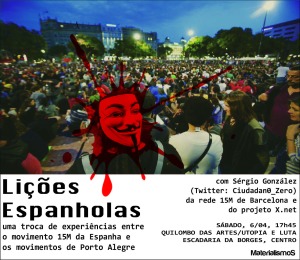
Os dois lados da exclusão (Revista Fórum)

11/01/2013 1:40 pm

O encontro entre um líder do MST e um grupo de presidiários põe em contato realidades que ambos conhecem, como enfrentamentos com a polícia e ameaças de morte por defesa dos próprios direitos

Por Júlio Delmanto

Em frente ao campinho de terra, a pequena capela estava lotada. Sentados em bancos de igreja ou em pé, cerca de 40 jovens de pele escura, cabelos curtos e braços cruzados, muitos com camisas de futebol e tatuagens nos braços, ouviam atentamente João Pedro Stedile falar sobre a história do MST e da luta pela terra no Brasil. Poderia ser só mais uma atividade para o principal líder dos sem-terra, se não fosse pelo lugar nada usual: um presídio.

A convite do projeto “Como vai seu mundo?”, impulsionado pelo rapper e ex-detento Dexter e pelo juiz Jaime dos Santos Jr., garantido atualmente pelo Coletivo Peso, movimento social surgido no bairro paulistano do Jardim Pantanal, Stedile visitou em 25 de setembro o presídio José Parada Neto, em Guarulhos, para conversar com “reeducandos” do regime semiaberto sobre a trajetória do movimento e a importância da luta política para a transformação das injustiças.

Vestindo calça jeans surrada e camisa polo azul clara, Stedile iniciou sua exposição lembrando as origens da desigualdade no Brasil, apontando que, desde 1500, o país “foi se organizando numa sociedade baseada no capitalismo, ou seja, baseada no lucro. E o lucro, o que é? Alguém só consegue ficar rico se pega o trabalho de alguém”. Consolida-se assim, a seu ver, um contexto social marcado pela separação entre os pobres e os que vivem do trabalho dos pobres. “Cada vez que você vir um rico por aí, pode contar quantos dias de trabalho ele pegou de alguém, porque sozinho ninguém fica rico. Então, o capitalismo gera uma sociedade muito desigual, com os pobres cada vez mais longe dos ricos. Com o passar do tempo, o Brasil se tornou a sociedade mais desigual do mundo”, resumiu.

Stedile prosseguiu, rememorando o início do MST. “Logo depois do fim da ditadura, quando perdemos o medo dos milicos e da polícia, nós começamos a nos organizar, lá no interior”, relatou, para uma audiência em absoluto silêncio e interessada. “Muita gente entre o povo quer trabalhar na agricultura e quer viver daquilo, mas não tem terra, porque ela está concentrada. É muita terra no Brasil e pouco dono, a maior parte delas não é ocupada, o cara deixa lá só pra especulação. Tem fazendeiro que depois deixa a terra pro santo no testamento, achando que vai escapar do inferno”, brincou.

“Nós começamos, então, a ajudar a organizar os pobres, fazíamos as reuniões no interior, debaixo do pé de manga, e a primeira pergunta básica era: Quem de vocês quer terra? E por que vocês não têm terra? Porque não tem dinheiro. Aí a gente mostrava a lei: ‘Vocês sabem desta lei de reforma agrária?’. Não sabiam. ‘Então a lei tá do nosso lado?’. Nesse caso, sim. Aí aparecia sempre um crente: ‘Mas a lei de Deus é maior que a dos homens’. Porém, nós descobrimos que lá na Bíblia diz: e Deus fez a terra, e depois que estava pronta disse ‘a terra é de todos’. Não diz na Bíblia que a terra é do fazendeiro Albuquerque da Silva, se você é filho de Deus, você tem direito, pega a Bíblia e vai brigar.”

“Já pensou em desistir quando viu que o bagulho ia ficar louco?”

Conforme Stedile, a primeira iniciativa do Movimento foi no sentido da conscientização. “O pobre tem de ter conhecimento de seus direitos, senão qualquer policial chega lá, o cara não sabe e fala: ‘Sim, senhor’. Se ele tem conhecimento dos seus direitos, ele caminha com a cabeça erguida”. A partir disso, o segundo passo seria “saber o caminho para chegar aos direitos. Então nós começamos a organizar esses pobres pra botar o direito na prática.”

Os participantes da conversa aparentavam já conhecer algo do MST, mas tinham diversas dúvidas, que eram expressadas informalmente, interrompendo a exposição do gaúcho que até na certidão de nascimento tem a cor do movimento, já que nasceu em Lagoa Vermelha. Perguntavam sobre realidades que conhecem de perto, como enfrentamentos com a polícia e ameaças de morte por defesa de direitos, e também sobre o que buscavam conhecer, como os métodos para garantir uma boa ocupação e formas de se comunicar com uma sociedade vista como preconceituosa e intolerante.

“Em algum momento já pensou em parar, desistir, quando viu que o bagulho ia ficar louco mesmo?”, perguntou um rapaz de cavanhaque que não se identificou. “Quando a pessoa adquire consciência, tem conhecimento de que a sociedade é assim, aí de que adianta parar? Não tem saída”, afirmou Stedile, ressaltando, no entanto, que “tem de ter essa clareza, nós já tivemos muitos companheiros que conquistam a terra e aí falam: ‘Vou cuidar da minha vida’. Aí vira pequeno riquinho na cabeça”. Em relação a problemas de violência legal e extralegal, lembrou que, desde 1984, “foram assassinados mais de 1,5 mil companheiros, tanto pela polícia quanto pelos jagunços, tivemos muita gente assassinada”.

Para lidar com o risco, o gaúcho deu sua receita: estar bem organizado. “Isso é uma coisa que aprendemos com o tempo, e esperamos que vocês aprendam também, porque esse é o segredo dos pobres, da classe trabalhadora: a nossa força tá no número. Não tá só na justiça do teu direito, tá no número, e isso nós aprendemos de tanto apanhar”, apontou. “Se você entra com cem pessoas e chega a polícia com cem soldados, você não guenta uma meia horinha. Agora, se chegarem os cem policiais e eles encontrarem mil pessoas, aí já vão dizer: ‘Pois é, vou ter que consultar o comandante’. O que faz com que ele mude a opinião não é a lei nem a terra, que são as mesmas, mas o número de pessoas envolvidas.”

Houve perguntas também sobre a relação com a mídia, apontada como detentora de uma visão parcial e estigmatizadora dos pobres, ponderações sobre as dificuldades enfrentadas no cárcere e até o questionamento sobre a necessidade de integração entre a luta indígena pela retomada de suas terras e a luta em prol da reforma agrária. João Pedro Stedile parece ter se animado com essa primeira abertura de portas, e colocou o Movimento à disposição para ajudar em outras iniciativas de fortalecimento da cidadania da população aprisionada naquela unidade, como, por exemplo, na divulgação de textos em órgãos do MST e ajuda para alfabetização ou aulas de inglês.

Ao final da conversa, Hugo Leonardo Ferraz, de 26 anos, que trabalha na cozinha do presídio e participa do Projeto “Como vai seu mundo?” desde que chegou ao Parada Neto há nove meses, comentava que a atividade foi produtiva. “O pessoal gostou porque entendeu que estava diante de uma pessoa humilde, trabalhadora, guerreira, de um líder de verdade. Teve muita pergunta, diálogo bastante aberto, esclareceram suas dúvidas e curiosidades, pudemos guardar lições de vida”, afirmou.

Superlotação é a norma

Segundo números do Departamento Penitenciário Nacional (Depen), o Brasil terminou 2011 com 514.582 pessoas encarceradas, sendo que cerca de 190 mil delas estão presas em São Paulo. De acordo com dados fornecidos à Folha de São Paulo pelo Conselho Nacional de Justiça (CNJ), esses detentos estão acomodados num espaço de apenas 105 mil vagas. No presídio José Parada Neto, a situação não é diferente: a capacidade da unidade é de 216 vagas, mas estão detidas ali entre 640 e 650 pessoas, o que corresponde ao triplo do que o local comporta.

Para João Paulo Burquim, que tem 37 anos e é conhecido como “Professor” por dar aulas a seus companheiros de cárcere, a superlotação é o principal dos problemas da unidade. A falta de camas é comum e muitas vezes, nem sequer colchões são fornecidos aos “reeducandos”, que têm de dormir no chão – “é uma situação constrangedora”, resume Burquim. Há também falta de extintores em caso de incêndio, torneiras, chuveiros e material para higiene pessoal, mesmo que a Cartilha da Pessoa Presa, elaborada pelo CNJ, estabeleça a distribuição do “kit higiene” como direito.

“Dá pra engrossar essa lista de precariedades”, comenta Hugo Ferraz. Ele lembra da inexistência de políticas de esporte e cultura, do desleixo com que é tratada a pequena biblioteca da unidade e aponta a falta de documentos como um entrave importante para a tão proclamada “ressocialização” dos presos. Muitos dos detidos na unidade não conseguem acessar as benesses do regime semiaberto, como poder trabalhar fora ou fazer cursos, por não terem documentos, e a reivindicação da visita de uma unidade móvel do Poupatempo jamais foi atendida: eles não podem sair por não terem documentos, e não têm documentos porque não podem sair.

Além disso, não há nenhum médico para atender os internos; ocasionalmente, um enfermeiro vai ao local. Como também há poucos remédios, os detentos relatam que o medicamento Dipirona sódica, que possui efeito analgésico e antitérmico, é receitado para praticamente qualquer tipo de problema. Somente em casos muito graves a pessoa é levada a um hospital. Devido a essas dificuldades, os presos têm se reunido semanalmente para conversar e buscar formas de reivindicar seus direitos, dos quais aparentam ter grande conhecimento.

Dos quase 520 mil presos no Brasil, estima-se que 40% sequer foram julgados, estão em detenção provisória. De acordo com o CNJ, somente em São Paulo 26 mil processos envolvendo presos estão parados, o que corresponde a 14% do total dos detentos do estado.

Reeducação sem informação 

O acesso à informação também é bastante difícil. Mesmo não havendo nenhuma lei versando sobre o assunto, as prisões do estado de São Paulo não permitem a entrada de livros e jornais em seu interior. Hugo afirma que, quando questionados, os funcionários não dão argumentos que justifiquem esse procedimento. “Não entra, não é permitido pela unidade, é norma da Secretaria, é ordem da Coordenadoria, as justificativas são repetitivas. Geralmente a informação é algo que não pode, que não deve, que de forma alguma deve fazer parte do dia a dia do reeducando”, critica.

Também por esse motivo, iniciativas como o projeto que levou Stedile ao Parada Neto são valorizadas pelos presos. Conforme o professor Burquim, as informações mais importantes acabam chegando principalmente por meio do “boca a boca”, e a presença de pessoas de fora do cotidiano da prisão é muito bem-vista. “Eu fiquei um ano e meio fechado em outro CDP [Centro de Detenção Provisória] da região, e a gente não tinha acesso nenhum, tudo que nos enviavam passava por um departamento de censura. Toda informação para quem tem interesse de melhora vem de encontros com outras pessoas, e isso é impactante.”

No entanto, por causa de algum critério kafkiano, ver televisão não é proibido, e é essa a única mídia que conecta os presos ao mundo exterior. Mesmo com o direito ao voto sendo vetado a pessoas condenadas pela Justiça, as eleições são um exemplo de como a TV é usada, já que os detentos do Parada Neto demonstraram conhecimento em relação ao pleito municipal que aconteceria em 7 de outubro.

Dizem não defender nenhum candidato, mas sabem em quem não votar, e inclusive recomendam a familiares que não esqueçam dos responsáveis pelo elevado índice de encarceramento no estado e no País. Burquim relata que “às vezes, a família que tá lá fora não tem o conhecimento que a gente adquiriu através dos debates aqui dentro, então procuramos orientar. Aí a pessoa fala: ‘Poxa, eu não sabia, não acredito’”.

A questão eleitoral também foi trazida à tona durante a conversa com João Pedro Stedile, que foi questionado a respeito da posição do MST sobre o pleito deste ano. Segundo ele, no plano local as decisões são tomadas nos assentamentos, “o pessoal faz assembleia e identifica os candidatos que são mais a nosso favor, quem é a favor da reforma agrária”. Ele avalia que “de uns dez anos pra cá, por incrível que pareça, a questão partidária não pesa tanto, os partidos ficaram tudo meio igual. Há uns dez anos, a maioria nossa era do PT, e os fazendeiros eram tudo dos outros partidos. Agora misturou tudo, tem fazendeiro do PT, do PCdoB, as siglas já misturaram tudo, infelizmente”.  Ressalta, no entanto, que “em nível federal, é outra coisa, a disputa fica mais clara: nós sempre votamos contra o Alckmin, o Serra, eles são representantes dos ricos. Quando tinha o Lula, ele era mais identificado com a gente, apesar de ter uns ‘primos ricos’. A Dilma, também, é melhor que o Serra, mas tem uns ‘primos ricos’ de quem nós não gostamos”.

Como vai seu mundo?

“Grades de ferro, chão de concreto/ Na prisão tudo é quadrado do piso até o teto/É desanimante, é feio, é triste/ Rouba a sua brisa, só quem é resiste/ E não desiste, persiste, enfrenta a batalha/ Violenta é a vida no fio da navalha”: esses são alguns dos versos de Como vai seu mundo?, rap de Dexter escolhido para nomear o projeto realizado no presídio de Guarulhos.

Hoje com 39 anos, Marcos Omena, que adotou o apelido de Dexter como nome artístico, por ser este também o nome de um dos filhos de Martin Luther King, passou 13 anos atrás das grades, alguns deles no Carandiru, onde fundou o grupo 509-E em conjunto com Afro-X, atualmente também em carreira-solo. Dexter esteve detido por um período no José Parada Neto e, junto com o juiz Jaime dos Santos Jr., começou a gestar o projeto que ganhou corpo com a participação do Coletivo Peso, principal executor e garantidor da linha política da iniciativa.

Além das conversas com diferentes convidados, o projeto, que é apoiado pela ONG Instituto Crescer, realiza oficinas de música, fotografia e comunicação, exibições de filmes e até saraus – a cada três participações, um dia de pena é subtraído. Alguns dos “reeducandos” conseguiram autorização para visitar semanalmente a sede do Instituto Crescer, onde recebem formação em informática e cidadania com Eduardo Bustamente, um dos coordenadores do projeto, e dessas atividades surgiu um blogue chamado Diário da Colônia. Os presos também já fizeram um jornal de quatro páginas intitulado Nós por nós, que em sua primeira edição traz poesias e textos dos internos, além de uma reportagem criticando a proibição da entrada de cigarros falsificados, ou “paraguaios”’, no interior dos presídios de São Paulo. “Covardia é o manto dos fracos, coragem é a coroa dos fortes” e “Nosso problema não é resolvido pela sua matemática”, são algumas das frases contidas na publicação.

Bolsa Família and the Feminist Revolution in the Sertão (rioonwatch.org)

By Mariana Sanches – January 14, 2013

Over the past five years anthropologist Walquiria Domingues Leão Rêgo has witnessed a change in behavior in the poorest, and probably most sexist, areas of Brazil. The money provided by the federal income subsidy program Bolsa Família has brought the power of choice to women. They now decide everything from the grocery list to whether to file for divorce.

Money from “Bolsa-Família” brought the power of choice to the women of the Sertão, Brazil’s hinterland (Photo from: Editora Globo)

A revolution is underway. Silent and slow—52 years after the creation of the birth control pill—feminism begins to take shape in the poorest, and possibly most chauvinistic, corners of Brazil. The interior of Piauí, the coast of Alagoas, the Jequitinhonha Valley in Minas Gerais, the interior of Maranhão and the outskirts of São Luís are this movement’s setting, described by anthropologist Walquiria Domingues Leão Rêgo, of the State University of Campinas (Unicamp). Over the past five years, Walquiria followed the annual changes in the lives of over a hundred women, all beneficiaries of Bolsa Família. She visited the most isolated areas, relying on her own resources, for an unusual exercise: to hear from these women how their lives had (or had not) changed after the creation of the program. Walquiria’s research will be published in a book, to be released later this year, but we will advance some of her conclusions.

WOMEN WITHOUT RIGHTS

The areas Walquiria visited are those where families at times cannot get any income over a whole month. Ultimately, they live off a barter system. With a labor market too small for men, there rests no hope of employment opportunity for women. There is poor access to education and health. Families tend to have many children. The social structure is patriarchal and religious. The woman is always under the yoke of her father, her husband or her pastor. “Many of these women went through the humiliating experience of being literally forced to ‘hunt for food,’” says Walquiria. “It’s people who live without the right to have rights.” Walquiria wanted to know if Bolsa Família had either become a welfare crutch or rescued some sense of citizenship for these people.

LIPSTICK AND DANONE YOGURT

“There is more freedom in money,” says Edineide, one of Walquiria’s interviewees and a resident of Pasmadinho in Jequitinhonha Valley. Women make up more than 90% of the titleholders of Bolsa Família; they are the ones who withdraw the money from the cash machine on a monthly basis. Edineide translates the meaning of this government decision of giving the benefit card to the woman: “When the husband goes shopping, he buys what he wants. And if I go, I buy what I want.” They started buying yogurt for children and to entitle themselves to vanity. Walquiria witnessed women buying lipstick for themselves for the first time in their lives. Finally, they had the power of choice. And that changes many things.

DOES MONEY LEAD TO DIVORCE AND A DROP IN THE NUMBER OF CHILDREN?

“A lot of these women have a fixed income for the first time, and many now have more than their husbands,”says Walquiria. More than simply choosing between buying noodles or rice, Bolsa Família also allowed them to decide whether or not to continue their marriages. It is still rare for a woman to initiate a separation in these regions. Yet this is precisely what is beginning to happen, as Walquiria reports: “In the first interview in April 2006 with Quitéria Ferreira da Silva, 34, a married mother of three in Inhapi, I asked her about the issue of abuse. She cried and told me she did not want to talk about it. The following year, when I returned, I found her separated from her husband, boasting a much more relaxed appearance.”

Despite husbands’ harassments, none of the women interviewed by Walquiria admitted to yielding to their appeals and handing over the Bolsa Família money. “This is my money, President Lula gave it to me to take care of my children and grandchildren. Why am I going to give it to my husband now? I won’t!” said Maria das Mercês Pinheiro Dias, 60, mother of six, a resident of São Luís, in an interview in 2009.

Walquiria also reports that the number of women who seek contraception has increased. They began to feel more comfortable making decisions about their bodies and their lives. It is clear that changes are still subtle. No one visiting these areas will find women burning bras and quoting Betty Friedan. But they are beginning to break with a perverse dynamic, first described in 1911 by English philosopher John Stuart Mill. According to Mill, women are trained since childhood not only to serve men, husbands and fathers, but to want to serve them. It seems that the poorest women of Brazil are finding they can want more than just that.

A Aldeia Maracanã é dos índios, diz antropólogo (Revista Fórum)

18/01/2013 12:47 pm

A ocupação do ex-museu do índio dá visibilidade à luta por políticas públicas indígenas em áreas urbanas e permite a governo do Rio dialogar, afirma Marcos Albuquerque, da UERJ

Por Jessica Mota

Marcos Albuquerque: Cerca de 40% da população indígena original hoje está dispersa nos grandes centros urbanos do país (Foto: André Mantelli)

“Quanto à origem deste prédio, há poucas informações disponíveis e muitas delas se contradizem”, diz o relatório feito em 1997 pelo Instituto Estadual do Patrimônio Cultural, o INEPAC, órgão vinculado à Secretaria de Cultura do estado do Rio de Janeiro, sobre o prédio conhecido como “antigo Museu do Índio”, que o governo do Rio quer demolir para facilitar o trânsito no entorno do estádio Maracanã, em reforma para a Copa 2014.

O que se sabe é que, no início do século XIX, a região era de engenhos de açúcar e, provavelmente, ainda repleta de aves chamadas maracanãs. Em 1889, com a chegada da República, aquelas terras adquiridas pelo Duque de Saxe, genro de D. Pedro II, deixariam de pertencer ao Império do Brasil e passariam a ser propriedade do Ministério da Agricultura, Indústria e Comércio.

O casarão imperial se tornaria conhecido a partir de 1953, como sede do Museu do Índio, chefiado por Darcy Ribeiro. O museu se tornaria referência internacional, servindo de “modelo a diversas instituições, orientando-a quanto à catalogação e classificação de material etnográfico e quanto aos melhores métodos de exposição museográficas”, como aponta o relatório do INEPAC.

Em 1978, o Museu do Índio mudou de endereço e o prédio caiu no abandono. Deteriorado, acabou não merecendo tombamento do Iphan, que o avaliou como de baixa relevância nacional do ponto de vista histórico e arquitetônico.

Para o antropólogo Marcos Albuquerque, professor adjunto da Universidade do Estado do Rio de Janeiro (UERJ) e pesquisador da presença da população indígena nas grandes cidades, não há dúvida que o prédio tem valor histórico pelo que representa para o indigenismo nacional e sua ocupação legitima a construção de “referenciais” indígenas na cidade do Rio de Janeiro, onde a luta por políticas públicas tem maior visibilidade.

Leia a entrevista.

OCUPAÇÃO É LEGÍTIMA E PODE ABRIR DIÁLOGO

O governador Sérgio Cabral, em uma fala veiculada na televisão, deu a entender que a Aldeia Maracanã não teria legitimidade por não estar ali desde o descobrimento, nem no período colonial. Qual a sua visão sobre isso?

O que o governador falou é algo que vai contra preceitos constitucionais e regras jurídicas que determinam o tipo de atenção ao caso. A ocupação dos indígenas naquele espaço é legítima independentemente do ano em que foi feita. Do ponto de vista da política indigenista, o que está em jogo ali é o fato de ser uma comunidade indígena reivindicando um direito constitucional. No mínimo, os indígenas teriam o direito de usucapião, que é um direito coletivo. Além disso, é um espaço que tem valor histórico e que deve ser mantido. A intercessão entre esse valor histórico e a presença da população indígena ali, em um espaço da memória do movimento indigenista, já daria toda a legitimidade ao que eles estão reivindicando, que não é de direito individual. É uma reivindicação de um direito coletivo, claramente legítima do ponto de vista de preceitos constitucionais. Esse tipo de fala que o governador ou o prefeito tem feito às pressas não tem nenhum valor oficial e o que o governo do estado irá fazer com relação a essa questão não pode estar baseado em uma afirmação como essa, feita às pressas.

O tombamento do prédio do antigo Museu do Índio foi recusado na avaliação do Iphan. Mas a questão se resume ao caráter histórico do lugar ou vai além disso?

Pelo que a gente está acompanhando da mobilização em torno do antigo museu por conta da ocupação indígena, a questão é mais complexa, envolve a presença de uma população indígena que já está há pelo menos seis anos ali. É um tipo de ocupação que não está apenas pela preservação da memória do imóvel, que tem a ver com a história do indigenismo nacional, mas também com o projeto de construção de referenciais na cidade do Rio de Janeiro para a cultura indígena e – por que não? – de projetos de implementação de políticas públicas a partir desse epicentro.

Quem são os índios que estão ali, de onde vêm, o que fazem?

A ocupação do local foi uma forma de – na medida do possível, sem recursos – implementar uma política cultural que funcionasse como pólo de visibilidade da questão indígena local e nacional, até porque existem indígenas do país todo lá. O núcleo principal era formado por cerca de seis indígenas, principalmente homens adultos e solteiros, mas há alguns deles que estão há mais de 20 anos morando aqui no Rio de Janeiro. A maior parte vem do norte do país, principalmente do estado do Amazonas, e alguns já tinham uma trajetória de mobilização política pró-indígena em Brasília e em outras capitais. Outros, como os Guajajara, vieram ao Rio de Janeiro com família, estavam morando em residências sem condições de saúde e segurança, mesmo que tivessem formação acadêmica, como é o caso do Arão [da Providência], que é advogado e atua junto à OAB e ao Ministério Público, e o irmão dele, o Zé, que é doutorando em linguística no Museu Nacional, mais as famílias, todas em situação econômica bastante precária. São situações bastante diversas.

Qual é a situação hoje dos índios que vivem em cidades, como o Rio de Janeiro?

Cerca de 40% da população indígena original hoje está dispersa nos grandes centros urbanos do país: Porto Alegre, Rio de Janeiro, São Paulo, Minas Gerais, Brasília, Salvador e Manaus, principalmente. E todas as grandes cidades têm políticas de atenção à população indígena, mas que são muito diferentes porque não há uma regulamentação federal de como deve ser feito o atendimento a essa população. E a implementação dessas políticas públicas, em quase 100% dos casos, vêm por conta da mobilização dos próprios indígenas. Principalmente com relação ao atendimento à saúde, educação e moradia. São Paulo e Manaus são centros de referência para esse tipo de política pública.

Por que a população indígena migra para as cidades?

Essa migração tem mais de 50 anos, no mínimo. Os indígenas migram, principalmente os do nordeste brasileiro e, mais recentemente, da região norte, por conta de conflitos fundiários, por conta de violência pela posse da terra, por conta de muitas populações indígenas, principalmente do nordeste, estarem hoje ocupando territórios que não tem viabilidade econômica. Então os migrantes indígenas são migrantes tal como os migrantes do nordeste brasileiro. Mas a Constituição de 1988 regulamenta uma certa autonomia de representação dos povos indígenas através de suas associações, que passam a não depender apenas da Funai e do Ministério Público e aí começam a ter visibilidade. E eles também migram em busca de melhoria na educação, formação na educação básica e universitária e, em menor parte, em busca de atendimento à saúde. O Estado brasileiro tem o papel constitucional de criar políticas públicas para amenizar o impacto da violência imposta aos indígenas durante a construção do país. É uma espécie de compensação histórica feita aos povos indígenas. Mas o que o Estado vem fazendo ao longo do tempo é um tipo de atendimento, feito pela Funai, dentro das aldeias, e não nas cidades. Embora a redação do texto constitucional não faça distinção entre comunidades em aldeias ou centros urbanos. É por conta disso que os povos indígenas estão exigindo que os órgãos públicos implementem, ou regulamentem, o preceito constitucional. Essa é a luta deles.

Como o governo do Rio tem tratado a questão indígena?

Pelo que consegui sondar até o momento, e pelo que informam os próprios indígenas, o estado do Rio de Janeiro não tem nenhuma política pública para os povos indígenas, o que é um fosso bastante significativo no cenário nacional. Até porque a cidade do Rio de Janeiro, oficialmente, pelo Censo, tem mais de 6 mil indígenas. Mas pelas contas dos próprios indígenas e de pessoas envolvidas, esse número é, no mínimo, três vezes maior. Em São Paulo, os indígenas, ao constituírem associações, passaram a ter uma melhor organização e conseguiram montar autonomamente o seu próprio censo. Mas no Rio de Janeiro não tem nenhuma associação institucionalizada ou indígena que já tenha condições de fazer esse tipo de mapeamento. O governo do estado do Rio e a prefeitura do Rio não cedem nenhum funcionário ou espaço institucional para o fortalecimento das associações indígenas. Não promovem nenhum tipo de atendimento diferenciado na saúde ou na educação, nenhum tipo de política pública para os povos indígenas, e não há nem um conselho estadual de povos indígenas, como ocorre em outros estados.

O que significaria, então, o reconhecimento de que é legítima a reivindicação dos índios a um espaço, um centro cultural, que preserve a memória e a história deles, no Rio de Janeiro?

A Aldeia, tal como ela existe, já se configura como espaço de pressão para que o governo do Rio de Janeiro implemente políticas públicas para essa população. Minimamente já se consegue promover algo muito importante que é um impacto de articulação, de encontro – festivo, mas também político. E ao se tornarem visíveis, como é o caso da Aldeia Maracanã, o governo passa a chamá-los para dialogar. E é possível que esse diálogo, nascido da Aldeia Maracanã, possa se desdobrar efetivamente na construção de políticas públicas. E não só para esses que estão na Aldeia, mas para todos que estão no estado do Rio de Janeiro, que são muitos mais. Esse movimento é muito maior do que o número específico de índios que estão na Aldeia.

Como você acha que um evento como a Copa pode definir essa representação que os índios estão tentando conseguir frente ao governo?

A Copa levou a uma grande visibilidade internacional principalmente nesse último ano, em 2012 e agora no começo de 2013, por conta do incremento das reformas no Maracanã e do impacto sobre a Aldeia Maracanã. Isso vem levando os indígenas a ter uma visibilidade internacional muito grande. É evidente o desnível entre o interesse da mídia internacional e o da mídia nacional, que passou a olhar para essa questão muito recentemente e com muito mais reticências do que a mídia internacional. É um pouco ilógica a política do governo do estado de não tornar a ocupação dos índios algo positivo. É um paradoxo no que se refere a um elemento de grande significação internacional, que é a manutenção, o registro, a atualização de um patrimônio em pleno coração da cidade para onde os olhos do mundo estarão voltados.

A foto desta matéria foi gentilmente cedida por André Mantelli.

Which Way Did the Taliban Go? (New York Times)

Joël van Houdt for The New York Times. Colonel Daowood, left, considered his next move on the Chak Valley road.

By LUKE MOGELSON

Published: January 17, 2013 96 Comments

The village was abandoned. Streets deserted. Houses empty. Behind the central mosque rose a steep escarpment. Behind the escarpment mountains upon mountains. Up there — above the timberline, among the peaks — a white Taliban flag whipped in the wind. Several Afghan soldiers were admiring it when a stunted and contorted person emerged from an alley. Dressed in rags, he waved a hennaed fist at them and wailed. Tears streamed down his face. Most of the soldiers ignored him. Some laughed uncomfortably. A few jabbed their rifles at his chest and simulated shooting. The man carried on undeterred — reproaching them in strange tongues.

A truck pulled up, and Lt. Col. Mohammad Daowood, the battalion commander, stepped out. Everyone waited to see what he would do. Daowood is a man alive to his environment and adept at adjusting his behavior by severe or subtle degrees. He can transform, instantaneously, from empathetic ally to vicious disciplinarian. To be with him is to be in constant suspense over the direction of his mood. At the same time, there is a calculation to his temper. You feel it is always deliberately, never capriciously, employed. This only adds to his authority and makes it impossible to imagine him in a situation of which he is not the master. A flicker of recognition in the deranged man’s eyes suggested that he intuited this. He approached Daowood almost bashfully; only as he closed within striking range did he seem to regain his lunatic energy, emitting a low, threatening moan. We waited for Daowood to hit him. Instead, Daowood began to clap and sing. Instantly, the man’s face reorganized itself. Tearful indignation became pure, childish joy. He started to dance.

This continued for a surprisingly long time. The commander clapping and singing. The deranged man lost in a kind of ecstatic, whirling performance, waving his prayer cap in the air, stamping his feet. When at last Daowood stopped, the man was his. He stood there — breathless and obsequious — waiting for what came next. Daowood mimed the motion of wrapping a turban on his head. Where are the Taliban? Eager to please, the man beamed and pointed across the valley.

Several hours later, as I shared the bed of a pickup truck with an Afghan soldier who manned a machine gun mounted on the roof of the cab, it became evident that we were lost. The rest of the company was nowhere to be seen, though we could hear them, not far off, exchanging rocket and automatic-weapons fire with insurgents who had fled into the mountains and were hiding behind protective crags, shooting down. The driver sped up one narrow rutted path after another. The paths were hemmed in by rock walls — a labyrinth of cul-de-sacs — and the driver grew more panicked and reckless with each dead end. Aside from the occasional night raid, no Afghan or American forces had been to this place in more than a decade. Men stood on top of the walls, watching.

“Where are we going?” I asked the machine-gunner.

He offered the words I had heard time and again — so often, and so predictably, they could be the battalion motto. The words were invoked in response to such questions as: What is the plan? Who is shooting? Where will we sleep tonight? How many dead?

The words are “Mulam nes” — “It isn’t clear.”

Finally the driver stopped and asked a bearded man in a black turban for directions. The man — a Talib? — kindly pointed the way.

Soon we arrived on a bare ridge and found Colonel Daowood almost alone. Two young soldiers stood nearby with rifles. Daowood sat on a rock. A teenage boy knelt before him, kowtowing, wrists cuffed behind his back. Daowood was doing something to his head. As we got closer, we saw that he held scissors and was roughly shearing the boy’s hair. A neat pile of long black locks lay on the ground between Daowood’s feet.

When Daowood noticed us, he smiled and winked. Then he went back to work, screaming in the boy’s ear, “Now do you like being a Talib?”

“No,” the boy whimpered.

“What?”

“No, no, no.”

Daowood lifted him to his feet and examined with satisfaction the ugly patchwork of uneven tufts and bald scalp. He removed the boy’s handcuffs and said, “Go.”

The boy ran away, forgetting his shoes.

While Daowood was giving the haircut, our driver, who it turned out was a company commander, yelled at a pair of intrepid young soldiers who had taken it upon themselves to scale the mountain and capture the Taliban’s flag. We were leaving soon, and the commander wanted them to come back down. The young soldiers, however, were too high. They couldn’t hear him. The commander yelled and yelled. If only they had radios. If only he had a radio. In lieu of one, the commander drew his sidearm, aimed in the general vicinity of the soldiers, then shot two bullets.

The soldiers ducked, peered down. The commander waved.

It was the third day of a four-day operation being conducted by the Afghan National Army (A.N.A.) in Chak District, Wardak Province. There were no U.S. forces in sight. Every so often, a pair of American attack helicopters circled overhead; otherwise, the Afghans — roughly 400 of them — were on their own. For the A.N.A. — which every day assumes a greater share of responsibility for the security of Afghanistan — the operation was an ambitious undertaking and a test of its ability to function independently. For years now, the U.S. military’s priority in Afghanistan has been shifting from effectively prosecuting the present war to preparing Afghans for a future one in which our role is minimal. But even as American troops return home and American bases across the country close, such a future continues to feel difficult to envision. How will the A.N.A. fare when it is truly on its own? Predictions vary, tending toward the pessimistic. To the extent that assessments of the competency and preparedness of the A.N.A. take into consideration on-the-ground observations, however, they are usually limited to the perspective of American forces working in concert with Afghan units.

After a week with Daowood’s battalion, what I found is that the A.N.A. looks very different when there are no Americans around.

So does the war.

The operation to Chak District was nearly over before it began. Just hours before departure, during a briefing at Combat Outpost Dash-e Towp, the battalion headquarters, Daowood told his subordinate officers: “The only thing we’re waiting on is the fuel. If we don’t receive the fuel, we will not be able to do the operation.” A cohort of American advisers stood in the back of the room, silently listening. In the past, they probably would have offered to provide the fuel themselves. But that paradigm has changed. Increasingly, A.N.A. units must rely on their own supply lines, however inefficient they may be. Nevertheless, as the officers rose from their chairs, an Afghan captain pulled aside one of the advisers and told him the battalion lacked batteries for the metal detectors used to find improvised explosive devices. The adviser sighed. “Come over to our side,” he said, “and we’ll see what we can do.”

The American side of Dash-e Towp is separated from the Afghan side by a tall wall and a door that can be opened only with a code to which the Afghans do not have access. Whereas a close partnership between coalition and Afghan forces was for years considered a cornerstone of the overall military strategy (shohna ba shohna — shoulder to shoulder — went the ubiquitous NATO slogan), recently the Americans have distanced and even sequestered themselves from their erstwhile comrades. The about-face is a response to a rash of insider or “green on blue” attacks that killed more than 60 foreign troops in 2012 (and wounded 94), accounting for 22 percent of all coalition combat deaths. The Americans claim that many of the killings result from cultural differences; the Taliban claim to have infiltrated the security forces; the Afghan government claims “foreign spy agencies” are to blame. Whatever their provenance, the attacks have eroded trust to such a degree that NATO has begun designating some personnel as “guardian angels.” It is the guardian angel’s job to protect the NATO soldier from the Afghan soldier whom it is the NATO soldier’s job to train.

Other concerns abound. When the time comes, for instance, will Afghanistan’s army be able to maintain its own equipment and facilities? Evacuate and treat its own casualties? Overcome ethnic divisions within its ranks? Furnish its units with essential rations like food and fuel? Retain sufficient numbers despite alarmingly high attrition rates? Implement a uniform training doctrine despite alarmingly low literacy rates? Today, according to the Pentagon, exactly one Afghan brigade is capable of operating without any help from the coalition. For better or worse, come Dec. 31, 2014, the other 22 will likely have to do the same.

In anticipation of this reality, the A.N.A. has begun a countrywide realignment of troops that is transforming the battlefield. “Look at the situation,” Gen. Sher Mohamad Karimi, the chief of army staff, told me recently in Kabul. “One hundred and forty thousand international troops, with all the power that they have — the aircraft, the artillery, the tanks, the support — all of that now is going. You cannot expect the Afghan Army to do exactly what the international troops were doing.” As coalition forces diminish, that is, the A.N.A. must decide not only how to fill the gaps but also which gaps to forgo filling. For years, to secure roads and rural areas, Afghan soldiers have manned hundreds of check posts throughout the provinces. Now the A.N.A. plans to relinquish almost all of these in favor of consolidating its forces in significantly fewer locations. General Karimi claims there are two reasons for doing this. First: the Afghans simply lack the wherewithal to keep the more remote posts adequately provisioned. Second: the A.N.A. must move away from defending static positions, toward executing offensive operations. Theoretically, the police will take over check posts as the army quits them. But this will not always be the case; it may seldom be the case. And when vacated posts are not assumed by the police — as has happened in Wardak — it will be hard not to see the ongoing “realignment of troops” as anything other than an old-fashioned retreat.

Chak was one of the first districts in Afghanistan to undergo this change. When Daowood’s battalion woke around 3 a.m. and headed out from Dash-e Towp, the convoy included several large flatbed trailers hauling backhoes and bulldozers that would be used to destroy five of the six A.N.A. check posts in the area. (The last time abandoned posts were left standing in Wardak Province, the Taliban moved into them.) The sun was just starting to rise when the battalion arrived at the first one: a compact fortress of gravel-filled Hesco barriers perched on a squat hill that overlooked the entrance to the district. It was easy to see, from here, why the Taliban liked Chak. Parallel ranges form a wide valley with a river snaking down its middle. Apple orchards and trees with white trunks and bright yellow leaves crowd the basin. Dark canyons branch into the mountains. A single road follows the river deeper into the valley, connecting the lawless foothills of the Hindu Kush to Highway 1, a critical transit route that bridges Kabul and Kandahar, northern and southern Afghanistan.

After being reconstructed by an American firm at an estimated cost of $300 million, Highway 1 was extolled by the U.S. ambassador, in 2005, as “a symbol of Afghan renewal and progress.” Since then it has become one of the most dangerous roads on earth, scarred by bomb blasts, the site of frequent ambushes and executions by insurgent marauders, strewed with the charred carcasses of fuel tankers set alight on their way to NATO bases. As Daowood looked out from the top of the hill, he explained that Chak was an ideal staging ground for attacks on the highway and that the check posts were the only way to protect it. “When we had these check posts, there was good security,” Daowood said. “The people were happy. Of course, when we leave them, the Taliban will come back. As soon as we’re gone, they will own this whole area.”

Already, Daowood said, the road following the river was known to accommodate large quantities of remotely detonated bombs. As the colonel ordered the convoy to start forward, I watched two minesweepers testing out their metal detectors. The devices looked antique: Vietnam-era green with thick black wires connected to bulky plastic headphones. It was the sort of technology that made you remember ham radios, and I confess I was skeptical of their ability to clear the way. But after only a half-mile or so, one of the minesweepers stopped. A skinny, bearded soldier jumped out of a Humvee wielding a pickax. The minesweeper pointed at a spot. The soldier with the pickax attacked it. Soon he called to Daowood: “Found it!”

When C-4 explosive was packed around the bomb and exploded from what was deemed a safe remove, the blast proved much larger than anyone expected. Dirt rained down on those of us who were crouched behind a tree 100 meters away. The crater rendered the road impassable, obliging the Afghans to spend the next half-hour filling it with stones. By the time we started moving again, the minesweepers had begun working on another bomb just around the bend. I found the skinny, bearded soldier standing to the side with his pickax lightly balanced on his shoulder, smoking an immense joint.

His name was Shafiullah. He wore a pair of blue latex medical gloves and a metal helmet several sizes too big that sat low and loose over wide, wild eyes: preternaturally alert eyes bugging from their sockets as if to get a little closer to whatever they were looking at. “Did you see that last one?” Shafiullah wanted to know.

“It was big.”

He nodded rapidly, the helmet bucking forward and backward on his head, now threatening to fly off, now jerked into place by its leather chinstrap.

“Very big! Very nice!” He took another toke, held the doobie upright and became suddenly, deeply engrossed in its glowing tip.

“What are the gloves for?” I asked.

“The human body carries an electrical charge. When you work on the bombs, if you’re not careful, you can ignite them with the electricity in your fingers.”

“Do you always smoke hash before you work on the bombs?”

More vigorous nodding. “It takes away the fear.”

Shafiullah told me he joined the army about five years ago, when he turned 18. He served for three years as a regular infantry soldier in the violent Pakistani border regions before volunteering to become an explosive-ordnance-disposal technician. “I always wanted to be one,” he said. “I love when someone calls me an engineer.” About a year ago, after graduating from a six-month training program taught by French and American soldiers, Shafiullah was deployed to Wardak. Since then, he estimated, he had disposed of roughly 50 bombs. “Thanks to God I’ve never been hurt,” he said.

I asked if any of the other engineers were less fortunate. Shafiullah said that he belonged to a team of 20 technicians and that during the past three months two were killed and eight badly injured. He also said that nine of his friends from the training course were now dead or maimed. Back on the road, one of the minesweepers called for the pickax. Shafiullah took a last drag before joining them. A few minutes later, the valley echoed with a tremendous boom.

The shooting started soon after: rifles, machine guns, rocket-propelled grenades. It was too far ahead to see exactly what was happening. Later I learned that a group of insurgents ambushed the lead element in the convoy, strafing a narrow stretch in the road from within a dense stand of trees. The soldiers responded forcefully — with more and bigger weapons — killing six people in the village where the attack originated. A little while later, not far from the first shootout, there was another. This time an Afghan soldier fired a rocket-propelled grenade at a group of gunmen, killing seven. According to the soldiers, all the dead were Taliban.

By the time I reached the site with Colonel Daowood, the convoy had already moved on, resuming its lurching penetration of the valley. Perhaps not coincidentally, the ambushes occurred near a small gas station that was the target of an American airstrike the night before. The owner of the gas station — a Taliban leader named Gulam Ali, who Daowood said commanded several hundred insurgents in Chak — was killed by a missile. Two old fuel pumps still stood out front, but the row of shops behind them was ruined: windows shattered, charred metal bars curled back like the melted tines of a plastic fork. Each shop offered its own little diorama of destruction. Hundreds of pill bottles scattered on a pharmacy floor; emptied shelves hanging vertically in a general store; an iron and a sewing machine standing improbably upright on a tailor’s wooden table, among burned and tattered rolls of cloth.

Next to the gas station was Gulam Ali’s home and headquarters: an immaculate compound centered on a courtyard with rosebushes and a deep freshwater well. An exterior staircase ascended to the bedroom. Inside I was surprised to find the walls pasted with posters illustrating idyllic scenes from some future civilization, in which sleek modern buildings were harmoniously incorporated into rugged natural landscapes. Or maybe it was Switzerland — hard to say. Either way, it was odd to imagine Gulam Ali privately meditating on them. Nor did the inspirational quotes at the top of each poster lessen the oddness. “We love life,” one italicized blurb instructed, “not because we are used to living, but because we are used to loving.” And, “Even if you are on the right track, you’ll get run over if you just sit there.”

When I returned to the courtyard, Daowood announced that he was going to the village where the 13 insurgents had just been killed. “It’s Gulam Ali’s village,” he explained. “I want to pay my respects.” He headed into the trees with no protection other than the two teenage bodyguards who accompanied him everywhere. He wore no helmet or body armor (“I don’t like them; they give me a headache”), and he carried no weapon. Instead he walked with his hands clasped behind his back, casually flipping a string of turquoise prayer beads. When we reached the compound that belonged to Gulam Ali’s parents, where his relatives had gathered to mourn, Daowood told me to wait outside — the presence of a foreigner would offend the family. When he emerged several minutes later, I was happy to be leaving the place. But as we made our way back to the main road, we encountered dozens of men congregated on a low knoll among the plain stone markers and colored flags of the village graveyard. It was a funeral for the Taliban, and the men regarded us with something less than brotherly affection. Daowood said, “Keep walking.” Then he addressed the funeral. “The aircraft are coming back tonight!” he shouted. “The American Special Forces are coming! Leave this area! Don’t stay here! If you stay, you might get killed!”

Immediately, the ceremony began to scatter, the men fleeing down the slope as swiftly as they could without betraying panic. “The helicopters are coming!” Daowood went on. “The Special Forces will be here soon!”

At the time, the colonel’s prompt dissolution of what appeared to be a potentially dangerous situation seemed to me as deft and inspired as his handling of the deranged man would a couple of days later. But something else was going on as well. Expressing his condolences to Gulam Ali’s family, warning the people about a possible airstrike and night raid — it was all part of Daowood’s game. The more time I spent with him, the clearer it became that Daowood was practicing his own version of counterinsurgency, one that involved endearing himself to locals by characterizing as common enemies not only the Taliban but also the Americans and the Afghan government. In almost every village we visited, I watched Daowood rail against Kabul’s political elite to rapt audiences of disgruntled farmers. Once, in a place known to abet insurgents, the colonel told a crowd: “All the high-ranking officials in the government are thieves. They don’t care about the country, the people. They take money from the foreigners and put it in their pockets. They make themselves fat. They go abroad, sleep in big houses, buy expensive cars and never think about the people. They have done nothing for this country.”

As with Daowood’s occasional flights of rage, it was tough to tell just how much of this was theater and how much true belief. My sense was that Daowood was genuinely conflicted: a committed soldier who spent 10 years of his life in the service of a government he was profoundly disenchanted with. And he wasn’t alone. Most soldiers I spoke to conspicuously avoided expressing any fondness for — much less allegiance to — their government. Of course, this is the same with other soldiers in other armies (imagine a U.S. Marine explaining his compulsion to enlist by citing a feeling of fidelity to the Bush or Obama administrations), but the nascency of the Islamic Republic of Afghanistan makes its political leadership and national character uniquely synonymous. Put another way, in a government that has had only one president, you can’t distinguish between corrupt individuals and a broken system. All of which raises the question: In such a country, how can you be both a detractor and a patriot, as Daowood and some of his men seemed clearly to be? The Marine ostensibly fights on behalf of American principles and institutions that transcend elected officials; on behalf of what did the colonel and these soldiers fight? Most of them, when I asked, answered with the word “watan,” or “homeland.” But what does the notion of a homeland mean for someone who has seen his ruled by monarchists, dictators, communists, mujahedeen, Islamic fundamentalists and Karzai?

When it grew dark, we occupied a half-built mud house on the outskirts of a small mountain village, and Colonel Daowood told us his story. The owner of the property had killed a chicken and prepared for us a large pot of soup. Daowood and his entourage huddled around the iridescent mantles of a kerosene lamp, passing the ladle around, hugging their wool field blankets against a near-freezing night.

Daowood’s military career began three decades ago, when he fought the Russians in the tall mountains and narrow valleys of his native Paghman District. After the Soviet-backed government collapsed in 1992, rival mujahedeen groups turned viciously upon one another. While Kabul became the epicenter of a ferocious civil war, Paghman, just 20 minutes west of the city, remained relatively peaceful. Daowood stayed home, preferring not to enter a fray that was decimating the capital and its residents, with no end in sight. But in 1996, when the Taliban entered Kabul and ejected with unexpected ease each of its warring factions, Daowood took his wife and children to Panjshir Valley, an anti-Taliban stronghold where the warlord Ahmed Shah Massoud had retreated in preparation for a longer, harder fight. Although Massoud and his men were Tajiks and Daowood was a Pashtun (the ethnicity of the Taliban) — and although the recent civil war inflamed ethnic animosities — Daowood was received with open arms. Massoud gave his family a house and put Daowood in charge of 100 men.

More war followed for Daowood. Years of land mines and rockets, ambushes and close calls. Years of night operations in the orchards of the vast Shomali Plain — a verdant land between Panjshir and Kabul. Years, finally, of much spilled blood but little ground lost or gained. And then came the year everything changed. When Daowood talks about that time — after he and his comrades routed the Taliban with the help of American air power and special operators — he grins the way you might at a memory of your naïver self. It’s the optimism of those days that both embarrasses and saddens him, the feeling that Afghanistan had been born anew.

Daowood was among the tens of thousands of fighters in the so-called Northern Alliance — a loose confederation of anti-Taliban militias loyal to Massoud and other commanders. Although Massoud himself was assassinated two days before 9/11, his successor, Mohammed Qasim Fahim, supposedly a drug trafficker, was installed as the defense minister for Hamid Karzai’s interim government. Under Fahim, a majority of the Northern Alliance, including Daowood and his 100 men, became the first incarnation of the new Afghan military. While the United States remained committed to the “light footprint” approach championed by Bush and Rumsfeld — eschewing any commitment of resources that might be construed as “nation-building” — Fahim presided over the creation of a force that soon came to resemble the factionalism of the past far more than the nationalism of a future so eagerly anticipated by people like Daowood. As the International Crisis Group put it: “Units became organs of patronage, rewarding allies and supporters with officer commissions. The result was a weak chain of command over a mix of militias plagued by high desertion rates and low operational capacity.”

Whatever power-jockeying and cronyism afflicted the fledgling military, the civilian government under President Karzai was looking even worse. After two years, weary and bitter, Daowood resigned. “It was the corruption,” he explained. “It ruined everything. Everything was destroyed.” While Daowood embraced a new life back in Paghman — managing his family’s land and enjoying the company of his wife and sons — a resurgent Taliban began to exploit a growing disillusionment with the government and a meager deployment of security forces outside the capital. By 2006, there was no denying it: The insurgency had evolved from a lingering nuisance to a legitimate threat.

One day, an old friend from Panjshir, who was serving as a corps commander in the A.N.A., visited Daowood at his farm in Paghman. “We argued a lot,” Daowood recalled. “I didn’t want to be in the army anymore. I didn’t want to fight for this government. When I explained this to him, my friend told me: ‘If good men don’t participate, the criminals will take over. We have to reclaim this country from them.’ ” In the end, Daowood was convinced. Once more he left Paghman. Once more he took up arms.

When Daowood finished his story, I asked whether he really believed that the system was reformable. He thought for a while. Finally, he offered another reason for fighting — one that rang somewhat truer. “The government only steals money,” he told me. “At least they aren’t against education or women or human rights or rule of law.”

The next morning, some soldiers found a Taliban flag and brought it to Daowood. It wasn’t much: Arabic script scrawled in blue ballpoint pen on a square of white bedsheet tied with twine to a stick. Daowood slashed it with his knife and tried setting it on fire. The cloth was slow to catch. While the soldiers fussed with cardboard and kindling, Daowood received a call from the American advisers at Dash-e Towp. They wanted to remind him to begin tearing down the check posts. Daowood was incredulous; he still couldn’t believe it. “What nonsense is this?” he said when he hung up. “Do they want to hand Afghanistan to the Taliban?” The other soldiers looked just as galled. They sullenly watched the flag absorb a green lick of flame, shrivel and burn. “After these check posts are destroyed, we won’t be able to enter this valley,” Daowood said.

All the Afghans in Wardak, it seemed, shared Daowood’s contempt for the decision to close the check posts. When I met with Wardak’s provincial governor, Abdul Majid Khogyani, in Kabul, he told me: “I was a strong opponent of this idea. The police commander of Wardak and the National Directorate of Security chief were also against it. We know this will not work. The result of this strategy is that the Taliban have become stronger. Without the check posts, the Taliban will easily penetrate these areas. And once that happens, it is very difficult to clear them out again.” Majid was convinced that the realignment of troops had been forced on the A.N.A. command by NATO — a suspicion held by many Afghan officers I spoke to. “The local population are asking why NATO would deliberately provide the Taliban with such an opportunity,” the governor said. NATO has declined to comment on its involvement.

In Chak Valley, only one A.N.A. position would remain — the most distant outpost from the highway, manned by a contingent of roughly 100. That afternoon, when the convoy reached this last outpost, a fresh company relieved the bedraggled-looking men who had been stationed there for the past 12 months, collaborating with a U.S. Special Forces team, struggling to gain a foothold. Every one of them painted a similarly bleak picture of near-daily fighting against a more numerous guerrilla army. Mile after mile of mountains and forest was owned wholly by the insurgents. Out in that big wilderness, there was even a Taliban weapons bazaar, where insurgent fighters bought and sold Kalashnikovs and rockets and machine guns and grenades.

The question hovered like a bad smell: How would the Afghan soldiers who remained deep in Chak survive (or perhaps more accurately: What would they be able to accomplish beyond merely surviving?) once every check post between them and Highway 1 was razed? Severing entirely their already embattled position from the foot of the valley would be simple enough. After all, there was only one way in and out. As if to highlight this uncomfortable fact, a local informant called Daowood as soon as the convoy started to make its way back in the direction from which it had come. A number of bombs, the informant warned, were buried somewhere up ahead.

Shafiullah and his team headed to the front, and the procession of Humvees and trucks slowed to a crawl. Right away, the engineers found a copper wire attached to a massive I.E.D. buried two feet underground. A few minutes later, they found another. And then another. As soon as Shafiullah blew up the third bomb, Colonel Daowood’s informant called back to say that there were probably “many more,” though he was uncertain where. By now it was dark, and we still had miles to travel before reaching the relative security of an open area nearer the highway, where the battalion was supposed to bed down. Fifty feet or so ahead of the lead vehicle Shafiullah knelt in the dim beams of the headlights scratching at the dirt with his pickax. After a while there was some hollering and a disorderly hustle toward the rear. The explosion that followed was so powerful that bits of earth lashed our backs in a warm wave.

No one was hurt, and the convoy started forward again. Then it stopped again. While Shafiullah went back to work, I joined a group of soldiers sitting on the remains of an old Soviet tank. Someone produced a joint. The mood was jolly. It turned out the soldiers belonged to the company stationed since last winter at the remotest outpost in Chak. They were glad to be rotating out — even if it meant swapping one deadly place for another. Most of them were Pashtuns from eastern Afghanistan who served for many years and had wives and children to whom they sent their salaries and saw once every several months. The soldiers hoped to get some leave when they returned to Dash-e Towp — but visiting home, they said, was a mission in itself. Stretches of the highway between Dash-e Towp and Kabul were treacherous; many soldiers had been abducted and murdered by insurgents on their way to see their families. In the past you could dress in the traditionalshalwar kameez, hire a taxi and pose as a civilian. But now the Taliban had spies who alerted them when soldiers headed out. The only option was to catch a ride on a convoy, and those could be rare. Recently, the soldiers said, one of their lieutenants lost his infant son to an illness: though he was from Kapisa Province — a short drive north by car — it took him 20 days to get back.

Eventually Shafiullah found and detonated the fourth bomb, and the soldiers on the tank — high as kites by then — returned to the road and continued on. It was 1 in the morning by the time they reached their destination. On the way, they had to stop again and again for Shafiullah’s team to excavate and blow up I.E.D.’s — 11 in total. At some point after midnight the engineers got sloppy, igniting the C-4 on one bomb before Shafiullah could escape the blast radius. The pressure wave collapsed a mud-brick wall he was walking by, crushing his ankle. When I saw Shafiullah the next morning, his pant leg was in tatters and he was limping. His leg looked badly swollen. He hadn’t seen a medic yet and didn’t plan to.

The ground froze solid during the night and Shafiullah — who like most of the men in the battalion was never issued a sleeping bag — got no more than a cold hour’s rest. Nevertheless, while he waited in line to collect his breakfast (a plastic bag containing a hard piece of bread and a boiled egg and a mini-carton of coffee creamer), he seemed in high spirits. “I told you I’d never been hurt before, and now I’m hurt,” Shafiullah said with a laugh. “I was close! But God saved me.”

This was the day that Daowood brought his men up the mountain to a village called Ali Shah and found it deserted except for the deranged man who danced for him. Among the Afghan soldiers, Ali Shah was infamous — an insurgent sanctuary where no government forces had dared to venture in more than a decade. (“Even the women are Taliban!” one sergeant told me.) Daowood had received intelligence that there would be a wedding in the village that day with several insurgent commanders in attendance. He said he wanted to pace the operation to crash the wedding in time for lunch.

When Daowood asked where the Taliban went, the deranged man pointed to a distant hillside where a large group of villagers had gathered outside a mosque. Daowood and his men jumped in their trucks and headed that way. I rode in the back of a Toyota pickup with a middle-aged machine-gunner named Fazil. It turned out that Fazil was the lieutenant the soldiers on the tank had mentioned the night before — the one who had been unable to get home in time for his son’s burial. As we talked, there was something deeply familiar about the way Fazil described his village in Kapisa Province. He might have been a U.S. Marine reminiscing about the family ranch in Texas. The river was wide and clear, bountiful with fish. The people were kind; the air was fresh; the fruit was sweet.

Fazil’s education in the peculiarities of war began when he was 12, during the jihad. One day, while he was with his father and uncle at the local bazaar, a foot patrol of Russian commandos — or Russian soldiers who Fazil assumed were commandos because of the ski masks they were wearing — opened fire on the villagers. Fazil’s uncle bled out and died on the ground in front of him; Fazil’s father also took a bullet but survived. Several years later, a jet from the Soviet-backed government launched a missile at Fazil’s home that killed both of his parents; shortly thereafter, Fazil joined the mujahedeen in Panjshir led by Massoud. During a battle with Soviet fighters, Fazil was shot in the leg and had to be taken to a hospital in Kabul. There the government asked him to switch sides. Fazil agreed and for a year fought for the national army against his former comrades. When I asked how he could volunteer for the same force that killed his parents, Fazil said: “The mujahedeen knew I was with the government the whole time. I was giving them information.” After the government collapsed, Fazil went back to Panjshir and rejoined with Massoud.

This capacity for switching sides, betraying sides, playing sides, often simultaneously, always baffled the foreign forces in Afghanistan. The complex logic of Afghanistan’s ever-shifting allegiances is simply inscrutable to most outsiders; we have never really understood whom we’re fighting or why they’re fighting us. I once went on a mission in a volatile eastern province with a platoon of American soldiers and a member of the U.S. Army’s Human Terrain System — a historian with a doctorate and an assault rifle whose job it was to map which anti-Soviet mujahedeen groups the elders in the area identified with. Some Afghan troops were there as well, and I remember the mystified looks on their faces as this soldier-professor grilled (through an interpreter) one graybeard after another about the commanders they fought under 20 years ago.

Daowood’s method was different. When a fighting-age male struck him as suspicious, the colonel would use his thumbs and index fingers to pull open both of the man’s eyelids. Then he would lean close and stare searchingly. Usually, after several seconds, as though he had suddenly found precisely what he was looking for, Daowood would declare, in mock surprise, “He’s Taliban!”

It was a joke, of course — one that mostly made fun of the Americans. A few years ago, the coalition embarked on an ambitious enterprise to record in an electronic database the biometric information of hundreds of thousands of Afghan citizens, and a hallmark of American patrols has subsequently been the lining up of villagers to digitally register their eyes and fingerprints. Daowood’s faux iris scan was in part an acknowledgment of the A.N.A.’s inferior technology. But it was also a dig at the coalition’s somewhat desperate reliance on technology. Where Daowood’s interactions with villagers were always intimate, it is hard to imagine a more clinical and alienating dynamic between two people than that of the NATO service member aiming his Hand-held Interagency Identity Detection Equipment at the face of a rural Afghan farmer. In such moments, the difference in the field between the U.S. and Afghan soldier is far starker than that of the foreigner and the native. It is more akin to the difference in the ocean between a scuba diver and a fish.

For example: it never occurred to me that Daowood was being entirely serious when he said he wanted to arrive at the wedding in time for lunch. But as soon as we reached the gathering on the hillside in Ali Shah, we were invited into a house and served generous plates of stewed lamb and rice. Daowood dutifully commenced his anti-establishment diatribe, telling me, in a voice loud enough for everyone to hear: “These are good people, all of them. If the government worked for them, if the government helped them, they wouldn’t fight us. The government officials should come to places like this. They know nothing of the people’s lives outside of Kabul.” When one villager added that “the ministers put all the money in their own accounts, they build themselves nice houses and buy nice cars,” Daowood nodded in sympathetic agreement.

Just outside, meanwhile, some soldiers standing guard discovered a canvas sack full of rocket-propelled grenades stashed behind a boulder. A group of men were spotted fleeing into the mountains, and the day’s fighting began.

Late that night, after the rest of the battalion went to sleep, Daowood set off into a Taliban-controlled village on foot, accompanied by four guards. He wanted to meet with a local Talib, who was also a paid informant. He never said so explicitly — “he’s an old friend” and “he gives me information” was all he allowed — but I had the sense this was the man who warned Daowood about the bombs in the road. There was not much of a moon and just enough starlight to see the ground beneath our feet. As we made our way over a steep hill, along a creek, through a field and into winding streets, a chorus of dogs began to howl, and the four soldiers Daowood dragged along grew nervous. “Don’t worry,” Daowood kept telling them. “We’re close.”

When we reached the Talib’s house, a young boy ushered us into a long narrow room dimly lighted by a gas lantern. Pink lace curtains hung over the windows; plush cushions lined the walls; gaudily decorative carpets covered the floor. The informant was a middle-aged man affecting the usual beard and turban. He embraced Daowood and gestured for us to sit. The boy brought tea and then platters of rice and meat and bread. After a while, Daowood said: “We’re closing the check posts tomorrow. We’re pulling out of here.”

“That will be fine,” the man said. “The aircraft were searching here last night.”

“Just stay inside,” Daowood told him.

His phone rang. When he hung up, Daowood announced, “There’s going to be an ambush tomorrow.” And to the informant: “Tomorrow we’re going to search this area.”

The informant nodded. “There won’t be any problem.”

The next day, there was in fact an ambush — even while the bulldozers and backhoes were leveling the check posts. We were heading up a tight canyon, along the banks of a shallow stream, when rockets and machine guns echoed up ahead. By now, most of the soldiers were ragged with fatigue. Over the past four days, they had walked some 30 miles, stayed up shivering through frigid nights, eaten little more than bread and rice. And they had fought and killed people, too. As Daowood rushed ahead at a brisk pace toward the gunfire, we passed one soldier after another sitting on the side of the trail, leaning against a rock, flushed and spent. “Don’t stop!” Daowood urged them. “You’re in the enemy’s country now! Move like a lion!”

And for the most part — even if not exactly lionlike — the soldiers got up and pushed on.

It’s too early to tell what the Afghan National Army will look like on Dec. 31, 2014. No doubt its level of readiness for the uncertain future will vary hugely from region to region, unit to unit. But it is a mistake to dismiss or disparage the Afghan soldier, as is often done by foreigners in Afghanistan. After the ambush (three insurgents were injured; no soldiers), I walked toward the highway, which we could see through the bare trees at the foot of the valley, alongside a young medic from Daykundi Province named Abdul Karim. Like most of the people from Daykundi, Karim was Hazara, one of Afghanistan’s ethnic minorities. Because they follow the Shia branch of Islam, and because their distinct facial features make them easily recognizable, Hazaras are uniquely vulnerable to militant Sunni fundamentalists. In Afghanistan, this has certainly been true with the Taliban, who, during their rise to power, massacred Hazaras by the thousands. “For my people,” Karim told me, “it is important to serve in this army.” Almost all of the men in his family, he said, enlisted as soon as they were old enough. Twenty-eight of Karim’s brothers and cousins wore the uniform.

There might have been a time early in the war when most American soldiers and Marines genuinely believed that they were fighting to protect their homeland, their watan. But those days are over now; they have been for a while. You can feel it just as surely as you can feel that for soldiers like Karim they will never end.

Almost as soon as we got back to Dash-e Towp, I overheard some U.S. officers loudly complaining about the inability of Afghan soldiers to make appointments on time. Afghan soldiers do have difficulty making appointments on time, it’s true. They also don’t like to stand in straight lines or dress according to regulation or march in step or do so many of the things intrinsic to a Western notion of professional soldiering. When a lieutenant calls a formation of Afghan privates to attention, they will inevitably resemble, as my drill sergeant used to say, “a soup sandwich.” But they will also accept a much higher level of risk than any coalition force ever has. Their ranks are filled with tough and brave men who run toward the fight without body armor or helmets or armored vehicles and sleep on the frozen ground without sleeping bags and dig up I.E.D.’s with a pickax and often go hungry and seldom complain.

It was dark by the time Daowood returned to the base; he wanted to be the last man in. When I visited him in his room, he was sitting on the floor, drinking tea. A small TV played quietly in the corner, and as we talked I heard a broadcaster mention the news: yesterday, Barack Obama was re-elected president. I pointed this out to Daowood, who wasn’t much interested. “They’re all the same to us,” he said. Then, seeing I was taking notes, he added, “We just want someone who will help Afghanistan.” But the colonel seemed to know that in the end that job would be his.

Luke Mogelson is a contributing writer for the magazine and a co-editor of Razistan.org. He last wrote about a lawless Afghanistan border town.

Editor: Joel Lovell

A version of this article appeared in print on January 20, 2013, on page MM28 of the Sunday Magazine with the headline: Which Way Did the Taliban Go?.

Partido del futuro (LaVanguardia.com)

Su proyecto es cambiar la forma de hacer política mediante democracia directa instrumentada a través de internet

12/01/2013 – 00:00h

Por Manuel Castells

El 8 de enero se anunció en internet la creación del “partido del futuro”, un método experimental para construir una democracia sin intermediarios que sustituya a las actuales instituciones deslegitimadas en la mente de los ciudadanos. La repercusión ciudadana y mediática ha sido considerable. En tan sólo el primer día del lanzamiento, y a pesar de que se colapsó el servidor tras recibir 600 peticiones por segundo, hubo 13.000 seguidores en Twitter, 7.000 en Facebook y 100.000 visitas en YouTube. Medios extranjeros y españoles, incluyendo este diario, se han hecho eco de una conferencia de prensa desde el futuro que anuncia el triunfo electoral de su programa: democracia y punto (http://partidodelfuturo.net).

Señal de que ya no se puede ignorar lo que surge del 15-M. Porque este partido emerge del caldo de cultivo creado por el movimiento aunque en ningún caso pueda asimilarse al mismo. Porque no hay “el movimiento” con estructura organizativa ni representantes, sino personas en movimiento que comparten una denuncia básica de las formas de representación política que han dejado inermes a la gente ante los efectos de una crisis que no han causado pero que sufren cada día. El 15-M es una práctica colectiva e individual cambiante y diversificada, que vive en la red y en las calles, y cuyos componentes toman iniciativas de todo tipo, desde la defensa contra el escándalo de las hipotecas a la propuesta de ley electoral que democratice la política.

Pero hasta ahora, muchas de estas iniciativas parecen abocadas a un callejón sin salida. Por un lado, las encuestas reflejan que una gran mayoría de ciudadanos (en torno a un 70%) están de acuerdo con las críticas del 15-M y con muchas de sus propuestas. Por otro lado, toda esta movilización no se traduce en medidas concretas que alivien a las personas porque hay un bloqueo institucional a la adopción de dichas propuestas. Los dos grandes partidos españoles son corresponsables de la sumisión de la política a los poderes financieros en el tratamiento de la crisis, compartiendo, por ejemplo, la gestión irresponsable de los directivos del Banco de España, con un gobernador socialista, en el caso de Bankia y del sistema de cajas, que ha conducido a la ruina a miles de familias. De ahí que el 15-M se expresó en el espacio público, en acampadas, en manifestaciones, en asambleas de barrio y en acciones puntuales de denuncia. Pero aunque esta intervención es esencial para crear conciencia, se agota en si misma cuando se confronta a una represión policial cada vez más violenta.

Afortunadamente, el 15-M ha frenado cualquier impulso de protesta violenta, jugando de hecho un papel de canalizador pacífico de la rabia popular. El dilema es cómo superar las barreras actuales sin dejar de ser movimiento espontáneo, autoorganizado, con múltiples iniciativas que no son programa y por eso pueden congregar potencialmente al 99% que saben lo que no quieren, es decir lo que hay, y que se acuerdan en buscar en conjunto nuevas vías políticas de gestión de la vida.

Para avanzar en ese sentido, ha surgido una iniciativa espontánea de ir ocupando el único espacio en el que el movimiento apenas esta presente: las instituciones. Pero no en lo inmediato, porque su proyecto no es el de ser una minoría parlamentaria, sino de cambiar la forma de hacer política, mediante democracia directa instrumentada mediante internet, proponiendo referéndums sobre temas clave, coelaborando propuestas legislativas mediante consultas y debates en el espacio público, urbano y cibernético, planteando medidas concretas a debatir entre la ciudadanía y sirviendo a la vez de plataforma para propuestas que salgan de la gente.

En realidad, no es un partido, aunque esté inscrito en el registro de partidos, sino un experimento político, que se va reinventando conforme avanza. En el horizonte sí se vislumbra un momento en que el apoyo de la ciudadanía a votar contra todos los políticos a la vez y en favor de una plataforma electoral que tenga ese solo punto en el programa permita una ocupación legal del Parlamento y el desmantelamiento del sistema tradicional de representación desde dentro del mismo. No es tan descabellado. Es en gran medida lo sucedido en Islandia, referente explícito del partido que nos habla desde el futuro.

Pero ¿cómo evitar reproducir el esquema de partido en el proceso de conquistar la mayoría electoral? Aquí es donde se plantea la decisión, criticada desde la clase política y algunos medios, de las personas que han tomado esta iniciativa de mantenerse en el anonimato. Porque si no hay nombres, no hay líderes, ni cargos, ni comités federales, ni portavoces que dicen hablar por los demás pero que acaban representándose a si mismos. Si no hay rostros, lo que queda son ideas, son prácticas, son iniciativas. De hecho, es la práctica de la máscara como forma de creación de un sujeto colectivo compuesto de miles de individuos enmascarados, como hicieron los zapatistas en su momento, o como hace Anonymous con su famosa máscara reconocible en todo el mundo pero con múltiples portadores. Incluso el anonimato de la protesta se encuentra en nuestros clásicos: “Fuenteovejuna, todos a una”. Tal vez llegue un momento en que las listas electorales requieran nombres, pero incluso entonces no necesariamente serían líderes, porque se pueden sortear los nombres entre miles de personas que estén de acuerdo con una plataforma de ideas. En el fondo, se trata de poner en primer plano la política de las ideas con la que se llenan la boca los políticos mientras se hacen su carrera a codazos entre ellos. La personalización de la política es la mayor lacra del liderazgo a lo largo de la historia, la base de la demagogia, de la dictadura del jefe y de la política del escándalo basada en destruir a personas representativas. La X del partido del futuro no es para esconderse, sino para que su contenido lo vayan rellenando las personas que proyecten en este experimento su sueño personal de un sueño colectivo: democracia y punto. A codefinir.

Leer más: http://www.lavanguardia.com/opinion/articulos/20130112/54361811362/manuel-castells-partido-del-futuro.html#ixzz2Hmhz1wZo

New York Post Helps NYPD Slander Occupy Wall Street (Again) (Village Voice)

By Nick Pinto Thu., Jan. 3 2013 at 2:57 PM

morgangliedman.jpgFacebook – Morgan Gliedman was arrested with Aaron Greene, who the Post incorrectly linked to Occupy Wall Street.

When police raided the West Village apartment of Morgan Gliedman and Aaron Greene on Saturday, the New York Post was first to the story.

It was the sort of story that was right in the Post‘s wheelhouse. Gliedman, 27, nine months pregnant, the daughter of a prominent doctor and the product of a Park-Avenue-and-Dalton upbringing, and Greene, a Harvard alumnus, caught in a filthy den of drugs, decadence, and bomb-making materials just blocks from the townhouse where Weather Underground bomb-makers accidentally blew themselves up decades before.

The story also had another element that appears to becoming a Post signature: citing anonymous sources, apparently from within the NYPD, Post reporters Jamie Schram, Antonio Antenucci, and Matt McNulty reported that Greene had ties to Occupy Wall Street. The assertion was right up top in the story’s lead sentence:

“The privileged daughter of a prominent city doctor, and her boyfriend — a Harvard grad and Occupy Wall Street activist — have been busted for allegedly having a cache of weapons and a bombmaking explosive in their Greenwich Village apartment.”

The Occupy association was quickly picked up and rebroadcast by both Reuters and the Associated Press.

Needless to say, the Occupy angle was red meat to FBI-informant-turned-right-wing-bloviator Brandon Darby, who used the link to justify the recent revelation (dropped on the deadest Friday afternoon of the year) that the FBI had indeed been centrally involved in nationwide surveillance of the Occupy movement.

The thing is, the story didn’t hold up. People involved in Occupy Wall Street had no memory of ever encountering Greene. And by the first afternoon, the Occupy link was already being stepped back in the media. As the Associated Press reported, Police Commissioner Ray Kelly suggested that the question of radical affiliations was still open:

“No political writings were discovered, and Kelly said the investigation was continuing into whether the couple had any larger plans or ties to any radical groups.”

That evening, the Daily Beast called the whole scenario into question with a post entitled “NY Couple Not Terrorists, Say Cops, Just Rich Kids With Drug Habits

By the next day, the NYPD was in the Times fully contradicting the Post’s initial Occupy claims:

“But the police said they did not believe that Mr. Greene was active in any political movements.”

Even so, activists, say, the damage had already been done. None of the outlets ran corrections, and most of the initial stories are still online.

It’s worth noting that this isn’t the first time that the Post — and more specifically, Schram, one of its top cop reporters — has been a conduit for vaguely sourced and ultimately baseless police claims linking scary high-profile crimes to Occupy Wall Street.

In July, Schram co-authored a cover story for the Post under the screaming front-page headline “OWS Murder Link,” citing the claims of anonymous sources that the cold-case murder of a jogger in Inwood had been linked by DNA to a chain used to hold open subway doors during a fare strike by transit workers and Occupy activists last winter. The local NBC affiliate did the same.

That story too was quickly rolled back, as officials conceded that in fact the match was far more likely to have resulted from sloppy lab work, but not before the fabricated link had been picked up by media outlets far and wide.

Occupy Wall Street is now pushing back. An online petition decrying the Post story is approaching 1,000 signatures.

Some activists see a pattern emerging, in which the NYPD uses it’s cozy relationship with the Post to put out anonymous slanders of a nonviolent social-justice movement without having to get its hands dirty.

Whether or not that’s the case, the fact that his has happened twice now raises real questions about the Post’s policies governing the use of anonymous law-enforcement sources and its commitment to correcting factually inaccurate reporting.

Kelly McBride, the senior ethics faculty at the Poynter Institute, told the Voice the Post is definitely doing this wrong:

“In a case like this, the best practices would suggest that The Post is definitely obligated to correct their mistake, both by updating the online version of the story and noting the error, as well as printing a correction in the paper to inform people who saw the mistake there.”

We emailed both Schram and the Post’s PR office for comment, but haven’t heard back yet. We’ll update the post if we do.

UPDATEMore Misreporting On the West Village Explosives Arrests

Previous Coverage:

Idle No More: Hints of a Global Super-Movement (The Huffington Post)

Posted: 01/02/2013 4:34 pm

By Jacob Devaney

What started as a murmur in early October from First Nations People in Canada in response to Bill C45 has become a movement that echoes the sentiments of people all over the world, a battle cry of love for the planet, “Idle No More.” At first glance it might appear that this movement is isolated and doesn’t effect you if you are not native or if you don’t live in Canada, yet it does. It may appear that this resistance is not related to The Occupy Movement, The Arab Spring, The Unify Movement, Anonymous, or any of the other popular uprisings sparked by social unrest, but it is.

At its very core, all of these movements have very common threads and are born from common issues facing people everywhere. Those who represent financial interests that value money over life itself, that are devoid of basic respect for human decency, and for nature have dictated the future for too long and people everywhere are standing up to say, “No more.” This non-violent social uprising is viral in the minds and hearts of everyone across the planet determined to bring healing to our troubled communities, our planet, and the corruption that is eroding the highest places of governments around the world.

2013-01-02-idlenomorehuffpo.pngImage by Andy Everson

Flashmobs with dancing and drumming at a malls in Olympia, Wash. Tempe, Ariz., Denver, Colo., a giant circle dance blocking a large intersection in Winnipeg, rail blockades in Quebec, this movement is using cultural expression combined with modern activism to get attention, and it is working. From their website, “Idle No More calls on all people to join in a revolution which honors and fulfills Indigenous sovereignty which protects the land and water. Colonization continues through attacks to Indigenous rights and damage to the land and water.”

Idle No More was started in October by four ladies; Nina Wilson, Sylvia McAdam, Jessica Gordon & Sheelah McLean who felt it was “urgent to act on current and upcoming legislation that not only affects First Nations people but the rest of Canada’s citizens, lands and waters.” On December 11 Attawapiskat Chief, Theresa Spence, launched a hunger strike requesting a face-to-face meeting with Canadian Prime Minister Stephen Harper to discuss broken treaties and protection of natural resources. Spence is staying in a tipi on the frozen Ottawa River facing Parliament Hill and has gained the support from many natives and non-natives who are in solidarity with this movement.

Chief Arvol Lookinghorse from South Dakota recently expressed his support in a letter posted on Facebook that states, “As Keeper of our Sacred White Buffalo Calf Pipe, I would like to send out support for the efforts of Chief Theresa Spence of the Attawapiskat First Nation, for giving of herself through fasting with prayers for the protection of Mother Earth.” He goes on to say,

This effort to protect Mother Earth is all Humanity’s responsibility, not just Aboriginal People. Every human being has had Ancestors in their lineage that understood their umbilical cord to the Earth, understanding the need to always protect and thank her. Therefore, all Humanity has to re-connect to their own Indigenous Roots of their lineage — to heal their connection and responsibility with Mother Earth and become a united voice… All Nations, All Faiths, One Prayer.

Society and nature work in similar ways to our own body’s immune system. We are given a symptom that causes us to be aware that there is an illness that needs to be addressed. We can try to suppress the symptom, but that does not heal the illness. Popular uprisings with very core commonalities are spreading all over the planet. Exploitation of our environment, as well as the exploitation of people and cultures for the sake of financial gain is immoral and must be stopped at the highest levels of our governments. It is possible to have a thriving economy and environmental ethics.

Here in America, the response to Occupy is tucked into NDAA as Washington prepares ways to suppress the symptoms of social discord. Without addressing the illness at its root nothing will change. It is like the mythical Many-Headed Hydra, if you cut one head off, two more will grow back. Popular uprisings will continue here and all over the world until leaders understand that people want real fundamental change in policy. Governments should lead by example if they want to be respected.

With Twitter, Facebook and the internet, these separate movements are finding solidarity with each other and converging as a global super-movement for the planet and all people. The quote used at Unify is, “Everyone, Everywhere, Together” and it is beginning to resonate more than ever.

Each of these movements share a commitment to non-violent revolution in their call to end the exploitation of people and the exploitation of natural resources. Sustainability can be applied to all aspects of social rights, economics and the environment. Social, economic, cultural, and environmental movements, resistance, civil disobedience, flash mobs and more will continue until this is addressed at home and abroad. Whether it is Anonymous and Wikileaks exposing the corruption of governments, or Indians with drums dancing and chanting in a local mall, people everywhere are awakening, speaking up, and acting for the needed changes. It’s time for politicians and religious leaders to get the message everywhere.

It is a simple choice: continue to be part of the cancer that slowly destroys our water, our air and the resources that are the fabric of life by staying unconscious, or become the conscious antidote that slowly kills the cancerous disease which threatens the existence of life on the planet? Is the disease capitalism, corruption, ignorance, greed, The Illuminati, or some combination of all of these things spiralling out of control? It doesn’t matter because it is becoming obvious that there are people from all nationalities, religions, and cultural backgrounds who are determined to resist the progression of imminent destruction. A factory producing monkey wrenches for the gears of the machine which is at the center of our collective demise.

Will the leaders wake up to this in order to play the roles they have sworn to uphold or will they further discredit their position, their institutions, and help to destroy the very systems that they have been entrusted to maintain? Every time Congress represents the will of a few wealthy people over the interests and the well-being of the planet and the people, they do more to subvert and destroy the state than ten thousand people protesting in the streets. When leaders fail, they destroy the trust that holds society together.

Is Harper cold and callous enough to ignore a constituent on hunger strike a short distance from his office? Can he afford to ignore these issues? Can any of us afford to ignore this call to be idle no more?

Take a moment and listen to the eloquent words of an 11-year-old girl in the video below. If a child can understand this, how come world leaders are still silent on making real changes to address these urgent issues?

Please support Idle No More, learn more about the movement, how it effects all of us and get involved. All of our futures depend on it.

Revealed: how the FBI coordinated the crackdown on Occupy (The Guardian)

New documents prove what was once dismissed as paranoid fantasy: totally integrated corporate-state repression of dissent

Naomi Wolf – guardian.co.uk, Saturday 29 December 2012 14.58 GMT

Occupy Oakland clashes

Police used teargas to drive back protesters following an attempt by the Occupy supporters to shut down the city of Oakland. Photograph: Noah Berger/AP

It was more sophisticated than we had imagined: new documents show that the violent crackdown on Occupy last fall – so mystifying at the time – was not just coordinated at the level of the FBI, the Department of Homeland Security, and local police. The crackdown, which involved, as you may recall, violent arrests, group disruption, canister missiles to the skulls of protesters, people held in handcuffs so tight they were injured, people held in bondage till they were forced to wet or soil themselves –was coordinated with the big banks themselves.

The Partnership for Civil Justice Fund, in a groundbreaking scoop that should once more shame major US media outlets (why are nonprofits now some of the only entities in America left breaking major civil liberties news?), filed this request. The document – reproduced here in an easily searchable format – shows a terrifying network of coordinated DHS, FBI, police, regional fusion center, and private-sector activity so completely merged into one another that the monstrous whole is, in fact, one entity: in some cases, bearing a single name, the Domestic Security Alliance Council. And it reveals this merged entity to have one centrally planned, locally executed mission. The documents, in short, show the cops and DHS working for and with banks to target, arrest, and politically disable peaceful American citizens.

The documents, released after long delay in the week between Christmas and New Year, show a nationwide meta-plot unfolding in city after city in an Orwellian world: six American universities are sites where campus police funneled information about students involved with OWS to the FBI, with the administrations’ knowledge (p51); banks sat down with FBI officials to pool information about OWS protesters harvested by private security; plans to crush Occupy events, planned for a month down the road, were made by the FBI – and offered to the representatives of the same organizations that the protests would target; and even threats of the assassination of OWS leaders by sniper fire – by whom? Where? – now remain redacted and undisclosed to those American citizens in danger, contrary to standard FBI practice to inform the person concerned when there is a threat against a political leader (p61).

As Mara Verheyden-Hilliard, executive director of the PCJF, put it, the documents show that from the start, the FBI – though it acknowledgesOccupy movement as being, in fact, a peaceful organization – nonetheless designated OWS repeatedly as a “terrorist threat”:

“FBI documents just obtained by the Partnership for Civil Justice Fund (PCJF) … reveal that from its inception, the FBI treated the Occupy movement as a potential criminal and terrorist threat … The PCJF has obtained heavily redacted documents showing that FBI offices and agents around the country were in high gear conductingsurveillance against the movement even as early as August 2011, a month prior to the establishment of the OWS encampment in Zuccotti Park and other Occupy actions around the country.”

Verheyden-Hilliard points out the close partnering of banks, the New York Stock Exchange and at least one local Federal Reserve with the FBI and DHS, and calls it “police-statism”:

“This production [of documents], which we believe is just the tip of the iceberg, is a window into the nationwide scope of the FBI’s surveillance, monitoring, and reporting on peaceful protestors organizing with the Occupy movement … These documents also show these federal agencies functioning as a de facto intelligence arm of Wall Street and Corporate America.”

The documents show stunning range: in Denver, Colorado, that branch of the FBI and a “Bank Fraud Working Group” met in November 2011 – during the Occupy protests – to surveil the group. The Federal Reserve of Richmond, Virginia had its own private security surveilling Occupy Tampa and Tampa Veterans for Peace and passing privately-collected information on activists back to the Richmond FBI, which, in turn, categorized OWS activities under its “domestic terrorism” unit. The Anchorage, Alaska “terrorism task force” was watching Occupy Anchorage. The Jackson, Mississippi “joint terrorism task force” was issuing a “counterterrorism preparedness alert” about the ill-organized grandmas and college sophomores in Occupy there. Also in Jackson, Mississippi, the FBI and the “Bank Security Group” – multiple private banks – met to discuss the reaction to “National Bad Bank Sit-in Day” (the response was violent, as you may recall). The Virginia FBI sent that state’s Occupy members’ details to the Virginia terrorism fusion center. The Memphis FBI tracked OWS under its “joint terrorism task force” aegis, too. And so on, for over 100 pages.

Jason Leopold, at Truthout.org, who has sought similar documents for more than a year, reported that the FBI falsely asserted in response to his own FOIA requests that no documents related to its infiltration ofOccupy Wall Street existed at all. But the release may be strategic: if you are an Occupy activist and see how your information is being sent to terrorism task forces and fusion centers, not to mention the “longterm plans” of some redacted group to shoot you, this document is quite the deterrent.

There is a new twist: the merger of the private sector, DHS and the FBI means that any of us can become WikiLeaks, a point that Julian Assange was trying to make in explaining the argument behind his recent book. The fusion of the tracking of money and the suppression of dissent means that a huge area of vulnerability in civil society – people’s income streams and financial records – is now firmly in the hands of the banks, which are, in turn, now in the business of tracking your dissent.

Remember that only 10% of the money donated to WikiLeaks can be processed – because of financial sector and DHS-sponsored targeting of PayPal data. With this merger, that crushing of one’s personal or business financial freedom can happen to any of us. How messy, criminalizing and prosecuting dissent. How simple, by contrast, just to label an entity a “terrorist organization” and choke off, disrupt or indict its sources of financing.

Why the huge push for counterterrorism “fusion centers”, the DHS militarizing of police departments, and so on? It was never really about “the terrorists”. It was not even about civil unrest. It was always about this moment, when vast crimes might be uncovered by citizens – it was always, that is to say, meant to be about you.

• This article originally referred to a joint terrorism task force in Jackson, Michigan. This was amended to Jackson, Mississippi at 4pm ET on 2 January 2012

Devir-pobre, devir-índio (Quadrado dos Loucos)

4 de agosto de 2012

Por Bruno Cava

Em 15 de junho, aconteceu o seminário terraTerra, na Casa de Rui Barbosa, no Rio. Inscrito como evento da Cúpula dos Povos, o encontro de grupos militantes e intelectuais tinha por objetivo aprofundar a crítica ao modelo de desenvolvimento. No contexto da crise socioambiental, aterrar a discussão nas lutas, nas alternativas, nas ocupações e formas de resistir e reexistir. Na ocasião, o cadinho de falas, textos e debates resultou em bons e maus encontros. Uma fratura que repercute a própria atividade prática dos grupos que participavam da dinâmica. Foi a “trama da sapucaia”, para pegar emprestado de um texto de Cléber Lambert. Como toda fratura em ambientes de rico pensamento e debate aberto, tiveram basicamente dois efeitos. Um efeito narcísico, improdutivo, edipiano, neurótico. Quando o desejo volta contra si mesmo como planta venenosa, com piadinhas, pulsões e muito espírito de rebanho, o que acaba por reunir o ressentimento dos súditos em projeto de vingança. Mas também o outro lado, produtivo, prometeico, fabulador. Quando o desejo se liga ao real sem recalques, gera diferenças qualitativas e propicia que se continue pensando e continue lutando. Esses dois efeitos atravessaram as pessoas em várias intensidades e sentidos, nos dois pólos do debate. Eu particularmente prefiro Prometeu a Narciso e não renuncio à agressividade da diferença.

No final do seminário, um dos palestrantes (não lembro exatamente quem), do alto de seu poder de síntese, resumiu as posições. De um lado, aqueles que defendem que “o índio vire pobre”. Do outro, aqueles que defendem que “o pobre vire índio”. Os primeiros representariam o projeto desenvolvimentista. Fazer do índio mais um trabalhador e consumidor do novo Brasil, o país do futuro que chegou. Inclui-lo na sociedade forjada pela modernidade. Uma monocultura inteiramente pautada pelo quantitativo, o extensivo e o pacto diabólico da produção pela produção. Em última instância, aqueles que defendem Dilma (pela via economicista). Os segundos, defensores que “o pobre vire índio”, pensam a cosmologia indígena como alteridade radical à sociedade colonizada. Opõem o intensivo ao extensivo e a qualidade à quantidade. Para eles, a solução está em combater para que o índio não vire pobre, ao mesmo tempo em que os pobres se indianizem, e assim possam vencer a assimetria fundamental de uma antropologia que os assujeita e que se manifesta em todos os lugares e discursos por onde passam. Em vez disso, o pobre é que deve se reconstruir pelo índio. “Todo mundo é índio, menos quem não é” (Eduardo Viveiros de Castro). Disseminar o índio no corpo da população, como na retomada cabocla das terras, ou na campanha indigenista dos zapatistas. Em vez de concretar o Xingu, mostrar que a cidade jamais deixou de ser indígena. Que a floresta como saturação de relações jamais deixou de ser a nossa verdadeira riqueza cultural. Em última instância, aqueles que promovem Marina (por essa via antropológica).

Com o recorte, esse palestrante tentou sintetizar as múltiplas incidências da questão num simples fla-flu. Uma operação legítima do ponto de vista das estratégias político-teóricas envolvidas, mas que terminou por colocar o problema de maneira desfocada e, no fundo, simplória. É que o problema começa no verbo. Nem tanto o pobre virar índio, ou o índio virar pobre, mas pôr em questão o virar mesmo. A questão está no processo de passagem, mais no trânsito que nos pontos de partida e chegada, a imanência da reexistência às transcendências das culturas existentes. O palestrante confundiu o devir com o sujeito. É preciso antes de tudo examinar a travessia, a transformação mesma, que é primeira em relação ao que se transforma. Isto significa assumir uma perspectiva em que as coisas se sustentam instáveis, enquanto cristalizações de processos inacabados e precários; e em que a relação entre as coisas existe como uma relação entre transformações de transformações, relações de relações em ação cruzada. As coisas ficam mais abertas à mudança. E ensejam ser desdobradas em múltiplas perspectivas.

A pobreza, por exemplo, contém um paradoxo. Na mesma medida que é privação, também é potência. Por óbvio, privação e potência não acontecem ao mesmo tempo. Mas o pobre é aquela força que caminha nesse campo instável, onde pode transitar por todo o espectro de grau entre uma e outra. Porque a pobreza tem uma dimensão afirmativa, inventa novos usos, constrói o máximo do mínimo, a favela do lixo, a poesia das expressões doridas e tensionadas das ruas. Gatos nascem livres e pobres e recusam a ser chamados pelo nome. Qualquer prescrição de imobilidade não serve para quem tem de se mover todos os dias para reinventar o mundo, em cuja crise o pobre vive e se relaciona. Devir pobre ativa a potência insofismável dessa classe inscrita como agente de produção do capitalismo.

Por que não se trata tanto de virar isto ou aquilo, mas de devir. Pode ser ridículo eu, homem branco, querer ser negro, mas nada impede aconteça uma negritude em mim. Devir-onça não significa tornar-se uma onça. Nesse sentido, sucedem processos de transformações que podem ser apresados subjetivamente, e o conjunto galgar novos horizontes éticos e políticos. Devir pobre, índio, mulher, criança, planta, mundo. Nos devires, está em jogo a construção de um comum de reexistências e lutas, no interior das culturas e identidades disponíveis. No interior e para além, e mesmo contra. Um comum diferenciante em que as diferentes forças de existir podem se enredar e se maquinar na própria distância entre elas, no dissenso constituinte; sem redução a uma identidade comum,  ao consenso, ao denominador comum, a um “em comum”. É se recompor no amor pelo outro, sem reduzi-lo a si, nem se submeter a ele. Isto é, partilha desmedida de afetos ativos, no bom encontro em que se multiplicam e produzem o real, jamais na subjugação entre seres comensuráveis entre si, na redução ao “consenso mínimo do relacionamento”.

Com essa forma de pôr o problema, é possível se concentrar antes nas estratégias e táticas de ação, nos agenciamentos do desejo, nas formas de criar e se deslocar, — em tudo que isso que favorece uma fuga reexistente das identidades, e assim favorece a diferença por si mesma — do que ficar idealizando e descrevendo outras identidades possíveis, lutando pelas existentes ou combatendo outras que possam vir a existir, como faria um inventariante dos elementos culturais por aí. Posso irromper dentro de mim, — mesmo que eu me constitua de forças majoritárias e dominantes da cultura estabelecida, — irromper o meu avesso, o meu avesso simétrico, o meu índio e o meu subdesenvolvimento, um intensivo pelo qual tudo o que passa resulta diferente. Essa diferença ameaça o poder constituído. Uma força que vem, acontece, e me arrasta pra outro lugar e outro tempo.

O primado da diferença implica que o problema de índio-virar-pobre ou pobre-virar-índio embute uma dicotomia infernal. Já se trata, desde o início, de um falso problema.

Portanto, é preciso recolocar o problema. Preocupar-se em ser pobre ou índio é muito pouco. Faz-se necessário mobilizar os substantivos em verbos, molecularizar os adjetivos em advérbios. O caso não está na transformação de A a B ou de B a A. E sim no diferencial C que faz com que A e B possam coexistir no mesmo plano de composição política. Então é caso do pobre devir índio e o índio devir pobre. E mais. Seguindo a lógica, igualmente sucede um diferencial entre A e A´, e entre B e B´. Ou seja, o pobre devir pobre e o índio devir índio. Se o projeto do novo Brasil consiste em fazer da “Classe C” o modelo de cidadão, trabalhador e consumidor, esta figura antropológica pode devir pobre-potência. O trabalhador recusa o trabalho, o consumidor consome o consumo e o cidadão se revolta. De maneira simétrica, o índio devém índio ao impregnar as forças que o constrangem na maior comunidade de todos os tempos: o mercado capitalista global. Menos para ser reconhecido como indígena do que para indianizar o poder. Institui outras formas de medir, se relacionar e escapar dos aparelhos de captura. Contra Belo Monte, o Xingu em São Paulo.

Muitas vezes, sofisticados esforços de desmontagem da metafísica ocidental perdem de vista o essencial. Todo o esforço por desarranjar a violência e o intolerável, inscritos na estrutura produtiva deste mundo, só é eficaz levado a um sentido material. Isto é, animado pelos processos de transformação e afirmação de diferença já em andamento, pela proliferação de lutas socioambientais que se debatem no dia a dia. A política precede o ser. E política sem transitividade com a crítica do sistema produtivo se torna cega à máquina capitalista, arriscando nivelar-se a uma apologia (embora requintada e elitista) ao que de pior há na modernidade européia: a economia política clássica e neoclássica.

A agressão e destruição dos aparelhos de captura só acontecem quando imediatamente ligadas à montagem de uma máquina revolucionária.

Devo parte do conteúdo deste artigo à palestra proferida por Cléber Lambert no seminário de anteontem à Casa de Rui Barbosa, co-organizado pela Universidade Nômade, bem como ao encontro produtivo entre dois pensadores de primeiro time do Brasil contemporâneo, Eduardo Viveiros de Castro e Giuseppe Cocco.