A fragment of a large bone, probably from a mammoth, Pat Shipman reports, was placed in this dog’s mouth shortly after death. This finding suggests the animal was according special mortuary treatment, perhaps acknowledging its role in mammoth hunting. The fossil comes from the site of Predmosti, in the Czech republic, and is about 27,000 years B.P. old. This object is one of three canid skulls from Predmosti that were identified as dogs based on analysis of their morphology. Photo credit: Anthropos Museum, Brno, the Czech Republic, courtesy of Mietje Germonpre.
29 May 2014 — A new analysis of European archaeological sites containing large numbers of dead mammoths and dwellings built with mammoth bones has led Penn State Professor Emerita Pat Shipman to formulate a new interpretation of how these sites were formed. She suggests that their abrupt appearance may have been due to early modern humans working with the earliest domestic dogs to kill the now-extinct mammoth — a now-extinct animal distantly related to the modern-day elephant. Shipman’s analysis also provides a way to test the predictions of her new hypothesis. Advance publication of her article “How do you kill 86 mammoths?” is available online throughQuaternary International.
Spectacular archaeological sites yielding stone tools and extraordinary numbers of dead mammoths — some containing the remains of hundreds of individuals — suddenly became common in central and eastern Eurasia between about 45,000 and 15,000 years ago, although mammoths previously had been hunted by humans and their extinct relatives and ancestors for at least a million years. Some of these mysterious sites have huts built of mammoth bones in complex, geometric patterns as well as piles of butchered mammoth bones.
“One of the greatest puzzles about these sites is how such large numbers of mammoths could have been killed with the weapons available during that time,” Shipman said. Many earlier studies of the age distribution of the mammoths at these sites found similarities with modern elephants killed by hunting or natural disasters, but Shipman’s new analysis of the earlier studies found that they lacked the statistical evaluations necessary for concluding with any certainty how these animals were killed.
Surprisingly, Shipman said, she found that “few of the mortality patterns from these mammoth deaths matched either those from natural deaths among modern elephants killed by droughts or by culling operations with modern weapons that kill entire family herds of modern elephants at once.” This discovery suggested to Shipman that a successful new technique for killing such large animals had been developed and its repeated use over time could explain the mysterious, massive collections of mammoth bones in Europe.
These maps show the locations of collections of mammoth bones at the archaeological sites that Pat Shipman analyzed in her paper that will be published in the journal Quaternary International. Credit: Jeffrey Mathison.
The key to Shipman’s new hypothesis is recent work by a team led by Mietje Germonpré of the Royal Belgian Institute of Natural Sciences, which has uncovered evidence that some of the large carnivores at these sites were early domesticated dogs, not wolves as generally had been assumed. Then, with this evidence as a clue, Shipman used information about how humans hunt with dogs to formulate a series of testable predictions about these mammoth sites.
“Dogs help hunters find prey faster and more often, and dogs also can surround a large animal and hold it in place by growling and charging while hunters move in. Both of these effects would increase hunting success,” Shipman said. “Furthermore, large dogs like those identified by Germonpré either can help carry the prey home or, by guarding the carcass from other carnivores, can make it possible for the hunters to camp at the kill sites.” Shipman said that these predictions already have been confirmed by other analyses. In addition, she said, “if hunters working with dogs catch more prey, have a higher intake of protein and fat, and have a lower expenditure of energy, their reproductive rate is likely to rise.”
Another unusual feature of these large mammoth kill sites is the presence of extraordinary numbers of other predators, particularly wolves and foxes. “Both dogs and wolves are very alert to the presence of other related carnivores — the canids — and they defend their territories and food fiercely,” Shipman explained. “If humans were working and living with domesticated dogs or even semi-domesticated wolves at these archaeological sites, we would expect to find the new focus on killing the wild wolves that we see there.”
The photo shows part of the very-high-density concentration of mammoth bones at the Krakow-Spadzista Street archaeological site. Credit line Piotr Wojtal.
Two other types of studies have yielded data that support Shipman’s hypothesis. Hervé Bocherens and Dorothée Drucker of the University of Tubingen in Germany, carried out an isotopic analysis of the ones of wolves and purported dogs from the Czech site of Predmostí. They found that the individuals identified as dogs had different diets from those identified as wolves, possibly indicating feeding by humans. Also, analysis of mitochondrial DNA by Olaf Thalmann of the University of Turku in Finland, and others, showed that the individuals identified as dogs have a distinctive genetic signature that is not known from any other canid. “Since mitochondrial DNA is carried only by females, this finding may indicate that these odd canids did not give rise to modern domesticated dogs and were simply a peculiar, extinct group of wolves,” Shipman said. “Alternatively, it may indicate that early humans did domesticate wolves into dogs or a doglike group, but the female canids interbred with wild wolf males and so the distinctive female mitochondrial DNA lineage was lost.”
As more information is gathered on fossil canids dated to between 45,000 and 15,000 years ago, Shipman’s hunting-dog hypothesis will be supported “if more of these distinctive doglike canids are found at large, long-term sites with unusually high numbers of dead mammoths and wolves; if the canids are consistently large, strong individuals; and if their diets differ from those of wolves,” Shipman said. “Dogs may indeed be man’s best friend.”
O estudo mostrou que insetos desenvolvem complexos sistemas de informação para encontrar alimentos
Todos aprendemos desde pequenos que as formigas são prudentes, e que enquanto a cigarra canta e toca violão no verão, esses pequenos insetos trabalham para coletar alimento suficiente para todo o inverno. No entanto, segundo estudo publicado na revista Procedimentos da Academina Nacional de Ciências, elas não só são precavidas, mas também “muito mais eficientes que o próprio Google”.
Para chegar a essa inusitada conclusão, cientistas chineses e alemães utilizaram algorítimos matemáticos que tentam enxergar ordem em um aparente cenário caótico ao criar complexas redes de informação. Em fórmulas e equações, descobriu-se que as formigas desenvolvem caminhos engenhosos para procurar alimentos, dividindo-se em grupos de “exploradoras” e “agregadoras”.
Aquela formiga encontrada solitária que você encontra andando pela casa em um movimento aparentemente aleatório é, na verdade, a exploradora, que libera feromônios pelo caminho para que as agregadoras sigam o trajeto posteriormente com um maior contigente. Com base no primeiro trajeto, novas rotas mais curtas e eficientes são refinadas. Se o esforço for repetido persistentemente, a distância entre os insetos e a comida é drasticamente reduzida.
– Enquanto formigas solitárias parecem andar em movimento caótico, elas rapidamente se tornam uma linha de formigas cruzando o chão em busca de alimento – explicou ao The Independent o co-autor do estudo, professor Jurgen Kurths.
Por isso, segundo Kurths, o processo de busca de um alimento realizado pelos insetos é “muito mais eficiente” do que a ferramenta de pesquisa do Google.
Os modelos matemáticos do estudo podem ser igualmente aplicados a outros movimentos coletivos de animais, inclusive em humanos. A ferramenta pode ser útil, por exemplo, para entender o comportamento das pessoas em redes sociais e até em ambientes de transporte público lotado.
Premiado cientista na área de Psicologia Biológica, Onur Güntürkün afirma que o cérebro das aves pode ter design mais eficiente que o dos mamíferos (foto: Heiner Bayer)
26/05/2014
Por Karina Toledo
Agência FAPESP – Durante muito tempo predominou entre os neurocientistas a ideia de que o cérebro havia evoluído de forma linear. De acordo com a teoria proposta em meados do século 19 pelo neurologista alemão Ludwig Edinger (1855-1918), os peixes seriam os animais com o cérebro mais primitivo. Em seguida viriam os anfíbios, as aves e, finalmente, os mamíferos.
O cérebro dos mamíferos, segundo a teoria de Edinger, não apenas continha todas as estruturas existentes nos cérebros precedentes na escala evolutiva como também apresentava uma novidade que lhe proporcionava uma capacidade cognitiva superior e inédita: o neocórtex.
Mais desenvolvido nos primatas, o neocórtex é uma espécie de capa que recobre a parte externa do cérebro. Nos seres humanos, ele é dividido em seis camadas e apresenta uma grande quantidade de sulcos repletos de neurônios que comandam funções complexas como percepção sensorial, coordenação motora, raciocínio espacial e linguagem.
Para Edinger, como os pássaros não são dotados de neocórtex, jamais poderiam ser treinados como cachorros e gatos nem desenvolver habilidades cognitivas complexas, como usar ferramentas. Mas, no início do século 21, um grupo de cientistas demonstrou que essa teoria estava errada em artigo publicado no The Journal of Comparative Neurology.
Entre os autores estava Onur Güntürkün, professor da Ruhr-Universität Bochum, na Alemanha. Em outrapesquisa divulgada na revista PLoS Biology, Güntürkün mostrou que as gralhas são capazes de se reconhecer no espelho – algo que a maioria dos mamíferos não consegue fazer e que requer um certo grau de autoconsciência.
Por seu pioneirismo na área de Psicologia Biológica, Güntürkün, nascido na Turquia, recebeu em 2013 o Prêmio Gottfried Wilheim Leibniz, considerado o Nobel alemão. Em 2014, foi o ganhador doCommunicator Award, oferecido anualmente pela Deutsche Forschungsgemeinschaft (DFG) e pela Stifterverband für die Deutsche Wissenschaft a cientistas com boa habilidade de comunicar os resultados de sua pesquisa para um público amplo, fora da esfera científica.
No dia 20 de maio, Güntürkün esteve na sede da FAPESP para apresentar a palestra “Cognition without Cortex: The convergent evolution of avian and mammalian forebrains”, na qual contou que, a partir de seus experimentos com as gralhas, foi possível concluir que as aves teriam uma estrutura cerebral comparável ao neocórtex dos mamíferos.
“As aves possuem uma estrutura cerebral com as mesmas especificidades do neocórtex, a mesma bioquímica e o mesmo padrão de comunicação. A diferença é que não é dividida em camadas”, disse.
Segundo Güntürkün, é como se a natureza tivesse criado duas soluções diferentes para o mesmo problema (capacidade cognitiva avançada), em eventos distintos e independentes da história evolutiva.
“É possível que o design do cérebro das aves seja até mais eficiente do que o dos mamíferos, pois permite habilidades cognitivas complexas mesmo com um volume muito menor. No entanto, o cérebro das aves é pequeno demais para competir com o nosso”, avaliou.
Em entrevista concedida à Agência FAPESP, Güntürkün contou mais detalhes sobre suas pesquisas voltadas a entender as origens e a evolução do pensamento. Falou ainda sobre a importância da comunicação científica e sobre seus estudos relacionados às diferenças de gênero no cérebro.
Agência FAPESP – Qual é o motivo de sua visita ao Brasil? Onur Güntürkün – Vim a convite da DFG para apresentar a “Palestra Leibniz” [formato desenvolvido para titulares do prêmio com o intuito de estimular o diálogo tanto com as comunidades científicas no exterior quanto com a sociedade em geral] e conversar com colegas cientistas do Brasil. O Brasil é um país muito importante, não apenas em termos de economia e política, mas também em termos de ciência. A Alemanha tem uma longa tradição em ciência, mas precisa planejar seu futuro de forma apropriada e, para isso, precisa pensar quais serão as grandes nações na área da ciência no futuro e como fomentar o relacionamento entre cientistas alemães e internacionais. Penso que o conceito da DFG é muito sábio: não são os diretores ou ministros que devem ser os embaixadores da ciência, mas os próprios cientistas. A única forma de isso ocorrer é possibilitando a interação entre eles, para que descubram interesses em comum. Dessa forma, é possível descobrir que, do outro lado do Atlântico, há uma ótima pessoa interessada nos mesmos assuntos que você e com quem você pode cooperar. Essa é a ideia.
Agência FAPESP – Como surgiu seu interesse pela evolução do cérebro e do pensamento?
Güntürkün – Só conseguimos entender alguma coisa quando conhecemos sua história. Só posso entender a mim mesmo quando sei algo sobre meu passado. O mesmo vale para o cérebro e a cognição. Se entendermos em quais condições evolutivas surgiram a cognição e o pensamento, podemos entender por que pensamos o que pensamos. Esta é a razão básica. Não me recordo de um momento de minha vida em que não estava interessado nesse assunto, então não há um ponto zero. Quando eu era criança já fazia ciência, realizava experimentos. Claro que eram simples e errados, sem conhecimento da literatura. Mas era ciência e foi um momento decisivo da minha existência. Muito do que faço hoje também deve estar errado e eu ainda não tenho consciência disso.
Agência FAPESP – Como forma e função estão relacionadas no cérebro? Até que ponto a estrutura cerebral define a capacidade de cognição? Güntürkün – Se a arquitetura de nosso cérebro fosse diferente, nossa cognição seria diferente? A resposta é sim e não. Se perdêssemos um pedaço de nosso cérebro e nossa arquitetura fosse alterada, nossa cognição mudaria de forma radical. Há, no entanto, diferentes tipos de cérebros, com arquiteturas completamente diferentes, possivelmente capazes de criar o mesmo tipo de cognição. É como se você estivesse dirigindo um carro e perdesse uma parte do motor e ele deixasse de funcionar. Mas há outros tipos de motores que podem impulsionar um carro. Há diferentes soluções para o mesmo problema. Por isso, quando me perguntam se a estrutura define a cognição, minha resposta é sim e não. Sim – há diferentes soluções – e não – dentro de uma solução específica, todos os componentes precisam estar lá para o sistema funcionar. Essa é uma questão profunda de neurociência cognitiva. Podemos entender a evolução da cognição usando esse conhecimento como pano de fundo. Há diferentes organismos e diferentes tipos de cérebro. Eles pensam como nós ou possuem formas completamente diferentes de pensar que ainda não conhecemos? Isso é material suficiente para uma vida inteira de pesquisa.
Agência FAPESP – Em sua palestra, o senhor disse que as aves têm capacidades cognitivas comparáveis às dos mamíferos, embora não possuam o neocórtex. Isso ocorre com todas as aves ou apenas um grupo especial? E como isso é possível? Güntürkün – Acredito que nem todas as aves conseguem fazer isso, apenas algumas, como as gralhas e os corvos. E não sabemos por que as outras não têm essa habilidade. Mas o mesmo ocorre com os mamíferos. Os cachorros não se reconhecem no espelho, nem os gatos e nem mesmo os macacos rhesus. Apenas alguns mamíferos e alguns pássaros são capazes disso e ainda não sabemos ao certo a razão. O que há de especial no cérebro da gralha que o difere do cérebro do pombo? O que há de especial no cérebro do chimpanzé que lhe dá a capacidade de se reconhecer no espelho que o rhesus não tem? Não sabemos ainda. É uma questão profunda, pois, se o autorreconhecimento é uma pista para a consciência, poderemos entender melhor a consciência se formos capazes de entender como essas diferenças entre os animais aparecem.
Agência FAPESP – Teriam as aves uma espécie de neocórtex primitivo? Güntürkün – Não é primitivo. É como se a natureza tivesse inventado a roda duas vezes, de forma independente uma da outra. No cérebro das aves há uma estrutura interior virtualmente idêntica ao córtex pré-frontal humano. No entanto, ela não é dividida em camadas como o nosso córtex. Me parece que, em duas situações distintas na evolução, um grupo de animais precisou desenvolver altas capacidades cognitivas e terminou com o mesmo tipo de solução básica para esse problema. Mas um grupo desenvolveu o neocórtex e, o outro, um tipo diferente de estrutura cerebral. As invenções, porém, são absolutamente idênticas. É como ir a Marte e descobrir espécies completamente diferentes, com uma origem completamente diferente, mas, ao analisar profundamente, descobrir que alguns aspectos do cérebro dessas criaturas são virtualmente idênticos ao seu. É uma grande descoberta, pois sugere que não há duas soluções para um grande problema. Sempre se acaba inventando o mesmo tipo de roda quando se deseja criar um carro.
Agência FAPESP – O senhor sugeriu que o design do cérebro das aves talvez seja até mais eficiente que o dos mamíferos. Por quê? Güntürkün – É possível. De outra forma seria difícil entender como pequenos cérebros conseguem ser tão poderosos em termos cognitivos como o cérebro grande dos mamíferos. No entanto, o cérebro das aves nunca conseguiu ficar tão grande como o nosso. Não existe um único pássaro ou réptil que tenha sido capaz de desenvolver um cérebro de vários quilos. Não há nem sequer um réptil cujo cérebro pese mais do que 100 gramas. Não sabemos o porquê. Desde há mais de 300 milhões de anos, répteis e aves tiveram a chance de desenvolver um cérebro grande e nunca conseguiram. O argentinossauro, descoberto na Argentina, foi provavelmente o maior ser vivo que já habitou o planeta. Era enorme e tinha o cérebro do mesmo tamanho que o de um pássaro. O cérebro desses animais é restrito em termos de tamanho absoluto, enquanto nosso cérebro com a arquitetura cortical pode ficar grande. Essa foi a vantagem evolutiva que tivemos. De outra forma, estaríamos na gaiola e seríamos os animais de estimação das aves.
Agência FAPESP – O fato de o neocórtex corresponder a 76% do volume cerebral humano pode ser a explicação para sermos os animais mais inteligentes? Güntürkün – Sim. É possível que tenhamos apenas um cérebro de primata muito grande. Simplesmente possuímos maior número de neurônios no neocórtex que qualquer outro animal do planeta. Há animais com cérebros maiores, como algumas baleias, elefantes, mas eles têm número menor de neurônios. Possivelmente nossa superioridade tenha razões quantitativas. É como os computadores. Colocamos mais memória, melhoramos outras especificações e, de repente, a máquina fica mais rápida, mais poderosa e capaz de calcular mais coisas.
Agência FAPESP – Somos, então, apenas primatas com um cérebro grande? Güntürkün – Sim. Sou orgulhoso por ser um primata.
Agência FAPESP – O que já se conhece sobre o neocórtex e suas funções? Güntürkün – Sabemos muito sobre o neocórtex, é uma das neuroestruturas mais bem estudadas. Por outro lado, entendemos muito pouco o cérebro dos pássaros. Obviamente, como somos mamíferos, acreditamos por centenas de anos que apenas com o neocórtex seria possível ter capacidades cognitivas avançadas, então havia um grande interesse em estudar o neocórtex. Agora que descobrimos que pássaros são tão capazes quanto nós, temos que trabalhar fortemente para preencher essa falta de conhecimento sobre as estruturas cerebrais das aves.
Agência FAPESP – Estudar o cérebro é sempre um grande desafio, pois não se pode simplesmente tirar um pedaço de tecido e analisar sob o microscópio sem grande consequências. Quais metodologias o senhor usa? Güntürkün – Claro que em humanos não podemos fazer experimentos invasivos, mas podemos gravar um eletroencefalograma, colocar nossos voluntários em uma máquina de ressonância magnética funcional e avaliar a atividade cerebral. Quando os pacientes têm má sorte ou genes ruins que resultam em uma alteração da estrutura cerebral, há sempre uma alteração correspondente nas habilidades cognitivas que podemos estudar. E, obviamente, fazemos experimentos comportamentais e coisas desse tipo. Nos animais, como os pombos que tenho usado muito no meu laboratório, podemos, mediante autorização, fazer experimentos invasivos, como implantar pequenos eletrodos no cérebro para gravar a atividade.
Agência FAPESP – O senhor tem estudos relacionados ao beijo e à tendência de os casais virarem a cabeça para a direita quando estão se beijando. Por que estudou esse tema? Güntürkün – É preciso deixar claro que não estudei o beijo para entender o beijo e sim para compreender a assimetria do cérebro humano. Tudo começou com a descoberta de que as aves têm um cérebro assimetricamente organizado. Essa assimetria aparece mesmo antes de saírem do ovo, quando viram a cabeça para o lado direito. Isso proporciona maior estimulação de luz no olho direito do embrião, que fica voltado para a casca do ovo. Então descobri, pela literatura, que humanos também viram a cabeça, desde antes de nascer, na maioria das vezes para o lado direito. E continuamos apresentando essa tendência por vários meses após o parto. Tenho uma teoria maluca de que isso, de alguma forma, modula nossos circuitos cerebrais. Se sou um recém-nascido, olho quase sempre para a direita, vejo minha mão direita e começo a fazer alguma atividade com a mão direita. E faço menos atividades com a mão esquerda. Então o fato de ser destro poderia ter sido influenciado por minha tendência de olhar para a direita.
Agência FAPESP – O senhor conseguiu comprovar essa teoria? Güntürkün – Formulei essa teoria e meus colegas me disseram que era bobagem, pois os bebês param de olhar para a direita por volta de 3 ou 4 meses de idade. E a destreza manual se manifesta muitos anos depois. Há um intervalo de tempo entre os dois eventos. Mas eu não acreditava nisso e pensei que talvez o padrão de movimentação dos bebês seja apenas muito complexo para que vejamos com clareza a tendência de virar a cabeça para a direita. Se essa tendência realmente nunca desaparece, nós, adultos, também devemos manifestá-la de alguma forma. Certo dia, eu estava sentado no sofá de minha casa e, de repente, me ocorreu: o beijo. Durante o ato de beijar não posso ficar com a cabeça reta, é preciso virá-la para um dos lados. Decidi observar casais em aeroportos enquanto eles estão esperando seus amados. O experimento foi feito em grandes aeroportos internacionais, de três diferentes continentes, para reduzir a possibilidade de qualquer viés cultural. Descobri que humanos têm a tendência de virar a cabeça para a direita em proporção absolutamente idêntica entre adultos e recém-nascidos: dois terços. Essa tendência não muda durante toda a vida e possivelmente ela modula a destreza manual nos humanos.
Agência FAPESP – No caso das aves, de certa forma, há uma relação com a estimulação do olho direito pela luz. E com os humanos? Güntürkün – Isso não acontece porque nossa visão é frontal. Minha teoria é que viramos a cabeça na tentativa de visualizar os próprios membros. Mas ainda não descobrimos o que mais é afetado por esse padrão de virar a cabeça além da destreza manual. É apenas um dos aspectos da assimetria cerebral que estamos estudando atualmente em meu laboratório.
Agência FAPESP – É verdade que há um lado do cérebro que controla emoções e habilidades com a música e outro lado responsável por atividades mais relacionadas com a razão? Güntürkün – Isso é folclore existente na área de Psicologia e Neurociência. Precisamos de todo o cérebro para tocar uma música ou para raciocinar. Há algumas especializações relevantes. Para a música, por exemplo, nossa habilidade de compreender o ritmo é mais dominante no hemisfério direito. Então há um aspecto da música mais relacionado ao lado direito do cérebro. Depois que o famoso compositor [Maurice] Ravel teve um derrame no hemisfério direito, embora ainda fosse capaz de ouvir música, ele não conseguia mais compreendê-la, pois perdeu a habilidade de computar o ritmo. O raciocínio, porém, é algo que requer todo o cérebro. Muitos desses folclores possuem algum fundo de verdade, mas nem todos os fatos envolvidos são verdadeiros.
Agência FAPESP – Também é folclore que os homens têm mais neurônios do que as mulheres? Güntürkün – Isso é verdade. Os homens têm entre 10% e 15% mais neurônios, mesmo se o cálculo for proporcional ao tamanho do corpo. Mas a diferença na prática, francamente, ainda não sabemos. A inteligência de homens e mulheres é possivelmente idêntica. Há alguns cientistas que defendem que o QI [coeficiente de inteligência] é um pouco mais elevado nos homens. Se isso for verdade, no entanto, o efeito prático seria pequeno. Há outros estudos que não foram capazes de mostrar qualquer diferença. Minha teoria é que homens e mulheres são idênticos em termos de inteligência. Assumo essa premissa porque a maior parte da literatura mostra que, se há uma diferença, ela é muito pequena e não é importante. No entanto, é possível que exista diferença em termos de conhecimento. Homens aparentemente podem guardar um número de fatos cerca de 10% a 15% maior. Pode ser que o córtex seja um grande armazém e, se você tem um armazém maior, pode guardar mais itens dentro dele. Esta é minha teoria preferida e estamos elaborando estudos para analisá-la.
Agência FAPESP – Mas por que os homens precisariam de um armazém maior? Güntürkün – Não tenho ideia. Não faz sentido em termos evolutivos. A pressão evolutiva de seleção, no que se refere ao conhecimento, atua sobre homens e mulheres de maneira igual. Por que os homens precisariam ter mais neurônios? Realmente não sei. Vamos morrer com muitas questões a serem respondidas. Mas, pelo menos, eu gostaria de descobrir se, de fato, existe uma relação entre ter mais neurônios e conseguir armazenar mais conhecimento. Aí uma questão ainda mais profunda apareceria: por quê? Fico ansioso de pensar que nunca vou saber.
Agência FAPESP – O senhor ganhou o Communicator Award de 2014, o que demonstra seu interesse em comunicar os resultados de sua pesquisa também a um público leigo. Por que acredita que a comunicação científica é importante? Güntürkün – Estou muito honrado por ter sido escolhido. De acordo com o júri, sou capaz de me comunicar muito bem com a mídia e com o público em geral. Penso que isso é algo que todos nós, cientistas, temos de fazer. Precisamos falar sobre nossas pesquisas com a mídia, o público leigo e com outros cientistas e estudantes. E temos de fazer isso de forma que todos possam entender. É algo que considero meu dever, pois sou financiado pelos impostos dos contribuintes. Esses impostos garantem o melhor emprego do planeta a um número muito pequeno de pessoas: os cientistas. Trabalhamos naquilo que nos interessa, com quem desejamos e com as técnicas que escolhemos. Somos livres e podemos brincar com nossas ideias e isso é algo absolutamente fantástico. Ao mesmo tempo, somos rodeados por alunos brilhantes e muitas pessoas interessantes de todas as partes do mundo. Em troca, os contribuintes têm o direito de saber o que você está fazendo. E quando falo com esses trabalhadores não devo usar palavras que dificultem o entendimento. É meu dever.
Agência FAPESP – De forma geral, os cientistas cumprem bem esse dever? Como melhorar? Güntürkün – Acredito que, de maneira geral, os cientistas estão cientes desse dever e fazem um bom trabalho. Mas há algumas limitações. Há um imenso interesse em ciência por parte do público. Na televisão, não há apenas esportes e telenovelas, mas também programas sobre novas descobertas, animais e muitos outros aspectos relacionados à ciência. Jornalistas me procuram com frequência e a muitos de meus colegas. Fazem isso, obviamente, porque o jornalismo científico desperta interesse nas pessoas. Mas há uma responsabilidade dupla. Aos cientistas cabe não ter vergonha de falar com a mídia e ser claro. E a mídia tem a responsabilidade de divulgar a ciência da forma como ela é realmente, e não divulgar apenas escândalos, invenções fantásticas e coisas desse tipo.
Agência FAPESP – O senhor já teve problemas com a mídia? Güntürkün – Eu aprendi muito sobre a interação com a mídia ao longo de minha vida e tive algumas experiências difíceis. A maioria das pessoas da mídia realmente tenta fazer um bom trabalho. Mas, às vezes, os mecanismos internos da imprensa fazem com que as mensagens sejam muito simplificadas. Acho que esse é um problema que tanto cientistas quanto jornalistas precisam tentar solucionar de alguma forma.
Pesquisa apoiada pelo NIH e Fapesp vai estudar bactérias que vivem na carapaça dos insetos e têm capacidade de destruir fungos
A busca por moléculas naturais capazes de combater doenças em seres humanos sempre foi um trabalho “de formiguinha” da ciência, envolvendo a coleta, isolamento e análise de milhares de compostos de plantas, animais e micróbios da natureza, que precisam ser testados, um a um, sobre uma grande variedade de alvos terapêuticos. No caso de um novo projeto de pesquisa anunciado ontem, porém, essa expressão ganha sentido literal.
Cientistas do Brasil e dos Estados Unidos vão, literalmente, enfiar a mão em formigueiros e coletar formigas por todo o País em busca de novas moléculas capazes de destruir fungos, parasitas e, quem sabe, até células cancerígenas. Não nos insetos propriamente ditos, mas nas bactérias que vivem sobre suas carapaças e impedem que suas colônias subterrâneas sejam contaminadas por fungos nocivos à sua sobrevivência.
O projeto foi aprovado “com louvor” num edital conjunto dos Institutos Nacionais de Saúde dos Estados Unidos (NIH) e da Fundação de Amparo à Pesquisa do Estado de São Paulo (Fapesp), cujo resultado foi anunciado ontem pelo presidente do NIH, Francis Collins, em sua primeira visita ao Brasil. O projeto está previsto para durar cinco anos, e o valor de financiamento ainda não foi divulgado oficialmente pelas instituições.
Mônica TallaricoPupo, da Faculdade de Ciências Farmacêuticas da Universidade de São Paulo (USP) em Ribeirão Preto, é a pesquisadora principal do lado brasileiro. Jon Clardy, de Harvard, lidera pelo lado americano.
A meta, segundo Mônica, é isolar cerca de 500 linhagens de bactérias simbiontes de formigas por ano, para serem testadas contra fungos infecciosos (que atacam, principalmente, pacientes com sistema imunológico comprometido), parasitas tropicais (em especial, os da doença de Chagas e leishmaniose) e células tumorais.
“Vamos começar pelas formigas agricultoras”, diz ela, que já desenvolve um projeto semelhante, de menor escala, com formigas saúvas. Agora, serão coletadas amostras de várias espécies, de biomas brasileiros: Amazônia, Cerrado, Mata Atlântica e Caatinga.
Fazendeiras. O termo “agricultoras” refere-se ao fato de essas formigas cultivarem “plantações” de fungos dentro de seus formigueiros. Os pedaços de folhas que elas carregam para dentro das colônias não é alimento para elas, mas para os fungos – que, por sua vez, são o verdadeiro alimento das formigas.
Como todo bom agricultor, as formigas não querem que suas plantações sejam contaminadas por pragas – neste caso, fungos oportunistas, que não servem de alimento para elas. E quem evita que elas carreguem esporos desses fungos para dentro dos formigueiros são bactérias que vivem em suas carapaças e destroem rapidamente esses organismos.
A meta dos cientistas é estudar essas bactérias e descobrir as moléculas que elas usam para destruir os fungos. Feito isso, a esperança é que algumas dessas moléculas sirvam como base para o desenvolvimento de novos fármacos.
A vantagem com relação a projetos semelhantes, que buscam moléculas com ação farmacológica na biodiversidade, é que a “triagem inicial de bactérias já foi feita pelas formigas”, aponta Mônica.
Collins falou com entusiasmo do projeto nesta quinta-feira, 22, na Fapesp. “Não é uma ideia incrível?”, disse. “Uma série de compostos completamente novos poderá emergir dessa pesquisa.” O projeto recebeu a melhor nota entre todos que foram submetidos ao NIH no edital.
Coordenador do estudo disse que situação não piorou, pois ‘o universo analisado quintuplicou’; ministra do Meio Ambiente anunciou pacote de medidas para a fauna brasileira
O estudo Avaliação do Risco de Extinção da Fauna Brasileira, desenvolvido por 929 especialistas entre 2010 e 2014, mostra que atualmente 1.051 espécies de animais estão ameaçadas de extinção. Na primeira edição, de 2003, eram 627.
“A situação não piorou. O universo analisado quintuplicou, daí o aumento da lista”, afirmou o diretor de pesquisa, avaliação e monitoramento de biodiversidade do Instituto Chico Mendes, Marcelo Marcelino, responsável pela coordenação do trabalho.
Ao todo, foram avaliadas 7.647 espécies. Do total, 11 foram consideradas extintas, 121 tiveram sua situação agravada. A situação piorou, por exemplo, para o tatu-bola. “Seu habitat, a caatinga, vem sofrendo uma redução. Além disso, a espécie é muito vulnerável à caça”, completou. Para outras 126, a ameaça foi reduzida, mas ainda persiste.
O trabalho mostra que 77 espécies saíram da situação de risco – entre elas, a baleia Jubarte. Em 2012, foram contabilizados 15 mil indivíduos, quantidade significativamente maior do que os 9 mil encontrados em 2008. Duas espécies dos macacos uacaris e o peixe-grama também saíram da situação de perigo.
Os números foram apresentados nesta quinta-feira, 22, pela ministra do Meio Ambiente, Izabella Teixeira. Além do balanço, ela anunciou um pacote de medidas para tentar preservar a fauna brasileira. Entre as ações, está a moratória da pesca e comercialização da piracatinga, por cinco anos.
A regra, que começa a valer a partir de janeiro de 2015, tem como objetivo proteger o boto vermelho e jacarés, que são usados como isca. “Vamos criar um grupo para tentar encontrar alternativas a essa prática”, afirmou Izabella. A pesca acidental e comercialização de tubarão-martelo e lombo-preto também estão proibidas, a partir da agora. As duas medidas foram adotadas em parceria com o Ministério da Pesca e Aquicultura.
Izabella anunciou também a criação de uma força-tarefa de fiscalização, formada pelo Ibama, ICMBio e Polícia Federal para combater a caça de fauna ameaçada, como peixe-boi da Amazônia, boto cor-de-rosa, arara azul de lear, onça pintada, tatu-bola, tubarões, arraias de água doce e a extensão da bolsa verde para comunidades em situação de vulnerabilidade econômica em regiões consideradas relevantes para conservação de espécies ameaçadas de extinção. A bolsa será no valor de R$ 100 mensais.
A intenção é reduzir, substituir e refinar o uso de animais em atividades de pesquisa
O Conselho Nacional de Controle de Experimentação Animal (Concea) aprovou em sua 24ª Reunião Ordinária, na quarta (21) e nesta quinta-feira (22), a resolução normativa que define o processo de reconhecimento de métodos alternativos validados para substituição progressiva e segura de ensaios toxicológicos.
Segundo o coordenador do Concea, José Mauro Granjeiro, a resolução permite, de forma efetiva, que o país adote métodos alternativos, independentemente do tipo de produto ou composto – ou seja, a mudança abrange agrotóxicos, cosméticos e medicamentos, por exemplo. A intenção é reduzir, substituir e refinar o uso de animais em atividades de pesquisa.
Em março, a instância acatou recomendação de câmara temporária interna para o reconhecimento de práticas validadas por entidades como o Centro Brasileiro de Validação de Métodos Alternativos (Bracvam) ou por estudos colaborativos internacionais publicados em compêndios oficiais.
Já nesta semana, o Concea recebeu, do Bracvam, a primeira recomendação de métodos alternativos validados e internacionalmente aceitos. Ontem, o conselho deliberou que a câmara permanente temática analise a proposta e convide para discussão representantes da Agência Nacional de Vigilância Sanitária (Anvisa) e dos ministérios da Agricultura, Pecuária e Abastecimento (Mapa) e do Meio Ambiente (MMA). A carta do centro sugere o reconhecimento de 17 técnicas, que envolvem sensibilização cutânea, potencial de irritação e corrosão ocular, fototoxicidade e genotoxicidade, dentre outros testes.
A expectativa do Concea é aprovar, em curto prazo, um conjunto de práticas validadas e aceitas internacionalmente. Na visão de Granjeiro, é fundamental ao país destinar recursos para o desenvolvimento de novos métodos que aumentem a capacidade preditiva dos ensaios toxicológicos, a fim de proteger o meio ambiente e diminuir o risco para a saúde de seres humanos e animais.
Com a decisão de março, a partir do reconhecimento pelo Concea do método alternativo validado, as instituições têm prazo de cinco anos para substituição obrigatória da técnica original. Para calcular o período, a instância projetou o tempo necessário para a adequação de infraestrutura laboratorial e a capacitação de recursos humanos demandadas pelos ensaios substitutivos.
Fiscalização
O Concea estabeleceu, no início de maio, um novo processo de credenciamento de instituições que produzem, mantém e utilizam animais em atividades didáticas ou científicas. Nesta quarta (21), o conselho discutiu e aprovou proposta de portaria interministerial que institui o Regulamento de Fiscalização do Uso de Animais para Atividades de Ensino ou Pesquisa.
A proposta de texto ainda recebe contribuições de áreas técnicas dos órgãos fiscalizadores estabelecidos pela Lei 11.794/2008. A lista inclui Mapa, MMA e os ministérios da Ciência, Tecnologia e Inovação (MCTI) – pasta à qual o Concea é vinculado -, da Educação (MEC) e da Saúde (MS). Esse grupo deve determinar estratégias de atuação para monitorar as instituições de pesquisa.
Summary: The scientific progress that has made it possible to dream of a future in which faulty organs could be regrown from stem cells also holds potential as an ethical and greener source for meat. So say scientists who suggest that every town or village could one day have its very own small-scale, cultured meat factory.
The scientific progress that has made it possible to dream of a future in which faulty organs could be regrown from stem cells also holds potential as an ethical and greener source for meat. So say scientists who suggest in the Cell Press journal Trends in Biotechnology that every town or village could one day have its very own small-scale, cultured meat factory.
“We believe that cultured meat is part of the future,” said Cor van der Weele of Wageningen University in The Netherlands. “Other parts of the future are partly substituting meat with vegetarian products, keeping fewer animals in better circumstances, perhaps eating insects, etc. This discussion is certainly part of the future in that it is part of the search for a ‘protein transition.’ It is highly effective in stimulating a growing awareness and discussion of the problems of meat production and consumption.”
van der Weele and coauthor Johannes Tramper point out that the rising demand for meat around the world is unsustainable in terms of environmental pollution and energy consumption, not to mention the animal suffering associated with factory farming.
van der Weele said she first heard about cultured meat in 2004, when frog steaks were served at a French museum while the donor frog watched on (http://tcaproject.org/projects/victimless/cuisine). Tramper has studied the cultivation of animal cells—insect cells mostly—in the lab for almost 30 years. In 2007, he published a paper suggesting that insect cells might be useful as a food source.
It is already possible to make meat from stem cells. To prove it, Mark Post, a professor of tissue engineering at Maastricht University, The Netherlands, presented the first lab-grown hamburger in 2013.
In the new Science & Society paper, van der Weele and Tramper outline a potential meat manufacturing process, starting with a vial of cells taken from a cell bank and ending with a pressed cake of minced meat. But there will be challenges when it comes to maintaining a continuous stem cell line and producing cultured meat that’s cheaper than meat obtained in the usual way. Most likely, the price of “normal” meat would first have to rise considerably.
Still, the promise is too great to ignore.
“Cultured meat has great moral promise,” write van der Weele and Tramper. “Worries about its unnaturalness might be met through small-scale production methods that allow close contact with cell-donor animals, thereby reversing feelings of alienation. From a technological perspective, ‘village-scale’ production is also a promising option.”
Journal Reference:
Cor van der Weele, Johannes Tramper. Cultured meat: every village its own factory?Trends in Biotechnology, 2014; 32 (6): 294 DOI:10.1016/j.tibtech.2014.04.009
Estou andando por uma rua e vejo uma amiga. A amiga não me vê, então eu grito: “Oi, Marina!”. Marina se vira e olha para mim. Isto é o que os humanos fazem: já que todos nós temos nomes, aprendemos uns os dos outros. Se a pessoa que eu vi é realmente a Marina, eu rapidamente me conecto a ela.
Os nomes são muito úteis, especialmente para uma espécie social como os seres humanos. Se você é um solitário – como um polvo ou um guepardo – e passa a maior parte de sua vida em esplêndido isolamento, os nomes não serão de grande ajuda. A maioria de nós, porém, usa nomes constantemente.
Há diferenças sutis entre nomes humanos e nomes animais. Sim, batizamos os nossos cães e quando chamamos: “Vem, Rex!”, ele vem. O Rex pode até reconhecer seu nome, mas é difícil acreditar que ele reconheça o nosso. Meu nome é Jéssica, mas eu não tenho ideia do que as minhas cachorras me chamam em suas mentes caninas. Porém, ao contrário do que eu pensava, nós, seres humanos, não somos os únicos que usam nomes pelos quais somos reconhecidos ao longo das nossas vidas.
A autora científica Virginia Morell, em seu novo livro “Animal Wise”, descreveu um experimento envolvendo cavalos, no qual os relinchos dos animais foram muito parecido com nomes.
Ela fala sobre um cavalo chamado Silver. Ele está em sua tenda, cuidando de sua própria vida, quando os pesquisadores passam por ali com uma égua do rebanho de Silver. Silver olha para eles, vê Pepsi passar e volta a mastigar seu feno. Pepsi some atrás de uma barreira.
Agora vem a ciência. Os pesquisadores têm um gravador escondido atrás dessa barreira, onde Pepsi está silenciosamente parada. Algumas vezes, os pesquisadores tocam o relincho de Pepsi, que é o seu som de identificação. Quando ouve o som, Silver olha brevemente e depois volta a comer. Nada demais, o cavalo que acabou de passar bufou. Isso é de se esperar.
Contudo, às vezes eles tocavam um relincho diferente, de um cavalo diferente que Silver também conhece, mas que não passou por perto, que não deveria estar lá. Quando eles fazem isso, Silver olha para cima imediatamente, olha para a barreira e continua olhando por um longo tempo, como se dissesse: “O que está acontecendo? Eu vi a Pepsi. Mas essa não é a Pepsi”.
“Os cientistas fizeram este teste com vários cavalos e todas a vezes suscitaram a mesma resposta surpresa quando o cavalo ouvia alguém diferente de quem tinha visto”, conta Virgina.
Virgina cita o biólogo Karen McComb para explicar que isso mostra que o cavalo tinha uma expectativa. “Ele esperava ouvir o relincho do indivíduo que tinha acabado de passar, porém, ao invés disso, ouve outro animal. Isso significa que os cavalos têm imagens em sua mente dos cavalos que conhecem”.
Isso é um começo. Entretanto, quando os seres humanos usam nomes, fazemos mais do que isso. Muito mais. Em vez de apenas “Eu, Jéssica”, “Eu, Marina”, podemos dizer: “Oi, Marina. Quer almoçar?”. Será que algum animal também tem a capacidade de fazer isso? De usar um nome para começar uma conversa? A resposta é sim.
Considere o periquito mastrantero (Forpus passerinus), um passarinho verde adorável que vive na região da Colômbia, Venezuela e ao largo da porção brasileira do Rio Amazonas. O cientista Karl Berg construiu um monte de ninhos de papagaio em um rancho da Venezuela e instalou neles microcâmeras, gravando tudo que os animaizinhos fazem. Como você pode imaginar, eles piam muito.
Enquanto muita gente acha que isso tudo é só uma barulheira, o pesquisador aposta que os periquitos estão conversando. Berg ouviu tantos papagaios em tantos ninhos e por tanto tempo, que ele é capaz de identificar que semanas após o nascimento, esses pequenos pássaros começam a usar sons muito específicos para identificar-se entre si. Não só isso, eles aprendem os “nomes” de seus pais, irmãos, irmãs, e sabem usá-los na conversa.
Mas quem batiza esses papagaios? Será que a natureza dá a cada filhote um conjunto pré-programado de pios? “Uma possibilidade”, explica Berg a Virginia, “é que os pais estão nomeando seus filhotes, da mesma forma que fazemos com os nossos filhos”.
O vídeo abaixo (narrado por Cornell Mark Dantzker e com legendas disponíveis em tradução automática) mostra como Karl Berg fez o experimento que sugere fortemente que as mamães e papais papagaio escolhem os nomes de seus bebês.
O pesquisador trocou ovos de ninho para descobrir se os nomes eram um código genético ou aprendidos. Para isso, comparam o som dos filhotes quando atingiam a maturidade com os de seus pais biológicos e adotivos. A conclusão foi de que os sons eram mais parecidos com os dos pais adotivos, o que provaria que eles foram aprendidos durante o crescimento.
O livro de Virginia Morell revela que os seres humanos e os papagaios não são os únicos a usarem esse sistema. Os golfinhos têm cliques e assobios particulares que são nomes – nomes que, como nós, são usados em conversas casuais.
Aos poucos, os cientistas estão aprendendo a decodificar as conversas de animais muito diferentes, bichos que vivem vidas ricas em intrigas, planos, brigas, esquemas, romance, apetites. Um dia seremos capazes de acompanhar tudo isso e mesmo nos intrometermos na conversa chamando um papagaio, um golfinho ou um cavalo pelo seu nome “verdadeiro”. Já imaginou?
Seria como assistir a reality shows. Ao invés de “Mulheres Ricas”, veremos “As conspirações dos papagaios da Venezuela”, e todos nós vamos torcer para aquele chamado “Pip-de-pip-de-pi, pi, pi” ficar com a papagaia mais bonita. [NPR, Proceedings Of The Royal Society, Cornell Lab of Ornithology]
Grupo com quase 200 pessoas está em frente ao laboratório Tecam.
Polícia monta esquema de segurança para impedir invasão em São Roque.
Jéssica Pimentel e Pedro CraveiroDo G1 Sorocaba e Jundiaí
Manifestantes estão reunidos em frente ao laboratório (Foto: Jéssica Pereira/ Arquivo Pessoal)
Um grupo com quase 200 ativistas está em frente ao laboratório Tecam em São Roque (SP), 59 km de São Paulo, para um protesto contra os testes farmacêuticos que estariam sendo realizados na unidade, que funciona na cidade. O movimento chamado de “Comboio Pela Vida”, foi organizado por meio da redes sociais.
Policiais estão na frente do laboratório Tecam (Foto: Jéssica Pereira/ Arquivo Pessoal)
Para garantir a segurança no local, pelo menos cinco viaturas com dez policiais estão posicionadas na entrada da área onde fica o laboratório. Seguranças particulares também estão presentes.
A maioria dos manifestantes saiu da capital paulista. Um comboio saiu do Masp, em São Paulo, por volta das 10h com destino a São Roque e se juntou a outros ativistas que vieram de outras regiões do Brasil. A assessora parlamentar Kátia Dietrich, que já participou do resgate de mais de 500 cachorros, veio de Curitiba (PR) com o marido para participar do ato. “Estamos lutando pela causa de não usarem animais como cobaias. Eles precisam de amor, casa e comida”, afirma.
O deputado federal Ricardo Izar (PSD) também participa do ato. “Queremos tornar pública a luta em favor dos animais”, ressalta.
Manifestante usa máscara (Foto: Jéssica Pereira/Arquivo Pessoal)
Os ativistas afirmam ainda que não são contra a ciência, mas sim contra o teste em animais. Uma solução, segundo eles, seria os laboratórios utilizarem os produtos com o uso de computadores. Eles afirmam haver tecnologia para isso.
Os manifestantes saíram juntos da Praça da República, em São Roque. Eles seguiram em carros, ônibus com faixas e cartazes e em um trio elétrico ameaçando: “Se o Tecam não fechar, a gente vai entrar”.
De acordo com uma das organizadoras do ato Adriana Greco, os ativistas querem a libertação dos animais. “Queremos o fim dos testes e vamos fazer isso em outros laboratórios”, explica.
Uma equipe de televisão, que está cobrindo a manifestação, teria sido ameaçada por manifestantes encapuzados. Eles teriam sido impedidos de gravar e ofendidos com palavras de baixo calão e gestos obscenos.
Caso Royal
Essa não é a primeira vez que São Roque é alvo de manifestações a favor dos animais. No dia 18 de outubro de 2013, 178 beagles, sete coelhos e mais de 200 camundongos foram levados durante uma invasão ao Instituto Royal.
O laboratório era acusado de maltratar animais durante experimentos de produtos farmacêuticos. Além de levar os cachorros, os manifestantes também destruíram arquivos de pesquisas que estavam sendo realizadas.
Em novembro do mesmo ano, o instituto fechou, segundo nota oficial, por ‘perdas irreparáveis’.
Com mato alto e portões trancados, o prédio que servia de sede do laboratório em São Roque foi encontrado totalmente abandonado neste mês de abril pela reportagem do G1. A diretoria da entidade foi procurada para comentar as atividades do laboratório seis meses após a invasão, mas ninguém quis se pronunciar alegando questões de segurança.
Investigação policial
A Delegacia de Investigações Gerais (DIG) de Sorocaba (SP) está responsável por cuidar de dois inquéritos que foram instaurados para apurar o caso do Instituto Royal: um sobre a invasão e o outro, em conjunto com o Ministério Público, sobre as denúncias de maus-tratos.
De acordo com o delegado da DIG, José Urban Filho, os dois inquéritos devem ser concluídos em um prazo de 60 dias. Com relação aos crimes que cada uma das pessoas identificadas que participaram da invasão vai responder, o delegado explica que cada caso será avaliado individualmente, já que as pessoas tiveram participações diferentes, mas podem ser considerados os crimes de invasão de propriedade, depredação de patrimônio privado, receptação e furto dos animais.
Veja as imagens do protesto em São Roque. Clique aqui.
Grupo se reúne para protestar (Foto: Jéssica Pereira/ Arquivo Pessoal)
Summary: A review of recent research on the domestication of large herbivores suggests that neither intentional breeding nor genetic isolation were as significant as traditionally thought. “Our findings show little control of breeding, particularly of domestic females, and indicate long-term gene flow, or interbreeding, between managed and wild animal populations,” a co-author said.
Many of our ideas about domestication derive from Charles Darwin, whose ideas in turn were strongly influenced by British animal-breeding practices during the 19th century, a period when landowners vigorously pursued systematic livestock improvement.
It is from Darwin that we inherit the ideas that domestication involved isolation of captive animals from wild species and total human control over breeding and animal care.
But animal management in this industrial setting has been applied too broadly in time and space, said Fiona Marshall, PhD, professor of anthropology at Washington University in St. Louis. It is not representative of the practices of the Neolithic herders who first domesticated animals nor — for that matter — of contemporary herders in nonindustrial societies.
Together with Keith Dobney, PhD, of the University of Aberdeen in Scotland; Tim Denham, PhD, of the Australian National University; and José Capriles, PhD, of the Universidad de Tarapacá in Chile, Marshall wrote a review article that summarizes recent research on the domestication of large herbivores for “The Modern View of Domestication,” a special feature of The Proceedings of the National Academy of Sciencespublished April 29.
Recent research on the domestication of donkeys, camelids (which includes dromedaries, Bactrian camels, llamas and alpacas) pigs, cattle, sheep and goats suggests that neither intentional breeding nor genetic isolation were as significant as traditionally thought, the scientists said.
“Our findings show little control of breeding, particularly of domestic females, and indicate long-term gene flow, or interbreeding, between managed and wild animal populations,” Marshall said.
Why is it important to get domestication right? “Our livestock is losing genetic diversity even faster than some wild animals, because of management practices like artificial insemination,” Marshall said. “We took only a bit of the diversity from the wild for domestication, and what we’re looking at now is lopping it off really fast so we’ll be left with little diversity to survive all the climate and disease issues we’re facing. It really is a crisis situation.
“If we don’t understand what it is we might be about to lose, then we don’t count the cost of loss accurately or know how to plan for the future,” she said.
A walk on the wild side
For most of history, artificial selection on large herbivores was probably weak, Marshall said. “Herders could not afford to kill many animals, particularly large-bodied animals with long gestation periods. To keep herd size stable, herders probably culled or castrated males surplus to the growth needs of the herd, allowing all females to breed,” she said. These management practices placed only light selection pressure on the herd’s gene pool.
Paradoxically, environmental selection may, in many instances, have been stronger than artificial selection. Early herds were vulnerable to disease, droughts and storms, disasters that would have forced pastoralists to replenish herds from wild populations better adapted to harsh local conditions.
Sometimes domesticated animals were intentionally bred with wild ones, Marshall said. “Wild animals are generally faster, stronger and better adapted to the local conditions than domesticated ones. So, for example, Beja herders in Northeastern Africa intentionally bred their donkeys with African wild asses in order to produce stronger transport animals.”
“And sometimes interbreeding was accidental,” she said. “Even today in the Gobi, researchers report that domestic camels sometimes join wild herds after becoming separated from their own. Wild and domestic camels meet at shared oases, and wild males also can become extremely aggressive and may collect domestic females to the dismay of pastoralists.”
In the Andes, Capriles said, wild and domestic camelids have interbred in such complex ways that alpacas are maternally related to both wild vicunas and guanacos, and the same is true for llamas.
Artificial selection was probably weakest and gene flow highest in the case of pack animals such as donkeys or camelids. But even in the case of pigs or cattle, interbreeding between domestic and wild animals has created long and complex evolutionary and domestication histories that challenge assumptions regarding genetic isolation and long-held definitions of domestication.
The curl in the pigs’ tails
The domestication of pigs is one of these stories. Dobney, Greger Larson, PhD, and their team have shown that pigs were domesticated at least twice, in eastern Anatolia and in central China. Analysis of mitochondrial DNA (DNA in a cell organelle that is inherited from the mother) shows that early herders took pigs with them from Anatolia to western Europe. And analysis of ancient DNA shows that, once in Europe, the domesticated pigs interbred with the wild boars. These hybridized populations then rapidly replaced the original domesticates, first in Europe and then, later, across Anatolia itself.
In China, the story is somewhat different. There is little evidence that the domestic herds in central China interbred with wild boars. But early agriculturists took their pigs to southeastern Asia and there, deliberately or accidentally, recruited local wild boar lineages into their domestic stock.
All of the New Guinea domestic pigs and those of the islands in the tropical Pacific Ocean carry DNA from those southeast Asian wild boar populations.
The interesting question is why the pigs in central China didn’t interbreed with wild boar populations in central China. Dobney suggests that management practices may have made a difference. It is possible that in China where settlements were dense, people started keeping pigs in pens, whereas in Europe, even in medieval times, people took their pigs to forage in the forests, where they might encounter wild boars.
The pig story illustrates how much our understanding of domestication events has changed. The anomaly is the isolated domestic population, not the prolonged interbreeding among domestic and wild animals, which in most domesticated species seems to have continued to recent times.
What would Darwin say?
“The research is really exciting because it is making us completely rethink what it means to be domesticated,” Marshall said. “The boundaries between wild and domesticated animals were much more blurred for much longer than we had realized.”
“To untangle the history of domestication,” Denham said, “scientists will need to bring to bear all of the evidence at their disposal, including archeological and ethnographic evidence, and the analysis of both modern and ancient DNA.”
“We must also investigate sources of selection more critically,” Marshall said, “bearing in mind the complex interplay of human and environmental selection and the likelihood of long-term gene flow from the wild.”
It’s probably fortunate the Darwin had clear examples of animal breeding to consider as he thought about evolution. The first chapter of “On the Origin of Species” discusses the domestication of animals such as as pigeons, cattle and dogs, and Darwin then uses artificial selection as a springboard to introduce the theory of natural selection.
It turns out that animal domestication is more complex, and the role of natural selection more important than Darwin thought. It is also the case that the people who first domesticated animals valued wild ones more than did Darwin’s Victorian neighbors.
“The Modern View of Domestication,” a special issue of PNAS edited by Greger Larson and Dolores R. Piperno, resulted from a meeting entitled “Domestication as an Evolutionary Phenomenon: Expanding the Synthesis,” held April 7-11, 2011, that was funded and hosted by the National Evolutionary Synthesis Centre (National Science Foundation EF-0905606) in 2011.
Submitted by Annika Linser on Wed, 03/26/2014 – 08:18
Climate change is not the only bane of human beings but is troubling salamanders too. A new report, published in Global Change Biology, revealed that climate change is causing salamanders in Appalachia to shrink as the amphibians are forced to burn more energy to ensure their survival.
The report said salamanders caught in the Appalachian Mountains since 1980 have become on average 8% smaller than museum specimens caught before then.
Due to increase in temperature, salamanders have to expend more energy and it is not a hidden fact that expending more energy makes every species smaller. The rate at which the salamander has shrunk is the largest and the fastest ever recorded in any animal, said University of Maryland professor Karen Lips.
First warnings over the same were reported by David Bickford of the National University of Singapore in a paper published in Nature Climate Change in 2011. He wrote, “The observed and expected patterns of decreased body size are widespread across different taxa, and are likely to be reported from an increasingly wide array of taxa over the coming century”.
He named at least 30 mammals, birds, frogs, and plants that suffered shrinkage because of climate change, whereas another 9 species showed some growth because of the phenomenon.
Lips said that is it not made certain yet that why and how it is happening, but their data clearly shows that it is correlated with climate change. Whatever the reason is, the timing is certainly not good as salamanders and other amphibians are already in distress, with some species reaching extinction and others experiencing huge decline in numbers.
Lips and her colleagues found six salamander species shrunk significantly and only one got slightly larger between 1957 and 2012. On an average, each generation of salamander was 1% smaller than its parent’s generation.
People have been drawn to stories about exotic animals throughout our history. The further you go back in that history, the less likely those stories were accurate. Here is a gorgeous compendium of illustrations showing how people imagined real animals they had only heard about.
Crocodiles from Liber Floridus (Book of Flowers), an encyclopedia by Lambert, Canon of Saint-Omer between 1090 and 1120.
Bringing extinct animals back to life is really happening — and it’s going to be very, very cool. Unless it ends up being very, very bad.
By NATHANIEL RICHFEB. 27, 2014
Photo
CreditStephen Wilkes for The New York Times; Woolly Mammoth, Royal BC Museum, Victoria, British Columbia
The first time Ben Novak saw a passenger pigeon, he fell to his knees and remained in that position, speechless, for 20 minutes. He was 16. At 13, Novak vowed to devote his life to resurrecting extinct animals. At 14, he saw a photograph of a passenger pigeon in an Audubon Society book and “fell in love.” But he didn’t know that the Science Museum of Minnesota, which he was then visiting with a summer program for North Dakotan high-school students, had them in their collection, so he was shocked when he came across a cabinet containing two stuffed pigeons, a male and a female, mounted in lifelike poses. He was overcome by awe, sadness and the birds’ physical beauty: their bright auburn breasts, slate-gray backs and the dusting of iridescence around their napes that, depending on the light and angle, appeared purple, fuchsia or green. Before his chaperones dragged him out of the room, Novak snapped a photograph with his disposable camera. The flash was too strong, however, and when the film was processed several weeks later, he was haunted to discover that the photograph hadn’t developed. It was blank, just a flash of white light.
In the decade since, Novak has visited 339 passenger pigeons — at the Burke Museum in Seattle, the Carnegie Museum of Natural History in Pittsburgh, the American Museum of Natural History in New York and Harvard’s Ornithology Department, which has 145 specimens, including eight pigeon corpses preserved in jars of ethanol, 31 eggs and a partly albino pigeon. There are 1,532 passenger-pigeon specimens left on Earth. On Sept. 1, 1914, Martha, the last captive passenger pigeon, died at the Cincinnati Zoo. She outlasted George, the penultimate survivor of her species and her only companion, by four years. As news spread of her species’ imminent extinction, Martha became a minor tourist attraction. In her final years, whether depressed or just old, she barely moved. Underwhelmed zoo visitors threw fistfuls of sand at her to elicit a reaction. When she finally died, her body was taken to the Cincinnati Ice Company, frozen in a 300-pound ice cube and shipped by train to the Smithsonian Institution, where she was stuffed and mounted and visited, 99 years later, by Ben Novak.
The fact that we can pinpoint the death of the last known passenger pigeon is one of many peculiarities that distinguish the species. Many thousands of species go extinct every year, but we tend to be unaware of their passing, because we’re unaware of the existence of most species. The passenger pigeon’s decline was impossible to ignore, because as recently as the 1880s, it was the most populous vertebrate in North America. It made up as much as 40 percent of the continent’s bird population. In “A Feathered River Across the Sky,” Joel Greenberg suggests that the species’ population “may have exceeded that of every other bird on earth.” In 1860, a naturalist observed a single flock that he estimated to contain 3,717,120,000 pigeons. By comparison, there are currently 260 million rock pigeons in existence. A single passenger-pigeon nesting ground once occupied an area as large as 850 square miles, or 37 Manhattans.
The species’ incredible abundance was an enticement to mass slaughter. The birds were hunted for their meat, which was sold by the ton (at the higher end of the market, Delmonico’s served pigeon cutlets); for their oil and feathers; and for sport. Even so, their rapid decline — from approximately five billion to extinction within a few decades — baffled most Americans. Science magazine published an article claiming that the birds had all fled to the Arizona desert. Others hypothesized that the pigeons had taken refuge in the Chilean pine forests or somewhere east of Puget Sound or in Australia. Another theory held that every passenger pigeon had joined a single megaflock and disappeared into the Bermuda Triangle.
Stewart Brand, who was born in Rockford, Ill., in 1938, has never forgotten the mournful way his mother spoke about passenger pigeons when he was a child. During summers, the Brands vacationed near the top of Michigan’s mitten, not far from Pigeon River, one of the hundreds of American places named after the species. (Michigan alone has four Pigeon Rivers, four Pigeon Lakes, two Pigeon Creeks, Pigeon Cove, Pigeon Hill and Pigeon Point). Old-timers told stories about the pigeon that to Brand assumed a mythic quality. They said that the flocks were so large they blotted out the sun.
Brand’s compassion for the natural world has taken many diverse forms, but none more broadly influential than the Whole Earth Catalog, which he founded in 1968 and edited until 1984. Brand has said that the catalog, a dense compendium of environmentalist tools and practices, among other things, “encouraged individual power.” As it turned out, Whole Earth’s success gave Brand more power than most individuals, allowing him intimate access to the world’s most imaginative thinkers and patrons wealthy enough to finance those thinkers’ most ambitious ideas. In the last two decades, several of these ideas have materialized under the aegis of the Long Now Foundation, a nonprofit organization that Brand helped to establish in 1996 to support projects designed to inspire “long-term responsibility.” Among these projects are a 300-foot-tall clock designed to tick uninterruptedly for the next 10,000 years, financed by a $42 million investment from the Amazon.com founder Jeff Bezos and situated inside an excavated mountain that Bezos owns near Van Horn, Tex.; and a disk of pure nickel inscribed with 1,500 languages that has been mounted on the Rosetta space probe, which this year is scheduled to land on Comet 67P/Churyumov-Gerasimenko, 500 million miles from earth.
Three years ago Brand invited the zoologist Tim Flannery, a friend, to speak at Long Now’s Seminar About Long-Term Thinking, a monthly series held in San Francisco. The theme of the talk was “Is Mass Extinction of Life on Earth Inevitable?” In the question-and-answer period that followed, Brand, grasping for a silver lining, mentioned a novel approach to ecological conservation that was gaining wider public attention: the resurrection of extinct species, like the woolly mammoth, aided by new genomic technologies developed by the Harvard molecular biologist George Church. “It gives people hope when rewilding occurs — when the wolves come back, when the buffalo come back,” Brand said at the seminar. He paused. “I suppose we could get passenger pigeons back. I hadn’t thought of that before.”
‘One or two mammoths is not a success. 100,000 mammoths is a success.’ – STEWART BRAND
Brand became obsessed with the idea. Reviving an extinct species was exactly the kind of ambitious, interdisciplinary and slightly loopy project that appealed to him. Three weeks after his conversation with Flannery, Brand sent an email to Church and the biologist Edward O. Wilson:
Dear Ed and George . . .
The death of the last passenger pigeon in 1914 was an event that broke the public’s heart and persuaded everyone that extinction is the core of humanity’s relation with nature.
George, could we bring the bird back through genetic techniques? I recall chatting with Ed in front of a stuffed passenger pigeon at the Comparative Zoology Museum [at Harvard, where Wilson is a faculty emeritus], and I know of other stuffed birds at the Smithsonian and in Toronto, presumably replete with the requisite genes. Surely it would be easier than reviving the woolly mammoth, which you have espoused.
The environmental and conservation movements have mired themselves in a tragic view of life. The return of the passenger pigeon could shake them out of it — and invite them to embrace prudent biotechnology as a Green tool instead of menace in this century. . . . I would gladly set up a nonprofit to fund the passenger pigeon revival. . . .
Wild scheme. Could be fun. Could improve things. It could, as they say, advance the story.
Photo
Passenger Pigeon Extinct 1914. Billions of the pigeons were alive just a few decades earlier. Like the other animals shown here, it has been proposed for de-extinction projects. Credit Stephen Wilkes for The New York Times. Passenger pigeon, Museum of Comparative Zoology, Harvard University.
What do you think?
In less than three hours, Church responded with a detailed plan to return “a flock of millions to billions” of passenger pigeons to the planet.
In February 2012, Church hosted a symposium at Harvard Medical School called “Bringing Back the Passenger Pigeon.” Church gave a demonstration of his new genome-editing technology, and other biologists and avian specialists expressed enthusiasm for the idea. “De-extinction went from concept to potential reality right before our eyes,” said Ryan Phelan, Brand’s wife, an entrepreneur who founded an early consumer medical-genetics company. “We realized that we could do it not only for the passenger pigeon, but for other species. There was so much interest and so many ideas that we needed to create an infrastructure around it. It was like, ‘Oh, my God, look at what we’ve unleashed.’ ” Phelan, 61, became executive director of the new project, which they named Revive & Restore.
Several months later, the National Geographic Society hosted a larger conference to debate the scientific and ethical questions raised by the prospect of “de-extinction.” Brand and Phelan invited 36 of the world’s leading genetic engineers and biologists, among them Stanley Temple, a founder of conservation biology; Oliver Ryder, director of the San Diego Zoo’s Frozen Zoo, which stockpiles frozen cells of endangered species; and Sergey Zimov, who has created an experimental preserve in Siberia called Pleistocene Park, which he hopes to populate with woolly mammoths.
To Brand’s idea that the pigeon project would provide “a beacon of hope for conservation,” conference attendees added a number of ecological arguments in support of de-extinction. Just as the loss of a species decreases the richness of an ecosystem, the addition of new animals could achieve the opposite effect. The grazing habits of mammoths, for instance, might encourage the growth of a variety of grasses, which could help to protect the Arctic permafrost from melting — a benefit with global significance, as the Arctic permafrost contains two to three times as much carbon as the world’s rain forests. “We’ve framed it in terms of conservation,” Brand told me. “We’re bringing back the mammoth to restore the steppe in the Arctic. One or two mammoths is not a success. 100,000 mammoths is a success.”
A less scientific, if more persuasive, argument was advanced by the ethicist Hank Greely and the law professor Jacob Sherkow, both of Stanford. De-extinction should be pursued, they argued in a paper published in Science, because it would be really cool. “This may be the biggest attraction and possibly the biggest benefit of de-extinction. It would surely be very cool to see a living woolly mammoth.”
‘I appreciated his devotion to the bird, but I worried that his zeal might interfere with his ability to do serious science.’ – BETH SHAPIRO
Ben Novak needed no convincing. When he heard that Revive & Restore had decided to resurrect the passenger pigeon, he sent an email to Church, who forwarded it to Brand and Phelan. “Passenger pigeons have been my passion in life for a very long time,” Novak wrote. “Any way I can be part of this work would be my honor.”
Behind the biohazard signs and double-encoded security doors that mark the entrance of the paleogenomics lab at the University of California, Santa Cruz, I found no mastodon tusks, dinosaur eggs or mosquitoes trapped in amber — only a sterile, largely empty room in which Novak and several graduate students were busy checking their Gmail accounts. The only visible work in progress was Metroplex, a giant Transformers figurine that Novak constructed, which was hunched over his keyboard like a dead robot.
Novak, who is 27, hastened to assure me that the construction of the passenger-pigeon genome was also underway. In fact, it had been for years. Beth Shapiro, one of the scientists who runs the lab, began to sequence the species’ DNA in 2001, a decade before Brand had his big idea. The sequencing process is now in its data-analysis phase, which leaves Novak, who studied ecology in college, but has no advanced scientific degrees, time to consult on academic papers about de-extinction, write his own paper about the ecological relationship between passenger pigeons and chestnut trees and correspond with the scientists behind the world’s other species-resurrection efforts. These include the Uruz project, which is selectively breeding cattle to create a new subspecies that resembles aurochs, a form of wild ox, extinct since 1627; a group hoping to use genetic methods to revive the heath hen, extinct since 1932; and the Lazarus Project, which is trying to revive an Australian frog, extinct for 30 years, that gave birth through its mouth.
As Brand and Phelan’s only full-time employee at Revive & Restore, Novak fields emails sent by scientists eager to begin work on new candidates for de-extinction, like the California grizzly bear, the Carolina parakeet, the Tasmanian tiger, Steller’s sea cow and the great auk, which hasn’t been seen since 1844, when the last two known members of its species were strangled by Icelandic fishermen. Because de-extinction requires collaboration from a number of different disciplines, Phelan sees Revive & Restore as a “facilitator,” helping to connect geneticists, molecular biologists, synthetic biologists and conservation biologists. She also hopes that Revive & Restore’s support will enable experimental projects to proceed. She and Novak realize that the new discipline of de-extinction will advance regardless of their involvement, but, she says, “We just want it to happen responsibly.”
When Novak joined Shapiro’s lab, he knew nothing about Santa Cruz and nobody there. A year later, apart from an occasional dinner on the Brands’ tugboat in Sausalito, little has changed. Novak is largely left alone with his thoughts and his dead animals. But it has always been this way for Novak, who grew up in a house three miles from his closest neighbor, halfway between Williston, the eighth-largest city in North Dakota, and Alexander, which has a population of 269. As a boy, Novak often took solitary hikes through the badlands near his home, exploring a vast petrified forest that runs through the Sentinel Butte formation. Fifty million years ago, that part of western North Dakota resembled the Florida Everglades. Novak frequently came across vertebrae, phalanges and rib fragments of extinct crocodiles and champsosaurs.
This was two hours north of Elkhorn Ranch, where Theodore Roosevelt developed the theories about wildlife protection that led to the preservation of 230 million acres of land. The local schools emphasized conservation in their science classes. In sixth grade, Novak was astonished to learn that he was living in the middle of a mass extinction. (Scientists predict that changes made by human beings to the composition of the atmosphere could kill off a quarter of the planet’s mammal species, a fifth of its reptiles and a sixth of its birds by 2050.) “I felt a certain amount of solidarity with these species,” he told me. “Maybe because I spent so much time alone.”
Photo
Great Auk Not seen since 1844, when Icelandic fishermen strangled the last known survivors. Credit Stephen Wilkes for The New York Times. Great Auk, Museum of Comparative Zoology, Harvard University.
After graduating from Montana State University in Bozeman, Novak applied to study under Beth Shapiro, who had already begun to sequence passenger-pigeon DNA. He was rejected. “I appreciated his devotion to the bird,” she told me, “but I worried that his zeal might interfere with his ability to do serious science.” Novak instead entered a graduate program at the McMaster Ancient DNA Center in Hamilton, Ontario, where he worked on the sequencing of mastodon DNA. But he remained obsessed by passenger pigeons. He decided that, if he couldn’t join Shapiro’s lab, he would sequence the pigeon’s genome himself. He needed tissue samples, so he sent letters to every museum he could find that possessed the stuffed specimens. He was denied more than 30 times before Chicago’s Field Museum sent him a tiny slice of a pigeon’s toe. A lab in Toronto conducted the sequencing for a little more than $2,500, which Novak raised from his family and friends. He had just begun to analyze the data when he learned about Revive & Restore.
After Novak was hired, Shapiro offered him office space at the U.C.S.C. paleogenomics lab, where he could witness the sequencing work as it happened. Now, when asked what he does for a living, Novak says that his job is to resurrect the passenger pigeon.
Novak is tall, solemn, polite and stiff in conversation, until the conversation turns to passenger pigeons, which it always does. One of the few times I saw him laugh was when I asked whether de-extinction might turn out to be impossible. He reminded me that it has already happened. More than 10 years ago, a team that included Alberto Fernández-Arias (now a Revive & Restore adviser) resurrected a bucardo, a subspecies of mountain goat also known as the Pyrenean ibex, that went extinct in 2000. The last surviving bucardo was a 13-year-old female named Celia. Before she died — her skull was crushed by a falling tree — Fernández-Arias extracted skin scrapings from one of her ears and froze them in liquid nitrogen. Using the same cloning technology that created Dolly the sheep, the first cloned mammal, the team used Celia’s DNA to create embryos that were implanted in the wombs of 57 goats. One of the does successfully brought her egg to term on July 30, 2003. “To our knowledge,” wrote the scientists, “this is the first animal born from an extinct subspecies.” But it didn’t live long. After struggling to breathe for several minutes, the kid choked to death.
This cloning method, called somatic cell nuclear transfer, can be used only on species for which we have cellular material. For species like the passenger pigeon that had the misfortune of going extinct before the advent of cryopreservation, a more complicated process is required. The first step is to reconstruct the species’ genome. This is difficult, because DNA begins to decay as soon as an organism dies. The DNA also mixes with the DNA of other organisms with which it comes into contact, like fungus, bacteria and other animals. If you imagine a strand of DNA as a book, then the DNA of a long-dead animal is a shuffled pile of torn pages, some of the scraps as long as a paragraph, others a single sentence or just a few words. The scraps are not in the right order, and many of them belong to other books. And the book is an epic: The passenger pigeon’s genome is about 1.2 billion base pairs long. If you imagine each base pair as a word, then the book of the passenger pigeon would be four million pages long.
There is a shortcut. The genome of a closely related species will have a high proportion of identical DNA, so it can serve as a blueprint, or “scaffold.” The passenger pigeon’s closest genetic relative is the band-tailed pigeon, which Shapiro is now sequencing. By comparing the fragments of passenger-pigeon DNA with the genomes of similar species, researchers can assemble an approximation of an actual passenger-pigeon genome. How close an approximation, it will be impossible to know. As with any translation, there may be errors of grammar, clumsy phrases and perhaps a few missing passages, but the book will be legible. It should, at least, tell a good story.
Shapiro hopes to complete this part of the process in the coming months. At that point, the researchers will have, on their hard drives, a working passenger-pigeon genome. If you opened the file on a computer screen, you would see a chain of 1.2 billion letters, all of them A, G, C or T. Shapiro hopes to publish an analysis of the genome by Sept. 1, in time for the centenary of Martha’s death.
Photo
Woolly Mammoth Became extinct about 4,000 years ago. Credit Stephen Wilkes for The New York Times; Woolly Mammoth, Royal BC Museum, Victoria, British Columbia
That, unfortunately, is the easy part. Next the genome will have to be inscribed into a living cell. This is even more complicated than it sounds. Molecular biologists will begin by trying to culture germ cells from a band-tailed pigeon. Cell culturing is the process by which living tissue is made to grow in a petri dish. Bird cells can be especially difficult to culture. They strongly prefer not to exist outside of a body. “For birds,” Novak said, “this is the hump to get over.” But it is largely a question of trial and error — a question, in other words, of time, which Revive & Restore has in abundance.
Should scientists succeed in culturing a band-tailed-pigeon germ cell, they will begin to tinker with its genetic code. Biologists describe this as a “cut-and-paste job.” They will replace chunks of band-tailed-pigeon DNA with synthesized chunks of passenger-pigeon DNA, until the cell’s genome matches their working passenger-pigeon genome. They will be aided in this process by a fantastical new technology, invented by George Church, with the appropriately runic name of MAGE (Multiplex Automated Genome Engineering). MAGE is nicknamed the “evolution machine” because it can introduce the equivalent of millions of years of genetic mutations within minutes. After MAGE works its magic, scientists will have in their petri dishes living passenger-pigeon cells, or at least what they will call passenger-pigeon cells.
The biologists would next introduce these living cells into a band-tailed-pigeon embryo. No hocus-pocus is involved here: You chop off the top of a pigeon egg, inject the passenger-pigeon cells inside and cover the hole with a material that looks like Saran wrap. The genetically engineered germ cells integrate into the embryo; into its gonads, to be specific. When the chick hatches, it should look and act like a band-tailed pigeon. But it will have a secret. If it is a male, it carries passenger-pigeon sperm; if it is a female, its eggs are passenger-pigeon eggs. These creatures — band-tailed pigeons on the outside and passenger pigeons on the inside — are called “chimeras” (from the Middle English for “wild fantasy”). Chimeras would be bred with one another in an effort to produce passenger pigeons. Novak hopes to observe the birth of his first passenger-pigeon chick by 2020, though he suspects 2025 is more likely.
At that point, the de-extinction process would move from the lab to the coop. Developmental and behavioral biologists would take over, just in time to answer some difficult questions. Chicks imitate their parents’ behavior. How do you raise a passenger pigeon without parents of its own species? And how do you train band-tailed pigeons to nurture the strange spawn that emerge from their eggs; chicks that, to them, might seem monstrous: an avian Rosemary’s Baby?
Despite the genetic similarity between the two pigeon species, significant differences remain. Band-tailed pigeons are a western bird and migrate vast distances north and south; passenger pigeons lived in the eastern half of the continent and had no fixed migration patterns. In order to ease the transition between band-tailed parents and passenger chicks, a Revive & Restore partner will soon begin to breed a flock of band-tailed pigeons to resemble passenger pigeons. They will try to alter the birds’ diets, migration habits and environment. The behavior of each subsequent generation will more closely resemble that of their genetic cousins. “Eventually,” Novak said, “we’ll have band-tailed pigeons that are faux-passenger-pigeon parents.” As unlikely as this sounds, there is a strong precedent; surrogate species have been used extensively in pigeon breeding.
During the breeding process, small modifications would be made to the genome in order to ensure genetic diversity within the new population. After three to five years, some of the birds would be moved to a large outdoor aviary, where they would be exposed to nature for the first time: trees, weather, bacteria. Small-population biologists will be consulted, as will biologists who study species reintroduction. Other animals would gradually be introduced into the aviary, one at a time. The pigeons would be transferred between aviaries to simulate their hopscotching migratory patterns. Ecologists will study how the birds affect their environment and are affected by it. After about 10 years, some of the birds in the aviary would be set free into the wild, monitored by G.P.S. chips implanted under their skin. The project will be considered a full success when the population in the wild is capable of perpetuating itself without the addition of new pigeons from the aviary. Novak expects this to occur as early as 25 years after the first birds are let into the wild, or 2060. And he hopes that he will be there to witness it.
‘Nature makes monsters. Nature makes threats. Many of the things that are most threatening to us are a product of nature.’ – DAVID HAUSSLER
While Novak’s pigeons are reproducing, Revive & Restore will have embarked on a parallel course with a number of other species, both extinct and endangered. Besides the woolly mammoth, candidates include the black-footed ferret, the Caribbean monk seal, the golden lion tamarin, the ivory-billed woodpecker and the northern white rhinoceros, a species that is down to its final handful of members. For endangered species with tiny populations, scientists would introduce genetic diversity to offset inbreeding. For species threatened by contagion, an effort would be made to fortify their DNA with genes that make them disease-resistant. Millions of North American bats have died in the past decade from white-nose syndrome, a disease named after a deadly fungus that was likely imported from Europe. Many European bat species appear to be immune to the fungus; if the gene responsible for this immunity is identified, one theory holds that it could be synthesized and injected into North American bats. The scientific term for this type of genetic intervention is “facilitated adaptation.” A better name for Revive & Restore would be Revive & Restore & Improve.
This optimistic, soft-focus fantasy of de-extinction, while thrilling to Ben Novak, is disturbing to many conservation biologists, who consider it a threat to their entire discipline and even to the environmental movement. At a recent Revive & Restore conference and in articles appearing in both the popular and academic press since then, they have articulated their litany of criticisms at an increasingly high pitch. In response, particularly in recent months, supporters of de-extinction have more aggressively begun to advance their counterarguments. “We have answers for every question,” Novak told me. “We’ve been thinking about this a long time.”
The first question posed by conservationists addresses the logic of bringing back an animal whose native habitat has disappeared. Why go through all the trouble just to have the animal go extinct all over again? While this criticism is valid for some species, the passenger pigeon should be especially well suited to survive in new habitats, because it had no specific native habitat to begin with. It was an opportunistic eater, devouring a wide range of nuts and acorns and flying wherever there was food.
There is also anxiety about disease. “Pathogens in the environment are constantly evolving, and animals are developing new immune systems,” said Doug Armstrong, a conservation biologist in New Zealand who studies the reintroduction of species. “If you recreate a species genetically and release it, and that genotype is based on a bird from a 100-year-old environment, you probably will increase risk.” A revived passenger pigeon might be a vector for modern diseases. But this concern, said David Haussler, the co-founder of the Genome 10K Project, is overblown. “There’s always this fear that somehow, if we do it, we’re going to accidentally make something horrible, because only nature can really do it right. But nature is totally random. Nature makes monsters. Nature makes threats. Many of the things that are most threatening to us are a product of nature. Revive & Restore is not going to tip the balance in any way.” (Some scientists have speculated that, by competing for acorns with rodents and deer, the passenger pigeon could bring about a decrease in Lyme disease.)
More pressing to conservationists is a practical anxiety: Money. De-extinction is a flashy new competitor for patronage. As the conservationist David Ehrenfeld said at a Revive & Restore conference: “If it works, de-extinction will only target a very few species and is extremely expensive. Will it divert conservation dollars from tried-and-true conservation measures that already work, which are already short of funds?” This argument can be made for any conservation strategy, says the ecologist Josh Donlan, an adviser to Revive & Restore. “In my view,” Donlan wrote in a paper that is scheduled to be published in the forthcoming issue of Frontiers of Biogeography, “[the] conservation strategies are not mutually exclusive — a point conservation scientists tend to overlook.” So far this prediction has held up. Much of the money spent so far for sequencing the passenger-pigeon genome has been provided by Beth Shapiro’s U.C.S.C. research budget. Revive & Restore’s budget, which was $350,000 last year, has been raised largely from tech millionaires who are not known for supporting ecological causes.
De-extinction also poses a rhetorical threat to conservation biologists. The specter of extinction has been the conservation movement’s most powerful argument. What if extinction begins to be seen as a temporary inconvenience? The ecologist Daniel Simberloff raised a related concern. “It’s at best a technofix dealing with a few species,” he told me. “Technofixes for environmental problems are band-aids for massive hemorrhages. To the extent that the public, who will never be terribly well informed on the larger issue, thinks that we can just go and resurrect a species, it is extremely dangerous. . . . De-extinction suggests that we can technofix our way out of environmental issues generally, and that’s very, very bad.”
Photo
The extinct heath hen, a candidate for resurrection. CreditStephen Wilkes for The New York Times. Heath hen: Museum of Comparative Zoology, Harvard University.
Ben Novak — who trails Simberloff in professional stature by a doctorate, hundreds of scientific publications and a pair of lifetime-achievement awards — rejects this view. “This is about an expansion of the field, not a reduction,” he says. “We get asked these big questions, but no one is asking people who work on elephants why they’re not working with giraffes, when giraffes need a lot more conservation work than elephants do. Nobody asks the people who work on rhinos why they aren’t working on the Arctic pollinators that are being devastated by climate change. The panda program rarely gets criticized, even though that project is completely pointless in the grand scheme of biodiversity on this planet, because the panda is a cute animal.” If the success of de-extinction, or even its failure, increases public awareness of the threats of mass extinction, Novak says, then it will have been a triumph.
How will we decide which species to resurrect? Some have questioned the logic of beginning with a pigeon. “Do you think that wealthy people on the East Coast are going to want billions of passenger pigeons flying over their freshly manicured lawns and just-waxed S.U.V.s?” asked Shapiro, whose involvement in the passenger-pigeon project will end once she finishes analyzing its genome. (She is writing a book about the challenges of de-extinction.) In an attempt to develop scientific criteria, the New Zealand zoologist Philip Seddon recently published a 10-point checklist to determine the suitability of any species for revival, taking into account causes of its extinction, possible threats it might face upon resurrection and man’s ability to destroy the species “in the event of unacceptable ecological or socioeconomic impacts.” If passenger pigeons, in other words, turn out to be an environmental scourge — if, following nature’s example, we create a monster — will we be able to kill them off? (The answer: Yes, we’ve done it before.)
But the most visceral argument against de-extinction is animal cruelty. Consider the 56 female mountain goats who were unable to bring to term the deformed bucardo embryos that were implanted in their wombs. Or the bucardo that was born and lived only a few minutes, gasping for breath, before dying of a lung deformity? “Is it fair to do this to these animals?” Shapiro asked. “Is ‘because we feel guilty’ a good-enough reason?” Stewart Brand made a utilitarian counterargument: “We’re going to go through some suffering, because you try a lot of times, and you get ones that don’t take. On the other hand, if you can bring bucardos back, then how many would get to live that would not have gotten to live?”
And, finally, what will the courts make of packs of woolly mammoths and millions of passenger pigeons let loose on the continent? In “How to Permit Your Mammoth,” published in The Stanford Environmental Law Journal, Norman F. Carlin asks whether revived species should be protected by the Endangered Species Act or regulated as a genetically modified organism. He concludes that revived species, “as products of human ingenuity,” should be eligible for patenting.
This question of “human ingenuity” approaches one of the least commented upon but most significant points about de-extinction. The term “de-extinction” is misleading. Passenger pigeons will not rise from the grave. Instead, band-tailed-pigeon DNA will be altered to resemble passenger-pigeon DNA. But we won’t know how closely the new pigeon will resemble the extinct pigeon until it is born; even then, we’ll only be able to compare physical characteristics with precision. Our understanding of the passenger pigeon’s behavior derives entirely from historical accounts. While many of these, including John James Audubon’s chapter on the pigeon in “Ornithological Biography,” are vividly written, few are scientific in nature. “There are a million things that you cannot predict about an organism just from having its genome sequence,” said Ed Green, a biomolecular engineer who works on genome-sequencing technology in the U.C.S.C. paleogenomics lab. Shapiro said: “It’s just one guess. And it’s not even a very good guess.”
Shapiro is no more sanguine about the woolly-mammoth project. “You’re never going to get a genetic clone of a mammoth,” she said. “What’s going to happen, I imagine, is that someone, maybe George Church, is going to insert some genes into the Asian-elephant genome that make it slightly hairier. That would be just a tiny portion of the genome manipulated, but a few years later, you have a thing born that is an elephant, only hairier, and the press will write, ‘George Church has cloned a mammoth!’ ” Church, though he plans to do more than just alter the gene for hairiness, concedes the point. “I would like to have an elephant that likes the cold weather,” he told me. “Whether you call it a ‘mammoth’ or not, I don’t care.”
Photo
Tasmanian Tiger Also known as the thylacine, it was last spotted in Tasmania in 1930.CreditStephen Wilkes for The New York Times. Tasmanian Tiger, Mammalogy Department, American Museum of Natural History.
There is no authoritative definition of “species.” The most widely accepted definition describes a group of organisms that can procreate with one another and produce fertile offspring, but there are many exceptions. De-extinction operates under a different definition altogether. Revive & Restore hopes to create a bird that interacts with its ecosystem as the passenger pigeon did. If the new bird fills the same ecological niche, it will be successful; if not, back to the petri dish. “It’s ecological resurrection, not species resurrection,” Shapiro says. A similar logic informs the restoration of Renaissance paintings. If you visit “The Last Supper” in the refectory of the Convent of Santa Maria delle Grazie in Milan, you won’t see a single speck of paint from the brush of Leonardo da Vinci. You will see a mural with the same proportions and design as the original, and you may feel the same sense of awe as the refectory’s parishioners felt in 1498, but the original artwork disappeared centuries ago. Philosophers call this Theseus’ Paradox, a reference to the ship that Theseus sailed back to Athens from Crete after he had slain the Minotaur. The ship, Plutarch writes, was preserved by the Athenians, who “took away the old planks as they decayed, putting in new and stronger timber in their place.” Theseus’ ship, therefore, “became a standing example among the philosophers . . . one side holding that the ship remained the same, and the other contending that it was not the same.”
What does it matter whether Passenger Pigeon 2.0 is a real passenger pigeon or a persuasive impostor? If the new, synthetically created bird enriches the ecology of the forests it populates, few people, including conservationists, will object. The genetically adjusted birds would hardly be the first aspect of the deciduous forest ecosystem to bear man’s influence; invasive species, disease, deforestation and a toxic atmosphere have engineered forests that would be unrecognizable to the continent’s earliest European settlers. When human beings first arrived, the continent was populated by camels, eight-foot beavers and 550-pound ground sloths. “People grow up with this idea that the nature they see is ‘natural,’ ” Novak says, “but there’s been no real ‘natural’ element to the earth the entire time humans have been around.”
The earth is about to become a lot less “natural.” Biologists have already created new forms of bacteria in the lab, modified the genetic code of countless living species and cloned dogs, cats, wolves and water buffalo, but the engineering of novel vertebrates — of breathing, flying, defecating pigeons — will represent a milestone for synthetic biology. This is the fact that will overwhelm all arguments against de-extinction. Thanks, perhaps, to “Jurassic Park,” popular sentiment already is behind it. (“That movie has done a lot for de-extinction,” Stewart Brand told me in all earnestness.) In a 2010 poll by the Pew Research Center, half of the respondents agreed that “an extinct animal will be brought back.” Among Americans, belief in de-extinction trails belief in evolution by only 10 percentage points. “Our assumption from the beginning has been that this is coming anyway,” Brand said, “so what’s the most benign form it can take?”
What is coming will go well beyond the resurrection of extinct species. For millenniums, we have customized our environment, our vegetables and our animals, through breeding, fertilization and pollination. Synthetic biology offers far more sophisticated tools. The creation of novel organisms, like new animals, plants and bacteria, will transform human medicine, agriculture, energy production and much else. De-extinction “is the most conservative, earliest application of this technology,” says Danny Hillis, a Long Now board member and a prolific inventor who pioneered the technology that is the basis for most supercomputers. Hillis mentioned Marshall McLuhan’s observation that the content of a new medium is the old medium: that each new technology, when first introduced, recreates the familiar technology it will supersede. Early television shows were filmed radio shows. Early movies were filmed stage plays. Synthetic biology, in the same way, may gain widespread public acceptance through the resurrection of lost animals for which we have nostalgia. “Using the tool to recreate old things,” Hillis said, “is a much more comfortable way to get engaged with the power of the tool.”
“By the end of this decade we’ll seem incredibly conservative,” Brand said. “A lot of this stuff is going to become part of the standard tool kit. I would guess that within a decade or two, most of the major conservation organizations will have de-extinction as part of the portfolio of their activities.” He said he hoped to see the birth of a baby woolly mammoth in his lifetime. The opening line of the first Whole Earth Catalog was “We are as gods and might as well get good at it.” Brand has revised this motto to: “We are as gods and HAVE to get good at it.” De-extinction is a good way to practice.
A passion for bringing a lost pigeon back to life is hardly inconsistent with scientific inquiry. Ben Novak insists that he is motivated purely by ecological concerns. “To some people, it might be about making some crazy new pet or zoo animal, but that’s not our organization,” he told me. The scientists who work beside him in the paleogenomics lab — who hear his daily passenger-pigeon rhapsodies — suspect a second motivation. “I’m a biologist, I’ve seen people passionate about animals before,” Andre Soares, a young Brazilian member of Shapiro’s staff, said, “but I’ve never seen anyone this passionate.” He laughed. “It’s not like he ever saw the pigeon flying around. And it’s not like a dinosaur, a massive beast that walked around millions of years ago. No, it’s just a pigeon. I don’t know why he loves them so much.”
I repeated what Novak told me, that the passenger-pigeon project was “all under the framework of conservation.” Soares shook his head. “I think the birds are his thing,” he said.
Ed Green, the biomolecular engineer down the hall, was more succinct. “The passenger pigeon,” he said, “makes Ben want to write poetry.”
A prostituição de orangotangos é uma prática comum em alguns países asiáticos, sendo que muitos destes animais são enclausurados e sofrem abusos sexuais contínuos de várias pessoas, de acordo com a veterinária espanhola Karmele Llano, que trabalha na Borneo Orangutan Survival (BOS).
Llano, que há oito anos denunciou os abusos sofridos, no Bornéu, de um orangotango de 12 anos, chamada Pony, diz que a prostituição de orangotangos é comum em locais com a Tailândia, por exemplo.
“O caso de Pony não é isolado. Sabemos que na Tailândia é frequente ver bordéis a usarem fêmeas de orangotango como diversão sexual para os clientes”, explicou Llano à revista Taringa.
De acordo com a associação Orangutan Conservancy, há apenas 20 mil orangotangos no mundo. A ONG explica que estes se poderão extinguir em apenas 10 anos, caso continuem a ocorrer casos como estes – ou, por exemplo, combates de boxe entre estes animais.
No caso de Pony, ela foi descoberta completamente depilada, perfumada e com os lábios pintados. O animal estava acorrentado a uma cama, para que os clientes do bordel, na vila de Keremgpangi, pudessem abusar dela – de acordo com Llano, tratam-se sobretudo de trabalhadores da indústria madeireira e extracção de óleo de palma.
Porém, estes casos não ocorrem apenas na Ásia. Segundo noticia o La Gaceta, este tipo de práticas são também recorrentes em países onde a legislação em matéria de protecção dos direitos dos animais é inexistente. Inclusive na Europa.
Segundo o espanhol diariomascota, na Alemanha a legislação não comtempla como ilegal a prática de sexo com animais. Existem, por isso, pequenos bordéis, na sua maioria clandestinos, que se dedicam a este tipo de clientes com inclinações zoófilas
Prostituição e extincão
Orangotangos são encontrados apenas na Ásia , Sumatra e Bornéu. De acordo com a Associação Americana de orangotango Conservancy, 20.000 é o número estimado no momento e eles podem estar extintos em 10 anos .
De acordo com um relatório da Fundação Orangotango, esta é uma das mais graves ameaças à sua sobrevivência , junto com a sua venda como animais de estimação, o que alimenta ainda mais o grande contrabando desses animais . Um tráfego que vem , apesar dos controles , para a Europa, a partir de uma rota através do Oriente Médio. Orangotangos são importados de outros países da Ásia , especialmente Taiwan , onde são utilizados principalmente como animais de estimação por famílias ricas.
Acontece também na Europa
Apesar de entender essas práticas como incivilizado ou característica de países com menor desenvolvimento e legislação para a protecção dos direitos, tanto humanos como animais ou ambientais , em muitos casos, elas são inexistente. O fato é que estas práticas também são comuns na Europa, como denuncia a diariomascota web na Alemanha, “a legislação não cobre sexo ilegal com os animais, não se destina a violar qualquer lei ou que envolve os ataque contra eles. Não sendo punido , nenhuma pessoa pode enfrentar consequências legais para isso, então você poderia dizer que a manutenção e relações com os animais é permitida”.
Há também pequenos bordéis clandestino envolvidos em tais práticas. Os bordéis são centros “especializados” em clientes que têm tendências zoofílicas.
Summary: Along with eggs, soup and rubber toys, the list of the chicken’s most lasting legacies may eventually include advanced materials, according to scientists. The researchers report that the unusual arrangement of cells in a chicken’s eye constitutes the first known biological occurrence of a potentially new state of matter known as ‘disordered hyperuniformity,’ which has been shown to have unique physical properties.
Researchers from Princeton University and Washington University in St. Louis report that the unusual arrangement of cells in a chicken’s eye … Credit: Courtesy of Joseph Corbo and Timothy Lau, Washington University in St. Louis
Along with eggs, soup and rubber toys, the list of the chicken’s most lasting legacies may eventually include advanced materials such as self-organizing colloids, or optics that can transmit light with the efficiency of a crystal and the flexibility of a liquid.
The unusual arrangement of cells in a chicken’s eye constitutes the first known biological occurrence of a potentially new state of matter known as “disordered hyperuniformity,” according to researchers from Princeton University and Washington University in St. Louis. Research in the past decade has shown that disordered hyperuniform materials have unique properties when it comes to transmitting and controlling light waves, the researchers report in the journal Physical Review E.
States of disordered hyperuniformity behave like crystal and liquid states of matter, exhibiting order over large distances and disorder over small distances. Like crystals, these states greatly suppress variations in the density of particles — as in the individual granules of a substance — across large spatial distances so that the arrangement is highly uniform. At the same time, disordered hyperuniform systems are similar to liquids in that they have the same physical properties in all directions. Combined, these characteristics mean that hyperuniform optical circuits, light detectors and other materials could be controlled to be sensitive or impervious to certain light wavelengths, the researchers report.
“Disordered hyperuniform materials possess a hidden order,” explained co-corresponding author Salvatore Torquato, a Princeton professor of chemistry. It was Torquato who, with Frank Stillinger, a senior scientist in Princeton’s chemistry department, first identified hyperuniformity in a 2003 paper in Physical Review E.
“We’ve since discovered that such physical systems are endowed with exotic physical properties and therefore have novel capabilities,” Torquato said. “The more we learn about these special disordered systems, the more we find that they really should be considered a new distinguishable state of matter.”
The researchers studied the light-sensitive cells known as cones that are in the eyes of chickens and most other birds active in daytime. These birds have four types of cones for color — violet, blue, green and red — and one type for detecting light levels, and each cone type is a different size. The cones are packed into a single epithelial, or tissue, layer called the retina. Yet, they are not arranged in the usual way, the researchers report.
In many creatures’ eyes, visual cells are evenly distributed in an obvious pattern such as the familiar hexagonal compact eyes of insects. In many creatures, the different types of cones are laid out so that they are not near cones of the same type. At first glance, however, the chicken eye appears to have a scattershot of cones distributed in no particular order.
The lab of co-corresponding author Joseph Corbo, an associate professor of pathology and immunology, and genetics at Washington University in St. Louis, studies how the chicken’s unusual visual layout evolved. Thinking that perhaps it had something to do with how the cones are packed into such a small space, Corbo approached Torquato, whose group studies the geometry and dynamics of densely packed objects such as particles.
Torquato then worked with the paper’s first author Yang Jiao, who received his Ph.D. in mechanical and aerospace engineering from Princeton in 2010 and is now an assistant professor of materials science and engineering at Arizona State University. Torquato and Jiao developed a computer-simulation model that went beyond standard packing algorithms to mimic the final arrangement of chicken cones and allowed them to see the underlying method to the madness.
It turned out that each type of cone has an area around it called an “exclusion region” that other cones cannot enter. Cones of the same type shut out each other more than they do unlike cones, and this variant exclusion causes distinctive cone patterns. Each type of cone’s pattern overlays the pattern of another cone so that the formations are intertwined in an organized but disordered way — a kind of uniform disarray. So, while it appeared that the cones were irregularly placed, their distribution was actually uniform over large distances. That’s disordered hyperuniformity, Torquato said.
“Because the cones are of different sizes it’s not easy for the system to go into a crystal or ordered state,” Torquato said. “The system is frustrated from finding what might be the optimal solution, which would be the typical ordered arrangement. While the pattern must be disordered, it must also be as uniform as possible. Thus, disordered hyperuniformity is an excellent solution.”
The researchers’ findings add a new dimension called multi-hyperuniformity. This means that the elements that make up the arrangement are themselves hyperuniform. While individual cones of the same type appear to be unconnected, they are actually subtly linked by exclusion regions, which they use to self-organize into patterns. Multi-hyperuniformity is crucial for the avian system to evenly sample incoming light, Torquato said. He and his co-authors speculate that this behavior could provide a basis for developing materials that can self-assemble into a disordered hyperuniform state.
“You also can think of each one of these five different visual cones as hyperuniform,” Torquato said. “If I gave you the avian system with these cones and removed the red, it’s still hyperuniform. Now, let’s remove the blue — what remains is still hyperuniform. That’s never been seen in any system, physical or biological. If you had asked me to recreate this arrangement before I saw this data I might have initially said that it would be very difficult to do.”
The discovery of hyperuniformity in a biological system could mean that the state is more common than previously thought, said Remi Dreyfus, a researcher at the Pennsylvania-based Complex Assemblies of Soft Matter lab (COMPASS) co-run by the University of Pennsylvania, the French National Centre for Scientific Research and the French chemical company Solvay. Previously, disordered hyperuniformity had only been observed in specialized physical systems such as liquid helium, simple plasmas and densely packed granules.
“It really looks like this idea of hyperuniformity, which started from a theoretical basis, is extremely general and that we can find them in many places,” said Dreyfus, who is familiar with the research but had no role in it. “I think more and more people will look back at their data and figure out whether there is hyperuniformity or not. They will find this kind of hyperuniformity is more common in many physical and biological systems.”
The findings also provide researchers with a detailed natural model that could be useful in efforts to construct hyperuniform systems and technologies, Dreyfus said. “Nature has found a way to make multi-hyperuniformity,” he said. “Now you can take the cue from what nature has found to create a multi-hyperuniform pattern if you intend to.”
Evolutionarily speaking, the researchers’ results show that nature found a unique workaround to the problem of cramming all those cones into the compact avian eye, Corbo said. The ordered pattern of cells in most other animals’ eyes are thought to be the “optimal” arrangement, and anything less would result in impaired vision. Yet, birds with the arrangement studied here — including chickens — have impeccable vision, Corbo said.
“These findings are significant because they suggest that the arrangement of photoreceptors in the bird, although not perfectly regular, are, in fact, as regular as they can be given the packing constraints in the epithelium,” Corbo said.
“This result indicates that evolution has driven the system to the ‘optimal’ arrangement possible, given these constraints,” he said. “We still know nothing about the cellular and molecular mechanisms that underlie this beautiful and highly organized arrangement in birds. So, future research directions will include efforts to decipher how these patterns develop in the embryo.”
The paper, “Avian photoreceptor patterns represent a disordered hyperuniform solution to a multiscale packing problem,” was published Feb. 24 in Physical Review E. The work was supported by grants from the National Science Foundation (grant no. DMS-1211087), National Cancer Institute (grant no. U54CA143803); the National Institutes of Health (grant nos. EY018826, HG006346 and HG006790); the Human Frontier Science Program; the German Research Foundation (DFG); and the Simons Foundation (grant no. 231015).
Journal Reference:
J. T. Miller, A. Lazarus, B. Audoly, P. M. Reis. Shapes of a Suspended Curly Hair. Physical Review Letters, 2014; 112 (6) DOI:10.1103/PhysRevLett.112.068103
Atualizado em 22 de fevereiro, 2014 – 16:53 (Brasília) 19:53 GMT
Estudo mostrou que a mesma região do cérebro de cães e humanos é ativada pelo som de vozes
Donos de cachorros costumam afirmar que seus animais de estimação conseguem entendê-los. Um novo estudo publicado no periódico Current Biology sugere que essas pessoas podem estar certas.
Ao colocar cães em um equipamento de ressonância magnética, pesquisadores húngaros descobriram que o cérebro desses animais reage da mesma forma que um cérebro humano a vozes de pessoas.
Outros sons carregados de emoção, como choro ou risadas, também geraram reações parecidas, o que talvez explica o fato de cachorros conseguirem se sintonizar às emoções de seus donos, afirmam os pesquisadores.
“Acreditamos que cães e humanos têm um mecanismo bastante similar para processar informações emocionais”, disse Attila Andics, da Universidade Eotvos Lorand e coordenador do estudo.
Sintonia
A pesquisa envolveu onze cães de estimação e comparou seus resultados aos de 22 voluntários humanos.
Para ambos os grupos, os cientistas tocaram 200 tipos diferentes sons, desde ruídos comuns, como o barulho de carros e de apitos, a sons emitidos por humanos (sem palavras) e por cães.
Sons carregados de emoções, como risadas e choro, também geraram a mesma reação no cérebro dos cães e de pessoas
Os pesquisadores descobriram que uma região semelhante do cérebro – o polo temporal, que faz parte do lobo temporal – é ativada quando cães e pessoas ouvem vozes humanas.
“Já sabíamos que certas áreas no cérebro humano respondem mais fortemente a sons humanos do que a qualquer outro tipo de som”, explicou Andics. “É uma grande surpresa isso ocorrer também no cérebro canino. É a primeira vez que vemos algo assim em um animal que não seja um primata.”
O mesmo aconteceu quando sons como risadas e choros foram ouvidos. Uma área do cérebro conhecida como córtex auditivo primário foi ativada tanto em cachorros quanto em humanos.
Ao mesmo tempo, vocalizações caninas carregadas de emoção – como ganidos e latidos ferozes – também geraram uma reação parecida em todos os voluntários.
“Sabemos muito bem que cachorros conseguem se sintonizar ao sentimento de seus donos, e sabemos que um bom dono consegue identificar mudanças emocionais em seu cão – mas agora podemos começar a entender como isso é possível”, afirmou Andics.
No entanto, apesar dos cachorros reagirem à voz humana, suas reações foram bem mais fortes em relação aos sons caninos.
Os cães também parecem ser menos capazes de distinguir entre ruídos e sons vocais em comparação com humanos.
Palavras
Próximo passo do estudo é checar como o cérebro de cães reage quando eles ouvem palavras
Ao comentar sobre a pesquisa, Sophie Scott, do Instituto de Neurociência Cognitiva da Universidade College London, disse: “Os cães são animais muito interessantes de se investigar porque muitos de seus traços desses os tornam dóceis em relação aos humanos. Alguns estudos mostram que eles entendem muitas palavras e o que queremos dizer quando apontamos para alguma coisa”.
Mas Scott acrescenta: “É algo bastante relevante encontrar isso em cães e não só em primatas, mas seria interessante também ver a reação desses animais a palavras. Risos e choros são parecidos com sons animais e por isso podem gerar esse tipo de reação.
“Um avanço seria demonstrar sensibilidade dos cães a palavras no idioma de seus donos.”
Segundo Andics, este será o foco da próxima série de testes da pesquisa.
The ongoing battle over a proposal to lift U.S. government protections for the gray wolf (Canis lupus) across the lower 48 states isn’t likely to end quickly. An independent, peer-review panel yesterday gave a thumbs-down to the U.S. Fish and Wildlife Service’s (USFWS’s) plan to delist the wolf. Although not required to reach a consensus, the four researchers on the panel were unanimous in their opinion that the proposal “does not currently represent the ‘best available science.’ ”
“It’s stunning to see a pronouncement like this—that the proposal is not scientifically sound,” says Michael Nelson, an ecologist at Oregon State University, Corvallis, who was not one of the reviewers. Many commentators regard it as a major setback for USFWS, which stumbled last year in a previous attempt to get the science behind its proposal reviewed.
USFWS first released its plan for removing the gray wolf from the endangered species list in June 2013. The plan also called for adding the Mexican gray wolf, a subspecies that inhabits the southwest, to the protected list. At the time, there were approximately 6000 wolves in some Western and upper midwestern states; federal protections were removed from the gray wolf in six of those states in 2011. More than 1 million people have commented on the plan. But regulations also require that the agency invite researchers outside of the agency to assess the proposal’s scientific merit.
At its core, the USFWS proposal relies on a monograph written by its own scientists. They asserted that a different (and controversial) species, the eastern wolf (Canis lupus lycaon) and not the gray wolf, had inhabited the Midwest and Northeast. If correct, then the agency would not need to restore the gray wolf population in 22 eastern states, where gray wolves are no longer found.
But the four reviewers, which included specialists on wolf genetics, disagreed with USFWS’s idea of a separate eastern wolf, stating that the notion “was not universally accepted and that the issue was ‘not settled’ ”—an opinion shared by other researchers. “The designation of an ‘eastern wolf’ is not well-supported,” says Carlos Carroll, a conservation biologist at the Klamath Center for Conservation Research in Orleans, California, who was not a member of the review panel.
Overall, the agency’s “driving goal seemed to be to identify the eastern wolf as a separate species, and to use that taxonomic revision to delist the gray wolf,” says Robert Wayne, a conservationist geneticist at the University of California (UC), Los Angeles, and one of the reviewers. If that were to happen, he says, it would be the first time that a species was removed from the federal endangered species list via taxonomy. “It should happen when a species is fully recovered,” Wayne says, “and the gray wolf is not. It’s not in any of those 22 eastern states—that’s why it’s endangered there.”
The panel’s statements will make it difficult, outside observers say, for USFWS to move forward with its proposal. The Endangered Species Act requires that decisions to remove a species from federal protection be based on the “best available science.” And because the reviewers have concluded this is not the case, “you’ve got to think that the [service] must go back to the drawing board,” says Andrew Wetzler, director of land and wildlife programs for the Natural Resources Defense Council in Chicago, Illinois, an organization that advocates for continued federal protections for the wolf.
Gray wolves were exterminated across most of the lower 48 states in the last century. They were placed on the endangered species list in 1975, and successfully reintroduced into Yellowstone National Park and Idaho in 1995. Gray wolves also made a comeback in the Great Lakes region, where they now can be legally hunted. Idaho, Wyoming, and Montana also have wolf hunting and trapping seasons. Smaller gray wolf populations that aren’t legally hunted are found in Washington and Oregon.
The agency’s reaction to the peer-review comments has been somewhat muted. In a press statement, it thanked the National Center for Ecological Analysis and Synthesis at UC Santa Barbara for conducting the review. USFWS Director Dan Ashe noted that “[p]eer review is an important step in our efforts to assure that the final decision on our proposal to delist the wolf is based on the best available scientific and technical information,” and that the panel’s comments will be incorporated in the ongoing process of reaching a decision on the fate of the gray wolves.
The peer-review report is now available online. USFWS will reopen the public comment period on its delisting proporal on 10 February, and will accept comments through 27 March.
Presidente da Câmara criou comissão para analisar os projetos sobre o tema em tramitação na Casa
O presidente da Câmara dos Deputados, Henrique Eduardo Alves, anunciou nesta terça-feira (4) a criação de uma comissão especial para consolidar, em uma única lei, os projetos e normas existentes referentes à proteção dos animais. O colegiado será composto por 23 membros titulares e o mesmo número de suplentes.
A criação da comissão foi uma reivindicação da bancada do PV, com apoio do Solidariedade (SDD), apresentada e aprovada pelo Colégio de Líderes em 10 de dezembro de 2013 – Dia Internacional dos Direitos dos Animais.
O objetivo dos partidos é dar tratamento uniforme e adequado a essas proposições. Tramitam atualmente na Casa 185 projetos de lei que disciplinam o assunto. “Uma legislação consolidada traz segurança jurídica, facilita o entendimento legal e elimina dúvidas sobre como lidar com a questão. Ela também irá estabelecer um marco regulatório da relação das pessoas com os animais, protegendo a fauna e, por sua vez, dando as respostas pelas quais a sociedade clama”, afirma o líder do PV, deputado Sarney Filho (MA).
Grupo de trabalho
O SDD criou ainda o Solidariedade Proteção aos Animais, grupo de trabalho que visa direcionar políticas específicas sobre maus-tratos, uso em pesquisas, controle populacional, abate, tráfico, criminalização, proteção, saúde, comércio e preservação das espécies, entre outros aspectos.
“O debate sobre os direitos dos animais é um dever do Poder Público. Discussões sobre maus-tratos, por exemplo, tomam proporções cada vez maiores. Nosso partido criou o Solidariedade Proteção aos Animais para entrar nessa importante discussão”, destacou o líder da legenda na Câmara, deputado Fernando Francischini (PR).
A iniciativa teve como motivação não só os episódios de maus-tratos a animais e seu uso em pesquisas científicas, mas, principalmente, a necessidade de preservar a riqueza e o bem-estar da fauna nativa, silvestre, doméstica, domesticada ou exótica, bem como atualizar a Lei de Proteção à Fauna (5.197/67), que no dia 3 de janeiro completou 47 anos.
Como marco do começo desse processo, ocorrerá em Brasília, entre os dias 17 e 20 de fevereiro, em frente ao Congresso, o Acampamento Nacional dos Animais, uma vigília que reunirá protetores e ativistas de todo o País pela aprovação de leis há anos em tramitação.
Summary: Although wolves and dogs are closely related, they show some striking differences. Scientists have undertaken experiments that suggest that wolves observe one another more closely than dogs and so are better at learning from one another. The scientists believe that cooperation among wolves is the basis of the understanding between dogs and humans.
Wolves are considerably better imitators than dogs. Credit: Walter Vorbeck
Although wolves and dogs are closely related, they show some striking differences. Scientists from the Messerli Research Institute at the University of Veterinary Medicine, Vienna have undertaken experiments that suggest that wolves observe one another more closely than dogs and so are better at learning from one another. The scientists believe that cooperation among wolves is the basis of the understanding between dogs and humans.
Their findings have been published in the online journalPLOS ONE.
Wolves were domesticated more than 15,000 years ago and it is widely assumed that the ability of domestic dogs to form close relationships with humans stems from changes during the domestication process. But the effects of domestication on the interactions between the animals have not received much attention. The point has been addressed by Friederike Range and Zsófia Virányi, two members of the University of Veterinary Medicine, Vienna (Vetmeduni Vienna) who work at the Wolf Science Center (WSC) in Ernstbrunn, Niederösterreich.
Wolves copy other wolves solving problems
The scientists found that wolves are considerably better than dogs at opening a container, providing they have previously watched another animal do so. Their study involved 14 wolves and 15 mongrel dogs, all about six months old, hand-reared and kept in packs. Each animal was allowed to observe one of two situations in which a trained dog opened a wooden box, either with its mouth or with its paw, to gain access to a food reward. Surprisingly, all of the wolves managed to open the box after watching a dog solve the puzzle, while only four of the dogs managed to do so. Wolves more frequently opened the box using the method they had observed, whereas the dogs appeared to choose randomly whether to use their mouth or their paw.
Watch closely …
To exclude the possibility that six-month old dogs fail the experiment because of a delayed physical or cognitive development, the researchers repeated the test after nine months. The dogs proved no more adept at opening the box than they were at a younger age. Another possible explanation for the wolves’ apparent superiority at learning is that wolves might simply be better than dogs at solving such problems. To test this idea, the researchers examined the animals’ ability to open a box without prior demonstration by a dog. They found that the wolves were rarely successful. “Their problem-solving capability really seems to be based on the observation of a dog performing the task,” says Range. “The wolves watched the dog very closely and were able to apply their new knowledge to solve the problem. Their skill at copying probably relates to the fact that wolves are more dependent on cooperation with conspecifics than dogs are and therefore pay more attention to the actions of their partners.”
The researchers think that it is likely that the dog-human cooperation originated from cooperation between wolves. During the process of domestication, dogs have become able to accept humans as social partners and thus have adapted their social skills to include interactions with them, concomitantly losing the ability to learn by watching other dogs.
Journal Reference:
Friederike Range, Zsófia Virányi. Wolves Are Better Imitators of Conspecifics than Dogs. PLoS ONE, 2014; 9 (1): e86559 DOI: 10.1371/journal.pone.0086559
Summary: New research suggests a surprising degree of similarity in the organization of regions of the brain that control language and complex thought processes in humans and monkeys. The study also revealed some key differences. The findings may provide valuable insights into the evolutionary processes that established our ties to other primates but also made us distinctly human.
(A) The right vlFC ROI. Dorsally it included the inferior frontal sulcus and, more posteriorly, it included PMv; anteriorly it was bound by the paracingulate sulcus and ventrally by the lateral orbital sulcus and the border between the dorsal insula and the opercular cortex. (B) A schematic depiction of the result of the 12 cluster parcellation solution using an iterative parcellation approach. We subdivided PMv into ventral and dorsal regions (6v and 6r, purple and black). We delineated the IFJ area (blue) and areas 44d (gray) and 44v (red) in lateral pars opercularis. More anteriorly, we delineated areas 45 (orange) in the pars triangularis and adjacent operculum and IFS (green) in the inferior frontal sulcus and dorsal pars triangularis. We found area 12/47 in the pars orbitalis (light blue) and area Op (bright yellow) in the deep frontal operculum. We also identified area 46 (yellow), and lateral and medial frontal pole regions (FPl and FPm, ruby colored and pink). Credit: Neuron, Neubert et al.
New research suggests a surprising degree of similarity in the organization of regions of the brain that control language and complex thought processes in humans and monkeys. The study, publishing online January 28 in the Cell Press journal Neuron, also revealed some key differences. The findings may provide valuable insights into the evolutionary processes that established our ties to other primates but also made us distinctly human.
The research concerns the ventrolateral frontal cortex, a region of the brain known for more than 150 years to be important for cognitive processes including language, cognitive flexibility, and decision-making. “It has been argued that to develop these abilities, humans had to evolve a completely new neural apparatus; however others have suggested precursors to these specialized brain systems might have existed in other primates,” explains lead author Dr. Franz-Xaver Neubert of the University of Oxford, in the UK.
By using non-invasive MRI techniques in 25 people and 25 macaques, Dr. Neubert and his team compared ventrolateral frontal cortex connectivity and architecture in humans and monkeys. The investigators were surprised to find many similarities in the connectivity of these regions. This suggests that some uniquely human cognitive traits may rely on an evolutionarily conserved neural apparatus that initially supported different functions. Additional research may reveal how slight changes in connectivity accompanied or facilitated the development of distinctly human abilities.
The researchers also noted some key differences between monkeys and humans. For example, ventrolateral frontal cortex circuits in the two species differ in the way that they interact with brain areas involved with hearing.
“This could explain why monkeys perform very poorly in some auditory tasks and might suggest that we humans use auditory information in a different way when making decisions and selecting actions,” says Dr. Neubert.
A region in the human ventrolateral frontal cortex — called the lateral frontal pole — does not seem to have an equivalent area in the monkey. This area is involved with strategic planning, decision-making, and multi-tasking abilities.
“This might relate to humans being particularly proficient in tasks that require strategic planning and decision making as well as ‘multi-tasking’,” says Dr. Neubert.
Interestingly, some of the ventrolateral frontal cortex regions that were similar in humans and monkeys are thought to play roles in psychiatric disorders such as attention deficit hyperactivity disorder, obsessive compulsive disorder, and substance abuse. A better understanding of the networks that are altered in these disorders might lead to therapeutic insights.
Journal Reference:
Franz-Xaver Neubert et al. Comparison of human ventral frontal cortex areas for cognitive control and language with areas in monkey frontal cortex.Neuron, Jan 28, 2014
Especialista na gravação de sons naturais, o músico e naturalista americano Bernie Krause prova que a paisagem sonora de um ambiente tem muito a informar sobre o seu equilíbrio
Bernie Krause. Músico largou as vaidades de Hollywood para se dedicar às paisagens sonoras e à acústica ecológica Terceiro / Divulgação/Tim Chapman
RIO – Em um longínquo verão de 1988, o músico e naturalista americano Bernie Krause teve uma experiência reveladora. Um dos maiores especialistas do mundo em sons naturais, ele ganhou permissão para registrar a paisagem sonora de Lincoln Meadow, uma área de manejo florestal californiana localizada a três horas e meia de São Francisco, antes e depois de uma extração seletiva. Munidos de estudos prévios, a madeireira responsável e os biólogos locais tinham garantido à comunidade que os métodos de extração não causariam impactos ambientais, já que apenas poucas árvores seriam derrubadas.
Alguns dias antes do manejo, Krause instalou seu sistema de gravação na campina e registrou os sons do amanhecer. Uma rica música natural explodiu em seus fones de ouvido, executada por pica-paus, codornas, pardais e insetos de todos os tipos. Um ano depois, já com as árvores derrubadas, Krause regressou ao local, no mesmo dia do mesmo mês, à mesma hora e sob as mesmas condições meteorológicas.
Assim como prometeram os biólogos, a floresta parecia intacta. Aos olhos humanos, não havia sinais de deterioração. Porém, a nova “música” capturada pelo gravador revelava um cenário muito diferente. O que antes formava uma amplo mosaico sonoro, limitava-se agora a um punhado carente de ruídos, no qual se destacavam apenas o correr do rio e o martelar solitário de um pica-pau.
Com uma gravação de apenas alguns segundos, Krause acabara de comprovar que o som de um ambiente pode informar muito mais sobre seu equilíbrio do que fotografias ou imagens de satélite. Conhecido como “ecologia acústica” (soundscape ecology), o conceito se tornou hoje uma disciplina científica, da qual o músico é um dos pioneiros. Em resumo, a ideia consiste em usar a sonoridade dos organismos vivos não humanos (“biofonia”) e a de fontes não biológicas (“geofonia”) como indicadores de biodiversidade: quanto mais “musicais” e complexas as propriedades acústicas de um habitat, mais saudável ele será.
– As gravações biofônicas simplesmente confirmam nossas relações com o mundo natural – explica o músico, em entrevista por e-mail à Revista Amanhã. – Se elas são saudáveis, a paisagem sonora indicará os padrões necessários que confirmam em que grau essa relação existe. Se não são, então não haverá som em determinado habitat, ou os padrões bioacústicos serão caóticos e incoerentes.
Nascido em 1938, em Detroit, Bernie Krause passou mais da metade de seus 75 anos perseguindo sons naturais pelos quatro cantos do mundo. Depois de trabalhar com artistas como Bob Dylan, The Doors e Rolling Stones, e ajudar a criar efeitos de filmes como “Apocalipse Now” (do qual foi demitido e recontratado uma dezena de vezes durante as filmagens), o músico cansou das vaidades de Hollywood e passou a se dedicar exclusivamente à acústica ecológica. Fonte para numerosos discos e publicações, sua coleção inclui desde fontes não biológicas, como fragores de trovões e “cantos” de dunas de areia, aos mais improváveis sons de animais (vocalizações de larvas e grunhidos de anêmonas-do-mar). Um balanço destas experiências pode ser lido em “A grande orquestra da natureza”, seu último livro, publicado no Brasil pela Zahar, em 2013.
O trabalho de Krause representa um divisor de águas na história da paisagem sonora: antes da sua contribuição, a técnica consistia essencialmente em capturar fragmentos monofônicos de fontes isoladas, restringindo as pesquisas aos limites de cada vocalização. Como, por exemplo, quando uma equipe de ornitólogos registrou, em 1935, o canto do raríssimo pica-pau-bico-de-marfim. Se quisermos saber como soava esta criatura, hoje provavelmente extinta, temos a amostra gravada.
Com o músico e naturalista americano, no entanto, o escopo de pesquisa começou a ser ampliado. Ao explorar florestas equatoriais da África, Ásia e América Latina, Krause percebeu que o que nos chega da natureza é profundamente conectado. Como músicos em uma orquestra, as diferentes espécies harmonizam suas vocalizações, modulam em conjunto, de acordo com os sons naturais de fontes não biológicas (o vento, a água, o movimento da terra e da chuva) de cada habitat.
Assinatura acústica
Esta complexa acústica multidimensional precisava ser capturada como um todo, e Krause usou sua experiência na produção musical para modernizar os modelos de gravações, antes limitados a um só canal.
– Separar as vozes das espécies individuais, especialmente na biofonia, é um pouco como tentar entender a magnificência da quinta sinfonia de Beethoven abstraindo o som de um único violino, fora do contexto da orquestra, e ouvir apenas uma parte dela – compara Krause. – Ao fragmentar ou descontextualizar as paisagens sonoras do mundo natural, é impossível entender a sua voz, as razões de uma determinada vocalização, ou ainda a sua relação com todos os outros sons de animais emitidos em um habitat. Gravando todos os sons juntos, ao mesmo tempo, ganha-se uma explicação contextual.
Isso não significa, contudo, que Krause ignore vocalizações específicas. Pelo contrário. Cada organismo possui uma assinatura sonora própria, e seu arquivo reúne as mais variadas espécies de animais. Em “A grande orquestra da natureza”, ele descreve algumas curiosidades. Descobrimos a inacreditável amplitude sonora do camarão-pistola, que com apenas cinco centímetros é capaz de produzir, debaixo d’água, um barulho mais intenso do que os volumes registrados em shows de rock.
Também aprendemos que os lobos aproveitam a privilegiada ressonância e propagação da noite para vocalizar, ou que os sons dos golfinhos, se produzidos fora do ar, equivaleriam ao disparo de uma arma de grosso calibre.
Há ainda detalhes sobre uma das melodias mais bonitas que existem, gerada por casais de gibão da Indonésia. “Cada par desenvolve os próprios diálogos musicais bastante elaborados – duetos encantadores de entrosamento amoroso”, descreve Krause.
As gravações nos ajudam a entender manifestações emocionais de certos animais. Neste sentido, poucas coisas soam mais tristes do que o choro de um castor em luto.
O músico também compara as vocalizações de duas duplas de baleias – uma de um grupo ainda selvagem, outra cativa num parque temático. Enquanto a primeira apresentava sons cheios de energia e vitalidade, na segunda se destacava uma lentidão letárgica nas vocalizações.
Assim como acontece com os organismos vivos, cada fonte não biológica possui um ressonância peculiar. Para Krause, o mar de Ipanema, por exemplo, traz uma assinatura acústica diferente das de outras praias: “Sempre achei que o som sedutor, lento e ritmado dessas ondas me acolhia e me chamava para a tentadora arrebentação”, escreve. Por outro lado, ele conta que a arrebentação no litoral da Louisiana, no Golfo do México, passou a soar “gorgolejante, lamacenta e morosa, como se a água estivesse engasgada e afogada em si mesma” depois de um grande vazamento de petróleo em 2010.
Em “A grande orquestra da natureza”, Krause mostra que a conexão entre os mundos sonoros humano e não humano se perdeu. Nosso modo de vida não só nos priva da capacidade de escutar com atenção o que está ao redor, como ainda silencia a diversidade acústica dos recintos do planeta. O autor lembra que metade das fontes de seu arquivo, gravadas ao longo das últimas quatro décadas, se encontra hoje extinta por causa da intervenção humana. Em muitos desses lugares, as alterações sonoras acontecem num ritmo assustador, como as geleiras do Kilimanjaro e de Glacier Bay, ou os recifes de coral.
Segundo Krause, um sintoma deste divórcio com a natureza está na própria autorreferencialidade e antropocentrismo da música ocidental, que nos últimos séculos teria se alimentado apenas de suas próprias experiências. O que não acontece com muitos povos indígenas, como os ianomâmi, que usam as melodias da chuva caindo sobre a vegetação e outros ritmos geofônicos na sua música tradicional. Krause mostra como seres humanos que vivem intimamente ligados à floresta, como os bayaka na África, ou os kaluli em Papua-Nova Guiné, encontram na biofonia uma espécie de karaokê ecológico. Em suas performances, a natureza se transforma em uma banda de apoio. O que leva à conclusão óbvia de que a música humana teria se originado nas sonoridades do mundo natural.
– Como pré-requisito para concessão de um diploma, eu aconselharia qualquer instituição acadêmica que treina músicos e compositores se certificar de que cada aluno tem pelo menos um ano de experiência de escuta e gravação em habitats selvagens extremos, o mais afastado possível de áreas urbanas e antropofônicas – opina Krause.
Jan. 16, 2014 — Dogs and wolves evolved from a common ancestor between 9,000 and 34,000 years ago, before humans transitioned to agricultural societies, according to an analysis of modern dog and wolf genomes from areas of the world thought to be centers of dog domestication.
This chart depicts wolf and dog lineages as they diverge over time. (Credit: Freedma, et al / PLoS Genetics)
The study, published in PLoS Geneticson January 16, 2014, also shows that dogs are more closely related to each other than wolves, regardless of geographic origin. This suggests that part of the genetic overlap observed between some modern dogs and wolves is the result of interbreeding after dog domestication, not a direct line of descent from one group of wolves.
This reflects a more complicated history than the popular story that early farmers adopted a few docile, friendly wolves that later became our beloved, modern-day companions. Instead, the earliest dogs may have first lived among hunter-gatherer societies and adapted to agricultural life later.
“Dog domestication is more complex than we originally thought,” said John Novembre, associate professor in the Department of Human Genetics at the University of Chicago and a senior author on the study. “In this analysis we didn’t see clear evidence in favor of a multi-regional model, or a single origin from one of the living wolves that we sampled. It makes the field of dog domestication very intriguing going forward.”
The team generated the highest quality genome sequences to date from three gray wolves: one each from China, Croatia and Israel, representing three regions where dogs are believed to have originated. They also produced genomes for two dog breeds: a basenji, a breed which originates in central Africa, and a dingo from Australia, both areas that have been historically isolated from modern wolf populations. In addition to the wolves and dogs, they sequenced the genome of a golden jackal to serve as an “outgroup” representing earlier divergence.
Their analysis of the basenji and dingo genomes, plus a previously published boxer genome from Europe, showed that the dog breeds were most closely related to each other. Likewise, the three wolves from each geographic area were more closely related to each other than any of the dogs.
Novembre said this tells a different story than he and his colleagues anticipated. Instead of all three dogs being closely related to one of the wolf lineages, or each dog being related to its closest geographic counterpart (i.e. the basenji and Israeli wolf, or the dingo and Chinese wolf), they seem to have descended from an older, wolf-like ancestor common to both species.
“One possibility is there may have been other wolf lineages that these dogs diverged from that then went extinct,” he said. “So now when you ask which wolves are dogs most closely related to, it’s none of these three because these are wolves that diverged in the recent past. It’s something more ancient that isn’t well represented by today’s wolves.”
Accounting for gene flow between dogs and wolves after domestication was a crucial step in the analyses. According to Adam Freedman, a postdoctoral fellow at the University of California, Los Angeles (UCLA) and the lead author on the study, gene flow across canid species appears more pervasive than previously thought.
“If you don’t explicitly consider such exchanges, these admixture events get confounded with shared ancestry,” he said. “We also found evidence for genetic exchange between wolves and jackals. The picture emerging from our analyses is that these exchanges may play an important role in shaping the diversification of canid species.”
Domestication apparently occurred with significant bottlenecks in the historical population sizes of both early dogs and wolves. Freedman and his colleagues were able to infer historical sizes of dog and wolf populations by analyzing genome-wide patterns of variation, and show that dogs suffered a 16-fold reduction in population size as they diverged from wolves. Wolves also experienced a sharp drop in population size soon after their divergence from dogs, implying that diversity among both animals’ common ancestors was larger than represented by modern wolves.
The researchers also found differences across dog breeds and wolves in the number of amylase (AMY2B) genes that help digest starch. Recent studies have suggested that this gene was critical to domestication, allowing early dogs living near humans to adapt to an agricultural diet. But the research team surveyed genetic data from 12 additional dog breeds and saw that while most dog breeds had high numbers of amylase genes, those not associated with agrarian societies, like the Siberian husky and dingo, did not. They also saw evidence of this gene family in wolves, meaning that it didn’t develop exclusively in dogs after the two species diverged, and may have expanded more recently after domestication.
Novembre said that overall, the study paints a complex picture of early domestication.
“We’re trying to get every thread of evidence we can to reconstruct the past,” he said. “We use genetics to reconstruct the history of population sizes, relationships among populations and the gene flow that occurred. So now we have a much more detailed picture than existed before, and it’s a somewhat surprising picture.”
Journal Reference:
Adam H. Freedman, Ilan Gronau, Rena M. Schweizer, Diego Ortega-Del Vecchyo, Eunjung Han, Pedro M. Silva, Marco Galaverni, Zhenxin Fan, Peter Marx, Belen Lorente-Galdos, Holly Beale, Oscar Ramirez, Farhad Hormozdiari, Can Alkan, Carles Vilà, Kevin Squire, Eli Geffen, Josip Kusak, Adam R. Boyko, Heidi G. Parker, Clarence Lee, Vasisht Tadigotla, Adam Siepel, Carlos D. Bustamante, Timothy T. Harkins, Stanley F. Nelson, Elaine A. Ostrander, Tomas Marques-Bonet, Robert K. Wayne, John Novembre. Genome Sequencing Highlights the Dynamic Early History of Dogs. PLoS Genetics, 2014; 10 (1): e1004016 DOI:10.1371/journal.pgen.1004016
Jan. 9, 2014 — A new study of four Antarctic emperor penguin colonies suggest that unexpected breeding behaviour may be a sign that the birds are adapting to environmental change.
Emperor penguin colony viewed from the air. (Credit: Ian Potten)
Analysis of satellite observations reveals that penguin colonies moved from their traditional breeding grounds during years when the thin layer of ice (sea ice) formed later than usual to the much thicker floating ice shelves that surround the continent.
Reporting this week in the online journal,PLOS ONE, a team of scientists from British Antarctic Survey (BAS), the Australian Antarctic Division and the Scripps Institution of Oceanography at UC San Diego in California, describe this extraordinary change in behaviour.
Lead author, Peter Fretwell of BAS said, “These charismatic birds tend to breed on the sea ice because it gives them relatively easy access to waters where they hunt for food. Satellite observations captured of one colony in 2008, 2009 and 2010 show that the concentration of annual sea ice was dense enough to sustain a colony. But this was not the case in 2011 and 2012 when the sea ice did not form until a month after the breeding season began. During those years the birds moved up onto the neighbouring floating ice shelf to raise their young.
“What’s particularly surprising is that climbing up the sides of a floating ice shelf — which at this site can be up to 30 metres high — is a very difficult manoeuvre for emperor penguins. Whilst they are very agile swimmers they have often been thought of as clumsy out of the water.”
The emperor penguins’ reliance on sea ice as a breeding platform coupled with recent concern about changing patterns of sea ice has led to the species being designated as ‘near threatened’ by the IUCN red list. The discovery suggests the species may be capable of adapting their behaviour.
In recent years satellite technology has significantly enhanced the scientists’ ability to locate and monitor emperor penguin populations.
Barbara Wienecke of the Australian Antarctic Division said, “These new findings are an important step forward in helping us understand what the future may hold for these animals, however, we cannot assume that this behaviour is widespread in other penguin populations. The ability of these four colonies to relocate to a different environment — from sea ice to ice shelf — in order to cope with local circumstances, was totally unexpected. We have yet to discover whether or not other species may also be adapting to changing environmental conditions.”
Gerald Kooyman, of the Scripps Institution added: “Without satellite imagery these moves onto shelf ice would not have been detected. It is likely that there are other nuances of the emperor penguin environment that will be detected sooner through their behaviour than by more conventional means of measuring environmental changes.”
Whereas sea-ice is frozen salt water, ice shelves are made up of glacial ice that has flowed from the land onto the sea. At the outer edge of an ice shelf ice cliffs can form and these can be anything up to 60 metres high.
Journal Reference:
Peter T. Fretwell, Phil N. Trathan, Barbara Wienecke, Gerald L. Kooyman. Emperor Penguins Breeding on Iceshelves.PLoS ONE, 2014; 9 (1): e85285 DOI:10.1371/journal.pone.0085285

 These maps show the locations of collections of mammoth bones at the archaeological sites that Pat Shipman analyzed in her paper that will be published in the journal Quaternary International. Credit: Jeffrey Mathison.


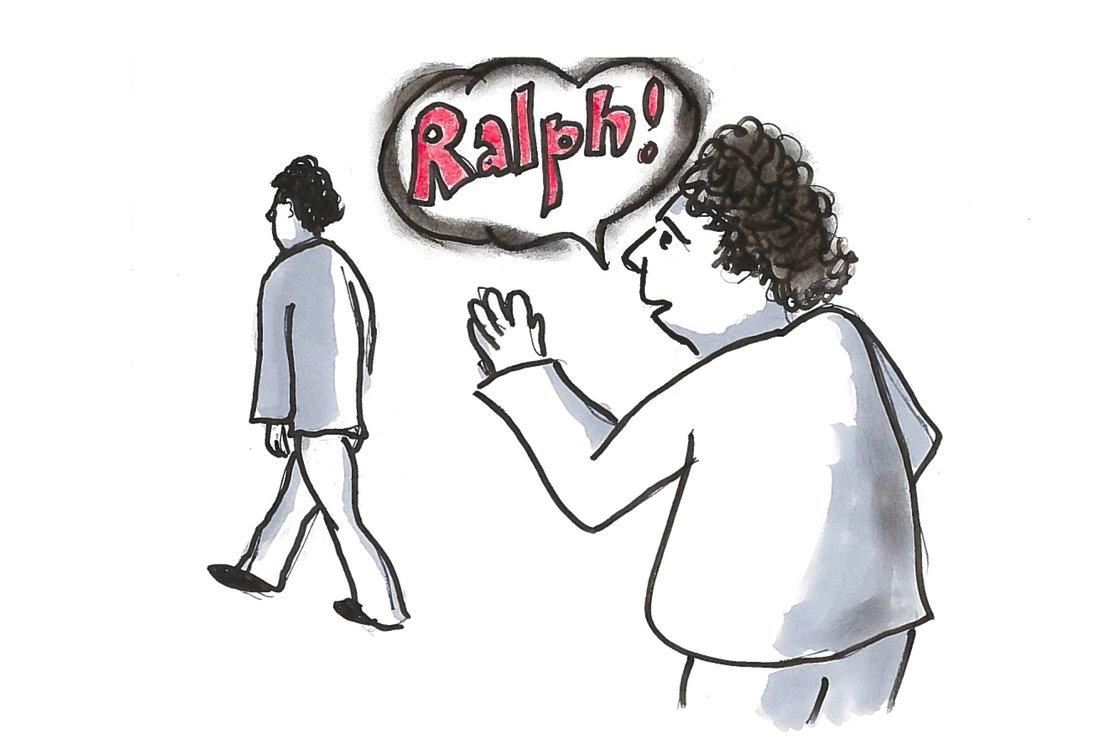
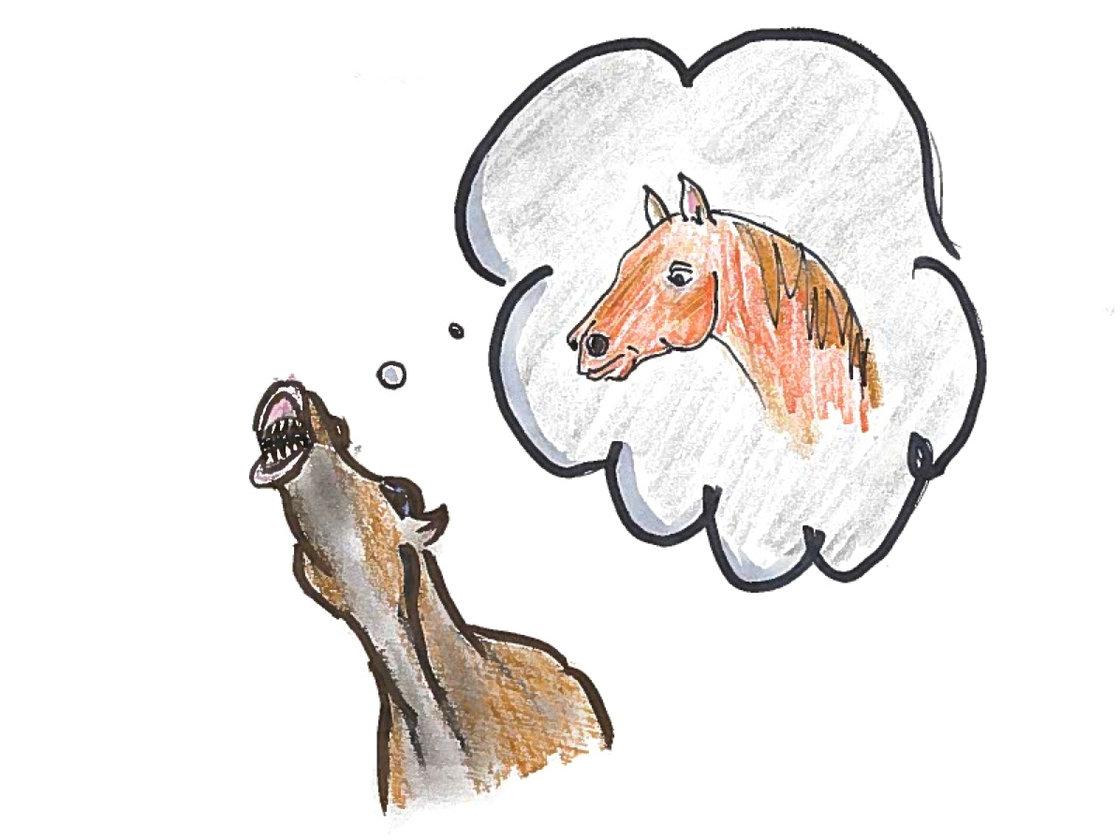


 Crédito : Reprodução


 Bernie Krause. Músico largou as vaidades de Hollywood para se dedicar às paisagens sonoras e à acústica ecológica Terceiro / Divulgação/Tim Chapman

 Uma (in)certa antropologia
Você precisa fazer login para comentar.