An illustration of Reflect Orbital’s proposed constellation of satellites. Reflect Orbital
A new startup has come up with a way to sell sunlight on demand, proposing a constellation of satellites that would reflect beams of light onto Earth.
Reflect Orbital wants to deploy up to 50,000 in-space mirrors mounted on satellites to create sunlight after dark, The New York Times reported. The California-based startup has applied to launch a 59-foot-long (18 meters) prototype satellite named Earendil-1 later this year to test its idea, with hopes to be able to illuminate dark areas at a steep price.
Astronomers are deeply concerned that the proposed constellation poses significant risks to the night skies, which have been severely compromised by the thousands of satellites already in Earth orbit.
Sunlight after dark
The idea is fairly simple: bouncing sunlight off a mirror and reflecting it onto a designated area. The scale, however, is enormous.
Reflect Orbital would use its satellite constellation to illuminate areas up to 3 miles (5 kilometers) at a time with intensities ranging between 0.8 and 2.3 lux. By comparison, a full Moon provides an illumination of around 0.05 to 0.3 lux on a clear night.
The company wants to use its technology to illuminate disaster zones and search-and-rescue missions, extend working hours for industrial sites, boost agricultural yields and extend cycles, reduce light pollution by replacing city lights, and provide light for defense operations, according to Reflect Orbital’s website.
All this extra sunlight comes at a price. Reflect Orbital envisions charging about $5,000 per hour for the light of a single mirror in space and potentially splitting the revenues earned by solar farms from the electricity they would generate using the satellite constellation.
Death to night skies
The proposed constellation of in-space mirrors sounds equally ridiculous and hazardous. The light from the illuminated satellites would largely disrupt ground-based astronomical observations and create persistent interference to telescopic imagery. A constellation of its size also has the potential to increase the amount of space debris in Earth orbit and poses an additional risk to orbital collisions.
Astronomy groups dedicated to protecting the sanctity of the night skies are opposed to the idea. DarkSky International issued a statement in response to the proposed constellation, advocating for “transparency, environmental review, and public accountability before any such systems are approved or deployed.”
“Orbital illumination systems represent an unprecedented environmental intervention. Based on current scientific evidence, DarkSky does not see a viable pathway for such systems to align with responsible lighting principles or with our mission to protect natural darkness,” the statement reads. “These systems would introduce significant ecological, human health, safety, and astronomical risks at a global scale.”
Reflect Orbital is awaiting approval from the Federal Communications Commission before it can launch its first satellite. If the company does manage to make its far-fetched idea somehow work, it would have grave consequences for our view of the night skies.
The Advanced Research and Invention Agency is investing £57 million to study climate-manipulating technologies, but says it is taking a cautious approach.
Solar geoengineering research involves investigating ways to ‘dim’ the Sun’s rays in an effort to cool Earth’s temperatures. Credit: Mike Kemp/In Pictures via Getty
The United Kingdom’s high-risk research agency will fund £56.8 million (US$75 million) worth of projects in the controversial area of geoengineering — manipulating Earth’s environment to avert negative effects of climate change. The 21 projects include small-scale outdoor experiments that will attempt to thicken Arctic sea ice and to brighten clouds so that they reflect more sunlight. The hope is that successful technologies could one day contribute to efforts to prevent the planet from passing dangerous climate tipping points.The UK’s $1-billion bet to create technologies that change the world
Supported by the Advanced Research and Invention Agency (ARIA) as part of its five-year Exploring Climate Cooling programme, the projects are among the most significant geoengineering experiments funded by a government.
The research has the potential to be beneficial, but must be undertaken cautiously, says Peter Frumhoff, a science-policy adviser at the Woodwell Climate Research Center in Falmouth, Massachusetts. “I am strongly supportive of responsible research on solar geoengineering and other climate interventions,” he says.
The funding package is the latest from ARIA, which was established in 2023 by the UK government and is modelled on the US Defense Advanced Research Projects Agency. With an £800-million budget, it funds high-risk, high-reward research into technologies that could have major consequences for humanity, including artificial intelligence and neurotechnology.
Divisive research
Another such area identified by ARIA was geoengineering, says Mark Symes, an electrochemist at the University of Glasgow, UK, who leads the Exploring Climate Cooling programme.
ARIA-funded experiments will investigate whether Earth’s diminishing ice sheets can be artificially thickened.Credit: Sean Gallup/Getty
Symes says the programme’s goal is not to find ways to replace more accepted approaches to tackling climate change, such as reducing carbon emissions. Instead, he says, geoengineering could be useful to prevent the world reaching certain tipping points that might occur before emissions reductions can have an effect. That could include “the collapse of circulations in the North Atlantic driven by the runaway melting of the Greenland ice sheet”, he says.
But even as climate change continues unabated, the concept is controversial: last year, researchers at Harvard University in Cambridge, Massachusetts, cancelled a project that would have introduced particles into the atmosphere in an effort to ‘dim’ the Sun after an outcry in Sweden, where the experiment was to take place.
Wary of such concerns, ARIA is taking a cautious approach. “We want to keep this research in the public domain,” says Piers Forster, a climate-change scientist at the University of Leeds, UK, who chairs a committee that will monitor ARIA’s climate-cooling projects. “We want it to be transparent for everyone.”
The 21 projects were selected through a competitive application process, which received about 120 proposals.
These fall into five research categories: studying ways to thicken ice sheets; assessing whether marine clouds could be brightened to offset damage to coral reefs; understanding how cirrus clouds warm the climate; looking at whether materials could be released into the stratosphere to reflect sunlight; and theoretical work on whether a sunshade deployed in space could cool portions of Earth’s surface.
Solar experiment
Five projects involve the most controversial area of geoengineering — outdoor experiments that interact with the environment. Frumhoff says that “building trust will be essential” in conducting such research. “I would be opposed to outdoor experiments being funded by any nation that isn’t aggressively and seriously reducing its own emissions,” he says.
A cloud-brightening trial will spray seawater particles over the Great Barrier Reef to make the clouds above it whiter and more reflective.Credit: Associate Professor Daniel Harrison/Southern Cross University
The stratospheric experiment — which is among the first outdoor solar-geoengineering experiment to receive government funding — will involve using balloons to carry materials such as limestone and dolomite dust into the stratosphere, to a height of about 15–50 kilometres, to see how they respond to the conditions. No particles will be released into the stratosphere, says ARIA.
Shaun Fitzgerald at the Centre for Climate Repair in Cambridge, UK, leads one of the ice projects. His team will conduct small-scale experiments in the Norwegian Arctic archipelago of Svalbard and in Canada to pump water from beneath ice sheets and spread it on top, covering up to one square kilometre in area, to see whether such a method could thicken Earth’s diminishing ice sheets.
“We’re going to see whether we’ve actually been able to grow more sea ice in the Arctic winter,” says Fitzgerald. Early results from work that Fitzgerald’s team did last year, before receiving ARIA funding, showed ice growth of “about half a metre”, he says.
Julienne Stroeve, a sea-ice researcher at University College London, isn’t sure how effective this method would be in preventing widespread sea-ice loss. “I do not think this is feasible at any real scale needed,” she says, noting that the impact on local ecosystems is also unclear. ARIA says that Fitzgerald’s experiment will be scaled up only if it is deemed to be “ecologically sound”.
“Any small-scale outdoor experiments will be designed with safety and reversibility at their core, and will undergo environmental-impact assessment with public engagement,” says Ilan Gur, ARIA’s chief executive.
Brighter clouds
One of the cloud-brightening projects will take place off the coast of Australia, led by the Southern Cross University in New South Wales. It will use a large fan to spray seawater particles over the Great Barrier Reef, to make the clouds above it whiter and more reflective. The hope is that this could prevent global warming from damaging coral reefs. “Those particles drift upwards to the cloud base, where the tiny salt particles cause water droplets in the cloud to split into smaller droplets,” says Symes. “The smaller the droplets, the more white [the cloud] is.” The experiment will take place over 10 square kilometres.
Electrochemist Mark Symes is leading ARIA’s Exploring Climate Cooling programme, which is funding £57 million worth of geoengineering projects.Credit: Matilda Hill Jenkins
The sole space-sunshade project, led by the Planetary Sunshade Foundation in Golden, Colorado, will model whether a physical reflector or a cloud of dust could be placed in space, between Earth and the Sun, to limit the amount of sunlight reaching Earth. “If you did wish to cool parts of Earth, space shades could be the most effective way,” says Symes. Nothing will be launched into space, however — the work is purely theoretical.
Responsible regulation
ARIA’s leaders hope that, by 2030, the outcomes of the programme could inform international regulations for geoengineering. One of the 21 projects will investigate how these approaches could be responsibly governed.
“The issue we are most concerned with is how to make sure activities, should they be pursued in the future, don’t lead to conflict between countries,” says project leader Matthias Honegger, a researcher at the Centre for Future Generations (CFG) in Brussels. For example, one worry is that interventions could cause side effects in neighbouring nations.
“Right now, there is no natural home for this issue within the United Nations,” says Cynthia Scharf, a senior fellow at the CFG in New York who is part of Honegger’s project. “We need to look at the substance of governance and the process of decision-making.”
This coverage is made possible through a partnership betweenGrist and WBEZ, a public radio station serving the Chicago metropolitan region.
A row of executives from grain-processing behemoth Archer Daniels Midland watched as Verlyn Rosenberger, 88, took the podium at a Decatur City Council meeting last week. It was the first meeting since she and the rest of her central Illinois community learned of a second leak at ADM’s carbon dioxide sequestration well beneath Lake Decatur, their primary source of drinking water.
“Just because CO2 sequestration can be done doesn’t mean it should be done,” the retired elementary school teacher told the city council. “Pipes eventually leak.”
ADM’s facility in central Illinois was the first permitted commercial carbon sequestration operation in the country, and it’s on the forefront of a booming, multibillion-dollar carbon capture and storage, or CCS, industry that promises to permanently sequester planet-warming carbon dioxide deep underground.
The emerging technology has become a cornerstone of government strategies to slash fossil fuel emissions and meet climate goals. Meanwhile, the Biden administration’s signature climate legislation, the Inflation Reduction Act, has supercharged industry subsidies and tax credits and set off a CCS gold rush.
There are now only four carbon sequestration wells operating in the United States — two each in Illinois and Indiana — but many more are on the way. Three proposed pipelines and 22 wells are up for review by state and federal regulators in Illinois, where the geography makes the landscape especially well suited for CCS. Nationwide, the U.S. Environmental Protection Agency is reviewing 150 different applications.
But if CCS operations leak, they can pose significant risks to water resources. That’s because pressurized CO2 stored underground can escape or propel brine trapped in the saline reservoirs typically used for permanent storage. The leaks can lead to heavy metal contamination and potentially lower pH levels, all of which can make drinking water undrinkable. This is what bothers critics of carbon capture, who worry that it’s solving one problem by creating another.
Verlyn Rosenberger sits by her husband, Paul Rosenberger, at a city council meeting in Decatur, Illinois, earlier this month. They are both concerned about leaks from the commercial carbon sequestration plant in their town. Juanpablo Ramirez-Franco / Grist
In September, the public learned of a leak at ADM’s Decatur site after it was reported by E&E News, which covers energy and environmental issues. Additional testing mandated by the EPA turned up a second leak later that month. The EPA has confirmed these leaks posed no threat to water sources. Still, they raise concern about whether more leaks are likely, whether the public has any right to know when leaks occur, and if CCS technology is really a viable climate solution.
Officials with Chicago-based ADM spoke at the Decatur City Council meeting immediately after Rosenberger. They tried to assuage her concerns. “We simply wouldn’t do this if we didn’t believe that it was safe,” said Greg Webb, ADM’s vice president of state-government relations.
But ADM kept local and state officials in the dark for months about the first leak. They detected it back in March, five months after discovering corrosion in the tubing in the sequestration well. However, neither leak was disclosed as the company this spring petitioned the city of Decatur for an easement to expand its operations. The company also remained tight-lipped about the leak as it took part in major negotiations over the state’s first CCS regulations, the SAFE CCS Act, between April and May, according to several parties involved.
As a result, when Illinois Governor J.B. Pritzker signed those CCS regulations into law at ADM’s Decatur facility in July, he was unaware of the leak that had occurred more than 5,000 feet below his seat, his office confirmed.
“I thought we were negotiating in good faith with ADM,” bill sponsor and state Senator Laura Fine, a Democrat, said in a statement. “When negotiating complex legislation, we expect all parties to be forthcoming and transparent in order to ensure we enact effective legislation.”
It’s unclear whether ADM was required by law to report the leaks any sooner than it did. According to the company’s permits, it only has to notify state and local officials if there are “major” or “serious” emergencies. The EPA wouldn’t comment on whether ADM was required to disclose, and neither the EPA nor ADM would confirm if the two leaks in Decatur qualified as “minor” emergencies.
In a statement, an ADM spokesperson said “the developments occurred at a depth of approximately 5,000 feet. They posed no threat to the surface or groundwater, nor to public health. It is for those reasons that additional notifications were not made.”
That’s little comfort to Jenny Cassel, a senior attorney with Earthjustice, a nonprofit environmental law firm.
“It’s a little terrifying,” Cassel said. “Because if the operator, in fact, made the wrong decision, and there is in fact a major problem, then not only will local officials not know about it, EPA is not going to know about it, which is indeed what appears to have happened here.”
The Illinois Clean Jobs Coalition, which applauded the signing of the regulatory bill earlier this summer, called ADM’s decision to keep the March 2024 leak from the public “unacceptable and dangerous.”
David Horn, a city councilman and professor of biology at Decatur’s Millikin University, said the city was blindsided. “This information was substantive, relevant information that could have influenced the terms of the easement that was ultimately signed in May of 2024,” he said, adding that the delay in disclosure calls into question the long-term safety of CCS and the ability of the EPA to protect water in the face of future CCS mishaps.
ADM waited until July 31 to notify the EPA of the leak, more than three months after it was discovered. The EPA alerted a small number of local and state officials and ordered the company to conduct further tests. They also issued a notice for alleged violations, citing the movement of CO2 and other fluids beyond “authorized zones” and the failure of the company to comply with its own monitoring, emergency response, and remediation plans.
But the infractions weren’t made public until September 13, when E&E News first reported the leak.
Two weeks later, ADM notified the EPA that it had discovered a second suspected leak. Only then did they temporarily pause CO2 injections into the well.
Councilman Horn says that isn’t good enough.
“The ADM company was aware of the leak in March, and we were not aware of it until September,” Horn said. “So really the city of Decatur, its residents, the decision-makers have been on the back foot for months.”
Meanwhile, the city of Decatur has contracted with an environmental attorney. They have yet to pursue any legal action.
Central Illinois is becoming a hotspot nationwide for the nascent CCS industry because of the Mt. Simon Sandstone, a deep saline formation of porous rock especially suitable for CO2 storage. It underlies the majority of Illinois and spills into parts of Indiana and Kentucky. It has an estimated storage capacity of up to 150 billion tons of CO2, making it the largest reservoir of its kind anywhere in the Midwest.
However, there is concern that pumping CO2 into saline reservoirs near subsurface water risks pushing pressurized CO2 and brine toward those resources, which would pose additional contamination risks. “Brine is pretty nasty stuff,” said Dominic Diguilio, a retired geoscientist from the EPA Office of Research and Development. “It has a very high concentration of salts, heavy metals, sometimes volatile organic compounds and radionuclides like radium.”
Horn says with so many more wells planned for Illinois, the Decatur leaks should be a wakeup call not just to the city, but to the region. He is particularly concerned about any future wells near east central Illinois’ primary drinking water source, the Mahomet aquifer, which lies above the Mt. Simon Sandstone formation.
Close to a million people rely on the Mahomet aquifer for drinking water, according to the Prairie Research Institute. In 2015, the EPA designated the underground reservoir a “sole source,” meaning there are no other feasible drinking water alternatives should the groundwater be contaminated. When it comes to the Mahomet aquifer, “there is no room for error if there is a mistake,” said Horn.
In light of the CCS boom headed their way, rural Illinois counties are stepping up to protect themselves from future carbon leaks, said Andrew Renh, the director of climate policy at Prairie Rivers Network, a Champaign-based environmental protection organization.
DeWitt County, half an hour north of Decatur, passed a carbon sequestration ban last year. To Decatur’s west, Sangamon County previously expanded an existing moratorium on transporting or storing CO2 underground. And just last week, Champaign County, directly east of Decatur, advanced an ordinance to consider a 12-month moratorium on CCS.
Rehn said his organization would like to see all 14 counties that overlap the Mahomet aquifer impose such bans.
In the meantime, his hope is that state legislators finish what the Illinois counties have started. Two companion bills introduced earlier this year would patch up the regulatory gaps left by the CCS bill Pritzker signed into law this summer. The bills would outright prohibit carbon sequestration immediately in and around the Mahomet Aquifer.
“My community, as well as many surrounding areas, depend on the Mahomet Aquifer to provide clean drinking water, support our agriculture, and sustain industrial operations,” bill sponsor and state Senator Paul Faraci, a Democrat, said in a statement. “Protecting the health and livelihood of our residents and industries that rely on the aquifer must remain our top priority.
As the Decatur City Council meeting adjourned last week, Rosenberger helped her husband, Paul Rosenberger, put on his coat. The row of ADM officials behind her walked past and then lingered in the council chamber. “I’m not afraid of them,” Rosenberger said as she wheeled her husband out.
“We haven’t changed anything yet,” Rosenberger said. “But I think maybe we can.”
Cooling the earth by blocking out the sun, although potentially disastrous, is now a real answer to climate change. As a Harvard research paper published late last year proved, solar geo-engineering is both technically feasible and relatively cheap. With governments and international bodies considering the technology, a South African university has just announced a study. But how convenient is this answer for our politicians and heavy emitters?
I.Global Hollywood
In his book The Planet Remade: How Geo-engineering Could Change the World, Oliver Morton laid down a potential scenario from the not-too-distant future. As briefings editor at The Economist and former chief news and features editor at the scientific journal Nature, it was a given that this scenario—a thought experiment on the deployment into the stratosphere of “climate engineering” aerosols—would be based more in science fact than science fiction. Which is exactly what made it, like the best work of Robert Heinlein or Charlie Brooker, truly terrifying.
According to a Harvard study published in November 2018, three years after the release of Morton’s book, it would work in practice like this: a fleet of purpose-built aircraft, with disproportionately large wings relative to their fuselages, so as to allow “level flight at an altitude of 20 kilometres while carrying a 25-ton payload,” would inject 0.2 million tons of sulphur dioxide into the lower stratosphere per year—thereby reflecting enough solar radiation back out into space to cut the rate of global warming progressively in half. Pre-launch costs in 2018 values would come in at $3.5 billion, with yearly operating costs at $2.25 billion. Given that in 2017 around 50 nations had military budgets of $3 billion or more, noted the Harvard scientists, the barriers to entry would be remarkably low.
“It is not a large nation that does it—indeed, it is not a single nation’s action at all,” speculated Morton back in 2015. “Sometime in the 2020s, there is a small group of them, two of which are in a position to host the runways. They call themselves the Concert; once they go public, others call them the Affront. None of them is a rich nation, but nor are they among the least developed. All of them already have low carbon-dioxide emissions, and all of them are on pathways to no emissions at all. In climate terms, they look like the good guys. But their low emissions and the esteem of the environmentally conscious part of the international community are doing nothing to reduce the climate-related risks their citizens face.”
So why “truly terrifying”?
Because, as Morton went on to explain, solar geo-engineering—otherwise known as solar radiation management, or SRM—was not (or at least was no longer) a conceptual absurdity. When he wrote his book, its probability of deployment was already based on two of the most urgent existential questions in the history of humanity: 1) Are the risks of climate change great enough to warrant serious action aimed at mitigating them? 2) Will the world’s largest industrial economies be able to lower their carbon emissions to net zero by the middle of the century?
But terrifying more specifically because, by 2018, the answer to the first question was a scientifically unqualified “yes” and to the second a statistically implausible “no”—and yet the effect of SRM on the biosphere was still unknown. With the results from the Harvard study leading to the scheduling of tests as early as the first half of 2019, the Berlin-based climate science and policy institute Climate Analytics wasted no time in recommending a global ban on the technology.
“Solar radiation management aims at limiting temperature increase by deflecting sunlight, mostly through injection of particles into the atmosphere,” the institute noted. “At best, SRM would mask warming temporarily, but more fundamentally is itself a potentially dangerous interference with the climate system.”
SRM, argued the scientists at Climate Analytics, would “alter the global hydrological cycle as well as fundamentally affect global circulation patterns such as monsoons.” It would not “halt, reverse or address in any other way the profound and dangerous problem of ocean acidification which threatens coral reefs and marine life as it does not reduce CO2 emissions and hence influence atmospheric C02 concentration.” Also, the scientists pointed out, the approach was “unlikely to attenuate the effects of global warming on global agricultural production” as its “potentially positive effect due to cooling” was projected to be counterbalanced by “negative effects on crop production of reducing solar radiation at the earth’s surface.”
In other words, according to Climate Analytics, while cooler temperatures would be helpful to the world’s farmers, the crops would still need sunlight to grow. And none of the above even counted as the number one reason that the institute was raising the alarm—SRM’s gravest danger, these scientists and policy experts insisted, was that it would divert attention from the core problem, which remained the unprecedented amount of carbon being spewed daily into the atmosphere by the extraction of coal, crude oil and natural gas.
For Morton, this was the predicament known as the “superfreak pivot”—the turning of large masses of humanity from the position that “global warming requires no emissions reduction because it isn’t a real problem” to the position that “the Concert has it all covered”. It was a predicament highlighted too by Harvard scientist David Keith, who told the Guardian in 2017:
“One of the main concerns I and everyone involved in this have is that Trump might tweet ‘geoengineering solves everything—we don’t have to bother about emissions.’ That would break the slow-moving agreement among many environmental groups that sound research in this field makes sense.”
As for South Africa, less than two months after publication of the seminal Harvard paper of late 2018, a press release was issued by the African Climate and Development Initiative of the University of Cape Town.
“UCT researchers to embark on pioneering study on potential impacts of solar geoengineering in southern Africa,” it stated.
II. Local Hollywood
As the recipient of a grant from the international DECIMALS Fund (Developing Country Impacts Modelling Analysis for SRM), the UCT team cited two reasons for going ahead with the study—and both of them had to do with the social and economic havoc that anthropogenic climate change had so far wrought in our corner of the world. First, the 2015/16 summer rainfall failure over southern Africa, which led to 30 million people becoming food insecure in South Africa, Mozambique, Botswana and Zimbabwe. Second, Cape Town almost running out of water in 2018. If SRM could be done in a safe and reliable manner, so the rationale went, it was “the only known way” to quickly offset the temperature increases that were behind the droughts.
“We want to understand the impact of solar radiation management on drought conditions,” Dr Romaric Odoulami, the project’s leader, told Daily Maverick, “that’s our motivation. What will the implications be for regional agriculture? But I want to make one thing clear: SRM has never been implemented in the real world… and we are not going to do it either.”
What the African Climate and Development Initiative was going to do, said Odoulami, was climate modelling. The project, he added, would run for the next “one or two years”—as soon as he got “something interesting,” he promised, he would let Daily Maverick know. For the moment, he wanted to leave us with this:
“Solar radiation management doesn’t stop climate change. It doesn’t stop global emissions of greenhouse gases. The only thing it does is help to reduce the global temperature by reducing the amount of solar radiation reaching the earth’s surface.”
This caution in the face of the sheer unprecedented scale of the thing was also detectable in the words of Andy Parker, project director of the Solar Radiation Management Governance Initiative, the UK-based organisation—founded in 2010 by, among others, The World Academy of Sciences and the Royal Society—that set up the DECIMALS Fund in 2018. Speaking to Daily Maverick from a conference in Bangladesh, Parker was vague yet morbidly fascinating on the legislative context that could eventually give the green light to SRM.
“That’s really tricky to predict,” he said. “We can imagine various different deployment scenarios. There’s the desperation scenario, where a country or perhaps a coalition of countries that are really suffering from climate change decide that they are going to use solar geo-engineering to stop the temperature from rising. That could be seen as unilateral and illegitimate deployment. At the other end of things, it’s possible that through the United Nations—the UN General Assembly or one of the UN conventions—there’s a much broader coalition that comes together with much more legitimacy to develop a decision-making infrastructure for if we were to ever use this, or indeed, for how we would reject it.
“Really, at this stage, we don’t know what’s going to happen. We don’t know what’s going to happen with the research, we don’t know how governments are going to deal with this, and we don’t know how quickly and how deeply the impacts of climate change are going to bite.”
In South Africa, unfortunately, all indications are that the bite is going to be serious. As Daily Maverick learned from the country’s leading land-based climate scientist in October last year, we are warming at twice the global average. At 3°C of global warming, which is 6°C regionally—and which at current emission rates we are steaming towards, as per the most conservative estimates, before the end of the century—there will be a total collapse of the maize crop and livestock industry. This is something that the Department of Environmental Affairs seems to understand well, as evidenced by their “Third National Communication” under the United Nations Framework Convention on Climate Change, submitted in March 2018.
But the other unknown factor in this general SRM universe of “unknown unknowns” is the person that currently sits atop the DEA. Has Nomvula Mokonyane, who was named at the State Capture inquiry on Monday for allegedly accepting bribes in the form of monthly cash payments, even read the Third National Communication? Does President Cyril Ramaphosa plan on replacing her with someone who will? Aside from Tito Mboweni at treasury, does anyone in the upper echelons of the ANC get the urgency of the situation?
These are the questions that highlight the possibility of South Africa one day performing the superfreak pivot. Because it might not only suit the government to defer to technology when the food and water shortages get real, it might also suit Sasol, the coal mining companies and the country’s heavy emitters at large. DM
Solar Radiation Modification refers to deliberate, large-scale interventions in the global climate system to increase the amount of sunlight reflected away from the planet to reduce global temperatures. Illustrative image: (Generated with Flux AI)
In a webinar on Tuesday, scientists and other experts agreed on the need for solar geoengineering research to enhance the portfolio of climate change responses.
Solar geoengineering, whether through space mirrors or stratospheric particles, is a complex, controversial and contentious field. In a webinar on Tuesday, atmospheric scientists and other experts from across Africa agreed that it is completely rational to explore its role in a portfolio of climate change responses.
Geoengineering refers to deliberate, large-scale interventions in the Earth’s natural systems with the aim of counteracting climate change. The primary goal of geoengineering is to mitigate the adverse effects of global warming and manage the Earth’s climate system. There are two main categories of geoengineering: Solar Radiation Management (SRM) and Carbon Dioxide Removal (CDR).
The webinar focused on the former, which The Alliance for Just Deliberation on Solar Geoengineering says refers to “deliberate, large-scale interventions in the global climate system to increase the amount of sunlight reflected away from the planet to reduce global temperatures”.
The Intergovernmental Panel on Climate Change (IPCC) in its Sixth Assessment Report defines SRM as “a range of radiation modification measures not related to greenhouse gas mitigation that seek to limit global warming. Most methods involve reducing the amount of incoming solar radiation reaching the surface, but others also act on the longwave radiation budget by reducing optical thickness and cloud lifetime.”
(Source: The Alliance for Just Deliberation on Solar Geoengineering)
Hassaan Sipra, director of global engagement at The Alliance and a climate researcher, explained that SRM – in line with conclusions by the IPCC – is not meant to stop climate change but only to buy time for the deep reductions in greenhouse gas emissions needed to limit global warming. He also set out the context wherein SRM was an increasingly attractive area of research.
During the UN climate conference in Paris, the world agreed to accelerate efforts to limit the global average temperature increase over pre-industrial levels to below 1.5°C. At present, we are on a trajectory to exceed even 2°C. This is important because every fraction of a degree drastically increases the risks associated with anthropogenic climate change.
“And typically, now, within this context,” said Sipra, “what is being talked about is the use of carbon dioxide removal technologies. So we know that we’re not going to get to net zero emissions until about 2100 if we’re looking for 1.5°C. If it’s 2°C, we’re not going to get there until after 2100. So in the meantime, we also need to start scaling up our carbon dioxide removal technologies so that whatever carbon is in the atmosphere, we are immediately able to capture it and bring that back.”
Put differently, carbon removal will still be necessary in the future because even with significant reductions in greenhouse gas emissions, existing atmospheric carbon levels must be reduced to meet net zero targets and stabilise global temperatures, as outlined in the Paris Agreement. This ensures long-term climate goals are achievable by offsetting any remaining emissions.
Sipra explained that the problem with carbon dioxide removal was the interrelated problems of cost and scale.
It’s “an expensive technology or a set of technologies that would take a long time to scale up and would require a tremendous amount of resources, and at present, those resources are not yet scalable… they’re not yet available, the technologies are not yet fully tested, and so we need a lot of time before we’re going to get to carbon dioxide removal technologies.
“We need time to cut emissions and we need time to get to carbon dioxide removal technologies. Yet climate impacts are continuing to rise in the meantime. And this is the point where for scientists, policymakers, civil society, the deliberation has begun as to what might be the possibility of buying some additional time; putting in a potential stopgap measure.”
Napkin diagram roughly showing SRM’s role in managing climate risks.(This work is licensed under a Creative Commons Attribution-NonCommercial-ShareAlike 4.0 International License.)
SRM is a “stopgap measure”, Sipra explained, in contrast to emissions reductions or carbon dioxide removal because “it does not actually offer a solution to our climate problems, it merely masks it. And so, without addressing the root cause of climate change, you are kind of just giving yourself this, in essence, a drug which may delay – potentially – some of the impacts of climate change”.
But just how is SRM meant to achieve this?
Prof Babatunde Abiodun, an expert in climate model developments and applications, shared some details on the state of SRM research and the various approaches being explored and experiments undertaken. Three of the projects he noted are highlighted here:
Stratospheric Aerosol Processes, Budget and Radiative Effects (SABRE): SABRE investigates how tiny particles in the stratosphere may reflect sunlight to cool the Earth. The project is “an extended airborne science measurement programme” and aims to understand the effectiveness and potential impacts of these aerosols so as to strengthen the “scientific foundation to inform policy decisions related to regulating global emissions that impact the stratosphere (eg ozone depleting substances, rocket exhaust) and the potential injection of material into the stratosphere to combat global warming (climate intervention)”.
Stratospheric Controlled Perturbation Experiment (SCoPex): SCoPex, a Harvard University-led project, explores the feasibility of dispersing reflective particles in the stratosphere to mimic volcanic cooling effects using a high-altitude balloon to release small amounts of aerosols over a small area. However, the project has recently moved away from its focus on science related to solar geoengineering.
Geoengineering Assessment Across Uncertainties, Scenarios and Strategies (GAUSS): GAUSS evaluates the potential risks and benefits of various geoengineering methods by using complex computer simulations. Early findings suggest that while geoengineering can reduce global temperatures, it may also lead to regional climate changes, emphasising the need for careful, scenario-based planning. They explain that “one challenge today is a degree of arbitrariness in the scenarios used in current SRM simulations”.
SRM and other geoengineering approaches, however, are not without controversy. The main concerns are the potential for unintended environmental side effects, ethical issues regarding the manipulation of natural systems and the risk of unequal impacts on different regions potentially exacerbating global inequalities.
The IPCC says in the Summary for Policymakers of its Sixth Assessment Report that, with high confidence, “solar radiation modification approaches, if they were to be implemented, introduce a widespread range of new risks to people and ecosystems, which are not well understood. Solar radiation modification approaches have the potential to offset warming and ameliorate some climate hazards, but substantial residual climate change or overcompensating change would occur at regional scales and seasonal timescales.
“Large uncertainties and knowledge gaps are associated with the potential of solar radiation modification approaches to reduce climate change risks. Solar radiation modification would not stop atmospheric CO₂ concentrations from increasing or reducing resulting ocean acidification under continued anthropogenic emissions.”
To this, the gathered scientists and experts said that while they recognised the potential risks, these should be weighed against the risk of the status quo or inaction.
“It makes sense to think about SRM as a very risky proposition, but it’s a risky proposition that has to be compared to an alternative risky proposition, which is worsening climate change. So, climate change increases risks to peoples and ecosystems. With each ton of carbon dioxide we’re adding into the atmosphere, with each incremental bit of warming, those risks rise exponentially.
“So, just like climate change has its risks, SRM has risks. It also has potential benefits, and it has a large amount of uncertainties, and none of them are well understood. So, in order to make a comparison against climate change with SRM, we need to really have an informed decision-making process around SRM so that we can have a better sense of its benefits and its drawbacks,” said Sipra.
“We need to explore SRM in the context of worsening climate change,” he said, adding that geoengineering would “not be a discussion if the climate situation had been resolved after the Rio summit when they formulated the UN Framework Convention on Climate Change.
The fact that the climate is getting worse; the fact that we are not mitigating, is the reason people are beginning to have a conversation about SRM. So, it can only ever be contextualised in comparison to climate change.” DM
Polêmica, a liberação de aerossóis diminuiria a quantidade de luz solar que chega à Terra, mas seus efeitos colaterais negativos poderiam ser maiores que os positivos
Aumentar a quantidade de aerossóis na atmosfera poderia barrar a chegada à Terra de uma pequena fração da luz solar e resfriar provisoriamente o planeta. Cadan Cummings / Jacobs / JETS / NASA-JSC
Depois de ter permanecido em silêncio por 600 anos, o monte Pinatubo, nas Filipinas, acordou em 1991. Uma série de pequenas explosões ao longo de dois meses culminou em uma grande erupção em meados de junho daquele ano, considerada a segunda maior do século passado. Cerca de 200 mil pessoas tiveram de deixar suas casas e mais de 700 morreram no arquipélago filipino como consequência da eclosão. A explosão produziu uma coluna de fumaça e cinzas vulcânicas que se elevou até 40 quilômetros (km) acima da superfície e invadiu a estratosfera, a segunda das cinco camadas da atmosfera que envolve a Terra. Esse manto de partículas em suspensão, geralmente com tamanhos micrométricos, atrapalhou o tráfego aéreo, queimou plantas e cultivos e produziu outros danos locais.
Apesar de ter causado grandes prejuízos materiais e a perda de vidas humanas nas Filipinas, a erupção do Pinatubo é lembrada hoje no meio científico por ter tido uma consequência surpreendente no clima global: a temperatura média da Terra reduziu-se cerca de 0,5 grau Celsius (°C) nos dois anos seguintes à sua atividade vulcânica. A enorme quantidade de partículas em suspensão, os chamados aerossóis, lançada pelo vulcão entrou no sistema de circulação de ar da estratosfera, espalhou-se pelo planeta e atuou por meses como uma espécie de filtro solar: parte dos raios do Sol que chegariam normalmente à superfície terrestre foi refletida ao incidir sobre essa quantidade extra de partículas de aerossóis injetados no sistema. Essa ação produziu um resfriamento temporário do planeta.
Os aerossóis também resfriam a Terra quando estão na troposfera, a camada mais baixa da atmosfera, mas sua ação é mais intensa na estratosfera. O efeito Pinatubo serve de inspiração para uma linha de pesquisa polêmica, cercada de incertezas científicas e riscos ambientais e geopolíticos: a geoengenharia solar ou modificação da radiação solar (SRM, na sigla derivada do inglês). Ela começou a tomar corpo lentamente nos últimos 20 anos em algumas universidades dos Estados Unidos e da Europa à medida que o aquecimento global se tornou mais pronunciado. A ideia central dessa abordagem é aumentar deliberadamente o albedo da Terra, sobretudo na estratosfera, para que ela passe a refletir mais radiação de volta ao espaço e, assim, torne-se um pouco menos quente.
Glauco Lara
O albedo é a fração da luz refletida em relação à absorvida por um corpo ou superfície. Quanto maior o albedo, como em superfícies claras ou brancas, menor a quantidade de calor absorvida. Injetar aerossóis na atmosfera é uma das formas de tentar aumentar o albedo terrestre. Alguns cálculos indicam que uma redução de 1% a 2% da quantidade de radiação solar que normalmente chega à Terra seria suficiente para diminuir sua temperatura média em um 1 °C.
A possibilidade de reduzir a quantidade de radiação solar sobre a Terra começou a ser aventada ainda na década de 1960. Mas sempre foi vista como uma excentricidade perigosa, quase um devaneio. A ideia só ganhou alguma relevância científica depois da erupção do Pinatubo e, mais recentemente, com a emergência da crise climática, causada pelo aumento significativo da temperatua global decorrente da emissão de gases de efeito estufa. Ainda assim, a pesquisa experimental – que envolveria a soltura de alguns quilos de aerossóis na estratosfera para observar seus eventuais efeitos em âmbito local (não global, como ocorreu na gigantesca erupção do vulcão nas Filipinas) – pouco progrediu até hoje em razão da oposição de parte da comunidade científica e de grupos ambientalistas.
“Até agora, existem poucos trabalhos de modelagem climática envolvendo as técnicas de geoengenharia solar”, comenta o físico Paulo Artaxo, do Instituto de Física da Universidade de São Paulo (IF-USP), especialista no estudo de aerossóis atmosféricos. “Nenhum experimento mais significativo foi feito em campo.” Duas abordagens que visam à modificação da radiação solar dominam as discussões. A principal delas é a injeção de aerossóis na estratosfera, a 15 ou 20 km de altitude, conhecida pela sigla SAI, que tenta reproduzir de forma artificial o que as grandes erupções fazem de maneira natural.
Glauco Lara
A outra, vista como de impacto mais localizado, é o clareamento de nuvens marítimas (marine cloud brightening ou MCB). Ela também envolve a liberação de aerossóis (nesse caso, partículas de sal marinho), que funcionam como núcleos de condensação das nuvens. Mas a soltura dessas partículas ocorre em altitudes bem mais baixas, de no máximo 2 km, ainda na troposfera. Com mais aerossóis, as gotas de nuvens ficam menores, refletem mais radiação solar de volta ao espaço e resfriam a superfície. Há outras técnicas cogitadas, como aumentar o albedo em grandes superfícies brancas do planeta, como o Ártico, mas as duas primeiras propostas dominam o debate.
Artaxo colabora com um grupo da Universidade Harvard, dos Estados Unidos, em estudos de modelagem computacional para tentar entender se o comportamento dos aerossóis na estratosfera é realmente similar à sua ação na troposfera. “Precisamos de mais pesquisas sobre esse tema antes de sequer pensarmos em implementar alguma intervenção desse tipo”, comenta o físico da USP, um dos coordenadores do Programa FAPESP de Pesquisa sobre Mudanças Climáticas Globais. “Não temos condições de garantir que a injeção de mais aerossóis não vá, por exemplo, diminuir as chuvas de monções no Sudeste Asiático e colocar em risco uma população de bilhões de pessoas. Se isso ocorrer, quem decide se essa injeção de aerossóis para ou continua? Esse tipo de decisão não pode ficar na mão de um pequeno grupo de países ou de um bilionário que financie um experimento desse tipo.”
Também há indícios de que uma dose extra de aerossóis na estratosfera poderia afetar a camada de ozônio, que protege a vida terrestre da ação nociva da radiação ultravioleta vinda do Sol. Isso sem falar que essas partículas em suspensão são uma forma de poluição do ar. Elas naturalmente se depositam, descem da estratosfera para a troposfera, onde podem causar ou agravar problemas de saúde, sobretudo os respiratórios. Por ora, essas e outras questões não têm respostas satisfatórias.
A posição do físico da USP é partilhada por muitos colegas. “A modificação da radiação solar é um tema sensível e o IPCC [Painel Intergovernamental sobre Mudanças Climáticas, da ONU]reconhece que ainda há muitas incertezas sobre seus potenciais efeitos”, comenta a matemática Thelma Krug, que foi vice-presidente do painel entre 2015 e 2023 e representou o Brasil em negociações internacionais sobre o clima por uma década. “Pessoalmente, sou a favor da pesquisa na área. Mas é preciso ir passo a passo com os experimentos, ter transparência e estabelecer uma governança para esse processo.”
Erupção do vulcão Pinatubo, em 1991, é considerada a segunda maior do século passadoArlan Naeg / AFP via Getty Images
O tema é tão controverso que alguns pesquisadores são contra até que se faça pesquisa sobre as técnicas de geoengenharia solar. Isso porque elas não têm impacto na redução das emissões de gases de efeito estufa, que causam o aumento da temperatura da Terra. Ainda que se mostrem relativamente seguras e eficientes em esfriar temporariamente a Terra, objetivo que hoje é apenas uma hipótese, técnicas como a SAI seriam, no máximo, paliativas. No fundo, dizem os críticos dessa abordagem, os trabalhos nessa área desviariam recursos e tomariam um tempo que poderia ser mais bem empregado na busca por ações que reduzissem a emissão de gases como dióxido de carbono (CO2) e metano (CH4). “Os estudos sobre geoengenharia solar também poderiam ser usados como a desculpa perfeita para que os grandes produtores de gases de efeito estufa não reduzissem suas emissões”, pondera o climatologista Carlos Nobre, do Instituto de Estudos Avançados (IEA) da USP.
Além de ser encarada como um diversionismo em relação à meta central de zerar as emissões de gases de efeito estufa nas próximas décadas, a adoção das técnicas de SRM poderia tornar o planeta refém desse tipo de intervenção climática por um prazo muito longo e indefinido, de décadas ou séculos. Isso criaria um problema extra: o risco de promover o chamado termination shock. Quando o planeta abandonasse o emprego das técnicas de SRM, a temperatura subiria novamente – só que dessa vez de forma muito mais rápida do que no cenário atual de aquecimento global. Isso tornaria quase impossível a adaptação a essa brusca elevação de temperatura. Qualquer oscilação significativa da temperatura, para cima ou para baixo, em um curto período, representa um desafio adaptativo.
Alguns estudos de modelagem climática têm sugerido cenários preocupantes em simulações de possíveis impactos do emprego de técnicas de geoengenharia solar. Esses trabalhos costumam averiguar que outros efeitos (colaterais) essas técnicas de intervenção no clima poderiam induzir, além da redução temporária da temperatura terrestre. Um dos problemas é que a maioria desses estudos se concentra em possíveis consequências no hemisfério Norte, onde ficam os países mais ricos e vive e trabalha a maior parte dos pesquisadores do clima.
Começam, no entanto, a surgir pesquisas com foco em outras partes do planeta. Trabalho publicado em junho deste ano na revista Environmental Research Climate sugere que a adoção da SAI ao longo deste século alteraria os prováveis impactos do aquecimento global sobre a formação de ciclones extratropicais no hemisfério Sul, como aqueles que se formam com certa regularidade na região Sul do Brasil. A previsão é de que, até o fim deste século, o aumento da temperatura global reduza o número de ciclones gerados nessa parte do globo terrestre, mas aumente a intensidade dos fenômenos produzidos. Ou seja, menos ciclones, mas mais fortes.
Glauco Lara
Quando diferentes regimes de injeção de aerossóis na estratosfera são simulados em três modelos climáticos internacionais até 2100, os resultados sinalizam um aumento na frequência de ciclones, mas uma redução em sua força em relação aos prognósticos obtidos em cenários de aquecimento global sem a adoção de qualquer protocolo da SAI. “Não somos contra nem a favor da geoengenharia solar”, diz a pesquisadora Michelle Reboita, da Universidade Federal de Itajubá (Unifei), de Minas Gerais, coordenadora do estudo. “Precisamos é estudá-la. Ela pode produzir resultados positivos em uma parte do mundo e negativos em outra.”
Há também estudos de simulação que tentam prever os possíveis impactos da SAI sobre a biodiversidade. “Nosso objetivo é entender como a SAI pode afetar as espécies de vertebrados terrestres no cenário das mudanças climáticas”, conta o biólogo brasileiro Andreas Schwarz Meyer, que faz estágio de pós-doutorado na Universidade da Cidade do Cabo, na África do Sul, e coordena um projeto de pesquisa sobre o tema. “Em outras palavras, queremos saber quais seriam as espécies ‘vencedoras’ e ‘perdedoras’ no globo caso o emprego dessas técnicas para diminuir a temperatura do planeta venha a se tornar uma realidade.”
No projeto, que ainda está em andamento, Meyer adota uma abordagem chamada perfis horizontais de biodiversidade, que usa dados climáticos históricos para estimar o intervalo térmico (a temperatura máxima e a mínima) e o grau de umidade em que as espécies ocorrem. A técnica é normalmente usada para estimar o impacto sobre as espécies de diferentes cenários de aquecimento global previstos pelo IPCC ao longo deste século.
“Assim, temos uma ideia de quantas espécies serão expostas a essas mudanças, quando e o quão rapidamente isso poderá ocorrer”, comenta o biólogo. Em 2022, o brasileiro publicou um artigo no periódico científico Philosophical Transactions of the Royal Society B em que simulou os efeitos sobre mais de 30 mil espécies de vertebrados marinhos e terrestres de um cenário particular ao longo deste século: primeiro haveria um aquecimento global superior a 2 °C e, em seguida, ocorreria uma redução de temperatura da Terra de forma artificial, por meio da remoção direta de dióxido de carbono da atmosfera. A retirada do principal gás de efeito estufa é hoje ensaiada por um conjunto de técnicas que, por ora, são muito caras e ineficientes em perseguir esse objetivo.
Trilhas de nuvens criadas no mar pela emissão de partículas de poeira por navios
A conclusão geral do estudo é que a subida e a posterior queda artificial da temperatura terrestre poderiam inviabilizar a sobrevivência de muitas espécies e produziriam danos a essas comunidades décadas após se ter atingido uma hipotética estabilização da temperatura do planeta. Meyer está fazendo um estudo semelhante agora, mas com o emprego da SAI no lugar da remoção direta de carbono.
Os trabalhos de Reboita e Meyer se dão no âmbito de uma iniciativa internacional, a Developing country governance research and evaluation for SRM, ou simplesmente Degrees. Seu objetivo é estimular estudos e formar recursos humanos especializados nas técnicas de modificação da radiação solar em países da África, América Latina e sul da Ásia. A Degrees nasceu na década passada dentro da Academia Mundial de Ciências (TWAS) e posteriormente foi assumida por uma organização não governamental britânica, a homônima Degrees. Ela financia quase 40 projetos. No Brasil, além das pesquisas da meteorologista da Unifei, duas linhas de estudo de professores da Universidade Federal de Santa Catarina (UFSC) passaram a ser apoiadas em julho passado.
Com parceiros no exterior, a equipe do engenheiro Mauricio Uriona, do Departamento de Engenharia de Produção e Sistemas da UFSC, pretende estudar como é a percepção do setor produtivo, do governo e da comunidade científica de três países (Brasil, Índia e África do Sul) sobre os potenciais riscos das técnicas de SRM. “Trabalhamos no passado com o tema da transição energética com uma abordagem de cunho socioeconômico e vimos agora uma boa oportunidade de fazer um estudo semelhante sobre geoengenharia solar”, afirma Uriona.
A socióloga ambiental Julia S. Guivant, do Instituto de Pesquisa em Riscos e Sustentabilidade (Iris), da UFSC, vai estudar como diversos atores-chave do país, como a comunidade científica, reguladores políticos, agricultores e representantes de organizações não governamentais, posicionam-se diante dos desafios de governança da geoengenharia solar. “Não temos uma posição sobre se a SRM deve ser usada ou como seu eventual emprego deve ser governado. Somos a favor das pesquisas e do debate democrático sobre o tema, diante dos problemas para atingir as metas de mitigação e adaptação às mudanças climáticas”, diz a socióloga. Colegas da USP e da Universidade Federal de São Paulo (Unifesp) vão colaborar na pesquisa coordenada por Guivant.
Há preocupação de que a geoengenharia solar possa afetar o regime das chuvas de monções na ÍndiaAmarjeet Kumar Singh / Anadolu Agency via Getty Images
As técnicas de SRM são tão polêmicas e sem qualquer tipo de regulação em acordos internacionais que mesmo grupos de pesquisas de instituições renomadas enfrentam dificuldades extremas de realizar pequenos experimentos de campo. Esses trabalhos não têm o potencial de influenciar o clima global, no máximo produzir ciência para se entender os processos envolvidos, com alguma alteração localmente. Ainda assim, os obstáculos práticos à sua realização são quase intransponíveis.
Em março deste ano, foi abandonado o Stratospheric Controlled Perturbation Experiment (SCoPEx), experimento concebido na década passada pelo grupo do físico-químico Frank Keutsch, da Universidade Harvard. A ideia da iniciativa era usar um balão de alta altitude para injetar 2 quilos de aerossóis (no caso, carbonato de cálcio) cerca de 20 km acima da superfície. “Essa quantidade de partículas é ínfima. Equivale à poluição expelida por um jato comercial durante apenas 1 minuto de voo”, disse Keutsch em entrevista dada em 2021 (ver Pesquisa FAPESP nº 303). O balão do SCoPEx era para ter ganho inicialmente os ares dos Estados Unidos em 2018. Mas isso não ocorreu. Em seguida, sua soltura foi prevista para a Suécia, também sem sucesso. Devido a protestos de ambientalistas e de grupos indígenas, o projeto nunca decolou de fato.
Alguns testes de campo com a técnica de clareamento de nuvens marinhas, uma abordagem menos ambiciosa do que a SAI, têm sido feitos, quase sempre a duras penas e diante de críticas de vários setores da sociedade. Em abril deste ano, um grupo da Universidade de Washington, dos Estados Unidos, usou um tipo de ventilador para espalhar partículas de sal marinho na pista de um navio porta-aviões aposentado que estava estacionado no litoral da cidade de Alameda, na Califórnia. A ideia da iniciativa era apenas ver se as partículas poderiam causar algum mal à saúde. Dois meses mais tarde, o município californiano proibiu esse tipo de experimento em seu território.
Na Austrália, pesquisadores da Southern Cross University e organizações locais tocam desde 2020 um projeto-piloto em que tentam aferir se a técnica de MCB pode ser útil para diminuir o branqueamento de corais na região de Townsville. O objetivo do experimento é averiguar se o método diminuiria localmente a temperatura do oceano no centro da Grande Barreira de Corais. O aquecimento das águas marinhas é a principal causa do branqueamento.
Alterar a capacidade de o Ártico refletir a luz do Sol poderia, em tese, minorar o aquecimento globalsodar99 via Getty Images
A desconfiança dos experimentos de campo deriva, em parte, do surgimento periódico de iniciativas pouco transparentes, geridas às vezes por empresas privadas obscuras. Em 2022, a Make Sunsets, uma startup norte-americana, soltou sem autorização no norte do México dois balões com aerossóis destinados à estratosfera. Pouco depois, o governo mexicano proibiu esse tipo de iniciativa em seu território. Agora, a empresa anunciou que está fazendo esse tipo de experimento nos Estados Unidos, mas os resultados dessas iniciativas são desconhecidos.
Para o físico norte-americano David Keith, da Universidade de Chicago, nos Estados Unidos, o interesse em estimular as pesquisas sobre geoengenharia solar tem aumentado, a despeito das incertezas científicas que cercam o emprego dessas técnicas. “Isso é visível nos principais relatórios internacionais, como os do Programa das Nações Unidas para o Meio Ambiente, do Programa Mundial de Pesquisa do Clima, também da ONU, e de grandes grupos ambientalistas, como Environmental Defense”, comenta Keith, em entrevista por e-mail a Pesquisa FAPESP. “Não há dúvida de que a oposição à investigação enfraqueceu, mas é difícil dizer por quê. Talvez seja por causa do aumento das temperaturas ou porque [acredito que] o mundo esteja fazendo agora esforços substanciais para reduzir as emissões de gases de efeito estufa.”
Keith foi membro do programa de geoengenharia solar de Harvard por 12 anos. Hoje ele é a favor da adoção de uma moratória internacional em experimentos de campo até que a ciência sobre o tema esteja mais bem estabelecida e haja alguma forma de governança internacional. Se esse cenário se materializar algum dia, ele diz que a humanidade deveria considerar a realização de um teste no qual se injetaria por uma década na estratosfera cerca de 10% da quantidade necessária de aerossóis para baixar em 1 °C a temperatura global. Dessa forma, seria possível conferir claramente os efeitos dessa abordagem sem correr muitos riscos.
A operação envolveria transportar cerca de 100 mil toneladas de enxofre por ano para a estratosfera – equivalente a 0,3% da quantidade de poluição por enxofre que chega anualmente à atmosfera – por uma frota de 15 jatinhos capazes de voar em altas altitudes. A operação custaria aproximadamente US$ 500 milhões ao ano. É mais uma ideia polêmica. Para alguns, é possível que a única parte boa da sugestão seja a adoção de uma moratória para esse tipo de experimento.
A reportagem acima foi publicada com o título “Controlando o sol” na edição impressa nº 343, de setembro de 2024.
The climate emulator invites you to explore the controversial climate intervention. I gave it a whirl.
August 23, 2024
James Temple
AI pioneer Andrew Ng has released a simple online tool that allows anyone to tinker with the dials of a solar geoengineering model, exploring what might happen if nations attempt to counteract climate change by spraying reflective particles into the atmosphere.
The concept of solar geoengineering was born from the realization that the planet has cooled in the months following massive volcanic eruptions, including one that occurred in 1991, when Mt. Pinatubo blasted some 20 million tons of sulfur dioxide into the stratosphere. But critics fear that deliberately releasing such materials could harm certain regions of the world, discourage efforts to cut greenhouse-gas emissions, or spark conflicts between nations, among other counterproductive consequences.
The goal of Ng’s emulator, called Planet Parasol, is to invite more people to think about solar geoengineering, explore the potential trade-offs involved in such interventions, and use the results to discuss and debate our options for climate action. The tool, developed in partnership with researchers at Cornell, the University of California, San Diego, and other institutions, also highlights how AI could help advance our understanding of solar geoengineering.
The current version is bare-bones. It allows users to select different emissions scenarios and various quantities of particles that would be released each year, from 25% of a Pinatubo eruption to 125%.
Planet Parasol then displays a pair of diverging lines that represent warming levels globally through 2100. One shows the steady rise in temperatures that would occur without solar geoengineering, and the other indicates how much warming could be reduced under your selected scenario. The model can also highlight regional temperature differences on heat maps.
You can also scribble your own rising, falling, or squiggling line representing different levels of intervention across the decades to see what might happen as reflective aerosols are released.
I tried to simulate what’s known as the “termination shock” scenario, exploring how much temperatures would rise if, for some reason, the world had to suddenly halt or cut back on solar geoengineering after using it at high levels. The sudden surge of warming that could occur afterward is often cited as a risk of geoengineering. The model projects that global temperatures would quickly rise over the following years, though they might take several decades to fully rebound to the curve they would have been on if the nations in this simulation hadn’t conducted such an intervention in the first place.
To be clear, this is an exaggerated scenario, in which I maxed out the warming and the geoengineering. No one is proposing anything like this. I was playing around to see what would happen because, well, that’s what an emulator lets you do.
Emulators are effectively stripped-down climate models. They’re not as precise, since they don’t simulate as many of the planet’s complex, interconnected processes. But they don’t require nearly as much time and computing power to run.
International negotiators and policymakers often use climate emulators, like En-ROADS, to get a quick, rough sense of the impact that potential rules or commitments on greenhouse-gas emissions could have.
The Parasol team wanted to develop a similar tool specifically to allow people to evaluate the potential effects of various solar geoengineering scenarios, says Daniele Visioni, a climate scientist focused on solar geoengineering at Cornell, who contributed to Planet Parasol (as well as an earlier emulator).
Climate models are steadily becoming more powerful, simulating more Earth system processes at higher resolutions, and spitting out more and more information as they do. AI is well suited to help draw meaning and understanding from that data. It’s getting ever better at spotting patterns within huge data sets and predicting outcomes based on them.
But he says he’s been spending more and more of his time exploring the potential of solar geoengineering (sometimes referred to as solar radiation management, or SRM), given the threat of climate change and the role that AI can play in advancing the research field.
There are “many things one can do—and that society broadly should work on—to help address climate change, first and foremost decarbonization,” he wrote in an email. “And SRM is where I’m focusing most of my climate-related efforts right now, given that this is one of the places where engineers and researchers can make a big difference (in addition to decarbonization).”
In a 2022 piece, Ng noted that AI could play several important roles in geoengineering research, including “autonomously piloting high-altitude drones” that would disperse reflective particles, modeling effects of geoengineering across specific regions, and optimizing techniques.
Planet Parasol itself is built on top of another climate emulator, developed by researchers at the University of Leeds and the University of Oxford, that relies on the rules of physics to project global average temperatures under various scenarios. Ng’s team then harnessed machine learning to estimate the local cooling effects that could result from varying levels of solar geoengineering, says Jeremy Irvin, a grad student in his research group at Stanford.
One of the clearest limits of the current version of the tool, however, is that the results look dazzling. In the scenarios I tested, solar geoengineering cleanly cuts off the predicted rise in temperatures over the coming decades, which it may well do.
That might lead the casual user of such a tool to conclude: Cool, let’s do it!
But even if solar geoengineering does help the world on average, it could still have negative effects, such as harming the protective ozone layer, disturbing regional rainfall patterns, undermining agriculture productivity, and changing the distribution of infectious diseases.
None of that is incorporated in the results as yet. Plus, a climate emulator isn’t equipped to address deeply complex societal concerns. For instance, does researching such possibilities ease pressure to address the root causes of climate change? Can a tool that works at the scale of the planet ever be managed in a globally equitable way? Planet Parasol won’t be able to answer either of those questions.
Holly Buck, an environmental social scientist at the University at Buffalo and author of After Geoengineering, questioned the broader value of such a tool along similar lines.
In focus groups that she has conducted on the topic of solar geoengineering, she’s found that people easily grok the concept that it can curb warming, even without seeing the results plotted out in a model.
“They want to hear about what can go wrong, the impact on precipitation and extreme weather, who will control it, what it means existentially to fail to deal with the root of the problem, and so on,” she said in an email. “So it is hard to imagine who would actually use this and how.”
Visioni explained that the group did make a point of highlighting major challenges and concerns at the top of the page. He added that they intend to improve the tool over time in ways that will provide a fuller sense of the uncertainties, trade-offs, and regional impacts.
“This is hard, and I struggled a lot with your same observation,” Visioni wrote in an email. “But at the same time … I came to the conclusion it’s worth putting something down and work[ing] to improve it with user feedback, rather than wait until we have the perfect, nuanced version.”
As to the value of the tool, Irvin added that seeing the temperature reduction laid out clearly can make a “stronger, lasting impression.”
“We are calling for more research to push the science forward about other areas of concern prior to potential implementation, and we hope the tool helps people understand the capabilities of SAI and support future research on it,” he said.
Hundreds of looming projects will force communities to weight the climate claims and environmental risks of capturing, moving, and storing carbon dioxide.
James Temple
June 12, 2024
Pump jacks and pipelines clutter the Elk Hills oil field of California, a scrubby stretch of land in the southern Central Valley that rests above one of the nation’s richest deposits of fossil fuels.
Oil production has been steadily declining in the state for decades, as tech jobs have boomed and legislators have enacted rigorous environmental and climate rules. Companies, towns, and residents across Kern County, where the poverty rate hovers around 18%, have grown increasingly desperate for new economic opportunities.
Late last year, California Resources Corporation (CRC), one of the state’s largest oil and gas producers, secured draft permits from the US Environmental Protection Agency to develop a new type of well in the oil field, which it asserts would provide just that. If the company gets final approval from regulators, it intends to drill a series of boreholes down to a sprawling sedimentary formation roughly 6,000 feet below the surface, where it will inject tens of millions of metric tons of carbon dioxide to store it away forever.
They’re likely to become California’s first set of what are known as Class VI wells, designed specifically for sequestering the planet-warming greenhouse gas. But many, many similar carbon storage projects are on the way across the state, the US, and the world—a trend driven by growing government subsidies, looming national climate targets, and declining revenue and growth in traditional oil and gas activities.
Since the start of 2022, companies like CRC have submitted nearly 200 applications in the US alone to develop wells of this new type. That offers one of the clearest signs yet that capturing the carbon dioxide pollution from industrial and energy operations instead of releasing it into the atmosphere is about to become a much bigger business.
Proponents hope it’s the start of a sort of oil boom in reverse, kick-starting a process through which the world will eventually bury more greenhouse gas than it adds to the atmosphere. They argue that embracing carbon capture and storage (CCS) is essential to any plan to rapidly slash emissions. This is, in part, because retrofitting the world’s massive existing infrastructure with carbon dioxide–scrubbing equipment could be faster and easier than rebuilding every power plant and factory. CCS can be a particularly helpful way to cut emissions in certain heavy industries, like cement, fertilizer, and paper and pulp production, where we don’t have scalable, affordable ways of producing crucial goods without releasing carbon dioxide.
“In the right context, CCS saves time, it saves money, and it lowers risks,” says Julio Friedmann, chief scientist at Carbon Direct and previously the principal deputy assistant secretary for the Department of Energy’s Office of Fossil Energy.
But opponents insist these efforts will prolong the life of fossil-fuel plants, allow air and water pollution to continue, and create new health and environmental risks that could disproportionately harm disadvantaged communities surrounding the projects, including those near the Elk Hills oil field.
“It’s the oil majors that are proposing and funding a lot of these projects,” says Catherine Garoupa, executive director of the Central Valley Air Quality Coalition, which has tracked a surge of applications for carbon storage projects throughout the district. “They see it as a way of extending business as usual and allowing them to be carbon neutral on paper while still doing the same old dirty practices.”
A slow start
The US federal government began overseeing injection wells in the 1970s. A growing number of companies had begun injecting waste underground, sparking a torrent of water pollution lawsuits and the passage of several major laws designed to ensure clean drinking water. The EPA developed standards and rules for a variety of wells and waste types, including deep Class I wells for hazardous or even radioactive refuse and shallower Class V wells for non-hazardous fluids.
In 2010, amid federal efforts to create incentives for industries to capture more carbon dioxide, the agency added Class VI wells for CO2 sequestration. To qualify, a proposed well site must have the appropriate geology, with a deep reservoir of porous rock that can accommodate carbon dioxide molecules sitting below a layer of nonporous “cap rock” like shale. The reservoir also needs to sit well below any groundwater aquifers, so that it won’t contaminate drinking water supplies, and it must be far enough from fault lines to reduce the chances that earthquakes might crack open pathways for the greenhouse gas to escape.
But there’s been a flurry of proposals since—both to the EPA and to the three states that have secured permission to authorize such wells themselves, which include North Dakota, Wyoming, and Louisiana. The Clean Air Task Force, a Boston-based energy policy think tank keeping track of such projects, says there are now more than 200 pending applications.
What changed is the federal incentives. The Inflation Reduction Act of 2022 dramatically boosted the tax credits available for permanently storing carbon dioxide in geological formations, bumping it up from $50 a ton to $85 when it’s captured from industrial and power plants. The credit rose from $50 to $180 a ton when the greenhouse gas is sourced from direct-air-capture facilities, a different technology that sucks greenhouse gas out of the air. Tax credits allow companies to directly reduce their federal tax obligations, which can cover the added expense of CCS across a growing number of sectors.
CRC became an independent company in 2014, when Occidental Petroleum, one of the world’s largest oil and gas producers, spun it off along with many of its California assets. But the new company quickly ran into financial difficulties, filing for bankruptcy protection in 2020 amid plummeting energy demand during the early stages of the covid-19 pandemic. It emerged several months later, after restructuring its debt, converting loans into equity, and raising new lines of credit.
The following year, CRC created a carbon management subsidiary, Carbon TerraVault, seizing an emerging opportunity to develop a new business around putting carbon dioxide back underground, whether for itself or for customers. The company says it was also motivated by the chance to “help advance the energy transition and curb rising global temperatures at 1.5 °C.”
CRC didn’t respond to inquiries from MIT Technology Review.
In its EPA application the company, based in Long Beach, California, says that hundreds of thousands of tons of carbon dioxide would initially be captured each year from a gas treatment facility in the Elk Hills area as well as a planned plant designed to produce hydrogen from natural gas. The gas is purified and compressed before it’s pumped underground.
The company says the four wells for which it has secured draft permits could store nearly 1.5 million tons of carbon dioxide per year from those and other facilities, with a total capacity of 38 million tons over 26 years. CRC says the projects will create local jobs and help the state meet its pressing climate targets.
“We are committed to supporting the state in reaching carbon neutrality and developing a more sustainable future for all Californians,” Francisco Leon, chief executive of CRC, said of the draft EPA decision in a statement.
Those wells, however, are just the start of the company’s carbon management plans: Carbon TerraVault has applied to develop 27 additional wells for carbon storage across the state, including two more at Elk Hills, according to the EPA’s permit tracker. If those are all approved and developed, it would transform the subsidiary into a major player in the emerging business of carbon storage—and set it up for a windfall in federal tax credits.
Carbon sequestration projects can qualify for 12 years of US subsidies. If Carbon TerraVault injects half a million tons of carbon dioxide into each of the 31 wells it has applied for over that time period, the projects could secure tax credits worth more than $15.8 billion.
That figure doesn’t take inflation into account and assumes the company meets the most stringent requirements of the law and sources all the carbon dioxide from industrial facilities and power plants. The number could rise significantly if the company injects more than that amount into wells, or if a significant share of the carbon dioxide is sourced through direct air capture.
Chevron, BP, ExxonMobil, and Archer Daniels Midland, a major producer of ethanol, have also submitted Class VI well applications to the EPA and could be poised to secure significant IRA subsidies as well.
To be sure, it takes years to secure regulatory permits, and not every proposed project will move forward in the end. The companies involved will still need to raise financing, add carbon capture equipment to polluting facilities, and in many cases build out carbon dioxide pipelines that require separate approvals. But the increased IRA tax credits could drive as much as 250 million metric tons of additional annual storage or use of carbon dioxide in the US by 2035, according to the latest figures from the Princeton-led REPEAT Project.
“It’s a gold rush,” Garoupa says. “It’s being shoved down our throats as ‘Oh, it’s for climate goals.’” But if we’re “not doing it judiciously and really trying to achieve real emissions reductions first,” she adds, it’s merely a distraction from the other types of climate action needed to prevent dangerous levels of warming.
Carbon accounting
Even if CCS can help drive down emissions in the aggregate, the net climate benefits from any given project will depend on a variety of factors, including how well it’s developed and run—and what other changes it brings about throughout complex, interconnected energy systems over time.
Notably, adding carbon capture equipment to a plant doesn’t trap all the climate pollution. Project developers are generally aiming for around 90%. So if you build a new project with CCS, you’ve increased emissions, not cut them, relative to the status quo.
In addition, the carbon capture process requires a lot of power to run, which may significantly increase emissions of greenhouse gas and other pollutants elsewhere by, for example, drawing on additional generation from natural-gas plants on the grid. Plus, the added tax incentives may make it profitable for a company to continue operating a fossil-fuel plant that it would otherwise have shut down or to run the facilities more hours of the day to generate more carbon dioxide to bury.
All the uncaptured emissions associated with those changes can reduce, if not wipe out, any carbon benefits from incorporating CCS, says Danny Cullenward, a senior fellow with the Kleinman Center for Energy Policy at the University of Pennsylvania.
But none of that matters as far as the carbon storage subsidies are concerned. Businesses could even use the savings to expand their traditional oil and gas operations, he says.
“It’s not about the net climate impact—it’s about the gross tons you stick under ground,” Cullenward says of the tax credits.
A study last year raised a warning about how that could play out in the years to come, noting that the IRA may require the US to provide hundreds of billions to trillions of dollars in tax credits for power plants that add CCS. Under the scenarios explored, those projects could collectively deliver emissions reductions of as much as 24% or increases as high as 82%. The difference depends largely on how much the incentives alter energy production and the degree to which they extend the life of coal and natural-gas plants.
Coauthor Emily Grubert, an associate professor at Notre Dame and a former deputy assistant secretary at the Department of Energy, stressed that regulators must carefully consider these complex, cascading emissions impacts when weighing whether to approve such proposals.
“Not taking this seriously risks potentially trillions of dollars and billions of tonnes of [greenhouse-gas] emissions, not to mention the trust and goodwill of the American public, which is reasonably skeptical of these potentially critically important technologies,” she wrote in an op-ed in the industry outlet Utility Dive.
Global goals
Other nations and regions are also accelerating efforts to capture and store carbon as part of their broader efforts to lower emissions and combat climate change. The EU, which has dedicated tens of billions of euros to accelerating the development of CCS, is working to develop the capacity to store 50 million tons of carbon dioxide per year by 2030, according to the Global CCS Institute’s 2023 industry report.
Likewise, Japan hopes to sequester 240 million tons annually by 2050, while Saudi Arabia is aiming for 44 million tons by 2035. The industry trade group said there were 41 CCS projects in operation around the world at the time, with another 351 under development.
A handful of US facilities have been capturing carbon dioxide for decades for a variety of uses, including processing or producing natural gas, ammonia, and soda ash, which is used in soaps, cosmetics, baking soda, and other goods.
But Ben Grove, carbon storage manager at the Clean Air Task Force, says the increased subsidies in the IRA made CCS economical for many industry segments in the US, including: chemicals, petrochemicals, hydrogen, cement, oil, gas and ethanol refineries, and steel, at least on the low end of the estimated cost ranges.
In many cases, the available subsidies still won’t fully cover the added cost of CCS in power plants and certain other industrial facilities. But the broader hope is that these federal programs will help companies scale up and optimize these processes over time, driving down the cost of CCS and making it feasible for more sectors, Grove says.
Still other sources could include renewable fuels plants, which may mean biofuel facilities, steam generators, and a proposed direct-air-capture plant that would be developed by the carbon-removal startup Avnos, according to the EPA filing. Carbon TerraVault is part of a consortium, which includes Avnos, Climeworks, Southern California Gas Company, and others, that has proposed developing a direct-air-capture hub in Kern County, where the Elk Hills field is located. Last year, the Department of Energy awarded the so-called California DAC Hub nearly $12 million to conduct engineering design studies for direct-air-capture facilities.
CCS may be a helpful tool for heavy industries that are really hard to clean up, but that’s largely not what CRC has proposed, says Natalia Ospina, legal director at the Center on Race, Poverty & the Environment, an environmental-justice advocacy organization in Delano, California.
“The initial source will be the Elk Hills oil field itself and the plant that refines gas in the first place,” she says. “That is just going to allow them to extend the life of the oil and gas industry in Kern County, which goes against all the evidence in front of us in terms of how we should be addressing the climate crisis.”
Natalia Ospina, legal director at the Center on Race, Poverty & the Environment.
Critics of the project also fear that some of these facilities will continue producing other types of pollution, like volatile organic compounds and fine particulate matter, in a region that’s already heavily polluted. Some analyses show that adding a carbon capture process reduces those other pollutants in certain cases. But Ospina argues that oil and gas companies can’t be trusted to operate such projects in ways that reduce pollution to the levels necessary to protect neighboring communities.
‘You need it’
Still, a variety of studies, from the state level to the global, conclude that CCS may play an essential role in cutting greenhouse-gas emissions fast enough to moderate the global dangers of climate change.
California is banking heavily on capturing carbon from plants or removing it from the air through various means to meet its 2045 climate neutrality goal, aiming for 20 million metric tons by 2030 and 100 million by midcentury. The Air Resources Board, the state’s main climate regulator, declared that “there is no path to carbon neutrality without carbon removal and sequestration.”
Recentreports from the UN’s climate panel have also stressed that carbon capture could be a “critical mitigation option” for cutting emissions from cement and chemical production. The body’s modeling study scenarios that limit global warming to 1.5 °C over preindustrial levels rely on significant levels of CCS, including tens to hundreds of billions of tons of carbon dioxide captured this century from plants that use biomatter to produce heat and electricity—a process known as BECCS.
Meeting global climate targets without carbon capture would require shutting down about a quarter of the world’s fossil-fuel plants before they’ve reached the typical 50-year life span, the International Energy Agency notes. That’s an expensive proposition, and one that owners, investors, industry trade groups, and even nations will fiercely resist.
“Everyone keeps coming to the same conclusion, which is that you need it,” Friedmann says.
Lorelei Oviatt, director of the Kern County Planning and Natural Resources Department, declined to express an opinion about CRC’s Elk Hills project while local regulators are reviewing it. But she strongly supports the development of CCS projects in general, describing it as a way to help her region restore lost tax revenue and jobs as “the state puts the area’s oil companies out of business” through tighter regulations.
County officials have proposed the development of a more than 4,000-acre carbon management park, which could include hydrogen, steel, and biomass facilities with carbon-capture components. An economic analysis last year found that the campus and related activities could create more than 22,000 jobs, and generate more than $88 million in sales and property taxes for the economically challenged county and cities, under a high-end scenario.
Oviatt adds that embracing carbon capture may also allow the region to avoid the “stranded asset” problem, in which major employers are forced to shut down expensive power plants, refineries, and extraction wells that could otherwise continue operating for years to decades.
“We’re the largest producer of oil in California and seventh in the country; we have trillions and trillions of dollars in infrastructure,” she says. “The idea that all of that should just be abandoned does not seem like a thoughtful way to design an economy.”
In a 2022 letter to the EPA, the Center for Biological Diversity raised the possibility that the sequestered carbon dioxide could leak out of wells or pipelines, contributing to climate change and harming local residents.
These concerns are not without foundation.
In February 2020, Denbury Enterprises’ Delta pipeline, which stretches more than 100 miles between Mississippi and Louisiana, ruptured and released more than 30,000 barrels’ worth of compressed, liquid CO2 gas near the town of Satartia, Mississippi.
The leak forced hundreds of people to evacuate their homes and sent dozens to local hospitals, some struggling to breathe and others unconscious and foaming at the mouth, as the Huffington Postdetailed in an investigative piece. Some vehicles stopped running as well: the carbon dioxide in air displaced oxygen, which is essential to the combustion in combustion engines.
There have also been repeated carbon dioxide releases over the last two decades at an enhanced oil recovery project at the Salt Creek oil field in Wyoming. Starting in the late 1800s, a variety of operators have drilled, abandoned, sealed, and resealed thousands of wells at the site, with varying degrees of quality, reliability, and documentation, according to the Natural Resources Defense Council. A sustained leak in 2004 emitted 12,000 cubic feet of the gas per day, on average, while a 2016 release of carbon dioxide and methane forced a school near the field to relocate its classes for the remainder of the year.
Some fear that similar issues could arise at Elk Hills, which could become the nation’s first carbon sequestration project developed in a depleted oil field. Companies have drilled and operated thousands of wells over decades at the site, many of which have sat idle and unplugged for years, according to a 2020 investigation by the Los Angeles Times and the Center for Public Integrity.
Ospina argues that CRC and county officials are asking the residents of Kern County to act as test subjects for unproven and possibly dangerous CCS use cases, compounding the health risks facing a region that is already exposed to too many.
Whether the Elk Hills project moves forward or not, the looming carbon storage boom will soon force many other areas to wrestle with similar issues. What remains to be seen is whether companies and regulators can adequately address community fears and demonstrate that the climate benefits promised in modeling studies will be delivered in reality.
Update: This story was updated to remove a photo that was not of the Elk Hills oil field and had been improperly captioned.
City officials decided to block testing of an experimental technology to fight global warming, even though experts hired by the city found that it posed no health risk to residents.
June 5, 2024 Updated 8:21 a.m. ET
A cloud brightening system test from the University of Washington and SRI on the decommissioned U.S.S. Hornet in Alameda in April. Credit: Ian C. Bates for The New York Times
The international debate over how much to interfere with nature to slow the planet’s warming was fought on a surprising stage this week: a City Council meeting in Alameda, on the eastern edge of San Francisco Bay.
Researchers had chosen Alameda, a city of about 75,000 residents built on a group of islands south of Oakland, as the first place to field test a device intended to brighten clouds, so that they would reflect more light back into space.
But concerns about the experiment led Alameda officials last month to ask the scientists to suspend the testing. And early Wednesday, at the end of a contentious meeting that dragged on past 1 a.m., the Alameda City Council voted unanimously to call it off entirely.
“I don’t have a huge desire to be on the cutting edge,” Mayor Marilyn Ezzy Ashcraft said.
Strong emotions are stirred by cloud brightening, and more broadly, by what is called solar geoengineering or climate intervention: attempts to temporarily cool the Earth at a time when global warming is accelerating. Scientists see these interventions as possible ways to buy time for the world to move away from the main driver of global warming, the use of fossil fuels. But the concepts tend to be divisive, because some people are uncomfortable with trying to intervene in the climate.
In Alameda, a team of researchers led by the University of Washington began conducting cloud brightening experiments in April, spraying tiny sea-salt particles into the air across the flight deck of a decommissioned aircraft carrier, the U.S.S. Hornet, that is moored in the city. The scientists wanted to see whether they could consistently spray the right size of particle.
If the device works, the idea is to eventually use it to change the composition of clouds above the ocean, boosting their reflectivity and bouncing more of the sun’s rays back into space before they can warm the Earth’s surface. The experiment in Alameda was the first outdoor test of such a device in the United States.
Alameda residents began expressing alarm about the technology being used in their backyard. Soon after the experiment began, the city asked the researchers to stop testing while they evaluated the risks.
“If there are issues, we want to understand it, and we want to put limits on what they’re doing,” Griff Neal, a chemical engineer who has lived in Alameda for 25 years, said this week. He said he was worried about the effects of inhaling the particles on older residents who work as volunteers on the Hornet, which is now a floating museum, and students at a nearby high school.
He questioned why scientists from Washington State were conducting the experiments in his community and not their own. “There are certainly neighbors of mine who have said, ‘Why aren’t they doing it in Puget Sound?’” he said.
The researchers said that the often foggy conditions in San Francisco Bay made it an ideal spot for the experiment, which they hoped to run for at least 20 weeks in various kinds of weather.
The deck of the Hornet offered conditions similar to the open ocean, and the ship’s role as a museum would allow the public to engage with the research, one of the primary goals of the program, according to Sarah Doherty, an atmospheric scientist and the program director of the Marine Cloud Brightening Program at the University of Washington.
Analysts hired by the City of Alameda to assess the experiment found that it posed no health risk. They said the salt water being sprayed by scientists was similar to natural sea spray from the ocean. The city manager recommended Tuesday evening that the Council approve the project. But the councilors ultimately decided that they still weren’t sure the experiments were harmless.
“I don’t think it’s appropriate for our community to be asked to bear that risk,” Trish Herrera Spencer, one of the five councilors, said at the meeting. “I don’t think this is the right place.”
It is unclear what will happen next. Alameda officials say that the project cannot continue on the Hornet without their approval. The University of Washington research team could not immediately be reached for comment.
During the meeting, the debate moved beyond the impact of the salt particles and got into whether climate interventions like cloud brightening should be attempted at all. Some environmentalists worry that the technology could distract people from addressing the causes of climate change, and could slow the momentum of efforts like switching to renewable energy and electric vehicles.
“While this is a local decision, it has far-reaching consequences,” Gary Hughes of the environmental group Hands Off Mother Earth Alliance said at the meeting. “There are global climate justice dynamics at stake.”
Another public commenter who was a youth climate leader in Honduras urged the Council to approve the project, saying that the University of Washington had expertise that could help countries like his that are most affected by climate change. He also called on the lawmakers to consider “the bigger implications that this has for countries like mine.”
Tony Daysog, the vice mayor of Alameda, said he and other elected officials had been inundated with emails from residents with strong opinions about the project. He said Alameda, a rare California city on an archipelago, was particularly susceptible to problems like sea-level rise.
“We do have to take climate change seriously, more so than many others,” Daysog said. “At the end of the day, you can’t make everybody happy. You just have to do what you think is right.”
Artificial lakes like this one in Dubai are helping fuel an insatiable demand for water in the United Arab Emirates.
As climate change makes the region hotter and drier, the U.A.E. is leading the effort to squeeze more rain out of the clouds, and other countries are rushing to keep up.
Aug. 28, 2022
ABU DHABI, United Arab Emirates — Iranian officials have worried for years that other nations have been depriving them of one of their vital water sources. But it was not an upstream dam that they were worrying about, or an aquifer being bled dry.
In 2018, amid a searing drought and rising temperatures, some senior officials concluded that someone was stealing their water from the clouds.
“Both Israel and another country are working to make Iranian clouds not rain,” Brig. Gen. Gholam Reza Jalali, a senior official in the country’s powerful Revolutionary Guards Corps, said in a 2018 speech.
The unnamed country was the United Arab Emirates, which had begun an ambitious cloud-seeding program, injecting chemicals into clouds to try to force precipitation. Iran’s suspicions are not surprising, given its tense relations with most Persian Gulf nations, but the real purpose of these efforts is not to steal water, but simply to make it rain on parched lands.
As the Middle East and North Africa dry up, countries in the region have embarked on a race to develop the chemicals and techniques that they hope will enable them to squeeze rain drops out of clouds that would otherwise float fruitlessly overhead.
With 12 of the 19 regional countries averaging less than 10 inches of rainfall a year, a decline of 20 percent over the past 30 years, their governments are desperate for any increment of fresh water, and cloud seeding is seen by many as a quick way to tackle the problem.
And as wealthy countries like the emirates pump hundreds of millions of dollars into the effort, other nations are joining the race, trying to ensure that they do not miss out on their fair share of rainfall before others drain the heavens dry — despite serious questions about whether the technique generates enough rainfall to be worth the effort and expense.
Morocco and Ethiopia have cloud-seeding programs, as does Iran. Saudi Arabia just started a large-scale program, and a half-dozen other Middle Eastern and North African countries are considering it.
China has the most ambitious program worldwide, with the aim of either stimulating rain or halting hail across half the country. It is trying to force clouds to rain over the Yangtze River, which is running dry in some spots.
While cloud seeding has been around for 75 years, experts say the science has yet to be proven. And they are especially dismissive of worries about one country draining clouds dry at the expense of others downwind.
The life span of a cloud, in particular the type of cumulus clouds most likely to produce rain, is rarely more than a couple of hours, atmospheric scientists say. Occasionally, clouds can last longer, but rarely long enough to reach another country, even in the Persian Gulf, where seven countries are jammed close together.
But several Middle Eastern countries have brushed aside the experts’ doubts and are pushing ahead with plans to wring any moisture they can from otherwise stingy clouds.
Today, the unquestioned regional leader is the United Arab Emirates. As early as the 1990s, the country’s ruling family recognized that maintaining a plentiful supply of water would be as important as the nation’s huge oil and gas reserves in sustaining its status as the financial and business capital of the Persian Gulf.
While there had been enough water to sustain the tiny country’s population in 1960, when there were fewer than 100,000 people, by 2020 the population had ballooned to nearly 10 million. And the demand for water soared, as well. United Arab Emirates residents now use roughly 147 gallons per person a day, compared with the world average of 47 gallons, according to a 2021 research paper funded by the emirates.
After 20 years of research and experimentation, the center runs its cloud-seeding program with near military protocols. Nine pilots rotate on standby, ready to bolt into the sky as soon as meteorologists focusing on the country’s mountainous regions spot a promising weather formation — ideally, the types of clouds that can build to heights of as much as 40,000 feet.
They have to be ready on a moment’s notice because promising clouds are not as common in the Middle East as in many other parts of the world.
“We are on 24-hour availability — we live within 30 to 40 minutes of the airport — and from arrival here, it takes us 25 minutes to be airborne,” said Capt. Mark Newman, a South African senior cloud-seeding pilot. In the event of multiple, potentially rain-bearing clouds, the center will send more than one aircraft.
The United Arab Emirates uses two seeding substances: the traditional material made of silver iodide and a newly patented substance developed at Khalifa University in Abu Dhabi that uses nanotechnology that researchers there say is better adapted to the hot, dry conditions in the Persian Gulf. The pilots inject the seeding materials into the base of the cloud, allowing it to be lofted tens of thousands of feet by powerful updrafts.
And then, in theory, the seeding material, made up of hygroscopic (water attracting) molecules, bonds to the water vapor particles that make up a cloud. That combined particle is a little bigger and in turn attracts more water vapor particles until they form droplets, which eventually become heavy enough to fall as rain — with no appreciable environmental impact from the seeding materials, scientists say.
That is in theory. But many in the scientific community doubt the efficacy of cloud seeding altogether. A major stumbling block for many atmospheric scientists is the difficulty, perhaps the impossibility, of documenting net increases in rainfall.
“The problem is that once you seed, you can’t tell if the cloud would have rained anyway,” said Alan Robock, an atmospheric scientist at Rutgers University and an expert in evaluating climate engineering strategies.
Another problem is that the tall cumulus clouds most common in summer in the emirates and nearby areas can be so turbulent that it is difficult to determine if the seeding has any effect, said Roy Rasmussen, a senior scientist and an expert in cloud physics at the National Center for Atmospheric Research in Boulder, Colo.
Israel, a pioneer in cloud seeding, halted its program in 2021 after 50 years because it seemed to yield at best only marginal gains in precipitation. It was “not economically efficient,” said Pinhas Alpert, an emeritus professor at the University of Tel Aviv who did one of the most comprehensive studies of the program.
Cloud seeding got its start in 1947, with General Electric scientists working under a military contract to find a way to de-ice planes in cold weather and create fog to obscure troop movements. Some of the techniques were later used in Vietnam to prolong the monsoon season, in an effort to make it harder for the North Vietnamese to supply their troops.
While the underlying science of cloud seeding seems straightforward, in practice, there are numerous problems. Not all clouds have the potential to produce rain, and even a cloud seemingly suitable for seeding may not have enough moisture. Another challenge in hot climates is that raindrops may evaporate before they reach the ground.
Sometimes the effect of seeding can be larger than expected, producing too much rain or snow. Or the winds can shift, carrying the clouds away from the area where the seeding was done, raising the possibility of “unintended consequences,” notes a statement from the American Meteorological Society.
“You can modify a cloud, but you can’t tell it what to do after you modify it,” said James Fleming, an atmospheric scientist and historian of science at Colby College in Maine.
“It might snow; it might dissipate. It might go downstream; it might cause a storm in Boston,” he said, referring to an early cloud-seeding experiment over Mount Greylock in the Berkshire Mountains of western Massachusetts.
This seems to be what happened in the emirates in the summer of 2019, when cloud seeding apparently generated such heavy rains in Dubai that water had to be pumped out of flooded residential neighborhoods and the upscale Dubai mall.
Despite the difficulties of gathering data on the efficacy of cloud seeding, Mr. Al Mandous said the emirates’ methods were yielding at least a 5 percent increase in rain annually — and almost certainly far more. But he acknowledged the need for data covering many more years to satisfy the scientific community.
Over last New Year’s weekend, said Mr. Al Mandous, cloud seeding coincided with a storm that produced 5.6 inches of rain in three days — more precipitation than the United Arab Emirates often gets in a year.
In the tradition of many scientists who have tried to modify the weather, he is ever optimistic. There is the new cloud-seeding nanosubstance, and if the emirates just had more clouds to seed, he said, maybe they could make more rain for the country.
And where would those extra clouds come from?
“Making clouds is very difficult,” he acknowledged. “But, who knows, maybe God will send us somebody who will have the idea of how to make clouds.”
Imagine an ocean enabled to help solve one of society’s biggest threats: carbon dioxide. In one proposed scenario, a system of pipes and pumps would move water from the surface to the deep ocean. In another, massive seaweed farms would dot the coastlines. And in yet another, nutrients sprinkled on the ocean surface would encourage the growth of photosynthesizing plankton. Each of these are part of a set of proposed — albeit still largely theoretical — strategies to remove CO2 from the atmosphere using the ocean.
Covering 70 percent of the world’s surface, the ocean is what researchers call a natural carbon sink. Through photosynthesis, currents, and other natural processes, the ocean and its plants and marine life pull CO2 from the air, which is then eventually stored in the deepest parts of the sea. As the world seeks to meet net-zero emissions goals and avoid the worst impacts of climate change, some have proposed interventions like those described above to capture CO2.
A National Academies of Sciences, Engineering, and Medicine report released late last year calls for a $125 million research program to explore six different nascent ocean-based CO2 removal strategies — and to help society gain a greater understanding of their risks, benefits, and potential impacts.
But these proposals to change ocean processes are not without controversy and debate. A recent National Academies webinar explored the most pressing social questions around ocean CO2 removal.
“Messing about with the oceans” is something that always raises a strong public response, said Nick Pidgeon, professor of environmental psychology and risk and director of the Understanding Risk Research Group at Cardiff University. “They just don’t like the feel of this. It just doesn’t seem right.”
“People value the ocean. It’s often seen as a wild space,” added Holly Buck, assistant professor of environment and sustainability at the University at Buffalo and member of the committee that wrote the 2021 National Academies report. “People are concerned about it being industrialized or tampered with.”
Some of the potential risks of ocean-based CO2 removal identified in the National Academies report include unintended environmental effects — for example, mass seaweed farming could trigger unpredictable and unwanted changes to local ecosystems, and artificial upwelling and downwelling of water could change ocean surface temperatures. There’s also risk in these strategies failing to work after investing time and resources, risk in scaling them to the level needed to significantly impact atmospheric CO2, and the risk that any efficacy they could have won’t last.
One particular point of contention is the worry that developing the ability to remove carbon from the atmosphere on a mass scale might slow progress in reducing carbon emissions in the first place. “There’s opposition to carbon removal generally … because people are concerned that it might delay or deter mitigation,” said Pidgeon.
Ocean-based CO2 removal approaches explored in the National Academies’ report
“It’s absolutely clear that in order to meet our targets, we are likely to need some form of carbon removal.”
But even with significant reductions to carbon emissions, “it’s absolutely clear that in order to meet our targets, we are likely to need some form of carbon removal,” said Pidgeon.
“There may be a point in time where the harm from climate change may outweigh those risks [of ocean-based carbon removal],” added Buck. “It’s very hard to say anything about that, given our low level of information.”
Research recommended by the National Academies report could shed more light on these risks and trade-offs, and enable more informed decision-making in climate policy. Buck emphasized that now is the time for researchers to be creating this knowledge: “We should be finding this out sooner rather than later.”
Buck said that it’s important for the public to be involved in any research that moves forward. Pidgeon agreed. “You have to engage them very early,” he said. “That’s one of the lessons that have been learned from other technologies … that have encountered extreme opposition. If you don’t bring people in early, they’re likely to find out at the wrong time and get very frustrated.”
To incorporate community views and ethical considerations into their work, Pidgeon said researchers can look to parallel scientific issues in which there is public contention and debate, such as nuclear waste disposal or human health.
“A good example might be human embryo technology,” said Pidgeon. “In the U.K., we have a panel of ethicists and lay citizens and others who are given these particular conundrums to wrestle with, when the scientists come up with research proposals in potentially controversial areas.” He added, “We need to learn from some of those other experiences if we are to take forward this technology.”
Keeping the public involved in research also means “you may identify ways in which the science has to change.”
Bringing non-scientists into the research can also help illuminate which aspects of ocean-based carbon removal are truly relevant and most important to a community. “As scientists, we tend to think about an issue in a certain way,” said Pidgeon. “And that may not relate to what really matters to someone in a coastal community.” Keeping the public involved in research also means “you may identify ways in which the science has to change.”
Given the urgent and immediate impacts of climate change being felt around the world, one attendee asked if scientists truly have time for careful research that includes the public. Buck replied, “We do, and there’s huge risks to not doing it, because we want to set up a system that’s going to work.”
“You need a yes on all of those levels,” said Pidgeon. “You need your ethics board to say yes. You need the general conversation at the citizen level to say yes. And you need the local community’s consent as well.”
Researchers are exploring whether building massive berms or unfurling underwater curtains could hold back the warm waters degrading ice sheets.
January 14, 2022
James Temple
In December, researchers reported that huge and growing cracks have formed in the eastern ice shelf of the Thwaites Glacier, a Florida-size mass of ice that stretches 75 miles across western Antarctica.
They warned that the floating tongue of the glacier—which acts as a brace to prop up the Thwaites—could snap off into the ocean in as little as five years. That could trigger a chain reaction as more and more towering cliffs of ice are exposed and then fracture and collapse.
A complete loss of the so-called doomsday glacier could raise ocean levels by two feet—or as much as 10 feet if the collapse drags down surrounding glaciers with it, according to scientists with the International Thwaites Glacier Collaboration. Either way, it would flood coastal cities around the world, threatening tens of millions of people.
All of which raises an urgent question: Is there anything we could do to stop it?
Even if the world immediately halted the greenhouse-gas emissions driving climate change and warming the waters beneath the ice shelf, that wouldn’t do anything to thicken and restabilize the Thwaites’s critical buttress, says John Moore, a glaciologist and professor at the Arctic Centre at the University of Lapland in Finland.
“So the only way of preventing the collapse … is to physically stabilize the ice sheets,” he says.
That will require what is variously described as active conservation, radical adaptation, or glacier geoengineering.
Moore and others have laid out several ways that people could intervene to preserve key glaciers. Some of the schemes involve building artificial braces through polar megaprojects, or installing other structures that would nudge nature to restore existing ones. The basic idea is that a handful of engineering efforts at the source of the problem could significantly reduce the property damage and flooding dangers that basically every coastal city and low-lying island nation will face, as well as the costs of the adaptation projects required to minimize them.
If it works, it could potentially preserve crucial ice sheets for a few more centuries, buying time to cut emissions and stabilize the climate, the researchers say.
But there would be massive logistical, engineering, legal, and financial challenges. And it’s not yet clear how effective the interventions would be, or whether they could be done before some of the largest glaciers are lost.
Redirecting warming waters
In articles and papers published in 2018, Moore, Michael Wolovick of Princeton, and others laid out the possibility of preserving critical glaciers, including the Thwaites, through massive earth-moving projects. These would involve shipping in or dredging up large amounts of material to build up berms or artificial islands around or beneath key glaciers. The structures would support glaciers and ice shelves, block the warm, dense water layers at the bottom of the ocean that are melting them from below, or both.
More recently, they and researchers affiliated with the University of British Columbia have explored a more technical concept: constructing what they’ve dubbed “seabed anchored curtains.” These would be buoyant flexible sheets, made from geotextile material, that could hold back and redirect warm water.
The hope is that this proposal would be cheaper than the earlier ones, and that these curtains would stand up to iceberg collisions and could be removed if there were negative side effects. The researchers have modeled the use of these structures around three glaciers in Greenland, as well as the Thwaites and nearby Pine Island glaciers.
If the curtains redirected enough warm water, the eastern ice shelf of the Thwaites could begin to thicken again and firmly reattach itself to the underwater formations that have supported it for millennia, Moore says.
“The idea is to return the system to its state around the early 20th century, when we know that warm water could not access the ice shelf as much as today,” he wrote in an email.
They’ve explored the costs and effects of strategically placing these structures in key channels where most of the warm water flows in, and of establishing a wider curtain farther out in the bay. The latter approach would cost on the order of $50 billion. That’s a big number, but it’s not even half what one proposed seawall around New York City would cost.
Researchers have floated other potential approaches as well, including placing reflective or insulating material over portions of glaciers; building fencing to retain snow that would otherwise blow into the ocean; and applying various techniques to dry up the bed beneath glaciers, eliminating water that acts as lubricant and thus slowing the glaciers’ movement.
Will it work?
Some scientists have criticized these ideas. Seven researchers submitted a response in Nature to Moore’s 2018 proposals, arguing that the concepts would be partial solutions at best, could in some cases inadvertently accelerate ice loss, and could pull attention and resources from efforts to eliminate the root of the problem: greenhouse-gas emissions.
The lead author, Twila Moon, a scientist at the National Snow and Ice Data Center at the University of Colorado, Boulder, says the efforts would be akin to plugging a couple of holes in a garden hose riddled with them.
And that’s if they worked at all. She argues that the field doesn’t understand ice dynamics and other relevant factors well enough to be confident that these things will work, and the logistical challenges strike her as extreme given the difficulty of getting a single research vessel to Antarctica.
“Addressing the source of the problem means turning off that hose, and that is something that we understand,” she says. “We understand climate change; we understand the sources, and we understand how to reduce emissions.”
There would also be significant governance and legal obstacles, as Charles Corbett and Edward Parson, legal scholars at University of California, Los Angeles, School of Law, noted in a forthcoming essay in Ecology Law Quarterly.
Notably, Antarctica is governed by a consortium of nations under the Antarctic Treaty System, and any one of the 29 voting members could veto such proposals. In addition, the Madrid Protocol strictly limits certain activities on and around Antarctica, including projects that would have major physical or environmental impacts.
Corbett and Parson stress that the obstacles aren’t insurmountable and that the issue could inspire needed updates to how these regions are governed amid the rising threat of climate change. But they also note: “It all raises the question of whether a country or coalition could drive the project forward with sufficient determination.”
Getting started
Moore and others have noted in earlier work that a “handful of ice streams and large glaciers” are expected to produce nearly all the sea-level rise over the next few centuries, so a few successful interventions could have a significant impact.
But Moore readily acknowledges that such efforts will face vast challenges. Much more work needs to be done to closely evaluate how the flow of warm water will be affected, how well the curtains will hold up over time, what sorts of environmental side effects could occur, and how the public will respond. And installing the curtains under the frigid, turbulent conditions near Antarctica would likely require high-powered icebreakers and the sorts of submersible equipment used for deep-sea oil and gas platforms.
As a next step, Moore hopes to begin conversations with communities in Greenland to seek their input on such ideas well ahead of any field research proposals. But the basic idea would be to start with small-scale tests in regions where it will be relatively easy to work, like Greenland or Alaska. The hope is the lessons and experience gained there would make it possible to move on to harder projects in harsher areas.
The Thwaites would be at the top rung of this “ladder of difficulty.” And the researchers have been operating on the assumption that it could take three decades to build the public support, raise the needed financing, sort out the governance challenges, and build up the skills necessary to undertake such a project there.
There’s a clear problem with that timeline, however: the latest research suggests that the critical eastern buttress may not even be there by the end of this decade.
As alarm about climate change and calls for action intensify, solar geoengineering (SG) is seeing increased attention and controversy. Views on whether it should or will ever be used diverge, but the evidentiary basis for these views is thin. On such a high-stakes, knowledge-limited issue, one might expect strong support for research, but even research has met opposition. Opponents’ objections are grounded in valid concerns but impossible to fully address, as they are framed in ways that make rejecting research an axiom, not a conclusion based on evidence.
Supporters of SG research argue that it can inform future decisions and prepare for likely future calls for deployment. A US National Academies of Sciences, Engineering, and Medicine (NASEM) report earlier this year lent thoughtful support to this view. Opponents raise well-known concerns about SG such as its imperfect climate correction, its time-scale mismatch with greenhouse gases (GHGs), and the potential to over-rely on it or use it recklessly or unjustly. They oppose research based on the same concerns, arguing that usage can never be acceptable so research is superfluous; or that sociopolitical lock-in will drive research toward deployment even if unwarranted. Both support and opposition are often implicit, embedded in debates over additional governance of SG research beyond peer review, program management, and regulatory compliance.
At present, potential SG methods and claimed benefits and harms are hypothetical, not demonstrated. The strongest objections to research invoke potential consequences that are indirect, mediated by imprudent or unjust policy decisions. Because the paths from research to these bad outcomes involve political behavior, claims that these “could” happen cannot be fully refuted. Understanding and limiting these risks require the same research and governance-building activities that opponents reject as causing the risks.
To reject an activity based on harms that might follow is to apply extreme precaution. This can be warranted when there is risk of serious, unmitigable harm and the alternative is known to be acceptable. That is not the case here. Rejecting SG research means taking the alternative trajectory of uncertain but potentially severe climate impacts, reduced by whatever emissions cuts, GHG removals, and adaptation are achieved. But these other responses needed to meet prudent climate targets carry their own risks: of falling short and suffering more severe climate change, and of collateral environmental and socioeconomic harms from deployment at the required transformative, even revolutionary, scale.
Suppressing research on SG might reduce risks from its future use, but this is not assured: Rather than preventing use in some future crisis, blocking research might make such use less informed, cruder, and more dangerous. Even if these risks are reduced, this would shift increased risks onto climate change and crash pursuit of other responses. Total climate-related risk may well increase—and be more unjustly distributed, because the largest benefits of SG appear likely to flow to the most vulnerable people and communities.
Yet the concerns that motivate opposition to research are compelling. SG use would be an unprecedented step, affecting climate response, international governance, sustainability, and global justice. Major concerns—about reckless or rivalrous use, or over-reliance weakening emissions cuts—are essential to address, even if they cannot be avoided with certainty. A few directions show promise for doing so. Research should be in public programs, in jurisdictions with cultures of public benefit and research accountability. The NASEM call for a US federal program is sound. Other national programs should be established. Research governance should be somewhat stronger than for less controversial research, including scale limits on field experiments and periodic program reassessments. Exploration of governance needs for larger-scale interventions should begin well before these are considered. Research and governance should seek broad international cooperation—promptly, but not as a precondition to national programs. Broad citizen consultations are needed on overall climate response and the role of SG. These should link to national research and governance programs but not have veto power over specific activities.
Precaution is appropriate, even necessary. But precaution cannot selectively target risks from one climate response while ignoring its linkages to other responses and risks. Suppressing SG research is likely to make the harms and injustices that opponents fear more likely, not less.
[Solar radiation management is listed first. Calling it “controversial” is bad journalism. It is extremely dangerous and there is not a lot of controversy about this aspect of the thing.]
Nov 8th 2021
The astonishingly rapid development and rollout of coronavirus vaccines has been a reminder of the power of science and technology to change the world. Although vaccines based on new mRNA technology seemed to have been created almost instantly, they actually drew upon decades of research going back to the 1970s. As the saying goes in the technology industry, it takes years to create an overnight success. So what else might be about to burst into prominence? Here are 22 emerging technologies worth watching in 2022
Solar geoengineering
It sounds childishly simple. If the world is getting too hot, why not offer it some shade? The dust and ash released into the upper atmosphere by volcanoes is known to have a cooling effect: Mount Pinatubo’s eruption in 1991 cooled the Earth by as much as 0.5°C for four years. Solar geoengineering, also known as solar radiation management, would do the same thing deliberately.
This is hugely controversial. Would it work? How would rainfall and weather patterns be affected? And wouldn’t it undermine efforts to curb greenhouse-gas emissions? Efforts to test the idea face fierce opposition from politicians and activists. In 2022, however, a group at Harvard University hopes to conduct a much-delayed experiment called SCoPEX. It involves launching a balloon into the stratosphere, with the aim of releasing 2kg of material (probably calcium carbonate), and then measuring how it dissipates, reacts and scatters solar energy.
Proponents argue that it is important to understand the technique, in case it is needed to buy the world more time to cut emissions. The Harvard group has established an independent advisory panel to consider the moral and political ramifications. Whether the test goes ahead or not, expect controversy.
Heat pumps
Keeping buildings warm in winter accounts for about a quarter of global energy consumption. Most heating relies on burning coal, gas or oil. If the world is to meet its climate-change targets, that will have to change. The most promising alternative is to use heat pumps—essentially, refrigerators that run in reverse.
Instead of pumping heat out of a space to cool it down, a heat pump forces heat in from the outside, warming it up. Because they merely move existing heat around, they can be highly efficient: for every kilowatt of electricity consumed, heat pumps can deliver 3kW of heat, making them cheaper to run than electric radiators. And running a heat pump backwards cools a home rather than heating it.
Gradient, based in San Francisco, is one of several companies offering a heat pump that can provide both heating and cooling. Its low-profile, saddle-bag shaped products can be mounted in windows, like existing air conditioners, and will go on sale in 2022.
Hydrogen-powered planes
Electrifying road transport is one thing. Aircraft are another matter. Batteries can only power small aircraft for short flights. But might electricity from hydrogen fuel cells, which excrete only water, do the trick? Passenger planes due to be test-flown with hydrogen fuel cells in 2022 include a two-seater being built at Delft University of Technology in the Netherlands. ZeroAvia, based in California, plans to complete trials of a 20-seat aircraft, and aims to have its hydrogen-propulsion system ready for certification by the end of the year. Universal Hydrogen, also of California, hopes its 40-seat plane will take off in September 2022.
Direct air capture
Carbon dioxide in the atmosphere causes global warming. So why not suck it out using machines? Several startups are pursuing direct air capture (DAC), a technology that does just that. In 2022 Carbon Engineering, a Canadian firm, will start building the world’s biggest DAC facility in Texas, capable of capturing 1m tonnes of CO2 per year. ClimeWorks, a Swiss firm, opened a DAC plant in Iceland in 2021, which buries captured CO2 in mineral form at a rate of 4,000 tonnes a year. Global Thermostat, an American firm, has two pilot plants. DAC could be vital in the fight against climate change. The race is on to get costs down and scale the technology up.
Vertical farming
A new type of agriculture is growing. Vertical farms grow plants on trays stacked in a closed, controlled environment. Efficient LED lighting has made the process cheaper, though energy costs remain a burden. Vertical farms can be located close to customers, reducing transport costs and emissions. Water use is minimised and bugs are kept out, so no pesticides are needed.
In Britain, the Jones Food Company will open the world’s largest vertical farm, covering 13,750 square metres, in 2022. AeroFarms, an American firm, will open its largest vertical farm, in Daneville, Virginia. Other firms will be expanding, too. Nordic Harvest will enlarge its facility just outside Copenhagen and construct a new one in Stockholm. Plenty, based in California, will open a new indoor farm near Los Angeles. Vertical farms mostly grow high-value leafy greens and herbs, but some are venturing into tomatoes, peppers and berries. The challenge now is to make the economics stack up, too.
Container ships with sails
Ships produce 3% of greenhouse-gas emissions. Burning maritime bunker fuel, a dirty diesel sludge, also contributes to acid rain. None of this was a problem in the age of sail—which is why sails are making a comeback, in high-tech form, to cut costs and emissions.
In 2022 Michelin of France will equip a freighter with an inflatable sail that is expected to reduce fuel consumption by 20%. MOL, a Japanese shipping firm, plans to put a telescoping rigid sail on a ship in August 2022. Naos Design of Italy expects to equip eight ships with its pivoting and foldable hard “wing sails”. Other approaches include kites, “suction wings” that house fans, and giant, spinning cylinders called Flettner rotors. By the end of 2022 the number of big cargo ships with sails of some kind will have quadrupled to 40, according to the International Windship Association. If the European Union brings shipping into its carbon-trading scheme in 2022, as planned, that will give these unusual technologies a further push.
VR workouts
Most people do not do enough exercise. Many would like to, but lack motivation. Virtual reality (VR) headsets let people play games and burn calories in the process, as they punch or slice oncoming shapes, or squat and shimmy to dodge obstacles. VR workouts became more popular during the pandemic as lockdowns closed gyms and a powerful, low-cost headset, the Oculus Quest 2, was released. An improved model and new fitness features are coming in 2022. And Supernatural, a highly regarded VR workout app available only in North America, may be released in Europe. Could the killer app for virtual reality be physical fitness?
Vaccines for HIV and malaria
The impressive success of coronavirus vaccines based on messenger RNA (mRNA) heralds a golden era of vaccine development. Moderna is developing an HIV vaccine based on the same mRNA technology used in its highly effective coronavirus vaccine. It entered early-stage clinical trials in 2021 and preliminary results are expected in 2022. BioNTech, joint-developer of the Pfizer-BioNTech coronavirus vaccine, is working on an mRNA vaccine for malaria, with clinical trials expected to start in 2022. Non-mRNA vaccines for HIV and malaria, developed at the University of Oxford, are also showing promise.
3D-printed bone implants
For years, researchers have been developing techniques to create artificial organs using 3D printing of biological materials. The ultimate goal is to take a few cells from a patient and create fully functional organs for transplantation, thus doing away with long waiting-lists, testing for matches and the risk of rejection.
That goal is still some way off for fleshy organs. But bones are less tricky. Two startups, Particle3D and ADAM, hope to have 3D-printed bones available for human implantation in 2022. Both firms use calcium-based minerals to print their bones, which are made to measure based on patients’ CT scans. Particle3D’s trials in pigs and mice found that bone marrow and blood vessels grew into its implants within eight weeks. ADAM says its 3D-printed implants stimulate natural bone growth and gradually biodegrade, eventually being replaced by the patient’s bone tissue. If all goes well, researchers say 3D-printed blood vessels and heart valves are next.
Flying electric taxis
Long seen as something of a fantasy, flying taxis, or electric vertical take-off and landing (eVTOL) aircraft, as the fledgling industry calls them, are getting serious. Several firms around the world will step up test flights in 2022 with the aim of getting their aircraft certified for commercial use in the following year or two. Joby Aviation, based in California, plans to build more than a dozen of its five-seater vehicles, which have a 150-mile range. Volocopter of Germany aims to provide an air-taxi service at the 2024 Paris Olympics. Other contenders include eHang, Lilium and Vertical Aerospace. Keep an eye on the skies.
Space tourism
After a stand-out year for space tourism in 2021, as a succession of billionaire-backed efforts shot civilians into the skies, hopes are high for 2022. Sir Richard Branson’s Virgin Galactic just beat Jeff Bezos’s Blue Origin to the edge of space in July, with both billionaires riding in their own spacecraft on suborbital trips. In September Elon Musk’s company, SpaceX, sent four passengers on a multi-day orbital cruise around the Earth.
All three firms hope to fly more tourists in 2022, which promises to be the first year in which more people go to space as paying passengers than as government employees. But Virgin Galactic is modifying its vehicle to make it stronger and safer, and it is not expected to fly again until the second half of 2022, with commercial service starting in the fourth quarter. Blue Origin plans more flights but has not said when or how many. For its part, SpaceX has done a deal to send tourists to the International Space Station. Next up? The Moon.
Delivery drones
They are taking longer than expected to get off the ground. But new rules, which came into effect in 2021, will help drone deliveries gain altitude in 2022. Manna, an Irish startup which has been delivering books, meals and medicine in County Galway, plans to expand its service in Ireland and into Britain. Wing, a sister company of Google, has been doing test deliveries in America, Australia and Finland and will expand its mall-to-home delivery service, launched in late 2021. Dronamics, a Bulgarian startup, will start using winged drones to shuttle cargo between 39 European airports. The question is: will the pace of drone deliveries pick up—or drop off?
Quieter supersonic aircraft
For half a century, scientists have wondered whether changes to the shape of a supersonic aircraft could reduce the intensity of its sonic boom. Only recently have computers become powerful enough to run the simulations needed to turn those noise-reduction theories into practice.
In 2022 NASA’s X-59 QueSST (short for “Quiet Supersonic Technology”) will make its first test flight. Crucially, that test will take place over land—specifically, Edwards Air Force Base in California. Concorde, the world’s first and only commercial supersonic airliner, was not allowed to travel faster than sound when flying over land. The X-59’s sonic boom is expected to be just one-eighth as loud as Concorde’s. At 75 perceived decibels, it will be equivalent to a distant thunderstorm—more of a sonic “thump”. If it works, NASA hopes that regulators could lift the ban on supersonic flights over land, ushering in a new era for commercial flight.
3D-printed houses
Architects often use 3D printing to create scale models of buildings. But the technology can be scaled up and used to build the real thing. Materials are squirted out of a nozzle as a foam that then hardens. Layer by layer, a house is printed—either on site, or as several pieces in a factory that are transported and assembled.
In 2022 Mighty Buildings, based in California, will complete a development of 15 eco-friendly 3D-printed homes at Rancho Mirage. And ICON, based in Texas, plans to start building a community of 100 3D-printed homes near Austin, which would be the largest development of its kind.
Sleep tech
It’s become a craze in Silicon Valley. Not content with maximising their productivity and performance during their waking hours, geeks are now optimising their sleep, too, using an array of technologies. These include rings and headbands that record and track sleep quality, soothing sound machines, devices to heat and cool mattresses, and smart alarm clocks to wake you at the perfect moment. Google launched a sleep-tracking nightstand tablet in 2021, and Amazon is expected to follow suit in 2022. It sounds crazy. But poor sleep is linked with maladies from heart disease to obesity. And what Silicon Valley does today, everyone else often ends up doing tomorrow.
Personalised nutrition
Diets don’t work. Evidence is growing that each person’s metabolism is unique, and food choices should be, too. Enter personalised nutrition: apps that tell you what to eat and when, using machine-learning algorithms, tests of your blood and gut microbiome, data on lifestyle factors such as exercise, and real-time tracking of blood-sugar levels using coin-sized devices attached to the skin. After successful launches in America, personalised-nutrition firms are eyeing other markets in 2022. Some will also seek regulatory approval as treatments for conditions such as diabetes and migraine.
Wearable health trackers
Remote medical consultations have become commonplace. That could transform the prospects for wearable health trackers such as the Fitbit or Apple Watch. They are currently used primarily as fitness trackers, measuring steps taken, running and swimming speeds, heart rates during workouts, and so forth. But the line between consumer and medical uses of such devices is now blurring, say analysts at Gartner, a consultancy.
Smart watches can already measure blood oxygenation, perform ECGs and detect atrial fibrillation. The next version of the Apple Watch, expected in 2022, may include new sensors capable of measuring levels of glucose and alcohol in the blood, along with blood pressure and body temperature. Rockley Photonics, the company supplying the sensor technology, calls its system a “clinic on the wrist”. Regulatory approval for such functions may take a while, but in the meantime doctors, not just users, will be paying more attention to data from wearables.
The metaverse
Coined in 1992 by Neal Stephenson in his novel “Snow Crash”, the word “metaverse” referred to a persistent virtual world, accessible via special goggles, where people could meet, flirt, play games, buy and sell things, and much more besides. In 2022 it refers to the fusion of video games, social networking and entertainment to create new, immersive experiences, like swimming inside your favourite song at an online concert. Games such as Minecraft, Roblox and Fortnite are all stepping-stones to an emerging new medium. Facebook has renamed itself Meta to capitalise on the opportunity—and distract from its other woes.
Quantum computing
An idea that existed only on blackboards in the 1990s has grown into a multi-billion dollar contest between governments, tech giants and startups: harnessing the counter-intuitive properties of quantum physics to build a new kind of computer. For some kinds of mathematics a quantum computer could outperform any non-quantum machine that could ever be built, making quick work of calculations used in cryptography, chemistry and finance.
But when will such machines arrive? One measure of a quantum computer’s capability is its number of qubits. A Chinese team has built a computer with 66 qubits. IBM, an American firm, hopes to hit 433 qubits in 2022 and 1,000 by 2023. But existing machines have a fatal flaw: the delicate quantum states on which they depend last for just a fraction of a second. Fixing that will take years. But if existing machines can be made useful in the meantime, quantum computing could become a commercial reality much sooner than expected.
Virtual influencers
Unlike a human influencer, a virtual influencer will never be late to a photoshoot, get drunk at a party or get old. That is because virtual influencers are computer-generated characters who plug products on Instagram, Facebook and TikTok.
The best known is Miquela Sousa, or “Lil Miquela”, a fictitious Brazilian-American 19-year-old with 3m Instagram followers. With $15bn expected to be spent on influencer marketing in 2022, virtual influencers are proliferating. Aya Stellar—an interstellar traveller crafted by Cosmiq Universe, a marketing agency—will land on Earth in February. She has already released a song on YouTube.
Brain interfaces
In April 2021 the irrepressible entrepreneur Elon Musk excitedly tweeted that a macaque monkey was “literally playing a video game telepathically using a brain chip”. His company, Neuralink, had implanted two tiny sets of electrodes into the monkey’s brain. Signals from these electrodes, transmitted wirelessly and then decoded by a nearby computer, enabled the monkey to move the on-screen paddle in a game of Pong using thought alone.
In 2022 Neuralink hopes to test its device in humans, to enable people who are paralysed to operate a computer. Another firm, Synchron, has already received approval from American regulators to begin human trials of a similar device. Its “minimally invasive” neural prosthetic is inserted into the brain via blood vessels in the neck. As well as helping paralysed people, Synchron is also looking at other uses, such as diagnosing and treating nervous-system conditions including epilepsy, depression and hypertension.
Artificial meat and fish
Winston Churchill once mused about “the absurdity of growing a whole chicken to eat the breast or wing”. Nearly a century later, around 70 companies are “cultivating” meats in bioreactors. Cells taken from animals, without harming them, are nourished in soups rich in proteins, sugars, fats, vitamins and minerals. In 2020 Eat Just, an artificial-meat startup based in San Francisco, became the first company certified to sell its products, in Singapore.
It is expected to be joined by a handful of other firms in 2022. In the coming year an Israeli startup, SuperMeat, expects to win approval for commercial sales of cultivated chicken burgers, grown for $10 a pop—down from $2,500 in 2018, the company says. Finless Foods, based in California, hopes for approval to sell cultivated bluefin tuna, grown for $440 a kilogram—down from $660,000 in 2017. Bacon, turkey and other cultivated meats are in the pipeline. Eco-conscious meat-lovers will soon be able to have their steak—and eat it.
By the Science and technology correspondents of The Economist■
This article appeared in the What next? section of the print edition of The World Ahead 2022 under the headline “What next?”
Some ‘high-level’ scientific pronouncements have assumed stewardship of climate geoengineering in the absence of other agents. This is dangerous, as effects on the Indian monsoons will show.
Prakash Kashwan – 28/Dec/2018
Multilateral climate negotiations led by the UN have ended on disappointing notes of late. This has prompted climate scientists to weigh the pros and cons of climate geoengineering. Indian scientists, policymakers, and the public must also engage in these debates, especially given the potentially major implications of geoengineering for the monsoons in South Asia and Africa.
Since 2016, an academic working group (AWG) of 14 global governance experts (including the author) has deliberated on the wisdom and merits of geoengineering. In a report, we argue that we ought to develop ‘anticipatory governance mechanisms’.
While people often equate governance with top-down regulations, the AWG’s vision emphasises a combination of regulatory and voluntary strategies adopted by diverse state and non-state actors.
In the same vein, it’s also important to unpack the umbrella terminology of ‘geoengineering’. It comprises two sets of technologies with different governance implications: carbon geoengineering and solar geoengineering.
Carbon geoengineering, or carbon-dioxide removal, seeks to remove large quantities of the greenhouse gas from the atmosphere. The suite of options it presents include bioenergy with carbon capture and storage (BECCS). This would require planting bioenergy crops over an area up to five times the size of India by 2100. Obviously such large-scale and rapid land-use change will strain the already precarious global food security and violate the land, forest and water rights of hundreds of millions.
The second cluster of geoengineering technologies, solar geoengineering, a.k.a. solar radiation management (SRM), seeks to cool the planet by reflecting a fraction of sunlight back into space. While this could help avoid some of the more severe effects of climate change, SRM doesn’t help reduce the stock of carbon already present in the atmosphere. Scientists also caution that geoengineering may distract us from investing in emissions reduction. But we know from experience that policymakers could ignore such cautions in the policymaking process.
This means problems like air pollution and ocean acidification will continue unabated in the absence of profound climate mitigation actions. On the other hand, by altering atmospheric temperature, SRM could significantly disrupt the hydrological cycle and affect the monsoons.
Just being interested in minimising disruptions to the monsoons should encourage India to help develop international geoengineering governance.
But before we can get into into the nitty-gritty, there’s a question that must be answered. Why should the global community think about governing climate engineering at this stage when all that exists of SRM are computer simulations of its pros and cons?
Some reasons follow:
First, the suggestion that geoengineering technologies merely fill a void left open by a “lack of political will” doesn’t capture the full array of possibilities. The IPCC Special Report on the effects on a world warming by 1.5°C includes a scenario in which the Paris Agreement’s goals are secured by 2050. This pathway banks on social, business and technological innovations, and doesn’t require resorting to radical climate responses or sacrificing improvements in basic living standards in the developing world.
On the other hand, $8 trillion’s worth of investments have already been redirected away from fossil fuel operations. These successes owe thanks to a global divestment movement led by environmental activists and student groups. (Such an outcome was thought to be politically infeasible only a few years ago.)
Second, recent research has shown that some geoengineering technologies, such as BECCS, could compete against the pursuits of more “ ecologically sound, economical, and scalable” methods (source) for enhancing natural climate sinks.
Third, despite a lot of progress in recent years, we don’t know enough to support a full assessment of the intended and unintended effects of geoengineering.
Decisions about which unresolved questions of geoengineering deserve public investment can’t be left only to the scientists and policymakers. The community of climate engineering scientists tends to frame geoengineering in certain ways over other equally valid alternatives.
This includes considering the global average surface temperature as the central climate impact indicator and ignoring vested interests linked to capital-intensive geoengineering infrastructure. This could bias future R&D trajectories in this area.
And these priorities, together with the assessments produced by eminent scientific bodies, have contributed to the rise of a de facto form of governance. In other words, some ‘high-level’ scientific pronouncements have assumed stewardship of climate geoengineering in the absence of other agents.
Such technocratic modes of governance don’t enjoy broad-based social or political legitimacy.
Individual research groups (e.g. Harvard University’s Solar Geoengineering Research Program) have opened themselves up to public scrutiny. They don’t support commercial work on solar geoengineering and have decided not to patent technologies being developed in their labs. While this is commendable, none of this can substitute more politically legitimate arrangements.
The case of the Indian monsoons illustrates these challenges well. Various models of the Geoengineering Model Intercomparison Project have shown that SRM in use will likely cause the net summer monsoon precipitation to decline from 6.4% to 12.7%. (These predictions are based on average changes in atmospheric temperature, which means bigger or smaller variations could occur over different parts of India.)
So politically legitimate international governance is important to ensure global responses to climate change account for these and other domestic consequences.
As a first step, the AWG report recommends the UN secretary-general establish a high-level representative body to engage in international dialogue on various questions of governing SRM R&D, supported by a General Assembly resolution. Among other things, the mandate of this ‘World Commission’ could include debating whether, and to what end, SRM should be researched and developed and how it could fit within broader climate response strategies.
Then again, debates over solar geoengineering can’t be limited to global bodies and commissions. So the AWG also recommends the UN create a global forum for stakeholder dialogue to facilitate discussions on solar geoengineering. Such a forum could engage a variety of stakeholders, including local governments, communities, indigenous peoples and other climate-vulnerable groups, youth organisations and women’s groups. Only such a process is likely to effectively represent Indian peasants and farmers at the receiving end of a longstanding agrarian crisis.
These proposals for geoengineering governance build on various precedents. For example, from the 1990s, the World Commission on Dams demonstrated the feasibility and value of an extensive multi-level governance arrangement.
In 2018, policy experts have finally recognised that global climate governance can’t ignore the general public’s concerns. It would be best to avoid rediscovering this wheel in the international governance domain of climate geoengineering.
Prakash Kashwan is an associate professor at the University of Connecticut, Storrs, and was a member of the AWG. The South Asia edition of his book Democracy in the Woods (2017) is due out later this month.
Kim Cobb and Michael E. Mann, opinion contributors
10/12/21 11:30 AM EDT
The fate of the Biden administration’s agenda on climate remains uncertain, captive to today’s toxic atmosphere in Washington, DC. But the headlines of 2021 leave little in the way of ambiguity — the era of dangerous climate change is already upon us, in the form of wildfires, hurricanes, droughts and flooding that have upended lives across America. A recent UN report on climate is clear these impacts will worsen in the coming two decades if we fail to halt the continued accumulation of greenhouse gases in the atmosphere.
To avert disaster, we must chart a different climate course, beginning this year, to achieve steep emissions reductions this decade. Meeting this moment demands an all hands-on-deck approach. And no stone should be left unturned in our quest for meaningful options for decarbonizing our economy.
But while it is tempting to pin our hopes on future technology that might reduce the scope of future climate damages, we must pursue such strategies based on sound science, with a keen eye for potential false leads and dead ends. And we must not allow ourselves to be distracted from the task at hand — reducing fossil fuel emissions — by technofixes that at best, may not pan out, and at worst, may open the door to potentially disastrous unintended consequences.
So-called “geoengineering,” the intentional manipulation of our planetary environment in a dubious effort to offset the warming from carbon pollution, is the poster child for such potentially dangerous gambits. As the threat of climate change becomes more apparent, an increasingly desperate public — and the policymakers that represent them — seem to be willing to entertain geoengineering schemes. And some prominent individuals, such as former Microsoft CEO Bill Gates, have been willing to use them to advocate for this risky path forward.
The New York Times recently injected momentum into the push for geoengineering strategies with a recent op-ed by Harvard scientist and geoengineering advocate David Keith. Keith argues that even in a world where emissions cuts are quick enough and large enough to limit warming to 1.5 degrees Celsius by 2050, we would face centuries of elevated atmospheric CO2 concentrations and global temperatures combined with rising sea levels.
The solution proposed by geoengineering proponents? A combination of slow but steady CO2 removal factories (including Keith’s own for-profit company) and a quick-acting temperature fix — likened to a “band-aid” — delivered by a fleet of airplanes dumping vast quantities of chemicals into the upper atmosphere.
This latter scheme is sometimes called “solar geoengineering” or “solar radiation management,” but that’s really a euphemism for efforts to inject potentially harmful chemicals into the stratosphere with potentially disastrous side effects, including more widespread drought, reduced agricultural productivity, and unpredictable shifts in regional climate patterns. Solar geoengineering does nothing to slow the pace of ocean acidification, which will increase with emissions.
On top of that is the risk of “termination shock” (a scenario in which we suffer the cumulative warming from decades of increasing emissions in a matter of several years, should we abruptly end solar geoengineering efforts). Herein lies the moral hazard of this scheme: It could well be used to justify delays in reducing carbon emissions, addicting human civilization writ large to these dangerous regular chemical injections into the atmosphere.
While this is the time to apply bold, creative thinking to accelerate progress toward climate stability, this is not the time to play fast and loose with the planet, in service of any agenda, be it political or scientific in nature. As the recent UN climate report makes clear, any emissions trajectory consistent with peak warming of 1.5 degrees Celsius by mid-century will pave the way for substantial drawdown of atmospheric CO2 thereafter. Such drawdown prevents further increases in surface temperatures once net emissions decline to zero, followed by global-scale cooling shortly after emissions go negative.
Natural carbon sinks — over land as well as the ocean — play a critical role in this scenario. They have sequestered half of our historic CO2 emissions, and are projected to continue to do so in coming decades. Their buffering capacity may be reduced with further warming, however, which is yet another reason to limit warming to 1.5 degrees Celsius this century. But if we are to achieve negative emissions this century — manifest as steady reductions of atmospheric CO2 concentrations — it will be because we reduce emissions below the level of uptake by natural carbon sinks. So, carbon removal technology trumpeted as a scalable solution to our emissions challenge is unlikely to make a meaningful dent in atmospheric CO2 concentrations.
As to the issue of climate reversibility, it’s naïve to think that we could reverse nearly two centuries of cumulative emissions and associated warming in a matter of decades. Nonetheless, the latest science tells us that surface warming responds immediately to reductions in carbon emissions. Land responds the fastest, so we can expect a rapid halt to the worsening of heatwaves, droughts, wildfires and floods once we reach net-zero emissions. Climate impacts tied to the ocean, such as marine heat waves and hurricanes, would respond somewhat more slowly. And the polar ice sheets may continue to lose mass and contribute to sea-level rise for centuries, but coastal communities can more easily adapt to sea-level rise if warming is limited to 1.5 degrees Celsius.
While it’s appealing to think that a climate “band-aid” could protect us from the worst climate impacts, solar geoengineering is more like risky elective surgery than a preventative medicine. This supposed “climate fix” might very well be worse than the disease, drying the continents and reducing crop yields, and having potentially other unforeseen negative consequences. The notion that such an intervention might somehow aid the plight of the global poor seems misguided at best.
When considering how to advance climate justice in the world, it is critical to ask, “Who wins — and who loses?” in a geoengineered future. If the winners are petrostates and large corporations who, if history is any guide, will likely be granted preferred access to the planetary thermostat, and the losers are the global poor — who already suffer disproportionately from dirty fossil fuels and climate impacts — then we might simply be adding insult to injury.
To be clear, the world should continue to invest in research and development of science and technology that might hasten societal decarbonization and climate stabilization, and eventually the return to a cooler climate. But those technologies must be measured, in both efficacy and safety, against the least risky and most surefire path to a net-zero world: the path from a fossil fuel-driven to a clean energy-driven society.
Kim Cobb is the director of the Global Change Program at the Georgia Institute of Technology and professor in the School of Earth and Atmospheric Sciences. She was a lead author on the recent UN Intergovernmental Panel on Climate Change (IPCC) Sixth Assessment Report. Follow her on Twitter: @coralsncaves
Michael E. Mann is distinguished professor of atmospheric science and director of the Earth System Science Center at Penn State University. He is author of the recently released book, “The New Climate War: The Fight to Take Back our Planet.” Follow him on Twitter: @MichaelEMann
Experts say it could spur conflict with a neighboring country.
Cloud Cover
This week, the Chinese government announced that it plans to drastically increase its use of technology that artificially changes the weather.
Cloud seeding technology, or systems that can blasts silver molecules into the sky to prompt condensation and cloud formation, has been around for decades, and China makes frequent use of it. But now, CNN reports that China wants to increase the total size of its weather modification test area to 5.5 million square miles by 2025 — a huge increase, and an area larger than that of the entire country of India, which could affect the environment on an epic scale and even potentially spur conflict with nearby countries.
Fog Of War
Most notably, China and India share a hotly-disputed border that they’ve violently clashed over as recently as this year, CNN has previously reported. India’s agriculture relies on a monsoon season that’s already grown unpredictable due to climate change, prompting experts in the country to worry that China may use its ability to control rain and snowfall as a weapon.
“Lack of proper coordination of weather modification activity (could) lead to charges of ‘rain stealing’ between neighboring regions,” National Taiwan University researchers conclude in a 2017 paper published in Geoforum.
Global Tampering
In the past, China has used its weather modification tech to seed clouds well in advance of major events like the 2008 Olympics and political meetings so the events themselves happen under clear skies, CNN reports.
But this planned expansion of the system means that other countries may be subject to its meteorological whims — seeding international conflict in addition to clouds.
Sunlight reflects off the Burj Khalifa, the world’s tallest building, during a rain shower in Dubai in 2018. (Jon Gambrell/AP)
Facing a hotter future, dwindling water sources and an exploding population, scientists in one Middle East country are making it rain.
United Arab Emirates meteorological officials released a video this week of cars driving through a downpour in Ras al Khaimah in the northern part of the country. The storm was the result of one of the UAE’s newest efforts to increase rainfall in a desert nation that gets about four inches a year on average.
Washington, D.C., in contrast, has averaged nearly 45 inches of rain annually for the past decade.
Scientists created rainstorms by launching drones, which then zapped clouds with electricity, the Independent reports. Jolting droplets in the clouds can cause them to clump together, researchers found. The larger raindrops that result then fall to the ground, instead of evaporating midair — which is often the fate of smaller droplets in the UAE, where temperatures are hot and the clouds are high.
“What we are trying to do is to make the droplets inside the clouds big enough so that when they fall out of the cloud, they survive down to the surface,” meteorologist and researcher Keri Nicoll told CNN in May as her team prepared to start testing the drones near Dubai.
Nicoll is part of a team of scientists with the University of Reading in England whose research led to this week’s man-made rainstorms. In 2017, the university’s scientists received $1.5 million for use over three years from the UAE Research Program for Rain Enhancement Science, which has invested in at least nine different research projects over the past five years.
To test their research, Nicoll and her team built four drones with wingspans of about 6½ feet. The drones, which are launched from a catapult, can fly for about 40 minutes, CNN reported. During flight, the drone’s sensors measure temperature, humidity and electrical charge within a cloud, which lets the researchers know when and where they need to zap.
Water is a big issue in the UAE. The country uses about 4 billion cubic meters of it each year but has access to about 4 percent of that in renewable water resources, according to the CIA. The number of people living in the UAE has skyrocketed in recent years, doubling to 8.3 million between 2005 and 2010, which helps explain why demand for water spiked by a third around that time, according to the government’s 2015 “State of Environment” report. The population kept surging over the next decade and is now 9.9 million.
“The water table is sinking drastically in [the] UAE,” University of Reading professor and meteorologist Maarten Ambaum told BBC News, “and the purpose of this [project] is to try to help with rainfall.”
It usually rains just a few days out of the year in the UAE. During the summer, there’s almost no rainfall. Temperatures there recently topped 125 degrees.
In recent years, the UAE’s massive push into desalination technology — which transforms seawater into freshwater by removing the salt — has helped close the gap between the demand for water and supply. Most of the UAE’s drinkable water, and 42 percent of all water used in the country, comes from its roughly 70 desalination plants, according to the UAE government.
Still, part of the government’s “water security strategy” is to lower demand by 21 percent in the next 15 years.
Ideas to get more water for the UAE have not lacked imagination. In 2016, The Washington Post reported government officials were considering building a mountain to create rainfall. As moist air reaches a mountain, it is forced upward, cooling as it rises. The air can then condense and turn into liquid, which falls as rain.
Estimates for another mountain-building project in the Netherlands came in as high as $230 billion.
Other ideas for getting more water to the UAE have included building a pipeline from Pakistan and floating icebergs down from the Arctic.
Em seu novo livro Como evitar um desastre climático, Bill Gates adota uma abordagem tecnológica para compreender a crise climática. Gates começa com os 51 bilhões de toneladas de gases com efeito de estufa criados por ano. Ele divide essa poluição em setores com base em seu impacto, passando pelo elétrico, industrial e agrícola para o de transporte e construção civil. Do começo ao fim, Gates se mostra adepto a diminuir as complexidades do desafio climático, dando ao leitor heurísticas úteis para distinguir maiores problemas tecnológicos (cimento) de menores (aeronaves).
Presente nas negociações climáticas de Paris em 2015, Gates e dezenas de indivíduos bem-afortunados lançaram o Breakthrough Energy, um fundo de capital de investimento interdependente lobista empenhado em conduzir pesquisas. Gates e seus companheiros investidores argumentaram que tanto o governo federal quanto o setor privado estão investindo pouco em inovação energética. A Breakthrough pretende preencher esta lacuna, investindo em tudo, desde tecnologia nuclear da próxima geração até carne vegetariana com sabor de carne bovina. A primeira rodada de US$ 1 bilhão do fundo de investimento teve alguns sucessos iniciais, como a Impossible Foods, uma fabricante de hambúrgueres à base de plantas. O fundo anunciou uma segunda rodada de igual tamanho em janeiro.
Um esforço paralelo, um acordo internacional chamado de Mission Innovation, diz ter convencido seus membros (o setor executivo da União Europeia junto com 24 países incluindo China, os EUA, Índia e o Brasil) a investirem um adicional de US$ 4,6 bilhões por ano desde 2015 para a pesquisa e desenvolvimento da energia limpa.
Essas várias iniciativas são a linha central para o livro mais recente de Gates, escrito a partir de uma perspectiva tecno-otimista. “Tudo que aprendi a respeito do clima e tecnologia me deixam otimista… se agirmos rápido o bastante, [podemos] evitar uma catástrofe climática,” ele escreveu nas páginas iniciais.
Como muitos já assinalaram, muito da tecnologia necessária já existe, muito pode ser feito agora. Por mais que Gates não conteste isso, seu livro foca nos desafios tecnológicos que ele acredita que ainda devem ser superados para atingir uma maior descarbonização. Ele gasta menos tempo nos percalços políticos, escrevendo que pensa “mais como um engenheiro do que um cientista político.” Ainda assim, a política, com toda a sua desordem, é o principal impedimento para o progresso das mudanças climáticas. E engenheiros devem entender como sistemas complexos podem ter ciclos de feedback que dão errado.
Sim, ministro
Kim Stanley Robinson, este sim pensa como um cientista político. O começo de seu romance mais recente The Ministry for the Future (ainda sem tradução para o português), se passa apenas a alguns anos no futuro, em 2025, quando uma onda de calor imensa atinge a Índia, matando milhões de pessoas. A protagonista do livro, Mary Murphy, comanda uma agência da ONU designada a representar os interesses das futuras gerações em uma tentativa de unir os governos mundiais em prol de uma solução climática. Durante todo o livro a equidade intergeracional e várias formas de políticas distributivas em foco.
Se você já viu os cenários que o Painel Intergovernamental sobre Mudanças Climáticas (IPCC) desenvolve para o futuro, o livro de Robinson irá parecer familiar. Sua história questiona as políticas necessárias para solucionar a crise climática, e ele certamente fez seu dever de casa. Apesar de ser um exercício de imaginação, há momentos em que o romance se assemelha mais a um seminário de graduação sobre ciências sociais do que a um trabalho de ficção escapista. Os refugiados climáticos, que são centrais para a história, ilustram a forma como as consequências da poluição atingem a população global mais pobre com mais força. Mas os ricos produzem muito mais carbono.
Ler Gates depois de Robinson evidencia a inextricável conexão entre desigualdade e mudanças climáticas. Os esforços de Gates sobre a questão do clima são louváveis. Mas quando ele nos diz que a riqueza combinada das pessoas apoiando seu fundo de investimento é de US$ 170 bilhões, ficamos um pouco intrigados que estes tenham dedicado somente US$ 2 bilhões para soluções climáticas, menos de 2% de seus ativos. Este fato por si só é um argumento favorável para taxar fortunas: a crise climática exige ação governamental. Não pode ser deixado para o capricho de bilionários.
Quanto aos bilionários, Gates é possivelmente um dos bonzinhos. Ele conta histórias sobre como usa sua fortuna para ajudar os pobres e o planeta. A ironia dele escrever um livro sobre mudanças climáticas quando voa em um jato particular e detém uma mansão de 6.132 m² não é algo que passa despercebido pelo leitor, e nem por Gates, que se autointitula um “mensageiro imperfeito sobre mudanças climáticas”. Ainda assim, ele é inquestionavelmente um aliado do movimento climático.
Mas ao focar em inovações tecnológicas, Gates minimiza a participação dos combustíveis fósseis na obstrução deste progresso. Peculiarmente, o ceticismo climático não é mencionado no livro. Lavando as mãos no que diz respeito à polarização política, Gates nunca faz conexão com seus colegas bilionários Charles e David Koch, que enriqueceram com os petroquímicos e têm desempenhado papel de destaque na reprodução do negacionismo climático.
Por exemplo, Gates se admira que para a vasta maioria dos americanos aquecedores elétricos são na verdade mais baratos do que continuar a usar combustíveis fósseis. Para ele, as pessoas não adotarem estas opções mais econômicas e sustentáveis é um enigma. Mas, não é assim. Como os jornalistas Rebecca Leber e Sammy Roth reportaram em Mother Jones e no Los Angeles Times, a indústria do gás está investindo em defensores e criando campanhas de marketing para se opor à eletrificação e manter as pessoas presas aos combustíveis fósseis.
Essas forças de oposição são melhor vistas no livro do Robinson do que no de Gates. Gates teria se beneficiado se tivesse tirado partido do trabalho que Naomi Oreskes, Eric Conway, Geoffrey Supran, entre outros, têm feito para documentar os esforços persistentes das empresas de combustíveis fósseis em semear dúvida sobre a ciência climática para a população.
No entanto, uma coisa que Gates e Robinson têm em comum é a opinião de que a geoengenharia, intervenções monumentais para combater os sintomas ao invés das causas das mudanças climáticas, venha a ser inevitável. Em The Ministry for the Future, a geoengenharia solar, que vem a ser a pulverização de partículas finas na atmosfera para refletir mais do calor solar de volta para o espaço, é usada na sequência dos acontecimentos da onda de calor mortal que inicia a história. E mais tarde, alguns cientistas vão aos polos e inventam elaborados métodos para remover água derretida de debaixo de geleiras para evitar que avançasse para o mar. Apesar de alguns contratempos, eles impedem a subida do nível do mar em vários metros. É possível imaginar Gates aparecendo no romance como um dos primeiros a financiar estes esforços. Como ele próprio observa em seu livro, ele tem investido em pesquisa sobre geoengenharia solar há anos.
A pior parte
O título do novo livro de Elizabeth Kolbert, Under a White Sky (ainda sem tradução para o português), é uma referência a esta tecnologia nascente, já que implementá-la em larga escala pode alterar a cor do céu de azul para branco. Kolbert observa que o primeiro relatório sobre mudanças climáticas foi parar na mesa do presidente Lyndon Johnson em 1965. Este relatório não argumentava que deveríamos diminuir as emissões de carbono nos afastando de combustíveis fósseis. No lugar, defendia mudar o clima por meio da geoengenharia solar, apesar do termo ainda não ter sido inventado. É preocupante que alguns se precipitem imediatamente para essas soluções arriscadas em vez de tratar a raiz das causas das mudanças climáticas.
Ao ler Under a White Sky, somos lembrados das formas com que intervenções como esta podem dar errado. Por exemplo, a cientista e escritora Rachel Carson defendeu importar espécies não nativas como uma alternativa a utilizar pesticidas. No ano após o seu livro Primavera Silenciosa ser publicado, em 1962, o US Fish and Wildlife Service trouxe carpas asiáticas para a América pela primeira vez, a fim de controlar algas aquáticas. Esta abordagem solucionou um problema, mas criou outro: a disseminação dessa espécie invasora ameaçou às locais e causou dano ambiental.
Como Kolbert observa, seu livro é sobre “pessoas tentando solucionar problemas criados por pessoas tentando solucionar problemas.” Seu relato cobre exemplos incluindo esforços malfadados de parar a disseminação das carpas, as estações de bombeamento em Nova Orleans que aceleram o afundamento da cidade e as tentativas de seletivamente reproduzir corais que possam tolerar temperaturas mais altas e a acidificação do oceano. Kolbert tem senso de humor e uma percepção aguçada para consequências não intencionais. Se você gosta do seu apocalipse com um pouco de humor, ela irá te fazer rir enquanto Roma pega fogo.
Em contraste, apesar de Gates estar consciente das possíveis armadilhas das soluções tecnológicas, ele ainda enaltece invenções como plástico e fertilizante como vitais. Diga isso para as tartarugas marinhas engolindo lixo plástico ou as florações de algas impulsionadas por fertilizantes destruindo o ecossistema do Golfo do México.
Com níveis perigosos de dióxido de carbono na atmosfera, a geoengenharia pode de fato se provar necessária, mas não deveríamos ser ingênuos sobre os riscos. O livro de Gates tem muitas ideias boas e vale a pena a leitura. Mas para um panorama completo da crise que enfrentamos, certifique-se de também ler Robinson e Kolbert.
The U.S. National Academy of Sciences has published a new report (“Reflecting Sunlight“) on the topic of Geoengineering (that is, the deliberate manipulation of the global Earth environment in an effort to offset the effects of human carbon pollution-caused climate change). While I am, in full disclosure, a member of the Academy, I offer the following comments in an entirely independent capacity:
Let me start by congratulating the authors on their comprehensive assessment of the science. It is solid as we would expect, since the author team and reviewers cover that well in their expertise. The science underlying geoengineering is the true remit of the study. Chris Field , the lead author, is a duly qualified person to lead the effort, and did a good job making sure that intricacies of the science are covered, including the substantial uncertainties and caveats when it comes to the potential environmental impacts of some of the riskier geoengineering strategies (i.e. stratosphere sulphate aerosol injection to block out sunlight).
I like the fact that there is a discussion of the importance of labels and terminology and how this can impact public perception. For example, the oft-used term “solar radiation management” is not favored by the report authors, as it can be misleading (we don’t have our hand on a dial that controls solar output). On the other hand, I think that the term they do chose to use “solar geoengineering”, is still potentially problematic, because it still implies we’re directly modify solar output—but that’s not the case. We’re talking about messing with Earth’s atmospheric chemistry, we’re not dialing down the sun, even though many of the modeling experiments assume that’s what we’re doing. It’s a bit of a bait and switch. Even the title of the report, “Reflecting Sunlight” falls victim to this biased framing.
In my recent book (“The New Climate War”), I quote one leading scientist on this:
“They don’t actually put aerosols in the atmosphere. They turn down the Sun to mimic geoengineering. You might think that is relatively unimportant . . . [but] controlling the Sun is effectively a perfect knob. We know almost precisely how a reduction in solar flux will project onto the energy balance of a planet. Aerosol-climate interactions are much more complex.”
I have a deeper and more substantive concern though, and it really is about the entire framing of the report. A report like this is as much about the policy message it conveys as it is about the scientific assessment, for it will be used immediately by policy advocates. And here I’m honestly troubled at the fodder it provides for mis-framing of the risks.
I recognize that the authors are dealing with a contentious and still much-debated topic, and it’s a challenge to represent the full range of views within the community, but the opening of the report itself, in my view, really puts a thumb on the scales. It falls victim to the moral hazard that I warn about in “The New Climate War” when it states, as justification for potentially considering implementing these geoengineering schemes:
But despite overwhelming evidence that the climate crisis is real and pressing, emissions of greenhouse gases continue to increase, with global emissions of fossil carbon dioxide rising 10.8 percent from 2010 through 2019. The total for 2020 is on track to decrease in response to decreased economic activity related to the COVID-19 pandemic. The pandemic is thus providing frustrating confirmation of the fact that the world has made little progress in separating economic activity from carbon dioxide emissions.
First of all, the discussion of carbon emissions reductions there is misleading. Emissions flattened in the years before the pandemic, and the International Energy Agency (IEA) specifically attributed that flattening to a decrease in carbon emissions globally in the power generation sector. These reductions continue on and contributed at least party to the 7% decrease in global emissions last year. We will certainly need policy interventions favoring further decarbonization to maintain that level of decrease year after year, but if we can do that, we remain on a path to limiting warming below dangerous levels (decent chance less than 1.5C and very good chance less than 2C) without resorting on very risky geoengineering schemes. It is a matter of political willpower, not technology–we have the technology now necessary to decarbonize our economy.
The authors are basically arguing that because carbon reductions haven’t been great enough (thanks to successful opposition by polluters and their advocates) we should consider geoengineering. That framing (unintentionally, I realize) provides precisely the crutch that polluters are looking for.
As I explain in the book:
A fundamental problem with geoengineering is that it presents what is known as a moral hazard, namely, a scenario in which one party (e.g., the fossil fuel industry) promotes actions that are risky for another party (e.g., the rest of us), but seemingly advantageous to itself. Geoengineering provides a potential crutch for beneficiaries of our continued dependence on fossil fuels. Why threaten our economy with draconian regulations on carbon when we have a cheap alternative? The two main problems with that argument are that (1) climate change poses a far greater threat to our economy than decarbonization, and (2) geoengineering is hardly cheap—it comes with great potential harm.
So, in short, this report is somewhat of a mixed bag. The scientific assessment and discussion is solid, and there is a discussion of uncertainties and caveats in the detailed report. But the spin in the opening falls victim to moral hazard and will provide fodder for geoengineering advocates to use in leveraging policy decision-making.
Em entrevista exclusiva, o cientista pioneiro na aplicação da Teoria de Gaia fala sobre a importância da cosmovisão indígena e oferece uma solução simples para salvar o planeta das mudanças climáticas: replantar as trilhões de árvores que derrubamos.
Floresta amazônica queima no Maranhão. Em entrevista, o cientista Antônio Nobre usa o exemplo da Etiópia, que plantou 353 milhões de árvores em 12 horas, para defender que somos capazes de recuperar o planeta: “Se a humanidade inteira fizer, em dois meses nós plantamos um trilhão de árvores no planeta inteiro.” Foto de Charlie Hamilton James
Antonio Nobre é um cientista que fala das ciências da terra com amor. Pode parecer estranho ler essas palavras em uma mesma frase, mas, após ouvi-lo, em poucos minutos entendemos que seu ponto de partida é múltiplo e que muito do que a ciência não calcula também entra na equação de Nobre.
Um dos principais precursores da Teoria de Gaia aplicada, Nobre traduziu os rios voadores para a população brasileira e faz da divulgação científica misturada com saberes tradicionais um ato de amor pela natureza.
Em entrevista exclusiva e inédita realizada em outubro de 2020, o agrônomo, mestre em biologia, doutor em ciências da terra, ex-pesquisador do Instituto Nacional de Pesquisas da Amazônia e pesquisador sênior do Instituto Nacional de Pesquisas Espaciais conversa por videoconferência sobre como salvar o planeta.
Há seis anos, Nobre publicou o relatório O Futuro Climático da Amazônia, onde discorreu sobre alguns “segredos da floresta” – como os rios voadores e a bomba biótica, um teoria que ele afirma ter captado os mecanismos que provam que a Terra é um grande organismo vivo. Hoje, junto do grupo Biotic Pump Greening Group, formado por uma equipe multidisciplinar de cientistas e ativistas, defende que, para curar as doenças que afligem o organismo Terra, devemos ‘rejardinar’ o planeta, plantando novamente as trilhões de árvores que derrubamos ao longo dos séculos.
Tudo está relacionado, e Antonio Nobre avisou há tempos.
Antonio Nobre dá uma palestra em seminário realizado em 2019. Um dos principais precursores da Teoria de Gaia aplicada, Nobre é agrônomo, mestre em biologia, doutor em ciências da terra, ex-pesquisador do Instituto Nacional de Pesquisas da Amazônia e pesquisador sênior do Instituto Nacional de Pesquisas Espaciais. Foto de Reinaldo Canato/Divulgação FRUTO
Paulina Chamorro, National Geographic: No seu mais recente livro, A vida não é útil, o filósofo, escritor e líder indígena Ailton Krenak fala da Teoria de Gaia e que você é um “continuador dessas especulações sobre diferentes linguagens que o organismo Terra utiliza para se comunicar conosco”. Como as ciências da Terra e a cosmovisão indígena se aproximam para você?
Antonio Nobre: Uma vez eu estava tendo uma conversa com os indígenas, em Manaus, em um evento organizado pelo Instituto Socioambiental (ISA) e outras organizações e a gente estava começando esse diálogo. Eles queriam que a gente falasse sobre a floresta, fotossíntese, carbono porque estava começando essa coisa de vender carbono e de que floresta vale pela massa dela. Quando terminei a apresentação, os indígenas começaram a se manifestar. Tinha alguns bem jovens e um deles pegou o microfone e disse: ‘Cientista acha que sabe muito, cientista não sabe nada. Cientista acha que vê a Terra com satélite lá de fora, mas ele não entende nada do que ele vê. Cientista sabe muito menos do que o sábio indígena’.
Quando ele terminou, eu peguei o microfone e falei: ‘Eu queria dizer o seguinte, 1/16 do sangue que corre na minha veia é de indígena e tem um outro tanto que é de quilombola. Tem uma maior parte que é de branco europeu, como a maior parte dos brasileiros chamados brancos. É uma mistura aqui. Então, eu não gostei de vocês falarem que a gente não sabe nada, porque eu me sinto parente de vocês. Eu estudei ciência, não estudei a ciência indígena, estudei a ciência do branco e eu estou aqui com a disposição da gente conversar, trocar ideias’. E a gente começou a conversar a partir daí, houve um diálogo.
Anos mais tarde, o ISA publicou um livro chamado Manejo do mundo, e eu fiz um capítulo desse livro, contando um pouco dessa história que eu acabei de contar. Nesse capítulo, eu fui estudar um pouquinho do que outro sábio, o Davi Kopenawa Yanomami, tinha falado e, registrado por Bruce Albert, publicado no livro A queda do céu, que é um livro clássico, importante, da sabedoria yanomami, sobre vários assuntos. E eu peguei o que era atinente ao que eu fazia, que era a parte de clima, floresta e fui fazendo uma comparação. Ele falava uma coisa e eu ia buscar o rebatimento daquela coisa fazendo a tradução na ciência. E o que eu vi? Que tudo o que o livro falava era extremamente fundamentada na melhor ciência, sem conhecer nada da ciência do branco. Ele conhecia a ciência que ele chama do saber dos espíritos da floresta. E isso daí foi um exercício que me abriu um campo de progressão. Inclusive, algo que mudou minha carreira de cientista, que era puramente cientista duro, das ciências da natureza, mas que está acostumado a fazer de acordo com a liturgia da ciência.
Eu percebi que a ciência, com todos os seus valores – eu não estou desmerecendo em absoluto a ciência – também tem suas coisas não explicáveis, aquilo que não é alcançado. Tem defeitos também, inclusive em relação à vaidade, ao ego. Tem uma espécie de preconceito contra o saber da natureza, como se o saber tivesse que ser arrancado da natureza usando esmeril, martelo, talhadeira. Então, na minha perspectiva, não era uma postura de recepção, de contemplação ou uma postura filosófica. É uma postura de ir lá, colocar instrumento, medir, olhar imagem de satélite e arrancar da natureza um conhecimento e apresentar para o mundo: ‘Olha o que eu descobri’.
Eu percebi isso. Fiz também uma autocrítica e comecei a ver aquela sabedoria indígena. Uma sabedoria sintética, que é transmitida por fábula, que encanta através da sua poesia porque não é só um saber frio, um saber calculista, é um saber eivado das energias da natureza, eivado da espiritualidade que existe na natureza que eles veem e reverenciam. É uma relação também de filho para mãe, a mãe terra, a mãe natureza. E uma relação de reverência inerente. Ela já é assim, sempre foi. Claro que existem desvios, tem povos indígenas que já não se ligam mais, que foram muito influenciados por essa cultura europeia que veio para cá e que se desenvolveu de forma parcial.
A partir desse momento de reconhecimento da beleza e do poder da simplicidade do conhecimento indígena, eu comecei a reavaliar o meu conhecimento científico pelo viés reducionista, aquele viés cartesiano, racionalista, e perceber também que a sabedoria não é restrita ao intelecto. A sabedoria é uma propriedade do universo. E quando nós – como intelectos ou como seres cognitivos ou conscientes, ou pelo menos que buscam a consciência – começamos a olhar para sabedoria do universo sem colocar o ego na frente, ou seja, como seres contempladores ou contemplativos, a gente percebe a grandiosidade desse saber que já existe na natureza e que, quando nós estudamos e nos inteiramos e absorvemos esse saber, a gente está, na realidade, fazendo um empréstimo. Nós estamos tomando algo pré-existente, já configurado por uma inteligência superior e nos apropriando, nos embebendo daquele saber, daquele conhecimento.
N.G.: Estamos vivendo uma última chance do equilibrio de Gaia?
A.N.: As pessoas não se dão conta de estarem existindo em um mundo de complexidade absurda que está enfermo. E como a gente percebe que ele está enfermo? Febre, calor, frio em alguns lugares. Em 2019, teve dois fenômenos: a Besta do Leste (Beast from the East), uma massa de ar polar do polo Norte deslocada para cima da Rússia que depois chegou na Europa e congelou tudo, até nas pirâmides nevou. E lá no polo norte, que chegou não sei quantos graus Celsius acima do normal. Está ficando tudo confuso, como fica nosso corpo quando está enfermo. A gente tem febre, a gente começa a ter mal-estar, a digestão não funciona direito, dá dor de cabeça. O planeta Terra é vivo, não há mais nenhuma dúvida em relação a isso e nenhuma controvérsia no mundo científico. Finalmente, a teoria de Gaia hoje é uma das teorias mais importantes da história, que descobriu o funcionamento do planeta. O planeta é vivo e hoje nós temos os mecanismos que mostram a fisiologia do planeta, a relação dos ecossistemas – a vida na Terra é responsável pela regulação planetária. Como a vida na Terra está sob ataque intenso e destrutivo, é normal esperar isso. Se você pegar um ser humano e começar a atacar os fígados, os rins, o coração, chega uma hora que o corpo vai, inicialmente, cair enfermo e, depois, morto.
Então, a possibilidade de matarmos Gaia existe, está em curso. Na realidade, nós estamos matando Gaia porque no momento em que todos os ecossistemas da Terra mostram sinais de falência, aumentam as atividades, não só de governos, mas de empresas e indivíduos com motosserra, trator.
Mas, às vezes, o consumo é fabricado também. Eu queria só fazer uma menção ao fato de que o covid-19 é o primeiro freio de arrumação que Gaia está apresentando para essa humanidade, que ficou perdida na sua própria ilusão de grandeza. A covid-19 bloqueou o planeta. E aí, o que nós vamos fazer com isso? A primeira coisa que a covid fez foi mostrar que era mentira que a gente não pode frear o ‘desenvolvimento’ ou a economia. Mentira. A gente freou este ano [2020]. Morreram pessoas? Muitas morreram, muitas ficaram enfermas, muitas perderam emprego e, não obstante, não acabou a humanidade, nem acabou a civilização. Agora, temos a oportunidade de aprender a lição com a covid sobre o que os povos indígenas, há 500 anos, e os cientistas, há 30 anos, vem berrando e dizendo: ‘Está errado, esta forma de existir na Terra é enferma e ela vai matar a todos, não só os humanos, todos os seres’. Uma grande extinção já está em curso.
Concluindo, a situação do planeta Terra é de um ser enfermo. Não por acaso veio uma enfermidade para, de certa forma, produzir uma certa imunidade para a Terra. Então, a covid é como se fosse um anticorpo contra o agente infeccioso. Quem é o agente infeccioso? A mentalidade humana, não o ser humano. Nós somos surgidos da natureza, mas a nossa mentalidade é que nos colocou nessa posição de antagonismo com a vida que nos dá suporte e é, de certa forma, ou, de forma total, suicida. Se você destrói o que te mantém vivo, você morre. É suicídio se você faz isso por deliberação, que é o que a humanidade tem feito. Por deliberação, está indo lá destruir a floresta Amazônica, destruir o Pantanal. Agora, eu fiquei sabendo, em volta da Ilha de Galápagos, uma frota de barcos chineses arrasta tudo que tem de vida marítima lá.
N.G.: Queria que contasse sobre a regulação biótica do ambiente, que é como a Teoria de Gaia passou a ser reconhecida. Que caminhos são esses? E como chegamos aos rios voadores da Amazônia?
A.N.: Victor Gorshkov e Anastassia Makarieva já tinham publicado – e foi assim que eu os conheci – um livro chamado Regulação Biótica do Ambiente em um período em que [a teoria de] Gaia estava sendo controversa no meio científico, principalmente pelo rechaço que os neodarwinistas faziam a Gaia desde o começo. Fizeram oposição cerrada, ridicularizaram Gaia. E o James Lovelock e a Lynn Margulis – quando lançaram a teoria de Gaia, hipótese de Gaia na época, nos anos 1970 – lançaram como uma ideia, como o Copérnico lançou a ideia de que a Terra girava em volta do Sol e não o Sol em volta da Terra. Mas eles não mostraram muitos mecanismos. Mais tarde, o James Lovelock começou a mostrar alguns mecanismos de como a vida regularia o clima da Terra. Mas, ainda assim, ficou a noção do Copérnico, que eles constataram que a Terra era um sistema autorregulado. James Lovelock trabalhou com a Nasa nas primeiras tentativas de mandar sondas para outros planetas, Marte e Vênus. Ele entendeu que a Terra é um lugar muito especial, que os nossos dois vizinhos são lugares especiais ao seu modo, mas Vênus é superquente e Marte é superfrio. Não tem condição nenhuma de vida nesses lugares e a Terra é este lugar extraordinário. Então, eles perceberam, a Terra é viva, é essa a explicação. A Terra é viva. Mas sem mostrar os mecanismos. Lá nos anos 1990, Victor Gorshkov e outros autores construíram a teoria da regulação biótica do ambiente, que eu chamo de Gaia 2.0. Por quê? Você sabe, os russos não vão ao banheiro sem escrever uma equação, eles são muito quantitativos. No caso, eram dois físicos de partícula teóricos. Tudo é equação. É como se fosse Newton ou Einstein: eles tinham essa visão quantitativa e teórica da ciência, entraram nesse campo do sistema terrestre, ou ciência de Gaia, e lançaram esse livro. Saiu em 2000, eu comprei o livro, li e falei: ‘Mataram a charada!’ Essas pessoas vieram e mostraram o que James Lovelock e Margulis não tinham mostrado: os mecanismos com as equações em baixo. Eles demonstraram Gaia – sem falar o nome Gaia porque eles não usam essa expressão, mas regulação biótica do ambiente.
Naquela época, não podia falar Gaia. ‘Ah esse cara deve ser religioso, muita perseguição mesmo.’ ‘Herege, está do lado de uma teoria que não tem nenhum fundamento.’ Muitos biólogos fizeram esse papel, por incrível que possa parecer, porque biólogo é quem estuda a vida. Como é que pode quem estuda a vida ter sido o pior inimigo da teoria que dizia que a Terra é viva? Foram eles que a descarrilaram por, praticamente, 40 anos. Recentemente, um deles começou a voltar, porque agora já tantos estão informando que Gaia é real. Eles começaram a voltar e falar: ‘Não, não, eu acho que Gaia pode mesmo, pode ser darwinizada e não sei o que’. Mas tardiamente. Bom, melhor tarde do que nunca.
Eu entrei em contato com [Victor Gorshkov e Anastassia Makarieva] e depois a gente começou a trabalhar juntos.
Essa interação com os russos progrediu quando eu estava trabalhando no Programa de Grande Escala da Biosfera-Atmosfera na Amazônia (LBA), um projeto que juntou gente de três continentes. América Latina – principalmente os brasileiros, mas não só –, América do Norte – com o pessoal via Nasa – e Europa, muitas instituições, universidades, centenas. Na realidade, acho que chegou, em algum momento, a mais de mil cientistas. Eu estava trabalhando na Amazônia, estudando tudo aquilo e, nessa época, montei a primeira torre de fluxo na Amazônia, em 1995. Depois, montei a primeira torre de longo prazo, que está funcionando até hoje, perto de Manaus, em 1998. E depois ajudei a construir esse projeto. A gente estava observando o que a floresta estava fazendo e eu comecei a fazer essas indagações, os mistérios da Amazônia que eu conto lá no meu relatório de 2014. As indagações eram: Como a floresta subsiste? Essa foi uma ponderação que eu fiz. Como a floresta subsiste aos cataclismos planetários, aos cataclismos que atingem Gaia e continua existindo? Ela tem que ter uma capacidade extraordinária. E eu propus isto, que ela teria a capacidade de puxar a umidade do oceano para dentro do continente.
Nessa época eu tinha lido a Regulação biótica do ambiente, do Gorshkov e da Makarieva, e eu entrei em contato com eles e começamos a colaborar. Isso foi em 2004. Aí, eles pegaram as ideias e a gente interagiu muito em cima do que eles já estavam fazendo. Eles já estavam trabalhando com essa noção de que a floresta controla a atmosfera, e eu trouxe a vivência e os dados da Amazônia e essa hipótese. Dois anos depois, eles apresentaram a teoria da bomba biótica. Basicamente, eles botaram as equações e mostraram de que forma as florestas são capazes de gerar sua própria chuva. Isso era o contrário da crença dos meteorologistas da época – eles achavam que tinha floresta na banda equatorial porque chovia na banda equatorial. A teoria da bomba biótica demonstrou que chovia na banda equatorial por conta das florestas. Se você tirar a floresta, acaba a chuva.
Já tem 16 anos que a gente trabalha em colaboração. Publicamos muitos trabalhos mostrando os mecanismos da bomba biótica de umidade até o ponto de perceber que a forma mais efetiva de lidar com as mudanças climáticas é parar de emitir gases poluentes – CO2, metano, óxido nitroso, todos os gases que ajudam a aquecer o planeta. É uma condição básica, mas a gente descobriu isso na nossa pesquisa.
A forma necessária, indispensável, para regular o planeta é restaurar os ecossistemas da Terra, porque foram os ecossistemas da Terra que mantiveram e que geraram este ambiente confortável, este clima amigável que tem o planeta. Não existe nenhum outro corpo celeste conhecido com condições semelhantes e a única explicação que nós temos aqui é a vida. Então, o que tem que se fazer? Restaurar a vida na Terra, restaurar. Tem um outro nome para isso, em inglês se chama rewilding, wild de selvagem, re de reconstruir o selvagem, reconstruir a natureza. Nos últimos 200 anos, a humanidade desmatou e matou três trilhões de árvores grandes. Três trilhões, ou seja, metade do que a Terra tinha. Então, você imagina um pinguço cortando metade do fígado fora, o fígado que processa o álcool. Foi o que a gente fez. A gente cortou metade das florestas do mundo e é por isso que o aquecimento global está acelerando. Também por conta da poluição, mas não é só a poluição, o principal é a destruição dos órgãos que mantém o planeta funcional e amigável.
Concluindo: esse processo na ciência é muito lento. Veja o caso de Gaia. Em 1974 saiu o livro do Lovelock e da Lynn Margulis e depois foi controversa, controversa, controversa e só começou a virar uma unanimidade agora em 2017, em 2018 – 40 anos a gente perdeu no processo. E a gente não tem mais esse tempo. Claro que a teoria da bomba biótica também foi controversa, mas não tanto quanto a hipótese de Gaia. Já tem muita gente aceitando, mas tem uma banda de meteorologistas que odeiam a teoria, acha que está errada porque a gente mostrou algumas inconsistências na ciência deles. Está atrasando, não está chegando. Então o que a gente resolveu fazer? O mesmo que a gente fez com os rios voadores. Os rios voadores eram uma coisa meio borderline, meio lateral, que existia desde 1992. Dois americanos, acho que são irmãos, descreveram um aeroriver para explicar um fenômeno de uma inundação na Califórnia, mas depois ficou meio pegando poeira nos escaninhos da ciência. Em 2004, o José Marengo testou os jatos de baixos níveis, as monções da América do Sul, que explicavam mais ou menos o transporte de umidade da Amazônia para cá [São Paulo]. Antes disso, em 1979, o professor Dr. Enéas Salati já tinha sugerido uma ligação entre a floresta Amazônica e o Sul, Sudeste do Brasil, mas ficou nisso.
Aí eu encontrei o Gérard Moss, que é aviador, e a Margi Moss, esposa dele. Eles eram empreendedores, tinham feito o projeto Brasil das Águas com um hidroavião – eles pousaram com um hidroavião em todos os rios e lagos do Brasil pegando amostra e mandando para limnólogos. Eu dei a ideia para o Gérard: ‘Por que você não segue os rios de vapor na Amazônia?’. Ele pegou a ideia e depois convidamos cientistas – o Carlos Nobre, o José Marengo, o professor Salate. Fizemos um grupo e montamos o projeto Rios Voadores. Esse projeto trabalhou muito a comunicação. Em 2008, saiu uma reportagem no Fantástico. Em 2009, na BBC, um documentário belíssimo. Em 2010, eu dei uma palestra no TED e aí a coisa se tornou extremamente sexy, atraente, capturou a imaginação das pessoas antes de ser uma unanimidade científica. Mas a ciência veio atrás, ocorreu uma retro-fertilização. De 2012 para frente, vários artigos saíram na Science, na Nature sobre os rios aéreos da Amazônia. Hoje já é um termo consolidado.
N.G.: Sobre o grupo da bomba biótica, como é esse projeto e quanto tempo temos?
A.N.: Esse grupo, o Biotic Pump Greening Group, a gente formou, principalmente, com cientistas, mas não só. É um grupo internacional e a nossa proposta é estudar sistemas de Gaia e entender como é que funciona. E um dos lugares que nós mais nos aprofundamos nesse entendimento é a Amazônia. Como a América do Sul foi aquinhoada com esse berço esplêndido? Por que a Amazônia é o que é, como é? Por que ela tem uma capacidade de lidar por mais de 50 milhões de anos com os cataclismos planetários? Nesse período de 50 milhões de anos, a Terra passou por meteoros, passou por aquecimento e resfriamento, teve as glaciações, os oceanos mudaram as correntezas, as correntezas atmosféricas, e a Amazônia aguentou firme. Estudando isso, nós chegamos a desenvolver – eu fui um dos que ajudou os dois colegas russos a desenvolver – a teoria da bomba biótica.
Demorou 70 anos para ser demonstrada a teoria da migração dos continentes e hoje é matéria básica para qualquer geólogo, não tem um geólogo que não sabe que tem deriva de continente, mas demorou 70 anos. Gaia, 40 anos. Bomba biótica nós não temos nem mais um ano, já está acabando o planeta. Nós estamos em condição terminal de enfermidade para a Gaia, por isso as mudanças climáticas. A reação que nós temos que ter é uma reação exponencial, uma reação de multiplicação, além da geométrica, e a humanidade tem capacidade, eu tenho certeza que sim. Sabe por quê? Porque em agosto do ano passado, isso só para dar um exemplo, o povo de um país na África Oriental chamado Etiópia plantou 353 milhões de árvores em 12 horas. É um país que tem 109 milhões de habitantes, ou seja, seria equivalente a cada habitante plantar três mudas de árvore. E a China, nos últimos 25 anos, plantou uma área de floresta equivalente ao que o Brasil destruiu nos últimos 40, 800 mil km².
Claro, tem problemas, não vingou tudo, a mesma coisa da Etiópia, várias vão morrer. Mas o fato de que a gente, como humanidade, consegue. Se a gente se colocar, são sete bilhões de seres com capacidade cognitiva e capacidade de mudar o mundo a ponto de gerar uma nova era geológica, chamada antropoceno. O ser humano, essa cultura que tomou o planeta, essa tal de civilização tecnológica, tem, hoje, a mesma competência que as eras geológicas de milhões de anos do passado tinham para mudar o planeta, só que no sentido destrutivo. Nós estamos propondo com esse grupo que nós somos capazes de replantar Gaia, usando uma expressão cunhada por uma amiga e ativista, a Suprabha Seshan, da Índia. Ela é do Gurukula Botanical Sanctuary, que fica em Kerala, na parte ocidental da Índia e faz o resgate de floresta. E ela chama assim: ‘Nós temos que rejardinar a biosfera’. Esse conceito transmite tudo que é: uma horticultura ecológica.
Nós precisamos fazer um trabalho, e nos é facultado fazer esse trabalho por conta de uma tecnologia absolutamente fantástica da natureza chamada semente. As pessoas falam ‘ah semente’, claro, você come no seu cereal todo dia. Mas a semente é um milagre tecnológico – se você olhar por qualquer ângulo, se você pegar uma semente e estudá-la, entender o que tem dentro de uma semente, como ela funciona. Pegaram um sarcófago do Egito, acharam com 3 mil anos de idade, tinha sementes dentro, plantaram e germinou. Imagina um carro parado 3 mil anos, você chegar lá e tentar dar partida no carro. Nada. Na verdade, não vai ser um carro, vai ser uma ruína. Uma estrutura que tem alguma coisa viva dentro dela, tem um embrião vivo, durar 3 mil anos e você botar na terra com água, sol e germinar. Eles germinaram uma palmeira que está extinta na natureza, que estava nas sementes lá dentro do sarcófago. Essa tecnologia nós não temos, é a tecnologia de Gaia. Gaia já passou por muitos cataclismos e não existe um ser vivo que não tenha um propágulo de reprodução. Os fungos têm os esporos, as bactérias têm os cistos, os animais têm ovos e desenvolvimento como nós, que somos fetos, as árvores. E isso está tudo na nossa mão. Por que a Etiópia foi lá e plantou 353 milhões de árvores?
Eu fiz uma conta usando a mesma taxa de plantio que a Etiópia fez. Se a humanidade inteira fizer – claro que tem gente que não vai poder plantar, que vive em lugares gelados –, mas fazendo as coisas de maneira generosa, em dois meses nós plantamos um trilhão de árvores no planeta inteiro. Dois meses. Então, por que não está ao alcance? Está ao alcance dessa humanidade. E a gente ainda [pode] usar a tecnologia para acelerar, para plantar em lugares que hoje não são apropriados para o plantio de árvores, como os desertos, por exemplo. Com a teoria da bomba biótica, a gente está mostrando que é possível porque a natureza fez isso ao longo de milhões de anos. Nós podemos acelerar o processo, a gente sabe como, porque a gente aprendeu nos ecossistemas que hoje funcionam, ou que funcionavam, e estão sendo destruídos agora.
Em sumário, esse grupo Biotic Pump Greening Group é a nossa resposta e a nossa proposta para a união. Nós não queremos fazer uma coisa que só nós sabemos. A gente quer compartilhar, a gente quer juntar, a gente quer unir, puxar todas as capacidades e competências, que não são poucas, que tem na Terra, inclusive, e especialmente, as dos indígenas. Porque eles têm uma capacidade de síntese que nos remete a matemática, que é elegância. A demonstração de um teorema em poucas linhas é visto pelos matemáticos como uma demonstração elegante. E não é elegante da moda, nem elegante da frivolidade, é elegância genuína do poder da simplicidade, como E=mc² do Einstein. Uma equação simples e que dá conta de processos grandiosos. Isso eu vejo na sabedoria indígena. Toda essa complexidade que eu estou falando aqui, intelectivamente, dos sistemas vivos, dos mecanismos, das maquinarias, os indígenas têm uma competência em sintetizar em uma frase, em uma sabedoria que é potente, é autoexplicativa e que muitas vezes usa conceitos da fábula e, portanto, captura a imaginação das pessoas, o cérebro direito, a narrativa, a contação de história. Ali, embutido naquela semente de sabedoria, tem toda essa complexidade que eu, aqui do meu lado da ciência reducionista, estou cavando na terra que nem um tatu, como disse Davi Kopenawa. Todo esse conhecimento detalhista, minucioso, com microscópio, é empacotado em uma frase, com sabedoria, com poesia. Não que seja inútil, ao contrário. A gente pode com ela esmiuçar, cavar como um tatu, essa potência da simplicidade e da elegância que os indígenas têm ao descrever como funciona Gaia, ao descrever como funciona a vida, não só Gaia. Como funciona também a cultura, uma cultura que não é divorciada da mãe Terra, da mãe corpo, ela é integrada, ela tem uma relação de amizade, não de oponência, de guerra, de luta, mas, ao contrário, de amizade, de embrace, de abraçar. E essa conexão é urgente e indispensável porque, se eu pegar toda a nossa sabedoria teórica ou prática ou tecnológica ou de engenharia e tentar resolver o problema da Terra, como muitos estão propondo – geoengenharia, de jogar poeira lá na estratosfera para esfriar o planeta, botar um espelho no espaço, jogar ferro no oceano para fertilizar as algas –, tudo isso é loucura, é distopia pura. Vai levar a gente a destruir mais rápido o resto que ainda sobra da parte viva de Gaia por estar entrando em conflagração com a complexidade de funcionamento, de estrutura.
Reductions in aerosol emissions had slight warming impact, study finds
Date: February 2, 2021
Source: National Center for Atmospheric Research/University Corporation for Atmospheric Research
Summary: The lockdowns and reduced societal activity related to the COVID-19 pandemic affected emissions of pollutants in ways that slightly warmed the planet for several months last year, according to new research. The counterintuitive finding highlights the influence of airborne particles, or aerosols, that block incoming sunlight.
The lockdowns and reduced societal activity related to the COVID-19 pandemic affected emissions of pollutants in ways that slightly warmed the planet for several months last year, according to new research led by the National Center for Atmospheric Research (NCAR).
The counterintuitive finding highlights the influence of airborne particles, or aerosols, that block incoming sunlight. When emissions of aerosols dropped last spring, more of the Sun’s warmth reached the planet, especially in heavily industrialized nations, such as the United States and Russia, that normally pump high amounts of aerosols into the atmosphere.
“There was a big decline in emissions from the most polluting industries, and that had immediate, short-term effects on temperatures,” said NCAR scientist Andrew Gettelman, the study’s lead author. “Pollution cools the planet, so it makes sense that pollution reductions would warm the planet.”
Temperatures over parts of Earth’s land surface last spring were about 0.2-0.5 degrees Fahrenheit (0.1-0.3 degrees Celsius) warmer than would have been expected with prevailing weather conditions, the study found. The effect was most pronounced in regions that normally are associated with substantial emissions of aerosols, with the warming reaching about 0.7 degrees F (0.37 C) over much of the United States and Russia.
The new study highlights the complex and often conflicting influences of different types of emissions from power plants, motor vehicles, industrial facilities, and other sources. While aerosols tend to brighten clouds and reflect heat from the Sun back into space, carbon dioxide and other greenhouse gases have the opposite effect, trapping heat near the planet’s surface and elevating temperatures.
Despite the short-term warming effects, Gettelman emphasized that the long-term impact of the pandemic may be to slightly slow climate change because of reduced emissions of carbon dioxide, which lingers in the atmosphere for decades and has a more gradual influence on climate. In contrast, aerosols — the focus of the new study — have a more immediate impact that fades away within a few years.
The study was published in Geophysical Research Letters. It was funded in part by the National Science Foundation, NCAR’s sponsor. In addition to NCAR scientists, the study was co-authored by scientists at Oxford University, Imperial College, and the University of Leeds.
Teasing out the impacts
Although scientists have long been able to quantify the warming impacts of carbon dioxide, the climatic influence of various types of aerosols — including sulfates, nitrates, black carbon, and dust — has been more difficult to pin down. One of the major challenges for projecting the extent of future climate change is estimating the extent to which society will continue to emit aerosols in the future and the influence of the different types of aerosols on clouds and temperature.
To conduct the research, Gettelman and his co-authors used two of the world’s leading climate models: the NCAR-based Community Earth System Model and a model known as ECHAM-HAMMOZ, which was developed by a consortium of European nations. They ran simulations on both models, adjusting emissions of aerosols and incorporating actual meteorological conditions in 2020, such as winds.
This approach enabled them to identify the impact of reduced emissions on temperature changes that were too small to tease out in actual observations, where they could be obscured by the variability in atmospheric conditions.
The results showed that the warming effect was strongest in the mid and upper latitudes of the Northern Hemisphere. The effect was mixed in the tropics and comparatively minor in much of the Southern Hemisphere, where aerosol emissions are not as pervasive.
Gettelman said the study will help scientists better understand the influence of various types of aerosols in different atmospheric conditions, helping to inform efforts to minimize climate change. Although the research illustrates how aerosols counter the warming influence of greenhouse gases, he emphasized that emitting more of them into the lower atmosphere is not a viable strategy for slowing climate change.
“Aerosol emissions have major health ramifications,” he said. “Saying we should pollute is not practical.”
A. Gettelman, R. Lamboll, C. G. Bardeen, P. M. Forster, D. Watson‐Parris. Climate Impacts of COVID‐19 Induced Emission Changes. Geophysical Research Letters, 2021; 48 (3) DOI: 10.1029/2020GL091805
Antes encaradas com desconfiança pela comunidade científica, as metodologias de intervenção artificial no meio ambiente com o objetivo de frear os efeitos devastadores do aquecimento global estão sendo consideradas agora como recursos a serem aplicados em última instância (já que iniciativas para reduzir a emissão de gases dependem diretamente da ação coletiva e demandam décadas para que tenham algum tipo de efeito benéfico). É possível que não tenhamos esse tempo, de acordo com alguns pesquisadores da área, os quais têm atraído investimentos e muita atenção.
Fazendo parte de um campo também referenciado como geoengenharia solar, grande parte dos métodos se vale da emissão controlada de partículas na atmosfera, responsáveis por barrar a energia recebida pelo nosso planeta e direcioná-la novamente ao espaço, criando uma espécie de resfriamento semelhante ao gerado por erupções vulcânicas.
Ainda que não atuem sobre a poluição, por exemplo, cientistas consideram que, diante de tempestades cada vez mais agressivas, tornados de fogo, inundações e outros desastres naturais, tais ações seriam interessantes enquanto soluções mais eficazes não são desenvolvidas.
Diretor do Sabin Center for Climate Change Law, na Columbia Law School, e editor de um livro sobre a tecnologia e suas implicações legais, Michael Gerrard exemplificou a situação em entrevista ao The New York Times: “Estamos enfrentando uma ameaça existencial. Por isso, é necessário que analisemos todas as opções”.
“Gosto de comparar a geoengenharia a uma quimioterapia para o planeta: se todo o resto estiver falhando, resta apenas tentar”, ele defendeu.
Desastres naturais ocasionados pelo aquecimento global tornam urgente a ação de intervenções, segundo pesquisadores. Fonte: Unsplash
Dois pesos e duas medidas
Entre aquelas que se destacam, pode ser citada a ação empreendida por uma organização não governamental chamada SilverLining, que concedeu US$ 3 milhões a diversas universidades e outras instituições para que se dediquem à busca de respostas para questões práticas. Um exemplo é encontrar a altitude ideal para a aplicação de aerossóis e como inserir a quantidade mais indicada, verificando seus efeitos sobre a cadeia de produção de alimentos mundial.
Chris Sacca, cofundador da Lowercarbon Capital, um grupo de investimentos que é um dos financiadores da SilverLining, declarou em tom alarmista: “A descarbonização é necessária, mas vai demorar 20 anos ou mais para que ocorra. Se não explorarmos intervenções climáticas como a reflexão solar neste momento, condenaremos um número incontável de vidas, espécies e ecossistemas ao calor”.
Outra contemplada por somas substanciais foi a National Oceanic and Atmospheric Administration, que recebeu do congresso norte-americano US$ 4 milhões justamente para o desenvolvimento de tecnologias do tipo, assim como o monitoramento de uso secreto de tais soluções por outros países.
Douglas MacMartin, pesquisador de Engenharia Mecânica e aeroespacial na Universidade Cornell, afirmou que “é certo o poder da humanidade de resfriar as coisas, mas o que não está claro é o que vem a seguir”.
Se, por um lado, o planeta pode ser resfriado artificialmente; por outro, não se sabe o que virá. Fonte: Unsplash
Existe uma maneira
Para esclarecer as possíveis consequências de intervenções dessa magnitude, MacMartin desenvolverá modelos de efeitos climáticos específicos oriundos da injeção de aerossóis na atmosfera acima de diferentes partes do globo e altitudes. “Dependendo de onde você colocar [a substância], terá efeitos diferentes nas monções na Ásia e no gelo marinho do Ártico“, ele apontou.
O Centro Nacional de Pesquisa Atmosférica em Boulder, Colorado, financiado também pela SilverLining, acredita ter o sistema ideal para isso — o qual é considerado o mais sofisticado do mundo. Com ele, serão executadas centenas de simulações e, assim, especialistas procurarão o que chamam de ponto ideal, no qual a quantidade de resfriamento artificial que pode reduzir eventos climáticos extremos não cause mudanças mais amplas nos padrões regionais de precipitação ou impactos semelhantes.
“Existe uma maneira, pelo menos em nosso modelo de mundo, de ver se podemos alcançar um sem acionar demais o outro?” questionou Jean-François Lamarque, diretor do laboratório de Clima e Dinâmica Global da instituição. Ainda não há resposta para essa dúvida, mas soluções sustentáveis estão sendo analisadas por pesquisadores australianos, que utilizariam a emissão de água salgada para tornar nuvens mais reflexivas, assim indicando resultados promissores de testes.
Dessa maneira, quem sabe as perdas de corais de recife que testemunhamos tenham data para acabar. Quanto ao resto, bem, só o tempo mostrará.
Hijo intelectual y dilecto de Freud, luego disidente expulsado del círculo íntimo del maestro, Wilhelm Reich fue, para muchos, un psicoanalista maldito. Pionero de las terapias corporales, revolucionó la sexología con la teoría sobre la función del orgasmo. Desprestigiado y prohibido, murió en una cárcel de Estados Unidos a donde había llegado huyendo del nazismo para continuar sus investigaciones sobre la energía vital, que él llamaba orgón.
Wilhelm Reich y Alexander S Neill / Foto: captura Google
Wilhelm Reich nació en una familia judía y acomodada que vivía en una zona rural de la actual Ucrania, por entonces parte del imperio austrohúngaro. El padre le puso el nombre en homenaje al emperador de Alemania, pero la madre prefería llamarlo Willi, quizá para protegerlo de la cólera de ese hombre celoso y autoritario que tenía por marido. Próspero criador de ovejas, León Reich trataba mal a todo el mundo, fuera familia, empleados o vecinos. El niño creció aguantando en silencio las penitencias y las bofetadas del padre. Solitario por obligación, aprendió en casa y de los padres las primeras letras hasta que León contrató a un preceptor.
Una tarde el pequeño Willi descubrió que el preceptor era también el amante de su madre. Aunque lo devoraban los celos, se cuidó de no contarle nada al señor Reich. Después de todo, la madre era el único refugio en el mundo sombrío y hostil de la casa familiar. Hasta que para vengarse de ella por una tontería, la traicionó denunciando la infidelidad. Sobrevino la catástrofe. Reproches, golpes y gritos. La mujer intentó suicidarse con veneno pero el marido la salvó sólo para seguir atormentándola. Willi terminó pupilo en una pensión de familia, y tuvieron que internarlo para tratarlo por una soriasis severa. Determinada a poner fin a una vida de reclusión y violencia, la madre logró irse para siempre en el tercer intento. Durante mucho tiempo el sentimiento de culpa atormentará al muchacho de 14 años que tres años más tarde perderá también al padre.
Socorro obrero. Luego de la Primera Guerra Mundial Reich empezó a estudiar medicina, se interesó en el psicoanálisis y se convirtió en uno de los discípulos más apreciados de Freud, quien le derivó a sus primeros pacientes. Unos años después el maestro ya se refería a él como “la mejor cabeza” de la Asociación Psicoanalítica de Viena. En 1921 llegó a la consulta una hermosa muchacha, con quien se casó al terminar el tratamiento (“Un hombre joven, de menos de 30 años, no debería tratar pacientes del sexo opuesto”, escribió en su diario). Por esa época profundizó el estudio de la sexualidad (“he llegado a la conclusión de que la sexualidad es el centro en torno al que gravita toda la vida social, tanto como la vida interior del individuo”) y siguió devoto a su mentor.
En ocasión de la fiesta de los 70 años de Freud le ofreció como regalo La función del orgasmo. Mucho más tarde de lo que esperaba recibió una respuesta lacónica del maestro. Fue el primer signo de que las cosas con él no iban bien. Diferencias teóricas (la teoría de Reich sobre el origen sexual de la neurosis) y políticas (su acercamiento a la cuestión social y al marxismo) hicieron el resto.
El 15 de julio de 1927 Reich y Annie, su mujer, presenciaron la represión de una manifestación de trabajadores que dejó cien muertos y más de mil heridos. La conciencia social de Reich había comenzado a forjarse como médico en el hospital público, pero la brutalidad de la actuación policial lo decidió a tomar partido. Se afilió al Socorro Obrero, organización del Partido Comunista austríaco, y comenzó a trabajar la idea de que marxismo y psicoanálisis eran complementarios (“Marx es a la ciencia económica lo que Freud a la psiquiatría”). Empezó a hablar en actos callejeros, repartía volantes, enfrentaba a la policía. Hizo amistad con un tornero, un muchacho más joven que él llamado Zadniker, de quien aprenderá tanto o más que en la universidad. Con Zadniker se asomó a la miseria sexual y las relaciones amorosas en la clase obrera, y conoció el efecto devastador de la desocupación en las relaciones familiares. Compró un camión y lo equipó como una policlínica ambulante, y dedicó los fines de semana a recorrer los barrios pobres de la ciudad junto a un pediatra y un ginecólogo: atendían niños, mujeres, jóvenes y daban clases de educación sexual.
Nada podía ser más ajeno a Freud que la militancia política de Reich. Le advirtió que estaba metiéndose en un avispero y que la función del psicoanalista no era cambiar el mundo. Pero él ya estaba lejos del maestro, viviendo en Berlín, preparándose para publicar el ensayo “Materialismo dialéctico y psicoanálisis” y viajar a la Urss.
Sexualidad proletaria. Aunque en Moscú no encontró un ambiente favorable a las teorías psicoanalíticas, regresó convencido de que la explotación capitalista y la represión sexual eran complementarias. En 1931 fundó la Asociación para una Política Sexual Proletaria. La “Sexpol”, como se la conoció, llegó a reunir a 40 mil miembros en torno a un programa que casi un siglo después mantiene vigencia: legalización del aborto, abolición del adulterio, de la prostitución, de la distinción entre casados y concubinos, pedagogía y libertad sexual, protección de los menores y educación para la vida. Para editar y difundir materiales de educación creó su propia editorial. Cuando tu hijo te pregunta y La lucha sexual de los jóvenes fueron dos de los folletos más exitosos en los que explicaba en lenguaje llano y sin prejuicios los tabúes de la vida sexual: orgasmo, aborto, masturbación, eyaculación precoz, homosexualidad.
El primer día de enero de 1932, a renglón seguido de un comentario sobre el agravamiento de la gastritis que padecía, Freud anotó en su diario: “Medidas contra Reich”. Entendía que su afiliación al partido bolchevique le restaba independencia científica y lo colocaba en una situación equivalente a la de un miembro de la Compañía de Jesús.
Dos días después del incendio del Reichstag, el diario oficial del Partido Nacional Socialista publicó una crítica contra La lucha sexual de los jóvenes. La prédica libertaria también le valió la reprobación de su partido, pues los comunistas temían que el interés por las cuestiones del sexo debilitara el compromiso político de sus militantes. Primero retiraron sus publicaciones y luego lo expulsaron del partido. Poco después la Gestapo lo fue a buscar a su casa.
Psicología de masas del fascismo. La primera escala del exilio que terminaría en Estados Unidos lo llevó a Copenhague, luego a Malmö, en Suecia, y más tarde a Oslo. Publicó La psicología de masas del fascismo, una obra que le dio celebridad, en la que analizaba la relación entre la familia autoritaria, la represión sexual y el nacionalsocialismo. La comunidad psicoanalítica lo excluyó, y empezó a circular el rumor de que estaba loco. A propósito escribió: “Los dictadores directamente expulsan o matan. Los dictadores democráticos asesinan furtivamente con menos coraje y sin asumir la responsabilidad de sus actos”.
En ese período se dedicó a estudiar la naturaleza bioeléctrica de la angustia y del placer. Volvió al laboratorio y al microscopio. A fines de mayo de 1935 escribió en una entrada de su diario: “Éxito total de la experimentación. La naturaleza eléctrica de la sexualidad está probada”. A principios del año siguiente fundó el Instituto Internacional de Economía Sexual para las Investigaciones sobre la Vida, donde reunió a un equipo multidisciplinario de médicos, psicólogos, pedagogos, artistas, sociólogos y laboratoristas. Ese año también conoció al pedagogo inglés Alexander S Neill, fundador de la escuela de Summerhill, con quien forjó una larga amistad personal e intelectual. Reich se interesaba en su pedagogía y él en los estudios sobre la psicología de masas del fascismo. En esa época publicó el artículo “¿Qué es el caos sexual?”, que los estudiantes de Nanterre retomarán como programa político en mayo de 1968, divulgándolo en volantes.
Las investigaciones y el proselitismo en materia de libertad sexual complicaron su situación en Oslo. En 1938, a través del psiquiatra estadounidense Theodor P Wolfe, consiguió un contrato como profesor en la Nueva Escuela de Investigación Social, de la Universidad de Nueva York, que recibía universitarios europeos perseguidos. En agosto del año siguiente desembarcó en la ciudad donde ya vivían su ex mujer y las dos hijas.
Museo Wilhelm Reich / Foto: captura Google
Acumuladores de orgón. Abandonó el psicoanálisis y se concentró en investigar la relación de la psiquis con el sistema nervioso y el cuerpo. Empezó a trabajar los conceptos de “coraza muscular” (agarrotamiento, tensión) que se correspondían con los de “coraza caracterial” (producto de la represión de los sentimientos). Introdujo prácticas de terapia corporal en la consulta (masajes, abrazos, respiración, estiramiento) para ayudar al paciente a liberarse. Decía que el cuerpo necesitaba contraerse y expandirse en movimientos equivalentes a los de una medusa, y que las corazas y bloqueos impedían el movimiento, originando enfermedades.
Postuló la existencia de una energía vital, el orgón, que determinaba el funcionamiento del cuerpo humano y también estaba presente en la atmósfera. Creó dos instrumentos: el orgonoscopio, dispositivo para medir la energía, y el acumulador de orgón, especie de caja de madera revestida interiormente por capas de metal y material orgánico para atraer y concentrar el orgón. Primero fueron pequeños acumuladores donde colocó ratones con cáncer. En 1940 creó el primer acumulador de tamaño humano, una caja con aspecto de armario en la que uno podía sentarse. Sostenía que en una sesión dentro del acumulador el paciente absorbía orgón del aire que respiraba dentro de él y que esto tenía un efecto beneficioso para el sistema nervioso, los tejidos y la sangre.
Sin apoyo de la comunidad científica, sus investigaciones empezaron a ser tildadas de delirios y él de charlatán. Buscó el respaldo de Einstein, a quien le presentó su trabajo y le ofreció un acumulador, que instaló en su casa. El científico desechó el resultado de sus experiencias y la relación terminó en disputa. Mientras tanto había comenzado a tratar de forma experimental a enfermos de cáncer con la convicción de que el acumulador podía mejorar su capacidad para combatir la enfermedad. Otros enfermos se sumaron voluntariamente al tratamiento. Reich constató notables mejoras en el estado general y un descenso en los dolores de los pacientes. En 1946 compró un terreno al borde del lago Mooselookmeguntic, un edén al norte del país, en el estado de Maine, en la frontera con Canadá. Un sitio de bosques y montañas donde el contacto con la naturaleza era intenso. Allí instaló su vivienda y el laboratorio, un conjunto de edificaciones que pronto los vecinos llamaron “La casa de Frankenstein”. En 1945 se casó con una colaboradora, Ilse Ollendorf, con quien vivía desde tiempo atrás. Un año antes había nacido su hijo Peter, y un año después obtuvo la ciudadanía estadounidense.
En la mira del FBI. Inventando amigos comunes y con el pretexto de que tenía un mensaje para darle, la periodista Mildred Edie Brady logró franquear los filtros que Ilse ponía para salvaguardar a Reich. La recibió, recorrieron juntos el laboratorio y le mostró sus acumuladores de orgón. En abril de 1947 Brady publicó un artículo en Harper’s Magazine titulado “El nuevo culto del sexo y la anarquía”, por el que se haría famosa. Un mes después retomó el tema en The New Republic con “El extraño caso de Wilhelm Reich”. Brady afirmó que la ciencia desaprobaba sus actividades y conclusiones, que tenía más pacientes de los que podía atender y una influencia “mística” y perjudicial en los jóvenes. Fue el inicio de una campaña de desprestigio a la que se sumaron otras publicaciones. La prensa convirtió a los acumuladores en “cajas de sexo” y a la terapia corporal en sesiones de masturbación a los pacientes. En agosto recibió la primera inspección de la Administración de Alimentos y Medicamentos (Fda).
En los años siguientes Reich continuó publicando (Escucha, pequeño hombrecito, 1948, El análisis del carácter, 1949) e investigando, en particular los efectos de las radiaciones nucleares y las posibilidades de neutralizarlas. Para ello colocó una muestra mínima de radio en un acumulador, pero el efecto provocado fue el contrario del que buscaba. El acumulador amplificó la radiactividad, con consecuencias negativas para él y sus colaboradores. Su hija Eva, médica e investigadora, sufrió una bradicardia severa. El resto del equipo volvió a mostrar los síntomas de enfermedades que habían padecido antes. Todos, incluido Reich, presentaron alteraciones emocionales. Poco después, Ilse decidió dejar la casa con el pequeño Peter.
Para limpiar el lugar de la energía tóxica, que llamó Dor (por deathorgone), creó el “Rompe nubes”, una máquina de seis tubos en línea apuntados al cielo. A partir de ella hizo, con éxito, experimentos para provocar lluvia en la región donde vivía, afectada por una larga sequía. Inagotable, pensó en probarla en el desierto y en adaptarla, reduciendo el tamaño, para extraer el Dor de un cuerpo humano enfermo.
Paranoico con delirios de grandeza. A pedido de la Fda, la justicia del Estado de Maine inició una acción contra Reich y su fundación. Le prohibieron trasladar acumuladores a otros estados y calificaron las investigaciones de expedientes publicitarios. Lo acusaron de charlatán y de obtener beneficio económico de la credulidad de los enfermos. El 19 de marzo de 1955 un juez ordenó retirar de circulación y destruir los acumuladores, quemar las publicaciones que hicieran referencia al orgón y, aunque sin relación con lo anterior, también prohibió las ediciones de La psicología de masas del fascismo y El análisis del carácter.
En octubre Reich viajó a Tucson, en Arizona, para, como informó a la justicia, estudiar la energía de orgon en la atmósfera en zonas desérticas. Luego de semanas de intenso trabajo en el desierto lograron hacer llover. Se proponía repetir el experimento en California, cuando el 1 de mayo de 1956 lo detuvieron.
El psiquiatra que lo examinó en la prisión dictaminó que no podía ser objeto de juicio pues se trataba de un enfermo mental: “Manifiesta paranoia con delirio de grandeza y de persecución e ideas de influencia”. La justicia, sin embargo, entendió que estaba en condiciones de ser juzgado. Lo condenaron a dos años de prisión y a pagar una multa de 10 mil dólares.
Dicen los testimonios que fue un preso ejemplar, que se adaptó bien a la disciplina de Lewisburg y que el único privilegio que reclamaba era bañarse con frecuencia para aliviar la soriasis que no lo abandonaba desde los tristes días de la infancia.
El 3 de noviembre de 1957 lo encontraron muerto en su celda. Dos días después iba a asistir a la audiencia donde el juez debía decidir sobre su pedido de libertad condicional. Reich dormía vestido, sin zapatos, sobre la cama tendida. Lo velaron en el observatorio de Orgonon, en Rangley, donde hoy está el museo que lleva su nombre.
Freud sí, Reich no
“Acá todos estamos dispuestos a asumir riesgos por el psicoanálisis, pero no ciertamente por las ideas de Reich, que nadie suscribe. Con relación a eso, he aquí lo que piensa mi padre: si el psicoanálisis debe ser prohibido, que lo sea por lo que es no por la mescolanza de política y psicoanálisis que hace Reich. Por otro lado, mi padre no se opondría a sacárselo de encima como miembro de la asociación.”
Carta de Anna Freud a Ernest Jones, presidente de la Asociación Internacional de Psicoanálisis y biógrafo de Freud. 27 de abril de 1933.
Deseo sexual versus autoritarismo
“La familia autoritaria no está fundada sólo en la dependencia económica de la mujer y los hijos con respecto al padre y marido, respectivamente. Para que unos seres en tal grado de servidumbre sufran esta dependencia es preciso no olvidar nada a fin de reprimir en ellos la conciencia de seres sexuales. De este modo, la mujer no debe aparecer como un ser sexual, sino solamente como un ser generador. La idealización de la maternidad, su culto exaltado, que configura las antípodas del tratamiento grosero que se inflige a las madres de las clases trabajadoras, está destinada, en lo esencial, a asfixiar en la mujer la conciencia sexual, a someterla a la represión sexual artificial, a mantenerla a sabiendas en un estado de angustia y culpabilidad sexual. Reconocer oficial y públicamente a la mujer su derecho a la sexualidad conduciría al hundimiento de todo el edificio de la ideología autoritaria.”
De La psicología de masas del fascismo.
¿Qué es el caos sexual?
Es apelar en el lecho conyugal a los deberes conyugales.
Es comprometerse en una relación sexual de por vida sin antes haber conocido sexualmente a la pareja.
Es acostarse con una muchacha obrera porque “ella no merece más”, y al mismo tiempo no exigirle “una cosa así” a una chica “respetable”.
Es hacer culminar el poderío viril en la desfloración.
Es castigar a los jóvenes por el delito de autosatisfacción y hacerles creer que la eyaculación les debilita la médula espinal.
Es tolerar la industria pornográfica.
Es soñar a los 14 años con la imagen de una mujer desnuda y a los 20 entrar en las listas de los que pregonan la pureza y el honor de la mujer.
¿Qué no es el caos sexual?
Es liberar a los niños y a los adolescentes del sentimiento de culpa sexual y permitirles vivir acorde a las aspiraciones de su edad.
Es no traer hijos al mundo sin haberlos deseado ni poderlos criar.
Es no matar a la pareja por celos.
Es no tener relaciones con prostitutas sino con amigas de tu entorno.
Es no verse obligado a hacer el amor a escondidas, en los corredores, como los adolescentes en nuestra sociedad hoy, cuando lo que uno quiere es hacerlo en una habitación limpia y sin que lo molesten.


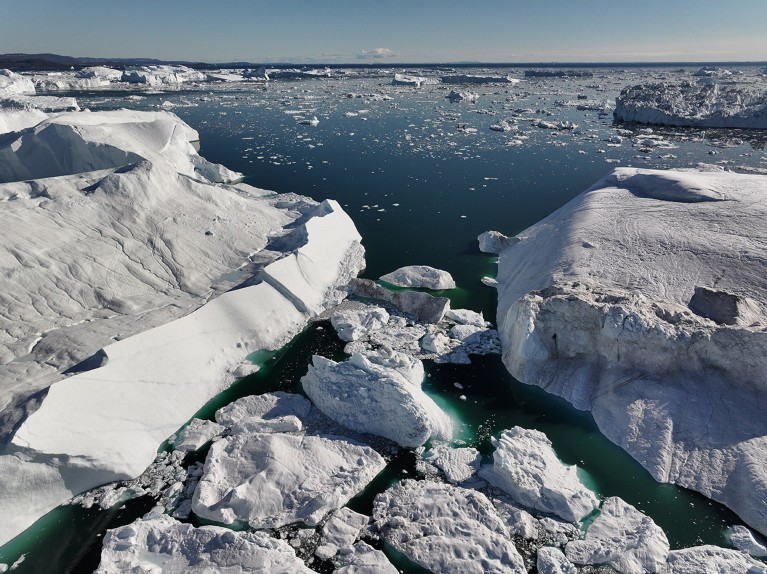





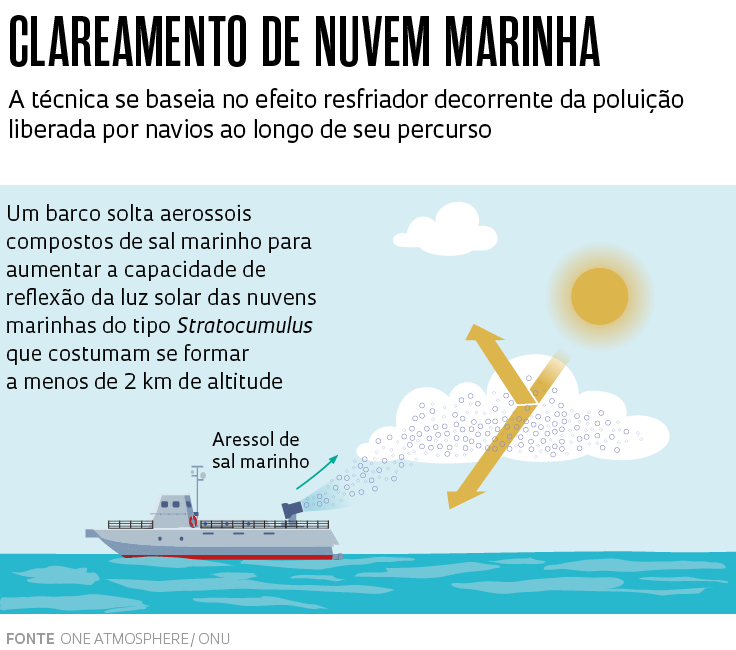

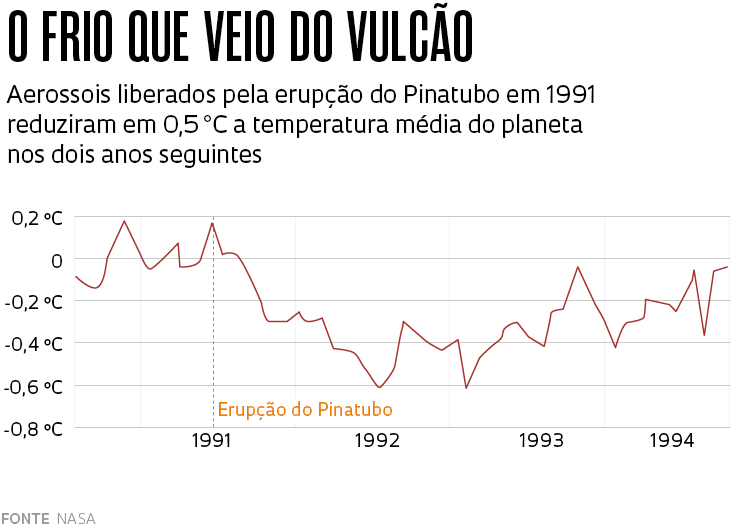
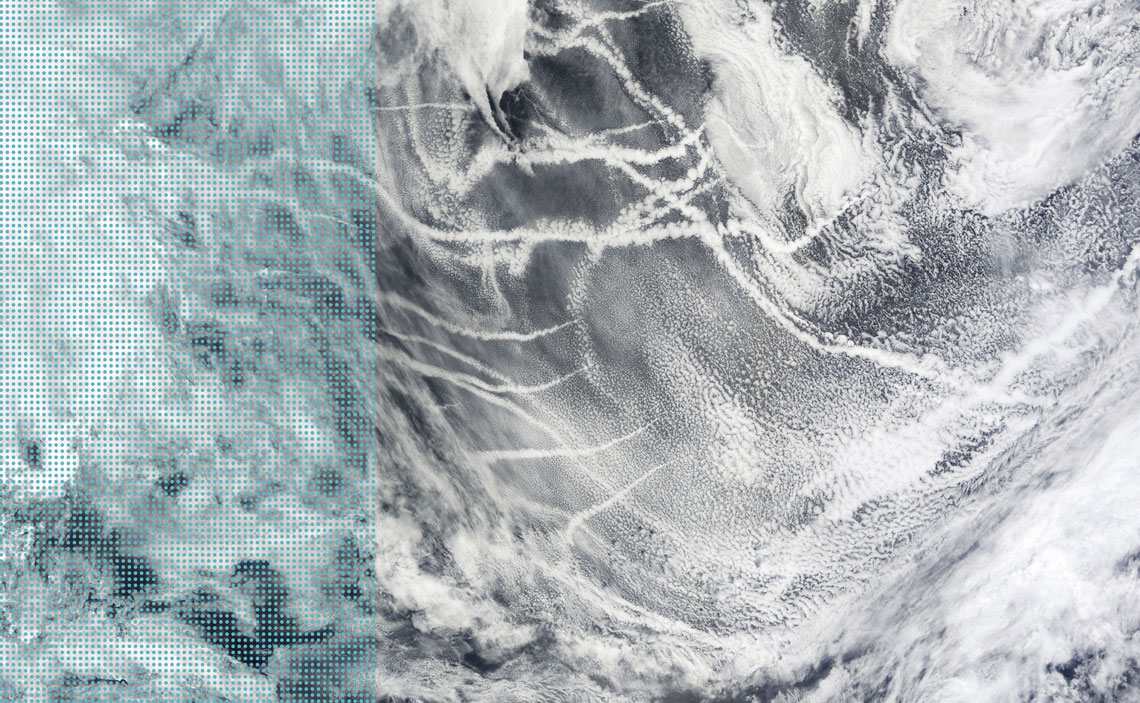






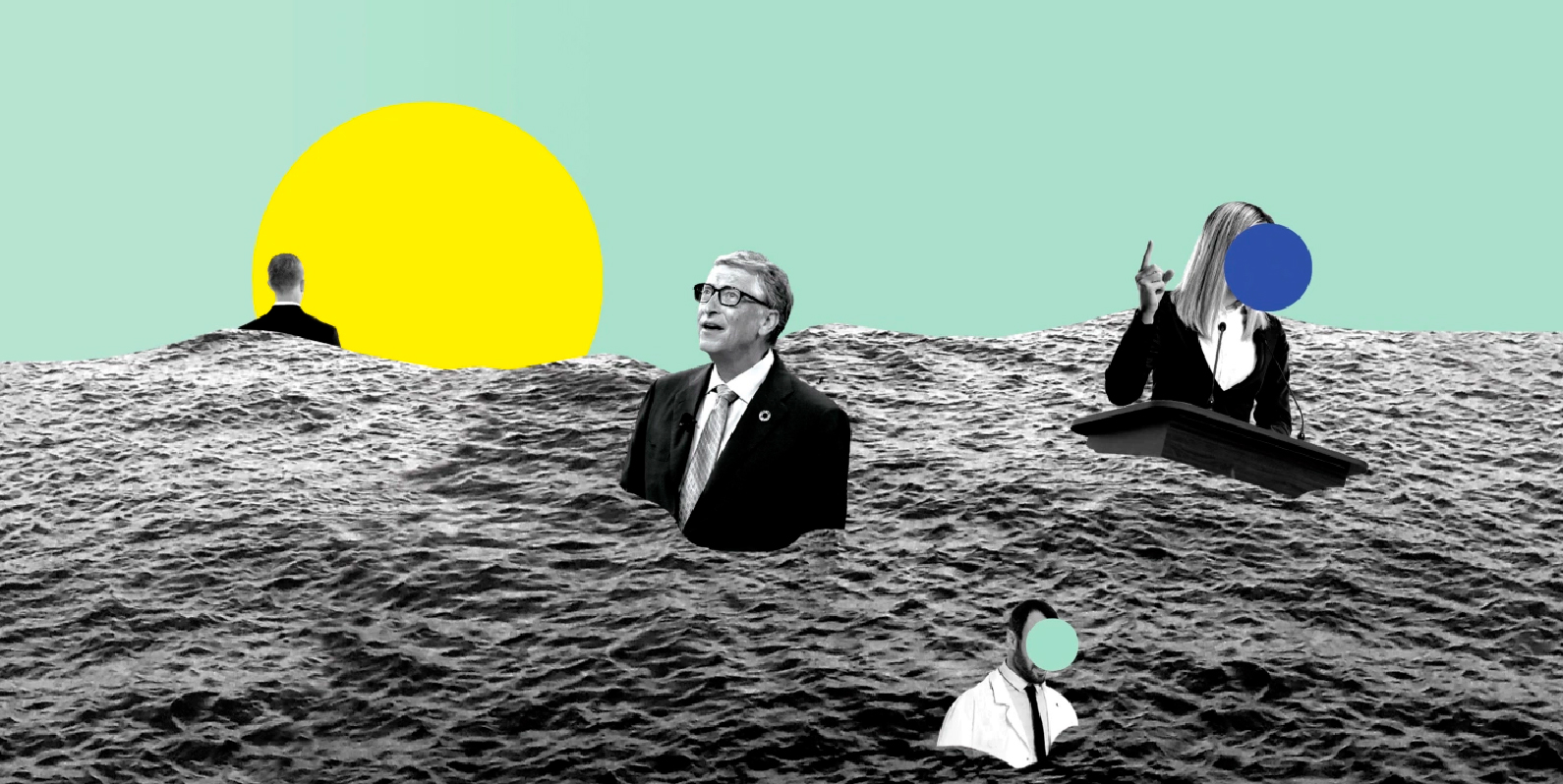





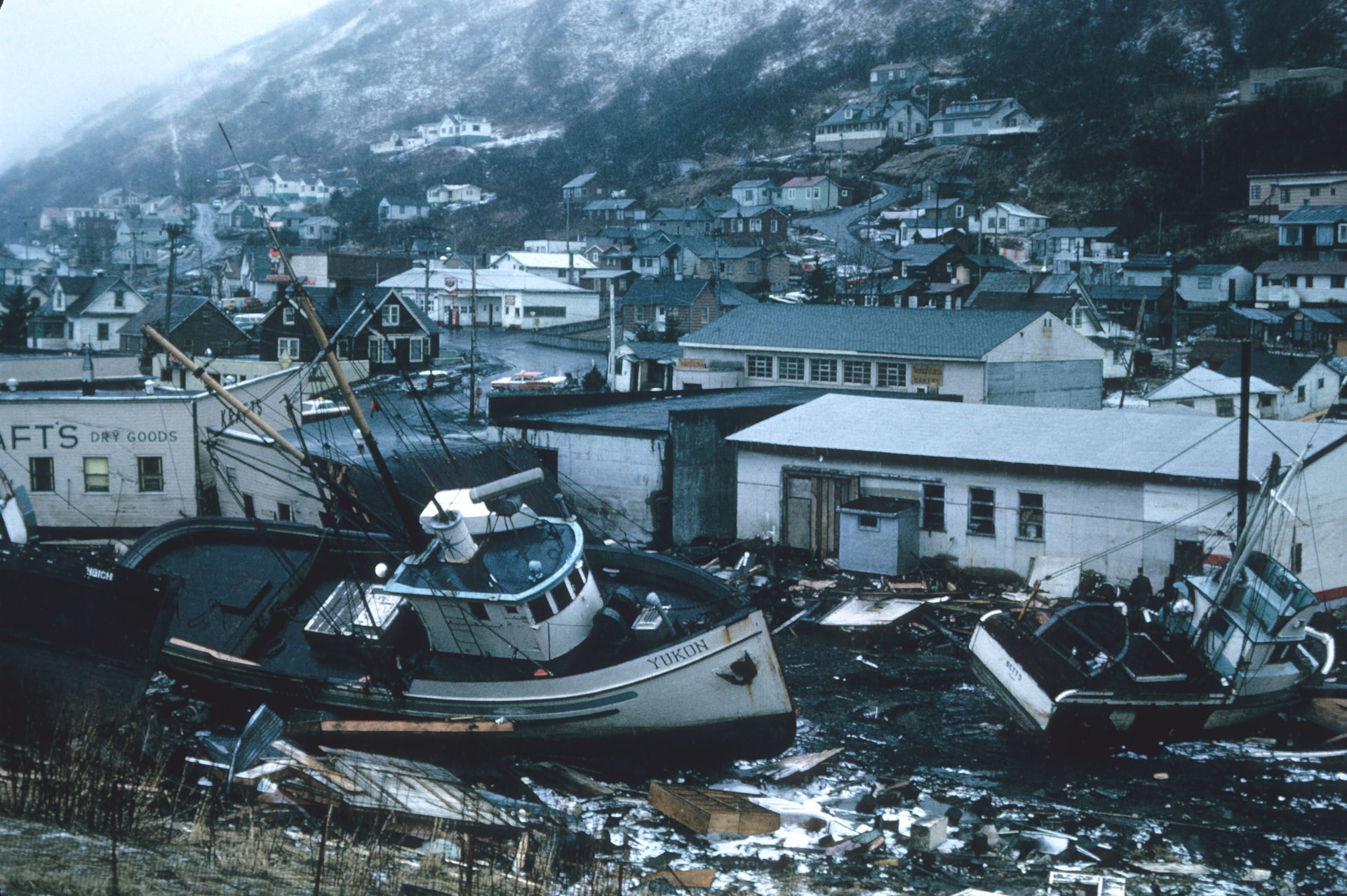
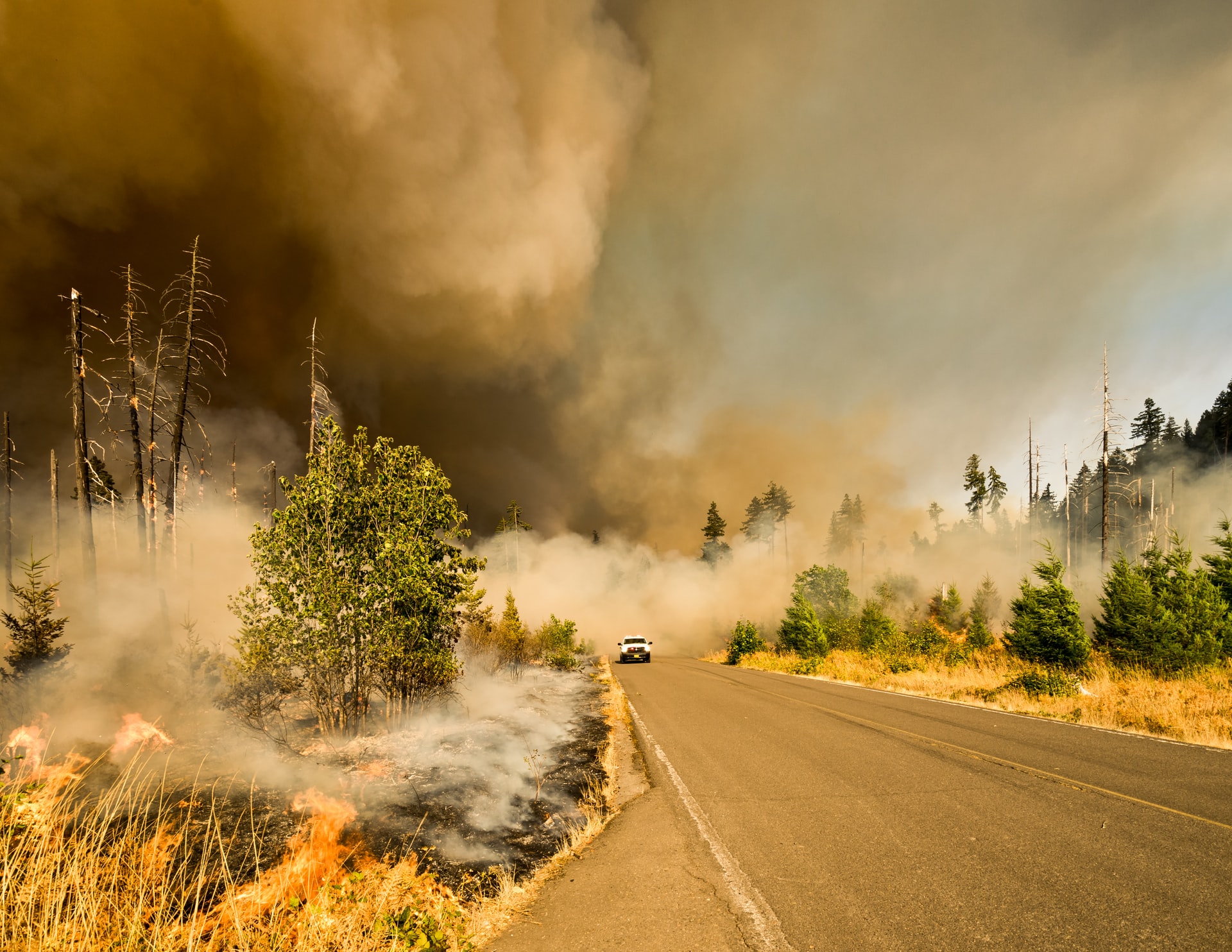
 Wilhelm Reich y Alexander S Neill / Foto: captura Google
 Museo Wilhelm Reich / Foto: captura Google
 Uma (in)certa antropologia
Você precisa fazer login para comentar.