Arquivo da tag: Socialidade animal

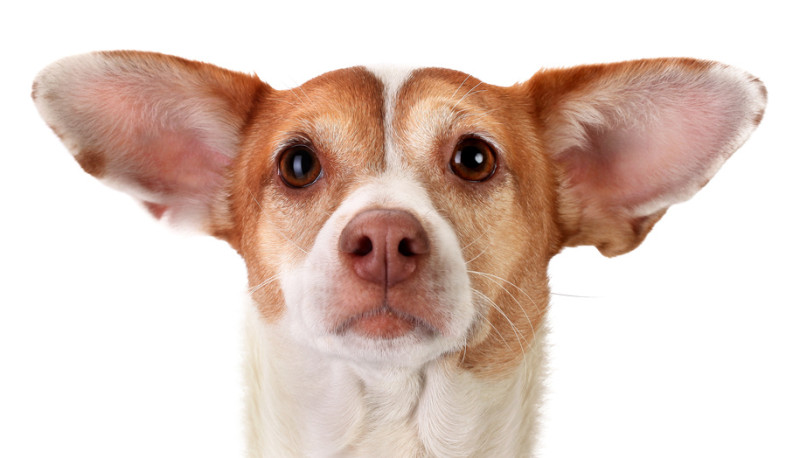
Dogs hear our words and how we say them (Science Daily)

Date:

November 26, 2014

Source:

Cell Press

Summary:

When people hear another person talking to them, they respond not only to what is being said — those consonants and vowels strung together into words and sentences — but also to other features of that speech — the emotional tone and the speaker’s gender, for instance. Now, a report provides some of the first evidence of how dogs also differentiate and process those various components of human speech.

141126124340-large

The results from this study support the idea that our canine companions are paying attention “not only to who we are and how we say things, but also to what we say,” authors say. Credit: © Uros Petrovic / Fotolia

When people hear another person talking to them, they respond not only to what is being said–those consonants and vowels strung together into words and sentences–but also to other features of that speech–the emotional tone and the speaker’s gender, for instance. Now, a report in the Cell Press journal Current Biology on November 26 provides some of the first evidence of how dogs also differentiate and process those various components of human speech.

“Although we cannot say how much or in what way dogs understand information in speech from our study, we can say that dogs react to both verbal and speaker-related information and that these components appear to be processed in different areas of the dog’s brain,” says Victoria Ratcliffe of the School of Psychology at the University of Sussex.

Previous studies showed that dogs have hemispheric biases–left brain versus right–when they process the vocalization sounds of other dogs. Ratcliffe and her supervisor David Reby say it was a logical next step to investigate whether dogs show similar biases in response to the information transmitted in human speech. They played speech from either side of the dog so that the sounds entered each of their ears at the same time and with the same amplitude.

“The input from each ear is mainly transmitted to the opposite hemisphere of the brain,” Ratcliffe explains. “If one hemisphere is more specialized in processing certain information in the sound, then that information is perceived as coming from the opposite ear.”

If the dog turned to its left, that showed that the information in the sound being played was heard more prominently by the left ear, suggesting that the right hemisphere is more specialized in processing that kind of information.

The researchers did observe general biases in dogs’ responses to particular aspects of human speech. When presented with familiar spoken commands in which the meaningful components of words were made more obvious, dogs showed a left-hemisphere processing bias, as indicated by turning to the right. When the intonation or speaker-related vocal cues were exaggerated instead, dogs showed a significant right-hemisphere bias.

“This is particularly interesting because our results suggest that the processing of speech components in the dog’s brain is divided between the two hemispheres in a way that is actually very similar to the way it is separated in the human brain,” Reby says.

Of course, it doesn’t mean that dogs actually understand everything that we humans might say or that they have a human-like ability of language–far from it. But, says Ratcliffe, these results support the idea that our canine companions are paying attention “not only to who we are and how we say things, but also to what we say.”

All of this should come as good news to many of us dog-loving humans, as we spend considerable time talking to our respective pups already. They might not always understand you, but they really are listening.

Story Source:

The above story is based on materials provided by Cell Press. Note: Materials may be edited for content and length.

Journal Reference:

  1. Ratcliffe et al. Orienting asymmetries in dogs’ responses to different communicatory components of human speech. Current Biology, November 2014

A Magisterial Synthesis Of Apes And Human Evolution (Forbes)

11/23/2014 @ 10:31AM By John Farrell

There are books to read from cover to cover in a week or two, and then there are the ones you dip into over and over again, because they aren’t books so much as encyclopedias.

Russell H. Tuttle’s Apes and Human Evolution is one of these. Like the late Stephen Jay Gould’s magisterial Structure of Evolutionary Theory, Tuttle’s tome is a grand synthesis of all the latest research and data about apes and their relation to us.

Tuttle is Professor of Anthropology, Evolutionary Biology, History of Science and Medicine and the College at the University of Chicago.

Tuttle believes that bipedalism preceded the development of the brain in early humans –and was likely something inherited from smaller apes already used to using their feet to move laterally along branches in trees. Although chimpanzees and bonobos are our closest relatives on the evolutionary tree, they do not represent in their own locomotion good proto-models of what led to human upright posture and walking.

While the book does not need to be read in any particular order, the first two chapters set the stage and the terminology for the rest of Apes and Human Evolution, which consists of five parts, totaling 13 dense chapters. A glossary of terms would have helped, but it’s not too much of a distraction to look up the specialist terms Tuttle introduces in these opening sections.

But lest you think it is intended chiefly for colleagues in the fields of anthropology and evolutionary biology, Tuttle’s style throughout is crisp and often witty. (The chapter on the development of human bipedalism, for example, is called ‘How to Achieve an Erection’.)

Professor Russell H. Tuttle, University of Chicago. Image courtesy of Phys.org.

The opening chapter, ‘Mongrel Models and Seductive Scenarios of Human Evolution’ discusses several hypotheses of human origins, some of which Tuttle argues are biased and which in recent years more detailed study of apes has refuted.

He has a low opinion, for example, of the idea that humans are in essence a species of ‘killer apes’, a notion that gained popularity during the last century. “The views of Charles Darwin,” he writes, “are restrained in comparison with the speculations by the advocates of killer ape scenarios, which flourished for several decades after the horrors of World War I and World War II.”

Darwin portrayed early man (his term) as having “sprung from some comparatively weak creature,” who was not speedy and who lacked natural bodily defenses, namely, formidable canine teeth. Consequently, this bipedal creature was stimulated to use his intellectual powers to make weapons for defense and hunting and to cooperate with “his fellow-men”.

What distinguishes humans among the approximately 400 extant species of primates? In Tuttle’s view, a constellation of morphological and behavioral characteristics, some of which only can be traced precisely through the fossil and archeological records.

Obligate terrestrial bipedalism, precision-gripping hands, reduced teeth and jaws, and ballooned brains can be identified if fossils are complete enough in the skeletal regions under study. Archeological artifacts and features can indicate the presence of tool use and manufacture, control of fire, fabricated shelters, bodily ornamentation, mortuary practice, plastic and graphic arts, and other indications of cognitive skills and culture.

There are also the features that can’t be easily found in fossils or the archeological records, primarily social: cooperation, the ability to enlist new members from outside the immediate community of hominids.

Space does not allow a detailed review of each chapter, summaries of which you can find here. But in the final part, ‘What Makes Us Human?’, Tuttle reveals more of his own philosophical reflections on the matter.

One passage that struck me, for example, occurs in the sub-section, ‘What is More Real: God or Race?’

I believe that God is an ever-increasing collective emergent of the love of all beings past, present and future, but this cannot be proven by available scientific methods of experimentation or controlled comparison. In contrast, the belief in race, in the sense of biological subspecies of Homo Sapiens, lacks a tangible basis; indeed, it has been proven unsupportable genomically, behaviorally, and phenotypically.

Individuals and political groups have manipulated both God and race for nefarious purposes, but actions rooted in the human capacity to affiliate with non-kin, to cooperate, and especially to unite in love and respect for the agency of others has given rise to a variety of constructive social codes that facilitate intragroup and extensive intergroup harmony and mitigate disruptive personal and social behavior.

Whereas scientists possess the means to eliminate belief in human races, they lack the means to eradicate belief in God, and frankly they are probably wasting time and treasure on the exercise.

There’s an optimism here I found somewhat reminiscent of the Jesuit paleontologist Teilhard de Chardin, who had a very goal-oriented view of humanity and its role in cosmic evolution.

I could’t resist asking Tuttle whether Teilhard’s writings had any influence on his own thought as he embarked on his career in the 1960s. This was around the time that Teilhard’s writings were becoming most influential.

“Quite the contrary,” Tuttle replied in an email. “I thought Phenomenon of Man was rubbish. Father Teilhard wanted to be an evolutionary biologist while not giving up God. He did a shoddy job of reconciling deep religious belief with evolutionary biology…for one, he was an orthogenecist [i.e., he believed in progressive, directional evolution, toward a universal goal].”

“I cannot see a reconciliation of the two realms,” Tuttle added. “I believe in the power of love which some or many see as an aspect of God. But I do not think  there is a celestial, etherial being that is interested in us or that makes good or bad things happen.”

Tuttle elaborated on this in a recent review he wrote for the American Journal of Psychology: “As a Christian participant observer into my late teens, followed by two decades attempting to be an atheist, and then participation in the music ministry at a wide variety of churches over the past 30 years, I aver that the bonding of congregations based on love of God and one another are substantive enough to withstand the sarcastic remarks and mockery of professed atheists who command notable space in print media and on the airways.”

Apes and Human Evolution is also available in Kindle Edition. But given the slight difference in price, I recommend getting the print edition.

Chimpanzees have favorite ‘tool set’ for hunting staple food of army ants (University of Cambridge)

15-Oct-2014

Fred Lewsey

This video shows a chimpanzee who has constructed a tool with which to investigate a camera (Nimba mountains, Guinea). 

West African chimpanzees will search far and wide to find Alchornea hirtella, a spindly shrub whose straight shoots provide the ideal tools to hunt aggressive army ants in an ingenious fashion, new research shows.

The plant provides the animals with two different types of tool, a thicker shoot for ‘digging’ and a more slender tool for ‘dipping’.

On locating an army ant colony, chimpanzees will dig into the nest with the first tool – aggravating the insects. They then dip the second tool into the nest, causing the angry ants to swarm up it. Once the slender shoot is covered in ants, the chimpanzees pull it out and wipe their fingers along it: scooping up the ants until they have a substantial handful that goes straight into the mouth in one deft motion.

This technique – ‘ant dipping’ – was previously believed to be a last resort for the hungry apes, only exploited when the animal’s preferred food of fruit couldn’t be found. But the latest study, based on over ten years of data, shows that, in fact, army ants are a staple in the chimpanzee diet – eaten all year round regardless of available sources of fruit. Ants may be an important source of essential nutrients not available in the typical diet, say researchers, as well as a potential source of protein and fats.

The new research, published today in the American Journal of Primatology, was led by Dr Kathelijne Koops from the University of Cambridge’s Division of Biological Anthropology and Junior Research Fellow of Homerton College.

This video shows a male chimpanzee looking on at a female who is using an ant-dipping tool (Kalinzu Forest, Uganda).

“Ant dipping is a remarkable feat of problem-solving on the part of chimpanzees,” said Koops. “If they tried to gather ants from the ground with their hands, they would end up horribly bitten with very little to show for it. But by using a tool set, preying on these social insects may prove as nutritionally lucrative as hunting a small mammal – a solid chunk of protein.”

Koops points out that if Alchornea hirtella is nowhere to be found, chimps will fashion tools from other plants – but seemingly only after an exhaustive search for their preferred tool provider.

Previous research has shown that chimpanzees will actually select longer tools for faster, more aggressive types of army ants. The average ‘dipping’ tool length across the study was 64 centimetres, but dipping tools got up to 76 cm.

The question for Koops is one of animal culture: how do chimpanzees acquire knowledge of such sophisticated techniques?

“Scientists have been working on ruling out simple environmental and genetic explanations for group differences in behaviours, such as tool use, and the evidence is pointing strongly towards it being cultural,” said Koops. “They probably learn tool use behaviours from their mother and others in the group when they are young.”

The research for the ant-dipping study – which took place in Guinea’s Nimba mountains – proved challenging, as the chimpanzees were not habituated to people – so the team acted almost as archaeologists, studying ‘exploited’ ants nests to measure abandoned tool sets and “sifting through faeces for ants heads”.

IMAGE: This image shows a chimpanzee using an ant-dipping tool.

To further study these illusive creatures, Koops set up cameras to take extensive video footage of the chimpanzees and their tool use. In doing so, she managed to capture a chimpanzee who has constructed a tool with which to investigate the camera itself – prodding it curiously and then sniffing the end of the tool (VIDEO 1).

“This study is part of a big ongoing research project. The next stages will involve looking at social opportunities to learn: how much time do youngsters spend within arm’s length of other individuals; how much time do they spend close to their mother; as well as innate predispositions to explore and engage with objects,” said Koops.

A video clip from the Kalinzu Forest in Uganda, where Koops is currently conducting comparative studies on East African chimpanzees, captures a male chimpanzee seemingly looking on enviously at a female who has managed to construct a much better dipping tool than his own and is feasting heartily as a consequence (VIDEO 2). Koops suggests this kind of observing of other individuals may lead to learning within a chimpanzee community.

“By studying our closest living relatives we gain a window into the evolutionary past which allows us to shed light on the origins of human technology and material culture,” added Koops.

A link to the paper can be found here: http://onlinelibrary.wiley.com/journal/10.1002/(ISSN)1098-2345/earlyview

Crocodiles are sophisticated hunters: Work as a team to hunt their prey (Science Daily)

Date: October 13, 2014

Source: University of Tennessee

Summary: Recent studies have found that crocodiles and their relatives are highly intelligent animals capable of sophisticated behavior such as advanced parental care, complex communication and use of tools for hunting. New research shows just how sophisticated their hunting techniques can be.

Crocodiles (stock image). Credit: © aarstudio / Fotolia

Recent studies have found that crocodiles and their relatives are highly intelligent animals capable of sophisticated behavior such as advanced parental care, complex communication and use of tools for hunting.

New University of Tennessee, Knoxville, research published in the journal Ethology Ecology and Evolution shows just how sophisticated their hunting techniques can be.

Vladimir Dinets, a research assistant professor in UT’s Department of Psychology, has found that crocodiles work as a team to hunt their prey. His research tapped into the power of social media to document such behavior.

Studying predatory behavior by crocodiles and their relatives such as alligators and caimans in the wild is notoriously difficult because they are ambush hunters, have slow metabolisms and eat much less frequently than warm-blooded animals. In addition, they are mostly nocturnal and often hunt in murky, overgrown waters of remote tropical rivers and swamps. Accidental observations of their hunting behavior are often made by non-specialists and remain unpublished or appear in obscure journals.

To overcome these difficulties, Dinets used Facebook and other social media sites to solicit eyewitness accounts from amateur naturalists, crocodile researchers and nonscientists working with crocodiles. He also looked through diaries of scientists and conducted more than 3,000 hours of observations himself.

All that work produced just a handful of observations, some dating back to the 19th century. Still, the observations had something in common — coordination and collaboration among the crocodiles in hunting their prey.

“Despite having been made independently by different people on different continents, these records showed striking similarities. This suggests that the observed phenomena are real, rather than just tall tales or misinterpretation,” said Dinets.

Crocodiles and alligators were observed conducting highly organized game drives. For example, crocodiles would swim in a circle around a shoal of fish, gradually making the circle tighter until the fish were forced into a tight “bait ball.” Then the crocodiles would take turns cutting across the center of the circle, snatching the fish.

Sometimes animals of different size would take up different roles. Larger alligators would drive a fish from the deeper part of a lake into the shallows, where smaller, more agile alligators would block its escape. In one case, a huge saltwater crocodile scared a pig into running off a trail and into a lagoon where two smaller crocodiles were waiting in ambush — the circumstances suggested that the three crocodiles had anticipated each other’s positions and actions without being able to see each other.

“All these observations indicate that crocodilians might belong to a very select club of hunters — just 20 or so species of animals, including humans — capable of coordinating their actions in sophisticated ways and assuming different roles according to each individual’s abilities. In fact, they might be second only to humans in their hunting prowess,” said Dinets.

Dinets said more observations are needed to better understand what exactly the animals are capable of. “And these observations don’t come easily,” he said.

Previous research by Dinets discovered that crocodiles are able to climb trees and use lures such as sticks to hunt prey. More of his crocodile research can be found in his book “Dragon Songs.”


Journal Reference:

  1. Vladimir Dinets. Apparent coordination and collaboration in cooperatively hunting crocodilians. Ethology Ecology & Evolution, 2014; 1 DOI:10.1080/03949370.2014.915432

Killer whales learn to communicate like dolphins (Science Daily)

Date: October 7, 2014

Source: Acoustical Society of America (ASA)

Summary: The sounds that most animals use to communicate are innate, not learned. However, a few species, including humans, can imitate new sounds and use them in appropriate social contexts. This ability, known as vocal learning, is one of the underpinnings of language. Now, researchers have found that killer whales can engage in cross-species vocal learning: when socialized with bottlenose dolphins, they shifted the sounds they made to more closely match their social partners.

Killer whales (Orcinus orca) can engage in cross-species vocal learning: when socialized with bottlenose dolphins, they shifted the types of sounds they made to more closely match their social partners. Credit: © RKP / Fotolia

From barks to gobbles, the sounds that most animals use to communicate are innate, not learned. However, a few species, including humans, can imitate new sounds and use them in appropriate social contexts. This ability, known as vocal learning, is one of the underpinnings of language.

Vocal learning has also been observed in bats, some birds, and cetaceans, a group that includes whales and dolphins. But while avian researchers have characterized vocal learning in songbirds down to specific neural pathways, studying the trait in large marine animals has presented more of a challenge.

Now, University of San Diego graduate student Whitney Musser and Hubbs-SeaWorld Research Institute senior research scientist Dr. Ann Bowles have found that killer whales (Orcinus orca) can engage in cross-species vocal learning: when socialized with bottlenose dolphins, they shifted the types of sounds they made to more closely match their social partners. The results, published in The Journal of the Acoustical Society of America, suggest that vocal imitation may facilitate social interactions in cetaceans.

Killer whales have complex vocal repertoires made up of clicks, whistles and pulsed calls — repeated brief bursts of sound punctuated with silence. The acoustic features of these vocalizations, such as their duration, pitch and pulse pattern, vary across social groups. Whales that are closely related or live together produce similar pulsed calls that carry vocal characteristics distinct to the group, known as a dialect.

“There’s been an idea for a long time that killer whales learn their dialect, but it isn’t enough to say they all have different dialects so therefore they learn. There needs to be some experimental proof so you can say how well they learn and what context promotes learning,” said Bowles.

Testing vocal learning ability in social mammals usually requires observing the animal in a novel social situation, one that might stimulate them to communicate in new ways. Bottlenose dolphins provide a useful comparison species in this respect: they make generally similar sounds but produce them in different proportions, relying more on clicks and whistles than the pulsed calls that dominate killer whale communication.

“We had a perfect opportunity because historically, some killer whales have been held with bottlenose dolphins,” said Bowles. By comparing old recordings of vocalization patterns from the cross-socialized subjects with recordings of killer whales and bottlenose dolphins housed in same-species groups, Bowles and her team were able to evaluate the degree to which killer whales learned vocalization patterns from their cross-species social partners.

All three killer whales that had been housed with dolphins for several years shifted the proportions of different call types in their repertoire to more closely match the distribution found in dolphins — they produced more clicks and whistles and fewer pulsed calls. The researchers also found evidence that killer whales can learn completely new sounds: one killer whale that was living with dolphins at the time of the experiment learned to produce a chirp sequence that human caretakers had taught to her dolphin pool-mates before she was introduced to them.

Vocal learning skills alone don’t necessarily mean that killer whales have language in the same way that humans do. However, they do indicate a high level of neural plasticity, the ability to change circuits in the brain to incorporate new information. “Killer whales seem to be really motivated to match the features of their social partners,” said Bowles, though the adaptive significance of the behavior is not yet known.

There are immediate reasons to study the vocal patterns of cetaceans: these marine mammals are threatened by human activities through competition for fishery resources, entanglement in fishing gear, collisions with vessels, exposure to pollutants and oil spills and, ultimately, shrinking habitats due to anthropogenic climate change. If their social bonds are closely linked to their vocalizations, killer whales’ ability to survive amidst shifting territories and social groups may be tied to their ability to adapt their communication strategies.

“It’s important to understand how they acquire [their vocalization patterns], and lifelong, to what degree they can change it, because there are a number of different [cetacean] populations on the decline right now,” said Bowles. “And where killer whales go, we can expect other small whale species to go — it’s a broader question.”


Journal Reference:

  1. Whitney B. Musser, Ann E. Bowles, Dawn M. Grebner, and Jessica L. Crance.Differences in acoustic features of vocalizations produced by killer whales cross-socialized with bottlenose dolphins. The Journal of the Acoustical Society of America, 2014 DOI: 10.1121/1.4893906

Chimp social network shows how new ideas catch on (New Scientist)

19:00 30 September 2014 by Catherine Brahic

Three years ago, an adult chimpanzee called Nick dipped a piece of moss into a watering hole in Uganda’s Budongo Forest. Watched by a female, Nambi, he lifted the moss to his mouth and squeezed the water out. Nambi copied him and, over the next six days, moss sponging began to spread through the community. A chimp trend was born.

Until that day in November 2011, chimps had only been seen to copy actions in controlled experimentsMovie Camera, and social learning had never been directly observed in the wild.

To prove that Nambi and the seven other chimps who started using moss sponges didn’t just come up with the idea independently, Catherine Hobaiter of the University of St Andrews, UK, and her colleagues used their own innovation: a statistical analysis of the community’s social network. They were able to track how moss-sponging spread and calculated that once a chimp had seen another use a moss sponge, it was 15 times more likely to do so itself.

A decade ago it was believed that only humans have the capacity to imitate, says Frans de Waal of Emory University in Atlanta, Georgia. “The present study is the first on apes to show by means of networking analysis that habits travel along paths of close relationships,” he says, adding that a similar idea was shown not long ago for humpback whale hunting techniques.

Caught in the act

Copying may seem like the easiest thing to us, but not all animals are able. Chimps at the Gombe Stream reserve in Tanzania can copy each other using twigs to fish out termites, but the baboons that watch them haven’t picked up the trick. “They don’t get it,” says Andrew Whiten of the University of St Andrews.

Whiten previously listed 39 behaviours that were found only in some communities of chimps, suggesting these were picked up from other group members rather than being innate behaviours. Since then, more have been added, but they still number in the dozens, not the thousands.

Given how rarely chimps pick up trends, it’s exciting that someone was on hand to watch it happen in this latest study, says Whiten.

Ultimately, he says, our ability to both invent and copy meant our ancestors could exploit a cognitive niche. “They began hunting large game by doing it the brainy way.” Imitation, it turns out, is not just the sincerest form of flattery, it’s also a smart thing to do.

Journal reference: PLoS Biology, DOI: 10.1371/journal.pbio.1001960

Nature of war: Chimps inherently violent; Study disproves theory that ‘chimpanzee wars’ are sparked by human influence (Science Daily)

Date: September 17, 2014

Source: Lincoln Park Zoo

Summary: Of all of the world’s species, humans and chimpanzees are some of the only species to coordinate attacks on their own members. Since Jane Goodall introduced lethal inter-community killings, primatologists have debated the concept of warfare in this genus. New research from an international coalition of ape researchers has shed new light on the subject, suggesting that human encroachment and interference is not, as previous researchers have claimed, an influential predictor of chimp-on-chimp aggression.


The Ngogo males have just killed a male from a neighboring group. After the male is dead, one of the Ngogo males leaps on the body of the dead animal. Credit: Image courtesy of John Mitani 

Of all of the world’s species, humans and chimpanzees are some of the only to engage in coordinated attacks on other members of their same species. Jane Goodall was among the first to introduce the occurrence of lethal inter-community killings and since then primatologists and anthropologists have long debated the concept of warfare in this genus. Research theories have pointed to increased gains and benefits of killing off competitors and opening up increased access to key resources such as food or mates. In contrast, others have argued that warfare is a result of human impact on chimpanzees, such as habitat destruction or food provisioning, rather than adaptive strategies.

New research from an international coalition of ape researchers, published September 18 in the journalNature, has shed new light on the subject, suggesting that human encroachment and interference is not, as previous researchers have claimed, an influential predictor of chimp-on-chimp aggression.

The study began as a response to a growing number of commentators claiming that chimpanzee violence was caused by human impacts. “This is an important question to get right. If we are using chimpanzees as a model for understanding human violence, we need to know what really causes chimpanzees to be violent,” said University of Minnesota researcher Michael L. Wilson, lead author on the study.

“Humans have long impacted African tropical forests and chimpanzees, and one of the long-standing questions is if human disturbance is an underlying factor causing the lethal aggression observed,” explained co-author David Morgan, PhD, research fellow with the Lester E Fisher Center for the Study and Conservation of Apes at Lincoln Park Zoo in Chicago. Morgan has studied chimpanzees deep in the forests of Republic of Congo for 14 years. “A key take-away from this research is that human influence does not spur increased aggression within or between chimpanzee communities.”

A team of 30 ape researchers assembled extensive data sets spanning five decades of research gathered from 18 chimpanzee communities experiencing varying degrees of human influence. In all, data included pattern analysis of 152 killings by chimpanzees. The key findings indicate that a majority of violent attackers and victims of attack are male chimpanzees, and the information is consistent with the theory that these acts of violence are driven by adaptive fitness benefits rather than human impacts.

“Wild chimpanzee communities are often divided into two broad categories depending on whether they exist in pristine or human disturbed environments,” explained Morgan. “In reality, however, human disturbance can occur along a continuum and study sites included in this investigation spanned the spectrum. We found human impact did not predict the rate of killing among communities.

“The more we learn about chimpanzee aggression and factors that trigger lethal attacks among chimpanzees, the more prepared park managers and government officials will be in addressing and mitigating risks to populations particularly with changing land use by humans in chimpanzee habitat,” explained Morgan.

Journal Reference:

  1. Michael L. Wilson, Christophe Boesch, Barbara Fruth, Takeshi Furuichi, Ian C. Gilby, Chie Hashimoto, Catherine L. Hobaiter, Gottfried Hohmann, Noriko Itoh, Kathelijne Koops, Julia N. Lloyd, Tetsuro Matsuzawa, John C. Mitani, Deus C. Mjungu, David Morgan, Martin N. Muller, Roger Mundry, Michio Nakamura, Jill Pruetz, Anne E. Pusey, Julia Riedel, Crickette Sanz, Anne M. Schel, Nicole Simmons, Michel Waller, David P. Watts, Frances White, Roman M. Wittig, Klaus Zuberbühler, Richard W. Wrangham. Lethal aggression in Pan is better explained by adaptive strategies than human impacts. Nature, 2014; 513 (7518): 414 DOI: 10.1038/nature13727

Is empathy in humans and apes actually different? ‘Yawn contagion’ effect studied (Science Daily)

Date: August 12, 2014

Source: PeerJ

Summary: Whether or not humans are the only empathic beings is still under debate. In a new study, researchers directly compared the ‘yawn contagion’ effect between humans and bonobos — our closest evolutionary cousins. By doing so they were able to directly compare the empathic abilities of ourselves with another species, and found that a close relationship between individuals is more important to their empathic response than the fact that individuals might be from the same species.


Scientists have found that differences in levels of emotional contagion between humans and bonobos are attributable to the quality of relationships shared by individuals. Credit: Elisa Demuru
 

Whether or not humans are the only empathic beings is still under debate. In a new study, researchers directly compared the ‘yawn contagion’ effect between humans and bonobos (our closest evolutionary cousins). By doing so they were able to directly compare the empathic abilities of ourselves with another species, and found that a close relationship between individuals is more important to their empathic response than the fact that individuals might be from the same species.

The ability to experience others’ emotions is hard to quantify in any species, and, as a result, it is difficult to measure empathy in an objective way. The transmission of a feeling from one individual to another, something known as ‘emotional contagion,’ is the most basic form of empathy. Feelings are disclosed by facial expressions (for example sorrow, pain, happiness or tiredness), and these feelings can travel from an “emitting face” to a “receiving face.” Upon receipt, the mirroring of facial expressions evokes in the receiver an emotion similar to the emotion experienced by the sender.

Yawn contagion is one of the most pervasive and apparently trivial forms of emotional contagion. Who hasn’t been infected at least once by another person’s yawn (especially over dinner)? Humans and bonobos are the only two species in which it has been demonstrated that yawn contagion follows an empathic trend, being more frequent between individuals who share a strong emotional bond, such as friends, kin, and mates. Because of this similarity, researchers sought to directly compare the two species. Over the course of five years, they observed both humans and bonobos during their everyday activities and gathered data on yawn contagion by applying the same ethological approach and operational definitions. The results of their research are published today in the peer-reviewed journal PeerJ.

Two features of yawn contagion were compared: how many times the individuals responded to others’ yawns and how quickly. Intriguingly, when the yawner and the responder were not friends or kin, bonobos responded to others’ yawns just as frequently and promptly as humans did. This means that the assumption that emotional contagion is more prominent in humans than in other species is not necessarily the case.

However, humans did respond more frequently and more promptly than bonobos when friends and kin were involved, probably because strong relationships between humans are built upon complex and sophisticated emotional foundations linked to cognition, memory, and memories. In this case, the positive feedback linking emotional affinity and the mirroring process seems to spin faster in humans than in bonobos. In humans, such over-activation may explain the potentiated yawning response and also other kinds of unconscious mimicry response, such as happy, pained, or angry facial expressions.

In conclusion, this study suggests that differences in levels of emotional contagion between humans and bonobos are attributable to the quality of relationships shared by individuals. When the complexity of social bonds, typical of humans, is not in play,Homo sapiens climb down the tree of empathy to go back to the understory which we share with our ape cousins.


Journal Reference:

  1. Elisabetta Palagi, Ivan Norscia, Elisa Demuru. Yawn contagion in humans and bonobos: emotional affinity matters more than species. PeerJ, 2014; 2: e519 DOI: 10.7717/peerj.519

Learning the smell of fear: Mothers teach babies their own fears via odor, animal study shows (Science Daily)

Date: July 28, 2014

Source: University of Michigan Health System

Summary: Babies can learn what to fear in the first days of life just by smelling the odor of their distressed mothers’, new research suggests. And not just “natural” fears: If a mother experienced something before pregnancy that made her fear something specific, her baby will quickly learn to fear it too — through her odor when she feels fear.


Even when just the odor of the frightened mother was piped in to a chamber where baby rats were exposed to peppermint smell, the babies developed a fear of the same smell, and their blood cortisol levels rose when they smelled it. Credit: Image courtesy of University of Michigan Health System

Babies can learn what to fear in the first days of life just by smelling the odor of their distressed mothers, new research suggests. And not just “natural” fears: If a mother experienced something before pregnancy that made her fear something specific, her baby will quickly learn to fear it too — through the odor she gives off when she feels fear.

In the first direct observation of this kind of fear transmission, a team of University of Michigan Medical School and New York University studied mother rats who had learned to fear the smell of peppermint — and showed how they “taught” this fear to their babies in their first days of life through their alarm odor released during distress.

In a new paper in the Proceedings of the National Academy of Sciences, the team reports how they pinpointed the specific area of the brain where this fear transmission takes root in the earliest days of life.

Their findings in animals may help explain a phenomenon that has puzzled mental health experts for generations: how a mother’s traumatic experience can affect her children in profound ways, even when it happened long before they were born.

The researchers also hope their work will lead to better understanding of why not all children of traumatized mothers, or of mothers with major phobias, other anxiety disorders or major depression, experience the same effects.

“During the early days of an infant rat’s life, they are immune to learning information about environmental dangers. But if their mother is the source of threat information, we have shown they can learn from her and produce lasting memories,” says Jacek Debiec, M.D., Ph.D., the U-M psychiatrist and neuroscientist who led the research.

“Our research demonstrates that infants can learn from maternal expression of fear, very early in life,” he adds. “Before they can even make their own experiences, they basically acquire their mothers’ experiences. Most importantly, these maternally-transmitted memories are long-lived, whereas other types of infant learning, if not repeated, rapidly perish.”

Peering inside the fearful brain

Debiec, who treats children and mothers with anxiety and other conditions in the U-M Department of Psychiatry, notes that the research on rats allows scientists to see what’s going on inside the brain during fear transmission, in ways they could never do in humans.

He began the research during his fellowship at NYU with Regina Marie Sullivan, Ph.D., senior author of the new paper, and continues it in his new lab at U-M’s Molecular and Behavioral Neuroscience Institute.

The researchers taught female rats to fear the smell of peppermint by exposing them to mild, unpleasant electric shocks while they smelled the scent, before they were pregnant. Then after they gave birth, the team exposed the mothers to just the minty smell, without the shocks, to provoke the fear response. They also used a comparison group of female rats that didn’t fear peppermint.

They exposed the pups of both groups of mothers to the peppermint smell, under many different conditions with and without their mothers present.

Using special brain imaging, and studies of genetic activity in individual brain cells and cortisol in the blood, they zeroed in on a brain structure called the lateral amygdala as the key location for learning fears. During later life, this area is key to detecting and planning response to threats — so it makes sense that it would also be the hub for learning new fears.

But the fact that these fears could be learned in a way that lasted, during a time when the baby rat’s ability to learn any fears directly was naturally suppressed, is what makes the new findings so interesting, says Debiec.

The team even showed that the newborns could learn their mothers’ fears even when the mothers weren’t present. Just the piped-in scent of their mother reacting to the peppermint odor she feared was enough to make them fear the same thing.

And when the researchers gave the baby rats a substance that blocked activity in the amygdala, they failed to learn the fear of peppermint smell from their mothers. This suggests, Debiec says, that there may be ways to intervene to prevent children from learning irrational or harmful fear responses from their mothers, or reduce their impact.

From animals to humans: next steps

The new research builds on what scientists have learned over time about the fear circuitry in the brain, and what can go wrong with it. That work has helped psychiatrists develop new treatments for human patients with phobias and other anxiety disorders — for instance, exposure therapy that helps them overcome fears by gradually confronting the thing or experience that causes their fear.

In much the same way, Debiec hopes that exploring the roots of fear in infancy, and how maternal trauma can affect subsequent generations, could help human patients. While it’s too soon to know if the same odor-based effect happens between human mothers and babies, the role of a mother’s scent in calming human babies has been shown.

Debiec, who hails from Poland, recalls working with the grown children of Holocaust survivors, who experienced nightmares, avoidance instincts and even flashbacks related to traumatic experiences they never had themselves. While they would have learned about the Holocaust from their parents, this deeply ingrained fear suggests something more at work, he says.

Going forward, he hopes to work with U-M researchers to observe human infants and their mothers — including U-M psychiatrist Maria Muzik, M.D. and psychologist Kate Rosenblum, Ph.D., who run a Women and Infants Mental Health clinic and research program and also work with military families. The program is currently seeking women and their children to take part in a range of studies.

Journal Reference:

  1. Jacek Debiec and Regina Marie Sullivan. Intergenerational transmission of emotional trauma through amygdala-dependent mother-to-infant transfer of specific fear. PNAS, July 28, 2014 DOI: 10.1073/pnas.1316740111

Monkeys Use Researchers as Human Shields (IFLScience)

July 26, 2014 | by Janet Fang

photo credit: hyper7pro via Flickr

A team of researchers working in South Africa have a sneaking suspicion that they’re being used as human shields. Monkeys who normally spend their time in trees avoiding predators like leopards and raptors seem to relax their vigilance a little around humans, venturing down to eat.

Humans, as well as human infrastructure, can alter the relationship between predators and prey by shielding one from the other. A stone wall filled with crevices could provide a refuge for a small critter, while a person’s presence might indirectly guard an animal against its would-be killer. Those who are used to us may actually begin to take more risks when we’re around.

To quantify this alteration in risk-taking behavior, Katarzyna Nowak of Durham University and colleagues tested the magnitude of the “human shield effect” on two groups of samango monkeys (Cercopithecus mitis erythrarcus) at a site with high natural predator density and no human hunting pressure.

Samango monkeys spend most of their time in trees avoiding predators on the ground, like large cats, and those in the canopies above, like birds of prey. They don’t stray very far, and they don’t climb too high. When observed by humans, however, the monkeys preferred to climb down to eat food from the forest floor. The work was published in Behavioral Ecology earlier this month.

The researchers set up feeding stations at various levels in the forest and looked at a fear measure known as “giving-up densities.” That’s the density of food remaining in a patch when a forager leaves. (It’s a little like, say, you were in a hurry and didn’t eat your whole burger.) With lots of predators at this site, the giving-up densities were greatest at ground level (0.1 meter) relative to the three tree canopy levels (2.5, 5, and 7.5 meters up). This highlights a strong vertical axis of fear, as they researchers say.

“The amount of food monkeys depleted from buckets over the course of the experiment varied with height, with the most food left uneaten at ground level, where there is a risk of predation by leopards and caracals,” Nowak tells The Independent.

When human followers were present, giving-up densities were reduced at all four heights. In one of the groups, the vertical axis totally disappeared in the presence of human observers. By passively keeping terrestrial predators away from the area, we seem to lower the monkeys’ perceived risks.

“When a human observer was following monkeys, they ate more food at every height, with the most notable differences at the bottom two levels,” Nowak explains. “Animals are expected to deplete more food where and when they feel safe [but] we had not expected human followers to have such strong effect!”

Read more at http://www.iflscience.com/plants-and-animals/monkeys-use-researchers-human-shields#WutB7Z7V2WuAe7ou.99

Animais dão nomes uns para os outros que duram a vida toda? (Hype Science)

Publicado em 23.04.2014

01_slide-658e819e902af4fb044e6379b5f6de036f2a99ef-s40-c85

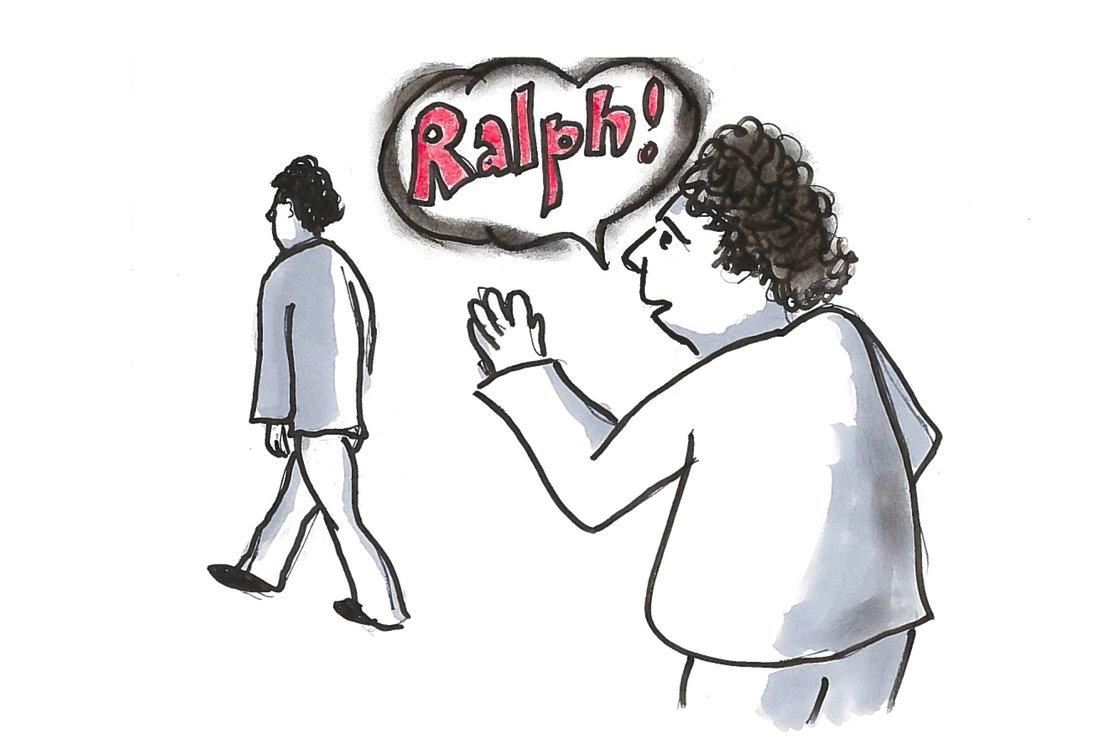
Estou andando por uma rua e vejo uma amiga. A amiga não me vê, então eu grito: “Oi, Marina!”. Marina se vira e olha para mim. Isto é o que os humanos fazem: já que todos nós temos nomes, aprendemos uns os dos outros. Se a pessoa que eu vi é realmente a Marina, eu rapidamente me conecto a ela.

Os nomes são muito úteis, especialmente para uma espécie social como os seres humanos. Se você é um solitário – como um polvo ou um guepardo – e passa a maior parte de sua vida em esplêndido isolamento, os nomes não serão de grande ajuda. A maioria de nós, porém, usa nomes constantemente.

Há diferenças sutis entre nomes humanos e nomes animais. Sim, batizamos os nossos cães e quando chamamos: “Vem, Rex!”, ele vem. O Rex pode até reconhecer seu nome, mas é difícil acreditar que ele reconheça o nosso. Meu nome é Jéssica, mas eu não tenho ideia do que as minhas cachorras me chamam em suas mentes caninas. Porém, ao contrário do que eu pensava, nós, seres humanos, não somos os únicos que usam nomes pelos quais somos reconhecidos ao longo das nossas vidas.

O experimento dos cavalos

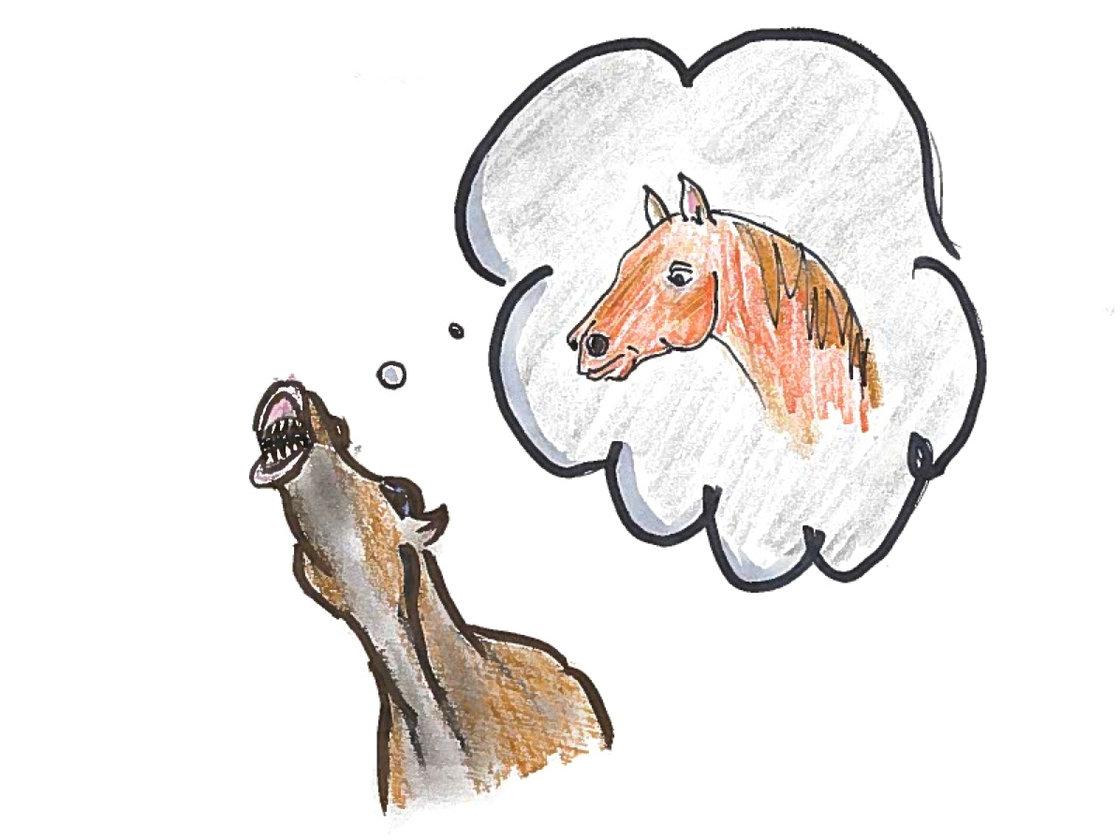
A autora científica Virginia Morell, em seu novo livro “Animal Wise”, descreveu um experimento envolvendo cavalos, no qual os relinchos dos animais foram muito parecido com nomes.

Ela fala sobre um cavalo chamado Silver. Ele está em sua tenda, cuidando de sua própria vida, quando os pesquisadores passam por ali com uma égua do rebanho de Silver. Silver olha para eles, vê Pepsi passar e volta a mastigar seu feno. Pepsi some atrás de uma barreira.

Agora vem a ciência. Os pesquisadores têm um gravador escondido atrás dessa barreira, onde Pepsi está silenciosamente parada. Algumas vezes, os pesquisadores tocam o relincho de Pepsi, que é o seu som de identificação. Quando ouve o som, Silver olha brevemente e depois volta a comer. Nada demais, o cavalo que acabou de passar bufou. Isso é de se esperar.

Contudo, às vezes eles tocavam um relincho diferente, de um cavalo diferente que Silver também conhece, mas que não passou por perto, que não deveria estar lá. Quando eles fazem isso, Silver olha para cima imediatamente, olha para a barreira e continua olhando por um longo tempo, como se dissesse: “O que está acontecendo? Eu vi a Pepsi. Mas essa não é a Pepsi”.

03-3bb65e63da3e2a7fb7cecd9d75f021735f733c2d-s40-c85

“Os cientistas fizeram este teste com vários cavalos e todas a vezes suscitaram a mesma resposta surpresa quando o cavalo ouvia alguém diferente de quem tinha visto”, conta Virgina.

O som dispara uma imagem na mente

Virgina cita o biólogo Karen McComb para explicar que isso mostra que o cavalo tinha uma expectativa. “Ele esperava ouvir o relincho do indivíduo que tinha acabado de passar, porém, ao invés disso, ouve outro animal. Isso significa que os cavalos têm imagens em sua mente dos cavalos que conhecem”.

Isso é um começo. Entretanto, quando os seres humanos usam nomes, fazemos mais do que isso. Muito mais. Em vez de apenas “Eu, Jéssica”, “Eu, Marina”, podemos dizer: “Oi, Marina. Quer almoçar?”. Será que algum animal também tem a capacidade de fazer isso? De usar um nome para começar uma conversa? A resposta é sim.

Considere o periquito mastrantero (Forpus passerinus), um passarinho verde adorável que vive na região da Colômbia, Venezuela e ao largo da porção brasileira do Rio Amazonas. O cientista Karl Berg construiu um monte de ninhos de papagaio em um rancho da Venezuela e instalou neles microcâmeras, gravando tudo que os animaizinhos fazem. Como você pode imaginar, eles piam muito.

Enquanto muita gente acha que isso tudo é só uma barulheira, o pesquisador aposta que os periquitos estão conversando. Berg ouviu tantos papagaios em tantos ninhos e por tanto tempo, que ele é capaz de identificar que semanas após o nascimento, esses pequenos pássaros começam a usar sons muito específicos para identificar-se entre si. Não só isso, eles aprendem os “nomes” de seus pais, irmãos, irmãs, e sabem usá-los na conversa.

De onde vêm os nomes?

Mas quem batiza esses papagaios? Será que a natureza dá a cada filhote um conjunto pré-programado de pios? “Uma possibilidade”, explica Berg a Virginia, “é que os pais estão nomeando seus filhotes, da mesma forma que fazemos com os nossos filhos”.

O vídeo abaixo (narrado por Cornell Mark Dantzker e com legendas disponíveis em tradução automática) mostra como Karl Berg fez o experimento que sugere fortemente que as mamães e papais papagaio escolhem os nomes de seus bebês.

O pesquisador trocou ovos de ninho para descobrir se os nomes eram um código genético ou aprendidos. Para isso, comparam o som dos filhotes quando atingiam a maturidade com os de seus pais biológicos e adotivos. A conclusão foi de que os sons eram mais parecidos com os dos pais adotivos, o que provaria que eles foram aprendidos durante o crescimento.

O livro de Virginia Morell revela que os seres humanos e os papagaios não são os únicos a usarem esse sistema. Os golfinhos têm cliques e assobios particulares que são nomes – nomes que, como nós, são usados em conversas casuais.

Aos poucos, os cientistas estão aprendendo a decodificar as conversas de animais muito diferentes, bichos que vivem vidas ricas em intrigas, planos, brigas, esquemas, romance, apetites. Um dia seremos capazes de acompanhar tudo isso e mesmo nos intrometermos na conversa chamando um papagaio, um golfinho ou um cavalo pelo seu nome “verdadeiro”. Já imaginou?

Seria como assistir a reality shows. Ao invés de “Mulheres Ricas”, veremos “As conspirações dos papagaios da Venezuela”, e todos nós vamos torcer para aquele chamado “Pip-de-pip-de-pi, pi, pi” ficar com a papagaia mais bonita. [NPRProceedings Of The Royal SocietyCornell Lab of Ornithology]

Proposed California Law Would Free SeaWorld’s Orcas (WIRED)

BY BRANDON KEIM
03.07.14

Orcas performing at SeaWorld San Diego. Image: z2amiller/Flickr

Orcas performing at SeaWorld San Diego. Image: z2amiller/Flickr

A California lawmaker has proposed a ban on keeping killer whales in captivity for purposes of human entertainment.

Announced today by Assemblyman Richard Bloom, D-Santa Monica, the Orca Welfare and Safety Act would outlaw SeaWorld-style shows, as well as captive breeding of the creatures. Violations would be punished by $100,000 in fines, six months in jail, or both.

No hearing has yet been scheduled on the proposal, which will require a majority vote to pass through legislature. It’s also unclear how much support the bill will have, though California has passed progressive animal legislation in the recent past, including bans on shark fin soup and hunting bears with dogs.

“There is no justification for the continued captive display of orcas for entertainment purposes,” Bloom said in a public statement. “These beautiful creatures are much too large and far too intelligent to be confined in small, concrete tanks for their entire lives. It is time to end the practice of keeping orcas captive for human amusement.”

Bloom’s proposed law isn’t the first of its kind: South Carolina banned the public display of dolphins in 1992, as did Maui County, Hawaii in 2002. In February of this year, New York state senator Greg Ball introduced a bill that would ban orca confinement in sea parks and aquariums.

Unlike those states, however, California is home to SeaWorld San Diego, where 10 orcas — roughly one-fifth of all captive orcas — are used in performances. “This is a huge state in which to have that ban,” said Lori Marino, a neurobiologist and founder of the Kimmela Center for Animal Advocacy.

In recent years, the experience of captive orcas has come under scrutiny by animal advocates and some scientists, who say that aquarium conditions are simply inappropriate for animals as big, intelligent and highly social as orcas.

As evidence, advocates point to the physical and mental problems of orcas in captivity: They’re short-lived, prone to disease, have difficulty breeding, display extreme aggression and in some cases appear to be emotionally disturbed.

Such was the case with Tillikum, an orca at SeaWorld Orlando who killed three people, including SeaWorld trainer Dawn Brancheau. Her death and SeaWorld’s orcas were the subject of Blackfish, a 2013 documentary that inspired Bloom’s measure, which was written with assistance from Blackfishdirector Gabriela Cowperthwaite and Naomi Rose of the Animal Welfare Institute.

SeaWorld San Diego did not reply to requests for comment, but in a statement, spokesman David Koontz criticized Bloom for “associating with extreme animal rights activists.”

Koontz said the bill reflected the “the same sort of out-of-the-mainstream thinking” as an infamous lawsuit, filed by People for the Ethical Treatment of Animals and dismissed in 2012, which invoked the United States Constitution’s slavery-abolishing 13th amendment as grounds for freeing SeaWorld’s orcas.

“We engage in business practices that are responsible, sustainable and reflective of the balanced values all Americans share,” wrote Koontz.

Andrew Trites, head of the University of British Columbia’s Marine Mammal Research Unit, said that misgivings about keeping whales and dolphins in captivity are not restricted to activists and extremists. They’re something many scientists grapple with.

“We think about this a lot,” he said, “I do understand the strong feelings of those who think it’s entirely wrong. I also understand the value of keeping them in captivity.”

Studying captive orcas can provide information about health and physiology that’s otherwise difficult to obtain, and can be used to benefit wild orcas, said Trites. “But it has to be about more than just entertainment,” he said. “They have to be serving some greater good.”

Marino noted that the bill allows research on orcas held for rehabilitation after being rescued from injury or stranding. Those orcas couldn’t be kept in aquariums, though, but rather in enclosed, shallow-water sea pens that are open to the public — a compromise, perhaps, between greater-good benefits and individual well-being.

Orcas now kept at SeaWorld would be returned to the wild or, if that’s not possible, also kept in sea pens.

If Bloom’s bill passes, it could inspire other such measures, said Marino. “The science is so overwhelming that members of the legislature are convinced, and are putting this out there,” she said. “This is historic.”

Cérebros humano e canino têm a mesma reação a vozes, sugere estudo (BBC)

Rebecca Morelle

Repórter de Ciências do BBC World Service

Atualizado em  22 de fevereiro, 2014 – 16:53 (Brasília) 19:53 GMT

Cachorros em aparelho de ressonância magnética (Borbala Ferenczy)

Estudo mostrou que a mesma região do cérebro de cães e humanos é ativada pelo som de vozes

Donos de cachorros costumam afirmar que seus animais de estimação conseguem entendê-los. Um novo estudo publicado no periódico Current Biology sugere que essas pessoas podem estar certas.

Ao colocar cães em um equipamento de ressonância magnética, pesquisadores húngaros descobriram que o cérebro desses animais reage da mesma forma que um cérebro humano a vozes de pessoas.

Outros sons carregados de emoção, como choro ou risadas, também geraram reações parecidas, o que talvez explica o fato de cachorros conseguirem se sintonizar às emoções de seus donos, afirmam os pesquisadores.

“Acreditamos que cães e humanos têm um mecanismo bastante similar para processar informações emocionais”, disse Attila Andics, da Universidade Eotvos Lorand e coordenador do estudo.

Sintonia

A pesquisa envolveu onze cães de estimação e comparou seus resultados aos de 22 voluntários humanos.

Para ambos os grupos, os cientistas tocaram 200 tipos diferentes sons, desde ruídos comuns, como o barulho de carros e de apitos, a sons emitidos por humanos (sem palavras) e por cães.

Cachorro em aparelho de ressonância magnética (Eniko Kubinyi)

Sons carregados de emoções, como risadas e choro, também geraram a mesma reação no cérebro dos cães e de pessoas

Os pesquisadores descobriram que uma região semelhante do cérebro – o polo temporal, que faz parte do lobo temporal – é ativada quando cães e pessoas ouvem vozes humanas.

“Já sabíamos que certas áreas no cérebro humano respondem mais fortemente a sons humanos do que a qualquer outro tipo de som”, explicou Andics. “É uma grande surpresa isso ocorrer também no cérebro canino. É a primeira vez que vemos algo assim em um animal que não seja um primata.”

O mesmo aconteceu quando sons como risadas e choros foram ouvidos. Uma área do cérebro conhecida como córtex auditivo primário foi ativada tanto em cachorros quanto em humanos.

Ao mesmo tempo, vocalizações caninas carregadas de emoção – como ganidos e latidos ferozes – também geraram uma reação parecida em todos os voluntários.

“Sabemos muito bem que cachorros conseguem se sintonizar ao sentimento de seus donos, e sabemos que um bom dono consegue identificar mudanças emocionais em seu cão – mas agora podemos começar a entender como isso é possível”, afirmou Andics.

No entanto, apesar dos cachorros reagirem à voz humana, suas reações foram bem mais fortes em relação aos sons caninos.

Os cães também parecem ser menos capazes de distinguir entre ruídos e sons vocais em comparação com humanos.

Palavras

Cães e aparelho de ressonância magnética (Eniko Kubinyi)

Próximo passo do estudo é checar como o cérebro de cães reage quando eles ouvem palavras

Ao comentar sobre a pesquisa, Sophie Scott, do Instituto de Neurociência Cognitiva da Universidade College London, disse: “Os cães são animais muito interessantes de se investigar porque muitos de seus traços desses os tornam dóceis em relação aos humanos. Alguns estudos mostram que eles entendem muitas palavras e o que queremos dizer quando apontamos para alguma coisa”.

Mas Scott acrescenta: “É algo bastante relevante encontrar isso em cães e não só em primatas, mas seria interessante também ver a reação desses animais a palavras. Risos e choros são parecidos com sons animais e por isso podem gerar esse tipo de reação.

“Um avanço seria demonstrar sensibilidade dos cães a palavras no idioma de seus donos.”

Segundo Andics, este será o foco da próxima série de testes da pesquisa.

Huge chimpanzee population thriving in remote Congo forest (The Guardian)

Scientists believe the group is one of the last chimp ‘mega-cultures’, sharing a unique set of customs and behaviour

theguardian.com, Friday 7 February 2014 11.53 GMT

A mother chimp passing her tool-use expertise to her young

In one of the most dangerous regions of the planet, against all odds, a huge yet mysterious population of chimpanzees appears to be thriving – for now. Harboured by the remote and pristine forests in the north of the Democratic Republic of Congo (DRC) and on the border of the Central African Republic, the chimps were completely unknown until recently – apart from the local legends of giant apes that ate lions and howled at the moon.

But researchers who trekked thousands of kilometres through uncharted territory and dodged armed poachers and rogue militia, now believe the group are one of the last thriving chimp “mega-cultures”.

“This is one of the few places left on Earth with a huge continuous population of chimps,” says Cleve Hicks, a primatologist based at the Max Planck Institute in Leipzig, Germany, who says the group is probably the largest in Africa. “We estimate many thousands of individuals, perhaps tens of thousands.” A unique set of customs and behaviour is shared by the apes across a vast area of 50,000 sq km, revealing how they live naturally.

The unusually large chimps of the Bili-Uele forest have been seen feasting on leopard and build ground nests far more often than other chimps, as well as having a unique taste for giant African snails, whose shells they appear to pound open on rocks or logs. Motion-activated video cameras left in the forest for eight months also recorded gangs of males patrolling their territory and mothers showing their young how to use tools to eat swarming insects – although the footage did not confirm the lunar howls.

Gangs of males patrolling their territory

The camera traps also revealed an extraordinary range of other forest dwellers, including forest elephantsolive baboonsspotted hyena as well as red river and giant forest hogscrested guinea fowl and aardvark. “We saw incredible amounts of wildlife on our camera traps, but we did not catch a single film of a human,” says Hicks. “It remains one of the last untouched wildernesses in Africa.”

One camera even recorded its own destruction as it came under attack from a leopard, but all two dozen cameras were nearly lost when poachers invaded the area and burned the researchers’ camp. Only a swift two-day rescue mission retrieved the footage.

Forest elephants

Hick’s team first identified the existence of the Bili chimps in 2007 but their new survey, published this week in the journal Biological Conservation, reveals a vast, thriving mega-culture. Elsewhere in Africa, human damage has fragmented the continent’s chimp population from many millions to just a few hundred thousand over the last century.

However, while the chimp numbers have apparently remained stable, the numbers of forest elephants have crashed by half due to poaching. The slaughter, to feed the highly lucrative illegal ivory trade, mirrors the bloody picture across central Africa, where two-thirds of all forest elephants have been killed in the last decade. “We found the burned skulls of a mother and baby skull at a poachers camp,” says Hicks.

Footage of elephant skulls, a sign poachers are venturing deeper into forests to hunt elephants

“The area is at great risk of being opened up,” says John Hart, one of the team and who has spent decades in DRC at the Lukuru Wildlife Research Foundation. The team’s work was interrupted previously by gunmen protecting illegal gold mining operations in nearby areas but the security situation is getting worse, Hart told the Guardian. Speaking from the town of Kisangani, on the eve of returning to the forest, he said: “The Lord’s Resistance Army are moving through the area as we speak. Also refugees from the Central African Republic (CAR) war and armed brigands from the CAR’s Seleka and opposition groups are establishing bases in the region.”

The researchers fear that these increasing incursions into the virgin forest will draw in more hunters seeking to feed the enormous bushmeat trade in the Congo basin, that targets chimps and other animals. “Theincredible bushmeat trade we discovered [in the southern part of the forest in 2010] was totally without precedent.” Hart says, with an estimated 440 chimps being killed a year. “But with the availability of bushmeat declining elsewhere, commercial bushmeat hunters are going further and further into the forest.”

The chimps are an endangered species and fully protected in DRC law. “But it is only a law on paper,” says Hicks, who identifies both official security forces and militia as the source of much of the danger, as well as endemic corruption. “I think the military are giving guns to the poachers.” He says the forest and the chimp mega-culture it contains are currently completely unprotected.

Congo_WEB

The prime minister, David Cameron, and Prince William are due to host the highest level global summit to date on combating the $19bn-a-year illegal wildlife trade in London next Thursday. Delegates from more than 50 nations, including all African countries, will focus on the poaching crisis facing elephants and other species, which is not only driving many towards extinction but is strongly linked to international organised crimeand the poverty of many vulnerable communities. The aim is to deliver an unprecedented political commitment, along with an action plan and funding pledges, and Hicks says the Bili-Uele forest is in need of urgent help.

“It is one of the last great expanses of pristine African wilderness,” he says. “Elephants have already taken a major hit and unless we can muster the resolve to protect this precious area, we are at risk of losing it forever. At the very minimum need 20 wildlife guards who are able to sweep through the forest and set up roadblocks to stop the poachers and other hunters.”

Hart agrees: “It is a very significant opportunity to preserve a whole ecosystem of chimpanzees: elsewhere on this continent this opportunity just does not exist.”

• You can view more camera trap videos from the Bili forest here.

Comissão especial da Câmara vai consolidar normas de proteção aos animais (Agência Câmara)

JC e-mail 4889, de 06 de fevereiro de 2014

Presidente da Câmara criou comissão para analisar os projetos sobre o tema em tramitação na Casa

O presidente da Câmara dos Deputados, Henrique Eduardo Alves, anunciou nesta terça-feira (4) a criação de uma comissão especial para consolidar, em uma única lei, os projetos e normas existentes referentes à proteção dos animais. O colegiado será composto por 23 membros titulares e o mesmo número de suplentes.

A criação da comissão foi uma reivindicação da bancada do PV, com apoio do Solidariedade (SDD), apresentada e aprovada pelo Colégio de Líderes em 10 de dezembro de 2013 – Dia Internacional dos Direitos dos Animais.

O objetivo dos partidos é dar tratamento uniforme e adequado a essas proposições. Tramitam atualmente na Casa 185 projetos de lei que disciplinam o assunto. “Uma legislação consolidada traz segurança jurídica, facilita o entendimento legal e elimina dúvidas sobre como lidar com a questão. Ela também irá estabelecer um marco regulatório da relação das pessoas com os animais, protegendo a fauna e, por sua vez, dando as respostas pelas quais a sociedade clama”, afirma o líder do PV, deputado Sarney Filho (MA).

Grupo de trabalho
O SDD criou ainda o Solidariedade Proteção aos Animais, grupo de trabalho que visa direcionar políticas específicas sobre maus-tratos, uso em pesquisas, controle populacional, abate, tráfico, criminalização, proteção, saúde, comércio e preservação das espécies, entre outros aspectos.

“O debate sobre os direitos dos animais é um dever do Poder Público. Discussões sobre maus-tratos, por exemplo, tomam proporções cada vez maiores. Nosso partido criou o Solidariedade Proteção aos Animais para entrar nessa importante discussão”, destacou o líder da legenda na Câmara, deputado Fernando Francischini (PR).

A iniciativa teve como motivação não só os episódios de maus-tratos a animais e seu uso em pesquisas científicas, mas, principalmente, a necessidade de preservar a riqueza e o bem-estar da fauna nativa, silvestre, doméstica, domesticada ou exótica, bem como atualizar a Lei de Proteção à Fauna (5.197/67), que no dia 3 de janeiro completou 47 anos.

Como marco do começo desse processo, ocorrerá em Brasília, entre os dias 17 e 20 de fevereiro, em frente ao Congresso, o Acampamento Nacional dos Animais, uma vigília que reunirá protetores e ativistas de todo o País pela aprovação de leis há anos em tramitação.

University of Waterloo tries dog patrol to fight goose problem (CBC News)

CBC News Posted: Apr 10, 2013 5:30 AM ET Last Updated: Apr 15, 2013 12:40 AM ET

A pair of Canada Geese. The University of Waterloo is trying new ways to fight the geese problem on campus, including using dog patrols and asking students to tweet in nest locations.

A pair of Canada Geese. The University of Waterloo is trying new ways to fight the geese problem on campus, including using dog patrols and asking students to tweet in nest locations.


It’s spring. That means longer days, warmer weather, and for Canada Geese, it’s nesting season.

The Canada Geese that have taken up residence at the University of Waterloo are famous, in part because they don’t hesistate to defend their nesting areas from perceived intruders.

Alex Harris and Molson the dog, pictured above, patrol UWaterloo twice a day to chase away Canada Geese. Photo:warriordad.smugmug.com/

Alex Harris is no stranger to hissing, flapping, angry geese. Harris is the man behind the University of Waterloo’s Geese Police and along with Molson, a border collie-golden retriever cross, patrols the university campus twice a day along a five-kilometre path. Canada Geese are notorious at the university because the large number of people and buildings offer protection from natural predators, allowing the geese to thrive. 

The daily patrols are part of Harris’ undergraduate thesis project for his Geography and Environmental Management Honours degree. By summer, Harris wants to have an accurate picture of how Molson affects geese nesting habits along the designated path, in order to “determine exactly how bad the problem is and how long it will take to fix it and balance the ecosystem out,” he writes on his website.

Read the full article here.


Chimps Can Use Gestures to Communicate in Hunt for Food (Science Daily)

Jan. 17, 2014 — Remember the children’s game “warmer/colder,” where one person uses those words to guide the other person to a hidden toy or treat? Well, it turns out that chimpanzees can play, too.

Chimpanzee. Remember the children’s game “warmer/colder,” where one person uses those words to guide the other person to a hidden toy or treat? Well, it turns out that chimpanzees can play, too. (Credit: © maradt / Fotolia)

Researchers at Georgia State University’s Language Research Center examined how two language-trained chimpanzees communicated with a human experimenter to find food. Their results are the most compelling evidence to date that primates can use gestures to coordinate actions in pursuit of a specific goal.

The team devised a task that demanded coordination among the chimps and a human to find a piece of food that had been hidden in a large outdoor area. The human experimenter did not know where the food was hidden, and the chimpanzees used gestures such as pointing to guide the experimenter to the food.

Dr. Charles Menzel, a senior research scientist at the Language Research Center, said the design of the experiment with the “chimpanzee-as-director” created new ways to study the primate.

“It allows the chimpanzees to communicate information in the manner of their choosing, but also requires them to initiate and to persist in communication,” Menzel said. “The chimpanzees used gestures to recruit the assistance of an otherwise uninformed person and to direct the person to hidden objects 10 or more meters away. Because of the openness of this paradigm, the findings illustrate the high level of intentionality chimpanzees are capable of, including their use of directional gestures. This study adds to our understanding of how well chimpanzees can remember and communicate about their environment.”

The paper, “Chimpanzees Modify Intentional Gestures to Co-ordinate a Search for Hidden Food,” has been published inNature Communications. Academics at the University of Chester and University of Stirling collaborated on the research project.

Dr. Anna Roberts of the University of Chester said the findings are important.

“The use of gestures to coordinate joint activities such as finding food may have been an important building block in the evolution of language,” she said.

Dr. Sarah-Jane Vick of the University of Stirling added, “Previous findings in both wild and captive chimpanzees have indicated flexibility in their gestural production, but the more complex coordination task used here demonstrates the considerable cognitive abilities that underpin chimpanzee communication.”

Dr. Sam Roberts, also from the University of Chester, pointed out the analogy to childhood games.

“This flexible use of pointing, taking into account both the location of the food and the actions of the experimenter, has not been observed in chimpanzees before,” Roberts said.

The project was supported by The Leakey Foundation, the Wenner-Gren Foundation, National Institutes of Health, the Economic and Social Research Council, the British Academy, the Carnegie Trust for the Universities of Scotland and the University of Stirling.

Journal Reference:

  1. Anna Ilona Roberts, Sarah-Jane Vick, Sam George Bradley Roberts, Charles R. Menzel. Chimpanzees modify intentional gestures to coordinate a search for hidden foodNature Communications, 2014; 5 DOI:10.1038/ncomms4088

The Way to a Chimpanzee’s Heart Is Through Its Stomach (Science Daily)

Jan. 16, 2014 — The ability to form long-term cooperative relationships between unrelated individuals is one of the main reasons for human’s extraordinary biological success, yet little is known about its evolution and mechanisms. The hormone oxytocin, however, plays a role in it.

After hunting, chimpanzees share the meat of a red colobus monkey amongst them. (Credit: © Roman M. Wittig / Taï Chimpanzee Project)

Researchers of the Max Planck Institute for Evolutionary Anthropology in Leipzig, Germany, measured the urinary oxytocin levels in wild chimpanzees after food sharing and found them to be elevated in both donor and receiver compared to social feeding events without sharing. Furthermore, oxytocin levels were higher after food sharing than after grooming, another cooperative behavior, suggesting that food sharing might play a more important role in promoting social bonding. By using the same neurobiological mechanisms, which evolved within the context of building and strengthening the mother-offspring bond during lactation, food sharing might even act as a trigger for cooperative relationships in related and unrelated adult chimpanzees.

Humans and a few other social mammals form cooperative relationships between unrelated adults that can last for several months or years. According to recent studies the hormone oxytocin, which facilitates bonding between mother and offspring, likely plays a role in promoting these relationships. In chimpanzees, for instance, increased urinary oxytocin levels are linked to grooming between bonding partners, whether or not they are genetically related to each other.

To examine the ways in which oxytocin is associated with food sharing, Roman Wittig and colleagues of the Max Planck Institute for Evolutionary Anthropology in Leipzig have collected and analyzed 79 urine samples from 26 wild chimpanzees from Budongo Forest in Uganda within one hour after the chimpanzees either shared food or socially fed without sharing. The result: A chimpanzee’s urine contained significantly higher levels of oxytocin after sharing food with another group member than just after feeding socially regardless whether the animal was the donor or the receiver of the food. “Increased urinary oxytocin levels were independent of whether subjects gave or received food, shared with kin or non-kin, shared with an established bond partner or not, or shared meat or other food types,” says Roman Wittig.

In addition, the researchers found that the oxytocin levels associated with food sharing were higher than those associated with grooming, indicating that the rarer food sharing has a stronger bonding effect than the more frequently occurring grooming. “Food sharing may be a key behavior for social bonding in chimpanzees,” says Wittig. “As it benefits receivers and donors equally, it might even act as a trigger and predictor of cooperative relationships.”

The researchers further suggest that food sharing likely activates neurobiological mechanisms that originally evolved to support mother-infant bonding during lactation. “Initially, this mechanism may have evolved to maintain bonds between mother and child beyond the age of weaning,” says Wittig. “It may then have been hitch-hiked and is now also promoting bond formation and maintenance in non-kin cooperative relationships.”

The Latin roots of the word companion (‘com = with’ and ‘panis = bread’) may indicate a similar mechanism to build companionship in humans. Whether human urinary oxytocin levels also increase after sharing a meal with others will be a subject for future studies.

Journal Reference:

  1. R. M. Wittig, C. Crockford, T. Deschner, K. E. Langergraber, T. E. Ziegler, K. Zuberbuhler. Food sharing is linked to urinary oxytocin levels and bonding in related and unrelated wild chimpanzeesProceedings of the Royal Society B: Biological Sciences, 2014; 281 (1778): 20133096 DOI: 10.1098/rspb.2013.3096

Considering the Humanity of Nonhumans (New York Times)

Elephants, chimpanzees and some cetaceans have shown that they can recognize themselves in a mirror. James Hill for The New York Times

By 

Published: December 9, 2013

What is a person?

“Beings who recognize themselves as ‘I’s.’ Those are persons.” That was the view of Immanuel Kant, said Lori Gruen, a philosophy professor at Wesleyan University who thinks and writes often about nonhuman animals and the moral and philosophical issues involved in how we treat them.

She was responding to questions in an interview last week after advocates used a new legal strategy to have chimpanzees recognized as legal persons, with a right to liberty, albeit a liberty with considerable limits.

The Nonhuman Rights Project, an advocacy group led by Steven M. Wise, filed writs of habeas corpus in New York last week on behalf of four captive chimpanzees: Tommy, owned by a Gloversville couple; two at Stony Brook University; and one at the Primate Sanctuary in Niagara Falls. The lawsuits were dismissed, but Mr. Wise said he planned to appeal.

He believes that the historical use of habeas corpus lawsuits as a tool against human slavery offers a model for how to fight for legal rights for nonhumans.

His case relies heavily on science. Nine affidavits from scientists that were part of the court filings offer opinions of what research says about the lives, thinking ability and self-awareness of chimpanzees.

Mr. Wise argues that chimps are enough like humans that they should have some legal rights; not the right to vote or freedom of religion — he is not aiming for a full-blown planet of the apes — but a limited right to bodily liberty. The suits asked that the chimps be freed to go to sanctuaries where they would have more freedom.

Richard L. Cupp, a law professor at Pepperdine University in California who opposes granting rights to nonhuman animals, described the legal strategy as “far outside the mainstream.” He said in an email, “The courts would have to dramatically expand existing common law for the cases to succeed.”

Lori Marino of Emory University, who studies dolphins and other cetaceans and is the science director of the Nonhuman Rights Project, said it “is about more than these four chimpanzees.” Mr. Wise, she said, “sees this as the knob that can turn a lot of things. It’s potentially transformative.”

She said she was under no illusion that rights for animals would be easy to gain. “It may not happen in anyone’s lifetime,” she said.

The science of behavior is only part of the legal argument, though it is crucial to the central idea — that chimps are in some sense autonomous. Autonomy can mean different things, depending on whether you are talking about chimpanzees, drones or robot vacuum cleaners, and whether you are using the language of law, philosophy or artificial intelligence.

Dr. Gruen sees it as a term that is fraught with problems in philosophy, but Dr. Marino said that for the purposes of the legal effort, autonomy means “a very basic capacity to be aware of yourself, your circumstances and your future.”

Science can’t be decisive in such an argument, as Dr. Gruen points out, but what it can do is support or undermine this idea of autonomy. “If you form the right kinds of questions,” she said, “there are important answers that science can give about animal cognition and animal behavior.”

Dr. Marino said that science could “contribute evidence for the kinds of characteristics that a judge may find to be part of autonomy.”

Dr. Gruen, Dr. Marino and Mr. Wise made presentations at a conference, Personhood Beyond the Human, at Yale over the weekend. They spoke in interviews related to the court case during the week before the conference.

The kind of science that supports the idea of chimpanzees as autonomous could also support the idea that many other animals fit the bill. There are affidavits related to cognitive ability, tool use, social life and many other capabilities of chimpanzees, but there are questions about how pertinent each line of evidence is.

“Is that important for being a philosophical person — tool use itself?” Dr. Gruen asked.

The issues of self-awareness and of awareness of past and future strike to the heart of a common-sense view of what personhood might be. Chimps, elephants and some cetaceans have shown that they can recognize themselves in a mirror.

But the rights project is claiming more, saying that for chimps, as Dr. Marino put it, “you know it was you yesterday, you today, you tomorrow,” and “you have desires and goals for the future.”

There is plenty of evidence that chimpanzees and other animals act for the future. Some birds hide seeds to recover in leaner times, for example.

One affidavit is from Matthias Osvath, of Lund University in Sweden, who studies the thinking ability of animals, particularly great apes and some birds. He cites a number of studies of chimps that support the idea they have a sense of the future, including resisting an immediate reward to gain a tool that will get them a larger reward.

In one well-known piece of research by Dr. Osvath, he reported on Santino, a chimp at a zoo in Sweden who stockpiled and hid rocks he would later throw at human visitors. Dr. Osvath argued that Santino had the capacity to think of himself making future use of the rocks he saved.

Science cannot prove what went on in Santino’s mind. But Dr. Marino said the cumulative evidence could be used to ask a judge, “If you look at all the evidence in total, then what kind of being could produce all that evidence?”

Not all proponents of animal welfare are convinced that calling for rights for animals is the best way to go.

Dr. Gruen said that she had misgivings about the rights approach, philosophically and politically. “My own view is that it makes more sense to think about what we owe animals.” Progress on that front in 2013, particularly for chimpanzees, has surprised and delighted many activists. The National Institutes of Health is retiring most of its chimpanzees. And the United States Fish and Wildlife Service has proposed changes that would classify all chimps, even those in laboratories, as endangered, a move that would raise obstacles to experiments on privately owned chimps.

One point to remember is that personhood does not mean being human. Robert Sapolsky, a primatologist and neuroscientist at Stanford University who was not associated with the lawsuit, said, “I think the evidence certainly suggests that chimps are self-aware and autonomous.” That still leaves a vast gap between chimps and humans, he said. Chimps may look ahead in hiding food for later, or planning “how to ambush monkeys they are hunting.” Humans, he noted, could think about “the consequences of global warming for their grandchildren’s grandchildren, or of the sun eventually dying, or of them eventually dying.”

A version of this news analysis appears in print on December 10, 2013, on page D1 of the New York edition with the headline: The Humanity of Nonhumans.

Domestication of Dogs May Have Elaborated On a Pre-Existing Capacity of Wolves to Learn from Humans (Science Daily)

Dec. 3, 2013 — Wolves can learn from observing humans and pack members where food is hidden and recognize when humans only pretend to hide food, reports a study for the first time in the open-access journal Frontiers in Psychology. These findings imply that when our ancestors started to domesticate dogs, they could have built on a pre-existing ability of wolves to learn from others, not necessarily pack members.

The researchers conclude that the ability to learn from other species, including humans, is not unique to dogs but was already present in their wolf ancestors. Prehistoric humans and the ancestors of dogs could build on this ability to better coordinate their actions. (Credit: Wolf Science Center)

A paper published recently in the journalScience suggested that humans domesticated dogs about 18 thousand years ago, possibly from a European population of grey wolves that is now extinct. But it remains unknown how much the ability of dogs to communicate with people derives from pre-existing social skills of their wolf ancestors, rather than from novel traits that arose during domestication.

In a recent study, Friederike Range and Zsófia Virányi from the Messerli Research Institute at the University of Veterinary Medicine Vienna investigated if wolves and dogs can observe a familiar “demonstrator” — a human or a specially trained dog — to learn where to look for food within a meadow. The subjects were 11 North American grey wolves and 14 mutts, all between 5 and 7 months old, born in captivity, bottle-fed, and hand-raised in packs at the Wolf Science Center of Game Park Ernstbrunn, Austria.

The wolves and dogs were two to four times more likely to find the snack after watching a human or dog demonstrator hide it, and this implies that they had learnt from the demonstration instead of only relying on their sense of smell. Moreover, they rarely looked for the food when the human demonstrator had only pretended to hide it, and this proves that they had watched very carefully.

The wolves were less likely to follow dog demonstrators to hidden food. This does not necessarily mean that they were not paying attention to dog demonstrators: on the contrary, the wolves may have been perceptive enough to notice that the demonstrator dogs did not find the food reward particularly tasty themselves, and so simply did not bother to look for it.

The researchers conclude that the ability to learn from other species, including humans, is not unique to dogs but was already present in their wolf ancestors. Prehistoric humans and the ancestors of dogs could build on this ability to better coordinate their actions.

Journal Reference:

  1. Friederike Range and Zsófia Virányi. Social learning from humans or conspecifics: differences and similarities between wolves and dogsFrontiers In Science, 2013 DOI:10.3389/fpsyg.2013.00868

Ativistas exigem direitos legais para chimpanzés (O Globo)

JC e-mail 4868, de 04 de dezembro de 2013

Ano foi marcado por conquistas de símios em tribunais. Agência federal anunciou que pretende aposentar os macacos que pertencem ao governo

Chimpanzés não são pessoas, mas seriam parecidos o suficiente para merecerem alguns direitos humanos. Esta é a reivindicação de um grupo de proteção dos animais que entrou com um pedido de habeas corpus para assegurar os direitos de Tommy, um símio da cidade americana de Gloversville, no estado de Nova York. Seu caso será analisado pelo Tribunal do Condado de Fulton.

Tommy não é o primeiro chimpanzé defendido em tribunais. O Projeto dos Direitos de Animais não Humanos trabalha há anos em estratégias que assegurem um tratamento justo aos animais nos 50 estados americanos, cada qual com sua legislação. A partir delas, o programa quer esboçar o que seria uma lei comum, suficientemente forte para reconhecer aos animais direitos legais, que permitam até que sejam beneficiários de herança.

O líder do projeto, Steven Wise, lembra da história da luta contra a escravidão humana ao explicar sua cruzada pelo direito dos animais. Para ele, os macacos, como os humanos, não podem ser propriedade de ninguém.

A ação judicial em Gloversville é o novo marco de um ano já marcado por polêmicas protagonizadas por chimpanzés.

Uma agência federal já anunciou novas medidas para aposentar alguns símios que são propriedade do governo; outro órgão público propôs classificar todos os chimpanzés como animais ameaçados de extinção. Esta medida prejudicaria experimentos com estes animais, mesmo aqueles realizados em laboratórios particulares.

Ativistas exaltaram suas recentes conquistas, enquanto alguns cientistas condenaram as restrições ao uso dos símios, que exerceram um papel crucial em algumas pesquisas médicas, como no trabalho para o desenvolvimento de uma vacina para a hepatite C.

Até agora, as ações judiciais reivindicavam o bem-estar dos animais, não os seus direitos. Esta semana, no entanto, Wise anunciou sua intenção de que Tommy fosse reconhecido como uma pessoa jurídica, com direito à liberdade. O chimpanzé, segundo Wise, está “mantido em cativeiro dentro de uma jaula no galpão de um estacionamento”.

O documento enviado para o Tribunal de Fulton não pede para que o animal tenha liberdade para circular em Gloversville, tampouco seu envio à África, após uma vida em cativeiro. O condado analisará apenas a remoção do símio de seus donos e a transferência do chimpanzé para um santuário.

O O Projeto dos Direitos de Animais revelou sua intenção de mover ações semelhantes a favor de três outros chimpanzés de Nova York. Dois deles seriam de um centro de pesquisas universitário, usados em um estudo sobre locomoção. O outro pertence a uma ONG.

(O Globo com informações do New York Times)
http://oglobo.globo.com/ciencia/ativistas-exigem-direitos-legais-para-chimpanzes-10959633#ixzz2mVuPNlsF

Lawsuits Could Turn Chimpanzees Into Legal Persons (Science)

2 December 2013 1:00 pm

Property or person? A series of lawsuits could free U.S. chimpanzees from captivity.

© Martin Harvey/Corbis. Property or person? A series of lawsuits could free U.S. chimpanzees from captivity.

This morning, an animal rights group known as the Nonhuman Rights Project (NhRP) filed a lawsuit in a New York Supreme Court in an attempt to get a judge to declare that chimpanzees are legal persons and should be freed from captivity. The suit is the first of three to be filed in three New York counties this week. They target two research chimps at Stony Brook University and two chimps on private property, and are the opening salvo in a coordinated effort to grant “legal personhood” to a variety of animals across the United States.

If NhRP is successful in New York, it could be a significant step toward upending millennia of law defining animals as property and could set off a “chain reaction” that could bleed over to other jurisdictions, says Richard Cupp, a law professor at Pepperdine University in Malibu, California, and a proponent of focusing on animal welfare rather than animal rights. “But if they lose it could be a significant step backward for the movement. They’re playing with fire.”

The litigation has been in the works since 2007, when animal rights attorney Steven Wise founded NhRP, an association of about 60 lawyers, scientists, and policy experts. The group argues that cognitively advanced animals like chimpanzees and dolphins are so self-aware that keeping them in captivity—whether a zoo or research laboratory—is tantamount to slavery. “It’s a terrible torture we inflict on them, and it has to stop,” Wise says. “And all of human law says the way things stop is when courts and legislatures recognize that the being imprisoned is a legal person.”

NhRP spent 5 years researching the best legal strategy—and best jurisdiction—for its first cases. The upshot: a total of three lawsuits to be filed in three New York trial courts this week on behalf of four resident chimpanzees. One, named Tommy, lives in Gloversville in a “used trailer lot … isolated in a cage in a dark shed,” according to an NhRP press release. Another, Kiko, resides in a cage on private property in Niagara Falls, the group says. The final two, Hercules and Leo, are research chimps at Stony Brook University. Wise says that 11 scientists have filed affidavits in support of the group’s claims; most of them, including Jane Goodall, have worked with nonhuman primates.

In each case, NhRP is petitioning judges with a writ of habeas corpus, which allows a person being held captive to have a say in court. In a famous 1772 case, an English judge allowed such a writ for a black slave named James Somerset, tacitly acknowledging that he was a person—not a piece of property—and subsequently freed him. The case helped spark the eventual abolition of slavery in England and the United States. Wise is hoping for something similar for the captive chimps. If his group wins any of the current cases, it will ask that the animals be transferred to a chimpanzee sanctuary in Florida. Any loss, he says, will immediately be appealed.

Regardless of what happens, NhRP is already preparing litigation for other states, and not all of it involves chimpanzees. “Gorillas, orangutans, elephants, whales, dolphins—any animal that has these sorts of cognitive capabilities, we would be comfortable bringing suit on behalf of,” Wise says. Some would be research animals; others would be creatures that simply live in confined spaces, such as zoos and aquariums. “No matter how these first cases turn out, we’re going to move onto other cases, other states, other species of animals,” he says. “We’re going to file as many lawsuits as we can over the next 10 or 20 years.”

Frankie Trull, the president of the National Association for Biomedical Research in Washington, D.C., says her organization will fight any attempts at personhood in the courts. Chimpanzees, she notes, are important models for behavioral research, as well as for developing vaccines against viruses like hepatitis C. “Assigning rights to animals akin to what humans have would be chaotic for the research community.”

Anatomist Susan Larson, who studies the Stony Brook chimpanzees to shed light on the origin of bipedalism in humans, says she is “very shocked and upset” by the lawsuit. She says the chimps live in an indoor enclosure comprised of three rooms—“about the size of an average bedroom”—plus another room where they can climb, hang, and jump from ladders and tree trunks. “Everything I do with these animals I’ve done on myself,” she says. “I understand that animal rights activists don’t want these animals mistreated, but they’re hampering our ability to study them before they become extinct.”

The more immediate threat to Larson’s research isn’t NhRP, however—it is the National Institutes of Health (NIH). In June, NIH announced plans to retire all but 50 of its 360 research chimpanzees and phase out much of the chimp research it supports. The U.S. Fish and Wildlife Service, meanwhile, has recommended that captive chimps be listed as endangered, which would limit any research that isn’t in their best interest. “Soon, the type of work I do will no longer be possible,” Larson says. “They have effectively ended my research program.”

Stephen Ross, the director of the Lester E. Fisher Center for the Study and Conservation of Apes at the Lincoln Park Zoo in Chicago, Illinois, wonders if there’s a compromise. Ross, who has studied chimpanzees for more than 20 years and played a role in crafting NIH’s new policy, advocates ending private ownership of chimps and invasive research. All other chimpanzees, he says, whether located at zoos or universities, should live in large enclosures, with access to the outside, and in group sizes of at least seven individuals. “You don’t need personhood to do that,” he says. “I think we share a common philosophy,” he says of NhRP. “We want to make things better for chimps. We just disagree on how to get there.”


A more detailed version of this story will appear in the 6 December issue of Science.

*Clarification, 2 December, 4 p.m.: This item has been updated to reflect Richard Cupp’s position on animal rights.

Ainda o debate sobre a experimentação animal

JC e-mail 4853, de 11 de novembro de 2013

SBPC e FeSBE defendem o fim da experimentação animal em testes cosméticos

Manifesto das duas instituições foi divulgado na última sexta-feira

A SBPC e a Federação de Sociedades de Biologia Experimental (FeSBE) divulgaram nesta sexta-feira (08/11) manifesto, em que defendem que o uso de animais em pesquisas é essencial para descobertas científicas, com benefícios inquestionáveis para os humanos e outros seres vivos. Vacinas, medicamentos, desenvolvimento de próteses e cirurgias, terapias gênica e com células tronco são apenas alguns exemplos dos benefícios obtidos com o uso de animais em pesquisas.

Apesar de ser impossível substituir por completo o uso de animais para pesquisa e testes de medicamentos e vacinas, os pesquisadores brasileiros e do exterior têm empenhado esforços para reduzir seu número em estudos, fazendo o planejamento racional dos experimentos e substituindo-os por métodos validados sempre que possível. O uso de testes alternativos é uma recomendação explícita da Lei Arouca (Lei11794 de 2008, que regulamenta o uso de animais para fins científicos e didáticos no Brasil).

Em contrapartida, o uso de animais para testes cosméticos é menos essencial e metodologias alternativas validadas podem substituí-los para esse fim.

Desta forma, a SBPC e a FeSBE informam ser favoráveis à proibição dos testes cosméticos com animais no Brasil.

Veja na íntegra do manifesto: http://sbpcnet.org.br/site/arquivos/SBPC_FeSBE.pdf

(Jornal da Ciência)

* * *

Presidente da SBPC é contra PL que proíbe estudos com animais

Helena Nader encaminhou carta ao governador de São Paulo e a deputados estaduais em que faz um alerta sobre as consequências de projeto de lei estadual

A presidente da SBPC, Helena Nader, encaminhou nesta sexta-feira (08/11), uma carta ao governador de São Paulo, Geraldo Alckmin, e aos deputados Samuel Moreira, presidente da Assembleia Legislativa do Estado de SP, e Rogério Nogueira, autor do Projeto de Lei de nº 780/2013 – que proíbe o uso de animais em pesquisas científicas, fazendo um alerta sobre o impacto negativo dessa legislação no desenvolvimento científico do Estado de São Paulo, além do efeito negativo que pode ser estendido para o restante do país.

No documento, Helena afirma que o PL 780/2013 pode inviabilizar a pesquisa científica em várias áreas do conhecimento em pleno desenvolvimento nas diferentes Instituições de pesquisa do Estado de São Paulo.

Veja a carta na íntegra: http://sbpcnet.org.br/site/arquivos/oficio_135_deputado.pdf

(Jornal da Ciência)

* * *

Impasse nas pesquisas

Após invasão de defensores dos animais, Instituto Royal anuncia fechamento e cientistas não têm onde testar novos medicamentos no País

O fechamento do Instituto Royal, em São Roque (SP), anunciado na semana passada, deixou a comunidade científica preocupada. O laboratório, que fazia testes de medicamentos em animais, decidiu encerrar suas atividades alegando “irreparáveis perdas” após a invasão de ativistas que retiraram de lá 178 beagles. A decisão traz o impasse: onde serão feitas as etapas mais avançadas das pesquisas com animais para desenvolver remédios a partir de agora? Segundo a Sociedade Brasileira para o Progresso da Ciência (SBPC), não há outro instituto com capacitação para fazer os mesmos testes. Por isso, a professora Helena Nader, presidente da entidade, articula uma reunião de emergência com pesquisadores e representantes dos ministérios da Saúde e da Ciência e Tecnologia para estudar a criação de uma nova instituição nos moldes do Royal.

O Royal afirma ter sido peça fundamental para o desenvolvimento da ciência por ser o único instituto do País com o certificado de Boas Práticas de Laboratório (BPL), concedido pelo Instituto Nacional de Metrologia, Qualidade e Tecnologia (Inmetro). Há outros laboratórios, como o Tecam, também em São Roque, que possuem a mesma certificação. Mas, segundo a SBPC, nenhum outro biotério realiza pesquisas com cães como fazia o Royal. Os cachorros são a última etapa da aplicação das substâncias antes dos humanos. Diante da situação, a única opção no momento é fazer os experimentos no Exterior, uma vez que o Brasil está atrás de outros países em relação às pesquisas. Mas a ideia não agrada à comunidade científica. “Descobertas de moléculas e quebra de patente são interesses nacionais. São informações que precisam ficar aqui”, diz Marcelo Morales, secretário da SBPC e secretário-geral da Federação de Sociedades de Biologia Experimental (Fesbe).

Enquanto isso, o Conselho Nacional de Controle de Experimentação Animal (Concea), principal órgão de regulamentação de pesquisas com animais, tenta colocar ordem na casa. Das 375 instituições credenciadas na entidade, 178 estão irregulares por não entregarem os relatórios anuais – algumas nem sequer enviaram a documentação de 2011 – e 14 por motivos específicos.

(Camila Brandalise/Isto É)

http://www.istoe.com.br/reportagens/333840_IMPASSE+NAS+PESQUISAS

* * *

A ciência em perigo

É duro ouvir pessoas sem conhecimento científico opinando e, com base nisso, sermos acusados de maus-tratos que nunca existiram, informa Folha de domingo

As últimas três semanas legaram uma grave lição ao país: a de que a pesquisa científica está sujeita aos humores de grupos que, caso entendam que assim devem agir, invadem e depredam laboratórios sob os olhares complacentes do poder público.

Não é possível enxergar de outra maneira a cadeia de eventos que levou ao encerramento das atividades do Instituto Royal em São Roque, única instituição brasileira preparada para desenvolver uma atividade-chave para a sociedade, a pesquisa de segurança de medicamentos.

É o caso clássico em que a vítima se torna réu. Por outro lado, seu agressor, apoiado em acusações vazias, posa de herói. É como se acusassem você, leitor, de maus-tratos com seus animais domésticos, invadissem e depredassem sua casa e os levassem embora, sem nenhuma prova concreta ou amparo legal. Como você se sentiria a respeito?

Todos os responsáveis na esfera pública –do prefeito de São Roque (SP) ao ministro da Ciência e Tecnologia, passando pelo coordenador do Conselho Nacional de Experimentação Animal– atestaram a lisura e a correção do Royal, bem como a importância do nosso trabalho. Todas as sociedades científicas relevantes manifestaram seu apoio.

Enquanto isso, assistimos a um desfile de políticos e futuros candidatos em busca de fama, sem se preocupar com a verdade. Também pudemos observar autoridades que têm a obrigação de proteger a sociedade assistirem placidamente à atuação criminosa de um grupo de indivíduos, sem esboçar reação.

Se pensarmos friamente, podemos encontrar as raízes desse mal em nossos próprios corações. Quem aceita passivamente que vândalos agridam um coronel da polícia, por exemplo, também não vê nada de errado em uma ação como a que foi perpetrada contra o Royal. O distanciamento acaba gerando aceitação. Novamente, cabe uma pergunta ao leitor: e se isso ocorresse na empresa em que você trabalha?

Nossa equipe era formada por 85 profissionais que investiram anos em estudo e pesquisa. São biólogos, biomédicos e médicos veterinários cuja capacidade é resultado de seus esforços pessoais.

Para todos nós, é muito duro ouvir pessoas sem um mínimo de conhecimento científico e capacidade técnica opinando sobre pesquisas e teses de mestrado que um leigo não conseguiria entender completamente e, com base nisso, sermos acusados de maus-tratos que nunca existiram.

Além disso, precisamos conviver com nossos dados pessoais sendo divulgados na internet, além de ameaças, públicas e anônimas, à nossa integridade física.

Ainda pior do que isso, porém, é saber que todos esses 85 profissionais estão agora na rua e que não haverá nenhum grupo de “ativistas” para defender suas famílias.

A dúvida que ronda a comunidade científica é sobre aonde isso vai parar. Recentemente, um reconhecido instituto brasileiro iniciou testes em macacos para uma vacina anti-HIV, que pode salvar milhões de vidas ao redor do mundo. Haverá uma invasão à entidade?

Em algum momento, um novo laboratório deverá ser criado ou certificado para dar conta da pesquisa de segurança de medicamentos no Brasil –e certamente utilizará animais. É possível fazer isso sem riscos?

São dúvidas incômodas que demonstram o completo absurdo da situação. A única certeza por enquanto é que hoje, no Brasil, é preciso ter coragem para ser cientista.

Aberto, o Royal era alvo de invasões e palco de interesses políticos. Fechado, é um dos muitos sinais aparentes de que algo, definitivamente, não vai bem neste país.

Silvia Ortiz, 51, doutora em ciência de animais de laboratório pela Universidade Estadual de Campinas (Unicamp) e pelo Instituto Pasteur de Paris, é gerente-geral do Instituto Royal

João Antonio Pêgas Henriques, 67, doutor em ciências naturais pela Université Paris SUD e membro titular da Academia Brasileira de Ciências, é diretor-científico do Instituto Royal

(Folha de S.Paulo)

http://www1.folha.uol.com.br/fsp/opiniao/138315-a-ciencia-em-perigo.shtml

* * *

A ética animal

Alfaces realmente não choram. Humanos e porcos, sim. Tirar uma cenoura da terra e sangrar uma galinha não são a mesma coisa, publica Folha de domingo

Eventualmente, quando lemos um artigo, podemos ficar em dúvida se o autor realmente acredita naquilo que escreveu ou se é despreocupadamente panfletário. No segundo caso, podemos concluir que consiste em pilhéria, afronta desrespeitosa que causa polêmica, mas não pela razão devida.

Em “A ética das baratas” (“Ilustrada, 16/9), o senhor Luiz Felipe Pondé se refere à corrente filosófica denominada ética animal como “seita verde”, “mania adolescente”.

Qualificou aqueles que a defendem como “pragas”, “ridículos”, “adoradores de barata”, “hippies velhos que fazem bijuteria vagabunda em praças vazias” e “pessoas com problemas psicológicos”. Nunca tínhamos lido nada assim. Objeções sim, claro, mas nada nesses termos.

Segundo Pondé, Peter Singer, da Universidade Princeton, Tom Regan, da Universidade da Carolina do Norte, Laurence Tribe, de Harvard, CassSunstein, da Universidade de Chicago, Andrew Linzey, de Oxford, além de tantos outros, inclusive dos autores deste arrazoado, são “ridículos”, “hippies velhos”, “pragas”…

Singer, ao contrário do afirmado por Pondé, nunca sustentou, sem qualquer mais, que “bicho é gente”. O que Singer afirma é que pelo menos alguns animais são suficientemente semelhantes a nós a ponto de merecer uma consideração moral também semelhante, adotando o critério da senciência ou consciência, com ênfase na capacidade de sofrer.

Pondé, que não leu e/ou entendeu Singer, faz, então, uma leitura da natureza para dizer que ela “mata sem pena fracos pobres e oprimidos”. O que isso tem que ver? Concluímos que devemos agir assim com animais e seres humanos? Embora a natureza não possa ser reduzida a isso, qual moralidade se pode extrair de fatos naturais?

Ora, milhões de seres humanos são fracos, pobres e oprimidos. Os juízos de valor sobre a correção ou o erro de determinadas condutas são pertinentes somente aos agentes morais. Por isso, carece de qualquer sentido avaliar eticamente a conduta do leão de atacar a zebra. Essa interdição, porém, não nos impede de analisar a nossa conduta diante de outros humanos e animais.

Pondé pergunta: “Como assim não se deve matar nenhuma forma de vida’?” Quem proclama isso, senhor Pondé? Certamente não é a ética animal. Nem a ética da vida. O que se afirma é que não se deve matar sempre que se possa evitar isso. O que significa que não é irrelevante matar uma barata ou que se está autorizado a matar uma vaca para satisfazer o paladar.

A ciência nos informa que alfaces não sofrem –este é um estado atrelado a fisiologia que elas não têm. Alfaces realmente não choram, senhor Pondé. Humanos e porcos, sim. Tirar uma cenoura da terra e sangrar uma galinha não são a mesma coisa. Podar um galho de árvore ou cortar a pata de um cão também não. É o senso comum mais elementar.

Ridicularizar é recurso para desqualificar: como muitas vezes feito, desprestigia a serenidade da argumentação acadêmica para angariar os risos da plateia por meio de artifícios sofistas. Todavia, como alertou santo Agostinho, uma coisa é rir de um problema, outra é resolvê-lo. E nós, senhor Pondé, não estamos sorrindo.

Fábio Corrêa Souza de Oliveira, 38, é professor de direito dos animais na Universidade Federal do RJ

Daniel Braga Lourenço, 38, é professor de ética ecológica na Universidade Federal Rural do RJ

Carlos Naconecy, 51, é pesquisador do Centro de Ética Animal da Universidade Oxford (Inglaterra)

(Folha de S.Paulo)

http://www1.folha.uol.com.br/fsp/opiniao/138308-a-etica-animal.shtml