Arquivo da tag: Opinião pública

A skeptical physicist ends up confirming climate data (Washington Post)

Posted by Brad Plumer at 04:18 PM ET, 10/20/2011
Back in 2010, Richard Muller, a Berkeley physicist and self-proclaimed climate skeptic, decided to launch the Berkeley Earth Surface Temperature (BEST) project to review the temperature data that underpinned global-warming claims. Remember, this was not long after the Climategate affair had erupted, at a time when skeptics were griping that climatologists had based their claims on faulty temperature data.(Jonathan Hayward/AP)Muller’s stated aims were simple. He and his team would scour and re-analyze the climate data, putting all their calculations and methods online. Skeptics cheered the effort. “I’m prepared to accept whatever result they produce, even if it proves my premise wrong,” wrote Anthony Watts, a blogger who has criticized the quality of the weather stations in the United Statse that provide temperature data. The Charles G. Koch Foundation even gave Muller’s project $150,000 — and the Koch brothers, recall, are hardly fans of mainstream climate science.So what are the end results? Muller’s team appears to have confirmed the basic tenets of climate science. Back in March, Muller told the House Science and Technology Committee that, contrary to what he expected, the existing temperature data was “excellent.” He went on: “We see a global warming trend that is very similar to that previously reported by the other groups.” And, today, the BEST team has released a flurry of new papers that confirm that the planet is getting hotter. As the team’s two-page summary flatly concludes, “Global warming is real.”Here’s a chart comparing their findings with existing data:

The BEST team tried to take a number of skeptic claims seriously, to see if they panned out. Take, for instance, their paper on the “urban heat island effect.” Watts has long argued that many weather stations collecting temperature data could be biased by being located in cities. Since cities are naturally warmer than rural areas (because building materials retain more heat), the uptick in recorded temperatures might be exaggerated, an illusion spawned by increased urbanization. So Muller’s team decided to compare overall temperature trends with only those weather stations based in rural areas. And, as it turns out the trends match up well. “Urban warming does not unduly bias estimates of recent global temperature change,” Muller’s group concluded.

That shouldn’t be so jaw-dropping. Previous analyses — like this one from the National Oceanic and Atmospheric Administration — have responded to Watts’ concerns by showing that a few flawed stations don’t warp the overall trend. But maybe Muller’s team can finally put this controversy to rest, right? Well, not yet. As Watts responds over at his site, the BEST papers still haven’t been peer-reviewed (an important caveat, to be sure). And Watts isn’t pleased with how much pre-publication hype the studies are getting. But so far, what we have is a prominent skeptic casting a critical eye at the data and finding, much to his own surprise, that the data holds up.

Estudo americano confirma aquecimento da superfície terrestre (BBC)

Richard Black

Da BBC News

Estação meteorológica próxima de aeroporto.Grupo afirma que estações meteorológicas dão dados precisos sobre aquecimento

Uma nova análise de um grupo de cientistas dos Estados Unidos concluiu que a superfície da Terra está ficando mais quente.

Desde 1950, a temperatura média em terra aumentou em um grau centígrado, segundo as descobertas do grupo Berkeley Earth Project.

O Berkeley Earth Project usou novos métodos e novos dados, mas as descobertas do grupo seguem a mesma tendência climática vista pela Nasa e pelo Escritório de Meteorologia da Grã-Bretanha, por exemplo.

“Nossa maior surpresa foi que os novos resultados concordam com os valores de aquecimento publicados anteriormente por outras equipes nos Estados Unidos e Grã-Bretanha”, afirmou o professor Richard Muller, que estabeleceu o Berkeley Earth Project na Universidade da Califórnia reunindo dez cientistas renomados.

“Isto confirma que estes estudos foram feitos cuidadosamente e que o potencial de (estudos) tendenciosos, identificados pelos céticos em relação ao aquecimento global, não afetam seriamente as conclusões”, acrescentou.

O grupo de cientistas também relata que, apesar de o efeito de aumento de calor perto de cidades – o chamado efeito de ilha de calor urbana – ser real e já ter sido estabelecido, ele não é o responsável pelo aquecimento registrado pela maioria das estações climáticas no mundo todo.

Ceticismo

O grupo examinou as alegações de blogueiros “céticos” em relação ao fenômeno, que afirmam que os dados de estações meteorológicas não mostram uma tendência verdadeira de aquecimento global.

Eles dizem que muitas estações meteorológicas registraram aquecimento pois estão localizadas perto de cidades e as cidades crescem, aumentando o calor.

No entanto, o grupo de cientistas descobriu cerca de 40 mil estações meteorológicas no mundo todo cujas informações foram gravadas e armazenadas no formato digital.

Os pesquisadores então desenvolveram uma nova forma de analisar os dados para detectar a tendência das temperaturas globais em terra desde 1800.

O resultado foi um gráfico muito parecido com aqueles produzidos pelos grupos mais importantes do mundo, que tiveram seus trabalhos criticados pelos céticos.

Dois destes três registros são mantidos pelos Estados Unidos, na Administração Oceânica e Atmosférica Nacional (NOAA) e na Nasa. O terceiro é uma colaboração entre o Escritório de Meteorologia da Grã-Bretanha e o Centro de Pesquisa Climática da Universidade de East Anglia (UEA).

O professor Phil Jones, do Centro de Pesquisa Climática da UEA, encarou o trabalho do grupo com cautela e afirmou que espera ler “o relatório final”, quando for publicado.

“Estas descobertas iniciais são muito encorajadoras e ecoam nossos resultados e nossa conclusão de que o impacto das ilhas urbanas de calor na média global de temperatura é mínimo”, disse.

Trânsito e fumaça em rua da China (Reuters)Céticos dizem que proximidade de cidades alteram dados de estações

Phil Jones foi um dos cientistas britânicos acusados de manipular dados para exagerar a influência humana no aquecimento global. Os cientistas foram inocentados em 2010.

O caso teve início em 2009, com o vazamento de e-mails de Jones nos quais o cientista parecia sugerir que alguns dados de pesquisas sobre o aquecimento global fossem excluídos de apresentações que seriam realizadas na conferência da ONU sobre mudanças climáticas.

O episódio deu munição aos céticos em relação ao papel dos seres humanos nas alterações climáticas. Mas a sindicância da Universidade de East Anglia concluiu que não havia dúvidas sobre o rigor e a honestidade dos cientistas.

Sem publicação

Bob Ward, diretor de política e comunicações para o Instituto Graham de Mudança Climática e Meio Ambiente, de Londres, afirmou que o aquecimento global é claro.

“Os chamados céticos devem deixar de lado sua alegações de que o aumento na temperatura média global pode ser atribuído ao impacto do crescimento das cidades”, disse.

A equipe do Berkeley Earth Project decidiu divulgar os dados de suas pesquisas inicialmente em seu próprio website, ao invés de fazê-lo em uma publicação especializada.

Os pesquisadores estão pedindo para que os internautas comentem e forneçam suas opiniões antes de preparar os manuscritos para a publicação científica formal.

Richard Muller, que criou o grupo de pesquisa, afirmou que esta livre circulação de informações marca uma volta à forma como a ciência precisa ser feita, ao invés de apenas publicar o estudo em revistas científicas.

Rick Perry officials spark revolt after doctoring environment report (The Guardian)

Scientists ask for names to be removed after mentions of climate change and sea-level rise taken out by Texas officials

Suzanne Goldenberg, US environment correspondent
guardian.co.uk, Friday 14 October 2011 13.05 BST

Republican presidential hopeful Texas Gov. Rick Perry

Rick Perry’s administration deleted references to climate change and sea-level rise from the report. Photograph: Evan Vucci/AP

Officials in Rick Perry’s home state of Texas have set off a scientists’ revolt after purging mentions of climate change and sea-level rise from what was supposed to be a landmark environmental report. The scientists said they were disowning the report on the state of Galveston Bay because of political interference and censorship from Perry appointees at the state’s environmental agency.

By academic standards, the protest amounts to the beginnings of a rebellion: every single scientist associated with the 200-page report has demanded their names be struck from the document. “None of us can be party to scientific censorship so we would all have our names removed,” said Jim Lester, a co-author of the report and vice-president of the Houston Advanced Research Centre.

“To me it is simply a question of maintaining scientific credibility. This is simply antithetical to what a scientist does,” Lester said. “We can’t be censored.” Scientists see Texas as at high risk because of climate change, from the increased exposure to hurricanes and extreme weather on its long coastline to this summer’s season of wildfires and drought.

However, Perry, in his run for the Republican nomination, has elevated denial of science, from climate change to evolution, to an art form. He opposes any regulation of industry, and has repeatedly challenged the authority of the Environmental Protection Agency.

Texas is the only state to refuse to sign on to the federal government’s new regulations on greenhouse gas emissions. “I like to tell people we live in a state of denial in the state of Texas,” said John Anderson, an oceanography at Rice University, and author of the chapter targeted by the government censors.

That state of denial percolated down to the leadership of the Texas Commission on Environmental Quality. The agency chief, who was appointed by Perry, is known to doubt the science of climate change. “The current chair of the commission, Bryan Shaw, commonly talks about how human-induced climate change is a hoax,” said Anderson.

But scientists said they still hoped to avoid a clash by simply avoiding direct reference to human causes of climate change and by sticking to materials from peer-reviewed journals. However, that plan began to unravel when officials from the agency made numerous unauthorised changes to Anderson’s chapter, deleting references to climate change, sea-level rise and wetlands destruction.

“It is basically saying that the state of Texas doesn’t accept science results published in Science magazine,” Anderson said. “That’s going pretty far.”

Officials even deleted a reference to the sea level at Galveston Bay rising five times faster than the long-term average – 3mm a year compared to .5mm a year – which Anderson noted was a scientific fact. “They just simply went through and summarily struck out any reference to climate change, any reference to sea level rise, any reference to human influence – it was edited or eliminated,” said Anderson. “That’s not scientific review that’s just straight forward censorship.”

Mother Jones has tracked the changes. The agency has defended its actions. “It would be irresponsible to take whatever is sent to us and publish it,” Andrea Morrow, a spokeswoman said in an emailed statement. “Information was included in a report that we disagree with.”

She said Anderson’s report had been “inconsistent with current agency policy”, and that he had refused to change it. She refused to answer any questions. Campaigners said the censorship by the Texas state authorities was a throwback to the George Bush era when White House officials also interfered with scientific reports on climate change.

In the last few years, however, such politicisation of science has spread to the states. In the most notorious case, Virginia’s attorney general Ken Cuccinelli, who is a professed doubter of climate science, has spent a year investigating grants made to a prominent climate scientist Michael Mann, when he was at a state university in Virginia.

Several courts have rejected Cuccinelli’s demands for a subpoena for the emails. In Utah, meanwhile, Mike Noel, a Republican member of the Utah state legislature called on the state university to sack a physicist who had criticised climate science doubters.

The university rejected Noel’s demand, but the physicist, Robert Davies said such actions had had a chilling effect on the state of climate science. “We do have very accomplished scientists in this state who are quite fearful of retribution from lawmakers, and who consequently refuse to speak up on this very important topic. And the loser is the public,” Davies said in an email.

“By employing these intimidation tactics, these policymakers are, in fact, successful in censoring the message coming from the very institutions whose expertise we need.”

Risco é coisa séria (JC)

JC e-mail 4364, de 14 de Outubro de 2011.

Artigo de Francisco G. Nóbrega enviado ao JC Email pelo autor.

A sociedade moderna está banhada em comunicação. Como “boa notícia não é notícia”, a lente psicológica humana registra sempre um cenário pior que a realidade. A percepção usual é que os riscos de todos os tipos aumentam dia a dia. A redução global da violência, por exemplo, é tema do livro recente do psicólogo da Universidade Harvard, Steven Pinker (http://www.samharris.org/blog/item/qa-with-steven-pinker). Ao arrepio do senso comum, ele demonstra, objetivamente, que estamos progredindo neste quesito.

Mas nossa mente não descança em sua aguda capacidade de detectar outras fontes de risco. Temos alguns campeões de audiência: energia nuclear para eletricidade, alimentos geneticamente modificados e aquecimento global catastrófico e antropogênico. O dano potencial das três ameaças mencionadas, objetivamente, não se concretizou de maneira alguma, embora a terceira ameaça deva se realizar no futuro, segundo seus defensores. As pessoas se encantam com o automóvel e seus acessórios, cada vez mais atraentes. Não se pensa em baní-lo, apesar de resultar em cerca de 40.000 mortos e inúmeros incapacitados cada ano, só no Brasil. David Ropeik, que pertence ao Centro Harvard para Análise de Risco, explica como facilmente se distorce o perigo real de situações. Quanto mais afastadas do senso comum (como radiação e plantas geneticamente modificadas), mais facilmente são manipuladas, por ignorância ou interesses outros, apavorando o cidadão comum. Ropeik explica como este medo sem sentido passa a ser um fator de estresse e um risco objetivo para a saúde das pessoas, devendo ser evitado.

Dentro desse universo, são justificadas as preocupações do Dr. Ferraz (“O feijão nosso de cada dia”, Jornal da Ciência, 6/10/2011). Ele é membro da CTNBio, atua na setorial vegetal/ambiental e sua área de concentração é em agroecologia, o que explica, pelo menos em parte, suas dúvidas. No entanto essas preocupações não têm a consistência sugerida pelo autor e a análise da CTNBio, que resultou na aprovação deste feijão, é confiável.

A comissão se pauta sempre pelas diretivas da legislação que são amplas, para dar conta de todas as possibilidades de risco para os consumidores e meio ambiente. No entanto o corpo técnico existe exatamente para atuar de maneira seletiva e consciente, examinando caso a caso. Os testes são examinadas com o rigor que a modificação introduzida na planta exige para plena segurança. Se as modificações são consideradas sem qualquer risco significativo, os testes são avaliados à luz deste fato.

Testes com muitos animais, altamente confiáveis estatisticamente, seriam exigidos pela comissão na eventualidade de uma planta transgênica produzir, por exemplo, uma molécula pesticida não protéica que seria em tudo semelhante a uma droga produzida pela indústria farmacêutica. Isto poderá acontecer em certo momento, já que as plantas têm capacidade de produzir os mais variados pesticidas naturais para se defenderem na natureza. A substância seria absorvida no intestino e se disseminaria por órgãos e tecidos, possivelmente exercendo efeitos sistêmicos e localizados que exigem avaliação. Isso já aconteceu, sem querer, com uma batata produzida por melhoramento convencional nos EUA. Seu consumo levou a mal estar e foi recolhida apressadamente: portava altos níveis de glicoalcalóides tóxicos para o homem, o que explicava sua excelente resistência às pragas da cultura.

No caso do feijão Embrapa, nenhuma molécula não protéica nova é produzida e o pequeno RNA que interfere com a replicação do vírus, caso alguém venha a ingerir folhas e caules, será um entre centenas ou milhares de RNAs que ingerimos diariamente com qualquer produto vegetal. O RNA introduzido, no entanto, não foi detectado no grão do feijão cozido, usando técnicas extremamente poderosas.

As variações detectadas, se estatisticamente significativas (concentração de vitamina B2 ou cisteína por exemplo) não representam risco algum. A técnica clássica de cultura de tecidos, usada para gerar variedades de qualidade em horticultura e propagação de árvores, reconhecidamente resulta em variações naturais que introduzem certas modificações desejáveis e algumas indesejáveis, que o melhorista depois seleciona. É a variação somaclonal, que também afeta os clones geneticamente modificados na sua fase de seleção.

Portanto, é no mínimo ingênuo dizer que o feijão Embrapa 5.1 “deveria ser idêntico” a variedade de origem pois as manipulações necessárias para gerar o transgênico resultam em certas alterações que, se irrelevantes, são ignoradas e se deletérias são descartadas pelos cientistas. Se fizermos as mesmas análises, cujos resultados preocupam alguns, com as muitas variedades convencionais consumidas no país, as diferenças serão impressionantes e irrelevantes para a questão “segurança”.

Como já foi comentado anteriormente, não existe base factual (bioquímica ou genética) para imaginar que o feijão Embrapa apresente risco maior do que um feijão comum ou melhorado por mutagênese química ou física, que por sinal, não é supervisionado nutricional e molecularmente antes de sua comercialização. Sem base biológica, os testes tornam-se formalidades supérfluas e o ruído experimental, principalmente com amostras pequenas, quase inevitavelmente vai gerar resultados que são irrelavantes a menos que se amplie muito o número de animais (para amostras controle e transgênicas) além de ser prudente incluir animais alimentados com outros feijões convencionais para uma idéia realista do significado das variações detectadas. Imaginem o custo dessa busca “caça fantasma”, desencadeada simplesmente devido a uma aplicação pouco esclarecida do princípio da precaução. As preocupações sem base racional, levantadas a todo momento pelos que temem a tecnologia, se aplicariam com maior lógica aos produtos convencionais.

Caso isso aconteça, do dia para a noite estaria inviabilizada a produção agrícola do planeta. Por que não fazer estudos com Rhizobium e nodulação em todos os feijões comercializados? Por que não conduzir estudos nutricionais de longo prazo com os alimentos convencionais derivados de mutagênese? Qual a razão lógica que exclui essas preocupações com as plantas convencionais? Ou a razão seria metafísica? A alteração introduzida seria “contra a natureza”, algo como o pecado original, que, em muitas interpretações, consistiu apenas em comer o fruto da “árvore do conhecimento”? Recentemente 41 cientistas suecos da área vegetal lançaram um manifesto contra a sobre-regulação da genética moderna na Europa (reproduzido no blog GenPeace: genpeace.blogspot.com). Os autores observam que, fazendo um paralelo com as exigências para os produtos farmacêuticos, a “lógica da legislação atual sugere que apenas drogas produzidas por meio de engenharia genética deveriam ser avaliadas quando a efeitos indesejáveis”.

Instilar o medo com base em suposições não ajuda a proteger a população ou o meio ambiente. Marie Curie teria dito “Na vida nada deve ser temido. Mas tudo deve ser compreendido”. Considero irresponsável usar o “princípio da precaução” como alguns o fazem. Inclusive a OMS caiu nesta armadilha, classificando os telefones celulares no grupo 2B de risco para causar câncer. A radiação destes equipamentos é cerca de um milhão de vezes inferior à energia que pode produzir radicais livres e gerar dano ao DNA. A classe 2B inclui o risco de câncer relativo ao café, resíduos da queima de combustíveis fósseis e uso de dentadura…. O que a WHO manteve viva, irresponsavelmente, é a justificativa para a dúvida, que vai legitimar pesquisas caras e irrelevantes, cujo resultado será inconclusivo, como o mega estudo anterior. Incrivelmente mais perigoso é o uso do celular enquanto se dirige.

Francisco G. da Nóbrega é professor da Universidade de São Paulo (USP).

Secitece promove I Fórum “Ceará Faz Ciência” (Funcap)

POR ADMIN, EM 13/10/2011

Com a Assessoria de Comunicação da Secitece

O evento será realizado nos dias 17 e 18 de outubro, no auditório do Planetário do Centro Dragão do Mar de Arte e Cultura.

Nos dias 17 e 18 de outubro, a Secretaria da Ciência Tecnologia e Educação Superior (Secitece), realizará o “I Fórum Ceará Faz Ciência”, com o tema” Mudanças climáticas, desastres naturais e prevenção de riscos”. A iniciativa integra a programação estadual da Semana Nacional de Ciência e Tecnologia.

O secretário da Ciência e Tecnologia, René Barreira, fará a abertura do evento, dia 17, às 17h, no auditório do Planetário Rubens de Azevedo. Na ocasião, será prestada homenagem ao pesquisador cearense Expedito Parente, conhecido como o pai do biodiesel, que faleceu em setembro.

No dia 18, partir das 9h, as atividades serão retomadas com as seguintes palestras: “Onda gigante no litoral brasileiro. É possível?”, com o prof. Francisco Brandão, chefe do Laboratório de Sismologia da Coordenadoria Estadual de Defesa Civil, e “As quatro estações do ano no Ceará: perceba suas interferências na fisiologia e no meio ambiente”, ministrada por Dermeval Carneiro, prof. de Física e Astronomia, presidente da Sociedade Brasileira dos Amigos da Astronomia e diretor do Planetário Rubens de Azevedo – Dragão do Mar.

No período da tarde, a partir das 14h30, será a vez da palestra “Desastres Naturais: como prevenir e atuar em situações de risco”, com o Tenente Coronel Leandro Silva Nogueira, secretário Executivo da Coordenadoria Estadual de Defesa Civil. Para finalizar o Fórum, a engenheira agrônoma do Departamento de Recursos Hidricos e Meio Ambiente da Fundação Cearense de Meteorologia e Recursos Hídricos (Funceme), Sonia Barreto Perdigão, ministrará palestra sobre “Mudanças Climáticas e Desertificação no Ceará”, às 16h30.

Os interessados em participar do I Fórum “Ceará Faz Ciência”, a ser realizado nos dias 17 e 18/10, no Dragão do Mar, em Fortaleza, devem fazer sua pré-inscrição. O formulário a ser preenchido está disponível no site da Secitece. A participação é gratuita.

Serviço
I Fórum Ceará Faz Ciência
Data: 17 e 18 de outubro de 2011
Local: Auditório do Planetário Rubens de Azevedo
Informações: (85) 3101-6466
Inscrições gratuitas.

Will the information superhighway turn into a cul-de-sac because of automated filters? (The Wall Street Journal)

BOOKSHELFMAY 20, 2011
Your Results May Vary

By PAUL BOUTIN

Last year Eli Pariser, president of the board of the liberal-activist site MoveOn.org, had a shocking realization. A heavy Facebook user, he had become friends—at least on Facebook—with an assortment of conservative thinkers and pundits. As a serious thinker, he wanted to have his opinions on current events challenged by those with opposing political ideologies.

But it struck Mr. Pariser one day that he hadn’t seen a single status update from any of the loyal opposition in a while. Had his sources of conservative thought stopped posting? Had they unfriended him? No, Facebook had quietly stopped inserting their updates into his news feed on the site. Had the social-networking giant figured out that he was a liberal?

It turned out that Facebook had changed the algorithm for its news feeds, in response to its users’ complaints that they were being overwhelmed by updates from “friends” whom they hardly knew. The 600-million-member social network now filters status updates so that, by default, users see only those from Facebook friends with whom they’ve recently interacted—say, by sending a message or commenting on a friend’s post.

For Mr. Pariser, the algorithm change meant that his news feed was filtered to let him know about only the mostly left-leaning people with whom he bantered, leaving out conservative voices that he simply monitored. Facebook’s algorithm has no political parameters, but for Mr. Pariser it effectively muffled the people he most disagreed with but wanted to hear.

This sifting-out of seemingly dead connections—which might strike many people as a wonderful service—spurred Mr. Pariser to undertake a months-long exploration of the growing trend of personalized content on websites. In “The Filter Bubble,” he recounts what he found. “I was struck by the degree to which personalization is already upon us. Not only on Facebook and Google, but on almost every major site on the Web.”

It’s no secret that Amazon, for example, customizes its pages to suggest products that are most likely to be of interest, based on shoppers’ past purchases. But most Google users don’t realize that, since 2009, their search results have been gradually personalized based on the user’s location, search history and other parameters. By tracking individual Web browsers with cookies, Google has been able to personalize results even for users who don’t create a personal Google account or are not logged into one. Mr. Pariser asked two friends to search for “BP” shortly after the Deepwater Horizon oil spill last year. The two were shown strikingly different pages—one full of news about the disaster, the other mostly investor information about the energy company.

Personalization is meant to make Internet users happy: It shows them information that mathematical calculations indicate is more likely than generalized content to be of interest. Google’s personalized search results track dozens of variables to deliver the links that a user is predicted to be most likely to click on. As a result, Google users click on more of the results that they get. That’s good for Google, good for its advertisers, good for other websites and presumably good for the user.

But Mr. Pariser worries that there’s a dark downside to giving people their own custom version of the Internet. “Personalization isn’t just shaping what we buy,” he writes. “Thirty-six percent of Americans under thirty get their news through social networking sites.” As we become increasingly dependent on the Internet for our view of the world, and as the Internet becomes more and more fine-tuned to show us only what we like, the would-be information superhighway risks becoming a land of cul-de-sacs, with each of its users living in an individualized bubble created by automated filters—of which the user is barely aware.

To Mr. Pariser, these well-intended filters pose a serious threat to democracy by undermining political debate. If partisans on either side of the issues seem uninterested in the opposition’s thinking nowadays, wait until Google’s helpful sorters really step up their game.

Through interviews with influential Internet experts including Google News chief Krishna Bharat, Search Engine Land editor Danny Sullivan and Microsoft researcher Danah Boyd, Mr. Pariser exposes the problem with personalization: It’s hard enough for an army of researchers to create algorithms that can match each of us with things we like. It’s nearly impossible, by contrast, to craft a formula that will show us something we wouldn’t seek out but really ought to read—and will be glad we did. Beyond throwing random links onto a screen, it’s hard to model serendipity on a computer.

And there’s another problem with filters: People like them. The Internet long ago became overwhelming. Filters help make it manageable without our having to do the work of sorting through its content entirely by ourselves.

What to do? Mr. Pariser’s opening argument in “The Filter Bubble” is a powerful indictment of the current system. But his closing chapters fumble around in search of a solution—from individuals, from companies like Google or from government oversight. How do you tell the Internet to back it off a bit on the custom content?

For now, the best Mr. Pariser can hope for is to educate readers who don’t want to live in a solipsistic subset of the Internet, especially regarding political matters. Just knowing that Google and Facebook personalize what you see, and that you can turn it off if you want—on Facebook, click Most Recent instead of Top News atop your feed; for Google, get instructions by searching “deleting Web history”—is a good start. “The Filter Bubble” is well-timed: The threat is real but not yet pandemic. Major news sites are toying with personalization but haven’t rolled it out en masse. And in a test I conducted myself, I enlisted a handful of heavy Google users across America to search for “Bin Laden raid” soon after the event. The search results that came back were all nearly identical. To tell the truth, we were kind of disappointed.

Mr. Boutin writes about Internet technology and culture for MIT Technology Review, Wired and the New York Times.

The Filter Bubble
By Eli Pariser
The Penguin Press, 294 pages, $25.95

Making Funny with Climate Change (The Yale Forum on Climate Change & The Media)

Keith Kloor   September 30, 2011

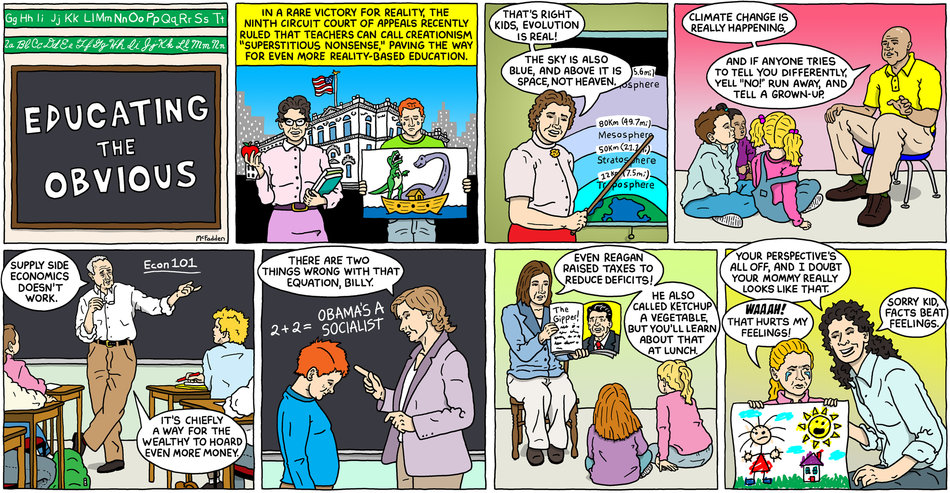
Comedy may be able to make inroads with audiences in ways that ‘serious journalism’ often cannot. With an issue as serious as climate science suggests, communicators should not shy from taking the risks of injecting humor as appropriate.


Last week, Colorado-based science journalist Michelle Nijhuis lamented the standard environmental news story. She wrote:

“Environmental journalists often feel married to the tragic narrative. Pollution, extinction, invasion: The stories are endless, and endlessly the same. Our editors see the pattern and bury us in the back pages; our readers see it and abandon us on the subway or in the dentist’s office.”


Commentary 

A welcome exception to this rule, Nijhuis noted, was New Yorker writer Ian Frazier, who has injected humor into the many environmentally themed nonfiction pieces he’s penned over the years.

This might also be the key to the success of Carl Hiaasen‘s best-selling novels. There is nothing new about the sleazy politics and environmental destruction that are regular themes of his books. But it gets digested through wickedly funny scenes and lampooned characters. There are no sacred cows, either. Tree huggers and traditional eco-villains get equally caricatured.

Writers have had a harder time using humor to communicate global warming. In the non-fiction universe, there are no Ian Fraziers tackling the issue in a quirky, sideways manner. Journalists in mainstream media treat the topic somberly and dutifully. Exhaustion may be setting in for some. Recently NPR’s Robert Krulwich wrote:

“I got a call the other day from some producer I very much admire. They wanted to talk about a series next year on global warming and I thought, why does this subject make me instantly tired? Global warming is important, yes; controversial, certainly; complicated (OK by me); but somehow, even broaching this subject makes me feel like someone’s putting heavy stones in my head.”

But if reporters are getting jaded, TV writers and comedians are eagerly joining the fray. Recent satirical novels by acclaimed writers, such as Jonathan Franzen and Ian McEwan have also tackled climate change.

Whether any of these pop culture and high-minded literary endeavors is influencing attitudes is impossible to know. Still, some climate communicators see humor as their best chance to make climate issues resonate with the public at large, though the tact can be a double-edged sword, as one climate campaigner notes:

“Humor’s capacity for radical imagination creates a mental space for potential change but also comes with a loss of control as it breaks taboos and turns the order of reality upside down and inside out. Indeed, because of this ability to destabilize the established order, George Orwell stated that every joke is a tiny revolution. It denudes power of its authority, which is true of those that we oppose but also those that we cherish. Using humor to communicate on climate change means that scientists and environmentalists lose the monopoly on framing climate change and even risk becoming the butt of the joke. However uncomfortable, this may be necessary if we truly want the public at large to take ownership of the issue.”

That some attempts at humor can backfire has already been demonstrated. But if the stakes are as high as climate science suggests, then that’s a risk climate communicators should not be afraid to take.

Keith Kloor

Keith Kloor is a New York City-based freelance journalist who writes often about the environment and climate change. (E-mail: keith@yaleclimatemediaforum.org)

A Map of Organized Climate Change Denial (Dot Earth, N.Y. Times)

October 2, 2011, 3:51 PM

By ANDREW C. REVKIN

Oct. 3, 9:00 p.m. | Updated 
A chart of “key components of the climate change denial machine” has been produced by Riley E. Dunlap, regents professor of sociology at Oklahoma State University, and Aaron M. McCright, an associate professor of sociology at Michigan State University. The diagram below (reproduced here with permission) is from a chapter the two researchers wrote on organized opposition to efforts to curb greenhouse gases for the new Oxford Handbook of Climate Change and Society.
That there are such well-financed and coordinated efforts is not contentious. And this is not the first attempt to map them.

But it’s important to keep in mind that not everyone skeptical of worst-case predictions of human-driven climate disruption, or everyone opposed to certain climate policies, is part of this apparatus.

And there’s plenty to chart on the other edge of the climate debate — thosegroups and outlets pursuing a traditional pollution-style approach to greenhouse gases.

[Oct. 3, 9:00 p.m. | Updated As it happens, the blogger behind Australian Climate Madness has posted a skeptics’ map of “the climate alarmism machine.” (see below) I think some, though by no means all, aspects of the map are not bad. But, as with so much of the climate debate, it is an overdrawn, overblown caricature of reality.]

It’s also important to examine whether a world without such efforts — in which citizens had a clear view of both what is known, and uncertain, about the human factor in shaping climate-related risks — would appreciably change. Some insist the answer is yes. Given the deep-rooted human bias tothe near and now and other aspects of our “inconvenient mind,” I’m not nearly so sure (although this doesn’t stop me from working on this challenge, of course).

Some issues with an anthropology of climate change (Imponderabilia)

By Heid Jerstad
Imponderabilia
Spring ’10 – Issue 2

Introduction: Climate change is something everyone comes across in their personal and day-to-day lives. This article explores some of the possible reasons why anthropology has been slow in taking up this issue and analogies are drawn with the postcolonial and feminist critiques of anthropology.

Some issues with an anthropology of climate change

Is there a stigma in anthropology about climate issues? Do you see this title and think ‘well, I switch off my lights, but this has no place in academia?’ I would like to reflect a little on why this might be so. As students we learn about the ‘personal as political’ in gender theory. I think the issue of climate change (and the related, but not identical, issue of peak oil) may be a fairly close parallel to the attention given to gender issues in anthropology during the 1980s. Both feminism and the climate change movement are political movements in society, wanting to change the way people live their lives. So why is climate change only present on the margins of anthropological research?

Several scholars have issued calls to action, arguing that this area needs further research (Rayner 1989, Battersbury 2008, Crate and Nuttall 2009). So far, however, it has been hard for anthropologists to directly engage with the issue of climate change. I propose in the following to discuss and examine several reasons for this.

Firstly, anthropology has in the past few decades focused on subjectivities of difference (Moore 2009). That is to say on minorities, colonial power imbalances and sexualities, to give a few examples. The theory developed to deal with these identity and power issues is then perhaps badly suited to address phenomena that are affecting the entire globe. All human societies seem to be experiencing some impact, regardless of which categories of difference they might fall into. In some cases, the social, economic and ecological impact of other, non-climatic changes – for instance the effect of mining and tubewells on the groundwater in Rajasthan (Jerstad 2009) – combines with climatic effects to ‘exacerbate . . . existing problems’ (Crate and Nuttall 2009:11). To comprehend this interaction, socially oriented analysis is required. The ethnographic focus of the anthropologist, sharpened as it has been by highlighting issues of difference, can contribute to more complete understandings of the complex agricultural, linguistic, ritual, local-global, differentiated forces and effects operating on various scales and infrastructures. Such research – on the societal effects of climate change – can benefit from the theory base of anthropology, and subjectivities of difference would certainly have their place in such an analysis.

Secondly, the issue of climate change forces contact between academic anthropology and the ‘hard’ sciences and ‘development.’ Each of these points of contact proves problematic in its own way.

‘Science’ has been set aside by mainstream anthropology to the degree that there is a set of ‘replacement’ parallels within the discipline – such as medical anthropology and ethnobiology. But it is within western science that the majority of the research on climate change has been done. Here scientists have become activists and found their scientific material to have ethical relevance. What they lack is an understanding of how climatic effects will impact human societies around the world existing under very different ecological and social conditions.

‘Development’ – though sometimes the site of fruitful collaboration with anthropology – operates under very different assumptions from anthropology (Mosse 2006). The tendency in development is to use climate change as an excuse to deal with existing problems such as drought or extreme weather events. Yet here there is a risk that climate change will be sidelined by governments and other internal social institutions as ‘just another issue’ for the development agencies to deal with.

Thirdly, a reluctance to engage politically, which is not new in the discipline, seems to contribute to anthropologists’ reluctance to tackle climate change as an issue. Could doing fieldwork today while ignoring ecological issues be seen as equivalent to doing fieldwork in the 1930s while ignoring the colonial presence? Both situations are political, placing anthropologists between the countries that fund them and those that provide the data for their work – countries that are themselves caught up in global power relationships. In the colonial instance, the anthropologist was often from the country colonising their area of study. Today issues of power relations are far more complex, but this is all the more reason not to ignore them. I am suggesting not only to place climate change in the ethics or methodology section of a monograph with reference to political relationships and logistical issues, but also to reflect on cultural relationships with the ‘weather,’ how it is changing and how these relationships in turn may be affected. In Crates’ work with the Sakha people of Siberia (2008), she introduces her call for anthropologists to become advocates with a story of the ‘bull of winter’ losing its horns and hence its strength, signalling spring. This meteorological model no longer meshes with experienced reality for the Sakha, highlighting the cultural implications of climatic change beyond ‘mere’ agricultural or economic effects (Vedwan and Rhoades 2001).

Another analogy, touched on in the introduction, is with gender. Problematising the gendered dimension of societies is a political act, but a necessary one in order to avoid the passive politics of unquestioningly reinforcing the status quo. An anthropological study of Indian weddings without mention of the hijras – cross-dressing dancers (Nanda 1990) – for instance, might leave the reader with the general impression that gender/sexuality in India is uniformly dualistic. In the same way, leaving energy relations to economists and political scientists is itself a political act. The impacts of climate change on humans, though mediated by wind and weather, are as social as gender relations, and are products of a particular set of power relations (Hornborg 2008). By ignoring them, anthropologists risk becoming passive supporters of this system.

An anthropology of climate change is emerging (Grodzins Gold 1998, Rudiak-Gould 2009), and anthropologists must reflect on and orient themselves in relation to this. Villagers and other informants are affected by drought, floods, storms and more subtle meteorological changes that are hard to pinpoint as climate-change caused but can be assumed to be climate-change exacerbated. Would anthropological work in these areas and on these issues primarily benefit aid organisations? I don’t think so. Giving academic credibility to problems people are facing can allow governments, corporations and other bodies to act and change policy in a world where the word of a villager tends to carry very little weight.

Bibliography

Battersbury, Simon. 2008. Anthropology and Global Warming: The Need for Environmental Engagement. Australian Journal of Anthropology 19 (1)

Crate, S. A. and Nuttall, 2009. Anthropology and Climate Change: From encounters to actions. Walnut Creek, CA: Left Coast Press.

Crate, S. A. 2008. “Gone the Bull of Winter? Grappling with the Cultural Implications of and Anthropology’s Role(s) in Global Climate Change.” Current Anthropology, 49 (4), 569.

Gold, Ann Grodzins. 1998. “Sin and Rain: Moral Ecology in Rural North India.” In Lance E. Nelson ed. Purifying the Earthly Body of God: Religion and Ecology in Hindu India. Albany: State University of New York Press, 165-195.

Hornberg, A. 2008. Machine fetishism and the consumer’s burden. Anthropology Today, 24 (5).

Jerstad, H. 2009. Climate Change in the Jaisamand Catchment Area: Vulnerability and Adaptation. Unpublished report for SPWD.

Mosse, D. 2006. Anti-social anthropology? Objectivity, objection and the ethnography of public policy and professional communities. Journal of the Royal Anthropological Institute (N.S.). 12 (4), 935-956.

Moore, Henrietta 20th Oct 2009 SOAS departmental seminar.

Nanda, S. 1990. Neither man nor woman: the hijras of India. Wadsworth: Open University Press.

Rayner, S. 1989. Fiddling While the Globe Warms? Anthropology Today 5 (6)

Rudiak-Gould, P. 2009. The Fallen Palm: Climate Change and Culture Change in the Marshall Islands. VDM Verlag.

Vedwan and Rhoades, 2001 Climate change in the western Himalayas of India: a study of local perception and response. Climate research, 19, 109-117.

Heid Jerstad is a Norwegian-English MA Res student at SOAS. After completing a BA in arch and anth at Oxford, she went to India and worked on the impacts of climate change in southern Rajasthan. She is now attempting to pursue related issues in her dissertation. In her spare time she volunteers in a Red Cross shop, hosts dinner parties and fights with her sword.

Unshakeable stereotypes of science (New Scientist)

13 September 2011 by Roger Highfield
Magazine issue 2829.

Science has transformed our world, so why does the public have such an old-fashioned view of scientists, asks Quentin Cooper

What is the problem with the public’s image of scientists?
If you ask anyone, they will tell you that science has transformed their world with amazing discoveries. But then if you invite them to draw a scientist, what they depict is precisely what people would have described 50 years ago, back when the anthropologist Margaret Mead came up with what we now call the “draw a scientist” test.

How do people generally depict scientists?
It is uncanny: they draw someone with a hangdog look, frizzy hair and test tube in hand, all in a scene where things are going wrong. There are national variations. In Italy, scientists tend to be scarred and have bolts in their necks, like Frankenstein’s monster. In general, though, they are mostly white, male, bald and wearing a white coat. No wonder we have a problem recruiting scientists.

What do you think of attempts to make scientists cool, like the Studmuffins of Science calendar and GQ’s Rock Stars of Science?
They are doomed because for geek calendars and suchlike to work, they have to bounce off the stereotype. As a result, they reinforce it.

On TV there are plenty of science presenters who defy the stereotype, such as the physicist Brian Cox. Surely that helps?
It is true. They are not all white, male and old. Some have hair. Some, like Brian, arguably have too much! But while people know them and are familiar with their TV programmes, it is surprising what happens when you ask the public about their favourite science presenters. In the UK they usually nominate veterans, such as David Attenborough. In fact, in the last poll I saw, half the people could not name a TV science presenter. They don’t seem to recognise them as scientists because they don’t conform to the stereotype.

And this stereotype also applies to the best known scientist of all time, Einstein?
The image of the old Einstein with tongue out is the one everyone knows – the one taken on his 72nd birthday. But he was a dapper 26-year-old when he had his “annus mirabilis” and wrote the four papers that changed physics.

What do you think about the depiction of scientists in films?
What I find striking is you almost never see scientists on screen unless they are doing science. There are very few characters who happen to be scientists. And those scientists shown tend to be at best eccentric, at worst mad and/or evil.

How can we improve the image of scientists?
Even though the “draw a scientist” test started half a century ago, it was only in the 1980s that someone had the idea of introducing children to a real scientist after they had drawn one, and then asking them to have another go at drawing. One of my favourite examples is of the schoolgirl who initially drew a man with frizzy hair and a white coat, but afterwards depicted a smiling young woman holding a test tube. Above it is the word “me”. I still find myself choking up when I show it.

Profile
Quentin Cooper is a science journalist and presenter of the BBC radio programme Material World. He is hosting the Cabaret of the Elements at the British Science Festival in Bradford on 10 September.

We Need To Do More When It Comes To Having Brief, Panicked Thoughts About Climate Change (The Onion)

COMMENTARY
BY RHETT STEVENSON
SEPTEMBER 6, 2011 | ISSUE 47•36

The 20 hottest years on record have all taken place in the past quarter century. The resulting floods, wildfires, and heat waves have all had deadly consequences, and if we don’t reduce carbon emissions immediately, humanity faces bleak prospects. We can no longer ignore this issue. Beginning today, we must all do more when it comes to our brief and panicked thoughts about climate change.

Indeed, if there was ever a time when a desperate call to take action against global warming should race through our heads as we lie in bed and stare at the ceiling, that time is now.

Many well-intentioned people will take 20 seconds out of their week to consider the consequences of the lifestyle they’ve chosen, perhaps contemplating how their reliance on fossil fuels has contributed to the rapid melting of the Arctic ice cap. But if progress is what we truly want, 20 seconds is simply not enough. Not by a long shot. An issue this critical demands at least 45 seconds to a solid minute of real, concentrated panic.

And I’m not talking about letting the image of a drowning polar bear play out in your mind now and then. If we’re at all serious, we need to let ourselves occasionally be struck with grim visions of coastal cities washing away and people starving as drought-stricken farmlands fail to yield crops—and we need to do this regularly, every couple days or so, before continuing to go about our routines as usual.

This may seem like a lot to ask, but no one ever said making an effort to think about change was easy.

So if you pick up a newspaper and see an article about 10 percent of all living species going extinct by the end of the century, don’t just turn the page. Stop, peruse it for a moment, look at the photos, freak out for a few seconds, and then turn the page.

And the next time you start up your car, stop to think how the exhaust from your vehicle and millions of others like it contributes to air pollution, increasing the likelihood that a child in your neighborhood will develop asthma or other respiratory ailments. Take your time with it. Feel the full, crushing weight of that guilt. Then go ahead and drive wherever it was you wanted to go.

To do anything less is irresponsible.

Suppose you’ve just sat down in a crisply air-conditioned movie theater. Why not take the length of a preview or two to consider the building’s massive carbon footprint? Imagine those greenhouse gases trapped in the atmosphere, disrupting ecosystems and causing infectious diseases to spread rampantly, particularly in regions of the world where the poorest people live. Visualize massive storm systems cutting widespread swaths of destruction. Think of your children’s children dying horrible, unnecessary deaths.

You might even go so far as to experience actual physical symptoms: shaking, hyperventilation, perhaps even a heart palpitation. These are entirely appropriate responses to have, and the kinds of reactions each of us ought to have briefly before casting such worries aside to enjoy Conan The Barbarian.

Ultimately, however, our personal moments of distress won’t matter much unless our government intervenes with occasional mentions of climate change in important speeches, or by passing nonbinding legislation on the subject. I implore you: Spend a couple minutes each year imagining yourself writing impassioned letters to your elected representatives demanding a federal cap on emissions.

Global warming must be met with immediate, short-lasting feelings of overwhelming dread, or else life as we know it will truly cease—oh, God, there’s nothing we can do, is there? Maybe we’re already too late. What am I supposed to do? Unplug my refrigerator? I recycle, I take shorter showers than I used to, doesn’t that count for something? Devastating famines and brutal wars fought over dwindling resources? Is that my fault? Jesus, holy shit, someone do something! Tell me what to do! For the love of God, what can possibly be done?

There you have it. I’ve done my part. Now it’s your turn.

Shooting the messenger (The Miami Herald)

Environment
Posted on Monday, 08.29.11
BY ANDREW DESSLER

Texas Gov. Rick Perry stirred up controversy on the campaign trail recently when he dismissed the problem of climate change and accused scientists of basically making up the problem.

As a born-and-bred Texan, it’s especially disturbing to hear this now, when our state is getting absolutely hammered by heat and drought. I’ve got to wonder how any resident of Texas – and particularly the governor who not so long ago was asking us to pray for rain – can be so cavalier about climate change.

As a climate scientist at Texas A&M University, I can also tell you from the data that the current heat wave and drought in Texas is so bad that calling it “extreme weather” does not do it justice. July was the single hottest month in the observational record, and the 12 months that ended in July were drier than any corresponding period in the record. I know that climate change does not cause any specific weather event. But I also know that humans have warmed the climate over the last century, and that this warming has almost certainly made the heat wave and drought more extreme than it would have otherwise been.

I am not alone in these views. There are dozens of atmospheric scientists at Texas institutions like Rice, the University of Texas, and Texas A&M, and none of them dispute the mainstream scientific view of climate change. This is not surprising, since there are only a handful of atmospheric scientists in the entire world who dispute the essential facts – and their ranks are not increasing, as Gov. Perry claimed.

And I can assure Gov. Perry that scientists are not just another special interest looking to line their own pockets. I left a job as an investment banker on Wall Street in 1988 to go to graduate school in chemistry. I certainly didn’t make that choice to get rich, and I didn’t do it to exert influence in the international arena either.

I went into science because I wanted to devote my life to the search for scientific knowledge. and to make the world a better place. That’s the same noble goal that motivates most scientists. The ultimate dream is to make a discovery so profound and revolutionary that it catapults one into the pantheon of the greatest scientific minds of history: Newton, Einstein, Maxwell, Planck, etc.

This is just one of the many reasons it is inconceivable for an entire scientific community to conspire en masse to mislead the public. In fact, if climate scientists truly wanted to maximize funding, we would be claiming that we had no idea why the climate is changing – a position that would certainly attract bipartisan support for increased research.

The economic costs of the Texas heat wave and drought are enormous. The cost to Texas alone will be many billion dollars (hundreds of dollars for every resident), and these costs will ripple through the economy so that everyone will eventually pay for it. Gov. Perry needs to squarely face the choice confronting us; either we pay to reduce emissions of greenhouse gases, or we pay for the impacts of a changing climate. There is no free lunch.

Economists have looked at this problem repeatedly over the last two decades, and virtually every mainstream economist has concluded that the costs of reducing emissions are less than the costs of unchecked climate change. The only disagreement is on the optimal level of emissions reductions.

I suppose it should not be surprising when politicians like Gov. Perry choose to shoot the messenger rather than face this hard choice. He may view this as a legitimate policy on climate change, but it’s not one that the facts support.

Read more here.

A Reality Check on Clouds and Climate (N.Y. Times)

September 6, 2011, 5:44 PM

Dot Earth

By ANDREW C. REVKIN

I am often in awe of clouds, as was the case when I shot this video of a remarkable thunderhead somewhere over the Midwest. But I’m tired of the recent burst of over-interpretation of a couple of papers examining aspects of clouds in the context of a changing climate.

I’ve long pointed out that anyone trumpeting a conclusion about greenhouse-driven climate change on the basis of a single paper should be treated with skepticism or outright suspicion. I trust climate science as an enterprise because — despite its flaws — it is a self-correcting process in which trajectory matters far more than individual steps in the road.

There is always a temptation, particularly for those with an agenda and for media in search of the “front-page thought,” to overemphasize studies that fit some template, no matter how tentative, or flawed.

The flood of celebratory coverage that followed publication of a recent paper by Roy Spencer and Danny Braswell — proposing a big reduction in the sensitivity of the climate to greenhouse gases — was far more about pushing an agenda than providing guidance on the state of climate science. There’s a lot more on this below.

The same goes for the stampede on clouds and climate following publication of an important, but preliminary, laboratory finding from the European Organization for Nuclear Research (better known by its acronym, CERN) about how cosmic rays can stimulate the formation of atmospheric particles(an ingredient in cloud formation). It’s a long road from that conclusion to an argument that variations in cosmic rays can explain a meaningful portion of recent climate change.

There’s a long history of assertions that clouds can be a substantial driver of climate change, distinct from their clear potential to amplify or blunt(depending on the type of cloud) a change set in motion by some other force. But there’s still scant evidence to back up such assertions.

In weighing the new results on cosmic rays and the atmosphere, I find a lot of merit in Hank Campbell’s conclusion at Science 2.0:

[I]t isn’t evidence that the Sun’s magnetic field is controlling cosmic rays and therefore our temperature far more than mankind and pollution are doing.

It is simply science at work – finally, after a decade and a half of circling the wagons, hypotheses that were dismissed as conspiratorial nonsense by zealots get a chance to live or die by the scientific method and not by aggressive posturing.

new paper by Andrew Dessler of Texas A&M University bolsters the established view of clouds’ role as a feedback mechanism — but not driver — in climate dynamics through a decade of observation and analysis of El Nino and La Nina events (periodic warm and cool phases of the Pacific Ocean).

The paper directly challenges conclusions of Spencer and Braswell and anearlier paper positing a role of clouds in driving climate change.

Dessler, setting his findings and other work on clouds and climate in broader context, offered this observation this morning about the polarized, and distorted, public discourse:

To me, the real story here is that, every month, dozens if not hundreds of papers are published that are in agreement with the mainstream theory of climate science.

[ACR: I did a quick Google Scholar search for “CO2 climate change greenhouse” to put a rough upper bound on this and got ~9,000 papers so far in 2011.]

But, every year, one or two skeptical papers get published, and these are then trumpeted by sympathetic media outlets as if they’d discovered the wheel. It therefore appears to the general public that there’s a debate.

Here’s more from Dessler on his new paper:

A separate question has emerged around the Spencer-Braswell paper. Should it have been published in the first place?

As Retraction Watch (a fascinating and worthwhile blog) chronicled last week, the editor of Remote Sensing, the journal in which the paper appeared, emphatically — if after the fact — said no, emphasizing his view by very publicly resigning.

This move was hailed by defenders of the climate status quo in a piece run inThe Daily Climate and Climate Progress. Peter Gleick of the Pacific Institute, remarkably given space in Forbes, called the resignation “staggering news.”

But others, including the folks at Retraction Watch, wondered why the editor at Remote Sensing, Wolfgang Wagner, didn’t simply seek to have the paper retracted?

Roger A. Pielke, Jr., whose focus at the University of Colorado is climate in the context of political science, echoed that question, urging the new team at the journal to initiate retraction proceedings, adding:

If the charges of “error” and “false claims” are upheld the paper should certainly be retracted.  If the charges are not upheld then the authors have every right to have such a judgment announced publicly.

Absent such an adjudication we are left with climate science played out as political theater in the media and on blogs — with each side claiming the righteousness of their views, while everyone else just sees the peer review process in climate science getting another black eye.

Over the weekend, I asked Kerry Emanuel at the Massachusetts Institute of Technology for his thoughts both on the Spencer-Braswell paper and the histrionic resignation by the editor. Here’s Emanuel:

About the paper: I read it when it first came out, and thought that some of their findings were significant and important. Basically, it presented evidence that feedbacks inferred from short-period and/or local climate change observations might not be relevant to long-period global change. I suppose I thought that rather obvious, but not everyone agrees. The one statement in the paper, to the effect that climate models might be overestimating positive feedback, struck me as unsubstantiated, but the authors themselves phrased it as speculative.

But the interesting and unusual thing about this is that that what pundits said about the paper, and indeed what Spencer said about it in press releases, etc., in my view had very little to do with the paper itself. I have seldom seen such a degree of disconnect between the substance of a paper and what has been said about it.

Gavin Schmidt of Real Climate and NASA has posted a thorough and useful dissection of the situation, “Resignations, retractions and the process of science,” that comes to what I see as the right conclusion:

I think (rightly) that people feel that the best way to deal with these papers is within the literature itself, and in this case it is happening this week in GRL (Dessler, 2011) [the Dessler paper discussed above], and in Remote Sensing in a few months. That’s the way it should be, and neither resignations nor retractions are likely to become more dominant – despite the amount of popcorn being passed around.

There’s more useful context and analysis from Keith Kloor, who notes the role played by the Drudge Report in amping up the story (blogging at the Yale Forum on Climate Change and the Media), Mike LemonickJudith Curry and many others.

As always happens after such episodes, the one clear finding is that clouds remain a complicating component in efforts to project warming from the building greenhouse effect.

Joni Mitchell’s classic, with a bit of mangling, sums things up well:


They’ve looked at clouds from all sides now, as feedback and forcing, and still somehow, it’s clouds’ illusions most often recalled. More work is needed to know clouds at all.

8:52 p.m. | Postscript |
There’s more coverage of the Spencer-Braswell paper at Knight Science Journalism Tracker and the blogs of Roger Pielke, Sr. and William M. Briggs. Roy Spencer has posted a piece titled “More Thoughts on the War Being Waged Against Us.”

Philosophers Notwithstanding, Kansas School Board Redefines Science (N.Y. Times)

By DENNIS OVERBYE
Published: November 15, 2005

Once it was the left who wanted to redefine science.

In the early 1990’s, writers like the Czech playwright and former president Vaclav Havel and the French philosopher Bruno Latour proclaimed “the end of objectivity.” The laws of science were constructed rather than discovered, some academics said; science was just another way of looking at the world, a servant of corporate and military interests. Everybody had a claim on truth.

The right defended the traditional notion of science back then. Now it is the right that is trying to change it.

On Tuesday, fueled by the popular opposition to the Darwinian theory of evolution, the Kansas State Board of Education stepped into this fraught philosophical territory. In the course of revising the state’s science standards to include criticism of evolution, the board promulgated a new definition of science itself.

The changes in the official state definition are subtle and lawyerly, and involve mainly the removal of two words: “natural explanations.” But they are a red flag to scientists, who say the changes obliterate the distinction between the natural and the supernatural that goes back to Galileo and the foundations of science.

The old definition reads in part, “Science is the human activity of seeking natural explanations for what we observe in the world around us.” The new one calls science “a systematic method of continuing investigation that uses observation, hypothesis testing, measurement, experimentation, logical argument and theory building to lead to more adequate explanations of natural phenomena.”

Adrian Melott, a physics professor at the University of Kansas who has long been fighting Darwin’s opponents, said, “The only reason to take out ‘natural explanations’ is if you want to open the door to supernatural explanations.”

Gerald Holton, a professor of the history of science at Harvard, said removing those two words and the framework they set means “anything goes.”

The authors of these changes say that presuming the laws of science can explain all natural phenomena promotes materialism, secular humanism, atheism and leads to the idea that life is accidental. Indeed, they say in material online at kansasscience2005.com, it may even be unconstitutional to promulgate that attitude in a classroom because it is not ideologically “neutral.”

But many scientists say that characterization is an overstatement of the claims of science. The scientist’s job description, said Steven Weinberg, a physicist and Nobel laureate at the University of Texas, is to search for natural explanations, just as a mechanic looks for mechanical reasons why a car won’t run.

“This doesn’t mean that they commit themselves to the view that this is all there is,” Dr. Weinberg wrote in an e-mail message. “Many scientists (including me) think that this is the case, but other scientists are religious, and believe that what is observed in nature is at least in part a result of God’s will.”

The opposition to evolution, of course, is as old as the theory itself. “This is a very long story,” said Dr. Holton, who attributed its recent prominence to politics and the drive by many religious conservatives to tar science with the brush of materialism.

How long the Kansas changes will last is anyone’s guess. The state board tried to abolish the teaching of evolution and the Big Bang in schools six years ago, only to reverse course in 2001.

As it happened, the Kansas vote last week came on the same day that voters in Dover, Pa., ousted the local school board that had been sued for introducing the teaching of intelligent design.

As Dr. Weinberg noted, scientists and philosophers have been trying to define science, mostly unsuccessfully, for centuries.

When pressed for a definition of what they do, many scientists eventually fall back on the notion of falsifiability propounded by the philosopher Karl Popper. A scientific statement, he said, is one that can be proved wrong, like “the sun always rises in the east” or “light in a vacuum travels 186,000 miles a second.” By Popper’s rules, a law of science can never be proved; it can only be used to make a prediction that can be tested, with the possibility of being proved wrong.

But the rules get fuzzy in practice. For example, what is the role of intuition in analyzing a foggy set of data points? James Robert Brown, a philosopher of science at the University of Toronto, said in an e-mail message: “It’s the widespread belief that so-called scientific method is a clear, well-understood thing. Not so.” It is learned by doing, he added, and for that good examples and teachers are needed.

One thing scientists agree on, though, is that the requirement of testability excludes supernatural explanations. The supernatural, by definition, does not have to follow any rules or regularities, so it cannot be tested. “The only claim regularly made by the pro-science side is that supernatural explanations are empty,” Dr. Brown said.

The redefinition by the Kansas board will have nothing to do with how science is performed, in Kansas or anywhere else. But Dr. Holton said that if more states changed their standards, it could complicate the lives of science teachers and students around the nation.

He added that Galileo – who started it all, and paid the price – had “a wonderful way” of separating the supernatural from the natural. There are two equally worthy ways to understand the divine, Galileo said. “One was reverent contemplation of the Bible, God’s word,” Dr. Holton said. “The other was through scientific contemplation of the world, which is his creation.

“That is the view that I hope the Kansas school board would have adopted.”

In the Land of Denial (N.Y. Times)

NY Times editorial
September 6, 2011

The Republican presidential contenders regard global warming as a hoax or, at best, underplay its importance. The most vocal denier is Rick Perry, the Texas governor and longtime friend of the oil industry, who insists that climate change is an unproven theory created by “a substantial number of scientists who have manipulated data so that they will have dollars rolling into their projects.”

Never mind that nearly all the world’s scientists regard global warming as a serious threat to the planet, with human activities like the burning of fossil fuels a major cause. Never mind that multiple investigations have found no evidence of scientific manipulation. Never mind that America needs a national policy. Mr. Perry has a big soapbox, and what he says, however fallacious, reaches a bigger audience than any scientist can command.

With one exception — make that one-and-one-half — the rest of the Republican presidential field also rejects the scientific consensus. The exception is Jon Huntsman Jr., a former ambassador to China and former governor of Utah, who recently wrote on Twitter: “I believe in evolution and trust scientists on global warming. Call me crazy.” The one-half exception is Mitt Romney, who accepted the science when he was governor of Massachusetts and argued for reducing emissions. Lately, he’s retreated into mush: “Do I think the world’s getting hotter? Yeah, I don’t know that, but I think that it is.” As for the human contribution: “It could be a little. It could be a lot.”

The others flatly repudiate the science. Ron Paul of Texas calls global warming “the greatest hoax I think that has been around for many, many years.” Michele Bachmann of Minnesota once said that carbon dioxide was nothing to fear because it is a “natural byproduct of nature” and has complained of “manufactured science.” Rick Santorum, a former senator from Pennsylvania, has called climate change “a beautifully concocted scheme” that is “just an excuse for more government control of your life.”

Newt Gingrich’s full record on climate change has been a series of epic flip-flops. In 2008, he appeared on television with Nancy Pelosi, the former House speaker, to say that “our country must take action to address climate change.” He now says the appearance was a mistake.

None of the candidates endorse a mandatory limit on emissions or, for that matter, a truly robust clean energy program. This includes Mr. Huntsman. In 2007, as Utah governor, he joined with Arnold Schwarzenegger, then the governor of California, in creating the Western Climate Initiative, a market-based cap-and-trade program aimed at reducing emissions in Western states. Cap-and-trade has since acquired a toxic political reputation, especially among Republicans, and Mr. Huntsman has backed away.

The economic downturn has made addressing climate change less urgent for voters. But the issue is not going away. The nation badly needs a candidate with a coherent, disciplined national strategy. So far, there is no Republican who fits that description.

Profits Before Environment (N.Y. Times)

August 30, 2011, 10:27 PM
By MARK BITTMAN

I wasn’t surprised when the administration of George W. Bush sacrificed the environment for corporate profits. But when the same thing happens under a Democratic administration, it’s depressing. With little or no public input, policies that benefit corporations regardless of the consequences continue to be enacted.

No wonder an April 2010 poll from the Pew Research Center found that about only 20 percent of Americans have faith in the government (it’s one thing upon which the left and right and maybe even the center agree). But maybe this is nothing new: as Glenda Farrell, as Genevieve “Gen” Larkin, put it in “Gold Diggers of 1937,” “It’s so hard to be good under the capitalistic system.”

But is anyone in power even trying? Last winter, the Department of Agriculture deregulated Monsanto’s genetically modified alfalfa, despite concerns about cross-pollination of non-genetically modified crops. It then defied a court order banning the planting of genetically modified sugar beets pending completion of an environmental impact study.

Monsanto engineers these plants and makes Roundup, the herbicide they resist. But Roundup-ready crops don’t increase long-term yields, a host of farmers are now dealing with “superweeds” and there is worry about superbugs, nearly all courtesy of Monsanto. In fact, this system doesn’t contribute to much of anything except Monsanto’s bottom line. Yet Agriculture Secretary Tom Vilsack gave Monsanto the nod, perhaps yielding to pressure from the White House.

The United States exerts that same kind of pressure abroad. WikiLeaks cables show that U.S. “biotechnology outreach programs” have promoted genetically modified crops in Africa, Asia and South America; they’ve also revealed that diplomats schemed to retaliate against any European Union countries that oppose those crops.

Sacrificing the environment for profits didn’t stop with Bush, and it doesn’t stop with genetically modified organisms. Take, for example, the Keystone XL pipeline extension. XL is right: the 36-inch-wide pipeline, which will stretch from the Alberta tar sands across the Great Plains to the Gulf Coast, will cost $7 billion and run for 1,711 miles — more than twice as long as the Alaska pipeline. It will cross nearly 2,000 rivers, the huge wetlands ecosystem called the Nebraska Sandhills and the Ogallala aquifer, the country’s biggest underground freshwater supply.

If Keystone is built, we’ll see rising greenhouse gas emissions right away (tar sands production creates three times as many greenhouse gases as does conventional oil), and our increased dependence on fossil fuels will further the likelihood of climate-change disaster. Then there is the disastrous potential of leaks of the non-Wiki-variety. (It’s happened before.)

Proponents say the pipeline will ease gas prices and oil “insecurity.” But domestic drilling has raised, not lowered, oil prices, and as for the insecurity — what we need is to develop wiser ways to use the oil we have.

They say, too, that the pipeline could create 100,000 new jobs. But even the Amalgamated Transit Union and the Transport Workers Union oppose the pipeline, saying, “We need jobs, but not ones based on increasing our reliance on Tar Sands oil.”

Sounds as if union officials have been reading the writer and activist Bill McKibben, who calls the pipeline “a fuse to the biggest carbon bomb on the continent,” and NASA scientist Jim Hansen, who says the oil Keystone will deliver “is essentially game over” for the planet.

Game over? No problem, says the State Department, which concluded that the project will have no significant impact on “most resources along the proposed pipeline corridor.” The Sierra Club quickly responded by calling the report “an insult to anyone who expects government to work for the interests of the American people.”

I do expect that, and I am insulted. President Obama can deny Keystone the permit. A truly environmentally friendly president (like the one candidate Obama appeared to be) would be looking for creative ways to leave fossil fuels underground, not extract them. Perhaps he doesn’t “believe in” global warming at this point, like many Republicans?

When government defends corporate interests, citizens must fight. McKibben has helped organize protests at the White House against Keystone, and he’s one of hundreds who’ve been arrested in the last couple of weeks. These people are showing that the role of government as corporate ally must be challenged.

As it will be in the fight against carte blanche for genetically modified organisms: From Oct. 1 to Oct. 16, there will be a march from New York City to Washington to demand that genetically modified foods be labeled, something a majority of Americans want. This small, perfectly reasonable request has run into joint opposition from the biotech industry and (here we go again) the Food and Drug Administration.

Why are most of us are filled with mistrust of the government? Maybe because we, like Gen Larkin, know it’s so hard to be good under the capitalistic system.

O partido anticiência (JC, O Globo)

JC e-mail 4333, de 30 de Agosto de 2011.

Artigo de Paul Krugman publicado no O Globo de hoje (30).

John Huntsman Jr., ex-governador de Utah e embaixador na China, não é um forte pré-candidato à indicação do Partido Republicano para concorrer à Presidência. E isto é muito ruim porque o desejo de Huntsman é dizer o indizível sobre o partido – especialmente que ele está se tornando o “partido anticiência”. Isto é algo enormemente importante. E deveria nos aterrorizar.

Para entender o que Huntsman defende, considere declarações recentes dos dois mais fortes pretendentes à indicação republicana: Rick Perry e Mitt Romney.

Perry, governador do Texas, fez manchetes recentemente ao fazer pouco da evolução humana como uma “simples teoria”, que tem “algumas lacunas” – uma observação que soaria como novidade para a vasta maioria dos biólogos. Mas o que mais chamou a atenção foi o que ele disse sobre mudança climática: “Penso que há um número substancial de cientistas que manipulou dados para obter dólares para seus projetos. E penso que estamos vendo, quase toda semana, ou todo dia, cientistas questionando a ideia original de que o aquecimento global provocado pelo homem é a causa da mudança climática.” É uma declaração extraordinária – ou talvez o adjetivo correto seja “vil”.

A segunda parte da declaração de Perry é falsa: o consenso científico sobre a interferência humana no aquecimento global – que inclui 97% a 98% dos pesquisadores de campo, segundo a Academia Nacional de Ciências – está se tornando mais forte à medida que aumentam as evidências sobre a mudança do clima.

De fato, se você acompanha a ciência climática sabe que o principal aspecto nos últimos anos tem sido a preocupação crescente de que as projeções sobre o futuro do clima estejam subestimando o provável aumento da temperatura. Advertências de que poderemos enfrentar mudanças cimáticas capazes de ameaçar a civilização no fim do século, antes consideradas estranhas, partem agora dos principais grupos de pesquisa.

Mas não se preocupe, sugere Perry; os cientistas estão apenas atrás de dinheiro, “manipulando dados” para criar uma falsa ameaça. Em seu livro “Fed Up”, ele despreza a ciência do clima como “uma bagunça falsa e artificial que está se desmanchando”.

Eu poderia dizer que Perry está tirando isso de uma teoria conspiratória verdadeiramente louca, que afirma que milhares de cientistas de todo o mundo estão levando dinheiro, sem que nenhum deseje quebrar o código de silêncio. Poderia apontar que múltiplas investigações em acusações de falsidade intelectual da parte dos cientistas climáticos acabaram com a absolvição dos pesquisadores de todas as acusações. Mas não se preocupe: Perry e os que pensam como ele sabem em que desejam acreditar e sua resposta a qualquer um que os contradiga é iniciar uma caça às bruxas.

Então de que modo Romney, o outro forte concorrente à indicação republicana, respondeu ao desafio de Perry? Correndo dele. No passado, Romney, ex-governador de Massachusetts, endossou fortemente a noção de que a mudança climática provocada pelo homem é uma real preocupação. Mas, na semana passada, ele suavizou isso e disse pensar que o mundo está realmente esquentando, mas “eu não conheço isto” e “não sei se isso é causado principalmente pelo homem”. Que coragem moral!

É claro, sabemos o que está motivando a súbita falta de convicção de Romney. Segundo o Public Policy Polling, somente 21% dos eleitores republicanos de Iowa acreditam no Aquecimento Global (e somente 35% creem na evolução). Dentro do Partido Republicano, ignorância deliberada tornou-se um teste decisivo para os candidatos, no qual Romney está determinado a passar a qualquer custo.

Então, é agora altamente provável que o candidato presidencial de um de nossos dois grandes partidos políticos será ou um homem que acredita no que quer acreditar, ou um homem que finge acreditar em qualquer coisa que ele ache que a base do partido quer que ele acredite.

E o caráter crescentemente anti-intelectual da direita, tanto dentro do Partido Republicano como fora dele, se estende além da questão da mudança climática.

Ultimamente, por exemplo, a seção editorial do “Wall Street Journal” passou da antiga preferência pelas ideias econômicas de “charlatães e maníacos” — pela definição famosa de um dos principais conselheiros econômicos do ex-presidente George W. Bush – para um descrédito geral do pensamento árduo sobre questões econômicas. Não prestem atenção a “teorias fantasiosas” que conflitam com o “senso comum”, diz-nos o “Journal”. Por que deveria alguém imaginar que se precisa mais do que estômago para analisar coisas como crises financeiras e recessões?

Agora, não se sabe quem ganhará a eleição presidencial do próximo ano. Mas há chances de que, mais dia menos dia, a maior nação do mundo será dirigida por um partido que é agressivamente anticiência, mesmo anticonhecimento. E, numa era de grandes desafios – ambiental, econômico e outros – é uma terrível perspectiva.

Paul Krugman é colunista do “New York Times”.

Infanticídio indígena: traços de uma cultura em transformação (I.H. Unisinos)

15/8/2011 –  Instituto Humanitas Unisinos
Infanticídio indígena: traços de uma cultura em transformação. Entrevista especial com Saulo Feitosa
“Se as pessoas querem defender a vida das crianças indígenas, devem aderir a outros projetos de lei”, como o Estatuto dos Povos Indígenas, diz Saulo Feitosa à IHU On-Line, ao criticar oProjeto de Lei 1057/2007, que criminaliza os povos que praticam infanticídio.

Em entrevista concedida por telefone, ele explica que todos os indígenas que vivem no Brasil estão submetidos à legislação brasileira e que, portanto, não há necessidade de sancionar o Projeto de Lei 1057/2007, de autoria do deputado Henrique Afonso (PT/AC). Na avaliação do secretário doCimi, o Projeto tem uma carga preconceituosa, racista e serve “para ampliar o grau de preconceito da sociedade contra os povos indígenas, e para justificar interesses colonialistas que se mantêm nos dias de hoje”.

De acordo com Feitosa, o infanticídio era praticado no período colonial e desde o início da década de 1990 não se têm informações de casos de infanticídio em tribos indígenas. “Todos os registros históricos, dos quais tenho conhecimento, acenam que, entre os indígenas, o índice de infanticídio é baixíssimo. Inclusive viajantes como Fernão Cardim, que escreveu um livro sobre os hábitos do Brasil, faziam referência à maneira carinhosa como as mulheres indígenas cuidavam de seus filhos em comparação às mulheres de Lisboa. (…) Causa-nos estranheza que, 500 anos depois, apareçam grupos fundamentalistas acusando indígenas de matanças generalizadas de suas crianças”.

Feitosa explica ainda que o infanticídio era regido por uma cosmologia indígena e que fazia parte da cultura de alguns povos. “O fato de existir uma narrativa cosmológica não significa que a cultura se mantém atualizada”, enfatiza. E dispara: “A questão do infanticídio, na prática, é residual porque os povos mudam suas culturas”.

Confira a entrevista.

IHU On-Line – Como avalia a polêmica acerca da prática do infanticídio e o projeto de lei que criminaliza indígenas e profissionais de órgãos governamentais por tais práticas? ONGs e deputados evangélicos acusam o governo de cruzar os braços diante da morte de crianças e defendem que o Estado é obrigado por lei a protegê-las.

Saulo Feitosa – Por trás desse projeto de lei e desse debate existe uma questão fundamentalista religiosa e uma questão política. Os povos indígenas estão submetidos à mesma legislação brasileira. Portanto, se vierem a cometer qualquer crime, serão julgados e punidos como todos os cidadãos deste país. Hoje, aproximadamente 750 indígenas estão cumprindo pena no sistema penitenciário nacional. Desse modo, não há razão para existir uma lei específica para falar de infanticídio indígena. No entendimento do Cimi, na medida em que se cria uma lei, os índios seriam, duas vezes, julgados e condenados por um mesmo crime.

Todos sabemos que os indígenas defendem a vida, a natureza. Portanto, existe uma campanha nacional e internacional negativa contra os povos indígenas e isso gera um descrédito da população em relação a essas comunidades. É nesse contexto ofensivo contra os direitos indígenas que surge a questão do infanticídio indígena. Os propositores do Projeto de Lei 1057/2007 afirmam que há, entre os povos indígenas do Brasil, a prática do sacrifício de crianças e que esta prática não é combatida pelo Estado e pelos órgãos que atuam junto dos povos indígenas. Sendo assim, eles querem obrigar as pessoas que trabalham com a questão indígena a denunciarem os índios caso suspeitassem da possibilidade de alguma mulher, em processo de gestação, abandonar o filho. Se os profissionais não denunciarem os indígenas, serão julgados pelo crime de omissão. Essa medida mostra novamente a carga preconceituosa e racista do projeto.

IHU On-Line – Qual é a origem e o sentido do infanticídio para as comunidades indígenas? Ele ainda é praticado no Brasil? Quais são as etnias indígenas que praticam o infanticídio?

Saulo Feitosa – Segundo os parlamentares que querem aprovar o Projeto de Lei, o infanticídio seria uma prática regular dos povos indígenas. Temos conhecimento de experiências isoladas, da mesma forma que identificamos casos de abandono infantil na sociedade brasileira. Semanalmente, assisto, no noticiário, informações de crianças abandonadas em grandes cidades: recém-nascidos jogados em lixeiras, abandonados nas ruas, etc. Essa questão do abandono e, mesmo do assassinato de crianças, é uma questão que aflige a toda a humanidade.

Todos os registros históricos dos quais tenho conhecimento acenam que, entre os indígenas, o índice de infanticídio é baixíssimo. Inclusive viajantes como Fernão Cardim, que escreveu um livro sobre os hábitos do Brasil, faziam referência à maneira carinhosa como as mulheres indígenas cuidavam de seus filhos em comparação às mulheres de Lisboa. Muitos historiadores afirmam que a prática de infanticídio era comum no período colonial, especialmente em comunidades que viviam no Rio de JaneiroSalvador e Recife. Há relatos históricos de uma quantidade enorme de recém-nascidos que eram abandonados nas calçadas, nas ruas, mortos e comidos por porcos e cachorros. Os historiadores que relatam esses fatos sempre os comparam com a questão indígena, e afirmam que, entre os índios, essa prática era muito diminuta.

Causa-nos estranheza que, 500 anos depois, apareçam grupos fundamentalistas acusando indígenas de matanças generalizadas de suas crianças. Nós, do Cimi, temos conhecimentos de casos isolados. Alguns missionários já presenciaram atos de abandono de crianças nas florestas. Entretanto, não temos relatos recentes de missionários sobre esses casos. Por isso, não podemos afirmar que há prática de infanticídio nas comunidades indígenas e, tampouco, que acontecem em grandes proporções.

Infanticídio

Vi, em matéria recente de um jornal de grande circulação, que, de um total de 250 povos, cerca de 20 praticam o infanticídio. Não sei como eles chegaram a esse número, considerando que os últimos registros do Cimi datam de 1990. Sabemos que oito povos ainda praticam o infanticídio, os quais têm pouquíssimo contato com a sociedade nacional.

Antigamente alguns povos abandonavam recém-nascidos por não ter informações sobre o que significa, por exemplo, uma criança nascer com retardamento psicomotor. Não tendo condições de sobreviver na floresta, essas crianças eram abandonadas. Há outros relatos de crianças que nascem sem um “pai social”. Para os indígenas, uma criança que nasce sem um pai para poder caçar e garantir a sua sobrevivência não tem condições de sobreviver. Nesses casos, os recém-nascidos eram abandonados por questões práticas, pois, na percepção da comunidade, não teriam condições de sobreviver na selva. Outros relatos referem-se às narrativas cosmológicas do nascimento de gêmeos. Pesquisadores registraram, através da história oral, que não se aceitava, em determinadas culturas, o nascimento de gêmeos. Então, em função da cosmologia e dos mitos de origem do povo, se acreditava que os gêmeos deveriam ser sacrificados.

Campanha contra o infanticídio

Hoje, essas campanhas contra o chamado infanticídio indígena se fundamentam nesta narrativa cosmológica, o que, para nós, é um absurdo. O fato de existir uma narrativa cosmológica não significa que a cultura se mantém atualizada. A prática dos processos de cultura é dinâmica. Então, deve haver, em povos que têm pouco contato com outras culturas, essa referência cosmológica, que justificaria o abandono de uma criança gêmea, por exemplo. Mas em muitos povos onde essa narrativa estava presente, a prática deixou de existir. É muito fácil compreender isso: muitas práticas do Antigo Testamento são condenáveis na sociedade de hoje. Apesar de elas permanecerem na Bíblia, não são praticadas pelos cristãos do século XXI. Então, não podemos olhar para o nosso universo religioso e olhar para os demais povos de outra forma. Embora subsista, nas narrativas cosmológicas, informações a respeito da gravidez de gêmeos, na prática, as ações têm se alterado. Por isso, costumamos dizer que a questão do infanticídio, na prática, é residual porque os povos mudam suas culturas. O pluralismo histórico acontece em todas as culturas, as quais adquirem, com o tempo, novas formas.

Quando o Cimi foi fundado, os povos indígenas não tinham acesso à saúde e, portanto, os missionários eram treinados para suprir essa carência. Hoje, existe a assistência à saúde, ao médico, por mais precária que seja. Isso também contribui para alterar a cultura dos povos.

No Mato Grosso tem um povo formado por aproximadamente 100 pessoas. Eles foram combatidos em 1978. Na época, sobreviveram 27 pessoas. Desde então acompanhamos essa comunidade. Daquele número de 27 pessoas, eram poucas as mulheres em idade fértil. Logo após a inserção da nossa equipe na comunidade, nasceu uma criança doente. Para os indígenas, o recém-nascido era vítima de feitiço e, portanto, deveria ser sacrificado. Os missionários que estavam no local explicaram que, na nossa sociedade, havia uma espécie de pajé que conseguia realizar um tratamento e sanar aquela deficiência. A comunidade aceitou e a criança foi levada a um hospital em Goiânia, onde foi submetida a uma cirurgia de reparação. O bebê retornou um tempo depois e foi aceito pela comunidade. Para resolver essa questão, não foi preciso uma lei, mas, sim, diálogo. É lógico que depois daquele acontecimento, a cultura da comunidade sofreu mudanças. Então, nada justifica que agora se insista na aprovação de um projeto de lei para criminalizar um povo. Projetos como esse servem para ampliar o grau de preconceito da sociedade contra os povos indígenas e para justificar interesses colonialistas que se mantêm nos dias de hoje.

Esses povos têm muitos valores e nós precisamos aprender com eles. Então, não aceitamos, em hipótese alguma, essa leviandade que está sendo veiculada na mídia, inclusive com a produção de um pseudodocumentário mentiroso que fala do enterramento de crianças junto dos povos Suruwahá. Não se trata de um documentário e, sim, de uma ficção gerada pela mente colonizadora.

O povo Suruwahá pratica o suicídio coletivo. Eles são conhecidos como o povo do veneno. A população deles é diminuta, algo em torno de 100 pessoas. Com a morte dos adultos, muitas crianças ficam órfãs. Então, o problema do Suruwahá não é o infanticídio e, sim, o suicídio. Os membros de organizações que criticam o infanticídio dizem que os índios praticam o suicídio porque são obrigados a matar seus filhos e, para não matá-los, elas se suicidam. Isso é uma mentira, uma distorção de informações. Esse povo sofreu, há séculos, um grande ataque e os sobreviventes nunca mais conseguiram formar novos pajés. Então, eles adotaram a prática do suicídio ainda jovem para se encontrarem com os pajés em outra esfera. Este ano estive na Amazônia e a equipe que trabalha lá disse que houve redução de casos de suicídios entre esses índios dessa etnia.

IHU On-Line – Então a discriminação contra os indígenas tem um viés religioso? Que religiões manifestam essa posição e por quê?

Saulo Feitosa – Quem coordena e estimula essa campanha é a ONG Atini – Voz pela vida, e outros grupos religiosos fundamentalistas. O povo brasileiro tomou conhecimento do infanticídio a partir do ano de 2006, quando foi produzido um documentário chamado Hakani. A história de uma sobrevivente, que mostra o enterro de crianças vivas. Os atores indígenas que desempenharam esses papéis receberam 30 reais. Depois da veiculação do vídeo, o Ministério Público entrou com uma ação contra os produtores do documentário, porque as crianças que apareceram no filme pertenciam ao povo Karitiana, de Rondônia. O documentário foi exibido em um programa de televisão e as pessoas da comunidade assistiram. Pela cultura daquele povo, quem simula o enterramento perde a sua alma. Portanto, as imagens criaram um problema cultural grave para as crianças. Inclusive, no depoimento para o Ministério Público, os pais das crianças indígenas disseram que receberam 30 reais para as crianças serem fotografadas. Eles não sabiam que elas participariam de um documentário.

IHU On-Line – Quais são as razões da intolerância indígena hoje?

Saulo Feitosa – Uma das razões é a distribuição da terra. A grande função do projeto de Lei é criar, dentro do Congresso Nacional, um clima anti-indígena porque existem diversos projetos de leis a favor dos povos indígenas tramitando no Congresso. Há uma campanha internacional para demonstrar que os povos indígenas são selvagens. Essa imagem certamente irá repercutir em outros projetos de leis referentes à demarcação de terras indígenas, exploração de minérios em terras indígenas, etc., reforçando a imagem negativa que se tem desses povos.

Se as pessoas querem defender a vida das crianças indígenas, devem aderir a outros projetos de lei. Existe no Congresso uma proposta, que foi amplamente discutida com todos os povos indígenas do Brasil, sobre a criação do Estatuto dos Povos Indígenas, porque a legislação que está em vigor é de 1973, ou seja, é anterior à Constituição Federal e, portanto, não está adequada para a atual situação dessas comunidades. O novo texto tem, inclusive, um artigo especial de proteção à criança e ao adolescente indígena, o qual enfatiza que, caso uma criança seja rejeitada pelos pais, poderá ser adotada por pessoas do próprio povo ou povos próximos.

IHU On-Line – Nesta semana, o povo Kaingang bloqueou sete estradas federais no Rio Grande do Sul, reivindicando melhores condições na área da saúde. Eles argumentam que, embora tenham acesso ao SUS, as condições de atendimento são precárias. Como avalia essa questão? O acesso à saúde entre as comunidades indígenas é mais precário do que para a população em geral?

Saulo Feitosa – No final dos anos 1980, o Brasil instalou um sistema correlato de atenção à saúde indígena. Portanto, os índios têm um sistema próprio de saúde que se fundamenta nos distritos especiais indígenas. Esses distritos foram projetados com a perspectiva de serem autônomos do ponto de vista da gestão, assim, eles teriam quadros de funcionários para atender as comunidades. Esse projeto de assistência à saúde foi bem desenhado, mas, na prática, ocorreram privatizações e um esvaziamento da proposta original de se criar distritos para atender as comunidades. Os serviços foram terceirizados e essa terceirização foi agravada pelo alto índice de corrupção dentro daFundação Nacional da Saúde – Funasa: auditorias demonstram os desvios de verbas da saúde pública. Além disso, cargos foram loteados para políticos e os distritos não foram administrados por pessoas competentes. Nesse sentido, a saúde indígena é tão precária quanto à dos demais brasileiros. O governo deveria abrir concurso público para atender à saúde indígena. Enquanto isso não acontecer, continuaremos assistindo essa precariedade e a morte de crianças.

IHU On-Line – Como vê a política indigenista hoje? Quais os avanços e os limites?

Saulo Feitosa – O governo e a Fundação Nacional do Índio – Funai têm um discurso progressista de reconhecimento aos direitos indígenas, de valorização da cultura, mas, uma prática colonialista. O governo Lula criou a Comissão Nacional de Política Indigenista, a qual pensávamos ser um processo importante, mas percebemos que o governo inicialmente apenas sinalizou para uma discussão. Quando os índios passaram a exercer a sua autonomia, o governo começou a tomar atitudes autoritárias ao ponto de fazer uma reestruturação da Funai sem discutir com os povos indígenas. Esse era um processo para ser feito como uma construção coletiva, e não reproduzindo modelos autoritários do período militar.

Ainda este ano, o presidente da Funai, junto com o ministro da Justiça e o delegado geral da União, publicaram uma portaria para redefinir as bases para a demarcação de terras indígenas incluindo a participação dos municípios, que historicamente sempre foram contra à demarcação de terras por causa de interesses econômicos e políticos locais. Essa situação se agravou e, na última reunião daComissão Nacional de Política Indigenista – CNPI, em junho, os representantes indígenas dessa comissão, em protesto, disseram que não votariam e se retirariam da reunião. Eles só voltariam a se reunir se a presidenta Dilma estivesse presente porque, desde que foi eleita, ela não conversou com as representações indígenas do país.

As obras do PAC afetam as terras indígenas e os povos não são consultados, embora o país seja signatário da Organização Internacional do Trabalho – OIT, e embora a Constituição obrigue o Estado a fazer consultas em relação a temas polêmicos como Belo Monte, a transposição do rioSão Francisco, as hidrelétricas do rio Madeira etc. Diria que os documentos do governo não reproduzem mais o ranço da ditadura militar, mas, na prática, agem da mesma maneira.

Os donos da chuva (Fapesp)

Pesquisa FAPESP
Edição 186 – Agosto 2011
Política de C & T > Polêmica

Intervenções no clima global podem já ser viáveis, mas têm enormes riscos 
Por Carlos Fioravanti

Duas novas expressões – gerenciamento do clima e geoengenharia – estão aparecendo com mais frequência nos debates internacionais sobre a ciência e a política das mudanças climáticas. Uma das razões é o fracasso nas tentativas de implementação de políticas efetivas de redução de emissões de gases estufa. O que há de novo é que não é mais utópico pensar em intervir no clima regional ou mundial para evitar a contínua elevação da temperatura média global, as secas ou inundações intensas que se tornam mais frequentes à medida que as alterações climáticas se intensificam. Já pode ser viável usar aviões, balões ou canhões para espalhar partículas de aerossóis na estratosfera ou aumentar a nebulosidade do planeta semeando nuvens. Essas intervenções poderiam refletir parte da radiação solar de volta para o espaço e resfriar o planeta como forma de reduzir os efeitos das crescentes concentrações de gases do efeito estufa como o dióxido de carbono (CO2).

Os especialistas alertam, porém, que pode ser bastante perigoso – e não só porque os efeitos dessas intervenções no clima global são imprevisíveis. “Um só país ou um só milionário pode tentar mudar o clima na Terra, com consequências imprevisíveis”, observou o físico Paulo Artaxo, professor da Universidade de São Paulo (USP), em um debate realizado em junho no Instituto de Relações Internacionais da USP. “Espero que não comece uma competição entre países, grandes empresas ou bilionários dos Estados Unidos, da Inglaterra ou do mundo árabe que queiram salvar o mundo mudando o clima de propósito. A possibilidade já existe, basta uma decisão.”

Estima-se que despejar toneladas de enxofre na alta atmosfera para produzir partículas de aerossóis custaria US$ 10 bilhões ao ano, bem menos do que o US$ 1 trilhão previsto para reduzir as emissões de CO2. A geoengenharia ou engenharia climática, como é chamada a intervenção deliberada e de ampla escala no clima, oferece outras possibilidades. As mais simples incluem o aumento da refletividade das superfícies das construções e o reflorestamento em larga escala, já que as plantas absorvem muito CO2 enquanto crescem. Possibilidades mais refinadas consistem no espalhamento de íons de ferro no oceano para aumentar a fertilidade de algas marinhas, que sequestrariam CO2 e o levariam para o fundo dos oceanos.

Debatida no mundo acadêmico desde os anos 1960, a geoengenharia ganhou visibilidade pública com George W. Bush, presidente dos Estados Unidos de 2001 a 2009. Bush preferia apostar em estratégias desse tipo para lidar com os efeitos dos problemas provocados pelo aquecimento global em vez de reduzir as emissões, prevenindo os impactos. Os adeptos da geoengenharia – um grupo que inclui a indústria de combustíveis fósseis e alguns cientistas que acham que o problema climático é tão urgente que requer intervenções drásticas – argumentam que existe a possibilidade de reduzir a temperatura do planeta de propósito, não como panaceia, mas como medida paliativa, enquanto outras medidas mais demoradas são colocadas em prática.

Riscos – Alan Robock, pesquisador da Universidade Rutgers, Estados Unidos, tem alertado que os riscos podem superar os benefícios, mesmo que a geoengenharia funcione como esperado. Segundo ele, mudanças propositais no clima global poderiam amenizar a pressão social pela adoção de medidas de redução da emissão de gases do efeito estufa, além de descontrolar o clima ainda mais – um dos efeitos previstos é a redução das chuvas anuais – as monções – sobre a Ásia e a África, ameaçando a produção de alimentos para centenas de milhões de pessoas.

Em 2008, na Science, Robock afirmou que a geoengenharia poderia ser usada como arma de guerra de um país contra povos inimigos, causando secas ou inundações de consequências catastróficas em territórios hostis. Emergem também perguntas ainda sem respostas: quem vai controlar o clima e dizer que é hora de parar? Robock propõe a seguinte situação: e se a Rússia quisesse a temperatura global um pouco mais alta e a Índia um pouco mais baixa? O sociólogo da Universidade de Brasília (UnB) Eduardo Viola, que participou do debate na USP, teme que os países mais poderosos, como China, Rússia, Estados Unidos, tomem unilateralmente decisões que possam beneficiá-los, mas prejudicar muitos outros.

“Não temos governança global para lidar com esses problemas. O que um presidente dos Estados Unidos como Sarah Palin faria?”, indagou Jason Blackstock, pesquisador do Center for International Governance Innovation (Cigi), Canadá, em sua apresentação na USP. “Temos de ter um entendimento claro de todas as implicações.” Cada estratégia traz fortes efeitos colaterais. Segundo ele, aumentar a quantidade de enxofre na atmosfera pode esfriar a Terra, mas também alterar a precipitação e o balanço de radiação direta e difusa, com fortes efeitos sobre o funcionamento dos ecossistemas. Inversamente, a proposta de reduzir em 0,5% o teor de enxofre do combustível usado em navios até 2020, cogitada como forma de evitar 35 mil mortes de pessoas, principalmente nas proximidades de portos, poderia aumentar a incidência de luz solar na superfície – e o planeta esquentaria um pouco mais.

“Os cientistas em geral são favoráveis à pesquisa de geoengenharia e podem planejar experimentos em pequena escala nos próximos anos”, diz Artaxo, com base nas reuniões internacionais de que tem participado. “O problema é que não há efeito apenas local.” Por causa dos ventos, parte de uma carga de enxofre lançada, por exemplo, na região central dos Estados Unidos facilmente em apenas um dia iria para o Atlântico ou para o Pacífico, com consequências imprevisíveis sobre o equilíbrio do clima terrestre.

As descargas intencionais de partículas aerossóis teriam um efeito similar ao das supererupções vulcânicas. O exemplo mais citado é o Pinatubo, vulcão das Filipinas que entrou em erupção em junho de 1991. Em poucos dias, ele liberou 20 megatoneladas (cada megatonelada equivale a 1 bilhão de quilogramas) de dióxido de enxofre. As partículas se espalharam pela atmosfera e a temperatura do ar na superfície dos continentes do hemisfério Norte caiu dois graus. Depois de um ano, as partículas assentaram e a temperatura voltou a aumentar.

Em 2002, na Science, Robock observou que o espalhamento de partículas vindas de erupção vulcânica não é um fenômeno inócuo: pode reduzir a radiação solar e, consequentemente, a evaporação e a chuva por um ou dois anos. Artaxo aponta outra consequência do acúmulo de aerossóis na atmosfera: “Nunca mais teremos céus azuis como hoje, e os telescópios ópticos na superfície terrestre seriam inúteis”.

Para ele, a melhor solução contra os impactos do aquecimento global é reduzir rapidamente o consumo de combustíveis fósseis e as emissões de gases do efeito estufa e mudar o modo pelo qual usamos os recursos naturais do planeta. “Se formos inteligentes”, diz ele, “podemos usar os recursos naturais do planeta de modo mais eficiente e sustentável, sem precisar de experiências mirabolantes que colocam ainda mais em risco nosso frágil ecossistema terrestre”.