Arquivo da tag: Inundações

‘Nowhere is safe’: shattered Asheville shows stunning reach of climate crisis (Guardian)

The historic North Carolina city was touted as a climate ‘haven’ – a reputation deadly Hurricane Helene left in ruins

Original article

Oliver Milman

Tue 1 Oct 2024 10.00 BSTShare

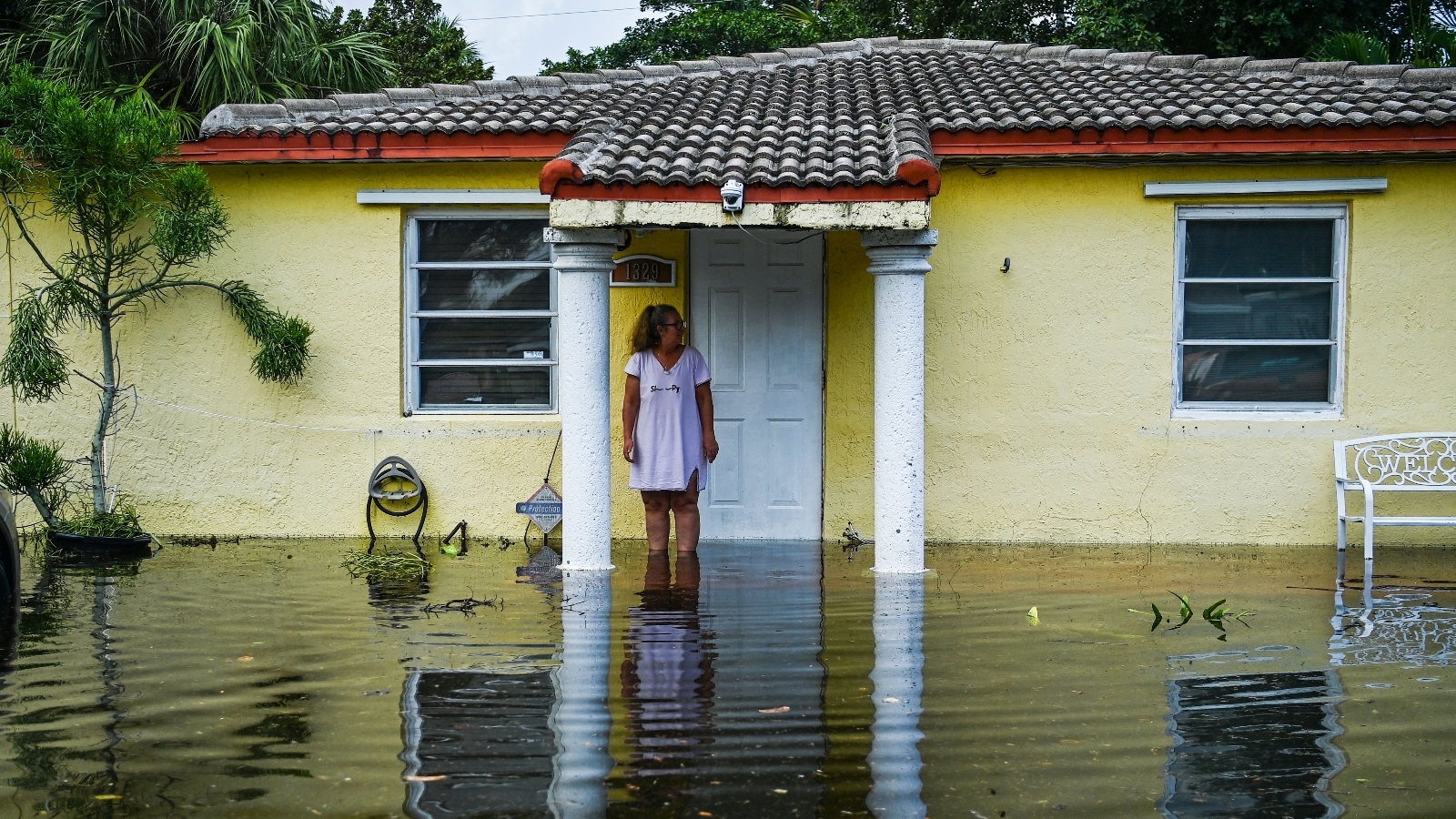
Flooding from Hurricane Helene in Asheville, North Carolina, on Saturday. Photograph: Melissa Sue Gerrits/Getty Images

Nestled in the bucolic Blue Ridge mountains of western North Carolina and far from any coast, Asheville was touted as a climate “haven” from extreme weather. Now the historic city has been devastated and cut off by Hurricane Helene’s catastrophic floodwaters, in a stunning display of the climate crisis’s unlimited reach in the United States.

Helene, which crunched into the western Florida coast as a category 4 hurricane on Thursday, brought darkly familiar carnage to a stretch of that state that has experienced three such storms in the past 13 months, flattening coastal homes and tossing boats inland.

But as the storm, with winds peaking at 140mph (225 km/h), carved a path northwards, it mangled places in multiple states that have never seen such impacts, obliterating small towns, hurling trees on to homes, unmooring houses that then floated in the floodwater, plunging millions of people into power blackouts and turning major roads into rivers.

In all, about 100 people have died across five states, with nearly a third of these deaths occurring in the county containing Asheville, a city of historic architecture where new residents have flocked amid boasts by real estate agents of a place that offers a reprieve from “crazy” extreme weather.

Now, major highways into Asheville have been severed by flooding from surging rainfall, its mud-caked and debris-strewn center turned into a place where access to cellphone reception, gasoline and food is scarce. The water supply, as well as the roads, is expected to be affected for weeks. It is, according to Roy Cooper, North Carolina’s governor, an “unprecedented tragedy”.

“Everyone thought this was a safe place, somewhere you could move with your kids for the long term, so this is just unimaginable, it’s catastrophic,” said Anna Jane Joyner, a climate campaigner who grew up in the area and whose family still lives in Black Mountain, near Asheville. Several of her friends narrowly avoided being swept away by the floodwater.

“I never, ever considered the idea that Asheville would be wiped out,” she said. “It was our backup plan to move there, so the irony is stark and scary and it’s hard for me to emotionally process. I’ve been working in the climate movement for 20 years and feel like I’m now living in a movie I imagined in my head when I started. Nowhere is safe now.”

The damage wrought by Helene is “a staggering and horrific reminder of the ways that the climate crisis can turbocharge extreme weather”, according to Al Gore, the former US vice-president. Hurricanes gain strength from heat in the ocean and atmosphere and Helene, one of the largest ever documented, sped across a record-hot Gulf, quickly turning from a category 1 to a category 4 storm within a day.

Extra heat not only helps storms spin faster, it also holds more atmospheric moisture that is then unleashed in torrents upon places such as western North Carolina, which got a month’s rain in just a couple of days. Helene was the eighth category 4 or 5 hurricane to strike the US since 2017 – the same number of such extreme storms to hit the country in the previous 57 years.

“This storm has the fingerprints of climate change all over it,” said Kathie Dello, North Carolina’s state climatologist. “The ocean was warm and it grew and grew and there was a lot of water in the atmosphere. Unfortunately, our worst fears came true. Helene was supercharged by climate change and we should expect more storms like this going forward.”

Dello said that it would take months or even years for communities, particularly in the poorer, more rural areas of the state that have been cut off completely by the storm, to recover, compounding the impacts of previous storms such as Florence, in 2018, and Fred, in 2021, that pose major questions over how, if at all, to rebuild.

“I don’t know where you run to escape climate change. Everywhere has some sort of risk,” she said. “It’s really been quite rattling to see these places which you love be devastated, knowing they have been changed forever. We can’t just rebuild like before.”

signs for a trailer park protrude from flood waters
Heavy rains from Hurricane Helene caused record flooding and damage in Asheville, North Carolina. Photograph: Melissa Sue Gerrits/Getty Images

In Asheville, the historic area of Biltmore Village has been submerged underwater while, in a gloomy irony, the US’s premier climate data center has been knocked offline.

The storm has been “devastating for our folks in Asheville”, said a spokesperson for the National Oceanic and Atmospheric Administration, who said the National Centers for Environmental Information facility had lost its water supply and had shut down.

“Even those who are physically safe are generally without power, water or connectivity,” the spokesperson said of the effort to contact the center’s marooned staff.

The destruction may cast a shadow over the climate-haven reputation of Asheville, much like how Vermont’s apparent distance from the climate crisis has been rethought in the wake of recent floods, but it probably won’t defy a broader trend where Americans are flocking to some of the places most at risk from heatwaves, storms and other climate impacts due to the ready availability of housing and jobs.

“This flood will likely accelerate development,” said Jesse Keenan, an expert in climate adaptation at Tulane University, who noted that for every one person who moves away from Asheville, three people move to the city, one of the highest such ratios in the US.

“Some people will not be inclined or unable to rebuild and their properties will be bought up by wealthy people who can afford to build private infrastructure and buildings that have the engineering resilience to withstand floods.”

“There is no truly safe place,” Keenan, who previously listed Asheville as one of the better places to move amid the climate crisis, acknowledged. But the city will “see a post-disaster boom”, he said. “This is a cycle that has happened over and over again in America.”

Prevenção a desastres I e II (Sler)

Prevenção a desastres I

Se está evidente que podemos ter novos eventos extremos, o que está sendo feito para capacitar a Defesa Civil e as comunidades vulneráveis?

Artigo original

Sílvia Marcuzzo

16 de agosto de 2024

De 6 a 8 de agosto, aconteceram três lives muito esclarecedoras sobre o que está por trás do antes e depois dos desastres que fomos submetidos no Rio Grande do Sul. Como ainda estamos vivendo o rescaldo de tanta destruição, creio ser muito útil este texto e outros que seguirão nas próximas semanas. Espero que sirva para compreendermos melhor o que estamos atravessando. Se você já se deu conta que precisa acompanhar o que está acontecendo nessa fase de agravamento do aquecimento global, pois isso afeta diretamente o seu cotidiano, inclusive seus planos, o que vou trazer nas próximas linhas será esclarecedor.

Um grupo de jornalistas mulheres, que compõe o Grupo de Trabalho de Comunicação da Rede de Emergência Climática e Ambiental (Reca), organizou em parceria da Federação Nacional de Jornalista (Fenaj) três lives intituladas “Diálogos entre jornalistas e especialistas acerca do desastre”. Dá para acompanhar a gravação no YouTube da Fenaj.

Esses encontros trouxeram muitas coisas que a mídia convencional e as redes sociais não abordaram.

Já parou para pensar o que o jornalismo faz com a ocorrência de desastres e o que os desastres fazem com o jornalismo? Essa foi a indagação da professora Marcia Franz Amaral, da UFSM, na abertura do encontro. Diante do que passamos, com tanta falta de orientação sobre o que fazer, tanto desespero, como deve ser a comunicação com população, com os atingidos, com a imprensa das autoridades e dos detentores de informações técnicas?

Tenho feito a cobertura de desastres, fui diretamente afetada por essa última enchente e venho trabalhando em projetos para despertar o interesse de diferentes públicos sobre as mudanças climáticas. Esse contexto complexo me fez voltar à universidade. Estou fazendo mestrado em comunicação, justamente para pesquisar, desvelar contextos e com aspiração de contribuir para que saibamos encarar com mais assertividade esse momento que exige adaptação e mitigação às mudanças climáticas.

Fui uma das painelistas da primeira live. Foi um mega desafio, pois estava quase sem voz. Peguei uma virose, uma pereba que tem deixado muita gente doente em Porto Alegre e Região Metropolitana. Escrevo isso só para explicar o meu desempenho, se você for me ouvir na live. Eu avalio que também é uma consequência da remexida geral da cidade, na qual o ambiente foi submetido.

E sabem por que fui uma das convidadas a falar? Porque fiz reportagens mostrando contextos em que outros colegas jornalistas não se debruçaram. Fiquei muito tocada com a declaração do Roberto Villar Belmonte, professor da Uniritter, que escreveu em um grupo sobre minha atuação.

“Depois da enchente de 2023, apenas a repórter freelancer Sílvia Marcuzzo fez reportagens de fôlego apontando a falta de governança ambiental (proposital) no RS. A imprensa regional dita hegemônica continua fingindo que o tema não existe, mesmo após maio de 2024. Seria legal citar isso na tua fala, Sílvia, na tua abordagem contínua da pauta, não apenas durante a desgraça (quando a morte é o principal valor notícia)”.

Ele escreveu isso também para justificar a minha participação na programação do 8º Congresso Brasileiro de Jornalismo Ambiental, que esse ano será em Fortaleza. Confere a programação do CBJA, será híbrida, online e presencial.

A primeira live, realizada em 6 de agosto, trouxe a chamada: os alertas foram emitidos. E agora?

Reinaldo Estelles, coordenador-geral do Departamento de Articulação e Gestão, da Secretaria Nacional de Proteção e Defesa Civil do Ministério da Integração e Desenvolvimento Regional, foi categórico: “Não adianta emitir alarmes se a população não souber o que é para fazer”. Esse é um dos pontos nevrálgicos, não basta uma sirene tocar, os bombeiros chamarem. A população precisa compreender o que significa estar em perigo. Creio que quem teve a experiência dos episódios dos meses de maio e junho no Rio Grande do Sul sabe muito bem o que isso quer dizer. Fomos vítimas de uma sequência de trapalhadas, de falta de gestão dos poderes públicos municipais e estadual.

Há muitas dimensões diferentes de informação, que estão intimamente ligadas a vários fatores. Ou seja, mais uma vez ficou supernítido o quanto o Estado que se gaba de “ter façanhas que sirvam de modelo a toda terra” se equivocou em insistir em determinados erros. Há muitas questões por trás das medidas dos tomadores de decisão que precisam ser esclarecidas.

Na live, Estelles anunciou o lançamento do projeto-piloto de um novo sistema de alerta, que aciona todos os celulares de uma região em risco. E reforçou: as Defesas Civis dos municípios e do Estado precisam se capacitar. Outros desastres virão. Ele salientou o quanto as Defesas Civis precisam promover a criação e a mobilização de núcleos comunitários. A participação de vários segmentos, principalmente com a atuação de lideranças locais, são essenciais para a estruturação de planos de contingência. Por favor, se você que me lê souber de algum lugar no Rio Grande do Sul onde isso esteja acontecendo, me conte.

Vagner Anabor, professor de Meteorologia da UFSM, lembrou que o Estado está em uma das regiões de maior incidência de tempestades severas. E na sua opinião, o que vivemos esse ano foi o maior desastre já ocorrido no Brasil. Outra curiosidade apontada por ele é que uns 25% da força de trabalho da Metereologia do País é composta por profissionais formados no RS. Ou seja, o Estado exporta gente qualificada, mas não dispõe de servidores que atuem no próprio território onde nasceram.

Ele defende o fortalecimento de medidas de prevenção. E lamenta que o Climatempo, do governo do Estado, conte apenas com dois metereologistas e um engenheiro hidrólogo. Anabor estima que seria necessária uma equipe entre 20 e 25 pessoas para dar conta de uma área do tamanho do RS.

Outro ponto importante colocado por Anabor é que “a cadeia da informação é muito longa”. E, por questão de minutos, muitas vidas podem ser salvas. Isso quer dizer que, desde o momento em que se sabe o que vem pela frente, até informar e mobilizar diferentes equipes, transmitir alerta e comunicar às comunidades sobre os riscos que eles correm, há muitas etapas a serem cumpridas até o momento de chegar em regiões que serão atingidas. Há diferentes atores envolvidos.

No caso do RS e de Porto Alegre, então, ocorreram muitas situações que deixaram evidente o quanto isso foi prejudicial. E a preparação para lidar com situações de perigo iminente requer planejamento e a execução de um bom plano de contingência (o que também não tivemos por aqui).

Os painelistas salientaram o quanto a imprensa desempenha função crucial para ampliar a percepção de risco da população. Quem cobre precisa saber o que significa uma chuva de 100 milímetros. E para complicar ainda mais o contexto, tem proliferado o número de influencers, gente que só porque sabe falar diante da câmera fica espalhando informações que muitas vezes mais atrapalham do que ajudam. Isso sem falar nas fake news.

Resumindo: enquanto as respectivas autoridades não adotarem condutas responsivas, que assumam o processo de uma comunicação para o bem comum, para salvar vidas, para evitar o pior, teremos que conviver com a insegurança, de procurar entender o que fazer diante de uma situação de risco.

O repórter Luciano Velleda, do Sul21, destacou que diversas vezes a imprensa precisou esperar anúncios da Defesa Civil porque seriam dados pelo governador e pelo prefeito de Porto Alegre em coletivas. Ou seja, assim que chega até a autoridade uma determinada informação, ela é avaliada se é o governador ou o prefeito que serão os porta-vozes. Vale lembrar da vez em que o prefeito sugeriu que os porto-alegrenses deixassem a cidade, fossem para a praia.

Em outros países, onde a comunicação de risco faz parte da cultura e funciona, como o Japão, a cadeia (o caminho que a informação percorre) é curta. Todos são treinados para saber o que fazer em caso de perigo. A autoridade máxima é técnica. Uma série de medidas, como a emissão de alerta em todos os canais de rádio e televisão, são acionadas em caso de risco.

Na próxima semana, trarei mais sobre esse assunto. Porque já está na cara que precisamos avançar nas medidas de prevenção a desastres. Esse assunto não pode e não deve ficar restrito a decisões políticas. A sociedade precisa se apropriar das diversas camadas de conhecimento para evitar danos de toda ordem. Ainda mais em ano de eleição!

Com a palavra, os professores das escolas atingidas pelas enchentes.

Para encerrar, sugiro que vejam a live Inundações no RS e a situação das escolas na RME/POA, realizada no dia 12, onde professores da rede municipal de ensino da Capital contam o que passaram e o que está sendo feito nas escolas atingidas pela enchente. A iniciativa é do projeto de extensão Fazeres Pedagógicos da Faculdade de Educação da UFRGS.

Foto da Capa: Freepik / Gerada por IA
Mais textos de Sílvia Marcuzzo: Clique aqui.

Por Sílvia Marcuzzo – Jornalista e artivista

Sílvia Marcuzzo é jornalista, artivista, mestranda na Famecos/PUCRS e integrante do Grupo de Pesquisa sobre Comunicação, Crise e Cuidado. Articuladora de coletivos, repórter freelancer e editora de publicações socioambientais. Trabalha com comunicação e meio ambiente desde 1993. É consultora e assessora de organizações que atuam pelo bem da coletividade, por um mundo mais sustentável e com qualidade de vida para todos. Saiba mais em silviamarcuzzo.com.br


Prevenção a desastres II

Artigo original

Jornalistas têm muita a dificuldade no acesso às fontes oficiais, o que dificulta muito a imprensa de cumprir o seu papel em momentos de desastre

Sílvia Marcuzzo

23 de agosto de 2024

Seguindo a sequência que comecei a semana passada (clique aqui para ler), hoje abordo o que rolou na live “Diálogos entre jornalistas e especialistas acerca do desastre”, realizada dia 7 de agosto, que pode ser acessada no YouTube da Federação Nacional dos Jornalistas (Fenaj). É o segundo dos três encontros promovidos pelo Grupo de Trabalho de Comunicação da Rede de Emergência Climática e Ambiental (Reca).

Com o tema “O desastre eclodiu. Quais são os protocolos?” Com essa pergunta, a mediadora Débora Gallas, do Grupo de Pesquisa de Jornalismo Ambiental e RECA, conduziu o encontro online que teve a participação de Irineu de Brito Junior, especialista em gestão de desastres da Unesp, Armin Braun, diretor do Centro Nacional de Gerenciamento de Riscos e Desastres (Cenad), e dos jornalistas Maria Teresa Cruz e Paulo Mueller.

Um dos pontos que foi unanimidade entre os debatedores foi a necessidade de se cumprir protocolos. O grande X da questão é que, por aqui, pelos pagos, pela Capital gaúcha, o protocolo é algo nebuloso. Digamos que o protocolo aqui durante a enchente era a Defesa Civil avisar pelos seus canais, incluindo o grupo de WhatsApp, o Instagram e o site oficial, que uma tempestade intensa estava vindo. O governador e o prefeito eram os porta-vozes das informações importantes também.

Armin Braun ressaltou a importância dos jornalistas de veículos para dar a noção sobre a percepção da previsão do tempo. Ele explicou que o Cenad trabalha na preparação e na resposta aos desastres. O foco é justamente articular e capacitar os estados e municípios para encarar os riscos hidrológicos, geológicos, meteorológicos. Há vários órgãos públicos envolvidos nessa rede.

Já o professor Irineu destacou o quanto precisa ser feito um planejamento prévio para que se tenha condições de gerenciar o problema provocado por um desastre. Ele citou variáveis que envolvem a logística para o atendimento às demandas. Tudo isso precisa ser pensado em tempo de calma, antes de uma temporada de tempestades, por exemplo.

E a resposta a situações de calamidade não são apenas com relação a intempéries climáticas. Ele lembrou-se do caso do grande número de venezuelanos entrando em Roraima, que também exigiu uma mobilização do governo. Ou seja, a Defesa Civil dos Estados e municípios precisa estar estruturada, com ações já ensaiadas antes de haver um incidente. Para você que me lê, isso parece óbvio. Mas o que vivemos nesse ano no Rio Grande do Sul demonstrou que pouco ou muito pouco de planos de antecipação, ou de contingência, foi colocado em prática.

Vale lembrar que, só em 2023, ocorreram mortes provocadas por enchentes e enxurradas em março, junho, julho, setembro, novembro e dezembro. Ou seja, já tínhamos tido 81 mortes em distintas regiões do Estado. Esses dados eu mesma levantei junto à Defesa Civil. Mas isso não bastou para que os órgãos competentes tomassem as medidas de precaução em 2024.

O jornalista e radialista Paulo Mueller, que acompanhou vários episódios de acidentes de todo tipo em Santa Catarina, tocou numa situação que todo mundo que cobre esse tipo de pauta enfrenta: a dificuldade de se ter acesso às fontes oficiais. É muito comum os jornalistas pedirem informações para a assessoria de imprensa do governo ou da Defesa Civil, mas se tiver a resposta, a prioridade é o atendimento ao chamado, não a imprensa.

Mueller contou o quanto a Defesa Civil de Santa Catarina se capacitou, se estruturou ao longo do tempo, depois de tantos episódios de enchente. Em Blumenau, por exemplo, todos os moradores já sabem se a sua rua vai alagar. O Estado vizinho também utiliza as escolas para trabalhar a cultura da prevenção. Lá também há muitos problemas devido à ocupação desordenada no solo.

E aí, pergunto: por que ainda não se estruturou programas de educação e comunicação que atendam às necessidades das comunidades e da imprensa? Será que os governos estão se dando conta que se houvesse um sistema eficiente que explicasse o risco, nesse momento de crise climática, as mortes e perdas incalculáveis seriam evitadas? Isso é ou não é negacionismo?

Essas lives são muito esclarecedoras para termos noção do quanto esse assunto precisa ser compreendido por todos. Pois somos todos vulneráveis a novos possíveis episódios. Pior: situações terríveis de desgraça ainda são usadas politicamente para contar vantagem de que estão fazendo isso, aquilo, quando, na verdade, para evitar que o pior acontecesse, quase nada foi feito. Assim que um técnico fica sabendo o risco que determinada região, município corre, o tomador de decisão é informado. Só que o que sentimos na pele, aqui no RS, é que a decisão de informar e como informar é muito lenta ou considera primeiro o contexto político e não o socioambiental e econômico.

Em tempos de redes sociais e de “influencers” que se aproveitam de tragédias para ter mais visualizações, muita mentira, desinformação da pior espécie circulou. Então, é mais do que na hora dos governos estruturarem mecanismos de comunicação que traduzam e deixem claro o que deve ser feito em caso de risco. Será que não seria mais eficiente do que ter que desmentir as mentiras que espalham durante os desastres?

Segundo Maria Teresa, que acompanhou de perto o desastre de São Sebastião, no carnaval do ano passado, as autoridades de São Paulo sabiam que choveria muito acima da média naquele feriadão, mas não se empenharam em alertar sobre o risco que as pessoas correriam ao ir para o badalado litoral paulista. Ela disse ainda que o Instituto de Pesquisas Tecnológicas (IPT) já tinha feito um levantamento e mapeado 52 áreas de risco – mais da metade no lugar onde houve o deslizamento – em São Sebastião. Será que o governo não tomou as medidas de prevenção necessárias para salvar vidas?

A jornalista reforçou a necessidade de os profissionais de imprensa saberem se cuidar e obedecerem aos protocolos de seguranças. Ela atualmente atua em favelas no Rio e diz que as medidas são iguais à cobertura de um campo minado de guerra. Maria Teresa salientou a necessidade das redações, de quem atua direto nas coberturas, se capacitarem para enfrentar desafios extremos. Ficar sem conexão de celular, sem conseguir chegar aos locais e, ao mesmo tempo, ter empatia para saber se colocar no lugar do outro, são desafios complexos que precisam ser pensados muito antes de um desastre acontecer.

Você sabe doar direito?

A comunicação sobre o que doar e formas de como enviar também foram abordadas no encontro. Os participantes evidenciaram o quanto a população precisa ser solidária na hora de escolher e remeter as doações. Tem gente que mandou fantasia de carnaval, roupas íntimas – aliás, não se deve mandar esse tipo de vestimenta usada, só se for nova – pinguim de geladeira e até fita VHS de como fazer bijuterias para abrigos. Outra dica é que pares de sapatos devem estar amarrados juntos, pois também é fácil de se perder um pé do outro.

Situação das escolas

Marque na agenda, haverá outra live sobre a situação hoje das escolas atingidas pela enchente. Já foram realizados encontros online nos dias 22 de julho e 12 de agosto, com as escolas da Rede Municipal de Ensino de POA. A próxima será no dia 2 de setembro, às 19h30. Os professores estarão tratando das escolas públicas de Região Metropolitana. No YouTube do projeto Fazeres Pedagógicos, um projeto da Faculdade de Educação da UFRGS.

Foto da Capa: Freepik
Mais textos de Sílvia Marcuzzo: Clique Aqui.

Por Sílvia Marcuzzo – Jornalista e artivista

Sílvia Marcuzzo é jornalista, artivista, mestranda na Famecos/PUCRS e integrante do Grupo de Pesquisa sobre Comunicação, Crise e Cuidado. Articuladora de coletivos, repórter freelancer e editora de publicações socioambientais. Trabalha com comunicação e meio ambiente desde 1993. É consultora e assessora de organizações que atuam pelo bem da coletividade, por um mundo mais sustentável e com qualidade de vida para todos. Saiba mais em silviamarcuzzo.com.br

Extreme weather 101: Your guide to staying prepared and informed (Grist)

Original article

How to pack a go-bag, get emergency alerts, and find disaster aid.

Chandan Khanna/AFP via Getty Images

Lyndsey Gilpin & Jake Bittle

PublishedAug 20, 2024

This guide is part of State of Emergency, a Grist series exploring how climate disasters are impacting voting and politics. A companion piece examines the logistics of voting if you’ve been impacted by extreme weather.

No matter where you live, extreme weather can hit your area, causing damage to homes, power outages, and dangerous or deadly conditions. If you’re on the coast, it may be a hurricane; in the Midwest or South, a tornado; in the West, wildfires; and as we’ve seen in recent years, anywhere can experience heat waves or flash flooding

Living through a disaster and its aftermath can be both traumatic and chaotic, from the immediate losses of life and belongings to conflicting information around where to access aid. The weeks and months after may be even more difficult, as the attention on your community is gone but civic services and events have stalled or changed drastically. 

Grist compiled this resource guide to help you stay prepared and informed. It looks at everything from how to find the most accurate forecasts to signing up for emergency alerts to the roles that different agencies play in disaster aid. 

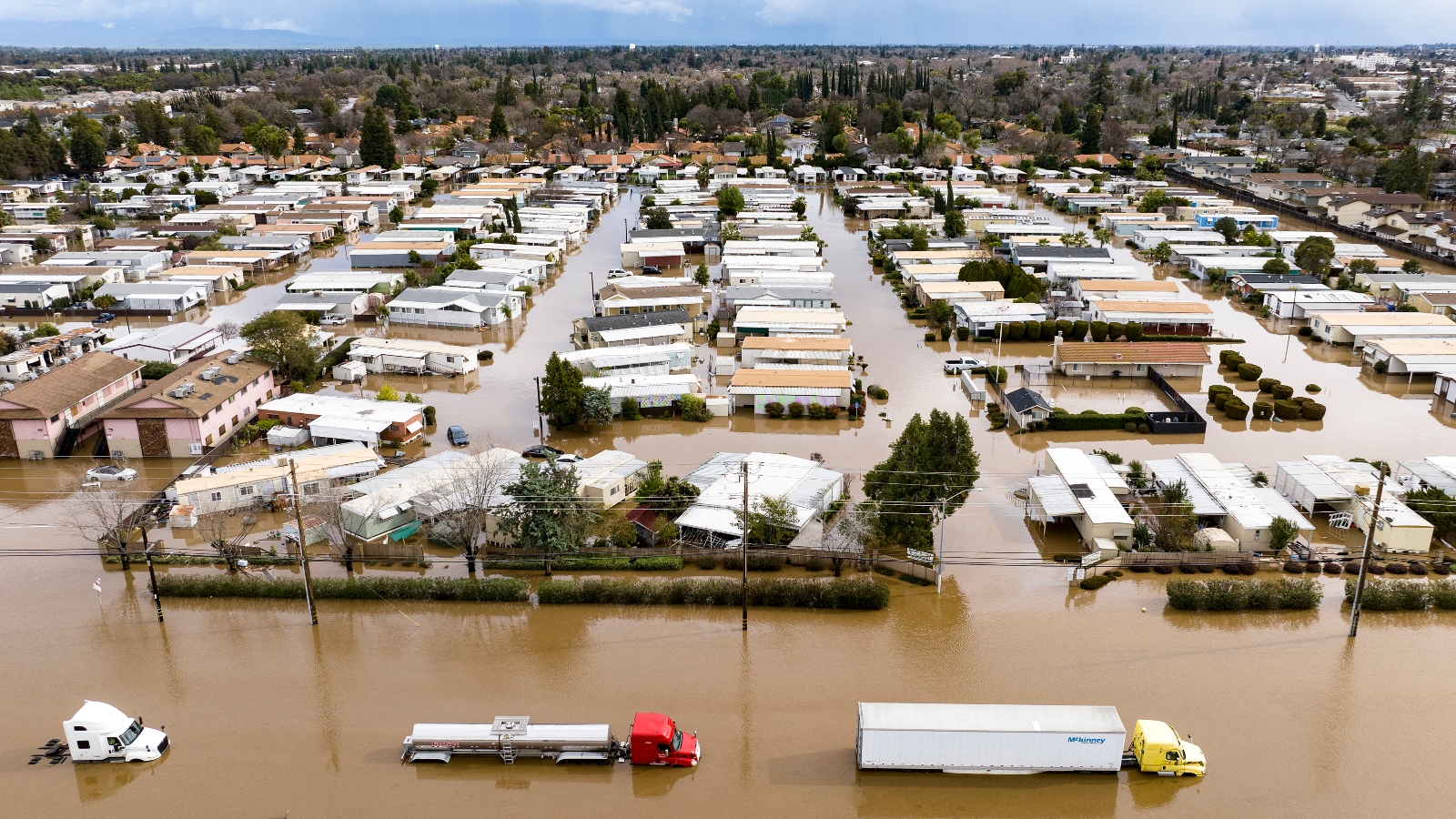
An aerial view shows flooding in Merced, California following a “bomb cyclone” in January 2023. Josh Edelson / AFP via Getty Images

Where to find the facts on disasters 

These days, many people find out about disasters in their area via social media. But it’s important to make sure the information you’re receiving is accurate. Here’s where to find the facts on extreme weather and the most reliable places to check for emergency alerts and updates.

Your local emergency manager:  Your city or county will have an emergency management department, which is part of the local government. In larger cities, it’s often a separate agency; in smaller communities, fire chiefs or sheriff’s offices may manage emergency response and alerts. Emergency managers are responsible for communicating with the public about disasters, managing rescue and response efforts, and coordinating between different agencies. They usually have an SMS-based emergency alert system, so sign up for those via your local website (Note: Some cities have multiple languages available, but most emergency alerts are only in English.) Many emergency management agencies are active on Facebook, so check there for updates as well. 

Local news: The local television news and social media accounts from verified news sources will have live updates during and after a storm. Follow your local newspaper and television station on Facebook or other social media, or check their websites regularly. 

Weather stations and apps: The Weather Channel, Apple Weather, and Google will have information on major storms, but that may not be the case for smaller-scale weather events, and you shouldn’t rely on these apps to tell you if you need to evacuate or move to higher ground. 

National Weather Service: This agency, also known as NWS, is part of the National Oceanic and Atmospheric Administration and offers information and updates on everything from wildfires to hurricanes to air quality. You can enter your zip code on weather.gov and customize your homepage. The NWS also has regional and local branches where you can sign up for SMS alerts. If you’re in a rural area or somewhere that isn’t highlighted on its maps, keep an eye out for local alerts and evacuation orders, as NWS may not have as much information ahead of time.  

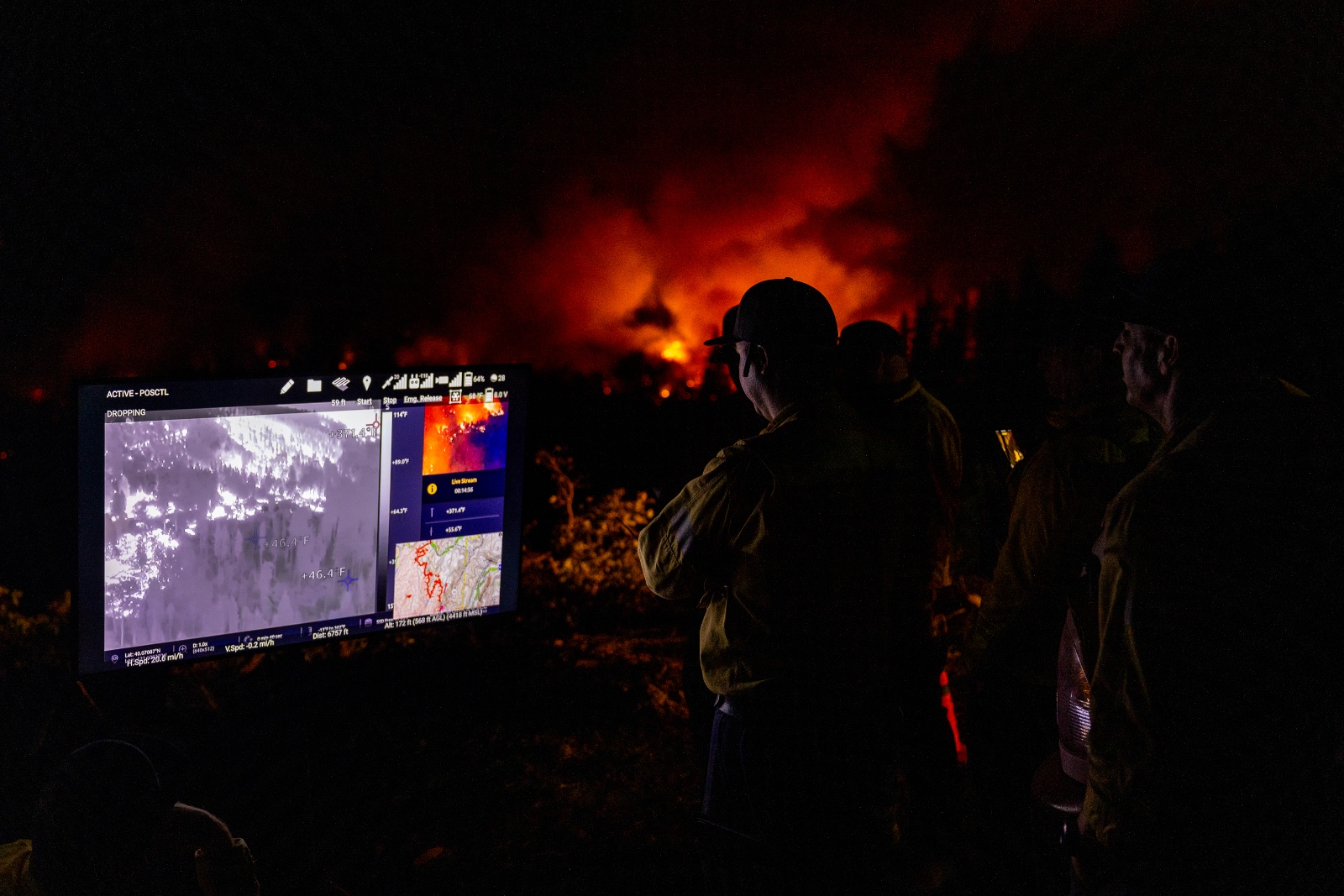
Cal Fire firefighters livestream images and data from efforts to control and contain the Park Fire on July 29 near Chico, California. David McNew/Getty Images

How to pack an emergency kit

As you prepare for a storm, it’s important to have an emergency kit ready in case you lose power or need to leave your home. Review this checklist from the Federal Emergency Management Agency, or FEMA, for what to pack so you can stay safe, hydrated, and healthy. 

These can often be expensive to create, so contact your local disaster aid organizations, houses of worship, or charities to see if there are free or affordable kits available. Try to gather as much as you can ahead of time in case shelves are empty when a storm is on the way.

Some of the most important things to have:

  • Water (one gallon per person per day for several days)
  • Food (at least a several-day supply of non-perishable food) and a can opener
  • Medicines and documentation of your medical needs
  • Identification and proof of residency documents (see a more detailed list below)
  • Battery-powered or hand crank radio, batteries, flashlight
  • First aid kit
  • Masks, hand sanitizer, and trash bags 
  • Wrench or pliers 
  • Cell phone with chargers and a backup battery
  • Diapers, wipes, and food or formula for babies and children
  • Food and medicines for any household pets

Don’t forget: Documents

One of the most important things to have in your emergency kit is documents you may need to prove your residence, demonstrate extent of damage, and vote. FEMA often requires you to provide these documents in order to receive financial assistance after a disaster.

  • Government issued ID, such as a drivers’ license for for each member of your household
  • Proof of citizenship or legal residency for each member of your household (passport, green card, etc.)
  • Social Security card for each member of your household
  • Documentation of your medical needs, such as medications or special equipment including oxygen tanks, wheelchairs, etc.
  • Health insurance card
  • Car title and registration documents
  • Pre-disaster photos of the inside and outside of your house and belongings
  • Copy of your homeowners’ or renters’ insurance policy
  • For homeowners: copies of your deed, mortgage information, and flood insurance policy, if applicable
  • For renters: a copy of your lease
  • Financial documents such as a checkbook or voided check

You can find more details about why you may need these documents here.

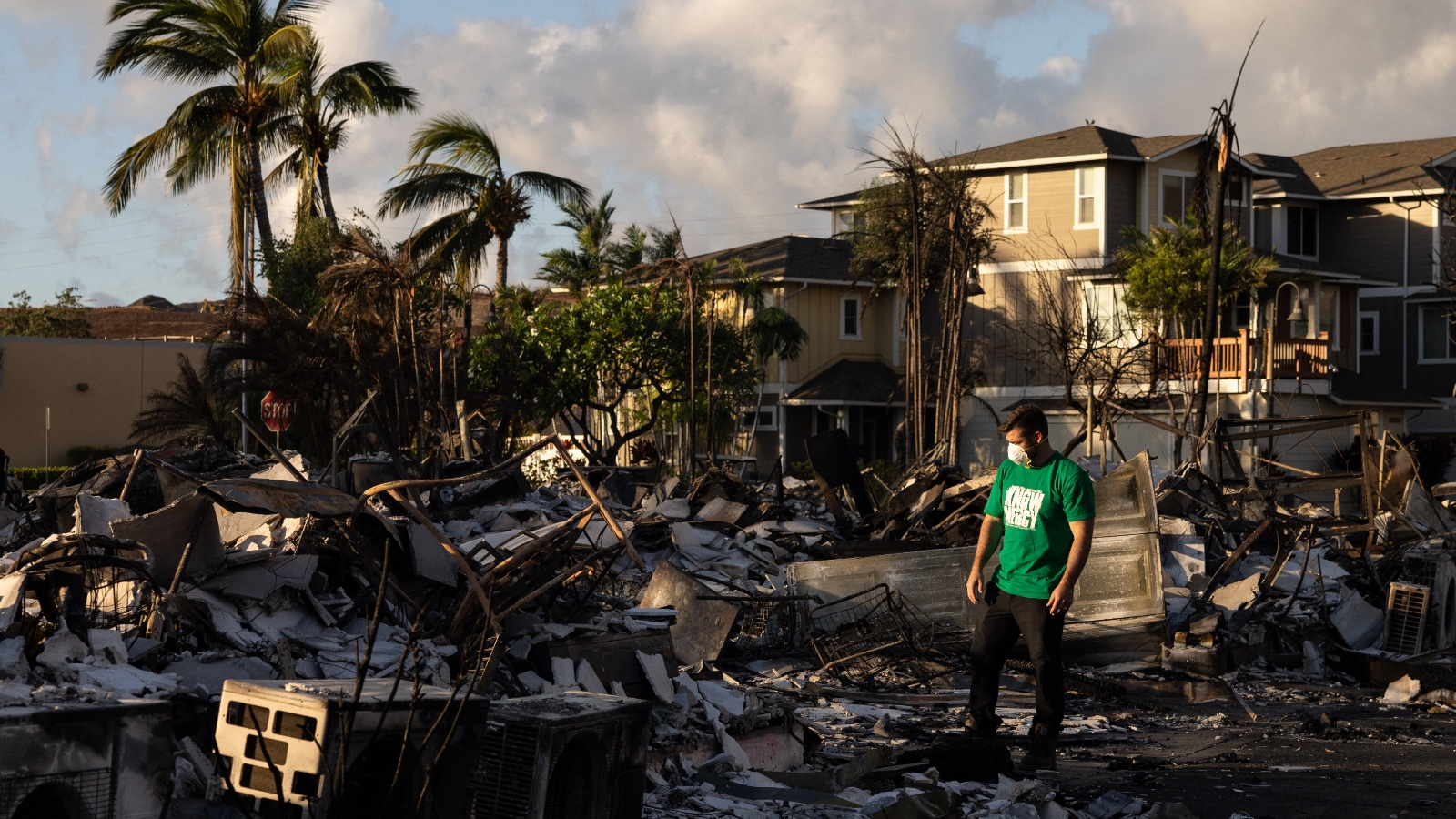
A volunteer assesses the remains of a charred apartment complex in the aftermath of a wildfire in Lahaina, western Maui, Hawaiʻi in 2023.
Yuki Iwamura/AFP via Getty Images

Disaster aid 101

It can be hard to know who to lean on or trust when it comes to natural disasters. Where do official evacuation orders come from, for example, or who do you call if you need to be rescued? And where can you get money to help pay for emergency housing or to rebuild your home or community. Here’s a breakdown of the government officials and agencies in charge of delivering aid before, during, and after a disaster:

Emergency management agencies: Almost all cities and counties have local emergency management departments, which are part of the local government. Sometimes they’re agencies all their own, but in smaller communities, fire chiefs or sheriff’s offices may manage emergency response and alerts. These departments are the first line of defense during a weather disaster. They’re responsible for communicating with the public about incoming disasters, managing rescue and response efforts during an extreme weather event, and coordinating between different agencies. Many emergency management agencies, however, have a small staff and are under-resourced.

Much of the work that emergency managers do happens before a disaster: They develop response plans that lay out evacuation routes and communication procedures, and they also delegate responsibility to different government agencies like the police, fire, and public health departments. Most counties and cities publish these plans online. 

In most cases, they are the most trustworthy resource in the days just before and just after a hurricane or other big weather event. They’ll send out alerts and warnings, coordinate evacuation efforts, and direct survivors and victims to resources and shelter.

You can find your state emergency management agency here. There isn’t a comprehensive list by county or city, but if you search your location online you’ll likely find a website, a page on the county or city website, or a Facebook page that posts updates. 

Law enforcement: County sheriffs and city police departments are often the largest and best-staffed agencies in a given community, so they play a key role during disasters. Sheriff’s departments often enforce mandatory evacuation orders, going door-to-door to ensure that people vacate an area. They manage traffic flow during evacuations and help conduct search and rescue operations. 

Law enforcement agencies may restrict access to disaster areas for the first few days after a flood or fire. In most states, city and county governments also have the power to issue curfew orders, and law enforcement officers can enforce these curfews with fines or even arrests. In some rural counties, the sheriff’s department may serve as the emergency management department. 

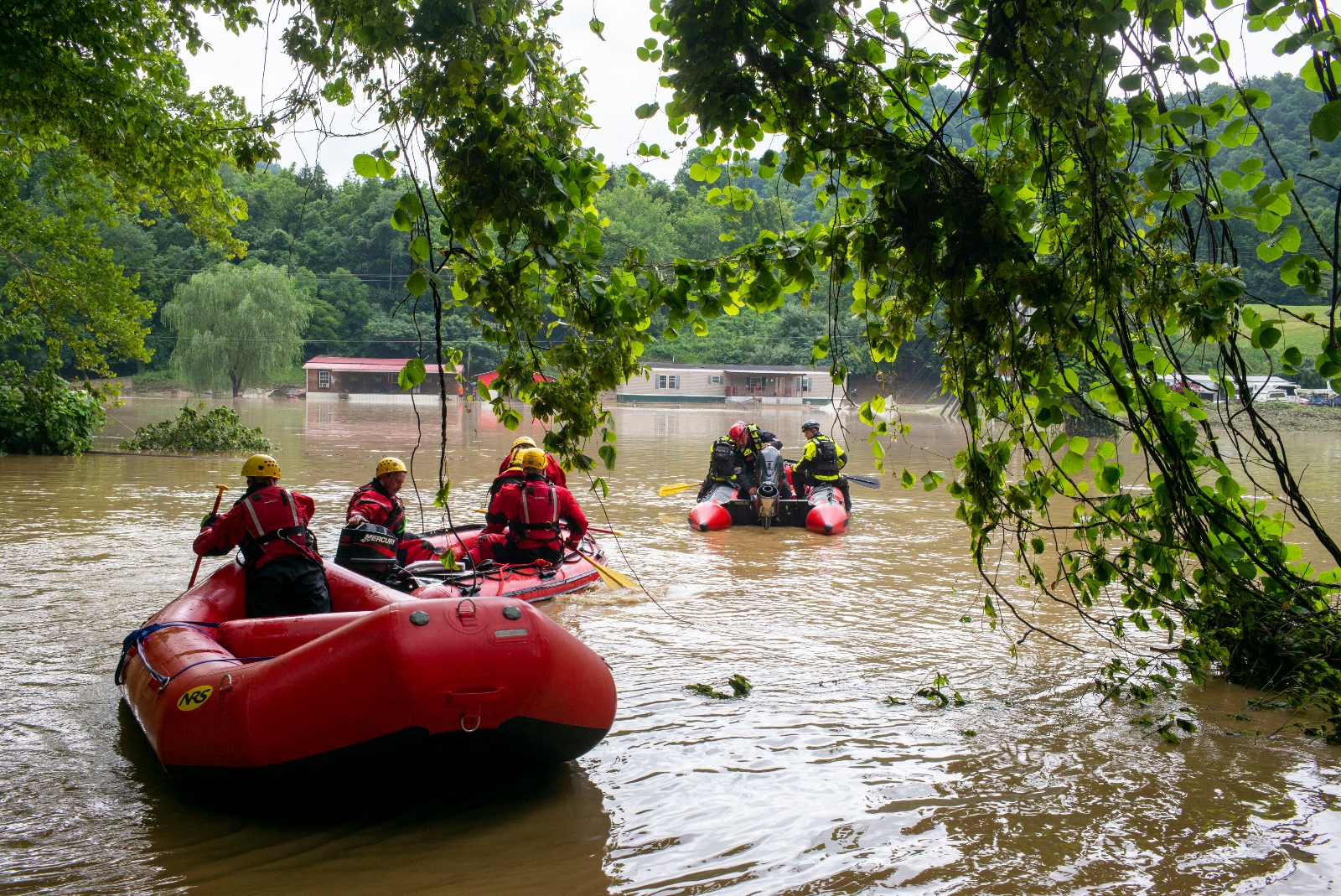
Lexington Firefighters’ swift water teams rescue people stranded by extreme rain in Lost Creek, Kentucky in 2022. Michael Swensen/Getty Images

Governor: State governors control several key aspects of disaster response. They have the power to declare a state of emergency, which allows them to deploy rescue and repair workers, distribute financial assistance to local governments, and activate the state National Guard. The governor has a key role in the immediate response to a disaster, but a smaller role in distributing aid and assistance to individual disaster victims.

In almost all U.S. states, and all hurricane-prone states along the Gulf of Mexico, the governor also has the power to announce mandatory evacuation orders. The penalty for not following these orders differs, but is most often a cash fine. (Though states seldom enforce these penalties.) The state government also decides whether to implement other transportation procedures such as contraflow, where officials reverse traffic flow on one side of a highway to allow larger amounts of people to evacuate. 

HUD: The Department of Housing and Urban Development, or HUD, also spends billions of dollars to help communities recover after disasters, building new housing and public buildings such as schools — but this money takes much longer to arrive. Unlike FEMA, HUD must wait for Congress to approve its post-disaster work, and then it must dole out grants to states for specific projects. In some cases, such as the aftermaths of Hurricane Laura in Louisiana or Hurricane Florence in North Carolina, it took years for projects to get off the ground. States and local governments, not individual people, apply for money from HUD, but the agency can direct you to FEMA or housing counselors.

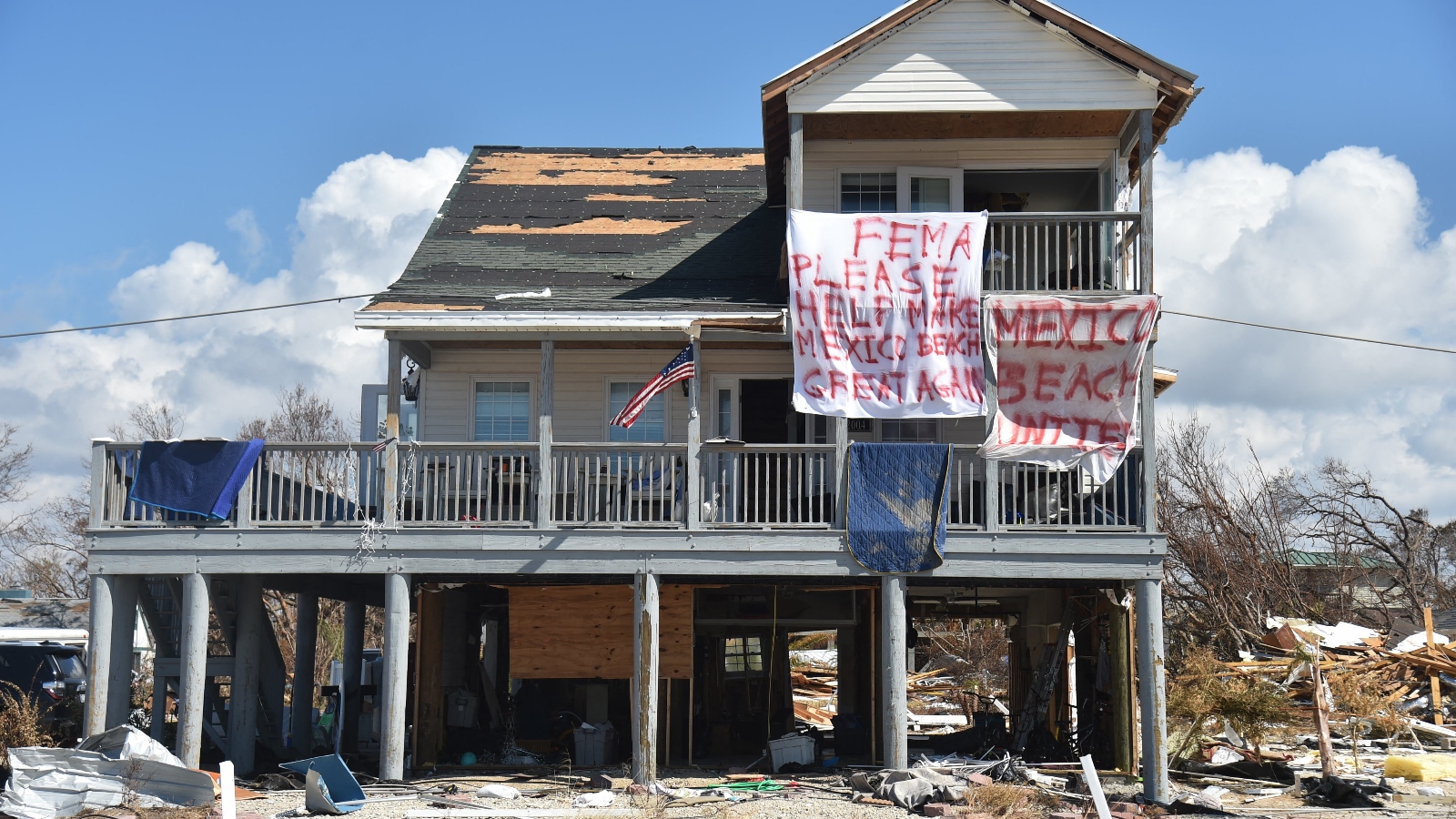
A homeowner hangs a sign that reads “FEMA please help make Mexico Beach great again” on a house damaged by Hurricane Michael in Florida in 2018. Hector Retamal/AFP via Getty Images

FEMA

The Federal Emergency Management Agency, or FEMA, is the federal government’s main disaster response agency. It provides assistance to states and local governments during large events like hurricanes, wildfires, and floods. FEMA is part of the Department of Homeland Security.

FEMA is almost never the first resource on the ground after a disaster strikes. In order for the agency to send resources to a disaster area, the state’s governor must first request a disaster declaration from the president, and the president must approve it. For large disasters such as Category 4 or 5 hurricanes, this typically happens fast. For smaller disasters, like severe rain or flooding events, it can take weeks or even months for the president to grant a declaration and activate the agency. FEMA has historically not responded to heat waves.

FEMA is broken into regional offices and offers specific contacts and information for each of those, as well as for tribal nations. You can find your FEMA region here.

FEMA has two primary roles after a federally declared disaster:

Contributing to community rebuilding costs: The agency helps states and local governments pay for the cost of removing debris and rebuilding public infrastructure. During only the most extreme events, the agency also deploys its own teams of firefighters and rescue workers to help locate missing people, clear roadways, and restore public services. For the most part, states and local law enforcement conduct on-the-ground recovery work. (Read more about FEMA’s responsibilities and programs here.)

Individual financial assistance: FEMA gives out financial assistance to individual people who have lost their homes and belongings. This assistance can take several forms. FEMA gives out pre-loaded debit cards to help people buy food and fuel in the first days after a disaster, and may also provide cash payments for home repairs that your insurance doesn’t cover. The agency also provides up to 18 months of housing assistance for people who lose their homes in a disaster, and sometimes houses disaster survivors in its own manufactured housing units or “FEMA trailers.” FEMA also sometimes covers funeral and grieving expenses as well as medical and dental treatment.

In the aftermath of a disaster, FEMA offers survivors:

  • A one-time payment of $750 for emergency needs
  • Temporary housing assistance equivalent to 14 nights’ stay in a hotel in your area 
  • Up to 18 months of rental assistance
  • Payments for lost property that isn’t covered by your homeowner’s insurance
  • And other forms of assistance, depending on your needs and losses

If you are a U.S. citizen or meet certain qualifications as a non-citizen and live in a federal disaster declaration area, you are eligible for financial assistance. Regardless of citizenship or immigration status, if you are affected by a disaster you may be eligible for crisis counseling, disaster legal services, disaster case management, medical care, shelter, food, and water. 

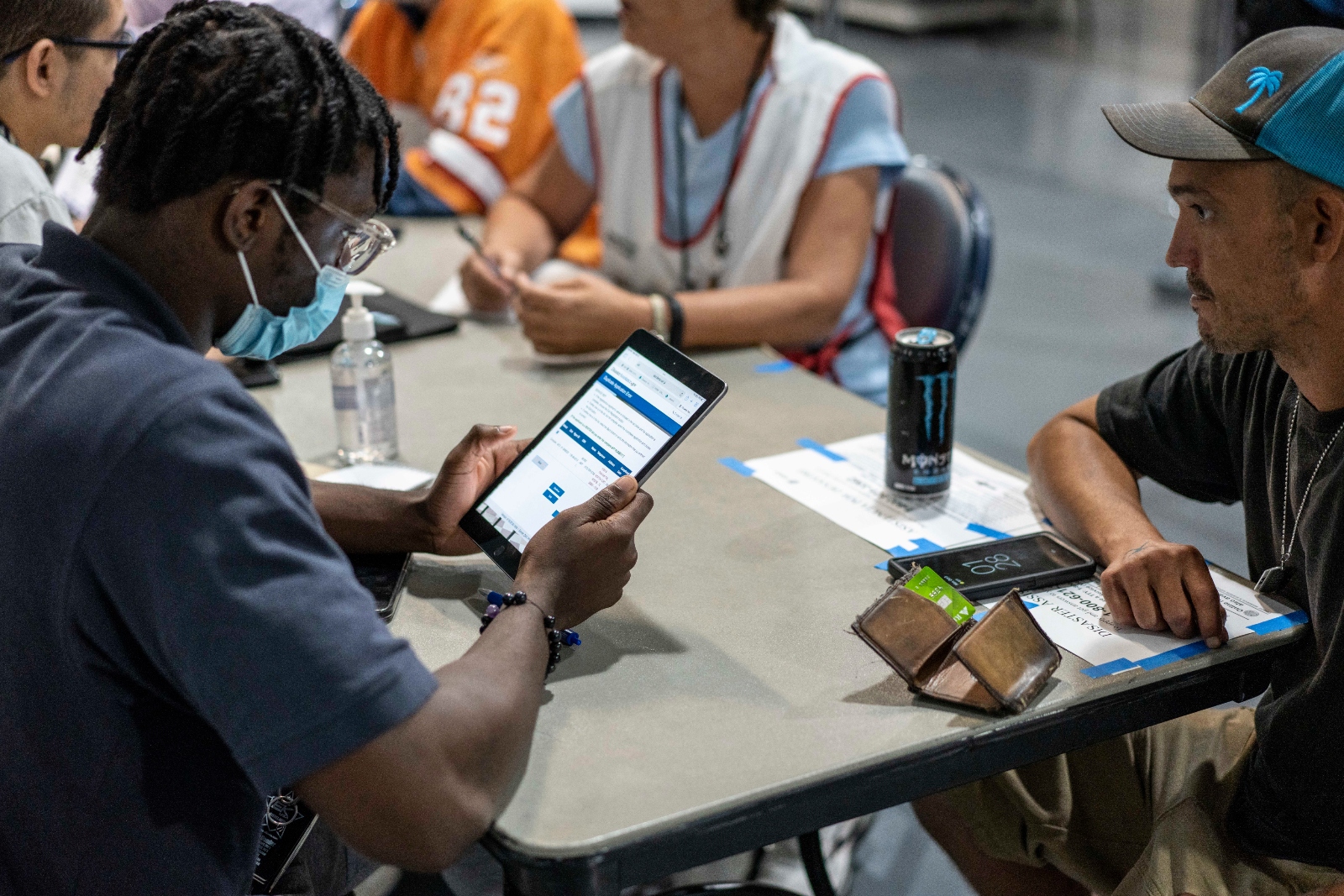
FEMA representatives take information from people displaced by Hurricane Ian in Estero, Florida in 2022. Thomas Simonetti for The Washington Post via Getty Images

FEMA also runs the National Flood Insurance Program, which provides insurance coverage of up to $350,000 for home flood damage. The agency recommends that everyone who lives in a flood zone purchase this coverage — and most mortgage lenders require it for borrowers in flood zones — though many homes outside the zones are also vulnerable. You must begin paying for flood insurance at least 30 days before a disaster in order to be eligible for a payout. You can check if your home is in a flood zone by using this FEMA website.

How to get FEMA aid: The easiest way to apply for individual assistance from FEMA is to fill out the application form on disasterassistance.gov. This is easiest to do from a personal computer over Wi-Fi, but you can do it from a smartphone with cellular data if necessary. This website does not become active until the president issues a disaster declaration.

Some important things to know:

  • FEMA will require you to create an account on the secure website Login.gov. Use this account to submit your aid application. 
  • You can track the status of your aid application and receive notifications if FEMA needs more documents from you. 
  • If FEMA denies your application for aid, you can appeal, but the process is lengthy. 

Visiting a FEMA site in your area after a disaster: FEMA disaster recovery centers are facilities and mobile units where you can find information about the agency’s programs as well as other state and local resources. FEMA representatives can help you navigate the aid application process or direct you to nonprofits, shelters, or state and local resources. Visit this website to locate a recovery center in your area or text DRC and a ZIP Code to 43362. Example: DRC 01234.  

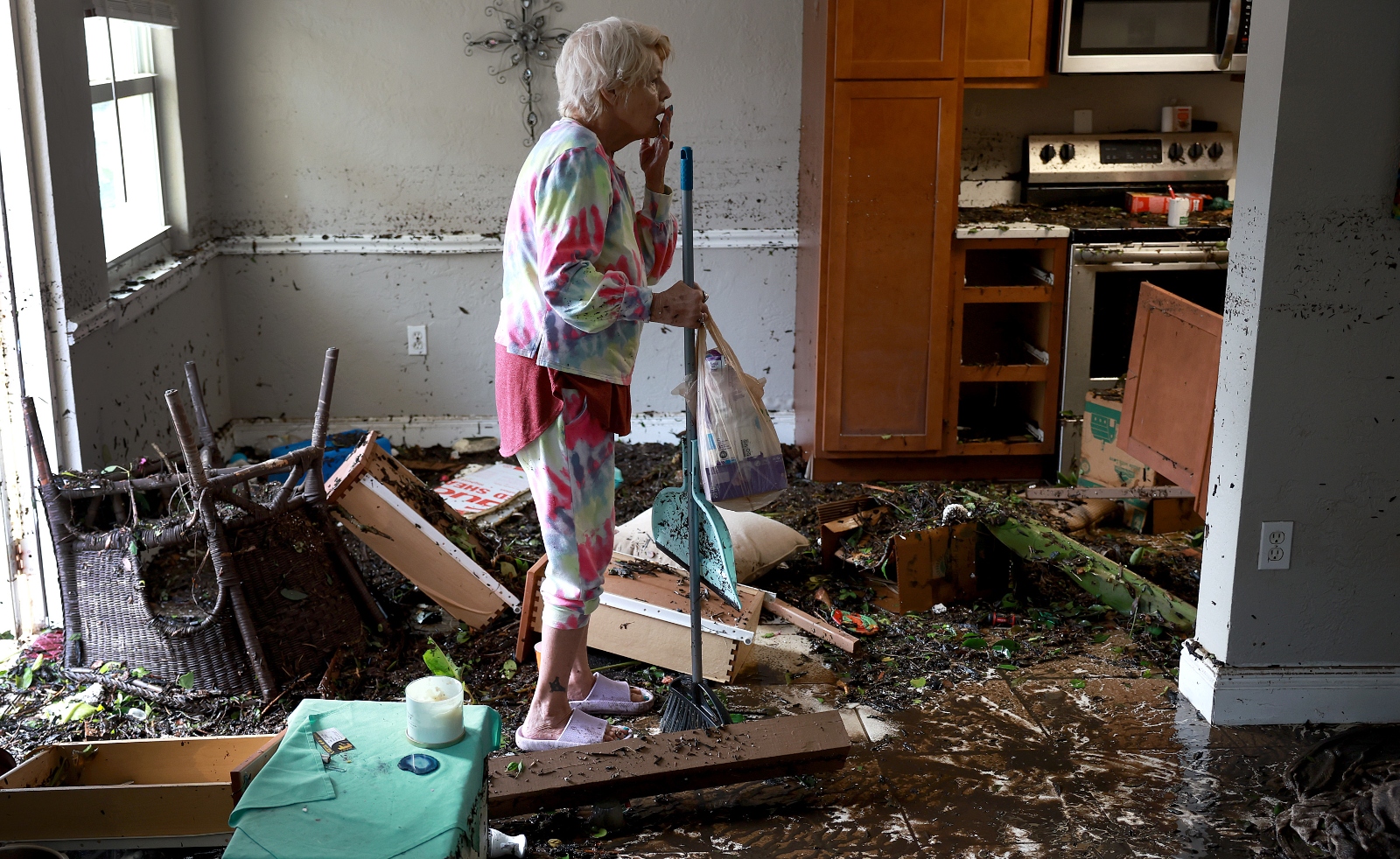
A woman looks over her apartment in Fort Myers, Florida, after Hurricane Ian inundated it with floodwaters in 2022. Joe Raedle/Getty Images

What to expect after a disaster

Disasters affect people in many different ways, and it’s normal to grieve your losses — personal, professional, community — in your own time. Here are a few resources if you need mental health support after experiencing an extreme weather event.

  • The National Center for PTSD, or post-traumatic stress disorder, on what to expect after experiencing a disaster.
  • The American Red Cross has disaster mental health volunteers they often dispatch to areas hit by a disaster.
  • The Substance Abuse and Mental Health Services Administration, or SAMHSA, has a fact sheet on managing stress after a disaster. The agency has a Disaster Distress Helpline that provides 24/7 crisis counseling and support. Call or text: 1-800-985-5990

After a disaster is an especially vulnerable time. Beware of scams and make sure to know your rights. 

  • Be wary of solicitors who arrive at your home after a disaster claiming to represent FEMA or another agency. FEMA will never ask you for money. The safest way to apply for aid is through FEMA’s official website: disasterassistance.gov
  • Be cautious about hiring contractors or construction workers in the days after a disaster. Many cities require permits for rebuilding work, and it’s common for scammers to pose as contractors after a disaster. 
  • Renters can often face evictions after a disaster, so familiarize yourself with tenant rights in your state. 
Residents of Paradise, California visit the town’s planning department to file permitting applications to re-build homes and other structures after the devastating 2018 Camp Fire. Gabrielle Lurie/San Francisco Chronicle via Getty Image

What to keep in mind before, during, and after a disaster

The most important thing to consider during a disaster is your own, your family’s, and your community’s safety. The National Weather Service has a guide for hurricanes and floods; FEMA has a guide for wildfires; the Centers for Disease Control and Prevention has a guide for extreme heat safety.

A few potentially life-saving things to remember:

  • Never wade in floodwaters. They often contain harmful runoff from sewer systems and can cause serious illness and health issues.
  • If it’s safe to do so, turn off electricity at the main breaker or fuse box in your home or business before a hurricane to prevent electric shock. 
  • If you lose power, never operate a generator inside your home. Generators emit carbon monoxide, a colorless and odorless gas that can be fatal if inhaled.

Did we miss something? Please let us know by emailing community@grist.org.

Governo de SP foi alertado de risco no Sahy 48 horas antes, diz centro federal (Folha de S.Paulo)

www1.folha.uol.com.br

OUTRO LADO: Defesa Civil diz que enviou SMS para 34 mil celulares cadastrados na região do litoral norte

Isabela Palhares

22 de fevereiro de 2023


O Cemaden (Centro Nacional de Monitoramento e Alerta para Desastres Naturais) afirma ter alertado o Governo de São Paulo cerca de 48 horas antes sobre o alto risco de desastre no litoral paulista.

Ao menos 48 pessoas morreram, sendo 47 em São Sebastião e 1 em Ubatuba —a última atualização foi feita nesta quarta (22) pela Defesa Civil.

Segundo o Cemaden, que é um órgão federal, a Defesa Civil estadual foi alertada sobre a ocorrência de chuvas fortes na região e o alto risco de desastres em uma reunião online na manhã de sexta (17). A vila do Sahy, o ponto em que mais pessoas morreram, foi citada como uma área de alto risco para deslizamento.

Em nota, a Defesa Civil diz que emitiu alertas preventivos à população desde que foi informada da previsão de fortes chuvas.

“Nós alertamos e avisamos a Defesa Civil na sexta, foram quase 48 horas antes de o desastre acontecer. Seguimos o protocolo que é estabelecido, alertando a Defesa Civil estadual para que ela se organizasse com os municípios”, disse Osvaldo Moraes, presidente do Cemaden.

O Cemaden é ligado ao Ministério da Ciência, Tecnologia e Inovação. O centro é responsável por monitorar índices meteorológicos e geológicos e alertar, caso necessário, os órgãos de prevenção.

Moraes diz que, ainda na quinta-feira (16), um boletim meteorológico já indicava as fortes chuvas na região. Esse boletim foi repassado para a Defesa Civil do estado.

Depois desse primeiro alerta, o Cemaden se reuniu com um representante da Defesa Civil estadual na sexta de manhã. “Nós emitimos boletins diários, o de quinta já indicava o risco. Mas o de sexta-feira aumentou o nível de alerta para essa região.”

A Defesa Civil disse que enviou 14 alertas de mensagem de texto (SMS) para mais de 34 mil celulares cadastrados na região do litoral norte. O órgão informou ainda que começou a articular ações as defesas civis municipais na quinta-feira quando recebeu a previsão de fortes chuvas na região.

“Os primeiros avisos divulgados pela Defesa Civil do Estado, que ocorreram ainda de forma preventiva, foram publicados por volta das 15 horas de quinta-feira, nas redes sociais da Defesa Civil e do Governo com informações sobre o volume de chuvas estimado para o período, bem como as medidas de segurança que poderiam ser adotadas pela população em áreas de risco”, diz a nota.

O órgão disse ainda que à 00h52 de sexta, ao acompanhar imagens de radares e satélites, enviou a primeira mensagem de SMS com o alerta.

Nas redes sociais da Defesa Civil, a primeira mensagem de alertas para chuvas fortes no sábado foi feita às 12h22. A mensagem, no entanto, não fala sobre os riscos de desmoronamento.

Durante a noite, outros alertas foram postados pelo órgão e nenhum deles faz menção ao risco de desmoronamento de terra. Foi só às 19h49 uma mensagem recomendou que as pessoas deixassem o local se precisassem.

Para os especialistas, a proporção do desastre e o elevado número de vítimas mostram que apenas a estratégia de envio de SMS aos moradores não é eficiente. Além de não ser possível saber se as pessoas viram os alertas, não havia um plano ou orientação sobre o que fazer na situação.

“Você cria um sistema de aviso, as pessoas podem até receber a mensagem, mas não sabem o que fazer com aquela informação. Não há uma orientação para onde devem ir, quando sair de casa, o que levar”, diz Eduardo Mario Mendiondo, coordenador científico do Ceped (Centro de Estudos e Pesquisas sobre Desastres) da USP.

Para ele, a estratégias devem pensar também criação de rotas de fugas em áreas de risco e na orientação aos moradores. “A população precisa saber qual o risco está correndo e como se proteger. É injusto depois dizer que eles não queriam sair de casa, eles não tinham orientação correta do que fazer.”

Segundo ele, em diversas cidades do país, como Petrópolis e Salvador, o alerta ocorre por uma sirene.

“Você garante que todo mundo vai ouvir a qualquer momento do dia. É o instrumento mais antigo, mas que funciona. Uma sirene dá o recado claro do risco iminente”, diz.

Para Fernando Rocha Nogueira, coordenador do LabGRIS (Laboratório Gestão de Riscos) da UFABC, as autoridade brasileiras assistem de forma inerte aos desastres que ocorrem no país. Segundo ele, o Brasil conta com bons sistemas de monitoramento, mas não desenvolve estratégias para proteger a população.

“Temos um problema grave de comunicação no país. Tinha o mapeamento de que iria chover muito, que havia um alto risco e não se deu a atenção devida. Milhares de pessoas desceram para o litoral, ignorando a previsão. Nós não temos conscientização do risco, nós vivemos um negacionismo das informações climáticas”, diz.


Como foram os avisos

Quinta-feira (16)
Boletim do Cemaden alerta para a ocorrência de chuvas fortes e volumosas no litoral paulista durante o Carnaval

Sexta-feira (17)
Em reunião virtual, o Cemaden faz alerta sobre a previsão de chuvas fortes e o risco de deslizamentos de terra para integrantes da Defesa Civil do estado. A vila do Sahy estava entre as áreas apontadas como de maior risco

Sábado (18)

12h22: Defesa Civil do Estado avisa nas redes sociais que a chuva estava se espalhando pela região de Ubatuba e Caraguatatuba. “Tem vento e raios. Atinge municípios vizinhos. Tenha cuidado nas próximas horas”, diz a mensagem

18h33: Uma nova mensagem da Defesa Civil é postada alertando para chuva persistente na região.

19h49: Outra mensagem é postada pela Defesa Civil diz que a “chuva está se espalhando” pelo Litoral Norte e pede para que as pessoas “tenham cuidado nas próximas horas”

23h13: A Defesa Civil alerta que a chuva persiste na região e recomenda “não enfrente alagamentos. Fique atento a inclinação de muros e a rachaduras. Se precisar saia do local”

03h15: O órgão volta a alerta sobre a chuva forte e persistente no litoral norte e diz “não enfrente alagamentos. Fique atento a inclinação de muros e a rachaduras. Se precisar saia do local.”

Tragédia no litoral norte indica necessidade de aprimorar previsão de chuvas (Folha de S.Paulo)

www1.folha.uol.com.br

Especialistas apontam falta de investimento e defasagem do modelo; temporal foi agravado por ciclone extratropical, diz meteorologista

Carlos Petrocilo

22 de fevereiro de 2023


A falta de investimento em novas tecnologias, aliada à aceleração das mudanças climáticas, torna a previsão do tempo mais imprecisa no Brasil, segundo especialistas ouvidos pela Folha.

O serviço de meteorologia é essencial para que órgãos públicos, como Defesa Civil, se preparem com antecedência na tentativa de mitigar os efeitos de um temporal.

No litoral norte, a Defesa Civil havia emitido alerta na quinta-feira (16) para a possibilidade de registrar um acumulado de 250 milímetros no final de semana. Porém, o volume de chuva chegou a 682 mm, de acordo com o Governo de São Paulo.

Como consequência do temporal, 48 pessoas morreram, sendo 47 em São Sebastião e uma em Ubatuba, conforme os dados desta quarta (22).

Segundo o professor Eduardo Mario Mendiondo, coordenador científico do Ceped (Centro de Educação e Pesquisa de Desastres) da USP, os modelos atuais de previsão utilizam parâmetros atmosféricos calibrados por condições históricas e precisam ser atualizados.

“O clima está mudando, com maior magnitude e com maior frequência de ocorrência de extremos. Os modelos precisam ser atualizados de forma constante, em escala global e em regiões específicas, com microclima e dinâmicas peculiares, como é o caso da Serra do Mar e da Baixada Santista”, afirma Mendiondo.

O professor chama atenção para falta de investimentos públicos. Segundo ele, o governo precisa reforçar o quadro de servidores e investir em novas ferramentas para Cemaden (Centro Nacional de Monitoramento e Alertas de Desastres Naturais), Inpe (Instituto Nacional de Pesquisas Espaciais) e Inmet (Instituto Nacional de Meteorologia).

“Falta aumentar em 20 vezes o potencial de supercomputadores atuais em território nacional, falta contratar até 20 vezes o número servidores de manutenção e operação de supercomputadores e falta contratar até em dez vezes o número atual de técnicos operadores”, afirma o professor da USP.

Para suprir tais necessidades, Mendiondo estima que é necessário investimentos de R$ 25 bilhões por ano. “Isto para converter essas novas evidências científicas, melhorando as previsões, seguindo exemplos como Japão, Europa e Estados Unidos.”

O meteorologista Mamedes Luiz Melo afirma que o volume de chuva foi agravado pela ação do ciclone extratropical associado a uma frente fria que passou pelo Sul do país e por São Paulo. “A tecnologia vinha alertando, mas estamos lidando com algo móvel na atmosfera”, afirma Melo.

A Defesa Civil diz, em nota, que os boletins especiais e de aviso de risco meteorológicos são emitidos com base em simulações numéricas de previsão do tempo. “Tais limiares baseiam-se no histórico da chuva da região em que a chuva acumulada representa risco para transtornos, como deslizamentos, desabamentos, alagamentos, enchentes e ocorrências relacionadas a raios e ventos”, disse a Defesa Civil.

As projeções do Inmet, que emite alertas sobre riscos de deslizamentos para órgãos públicos, previram volumes de chuva menores do que um modelo usado pela empresa de meteorologia MetSul.

O modelo da empresa, chamado WRF, apontou que algumas áreas poderiam ter chuva acima de 600 mm em alguns pontos do terreno, o que acabou se confirmando. As previsões mais graves do instituto federal falavam em chuvas no patamar de 400 mm.

A previsão do Inmet para a chuva no litoral norte utilizou seis modelos numéricos diferentes. O instituto também usa o WRF, mas com uma resolução menor do que a da MetSul. Ou seja, a empresa conseguiu fazer os cálculos a partir de detalhes mais precisos do relevo do que o órgão público.

“O WRF tem se mostrado uma ferramenta muito importante na identificação de eventos extremos de chuva”, diz a meteorologista Estael Sias, da MetSul. “É importante assinalar que o modelo WRF é meramente uma ferramenta de trabalho, um produto, e não a previsão, e que o prognóstico final divulgado ao público e clientes leva em conta outros modelos e também a experiência do meteorologista para eventos extremos.”

Segundo o meteorologista Franco Nadal Villela, da equipe do Inmet em São Paulo, a resolução não é o fator mais decisivo na previsão de chuvas. Ele diz que os modelos usados pelo instituto deram conta de prever que o temporal em São Sebastião seria muito grave, embora não tenham chegado ao valor de 600 mm.

“Há modelos de menor resolução que pontualmente previram menos precipitação”, diz Villela. “As previsões modeladas estavam prevendo bem este evento e as variações na quantificação de precipitação [volume de chuva por hora] são mais uma das varáveis que ponderamos para emitir alertas.”

A Folha enviou perguntas através de email ao Inpe, que coordena o Centro de Previsão de Tempo e Estudos Climáticos (Cptec), mas não obteve resposta até a publicação deste texto.

Para José Marengo, climatologista e coordenador do Cemaden, defende mudanças [sic]. Ele explica que o modelo de previsão do tempo divide a região em áreas de até 200 quilômetros quadrados. Com isso, não é possível prever a quantidade de chuva aproximada em toda a região.

“O Brasil não está preparado tecnologicamente. É como se dividisse o Brasil em caixas grandes de 200 quilômetros quadrados, por isso há distorções dentro da mesma região. Pode ter áreas em que chove menos e outras que superaram os 600 milímetros, a modelagem não é perfeita”, afirma Marengo.

Ele também alerta para a falta de novas tecnologias. “O supercomputador do Inpe, o Tupã, que resolve as equações matemáticas em alta velocidade, é de 2010 e considerado obsoleto”, afirma o climatologista.

O professor Pedro Côrtes, do Instituto de Energia e Ambiente da USP, concorda que é área precise de mais recursos, mas pondera que as previsões dos órgãos do governo foram suficientes para apontar que uma tempestade grave se aproximava.

“A espera pelo investimento não pode postergar a solução do problema, as previsões já funcionam.”

A Folha publicou, no dia 28 de dezembro de 2010, a inauguração do supercomputador. Na ocasião, o Tupã custou R$ 31 milhões e era utilizado em países como Estados Unidos, China, Alemanha e Rússia. Para operá-lo, o Inpe precisou construir uma nova central elétrica, de mil quilowatts —antes tinha só 280 quilowatts disponíveis no instituto.

Até hoje os especialistas apontam o Tupã como o melhor equipamento que o Brasil possui para prever, além de enchentes, ondas de calor e frio e os períodos de seca.

Crise do clima afeta saúde individual com mais dias de calorão e tempo seco; entenda (Folha de S.Paulo)

Aumento das inundações também está entre mudanças previstas por painel da ONU

Phillippe Watanabe – São Paulo

14.ago.2021 às 12h00

OK, você já entendeu que a crise do clima é para valer e causada pela atividade humana, como mostrou o relatório recente do IPCC (Painel Intergovernamental de Mudança do Clima). Agora, como isso pode afetar seu dia a dia?

O impacto do aumento da temperatura média na Terra é planetário, com elevação do nível do mar e alteração de ecossistemas inteiros, entre outras mudanças.

Alterações regionais do clima, com maior frequência de eventos extremos, já são percebidas e se intensificarão nos próximos anos, com consequências diretas na saúde de todos.

No Brasil, alguns estados conviverão com mais dias de calorão, que podem ser prejudiciais à saúde a ponto de provocar a morte de idosos.

Em outros, chuvas intensas se tornarão mais recorrentes, ocasionando inundações que aumentam o risco de doenças, quando não destroem bairros e cidades.

Por fim, as secas também devem ficar mais intensas, o que pode agravar problemas respiratórios.

Além disso, tanto as chuvas intensas quanto as secas prejudicam lavouras, aumentando o preço dos alimentos.

Um exemplo prático de aumento de temperatura está no Sudeste e no Sul do Brasil. Segundo o cenário mais otimista do IPCC, até 2040 os dias com termômetros acima de 35°C passarão de 26 por ano (média de 1995 a 2014) para 32. Num cenário intermediário, até o final do século esse número pode chegar a 43, um aumento de mais de 65% em relação à situação recente.

No Centro-Oeste, o aumento do calorão é ainda mais severo. No cenário intermediário, do IPCC, a média de 53 dias por ano com termômetros acima de 35°C salta para cerca de 72 até 2040 e para 108 até o fim do século, ou pouco mais de um trimestre de temperatura extrema.

​As consequências para a saúde são graves. Ondas de calor extremo podem causar hipertermia, que afeta os órgãos internos e provoca lesões no coração, nas células musculares e nos vasos sanguíneos. São danos que podem levar à morte.

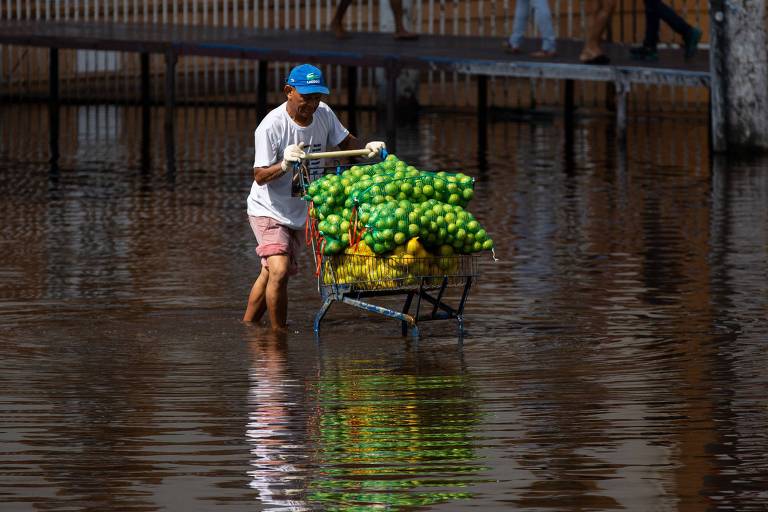
Homem empurra carrinho com frutas em rua inundada em Manaus, que enfrentou, nos últimos meses, a maior cheia já registrada do rio Negro
Homem empurra carrinho com frutas em rua inundada em Manaus, que enfrentou, nos últimos meses, a maior cheia já registrada do rio Negro – Michael Dantas/AFP

Em junho, uma onda de calor nos estados de Oregon e Washington, nos Estados Unidos, custou a vida de centenas de pessoas. Segundo reportagem do jornal The New York Times, foram registrados cerca de 600 óbitos em excesso no período.

Além do calor, a crise do clima deve tornar mais frequentes os períodos de seca e os dias sem chuva em muitas regiões. É o caso da Amazônia.

Dados do IPCC apontam que, na região Norte, no período 1995-2014 eram em média 43 dias consecutivos sem chuva por ano, que podem aumentar para 51, com períodos 10% mais secos até 2040.

Situação similar deve ocorrer no Centro-Oeste, que tinha 69 dias consecutivos sem chuva por ano, que podem ir a 76, com períodos 13% mais secos.

Períodos mais secos nessas regiões preocupam por causa das queimadas. Na Amazônia, por exemplo, a época sem chuvas é associada à intensificação de processos de desmatamento e de incêndios.

As queimadas na região amazônica têm relação com piora da qualidade do ar e consequentes problemas respiratórios. A Fiocruz e a ONG WWF-Brasil estimam que estados amazônicos com índices elevados de queimadas tenham gastado, em dez anos, quase R$ 1 bilhão com hospitalizações por doenças respiratórias provavelmente relacionadas à fumaça dos incêndios.

No ano passado, o Pantanal passou por sua pior seca dos últimos 60 anos, estiagem que ainda pode continuar por até cinco anos, segundo afirmou à época a Secretaria Nacional de Proteção e Defesa Civil. A situação fez explodir o número de queimadas na região.

O IPCC também aponta aumento da frequência e da intensidade de chuvas extremas e enchentes em diversas regiões do Brasil.

Além dos danos óbvios na infraestrutura das cidades, as inundações provocam problemas de saúde. Hepatite A (transmitida de modo oral-fecal, ou seja, por alimentos e água contaminada) e leptospirose (com transmissão a partir do contato com urina de ratos) são suspeitos conhecidos, mas há também o risco de acidentes com animais peçonhentos, já que cobras e escorpiões podem procurar abrigos dentro das casas.

Manaus tornou-se exemplo recente desse tipo de situação. A cidade enfrentou uma cheia histórica, a maior desde o início das medições, há 119 anos. As águas do rio Negro provocaram inundações com duração superior a um mês na principal capital da região amazônica. Seis das dez maiores cheias já registradas no rio ocorreram no século 21, ou seja, nas últimas duas décadas.

Ruas da região do porto de Manaus tiveram que ser interditadas e foi necessária a construção de passarelas sobre as vias alagadas. Enquanto isso, comerciantes fizeram barreiras com sacos de areia e jogaram cal na água parada para tentar neutralizar o cheiro de fezes.

Em meio à inundação em igarapés, houve acúmulo de lixo, que chegou a cobrir toda a área superficial da água. Dentro das casas, moradores usaram plataformas de madeira (chamadas de marombas) para suspender móveis e eletrodomésticos.

As enchentes não são exclusividade amazônica. Elas também ocorrem na região Sudeste, em São Paulo e Rio de Janeiro, por exemplo.

Pouco tempo depois da cheia em Manaus, a Europa também viu chuvas intensas concentradas em um curto espaço de tempo causarem inundações severas, principalmente na Alemanha. Além da destruição de vias públicas e imóveis, houve mais de uma centena de mortes.

Também no mesmo período, a China teve que lidar com grandes precipitações e perda de vidas humanas pelas inundações, que chegaram a encher de água o metrô, deixando pessoas presas. Foram as piores chuvas em 60 anos em Zhengzhou, capital da província de Henan.

Em termos globais, um estudo recente apontou o aumento da população exposta a inundações. De 2000 a 2015, de 255 milhoes a 290 milhões de pessoas foram diretamente afetadas por enchentes.

Atlas

Umas das novidades do novo relatório do IPCC é o espaço dedicado às emergências climáticas regionais e, relacionado a isso, o Atlas interativo, uma ferramenta que permite o acesso às informações do clima de diferentes regiões do mundo .

Segundo Lincoln Alves, pesquisador do Inpe (Instituto Nacional de Pesquisas Espaciais) e autor-líder do Atlas do IPCC, a ferramenta pretende facilitar o acesso a informações normalmente complexas. “É visível a mudança do clima”, afirma o pesquisador.

A partir do Atlas, diz Alves, é possível que comunidades, empresas e até esferas do governo consigam olhar de forma mais regional para os efeitos da crise do clima.

A ferramenta permite ver a história climática da Terra e observar as projeções para diferentes variáveis em diferentes cenários de emissões —e de aquecimento, como 1,5°C e 2°C— apontados pelo IPCC.


PRINCIPAIS CONCLUSÕES DO RELATÓRIO DO IPCC

  • Aumento de temperatura provocada pelo ser humano desde 1850-1900 até 2010-2019: de 0,8°C a 1,21°C
  • Os anos de 2016 a 2020 foram o período de cinco anos mais quentes de 1850 a 2020
  • De 2021 a 2040, um aumento de temperatura de 1,5°C é, no mínimo, provável de acontecer em qualquer cenário de emissões
  • A estabilização da temperatura na Terra pode levar de 20 a 30 anos se houver redução forte e sustentada de emissões
  • O oceano está esquentando mais rápido —inclusive em profundidades maiores do que 2.000 m— do que em qualquer período anterior, desde pelo menos a última transição glacial. É extremamente provável que as atividades humanas sejam o principal fator para isso
  • O oceano continuará a aquecer por todo o século 21 e provavelmente até 2300, mesmo em cenários de baixas emissões
  • O aquecimento de áreas profundas do oceano e o derretimento de massas de gelo tende a elevar o nível do mar, o que tende a se manter por milhares de anos
  • Nos próximos 2.000 anos, o nível médio global do mar deve aumentar 2 a 3 metros, se o aumento da temperatura ficar contido em 1,5°C. Se o aquecimento global ficar contido a 2°C, o nível deve aumentar de 2 a 6 metros. No caso de 5°C de aumento de temperatura, o mar subirá de 19 a 22 metros

The Biblical Flood That Will Drown California (Wired)

Tom Philpott, 08.29.20 8:00 AM

The Great Flood of 1861–1862 was a preview of what scientists expect to see again, and soon.

This story originally appeared on Mother Jones and is part of the Climate Desk collaboration.

In November 1860, a young scientist from upstate New York named William Brewer disembarked in San Francisco after a long journey that took him from New York City through Panama and then north along the Pacific coast. “The weather is perfectly heavenly,” he enthused in a letter to his brother back east. The fast-growing metropolis was already revealing the charms we know today: “large streets, magnificent buildings” adorned by “many flowers we [northeasterners] see only in house cultivations: various kinds of geraniums growing of immense size, dew plant growing like a weed, acacia, fuchsia, etc. growing in the open air.”

Flowery prose aside, Brewer was on a serious mission. Barely a decade after being claimed as a US state, California was plunged in an economic crisis. The gold rush had gone bust, and thousands of restive settlers were left scurrying about, hot after the next ever-elusive mineral bonanza. The fledgling legislature had seen fit to hire a state geographer to gauge the mineral wealth underneath its vast and varied terrain, hoping to organize and rationalize the mad lunge for buried treasure. The potential for boosting agriculture as a hedge against mining wasn’t lost on the state’s leaders. They called on the state geographer to deliver a “full and scientific description of the state’s rocks, fossils, soils, and minerals, and its botanical and zoological productions, together with specimens of same.”

The task of completing the fieldwork fell to the 32-year-old Brewer, a Yale-trained botanist who had studied cutting-edge agricultural science in Europe. His letters home, chronicling his four-year journey up and down California, form one of the most vivid contemporary accounts of its early statehood.

They also provide a stark look at the greatest natural disaster known to have befallen the western United States since European contact in the 16th century: the Great Flood of 1861–1862. The cataclysm cut off telegraph communication with the East Coast, swamped the state’s new capital, and submerged the entire Central Valley under as much as 15 feet of water. Yet in modern-day California—a region that author Mike Davis once likened to a “Book of the Apocalypse theme park,” where this year’s wildfires have already burned 1.4 million acres, and dozens of fires are still raging—the nearly forgotten biblical-scale flood documented by Brewer’s letters has largely vanished from the public imagination, replaced largely by traumatic memories of more recent earthquakes.

When it was thought of at all, the flood was once considered a thousand-year anomaly, a freak occurrence. But emerging science demonstrates that floods of even greater magnitude occurred every 100 to 200 years in California’s precolonial history. Climate change will make them more frequent still. In other words, the Great Flood was a preview of what scientists expect to see again, and soon. And this time, given California’s emergence as agricultural and economic powerhouse, the effects will be all the more devastating.

Barely a year after Brewer’s sunny initial descent from a ship in San Francisco Bay, he was back in the city, on a break. In a November 1861 letter home, he complained of a “week of rain.” In his next letter, two months later, Brewer reported jaw-dropping news: Rain had fallen almost continuously since he had last written—and now the entire Central Valley was underwater. “Thousands of farms are entirely underwater—cattle starving and drowning.”

Picking up the letter nine days later, he wrote that a bad situation had deteriorated. All the roads in the middle of the state are “impassable, so all mails are cut off.” Telegraph service, which had only recently been connected to the East Coast through the Central Valley, stalled. “The tops of the poles are under water!” The young state’s capital city, Sacramento, about 100 miles northeast of San Francisco at the western edge of the valley and the intersection of two rivers, was submerged, forcing the legislature to evacuate—and delaying a payment Brewer needed to forge ahead with his expedition.

The surveyor gaped at the sheer volume of rain. In a normal year, Brewer reported, San Francisco received about 20 inches. In the 10 weeks leading up to January 18, 1862, the city got “thirty-two and three-quarters inches and it is still raining!”

Brewer went on to recount scenes from the Central Valley that would fit in a Hollywood disaster epic. “An old acquaintance, a buccaro [cowboy], came down from a ranch that was overflowed,” he wrote. “The floor of their one-story house was six weeks under water before the house went to pieces.” Steamboats “ran back over the ranches fourteen miles from the [Sacramento] river, carrying stock [cattle], etc., to the hills,” he reported. He marveled at the massive impromptu lake made up of “water ice cold and muddy,” in which “winds made high waves which beat the farm homes in pieces.” As a result, “every house and farm over this immense region is gone.”

Eventually, in March, Brewer made it to Sacramento, hoping (without success) to lay hands on the state funds he needed to continue his survey. He found a city still in ruins, weeks after the worst of the rains. “Such a desolate scene I hope never to see again,” he wrote: “Most of the city is still under water, and has been for three months … Every low place is full—cellars and yards are full, houses and walls wet, everything uncomfortable.” The “better class of houses” were in rough shape, Brewer observed, but “it is with the poorer classes that this is the worst.” He went on: “Many of the one-story houses are entirely uninhabitable; others, where the floors are above the water are, at best, most wretched places in which to live.” He summarized the scene:

Many houses have partially toppled over; some have been carried from their foundations, several streets (now avenues of water) are blocked up with houses that have floated in them, dead animals lie about here and there—a dreadful picture. I don’t think the city will ever rise from the shock, I don’t see how it can.

Brewer’s account is important for more than just historical interest. In the 160 years since the botanist set foot on the West Coast, California has transformed from an agricultural backwater to one of the jewels of the US food system. The state produces nearly all of the almonds, walnuts, and pistachios consumed domestically; 90 percent or more of the broccoli, carrots, garlic, celery, grapes, tangerines, plums, and artichokes; at least 75 percent of the cauliflower, apricots, lemons, strawberries, and raspberries; and more than 40 percent of the lettuce, cabbage, oranges, peaches, and peppers.

And as if that weren’t enough, California is also a national hub for milk production. Tucked in amid the almond groves and vegetable fields are vast dairy operations that confine cows together by the thousands and produce more than a fifth of the nation’s milk supply, more than any other state. It all amounts to a food-production juggernaut: California generates $46 billion worth of food per year, nearly double the haul of its closest competitor among US states, the corn-and-soybean behemoth Iowa.

You’ve probably heard that ever-more more frequent and severe droughts threaten the bounty we’ve come to rely on from California. Water scarcity, it turns out, isn’t the only menace that stalks the California valleys that stock our supermarkets. The opposite—catastrophic flooding—also occupies a niche in what Mike Davis, the great chronicler of Southern California’s sociopolitical geography, has called the state’s “ecology of fear.” Indeed, his classic book of that title opens with an account of a 1995 deluge that saw “million-dollar homes tobogganed off their hill-slope perches” and small children and pets “sucked into the deadly vortices of the flood channels.”

Yet floods tend to be less feared than rival horsemen of the apocalypse in the state’s oft-stimulated imagination of disaster. The epochal 2011–2017 drought, with its missing-in-action snowpacks and draconian water restrictions, burned itself into the state’s consciousness. Californians are rightly terrified of fires like the ones that roared through the northern Sierra Nevada foothills and coastal canyons near Los Angeles in the fall of 2018, killing nearly 100 people and fouling air for miles around, or the current LNU Lightning Complex fire that has destroyed nearly 1,000 structures and killed five people in the region between Sacramento and San Francisco. Many people are frightfully aware that a warming climate will make such conflagrations increasingly frequent. And “earthquake kits” are common gear in closets and garages all along the San Andreas Fault, where the next Big One lurks. Floods, though they occur as often in Southern and Central California as they do anywhere in the United States, don’t generate quite the same buzz.

But a growing body of research shows there’s a flip side to the megadroughts Central Valley farmers face: megafloods. The region most vulnerable to such a water-drenched cataclysm in the near future is, ironically enough, the California’s great arid, sinking food production basin, the beleaguered behemoth of the US food system: the Central Valley. Bordered on all sides by mountains, the Central Valley stretches 450 miles long, is on average 50 miles wide, and occupies a land mass of 18,000 square miles, or 11.5 million acres—roughly equivalent in size to Massachusetts and Vermont combined. Wedged between the Sierra Nevada to the east and the Coast Ranges to the west, it’s one of the globe’s greatest expanses of fertile soil and temperate weather. For most Americans, it’s easy to ignore the Central Valley, even though it’s as important to eaters as Hollywood is to moviegoers or Silicon Valley is to smartphone users. Occupying less than 1 percent of US farmland, the Central Valley churns out a quarter of the nation’s food supply.

At the time of the Great Flood, the Central Valley was still mainly cattle ranches, the farming boom a ways off. Late in 1861, the state suddenly emerged from a two-decade dry spell when monster storms began lashing the West Coast from Baja California to present-day Washington state. In central California, the deluge initially took the form of 10 to 15 feet of snow dumped onto the Sierra Nevada, according to research by the UC Berkeley paleoclimatologist B. Lynn Ingram and laid out in her 2015 book, The West Without Water, cowritten with Frances Malamud-Roam. Ingram has emerged as a kind of Cassandra of drought and flood risks in the western United States. Soon after the blizzards came days of warm, heavy rain, which in turn melted the enormous snowpack. The resulting slurry cascaded through the Central Valley’s network of untamed rivers.

As floodwater gathered in the valley, it formed a vast, muddy, wind-roiled lake, its size “rivaling that of Lake Superior,” covering the entire Central Valley floor, from the southern slopes of the Cascade Mountains near the Oregon border to the Tehachapis, south of Bakersfield, with depths in some places exceeding 15 feet.

At least some of the region’s remnant indigenous population saw the epic flood coming and took precautions to escape devastation, Ingram reports, quoting an item in the Nevada City Democrat on January 11, 1862:

We are informed that the Indians living in the vicinity of Marysville left their abodes a week or more ago for the foothills predicting an unprecedented overflow. They told the whites that the water would be higher than it has been for thirty years, and pointed high up on the trees and houses where it would come. The valley Indians have traditions that the water occasionally rises 15 or 20 feet higher than it has been at any time since the country was settled by whites, and as they live in the open air and watch closely all the weather indications, it is not improbable that they may have better means than the whites of anticipating a great storm.

All in all, thousands of people died, “one-third of the state’s property was destroyed, and one home in eight was destroyed completely or carried away by the floodwaters.” As for farming, the 1862 megaflood transformed valley agriculture, playing a decisive role in creating today’s Anglo-dominated, crop-oriented agricultural powerhouse: a 19th-century example of the “disaster capitalism” that Naomi Klein describes in her 2007 book, The Shock Doctrine.

Prior to the event, valley land was still largely owned by Mexican rancheros who held titles dating to Spanish rule. The 1848 Treaty of Guadalupe Hidalgo, which triggered California’s transfer from Mexican to US control, gave rancheros US citizenship and obligated the new government to honor their land titles. The treaty terms met with vigorous resentment from white settlers eager to shift from gold mining to growing food for the new state’s burgeoning cities. The rancheros thrived during the gold rush, finding a booming market for beef in mining towns. By 1856, their fortunes had shifted. A severe drought that year cut production, competition from emerging US settler ranchers meant lower prices, and punishing property taxes—imposed by land-poor settler politicians—caused a further squeeze. “As a result, rancheros began to lose their herds, their land, and their homes,” writes the historian Lawrence James Jelinek.

The devastation of the 1862 flood, its effects magnified by a brutal drought that started immediately afterward and lasted through 1864, “delivered the final blow,” Jelinek writes. Between 1860 and 1870, California’s cattle herd, concentrated in the valley, plunged from 3 million to 630,000. The rancheros were forced to sell their land to white settlers at pennies per acre, and by 1870 “many rancheros had become day laborers in the towns,” Jelinek reports. The valley’s emerging class of settler farmers quickly turned to wheat and horticultural production and set about harnessing and exploiting the region’s water resources, both those gushing forth from the Sierra Nevada and those beneath their feet.

Despite all the trauma it generated and the agricultural transformation it cemented in the Central Valley, the flood quickly faded from memory in California and the broader United States. To his shocked assessment of a still-flooded and supine Sacramento months after the storm, Brewer added a prophetic coda:

No people can so stand calamity as this people. They are used to it. Everyone is familiar with the history of fortunes quickly made and as quickly lost. It seems here more than elsewhere the natural order of things. I might say, indeed, that the recklessness of the state blunts the keener feelings and takes the edge from this calamity.

Indeed, the new state’s residents ended up shaking off the cataclysm. What lesson does the Great Flood of 1862 hold for today? The question is important. Back then, just around 500,000 people lived in the entire state, and the Central Valley was a sparsely populated badland. Today, the valley has a population of 6.5 million people and boasts the state’s three fastest-growing counties. Sacramento (population 501,344), Fresno (538,330), and Bakersfield (386,839) are all budding metropolises. The state’s long-awaited high-speed train, if it’s ever completed, will place Fresno residents within an hour of Silicon Valley, driving up its appeal as a bedroom community.

In addition to the potentially vast human toll, there’s also the fact that the Central Valley has emerged as a major linchpin of the US and global food system. Could it really be submerged under fifteen feet of water again—and what would that mean?

In less than two centuries as a US state, California has maintained its reputation as a sunny paradise while also enduring the nation’s most erratic climate: the occasional massive winter storm roaring in from the Pacific; years-long droughts. But recent investigations into the fossil record show that these past years have been relatively stable.

One avenue of this research is the study of the regular megadroughts, the most recent of which occurred just a century before Europeans made landfall on the North American west coast. As we are now learning, those decades-long arid stretches were just as regularly interrupted by enormous storms—many even grander than the one that began in December 1861. (Indeed, that event itself was directly preceded and followed by serious droughts.) In other words, the same patterns that make California vulnerable to droughts also make it ripe for floods.

Beginning in the 1980s, scientists including B. Lynn Ingram began examining streams and banks in the enormous delta network that together serve as the bathtub drain through which most Central Valley runoff has flowed for millennia, reaching the ocean at the San Francisco Bay. (Now-vanished Tulare Lake gathered runoff in the southern part of the valley.) They took deep-core samples from river bottoms, because big storms that overflow the delta’s banks transfer loads of soil and silt from the Sierra Nevada and deposit a portion of it in the Delta. They also looked at fluctuations in old plant material buried in the sediment layers. Plant species that thrive in freshwater suggest wet periods, as heavy runoff from the mountains crowds out seawater. Salt-tolerant species denote dry spells, as sparse mountain runoff allows seawater to work into the delta.

What they found was stunning. The Great Flood of 1862 was no one-off black-swan event. Summarizing the science, Ingram and USGS researcher Michael Dettinger deliver the dire news: A flood comparable to—and sometimes much more intense than—the 1861–1862 catastrophe occurred sometime between 1235–1360, 1395–1410, 1555–1615, 1750–1770, and 1810–1820; “that is, one megaflood every 100 to 200 years.” They also discovered that the 1862 flood didn’t appear in the sediment record in some sites that showed evidence of multiple massive events—suggesting that it was actually smaller than many of the floods that have inundated California over the centuries.

During its time as a US food-production powerhouse, California has been known for its periodic droughts and storms. But Ingram and Dettinger’s work pulls the lens back to view the broader timescale, revealing the region’s swings between megadroughts and megastorms—ones more than severe enough to challenge concentrated food production, much less dense population centers.

The dynamics of these storms themselves explain why the state is also prone to such swings. Meteorologists have known for decades that those tempests that descend upon California over the winter—and from which the state receives the great bulk of its annual precipitation—carry moisture from the South Pacific. In the late 1990s, scientists discovered that these “pineapple expresses,” as TV weather presenters call them, are a subset of a global weather phenomenon: long, wind-driven plumes of vapor about a mile above the sea that carry moisture from warm areas near the equator on a northeasterly path to colder, drier regions toward the poles. They carry so much moisture—often more than 25 times the flow of the Mississippi River, over thousands of miles—that they’ve been dubbed “atmospheric rivers.”

In a pioneering 1998 paper, researchers Yong Zhu and Reginald E. Newell found that nearly all the vapor transport between the subtropics (regions just south or north of the equator, depending on the hemisphere) toward the poles occurred in just five or six narrow bands. And California, it turns out, is the prime spot in the western side of the northern hemisphere for catching them at full force during the winter months.

As Ingram and Dettinger note, atmospheric rivers are the primary vector for California’s floods. That includes pre-Columbian cataclysms as well as the Great Flood of 1862, all the way to the various smaller ones that regularly run through the state. Between 1950 and 2010, Ingram and Dettinger write, atmospheric rivers “caused more than 80 percent of flooding in California rivers and 81 percent of the 128 most well-documented levee breaks in California’s Central Valley.”

Paradoxically, they are at least as much a lifeblood as a curse. Between eight and 11 atmospheric rivers hit California every year, the great majority of them doing no major damage, and they deliver between 30 and 50 percent of the state’s rain and snow. But the big ones are damaging indeed. Other researchers are reaching similar conclusions. In a study released in December 2019, a team from the US Army Corps of Engineers and the Scripps Institution of Oceanography found that atmospheric-river storms accounted for 84 percent of insured flood damages in the western United States between 1978 and 2017; the 13 biggest storms wrought more than half the damage.

So the state—and a substantial portion of our food system—exists on a razor’s edge between droughts and floods, its annual water resources decided by massive, increasingly fickle transfers of moisture from the South Pacific. As Dettinger puts it, the “largest storms in California’s precipitation regime not only typically end the state’s frequent droughts, but their fluctuations also cause those droughts in the first place.”

We know that before human civilization began spewing millions of tons of greenhouse gases into the atmosphere annually, California was due “one megaflood every 100 to 200 years”—and the last one hit more than a century and a half ago. What happens to this outlook when you heat up the atmosphere by 1 degree Celsius—and are on track to hit at least another half-degree Celsius increase by midcentury?

That was the question posed by Daniel Swain and a team of researchers at UCLA’s Department of Atmospheric and Oceanic Sciences in a series of studies, the first of which was published in 2018. They took California’s long pattern of droughts and floods and mapped it onto the climate models based on data specific to the region, looking out to century’s end.

What they found isn’t comforting. As the tropical Pacific Ocean and the atmosphere just above it warm, more seawater evaporates, feeding ever bigger atmospheric rivers gushing toward the California coast. As a result, the potential for storms on the scale of the ones that triggered the Great Flood has increased “more than threefold,” they found. So an event expected to happen on average every 200 years will now happen every 65 or so. It is “more likely than not we will see one by 2060,” and it could plausibly happen again before century’s end, they concluded.

As the risk of a catastrophic event increases, so will the frequency of what they call “precipitation whiplash”: extremely wet seasons interrupted by extremely dry ones, and vice versa. The winter of 2016–2017 provides a template. That year, a series of atmospheric-river storms filled reservoirs and at one point threatened a major flood in the northern Central Valley, abruptly ending the worst multiyear drought in the state’s recorded history.

Swings on that magnitude normally occur a handful of times each century, but in the model by Swain’s team, “it goes from something that happens maybe once in a generation to something that happens two or three times,” he told me in an interview. “Setting aside a repeat of 1862, these less intense events could still seriously test the limits of our water infrastructure.” Like other efforts to map climate change onto California’s weather, this one found that drought years characterized by low winter precipitation would likely increase—in this case, by a factor of as much as two, compared with mid-20th-century patterns. But extreme-wet winter seasons, accumulating at least as much precipitation as 2016–2017, will grow even more: they could be three times as common as they were before the atmosphere began its current warming trend.

While lots of very wet years—at least the ones that don’t reach 1861–1862 levels—might sound encouraging for food production in the Central Valley, there’s a catch, Swain said. His study looked purely at precipitation, independent of whether it fell as rain or snow. A growing body of research suggests that as the climate warms, California’s precipitation mix will shift significantly in favor of rain over snow. That’s dire news for our food system, because the Central Valley’s vast irrigation networks are geared to channeling the slow, predictable melt of the snowpack into usable water for farms. Water that falls as rain is much harder to capture and bend to the slow-release needs of agriculture.

In short, California’s climate, chaotic under normal conditions, is about to get weirder and wilder. Indeed, it’s already happening.

What if an 1862-level flood, which is overdue and “more likely than not” to occur with a couple of decades, were to hit present-day California?

Starting in 2008, the USGS set out to answer just that question, launching a project called the ARkStorm (for “atmospheric river 1,000 storm”) Scenario. The effort was modeled on a previous USGS push to get a grip on another looming California cataclysm: a massive earthquake along the San Andreas Fault. In 2008, USGS produced the ShakeOut Earthquake Scenario, a “detailed depiction of a hypothetical magnitude 7.8 earthquake.” The study “served as the centerpiece of the largest earthquake drill in US history, involving over five thousand emergency responders and the participation of over 5.5 million citizens,” the USGS later reported.

That same year, the agency assembled a team of 117 scientists, engineers, public-policy experts, and insurance experts to model what kind of impact a monster storm event would have on modern California.

At the time, Lucy Jones served as the chief scientist for the USGS’s Multi Hazards Demonstration Project, which oversaw both projects. A seismologist by training, Jones spent her time studying the devastations of earthquakes and convincing policy makers to invest resources into preparing for them. The ARkStorm project took her aback, she told me. The first thing she and her team did was ask, What’s the biggest flood in California we know about? “I’m a fourth-generation Californian who studies disaster risk, and I had never heard of the Great Flood of 1862,” she said. “None of us had heard of it,” she added—not even the meteorologists knew about what’s “by far the biggest disaster ever in California and the whole Southwest” over the past two centuries.

At first, the meteorologists were constrained in modeling a realistic megastorm by a lack of data; solid rainfall-gauge measures go back only a century. But after hearing about the 1862 flood, the ARkStorm team dug into research from Ingram and others for information about megastorms before US statehood and European contact. They were shocked to learn that the previous 1,800 years had about six events that were more severe than 1862, along with several more that were roughly of the same magnitude. What they found was that a massive flood is every bit as likely to strike California, and as imminent, as a massive quake.

Even with this information, modeling a massive flood proved more challenging than projecting out a massive earthquake. “We seismologists do this all the time—we create synthetic seismographs,” she said. Want to see what a quake reaching 7.8 on the Richter scale would look like along the San Andreas Fault? Easy, she said. Meteorologists, by contrast, are fixated on accurate prediction of near-future events; “creating a synthetic event wasn’t something they had ever done.” They couldn’t just re-create the 1862 event, because most of the information we have about it is piecemeal, from eyewitness accounts and sediment samples.

To get their heads around how to construct a reasonable approximation of a megastorm, the team’s meteorologists went looking for well-documented 20th-century events that could serve as a model. They settled on two: a series of big storms in 1969 that hit Southern California hardest and a 1986 cluster that did the same to the northern part of the state. To create the ARkStorm scenario, they stitched the two together. Doing so gave the researchers a rich and regionally precise trove of data to sketch out a massive Big One storm scenario.

There was one problem: While the fictional ARkStorm is indeed a massive event, it’s still significantly smaller than the one that caused the Great Flood of 1862. “Our [hypothetical storm] only had total rain for 25 days, while there were 45 days in 1861 to ’62,” Jones said. They plunged ahead anyway, for two reasons. One was that they had robust data on the two 20th-century storm events, giving disaster modelers plenty to work with. The second was that they figured a smaller-than-1862 catastrophe would help build public buy-in, by making the project hard to dismiss as an unrealistic figment of scaremongering bureaucrats.

What they found stunned them—and should stun anyone who relies on California to produce food (not to mention anyone who lives in the state). The headline number: $725 billion in damage, nearly four times what the USGS’s seismology team arrived at for its massive-quake scenario ($200 billion). For comparison, the two most costly natural disasters in modern US history—Hurricane Katrina in 2005 and Harvey in 2017—racked up $166 billion and $130 billion, respectively. The ARkStorm would “flood thousands of square miles of urban and agricultural land, result in thousands of landslides, [and] disrupt lifelines throughout the state for days or weeks,” the study reckoned. Altogether, 25 percent of the state’s buildings would be damaged.

In their model, 25 days of relentless rains overwhelm the Central Valley’s flood-control infrastructure. Then large swaths of the northern part of the Central Valley go under as much as 20 feet of water. The southern part, the San Joaquin Valley, gets off lighter; but a miles-wide band of floodwater collects in the lowest-elevation regions, ballooning out to encompass the expanse that was once the Tulare Lake bottom and stretching to the valley’s southern extreme. Most metropolitan parts of the Bay Area escape severe damage, but swaths of Los Angeles and Orange Counties experience “extensive flooding.”

As Jones stressed to me in our conversation, the ARkStorm scenario is a cautious approximation; a megastorm that matches 1862 or its relatively recent antecedents could plausibly bury the entire Central Valley underwater, northern tip to southern. As the report puts it: “Six megastorms that were more severe than 1861–1862 have occurred in California during the last 1800 years, and there is no reason to believe similar storms won’t occur again.”

A 21st-century megastorm would fall on a region quite different from gold rush–era California. For one thing, it’s much more populous. While the ARkStorm reckoning did not estimate a death toll, it warned of a “substantial loss of life” because “flood depths in some areas could realistically be on the order of 10–20 feet.”

Then there’s the transformation of farming since then. The 1862 storm drowned an estimated 200,000 head of cattle, about a quarter of the state’s entire herd. Today, the Central Valley houses nearly 4 million beef and dairy cows. While cattle continue to be an important part of the region’s farming mix, they no longer dominate it. Today the valley is increasingly given over to intensive almond, pistachio, and grape plantations, representing billions of dollars of investments in crops that take years to establish, are expected to flourish for decades, and could be wiped out by a flood.

Apart from economic losses, “the evolution of a modern society creates new risks from natural disasters,” Jones told me. She cited electric power grids, which didn’t exist in mid-19th-century California. A hundred years ago, when electrification was taking off, extended power outages caused inconveniences. Now, loss of electricity can mean death for vulnerable populations (think hospitals, nursing homes, and prisons). Another example is the intensification of farming. When a few hundred thousand cattle roamed the sparsely populated Central Valley in 1861, their drowning posed relatively limited biohazard risks, although, according to one contemporary account, in post-flood Sacramento, there were a “good many drowned hogs and cattle lying around loose in the streets.”

Today, however, several million cows are packed into massive feedlots in the southern Central Valley, their waste often concentrated in open-air liquid manure lagoons, ready to be swept away and blended into a fecal slurry. Low-lying Tulare County houses nearly 500,000 dairy cows, with 258 operations holding on average 1,800 cattle each. Mature modern dairy cows are massive creatures, weighing around 1,500 pounds each and standing nearly 5 feet tall at the front shoulder. Imagine trying to quickly move such beasts by the thousands out of the path of a flood—and the consequences of failing to do so.

A massive flood could severely pollute soil and groundwater in the Central Valley, and not just from rotting livestock carcasses and millions of tons of concentrated manure. In a 2015 paper, a team of USGS researchers tried to sum up the myriad toxic substances that would be stirred up and spread around by massive storms and floods. The cities of 160 years ago could not boast municipal wastewater facilities, which filter pathogens and pollutants in human sewage, nor municipal dumps, which concentrate often-toxic garbage. In the region’s teeming 21st-century urban areas, those vital sanitation services would become major threats. The report projects that a toxic soup of “petroleum, mercury, asbestos, persistent organic pollutants, molds, and soil-borne or sewage-borne pathogens” would spread across much of the valley, as would concentrated animal manure, fertilizer, pesticides, and other industrial chemicals.

The valley’s southernmost county, Kern, is a case study in the region’s vulnerabilities. Kern’s farmers lead the entire nation in agricultural output by dollar value, annually producing $7 billion worth of foodstuffs like almonds, grapes, citrus, pistachios, and milk. The county houses more than 156,000 dairy cows in facilities averaging 3,200 head each. That frenzy of agricultural production means loads of chemicals on hand; every year, Kern farmers use around 30 million pounds of pesticides, second only to Fresno among California counties. (Altogether, five San Joaquin Valley counties use about half of the more than 200 million pounds of pesticides applied in California.)

Kern is also one of the nation’s most prodigious oil-producing counties. Its vast array of pump jacks, many of them located in farm fields, produce 70 percent of California’s entire oil output. It’s also home to two large oil refineries. If Kern County were a state, it would be the nation’s seventh-leading oil-producing one, churning out twice as much crude as Louisiana. In a massive storm, floodwaters could pick up a substantial amount of highly toxic petroleum and byproducts. Again, in the ARkStorm scenario, Kern County gets hit hard by rain but mostly escapes the worst flooding. The real “Other Big One” might not be so kind, Jones said.

In the end, the USGS team could not estimate the level of damage that will be visited upon the Central Valley’s soil and groundwater from a megaflood: too many variables, too many toxins and biohazards that could be sucked into the vortex. They concluded that “flood-related environmental contamination impacts are expected to be the most widespread and substantial in lowland areas of the Central Valley, the Sacramento–San Joaquin River Delta, the San Francisco Bay area, and portions of the greater Los Angeles metroplex.”

Jones said the initial reaction to the 2011 release of the ARkStorm report among California’s policymakers and emergency managers was skepticism: “Oh, no, that’s too big—it’s impossible,” they would say. “We got lots of traction with the earthquake scenario, and when we did the big flood, nobody wanted to listen to us,” she said.

But after years of patiently informing the state’s decisionmakers that such a disaster is just as likely as a megaquake—and likely much more devastating—the word is getting out. She said the ARkStorm message probably helped prepare emergency managers for the severe storms of February 2017. That month, the massive Oroville Dam in the Sierra Nevada foothills very nearly failed, threatening to send a 30-foot-tall wall of water gushing into the northern Central Valley. As the spillway teetered on the edge of collapse, officials ordered the evacuation of 188,000 people in the communities below. The entire California National Guard was put on notice to mobilize if needed—the first such order since the 1992 Rodney King riots in Los Angeles. Although the dam ultimately held up, the Oroville incident illustrates the challenges of moving hundreds of thousands of people out of harm’s way on short notice.

The evacuation order “unleashed a flood of its own, sending tens of thousands of cars simultaneously onto undersize roads, creating hours-long backups that left residents wondering if they would get to high ground before floodwaters overtook them,” the Sacramento Bee reported. Eight hours after the evacuation, highways were still jammed with slow-moving traffic. A California Highway Patrol spokesman summed up the scene for the Bee:

Unprepared citizens who were running out of gas and their vehicles were becoming disabled in the roadway. People were utilizing the shoulder, driving the wrong way. Traffic collisions were occurring. People fearing for their lives, not abiding by the traffic laws. All combined, it created big problems. It ended up pure, mass chaos.

Even so, Jones said the evacuation went as smoothly as could be expected and likely would have saved thousands of lives if the dam had burst. “But there are some things you can’t prepare for.” Obviously, getting area residents to safety was the first priority, but animal inhabitants were vulnerable, too. If the dam had burst, she said, “I doubt they would have been able to save cattle.”

As the state’s ever-strained emergency-service agencies prepare for the Other Big One, there’s evidence other agencies are struggling to grapple with the likelihood of a megaflood. In the wake of the 2017 near-disaster at Oroville, state agencies spent more than $1 billion repairing the damaged dam and bolstering it for future storms. Just as work was being completed in fall 2018, the Federal Energy Regulatory Commission assessed the situation and found that a “probable maximum flood”—on the scale of the ArkStorm—would likely overwhelm the dam. FERC called on the state to invest in a “more robust and resilient design” to prevent a future cataclysm. The state’s Department of Water Resources responded by launching a “needs assessment” of the dam’s safety that’s due to wrap up in 2020.

Of course, in a state beset by the increasing threat of wildfires in populated areas as well as earthquakes, funds for disaster preparation are tightly stretched. All in all, Jones said, “we’re still much more prepared for a quake than a flood.” Then again, it’s hard to conceive of how we could effectively prevent a 21st century repeat of the Great Flood or how we could fully prepare for the low-lying valley that runs along the center of California like a bathtub—now packed with people, livestock, manure, crops, petrochemicals, and pesticides—to be suddenly transformed into a storm-roiled inland sea.
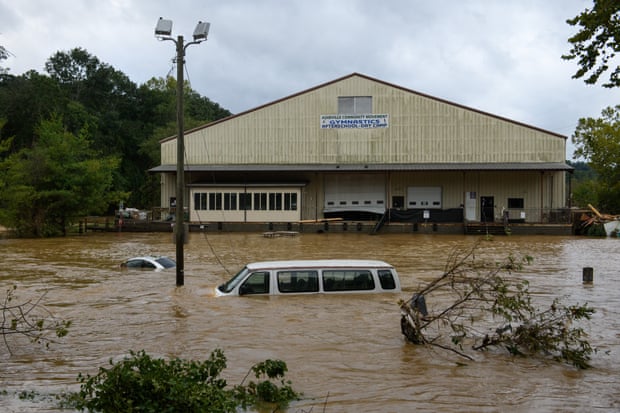
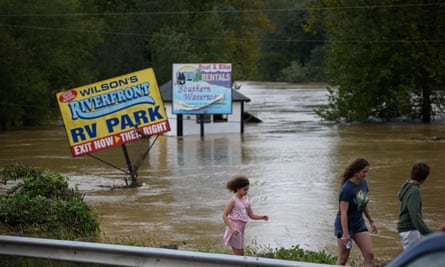
Exclusivo: bolivianos culpam Brasil por enchentes e desejam processar o país por danos e prejuízos de bilhões de dólares (+RO)

21/02/2014

http://maisro.com.br/

Walter Justiniano: esta tragédia é como a Crônica de Uma Morte Anunciada, de Gabriel Garcia Marquez

Mais um imbróglio vem aí pela frente envolvendo as usinas do rio Madeira, o progresso e a discórdia. O consultor ambiental boliviano, Walter Justiniano Martinez, 54, de Guayaramerin (Bolívia), tem em mãos um relatório onde consta que o Brasil é o culpado pelas enchentes na Bolívia, que culminou com 60 pessoas mortas e 90 mil cabeças de gados perdidas. O prejuízo é de cerca de 50 milhões de dólares e mais de 40 mil hectares de culturas agrícolas afetadas. Segundo ele, “o governo boliviano sabia dos problemas que seriam provocados pelas barragens das usinas de Jirau e Santo Antônio e não fez nada a este respeito”. Explicando, as represas de Jirau e Santo Antônio não deixam a água escoar, culminando com enchentes rio acima, pegando o Beni. As fortes chuvas que caem sobre a Bolívia agravaram ainda mais o problema. Veja no mapa abaixo.

As represes de Jirau e S. Antônio alagaram o Beni

Bolívia conhecia os efeitos de barragens brasileiras na Amazônia.  O governo sabia que as barragens construídas na bacia do rio Madeira causariam grandes inundações no país por mais de seis anos.

Em 2006, o ministro dos Negócios estrangeiros David Choquehuanca, enviou uma carta para seu homólogo brasileiro manifestando o o perigo da construção destas barragens para a Bolívia. O governo boliviano  já tinha alertado sobre os impactos há mais de sete anos.

Cerca de 90 mil cabeças de gado perdidas

Na nota enviada por Choquehuanca, citado em La Razón (jornal boliviano), argumentou-se que entre os impactos prováveis “é considerado a inundação do território boliviano, como um efeito dos reservatórios que afetarão, de um lado, a existência da Floresta Amazônica, na bacia do Madeira, as riquezas em castanha”.

O processo de consulta bi-nacional com vários encontros e reuniões presidenciais, ministeriais e técnicas foi lançado em novembro do mesmo ano. O II encontro técnico realizado nos dias 30 e 31 de outubro de 2008, em La Paz, a troca de informações sobre os projetos hidrelétricos Jirau e Santo Antonio. Bolívia, então, expressa seu aborrecimento pela ausência de delegados técnicos suficientes, do Brasil, apesar do compromisso.
No mesmo tempo, organizações camponesas da Bolívia e do Brasil criaram o movimento em defesa da bacia do Rio Madeira e a Região Amazônica.
Estudos e declarações de organizações de proteção ambiental também alertaram para os riscos, incluindo a Liga de Defesa do Ambiente (Lidema), que, em 2009, exortou o governo “em conformidade com os acordos internacionais, independentemente da agenda positiva com o governo brasileiro”.
Em 2011, um seminário sobre projetos de energia no Brasil, o Vice Ministro Juan Carlos Alurralde, disse à Reuters que o governo não estava satisfeito com os relatórios do Brasil em defesa da hidrelétrica e esperava mais esclarecimentos e garantias.

Um prejuízo de 50 bilhões de dólares

Então, o primeiro secretário da Embaixada do Brasil na Bolívia, Ruy Ciarlini, disse à Reuters que eles tinham “dados científicos que mostram que não há nenhum risco”. Até ontem, em Beni foram relatadas 84 mil carcaças (gado) e perdas de 50 milhões de dólares. Mais de 39 mil hectares de culturas afetadas, enquanto o número de vítimas cresce dia a dia devido às enchentes.

O presidente Evo Morales, solicitou na terça-feira,  investigações sobre o impacto das enchentes  no Beni.

Fonte: +RO http://www.maisro.com