Arquivo da tag: Inteligência animal

Brazil plans to stop the killing of pink dolphins (Washington Post)

FILE – In this Nov. 2005 FILE photo released by Instituto Nacional de Pesquisas da Amazonia (INPA), an Amazon river dolphin swims in the Airao River in Amazonas state, Brazil. Brazil will temporarily ban the catch of a type of catfish in an effort to halt the killing of the Amazon pink dolphin, whose flesh is used as bait, the Fishing and Aquaculture Ministry said Tuesday, June, 3, 2014. (Sefora Antela Violante, INPA, File/Associated Press)

 June 3

SAO PAULO — Brazil will temporarily ban the catch of a type of catfish in an effort to halt the killing of the Amazon pink dolphin, whose flesh is used as bait, the Fishing and Aquaculture Ministry said Tuesday.

Ministry spokesman Ultimo Valadares said the government is working out the details of a five-year moratorium on fishing of the species called piracatinga that is expected to go into effect early next year.

“That should give us enough time to find an alternative bait for the piracatinga,” Valadares said by phone.

Nivia do Campo, president of an environmental activist group in the northern jungle state of Amazonas, welcomed the news because more than 1,500 freshwater dolphins are killed annually in the Mamiraua Reserve where she studies the mammals.

She said that since 2000, when fishermen started slaughtering them for bait, the number of dolphins living on the reserve has been dropping by about 10 percent a year. The reserve currently has a population of about 13,000 dolphins.

Poor fishermen are encouraged to use dolphin flesh as bait by merchants from neighboring Colombia, a big market for that species, de Campo said.

Known as the “water vulture” because it thrives on decomposing matter in rivers, the piracatinga is not consumed by people living along the rivers of the Amazon region.

The pink dolphin is under threat, “and if nothing is done to stop the killing it will become extinct,” de Campo added. “That is why the moratorium is excellent news. It will allow us to discover other baits fishermen can and continue earning money selling piracatinga she said.

The moratorium will also help stop the killing of the Amazon caiman, whose flesh is also used as bait to catch piracatinga.

For centuries, the pink dolphins have been revered by locals and protected by myth. According to one tale, the dolphins transform into handsome men and leave the water at night, seducing local women before returning to the river. Many consider it bad luck to kill them.

Copyright 2014 The Associated Press. All rights reserved. This material may not be published, broadcast, rewritten or redistributed.

‘Free choice’ in primates altered through brain stimulation (Science Daily)

Date: May 29, 2014

Source: KU Leuven

Summary: When electrical pulses are applied to the ventral tegmental area of their brain, macaques presented with two images change their preference from one image to the other. The study is the first to confirm a causal link between activity in the ventral tegmental area and choice behavior in primates.

The study is the first to show a causal link between activity in ventral tegmental area and choice behaviour.. Credit: Image courtesy of KU Leuven

When electrical pulses are applied to the ventral tegmental area of their brain, macaques presented with two images change their preference from one image to the other. The study by researchers Wim Vanduffel and John Arsenault (KU Leuven and Massachusetts General Hospital) is the first to confirm a causal link between activity in the ventral tegmental area and choice behaviour in primates.

The ventral tegmental area is located in the midbrain and helps regulate learning and reinforcement in the brain’s reward system. It produces dopamine, a neurotransmitter that plays an important role in positive feelings, such as receiving a reward. “In this way, this small area of the brain provides learning signals,” explains Professor Vanduffel. “If a reward is larger or smaller than expected, behavior is reinforced or discouraged accordingly.”

Causal link

This effect can be artificially induced: “In one experiment, we allowed macaques to choose multiple times between two images — a star or a ball, for example. This told us which of the two visual stimuli they tended to naturally prefer. In a second experiment, we stimulated the ventral tegmental area with mild electrical currents whenever they chose the initially nonpreferred image. This quickly changed their preference. We were also able to manipulate their altered preference back to the original favorite.”

The study, which will be published online in the journal Current Biology on 16 June, is the first to confirm a causal link between activity in the ventral tegmental area and choice behaviour in primates. “In scans we found that electrically stimulating this tiny brain area activated the brain’s entire reward system, just as it does spontaneously when a reward is received. This has important implications for research into disorders relating to the brain’s reward network, such as addiction or learning disabilities.”

Could this method be used in the future to manipulate our choices? “Theoretically, yes. But the ventral tegmental area is very deep in the brain. At this point, stimulating it can only be done invasively, by surgically placing electrodes — just as is currently done for deep brain stimulation to treat Parkinson’s or depression. Once non-invasive methods — light or ultrasound, for example — can be applied with a sufficiently high level of precision, they could potentially be used for correcting defects in the reward system, such as addiction and learning disabilities.”

 Journal Reference:
  1. John T. Arsenault, Samy Rima, Heiko Stemmann, Wim Vanduffel. Role of the Primate Ventral Tegmental Area in Reinforcement and MotivationCurrent Biology, 2014; DOI: 10.1016/j.cub.2014.04.044

“Os pássaros são tão capazes quanto nós” (Fapesp)

Premiado cientista na área de Psicologia Biológica, Onur Güntürkün afirma que o cérebro das aves pode ter design mais eficiente que o dos mamíferos (foto: Heiner Bayer)

26/05/2014

Por Karina Toledo

Agência FAPESP – Durante muito tempo predominou entre os neurocientistas a ideia de que o cérebro havia evoluído de forma linear. De acordo com a teoria proposta em meados do século 19 pelo neurologista alemão Ludwig Edinger (1855-1918), os peixes seriam os animais com o cérebro mais primitivo. Em seguida viriam os anfíbios, as aves e, finalmente, os mamíferos.

O cérebro dos mamíferos, segundo a teoria de Edinger, não apenas continha todas as estruturas existentes nos cérebros precedentes na escala evolutiva como também apresentava uma novidade que lhe proporcionava uma capacidade cognitiva superior e inédita: o neocórtex.

Mais desenvolvido nos primatas, o neocórtex é uma espécie de capa que recobre a parte externa do cérebro. Nos seres humanos, ele é dividido em seis camadas e apresenta uma grande quantidade de sulcos repletos de neurônios que comandam funções complexas como percepção sensorial, coordenação motora, raciocínio espacial e linguagem.

Para Edinger, como os pássaros não são dotados de neocórtex, jamais poderiam ser treinados como cachorros e gatos nem desenvolver habilidades cognitivas complexas, como usar ferramentas. Mas, no início do século 21, um grupo de cientistas demonstrou que essa teoria estava errada em artigo publicado no The Journal of Comparative Neurology.

Entre os autores estava Onur Güntürkün, professor da Ruhr-Universität Bochum, na Alemanha. Em outrapesquisa divulgada na revista PLoS Biology, Güntürkün mostrou que as gralhas são capazes de se reconhecer no espelho – algo que a maioria dos mamíferos não consegue fazer e que requer um certo grau de autoconsciência.

Por seu pioneirismo na área de Psicologia Biológica, Güntürkün, nascido na Turquia, recebeu em 2013 o Prêmio Gottfried Wilheim Leibniz, considerado o Nobel alemão. Em 2014, foi o ganhador doCommunicator Award, oferecido anualmente pela Deutsche Forschungsgemeinschaft (DFG) e pela Stifterverband für die Deutsche Wissenschaft a cientistas com boa habilidade de comunicar os resultados de sua pesquisa para um público amplo, fora da esfera científica.

No dia 20 de maio, Güntürkün esteve na sede da FAPESP para apresentar a palestra “Cognition without Cortex: The convergent evolution of avian and mammalian forebrains”, na qual contou que, a partir de seus experimentos com as gralhas, foi possível concluir que as aves teriam uma estrutura cerebral comparável ao neocórtex dos mamíferos.

“As aves possuem uma estrutura cerebral com as mesmas especificidades do neocórtex, a mesma bioquímica e o mesmo padrão de comunicação. A diferença é que não é dividida em camadas”, disse.

Segundo Güntürkün, é como se a natureza tivesse criado duas soluções diferentes para o mesmo problema (capacidade cognitiva avançada), em eventos distintos e independentes da história evolutiva.

“É possível que o design do cérebro das aves seja até mais eficiente do que o dos mamíferos, pois permite habilidades cognitivas complexas mesmo com um volume muito menor. No entanto, o cérebro das aves é pequeno demais para competir com o nosso”, avaliou.

Em entrevista concedida à Agência FAPESP, Güntürkün contou mais detalhes sobre suas pesquisas voltadas a entender as origens e a evolução do pensamento. Falou ainda sobre a importância da comunicação científica e sobre seus estudos relacionados às diferenças de gênero no cérebro.

Agência FAPESP – Qual é o motivo de sua visita ao Brasil?
Onur Güntürkün – Vim a convite da DFG para apresentar a “Palestra Leibniz” [formato desenvolvido para titulares do prêmio com o intuito de estimular o diálogo tanto com as comunidades científicas no exterior quanto com a sociedade em geral] e conversar com colegas cientistas do Brasil. O Brasil é um país muito importante, não apenas em termos de economia e política, mas também em termos de ciência. A Alemanha tem uma longa tradição em ciência, mas precisa planejar seu futuro de forma apropriada e, para isso, precisa pensar quais serão as grandes nações na área da ciência no futuro e como fomentar o relacionamento entre cientistas alemães e internacionais. Penso que o conceito da DFG é muito sábio: não são os diretores ou ministros que devem ser os embaixadores da ciência, mas os próprios cientistas. A única forma de isso ocorrer é possibilitando a interação entre eles, para que descubram interesses em comum. Dessa forma, é possível descobrir que, do outro lado do Atlântico, há uma ótima pessoa interessada nos mesmos assuntos que você e com quem você pode cooperar. Essa é a ideia.

Agência FAPESP – Como surgiu seu interesse pela evolução do cérebro e do pensamento?
Güntürkün – Só conseguimos entender alguma coisa quando conhecemos sua história. Só posso entender a mim mesmo quando sei algo sobre meu passado. O mesmo vale para o cérebro e a cognição. Se entendermos em quais condições evolutivas surgiram a cognição e o pensamento, podemos entender por que pensamos o que pensamos. Esta é a razão básica. Não me recordo de um momento de minha vida em que não estava interessado nesse assunto, então não há um ponto zero. Quando eu era criança já fazia ciência, realizava experimentos. Claro que eram simples e errados, sem conhecimento da literatura. Mas era ciência e foi um momento decisivo da minha existência. Muito do que faço hoje também deve estar errado e eu ainda não tenho consciência disso.

Agência FAPESP – Como forma e função estão relacionadas no cérebro? Até que ponto a estrutura cerebral define a capacidade de cognição?
Güntürkün – Se a arquitetura de nosso cérebro fosse diferente, nossa cognição seria diferente? A resposta é sim e não. Se perdêssemos um pedaço de nosso cérebro e nossa arquitetura fosse alterada, nossa cognição mudaria de forma radical. Há, no entanto, diferentes tipos de cérebros, com arquiteturas completamente diferentes, possivelmente capazes de criar o mesmo tipo de cognição. É como se você estivesse dirigindo um carro e perdesse uma parte do motor e ele deixasse de funcionar. Mas há outros tipos de motores que podem impulsionar um carro. Há diferentes soluções para o mesmo problema. Por isso, quando me perguntam se a estrutura define a cognição, minha resposta é sim e não. Sim – há diferentes soluções – e não – dentro de uma solução específica, todos os componentes precisam estar lá para o sistema funcionar. Essa é uma questão profunda de neurociência cognitiva. Podemos entender a evolução da cognição usando esse conhecimento como pano de fundo. Há diferentes organismos e diferentes tipos de cérebro. Eles pensam como nós ou possuem formas completamente diferentes de pensar que ainda não conhecemos? Isso é material suficiente para uma vida inteira de pesquisa.

Agência FAPESP – Em sua palestra, o senhor disse que as aves têm capacidades cognitivas comparáveis às dos mamíferos, embora não possuam o neocórtex. Isso ocorre com todas as aves ou apenas um grupo especial? E como isso é possível? 
Güntürkün – Acredito que nem todas as aves conseguem fazer isso, apenas algumas, como as gralhas e os corvos. E não sabemos por que as outras não têm essa habilidade. Mas o mesmo ocorre com os mamíferos. Os cachorros não se reconhecem no espelho, nem os gatos e nem mesmo os macacos rhesus. Apenas alguns mamíferos e alguns pássaros são capazes disso e ainda não sabemos ao certo a razão. O que há de especial no cérebro da gralha que o difere do cérebro do pombo? O que há de especial no cérebro do chimpanzé que lhe dá a capacidade de se reconhecer no espelho que o rhesus não tem? Não sabemos ainda. É uma questão profunda, pois, se o autorreconhecimento é uma pista para a consciência, poderemos entender melhor a consciência se formos capazes de entender como essas diferenças entre os animais aparecem.

Agência FAPESP – Teriam as aves uma espécie de neocórtex primitivo? 
Güntürkün – Não é primitivo. É como se a natureza tivesse inventado a roda duas vezes, de forma independente uma da outra. No cérebro das aves há uma estrutura interior virtualmente idêntica ao córtex pré-frontal humano. No entanto, ela não é dividida em camadas como o nosso córtex. Me parece que, em duas situações distintas na evolução, um grupo de animais precisou desenvolver altas capacidades cognitivas e terminou com o mesmo tipo de solução básica para esse problema. Mas um grupo desenvolveu o neocórtex e, o outro, um tipo diferente de estrutura cerebral. As invenções, porém, são absolutamente idênticas. É como ir a Marte e descobrir espécies completamente diferentes, com uma origem completamente diferente, mas, ao analisar profundamente, descobrir que alguns aspectos do cérebro dessas criaturas são virtualmente idênticos ao seu. É uma grande descoberta, pois sugere que não há duas soluções para um grande problema. Sempre se acaba inventando o mesmo tipo de roda quando se deseja criar um carro.

Agência FAPESP – O senhor sugeriu que o design do cérebro das aves talvez seja até mais eficiente que o dos mamíferos. Por quê? 
Güntürkün – É possível. De outra forma seria difícil entender como pequenos cérebros conseguem ser tão poderosos em termos cognitivos como o cérebro grande dos mamíferos. No entanto, o cérebro das aves nunca conseguiu ficar tão grande como o nosso. Não existe um único pássaro ou réptil que tenha sido capaz de desenvolver um cérebro de vários quilos. Não há nem sequer um réptil cujo cérebro pese mais do que 100 gramas. Não sabemos o porquê. Desde há mais de 300 milhões de anos, répteis e aves tiveram a chance de desenvolver um cérebro grande e nunca conseguiram. O argentinossauro, descoberto na Argentina, foi provavelmente o maior ser vivo que já habitou o planeta. Era enorme e tinha o cérebro do mesmo tamanho que o de um pássaro. O cérebro desses animais é restrito em termos de tamanho absoluto, enquanto nosso cérebro com a arquitetura cortical pode ficar grande. Essa foi a vantagem evolutiva que tivemos. De outra forma, estaríamos na gaiola e seríamos os animais de estimação das aves.

Agência FAPESP – O fato de o neocórtex corresponder a 76% do volume cerebral humano pode ser a explicação para sermos os animais mais inteligentes?
Güntürkün – Sim. É possível que tenhamos apenas um cérebro de primata muito grande. Simplesmente possuímos maior número de neurônios no neocórtex que qualquer outro animal do planeta. Há animais com cérebros maiores, como algumas baleias, elefantes, mas eles têm número menor de neurônios. Possivelmente nossa superioridade tenha razões quantitativas. É como os computadores. Colocamos mais memória, melhoramos outras especificações e, de repente, a máquina fica mais rápida, mais poderosa e capaz de calcular mais coisas.

Agência FAPESP – Somos, então, apenas primatas com um cérebro grande?
Güntürkün – Sim. Sou orgulhoso por ser um primata.

Agência FAPESP – O que já se conhece sobre o neocórtex e suas funções?
Güntürkün – Sabemos muito sobre o neocórtex, é uma das neuroestruturas mais bem estudadas. Por outro lado, entendemos muito pouco o cérebro dos pássaros. Obviamente, como somos mamíferos, acreditamos por centenas de anos que apenas com o neocórtex seria possível ter capacidades cognitivas avançadas, então havia um grande interesse em estudar o neocórtex. Agora que descobrimos que pássaros são tão capazes quanto nós, temos que trabalhar fortemente para preencher essa falta de conhecimento sobre as estruturas cerebrais das aves.

Agência FAPESP – Estudar o cérebro é sempre um grande desafio, pois não se pode simplesmente tirar um pedaço de tecido e analisar sob o microscópio sem grande consequências. Quais metodologias o senhor usa? 
Güntürkün – Claro que em humanos não podemos fazer experimentos invasivos, mas podemos gravar um eletroencefalograma, colocar nossos voluntários em uma máquina de ressonância magnética funcional e avaliar a atividade cerebral. Quando os pacientes têm má sorte ou genes ruins que resultam em uma alteração da estrutura cerebral, há sempre uma alteração correspondente nas habilidades cognitivas que podemos estudar. E, obviamente, fazemos experimentos comportamentais e coisas desse tipo. Nos animais, como os pombos que tenho usado muito no meu laboratório, podemos, mediante autorização, fazer experimentos invasivos, como implantar pequenos eletrodos no cérebro para gravar a atividade.

Agência FAPESP – O senhor tem estudos relacionados ao beijo e à tendência de os casais virarem a cabeça para a direita quando estão se beijando. Por que estudou esse tema? 
Güntürkün – É preciso deixar claro que não estudei o beijo para entender o beijo e sim para compreender a assimetria do cérebro humano. Tudo começou com a descoberta de que as aves têm um cérebro assimetricamente organizado. Essa assimetria aparece mesmo antes de saírem do ovo, quando viram a cabeça para o lado direito. Isso proporciona maior estimulação de luz no olho direito do embrião, que fica voltado para a casca do ovo. Então descobri, pela literatura, que humanos também viram a cabeça, desde antes de nascer, na maioria das vezes para o lado direito. E continuamos apresentando essa tendência por vários meses após o parto. Tenho uma teoria maluca de que isso, de alguma forma, modula nossos circuitos cerebrais. Se sou um recém-nascido, olho quase sempre para a direita, vejo minha mão direita e começo a fazer alguma atividade com a mão direita. E faço menos atividades com a mão esquerda. Então o fato de ser destro poderia ter sido influenciado por minha tendência de olhar para a direita.

Agência FAPESP – O senhor conseguiu comprovar essa teoria? 
Güntürkün – Formulei essa teoria e meus colegas me disseram que era bobagem, pois os bebês param de olhar para a direita por volta de 3 ou 4 meses de idade. E a destreza manual se manifesta muitos anos depois. Há um intervalo de tempo entre os dois eventos. Mas eu não acreditava nisso e pensei que talvez o padrão de movimentação dos bebês seja apenas muito complexo para que vejamos com clareza a tendência de virar a cabeça para a direita. Se essa tendência realmente nunca desaparece, nós, adultos, também devemos manifestá-la de alguma forma. Certo dia, eu estava sentado no sofá de minha casa e, de repente, me ocorreu: o beijo. Durante o ato de beijar não posso ficar com a cabeça reta, é preciso virá-la para um dos lados. Decidi observar casais em aeroportos enquanto eles estão esperando seus amados. O experimento foi feito em grandes aeroportos internacionais, de três diferentes continentes, para reduzir a possibilidade de qualquer viés cultural. Descobri que humanos têm a tendência de virar a cabeça para a direita em proporção absolutamente idêntica entre adultos e recém-nascidos: dois terços. Essa tendência não muda durante toda a vida e possivelmente ela modula a destreza manual nos humanos.

Agência FAPESP – No caso das aves, de certa forma, há uma relação com a estimulação do olho direito pela luz. E com os humanos? 
Güntürkün – Isso não acontece porque nossa visão é frontal. Minha teoria é que viramos a cabeça na tentativa de visualizar os próprios membros. Mas ainda não descobrimos o que mais é afetado por esse padrão de virar a cabeça além da destreza manual. É apenas um dos aspectos da assimetria cerebral que estamos estudando atualmente em meu laboratório.

Agência FAPESP – É verdade que há um lado do cérebro que controla emoções e habilidades com a música e outro lado responsável por atividades mais relacionadas com a razão?
Güntürkün – Isso é folclore existente na área de Psicologia e Neurociência. Precisamos de todo o cérebro para tocar uma música ou para raciocinar. Há algumas especializações relevantes. Para a música, por exemplo, nossa habilidade de compreender o ritmo é mais dominante no hemisfério direito. Então há um aspecto da música mais relacionado ao lado direito do cérebro. Depois que o famoso compositor [Maurice] Ravel teve um derrame no hemisfério direito, embora ainda fosse capaz de ouvir música, ele não conseguia mais compreendê-la, pois perdeu a habilidade de computar o ritmo. O raciocínio, porém, é algo que requer todo o cérebro. Muitos desses folclores possuem algum fundo de verdade, mas nem todos os fatos envolvidos são verdadeiros.

Agência FAPESP – Também é folclore que os homens têm mais neurônios do que as mulheres? 
Güntürkün – Isso é verdade. Os homens têm entre 10% e 15% mais neurônios, mesmo se o cálculo for proporcional ao tamanho do corpo. Mas a diferença na prática, francamente, ainda não sabemos. A inteligência de homens e mulheres é possivelmente idêntica. Há alguns cientistas que defendem que o QI [coeficiente de inteligência] é um pouco mais elevado nos homens. Se isso for verdade, no entanto, o efeito prático seria pequeno. Há outros estudos que não foram capazes de mostrar qualquer diferença. Minha teoria é que homens e mulheres são idênticos em termos de inteligência. Assumo essa premissa porque a maior parte da literatura mostra que, se há uma diferença, ela é muito pequena e não é importante. No entanto, é possível que exista diferença em termos de conhecimento. Homens aparentemente podem guardar um número de fatos cerca de 10% a 15% maior. Pode ser que o córtex seja um grande armazém e, se você tem um armazém maior, pode guardar mais itens dentro dele. Esta é minha teoria preferida e estamos elaborando estudos para analisá-la.

Agência FAPESP – Mas por que os homens precisariam de um armazém maior?
Güntürkün – Não tenho ideia. Não faz sentido em termos evolutivos. A pressão evolutiva de seleção, no que se refere ao conhecimento, atua sobre homens e mulheres de maneira igual. Por que os homens precisariam ter mais neurônios? Realmente não sei. Vamos morrer com muitas questões a serem respondidas. Mas, pelo menos, eu gostaria de descobrir se, de fato, existe uma relação entre ter mais neurônios e conseguir armazenar mais conhecimento. Aí uma questão ainda mais profunda apareceria: por quê? Fico ansioso de pensar que nunca vou saber.

Agência FAPESP – O senhor ganhou o Communicator Award de 2014, o que demonstra seu interesse em comunicar os resultados de sua pesquisa também a um público leigo. Por que acredita que a comunicação científica é importante?
Güntürkün – Estou muito honrado por ter sido escolhido. De acordo com o júri, sou capaz de me comunicar muito bem com a mídia e com o público em geral. Penso que isso é algo que todos nós, cientistas, temos de fazer. Precisamos falar sobre nossas pesquisas com a mídia, o público leigo e com outros cientistas e estudantes. E temos de fazer isso de forma que todos possam entender. É algo que considero meu dever, pois sou financiado pelos impostos dos contribuintes. Esses impostos garantem o melhor emprego do planeta a um número muito pequeno de pessoas: os cientistas. Trabalhamos naquilo que nos interessa, com quem desejamos e com as técnicas que escolhemos. Somos livres e podemos brincar com nossas ideias e isso é algo absolutamente fantástico. Ao mesmo tempo, somos rodeados por alunos brilhantes e muitas pessoas interessantes de todas as partes do mundo. Em troca, os contribuintes têm o direito de saber o que você está fazendo. E quando falo com esses trabalhadores não devo usar palavras que dificultem o entendimento. É meu dever.

Agência FAPESP – De forma geral, os cientistas cumprem bem esse dever? Como melhorar? 
Güntürkün – Acredito que, de maneira geral, os cientistas estão cientes desse dever e fazem um bom trabalho. Mas há algumas limitações. Há um imenso interesse em ciência por parte do público. Na televisão, não há apenas esportes e telenovelas, mas também programas sobre novas descobertas, animais e muitos outros aspectos relacionados à ciência. Jornalistas me procuram com frequência e a muitos de meus colegas. Fazem isso, obviamente, porque o jornalismo científico desperta interesse nas pessoas. Mas há uma responsabilidade dupla. Aos cientistas cabe não ter vergonha de falar com a mídia e ser claro. E a mídia tem a responsabilidade de divulgar a ciência da forma como ela é realmente, e não divulgar apenas escândalos, invenções fantásticas e coisas desse tipo.

Agência FAPESP – O senhor já teve problemas com a mídia? 
Güntürkün – Eu aprendi muito sobre a interação com a mídia ao longo de minha vida e tive algumas experiências difíceis. A maioria das pessoas da mídia realmente tenta fazer um bom trabalho. Mas, às vezes, os mecanismos internos da imprensa fazem com que as mensagens sejam muito simplificadas. Acho que esse é um problema que tanto cientistas quanto jornalistas precisam tentar solucionar de alguma forma.

Animais dão nomes uns para os outros que duram a vida toda? (Hype Science)

Publicado em 23.04.2014

01_slide-658e819e902af4fb044e6379b5f6de036f2a99ef-s40-c85

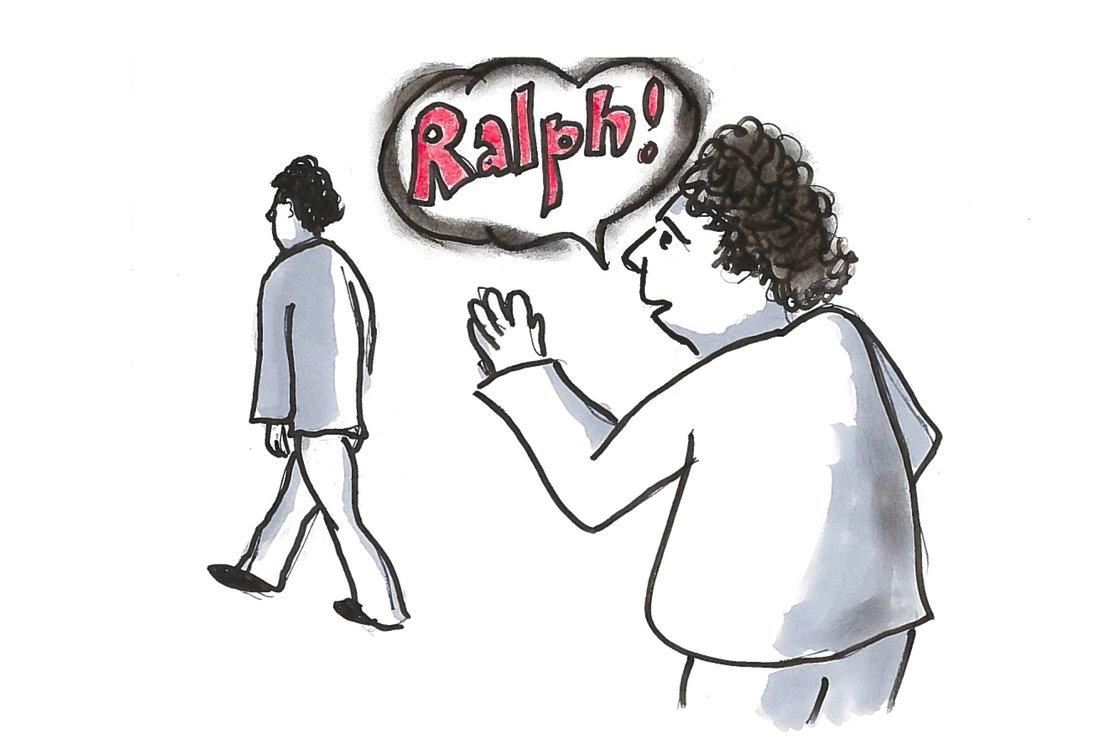
Estou andando por uma rua e vejo uma amiga. A amiga não me vê, então eu grito: “Oi, Marina!”. Marina se vira e olha para mim. Isto é o que os humanos fazem: já que todos nós temos nomes, aprendemos uns os dos outros. Se a pessoa que eu vi é realmente a Marina, eu rapidamente me conecto a ela.

Os nomes são muito úteis, especialmente para uma espécie social como os seres humanos. Se você é um solitário – como um polvo ou um guepardo – e passa a maior parte de sua vida em esplêndido isolamento, os nomes não serão de grande ajuda. A maioria de nós, porém, usa nomes constantemente.

Há diferenças sutis entre nomes humanos e nomes animais. Sim, batizamos os nossos cães e quando chamamos: “Vem, Rex!”, ele vem. O Rex pode até reconhecer seu nome, mas é difícil acreditar que ele reconheça o nosso. Meu nome é Jéssica, mas eu não tenho ideia do que as minhas cachorras me chamam em suas mentes caninas. Porém, ao contrário do que eu pensava, nós, seres humanos, não somos os únicos que usam nomes pelos quais somos reconhecidos ao longo das nossas vidas.

O experimento dos cavalos

A autora científica Virginia Morell, em seu novo livro “Animal Wise”, descreveu um experimento envolvendo cavalos, no qual os relinchos dos animais foram muito parecido com nomes.

Ela fala sobre um cavalo chamado Silver. Ele está em sua tenda, cuidando de sua própria vida, quando os pesquisadores passam por ali com uma égua do rebanho de Silver. Silver olha para eles, vê Pepsi passar e volta a mastigar seu feno. Pepsi some atrás de uma barreira.

Agora vem a ciência. Os pesquisadores têm um gravador escondido atrás dessa barreira, onde Pepsi está silenciosamente parada. Algumas vezes, os pesquisadores tocam o relincho de Pepsi, que é o seu som de identificação. Quando ouve o som, Silver olha brevemente e depois volta a comer. Nada demais, o cavalo que acabou de passar bufou. Isso é de se esperar.

Contudo, às vezes eles tocavam um relincho diferente, de um cavalo diferente que Silver também conhece, mas que não passou por perto, que não deveria estar lá. Quando eles fazem isso, Silver olha para cima imediatamente, olha para a barreira e continua olhando por um longo tempo, como se dissesse: “O que está acontecendo? Eu vi a Pepsi. Mas essa não é a Pepsi”.

03-3bb65e63da3e2a7fb7cecd9d75f021735f733c2d-s40-c85

“Os cientistas fizeram este teste com vários cavalos e todas a vezes suscitaram a mesma resposta surpresa quando o cavalo ouvia alguém diferente de quem tinha visto”, conta Virgina.

O som dispara uma imagem na mente

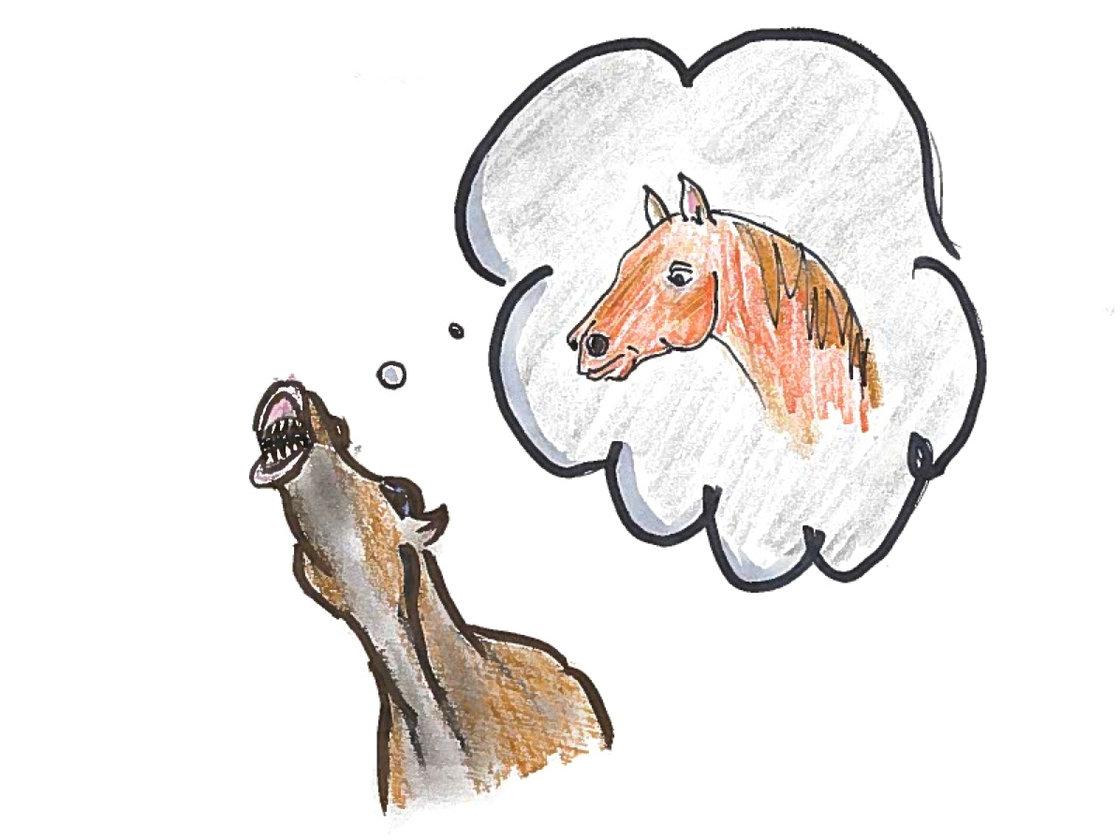
Virgina cita o biólogo Karen McComb para explicar que isso mostra que o cavalo tinha uma expectativa. “Ele esperava ouvir o relincho do indivíduo que tinha acabado de passar, porém, ao invés disso, ouve outro animal. Isso significa que os cavalos têm imagens em sua mente dos cavalos que conhecem”.

Isso é um começo. Entretanto, quando os seres humanos usam nomes, fazemos mais do que isso. Muito mais. Em vez de apenas “Eu, Jéssica”, “Eu, Marina”, podemos dizer: “Oi, Marina. Quer almoçar?”. Será que algum animal também tem a capacidade de fazer isso? De usar um nome para começar uma conversa? A resposta é sim.

Considere o periquito mastrantero (Forpus passerinus), um passarinho verde adorável que vive na região da Colômbia, Venezuela e ao largo da porção brasileira do Rio Amazonas. O cientista Karl Berg construiu um monte de ninhos de papagaio em um rancho da Venezuela e instalou neles microcâmeras, gravando tudo que os animaizinhos fazem. Como você pode imaginar, eles piam muito.

Enquanto muita gente acha que isso tudo é só uma barulheira, o pesquisador aposta que os periquitos estão conversando. Berg ouviu tantos papagaios em tantos ninhos e por tanto tempo, que ele é capaz de identificar que semanas após o nascimento, esses pequenos pássaros começam a usar sons muito específicos para identificar-se entre si. Não só isso, eles aprendem os “nomes” de seus pais, irmãos, irmãs, e sabem usá-los na conversa.

De onde vêm os nomes?

Mas quem batiza esses papagaios? Será que a natureza dá a cada filhote um conjunto pré-programado de pios? “Uma possibilidade”, explica Berg a Virginia, “é que os pais estão nomeando seus filhotes, da mesma forma que fazemos com os nossos filhos”.

O vídeo abaixo (narrado por Cornell Mark Dantzker e com legendas disponíveis em tradução automática) mostra como Karl Berg fez o experimento que sugere fortemente que as mamães e papais papagaio escolhem os nomes de seus bebês.

O pesquisador trocou ovos de ninho para descobrir se os nomes eram um código genético ou aprendidos. Para isso, comparam o som dos filhotes quando atingiam a maturidade com os de seus pais biológicos e adotivos. A conclusão foi de que os sons eram mais parecidos com os dos pais adotivos, o que provaria que eles foram aprendidos durante o crescimento.

O livro de Virginia Morell revela que os seres humanos e os papagaios não são os únicos a usarem esse sistema. Os golfinhos têm cliques e assobios particulares que são nomes – nomes que, como nós, são usados em conversas casuais.

Aos poucos, os cientistas estão aprendendo a decodificar as conversas de animais muito diferentes, bichos que vivem vidas ricas em intrigas, planos, brigas, esquemas, romance, apetites. Um dia seremos capazes de acompanhar tudo isso e mesmo nos intrometermos na conversa chamando um papagaio, um golfinho ou um cavalo pelo seu nome “verdadeiro”. Já imaginou?

Seria como assistir a reality shows. Ao invés de “Mulheres Ricas”, veremos “As conspirações dos papagaios da Venezuela”, e todos nós vamos torcer para aquele chamado “Pip-de-pip-de-pi, pi, pi” ficar com a papagaia mais bonita. [NPRProceedings Of The Royal SocietyCornell Lab of Ornithology]

Proposed California Law Would Free SeaWorld’s Orcas (WIRED)

BY BRANDON KEIM
03.07.14

Orcas performing at SeaWorld San Diego. Image: z2amiller/Flickr

Orcas performing at SeaWorld San Diego. Image: z2amiller/Flickr

A California lawmaker has proposed a ban on keeping killer whales in captivity for purposes of human entertainment.

Announced today by Assemblyman Richard Bloom, D-Santa Monica, the Orca Welfare and Safety Act would outlaw SeaWorld-style shows, as well as captive breeding of the creatures. Violations would be punished by $100,000 in fines, six months in jail, or both.

No hearing has yet been scheduled on the proposal, which will require a majority vote to pass through legislature. It’s also unclear how much support the bill will have, though California has passed progressive animal legislation in the recent past, including bans on shark fin soup and hunting bears with dogs.

“There is no justification for the continued captive display of orcas for entertainment purposes,” Bloom said in a public statement. “These beautiful creatures are much too large and far too intelligent to be confined in small, concrete tanks for their entire lives. It is time to end the practice of keeping orcas captive for human amusement.”

Bloom’s proposed law isn’t the first of its kind: South Carolina banned the public display of dolphins in 1992, as did Maui County, Hawaii in 2002. In February of this year, New York state senator Greg Ball introduced a bill that would ban orca confinement in sea parks and aquariums.

Unlike those states, however, California is home to SeaWorld San Diego, where 10 orcas — roughly one-fifth of all captive orcas — are used in performances. “This is a huge state in which to have that ban,” said Lori Marino, a neurobiologist and founder of the Kimmela Center for Animal Advocacy.

In recent years, the experience of captive orcas has come under scrutiny by animal advocates and some scientists, who say that aquarium conditions are simply inappropriate for animals as big, intelligent and highly social as orcas.

As evidence, advocates point to the physical and mental problems of orcas in captivity: They’re short-lived, prone to disease, have difficulty breeding, display extreme aggression and in some cases appear to be emotionally disturbed.

Such was the case with Tillikum, an orca at SeaWorld Orlando who killed three people, including SeaWorld trainer Dawn Brancheau. Her death and SeaWorld’s orcas were the subject of Blackfish, a 2013 documentary that inspired Bloom’s measure, which was written with assistance from Blackfishdirector Gabriela Cowperthwaite and Naomi Rose of the Animal Welfare Institute.

SeaWorld San Diego did not reply to requests for comment, but in a statement, spokesman David Koontz criticized Bloom for “associating with extreme animal rights activists.”

Koontz said the bill reflected the “the same sort of out-of-the-mainstream thinking” as an infamous lawsuit, filed by People for the Ethical Treatment of Animals and dismissed in 2012, which invoked the United States Constitution’s slavery-abolishing 13th amendment as grounds for freeing SeaWorld’s orcas.

“We engage in business practices that are responsible, sustainable and reflective of the balanced values all Americans share,” wrote Koontz.

Andrew Trites, head of the University of British Columbia’s Marine Mammal Research Unit, said that misgivings about keeping whales and dolphins in captivity are not restricted to activists and extremists. They’re something many scientists grapple with.

“We think about this a lot,” he said, “I do understand the strong feelings of those who think it’s entirely wrong. I also understand the value of keeping them in captivity.”

Studying captive orcas can provide information about health and physiology that’s otherwise difficult to obtain, and can be used to benefit wild orcas, said Trites. “But it has to be about more than just entertainment,” he said. “They have to be serving some greater good.”

Marino noted that the bill allows research on orcas held for rehabilitation after being rescued from injury or stranding. Those orcas couldn’t be kept in aquariums, though, but rather in enclosed, shallow-water sea pens that are open to the public — a compromise, perhaps, between greater-good benefits and individual well-being.

Orcas now kept at SeaWorld would be returned to the wild or, if that’s not possible, also kept in sea pens.

If Bloom’s bill passes, it could inspire other such measures, said Marino. “The science is so overwhelming that members of the legislature are convinced, and are putting this out there,” she said. “This is historic.”

Cérebros humano e canino têm a mesma reação a vozes, sugere estudo (BBC)

Rebecca Morelle

Repórter de Ciências do BBC World Service

Atualizado em  22 de fevereiro, 2014 – 16:53 (Brasília) 19:53 GMT

Cachorros em aparelho de ressonância magnética (Borbala Ferenczy)

Estudo mostrou que a mesma região do cérebro de cães e humanos é ativada pelo som de vozes

Donos de cachorros costumam afirmar que seus animais de estimação conseguem entendê-los. Um novo estudo publicado no periódico Current Biology sugere que essas pessoas podem estar certas.

Ao colocar cães em um equipamento de ressonância magnética, pesquisadores húngaros descobriram que o cérebro desses animais reage da mesma forma que um cérebro humano a vozes de pessoas.

Outros sons carregados de emoção, como choro ou risadas, também geraram reações parecidas, o que talvez explica o fato de cachorros conseguirem se sintonizar às emoções de seus donos, afirmam os pesquisadores.

“Acreditamos que cães e humanos têm um mecanismo bastante similar para processar informações emocionais”, disse Attila Andics, da Universidade Eotvos Lorand e coordenador do estudo.

Sintonia

A pesquisa envolveu onze cães de estimação e comparou seus resultados aos de 22 voluntários humanos.

Para ambos os grupos, os cientistas tocaram 200 tipos diferentes sons, desde ruídos comuns, como o barulho de carros e de apitos, a sons emitidos por humanos (sem palavras) e por cães.

Cachorro em aparelho de ressonância magnética (Eniko Kubinyi)

Sons carregados de emoções, como risadas e choro, também geraram a mesma reação no cérebro dos cães e de pessoas

Os pesquisadores descobriram que uma região semelhante do cérebro – o polo temporal, que faz parte do lobo temporal – é ativada quando cães e pessoas ouvem vozes humanas.

“Já sabíamos que certas áreas no cérebro humano respondem mais fortemente a sons humanos do que a qualquer outro tipo de som”, explicou Andics. “É uma grande surpresa isso ocorrer também no cérebro canino. É a primeira vez que vemos algo assim em um animal que não seja um primata.”

O mesmo aconteceu quando sons como risadas e choros foram ouvidos. Uma área do cérebro conhecida como córtex auditivo primário foi ativada tanto em cachorros quanto em humanos.

Ao mesmo tempo, vocalizações caninas carregadas de emoção – como ganidos e latidos ferozes – também geraram uma reação parecida em todos os voluntários.

“Sabemos muito bem que cachorros conseguem se sintonizar ao sentimento de seus donos, e sabemos que um bom dono consegue identificar mudanças emocionais em seu cão – mas agora podemos começar a entender como isso é possível”, afirmou Andics.

No entanto, apesar dos cachorros reagirem à voz humana, suas reações foram bem mais fortes em relação aos sons caninos.

Os cães também parecem ser menos capazes de distinguir entre ruídos e sons vocais em comparação com humanos.

Palavras

Cães e aparelho de ressonância magnética (Eniko Kubinyi)

Próximo passo do estudo é checar como o cérebro de cães reage quando eles ouvem palavras

Ao comentar sobre a pesquisa, Sophie Scott, do Instituto de Neurociência Cognitiva da Universidade College London, disse: “Os cães são animais muito interessantes de se investigar porque muitos de seus traços desses os tornam dóceis em relação aos humanos. Alguns estudos mostram que eles entendem muitas palavras e o que queremos dizer quando apontamos para alguma coisa”.

Mas Scott acrescenta: “É algo bastante relevante encontrar isso em cães e não só em primatas, mas seria interessante também ver a reação desses animais a palavras. Risos e choros são parecidos com sons animais e por isso podem gerar esse tipo de reação.

“Um avanço seria demonstrar sensibilidade dos cães a palavras no idioma de seus donos.”

Segundo Andics, este será o foco da próxima série de testes da pesquisa.

Projeto de lei veda uso de animal vivo para aula de medicina em SP (Folha de SP)

JC e-mail 4891, de 10 de fevereiro de 2014

Proibição afetaria formação de novos cirurgiões e prejudicaria pacientes, afirmam faculdades

Um projeto de lei pode afetar o ensino de medicina no Estado de São Paulo. Se a nova regra for aprovada, faculdades ficariam impedidas de usar animais vivos para treinamento de cirurgiões.

A proposta é do mesmo deputado autor da lei estadual que veda o uso de animais em testes de cosméticos, sancionada no mês passado. O projeto que afeta o ensino de medicina tramita desde 2012, mas só atraiu atenção no fim do ano passado, com a invasão do Instituto Royal –centro de pesquisa que usava cães em testes de drogas.

O autor do projeto, Feliciano Filho (PEN), diz que pretende aproveitar o súbito aumento do interesse político por questões de direitos dos animais para reavivá-lo.

A ideia de banir o uso de animais vivos no ensino médico encontra resistência.

“Se essa proibição for adotada, o prejudicado não vai ser o cirurgião, e sim o doente”, afirma Paulo Roberto Corsi, professor da Faculdade de Ciências Médicas da Santa Casa de São Paulo. Para ele, não é possível ainda substituir o uso de animais por manequins e simulações de computador, conforme propõe autor do projeto.

“Estão começando a surgir alguns simuladores, a maioria para cirurgia videolaparoscópica [com incisões pequenas]”, diz Corsi que também é vice-presidente do Colégio Brasileiro de Cirurgiões. “Para cirurgia convencional, porém, que requer o corte aberto, não existe modelo adequado que substitua o animal de experimentação.”

A espécie mais usada para aulas dessa disciplina em faculdades de medicina é o porco, com abdome de tamanho similar ao humano. Faculdades de medicina afirmam que evitam causar sofrimento nos suínos, pois todos eles são anestesiados durante os procedimentos cirúrgicos e abatidos antes de recobrar os sentidos para que não sintam nenhuma dor.

“O procedimento é feito com ética, com respeito ao animal, na presença de um professor e com acompanhamento de um veterinário”, afirma Antônio Carlos Lopes, diretor da Escola Paulista de Medicina (Unifesp). “Mas o aluno precisa entrar em contato com sangue, com pinçamento de vasos e com suturas em tecido vivo, que é diferente de tecido morto e de qualquer outro material.”

Segundo o médico, as boas faculdades de São Paulo já aboliram o uso de animais em aulas de anatomia e fisiologia nas quais não eram estritamente necessários.

INVASÃO
No curso de medicina da PUC-Campinas usa-se manequins de anatomia em aulas mais elementares, software para simular efeito de drogas e preparados em tubo de ensaio para demonstrar algumas reações metabólicas.

Mesmo buscando reduzir o uso de animais, a universidade teve uma aula invadida no ano passado por ativistas que filmaram porcos em cirurgia. Gustavo Henrique da Silva, coordenador de cursos na PUC-Campinas, se disse surpreso por a universidade ter virado alvo do ativismo.

“O procedimento feito ali tinha sido aprovado pelo comitê de ética da universidade, que é bem atuante, e estava sendo realizado com todo o rigor possível”, diz.

O projeto de lei, porém, alega que mesmo esse tipo de aula já caiu em desuso nos EUA. A ONG Humane Society lista apenas quatro escolas médicas que ainda usam animais vivos no país. Universidades americanas têm cursos mais longos, nos quais alunos acompanham cirurgiões experientes e só mexem em tecido vivo aos poucos.

Para Lopes, da Unifesp, porém, adotar o modelo dos EUA é inviável no Brasil. “Aqui não podemos nos dar ao luxo de fazer tudo isso, quando temos que colocar o médico rapidamente na linha de frente para trabalhar”, diz.

(Rafael Garcia/Folha de SP)
http://www1.folha.uol.com.br/fsp/saudeciencia/151359-projeto-de-lei-veda-uso-de-animal-vivo-para-aula-de-medicina-em-sp.shtml

Huge chimpanzee population thriving in remote Congo forest (The Guardian)

Scientists believe the group is one of the last chimp ‘mega-cultures’, sharing a unique set of customs and behaviour

theguardian.com, Friday 7 February 2014 11.53 GMT

A mother chimp passing her tool-use expertise to her young

In one of the most dangerous regions of the planet, against all odds, a huge yet mysterious population of chimpanzees appears to be thriving – for now. Harboured by the remote and pristine forests in the north of the Democratic Republic of Congo (DRC) and on the border of the Central African Republic, the chimps were completely unknown until recently – apart from the local legends of giant apes that ate lions and howled at the moon.

But researchers who trekked thousands of kilometres through uncharted territory and dodged armed poachers and rogue militia, now believe the group are one of the last thriving chimp “mega-cultures”.

“This is one of the few places left on Earth with a huge continuous population of chimps,” says Cleve Hicks, a primatologist based at the Max Planck Institute in Leipzig, Germany, who says the group is probably the largest in Africa. “We estimate many thousands of individuals, perhaps tens of thousands.” A unique set of customs and behaviour is shared by the apes across a vast area of 50,000 sq km, revealing how they live naturally.

The unusually large chimps of the Bili-Uele forest have been seen feasting on leopard and build ground nests far more often than other chimps, as well as having a unique taste for giant African snails, whose shells they appear to pound open on rocks or logs. Motion-activated video cameras left in the forest for eight months also recorded gangs of males patrolling their territory and mothers showing their young how to use tools to eat swarming insects – although the footage did not confirm the lunar howls.

Gangs of males patrolling their territory

The camera traps also revealed an extraordinary range of other forest dwellers, including forest elephantsolive baboonsspotted hyena as well as red river and giant forest hogscrested guinea fowl and aardvark. “We saw incredible amounts of wildlife on our camera traps, but we did not catch a single film of a human,” says Hicks. “It remains one of the last untouched wildernesses in Africa.”

One camera even recorded its own destruction as it came under attack from a leopard, but all two dozen cameras were nearly lost when poachers invaded the area and burned the researchers’ camp. Only a swift two-day rescue mission retrieved the footage.

Forest elephants

Hick’s team first identified the existence of the Bili chimps in 2007 but their new survey, published this week in the journal Biological Conservation, reveals a vast, thriving mega-culture. Elsewhere in Africa, human damage has fragmented the continent’s chimp population from many millions to just a few hundred thousand over the last century.

However, while the chimp numbers have apparently remained stable, the numbers of forest elephants have crashed by half due to poaching. The slaughter, to feed the highly lucrative illegal ivory trade, mirrors the bloody picture across central Africa, where two-thirds of all forest elephants have been killed in the last decade. “We found the burned skulls of a mother and baby skull at a poachers camp,” says Hicks.

Footage of elephant skulls, a sign poachers are venturing deeper into forests to hunt elephants

“The area is at great risk of being opened up,” says John Hart, one of the team and who has spent decades in DRC at the Lukuru Wildlife Research Foundation. The team’s work was interrupted previously by gunmen protecting illegal gold mining operations in nearby areas but the security situation is getting worse, Hart told the Guardian. Speaking from the town of Kisangani, on the eve of returning to the forest, he said: “The Lord’s Resistance Army are moving through the area as we speak. Also refugees from the Central African Republic (CAR) war and armed brigands from the CAR’s Seleka and opposition groups are establishing bases in the region.”

The researchers fear that these increasing incursions into the virgin forest will draw in more hunters seeking to feed the enormous bushmeat trade in the Congo basin, that targets chimps and other animals. “Theincredible bushmeat trade we discovered [in the southern part of the forest in 2010] was totally without precedent.” Hart says, with an estimated 440 chimps being killed a year. “But with the availability of bushmeat declining elsewhere, commercial bushmeat hunters are going further and further into the forest.”

The chimps are an endangered species and fully protected in DRC law. “But it is only a law on paper,” says Hicks, who identifies both official security forces and militia as the source of much of the danger, as well as endemic corruption. “I think the military are giving guns to the poachers.” He says the forest and the chimp mega-culture it contains are currently completely unprotected.

Congo_WEB

The prime minister, David Cameron, and Prince William are due to host the highest level global summit to date on combating the $19bn-a-year illegal wildlife trade in London next Thursday. Delegates from more than 50 nations, including all African countries, will focus on the poaching crisis facing elephants and other species, which is not only driving many towards extinction but is strongly linked to international organised crimeand the poverty of many vulnerable communities. The aim is to deliver an unprecedented political commitment, along with an action plan and funding pledges, and Hicks says the Bili-Uele forest is in need of urgent help.

“It is one of the last great expanses of pristine African wilderness,” he says. “Elephants have already taken a major hit and unless we can muster the resolve to protect this precious area, we are at risk of losing it forever. At the very minimum need 20 wildlife guards who are able to sweep through the forest and set up roadblocks to stop the poachers and other hunters.”

Hart agrees: “It is a very significant opportunity to preserve a whole ecosystem of chimpanzees: elsewhere on this continent this opportunity just does not exist.”

• You can view more camera trap videos from the Bili forest here.

Teaching young wolves new tricks: Wolves are considerably better imitators than dogs (Science Daily)

Date: January 31, 2014

Source: Veterinärmedizinische Universität Wien

Summary: Although wolves and dogs are closely related, they show some striking differences. Scientists have undertaken experiments that suggest that wolves observe one another more closely than dogs and so are better at learning from one another. The scientists believe that cooperation among wolves is the basis of the understanding between dogs and humans.

Wolves are considerably better imitators than dogs. Credit: Walter Vorbeck

Although wolves and dogs are closely related, they show some striking differences. Scientists from the Messerli Research Institute at the University of Veterinary Medicine, Vienna have undertaken experiments that suggest that wolves observe one another more closely than dogs and so are better at learning from one another. The scientists believe that cooperation among wolves is the basis of the understanding between dogs and humans.

Their findings have been published in the online journalPLOS ONE.

Wolves were domesticated more than 15,000 years ago and it is widely assumed that the ability of domestic dogs to form close relationships with humans stems from changes during the domestication process. But the effects of domestication on the interactions between the animals have not received much attention. The point has been addressed by Friederike Range and Zsófia Virányi, two members of the University of Veterinary Medicine, Vienna (Vetmeduni Vienna) who work at the Wolf Science Center (WSC) in Ernstbrunn, Niederösterreich.

Wolves copy other wolves solving problems

The scientists found that wolves are considerably better than dogs at opening a container, providing they have previously watched another animal do so. Their study involved 14 wolves and 15 mongrel dogs, all about six months old, hand-reared and kept in packs. Each animal was allowed to observe one of two situations in which a trained dog opened a wooden box, either with its mouth or with its paw, to gain access to a food reward. Surprisingly, all of the wolves managed to open the box after watching a dog solve the puzzle, while only four of the dogs managed to do so. Wolves more frequently opened the box using the method they had observed, whereas the dogs appeared to choose randomly whether to use their mouth or their paw.

Watch closely …

To exclude the possibility that six-month old dogs fail the experiment because of a delayed physical or cognitive development, the researchers repeated the test after nine months. The dogs proved no more adept at opening the box than they were at a younger age. Another possible explanation for the wolves’ apparent superiority at learning is that wolves might simply be better than dogs at solving such problems. To test this idea, the researchers examined the animals’ ability to open a box without prior demonstration by a dog. They found that the wolves were rarely successful. “Their problem-solving capability really seems to be based on the observation of a dog performing the task,” says Range. “The wolves watched the dog very closely and were able to apply their new knowledge to solve the problem. Their skill at copying probably relates to the fact that wolves are more dependent on cooperation with conspecifics than dogs are and therefore pay more attention to the actions of their partners.”

The researchers think that it is likely that the dog-human cooperation originated from cooperation between wolves. During the process of domestication, dogs have become able to accept humans as social partners and thus have adapted their social skills to include interactions with them, concomitantly losing the ability to learn by watching other dogs.

Journal Reference:

  1. Friederike Range, Zsófia Virányi. Wolves Are Better Imitators of Conspecifics than DogsPLoS ONE, 2014; 9 (1): e86559 DOI: 10.1371/journal.pone.0086559

Brain regions thought to be uniquely human share many similarities with monkeys (Science Daily)

January 28, 2014

Source: Cell Press

Summary: New research suggests a surprising degree of similarity in the organization of regions of the brain that control language and complex thought processes in humans and monkeys. The study also revealed some key differences. The findings may provide valuable insights into the evolutionary processes that established our ties to other primates but also made us distinctly human.

 (A) The right vlFC ROI. Dorsally it included the inferior frontal sulcus and, more posteriorly, it included PMv; anteriorly it was bound by the paracingulate sulcus and ventrally by the lateral orbital sulcus and the border between the dorsal insula and the opercular cortex. (B) A schematic depiction of the result of the 12 cluster parcellation solution using an iterative parcellation approach. We subdivided PMv into ventral and dorsal regions (6v and 6r, purple and black). We delineated the IFJ area (blue) and areas 44d (gray) and 44v (red) in lateral pars opercularis. More anteriorly, we delineated areas 45 (orange) in the pars triangularis and adjacent operculum and IFS (green) in the inferior frontal sulcus and dorsal pars triangularis. We found area 12/47 in the pars orbitalis (light blue) and area Op (bright yellow) in the deep frontal operculum. We also identified area 46 (yellow), and lateral and medial frontal pole regions (FPl and FPm, ruby colored and pink). Credit: Neuron, Neubert et al.

New research suggests a surprising degree of similarity in the organization of regions of the brain that control language and complex thought processes in humans and monkeys. The study, publishing online January 28 in the Cell Press journal Neuron, also revealed some key differences. The findings may provide valuable insights into the evolutionary processes that established our ties to other primates but also made us distinctly human.

The research concerns the ventrolateral frontal cortex, a region of the brain known for more than 150 years to be important for cognitive processes including language, cognitive flexibility, and decision-making. “It has been argued that to develop these abilities, humans had to evolve a completely new neural apparatus; however others have suggested precursors to these specialized brain systems might have existed in other primates,” explains lead author Dr. Franz-Xaver Neubert of the University of Oxford, in the UK.

By using non-invasive MRI techniques in 25 people and 25 macaques, Dr. Neubert and his team compared ventrolateral frontal cortex connectivity and architecture in humans and monkeys. The investigators were surprised to find many similarities in the connectivity of these regions. This suggests that some uniquely human cognitive traits may rely on an evolutionarily conserved neural apparatus that initially supported different functions. Additional research may reveal how slight changes in connectivity accompanied or facilitated the development of distinctly human abilities.

The researchers also noted some key differences between monkeys and humans. For example, ventrolateral frontal cortex circuits in the two species differ in the way that they interact with brain areas involved with hearing.

“This could explain why monkeys perform very poorly in some auditory tasks and might suggest that we humans use auditory information in a different way when making decisions and selecting actions,” says Dr. Neubert.

A region in the human ventrolateral frontal cortex — called the lateral frontal pole — does not seem to have an equivalent area in the monkey. This area is involved with strategic planning, decision-making, and multi-tasking abilities.

“This might relate to humans being particularly proficient in tasks that require strategic planning and decision making as well as ‘multi-tasking’,” says Dr. Neubert.

Interestingly, some of the ventrolateral frontal cortex regions that were similar in humans and monkeys are thought to play roles in psychiatric disorders such as attention deficit hyperactivity disorder, obsessive compulsive disorder, and substance abuse. A better understanding of the networks that are altered in these disorders might lead to therapeutic insights.

Journal Reference:

  1. Franz-Xaver Neubert et al. Comparison of human ventral frontal cortex areas for cognitive control and language with areas in monkey frontal cortex.Neuron, Jan 28, 2014

A planta com capacidade de aprender (e lembrar) como os animais (Hype Science)

Por Natasha Romanzoti

20.jan.2014

mimosa-pudica

Uma nova pesquisa da Universidade da Austrália Ocidental descobriu que a planta Mimosa pudica, conhecida em português como dormideira, não-me-toques ou dorme-dorme, é capaz de aprender e se lembrar tão bem quanto animais fazem – tudo isso sem um cérebro.

Enquanto pode soar como ficção, a autora sênior do estudo, Dra. Monica Gagliano, e seus colegas Michael Renton e Dr. Marcial Depczynski da Universidade da Austrália Ocidental e Stefano Mancuso da Universidade de Florença (Itália) têm provas sólidas para apoiar suas teorias.

Usando a mesma estrutura experimental normalmente aplicada para testar respostas comportamentais aprendidas em animais, os cientistas projetaram seus experimentos como se a dorme-dorme fosse de fato um animal.

Eles treinaram as memórias de curto e longo prazo das plantas em ambos ambientes de alta e baixa luminosidade ao derramar água sobre elas várias vezes usando um aparelho personalizado. A dorme-dorme dobra suas folhas em resposta à queda.

O objetivo era descobrir se as plantas poderiam aprender a ignorar adaptativamente tais estímulos, um processo conhecido como habituação.

Primeiro, as plantas que foram submetidas a uma única gota de água rapidamente fecharam as suas folhas, repetindo o gesto quando o experimento foi feito novamente oito horas depois – elas claramente ainda consideravam a experiência ameaçadora.

Um grande grupo de plantas recebeu, em seguida, uma série de 60 quedas consecutivas com poucos segundos de intervalo, repetida sete vezes dentro de um único dia. Estas plantas se habituaram rapidamente, mantendo suas folhas abertas após as primeiras 4 a 6 gotas e, no final do dia, sequer fecharam suas folhas. Para garantir que tudo isso não era simplesmente um caso de “fadiga”, um tipo diferente de choque foi administrado, e as plantas fecharam suas folhas conforme o esperado.

Os pesquisadores eficazmente mostraram como as plantas pararam de fechar suas folhas quando souberam que a perturbação repetida não tinha nenhuma consequência danosa real. Elas foram capazes de adquirir o comportamento aprendido em questão de segundos e, como nos animais, a aprendizagem foi mais rápida em ambiente menos favoráveis (ou seja, com pouca luz).

Mais notavelmente, as plantas foram capazes de se lembrar do que tinham aprendido por várias semanas, mesmo depois de as condições ambientais mudarem. Elas não só se lembraram que o estímulo era inofensivo, como também abriram as suas folhas de forma mais ampla, mostrando que haviam se adaptado ao que tinham aprendido no seu novo ambiente de baixa luz. No geral, todos os grupos testados apresentaram respostas mais pronunciadas e consistentes do que antes, o que demonstra que ainda se lembravam do que foram ensinadas quatro semanas antes.

Essa descoberta vem não muito tempo depois da Dra. Gagliano publicar um artigo sobre o poder das plantas de “falarem” usando som. Além disso, outra pesquisa já havia revelado que as plantas possuem a capacidade de contar – a Arabidopsis thaliana, por exemplo, depende de matemática para sobreviver, adaptando suas reservas de amido fotossintético conforme a variação do tempo sem luz e o conteúdo disponível de amido, para durem quase precisamente até o amanhecer.

Ou seja, as plantas podem não ter cérebro e tecidos neurais, mas possuem uma sofisticada rede de sinalização à base de cálcio nas suas células, semelhante a processos de memória dos animais.

Os pesquisadores admitem que ainda não entendem a base biológica para esse mecanismo de aprendizado das plantas, no entanto, o seu conjunto de experimentos tem grandes implicações – principalmente, muda radicalmente a fronteira entre plantas e animais, incluindo a nossa definição de aprendizagem (e, portanto, memória) como uma propriedade especial de organismos com funções de um sistema nervoso. [ScienceAlert,Economist]

Chimps Can Use Gestures to Communicate in Hunt for Food (Science Daily)

Jan. 17, 2014 — Remember the children’s game “warmer/colder,” where one person uses those words to guide the other person to a hidden toy or treat? Well, it turns out that chimpanzees can play, too.

Chimpanzee. Remember the children’s game “warmer/colder,” where one person uses those words to guide the other person to a hidden toy or treat? Well, it turns out that chimpanzees can play, too. (Credit: © maradt / Fotolia)

Researchers at Georgia State University’s Language Research Center examined how two language-trained chimpanzees communicated with a human experimenter to find food. Their results are the most compelling evidence to date that primates can use gestures to coordinate actions in pursuit of a specific goal.

The team devised a task that demanded coordination among the chimps and a human to find a piece of food that had been hidden in a large outdoor area. The human experimenter did not know where the food was hidden, and the chimpanzees used gestures such as pointing to guide the experimenter to the food.

Dr. Charles Menzel, a senior research scientist at the Language Research Center, said the design of the experiment with the “chimpanzee-as-director” created new ways to study the primate.

“It allows the chimpanzees to communicate information in the manner of their choosing, but also requires them to initiate and to persist in communication,” Menzel said. “The chimpanzees used gestures to recruit the assistance of an otherwise uninformed person and to direct the person to hidden objects 10 or more meters away. Because of the openness of this paradigm, the findings illustrate the high level of intentionality chimpanzees are capable of, including their use of directional gestures. This study adds to our understanding of how well chimpanzees can remember and communicate about their environment.”

The paper, “Chimpanzees Modify Intentional Gestures to Co-ordinate a Search for Hidden Food,” has been published inNature Communications. Academics at the University of Chester and University of Stirling collaborated on the research project.

Dr. Anna Roberts of the University of Chester said the findings are important.

“The use of gestures to coordinate joint activities such as finding food may have been an important building block in the evolution of language,” she said.

Dr. Sarah-Jane Vick of the University of Stirling added, “Previous findings in both wild and captive chimpanzees have indicated flexibility in their gestural production, but the more complex coordination task used here demonstrates the considerable cognitive abilities that underpin chimpanzee communication.”

Dr. Sam Roberts, also from the University of Chester, pointed out the analogy to childhood games.

“This flexible use of pointing, taking into account both the location of the food and the actions of the experimenter, has not been observed in chimpanzees before,” Roberts said.

The project was supported by The Leakey Foundation, the Wenner-Gren Foundation, National Institutes of Health, the Economic and Social Research Council, the British Academy, the Carnegie Trust for the Universities of Scotland and the University of Stirling.

Journal Reference:

  1. Anna Ilona Roberts, Sarah-Jane Vick, Sam George Bradley Roberts, Charles R. Menzel. Chimpanzees modify intentional gestures to coordinate a search for hidden foodNature Communications, 2014; 5 DOI:10.1038/ncomms4088

Dolphins ‘deliberately get high’ on puffer fish nerve toxins by carefully chewing and passing them around (The Independent)

Extraordinary scenes filmed for new documentary showing the marine mammals in their natural habitats

Monday 30 December 2013

Dolphins are thought of as one of the most intelligent species in the animal kingdom – and experts believe they have put their ingenuity to use in the pursuit of getting “high”.

In extraordinary scenes filmed for a new documentary, young dolphins were seen carefully manipulating a certain kind of puffer fish which, if provoked, releases a nerve toxin.

Though large doses of the toxin can be deadly, in small amounts it is known to produce a narcotic effect, and the dolphins appeared to have worked out how to make the fish release just the right amount.

Carefully chewing on the puffer and passing it between one another, the marine mammals then enter what seems to be a trance-like state.

The behaviour was captured on camera by the makers of Dolphins: Spy in the Pod, a series produced for BBC One by the award-winning wildlife documentary producer John Downer.

Rob Pilley, a zoologist who also worked as a producer on the series, told the Sunday Times: “This was a case of young dolphins purposely experimenting with something we know to be intoxicating.

“After chewing the puffer gently and passing it round, they began acting most peculiarly, hanging around with their noses at the surface as if fascinated by their own reflection.

“It reminded us of that craze a few years ago when people started licking toads to get a buzz, especially the way they hung there in a daze afterwards. It was the most extraordinary thing to see.”

The documentary makers used spy cameras hidden in fake turtles, fish and squid to film 900 hours of footage showing dolphins in their natural habitats.

The scenes showing them “using” puffer fish will feature in the second episode of the series, which starts on Thursday.

It is the latest in a long run of wildlife documentaries made by Downer which use similar spy camera techniques. Previous series include Penguins: Spy in the Huddle, which like the Dolphins programme was narrated by David Tennant, Elephants: Spy in the Herd with David Attenborough and Lions: Spy in the Den.

Downer said: “The spy creatures were designed to infiltrate the dolphins’ hidden lives by looking like the marine creatures a dolphin might encounter in their everyday lives.”

Considering the Humanity of Nonhumans (New York Times)

Elephants, chimpanzees and some cetaceans have shown that they can recognize themselves in a mirror. James Hill for The New York Times

By 

Published: December 9, 2013

What is a person?

“Beings who recognize themselves as ‘I’s.’ Those are persons.” That was the view of Immanuel Kant, said Lori Gruen, a philosophy professor at Wesleyan University who thinks and writes often about nonhuman animals and the moral and philosophical issues involved in how we treat them.

She was responding to questions in an interview last week after advocates used a new legal strategy to have chimpanzees recognized as legal persons, with a right to liberty, albeit a liberty with considerable limits.

The Nonhuman Rights Project, an advocacy group led by Steven M. Wise, filed writs of habeas corpus in New York last week on behalf of four captive chimpanzees: Tommy, owned by a Gloversville couple; two at Stony Brook University; and one at the Primate Sanctuary in Niagara Falls. The lawsuits were dismissed, but Mr. Wise said he planned to appeal.

He believes that the historical use of habeas corpus lawsuits as a tool against human slavery offers a model for how to fight for legal rights for nonhumans.

His case relies heavily on science. Nine affidavits from scientists that were part of the court filings offer opinions of what research says about the lives, thinking ability and self-awareness of chimpanzees.

Mr. Wise argues that chimps are enough like humans that they should have some legal rights; not the right to vote or freedom of religion — he is not aiming for a full-blown planet of the apes — but a limited right to bodily liberty. The suits asked that the chimps be freed to go to sanctuaries where they would have more freedom.

Richard L. Cupp, a law professor at Pepperdine University in California who opposes granting rights to nonhuman animals, described the legal strategy as “far outside the mainstream.” He said in an email, “The courts would have to dramatically expand existing common law for the cases to succeed.”

Lori Marino of Emory University, who studies dolphins and other cetaceans and is the science director of the Nonhuman Rights Project, said it “is about more than these four chimpanzees.” Mr. Wise, she said, “sees this as the knob that can turn a lot of things. It’s potentially transformative.”

She said she was under no illusion that rights for animals would be easy to gain. “It may not happen in anyone’s lifetime,” she said.

The science of behavior is only part of the legal argument, though it is crucial to the central idea — that chimps are in some sense autonomous. Autonomy can mean different things, depending on whether you are talking about chimpanzees, drones or robot vacuum cleaners, and whether you are using the language of law, philosophy or artificial intelligence.

Dr. Gruen sees it as a term that is fraught with problems in philosophy, but Dr. Marino said that for the purposes of the legal effort, autonomy means “a very basic capacity to be aware of yourself, your circumstances and your future.”

Science can’t be decisive in such an argument, as Dr. Gruen points out, but what it can do is support or undermine this idea of autonomy. “If you form the right kinds of questions,” she said, “there are important answers that science can give about animal cognition and animal behavior.”

Dr. Marino said that science could “contribute evidence for the kinds of characteristics that a judge may find to be part of autonomy.”

Dr. Gruen, Dr. Marino and Mr. Wise made presentations at a conference, Personhood Beyond the Human, at Yale over the weekend. They spoke in interviews related to the court case during the week before the conference.

The kind of science that supports the idea of chimpanzees as autonomous could also support the idea that many other animals fit the bill. There are affidavits related to cognitive ability, tool use, social life and many other capabilities of chimpanzees, but there are questions about how pertinent each line of evidence is.

“Is that important for being a philosophical person — tool use itself?” Dr. Gruen asked.

The issues of self-awareness and of awareness of past and future strike to the heart of a common-sense view of what personhood might be. Chimps, elephants and some cetaceans have shown that they can recognize themselves in a mirror.

But the rights project is claiming more, saying that for chimps, as Dr. Marino put it, “you know it was you yesterday, you today, you tomorrow,” and “you have desires and goals for the future.”

There is plenty of evidence that chimpanzees and other animals act for the future. Some birds hide seeds to recover in leaner times, for example.

One affidavit is from Matthias Osvath, of Lund University in Sweden, who studies the thinking ability of animals, particularly great apes and some birds. He cites a number of studies of chimps that support the idea they have a sense of the future, including resisting an immediate reward to gain a tool that will get them a larger reward.

In one well-known piece of research by Dr. Osvath, he reported on Santino, a chimp at a zoo in Sweden who stockpiled and hid rocks he would later throw at human visitors. Dr. Osvath argued that Santino had the capacity to think of himself making future use of the rocks he saved.

Science cannot prove what went on in Santino’s mind. But Dr. Marino said the cumulative evidence could be used to ask a judge, “If you look at all the evidence in total, then what kind of being could produce all that evidence?”

Not all proponents of animal welfare are convinced that calling for rights for animals is the best way to go.

Dr. Gruen said that she had misgivings about the rights approach, philosophically and politically. “My own view is that it makes more sense to think about what we owe animals.” Progress on that front in 2013, particularly for chimpanzees, has surprised and delighted many activists. The National Institutes of Health is retiring most of its chimpanzees. And the United States Fish and Wildlife Service has proposed changes that would classify all chimps, even those in laboratories, as endangered, a move that would raise obstacles to experiments on privately owned chimps.

One point to remember is that personhood does not mean being human. Robert Sapolsky, a primatologist and neuroscientist at Stanford University who was not associated with the lawsuit, said, “I think the evidence certainly suggests that chimps are self-aware and autonomous.” That still leaves a vast gap between chimps and humans, he said. Chimps may look ahead in hiding food for later, or planning “how to ambush monkeys they are hunting.” Humans, he noted, could think about “the consequences of global warming for their grandchildren’s grandchildren, or of the sun eventually dying, or of them eventually dying.”

A version of this news analysis appears in print on December 10, 2013, on page D1 of the New York edition with the headline: The Humanity of Nonhumans.

Admirável mundo novo animal (Canal Ibase)

29/10/2013

Renzo Taddei

Colunista do Canal Ibase

Se avaliada pela repercussão que obteve na imprensa, a libertação dos 178 beagles do Instituto Royal foi um marco histórico. Nem na época do debate sobre a regulamentação do uso de células-tronco tanta gente graduada veio a público defender suas práticas profissionais. O tema está na capa das principais revistas semanais do país. A análise dos argumentos apresentados na defesa do uso de animais como cobaias de laboratório é, no entanto, desanimadora. E o é porque expõe o quanto nossos cientistas estão despreparados para avaliar, de forma ampla, as implicações éticas e morais do que fazem.

Vejamos: no debate aprendemos que há pesquisas para as quais as alternativas ao uso de animais não são adequadas. Aprendemos que muitas das doenças que são hoje de fácil tratamento não o seriam sem os testes feitos em animais; desta forma, muitas vidas humanas foram salvas. (Exemplificando como a razão pode sucumbir à emoção – até mesmo entre os mais aguerridos racionalistas -, um pesquisador da Fiocruz chegou ao desatino de afirmar que os “animais experimentais são grandes responsáveis pela sobrevivência da raça humana no planeta”). Adicionalmente, o fato de cientistas importantes do passado, como Albert Sabin, Carlos Chagas ou Louis Pasteur, terem usado animais como cobaias de laboratório em suas pesquisas mostra que os cientistas, por sua contribuição à humanidade, não podem ser tratados como criminosos. Ainda pior que isso tudo, se o Brasil proibir testes com animais, a ciência brasileira perderá autonomia e competitividade, porque dependerá de resultados de pesquisas feitas em outros países para o seu avanço.

Além do mais, há que se levar o animal em consideração: é consenso entre cientistas de que os animais de laboratório não devem sofrer. Providências foram tomadas nesse sentido, como a criação do Conselho Nacional de Controle de Experimentação Animal, e da obrigatoriedade das instituições terem cada uma sua Comissão de Ética no Uso de Animais, com assento para representante de sociedades protetoras de animais legalmente constituídas. E, finalmente, os “próprios animais” são beneficiados, em razão de como as experiências de laboratório supostamente contribuem com o desenvolvimento da ciência veterinária.

De forma geral, o que temos aí resumido é o seguinte: os animais são coisas, e devem ser usados como tais; ou os animais não são coisas, mas infelizmente devem ser usados como tais. Há algo maior que se impõe (e sobre a qual falarei mais adiante), de forma determinante, de modo que se os animais são ou não são coisas, isso é um detalhe menor, que os cientistas logo aprendem a desprezar em seu treinamento profissional.

Foto: Ruth Elison/Flickr

A ideia de que os animais são coisas é antiga: Aristóteles, em seu livro Política, escrito há dois mil e trezentos anos, afirmou que os animais não são capazes de uso da linguagem e, por essa razão, não são capazes de uma existência ética. Sendo assim, conclui o filósofo, os animais foram criados para servir os humanos. Ideia semelhante está no Gênesis bíblico: “E disse Deus: Façamos o homem à nossa imagem, conforme a nossa semelhança; e domine sobre os peixes do mar, e sobre as aves dos céus, e sobre o gado, e sobre toda a terra, e sobre todo o réptil que se move sobre a terra” (Gênesis 1:26). Santo Agostinho e São Tomás de Aquino reafirmam a desconexão entre os animais e Deus. (São Francisco é, na história cristã, claramente um ponto fora da curva). A ideia chegou aos nossos dias praticamente intacta. O Catecismo Católico afirma, em seu parágrafo 2415, que “Os animais, tal como as plantas e os seres inanimados, são naturalmente destinados ao bem comum da humanidade, passada, presente e futura”. A ciência renascentista, através de Descartes e outros autores, fundou o humanismo que a caracteriza sobre essa distinção entre humanos e animais, exacerbando-a: o animal (supostamente) irracional passa a ser entendido como a antítese do humano (supostamente) racional. O tratamento de animais como coisas pela ciência contemporânea tem, desta forma, raízes históricas antigas.

Ocorre, no entanto, que essa ideia se contrapõe à existência cotidiana da maioria da humanidade, em todas as épocas. Em sociedades e culturas não-ocidentais, é comum que se atribua alguma forma de consciência e personalidade “humana” aos animais. Nas sociedades ocidentais, quem tem animal de estimação sabe que estes têm muito mais do que a simples capacidade de sentir dor: são capazes de fazer planos; de interagir entre si e com humanos em tarefas complexas, tomando decisões autônomas; integram-se na ecologia emocional das famílias humanas de forma significativa, construindo maneiras inteligentes de comunicar suas emoções. (Isso sem mencionar como animais humanizados são onipresentes em nosso imaginário cultural, dos desenhos animados infantis aos símbolos de times de futebol, de personagens do folclore popular a blockbusters hollywoodianos). De fato, o contraste entre essa percepção cotidiana e o que sugerem os pensamentos teológico e teórico mencionados acima faz parecer que há racionalização em excesso em tais argumentos. E onde há racionalização demais, ao invés de uma descrição do mundo, o mais provável é que haja uma tentativa de controle da realidade. Ou seja, trata-se mais de um discurso político, que tenta estabilizar relações desiguais de poder, do que qualquer outra coisa (nada de novo, aqui, para as ciências sociais ou para a filosofia da ciência).

É da própria atividade científica, no entanto, que vêm as evidências mais contundentes de que os animais são muito mais do que seres sencientes. No dia 7 de julho de 2012, um grupo de neurocientistas, neurofarmacologistas, neurofisiologistas, neuroanatomistas e cientistas da neurocomputação, reunidos na Universidade de Cambridge, produziu o documento intitulado Manifesto de Cambridge sobre a Consciência, onde se afirma o seguinte: “a ausência de neocortex não parece impedir um organismo de experimentar estados afetivos. Evidências convergentes indicam que animais não-humanos têm os substratos neuroanatômicos, neuroquímicos e neurofisiológicos necessários para a geração de estados conscientes, aliados à capacidade de exibir comportamento intencional. Consequentemente, as evidências indicam que os humanos não são únicos em possuir substratos neurológicos que geram consciência. Animais não-humanos, incluindo todos os mamíferos e aves, e muitas outras criaturas, como os polvos, também possuem tais substratos neurológicos” (tradução livre). O manifesto foi assinado em jantar que contou com a presença de Stephen Hawking. Phillip Low, um dos neurocientistas que redigiu o manifesto, disse em entrevista à revista Veja (edição 2278, 18 jul. 2012): “É uma verdade inconveniente: sempre foi fácil afirmar que animais não têm consciência. Agora, temos um grupo de neurocientistas respeitados que estudam o fenômeno da consciência, o comportamento dos animais, a rede neural, a anatomia e a genética do cérebro. Não é mais possível dizer que não sabíamos”.

Outro grupo de pesquisas com resultados problemáticos para a manutenção de mamíferos em laboratórios vem das ciências que estudam a vida social dos animais, em seus ambientes selvagens. Animais são seres sociais; alguns, como os estudos em primatologia nos mostram, têm sua vida social pautada por dinâmicas políticas complexas, onde os indivíduos não apenas entendem suas relações de parentesco de forma sofisticada, mas também ocupam postos específicos em hierarquias sociais que podem ter quatro níveis de diferenciação. Estudos da Universidade de Princeton  com babuínos mostraram que fêmeas são capazes de induzir uma ruptura política no bando, o que resulta na formação de um novo grupo social. Há muitos outros animais que vivem em sociedades hierárquicas complexas, como os elefantes, por exemplo. Cães, gatos, coelhos e ratos são também, naturalmente, animais sociais, ainda que a complexidade de seus grupos não seja equiparável ao que se vê entre babuínos e elefantes.

Além disso tudo, está amplamente documentado que muitos primatas são capazes de inventar soluções tecnológicas para seus problemas cotidianos – criando ferramentas para quebrar cascas de sementes, por exemplo – e de transmitir o que foi inventado aos demais membros dos grupos; inclusive aos filhotes. Tecnicamente, isso significa que possuem cultura, isto é, vida simbólica. As baleias mudam o “estilo” de seu canto de um ano para o outro, sem que isso tenha causas estritamente biológicas. Segundo o filósofo e músico Bernd M. Scherer, não há como explicar a razão pela qual o canto de um pássaro seja estruturado pela repetição de uma sequência de sons de 1 ou 2 segundos, enquanto outros pássaros cantam em sequências muito mais longas, usando apenas as ideias de marcação de território e atração de fêmeas. Scherer, através de suas pesquisas (que incluem a interação musical, em estilo jazzístico, com pássaros e baleias), está convencido de que há uma dimensão estética presente no canto dos pássaros. Ele afirma, também, que grande parte dos pássaros precisa aprender a cantar, e não nasce com o canto completamente pré-definido geneticamente.

Não há razão para pensar que isso tudo não se aplique também às vacas, porcos e galinhas. Annie Potts, da Universidade de Canterbury, descreve no livro Animals and Society, de Margo DeMello (2012), sua observação da amizade de duas galinhas, Buffy e Mecki, no santuário de galinhas mantido pela pesquisadora. Em determinado momento, Buffy adoeceu, e sua saúde deteriorou-se a ponto de ela não poder mais sair de debaixo de um arbusto. Sua amiga Mecki manteve-se sentada ao seu lado, a despeito de toda a atividade das demais galinhas do santuário, bicando-a suavemente ao redor da face e em suas costas, enquanto emitia sons suaves. Quando Buffy finalmente morreu, Mecki retirou-se para dentro do galinheiro, e por determinado período recusou-se a comer e a acompanhar as outras galinhas em suas atividades. As galinhas são susceptíveis ao luto, conclui Potts.

Quanto mais se pesquisa a existência dos animais – especialmente aves e mamíferos -, mais se conclui que entre eles e nós há apenas diferenças de grau, e não de qualidade. Ambos temos consciência, inteligência, intencionalidade, inventividade, capacidade de improvisação e habilidade no uso de símbolos para a comunicação; ao que parece, os animais não-humanos fazem uso de tais capacidades de forma menos complexa que os humanos, e essa é toda a diferença. Vivemos o momento da descoberta de um admirável mundo novo animal. Nosso mundo tem muito mais subjetividades do que imaginávamos; talvez devêssemos parar de procurar inteligência em outros planetas e começar a olhar mais cuidadosamente ao nosso redor. O problema é que, quando o fazemos, o que vemos não é agradável. Se os animais têm a capacidade de serem sujeitos de suas próprias vidas, como apontam as evidências, ao impedir que o façam os humanos incorrem em ações, no mínimo, eticamente condenáveis.

Voltemos aos argumentos de defesa do uso de animais em laboratórios, citados no início desse texto. A maior parte das razões listadas se funda em razões utilitárias: “assim é mais eficaz; se fizermos de outra forma, perderemos eficiência”. Não se pode fundamentar uma discussão ética sobre pressupostos utilitaristas. Se assim não o fosse, seria aceitável matar um indivíduo saudável para salvar (através da doação de seus órgãos, por exemplo) outros cinco indivíduos doentes. O que boa parte dos cientistas não consegue enxergar é que se trata de um problema que não se resume à dimensão da técnica; trata-se de uma questão política (no sentido filosófico do termo, ou seja, que diz respeito ao problema existencial de seres vivos que coexistem em conflito de interesses).

Mas há outro elemento a pautar, silenciosamente, a lógica da produção científica: a competitividade mercadológica. Na academia, isso se manifesta através do produtivismo exacerbado, onde qualquer alteração metodológica que implique em redução de eficiência no ritmo de pesquisas e publicações encontra resistência. Em laboratórios privados, além da pressa imposta pela concorrência, há a pressão pela redução dos custos de pesquisa. É preciso avançar, a todo custo. Essa percepção do ritmo das coisas parece “natural”, mas não o é: os argumentos falam da colocação em risco das pesquisas que levarão à cura da AIDS ou da criação da vacina para a dengue, como se essas coisas já pré-existissem em algum lugar, e o seu tempo de “descoberta” fosse definido. Isso é uma ficção: não apenas científica, mas também política. As coisas não pré-existem, e o ritmo das coisas não tem nada de “natural”. O tempo é parte da política: é a sociedade quem deve escolher em qual ritmo deve seguir, e é absolutamente legítimo reduzir o ritmo dos avanços técnico-científicos, se as implicações morais para tais avanços forem inaceitáveis.

De todos os cientistas que se pronunciaram nos últimos dias, foi Sidarta Ribeiro, no Estadão do último domingo, o único que colocou, abertamente, o problema de os animais não serem coisas. Mas, para desânimo do leitor, e decepção dos que o admiram, como eu, suas conclusões caíram na vala comum do simplismo burocrático: o problema se resolveu com a criação do aparato burocrático de regulamentação do uso de animais, já mencionado anteriormente, no início desse texto. Ora, se os animais são seres dotados de intencionalidade, inteligência e afeto, e se a plenitude da sua existência depende de vida social complexa, a simples manutenção do seu organismo vivo e (supostamente) sem dor é suficiente para fazer com que eles “não sofram”? Sidarta coloca, de forma acertada, que é preciso atentar para o fato de que coisas muito piores ocorrem na indústria da carne, e também em muitas áreas da existência humana. Mas erra ao criar a impressão de que uma coisa existe em contraposição à outra (algo como “lutem pela humanização dos humanos desumanizados e deixem a ciência em paz”). Todas elas são parte do mesmo problema: a negação do direito a ser sujeito da própria vida. Uma atitude ética coerente implica a não diferenciação de espécie, considerando todos aqueles que efetivamente podem ser sujeitos da própria vida. O resto é escravidão, de animais humanos e não humanos.

Os protocolos de ética em pesquisa com sujeitos humanos foram desenvolvidos após a constatação dos horrores da experimentação médica nazista em judeus. Parece-me inevitável que, em algumas décadas, venhamos a pensar na experimentação com sujeitos-animais em laboratórios com o mesmo sentimento de indignação e horror.

Renzo Taddei é doutor em antropologia pela Universidade de Columbia. É professor da Universidade Federal de São Paulo.


Some Monkeys Have Conversations That Resemble Ours (Wired)

BY BRANDON KEIM

10.17.13

A pair of common marmosets. Image: Bart van Dorp/Flickr

The sounds of marmoset monkeys chattering may hint at the mysterious origins of human language.

A new study shows that marmosets exchange calls in a precisely timed, back-and-forth fashion typical of human conversation, but not found in other primates. The monkeys don’t appear to have a language, but the timing suggests the foundations of our own.

“That could be the foundation of more sophisticated things, like syntax,” said psychologist Asif Ghazanfar of Princeton University, co-author of the study, which was published today in Current Biology. “You can’t have any of those other really cool aspects of language without first having this.”

‘If you went back 10 million years, you’d be hard-pressed to predict that an ape would end up with the planet’s most complex vocal communication.’

How language, so complex and information-rich, evolved in Homo sapiens and, as far as we know, no other species, is one of anthropology’s outstanding questions. The traditional, seemingly intuitive answer is that it arose from the vocalizations of ancestors who were capable of a few rudimentary noises and wanted to say more.

Confounding that narrative, though, is the comparatively less-vocal nature of many other primates, including our closest living relatives, chimpanzees and bonobos. They do vocalize, of course, and even say some interesting things, but not with the same flow expected of some proto-human linguistic capability.

That conundrum has led researchers to propose another possible origin of language, one rooted not in our voices but rather our bodies, and in particular our hands. According to this narrative, gesture would have been as important to our ancestors as sound. Indeed, neurological processes underlying speech and language are also intimately linked with motor skills, raising the possibility that language formed on the cognitive scaffold of gesture — and chimpanzees do have a large repertoire of hand movements.

But many scientists, including Ghazanfar and the study’s lead author, fellow Princeton psychologist Daniel Takahashi, aren’t convinced. If human language did follow on gesture, they wonder, why don’t chimps talk more? There’s also no evidence in chimpanzees for vocal turn-taking, or waiting for another person to finish speaking before replying, which is universal in human languages. “If we don’t take turns, if we’re overlapping, it’s very difficult to understand each other,” said Ghazanfar. “Turn-taking is foundational.”

Yet even if chimps don’t take turns, Ghazanfar and Takahashi found that marmosets do. In the new study, they placed pairs of marmosets in the opposite corners of a room, separated by a curtain that allowed them to hear but not see each other, and recorded the ensuing chatter.

These proved to follow turn-taking patterns, with a pause of several seconds between the completion of one monkey’s whistles and the other’s beginning. And unlike the duets of birds, which are often highly synchronized, the exchanges had nothing to do with mating or territoriality. The monkeys were conversing.

Monkey Conversation:
Whistles encoding information about the caller’s identity are exchanged back and forth according to rules of timing also found in human conversation.

Audio: Takahashi et al./Ethology

As for what they said, marmoset whistles are thought to encode information about a caller’s identity, age, gender and location. Ghazanfar thinks the conversations are a sort of “vocal grooming,” a way of easing stress or conveying affection, but delivered at a distance. It only works when monkeys know they’re being addressed individually, which is conveyed by the turn-taking form.

“It could be a pre-adaptation for language,” said evolutionary biologist Thore Bergman of the University of Michigan, who was not involved in the study. Bergman’s own research involveshuman-sounding lip smacks made by monkeys called geladas.

As for why marmosets and humans take turns, but not chimpanzees, Ghazanfar suspects it’s a function of our social systems. Marmosets are cooperative breeders: Group members take care of offspring unrelated to them, creating community-oriented dynamics of behavior and communication. Ancestral humans may have lived the same way.

Without a time machine, of course, questions about the origin of human language won’t ever be settled. As Bergmann noted, the findings don’t exclude the possible importance of gesture. It’s possible that human language arose from the fortuitous interactions of gesture, vocalization and social structure with evolutionary pressure.

Indeterminacy aside, though, it’s fun to speculate, and also to wonder whether the seeds of complex language now exist in animals other than ourselves. Many whales and dolphins, along with syntax-using monkeys and even prairie dogs, communicate in very sophisticated ways.

“If you went back 10 million years, you’d be hard-pressed to predict an ape would end up with the planet’s most complex vocal communication system,” said Thore Bergman. “Why that happened is a really big puzzle.”

Citation: “Coupled Oscillator Dynamics of Vocal Turn-Taking in Monkeys.” By Daniel Takahashi, Darshana Narayanan and Asif Ghazanfar. Current Biology, 17 October 2013.

Chimpanzees of a Feather Sit Together: Friendships Are Based On Similar Personalities (Science Daily)

Oct. 9, 2013 — Like humans, many animals have close and stable friendships. However, until now, it has been unclear what makes particular individuals bond. Cognitive Biologists of the University of Vienna, Austria, and the University of Zurich, Switzerland, explored the question and found that chimpanzees choose their friendships based on similarity of personality.

The results of this study appear in the scientific journal Evolution and Human Behaviour.

Chimpanzee Tushi. (Credit: (Copyright: Jorg Massen)

Jorg Massen (University of Vienna) and Sonja Koski (University of Zurich) together measured chimpanzee personality in two zoos with behavioural experiments and years of observations of chimpanzee behaviour. They also carefully logged which chimpanzee sat in body contact with whom most. “This is a clear sign of friendship among chimpanzees,” explains Jorg Massen. Subsequently, the researchers tested, if those chimpanzees who sit together frequently have similar or different personality types.

“We found that, especially among unrelated friends, the most sociable and bold individuals preferred the company of other highly sociable and bold individuals, whereas shy and less sociable ones spent time with other similarly aloof and shy chimpanzees,” says the researcher. The researchers argue that such a strong preference for self-like individuals is probably adaptive, because frequent cooperation becomes more reliable when both partners have similar behavioural tendencies and emotional states.

This finding strongly resembles the known “similarity effect” in humans: We tend to make friends with people who are equally extraverted, friendly and bold as ourselves. “It appears that what draws and keeps both chimpanzee and human friends together is similarity in gregariousness and boldness, suggesting that preference for self-like friends dates back to our last common ancestor,” ends Jorg Massen.

Journal Reference:

  1. Jorg J.M. Massen, Sonja E. Koski. Chimps of a feather sit together: chimpanzee friendships are based on homophily in personalityEvolution and Human Behavior, 2013; DOI: 10.1016/j.evolhumbehav.2013.08.008

Orangutans Plan Their Future Route and Communicate It to Others (Science Daily)

Sep. 11, 2013 — Male orangutans plan their travel route up to one day in advance and communicate it to other members of their species. In order to attract females and repel male rivals, they call in the direction in which they are going to travel. Anthropologists at the University of Zurich have found that not only captive, but also wild-living orangutans make use of their planning ability.

Male orangutans face the direction they plan to travel and emit ‘long calls’ in that direction. (Credit: UZH)

For a long time it was thought that only humans had the ability to anticipate future actions, whereas animals are caught in the here and now. But in recent years, clever experiments with great apes in zoos have shown that they do remember past events and can plan for their future needs. Anthropologists at the University of Zurich have now investigated whether wild apes also have this skill, following them for several years through the dense tropical swamplands of Sumatra.

Orangutans communicate their plans

Orangutans generally journey through the forest alone, but they also maintain social relationships. Adult males sometimes emit loud ‘long calls’ to attract females and repel rivals. Their cheek pads act as a funnel for amplifying the sound in the same way as a megaphone. Females that only hear a faint call come closer in order not to lose contact. Non-dominant males on the other hand hurry in the opposite direction if they hear the call coming loud and clear in their direction.

“To optimize the effect of these calls, it thus would make sense for the male to call in the direction of his future whereabouts, if he already knew about them,” explains Carel van Schaik. “We then actually observed that the males traveled for several hours in approximately the same direction as they had called.”

In extreme cases, long calls made around nesting time in the evening predicted the travel direction better than random until the evening of the next day.Carel van Schaik and his team conclude that orangutans plan their route up to a day ahead. In addition, the males often announced changes in travel direction with a new, better-fitting long call. The researchers also found that in the morning, the other orangutans reacted correctly to the long call of the previous evening, even if no new long call was emitted.

“Our study makes it clear that wild orangutans do not simply live in the here and now, but can imagine a future and even announce their plans. In this sense, then, they have become a bit more like us,” concludes Carel van Schaik.

Journal Reference:

  1. Carel P. van Schaik, Laura Damerius, Karin Isler. Wild Orangutan Males Plan and Communicate Their Travel Direction One Day in AdvancePLoS ONE, 2013; 8 (9): e74896 DOI: 10.1371/journal.pone.0074896

Primate Calls, Like Human Speech, Can Help Infants Form Categories (Science Daily)

Sep. 2, 2013 — Human infants’ responses to the vocalizations of non-human primates shed light on the developmental origin of a crucial link between human language and core cognitive capacities, a new study reports.

Mantled howler (Alouatta seniculus) howling. (Credit: © michaklootwijk / Fotolia)

Previous studies have shown that even in infants too young to speak, listening to human speech supports core cognitive processes, including the formation of object categories.

Alissa Ferry, lead author and currently a postdoctoral fellow in the Language, Cognition and Development Lab at the Scuola Internationale Superiore di Studi Avanzati in Trieste, Italy, together with Northwestern University colleagues, documented that this link is initially broad enough to include the vocalizations of non-human primates.

“We found that for 3- and 4-month-old infants, non-human primate vocalizations promoted object categorization, mirroring exactly the effects of human speech, but that by six months, non-human primate vocalizations no longer had this effect — the link to cognition had been tuned specifically to human language,” Ferry said.

In humans, language is the primary conduit for conveying our thoughts. The new findings document that for young infants, listening to the vocalizations of humans and non-human primates supports the fundamental cognitive process of categorization. From this broad beginning, the infant mind identifies which signals are part of their language and begins to systematically link these signals to meaning.

Furthermore, the researchers found that infants’ response to non-human primate vocalizations at three and four months was not just due to the sounds’ acoustic complexity, as infants who heard backward human speech segments failed to form object categories at any age.

Susan Hespos, co-author and associate professor of psychology at Northwestern said, “For me, the most stunning aspect of these findings is that an unfamiliar sound like a lemur call confers precisely the same effect as human language for 3- and 4-month-old infants. More broadly, this finding implies that the origins of the link between language and categorization cannot be derived from learning alone.”

“These results reveal that the link between language and object categories, evident as early as three months, derives from a broader template that initially encompasses vocalizations of human and non-human primates and is rapidly tuned specifically to human vocalizations,” said Sandra Waxman, co-author and Louis W. Menk Professor of Psychology at Northwestern.

Waxman said these new results open the door to new research questions.

“Is this link sufficiently broad to include vocalizations beyond those of our closest genealogical cousins,” asks Waxman, “or is it restricted to primates, whose vocalizations may be perceptually just close enough to our own to serve as early candidates for the platform on which human language is launched?”

Journal Reference:

  1. Alissa Ferry et al. Non-human primate vocalizations support categorizations in very young human infants.Proceedings of the National Academy of Sciences, September 3, 2013

Dolphins gain unprecedented protection in India (Deutsche Welle)

delfin en acrobacia © davidpitu #28124646

BIODIVERSITY
Date 24.05.2013
Author Saroja Coelho

India has officially recognized dolphins as non-human persons, whose rights to life and liberty must be respected. Dolphin parks that were being built across the country will instead be shut down.

India’s Ministry of Environment and Forests has advised state governments to ban dolphinariums and other commercial entertainment that involves the capture and confinement of cetacean species such as orcas and bottlenose dolphins. In a statement, the government said research had clearly established cetaceans are highly intelligent and sensitive, and that dolphins “should be seen as ‘non-human persons’ and as such should have their own specific rights.”

The move comes after weeks of protest against a dolphin park in the state of Kerala and several other marine mammal entertainment facilities which were to be built this year. Animal welfare advocates welcomed the decision.

“This opens up a whole new discourse of ethics in the animal protection movement in India,” said Puja Mitra from the Federation of Indian Animal Protection Organizations (FIAPO). Mitra is a leading voice in the Indian movement to end dolphin captivity.

Kasatka the killer whale performs during SeaWorld's Shamu show, Thursday, Nov. 30, 2006, in San Diego. Trainer Ken Peters remains hospitalized after suffering a broken foot when Kasatka dragged him underwater twice during a show on Wednesday. (ddp images/AP Photo/Chris Park)Indian officials say it is morally unacceptable to exploit cetaceans in commercial entertainment

“The scientific evidence we provided during the campaign talked about cetacean intelligence and introduced the concept of non-human persons,” she said in an interview with DW.

Indiais the fourth country in the world to ban the capture and import of cetaceans for the purpose of commercial entertainment – along with Costa Rica, Hungary, and Chile.

Dolphins are persons, not performers

The movement to recognize whale and dolphins as individuals with self-awareness and a set of rights gained momentum three years ago in Helsinki, Finland when scientists and ethicists drafted a Declaration of Rights for Cetaceans. “We affirm that all cetaceans as persons have the right to life, liberty and well-being,” they wrote.

epa02917339 An undated handout picture provided by Monash University on 15 September 2011 of a new species of dolphins in Victoria's Port Phillip Bay, Australia. The new species, Tursiops Australis, which can also be found at Gippsland Lake, have a small population of 150 and were originally thought to be one of the two existing bottlenose dolphin species. EPA/MONASH UNIVERSITY / HO AUSTRALIA AND NEW ZEALAND OUT HANDOUT EDITORIAL USE ONLY +++(c) dpa - Bildfunk+++Dolphins are naturally playful and curious, which has made them popular with aqurium visitors

The signatories included leading marine scientist Lori Marino who produced evidence that cetaceans have large, complex brains especially in areas involved in communication and cognition. Her work has shown that dolphins have a level of self-awareness similar to that of human beings. Dolphins can recognize their own reflection, use tools and understand abstract concepts. They develop unique signature whistles allowing friends and family members to recognize them, similar to the way human beings use names.

“They share intimate, close bonds with their family groups. They have their own culture, their own hunting practices – even variations in the way they communicate,” said FIAPO’s Puja Mitra.

But it is precisely this ability to learn tricks and charm audiences that have made whales and dolphins a favorite in aquatic entertainment programs around the world.

Seaworld slaughter

Disposable personal income has increased in India and there is a growing market for entertainment. Dolphin park proposals were being considered in Delhi, Kochi and Mumbai.

Lahore, PAKISTAN: Pakistani cinema goers queue for tickets for the Indian classic movie Mughal-e-Azam outside the Gulistan Cinema in Lahore, 23 April 2006. The forbidden love of Pakistanis for Indian movies was allowed into the open on 23 April with the public screening of a 1960 classic beloved on both sides of the border. AFP PHOTO/Arif ALI (Photo credit should read Arif Ali/AFP/Getty Images) India’s growing middle class is hungry for entertainment

“There’s nothing like having a few animals on display, particularly ones that are so sensitive and intelligent as these dolphins,” said Belinda Wright from the Wildlife Protection Society of India in an interview with DW. “It’s a good money making proposition.”

But audiences are usually oblivious to the documented suffering of these marine performers.

“The majority of dolphins and whales in captivity have been sourced through wild captures in Japan, in Taiji, in the Caribbean, in the Solomon Islands and parts of Russia. These captures are very violent,” Mitra explained.

“They drive groups of dolphins into shallow bay areas where young females whose bodies are unmarked and are thought to be suitable for display are removed. The rest are often slaughtered.”

Mitra argued that the experience of captivity is tantamount to torture. She explained that orcas and other dolphins navigate by using sonar signals, but in tanks, the reverberations bounce off the walls, causing them “immense distress”. She described dolphins banging their heads on the walls and orcas wearing away their teeth as they pull at bars and bite walls.

Tanks terminated

In response to the new ban, the Greater Cochin Development Authority (CGDA) told DW that it has withdrawn licenses for a dolphin park in the city of Kochi, where there have been massive animal rights demonstrations in recent months.

epa03452781 A beluga whale passes by young visitors in the Cold Water Quest exhibit at the Georgia Aquarium in Atlanta, Georgia, USA, 30 October 2012. The Georgia Aquarium, which opened in 2005, features more than 10 million gallons of water and over 60 different exhibits. EPA/ERIK S. LESSER<br />

Will the ban on captive dolphin exploitation lead to more protection for other highly intelligent non-humans?

“It is illegal now,” said N. Venugopal, who heads the CGDA. “It is over. We will not allow it anymore.”

He said the government hadn’t lost money on the development but declined to comment on how much the dolphin park was worth.

Boost for Ganges River dolphin

It’s possible that India’s new ban on cetacean captivity will lead to renewed interest in protecting the country’s own Ganges River dolphin.

“I hope this will put some energy into India’s Action Plan for the Gangetic Dolphin, which is supposed to run until 2020,” said Belinda Wright from the Wildlife Protection Society of India. “But there’s been very little action.

She said the ban was a good first stop, but warned against excessive optimism. “I’m very proud that India has done this,” she said. “I’m not trying to be cynical but I have been a conservationist in India for four decades. One gets thrilled with the wording, but I don’t think it’s going to turn to the tables.”

“But dolphins for now are safe from dolphinariums, and that’s a good thing,” she added.

Wild Cat Found Mimicking Monkey Calls; Predatory Trickery Documented for the First Time in Wild Felids in Americas (Science Daily)

July 9, 2010 — In a fascinating example of vocal mimicry, researchers from the Wildlife Conservation Society (WCS) and UFAM (Federal University of Amazonas) have documented a wild cat species imitating the call of its intended victim: a small, squirrel-sized monkey known as a pied tamarin. This is the first recorded instance of a wild cat species in the Americas mimicking the calls of its prey.

Marguay (Leopardus wiedii). (Credit: iStockphoto/Jeff Grabert)

The extraordinary behavior was recorded by researchers from the Wildlife Conservation Society and UFAM in the Amazonian forests of the Reserva Florestal Adolpho Ducke in Brazil. The observations confirmed what until now had been only anecdotal reports from Amazonian inhabitants of wild cat species — including jaguars and pumas — actually mimicking primates, agoutis, and other species in order to draw them within striking range.

The observations appear in the June issue of Neotropical Primates. The authors of the paper include: Fabiano de Oliveira Calleia of Projeto Sauim-de-Coleira/UFAM; Fabio Rohe of the Wildlife Conservation Society; and Marcelo Gordo of Projeto Sauim-de-Coleira/UFAM.

“Cats are known for their physical agility, but this vocal manipulation of prey species indicates a psychological cunning which merits further study,” said WCS researcher Fabio Rohe.

Researchers first recorded the incident in 2005 when a group of eight pied tamarins were feeding in a ficus tree. They then observed a margay emitting calls similar to those made by tamarin babies. This attracted the attention of a tamarin “sentinel,” which climbed down from the tree to investigate the sounds coming from a tangle of vines called lianas. While the sentinel monkey started vocalizing to warn the rest of the group of the strange calls, the monkeys were clearly confounded by these familiar vocalizations, choosing to investigate rather than flee. Four other tamarins climbed down to assess the nature of the calls. At that moment, a margay emerged from the foliage walking down the trunk of a tree in a squirrel-like fashion, jumping down and then moving towards the monkeys. Realizing the ruse, the sentinel screamed an alarm and sent the other tamarins fleeing.

While this specific instance of mimicry was unsuccessful, researchers were amazed at the ingenuity of the hunting strategy.

“This observation further proves the reliability of information obtained from Amazonian inhabitants,” said Dr. Avecita Chicchón, director of the Wildlife Conservation Society’s Latin America Program. “This means that accounts of jaguars and pumas using the same vocal mimicry to attract prey–but not yet recorded by scientists–also deserve investigation.”

WCS is currently monitoring populations of the pied tamarin — listed as “Endangered” on the IUCN’s Red List — and is seeking financial support to continue the study, which aims to protect this and other species from extinction. Next to Madagascar, the Amazon has the highest diversity of primates on Earth.

These behavioral insights also are indications of intact Amazon rainforest habitat. WCS works throughout the Amazon to evaluate the conservation importance of these rainforests, which have become increasingly threatened by development.

Cockatoos ‘Pick’ Puzzle Box Locks: Cockatoos Show Technical Intelligence On a Five-Lock Problem (Science Daily)

July 4, 2013 — A species of Indonesian parrot can solve complex mechanical problems that involve undoing a series of locks one after another, revealing new depths to physical intelligence in birds.

This image shows a cockatoo called ‘Muppet’ solving the bolt-type lock on a puzzle box. Scientists from Oxford University, Vienna University and the Max Planck Institute, have found that Goffin’s cockatoos can solve complex mechanical problems that involve undoing a series of locks one after another. (Credit: Alice Auersperg)

A team of scientists from Oxford University, the University of Vienna, and the Max Planck Institute, report in PLOS ONE a study in which ten untrained Goffin’s cockatoos [Cacatua goffini] faced a puzzle box showing food (a nut) behind a transparent door secured by a series of five different interlocking devices, each one jamming the next along in the series.

To retrieve the nut the birds had to first remove a pin, then a screw, then a bolt, then turn a wheel 90 degrees, and then shift a latch sideways. One bird, called ‘Pipin’, cracked the problem unassisted in less than two hours, and several others did it after being helped either by being presented with the series of locks incrementally or being allowed to watch a skilled partner doing it.

Watch a video of cockatoos solving the puzzle box:http://www.zoo.ox.ac.uk/group/kacelnik/lb_movie_s1.mov

The scientists were interested in the birds’ progress towards the solution, and on what they knew once they had solved the full task.

The team found that the birds worked determinedly to sort one obstacle after another even though they were only rewarded with the nut once they had solved all five devices. The scientists suggest that the birds seemed to progress as if they employed a ‘cognitive ratchet’ process: once they discovered how to solve one lock they rarely had any difficulties with the same device again. This, the scientists argue, is consistent with the birds having a representation of the goal they were after.

After the cockatoos mastered the entire sequence the scientists investigated whether the birds had learnt how to repeat a sequence of actions or instead responded to the effect of each lock.

Dr Alice Auersperg, who led the study at the Goffin Laboratory at Vienna University, said: ‘After they had solved the initial problem, we confronted six subjects with so-called ‘Transfer tasks’ in which some locks were re-ordered, removed, or made non-functional. Statistical analysis showed that they reacted to the changes with immediate sensitivity to the novel situation.’

Professor Alex Kacelnik of Oxford University’s Department of Zoology, a co-author of the study, said: ‘We cannot prove that the birds understand the physical structure of the problem as an adult human would, but we can infer from their behaviour that they are sensitive to how objects act on each other, and that they can learn to progress towards a distant goal without being rewarded step-by-step.’

Dr Auguste von Bayern, another co-author from Oxford University said: ‘The birds’ sudden and often errorless improvement and response to changes indicates pronounced behavioural plasticity and practical memory. We believe that they are aided by species characteristics such as intense curiosity, tactile exploration techniques and persistence: cockatoos explore surrounding objects with their bill, tongue and feet. A purely visual explorer may have never detected that they could move the locks.’

Professor Kacelnik said: ‘It would be too easy to say that the cockatoos understand the problem, but this claim will only be justified when we can reproduce the details of the animals’ response to a large battery of novel physical problems.’

Journal Reference:

  1. Alice M. I. Auersperg, Alex Kacelnik, Auguste M. P. von Bayern. Explorative Learning and Functional Inferences on a Five-Step Means-Means-End Problem in Goffin’s Cockatoos (Cacatua goffini)PLoS ONE, 2013; 8 (7): e68979 DOI: 10.1371/journal.pone.0068979