Arquivo da tag: Índios

Outono Indigena. Entrevista especial com Jorge Eremites de Oliveira (Envolverde)

17/6/2013 – 07h29

por Redação do IHU On-Line

indio bandeira do brasil 300x200 Outono Indigena. Entrevista especial com Jorge Eremites de Oliveira

Foto: racismoambiental.net.br

“O governo federal tem olhado para os povos indígenas com as lentes do agronegócio, recebidas do movimento ruralista. Isso faz parte da lógica do desenvolvimento econômico a qualquer custo e atende a projetos políticos para a disputa de eleições futuras”, diz o historiador.

“A União concluirá a demarcação das terras indígenas no prazo de cinco anos a partir da promulgação da Constituição”. Ao citar o que determina o Art. 67 do Ato das Disposições Constitucionais Transitórias da Constituição Federal, o historiador Jorge Eremites de Oliveira lembra que “este prazo expirou em 1993 e de lá para cá muito pouco tem sido feito para a regularização das terras indígenas. Disso resulta a perpetuação de inúmeros conflitos pela posse da terra envolvendo comunidades indígenas e setores contrários a seus interesses”.

Ao comentar os conflitos entre indígenas e ruralistas e as frequentes manifestações em todo o país, ele assegura que “na ausência da presença eficaz e moralizadora do Estado, os Terena, Guarani, Kaiowá e outros povos indígenas estão a fazer cumprir os direitos que lhes são assegurados pela Constituição Federal de 1988 e pela Convenção n. 169 da OIT”.

Na entrevista a seguir, concedida por e-mail à IHU On-Line, aponta ainda que a “política indigenista oficial foi orientada pelo paradigma da integração, via aculturação e assimilação, dos índios à sociedade nacional. Exemplo disso é o próprio Estatuto do Índio, a Lei n. 6.001/1973, cuja interpretação atual precisa estar em consonância com leis superiores e mais recentes”. E dispara: “A bem da verdade, o Estado nacional e o direito estatal agem de maneira reducionista para submeter os povos indígenas à ordem vigente. A ideia sempre foi – implícita ou explicitamente – a de tornar a sociedade nacional homogênea em termos socioculturais”.

Jorge Eremites de Oliveira é professor de Antropologia Social e Arqueologia da Universidade Federal de Pelotas – UFPel. É licenciado em História pela Universidade Federal de Mato Grosso do Sul – UFMS, mestre e doutor em História/Arqueologia pela Pontifícia Universidade Católica do Rio Grande do Sul – PUCRS, com estágio de pós-doutoramento em Antropologia Social pelo Museu Nacional/UFRJ. Foi pesquisador colaborador junto ao Instituto Anchietano de Pesquisas/Unisinos e trabalhou como professor universitário em Mato Grosso do Sul.

Confira a entrevista.

IHU On-Line – Nos últimos anos, indígenas de várias regiões do país manifestam sua indignação com a política indigenista e com o modelo desenvolvimentista do governo federal. Trata-se de uma crise específica, conjuntural, ou não? Como descreve tais manifestações?

ca4 300x201 Outono Indigena. Entrevista especial com Jorge Eremites de Oliveira

Foto: http://www.diarioliberdade.org

Jorge Eremites de Oliveira – O atual modelo desenvolvimentista adotado pelo governo brasileiro é baseado no paradigma do crescimento econômico a qualquer custo e isso, obviamente, tem reflexos negativos na política indigenista oficial. Trata-se de um modelo que sistematicamente viola os direitos elementares dos povos indígenas e comunidades tradicionais, além de classes sociais em situação de vulnerabilidade. O resultado disso é a existência de crises estruturais, com particularidades em cada região do país, dependendo da conjuntura local. Daí compreender a grande insatisfação e indignação dos povos indígenas para com o governo central e seus aliados, seja por conta da construção de hidrelétricas, seja por conta da não regularização de terras de ocupação tradicional ou outro motivo.

Conflitos no MS

O que estamos observando em Mato Grosso do Sul, onde há a segunda maior população indígena no país, assim como em outros estados, é uma espécie de Outono Indígena, em alusão à Primavera Árabe iniciada em fins de 2010. Refiro-me a um levante dos povos originários em defesa de seus direitos, sobretudo do direito às terras de ocupação tradicional. Assim o fazem como último recurso para garantir sua existência física e cultural, haja vista que não abandonaram seus territórios por livre e espontânea vontade, pelo contrário. Foram e têm sido vítimas de violentos processos de esbulho, não raramente com o uso da força e o assassinato de muitas de suas lideranças.

Na ausência da presença eficaz e moralizadora do Estado, os Terena, Guarani, Kaiowá e outros povos indígenas estão a fazer cumprir os direitos que lhes são assegurados pela Constituição Federal de 1988 e pela Convenção n. 169 da Organização Internacional do Trabalho – OIT, adotada em Genebra em 1989, da qual o Brasil é signatário e a ratificou internamente.

Demarcação de terras

Eis o que determina o Art. 67 do Ato das Disposições Constitucionais Transitórias da Lei Maior: “A União concluirá a demarcação das terras indígenas no prazo de cinco anos a partir da promulgação da Constituição”. Este prazo expirou em 1993 e de lá para cá muito pouco tem sido feito para a regularização das terras indígenas. Disso resulta a perpetuação de inúmeros conflitos pela posse da terra envolvendo comunidades indígenas e setores contrários a seus interesses. As consequências disso têm sido nefastas para muitos povos originários e afronta os artigos 231 e 232 da Carta Constitucional. Não é por menos que a bancada ruralista e seus aliados no Congresso Nacional querem mudar o texto constitucional com a PEC 215/2000, motivo de recentes protestos feitos naquela casa pelo movimento indígena. Se isso vier a acontecer, será um grande retrocesso.

No caso dos Terena de Buriti, e de tantas outras comunidades indígenas, quero explicar que eles tinham a posse da terra, mas não tinham o título de propriedade. A titulação da terra a favor de terceiros ocorreu em períodos mais recentes de nossa história, nos quais apenas as elites políticas e econômicas tinham seus direitos assegurados pelo Estado. Mas eram exatamente elas, claro, que controlavam a máquina estatal, inclusive, por exemplo, o departamento de terras do governo de Mato Grosso, com sede em Cuiabá. De lá saíram muitos títulos de propriedade sobre terras indígenas não regularizadas, tidas como terras devolutas, localizadas no antigo sul do estado, atual Mato Grosso do Sul.

A expulsão das comunidades indígenas não se deu unicamente pela ação de fazendeiros e seus comandados. Esbulhos também foram perpetrados com a conivência e o apoio de agentes do próprio Estado, inclusive da agência indigenista oficial, conforme comprovado em muitos documentos disponíveis em seus arquivos. Na maioria das vezes, autoridades governamentais tomaram ciência do ocorrido e nada fizeram para intervir nos conflitos. Este é o caso do que ocorreu com os Kaiowá de Panambizinho, no município sul-mato-grossense de Dourados, durante o governo de Getúlio Vargas (1930-1945), quando houve a Marcha para Oeste e a criação da Colônia Agrícola Nacional de Dourados.

Situação semelhante também aconteceu com os Kaiowá de Ñande Ru Marangatu, no município de Antônio João, no mesmo estado, na fronteira do Brasil com o Paraguai. Eles também foram expulsos de grande parte de seu território entre fins da década de 1940 e começo da de 1950, sendo que o órgão indigenista oficial recebeu denúncia formal sobre o ocorrido e nada vez para apurar os fatos e reverter a situação.

Por razões dessa natureza é que o Estado brasileiro culmina por ser coautor de muitos crimes cometidos no passado e no presente contra os povos originários. E não me refiro, bem entendido, aos tempos de Cabral ou dos portugueses que o sucederam no período colonial. Definitivamente não é isso. Refiro-me, principalmente, a processos de esbulho ocorridos a partir da primeira metade século XX, mas que ainda hoje são praticados no país. Esta questão precisa ficar cristalina porque o direito não foi feito para atender a demandas de povos abstratos e relegados a temporalidades coloniais ou pré-coloniais. Existe para atender a necessidades das sociedades contemporâneas, de seres humanos reais, de carne e osso, dentre os quais estão aqueles cujos antepassados chegaram a essas terras há pelo menos 12 mil anos.

Terra indígena de Buriti

Esta situação é muitíssimo bem conhecida para Mato Grosso do Sul e outros estados. Foi ali, precisamente no município de Sidrolândia, no dia 30-05- 2013, que o indígena Oziel Gabriel, 35 anos, foi assassinado. Ele portava um pequeno arco e algumas flechas, e isso era mais um sinal diacrítico de sua indianidade e disposição de lutar pela terra do que uma arma. Por outro lado, policiais federais portavam armas de fogo com munição letal e as usaram contra os Terena. Os agentes estavam ali para fazer cumprir um mandado de reintegração de posse, referente a uma propriedade existente dentro da Terra Indígena Buriti, já identificada, delimitada e periciada como tal.

A tragédia ocorreu porque os Terena resolveram fazer o que o próprio Estado não fez desde a década de 1920: regularizar aquela terra e garantir que seja de usufruto exclusivo e permanente da comunidade, segundo seus usos, costumes e tradições. Ocorre que no começo da década de 1930 uma comissão terena foi ao Rio de Janeiro, então a capital federal, denunciar o processo de esbulho que sofriam e solicitar providências para a garantia de seus direitos territoriais. De lá para cá já se passaram quase um século e nada foi feito de efetivo. Não é de se estranhar, portanto, que tenham decidido, como último recurso, retomar parte de suas terras devido à situação de vulnerabilidade dos cerca de 2.500 indígenas que ali vivem confinados em 2.090 hectares.

Até agora foram mais de duas centenas de lideranças indígenas mortas apenas em Mato Grosso do Sul. Muitos crimes não foram devidamente investigados, tampouco houve o julgamento e a condenação dos assassinos e seus mandantes. O que aconteceu em Sidrolândia com Oziel Gabriel foi, portanto, o mesmo que aconteceu no estado com Marçal de Souza, Guarani morto em 1983 na Terra Indígena Ñande Ru Marangatu, e com Marcos Verón, Kaiowá assassinado em 2003 na Terra Indígena Takuara. Naquela parte do Brasil, e em tantas outras, os índios são vistos e tratados pela maioria da população regional como estrangeiros não humanos e, por extensão, como um estorvo e um obstáculo ao progresso. A lei que ali impera ainda é, como aprendemos a dizer desde criança, a do 44, chamada “Justiça de Mato Grosso” (do Sul e do Norte). Não se trata de lei alguma, senão do calibre da arma de fogo com que se fazia justiça desde muito tempo na região, segundo é conhecido na historiografia regional. A violência é, com efeito, uma marca fortíssima na história de Mato Grosso do Sul.

Desenvolvimentismo

No que se refere ainda ao modelo desenvolvimentista atual, cumpre explicar que ele (re) surgiu após o fim da ditadura militar (1964-1985) e a promulgação da Constituição Federal de 1988. Saíamos de um regime de exceção, também marcado pelo fracasso do “milagre econômico brasileiro”, e testemunhávamos o reordenamento do papel do Estado nacional e as tentativas de retomada do crescimento do país. Isso ocorreu e tem ocorrido dentro de um contexto maior, ligado à mundialização do capital. Nesse cenário ocorrem concomitantemente o deslocamento de investimentos e atividades produtivas e a polarização da riqueza, conforme apontado pelo economista francês François Chesnais.

Por isso a maior parte da riqueza fica para países localizados no hemisfério Norte, onde o consumismo é enorme e precisa ser atendido, ao passo que para países do hemisfério Sul há a transferência dos impactos negativos desses investimentos e atividades produtivas. Nesta parte meridional do planeta, onde vivemos, estão países com jovens democracias, economias em crescimento e uma história marcada por ditaduras e políticas colonialistas, como é o caso do Brasil. É exatamente aqui onde existem classes sociais e minorias étnicas em situação de maior vulnerabilidade as que mais sofrem com tudo isso.

Esta situação é percebida no caso da construção de usinas hidrelétricas como a de Belo Monte, cuja existência é justificada pelo sofisma do desenvolvimento sustentável. Nesse caso específico, o que se viu até agora foi um conjunto de procedimentos irregulares ligados ao licenciamento ambiental de uma grande usina hidrelétrica. Exemplo disso é o fato de as comunidades indígenas afetadas direta e indiretamente pelo empreendimento não terem sido prévia e devidamente consultadas sobre o projeto. Essa é uma exigência legal, conforme determina a Convenção n. 169 da OIT. O paradoxal disso tudo é saber que este projeto foi concebido durante a ditadura militar e tem sido executado de maneira arbitrária e violadora de direitos humanos nos dias atuais.

Existem até projetos para construção de hidrelétricas no Pantanal, onde empreendimentos desse tipo causarão enormes e irreversíveis prejuízos socioambientais, tanto à bio quanto à sociodiversidade da região.

Para finalizar esta não muito curta explicação inicial, diria que para barrar o Outono Indígena será preciso cometer mais violência contra os indígenas. Mas representantes do movimento ruralista têm demonstrado disposição e ousadia para isso, inclusive com a possibilidade de contrabando de armas de fogo do Paraguai, conforme um fazendeiro de Paranhos, Mato Grosso do Sul, disse à imprensa em 2012. E foi no mesmo município que mais recentemente, no dia 12-05-2013, pistoleiros teriam feito emboscada e assassinado Celso Rodrigues, 42 anos, Kaiowá morador da Terra Indígena Paraguaçu, segundo noticiado pela imprensa.

Resolver esta situação conflituosa, assegurando aos povos indígenas seus direitos territoriais e outros garantidos em lei, é um dever do Estado e da sociedade nacional. Isso é necessário para corrigir erros do passado e consolidar um outro projeto de nação, onde também haja o devido respeito às diferenças étnico-raciais, religiosas, de gênero, orientação sexual etc. Ademais, o custo financeiro disso tudo será muitíssimo menor se comparado com a estimativa de 50,8 a 84,5 bilhões de reais correspondentes ao preço anual da corrupção no país. Isso sem falar no alto custo do legislativo brasileiro, um dos mais caros e menos eficientes do mundo.

IHU On-Line – Como a política indigenista foi construída e alterada ao longo da história brasileira?

Jorge Eremites de Oliveira – Em linhas gerais, desde o período imperial até a promulgação da Constituição Federal de 1988, a política indigenista oficial foi orientada pelo paradigma da integração, via aculturação e assimilação, dos índios à sociedade nacional. Exemplo disso é o próprio Estatuto do Índio, a Lei n. 6.001/1973, cuja interpretação atual precisa estar em consonância com leis superiores e mais recentes.

A bem da verdade, o Estado nacional e o direito estatal agem de maneira reducionista para submeter os povos indígenas à ordem vigente. A ideia sempre foi – implícita ou explicitamente – a de tornar a sociedade nacional homogênea em termos socioculturais. Parece não existir qualquer possibilidade de convivência com os Outros, os originários, senão acabando com eles ou deportando-os para algum lugar longínquo, lá no meio da Amazônia, distante da civilização e dos nossos olhares. É o que podemos concluir a partir das palavras de Carlos Frederico Marés de Souza Filho, professor de direito e procurador do estado do Paraná: “O Estado e seu Direito não conseguem aceitar as diferenças sociais e as injustiças que elas engendram e, na maior parte das vezes, as omitem ou mascaram, ajudando sua perpetuação”. [1]

Entretanto, o fato é que a Constituição Federal de 1988 é um divisor de águas no reordenamento do papel do Estado em relação aos povos indígenas e a outros assuntos. Com o Capítulo VII (Dos Índios), Artigos 231 e 232, por exemplo, pôs-se fim ao paradigma integracionista que vigorava até então, embora ainda se faça presente em sentenças proferidas na Justiça Federal. Por esse motivo, julgo ser necessário citar o que diz o texto constitucional:

CAPÍTULO VII – “DOS ÍNDIOS”

Artigo 231 – São reconhecidos aos índios sua organização social, costumes, línguas, crenças e tradições, e os direitos originários sobre as terras que tradicionalmente ocupam, competindo à União demarcá-las, proteger e fazer respeitar todos os seus bens.

1. São terras tradicionalmente ocupadas pelos índios as por eles habitadas em caráter permanente, as utilizadas para suas atividades produtivas, as imprescindíveis à preservação dos recursos ambientais necessários a seu bem estar e as necessárias a sua reprodução física e cultural, segundo seus usos, costumes e tradições.
2. As terras tradicionalmente ocupadas pelos índios destinam-se a sua posse permanente, cabendo-lhes o usufruto exclusivo das riquezas do solo, dos rios, dos lagos nelas existentes.
3. O aproveitamento dos recursos hídricos, incluídos os potenciais energéticos, a pesquisa e a lavra das riquezas minerais em terras indígenas só podem ser efetivadas com autorização do Congresso Nacional, ouvidas as comunidades afetadas, ficando-lhes assegurada participação nos resultados das lavras, na forma de lei.
4. As terras de que trata este artigo são inalienáveis e indisponíveis, e os direitos sobre elas são imprescritíveis.
5. É vedada a remoção dos grupos indígenas de suas terras, salvo, ad referendum do Congresso Nacional, em caso de catástrofe ou epidemia que ponha em risco sua população, ou no interesse da soberania do País, após deliberação do Congresso, garantindo em qualquer hipótese, o retorno imediato logo que cesse o risco.
6. São nulos e extintos, não produzindo efeitos jurídicos, os atos que tenham por objeto a ocupação, o domínio e a posse das terras a que se refere este artigo, ou a exploração das riquezas naturais do solo, dos rios e dos lagos nelas existentes, ressalvado relevante interesse público da União, segundo o que dispuser lei complementar, não gerando a nulidade e a extinção do direito à indenização ou a ações contra a União, salvo, na forma da lei, quanto às benfeitorias derivadas da ocupação de boa fé.
7. Não se aplica às terras indígenas o disposto no art. 174, 3 e 4.
8. Artigo 232 – Os índios, suas comunidades e organizações são partes legítimas para ingressar em juízo em defesa de seus direitos e interesses, intervindo o Ministério Público em todos os atos do processo. [Destaques meus]

Embora a chamada Constituição Cidadã seja clara no que diz respeito a reconhecer as diferenças socioculturais e as terras das comunidades indígenas, torna-se contraditório qualquer ação unilateral do governo federal em querer integrá-las às economias regionais.

Por razões dessa natureza é que a Fundação Nacional do Índio – Funai é um dos piores e menos eficientes órgãos governamentais, pois sucessivos governos não deram a ela a devida atenção, exceto para ali colocar seus “afilhados” em cargos de confiança, desprestigiando funcionários de carreira. Isso explica o porquê da “questão indígena” nunca ter sido tratada como prioridades dentre as ações do Estado. Basta saber qual é o orçamento anual da Funai e entenderemos melhor o assunto.

IHU On-Line – Os dados acerca do território brasileiro destinado à ocupação indígena são controversos. É possível estimar que percentual das terras brasileiras é ocupado pelos indígenas e que percentual, por sua vez, deveria ser ocupado por eles?

Jorge Eremites de Oliveira – Seria leviano de minha parte querer apresentar um percentual sobre o tamanho das terras indígenas no país, mas o fato é que a maior parte delas está na região amazônica. Conforme recentemente explicou o antropólogo João Pacheco de Oliveira, em entrevista concedida ao Estadão, naquela região há terras da União que não são destinadas apenas aos indígenas, mas também servem como áreas de preservação ambiental, algo que por si só é importante.

No caso de Mato Grosso do Sul, e de muitos outros estados, o que se vê é uma situação exatamente diferente. Ali há milhares de indígenas confinados em pequeníssimas reservas, como se fossem “ilhas” cercadas por fazendas e cidades, conforme avaliou o historiador Antonio Jacó Brand, falecido recentemente. Na Terra Indígena Dourados, por exemplo, onde há duas aldeias, Jaguapiru e Bororó, vivem por volta de 13.500 pessoas em pouco mais de 3.400 hectares.

Situações assim possibilitam entender melhor os conflitos pela posse da terra em certas regiões do país. Além disso, faz-se necessário deixar claro que não se podem ceifar direitos das comunidades indígenas que vivem em Mato Grosso do Sul, Paraná, Santa Catarina e Rio Grande do Sul, por exemplo, sob o pretexto de que “há muita terra para pouco índio” na Amazônia.

IHU On-Line – Há uma crítica recorrente de parte da sociedade de que os indígenas não precisam de tantas terras para viver. Qual a importância da terra para eles?

Jorge Eremites de Oliveira – Mas aonde, afinal de contas, estariam tantas terras assim? Com certeza, faço questão de registrar amiúde que não seria em Mato Grosso do Sul. Diria mais: se não precisam de “tantas terras”, então o que muitos de nós desejariam é vê-los mortos? Aí, sim, talvez tivessem alguma terra, ao menos para serem enterrados. Talvez seja esta dedução a que podemos chegar diante de tanta contrainformação, preconceito e violência cometida contra os povos indígenas.

Portanto, não é de se estranhar que setores da imprensa sejam financiados com dinheiro dos cofres públicos e do agronegócio em certos estados brasileiros, especialmente onde os conflitos pela posse da terra são grandes e envolvem indígenas e ruralistas.

Para os povos indígenas a terra não é uma mera mercadoria e, por isso, não pode ser percebida pela lógica do agronegócio. Mesmo assim, não é verdade que nelas não se produz alimento algum. Na Terra Indígena Buriti, por exemplo, os Terena produzem alimentos em suas roças e quintais, criam diversos animais e fazem manejo agroflorestal, entre outras atividades produtivas.

Uma terra indígena pertence à União, e para os índios ela é de fundamental importância para sua reprodução física e cultural. Para sociedades como a dos Guarani e Kaiowá, a terra possui, ao mesmo tempo, um grande valor econômico e religioso, chegando a ser quase como um parente, conforme tem sido explicado pelo antropólogo kaiowá Tonico Benites. Sem ela não há como viver bem, segundo uma cosmologia particular, e para eles a luta pela terra também é a luta em defesa da família extensa, da qual a terra faz parte.

IHU On-Line – Como avalia a postura do Estado brasileiro em relação aos indígenas? Percebe uma tentativa de diálogo ou o governo cede a interesses econômicos?

Jorge Eremites de Oliveira – Em complementação ao que disse anteriormente, avalio que o governo federal tem olhado para os povos indígenas com as lentes do agronegócio, recebidas do movimento ruralista. Isso faz parte da lógica do “desenvolvimento econômico a qualquer custo” e atende a projetos políticos para a disputa de eleições futuras.

Nesta linha de raciocínio, diria que há poucas e tímidas tentativas de diálogo com o movimento indígena, haja vista que o governo tende a ceder a interesses econômicos pragmáticos e não a um planejamento estratégico de longo prazo, no qual os povos indígenas tenham seus direitos assegurados.

IHU On-Line – Quais foram os resultados da política de demarcações de terras indígenas e quais os desafios ainda presentes?

Jorge Eremites de Oliveira – Em linhas gerais, temos avanços registrados após a promulgação da Constituição Federal de 1988, mas muito ainda precisa ser feito, especialmente em regiões onde o agronegócio é muito forte e o valor das terras, elevado. Este é o caso de Mato Grosso do Sul.

Ali um dos desafios colocados na pauta do dia diz respeito à indenização não apenas da benfeitoria, mas também da terra nua de propriedades que o Estado titulou a favor de terceiros. Isso garantirá a regularização mais rápida das terras indígenas, conforme tem sido apontado por lideranças do movimento ruralista e por indígenas. Como fazer sem mudar o Art. 231 da Lei Maior é que constituiu um desafio a ser enfrentando.

Após a regularização das terras indígenas, será necessário, aí sim, um conjunto de políticas públicas, concebidas para atender às particularidades de cada comunidade indígena visando, com isso, a construção de sua autonomia.

IHU On-Line – Entre as mudanças sugeridas recentemente pelo governo está a proposta, da ministra Gleisi Hoffmann, de que as demarcações das terras indígenas recebam pareceres da Embrapa. Como valia essa medida?

Jorge Eremites de Oliveira – Com o devido respeito, a referida ministra pouco ou nada conhece sobre a situação dos povos indígenas no Brasil. Ela aderiu ao discurso e às propostas do movimento ruralista e isso sugere que tem a ver com suas pretensões de ganhar o governo do Paraná nas próximas eleições. Chega a ser um desserviço ao país e uma violência só conhecida nos tempos da ditadura militar. A Embrapa não tem competência formal para tratar do assunto, tampouco possui recursos humanos especializados para assim o fazer.

Salvo engano, a estratégia do governo federal, via Casa Civil, tem sido a de sistematicamente promover a desqualificação da Funai e dos estudos antropológicos feitos para a identificação e delimitação de terras indígenas, como se não houvesse clareza nesse processo. Neste último aspecto, vale registrar que, de um ponto de vista legal, a identificação e delimitação de terras indígenas tem que ser feito em observação ao Decreto n. 1.775 e à Portaria MJ n. 14, ambos de 1996. O primeiro “dispõe sobre o procedimento administrativo de demarcação das terras indígenas e dá outras providências”, e a segunda estabelece “regras sobre a elaboração do Relatório circunstanciado de identificação e delimitação de terras indígenas”.

Regularização de terras indígenas

Resumidamente, diria que no Brasil a regularização de terras indígenas passa por três processos, segundo alguns colegas já apontaram e escrevi em recente artigo: o político, o administrativo e o judicial.

O processo administrativo diz respeito à ação da Funai em constituir um Grupo Técnico (GT), sob a coordenação de um antropólogo, cujo estudo deve ser realizado em conformidade com o que determinam as leis citadas anteriormente. O resultado do estudo de identificação, quando aprovado técnica e politicamente pelo órgão, tem seu resumo circunstanciado publicado no Diário Oficial da União, o que garante a publicização dos atos.

O processo jurídico, por seu turno, está diretamente relacionado com o princípio do amplo direito de defesa, o qual assegura que as partes envolvidas no litígio (comunidades indígenas, fazendeiros, prefeituras etc.) apresentem, em caso de se sentirem prejudicadas, um contraditório ao estudo produzido pela agência indigenista oficial. Isso primeiramente deveria ser feito em um prazo de 90 dias e diretamente àquele órgão. No entanto, amiúde é feito em juízo e a partir daí é iniciado um processo judicial, no qual comumente os fazendeiros são autores e a União e Funai, rés. O mesmo princípio do contraditório, elementar para a garantia do Estado Democrático de Direito, garante a solicitação de outro estudo, independente do feito para a Funai. Trata-se de uma perícia judicial, solicitada pela Justiça Federal em atendimento às exigências do juízo ou ao pedido das partes. Durante a realização das perícias, as partes podem ter seus próprios experts, chamados de “assistentes técnicos”, os quais comumente atuam na elaboração de estudos (contralaudos) em defesa de quem os contratou.

O início e a conclusão do processo administrativo e, sobretudo, do processo judicial podem levar anos, às vezes décadas, sem que as comunidades consigam manter o usufruto exclusivo e a posse permanente das áreas reivindicadas, de onde normalmente foram expulsas em algum momento da história.

Por último, o processo político, em minha opinião o mais importante de todos, refere-se também às ações e estratégias políticas dos movimentos indígenas e seus eventuais aliados (ONGs indigenistas, Ministério Público Federal, pesquisadores, parlamentares etc.) para a completa regularização das terras de ocupação tradicional, inclusive nas instâncias do Judiciário.

Mas, enfim, o discurso oficial da Casa Civil é idêntico ao feito no regime militar para extinguir o antigo Serviço de Proteção ao Índio – SPI, em 1967, como se todo esse processo fosse algo desconhecido. E como disse o filósofo alemão Karl Marx: “A história se repete, a primeira vez como tragédia e a segunda como farsa”. E é exatamente de uma farsa que estou falando.

IHU On-Line – Como avalia a declaração do secretário executivo do Ministério de Minas e Energia, Márcio Zimmermann, de, no futuro, a partir de uma mudança na legislação brasileira, ser possível a instalação de usinas hidrelétricas em terras indígenas, tendo como sócios do empreendimento os próprios índios, a exemplo do que já ocorre no Canadá?

Jorge Eremites de Oliveira – Esta é mais uma declaração que gera preocupação e insegurança jurídica aos povos indígenas, pois uma mudança na legislação brasileira, seguramente na Constituição Federal, será mais um retrocesso e uma forma de ceifar direitos conquistados recentemente.

IHU On-Line – Qual a melhor maneira de resolver os conflitos entre indígenas e não indígenas?

Jorge Eremites de Oliveira – Inexiste uma fórmula mágica para isso. Penso que tratar a “questão indígena” como uma das prioridades de Estado seria o primeiro passo. Se não for assim, os conflitos continuarão e, seguramente, mais vidas humanas serão ceifadas, em sua esmagadora maioria de indígenas. Quanto a isso não tenho dúvida alguma.

IHU On-Line – Deseja acrescentar algo?

Jorge Eremites de Oliveira – Com a devida licença, registro aqui uma moção de apoio aos Terena e a outros povos indígenas no Brasil, aprovada pelo colegiado do Programa de Pós-Graduação em Antropologia da UFPel, onde trabalho.

MOÇÃO DE APOIO AOS TERENA DE BURITI E A TODOS OS POVOS INDÍGENAS QUE LUTAM POR SEUS DIREITOS TERRITORIAIS NO BRASIL

O colegiado do Programa de Pós-Graduação em Antropologia da Universidade Federal de Pelotas, reunido no dia 7 de maio de 2012, considerando:

– que o Estado Brasileiro não cumpriu com o que determina o Art. 67 da Constituição Federal de 1988 [ADCT]: “A União concluirá a demarcação das terras indígenas no prazo de cinco anos a partir da promulgação da Constituição”. Esta situação é conhecida para todo o território nacional e também explica o prolongamento e o acirramento de muitos conflitos pela posse da terra envolvendo comunidades indígenas e setores contrários a seus interesses;

– que a política indigenista oficial tem sistematicamente violado os direitos dos povos indígenas, inclusive por meio do descumprimento de leis internacionais das quais o país é signatário. Este é o caso da Convenção nº 169 da OIT, de 1989, sobre os direitos fundamentais dos povos indígenas e tribais, aprovada pelo Congresso Nacional em 2002 e promulgada pela Presidência da República em 2004. Exemplo disso é o que ocorreu durante o licenciamento ambiental da Usina Hidrelétrica de Belo Monte, quando os povos indígenas afetados pelo empreendimento não foram prévia e devidamente consultados sobre o projeto;

– que o Governo Federal, por meio da Casa Civil, tem sistematicamente promovido a desqualificação da Funai e dos estudos antropológicos feitos para a identificação e delimitação de terras indígenas. Esta postura é típica de regimes de exceção, gera insegurança jurídica aos povos indígenas e denota uma postura colonialista norteada pelos paradigmas da assimilação e do desenvolvimento econômico a qualquer custo, subordinando poderes constituídos na República a interesses do movimento ruralista e seus aliados;

– Que os estudos para a ampliação dos limites da Terra Indígena Buriti, localizada nos municípios de Sidrolândia e Dois Irmãos do Buriti, em Mato Grosso do Sul, foram devidamente concluídos e publicados em 2001, constituindo-se em um ato administrativo perfeito. Além disso, respeitando o direito ao contraditório, a área foi objeto de perícia judicial que concluiu se tratar de terra de ocupação tradicional indígena, conforme estabelece o Art. 231 da Carta Constitucional;

– e que no dia 30 de maio de 2013 o indígena Oziel Gabriel, 35 anos, foi morto por policiais enviados para a área de conflito para fazer cumprir um mandado de reintegração de posse dentro da própria Terra Indígena Buriti. Naquele mesmo dia outros indígenas também foram feridos por policiais a servido do Estado Brasileiro. Posteriormente, no dia 04 de junho de 2013, o indígena Josiel Gabriel Alves, 34 anos, primo de Oziel Gabriel, foi baleado nas costas por pessoas identificadas pelos Terena como “pistoleiros” a serviço de fazendeiros da região, correndo o risco de ficar com sequelas neurológicas, vem a público manifestar seu apoio e solidariedade aos Terena da Terra Indígena Buriti e a todos os povos indígenas que lutam por seus direitos territoriais no Brasil.

Nosso posicionamento se dá em defesa da vida humana, pela regularização das terras indígenas existentes no território nacional e em repúdio a qualquer tipo de violência cometida contra os povos e comunidades tradicionais no Brasil. Por este motivo, esperamos que a justiça haja com rigor na apuração dos crimes cometidos contra os Terena e defendemos o cumprimento dos Art. 231 e 232 da Constituição Federal de 1988, bem como da Convenção 169 da OIT, sem os quais não é possível existir no país o Estado Democrático de Direito.

* Publicado originalmente no site IHU On-Line.

Fazendeira vira antropóloga e faz laudos contra índios (FSP)

09/06/2013 – 02h26

FABIANO MAISONNAVE
ENVIADO ESPECIAL A CAMPO GRANDE

Roseli Ruiz tem diploma de antropóloga e faz perícias em terras em litígio. Sua filha, Luana, dirige a ONG Recovê -“conviver”, em guarani. Mas ambas estão entre os mais ferrenhos defensores dos proprietários rurais de Mato Grosso do Sul na disputa de terras com indígenas.

“Fui invadida em 1998 e, no ano seguinte, fui fazer direito para entender esse desmando. No decorrer do curso detectei que o que estava fundamentando não era a legislação, e sim um relatório antropológico”, explica Roseli, que fez uma pós-graduação na Universidade Sagrado Coração, em Bauru (SP).

A propriedade fica em Antônio João (a 280 km ao sul de Campo Grande), na fronteira com o Paraguai, e tem 10 mil hectares. Uma parte minoritária está tomada por famílias guaranis-caiovás.

Com o tempo, conta Roseli, ela passou a fazer relatórios antropológicos em vários Estados, como Mato Grosso e Paraná. Seu próximo trabalho será na área da Raposa Serra do Sol, em Roraima.

A fazendeira Roseli Ruiz durante protesto de produtoresA fazendeira Roseli Ruiz durante protesto de produtores. Marlene Bergamo – 7.jun.2013/Folhapress.
Ela afirma que, em todos os estudos, não encontrou nenhuma terra indígena. Ela admite que algumas áreas indígenas precisam ser ampliadas, mas via indenização justa, “e não confisco”.

“Não é assunto para demarcação quando os índios foram retirados para colonização. Não se pode fundamentar em 1500. Senão, o prédio da Folha tem de ser desapropriado e entregue pra índio”, afirmou.

A antropóloga-fazendeira afirma que tem um bom relacionamento com os índios. “Na minha fazenda, do lado do Paraguai, temos uma aldeia. E, desde que nós mudamos, há 32 anos, quem socorre os índios sou eu. Quando ocorria uma picada de cobra, eles vinham na fazenda solicitar que fossemos buscar.”

Ao seu lado, a advogada Luana disse que a criação da ONG foi a solução encontrada para “nos legitimar e participar das reuniões e descobrir o que está acontecendo”.

A entrevista ocorreu durante uma carreata realizada pelos produtores rurais anteontem. Em certo momento, uma amiga cumprimentou Roseli brincando: “Não vai virar a casaca, hein?”.

*   *   *

12/06/2013 – 04h00

Presidente de associação contesta reportagem sobre índios

CARMEN RIAL
PRESIDENTE DA ASSOCIAÇÃO BRASILEIRA DE ANTROPOLOGIA
DE FLORIANÓPOLIS (SC)

Esclarecemos que a mulher [Roseli Ruiz] objeto da reportagem “Fazendeira vira antropóloga e faz laudos contra índios” não é filiada à ABA (Associação Brasileira de Antropologia) e que, conforme seu currículo Lattes, teria feito um curso “lato sensu” em antropologia, o que não equivale a um “diploma de antropóloga”.

Importa esclarecer que relatórios e laudos antropológicos são peças técnicas distintas, elaboradas por profissionais com formação acadêmica reconhecida e conhecimento etnográfico sobre o grupo ou a circunstância enfocados, impossíveis de serem elaborados em tempo exíguo e por profissionais sem a formação necessária. Sua atuação é incompatível com o nosso Código de Ética.

Survival condemns Steven Pinker’s ‘Brutal Savage’ myth (Survival International)

12 June 2013

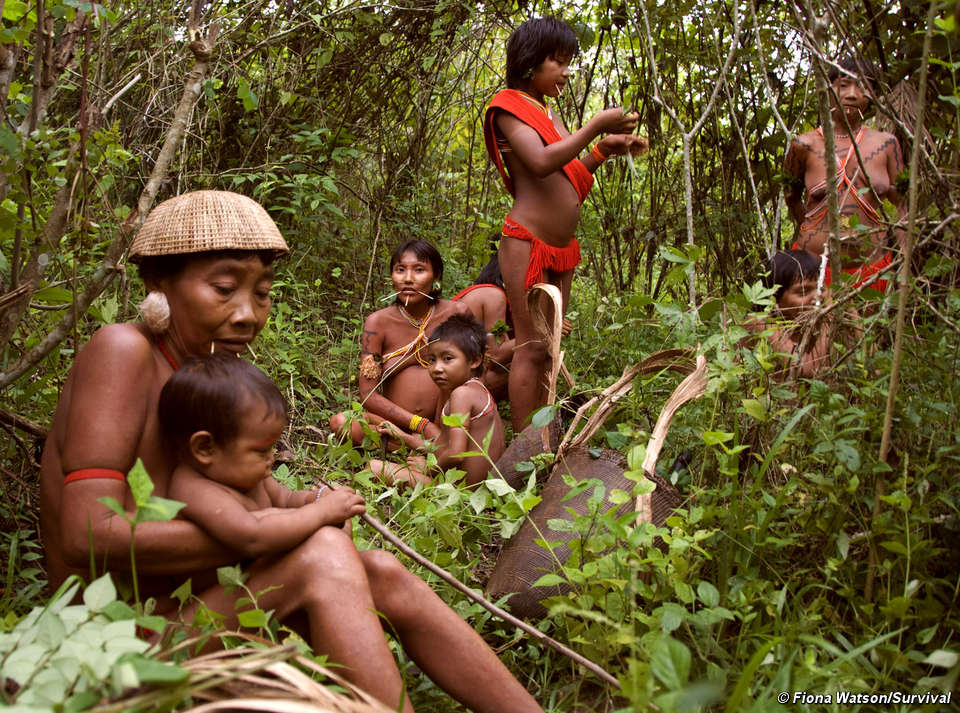
Steven Pinker, like Jared Diamond, bases his assertion that the Yanomami are a violent people solely on the work of controversial anthropologist Napoleon Chagnon.Steven Pinker, like Jared Diamond, bases his assertion that the Yanomami are a violent people solely on the work of controversial anthropologist Napoleon Chagnon. © Fiona Watson/Survival

Survival International has launched a vigorous rebuttal of Harvard ‘evolutionary psychologist’ Steven Pinker’s claim that tribal people are more violent than state societies.

In articles published this week in US journal Truthout, and the UK-based OpenDemocracy, Survival International’s Director Stephen Corry accuses Pinker – once named by Time magazine as one of the world’s 100 most influential people – of ‘claiming scientific support for what is mere opinion by falsely charging contemporary tribal peoples with more or less unremitting villainy.’

Corry writes, ‘Pinker’s baldly stated facts shake and buckle under cross-examination’. He accuses Pinker of: omitting facts which don’t fit his argument; getting many of his facts wrong; citing only those experts who agree with him; and ignoring the many others who don’t.

Starting with the first example in Pinker’s recent book ‘The Better Angels of Our Nature’ – the 5,200-year-old ‘Iceman’ named Ötzi – Corry reveals how Pinker’s suggestion that he was killed in a clash with another tribe is implausible. Corry goes on to expose countless other errors in Pinker’s supposedly ‘scientific’ argument, which has close parallels with the recent book ‘The World Until Yesterday’ by Jared Diamond.

Pinker, like Diamond, accuses Papuans of being violent, but ignores the tens of thousands killed by Indonesia's armed forces.Pinker, like Diamond, accuses Papuans of being violent, but ignores the tens of thousands killed by Indonesia’s armed forces. © Survival

‘The data presented by these authors [Steven Pinker and Jared Diamond] is at least contentious, where it’s not plain wrong. They go out of their way to portray tribes as ‘Brutal Savages’ … [For example], twenty percent of the data Pinker uses to categorize the violence of the entire planet’s tribal peoples (excluding ‘hunter-gatherers’) is derived from a single anthropologist, Napoleon Chagnon – whose data has been severely criticized for decades.’

Of Pinker’s principal declaration – that our ancestors (and today’s tribal peoples) were more violent than ‘civilized’ Western society – Corry concludes, ‘Pinker [believes] we are brutal savages until tamed by a nation state bringing peaceful civilization. As far as contemporary tribal peoples are concerned, it couldn’t be further from the truth: the arrival of the state unleashes a savagery second to none in its brutality.’

Read more about the myth of the ‘Brutal Savage’ and how some writers are pushing the view that tribal people are particularly violent.

Fight Clubs: On Napoleon Chagnon (The Nation)

One anthropologist’s place in his field’s ongoing battle over questions of power, means and ends.

Peter C. Baker

May 15, 2013   |    This article appeared in the June 3, 2013 edition of The Nation.

In December 1919, Franz Boas, the German-born academic widely recognized as the father of American anthropology, published a letter in this magazine accusing four of his American colleagues—whom he did not identify—of having used their research positions as cover for engaging in espionage in Central America during the recently concluded war. Ten days later, the governing council of the American Anthropological Association voted 20 to 10 to censure Boas, claiming that his highly public letter was unjustified and in no way represented the AAA’s position. Boas was a founding member and former president of the association, so the censure was doubly humiliating; it essentially forced him to resign from both the AAA’s governing body and the National Research Council.

Noble Savages
My Life Among Two Dangerous Tribes—The Yanomamö and the Anthropologists.
By Napoleon A. Chagnon.

The Boas incident was the prelude to a century in which anthropology has been haunted by questions of means and ends. What sorts of alliances with power are worth it? What responsibilities (if any) do anthropologists have to the populations they study? Above all, to what extent has Western anthropology been fatally compromised by its associations—direct and indirect, public and covert—with a violent and imperial foreign policy? In several books, the anthropologist David Price has cataloged the substantial sums of money funneled from the military and intelligence community to academic anthropology over the years, as well as the contribution of American anthropologists to every significant war effort in modern US history. Most recently, ethnographers have joined the Army’s Human Terrain System program, designed to aid military operations in Iraq and Afghanistan by decoding the nuances of local culture. Price notes that although the revelation of these collaborations has often sparked heated short-term controversy, the disputes have passed without prompting broad, discipline-wide reform—or even conversation. After all, what anthropologist wants to spend time discrediting anthropology, a discipline that relies on trust, most importantly the trust of foreign governments and the subject populations that are the source of the discipline’s prized product of local knowledge? At what point are the ethical costs of doing anthropology too high, for ethnographers as well as the people they study?

That last question applies equally to anthropologists who may not work directly for the military or do fieldwork in areas explicitly labeled war zones. There is no better example than the career of Napoleon Chagnon, author of the bestselling anthropological text of the twentieth century, a slim volume called Yanomamö. Published in 1968, when Chagnon was 30, the book describes his fieldwork among the eponymous group of about 20,000 people who lived (and still live) in rainforest villages on both sides of the Venezuela-Brazil border. (Chagnon called them the Yanomamö, but most people who study the group call them the Yanomami.) Chagnon claimed—and now claims again in his recently published memoir, Noble Savages—that he arrived at his first Yanomami village in 1964 expecting to meet egalitarian natives living in harmony with nature and each other. This, he says, was what his University of Michigan anthropology professors had prepared him for. Instead, he found a way of life more reminiscent of Thomas Hobbes’s notion of the “state of nature”: an aggressive people mired in a cycle of inter-village combat, revenge begetting revenge and deception begetting deception. Death by murder was strikingly common, as was brutality toward women.

For Chagnon, the shock was immediate. No sooner had he and his guide arrived than they found themselves surrounded by “a dozen burly, naked, filthy, hideous men staring at us down the shafts of their drawn arrows! Immense wads of green tobacco were stuck between their lower teeth and lips making them look even more hideous, and strands of dark-green slime dripped or hung from their noses.” Whatever else might be said about this type of writing, with its blend of the lurid and the exotic, it appealed to American undergrads—or at least their professors assumed it did, and they kept assigning Yanomamö in Anthro 101. Before long, the book was in its second edition, then its third; a sixth came out last year. Chagnon has claimed, not unreasonably, that it has been read by as many as 4 million people, and it has certainly sold over 1 million copies. Unlike most other academic anthropologists, especially those writing in the 1960s, Chagnon brought lucidity and flair to his descriptions of fieldwork’s trials: the impossibility of staying clean and avoiding insects, the Sisyphean ordeal of trying to make a cup of oatmeal, the deep frustration of miscommunication, the loneliness. But it is obvious from reading Yanomamö that he also found the fieldwork to be a thrilling adventure. Trekking through the rainforest, a shotgun in one hand and a machete in the other; shooting tapir to roast over an open fire; building dugout canoes; forging friendships; tagging along for raids—Chagnon made cultural anthropology look more exciting than any textbook or tweedy professor’s lecture on kinship rituals. The book’s popularity has also benefited from the stylish films about the Yanomami that Chagnon made with the renowned visual ethnographer Timothy Asch.

In both the book and the films, there is a lot of fighting: chest-pounding matches, club fights, ax fights, raids, counter-raids, ambushes. Chagnon decided that Yanomami warfare was in large part about women, and specifically the question of who got to have sex with them. Women were regularly abducted from other villages during raids, and success in combat boosted a man’s social status, increasing his odds of securing wives for himself and his relatives. In order to reach this conclusion, Chagnon first constructed elaborate genealogies, tracing family trees across generations and far-flung villages to observe the relationship between blood ties and war patterns. This required not just learning the Yanomami language, but also overcoming his hosts’ frequent reluctance to supply the information he wanted. The most significant obstacle was a system of name taboos, including a prohibition against speaking a person’s name in that person’s presence and another against uttering the names of the dead.

The book was controversial from the start. Chagnon presented the Yanomami as a people living in the “state of nature,” untouched by the influence of modern civilization and nation-states, and so providing something of an undiluted example of humankind’s evolutionary ancestry. The possibility that these “primitive,” “Stone Age” people were killing each other not in competition over strategic resources, but specifically to improve their “reproductive fitness”—their odds of passing on their genes, either by reproducing themselves or by boosting the reproductive prospects of their relatives—was irresistible to proponents of the emerging field of sociobiology, which looks to natural selection to explain human social behaviors like altruism, the emergence of nation-states and war. The discipline’s recognition skyrocketed after the publication of E.O. Wilson’s influentialSociobiology: The New Synthesis in 1975; in subsequent editions of Yanomamö, Chagnon placed more emphasis on the role of biology in explanations of human behavior. For sociobiologists and their descendants, especially so-called evolutionary psychologists, such thinking was nothing short of a scientific revolution; for their detractors, among them cultural anthropologists, it was reductionist mumbo-jumbo at best, and politically dangerous at worst—the squeezing of the Yanomami and similar groups into categories crafted from Western assumptions to serve Western interests. The battles were heated and inseparable from competition over funding. The Yanomami became something of a prize token: for Chagnon’s defenders and critics, the fighting that occurred among this small group of people in the Amazon simply could not be what the other camp claimed it was, nor mean what the other side said it meant. Allegations of bad faith, often tinged with personal hostility, were as thick in the air as insects in the Amazon rainforest.

* * *

Even if the Yanomami are, or were, our “contemporary ancestors,” they live on land that is claimed by modern nation-states and happens to be rich in precious minerals. When the miners arrive, the Yanomami die, mostly from disease or poisonous chemical runoff, but sometimes also from shotgun blasts. During the 1980s and ’90s, anthropologists and indigenous rights groups became concerned about the possible effect that Chagnon’s theories might have outside the academy. This concern escalated after 1988, when Chagnon published an article in Science claiming that, among the Yanomami, men who killed other men also had the most wives and children. In 1989, the Brazilian Anthropological Association wrote to the AAA’s newsletter, arguing that Chagnon’s characterization of the Yanomami as a fundamentally “fierce people” (the subtitle of his book’s first three editions) was exaggerated to the point of falsehood, and less than helpful at a time when the Yanomami were under attack by miners and their allies in the Brazilian government, who were citing this supposedly endemic Yanomami violence as one of the reasons they should be segregated on twenty-one separate micro-reservations. As similar accusations circulated, it became increasingly difficult for Chagnon to obtain the permits required to do his work. In 1999, citing this obstacle, he announced his early retirement from the University of California, Santa Barbara, and returned to his home state of Michigan.

Around a year later, controversy about Chagnon’s Yanomami work reached a new level of scrutiny and public visibility, prompted by the publication of Patrick Tierney’s Darkness in El Dorado: How Scientists and Journalists Devastated the Amazon. Where previous Yanomami debates had rarely strayed beyond specialized academic venues, Tierney’s attack on Chagnon was published by W.W. Norton, a respected trade house, and garnered the attention of reviewers around the world. Tierney was at the time a journalist and indigenous rights activist; in Darkness in El Dorado, he took all the old complaints against Chagnon and wove them into a dramatic narrative of white men and the ruin they’d brought to the rainforest. His rogues’ gallery includes the French anthropologist Jacques Lizot, who for years used his store of foreign goods to pay Yanomami men and boys for sex. There was also the public television documentary crew that paid the Yanomami to dress and act differently (more “primitively”) than they otherwise would have—and then sat by, cameras rolling, while a young woman and her child died, despite having a motorboat that could have taken them to a hospital. There are miners and soldiers and corrupt politicians—and there’s Chagnon himself, whom Tierney portrays as the monomaniacal, violence-obsessed Colonel Kurtz of sociobiology, so entranced by the possibility of making a vital contribution to a beautiful, voguish theory that he lost all sight of Yanomami reality, research ethics and human decency.

In addition to rehashing—and, more than once, overcooking—the old accusations about Chagnon’s flawed assumptions, suspect methodology, dubious interpretations and their effects on the Yanomami, Tierney raised a new charge, one that seemed to dwarf the others in terms of its horror. The allegation related to a central aspect of Chagnon’s research program, one that had hardly been mentioned in his writings to date. The funding for Chagnon’s first few trips to South America came from the National Institute of Mental Health; but by 1967, Chagnon was collaborating with James Neel, a titan of modern genetics. Neel worked for the Atomic Energy Commission, the post–World War II agency created to study nuclear technology and its effects (including the infamous experiments in which Americans were exposed to large doses of radiation without their consent). As a geneticist, Neel saw the Yanomami as the closest link to our “evolutionary ancestors” he would ever get a chance to sample, an isolated population unaffected by industrialization or global conflict. Neel and Chagnon were both then based at the University of Michigan, and it was on Neel’s recommendation that Chagnon went to live with the Yanomami in the first place. Chagnon got AEC money; in return, whenever one of Neel’s teams wanted to collect blood and tissue samples, he served as their guide and translator.

* * *

Though Neel had little concern for the specifics of Yanomami life and (according to Chagnon) a disdain for anthropology in general, he sometimes went on the sample-gathering trips. On one, in 1968, a measles outbreak was erupting just as his team arrived. In the account presented in Darkness in El Dorado, Neel and his team—despite delivering a thousand vaccines—made the epidemic worse, causing many more Yanomami to fall ill and die than would have otherwise. This was not, Tierney insinuated in the pre-publication proofs of the book sent to reviewers, a matter of neglect; instead, Neel had knowingly made the epidemic worse because it gave him the perfect chance to observe the immune systems of a virgin-soil population in action. In this account, a founding figure of modern genetics comes across as little different from a Nazi scientist, with America’s bestselling anthropologist as his willing handmaiden.

After Norton sent out the proofs of Tierney’s book, his tale of killer anthropologists started circulating at great speed on academic listservs. It was a “nightmarish story,” wrote two of Chagnon’s longtime critics in August 2000, “a real anthropological heart of darkness beyond the imagining of even a Josef [sic] Conrad (though not, perhaps a Josef Mengele).” Chagnon’s partisans set in motion efforts to discredit Tierney’s book page by page, hoping to stem the inevitable tide of bad press. Allies like Richard Dawkins, Edward Wilson, Steven Pinker, Daniel Dennett and Marc Hauser e-mailed people covering the book, urging them to denounce it. In late 2000, an excerpt appeared in The New Yorker, and the book—though still not released—was nominated for a National Book Award. Meanwhile, Tierney and Norton continued editing it, softening some of its more incendiary claims about the measles epidemic; when released, it still claimed that Neel had made the epidemic worse, but allowed that it had not been intentional.

Sensing the possibility of a public relations disaster for the entire discipline, the AAA’s leadership convened a task force to evaluate Tierney’s charges. This was highly unusual: unlike a state medical or legal board, for example, the AAA is not a licensing body; you need not be a member of the association to practice anthropology. (Chagnon canceled his membership in the late 1980s.) It has little in the way of meaningful investigative authority, and its ethics guidelines are notoriously muddled and difficult to apply. The task force’s preliminary report, released in 2001 soon after the book’s publication, concluded that Tierney’s argument was shot through with flaws: the accusation that Neel had worsened the measles epidemic, as one example, was found to be baseless and not even possible. But many of Tierney’s less sensational, more complex charges against Chagnon were substantiated, and the task force declared that the book was of definite value to the field. This satisfied no one, not least because of an obvious procedural failing: two of the task force’s members admitted to not having read the whole report.

The final report, released a few months later, was considerably more critical of Chagnon. But for his detractors, it was at best an imperfect attempt to grapple with fundamental questions, and at worst a PR move designed to hurry the discipline past an ugly episode. For Chagnon’s supporters, it was a disgraceful hatchet job, one more sign of cultural anthropology’s resentment over the encroachment of “hard” science onto its turf. Three years later, a referendum was put forth to rescind the report, on the grounds that the original task force had been illegitimate, biased and sloppy. Roughly 10 percent of the AAA’s members voted: 846 for, 338 against. The report was removed from the organization’s website, and the question of which, if any, of its conclusions had been true was left for die-hards to debate in academic journals and on their personal websites. There is little agreement even about what the controversy is exactly, and most often the people involved—tenured professors—do little more than talk past each other, bemoan the quality of debate, and then continue talking past each other. Davi Kopenawa, a prominent Yanomami activist, put it well: “I want to know how much they are making each month. How much does an anthropologist earn?… This is a lot of money. They may be fighting but they are happy. They fight and this makes them happy. They make money and fight.”

There were two other referendums on the ballot when the AAA voted to rescind the El Dorado report. One expressed a strong preference for holding the annual meetings at facilities staffed by unions; it passed by a vote of 695 to 624. The other was a repudiation of the 1919 censure of Franz Boas, whose accusations about anthropologist-spies had since been confirmed by researchers—including the fact that some of the men who voted to censure him were the spies he had declined to name out of respect for their safety. The language of the 2005 repudiation implied that the original censure had been a regrettable error from another era, the sort of mistake anthropology didn’t make anymore and hadn’t made for a long time. It passed by an overwhelming margin: 1,245 to 73.

* * *

Chagnon’s retirement was not what he’d hoped for. In 2000, overcome by the stress of working to clear his name, but nonetheless seeing his alleged complicity with genocide become headline news around the world, he collapsed and was hospitalized. In subsequent years, he found it impossible to put the affair behind him:

I did not travel much, did not fish much, did not hunt grouse and pheasants over my German short-haired pointers, did not go to many concerts, did not read much fiction for pleasure, and did not spend more time with members of my family.

Instead, he set to work on a memoir. But he repeatedly scrapped what he’d written “because of the anger that kept creeping into my writing, giving it a very depressive tone.”

In Secrets of the Tribe, a recent documentary about anthropologists and the Yanomami, Chagnon responds to his critics mostly by repeating simplified versions of their charges in a sanctimonious tone. Despite his attempts to expunge the anger from his memoir, much of Noble Savages has a similar quality. As Chagnon sees it, his critics are a coalition of anthropological “ayatollahs” scrambling to protect their own authority from scientific rigor, “Marxist”-style “Thought Police” guarding the “politically correct” conventional wisdom, “postmodernists” unqualified to make claims about his conduct because they can’t even decide if the world exists, Catholic missionaries who wanted the Yanomami for themselves, and “barefoot” “activist” types less interested in studying the people of the world than in leading a witch hunt for the bad guy in the “office down the hall.” (The long history of overlap between American anthropology and the American military-intelligence sector is not mentioned.) These are the sorts of people, we are given to understand, who don’t care about what is true or not—the sort willing to smear a man to keep an ideology alive.

But Chagnon is in a bind: he’s written a memoir to refute the charges against him, but he finds the charges so baseless, and their existence so revolting, that he can barely be bothered to address them, or even to characterize them accurately. (In this sense, Noble Savages mirrors Darkness in El Dorado, which might have been more rigorous if Tierney hadn’t been so furious.) A telling example is Chagnon’s response to criticism from his fellow anthropologist Brian Ferguson. In 1995, Ferguson published Yanomami Warfare: A Political History, a book centrally concerned with countering Chagnon’s analysis of Yanomami life and violence. He disputed Chagnon’s interpretations of his own data (convincingly, I think), but also advanced a more fundamental objection: that the Yanomami had been in contact, direct and otherwise, with the “outside” world at several points long before Chagnon’s arrival, and that these moments of contact had influenced everything from where their villages were established to how they related to each other. Warfare was not the Yanomami historical norm, Ferguson said, and when war did break out, it had at least as much to do with the effects of encroaching nation-states and empires as it did with women and revenge. One crucial result of these moments of contact was the Yanomami’s acquistion of steel. Steel tools are many times more efficient than stone ones; when some villages came to possess more than others, it tilted the scales toward conflict, especially in times of hardship and deprivation, such as those caused by disease outbreaks (which even by Chagnon’s calculations were a more common cause of Yanomami death than violence).

Whatever the soundness and validity of Ferguson’s complex argument, it deserves more of a response than the single sentence that Chagnon has buried in an endnote: “Ferguson also claimed that I caused animosity, jealousy, and conflicts by the way I gave metal tools to the Yanomamö.” You can almost hear Chagnon snorting in disbelief. Because the endnotes lack corresponding numbers in the main text, the path the reader must take to them is unmarked. No reader will learn from Chagnon what Ferguson actually thinks. It is true that, in Yanomamö, Chagnon admitted to intentionally exploiting local animosities and conflicts to gain information, especially in his efforts to work past the Yanomami’s pesky name taboos. It is also true that Ferguson discusses Chagnon and other anthropologists’ habit of handing out steels tools in exchange for information, labor and blood samples. But to make this the centerpiece of his critique is absurd. It is also a measure of Chagnon’s narcissism that he reduces an argument about hundreds of years of history, empires and culture to an argument about himself. (Tierney is guilty of a similar fixation: when he cites Ferguson’s arguments in Darkness in El Dorado, he is also seemingly obsessed with the possibility that Chagnon himself had caused Yanomami warfare.)

The irony is that in Noble Savages, a story of an allegedly Stone Age people, steel and its influence are ubiquitous. One village Chagnon visited exists where it does, a missionary tells him, because its residents wanted to be near the missionaries and the steel tools they brought with them. His hosts lie to him about other villages—how far away they are, the dangers he can expect en route—so that he won’t leave and share his steel gifts with others. When he’s not watching, they break into his supplies and make off with knives and fishhooks. “The very word madohe [trade goods] stirs people,” Chagnon says. If machetes or axes are present, he observes, club fights can escalate to machete fights, increasing the likelihood of their participants being crippled or killed. Even after pointing all this out, Chagnon takes a position worthy of the National Rifle Association: machetes don’t kill Yanomami, Yanomami do.

Elsewhere in his memoir, though, he insists that the introduction of new technology can alter—and has altered—the way people relate to each other, even by encouraging them to kill each other. Missionaries from the Salesians of Don Bosco, a Catholic charity, gave shotguns to the Yanomami, something Chagnon refused to do “as a matter of principle.” The results, he says, were disastrous. “Although the shotguns did not make the Yanomamö warlike, I believe that they probably caused an increase in mortality rates…. Shotguns may have even made the Yanomamö more willing to attack their enemies because the shotguns were more efficient killing weapons than their bows and arrows.” And: “The introduction of shotguns at Salesian missions would most likely change traditional Yanomamö warfare patterns.”

The Salesians might be the only people Chagnon dislikes more than cultural anthropologists. From his perspective, they were determined to make the rainforest into a theocracy, controlling who came and went (including anthropologists) and luring the heathen Yanomami to their settlements so as to render them dependent on the goods they supplied. It was the Salesians, Chagnon theorizes, who pulled strings to get Tierney the permits he needed to do his research in the Amazon for Darkness in El Dorado. In 2010, he even speculated that they paid Tierney to write his book. As with the postmodern barefoot ayatollahs of anthropology, the Salesians are presented to us as ruthless Machiavellians. Chagnon all but accuses them of turning a blind eye to the inevitable result of their largesse: if the guns were being used for raids, or even making the raids more common, so be it—this would make the guns more valuable, and the missionaries with the guns more powerful still. So shotguns, it seems, can influence warfare patterns, but never machetes—and anyway, Chagnon writes, the Yanomami (a supposedly untouched people) had “possessed steel tools many years prior to my first trip.

Now and then, Chagnon will recognize that, yes, war is complicated, a cumulative result of many intertwined factors. He even draws attention to the difference between motive, on the one hand, and human statements about motive, on the other. If a Yanomami was bitten by a snake and died, Chagnon recalls, his fellow villagers might decide that the snake had been sent by a rival village—therefore providing a pretext for revenge, which might involve seizing control of some strategic resources. Such behavior should sound familiar: quite recently, the leader of the most powerful nation on earth organized the invasion of another, oil-rich nation, claiming that he was acting on God’s personal instructions. The leader of the invaders also pointed out that, in addition to possessing terrible new weapons, the oil-rich country’s leader had once tried to kill his father. Oil was never mentioned: the history of war is a history of obfuscation about its motives. But whenever the Yanomami tell Chagnon that they’re fighting over women, he takes it as a direct expression of fact—one that, conveniently enough, supports the theory that for the Yanomami, as for all our ancestors, warfare was essentially about reproduction and its kissing cousin, revenge.

* * *

For all his claims to be working in opposition to the archetype of the noble savage, Chagnon is implicitly committed to the idea that the Yanomami he met were in some sense completely different from us—that they lived, to borrow a phrase from the pop science writer Jared Diamond, in a premodern sliver of the “world until yesterday” preserved in our midst. The Yanomami are, at different points in Chagnon’s book, “wild,” “primitive” and “Stone Age”—never mind all their steel, or the fact that they rely on farming, not hunting or gathering, for 70 percent of their diet. Never mind that none of their primary crops—bananas and plantains—are indigenous to the Amazon or even South America. No, the Yanomami are “pristine,” “pure,” “special,” even noble: “I have chosen to call this book Noble Savages,” Chagnon writes, “in part because the Yanomamö I lived among had a certain kind of nobility that most anthropologists rarely see in acculturated and depopulated tribes that have been defeated by and incorporated into the political states in whose jurisdiction they reside.”

When it comes to describing the definitively unpristine Yanomami—those who, even by his standard, have had extended contact with “civilization”—Chagnon vacillates between pity, disdain and (most often) disinterest. Readers of Noble Savages will learn almost nothing of contemporary Yanomami or their politics. They will certainly not learn about the assemblies at which representatives from different villages discuss the ongoing threats to their existence posed by mining interests, and the future of their relationships with Venezuela and Brazil. Yanomami have even traveled to the United States—not just to speak about the Chagnon controversy, but also to request the return of the blood samples gathered by research teams, including those led by James Neel. The Yanomami argue that they never consented to the indefinite storage of bodily materials in far-away freezers, a practice that violates their burial customs. (In 2010, several research facilities agreed to return the blood.) Chagnon says not one word about any of this; he’s too busy calling Yanomami leaders the puppets of Salesian missionaries, who are using them to advance their anti-Chagnon, anti-science agenda.

Chagnon’s fixation on those Yanomami he judged “pristine,” and his disinterest in any he’d determined to be “acculturated,” took its most explicit turn in 1990, when he was contacted by Cecilia Matos, the mistress of Venezuela’s then-president, Carlos Andrés Pérez. As Chagnon tells it, Pérez’s political career was winding down, and Matos wanted him to beef up his legacy by doing something to benefit people like the Yanomami. Though Chagnon had started a Yanomami Survival Fund in 1988, there is no evidence that he ever delivered any money to the people it was named for. The one time he was asked for advice about safeguarding the Yanomami’s living conditions, Chagnon recommended a rainforest biosphere project that would protect their land—but not all of it, just those parts whose inhabitants Chagnon deemed sufficiently untouched. About four-fifths of Yanomami lands in Venezuela would be unprotected, and so more open to mining concerns.

This aspect of the proposal goes unmentioned in Noble Savages; all Chagnon says, in his three-page account of the incident, is that before the project could be implemented, the usual network of detractors went to work spreading lies, which prompted hysterical protests, and so the project died. He doesn’t say that a similar project that included almost all Yanomami land was launched the following year. More damningly, he doesn’t tell his readers that in 1993 Pérez was impeached, removed from office and jailed after getting caught siphoning millions of dollars’ worth of public funds to private accounts he shared with his mistress. Matos was to be arrested too, but she fled the country; on her arrest order, she was accused of, among other things, misappropriating state resources to get a noble-sounding biosphere project running as a front for more profitable activities. Almost every commentator on the Chagnon saga, even among his army of vociferous allies, has agreed that his participation in this project, however tangential, was at the very least bad judgment. In a recent New York Times Magazine profile, Chagnon swatted away such accusations. In exchange for his help, Pérez had restored his research permit. “I got a year’s worth of data,” he said. “It was worth it for that reason.”

At the end of the Secrets of the Tribe documentary, Patrick Tierney says, “I don’t think that there’s any way [Chagnon’s defenders] can salvage [him] in the long run.” Time will tell, but I’d wager that Tierney is wrong: he is too enamored of the idea that scandal might lead to change, and too optimistic about facts trumping ideology (which is, of course, what Chagnon claims to hope for, too). Chagnon’s basic conclusions about the Yanomami were cited uncritically in Jared Diamond’s bestseller The World Until Yesterday, published in December [see Stephen Wertheim, “Hunter-Blatherer,” April 22]. Early reviews of Noble Savages were almost all positive. In a triumphant blurb, the anthropologist Robin Fox calls it the “final knockout punch in a fight [Chagnon] didn’t pick but has most assuredly won.” Chagnon was recently asked by the University of Michigan, his alma mater, to organize his life’s work into a digital archive for use by academics around the world. And last year, he was voted into the National Academy of Sciences.

In response, his old University of Michigan professor Marshall Sahlins resigned from the academy, citing not only Chagnon’s election but also the recruitment of NAS anthropologists by the US military. “The two are connected,” he told me recently. “Chagnon’s research and the imperial venture are both based on the same assumption, that pursuit of material self-interest is the natural human condition—the obvious, natural, best thing for the individual and the nation.”

Online, Chagnon’s fans have been selling T-shirts that caricature his critics’ positions as: Napoleon Chagnon kicked my dog! Word is the man himself thinks they’re hilarious and has ordered a bunch for friends and family. This semester, at age 74, Chagnon joined the anthropology department at the University of Missouri. “I feel like a battleship,” he told the campus newspaper, “shaking off the mothballs and taking to the high seas again.” Let’s christen it the USS Machete.

In “Library Man” (Feb. 7, 2011), Thomas Meaney reviewed Patrick Wilcken’s biography of Claude Lévi-Strauss, “a poet in the laboratory of anthropology.”

Read more: http://www.thenation.com/article/174369/fight-clubs-napoleon-chagnon#ixzz2VSi1oT30

“O governo está preparando uma tragédia”, afirmam indígenas (Xingú Vivo)

29/5/2013

A situação é grave na Usina Hidrelétrica Belo Monte. Os indígenas que ocupam pelo terceiro dia e pela segunda vez no mês o principal canteiro da barragem temem que uma tragédia de grandes proporções aconteça, com a autorização judicial da entrada da polícia para efetuar o despejo. Para eles, o governo está ameaçando repetir o confronto ocorrido na aldeia Teles Pires em novembro do ano passado, onde a Polícia Federal assassinou um indígena Munduruku e deixou dezenas de outros feridos.

Em coletiva à imprensa, Candido Waro declarou que os indígenas ocupados não irão cumprir a reintegração de posse. “Nós não vamos sair. Nós vamos morrer aqui, o governo vai matar todo mundo”, afirmou a liderança munduruku em coletiva à imprensa. O indígena reafirmou que o governo não tem cumprido com as exigências constitucionais no processo de consulta.

“O governo está preparando uma tragédia”, afirma Paygomuyatpu Munduruku. “Nós não vamos sair daqui. O governo tem nos ignorado, ofendido, humilhado, assassinado”. Para ele, está claro que o governo está tentando sufocar o movimento. “Ele já matou uma vez e vai matar de novo. Eles mataram porque nós somos contra as barragens”, explica. Os indígenas se mostraram “ofendidos” com a declaração do ministro Gilberto Carvalho à rede Globo de que ele não teria sido “comunicado oficialmente” sobre a vontade dos Munduruku de se reunirem com o governo federal.

VIOLÊNCIA POLICIAL

Além da pressão do governo federal, os indígenas têm sofrido diariamente ameaças e intimidações dos policiais que residem no canteiro de obras, e daqueles que estão cercando o empreendimento. O vídeo abaixo, registrado por um indígena dentro da ocupação, mostra um policial intimidando e ameaçando os manifestantes, ao apontar armas e dizer que vai “quebrar” um indígena.

Para o grupo que ocupa o canteiro, a única saída é que o governo federal, na figura do ministro Gilberto Carvalho ou da presidente Dilma Rousseff, vão ao canteiro e se comprometam a cumprir a pauta dos indígenas. Eles exigem a suspensão de todos os estudos e obras de barragens que afetem seus territórios até que sejam consultados como previsto por lei.

‘Não existem índios no Brasil’, diz escritor em abertura de congresso (G1)

22/05/2013 14h24 – Atualizado em 22/05/2013 14h40

Para ele, a palavra ‘índio’ surgiu de maneira equivocada e reduz os povos.

Autor de 43 livros, Daniel Munduruku abriu o evento em Poços de Caldas. 

Jéssica BalbinoDo G1 Sul de Minas

Daniel Munduruku é autor de 43 livros e falou durante abertura de Congresso (Foto: Jéssica Balbino/ G1)Daniel Munduruku é autor de 43 livros e falou durante abertura de Congresso (Foto: Jéssica Balbino/ G1)

Autor de 43 livros, o indígena Daniel Munduruku foi o palestrante convidado para a abertura do 10º Congresso do Meio Ambiente em Poços de Caldas (MG) nesta quarta-feira (22). O índio, que é doutor em educação e cursa pós-doutorado em literatura na Universidade Federal de São Carlos (Ufscar), falou sobre a ‘Mãe Terra e a Questão Indígena’  durante um bate-papo com os congressistas.

Em uma saudação na língua do povo ao qual pertence, abriu a fala e brincando, pediu licença a quem estava no ambiente. “Bom dia a todos os amigos aqui presentes, espero que este encontro seja tão bom para vocês como vai ser para mim”, saudou, em uma referência aos ancestrais. “Nossos avós diziam que quando vamos encontrar alguém, temos que ir com o coração aberto e alegre para que o encontro seja bom, desejando que as pessoas que estão no lugar se sintam da mesma forma”, pontuou, ao lembrar que estar conectado com o meio ambiente é estar conectado com a poesia do universo.

“A luta pelo meio ambiente é a luta de todo povo brasileiro” – Daniel Munduruku, escritor e doutor

“Vou falar de outras tantas coisas que não são meio ambiente, mas também são. Quero olhar nos olhos e conversar. Para começar, vou destacar que não sou índio e que não existem índios no Brasil. O que existem são povos. Eu sou Munduruku e pertencer a um povo é ter participação dentro de uma tradição ancestral brasileira. Quando eu digo que não existem índios, quero dizer que existe uma diversidade muito grande de ancestralidade. São pelo menos 250 povos indígenas e são faladas pelo menos 180 línguas no Brasil”, disse.

Para ele, a palavra ‘índio’ surgiu de maneira equivocada e reduz os povos. “Está ligada a uma série de conceitos e pré-conceitos. Normalmente ela está vinculada a coisas negativas, embora haja muito romantismo na história, a maioria do pensamento quer dizer que o  índio é um ser fora de moda, atrasado no tempo e selvagem. Alguém que está atrapalhando o progresso e continuamos reproduzindo um estereótipo que foi sendo passado ao longo da nossa história”, criticou.”

Público vindo de várias partes do Brasil debateu durante palestra (Foto: Jéssica Balbino/ G1)Público vindo de várias partes do Brasil debateu
durante palestra (Foto: Jéssica Balbino/ G1)

O bate-papo foi permeado por lembranças do indígena, que contou histórias sobre a própria vida, a fase de transição entre infância e adolescência e a perda do avô, que segundo ele, na tradição Munduruku, é quem transmite os ensinamentos dentro de uma família ou tribo. Com isso, ele chegou à dúvida dos presentes que era: como começou a escrever e se tornou acadêmico. “Quando meu avô morreu, me fez entender o que era ser Munduruku e eu sempre quis lembrar dele assim. Queria ser como ele, um contador de histórias. Demorei para saber como seria meu caminho, se seria na tribo ou na cidade, mas optei pela cidade e pela vida acadêmica e hoje estou aqui,  transmitindo estas histórias que são tão cheias de sabedoria de vida e de meio ambiente”, pontuou.

Em relação ao meio ambiente e aos questionamentos feitos pelo público, o indígena destacou a questão da evolução humana e no Brasil a construção de barragens. “O povo Munduruku está sofrendo com a construção das barragens, seja em Belomonte, seja em Rondônia, enfim, eles estão lutando para viver. A natureza e o ambiente que os índios vivem fazem parte da humanidade deles. Eles lutam para se manterem e lutam por um Brasil inteiro que não tem a consciência de perceber isso. A luta pelo meio ambiente é a luta de todo povo brasileiro”, finalizou.

Indigenous rights are the best defence against Canada’s resource rush (Guardian)

First Nations people – and the decision of Canadians to stand alongside them – will determine the fate of the planet

By Martin Lukacs

Friday 26 April 2013 16.12 BST – guardian.co.uk

Canada blog about Aboriginal rights : First Nations protesters in Idle No More demonstration Toronto

First Nations protesters are silhouetted against a flag as the take in a Idle No More demonstration in Toronto, January 16, 2013. Photograph: Mark Blinch/Reuters

In a boardroom in a soaring high-rise on Wall Street, Indigenous activist Arthur Manuel is sitting across from one of the most powerful financial agents in North America.

It’s 2004, and Manuel is on a typical mission. Part of a line of distinguished Indigenous leaders from western Canada, Manuel is what you might call an economic hit-man for the right cause. A brilliant thinker trained in law, he has devoted himself to fighting Canada’s policies toward Indigenous peoples by assailing the government where it hurts most – in its pocketbook.

Which is why he secured a meeting in New York with a top-ranking official at Standard & Poor’s, the influential credit agency that issues Canada’s top-notch AAA rating. That’s what assures investors that the country has its debts covered, that it is a safe and profitable place to do business.

This coveted credit rating is Manuel’s target. His line of attack is to try to lift the veil on Canada’s dirty business secret: that contrary to the myth that Indigenous peoples leech off the state, resources taken from their lands have in fact been subsidizing the Canadian economy. In their haste to get at that wealth, the government has been flouting their own laws, ignoring Supreme Court decisions calling for the respect of Indigenous and treaty rights over large territories. Canada has become very rich, and Indigenous peoples very poor.

In other words, Canada owes big. Some have even begun calculating how much. According to economist Fred Lazar, First Nations in northern Ontario alone are owed $32 billion for the last century of unfulfilled treaty promises to share revenue from resources. Manuel’s argument is that this unpaid debt – a massive liability of trillions of dollars carried by the Canadian state, which it has deliberately failed to report – should be recognized as a risk to the country’s credit rating.

How did the official who could pull the rug under Canada’s economy respond? Unlike Canadian politicians and media who regularly dismiss the significance of Indigenous rights, he took Manuel seriously. It was evident he knew all the jurisprudence. He followed the political developments. He didn’t contradict any of Manuel’s facts.

He no doubt understood what Manuel was remarkably driving at: under threat of a dented credit rating, Canada might finally feel pressure to deal fairly with Indigenous peoples. But here was the hitch: Standard & Poor’s wouldn’t acknowledge the debt, because the official didn’t think Manuel and First Nations could ever collect it. Why? As author Naomi Klein, who accompanied Manuel at the meeting, remembers, his answer amounted to a realpolitik shoulder shrug.

“Who will able to enforce the debt? You and what army?”

This was his brutal but illuminating admission: Indigenous peoples may have the law on their side, but they don’t have the power. Indeed, while Indigenous peoples’ protests have achieved important environmental victories – mining operations stopped here, forest conservation areas set up there – these have remained sporadic and isolated. Canada’s country-wide policies of ignoring Indigenous land rights have rarely been challenged, and never fundamentally.

Until now. If it’s only a social movement that can change the power equation upholding the official’s stance, then the Idle No More uprisingmay be it. Triggered initially in late 2012 by opposition to the Conservative government’s roll-back of decades of environmental protection, this Indigenous movement quickly tapped into long-simmering indignation. Through the chilly winter months, Canada witnessed unprecedented mobilizations, with blockades and round-dances springing up in every corner of the country, demanding a basic resetting of the relationship between Canada and Indigenous peoples.

Money is not the main form this justice will take. First Nations desperately need more funding to close the gap that exists between them and Canadians. But if Indigenous peoples hold a key to the Canadian economy, the point is to use this leverage to steer the country in a different direction. “Draw that power back to the people on the land, the grassroots people fighting pipelines and industrial projects,” Manuel says. “That will determine what governments can or cannot do on the land.”

The stakes could not be greater. The movement confronts a Conservative Canadian government aggressively pursuing $600 billion of resource development on or near Indigenous lands. That means the unbridled exploitation of huge hydrocarbon reserves, including the three-fold expansion of one of the world’s most carbon-intensive projects, the Alberta tar sands. Living closest to these lands, Indigenous peoples are the best and last defence against this fossil fuel scramble. In its place, they may yet host the energy alternatives – of wind, water, or solar.

No surprise, then, about the government’s basic approach toward First Nations: “removing obstacles to major economic development.” Hence the movement’s next stage – a call for defiance branded Sovereignty Summer – is to put more obstacles up. The assertion of constitutionally-protected Indigenous and treaty rights – backed up by direct action, legal challenges and massive support from Canadians – is exactly what can create chronic uncertainty for this corporate and government agenda. For those betting on more than a half-trillion in resource investments, that’s a very big warning sign.

Industry has taken notice. A recent report on mining dropped Canada out of the top spot for miners: “while Canadian jurisdictions remain competitive globally, uncertainties with Indigenous consultation and disputed land claims are growing concerns for some.” And if the uncertainty is eventually tagged with a monetary sum, then Canada will, as Manuel warned Standard & Poor’s, face a large and serious credit risk. Trying to ward off such a threat, the government is hoping to lock mainstream Indigenous leaders into endless negotiations, or sway them with promises of a bigger piece of the resource action.

But this bleak outlook intent on a final ransacking of the earth doesn’t stand up to the vision the movement offers Canadians. Implementing Indigenous rights on the ground, starting with the United Nations Declaration on the Rights of Indigenous Peoples, could tilt the balance of stewardship over a vast geography: giving Indigenous peoples much more control, and corporations much less. Which means that finally honouring Indigenous rights is not simply about paying off Canada’s enormous legal debt to First Nations: it is also our best chance to save entire territories from endless extraction and destruction. In no small way, the actions of Indigenous peoples – and the decision of Canadians to stand alongside them – will determine the fate of the planet.

This new understanding is dawning on more Canadians. Thousands are signing onto educational campaigns to become allies to First Nations. Direct action trainings for young people are in full swing. As Chief Allan Adam from the First Nation in the heart of the Alberta oil patch has suggested, it might be “a long, hot summer.”

Sustained action that puts real clout behind Indigenous claims is what will force a reckoning with the true nature of Canada’s economy – and the possibility of a transformed country. That is the promise of a growing mass protest movement, an army of untold power and numbers.

Índios isolados, trabalhadores em fuga: um encontro amazônico (Yahoo Notícias)

Por Ana Aranha | Reportagem 3 por 4 – 18.abr.2013

Os seis trabalhadores da construção civil estavam perdidos em meio à floresta amazônica, no norte de Rondônia. Algumas horas antes, eles tinham corrido mato a dentro para fugir do caos que tomara o canteiro de obras da usina hidrelétrica de Jirau, onde a Polícia Militar reprimia o movimento grevista, em 2011. Depois de andar cerca de seis quilômetros, o grupo tentava encontrar o caminho de volta à obra, ou a estrada, ou qualquer sinal de urbanidade. Sem sucesso.

Ao invés disso, foram encontrados.

Sem perceber que estavam sendo cercados, os trabalhadores uniformizados se viram rodeados por oito índios nus. Eles tinham o rosto e corpo pintados, flechas em punho e “murmuravam” palavras em uma língua que os trabalhadores não conheciam. Mas logo interpretaram o sentido: estavam rendidos.

Índios isolados no Acre, fotografados pela Funai em 2008

Hoje, excepcionalmente, esse espaço não será dedicado a um retrato, mas a um encontro. Encontro que pode servir de pista para compor o retrato dos povos indígenas que habitam o nosso país e os quais temos tanta dificuldade de entender.

Assustados, os trabalhadores da usina se comportaram como prisioneiros dos índios. Seguiram seus passos e pararam quando eles sinalizaram. O coração disparava a cada vez que os índios se reuniam em círculo. Observaram a construção de uma espécie de churrasqueira com gravetos, onde um porco do mato foi assado. Disfarçando o mal estar, comeram cada pedaço de carne que lhes foi oferecido. À noite, um dos trabalhadores foi repreendido pelos colegas por espiar os seios da índia mais nova, a regra era olhar para o chão.

A madrugada avançou, alguns índios deitaram e adormeceram. Os trabalhadores ficaram alertas. Pela manhã, caminharam até chegar a um local onde se ouvia um barulho familiar. Os índios sinalizaram em direção ao som, disseram algumas frases que ninguém entendeu e foram embora. Os trabalhadores correram na direção indicada até que, exaustos, chegaram à rodovia federal BR 364.

Esse relato foi registrado pela historiadora Ivaneide Bandeira Cardozo, da ONG indigenista Kanindé, que entrevistou um dos trabalhadores na presença de um funcionário da Funai (Fundação Nacional do Índio). Ela acredita que os homens e mulheres descritos sejam parte de um grupo que a entidade e a Funai tentam rastrear há anos. “Pela descrição, parecem ser Kawahiba isolados”.

“Isolados” são os índios que não têm contato com a nossa sociedade, ou porque nunca cruzaram com um não-índio (casos cada vez mais raros) ou porque recusam o contato.

Na região que foi alagada pela usina de Jirau, havia rastros de um grupo isolado e nômade. A empresa repassou dinheiro para que a Funai mapeasse esses rastros. Depois de identificados, eles deveriam ganhar uma área de proteção. Mas o investimento não foi suficiente para encontrar ou proteger os índios.

Ao contrário, foram eles que encontraram e salvaram os funcionários da usina. “É difícil entender o que passou na cabeça dos índios quando viram os trabalhadores perdidos”, reflete Ivaneide. “Por que decidiram ajudar? Nunca vamos saber”.

O encontro ocorrido em 2011 é o reflexo oposto do desencontro que se deu na Câmara dos Deputados essa semana. Na terça dia 16, em uma cena inédita, os deputados federais correram pelo plenário como uma manada assustada. Fugiam de homens seminus, pintados de urucum e que balançavam seus chocalhos para protestar contra a mudança da lei que define como as terras indígenas são demarcadas.

Se o comportamento dos índios isolados e dos deputados deixa alguma pista, é que continuamos longe de entender os povos que habitam a nossa terra.

Quando retornaram à usina, os trabalhadores contaram sobre o encontro, mas o supervisor deu risada, chamando-os de mentirosos. Como se fosse impossível haver índios nas proximidades da obra, cravada no meio da floresta amazônica.

Para Ivaneide, a precisão dos detalhes é a maior evidência da veracidade da história. “Os trabalhadores eram de outros estados, uma pessoa sem convivência com indígenas não poderia saber tanto. Ele descreveu a pintura no peito, os traços no rosto dos homens, diferente das mulheres, a pena do gavião real, como tratavam a ponta das flechas. Até os detalhes de como montaram o moquém, que é onde assam a carne”. Segundo ela, o relato bate com hábitos comuns a etnias que vivem ou viveram na região, algumas consideradas extintas.

Existem 82 pistas de grupos indígenas isolados no Brasil, é a maior concentração de povos isolados do mundo. Em março desse ano, os funcionários da Funai fizeram uma carta aberta com um “pedido de socorro”. Nela, escrevem que não há equipe para proteger esses grupos, cujos territórios estão sendo invadidos pelas grandes obras, madeireiros e traficantes.

Como lidar com índios isolados é um dos temas mais complexos dentro da política indigenista. Talvez a pequena mensagem deixada pelo grupo que resgatou os trabalhadores e pelos que invadiram o congresso seja justamente sobre os nossos limites. Os índios tem um modo diferente de ser, nem sempre seremos capazes de entende-los. Talvez esses encontros sejam os momentos para refletir sobre os impactos das nossas escolhas. E fazer um esforço para, a partir dessa nova realidade, respeitar as escolhas deles.

Brazil accused of not protecting isolated indigenous group (AP)

By Associated Press, Published: April 18

SAO PAULO — Brazil’s government has failed to comply with a court order to protect the Awa indigenous people in the Amazon jungles, a British-based Indian rights group said Thursday.

Survival International said in a statement that authorities have ignored a federal judge’s deadline “to evict all invaders from the heartland of Earth’s most threatened tribe by the end of March.” It said the deadline passed and not a single illegal logger or settler has been evicted.

On March 12, 2012, judge Jirair Aram Meguerian ordered that all the loggers and settlers should be removed within 12 months.

The organization said the Awa tribe “is at extreme risk of extinction.”

It added that Funai, Brazil’s indigenous affairs agency was “still waiting for support from the Justice Ministry, the federal police and central government to evict the invaders.”

Funai’s press office said it had no immediate comment. Calls to the Justice Ministry and federal police went unanswered.

Survival International said that more than 30 percent of Awa territory has been deforested and that loggers are “rapidly closing in on their communities and have already been marking trees for deforestation.

It quotes an Awa Indian called Haikaramoka’a, as saying: “The loggers are ruining our forest. They have built roads. We are scared; they could go after the uncontacted Indians. We are scared because the loggers could kill us, and the uncontacted Indians.”

About 100 of the 450 Awa remain uncontacted and are at particular risk of diseases brought in by the outsiders. Survival International said.

Copyright 2013 The Associated Press. All rights reserved. This material may not be published, broadcast, rewritten or redistributed.

Atual projeto de nação não tem lugar para povos indígenas, diz indígena e doutor em antropologia (EBC)

Thiago Pimenta – Portal EBC 12.04.2013 – 14h28 | Atualizado em 13.04.2013 – 17h09

Gersem Baniwa (Daiane Souza/UnB Agência)

Após manifesto de funcionários da Funai por um plano de  indigenismo brasileiro, o Portal EBC entrevistou o indígena e doutor emantropologia Social, Gersem Baniwa, que atualmente é professor da Universidade Federal do Amazonas (UFAM).

Na opinião de Gersem, que é originário do grupo indígena Baniwa (localizado normalmente no noroeste do Amazonas), um plano indigenista passa previamente por um projeto de nação do país, não podendo acontecer de forma dissociada: “Quando observamos a difícil situação de vida dos povos indígenas, pelas permanentes violações de seus direitos básicos, como o direito ao território e à saúde, podemos acreditar que ou o Brasíl ainda não definiu seu projeto de nação; ou já definiu e neste projeto não há lugar para os povos indígenas”, destaca.

O pesquisador,  que já trabalhou em projetos no Ministério da Educação, reconhece alguns avanços das ações do governo na área escolar e na saúde indígena. O pesquisador reforça os esforços de gestores e técnicos que tentam avançar nas políticas indigenistas, mas denuncia as pressões sofridas pelos índios brasileiros por outros setores.


PLANO INDIGENISTA

Portal EBC: Antes de tudo, em que consiste um plano indigenista?
Gersem: Um plano indigenista para o Brasil passa pela existência de um Projeto de Nação do Brasil. Quando observamos a difícil situação de vida dos povos indígenas, pelas permanentes violações de seus direitos básicos, como o direito ao território e à saúde, podemos acreditar que ou o país ainda não definiu seu projeto de nação; ou já definiu e neste projeto não há lugar para os povos indígenas.

Portal EBC: O texto da Constituição de 88 reconhece aos indígenas o direito à organização social, costumes, línguas, crenças e tradições e dá a eles os direitos originários sobre as terras que ocupam. Jà a União é responsável por demarcar essas terras, proteger e fazer respeitar todos os seus bens. Não seria esse o começo desse projeto?

Gersem: A sociedade brasileira tentou dar sua contribuição por ocasião da Constituinte de 1988, assegurando direitos básicos que garantissem a continuidade étnica e cultural dos povos indígenas, por meio dos direitos sobre suas terras tradicionais e o reconhecimento de suas culturas, tradições e organização social, além do reconhecimento da plena capacidade civil e de cidadania. Minha hipótese é de que essas conquistas legais tinham relação com sentimento de culpa pelos séculos de massacres e mortes impostos aos índios pelos colonizadores, portanto, como medidas reparadoras do ponto de vista moral.

Mesmo reconhecendo alguns avanços pontuais no campo da educação (acesso à educação básica e superior ampliado), do direito à terra principalmente na Amazônia Legal e de participação política (06 prefeitos e 76 vereadores indígenas), o Estado continua passando por cima das cabeças e de caveiras dos povos indígenas como acontece de forma escancarada e vergonhosa no Estado de Mato Grosso do Sul, onde os índios Guarani-Kaiowá continuam sob fogo cruzado por fazendeiros e políticos da região. Para as elites econômicas e políticas do país, os povos indígenas continuam sendo percebidos e tratados como empecilhos para o desenvolvimento econômico do país (que na verdade é o enriquecimento desses grupos). Portanto, um plano indigenista brasileiro depende necessariamente da clareza de que nação, sociedade e país se quer construir. Os povos indígenas só terão chance se o Brasil assumir com seriedade a construção de um projeto de nação baseada em uma sociedade pluriétnica, multicultural e solidária.

Portal EBC: Quais seriam os pontos são mais importantes para um bom plano indigenista para o país?

Gersem: O ponto mais importante de um plano indigenista é garantir as condições reais para a garantia plena dos direitos indígenas, baseadas no protagonismo e na cidadania dos indivíduos e coletividades indígenas. Somente a garantia desses direitos pode garantir a continuidade étnica e cultural desses povos, por meio de segurança territorial, segurança econômico-alimentar, política de educação adequada e  política de saúde eficiente.  Isso também daria sinal de que os povos indígenas podem ter seu espaço na sociedade brasileira. Percebemos uma grande contradição na política indigenista atual: uma parte minoritária do Estado (governo) que tenta adotar o discurso e a prática em favor dos povos indígenas e a outras majoritária que ao contrário, adota discursos e práticas anti-indígenas.


SITUAÇÃO ATUAL DOS ÍNDIOS BRASILEIROS

Portal EBC: Como você vê a atual situação dos indígenas brasileiros? O que precisa mudar?

Gesem: Hoje os povos indígenas do Brasil passam por uma situação muito difícil e ruim, com violações constantes aos seus direitos e com a crescente violência física e de morte que sofrem. Os dez anos seguintes à promulgação da CF de 1988 foram de gradativo processo de conquistas de direitos concretos (demarcação de terras, educação escolar, organização social e participação política) mas, os últimos três anos foram de estagnação com forte tendência de retrocesso sem precedentes para os povos indígenas.  A leitura que faço é que o Estado (comandado pelas elites políticas e econômicas) se arrependeu de reconhecer os direitos indígenas e agora faz de tudo para, em primeiro plano, violar esses direitos e em segundo plano, anular ou reduzir esses direitos. Ou é isso, ou o Estado está assumindo sua incapacidade e incompetência para garantir os direitos dos povos indígenas. As políticas existentes são completamente insatisfatórias. Estão sempre voltadas para resolver ou minimizar problemas acumulados. As políticas indigenistas continuam sendo autoritárias, paternalistas e tutelares. Embora o Brasil tenha adotado a Convenção 169 da OIT, há anos, até hoje ela não foi regulamentada. Neste sentido, um plano indigenista moderno precisa superar seriamente a visão imediatista, autoritária e de descaso institucional. Precisa ser construído um plano transparente e participativo de curto, médio e longo prazo, com metas, objetivos e condições claros de implementação. O mais importante é o plano indigenista ser do Estado e não apenas de um governo ou do órgão indigenista.

Portal EBC: Que ações merecem destaque na atual política indigenista?

Gersem: É importante reconhecer que nos últimos houve esforços e tentativas do governo federal em avançar nas políticas de atendimento voltadas para os povos indígenas, principalmente após o fim do monopólio da política indigenista pela Fundação Nacional do Índio (Funai), no início da década de 1990. O Ministério da Saúde tem se esforçado para tentar responder às demandas indígenas. O Ministério do Meio Ambiente iniciou experiências inovadoras ainda no final da década de 1990 em apoio técnico e financeiro para projetos socioeconômicos alternativos e autossustentáveis de comunidades indígenas na Amazônia. O Ministério da Educação empreendeu esforços junto aos estados e municípios em busca de melhorias no atendimento escolar às aldeias indígenas. Sem dúvida que essas experiências das últimas duas décadas lograram avanços e êxitos parciais e de algum modo contribuíram para a recuperação da autoestima e de esperança no futuro dos povos indígenas, expressa por meio do crescimento demográfico desses povos que está se aproximando de um milhão de indígenas no país (considerando que na década de 1960 chegaram à cifra de 200.000 indígenas) e da presença cidadã dos indígenas na vida do país. As experiências revelaram também questões preocupantes, como as limitações do Estado no atendimento aos direitos e anseios indígenas. Os gestores e técnicos de ministérios bem que tentaram avançar nas políticas voltadas aos povos indígenas, mas percebe-se atualmente o limite dessas possibilidades, diante do contexto político e econômico do país. Essas possibilidades esbarram na falta de vontade política dos dirigentes maiores em dar relevância às questões indígenas. Sem determinação política o tema nunca entra na lista de prioridades do governo e, por isso, as instâncias e estruturas que atuam junto a esses povos estão sempre esvaziadas, desestruturadas e desqualificadas, sem recursos financeiros, sem equipes e sem condições administrativas. Deste modo fica difícil assegurar os direitos indígenas que ficam a mercê dos interesses econômicos anti-indígenas. Muitas vezes parece que o governo se presta a servir aos interesses desses grupos.

Portal EBC: Como você avalia o trabalho da Funai hoje?

Gersem: Nos últimos dez anos a Funai tem se esforçado para estar ao lado dos povos indígenas no enfrentamento dos problemas existentes nas aldeias, mas é um órgão do Estado e dos governos, portanto, dominada pela incapacidade e ineficiência institucional. É um órgão com eminência de falência institucional, por ausência de força e crédito político, falta de recursos humanos, equipe reduzida e mal preparada, e com infraestrutura arcaica. É evidente o processo de sucateamento e enfraquecimento do órgão nos últimos anos, na mesma proporção em que as oligarquias econômicas e políticas nos municípios e Estados se organizaram e se fortaleceram contra os direitos indígenas. O enfraquecimento da Funai é o mais claro exemplo do descompromisso do governo e do Estado para com a defesa e garantia dos direitos indígenas no país. Com isso, os povos indígenas cada vez mais estão à mercê e se tornam reféns de municípios, estados e grupos políticos e econômicos hostis aos direitos indígenas. Isso deixa claro também a necessidade de reorganização e fortalecimento do papel do governo federal na defesa e garantia desses direitos.

Portal EBC: Como você vê a atual atenção à saúde prestada aos indígenas?

Gersem: A política de saúde indígena no Brasil é a que mais se esforçou na busca por um plano mais adequado para o atendimento aos povos indígenas que teve início com a implantação dos Distritos Sanitários Especiais Indígenas (DSEI´s), enquanto uma etnoterritorialização do atendimento, o que é uma ideia inovadora com grandes possibilidades. No entanto, tem sofrido como todas as demais políticas indigenistas das profundas contradições e irracionalidades da política e da administração pública brasileira. Recentemente foi criada a Secretaria Especial de Saúde Indígena, como resultado de décadas de luta dos povos indígenas, mais uma iniciativa relevante e, no entanto, foi neutralizada pelos gargalos administrativos homogêneos da burocracia estatal pensada para atender as realidades dos centros urbanos. Sem equipes e sem condições logísticas adequadas, a política de saúde indígena está sendo um pesadelo para a saúde dos povos indígenas. O mesmo acontece no campo das políticas de educação escolar indígena, principalmente em regiões da Amazônia e do Nordeste, onde construções de infraestrutura e transporte logístico básicas não são possíveis de serem resolvidas pelos irracionais procedimentos licitatórios. O mesmo acontece com a falta de recursos humanos qualificados para atuar nas aldeias ou próximo às aldeias, pois as formas de contratação, temporárias ou de carreira, não são adequadas, pois dificilmente profissionais qualificados se dispõem a trabalhar nas aldeias com baixos salários pagos pelo poder público.

Portal EBC: Como você vê a situação dos indígenas isolados e recém-contatados?
Gersem: Entendo que esses povos apresentam consciência sobre a situação de não estabelecerem contato permanente com a sociedade nacional e por isso devem ser respeitados nessa decisão. Neste sentido, cabe ao Estado protegê-los, criar condições de proteção sem ação interventiva ou esforço para estabelecer contato, pois estes povos fazem parte da nação brasileira, ainda que desconhecidos da população majoritária.


PRESSÕES SOFRIDAS POR POVOS INDÍGENAS

Portal EBC: Quais são as maiores pressões sofridas pelos indígenas brasileiros? Quais são os agentes dessas pressões?

Gersem: Na atualidade, as maiores pressões aos povos indígenas vêm dos grupos ruralistas e mineradores do país além, é claro, dos próprios agentes do Estado e das grandes construtoras interessados pelos territórios indígenas e principalmente pelos recursos naturais neles existentes. As principais ameaças vêm das elites econômicas, principalmente ruralistas, na medida em que estão, a todo custo, espoliando as terras indígenas. É importante afirmar que não é possível garantir a continuidade etnocultural dos povos indígenas sem a garantia territorial. Mas não podemos esquecer a outra ameaça que vem das igrejas religiosas, que estão realizando, verdadeiros massacres culturais por meio de suas imposições doutrinárias em detrimento das culturas e valores indígenas.

Portal EBC: De que forma essas pressões podem ser aliviadas?

Gersem: Primeiro, a partir de um ordenamento territorial, respeitando-se os direitos constitucionais dos povos indígenas. No Brasil, é necessário se criar o hábito e a cultura de se respeitar as leis e o Estado ou governos precisam criar vontade e capacidades para exerceram o poder para zelar pelo cumprimento das leis, indistintamente de classes, grupos sociais ou credos. Segundo, é necessário respeitar a legislação nacional e internacional que asseguram a participação e a consulta prévia e qualificada aos povos indígenas em qualquer projeto ou programa governamental que lhes afetem. Em terceiro lugar, o que é mais importante é a superação do preconceito histórico sobre os povos indígenas de que são empecilhos para o desenvolvimento do país e a superação do racismo que considera os povos indígenas como atrasados ou não civilizados. Não é possível pensar o Brasil desenvolvido e civilizado enquanto não aprender a respeitar e valorizar um dos seus três pilares étnicos, que formaram o povo e a nação brasileira, que são os povos indígenas ou povos originários.

Portal EBC: As grandes obras como a construção de hidrelétricas e rodovias também ameaçam os povos indígenas?

Gersem: Sem dúvida, depois da luta pela terra as construções de grandes obras ameaçam seriamente a vida presente e futura dos povos indígenas, na medida em que afetam diretamente os ecossistema dos territórios indígenas que são fundamentais para a sobrevivência física e cultural. É importante destacar que os povos indígenas precisam integralmente de seus territórios, enquanto ecossistemas integrados e abrangentes para perpetuarem suas culturas, tradições, seus conhecimentos e seus modos de vida.

Portal EBC: Qual a sua opinião sobre a recente militarização nessas grandes obras, como a presença da Força Nacional no Complexo Tapajós?

Gersem: Acho completamente desnecessária e mostra claramente a atitude arbitrária e autoritária do governo. Mostra ainda total falta de sensibilidade e capacidade de diálogo com o movimento social indígena. E o que mais assusta com essa atitude do governo é a possibilidade de que o governo esteja radicalmente decidido a seguir o discurso de em nome do “relevante interesse público” passar por cima dos povos indígenas, ou seja, mais uma vez os povos indígenas podem pagar com suas vidas o suposto bem estar da sociedade majoritária e pode no futuro próximo estimular instabilidade social nas regiões e no país. Um diálogo franco, transparente e democrático com os interessados deveria ser instituído para mediar e solucionar conflitos de interesses. Nem sempre a força física e militar é a melhor solução para muitos casos.

Portal EBC: A lei 5.371 diz que a Funai deve exercer o poder de polícia nas áreas reservadas e nas matérias atinentes à proteção do índio. Como você vê a questão do poder de polícia conferido à Funai? A instituição deve ter autonomia ou deve recorrer a outros órgãos de segurança pública?

Gersem: Em primeiro lugar não tenho nada contra o poder de polícia da Funai, mas acho isso completamente inviável pelas condições em que o órgão se encontra: enfraquecido, desestruturado e principalmente sem equipe qualificada. Em segundo lugar, é importante considerar o papel do estado brasileiro na defesa e proteção dos direitos dos povos indígenas e, para isso, dispõe de vários instrumentos e mecanismos institucionais, como Ministério Público, a Polícia Federal e a Força Nacional e outros órgãos. Não acredito que somente uma Funai armada irá resolver os problemas dela e dos povos indígenas, mas sim um plano indigenista sério, forte e eficiente, com o peso e a responsabilidade do Estado e dos governos.

Portal EBC: Um delegado da Polícia Federal da Delegacia Vilhena, em Rondônia, sugeriu que a Funai fizesse a regularização quanto ao porte de armas de fogo por parte dos servidores. Você é contra ou a favor do porte de armas por funcionários da instituição?

Gersem: Em primeiro lugar sou contra porte de armas para qualquer cidadão que não represente órgãos de segurança pública, de modo que os funcionários da Funai só deveriam portar armas caso eles exerçam poder de polícia, caso contrário sou completamente contra.


PERSPECTIVAS PARA O INDIGENISMO BRASILEIRO

Portal EBC: Na sua opinião, qual é a maior urgência do indigenismo brasileiro?

Gersem: A maior urgência é a definição clara de uma política indigenista para o país com metas de curto, médio e longo prazo. Uma política que estabeleça com clareza o lugar dos povos indígenas na nação brasileira. E para mostrar compromisso e seriedade com esta política é fundamental a aprovação do Estatuto dos Povos Indígenas que expresse este plano indigenista de curto, médio e longo prazo de forma articulado. O governo federal precisa assumir a responsabilidade pela defesa e proteção dos direitos desses povos, conforme determina a Constituição Federal. Só uma atuação exemplar do governo federal pode tirar os povos indígenas das mãos sanguinárias das elites econômicas, principalmente ruralistas.

Portal EBC: Quais são as perspectivas futuras para o indigenismo brasileiro?

Gersem: De muita angústia, muita dúvida e muita luta na tentativa de evitar que mais uma onda de genocídios volte a ser executada no Brasil. A esperança está em uma geração de jovens indígenas que estão se formando nas academias brasileiras e que ao longo dos próximos anos vão estar assumindo a liderança de suas aldeias e seus povos e, em muitos casos, também ocupando espaços nos órgãos da administração pública e nos poderes constituídos do país e que podem propor e construir novas alternativas de resistência e sobrevivência dos povos indígenas do Brasil. O grande desafio dessa nova geração de lideranças indígenas é domesticar a hostilidade, a ambição, a vaidade e o senso de tirania dos grupos políticos e econômicos que dominam as estruturas e as políticas do Estado e dos governos. Mas tenho certeza que os povos indígenas continuarão sua histórica luta de resistência mas também de fé por dias melhores em mundos melhores.

Edição: Leyberson Pedrosa

Líder indígena brasileiro ganha prêmio ‘Herói da Floresta’ da ONU (G1;Globo Natureza)

JC e-mail 4703, de 11 de Abril de 2013.

Almir Suruí, de Rondônia, fez parceria com Google para monitorar floresta. Ele está na Turquia para receber o título internacional

Almir Suruí, líder indígena de Rondônia, é um dos vencedores do prêmio “Herói da Floresta” este ano. O título é concedido pelas Nações Unidas.

A cerimônia oficial de entrega estava prevista para acontecer na noite desta quarta-feira (10) em Istambul (hora local), onde acontece o Fórum sobre Florestas da ONU, que congrega representantes de 197 país.

Os outros quatro “Heróis da Floresta” deste ano são dos Estados Unidos, Ruanda, Tailândia e Turquia. Almir é o vencedor pela América Latina e o Caribe. Líder dos índios paiter suruí, Almir criou diferentes iniciativas para proteger e desenvolver a Terra Indígena Sete de Setembro, em Rondônia, onde mora.

O projeto mais conhecido usa a internet para valorizar a cultura de seu povo e combater o desmatamento ilegal. A partir de uma parceria com o Google e algumas ONGs, os suruí colocaram à disposição dos usuários da rede um “mapa cultural” que dá informações sobre sua cultura e história.

Eles também usam telefones celulares para tirar fotos da derrubada ilegal de floresta, determinando com o GPS o local exato do crime ambiental e enviando denúncias a autoridades competentes.

No ano passado, outros brasileiros já haviam sido premiados como “Heróis da Floresta” pela ONU: Paulo Adário, diretor do Greenpeace para a Amazônia, e o casal de ativistas José Cláudio Ribeiro e Maria do Espírito Santo, assassinado no Pará em maio de 2011, que foi nomeado como uma homenagem póstuma.

Maya Long Count Calendar Calibrated to Modern European Calendar Using Carbon-14 Dating (Science Daily)

Apr. 11, 2013 — The Maya are famous for their complex, intertwined calendric systems, and now one calendar, the Maya Long Count, is empirically calibrated to the modern European calendar, according to an international team of researchers.

Elaborately carved wooden lintel or ceiling from a temple in the ancient Maya city of Tikal, Guatemala, that carries a carving and dedication date in the Maya calendar. (Credit: Courtesy of the Museum der Kulturen)

“The Long Count calendar fell into disuse before European contact in the Maya area,” said Douglas J. Kennett, professor of environmental archaeology, Penn State.

“Methods of tying the Long Count to the modern European calendar used known historical and astronomical events, but when looking at how climate affects the rise and fall of the Maya, I began to question how accurately the two calendars correlated using those methods.”

The researchers found that the new measurements mirrored the most popular method in use, the Goodman-Martinez-Thompson (GMT) correlation, initially put forth by Joseph Goodman in 1905 and subsequently modified by others. In the 1950s scientists tested this correlation using early radiocarbon dating, but the large error range left open the validity of GMT.

“With only a few dissenting voices, the GMT correlation is widely accepted and used, but it must remain provisional without some form of independent corroboration,” the researchers report in today’s (April 11) issue of Scientific Reports.

A combination of high-resolution accelerator mass spectrometry carbon-14 dates and a calibration using tree growth rates showed the GMT correlation is correct.

The Long Count counts days from a mythological starting point. The date is composed of five components that combine a multiplier times 144,000 days — Bak’tun, 7,200 days — K’atun, 360 days — Tun, 20 days — Winal, and 1 day — K’in separated, in standard notation, by dots.

Archaeologists want to place the Long Count dates into the European calendar so there is an understanding of when things happened in the Maya world relative to historic events elsewhere. Correlation also allows the rich historical record of the Maya to be compared with other sources of environmental, climate and archaeological data calibrated using the European calendar.

The samples came from an elaborately carved wooden lintel or ceiling from a temple in the ancient Maya city of Tikal, Guatemala, that carries a carving and dedication date in the Maya calendar. This same lintel was one of three analyzed in the previous carbon-14 study.

Researchers measured tree growth by tracking annual changes in calcium uptake by the trees, which is greater during the rainy season.

The amount of carbon-14 in the atmosphere is incorporated into a tree’s incremental growth. Atmospheric carbon-14 changes through time, and during the Classic Maya period oscillated up and down.

The researchers took four samples from the lintel and used annually fluctuating calcium concentrations evident in the incremental growth of the tree to determine the true time distance between each by counting the number of elapsed rainy seasons. The researchers used this information to fit the four radiocarbon dates to the wiggles in the calibration curve. Wiggle-matching the carbon-14 dates provided a more accurate age for linking the Maya and Long Count dates to the European calendars.

These calculations were further complicated by known differences in the atmospheric radiocarbon content between northern and southern hemisphere.

“The complication is that radiocarbon concentrations differ between the southern and northern hemisphere,” said Kennett. “The Maya area lies on the boundary, and the atmosphere is a mixture of the southern and northern hemispheres that changes seasonally. We had to factor that into the analysis.”

The researchers results mirror the GMT European date correlations indicating that the GMT was on the right track for linking the Long Count and European calendars.

Events recorded in various Maya locations “can now be harmonized with greater assurance to other environmental, climatic and archaeological datasets from this and adjacent regions and suggest that climate change played an important role in the development and demise of this complex civilization,” the researchers wrote.

Journal Reference:

  1. Douglas J. Kennett, Irka Hajdas, Brendan J. Culleton, Soumaya Belmecheri, Simon Martin, Hector Neff, Jaime Awe, Heather V. Graham, Katherine H. Freeman, Lee Newsom, David L. Lentz, Flavio S. Anselmetti, Mark Robinson, Norbert Marwan, John Southon, David A. Hodell, Gerald H. Haug. Correlating the Ancient Maya and Modern European Calendars with High-Precision AMS 14C DatingScientific Reports, 2013; 3 DOI:10.1038/srep01597

Os invisíveis querem ser vistos (Fapesp)

Livro resgata a contribuição dos antropólogos franceses Pierre e Hélène Clastres sobre os Tupi-Guarani, “um desafio para o modelo de desenvolvimento dominante” (reprodução)

09/04/2013

Por José Tadeu Arantes

Agência FAPESP – O resgate do pensamento dos antropólogos franceses Pierre e Hélène Clastres é uma das peças de resistência do livro O Profeta e o Principal, de Renato Sztutman, professor do Departamento de Antropologia da Universidade de São Paulo (USP).

Ponto de clivagem na reflexão antropológica, com profunda repercussão na filosofia, na sociologia e na prática política, a obra seminal do casal Clastres foi objeto de atenta releitura por parte de Sztutman em sua tese de doutorado, desenvolvida de 2001 a 2005, sob a orientação de Dominique Tilkin Gallois, com Bolsa da FAPESP. O livro, recentemente publicado também com apoio da FAPESP, é uma revisão dessa tese, que tem por objeto o material teórico relativo aos Tupi-Guarani.

“A reflexão acerca dos Guarani foi fundamental para que Pierre Clastres [1934-1977] formulasse sua concepção de sociedade contra o Estado”, afirmou Sztutman. “E o que estamos vendo hoje, 35 anos depois da morte prematura de Clastres [que faleceu aos 43 anos em um acidente automobilístico], é justamente um reflexo disso. Por se estruturarem como uma sociedade contra o Estado, os Guarani se tornaram indesejáveis para a sociedade e para o Estado hegemônicos”.

Sztutman aponta diversas características que fariam dos Guarani um desafio para o modelo de desenvolvimento dominante: “São povos que vivem em regiões que estão sendo ocupadas pelo agronegócio; que atravessam as fronteiras nacionais, transitando entre o Brasil, o Paraguai, a Argentina e o Uruguai; que têm uma relação com a terra completamente diferente do que se possa imaginar como sendo propriedade; que, apesar de terem líderes e saberem se organizar politicamente para a autodefesa, resistem à centralização política e à figura de um chefe central”.

Segundo o pesquisador, durante muito tempo a sociedade brasileira fez vistas grossas aos crimes cometidos contra os Guarani. “Eles estavam sendo dizimados e ninguém se importava. Hoje, uma parcela expressiva da sociedade chegou finalmente à compreensão de que é imprescindível dar direito de existência a populações que são contra o modelo hegemônico. Não podemos mais fazer vistas grossas. Temos que nos posicionar pelo direito de essas sociedades serem o que são: contra o Estado (e seu modelo desenvolvimentista), dentro de um Estado”, disse.

No Sudeste e Sul do Brasil, há Guarani em muitos locais. Na própria cidade de São Paulo, a não muitos quilômetros do marco central, na Praça da Sé, existem três aldeias guarani: duas em Parelheiros e outra próxima do Pico do Jaraguá. Mas, por ocuparem pouco espaço, estarem sempre em movimento e serem discretos no contato com a sociedade envolvente, esses Guarani se tornaram praticamente invisíveis.

“Em um texto de meados dos anos 1980, Eduardo Viveiros de Castro (antropólogo e professor da Universidade Federal do Rio de Janeiro) se referiu a eles como povo imperceptível”, disse Sztutman. “Quando pensamos em índio, pensamos na Amazônia ou no passado. Mas os Guarani não estão na Amazônia nem no passado. Estão diante dos nossos olhos. E nós não os vemos.”

Conforme Sztutman, outro marco divisório, este no domínio teórico da antropologia, com repercussão na filosofia e nas ciências humanas em geral, foi estabelecido, décadas atrás, pelo livroA Sociedade contra o Estado, de Pierre Clastres. Nele, o pesquisador francês interpretou a ausência de Estado nas sociedades indígenas não como uma deficiência (algo a que elas ainda não chegaram), mas como uma rejeição (algo a que elas se opõem, por meio de mecanismos eficazes).

A partir de Clastres, o esquema clássico, calcado na experiência dos povos da Europa, deixou de ser um modelo inelutável para a interpretação da trajetória de todos os povos do mundo. O Profeta e o Principal, de Sztutman, se insere em um grande movimento de recuperação e releitura da obra de Clastres.

“Principalmente nos anos 1980, os antropólogos se afastaram muito da perspectiva clastreana, pois buscavam uma antropologia mais empírica e Clastres era considerado excessivamente filosófico: alguém que trabalhava com os dados de maneira imprecisa e chegava a grandes conclusões com base em poucas evidências. De fato, na época em que ele escreveu, décadas de 1960 e 1970, havia poucos estudos etnográficos sobre os povos amazônicos, dentre eles os de língua tupi. Porém, nas décadas seguintes, estudos importantes foram realizados. E, principalmente com o trabalho de Viveiros de Castro, começou a haver uma reaproximação da etnologia com a filosofia, mas, então, já com a possibilidade de se discutir ideias filosóficas a partir de uma grande riqueza de dados empíricos. Aí, se abriu uma brecha para a releitura dos Clastres, Pierre e Hélène”, disse Sztutman.

Sztutman, que também é pesquisador do Centro de Estudos Ameríndios e do Laboratório de Imagem e Som em Antropologia, considera-se um herdeiro dessa nova tendência, reconhecendo, além da contribuição de Viveiros de Castro, as influências de Márcio Goldman e Tânia Stolze Lima, do Rio de Janeiro, e de Dominique Gallois e Beatriz Perrone-Moisés, de São Paulo, com quem tem trabalhado frequentemente e que prefaciou o seu livro.

“Realizei, em 1996, um trabalho de campo entre os Wajãpi, grupo de língua tupi que habita a região do rio Oiapoque, no extremo norte do Brasil, perto da fronteira com a Guiana Francesa. Escrevi sobre essa experiência em minha tese de mestrado. Foi uma permanência curta, mas que originou muitas inquietações que motivaram, depois, meu doutorado”, contou Sztutman.

“Embora os Guarani sejam, hoje, o povo indígena mais populoso da América do Sul, existem também muitos povos Tupi na Amazônia. O que suscitou meu interesse pelos Tupi antigos foram os Tupi amazônicos, e não os Guarani”, afirmou.

O xamã e o guerreiro

“Meu trabalho de pesquisa se baseia na continuidade das formas indígenas de organização políticas do passado até o presente. Tento identificar, como base dessa continuidade, a relação de duas figuras importantes: a do chefe ou ‘principal’, ligado à guerra, e a do xamã ou ‘profeta’, ligado ao mundo não humano. São duas figuras ao mesmo tempo opostas e complementares”, disse Sztutman.

“ É um pouco na alternância dessas duas formas de liderança que a vida social se constitui. Mas não há um dualismo total, porque você não encontra essas figuras puras. Todo chefe de guerra é um pouco xamã; todo xamã é um pouco guerreiro. São princípios em combinação. O profeta é um grande xamã, alguém que vai além do xamanismo estrito, voltado para a cura e a feitiçaria, e lhe dá um sentido político, liderando as grandes migrações rumo à ‘terra sem mal’”, explicou.

Sztutman reconhece que seu viés é mais o do pesquisador teórico-bibliográfico do que o do pesquisador de campo. Porém considera a pesquisa de campo uma passagem obrigatória para o antropólogo.

“Uma professora que tive dizia que é muito diferente ler uma etnografia quando se teve experiência de campo. A formação do antropólogo tem que passar pelo campo, mesmo que ele descubra que a sua vocação é mais ligada ao trabalho de comparação, de análise, de sistematização ou mesmo de história intelectual, como é o meu caso”, disse.

“Voltei a campo, depois que estive com os Wajãpi. E gostaria de voltar novamente. Mas acho que a melhor contribuição que posso dar é a de cotejar as etnografias, de confrontar as teorias com os dados, e, também, de fazer um pouco da história da etnologia indígena. Acho que a etnologia indígena pode dar uma contribuição muito grande para as ciências humanas em geral”, disse Sztutman.

A Thousand Kinds of Life: Culture, Nature, and Anthropology (Dissent)

Yanomami villagers at an indigenous expo in Caracas (Luigino Bracci, 2011, Flickr creative commons)

By David Moberg – March 21, 2013

In the latest twist in an unusually public academic dispute, one of the world’s most influential and highly regarded anthropologists resigned in protest from the prestigious National Academy of Sciences in late February. In quitting the academy, Marshall Sahlins took aim in part at the work of fellow anthropologist Napoleon Chagnon, whose contentious memoir, Noble Savages: My Life Among Two Dangerous Tribes—The Yanamamö and the Anthropologists, was recently published by Simon & Schuster. But his action is also a skirmish in a much longer and very important debate over what it means to be human—a debate with consequences for the broader public discussion.

Sahlins, the Charles F. Grey Distinguished Service Professor Emeritus of Anthropology at the University of Chicago, said that he was leaving the 150-year-old academy for two reasons: the election of Chagnon to the NAS last year and the involvement of the NAS in research for the military. His action prompted an outpouring of petitions and statements of support from colleagues, including several hundred in Brazil.

The academy says that principled resignations like Sahlins’ are “rare”—so rare that the only precedent anyone could identify was famed Harvard biologist and geneticist Richard Lewontin’s 1971 departure in protest against NAS military work related to the war in Vietnam. In the 1960s Sahlins himself was helping to launch campus teach-ins against the Vietnam War and to raise issues about the relationship of anthropology to the military.

Sahlins initially tried to resign last year in May, after Chagnon was named to the NAS, then again in October, when he received a request sent to all eighty-four anthropologists at the academy for advice on two research projects aimed at making the military more effective. The request arrived at a time when a controversy was already smoldering in the field about anthropologists’ involvement in implementing the Human Terrain Systems counterinsurgency strategy in Iraq (the October request for help appears unrelated to HTS). The academy had indirectly been involved in military research since the allied National Research Council was established in 1916 specifically for military research. But Sahlins objected to any NAS involvement in projects such as the two proposed in October. One focused on “contextual factors that influence individual and small unit behavior,” and the other sought scientifically valid methods, including any suggested by neuroscience, for improving individual and group military performance.

The publication of Chagnon’s memoirs prompted a third, successful attempt at resignation. Sahlins had objected to the NAS admitting Chagnon—formerly at the Universities of Michigan and of California at Santa Barbara, now at the University of Missouri—because of the quality of his research and his ethics in the field. Sahlins is also critical of both the theoretical and empirical underpinnings of sociobiology, more often referred to now as evolutionary psychology. A minority of anthropologists adopt its viewpoint. But many non-anthropologists—such as Richard Dawkins, Stephen Pinker, and Jared Diamond—have used the work of Chagnon and like-minded anthropologists to reach a large audience.

Fundamentally, this group of writers and researchers see biology as destiny. They argue that biological evolution defines human nature through the inheritance of traits that provide individuals with a reproductive advantage—that is, with more offspring.

In the late 1960s Chagnon worked among the Yanomami people living on both sides of the border between Venezuela and Brazil. He portrayed the Yanomami—which he dubbed “the fierce people,” for their frequent inter-village warfare—as living in a “state of nature” essentially like that of our Paleolithic ancestors. And he claimed to present evidence that men who were “killers” had many more offspring—which, even when he occasionally hedged, others took as proof that evolution favored and preserved traits for male aggression and violence.

Anthropologists, including Sahlins, have since criticized nearly every aspect of Chagnon’s research. (See “Natural Born Nonkillers.”) For example, many note that other tribal people have relatively peaceful, cooperative cultures. Research from various perspectives also runs counter to Chagnon’s argument that evolution rewards killers with more offspring—including computer simulations of evolution, studies of animal behavior showing that killing within a species is rare, even military studies of how men in combat try to avoid killing others. In any case, critics say, the Yanomami were not in a pristine state of nature when Chagnon first visited: they had a history, including likely displacement from their original land by pressures from European colonial settlers and some continuing contact with the wider world that led to the acquisition of a few trade goods. There were many more charges that his data were flawed. To take one example, Chagnon categorized Yanomami men as killers or not killers based on their own classification as unokai or not unokai. But the term identifies a man who has gone through a purification ritual, which was used by both real “killers” and by men who, say, had employed sorcery.

In 2000 journalist Patrick Tierney published Darkness in El Dorado, which accused Chagnon of spreading fatal diseases (like measles) through his collaboration with geneticist James V. Neel, of fomenting some of the inter-village fighting, and other ethical offenses. The American Anthropological Association established a taskforce that dismissed some of Tierney’s most lurid charges but concluded that Chagnon, among other lapses, did not get informed consent from Yanomami research subjects and may have improperly delayed immunizations he and Neel were providing. At its convention, the AAA adopted the taskforce’s report and criticisms, but later Chagnon’s supporters moved to rescind the report largely on procedural grounds. With only 10 percent of members voting, the AAA reversed its endorsement of the report—which Chagnon backers inappropriately claimed as the profession’s vindication of his work.

Sahlins first weighed in against sociobiology in the mid-1970s with The Use and Abuse of Biology, but he has continued to pursue many of the same critical themes in recent books, such as What Kinship Is—And Is Not and The Western Illusion of Human Nature. He argues that human nature is culture—that is, the learned values, beliefs, and patterns of behavior that social groups follow or believe they should follow, as well as the capacity to change those ideas passed from previous generations. Culture—and not some special features of biological evolution, like a carnivore’s teeth or the short beak of a seed-eating bird—provides humans with a flexible, varied means of adapting to a wide and changing variety of circumstances.

Homo sapiens evolved biologically and mentally from our hominid ancestors over several million years within the context of the hominid tool-making culture. “What evolved was our capacity to realize biological necessities, from sex to nutrition, in the thousand different ways that different societies have developed,” Sahlins says. “Hence, culture, the symbolically organized modes of the ways we live, including our bodily functioning, is the specifically ‘human nature.’”

Sahlins argues against the sociobiologists’ neo-Hobbesian view of human nature as a war of all against all—with a brutal, competitive nature clashing with culture. This view of human nature has deep roots in Western cultural traditions, he writes, but it also projects a more modern capitalist view of self-interested, even selfish, behavior on both humanity and the rest of the natural world. In many other societies, people do not see the same sharp division between nature and culture. And all human societies have systems of kinship, which Sahlins defines as “mutuality of being,” meaning that “kinfolk are members of one another, intrinsic to each other’s identity and existence.”

“Symbolically and emotionally, kinfolk live each other’s lives and die each other’s deaths,” Sahlins says. “Why don’t scientists base their ideas of human nature on this truly universal condition—a condition in which self-interest at the expense of others is precluded by definition, insofar as people are parts of one another?” Sahlins cites a classic definition of kinship first developed by Aristotle: kinfolk are in various degrees other selves of ourselves.

Moreover, this kinship is not biological. There are many ways besides birth that societies have developed notions of mutual being, Sahlins says. For example, in the highlands of New Guinea, strangers can become your kin by eating from the land where your ancestors are buried. The food raised on that land is in effect the transubstantiation of the ancestors. Accordingly, people who eat from it share ancestral being. In the local conception, they are as much kin to each other as people who have the same parents.

In the West, and even in much anthropological writing past and present, kinship is treated as genealogy, or biology. But even biological reproduction, Sahlins argues, takes place within the context of a particular kinship system, and to reproduce children is to reproduce that culturally defined kinship order. And in most cultures, notions of kinship diverge, often dramatically, from our “folk theory,” with its emphasis on biological genealogy. In any case, all human societies exist within some framework of “mutuality of being,” which starkly contrasts with the view of human life run by selfish genes.


In an email interview, Sahlins responded to a few questions about his resignation, incorporating some passages from his recent writings.

DM: You offered two reasons for your resignation from the National Academy of Sciences. Starting with the election of Napoleon Chagnon to the NAS, what were your most important objections to that election—the quality of his scholarship, professional ethics in the field, or other issues?

MS: He deals in caricature: of the people he studies, of science, of anthropological theory, of fellow anthropologists, and of himself as a beleaguered “fierce person.” His vicious misrepresentations of Yanomami as savage and disgusting have, as many local scholars have pointed out, aided and abetted national and entrepreneurial forces anxious to exploit and pollute their land and, directly or indirectly, drive them to extinction. Likewise, his own fieldwork methods have contributed to the sufferings and destabilization of the Yanomami (as I discussed in an article for the Washington Post).

The idea that the Yanomami represent the primordial human condition of the Stone Age is preposterous. Why them and not the numerous other, quite different societies—including many, such as Australian aboriginals, with just as modest economies but a quite different social order and inter-group relationships? In fact, all have long histories, including dynamic relations with other societies, that remove them as far from the Paleolithic as modern nations. Moreover, as other studies of Yanomami show, they have a richness of oral tradition (so-called mythology), a spiritual pantheon, and a metaphysics of culture and nature that is virtually totally ignored by Chagnon where it is not simply dismissed.

Compared to the rich fieldwork of many Amazonian anthropologists, his ethnography is shallow. His generalizations are sophomoric. His thesis about the reproductive success of Yanomami warriors, contradicted by his own data, has been thoroughly refuted by others. His evolutionary anthropology is from the ancien régime, outdated by almost a century.

DM: You argue that “biologism” is the problem, that “human nature is culture,” and that Western thought in general is dominated by the idea that there is a conflict between a disruptive human nature and vulnerable culture. How would you address a predictable layperson’s view that surely human nature must be at least in part an independent biology as well as culture? What essential qualities, if any, do you think “human nature” may have if it is indeed defined in terms of culture?

MS: Yes, all cultures have sex, aggression, etc., but whether and how it is expressed is subordinate to the cultural order. Sociobiologists say that individuals achieve immortality by having many children, but apparently no one ever told that to the Catholic clergy. The important point is not that all cultures have sex, but that all sex has culture, that is, social norms that specify with whom, how, where, and when sexual relations are appropriate or inappropriate. Culture preceded modern human physical form by a million years or more. The body of the modern human species, Homo sapiens, was formed under the aegis of culture. What evolved was the ability and necessity to realize our bodily needs and dispositions in cultural forms.

Biology became the dependent variable. These needs had to be subordinate to and encompassed by their cultural forms of expression, otherwise how could the same needs or dispositions be realized in the thousands of different ways known to history and ethnography—the various cultural ways of having sex, eating, being aggressive, and the like? As Clifford Geertz put it, we “all begin with the natural equipment to live a thousand kinds of life but end in the end having lived only one.” That can only be if our natural dispositions were subject to cultural ordering rather than the source thereof.

For over two thousand years, Western people have been haunted recurrently by the specter of their own inner being: an apparition of human nature so covetous and contentious that unless it is somehow governed it will plunge society into anarchy. Indeed, by the twentieth century the worst in us had become the best. In the neoliberal view, self-interest in the form of each person’s pursuit of happiness at the cost of whom it might concern was a god-given right. The insatiable love of the flesh that for Augustine was slavery became “freedom” itself. Likewise, then, political Augustinism has been reversed: self-interest having been transformed from slavery to liberty, the least government is now the best. Although for neoliberalism the ancient vice of self-love is greatly to be desired, in other native anthropologies it remains a potentially fatal quality of the human make-up.

DM: Given the harsh criticism of Chagnon’s work by the American Anthropological Association, the leading professional academic organization in the field, how do you account for the NAS decision and for the apparent popular appeal of his work, such as suggested by two recent, highly sympathetic articles about him and his new memoir in the New York Times?

MS: NAS decision? I am not sure, but I believe that many members, those who elected him, have a natural science sense of anthropology, as archaeologists almost have by necessity, and Chagnon promotes himself under that description. Popularity? Mostly on college campuses, I would think, from his textbooks and movies, which resonate with certain popular undergraduate preoccupations: sex, drugs, and violence. America.

DM: You also said that you were resigning because the NAS was supporting social science research on improving combat performance of the U.S. military. To what extent is support for such military-related research a new or growing development within the NAS?

MS: Since resigning I have learned that the NAS, with its charter of research for the nation, engaged in secret military research as far back as the Vietnam War, and who knows how much before or since. At least one prominent scientist, the extraordinary biologist Richard Lewontin, has resigned from the NAS for that reason. Professor Lewontin did so in 1971.

DM: You suggest that NAS should instead, if it does anything in the field, study how to promote peace. Do you have any suggestions about what sort of research would be useful for anthropologists or others to pursue to that end?

MS: What are the consequences of attempts to forcefully impose democracy on societies with no such traditions? Especially, how does the imposition of “winner-take-all” democratic elections in ethnically divided societies exacerbate violence, as has happened time and again in many postcolonial societies in recent decades? How does the reframing of local differences in terms of international issues, backed by opposed international forces, create a virtual state of nature, as happened in Iraq, India, Sri Lanka, and many other similar situations, going back to the encompassment of local disputes in the opposition between democratic-imperial Athens and oligarchic Sparta in the Peloponnesian War? (See “Iraq, The State of Nature Effect.”)

DM: Finally, do you see any connection between your two reasons for resigning or are they independent motivations?

MS: There is a connection: it is referenced in one of my answers in a Counterpunch article by David Price. The premise of American overseas aggression, according to Donald Rumsfeld and others, is something like the line in the movie Full Metal Jacket: “inside every gook there is an American trying to get out.” All we have to do to liberate this innately freedom-loving, self-interested, democracy-needing, capitalist-in-waiting is to rid him of the oppressive, evil-minded regime holding him down—by force if necessary. That is, Chagnon’s view of self-aggrandizing human nature is the sociobiological equivalent of the neocon premise of the virtues of American imperialism: making the world safe for self-interest. It is the same native Western ideology of the innate character of mankind. A huge ethnocentric and egocentric philosophy of human nature underlies the double imperialism of our sociobiological science and our global militarism.


David Moberg is a senior editor at In These Times.

Mudanças climáticas afetam previsões astrológicas dos índios amazônicos (UOL Notícias)

Carlos A. Moreno

Da EFE, no Rio de Janeiro

31/03/201311h59

Crianças da aldeia ticuna brincam no Rio Solimões, no Amazonas; os ticunas são uma das tribos afetadas pelas mudanças climáticasCrianças da aldeia ticuna brincam no Rio Solimões, no Amazonas; os ticunas são uma das tribos afetadas pelas mudanças climáticas. Patrícia Santos – 30.nov.1999/Folhapress

As previsões que os índios da Amazônia brasileira fazem com a ajuda dos astros para determinar o melhor momento para plantar ou pescar, entre outras atividades, se veem afetadas pelas mudanças climáticas, segundo constatou um estudo realizado com diferentes etnias indígenas no Brasil.

“Os xamãs passaram a se queixar que suas previsões estavam perdendo a exatidão e, a partir dessas indagações, descobrimos que alguns fenômenos provocados pelas mudanças climáticas afetavam seus cálculos”, explicou à Agência Efe o astrônomo Germano Afonso, coordenador do estudo.

Segundo o especialista, que é doutor em Astronomia e Mecânica Celeste pela francesa Universidade Pierre et Marie Curie, os índios da Amazônia ainda utilizam o conhecimento astrológico ancestral para determinar seu calendário e programar, entre outras coisas, a melhor data para plantar, colher, caçar, pescar e, até mesmo, realizar seus rituais religiosos.

Afonso, que construiu e opera – com ajuda dos índios – um observatório solar na Amazônia, explicou que a observação ou não de diferentes constelações, assim como o deslocamento das mesmas, fazem com que os xamãs prevejam os momentos de chuva e seca, das cheias dos rios, da fertilidade da terra e da procriação dos peixes.

“No entanto, nas tribos com as quais trabalhamos, os próprios xamãs admitem que suas previsões não estavam sendo exatas, já que as chuvas se antecipavam ou se atrasavam e os rios secavam antes do tempo previsto. O curioso é que eles mesmos culpavam às mudanças climáticas”, declarou o astrônomo, que é professor da Universidade do Estado do Paraná e autor de diferentes obras sobre o assunto, como “O Céu dos Índios Tembé”.

A equipe coordenada por Afonso e contratada pela Fundação de Apoio à pesquisa no Estado do Amazonas (Fapeam) para estudar o assunto decidiu contrastar o conhecimento indígena de diferentes etnias – Tukano, Tupé, Dessana, Baré, Tuyuka, Baniwa e Tikuna – com as medições meteorológicas da região para tentar identificar as falhas nas previsões.

“Com essa análise percebemos que alguns fenômenos provocados pelas mudanças climáticas estavam desvirtuando as previsões, tendo em vista que a chuva se atrasava ou se antecipava por fenômenos como El Niño e o desmatamento”, apontou o especialista, que passou a morar em São Gabriel da Cachoeira, uma cidade amazônica na qual confluem várias etnias e onde construiu o Observatório Solar Indígena.

Afonso esclareceu que esse problema não pode ser atribuído diretamente ao aquecimento global, mas também aos fenômenos que causam o efeito estufa e os que são provocados pelo mesmo, como o desmatamento da Amazônia, a poluição ambiental e a construção de represas na floresta.

Tais fenômenos, segundo os especialistas, alteram os períodos de chuva e de cheia dos rios na Amazônia, que já não podem ser previstos a partir do conhecimento astronômico acumulado por séculos e transmitido oralmente entre os índios.

Após a constatação do problema, os pesquisadores responsáveis pelo estudo iniciaram um projeto para transmitir aos xamãs alguns conhecimentos científicos e, com isso, ajudá-los a corrigir suas previsões.

“Estamos usando cálculos astronômicos modernos e as informações recolhidas pelas estações meteorológicas da região para ajudá-los a aperfeiçoar seus cálculos”, explicou Afonso.

“Recuperamos o conhecimento astrológico que eles transmitem oralmente e comparamos com dados científicos para fazer alguns ajustes e permitir que as previsões sejam mais precisas”, completou.

De acordo com Afonso, com previsões mais exatas, os índios seguirão confiando em sua capacidade de interpretar os astros e na precisão de seus conhecimentos – o melhor, sem se afastarem de sua cultura.

“Mas só transmitimos os dados que podem ajudá-los. Não nos introduzimos mais. Não queremos invadir, deslegitimar e nem modificar nada de sua cultura. O projeto tem dois objetivos claros: recuperar o conhecimento astrológico dos índios e ajudá-los a melhorar suas previsões. Trata-se de uma troca”, exaltou o pesquisador.

Segundo o astrônomo, essa troca teve uma boa recepção devido ao fato de que a maioria de seus colaboradores no projeto são universitários e indígenas, alguns filhos ou netos de caciques e xamãs das tribos onde nasceram.

Notas sobre a violência – De antropólogos e outras tribos ferozes (Folha de S.Paulo)

DOMINGO, 17 DE MARÇO DE 2013

MARCELO LEITE

RESUMO Antropólogo Napoleon Chagnon retoma em novo livro teoria sobre agressividade ianomâmi e ataca adversários da sociobiologia. Jared Diamond escreve obra de bases semelhantes, mas mais generosa com ‘primitivos’, aproximando-se de adversários de Chagnon, como Manuela Carneiro da Cunha, que lança coletânea.

É preciso ter estômago forte para digerir a narrativa de um antropólogo que escolhe iniciar o relato de seu primeiro dia de campo entre os ianomâmis -meio século depois- com a frase: “Nunca antes tinha visto tanto ranho verde”. Não é a antropologia, porém, a disciplina que ensina a combinar o máximo de disciplina com o mínimo de conforto em benefício do entendimento do homem?

Leia-se então com dose generosa de bonomia antropológica a obra mais recente do americano Napoleon Chagnon, “Noble Savages – My Life among two Dangerous Tribes – The Yanomamö and the Anthropologists” [Simon & Schuster, 531 págs., R$ 87,50]. Em desagravo, que seja, porque Chagnon pagou um preço alto demais por sua crença nas explicações ultradarwinistas do comportamento, cuja matriz -a natureza humana- acredita ter desvendado nas selvas do Orinoco.

O estudioso americano dedicou pelo menos duas décadas de sua vida a longas permanências em terras ianomâmis, quase sempre na Venezuela (com desastradas incursões também do lado brasileiro). As três seguintes ele ocupou em defesa da carreira e da reputação quase arruinadas por dois outros livros: “O Povo Feroz” (1968), trabalho acadêmico de sua própria lavra, e “Trevas no Eldorado”, um panfleto do jornalista Patrick Tierney (2000).

Os que desconhecem a crônica dessa guerra entre os clãs cultural e biológico da antropologia encontrarão um resumo devastador das acusações mútuas no documentário “Os Segredos da Tribo”, de José Padilha. Não se recomenda o consumo de pipoca na sessão de barbaridades que a fita apresenta.

O povo feroz do título de Chagnon são os ianomâmis. Sua caracterização pelo antropólogo como uma etnia violenta, de homens “maliciosos, agressivos e intimidadores”, que acumulam homicídios para obter mais mulheres e maior sucesso reprodutivo, despertou a ira dos antropólogos culturalistas.

Primeiro, Chagnon foi acusado de distorcer a imagem do grupo e, assim, facilitar sua dizimação por brancos dos dois lados da fronteira. Depois, foi denunciado por Tierney como genocida, pois teria -intencional ou negligentemente, sob a tutela do médico americano James V. Neel- contribuído para uma epidemia de sarampo que matou centenas de índios.

BOM SELVAGEM “Noble Savages” (“bons selvagens”) é um acerto de contas com as duas tribos que infernizaram sua vida. A partir da descrição para o público não especializado de seu convívio de cinco anos com os ianomâmis, Chagnon retoma sua conclusão de que o “bom selvagem” concebido por Rousseau é um mito politicamente correto e que só há uma resposta biológica (evolucionista) -e simploriamente hobbesiana- para a questão de por que seres humanos são sociais: a luta de todos contra todos para aumentar a própria prole (ou pôr mais cópias dos próprios genes no mundo, na vulgata sociobiológica).

Não faltam páginas desairosas para os ianomâmis no livro. “Olhei para cima e arfei, em choque, quando vi uma dúzia de homens corpulentos, nus, suados e pavorosos nos encarando por trás dos caniços de suas setas apontadas!” -conta sobre a primeira visita a uma casa coletiva dos índios.

“Imensos rolos de tabaco verde estavam enfiados entre os dentes e os lábios inferiores, tornando sua aparência ainda mais pavorosa. Veios de ranho verde escuro pingavam ou pendiam de suas narinas -tão longos que se desprendiam de seus queixos, caíam sobre os músculos peitorais e escorriam preguiçosamente sobre seus ventres, mesclando-se com a pintura vermelha e o suor.”

Chagnon também não economiza relatos sobre tentativas mal sucedidas de engodo dos ianomâmis contra ele. Sempre eficazes, por outro lado, eram seus próprios ardis para levá-los a ceder amostras de sangue (para Neel) e a revelar nomes de ancestrais mortos -um tabu- para rechear suas genealogias e estatísticas. As mesmas informações, pagas com machados, facas e panelas de metal, que lhe permitiriam afirmar, depois, serem os homens com mais homicídios nas costas também os de prole mais numerosa.

Muito antes das acusações de Tierney, as conclusões sociobiológicas e os métodos traficantes de Chagnon já vinham sendo questionados por seus pares na comunidade antropológica. Até a correlação estatística entre ferocidade e fertilidade masculina, formulada num famigerado artigo de 1988 para a revista acadêmica “Science”, teve seus dados postos em dúvida (o autor foi acusado de excluir da amostra aqueles pais que já haviam sido mortos por vingança, portanto sem meios de multiplicar descendência).

Os antropólogos culturais, refratários à moldura biológica em que Chagnon queria enquadrar o painel exuberante das culturas, já estavam no seu encalço. Nada se compara, porém, com a virulência do ataque de Tierney. Assim que um capítulo do livro foi publicado na revista “New Yorker”, em outubro de 2000, a Associação Antropológica Americana entrou na briga -do lado dos culturalistas. Foi montado um comitê de investigação, que acabou por inocentar o médico Neel e descartar a epidemia intencional, mas recriminou Chagnon por desvios éticos.

O caso teve enorme repercussão na imprensa mundial, brasileira inclusive. Contudo, quando a obra do “jornalista investigativo” Tierney e os próprios investigadores da AAA passaram a ser investigados, a começar pela historiadora da ciência Susan Lindee, o vento virou.

Forçada por um referendo entre seus membros, a associação renegaria o relatório. As acusações de Tierney não paravam de pé, como reconstitui com farta documentação um ensaio demolidor da também historiadora Alice Dreger publicado em 2011 no periódico acadêmico “Human Nature”, sob o título “Darkness’s descent on the American Anthropological Association. A cautionary tale” (trevas sobre a Associação Antropológica Americana – uma fábula moral; leia em bit.ly/adreger).

Dreger puxa vários fios da teia de perseguição a Chagnon. Levanta a suspeita, intrigante, de que a cruzada de Tierney pode ter ocorrido sob o patrocínio da Igreja Católica, mais especificamente da ordem de padres salesianos, que já mantinha missões junto aos ianomâmis da Venezuela quando o antropólogo por lá baixou.

Após alguns meses de convívio e cooperação, cientista e religiosos se estranharam. Na versão fantástica narrada em “Noble Savages”, isso ocorreu depois de um hierarca pedir a Chagnon ajuda para matar um padre amasiado com índia. Na passagem do livro que mais se avizinha do estilo de Tierney, o antropólogo também acusa os salesianos de distribuir espingardas cartucheiras entre os índios para conquistar seu favor.

A inconsistência mais relevante da obra, porém, não decorre do ânimo retaliatório, e sim da pretensão de ter localizado entre os ianomâmis as nascentes da agressividade que supõe inerente à natureza humana. A antropóloga Elizabeth Povinelli assinalou, numa resenha escaldante de “Noble Savages” para o “New York Times”, que a tese se assenta sobre a premissa falaciosa de que os ianomâmis sejam relíquias de uma infância neolítica da humanidade.

FÓSSEIS Desde esse ponto de vista, compreende-se melhor o esforço retórico de Chagnon em degradar os ianomâmis, acentuando nas suas descrições uma animalidade que serve para relocar sua cultura na vizinhança da biologia. Ora, não há básica empírica nenhuma para afirmar que sociedades “primitivas” como a dos ianomâmis se mantiveram à margem da história, fósseis de um passado inaugural da espécie humana.

Como lembra Manuela Carneiro da Cunha -que presidia a Associação Brasileira de Antropologia quando esta cerrou fileiras contra Chagnon- na coletânea de ensaios “Índios no Brasil – História, Direitos e Cidadania” [Claro Enigma, 160 págs., R$ 29,50], essa é uma visão originária do século 19, que atribui “à natureza e à fatalidade de suas leis o que é produto de política e práticas humanas, […] consoladoras para todos à exceção de suas vítimas”.

Os ianomâmis, por exemplo, só permaneceram mais ou menos isolados (na realidade, longas redes de contatos já lhes garantiam acesso a artefatos de metal) porque suas terras montanhosas não interessavam a colonizador algum.

A perspectiva adotada por Chagnon -um engenheiro convertido para a antropologia- faz tábula rasa de tudo que há de peculiar no modo de vida ianomâmi. Por que cargas d’água esses índios cremam seus mortos, moem os ossos calcinados e ingerem as cinzas com um mingau de banana? É esse tipo de manifestação simbólica que a antropologia cultural se esforça por sistematizar e elucidar, mas que a obra de Chagnon relega à penumbra dos detalhes irrelevantes para a “natureza humana”.

Ótica semelhante anima o último best-seller de outro adepto declarado da sociobiologia (rebatizada psicologia evolucionista), Jared Diamond, mas com resultados muito diversos, se não opostos. Em “The World until Yesterday – What Can We Learn from Traditional Societies?” [Viking, 512 págs., R$ 96,90], Diamond acredita piamente ter aberto uma janela para o passado nas suas décadas de visitas à Nova Guiné para estudar pássaros.

A ilha, fervilhante com centenas de tribos e línguas em contato e conflito, constitui um continente cultural descoberto como tal por ocidentais só nas primeiras décadas do século 20. Fornece a Diamond, portanto, o equivalente dos ianomâmis para Chagnon, em matéria de isolamento e primitivismo.

As diferenças entre esses dois generalizadores prodigiosos, contudo, salta já do título de Diamond. Ao contrário de Chagnon, ele está aberto -mais que isso, interessado- a aprender algo com os nativos, e não só sobre eles. São muitas as lições úteis que o observador de pássaros e homens extrai para o aperfeiçoamento marginal do indubitavelmente superior modo de vida ocidental: ingerir menos sal, aleitar bebês à vontade até os três anos, dar educação bilíngue às crianças, fazer refeições lentamente com amigos…

Até das ameaças constantes da natureza e do estado de guerra crônica entre os primitivos Diamond retira um ensinamento, centro de gravidade do livro, que chama de “paranoia construtiva”: o estado de vigilância permanente para os muitos perigos que a vida oferece aos homens. Depois de embasbacar multidões com as generalizações audazes de “Armas, Germes e Aço” (livro pelo qual ganhou o Pulitzer em 1998), Diamond corteja com leveza o gênero da autoajuda e compila um volume de leitura bem mais amena que

“Noble Savages”. Os ilhéus são feios e sujos como os ianomâmis, mas simpáticos e sábios.

Já a paranoia de Chagnon, se cabe falar assim, é corrosiva. Nos termos da controvérsia que animou o Brasil escravizador de índios nos séculos 18 e 19, relatada por Manuela Carneiro da Cunha, eles podem ser encarados como cães, canibais e ferozes, ou como homens, diferentes e por isso exemplares de capacidade adaptativa e perfectibilidade. É uma questão de escolha, ou de ponto de vista.

Como diz a antropóloga, repetindo o que ouviu em conferência de Claude Lévi-Strauss, a sociodiversidade pode ser tão preciosa quanto a biodiversidade: “Creio, com efeito, que ela constitui essa reserva de achados na qual as futuras gerações poderão encontrar exemplos -e quem sabe novos pontos de partida- de processos e sínteses sociais já postos à prova”.

-

Em 2012, Napoleon Chagnon foi eleito para a prestigiada Academia Nacional de Ciências (NAS) dos Estados Unidos. Ato contínuo, em protesto, o antropólogo Marshall Sahlins -que em 2000 se engajara na campanha contra ele- renunciou à sua cadeira na NAS.

Manifesto de 17 antropólogos que trabalham com ianomâmis deblaterou mais uma vez contra a noção de “povo feroz” reiterada no novo livro, que poderia ser usada por governos para prejudicar a etnia. Uma nota do líder ianomâmi David Kopenawa sobre a obra aponta as guerras dos brancos como muito mais ferozes que as de seu povo -uma observação antropologicamente perspicaz, ao menos no que respeita às tribos dos culturalistas e dos sociobiólogos.

O mercado de almas selvagens (Rolling Stone)

Edição 63 – Dezembro de 2011

Missionários cristãos investem pesado na evangelização dos índios brasileiros com métodos ortodoxos, investimento internacional e persistência messiânica

O Mercado de almas selvagensINDIO SAN

por FELIPE MILANEZ

Jesus ressuscitou. Saiu do sepulcro e apareceu primeiro para Maria Madalena. Em seguida, ela anunciou aos que haviam estado com ele. Manifestou-se a dois que iam para o campo, e depois a outros. Finalmente, de acordo com o Evangelho segundo Marcos, capítulo 16, Jesus apareceu aos 11 assentados à mesa “e lançou-lhes em rosto a sua incredulidade e dureza de coração, por não haverem crido nos que o tinham visto já ressuscitado”. Disparou então, segundo o livro sagrado dos cristãos, a mensagem determinante da “missão”, em versículos 15 e 16:

“E disse-lhes: ide por todo o mundo, pregai o evangelho a toda criatura.”

“Quem crer e for batizado será salvo; mas quem não crer será condenado.”

No versículo 17, ainda segundo Marcos, Jesus vai mais longe: “E estes sinais seguirão aos que crerem: em meu nome expulsarão os demônios, falarão novas línguas”.

Condenadas à danação de um pecado original estão as criaturas não batizadas, portanto, todas as culturas não cristãs. Aos crentes, foi dada a obrigação, na forma de uma missão, da evangelização universal: eles deveriam traduzir a Bíblia para todas as línguas. Tarefa arriscada nos “confins da Terra”, que viria a ser complementada, pelo versículo 18, com a proteção divina: “Pegarão nas serpentes; e, se beberem alguma coisa mortífera, não lhes fará dano algum; e porão as mãos sobre os enfermos, e os curarão”.

Outubro de 2011, Caldas Novas, interior de Goiás: em um hotel de águas termais, tendas estão dispostas como uma conferência comercial, ou como uma feira de negócios na qual empresas utilizam estandes para vender seus pacotes e produtos. “Judeus por Jesus”; “Curso de Evangelização de Árabes”; “Missão Novas Tribos do Brasil”; “Adote um Povo”. Índios, ciganos, quilombolas, pobres do sertão nordestino: no VI Congresso Brasileiro de Missões, todas as criaturas desprovidas possuem representantes que negociam suas almas.

Minha alma, ateia, é a única condenada que circula pelo local. “Experimenta uma vez”, diz um senhor, com sorriso maroto no rosto. “Sou careta”, brinco. Ele quer que eu experimente a religião dele, como se fosse uma cápsula de felicidade a ser engolida. “Experimenta, você não vai se arrepender. Você vai ser feliz.”

Desconverso, contando histórias de aventuras na Amazônia. “Já sei”, diz o pastor Thomas Gregory. “Precisamos de gente com coragem.” Ele me oferece um exemplar do livro O Contrabandista de Deus, com a seguinte dedicatória: “Por Jesus vale a pena gastar nossas vidas! Experimente!” Em seguida, me apresenta a um jovem destemido da missão “Portas Abertas: Servindo Cristãos Perseguidos”. “Estamos indo traficar Bíblias para a China em dezembro. Ano que vem, vamos levar até a Coreia do Norte”, o rapaz me relata, determinado, consciente dos riscos de antecipar o que acredita ser o “julgamento final” e negando qualquer tipo de medo. “Não. Jesus está comigo”, diz.

No encontro organizado pela Associação de Missões Transculturais Brasileiras (AMTB), os índios são apenas uma parte de um universo pagão de almas condenadas. Parte pequena, porém cobiçada: de acordo com levantamento da própria AMTB, os índios são compreendidos como 616 mil indivíduos de 340 etnias (para a Funai são 220) e que falam 181 línguas. Ainda segundo os mesmos cálculos, no Brasil há 69 línguas sem a Bíblia traduzida, 182 etnias contam com presença missionária evangélica e 257 programas de evangelização estão em curso, coordenados por cerca de 15 agências missionárias de diferentes denominações evangélicas históricas, mas em sua maioria batista, associadas à AMTB.

De todas as almas selvagens existentes, as consideradas mais valiosas são as dos índios ditos “isolados”: elas representam o universo a ser conquistado e cuja alma adquire maior valor, econômico e moral, no mercado espiritual. O levantamento da AMTB indica que 147 etnias não possuem a presença missionária evangélica, e que 27 povos seriam considerados “isolados”. O principal desafio que consta no relatório “Indígenas do Brasil” são as “etnias remotas (com pouco ou nenhum contato externo)”, que somam 42 povos. A lista mais recente da Funai, a ser divulgada, aponta 84 referências onde podem existir povos indígenas sem contato. Nesses locais, geralmente áreas de difícil acesso, é proibida a entrada de qualquer indivíduo sem a autorização da Funai.

Os “índios isolados” são as comunidades indígenas que vivem de forma autônoma na floresta, evitam a aproximação com o universo ocidental e esse contato, se ocorrer, é eventual e conflituoso. A ocupação recente da Amazônia ocasionou os primeiros encontros com diversos povos, como os zo’é e suruwahá, que a Funai considera de “recente contato”. Eles recebem proteção especial em razão da vulnerabilidade física da população, suscetível a epidemias.

O principal objetivo dessas agências evangelizadoras é “alcançar” outras culturas com a leitura de sua forma de crença, daí o aspecto “trans” do tema “cultural” das religiões. “Precisamos de mais 500 novos missionários para pregar o Evangelho a todos os povos indígenas no Brasil”, conclama no microfone Ronaldo Lidório, um dos principais líderes desse movimento. Traduzindo: o objetivo é convencer os índios, assim como todas as pessoas do mundo, a se tornarem crentes – salvar as almas condenadas pelo pecado original.

Henrique terena é alto, tem cabelos longos e usa um charmoso cocar de penas azuis de arara. Falando com desenvoltura e retórica apurada, ele anda sempre próximo a Eli Tikuna, líder indígena que vem da margem do rio Solimões, já quase na fronteira com a Colômbia. Juntos, aguardam o chamado para pregar no salão lotado de brancos, curiosos para ouvir os tais “índios crentes”.

Grandes astros da conferência, os índios pastores formam o que os missionários evangélicos consideram ser a “terceira onda evangelizadora”. Primeiro, eram os estrangeiros que aportaram no Brasil com a Bíblia debaixo do braço (no século 19 e no pós-guerra); a segunda onda ocorreu por meio dos missionários brasileiros, com a institucionalização das missões estrangeiras no Brasil, ao longo da segunda metade do século passado; e hoje os próprios índios agem como missionários.

As almas indígenas são o objeto do alcance proselitista de um determinado grupo de evangélicos, principalmente os de denominação batista (conhecidos como “históricos”). O sistema de evangelização ocorre segundo regras capitalistas, com agências, igrejas e crentes financiadores. Por trás de tudo, há diversos interesses que se aliam com a conveniência exigida para a alma condenada ser alcançada – garimpeiros no Amapá, madeireiros e fazendeiros no Pará, seringueiros no Acre, o exército no Amazonas. Nessas alianças, domesticar os selvagens para servirem de mão de obra é o objetivo dos laicos. Já o alcance e a salvação das almas é a verdadeira missão religiosa.

Em 1991, a Fundação Nacional do Índio determinou a expulsão de todas as missões das áreas indígenas e rompeu os contratos que tinha com os missionários de prestação de saúde e educação para os índios. Por parte do governo, não havia o conhecimento exato do número de aldeias com presença missionária. Mas o então presidente da Funai, o sertanista Sidney Possuelo, conhecia de perto a atuação da New Tribes Mission (hoje, Missão Novas Tribos do Brasil) junto do povo zo’é, cujo primeiro contato ocorreu em 1986. Na época, a expedição contava com a presença de Edward Luz, que atualmente é o presidente da Novas Tribos do Brasil. Antropólogos afirmaram então que cerca de 30% da população índia pereceu devido a doenças levadas pelos missionários. Possuelo, que trabalhou junto aos zo’é, determinou a retirada dos missionários assim que assumiu a Funai. Na visão de Luz, que até hoje tenta retomar contato com os zo’é, a Funai “persegue” os missionários.

“Nós, como instituição, só temos a agradecer a essa perseguição. Porque quanto mais a perseguição vem, mais nós crescemos”, afirma Luz. “O Cristianismo sempre foi pautado por isso. O sangue dos mártires regava a semente daqueles que haviam de nascer. E no governo brasileiro isso foi a mesma coisa.”

Conheci Edward Luz no V Congresso Brasileiro de Missões, em 2008, em Águas de Lindoia (SP). Naquele momento, o drama da tribo dos índios suruwahá estava à tona: a Funai havia expulsado dali o grupo “Jovens com uma Missão” (Youth with a Mission, no original). Os missionários acusavam os índios de serem violentos assassinos de crianças e praticarem o infanticídio – era preciso a evangelização para salvá-los. A Funai culpa os missionários por uma leva de suicídios que chegou a atingir 10% da população local. Marcia Suzuki foi a missionária que se colocou como porta-voz do drama. “No Parque do Xingu também praticam o infanticídio, e dizem que não”, ela declarou na época. O tema do infanticídio foi levantado na mídia em torno de um filme de ficção, mas tratado como um “docudrama”, realizado pelo filho do fundador da Youth with a Mission, o cineasta David L. Cunningham. Em Hakani: A Survivor’s Story, índios suruwahá aparecem enterrando uma menina viva. O departamento da Funai que protege os suruwahá afirmou que os índios ficaram revoltados ao saber da história. Hakani, a tal criança índia, foi retirada da aldeia por Suzuki e hoje a acompanha em igrejas, na busca de recursos para a missão Atini. O drama de Hakani também serviu para divulgar um projeto de lei chamado Muwaji, que incriminaria funcionários públicos em caso de infanticídio e que legitimaria a presença de evangélicos em aldeias.

A bancada evangélica no Congresso Nacional, formada por cerca de 50 deputados, pouco se mobilizou. A maioria, pentecostal, é distante das denominações históricas, como os batistas. “Há evangélicos contra a evangelização dos índios, como os ecumênicos”, afirma Geter Borges, assessor parlamentar presente no Congresso Brasileiro de Missões. As divergências internas praticamente impediriam, diz ele, que a bancada mostrasse uma união sobre projetos – “não votam juntos, e não têm o peso e a força, por exemplo, dos ruralistas”, diz. Sobre a evangelização, Borges contextualiza: “Esse grupo da AMTB é que tem essa proposta de evangelizar os índios, que é proselitista. É a visão que se tem do Espírito Santo. Eu sou batista, mas creio que podemos ser salvos sem o batismo”.

A estratégia de utilizar os próprios índios como missionários foi definida no VI Congresso de Missões. E, para facilitar a realização do trabalho, eles farão uso de um dogma retórico: “O Estado não pode impedir um índio de encontrar um outro índio”, explica Luz. O objetivo das agências atualmente é capitalizar a maior quantidade de indígenas possível para se tornarem pastores. Para provocar uma reação pública, decidiram que irão solicitar, através dos índios kanamari, o ingresso na terra indígena Vale do Javari, onde está localizada a maior população de índios isolados remanescente do mundo. Caso a Funai negue a presença missionária, a estratégia prometida será acionar o Poder Judiciário contra o governo. “Metade dos povos indígenas não são aldeados. Um grande número frequenta as universidades. E a maioria fala: vou voltar para o meu povo e vou levar o evangelho pra eles. E contra essa força não há resistência”, conclama Luz.

O presidente da Novas Tribos insiste que o impedimento da entrada dos missionários nas aldeias tem cunho “ideológico”. “A Constituição não dá amparo para esse tipo de perseguição”, afirma Luz. “Nós temos o direito de pregar o evangelho para todo mundo. E toda pessoa tem o direito a aderir ou não. Vamos levar essa discussão às raias do Supremo.” Argumento-chave nesse debate é o que Luz chama de “direito da comunidade indígena de decidir o seu presente e seu futuro” – ou seja, de escolher sua religião. É o mesmo ponto levantado por alguns raros antropólogos que não se opõem aos missionários. “Os índios podem escolher seu destino”, declarou uma antropóloga evangélica que não quis ser identificada. “Agora, nem sempre os missionários são honestos nas opções que oferecem.”

“A motivação deles é ideológica: eles querem expandir a ideologia religiosa deles para todos os seres humanos do planeta”, rebate Márcio Meira, presidente da Funai, que alega que a Constituição Federal protege a liberdade de crença, assegurando a proteção aos locais de culto. Nesse caso, a Funai tem poder de vetar a entrada nas áreas habitadas por índios “isolados”, assim como dos povos de pouco contato: “Cabe ao Estado laico exercer o poder de proteção e impedir qualquer contato de missionários com índios isolados”.

“Alguns povos, como os zo’é, os yanomami, os suruwahá, possuem contato, mas não possuem elementos de conhecimento das outras religiões para tomar uma decisão. Temos que garantir seus espaços de liturgia”, prossegue Meira, afirmando ainda que a Fundação não intervém nos casos de povos com contato antigo com a sociedade envolvente. “A Funai tem a obrigação legal de respeitar a vontade dos índios de permanecerem isolados”, diz.

“Em 2 mil anos, a bíblia foi traduzida apenas para 500 línguas”, prega o pastor Ronaldo Lidório no grande salão do VI Congresso Brasileiro de Missões, com certo tom de indignação frente às ovelhas de seu rebanho. É a hora de provocar “um tsunami espiritual”, conforme reforça o pastor indígena Henrique Terena no mesmo salão principal. Todos parecem chocados com mais um dado “oficial” divulgado pela AMTB: “147 povos indígenas no Brasil não conhecem o Evangelho”.

O encontro das sociedades europeias com os índios na América aflorou entre os crentes a missão determinada pelo “ide” de Marcos. Pelo lado católico, a catequização foi praticada inicialmente na aliança da Companhia de Jesus, pelos jesuítas, com os estados colonizadores espanhol e português (rompida no século 18). As tentativas de conquista de holandeses e franceses foram acompanhadas de religiosos protestantes. Enquanto a famosa “Primeira Missa” católica foi celebrada em 26 de abril de 1500 pelo frade Henrique de Coimbra, o primeiro culto evangélico em terras brasileiras ocorreu mais de 50 anos depois, em 10 de março de 1557, no Rio de Janeiro, pelos huguenotes franceses. Poucos anos depois, Jacques Balleur foi enforcado por pregar a religião da Reforma junto aos índios tamoios.

Hoje, os católicos atendem sob a organização do Conselho Indigenista Missionário (Cimi), que prega, de forma oficial, o respeito às religiões indígenas. De acordo com essa leitura, o papel do Espírito Santo salvaria as almas, independentemente do batismo. “É a tese de São Tomás de Aquino. Mas alguns ainda praticam o proselitismo”, assume Paulo Suess, um dos principais teólogos do Cimi. “Nunca oficialmente. Nunca vão dizer isso abertamente em uma assembléia do Cimi. Mas na aldeia eles podem agir assim.” A última missão jesuíta em atividade no Brasil foi a Utiariti, no Mato Grosso, completamente destruída pelos índios nos anos 70. Alguns líderes indígenas, jovens na época, guardam más lembranças das atuações dos padres. “Forçavam o casamento interétnico”, recorda o índio pareci Daniel Cabixi. “A gente sofria muito.”

Com as revoluções sociais do pós-guerra, sobretudo por causa do Concílio Vaticano II, e a teologia da libertação que se desenvolveu em seguida, os católicos na América passaram a optar pelo princípio da “encarnação”, segundo manifesto escrito em Goiânia, em 1975: “Seguindo os passos de Cristo, optar seriamente, como pessoas e como igreja, por uma encarnação realista e comprometida com a vida dos povos indígenas, convivendo com eles, investigando, descobrindo e valorizando, adotando sua cultura e assumindo sua causa, com todas as consequências; superando as formas de etnocentrismo e colonialismo até o ponto de ser aceito como um deles”.

Em 1912, ocorreu a evangelização dos índios terenas, no atual Mato Grosso do Sul. Esse é o marco, entre os evangélicos, da primeira evangelização indígena no Brasil. E foi também entre os terenas que foi “plantada” a primeira igreja. Em julho de 2012, o Conselho Nacional dos Pastores e Líderes Indígenas (Conplei) prepara a comemoração do centenário desse primeiro batismo. “Vai ser um grande encontro”, promete o pastor Henrique Terena, que diz contar com a presença de indígenas evangélicos do Paraguai e da Bolívia. “Vamos receber cinco mil indígenas. E vamos criar o Conselho Mundial dos Pastores e Líderes Indígenas.” As inscrições para o evento custam de R$ 80 (índios) a R$ 200 (não índios).

Nesse verdadeiro mercado de almas que é o Congresso Brasileiro de Missões, até é possível “adotar” um povo. Em um dos estandes, a missionária explica: “Você assume esse povo, e deve orar por eles”. Além da oração, é sugerido também que sejam doados recursos para financiar o trabalho missionário. Valores não são mencionados, mas estima-se ser necessário cinco igrejas para sustentar o trabalho em um único povo. No palco, Eli Tikuna conta sobre o dia de glória que teve ao visitar uma igreja batista na Grande São Paulo: “Consegui R$ 10 mil em doações. Glória ao Pai!”

Na quinta edição do Congresso, em 2008, um empresário de São José dos Campos doou um avião modelo Caravan para a missão Asas do Socorro, que presta serviços de transporte aéreo para as agências missionárias e, segundo o comandante Rocindes Correa, conta já com 11 aeronaves. “Pregamos o evangelho integral, que cuida da alma, mas também da vida da comunidade”, diz Correa. Nesse intuito, a Asas do Socorro oferece também o transporte de médicos e dentistas evangélicos.

Segundo dados divulgados pela própria AMTB, a edição 2011 do Congresso Brasileiro de Missões custou por volta de US$ 40 mil e recebeu aproximadamente 500 pessoas (291 responderam a um questionário), sendo 40% batistas e mais da metade oriunda da região Sudeste. Um terço era de pastores, lideranças religiosas, e 98% dos presentes consideraram a programação “boa ou excelente”. A próxima edição, aliás, já tem data marcada: acontece em 2014.

E se jesus realmente retornar e for parar no meio dos índios? Dizem os crentes que a comunidade deverá estar preparada para recebê-lo – diferentemente do que aconteceu da primeira vez, quando ele nasceu em berço judaico durante a dominação romana e foi morto ainda jovem. Essa é a explicação sugerida pelo antropólogo Darcy Ribeiro, que morreu em 1997, sobre o principal motivo que leva os missionários a “gastarem sua vida” em nome da evangelização dos índios na Amazônia.

Foi Ribeiro quem trouxe os missionários do Summer Institut of Linguistics (SIL) para o Brasil, na década de 50. Preocupado com o desaparecimento das línguas indígenas, o antropólogo imaginaria que, ao custo da tradução da Bíblia, ao menos as línguas seriam documentadas, em caso de desaparecimento de um povo. Escreveu ele no livro Confissões: “Serviço maior meu foi mandar uma linguista do Instituto Linguístico de Verão, com doutorado, conviver com eles e dedicar-se por quase um ano ao estudo do idioma ofaié. Assim, ao menos sua língua se salvou pelo registro escrito e sonoro para futuros estudiosos das falas humanas”.

Quando se dedicou a salvar as línguas indígenas, Ribeiro desconhecia as ligações do SIL com a poderosa família norte-americana Rockfeller, que procurava novas jazidas de petróleo, e com a direita norte-americana e agências de informações dos Estados Unidos, fatos mostrados no livroThy Will Be Done, de Gerard Coilby e Charlotte Dennet. No Brasil, onde persiste o fantasma da “internacionalização da Amazônia”, essas ligações suspeitas fizeram crescer os temores de ações escusas dos missionários.

Se externamente há fantasmas da internacionalização, nas aldeias, os índios reclamam da interferência em suas culturas. Os missionários Manfred e Barbara Kern, da New Tribes, divulgaram que um dos líderes indígenas da tribo uru-eu-wau-wau, de Rondônia, teria cometido adultério. “Pelo que entendemos, ele é reincidente e já foi repreendido pelos outros líderes”, escreveram eles, em uma carta pública divulgada em 28 de junho. “Reze para o Senhor fazer um grande trabalho de restauração na sua vida e da sua esposa.” Os uru-eu formam um povo tupi e não são tradicionalmente monogâmicos, mas, de acordo com os missionários, estão “aprendendo a ser”.

A abordagem em relação ao adultério foi justamente o que chamou a atenção do líder indígena Davi Kopenawa Yanomami sobre a conduta suspeita de missionários. Ele afirma ter conhecido o Evangelho através da ação de membros da Novas Tribos, que estiveram presentes na aldeia yanomami Toototobi, e fez sua opção: “O missionário não é como garimpeiro. É outro político. Eles não invadiam a terra, mas a nossa cultura, a nossa tradição, o nosso conhecimento. Eles são outro pensamento para tirar o nosso conhecimento e depois colocar o conhecimento deles, a sabedoria deles, a religião deles. Isso é diferente. Eu, Davi, já fui crente. Junto com eles. Mas depois queria conhecer Jesus Cristo. E não deu certo. Um missionário não índio namorou uma yanomami. Daí não deu certo. Descobri que não é verdade. Aí eu não acreditei mais. São crentes falsos. E não acreditei mais”.

De fato, não é incomum as alianças estratégicas para a evangelização assumirem feições mais mundanas, muitas vezes contrárias aos direitos indígenas. Em um caso emblemático ocorrido em 1986, a Novas Tribos teria se unido a seringueiros que escravizavam índios no Acre, conforme relata o cacique yawanawa Biraci “Bira” Brasil.

Ainda jovem, Bira foi morar em Rio Branco (AC), onde percebeu que “nosso povo estava não apenas perdendo a língua, mas perdendo o nosso espírito. Nossa conexão espiritual com nós mesmos, com a natureza, com o nosso mundo, com os nossos ancestrais”. Decidiu, então, unir os jovens e expulsar os missionários, instalados na tribo por três décadas. “Convenceram todo mundo a ser crente. Botaram uma ameaça no nosso coração, dizendo que sem essa religião todo mundo iria para o inferno, que nós não teríamos salvação, não seríamos capaz de ser um povo feliz. Que nós vivíamos com o demônio. Que nossos rituais e nossas crenças eram coisas do demônio.”

“Eram racistas”, o cacique prossegue. “Não gostavam da gente, pareciam que tinham nojo de índio. Não deixavam índio andar no mesmo barco com eles. Não deixavam comer junto. Nos tratavam mal. Sem respeito. Principalmente os americanos. Eram muito arrogantes. A gente sofria muito. A gente tinha vergonha de ser a gente. A missão estava dizendo que a nossa cultura era coisa do demônio. Nossa ayahuasca, nossas cerimônias. Nós éramos proibidos, através da intimidação, de realizar nossos rituais. Do lado da missão estavam os seringalistas, seringueiros. Se aliavam com todo mundo. E a igreja fazia a gente aceitar ser dominado. Além da evangelização, dessa descaracterização cultural do nosso povo, ainda mantinham a presença dos não indígenas dentro da terra. Faziam a gente aceitar nossa condição de escravo.”

A expulsão dos missionários e dos seringueiros ocorreu em uma noite de 1986. Em carta publicada em 28 de fevereiro desse ano, os missionários Stephen e Corine relatam que na época os índios queriam “roubar seus pertences e queimar suas casas”. A Polícia Federal foi convocada, e Bira foi perseguido e acusado de ter se engajado com uma “organização de esquerda”.

Atualmente, Bira é referência espiritual na aldeia e há uma década organiza um dos maiores festivais indígenas do Brasil, o Yawa, quando recebe povos de outras etnias e visitantes ocidentais para celebrar a cultura e a espiritualidade yawanawa, com muito rapé e ayahuasca. Ele também viaja pelo mundo realizando rituais xamânicos tradicionais de seu povo. Aprendeu com os pajés Yawa e Tatá, que nunca deixaram de praticar os ritos, ainda que escondidos, durante a dominação da Missão Novas Tribos.

No que depender das agências evangelizadoras, porém, a luta está apenas começando. “A perseguição nos dá força. O sangue dos mártires regava as sementes daqueles que haviam de nascer”, reforça o missionário Edward Luz, prometendo jamais desistir de evangelizar o povo zo’é, de onde foi expulso pela Funai. “Nós vamos voltar para os zo’é. Não sei como. Mas vamos voltar. Nosso Deus é soberano. O homem pode espernear, mas no final vai ter um encontro com Deus. E, se não estiver preparado, vai sofrer.”

Luz prevê que, se o Estado tentar impedir a pregação da Bíblia nas aldeias, o fato poderia unir todas as denominações evangélicas, que são rivais entre si. “Se [o governo] proíbe pregar o evangelho, está proibindo a liberdade da adoração; proíbe o autor do evangelho, o senhor Jesus; e proibiu aBíblia, proibiu o Deus criador”, diz. E desafia: “E nós partimos para um confronto”

Indígenas ameaçam guerra para barrar hidrelétricas no rio Tapajós (Valor Econômico)

JC e-mail 4671, de 25 de Fevereiro de 2013.

Um grupo de líderes de aldeias localizadas no Pará e no norte do Mato Grosso esteve em Brasília para protestar contra ações de empresas na região

Não houve acordo. O governo teve uma pequena amostra, na semana passada, da resistência que enfrentará para levar adiante seu projeto de construção de hidrelétricas ao longo do rio Tapajós, uma região isolada da Amazônia onde vivem hoje cerca de 8 mil índios da etnia munduruku. Um grupo de líderes de aldeias localizadas no Pará e no norte do Mato Grosso, Estados que são cortados pelo rio, esteve em Brasília para protestar contra ações de empresas na região, que realizam levantamento de informações para preparar o licenciamento ambiental das usinas.

Os índios tiveram uma reunião com o ministro de Minas e Energia (MME), Edison Lobão. Na mesa, os projetos da hidrelétricas de São Luiz do Tapajós e de Jatobá, dois dos maiores projetos de geração previstos pelo governo. Lobão foi firme. Disse aos índios que o governo não vai abrir mãos das duas usinas e que eles precisam entender isso. Valter Cardeal, diretor da Eletrobras que também participou da discussão, tentou convencer os índios de que o negócio é viável e de que eles serão devidamente compensados pelos impactos. Os índios deixaram a sala.

Para o cacique Arnaldo Koba Munduruku, que lidera todos os povos indígenas da região do Tapajós, o resultado do encontro foi negativo. “Nosso povo não quer indenização, nem quer o dinheiro de usina. Nosso povo quer o rio como ele é”, disse Koba ao Valor. “Não vamos permitir que usinas ou até mesmo que estudos sejam feitos. Vamos unir nossa gente e vamos para o enfrentamento. O Tapajós não vai sofrer como sofre hoje o rio Xingu”, afirmou o líder indígena, referindo-se às complicações indígenas que envolvem o licenciamento e a construção da hidrelétrica de Belo Monte, em Altamira (PA).

Numa carta que foi entregue nas mãos do secretário-geral da Presidência, ministro Gilberto Carvalho, os índios pediram “que o governo brasileiro respeite a decisão do povo munduruku e desista de construir essas hidrelétricas”. No mesmo documento, os índios cobram agilidade na investigação da morte de Adenilson Kirixi Munduruku, que foi assassinado com três tiros em novembro do ano passado, na região do Teles Pires, rio localizado no norte do Mato Grosso e que forma o Tapajós, em sua confluência com o rio Juruena.

Os índios se negaram a assinar um documento apresentado pela Presidência, que previa compromissos a serem assumidos pelo governo, por entenderem que se tratava de uma consulta prévia já atrelada ao licenciamento das usinas do Tapajós. “Viemos até aqui para cobrar a punição pelo assassinato de nosso irmão, mas vimos que a intenção do governo era outra. Ele queria mesmo era tratar das usinas, mas não permitimos isso”, disse o líder indígena Waldelirio Manhuary Munduruku. “Não vamos nos ajoelhar. Não haverá usinas, nem estudos de usinas. Iremos até o fim nessa guerra.”

No balanço do Programa de Aceleração do Crescimento (PAC) divulgado na semana passada, o cronograma de São Luiz do Tapajós e de Jatobá estabelece o mês de setembro para conclusão dos estudos ambientais das usinas. O levantamento de informações na região começou a ser feito pela Eletrobras há pelo menos um ano e meio. Analistas ambientais e técnicos da estatal têm enfrentado resistências na região para colher informações dos moradores.

O grupo de empresas que o governo reuniu em agosto do ano passado para participar da elaboração dos estudos dá uma ideia do interesse energético que a União tem no Tapajós. Com a Eletrobras estão Cemig Geração e Transmissão, Copel Geração e Transmissão, GDF Suez Energy Latin America Participações, Endesa do Brasil e Neoenergia Investimentos.

Com as usinas de São Luiz e Jatobá, o governo quer adicionar 8.471 megawatts de potência à sua matriz energética. O custo ambiental disso seria a inundação de 1.368 quilômetros quadrados de floresta virgem, duas vezes e meia a inundação que será causada pela hidrelétrica de Belo Monte. O governo diz que é pouco e que, se forem implementadas todas as usinas previstas para a Amazônia, menos de 1% da floresta ficaria embaixo d”água.

(André Borges – Valor Econômico)

The Destruction of Conscience in the National Academy of Sciences (Counter Punch)

FEBRUARY 26, 2013

An Interview With Marshall Sahlins

by DAVID H. PRICE

Last Friday, esteemed University of Chicago anthropologist Marshall Sahlins formally resigned from the National Academy of Sciences (NAS), the United States’ most prestigious scientific society.

Sahlins states that he resigned because of his “objections to the election of [Napoleon] Chagnon, and to the military research projects of the Academy.” Sahlins was elected to the National Academy of Sciences in 1991.  He issued the below statement explaining his resignation:

“By the evidence of his own writings as well as the testimony of others, including Amazonian peoples and professional scholars of the region, Chagnon has done serious harm to the indigenous communities among whom he did research.  At the same time, his “scientific” claims about human evolution and the genetic selection for male violence–as in the notorious study he published in 1988 in Science–have proven to be shallow and baseless, much to the discredit of the anthropological discipline. At best, his election to the NAS was a large moral and intellectual blunder on the part of members of the Academy. So much so that my own participation in the Academy has become an embarrassment.

Nor do I wish to be a party to the aid, comfort, and support the NAS is giving to social science research on improving the combat performance of the US military, given the toll that military has taken on the blood, treasure, and happiness of American people, and the suffering it has imposed on other peoples in the unnecessary wars of this century.  I believe that the NAS, if it involves itself at all in related research, should be studying how to promote peace, not how to make war.”

Napoleon Chagnon rose to fame after his fieldwork among the Yanomami (also known as Yanomamo) in the rainforests of northeastern South America’s Orinoco Basin in the 1960s and 70s.  He wrote a bestselling ethnography used in introductory anthropology classes around the world, describing the Yanomami as “the fierce people” because of the high levels of intra- and inter-group warfare observed during his fieldwork, warfare that he would describe as innate and as representing humankind in some sort of imagined natural state.

Chagnon, is currently basking in the limelight of a national book tour, pitching a memoir (Nobel Savages) in which he castes the bulk of American anthropologists as soft-skulled anti-science postmodern cretins embroiled in a war against science.

The truth is that outside of the distortion field of the New York Times and a few other media vortexesthere is no “science war” raging in anthropology.  Instead the widespread rejection of Chagnon’s work among many anthropologists has everything to do with the low quality of his research.  On his blog, Anthropomics, anthropologist Jon Marks recently described Chagnon as an “incompetent anthropologist,” adding:

“Let me be clear about my use of the word “incompetent”.  His methods for collecting, analyzing and interpreting his data are outside the range of acceptable anthropological practices.  Yes, he saw the Yanomamo doing nasty things.  But when he concluded from his observations that the Yanomamo are innately and primordially “fierce”  he lost his anthropological credibility, because he had not demonstrated any such thing.   He has a right to his views, as creationists and racists have a right to theirs, but the evidence does not support the conclusion, which makes it scientifically incompetent.”

The widely shared rejection of Chagnon’s interpretations among anthropologists comes from the shoddy quality of his work and the sociobiological nature of his analysis, not with an opposition to science.

Among Chagnon’s most dogged critics was my dissertation chair, anthropologist Marvin Harris, himself an arch positivist and a staunch advocate of the scientific method, yet Harris rejected Chagnon and his sociobiological findings in fierce academic debates that lasted for decades, not because Harris was anti-science, but because Chagnon was a bad scientist (I should note that Harris and Sahlins also famously feuded over fundamental theoretical differences; yet both shared common ground objecting to the militarization of the discipline, and rejecting Chagnon’s sociobiological work).

I suppose if there really were battles within anthropology between imagined camps embracing and rejecting science, I would be about as firmly in the camp of science as anyone; but if such divisions actually existed, I would be no closer to accepting the validity and reliability (the hallmarks of good science) of Chagnon’s findings than those imagined to reject the foundations of science.

In 2000, there was of course a huge painful crisis within the American Anthropological Association following the publication of Patrick Tierney’s book Darkness in El Dorado, in which numerous accusations of exploitation (and worse) were leveled against Chagnon and other anthropologists working with the Yanomami (see Barbara Rose Johnston’s essay on the José Padilha’s film, Secrets of the Tribe). Without detailing all the twists and turns involved in establishing  the wreckage of Chagnon and the paucity of his claims, suffice it to say that the choice of offering one of the select seats in the National Academy of Sciences’ Section 51 to Dr. Chagnon is an affront to a broad range of anthropologists, be they self-identified as scientists or not.

Marshall Sahlins’ resignation is an heroic stand against the subversion of science to those claiming an innate nature of human violence, and a stand opposing the increasing militarization of science.  While Sahlins’ credentials as an activist opposing the militarization of knowledge are well established—he is widely recognized as the creator of the “teach-in,” organizing the February 1965 University of Michigan teach-in—it still must have been difficult for him to resign this prestigious position.

In late 1965 Sahlins traveled to Vietnam to learn firsthand about the war and the Americans fighting it, work that resulted in his seminal essay “The Destruction of Conscience in Vietnam.”   He became one of the clearest and most forceful anthropological voices speaking out against efforts (in the 1960s and 70s, and in again in post-9/11 America) to militarize anthropology.

In 2009 I was part of a conference at the University of Chicago critically examining renewed efforts by U.S. military and intelligence agencies to use anthropological data for counterinsurgency projects.  Sahlins’ paper at the conference argued that, “in Vietnam, the famous anti-insurgency strategy was search and destroy; here it is research and destroy.  One might think it good news that the military’s appropriation of anthropological theory is incoherent, simplistic and outmoded – not to mention tedious – even as its ethnographic protocols for learning the local society and culture amount to unworkable fantasies. ”

Yesterday, Sahlins sent me an email that had been circulated to NAS Section 51 (Anthropology) members, announcing two new “consensus projects” under sponsorship of the Army Research Institute.  The first project examined “The Context of Military Environments: Social and Organizational Factors,”  the second, “Measuring Human Capabilities: Performance Potential of Individuals and Collectives.”   Reading the announcement of these projects forwarded by Sahlins, it is apparent that the military wants the help of social scientists who can streamline military operations, using social science and social engineering to enable interchangeable units of people working on military projects to smoothly interface.  This seems to be increasingly becoming the role Americans see for anthropologists and other social scientists: that of military facilitator.

Below is the exchange, I had with Sahlins yesterday discussing his resignation, Chagnon’s election to the National Academy of Sciences, and the Academy’s links to military projects.

Price:  How has Chagnon so successfully turned numerous attacks on his ethically troubling research and scientifically questionable methods and findings into what is widely seen as an attack on science itself?

Sahlins: There has been no address of the issues on Chagnon’s part, notably of the criticism of his supposed empirical results, as in the 1988 Science article, and the numerous criticisms from Amazonian anthropologists of his shallow ethnography and villainously distorted portrayal of Yanomami.  These Cro-Chagnon scientists simply refuse to discuss the facts of the ethnographic case.  Instead they issue ad hominem attacks–before it was against the Marxists, now it is the ‘fuzzy-headed humanists.’ Meanwhile they try to make it an ideological anti-science persecution–again ironically as a diversion from discussing the empirical findings.  Meanwhile the serious harm, bodily and emotionally, inflicted on the Yanomami, plus the reckless instigation of war by his field methods, are completely ignored in the name of science. Research and destroy, as I called the method. A total moral copout.

Price: Most of the publicity surrounding your resignation from the National Academy of Sciences focuses either exclusively on Napoleon Chagnon’s election to the Association, or on the supposed “science wars” in anthropology, while little media attention has focused on your statements opposing the NAS’s increasing links to military projects.   What were the reactions within NAS Section 51 to the October 2012 call to members of the Academy to conduct research aimed at improving the military’s mission effectiveness?

Sahlins: The National Association of Science would not itself do the war research. It would rather enlist recruits from its sections–as in the section 51 memos–and probably thus participate in the vetting of reports before publication.  The National Research Council organizes the actual research, obviously in collaboration with the NAS. Here is another tentacle of the militarization of anthropology and other social sciences, of which the Human Terrain Systems is a familiar example. This one as insidious as it is perfidious.

Price: Was there any internal dialogue between members of NAS Section 51 when these calls for these new Army Research Institute funded projects were issued?

Sahlins: I was not privy to any correspondence, whether to the Section officers or between the fellows, if there was any–which I don’t know.

Price: What, if any reaction have you had from other NAS members?

Sahlins: Virtually none. One said I was always opposed to sociobiology

Price: To combine themes embedded in Chagnon’s claims of human nature, and the National Academy of Sciences supporting to social science for American military projects; can you comment on the role of science and scientific societies in a culture as centrally dominated by military culture as ours?

Sahlins: There is a paragraph or two in my pamphlet on The Western Illusion of Human Nature, of which I have no copy on hand, which cites Rumsfeld to the effect (paraphrasing Full Metal Jacket) that inside every Middle eastern Muslim there’s an American ready to come out, a self-interested freedom loving American, and we just have to force it out or force out the demons who are perpetrating other ideas [see page 42 of Sahlins; The Western Illusions of Human Nature].  Isn’t American global policy, especially neo-con policy, based on the confusion of capitalist greed and human nature? Just got to liberate them from their mistaken, externally imposed ideologies. For the alternative see the above mentioned pamphlet on the one true universal, kinship, and the little book I published last month: What Kinship Is–And Is Not.

Price: You mention a desire to shift funding streams from those offering military support, to those supporting peace.  Do you have any insight on how we can work to achieve this shift?

Sahlins:  I have not thought about it, probably because the idea that the National Academy of Sciences would so such a thing is essentially unthinkable today.

There is a rising international response supporting Sahlins’ stance.  Marshall shared with me a message he received form Professor, Eduardo Viveiros de Castro, of the National Museum, Rio de Janeiro, in which de Castro wrote,

“Chagnon’s writings on the Yanomami of Amazonia have contributed powerfully to reinforce the worst prejudices against this indigenous people, who certainly do not need the kind of stereotyping pseudo-scientific anthropology Chagnon has chosen to pursue at their cost. The Yanomami are anything but the nasty, callous sociobiological robots Chagnon makes them look – projecting, in all likelihood, his perception of his own society (or personality) onto the Yanomami. They are an indigenous people who have managed, against all odds, to survive in their traditional ways in an Amazonia increasingly threatened by social and environmental destruction. Their culture is original, robust and inventive; their society is infinitely less “violent” than Brazilian or American societies.

Virtually all anthropologists who have worked with the Yanomami, many of them with far larger field experience with this people than Chagnon, find his research methods objectionable (to put it mildly) and his ethnographic characterizations fantastic. Chagnon’s election to the NAS does not do honor to American science nor to anthropology as a discipline, and it also bodes ill to the Yanomami. As far as I am concerned, I deem Chagnon an enemy of Amazonian Indians. I can only thank Prof. Sahlins for his courageous and firm position in support of the Yanomami and of anthropological science.”

We are left to wonder what is to become of science, whether practiced with a capital (at times blind) “S” or a lower case inquisitive variety, when those questioning some its practices, misapplications and outcomes are increasingly marginalized, while those whose findings align with our broader cultural values of warfare are embraced.  The NAS’s rallying around such a divisive figure as Chagnon, demonizing his critics, claiming they are attacking not his practices and theories, but science itself damages the credibility of these scientists.  It is unfortunate that the National Academy of Sciences has backed itself into this corner.

The dynamics of such divisiveness are not unique to this small segment of the scientific community. In his 1966 essay on, “The Destruction of Conscience in Vietnam,” Sahlins argued that to continue wage the war, America had to destroy its own conscience—that facing those destroyed by our actions was too much for the nation to otherwise bare, writing: “Conscience must be destroyed: it has to end at the barrel of a gun, it cannot extend to the bullet.  So all peripheral rationales fade into the background.  It becomes a war of transcendent purpose, and in such a war all efforts on the side of Good are virtuous, and all deaths unfortunate necessary.  The end justifies the means.”

It is a tragic state of affairs when good people of conscience see the only acceptable act before them to be that of resignation; but sometimes the choice of disassociation is the strongest statement one can courageously make.

David Price a professor of anthropology at Saint Martin’s University in Lacey, Washington. He is the author of Weaponizing Anthropology: Social Science in Service of the Militarized State published by CounterPunch Books.

‘Noble Savages’: Chagnon’s new book triggers resignation and protests (Survival International)

http://www.survivalinternational.org/news/8997

26 February 2013

Davi Kopenawa, Yanomami spokesperson and shaman, has spoken out against Napoleon Chagnon's new book 'Noble Savages'.

Davi Kopenawa, Yanomami spokesperson and shaman, has spoken out against Napoleon Chagnon’s new book ‘Noble Savages’. © Fiona Watson/Survival

A new book by controversial American anthropologist Napoleon Chagnon has triggered a wave of protests among experts and Yanomami Indians:

  • Marshall Sahlins, ‘the world’s most respected anthropologist alive today’, has resigned from the US National Academy of Sciences in protest at Chagnon’s election to the Academy. Sahlins previously wrote a devastating critique of Chagnon’s work in the Washington Post.
  • Davi Kopenawa, a spokesman for Brazil’s Yanomami and President of the Yanomami association Hutukara, has spoken out about Chagnon’s work: ‘[Chagnon] said about us, ‘The Yanomami are savages!’ He teaches false things to young students. ‘Look, the Yanomami kill each other because of women.’ He keeps on saying this. But what do his leaders do? I believe that some years ago his leader waged a huge war – they killed thousands of children, they killed thousands of girls and boys. These big men killed almost everything. These are the fierce people, the true fierce people. They throw bombs, fire machine guns and finish off with the Earth. We don’t do this…’
  • A large group of anthropologists who have each worked with the Yanomami for many years have issued a statement challenging Chagnon’s assessment of the tribe as ‘fierce’ and ‘violent’. They describe the Yanomami as ‘generally peaceable.’
  • Survival International’s Director Stephen Corry has said, ’Chagnon’s work is frequently used by writers, such as Jared Diamond and Steven Pinker, who want to portray tribal peoples as ‘brutal savages’ – far more violent than ‘us’. But none of them acknowledge that his central findings about Yanomami ‘violence’ have long been discredited.’

Napoleon Chagnon’s autobiography ‘Noble Savages: My Life Among Two Dangerous Tribes – the Yanomamö and the Anthropologists’, has just been published. His 1968 book ‘Yanomamö: The Fierce People’ portrayed the Yanomami as ‘sly, aggressive and intimidating’, and claimed they ‘live in a state of chronic warfare’. It is still a standard work in undergraduate anthropology.

The Yanomami live in Brazil and Venezuela and are the largest relatively isolated tribe in South America. Their territory is protected by law, but illegal goldminers and ranchers continue to invade their land, destroying their forest and spreading diseases which in the 1980s killed one out of five Brazilian Yanomami.

Napoleon Chagnon's view that the Yanomami are 'sly, aggressive and intimidating' and that they 'live in a state of chronic warfare' has been widely discredited.Napoleon Chagnon’s view that the Yanomami are ‘sly, aggressive and intimidating’ and that they ‘live in a state of chronic warfare’ has been widely discredited. © Fiona Watson/Survival

Chagnon’s work has had far-reaching consequences for the rights of the Yanomami. In the late 1970s, Brazil’s military dictatorship, which was refusing to demarcate the Yanomami territory, was clearly influenced by the characterization of the Yanomami as hostile to each other and in the 1990s, the UK government refused funding for an education project with the Yanomami, saying that any project with the tribe should work on ‘reducing violence’.

Most recently, Chagnon’s work was cited in Jared Diamond’s highly controversial book ‘The World Until Yesterday’, in which he states that most tribal peoples, including the Yanomami, are ’trapped in cycles of violence and warfare’ and calls for the imposition of state control in order to bring them peace.

Survival International’s Director Stephen Corry said today, ‘The greatest tragedy in this story is that the real Yanomami have largely been written out of it, as the media have chosen to focus only on the salacious details of the debate that rages between anthropologists or on Chagnon’s disputed characterizations. In fact, Yanomamö: The Fierce People had disastrous repercussions both for the Yanomami and tribal peoples in general. There’s no doubt it’s been used against them and it has brought the 19th century myth of the ‘Brutal Savage’ back into mainstream thinking.’

Note to editors:
The full statements and additional information about the controversy can be found here.

Janet Chernela Interview with Davi Kopenawa (Affinities Blog)

Published 23 FEBRUARY 2013

Janet Chernela Interview with Davi Kopenawa
Recorded in Demini, Parima Mountain Range, Brazil
June 7, 2001

This interview was conducted June 7, 2001, in the Yanomami village of Demini, Parima Highlands, Brazil. I had known Davi, who is a recognized spokesperson on indigenous affairs, through prior meetings in New York and in Brazil. Arrangements for the interview were made through CCPY, a Brazilian non-governmental organization working on behalf of the Yanomami. In this I relied on long-term contacts with CCPY and their abilities to reach Davi by radio. (Individuals who provided assistance included Marcos Wesley de Oliveira, Bruce Albert, Gale Gomez, and Ari Weidenshadt.) Although Davi now lives in Demini, he is from Totoobi, where, as a child of 9 he was vaccinated by the Neel team. Davi’s comments about the period of the Neel collections must be understood as childhood recollections. In the measles epidemic of 1968 Davi lost his mother and siblings. He and his older sister are the only remaining members of his immediate family. Both recall having supplied blood to the researchers. As you will see in the interview, they are not concerned with the whereabouts of their own blood as they are the whereabouts of the blood of their deceased relatives.

I invited Davi to participate in what I call “reciprocal interviewing” — that is, he could interview me as I could interview him. You will see that he exercises his privilege toward the end of the interview. He understood that he was invited to speak to the American Anthropological Assocation in this interview, and refers to the Association in the course of his talk.

Davi and I spoke in Portuguese. The interview was recorded on audio and video-tape, and later translated from tapes into English. Paragraphs, titles, and bracketed comments were added. Since Portuguese is not first language to either of us, it is not clear that the word choices were ideal. In some cases I included Davi’s choice of Portuguese term.

The publication of Patrick Tierney’s Darkness in El Dorado is dated Jan. 17, 2002; an English-language copy was circulating on the internet about six months prior to its publication. At the time of the interview no Spanish or Portuguese version yet existed. A number of anthropologists had discussed the Tierney book with Davi before my arrival. Among these were Bruce Albert, Leda Martins, and an anthropologist whose name Davi could not recall. That anthropologist may have been Javier Carrera Rubio, a Venezuelan anthropologist who worked briefly for CCPY. I was accompanied in this interview by Ari Weidenshadt of CCPY, who participated actively in the discussion. For an understanding of events in 1968 the interview should be evaluated in light of documents that have been released since it was conducted. The words of Davi Yanomami, however, continue to have resonance beyond the past to include the enterprise of anthropological research, in general. The implications for globalization, cultural rights, and morality, are far-reaching.

“RECIPRICAL INTERVIEWS”

While walking to the shabono, a circular, thatch-roofed communal dwelling, I can overhear Ari speaking to Davi in the distance. Through my tape-recorder, I first hear Davi:

Davi: “hunt, tapir, monkey…bringing relatives together…call together people to kill the guy who killed own member…remembering, crying, everyone is angry..ai…Everyone goes there, they paint themselves. Prepare arrows. Get together alot of people — 50 Yanomami. They go to another shabono. Bring food, arrows, sleep in the forest. Next day get closer, and sleep close to the shabono. So they know..they will be avenged. At dawn, the enemy approaches. While people are sleeping inside, they wait…then when people go out to urinate — tchong! They strike with arrows. Arrows. Everyone wakes up, grabs his bow and arrows [and flees]. Everyone is running. They run out another exit, shootong as they go. There are three types of fighting. This is the third. THIS is war.

Janet: Does this actually happen?

Davi: Yes.

Janet: Did it happen in your lifetime?

Davi: Yes. I know about it because when I was small my uncle carried out alot of wars like this.

Janet: So it no longer occurs?

Davi: No, no one does this anymore. The warriors died. We are their children and we don’t make war. You can’t fight any more.

Janet: Is that group in Surucucú fighting?

Davi: Yes, they are fighting there. Because there they killed alot of people — they killed the headman of Surucucú so they [group from Surucucú] went over to Moxavi and killed the headman over there. The headman of Surucucú was a valiant warrior and a hard worker. He was an honest person. So his children avenged his death and killed the headman of Moxavi. Now it’s calm.

Janet: Where are the children today?

Davi: They are over there in Surucucú — Xerimú, Vinice, Hakoma, Tarimú Davi’s comments about the period of the Neel collections must be understood as the recollections of a child at the time., they are in Surucucú — enemies of Moxavi. Three groups are friends: Piris, Surucucú, Arawapu.

Janet: How many people live in Surucucú Davi’s comments about the period of the Neel collections must be understood as the recollections of a child at the time?

Davi: Thirty-something people, divided. The group that is making war is four hours walk away. They stopped fighting — they had to go back to work in their gardens. Food began to run out — there were no more bananas because they were afraid to leave the house to work in the gardens. They were afraid that people from Moxavi would attack. They are using fire arms over there at Surucucú [army post in Brazil near Venezuelan border].

Janet: How did they get these fire arms?

Davi: They got them from the goldminers who invaded our land.

Janet: Are there Yanomami in the army base at Surucucú Davi’s comments about the period of the Neel collections must be understood as the recollections of a child at the time?

Davi: No. In the beginning they [government] wanted that. They called Yanomami to serve in the army base. But no. Life in the armed forces isn’t a good thing. It’s very bad. It’s another kind of work — another fight. So they went back. They continue to be Yanomami. You must be who you are, the way you are. If not, you will suffer alot. It will be wrong. You will do many things wrong.

Janet: In Homoxi do they have war?

Davi: I don’t know. The Escurimuteri were allies of the Wahakuwu and they are enemies of people of Thirei and Homoxi [villages I visited in 2000].

Janet: Do people of Thirei use shotguns?

Davi: Yes.

Janet: From where did they get them?

Davi: From the miners.

Formal Interview: Davi on the book Darkness in El Dorado by Patrick Tierney

Davi: An anthropologist entered Yanomami lands in Venezuela. Many people know about this. …This book told stories about the Yanomami and it spread everywhere. So I remembered it when our friend [unnamed anthropologist] mentioned his name. When that young man spoke the name I remembered. We called him Waru. He was over there in Hasabuiteri… Shamatari…A few people — Brazilian anthropologists — are asking me what I think about this.

Anthropologists who enter the Yanomami area — whether Brazil or Venezuela — should speak with the people first to establish friendships; speak to the headman to ask for permissions; arrange money for flights. Because nabu (the white) doesn’t travel without money. Nabu doesn’t travel by land. Only by plane. It’s very far. So he’s very far away, this anthropologist who worked among the Shamatari. Those people are different.

He arrived, like you, making conversation, taking photos, asking about what he saw. He arrived as a friend, without any fighting. But he had a secret. You can sleep in the shabono, take photos, I’m not saying no. It’s part of getting to know us.
But, later what happened was this. After one or two months he started to learn our language. Then he started to ask questions, “Where did we come from, who brought us here?” And the Yanomami answered, we are from right here! This is our land! This is where Omam placed us. This is our land. Then the anthropologist wanted to learn our language. I know a little Shamatari, but not much. So, he stayed there in the shabono, and he thought it was beautiful. He thanked the headman and he took some things with him. He brought pans, knives, machetes, axes. And so he arrived ready, ready to trick the Yanomami. This is how the story goes. I was small at the time…[pointing to a boy] like this..about nine. I remember. I remember when people from there came to our shabono. They said, “A white man is living over there. He speaks our language, he brings presents, hammocks.” They said that he was good, he was generous. He paid people in trade when he took photos, when he made interviews, [or] wrote in Portuguese [likely Spanish], English, and Yanomami, and taperecording too. But he didn’t say anything to me. [tape changes here]

An anthropologist should really help, as a friend. He shouldn’t deceive. He should defend…defend him when he is sick, and defend the land as well…saying “You should not come here — the Yanomami are sick.” If a Yanomami gets a cold, he can die. But he didn’t help with this. The first thing that interested him was our language. So today, we are hearing — other Yanomami are talking about it — people from Papiu, Piri, and here. People of Tootobi — my brothers-in-law — they also are talking about the American anthropologist who worked in Hasabuiteri. He wrote a book. When people made a feast and afterward a fight happened, the anthropologist took alot of photos and he also taped it. This is how it began. The anthropologist began to lose his fear — he became fearless. When he first arrived he was afraid. Then he developed courage. He wanted to show that he was brave. If the Yanomami could beat him, he could beat them. This is what the people in Tootobi told us. I am here in Watorei, but I am from Tootobi. I am here to help these people. So I knew him. He arrived speaking Yanomami. People thought he was Yanomami. There was also a missionary. He didn’t help either. They were friends. That’s how it was. He accompanied the Yanomami in their feasts…taking [the hallucinogen] ebena, and after, at the end of the feast, the Yanomami fought. They beat on one anothers’ chests with a stone, breaking the skin. This anthropologist took photos. And so he saved it, he “kept” the fight. So, after, when the fight was over, and the Yanomami lay down in their hammocks, in pain, the anthropologist recorded it all on paper. He noted it all on paper. He wrote what he saw, he wrote that the Yanomami fought. He thought it was war. This isn’t war, no! But he wrote without asking the people in the community. You have to ask first. He should have asked, “Yanomami, why are you fighting? You are fighting, hitting your very brother.” He should have helped us to stop fighting. But he didn’t. He’s no good.

I will explain.

The nabu [whites] think that every type of fighting is war. But there are three kinds of fighting [as follows].

Ha’ati kayu [titles were added later]: the chest fight to relieve anger. Let’s say your relatives take a woman. So you get angry. The Yanomami talk and form a group to fight against the other group that took the woman. So they make a feast. They call him [the relative that took the woman.] They hold him and use this club [gesturing to indicate a length about a foot long] to hit him on the chest. This club-striking is not war. It’s fighting. So, let’s say this guy took my woman. I become his enemy. So I hit him here [pointing to chest]. I want to cause him pain. He can hit me too. This club is not war. It’s to get rid of a mess in the community. Then there’s the headman. What does the headman do? He says, “OK, you have already fought. Now stop this.” So they stop. This fight doesn’t kill anyone.

Xeyu. There’s another kind of fight, Xeyu. Let’s say I have a friend who speaks badly of me. He might say I’m a coward, or he might say I’m no good. So he has to fight my relatives, my family. I have ten brothers. So I can decide whether he’s a man, whether he has courage. So we call friends from other shabonos and set a date. We go into the forest and make a small clearing for the fight, so people can see that we are angry. We take this weapon — it’s a long stick — about 10 ms long. So everyone is there. I’m here, and the enemy is there. Everyone is ready to hit. When I hit the enemy he hits me as well. My brother hits his brother and his brother hits mine back. This is how we fight [two lines with people fighting in pairs].

Janet: How does it end?

Davi: When everyone is covered with blood — heads bloodied, everyone beaten. So the headman says, ‘OK, enough. We’ve already shed blood. So, it’s over. This isn’t war either, no.

Janet: It’s not war. But it includes one group lined up on one side, and another on the other — yes?

Davi: Yes. One group of brothers or the members of a shabono in one line and the other brothers in another line.

Davi: Then there is another kind of fight with a club that’s about a meter long — Genei has one. Everyone gathers and stands in the center of the shabono. The enemy comes over. But again the headman is there. He says, ‘you can’t hit here, you can’t hit here [gesturing] — you can only hit here — in the middle of the head. It doesn’t kill anyone.

Yaimu, Noataiyu, Nakayu, Wainakayu, Bulayu. But if you hit in the wrong place, he can die. So, if this happens, a brother will grab an arrow and go after the one who killed his brother. They will both die — the first with club, the second with arrow. So, what happens? The relatives of the man killed with the club carry the body to the shabono. They take it there. They put it in the fire, burn it, gather the ashes and remaining bones and pound them into powder. They put the ash in a calabash bowl. His father, his mother, his brothers, all of his relatives sit there at the edge of the fire, crying. So the warrior thinks. If they have ten warriors, all angry, they are going to avenge the death. So the father may say, “Look, they killed my son with a club, not with arrow.” He can stop the fighting right there and then. Or, he can say, “Now we will kill them with arrows.” Then they would get all their relatives and friends from the shabono and nearby communities. They make a large feast, bringing everyone together. We call this Yaimu, Noataiyu, Nakayu, Wainakayu, Bulayu. Then they get manioc bread [beiju] and offer food to everyone. Everyone is friends — the enemies are way over there. Then they leave together. The women stay in the house, and the warriors leave to make war. They cover themselves in black paint. This is war. This is war: Waihu, Ni’aiyu. Waihu, Ni’aiyu, Niaplayu, Niyu aiyu. Then, at about nine or ten o’clock at night they start walking. These warriors are going to sleep at about 5 AM. In the forest they make a small lean-to of saplings. The next day they leave again. They are nearing the enemy. After tomorrow they are there. They don’t arrive in the open — they sneak up on the shabono. They move in closer about 3 or 4 in the morning. The enemies are sleeping in the shabono. The warriors arrive just as the sun is coming up. This is ‘fighting with arrows’ — Waihu, Ni’aiyu, Niaplayu, Niyu aiyu. These are war — war with arrows, to kill. He [the enemy] can be brother, cousin, uncle.

Janet: Is it vengeance?

Davi: It is vengeance.

Davi: So this Chagnon, he was there; he accompanied it. He took photographs, he recorded on tape, and he wrote on paper. He wrote down the day, the time, the name of the shabono, the name of the local descent group. He put down these names. But he didn’t ask us. So we are angry. He worked. He said that the Yanomami are no good, that the Yanomami are ferocious. So this story, he made this story. He took it to the United States. He had a friend who published it. It was liked. His students thought that he was a courageous man, an honest man, with important experience.

Janet: What is the word for courageous?

Davi: Waiteri. He is waiteri because he was there. He is waiteri because he was giving orders. He ordered the Yanomami to fight among themselves. He paid with pans, machetes, knives, fishooks.

Janet: Is this the truth or this is what is being said?

Davi: It’s the truth.

Janet: He paid directly or indirectly?

Davi: No, he didn’t pay directly. Only a small part. The life of the indian that dies is very expensive. But he paid little. He made them fight more to improve his work. The Yanomami didn’t know his secret.

Janet: But why did he want to make the Yanomami fight?

Davi: To make his book. To make a story about fighting among the Yanomami. He shouldn’t show the fights of the others. The Yanomami did not authorize this. He did it in the United States. He thought it would be important for him. He became famous. He is speaking badly about us. He is saying that the Yanomami are fierce, that they fight alot, that they are no good. That the Yanomami fight over women.

Janet: It is not because of women.

Davi: It’s not over women that we go to war.

Janet: It’s not over women that one goes to war with arrows?

Davi: It’s not over women that we go to war with arrows. It is because of male warriors that kill other male warriors.
Janet: to avenge the death?

Davi: [Yes,] to avenge. I no longer think that the Yanomami should authorize every anthropologist who appears. Because these books come out in public.

I ask if he has message.

Davi: I don’t know the anthropologists of the United States. If they want to help, if …you whites use the judicial process ..
Janet: Would you like to send a message to the American Anthropological Association?

DAVI’S MESSAGE TO THE AMERICAN ANTHROPOLOGICAL ASSOCIATION

Davi: I would like to speak to the young generation of anthropologists. Not to the old ones who have already studied and think in the old ways. I want to speak to the anthropologists who love nature, who like indigenous people — who favor the planet earth and indigenous peoples. This I would like. This is new, clean, thinking. To write a new book that anyone would like, instead of speaking badly about indigenous peoples. There must be born a new anthropologist who is in favor of a new future. And the message I have for him is to work with great care. If a young anthropologist enters here in Brazil or Venezuela, he should work like a friend. Arrive here in the shabono. He should say, “I am an anthropologist; I would like to learn your language. After, I would like to teach you.” Tell us something of the world of the whites. The world of the whites is not good. It is good, but it is not all good. There are good people and bad people. So, “I am an anthropologist here in the shabono, defending your rights and your land, your culture, your language, don’t fight among yourselves, don’t kill your own relatives.”

We already have an enemy among us — it is disease. This enemy kills indeed. It is disease that kills. We are all enemies of disease. So the anthropologist can bring good messages to the Indian. They can understand what we are doing, we can understand what they are doing. We can throw out ideas to defend the Yanomami, even by helping the Yanomami understand the ways of the whites to protect ourselves. They cannot speak bad of the Yanomami. They can say, “The Yanomami are there in the forest. Let’s defend them. Let’s not allow invasions. Let’s not let them die of disease.” But not to use the name of the indian to gain money. The name of the Indian is more valuable than paper. The soul of the Indian that you capture in your image is more expensive than the camera with which you shoot it. You have to work calmly. You have to work the way nature works. You see how nature works. It rains a little. The rain stops. The world clears. This is how you have to work, you anthropologists of the United States.

I never studied anything. But I am a shaman, hekura. So I have a capacity to speak in Yanomami and to speak in Portuguese. But I can’t remember all the Portuguese words.

Ari: You have to be clear, this is important.

Davi: To repeat, Chagnon is not a good friend of our relatives. He lived there, but he acted against other relatives. He had alot of pans. I remember the pans. Our relatives brought them from there. They were big and they were shallow. He bought them in Venezuela. When he arrived [at the village], and called everyone together, he said, [Yanomami]…”That shabono, three or four shabonos,” as if it were a ball game. “Whoever is the most courageous will earn more pans. If you kill ten more people I will pay more. If you kill only two, I will pay less.” Because the pans came from there. They arrived at Wayupteri, Wayukupteri, and Tootobi. Our relatives came from Wayupteri and said, “This Chagnon is very good. He gives us alot of utensils. He is giving us pans because we fight alot.”

Janet: They killed them and they died?

Davi: Yes. Because they used poison on the point of the arrow. This isn’t good. This kills. Children cried; fathers, mothers, cried. Only Chagnon was happy. Because in his book he says we are fierce. We are garbage. The book says this; I saw it. I have the book. He earned a name there, Watupari. It means king vulture — that eats decaying meat. We use this name for people who give alot of orders. He smells the indians and decides where he will land on the earth. He ordered the Yanomami to fight. He never spoke about what he was doing.

Davi: And, the blood. If he had been our friend he would not have helped the doctor of the United States. He would have said, you can go to the Yanomami. The Yanomami don’t kill anyone — only when you order them to. Chagnon brought the doctors there, he interpreted because the Yanomami don’t speak English. When the doctor requested something he translated it. So when the doctor wanted to take blood, Chagnon translated it. But he didn’t explain the secret. We didn’t know either — no one understood the purpose of giving blood; no one knew what the blood had inside it. …

After, the missionaries who lived in Totoobi spoke to my uncle, my father-in-law. He said, “Look, this doctor would like to take your blood; will you permit it?” And the Yanomami said, “Yes.” He agreed because he would receive pans — pans, machetes.

Janet: But he didn’t explain why?

Davi: The Yanomami was just supposed to give blood and stand around looking. He didn’t talk about malaria, flu, tuberculosis, or dysentery. He said nothing about these things. But he took alot of blood. He even took my blood. With a big bottle like this. He put the needle here [pressing the veins of his inner arm]; put it here, the rubber tube over here. He took alot! I was about nine or ten. He arrived there in Totoobi with the doctor. Chagnon translated. The missionaries, Protestants, lived there in Totoobi. They camped there. They slept there. And they ordered us to call other relatives: there were three shabonos. They called everyone together. Husband, wife, and children, altogether. They always took the blood of one family together. They took my mother’s blood. They took my uncle’s blood. My father had already died. And me. And my sister. She remembers it too. It was a bottle — a big one — like this. He put a needle in your arm and the blood came out. He paid with matihitu– machete, fishhooks, knives. The doctor asked him to speak for him. He translated. He would say, “Look, this doctor wants you to allow him to take your blood.” And the Yanomami understood and allowed it. The missionaries who lived there hardly helped. They were mimahodi, innocents.

Janet: The law controls this now.

Davi: Nobody can do this anymore. So now we are asking about this blood that was taken from us without explanation, without saying anything, without the results. We want to know the findings. What did they find in the blood — information regarding disease? What was good? Our relatives whose blood was taken are now dead. My mother is dead; our uncles, our relatives have died. But their blood is in the United States. But some relatives are still alive. Those survivors are wondering — “What have the doctors that are studying our blood found? What do they think? Will they send us a message? Will they ask authorization to study and look at our blood?” I think that Yanomami blood is O positive. Is it useful in their bodies? If that’s the case, and our blood is good for their bodies — then they’ll have to pay. If it helped cure a disease over there, then they should compensate us. If they don’t want to pay, then they should consider returning our blood. To return our blood for our terahonomi. If he doesn’t want to return anything, then lawyers will have to resolve the issue. I am trying to think of a word that whites do…sue. If he doesn’t want to pay, then we should sue. If he doesn’t want a suit, then he should pay. Whoever wants to use it, can use it. But they’ll have to pay. It’s not their blood. We’re asking for our blood back. If they are going to use our blood then they have to pay us.

Janet: I don’t know where it is. It may be in a university.

Davi: The blood of the Yanomami can’t stay in the United States. It can’t. It’s not their blood.

Janet: So this is a request for those who have stored the blood?

Davi: I am speaking to them. You take this recording to them. You should explain this to them. You should ask them, “What do you Nabu think?” In those days no one knew anything. Even I didn’t know anything. But now I am wanting to return to the issue. My mother gave blood. Now my mother is dead. Her blood is over there. Whatever is of the dead must be destroyed. Our customs is that when the Yanomami die, we destroy everything. To keep it, in a freezer, is not a good thing. He will get sick. He should return the Yanomami blood; if he doesn’t, he [the doctor] and his children will become ill; they will suffer.

Janet: Were there repercussions in the area of medical services after this book came out?

Davi: No. FUNAI used to bring in vaccines. When they stopped the government health agency, FUNASA, took over. Now it’s [the NGO] URIHI. They have ten posts in the region and bring vaccines to all the villages. Each post has an employee.

Janet: Are these services only on the Brazilian side of the border?

Davi: Only in Brazil.

Janet: Is that why Yanomami from Venezuela frequent the URIHI posts?

Davi: Yes. Here we have a chief. The president of Brazil. He is bad, but he is also good. He provides a little money for us to get medicines. He provides airplanes and nurses to bring vaccinations and treatments from Boa Vista all the way here. The Brazilian government is now helping — somewhat. It’s not very much, but it is something. We in Brazil are very concerned about our Venezuelan relatives. Because over there people are dying — many people — from malaria, flu.

Ari: I am talking about the epidemic of measles in 1968. I am asking Davi if this began before or after the arrival of Neel and Chagnon.

Davi: I think it began before their arrival. Many were dying. After they took blood, many died. So this missionary, Kitt, went to Manaus. He went to Manaus and there his daughter became ill with measles. She picked up measles in Manaus. At first they didn’t know it was measles. They took a plane from Manaus to Boa Vista and from there to Totoobi. She arrived sick there, all three — father, mother and child. Then they realized that it was measles. So they asked us to please stay away from them. He said, “If you get measles you will all die. Please stay far away.” They had no vaccine in those days. A Yanomami entered to greet her and he ordered the Yanomami to leave. But he had already caught it. So then the missionary spoke to us all, saying, “Look, you can’t come to our house because my daughter is ill with measles. Stay in your house.” It didn’t accomplish anything. The disease spread. It went to the shabono. Everyone began to get sick, and to die. Three nearby shabonos — each of them with people ill and dying. My uncle was the first to die. Then my mother died. Another sister, uncle, cousin, nephew. Many died. I was very sick but I didn’t die. I think Omam protected me to give this testimony. My sister and I remained.

Janet: Your uncle died, your nephew, your mother…

Davi: uncle, nephew, mother, relatives…So, later [when the road opened], we died also. This place was part of Catrimani. When the road [BR 210, Perimetral Norte] was open, there were MANY people here. Most died then of measles. Only a few survived [he recalls the names of the survivors] — only ten men survived. I was here [working with FUNAI at the time], we brought vaccines for the measles epidemic then. These things happened in our land…FUNAI didn’t take care of us before the road opened.

Janet: What years are we discussing?

Davi: 1976, no 1975.

Ari: The road went from the Wai Wai to the mission at Catrimani.

Davi: They had roads BR 210-215.

Ari: After it was closed the forest reclaimed the road.

Janet: When was it closed?

Davi: After the invasion of the garimpeiros.

Janet: Did the garimpeiros come in this far by road?

Davi: Yes. We would try to stop them. I once got everyone together to go to the road with bows and arrows to block the entrance. I said, this isn’t a place for miners. We won’t allow it. I said if you want to mine, it had better be far from here, because if you stay here you will die here. Our warriors are angry. So they left. I invented all that so they would leave and they did. So they passed by. There were more than 150 — more people than we had.

Janet: Is there a word for “warrior” in Yanomami?

Davi: Yes, waiteri.

Janet: Waiteri means warrior.

Davi: Yes; waiteri is courageous, brave. Those that aren’t are horebu.

Janet: And that means..?

Davi: Scared, fearful, weak.

Janet: Do these concepts have power still today?

Davi: No. This fight isn’t going on any more. But we are still waiteri. No one controls us. Here, we control ourselves. And there are some warriors. There’s one over there in Ananebu. A waiteri is over there in Ananebu, in the forest. Here at home, in THIS shabono, we are all cowards [chuckles].

Davi Interviews Janet

Davi: I want to ask you about these American anthropologists. Why are they fighting among themselves? Is it because of this book? Is this book bad? Did one anthropologist like it and another one say it’s wrong?

Janet: First, in the culture of anthropologists there is a type of fighting. This fight comes out in the form of publications. One anthropologist says, ‘things are like this,’ the other one says, ‘no, things are like this.’ So, after Chagnon’s book came out he received many criticisms from other anthropologists. Some said, this should not be called war. Just as you said. But Chagnon provided a definition of war and continued to use that word. This was one of the criticisms made by anthropologists. After this there were others, and these debates went on in the publications and in conferences. In the year 1994 there was a conference in which anthropologists debated the anthropology of Chagnon and others among the Yanomami. In 1988-89, when there was a struggle over demarcation of Yanomami lands and the Brazilian government favored demarcation in island fragments, the anthropologists of Brazil criticized Chagnon’s image of the Yanomami as “fierce,” saying it served the interests of the military in limiting Yanomami land rights. At that time the American Anthropological Association did not have explicit ethical guidelines. At that point they formed a committee to develop guidelines for ethical fieldwork and a committee of human rights. Now, with the book by Tierney and the support of anthropologists who have had criticisms of Chagnon, the issue was brought before the Association. This raises questions about the ethical conduct of anthropologists.

Davi: But will the anthropologists resolve this problem?

Janet: They will demand that anthropologists conform to the norms of the newly revised ethics. They will explicitly clarify the obligations of the anthropologists.

Ari: In 1968 when Chagnon worked, there was no code of ethics of the Association.

Davi: What about the taking of blood?

Janet: Performing any experimentation has been controlled by the medical profession since 1971. It is now prohibited to involve people in experiments without their explicit authorization. They must be made completely aware of the advantages and disadvantages, and all purposes. They must decide whether they will agree or disagree to participate. Nowadays, this consent has to be in writing or taped.

Davi: This Yanomami blood is going to stay there? Or will they return the blood?

Janet: I don’t know. It must be in a blood bank, perhaps at the University of Michigan.

Ari: Chagnon [once] proposed an exchange between the Universidade Federal of Roraima and the University of California at Santa Barbara. He was proposing a collaboration in human genetics with a graduate student in biology. She worked with DNA. He invited her there. Her name is Sylvana Fortes. She is now doing a doctorate at FIUCRUZ in Rio de Janeiro. Another issue in this dispute is Darwinian evolutionism. Is this the idea of the impact of the environment on man?

Davi: I don’t like this, no. I don’t like these anthropologists who use the name of the Yanomami on paper, in books. One doesn’t like it. Another says its wrong. For us Yanomami, this isn’t good. They are using our name as if we were children. The name Yanomami has to be respected. It’s not like a ball to throw around, to play with, hitting from one side to another. The name Yanomami refers to the indigenous peoples of Brazil and Venezuela. It must be respected. This name is authority. It is an old name. It is an ancient name. These anthropologists are treating us like animals — as they would fish or birds. Omam created us first. We call him Omam. He created earth, forest, trees, birds, river, this earth. We call him Omam. After him, he called us Yanomami [Yan-Omam-i]. So it must be respected. No one uses it on paper to fight — they have to respect it. It is our name and the name of our land. They should speak well of us. They should say, “These Yanomami were here first in Brazil and Venezuela.” They should respect us! They should also say that we preserve our land. Yanomami know how to conserve, to care for their lands. Yanomami never destroyed the earth. I would like to read this. Speaking well of Omam, and of the Yanomami. This would be good. But if they are going to go on fighting like this–I think that the head of the anthropologists has money …

Ari: But Tierney’s book, even as it criticizes Chagnon, has become a major seller. He is earning money selling his book because of the theme. …

Davi: Bruce Albert, Alcida Ramos are not Yanomami. You have to call the very Yanomami, to hear them speak. Look, Alcida speaks Sanuma. Chagnon speaks Shamatari. And Bruce speaks our language. So there are three anthropologists who can call three Yanomami to speak at this meeting. The anthropologists should ask us directly. The Yanomami can speak his own language. These anthropologists can translate. They have to hear our language. They have to hear us in our own language. What does the Yanomami think? What does the Yanomami think is beautiful? You have to ask the Yanomami themselves. These people are making money from the Yanomami name. Our name has value. They are playing with the name of an ancient people. I don’t know alot about politics. But I see and hear that an anthropologist is becoming famous. Famous — why? Some think its good. So he became famous, like a chief. So among them nothing will be resolved. One becomes famous, the other one [his critic] becomes famous, and they go on fighting among themselves and making money…

Janet: Did you know Tierney?

Davi: I met him in Boa Vista. I went to his house. He didn’t say anything to me about what he was doing. So, Chagnon made money using the name of the Yanomami. He sold his book. Lizot too. I want to know how much they are making each month. How much does any anthropologist earn? And how much is Patrick making? Patrick must be happy. This is alot of money. They may be fighting but they are happy. They fight and this makes them happy. They make money and fight.

Janet: Yes; the anthropologists are fighting. Patrick is a journalist.

Davi: Patrick left the fight to the others! He can let the anthropologists fight with Chagnon, and he, Patrick, he’s outside, he’s free. He’s just bringing in the money — he must be laughing at the rest. Its like starting a fight among dogs. Then they fight, they bark and he’s outside. He spoke bad of the anthropologist — others start fighting, and he’s gaining money! The name Yanomami is famous [and valuable] — more famous than the name of any anthropologist. So he’s earning money without sweating, without hurting his hands, without the heat of the sun. He’s not suffering. He just sits and writes, this is great for him. He succeeded in writing a book that is bringing in money. Now he should share some of this money with the Yanomami. We Yanomami are here, suffering from malaria, flu, sick all the time. But he’s there in good health — just spending the money that he gained in the name of the Yanomami Indians.

Ari: One American had patented the name Yanomami on the internet.

Davi: She was using our name for an internet site or to write a book and earn US$20,000. A Canadian working for CCPY discovered this. My friend explained that they are using the name of the Yanomami without requesting authorization. I said I didn’t like it. So I sent her a letter. She was an American journalist. So she stopped. So I was able to salvage the name of the Yanomami. … They have alot of names. They don’t know the trunk and the roots of the Yanomami. They only know the name. But the trunk and the roots of the Yanomami, they don’t know. They don’t know where we were born, how we were born, who brought us here. Without knowing these things, no one can use the name.

I am speaking to the American Anthropology Association. They are trying to clean up this problem. They should bring three Yanomami to their meeting. There are three anthropologists who understand our three languages: Chagnon, Alcida, and Bruce. These anthropologists could translate. We could speak, and people could ask questions of us. I could go myself, but it would be best to have three from Venezuela, or four, perhaps one from Brazil. They need to see our faces. Alcida doesn’t look like a Yanomami. Nor do Bruce or Chagnon. They don’t have Yanomami faces. The Americans will believe us if they see us. I went to the United States during the fight against the goldminers. They believed me. For this reason, I say, it’s important to go there and speak to them. … This is a fight between men who make money.

I ask what the appropriate form of compensation for an anthropology interview, and he says money. “That way he can buy what he wants — pan, machete, axe, line, fishing hooks. It is good to speak to Yanomami. If you give money to the whites, they put it in their pocket. Nabu loves money. It’s for this reason that the nabu are fighting. Its not for him, for friends, its for money.”

Jungle Fever: Marshall Sahlins on Napoleon Chagnon and the Darkness in El Dorado controversy (The Washington Post)

Internet Source: The Washington Post, BOOK WORLD; Pg. X01, December 10, 2000

Jungle Fever

Marshall Sahlins

DARKNESS IN EL DORADO
How Scientists and Journalists
Devastated the Amazon
By Patrick Tierney
Norton. 417 pp. $ 27.95

Guilty not as charged.

Well before it reached the bookstores, Patrick Tierney’s Darkness in El Dorado set off a flurry of publicity and electronic debate over its allegations that, at about the same time American soldiers were carrying out search-and-destroy missions in the jungles of Vietnam, American scientists were doing something like research-and-destroy by knowingly spreading disease in the jungles of Amazonia. On closer examination, the alleged scientific horror turned out to be something less than that, even as it was always the lesser part of Tierney’s book. By far the greater part is the story, sufficiently notorious in its own right, of the well-known anthropologist Napoleon Chagnon: of his work among the Yanomami people of Venezuela and his fame among the science tribe of America.

The pre-publication sound and fury, however, concerned the decorated geneticist and physician the late James Neel–for whose researches in the upper Orinoco during the late 1960s and early 1970s Chagnon had served as a jungle advance man and blood collector. Sponsored by the U.S. Atomic Energy Commission (AEC), Neel’s investigations were designed to establish mutation rates in a population uncontaminated by nuclear radiation for comparison with the survivors of Hiroshima and Nagasaki. But according to Tierney, Neel also had another agenda: He wanted to test an original theory of immunity-formation in a “virgin soil” population, exposed for the first time to a devastating foreign disease. Hence the sensational chapter on “The Outbreak,” where Tierney alleges that Neel abetted, if not created, a deadly measles epidemic by inoculating Yanomami Indians with an outmoded type of vaccine known to cause severe reactions. Or so it says in the original review galleys of the book.

But by the time Darkness in El Dorado was published, it was already in a second, revised edition, one that qualified some of Tierney’s more sensational claims in the galley proofs of “The Outbreak.” Tierney is an investigative journalist, and critical aspects of his original indictment of Neel took the form of well-documented speculation, leaving plenty of space for the heated exchanges by e-mail and Internet that ensued among respectable scholars who for the most part hadn’t read the book. These hasty incriminations and recriminations created their own versions of what Neel had done–and, accordingly, criticisms of Tierney that had nothing to do with what he had said. Still, it became clear enough that Neel could not have originated or spread genuine measles by the vaccine he administered. Tierney then revised the conclusion of the relevant chapter in the published version, making the vaccine issue more problematic–and to that extent, the chapter self-contradictory. Other issues, such as whether Neel was doing some kind of experiment that got out of hand, remain unresolved as of this writing.

The brouhaha in cyberspace seemed to help Chagnon’s reputation as much as Neel’s, for in the fallout from the latter’s defense many academics also took the opportunity to make tendentious arguments on Chagnon’s behalf. Against Tierney’s brief that Chagnon acted as an anthro-provocateur of certain conflicts among the Yanomami, one anthropologist solemnly demonstrated that warfare was endemic and prehistoric in the Amazon. Such feckless debate is the more remarkable because most of the criticisms of Chagnon rehearsed by Tierney have been circulating among anthropologists for years, and the best evidence for them can be found in Chagnon’s writings going back to the 1960s.

The ’60s were the longest decade of the 20th century, and Vietnam was the longest war. In the West, the war prolonged itself in arrogant perceptions of the weaker peoples as instrumental means of the global projects of the stronger. In the human sciences, the war persists in an obsessive search for power in every nook and cranny of our society and history, and an equally strong postmodern urge to “deconstruct” it. For his part, Chagnon writes popular textbooks that describe his ethnography among the Yanomami in the 1960s in terms of gaining control over people.

Demonstrating his own power has been not only a necessary condition of Chagnon’s fieldwork, but a main technique of investigation. In a scientific reprise of a losing military tactic, he also attempted to win the hearts and minds of the people by a calculated redistribution of material wealth, and in so doing, managed to further destabilize the countryside and escalate the violence. Tierney quotes a prominent Yanomami leader: “Chagnon is fierce. Chagnon is very dangerous. He has his own personal war.” Meanwhile, back in California a defender of Chagnon in the e-mail battles has lauded him as “perhaps the world’s most famous living social anthropologist.” The Kurtzian narrative of how Chagnon achieved the political status of a monster in Amazonia and a hero in academia is truly the heart of Darkness in El Dorado. While some of Tierney’s reporting has come under fire, this is nonetheless a revealing book, with a cautionary message that extends well beyond the field of anthropology. It reads like an allegory of American power and culture since Vietnam.

“I soon learned that I had to become very much like the Yanomami to be able to get along with them on their terms: sly, aggressive, and intimidating,” Chagnon writes in his famous study Yanomamo: The Fierce People. This was not the usual stance toward fieldwork in the 1960s, when the anthropologist already enjoyed the protection of the colonial masters. Chagnon was working in the Amazonian Wild West, populated by small, independent and mobile communities in uneasy relations of alliance and hostility that could readily escalate to death by poisoned arrow. Moreover, when Chagnon began to collaborate with biological scientists, his fieldwork became highly peripatetic itself, and highly demanding of the Yanomami’s compliance. By 1974, he had visited 40 to 50 villages in less than as many months, collecting blood, urine and genealogies–a tour punctuated by stints of filmmaking with the noted cineaste Timothy Asch. Hitting-and-running, Chagnon did fieldwork in the mode of a military campaign.

This helps explain why many other anthropologists who have done longer and more sedentary work in particular Yanomami villages, including former students and colleagues of Chagnon, have disavowed his one-sided depiction of the Yanomami as “a fierce people.” “The biggest misnomer in the history of anthropology,” said anthropologist Kenneth Good of Chagnon’s use of that phrase in the title of his popular textbook.

Good and other Yanomami specialists make it clear that the supreme accolade of Yanomami personhood–the term waiteri that Chagnon translates as “fierce people”–involves a subtle combination of valor, humor and generosity. All of these, moreover, are reciprocal relations. One should return blow for blow, and Chagnon is hardly the only male anthropologist to get into dust-ups with Yanomami warriors. But according to his own account, while Chagnon readily joined the negative game of holding one’s ground, he knowingly brought contempt on himself by refusing to be generous with food. Continuous food-sharing is a basic criterion of humanity for Yanomami, the material foundation of their sociality.

Needing blood and information quickly, Chagnon would announce his visits to a village in the guise of a Yanomami warrior: dressed only in loincloth, body painted red, feathered–and carrying a shotgun. His field kits have been known to contain chemical mace and an electric stun gun. He tried to cultivate a reputation for dangerous magical power by engaging in narcotic shamanistic seances. When someone stole from him, he got children to inform on the thief; then he returned the favor by carrying off the latter’s hammock until he got his stuff back. But when it came to the reciprocity of food sharing, he protested that he could not feed the whole village. On the contrary, he disgusted curious Yanomami by telling them the canned frankfurters he was eating were animal penises, and peanut butter likewise was just what it looked like. Unselfconsciously, he acknowledges that his unwillingness to share food generously or widely made him “despicable in their eyes.”

“The next morning,” he writes, “I began the delicate task of identifying everyone by name and numbering them with indelible ink to make sure that everyone had only one name and identity.” Chagnon inscribed these indelible identification numbers on people’s arms–barely 20 years after World War II.

But he indeed had a delicate problem. He badly needed to know the people’s names and their genealogies. This information was indispensable to the AEC biological studies. He was also engaged in an absurdist anthropological project, which he took seriously, of finding ancestor-based lineage institutions among a people who by taboo could not know, could not trace and could not name their ancestors–or for that matter, could not bear to hear their own names. To utter people’s names in their presence is the gravest offense, a horror: “In battle they shout out the name because they are enemies.” As for the dead, they are completely excluded from Yanomami society, ritually as well as verbally, as a necessary condition of the continued existence of the living. But for the sake of science, Chagnon had to know–and so set in motion an opposition between their humanity and his epistemology that developed progressively through his professorial career.

Chagnon invented draconian devices for getting around the name taboos. He exploited animosities within the village to induce some people to tell on others. He “bribed” (his quotation marks) children to disclose names when their elders were not around. Most productive of all, he went to enemy villages to get people’s genealogies, and then confirmed the information by seeing if they got angry when he recited the names to their faces. By the early 1970s Chagnon had collected some 10,000 Yanomami names, including 7,000 names of the dead. It must have caused a lot of pain and hate.

Collecting names and blood was destabilizing not only for the insults it required, but because Chagnon was buying these with large payments of machetes, axes, utensils and other steel trade goods. These were prize objects of Yanomami desire, but not simply because of their economic advantages. The history of native Americans is too often written as if there had to be a white man behind every red man. Incorporating the foreign technology in their own cultural order, the Yanomami became the authors of its distinctive historical effects. They placed imported steel in the highest category of their own hierarchy of values, together with their most precious things, a position to which the foreign objects were entitled because of their analogous associations with marvelous powers–in this case, European powers. Surely steel was useful, but its utility was transcendent, beyond the ways Yanomami knew of making or controlling things. And as signs and means of power, the foreign goods were engaged in the fundamental transactions of a native Yanomami system of alliance and competition. They were materials of feasting, marriage payments, trading, making alliances, attracting followers, sorcerizing and much more. More than producing food, trade goods produced and reproduced Yanomami culture, hence every kind of satisfaction the Yanomami know. Accordingly, the foreign goods themselves became objects of native competition–as did their human sources, notably Napoleon Chagnon.

Chagnon was not the only outsider whose distribution of steel goods plunged him in a maelstrom of Yanomami violence, although it’s doubtful that any other anthropologist became so involved in participant-instigation. “The distribution of trade goods,” as Chagnon observed early on, “would always anger people who did not receive something they wanted, and it was useless to try and work any longer in the village.” Yet moving could only generate further contention, now among the villages so favored and disfavored by Chagnon’s presence. Hostilities thus tracked the always-changing geopolitics of Chagnon-wealth, including even pre-emptive attacks to deny others access to him. As one Yanomami man recently related to Tierney: “Shaki [Chagnon] promised us many things, and that’s why other communities were jealous and began to fight against us.”

Movie-making was an additional mode of provocation, especially when Chagnon and Timothy Asch used wealth to broker alliances among previously hostile groups for that purpose. The allies were then disposed to cement their newfound amity by combining in magical or actual raids on Yanomami third parties. Deaths from disease were also known to follow filming, prompting Tierney to observe that Chagnon and Asch were being awarded prizes for “the greatest snuff films of all time.”

Over time, the demands on Chagnon’s person and goods became more importuning and aggressive, to which he would respond with an equal and opposite display of machismo. (“He glared at me with naked hatred in his eyes, and I glared back at him in the same fashion.”) Soon enough he had good reason to fear for his life, by magical as well as physical attack–including the time when some erstwhile Yanomami friends shot arrows into an effigy of him. Yet Chagnon also knew how to mobilize his own camp. Early on, he fostered what was to become a life-long sociology of conflicts whose “basic logic,” as Tierney put it, saw “Yanomami villages opposed to Chagnon attacking those villages that received him.”

By 1976, however, Chagnon’s ethnography had cost him official anthropological support in Caracas, and for nearly a decade he was unable to secure a permit to resume fieldwork. In 1985, when he did return, in the company of one of his students, the latter reported they were greeted by a crowd of Indians shouting the Yanomami version of “Chagnon go home!” In 1989 Chagnon was again kept out because the law required that foreign researchers collaborate with Venezuelan scientists, and, as he complained to a missionary whose help he sought, “the local anthropologists do not like me.” Bereft of legitimate support, Chagnon returned in 1990 under the dubious aegis of Cecelia Matos, the mistress of then-president of Venezuela, and one Charles Brewer Carias, a self-proclaimed naturalist, known opponent of Indian land rights and entrepreneur with a reputation for illegal gold mining. The trio had concocted a scheme to create a Yanomami reserve and scientific biosphere in 6,000 square miles of the remote Siapa Highlands, to be directed by Brewer and Chagnon and subsidized by a foundation set up by Matos. According to Tierney, Brewer had his eye on rich tin resources in Yanomami territory. In an intensified repetition of a now-established pattern, the huge amount of goods that military aircraft ferried in for the project helped set off the bloodiest war in Yanomami history, with Chagnon’s people pitted against a coalition of Yanomami opponents, directed by a charismatic leader of their own.

In three years, the scheme collapsed. Matos was eventually indicted for corruption, in part for her role in commandeering military support for the reserve caper, and she remains a fugitive from Venezuelan justice. In September 1993, in the wake of huge protests that followed from their appointment as administrators of the reserve, Chagnon and Brewer were expelled from Yanomami territory by judicial decree. (Among the protesters were the 300 Indians representing 19 tribes at the first Amazon Indian Congress, who took to the streets against Chagnon and Brewer in the town of Porto Ayachuco.) An army colonel escorted Chagnon to Caracas and advised him to leave the country, which he did forthwith.

In America anyhow, he suffered no such indignities. On the contrary, the more unwanted Chagnon became in the Venezuelan jungle, the more celebrated he was in American science. The day before his last expulsion from Yanomami land, the New York Academy of Sciences held a special meeting devoted to his work.

In the course of Chagnon’s career, the further away he got from any sort of anthropological humanism, the more he became a natural scientist. (This could be a lesson for us all.) Whatever the accusations of ferocity and inhumanity made against his ethnography, he increasingly justified it by claims of empirical-scientific value. So he was able to answer his growing chorus of critics by the scientific assertion that they were “left-wing anthropologists,” “anti-Darwinian romantics” and other such practitioners of the “politically correct.” One might say that Chagnon made a scientific value of the belligerence in which he was entangled, elevating it to the status of the sociobiological theory that human social evolution positively selects for homicidal violence. Whatever the other consolations of this theory, it brought Chagnon the massive support of prominent sociobiologists. The support remained constant right through the fiasco that attended his attempt in 1988 to prove the reproductive (hence genetic) advantages of killing in the pages of Science.

The truth claims of the argument presented by Chagnon in Science may have had the shortest half-life of any study ever published in that august journal. Chagnon set out to demonstrate statistically that known killers among the Yanomami had more than twice as many wives and three times as many children as non-killers. This would prove that humans (i.e., men) do indeed compete for reproductive advantages, as sociobiologists claimed, and homicidal violence is a main means of the competition. Allowing the further (and fatuous) assumption that the Yanomami represent a primitive stage of human evolution, Chagnon’s findings would support the theory that violence has been progressively inscribed in our genes.

But Chagnon’s statistics were hardly out before Yanomami specialists dismembered them by showing, among other things, that designated killers among this people have not necessarily killed, nor have designated fathers necessarily fathered. Many more Yanomami are known as killers than there are people killed because the Yanomami accord the ritual status of man-slayer to sorcerers who do death magic and warriors who shoot arrows into already wounded or dead enemies. Anyhow, it is a wise father who knows his own child (or vice versa) in a society that practices wife-sharing and adultery as much as the Yanomami do. Archkillers, besides, are likely to father fewer children inasmuch as they are prime targets for vengeance, a possibility Chagnon conveniently omitted from his statistics by not including dead fathers of living children. Nor did his calculations allow for the effects of age, shamanistic attainments, headship, hunting ability or trading skill–all of which are known on ethnographic grounds to confer marital advantages for Yanomami men.

Supporters of Chagnon, and lately Chagnon himself, have defended his sociobiology by referring to several other studies showing that men who incarnate the values of their society, whatever these values may be, have the most sex and children. Even granting this to be true–except for our society, where the rich get richer but the poor get children–this claim only demonstrates that the genetic impulses of a people are under the control of their culture rather than the other way around. For dominant cultural values vary from society to society, even as they may change rapidly in any given society. There is no universal selective pressure for violence or any other genetic disposition, nor could genes track the behavioral values varying rapidly and independently of them. It follows that what is strongly selected for in human beings is the ability to realize innate biological dispositions in a variety of meaningful ways, by a great number of cultural means. Violence may be inherently satisfying, but we humans can make war on the playing fields of Eton, by sorcery, by desecrating the flag or a thousand other ways of “kicking butt,” including writing book reviews. What evolution has allowed us is the symbolic capacity to sublimate our impulses in all the kinds of cultural forms that human history has known.

In time, Chagnon became a legend of ferocity in the Amazon. Representations of him grew more monstrous in proportion to the scale of the struggles he provoked, and even his trade goods were poisoned with the memories of death. Tierney reports that shamans now portray his cameras, guns, helicopters and blood-collecting equipment as machinery of black magic, the products of a factory of xawara wakeshi, the deadly smoke of disease.

Yet in America, the scientific doctors accord the sociobiological gases emanating from this same technology the highest esteem, worthy of hours and hours of inhalation in the rooms of the New York Academy of Sciences. On college campuses across the country, Chagnon’s name is a dormitory word. His textbooks have sold in the millions. In the huge undergraduate courses that pass for education in major universities, his prize-winning films are able to hold late adolescents spellbound by primitivizing, hence, eternalizing, their own fascination with drugs, sex and violence. America.

Marshall Sahlins is the Charles F. Grey Distinguished Service Professor of Anthropology emeritus at the University of Chicago. He is the author of the just- published essay collection “Culture in Practice.

An Anthropologist’s War Stories (N.Y.Times)

BOOKS

“Noble Savages”

By 

Published: February 18, 2013

What were our early ancestors really like as they accomplished the transition from hunter-gathering bands to more complex settled societies? The anthropologist Napoleon A. Chagnon may have come closest to the answer in his 35-year study of a remarkable population, the Yanomamö of Venezuela and Brazil.

His new book, “Noble Savages,” has three themes. First, it is a beautifully written adventure story of how Dr. Chagnon learned to survive in an entirely alien culture and environment, among villages locked in perpetual warfare and jaguars that would stalk his tracks through the jungle. Second, it describes the author’s gradual piecing together of how Yanomamö society actually works, a matter of great relevance to recent human evolution. Third, it recounts his travails at the hands of the American Anthropological Association.

Most tribes studied by anthropologists have lost much of their culture and structure under Western influences. In the 1960s, when Dr. Chagnon first visited them, the Yanomamö were probably as close as could be to people living in a state of nature. Their warfare had not been suppressed by colonial powers. They had been isolated for so long, even from other tribes in the Amazon, that their language bears little or no relationship to any other. Consisting of some 25,000 people, living in 250 villages, the Yanomamö cultivated plantains, hunted wild animals and raided one another incessantly.

Trained as an engineer before taking up anthropology, Dr. Chagnon was interested in the mechanics of how the Yanomamö worked. He perceived that kinship was the glue that held societies together, so he started to construct an elaborate genealogy of the Yanomamö (often spelled Yanomani.)

The genealogy took many years, in part because of the Yanomamö taboo on mentioning the names of the dead. When completed, it held the key to unlocking many important features of Yanomamö society. One of Dr. Chagnon’s discoveries was that warriors who had killed a man in battle sired three times more children than men who had not killed.

His report, published in Science in 1988, set off a storm among anthropologists who believed that peace, not war, was the natural state of human existence. Dr. Chagnon’s descriptions of Yanomamö warfare had been bad enough; now he seemed to be saying that aggression was rewarded and could be inherited.

A repeated theme in his book is the clash between his empirical findings and the ideology of his fellow anthropologists. The general bias in anthropological theory draws heavily from Marxism, Dr. Chagnon writes. His colleagues insisted that the Yanomamö were fighting over material possessions, whereas Dr. Chagnon believed the fights were about something much more basic — access to nubile young women.

In his view, evolution and sociobiology, not Marxist theory, held the best promise of understanding human societies. In this light, he writes, it made perfect sense that the struggle among the Yanomamö, and probably among all human societies at such a stage in their history, was for reproductive advantage.

Men form coalitions to gain access to women. Because some men will be able to have many wives, others must share a wife or go without, creating a great scarcity of women. This is why Yanomamö villages constantly raid one another.

The raiding over women creates a more complex problem, that of maintaining the social cohesion required to support warfare. A major cause of a village’s splitting up is fights over women. But a smaller village is less able to defend itself against larger neighbors. The most efficient strategy to keep a village both large and cohesive through kinship bonds is for two male lineage groups to exchange cousins in marriage. Dr. Chagnon found that this is indeed the general system practiced by the Yanomamö.

After overtaxing one of his informants, the shaman Dedeheiwä, about the reason for a succession of village fissions into smaller hostile groups, Dr. Chagnon found himself rebuked with the outburst, “Don’t ask such stupid questions! Women! Women! Women! Women! Women!”

During his years of working among the Yanomamö, Dr. Chagnon fell into cross purposes with the Salesians, the Catholic missionary group that was the major Western influence in the Yanomamö region. Instead of traveling by canoe and foot to the remote Yanomamö villages, the Salesians preferred to induce the Yanomami to settle near their mission sites, even though it exposed them to Western diseases to which they had little or no immunity, Dr. Chagnon writes. He also objected to the Salesians’ offering the Yanomamö guns, which tribe members used to kill one another as well as for hunting.

The Salesians and Dr. Chagnon’s academic enemies saw the chance to join forces against him when the writer Patrick Tierney published a book, “Darkness in El Dorado” (2000), accusing Dr. Chagnon and the well-known medical geneticist James V. Neel of having deliberately caused a measles epidemic among the Yanomamö in 1968.

On the basis of these accusations, two of Dr. Chagnon’s academic critics denounced him to the American Anthropological Association, comparing him with the Nazi physician Josef Mengele. The association appointed a committee that, though it cleared Dr. Chagnon of the measles charge, was nevertheless hostile, accusing him of going against the Yanomamös’ interests.

In 2005, the association’s members voted by a 2-to-1 margin to rescind acceptance of the committee’s report. But the damage was done. Dr. Chagnon’s opponents in Brazil were able to block further research trips. His final years of research on the Yanomamö were disrupted.

In 2010 the A.A.A. voted to strip the word “science” from its long-range mission plan and focus instead on “public understanding.” Its distaste for science and its attack on Dr. Chagnon are now an indelible part of its record.

Dr. Chagnon’s legacy, on the other hand, is that he was able to gain a deep insight into the last remaining tribe living in a state of nature. “Noble Savages” is a remarkable testament to an engineer’s 35-year effort to unravel the complex working of an untouched human society.

Read an excerpt of “Noble Savages.”

A version of this review appeared in print on February 19, 2013, on page D3 of the New York edition with the headline: An Anthropologist’s War Stories.