Arquivo da tag: Incerteza

Festival interativo leva visitantes a experimentar situações de desastre ambiental (Agência Brasil)

01/6/2012 – 10h42

por Thais Leitão, da Agência Brasil

Chamada53 Festival interativo leva visitantes a experimentar situações de desastre ambientalRio de Janeiro – Uma floresta que entra em chamas colocando em risco a vida de animais e da vegetação existente; uma geleira intacta que de repente começa a derreter ou uma casa que sofre inundação. Todas essas situações, provocadas pelo desequilíbrio ambiental, podem ser experimentadas pelo público durante o Green Nation Fest, festival interativo e sensorial que começou hoje (31) na Quinta da Boa Vista, zona norte do Rio de Janeiro, e vai até 7 de junho.

De acordo com o diretor da organização não governamental (ONG) Centro de Cultura, Informação e Meio Ambiente (Cima), que organiza do evento, Marcos Didonet, o objetivo é levar experiências práticas aos visitantes e estimular o público a agir de forma mais sustentável. A Cima desenvolve há mais de 20 anos ações em parceria com instituições privadas, governamentais e multilaterais.

“O objetivo é alcançar o grande público que não está acostumado a vivenciar a questão ambiental, trazendo o assunto de forma mais interessante, agradável e prática. Para isso, nossos artistas e cientistas bolaram essas instalações capazes de promover sensações que serão ainda mais frequentes se não mudarmos nossos padrões de consumo e comportamentos cotidianos”, afirmou.

No local, também há tendas onde ocorrem oficinas lúdicas e educativas. Em uma delas, montada pelo Instituto Estadual do Ambiente (Inea), um grupo de 30 alunos da rede municipal do Rio aprendeu, hoje, a produzir carteiras usando caixas de leite e recortes de tecido.

Para a estudante Ana Beatriz Leão, 14 anos, a ideia é criativa e pode servir para presentear amigos. “É legal porque a gente geralmente joga no lixo e agora sabe que dá para fazer outras coisas com a caixa. A que eu fiz, vou dar para uma amiga que tenho certeza que vai gostar”, contou a adolescente.

Na mesma tenda, os visitantes podem conferir outros produtos feitos com material reutilizado, como uma pequena bateria produzida com latinhas de refrigerante, livros infantis com retalhos de tecidos e bonecos com caixa de sapato.

Entre os meninos, uma das atividades preferidas é o Gol de Bicicleta na qual os participantes pedalam e geram energia para seu time. A cada watt gerado, um gol é marcado para o time de preferência. Além disso, uma bateria é abastecida e leva energia para ser utilizada em outra instalação do festival.

Os amigos Gustavo Fonseca e Roberto Damião, ambos de 11 anos, também alunos da rede municipal do Rio, disseram que a experiência é “muito intensa”.

“Foi muito legal porque a gente aprendeu outra maneira de gerar energia e ainda fez gol pro Mengão”, disse Roberto, que torce pelo Flamengo.

O evento, com entrada gratuita, também oferece uma a Mostra Internacional de Cinema, com 12 longas-metragens, e seminários com convidados brasileiros e internacionais sobre economia verde e criativa, que serão abertos para debates. A programação completa pode ser conferida no site www.greennationfest.com.br.

* Publicado originalmente no site da Agência Brasil.


Divisão Norte-Sul paira sobre a Rio+20 (IPS)

Envolverde Rio + 20
01/6/2012 – 10h05

por Thalif Deen, da IPS

Slide2 Divisão Norte Sul paira sobre a Rio+20

Branislav Gosovic. Foto: Cortesia Branislav Gosovic

Nova York, Estados Unidos, 1/6/2012 – A Cúpula da Terra de 1992 no Rio de Janeiro se viu em grande parte desbaratada pela divisão Norte-Sul: uma batalha entre uma coalizão de nações industrializadas ricas e o Grupo dos 77 (G-77), atualmente integrado por 134 países em desenvolvimento.

De certa forma, as atuais divisões são mais profundas do que por ocasião da Conferência sobre Ambiente Humano realizada em Estocolmo em 1972, a primeira cúpula ambiental, e do que a Cúpula da Terra, duas décadas depois, disse Branislav Gosovic, ex-integrante da Comissão Brundtland sobre Meio Ambiente e que integrou a delegação do Centro Sul na conferência de 1992.

“A divisão afetará o processo e o resultado da Rio+20”, afirmou Gosovic, referindo-se à Conferência das Nações Unidas sobre Desenvolvimento Sustentável (Rio+20) no Rio de Janeiro, de 20 a 22 de junho. Branislav Gosovic é autor de The Quest for World Environmental Cooperation: The Case of the U.N. Global Environment Monitoring System (A busca da cooperação mundial para o meio ambiente: o caso do Sistema Mundial de Monitoramento Ambiental das Nações Unidas).

IPS: Como participante da Cúpula da Terra de 1992, tem alguma confiança ou está cético com relação ao resultado da Rio+20?

Branislav Gosovic: Não sou otimista quanto a êxitos ou grandes avanços. A reunião acontecerá em um momento difícil para a economia global e nacional e após 20 anos de predomínio de uma globalização neoliberal. No primeiro caso, os chefes de Estado estarão preocupados com a resposta à atual crise que não sabem como manejar nem superar. E o segundo prejudicou a agenda sobre desenvolvimento sustentável e paralisou, ou fez retroceder, alguma das políticas e dos avanços conceituais realizados no período anterior com vistas à (e na) cúpula do Rio de Janeiro.

IPS: Qual sua opinião sobre o documento da Rio+20 que é negociado?

BG: Mantém muitas ideias e muitos objetivos vivos. Entretanto, semanas antes do encontro, parágrafos entre parênteses (o que indica desacordos) e palavras ambíguas sobre questões muito importantes mostram a falta de consenso e que a comunidade internacional caminha para um período de seca. Porém, me atrevo a ser otimista quanto ao longo prazo e após um período de globalização neoliberal, dada a maturação de muitos temas e a preocupação e o agravamento dos problemas globais identificados em Estocolmo há 40 anos, que a Rio+20 possa marcar o começo de 20 anos mais promissores para a cooperação internacional rumo a “Estocolmo+60, isto é, Rio+40.

IPS: Qual a melhor forma de conseguir isso?

BG: É preciso muito trabalho, compromisso e liderança de alguns países que estão em posição de oferecê-lo e participação das forças sociais em um movimento global genuíno. E o mais importante, acarretará grandes mudanças estruturais e paradigmas sobre como a sociedade se organiza, em escala nacional e global, uma chave que abrirá a porta para cumprir muitos dos atuais objetivos esquivos ou inalcançáveis. Não há motivo de surpresa no fato de tais mudanças sofrerem resistência e serem combatidas com unhas e dentes e por todos os meios disponíveis pelos que se opõem a elas.

IPS: Acredita em uma repetição da divisão Norte-Sul de 1991 nas atuais negociações do plano de ação da Rio+20, intitulado O futuro que queremos?

BG: A divisão Norte-Sul existe há mais de 60 anos, desde os primeiros dias da Organização das Nações Unidas. Afetou e determinou o resultado de Conferência de Estocolmo e a forma como foi conceituada a agenda ambiental, como um plano de desenvolvimento sustentável. Esteve presente no informe e na primeira reunião da Comissão Brundtland, isto é, a Comissão sobre Meio Ambiente e Desenvolvimento, e depois na Rio 92 e em Johannesburgo 2002. E tal como mostra o atual rascunho do documento final, terá um papel central na Rio+20. Pode-se argumentar que as questões ambientais usufruíram a agenda internacional para o desenvolvimento e vice-versa. Os problemas ambientais globais não podem ser atendidos nem resolvidos sem a participação do Sul e dos países em desenvolvimento, e sendo sócios iguais na empresa. Não se pode fazer desaparecerem as cúpulas gêmeas sobre meio ambiente e desenvolvimento, a Conferência das Nações Unidas sobre Meio Ambiente e a Chamada Cúpula da Terra, como fazem alguns países industrializados tentando encontrar divisões e diferenças no Sul. Continuarão fazendo isso até que o Norte mude sua política e assuma sua posição de solidariedade e tenha uma adesão genuína aos princípios do Rio, de “responsabilidades comuns e diferenciadas”. Por outro lado, observa-se os esforços para transformar a agenda ambiental em uma grande oportunidade empresarial e de criação de emprego, para projetar uma imagem de determinados países em desenvolvimento importantes como principal ameaça para o meio ambiente global. Também para enfrentar nas negociações sobre mudança climática pequenos grupos de Estados em desenvolvimento vulneráveis, em um esforço de nunca acabar tendente a dividir o Grupo dos 77. Definitivamente, o conflito Norte-Sul está vivo e se movendo, dirá presente na Rio+20 e se manterá no futuro imediato.

IPS: Como se compara a Agenda 21 e o documento da Rio+20 com o histórico informe da Comissão Brundtland de 1987? Houve avanços substanciais desde então e desde a Conferência de Estocolmo?

BG: O documento da Rio+20 é resultado de um processo de negociações. Nesse sentido, não se pode comparar com o Informe Brundtland nem com o da Cúpula da Terra, ambos elaborados por equipes dedicadas a essa tarefa durante um longo tempo. Por outro lado, a maioria dos temas presentes no Informe Brundtland e na Agenda 21 podem ser encontrados no documento da Rio+20, embora redigidos de tal forma que revela a falta de consenso e de compromisso para agir. Houve avanços em numerosas áreas, mas, nas questões cruciais e nos conflitos subjacentes, quase não existiu movimento. Isso continuará sendo de interesse e desempenhará um papel importante na Rio+20. Um desses conflitos tem a ver com as divisões Norte-Sul, a agenda internacional para o desenvolvimento, e a questão relacionada da ordem global e política existente, que está sendo questionada. O outro conflito, menos visível, tem a ver com a natureza da ordem socioeconômica dominante, ou o paradigma, que é questionado por não ser sustentável do ponto de vista social nem ambiental. Este conflito estará presente no Norte e no Sul. Houve poucos progressos na prática sobre questões fundamentais desse tipo. Envolverde/IPS

(IPS)

Rio+20 é a conferência de todos (IPS)

Envolverde Rio + 20
01/6/2012 – 10h00

por Sha Zukang*

Slide1 Rio+20 é a conferência de todosNações Unidas, 1/6/2012 – A Conferência das Nações Unidas sobre Desenvolvimento Sustentável (Rio+20), que acontecerá de 20 a 22 de junho no Rio de Janeiro, é uma oportunidade única em uma geração. Mais de 135 chefes de Estado e de governo, e mais de 50 mil participantes no total, incluindo executivos de empresas e representantes da sociedade civil, estarão presentes. O secretário-geral da Organização das Nações Unidas, Ban Ki-moon, definiu o encontro como “uma das mais importantes conferências da história” da ONU.

Não nos equivoquemos, o mundo está observando. Com a interdependência sem precedentes que vivemos hoje, o desenvolvimento sustentável é a única via para enfrentar os desafios econômicos, sociais e ambientais que afetam milhões de pessoas e ameaçam nosso planeta compartilhado.

Os progressos no desenvolvimento sustentável se traduzem em alimentos na mesa de milhões de pessoas que hoje sofrem fome, bem como em oportunidades de trabalho decente, em acesso a água potável e na capacidade de respirar ar puro e caminhar por uma mata cheia de vida. Além disso, o desenvolvimento sustentável assegura que cada mulher tenha iguais oportunidades e que cada menino e menina tenha a possibilidade de ir à escola, de ter acesso a saneamento básico, crescer em um ambiente socialmente inclusivo e aspirar um futuro promissor.

Talvez, muitos de nós sejamos suficientemente afortunados para darmos como assentadas estas bases do desenvolvimento sustentável. Contudo, devemos fazê-lo?

Nosso sobrecarregado planeta enfrenta um grande número de desafios: as repercussões da recessão econômica global, a insegurança energética, a escassez de água, os altos preços dos alimentos, as vulnerabilidades diante da mudança climática e a frequência e severidade dos desastres naturais, entre outros.

A natureza destes desafios nos recorda uma verdade importante: somos um, e estamos interligados de infinitas maneiras. Estes desafios não afetam apenas um país ou uma região. São de natureza global e têm impacto sobre todos. No mundo de hoje, o que acontece em uma parte do planeta pode facilmente repercutir em outra. Não podemos continuar com a mesma atitude, vivendo do tempo emprestado, e consumindo recursos como se existissem cinco planetas.

A Rio+20 não é “apenas outra conferência da ONU”. Por que o fórum mundial a está convocando? Não se trata de adotar normas e regulações à custa da qualidade de vida, mas de estimular e facilitar mais sábias opções para indivíduos, comunidades locais, negócios e governos.

Combinadas, nossas opções determinam a saúde de nossas economias, de nosso planeta e de nossa sociedade. O Rio de Janeiro é uma importante oportunidade para assegurar que os líderes globais respeitem seus compromissos para um mundo sustentável, tanto econômica quanto social e ambientalmente, e para que escolham políticas a favor do povo e do planeta.

Uma ideia que ganha cada vez mais apoio são as Metas de Desenvolvimento Sustentável (MDS), que complementariam os Objetivos de Desenvolvimento do Milênio. As MDS, aplicáveis e mensuráveis, dariam uma concreta expressão ao renovado compromisso político pelo desenvolvimento sustentável. No Rio de Janeiro espero ver ações para avançar em direção a uma economia verde no contexto do desenvolvimento sustentável e da erradicação da pobreza.

Na verdade, vários temas reclamam ação urgente: empregos decentes, especialmente para os quase 80 milhões de jovens que entram anualmente no mercado de trabalho; sistemas de proteção social; inclusão social; acesso a energia; eficiência e sustentabilidade. Além disso, segurança alimentar e agricultura sustentável, gestão racional da água, cidades sustentáveis, proteção e administração de oceanos e melhor resistência e preparação diante de desastres naturais.

Os governos também terão que decidir com qual marco institucional se pode avançar melhor na agenda do desenvolvimento sustentável e proporcionar um espaço para que a sociedade civil e o setor privado desempenhem seu papel. Na verdade, todos os setores da sociedade podem desenvolver tecnologias que ajudem a transformar o mundo para melhor, criar empregos verdes e influenciar positivamente a sociedade por meio da responsabilidade social das corporações.

A sociedade civil pode responsabilizar os governos e assegurar que as vozes dos mais vulneráveis estejam representadas. Os cientistas podem desenvolver soluções inovadoras para os desafios da sustentabilidade, e cada um de nós também tem uma parte nas decisões que tomamos a cada dia.

A Rio+20 é a conferência de todos, assim como o planeta também é de todos. Suas metas, suas aspirações e seu resultado pertencerão a todos. Por fim, não esqueçamos que a Rio+20 também é uma conferência para as futuras gerações. Um famoso provérbio indígena norte-americano diz: “Não herdamos a Terra de nossos ancestrais, mas a tomamos emprestada de nossos filhos”.

Juntos, participando de um pensamento criativo, de iniciativas para avançar e de compromisso voluntários, podemos conseguir consenso e procurar um mundo que faça nossos descendentes se orgulharem. Trabalharemos unidos para criar o futuro que queremos. Envolverde/IPS

* Sha Zukang é secretário-geral adjunto da ONU, diretor do Departamento de Assuntos Econômicos e Sociais e secretário-geral da Rio+20.

Rio+20 será um fracasso, avalia Eduardo Viola, especialista em clima e professor da UnB (Agência Câmara de Notícias)

01/06/2012

Eco Debate

A afirmação foi feita durante audiência pública realizada pela Comissão Mista sobre Mudanças Climáticas para debater a economia verde no contexto da erradicação da pobreza e o papel da governança para o desenvolvimento sustentável.

O professor avaliou que a Conferência das Nações Unidas sobre Desenvolvimento Sustentável (Rio+20) não terá grandes avanços porque as duas das maiores superpotências – Estados Unidos e China – não estão interessadas em negociações ambientais. “Neste momento, temos três superpotências no sistema internacional: Estados Unidos, União Europeia e China. Dessas três só a União Europeia, mesmo que limitadamente, se orienta para uma economia mais verde. Estados Unidos e China são conservadores e não querem ceder soberania nacional”, explicou.

Na opinião de Eduardo Viola, a Rio+20 vem em um “momento errado da História” e não deve passar de “acordos superdifusos que vão apenas repetir coisas já ditas em conferências anteriores”. Para ele, a Rio+20 só teria condições de sucesso se houvesse profundas mudanças políticas nas três superpotências.

Conselho de Desenvolvimento Sustentável
O professor citou outras transformações necessárias no caminho da sustentabilidade. Entre elas, a criação de uma organização poderosa do meio ambiente, com a introdução de limites planetários nas diversas atividades econômicas. Viola, entretanto, não acredita que essas mudanças acontecerão em um futuro próximo.

O diretor interino do Departamento de Meio Ambiente e Temas Especiais do Ministério das Relações Exteriores, Paulino Franco de Carvalho Neto, defendeu a criação de um Conselho de Desenvolvimento Sustentável, no âmbito da Organização das Nações Unidas (ONU). “O conselho teria mais poderes e um status mais elevado do que a atual Comissão de Desenvolvimento Sustentável, que tem um caráter mais de discussão, com pouco alcance de resultados concretos que interferem nas políticas públicas”, observou.

Carvalho Neto disse que o governo brasileiro defende o reforço do Programa das Nações Unidas para o Meio Ambiente (Pnuma), estabelecendo, por exemplo, que as contribuições dos países para o programa sejam obrigatórias e não voluntárias. O diretor ressaltou ainda que “as questões ambientais não devem ser vistas isoladamente, devem englobar também as questões sociais e econômicas”.

Aspecto social
Já o professor da USP Eliezer Martins Diniz disse que o conceito de economia verde não tem grandes diferenças em relação ao de desenvolvimento econômico sustentável.

O Pnuma, lembrou, define economia verde como “a que resulta em um maior bem-estar humano e igualdade social enquanto reduz significativamente o risco ambiental e a escassez ecológica”.

Diniz, que é economista e especialista em desenvolvimento sustentável, considera o conceito redundante. “A definição de desenvolvimento sustentável já trata desses temas”. Ele explicou que a única diferença em relação aos dois conceitos é que o de desenvolvimento sustentável dá mais ênfase ao aspecto econômico e ambiental enquanto o conceito de economia verde engloba também o aspecto social.

O economista alertou ainda para a grande ênfase ao aspecto social, na frente das prioridades ambientais. “Pode ser uma ‘armadilha perigosa’, pois países em desenvolvimento podem argumentar que não cumpriram metas ambientais estabelecidas porque priorizaram a erradicação da pobreza.”

Na opinião do professor, se os países em desenvolvimento simplesmente disserem que têm como prioridade a erradicação da pobreza e que, por isso, não cumpriram nenhuma meta, não poderão ser cobrados. “É preciso haver cobrança de resultados ambientais muito claros.”

Da Redação/ RCA
Com informações da Agência Senado

Matéria da Agência Câmara de Notícias, publicada pelo EcoDebate, 01/06/2012

Economia verde, o nome não faz a essência (Inter Press Service)

Inter Press Service – Reportagens
31/5/2012 – 09h27

por Giuliano Battiston, da IPS

IPS1c Economia verde, o nome não faz a essênciaFlorença, Itália, 31/5/2012 – A atual crise econômico-financeira que afeta o Norte industrial apresenta uma oportunidade para reformar o sistema econômico, segundo participantes da nona edição do evento Terra Futura, sobre “boas práticas” em sustentabilidade social, econômica e ambiental. “O que, quanto, como e para quem produzir são as perguntas que temos de responder com urgência”, afirmou Guido Viale, economista ambiental e autor de vários livros de ecologia.

“A crise oferece a oportunidade de reconverter ecologicamente a forma como produzimos, usamos os produtos e serviços para preparar o caminho com vistas à redução de nossa dependência dos combustíveis fósseis para respeitar a biodiversidade e criar um sistema econômico seguro e com poucas emissões de carbono”, afirmou Viale durante a mostra, realizada entre 25 e 27 de maio nesta cidade. O primeiro passo para uma economia saudável e um ambiente limpo é “encontrar formas rentáveis de melhorar nossa infraestrutura e ‘descarbonizar’ nosso fornecimento energético”, disse Monica Frassoni, presidente da Aliança Europeia para Economizar Energia.

Esta organização foi criada por ocasião da 16ª Conferência das Partes (COP 16) da Convenção Marco das Nações Unidas sobre Mudança Climática, em dezembro de 2010, e inclui algumas das principais companhias multinacionais da Europa, além de um grupo de políticos de diversos partidos. “Sem compromissos obrigatórios com a eficiência energética até 2020 e sem objetivos de economia verificáveis para os membros da União Europeia (UE), o bloco corre o risco de alimentar sua dependência dos combustíveis fósseis”, destacou Frassoni.

Tão importante quanto ter um marco institucional e objetivos de economia setoriais nas principais áreas da economia europeia é conseguir uma mudança radical no estilo de vida. “As mudanças que vão durar são as que criarem raízes em uma mentalidade renovada”, explicou Karl-Ludwig Schibel, coordenador do braço italiano do Pacto dos Prefeitos. O movimento europeu pretende cumprir e superar o objetivo da UE de reduzir em 20% as emissões de dióxido de carbono (CO²) até 2020. O Pacto dos Prefeitos foi lançado pela Comissão Europeia em 2008, após a adoção do Pacote sobre Clima e Energia. “Realmente, acreditamos na efetividade de um processo de baixo para cima, promovido por cidadãos, autoridades regionais e administradores locais. É ali que ocorrem as revoluções mentais mais profundas”, detalhou Schibel.

Segundo a ambientalista Vandana Shiva, a consciência cultural de nossa escravidão intrínseca e frágil da “terra viva” é a ferramenta mais importante para promover a justiça, a sustentabilidade e uma nova economia. “É hora de abandonar o modelo centralizado, fossilizado e esclerosado, adotado na era industrial, e se construir um novo, descentralizado, democrático, horizontal e no qual todos os ecossistemas sejam respeitados e a diversidade seja um valor”, enfatizou.

“Devemos lutar contra as monoculturas mentais promovidas pela industrialização, e sermos cuidadosos com as velhas armadilhas escondidas em novas palavras, como economia verde”, acrescentou Vandana. Susan George, presidente do diretório do Transnational Institute, uma rede mundial de pesquisadores e ativistas, disse à IPS: “Não me agrada utilizar o termo economia verde, pois pode se converter em um meio pelo qual o capitalismo corporativo global consiga benefícios com um novo rosto mais respeitável”.

Vinte anos depois da Cúpula da Terra, realizada no Rio de Janeiro em 1992, a comunidade internacional se reunirá novamente nessa cidade, de 20 a 22 de junho, para outra Conferência das Nações Unidas sobre Desenvolvimento Sustentável, a Rio+20, onde se discutirá sobre economia verde, cujo adjetivo verde continua sendo motivo de controvérsia.

“Há alguns anos proponho o Novo Tratado Verde, isto é, assumir o controle das finanças e os investimentos na transição verde e social. O primeiro passo é socializar, não nacionalizar, os bancos, para incluir cidadãos e clientes na gestão, e conceder empréstimos para pequenas iniciativas ambientais”, contou Susan. A chamada economia verde é algo totalmente diferente. “Sou pessimista sobre a Rio+20”, declarou. “Será apenas uma desculpa para que as grandes corporações digam: ‘a ONU é lenta e ineficaz, nós somos efetivos e inteligentes, nos deem o dinheiro e investiremos em economia verde’. Porém, apenas buscam novos benefícios. Devemos perguntar: uma economia verde para quem e gerida por quem?”.

Barbara Unmüßig, presidente da Heinrich Boll Stiftung, escreveu em um artigo intitulado “Economia verde: uma nova bala mágica”, que “grandes setores da sociedade civil acreditam que a economia verde seja uma área extremamente benéfica”. Para marcar a diferença, o modelo de economia verde também dever prestar atenção a questões de poder e igualdade, e ao mesmo tempo afastar a ênfase política global do crescimento e livre comércio. Envolverde/IPS

(IPS)

‘O tempo está acabando’, diz Ban Ki-moon sobre negociações da Rio+20 (EcoAgência)

Envolverde Rio + 20
31/5/2012 – 10h07

por Redação UNIC Brazil

Capa11 ‘O tempo está acabando’, diz Ban Ki moon sobre negociações da Rio+20Rodada de negociações dá aos países uma oportunidade para avançar no diálogo e finalizar o documento final da Conferência, que ocorrerá de 20 a 22 de junho no Rio de Janeiro.

O secretário-geral da ONU, Ban Ki-moon, ressaltou hoje (29) a importância deste momento para o sucesso dos objetivos da Rio+20. Seu discurso foi feito durante o início da terceira e última rodada de negociações informais entre os representantes de governos e os ‘Major Groups’ para definir o documento final da Conferência das Nações Unidas sobre Desenvolvimento Sustentável. O encontro de líderes globais está ocorrendo em Nova York de terça-feira (29/5) a sábado (2/6). “O tempo está acabando”, disse Ban Ki-moon aos participantes da rodada informal. “Vocês ainda têm muito trabalho a fazer – talvez trabalho demais – mas vocês devem perseverar. Os riscos são muito, muito altos, para o povo e para o planeta, para a paz e a prosperidade.”

Esta rodada de negociações, que foi acrescentada no início do mês, dá aos países uma oportunidade para avançar no diálogo e finalizar o documento final da Conferência, que ocorrerá de 20 a 22 de junho no Rio de Janeiro. O evento reunirá mais de 130 Chefes de Estado e de Governo, juntamente com milhares de parlamentares, prefeitos, funcionários da ONU, diretores executivos e líderes da sociedade civil.
As negociações serão baseadas em um texto que foi encurtado e simplificado pelos copresidentes do processo de deliberação, o Embaixador John Ashe de Antígua e Barbuda e o Embaixador Kim Sook da República da Coreia.

“Quando nos encontrarmos no Rio, os Chefes de Estado e de Governo devem ter diante de si um documento final conciso que atenda às suas expectativas”, disse Ban. Ele encorajou os delegados a serem ousados e trabalharem de forma construtiva com o documento simplificado ao longo dos próximos dias.

A questão-chave nas negociações tem sido o desenvolvimento dos chamados Objetivos de Desenvolvimento Sustentável – um conjunto de parâmetros de referência que orientem os países na obtenção de resultados específicos dentro de um período de tempo específico, como no acesso universal a energia sustentável e água limpa para todos, tendo como base os já conhecidos Objetivos de Desenvolvimento do Milênio (ODM), após o prazo final de 2015.

“Um processo que defina os Objetivos de Desenvolvimento Sustentável pode ser um dos resultados mais importantes da Rio+20”, disse Ban. “Eles podem fornecer marcos concretos no caminho de realização da nossa visão, e podem ajudar a garantir a integração das três dimensões do desenvolvimento sustentável: social, econômica e ambiental.” Após a última rodada de negociações informais do documento final, as conversas serão retomadas durante a Terceira Reunião do Comitê Preparatório, que acontecerá no Rio de Janeiro, de 13 e 15 de junho.

Confira o discurso de Ban Ki-moon na íntegra: http://www.un.org/sg/statements/index.asp?nid=6087

Acesse o vídeo da participação do Secretário-Geral: http://bit.ly/MWAWVy

 * Publicado originalmente no site da EcoAgência.

Latin America and the Caribbean: Inclusive Green Growth Can Help Sustain Recent Economic and Social Gains (World Bank)


Press Release No:2012/492/LAC
  • Ahead of Rio+20, World Bank report underlines region’s innovative successes and urges to transform them into widespread practices.
  • Latin America’s vast natural resources at risk if inclusive green growth policies are not sustained.
  • Challenges include: 80% of region’s population live in cities; LAC has fastest motorization rate.

WASHINGTON, May 31, 2012 – Latin America and the Caribbean’s natural resources, vastly credited with current growth, could be significantly depleted in less than a generation (15 to 20 years) if the region does not fully embrace inclusive green policies that can guarantee sustainable growth, says a new World Bank report released at the Woodrow Wilson Center today, ahead of the Rio+20 United Nations Conference on Sustainable Development.

In many respects, Latin America and the Caribbean (LAC) could turn out to be a victim of its own economic success. The region’s bonanza of recent years (an average of 4 percent growth and more than 70 million people lifted from poverty) has led to explosive urbanization, which makes a green future more difficult. For instance, the region has the most people living in urban areas in the developing world–over 80 percent of its population–and holds the world’s fastest growing motorization rates at 4.5 percent per year, the study argues.

Examples of how LAC is embracing the inclusive green growth agenda

A Compact and Efficient Urban Footprint:  Densification subsidies to attract people to the city center and revitalize stagnant urban economies are now being utilized in many cities  such as Mexico City, Lima, and Rio de Janeiro.

Expansion of Basic Urban Services:  Between 2001 and 2008, an additional 63 million people in LAC were covered by solid waste services, increasing the coverage rate for collection from 81 to 93 percent.

Bus Rapid Transit Systems:  As the region undergoes rapid growth in automobile ownership it has also led the developing world in the implementation of alternative mass transit systems, in key cities such as  Bogota, Lima, and Mexico City.

Expansion of Low Carbon Electricity Generation:  Electricity generation more than doubled between 1990 and 2009, growing at over 4 percent per year.  The share of natural gas in the region increased from 10 percent in 1990 to 21 percent in 2009.  With oil and diesel declining in importance, power generation growth in LAC has thus had a lower carbon footprint than in other regions.

Extending successes with sustainable agriculture:  The most important pillar of a strategy to reduce the environmental footprint of the region’s agriculture has been the preservation of existing forest cover and the encouragement of reforestation with native species where feasible. Latin America has led the way in using direct payments for forest conservation, with national programs in place in several countries and Brazilian states.


But the region has also served as a global laboratory for some of the most innovative green practices, the report underlines.   It boasts, for example, the lowest carbon energy matrix of the developing world (6 percent of global GHG emissions in the power sector), and multiple cutting edge instruments such as the first catastrophic risk insurance facility to enhance resilience against natural disasters. It has also adopted payment schemes for preserving the environment, which have, for instance, helped turn Costa Rica into a global environmental icon and a paradise for eco-tourism, after being the worst deforester in the region back in the mid 1990s.

“LAC countries are confronted today with decisions that will define their future for years to come,” said Ede Ijjász-Vásquez, World Bank’s Sustainable Development Director for Latin America and the Caribbean“The region has the opportunity to choose a path that can lead to robust growth without locking it into unsustainable patterns that in the long run can prove to be more expensive, less efficient, and less resilient.”

Some of these choices will define the future of the region for decades to come in key areas such as infrastructure, energy and urban services, which are drivers of economic growth and define the quality of life for most of the people in the region who live in cities. For example, demand for electricity in LAC will almost double in the next two decades. While the region currently has the cleanest energy mix in the world, the electricity sector’s carbon intensity has been rising due to the increasing share of fossil fuels (including natural gas), a trend that is expected to continue. To address this, the region will have to rely more on other cleaner sources of energy—such as hydro and wind.

The sustainability of the region’s growth will also depend on its commitment to use    its unique natural assets in a sustainable way. The very advantages that the region’s natural endowment provides – rich water resources, fertile land, and unparalleled biodiversity—are under threat from the spread of inefficient land use and deforestation.  

The report also points out that the region has a real chance to become a leader in adopting a more efficient and climate-smart agricultural practices that do not come at a cost to the environment and are better prepared for new climate patterns. It will also mean moving towards more efficient and greener forms of transportation of goods, such as railways and waterways, which are currently greatly underused, as well as increasing the number of rural communities that are connected.

Ijjász-Vásquez also pointed out that green growth is not inherently inclusive. “For green policies and investments to endure over time, it will be essential that they benefit all of the region’s people, with a focus on the poor,” he added.

There is no single blue print for inclusive green growth in LAC.  However, many of the answers to the challenge of how to grow in sustainable and inclusive ways lie within the region’s own experiences.  Policies and targeted investments can boost economic growth as well as help realize the aspirations of the growing middle class for a better quality of life, create opportunities for the poorest and most vulnerable segments of society, and protect LAC’s environmental assets.

This Forest Is Our Forest (N.Y.Times)

OP-ED CONTRIBUTOR

By LUIS UBIÑAS – Published: May 31, 2012

Twenty years ago, the world came together in Rio de Janeiro for a historic summit meeting to tackle the environmental issues that threaten the very sustainability and preservation of our planet. Now, as world leaders and thousands of other participants prepare for the Rio+20 Conference, we are facing an even more urgent set of environmental challenges.

Samrang Pring/Reuters. Koh Kong province, in southwestern Cambodia.

The pace of global climate change has worsened, representing a fundamental threat to the planet’s health and environmental well-being. And there is little indication the world’s leaders are ready to meet the challenges of building an environmentally sustainable future.

But there is some good news to report — and it’s coming from the world’s forests, a critical front line in the effort to slow climate change and conserve biodiversity. In a largely unreported global movement, some 30 of the world’s most forested countries have adopted an innovative idea for protecting forests: granting ownership rights to communities that reside in them.

Almost 90 percent of the laws granting such rights have been passed since the first Earth Summit in 1992, demonstrating that a global consensus can produce real change. A new report from the Rights and Resources Initiative — a global coalition of organizations working for forest-use reforms — presents a growing body of evidence that in places where local communities have taken ownership of forests, the results have been overwhelmingly positive. Protected areas, owned by indigenous communities in Asia and Latin America, have lower rates of deforestation, forest fires and, above all, carbon emissions.

Since forests also provide for the livelihoods of tens, even hundreds, of millions of people, clarifying and recognizing ownership rights is helping to spur economic growth and raise living standards.

In Brazil, which is hosting the Rio+20 summit — formally the United Nations Conference on Sustainable Development — deforestation rates have significantly declined, even as incomes in indigenous forest communities have increased. Brazil has moved toward this goal by giving communities the legal protections to keep out ranchers, loggers and others seeking to destroy their forests.

Yet the progress we’ve seen across the globe has been uneven, and the potential to build on it stands at risk. As chronicled in the R.R.I. report, most of the new laws that recognize customary rights circumscribe those rights and are applied at limited scale.

In Africa, nearly eight out of 10 laws that recognize the rights of indigenous peoples and communities do not allow them to exclude outsiders — a critical element of land ownership. Even where legal rights exist, complicated bureaucratic procedures often make it difficult to realize them. In Mozambique, for example, to qualify for “community concessions” local communities must provide six copies of a topographical map identifying all the detailed geographical features of the land. Not surprisingly, in 2009 — a decade after the act was passed — no concessions had been granted.

Worse still, some of the countries with rights on the books now find themselves at the center of a growing and troubling land grab by commercial investors focused on clearing forests for agriculture, with little concern for the local communities that call them home.

Recent efforts by wealthy ranchers to weaken land rights in Brazil illustrate this growing threat. In the face of rising food, mineral and energy prices, this fierce competition for land will only increase, making the need for strongly established community rights more important than ever before.

For all of these reasons, Rio+20 must build on the success of its predecessor and serve as a new impetus to expand and strengthen community rights to the world’s forests.

This means ensuring that billions of hectares of forest are turned over to local communities; it means engaging with the private sector to help clarify groups’ rights to land and forest; and it means creating new public/private partnerships, such as those that have been used to combat other global issues like H.I.V.-AIDS and malaria, to build public support for ownership rights. Above all, it means ensuring that the rights already recognized by governments are fully realized in local communities.

Taking action on these fronts will set us on a powerful course for a more sustainable and equitable future — just as it did 20 years ago. Actions that simultaneously strengthen human rights and achieve sustainable development are an unusual win-win. The fact that they also help stop deforestation and climate change makes them an even more attractive and urgent option.

At a time when the struggle against global warming seems more daunting than ever, our two decade-long experience with community forestry shows that we have within our means the ability to turn the tide.

Luis Ubiñas is president of the Ford Foundation.

Resultado mais forte da Rio+20 virá da sociedade civil, dizem cientistas (OESP)

Especialistas estimam que principal mensagem do evento será passado pela Cúpula dos Povos

21 de maio de 2012 | 3h 05
Giovana Girardi – O Estado de S.Paulo

A exatamente um mês da Rio+20, membros da sociedade civil reunidos ontem em São Paulo em debate sobre a conferência para o desenvolvimento sustentável manifestaram que, nessa altura dos acontecimentos, o melhor que se pode esperar do evento é que ele sirva para fortalecer a mobilização da sociedade.

Arquiteto Nabil Bonduki diz que cúpula vai apontar que outro mundo podemos ter - Divulgação
Divulgação
Arquiteto Nabil Bonduki diz que cúpula vai apontar que outro mundo podemos ter

“Os temas que estão colocados na Rio+20 – economia verde, governança e erradicação da pobreza – são como recomeçar o mundo. Sem dúvida são coisas que dependem de acordos entre governos, mas temos a sensação de que esses acordos vão demorar cada vez mais. Então é fundamental a sociedade se mobilizar por esses temas, pressionar”, afirmou o pesquisador da USP Pedro Roberto Jacobi, do Programa de Pós Graduação em Ciência Ambiental. Ele falou durante debate no evento Viva a Mata, que celebra o Dia Nacional da Mata Atlântica, no domingo.

Jacobi resumiu um sentimento que prevalece na academia, entre organizações não governamentais e até entre os negociadores de alto nível de certo pessimismo que a conferência não resulte em compromissos mais concretos para que o mundo se encaminhe para o tão falado desenvolvimento sustentável.

A comparação inevitável é com a Rio-92, vista como um momento que representou uma mudança de paradigma.

“A Rio+20 significa um nada, um vazio. De 92 para cá o que aconteceu foi a não implementação de tudo o que foi acordado. Só que passados 20 anos, temos hoje muito mais dados e certezas de que caminhamos para um desastre ambiental e o que acontece? Nada”, disse João Paulo Capobianco, do Instituto Democracia e Sustentabilidade.

“É uma reunião sem entendimento mínimo sobre o que se espera dela, marcada pela falta de líderes, e que não vai enfrentar nosso pior problema, que é a falta de governança, a incapacidade de implementar acordos que nós mesmos fizemos”,

Para o economista Ricardo Abramovay, também da USP, só uma forte pressão social poderia levar a conferência a alcançar pelo menos uma nova forma de medir e avaliar o crescimento econômico que seja alternativa ao Produto Interno Bruto (PIB). “Precisamos entrar no mérito do que o sistema econômico de fato está oferecendo para a sociedade para podermos julgar se essa oferta aumenta o bem-estar das pessoas ou não e se está comprometendo os serviços ofertados pela natureza ou não.”

Corporações x ciência: um jogo sujo (Ciência Hoje/Terra em Transe)

Em sua coluna de maio, Jean Remy Guimarães comenta as estratégias usadas por certos setores da indústria para enfraquecer evidências científicas que contrariam seus interesses e cita o exemplo de um documento divulgado recentemente que questiona o aquecimento global.

Por: Jean Remy Davée Guimarães

Publicado em 18/05/2012 | Atualizado em 18/05/2012

Corporações x ciência: um jogo sujoCena do filme ‘Obrigado por fumar’ (2005), cujo protagonista, principal porta-voz da indústria do tabaco, passa a manipular informações de forma a transmitir uma imagem benéfica do cigarro em programas de TV. (imagem: reprodução)

Estamos testemunhando uma verdadeira guerra midiática em torno da questão das mudanças climáticas e sua relação com atividades humanas como a emissão de gases de efeito estufa. A chamada ciência do clima está sob fogo cerrado das corporações cuja operação implica a emissão desses gases.

A grande mídia comenta relatórios como os do Painel Intergovernamental sobre Mudanças Climáticas (IPCC), que reúnem observações, conclusões, previsões e recomendações de alguns milhares de climatologistas de todo o mundo. Mas, diante da ignorância generalizada sobre a ciência e seus métodos, basta a opinião ou eventual evidência científica de dois ou três céticos com cargos pomposos para criar a dúvida, mesmo que estes não entendam bulhufas de clima.

Então não há consenso sobre o tema? Mudemos de canal. Poucos se dispõem a ler relatórios de 3 mil páginas. E não dá para levar o coletivo do IPCC para o show do Larry King na CNN (canal de notícias norte-americano).

Bombardear tribunais e agências reguladoras com informação científica duvidosa é uma estratégia corporativa que sempre funciona

Se hoje CO2, metano e óxido nitroso são as bolas da vez, já vimos o mesmo filme no caso do tabaco, do amianto, do chumbo, da talidomida, do benzeno, do cloreto de vinil, do cromo, do formol, do arsênico, da atrazina, do mercúrio, do Vioxx e muitos et ceteras. E veremos de novo, sempre que algum governo cogitar regular alguma substância suspeita de provocar danos à saúde pública, seja ela ocupacional ou ambiental.Sabotar a ciência tornou-se um elemento rotineiro da política, em particular da norte-americana, com reflexos em praticamente todos os demais países. Bombardear tribunais e agências reguladoras comtsunamis de informação científica duvidosa é uma estratégia corporativa que sempre funciona, pelo menos por algum tempo. Contratar mercenários da ciência sob demanda é outra. A missão deles é inflar artificialmente as incertezas associadas às evidências científicas, evitando ou atrasando assim qualquer medida para a proteção da população.Os primeiros arquitetos dessa estratégia foram executivos da indústria do tabaco. Já em 1969, afirmavam em memorandos internos: “Nosso produto é a dúvida, pois é a melhor forma de competir, na mente do público, com as evidências. É também uma forma de criar controvérsia”.

Como fabricar a dúvida

Todas as ciências são vulneráveis a esse tipo de ataque, uma vez que lidar com a incerteza é sua característica intrínseca. Qualquer estudo é sujeito a crítica, legítima ou não. A receita para enfraquecer até as conclusões científicas mais robustas é simples: destaque seletivamente as incertezas, ataque os principais estudos um por um e, o mais importante, ignore sistematicamente o peso de suas evidências.No caso da ‘controvérsia’ atual sobre o clima, as claras evidências sobre o aquecimento global em curso, tais como o derretimento das calotas polares e das geleiras à vista de todos, são escamoteadas por enxurradas de questionamentos sobre os métodos computacionais de previsão do aquecimento futuro.

Recuo das geleiras

A geleira de Aletsch, nos Alpes suíços, em 1979 (esq.), 1991 (centro) e 2002 (dir.). Apesar das claras evidências de derretimento de geleiras, o aquecimento global é bastante questionado por setores com interesses particulares. (fotos: L. Albrecht/ Pro Natura Zentrum Aletsch/ Wikimedia Commons)

As estratégias corporativas de fabricação da dúvida são dissecadas com precisão de médico-legista por David Michaels ao longo das 359 páginas de seu livro Doubt is their product: how industry’s assault on science threatens your health (A  fabricação da dúvida ou como o ataque da indústria à ciência ameaça sua saúde, em tradução livre), publicado em 2008 pela Oxford University Press. O autor foi membro do departamento de energia norte-americano durante a administração de Bill Clinton e é atualmente professor associado no Departamento de Saúde Ocupacional e Ambiental da Universidade George Washington, nos Estados Unidos. O quadro documentado é tão obscurantista que, em resenha da obra, Chris Mooney, também autor de um livro sobre o tema, chega a se perguntar para que serviu termos passado pelo Iluminismo.

As agências reguladoras são os alvos preferenciais do assédio dos fabricantes da dúvida, que as transformaram no equivalente burocrático de artérias entupidas, segundo Chris Mooney. Mas o sistema judicial também é vítima das mesmas táticas.

É preciso recuperar o saudável hábito de levar em conta as melhores evidências disponíveis para proteger a saúde e o bem-estar públicos.

Decisões da Suprema Corte dos Estados Unidos em 1993, por exemplo, atribuíram aos juízes locais o poder de decidir o que é boa ciência ou não em casos civis. Mas a ciência em si dificilmente chega ao conhecimento do júri, já que sobram recursos para que ela seja eliminada logo nas etapas iniciais do processo.A diferença em relação à época de Galileu é que hoje se tortura a ciência e não os cientistas. David Michaels propõe várias medidas para mudar esse quadro, entre elas: facilitar o acesso à justiça pelos cidadãos, já que eles pouco podem esperar das agências reguladoras; exigir a divulgação de qualquer conflito de interesse e desconsiderar os estudos assim produzidos; e recuperar o saudável hábito de levar em conta as melhores evidências disponíveis para proteger a saúde e o bem-estar públicos, em vez de esperar pela incerteza zero que jamais virá.

Wall Street e os 16 que eram três

Se você quer um exemplo concreto e recente de manipulação explícita, não perca a aula magna que é o artigo de opinião publicado pelo Wall Street Journal em 26/01/2012. O texto é sugestivamente intitulado ‘No need to panic about global warming’ (em tradução livre, ‘Não há necessidade de pânico em relação ao aquecimento global’), com o subtítulo também sugestivo ‘Não há argumentos científicos convincentes para a descarbonização drástica da economia mundial’.O artigo é um portfólio resumido de como as corporações atacam para se defender em debates sobre temas que consideram prejudiciais a seu negócio. Começa alinhando alguns ‘fatos científicos’. Por exemplo: ‘não teria havido aquecimento nos últimos 10 anos’ (veja prova do contrário). Isso é reconhecer implicitamente que não há dúvidas sobre o aquecimento de 10 anos para trás. Além disso, não se diz de onde viria essa conclusão, e nem por que as geleiras teimam em seguir derretendo.

Logo depois, a pérola: ‘o CO2 não é um poluente’. Ninguém disse que era. É um gás asfixiante. Mas você só vai desmaiar inalando uma atmosfera com 7% a 10 % de CO2 e, por enquanto, a concentração desse gás no ar é de cerca de 400 ppm (0,04%). A questão não é essa.

Outro absurdo: ‘o aumento do CO2 estimularia a produtividade agrícola’. Um bom entendedor concluirá que a redução das emissões vai provocar fome. E mais adiante se acusa a descarbonização da economia de não ser rentável, causar aumento de impostos e burocracia (regulação?) e – pecado supremo – privar os pobres países pobres dos 50 anos de prosperidade que os esperam caso se deixe tudo como está.

Emissões de carbono

Em artigo divulgado recentemente, alguns cientistas negam o aquecimento global e defendem que não é preciso controlar as emissões de carbono mundiais. (foto: Cheryl Empey/ Sxc.hu)

Esse futuro promissor estaria sendo ameaçado pelo totalitarismo alarmista do ‘establishment internacional do aquecimento’, que só quer descolar mais verbas para pesquisas acadêmicas e burocracia (regulação?) e mais doações para organizações não governamentais salvacionistas.

Não faltaram menções a Trofim Lysenko, o geneticista russo aloprado que caiu nas graças do líder da União Soviética Josef Stalin. Subtexto? Os cientistas do clima também são aloprados e seus governos também são ditatoriais. O texto termina (ufa!) com um recado explícito aos candidatos à presidência dos Estados Unidos para que ouçam o apelo dos 16 ‘cientistas de renome’ que assinam o libelo e ignorem qualquer sugestão de controle das emissões de carbono. Os nomes dos 16 e suas afiliações são então listados.

Dos 16 cientistas que assinam o artigo, apenas três têm credenciais mínimas para opinar sobre o assunto

De fato, a lista impressiona qualquer leigo, mas não resiste a um crivo mais superficial. O balaio de gatos junta vários físicos estudiosos de fugidias partículas subatômicas, um professor de marketing, um químico especialista em macromoléculas, astronautas (sic), um cardiologista, um ex-executivo da multinacional de petróleo e gás ExxonMobil, um físico especialista em ótica adaptativa (adorei o termo, muito adequado) que achou natural testemunhar no congresso norte-americano sobre temas agronômicos, um geólogo e vários aposentados e ex-isso ou ex-aquilo. Alguns membros do grupo são ativistas assumidos do ceticismo climático.

Mas o fato realmente importante é que dos 16, apenas três têm credenciais mínimas para opinar sobre o assunto, como possuir PhD, experiência e/ou publicações em revistas com comitê de leitura na área em questão.

Apesar de todos esses argumentos, as corporações manterão seu curso e seus métodos. O link do artigo acima referido já está aqui e ali na Wikipédia, o Wall Street Journal tem mais de 17 leitores e eles não visitam esta coluna.

Tudo bem, cada um sabe as companhias que escolhe. Com duplo sentido, por favor.

Jean Remy Davée Guimarães
Instituto de Biofísica Carlos Chagas Filho
Universidade Federal do Rio de Janeiro

Rio+20: ruptura ou ajuste? (Mundo Sustentável)

Se você entende que há alguma razão para a mudança, manifeste-se. A Rio+20 é uma obra em construção. Ainda há tempo.

Diante do risco de a mais importante conferência do ano se transformar em uma “terapia de grupo”, onde o falatório e a papelada possam resultar em um novo acordo político genérico, convém prestar atenção desde já no posicionamento dos diferentes segmentos que marcarão presença na Rio +20.

Reunidos na PUC-RJ durante a conferência, aproximadamente 500 cientistas deverão compartilhar novas avaliações sobre o estado de fragilidade e degradação dos ecossistemas que  fornecem água, matéria-prima e energia à humanidade. De lá deverá surgir mais um grito de alerta em favor da vida sem nenhuma conotação política ou religiosa. Quem usa a ciência para medir os estragos causados pelo atual modelo de desenvolvimento é basicamente um cético: se orienta apenas e tão somente pelas evidências que a metodologia científica lhe revela.

Os povos indígenas causarão enormes constrangimentos aos organizadores da Rio+20. Representantes das etnias que sobreviveram a sucessivos massacres no Brasil e no exterior denunciarão o absurdo do uso insustentável da terra.

Os empresários engajados exibirão os resultados contábeis da ecoeficiência e assumirão novos compromissos em defesa da inovação tecnológica e da redução do desperdício. Haverá entre eles os que fazem maquiagem verde (falam de “sustentabilidade”, mas não praticam), os neo-convertidos, que ajustaram procedimentos mais por conveniência (do que por convicção) e os que, de fato, estão convencidos da necessidade de mudanças e conseguem enxergar mais além do lucro imediato.

A constelação das ONGs deverá confirmar o tamanho e a diversidade das múltiplas correntes de pensamento que não cabem na moldura da ONU, mas que emprestam densidade e legitimidade a uma das pautas mais importantes da Rio+20: governança. Os tomadores de decisão já reconhecem a força do terceiro setor num mundo onde as articulações em rede robustecem a democracia, oxigenam as instituições e promovem a transparência e a justiça.

Caberá às organizações civis e às mídias (todas as mídias, de todos os tamanhos) aquecer a panela de pressão onde os chefes de estado vão cozinhar o texto final da Conferência. Sem isso, será mais do mesmo. Obnubilados pelos afazeres e interesses mais imediatos, de curtíssimo prazo, os chefes de estado não conseguirão justificar mudanças estruturais de longo prazo sem que haja uma boa razão para isso. Se você entende que há alguma razão para a mudança, manifeste-se. A Rio+20 é uma obra em construção. Ainda há tempo.

André Trigueiro

14.mar.2012

Artigo publicado na edição de março 2012 da Revista GQ

Wearing Two Different Hats: Moral Decisions May Depend On the Situation (Science Daily)

ScienceDaily (May 23, 2012) — An individual’s sense of right or wrong may change depending on their activities at the time — and they may not be aware of their own shifting moral integrity — according to a new study looking at why people make ethical or unethical decisions.

Focusing on dual-occupation professionals, the researchers found that engineers had one perspective on ethical issues, yet when those same individuals were in management roles, their moral compass shifted. Likewise, medic/soldiers in the U.S. Army had different views of civilian casualties depending on whether they most recently had been acting as soldiers or medics.

In the study, to be published in a future issue of The Academy of Management Journal, lead author Keith Leavitt of Oregon State University found that workers who tend to have dual roles in their jobs would change their moral judgments based on what they thought was expected of them at the moment.

“When people switch hats, they often switch moral compasses,” Leavitt said. “People like to think they are inherently moral creatures — you either have character or you don’t. But our studies show that the same person may make a completely different decision based on what hat they may be wearing at the time, often without even realizing it.”

Leavitt, an assistant professor of management in the College of Business at OSU, is an expert on non-conscious decision making and business ethics. He studies how people make decisions and moral judgments, often based on non-conscious cues.

He said recent high-profile business scandals, from the collapse of Enron to the Ponzi scheme of Bernie Madoff, have called into question the ethics of professionals. Leavitt said professional organizations, employers and academic institutions may want to train and prepare their members for practical moral tensions they may face when asked to serve in multiple roles.

“What we consider to be moral sometimes depends on what constituency we are answering to at that moment,” Leavitt said. “For a physician, a human life is priceless. But if that same physician is a managed-care administrator, some degree of moral flexibility becomes necessary to meet their obligations to stockholders.”

Leavitt said subtle cues — such as signage and motivation materials around the office — should be considered, along with more direct training that helps employees who juggle multiple roles that could conflict with one another.

“Organizations and businesses need to recognize that even very subtle images and icons can give employees non-conscious clues as to what the firm values,” he said. “Whether they know it or not, people are often taking in messages about what their role is and what is expected of them, and this may conflict with what they know to be the moral or correct decision.”

The researchers conducted three different studies with employees who had dual roles. In one case, 128 U.S. Army medics were asked to complete a series of problem-solving tests, which included subliminal cues that hinted they might be acting as either a medic or a soldier. No participant said the cues had any bearing on their behavior — but apparently they did. A much larger percentage of those in the medic category than in the soldier category were unwilling to put a price on human life.

In another test, a group of engineer-managers were asked to write about a time they either behaved as a typical manager, engineer, or both. Then they were asked whether U.S. firms should engage in “gifting” to gain a foothold in a new market. Despite the fact such a practice would violate federal laws, more than 50 percent of those who fell into the “manager” category said such a practice might be acceptable, compared to 13 percent of those in the engineer category.

“We find that people tend to make decisions that may conflict with their morals when they are overwhelmed, or when they are just doing routine tasks without thinking of the consequences,” Leavitt said. “We tend to play out a script as if our role has already been written. So the bottom line is, slow down and think about the consequences when making an ethical decision.”

What-If and What-Is: The Role of Speculation in Science (N.Y.Times)

SIDE EFFECTS

MPI/Getty Images

An illustration from about 1850 of a dog with a small travois in an Assiniboine encampment.

By JAMES GORMAN – Published: May 24, 2012

Woody Allen once said that when you do comedy, you sit at the children’s table. The same might be said of speculation in science.

And yet speculation is an essential part of science. So how does it fit in? Two recent publications, both about the misty depths of canine and human history, suggest some answers. In one, an international team of scientists concludes that we really don’t know when and where dogs were domesticated. Greger Larson of the University of Durham, in England, the first of 20 authors of that report, said of dog DNA, “it’s a mess.”

In the other, Pat Shipman, an independent scientist and writer suggests that dogs may have helped modern humans push the Neanderthals out of existence and might even have helped shape human evolution.

Is one right and the other wrong? Are both efforts science — one a data-heavy reality check and the other freewheeling speculation? The research reported by Dr. Larson and his colleagues in The Proceedings of the National Academy of Sciences is solid science, easily judged by peers, at any rate. The essay by Dr. Shipman is not meant to come to any conclusion but to prompt thought and more research. It, too, will be judged by other scientists, and read by many nonscientists.

But how is one to judge the value of speculation? There are a few obvious ways. The questions readers ought to ask when confronting a “what-if “as opposed to “what-is” article are: Does the writer make it clear what is known, what is probable, and what is merely possible?

Dr. Shipman was careful to make these distinctions in her essay inAmerican Scientist, and in an interview, when I asked her to walk me through her argument.

First, she said, we know that modern humans and Neanderthals occupied Europe at the same time, from about 45,000 to 25,000 years ago, and that the fortunes of the modern humans rose as those of the Neanderthals fell. Somehow the modern humans outcompeted the Neanderthals. And here we are now, with our computers, our research, and our beloved dogs, which, scientists agree evolved from wolves.

Second, and this point is crucial, Dr. Shipman thinks dogs were very probably around during this time period, although she recognizes that others disagree. She tells us about the research that convinced her, so we can check it ourselves, if we like: a 2009 report of three skulls, the oldest dating to 32,000 years ago, by Mietje Germonpré of The Royal Belgian Institute of Natural Sciences in The Journal of Archaeological Science.

The skulls are clearly of members of the canid family, but that includes wolves, jackals and foxes. Dr. Germonpré and her colleagues concluded that the skulls belonged to dogs. That’s where things get sticky.

The rest of Dr. Shipman’s essay is clear enough. If the humans had dogs, the dogs must have been helping somehow, in hunting or pulling travois. And they may have been so helpful that they gave modern humans an edge over the Neanderthals (unless the Neanderthals had dogs, too). If they helped in hunting, they might have watched human eyes for clues about what was going on, as they do now. Other researchers have suggested that the white of the human eye evolved to foster cooperation because we could more easily see where others were looking, than with plain brown eyes.

If dogs were watching us too, that would have added survival value to having a partly white eye and thus played a role in our evolution. Fair enough, but the dogs had to be there at that time when humans and Neanderthals overlapped. I asked Dr. Larson about Dr. Shipman’s essay, and I confess I expected he might object to its speculative nature. Not so. “I love speculation,” he wrote back, “I do it all the time.” And, he said of Dr. Shipman’s essay, “it’s a lovely chain of reasoning.”

But, he said, “it begins from the premise that the late Pleistocene canid remains are dogs. And they are not.”

He wrote, “there is not a single piece of (credible) evidence to suggest that the domestication process was under way 30,000 years ago.” He cited an article in press in The Journal of Archaeological Science that is highly critical of the Germonpré paper. The article, written by Susan J. Crockford at the University of Victoria and Yaroslav V. Kuzmin at the Siberian branch of the Russian Academy of Sciences, suggests that the skulls in question came from short-faced wolves and do not indicate that the domestication process had begun. Dr. Crockford, who had read Dr. Shipman’s paper, thought it “too speculative for science.” But she did not view the case of early domestication as completely closed.

She said in an e-mail: “We simply need more work on these ancient wolves before we can determine if these canids are incipient dogs (in the process of becoming dogs, although not there yet) or if they simply reflect the normal variation in ancient wolves. At present, I am leaning strongly towards the later (normal variation in wolves).”

Perhaps the way to judge the scientific value of speculation would be to see if it prompts more research, more collecting of fossils, more study. Until then, only proximate answers will exist to the question of where dogs came from.

Mine came from a shelter? How about yours?

Mudando para que nada mude (Cineclube Ciência em Foco)

SEXTA-FEIRA, 25 DE MAIO DE 2012

 “A exaustão dos recursos naturais não será resolvida enquanto os padrões de subjetividade ocidentais não forem incluídos como parte fundamental do problema. […] A insatisfação crônica do cidadão ocidental, e a forma irresponsável com que se relaciona com as coisas […] são coisas tão importantes quanto a discussão sobre matrizes energéticas”.


Renzo Taddei – Doutor em Antropologia pela Univ. de Columbia, pesquisador da Coordenação do Núcleo Interdisciplinar de Estudos Contemporâneos da ECO-UFRJ e palestrante do Ciência em Foco de 2 de junho.

1) O personagem central do filme Árido Movie é um profissional que apresenta diariamente a previsão do tempo para o Brasil em uma rede de TV em São Paulo. Ao voltar para sua terra natal no sertão nordestino, ele se vê deslocado na fissura entre estes dois “nordestes”: o da previsão do tempo, distante e virtual, e o concreto. Diante dos vários contrastes com os quais se defronta, como podemos pensar seu deslocamento?
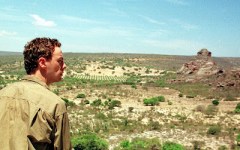
Essa fissura não se limita à questão do “nordeste”, mas é ainda mais importante, ainda que menos saliente, na própria questão do clima. Somos levados a crer todo o tempo que o clima que importa está em algum outro lugar, e que só é acessível através da mediação de especialistas e equipamentos. Obviamente isso ocorre de fato, mas há efeitos deletérios nessa alienação entre os indivíduos e o meio ambiente: a questão passa a ser entendida como problema distante, vivido apenas de forma abstrata. Isso gera a atitude caracterizada pela ideia de que “eu não tenho nada com isso” – o que é exatamente o que o personagem do filme diz à avó quando percebe que esta espera que ele vingue a morte do pai. De certa forma, ele vivia a sua própria relação familiar de forma alienada, como algo abstrato, virtual, e as contingências da vida o obrigam a enfrentar a incontornável materialidade dos contextos locais. A crise ambiental atual nos confronta com esta materialidade incontornável. Se o personagem vivesse as suas relações familiares de forma mais integral, talvez o destino de todos ali fosse outro. Há responsabilidades que nos implicam, mas que não escolhemos – algo difícil de aceitar no contexto liberal em que vivemos. Mas a analogia acaba por aqui: felizmente não há morte alguma a ser vingada na questão climática (ou haverá?).

2) O fenômeno climático da seca é recorrente na filmografia brasileira. Pode-se dizer que o cinema traz representações do meio ambiente que muitas vezes nos forçam a pensar seus elementos a partir de sua relação com a sociedade e a cultura. Sem entregar muito de sua fala, poderia comentar algo em torno desta relação? Qual a importância destas perspectivas e seu papel no cenário das discussões oficiais?

Mais do que a seca propriamente dita, o elemento que povoou a imaginação de escritores e artistas foi o “sertão”. Hoje, especialmente para as audiências do sudeste urbano, sertão é quase sinônimo de nordeste rural, mas no passado a situação era diferente. Há debates acadêmicos sobre de onde vem a palavra sertão: uma das hipóteses é que tem origem na palavra desertão, sugerindo a ideia de área remota e desolada; outra, sugere que a palavra vem de sertus, termo do latim que significa entrelaçado, enredado. Na história do Brasil, o sertão sempre foi o espaço refratário à penetração do poder oficial, das instituições de controle do Estado. Um dos lugares onde isso é mais claro é na obraGrande Sertão: Veredas, de Guimarães Rosa. A obra se ambienta toda em Minas Gerais, em uma região que não é semiárida como o sertão nordestino, e numa época onde sequer existia o “Nordeste”, mas tudo o que ficava acima da Bahia era considerado “Norte”. No início, o Brasil todo era sertão; com a expansão do Estado ao longo do século XX, houve uma redução considerável do território que pode ser considerado sertão, nos sentidos mencionados acima: praticamente toda a região sudeste, por exemplo, se “dessertaniza” à medida que o espaço passa a ser ocupado por cidades e atividade agrícola em larga escala.

Desta forma, na imaginação artística o sertão funcionou, ao longo dos últimos dois séculos, como o “outro mundo” onde há liberdade em contraposição aos controles que marcam as sociedades urbanas, e onde há mais autenticidade, o que pode ser encarado por um viés romântico (como vemos em José de Alencar, por exemplo) ou onde coisas impensáveis podem ocorrer, numa espécie de mirada conradiana [referente a elementos da obra do escritor britânico Joseph Conrad (1857-1924), autor de Coração das trevas]. Mesmo com o Cinema Novo, onde há uma sociologização mais intensa do sertão, esse não deixa de ser espaço de liberdade e experimentação, como vemos em Deus e o Diabo na Terra do Sol, de Glauber Rocha. Mas é preciso que se diga que isso tudo marca uma perspectiva de quem olha de fora. O sertão não é uma coisa, são muitas.

O que a seca faz, em certo sentido, é ressertanizarmomentaneamente um território dessertanizado, porque ela tem o potencial de desorganizar processos políticos e sociais locais, inclusive no que diz respeito às instituições oficiais de poder. Em lugares onde as variações climáticas (como as secas) são recorrentes, como no nordeste brasileiro, em geral as relações de poder locais existem de forma associada às epidemias de sofrimento trazidas pela seca. A infame indústria da seca é um exemplo disso. Mas há limites em quanto as sociedades e instituições locais conseguem se ajustar à variação do clima: secas muito intensas podem efetivamente colocar toda uma sociedade em situação de crise, como se vê atualmente nos sertões de Pernambuco e da Bahia.

Um segundo ponto da questão menciona a forma como o cinema nos faz pensar o meio ambiente em sua relação com sociedade e cultura. Há duas formas de relacionar natureza e sociedade que parecem ser recorrentes na experiência humana. Por um lado, usamos elementos da natureza para pensar relações sociais, coisa que na antropologia chamamos de totemismo. A forma como usamos figuras de animais para pensar torcidas de futebol (urubu, gaviões, porco etc), ou como destacamentos militares usam símbolos animais (a onça em quartéis na Amazônia), ou ainda quando nos referimos a qualidades pessoais através de imagens animais (ao dizer que alguém “é” uma cobra, um rato, ou uma anta), são exemplos disso. Por outro, projetamos na natureza elementos humanos, culturais e sociais, o que, por sua vez, é conhecido na antropologia como animismo. Desta forma, uma tempestade é “traiçoeira”, ou uma estação chuvosa, como ouvi várias vezes em pesquisa de campo no sertão do Ceará, pode ser “velhaca” (isto é, promete e não cumpre). O cinema naturalmente se utiliza disso tudo como recurso narrativo.

Além disso, nossa percepção do ambiente é visceralmente marcada por nossas perspectivas contextuais. Uma pesquisa que coordenei a respeito das respostas sociais e culturais às secas do ano de 2005 – um ano em que houve secas na Amazônia, no Nordeste e no sul do Brasil – mostrou que as populações locais não pensam o meio ambiente como algo desconectado das demais dimensões da vida; como tais dimensões são variáveis, a percepção do ambiente o é também. Os resultados da pesquisa foram publicados no livroDepois que a chuva não veio, disponível em texto integral na Internet. O problema é que os governos centrais, como o federal, no Brasil, têm a tendência a homogeneizar tudo com o qual se relacionam, ignorando os contextos locais; e a ciência climática tende a pregar que o contexto local e o clima não têm relação causal direta (especialmente quando estão contestando a capacidade do conhecimento tradicional de produzir previsões climáticas válidas). No que diz respeito às relações entre sociedade e clima, vivemos uma situação verdadeiramente neurótica. O meio ambiente pode inclusive ser uma forma de eufemizar uma discussão demasiadamente sensível em termos políticos e sociais. Um manual de infoativismo editado na Inglaterra, por exemplo, sugere que personagens em forma de animais sejam usados em campanhas públicas em que questões politicas sensíveis dificultem a comunicação através de exemplos humanos.

As discussões oficiais são, infelizmente, demasiadamente economicistas e unilineares, presas a um utilitarismo frustrante, para levar qualquer dessas questões a sério.

3) No mês de junho, o Rio de Janeiro sediará a Rio+20, a conferência das Nações Unidas em torno do desenvolvimento sustentável, que articulará líderes mundiais em discussões que convidam à cooperação mundial para a melhoria de problemas sociais. Tendo em vista o cenário de mudanças climáticas, como abordar a participação social nestas discussões, face às diferenças culturais que estão em jogo?

As diferenças culturais não devem ser entendidas como obstáculo às ações relacionadas à crise ambiental. Pelo contrário, são recursos importantes. É interessante observar como a biodiversidade é hipervalorizada, ao ponto de ser fetichizada, e ao mesmo tempo a diversidade de formas humanas de ser e estar no mundo é desvalorizada – por exemplo, quando se acredita, com as melhores intenções, que é preciso “educar” as pessoas que praticam queimadas para plantio, por exemplo, para que “entendam” os efeitos deletérios de algumas de suas práticas cotidianas. Projetamos o problema sobre os outros, sem perceber que esse nosso foco em informação e no pensamento, ou seja, ao diagnosticar tudo como “falta de informação” ou diferentes “formas de pensar”, é parte fundamental do problema. Tudo ficou cibernético demais, de forma que as questões morais e éticas nos escapam muito facilmente.

A ideia de que diferenças culturais dificultam a construção de um entendimento mundial sobre as questões ambientais em geral, e sobre a questão climática, em particular, me assusta. A própria ideia de “entendimento mundial” em torno do meio ambiente evoca perigosamente um centralismo pouco democrático. Nunca na história da humanidade houve uma tentativa tão articulada para a criação de um discurso único sobre o meio ambiente. A polarização política que se vê nos Estados Unidos, em torno da questão climática, é uma farsa: o comportamento do partido republicano mostra com clareza que se trata de uma disputa pelo poder, onde os envolvidos se comportam estrategicamente e defendem qualquer posição que maximize suas chances de vitória. E, acima de tudo, apresentam o problema climático como se houvesse apenas duas alternativas – aceitar ou negar o efeito das ações humanas nas mudanças climáticas –, mas as duas são validadas dentro do mesmo paradigma ocidental, exacerbadamente materialista e utilitarista. E as outras formas de pensamento e de vida, outras epistemologias e ontologias? Como diz o antropólogo Eduardo Viveiros de Castro, é preciso aprender a pensar “com” os outros. Segundo o pensamento ameríndio, por exemplo, ao invés de tomar os humanos como excepcionais em sua humanidade, há a ideia de que a humanidade é a essência comum de todos os seres vivos. Que tipo de ética e moralidade decorre dai, na relação entre humanos e não humanos? Não se trata de romantizar as formas indígenas de vida, mas apenas de mostrar como outros pensamentos são extremamente interessantes na abordagem dos problemas ambientais.

No meu entender, o que sobressai nesta questão da participação social e da multiplicidade cultural é o fato de que é preciso que os ocidentais, e nós, ocidentalóides, entendamos que há dimensões do problema que transcendem a materialidade e o utilitarismo. A exaustão dos recursos naturais, por exemplo, não será resolvida enquanto os padrões de subjetividade ocidentais não forem incluídos como parte fundamental do problema. Não adianta criar esquemas institucionais para evitar a “tragédia dos comuns”, por exemplo, sem lidar com os temas da satisfação e da responsabilidade. A insatisfação crônica do cidadão ocidental, e a forma irresponsável com que se relaciona com as coisas (ao pagar os governos municipais para “sumir” com o nosso lixo, sem que nenhuma pergunta seja feita, de modo que não precisemos pensar mais nele, por exemplo), são coisas tão importantes quanto a discussão sobre matrizes energéticas.

4) Contraplanos – expresse em poucas palavras (ou apenas uma) sua sensação com relação aos sentidos e problemáticas evocadas pelas seguintes palavras:

– tempo e clima: clima é um ponto de vista[1]; tempo é a vista (a partir) de um ponto[2] (notas: [1] Clima é “ponto de vista” no sentido de que trata-se de uma construção abstrata, resultante de cálculos estatísticos sobre medições de indicadores atmosféricos em intervalos amplos de tempo, e onde as técnicas estatísticas, o termômetro e outros mediadores técnicos têm tanta importância quanto a vibração das partículas que o termômetro busca medir; [2] tempo, no sentido dado ao conceito pela meteorologia, é o fenômeno atmosférico que existe num prazo de tempo mais curto, e portanto tende a fazer referência ao fenômeno em si, enquanto singularidade experiencial, ou seja, coisas que vivemos e lembramos, porque nos afetam num tempo e espaço específicos, e desta forma são a experiência a partir de um ponto).

 – sustentabilidade: o que exatamente se está tentando sustentar? Precisamos pensar a “mutabilidade” tanto quanto sustentabilidade. É muito difícil mudar o (insustentável) sistema econômico em que nos encontramos, e é preciso atentar para o fato de que, sob a fachada de “sustentabilidade”, há um esforço imenso de mudar apenas o que é necessário para que nada mude no final. O mercado de carbono é o exemplo paradigmático disso. Ou seja, em geral os debates sobre sustentabilidade (e sobre adaptação, resiliência etc.) são conservadores e insuficientes.

– construção social: já não há mais muita clareza a respeito do que significa tal associação de termos (o que é bom). Se tudo é construção social, a ideia deixa de ser relevante, porque não explica muita coisa. Tudo está em fluxo; se é “construção”, e se é “social”, depende de qual jogo semântico se está jogando. A expressão diz mais a respeito de quem usa a expressão do que sobre o fenômeno em questão. Tenho a impressão que dizer que o clima, por exemplo, é uma “construção social” constitui uma forma de evitar levar o clima a sério – e aqui estou repetindo ideias de autores como Bruno Latour ou Roy Wagner, por exemplo.

– ciência e cultura: há muito menos clareza a respeito do que significam tais termos (o que é melhor ainda). Num sentido mais propriamente filosófico, são duas ideias que morreram no século XX. Ou seja, tanto a Ciência como a Cultura, assim com “c” maiúsculo, que constituíam o santo graal do pensamento acadêmico Europeu dos séculos XIX e grande parte do XX se mostraram quimeras, principalmente em função dos trabalhos de gente como Heidegger, Merleau-Ponty, Wittgenstein, Gadamer, dentre muitos outros. Sobraram “ciências” e “culturas” com “c” minúsculo, ou seja, tais conceitos se transformaram em problemas empíricos. Puxando a sardinha pro meu lado (risos), se tornaram problemas antropológicos.

5) Roteiros alternativos – espaço dedicado à sugestão de links, textos, vídeos, referências diversas de outros autores/pesquisadores que possam contribuir com a discussão. Para encerrar essa sessão, transcreva, se quiser, uma fala de um pensador que o inspire e/ou seu trabalho.

No meu blog Uma (In)certa Antropologia (http://umaincertaantropologia.org) mantenho um arquivo de notícias e materiais acadêmicos sobre as relações entre cultura, sociedade e o clima. Há lá uma gravação em áudio de uma apresentação do antropólogo Eduardo Viveiros de Castro que toca no tema das mudanças climáticas como crise do Ocidente, e como outros povos e outras culturas se relacionam com isso, que vale a pena ser ouvida. Ela está no link http://www.taddei.eco.ufrj.br/ViveirosdeCastro_IFCS_20111123.wav.

O livro Depois que a chuva não veio, mencionado acima, está disponível no link http://www.taddei.eco.ufrj.br/DQACNV.htm.

O documentário “10 tacticts for turning information into action”, também mencionado acima, está no site http://informationactivism.org/original_10_tactics_project#viewonline, com subtítulos em português – o exemplo de uso de animais como personagens está na tática número 3.

Há um vídeo provocativo do Slavok Žižek, cujo título éEcology as Religion, que evoca discussões importantes sobre como o meio ambiente existe no senso comum e nas discussões políticas. O video está reproduzido em https://umaincertaantropologia.org/2012/04/12/slavoj-zizek-on-ecology-as-religion-youtube/

6) Como conhecer mais de suas produções?

Há uma lista de artigos acadêmicos e também escritos para jornais e revistas em meu website, no link http://www.taddei.eco.ufrj.br/Textos.htm

Severe Nuclear Reactor Accidents Likely Every 10 to 20 Years, European Study Suggests (Science Daily)

ScienceDaily (May 22, 2012) — Western Europe has the worldwide highest risk of radioactive contamination caused by major reactor accidents.

Global risk of radioactive contamination. The map shows the annual probability in percent of radioactive contamination by more than 40 kilobecquerels per square meter. In Western Europe the risk is around two percent per year. (Credit: Daniel Kunkel, MPI for Chemistry, 2011)

Catastrophic nuclear accidents such as the core meltdowns in Chernobyl and Fukushima are more likely to happen than previously assumed. Based on the operating hours of all civil nuclear reactors and the number of nuclear meltdowns that have occurred, scientists at the Max Planck Institute for Chemistry in Mainz have calculated that such events may occur once every 10 to 20 years (based on the current number of reactors) — some 200 times more often than estimated in the past. The researchers also determined that, in the event of such a major accident, half of the radioactive caesium-137 would be spread over an area of more than 1,000 kilometres away from the nuclear reactor. Their results show that Western Europe is likely to be contaminated about once in 50 years by more than 40 kilobecquerel of caesium-137 per square meter. According to the International Atomic Energy Agency, an area is defined as being contaminated with radiation from this amount onwards. In view of their findings, the researchers call for an in-depth analysis and reassessment of the risks associated with nuclear power plants.

The reactor accident in Fukushima has fuelled the discussion about nuclear energy and triggered Germany’s exit from their nuclear power program. It appears that the global risk of such a catastrophe is higher than previously thought, a result of a study carried out by a research team led by Jos Lelieveld, Director of the Max Planck Institute for Chemistry in Mainz: “After Fukushima, the prospect of such an incident occurring again came into question, and whether we can actually calculate the radioactive fallout using our atmospheric models.” According to the results of the study, a nuclear meltdown in one of the reactors in operation worldwide is likely to occur once in 10 to 20 years. Currently, there are 440 nuclear reactors in operation, and 60 more are planned.

To determine the likelihood of a nuclear meltdown, the researchers applied a simple calculation. They divided the operating hours of all civilian nuclear reactors in the world, from the commissioning of the first up to the present, by the number of reactor meltdowns that have actually occurred. The total number of operating hours is 14,500 years, the number of reactor meltdowns comes to four — one in Chernobyl and three in Fukushima. This translates into one major accident, being defined according to the International Nuclear Event Scale (INES), every 3,625 years. Even if this result is conservatively rounded to one major accident every 5,000 reactor years, the risk is 200 times higher than the estimate for catastrophic, non-contained core meltdowns made by the U.S. Nuclear Regulatory Commission in 1990. The Mainz researchers did not distinguish ages and types of reactors, or whether they are located in regions of enhanced risks, for example by earthquakes. After all, nobody had anticipated the reactor catastrophe in Japan.

25 percent of the radioactive particles are transported further than 2,000 kilometres

Subsequently, the researchers determined the geographic distribution of radioactive gases and particles around a possible accident site using a computer model that describes Earth’s atmosphere. The model calculates meteorological conditions and flows, and also accounts for chemical reactions in the atmosphere. The model can compute the global distribution of trace gases, for example, and can also simulate the spreading of radioactive gases and particles. To approximate the radioactive contamination, the researchers calculated how the particles of radioactive caesium-137 (137Cs) disperse in the atmosphere, where they deposit on Earth’s surface and in what quantities. The 137Cs isotope is a product of the nuclear fission of uranium. It has a half-life of 30 years and was one of the key elements in the radioactive contamination following the disasters of Chernobyl and Fukushima.

The computer simulations revealed that, on average, only eight percent of the 137Cs particles are expected to deposit within an area of 50 kilometres around the nuclear accident site. Around 50 percent of the particles would be deposited outside a radius of 1,000 kilometres, and around 25 percent would spread even further than 2,000 kilometres. These results underscore that reactor accidents are likely to cause radioactive contamination well beyond national borders.

The results of the dispersion calculations were combined with the likelihood of a nuclear meltdown and the actual density of reactors worldwide to calculate the current risk of radioactive contamination around the world. According to the International Atomic Energy Agency (IAEA), an area with more than 40 kilobecquerels of radioactivity per square meter is defined as contaminated.

The team in Mainz found that in Western Europe, where the density of reactors is particularly high, the contamination by more than 40 kilobecquerels per square meter is expected to occur once in about every 50 years. It appears that citizens in the densely populated southwestern part of Germany run the worldwide highest risk of radioactive contamination, associated with the numerous nuclear power plants situated near the borders between France, Belgium and Germany, and the dominant westerly wind direction.

If a single nuclear meltdown were to occur in Western Europe, around 28 million people on average would be affected by contamination of more than 40 kilobecquerels per square meter. This figure is even higher in southern Asia, due to the dense populations. A major nuclear accident there would affect around 34 million people, while in the eastern USA and in East Asia this would be 14 to 21 million people.

“Germany’s exit from the nuclear energy program will reduce the national risk of radioactive contamination. However, an even stronger reduction would result if Germany’s neighbours were to switch off their reactors,” says Jos Lelieveld. “Not only do we need an in-depth and public analysis of the actual risks of nuclear accidents. In light of our findings I believe an internationally coordinated phasing out of nuclear energy should also be considered ,” adds the atmospheric chemist.

Heart Rules the Head When We Make Financial Decisions (Science Daily)

ScienceDaily (May 21, 2012) — Our ‘gut feelings’ influence our decisions, overriding ‘rational’ thought, when we are faced with financial offers that we deem to be unfair, according to a new study. Even when we are set to benefit, our physical response can make us more likely to reject a financial proposition we consider to be unjust.

Conducted by a team from the University of Exeter, Medical Research Council Cognition and Brain Sciences Unit and University of Cambridge, the research is published in the journal Cognitive, Affective, & Behavioural Neuroscience.

The research adds to growing evidence that our bodies can sometimes govern how we think and feel, rather than the other way round. It also reveals that those people who are more in tune with their bodies are more likely to be led by their ‘gut feelings’.

The study was based on a well-known psychological test, the Ultimatum Game. 51 participants were presented with a series of financial offers, based on different ways of dividing £10. Players frequently reject unfair offers in this game even though it leads to personal financial loss — an ‘irrational’ decision from an economic perspective.

The researchers measured participants’ physical responses to each offer by recording how much they sweated through the fingertips and how much their heart rate changed. How accurately participants could ‘listen’ to their bodies was measured on a different task by asking them to count their heartbeats and comparing their accuracy to their actual heart rate recording. Those people who showed a bigger physical response to unfair offers were more likely to reject them, but this was only the case if individuals were also able to accurately ‘listen’ to what their bodies were telling them.

The findings show that individuals who have a strong ‘gut-reaction’ and are in tune with their own physical responses are more likely to reject unfair financial offers, even if this decision results in personal losses.

Lead researcher Dr Barney Dunn of Psychology at the University of Exeter said: “This research supports the idea that what happens in our bodies can sometimes shape how we think and feel in our minds. Everyday phrases like ‘following your heart’ and ‘trusting your gut’ can often, it seems, be accurate.”

“Humans are highly attuned to unfairness and we are sometimes required to weigh up the demands of maintaining justice with preserving our own economic self-interest. At a time when ideas of fairness in the financial sector — from bankers’ bonuses to changes to pension schemes — are being widely debated, it is important to recognise why some individuals rebel against perceived unfairness, whereas other people are prepared to accept the status quo.”

Healthy Marriage Interventions: A Boom or a Bust? (Science Daily)

ScienceDaily (May 22, 2012) — Conventional wisdom, backed by years of research, suggests that healthy marriages equals a healthy society. And politicians and government officials have taken note, investing hundreds of millions of dollars each year in education programs designed to promote healthy marriages, focusing specifically on poor couples and couples of color. Is it working? No, says a Binghamton University researcher in a new study published in the current issue ofAmerican Psychologist, the flagship journal of the American Psychological Association. And it’s because many of these programs were based on research data gathered from White and middle-class marriages, and when applied to poor couples or couples of color, just don’t work.

“Initially, the rationale for these programs came from policy makers and scholars, who honed in on the association between unmarried parents and poverty that is plainly obvious in the data,” said Matthew D. Johnson, associate professor of psychology at Binghamton University. “This association led George W. Bush to make the promotion of healthy marriages a central plank of his domestic policy agenda, resulting in the implementation of the Healthy Marriage Initiatives. Barack Obama endorsed these initiatives, both as presidential candidate and as president. Now that the data on the success of these programs has started to roll in, the results have been very disappointing.”

According to Johnson, the problem lies in the fact that many of these programs lack grounding in solid science and are allowed to run unchecked. He cites research from two recent multisite studies as evidence that many of the federal programs that promote healthy marriage need to be suspended — or at the very least, overhauled. One of these studies, which was focused on over 5,000 couples in eight cities, examined the benefits of interventions designed to improve the relationships of low-income, unmarried couples who were either pregnant or recently had their first child.

The results indicated that the interventions had no effect in six of the cities, small beneficial effects in one city, and small detrimental effects in another city. The results of the other outcome study focused on 5,395 low-income married couples and found that those who received the intervention experienced very small improvements in relationship satisfaction, communication, and psychological health but no significant changes in relationship dissolution or cooperative parenting. And to add to it, the interventions didn’t come cheap, costing on average around $9,100 per couple.

So why the disconnect between a seemingly good idea and disappointing program outcomes? Johnson says there are several possible explanations. The best of these programs — the ones based on scientific findings — were initially studied with middle-class couples while the federal initiatives target poor couples. And even if the research that formed the basis of these interventions does apply, relationship improvement just doesn’t seem to be a priority for poor couples.

“There is evidence that suggests poor women want to be married and understand the benefits of healthy marriages,” said Johnson. “But earning enough for basic household expenses, keeping their children safe and working with their children’s overburdened schools are much more urgent concerns, making the idea of focusing on marriage seem self-indulgent if not irrelevant to many poor parents. When faced with a myriad of social issues, building intimate relationships is just not high on their priority lists.”

Johnson explains that this doesn’t mean the federal government shouldn’t be funding intimate relationship research. Instead, the government needs to adopt a more multifaceted approach: focus on programs that will ease the stress of poor families and at the same time, fund more rigorous basic research.

“We just don’t have solid predictors for relationship satisfaction for poor couple and couple of color, let alone whether the current marriage models apply,” said Johnson. He points to the National Institutes of Health as being the perfect place to coordinate and sponsor the research, noting “It has a long history of using scientific rigor in decision-making and it would certainly help in achieving the type of results that we’re looking for from these initiatives.”

Johnson also suggests that every community-based program funded by the Health Marriage Initiative should be required to gather standardized quantitative data in order to clearly demonstrate outcomes. And if the data shows programs aren’t working, Johnson recommends that the federal government get tough and either defund or filter out those that do not demonstrate effectiveness.

“If we are going to continue these initiatives, let’s at least make certain that we are assessing the effectiveness of the programs and learning from our mistakes,” said Johnson. “Improving marriages is a worthy goal and one shared by Democrat and Republican administrations alike. The key now is to get that same bipartisan support for improving the research and programs that target poor couples. With the renewed focus on the federal budget, the timing is just right.”

Wrongful Convictions Can Be Reduced Through Science, but Tradeoffs Exist (Science Daily)

ScienceDaily (May 22, 2012) — Many of the wrongful convictions identified in a report this week hinged on a misidentified culprit — and a new report in a top journal on psychological science reveals the paradox of reforms in eyewitness identification procedure. In our efforts to make sure that good guys don’t get locked up, we could let more bad guys go.

In the May issue of Perspectives on Psychological Science, a journal of the Association for Psychological Science, leading scholars in psychology and the law explore and debate various aspects of eyewitness identification procedures, providing a scientific foundation for this important social issue.

In recent years, researchers and policymakers have called for specific reforms to eyewitness identification procedures that would help to reduce the rate of false identification. These reforms affect various aspects of identification procedure, including how lineups are constructed, what witnesses are told prior to the lineup, and how police officers should behave during the procedure.

Such procedural reforms are often viewed as having ‘no cost’ — they reduce the false identification rate without affecting the correct identification rate. But psychological scientist Steven Clark (University of California, Riverside) argues that ‘no cost’ view may not actually be true. After extensive review of the existing data, Clark points out the paradoxical tradeoffs to reforms in eyewitness identification procedure. Existing data suggest that when we choose to enact reforms that are designed to reduce false identifications, we may also reduce the number of correct identifications at the same time.

But this tradeoff does not tell the whole story, say Gary Wells (Iowa State University), Nancy Steblay (Augsburg College), and Jennifer Dysart (John Jay College of Criminal Justice). While reform procedures may reduce the number of ‘hits,’ they do so by minimizing the influence of suggestive and coercive practices, such as biased instructions and cues from lineup administrators. Wells and his co-authors argue that the so-called ‘lost’ hits aren’t actually relevant, because hits that result from suggestive practices are not legitimate identifications. Eryn Newman from Victoria University of Wellington and Elizabeth Loftus from the University of California, Irvine agree, arguing that eyewitness identification evidence should be based solely on the independent memory of the witness, not on the results of suggestive or coercive procedures.

There is, however, a scientifically valid way to compare witness-identification procedures, say John Wixted and Laura Mickes, both of the University of California, San Diego. If we identify the procedures that reliably differentiate between innocent and guilty suspects over time and across different situations, we will be able to determine which techniques are diagnostically superior to others.

Until we have such comprehensive data, the best way to protect innocent defendants, says Larry Laudan of the University of Texas, is by clearly communicating the fact that eyewitness identifications, regardless of their format, are fallible. According to Laudan, we now have enough empirical data to be able to inform jurors about the error profiles of various eyewitness identification procedures. Sharing this information, he argues, is more important than trying to arrive at “the one unique and definitive format for conducting identifications.”

In the end, Clark points out that the goal of his article is not to argue for or against any particular witness identification procedure. Rather, he hopes to create strong links between social science data and public policy. “To the extent that social science research has a useful role in shaping policy decisions,” says Clark, “social scientists must do for policymakers what they do best and what policymakers cannot do for themselves: conduct careful studies, and provide a clear and complete analysis of the empirical data.”

  • Steven E. Clark et al. “Costs and Benefits of Eyewitness Identification Reform: Psychological Science and Public Policy,” Perspectives on Psychological Science, May 2012
  • Nancy K. Steblay et al., “Eyewitness Identification Reforms: Are Suggestiveness-Induced Hits and Guesses True Hits?”Perspectives on Psychological Science, May 2012
  • Elizabeth F. Loftus et al., “Clarkian Logic on Trial,”Perspectives on Psychological Science, May 2012
  • John T. Wixted et al., “The Field of Eyewitness Memory Should Abandon Probative Value and Embrace Receiver Operating Characteristic Analysis,” Perspectives on Psychological Science, May 2012
  • Larry Laudan et al. “Eyewitness Identifications: One More Lesson on the Costs of Excluding Relevant Evidence,”Perspectives on Psychological Science, May 2012

CLIMATE CHANGE: Understanding Rio+20 (Integrated Regional Information Networks)

Photo: Jason Gutierrez/IRIN. We have to take action now to sustain life in the coming years

JOHANNESBURG, 3 April 2012 (IRIN) – A Nobel laureate, a Swedish environmentalist’s idea, the “doughnut” concept, Scandinavia’s sense of social capital, measuring the quality of life, and valuing the oceans are just some of the things trending in the run-up to the Rio+20 UN Conference on Sustainable Development due to be held on 20-22 June 2012.

Rio+20 will look at how economies have grown at the expense of natural resources and human capital since the last Earth Summit in Rio in 1992, when the concept of “sustainable development” gained currency.

The idea of growth meeting “the needs of the present without compromising the ability of future generations to meet their own needs” has not gained much traction since the 1992 conference – largely because countries continued to equate development with economic growth, and sustainable development languished as a fringe environmental concern, says a UN-commissioned study.

Twenty years later, “sustainable development remains a generally agreed concept, rather than a day-to-day, on-the-ground, practical reality,” says a report by the UN High-level Panel on Global Sustainability.

Since 1992, alarm bells on several interconnected factors with a far-reaching impact on growth, resources and the quality of life – accelerated man-made climate change, population growth, increasing numbers of hungry people, rapidly depleting and more expensive fossil fuels, and a decline in food production – have been ringing louder.

“Achieving sustainability requires us to transform the global economy. Tinkering on the margins will not do the job,” said the UN Panel’s report.

Optimists in the scientific and aid community hope Rio+20 will develop from an opportunity to reflect into a collective effort to plot the world’s future growth path.

IRIN aims to make the conference more relevant and accessible by examining some of the ideas circulating ahead of it.

1. Elinor Ostrom: Fast emerging as the moral and academic compass of the conference, Ostrom’s work, which won her the Nobel Prize for Economics in 2009, shows that growth combined with the sustainable use of natural resources is achievable. Ostrom looked at certain rural communities in Asia, Africa and Europe which have for centuries successfully managed in a sustainable way their common resources – grazing land, water and forests.

“When the Scandinavian countries had to set targets to reduce greenhouse gas emissions, they did not consider the markets… but went ahead because they value the well-being of humans and environment…”

2. Planetary Boundaries and Future Earth: The concept of Planetary Boundariesproposed in 2009 by Johan Rockstrom of the Stockholm Resilience Centre and 28 scientists, posits that there are nine critical Earth-system processes and associated thresholds that we need to respect and keep within, in order to protect against the risk of irreversible or even catastrophic environmental change on a continental or global scale.The communities developed while preventing problems such as overgrazing, misuse of forests or over-consumption of water. The fact that Ostrom took a multidisciplinary approach (rooted in economics, environment and social capital, successfully combining the three pillars of sustainable development), makes her the expert everyone wants to hear from. She was the chief scientific adviser to the recent Planet Under Pressure conference – an attempt by the scientific community to set the agenda for Rio+20.

Doing so would create a safe operating space for humanity. According to the concept’s authors, three of the nine suggested thresholds have already been crossed (climate change, biodiversity and the nitrogen cycle). The threshold for the phosphorus cycle (linked, within the concept, to the nitrogen cycle) has also been crossed, according to a scientific paper in 2011.

The status of the concept grew after being mentioned in the UN Panel report. The Boundaries concept has inspired the “nexus approach” between food, water and energy, which was also noted by the UN panel. “All three [food, water and energy] need to be fully integrated, not treated separately if we are to deal with the global food security crisis,” said the report.

Rockstrom, last week announced the launch in Rio of Future Earth, a 10-year collaborative initiative which will provide the knowledge to help societies meet their sustainable development goals. The International Council for Science, the Belmont Forum (a high-level group of donors who fund climate research), the UN Environment Programme (UNEP), the UN University, and the UN Educational, Scientific and Cultural Organization (UNESCO) are all part of the initiative.

Tom Mitchell, head of climate change at the UK’s Overseas Development Institute (ODI), was a bit skeptical about how “10 years of science inquiry” would help. He said countries needed solutions now – embedded in governments and designed to cater for national requirements.

3. The doughnut: In February 2012, Kate Raworth, a senior researcher with Oxfam, pointed out that human growth was glaringly absent from Rockstrom’s concept. She combined social boundaries (such as access to water, health services, food, jobs, energy and education for all) within the planetary boundaries – highlighting the need for an environmentally safe space which needed to be compatible with poverty eradication and rights for all. Between the planetary ceiling and the social foundation lay an area – shaped like a doughnut – which is a “safe and just space for humanity to thrive in”, her paper said.

Raworth said well-designed policies can promote both poverty eradication and environmental sustainability. She told IRIN the objective was to be able to take care of everyone’s minimum needs, while re-defining the meaning of prosperity, which is equated with material wealth and associated with over-consumption (e.g. food, vehicles). “Governments need to look beyond taking care of people’s material needs and focus on quality of life, qualities of social relationships.”

Multilateral processes to make life on earth sustainable such as the UN talks on climate change have been moving at a snail’s pace.

The concept has picked up a lot of momentum.

“The concept of Planetary Boundaries is almost pure science,” noted Andrew Scott, researcher with ODI, while the “doughnut” concept was grounded in human reality and the need to agree on a minimum standard of living, whilst guarding against over-consumption. This calls for the need to review UN Millennium Development Goals (MDGs), which were not very ambitious to begin with, he said. “Instead of calling for the eradication of poverty it [the MDGs] settled for the halving of poverty by 2015.”

Felix Dodds, eminent author and head of the Stakeholder Forum for a Sustainable Future, also enthused about the “doughnut proposal” in the Planet Under Pressure conference, and suggested the world should strive to turn everyone into a member of the middle-class.

4. Sustainable agriculture: After years of lobbying for an agriculture system which would respect the biosystem and at the same time increase the production of quality food to keep the numbers of malnourished down, scientists feel they are making headway. The proposed draft outcome document of the Rio+20 conference makes note of their concerns. But is that good enough – will that force a change and make sustainable agriculture a part of mainstream policy in countries?

Kenyan scientist Judi Wakhungu, a member of the Commission on Sustainable Agriculture and Climate Change, says attitudes are changing on the ground: Sustainable agriculture is now being taught in universities in developing countries; donors particularly in Scandinavian countries are more willing to fund such initiatives tailored by developing country governments; and at government levels, sectors such as water, energy and agriculture have begun to talk to each other.

Christopher Barrett, who teaches economics and agriculture at Cornell University in the USA, said: “The central issue is high-level political commitment to enacting the necessary policies.” He said the “lofty rhetoric” of the L’Aquila G-8 summit, or earlier summits such as Gleneagles, have “not been matched by significant new investments or policy innovations by the world’s major economies”. Progress towards sustainable agriculture was “incremental and dwarfed by the fiscal and employment challenges faced by the OECD [Organisation for Economic Co-operation and Development] countries,” he added, and we should “not hold our breath for any great breakthrough” at Rio+20.

5. Social capital versus market-based approaches: Academically, social capital is a concept which places value on social relations and the role of cooperation to get collective results. The concept is making waves among development experts and the scientific community in the Rio+20 context, particularly as it forces societies to reflect on their value systems.

“It [social capital] is too technical a word,” says Oxfam’s Raworth, but essentially the concept is about valuing quality of life and interpersonal relations more than material wealth. Brazilian scientist Carlos Nobre, a member of the Commission on Sustainable Agriculture and Climate Change, explained: “It is a concept followed by Scandinavian countries – where human well-being is more important than the market value of a particular resource.

“For instance when the Scandinavian countries had to set targets to reduce greenhouse gas emissions, they did not consider the markets and industries but went ahead because they value the well-being of humans and environment more than anything else.”

But the reality is that most countries value markets more than human and environmental well-being, say experts, so a value has to be attributed to a natural resources to make people take care of it. As UNEP head Achim Steiner says, “we have to place ecology in economics.”

“We need to create markets around natural resources such as provision of environmental services,” said ODI’s Mitchell. The UN Framework Convention on Climate Change did that with trees and carbon, but the process has not got very far.

Both Raworth and Nobre said that to achieve real change, attitudes to wealth needed to be changed, but this could only happen from the bottom up. “Market-based mechanisms to control and exploit the use of our natural resources should be seen as a means to get to a state of well-being and not as the goal,” said Nobre.

Richard Norgaard, one of the founders of ecological economics, said at the Planet Under Pressure conference that instead of markets dictating and shaping our economies, “we need to ask what kind of economy we want to live in and then design incentives for the markets.”

6. Measuring wellness: Putting a value on the quantity of natural resources that had to be exploited to achieve certain outcomes could help in terms of sustainability, argued Pablo Muñoz, an economist working on the Inclusive Wealth Report (IWR) project, a joint initiative of UN Univeristy-International Human Dimensions Programme on Global Climate Change (IHDP) and UNEP, aiming to measure, among other forms of wealth, the Natural Capital of countries. The report will be released at Rio+20.

“A country can exhaust all its natural resources while posting positive GDP [Gross Domestic Product] growth,” said Muñoz. The world needs “an indicator that estimates the wealth of nations – natural, human and manufactured and ideally even the social and ecological constituents of human well-being,” he added.

Some findings of the reports were released at the Planet Under Pressure conference.

Between 1990 and 2008, the wealth of Brazil and India in terms of per capita GDP rose 34 percent and 120 percent respectively. Natural capital, the sum of a country’s assets, from forests to fossil fuels and minerals, declined by 46 percent in Brazil and 31percent in India, according the new indicator. Brazil’s “Inclusive Wealth” rose by 3 percent and India’s rose by 9 percent over that time. But do not expect countries to start using the new indicator any time soon. “It took years for countries to come round to using GDP – so it will be a few years yet,” said Muñoz.

7.Valuing the oceans: Attempts to put a value on the exploitation of natural resources are ongoing globally. A new book by the Stockholm Environment Institute calculates the impact of climate change on the economic value of the oceans. It says climate change (in the last 200 years the oceans have absorbed 25-30 percent of the global accumulated emissions of carbon dioxide) alone could reduce the economic value of the oceans by up to US$2 trillion a year by 2100.

Interview with Nobel prize winner Elinor Ostrom on climate change (Integrated Regional Information Networks)

Photo: Indiana University. Elinor Ostrom: A champion of people power

JOHANNESBURG, 25 April 2012 (IRIN) – The governance of natural resources like land, the oceans, rivers and the atmosphere, can affect the impact of some of the world’s biggest crises caused by natural events like droughts and floods. How best to manage those resources has been at the heart of the work by Nobel Prize winner (economics) Elinor Ostrom.

She has been looking at how communities across the world, from developing and rural economies like Nepal and Kenya to developed ones like the USA and Switzerland, manage their commonly shared resources such as fisheries, pasture land and water sustainably.

Ostrom’s faith in the ability of the individual and community to be able to trust each other, take the right course of action and not wait for governments to make the first move is pivotal to her thinking.

Ostrom works with the concept of “polycentrism”, which she developed with her husband Vincent Otsrom. She advocates vesting authority in individuals, communities, local governments, and local NGOs as opposed to concentrating power at global or national levels.

Ostrom recently suggested using this “polycentric approach” to address man-made climate change. She talked to IRIN by email about “polycentrism”, Rio+20, climate change, trust and the power of local action.

QYou have suggested a polycentric approach as opposed to single policies at a global level to reduce greenhouse gas emissions. Could you explain how that would work? Do you think a similar approach would work to get all countries and their people to believe in, and adopt, sustainable development?

A: We have modelled the impact of individual actions on climate change incorrectly and need to change the way we think about this problem. When individuals walk a distance rather than driving it, they produce better health for themselves. At the same time that they reduce the amount of greenhouse gas emissions that they are generating. There are benefits for the individual and small benefits for the globe. When a building owner re-does the way the building is insulated and the heating system, these actions can dramatically change the amount of greenhouse gas emissions made. This has an immediate impact on the neighbourhood of the building as well as on the globe.

When cities and counties decide to rehabilitate their energy systems so as to produce less greenhouse gas emissions, they are reducing the amount of pollution in the local region as well as greenhouse gas emissions on the globe. In other words, the key point is that there are multiple externalities involved for many actions related to greenhouse gas emissions. While in the past the literature has underplayed the importance of local effects, we need to recognize – as more and more individuals, families, communities, and states are seeing – that they will gain a benefit, as well as the globe, and that cumulatively a difference can be made at the global level if a number of small units start taking action. We have a much greater possibility of impacting global change problems if we start locally.

“the solutions that are evolved by local people have a chance of being more imaginative and better ways of solving these problems…”

Q: The earth is our common resource system – yet many countries including China and India feel they also have a right to grow, burn coal to get to where the developed world is – how do you get them out of that frame of mind without compromising the question of equity?

A: We may not be able to convince India and China of all of this. Part of my discouragement with the international negotiations is that we have gotten riveted into battles at the very big level over who caused global change in the first place and who is responsible for correcting [it]. It will take a long time to resolve some of these conflicts. Meanwhile, if we do not take action, the increase to greenhouse gas collection at a global level gets larger and larger. While we cannot solve all aspects of this problem by cumulatively taking action at local levels, we can make a difference, and we should.

Q: Do you think sustainable development did not gain much currency as it was directed at governments and a top-down approach? You think the world is about to repeat that mistake (if you would call it that?) at Rio+20? What would you do – would you ever call such a gathering of governments?

A: Yes, I do think that directing the question of climate change primarily at governments misses the point that actions that reduce greenhouse gas emissions must be taken by individuals, communities, cities, states, residents of entire nations, and the world. Yet, it is important that public officials recognize that there is a role for an international agreement and that they should be working very hard on getting an agreement that establishes international regimes that has a chance to reduce emissions across countries.

Q: You are a great believer in ordinary people’s ability to organize and use their commonly shared resources wisely, but I take it that does not work all the time? But ultimately collective action at the grassroots can force change at the top?

A: I am a believer of the capabilities of people to organize at a local level. That does not mean that they always do. There are a wide variety of collective action problems that exist at a small scale. The important thing is that people at a small scale, who know what the details of the problems are, organize, rather than calling on officials at a much larger scale.

Officials at a larger scale may have many collective-action problems of their own that they need to address. They do not have the detailed information about problems at a small scale that people who are confronting those every day do have. Thus, the solutions that are evolved by local people have a chance of being more imaginative and better ways of solving these problems than allowing them to go unsolved and eventually asking a much larger scale unit to solve it for them.

Q: This approach probably works better in a rural setting where there is a sense of community and of a shared responsibility to take care of their common resources. But how do you get that sense of ownership of the planet in an urban setting?

A: To solve these delicate problems at any scale requires individuals to trust that others are also going to contribute to their solution. Building trust is not something that can be done overnight. Thus, the crucial thing is that successful efforts at a local scale be advertised and well known throughout a developing country.

Developing associations of local communities, where very serious discussions can be held of the problems they are facing and creative ways that some communities, who have faced these problems, have adopted solutions that work. That does not mean that the solutions that work in one environment in a particular country will work in all others, but posing it as a solution that fits a local environment and that the challenge that everyone faces is to know enough about the social-ecological features of the problems they are facing that they can come up with good solutions that fit that local social-ecological system.

Q: I have been covering the recent drought in Niger – I came across people who were going to pack up and leave their village for good… Would that motivate people, countries, governments to take action to reduce emissions? But how do you make people in Europe, the US or Asia think about the people in Niger as their own?

A: There is no simple answer to this question. It is here that churches and NGOs can play a particular role in knowing about the problems being faced by villagers in Niger and other developing countries and trying to help. They can then also write stories about these problems in a way that people in Britain, Europe, and the US may understand better. It is a problem in some cases that officials in developing countries are corrupt, and direct aid to the country may only go into private bank accounts. We have to rethink how we organize governance at multiple scales so as to reduce the likelihood of some individuals having very strong powers and capability of using their public office primarily for private gain.

Q: Do you see the world moving in unison towards sustainability in the next five years? Do you think the world is prepared to take on this question and specially now when we are in a recession?

A: No, I do not see the world moving in unison. I do see some movements around the world that are very encouraging, but they are nowhere the same everywhere. We need to get out of thinking that we have to be moving the same everywhere. We need to be recognizing the complexity of the different problems being faced in a wide diversity of regions of the world. Thus, really great solutions that work in one environment do not work in others. We need to understand why, and figure out ways of helping to learn from good examples as well as bad examples of how to move ahead.