Arquivo da tag: Ecologia

Amazon rainforest grew after climate change 2,000 years ago -study (Reuters)

BY ALISTER DOYLE, ENVIRONMENT CORRESPONDENT

OSLO, July 8 Mon Jul 7, 2014 11:58pm BST

(Reuters) – Swathes of the Amazon may have been grassland until a natural shift to a wetter climate about 2,000 years ago let the rainforests form, according to a study that challenges common belief that the world’s biggest tropical forest is far older.

The arrival of European diseases after Columbus crossed the Atlantic in 1492 may also have hastened the growth of forests by killing indigenous people farming the region, the scientists wrote in the U.S. journal Proceedings of the National Academy of Sciences (PNAS).

“The dominant ecosystem was more like a savannah than the rainforest we see today,” John Carson, lead author at the University of Reading in England, said of the findings about the southern Amazon.

The scientists said that a shift toward wetter conditions, perhaps caused by natural shifts in the Earth’s orbit around the sun, led to growth of more trees starting about 2,000 years ago.

The scientists studied man-made earthworks – uncovered by recent logging in Bolivia – that included ditches up to about a kilometre (1,100 yards) long and up to 3 metres deep and 4 metres wide.

They found large amounts of grass pollen in ancient sediments of nearby lakes, suggesting the region had been covered by savannah. They also found evidence of plantings of maize, pointing to farming.

PRISTINE

The Amazon has traditionally been seen as a pristine, dense rainforest, populated by hunter-gatherers. In recent years, however, archaeologists have found hints that indigenous peoples lived in the thick forest, but managed to clear tracts of land for farming.

The PNAS study suggests a new idea – that the forest simply did not exist in some regions.

The “findings suggest that rather than being rainforest hunter-gatherers, or large-scale forest clearers, the people of the Amazon from 2,500 to 500 years ago were farmers,” the University of Reading said in a statement.

Carson said that perhaps a fifth of the Amazon basin, in the south, may have been savannah until the shift, with forests covering the rest.

In one lake, Laguna Granja, rainforest plants only took over from grass as the main sources of pollen in sediments about 500 years old, suggesting a link to the arrival of Europeans.

The purpose of the earthworks is unknown – they could have been defensive or for drainage or religious purposes.

And understanding the forest could help solve puzzles about climate change.

The Amazon rainforest affects climate change because trees soak up heat-trapping carbon dioxide as they grow and release it when they rot or are burnt. Brazil has sharply slowed deforestation rates in recent years.

Carson said that the growth of Amazonian forests could, for instance, have contributed to the Little Ice Age, from about 1350 to 1850 by absorbing heat-trapping gases from the air.

Michael Heckenberger, an expert on the Amazon at the University of Florida, said the study added to evidence that people living in the Amazon managed nature.

“These indigenous systems were highly sophisticated…There are over 80 domesticated or semi-domesticated crops in the Amazon,” he said. “In Europe at the time they were working with about six.” (Reporting by Alister Doyle; Editing by Lisa Shumaker)


Neandertal trait in early human skull suggests that modern humans emerged from complex labyrinth of biology and peoples (Science Daily)

Date: July 7, 2014

Source: Washington University in St. Louis

Summary: Re-examination of a circa 100,000-year-old archaic early human skull found 35 years ago in Northern China has revealed the surprising presence of an inner-ear formation long thought to occur only in Neandertals.

The Xujiayao 15 late archaic human temporal bone from northern China with the extracted temporal labyrinth superimposed on a view of the Xujiayao site. Credit: Institute of Vertebrate Paleontology and Paleoanthropology, Chinese Academy of Science

Re-examination of a circa 100,000-year-old archaic early human skull found 35 years ago in Northern China has revealed the surprising presence of an inner-ear formation long thought to occur only in Neandertals.

“The discovery places into question a whole suite of scenarios of later Pleistocene human population dispersals and interconnections based on tracing isolated anatomical or genetic features in fragmentary fossils,” said study co-author Erik Trinkaus, PhD, a physical anthropology professor at Washington University in St. Louis.

“It suggests, instead, that the later phases of human evolution were more of a labyrinth of biology and peoples than simple lines on maps would suggest.”

The study, forthcoming in the Proceedings of the National Academy of Sciences, is based on recent micro-CT scans revealing the interior configuration of a temporal bone in a fossilized human skull found during 1970s excavations at the Xujiayao site in China’s Nihewan Basin.

Trinkaus, the Mary Tileston Hemenway Professor in Arts & Sciences, is a leading authority on early human evolution and among the first to offer compelling evidence for interbreeding and gene transfer between Neandertals and modern human ancestors.

His co-authors on this study are Xiu-Jie Wu, Wu Liu and Song Xing of the Institute of Vertebrate Paleontology and Paleoanthropology, Beijing, and Isabelle Crevecoeur of PACEA, Université de Bordeaux.

“We were completely surprised,” Trinkaus said. “We fully expected the scan to reveal a temporal labyrinth that looked much like a modern human one, but what we saw was clearly typical of a Neandertal. This discovery places into question whether this arrangement of the semicircular canals is truly unique to the Neandertals.”

Often well-preserved in mammal skull fossils, the semicircular canals are remnants of a fluid-filled sensing system that helps humans maintain balance when they change their spatial orientations, such as when running, bending over or turning the head from side-to-side.

Since the mid-1990s, when early CT-scan research confirmed its existence, the presence of a particular arrangement of the semicircular canals in the temporal labyrinth has been considered enough to securely identify fossilized skull fragments as being from a Neandertal. This pattern is present in almost all of the known Neandertal labyrinths. It has been widely used as a marker to set them apart from both earlier and modern humans.

The skull at the center of this study, known as Xujiayao 15, was found along with an assortment of other human teeth and bone fragments, all of which seemed to have characteristics typical of an early non-Neandertal form of late archaic humans.

Trinkaus, who has studied Neandertal and early human fossils from around the globe, said this discovery only adds to the rich confusion of theories that attempt to explain human origins, migrations patterns and possible interbreedings.

While it’s tempting to use the finding of a Neandertal-shaped labyrinth in an otherwise distinctly “non-Neandertal” sample as evidence of population contact (gene flow) between central and western Eurasian Neandertals and eastern archaic humans in China, Trinkaus and colleagues argue that broader implications of the Xujiayao discovery remain unclear.

“The study of human evolution has always been messy, and these findings just make it all the messier,” Trinkaus said. “It shows that human populations in the real world don’t act in nice simple patterns.

“Eastern Asia and Western Europe are a long way apart, and these migration patterns took thousands of years to play out,” he said. “This study shows that you can’t rely on one anatomical feature or one piece of DNA as the basis for sweeping assumptions about the migrations of hominid species from one place to another.”

Journal Reference:

  1. Xiu-Jie Wu, Isabelle Crevecoeur, Wu Liu, Song Xing, and Erik Trinkaus. Temporal labyrinths of eastern Eurasian Pleistocene humansPNAS, July 7, 2014 DOI:10.1073/pnas.1410735111

Plantas podem ‘ouvir’ seus predadores e emitir repelentes (O Globo)

JC e-mail 4981, de 03 de julho de 2014

Estudo conseguiu provar capacidade de reação dos vegetais a vibrações sonoras

Apesar do que muitos pensam, as plantas também podem ouvir e reagir a determinados sons. Essa foi a principal conclusão de um estudo da Universidade de Missouri, publicado na revista Oecologia.

Os pesquisadores descobriram que determinados tipos de vegetais têm a capacidade de ouvir lagartas que comem folhas e responder através da emissão de produtos químicos para repelir o predador. Até então, já se sabia que algumas plantas respondem às vibrações emitidas pelo ambiente a sua volta, mas o que não se compreendia era o motivo das respostas.

O experimento observou o comportamento de um conjunto de plantas ao ser exposto à gravação de lagartas comendo folhas. O resultado mostrou que os vegetais emitiram maior quantidade de produto químico repelente, e fez isso mais rapidamente do que as plantas que não foram expostas ao som. Além disso, ruídos de fundo como vento ou insetos não tiveram impacto sobre as plantas, indicando que elas poderiam distinguir o som de seus predadores.

O próximo passo dos pesquisadores será agora procurar as “orelhas” das plantas. Até o momento, a principal hipótese é os canais auditivos tomam a forma de proteínas conhecidas como “mecanorreceptores”, encontradas em vegetais e animais que respondem à pressão.

(O Globo, com Agências)
http://oglobo.globo.com/sociedade/ciencia/plantas-podem-ouvir-seus-predadores-emitir-repelentes-13117320#ixzz36PnetUb1

Busca de novas metodologias direciona conservação biológica (Fapesp)

Pesquisadores avaliam fatores limitantes atuais na área em livro sobre ecologia aplicada e dimensões humanas na governança da biodiversidade (foto: Wikimedia)
03/07/2014

Por Elton Alisson

Agência FAPESP – A necessidade de ampliação da base conceitual e de inovações metodológicas e tecnológicas, além do aprimoramento da gestão, tem limitado a identificação e a solução de problemas relacionados à conservação biológica no planeta.

A avaliação é feita no livro Applied Ecology and Human Dimensions in Biological Conservation, recém-lançado pela editora Springer. A publicação é resultado de dois workshops internacionais realizados pelo Programa FAPESP de Pesquisas em Caracterização, Conservação, Restauração e Uso Sustentável da Biodiversidade (BIOTA-FAPESP), respectivamente, em 2009 e 2010, e dos avanços propiciados por esses eventos.

No workshop de 2009, o tema tratado foi ecologia aplicada e dimensões humanas na conservação biológica. Em 2010, foram abordados programas de estudos de longa duração em biodiversidade relacionados principalmente a monitoramento de padrões de diversidade biológica.

“Uma das novidades desses dois workshops foi abordar a conservação biológica do ponto de vista dos fatores que a limitam, como a necessidade de ampliação de sua base conceitual”, disse Luciano Martins Verdade, professor do Centro de Energia Nuclear na Agricultura (Cena) da Universidade de São Paulo (USP) e um dos editores do livro, à Agência FAPESP.

“Muitas vezes não se sabe como identificar e solucionar os problemas porque faltam conceitos sobre o tema”, afirmou Verdade, que coordenou os dois workshops e é membro da coordenação do Programa BIOTA-FAPESP.

Segundo Verdade, um conceito que precisa ser aprimorado é o da própria diversidade biológica. Ao tratar as espécies como unidades da diversidade biológica – pressupondo que, quanto mais espécies, maior a diversidade biológica de um determinado grupo –, corre-se o risco de subestimar o valor de linhagens mais antigas em termos evolutivos, mas que foram mais conservativas e tiveram menor especiação do que grupos mais recentes.

“Mesmo tendo originado menos espécies, o patrimônio gênico dessas linhagens mais antigas pode ter um valor maior do ponto de vista evolutivo do que o de grupos mais recentes”, avaliou.

Outro conceito que tem sido revisto, segundo o pesquisador, é o do papel histórico da ação humana na montagem dos padrões de diversidade biológica observados atualmente.

Há uma tendência de achar que biomas, como a Floresta Amazônica e até mesmo a Mata Atlântica, tenham áreas intocadas (prístinas) que reflitam padrões de diversidade biológica não influenciados pelo homem.

Ao estudar a história desses biomas, contudo, é possível observar que neles há registros da presença humana de forma significativa nos últimos milênios.

Mesmo antes da chegada dos europeus, no século XVI, já havia um uso da terra expressivo que pode ter se refletido nos atuais padrões de diversidade biológica de biomas como a Floresta Amazônica, apontou Verdade.

“Há registros de que índios caiapós plantavam pomares na Floresta Amazônica em intervalos mais ou menos regulares, contribuindo para aumentar a diversidade florística e, consequentemente, faunística do bioma, uma vez que animais se aproximavam dos pomares atraídos pelas árvores frutíferas e tornavam-se alvo de caça”, disse.

Dessa forma, o papel do ser humano no passado e no presente na montagem dos padrões de biodiversidade é um fator crucial que não pode ser ignorado, ressaltou Verdade.

“A pressão humana associada à expansão da agricultura hoje é tão forte que provavelmente tem causado mudanças genéticas nas espécies que fazem com que, do ponto de vista do patrimônio gênico, elas sejam diferentes daquelas que existiam no passado”, exemplificou.

Monitoramento da biodiversidade

Segundo Verdade, outro fator limitante para a tomada de decisão em conservação biológica é a falta de uma política de monitoramento que permita a detecção de problemas de mudança na biodiversidade dos biomas em tempo de serem solucionados.

Ainda não há um conjunto de indicadores que permita realizar medições da biodiversidade de modo a indicar se uma determinada espécie está em declínio, se virou uma praga ou se o uso que está sendo feito dela é sustentável ou não, segundo Verdade.

Por isso, os autores do livro defendem a necessidade de se estabelecer uma rede mundial de estações de monitoramento da biodiversidade em longo prazo a fim de contribuir efetivamente para os processos de tomada de decisão em matéria de conservação, uso e controle da biodiversidade do planeta.

“A implementação de uma política de monitoramento da biodiversidade necessita de instituições bem estruturadas, que saibam como, quando e o que deve ser monitorado”, avaliou Verdade. “Além disso, também exige a estruturação de programas de pesquisa de longo prazo, como o BIOTA-FAPESP, para ampliar os conceitos e possibilitar a detecção dos problemas relacionados à conservação da biodiversidade.”

Os pesquisadores também apontam no livro a necessidade de desenvolvimento e aprimoramento de métodos de levantamento populacional e de tecnologias que auxiliem na detecção e identificação de espécies em campo e na avaliação de processos ecológicos e evolutivos, especialmente em ambientes já alterados pela ação humana.

“O uso de marcadores moleculares em fezes de animais que normalmente não são fáceis de serem observados em campo, por exemplo, pode auxiliar a estimar a população da espécie de forma menos invasiva e até mesmo mais acurada e precisa do que a observação direta”, avaliou Verdade.

Divisão por seções

O livro Applied Ecology and Human Dimensions in Biological Conservation tem 14 capítulos, escritos por 38 especialistas do Brasil e do exterior, e é dividido em três seções.

Na primeira seção é enfatizada a importância de uma rede ampla de monitoramento de padrões de biodiversidade e o papel dos processos ecológicos, evolutivos e históricos condicionantes dos padrões atuais de biodiversidade.

Já na segunda seção são apresentadas as inovações metodológicas e tecnológicas que permitem o desenvolvimento da conservação biológica. E a terceira seção apresenta exemplos de governança da biodiversidade.

“Os autores dos capítulos trazem informações de ponta em relação a conceitos, inovação e gestão da conservação biológica do ponto de vista da aplicação da Ciência da Ecologia, que chamamos de Ecologia Aplicada, e das dimensões humanas associadas a ela”, disse Verdade.

Applied Ecology and Human Dimensions in Biological Conservation
Lançamento: 2014
Preço: US$ 189 (impresso) e US$ 149 (e-book)
Páginas: 228
Mais informações: www.springer.com/life+sciences/ecology/book/978-3-642-54750-8 .

NASA launches carbon mission to watch Earth breathe (Science Daily)

Date: July 2, 2014

Source: NASA/Jet Propulsion Laboratory

Summary: NASA successfully launched its first spacecraft dedicated to studying atmospheric carbon dioxide on July 1, 2014. OCO-2 soon will begin a minimum two-year mission to locate Earth’s sources of and storage places for atmospheric carbon dioxide, the leading human-produced greenhouse gas responsible for warming our world, and a critical component of the planet’s carbon cycle.

The Orbiting Carbon Observatory-2, NASA’s first mission dedicated to studying carbon dioxide in Earth’s atmosphere, lifts off from Vandenberg Air Force Base, California, at 2:56 a.m. Pacific Time, July 2, 2014. The two-year mission will help scientists unravel key mysteries about carbon dioxide.

Credit: NASA/Bill Ingalls

NASA successfully launched its first spacecraft dedicated to studying atmospheric carbon dioxide at 2:56 a.m. PDT (5:56 a.m. EDT) Tuesday (July 1, 2014).

The Orbiting Carbon Observatory-2 (OCO-2) raced skyward from Vandenberg Air Force Base, California, on a United Launch Alliance Delta II rocket. Approximately 56 minutes after the launch, the observatory separated from the rocket’s second stage into an initial 429-mile (690-kilometer) orbit. The spacecraft then performed a series of activation procedures, established communications with ground controllers and unfurled its twin sets of solar arrays. Initial telemetry shows the spacecraft is in excellent condition.

OCO-2 soon will begin a minimum two-year mission to locate Earth’s sources of and storage places for atmospheric carbon dioxide, the leading human-produced greenhouse gas responsible for warming our world, and a critical component of the planet’s carbon cycle.

“Climate change is the challenge of our generation,” said NASA Administrator Charles Bolden. “With OCO-2 and our existing fleet of satellites, NASA is uniquely qualified to take on the challenge of documenting and understanding these changes, predicting the ramifications, and sharing information about these changes for the benefit of society.”

OCO-2 will take NASA’s studies of carbon dioxide and the global carbon cycle to new heights. The mission will produce the most detailed picture to date of natural sources of carbon dioxide, as well as their “sinks” — places on Earth’s surface where carbon dioxide is removed from the atmosphere. The observatory will study how these sources and sinks are distributed around the globe and how they change over time.

“This challenging mission is both timely and important,” said Michael Freilich, director of the Earth Science Division of NASA’s Science Mission Directorate in Washington. “OCO-2 will produce exquisitely precise measurements of atmospheric carbon dioxide concentrations near Earth’s surface, laying the foundation for informed policy decisions on how to adapt to and reduce future climate change.”

Carbon dioxide sinks are at the heart of a longstanding scientific puzzle that has made it difficult for scientists to accurately predict how carbon dioxide levels will change in the future and how those changing concentrations will affect Earth’s climate.

“Scientists currently don’t know exactly where and how Earth’s oceans and plants have absorbed more than half the carbon dioxide that human activities have emitted into our atmosphere since the beginning of the industrial era,” said David Crisp, OCO-2 science team leader at NASA’s Jet Propulsion Laboratory in Pasadena, California. “Because of this, we cannot predict precisely how these processes will operate in the future as climate changes. For society to better manage carbon dioxide levels in our atmosphere, we need to be able to measure the natural source and sink processes.”

Precise measurements of the concentration of atmospheric carbon dioxide are needed because background levels vary by less than two percent on regional to continental scales. Typical changes can be as small as one-third of one percent. OCO-2 measurements are designed to measure these small changes clearly.

During the next 10 days, the spacecraft will go through a checkout process and then begin three weeks of maneuvers that will place it in its final 438-mile (705-kilometer), near-polar operational orbit at the head of the international Afternoon Constellation, or “A-Train,” of Earth-observing satellites. The A-Train, the first multi-satellite, formation flying “super observatory” to record the health of Earth’s atmosphere and surface environment, collects an unprecedented quantity of nearly simultaneous climate and weather measurements.

OCO-2 science operations will begin about 45 days after launch. Scientists expect to begin archiving calibrated mission data in about six months and plan to release their first initial estimates of atmospheric carbon dioxide concentrations in early 2015.

The observatory will uniformly sample the atmosphere above Earth’s land and waters, collecting more than 100,000 precise individual measurements of carbon dioxide over Earth’s entire sunlit hemisphere every day. Scientists will use these data in computer models to generate maps of carbon dioxide emission and uptake at Earth’s surface on scales comparable in size to the state of Colorado. These regional-scale maps will provide new tools for locating and identifying carbon dioxide sources and sinks.

OCO-2 also will measure a phenomenon called solar-induced fluorescence, an indicator of plant growth and health. As plants photosynthesize and take up carbon dioxide, they fluoresce and give off a tiny amount of light that is invisible to the naked eye. Because more photosynthesis translates into more fluorescence, fluorescence data from OCO-2 will help shed new light on the uptake of carbon dioxide by plants

OCO-2 is a NASA Earth System Science Pathfinder Program mission managed by JPL for NASA’s Science Mission Directorate in Washington. Orbital Sciences Corporation in Dulles, Virginia, built the spacecraft bus and provides mission operations under JPL’s leadership. The science instrument was built by JPL, based on the instrument design co-developed for the original OCO mission by Hamilton Sundstrand in Pomona, California. NASA’s Launch Services Program at NASA’s Kennedy Space Center in Florida is responsible for launch management. JPL is managed for NASA by the California Institute of Technology in Pasadena.

For more information about OCO-2, visit: http://oco.jpl.nasa.gov

OCO-2 is the second of five NASA Earth science missions scheduled to launch into space this year, the most new Earth-observing mission launches in one year in more than a decade. NASA monitors Earth’s vital signs from land, air and space with a fleet of satellites and ambitious airborne and ground-based observation campaigns. NASA develops new ways to observe and study Earth’s interconnected natural systems with long-term data records and computer analysis tools to better see how our planet is changing. The agency shares this unique knowledge with the global community and works with institutions in the United States and around the world that contribute to understanding and protecting our home planet.

For more information about NASA’s Earth science activities in 2014, visit:http://www.nasa.gov/earthrightnow

Follow OCO-2 on Twitter at: https://twitter.com/IamOCO2

Story Source:

The above story is based on materials provided by NASA/Jet Propulsion LaboratoryNote: Materials may be edited for content and length.

Fogo amigo (Ciência Hoje)

Estudos mostram que a prática indígena de queimar grandes áreas de cerrado é benéfica para o bioma. Além de inofensivas, queimadas controladas protegem a vegetação e a fauna locais.

Por: Sofia Moutinho

Publicado em 05/06/2014 | Atualizado em 05/06/2014

Fogo amigo

Na ‘caçada de fogo’, tradição cultural dos xavantes, grupos de indígenas promovem queimadas controladas para acuar animais. (foto: James Welch)

Nos últimos sete anos, os índios xavantes da aldeia Pimentel Barbosa, no Mato Grosso, atearam fogo a cerca de 370 mil hectares de cerrado, o equivalente a 83% da reserva federal em que vivem. A maioria das queimadas é provocada intencionalmente para caçar animais que, acuados com as labaredas, se dispersam e caem nas mãos dos caçadores indígenas.

A informação sem contexto pode parecer chocante e antiecológica, mas pesquisadores garantem que a prática de queimar grandes áreas de cerrado – adotada por nativos há séculos – é benéfica para o bioma e seus moradores.

Os xavantes, bem como os caiapós, os crahôs e os canelas, usam o fogo para tratar a terra de plantio, para rituais e para promover a ‘caçada de fogo’. Nesse evento, realizado pelo menos uma vez por ano, indígenas liderados pelos mais velhos da tribo ateiam fogo a grandes áreas de forma controlada e estratégica. Formam um grande círculo de fogo, que pode se estender por centenas de hectares, e aguardam os animais em fuga. A caça é apresentada em cerimônias como casamentos e ritos de passagem para a vida adulta.

Veja como são feitas as caçadas de fogo

De acordo com estudos recentes, essa tradição cultural não só é inofensiva, como também promove a proteção da vegetação e, por consequência, da fauna. Análises conduzidas por pesquisadores da Fundação Oswaldo Cruz (Fiocruz) sobre imagens de satélite da aldeia Pimentel Barbosa registradas nas últimas quatro décadas mostram que, apesar das queimadas constantes, a terra indígena mantém-se coberta de vegetação e mais bem conservada que a região ao redor, ocupada por fazendeiros. Enquanto a área desmatada na aldeia se manteve estável em 0,6% entre 1973 e 2010, o desmatamento em seu entorno aumentou de 1,5% para 26% durante igual período.

Coimbra Jr.: “A  estratégia xavante de manejar o ambiente para a própria sobrevivência é muito mais compatível com uma preservação de longa duração que as estratégias de tomada de áreas de cerrado por fazendeiros”

As imagens de satélite também revelam que, a partir de 2000, o desmatamento na terra indígena caiu 68%. O número se explica pelas incorporações de latifúndios devastados que passaram a ser dos índios a partir da década de 1980 e foram recuperados.

“Ao analisar os dados, observamos que dentro da terra indígena não existe devastação ambiental”, afirma um dos envolvidos no estudo, o biólogo e antropólogo Carlos Coimbra Jr. “As evidências apontam muito fortemente que a estratégia xavante de manejar o ambiente para a própria sobrevivência é muito mais compatível com uma preservação de longa duração que as estratégias de tomada de áreas de cerrado por fazendeiros. Fica claro que a caçada de fogo promove a preservação.”

Pesquisas dos últimos 20 anos demonstram que, de fato, o fogo pode ter um papel protetor da vegetação em paisagens campestres e de savana, como a maior parte do cerrado brasileiro. A bióloga Vânia Pivello, da Universidade de São Paulo (USP), que estuda a ação do fogo sobre a vegetação, explica que as plantas do cerrado convivem com as chamas, provocadas por raios e por humanos, há milênios.

Assim, o bioma se adaptou às queimadas. As árvores têm troncos grossos resistentes ao calor e muitos frutos têm invólucros que protegem as sementes de altas temperaturas.

Benéfico e necessário

“Em certas paisagens como as florestas tropicais – por exemplo, a Amazônia –, o fogo é extremamente prejudicial. Mas há vegetações, como a do cerrado, que precisam do fogo para cumprir seu ciclo biológico (promovendo a floração, a produção de frutos e a liberação das sementes) e, por consequência, manter os animais que se alimentam dessas plantas”, aponta. “O fogo não é só benéfico, como necessário para o cerrado.”

Por ficar muito seca na época da estiagem, a vegetação do cerrado queima com facilidade – não é à toa que a região é campeã de ocorrências de incêndios florestais do país, geralmente iniciados por raios ou queimadas ilegais que saem de controle. Por mais estranho que pareça, para evitar que esses incêndios se alastrem, o melhor aliado é o próprio fogo.

Experiências conduzidas por Pivello e colegas mostram que queimadas controladas previnem o avanço de incêndios ao consumir o excesso de matéria orgânica seca acumulada, um combustível poderoso que só espera por uma centelha para deflagrar calamidades. “O fogo pode ser um importante instrumento de manejo da vegetação”, diz a pesquisadora. “Áreas intencionalmente queimadas em padrão de mosaico funcionam como barreiras que impedem a expansão de incêndios.”

Você leu apenas o início da reportagem publicada na CH 314. Clique aqui para acessar uma edição resumida da revista e ler o texto completo.

Sofia Moutinho 
Ciência Hoje/ RJ

Seeing the Forest for the Trees: How “One Health” Connects Humans, Animals, and Ecosystems (Environ Health Perspect)

Environ Health Perspect; DOI:10.1289/ehp.122-A122


A Ugandan child collects sweet potato vines near Bwindi Impenetrable National Park. © Wendee Nicole

PDF file

Wendee Nicole was awarded the inaugural Mongabay.org Prize for Environmental Reporting in 2013. She writes forDiscoverScientific AmericanNational Wildlife, and other magazines.

Agossamer mist settles over the jagged peaks of Bwindi Impenetrable National Park, a 318-square-kilometer park on the eastern flank of the Albertine Rift in southwest Uganda. It’s a hard scramble up and down steep ravines of this World Heritage Site,1 home to 400 of the world’s estimated 880 remaining mountain gorillas.2 The guide, Omax, radios ahead to trackers who have located the Habinyanja gorilla family. As the eight tourists and their porters catch up, everyone gathers to watch, mesmerized, as two gorillas placidly eat nettles. Without warning, a male gorilla named Kavuyo charges straight toward a middle-aged woman; she holds her ground, her eyes saucers. “He’s a joking one,” Omax says after shooing Kavuyo back.

Tourists have just one hour to watch the gorillas and must stay seven meters away from the animals, but counting tourists, porters, trackers, and guards, more than 60,000 people visit the park for the gorillas every year, in addition to locals passing through, potentially exposing both species to health hazards from the other.3 People and great apes are so closely related that infectious agents ranging from common cold viruses to potentially fatal diseases such as tuberculosis can pass between the two.4,5,6,7,8 One study found that 30% of park staff and 85% of local villagers admitted to defecating in the park without burying it, and many leave behind soiled trash that can expose the gorillas to parasites, pathogens, and other health threats.3

Outside the park, the potential health risks are even greater. Most families living and farming immediately outside the park do not have pit latrines, let alone flush toilets; 78% report defecating directly in their gardens, and 50% report using nearby bushes.3 When rains come, fecal matter left on the ground washes into waterways that livestock, wildlife, and people share for drinking and bathing.

Over the past two decades, the human population around the park has burgeoned, tourism has increased, and habituated gorillas have become less frightened of people. Human–wildlife conflict occurs when wild animals eat crops or damage property. Curious and enterprising, gorillas regularly raid people’s gardens9; for the poorest of the poor who live near the park boundary, this is a serious setback. This conflict can escalate poverty, increase disease spread, put people at risk from emerging zoonotic disease epidemics, and sometimes results in people killing or injuring wildlife9—a devastating consequence for critically endangered species such as mountain gorillas. In 1996 a gorilla infant died when its family contracted scabies mites, likely from curiously inspecting a villager’s scarecrow clad in mite-infested clothing.10 Scientists have documented other cases of infections likely passed from humans to gorillas.11

Recently, the dilemma of human–wildlife conflict has created great opportunity to solve some of the world’s most pressing problems for both people and ecosystems. The emerging “One Health” movement12 explicitly recognizes the inextricable connections between human, animal, and ecosystem health,13,14 and is leading not only to new scientific research but also to projects that help people rise out of poverty, improve their health, reduce conflicts with wildlife, and preserve ecosystems, such as Bwindi’s tropical montane forest.

In Africa and around the world, the integrated, holistic One Health effort has conservationists improving community health and people’s livelihoods, and health-care professionals participating in conservation.15 The authors of the Millennial Ecosystem Assessment have said that any hope of achieving the United Nations Millennium Development Goals16 not just for environmental sustainability but also for poverty eradication and improved health must explicitly consider the ecosystems that people depend on.17 The One Health approach shows promise for helping developing nations achieve these goals.18

The History of One Health

The connection between animal and human health was recognized even in ancient times; later, nineteenth-century physician Rudolf Virchow coined the term “zoonosis,” writing that “between animal and human medicine there are no dividing lines—nor should there be.”19 In the late twentieth century epidemiologist Calvin Schwabe first proposed the idea of “One Medicine” encompassing both human and animal health.20 But medicine has since lost sight of the forest for the trees, now even to the point of focusing on individual leaves, says Laura Kahn, a physician and research scholar at the Woodrow Wilson School of Public and International Affairs at Princeton University.

“A schism has been developing in medicine for decades,” Kahn says: Should it focus strictly on individual care or more broad-based population-level health? Shortly after the anthrax attacks following 9/11, Kahn was reading the veterinary medicine literature and found herself struck by how many diseases of bioterrorism are—like anthrax—zoonotic. “Yet I discovered that [people working in] veterinary and human medicine and agriculture rarely talk to one another,” she says. “We’re trying to deal with new twenty-first-century challenges using outdated twentieth-century paradigms.”

With West Nile encephalitis, SARS, Ebola hemorrhagic fever, swine flu, and other zoonotic diseases popping up regularly in recent decades, scientists and medical practitioners have taken notice.21 In 2004 the Wildlife Conservation Society held the One World, One Health conference to bring together leaders from various disciplines; it culminated in the 12 Manhattan Principles, which urged world leaders, scientists, and society to more holistically consider the interrelationship between zoonotic diseases and ecosystems.22 Since then, more researchers have begun explicitly addressing how the dramatic changes happening to the Earth’s ecosystems affect human health.23 In 2008 Kahn cofounded the One Health Initiative website, a clearinghouse for news and publications related to the movement.24

Perhaps even more than in the United States, people living in developing countries recognize the value of a One Health approach. “The developing world sees the connections between human, animal, and environmental health more than the developed world does,” says Kahn. People still live with their livestock, they interact with wildlife more often, and they share common water sources with animals, among other issues. “There’s still open defecation; it’s shocking,” she says. “Today, we’re dealing with global population pressures, intensive agriculture, global trade and travel. All these things are taxing the ecosystems”—not to mention human livelihoods.

A Hospital Using a One Health Approach

When Bwindi Impenetrable National Park was formed in 1991, the Batwa people were evicted from their forest home; they became “conservation refugees,” and today most live in abject poverty around the park edges. U.S. missionary doctor Scott Kellermann arrived in Uganda in 2000 to survey the indigenous Batwa pygmies and found his calling. What started with Kellermann treating patients under a tree eventually became the Bwindi Community Hospital, which he says now boasts one of the most mature, comprehensive health outreach programs in sub-Saharan Africa—one that addresses the region’s poverty, health, and conservation ailments in a holistic way. “If you really want to help gorillas, if you believe there’s human–wildlife conflict, then what you do is improve people’s quality of life,” Kellermann says.

Originally just for the small Batwa population, the hospital now reaches more than 100,000 people per year in a 190-square-kilometer area. Scott and his wife Carol founded the Batwa Development Program (BDP) in 2008 to help the Batwa raise funds to support themselves. They do so by weaving baskets from local materials and teaching tourists—and their own children—their traditional ways with a cultural ecotourism program called the Batwa Experience. In February 2014 the Dalai Lama honored Scott and Carol with the Unsung Heroes of Compassion award.25,26

From the start, Kellermann understood that a hospital alone would not solve poverty and its associated health ills. He says, “It is commonly believed that hospitals improve the health of a population. This is not true. Hospitals typically treat only the sick; health care is improved only through preventive programs. Clean water, sanitation, food security, and access to health education improves health and reduces poverty.”

The Batwa have always treated their illnesses with medicinal herbs, hunted wild game, and harvested honey to survive. But when the park was first established, those activities became illegal; people lost a means of sustenance,27,28 and today, accessing forest products is prohibited without a permit.

It takes time to change a culture; however, healthy people are less likely to access the forest for medicinal herbs or to poach wild animals for food, Kellermann says. If the Batwa received adequate health care and education—mosquito bed nets to prevent malaria, and information about the importance of hygiene and sanitation, for example—perhaps the reduced incidence of illness would mean less foraging for medicinal herbs. If they got adequate protein, perhaps they would not need to poach wildlife. Various organizations are continuing to address these issues.

Both the BDP and the hospital engage in weekly outreach to communities far and wide, not only collecting data on infectious diseases, births, and deaths, but also teaching people in their homes about health, hygiene, sanitation, and even conservation. “Educate the kids, particularly girls,” he says. “Girls attending school tend to have smaller family sizes, less HIV, less spousal abuse, and be more likely to advocate for their rights.”

In March 2014 the hospital sent four volunteers, including three Batwa women, to Tanzania to learn how to make fuel-efficient cook stoves that produce less smoke. “People do not know that pollution from firewood and open flames is hazardous. It is a silent killer,” explains Birungi Mutahunga, the hospital’s executive director. “[The volunteers] will be training the community to be able to make the stoves themselves and … that will minimize the need for people to go to the forest to get firewood, which brings people in contact with gorillas.”

The hospital’s outreach program also teaches locals how to make “tippy taps,”29 converting water jugs and sticks into foot-operated hand-washing stations. Among nearby schools, the hospital increased the percentage of latrines with hand-washing facilities from 12% to 91% in just 12 months, and they also installed tippy taps in many homes. During the same period, there was a 50% decline in people admitted to the hospital for diarrheal diseases, says Mutahunga.

An Economic Solution

Saving ecosystems while improving people’s livelihoods has been called a classic social–ecological dilemma, with the two outcomes typically at odds.30 Improving people’s health often means they lead longer lives and have more children, causing more degradation of stressed ecosystems. Likewise, conserving forests has often meant removing indigenous peoples or restricting local use of forest goods.

With that in mind, can a One Health approach really help people and ecosystems in the long run? Classic economic theory holds that people naturally act in “rational self-interest,” often contrary to the best interests of the larger group, in what Garrett Hardin in 1968 dubbed the “tragedy of the commons.”31 Many ecologists, economists, and policy makers have long assumed that the only way to protect natural resources is top-down ownership by a centralized government—create a national park, for example—or, at the opposite extreme, assign market values to ecosystem products or services.32

In the 1990s one optimistic political economist challenged the theory that people always act selfishly and would not work collaboratively to sustainably manage resources; Elinor Ostrom called these ideas “dangerous” when used unquestioningly as a foundation for policy. Ostrom, an Indiana University political science professor until her death in 2012, won the 2009 Nobel Prize in Economic Sciences for her paradigm-shifting work.33 After reviewing thousands of case studies and conducting her own research, Ostrom found that markets and states often failed to protect both ecosystems and human livelihoods. Instead, she found a third solution to solving this social–ecological dilemma: Give the local people most invested in using a common resource a say in its management.

Ostrom championed the idea that ordinary citizens can save ecosystems and improve human health and livelihoods, particularly if higher-level governments do not interfere with locally crafted arrangements. She identified several principles that make such situations successful, which included allowing the people using a common resource to make and modify the rules of use, making clear rules on who can and cannot use the resource, having outside authorities (local and national governments) respect local rules, ensuring that a monitoring system with appropriate sanctions is in place, and having cheap, accessible means of conflict resolution.32,34 “When people have the rights and freedoms to make their own decisions, it’s possible they do it a lot better than a government that’s centralized and doesn’t understand what it’s like on the ground,”35 says Catherine Tucker, an Indiana University associate professor of anthropology.

Ostrom Applied

Recognizing the importance of giving more power to local authorities, many governments around the world, including Uganda, have formally adopted decentralization policies, allowing local and regional government entities to make more decisions.36,37 But they do not always pass this power along to local citizens.38 “What we see is increased interference with local arrangements, some of which have worked well for centuries or millennia,” Tucker says.

Ostrom found that evicting indigenous peoples or restricting resource use within a forest upon the creation of national parks often causes poaching and illegal harvest of forest products to increase rather than decline, creating a free-for-all because local rules, long established, get disrupted.33,39 When people suddenly have no rights to resources they previously could access, they have little motivation not to break the rules. In Bwindi, data suggest that poaching and forest product harvest have not declined since locals were restricted from these activities.28,40

In one study, Makerere University professor Abwoli Yabezi Banana, a regular scholar at Ostrom’s Workshop, compared five Ugandan forests managed in different ways. The one forest with Batwa living inside its borders experienced less illegal harvesting by locals, who were allowed to harvest forest products once per week.41 Banana’s study aligned with Ostrom’s principles, particularly that having locally vested forest monitors helps prevent a tragedy of the commons. Uganda’s government has started moving away from its initial strict “protectionist” policies in parks, allowing locals limited use of park resources, with mixed results.28,36,42 This has led to more positive views of the park by locals, but evidence suggests that the neediest and poorest citizens are not benefitting as much as others.28

Further north in Uganda, Tony Goldberg, an epidemiology professor at the University of Wisconsin–Madison, has applied Ostrom’s principles in a One Health framework in his work in and around Kibale National Park, a tropical forest and grassland overlooking the jagged Rwenzori Mountains. Outside the park, locals face similar human–wildlife conflict as the people near Bwindi, except with chimpanzees, elephants, and other wildlife that raid gardens. People nearby suffer from poverty and its associated health ailments.43

In his work as director of the Kibale EcoHealth Project, Goldberg has documented the interplay between the health of people and the health of ecosystems. “I’ve seen glaciers disappear [on the Rwenzoris]. I’ve seen forests become fragmented. I’ve watched human populations expand,” he says. “And we’re seeing a very clear effect on disease transmission and human health and animal health.”

The Kibale EcoHealth project has expanded beyond empirical research to implementing practical solutions to local problems. “When we talked to people in the community, the top concern was access to health care,” Goldberg says. So he partnered with colleagues from McGill University to build and run a medical clinic inside the park, a valuable service sanctioned by the Uganda Wildlife Authority. The team has gotten feedback from people who say it’s changed the way they view conservation.

“What we’re currently doing involves both ecological and social aspects, and is consistent with [Ostrom’s] overarching conclusions,” says Goldberg. “What I take away from her work … is that the solution needs to be engineered at the same scale as the problem. We work at the village level to solve village-level problems.”

Sustainable Livelihoods

As Jane Goodall celebrates her 80th birthday this year, her legacy lives on in Africa. In west-central Uganda, the Jane Goodall Institute’s (JGI) Sustainable Livelihoods project not only aligns with the One Health perspective but also incorporates several of Ostrom’s principles. As human populations have expanded, chimp populations have declined throughout their range in central Africa—a classic social–ecological dilemma. Only 175,000 chimpanzees remain throughout their native range, with 5,000 remaining in Uganda.44 Meanwhile, Uganda’s human population grew from 8 million in 1962 to 34 million in 2012, with one of the world’s youngest populations (78% below age 30) and highest fertility rates (an average 6.4 children per woman).45

“Because of the rapidly growing human populations, we’ve had a lot of fragmentation of what was, centuries ago, a continuous forest,” says Peter Apell, JGI’s field programs manager in Uganda. JGI wanted to reconnect two isolated chimp populations living in the Bugoma and Wambabya forest patches. “It was such a daunting task because connecting the fragments meant taking land away from communities that are living along that corridor,” Apell says.

The institute instead began working with the seven villages along the 6.4 kilometers of land connecting the forest patches. JGI staff met with community members and listened to their problems as well as their proposed solutions. “Many talked about how their level of poverty requires them to look for ways of improving their livelihoods,” Apell says. “A lot of them have said they are out hunting, they’re going into the forest to harvest wild honey, and they are facing problems because they get arrested. They say, ‘If I had money, I wouldn’t be hunting. If I had sheep or goats or pigs, I wouldn’t be hunting.’”

Even more than income and meat, the communities needed water. Rivers had dried up because locals farmed right to their edges, and siltation had filled them in. As a result, women and children walked for hours to gather water every day, sometimes causing children to miss school.46,47 JGI also noticed their agricultural practices were poor; for example they were using poor quality seeds, farming on steep slopes without terracing, and not rotating crops or properly mulching.

Not only did most villagers not believe that trees could restore the river or that new agricultural techniques would make a difference, they feared the government might take their land if forests and chimps returned, Apell says. JGI had to win over a skeptical crowd.

The institute began by improving goodwill; they installed one well per village, renovated five freshwater springs, and soon recruited a few pioneers. Participants received either improved crop seeds, beehives, Boer goats (which grow faster and larger than local goats), pigs, or training in basic forestry so they could raise tree seedlings for woodlots. Exotic fast-maturing species could be harvested for income, while indigenous trees would remain for a sustainable forest.

In exchange, JGI required participants to improve domestic hygiene and nutrition by undertaking a number of activities such as installing a pit latrine, establishing a kitchen garden, and constructing a drying rack to keep dishes off the bare ground. “These communities would wash their cups and plates using dirty water and then dry them out in the sun, like there, on the ground,” Apell says, pointing to the rich red soil. They also encouraged locals to build vented cook stoves to reduce smoke inhalation.

The people saw that JGI’s concern was genuine, and participation grew rapidly. After seeing improved crop yields and increased household incomes from the few initial participants, soon everyone wanted to join, says Apell.

In line with Ostrom’s principles of following the locals’ lead in creating their own rules, JGI distanced itself from the decision-making process, but put in place the structure for the communities to lead the process themselves, according to Apell. The locals started a community association with representatives from each village. They elected a chairman and leaders, then divided themselves into interest groups—some groups wanted honey, some wanted trees, others wanted seeds.

Since JGI lacked funds to give animals or seeds to every family, they adopted the “pass on the gift” approach widely used by Heifer International, a project partner. When one family’s goat breeds, for instance, they pass a female kid to another family. Likewise with pigs and seeds. “Even after the project there are still people passing on goats to each other, passing on [seeds], passing on tree seedlings,” says Apell. The project was designed to be self-sustaining even after JGI’s involvement ended last year.

Although the new trees need to grow at least five more years before chimps return, 90% of the riparian forest has been restored, and black-and-white colobus monkeys have returned to the river corridor. “During the village implementation time, that area was more peaceful and less threatening [for wildlife], ” says Apell. “Maybe the chimps are also watching.”

Twenty-First-Century Challenges

Although Ostrom identified principles that help both forest health and livelihoods, she regularly stressed that no panaceas exist.48 But her legacy makes clear that, in order to see long-term success, whether in East Africa or around the world, One Health projects must explicitly account for the political, social, and economic settings in which the problems and projects occur.49 With projects ranging from conservation and public health initiatives being implemented on the ground to scientific research occurring around the globe, One Health shows much promise in creating holistic approaches to solving the world’s pressing—and interconnected—problems.

“People who promote global health need to realize you can’t have global human health without healthy livestock and wildlife. We don’t live in a vacuum,” says Kahn. “For the challenges we face in the twenty-first century, we need to be creative in confronting multidisciplinary threats. One Health is a creative, flexible concept that promotes interdisciplinary thinking and collaboration.”


References and Notes

1. UNESCO. Bwindi Impenetrable National Park [website]. Paris, France:United Nations Educational, Scientific and Cultural Organization World Heritage Center. Available: http://whc.unesco.org/en/list/682 [accessed 24 April 2014].

2. IGCP. Population of mountain gorillas in Bwindi determined by census [weblog entry]. Kigali, Rwanda:International Gorilla Conservation Programme (updated 13 November 2012). Available: http://www.igcp.org/population-of-mounta​in-gorillas-in-bwindi-determined-by-cens​us/ [accessed 24 April 2014].

3. Nizeyi JB, et al. Risk assessment of human behaviours that may impact on the health of the mountain gorillas around Bwindi Impenetrable National Park, Western Uganda. Afr J Anim Biomed Sci 7(1):102–113 (2012); http://goo.gl/C2P0cq.

4. Nizeyi JB, et al. Campylobacteriosis, salmonellosis, and shigellosis in free-ranging human-habituated mountain gorillas of Uganda. J Wildl Dis 37(2):239–244 (2001); http://dx.doi.org/10.7589/0090-3558-37.2​.239.

5. Wolf TM, et al. The risk of tuberculosis transmission to free-ranging great apes. Am J Primatol 76(1):2–13 (2014);http://dx.doi.org/10.1002/ajp.22197.

6. Nizeyi JB, et al. Cryptosporidiosis in people sharing habitats with free-ranging mountain gorillas (Gorilla gorilla beringei), Uganda. Am J Trop Med Hyg 66(4):442–444 (2002); http://www.ncbi.nlm.nih.gov/pubmed/12164​303.

7. Köndgen S, et al. Pandemic human viruses cause decline of endangered great apes. Curr Biol 18(4):260–264 (2008);http://dx.doi.org/10.1016/j.cub.2008.01.​012.

8. Ryan SJ, Walsh PD. Consequences of non-intervention for infectious disease in African great apes. PLoS ONE 6(12):e29030 (2011); http://dx.doi.org/10.1371/journal.pone.0​029030.

9. Kalpers J, et al. Buffer Zone and Human Wildlife Conflict Management: IGCP Lessons Learned. Kigali, Rwanda:Care International/International Gorilla Conservation Program (November 2010). Available: http://goo.gl/q6sF0F [accessed 24 April 2014].

10. Kalema-Zikusoka G, et al. Scabies in free-ranging mountain gorillas (Gorilla beringei beringei) in Bwindi Impenetrable National Park, Uganda. Vet Rec 150(1):12–15 (2002); http://dx.doi.org/10.1136/vr.150.1.12.

11. Palacios G, et al. Human metapneumovirus infection in wild mountain gorillas, Rwanda. Emerg Infect Dis 17(4):711–713 (2011); http://dx.doi.org/10.3201/eid1704.100883.

12. The concept has also been called EcoHealth, conservation medicine, One Medicine, and Zoobiquity, depending on the group.

13. FAO. Contributing to One World, One Health: A Strategic Framework for Reducing Risks of Infectious Diseases at the Animal-Human-Ecosystems Interface. Rome, Italy:United Nations Food and Agriculture Organization (14 October 2008). Available: http://www.fao.org/docrep/011/aj137e/aj1​37e00.HTM [accessed 24 April 2013].

14. Barrett MA, Osofsky SA. One Health: interdependence of people, other species, and the planet. In: Jekel’s Epidemiology, Biostatistics, Preventive Medicine, and Public Health, 4th edition (Katz DL, et al., eds.). Philadelphia, PA:Elsevier/Saunders (2013). Available: http://goo.gl/rvKIYs [accessed 24 April 2014].

15. Travis DA, et al. One Health: lessons learned from East Africa. Microbiol Spectrum 2(1):OH-0017-2012 (2014);http://goo.gl/5jH3fu.

16. UN. Millennium Development Goals and Beyond 2015 [website]. New York, NY:United Nations. Available:http://www.un.org/millenniumgoals/ [accessed 24 April 2014].

17. Reid WV, et al. Millennium Ecosystem Assessment. Ecosystems and Human Well-Being: Synthesis. Washington, DC:Island Press (2005). Available: http://www.millenniumassessment.org/docu​ments/document.356.aspx.pdf [accessed 24 April 2014].

18. Rubin C, et al. Making One Health a reality: crossing bureaucratic boundaries. Microbiol Spectrum 2(1):OH-0016-2012 (2014); http://goo.gl/QZUAI6.

19. Klauder JV. Interrelations of human and veterinary medicine—discussion of some aspects of comparative dermatology. New Engl J Med 258(4):170–177 (1958); http://dx.doi.org/10.1056/NEJM1958012325​80405.

20. Zinsstag J, et al. Potential of cooperation between human and animal health to strengthen health systems. Lancet 366(9503):2142–2145 (2006); http://dx.doi.org/10.1016/S0140-6736(05)​67731-8.

21. Karesh WB, Cook RA. The human–animal link. Foreign Affairs (July/August 2005). Tampa, FL:Council on Foreign Relations (2005). Available: http://goo.gl/mdEy80 [accessed 24 April 2014].

22. One World, One Health [website]. Bronx, NY:Wildlife Conservation Society (2014). Available:http://www.oneworldonehealth.org [accessed 24 April 2014].

23. Myers SS, et al. Human health impacts of ecosystem alteration. Proc Natl Acad Sci USA 110(47):18753–18760 (2013);http://dx.doi.org/10.1073/pnas.121865611​0.

24. One Health Initiative [website]. Available: http://www.onehealthinitiative.com/ [accessed 24 April 2014].

25. Unsung Heroes of Compassion: Scott Kellermann [website]. Napa, CA:Wisdom in Action (2014). Available:http://goo.gl/ZZ47WI [accessed 24 April 2014].

26. Unsung Heroes of Compassion: Carol Kellermann [website]. Napa, CA:Wisdom in Action (2014). Available:http://goo.gl/Tyjpi3 [accessed 24 April 2014].

27. Kirkby A, Roe D. Research to Policy: Conservation through Poverty Alleviation. Final Research-Phase Workshop. London, United Kingdom:International Institute for Environment and Development (2013). Available: http://goo.gl/VcbnZm[accessed 24 April 2014].

28. Blomley T, et al. Development AND Gorillas? Assessing Fifteen Years of Integrated Conservation and Development in South-western Uganda. London, United Kingdom:International Institute for Environment and Development (2010). Available: http://pubs.iied.org/pdfs/14592IIED.pdf [accessed 24 April 2014].

29. CDC. Tippy Taps: A Design for Simple, Economical, and Effective Hand-Washing Stations. Atlanta, GA:U.S.Centers for Disease Control and Prevention (undated). Available: http://www.cdc.gov/safewater/publication​s_pages/tippy-tap.pdf[accessed 24 April 2014].

30. Anderies JM, Janssen MA. Elinor Ostrom (1933–2012): pioneer in the interdisciplinary science of coupled social-ecological systems. PLoS Biol 10(10):e1001405. (2012); http://dx.doi.org/10.1371/journal.pbio.1​001405.

31. Hardin G. The tragedy of the commons. Science 162(3859):1243–1248 (1968);http://dx.doi.org/10.1126/science.162.38​59.1243.

32. Ostrom E. Governing the Commons: The Evolution of Institutions for Collective Action. New York, NY:Cambridge University Press (1990).

33. Ostrom E. Beyond Markets and States: Polycentric Governance of Complex Economic Systems [Nobel Prize lecture]. Stockholm, Sweden:Nobel Media (8 December 2009). Available: http://goo.gl/EbPm8O [accessed 24 April 2014].

34. Cox M, et al. A review of design principles for community-based natural resource management. Ecol Society 15(4):38 (2010); http://www.ecologyandsociety.org/vol15/i​ss4/art38/.

35. Cheema GS, Rondinelli DA. From government decentralization to decentralized governance. In: Decentralizing Governance: Emerging Concepts and Practice (Cheema GS, Rondinelli DA, eds.). Washington DC:Brookings Institution Press (2007).

36. Wild RG, Mutebi J. Conservation through Community Use of Plant Resources: Establishing Collaborative Management at Bwindi Impenetrable and Mgahinga Gorilla National Parks, Uganda. People and Plants Working Paper. Paris, France:United Nations Educational, Scientific and Cultural Organization (1996). Available: http://unesdoc.unesco.org/images/0011/00​1117/111731e.pdf [accessed 24 April 2014].

37. Banana AY, et al. Decentralization of Forestry Resources in Uganda: Realities or Rhetoric? Convention on Biological Diversity Case Studies No. 13. Montreal, Quebec, Canada:Convention on Biological Diversity (2003). Available:http://www.cbd.int/doc/case-studies/for/​cs-ecofor-ug-01-en.pdf [accessed 24 April 2014].

38. Banana A, et al. Emerging local economic and social dynamics shaping East African forest landscapes. In: Forests and Society–Responding to Global Drivers of Change (Mery G, et al., eds.). Vienna, Austria:International Union of Forest Research Organizations. Available: http://www.iufro.org/science/special/wfs​e/forests-society-global-drivers/ [accessed 24 April 2014].

39. Ostrom E, Nagendra H. Insights on linking forests, trees, and people from the air, on the ground, and in the laboratory. Proc Natl Acad Sci USA 103(51):19224–19231 (2006); http://dx.doi.org/10.1073/pnas.060796210​3.

40. Kirkby A. Maps reveal what motivates people to take resources from flagship national park [weblog entry]. London, United Kingdom:International Institute for Environment and Development (9 October 2013). Available: http://goo.gl/Vrky8P[accessed 24 April 2014].

41. Banana AY, Gombya-Ssembajjwe W. Successful forestry management: the importance of security of tenure and rule enforcement in Ugandan forests. In: People and Forests: Communities, Institutions, and Governance (Gibson CC, et al., eds.). Cambridge, MA:MIT Press (2000). Available: http://goo.gl/UYk94V [accessed 24 April 2014].

42. Bitariho R, et al. Plant harvest impacts and sustainability in Bwindi Impenetrable National Park, S.W. Uganda. Afr J Ecol 44(1):14–21 (2006); http://dx.doi.org/10.1111/j.1365-2028.20​06.00597.x.

43. Goldberg TL, et al. The Kibale EcoHealth Project: exploring connections among human health, animal health and landscape dynamics in Western Uganda. In: New Directions in Conservation Medicine (Aguirre AA, et al., eds.). New York, NY:Oxford University Press (2012).

44. Oates JF, et al. Pan troglodytes. In: IUCN 2013. Cambridge, United Kingdom:IUCN Global Species Programme Red List Unit (2013). Available: http://www.iucnredlist.org/details/15933​/0 [accessed 24 April 2014].

45. UNFPA. The State of Uganda Population Report 2012. Uganda at 50 Years: Population and Service Delivery; Challenges, Opportunities and Prospects. Kololo, Uganda:United Nations Population Fund (2012).

46. WHO/UNICEF. Progress on Sanitation and Drinking Water: 2010 Update. Geneva, Switzerland and New York, NY:World Health Organization/United Nations Children’s Fund (2010). Available: http://www.unicef.org/media/files/JMP-20​10Final.pdf [accessed 24 April 2014].

47. WWAP. Managing Water under Uncertainty and Risk. The United Nations World Water Development Report Volume 1. Paris, France:World Water Assessment Program, United Nations Educational, Scientific and Cultural Organization (2012). Available: http://goo.gl/qgHcpQ [accessed 24 April 2014].

48. Ostrom E. A diagnostic approach for going beyond panaceas. Proc Natl Acad Sci USA 104(39):15181–15187 (2007);http://dx.doi.org/10.1073/pnas.070228810​4.

49. MA. Millennium Ecosystem Assessment (MA). Washington, DC:Island Press (2005). Available:http://www.millenniumassessment.org/en/i​ndex.html [accessed 24 April 2014].


Biologists help solve fungal mysteries, inform studies on climate change (Science Daily)

Date: April 17, 2014

Source: Stanford University

Summary: A new genetic analysis revealing the previously unknown biodiversity and distribution of thousands of fungi in North America might also reveal a previously underappreciated contributor to climate change. Huge populations of fungi are churning away in the soil in pine forests, decomposing organic matter and releasing carbon into the atmosphere.

Kabir Peay, assistant professor of biology at Stanford, measures the diameter of a tree at Point Reyes National Seashore. Credit: Thomas Bruns

Pine forests are chock full of wild animals and plant life, but there’s an invisible machine underground. Huge populations of fungi are churning away in the soil, decomposing organic matter and releasing carbon into the atmosphere.

Despite the vital role these fungi play in ecological systems, their identities have only now been revealed. A Stanford-led team of scientists has generated a genetic map of more than 10,000 species of fungi across North America. The work was published this week in the Proceedings of the National Academy of Sciences.

Fungi are much more important than most people realize, said Kabir Peay, an assistant professor of biology at Stanford and senior author on the new paper. “They are the primary decomposers in most of the planet’s ecosystems,” he said, “and if not for them, dead material would accumulate to the point where most other biological processes on Earth would grind to a halt.”

Soil fungi can be divided into two primary groups. The saprotrophs live in the top layer of soil, digesting dead matter, breaking up molecules into individual components — converting proteins into amino acids and starches to simple sugars, and freeing up elements such as nitrogen — that plants rely on for growth.

The other group, mycorrhizal fungi, have an even closer bond with plants, living among their roots and converting older forms of organic matter into nitrogen and phosphorus for the plants. In return, the plants feed these fungi a steady stream of sugars they obtain from photosynthesis.

The soil stores three to four times as much carbon as the atmosphere, and all this microorganism activity also releases some of that carbon into the air, to a tune of 10 times the amount of carbon into the atmosphere as humans release through emissions.

“It’s a huge flux of carbon into the atmosphere, and fungi are the engines,” said Jennifer Talbot, a postdoctoral research fellow in Peay’s lab and first author on the study. “But we do not know how much diversity matters in maintaining the carbon cycle. Are all fungi doing the same thing? Can you kill half the species on Earth and still have the same amount of carbon dioxide released into the atmosphere, carbon stored on land and nutrients recycled?”

DNA in the dirt

These questions are impossible to answer without first knowing which fungi are out in the world. So the researchers traveled to 26 pine forests across North America and collected 10-centimeter-deep soil cores, more than 600 in all. Within hours of collection, and with the assistance of local scientists and universities, they preserved the samples to extract and isolate the fungal DNA. The researchers then used modern genomic tools to sequence unique stretches of the environmental DNA that can be used as barcodes to identify all of the fungal species present in each sample.

The sequencing revealed more than 10,000 species of fungi, which the researchers then analyzed to determine biodiversity, distribution, and function by geographical location and soil depth. Interestingly, Peay said, there was very little overlap in the fungal species from region to region; East Coast fungi didn’t show up on the West Coast or Midwest, and vice versa.

“People oftentimes assume that similar habitats in, say, North Carolina and California would have similar fungi, but this is the opposite of what we find,” Peay said. “What’s more interesting, despite the fact that soil fungal communities in Florida and Alaska might have no fungi in common, you find that many of the processes and the functional rates are convergent. The same jobs exist, just different species are doing them.”

The team found this to be particularly true when comparing the functionality of fungi at different strata of the core samples. Even though the samples were collected thousands of miles apart, fungi near the top all performed the same task; similarly, bottom fungi performed very similar functions across the continent.

Peay said that more work is needed to understand fungal dispersal mechanisms and whether that plays a role in restricting species to particular regions, but the current finding that each bioregion has its own unique fungal fingerprint indicates that fungi could prove to be powerful forensic markers.

Impact on the climate

One surprising discovery was related to fungi producing oxidoreductases, enzymes used to break down particularly old forms of carbon-based molecules. In the study, the activity of oxidoreductases was associated with the abundance of mycorhizzal fungi. The new results suggest that these fungi may be far busier in degrading old organic material than previously thought.

“If mycorrhizal fungi are responsible for breaking down these types of carbon, even to a small degree, it totally changes our concept of how carbon is cycled through ecosystems and released into the atmosphere,” Talbot said. “This shows that we really need to think about the biology of the system. We hope to provide some simple parameters so folks building climate change models will be able to fold in this type of biology.”

Journal Reference:
  1. J. M. Talbot, T. D. Bruns, J. W. Taylor, D. P. Smith, S. Branco, S. I. Glassman, S. Erlandson, R. Vilgalys, H.-L. Liao, M. E. Smith, K. G. Peay. Endemism and functional convergence across the North American soil mycobiome.Proceedings of the National Academy of Sciences, 2014; DOI:10.1073/pnas.1402584111

Study shows lasting effects of drought in rainy Eastern U.S. (Science Daily)

Date: April 17, 2014

Source: Harvard University

Summary: This spring, more than 40 percent of the western U.S. is in a drought that the USDA deems “severe” or “exceptional.” The same was true in 2013. In 2012, drought even spread to the humid east. But new research shows how short-lived but severe climatic events can trigger cascades of ecosystem change that last for centuries.

Comparing tree ring records like the ones shown here, collected by early anthropologist Florence Hawley, gives insight into the history of a landscape. Credit: Photo by Neil Pederson

This spring, more than 40 percent of the western U.S. is in a drought that the USDA deems “severe” or “exceptional.” The same was true in 2013. In 2012, drought even spread to the humid east.

It’s easy to assume that a 3-year drought is an inconsequential blip on the radar for ecosystems that develop over centuries to millennia. But new research just released in Ecological Monographs shows how short-lived but severe climatic events can trigger cascades of ecosystem change that last for centuries.

Some of the most compelling evidence of how ecosystems respond to drought and other challenges can be found in the trunks of our oldest trees. Results from an analysis of tree rings spanning more than 300,000 square miles and 400 years of history in the eastern U.S. — led by scientists at Columbia’s Lamont-Doherty Earth Observatory, the Harvard Forest, and elsewhere — point to ways in which seemingly stable forests could abruptly change over the next century.

“Trees are great recorders of information,” says Dave Orwig, an ecologist at the Harvard Forest and co-author of the new study. “They can give us a glimpse back in time.”

The tree records in this study show that just before the American Revolution, across the broadleaf forests of Kentucky, Tennessee, North Carolina, and Arkansas, the simultaneous death of many trees opened huge gaps in the forest — prompting a new generation of saplings to surge skyward.

There’s no historical evidence that the dead trees succumbed to logging, ice storms, or hurricanes. Instead, they were likely weakened by repeated drought leading up to the 1770s, followed by an intense drought from 1772 to 1775. The final straw was an unseasonable and devastating frost in 1774 that, until this study, was only known to historical diaries like Thomas Jefferson’s Garden Book, where he recounts “a frost which destroyed almost every thing” at Monticello that was “equally destructive thro the whole country and the neighboring colonies.”

The oversized generation of new trees that followed-something like a baby boom — shaped the old-growth forests that still stand in the Southeast today.

“Many of us think these grand old trees in our old-growth forests have always been there and stood the test of time,” says Neil Pederson of the Lamont-Doherty Earth Observatory, lead author of the new study. “What we now see is that big events, including climatic extremes, created large portions of these forests in short order through the weakening and killing of existing trees.”

Pederson, who will become a senior ecologist at the Harvard Forest in fall 2014, notes that as climate warms, increasing drought conditions and earlier springs like that of 1774 could easily expose eastern forests to the kinds of conditions that changed them so abruptly in the 17th and 18th centuries. “We are seeing more and more evidence of climate events weakening trees, making them more likely to succumb to insects, pathogens, or the next severe drought,” says Orwig.

Pederson adds, “With this perspective, the changes predicted by models under future climate change seem more real.”

 Journal Reference:
  1. Neil Pederson, James M. Dyer, Ryan W. McEwan, Amy E. Hessl, Cary J. Mock, David A. Orwig, Harald E. Rieder, Benjamin I. Cook. The legacy of episodic climatic events in shaping temperate, broadleaf forestsEcological Monographs, 2014; 140414095101002 DOI: 10.1890/13-1025.1

Life-style determines gut microbes (Max-Planck-Gesellschaft)

An international team of researchers has for the first time deciphered the intestinal bacteria of present-day hunter-gatherers

April 15, 2014

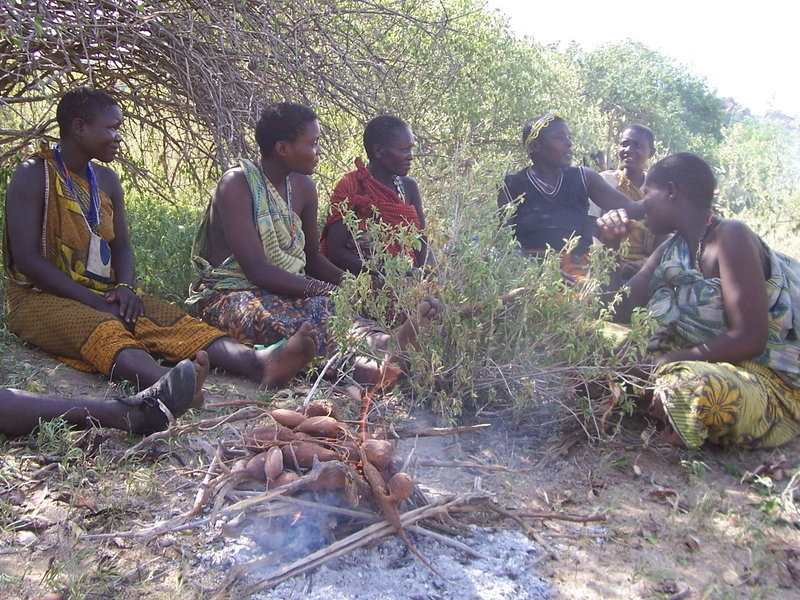
The gut microbiota is responsible for many aspects of human health and nutrition, but most studies have focused on “western” populations. An international collaboration of researchers, including researchers of the Max Planck Institute for Evolutionary Anthropology in Leipzig, Germany, has for the first time analysed the gut microbiota of a modern hunter-gatherer community, the Hadza of Tanzania. The results of this work show that Hadza harbour a unique microbial profile with features yet unseen in any other human group, supporting the notion that Hadza gut bacteria play an essential role in adaptation to a foraging subsistence pattern. The study further shows how gut microbiota may have helped our ancestors adapt and survive during the Paleolithic.

Hadza women roasting tubers.
Hadza women roasting tubers. © Alyssa Crittenden

Bacterial populations have co-evolved with humans over millions of years, and have the potential to help us adapt to new environments and foods. Studies of the Hadza offer an especially rare opportunity for scientists to learn how humans survive by hunting and gathering, in the same environment and using similar foods as our ancestors did.

The research team, composed of anthropologists, microbial ecologists, molecular biologists, and analytical chemists, and led in part by Stephanie Schnorr and Amanda Henry of the Max Planck Institute for Evolutionary Anthropology, compared the Hadza gut microbiota to that of urban living Italians, representative of a “westernized” population. Their results, published recently in Nature Communications, show that the Hadza have a more diverse gut microbe ecosystem, i.e. more bacterial species compared to the Italians. “This is extremely relevant for human health”, says Stephanie Schnorr. “Several diseases emerging in industrialized countries, like IBS, colorectal cancer, obesity, type II diabetes, Crohn’s disease and others, are significantly associated with a reduction in gut microbial diversity.”

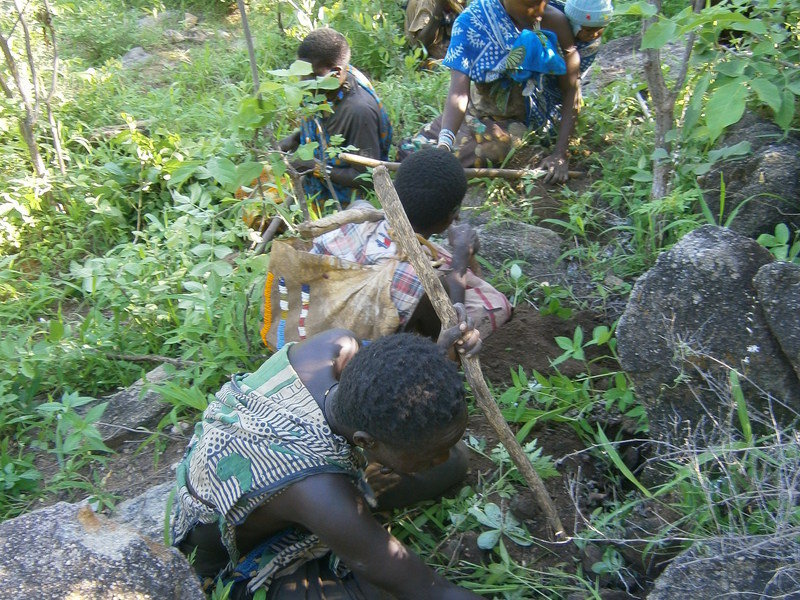
The Hadza gut microbiota is well suited for processing indigestible fibres from a plant-rich diet and likely helps the Hadza get more energy from the fibrous foods that they consume. Surprisingly, Hadza men and women differed significantly in the type and amount of their gut microbiota, something never before seen in any other human population. Hadza men hunt game and collect honey, while Hadza women collect tubers and other plant foods. Though they share these foods, each sex eats slightly more of the foods they target. “The differences in gut microbiota between the sexes reflects this sexual division of labour”, says Stephanie Schnorr. “It appears that women have more bacteria to help process fibrous plant foods, which has direct implications for their fertility and reproductive success.” These findings support the key role of the gut microbiota as adaptive partners during the course of human evolution by aligning with differing diets.

Hadza digging for plant foods.Hadza digging for plant foods. © MPI f. Evolutionary Anthropology

Finally, the Hadza gut microbe community is a unique configuration with high levels of bacteria, like Treponema, that in western populations are often considered signs of disease, and low levels of other bacteria, likeBifidobacterium, that in western populations are considered “healthy”. However, the Hadza experience little to no autoimmune diseases that would result from gut bacteria imbalances. Therefore, we must redefine our notions of “healthy” and “unhealthy” bacteria, since these distinctions are clearly dependent on the environment we live in. Genetic diversity of bacteria is likely the most important criterion for the health and stability of the gut microbiome.

“Co-resident microbes are our ‘old friends’ that help us adapt to different lifestyles and environments”, says Amanda Henry, leader of the Max Planck Research Group on Plant Foods in Hominin Dietary Ecology. “Through this analysis of the Hadza gut microbiota, we have increased our knowledge of human-microbiome adaptations to life in a savanna environment and improved our understanding of how gut microbiota may have helped our ancestors adapt and survive during the Paleolithic.”

Forests Around Chernobyl Aren’t Decaying Properly (Smithsonian Mag)

Fallen trees in Chernobyl’s infamous red forest. (Photo: T.A.Mousseau & A.P. Møller )

It wasn’t just people, animals and trees that were affected by radiation exposure at Chernobyl, but also the decomposers: insects, microbes, and fungi

By Rachel Nuwer

SMITHSONIANMAG.COM
MARCH 14, 2014

Nearly 30 years have passed since the Chernobyl plant exploded and caused an unprecedented nuclear disaster. The effects of that catastrophe, however, are still felt today. Although no people live in the extensive exclusion zones around the epicenter, animals and plants still show signs of radiation poisoning.

Birds around Chernobyl have significantly smaller brains that those living in non-radiation poisoned areas; trees there grow slower; and fewer spiders and insects—including bees, butterflies and grasshoppers—live there. Additionally, game animals such as wild boar caught outside of the exclusion zone—including some bagged as far away as Germany—continue to show abnormal and dangerous levels of radiation.

However, there are even more fundamental issues going on in the environment. According to a new study published in Oecologia, decomposers—organisms such as microbes, fungi and some types of insects that drive the process of decay—have also suffered from the contamination. These creatures are responsible for an essential component of any ecosystem: recycling organic matter back into the soil. Issues with such a basic-level process, the authors of the study think, could have compounding effects for the entire ecosystem.

The team decided to investigate this question in part because of a peculiar field observation. “We have conducted research in Chernobyl since 1991 and have noticed a significant accumulation of litter over time,” the write. Moreover, trees in the infamous Red Forest—an area where all of the pine trees turned a reddish color and then died shortly after the accident—did not seem to be decaying, even 15 to 20 years after the meltdown.

“Apart from a few ants, the dead tree trunks were largely unscathed when we first encountered them,” says Timothy Mousseau, a biologist at the University of South Carolina, Columbia, and lead author of the study. “It was striking, given that in the forests where I live, a fallen tree is mostly sawdust after a decade of lying on the ground.”

Wondering whether that seeming increase in dead leaves on the forest floor and those petrified-looking pine trees were indicative of something larger, Mousseau and his colleagues decided to run some field tests. When they measured leaf litter in different parts of the exclusion zones, they found that the litter layer itself was two to three times thicker in the “hottest” areas of Chernobyl, where radiation poisoning was most intense. But this wasn’t enough to prove that radiation was responsible for this difference.

To confirm their hunch, they created around 600 small mesh bags and stuffed them each with leaves, collected at an uncontaminated site, from one of four different tree species: oak, maple, birch or pine. They took care to ensure that no insects were in the bags at first, and then lined half of them with women’s pantyhose to keep insects from getting in from the outside, unlike the wider mesh-only versions.

Mousseau distributing leaf baggies throughout Chernobyl’s exclusion zones. Photo: Gennadi Milinevsky

Like a decomposer Easter egg hunt, they then scattered the bags in numerous locations throughout the exclusion zone, all of which experienced varying degrees of radiation contamination (including no contamination at all). They left the bags and waited for nearly a year—normally, an ample amount of time for microbes, fungi and insects to make short work of dead organic material, and the pantyhose-lined bags could help them assess whether insects or microbes were mainly responsible for breaking down the leaves.

The results were telling. In the areas with no radiation, 70 to 90 percent of the leaves were gone after a year. But in places where more radiation was present, the leaves retained around 60 percent of their original weight. By comparing the mesh with the panty hose-lined bags, they found that insects play a significant role in getting rid of the leaves, but that the microbes and fungi played a much more important role. Because they had so many bags placed in so many different locations, they were able to statistically control for outside factors such as humidity, temperature and forest and soil type to make sure that there wasn’t anything besides radiation levels impacting the leaves’ decomposition.

“The gist of our results was that the radiation inhibited microbial decomposition of the leaf litter on the top layer of the soil,” Mousseau says. This means that nutrients aren’t being efficiently returned to the soil, he adds, which could be one of the causes behind the slower rates of tree growth surrounding Chernobyl.

Stars mark sites where the researchers put the leaf bags, with colors corresponding to levels of radiation. Photo: Mousseau et al., Oecologia

Other studies have found that the Chernobyl area is at risk of fire, and 27 years’ worth of leaf litter, Mousseau and his colleagues think, would likely make a good fuel source for such a forest fire. This poses a more worrying problem than just environmental destruction: Fires can potentially redistribute radioactive contaminants to places outside of the exclusion zone, Mousseau says. “There is growing concern that there could be a catastrophic fire in the coming years,” he says.

Unfortunately, there’s no obvious solution for the problem at hand, besides the need to keep a stringent eye on the exclusion zone to try to quickly snuff out potential fires that breaks out. The researchers are also collaborating with teams in Japan, to determine whether or not Fukushima is suffering from a similar microbial dead zone.

RELATED CONTENT

Read more: http://www.smithsonianmag.com/science-nature/forests-around-chernobyl-arent-decaying-properly-180950075/#zY3KQvXTxzICrJvC.99

Wolves and the Ecology of Fear (Quest)

Video Story by  for  on Mar 06, 2014


Does “the big bad wolf” play an important role in the modern-day food web? In this video we journey to Washington State’s Cascade Mountains, where the return of wolves could have a profound impact on a vast wilderness area. We meet up with biologist Aaron Wirsing to explore why wolves and other top predators are needed for diverse ecosystems to flourish. Using a simple video camera (a “deer-cam”) Wirsing is gaining a unique perspective on predator/prey relationships and changing the way we think about wolves.

Wolves in the Crosshairs:  Q&A with conservationist, Fred Koontz

Fred Koontz

Dr. Fred Koontz

Gray wolves are in the crosshairs of a heated conservation debate, with the federal government trying to strip all protections for them in the continental U.S. Dr. Fred Koontz, vice president of field conservation at Woodland Park Zoo, Seattle, has worked in conservation for three decades and has studied the wolf issue. We talked with Dr. Koontz about the future of wolves in the U.S. and the role they play in maintaining healthy ecosystems.

Wolves may be the most polarizing animal in North America, more so than other large carnivores like cougars or grizzly bears. Why?
The gray wolf is one of the world’s most adaptable and widely distributed mammals, ranging over much of Asia, Europe, and North America. Wolves, the size of a German shepherd, are pack-hunting predators that sometimes kill livestock. Combined with wolves’ nocturnal behavior and haunting howling, this has resulted in a long history of conflict with people, especially as human numbers have increased exponentially in recent centuries and agricultural lands expanded into wolf habitat. There are, however, very few documented cases of wolves attacking people, but the rare times it’s happened it’s been sensationalized and blown out of proportion.

How have your perceptions or understanding of wolves changed over the years?
At an early age, my mother read with much theatrical expression “Little Red Riding Hood,” which, like many children, left me fearing the “big bad wolf.” This negative image was reinforced with similar wolf-themed horror movies that I ashamedly spent far too much time watching in my youth. Only when I studied ecology and animal behavior in college and as a wildlife professional did I see a different image of the wolf. Wolves are important regulators of prey numbers and behavior, and as such, influence a web of ecological interactions that enrich biological diversity. I learned also that among many adaptive traits enabling their evolutionary success, wolves have a rich social life and extraordinary set of communication behaviors. The more I learned, the more fascinated I became in understanding how wolves and people might live together for their mutual benefit.

Gray wolves have been taken off the federal endangered species list in some states, such as Idaho, Wyoming, and Montana. And a recent federal proposal would strip all gray wolves in the continental U.S. of their federal protection. How did this come to be? What kind of politics are at play?

2012-01-18RyanHawk254Snow

Gray wolves can come in an assortment of colors, such as these all-white wolves. Photo courtesy of Ryan Hawk, Woodland Park Zoo, Seattle.

Under the Endangered Species Act, the U.S. Fish and Wildlife Service (USFWS) in 1974 first listed gray wolves as endangered in the lower 48 states. Now they propose to remove them from the ESA list. This idea follows from three decades of actions undertaken by federal, state, and local partners that resulted in population recovery and delisting in 2011 of wolves living in the western Great Lakes states and northern Rockies. With about 6,000 wolves residing in these two recovery areas, USFWS believes that the gray wolf population in general is well established and stable enough to warrant delisting. Many state wildlife officials welcome the move as they are eager to take back the management authority for animals within their political borders.

However, many conservation scientists and wolf advocates believe that more time on the endangered species list — and [under] federal protection — would allow wolves a greater opportunity to reclaim more of their former territory and grow the number of their populations. This is important because, despite wolf recovery success in the Great Lakes states and Rocky Mountains, there is still a lot of their former range not yet occupied. Expanded range and more populations, in turn, will provide greater species resiliency to unexpected environmental disruptions like climate change and emerging diseases and also improve long-term wolf survival in the U.S.

An independent review panel recently found that the federal government used uncertain science when it proposed removing the gray wolf from the endangered species list across the lower 48 states. What could that mean for the future of wolves?
This is important because under Endangered Species Act law the U.S. Fish and Wildlife Service is obligated to use the best available science. The Service claimed that new genetic research indicated that wolves living in the eastern U.S. were actually a different species, and thus should not be considered as part of the original listing or part of the historic range. The expert panel said the genetic research was uncertain and based largely on one paper. The panel’s report has reopened the debate about delisting gray wolves, and I suspect it will extend the time wolves remain listed. The final decision on delisting is yet to be determined — public comment isencouraged. [Note: deadline is March 27, 2014]

In the long run, the debate about delisting wolves invites larger questions like, what constitutes full recovery of any endangered species, and does the legal framework of the ESA reflect current conservation science and principles of sustainable living? Most importantly, there needs to be agreement at the onset about the ultimate purpose of recovery — is it simply species survival or restoring ecological function? There are no easy answers.

Mule Deer Lauren Sobkoviak

Mule Deer photo courtesy of Lauren Sobkoviak.

Is it possible for wolves and humans to coexist? What needs to change for that to happen?
I think that wolves and humans ultimately will coexist by sharing land in two key places — protected areas and rural areas managed for the benefit of people and wildlife, for example, park buffer lands, multiple-use public lands, and designated wildlife corridors. For the reconciliation between wolves and humans to prove fully successful, we will first need a broader understanding of the role that apex predators play in creating healthy ecosystems and why healthy ecosystems are needed by people. In other words, there must be a broader understanding of why saving wolves is essential to sustainable living. Greater public will to save wolves will result in increased public spending needed to conduct science and carry out sound management actions. For example, we need more research on improving ranching practices to minimize wolf predation of livestock, and insurance programs that compensate ranchers for unavoidable losses. There is already good evidence from pilot efforts that such research and management programs are possible — and that they work!

Why should people care about the fate of wolves?
The fate of wolves is tied directly to the greatest challenge facing humankind this century —  sustainable living! With more than seven billion people consuming resources at an accelerating pace, this generation of world citizens must transform our societies to sustainable ones. We must, among other things, protect a wide variety of animal and plant species — scientists call this “biodiversity.” Many conservation scientists believe that apex predators (animals at the top of the food chain), like wolves, are necessary to maintain habitats rich in life. In turn, high levels of biodiversity bring many direct benefits to people — everything from providing food and fiber to protecting water supplies and enriching recreation.

Scientist 1

Biologist Aaron Wirsing for the University of Washington (right) and graduate student Justin Dellinger (left) radio collar deer with video cameras in order to better understand predator-prey dynamics. Photo courtesy of Greg Davis.

Understanding the links between apex predators and biodiversity is a growing area of research for scientists like Aaron Wirsing of the University of Washington. Since 2008, wolves have been returning to Washington and have reestablished populations in the U.S. northern Rockies. This has provided a unique research opportunity for Wirsing and other scientists. For example, deer populations in Washington have likely over-browsed plants for decades in the absence of gray wolves. One consequence of deer eating trees along streambeds is less habitat for birds, and streams that are more likely to harbor fewer cold-water fish like trout because they are filled with sediments from soil erosion and overheated because of lack of shade. With wolves back in the state, Wirsing is leading a study to document how wolves are changing mule and white-tail deer populations, which in turn affects forest landscapes.

Why do you care about wolves?
I care about wolves because as apex predators they contribute significantly to enriching biodiversity needed by people for sustainable living. I also care about wolves because I admire them! Wolves are amazing for many reasons, but I am especially fascinated by their complex social behavior and adaptable lifestyles, two traits that they share with humans. Also, one of the most important reasons I care is that wild wolves in the U.S. are a symbolic way of keeping our American heritage of wilderness alive.

Additional Resources/Links:

A intensa vida sexual das plantas (Ciência Hoje)

Vegetais competem por oportunidades de acasalamento e ‘escolhem’ seus parceiros sexuais. Artigo de capa da Ciência Hoje mostra como essas estratégias reprodutivas evoluíram ao longo do tempo, gerando flores de cores, formas e cheiros variados.

Por: Carlos Roberto Fonseca

Publicado em 13/02/2014 | Atualizado em 13/02/2014

A intensa vida sexual das plantas

As plantas exibem imensa diversidade sexual: em algumas, é possível reconhecer claramente machos ou fêmeas, mas na maioria delas os indivíduos exercem tanto o papel feminino quanto o masculino. (foto: Sxc. hu)

Em se tratando de sexo, as plantas são escandalosamente liberais. Muitas só fazem sexo consigo mesmas. Outras fazem sexo simultaneamente com vários vizinhos ou com parceiros casuais que vivem a centenas de quilômetros de distância. Em algumas plantas, é possível reconhecer claramente machos ou fêmeas, mas na maioria dos vegetais os indivíduos exercem tanto o papel feminino quanto o masculino.

Muitas espécies ostentam órgãos sexuais exageradamente avantajados e coloridos, e fazem questão de exibi-los

Algumas plantas, sem nenhum pudor, trocam de sexo durante a vida. Outras são ‘conservadoras’ e se recusam a fazer sexo com indivíduos aparentados, e há ainda as que nunca fazem sexo. Muitas espécies ostentam órgãos sexuais exageradamente avantajados e coloridos, e fazem questão de exibi-los. Mas também é verdade que algumas plantas têm aparelhos sexuais minúsculos ou ocultos.

A evolução dessa grande diversidade reprodutiva deve-se a intensas disputas sexuais entre os indivíduos. Esses embates vêm sendo confirmados, mas por muito tempo foram desconhecidos – até pelo maior evolucionista de todos, Charles Darwin (1809-1882) – ou contestados. Pesquisas mais recentes constataram não apenas que a seleção sexual é uma força importante na evolução e diversificação das plantas superiores, mas também que a variedade é essencial para o funcionamento de comunidades vegetais na natureza e para atividades humanas, como a agricultura, a jardinagem e as indústrias de madeira, alimentos e medicamentos.

A chave do enigma

Ao elaborar sua teoria da evolução por meio da seleção natural, Darwin enfrentou uma grande dificuldade teórica: como explicar que, além de apresentar diferenças em seus aparelhos reprodutivos (características sexuais primárias), machos e fêmeas exibem óbvias diferenças em outros aspectos de seu corpo e em seu comportamento, chamadas de características sexuais secundárias?

Por que os leões são maiores que as leoas? Por que pavões machos exibem plumas longas e ornamentadas, enquanto as fêmeas dessas aves são basicamente cinzentas? Por que os alces irlandeses machos, extintos na última era glacial, exibiam galhadas de até 3,5 m, inexistentes em fêmeas? Por que os sapos machos cantam e as fêmeas se calam? Para Darwin, a seleção natural, por agir de modo semelhante nos dois sexos, não podia explicar a evolução das características sexuais secundárias. Afinal, machos e fêmeas em geral vivem no mesmo lugar e sob o mesmo clima, comem a mesma comida e são atacados pelos mesmos predadores e parasitas.

Darwin reconheceu dois principais mecanismos de seleção sexual: ‘competição entre machos’ e ‘escolha pelas fêmeas’

O conceito de ‘seleção sexual’ foi a chave encontrada por Darwin para resolver o enigma. Segundo ele, a seleção sexual seria a “vantagem que certos indivíduos têm sobre outros indivíduos do mesmo sexo e espécie exclusivamente em relação à reprodução”. Esse conceito, embora proposto por Darwin em 1859, no livro A origem das espécies por meio da seleção natural, só seria discutido a fundo por ele em 1871, no livro A origem do homem e a seleção sexual.

Darwin reconheceu dois principais mecanismos de seleção sexual: ‘competição entre machos’ e ‘escolha pelas fêmeas’. Na competição entre machos, estes lutam entre si, em combates diretos (às vezes mortais) ou por meio de ritualizações (exibições físicas, rituais de cortejo e outras), para ter acesso a mais e melhores oportunidades de acasalar. Na escolha pelas fêmeas, estas comparam a qualidade dos machos disponíveis, com base no aspecto físico ou no comportamento, e escolhem os aparentemente mais fortes ou mais saudáveis como parceiros reprodutivos.

Esses mecanismos foram descritos a partir de comportamentos de disputas, brigas, cantos, danças, discriminação, gostos e escolhas que pareciam, a princípio, exigir um mínimo de movimentação, capacidade mental e percepção. Assim, embora o conceito de seleção sexual tenha sido um avanço extraordinário para a teoria da evolução, ele ficou restrito ao reino animal. Um século se passou até que a biologia conseguisse aplicar o conceito de seleção sexual às plantas.

Guerra do sexo

Em 1979, um artigo pioneiro – ‘Seleção sexual em plantas’ – foi publicado pela ecóloga norte-americana Mary F. Willson, apontando evidências científicas de que tanto a competição entre machos quanto a escolha pelas fêmeas são importantes forças evolutivas também para as plantas, e que a imensa diversidade de flores decorre desses processos.

pólen

Os grãos de pólen levados pelo vento, por insetos ou por outros meios, precisam enfrentar disputas para fertilizar os óvulos. (foto: Sxc. hu)

O trabalho quebrou a visão ingênua de que plantas da mesma espécie colaboram entre si para reproduzir e competem apenas com as de outras espécies pelos polinizadores.

A competição evolutivamente importante ocorre entre indivíduos geneticamente diferentes da mesma espécie e, em particular, entre os do mesmo sexo. As outras espécies apenas modificam a arena ecológica onde ocorre o embate evolutivo.

Quando chega a estação reprodutiva de determinada espécie de árvore, há um conflito aberto por sucesso reprodutivo. Alguns indivíduos, porque são maiores, mais vigorosos e com adaptações que favorecem seu sucesso reprodutivo, conseguirão aumentar a frequência de seus genes na próxima geração. Os menos favorecidos tenderão a ser eliminados pela seleção sexual. Ou seja, a ‘guerra do sexo’ é intensa mesmo entre espécies que não se movem e não têm um comportamento evidente, como as plantas.

Você leu apenas o início do artigo publicado na CH 311. Clique no ícone a seguir para baixar a versão integral. PDF aberto (gif)

Carlos Roberto Fonseca
Departamento de Ecologia
Universidade Federal do Rio Grande do Norte

Modelo pode ajudar a prever como espécies da Mata Atlântica responderão às mudanças climáticas (Fapesp)

Pesquisadores do Brasil e dos EUA buscam compreensão dos processos evolutivos, geológicos, climáticos e genéticos por trás do padrão atual da biodiversidade (foto:Samuel Iavelberg)

11/02/2014

Por Karina Toledo

Agência FAPESP – Compreender os processos evolutivos, geológicos, climáticos e genéticos por trás da enorme biodiversidade e do padrão de distribuição de espécies da Mata Atlântica e, com base nesse conhecimento, criar modelos que permitam prever, por exemplo, como essas espécies vão reagir às mudanças no clima e no uso do solo.

Esse é o objetivo central de um projeto que reúne pesquisadores do Brasil e dos Estados Unidos no âmbito de um acordo de cooperação científica entre o Programa de Pesquisas em Caracterização, Conservação, Recuperação e Uso Sustentável da Biodiversidade do Estado de São Paulo (BIOTA-FAPESP) e o programa Dimensions of Biodiversity, da agência federal norte-americana de fomento à pesquisa National Science Foundation (NSF).

“Além de ajudar a prever o que poderá ocorrer no futuro com as espécies, os modelos ajudam a entender como está hoje distribuída a biodiversidade em áreas onde os cientistas não têm acesso. Como fazemos coletas por amostragem, seria impossível mapear todos os microambientes. Os modelos permitem extrapolar essas informações para áreas não amostradas e podem ser aplicados em qualquer tempo”, explicou Ana Carolina Carnaval, professora da The City University of New York, nos Estados Unidos, e coordenadora do projeto de pesquisa ao lado de Cristina Miyaki, do Instituto de Biociências da Universidade de São Paulo (IB-USP).

A proposta, segundo Carnaval, é promover a integração de pesquisadores de diversas áreas – como ecologia, geologia, biogeografia, genética, fisiologia, climatologia, taxonomia, paleologia, geomorfologia – e unir ciência básica e aplicada em benefício da conservação da Mata Atlântica.

O bioma é considerado um dos 34 hotspots mundiais, ou seja, uma das áreas prioritárias para a conservação por causa de sua enorme biodiversidade, do alto grau de endemismo de suas espécies (ocorrência apenas naquele local) e da grande ameaça de extinção resultante da intensa atividade antrópica na região.

A empreitada coordenada por Carnaval e por Miyaki teve início no segundo semestre de 2013. A rede de pesquisadores esteve reunida pela primeira vez para apresentar suas linhas de pesquisa e seus resultados preliminares na segunda-feira (10/02), durante o “Workshop Dimensions US-BIOTA São Paulo – A multidisciplinary framework for biodiversity prediction in the Brazilian Atlantic forest hotspot”.

“Convidamos alguns colaboradores além de pesquisadores envolvidos no projeto, pois queremos críticas e sugestões que permitam aperfeiçoar os trabalhos”, contou Miyaki. “Essa reunião é um marco para conseguirmos efetivar a integração entre as diversas áreas do projeto e criarmos uma linguagem única focada em compreender a Mata Atlântica e os processos que fazem esse bioma ser tão especial”, acrescentou.

Entre os mistérios que os cientistas tentarão desvendar estão a origem da incrível diversidade existente na Mata Atlântica, possivelmente fruto de conexões existentes há milhões de anos com outros biomas, entre eles a Floresta Amazônica. Outra questão fundamental é entender a importância do sistema de transporte de umidade na região hoje e no passado e como ele permite que a Mata Atlântica se comunique com outros sistemas florestais. Também está entre as metas do grupo investigar como a atividade tectônica influenciou o curso de rios e afetou o padrão de distribuição das espécies aquáticas.

Desafios do BIOTA

Durante a abertura do workshop, o presidente da FAPESP, Celso Lafer, realçou a importância de abordagens inovadoras e multidisciplinares voltadas para a proteção da biodiversidade da Mata Atlântica. Ressaltou ainda que a iniciativa está em consonância com os esforços de internacionalização realizados pela FAPESP nos últimos anos.

“Uma das grandes preocupações da FAPESP tem sido o processo de internacionalização, que basicamente está relacionado ao esforço de juntar pesquisadores de diversas áreas para avançar no conhecimento. Este programa de hoje está relacionado a aspirações dessa natureza e tenho certeza de que os resultados serão altamente relevantes”, afirmou Lafer.

Também durante a mesa de abertura, o diretor do IB-USP, Carlos Eduardo Falavigna da Rocha, afirmou que o programa BIOTA-FAPESP tem sido um exemplo para outros estados e outras fundações de apoio à pesquisa em âmbito federal e estadual.

Carlos Alfredo Joly, professor da Universidade Estadual de Campinas (Unicamp) e coordenador do BIOTA-FAPESP, apresentou um histórico das atividades realizadas pelo programa desde 1999, entre elas a elaboração de um mapa de áreas prioritárias para conservação que serviu de base para mais de 20 documentos legais estaduais – entre leis, decretos e resoluções.

Joly também falou sobre os desafios a serem vencidos até 2020, como empreender esforços de restauração e de reintrodução de espécies, ampliar o entendimento sobre ecossistemas terrestres e sobre os mecanismos que mantêm a biodiversidade no Estado e intensificar as atividades voltadas à educação ambiental.

Para 2014, Joly ressaltou dois desafios na área de conservação. “Estamos iniciando uma campanha para o tombamento da Serra da Mantiqueira. Já fizemos alguns artigos de jornais, estamos lançando um website específico e vamos trabalhar para conseguir tombar regiões acima de 800 metros, áreas apontadas como de extrema prioridade para conservação no atlas do BIOTA”, disse.

Outra meta para 2014, segundo Joly, é trabalhar para que o Brasil ratifique o protocolo de Nagoya – tratado internacional que dispõe sobre a repartição de benefícios do uso da biodiversidade – até outubro, quando ocorrerá a 12ª Conferência das Partes da Convenção sobre Diversidade Biológica.

“É fundamental que um país megadiverso, que tem todo o interesse de ter sua biodiversidade protegida por esse protocolo internacional, se torne signatário do protocolo antes dessa reunião”, afirmou Joly.

Huge chimpanzee population thriving in remote Congo forest (The Guardian)

Scientists believe the group is one of the last chimp ‘mega-cultures’, sharing a unique set of customs and behaviour

theguardian.com, Friday 7 February 2014 11.53 GMT

A mother chimp passing her tool-use expertise to her young

In one of the most dangerous regions of the planet, against all odds, a huge yet mysterious population of chimpanzees appears to be thriving – for now. Harboured by the remote and pristine forests in the north of the Democratic Republic of Congo (DRC) and on the border of the Central African Republic, the chimps were completely unknown until recently – apart from the local legends of giant apes that ate lions and howled at the moon.

But researchers who trekked thousands of kilometres through uncharted territory and dodged armed poachers and rogue militia, now believe the group are one of the last thriving chimp “mega-cultures”.

“This is one of the few places left on Earth with a huge continuous population of chimps,” says Cleve Hicks, a primatologist based at the Max Planck Institute in Leipzig, Germany, who says the group is probably the largest in Africa. “We estimate many thousands of individuals, perhaps tens of thousands.” A unique set of customs and behaviour is shared by the apes across a vast area of 50,000 sq km, revealing how they live naturally.

The unusually large chimps of the Bili-Uele forest have been seen feasting on leopard and build ground nests far more often than other chimps, as well as having a unique taste for giant African snails, whose shells they appear to pound open on rocks or logs. Motion-activated video cameras left in the forest for eight months also recorded gangs of males patrolling their territory and mothers showing their young how to use tools to eat swarming insects – although the footage did not confirm the lunar howls.

Gangs of males patrolling their territory

The camera traps also revealed an extraordinary range of other forest dwellers, including forest elephantsolive baboonsspotted hyena as well as red river and giant forest hogscrested guinea fowl and aardvark. “We saw incredible amounts of wildlife on our camera traps, but we did not catch a single film of a human,” says Hicks. “It remains one of the last untouched wildernesses in Africa.”

One camera even recorded its own destruction as it came under attack from a leopard, but all two dozen cameras were nearly lost when poachers invaded the area and burned the researchers’ camp. Only a swift two-day rescue mission retrieved the footage.

Forest elephants

Hick’s team first identified the existence of the Bili chimps in 2007 but their new survey, published this week in the journal Biological Conservation, reveals a vast, thriving mega-culture. Elsewhere in Africa, human damage has fragmented the continent’s chimp population from many millions to just a few hundred thousand over the last century.

However, while the chimp numbers have apparently remained stable, the numbers of forest elephants have crashed by half due to poaching. The slaughter, to feed the highly lucrative illegal ivory trade, mirrors the bloody picture across central Africa, where two-thirds of all forest elephants have been killed in the last decade. “We found the burned skulls of a mother and baby skull at a poachers camp,” says Hicks.

Footage of elephant skulls, a sign poachers are venturing deeper into forests to hunt elephants

“The area is at great risk of being opened up,” says John Hart, one of the team and who has spent decades in DRC at the Lukuru Wildlife Research Foundation. The team’s work was interrupted previously by gunmen protecting illegal gold mining operations in nearby areas but the security situation is getting worse, Hart told the Guardian. Speaking from the town of Kisangani, on the eve of returning to the forest, he said: “The Lord’s Resistance Army are moving through the area as we speak. Also refugees from the Central African Republic (CAR) war and armed brigands from the CAR’s Seleka and opposition groups are establishing bases in the region.”

The researchers fear that these increasing incursions into the virgin forest will draw in more hunters seeking to feed the enormous bushmeat trade in the Congo basin, that targets chimps and other animals. “Theincredible bushmeat trade we discovered [in the southern part of the forest in 2010] was totally without precedent.” Hart says, with an estimated 440 chimps being killed a year. “But with the availability of bushmeat declining elsewhere, commercial bushmeat hunters are going further and further into the forest.”

The chimps are an endangered species and fully protected in DRC law. “But it is only a law on paper,” says Hicks, who identifies both official security forces and militia as the source of much of the danger, as well as endemic corruption. “I think the military are giving guns to the poachers.” He says the forest and the chimp mega-culture it contains are currently completely unprotected.

Congo_WEB

The prime minister, David Cameron, and Prince William are due to host the highest level global summit to date on combating the $19bn-a-year illegal wildlife trade in London next Thursday. Delegates from more than 50 nations, including all African countries, will focus on the poaching crisis facing elephants and other species, which is not only driving many towards extinction but is strongly linked to international organised crimeand the poverty of many vulnerable communities. The aim is to deliver an unprecedented political commitment, along with an action plan and funding pledges, and Hicks says the Bili-Uele forest is in need of urgent help.

“It is one of the last great expanses of pristine African wilderness,” he says. “Elephants have already taken a major hit and unless we can muster the resolve to protect this precious area, we are at risk of losing it forever. At the very minimum need 20 wildlife guards who are able to sweep through the forest and set up roadblocks to stop the poachers and other hunters.”

Hart agrees: “It is a very significant opportunity to preserve a whole ecosystem of chimpanzees: elsewhere on this continent this opportunity just does not exist.”

• You can view more camera trap videos from the Bili forest here.

University of Waterloo tries dog patrol to fight goose problem (CBC News)

CBC News Posted: Apr 10, 2013 5:30 AM ET Last Updated: Apr 15, 2013 12:40 AM ET

A pair of Canada Geese. The University of Waterloo is trying new ways to fight the geese problem on campus, including using dog patrols and asking students to tweet in nest locations.

A pair of Canada Geese. The University of Waterloo is trying new ways to fight the geese problem on campus, including using dog patrols and asking students to tweet in nest locations.


It’s spring. That means longer days, warmer weather, and for Canada Geese, it’s nesting season.

The Canada Geese that have taken up residence at the University of Waterloo are famous, in part because they don’t hesistate to defend their nesting areas from perceived intruders.

Alex Harris and Molson the dog, pictured above, patrol UWaterloo twice a day to chase away Canada Geese. Photo:warriordad.smugmug.com/

Alex Harris is no stranger to hissing, flapping, angry geese. Harris is the man behind the University of Waterloo’s Geese Police and along with Molson, a border collie-golden retriever cross, patrols the university campus twice a day along a five-kilometre path. Canada Geese are notorious at the university because the large number of people and buildings offer protection from natural predators, allowing the geese to thrive. 

The daily patrols are part of Harris’ undergraduate thesis project for his Geography and Environmental Management Honours degree. By summer, Harris wants to have an accurate picture of how Molson affects geese nesting habits along the designated path, in order to “determine exactly how bad the problem is and how long it will take to fix it and balance the ecosystem out,” he writes on his website.

Read the full article here.


Rainforests in Far East Shaped by Humans for the Last 11,000 Years (Science Daily)

Jan. 24, 2014 — New research from Queen’s University Belfast shows that the tropical forests of South East Asia have been shaped by humans for the last 11,000 years.

New research from Queen’s University Belfast shows that the tropical forests of South East Asia have been shaped by humans for the last 11,000 years. (Credit: © Juhku / Fotolia)

The rain forests of Borneo, Sumatra, Java, Thailand and Vietnam were previously thought to have been largely unaffected by humans, but the latest research from Queen’s Palaeoecologist Dr Chris Hunt suggests otherwise.

A major analysis of vegetation histories across the three islands and the SE Asian mainland has revealed a pattern of repeated disturbance of vegetation since the end of the last ice age approximately 11,000 years ago.

The research, which was funded by the Arts and Humanities Research Council and the British Academy, is being published in the Journal of Archaeological Science. It is the culmination of almost 15 years of field work by Dr Hunt, involving the collection of pollen samples across the region, and a major review of existing palaeoecology research, which was completed in partnership with Dr Ryan Rabett from Cambridge University.

Evidence of human activity in rainforests is extremely difficult to find and traditional archaeological methods of locating and excavating sites are extremely difficult in the dense forests. Pollen samples, however, are now unlocking some of the region’s historical secrets.

Dr Hunt, who is Director of Research on Environmental Change at Queen’s School of Geography, Archaeology and Palaeoecology, said: “It has long been believed that the rainforests of the Far East were virgin wildernesses, where human impact has been minimal. Our findings, however, indicate a history of disturbances to vegetation. While it could be tempting to blame these disturbances on climate change, that is not the case as they do not coincide with any known periods of climate change. Rather, these vegetation changes have been brought about by the actions of people.

“There is evidence that humans in the Kelabit Highlands of Borneo burned fires to clear the land for planting food-bearing plants. Pollen samples from around 6,500 years ago contain abundant charcoal, indicating the occurrence of fire. However, while naturally occurring or accidental fires would usually be followed by specific weeds and trees that flourish in charred ground, we found evidence that this particular fire was followed by the growth of fruit trees. This indicates that the people who inhabited the land intentionally cleared it of forest vegetation and planted sources of food in its place.

“One of the major indicators of human action in the rainforest is the sheer prevalence of fast-growing ‘weed’ trees such as Macaranga, Celtis and Trema. Modern ecological studies show that they quickly follow burning and disturbance of forests in the region.

“Nearer to the Borneo coastline, the New Guinea Sago Palm first appeared over 10,000 years ago. This would have involved a voyage of more than 2,200km from its native New Guinea, and its arrival on the island is consistent with other known maritime voyages in the region at that time — evidence that people imported the Sago seeds and planted them.”

The findings have huge importance for ecological studies or rainforests as the historical role of people in managing the forest vegetation has rarely been considered. It could also have an impact on rainforest peoples fighting the advance of logging companies.

Dr Hunt continued: “Laws in several countries in South East Asia do not recognise the rights of indigenous forest dwellers on the grounds that they are nomads who leave no permanent mark on the landscape. Given that we can now demonstrate their active management of the forests for more than 11,000 years, these people have a new argument in their case against eviction.”

Journal Reference:

  1. C.O. Hunt, R.J. Rabett. Holocene landscape intervention and plant food production strategies in island and mainland Southeast AsiaJournal of Archaeological Science, 2013; DOI: 10.1016/j.jas.2013.12.011

Altering the Community of Gut Bacteria Promotes Health and Increases Lifespan (Science Daily)

Jan. 16, 2014 — Scientists at the Buck Institute for Research on Aging have promoted health and increased lifespan in Drosophila by altering the symbiotic, or commensal, relationship between bacteria and the absorptive cells lining the intestine. The research, appearing in the January 16, 2014 edition of Cell, provides a model for studying many of the dysfunctions that are characteristic of the aging gut and gives credence to the growing supposition that having the right balance of gut bacteria may be key to enjoying a long healthy life.

Even though recent research in humans has linked the composition of gut flora with diet and health in the elderly and the list of age-related diseases associated with changes in gut bacteria include cancer, diabetes, and inflammatory bowel disease, lead author and Buck faculty Heinrich Jasper, PhD, says there is no systematic understanding of how we go from having a young, healthy gut to one that is old and decrepit. “Our study explores age-related changes in the gut that include increased oxidative stress, inflammation, impaired efficiency of the immune response, and the over-proliferation of stem cells,” said Jasper. “It puts these changes into a hierarchical, causal relationship and highlights the points where we can intervene to rescue the negative results of microbial imbalance.”

Jasper says the bacterial load in fly intestines increases dramatically with age, resulting in an inflammatory condition. The imbalance is driven by chronic activation of the stress response gene FOXO (something that happens with age), which suppresses the activity of a class of molecules (PGRP-SCs, homologues of PGLYRPs in humans) that regulate the immune response to bacteria. PGRP-SC suppression deregulates signaling molecules (Rel/NFkB) that are important to mount an effective immune response to gut bacteria. The resulting immune imbalance allows bacterial numbers to expand, triggering an inflammatory response that includes the production of free radicals. Free radicals, in turn, cause over-proliferation of stem cells in the gut, resulting in epithelial dysplasia, a pre-cancerous state.

Jasper said the most exciting result of their study occurred when his group increased the expression of PGRP-SC in epithelial cells of the gut, which restored the microbial balance and limited stem cell proliferation. This enhancement of PGRP-SC function, which could be mimicked by drugs, was sufficient to increase lifespan of flies. “If we can understand how aging affects our commensal population — first in the fly and then in humans — — our data suggest that we should be able to impact health span and life span quite strongly, because it is the management of the commensal population that is critical to the health of the organism.”

Journal Reference:

  1. Linlin Guo, Jason Karpac, Susan L. Tran, Heinrich Jasper.PGRP-SC2 Promotes Gut Immune Homeostasis to Limit Commensal Dysbiosis and Extend LifespanCell, 2014; 156 (1-2): 109 DOI: 10.1016/j.cell.2013.12.018

Linking Social Science, Ecology to Solve the World’s Environmental Problems (Science Daily)

Dec. 16, 2013 — Researchers from the ARC Centre of Excellence for Coral Reef Studies (CoECRS) at James Cook University are engaging social science to help solve some of the world’s biggest environmental problems.

Dr Christina Hicks, an interdisciplinary social science fellow at the ARC CoECRS, holds a joint position with the Center for Ocean Solutions at Stanford University in the USA.

Dr Hicks says more powerful economic interests, such as tourism, currently drive coral reef management. Little thought is given to community needs such as food or wellbeing. This results in conflict.

Dr Hicks explains to improve long-term coral reef management, “human values need to be considered in decision-making.”

Dr Nick Graham, a senior research fellow at the ARC CoECRS, adds that humans play an essential role in ecology, but different people have different priorities. He says these priorities need to be considered when managing natural environments.

For example, in a recent co-authored paper for the journal Global Environmental Change, Dr Hicks and Dr Graham, along with Dr Joshua Cinner, measured and compared how managers, scientists and fishers prioritized specific benefits from coral reef ecosystems. This in effect highlighted key areas of agreement and conflict between the three different stakeholder groups.

Dr Graham says the lack of ‘ownership’ of reef resources for fishers, who depend on fish for their food and livelihoods, underlies a main area of conflict. But the paper also indicated that managers might be well placed to play a brokering role in disagreements.

“Communities that are engaged and recognized are more likely to trust and support their management agencies,” adds Dr Hicks. She explains that governments who consult local communities in order to develop co-management plans generally reduce conflict and see increased livelihood as well as ecological benefits (such as a rise in fish stocks) in their area.

Examples of successful co-management arrangements exist in coral-reef nations such as Papua New Guinea and Kenya.

Journal Reference:

  1. Christina C. Hicks, Nicholas A.J. Graham, Joshua E. Cinner.Synergies and tradeoffs in how managers, scientists, and fishers value coral reef ecosystem servicesGlobal Environmental Change, 2013; 23 (6): 1444 DOI:10.1016/j.gloenvcha.2013.07.028

Ecossistemas costeiros ganham destaque na mitigação climática (CarbonoBrasil)

07/1/2014 – 11h55

por Fernanda B. Müller, do CarbonoBrasil

manguezal1 300x196 Ecossistemas costeiros ganham destaque na mitigação climática

Pesquisador ressalta que acessar o potencial de absorção do carbono por manguezais e outros habitats marinho-costeiros poderia ajudar o Brasil conservar e gerir estes ambientes.

A cada ano que passa, a ciência traz novos dados indicando que os ecossistemas marinhos são elementares na captura e armazenamento do dióxido de carbono (CO2) atmosférico – tendo absorvido até um terço dessas emissões provenientes das atividades humanas.

O chamado ‘carbono azul’ é estocado em ambientes tão diversos como manguezais, marismas, gramas marinhas, recifes de coral e outros ecossistemas, intensamente pressionados pelas atividades antrópicas.

Além disso, esses ambientes costeiros são alguns dos mais produtivos no planeta, e fornecem serviços ecossistêmicos essenciais, como proteção costeira contra tempestades e refúgio para o nascimento de grande parte da vida marinha.

Segundo dados da Iniciativa para o Carbono Azul, 83% do ciclo do carbono global passa pelo oceano, e, mesmo com os habitats costeiros cobrindo menos de 2% da sua área, eles equivalem a cerca da metade do carbono sequestrado no oceano.

Entretanto, todo esse potencial está sendo perdido a taxas alarmantes. Um estudo publicado em 2012 no periódico PLOS One alerta que a contínua destruição desses ambientes é responsável pela liberação anual de quase um bilhão de toneladas de dióxido de carbono.

“A perturbação do carbono estocado na biomassa e no metro superior do sedimento em um hectare de manguezal típico pode contribuir com tantas emissões quanto três a cinco hectares de florestas tropicais. Mesmo um hectare de grama marinha, com a sua pequena biomassa viva, pode conter tanto carbono próximo à superfície quanto um hectare de floresta tropical”, ressaltou o estudo.

O potencial de mitigação das mudanças climáticas do ‘carbono azul’ está chamando a atenção de várias instituições internacionais, que, interessadas na preservação dos ecossistemas marinhos, vêm estudando as oportunidades que o cenário internacional de desenvolvimento de baixo carbono pode apresentar.

“Esta conexão com as mudanças climáticas despertou o interesse da comunidade conservacionista, curiosa sobre se atividades de mitigação e financiamento poderiam avançar práticas de manejo sustentável e adaptação nas zonas costeiras”, comentou Stephen Crooks, pesquisador da Universidade East Anglia, que teve seu trabalho com ‘carbono azul’ utilizado durante painéis da Conferência das Partes nº 16 da UNFCCC.

Para trazer informações sobre o assunto, o Programa das Nações Unidas sobre Meio Ambiente (PNUMA) lançou recentemente uma página na internet chamada “The Blue Carbon Portal”, com um fórum de discussões e uma plataforma para networking, além de mostrar iniciativas, notícias e eventos. O portal oferece um mapa com as iniciativas que estão sendo conduzidas em nível nacional, como na Costa Rica, Austrália, Indonésia, entre outros.

Em uma frente mais propositiva, a Conservação Internacional, a União Internacional para a Conservação da Natureza (IUCN) e a Comissão Intergovernamental Oceanográfica da UNESCO lançaram a Iniciativa para o Carbono Azul (Blue Carbon Initiative), um programa global para mitigação das mudanças climáticas através da restauração e do uso sustentável dos ecossistemas marinhos costeiros.

Crooks, que faz parte da Iniciativa para o Carbono Azul, relata que as atividades em torno do reconhecimento do ‘carbono azul’ evoluíram muito nos últimos meses.

No mercado voluntário de carbono, o renomado Verified Carbon Standard (VCS) reconheceu a ‘Restauração e Conservação de Áreas Úmidas’ como uma atividade elegível para criação de créditos de carbono. Ou seja, projetos voltados para a redução das emissões por desmatamento e degradação (REDD) já podem ser desenvolvidos nestas áreas.

Além disso, o Painel Intergovernamental sobre Mudanças Climáticas (IPCC) recentemente adotou diretrizes para a contabilização das emissões e remoções de gases do efeito estufa (GEEs) associadas ao manejo de áreas úmidas (manguezais, marismas, gramas marinhas).

Porém, os países ainda não são obrigados a calcular suas emissões de áreas úmidas, estando convidados pelo IPCC a testarem a metodologia até 2017.

O documento inclui diretrizes para a contabilização de emissões associadas à drenagem ou reposição de água em áreas úmidas e também para o desmatamento, extração de solo, aquicultura, drenagem e restauração de manguezais.

“A coordenação científica no Brasil poderia apoiar enormemente o desenvolvimento de políticas para o manejo das reservas costeiras de carbono e ajudaria na aplicação da contabilização nacional das emissões e remoções de GEEs de atividades humanas em áreas úmidas”, comentou Crooks.

* Publicado originalmente no site CarbonoBrasil.

Catastrophic Collapse of Sahara Desert’s Wildlife (Science Daily)

Dec. 3, 2013 — A new study led by the Wildlife Conservation Society and Zoological Society or London warns that the world’s largest tropical desert, the Sahara, has suffered a catastrophic collapse of its wildlife populations.

This shows some of the world’s 200 remaining wild addax in Termit and Tin Toumma National Nature Reserve in Niger. (Credit: Copyright Thomas Rabeil and Sahara Conservation Fund)

The study by more than 40 authors representing 28 scientific organizations assessed 14 desert species and found that a shocking half of those are regionally extinct or confined to one percent or less of their historical range. A chronic lack of studies across the region due to past and ongoing insecurity makes it difficult to be certain of the causes of these declines, although overhunting is likely to have played a role. The study was published in the early online version of the journalDiversity and Distributions.

The Bubal hartebeest is extinct; the scimitar horned oryx is extinct in the wild; and the African wild dog and African lion have vanished from the Sahara. Other species have only fared slightly better: the dama gazelle and addax are gone from 99 percent of their range; the leopard from 97 percent, and the Saharan cheetah from 90. Only the Nubian ibex still inhabits most of its historical range, but even this species is classified as vulnerable due to numerous threats including widespread hunting.

The authors say that more conservation support and scientific attention needs to be paid to deserts noting that 2014 is the halfway point in the United Nations Decade for Deserts and the Fight against Desertification and the fourth year of the United Nations Decade for Biodiversity.

“The Sahara serves as an example of a wider historical neglect of deserts and the human communities who depend on them,” said the study’s lead author Sarah Durant of WCS and ZSL. “The scientific community can make an important contribution to conservation in deserts by establishing baseline information on biodiversity and developing new approaches to sustainable management of desert species and ecosystems.”

The authors note that some governments have recently made large commitments to protecting the Sahara: Niger has just established the massive 97,000 square kilometer (37,451 square miles) Termit and Tin Toumma National Nature Reserve, which harbors most of the world’s 200 or so remaining wild addax and one of a handful of surviving populations of dama gazelle and Saharan cheetah. There is also hope that the scimitar horned oryx may be reintroduced in the wild in the Ouadi Rimé-Ouadi Achim Game Reserve, with the support of the Chadian government.

Journal Reference:

  1. S. M. Durant, T. Wacher, S. Bashir, R. Woodroffe, P. De Ornellas, C. Ransom, J. Newby, T. Abáigar, M. Abdelgadir, H. El Alqamy, J. Baillie, M. Beddiaf, F. Belbachir, A. Belbachir-Bazi, A. A. Berbash, N. E. Bemadjim, R. Beudels-Jamar, L. Boitani, C. Breitenmoser, M. Cano, P. Chardonnet, B. Collen, W. A. Cornforth, F. Cuzin, P. Gerngross, B. Haddane, M. Hadjeloum, A. Jacobson, A. Jebali, F. Lamarque, D. Mallon, K. Minkowski, S. Monfort, B. Ndoassal, B. Niagate, G. Purchase, S. Samaïla, A. K. Samna, C. Sillero-Zubiri, A. E. Soultan, M. R. Stanley Price, N. Pettorelli. Fiddling in biodiversity hotspots while deserts burn? Collapse of the Sahara’s megafaunaDiversity and Distributions, 2013; DOI: 10.1111/ddi.12157

Unregulated, Agricultural Ammonia Threatens U.S. National Parks’ Ecology (Science Daily)

Oct. 10, 2013 — Thirty-eight U.S. national parks are experiencing “accidental fertilization” at or above a critical threshold for ecological damage, according to a study published in the journal Atmospheric Chemistry and Physicsand led by Harvard University researchers. Unless significant controls on ammonia emissions are introduced at a national level, they say, little improvement is likely between now and 2050.

Foggy Tremont River, Great Smoky Mountains National Park. In Great Smoky Mountains National Park, the deposition of nitrogen compounds from pollution far exceeds a critical threshold for ecological damage. (Credit: © Dave Allen / Fotolia)

The environmental scientists, experts in air quality, atmospheric chemistry, and ecology, have been studying the fate of nitrogen-based compounds that are blown into natural areas from power plants, automobile exhaust, and — increasingly — industrial agriculture. Nitrogen that finds its way into natural ecosystems can disrupt the cycling of nutrients in soil, promote algal overgrowth and lower the pH of water in aquatic environments, and ultimately decrease the number of species that can survive.

“The vast majority, 85 percent, of nitrogen deposition originates with human activities,” explains principal investigator Daniel J. Jacob, Vasco McCoy Family Professor of Atmospheric Chemistry and Environmental Engineering at the Harvard School of Engineering and Applied Sciences (SEAS). “It is fully within our power as a nation to reduce our impact.”

Existing air quality regulations and trends in clean energy technology are expected to reduce the amount of harmful nitrogen oxides (NOx) emitted by coal plants and cars over time. However, no government regulations currently limit the amount of ammonia (NH3) that enters the atmosphere through agricultural fertilization or manure from animal husbandry, which are now responsible for one-third of the anthropogenic nitrogen carried on air currents and deposited on land.

“Ammonia’s pretty volatile,” says Jacob. “When we apply fertilizer in the United States, only about 10 percent of the nitrogen makes it into the food. All the rest escapes, and most of it escapes through the atmosphere.”

The team of scientists — comprising researchers from Harvard SEAS, the National Park Service, the USDA Forest Service, the U.S. Environmental Protection Agency, and the University of California, Irvine — presents evidence that unchecked increases in nitrogen deposition are already threatening the ecology of federally protected natural areas.

In many previous studies, environmental scientists have identified the nitrogen levels that would be ecologically harmful in various settings. The new Harvard-led study uses a high-resolution atmospheric model called GEOS-Chem to calculate nitrogen deposition rates across the contiguous United States, and compares those rates to the critical loads.

The findings suggest that many parks may already be suffering.

In Eastern temperate forests, like those in Great Smoky Mountains National Park, the most sensitive elements of the ecosystem are the hardwood trees, which start to suffer when nitrogen deposition reaches approximately 3 to 8 kilograms per hectare, per year. According to the new study, the actual rate of deposition — 13.6 kg/ha/yr — far exceeds that threshold. In the forests of Mount Rainier National Park, it’s the lichens that suffer first; their critical load is between 2.5 and 7.1 kg/ha/yr, and the deposition rate there is at a troubling 6.7 kg/ha/yr.

“The lichens might not be noticed or particularly valued by someone walking around a national park, but they’re integral for everything else that’s dependent on them,” explains lead author Raluca A. Ellis, who conducted the research as a postdoctoral fellow at Harvard SEAS. She now directs the Climate and Urban Systems Partnership at the Franklin Institute.

Jacob, Ellis, and their collaborators predict that NOx emissions from the United States will decrease significantly by 2050 (globally, those decreases may be offset to some extent by increases in industrialization overseas). But for ammonia, the story is different. The team predicts significant increases in the amount and density of agricultural land in the Midwest and the West — to feed a growing population and to meet an anticipated demand for biofuels — requiring more and more fertilizer.

“Even if anthropogenic NOx emissions were globally zero, avoiding [critical load] exceedance at all national parks would require a 55% reduction of anthropogenic NH3 emissions,” their report states.

How such a reduction would be achieved is a matter for further study.

“Air quality regulations in the United States have always focused on public health, because air pollution leads to premature deaths, and that’s something you can quantify very well. When you try to write regulations to protect ecosystems, however, the damage is much harder to quantify,” says Jacob. “At least in the national parks you can say, ‘There’s a legal obligation here.'”

The project was funded by the NASA Applied Sciences Program through the Air Quality Applied Sciences Team, which is led by Jacob at Harvard and includes 23 researchers from numerous institutions. The National Park Service has been studying nitrogen deposition for some time now, typically in focused studies such as those at Rocky Mountain National Park and Grand Teton National Park. The new collaboration has enabled many different research teams to unify their efforts and benefit from shared resources like the GEOS-Chem model, which was first developed at Harvard and has become an international standard for modeling atmospheric chemistry over time.

Actual levels of future nitrogen deposition will depend on a complex interplay of economic, legal, and environmental factors.

“The point is, in the decades ahead, the problem in our national parks is not going to be solved by the reduction of NOxemissions alone,” explains Ellis. “It will require a targeted effort to control ammonia.”

“It’s a national issue, and I think that’s why having the national perspective was so important,” Jacob adds. “We’ve shown that most of the nitrogen deposition to parks in the United States is coming from domestic sources. It’s not coming from China; it’s not coming from Canada — it’s something we can deal with, but we need to deal with it at the national level.”

Journal Reference:

  1. R. A. Ellis, D. J. Jacob, M. P. Sulprizio, L. Zhang, C. D. Holmes, B. A. Schichtel, T. Blett, E. Porter, L. H. Pardo, J. A. Lynch. Present and future nitrogen deposition to national parks in the United States: critical load exceedancesAtmospheric Chemistry and Physics, 2013; 13 (17): 9083 DOI: 10.5194/acp-13-9083-2013

Aphid attacks should be reported through the fungusphone (Byte Size Biology)

By  on August 3rd, 2013

We like to think of ourselves as the better results of evolution. We humans are particularly proud of our ability to communicate, having invented cell phones, the Internet, and extended forelimb digits as sophisticated means of communication not found anywhere else in nature.

Not true. Where there is life, there is communication. Vocal, visual, chemical. Some fish even communicate electrically. Take, that, Alex G. Bell! From bacteria to Blue Whales, from yeast to yak, everyone communicates. Including plants.

When some plants are attacked by sap-sucking aphids, they emit volatile compounds into the air. These volatiles serve as a defense mechanism, and in more ways than one. First, they serve to repel the aphids attacking the plant. Second, they attract the aphids natural enemies, wasps. But there’s more to that: a team from the University of Aberdeen and the James Hutton Institute show that some plants use fungi to communicate the presence of aphids, allowing those plants to emit wasp-attracting and and aphid-repelling  volatiles even before they have been physically attacked.

Source: PLos Biology, 2/2010. Credit: Shipher Wu (photograph) and Gee-way Lin. National Taiwan University.

Pea Aphids. Source: PLoS Biology, 2/2010. Credit: Shipher Wu (photograph) and Gee-way Lin. National Taiwan University.

Introducing the arbuscular mycorrhyza (AM) fungus, which has been living symbiotically with plants for at least 460 million years.  The AM fungi and their symbiotic plants create mycorrhiza, structures in which the fungus penetrates the plant’s root cells forming arbuscules, branched structures interfacing within the plant cells. The arbuscules allow the exchange of nutrients between plant and fungus. The result allows plants to capture nutrients such as phosphate, zinc and nitrogen. AM fungi are found in 80% of vascular plant families (plants which transport nutrients and water via a vascular system), which makes them an essential part of plant life.  While we think of fungi mostly as mushrooms, those are only the fruiting bodies of the fungi. Like all fungi,  the major biomass of AM lies in the mycelium: a network long, thin filamentous structures that branch within the soil where they grow. The hypothesis that the researchers tested was: are the AM fungus mycelia  used to communicate information between plants, in a sort of symbiotic nervous system?

To answer this question, they planted  bean seedlings in a pot whose soil contains an AM fungus. They isolated some seedlings from the AM fungus using a fine mesh, while others had only their roots isolated, or were not isolated at all. All plants were covered individually with bags to ensure they do not communicate via the air using volatiles. Then the researchers infested one plant with aphids, and collected the volatiles from the other plants. They discovered that the plants connected by the fungal network produced volatiles that repelled aphids and attracted wasps.  Those plants which had no hyphal contact produced much less of these volatiles. In the control, the plants in the fine mesh that had hyphal contact only, but no root contact, also produced anti-aphid volatiles.

Flax root cortical cells containing paired arbuscules. Credit: MS Turmel, University of Manitoba. Source: wikipedia

Flax root cortical cells containing paired arbuscules. Credit: MS Turmel, University of Manitoba. Source: wikipedia

Bottom line: plants can communicate via fungal networks, although we don’t quite know how yet. Also, probably this is not an exclusive mode of communication. Apparently, symbiosis is not just about food or protection from predators or the elements.  It’s also about conveying information. Very cool.

Zdenka Babikova, Lucy Gilbert, Toby J. A. Bruce, Michael Birkett, John C. Caulfield, Christine Woodcock, John A. Pickett, & David Johnson (2013). Underground signals carried through common mycelial networks warn neighbouring plants of aphid attack Ecology Letters, 16 (7), 835-843 DOI: 10.1111/ele.12115