Arquivo da tag: Cultura

Indígenas querem cultura como pilar da sustentabilidade (IPS)

Por Clarinha Glock*

Rio de Janeiro, Brasil, 22/6/2012 (TerraViva) – Uma comitiva de 25 indígenas do Brasil, Filipinas, Estados Unidos, Guatemala, Argentina e México chamou a atenção dos participantes da Rio+20. Com suas músicas e gritos, pinturas e roupas típicas, eles se reuniram perto das bandeiras símbolos do evento, no Riocentro, para entregar a Declaração da Kari-Oca 2 aos representantes do Brasil e das Nações Unidas. Outros 400 indígenas não puderam entrar – ficaram retidos na barreira de soldados, a poucos metros da entrada do principal pavilhão. A aldeia instalada em Jacarepaguá reuniu cerca de 600 indígenas de quase todo o mundo que analisaram a situação dos povos desde a Rio 92.

c211 Indígenas querem cultura como pilar da sustentabilidadeMarcos Terena e Gilberto Carvalho: reconhecimento dos direitos indígenas. Foto: Clarinha Glock

“Estamos conscientes da história de massacre dos povos indígenas no Brasil e sabemos de nossa dívida com os índios”, falou o ministro Gilberto Carvalho, da Secretaria Geral da Presidência da República, que recebeu o documento em nome da presidenta Dilma Rousseff. Carvalho acompanhou parte da caminhada. “Não há como não se comprometer. Deus e a Mãe Terra abençoe todos vocês”, falou, pouco antes de entrar no Riocentro para a cerimônia de entrega da Declaração a Nikhil Seth, diretor para Desenvolvimento Sustentável das Nações Unidas. Foi um encontro amigável, de boas intenções, em que as denúncias de violações dos direitos dos indígenas, presente durante todos os dias da Rio+20 nas discussões da Kari-Oca e da Cúpula dos Povos, foi apresentada na Declaração e através de depoimentos emocionados como o de Tom Goldtooth, em nome dos povos Navajo e Dakota, dos Estados Unidos: “Este documento representa o espírito de nossos ancestrais, dos que não estão aqui porque não puderam vir, e das gerações futuras”, anunciou Goldtooth. Berenice Sanches Nahua, do México, reiterou que a economia verde não pode ser encarada como uma solução, se é a causa do problema, e o REDD (Redução de Emissões por Desmatamento e Degradação) é o coração da economia verde. “Na prática, esperamos que o governo brasileiro estabeleça uma política de participação indígena, porque mostramos essa capacidade aqui”, disse o líder brasileiro Marcos Terena a Terraviva, pouco antes de encontrar o representante da ONU.

Em seu discurso, Terena ressaltou que a Declaração tem recomendações simples. “Convidamos toda a sociedade civil a proteger e a promover os nossos direitos… em harmonia com a Natureza, solidariedade, coletividade, e valores, como cuidar e compartilhar. Se a ONU quer criar um mundo justo, precisa ouvir a voz indígena sobre equilíbrio e sustentabilidade. Nesse sentido, nossa recomendação para a Rio 20 é a inclusão da cultura como quarto pilar do desenvolvimento sustentável”, afirmou Terena. E finalizou com um pedido: três minutos para falar na Conferência. “Acreditamos que em três minutos podemos ajudar a fazer uma nova Nações Unidas”.

Em nome do Secretário Geral das Nações Unidas, Nikhil Seth disse que a ONU vai fazer todo o possível para encorajar os governos a respeitarem e honrarem a cultura e as tradições, a terra e a espiritualidade dos povos indígenas. Segundo Seth, o documento final reconhece explicitamente os direitos dos indígenas e a ONU vai fazer “todo o possível para respeitar e honrar os resultados da Rio+20”. Seth prometeu repassar ao secretariado o pedido de Terena para falar na plenária. Ao final, o líder espiritual que abriu a Kari-Oca há uma semana fez uma reza simbólica e Terena convidou para o encerramento do fogo sagrado marcado para as 13h do dia 22, data de encerramento da Conferência. (TerraViva)

* Publicado originalmente no site TerraViva.


Declaração final da Cúpula dos Povos na Rio+20

Sexta-feira, 22 junho, 2012

Home 1

O documento final da Cúpula dos povos sintetiza os principais eixos discutidos durante as plenárias e assembléias, assim como expressam as intensas mobilizações ocorridas durante esse período – de 15 a 22 de junho – que apontam as convergências em torno das causas estruturais e das falsas soluções, das soluções dos povos frente às crises, assim como os principais eixos de luta para o próximo período.

As sínteses aprovadas nas plenárias integram e complementam este documento político para que os povos, movimentos e organizações possam continuar a convergir e aprofundar suas lutas e construção de alternativas em seus territórios, regiões e países em todos os cantos do mundo.
Você também pode ler a carta aqui (em pdf).

Declaração final
Cúpula dos Povos na Rio+20 por Justiça Social e Ambiental
Em defesa dos bens comuns, contra a mercantilização da vida

Movimentos sociais e populares, sindicatos, povos, organizações da sociedade civil e ambientalistas de todo o mundo presentes na Cúpula dos Povos na Rio+20 por Justiça Social e Ambiental, vivenciaram nos acampamentos, nas mobilizações massivas, nos debates, a construção das convergências e alternativas, conscientes de que somos sujeitos de uma outra relação entre humanos e humanas e entre a humanidade e a natureza, assumindo o desafio urgente de frear a nova fase de recomposição do capitalismo e de construir, através de nossas lutas, novos paradigmas de sociedade.

A Cúpula dos Povos é o momento simbólico de um novo ciclo na trajetória de lutas globais que produz novas convergências entre movimentos de mulheres, indígenas, negros, juventudes, agricultores/as familiares e camponeses, trabalhadore/as, povos e comunidades tradicionais, quilombolas, lutadores pelo direito a cidade, e religiões de todo o mundo. As assembléias, mobilizações e a grande Marcha dos Povos foram os momentos de expressão máxima destas convergências.

As instituições financeiras multilaterais, as coalizações a serviço do sistema financeiro, como o G8/G20, a captura corporativa da ONU e a maioria dos governos demonstraram irresponsabilidade com o futuro da humanidade e do planeta e promoveram os interesses das corporações na conferencia oficial. Em constraste a isso, a vitalidade e a força das mobilizações e dos debates na Cúpula dos Povos fortaleceram a nossa convicção de que só o povo organizado e mobilizado pode libertar o mundo do controle das corporações e do capital financeiro.

Há vinte anos o Fórum Global, também realizado no Aterro do Flamengo, denunciou os riscos que a humanidade e a natureza corriam com a privatização e o neoliberalismo. Hoje afirmamos que, além de confirmar nossa análise, ocorreram retrocessos significativos em relação aos direitos humanos já reconhecidos. A Rio+20 repete o falido roteiro de falsas soluções defendidas pelos mesmos atores que provocaram a crise global. À medida que essa crise se aprofunda, mais as corporações avançam contra os direitos dos povos, a democracia e a natureza, sequestrando os bens comuns da humanidade para salvar o sistema economico-financeiro.

As múltiplas vozes e forças que convergem em torno da Cúpula dos Povos denunciam a verdadeira causa estrutural da crise global: o sistema capitalista patriarcal, racista e homofobico.

As corporações transnacionais continuam cometendo seus crimes com a sistematica violação dos direitos dos povos e da natureza com total impunidade. Da mesma forma, avançam seus interesses através da militarização, da criminalização dos modos de vida dos povos e dos movimentos sociais promovendo a desterritorialização no campo e na cidade.
Da mesma forma denunciamos a divida ambiental histórica que afeta majoritariamente os povos oprimidos do mundo, e que deve ser assumida pelos países altamente industrializados, que ao fim e ao cabo, foram os que provocaram as múltiplas crises que vivemos hoje.

O capitalismo também leva à perda do controle social, democrático e comunitario sobre los recursos naturais e serviços estratégicos, que continuam sendo privatizados, convertendo direitos em mercadorias e limitando o acesso dos povos aos bens e serviços necessarios à sobrevivencia.
A dita “economia verde” é uma das expressões da atual fase financeira do capitalismo que também se utiliza de velhos e novos mecanismos, tais como o aprofundamento do endividamento publico-privado, o super-estímulo ao consumo, a apropriação e concentração das novas tecnologias, os mercados de carbono e biodiversidade, a grilagem e estrangeirização de terras e as parcerias público-privadas, entre outros.

As alternativas estão em nossos povos, nossa historia, nossos costumes, conhecimentos, práticas e sistemas produtivos, que devemos manter, revalorizar e ganhar escala como projeto contra-hegemonico e transformador.
A defesa dos espaços públicos nas cidades, com gestão democrática e participação popular, a economia cooperativa e solidaria, a soberania alimentar, um novo paradigma de produção, distribuição e consumo, a mudança da matriz energética, são exemplos de alternativas reais frente ao atual sistema agro-urbano-industrial.

A defesa dos bens comuns passa pela garantia de uma série de direitos humanos e da natureza, pela solidariedade e respeito às cosmovisões e crenças dos diferentes povos, como, por exemplo, a defesa do “Bem Viver” como forma de existir em harmonia com a natureza, o que pressupõe uma transição justa a ser construída com os trabalhadores/as e povos.

Exigimos uma transição justa que supõe a ampliação do conceito de trabalho, o reconhecimento do trabalho das mulheres e um equilíbrio entre a produção e reprodução, para que esta não seja uma atribuição exclusiva das mulheres. Passa ainda pela liberdade de organização e o direito a contratação coletiva, assim como pelo estabelecimento de uma ampla rede de seguridade e proteção social, entendida como um direito humano, bem como de políticas públicas que garantam formas de trabalho decentes.

Afirmamos o feminismo como instrumento da construção da igualdade, a autonomia das mulheres sobre seus corpos e sexualidade e o direito a uma vida livre de violência. Da mesma forma reafirmamos a urgência da distribuição de riqueza e da renda, do combate ao racismo e ao etnocídio, da garantia do direito a terra e território, do direito à cidade, ao meio ambiente e à água, à educação, a cultura, a liberdade de expressão e democratização dos meios de comunicação.

O fortalecimento de diversas economias locais e dos direitos territoriais garantem a construção comunitária de economias mais vibrantes. Estas economias locais proporcionam meios de vida sustentáveis locais, a solidariedade comunitária, componentes vitais da resiliência dos ecossistemas. A diversidade da natureza e sua diversidade cultural associada é fundamento para um novo paradigma de sociedade.

Os povos querem determinar para que e para quem se destinam os bens comuns e energéticos, além de assumir o controle popular e democrático de sua produção. Um novo modelo enérgico está baseado em energias renováveis descentralizadas e que garanta energia para a população e não para as corporações.

A transformação social exige convergências de ações, articulações e agendas a partir das resistências e alternativas contra hegemônicas ao sistema capitalista que estão em curso em todos os cantos do planeta. Os processos sociais acumulados pelas organizações e movimentos sociais que convergiram na Cúpula dos Povos apontaram para os seguintes eixos de luta:

  • Contra a militarização dos Estados e territórios;
  • Contra a criminalização das organizações e movimentos sociais;
  • Contra a violência contra as mulheres;
  • Contra a violência as lesbicas, gays, bissexuais, transexuais e transgeneros;
  • Contra as grandes corporações;
  • Contra a imposição do pagamento de dívidas econômicas injustas e por auditorias populares das mesmas;
  • Pela garantia do direito dos povos à terra e território urbano e rural;
  • Pela consulta e consentimento livre, prévio e informado, baseado nos princípios da boa fé e do efeito vinculante, conforme a Convenção 169 da OIT;
  • Pela soberania alimentar e alimentos sadios, contra agrotóxicos e transgênicos;
  • Pela garantia e conquista de direitos;
  • Pela solidariedade aos povos e países, principalmente os ameaçados por golpes militares ou institucionais, como está ocorrendo agora no Paraguai;
  • Pela soberania dos povos no controle dos bens comuns, contra as tentativas de mercantilização;
  • Pela mudança da matriz e modelo energético vigente;
  • Pela democratização dos meios de comunicação;
  • Pelo reconhecimento da dívida histórica social e ecológica;
  • Pela construção do DIA MUNDIAL DE GREVE GERAL.

Voltemos aos nossos territórios, regiões e países animados para construirmos as convergências necessárias para seguirmos em luta, resistindo e avançando contra os sistema capitalista e suas velhas e renovadas formas de reprodução.

Em pé continuamos em luta!

Rio de Janeiro, 15 a 22 de junho de 2012.
Cúpula dos Povos por Justiça Social e ambiental em defesa dos bens comuns, contra a mercantilização da vida.

With Casino Revenues, Tribes Push to Preserve Languages, and Cultures (N.Y.Times)

By NORIMITSU ONISHI

Published: June 16, 2012

COARSEGOLD, Calif. — Inside a classroom of some 20 adults and children studying the language of their tribe, a university linguist pointed out that Chukchansi has no “r” sound and that two consonants never follow each other. The comments seemed to stir forgotten childhood memories in Holly Wyatt, 69, the only fluent speaker present, who was serving as a living reference book.

Jim Wilson/The New York Times. Holly Wyatt, a member of the Chukchansi tribe, listens to a conversation and translates it for researchers at California State University, Fresno, who are working to preserve the language.

“My mother used to call Richard ‘Lichad,’ ” Ms. Wyatt blurted out, referring to a relative. “It just popped into my head.”

Using revenues from their casino here in the Sierra Nevada foothills, the Chukchansi Indians recently pledged $1 million over five years to California State University, Fresno, to help preserve their unwritten language. Linguists from the university will create a dictionary, assemble texts and help teach the language at weekly courses like the one on a recent evening.

The donation caps efforts in recent years by American Indian tribes across the nation to bring back their tongues before the death of their sole surviving speakers. With coffers flush from casino gambling, dozens of tribes have donated to universities or have directly hired linguists, buttressing the work of researchers dependent on government grants, experts say.The money has given the tribes greater authority over the study of their language, an often culturally fraught discipline. Some tribes wishing to keep their language from outsiders for cultural or religious reasons have retained researchers on the condition that their findings remain unpublished. The control has also persuaded aging speakers — who grew up in an age when they were often punished at school for speaking their language — to collaborate with outside experts.

“There are more people out there who can talk, but they don’t come forward,” said Ms. Wyatt, who with her sister, Jane Wyatt, 67, meets with linguists twice a week. “I was like that, too. My daughter convinced me I should do it.”

Jim Wilson/The New York TimesA worksheet from a class on the language of the Chukchansi tribe, which researchers at California State University, Fresno, are working to preserve.

Nearly all the 300 Native American languages once spoken in North America have died or are considered critically endangered. For many tribes, especially the dozens of tiny tribes in California that spoke distinct dialects and experienced dislocation and intermarriage like their counterparts in other states, language is considered central to their identity.

“The whole reason that outsiders even knew we were a people is because we have our own language,” said Kim Lawhon, 30, who organizes the weekly classes and started running an immersion class for prekindergarten and kindergarten students at Coarsegold Elementary School last year. “Really, our sovereignty, the core of it, is language.”

There was also a more practical matter. Tribes have asserted their right to build casinos in areas where their language is spoken, and have used language to try to fend off potential rivals.

The Chukchansi are opposing plans by the North Fork Rancheria of Mono Indians, whose traditional land lies east of here, to build an off-reservation casino about 30 miles southwest of here. In an interview at the Chukchansi Gold Resort and Casino here, where he was introducing a new game, Big Buck Hunter Pro, Reggie Lewis, chairman of the Tribal Council, said Chukchansi and other tribes belonging to the Yokut Indian group in this area shared common words.

“But the Mono language, it’s totally unintelligible to us,” Mr. Lewis said. “You have to establish the cultural or ancestral ties to a place to open a casino there, and language is a way to do it.”

The 2,000-slot-machine casino, which opened in 2003, yields $50 million in annual revenues, according to the Tribal Council. Each of the tribe’s 1,200 members receives a $300 monthly stipend, with those 55 and older also getting free health insurance and other benefits.

The gambling revenues have also intensified political infighting here as they have in many other places. Violence erupted early this year after a disputed election for the Tribal Council.

According to the National Indian Gaming Association, 184 tribes with gambling operations took in $29.2 billion in 2010 and made more than $100 million in charitable donations.

Jessica R. Cattelino, an expert on Indian gambling at the University of California, Los Angeles, said it was not “until the late 1990s that with electronic games we begin to see revenues sufficient to allow tribes to explore options for major philanthropy.”

Tribes have become increasingly sophisticated in their gift giving, focusing on their culture and language while often setting the research terms.

“Tribes can control their own intellectual property rights,” said Erin Debenport, an anthropologist at the University of New Mexico who has worked with Pueblo tribes in the state, including those who do not allow researchers to publish written examples of their language.

The Chukchansi, who had been donating about $200,000 a year to Fresno State’s football program, will reallocate the money to the linguistics department.

“How do we justify supporting athletics when our language is dying?” said Ms. Lawhon, the kindergarten teacher.

Ms. Lawhon had tried to restore the language with the Wyatt sisters and some other community members here, but decided to reach out to Fresno State’s linguistics department for help three years ago.

Chris Golston, who was the department chairman at the time and had been on the faculty for 15 years, had long dreamed of working with one of the local tribes. But given the sensitivity surrounding the research of Indian languages, an older colleague had advised him that the only strategy was to wait to be approached.

“After 15 years, I thought this was possibly the worst advice in the world, but one day three years ago they just called up,” Mr. Golston said.

Four of Fresno’s experts, who had been working with the Chukchansi in their spare time for the past three years, will be able to devote half of their work schedule to the language thanks to the grant, the largest in the department’s history.

On a recent afternoon at Fresno State, Holly Wyatt met with two linguists to try to decipher a five-minute recording that they had found here a month earlier. Two women were heard playing a local game in the 1957 recording, which excited Mr. Golston because it was the “closest to conversation” of the various examples in their possession.

As the linguists played snippets of the tape over and over, Ms. Wyatt slowly made out their meaning. The game revolved around a man climbing up a tree and taking care not to fall.

“What do you get out of that, Holly?” Mr. Golston asked about a difficult word.

“That one word has me confused,” Ms. Wyatt said. “I don’t know what it is.”

She cradled her head in her right hand and shut her eyes.

Maybe some words were already lost. The women on the tape spoke fast, Ms. Wyatt said later. Her hearing was not getting any better, she said, and a hearing aid did not help. The words the linguists kept introducing sounded familiar, but some just refused to be extricated from her mind’s recesses.

“It’s pressure,” she said, “because they’ve come up with a lot of words that I haven’t heard in years.”

TATU OR NOT TATU Manifesto Uninômade +10

TATU OR NOT TATU
Manifesto Uninômade +10
15 de Junho de 2012
 
A palavra revolução voltou a circular. Nas ruas, nas praças, na internet, e até mesmo nas páginas de jornal, que a olha com olhos temerosos. Mas, principalmente, em nossos espíritos e corpos. Da mesma maneira, a palavra capitalismo saiu de sua invisibilidade: já não nos domina como dominava. Assistimos ao final de um ciclo – o ciclo neoliberal implementado a partir dos anos 80, mas cujo ápice se deu com a queda do muro de Berlim e o consenso global em torno da expansão planetária do mercado. Muitos dentre nós (principalmente os jovens) experimentam seu primeiro deslocamento massivo das placas tectônicas da história. 

Mas nossa era não é apenas crepuscular. Ao fim de um ciclo abrem-se amplas oportunidades, e cabe a nós transformar a crise da representação e do capitalismo cognitivo em novas formas de democracia absoluta. Para além das esferas formais, dos Estados e nacionalidades. Para além do capitalismo financeiro e flexível. Lá onde brilha nossa singularidade comum: a mulher, o negro, o índio, o amarelo, o pobre, o explorado, o precário, o haitiano, o boliviano, o imigrante, o favelado, o trabalhador intelectual e manual. Não se trata de um recitar de excluídos, mas de uma nova inclusão híbrida. A terra, enfim, nossa. Nós que somos produzidos por esta chuva, esta precipitação de encontros de singularidades em que nos fazemos divinos nesta terra.

É pelo que clama a multidão na Grécia, na Espanha e os occupy espalhados pelos Estados Unidos; é pelo que clamam as radicalidades presentes na primavera árabe, esta multidão situada para além da racionalidade ocidental. É o mesmo arco que une a primavera árabe, as lutas dos estudantes no Chile e as lutas pela radicalização da democracia no Brasil. Nossas diferenças é o que nos torna fortes.

A luta pela mestiçagem racial, simbólica, cultural e financeira passa pela materialidade do cotidiano, pela afirmação de uma longa marcha que junte nossa potência de êxodo e nossa potência constituinte. Acontecimento é o nome que nos anima para o êxodo perpétuo das formas de exploração. Êxodo para dentro da terra. Fidelidade à terra. Tatu or not tatu.

É preciso ouvir em nós aquele desejo que vai para além da vida e da sua conservação: para além do grande terror de uma vida de merda que nos impõe o estado de precariedade e desfiliação extrema. É preciso re-insuflar o grito que nos foi roubado à noite, resistir aos clichês que somos, e que querem fazer de nós: para além de nossas linhas de subjetivação suspensas entre o luxo excedente do 1% ou do lixo supérfluo dos 99%. 

É preciso não precisar de mais nada, a não ser nossa coragem, nosso intelecto e nossos corpos, que hoje se espraiam nas redes de conhecimentos comuns apontando para nossa autonomia. Somos maiores do que pensamos e desejamos tudo.  Não estamos sozinhos! É preciso resistir na alegria, algo que o poder dominador da melancolia é incapaz de roubar. Quando o sujeito deixa de ser um mero consumidor-passivo para produzir ecologias. Um corpo de vozes fala através de nós porque a crise não é apenas do capital, mas sim do viver. Uma profunda crise antropológica. Manifesta-se no esvaziamento de corpos constrangidos, envergonhados, refletidos na tela da TV, sem se expandir para ganhar as ruas. Nossos corpos paralisam, sentem medo, paranóia: o outro vira o grande inimigo. Não criam novos modos de vida. Permanecem em um estado de vidaMenosvida: trabalho, casa, trem, ônibus, trabalho, casa. A vida individual é uma abstração. Uma vida sem compartilhamento afetivo, onde a geração do comum se torna impossível. É preciso criar desvios para uma vidaMaisvida: sobrevida, supervida, overvida. Pausa para sentir parte do acontecimento, que é a vida.  Somos singularidades cooperativas. Pertencemos a uma esfera que nos atravessa e nos constrói a todo o momento.

O capitalismo cognitivo e financeiro instaura um perpétuo estado de exceção que busca continuamente reintegrar e modular a normalidade e a diferença: lei e desordem coincidem dentro de uma mesma conservação das desigualdades que produz e reproduz as identidades do poder: o “Precário” sem direitos, o Imigrante “ilegal”, o “Velho” abandonado, o “Operário” obediente, a “Mulher” subjugada, a “Esposa” dócil, o “Negro” criminalizado e, enfim, o “Depressivo” a ser medicalizado. As vidas dos pobres e dos excluídos passam a ser mobilizadas enquanto tais. Ao mesmo tempo em que precisam gerar valor econômico, mantêm-se politicamente impotentes.

O pobre e o louco. O pobre – figura agora híbrida e modulada de inclusão e exclusão da cadeia do capital –  persiste no cru da vida, até usando seu  próprio corpo como moeda. E o louco, essa figura que vive fora da história, “escolhe” a exclusão. Esse sujeito que se recusa a produzir, vive sem lugar. Onde a questão de exclusão e inclusão é diluída no delírio. Ninguém delira sozinho, delira-se o mundo. Esses dois personagens vivem e sobrevivem à margem, mas a margem transbordou e virou centro. O capital passa a procurar valor na subjetividade e nas formas de vida das margens e a potência dos sem-dar-lucro passa a compor o sintoma do capital: a crise da lei do valor, o capitalismo cognitivo como crise do capitalismo.

A crise dos contratos subprimes em 2007, alastrando-se para a crise da dívida soberana europeia, já não deixa dúvidas: a forma atual de governabilidade é a crise perpétua, repassada como sacrifício para os elos fragilizados do arco social. Austeridade, cortes, desmonte do welfare, xenofobia, racismo. Por detrás dos ternos cinza dos tecnocratas pós-ideológicos ressurgem as velhas bandeiras do biopoder: o dinheiro volta a ter rosto, cor, e não lhe faltam ideias sobre como governar: “que o Mercado seja louvado”, “In God we trust”. O discurso neutro da racionalidade econômica é obrigado a mostrar-se em praça pública, convocando o mundo a dobrar-se ao novo consenso, sem mais respeitar sequer a formalidade da democracia parlamentar. Eis o homo œconomicus: sacrifício, nação, trabalho, capital! É contra este estado de sítio que as redes e a ruas se insurgem. Nas mobilizações auto-convocadas em redes, nas praças das acampadas, a exceção aparece como criatividade do comum, o comum das singularidades que cooperam entre si.

No Brasil são muitos os que ainda se sentem protegidos diante da crise global. O consenso (neo) desenvolvimentista produzido em torno do crescimento econômico e da construção de uma nova classe média consumidora cria barreiras artificiais que distorcem nossa visão da topologia da crise: a crise do capitalismo mundial é, imediatamente, crise do capitalismo brasileiro. Não nos interessa que o Brasil ensine ao mundo, junto à China, uma nova velha forma de capitalismo autoritário baseado no acordo entre Estados e grandes corporações! 

O governo Lula, a partir das cotas, do Prouni, da política cultural (cultura viva, pontos de cultura) e da distribuição de renda (programas sociais, bolsa família, valorização do salário mínimo) pôde apontar, em sua polivalência característica, para algo que muitos no mundo, hoje, reivindicam: uma nova esquerda, para além dos partidos e Estados (sem excluí-los). Uma esquerda que se inflame dos movimentos constituintes que nascem do solo das lutas, e reverta o Estado e o mercado em nomes  do comum. Uma esquerda que só pode acontecer “nessa de todos nós latino-amarga américa”. Mais do que simples medidas governamentais, nestas políticas intersticiais, algo de um acontecimento histórico teve um mínimo de vazão: aqueles que viveram e morreram por transformações, os espectros das revoluções passadas e futuras, convergiram na construção incipiente de nossa emancipação educacional, racial, cultural e econômica. Uma nova memória e um novo futuro constituíram-se num presente que resistira ao assassinato simbólico da história perpetrado pelo neoliberalismo. A popularidade dos governos Lula tinha como lastro esses interstícios onde a política se tornava uma poética. Já hoje, nas taxas de aprovação do governo Dilma, podemos facilmente reconhecer também as cores deslavadas de um consenso prosaico. O “país rico” agora pacifica-se no mantra desenvolvimentista, retrocedendo em muitas das políticas que tinham vazado. Voltam as velhas injunções progressistas: crescimento econômico para redistribuir! Estado forte! As nuvens ideológicas trazem as águas carregadas do gerencialismo e do funcionalismo tecnocrático: menos política, mais eficiência! Desta maneira, removem-se e expropriam-se os pobres: seja em nome de um Brasil Maior e se seu interesse “público” (Belo Monte, Jirau, Vila Autódromo), seja em nome de um Mercado cada vez Maior e de seu interesse “privado” (Pinheirinho, TKCSA, Porto do Açu). Juntando-se entusiasticamente às equações do mercado, os tratores do progresso varrem a sujeira na construção de um novo “País Rico (e) sem pobreza”. Os pobres e as florestas, as formas de vida que resistem e persistem, se tornam sujeira. A catástrofe ambiental (das florestas e das metrópoles) e cultural (dos índios e dos pobres) é assim pacificada sob o nome do progresso. Dominação do homem e da natureza conjugam-se num pacto fáustico presidido por nenhum Mefistófeles, por nenhuma crise de consciência: já somos o país do futuro!
 
Na política de crescer exponencialmente, só se pensa em eletricidade e esqueceu-se a democracia (os Soviets : Conselhos). Assim, governa-se segundo a férrea lógica – única e autoritária – da racionalidade capitalista. Ataca-se enfim a renda vergonhosa dos “banquiplenos”, mas a baixa dos juros vai para engordar os produtores de carros, essas máquinas sagradas de produção de individualismo, em nome da moral do trabalho. Dessa maneira, progredir significa, na realidade, regredir: regressão política como acontece na gestão autoritária das revoltas dos operários das barragens; regressão econômica e biológica, como acontece com uma expansão das fronteiras agrícolas que serra a duração das relações entre cultura e natureza; regressão da vida urbana, com a remoção de milhares de pobres para abrir o caminho dos megaeventos; regressão da política da cultura viva, em favorecimento das velhas oligarquias e das novas indústrias culturais. O progresso que nos interessa não contém nenhuma hierarquia de valor, ele é concreta transformação qualitativa, “culturmorfologia”.

Este é o imaginário moderno em que a dicotomia prevalece: corpo e alma, natureza e cultura, nós e os outros; cada macaco no seu galho! Estes conceitos resultam em uma visão do mundo que distancia o homem da ecologia e de si mesmo. O que está em questão é a maneira de viver no planeta daqui em diante. É preciso encontrar caminhos para reconciliar estes mundos. Perceber outras configurações relacionais mais móveis, ativar sensibilidades. Fazer dessa revolução um grande caldeirão de desejos que crie formas de cooperação e modos de intercâmbio, recombine e componha novas práticas e perspectivas: mundos. Uma mestiçagem generalizada: nossa cultura é nossa economia e nosso ambiente é nossa cultura: três ecologias!

As lutas da primavera Árabe, do 15M Espanhol, do Occupy Wall Street e do #ocupabrasil gritam por transformação, aonde a base comum que somos nos lança para além do estado de exceção econômico: uma dívida infinita que busca manipular nossos corações e manter-nos acorrentados aos medos. Uma dívida infinita que instaura a perpétua transferência de renda dos 99% dos devedores ao 1% dos credores. Não deixemos que tomem por nós a decisão sobre o que queremos! 

A rede Universidade Nômade se formou há mais de dez anos, entre as mobilizações de Seattle e Gênova, os Fóruns Sociais Mundiais de Porto Alegre e a insurreição Argentina de 2001 contra o neoliberalismo. Foram dois momentos constituintes: o manifesto inicial que chamava pela nomadização das relações de poder/saber, com base nas lutas dos pré-vestibulares comunitários para negros e pobres (em prol da política de cotas raciais e da democratização do acesso ao ensino superior); e o manifesto de 2005 pela radicalização democrática. Hoje, a Universidade Nômade acontece novamente: seu Kairòs (o aqui e agora) é aquele do capitalismo global como crise. Na época da mobilização de toda a vida dentro da acumulação capitalista, o capitalismo se apresenta como crise e a crise como expropriação do comum, destruição do comum da terra. Governa-se a vida: a catástrofe financeira e ambiental é o fato de um controle que precisa separar a vida de si mesma e opõe a barragem aos índios e ribeirinhos de Belo Monte,  as obras aos operários, os megaeventos aos favelados e aos pobres em geral, a dívida aos direitos, a cultura à natureza. Não há nenhum determinismo, nenhuma crise terminal. O capital não tem limites, a não ser aqueles que as lutas sabem e podem construir. A rede Universidade Nômade é um espaço de pesquisa e militância, para pensar as brechas e os interstícios onde se articulam as lutas que determinam esses limites do capital e se abrem ao possível: pelo reconhecimento das dimensões produtivas da vida através da renda universal, pela radicalização democrática através da produção de novas instituições do comum, para além da dialética entre público e privado, pelo ressurgimento da natureza como produção da diferença, como luta e biopolítica de fabricação de corpos pós-econômicos. Corpos atravessados pela antropofagia dos modernistas, pelas cosmologias ameríndias, pelos êxodos quilombolas, pelas lutas dos sem teto, sem terra, precários, índios, negros, mulheres e hackers: por aqueles que esboçam outras formas de viver, mais potentes, mais vivas.

Nature or nurture? It may depend on where you live (AAAS)

12-Jun-2012

By Craig Brierley

The extent to which our development is affected by nature or nurture – our genetic make-up or our environment – may differ depending on where we live, according to research funded by the Medical Research Council and the Wellcome Trust.

In a study published today in the journal Molecular Psychiatry, researchers from the Twins Early Development Study at King’s College London’s Institute of Psychiatry studied data from over 6,700 families relating to 45 childhood characteristics, from IQ and hyperactivity through to height and weight. They found that genetic and environmental contributions to these characteristics vary geographically in the United Kingdom, and published their results online as a series of nature-nurture maps.

Our development, health and behaviour are determined by complex interactions between our genetic make-up and the environment in which we live. For example, we may carry genes that increase our risk of developing type 2 diabetes, but if we eat a healthy diet and get sufficient exercise, we may not develop the disease. Similarly, someone may carry genes that reduce his or her risk of developing lung cancer, but heavy smoking may still lead to the disease.

The UK-based Twins Early Development Study follows over 13,000 pairs of twins, both identical and non-identical, born between 1994 and 1996. When the twins were age 12, the researchers carried out a broad survey to assess a wide range of cognitive abilities, behavioural (and other) traits, environments and academic achievement in 6,759 twin pairs. The researchers then designed an analysis that reveals the UK’s genetic and environmental hotspots, something which had never been done before.

“These days we’re used to the idea that it’s not a question of nature or nurture; everything, including our behaviour, is a little of both,” explains Dr Oliver Davis, a Sir Henry Wellcome Postdoctoral Fellow at King’s College London’s Institute of Psychiatry. “But when we saw the maps, the first thing that struck us was how much the balance of genes and environments can vary from region to region.”

“Take a trait like classroom behaviour problems. From our maps we can tell that in most of the UK around 60% of the difference between people is explained by genes. However, in the South East genes aren’t as important: they explain less than half of the variation. For classroom behaviour, London is an ‘environmental hotspot’.”

The maps give the researchers a global overview of how the environment interacts with our genomes, without homing in on particular genes or environments. However, the patterns have given them important clues about which environments to explore in more detail.

“The nature-nurture maps help us to spot patterns in the complex data, and to try to work out what’s causing these patterns,” says Dr Davis. “For our classroom behaviour example, we realised that one thing that varies more in London is household income. When we compare maps of income inequality to our nature-nurture map for classroom behaviour, we find income inequality may account for some of the pattern.

“Of course, this is just one example. There are any number of environments that vary geographically in the UK, from social environments like health care or education provision to physical environments like altitude, the weather or pollution. Our approach is all about tracking down those environments that you wouldn’t necessarily think of at first.”

It may be relatively easy to explain environmental hotspots, but what about the genetic hotspots that appear on the maps: do people’s genomes vary more in those regions? The researchers believe this is not the case; rather, genetic hotspots are areas where the environment exposes the effects of genetic variation.

For example, researchers searching for gene variants that increase the risk of hay fever may study populations from two regions. In the first region people live among fields of wind-pollinated crops, whereas the second region is miles away from those fields. In this second region, where no one is exposed to pollen, no one develops hay fever; hence any genetic differences between people living in this region would be invisible.

On the other hand, in the first region, where people live among the fields of crops, they will all be exposed to pollen and differences between the people with a genetic susceptibility to hay fever and the people without will stand out. That would make the region a genetic hotspot for hay fever.

“The message that these maps really drive home is that your genes aren’t your destiny. There are plenty of things that can affect how your particular human genome expresses itself, and one of those things is where you grow up,” says Dr Davis.

No campo acadêmico, o futebol é titular (Faperj)

Elena Mandarim

Livro mostra as mudanças por que vêm passando as paixões dos torcedores brasileirosDivulgação / ufv.br

Desde que chegou ao país, o futebol passou por um processo de incorporação cultural até se constituir na chamada “paixão nacional”. Durante o Campeonato Brasileiro de Futebol, que é o principal torneio nacional entre clubes, organizado oficialmente desde 1971 pela Confederação Brasileira de Futebol (CBF), milhares de torcedores espalhados comemoram as vitórias e choram as derrotas de seus times. Basta observar a popularidade do Brasileirão, como é conhecido e que este ano começou no dia 19 de maio, para perceber que, atualmente, torcer pelos times locais se tornou mais importante do que torcer pela própria seleção. Esta é uma das reflexões trazidas no livro Futebol, Jornalismo e Ciências Sociais: interações, organizado por Ronaldo Helal, Hugo Lovisolo e Antonio Jorge Golçalves Soares, todos professores da Faculdade de Comunicação da Universidade do Estado do Rio de Janeiro (Uerj) e publicado com recursos do programa de Apoio à Editoração (APQ 3), da FAPERJ. Para aqueles que quiserem entender melhor como essa “paixão nacional” interage com questões significativas para a sociedade, o livro conta ainda como se deu o processo de construção da narrativa do “futebol arte”, o estilo único do brasileiro jogar. Outras análises também são abordadas, como a mudança do olhar da imprensa esportiva da Argentina em relação ao Brasil e a maneira de se criar alguns simbolismos e heróis do futebol brasileiro.

O termo “País do futebol” foi uma construção social realizada, a partir dos anos 1930, dentro do projeto nacionalista do Estado Novo – época em que o Brasil buscava consolidar sua identidade nacional. Contudo, Helal explica que, com o processo de globalização e comercialização do futebol, o jogador se internacionaliza e não só veste a camisa de seu país como também pode representar outras nações. “O Kaká, por exemplo, é ídolo não apenas dos brasileiros, mas também de italianos e espanhóis. Por isso, observamos que, atualmente, os torcedores brasileiros se envolvem mais com seus times locais, nos quais encontram seus heróis nacionais, aqueles que vestem a camisa do clube”, acredita o sociólogo.

É evidente que a Copa do Mundo ainda tem uma estrutura que estimula os nacionalismos. Não é por acaso que, de quatro em quatro anos, o significado “Brasil: País do futebol” ganha uma dimensão mais intensa. Mas uma análise jornalística, mostrada no livro, evidencia que o próprio noticiário já não trata o futebol como sinônimo de nação. “Observa-se, por exemplo, que, a derrota na final para o Uruguai, em 1950, e a conquista do tricampeonato, em 1970, foram sentidas como derrota e vitória, respectivamente, de projetos da nação brasileira. Já as vitórias em 1994 e 2002 e a derrota na final para a França, em 1998, foram comemoradas e sofridas como vitórias e derrotas da seleção, não transcenderam o terreno esportivo”, exemplifica Helal.

Do atraso para a peculiaridade

Outro artigo do livro explica como a miscigenação do brasileiro, antes considerada como motivo do atraso do país, passou a ser o ingrediente básico para formação de grandes jogadores de futebol. “Tudo começou com a obra clássica do sociólogo Gilberto Freyre, Casa Grande e Senzala, que pela primeira vez mostra o valor positivo da mistura de raças, que traz peculiaridades e força à população brasileira”, conta Helal.

Logo depois de Freyre, Mario Filho, um dos fundadores do jornalismo esportivo no Brasil, lançou O Negro no Futebol Brasileiro, em que a junção do futebol com a nação miscigenada se torna mais evidente, ajudando a consolidar uma identidade nacional. Gilberto Freyre, por sua vez, escreveu em sua coluna no Diário de Pernambuco, do dia 18 de junho de 1938, o artigo “Foot-ball Mulato, que se tornou fundamental para a simbologia do futebol. “Ali, ele louva a miscigenação racial e afirma que ela funda certo estilo de jogo que seria típico do Brasil – uma ‘dança vibrante e gingada’, o que tempos depois se convencionou chamar de ‘futebol arte’”, exemplifica Helal.

Outro aspecto interessante levantado pelo livro é a mudança de postura da imprensa argentina em relação ao futebol brasileiro. Helal explica que, no início do século XIX, o grande adversário do Brasil era o Uruguai, grande potência futebolística na época. “Nessa ocasião, os hermanos argentinos torciam para o Brasil. Quando a Argentina começou a despontar como nossa grande adversária, a imprensa e a publicidade brasileiras começaram a provocar os argentinos. Só recentemente eles passaram a revidar nossas provocações”, relata Helal, que analisou este ponto em seu pós-doutorado, realizado em Buenos Aires.

Os estudos acadêmicos sobre o futebol vêm crescendo e se consolidando nas últimas duas décadas. Na Faculdade de Comunicação Social da Uerj, Ronaldo Helal e Hugo Lovisolo organizaram o grupo de pesquisa “Esporte e Cultura”, cadastrado no CNPq desde 1998. Nas cerca de 200 páginas de Futebol, Jornalismo e Ciências Sociais: interações”, os leitores ainda encontrarão, entre outros assuntos, uma revisão geral da literatura sobre o tema; um estudo sobre a construção de alguns simbolismos e heróis do futebol brasileiro; uma análise jornalística sobre a reconstrução da memória da partida entre Brasil e Uruguai na final da Copa do Mundo de 1950; uma comparação sobre as figuras públicas de Pelé e Maradona; e uma investigação etnográfica em bares onde são transmitidas partidas de futebol. Por tudo isso, o livro é uma obra interessante tanto para estudiosos do assunto como para amantes do futebol.

How Bad Is It? (The New Inquiry)

By GEORGE SCIALABBA

Jasper Johns, Green Flag, 1956 (Graphite pencil, crayon and collage on paper)

Pretty bad. Here is a sample of factlets from surveys and studies conducted in the past twenty years. Seventy percent of Americans believe in the existence of angels. Fifty percent believe that the earth has been visited by UFOs; in another poll, 70 percent believed that the U.S. government is covering up the presence of space aliens on earth. Forty percent did not know whom the U.S. fought in World War II. Forty percent could not locate Japan on a world map. Fifteen percent could not locate the United States on a world map. Sixty percent of Americans have not read a book since leaving school. Only 6 percent now read even one book a year. According to a very familiar statistic that nonetheless cannot be repeated too often, the average American’s day includes six minutes playing sports, five minutes reading books, one minute making music, 30 seconds attending a play or concert, 25 seconds making or viewing art, and four hours watching television.

Among high-school seniors surveyed in the late 1990s, 50 percent had not heard of the Cold War. Sixty percent could not say how the United States came into existence. Fifty percent did not know in which century the Civil War occurred. Sixty percent could name each of the Three Stooges but not the three branches of the U.S. government. Sixty percent could not comprehend an editorial in a national or local newspaper.

Intellectual distinction isn’t everything, it’s true. But things are amiss in other areas as well: sociability and trust, for example. “During the last third of the twentieth century,” according to Robert Putnam in Bowling Alone, “all forms of social capital fell off precipitously.” Tens of thousands of community groups – church social and charitable groups, union halls, civic clubs, bridge clubs, and yes, bowling leagues — disappeared; by Putnam’s estimate, one-third of our social infrastructure vanished in these years. Frequency of having friends to dinner dropped by 45 percent; card parties declined 50 percent; Americans’ declared readiness to make new friends declined by 30 percent. Belief that most other people could be trusted dropped from 77 percent to 37 percent. Over a five-year period in the 1990s, reported incidents of aggressive driving rose by 50 percent — admittedly an odd, but probably not an insignificant, indicator of declining social capital.

Still, even if American education is spotty and the social fabric is fraying, the fact that the U.S. is the world’s richest nation must surely make a great difference to our quality of life? Alas, no. As every literate person knows, economic inequality in the United States is off the charts – at third-world levels. The results were recently summarized by James Speth in Orion magazine. Of the 20 advanced democracies in the Organization for Economic Cooperation and Development (OECD), the U.S. has the highest poverty rate, for both adults and children; the lowest rate of social mobility; the lowest score on UN indexes of child welfare and gender inequality; the highest ratio of health care expenditure to GDP, combined with the lowest life expectancy and the highest rates of infant mortality, mental illness, obesity, inability to afford health care, and personal bankruptcy resulting from medical expenses; the highest homicide rate; and the highest incarceration rate. Nor are the baneful effects of America’s social and economic order confined within our borders; among OECD nations the U.S. also has the highest carbon dioxide emissions, the highest per capita water consumption, the next-to-largest ecological footprint, the next-to-lowest score on the Yale Environmental Performance Index, the highest (by a colossal margin) per capita rate of military spending and arms sales, and the next-to-lowest rate of per capita spending on international development and humanitarian assistance.

Contemplating these dreary statistics, one might well conclude that the United States is — to a distressing extent — a nation of violent, intolerant, ignorant, superstitious, passive, shallow, boorish, selfish, unhealthy, unhappy people, addicted to flickering screens, incurious about other societies and cultures, unwilling or unable to assert or even comprehend their nominal political sovereignty. Or, more simply, that America is a failure.

That is indeed what Morris Berman concludes in his three-volume survey of America’s decline: The Twilight of American Culture (2000), Dark Ages America (2006), andWhy America Failed (2011), from which much of the preceding information is taken. Berman is a cultural and intellectual historian, not a social scientist, so his portrait of American civilization, or barbarism, is anecdotal and atmospheric as well as statistical. He is eloquent about harder-to-quantify trends: the transformation of higher (even primary/secondary) education into marketing arenas for predatory corporations; the new form of educational merchandising known as “distance learning”; the colonization of civic and cultural spaces by corporate logos; the centrality of malls and shopping to our social life; the “systematic suppression of silence” and the fact that “there is barely an empty space in our culture not already carrying commercial messages.” Idiot deans, rancid rappers, endlessly chattering sports commentators, an avalanche of half-inch-deep self-help manuals; a plague of gadgets, a deluge of stimuli, an epidemic of rudeness, a desert of mutual indifference: the upshot is our daily immersion in a suffocating stream of kitsch, blather, stress, and sentimental banality. Berman colorfully and convincingly renders the relentless coarsening and dumbing down of everyday life in late (dare we hope?) American capitalism.

In Spenglerian fashion, Berman seeks the source of our civilization’s decline in its innermost principle, its animatingGeist. What he finds at the bottom of our culture’s soul is … hustling; or, to use its respectable academic sobriquet, possessive individualism. Expansion, accumulation, economic growth: this is the ground bass of American history, like the hum of a dynamo in the basement beneath the polite twitterings on the upper stories about “liberty” and “a light unto the nations.” Berman scarcely mentions Marx or historical materialism; instead he offers a nonspecialist and accessible but deeply informed and amply documented review of American history, period by period, war by war, arguing persuasively that whatever the ideological superstructure, the driving energy behind policy and popular aspiration has been a ceaseless, soulless acquisitiveness.

The colonial period, the seedbed of American democracy, certainly featured a good deal of God-talk and virtue-talk, but Mammon more than held its own. Berman sides emphatically with Louis Hartz, who famously argued in The Liberal Tradition in America that American society was essentially Lockean from the beginning: individualistic, ambitious, protocapitalist, with a weak and subordinate communitarian ethic. He finds plenty of support elsewhere as well; for example in Perry Miller, the foremost historian of Puritanism, according to whom the American mind has always “positively lusted for the chance to yield itself to the gratification of technology.” Even Tocqueville, who made many similar observations, “could not comprehend,” wrote Miller, “the passion with which [early Americans] flung themselves into the technological torrent, how they … cried to each other as they went headlong down the chute that here was their destiny, here was the tide that would sweep them toward the unending vistas of prosperity.” Even Emerson and Whitman went through a phase of infatuation with industrial progress, though Hawthorne and Thoreau apparently always looked on the juggernaut with clearer (or more jaundiced) eyes.

Berman also sides, for the most part, with Charles Beard, who drew attention to the economic conflicts underlying the American Revolution and the Civil War. Beard may have undervalued the genuine intellectual ferment that accompanied the Revolution, but he was not wrong in perceiving the motivating force of the pervasive commercial ethic of the age. Joyce Appleby, another eminent historian, poses this question to those who idealize America’s founding: “If the Revolution was fought in a frenzy over corruption, out of fear of tyranny, and with hopes for redemption through civic virtue, where and when are scholars to find the sources for the aggressive individualism, the optimistic materialism, and the pragmatic interest-group politics that became so salient so early in the life of the nation?”

By the mid-nineteenth century, the predominance of commercial interests in American politics was unmistakable. Berman’s lengthy discussion of the Civil War as the pivot of American history takes for granted the inadequacy of triumphalist views of the Civil War. It was not a “battle cry of freedom.” Slavery was central, but for economic rather than moral reasons. The North represented economic modernity and the ethos of material progress; the economy and ethos of the South, based on slavery, was premodern and static. The West — and with it the shape of America’s economic future — was up for grabs, and the North grabbed it away from an equally determined South. Except for the abolitionists, no whites, North or South, gave a damn about blacks. How the West (like the North and South before it) was grabbed, in an orgy of greed, violence, and deceit against the original inhabitants, is a familiar story.

Even more than in Beard, Berman finds his inspiration in William Appleman Williams. When McKinley’s secretary of state John Hay advocated “an open door through which America’s preponderant economic strength would enter and dominate all underdeveloped areas of the world” and his successor William Jennings Bryan (the celebrated populist and anti-imperialist!) told a gathering of businessmen in 1915 that “my Department is your department; the ambassadors, the ministers, the consuls are all yours; it is their business to look after your interests and to guard your rights,” they were enunciating the soul of American foreign policy, as was the much-lauded Wise Man George Kennan when he wrote in a post-World War II State Department policy planning document: “We have about 50 percent of the world’s wealth, but only 6.3 percent of its population … In this situation, we cannot fail to be the object of envy and resentment. Our real task in the coming period is to devise a pattern of relationships which will permit us to maintain this position of disparity … To do so, we will have to dispense with all sentimentality and day-dreaming; and our attention will have to be concentrated everywhere on our immediate national objectives … We should cease to talk about vague and … unreal objectives such as human rights, the raising of the living standards, and democratization. The day is not far off when we are going to have to deal in straight power concepts. The less we are then hampered by idealistic slogans, the better.”

As a former medievalist, Berman finds contemporary parallels to the fall of Rome compelling. By the end of the empire, he points out, economic inequality was drastic and increasing, the legitimacy and efficacy of the state was waning, popular culture was debased, civic virtue among elites was practically nonexistent, and imperial military commitments were hopelessly unsustainable. As these volumes abundantly illustrate, this is 21st century America in a nutshell. The capstone of Berman’s demonstration is a sequence of three long, brilliant chapters in Dark Ages America on the Cold War, the Pax Americana, CIA and military interventions in the Third World, and in particular U.S. policy in the Middle East, where racism and rapacity have combined to produce a stunning debacle. Our hysterical national response to 9/11 — our inability even to make an effort to comprehend the long-festering consequences of our imperial predations — portended, as clearly as anything could, the demise of American global supremacy.

What will become of us? After Rome’s fall, wolves wandered through the cities and Europe largely went to sleep for six centuries. That will not happen again; too many transitions — demographic, ecological, technological, cybernetic — have intervened. The planet’s metabolism has altered. The new Dark Ages will be socially, politically, and spiritually dark, but the economic Moloch — mass production and consumption, destructive growth, instrumental rationality — will not disappear. Few Americans want it to. We are hollow, Berman concludes. It is a devastatingly plausible conclusion.

An interval — long or short, only the gods can say — of oligarchic, intensely surveilled, bread-and-circuses authoritarianism, Blade Runner- or Fahrenheit 451-style, seems the most likely outlook for the 21st and 22nd centuries. Still, if most humans are shallow and conformist, some are not. There is reason to hope that the ever fragile but somehow perennial traditions and virtues of solidarity, curiosity, self-reliance, courtesy, voluntary simplicity, and an instinct for beauty will survive, even if underground for long periods. And cultural rebirths do occur, or at any rate have occurred.

Berman offers little comfort, but he does note a possible role for those who perceive the inevitability of our civilization’s decline. He calls it the “monastic option.” Our eclipse may, after all, not be permanent; and meanwhile individuals and small groups may preserve the best of our culture by living against the grain, within the interstices, by “creating ‘zones of intelligence’ in a private, local way, and then deliberately keeping them out of the public eye.” Even if one’s ideals ultimately perish, this may be the best way to live while they are dying.

There is something immensely refreshing, even cathartic, about Berman’s refusal to hold out any hope of avoiding our civilization’s demise. And our reaction goes some way toward proving his point: We are so sick of hucksters, of authors trying — like everyone else on all sides at all times in this pervasively hustling culture — to sell us something, that it is a relief to encounter someone who isn’t, who has no designs on our money or votes or hopes, who simply has looked into the depths, into our catastrophic future, and is compelled to describe it, as Cassandra was. No doubt his efforts will meet with equal success.

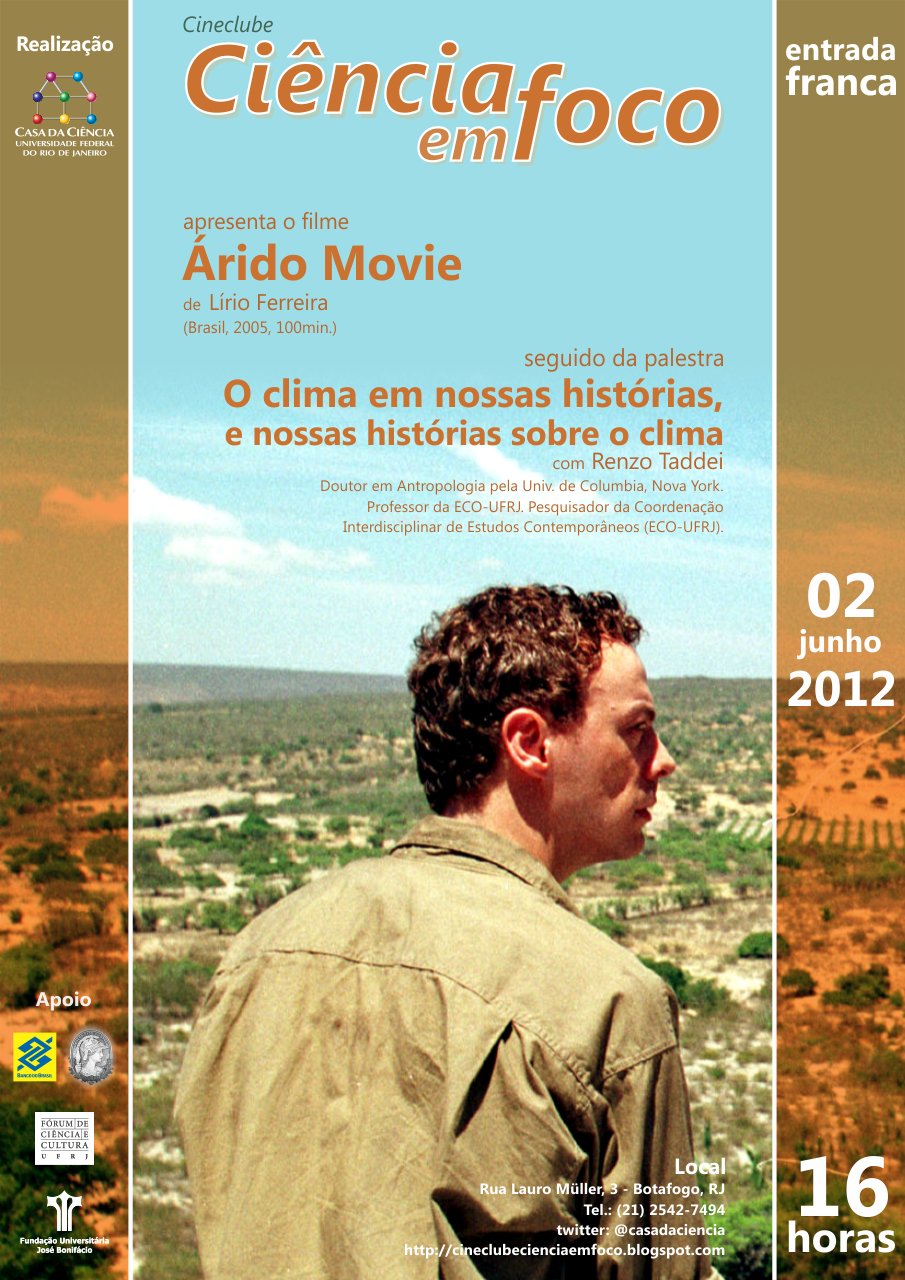
Mudando para que nada mude (Cineclube Ciência em Foco)

SEXTA-FEIRA, 25 DE MAIO DE 2012

 “A exaustão dos recursos naturais não será resolvida enquanto os padrões de subjetividade ocidentais não forem incluídos como parte fundamental do problema. […] A insatisfação crônica do cidadão ocidental, e a forma irresponsável com que se relaciona com as coisas […] são coisas tão importantes quanto a discussão sobre matrizes energéticas”.


Renzo Taddei – Doutor em Antropologia pela Univ. de Columbia, pesquisador da Coordenação do Núcleo Interdisciplinar de Estudos Contemporâneos da ECO-UFRJ e palestrante do Ciência em Foco de 2 de junho.

1) O personagem central do filme Árido Movie é um profissional que apresenta diariamente a previsão do tempo para o Brasil em uma rede de TV em São Paulo. Ao voltar para sua terra natal no sertão nordestino, ele se vê deslocado na fissura entre estes dois “nordestes”: o da previsão do tempo, distante e virtual, e o concreto. Diante dos vários contrastes com os quais se defronta, como podemos pensar seu deslocamento?

Essa fissura não se limita à questão do “nordeste”, mas é ainda mais importante, ainda que menos saliente, na própria questão do clima. Somos levados a crer todo o tempo que o clima que importa está em algum outro lugar, e que só é acessível através da mediação de especialistas e equipamentos. Obviamente isso ocorre de fato, mas há efeitos deletérios nessa alienação entre os indivíduos e o meio ambiente: a questão passa a ser entendida como problema distante, vivido apenas de forma abstrata. Isso gera a atitude caracterizada pela ideia de que “eu não tenho nada com isso” – o que é exatamente o que o personagem do filme diz à avó quando percebe que esta espera que ele vingue a morte do pai. De certa forma, ele vivia a sua própria relação familiar de forma alienada, como algo abstrato, virtual, e as contingências da vida o obrigam a enfrentar a incontornável materialidade dos contextos locais. A crise ambiental atual nos confronta com esta materialidade incontornável. Se o personagem vivesse as suas relações familiares de forma mais integral, talvez o destino de todos ali fosse outro. Há responsabilidades que nos implicam, mas que não escolhemos – algo difícil de aceitar no contexto liberal em que vivemos. Mas a analogia acaba por aqui: felizmente não há morte alguma a ser vingada na questão climática (ou haverá?).

2) O fenômeno climático da seca é recorrente na filmografia brasileira. Pode-se dizer que o cinema traz representações do meio ambiente que muitas vezes nos forçam a pensar seus elementos a partir de sua relação com a sociedade e a cultura. Sem entregar muito de sua fala, poderia comentar algo em torno desta relação? Qual a importância destas perspectivas e seu papel no cenário das discussões oficiais?

Mais do que a seca propriamente dita, o elemento que povoou a imaginação de escritores e artistas foi o “sertão”. Hoje, especialmente para as audiências do sudeste urbano, sertão é quase sinônimo de nordeste rural, mas no passado a situação era diferente. Há debates acadêmicos sobre de onde vem a palavra sertão: uma das hipóteses é que tem origem na palavra desertão, sugerindo a ideia de área remota e desolada; outra, sugere que a palavra vem de sertus, termo do latim que significa entrelaçado, enredado. Na história do Brasil, o sertão sempre foi o espaço refratário à penetração do poder oficial, das instituições de controle do Estado. Um dos lugares onde isso é mais claro é na obraGrande Sertão: Veredas, de Guimarães Rosa. A obra se ambienta toda em Minas Gerais, em uma região que não é semiárida como o sertão nordestino, e numa época onde sequer existia o “Nordeste”, mas tudo o que ficava acima da Bahia era considerado “Norte”. No início, o Brasil todo era sertão; com a expansão do Estado ao longo do século XX, houve uma redução considerável do território que pode ser considerado sertão, nos sentidos mencionados acima: praticamente toda a região sudeste, por exemplo, se “dessertaniza” à medida que o espaço passa a ser ocupado por cidades e atividade agrícola em larga escala.

Desta forma, na imaginação artística o sertão funcionou, ao longo dos últimos dois séculos, como o “outro mundo” onde há liberdade em contraposição aos controles que marcam as sociedades urbanas, e onde há mais autenticidade, o que pode ser encarado por um viés romântico (como vemos em José de Alencar, por exemplo) ou onde coisas impensáveis podem ocorrer, numa espécie de mirada conradiana [referente a elementos da obra do escritor britânico Joseph Conrad (1857-1924), autor de Coração das trevas]. Mesmo com o Cinema Novo, onde há uma sociologização mais intensa do sertão, esse não deixa de ser espaço de liberdade e experimentação, como vemos em Deus e o Diabo na Terra do Sol, de Glauber Rocha. Mas é preciso que se diga que isso tudo marca uma perspectiva de quem olha de fora. O sertão não é uma coisa, são muitas.

O que a seca faz, em certo sentido, é ressertanizarmomentaneamente um território dessertanizado, porque ela tem o potencial de desorganizar processos políticos e sociais locais, inclusive no que diz respeito às instituições oficiais de poder. Em lugares onde as variações climáticas (como as secas) são recorrentes, como no nordeste brasileiro, em geral as relações de poder locais existem de forma associada às epidemias de sofrimento trazidas pela seca. A infame indústria da seca é um exemplo disso. Mas há limites em quanto as sociedades e instituições locais conseguem se ajustar à variação do clima: secas muito intensas podem efetivamente colocar toda uma sociedade em situação de crise, como se vê atualmente nos sertões de Pernambuco e da Bahia.

Um segundo ponto da questão menciona a forma como o cinema nos faz pensar o meio ambiente em sua relação com sociedade e cultura. Há duas formas de relacionar natureza e sociedade que parecem ser recorrentes na experiência humana. Por um lado, usamos elementos da natureza para pensar relações sociais, coisa que na antropologia chamamos de totemismo. A forma como usamos figuras de animais para pensar torcidas de futebol (urubu, gaviões, porco etc), ou como destacamentos militares usam símbolos animais (a onça em quartéis na Amazônia), ou ainda quando nos referimos a qualidades pessoais através de imagens animais (ao dizer que alguém “é” uma cobra, um rato, ou uma anta), são exemplos disso. Por outro, projetamos na natureza elementos humanos, culturais e sociais, o que, por sua vez, é conhecido na antropologia como animismo. Desta forma, uma tempestade é “traiçoeira”, ou uma estação chuvosa, como ouvi várias vezes em pesquisa de campo no sertão do Ceará, pode ser “velhaca” (isto é, promete e não cumpre). O cinema naturalmente se utiliza disso tudo como recurso narrativo.

Além disso, nossa percepção do ambiente é visceralmente marcada por nossas perspectivas contextuais. Uma pesquisa que coordenei a respeito das respostas sociais e culturais às secas do ano de 2005 – um ano em que houve secas na Amazônia, no Nordeste e no sul do Brasil – mostrou que as populações locais não pensam o meio ambiente como algo desconectado das demais dimensões da vida; como tais dimensões são variáveis, a percepção do ambiente o é também. Os resultados da pesquisa foram publicados no livroDepois que a chuva não veio, disponível em texto integral na Internet. O problema é que os governos centrais, como o federal, no Brasil, têm a tendência a homogeneizar tudo com o qual se relacionam, ignorando os contextos locais; e a ciência climática tende a pregar que o contexto local e o clima não têm relação causal direta (especialmente quando estão contestando a capacidade do conhecimento tradicional de produzir previsões climáticas válidas). No que diz respeito às relações entre sociedade e clima, vivemos uma situação verdadeiramente neurótica. O meio ambiente pode inclusive ser uma forma de eufemizar uma discussão demasiadamente sensível em termos políticos e sociais. Um manual de infoativismo editado na Inglaterra, por exemplo, sugere que personagens em forma de animais sejam usados em campanhas públicas em que questões politicas sensíveis dificultem a comunicação através de exemplos humanos.

As discussões oficiais são, infelizmente, demasiadamente economicistas e unilineares, presas a um utilitarismo frustrante, para levar qualquer dessas questões a sério.

3) No mês de junho, o Rio de Janeiro sediará a Rio+20, a conferência das Nações Unidas em torno do desenvolvimento sustentável, que articulará líderes mundiais em discussões que convidam à cooperação mundial para a melhoria de problemas sociais. Tendo em vista o cenário de mudanças climáticas, como abordar a participação social nestas discussões, face às diferenças culturais que estão em jogo?

As diferenças culturais não devem ser entendidas como obstáculo às ações relacionadas à crise ambiental. Pelo contrário, são recursos importantes. É interessante observar como a biodiversidade é hipervalorizada, ao ponto de ser fetichizada, e ao mesmo tempo a diversidade de formas humanas de ser e estar no mundo é desvalorizada – por exemplo, quando se acredita, com as melhores intenções, que é preciso “educar” as pessoas que praticam queimadas para plantio, por exemplo, para que “entendam” os efeitos deletérios de algumas de suas práticas cotidianas. Projetamos o problema sobre os outros, sem perceber que esse nosso foco em informação e no pensamento, ou seja, ao diagnosticar tudo como “falta de informação” ou diferentes “formas de pensar”, é parte fundamental do problema. Tudo ficou cibernético demais, de forma que as questões morais e éticas nos escapam muito facilmente.

A ideia de que diferenças culturais dificultam a construção de um entendimento mundial sobre as questões ambientais em geral, e sobre a questão climática, em particular, me assusta. A própria ideia de “entendimento mundial” em torno do meio ambiente evoca perigosamente um centralismo pouco democrático. Nunca na história da humanidade houve uma tentativa tão articulada para a criação de um discurso único sobre o meio ambiente. A polarização política que se vê nos Estados Unidos, em torno da questão climática, é uma farsa: o comportamento do partido republicano mostra com clareza que se trata de uma disputa pelo poder, onde os envolvidos se comportam estrategicamente e defendem qualquer posição que maximize suas chances de vitória. E, acima de tudo, apresentam o problema climático como se houvesse apenas duas alternativas – aceitar ou negar o efeito das ações humanas nas mudanças climáticas –, mas as duas são validadas dentro do mesmo paradigma ocidental, exacerbadamente materialista e utilitarista. E as outras formas de pensamento e de vida, outras epistemologias e ontologias? Como diz o antropólogo Eduardo Viveiros de Castro, é preciso aprender a pensar “com” os outros. Segundo o pensamento ameríndio, por exemplo, ao invés de tomar os humanos como excepcionais em sua humanidade, há a ideia de que a humanidade é a essência comum de todos os seres vivos. Que tipo de ética e moralidade decorre dai, na relação entre humanos e não humanos? Não se trata de romantizar as formas indígenas de vida, mas apenas de mostrar como outros pensamentos são extremamente interessantes na abordagem dos problemas ambientais.

No meu entender, o que sobressai nesta questão da participação social e da multiplicidade cultural é o fato de que é preciso que os ocidentais, e nós, ocidentalóides, entendamos que há dimensões do problema que transcendem a materialidade e o utilitarismo. A exaustão dos recursos naturais, por exemplo, não será resolvida enquanto os padrões de subjetividade ocidentais não forem incluídos como parte fundamental do problema. Não adianta criar esquemas institucionais para evitar a “tragédia dos comuns”, por exemplo, sem lidar com os temas da satisfação e da responsabilidade. A insatisfação crônica do cidadão ocidental, e a forma irresponsável com que se relaciona com as coisas (ao pagar os governos municipais para “sumir” com o nosso lixo, sem que nenhuma pergunta seja feita, de modo que não precisemos pensar mais nele, por exemplo), são coisas tão importantes quanto a discussão sobre matrizes energéticas.

4) Contraplanos – expresse em poucas palavras (ou apenas uma) sua sensação com relação aos sentidos e problemáticas evocadas pelas seguintes palavras:

– tempo e clima: clima é um ponto de vista[1]; tempo é a vista (a partir) de um ponto[2] (notas: [1] Clima é “ponto de vista” no sentido de que trata-se de uma construção abstrata, resultante de cálculos estatísticos sobre medições de indicadores atmosféricos em intervalos amplos de tempo, e onde as técnicas estatísticas, o termômetro e outros mediadores técnicos têm tanta importância quanto a vibração das partículas que o termômetro busca medir; [2] tempo, no sentido dado ao conceito pela meteorologia, é o fenômeno atmosférico que existe num prazo de tempo mais curto, e portanto tende a fazer referência ao fenômeno em si, enquanto singularidade experiencial, ou seja, coisas que vivemos e lembramos, porque nos afetam num tempo e espaço específicos, e desta forma são a experiência a partir de um ponto).

 – sustentabilidade: o que exatamente se está tentando sustentar? Precisamos pensar a “mutabilidade” tanto quanto sustentabilidade. É muito difícil mudar o (insustentável) sistema econômico em que nos encontramos, e é preciso atentar para o fato de que, sob a fachada de “sustentabilidade”, há um esforço imenso de mudar apenas o que é necessário para que nada mude no final. O mercado de carbono é o exemplo paradigmático disso. Ou seja, em geral os debates sobre sustentabilidade (e sobre adaptação, resiliência etc.) são conservadores e insuficientes.

– construção social: já não há mais muita clareza a respeito do que significa tal associação de termos (o que é bom). Se tudo é construção social, a ideia deixa de ser relevante, porque não explica muita coisa. Tudo está em fluxo; se é “construção”, e se é “social”, depende de qual jogo semântico se está jogando. A expressão diz mais a respeito de quem usa a expressão do que sobre o fenômeno em questão. Tenho a impressão que dizer que o clima, por exemplo, é uma “construção social” constitui uma forma de evitar levar o clima a sério – e aqui estou repetindo ideias de autores como Bruno Latour ou Roy Wagner, por exemplo.

– ciência e cultura: há muito menos clareza a respeito do que significam tais termos (o que é melhor ainda). Num sentido mais propriamente filosófico, são duas ideias que morreram no século XX. Ou seja, tanto a Ciência como a Cultura, assim com “c” maiúsculo, que constituíam o santo graal do pensamento acadêmico Europeu dos séculos XIX e grande parte do XX se mostraram quimeras, principalmente em função dos trabalhos de gente como Heidegger, Merleau-Ponty, Wittgenstein, Gadamer, dentre muitos outros. Sobraram “ciências” e “culturas” com “c” minúsculo, ou seja, tais conceitos se transformaram em problemas empíricos. Puxando a sardinha pro meu lado (risos), se tornaram problemas antropológicos.

5) Roteiros alternativos – espaço dedicado à sugestão de links, textos, vídeos, referências diversas de outros autores/pesquisadores que possam contribuir com a discussão. Para encerrar essa sessão, transcreva, se quiser, uma fala de um pensador que o inspire e/ou seu trabalho.

No meu blog Uma (In)certa Antropologia (http://umaincertaantropologia.org) mantenho um arquivo de notícias e materiais acadêmicos sobre as relações entre cultura, sociedade e o clima. Há lá uma gravação em áudio de uma apresentação do antropólogo Eduardo Viveiros de Castro que toca no tema das mudanças climáticas como crise do Ocidente, e como outros povos e outras culturas se relacionam com isso, que vale a pena ser ouvida. Ela está no link http://www.taddei.eco.ufrj.br/ViveirosdeCastro_IFCS_20111123.wav.

O livro Depois que a chuva não veio, mencionado acima, está disponível no link http://www.taddei.eco.ufrj.br/DQACNV.htm.

O documentário “10 tacticts for turning information into action”, também mencionado acima, está no site http://informationactivism.org/original_10_tactics_project#viewonline, com subtítulos em português – o exemplo de uso de animais como personagens está na tática número 3.

Há um vídeo provocativo do Slavok Žižek, cujo título éEcology as Religion, que evoca discussões importantes sobre como o meio ambiente existe no senso comum e nas discussões políticas. O video está reproduzido em https://umaincertaantropologia.org/2012/04/12/slavoj-zizek-on-ecology-as-religion-youtube/

6) Como conhecer mais de suas produções?

Há uma lista de artigos acadêmicos e também escritos para jornais e revistas em meu website, no link http://www.taddei.eco.ufrj.br/Textos.htm

Educational Games to Train Middle Schoolers’ Attention, Empathy (Science Daily)

ScienceDaily (May 21, 2012) — Two years ago, at a meeting on science and education, Richard Davidson challenged video game manufacturers to develop games that emphasize kindness and compassion instead of violence and aggression.

With a grant from the Bill & Melinda Gates Foundation, the University of Wisconsin-Madison professor is now answering his own call. With Kurt Squire, an associate professor in the School of Education and director of the Games Learning Society Initiative, Davidson received a $1.39 million grant this spring to design and rigorously test two educational games to help eighth graders develop beneficial social and emotional skills — empathy, cooperation, mental focus, and self-regulation.

“By the time they reach the eighth grade, virtually every middle-class child in the Western world is playing smartphone apps, video games, computer games,” says Davidson, the William James and Vilas Research Professor of Psychology and Psychiatry at UW-Madison. “Our hope is that we can use some of that time for constructive purposes and take advantage of the natural inclination of children of that age to want to spend time with this kind of technology.”

The project grew from the intersection of Davidson’s research on the brain bases of emotion, Squire’s expertise in educational game design, and the Gates Foundation’s interest in preparing U.S. students for college readiness-possessing the skills and knowledge to go on to post-secondary education without the need for remediation.

“Skills of mindfulness and kindness are very important for college readiness,” Davidson explains. “Mindfulness, because it cultivates the capacity to regulate attention, which is the building block for all kinds of learning; and kindness, because the ability to cooperate is important for everything that has to do with success in life, team-building, leadership, and so forth.”

He adds that social, emotional, and interpersonal factors influence how students use and apply their cognitive abilities.

Building on research from the Center for Investigating Healthy Minds at UW-Madison’s Waisman Center, the initial stage of the project will focus on designing prototypes of two games. The first game will focus on improving attention and mental focus, likely through breath awareness.

“Breathing has two important characteristics. One is that it’s very boring, so if you’re able to attend to that, you can attend to most other things,” Davidson says. “The second is that we’re always breathing as long as we’re alive, and so it’s an internal cue that we can learn to come back to. This is something a child can carry with him or her all the time.”

The second game will focus on social behaviors such as kindness, compassion, and altruism. One approach may be to help students detect and interpret emotions in others by reading non-verbal cues such as facial expressions, tone of voice, and body posture.

“We’ll use insights gleaned from our neuroscience research to design the games and will look at changes in the brain during the performance of these games to see how the brain is actually affected by them,” says Davidson. “Direct feedback from monitoring the brain while students are playing the games will help us iteratively adjust the game design as this work goes forward.”

Their analyses will include neural imaging and behavioral testing before, during, and after students play the games, as well as looking at general academic performance.

The results will help the researchers determine how the games impact students and whether educational games are a useful medium for teaching these behaviors and skills, as well as evaluate whether certain groups of kids benefit more than others.

“Our hope is that we can begin to address these questions with the use of digital games in a way that can be very easily scaled and, if we are successful, to potentially reach an extraordinarily large number of youth,” says Davidson.

Healthy Marriage Interventions: A Boom or a Bust? (Science Daily)

ScienceDaily (May 22, 2012) — Conventional wisdom, backed by years of research, suggests that healthy marriages equals a healthy society. And politicians and government officials have taken note, investing hundreds of millions of dollars each year in education programs designed to promote healthy marriages, focusing specifically on poor couples and couples of color. Is it working? No, says a Binghamton University researcher in a new study published in the current issue ofAmerican Psychologist, the flagship journal of the American Psychological Association. And it’s because many of these programs were based on research data gathered from White and middle-class marriages, and when applied to poor couples or couples of color, just don’t work.

“Initially, the rationale for these programs came from policy makers and scholars, who honed in on the association between unmarried parents and poverty that is plainly obvious in the data,” said Matthew D. Johnson, associate professor of psychology at Binghamton University. “This association led George W. Bush to make the promotion of healthy marriages a central plank of his domestic policy agenda, resulting in the implementation of the Healthy Marriage Initiatives. Barack Obama endorsed these initiatives, both as presidential candidate and as president. Now that the data on the success of these programs has started to roll in, the results have been very disappointing.”

According to Johnson, the problem lies in the fact that many of these programs lack grounding in solid science and are allowed to run unchecked. He cites research from two recent multisite studies as evidence that many of the federal programs that promote healthy marriage need to be suspended — or at the very least, overhauled. One of these studies, which was focused on over 5,000 couples in eight cities, examined the benefits of interventions designed to improve the relationships of low-income, unmarried couples who were either pregnant or recently had their first child.

The results indicated that the interventions had no effect in six of the cities, small beneficial effects in one city, and small detrimental effects in another city. The results of the other outcome study focused on 5,395 low-income married couples and found that those who received the intervention experienced very small improvements in relationship satisfaction, communication, and psychological health but no significant changes in relationship dissolution or cooperative parenting. And to add to it, the interventions didn’t come cheap, costing on average around $9,100 per couple.

So why the disconnect between a seemingly good idea and disappointing program outcomes? Johnson says there are several possible explanations. The best of these programs — the ones based on scientific findings — were initially studied with middle-class couples while the federal initiatives target poor couples. And even if the research that formed the basis of these interventions does apply, relationship improvement just doesn’t seem to be a priority for poor couples.

“There is evidence that suggests poor women want to be married and understand the benefits of healthy marriages,” said Johnson. “But earning enough for basic household expenses, keeping their children safe and working with their children’s overburdened schools are much more urgent concerns, making the idea of focusing on marriage seem self-indulgent if not irrelevant to many poor parents. When faced with a myriad of social issues, building intimate relationships is just not high on their priority lists.”

Johnson explains that this doesn’t mean the federal government shouldn’t be funding intimate relationship research. Instead, the government needs to adopt a more multifaceted approach: focus on programs that will ease the stress of poor families and at the same time, fund more rigorous basic research.

“We just don’t have solid predictors for relationship satisfaction for poor couple and couple of color, let alone whether the current marriage models apply,” said Johnson. He points to the National Institutes of Health as being the perfect place to coordinate and sponsor the research, noting “It has a long history of using scientific rigor in decision-making and it would certainly help in achieving the type of results that we’re looking for from these initiatives.”

Johnson also suggests that every community-based program funded by the Health Marriage Initiative should be required to gather standardized quantitative data in order to clearly demonstrate outcomes. And if the data shows programs aren’t working, Johnson recommends that the federal government get tough and either defund or filter out those that do not demonstrate effectiveness.

“If we are going to continue these initiatives, let’s at least make certain that we are assessing the effectiveness of the programs and learning from our mistakes,” said Johnson. “Improving marriages is a worthy goal and one shared by Democrat and Republican administrations alike. The key now is to get that same bipartisan support for improving the research and programs that target poor couples. With the renewed focus on the federal budget, the timing is just right.”

Interview with Nobel prize winner Elinor Ostrom on climate change (Integrated Regional Information Networks)

Photo: Indiana University. Elinor Ostrom: A champion of people power

JOHANNESBURG, 25 April 2012 (IRIN) – The governance of natural resources like land, the oceans, rivers and the atmosphere, can affect the impact of some of the world’s biggest crises caused by natural events like droughts and floods. How best to manage those resources has been at the heart of the work by Nobel Prize winner (economics) Elinor Ostrom.

She has been looking at how communities across the world, from developing and rural economies like Nepal and Kenya to developed ones like the USA and Switzerland, manage their commonly shared resources such as fisheries, pasture land and water sustainably.

Ostrom’s faith in the ability of the individual and community to be able to trust each other, take the right course of action and not wait for governments to make the first move is pivotal to her thinking.

Ostrom works with the concept of “polycentrism”, which she developed with her husband Vincent Otsrom. She advocates vesting authority in individuals, communities, local governments, and local NGOs as opposed to concentrating power at global or national levels.

Ostrom recently suggested using this “polycentric approach” to address man-made climate change. She talked to IRIN by email about “polycentrism”, Rio+20, climate change, trust and the power of local action.

QYou have suggested a polycentric approach as opposed to single policies at a global level to reduce greenhouse gas emissions. Could you explain how that would work? Do you think a similar approach would work to get all countries and their people to believe in, and adopt, sustainable development?

A: We have modelled the impact of individual actions on climate change incorrectly and need to change the way we think about this problem. When individuals walk a distance rather than driving it, they produce better health for themselves. At the same time that they reduce the amount of greenhouse gas emissions that they are generating. There are benefits for the individual and small benefits for the globe. When a building owner re-does the way the building is insulated and the heating system, these actions can dramatically change the amount of greenhouse gas emissions made. This has an immediate impact on the neighbourhood of the building as well as on the globe.

When cities and counties decide to rehabilitate their energy systems so as to produce less greenhouse gas emissions, they are reducing the amount of pollution in the local region as well as greenhouse gas emissions on the globe. In other words, the key point is that there are multiple externalities involved for many actions related to greenhouse gas emissions. While in the past the literature has underplayed the importance of local effects, we need to recognize – as more and more individuals, families, communities, and states are seeing – that they will gain a benefit, as well as the globe, and that cumulatively a difference can be made at the global level if a number of small units start taking action. We have a much greater possibility of impacting global change problems if we start locally.

“the solutions that are evolved by local people have a chance of being more imaginative and better ways of solving these problems…”

Q: The earth is our common resource system – yet many countries including China and India feel they also have a right to grow, burn coal to get to where the developed world is – how do you get them out of that frame of mind without compromising the question of equity?

A: We may not be able to convince India and China of all of this. Part of my discouragement with the international negotiations is that we have gotten riveted into battles at the very big level over who caused global change in the first place and who is responsible for correcting [it]. It will take a long time to resolve some of these conflicts. Meanwhile, if we do not take action, the increase to greenhouse gas collection at a global level gets larger and larger. While we cannot solve all aspects of this problem by cumulatively taking action at local levels, we can make a difference, and we should.

Q: Do you think sustainable development did not gain much currency as it was directed at governments and a top-down approach? You think the world is about to repeat that mistake (if you would call it that?) at Rio+20? What would you do – would you ever call such a gathering of governments?

A: Yes, I do think that directing the question of climate change primarily at governments misses the point that actions that reduce greenhouse gas emissions must be taken by individuals, communities, cities, states, residents of entire nations, and the world. Yet, it is important that public officials recognize that there is a role for an international agreement and that they should be working very hard on getting an agreement that establishes international regimes that has a chance to reduce emissions across countries.

Q: You are a great believer in ordinary people’s ability to organize and use their commonly shared resources wisely, but I take it that does not work all the time? But ultimately collective action at the grassroots can force change at the top?

A: I am a believer of the capabilities of people to organize at a local level. That does not mean that they always do. There are a wide variety of collective action problems that exist at a small scale. The important thing is that people at a small scale, who know what the details of the problems are, organize, rather than calling on officials at a much larger scale.

Officials at a larger scale may have many collective-action problems of their own that they need to address. They do not have the detailed information about problems at a small scale that people who are confronting those every day do have. Thus, the solutions that are evolved by local people have a chance of being more imaginative and better ways of solving these problems than allowing them to go unsolved and eventually asking a much larger scale unit to solve it for them.

Q: This approach probably works better in a rural setting where there is a sense of community and of a shared responsibility to take care of their common resources. But how do you get that sense of ownership of the planet in an urban setting?

A: To solve these delicate problems at any scale requires individuals to trust that others are also going to contribute to their solution. Building trust is not something that can be done overnight. Thus, the crucial thing is that successful efforts at a local scale be advertised and well known throughout a developing country.

Developing associations of local communities, where very serious discussions can be held of the problems they are facing and creative ways that some communities, who have faced these problems, have adopted solutions that work. That does not mean that the solutions that work in one environment in a particular country will work in all others, but posing it as a solution that fits a local environment and that the challenge that everyone faces is to know enough about the social-ecological features of the problems they are facing that they can come up with good solutions that fit that local social-ecological system.

Q: I have been covering the recent drought in Niger – I came across people who were going to pack up and leave their village for good… Would that motivate people, countries, governments to take action to reduce emissions? But how do you make people in Europe, the US or Asia think about the people in Niger as their own?

A: There is no simple answer to this question. It is here that churches and NGOs can play a particular role in knowing about the problems being faced by villagers in Niger and other developing countries and trying to help. They can then also write stories about these problems in a way that people in Britain, Europe, and the US may understand better. It is a problem in some cases that officials in developing countries are corrupt, and direct aid to the country may only go into private bank accounts. We have to rethink how we organize governance at multiple scales so as to reduce the likelihood of some individuals having very strong powers and capability of using their public office primarily for private gain.

Q: Do you see the world moving in unison towards sustainability in the next five years? Do you think the world is prepared to take on this question and specially now when we are in a recession?

A: No, I do not see the world moving in unison. I do see some movements around the world that are very encouraging, but they are nowhere the same everywhere. We need to get out of thinking that we have to be moving the same everywhere. We need to be recognizing the complexity of the different problems being faced in a wide diversity of regions of the world. Thus, really great solutions that work in one environment do not work in others. We need to understand why, and figure out ways of helping to learn from good examples as well as bad examples of how to move ahead.

Soldiers Who Desecrate the Dead See Themselves as Hunters (Science Daily)

ScienceDaily (May 20, 2012) — Modern day soldiers who mutilate enemy corpses or take body-parts as trophies are usually thought to be suffering from the extreme stresses of battle. But, research funded by the Economic and Social Research Council (ESRC) shows that this sort of misconduct has most often been carried out by fighters who viewed the enemy as racially different from themselves and used images of the hunt to describe their actions.

“The roots of this behaviour lie not in individual psychological disorders,” says Professor Simon Harrison who carried out the study, “but in a social history of racism and in military traditions that use hunting metaphors for war. Although this misconduct is very rare, it has persisted in predictable patterns since the European Enlightenment. This was the period when the first ideologies of race began to appear, classifying some human populations as closer to animals than others.”

European and North American soldiers who have mutilated enemy corpses appear to have drawn racial distinctions of this sort between close and distant enemies. They ‘fought’ their close enemies, and bodies remained untouched after death, but they ‘hunted’ their distant enemies and such bodies became the trophies that demonstrate masculine skill.

Almost always, only enemies viewed as belonging to other ‘races’ have been treated in this way. “This is a specifically racialised form of violence,” suggest Professor Harrison, “and could be considered a type of racially-motivated hate crime specific to military personnel in wartime.”

People tend to associate head-hunting and other trophy-taking with ‘primitive’ warfare. They consider wars fought by professional militaries as rational and humane. However, such contrasts are misleading. The study shows that the symbolic associations between hunting and war that can give rise to abnormal behaviour such as trophy-taking in modern military organisations are remarkably close to those in certain indigenous societies where practices such as head-hunting were a recognised part of the culture.

In both cases, mutilation of the enemy dead occurs when enemies are represented as animals or prey. Parts of the corpse are removed like trophies at ‘the kill’. Metaphors of ‘war-as-hunting’ that lie at the root of such behaviour are still strong in some armed forces in Europe and North America — not only in military training but in the media and in soldiers’ own self-perception.

Professor Harrison gives the example of the Second World War and shows that trophy-taking was rare on the European battlefields but was relatively common in the war in the Pacific, where some Allied soldiers kept skulls of Japanese combatants as mementos or made gifts of their remains to friends back home.

The study also gives a more recent comparison: there have been incidents in Afghanistan in which NATO personnel have desecrated the dead bodies of Taliban combatants but there is no evidence of such misconduct occurring in the conflicts of the former Yugoslavia where NATO forces were much less likely to have considered their opponents racially ‘distant’.

But, it would be wrong to suggest that such behaviour amounts to a tradition. These practices are usually not explicitly taught. Indeed, they seem to be quickly forgotten after the end of wars and veterans often remain unaware of the extent to which they occurred.

Furthermore, attitudes towards the trophies themselves change as the enemy ceases to be the enemy. The study shows how human remains kept by Allied soldiers after the Pacific War became unwanted memory objects over time, which ex-servicemen or their families often donated to museums. In some cases, veterans have made great efforts to seek out the families of Japanese soldiers in order to return their remains and to disconnect themselves from a disturbing past.

Professor Harrison concludes that human trophy-taking is evidence of the power of metaphor in structuring and motivating human behaviour. “It will probably occur, in some form or other, whenever war, hunting and masculinity are conceptually linked,” he says. “Prohibition is clearly not enough to prevent it. We need to recognise the dangers of portraying war in terms of hunting imagery.”

Cúpula dos Povos rejeita conceito de economia verde da Rio+20 (Agência Brasil)

JC e-mail 4496, de 14 de Maio de 2012.

As principais lideranças responsáveis pela organização da Cúpula dos Povos, reunião de movimentos populares paralela à Conferência das Nações Unidas sobre o Desenvolvimento Sustentável (Rio+20), divulgaram ontem (13) um documento condenando o conceito de economia verde, defendido por integrantes de governos que participarão da Rio+20, que ocorrerá em junho no Rio.

O documento critica, em três páginas, o foco das discussões em torno da Rio+20, que não estaria tocando nas questões fundamentais da crise global, que na visão dos participantes da Cúpula dos Povos, “é o capitalismo, com suas formas clássicas e renovadas de dominação, que concentra a riqueza e produz desigualdades sociais”.

Os organizadores elaboraram o documento durante encontro internacional no Rio e divulgaram o conteúdo em coletiva de imprensa. A mexicana Silvia Ribeiro, diretora da organização ETC, dedicada a temas agroalimentares, disse que a economia verde é um nome enganoso.

“Muitos creem que é algo positivo, mas é um disfarce para mais negócios e mais exploração dos ecossistemas. O outro aspecto é que eles querem se apropriar da natureza usando tecnologias perigosas. É uma solução falsa dizer que vai se resolver tudo com tecnologia, em vez de se ir às causas para baixar as emissões do efeito estufa, os padrões de produção e o consumo”, criticou Silvia.

A canadense Nettie Wiebe, produtora de alimentos orgânicos e ligada à Via Campesina, alertou para o perigo de se liberar as sementes de tecnologia terminator, que geram plantas modificadas geneticamente para serem inférteis, forçando agricultores a comprarem novas sementes a cada safra. Segundo ela, apesar de haver embargo internacional contra esse tipo de semente, grupos internacionais do agronegócio estão interessados em patrocinar sua liberação.

A norte-americana Cindy Wiesner, dirigente da organização Grassroots Global Justice Alliance, criticou a provável ausência do presidente Barack Obama na Rio+20. “Historicamente somos o país que mais destrói o planeta e temos uma responsabilidade muito grande de oferecer outras práticas. Mas o que vemos, com a ausência do presidente Obama, é que ele não se importa com isso. É uma pena que não venha, pois seria uma oportunidade para ouvir milhões de pessoas que querem uma alternativa”, disse a americana.

Outro ponto destacado no documento da Cúpula dos Povos é a luta contra a sanção do projeto original do Código Florestal, conforme aprovado pelo Congresso e que agora depende da decisão da presidente Dilma Rousseff em modificar ou não a matéria através de veto. “Conclamamos todos os povos do mundo a apoiarem a luta do povo brasileiro contra a destruição de um dos mais importantes quadros legais de proteção às florestas [Código Florestal], o que abre caminhos para mais desmatamentos em favor dos interesses do agronegócio e da ampliação da monocultura”, assinala trecho do documento.

Mais informações sobre o encontro da Cúpula dos Povos, que vai acontecer de 15 a 23 de junho, podem ser acessadas na página http://www.cupuladospovos.org.br.

Study links biodiversity and language loss (BBC)

13 May 2012

By Mark KinverEnvironment reporter, BBC News

Brazilian tribesman (Image: AP)The study identified that high biodiversity areas also had high linguistic diversity

The decline of linguistic and cultural diversity is linked to the loss of biodiversity, a study has suggested.

The authors said that 70% of the world’s languages were found within the planet’s biodiversity hotspots.

Data showed that as these important environmental areas were degraded over time, cultures and languages in the area were also being lost.

The results of the study have been published in the Proceedings of the National Academy of Sciences (PNAS).

“Biologists estimate annual loss of species at 1,000 times or more greater than historic rates, and linguists predict that 50-90% of the world’s languages will disappear by the end of the century,” the researchers wrote.

Lead author Larry Gorenflo from Penn State University, in the US, said previous studies had identified a geographical connection between the two, but did not offer the level of detail required.

Dr Gorenflo told BBC News that the limitation to the data was that either the languages were listed by country or there was a dot on the map to indicate the location.

“But what you did not know was if the area extended two kilometres or 200 kilometres, so you really did not get a sense of the extent of the language,” he explained.

“We used improved language data to really get a more solid sense of how languages and biodiversity co-occurred and an understanding of how geographically extensive the language was.”

He said the study achieved this by also looking at smaller areas with high biodiversity, such as national parks or other protected habitats.

“When we did that, not only did we get a sense of co-occurrence at a regional scale, but we also got a sense that co-occurrence was found at a much finer scale,” he said.

“We are not quite sure yet why this happens, but in a lot of cases it may well be that biodiversity evolved as part-and-parcel of cultural diversity, and vice versa.”

In their paper, the researchers pointed out that, out of the 6,900 or more languages spoken on Earth, more than 4,800 occurred in regions containing high biodiversity.

Dr Gorenflo described these locations as “very important landscapes” which were “getting fewer and fewer” but added that the study’s data could help provide long-term security.

“It provides a wonderful opportunity to integrate conservation efforts – you can have people who can get funding for biological conservation, and they can collaborate with people who can get funding for linguistic or cultural conservation,” he suggested.

“In the past, it was hard to get biologists to look at people.

“That has really changed dramatically in the past few years. One thing that a lot of biologists and ecologists are now seeing is that people are part of these ecosystems.”

Television Has Less Effect On Education About Climate Change Than Other Forms Of Media (Science Daily)

ScienceDaily (Oct. 16, 2009) — Worried about climate change and want to learn more? You probably aren’t watching television then. A new study by George Mason University Communication Professor Xiaoquan Zhao suggests that watching television has no significant impact on viewers’ knowledge about the issue of climate change. Reading newspapers and using the web, however, seem to contribute to people’s knowledge about this issue.

The study, “Media Use and Global Warming Perceptions: A Snapshot of the Reinforcing Spirals,” looked at the relationship between media use and people’s perceptions of global warming. The study asked participants how often they watch TV, surf the Web, and read newspapers. They were also asked about their concern and knowledge of global warming and specifically its impact on the polar regions.

“Unlike many other social issues with which the public may have first-hand experience, global warming is an issue that many come to learn about through the media,” says Zhao. “The primary source of mediated information about global warming is the news.”

The results showed that people who read newspapers and use the Internet more often are more likely to be concerned about global warming and believe they are better educated about the subject. Watching more television, however, did not seem to help.

He also found that individuals concerned about global warming are more likely to seek out information on this issue from a variety of media and nonmedia sources. Other forms of media, such as the Oscar-winning documentary “The Inconvenient Truth” and the blockbuster thriller “The Day After Tomorrow,” have played important roles in advancing the public’s interest in this domain.

Politics also seemed to have an influence on people’s perceptions about the science of global warming. Republicans are more likely to believe that scientists are still debating the existence and human causes of global warming, whereas Democrats are more likely to believe that a scientific consensus has already been achieved on these matters.

“Some media forms have clear influence on people’s perceived knowledge of global warming, and most of it seems positive,” says Zhao. “Future research should focus on how to harness this powerful educational function.”

Bruno Latour: Love Your Monsters (Breakthrough)

Breakthrough Journal, No. 2, Fall 2011

Latour - crying baby - AP.jpg

In the summer of 1816, a young British woman by the name of Mary Godwin and her boyfriend Percy Shelley went to visit Lord Byron in Lake Geneva, Switzerland. They had planned to spend much of the summer outdoors, but the eruption of Mount Tambora in Indonesia the previous year had changed the climate of Europe. The weather was so bad that they spent most of their time indoors, discussing the latest popular writings on science and the supernatural.

After reading a book of German ghost stories, somebody suggested they each write their own. Byron’s physician, John Polidori, came up with the idea for The Vampyre, published in 1819,1 which was the first of the “vampire-as-seducer” novels. Godwin’s story came to her in a dream, during which she saw “the pale student of unhallowed arts kneeling beside the thing he had put together.”2 Soon after that fateful summer, Godwin and Shelley married, and in 1818, Mary Shelley’s horror story was published under the title, Frankenstein, Or, the Modern Prometheus.3

Frankenstein lives on in the popular imagination as a cautionary tale against technology. We use the monster as an all-purpose modifier to denote technological crimes against nature. When we fear genetically modified foods we call them “frankenfoods” and “frankenfish.” It is telling that even as we warn against such hybrids, we confuse the monster with its creator. We now mostly refer to Dr. Frankenstein’s monster as Frankenstein. And just as we have forgotten that Frankenstein was the man, not the monster, we have also forgotten Frankenstein’s real sin.

Dr. Frankenstein’s crime was not that he invented a creature through some combination of hubris and high technology, but rather that heabandoned the creature to itself. When Dr. Frankenstein meets his creation on a glacier in the Alps, the monster claims that it was notborn a monster, but that it became a criminal only after being left alone by his horrified creator, who fled the laboratory once the horrible thing twitched to life. “Remember, I am thy creature,” the monster protests, “I ought to be thy Adam; but I am rather the fallen angel, whom thou drivest from joy for no misdeed… I was benevolent and good; misery made me a fiend. Make me happy, and I shall again be virtuous.”

Written at the dawn of the great technological revolutions that would define the 19th and 20th centuries, Frankenstein foresees that the gigantic sins that were to be committed would hide a much greater sin. It is not the case that we have failed to care for Creation, but that we have failed to care for our technological creations. We confuse the monster for its creator and blame our sins against Nature upon our creations. But our sin is not that we created technologies but that we failed to love and care for them. It is as if we decided that we were unable to follow through with the education of our children.4

Let Dr. Frankenstein’s sin serve as a parable for political ecology. At a time when science, technology, and demography make clear that we can never separate ourselves from the nonhuman world — that we, our technologies, and nature can no more be disentangled than we can remember the distinction between Dr. Frankenstein and his monster — this is the moment chosen by millions of well-meaning souls to flagellate themselves for their earlier aspiration to dominion, to repent for their past hubris, to look for ways of diminishing the numbers of their fellow humans, and to swear to make their footprints invisible?

The goal of political ecology must not be to stop innovating, inventing, creating, and intervening. The real goal must be to have the same type of patience and commitment to our creations as God the Creator, Himself. And the comparison is not blasphemous: we have taken the whole of Creation on our shoulders and have become coextensive with the Earth.

What, then, should be the work of political ecology? It is, I believe, tomodernize modernization, to borrow an expression proposed by Ulrich Beck.5 
This challenge demands more of us than simply embracing technology and innovation. It requires exchanging the modernist notion of modernity for what I have called a “compositionist” one that sees the process of human development as neither liberation from Nature nor as a fall from it, but rather as a process of becoming ever-more attached to, and intimate with, a panoply of nonhuman natures.

1.
At the time of the plough we could only scratch the surface of the soil. Three centuries back, we could only dream, like Cyrano de Bergerac, of traveling to the moon. In the past, my Gallic ancestors were afraid of nothing except that the “sky will fall on their heads.”

Today we can fold ourselves into the molecular machinery of soil bacteria through our sciences and technologies. We run robots on Mars. We photograph and dream of further galaxies. And yet we fear that the climate could destroy us.

Everyday in our newspapers we read about more entanglements of all those things that were once imagined to be separable — science, morality, religion, law, technology, finance, and politics. But these things are tangled up together everywhere: in the Intergovernmental Panel on Climate Change, in the space shuttle, and in the Fukushima nuclear power plant.

If you envision a future in which there will be less and less of these entanglements thanks to Science, capital S, you are a modernist. But if you brace yourself for a future in which there will always be more of these imbroglios, mixing many more heterogeneous actors, at a greater and greater scale and at an ever-tinier level of intimacy requiring even more detailed care, then you are… what? A compositionist!

The dominant, peculiar story of modernity is of humankind’semancipation from Nature. Modernity is the thrusting-forward arrow of time — Progress — characterized by its juvenile enthusiasm, risk taking, frontier spirit, optimism, and indifference to the past. The spirit can be summarized in a single sentence: “Tomorrow, we will be able to separate more accurately what the world is really like from the subjective illusions we used to entertain about it.”

The very forward movement of the arrow of time and the frontier spirit associated with it (the modernizing front) is due to a certain conception of knowledge: “Tomorrow, we will be able to differentiate clearly what in the past was still mixed up, namely facts and values, thanks to Science.”

Science is the shibboleth that defines the right direction of the arrow of time because it, and only it, is able to cut into two well-separated parts what had, in the past, remained hopelessly confused: a morass of ideology, emotions, and values on the one hand, and, on the other, stark and naked matters of fact.

The notion of the past as an archaic and dangerous confusion arises directly from giving Science this role. A modernist, in this great narrative, is the one who expects from Science the revelation that Nature will finally be visible through the veils of subjectivity — and subjection — that hid it from our ancestors.

And here has been the great failure of political ecology. Just when all of the human and nonhuman associations are finally coming to the center of our consciousness, when science and nature and technology and politics become so confused and mixed up as to be impossible to untangle, just as these associations are beginning to be shaped in our political arenas and are triggering our most personal and deepest emotions, this is when a new apartheid is declared: leave Nature alone and let the humans retreat — as the English did on the beaches of Dunkirk in the 1940s.

Just at the moment when this fabulous dissonance inherent in the modernist project between what modernists say (emancipation from all attachments!) and what they do (create ever-more attachments!) is becoming apparent to all, along come those alleging to speak for Nature to say the problem lies in the violations and imbroglios — the attachments!

Instead of deciding that the great narrative of modernism (Emancipation) has always resulted in another history altogether (Attachments), the spirit of the age has interpreted the dissonance in quasi-apocalyptic terms: “We were wrong all along, let’s turn our back to progress, limit ourselves, and return to our narrow human confines, leaving the nonhumans alone in as pristine a Nature as possible, mea culpa, mea maxima culpa…

Nature, this great shortcut of due political process, is now used to forbid humans to encroach. Instead of realizing at last that the emancipation narrative is bunk, and that modernism was always about attachments, modernist greens have suddenly shifted gears and have begun to oppose the promises of modernization.

Why do we feel so frightened at the moment that our dreams of modernization finally come true? Why do we suddenly turn pale and wish to fall back on the other side of Hercules’s columns, thinking we are being punished for having transgressed the sign: “Thou shall not transgress?” Was not our slogan until now, as Nordhaus and Shellenberger note in Break Through, “We shall overcome!”?6

In the name of indisputable facts portraying a bleak future for the human race, green politics has succeeded in leaving citizens nothing but a gloomy asceticism, a terror of trespassing Nature, and a diffidence toward industry, innovation, technology, and science. No wonder that, while political ecology claims to embody the political power of the future, it is reduced everywhere to a tiny portion of electoral strap-hangers. Even in countries where political ecology is a little more powerful, it contributes only a supporting force.

Political ecology has remained marginal because it has not grasped either its own politics or its own ecology. It thinks it is speaking of Nature, System, a hierarchical totality, a world without man, an assured Science, but it is precisely these overly ordered pronouncements that marginalize it.

Set in contrast to the modernist narrative, this idea of political ecology could not possibly succeed. There is beauty and strength in the modernist story of emancipation. Its picture of the future is so attractive, especially when put against such a repellent past, that it makes one wish to run forward to break all the shackles of ancient existence.

To succeed, an ecological politics must manage to be at least as powerful as the modernizing story of emancipation without imagining that we are emancipating ourselves from Nature. What the emancipation narrative points to as proof of increasing human mastery over and freedom from Nature — agriculture, fossil energy, technology — can be redescribed as the increasing attachmentsbetween things and people at an ever-expanding scale. If the older narratives imagined humans either fell from Nature or freed themselves from it, the compositionist narrative describes our ever-increasing degree of intimacy with the new natures we are constantly creating. Only “out of Nature” may ecological politics start again and anew.

2.
The paradox of “the environment” is that it emerged in public parlance just when it was starting to disappear. During the heyday of modernism, no one seemed to care about “the environment” because there existed a huge unknown reserve on which to discharge all bad consequences of collective modernizing actions. The environment is what appeared when unwanted consequences came back to haunt the originators of such actions.

But if the originators are true modernists, they will see the return of “the environment” as incomprehensible since they believed they were finally free of it. The return of consequences, like global warming, is taken as a contradiction, or even as a monstrosity, which it is, of course, but only according to the modernist’s narrative of emancipation. In the compositionist’s narrative of attachments, unintended consequences are quite normal — indeed, the most expected things on earth!

Environmentalists, in the American sense of the word, never managed to extract themselves from the contradiction that the environment is precisely not “what lies beyond and should be left alone” — this was the contrary, the view of their worst enemies! The environment is exactly what should be even more managed, taken up, cared for, stewarded, in brief, integrated and internalized in the very fabric of the polity.

France, for its part, has never believed in the notion of a pristine Nature that has so confused the “defense of the environment” in other countries. What we call a “national park” is a rural ecosystem complete with post offices, well-tended roads, highly subsidized cows, and handsome villages.

Those who wish to protect natural ecosystems learn, to their stupefaction, that they have to work harder and harder — that is, to intervene even more, at always greater levels of detail, with ever more subtle care — to keep them “natural enough” for Nature-intoxicated tourists to remain happy.

Like France’s parks, all of Nature needs our constant care, our undivided attention, our costly instruments, our hundreds of thousands of scientists, our huge institutions, our careful funding. But though we have Nature, and we have nurture, we don’t know what it would mean for Nature itself to be nurtured.7

The word “environmentalism” thus designates this turning point in history when the unwanted consequences are suddenly considered to be such a monstrosity that the only logical step appears to be to abstain and repent: “We should not have committed so many crimes; now we should be good and limit ourselves.” Or at least this is what people felt and thought before the breakthrough, at the time when there was still an “environment.”

But what is the breakthrough itself then? If I am right, the breakthrough involves no longer seeing a contradiction between the spirit of emancipation and its catastrophic outcomes, but accepting it as the normal duty of continuing to care for unwanted consequences, even if this means going further and further down into the imbroglios. Environmentalists say: “From now on we should limit ourselves.” Postenvironmentalists exclaim: “From now on, we should stop flagellating ourselves and take up explicitly and seriously what we have been doing all along at an ever-increasing scale, namely, intervening, acting, wanting, caring.” For environmentalists, the return of unexpected consequences appears as a scandal (which it is for the modernist myth of mastery). For postenvironmentalists, the other, unintended consequences are part and parcel of any action.

3.
One way to seize upon the breakthrough from environmentalism to postenvironmentalism is to reshape the very definition of the “precautionary principle.” This strange moral, legal, epistemological monster has appeared in European and especially French politics after many scandals due to the misplaced belief by state authority in the certainties provided by Science.8

When action is supposed to be nothing but the logical consequence of reason and facts (which the French, of all people, still believe), it is quite normal to wait for the certainty of science before administrators and politicians spring to action. The problem begins when experts fail to agree on the reasons and facts that have been taken as the necessary premises of any action. Then the machinery of decision is stuck until experts come to an agreement. It was in such a situation that the great tainted blood catastrophe of the 1980s ensued: before agreement was produced, hundreds of patients were transfused with blood contaminated by the AIDS virus.9

The precautionary principle was introduced to break this odd connection between scientific certainty and political action, stating that even in the absence of certainty, decisions could be made. But of course, as soon as it was introduced, fierce debates began on its meaning. Is it an environmentalist notion that precludes action or a postenvironmentalist notion that finally follows action through to its consequences?

Not surprisingly, the enemies of the precautionary principle — which President Chirac enshrined in the French Constitution as if the French, having indulged so much in rationalism, had to be protected against it by the highest legal pronouncements — took it as proof that no action was possible any more. As good modernists, they claimed that if you had to take so many precautions in advance, to anticipate so many risks, to include the unexpected consequences even before they arrived, and worse, to be responsible for them, then it was a plea for impotence, despondency, and despair. The only way to innovate, they claimed, is to bounce forward, blissfully ignorant of the consequences or at least unconcerned by what lies outside your range of action. Their opponents largely agreed. Modernist environmentalists argued that the principle of precaution dictated no action, no new technology, no intervention unless it could be proven with certainty that no harm would result. Modernists we were, modernists we shall be!

But for its postenvironmental supporters (of which I am one) the principle of precaution, properly understood, is exactly the change ofzeitgeist needed: not a principle of abstention — as many have come to see it — but a change in the way any action is considered, a deep tidal change in the linkage modernism established between science and politics. From now on, thanks to this principle, unexpected consequences are attached to their initiators and have to be followed through all the way.

4.
The link between technology and theology hinges on the notion of mastery. Descartes exclaimed that we should be “maîtres et possesseurs de la nature.”10
But what does it mean to be a master? In the modernist narrative, mastery was supposed to require such total dominance by the master that he was emancipated entirely from any care and worry. This is the myth about mastery that was used to describe the technical, scientific, and economic dominion of Man over Nature.

But if you think about it according to the compositionist narrative, this myth is quite odd: where have we ever seen a master freed from any dependence on his dependents? The Christian God, at least, is not a master who is freed from dependents, but who, on the contrary, gets folded into, involved with, implicated with, and incarnated into His Creation. God is so attached and dependent upon His Creation that he is continually forced (convinced? willing?) to save it. Once again, the sin is not to wish to have dominion over Nature, but to believe that this dominion means emancipation and not attachment.

If God has not abandoned His Creation and has sent His Son to redeem it, why do you, a human, a creature, believe that you can invent, innovate, and proliferate — and then flee away in horror from what you have committed? Oh, you the hypocrite who confesses of one sin to hide a much graver, mortal one! Has God fled in horror after what humans made of His Creation? Then have at least the same forbearance that He has.

The dream of emancipation has not turned into a nightmare. It was simply too limited: it excluded nonhumans. It did not care about unexpected consequences; it was unable to follow through with its responsibilities; it entertained a wholly unrealistic notion of what science and technology had to offer; it relied on a rather impious definition of God, and a totally absurd notion of what creation, innovation, and mastery could provide.

Which God and which Creation should we be for, knowing that, contrary to Dr. Frankenstein, we cannot suddenly stop being involved and “go home?” Incarnated we are, incarnated we will be. In spite of a centuries-old misdirected metaphor, we should, without any blasphemy, reverse the Scripture and exclaim: “What good is it for a man to gain his soul yet forfeit the whole world?” /

1. Polidori, John, et al. 1819. The Vampyre: A Tale. Printed for Sherwood, Neely, and Jones.

2. Shelley, Mary W., 1823. Frankenstein: Or, The Modern Prometheus. Printed for G. and W.B. Whittaker.

3. Ibid.

4. This is also the theme of: Latour, Bruno. 1996. Aramis or the Love of Technology. Translated by Catherine Porter. Cambridge, Mass: Harvard University Press.

5. Beck, Ulrich. 1992. Risk Society: Towards a New Modernity. London: Sage.

6. Nordhaus, Ted, and Michael Shellenberger. 2007. Break Through: From the Death of Environmentalism to the Politics of Possibility. Boston: Houghton Mifflin Harcourt.

7. Descola, Philippe. 2005. Par dela nature et culture. Paris: Gallimard.

8. Sadeleer, Nicolas de, 2006. Implementing the Precautionary Principle: Approaches from Nordic Countries and the EU. Earthscan Publ. Ltd.

9. Hermitte, Marie-Angele. 1996. Le Sang Et Le Droit. Essai Sur La Transfusion Sanguine. Paris: Le Seuil.

10. Descartes, Rene. 1637. Discourse on Method in Discourse on Method and Related Writings. Translated by Desmond M. Clark. 1999. Part 6, 44. New York: Penguin.

Novelas brasileiras passam imagem de país branco, critica escritora moçambicana (Agência Brasil)

17/04/2012 – 15h35

Alex Rodrigues
Repórter da Agência Brasil

 Brasília – “Temos medo do Brasil.” Foi com um desabafo inesperado que a romancista moçambicana Paulina Chiziane chamou a atenção do público do seminário A Literatura Africana Contemporânea, que integra a programação da 1ª Bienal do Livro e da Leitura, em Brasília (DF). Ela se referia aos efeitos da presença, em Moçambique, de igrejas e templos brasileiros e de produtos culturais como as telenovelas que transmitem, na opinião dela, uma falsa imagem do país.

“Para nós, moçambicanos, a imagem do Brasil é a de um país branco ou, no máximo, mestiço. O único negro brasileiro bem-sucedido que reconhecemos como tal é o Pelé. Nas telenovelas, que são as responsáveis por definir a imagem que temos do Brasil, só vemos negros como carregadores ou como empregados domésticos. No topo [da representação social] estão os brancos. Esta é a imagem que o Brasil está vendendo ao mundo”, criticou a autora, destacando que essas representações contribuem para perpetuar as desigualdades raciais e sociais existentes em seu país.

“De tanto ver nas novelas o branco mandando e o negro varrendo e carregando, o moçambicano passa a ver tal situação como aparentemente normal”, sustenta Paulina, apontando para a mesma organização social em seu país.

A presença de igrejas brasileiras em território moçambicano também tem impactos negativos na cultura do país, na avaliação da escritora. “Quando uma ou várias igrejas chegam e nos dizem que nossa maneira de crer não é correta, que a melhor crença é a que elas trazem, isso significa destruir uma identidade cultural. Não há o respeito às crenças locais. Na cultura africana, um curandeiro é não apenas o médico tradicional, mas também o detentor de parte da história e da cultura popular”, detacou Paulina, criticando os governos dos dois países que permitem a intervenção dessas instituições.

Primeira mulher a publicar um livro em Moçambique, Paulina procura fugir de estereótipos em sua obra, principalmente, os que limitam a mulher ao papel de dependente, incapaz de pensar por si só, condicionada a apenas servir.

“Gosto muito dos poetas de meu país, mas nunca encontrei na literatura que os homens escrevem o perfil de uma mulher inteira. É sempre a boca, as pernas, um único aspecto. Nunca a sabedoria infinita que provém das mulheres”, disse Paulina, lembrando que, até a colonização europeia, cabia às mulheres desempenhar a função narrativa e de transmitir o conhecimento.

“Antes do colonialismo, a arte e a literatura eram femininas. Cabia às mulheres contar as histórias e, assim, socializar as crianças. Com o sistema colonial e o emprego do sistema de educação imperial, os homens passam a aprender a escrever e a contar as histórias. Por isso mesmo, ainda hoje, em Moçambique, há poucas mulheres escritoras”, disse Paulina.

“Mesmo independentes [a partir de 1975], passamos a escrever a partir da educação europeia que havíamos recebido, levando os estereótipos e preconceitos que nos foram transmitidos. A sabedoria africana propriamente dita, a que é conhecida pelas mulheres, continua excluída. Isso para não dizer que mais da metade da população moçambicana não fala português e poucos são os autores que escrevem em outras línguas moçambicanas”, disse Paulina.

Durante a bienal, foi relançado o livro Niketche, uma história de poligamia, de autoria da escritora moçambicana.

Q&A: The Anthropology of Searching for Aliens (Wired)

By   – April 4, 2012 |  2:50 pm

The Allen Telescope Array, an interferometry project dedicated to SETI and radio astronomy in Hat Creek, California, at sunset.

Before we can understand an alien civilization, it might be useful to understand our own.

To help in this task, anthropologist Kathryn Denning of York University in Toronto, Canada studies the very human way that scientists, engineers and members of the public think about space exploration and the search for alien life.

From Star Trek to SETI, our modern world is constantly imagining possible futures where we dart around the galaxy engaging with bizarre alien races. Denning points out that when people talk about these futures, they often invoke the past. But they frequently seem to have a poor understanding of history.

For instance, in September at the 100 Year Starship Conference — a symposium created by DARPA for thinking about long-term spaceflight goals — Denning noted that the conference was framed as an extension of old traditions of exploration, for example mentioning Ferdinand Magellan as an exemplary hero who circumnavigated the globe. Not only did Magellan not circumnavigate the globe (he was dismembered in the Philippines before finishing the task), his mission was not entirely laudable.

Anthropologist Kathryn Denning studies the very human way that scientists, engineers, and members of the public think about space exploration and the search for alien life.

“It’s easy to forget that it’s also a story of slavery, war, betrayal, hardship, violence, and death — not just to those who signed up for the journey, but a lot of innocent bystanders,” Denning said during a talk March 30 at the Contact Conference, an annual meeting dedicated to speculation about SETI and space exploration. The misuse of the past matters when thinking about the future, she added, because it deludes people, giving them a poor understanding of how history actually moves.

Wired spoke to Denning about contact with extraterrestrials, the rhetoric of the Space Age, and what it means to be human in the universe.

Wired: What does the field of anthropology bring to thinking about space exploration and SETI?

Kathryn Denning: Anthropologists are good at looking at discourses, and the stories that people tell to structure their lives and their behavior. So there are anthropologists working on the discourse surrounding interstellar flight. And anthropologists have always worked on the phenomenon of UFO abductions and aliens on Earth and that sort of stuff.

With respect to SETI, one of the main contributions is just grounding all of that speculation about other civilizations in actual physical data. In terms of civilization or civilizations, we only have one example — Earth.

And there’s a lot of data here, which has been very poorly mined so far. If people are drawing generalizations about civilizations elsewhere in the universe that don’t even hold here on Earth, then maybe we should throw them out.

Wired: What are some instances of wrong ideas about civilization that get invoked in talking about extraterrestrials?

Denning: I think one good example is the variable of L, the lifetime of civilizations, which dominates the Drake equation. [An estimate of the number of intelligent extraterrestrials that could exist in our galaxy.]

The speculation on this has been frankly goofy sometimes. I mean you can make up basically any value of L that you like and justify it in some way. So people say we should try to use Earth’s data to look at it. We should ask what really does cause civilizations to collapse or revert to a lower order of complexity or technological regime.

And, well, we’re still working that one out actually. We have so much work to do and I think that’s important for people to understand that our models of civilization here on Earth are not as solid as popular culture frequently assumes them to be.

Similarly, many people hold outdated ideas regarding scenarios of contact. We have our iconic case studies, such as Columbus landing in the Americas or Cortez and the Aztecs. But most of those have been revamped with additional historical work in even just the last 30 or 40 years.

So when I hear that standard model of Columbus or Cortez, frankly I want to roll my eyes. For example [Steven] Hawking says — interminably and repeatedly — that when Columbus showed up in the Americas, well, that didn’t turn out very well for the Native Americans. And therefore we should similarly be worried about trying to attract the attention of an alien civilization.

The problem is that it tends to misrepresent Earth’s history. These stories get invoked in models of contact with an alien society, but it’s a biased retelling of Earth’s history and it’s usually not a very good one.

The underlying narrative there is that it went poorly for the Native Americans because they were the inferior civilization. And, by extension, it would go poorly for us because the other party would be the superior civilization. But that simply wasn’t the case for the Native Americans.

One of the reasons I do the work I do is to try and have people get the history a little bit straighter.

Wired: There is an oft-heard narrative for alien contact: after we find a signal, it would revolutionize everything, and humanity would put aside their differences and come together as one. How do you take that narrative as an anthropologist?

Denning: One way to read that, in the most general sense, is that it’s a narrative that makes us feel better.

One of the things that astronomy and space exploration in the 20th century has done is force us to confront the universe in a way that we never did before. We had to start understanding that, yeah, asteroids impact the earth and can wipe out a vast proportion of life, and our planet is a fragile spaceship Earth.

I think this has given us this sort of kind of cosmic anxiety. And it would make us feel a whole lot better if we had neighbors and they were friendly and they could enlighten us.

One of the things that runs through the whole SETI discussion is our problems with technology. There is an inherent assumption that the equipment needed for communication across interstellar space would necessarily evolve in tandem with weapons of mass destruction. Therefore any society that survived long enough to make contact with us would have solved their technological problems.

I think that’s a very hopeful take on it. These stories of contact and what it would do for us, they’ve emerged in concert with these anxieties about the universe and questions about our technology. I think in some way it’s almost like a coping mechanism.

Wired: In terms of space exploration, you’ve said that it’s like we’re entering a new Space Age. Why do you say that and what does it mean?

Denning: I think the biggest difference from the past is the role of corporations. Obviously nation-states have always used contractors, but they’re now achieving a degree of independence that is unprecedented.

When you have private companies that are planning on flying not just to the moon but also to Mars, that’s new and that’s different. We don’t have the government systems in place to deal with that sort of stuff because the outer space treaty and all our international agreements are geared toward nation states.

There are new legal discourses emerging but nothing moves as fast as private enterprise. It’s been specifically set up to move quickly, so nothing moves as fast as, say, the X prize.

Wired: The 1950s/60s Space Age often invoked the rhetoric of colonization or frontierism in thinking about their goals. How do these ideas play out in modern space exploration?

Denning: The ideological stages of colonization are still well underway. As soon as you have technology on another world, that constitutes a de facto claim of some kind. So, in a way, everyone watching Spirit and Opportunity are watching Mars through these robot’s eyes.

That’s not just an interesting kind of little jaunt; it’s a way of making Mars not only human but also American. When you’re naming features on other worlds after people here, these things constitute claims.

For example, NASA renamed the Mars Pathfinder lander the “Carl Sagan Memorial Station.” Any archeologist or anthropologist will tell you that one of the most effective ways of colonizing territory, at least ideologically, is through your dead.

Wired: Is there something you’d like to see as the narrative of the new Space Age?

Denning: I’m going to borrow a term here from a scholar named Bill Kramer. He spoke at the 100-Year Starship Conference and he suggested that instead of boldly going, we humbly go.

To me that really encapsulates it. Instead of getting out there as quickly as possible and using the systems that we used here on Earth, like extracting resources as quickly as possible in order to fuel whatever it is that we’re trying to do. What if we went instead with a collaborative, conservationist stewardship in mind?

What if instead of making messes that we don’t know how to clean up, what if we slowed down a little bit? Because the urgency is manufactured. I mean, I want to see space continue to be explored. It’s cool, and there’s stuff out there that we would like to know.

It doesn’t have to be the answer to all of our needs. Sure, we can harvest sunlight from solar arrays in orbit around the Earth but that’s going to have its own technological problems and geopolitical implications.

But the main problem with energy and resources here on Earth isn’t always that we don’t have enough: it’s that the distribution is unequal, and simply harvesting more is not going to resolve that. Chances are it’s just going to continue to increase inequity, and that doesn’t work well for anyone.

I think what everybody should be learning is that these immense disparities cause profound instabilities, which you have to continue to have to deal with. So I just don’t see it as the answer.

Space colonization is held up as being the natural next stage in our social evolution. Not only that, it’s an absolute necessity for the survival of the species. But if we are our own existential threat, then how does that follow? Wherever we go, there we are.

So the suggestion that ever increasing technology is the solution to problems that have been created by our technology is barking mad.

Wired: In some sense, we have a deterministic view of history when it comes to space exploration: We will go from airplanes to spaceships to conquering the galaxy. Where does that narrative come from and what do you see as some of the downsides of it?

Denning: I think it comes from two places. One is a specific version of history that’s quite progressivist and techno-philic. It’s a version of history that says we just increase in our energy consumption, we increase in our complexity and we increase our goodness. It all ratchets up together, and it’s a kind of Singularity argument.

But it’s combined with this fundamentally apocalyptic view that the current order of things will one day be superseded by another. That’s kind of a Judeo-Christian thing. And it’s sort of a funny coincidence that the future is up there [points skyward]. In many popular space narratives, the heavens and Heaven really swap out. It sounds pretty glib but it’s so frequently suggested that it’s hard to dismiss.

The idea is that longevity – immortality, in fact — the future and our destiny are all up there. And there’s simply no logical reason that should be the case. We have no evidence suggesting we can live anywhere for long periods of time other than on this planet. In fact, the evidence is steadily accumulating that’s it’s going to be really hard to do anything else.

We have problems with bone loss and blindness. Plus we have no evidence that we can reproduce safely in space. These are fairly big stumbling blocks and so this vision of a happy shiny future in space, it’s just so mythic.

Wired: Do you see that as changing, do you think people are coming to understand the problems with the previous narratives?

Denning: I think some are and this is one of the glories of humanity. But we’ll always have a tremendous diversity of opinion.

You’re always going to have these people who think Heaven and the heavens are interchangeable. And they’re going to be looking toward the stars for all kinds of religious or quasi-religious purposes.

Then you’re going to have the extension of the planetary protection mode of thinking. The people who are fundamentally thinking about environmentalism and stewardship and inequity. And then you’re going to have the people interested in militarization, and so on.

You’re always going to have this diversity of viewpoints, of motivations, and behaviors, and I mean: Welcome to Earth.

Wired: You write in a paper (.pdf) that someone in “the physical sciences might say ‘aha, here you have X which, by analogy, means that you must have Y, which means you have Z.’” On the other hand, “a scholar in the human sciences will often not venture past X.”

Denning: Right, we rarely get as far as Z. Most of the time, anthropology is not working as explicitly with a predictive model, it’s a much more descriptive model.

Wired: How do you see that difference between the physical and social sciences play out in the SETI discourse?

Denning: I think there’s been a lot of interesting discussion around the question of whether or not decipherment of an extraterrestrial signal would be possible.

Anthropologists tend to assume the answer is, basically, no. Unless you’re in direct contact, it would be very difficult to establish enough common language. Whereas the physicists and mathematicians tend to say, ‘Well all you need is math.’

And then the anthropologists laugh and it goes on. Maybe that tells you more about the various disciplines than about whether or not contact is possible, but that’s an entertaining and interesting problem.

Wired: What do anthropologists say when they look at the enterprise of SETI? That is, what does it say about us as humans that we are searching for others like ourselves in the universe?

Denning: It’s an interesting question and you can look at it in different ways. In one sense, its just the extension of a long tradition on thinking about what might be out there, which has just gone through a new technological manifestation.

Some people ask me: When did we first start thinking that there might be extraterrestrial life? And my reply is: When did we start thinking that there might not be? The sky has always been very busy, and the default position has always been that it’s populated. That doesn’t mean anything but that ideological substrate has always been there.

Only 200 years ago, we thought there could be people on the moon. Then, we got a good look at the moon and saw, well there’s no Lunarians there. And then there were the Martians — Lowell and all that — and it wasn’t very long ago, less than 100 years ago. As our range of vision keeps on moving outwards, the aliens keep on moving outwards too. And that’s one way you can look at SETI; it’s the logical trajectory of an idea that’s always been around.

And, of course, you can look at it within a religious framework. Our 20th century western culture includes Christianity and beings populating the Heavens. But anthropologically speaking, SETI also could be seen as being a reaction to the collapse of traditional religion.

In a universe where you’re no longer expecting God to provide the order, we are forced to ask: where is the order? Where’s the sense to it all and what are we then a part of?

Image: Diana Goss

Guerra linguística na Espanha (2004)

Camps pide una entrevista urgente a Zapatero para exigir respeto al valenciano (Terra Notícias)

12/11/2004

Tras constatar que el Gobierno hacía explícita su cesión ante el ultimátum lanzado por ERC, Camps advirtió ayer de que la denominación del valenciano ‘es innegociable’ y que la Generalitat ‘no va a permitir que en ninguna instancia o ámbito’ desaparezca esta denominación para referirse a la lengua que se habla en la Autonomía que gobierna.

Camps recordó que la Constitución y el Estatuto de Autonomía reconocen el valenciano como una de las cuatro lenguas cooficiales del Estado, por cuanto ‘recurrirá cualquier documento, memorándum o ponencia’ que contravenga la ley ‘en menosprecio de unas señas de indentidad que no serán moneda de cambio de nadie’.

El aviso de Camps llegó después de un día entero a la espera de una aclaración oficial sobre el contenido de la reunión de urgencia celebrada el martes entre Zapatero, Carod-Rovira y Josep Bargalló, en la que, según los republicanos, el presidente del Gobierno dio marcha atrás en su decisión de reconocer el valenciano en la UE, pese a haber elevado ya un ejemplar de la Constitución Europea traducido a esa lengua.

La Generalitat valenciana dio su respuesta después de que el secretario de Estado de Asuntos Europeos, Alberto Navarro, confirmara que el Gobierno decidirá el próximo día 22 una ‘denominación única’ para referirse al valenciano y al catalán en el memorándum sobre diversidad lingüística que presentará a la UE.

Camps consideró que esa decisión es un golpe en la línea de flotación del modelo territorial vigente, ya que ‘pone en riesgo el modelo autonómico porque cuestiona la competencia de exclusividad que la Generalitat tiene sobre la lengua valenciana’. En esta línea, Camps señaló que la polémica ‘afecta muy mal’ al clima de entendimiento y cordialidad sobre el que ha de debatirse la reforma de los Estatutos y de la Constitución promovida por el Ejecutivo.

‘Zapatero ha vuelto a ceder ante los radicales, ya lo hizo con la derogación del trasvase del Ebro, y demuestra que está dispuesto a cometer una ilegalidad para lograr el respaldo de ERC a los Presupuestos’, proclamó Camps. Y por ello pidió ‘lealtad y apoyo’ del resto de Autonomías, y exigió una reunión urgente con el presidente del Gobierno.

Camps pide una entrevista urgente a Zapatero para exigir respeto al valenciano (ABC Madrid, 12/11/2004): link

Why The Future Is Better Than You Think (Reason.com)

Sharif Christopher Matar | March 15, 2012

Can a Masai Warrior in Africa today communicate better than Ronald Reagan could? If he’s on a cell phone, Peter Diamandis says he can.

Peter Diamandis is the founder and chairman of the X Prize Foundation, which offers big cash prizes “to bring about radical breakthroughs for the benefit of humanity.” Reason’s Tim Cavanaugh sat down to talk with Peter about his new book Abundance and why he think we live in an “incredible time”, but no one realizes it. Peter thinks that there are some powerful human forces combined with technological advancements that are transforming the world for the better.

“The challenge is that the rate of innovation is so fast…” Peter says, “the government can’t keep up with it.” If the government tries to play “catch up” with regulations and policy, the technology with just go overseas. Certain inovations in “food, water, housing, health, education is getting better and better.” Peter “hopes we are not going to be in a situation where, entrenched interests are preventing the consumer from having better health care.”

Filmed by Sharif Matar and Tracy Oppenheimer. Edited by Sharif Matar

19 Climate Games that Could Change the Future (Climate Interactive Blog)

By 

March 9, 2012 – 10:13 a.m.

The prevalence of games in our culture provides an opportunity to increase the understanding of our global challenges. In 2008 the Pew Research Centerestimated that over half of American adults played video games and 80% of young Americans play video games. The vast majority of these games serve purely to entertain. There are a growing number of games that aim to make a difference, however. These games range from those that show players the complexity of creating adequate aid packages and delivering them to places in need to games thatrequire people to get out and work to improve their communities to do well in the game.

Looking at the climate change challenge there are a number of games and interactive tools to broaden our understanding of the dynamics involved.Climate Interactive, for one, has led the development of the role-playing game World Climate, which simulates the UN climate change negotiations and is being adopted from middle school all the way up to executive management-level classrooms. Many are recognizing the power of games and everyone from government agencies to NGOs to a group of teenagers is trying to launch a game to help address climate change. Below are some of the climate and sustainability-related games we’ve found. Let us know if you’ve found others.

Computer Games:

Climate Challenge

1. Climate Challenge: The player acts as a European leader who must make decisions for their nation to reduce CO2 emissions, but must also keep in mind public and international approval, energy, food, and financial needs.

2. Fate of the World: A PC game that challenges players to solve the crises facing the Earth from natural disasters and climate change to political uprisings and international relations.

3. CEO2: A game that puts players at the head of a company in one of four industries. The player must then make decisions to reduce the CO2 and maintain (and increase) the company’s value.

4. VGas: Users build a house and select the best furnishing and lifestyle choices to have the lowest carbon footprint.

5. CO2FX: A multi-player educational game, designed for students in high school, which explores the relationship of climate change to economic, political, and science policy decisions.

6. “Operation: Climate Control” Game: A multi-player computer game where the player’s role is to decide on local environmental policy for Europe through the 21st century.

My2050

7. My2050: An interactive game to determine a scenario for the UK to lower its CO2 emissions 20% below 1990 levels by 2050. The user can select from adjustments in sectors from energy to transit.

8. Plan it Green: Gamers act as the planners of a city to revitalize it to become a greener town through energy retrofits, clean energy jobs, and green building.

9. Logicity: A game that challenges players to reduce their carbon footprints by making decisions in a virtual city.

10. Electrocity: A game designed for school children in New Zealand to plan a city that balances the needs of energy, development, and the environment.

11. Climate Culture: A virtual social networking game based on players’ actual carbon footprints and lifestyle choices. Players compete to earn badges and awards for their decisions.

12. World Without Oil: An alternate reality game that was played out on blogs and other social media platforms for 32 weeks in 2007 by thousands of players to simulate what might happen if there was an oil crisis and oil became inaccessible. Participants wrote blogs and made videos about their experience as if it was real.

13. SimCity 5 (coming 2013): With over 20 years of experience and millions of players the SimCity series has captured imaginations by putting players in control of developing cities. Recently announced, SimCity 5 will add among other things the need to face sustainability challenges like climate change, limited natural resources, and urban walkability.

Role-playing Games:

14. World Climate Exercise: A role-playing game for groups that simulates the UN climate change negotiations by dividing the group into regional and national negotiating teams to negotiate a treaty to 2 degrees or less. 

15. “Stabilization Wedge” Game: A game to show participants the different ways to cut carbon emissions, through the concept of wedges.

Board Games:

16. Climate Catan: Building on the widely popular board game Settlers of Catan, this version adds oil as resource that spurs development but if too much is used it also instigates a climate related disaster which can ruin development.

17. Climate-Poker: A card game with the aim to have the largest climate conference in order to address climate change.

18. Keep Cool- Gambling with the Climate: Players take on the roles of national political leaders trying to address climate change and must make decisions about the type of growth and balance the desires of lobby groups and challenges of natural disasters.

19. Polar Eclipse Game: A game where players navigate different decisions in order to chart a path to future that avoids the worst temperature rise.

Lessons from Gaming for Climate Wonks and Leaders — Video

By 

Games can help us ensure that climate and energy analysis gets used to make a difference. Last week at the Climate Prediction Applications Science Workshopin Miami, Climate Interactive co-director Drew Jones, gave a keynote presentation to an audience of climate analysts, many who are working to communicate the massive amount of climate data to the public.

In Drew’s speech below, he draws out the key things that we are learning from games, like Angry Birds, Farmville, World of Warcraft, and the existing efforts to integrate climate change into games. Also included in this presentation, but left out of the video, was a condensed version of the World Climate Exercise, a game that Climate Interactive has developed to help people explore the complex dynamics encountered at the international climate change negotiations.