Arquivo da tag: Clima

Países desenvolvidos exportam emissões de carbono (Folha de São Paulo)

JC e-mail 4882, de 28 de janeiro de 2014

Matéria do “The New York Times” sobre efeitos climáticos publicada na Folha de São Paulo

Durante sua vida útil, o iPhone 5S emite o equivalente a 70 kg de dióxido de carbono. A boa notícia: isso é 4 kg a menos do que o iPhone 5.

Seja como for, cerca de três quartos desse dióxido de carbono são considerados de responsabilidade não dos Estados Unidos, mas de lugares como China, Taiwan, Coreia do Sul e Mongólia Interior (região autônoma da China), onde o telefone e seus componentes são fabricados.

A globalização -a qual, no processo de “exportar” produção e emprego dos países ricos para os pobres, “exportou” também o dióxido de carbono emitido para a fabricação dos produtos- adiciona um novo aspecto à alocação das responsabilidades pela emissão de carbono na atmosfera: será que essas emissões devem ser de responsabilidade dos países fabricantes ou dos países para os quais os produtos se destinam?

Dois anos atrás, algumas das localidades mais ambientalmente corretas dos EUA solicitaram à seção americana do Instituto Ambiental de Estocolmo que calculasse suas emissões de carbono. Em vez de contabilizar o carbono que produziam, elas queriam um inventário das emissões geradas na fabricação, no transporte, na utilização e na eliminação do que é consumido nesses lugares.

O resultado surpreendeu. San Francisco, por exemplo, gerou em 2008 apenas 8 milhões de toneladas de CO2 ou equivalente. O consumo da cidade, por outro lado, acrescentou quase 22 milhões de toneladas de carbono à atmosfera. Usando medições baseadas no consumo, as emissões do Oregon saltaram em 2005 de 53 milhões para 78 milhões de toneladas. “As pessoas que nos contrataram se viam como muito ‘verdes’ e inovadoras”, disse Frank Ackerman, que na época chefiava o Grupo de Economia Climática da entidade nos EUA. “Eles achavam que, por terem boas iniciativas em andamento, teriam um resultado menor, apesar de muitos dos produtos industriais por eles consumidos serem fabricados no exterior.”

O foco no consumo faz sentido. Compreender o seu impacto sobre a mudança climática é um primeiro passo necessário para que as pessoas e as cidades, grandes ou pequenas, tomem medidas concretas para reduzir as emissões de carbono. Este novo tipo de cálculo, no entanto, pode ter um efeito imprevisto sobre a política internacional de mudança climática, deslocando a responsabilidade em escala global.

Enquanto a concentração de CO2 disparou no primeiro semestre de 2013 para o seu maior nível desde que os mastodontes vagavam pela Terra, há 3 milhões de anos, as Nações Unidas, contrariando todas as probabilidades, esperam que 2014 finalmente traga os avanços necessários para que as grandes nações cuspidoras de carbono cheguem a um acordo sobre um plano climático até 2015.

“Desafio os senhores a trazer promessas ousadas para a cúpula”, disse o secretário-geral da ONU, Ban Ki-moon, ao convidar líderes mundiais para uma reunião em setembro próximo, em Nova York.

Um estudo publicado há dois anos na revista “PNAS”, da Academia Nacional de Ciências dos EUA, observou que, entre 1990 e 2008, a globalização exportou o equivalente a 1,2 bilhão de toneladas de emissões de carbono por ano do mundo desenvolvido para nações em desenvolvimento.

Cálculos com critérios estritamente geográficos dão a impressão de que os países industriais avançados conseguiram estabilizar suas emissões de carbono.

Mas eles apenas transferiram o aumento para fora das suas fronteiras. As emissões de carbono criadas pelo consumo dos americanos são cerca de 8% superiores às emissões produzidas nos EUA, de acordo com os cientistas do Projeto Global do Carbono. Por outro lado, cerca de um quinto das emissões da China são de produtos consumidos fora de suas fronteiras.

A União Europeia, satisfeita com seus resultados ambientais nos cálculos habituais, com base no lugar onde o carbono é emitido, parece menos virtuosa sob uma lente baseada no consumo. Em 2011, os europeus emitiram apenas 3,6 bilhões de toneladas de CO2, mas 4,8 bilhões de toneladas foram jogados na atmosfera para a produção das coisas que os europeus consumiram.

Aqui está o dilema. A abordagem habitual, a qual está sendo considerada para contabilizar o custo do carbono “comercializado”, consistiria em taxar as emissões registradas nas fronteiras. Não surpreende que países exportadores, como a China, não gostem dessa abordagem.

Um estudo recente corroborou a imposição de um imposto de carbono sobre as importações. Mas “a China tem tudo a perder”, disse GlenPeters, do Centro para o Clima Internacional e a Pesquisa Ambiental, em Oslo. “Se a China trouxesse isso para as negociações, estaria permitindo que os EUA e Europa regulamentassem as exportações chinesas.”

Outra pesquisa concluiu que a imposição de uma penalidade na fronteira incentivaria a China e outros países em desenvolvimento a tributarem suas próprias emissões de carbono -ficando com o dinheiro- em vez de deixar que outros as tributem. Mas, se o mundo quiser evitar uma mudança climática catastrófica, alguém -em algum lugar- deve arcar com o custo de consumir menos carbono. E ninguém está se voluntariando.

http://www1.folha.uol.com.br/fsp/newyorktimes/149511-paises-desenvolvidos-exportam-emissoes-de-carbono.shtml


Up the Financier: Studying the California Carbon Market (AAA, Anthropology and Environment Society Blog)

Posted on January 26, 2014

ENGAGEMENT co-editor Chris Hebdon catches up with University of Kentucky geographer Patrick Bigger.

Patrick Bigger at the Chicago Board of Trade

Patrick Bigger at the Chicago Board of Trade

How would you explain your dissertation research on the California carbon market?

At the broadest level, my research is about understanding how a brand new commodity market tied to environmental improvement is brought into the world, and then how it functions once it is in existence. Taking as a starting point Polanyi’s (1944) observation that markets are inherently social institutions, my work sorts though the social, geographical, and ideological relationships that are being mobilized in California and brought from across the world to build the world’s second largest carbon market. And those constitutive processes and practices are no small undertaking.

Making a multi-billion dollar market from scratch is a process that entails the recruitment and hiring of a small army of bureaucrats and lawyers, the creation of new trading and technology firms, the involvement of offset developers and exchange operators who had been active in other environmental commodities markets, and learning from more than fifty years of environmental economics and the intellectual work of think tanks and NGOs. There are literally tens of thousands of hours of people’s time embodied in the rule-making process, which result in texts (in the form of regulatory documents) that profoundly influence how California’s economy is performed every day. These performances range from rice farmers considering how much acreage to sow in the Sacramento Delta to former Enron power traders building new trading strategies based on intertemporal price differences of carbon futures for different compliance periods in California’s carbon market.

My work uses ethnographic methods such as participant-observation in public rule-making workshops and semi-structured interviews with regulators, industry groups, polluters, NGOs, and academics to try to recreate the key socio-geographical relationships that have had the most impact on market design and function. It’s about how regulatory and financial performances are intertwined, as events in the market (and in other financial markets, most notably the deregulated electric power market in California) are brought back to bear on rule-making, and then how rule-making impacts how the market and the associated regulated industrial processes are enacted. And the key thing is that there isn’t some isolated cabal of carbon’s ‘masters of the universe’ pulling the strings––it’s bureaucrats in cubicles, academics writing books, and offset developers planting trees out there making a market. And they’re people you can go observe and talk with.


Who are buying and selling these carbon credits?

That’s a trickier question than it seems. Most of the credits (aka allowances) are effectively created out of thin air by the California Air Resources board which then distributes them via either free allocation or by auction to anyone who requests authorization to bid. A significant proportion of those are given away directly to regulated industries to ease their transition to paying for their carbon output. Another way the auction works is that electric utilities are given almost all the credits they need to fulfill their obligation, but they are required to sell (consign) those permits in the auction, while they are typically also buyers. This is to prevent windfall profits, like what happened in the EU, for the electric utilities. The utilities must return the value of what they make selling their permits at auction to ratepayers, which they have done to the tune of $1.5 billion so far.

More to the spirit of the question though, it’s a pretty big world. Literally anyone can buy California Carbon on the Intercontinental Exchange (ICE), based in Chicago. From what I’ve been told, a lot of allowances pass through Houston because there is a major agglomeration of energy traders there, and carbon is often bundled into transactions like power purchase agreements that are traded over-the-counter (OTC). There’s an interesting division in who buys their credits where––companies that must comply with climate regulations tend to buy through the auction, while people trading for presumably speculative purposes tend to buy on the exchange. This isn’t even getting into who produces, sells, and buys carbon offsets, which is another market entirely unto itself. To attempt to be succinct, I’d say there is a ‘carbon industry’ in the same sense that Leigh Johnson (2010) talks about a ‘risk industry’; a constellation of brokers, lawyers, traders, insurers, and industrial concerns, and the size of these institutional actors range from highly specialized carbon traders to the commodities desk at transnational investment banks.


Would you be able to outline some ways your research could affect public policy? And how is it in dialogue with environmental justice literature and engaged scholarship?

There are a number of ways that my work could be taken up by policy makers, though to be clear I did not set out to write a dissertation that would become a how-to-build-a-carbon-market manual. Just being around regulators and market interlocutors has provided insights into the most challenging aspects to market creation and maintenance, like what sorts of expertise a bureaucracy needs, how regulators can encourage public participation in seemingly esoteric matters, or the order which regulator decisions need to be made. Beyond the nuts-and-bolts, there’s a fairly substantial literature on ‘fast policy transfer’ in geography that critiques the ways certain kinds of policy become wildly popular and are then plopped down anywhere regardless of geographical and political-economic context; I am interested in contributing to that literature because California’s carbon market was specifically designed to ‘travel’ through linkages with other sub-national carbon markets. I would also note that there are aspects of what I’m thinking about that problematize the entire concept of the marketization of nature in ways that would also be applicable to the broader ecosystem service literature and the NGOs and regulators who are trying to push back against that paradigm.

As far as the EJ literature is concerned, I’ll admit to having a somewhat fraught relationship. I set out to do a project on the economic geography of environmental finance, not to explicitly document the kinds injustices that environmental finance has, or has the potential, to produce. As a result some critics have accused me of being insufficiently justice-y. I’d respond by noting that my work is normative, even if it isn’t framed in the language of environmental justice; it certainly isn’t Kuhnian normal science. But EJ arguments, if they are any good, do depend on empirical grounding and I would hope that my work provides that.

At the Chicago Board of Trade.

“I’d be really happy if scholars of other markets could find parallels to my work that demonstrated that all markets, not just environmental ones, were as much about the state as they are about finance.”

Your advisor Morgan Robertson has written about “oppositional research,” and research “behind enemy lines,” drawing on his experience working inside the Environmental Protection Agency. What has oppositional research meant for you?

I think about it as using ethnographic methods to poke and prod at the logics and practices that go into building a carbon market. I think for Morgan it was more about the specific problems and opportunities of being fully embedded in an institution whose policies you want to challenge. That position of being fully ‘inside’ isn’t where I’m at right now, and it’s a difficult position to get into either because you just don’t have access, because the researcher doesn’t want to or isn’t comfortable becoming a full-fledged insider, or because academics often just don’t have time to do that sort research. It’s also contingent on what sort of conversational ethnographic tact you want to take––when you’re fully embedded you lose the option of performing the research space as a neophyte, which can be a very productive strategy. One thing that I will mention is that oppositional research is based on trust. You must have established some rapport with your research participants before you challenge them head-on, or they may just walk away and then you’ve done nothing to challenge their practices or world view, you’ve potentially sewn ill will with future research participants, and you won’t get any of the interesting information that you might have otherwise.


How about the method of “studying up”?

For starters, the logistics of ‘studying up’ (Nader 1969) are substantially different than other kinds of fieldwork. There’s lots of downtime (unless you’re in a situation where you’ve got 100% access to whatever you’re studying, e.g.  having a job as a banker or regulator) because there aren’t hearings or rule-making workshops everyday, or even every week, and the people making the market are busy white-collar people with schedules. I feel like I’ve had a really productive week if I can get 3 interviews done.

Beyond the logistics, one of the most challenging parts of studying a regulatory or financial process you’re not fully onboard with is walking the line between asking tough questions of your research participants and yet not alienating them. It has been easy for me to go in the other direction as well––even though I think carbon markets are deeply problematic and emblematic of really pernicious global trends toward the marketization of everything, I really like most of my research participants. They’re giving me their time, they tell me fascinating stories, and they’ve really bent over backward to help me connect with other people or institutions it never would have occurred to me to investigate. And that can make it tough to want to challenge them during interviews. After a while, it’s also possible to start feeling you’re on the inside of the process, at least as far as sharing a language and being part of a very small community. There aren’t many people in the world that I can have a coffee with and make jokes about one company’s consistently bizarre font choices in public comments documents. So even though the market feels almost overwhelmingly big in one sense, it’s also very intimate in another. I’m still working out how to write a trenchant political-economic critique with a much more sympathetic account of regulatory/market performance. Even many guys in the oil-refining sector are deeply concerned about climate change.


Would you ever take a job in a carbon trading firm?

Absolutely. There’s a rich literature developing that gets into the nuts and bolts of many aspects of finance, including carbon trading in the social studies of finance/cultural economics that overlaps with scholarship in critical accounting and even work coming out of some business schools. Some of those folks, like Ekaterina Svetlova (see especially 2012), have worked or done extended participant observation in the financial institutions that are being unpacked in broader literatures around performative economics and have provided useful critiques or correctives that is helping this literature to mature.

However, much of this work is subject to the same pitfalls as other work in the social studies of finance, especially the sense that scholars ‘fall in love’ with the complexity of their research topic and the ingenuity of their research participants qua coworkers and ultimately fail to link them back to meaningful critiques of the broader world. All that said, I’m not sure I’ve got the chops to work in finance. I’d be more interested in, and comfortable with, working in the environmental and economic governance realm where I could see, on a daily basis, how the logics of traders meet the logics of regulation and science.


What advice would you give to scholars who may do research on carbon markets in the future?

Get familiar with the language and logics of neoclassical economics. Really familiar. Take some classes. If you’re studying neoliberal environmental policy, it shouldn’t come as a surprise that regulation is shot through with the logics of market triumphalism at a level that just reading David Harvey (2003, 2005) probably wouldn’t prepare you for. A little engineering, or at least familiarity with engineers, wouldn’t be amiss either.

On a really pragmatic level, if you can get access, get familiar with being in an office setting if you haven’t spent much time in one. Being in a new kind of space can be really stressful and if you’re not comfortable in your surroundings you might not be getting the most out of your interviews.

If you’re studying a carbon market specifically, take the time to understand how the electricity grid works. I lost a lot of time sitting through workshops that were well over my head dealing with how the electric power industry would count its carbon emissions. I would have gotten much more out of them if I’d had even a cursory understanding of how the electricity gets from the out-of-state coal-fired power plant to my toaster.

Don’t expect to just pop in-and-out of fieldwork. Make yourself at home. Take some time to figure out what the points of tension are. That’s not to say you must do an ‘E’thnography, but taking the time at the beginning to understand the playing field will make it easier to understand the maneuvering later.

Read the specialist and general press every single day. Set up some news aggregator service to whatever market or regulation you’re looking at. It’s what your participants will be reading, and if they aren’t then you’ll really look like you know what you’re doing.


What are broad implications of your research?

I think starting to come to grips on the creation, from nothing, of a commodity market worth more than a billion dollars could have all sorts of impacts I can’t even imagine. I’d be really happy if scholars of other markets could find parallels to my work that demonstrated that all markets, not just environmental ones, were as much about the state as they are about finance, and not just in the way that Polanyi wrote about them. I’d also like to help people think through the relationship between the economic structures that people build, and then how they inhabit them through economic ideology, the performance of that ideology and their modern representation, the economic model. In some ways this is reopening the structure-agency debates that have been simmering for a long time. I also want to provide more grist for the mill in terms of unpacking variegated neoliberalisms––there are quite a few examples I’ve run across in my work where discourses about the efficiencies of markets run up against either therealpolitik of institutional inertia or perceived risks to the broader economy (which can be read as social reproduction).

In terms of policy, I hope that regulatory readers of my work will think about the relative return on investment (if I can appropriate a financial concept) in deploying market-based environmental policy as opposed to direct regulation, particularly around climate change. We’re in a situation that demands urgency to curb the worst impacts of carbon pollution, so it is of the utmost importance that the state take dramatic action, and soon. That said, wouldn’t it be interesting if this carbon market ended up accomplishing its goals? If it does, then I hope my work would take on different kinds of significance.

* * *

Harvey, David. 2003. The New Imperialism. New York: Oxford University Press.

Harvey, David. 2005. A Brief History of Neoliberalism. New York: Oxford University Press.

Johnson, Leigh. 2010. Climate Change and the Risk Industry: The Multiplication of Fear and Value. Richard Peet, Paul Robbins and Michael Watts, eds. Global Political Ecology. London: Routledge.

Nader, Laura. 1969. Up the Anthropologist: Perspectives Gained from Studying Up. Dell Hymes, ed. Reinventing Anthropology. New York: Random House.

Polanyi, Karl. 1944. The Great Transformation. Boston: Beacon.

Svetlova, Ekaterina. 2012. On the Performative Power of Financial Models. Economy and Society 41(3): 418-434.

IPCC: próximos 15 anos serão vitais para frear aquecimento global (CarbonoBrasil)

20/1/2014 – 12h54

por Jéssica Lipinski , do CarbonoBrasil

secawiki 300x204 IPCC: próximos 15 anos serão vitais para frear aquecimento global

Foto: Wikimedia commons

Rascunho do novo relatório da entidade afirma que evitar as piores consequências das mudanças climáticas custará até 4% da produção econômica mundial, valor que aumentará se demorarmos para agir.

Diversos veículos da imprensa internacional divulgaram nos últimos dias dados do próximo relatório do Painel Intergovernamental sobre Mudanças Climáticas (IPCC), que será publicado oficialmente apenas em abril.

De acordo com essas informações, o que o IPCC destaca é que a menos que o mundo aja agora para frear as emissões de gases do efeito estufa (GEEs), os efeitos negativos do aquecimento global representarão enormes desafios para a humanidade ainda neste século, tornando-se cada vez mais caros e difíceis de serem resolvidos.

Segundo o documento, manter o aquecimento global dentro de limites considerados toleráveis, algo perto de dois graus Celsius, vai exigir investimentos bilionários, grandes reduções nas emissões de GEEs e soluções tecnológicas caras e complexas para retirar tais gases da atmosfera.

Tudo isso deve ser feito nos próximos 15 anos, caso contrário será ainda mais difícil lidar com a questão. “Adiar a mitigação até 2030 aumentará os desafios… e reduzirá as opções”, alerta o sumário do relatório.

O estudo aponta que uma das principais razões para o aumento das emissões é o crescimento econômico baseado na queima de fontes de energia fóssil, como o carvão e o petróleo, atividade que estima-se que deve crescer nas próximas décadas.

Por isso, a pesquisa indica que as emissões de dióxido de carbono devem ser reduzidas de 40% a 70% até 2050 para que a meta de dois graus Celsius de aquecimento estipulada pela ONU seja atendida.

Isso significa que os governos terão que apoiar e utilizar uma série de tecnologias para retirar o CO2 da atmosfera, como a captura e armazenamento de carbono (CCS) e o plantio de mais florestas.

O relatório também sugere que, para limitar o aquecimento global de forma significativa, serão necessários investimentos da ordem de US$ 147 bilhões por ano até 2029 em fontes de energia alternativa, como eólica, solar e nuclear.

Ao mesmo tempo, investimentos em energias fósseis teriam que cair em US$ 30 bilhões por ano, enquanto bilhões de dólares anuais teriam que ser gastos na melhoria da eficiência energética em setores importantes como transporte, construção e indústria.

O documento, contudo, afirma que o caminho para mitigar as mudanças climáticas não será nada fácil, visto que vai em direção contrária do que está acontecendo atualmente. De acordo com o estudo, as emissões globais subiram, em média, 2,2% ao ano entre 2000 e 2010, quase o dobro em relação ao ritmo do período de 1970 a 2000, que era de 1,3% ao ano.

“A crise econômica global em 2007-2008 reduziu as emissões temporariamente, mas não mudou a tendência”, diz o relatório.

Além disso, o combate ao aquecimento global custaria 4% da produção econômica mundial, e exigiria uma diminuição gradativa no consumo de bens e serviços: entre 1% e 4% até 2030, entre 2% e 6% até 2050 e entre 2% e 12% até 2100.

“Sem esforços explícitos para reduzir as emissões de gases do efeito estufa, os fatores fundamentais do crescimento das emissões devem persistir”, afirma o estudo.

Outro problema que a pesquisa aponta é que as emissões de países desenvolvidos estão sendo transferidas para nações emergentes, ou seja, a suposta redução de emissões de alguns países ricos é na verdade menor do que se imagina.

Desde 2000, as emissões de carbono para China e outras economias emergentes mais do que dobrou para quase 14 gigatoneladas por ano, mas destas, cerca de duas gigatoneladas foram da produção de bens para a exportação.

“Uma parcela crescente das emissões de CO2 da queima de combustíveis fósseis em países em desenvolvimento é liberada da produção de bens e serviços exportados, principalmente de países de renda média-alta para países de renda alta”, colocou o documento.

Esse estudo é o terceiro documento da quinta avaliação do IPCC sobre o que se sabe sobre as causas, efeitos e futuro das mudanças climáticas.

Em setembro de 2013, o painel divulgou a primeira parte da avaliação, que confirma com 95% de certeza a influência humana sobre o aquecimento global.

O segundo relatório, sobre os impactos das mudanças climáticas, será concluído e divulgado em março, no Japão. Este terceiro será finalizado e divulgado em abril, na Alemanha. Um documento final, sintetizando as três partes, deve ser lançado em outubro deste ano.

Os cientistas do painel concordaram em comentar o estudo assim que ele estiver finalizado. “É um trabalho em progresso, e estamos ansiosos para discuti-lo quando ele for finalizado, em abril”, observou Jonathan Lynn, porta-voz do IPCC, em uma entrevista por telefone à Bloomberg.

* Publicado originalmente no site CarbonoBrasil.

Get Used to Heat Waves: Extreme El Nino Events to Double (Science Daily)

Jan. 19, 2014 — Extreme weather events fueled by unusually strong El Ninos, such as the 1983 heatwave that led to the Ash Wednesday bushfires in Australia, are likely to double in number as our planet warms.

Bush fires (stock photo). The latest research based on rainfall patterns, suggests that extreme El Niño events are likely to double in frequency as the world warms leading to direct impacts on extreme weather events worldwide. (Credit: © Dusan Kostic / Fotolia)

An international team of scientists from organizations including the ARC Centre of Excellence for Climate System Science (CoECSS), the US National Oceanic and Atmospheric Administration and CSIRO, published their findings in the journal Nature Climate Change.

“We currently experience an unusually strong El Niño event every 20 years. Our research shows this will double to one event every 10 years,” said co-author, Dr Agus Santoso of CoECSS.

“El Nino events are a multi-dimensional problem, and only now are we starting to understand better how they respond to global warming,” said Dr Santoso. Extreme El Niño events develop differently from standard El Ninos, which first appear in the western Pacific. Extreme El Nino’s occur when sea surface temperatures exceeding 28°C develop in the normally cold and dry eastern equatorial Pacific Ocean. This different location for the origin of the temperature

increase causes massive changes in global rainfall patterns.

“The question of how global warming will change the frequency of extreme El Niño events has challenged scientists for more than 20 years,” said co-author Dr Mike McPhaden of US National Oceanic and Atmospheric Administration.

“This research is the first comprehensive examination of the issue to produce robust and convincing results,” said Dr McPhaden.

The impacts of extreme El Niño events extend to every continent across the globe.

The 1997-98 event alone caused $35-45 US billion in damage and claimed an estimated 23,000 human lives worldwide.

“During an extreme El Niño event countries in the western Pacific, such as Australia and Indonesia, experienced devastating droughts and wild fires, while catastrophic floods occurred in the eastern equatorial region of Ecuador and northern Peru,” said lead author, CSIRO’s Dr Wenju Cai

In Australia, the drought and dry conditions induced by the 1982-83 extreme El Niño preconditioned the Ash Wednesday Bushfire in southeast Australia, leading to 75 fatalities.

To achieve their results, the team examined 20 climate models that consistently simulate major rainfall reorganization during extreme El Niño events. They found a substantial increase in events from the present-day through the next 100 years as the eastern Pacific Ocean warmed in response to global warming.

“This latest research based on rainfall patterns, suggests that extreme El Niño events are likely to double in frequency as the world warms leading to direct impacts on extreme weather events worldwide.”

“For Australia, this could mean summer heat waves, like that recently experienced in the south-east of the country, could get an additional boost if they coincide with extreme El Ninos,” said co-author, Professor Matthew England from CoECSS.

Journal Reference:

  1. Wenju Cai, Simon Borlace, Matthieu Lengaigne, Peter van Rensch, Mat Collins, Gabriel Vecchi, Axel Timmermann, Agus Santoso, Michael J. McPhaden, Lixin Wu, Matthew H. England, Guojian Wang, Eric Guilyardi, Fei-Fei Jin.Increasing frequency of extreme El Niño events due to greenhouse warmingNature Climate Change, 2014; DOI:10.1038/nclimate2100

Climate Change Research Is Globally Skewed (Science Daily)

Jan. 22, 2014 — The supply of climate change knowledge is biased towards richer countries — those that pollute the most and are least vulnerable to climate change — and skewed away from the poorer, fragile and more vulnerable regions of the world. That creates a global imbalance between the countries in need of knowledge and those that build it. This could have implications for the quality of the political decisions countries and regions make to prevent and adapt to climate change, warn the researchers behind the study from the University of Copenhagen.

Climate change research, shown here by number of publications, primarily concerns countries that are less vulnerable to climate change and have a higher emission of CO2. The countries are also politically stable, less corrupt, and have a higher investment in education and research. (Credit: Image courtesy of University of Copenhagen)

“80 % of all the climate articles we examined were published by researchers from developed countries, although these countries only account for 18 % of the world’s population. That is of concern because the need for climate research is vital in developing countries. It could have political and societal consequences if there are regional shortages of climate scientists and research to support and provide contextually relevant advice for policy makers in developing countries,” says Professor Niels Strange from the Center for Macroecology, Evolution and Climate, University of Copenhagen, which is supported by the Danish National Research Foundation.

Climate change research, shown here by number of publications, primarily concerns countries that are less vulnerable to climate change and have a higher emission of CO2. The countries are also politically stable, less corrupt, and have a higher investment in education and research.

Together with PhD student Maya Pasgaard from the Department of Food and Resource Economics at the University of Copenhagen, Niels Strange analysed over 15,000 scientific papers on climate research from 197 countries. The analysis clearly shows that the research is biased towards countries that are wealthier, better educated, more stable and less corrupt, emit the most carbon, and are less vulnerable to climate change.

As an example, the study shows that almost 30 % of the total number of publications concerns the United States of America, Canada and China, while India is the only highly vulnerable country in the top 10 list. However, Greenland and small island states like the Seychelles and the Maldives that are generally considered vulnerable, also find their way into the top 10 list if it is calculated per capita.

The content of climate studies is also skewed

The study shows that not only the authorship, but also the choice of topic in climate research, is geographically skewed:

Articles from Europe and North America are more often biased towards issues of climate change mitigation, such as emission reductions, compared with articles from the southern hemisphere. In contrast, climate research from Africa and South and Latin America deals more with issues of climate change adaptation and impacts such as droughts and diseases compared to Europe.

“The tendency is a geographical bias where climate knowledge is produced mainly in the northern hemisphere, while the most vulnerable countries are found in the southern hemisphere. The challenge for the scientific community is to improve cooperation and knowledge sharing across geographical and cultural barriers, but also between practitioners and academics. Ultimately, it will require financial support and political will, if we as a society are to address this imbalance in the fight against climate change,” says Maya Pasgaard. The study was recently published online in the journal Global Environmental Change.

Journal Reference:

  1. M. Pasgaard, N. Strange. A quantitative analysis of the causes of the global climate change research distributionGlobal Environmental Change, 2013; 23 (6): 1684 DOI: 10.1016/j.gloenvcha.2013.08.013

An insider’s story of the global attack on climate science (The Conversation)

23 January 2014, 6.40am AEST

Stormy weather hits New Zealand’s capital, Wellington. Flickr.com/wiifm69 (Sean Hamlin)

A recent headline – Failed doubters trust leaves taxpayers six-figure loss – marked the end of a four-year epic saga of secretly-funded climate denial, harassment of scientists and tying-up of valuable government resources in New Zealand.It’s likely to be a familiar story to my scientist colleagues in Australia, the UK, USA and elsewhere around the world.But if you’re not a scientist, and are genuinely trying to work out who to believe when it comes to climate change, then it’s a story you need to hear too. Because while the New Zealand fight over climate data appears finally to be over, it’s part of a much larger, ongoing war against evidence-based science.

From number crunching to controversy

In 1981 as part of my PhD work, I produced a seven-station New Zealand temperature series, known as 7SS, to monitor historic temperature trends and variations from Auckland to as far south as Dunedin in southern New Zealand.A decade later, in 1991-92 while at the NZ Meteorological Service, I revised the 7SS using a new homogenisation approach to make New Zealand’s temperature records more accurate, such as adjusting for when temperature gauges were moved to new sites.

The Kelburn Cable Car trundles up into the hills of Wellington. Shutterstock/amorfati.art

For example, in 1928 Wellington’s temperature gauge was relocated from an inner suburb near sea level up into the hills at Kelburn, where – due to its higher, cooler location – it recorded much cooler temperatures for the city than before.With statistical analysis, we could work out how much Wellington’s temperature has really gone up or down since the city’s temperature records began back in 1862, and how much of that change was simply due to the gauge being moved uphill. (You can read more about re-examining NZ temperatures here.) So far, so uncontroversial.But then in 2008, while working for a NZ government-owned research organisation, theNational Institute of Water and Atmospheric Research (NIWA), we updated the 7SS. And we found that at those seven stations across the country, from Auckland down to Dunedin, between 1909 and 2008 there was a warming trend of 0.91°C.Soon after that, things started to get heated.The New Zealand Climate Science Coalition, linked to a global climate change denial group, the International Climate Science Coalition, began to question the adjustments I had made to the 7SS.And rather than ever contacting me to ask for an explanation of the science, as I’ve tried to briefly cover above, the Coalition appeared determined to find a conspiracy.

“Shonky” claims

The attack on the science was led by then MP for the free market ACT New Zealand party, Rodney Hide, who claimed in the NZ Parliament in February 2010 that:

NIWA’s raw data for their official temperature graph shows no warming. But NIWA shifted the bulk of the temperature record pre-1950 downwards and the bulk of the data post-1950 upwards to produce a sharply rising trend… NIWA’s entire argument for warming was a result of adjustments to data which can’t be justified or checked. It’s shonky.

Mr Hide’s attack continued for 18 months, with more than 80 parliamentary questions being put to NIWA between February 2010 and July 2011, all of which required NIWA input for the answers.The science minister asked NIWA to re-examine the temperature records, which required several months of science time. In December 2010, the results were in. After the methodology was reviewed and endorsed by the Australian Bureau of Meteorology, it was found that at the seven stations from Auckland to Dunedin, between 1909 and 2008 there was a warming trend of 0.91°C.That is, the same result as before.But in the meantime, before NIWA even had had time to produce that report, a new line of attack had been launched.

Off to court

In July 2010, a statement of claim against NIWA was filed in the High Court of New Zealand, under the guise of a new charitable trust: the New Zealand Climate Science Education Trust (NZCSET). Its trustees were all members of the NZ Climate Science Coalition.The NZCSET challenged the decision of NIWA to publish the adjusted 7SS, claiming that the “unscientific” methods used created an unrealistic indication of climate warming.The Trust ignored the evidence in the Meteorological Service report I first authored, which stated a particular adjustment methodology had been used. The Trust incorrectly claimed this methodology should have been used but wasn’t.In July 2011 the Trust produced a document that attempted to reproduce the Meteorological Service adjustments, but failed to, instead making lots of errors.On September 7 2012, High Court Justice Geoffrey Venning delivered a 49-page ruling, finding that the NZCSET had not succeeded in any of its challenges against NIWA.

The NZ weather wars in the news. The New Zealand Herald

The judge was particularly critical about retired journalist and NZCSET Trustee Terry Dunleavy’s lack of scientific expertise.Justice Venning described some of the Trust’s evidence as tediously lengthy and said “it is particularly unsuited to a satisfactory resolution of a difference of opinion on scientific matters”.

Taxpayers left to foot the bill

After an appeal that was withdrawn at the last minute, late last year the NZCSET was ordered to pay NIWA NZ$89,000 in costs from the original case, plus further costs from the appeal.But just this month, we have learned that the people behind the NZCSET have sent it into liquidation as they cannot afford the fees, leaving the New Zealand taxpayer at a substantial, six-figure loss.Commenting on the lost time and money involved with the case, NIWA’s chief executive John Morgan has said that:

On the surface it looks like the trust was purely for the purpose of taking action, which is not what one would consider the normal use of a charitable trust.

This has been an insidious saga. The Trust aggressively attacked the scientists, instead of engaging with them to understand the technical issues; they ignored evidence that didn’t suit their case; and they regularly misrepresented NIWA statements by taking them out of context.Yet their attack has now been repeatedly rejected in Parliament, by scientists, and by the courts.The end result of the antics by a few individuals and this Trust is probably going to be a six-figure bill for New Zealanders to pay.My former colleagues have had valuable weeks tied up with wasted time in defending these manufactured allegations. That’s time that could have profitably been used investigating further what is happening with our climate.But there is a bigger picture here too.

Merchants of doubt

Doubt-mongering is an old strategy. It is a strategy that has been pursued before to combat the ideas that cigarette smoking is harmful to your health, and it has been assiduously followed by climate deniers for the past 20 years.One of the best known international proponents of such strategies is US think tank, the Heartland Institute.

The first in a planned series of anti-global warming billboards in the US, comparing “climate alarmists” with terrorists and mass murderers. The campaign was canned after a backlash. The Heartland Institute

Just to be clear: there is no evidence that the Heartland Institute helped fund the NZ court challenge. In 2012, one of the Trustees who brought the action against NIWA said Heartland had not donated anything to the case.

However, Heartland is known to have been active in NZ in the past, providing funding to theNZ Climate Science Coalition and a related International Coalition, as well as financially backing prominent climate “sceptic” campaigns in Australia.

An extract from a 1999 letter from the Heartland Institute to tobacco company Philip Morris.University of California, San Francisco, Legacy Tobacco Documents Library

The Heartland Institute also has a long record ofworking with tobacco companies, as the letter on the right illustrates. (You can read that letter and other industry documents in full here. Meanwhile, Heartland’s reply to critics of its tobacco and fossil fuel campaigns is here.)

Earlier this month, the news broke that major tobacco companies will finally admit they “deliberately deceived the American public”, in “corrective statements”that would run on prime-time TV, in newspapers and even on cigarette packs.

It’s taken a 15-year court battle with the US government to reach this point, and it shows that evidence can trump doubt-mongering in the long run.

A similar day may come for those who actively work to cast doubt on climate science.

Industry Awakens to Threat of Climate Change (New York Times)

A Coke bottling plant in Winona, Minn. The company has been affected by global droughts. Andrew Link/Winona Daily News, via Associated Press

By CORAL DAVENPORT

JAN. 23, 2014

WASHINGTON — Coca-Cola has always been more focused on its economic bottom line than on global warming, but when the company lost a lucrative operating license in India because of a serious water shortage there in 2004, things began to change.

Today, after a decade of increasing damage to Coke’s balance sheet as global droughts dried up the water needed to produce its soda, the company has embraced the idea of climate change as an economically disruptive force.

“Increased droughts, more unpredictable variability, 100-year floods every two years,” said Jeffrey Seabright, Coke’s vice president for environment and water resources, listing the problems that he said were also disrupting the company’s supply of sugar cane and sugar beets, as well as citrus for its fruit juices. “When we look at our most essential ingredients, we see those events as threats.”

Coke reflects a growing view among American business leaders and mainstream economists who see global warming as a force that contributes to lower gross domestic products, higher food and commodity costs, broken supply chains and increased financial risk. Their position is at striking odds with the longstanding argument, advanced by the coal industry and others, that policies to curb carbon emissions are more economically harmful than the impact of climate change.

“The bottom line is that the policies will increase the cost of carbon and electricity,” said Roger Bezdek, an economist who produced a report for the coal lobby that was released this week. “Even the most conservative estimates peg the social benefit of carbon-based fuels as 50 times greater than its supposed social cost.”

Some tycoons are no longer listening.

At the Swiss resort of Davos, corporate leaders and politicians gathered for the annual four-day World Economic Forum will devote all of Friday to panels and talks on the threat of climate change. The emphasis will be less about saving polar bears and more about promoting economic self-interest.

In Philadelphia this month, the American Economic Association inaugurated its new president, William D. Nordhaus, a Yale economist and one of the world’s foremost experts on the economics of climate change.

“There is clearly a growing recognition of this in the broader academic economic community,” said Mr. Nordhaus, who has spent decades researching the economic impacts of both climate change and of policies intended to mitigate climate change.

In Washington, the World Bank president, Jim Yong Kim, has put climate change at the center of the bank’s mission, citing global warming as the chief contributor to rising global poverty rates and falling G.D.P.’s in developing nations. In Europe, the Organization for Economic Cooperation and Development, the Paris-based club of 34 industrialized nations, has begun to warn of the steep costs of increased carbon pollution.

Nike, which has more than 700 factories in 49 countries, many in Southeast Asia, is also speaking out because of extreme weather that is disrupting its supply chain. In 2008, floods temporarily shut down four Nike factories in Thailand, and the company remains concerned about rising droughts in regions that produce cotton, which the company uses in its athletic clothes.

“That puts less cotton on the market, the price goes up, and you have market volatility,” said Hannah Jones, the company’s vice president for sustainability and innovation. Nike has already reported the impact of climate change on water supplies on its financial risk disclosure forms to the Securities and Exchange Commission.

Both Nike and Coke are responding internally: Coke uses water-conservation technologies and Nike is using more synthetic material that is less dependent on weather conditions. At Davos and in global capitals, the companies are also lobbying governments to enact environmentally friendly policies.

But the ideas are a tough sell in countries like China and India, where cheap coal-powered energy is lifting the economies and helping to raise millions of people out of poverty. Even in Europe, officials have begun to balk at the cost of environmental policies: On Wednesday, the European Union scaled back its climate change and renewable energy commitments, as high energy costs, declining industrial competitiveness and a recognition that the economy is unlikely to rebound soon caused European policy makers to question the short-term economic trade-offs of climate policy.

In the United States, the rich can afford to weigh in. The California hedge-fund billionaire Thomas F. Steyer, who has used millions from his own fortune to support political candidates who favor climate policy, is working with Michael R. Bloomberg, the former New York mayor, and Henry M. Paulson Jr., a former Treasury secretary in the George W. Bush administration, to commission an economic study on the financial risks associated with climate change. The study, titled “Risky Business,” aims to assess the potential impacts of climate change by region and by sector across the American economy.

“This study is about one thing, the economics,” Mr. Paulson said in an interview, adding that “business leaders are not adequately focused on the economic impact of climate change.”

Also consulting on the “Risky Business” report is Robert E. Rubin, a former Treasury secretary in the Clinton administration. “There are a lot of really significant, monumental issues facing the global economy, but this supersedes all else,” Mr. Rubin said in an interview. “To make meaningful headway in the economics community and the business community, you’ve got to make it concrete.”

Last fall, the governments of seven countries — Colombia, Ethiopia, Indonesia, South Korea, Norway, Sweden and Britain — created the Global Commission on the Economy and Climate and jointly began another study on how governments and businesses can address climate risks to better achieve economic growth. That study and the one commissioned by Mr. Steyer and others are being published this fall, just before a major United Nations meeting on climate change.

Although many Republicans oppose the idea of a price or tax on carbon pollution, some conservative economists endorse the idea. Among them are Arthur B. Laffer, senior economic adviser to President Ronald Reagan; the Harvard economist N. Gregory Mankiw, who was economic adviser to Mitt Romney’s presidential campaign; and Douglas Holtz-Eakin, the head of the American Action Forum, a conservative think tank, and an economic adviser to the 2008 presidential campaign of Senator John McCain, the Arizona Republican.

“There’s no question that if we get substantial changes in atmospheric temperatures, as all the evidence suggests, that it’s going to contribute to sea-level rise,” Mr. Holtz-Eakin said. “There will be agriculture and economic effects — it’s inescapable.” He added, “I’d be shocked if people supported anything other than a carbon tax — that’s how economists think about it.”

Soap Bubbles for Predicting Cyclone Intensity? (Science Daily)

Jan. 8, 2014 — Could soap bubbles be used to predict the strength of hurricanes and typhoons? However unexpected it may sound, this question prompted physicists at the Laboratoire Ondes et Matière d’Aquitaine (CNRS/université de Bordeaux) to perform a highly novel experiment: they used soap bubbles to model atmospheric flow. A detailed study of the rotation rates of the bubble vortices enabled the scientists to obtain a relationship that accurately describes the evolution of their intensity, and propose a simple model to predict that of tropical cyclones.

Vortices in a soap bubble. (Credit: © Hamid Kellay)

The work, carried out in collaboration with researchers from the Institut de Mathématiques de Bordeaux (CNRS/université de Bordeaux/Institut Polytechnique de Bordeaux) and a team from Université de la Réunion, has just been published in the journal NatureScientific Reports.

Predicting wind intensity or strength in tropical cyclones, typhoons and hurricanes is a key objective in meteorology: the lives of hundreds of thousands of people may depend on it. However, despite recent progress, such forecasts remain difficult since they involve many factors related to the complexity of these giant vortices and their interaction with the environment. A new research avenue has now been opened up by physicists at the Laboratoire Ondes et Matière d’Aquitaine (CNRS/Université Bordeaux 1), who have performed a highly novel experiment using, of all things, soap bubbles.

The researchers carried out simulations of flow on soap bubbles, reproducing the curvature of the atmosphere and approximating as closely as possible a simple model of atmospheric flow. The experiment allowed them to obtain vortices that resemble tropical cyclones and whose rotation rate and intensity exhibit astonishing dynamics-weak initially or just after the birth of the vortex, and increasing significantly over time. Following this intensification phase, the vortex attains its maximum intensity before entering a phase of decline.

A detailed study of the rotation rate of the vortices enabled the researchers to obtain a simple relationship that accurately describes the evolution of their intensity. For instance, the relationship can be used to determine the maximum intensity of the vortex and the time it takes to reach it, on the basis of its initial evolution. This prediction can begin around fifty hours after the formation of the vortex, a period corresponding to approximately one quarter of its lifetime and during which wind speeds intensify. The team then set out to verify that these results could be applied to real tropical cyclones. By applying the same analysis to approximately 150 tropical cyclones in the Pacific and Atlantic oceans, they showed that the relationship held true for such low-pressure systems. This study therefore provides a simple model that could help meteorologists to better predict the strength of tropical cyclones in the future.

Journal Reference:

  1. T. Meuel, Y. L. Xiong, P. Fischer, C. H. Bruneau, M. Bessafi, H. Kellay. Intensity of vortices: from soap bubbles to hurricanesScientific Reports, 2013; 3 DOI:10.1038/srep03455

Our singularity future: should we hack the climate? (Singularity Hub)

Written By: 

Posted: 01/8/14 8:31 AM

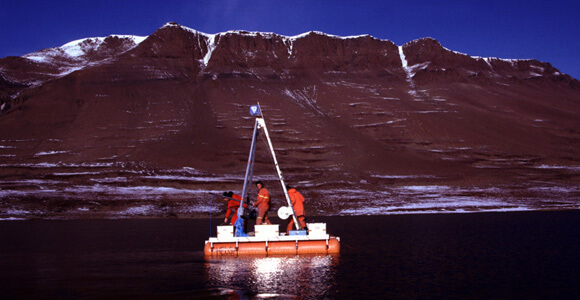
Basaltlake-coring_greenland

Even the most adamant techno-optimists among us must admit that new technologies can introduce hidden dangers: Fire, as the adage goes, can cook the dinner, but it can also burn the village down.

The most powerful example of unforeseen disadvantages stemming from technology is climate change. Should we attempt to fix a problem caused by technology, using more novel technology to hack the climate? The question has spurred heated debate.

Those in favor point to failed efforts to curb carbon dioxide emissions and insist we need other options. What if a poorly understood climatic tipping point tips and the weather becomes dangerous overnight; how will slowing emissions help us then?

“If you look at the projections for how much the Earth’s air temperature is supposed to warm over the next century, it is frightening. We should at least know the options,” said Rob Wood, a University of Washington climatologist who edited a recent special issue of the journal Climatic Change devoted to geoengineering.

Wood’s view is gaining support, as the predictions about the effects of climate change continue to grow more dire, and the weather plays its part to a tee.

But big, important questions need answers before geoengineering projects take off. Critics point to science’s flimsy understanding of the complex systems that drive the weather. And even supporters lament the lack of any experimental framework to contain disparate experiments on how to affect it.

“Proposed projects have been protested or canceled, and calls for a governance framework abound,” Lisa Dilling and Rachel Hauser wrote in a paper that appears in the special issue. “Some have argued, even, that it is difficult if not impossible to answer some research questions in geoengineering at the necessary scale without actually implementing geoengineering itself.”

Most proposed methods of geoengineering derive from pretty basic science, but questions surround how to deploy them at a planetary scale and how to measure desired and undesired effects on complex weather and ocean cycles. Research projects that would shed light on those questions would be big enough themselves potentially to affect neighboring populations, raising ethical questions as well.

stratoshieldEarlier efforts to test fertilizing the ocean with iron to feed algae that would suck carbon dioxide from the air and to spray the pollutant sulfur dioxide, which reflects solar radiation, into the atmosphere were mired in controversy. A reputable UK project abandoned its plans to test its findings in the field.

But refinements on those earlier approaches are percolating. They include efforts both to remove previously emitted carbon dioxide from the atmosphere and to reduce the portion of the sun’s radiation that enters the atmosphere.

One method of carbon dioxide removal (or CDR) would expose large quantities of carbon-reactive minerals to the air and then store the resulting compounds underground; another would use large C02 vacuums to suck the greenhouse gas directly from the air into underground storage.

Solar radiation management (or SRM) methods include everything from painting roofs white to seeding the clouds with salt crystals to make them more reflective and mimicking the climate-cooling effects of volcanic eruptions by spraying  sulfur compounds into the atmosphere.

The inevitable impact of geoengineering research on the wider population has led many scientists to compare geoengineering to genetic research. The comparison to genetic research also hints at the huge benefits geoengineering could have if it successfully wards off the most savage effects of climate change.

As with genetic research, principles have been developed to shape the ethics of the research. Still, the principles remain vague, according to a 2012 Nature editorial, and flawed, according to a philosophy-of-science take in the recent journal issue. Neither the U.S. government nor international treaties have addressed geoengineering per se, though many treaties would influence its testing implementation.

The hottest research now explores how long climate-hacks would take to work, lining up their timelines with the slow easing of global warming that would result from dramatically lowered carbon dioxide emissions, and how to weigh the costs of geoengineering projects and accommodate public debate.

Proceeding with caution won’t get fast answers, but it seems a wise way to address an issue as thorny as readjusting the global thermostat.

Climate change rattles mental health of Inuit in Labrador (CBC)

‘Grief, mourning, anger, frustration’ over environmental changes

CBC News Posted: Jan 10, 2014 5:22 PM ET Last Updated: Jan 10, 2014 5:58 PM ET

This photo supplied by researcher Ashlee Cunsolo Willox shows cabins in Double Mer just outside of Rigolet in Nunatsiavut, Labrador. Climate change has caused ice to break up or not form at all, making it difficult for Inuit populations to access the cabins they use as a base for hunting and trapping.This photo supplied by researcher Ashlee Cunsolo Willox shows cabins in Double Mer just outside of Rigolet in Nunatsiavut, Labrador. Climate change has caused ice to break up or not form at all, making it difficult for Inuit populations to access the cabins they use as a base for hunting and trapping. (Couresty My Word: Storytelling & Digital Media Lab)

Researchers studying the mental health and well-being of Inuit populations in coastal Labrador say rising temperatures are having damaging psychological effects on people in traditional communities.

‘Many people said they also felt very depressed about not being able to get out there on the land’– Ashlee Cunsolo Willox, researcher for Inuit Mental Health Adaptation to Climate Change project

In an interview airing on CBC Radio’s Quirks & Quarks on Saturday, Dr. Ashlee Cunsolo Willox, who has been working in partnership with Inuit communities in Nunatsiavut since 2009, describes intense feelings of isolation among people there following temperature changes that have caused disruptions in how the ice and snow are interacting.

“The North Labrador Coast is one of the fastest-changing and fastest-warming areas anywhere in the world,” she told host Bob McDonald. “In particular, rising temperatures have led to a real decrease in sea ice.”

There were strong emotional reactions to that loss among all 120 people interviewed by researchers behind the community-based Inuit Mental Health Adaptation to Climate Change project.

The feelings included a sense of grief, mourning, anger, frustration, sadness, and many people said they also felt very depressed about not being able to get out there on the land,” Cunsolo Willox said.

Traditional routes no longer safe

Wildlife and vegetation have changed, with caribou and moose moving further north, and traditional berries have been failing to grow when they have in the past.

“In some cases, they’re getting less snow than before, which makes it very difficult to travel inland by Ski-Doo or by dog team,” added Cunsolo Willox, who holds the Canada Research Chair in Determinants of Healthy Communities at Cape Breton University.

She and her colleagues interviewed people in the communities of Nain, Hopedale, Postville, Makkovik and Rigolet, and their work is run in partnership with the Rigolet Inuit Community Government. The majority of those interviewed are Inuit.

“People describe themselves as land people, as people of the snow and the ice, and would say that going out on the land and hunting and trapping and fishing [is] just as much part of their life as breathing,” Cunsolo Willox said.

The full interview will be broadcast on Saturday’s program at noon.

Scientists: Americans are becoming weather wimps (AP)

By SETH BORENSTEIN

— Jan. 9, 2014 5:33 PM EST

Deep Freeze Weather Wimps

FILE – In this Sunday, Jan. 5, 2014, file photo, a person struggles to cross a street in blowing and falling snow as the Gateway Arch appears in the distance, in St. Louis. The deep freeze that gripped much of the nation this week wasn’t unprecedented, but with global warming we’re getting far fewer bitter cold spells, and many of us have forgotten how frigid winter used to be. (AP Photo/Jeff Roberson, File)

WASHINGTON (AP) — We’ve become weather wimps.

As the world warms, the United States is getting fewer bitter cold spells like the one that gripped much of the nation this week. So when a deep freeze strikes, scientists say, it seems more unprecedented than it really is. An Associated Press analysis of the daily national winter temperature shows that cold extremes have happened about once every four years since 1900.

Until recently.

When computer models estimated that the national average daily temperature for the Lower 48 states dropped to 17.9 degrees on Monday, it was the first deep freeze of that magnitude in 17 years, according to Greg Carbin, warning meteorologist for the National Oceanic and Atmospheric Administration.

That stretch — from Jan. 13, 1997 to Monday — is by far the longest the U.S. has gone without the national average plunging below 18 degrees, according to a database of daytime winter temperatures starting in January 1900.

In the past 115 years, there have been 58 days when the national average temperature dropped below 18. Carbin said those occurrences often happen in periods that last several days so it makes more sense to talk about cold outbreaks instead of cold days. There have been 27 distinct cold snaps.

Between 1970 and 1989, a dozen such events occurred, but there were only two in the 1990s and then none until Monday.

“These types of events have actually become more infrequent than they were in the past,” said Carbin, who works at the Storm Prediction Center in Norman, Okla. “This is why there was such a big buzz because people have such short memories.”

Said Jeff Masters, meteorology director of the private firm Weather Underground: “It’s become a lot harder to get these extreme (cold) outbreaks in a planet that’s warming.”

And Monday’s breathtaking chill? It was merely the 55th coldest day — averaged for the continental United States — since 1900.

The coldest day for the Lower 48 since 1900 — as calculated by the computer models — was 12 degrees on Christmas Eve 1983, nearly 6 degrees chillier than Monday.

The average daytime winter temperature is about 33 degrees, according to Carbin’s database.

There have been far more unusually warm winter days in the U.S. than unusually cold ones.

Since Jan. 1, 2000, only two days have ranked in the top 100 coldest: Monday and Tuesday. But there have been 13 in the top 100 warmest winter days, including the warmest since 1900: Dec. 3, 2012. And that pattern is exactly what climate scientists have been saying for years, that the world will get more warm extremes and fewer cold extremes.

Nine of 11 outside climate scientists and meteorologists who reviewed the data for the AP said it showed that as the world warms from heat-trapping gas spewed by the burning of fossil fuels, winters are becoming milder. The world is getting more warm extremes and fewer cold extremes, they said.

“We expect to see a lengthening of time between cold air outbreaks due to a warming climate, but 17 years between outbreaks is probably partially due to an unusual amount of natural variability,” or luck, Masters said in an email. “I expect we’ll go far fewer than 17 years before seeing the next cold air outbreak of this intensity.

And the scientists dismiss global warming skeptics who claim one or two cold days somehow disproves climate change.

“When your hands are freezing off trying to scrape the ice off your car, it can be all too tempting to say, ‘Where’s global warming now? I could use a little of that!’ But you know what? It’s not as cold as it used to be anymore,” Texas Tech University climate scientist Katharine Hayhoe said in an email.

The recent cold spell, which was triggered by a frigid air mass known as the polar vortex that wandered way south of normal, could also be related to a relatively new theory that may prove a weather wild card, said Rutgers University climate scientist Jennifer Francis. Her theory, which has divided mainstream climate scientists, says that melting Arctic sea ice is changing polar weather, moving the jet stream and causing “more weirdness.”

Ryan Maue, a meteorologist with the private firm Weather Bell Analytics who is skeptical about blaming global warming for weather extremes, dismisses Francis’ theory and said he has concerns about the accuracy of Carbin’s database. Maue has his own daily U.S. average temperature showing that Monday was colder than Carbin’s calculations.

Still, he acknowledged that cold nationwide temperatures “occurred with more regularity in the past.”

Many climate scientists say Americans are weather weenies who forgot what a truly cold winter is like.

“I think that people’s memory about climate is really terrible,” Texas A&M University climate scientist Andrew Dessler wrote in an email. “So I think this cold event feels more extreme than it actually is because we’re just not used to really cold winters anymore.”

Antarctic Emperor Penguins May Be Adapting to Warmer Temperatures (Science Daily)

Jan. 9, 2014 — A new study of four Antarctic emperor penguin colonies suggest that unexpected breeding behaviour may be a sign that the birds are adapting to environmental change.

Emperor penguin colony viewed from the air. (Credit: Ian Potten)

Analysis of satellite observations reveals that penguin colonies moved from their traditional breeding grounds during years when the thin layer of ice (sea ice) formed later than usual to the much thicker floating ice shelves that surround the continent.

Reporting this week in the online journal,PLOS ONE, a team of scientists from British Antarctic Survey (BAS), the Australian Antarctic Division and the Scripps Institution of Oceanography at UC San Diego in California, describe this extraordinary change in behaviour.

Lead author, Peter Fretwell of BAS said, “These charismatic birds tend to breed on the sea ice because it gives them relatively easy access to waters where they hunt for food. Satellite observations captured of one colony in 2008, 2009 and 2010 show that the concentration of annual sea ice was dense enough to sustain a colony. But this was not the case in 2011 and 2012 when the sea ice did not form until a month after the breeding season began. During those years the birds moved up onto the neighbouring floating ice shelf to raise their young.

“What’s particularly surprising is that climbing up the sides of a floating ice shelf — which at this site can be up to 30 metres high — is a very difficult manoeuvre for emperor penguins. Whilst they are very agile swimmers they have often been thought of as clumsy out of the water.”

The emperor penguins’ reliance on sea ice as a breeding platform coupled with recent concern about changing patterns of sea ice has led to the species being designated as ‘near threatened’ by the IUCN red list. The discovery suggests the species may be capable of adapting their behaviour.

In recent years satellite technology has significantly enhanced the scientists’ ability to locate and monitor emperor penguin populations.

Barbara Wienecke of the Australian Antarctic Division said, “These new findings are an important step forward in helping us understand what the future may hold for these animals, however, we cannot assume that this behaviour is widespread in other penguin populations. The ability of these four colonies to relocate to a different environment — from sea ice to ice shelf — in order to cope with local circumstances, was totally unexpected. We have yet to discover whether or not other species may also be adapting to changing environmental conditions.”

Gerald Kooyman, of the Scripps Institution added: “Without satellite imagery these moves onto shelf ice would not have been detected. It is likely that there are other nuances of the emperor penguin environment that will be detected sooner through their behaviour than by more conventional means of measuring environmental changes.”

Whereas sea-ice is frozen salt water, ice shelves are made up of glacial ice that has flowed from the land onto the sea. At the outer edge of an ice shelf ice cliffs can form and these can be anything up to 60 metres high.

Journal Reference:

  1. Peter T. Fretwell, Phil N. Trathan, Barbara Wienecke, Gerald L. Kooyman. Emperor Penguins Breeding on Iceshelves.PLoS ONE, 2014; 9 (1): e85285 DOI:10.1371/journal.pone.0085285

Ecossistemas costeiros ganham destaque na mitigação climática (CarbonoBrasil)

07/1/2014 – 11h55

por Fernanda B. Müller, do CarbonoBrasil

manguezal1 300x196 Ecossistemas costeiros ganham destaque na mitigação climática

Pesquisador ressalta que acessar o potencial de absorção do carbono por manguezais e outros habitats marinho-costeiros poderia ajudar o Brasil conservar e gerir estes ambientes.

A cada ano que passa, a ciência traz novos dados indicando que os ecossistemas marinhos são elementares na captura e armazenamento do dióxido de carbono (CO2) atmosférico – tendo absorvido até um terço dessas emissões provenientes das atividades humanas.

O chamado ‘carbono azul’ é estocado em ambientes tão diversos como manguezais, marismas, gramas marinhas, recifes de coral e outros ecossistemas, intensamente pressionados pelas atividades antrópicas.

Além disso, esses ambientes costeiros são alguns dos mais produtivos no planeta, e fornecem serviços ecossistêmicos essenciais, como proteção costeira contra tempestades e refúgio para o nascimento de grande parte da vida marinha.

Segundo dados da Iniciativa para o Carbono Azul, 83% do ciclo do carbono global passa pelo oceano, e, mesmo com os habitats costeiros cobrindo menos de 2% da sua área, eles equivalem a cerca da metade do carbono sequestrado no oceano.

Entretanto, todo esse potencial está sendo perdido a taxas alarmantes. Um estudo publicado em 2012 no periódico PLOS One alerta que a contínua destruição desses ambientes é responsável pela liberação anual de quase um bilhão de toneladas de dióxido de carbono.

“A perturbação do carbono estocado na biomassa e no metro superior do sedimento em um hectare de manguezal típico pode contribuir com tantas emissões quanto três a cinco hectares de florestas tropicais. Mesmo um hectare de grama marinha, com a sua pequena biomassa viva, pode conter tanto carbono próximo à superfície quanto um hectare de floresta tropical”, ressaltou o estudo.

O potencial de mitigação das mudanças climáticas do ‘carbono azul’ está chamando a atenção de várias instituições internacionais, que, interessadas na preservação dos ecossistemas marinhos, vêm estudando as oportunidades que o cenário internacional de desenvolvimento de baixo carbono pode apresentar.

“Esta conexão com as mudanças climáticas despertou o interesse da comunidade conservacionista, curiosa sobre se atividades de mitigação e financiamento poderiam avançar práticas de manejo sustentável e adaptação nas zonas costeiras”, comentou Stephen Crooks, pesquisador da Universidade East Anglia, que teve seu trabalho com ‘carbono azul’ utilizado durante painéis da Conferência das Partes nº 16 da UNFCCC.

Para trazer informações sobre o assunto, o Programa das Nações Unidas sobre Meio Ambiente (PNUMA) lançou recentemente uma página na internet chamada “The Blue Carbon Portal”, com um fórum de discussões e uma plataforma para networking, além de mostrar iniciativas, notícias e eventos. O portal oferece um mapa com as iniciativas que estão sendo conduzidas em nível nacional, como na Costa Rica, Austrália, Indonésia, entre outros.

Em uma frente mais propositiva, a Conservação Internacional, a União Internacional para a Conservação da Natureza (IUCN) e a Comissão Intergovernamental Oceanográfica da UNESCO lançaram a Iniciativa para o Carbono Azul (Blue Carbon Initiative), um programa global para mitigação das mudanças climáticas através da restauração e do uso sustentável dos ecossistemas marinhos costeiros.

Crooks, que faz parte da Iniciativa para o Carbono Azul, relata que as atividades em torno do reconhecimento do ‘carbono azul’ evoluíram muito nos últimos meses.

No mercado voluntário de carbono, o renomado Verified Carbon Standard (VCS) reconheceu a ‘Restauração e Conservação de Áreas Úmidas’ como uma atividade elegível para criação de créditos de carbono. Ou seja, projetos voltados para a redução das emissões por desmatamento e degradação (REDD) já podem ser desenvolvidos nestas áreas.

Além disso, o Painel Intergovernamental sobre Mudanças Climáticas (IPCC) recentemente adotou diretrizes para a contabilização das emissões e remoções de gases do efeito estufa (GEEs) associadas ao manejo de áreas úmidas (manguezais, marismas, gramas marinhas).

Porém, os países ainda não são obrigados a calcular suas emissões de áreas úmidas, estando convidados pelo IPCC a testarem a metodologia até 2017.

O documento inclui diretrizes para a contabilização de emissões associadas à drenagem ou reposição de água em áreas úmidas e também para o desmatamento, extração de solo, aquicultura, drenagem e restauração de manguezais.

“A coordenação científica no Brasil poderia apoiar enormemente o desenvolvimento de políticas para o manejo das reservas costeiras de carbono e ajudaria na aplicação da contabilização nacional das emissões e remoções de GEEs de atividades humanas em áreas úmidas”, comentou Crooks.

* Publicado originalmente no site CarbonoBrasil.

Major Reductions in Seafloor Marine Life from Climate Change by 2100 (Science Daily)

Dec. 31, 2013 — A new study quantifies for the first time future losses in deep-sea marine life, using advanced climate models. Results show that even the most remote deep-sea ecosystems are not safe from the impacts of climate change. 

Large animals (megafauna), such as this hydroid Corymorpha glacialis, are projected to suffer major declines under the latest climate change predictions. (Credit: National Oceanography Centre)

An international team of scientists predict seafloor dwelling marine life will decline by up to 38 per cent in the North Atlantic and over five per cent globally over the next century. These changes will be driven by a reduction in the plants and animals that live at the surface of the oceans that feed deep-sea communities. As a result, ecosystem services such as fishing will be threatened.

In the study, led by the National Oceanography Centre, the team used the latest suite of climate models to predict changes in food supply throughout the world oceans. They then applied a relationship between food supply and biomass calculated from a huge global database of marine life.

The results of the study are published this week in the scientific journal Global Change Biology.

These changes in seafloor communities are expected despite living on average four kilometres under the surface of the ocean. This is because their food source, the remains of surface ocean marine life that sink to the seafloor, will dwindle because of a decline in nutrient availability. Nutrient supplies will suffer because of climate impacts such as a slowing of the global ocean circulation, as well as increased separation between water masses — known as ‘stratification’ — as a result of warmer and rainier weather.

Lead author Dr Daniel Jones says: “There has been some speculation about climate change impacts on the seafloor, but we wanted to try and make numerical projections for these changes and estimate specifically where they would occur.

“We were expecting some negative changes around the world, but the extent of changes, particularly in the North Atlantic, were staggering. Globally we are talking about losses of marine life weighing more than every person on the planet put together.”

The projected changes in marine life are not consistent across the world, but most areas will experience negative change. Over 80 per cent of all identified key habitats — such as cold-water coral reefs, seamounts and canyons — will suffer losses in total biomass. The analysis also predicts that animals will get smaller. Smaller animals tend to use energy less efficiently, thereby impacting seabed fisheries and exacerbating the effects of the overall declines in available food.

The study was funded by the Natural Environment Research Council (NERC) as part of the Marine Environmental Mapping Programme (MAREMAP), and involved researchers from the National Oceanography Centre, the Memorial University of Newfoundland, Canada, the University of Tasmania, and the Laboratoire des Sciences du Climat et de l’Environnement, France.

Journal Reference:

  1. Daniel O. B. Jones, Andrew Yool, Chih-Lin Wei, Stephanie A. Henson, Henry A. Ruhl, Reg A. Watson, Marion Gehlen.Global reductions in seafloor biomass in response to climate changeGlobal Change Biology, 2013; DOI:10.1111/gcb.12480

Solution to Cloud Riddle Reveals Hotter Future: Global Temperatures to Rise at Least 4 Degrees C by 2100 (Science Daily)

Dec. 31, 2013 — Global average temperatures will rise at least 4°C by 2100 and potentially more than 8°C by 2200 if carbon dioxide emissions are not reduced according to new research published inNature. Scientists found global climate is more sensitive to carbon dioxide than most previous estimates.

Scientists have revealed the impact of clouds on climate sensitivity. Global average temperatures will rise at least 4 degrees C by 2100 and potentially more than 8 degrees C by 2200 if carbon dioxide emissions are not reduced, according to new research. (Credit: © Maksim Shebeko / Fotolia)

The research also appears to solve one of the great unknowns of climate sensitivity, the role of cloud formation and whether this will have a positive or negative effect on global warming.

“Our research has shown climate models indicating a low temperature response to a doubling of carbon dioxide from preindustrial times are not reproducing the correct processes that lead to cloud formation,” said lead author from the University of New South Wales’ Centre of Excellence for Climate System Science Prof Steven Sherwood.

“When the processes are correct in the climate models the level of climate sensitivity is far higher. Previously, estimates of the sensitivity of global temperature to a doubling of carbon dioxide ranged from 1.5°C to 5°C. This new research takes away the lower end of climate sensitivity estimates, meaning that global average temperatures will increase by 3°C to 5°C with a doubling of carbon dioxide.”

The key to this narrower but much higher estimate can be found in the real world observations around the role of water vapour in cloud formation.

Observations show when water vapour is taken up by the atmosphere through evaporation, the updraughts can either rise to 15 km to form clouds that produce heavy rains or rise just a few kilometres before returning to the surface without forming rain clouds.

When updraughts rise only a few kilometres they reduce total cloud cover because they pull more vapour away from the higher cloud forming regions.

However water vapour is not pulled away from cloud forming regions when only deep 15km updraughts are present.

The researchers found climate models that show a low global temperature response to carbon dioxide do not include enough of this lower-level water vapour process. Instead they simulate nearly all updraughts as rising to 15 km and forming clouds.

When only the deeper updraughts are present in climate models, more clouds form and there is an increased reflection of sunlight. Consequently the global climate in these models becomes less sensitive in its response to atmospheric carbon dioxide.

However, real world observations show this behaviour is wrong.

When the processes in climate models are corrected to match the observations in the real world, the models produce cycles that take water vapour to a wider range of heights in the atmosphere, causing fewer clouds to form as the climate warms.

This increases the amount of sunlight and heat entering the atmosphere and, as a result, increases the sensitivity of our climate to carbon dioxide or any other perturbation.

The result is that when water vapour processes are correctly represented, the sensitivity of the climate to a doubling of carbon dioxide — which will occur in the next 50 years — means we can expect a temperature increase of at least 4°C by 2100.

“Climate sceptics like to criticize climate models for getting things wrong, and we are the first to admit they are not perfect, but what we are finding is that the mistakes are being made by those models which predict less warming, not those that predict more,” said Prof. Sherwood.

“Rises in global average temperatures of this magnitude will have profound impacts on the world and the economies of many countries if we don’t urgently start to curb our emissions.

Journal Reference:

  1. Steven C. Sherwood, Sandrine Bony, Jean-Louis Dufresne.Spread in model climate sensitivity traced to atmospheric convective mixingNature, 2014; 505 (7481): 37 DOI: 10.1038/nature12829

Modern Caterpillars Feed at Higher Temperatures in Response to Climate Change (Science Daily)

Dec. 19, 2013 — Caterpillars of two species of butterflies in Colorado and California have evolved to feed rapidly at higher temperatures and at a broader range of temperatures over the past 40 years, suggesting that they are evolving quickly to cope with a hotter, more variable climate.

A Colias (sulphur) butterfly. (Credit: By Greg Hume (Own work) [CC-BY-SA-3.0], via Wikimedia Commons)

The work, led by Joel Kingsolver at UNC-Chapel Hill, represents a rare instance of how recent climate change affects physiological traits, such as how the body regulates feeding behavior.

“To our knowledge, this is the first instance where we show changes in physiological traits in response to recent climate change,” says Kingsolver, Kenan Distinguished Professor of Biology in UNC’s College of Arts and Sciences, whose work appears today in the journal Functional Ecology.

Caterpillars can eat and grow only when it’s not too cold and not too hot, explains Kingsolver. But when temperatures are ideal, caterpillars eat with reckless abandon and can gain up to 20 percent of their body weight in an hour. That growth determines their ability to survive, how quickly they become adult butterflies and their ultimate reproductive success.

Jessica Higgins, a graduate student in Kingsolver’s lab who spearheaded the study, worked with fellow graduate student Heidi MacLean, Lauren Buckley, currently at the University of Washington, and Kingsolver to compare modern caterpillars to their ancestors from 40 years ago.

Their results show that the two related species of Colias (sulphur) butterflies have adapted in two ways: they not only broadened the range of their ideal feeding temperatures but also shifted their optimal feeding temperature to a higher one.

In their work, the researchers measured changes in climate at the two study sites and then examined changes in how fast caterpillar ate using current and historical data from the 1970s, collected by Kingsolver’s graduate adviser Ward Watt.

Although they found little change in the average air temperature at both study sites, they noticed that the frequency of hot temperatures — that is, temperatures that exceeded 82 degrees Fahrenheit -increased two-fold in Colorado and four-fold in California over the past 40 years.

In response to these temperature fluctuations, modern caterpillars in Colorado ate faster at higher temperatures than their 1970s counterparts. In California, the modern caterpillars ate faster at both high and low temperatures than did their ancestors, but their optimal feeding temperatures did not change.

“These two species of caterpillars adapted to the increased frequency of higher temperatures over 40 years in two different ways, but both are better suited than their ancestors to thrive in a hotter, more variable climate,” says Higgins. “Our climate is changing. The thermal physiology of these species is changing, too.”

Assessing the Impact of Climate Change On a Global Scale (Science Daily)

Dec. 16, 2013 — Thirty research teams in 12 different countries have systematically compared state-of-the-art computer simulations of climate change impact to assess how climate change might influence global drought, water scarcity and river flooding in the future. What they found was:

• The frequency of drought may increase by more than 20 per cent in some regions.

• Without a reduction in global greenhouse-gas emissions, 40 per cent more people are likely to be at risk of absolute water scarcity.

• Increases in river flooding are expected in more than half of the areas investigated.

• Adverse climate change impacts can combine to create global ‘hotspots’ of climate change impacts.

Dr Simon Gosling from the School of Geography at The University of Nottingham co-authored four papers in this unique global collaboration. The results are published this week — Monday 16 December 2013 — in a special feature of the Proceedings of the National Academy of Sciences (PNAS).

For the project — ‘Intersectoral Impact Model Intercomparison Project (ISI-MIP)’ — Dr Gosling contributed simulations of global river flows to help understand how climate change might impact on global droughts, water scarcity and river flooding.

Dr Gosling said: “This research and the feature in PNAS highlights what could happen across several sectors if greenhouse gas emissions aren’t cut soon. It is complementary evidence to a major report I jointly-led with the Met Office that estimated the potential impacts of unabated climate change for 23 countries. Those reports helped major economies commit to take action on climate change that is demanded by the science, at the 17th UN Climate Change Conference of the Parties (COP17) in Durban.”

One of the papers reports a likely increase in the global severity of drought by the end of the century, with the frequency of drought increasing by more than 20 per cent in some regions — South America, Caribbean, and Central and Western Europe.

This in turn has an impact on water scarcity. Another paper co-authored by Dr Gosling shows that without reductions in global greenhouse-gas emissions, 40 per cent more people are likely to be at risk of absolute water scarcity than would be the case without climate change.

Dr Gosling said: “The global-level results are concerning but they hide important regional variations. For example, while some parts of the globe might see substantial increases in available water, such as southern India, western China and parts of Eastern Africa, other parts of the globe see large decreases in available water, including the Mediterranean, Middle East, the southern USA, and southern China.”

Another paper in the PNAS feature found that while river flooding could decrease by the end of the century across about a third of the globe, increases are expected at more than half of the areas investigated, under a high greenhouse gas emissions scenario.

Dr Gosling said: “More water under climate change is not necessarily always a good thing. While it can indeed help alleviate water scarcity assuming you have the infrastructure to store it and distribute it, there is also a risk that any reductions in water scarcity are tempered by an increase in flood hazard.”

The ISI-MIP team describe how adverse climate change impacts like flood hazard, drought, water scarcity, agriculture, ecosystems, and malaria can combine to create global ‘hotspots’ of climate change impacts4. The study is the first to identify hotspots across these sectors while being based on a comprehensive set of computer simulations both for climate change and for the impacts it is causing. The researchers identified the Amazon region, the Mediterranean and East Africa as regions that might experience severe change in multiple sectors.

The findings of the ISI-MIP are amongst the scientific publications that feed into the Intergovernmental Panel on Climate Change (IPCC) Working Group II report on climate change impacts to be presented in March 2014. The IPCC Working Group I report on physical climate science was published in September 2013.

Dr Gosling’s 23-volume report, Climate: observations, projections and impacts, commissioned by the Department of Energy and Climate Change (DECC), which he jointly led with the UK Met Office, addressed an urgent international need for scientific evidence on the impact of climate change to be presented in a consistent format for different countries, particularly those that lack an adequate research infrastructure, to facilitate valid international comparisons. Since COP17, the research has prompted governments to re-consider their options for adapting to climate change.

He said: “I think the results presented in the PNAS special feature have the potential for similar impact.”

Journal Reference:

  1. F. Piontek, C. Muller, T. A. M. Pugh, D. B. Clark, D. Deryng, J. Elliott, F. d. J. Colon Gonzalez, M. Florke, C. Folberth, W. Franssen, K. Frieler, A. D. Friend, S. N. Gosling, D. Hemming, N. Khabarov, H. Kim, M. R. Lomas, Y. Masaki, M. Mengel, A. Morse, K. Neumann, K. Nishina, S. Ostberg, R. Pavlick, A. C. Ruane, J. Schewe, E. Schmid, T. Stacke, Q. Tang, Z. D. Tessler, A. M. Tompkins, L. Warszawski, D. Wisser, H. J. Schellnhuber. Multisectoral climate impact hotspots in a warming worldProceedings of the National Academy of Sciences, 2013; DOI: 10.1073/pnas.1222471110

Drought and Climate Change: An Uncertain Future? (Science Daily)

Dec. 16, 2013 — Drought frequency may increase by more than 20% in some regions of the globe by the end of the 21st century, but it is difficult to be more precise as we don’t know yet how changes in climate will impact on the world’s rivers.

The results come from a study, published in Proceedings of the National Academy of Sciences (PNAS), which examined computer simulations from an ensemble of state of the art global hydrological models driven by the latest projections from five global climate models used for the fifth assessment report of the Intergovernmental Panel on Climate Change.

The research was led by Dr Christel Prudhomme from the UK’s Centre for Ecology & Hydrology working with colleagues from the UK, USA, the Netherlands, Germany and Japan.

Increasing concentrations of greenhouse gases in the atmosphere are widely expected to influence global climate over the coming century. The impact on drought is uncertain because of the complexity of the processes but can be estimated using outputs from an ensemble of global hydrological and climate models.

The new study concluded that an increase in global severity of hydrological drought — essentially the proportion of land under drought conditions — is likely by the end of the 21st century, with systematically greater increases if no climate change mitigation policy is implemented.

Under the ‘business as usual’ scenario (an energy-intensive world due to high population growth and slower rate of technological development), droughts exceeding 40% of analysed land area were projected by nearly half of the simulations carried out. This increase in drought severity has a strong signal to noise ratio at the global scale; this mean we are relatively confident that an increase in drought will happen but we don’t know exactly by how much.

Dr Prudhomme said, “Our study shows that the different representations of terrestrial water cycle processes in global hydrological models are responsible for a much larger uncertainty in the response of hydrological drought to climate change than previously thought. We don’t know how much changed climate patterns will affect the frequency of low flows in rivers.”

One important source of uncertainty depends on whether the models allow plants to adapt to enriched carbon dioxide atmosphere. If this is accounted for, the increase in droughts due to warmer climate and changes in precipitation is mitigated by reduced evaporation from plants, because they are more efficient at capturing carbon during photosynthesis. The process of plant adaptation under an enriched carbon dioxide atmosphere is currently absent from the majority of conceptual hydrological models and only considered on a few land surface and ecology models.

Dr Prudhomme added, “When assessing the impact of climate change on hydrology it is hence critical to consider a diverse range of hydrological models to better capture the uncertainty.”

Journal Reference:

  1. C. Prudhomme, I. Giuntoli, E. L. Robinson, D. B. Clark, N. W. Arnell, R. Dankers, B. M. Fekete, W. Franssen, D. Gerten, S. N. Gosling, S. Hagemann, D. M. Hannah, H. Kim, Y. Masaki, Y. Satoh, T. Stacke, Y. Wada, D. Wisser.Hydrological droughts in the 21st century, hotspots and uncertainties from a global multimodel ensemble experimentProceedings of the National Academy of Sciences, 2013; DOI: 10.1073/pnas.1222473110

Desafios do clima (O Globo)

JC e-mail 4869, de 05 de dezembro de 2013

Artigo de Carlos Rittl* publicado no Globo. Em nosso caso, precisamos deixar de lado discurso de que já fizemos muito e mais que os outros

A 19ª Conferência das Partes da Convenção-Quadro da ONU sobre Mudança do Clima, realizada em Varsóvia, acabou com resultados fracos. Em vez de respostas à emergência climática, países como Japão e Austrália reduziram seus compromissos de corte de emissões de gases de efeito estufa. Venceu o lobby dos que não querem ação, como o setor dos combustíveis fósseis. Perdemos, todos, o recurso mais precioso que temos para resolver o problema, o tempo.

Talvez a única boa nova da COP19 tenha sido a mobilização para a COP20, em Lima, em 2014. O governo do Peru prometeu restabelecer a confiança no processo. A sociedade civil global se mobiliza para cobrar todos os governos em 2014. A COP20 será fundamental: é preciso definir quem vai “pagar a conta” das mudanças climáticas, como pagará (cortes de emissões, financiamento, tecnologia etc.) e quando pagará. E também garantir apoio a países em desenvolvimento, em especial os mais pobres e mais vulneráveis, aos efeitos das mudanças climáticas, de que forma será este apoio e a que tempo.

Em 2014, todos os países precisam apresentar sua proposta de compromisso de redução de emissões para o pós-2020. Em nosso caso, precisamos deixar de lado o discurso de que já fizemos muito e mais do que os outros, que nossa matriz energética é limpa, que reduzimos o desmatamento. Nenhum dos nossos maiores planos de desenvolvimento ou nossa política fiscal e tributária é vinculado a uma lógica econômica baseada em reduções progressivas de emissões de gases de efeito estufa.

O Plano de Expansão da Geração de Energia 2022 prevê mais de R$ 800 bilhões de investimentos em combustíveis fósseis – 72% do investimento total em energia do país. Apenas de 1% a 2% dos recursos do Plano Agrícola e Pecuário anual são investidos em agricultura de baixo carbono. Uso da terra, energia e agropecuária são responsáveis por mais de 90% das nossas emissões, como aponta o Sistema de Estimativas de Emissões de Gases de Efeito Estufa do Observatório do Clima. Com o salto da taxa do desmatamento na Amazônia em 2013, de 28% em relação a 2012 – terceiro maior aumento relativo da taxa já registrado – teremos muito provavelmente todos os setores de nossa economia contribuindo para o aumento das emissões em 2013.

O documento de atualização do Plano Nacional sobre Mudança do Clima, objeto recente de consulta pública, relaciona ações em execução, mas não é nada estratégico, com metas, prazos, orçamento, sistema de monitoramento e avaliação bem definidos.

Para colocar nossa economia no caminho inevitável e estratégico de baixas emissões de carbono no longo prazo, o país tem cumprir o que rege a Política Nacional sobre Mudança do Clima, promover a compatibilização dos princípios, objetivos e diretrizes de todas as políticas e programas governamentais com os desta Política. Ao fim de 2013, estamos longe disso.

*Carlos Rittl é secretário executivo do Observatório do Clima.

(O Globo)
http://oglobo.globo.com/opiniao/desafios-do-clima-10971024#ixzz2mc121Ii6

*   *   *

JC e-mail 4869, de 05 de dezembro de 2013

Painel afirma que mudanças climáticas trazem risco a curto e longo prazo

Relatório do Conselho Nacional de Pesquisa americano cita possível colapso do gelo no mar polar, uma potencial extinção em massa da vida vegetal e animal, e a ameaça de zonas mortas no oceano

O aquecimento global contínuo representa um risco de mudanças rápidas e drásticas em alguns sistemas humanos e naturais, advertiu nesta terça-feira um painel científico, que cita ainda o possível colapso do gelo no mar polar, uma potencial extinção em massa da vida vegetal e animal, e a ameaça de zonas mortas no oceano.

Ao mesmo tempo, alguns dos piores temores em relação a mudanças climáticas já incorporados ao imaginário popular podem ser descartadas como improváveis, pelo menos durante o próximo século, o painel concluiu. Estes incluem um repentino aumento de liberação de metano dos oceanos ou do Ártico capaz de fritar o planeta, bem como o desligamento da circulação de calor no Oceano Atlântico, que iria resfriar áreas de terras próximas – temor que inspirou o apocalíptico filme “O dia depois de amanhã”, de 2004.

O painel foi nomeado pelo Conselho Nacional de Pesquisa (National Research Council, em inglês), um grupo sem fins lucrativos de Washington que supervisiona estudos sobre as principais questões científicas. Em um relatório divulgado terça-feira, o painel pediu a criação de um sistema que alerte com antecedência a sociedade sobre mudanças capazes de produzir caos. Surpresas climáticas desagradáveis ? já ocorreram, e novas surpresas parecem inevitáveis, talvez dentro de algumas décadas, avisaram os membros do painel. Mas, segundo eles, pouco tem sido feito para se preparar para elas.

– A realidade é que o clima está mudando – disse James WC White, paleoclimatologista da Universidade de Colorado Boulder, que chefiou a comissão sobre os impactos das mudanças climáticas bruscas. – E ele vai continuar mudando, e fazer parte do cotidiano dos séculos vindouros. Talvez até mais do que isso.

A maioria dos cientistas do clima acredita que a liberação de gases do efeito estufa causada pelo homem tem tornado as enormes mudanças na terra inevitáveis, mas também espera que muitas delas evoluam num ritmo lento o suficiente para que a sociedade possa se adaptar.

O documento do painel divulgado terça-feira é o último de uma série de relatórios a considerar a possibilidade de algumas mudanças ocorrem de forma súbita, provocando estresse social ou ambiental, e até mesmo colapso. Como os relatórios anteriores, o novo considera muitas possibilidades potenciais e descarta a maioria delas como improvável – pelo menos a curto prazo. Mas alguns dos riscos são reais, aponta o painel, e em vários casos já aconteceu.

Ele citou o surto de besouros no oeste americano e no Canadá. Sem as noites muito frias no inverno que antes os matavam, os besouros destruíram dezenas de milhões de hectares de florestas. O dano foi tão grave que pode ser visto do espaço.

Da mesma forma, um declínio drástico do gelo marinho de verão ocorreu muito mais rápido no Ártico do que os cientistas esperavam. O painel advertiu que o gelo do mar Ártico pode desaparecer no verão dentro de várias décadas, com impactos severos sobre a vida selvagem e as comunidades humanas na região, além de efeitos desconhecidos para os padrões climáticos do mundo.

Entre os maiores riscos para os próximos anos, o painel prevê um aumento da taxa de extinção de plantas e animais, com as mudanças climáticas provocando a sexta extinção em massa na história da Terra. Muitos dos recifes de coral no mundo, fontes vitais de peixes que servem de alimento para milhões de pessoas, já parecem fadados a desaparecer dentro de algumas décadas.

Outro risco, visto como moderadamente provável no próximo século, é o aumento de calor na parte superior do oceano provocar a redução de oxigênio nas profundezas. No pior dos casos, haveria criação de grandes zonas com muito pouco oxigênio para a sobrevivência das criaturas do mar, com consequências desconhecidas para a ecologia global do oceano, disse o painel.

O relatório considerou a que a possibilidade de um colapso do manto de gelo da Antártica Ocidental, considerada especialmente vulnerável ao aquecimento do oceano, iria acelerar bastante a taxa de aumento do nível do mar. A curto prazo, este risco “desconhecido, mas provavelmente baixo”.

(Justin Gillis, do New York Times/O Globo)
http://oglobo.globo.com/ciencia/revista-amanha/painel-afirma-que-mudancas-climaticas-trazem-risco-curto-longo-prazo-10965038#ixzz2mbqJmetX

Anthropology and the Anthropocene (Anthropology News)

By Anthropology News on December 17, 2013 at 2:44 pm

By Amelia Moore

“The Anthropocene” is a label that is gaining popularity in the natural sciences.  It refers to the pervasive influence of human activities on planetary systems and biogeochemical processes.   Devised by Earth scientists, the term is poised to formally end the Holocene Epoch as the geological categorization for Earth’s recent past, present, and indefinite future.  The term is also poised to become the informal slogan of a revitalized environmental movement that has been plagued by popular indifference in recent years.

Climate change is the most well known manifestation of anthropogenic global change, but it is only one example of an Anthropocene event.  Other examples listed by the Earth sciences include biodiversity loss, changes in planetary nutrient cycling, deforestation, the hole in the ozone layer, fisheries decline, and the spread of invasive species.  This change is said to stem from the growth of the human population and the spread of resource intensive economies since the Industrial Revolution (though the initial boundary marker is in dispute with some scientists arguing for the Post-WWII era and others for the advent of agriculture as the critical tipping point).  Whatever the boundary, the Anthropocene signifies multiple anthropological opportunities.

What stance should we, as anthropologists, take towards the Anthropocene? I argue that there are two (and likely more), equally valid approaches to the Anthropocene: anthropology in the Anthropocene and anthropology of the Anthropocene.  Anthropology in the Anthropocene already exists in the form of climate ethnography and work that documents the lived experience of global environmental change.  Arguably, ethnographies of protected areas and transnational conservation strategies exemplify this field as well.  Anthropology in the Anthropocene is characterized by an active concern for the detrimental affects of anthropogenesis on populations and communities that have been marginalized to bear the brunt of global change impacts or who have been haphazardly caught up in global change solution strategies.  This work is engaged with environmental justice and oriented towards political action.

Anthropology of the Anthropocene is much smaller and less well known than anthropology in the Anthropocene, but it will be no less crucial.  Existing work in this vein includes those who take a critical stance towards climate science and politics as social processes with social consequences.  Beyond deconstruction, these critical scholars investigate what forms scientific and political assemblages create and how they participate in remaking the world anew.  Other existing research in this mode interrogates the idea of biodiversity and the historical and cultural context for the notion of anthropogenesis itself.  In the near future, we will see more work that can enquire into both the sociocultural and socioecological implications and manifestations of Anthropocene discourse, practice and logic.

I have only created cursory sketches of anthropology in the Anthropocene and anthropology of the Anthropocene here.  However, these modes are not at all mutually exclusive, and they should inspire many possibilities for future work.  The centrality of anthropos, the idea of the human, within the logics of the Anthropocene is an invitation for anthropology to renew its engagements with the natural sciences in research collaborations and as the object of research, especially the ecological and Earth sciences.

For starters, we should consider the implications of the Anthropocene idea for our understandings of history and collectivity.  If the natural world is finally gaining recognition within the authoritative sciences as intimately interconnected with human life such that these two worlds cease to be separate arenas of thought and action or take on different salience, then both the Humanities and the natural sciences need to devise more appropriate modes of analysis that can speak to emergent socioecologies.  This has begun in anthropology with some recent works of environmental health studies, political ecology, and multispecies ethnography, but is still in its infancy.

In terms of opportunities for legal and political engagement, the Anthropocene signifies possibilities for reconceptualizing environmentalism, conservation and development.  Anthropologists should be cognizant of new design paradigms and models for organizing socioecological collectives from the urban to the small island to the riparian.  We should also be on the lookout for new political collaborations and publics creating conversations utilizing multiple avenues for communication in the academic realm and beyond.  Emergent asymmetries in local and transnational markets and the formation of new multi-sited assemblages of governance should be of special importance.

In terms of science, the Anthropocene signals new horizons for studying and participating in global change science.  The rise of interdisciplinary socioecology, the biosciences of coupled natural and human complexity, geoengineering and the biotech interest in de-extinction are just a sampling of important transformations in research practices, research objects, and the shifting boundaries between the lab and the field.  Ongoing scientific reorientation will continue to yield new arguments about emergent forms of life that will participate in the creation of future assemblages, publics, and movements.

I would also like to caution against potentially unhelpful uses of the Anthropocene idea.  The term should not become a brand signifying a specific style of anthropological research.  It should not gloss over rigid solidifications of time, space, the human, or life.  We should not celebrate creativity in the Anthropocene while ignoring instances of stark social differentiation and capital accumulation, just as we should not focus on Anthropocene assemblages as only hegemonic in the oppressive sense.   Further, we should be cautious with our utilization of the crisis rhetoric surrounding events in the Anthropocene, recognizing that crisis for some can be turned into multiple forms of opportunity for others.  Finally, we must admit the possibility that the Anthropocene may not succeed in gaining lasting traction through formal designation or popularization, and we should not overstate its significance by assuming its universal acceptance.

In the next year, the Section News Column of the Anthropology and Environment Society will explore news, events, projects, and arguments from colleagues and students experimenting with various framings of the Anthropocene in addition to its regular content.  If you would like to contribute to this column, please contact Amelia Moore at a.moore4@miami.edu.

*   *   *

ANTHROPOLOGY AND ENVIRONMENT SOCIETY

Big Data and the Science of the Anthropocene

By Anthropology News on December 17, 2013 at 2:44 pm

By Lizzy Hare

In her September Section News Column, “Anthropology and the Anthropocene,” Amelia Moore made a distinction between anthropology in the Anthropocene and anthropology of the Anthropocene. The distinction is made between those who research the effects of global change and those who investigate the concept of the Anthropocene as a social process. My own research related to the Anthropocene is not on the effects of climate change. Rather, it focuses on the process of establishing credibility, authority, and trust through scientific knowledge.  I am following the process of developing an ecosystem forecast model. This model will provide land managers and policy makers with predictions about landscape and vegetation responses to climate change. Following the model’s development serves as an entry point for exploring what counts as credible scientific knowledge about climate change, who gets to decide what counts, and how credibility is determined.  It is fair to describe my research as “anthropology of the Anthropocene.” However, framing it in this way makes it too easy to neglect the generative nature of the Anthropocene as a concept.

As it is used colloquially, the Anthropocene carries heavy connotations of destruction and degradation, and I do not want to discount the serious environmental consequences of global change, or the inequitable distribution of their effects. But the Anthropocene as a concept also has political and technological consequences. Scientists and policymakers who wish to understand, predict, and manage the consequences of this new anthropogenic geological epoch have pushed forward tremendous innovations in science and technology. The Anthropocene is thus not only about unprecedented human impact on the planet, but also about unprecedented changes in technology, such as the rise of global connectivity and computing power that made “Big Data” possible.

“Big Data” typically refers to massive data sets of quantitative data, often originally collected automatically and for non-specific purposes. Big Data’s optimistic supporters claim that they will be able to revolutionize science by using statistics to mine large sets of data rather than tackling each research question with a different set of methods and tools. While Big Data techniques have led to the success of companies like Google, it remains unclear how or even whether automated data collection and statistical analysis can produce more than large-scale correlations. Recently, however, scientists have been working to develop tools for incorporating Big Data with more traditional empirical data by using simulation models. Scientists are developing this technique for use in climate, weather, and ecological forecast models, as a way to reduce uncertainty in forecasts by constraining them with observed data.

Data assimilation is not the only way that modelers have tried to control uncertainties within climate models. Some political leaders have misconstrued climate science, and it has come under intense scrutiny by multiple government committees following the 2009 “Climategate” scandal. The critics of climate science cite the uncertainties inherent in forecasting as well as concerns that scientists with political agendas manipulate data. This specter hangs over US climate science, and one response has been to develop a quantitative scale for uncertainty in forecasts. This move is grounded in the assumption that quantification is an effective technique for neutralizing information, and it displaces concern and politics on to users of the quantitative information. This is especially attractive when trying to convey information as (potentially) dire as the consequences of climate change.

The Anthropocene as a concept asks us to pay attention to changes in the world around us. These changes have environmental, social, and political impacts. In efforts to understand the environmental changes of the Anthropocene, and to respond to changes in political and social order, both anticipated and actualized, scientists have developed new tools and techniques. Many claim that Big Data techniques are revolutionizing science, but it is probably too early to assess that claim. Techniques for assimilating Big Data into climate models are just one example of technological and scientific developments of the Anthropocene. There are certainly many more. The generative potential of this epoch should be a site for ongoing anthropological inquiry because it has the ability to drastically change the world we live in.

The effects of global change—and thus the scope of anthropology in the Anthropocene—will be vast, even more so if we take seriously the impacts that this epoch has had and will have on science and technology. The lived experience of global environmental change is not limited to encounters with environmental catastrophe. New technologies will have consequences for everyone, perhaps especially for those who cannot access them. As anthropologists, we ought to be attentive to what the Anthropocene is capable of producing, not only what it is capable of destroying.

Lizzy Hare is a doctoral student in the department of anthropology at the University of California, Santa Cruz.

Solar Activity Not a Key Cause of Climate Change, Study Shows (Science Daily)

Dec. 22, 2013 — Climate change has not been strongly influenced by variations in heat from the sun, a new scientific study shows.

Solar flare on the sun. Climate change has not been strongly influenced by variations in heat from the sun, a new scientific study shows. (Credit: NASA/SDO/AIA)

The findings overturn a widely held scientific view that lengthy periods of warm and cold weather in the past might have been caused by periodic fluctuations in solar activity.

Research examining the causes of climate change in the northern hemisphere over the past 1000 years has shown that until the year 1800, the key driver of periodic changes in climate was volcanic eruptions. These tend to prevent sunlight reaching Earth, causing cool, drier weather. Since 1900, greenhouse gases have been the primary cause of climate change.

The findings show that periods of low sun activity should not be expected to have a large impact on temperatures on Earth, and are expected to improve scientists’ understanding and help climate forecasting.

Scientists at the University of Edinburgh carried out the study using records of past temperatures constructed with data from tree rings and other historical sources. They compared this data record with computer-based models of past climate, featuring both significant and minor changes in the sun.

They found that their model of weak changes in the sun gave the best correlation with temperature records, indicating that solar activity has had a minimal impact on temperature in the past millennium.

The study, published in Nature GeoScience, was supported by the Natural Environment Research Council.

Dr Andrew Schurer, of the University of Edinburgh’s School of GeoSciences, said: “Until now, the influence of the sun on past climate has been poorly understood. We hope that our new discoveries will help improve our understanding of how temperatures have changed over the past few centuries, and improve predictions for how they might develop in future. Links between the sun and anomalously cold winters in the UK are still being explored.”

Journal Reference:

  1. Andrew P. Schurer, Simon F. B. Tett, Gabriele C. Hegerl.Small influence of solar variability on climate over the past millenniumNature Geoscience, 2013; DOI:10.1038/ngeo2040

Antropólogo francês Bruno Latour fala sobre natureza e política (O Globo)

28.12.2013 | 07h30m

Bruno Latour diz que ‘ecologizar’ é o verbo da vez, mas propõe uma noção de ‘ecologia’ com sentido mais amplo do que o defendido hoje por ativistas e políticos. Para ele, o Brasil, apesar das contradições, é ator fundamental na construção de uma inteligência política e científica para o futuro

Por Fernando Eichenberg, correspondente em Paris

A modernidade é uma falácia, uma ficção inventada para organizar a vida intelectual. Os chamados “modernos” pregam a separação de ciência, política, natureza e cultura, numa teoria distante da realidade do mundo e inadaptada aos desafios impostos neste início de século, acusa o pensador francês Bruno Latour, de 66 anos. “Ecologizar” é verbo da vez, sustenta ele, mas num sentido bem mais amplo do que o espaço compreendido pela ecologia defendida por ativistas e partidos políticos.

— O desenvolvimento da frente de modernização, como se fala de uma frente pioneira na Amazônia, sempre foi, ao contrário, uma extensão de uma quantidade de associações, da marca dos humanos, da intimidade de conexões entre as coisas e as pessoas. A modernidade nunca existiu — dispara Latour, em entrevista ao GLOBO.

Na sua opinião, o Brasil, com todas as suas contradições, é fundamental na possibilidade de um futuro de inovações que gerem um novo tipo de “civilização ecológica”, numa nova “inteligência política e científica”.

Antropólogo, sociólogo e filósofo das ciências, Bruno Latour, que recebeu em maio passado o prestigiado prêmio Holberg de Ciências Humanas, é um dos intelectuais franceses contemporâneos mais traduzidos no exterior. Além de suas originais investigações teóricas, também se aventurou no terreno das artes (com as exposições “Iconoclash” e “Making things public”) e, em outubro, estreou a peça “Gaïa Global Circus”, uma “tragicomédia climática”, que ele espera um dia poder encenar no Jardim Botânico, no Rio. Professor do Instituto de Estudos Políticos de Paris (Sciences-Po), lançou ainda este ano o ensaio “Enquête sur les modes d’existence — Une anthropologie des Modernes” (Investigação sobre os modos de existência – uma antropologia dos Modernos, ed. La Découverte).

Qual a diferença entre “ecologizar” e “modernizar”, segundo seu pensamento?

Modernizar é o argumento que diz que quanto mais nós separamos as questões de natureza e de política, melhor será. Ecologizar é dizer: já que, de fato, não separamos tudo isso, já que a História recente dos humanos na Terra foi o embaraçamento cada vez mais importante das questões de natureza e de sociedade, se é isso que fazemos na prática, então que construamos a política que lhe corresponda em vez de fazer de conta que há uma história subterrânea, aquela das associações, e uma história oficial, que é a de emancipação dos limites da natureza. Ecologizar é um verbo como modernizar, exceto que se trata da prática e não somente da teoria. Mas pode-se dizer “modernidade reflexiva” ou utilizar outros termos. O importante é que haja uma alternativa a modernizar, que não seja arcaica, reacionária. Que seja progressista, mas de uma outra forma, não modernista. Um problema complicado hoje, sobretudo no Brasil. Mas é complicado por todo o lado, na França também. Qualquer dúvida sobre a modernização, se diz que é preciso estancar a frente pioneira, decrescer, voltar ao passado. Isso é impossível. É preciso inovar, descobrir novas formas, e isso se parece com a modernização. Mas é uma modernização que aceita seu passado. E o passado foi uma mistura cada vez mais intensa entre os produtos químicos, as florestas, os peixes, etc. Isso é “ecologizar”. É a instituição da prática e não da teoria.

Qual é a situação e o papel do Brasil neste contexto?

Penso que deve haver uma verdadeira revolução ecológica, não somente no sentido de natureza, e o Brasil é um ator importante. A esperança do mundo repousa muito sobre o Brasil, país com uma enormidade de reservas e de recursos. Se fala muito do movimento da civilização na direção da Ásia, o que não faz muito sentido do ponto de vista ecológico, pois quando se vai a estes países se vê a devastação. Não se pode imaginar uma civilização ecológica vindo da Ásia. No Brasil — e também na Índia — há um pensamento, não simplesmente a força nua, num país em que os problemas ecológicos são colocados em grande escala. Há um verdadeiro pensamento e uma verdadeira arte, o que é muito importante. Se fosse me aposentar, pensaria no Brasil. Brasil e Índia são os dois países nos quais podemos imaginar verdadeiras inovações de civilização, e não simplesmente fazer desenvolvimento sustentável ou reciclagem de lixo. Podem mostrar ao resto do mundo o que a Europa acreditou por muito tempo poder fazer. A Europa ainda poderá colaborar com seu grão de areia, mas não poderá mais inovar muito em termos de construir um quadro de vida, porque em parte já o fez, com cidades ligadas por autoestradas, com belas paisagens e belos museus. Já está feito. Mas numa perspectiva de inventar novas modas e novas formas de existência que nada têm a ver com a economia e a modernização, com a conservação, será preciso muita inteligência política e científica. Não há muitos países que possuem esses recursos. Os Estados Unidos poderiam, mas os perderam há muito tempo, saíram da História quando o presidente George W. Bush disse que o modo de vida dos americanos não era negociável. Brasil e Índia ainda têm essa chance. Mas este é o cenário otimista. O cenário pessimista talvez seja o mais provável.

Qual a hipótese pessimista?

Há os chineses que entram com força no Brasil, por exemplo. Meu amigo Clive Hamilton (pensador australiano) diz que, infelizmente, nada vai acontecer, que se vai fazer uma reengenharia, se vai modernizar numa outra escala e numa outra versão catastrófica. Provavelmente, é o que vai ocorrer, já que não conseguimos decidir nada, e que será preciso ainda assim tomar medidas. Uma hipótese é a de que se vai delegar a Estados ainda mais modernizadores no sentido tradicional e hegemônico a tarefa de reparar a situação por meio de medidas drásticas, sem nada mudar, portanto agravando-a. Mas meu dever é o de ser otimista. Em todo caso, é preciso inventar novas formas para pensar essas questões.

O senhor acompanhou as manifestações de rua no Brasil neste ano que passou?

É uma das razões pelas quais o Brasil é interessante, porque há ao mesmo tempo um dinamismo de invenção política, ligado a outros dinamismos relacionados às ciências, às artes. Há um potencial no Brasil. E há, hoje, uma riqueza. Não são temas que se pode abordar em uma situação de miséria. É preciso algo que se pareça ao bem-estar. Na Índia, se você tem um milhão de pessoas morrendo de fome não pode fazer muito. O Brasil é hoje muito importante para a civilização mundial.

Os partidos ecologistas, na sua opinião, não souberam assimilar estas questões?

Nenhum partido ecologista conseguiu manter uma prática. A ecologia se tornou um domínio, enquanto é uma outra forma de tudo fazer. A ecologia se viu encerrada em um tema, e não é vista como uma outra forma de fazer política. É uma posição bastante difícil. É preciso ao mesmo tempo uma posição revolucionária, pois significa modificar o conjunto dos elementos do sistema de produção. Mas é modificar no nível do detalhe de interconexão de redes técnico-sociais, para as quais não há tradição política. Sabemos o que é imaginar a revolução sem fazê-la, administrar situações estabelecidas melhorando-as, modernizar livrando-se de coisas do passado, mas não sabemos o que é criar um novo sistema de produção inovador, que obriga a tudo mudar, como numa revolução, mas assimilando cada vez mais elementos que estão interconectados. Não há uma tradição política para isso. Não é o socialismo, o liberalismo. E é preciso reconhecer que os partidos verdes, seja na Alemanha, na França, nos EUA não fizeram o trabalho de reflexão intelectual necessária. Como os socialistas, no século XIX, refizeram toda a filosofia, seja marxista ou socialista tradicional, libertária, nas relações com a ciência, na reinvenção da economia. Há uma espécie de ideia de que a questão ecológica era local, e que se podia servir do que chamamos de filosofia da ecologia, que é uma filosofia da natureza, muito impregnada do passado, da conservação. O que é completamente inadaptado a uma revolução desta grandeza. Não podemos criticá-los. Eles tentaram, mas não investiram intelectualmente na escala do problema. Não se deram conta do que quer dizer “ecologizar” em vez de “modernizar”. Imagine o pobre do infeliz responsável pelo transporte público de São Paulo ou de Los Angeles.

A França receberá em 2015 a Conferência Internacional sobre o Clima. Como o senhor avalia esses encontros?

Estamos muito mobilizados aqui na Sciences-Po, porque em 2015 ocorrerá em Paris, e trabalhamos bastante sobre o fracasso da conferência de Copenhague, em 2009. Estamos muito ativos, tanto aqui como no Palácio do Eliseu. Na minha interpretação, o sistema de agregação por nação é demasiado convencional para identificar as verdadeiras linhas de clivagens sobre os combates e as oposições. Cada país é atravessado em seu interior por múltiplas facções, e o sistema de negociação pertence à geopolítica tradicional. E também ainda não admitimos de que se tratam de conflitos políticos importantes. A França aceitou a conferência sem perceber realmente do que se tratava, como um tema político maior. Por quê? Porque ainda não estamos habituados a considerar — e aqui outra diferença entre “ecologizar” e “modernizar” — que as questões de meio ambiente e da natureza são questões de conflito, e não questões que vão nos colocar em acordo. Vocês têm isso no Brasil em relação à Floresta Amazônica. Não é porque se diz “vamos salvar a Floresta Amazônica” que todo mundo vai estar de acordo. Há muita discordância. E isso é muito complicado de entender na mentalidade do que é uma negociação.

Poderá haver avanços em 2015?

Uma das hipóteses que faço para 2015 é a de que é preciso acentuar o caráter conflituoso antes de entrar em negociações. Não começar pela repartição das tarefas, mas admitindo que se está em conflito nas questões da natureza. Os ecologistas têm um pouco a ideia de que no momento em que se fala de natureza e de fatos científicos as pessoas vão se alinhar. Acham que se falar que o atum está desaparecendo os pescadores vão começar a parar de matá-los. Sabe-se há muito tempo que é exatamente o contrário, eles vão rapidamente em busca do último atum. A minha hipótese para 2015 é que se deve tornar visíveis estes conflitos. O que coloca vários problemas de teoria política, de ecologia, de representação, de geografia etc. Talvez 2015 já seja um fracasso como foi 2009. Mas é interessante tentar, talvez seja nossa última chance. Tenho muitas ideias. Faremos um colóquio no Rio de Janeiro em setembro de 2014, organizado por Eduardo Viveiros de Castro, sobre isso. Depois faremos um outro, em Toulouse, para testar os modelos de negociação. Em 2015 faremos um outro aqui na Sciences-Po. A ideia é encontrar alternativas no debate sobre conflitos de mundo. Não é uma questão das pessoas que são a favor do carvão, os que são contra os “climacéticos” etc. Não é a mesma conexão, não é a mesma ciência, não é a mesma confiança na política. São conflitos antropocêntricos. Interessante que as pessoas que assistiram à minha peça de teatro ficaram contentes em ver os conflitos. Na ecologia se faz muita pedagogia, se diz como se deve fazer para salvar a Floresta Amazônica. Mas não se fala muito de conflitos.

Leis para enfrentar mudanças climáticas já foram aprovadas em 15 estados (Jornal da Ciência)

JC e-mail 4877, de 17 de dezembro de 2013

Estudo da USP define Rio de Janeiro como pioneiro no combate às mudanças climáticas

Relatório que será divulgado hoje cita que a cidade, além de obrigar as empresas a reportarem suas emissões de CO2, condiciona o licenciamento ambiental às metas globais e setoriais de emissões e exigir planos de mitigação de gases de efeito estufa das empresas

Quinze dos 27 estados brasileiros estão dando exemplos positivos no combate às mudanças climáticas, estabelecendo regras próprias para reduzir as emissões de gases de efeito estufa. O mesmo não pode ser dito do governo federal, que precisa ser mais cobrado para criar uma agenda capaz de unificar essas iniciativas locais. Esta é a mensagem de um estudo que será divulgado nesta terça-feira em São Paulo pelo Núcleo de Economia Socioambiental da Universidade de São Paulo (USP), o Nesa. O relatório traz elogios específicos ao Rio de Janeiro: cita que o estado “tem se destacado no cenário nacional como pioneiro”.

– Além de obrigar as empresas a reportarem suas emissões de CO2, o Rio vai além: condiciona o licenciamento ambiental às metas globais e setoriais de emissões, além de exigir planos de mitigação de gases de efeito estufa das empresas – conta Juliana Speranza, pesquisadora do Nesa.

O estudo foi preparado em parceria com o Forum Clima, que reúne grandes empresas como Andrade Gutierrez, CSN, Odebrecht, Vale e Natura. A pesquisa cita ainda como boas iniciativas um programa de pagamento por serviços ambientais (PSA) já em vigor no Acre, que tem uma lei que permite a remuneração a quem preserva os serviços ecossistêmicos e a biodiversidade; além da iniciativa do Mato Grosso de criar uma legislação específica para a Redução de Emissões por Desmatamento e Degradação (Redd). São Paulo, embora já obrigue suas empresas a reduzir emissões, ainda não tem projetos tão avançados quanto o carioca.

– O PSA e o Redd aconteceram antes nos estados. A nível nacional, eles ainda estão sendo discutidos. Seria muito melhor se houvesse um envolvimento a nível federal, que desse ao Brasil um programa nacional de mudanças climáticas, interministerial, para unificar toda essa metodologia. Caso contrário, estaremos falando lé com cré – avalia Speranza.

Segundo a pesquisadora, esta harmonização se daria em três frentes: nas políticas estatais entre si; no conjunto delas com a política nacional (criando, por exemplo, um inventário nacional de emissões de gases de efeito estufa), e na adoção do que chama de “postura pública coerente”.

– Você não pode sair reduzindo impostos para estimular o consumo de carros, por exemplo, enquanto sabe-se que os transportes individuais emitem mais CO2. Tem que ter coerência, tem que se criar uma estrutura de governança – opina a pesquisadora.

O relatório vê como positiva iniciativas do Ministério do Meio Ambiente de, até 2015, criar um plano nacional de adaptação às emissões de gases de efeito estufa. E elogia o fato de o país ter conseguido reduzir significativamente o desmatamento, o que deixa o Brasil numa posição confortável até 2020 – mesmo ano em que o Protocolo de Kyoto será revisto. Uma nova ordem mundial frente às mudanças climáticas ocorrerá em 2020. Por enquanto, o Brasil tem apenas um compromisso voluntário com Kyoto, mas esta situação, lembra o estudo, pode mudar.

– O país pode vir a ser obrigado a reduzir metas, num momento em que seu eixo de emissões mudou do desmatamento, que já foi reduzido e cujas metas estão batendo num teto, para a agropecuária e para o setor de energia e de transportes. Ou seja, é preciso pensar para além de 2020 – recomenda Speranza.

(Mariana Timóteo da Costa/ O Globo)
http://oglobo.globo.com/ciencia/estudo-da-usp-define-rio-de-janeiro-como-pioneiro-no-combate-as-mudancas-climaticas-11089052#ixzz2njxCIUU3

*   *   *

JC e-mail 4877, de 17 de dezembro de 2013

Leis para enfrentar mudanças climáticas já foram aprovadas em 15 estados

As normas antecipam muitos pontos que estão apenas em discussão no plano federal, explica a pesquisadora do Núcleo de Economia Socioambiental da USP, Juliana Speranza, informa a agência Brasil

Leis que definem instrumentos para enfrentar as mudanças climáticas já foram aprovadas em 15 estados brasileiros, mostra a pesquisa O Desafio da Harmonização das Políticas Públicas de Mudanças Climáticas, divulgada hoje (17). As normas antecipam muitos pontos que estão apenas em discussão no plano federal, explica a pesquisadora do Núcleo de Economia Socioambiental da Universidade de São Paulo (USP), Juliana Speranza. “Há avanços, tem uma massa crítica de como se pensa a política, até os instrumentos, marcos regulatórios que são criados, anteriores ao que o governo federal agora vem discutir”, enfatiza.

O levantamento foi lançado pelo Fórum Clima, que reúne o Fórum Amazônia Sustentável, o Instituto Ethos e a União da Indústria de Cana-de-Açúcar (Unica). Entre os destaques da pesquisa estão os estados do Amazonas, Acre e de Mato Grosso, que implementaram sistemas de remuneração para evitar o desmatamento. O Amazonas tem em sua política de mudanças climáticas mecanismos de Redução de Emissões por Desmatamento e Degradação Florestal (Redd+) e de Pagamento por Serviços Ambientais (PSA). Em 2013, o estado de Mato Grosso criou o marco regulatório para o Redd+, enquanto o Acre tem, desde 2010, legislação que prevê o PSA.

“Nos estados da Amazônia, sempre houve uma preocupação com a questão do desmatamento, você tem a sociedade civil ali muito presente e é natural que tenham emergido iniciativas de políticas estaduais”, explica. A pesquisadora lembrou que um programa nacional de PSA, que remunere proprietários de terra por conservar recursos naturais, está sendo discutido no Senado.

As metas de redução de emissões de gases são realidade em São Paulo, no Rio de Janeiro e na Paraíba. Na avaliação de Juliana, ações como essas acabam ajudando o país a diminuir os níveis de poluição. “Se os estados começam a ter uma agenda doméstica, que está gerenciando essas emissões e assumem um compromisso de que lá na frente, em uma data X, tem que reduzir tantos por cento [as emissões], isso ajuda na conta que a gente tem para o Brasil como um todo”, acrescentou.

Além dos efeitos concretos, as políticas estaduais trazem, segundo a pesquisadora, determinados temas para a pauta nacional e também funcionam como experiência prática das medidas. “Os estados têm um universo de instrumentos de políticas públicas que já ocorrem em seu território e agora, em nível federal, você acaba bebendo um pouco na fonte desses estados”.

A especialista chama a atenção, no entanto, para a necessidade de coordenação das ações para obter melhores resultados. “Existe a necessidade de que, em nível nacional, você coordene um pouco as iniciativas, senão cada estado vai fazer da sua forma e você vai ter problemas de harmonização de metodologia, de parâmetros”, destacou Juliana sobre a necessidade de padrões de medidas e normas. A pesquisadora destaca que a falta de uma regulação unificada pode complicar, por exemplo, a situação de empresas que atuam em mais de um estado.

(Daniel Mello/Agência Brasil)

Países pobres estão 100 anos atrás dos ricos em preparação climática (CarbonoBrasil)

16/12/2013 – 11h52

por Jéssica Lipinski, do CarbonoBrasil

mapa1 Países pobres estão 100 anos atrás dos ricos em preparação climática

Novos dados do Índice de Adaptação Global da Universidade de Notre Dame enfatizam disparidades entre países pobres e o risco em relação à resiliência climática; Brasil aparece em 68º lugar, com classificação considerada média-alta

Um novo relatório publicado por pesquisadores da Universidade de Notre Dame afirma que levará mais de um século para que os países em desenvolvimento atinjam o nível de preparação climática que as nações desenvolvidas já possuem.

Índice de Adaptação Global da Universidade de Notre Dame (ND-GAIN), lançado nesta quinta-feira (12) avaliou 175 países e se foca em questões como a vulnerabilidade das nações às mudanças climáticas, ao aquecimento global e a eventos climáticos extremos, como secas severas, tempestades devastadoras e desastres naturais.

Alguns exemplos de países nessa trajetória de 100 anos incluem o Camboja, o Quênia e o Haiti. “Devido ao recente tufão nas Filipinas, algumas pessoas podem estar se perguntando onde essa nação insular fraqueja em termos de prontidão”, comentou Nitesh Chawla, diretor do Centro Interdisciplinar para Ciência de Rede e Aplicações.

“De acordo com os dados, as Filipinas estão mais de 40 anos atrás dos países mais desenvolvidos em preparação climática. Embora isso seja menor do que os países mais pobres, mostra que as Filipinas ainda tem um longo caminho pela frente”, continuou Chawla.

Já alguns dos países emergentes mais industrializados, como o Brasil, apresentaram uma classificação considerada média-alta, apresentando um nível relativamente satisfatório de resiliência. Nosso país ficou em 68º lugar no geral, sendo classificado em 56º em vulnerabilidade e em 79º em preparação.

“Sabíamos que havia disparidades entre os países mais ricos e mais pobres quando se tratava de adaptação e preparação às mudanças climáticas”, colocou Jessica Hellmann, bióloga da Universidade de Notre Dame.

“Mas não sabíamos que levaria mais de 100 anos para que os países mais pobres atingissem os níveis de preparação que os países mais ricos já alcançaram”, acrescentou ela.

Mas os especialistas que trabalharam no relatório declararam que, de acordo com as pesquisas, nem mesmo os países desenvolvidos são exatamente à prova de mudanças climáticas e do aquecimento global.

Pelo contrário, o documento sugere que, embora eles estejam exercendo esforços para aumentar sua resiliência aos fenômenos naturais e eventos climáticos extremos que acontecem em seus territórios, ainda há espaço para melhorias.

“Esses dados são preocupantes, porque eles evidenciam o quão despreparadas algumas das nações mais vulneráveis realmente estão. Mas eles também mostram que os países mais desenvolvidos não estão fazendo o suficiente, o que levanta sérias questões sobre políticas públicas, não importa quão bem desenvolvida uma economia nacional possa ser”, observou Hellmann.

Os pesquisadores esperam que as descobertas ajudem os líderes mundiais a estabeleceram prioridades globais, regionais e nacionais, assim como estimulem a preparação para as mudanças climáticas.

* Publicado originalmente no site CarbonoBrasil.