O antropólogo Luiz Fernando Dias Duarte aborda na sua coluna de dezembro as contribuições críticas de uma antropologia voltada ao enfrentamento direto dos desafios que o projeto de desenvolvimento econômico apresenta para o planeta e as sociedades contemporâneas.
Por: Luiz Fernando Dias Duarte
Publicado em 02/12/2011 | Atualizado em 02/12/2011
A locomotiva a vapor, ícone da Revolução Industrial, foi ao mesmo tempo um símbolo do progresso triunfante e um agourento fantasma a recobrir de cinza e fumaça os campos e as cidades. (foto: Jim Daly/ Sxc.hu)
Há poucas categorias tão onipresentes nas discussões atuais sobre a condição de nossas sociedades quanto a de ‘desenvolvimento’. Cadernos inteiros de nossos jornais dedicam-se regularmente aos desafios e dilemas que cercam o projeto do desenvolvimento econômico de nosso país ou de toda a humanidade.
De um modo geral, estamos informados sobre a permanente busca das políticas governamentais modernas de progresso material por meio da expansão das bases da atividade econômica, de sua circulação mercantil e de sua apropriação pelo consumo generalizado.
Mas sabemos provavelmente mais ainda sobre os riscos e ameaças que essa expansão vem acarretando para nossa população e para o planeta em geral. Nos últimos dias, quem não se assustou com o vazamento de petróleo na costa fluminense ou não se preocupou com a retomada das obras da hidrelétrica de Belo Monte no Rio Xingu e com a possibilidade de abertura do Parque Nacional da Serra da Canastra à exploração de diamantes?
Ainda aqui na Ciência Hoje On-line, meu colega Jean Remy Guimarães acaba de descrever com detalhes os desastres ambientais decorrentes da mineração desenfreada de ouro no Equador (Leia coluna Sobre ouro, ceviche e arroz).
A questão não é nova, porém. Desde o começo da Revolução Industrial contrapõem-se sistematicamente os desejos de uma constante e infinita melhoria das condições de reprodução econômica das populações e os alertas sobre a destruição física e a degradação humana acarretadas pelo industrialismo e pelas relações capitalistas de produção.
A imagem da locomotiva a vapor foi ao mesmo tempo um símbolo do progresso triunfante e um agourento fantasma a recobrir de cinza e fumaça os campos e as cidades. O próprio socialismo, crítico da desumanização proletária, não renegou o princípio do avanço ilimitado das forças produtivas e dá, ainda hoje, o aval à desastrosa modernização chinesa.
Mancha de óleo provocada pelo vazamento no poço da Chevron na Bacia de Campos, no norte fluminense. Ao mesmo tempo em que somos informados sobre a busca permanente das políticas governamentais de progresso material, sabemos dos riscos envolvidos, para a população e o planeta em geral. (foto: Agência Brasil)
Antropologia e desenvolvimento
Acaba de se realizar em Brasília a 2ª Conferência de Desenvolvimento (Code), organizada pelo Instituto de Pesquisa Econômica Aplicada (Ipea), com o propósito de “debater e problematizar as diversas formulações possíveis para conceitos, trajetórias, atores, instituições e políticas públicas para o desenvolvimento brasileiro”.
Diversas associações de ciências humanas juntaram-se a esse debate, tendo a Associação Brasileira de Antropologia organizado e participado de duas séries de mesas em que se assumiu o desafio do encontro.
Todos reconhecem a insanidade do sistema atual de exploração a qualquer custo dos recursos ambientais
Há duas vias possíveis para a discussão da relação entre desenvolvimento e antropologia.
A primeira segue o rumo da institucionalização crescente de uma ‘antropologia do desenvolvimento’, dedicada ao conhecimento das formas pelas quais se organiza esse campo, ou seja, as ações voltadas para o progresso material e a promoção social das populações humanas em situações desprivilegiadas ou vulneráveis em todo o planeta. Isso envolve particularmente o que se desenrola no plano internacional, associado à dinâmica da globalização.
A segunda via é a do reconhecimento e articulação de um vasto número de linhas de pesquisa antropológica que tem em comum abordar questões de reprodução, identidade e transformação social em contextos desprivilegiados, vulneráveis e subordinados a dinâmicas de grande escala, inclusive transnacionais.
No entanto, esses trabalhos não se voltam prioritariamente a uma problemática do ‘desenvolvimento’ em si. Constituem, assim, não uma especialização disciplinar, mas um foco, a que se pode chamar de ‘antropologia e desenvolvimento’.
No encontro de Brasília, antropólogos, sociólogos, economistas e cientistas políticos examinaram de diversos ângulos as formas contemporâneas do dilema do desenvolvimento.
“Todos reconhecem a insanidade do sistema atual de exploração a qualquer custo dos recursos ambientais e todos denunciam a violência com que os grandes projetos de desenvolvimento são implantados, em detrimento do interesse de amplas populações locais.”
Congressistas discutem com comunidades indígenas violações de direitos humanos na região onde funcionará a usina de Belo Monte, um dos grandes empreendimentos desenvolvimentistas do governo federal. (foto: Antonio Cruz/ ABr)
Desatino coletivo
Embora haja um grande ceticismo por parte desses atores em relação às possibilidades de plena assunção pelos governos atuais de uma nova visão de ‘desenvolvimento sustentável’, eles não pretendem esmorecer em sua ação combinada de estudos e intervenção pública, visando a conscientização e responsabilização pelo destino não apenas de nossa geração, mas de todo o planeta e, com ele, de toda a humanidade.
Essa verdadeira militância científica denuncia os procedimentos autoritários com que se afirmam os empreendimentos desenvolvimentistas e também os saberes que justificam tais políticas com argumentos naturalistas, tecnicistas, em que um abstrato ‘bem comum’ ocupa o lugar concreto do bem de todos e de cada um.
Luta por uma disposição democrática na condução dos projetos econômicos de grande escala, atenta ao que já se vem chamando de ‘justiça ambiental’ ou de ‘modernidades alternativas’.
É generalizada a consciência de que não se poderá mudar de um dia para o outro o paradigma do melhorismo iluminista, dessa aspiração de construção de um paraíso de consumo sobre a terra.
“Há conhecimento suficiente sobre a vida social, econômica e política de todo este mundo para deixar claro que o paradigma terá que ser desviado de um curso insano”
Há hoje, porém, conhecimento suficiente sobre a vida social, econômica e política de todo este mundo para deixar claro que o paradigma terá que ser modificado, nuançado, desviado de um curso insano.
A política da competição entre as nações, armada pela crescente interdependência econômica global, é por ora um estímulo ao desatino coletivo. A destruição se dá no Brasil, assim como no Equador, na China ou na África do Sul.
A antropologia se esforça para conhecer e dar a conhecer os infindáveis nódulos de tão grande trama e, nessa luta, não pode calar ao se deparar com os mil infernos localizados que essa inglória busca de gozo incendeia aqui e ali.
Mais do que o sentido, é o destino global do humano que está em jogo.
Luiz Fernando Dias Duarte Museu Nacional
Universidade Federal do Rio de Janeiro
Atualizado em 22 de novembro, 2011 – 12:39 (Brasília) 14:39 GMT
Lista de indicados inclui cerimônia do povo enawenê-nawê (Foto: acervo Iphan)
Um ritual de um povo indígena brasileiro, voltado para “manter a ordem social e cósmica”, foi indicado para integrar uma lista de patrimônios culturais imateriais “em necessidade urgente de proteção” elaborada pela Unesco, a agência da ONU para a educação e a cultura.
O yaokwa é a principal cerimônia do calendário ritual dos enawenê-nawê, povo indígena cujo território tradicional fica no noroeste do Mato Grosso.
O Instituto do Patrimônio Histórico e Artístico Nacional (Iphan) registrou o ritual Yaokwa como bem cultural em 2010. Segundo dados da Fundação Nacional de Saúde (Funasa), o povo enawenê-nawê – que fala a língua aruak – é formado por cerca de 560 integrantes.O ritual, que marca o início do calendário enawenê, dura sete meses e é realizado com a saída dos homens para realizar uma pesca coletiva com o uso de uma barragem e de armadilhas construídas com cascas de árvore e cipós.
A partir desta quarta-feira, a comissão intergovernamental da Unesco pela salvaguarda do patrimônio cultural imaterial se reúne em Bali, na Indonésia, para avaliar os rituais e tradições indicados para ser protegidos. A reunião se encerra no próximo dia 29.
O Brasil país conta com 18 bens inscritos na lista do Patrimônio Mundial da Unesco.
Entre o patrimônio imaterial, dedicado a tradições orais, cultura e a arte populares, línguas indígenas e manifestações tradicionais, estão as Expressões Orais e Gráficas dos Wajãpis do Amapá e o Samba de Roda do Recôncavo Baiano.
Se entrar na lista, o ritual dos enawenê-nawê passará a contar com apoio da entidade na sua preservação.
Muitas atividades da Unesco estão prejudicadas desde que os Estados Unidos retiraram o seu financiamento da agência, depois que ela aceitou a Palestina como Estado-membro pleno.
Seres subterrâneos
Com o ritual Yaokwa, os enawenê-nawê acreditam entrar em contato com seres temidos que vivem no subterrâneo, os yakairiti, cuja fome deve ser saciada com sal vegetal, peixes e outros alimentos derivados do milho e da mandioca, a fim de manter a ordem social e cósmica.
Para a realização do ritual, os indígenas se dividem em dois grupos: um que fica na aldeia junto às mulheres, preparando o sal vegetal, acendendo o fogo e oferecendo alimentos, e outro que sai para a pesca, com o objetivo de retornar para a aldeia com grandes quantidades de peixe defumado, que é oferecido aos yakairiti.
Indígenas constroem barragem para pesca; alimentos servem de oferenda (Foto: acervo Iphan)
Os indígenas realizam a pesca em rios de médio porte da região. Com os peixes e os demais alimentos, os enawenê-nawê realizam banquetes festivos ao longo de meses, acompanhados de cantos com flautas e danças.
Encantamento de camelos
Além do yaokwa, outro ritual indicado para proteção urgente na América do Sul é o eshuva, composto pelas orações cantadas do povo huachipaire, do Peru.
A lista de proteção urgente também inclui como indicados a dança saman, da província indonésia de Aceh, as tradições de relatos de histórias no nordeste da China e o “encantamento de camelos” da Mongólia, no qual as pessoas cantam para as fêmeas, a fim de persuadi-las a aceitar os filhotes de camelo órfãos.
Já para a lista representativa de patrimônio cultural imaterial da humanidade (sem indicativo de necessidade urgente de proteção), são indicados, pela América do Sul, o conhecimento tradicional dos xamãs jaguares de Yurupari (Colômbia) e a peregrinação ao santuário do senhor de Qoyllurit’i (Peru).
Outras tradições indicadas pela Unesco são as marionetes de sombras chinesas, o kung-fu dos monges Shaolin (China), a porcelana de Limoges (França), a música dos mariachis mexicanos e o fado (música tradicional portuguesa).
Today’s anthropologists are apt to work far away from the unspoiled villages that brought fame to the discipline’s early practitioners.
Instead, they might be in a hospital room observing patients, at a construction site gauging its archaeological significance, or in a corporate office examining organizational behavior, among other scenarios.
Those diverse contexts may explain why it has proved to be no easy job for anthropologists to create a new set of ethical guidelines. After three years spent seeking opinion and working on new guidelines, the American Anthropological Association is moving toward changes that some in the discipline fear will water down anthropologists’ obligations to the people they study.
“Dealing with ethics codes is complicated,” said David H. Price, a member of the committee charged with revising the guidelines. The word was echoed last week by fellow committee members at a panel on ethics at the association’s annual meeting here. Basic ethical principles might seem clear at the outset, but then point to different courses of action depending on the context, said Mr. Price, a professor at Saint Martin’s University, in Washington. “You can start with something simple, like ‘Do no harm,'” he said, and then find yourself hamstrung if those guidelines are written too specifically — or lost at sea if they are too vague.
One of the most notable changes in the proposed new code was to remove what many anthropologists call the “prime directive.”
The previous code, which dates to 1998 (though incremental changes have been made since then), told anthropologists that they “have primary ethical obligations to the people, species, and materials they study and to the people with whom they work.”
By many accounts, that directive has meant that an anthropologist’s obligation to his or her research subject can eclipse the goal of acquiring new knowledge. In other words, if research goes against the interests of subjects, then that research ought to be stopped.
The newer version, which the association’s executive board accepted for review at this year’s meeting but did not formally adopt, is more nuanced. It explains that the primary ethical obligation is “to avoid doing harm to the lives, communities, or environments” that anthropologists study.
The shift struck some as important. At other sessions during the annual meeting, several speakers and audience members said they held themselves to a different standard. It was not enough to keep from hurting their subjects. They should advocate for them.
The new code may do little to change that sense of obligation. It persists, in part, because of the assumption that an anthropologist is still that lone researcher closely observing a vulnerable tribe in a remote area, some on the committee said.
“That pure anthropology maybe never existed,” said Dena K. Plemmons, chair of the committee and a research ethicist at the University of California at San Diego. “Our subjects are tremendously diverse and we have diverse responsibilities.”
For example, Simon J. Craddock Lee, an assistant professor of medical anthropology at the University of Texas Southwestern Medical Center at Dallas, said his subjects are “well-paid cancer surgeons who give care to disenfranchised people.”
He has obligations to both groups, he said. “If my subjects are doctors, how do I balance my obligations to the people who are truly vulnerable?”
One audience member suggested that his chief loyalty should be to the person or group who is most at risk of harm among those being studied.
While that might seem straightforward, Mr. Lee replied, everyone—including the poor and vulnerable—has an agenda.
“We can’t assume there’s a David-and-Goliath relationship,” he said. “It’s not clean enough to say you can sort the good sheep from the goats.”
Ethics, or Politics?
The question of clandestine research offered another case in which a seemingly simple principle can become complicated when applied to field work. To some, discouraging clandestine research meant that an anthropologist should never deceive subjects and should always share his or her work publicly.
But Laura A. McNamara, an anthropologist who works for the U.S. Department of Energy’s Sandia National Laboratories, disagreed, saying that some anthropologists study classified information; they cannot make their findings public.
Even deceit can have its place, she added. Nancy Scheper-Hughes, a professor of medical anthropology at the University of California at Berkeley, for example, did research that exposed the organ-trafficking trade. Her work never would have been made public if she had believed that her primary obligation was to her subjects, who were, after all, organ traffickers.
The real problem, Ms. McNamara and her fellow committee members agreed, is not when research is clandestine, but when it is “compartmentalized,” which means a researcher may not know who is using or financing the research, or what the implications will be.
“There is no way you can communicate an informed perspective,” she said.
How anthropologists wield ethical guidelines also came up for scrutiny. Anthropologists push most fervently to revise their ethics when they disagree with the politics underlying controversial research, several speakers noted.
“We go to high Sturm und Drang” about ethics, Ms. McNamara said, when political objections arise about who is doing anthropological research for whom—especially when it’s for the government, corporations, or the rich and powerful. “Ethics becomes conflated with politics in ways that I find profoundly distressing,” she said.
Some anthropologists pushed to revise the ethics code in 2007, said Ms. Plemmons, when acontroversy erupted over the Human Terrain System, a program that embedded anthropologists with United States military units. The association’s executive board disapproved of anthropologists’ involvement in the act of making war, calling it “an unacceptable application of anthropological expertise” which should, instead, serve “the humane causes of global peace and social justice.”
Education and Punishment
Committee members said they also heard from anthropologists who wanted an ethics code that could be enforced. That way, anthropologists who act badly could be punished or cast out of the discipline.
The association once held the power to adjudicate claims of ethical breaches, Mr. Price said. But when he reviewed records of the association’s work from that period, he saw that most claims involved what he called “sleaziness,” or cases in which professors harassed students or took credit for their research. While unethical, those breaches were not specific to anthropology and needed no separate code beyond those that already exist, he said.
Assuming responsibility for adjudicating ethical disputes presented another set of problems, said several speakers. It would mean a new mission and structure for the association, which would have to hire investigators to police wrongdoing and claim the power to credential who gets to call him- or herself an anthropologist. Many times, such complaints can be handled through an institutional review board or a university.
The association has seen first-hand how difficult such investigations can be. In 2001 and 2002, it probed claims of wrongdoing and ethical malpractice against anthropologists and geneticists in the Amazon in the 1960s. The association later published a report finding fault with some of the scholars’ conduct in what became known as the Darkness in El Dorado controversy (after a journalist’s account by that name), only to rescind its own report in 2005.
Besides, the ethics committee surveyed members and learned that most anthropologists are not all that interested in using ethical guidelines as a means to punish each other. What most anthropologists wanted, they said, was some form of general guidance, an educational tool to train future anthropologists.
By NICHOLAS D. KRISTOF
Published: November 23, 2011
It’s pretty easy to conclude that the world is spinning down the toilet.
So let me be contrary and offer a reason to be grateful this Thanksgiving. Despite the gloomy mood, the historical backdrop is stunning progress in human decency over recent centuries.
War is declining, and humanity is becoming less violent, less racist and less sexist — and this moral progress has accelerated in recent decades. To put it bluntly, we humans seem to be getting nicer.
That’s the central theme of an astonishingly good book just published by Steven Pinker, a psychology professor at Harvard. It’s called “The Better Angels of Our Nature,” and it’s my bet to win the next Pulitzer Prize for nonfiction.
“Today we may be living in the most peaceable era in our species’ existence,” Pinker writes, and he describes this decline in violence as possibly “the most important thing that has ever happened in human history.”
He acknowledges: “In a century that began with 9/11, Iraq, and Darfur, the claim that we are living in an unusually peaceful time may strike you as somewhere between hallucinatory and obscene.”
Still, even in a 20th century notorious for world war and genocide, only around 3 percent of humans died from such man-made catastrophes. In contrast, a study of Native-American skeletons from hunter-gather societies found that some 13 percent had died of trauma. And in the 17th century, the Thirty Years’ War reduced Germany’s population by as much as one-third.
Wars make headlines, but there are fewer conflicts today, and they typically don’t kill as many people. Many scholars have made that point, most notably Joshua S. Goldstein in his recent book “Winning the War on War: The Decline of Armed Conflict Worldwide.” Goldstein also argues that it’s a myth that civilians are more likely to die in modern wars.
Look also at homicide rates, which are now far lower than in previous centuries. The murder rate in Britain seems to have fallen by more than 90 percent since the 14th century.
Then there are the myriad forms of violence that were once the banal backdrop of daily life. One game in feudal Europe involved men competing to head-butt to death a cat that had been nailed alive to a post. One reason this was considered so entertaining: the possibility that it would claw out a competitor’s eye.
Think of fairy tales and nursery rhymes. One academic study found that modern children’s television programs have 4.8 violent scenes per hour, compared with nursery rhymes with 52.2.
The decline in brutality is true of other cultures as well. When I learned Chinese, I was startled to encounter ideographs like the one of a knife next to a nose: pronounced “yi,” it means “cutting off a nose as punishment.” That’s one Chinese character that students no longer study.
Pinker’s book rang true to me partly because I often report on genocide and human rights abuses. I was aghast that Darfur didn’t prompt more of an international response from Western governments, but I was awed by the way American university students protested on behalf of a people who lived half a world away.
That reflects a larger truth: There is global consensus today that slaughtering civilians is an outrage. Governments may still engage in mass atrocities, but now they hire lobbyists and public relations firms to sanitize the mess.
In contrast, until modern times, genocide was simply a way of waging war. The Bible repeatedly describes God as masterminding genocide (“thou shalt save alive nothing that breatheth” — Deuteronomy 20:16), and European-Americans saw nothing offensive about exterminating Native Americans. One of my heroes, Theodore Roosevelt, later a winner of the Nobel Peace Prize, was unapologetic: “I don’t go so far as to think that the only good Indians are the dead Indians, but I believe nine out of ten are, and I shouldn’t like to inquire too closely in the case of the tenth.”
The pace of moral progress has accelerated in the last few decades. Pinker notes that on issues such as civil rights, the role of women, equality for gays, beating of children and treatment of animals, “the attitudes of conservatives have followed the trajectory of liberals, with the result that today’s conservatives are more liberal than yesterday’s liberals.”
The reasons for these advances are complex but may have to do with the rise of education, the decline of chauvinism and a growing willingness to put ourselves in the shoes (increasingly, even hooves) of others.
Granted, the world still faces brutality and cruelty. That’s what I write about the rest of the year! But let’s pause for a moment to acknowledge remarkable progress and give thanks for the human capacity for compassion and moral growth.
I first came to this country in 1967. I have been either a crypto-anthropologist or professional anthropologist for most of that time. Still, because I came here with an interest in India and took the path of least resistance in choosing to maintain India as my principal ethnographic referent, I have always been reluctant to offer opinions about life in these United States. I have begun to do so recently, but mainly in occasional blogs, twitter posts and the like. Now seems to be a good time to ponder whether I have anything to offer to public debate about the media in this country. Since I have been teaching for a few years in a distinguished department of media studies, I feel emboldened to offer my thoughts in this new AN Forum.
My examination of changes in the media over the last few decades is not based on a scientific study. I read the New York Times every day, the Wall Street Journal occasionally, and I subscribe to The Atlantic, Harper’s, The New York Review of Books, the Economist, and a variety of academic journals in anthropology and area studies. I get a smattering of other useful media pieces from friends on Facebook and other social media sites. I also use the Internet to keep up with as much as I can from the press in and about India. At various times in the past, I have subscribed to The Nation, Money Magazine, Foreign Policy, the Times Literary supplement and a few other periodicals.
I have long been interested in how culture and economy interact. Today, I want to make an observation about the single biggest change I have seen over my four decades in the United States, which is a growing and now hegemonic domination of the news and of a great deal of opinion, both in print and on television, by business news. Business news was a specialized affair in the late 1960’s, confined to a few magazines such as Money and Fortune, and to newspapers and TV reporters (not channels). Now, it is hard to find anything but business as the topic of news in all media. Consider television: if you spend even three hours surfing between CNN and BBC on any given day ( surfing for news about Libya or about soccer, for example) you will find yourself regularly assaulted by business news, not just from London, New York and Washington, but from Singapore, Hong Kong, Mumbai and many other places. Look at the serious talk shows and chances are that you will find a talking CEO, describing what’s good about his company, what’s bad about the government and how to read his company’s stock prices. Channels like MSNBC are a form of endless, mind-numbing Jerry Lewis telethon about the economy, with more than a hint of the desperation of the Depression era movie “They Shoot Horses Don’t They?”, as they bid the viewer to make insane bets and to mourn the fallen heroes of failed companies and fired CEO’s.
Turn to the newspapers and things get worse. Any reader of the New York Times will find it hard to get away from the business machine. Start with the lead section, and stories about Obama’s economic plans, mad Republican proposals about taxes, the Euro-crisis and the latest bank scandal will assault you. Some relief is provided by more corporate news: the exit of Steve Jobs, the Op-Ed piece about the responsibilities of the super-rich by Warren Buffet, Donald Trump advertising his new line of housewares to go along with his ugly homes and buildings. Turn to the sports section: it is littered with talk of franchises, salaries, trades, owner antics, stadium projects and more. I need hardly say anything about the section on “Business” itself, which has now virtually become redundant. And if you are still thirsty for more business news, check out the “Home”, “Lifestyle” and Real Estate sections for news on houses you can’t afford and mortgage financing gimmicks you have never heard off. Some measure of relief is to be in the occasional “Science Times” and in the NYT Book Review, which do have some pieces which are not primarily about profit, corporate politics or the recession.
The New York Times is not to blame for this. They are the newspaper of “record’ and that means that they reflect broader trends and cannot be blamed for their compliance with bigger trends. Go through the magazines when you take a flight to Detroit or Mumbai and there is again a feast of news geared to the “business traveler”. This is when I catch up on how to negotiate the best deal, why this is the time to buy gold and what software and hardware to use when I make my next presentation to General Electric. These examples could be multiplied in any number of bookstores, newspaper kiosks, airport lounges, park benches and dentist’s offices.
What does all this reflect? Well, we were always told that the business of America is business. But now we are gradually moving into a society in which the business of American life is also business. Who are we now? We have become (in our fantasies) entrepreneurs, start-up heroes, small investors, consumers, home-owners, day-traders, and a gallery of supporting business types, and no longer fathers, mothers, friends or neighbors. Our very citizenship is now defined by business, whether we are winners or losers. Everyone is an expert on pensions, stocks, retirement packages, vacation deals, credit- card scams and more. Meanwhile, as Paul Krugman has argued in a brilliant recent speech to some of his fellow economists, this discipline, especially macro-economics, has lost all its capacities to analyze, define or repair the huge mess we are in.
The gradual transformation of the imagined reader or viewer into a business junkie is a relatively new disease of advanced capitalism in the United States. The avalanche of business knowledge and information dropping on the American middle-classes ought to have helped us predict – or avoid – the recent economic meltdown, based on crazy credit devices, vulgar scams and lousy regulation. Instead it has made us business junkies, ready to be led like sheep to our own slaughter by Wall Street, the big banks and corrupt politicians. The growing hegemony of business news and knowledge in the popular media over the last few decades has produced a collective silence of the lambs. It is time for a bleat or two.
Dr. Arjun Appadurai is a prominent contemporary social-cultural anthropologist, having formerly served as Provost and Senior Vice President for Academic Affairs at The New School in NYC. He has held various professorial chairs and visiting appointments at some of top institutions in the United States and Europe. In addition, he has served on several scholarly and advisory bodies in the United States, Latin America, Europe and India. Dr. Appadurai is a prolific writer having authored numerous books and scholarly articles. The nature and significance of his contributions throughout his academic career have earned him the reputation as a leading figure in his field. He is the author of The Future as a Cultural Fact: Essays on the Global Condition (Verso: forthcoming 2012).
Ken Routon is the contributing editor of Media Notes. He is a visiting professor of cultural anthropology at the University of New Orleans and the author of Hidden Powers of the State in the Cuban Imagination (University Press of Florida, 2010).
Palestra do antropólogo Eduardo Viveiros de Castro no IEB (USP) em 09/10/08, por ocasião de um evento consagrado ao 100o aniversário de Claude Lévi-Strauss.
ScienceDaily (Nov. 7, 2011) — Satellite imagery has uncovered new evidence of a lost civilisation of the Sahara in Libya’s south-western desert wastes that will help re-write the history of the country. The fall of Gaddafi has opened the way for archaeologists to explore the country’s pre-Islamic heritage, so long ignored under his regime.
Satellite image of area of desert with archaeological interpretation of features: fortifications are outlined in black, areas of dwellings are in red and oasis gardens are in green. (Credit: Copyright 2011 Google, image copyright 2011 DigitalGlobe)
Using satellites and air-photographs to identify the remains in one of the most inhospitable parts of the desert, a British team has discovered more than 100 fortified farms and villages with castle-like structures and several towns, most dating between AD 1-500.
These “lost cities” were built by a little-known ancient civilisation called the Garamantes, whose lifestyle and culture was far more advanced and historically significant than the ancient sources suggested.
The team from the University of Leicester has identified the mud brick remains of the castle-like complexes, with walls still standing up to four metres high, along with traces of dwellings, cairn cemeteries, associated field systems, wells and sophisticated irrigation systems. Follow-up ground survey earlier this year confirmed the pre-Islamic date and remarkable preservation.
“It is like someone coming to England and suddenly discovering all the medieval castles. These settlements had been unremarked and unrecorded under the Gaddafi regime,” says the project leader David Mattingly FBA, Professor of Roman Archaeology at the University of Leicester.
“Satellite imagery has given us the ability to cover a large region. The evidence suggests that the climate has not changed over the years and we can see that this inhospitable landscape with zero rainfall was once very densely built up and cultivated. These are quite exceptional ancient landscapes, both in terms of the range of features and the quality of preservation,” says Dr Martin Sterry, also of the University of Leicester, who has been responsible for much of the image analysis and site interpretation.
The findings challenge a view dating back to Roman accounts that the Garamantes consisted of barbaric nomads and troublemakers on the edge of the Roman Empire.
“In fact, they were highly civilised, living in large-scale fortified settlements, predominantly as oasis farmers. It was an organised state with towns and villages, a written language and state of the art technologies. The Garamantes were pioneers in establishing oases and opening up Trans-Saharan trade,” Professor Mattingly said.
The professor and his team were forced to evacuate Libya in February when the anti-Gaddafi revolt started, but hope to be able to return to the field as soon as security is fully restored. The Libyan antiquities department, badly under-resourced under Gaddafi, is closely involved in the project. Funding for the research has come from the European Research Council who awarded Professor Mattingly an ERC Advanced Grant of nearly 2.5m euros, the Leverhulme Trust, the Society for Libyan Studies and the GeoEye Foundation.
“It is a new start for Libya’s antiquities service and a chance for the Libyan people to engage with their own long-suppressed history,” says Professor Mattingly.
“These represent the first towns in Libya that weren’t the colonial imposition of Mediterranean people such as the Greeks and Romans. The Garamantes should be central to what Libyan school children learn about their history and heritage.”
Por Gabriela Caesar – Do Portal, 28/10/2011. Fotos: Eduardo de Holanda.
Embora a “soberania nacional e o mercado criem cenário conflitoso”, a população está consciente de que o estilo de vida precisa mudar, acredita o antropólogo Roberto da Matta. Já a jornalista Sônia Bridi pondera que “não adianta discutir ou culpar quem começou”, mas trocar o modelo de produção. Reunidos na PUC-Rio para o debate “Terra, que tempo é esse?” (assista às partes 1 e 2 abaixo), nesta segunda-feira (24), com mediação do professor Paulo Ferracioli, do Departamento de Economia, eles reforçaram a importância de um desenvolvimento mais alinhado às demandas ambientais.
O secretário estadual do Ambiente, Carlos Minc (PT-RJ), acrescentou que a negociação com grandes empresas, como a Companhia Siderúrgica Nacional (CSN), deve incluir o acompanhamento de tecnologias que possam não só diminuir as agressões ambientais, mas também resguardar a saúde dos trabalhadores. Ainda em relação a tecnologias “ecologicamente corretas”, Sônia Bridi afirmou que o estado do Rio “erra ao se decidir por ônibus, em vez de veículo leve sobre trilho”.
Diante dos aproximadamente cem estudantes que acompanhavam o debate no auditório do RDC, Roberto da Matta destacou que a mudança para um estilo de vida mais saudável e comprometido com o ambiente revela-se igualmente importante para combater outro problema, segundo ele, agravado pela globalização: a obesidade mórbida, que dá origem ao neologismo “globesidade”. Para diminuir o avanço da doença, que aumentou em um terço na China, o antropólogo é categórico ao propor um padrão social menos consumista.
Usina de contrastes e um dos principais lubrificantes do consumo mundial, a China encara o desafio de reduzir as faturas ambientais – alvo recorrente de críticas em foruns internacionais – e de saúde. Para Sônia Bridi, a locomotiva da economia global investe no longo prazo:
– Até 2020, a China terá 20 mil quilômetros de trem bala. Eles estão preocupados com isso, porque a qualidade da saúde deles está piorando muito.
O trilho do desenvolvimento responsável não passa necessariemente por grandes investimentos. O diretor do Núcleo Interdisciplinar do Meio Ambiente (Nima), Luiz Felipe Guanaes, lembrou que iniciativas como a coleta seletiva, implantada em junho deste ano no campus da PUC-Rio, também aproximam o cidadão de um maior compromisso ambiental e social. Outra oportunidade de a “comunidade se engajar na causa”, lembrou ele, será o encontro de pesquisadores e especialistas na universidade em 2012, para a Rio+20, em parceria com a ONU.
Sônia também contou bastidores da série de reportagem “Terra, que país é esse?” – que mostrou os avanços do aquecimento global e nomeou o debate. No Peru, ela e o repórter cinematográfico Paulo Zero notaram o impacto no cotidiano, até em rituais.
– Num determinado dia, próximo à festa do Corpus Christi, confrarias do país inteiro sobem certa montanha e colhem blocos de gelo. Tiveram de mudar o ritual, que vem do tempo dos incas, incorporado pelo cristianismo. Eles pararam de tirar gelo.
Paulo Zero admite que a produção jornalística, atrelada ao cumprimento de prazos “curtos”, dificulta o tratamento do assunto. Outra barreira, diz Paulo, pode ser a logística. Para a reportagem na Groelândia, por exemplo, ele e Sônia navegaram por seis horas até chegar à ilha. Se o trajeto atrapalhou, a sorte foi uma aliada.
– Chegamos à geleira e, em cinco minutos, caiu um grande bloco de gelo. Ficamos mais três horas lá e não caiu mais nenhum pedaço de gelo. Ou seja, estávamos na hora certa e no lugar certo – contou o cinegrafista.
Dr. John Cutler, center, during the Tuskegee syphilis experiment. Abuses in that study led to ethics rules for researchers. Coto Report
By PATRICIA COHEN
Published: October 23, 2011
Hoping to protect privacy in an age when a fingernail clipping can reveal a person’s identity, federal officials are planning to overhaul the rules that regulate research involving human subjects. But critics outside the biomedical arena warn that the proposed revisions may unintentionally create a more serious problem: sealing off vast collections of publicly available information from inspection, including census data, market research, oral histories and labor statistics.
Organizations that represent tens of thousands of scholars in the humanities and social sciences are scrambling to register their concerns before the Wednesday deadline for public comment on the proposals.
The rules were initially created in the 1970s after shocking revelations that poor African-American men infected with syphilis in Tuskegee, Ala., were left untreated by the United States Public Health Service so that doctors could study the course of the disease. Now every institution that receives money from any one of 18 federal agencies must create an ethics panel, called an institutional review board, or I.R.B.
More than 5,875 boards have to sign off on research involving human participants to ensure that subjects are fully informed, that their physical and emotional health is protected, and that their privacy is respected. Although only projects with federal financing are covered by what is known as the Common Rule, many institutions routinely subject all research with a human factor to review.
The changes in the ethical guidelines — the first comprehensive revisions in more than 30 years — were prompted by a surge of health-related research and technological advances.
Researchers in the humanities and social sciences are pleased that the reforms would address repeated complaints that medically oriented regulations have choked off research in their fields with irrelevant and cumbersome requirements. But they were dismayed to discover that the desire to protect individuals’ privacy in the genomics age resulted in rules that they say could also restrict access to basic data, like public-opinion polls.
Jerry Menikoff, director of the federal Office for Human Research Protections, which oversees the Common Rule, cautions that any alarm is premature, saying that federal officials do not intend to pose tougher restrictions on information that is already public. “If the technical rules end up doing that, we’ll try to come up with a result that’s appropriate,” he said.
Critics welcomed the assurance but remained skeptical. Zachary Schrag, a historian at George Mason University who wrote a book about the review process, said, “For decades, scholars in the social sciences and humanities have suffered because of rules that were well intended but poorly considered and drafted and whose unintended consequences restricted research.”
The American Historical Association, with 15,000 members, and the Oral History Association, with 900 members, warn that under the proposed revisions, for example, new revelations that Public Health Service doctors deliberately infected Guatemalan prisoners, soldiers and mental patients with syphilis in the 1940s might never have come to light. The abuses were uncovered by a historian who by chance came across notes in the archives of the University of Pittsburgh. That kind of undirected research could be forbidden under guidelines designed to prevent “data collected for one purpose” from being “used for a new purpose to which the subjects never consented,” said Linda Shopes, who helped draft the historians’ statement.
The suggested changes, she said, “really threaten access to information in a democratic society.”
Numerous organizations including the Consortium of Social Science Associations, which represents dozens of colleges, universities and research centers, expressed particular concern that the new standards might be modeled on federal privacy rules relating to health insurance and restrict use of the broadest of identifying information, like a person’s ZIP code, county or city.
The 11,000-member American Anthropological Association declared in a statement that any process that is based on the health insurance act’s privacy protections “would be disastrous for social and humanities research.” The 45,000-member American Association of University Professors warned that such restrictions “threaten mayhem” and “render impossible a great deal of social-science research, ranging from ethnographic community studies to demographic analysis that relies on census tracts to traffic models based on ZIP code to political polls that report by precinct.”
Dr. Menikoff said references to the statutes governing health insurance information were meant to serve as a starting point, not a blueprint. “Nothing is ruled out,” he said, though he wondered how the review system could be severed from the issue of privacy protection, as the consortium has discussed, “if the major risk for most of these studies is that you’re going to disclose information inadvertently.” If there is confidential information on a laptop, he said, requiring a password may be a reasonable requirement.
Ms. Shopes, Mr. Schrag and other critics emphasized that despite their worries they were happy with the broader effort to fix some longstanding problems with institutional review boards that held, say, an undergraduate interviewing Grandma for an oral history project to the same guidelines as a doctor doing experimental research on cancer patients.
“The system has been sliding into chaos in recent years,” said Alice Kessler-Harris, president of the 9,000-member Organization of American Historians. “No one can even agree on what is supposed to be covered in the humanities and social sciences.”
Vague rules designed to give the thousands of review boards flexibility when dealing with nonmedical subjects have instead resulted in higgledy-piggledy enforcement and layers of red tape even when no one is at risk, she said.
For example Columbia University, where Ms. Kessler-Harris teaches, exempts oral history projects from review, while boards at the University of Illinois in Urbana-Champaign and the University of California, San Diego, have raised lengthy objections to similar interview projects proposed by undergraduate and master’s students, according to professors there.
Brown University has been sued by an associate professor of education who said the institutional review board overstepped its powers by barring her from using three years’ worth of research on how the parents of Chinese-American children made use of educational testing.
Ms. Shopes said board members at one university had suggested at one point that even using recorded interviews deposited at the Ronald Reagan Presidential Foundation and Library would have needed Reagan’s specific approval when he was alive.
Many nonmedical researchers praised the idea that scholars in fields like history, literature, journalism, languages and classics who use traditional methods of research should not have to submit to board review. They would like the office of human protections to go further and lift restrictions on research that may cause participants embarrassment or emotional distress. “Our job is to hold people accountable,” Ms. Kessler-Harris said.
Dr. Menikoff said, “We want to hear all these comments.” But he maintained that when the final language is published, critics may find themselves saying, “Wow, this is reasonable stuff.”
This article has been revised to reflect the following correction:
Correction: October 26, 2011
An article on Monday about federal officials’ plans to overhaul privacy rules that regulate research involving human subjects, and concerns raised by scholars, paraphrased incorrectly from comments by Linda Shopes, who helped draft a statement by historians about possible changes. She said that board members at a university (which she did not name) — not board members at the University of Chicago — suggested at one point that using recorded interviews deposited at the Ronald Reagan Presidential Foundation and Library would have needed Reagan’s specific approval when he was alive.
APPARENTLY Rick Scott, the governor of Florida, called two weeks ago for reducing funding for liberal-arts disciplines at state universities and shifting the money to science, technology, engineering and math, which he abbreviates to STEM. (Amusingly, if you Google “Rick Scott STEM” you end up getting multiple references to Mr Scott’s apparently non-operative campaign pledge to ban stem-cell research in Florida. Between the two issues, you’ve got a sort of operatic treatment of the modern Republican love-hate relationship with science.) Mr Scott seems to have repeatedly singled out the discipline of anthropology for derision. On one occasion, he apparently told a right-wing radio host: “You know, we don’t need a lot more anthropologists in the state. It’s a great degree if people want to get it, but we don’t need them here. I want to spend our dollars giving people science, technology, engineering, math degrees…so when they get out of school, they can get a job.” On another occasion, he’s quoted as telling a business group in Tallahassee: “Do you want to use your tax dollars to educate more people who can’t get jobs in anthropology? I don’t.”
Few would defend deliberately educating more people who can’t get jobs in anthropology, as such. (Of course, giving people math degrees rather than anthropology degrees will render them even less able to get jobs in anthropology.) Many, however, would defend educating more people in anthropology, regardless of what they wind up getting jobs in. In Slate on Friday, Michael Crow, president of Arizona State University, gave the traditional and entirely accurate pitch:
[R]esolving the complex challenges that confront our nation and the world requires more than expertise in science and technology. We must also educate individuals capable of meaningful civic participation, creative expression, and communicating insights across borders. The potential for graduates in any field to achieve professional success and to contribute significantly to our economy depends on an education that entails more than calculus.
Curricula expressly tailored in response to the demands of the workforce must be balanced with opportunities for students to develop their capacity for critical thinking, analytical reasoning, creativity, and leadership—all of which we learn from the full spectrum of disciplines associated with a liberal arts education. Taken together with the rigorous training provided in the STEM fields, the opportunities for exploration and learning that Gov. Scott is intent on marginalizing are those that have defined our national approach to higher education.
This is a solid response. What it lacks are rhetorical oomph and concrete examples. So here’s a concrete example with a little oomph. Some of the best analysis of the 2007-2008 financial crisis, and of the ongoing follies on Wall Street these days, has been produced by the Financial Times‘ Gillian Tett. Ms Tett began warning that collateralised debt obligations and credit-default swaps were likely to lead to a major financial implosion in 2005 or so. The people who devise such complex derivatives are generally trained in physics or math. Ms Tett has a PhD in anthropology. Here’s a 2008 profile of Ms Tett by the Guardian’s Laurie Barton.
Tett began looking at the subject of credit five years ago. “Everyone was looking at the City and talking about M&A [mergers and acquisitions] and equity markets, and all the traditional high-glamour, high-status parts of the City. I got into this corner of the market because I passionately believed there was a revolution happening that had been almost entirely ignored. And I got really excited about trying to actually illustrate what was happening.”
Not that anyone particularly wanted to listen. “You could see everyone’s eyes glazing over … But my team, not just me, we very much warned of the dangers. Though I don’t think we expected the full scale of the disaster that’s unfolded.”
There is something exceedingly calm and thorough about Tett. She talks with the patient enthusiasm of a Tomorrow’s World presenter—a throwback, perhaps, to her days studying social anthropology, in which she has a PhD from Cambridge. “I happen to think anthropology is a brilliant background for looking at finance,” she reasons. “Firstly, you’re trained to look at how societies or cultures operate holistically, so you look at how all the bits move together. And most people in the City don’t do that. They are so specialised, so busy, that they just look at their own little silos. And one of the reasons we got into the mess we are in is because they were all so busy looking at their own little bit that they totally failed to understand how it interacted with the rest of society.
“But the other thing is, if you come from an anthropology background, you also try and put finance in a cultural context. Bankers like to imagine that money and the profit motive is as universal as gravity. They think it’s basically a given and they think it’s completely apersonal. And it’s not. What they do in finance is all about culture and interaction.”
Another person with an anthropology degree who’s been doing terrific work in recent years in a somewhat-related field is the Dutch journalist Joris Luyendijk, who produced a fantastic short book last year analysing the tribal culture of the Dutch parliament and the media circles that cover it. He’s currently working on a study of the City as well. Anyway, the general point is that while studying human behaviour through complex derivatives has its uses, there’s something to be said for the more rigorous and less egocentric analytical tools that anthropology brings to play, and it might be worth Mr Scott’s time to take a course or two. It’s never too late to learn.
Organizers: Renzo Taddei (Federal University of Rio de Janeiro) and Karen E Pennesi (University of Western Ontario)
Chairs: Karen E Pennesi (University of Western Ontario)
Discussants: Ben Orlove (Columbia University) and Renzo Taddei (Federal University of Rio de Janeiro)
08:00
Future Forecasting and the End of Relativism: A Challenge for Anthropology
Will Rollason (Brunel University)
08:15
Forecasting Credit: Living Proleptically In the Brazilian Amazon
Jeremy M Campbell (Roger Williams University)
08:30
The Secret Life of Forecasts: Examining the Production and Use of Tornado Warnings As Social Processes
Heather Lazrus (National Center for Atmospheric Research), Amy Nichols (University of Oklahoma) and Stephanie Hoekstra (University of Oklahoma)
08:45
Functions and Interpretations of Ambiguous Language In Predictions
Karen E Pennesi (University of Western Ontario)
09:00
On the Simulation of Deforestation Scenarios In Making REDD Carbon Market
Shaozeng Zhang (University of California, Irvine)
09:15
Discussant
Ben Orlove (Columbia University)
09:30
Discussion
09:45
Break
10:00
Forecasting As History: Japan’s Modern Earthquakes
Kerry Smith (Brown University)
10:15
Articulating Future Health Effects and Climate Change: Collaborative Modeling Systems and Future Epistemologies
Brandon J Costelloe-Kuehn (Rensselaer Polytechnic Institute)
10:30
Looking After Today: Resource Depletion and Hydrocarbon Culture In Industrial Trinidad
Jacob Campbell (University of Arizona)
10:45
Social Impact Assessment and the Anthropology of the Future In Canada’s Oilsands
Clinton N Westman (University of Saskatchewan)
11:00
Clouds In the Forecast: The Future, Climate Science, and Humanitarian Aid
Soo-Young Kim (Columbia University)
11:15
Discussant
Renzo Taddei (Federal University of Rio de Janeiro)
Calendário indígena do povo dessana associa constelações às mudanças do clima e ao ecossistema amazônico.
Surucucu não é apenas a mais perigosa serpente da Amazônia. Para os povos indígenas da etnia dessana, também é uma das inúmeras constelações que os ajudam a identificar o ciclo dos rios, o período da piracema, a formação de chuvas e sugere o momento ideal para a realização de rituais.
Na astronomia indígena, outubro é o mês do desaparecimento da constelação surucucu (añá em língua dessana) no horizonte oeste – o equivalente a escorpião na astronomia ocidental. O desaparecimento da figura da cobra está associado ao fim do período da vazante. Os dessana têm outras 13 constelações, sempre associadas às alterações climáticas.
Para divulgar a respeito da pouco conhecida astronomia indígena, um grupo de estudiosos promoverá no próximo dia 19 uma expedição de dois dias a uma aldeia da etnia dessana localizada na Reserva de Desenvolvimento Sustentável Tupé, em Manaus.
Expedição – A comunidade é composta por famílias dessana que se deslocaram da região do alto Rio Negro, no Norte do Amazonas, e ressignificaram suas tradições, cosmologias e rituais na comunidade onde se estabeleceram na zona rural de Manaus. O astrônomo Germano Afonso, do Museu da Amazônia (Musa), que desenvolve há 20 anos estudo sobre constelações indígenas no país, coordenará a expedição. Com os dessana, o trabalho de Germano Afonso é desenvolvimento há dois anos.
Ele descreve a programação como um “diálogo” entre a astronomia indígena e o conhecimento científico. “Será um diálogo entre os dois conhecimentos. Vamos escutar os indígenas e ao mesmo tempo levar uma pequena estação meteorológica que mede temperatura e velocidade. A ciência observa com equipamentos, o indígena vê isso empiricamente”, explicou.
Uma embarcação da Secretaria Municipal de Educação (Semed) levará as pessoas interessadas em participar da experiência. “Vamos fazer atividades de astronomia, meteorologia e química com os indígenas. Será uma atividade integrada à Semana de Ciência e Tecnologia”, explica Afonso.
O traço identificado como surucuru pelos indígenas é mais visível por volta de 19h, pelo lado oeste. Depois da surucuru, é a vez do tatu – outra espécie comum na fauna amazônica.
Desastres – Germano Afonso conta que os povos indígenas observam o céu, a lua, as constelações e sabem exatamente qual a época ideal para fazer o roçado, para se prevenir de uma cheia ou de uma seca. Também sabem qual o momento ideal para realizar um ritual.
A diferença em relação ao conhecimento científico, ocidental, é que não utilizam equipamentos e tecnologia para prever alterações do tempo e mudanças do clima. Mas há uma diferença mais significativa: os indígenas não caem vítimas de desmoronamentos, de grandes cheias ou de uma vazante extraordinária.
“Quem tem mais cuidado com o meio ambiente e evitar os desastres ambientais? Os índios sabem exatamente quando vai cair uma chuva forte e teremos uma grande enchente. Mas eles não morrem por causa disso”, destaca Afonso, que tem ascendência indígena guarani.
Public release date: 13-Oct-2011
Contact: Louis Bergeron
Stanford University
No one is in a better position to monitor environmental conditions in remote areas of the natural world than the people living there. But many scientists believe the cultural and educational gulf between trained scientists and indigenous cultures is simply too great to bridge — that native peoples cannot be relied on to collect reliable data.
But now, researchers led by Stanford ecologist Jose Fragoso have completed a five-year environmental study of a 48,000-square-kilometer piece of the Amazon Basin that demonstrates otherwise. The results are presented in a paper published in the October issue of BioScience and are available online.
The study set out to determine the state of the vertebrate animal populations in the region and how they are affected by human activities. But Fragoso and his colleagues knew they couldn’t gather the data over such a huge area by themselves.
“The only way you are going to understand what is in the Amazon in terms of plants and animals and the environment, is to use this approach of training indigenous and the other local people to work with scientists,” Fragoso said.
“If I had tried to use only scientists, postdocs and graduate students to do the work, it would not have been accomplished.”
Fragoso and his colleagues worked in the Rupununi region in Guyana, a forest-savanna ecosystem occupied by the Makushi and Wapishana peoples. They support themselves primarily through a mix of subsistence hunting, fishing and agriculture, along with some commercial fishing, bird trapping and small-scale timber harvesting.
The researchers recruited 28 villages and trained more than 340 villagers in methods of collecting field data in a consistent, systematic way. The villagers were shown how to walk a transect through an area, recording sightings and signs of animals, noting the presence of plants that animals feed on and marking their observations on a map.
The training was not without its challenges. Many of the older villagers were expert bushmen, but could not read, write or do arithmetic. Many of the younger villagers, who had received some formal education, were literate but lacked knowledge of the animals and plants in the wilds around their communities. So researchers paired younger and older villagers to go into the field together. All the villagers were paid for the work they did.
Part of any scientific study is validating the accuracy of the data and Fragoso’s team knew that no matter how well they trained their indigenous technicians, they would have to analyze the data for errors and possible fabrications.
The researchers used a variety of methods, including having a different team of technicians or researchers walk some transects a second time, to verify that they were regularly walked by technicians, that data were accurate and that reported animal sightings were plausible. They also had technicians fill out monthly questionnaires about their work and did statistical analyses for patterns of discrepancy in the data.
The most consistently accurate data was recorded by technicians in communities that had strong leadership and that were part of a larger indigenous organization, such as an association of villages. Fabricated data was most common among technicians from villages unaffiliated or loosely affiliated with such an association, where there was less oversight.
The other main factor was whether a technician’s interest in the work went beyond a salary, whether he was interested in acquiring knowledge.
After all the data verification was done, the researchers found that on average, the indigenous technicians were every bit as able to systematically record accurate data as trained scientists. They were also probably better than scientists at detecting animals and their signs.
“This is the first study at a really large scale that shows that consistently valid field data can be collected by trained, indigenous peoples and it can be done really well,” Fragoso said. “We have measured the error and discovered that 28 percent of villages experienced some data fabrication. This originated from about 5 percent (18 out of 335) of technicians fabricating data, which may not be much different than what occurs in the community of scientists.”
“The indigenous technicians are no more corrupt, sloppy, or lazy than we are,” he said, noting that every year papers published in peer-reviewed science journals have to be withdrawn because of falsified or inaccurate data.
In all, the technicians walked over 43,000 kilometers through the wild, recording data. That’s once around the world and then some. They logged 48,000 sightings of animals of 267 species. They also recorded over 33,000 locations of fruit patches on which various species of animals feed.
Working with indigenous technicians enables researchers to gather far more data over a much larger area than would otherwise be possible, Fragoso said. Such data can be used by governments, scientists and conservation organizations to get an understanding of remote areas, from tropical forests to the Arctic tundra.
Fragoso is optimistic about how the results of the study will be received by the scientific community.
“I have presented this study to some pretty unreceptive groups, such as at scientific meetings, but by the end of the presentation audience members are either convinced, or at least they doubt their argument, which is a major achievement in itself,” he said.
“One thing about the scientific community – if you have enough solid data and the analysis is well done, there is very little you can argue against.”
* * *
[One should ask as well: Can scientists be relied on to gather reliable environmental data? Or journalists? Or politicians?]
Por Sandra O. Monteiro
Publicado em 13/outubro/2011
Cotidiano e tradições são relevantes para pesca e políticas regionais
Na Lagoa dos Patos, no Rio Grande do Sul, um desacordo entre a forma de exploração de uma comunidade de pescadores e a maneira de pensar a exploração de alguns pesquisadores das ciências naturais impede que políticas públicas para a região sejam efetivas. Isso estimula movimentos socias de desobediência civil contrários a normas estatais firmadas apenas em conceitos “científicos”.
A comunidade em questão está localizada na Ilha dos Marinheiros, segundo distrito da cidade de Rio Grande (RS), na Lagoa dos Patos. O local foi base de um estudo etnográfico desenvolvido pelo oceanógrafo Gustavo Moura, desenvolvido durante seu mestrado no Programa de Pós-graduação em Ciência Ambiental (Procam) da USP. Segundo o pesquisador, as comunidades locais denominam “nosso mar” o pedaço da Lagoa dos Patos em que cada grupo vive e desenvolve sua pesca. “Tal desentendimento impede que políticas públicas para a região sejam efetivas e atuem realmente na conservação dos recursos naturais ou na expansão das liberdades de quem vive da pesca na região”, observa Moura.
A pesquisa foi realizada por meio da vivência (observação de fenômenos naturais e sociais) e de entrevistas com os moradores locais. Para o pesquisador, a ciência por meio de suas metodologias e cálculos não consegue respostas para todos os fatos ou para dar a efetiva precisão a dados sobre fenômenos naturais. E as respostas que a ciência oferece é apenas uma das formas culturais de ver o mundo. A oceanografia clássica, por exemplo, preocupa-se em preservar o ambiente dentro de uma perspectiva exclusiva de análise técnica de um suposto comportamento matemático da natureza. Esquece, no entanto, que nem tudo é exato e exclui, da sua busca por respostas, o diálogo com as ciências humanas e as culturas tradicionais por considerá-las imprecisas. À respeito disto, Moura diz que a ciência oceanográfica não deve ser desconsiderada, mas experiências e valores humanos também são relevantes no estudo de fenômenos naturais e na formulação de políticas públicas.
Oceanografia Humana e Políticas Públicas
A etnoocenagrafia, uma das linhas de pesquisa da Oceanografia Humana, considera as tradições e observações sobre a natureza, que passam de pai para filho, que levam em conta o tempo cíclico da natureza (o vento, a lua e as chuvas, por exemplo). Além disso também observam a forma como cada comunidade interage com o “seu próprio mar” a partir de situações de comércio e em datas religiosas como a Páscoa “em que muitos pescadores não trabalham”, relata o pesquisador.
Oceanografia e antropologia favorecem conservação de recursos pesqueiros
Uma das questões polêmicas relaciona-se à melhor época para se pescar uma determinada espécie. Tem a ver com o tamanho do camarão-rosa, por exemplo. Nem sempre a melhor época para se pescar é de 01 de fevereiro a 31 de maio, como determina a lei de defesa do Instituto Brasileiro do Meio Ambiente e dos Recursos Naturais (Ibama). “Pois a natureza vista pelos pescadores tem uma lógica diferente da lógica científica. Uma espécie atinge o tamanho considerado bom pelos pescadores, frequentemente, numa data diversa da prevista em lei em quase todos os anos, antes ou depois de primeiro de fevereiro”, reflete o Moura.
A troca de informações diárias entre os próprios pescadores é outra situação que alguns pesquisadores e agentes de fiscalização locais não entendem e discriminam pela fato de ocorrerem em festas e bares. Estas trocas de informação tem relação, por exemplo, com a construção das decisões de quando, como e onde pescar dentro do território tradicional de pesca e com um conjunto de relações sociais instituídas pela posse informal de “pedaços de mar”.
Segundo Moura, quando regras tradicionais de uso dos recursos naturais são incorporadas nas políticas públicas, elas podem trazer menores prejuízos ambientais do que se baseadas em pura lógica científica. “Além disso, pode trazer mais liberdade para os pescadores trabalharem, em vez da castração de liberdades como ocorre com a política atual.”
A dissertação Águas da Coréia: pescadores, espaço e tempo na construção de um território de pesca na Lagoa dos Patos (RS) numa perspectiva etnooceanográfica foi orientada pelo professor Antonio Carlos Sant’Ana Diegues. O estudo será publicado na forma de livro pela editora NUPEEA, em 2012. “Águas da Coréia…” será o primeiro livro de etnooceanografia já publicado dentro e fora do Brasil, e uma das poucas publicações disponíveis na área de Oceanografia Humana.
Com informações da Agência Universitária de Notícias (AUN)
Fotos cedidas pelo pesquisador
3rd CIFAS Field School in Ethnographic Research Methods
3 to 13 January 2012 – Montevideo, Uruguay
The Comitas Institute for Anthropological Study (CIFAS) is pleased to announce the 3rd CIFAS Field School in Ethnographic Research Methods, in Montevideo, Uruguay.
The goal of the Field School is to offer training in the foundations and practice of ethnographic methods. The faculty works closely with participants to identify the required field methods needed to address their academic or professional needs. The Field School is designed for people with little or no experience in ethnographic research, or those who want a refresher course. It is suitable for graduate and undergraduate students in social sciences and other fields of study that use qualitative approaches (such as education, communication, cultural studies, health, social work, human ecology, development studies, consumer behavior, among others), applied social scientists, professionals, and researchers who have an interest in learning more about ethnographic methods and their applications.
Program:
· Foundations of ethnographic research
· Social theories in the field: research design
· Planning the logistics of field research
· Data collection techniques
· Principles of organization and indexation of field data
· Individual, one-on-one discussion of research projects
· Short field trips in the interior of Uruguay
Coordinators:
Renzo Taddei (Assistant Professor, Federal University of Rio de Janeiro/Affiliated Researcher, Columbia University). CV:http://bit.ly/nueNbu.
Ana Laura Gamboggi (Postdoctoral fellow, University of Brasilia). CV:http://bit.ly/psuVyw.
Assistant Instructors:
Maria Fernanda de Torres Álvarez (M.A. in Anthropology, University of the Republic of Uruguay)
Zulma Amador (Ph.D. candidate, Center for Research and Higher Studies in Social Anthropology, Mexico)
Registration and other costs: Places are limited. The registration fee is US$600, which covers the full ten days of program activities. The registration fee should be paid on the first day of the program. Pre-registration should be completed online: please send an email to rrt20@columbia.edu, with name, school/institution, contact address and telephone number. The deadline for pre-registration is December 16, 2011.
The registration fee does not cover accommodation, meals or transportation. If needed, the organizers of the Field School can recommend reasonably priced hotels and places to eat during the program. In Uruguay, accommodation, meals and local transportation costs should be no more than US$100 per day in total.
Course venue: Classes will take place in the beautiful Zonamerica Foundation headquarters (refer to http://bit.ly/pBjcJY), an educational institution within walking distance of good restaurants, and the very comfortable Regency Hotel (http://bit.ly/ec7JTA). Other hotels and hostels are available around Montevideo, with easy access to public transportation to and from Zonamerica.
Other information
Language: The Field School activities will be carried out in English. Special sections of the Field School can be offered in Spanish or Portuguese, depending on the number of interested individuals. The Zonamerica Foundation will offer a Spanish Language Immension Course during the same period as the Field School, and arrangements can be made for interested students to attend both the Field School and the Spanish classes. For more information on the Spanish Language Immension Course, write to Ana or Andrea at recepcion@zonamerica.org.
Visa requirements: Citizens of the U.S. and most Latin American and European countries don’t need visas to enter Uruguay, but do need valid passports (except for citizens of countries that are Mercosur members). You can check whether you need a visa here: http://www.dnm.minterior.gub.uy/visas.php.
Insurance: Participants are required to have travel insurance that covers medical and repatriation costs. Proof of purchase of travel insurance must be presented at registration.
Weather: The average temperature in Montevideo in January is 28 ºC (83 ºF) during the day and 17 ºC (62 ºF) at night.
For more information, please write to Renzo Taddei at rrt20@columbia.edu.
Projetando ambientes para a vida – um esboço*
Por Maycon Lopes
10/10/2011
Imbuído de pensar uma antropologia do vir-a-ser, uma antropologia do devir, quer dizer, aquela que não seja sobre as coisas, mas que se mova com elas, Ingold esboçou, no que os organizadores chamaram desde o início da série de conferências na UFMG de sua “grande conferência”, críticas e proposições para trilharmos o futuro. Trilhar não se trata de percorrer um caminho pré-definido; é deixar pegadas no seu percorrer, marcar com trilho, traçar. O traçado é como um desenho, um projeto, e o ato de fazê-lo já nos desloca da condição de “meros usuários” do design. Para Ingold, os designs têm de falhar, para que o futuro possa deles se apropriar, destruí-los. Eles poderiam ser pensados como previsões – e toda previsão é errada. Ou, seguindo a linha de análise deleuziana, o design poderia ser compreendido como uma tentativa de controlar o devir.
Tim Ingold propõe que ele (o design) seja concebido, no âmbito de um processo vital cuja essência é de abertura e improvisação, como um aspecto, menos como meta pré-determinada que como a continuidade de um andamento. Neste sentido, o design seria produção de futuros e não definição de. Essa ideia contudo contrasta – e esse é o ponto, creio eu, de Ingold e desse post – com a forma como tem sido predominantemente compreendida a natureza no discurso tecnocientífico: com objetivos precisos, o ambiente seria nada mais que um meio, uma coisa manipulável, vida sequestrada tendo em vista a atingir determinados fins. A natureza dos cientistas e dos criadores de política é conhecida através de cálculos, gráficos, imagens independentes daquelas do mundo que conhecemos (ou mundo fenomenal) e com o qual estamos familiarizados pelo próprio habitar. Essa dissociação artificial, que para nós aparece na figura do “globo”, espaço a que não sentimos pertencer, em contraposição com a terra, que de fato habitamos, é um modo nada adequado de abordar as constantes ameaças sofridas pela natureza. A mesma dissociação provoca uma lacuna entre o mundo diário e o mundo projetado pelos instrumentos de conhecimento a que me referi anteriormente, opondo conhecimento do habitante a conhecimento científico, como se os cientistas não habitassem mundo.
Uma expressão muito em voga como “desenvolvimento sustentável”, em geral usada tanto por políticos como por grandes corporações com intuito de proteger o lucro, é amparada por registros contábeis, ou pela perspectiva, segundo Tim Ingold do ex-habitante. Nós outros, habitantes, não temos acesso a essa linguagem contábil, e somos assim furtados da responsabilidade de cuidar do meio ambiente, sendo dele (verticalmente) expelidos, em vez de fazer do mesmo um projeto comum, pela via do que Ingold denominou de “projetar ambientes para a vida”. Repousaria pois na unidade da vida esse elo ontológico, unidade esta que nem o catálogo taxonômico “biodiversidade” e nem a concepção kantiana de superfície – palco das nossas habilidades – dão conta. Tim Ingold se esforça, em nome de uma vida social sempre indivisível da vida ecológica (se é que é possível já assim polarizá-las – ressalta Ingold), por uma genealogia da unidade da vida, uma partilha histórica entre sociedade e natureza, sendo a última em geral concebida como facticidade, coisa bruta do mundo.
Para Ingold os conceitos são inerentemente políticos, e deste modo é interessante para alguns distinguir humanos de inumanos, que, embora estejam num único mundo, apenas os primeiros, pelo viés da “ação humana”, são passíveis de construir. Seriam assim os humanos “menos naturais”, todavia envolvidos mutuamente ao longo do mundo orgânico. Que pensar a respeito do vento, do sol, das árvores e suas raízes (onde residiria o seu caminhar)? Ele propõe, a fim de evitar – e agravar – essa infeliz dicotomia, a concepção de ambiente como uma zona de envolvimento mútuo, cujo relacionamento entre os seres se dá justamente por feixes de linhas, como luz, como ar, e caminhos. Contra as tentativas coercitivas de suprimir o ambiente cobrindo-o de superfícies duras/impermeáveis, Ingold oferece o rolar sobre o mundo e não através do. Segundo ele, o rolar sobre significa o nosso envolvimento com o ambiente, a nossa própria experiência, que difere do global da tecnociência. Aqui se situa o design, mas não o design que inova, e sim o design que improvisa. A inovação seria oriunda de uma leitura de “trás pra frente”, já a improvisação uma leitura do ler para a frente, por onde o mundo se desdobra. Toda improvisação para o antropólogo consiste em criatividade, e criatividade implica já crescimento. O design não prevê, o design antecipa.
Assim a sua ideia é a de caminhar com o mundo, “crescer junto”, mas não num mundo pré-ordenado e sim um mundo incipiente. O design não é uma pré-figura, mas um traço, um desenho, uma linha para uma caminhada, no entanto sempre passível de fuga do enredo como personagens de um romance – com vida própria. Ingold então defende o projetar como um verbo intransitivo, responsável – ao contrário do que pensava o pintor Paul Klee, do julgamento da forma como morte – por atribuir vida. Para a proposta de Timothy Ingold, finalmente, seria necessário o aumento da flexibilidade dos habitantes de mundo, em que tensão seria convertida em conversa, em diálogo, em projeto.
Timothy Ingold, conferência de encerramento da III Reunião de Antropologia da Ciência e da Tecnologia, Universidade de Brasília, 01 de outubro de 2011.
By Heid Jerstad
Imponderabilia
Spring ’10 – Issue 2
Introduction: Climate change is something everyone comes across in their personal and day-to-day lives. This article explores some of the possible reasons why anthropology has been slow in taking up this issue and analogies are drawn with the postcolonial and feminist critiques of anthropology.
Some issues with an anthropology of climate change
Is there a stigma in anthropology about climate issues? Do you see this title and think ‘well, I switch off my lights, but this has no place in academia?’ I would like to reflect a little on why this might be so. As students we learn about the ‘personal as political’ in gender theory. I think the issue of climate change (and the related, but not identical, issue of peak oil) may be a fairly close parallel to the attention given to gender issues in anthropology during the 1980s. Both feminism and the climate change movement are political movements in society, wanting to change the way people live their lives. So why is climate change only present on the margins of anthropological research?
Several scholars have issued calls to action, arguing that this area needs further research (Rayner 1989, Battersbury 2008, Crate and Nuttall 2009). So far, however, it has been hard for anthropologists to directly engage with the issue of climate change. I propose in the following to discuss and examine several reasons for this.
Firstly, anthropology has in the past few decades focused on subjectivities of difference (Moore 2009). That is to say on minorities, colonial power imbalances and sexualities, to give a few examples. The theory developed to deal with these identity and power issues is then perhaps badly suited to address phenomena that are affecting the entire globe. All human societies seem to be experiencing some impact, regardless of which categories of difference they might fall into. In some cases, the social, economic and ecological impact of other, non-climatic changes – for instance the effect of mining and tubewells on the groundwater in Rajasthan (Jerstad 2009) – combines with climatic effects to ‘exacerbate . . . existing problems’ (Crate and Nuttall 2009:11). To comprehend this interaction, socially oriented analysis is required. The ethnographic focus of the anthropologist, sharpened as it has been by highlighting issues of difference, can contribute to more complete understandings of the complex agricultural, linguistic, ritual, local-global, differentiated forces and effects operating on various scales and infrastructures. Such research – on the societal effects of climate change – can benefit from the theory base of anthropology, and subjectivities of difference would certainly have their place in such an analysis.
Secondly, the issue of climate change forces contact between academic anthropology and the ‘hard’ sciences and ‘development.’ Each of these points of contact proves problematic in its own way.
‘Science’ has been set aside by mainstream anthropology to the degree that there is a set of ‘replacement’ parallels within the discipline – such as medical anthropology and ethnobiology. But it is within western science that the majority of the research on climate change has been done. Here scientists have become activists and found their scientific material to have ethical relevance. What they lack is an understanding of how climatic effects will impact human societies around the world existing under very different ecological and social conditions.
‘Development’ – though sometimes the site of fruitful collaboration with anthropology – operates under very different assumptions from anthropology (Mosse 2006). The tendency in development is to use climate change as an excuse to deal with existing problems such as drought or extreme weather events. Yet here there is a risk that climate change will be sidelined by governments and other internal social institutions as ‘just another issue’ for the development agencies to deal with.
Thirdly, a reluctance to engage politically, which is not new in the discipline, seems to contribute to anthropologists’ reluctance to tackle climate change as an issue. Could doing fieldwork today while ignoring ecological issues be seen as equivalent to doing fieldwork in the 1930s while ignoring the colonial presence? Both situations are political, placing anthropologists between the countries that fund them and those that provide the data for their work – countries that are themselves caught up in global power relationships. In the colonial instance, the anthropologist was often from the country colonising their area of study. Today issues of power relations are far more complex, but this is all the more reason not to ignore them. I am suggesting not only to place climate change in the ethics or methodology section of a monograph with reference to political relationships and logistical issues, but also to reflect on cultural relationships with the ‘weather,’ how it is changing and how these relationships in turn may be affected. In Crates’ work with the Sakha people of Siberia (2008), she introduces her call for anthropologists to become advocates with a story of the ‘bull of winter’ losing its horns and hence its strength, signalling spring. This meteorological model no longer meshes with experienced reality for the Sakha, highlighting the cultural implications of climatic change beyond ‘mere’ agricultural or economic effects (Vedwan and Rhoades 2001).
Another analogy, touched on in the introduction, is with gender. Problematising the gendered dimension of societies is a political act, but a necessary one in order to avoid the passive politics of unquestioningly reinforcing the status quo. An anthropological study of Indian weddings without mention of the hijras – cross-dressing dancers (Nanda 1990) – for instance, might leave the reader with the general impression that gender/sexuality in India is uniformly dualistic. In the same way, leaving energy relations to economists and political scientists is itself a political act. The impacts of climate change on humans, though mediated by wind and weather, are as social as gender relations, and are products of a particular set of power relations (Hornborg 2008). By ignoring them, anthropologists risk becoming passive supporters of this system.
An anthropology of climate change is emerging (Grodzins Gold 1998, Rudiak-Gould 2009), and anthropologists must reflect on and orient themselves in relation to this. Villagers and other informants are affected by drought, floods, storms and more subtle meteorological changes that are hard to pinpoint as climate-change caused but can be assumed to be climate-change exacerbated. Would anthropological work in these areas and on these issues primarily benefit aid organisations? I don’t think so. Giving academic credibility to problems people are facing can allow governments, corporations and other bodies to act and change policy in a world where the word of a villager tends to carry very little weight.
Bibliography
Battersbury, Simon. 2008. Anthropology and Global Warming: The Need for Environmental Engagement. Australian Journal of Anthropology 19 (1)
Crate, S. A. and Nuttall, 2009. Anthropology and Climate Change: From encounters to actions. Walnut Creek, CA: Left Coast Press.
Crate, S. A. 2008. “Gone the Bull of Winter? Grappling with the Cultural Implications of and Anthropology’s Role(s) in Global Climate Change.” Current Anthropology, 49 (4), 569.
Gold, Ann Grodzins. 1998. “Sin and Rain: Moral Ecology in Rural North India.” In Lance E. Nelson ed. Purifying the Earthly Body of God: Religion and Ecology in Hindu India. Albany: State University of New York Press, 165-195.
Hornberg, A. 2008. Machine fetishism and the consumer’s burden. Anthropology Today, 24 (5).
Jerstad, H. 2009. Climate Change in the Jaisamand Catchment Area: Vulnerability and Adaptation. Unpublished report for SPWD.
Mosse, D. 2006. Anti-social anthropology? Objectivity, objection and the ethnography of public policy and professional communities. Journal of the Royal Anthropological Institute (N.S.). 12 (4), 935-956.
Moore, Henrietta 20th Oct 2009 SOAS departmental seminar.
Nanda, S. 1990. Neither man nor woman: the hijras of India. Wadsworth: Open University Press.
Rayner, S. 1989. Fiddling While the Globe Warms? Anthropology Today 5 (6)
Rudiak-Gould, P. 2009. The Fallen Palm: Climate Change and Culture Change in the Marshall Islands. VDM Verlag.
Vedwan and Rhoades, 2001 Climate change in the western Himalayas of India: a study of local perception and response. Climate research, 19, 109-117.
Heid Jerstad is a Norwegian-English MA Res student at SOAS. After completing a BA in arch and anth at Oxford, she went to India and worked on the impacts of climate change in southern Rajasthan. She is now attempting to pursue related issues in her dissertation. In her spare time she volunteers in a Red Cross shop, hosts dinner parties and fights with her sword.
Humanidades > Antropologia
A economia das aparências
Carlos Haag
“A cirurgia plástica é um crime contra a religião e os bons costumes. Mudar a cara que Deus nos deu, cortar a pele, coser os peitos e quem sabe o que mais, vade retro.” É assim que Ponciana, personagem do romance Tereza Batista cansada de guerra, de Jorge Amado, reage ao ver a vizinha, dona Beatriz, “renovada”, com “rosto liso, sem rugas nem papo, seios altos aparentando não mais de trinta fogosas primaveras, num total descaramento, a glorificação ambulante da medicina moderna”. Imagine–se como ela reagiria hoje, ao saber da pesquisa recente do Ibope em conjunto com a Sociedade Brasileira de Cirurgia Plástica (SBCP): no Brasil a cada minuto é realizada uma operação plástica, 1.700 por dia, um total anual de 645 mil, que só nos deixa atrás dos Estados Unidos, com 1,5 milhão de cirurgias. Das intervenções nacionais, 65% são só cosméticas e as mulheres são as maiores clientes: 82%. A preferência nacional é pela lipo (30%), seguida pela prótese de silicone (21%). Nos últimos cinco anos aumentou em 30% a procura da plástica estética também pelos homens.
“O que fez a plástica virar quase obrigação, com uma demanda crescente em todas as regiões e segmentos sociais? O país é o único que oferece plásticas pelo sistema público de saúde (15% do total) e clínicas particulares têm até carnês de prestações”, diz o antropólogo americano Alexander Edmonds, da Universidade de Amsterdã e autor de Pretty modern: beauty, sex and plastic surgery in Brazil, recém-lançado nos EUA pela Duke University Press. “No Brasil não basta ser magra. A mulher tem que ser sarada, definida, sensual. Mais do que boa mãe, profissional competente e esposa cuidadosa, ela tem que enfrentar o ‘quarto turno’ da academia, correndo atrás de um corpo sempre inatingível. O maior algoz da mulher brasileira é ela mesma, que vive procurando aprovação de outras mulheres. Temos que pensar numa mulher que comporte falhas, não criminalize seu corpo por fugir aos padrões e que aproveite momentos como a maternidade sem querer voltar às pressas à forma anterior”, explica Joana de Vilhena Moraes, coordenadora do Núcleo de Doenças da Beleza da Pontifícia Universidade Católica do Rio (PUC-Rio) e autora de Com que corpo eu vou? Sociabilidade e usos do corpo nas mulheres das camadas altas e populares (Editora Pallas/PUC–Rio), livro que traz os resultados de uma pesquisa financiada pela Faperj sobre os padrões estéticos em diferentes camadas sociais. “Descobrimos que, se a procura do corpo perfeito é democrática, desejo de mulheres ricas ou pobres, há diferentes conceitos de beleza. Entre as ricas, qualquer sacrifício vale a pena para ganhar a magreza das modelos. Entre as mais pobres, o bonito mesmo é o corpo farto e curvilíneo das dançarinas de pagode. O que diverge entre os grupos é o sofrimento: as ricas se escondem sob roupas largas; as pobres exibem a gordura sem pudor em microshorts e tops justos.” Segundo ela, isso não impede que também malhem e fiquem nas filas dos hospitais públicos para fazer plástica estética. “A mídia, com apoio do discurso médico, estimula que as mulheres recorram a esses expedientes que evitam a constatação das mudanças da sua subjetividade, valendo-se, para isso, do estágio atual de evolução das ciências biotecnológicas, nas quais o país é respeitado globalmente.”
Curiosamente, segundo Edmonds, por muito tempo a cirurgia cosmética não foi vista como medicina legítima e para ganhar a aceitação precisou ser transformada em “cura”, aliando-se à psicologia: conceitos como “complexo de inferioridade” deram à operação um fundamento terapêutico. “O cirurgião Ivo Pitanguy foi o responsável por diluir os limites entre as cirurgias estética e reparadora, já que ambas curariam a psique. Para ele, o cirurgião plástico seria um ‘psicólogo com bisturi’ e o objeto terapêutico real da operação não seria o corpo, mas a mente”, nota o americano. Mas há consequências sobre a profissão. “A saúde é, agora, um guarda-chuva simbólico e não se restringe a permanecer na normalidade médica: é cuidar da forma, do peso, da aparência. A ‘saúde’ se estetizou”, analisa Francisco Romão Ferreira, professor do PGEBS (Programa de Pós-Graduação no Ensino de Biociências na Saúde do IOC/Fiocruz) e autor da pesquisa Os sentidos do corpo – Cirurgias estéticas, discurso médico e saúde pública. “Há uma pseudodemocratização da tecnologia que leva as pessoas a pensar que o processo é simples e com poucos riscos, e recém-formados em medicina migram para esse filão do mercado, que faz com que esses profissionais alertem para a banalização das cirurgias. É uma ruptura com a medicina tradicional que tem no corpo seu campo de ação. Essa medicina, ao contrário, se inscreve na superfície do corpo, com critérios subjetivos fora dele. A doença é criada artificialmente no âmbito da cultura, fora do corpo, mas que começa a fazer parte dele.”
“A beleza física ligou-se ao imaginário nacional e global do Brasil e é impossível conceber a identidade brasileira sem um componente estético, uma ‘cidadania cosmética’ que não significa direitos reais, mas forma de reproduzir desigualdades sociais e estruturais”, afirma o antropólogo Alvaro Jarrin, da Duke University, autor da pesquisa Cosmetic citizenship: beauty and social inequality in Brazil. É o que Edmonds chama de “saúde estética”, uma mistura de direito à saúde com consumismo. “Se o povo não realizou sua cidadania, ao menos pode se ‘refazer’ como ‘cidadão cosmético’. Os socialmente excluídos viram ‘sofredores estéticos’. A saúde sempre foi vista como bela; no Brasil, a beleza se transformou em saudável.” Para Jarrin, Pitanguy entendeu essa necessidade dos pobres por uma cidadania da beleza ao criar o primeiro serviço de cirurgia plástica popular num hospital-escola, ganhando apoio do Estado como um serviço filantrópico. “O governo é cúmplice e capitaliza indiretamente o sucesso do desenvolvimento das cirurgias de beleza”, nota. “O direito à cirurgia cosmética nunca foi diretamente autorizado pelo SUS, mas, por redefinições engenhosas do que é saúde, médicos fazem plásticas cosméticas em hospitais públicos, onde podem praticar com poucos riscos de processos por erros, desenvolvendo o ‘estilo brasileiro’, exportado para todo o mundo”, acredita Edmonds.
“Assim, as representações do corpo da mulher brasileira não são mais pela ‘verdadeira natureza perdida’, expressão da mistura das raças, mas produto da associação entre essa noção antiga e as técnicas mais modernas, uma intimidade perigosa entre prótese e carne. Num país cuja imagem é a ‘beleza natural’, a valorização das técnicas cirúrgicas dos médicos brasileiros é um paradoxo”, avalia a historiadora Denise Bernuzzi de Sant’Anna, coordenadora do grupo de pesquisa A Condição Corporal, da PUC-SP, e autora de Corpos de passagem: ensaios sobre a subjetividade contemporânea. “Mas a liberdade de construir o próprio corpo não escapa a exigências como ser jovem e a obsessão pela alegria sem escalas e em curtíssimo prazo, em que cada um é responsável pelo sucesso ou fracasso em função do culto ao corpo ou seu descuido”, avalia. “O problema não é o cuidado de si, mas fazer do corpo um território que dispensa o contato com quem é diferente de nós; não gostar de alguém pelo seu corpo.” Uma segregação com objetivos definidos. “Sofrer para ter um corpo ‘em forma’ é recompensado pela gratificação de pertencer a um grupo de ‘valor superior’. O corpo identifica a pessoa a um grupo e o distingue de outros. Este corpo ‘trabalhado’, ‘malhado’, ‘sarado’, é, hoje, um sinal indicativo de certa virtude. Sob a moral da boa forma, ‘trabalhar’ o corpo é um ato de significação como se vestir. Ele, como as roupas, é um símbolo que torna visível as diferenças entre grupos sociais”, observa a antropóloga Mirian Goldenberg, professora da Universidade Federal do Rio de Janeiro (UFRJ), autora de O corpo como capital e que analisou o fenômeno na pesquisa Mudanças nos papéis de gênero, sexualidade e conjugalidade, apoiada pelo CNPq.
“No Brasil, o corpo é um capital, um modelo de riqueza, a mais desejada pelos indivíduos das camadas médias e das mais pobres, que percebem o corpo como um importante veículo de ascensão social e como capital no mercado de trabalho, no mercado de casamento e no mercado sexual. A busca do corpo ‘sarado’ é, para os adeptos do culto à beleza, uma luta contra a morte simbólica imposta aos que não se disciplinam e se enquadram aos padrões.” Com direito a sutilezas geográficas. “Em São Paulo há a cultura do light, mas a roupa ainda é o adereço importante. No Rio há um desvelamento do corpo. Quando perguntaram a Adriane Galisteu como ela sabia a hora de fechar a boca ela disse: ‘Se me chamarem de gostosa na rua, sei que estou gorda’. Esse é o pensamento carioca”, diz Joana. Todos, porém, querem ser bem avaliados pelos pares. “Uma mulher gorda na classe média e alta é motivo de escárnio. Na favela, ela não precisa se livrar dos recheios para ser admirada. As mais pobres gastam mais energia em garantir direitos básicos de sobrevivência, coisas que para a mulher mais rica estão resolvidas. Pelo menos nessa relação com o corpo as moradoras de favela são mais felizes”, conta.
Em sua pesquisa, Joana descobriu que as mulheres das classes mais abastadas usam um discurso mais sofisticado, individualista, dizendo que fazem sacrifícios, como plásticas e malhação, para elas mesmas. Prova de uma relação tensa com o espelho: nunca se justifica o “trabalho” do corpo como querer ser um objeto de mais desejo. “Nas favelas, elas dizem claramente que fazem as intervenções para ‘ficar gostosas’, numa sexualidade vivida de maneira mais plena”, observa. O que não significa que as mulheres mais pobres não se percebam mais cheinhas e estejam satisfeitas com seus corpos, pois têm acesso à informação, leem revistas, veem a mesma novela que as mulheres mais ricas. “A diferença é que elas não estão aprisionadas nesse processo. Privação e disciplina são valores máximos das classes altas. Nas classes populares, a privação é associada à pobreza, e a gordura à prosperidade. Uma mulher da favela me disse que não ia ‘viver de alface’ porque iam achar que estava na miséria.”
Mas, para desgosto de Gilberto Freyre, que via a beleza brasileira na mulher de seios pequenos e glúteos grandes, Brasil e EUA, hoje, compartilham ideais corpóreos. Uma obsessão americana, o aumento das mamas está em alta aqui desde os anos 1980, a ponto de a capa da revista Time (julho de 2001) trazer a cantora Carla Perez com seios proeminentes, nos moldes das mulheres americanas, com a pergunta se o novo “busto tropical” não seria um “imperialismo cultural”. Mas há diferenças. Um estudo da Sociedade Internacional de Cirurgia Plástica Estética (Isaps, na sigla em inglês) afirma que as brasileiras querem seios maiores, mas também nádegas grandes com quadris esculpidos, em busca do corpo “brasileiro” curvilíneo. Para Bárbara Machado, chefe da equipe médica da clínica Pitanguy, a redução de seios era mais popular, mas, com o aumento da segurança das próteses e os ícones de beleza com seios maiores, a brasileira optou por mamas maiores, sem, no entanto, abrir mão das curvas.
Mera futilidade? Edmonds observa que a beleza é fundamental até no mercado de trabalho. “A aparência, cor e apelo sexual ‘adicionam valor’ ao serviço ou são critérios de seleção. Mulheres e homens atrativos têm maiores salários, pois o trabalhador vira parte do produto oferecido ao consumidor.” A cultura do corpo também é a cultura da produtividade. “A aparência fala sobre seu caráter. Se você souber gerenciar bem seu corpo, a leitura que é feita do seu caráter é que você sabe viver, é bom profissional, não é desleixado e administra sua vida de forma competente”, diz Joana. “As mulheres, porém, precisam pensar num outro modelo de pessoa bem-sucedida, porque o atual está levando as pessoas a um adoecimento extremo, já que há um acúmulo descomunal de tarefas, fruto do feminismo, que deu liberdade para a mulher trabalhar sem levar em conta que ela precisaria, também, ser linda e esbelta.” As conquistas feministas adquirem outro significado na modernidade plástica. “A tirania dos ideais de beleza foi explorado pelas feministas nos anos 1970. Mas agora a luta das mulheres para melhorar a aparência é legitimada como vitória do feminismo e já se aceita o egoísmo sadio do prazer de cuidar de si, um orgulho de exibir em público corpos desejáveis. É preciso evitar o otimismo imprudente. A plástica permite a aquisição de capacidades novas, mas o uso das tecnologias tem um efeito perverso nas mulheres: ocultar os efeitos da velhice é promover a reprodução das desigualdades”, analisa Guita Grin Debert, professora titular do Departamento de Antropologia da Universidade Estadual de Campinas (Unicamp), autora da pesquisa Velhice e tecnologias de rejuvenescimento (apoiada pela FAPESP).
Entre os efeitos está o “ataque” à maternidade. “A retórica da indústria é da liberdade do destino biológico, mas permanecem as tensões entre ser mãe e continuar um ser sexual. A cirurgia acirra o conflito, pois permitiria, teoricamente, à mulher ser mãe e continuar a ter apelo sexual, corrigindo os ‘defeitos’ provocados pela maternidade no corpo pós-parto e na anatomia vaginal”, observa Edmonds. Ou, nas palavras de Diana Zuckerman, do Centro Nacional de Pesquisa de Mulheres e Famílias, dos EUA: “O sonho dos homens de marketing é fazer as mulheres acreditarem que seus corpos ficam repugnantes após o nascimento de um filho”. “A medicalização do corpo pelas cirurgias não se legitima pelo discurso biológico do passado cuja beleza ideal do corpo da mulher proveria da maternidade, com o corpo arredondado, volumoso, ancas desenvolvidas e seios generosos. Agora tudo se baseia no discurso ‘psi’, que traz uma submissão à ordem médica ao afirmar o desejo de possuir um ‘corpo perfeito’ em função da autoestima. Nesse discurso, tudo se explica na ênfase da interioridade, o que leva as pessoas a justificar a necessidade de todos se adequarem a modelos estéticos por causa da autoestima”, analisa a antropóloga Liliane Brum Ribeiro, autora da pesquisa A medicalização da diferença. Essa preocupação antecipa-se cada vez mais e atinge os adolescentes, que se “preparam” para o futuro corrigindo “defeitos” de seus corpos jovens e, acima de tudo, aumentando o seu apelo sexual. Daí o crescimento no percentual de jovens operados, na faixa dos 19 anos (25% do total). “A cirurgia coloca as mulheres em competição por mais tempo e mesmo as diferenças geracionais desaparecem com mães e filhas ‘lutando’ entre si por homens, aumentando ainda mais o ‘valor de mercado’ da aparência de juventude”, nota o americano.
Se os adolescentes foram sexualizados, os mais velhos também sofrem com isso. “A cirurgia significa ‘continuar competitivo’ em qualquer idade. No passado, uma mulher de 40 anos se sentia velha e feia, pronta a ser trocada por uma mais jovem ou condenada à solidão. Agora essa mulher está no mercado competindo com a menina de 20 anos graças à plástica”, diz Edmonds. A plástica trouxe, assim, mudanças culturais intensas. “A partir dos anos 1960, a mulher feia era acusada de o ser por não se amar. Ser moderna virou cultivo da aparência bela e do bem-estar corporal. Recusar a beleza é sinal de negligência a ser combatido, um problema psíquico solucionado pela plástica”, observa Liliane. Os impactos são fortes sobre os idosos. “A cirurgia é uma forma de fugir das marcas do tempo, desnaturalizando processos normais e impedindo que a natureza siga seu destino. Transforma-se a velhice numa questão de negligência corporal, negando os constrangimentos dados pelos limites biológicos do corpo”, avalia Guita. “O envelhecimento é o monstro que a medicina tenta combater. Não é para banir cirurgias, mas não se deve restringir a velhice a um ‘desequilíbrio hormonal’, equipará-la a uma doença, uma questão estética, magicamente resolvida com operação, o que só repete a antiga forma de controle sobre a mulher”, analisa Joana.
Afinal, como observou Guita, há uma tendência a transformar a velhice numa questão de negligência corporal e os médicos se empenham em estimular os idosos a adotarem estratégias para combater as marcas do envelhecimento, negando os constrangimentos dados pelos limites biológicos do corpo. “As operações mostram a aversão ao diferente, e a cirurgia é uma tentativa de fugir das marcas do tempo, desnaturalizando processos naturais, e impedir que a natureza siga o seu destino”, avisa a antropóloga. “A aversão ao corpo envelhecido organiza as tecnologias de rejuvenescimento. Os ideais de perfeição corporal encantam a mídia, mas todos sabem que é uma imagem que jamais se pode atingir. É a materialidade do corpo envelhecido que se transforma em norma pela qual o corpo vivido é julgado e suas possibilidades restringidas.” Com o crescimento de pessoas velhas na população, o mercado se esmera em mostrar como devem os jovens de idade avançada se comportar para reparar as marcas do envelhecimento. “Essa projeção do corpo jovem na materialidade do envelhecido e a negação do curso natural impedem a criação de uma estética da velhice”, nota Guita. Mirian Goldenberg, numa pesquisa recente feita na Alemanha sobre a visão do envelhecimento, encontrou diferenças sintomáticas. “Observando a aparência de alemãs e brasileiras, as últimas parecem mais jovens e em melhor forma, mas se sentem subjetivamente mais velhas e desvalorizadas do que as primeiras. Essa avaliação equivocada me fez perceber que, aqui, a velhice é um problema grande, o que explica o enorme sacrifício que muitas fazem para parecer mais jovens”, avalia Mirian. “Elas constroem seus discursos enfatizando as faltas que sentem, não suas conquistas objetivas. A liberdade das brasileiras aparece como conquista tardia após terem cumprido seus papéis de mãe e esposa. Na nossa cultura, em que o corpo é um capital importante, envelhecer é vivenciado como um momento de grandes perdas (de capital), de falta de homem e de invisibilidade social, na contramão do que sentem as mulheres alemãs mais velhas, que valorizam menos a aparência do que as novas experiências, a realização profissional e a qualidade de vida”, conta a antropóloga.
Nem tudo, porém, são espinhos nas cirurgias estéticas. “Há um elemento democratizante nisso tudo. A plástica, ao enfatizar o corpo nu, em detrimento de roupas e ornamentos, naturaliza e ‘biologiza’ o corpo, já que, nesse estado, ele é menos legível como um ‘corpo social’”, analisa Edmonds. “Ela incita uma visão da beleza como igualitária, um capital social que não depende de nascimento, educação ou redes sociais para avançar. Quando o acesso à educação é limitado, o corpo, em relação à mente, se transforma numa base importante para a identidade, uma fonte de poder.” Para o antropólogo, é esse contexto cultural que faz o Brasil único no uso da cirurgia plástica. “É um país lembrado pela graça, pela sensualidade e dificilmente pela disciplina. Talvez, por isso, a cirurgia plástica no país não se ligue a uma alienação do corpo, um ódio das formas, mas a um ethos mais bem adaptado à indústria da beleza: o amor compulsório pelo corpo.”
A decade of intense theorizing on the forms of violence and human degradation, on global connectivity, on demands that scholarship be done in “real time” . . . a sense of urgency . . . disciplines are aggressively asked to prove their relevance . . . a deep disquiet on the part of many radical scholars and public intellectuals that the American public is increasingly becoming complicit in projects of warfare. We ask, are our senses being so retrained now that we cannot see the suffering of others or hear their cries? We declare with anguish that whole populations are defined as nothing but targets for bombing . . . as those whose deaths do not count, and hence those dead literally need not be counted. There is a desperation to hone in on what is new—perhaps, some theorize, what we now have is “horror” and not “terror” . . . perhaps, say others, what is lost is not only meaning but any trust in what might count as real.
Despite repeated calls for invention of new vocabularies, my own sense is that we have yet to come to terms with the violence of the past and that we have allowed our scholarly terms to be defined in a manner that we are becoming trapped in, terms that are already given in the questions that we ask. After all, do we need to be reminded that the single-most important factor in the decline of the total number of wars since 1942 was the end of colonial wars? Or that in the 1990s the region in which the highest death toll occurred was sub-Saharan Africa, and that it was the indirect death through disease and malnutrition that contributed to the enormity of the violence? I use the collective first-person pronoun to include myself within this trap of not being quite able to define what the right questions should be.
Ten years ago, when I contributed a short reflection on September 11 to the SSRC’s forum, something of this disquiet I feel about the mode of theorizing was already present. I argued that in the political rhetoric that circulated right after September 11, with its talk of attacks on the values of civilization, the American nation was seen to embody universal values—hence the talk was not of many terrorisms with which several countries had lived for more than thirty years but of one grand terrorism, Islamic terrorism. If I am allowed to loop back to my words, I asked, “What could this mean except that while terrorist forms of warfare in other spaces in Africa, Asia, or the Middle East were against forms of particularism, the attack on America is seen as an attack on humanity itself?” Perhaps we should ask of ourselves now the permission to be released from the grip of this master trope of September 11 that organizes a whole discourse, both conservative and radical, in terms of terrorism as the gripping drama of our times. We might then ask, what other questions have been under discussion among different communities of scholars and how might debate be widened to take account of these discussions?
One point I might put forward as a candidate for discussion is how affect is invested in some terms that come to be the signifiers of the pressing problems of a particular decade but then are dropped as if their force has been exhausted by new discoveries. When these terms drop out of scholarly circulation, do they still have lives that are lived in other corners of the world or in the lives of individuals who continue to give them expression? Consider the history of the term “ethnic cleansing,” which came to signify and organize much discussion in the nineties as referring to the pathology of what was termed as ethno-nationalism. As is well known, the term emerged in the summer of 1992 during the tragic events of the dissolution of Yugoslavia and the emergence of new nation-states that were making claims for international recognition. Although the composite term “ethnic cleansing” came to be used only then, the idea of “cleaning” a territory by killing the local inhabitants and making it safe for military occupation was known in colonial wars as well as expressed extensively in Latin America with reference to undesirable groups, such as prostitutes, enemy collaborators, and the vagrant poor.
Norman Naimark has made the point that ethnic cleansing happens in the shadow of war. He cites the examples of the Greek expulsion as a result of the Greco-Turkish war, the intensification of ethnic cleansing when NATO bombing started in Kosovo in March 1999, and Stalin’s brutal dealings with the Chechen-Ingush and Crimean Tartars during the Second World War.1 A chilling aspect of ethnic cleansing is its totalistic character. As Naimark puts it:
The goal is to remove every member of the targeted nation; very few exceptions to ethnic cleansing are allowed. In premodern cases of assaults of one people on another, those attacked could give up, change sides, convert, pay tribute, or join the attackers. Ethnic cleansing, driven by the ideology of integral nationalism and the military and technological power of the modern state, rarely forgives, makes exceptions, or allows people to slip through the cracks.
Yet a concept that was said to be central to explaining major mass atrocities is now rarely encountered—except perhaps in international law discussions on the distinction between genocide and ethnic cleansing. Are the kinds of mass atrocities that have occurred since September 11 not amenable to discussion under any of the earlier terms? Do subjectivities shift so quickly? Are issues of intentionality as providing the criteria for distinguishing between genocide and ethnic cleansing already resolved? What is at stake in the fact that ethnic cleansing is a perpetrator’s term while genocide is a term that privileges the experience of the victims? What kind of footing in the world do enunciations made on behalf of all sides in conflicts that draw on such concepts as human rights and human dignity have?
While one can understand why the media might have moved on to other stories, have we as scholars come to terms with why some concepts disappear from our vocabularies so quickly? I want to suggest that a long-term perspective on how we come to speak of violence—the appearance and disappearance of different terms—provides a repertoire of concepts to be mined for understanding how representation of violence in the public sphere was closely tied up with the West’s self-definition that in turn defined the twists and turns in the social sciences. Ethnic cleansing in the nineties was widely understood as the violence of the other just as terrorism now is understood as the violence that the other perpetrates. September 11 and the subsequent wars in Iraq and Afghanistan then become events that need to be placed in the long history of warfare that has generated the concepts of social science—concepts that cannot be divested of their political plenitude even as we recognize that the technologies of war have changed considerably.
Are there other discussions on war that are not quite within the discursive fields that dominate the post–September 11 scenario and the notion of Islamic terrorism? I find it salutary to think that other theoretical discussions are taking place that are outside this frame of reference. For instance, the prolonged civil war in Sri Lanka, in which both Sinhala soldiers and Tamil militants engaged in killing, has led to discussions on the relation between Buddhism and violence and whether there are strains of Buddhism, especially within the Mahayana school, that make room for the exercise of violence. Interestingly, the issues here are not those of justifying warfare but rather of dealing with the anxieties about bad karma generated by the acts of violence.
A sustained analysis of what enabled such developments as samurai Zen, or soldier Zen, to appear in Japan or how it is that Buddhism could find a home within kingdoms as diverse as the Indians, the Mongols, the Chinese, and the Thai deepens our understanding of violence and nonviolence precisely because it has the potential to change the angle of our vision.2 Similar discussions from within other traditions, both religious and secular, would help to break the monopoly of concepts (biopolitics, state of exception, homo sacer) that are now routinely used to understand the world. This hope is not an expression of sheer nostalgia for non-Western concepts but a plea to cultivate some attentiveness to those discourses that are (or could be) part of the history of our disciplines. Scholarly discourse cannot simply mirror the ephemeral character of media stories—even when a particular kind of violence disappears, the institutions that were put in place for dealing with it continue to have lives of their own. The braiding of what is new and what is enduring might then define how we come to pose questions that are not simply corollaries of the common sense of our times.
Veena Das is Krieger-Eisenhower Professor of Anthropology and professor of humanities at the Johns Hopkins University. Her most recent books are Life and Words: Violence and the Descent into the Ordinaryand Sociology and Anthropology of Economic Life: The Moral Embedding of Economic Action (ed., with R. K. Das).
Norman M. Naimark, Fires of Hatred: Ethnic Cleansing in Twentieth-CenturyEurope (Cambridge, MA: Harvard University Press, 2001).
See Michael K. Jerryson and Mark Juergensmeyer, eds., Buddhist Warfare (New York: Oxford University Press, 2010).
Environment
Posted on Monday, 08.29.11
BY ANDREW DESSLER
Texas Gov. Rick Perry stirred up controversy on the campaign trail recently when he dismissed the problem of climate change and accused scientists of basically making up the problem.
As a born-and-bred Texan, it’s especially disturbing to hear this now, when our state is getting absolutely hammered by heat and drought. I’ve got to wonder how any resident of Texas – and particularly the governor who not so long ago was asking us to pray for rain – can be so cavalier about climate change.
As a climate scientist at Texas A&M University, I can also tell you from the data that the current heat wave and drought in Texas is so bad that calling it “extreme weather” does not do it justice. July was the single hottest month in the observational record, and the 12 months that ended in July were drier than any corresponding period in the record. I know that climate change does not cause any specific weather event. But I also know that humans have warmed the climate over the last century, and that this warming has almost certainly made the heat wave and drought more extreme than it would have otherwise been.
I am not alone in these views. There are dozens of atmospheric scientists at Texas institutions like Rice, the University of Texas, and Texas A&M, and none of them dispute the mainstream scientific view of climate change. This is not surprising, since there are only a handful of atmospheric scientists in the entire world who dispute the essential facts – and their ranks are not increasing, as Gov. Perry claimed.
And I can assure Gov. Perry that scientists are not just another special interest looking to line their own pockets. I left a job as an investment banker on Wall Street in 1988 to go to graduate school in chemistry. I certainly didn’t make that choice to get rich, and I didn’t do it to exert influence in the international arena either.
I went into science because I wanted to devote my life to the search for scientific knowledge. and to make the world a better place. That’s the same noble goal that motivates most scientists. The ultimate dream is to make a discovery so profound and revolutionary that it catapults one into the pantheon of the greatest scientific minds of history: Newton, Einstein, Maxwell, Planck, etc.
This is just one of the many reasons it is inconceivable for an entire scientific community to conspire en masse to mislead the public. In fact, if climate scientists truly wanted to maximize funding, we would be claiming that we had no idea why the climate is changing – a position that would certainly attract bipartisan support for increased research.
The economic costs of the Texas heat wave and drought are enormous. The cost to Texas alone will be many billion dollars (hundreds of dollars for every resident), and these costs will ripple through the economy so that everyone will eventually pay for it. Gov. Perry needs to squarely face the choice confronting us; either we pay to reduce emissions of greenhouse gases, or we pay for the impacts of a changing climate. There is no free lunch.
Economists have looked at this problem repeatedly over the last two decades, and virtually every mainstream economist has concluded that the costs of reducing emissions are less than the costs of unchecked climate change. The only disagreement is on the optimal level of emissions reductions.
I suppose it should not be surprising when politicians like Gov. Perry choose to shoot the messenger rather than face this hard choice. He may view this as a legitimate policy on climate change, but it’s not one that the facts support.
FRIDAY, AUGUST 26, 2011 (nakedcapitalism.com) What is Debt? – An Interview with Economic Anthropologist David Graeber
David Graeber currently holds the position of Reader in Social Anthropology at Goldsmiths University London. Prior to this he was an associate professor of anthropology at Yale University. He is the author of ‘Debt: The First 5,000 Years’ which is available from Amazon.
Interview conducted by Philip Pilkington, a journalist and writer based in Dublin, Ireland.
Philip Pilkington: Let’s begin. Most economists claim that money was invented to replace the barter system. But you’ve found something quite different, am I correct?
David Graeber: Yes there’s a standard story we’re all taught, a ‘once upon a time’ — it’s a fairy tale.
It really deserves no other introduction: according to this theory all transactions were by barter. “Tell you what, I’ll give you twenty chickens for that cow.” Or three arrow-heads for that beaver pelt or what-have-you. This created inconveniences, because maybe your neighbor doesn’t need chickens right now, so you have to invent money.
The story goes back at least to Adam Smith and in its own way it’s the founding myth of economics. Now, I’m an anthropologist and we anthropologists have long known this is a myth simply because if there were places where everyday transactions took the form of: “I’ll give you twenty chickens for that cow,” we’d have found one or two by now. After all people have been looking since 1776, when the Wealth of Nations first came out. But if you think about it for just a second, it’s hardly surprising that we haven’t found anything.
Think about what they’re saying here – basically: that a bunch of Neolithic farmers in a village somewhere, or Native Americans or whatever, will be engaging in transactions only through the spot trade. So, if your neighbor doesn’t have what you want right now, no big deal. Obviously what would really happen, and this is what anthropologists observe when neighbors do engage in something like exchange with each other, if you want your neighbor’s cow, you’d say, “wow, nice cow” and he’d say “you like it? Take it!” – and now you owe him one. Quite often people don’t even engage in exchange at all – if they were real Iroquois or other Native Americans, for example, all such things would probably be allocated by women’s councils.
So the real question is not how does barter generate some sort of medium of exchange, that then becomes money, but rather, how does that broad sense of ‘I owe you one’ turn into a precise system of measurement – that is: money as a unit of account?
By the time the curtain goes up on the historical record in ancient Mesopotamia, around 3200 BC, it’s already happened. There’s an elaborate system of money of account and complex credit systems. (Money as medium of exchange or as a standardized circulating units of gold, silver, bronze or whatever, only comes much later.)
So really, rather than the standard story – first there’s barter, then money, then finally credit comes out of that – if anything its precisely the other way around. Credit and debt comes first, then coinage emerges thousands of years later and then, when you do find “I’ll give you twenty chickens for that cow” type of barter systems, it’s usually when there used to be cash markets, but for some reason – as in Russia, for example, in 1998 – the currency collapses or disappears.
PP: You say that by the time historical records start to be written in the Mesopotamia around 3200 BC a complex financial architecture is already in place. At the same time is society divided into classes of debtors and creditors? If not then when does this occur? And do you see this as the most fundamental class division in human history?
DG: Well historically, there seem to have been two possibilities.
One is what you found in Egypt: a strong centralized state and administration extracting taxes from everyone else. For most of Egyptian history they never developed the habit of lending money at interest. Presumably, they didn’t have to.
Mesopotamia was different because the state emerged unevenly and incompletely. At first there were giant bureaucratic temples, then also palace complexes, but they weren’t exactly governments and they didn’t extract direct taxes – these were considered appropriate only for conquered populations. Rather they were huge industrial complexes with their own land, flocks and factories. This is where money begins as a unit of account; it’s used for allocating resources within these complexes.
Interest-bearing loans, in turn, probably originated in deals between the administrators and merchants who carried, say, the woollen goods produced in temple factories (which in the very earliest period were at least partly charitable enterprises, homes for orphans, refugees or disabled people for instance) and traded them to faraway lands for metal, timber, or lapis lazuli. The first markets form on the fringes of these complexes and appear to operate largely on credit, using the temples’ units of account. But this gave the merchants and temple administrators and other well-off types the opportunity to make consumer loans to farmers, and then, if say the harvest was bad, everybody would start falling into debt-traps.
This was the great social evil of antiquity – families would have to start pawning off their flocks, fields and before long, their wives and children would be taken off into debt peonage. Often people would start abandoning the cities entirely, joining semi-nomadic bands, threatening to come back in force and overturn the existing order entirely. Rulers would regularly conclude the only way to prevent complete social breakdown was to declare a clean slate or ‘washing of the tablets,’ they’d cancel all consumer debt and just start over. In fact, the first recorded word for ‘freedom’ in any human language is the Sumerian amargi, a word for debt-freedom, and by extension freedom more generally, which literally means ‘return to mother,’ since when they declared a clean slate, all the debt peons would get to go home.
PP: You have noted in the book that debt is a moral concept long before it becomes an economic concept. You’ve also noted that it is a very ambivalent moral concept insofar as it can be both positive and negative. Could you please talk about this a little? Which aspect is more prominent?
DG: Well it tends to pivot radically back and forth.
One could tell the history like this: eventually the Egyptian approach (taxes) and Mesopotamian approach (usury) fuse together, people have to borrow to pay their taxes and debt becomes institutionalized.
Taxes are also key to creating the first markets that operate on cash, since coinage seems to be invented or at least widely popularized to pay soldiers – more or less simultaneously in China, India, and the Mediterranean, where governments find the easiest way to provision the troops is to issue them standard-issue bits of gold or silver and then demand everyone else in the kingdom give them one of those coins back again. Thus we find that the language of debt and the language of morality start to merge.
In Sanskrit, Hebrew, Aramaic, ‘debt,’ ‘guilt,’ and ‘sin’ are actually the same word. Much of the language of the great religious movements – reckoning, redemption, karmic accounting and the like – are drawn from the language of ancient finance. But that language is always found wanting and inadequate and twisted around into something completely different. It’s as if the great prophets and religious teachers had no choice but to start with that kind of language because it’s the language that existed at the time, but they only adopted it so as to turn it into its opposite: as a way of saying debts are not sacred, but forgiveness of debt, or the ability to wipe out debt, or to realize that debts aren’t real – these are the acts that are truly sacred.
How did this happen? Well, remember I said that the big question in the origins of money is how a sense of obligation – an ‘I owe you one’ – turns into something that can be precisely quantified? Well, the answer seems to be: when there is a potential for violence. If you give someone a pig and they give you a few chickens back you might think they’re a cheapskate, and mock them, but you’re unlikely to come up with a mathematical formula for exactly how cheap you think they are. If someone pokes out your eye in a fight, or kills your brother, that’s when you start saying, “traditional compensation is exactly twenty-seven heifers of the finest quality and if they’re not of the finest quality, this means war!”
Money, in the sense of exact equivalents, seems to emerge from situations like that, but also, war and plunder, the disposal of loot, slavery. In early Medieval Ireland, for example, slave-girls were the highest denomination of currency. And you could specify the exact value of everything in a typical house even though very few of those items were available for sale anywhere because they were used to pay fines or damages if someone broke them.
But once you understand that taxes and money largely begin with war it becomes easier to see what really happened. After all, every Mafiosi understands this. If you want to take a relation of violent extortion, sheer power, and turn it into something moral, and most of all, make it seem like the victims are to blame, you turn it into a relation of debt. “You owe me, but I’ll cut you a break for now…” Most human beings in history have probably been told this by their debtors. And the crucial thing is: what possible reply can you make but, “wait a minute, who owes what to who here?” And of course for thousands of years, that’s what the victims have said, but the moment you do, you are using the rulers’ language, you’re admitting that debt and morality really are the same thing. That’s the situation the religious thinkers were stuck with, so they started with the language of debt, and then they tried to turn it around and make it into something else.
PP: You’d be forgiven for thinking this was all very Nietzschean. In his ‘On the Genealogy of Morals’ the German philosopher Friedrich Nietzsche famously argued that all morality was founded upon the extraction of debt under the threat of violence. The sense of obligation instilled in the debtor was, for Nietzsche, the origin of civilisation itself. You’ve been studying how morality and debt intertwine in great detail. How does Nietzsche’s argument look after over 100 years? And which do you see as primal: morality or debt?
DG: Well, to be honest, I’ve never been sure if Nietzsche was really serious in that passage or whether the whole argument is a way of annoying his bourgeois audience; a way of pointing out that if you start from existing bourgeois premises about human nature you logically end up in just the place that would make most of that audience most uncomfortable.
In fact, Nietzsche begins his argument from exactly the same place as Adam Smith: human beings are rational. But rational here means calculation, exchange and hence, trucking and bartering; buying and selling is then the first expression of human thought and is prior to any sort of social relations.
But then he reveals exactly why Adam Smith had to pretend that Neolithic villagers would be making transactions through the spot trade. Because if we have no prior moral relations with each other, and morality just emerges from exchange, then ongoing social relations between two people will only exist if the exchange is incomplete – if someone hasn’t paid up.
But in that case, one of the parties is a criminal, a deadbeat and justice would have to begin with the vindictive punishment of such deadbeats. Thus he says all those law codes where it says ‘twenty heifers for a gouged-out eye’ – really, originally, it was the other way around. If you owe someone twenty heifers and don’t pay they gouge out your eye. Morality begins with Shylock’s pound of flesh.
Needless to say there’s zero evidence for any of this – Nietzsche just completely made it up. The question is whether even he believed it. Maybe I’m an optimist, but I prefer to think he didn’t.
Anyway it only makes sense if you assume those premises; that all human interaction is exchange, and therefore, all ongoing relations are debts. This flies in the face of everything we actually know or experience of human life. But once you start thinking that the market is the model for all human behavior, that’s where you end up with.
If however you ditch the whole myth of barter, and start with a community where people do have prior moral relations, and then ask, how do those moral relations come to be framed as ‘debts’ – that is, as something precisely quantified, impersonal, and therefore, transferrable – well, that’s an entirely different question. In that case, yes, you do have to start with the role of violence.
PP: Interesting. Perhaps this is a good place to ask you about how you conceive your work on debt in relation to the great French anthropologist Marcel Mauss’ classic work on gift exchange.
DG: Oh, in my own way I think of myself as working very much in the Maussian tradition. Mauss was one of the first anthropologists to ask: well, all right, if not barter, then what? What do people who don’t use money actually do when things change hands? Anthropologists had documented an endless variety of such economic systems, but hadn’t really worked out common principles. What Mauss noticed was that in almost all of them, everyone pretended as if they were just giving one another gifts and then they fervently denied they expected anything back. But in actual fact everyone understood there were implicit rules and recipients would feel compelled to make some sort of return.
What fascinated Mauss was that this seemed to be universally true, even today. If I take a free-market economist out to dinner he’ll feel like he should return the favor and take me out to dinner later. He might even think that he is something of chump if he doesn’t and this even if his theory tells him he just got something for nothing and should be happy about it. Why is that? What is this force that compels me to want to return a gift?
This is an important argument, and it shows there is always a certain morality underlying what we call economic life. But it strikes me that if you focus too much on just that one aspect of Mauss’ argument you end up reducing everything to exchange again, with the proviso that some people are pretending they aren’t doing that.
Mauss didn’t really think of everything in terms of exchange; this becomes clear if you read his other writings besides ‘The Gift’. Mauss insisted there were lots of different principles at play besides reciprocity in any society – including our own.
For example, take hierarchy. Gifts given to inferiors or superiors don’t have to be repaid at all. If another professor takes our economist out to dinner, sure, he’ll feel that he should reciprocate; but if an eager grad student does, he’ll probably figure just accepting the invitation is favor enough; and if George Soros buys him dinner, then great, he did get something for nothing after all. In explicitly unequal relations, if you give somebody something, far from doing you a favor back, they’re more likely to expect you to do it again.
Or take communistic relations – and I define this, following Mauss actually, as any ones where people interact on the basis of ‘from each according to their abilities to each according to their needs’. In these relations people do not rely on reciprocity, for example, when trying to solve a problem, even inside a capitalist firm. (As I always say, if somebody working for Exxon says, “hand me the screwdriver,” the other guy doesn’t say, “yeah and what do I get for it?”) Communism is in a way the basis of all social relations – in that if the need is great enough (I’m drowning) or the cost small enough (can I have a light?) everyone will be expected to act that way.
Anyway that’s one thing I got from Mauss. There are always going to be lots of different sorts of principles at play simultaneously in any social or economic system – which is why we can never really boil these things down to a science. Economics tries to, but it does it by ignoring everything except exchange.
PP: Let’s move onto economic theory then. Economics has some pretty specific theories about what money is. There’s the mainstream approach that we discussed briefly above; this is the commodity theory of money in which specific commodities come to serve as a medium of exchange to replace crude barter economies. But there’s also alternative theories that are becoming increasingly popular at the moment. One is the Circuitist theory of money in which all money is seen as a debt incurred by some economic agent. The other – which actually integrates the Circuitist approach – is the Chartalist theory of money in which all money is seen as a medium of exchange issued by the Sovereign and backed by the enforcement of tax claims. Maybe you could say something about these theories?
DG: One of my inspirations for ‘Debt: The First 5,000 Years’ was Keith Hart’s essay ‘Two Sides of the Coin’. In that essay Hart points out that not only do different schools of economics have different theories on the nature of money, but there is also reason to believe that both are right. Money has, for most of its history, been a strange hybrid entity that takes on aspects of both commodity (object) and credit (social relation.) What I think I’ve managed to add to that is the historical realization that while money has always been both, it swings back and forth – there are periods where credit is primary, and everyone adopts more or less Chartalist theories of money and others where cash tends to predominate and commodity theories of money instead come to the fore. We tend to forget that in, say, the Middle Ages, from France to China, Chartalism was just common sense: money was just a social convention; in practice, it was whatever the king was willing to accept in taxes.
PP: You say that history swings between periods of commodity money and periods of virtual money. Do you not think that we’ve reached a point in history where due to technological and cultural evolution we may have seen the end of commodity money forever?
DG: Well, the cycles are getting a bit tighter as time goes by. But I think we’ll still have to wait at least 400 years to really find out. It is possible that this era is coming to an end but what I’m more concerned with now is the period of transition.
The last time we saw a broad shift from commodity money to credit money it wasn’t a very pretty sight. To name a few we had the fall of the Roman Empire, the Kali Age in India and the breakdown of the Han dynasty… There was a lot of death, catastrophe and mayhem. The final outcome was in many ways profoundly libratory for the bulk of those who lived through it – chattel slavery, for example, was largely eliminated from the great civilizations. This was a remarkable historical achievement. The decline of cities actually meant most people worked far less. But still, one does rather hope the dislocation won’t be quite so epic in its scale this time around. Especially since the actual means of destruction are so much greater this time around.
PP: Which do you see as playing a more important role in human history: money or debt?
DG: Well, it depends on your definitions. If you define money in the broadest sense, as any unit of account whereby you can say 10 of these are worth 7 of those, then you can’t have debt without money. Debt is just a promise that can be quantified by means of money (and therefore, becomes impersonal, and therefore, transferable.) But if you are asking which has been the more important form of money, credit or coin, then probably I would have to say credit.
PP: Let’s move on to some of the real world problems facing the world today. We know that in many Western countries over the past few years households have been running up enormous debts, from credit card debts to mortgages (the latter of which were one of the root causes of the recent financial crisis). Some economists are saying that economic growth since the Clinton era was essentially run on an unsustainable inflating of household debt. From an historical perspective what do you make of this phenomenon?
DG: From an historical perspective, it’s pretty ominous. One could go further than the Clinton era, actually – a case could be made that we are seeing now is the same crisis we were facing in the 70s; it’s just that we managed to fend it off for 30 or 35 years through all these elaborate credit arrangements (and of course, the super-exploitation of the global South, through the ‘Third World Debt Crisis’.)
As I said Eurasian history, taken in its broadest contours, shifts back and forth between periods dominated by virtual credit money and those dominated by actual coin and bullion. The credit systems of the ancient Near East give way to the great slave-holding empires of the Classical world in Europe, India, and China, which used coinage to pay their troops. In the Middle Ages the empires go and so does the coinage – the gold and silver is mostly locked up in temples and monasteries – and the world reverts to credit. Then after 1492 or so you have the return world empires again; and gold and silver currency together with slavery, for that matter.
What’s been happening since Nixon went off the gold standard in 1971 has just been another turn of the wheel – though of course it never happens the same way twice. However, in one sense, I think we’ve been going about things backwards. In the past, periods dominated by virtual credit money have also been periods where there have been social protections for debtors. Once you recognize that money is just a social construct, a credit, an IOU, then first of all what is to stop people from generating it endlessly? And how do you prevent the poor from falling into debt traps and becoming effectively enslaved to the rich? That’s why you had Mesopotamian clean slates, Biblical Jubilees, Medieval laws against usury in both Christianity and Islam and so on and so forth.
Since antiquity the worst-case scenario that everyone felt would lead to total social breakdown was a major debt crisis; ordinary people would become so indebted to the top one or two percent of the population that they would start selling family members into slavery, or eventually, even themselves.
Well, what happened this time around? Instead of creating some sort of overarching institution to protect debtors, they create these grandiose, world-scale institutions like the IMF or S&P to protect creditors. They essentially declare (in defiance of all traditional economic logic) that no debtor should ever be allowed to default. Needless to say the result is catastrophic. We are experiencing something that to me, at least, looks exactly like what the ancients were most afraid of: a population of debtors skating at the edge of disaster.
And, I might add, if Aristotle were around today, I very much doubt he would think that the distinction between renting yourself or members of your family out to work and selling yourself or members of your family to work was more than a legal nicety. He’d probably conclude that most Americans were, for all intents and purposes, slaves.
PP: You mention that the IMF and S&P are institutions that are mainly geared toward extracting debts for creditors. This seems to have become the case in the European monetary union too. What do you make of the situation in Europe at the moment?
DG: Well, I think this is a prime example of why existing arrangements are clearly untenable. Obviously the ‘whole debt’ cannot be paid. But even when some French banks offered voluntary write-downs for Greece, the others insisted they would treat it as if it were a default anyway. The UK takes the even weirder position that this is true even of debts the government owes to banks that have been nationalized – that is, technically, that they owe to themselves! If that means that disabled pensioners are no longer able to use public transit or youth centers have to be closed down, well that’s simply the ‘reality of the situation,’ as they put it.
These ‘realities’ are being increasingly revealed to simply be ones of power. Clearly any pretence that markets maintain themselves, that debts always have to be honored, went by the boards in 2008. That’s one of the reasons I think you see the beginnings of a reaction in a remarkably similar form to what we saw during the heyday of the ‘Third World debt crisis’ – what got called, rather weirdly, the ‘anti-globalization movement’. This movement called for genuine democracy and actually tried to practice forms of direct, horizontal democracy. In the face of this there was the insidious alliance between financial elites and global bureaucrats (whether the IMF, World Bank, WTO, now EU, or what-have-you).
When thousands of people begin assembling in squares in Greece and Spain calling for real democracy what they are effectively saying is: “Look, in 2008 you let the cat out of the bag. If money really is just a social construct now, a promise, a set of IOUs and even trillions of debts can be made to vanish if sufficiently powerful players demand it then, if democracy is to mean anything, it means that everyone gets to weigh in on the process of how these promises are made and renegotiated.” I find this extraordinarily hopeful.
PP: Broadly speaking how do you see the present debt/financial crisis unravelling? Without asking you to peer into the proverbial crystal-ball – because that’s a silly thing to ask of anyone – how do you see the future unfolding; in the sense of how do you take your bearings right now?
DG: For the long-term future, I’m pretty optimistic. We might have been doing things backwards for the last 40 years, but in terms of 500-year cycles, well, 40 years is nothing. Eventually there will have to be recognition that in a phase of virtual money, safeguards have to be put in place – and not just ones to protect creditors. How many disasters it will take to get there? I can’t say.
But in the meantime there is another question to be asked: once we do these reforms, will the results be something that could even be called ‘capitalism’?
 Mancha de óleo provocada pelo vazamento no poço da Chevron na Bacia de Campos, no norte fluminense. Ao mesmo tempo em que somos informados sobre a busca permanente das políticas governamentais de progresso material, sabemos dos riscos envolvidos, para a população e o planeta em geral. (foto: Agência Brasil)


 Lista de indicados inclui cerimônia do povo enawenê-nawê (Foto: acervo Iphan)
 Indígenas constroem barragem para pesca; alimentos servem de oferenda (Foto: acervo Iphan)



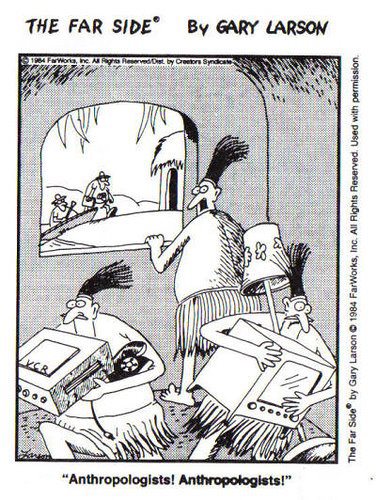

 Uma (in)certa antropologia
Você precisa fazer login para comentar.